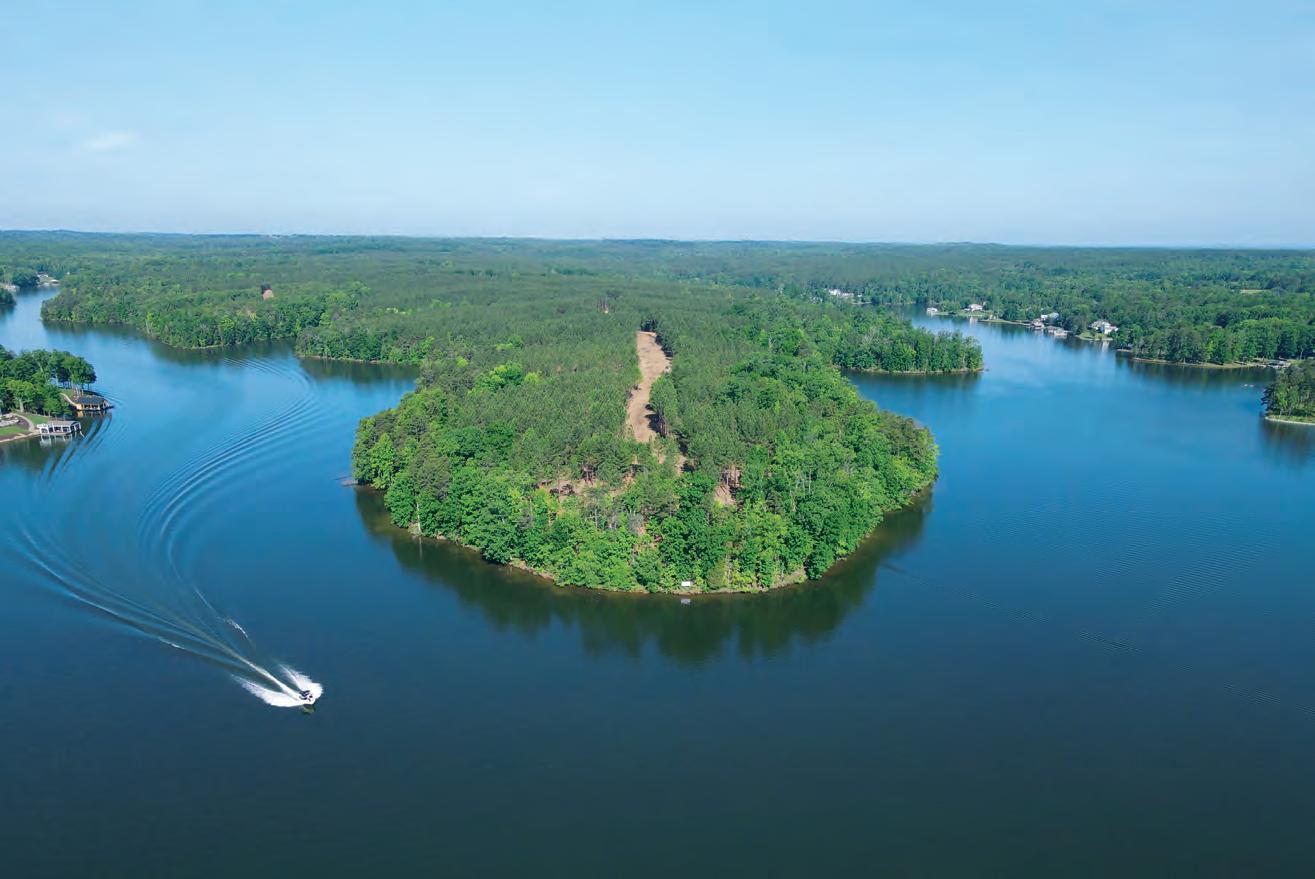
• Spectacular 430-Acre Waterfront Peninsula –3.5 Miles of Shoreline!
• New Private Gated Community
• Less than 65 Miles from GSO & RDU Airports
• Gated with Paved Roads & Street Lights
• Live at the Lake and Work from Home!
THE ULTIMATE LAKE LIFESTYLE
• Fully Recreational Lake for Boating, Fishing, Waterskiing, Wakeboarding & More
• World-Class Bass Fishing
• Planned Community Docks* & Boat Launch*
• Community Waterfront Park with Pool, Pavilion & Fireplace
• Community Boat & RV Storage for Property Owners
WATERFRONT LIVING MADE EASY
• Dockable Estate-Sized Waterfront Homesites from .5 – 2.5 Acres
• Only 70 New Homesites Being Offered
• Buy Now, Build Later
• Choose from Several of the Area’s Finest Custom Home Builders
• Excellent Financing Available
• Ask How to Buy Property With Your IRA
• Properties Sold on a First Come, First Served Basis
EDITOR’S LETTER
In Western Wake, May and June feel like a reward. We’ve moved past the “is it or isn’t it” weather of early spring and arrived at the most vibrant part of the year. This is the season of the weekend farmers market, evening walks through Bond Park, and the quiet thrill of planning the fist beach trip of the year. In this issue of 5 West, we are leaning into that feeling of refreshed energy with our Spring Fashion theme—a look at how we are updating our style and our selfcare routines for the warmer days ahead.
Fashion is often dismissed as being about what we wear, but as you’ll see in our main feature, it’s truly about how we live. Our spring fashion shoot highlights the incredible work of Serotone Swim, a brand that perfectly captures the modern Western Wake aesthetic: sophisticated, functional, and deeply intentional. Founder Sarah Blaser isn’t just designing swimsuits; she’s engineering confidene for women who have long been overlooked by the mainstream industry. By merging technical NYC sportswear roots with a deep understanding of the real body, she’s created a line that is as functional as it is beautiful.
But fashion isn’t just for the ladies this season. We take a close look at the evolution of men’s grooming, where local barbershops are offering much more than a standard cut and shave. It’s a shift toward self-care as a pillar of wellness— a sophisticated reclamation of the gentleman’s ritual that fis perfectly into our modern lifestyle.
As we celebrate the beauty of the season, we are also honoring a local milestone: the 50th Anniversary of JC Raulston Arboretum. J.C. Raulston’s botanical vision was a form of living fashion—a curated aesthetic that changed the way we view the North Carolina landscape. We explore the history of the man and the mission that continues to inspire gardeners and dreamers half a century later.
If the spring air has you itching for an adventure, our travel feature on Leatherwood Mountains offers the ultimate luxury escape. Whether you are an experienced equestrian or just looking for a quiet retreat in the High Country, it’s a destination that proves style and the great outdoors are a perfect match.
Also in this issue, you will find our special ACES section. These personal, black-and-white profils are designed to bridge the gap between business and community. It is a reminder that the faces of our local niche markets—from finane to fitnss—are always someone who cares deeply about this community.
As I sign off on this issue, I am also signing off on my tenure as Editor-in-Chief. This will be my final isue with 5 West, and it feels fitting o end on a season of growth and new beginnings. It has been a true honor to document the life and style of Cary, Apex, and beyond. This role has allowed me to connect with so many of you, and while my daily work will look a little different moving forward, my love for this region remains unchanged. I look forward to seeing the incredible things this community continues to build. Thank you for being part of this journey with me.
Until we meet again,
Kyle Marie McMahon Editor-in-Chief
With youngest son, Ronan, at Universal Epic Universe during spring break.
FOUNDER
Ronny Stephens
PUBLISHER
Joe Sanger
EDITOR-IN-CHIEF
Kyle Marie McMahon
ART DIRECTOR
Sean Byrne
LIFESTYLE EDITOR & SENIOR GRAPHIC DESIGNER
Da than K azsuk
COPY EDITOR
Cindy Huntley
SOCIAL MEDIA MANAGER
Delaney Garver
AD PRODUCTION MANAGER
Erica Christy
DIRECTOR OF SALES
Collin Pruitt
ACCOUNT EXECUTIVE
Mackenzie Steiner
STAFF PHOTOGRAPHER
Jessica Bratton
DISTRIBUTION
Joe Lizana, Manager DistribuTech.net
CONTRIBUTING WRITERS
Grace Barker, Samantha Carson, Kurt Dusterberg, Beverly Hurley, Sofia Lujan, Jennifer Primrose, Sonali Sethi, Matt Weiss
C ONTRIBUTING PHOTOGRAPHERS
Josh Manning
5 West magazine is published six times annually. Any reproduction in part or in whole of any part of this publication is prohibited without the express written consent of the publisher. Copyright 2026. All rights reserved.
5 West magazine is not responsible for unsolicited manuscripts, photography or art. Unsolicited material is welcome and is considered intended for publication. Such material becomes the property of the magazine and is subject to editing.
5 West magazine will not knowingly accept any real estate advertising in violation of U.S. equal opportunity law.
SUBSCRIPTIONS
6 print issues (1 year) Available online at 5westmag.com 1053 E. Whitaker Mill Road Raleigh, NC
Phone: 919.782.4710
Fax: 919.782.4763
Equestrian
Buckwheat
Model Jessica Monroe wearing Serotone Swim at the Maeve's rooftop pool in Raleigh.
Photo by Jessica Bratton.
Capulet Cocktail Lounge in Raleigh welcomed media and guests on April 16 to celebrate the opening of its outdoor patio bar, featuring a lineup of spritzes and bourbon favorites. The stylish cocktail lounge now offers plenty of ways to enjoy its craft cocktails, both inside and out. Photo by Jennifer Primrose.
Things heated up—literally—during the annual Tacos ’N Taps festival at Cary’s Koka Booth Amphitheatre on April 18, as contestants took the stage for a jalapeño-eating competition. One winner walked away with $100—and probably a mouth on fie. Photo by Dathan Kazsuk.
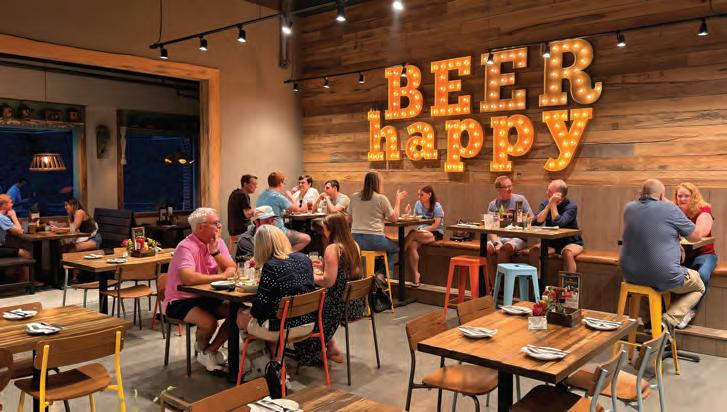
Hammock Brewery officially arried in Raleigh on April 20, bringing the Delaware-born brewery and restaurant’s backyard-cookout vibe to GlenLake for its fourth location. With burgers, Longboard Nachos, Sticky Lager Grilled Chicken, ribs, and plenty of house-brewed beer, this family-friendly hangout should be a hit for anyone who believes dinner tastes better with a pint (and maybe a hammock nearby). Photo by Dathan Kazsuk.
ABOVE: Behind the scenes for our Serotone feature photo shoot at the rooftop pool of Maeve in downtown Raleigh, with models Jessica Monroe and Jen Holley. The brand is led by owner and designer Sarah Blaser.
LEFT: Account representative Mackenzie Steiner and intern Anna Sanger assisted on set. See the full story and images beginning on page 14.
Photos by Jessica Bratton.
Crooked
3 1 2 4
1. ANDIA'S ICE CREAM, CARY
The Brookie. Oreo ice cream with cookie dough and brownie chunks throughout, served in a cake cone. Photo by Kyle Marie McMahon.
3. M IZAKAYA, CARY
Szechuan Pork Belly. Korean vermicelli noodles, Szechuan chili oil, assorted vegetables, and cilantro. Photo by Dathan Kazsuk.
2. CRÚ WINE BAR AND BISTRO, CARY
Cast Iron Seared Red Argentine Shrimp. Calabrian chile butter, lemon, and Pinsa bread. Photo by Dathan Kazsuk.
4. LIME & LEMON INDIAN GRILL & BAR, APEX
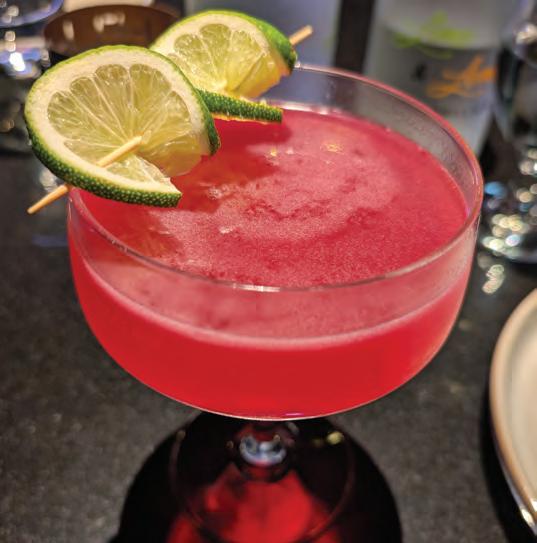
Dragonita. A classic margarita with a twist—dragonfruit puree.
Photo by Kyle Marie McMahon.
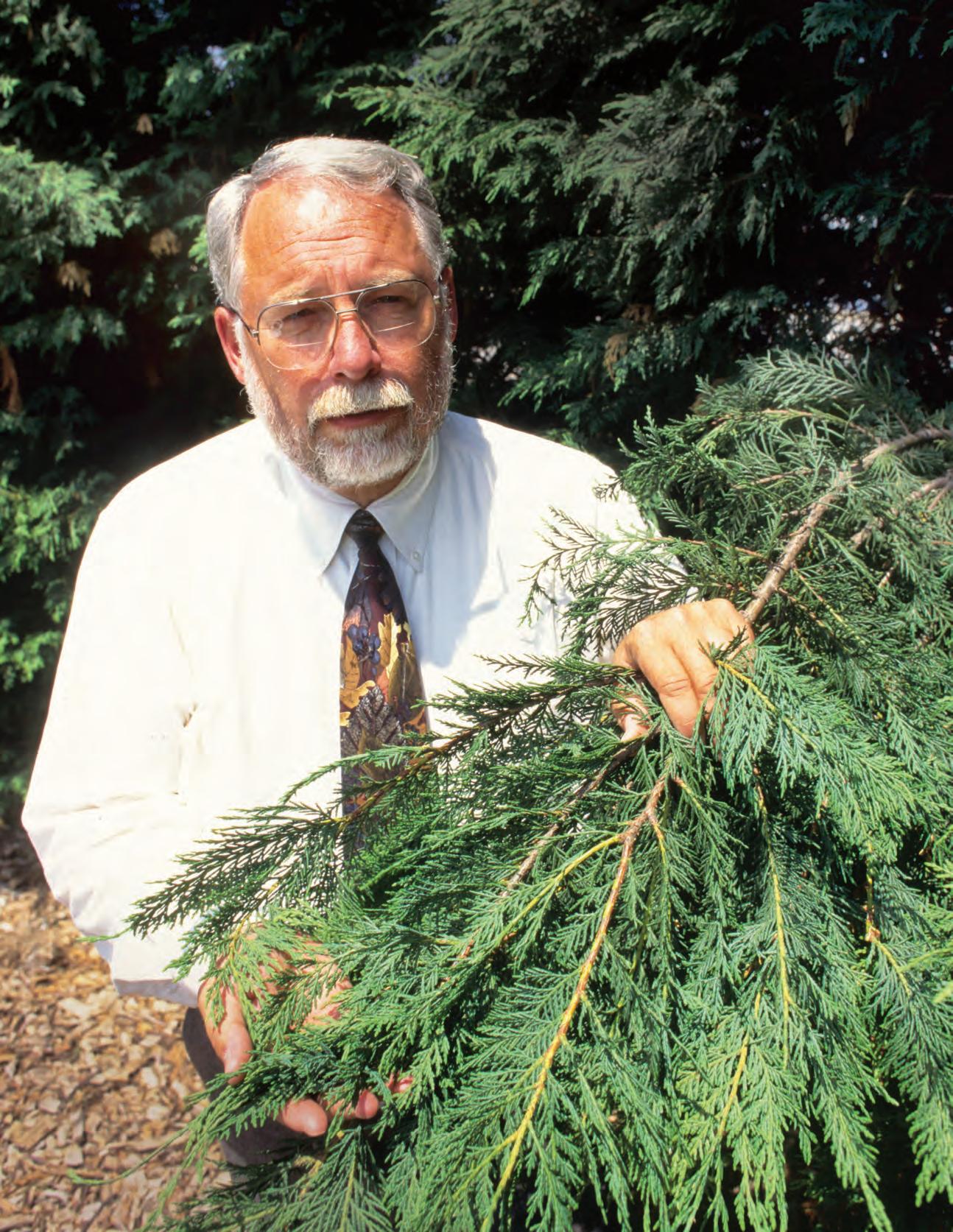
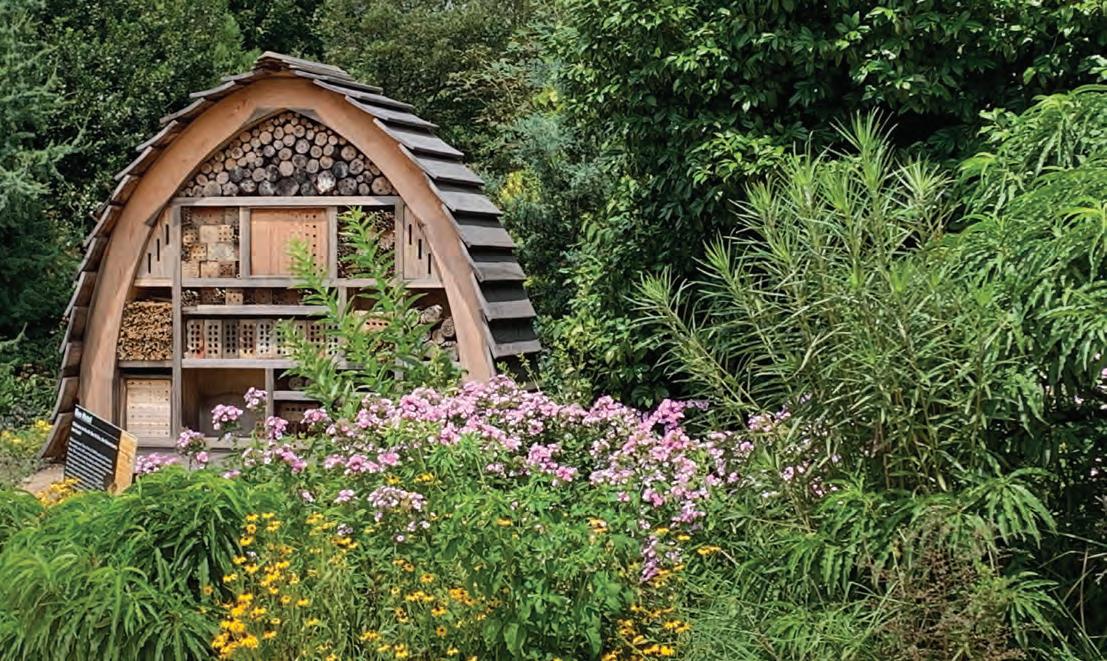
THIS PAGE: J.C. Raulston built a name for himself in the world of horticulture, with his legacy carrying on long after his death. OPPOSITE PAGE: The Bee Hotel for pollenators at JC Raulston Arboretum. Photos courtesy of JC Raulston Arboretum.
RALEIGH’S LIVING LABORATORY
JC Raulston Arboretum celebrates ve decades of diversifying the Southeast landscape
STORY BY BEVERLY HURLEY
What was once Raleigh’s best-kept secret is today recognized as one of the nation’s premier arboretums, with a plant collection unequaled in the Southeast. And it all started when a horticulturist from the wheat fields of Oklahoma came to Raleigh.
J.C. RAULSTON’S IMPACT
In 1975, a young horticulture professor from Oklahoma, Dr. James Chester Raulston—better known as J.C.—was hired by North Carolina State University to teach and transform an 8-acre plot near the state fairgrounds into an arboretum that would serve the university’s horticulture program. A year later in
1976, he began planting the land with a bold mission: to diversify the types of plants available in the commercial nursery industry. In 1981, the university officially named it the CSU Arboretum, and J.C. became its first directo.
At the time, plant options for gardens and landscapes were limited—nurseries grew only a handful of varieties, leading to a landscape of repetitive choices. But J.C. saw the world of plants larger than that. He tirelessly collected, propagated, and promoted a wide range of woody plants to create a diverse and abundant plant palette. For the next 20 years, J.C. guided and directed university students, faculty,
Redbud (Cercis) inside the garden. Photo courtesy of J.C. Raulston Arboretum.
and volunteers to expand the arboretum’s plant collection and share these with the commercial plant industry. His mantra—“Plan and plant for a better world”—was more than a catchphrase; it was a call to action as he traveled the globe to find and evaluate plants suited for the Southeast, then shared his discoveries freely with the commercial plant trade. It’s said that J.C. introduced and promoted more plants in horticulture than anyone else during the late 20th century.
After his tragic death in a car accident in 1996, tributes poured in from peers who described him as a “generous-spirited giant among horticulturists” and a “plant evangelist.” The university honored his legacy by renaming the arboretum the JC Raulston Arboretum (JCRA) in 1997.
Arboretums throughout the world enjoy many of the plants sent to them by J.C., including his signature selections and his well-known favorites. Some of the plants discovered by J.C. are still growing at JCRA today. His Chindo viburnum (Viburnum awabuki ‘Chindo’) and ‘Emerald Pagoda’ Japanese snowbell (Styrax japonicus) can be seen while strolling the grounds. And better yet, many of his plants are available at local garden centers to grow in your garden.
JC RAULSTON ARBORETUM’S VISION FOR THE FUTURE
Over the years, JCRA has expanded its scope, growing from its original 8 acres to 10.5 acres, providing more space to grow, trial, and share plants. And while it still seeks out plants from around the world for Southeast growing conditions, and gives away plants to nurseries and its members, it’s what leaves the garden in terms of passion and knowledge that is setting the arboretum’s course for the future.
“Many public gardens have great plant collections, but their focus is inward, creating and showcasing lovely gardens,” explains Mark Weathington, director of JC Raulston Arboretum. “Our focus is outward, to help people and the plant industry.” The arboretum’s educational programs provide hands-on learning for children and adults alike, from lectures to symposia, and visitors can always ask questions of the knowledgeable horticulturists who staff the garden.
As Weathington points out, the places where people garden have changed significantly since .C. first came to Raleigh. The JCRA focus for the future will address these changing places where people garden, and the types of plants suitable for these locations.”
In the 1970s, North Carolina’s population was predominantly rural or suburban, with expansive lawns. Today, urban gardening is on the rise, and people are gardening in smaller spaces. “Having a diversity of plants and sustainability is still a driving focus in gardens, but we have to do it differently in urban landscapes with smaller spaces,” he says. Green walls in cities, smaller gardens on reduced lot sizes, pocket gardens where there is open space, and gravel gardens in hard-to-grow areas are just a few of the opportunities. “People have to be more thoughtful now as they are planting—from rooftops to the concrete edges of city streets,” he sums up.
A revised biography of J.C. Raulston, Chlorophyll In His Veins: J.C. Raulston, Horticultural Ambassador by Bobby J. Ward (UNC Press), was released earlier this year, featuring a new foreword by plantsman Tony Avent and an afterword by JCRA director Mark Weathington.
JC Raulston Arboretum is open year-round at 4415 Beryl Road in Raleigh. For more information, visit jcra.ncsu.edu.
SWIM Redefining the Culture of
How Sarah Blaser is engineering a new era of inclusivity
STORY BY KYLE MARIE M c MAHON | PHOTOS BY JESSICA BRATTON
STYLED BY SOFIA LUJAN | HAIR + MAKEUP BY SAM GAY | JEWELRY BY KENDRA KIST SHOES + HANDBAGS COURTESY OF RANGONI FIRENZE
We’ve all been there: standing i n a fluorescent-lit dressing room, wrestling with a swimsuit that feels like it was designed for someone else—or at least for a version of ourselves that existed two decades ago. For far too long, the swimwear industry has operated on a binary that feels increasingly outdated: you either squeeze into a trend-focused “lingerie-esque” bikini or settle for a silhouette that prioritizes utility over style.
Enter Sarah Blaser. A designer with a decade of experience in the high-stakes world of NYC technical sportswear and six patents to her name, Blaser isn’t just making clothes; she’s engineering solutions. After watching her mother struggle to fi nd a suit that honored her changing body during the pandemic, Blaser traded the New York fashion machine for a studio in Raleigh to launch Serotone Swim.
Named after the “feel-good” chemical serotonin, the brand is built on the belief that when we feel supported—literally and figuratively—our entire presence changes. From her innovative “water-to-table” mesh designs that transition seamlessly from the pool to a social setting, to a modular approach that accounts for the real-life fluctuations of perimenopause and motherhood, Blaser is challenging the “thin ideal” with every stitch.
In this profi le, we sit down with the inventor-turned-entrepreneur to discuss the technical edge that sets her apart from fast fashion, the power of a motherdaughter partnership, and why she’s on a mission to turn swimwear into a platform for women’s health and radical self-love.
T HE BUSINESS & DESIGN PHILOSOPHY
C an you explain your “water-to-table” concept and how you design pieces that transition seamlessly from the pool to a social setting?
First, we are all about ease. Women do it all; we need fewer things on our plates to worry about. Second, because we wanted our wearers to be as covered as they desired, all of our pieces can technically be worn in the water. Since this could mean you are wearing pants in the water, we didn’t want you to have to bring another change of clothes for post-swim plans.
Mesh cover-ups from Serotone Swim’s Sea Marble collection: Jen (left) in the Long Dress—Stone Blue and Jessica (right) in the Asymmetric Dress and Palazzo Pant—Sea Marble.
It started with the material. I wanted something that would be cool, dry quickly, and not cling too much while wet. That’s how we came up with the mesh. Then I focused on design: Where are these women going? How would they want to present themselves? We settled on elevated, classic silhouettes so the wearer can easily blend with whatever atmosphere they are entering.
You’ve mentioned that much of the fashion industry remains focused on younger, slimmer bodies. In your research, what were the most frustrating fit failures you discovered in traditional swimwear for women over 35?
The fi rst frustration was the boob issue. Women’s breasts come in all shapes and sizes, and each woman has their own opinion on how she wants them to look. One-pieces are one of the most challenging products because they are made for women whose breasts are proportional to their size—which we all know is rarely the case. The second failure was the lack of options if you didn’t want to wear a swimsuit, but still go swimming. Not everyone wants to show their body—and either way is perfectly okay. But for those who do want more coverage, they deserve pieces that are just as fun and stylish as everything else on the market.
Your line features a modular design with mesh tops and separate bra tops. How does this build-your-own style address the speci fi c support needs of a changing body?
Al l boobs are unique no matter what age you are or life stage you’re in. But when you are post-partum, and your breast size is constantly changing, or menopausal (many women’s breasts actually get larger here), custom support becomes necessary in order to feel comfortable.
Your printed mesh is made from recycled bottles. Why was it important to you to bake sustainability into the brand from day one?
I believe brands need to lead by example. It can be prohibitively expensive for small brands to be
sustainable, so it is an ongoing process. The recycled bottles are what we can do for now, but in the future, I would like all of our fabrics to be derived from renewable resources.
You debuted at Miami Swim Week 2025 with models ranging from ages 22 to 42. What was the industry reaction to seeing real, diverse bodies on such a high-profie runway?
Overall, the reaction was positive. How the industry reacts isn’t so much my concern—it’s how the consumer reacts. I want them to be able to see themselves in the garment, to believe that we really are doing something different. And I think showing the pieces on such a wide range of bodies and ages does that.
T HE ORIGIN & INSPIRATION
W ith a decade of experience in technical sportswear and intimates in NYC— and holding six patents—how does that r i gorous technical background give Serotone an edge over traditional fast-fashion brands?
The companies I worked for previously were purpose-driven, always trying to solve a need. This meant constantly thinking outside the box and challenging what is considered the norm. Prioritizing function. Fast fashion is primarily profit/speed-tomarket focused—a model that will never allow space for true innovation. Even “designer” fashion does not always consider function. The pieces may be unique and beautiful, but are either trend-focused or more art than something for the average person.
You transitioned from designing for high-level athletes to everyday w o men. How has your de fi nition of a successful design evolved through t ha t transition?
With athletes, yes, the purpose and needs are completely different, but because my work would directly affect their performance, it trained me to work to truly understand their needs. I use that same approach with Serotone Swim, so success is ful fi lling those needs as best I can.
Be sure to visit serotoneswim.com to view the full collections
ABOVE: Sarah Blaser. OPPOSITE PAGE, CLOCKWISE FROM LEFT: More pieces from the Sea Marble collection.
T he name “Serotone” is a play on serotonin, the feel-good chemical. How does that biological concept t ranslate into the way a woman feels when she puts on one of your suits?
I think there is a fundamental change that happens in our brains when we feel good in our clothing. We walk taller, feel lighter, and are more present. Our suits are engineered to inspire that change.
W hat prompted your move from the New York fashion world back to Raleigh, and how has the North Carolina community in fluenced your brand’s growth?
I wanted to work closely with my mother on the collection. She vets and trials all of my designs before we proceed to production.
Your mother, Donna, has been a key part of this journey, even helping you in the studio. How has building this business together changed your relationship?
L iving with Mom during the pandemic gave us the opportunity to redefi ne our relationship from parent-child to peers, which allowed us to become much closer. Now that we are working together, we are certainly learning more about each other—good and bad. I think it helps us understand one another even more.
A DVOCACY & THE MENOPAUSE GAP
Wo m en often feel they have to squeeze into traditional suits. How is Serotone Swim giving women permission to stop apologizing for their bodies?
I think we have this narrative that we need to fit whatever the industry is offering us, but that’s so not true. Most people don’t look great in low-rise jeans, yet for all of the early 2000s we were showing plumber’s cracks because it seemed like the only option available to us. Trends are BS! Swimwear happened to evolve into this lingerie-esque (no judgment) product category because tanning all of a sudden became fashionable. That’s great for people who want that, but for
the rest of us, by continuing to buy things that aren’t quite what we want, or are just “good enough,” we’re signaling to the industry that this is okay. That they don’t have to put in the effort (money) to consider our needs. At Serotone Swim, we don’t want you to feel like you have to fit the mold. We want you to ask for—demand— what you need.
B o dy changes during perimenopause and menopause involve skin sensitivity and temperature shifts. How do your fabric choices (like smoothing warp knit nylon) specifically address these concerns?
Our nylon fabric’s warp knit structure allows the fabric to stretch and form to the body without digging into every fold and crevice. A lot of swimwear is made from circular knits, which is what it sounds like: a circular tube.
This makes the fabric want to squeeze into the narrowest places, and shows more lumps and bumps. We line all of our swim pieces with power mesh rather than traditional lining, so you dry quicker and have more breathability and better stretch recovery. All of our products are designed so there are no narrow elastics or straps that will start to dig in and feel painful over time.
In a world where fashion is swinging back toward ultra thin ideals, how do you keep your brand’s message focused on personal truth over external validation?
The industry may be swinging back, but the inclusivity movement is still going strong among independent brands. We see consumers’ outrage and use it as our North Star. As I mentioned, we are not about trends; we are about solutions. Following an
industry that does not have the same values is pointless.
F UTURE PLANS & VISION
A s you move beyond the limited preorder collection, what is your vision for the next three to fi ve years of Serotone Swim?
I want Serotone Swim to be a platform for women’s health. It is so underresearched, and I think every woman has a “what’s happening to my body” story that could have gone a different way had the science been there. That’s why I want to partner with d i fferent women’s health research funds and also include a women’s health component to all of our events. The more we talk about our experiences, the healthier we can be. We are actively seeking women who want to share their stories with us.
What advice would you give to other women in the Triangle who see a problem in the market but are hesitant to engineer their own solution?
Just do it! We need more women like you—change makers—that want to make a real impact. A lot of people told me before I started this brand that it’s not going to be scalable, that there’s no money in it, or “it’s too niche.” Ignore them. Do your research, make an excellent product, and run with it.
W hen a woman wears a Serotone suit on he r fi rst vacation in years, what is the one emotion you hope she feels when she looks in the mirror?
Self-love—a quiet, radiant con fidence and sense of ease in her own body.
OPPOSITE PAGE: The Sunset collection. ABOVE: The Black Geo collection.
5 West thanks Maeve in downtown Raleigh for the use of their beautiful rooftop pool to shoot this feature. Visit them at maeveraleigh.com
SA NCTUARY HIGH COUNTRY THE
A WEEKEND AT LEATHERWOOD MOUNTAINS
STORY BY JENNIFER PRIMROSE
On a road trip west from Raleigh, there is a moment when the traf fic lightens, the air shifts, and the pace of everyday life begins to loosen its grip.
L eatherwood Mountains, near Ferguson in the Blue Ridge foothills, sits just off the main mountain corridor—close enough to the region’s most familiar destinations to be convenient, but remote enough that the landscape takes over fi rst.
It is still within reach of the High Country’s most recognizable anchors— the upscale charm of Blowing Rock, the collegiate energy of Boone, and the musical heritage of Wilkesboro—yet it doesn’t feel dependent on any of them. Here, a morning can unfold entirely within trails and pasture, while an afternoon can still carry you into town for coffee, galleries, or music, without the sense that you’ve changed pace.
But the real draw isn’t just the proximity to town; it’s the 4,000 acres of preserved ridges and valleys that make up the resort itself. This land was originally envisioned by developer Dick Johnston as a sanctuary where the mountains’ natural character would always come fi rst—a legacy of open space and equestrian freedom that has been maintained for over 40 years. Today, the property functions as both a gated residential community for full-time homeowners and a vacation destination for those seeking a mountain retreat.
T hat legacy is guarded by business partners Trevor Whitson and Abbie Hanchey. The pair have known each other since they were “knee-high to a grasshopper,” and their lifelong connection forms the backbone of Leatherwood’s culture.
“Abbie is more like a sister than a partner,” Whitson says. They call themselves the “Yin and Yang” of management—two people who love the same place and rarely agree on the same approach. Since taking over as owners in 2017 they’ve added live music, expanded the restaurant, and turned the property into a wedding venue—all without losing sight of what made Leatherwood worth saving. Whitson jokes that if you catch him and Hanchey in a spirited debate on a wedding day, don’t worry. “It means everything is going to go perfectly,” he laughs. “She’s the push, and I’m the pull.”
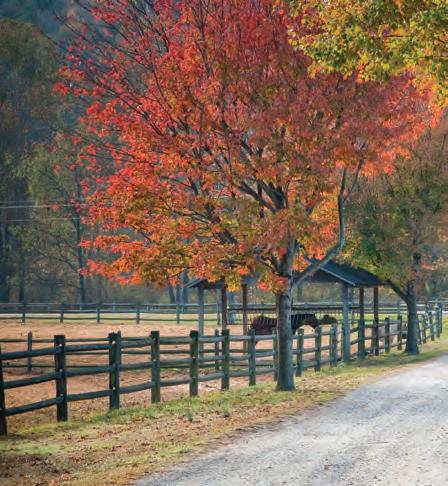
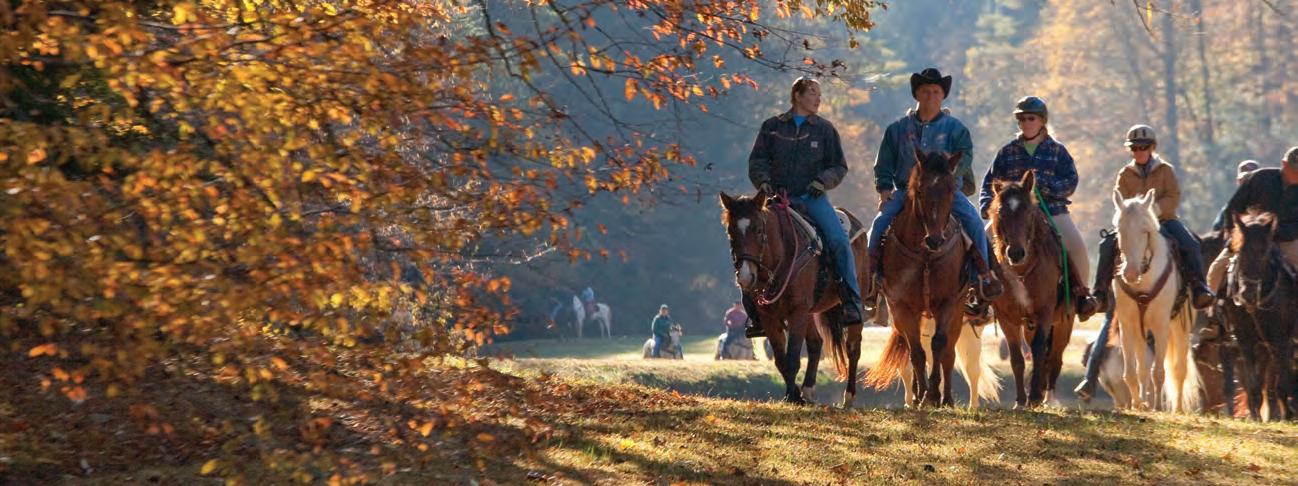
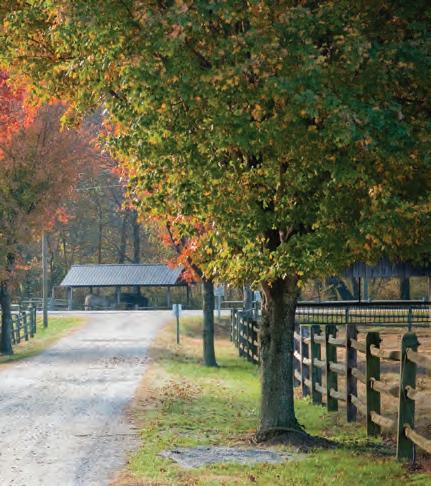
At Leatherwood Mountains in Ferguson, the High Country opens up—miles of trails, horses on the move, walking trails, and just enough quiet to remind you why you came to get away from the daily grind. Photos courtesy of Leatherwood Mountains.
A VISION CARVED INTO THE FOOTHILLS
T he h istory of this land goes back to the mid-1980s, when Johnston beg an assembling thousands of acres of rugged terrain. When the resort’s future grew uncertain in the 90s, Whitson’s father, Phil Whitson, and his partner, Phil Rash, stepped in. For over 20 years, the “two Phils” stabilized the mountain, eventually passing the torch to Whitson and Hanchey in 2017.
The Whitson and Hanchey families were drawn into this vision through a stroke of serendipity. The parents were longtime friends who often rode together, and Hanchey’s parents discovered Leatherwood at a booth at the North Carolina State Fa ir. Intrigued by the concept of a dedicated horse community, they called Whitson’s parents with a simple invitation: “I found a new place for us to go ride.” When Whitson’s father visited, he was so moved by the landscape that he
bought a plot of land on a whim that same day.
For the current owners, the resort is a birthright. Hanchey ha s been an integral part of the Leatherwood story since 1993, and Whitson—who worked his way up shoveling stalls to pay for hi s fi rst truck—joined full-time in 2006. This lifelong familiarity is what gives the 4,000-acre property its “massive backyard” feel.
FROM COWBOYS TO COMMUNITY: THE GENERATIONAL SHIFT
W hile Whitson and Hanchey hold the property’s history sacred, they recognize that the mountain must evolve. “Baby Boomers—my parents’ age—had a lot more cowboys than Gen X,” Whitson notes. In the 1980s and 90s, the resort was almost exclusively equestrian-centric.
Understanding that today’s travelers want a more multifaceted escape, they have leaned into the “scene.” They transformed the
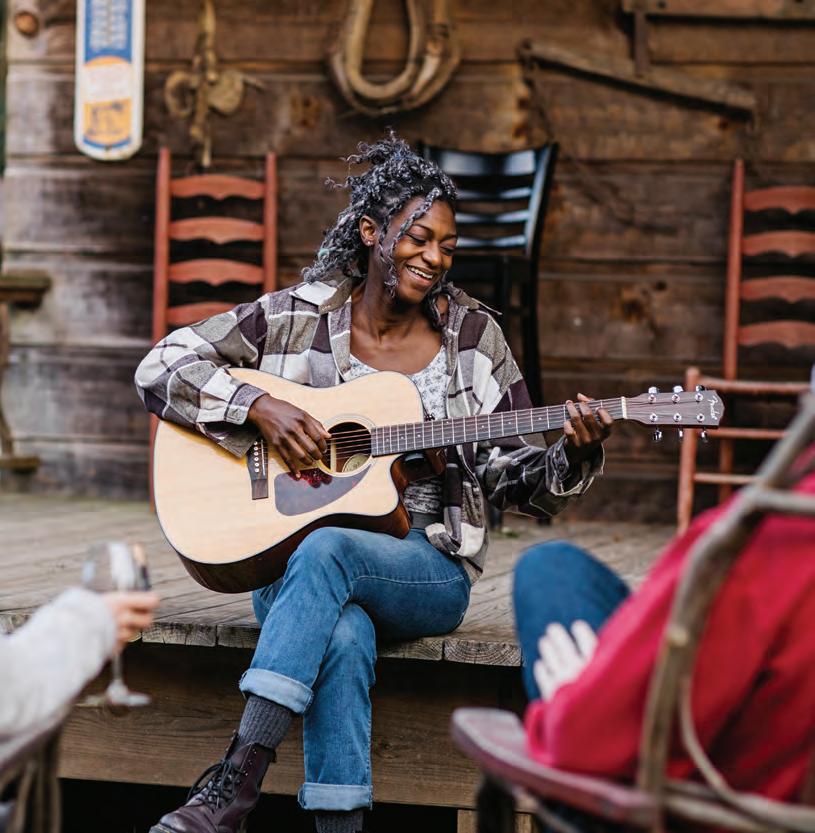
Enjoy live music as the sun sets over the mountains, linger over dinner and drinks on the outdoor patio, say hello to the resident barn cats, or spend the day biking and trout fishing along the nearby creek—all part of the easygoing escape at Leatherwood Mountains. Photos courtesy of Leatherwood Mountains and Dathan Kazsuk.
I f You Go:
Leatherwood Mountains Resort
• Location: Ferguson, North Carolina— approximately 3 hours from Raleigh.
• Accommodations: Around 40 rental homes, including the renovated Bunk House, and a campground.
• Ac tivities: Guided trail rides, 75 miles of hiking (no hunting), swimming/ tubing, fishing, and tennis/pickleball.
• Dining: Saddlebrook Restaurant— check the calendar for live music and songwriter nights.
• Website: leatherwoodmountains.com
restaurant into a gathering spot and prioritized entertainment, i ncluding craft beer, live music, and even songwriter nights. “We know the equestrian people got us here,” Whitson says. “But people our age want a scene, a sound, and a place to belong.”
THE LIVING EXPERIENCE: THE BUNK HOUSE
To understand how Leatherwood blends its history with modern comfort, you only need to look at where I stayed during my visit.
The Bunk House is a threebedroom, two-bath rental located right near the East Barn. It still carries the bones of its original life as a caretaker’s home, but the interior has been fully modernized.
T he setup includes a modern kitchen, an expanded bath with a walk-in shower, and a screened porch overlooking the equine facility. Mornings at The Bunk House begin with the fi rst light shining through the trees and horses grazing just outside the kitchen window. Down at the stables you’re likely to be greeted by the resident barn cats, who act as a furry welcoming committee.
T he best part of The Bunk House, however, is the evening. After a day on the trails, the private hot tub is exactly what you need.
A s t he sun dips behind the ridge, the mountain gets incredibly quiet. Because there’s no light pollution out here, the night sky is clear enough to see every star—a stark contrast to what we’re used to back in the Triangle. It’s that speci fic combination of quiet and clarity that makes this spot feel like a true escape.
T he Bunk House is one of roughly 40 rentals managed on-site, part of a larger portfolio that spans about 144 homes across Leatherwood Mountains. The options range from tucked-away onebedroom cabins to multi-bedroom
homes and larger estates positioned along ridgelines, designed for everything from solo retreats to family gatherings and group stays.
THE RHYTHM OF THE LAND
My Leatherwood experience began on a beautiful Friday afternoon with my fi rst trail ride since childhood. I w as paired with Bess, a 30-year-old mare with a legendary reputation for patience—a trait I needed for my own nerves.
L eading the way was Grace Wilcox, Leatherwood’s lead trail guide and barn manager, riding Miguel. While Wilcox kept a calm, grounded presence, Bess had her own ideas about the hierarchy. Despite her status as the calm choice for beginners, she had just a bit of a stubborn streak when it came to leadership. She didn’t just want to walk the trail; she wanted to dictate it, constantly edging toward Miguel to make it clear she was the veteran of the line.
“A lot of people think horses are scary because they’re so big,” Wilcox says with a reassuring smile. “But they’re like big dogs. They sense your energy before you even get in the saddle.”
As the trail climbed into the trees, Wilcox offered steady direction—leaning forward on the climbs, easing back on the descents— small adjustments that helped Bess move naturally. Wilcox shared a bit of wisdom from horseman Buck Brannaman: “If you spend time with them and work with them, they reflect your character and help you build yours.” The truth of that hit home when a small snake crossed our path, sending a few rocks tumbling down the ridge. Bess didn’t break her stride. She stayed calm, and in turn, so did I.
BEYOND THE STABLES
For those who prefer their own two feet to four hooves, the property offers 75 miles of hiking and
equestrian trails. This landscape is a true refuge; hunting is strictly prohibited, preserving wildlife and the land’s natural peace.
I set out on a 3-mile loop soon after sunrise on my second morning, following a route that wound through Rhodo Gap, Tricky Creek, Daniel Pass, and along portions of the Daniel Boone Trail before looping back toward Jingle. It begins near the 1892 Keyes Cabin—a simple structure that immediately shifts your sense of time—before climbing steadily into forested terrain where the trail quickly narrows and the world beyond the trees disappears.
W hen the mountain air warms up, the creek becomes the heart of the resort for swimming and tubing. For a swifter pace, there are recently renovated tennis and pickleball courts, while the peaceful ponds provide space for catch-and-release fi shing.
A PLACE TO GATHER
T he feeling of community gathers at Saddlebrook Restaurant, where the history of the mountain is literally built into the furniture. Whitson’s father hand-built the bar using reclaimed wood from the property—a detail that grounds the space in the Whitson family’s hands-on legacy. It’s a place where locals, riders, and travelers mingle over hearty meals. It’s the kind of place Whitson describes as being for people who want more than just a ride—they want a place to belong. Driving back toward Raleigh, the return feels slightly different than the drive in. Not because the distance changed, but because the rhythm did. Leatherwood isn’t defi ned by its trails or it s fi shing. It’s defi ned by the people who have protected its pace. It acts as a sanctuary, guarded with intention.
RITUAL MODERN MAN’S THE
HOW SELF-CARE HAS AFFECTED APPROACHES TO MEN’S GROOMING
STORY BY SAMANTHA CARSON
Bilal Parviz had a problem. His son was becoming a teenager and beginning to outpace him in the sports they enjoyed together. Bilal found it harder and harder to keep up with him on the basketball court and while riding their bikes, bonding activities both father and son enjoyed.
But outside of sports, it seemed to Bilal that there weren’t many other activities the two could do together. Meals were always an option, but Bilal wanted something different, something out of the ordinary.
Then he learned about Hammer & Nails Grooming Shop for Guys.
A DIFFERENT APPROACH TO MEN’S GROOMING
Hammer & Nails is one of many barbershops today that take a different approach to men’s grooming. In the past, men coming into a barbershop might expect a simple haircut and shave, maybe a hot towel. Today, however, men’s attitudes have changed, and with them the services expected from barbershops. Self-care is not just a social media buzzword; men now associate their personal grooming with their sense of con fidence and pride in themselves. From dating to job interviews and public speaking engagements, looking put-together helps men feel put-together, and this preparation enables them to go out and perform better at work and in their daily lives.
A nd, according to Bilal, this process of caring for and investing in themselves is an experience men enjoy sharing with each other just as much as women do. “There’s a lot of fathers and sons that come together,” Bilal says. “Brothers come together, partners come together.”
Located in Sutton Square in north Raleigh, Hammer & Nails epitomizes such bonding experiences. Upon entering, every aspect of the shop—from the decor and color scheme to the music selection—gives a subtle but unmistakable impression of welcoming masculinity. The attention is drawn to the bar located directly to the r ight, where, thanks to the shop’s full liquor license, customers can enjoy a range of drinks from beers to cocktails and bourbons before, during, and after their appointment. Nonalcoholic options, such as sodas and energy drinks, are also available.
However, it’s the services that are the real standout. While many types of haircuts and shaves are on offer, other nontraditional grooming services are equally popular, including facials, manicures, and pedicures designed especially for men. There are no smelly gels or polishes like those sometimes found in women’s nail sa lons. The facial treatments help with shaving and breakouts, and one of the pedicure options is designed
for athletes to treat calluses and other foot issues that can cause pain and negatively impact performance.
Each station has a TV as well as—in the room where manicures and pedicures are provided—noise-cancelling headphones so men can relax and enjoy the game or a movie during their service. However, many take advantage of the opportunity to simply sit back, sip a quality drink, and talk. Grooming services are popular among family members—fathers, sons, brothers—as well as friends. Father’s Day is especially popular, and some customers travel up to an hour and a half to make sure they get in their self-care at the shop.
GUYS LIKE TO BE PAMPERED, TOO
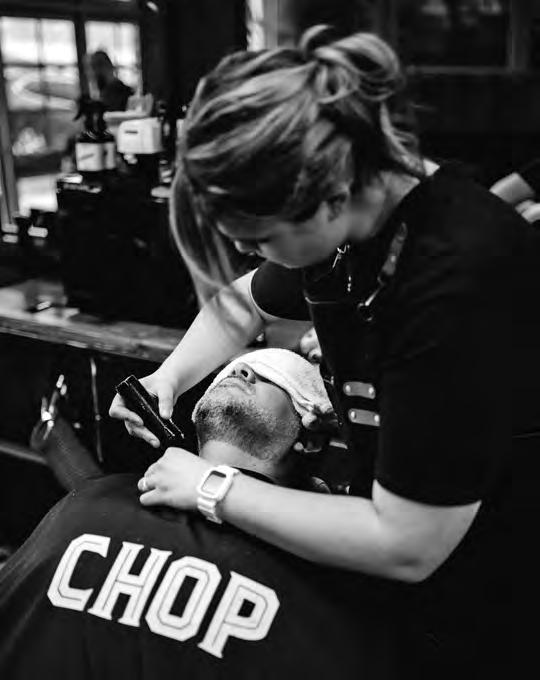
Hammer & Nails is not the only barbershop offering such an experience. In Holly Springs, CHOP Barbershop offers a similar package called El Presidente. This service, which typically takes about an hour and a half, includes a ha ircut, shave, hot towel neck shave and lather, and facial services, including a wash and eye cream.
“Guys like to be pampered, too,” says manager Aislinn Suel flow. “People come in and buy gift certi ficates [for the El Presidente service]. People love it. It’s really each step of a general shave service, but you’re making it into a luxury experience.”
The vibe at CHOP is slightly different from that of Hammer & Nails; the shop services customers of all genders and ages, including children. The decor is more eclectic and retro—1950s-esque barstools, bright colors, and shiny chrome rather than dark wood and leather couches.
L ike Hammer & Nails, however, CHOP’s goal is to provide a place where people can bond and form community. The layout and equipment of the shop are designed for customers to be able to face each other and have conversations during service, and Aislinn is planning a renovation that will knock down a wall and open up the area even more. As it is, however, men already frequently bring their sons in so both can have a service while simultaneously enjoying time hanging out together.
Aislinn has noticed a difference in how men groom themselves now compared to how they did so during her childhood. At that time, she says, “Guys would wear deodorant and bodywash. That’s pretty much it.”
Today, however, it’s a different story.
“In today’s society it’s becoming more normal to take care of your body and your skin and your hair,” she says. “Guys are starting to lean more into it.”
ON RIGHT: Photo courtesy of Hammer & Nails. BELOW: Photos courtesy of CHOP Barbershop.
2026 FACES OF WESTERN WAKE
Welcome to our annual Faces of Western Wake, a portfolio of inspiring leaders and community influencers who want to personally introduce themselves to you. We can’t begin to share all the stories that deserve to be told, so once a year we invite our key business partners to participate in this special section—and to help you put a face with the name of their business, practice, or nonprofit organization.
TABLE OF CONTENTS
30
33
3 5 The Face of
38
40
42
43
THE FACE OF WEALTH MANAGEMENT ABSHER WEALTH MANAGEMENT
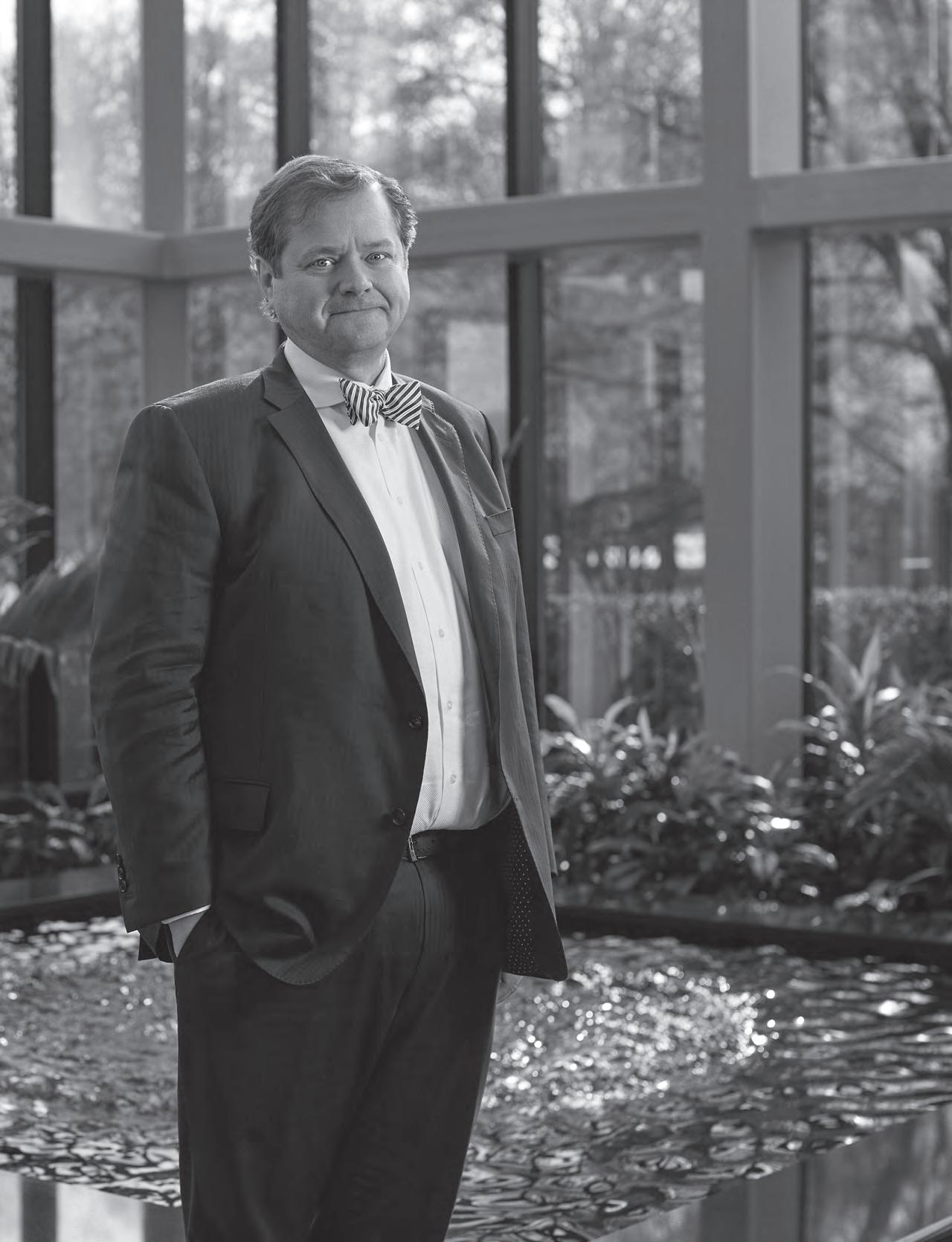
Mike Absher has spent the past 30 years implementing Warren Buffett’s wisdom for the benefit of his clients. With a focus on fundamentals, his firm invests in businesses that demonstrate pricing power against inflation and where he perceives a margin of safety for long-term capital. The philosophy of his firm is evident in their investment approach, which is centered around prudent stewardship as they seek to protect their clients’ purchasing power from inflation by avoiding permanent losses of capital. Following Mr. Buffett’s advice (which Mike quotes often), they seek to do so by “being fearful when others are greedy and greedy when others are fearful.”
Absher Wealth Management is a fee-only registered investment advisor and is a fiduciary. They provide asset management, financial planning, and investor education. As of December 2025, the firm held client assets of $1.25 billion and actively managed $1.16 billion on a discretionary basis.
3605 Glenwood Avenue, Suite 201, Glenwood Plaza, Raleigh 1450 Raleigh Road, Suite 105, Chapel Hill 919.283.2340 | absherwealth.com
OF
Avail Aesthetics is a results-driven medical spa in Cary dedicated to enhancing natural beauty through personalized, science-backed treatments. With over 50 years of combined experience, our expert providers specialize in advanced skin care, injectables, and corrective services designed to deliver subtle, natural-looking results.
Blending a luxury experience with a clinical approach, we create customized treatment plans tailored to your unique goals. At Avail Aesthetics, we believe in helping you be you, only better, prioritizing education, transparency, and long-term skin health so you can look refreshed, confident, and effortlessly yourself.
251 Keisler Drive, Suite 201, Cary | 919.322.5440 | availaesthetics.com @availaesthetics on all social media
Meet the rule-breaker Raleigh has been waiting for. With 20 years of experience and a fearless ASF approach, Amanda is the visionary force transforming bland spaces into iconic ASF homes. She skips the “predictable” in favor of exhilarating colors and textures that create vibes you can feel in your soul. From executive offices that combat the daily grind to high-fashion family havens, Amanda designs for clients who want a home that reflects their journey and all that they’ve achieved along the way. It’s luxury with a conscience, a multisensory dopamine hit, and 100% authentically you. 908.432.0987 | asfinteriors.com | @asfinteriorsnc (IG) | @asfinteriors_nc (TT)
Coleman Lew Canny Bowen (CLCB) is a retained executive search firm known for delivering strategic talent insight and measurable results across a range of industries. Built on a foundation of collaboration and expertise, CLCB partners closely with clients to solve complex challenges of attracting and retaining executive talent. The firm’s team brings a forward-thinking and highly consultative approach to every engagement, blending innovation with practical execution. With a robust network of contacts across the country, CLCB has become a trusted name across the Raleigh area and beyond, helping businesses and organizations navigate change and achieve their goals with confidence.
704.377.0362 | clcbsearch.com
When families face the most difficult moments of their lives, they need more than legal experience—they need clarity, guidance, and someone they can trust.
At Gantt Family Law, clients are not just cases. They are individuals navigating uncertainty, and our role is to help them move forward with confidence. Whether it’s a custody dispute, divorce, or complex financial matter, our team is committed to providing strategic advocacy and compassionate support every step of the way.
Led by an exceptional team that includes three board-certified family law attorneys, Gantt Family Law brings expertise and insight to even the most complex cases. We know our job is about more than legal outcomes—it’s about helping people regain stability, protect what matters most, and move forward with confidence.
Speight Built Custom Homes is a Raleigh-based builder focused on making the custom home process clear, collaborative, and personal. We work closely with each client from the earliest planning stages through construction, helping to guide decisions and simplifying what can often feel overwhelming. Our homes are designed around how people actually live—balancing thoughtful design, quality craftsmanship, and practical functionality. By partnering with trusted architects and trade professionals, we create homes that feel intentional without overcomplicating the process. At our core, we believe building a custom home should be an exciting and rewarding experience, not a stressful one.
211 E. Six Forks Road, Suite 221, Raleigh | 919.889.5694 | speightbuilt.com
TRIANGLE WELLNESS & RECOVERY, PLLC
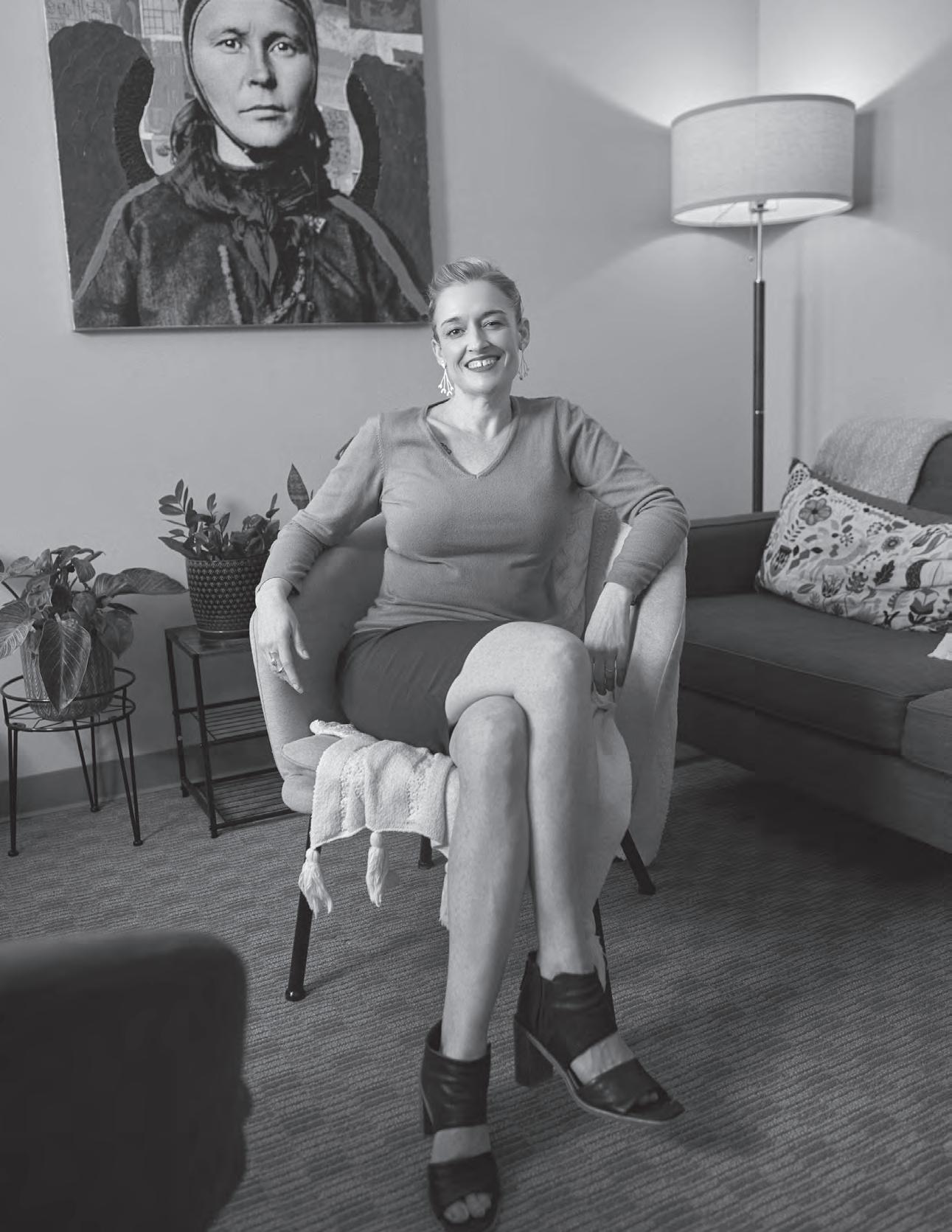
Over Dr. Koenig’s years serving clients struggling with addiction and mental health in Wake County, she has developed the Triangle Recovery Model TM , an identity-focused model for recovery based on three pillars: stabilization, understanding, and creating new life patterns with value, purpose, and meaning. Within this foundation, clients learn to no longer be defined by their illness and begin to shape their new identity in recovery. Founded in 2019, Triangle Wellness & Recovery has grown to an integrated team of over 12 clinicians and medical providers dedicated to the success of their clients.
Coldwell Banker Howard Perry and Walston (HPW) remains the premier real estate firm in the Triangle by consistently evolving with the ever-changing dynamics of our market.
To keep up with the local market, HPW’s new leadership team—President Chris Walston, CEO Randy Cox, and COO Gina Eason—has instilled a commitment to agent development.
Through training, support, a collaborative culture, and resources and tools that embrace change, HPW professionals are empowered to succeed at the highest level.
This combination of adaptability and an agent-first philosophy positions HPW as the trusted leader in the Triangle real estate market.
“At HPW, success is helping people win by empowering agents, serving clients, and strengthening communities with trust, innovation, and dedication,” —CEO Randy Cox
Locations across the Triangle | 919.789.5200 | hpw.com
THERESA LUNT, LUNT REAL ESTATE GROUP
Theresa Lunt
and
“If
DEPARTMENT SIP & SAVOR
RIPE FOR THE PICKING
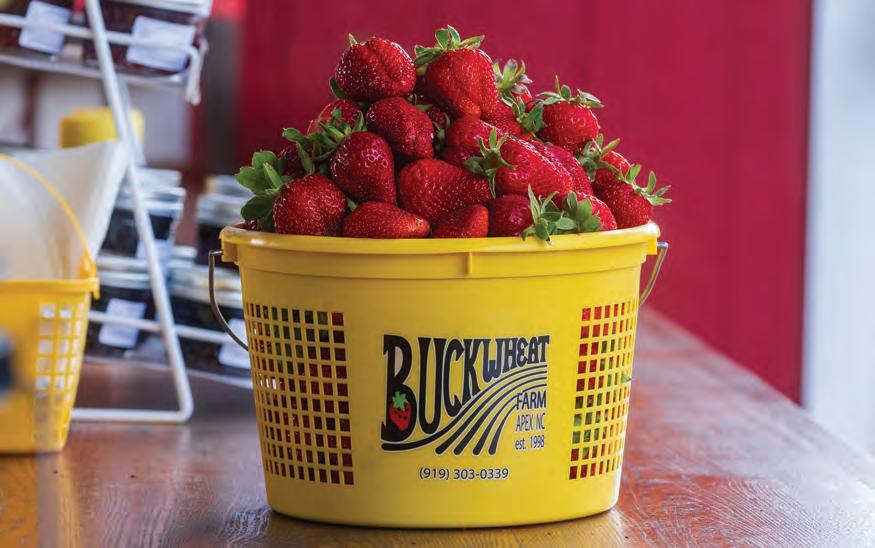
Growing strawberries is a year-round passion at Buckwheat Farm in Apex
STORY BY KURT DUSTERBERG | PHOTOS BY JOSH MANNING
When Jim and Karma Lee first purchased their farm in Aex, there was a soybean field, plenty of trees, and no real plan
“Then Jim said, okay, now we bought the property,” Karma recalls. “What are you going to do with it to make some money? My immediate answer was, ‘Well, it was fun picking strawberries when I was a kid with my family, so maybe we could do that.’”
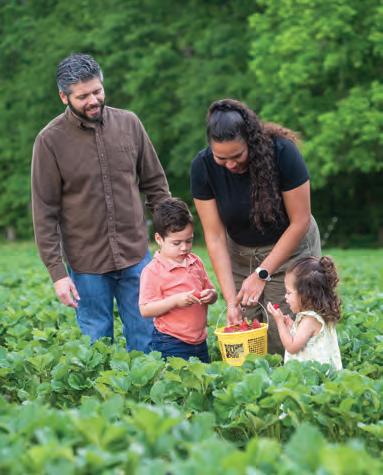
That was 1997. Now in its 30th year, Buckwheat Farm is an annual springtime tradition for area families, and Karma is the ever-present host for all the activities. Whether she’s weighing a box of berries at the strawberry shed or guiding guests to the ripest rows, she is dialed in every day from late April to early June.
“I just enjoy being outside and having the strawberries and having the people come out. I have enough energy and enthusiasm about it,” Karma says. “During strawberry season, I could just go, go, go all day because I absolutely love it.”
For the visiting kids and parents, the warm spring days make beautiful memories. Plucking bright berries along the endless rows is a one-of-a-kind event. But the pick-your-own fun is just part of the process.
“I always say, every season begins when the last one ends,” Karma says. When the last of the berries are picked in early June, she and her family (which includes three hardworking daughters) begin the work that the public never sees—and there is a lot to be done. Commercial strawberry farming requires annual planting. Buckwheat Farm has 2.5 acres dedicated to the berries, which translates to close to 37,000 strawberry plants.
The job begins right away when the strawberry plants and the plastic are removed, and the field is tilled and leveled The next step is planting a cover crop— last year’s included sorghum and tillage radishes—to enrich the soil. Those plants are mowed and tilled under in August to make the soil ready for the installation of new plastic, drip tape to water the field
and chemicals that treat the soil. After a full season of prep work, the ground is ready for next year’s strawberries to be planted during the first weekend in Octoer. “The first yea, we did it all by hand,” Karma says. “After that the kids said, ‘We will never do that again, Mom.’”
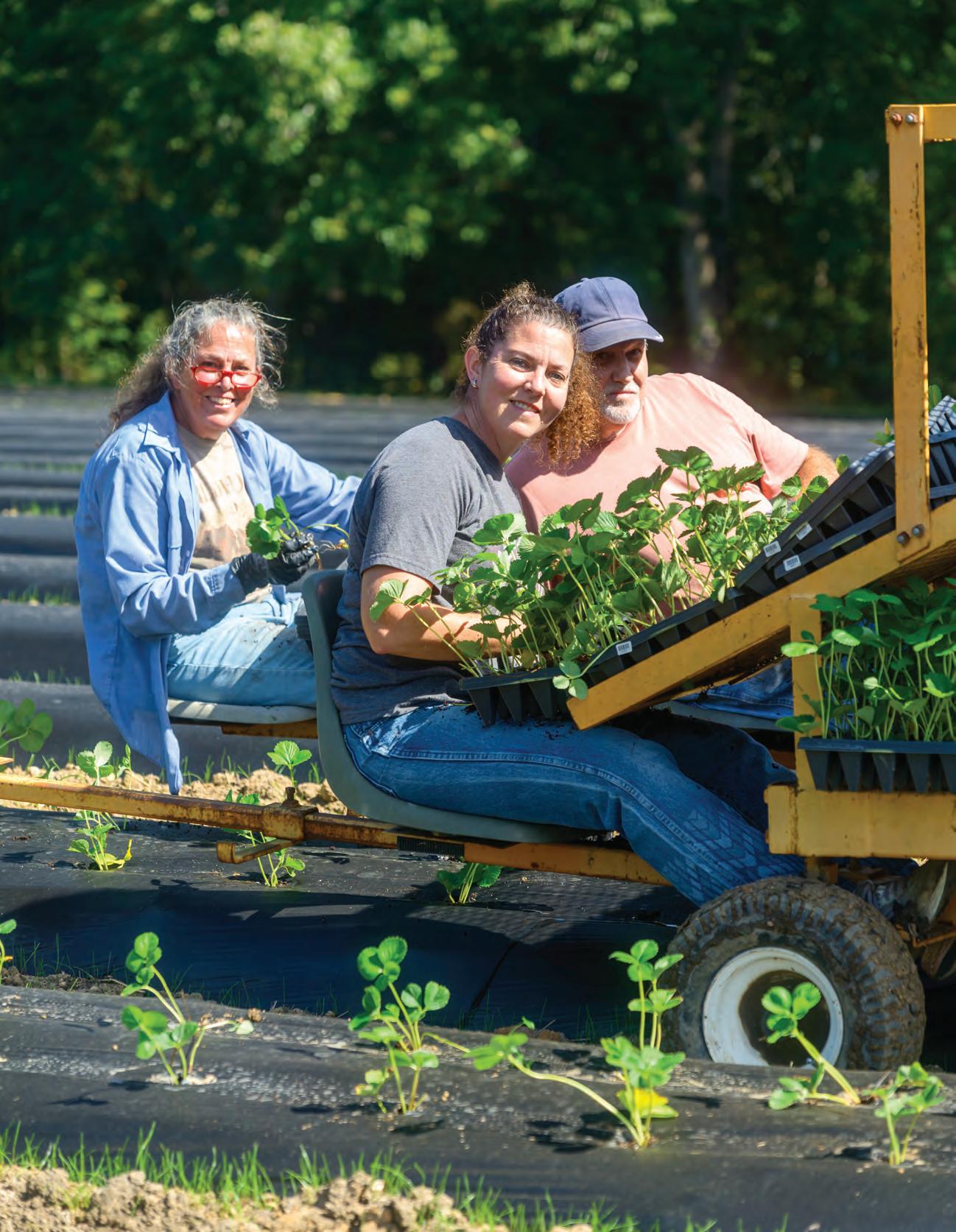
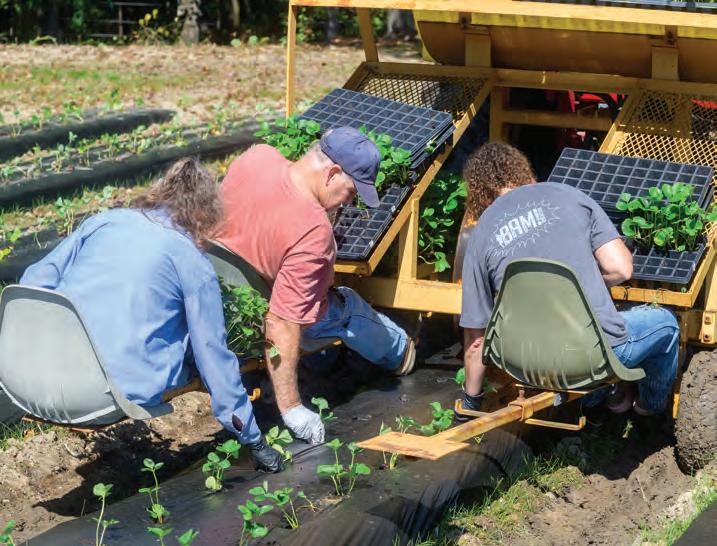
The next year, they bought a strawberry transplanter that attaches to a tractor, making the work less demanding. After the machine punches holes and fill them with water, four people seated on the transplanter place the plants. “ When the kids were little and it was just the fiv of us, it would take a couple of weekends,” Karma says. Today, the process can move more quickly, depending on which grown children are available. “Now we can get everything planted in a weekend if we get a decent start and the weather cooperates,” she says.
This season, the farm has six strawberry types, each offering differences in characteristics such as size, firmness, an juiciness. Having a variety of plants also helps guard against diseases and growth issues. “So this year I have some Ruby June, some Fronteras, some UC Surfline. I hve a new variety that doesn’t even have a name yet—it’s just called 025,” she says. Upon arrival, guests can walk the rows and pick their just-right berries. If you’re short on
PAGES 44 & 45 AND LEFT: The Lees plant the 2026 strawberry crop in the fall of 2025. Using a transplanter, which attaches to the back of a tractor, makes the work much easier.
ABOVE: Strawberries, freshly picked from Buckwheat Farm.
time, filled pre-picked quarts and flats a also available.
While Karma can’t put a number on the farm’s daily traffic, it is common to see close to 100 people in the field, particularly on a weekend. And many visitors are in no hurry, particularly as the weather heats up. Buckwheat Farm makes it easy to wind down at a shaded picnic table and enjoy one of several unique homemade ice cream flvors: strawberry, blueberry, peach, spiced pumpkin, sweet potato, sweet corn, jalapeño, or Carolina Reaper.
After three decades of growing and selling strawberries, Karma and her family could easily find an off-amp from the yearlong work of growing and selling. In fact, she gets regular reminders. “We get at least one offer a week to sell the farm,” she says. “We just say, ‘No thanks, we think we will stay.’ We’re both 67 and still working. Jim may retire, but he’s talking about what else we could do at the farm.”
Beyond the feel-good fun of the warm spring days, there is something else that Karma isn’t ready to give up just yet. “A lot of it is, that’s the only time I see those people,” she says. “And it’s wonderful to see them year after year. The ones that were little when they first started coming, the’re bringing their own kids now. That is cool.”
FRESH. FAST. FRUGAL.
Strategic steps to stretch your pantry and your dollar
STORY & PHOTOS BY GRACE BARKER
Finding a checkout total under $100 feels like a rare victory these days. As prices continue to climb, the challenge isn’t just what we buy, but how we manage it once it hits our kitchen. Fortunately, having a plan and knowing a few tricks to maximize your food’s freshness can make all the difference when it comes to maximizing your monthly grocery budget.
PLAN WITH PURPOSE
By setting aside less than an hour a week to research and organize, you can strategically fill your cart with items that are etter for both your budget and your health. This doesn’t require elaborate daily cooking; rather, it’s about being clear on what you need and when you’ll use it.
During the planning process, look at your schedule and determine when you’ll need meals. Do you have a work lunch? Are you taking dinner to a friend who just gave birth? Will you be traveling and need some extra snacks? Are your days full and prepping ahead of time could be helpful? A little forethought ensures you aren’t buying for a life you don’t have time to cook for that week.
Now that you know your needs and the time you have to cook, you can make more informed decisions about your meals for the week. Whether you need to prepare at the beginning
of the week or make a double batch of something, having a plan is going to greatly reduce your stress around mealtime. Whatever you decide, you’ve already set yourself up better by having a plan for the week ahead.
SHOP YOUR PANTRY
With a plan in mind, making a grocery list with everything you need, including spices, is an important step.
Before heading to the store, treat your own kitchen like a boutique. Use your grocery list to “shop” your pantry and freezer first—you migh be surprised by the number of ingredients you already have on hand. This simple inventory check is the fastest way to minimize food waste and cut down on unnecessary costs before you even leave the house.
STICK TO THE PERIMETER
Many of the foods that contribute to added grocery costs are packaged convenience foods. While convenience is tempting, the price per serving for packaged goods like chips and crackers is significantl higher than fresh alternatives. By primarily sticking to the outer aisles of the store—where fresh fruits, vegetables, and proteins are located—you can prioritize nutrientdense, satisfying ingredients that provide more “bang for your buck.”
THE POWER OF BULK
Shelf-stable foods such as bone broth, beans, rice, and minimal ingredient sauces are a budgetfriendly way to add more nutrients, flvor, and density to your dishes. Frozen fruits and vegetables are another great option packed with benefits, and are taditionally less expensive than their fresh counterparts.
Purchasing these items in bulk is a great way to save money without wasting food, since they last a long time. When shelf-stable items go on sale, it’s the perfect time to refil your pantry staples. Your future self will thank you!
THE BOTTOM LINE
Planning, preparing, and proper storage are the key ingredients for a successful monthly budget. From planning your meals and shopping your pantry to prioritizing whole foods and purchasing in bulk, you’ve set yourself up for success when it comes to smart grocery shopping. Keeping your groceries fresh for longer is the next best way to ensure you make the most of your grocery budget. With these tools in your kit, you’re well on your way to saving money while fueling your body with quality ingredients.
THE FRESHNESS CHEAT SHEET
Making your groceries last is the ultimate budget hack. Try these four tricks to extend the life of your haul:
• The Freezer Save: If meat is nearing its expiration date, move it in the freezer to extend its life. Thaw it in a bowl of cold water kept in the fridge for 12–24 hours before cooking.
• The Herb Bouquet: Store herbs in a glass container of water in the fridge, covered loosely with a plastic or silicone bag.
• Don’t Waste the Base: Freeze opened and unused pantry staples like bone broth or coconut milk in airtight glass containers. Label and place them in the freezer. Thaw before using in your next dish.
• Dry Your Greens: Place a paper towel or dishcloth inside containers of spinach or mixed greens to absorb moisture and prevent wilting.
OPPOSITE PAGE: Barker returns from shopping for fresh produce.
RIGHT: By planning your meals in advance, you can shop in bulk and meal prep for the week. This ensures fresh produce doesn’t waste away in your fridge and prevents you from buying too much at the store.
WINE-SPIRATION
A Spring Awakening in Three Glasses
Iknow somebody has been in your ear.
A friend or a trusted local wine retailer nudging you away from that New Zealand sauvignon blanc or that big Napa cabernet you have been reaching for all winter. Mine came from a sommelier in the Blue Ridge Mountains and a wife who does not impress easily.
I want to coin a phrase: wine-spiration. It happens when a wine experience shakes you loose from routine, reminds you why wine matters, and sends you racing toward what comes next. That is exactly what found me in early March.
I was feeling palate fatigue. My rotation had been heavy on white Burgundy, California chardonnay, and big Washington State reds. Wines I love, but my palate was ready for something new. My wife’s birthday provided the perfect excuse: a few days at High Hampton in Cashiers, tucked into the Blue Ridge Mountains in North Carolina near the Georgia border.
What awaited us was a culinary experience at the hands of chefs April and Scott Franqueza and their sommelier Tyler Wesslund that reset my palate entirely.
Photos courtesy of Matthew Weiss/The Wine Centric Show.
STORY AND PHOTOS BY MATTHEW WEISS, HOST OF THE WINE CENTRIC SHOW
Over three nights, Wesslund put wines in front of us that were intentional choices rather than safe ones. They reminded me of what I tell listeners of The Wine Centric Show: The b est wine experiences are not about the label; they are about harmony—when the wine, setting, and dish all speak the same language.
I am always looking for that sweet spot where the natural sugars of ripe fruit and the tartness of acidity meet in perfect tension. Neither dominating. Both alive.
These three bottles work, and I’ll tell you why. I didn’t choose them.
Something about being a guest in someone else’s culinary world made me want to let go. I handed the reins to Wesslund entirely, trusting his expertise. Sometimes the best thing a wine lover can do is get out of their own way.
Here is the trip he took us on.
OPPOSITE PAGE, CLOCKWISE FROM LEFT: Sarah and Matthew Weiss enjoying a trip in Cashiers. Tyler Wesslund showing off some wine. Weiss taking in the Blue Ridge Mountains. ABOVE: Wesslund, chefs April and Scott Franqueza, and Weiss at High Hampton.
THE THREE-WINE TRIP
THE WHITE
Zuccardi Polígonos Tupungato Sémillon 2022
Valle de Uco, Mendoza, Argentina Minerally and steely on the nose, with hints of fresh cream and white blossoms. On the palate is apricot and unripe peach or peach skin, with a texture that satisfies fom front to back, and a bright saline acidity through the finish. The fruit is almost a suppoting character. That is the beauty of it. Springtime in a glass.
Wesslund poured a Forlörn Hope Nacré Sémillon during one of our dinners—crisp, minerally, and texturally mesmerizing. It sent me straight home to grab a bottle of the Zuccardi Polígonos Tupungato Sémillon.
Sémillon is a sleeper grape. This wine comes from a high-altitude (roughly 3,900 feet) pocket of Valle de Uco in Argentina’s Mendoza region, where cold nights lock in natural acidity. It’s made with native yeasts rather than commercially produced ones, and without malolactic fermentation—a process that would soften its acidity into something rounder. Both choices preserve what makes this wine special: its bright, vibrant edge.
THE ROSE
Domaine Ilarria Irouleguy Rosé 2024
French Basque Country Red currant, pomegranate, and rose petal on the nose. Sappy and deep on the palate, with a mineral, almost salty finish. This is not a delicate rovençal rosé. It has something profound to say.
Wesslund paired this with a beef tartare My wife, who is genuinely difficult to impess, looked up from her glass and simply said, “Wow.” That is the review. Everything else is context.
The Ilarria Rosé is a blend of 70 percent tannat and 30 percent cabernet Franc from the Irouleguy appellation in the French Basque Country, grown at the foot of the Pyrenees. It is darker than most rosés you will reach for in spring—a vivid pink garnet, with the structure and seriousness to match.
In some ways it felt like being transported from the Blue Ridge Mountains to the Pyrenees with a single sip.
For North Carolina readers, tannat and cabernet Franc are varieties finding a eal home in our wine country. This wine felt local and faraway at once.
THE RED
Roar Santa Lucia Highlands Pinot Noir 2023
Santa Lucia Highlands, California
Aromas of vanilla, leather, and wild chaparral give way to blackberry, a whisper of olive, and black licorice. The finish is long and ceamy, with cherry and cinnamon before bright acidity snaps everything back into focus.
This is a cabernet lover’s pinot noir.
The Santa Lucia Highlands sit along California’s Central Coast, where daily winds off the Monterey Bay slow ripen and build what winemakers call phenolic development. This is the complexity that comes from the grape’s skin and stems having more time to mature.
The result: wines big enough for cabernet drinkers but fresh enough for spring. At nearly 15% alcohol, it has the substance of a cool-weather red but the balance to carry you through an entire spring evening.
Fire up the grill or smoker. Put chicken, pork, or beef over the heat and open this bottle. This is the red that bridges the season
These three wines did not just refresh my palate. They gave me a map for the season.
I hope one of these bottles hits that same harmonic note for you.
Dubbed the Charlie Rose of wine, Matt Weiss sits down with the titans of the wine industry—
the winemakers, sommeliers, and visionaries who are shaping the way we think about, talk about, and experience wine. The Wine Centric Show is an interview series that pulls back the curtain on the lives and minds behind the labels. Scan the QR code to subscribe and never miss an episode.
SWING WITHOUT STRAIN
A local PT’s guide to longevity on
the links
STORY & PHOTOS BY SONALI SETHI, PT, DPT
With the return of warmer weather, the call of the fairway is hard to ignore. But while a morning on the course may feel like a leisurely escape, the physical reality of a golf swing is anything but.
Whether you’re just starting out or are a seasoned expert, playing golf can take a toll on the body. A golf swing needs as much power as it does precision, and both are impacted by how your body moves. Limitations in your mobility or weakness in certain muscles can lead to a faulty swing technique, which can lead to an overuse injury. Over time, this injury can further disrupt your technique, leading to risk of additional injuries—a truly vicious cycle.
WHICH AREAS ARE MOST IMPACTED?
The low back, hips, shoulders, and wrists are the most common areas of injury in golfers. This is due to the nature of the golf swing.
The power in a golf swing is generated through a chain of events. The sequence starts with a full rotation of the spine, which is supported with less visible (though equally important) rotation in our hip joints. As the muscles and joints wind to their end-range, power transfers from the torso to the shoulders and releases at the wrist as the club swings through.
Limitations or altered movement patterns at any point in the chain can lead to dysfunction and injuries. In the case of the wrist, inflammation in tendons that flex the wris can lead to tendinitis, commonly known as “golfer’s elbow.”
WHAT CAUSES INJURIES IN GOLFERS?
A majority of the injuries in golf are overuse
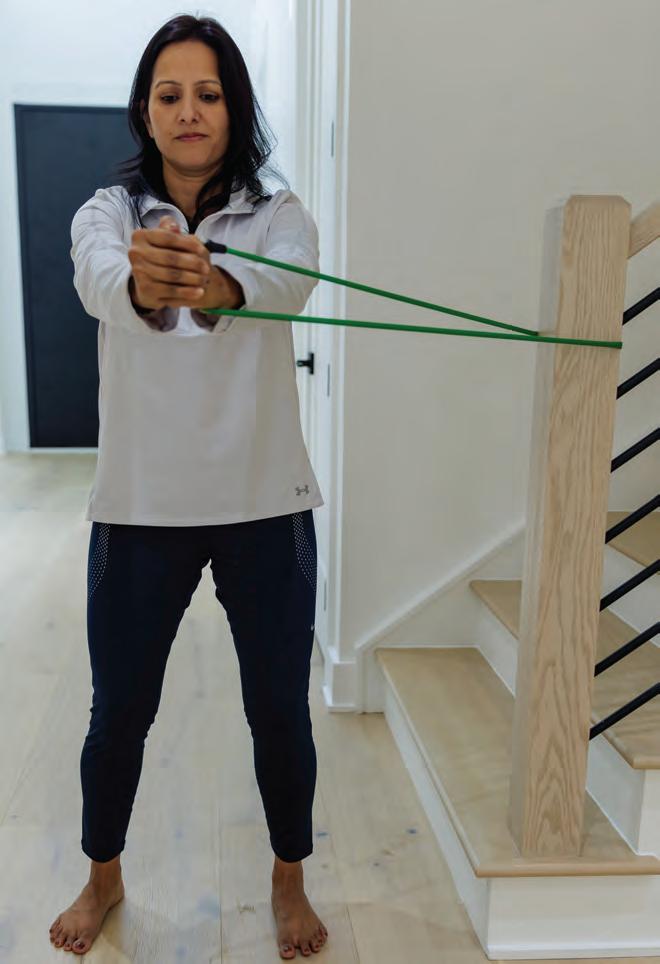
LEFT: Sethi demonstrates the Pallof Press, which uses a resistance band to improve mobility. BELOW: Sethi does the modified ersion of a TFL Stretch, using a ball to intensify the stretch.
injuries. This means the constant and repetitive load on the muscles, ligaments, and tendons exceeds what the body is capable of tolerating.
Overuse injuries can result from:
• Poor swing technique
• Limited flexibility
• Weakened muscles
• Inadequate or no warm-up
• Insufficient rest etween games
An example of overuse is going from no pain, to pain that begins 30 minutes into playing, to pain that begins 10 minutes into playing. This lets us know the body is not able to catch up, and can lead to long-term issues.
HOW TO MINIMIZE RISK OF INJURIES
A proper warm-up routine, targeted strength training, and mobility exercises are all actions you can take to reduce your risk of injury.
A proper warm-up prior to playing can significantly improve your game. Warm-ups can include general, dynamic movements, as well as golf-specific mobility exercises that improve blood flow to muscles, losen up tight joints, and prepare the body for optimal play. Though general strength training provides many benefits, it arely addresses the specific movements needed for an efficient golf swing.
The exercises listed below target commonly problematic areas for golfers. This list is not exhaustive but can be a great starting point for reducing unnecessary strain, improving movement patterns, and ultimately helping you play with more power and precision.
This exercise program is designed to prevent—not treat—golf injuries.
EXERCISES TO IMPROVE MOBILITY FOR GOLFERS
These exercises help improve flexibility in commonly restricted areas, especially the rotational movement seen in the spine and hips. Try incorporating these exercises into your warm-up routine prior to playing. Do these exercises 3–4 times per week for best results.
TFL STRETCH + BALL MUSCLE RELEASE
With this exercise, your upper body will naturally tilt away from the wall, elongating the side of your hip and torso for a deep stretch. The side being stretched is against the wall and the opposite leg crosses in front to stabilize. Perform for two sets of 30 seconds on each side.
• Stand with your right hip perpendicular to a wall, approximately two feet away.
• Cross your left leg in front to stabilize. Keep a soft bend in both knees.
• Slowly drop your hip toward the wall as if a thread is pulling you.
• To intensify, place a tennis ball between your hip and the wall. Lean into the ball to roll out tight spots on the side and back of the hip.
OPEN BOOK STRETCH
For this exercise, think about “opening” as rotating through the spine to open your chest toward the ceiling.
Perform 10 sets of 10-second holds on each side, taking deep breaths in through the nose and out through the mouth.
• Lie on your side with hips and knees bent and arms stacked in front of you.
• Keeping the hips in place, turn your neck, trunk, and top arm by rotating to the opposite side.
• You can deepen the stretch by pushing down with the bottom hand to stabilize your knees.
UPPER BACK STRETCH
Perform 10 sets of 10-second holds, taking deep breaths in through the nose and out through the mouth.
• Grip a banister with both hands, slightly below shoulder height.
• Lean back with your hips and round through the upper back. Think about separating the shoulder blades. Pull your shoulders down from your ears to avoid compensating.
• To intensify a stretch for one side, slightly turn the upper body toward that side while keeping your hips and arms in place.
EXERCISES TO IMPROVE STRENGTH FOR GOLFERS
These exercises help strengthen the muscles in the trunk, shoulders, and wrists that are needed during a golf swing. They can be performed 2–3 times a week for best results.
PALLOF PRESS
Use a cable machine or anchor a resistance band to a firm surface at chest height. Perform 3 sets of 8–12 reps, to moderate fatigue.
• Position your body so you are perpendicular to the band.
• Grip the band with both hands at your chest and slowly step away from the anchor point until you feel moderate to heavy resistance.
• Keep a soft bend in your hips and knees. Maintaining a steady trunk, extend your arms out at chest level and slowly bring them back in.
• If you find your arms or trunk rotating toward the anchor, the resistance may be too much. Take a small step back toward the anchor point.
PRONE I, T, Y RAISES
Use a small rolled towel under your forehead to support your head. If the exercise is too difficult, only complete th exercise in the first osition. Perform 3 sets of 8–12 reps at each position.
• Lie face down with arms by your sides, palms facing down.
• Squeeze your shoulder blades together, then lift both arms a few inches off the ground and hold for 3 seconds.
• Bring your arms back down and relax the squeeze.
• Bring the arms to the next position (T shape) and repeat the action.
• For the last set (Y), rotate your thumbs toward the ceiling and think about pulling your shoulder blades down toward your back pocket before lifting your arms up.
Sethi demonstrates the Prone I, T, Y Rasies, which help stretch and loosen the muscles in your shoulders and upper back.
DEPARTMENT KALEIDOSCOPE
SETTING THE STAGE
Theatre Raleigh ACT offers training in voice, acting, and dance
STORY BY KURT DUSTERBERG | PHOTOS BY THEATRE RALEIGH ACT
Avery Gard stands in the middle of a rehearsal studio at Theatre Raleigh ACT, pouring everything she has into her rendition of “Quiet” from Matilda the Musical. As her castmates watch, she powers through the solo, with its demanding pace and British accent. None of it fazes the 11-year-old.
“When I was little, I used to go around the house going, ‘Look, I’m British!,” Gard says, easing her way into the accent. “It was fun. I’m kind of used to it, but I had to work on it for the show.”
Gard is part of the preperformance company at Theatre Raleigh ACT—formerly Raleigh Area Children’s Theatre. Each week, the studio attracts close to 300 kids seeking to develop their artistic talents through camps, performance and technique classes, and company track.
Creative Director Blaire Thompson opened the studio in 2012. “The first group of kids that were our students, most of them stayed,” she says. “They just kept coming back, and they had amazing parents who volunteered.”
Thompson’s own theater journey came without much formal training. Her earliest acting memories were in
the most informal of settings. “My father lived on a boat in Myrtle Beach,” she says. “In the evening on the docks, all the boat owners would come sit and have a glass of wine, and we would perform for all of them.”
After years performing in church choirs and community plays, she eventually earned a scholarship at a small Baptist college where she studied music education and sang. She taught music at two Christian schools in Florida before coming back to Raleigh to raise her children and open the studio.
From the start, Thompson was determined to create a welcoming environment. “When you’re asking kids to open up and be vulnerable, you have to make them feel safe,” she says. “A lot of theater kids don’t fit in at schol. They’re the quirky ones, right? I wanted them to have a place where I can be me, and I’m fully accepted and celebrated for that.”
Theatre Raleigh ACT serves children ages 3 to 18, with programs for both beginners and experienced performers and as many as 24 shows annually. The school also provides inclusive classes for students with developmental disabilities.
The social benefits can take hold earl, providing more than simply an after-school activity. Preschoolers get a head start on working together, being expressive, and speaking with projection and clarity. “Usually the preschoolers we get are for two reasons,” Thompson says. “Either, ‘I have such a dramatic kid and I think they would be a great storyteller.’ Or, ‘I have such a shy kid.’”
While many age ranges require no previous experience, pre-performance company (ages 12+) and performance company (ages 13+) each require previous experience and auditions.
Sixteen-year-old Kirk Baron discovered the studio when he was in middle school, after learning that his friends were enrolled in the classes. “I tried out a lot of things when I was younger and found out I wasn’t very good at them,” says the Leesville Road High School sophomore. “I really enjoyed singing, and found out I was pretty good at it. Our director, Ms. Blaire, showed me that they could completely transform someone that did not have any experience outside of one specific talent. With a little bit of wor and putting all of your thought into what you’re doing, you can become a lot better.”
While parents often welcome the life lessons associated with competing in sports, similar growth opportunities are connected to acting, singing, and dance. “You’re going to learn the same things you learn in sports, like working together as a team,” Thompson says. “You learn winning and losing, because 95% of the time you’re not going to get the role you want. And I think theatre really trains people to be confident—projecting, an speaking clearly and intelligently.”
Theatre Raleigh ACT recently began a Bachelor of Fine Arts prep program for students who might want to pursue a career on stage. The personalized classes focus on the training and audition process. “Getting into a BFA program is extremely rigorous,”
OPPOSITE PAGE & THIS PAGE: Kirk Baron (far left) and Avery Gard (far right) get a chance to shine onstage with Theatre Raleigh ACT.
Thompson says. “The big schools often have a class of 20, and there are only so many programs. The pool of kids auditioning is large. You have to be unique, and you have to stand out. You also have to be very technically sound.”
But long before those life decisions, young actors can find th level that suits their interest—even if that means making difficul choices. “I also play soccer,” Gard says. “If I had gotten into a higher league of soccer, I couldn’t do certain classes. So I chose theater, and I’m glad I did.”
For Baron, a decision about the future could be right around the corner, and Theatre Raleigh ACT has left him considering the possibility of a BFA. “That’s definitely at the top of my list for th future,” he says. “It’s definitely a highlight, coming here multipl days a week and ending the day with an atmosphere of people who are really fun to be around.”
Theatre Raleigh ACT’s creative director, Blaire Thompson, opened the studio in 2012.
MAY/JUNE EVENTS
MAY
Bands, Bites, and Boats
Fred G. Bond Metro Park, Cary
May 1; 5:30–7:30 p.m.
Kick off the month at the Bond Park Boathouse with live music from the Tim and Phil Acoustic Duo, local food trucks, and Bond Brothers brews. Perfect for a sunset flot on the lake.
45th Annual Apex PeakFest
Town Hall Campus, Apex May 2; 9 a.m.–4 p.m.
The town’s largest annual celebration moves to the Town Hall Campus this year. Expect arts, crafts, live music, and a true small-town festival atmosphere.
Got to Be NC Festival
North Carolina State Fairgrounds, Raleigh
May 15–17
A celebration of all things North Carolina at the North Carolina State Fairgrounds, featuring the best of local food, farm equipment displays, and family-friendly entertainment.
Artsplosure: The Raleigh Arts Festival Fayetteville Street, Raleigh
May 16–17
One of the region’s longest-running festivals brings over 170 juried visual artists to Fayetteville Street for a weekend of creative discovery.
NC Symphony Summerfest: Opening Night
Koka Booth Amphitheatre, Cary
May 23; 8 p.m.
Pack a picnic and head to Koka Booth Amphitheatre as the symphony returns with Tchaikovsky’s “Piano Concerto No. 1” and Dvořák’s “Symphony No. 8.”
JUNE
Bands, Bites, and Boats
Fred G. Bond Metro Park, Cary
June 5; 6–8 p.m.
A summer staple continues with the LaureNicole band and food from Corner Boys BBQ and Super Spuds.
Apex Pride Festival
Hunter Street Park, Apex
June 13
A community-centered celebration in the heart of Apex featuring local vendors, art, and inclusive festivities.
Fayetteville Street transforms into a massive open-air dining hall with dozens of the Triangle’s best food trucks.
NC Symphony Summerfest: Mozart by Moonlight Koka Booth Amphitheatre, Cary
June 20; 8 p.m.
A sophisticated evening at Koka Booth under the stars, featuring Mozart’s “Jupiter ” symphony.
Out! Raleigh Pride
Fayetteville Street, Raleigh
June 26–27
Celebrating 14 years, the festival expands with a new 18+ night on Friday followed by a familyfriendly street festival on Saturday.
The Got to Be NC Festival is coming to the North Carolina State Fairgrounds May 15–17. There you can sample your way through hundreds of North Carolina foods and products. Photo by Dathan Kazsuk.