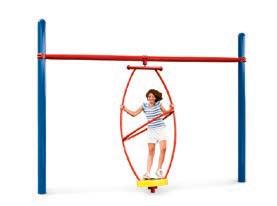
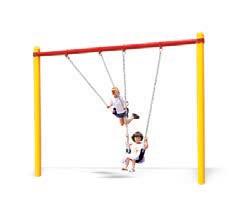
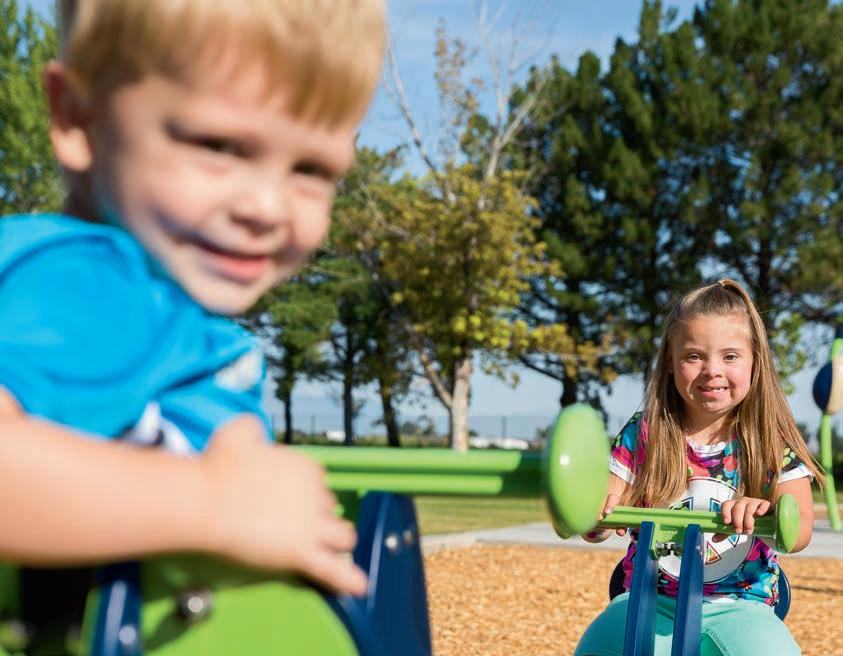
12%* of the U.S. population has a severe disability that affects at least one function of daily living.
This group of people does not live in a vacuum; they have children, parents, siblings, and grandparents who are involved in their daily lives. Therefore 36% of the population, or 1 in 3 people, is touched by severe disability.
*Kaiser Family Foundation 2012.
Mobility Versus Non-Mobility Impairments
5% Mobility Impairments
95% Non-Mobility Impairments
US Dept. of Education
A nation’s greatness is measured by how it treats its weakest members.
– Mahatma Ghandi
... and its children.
– Playworld
Inclusion matters
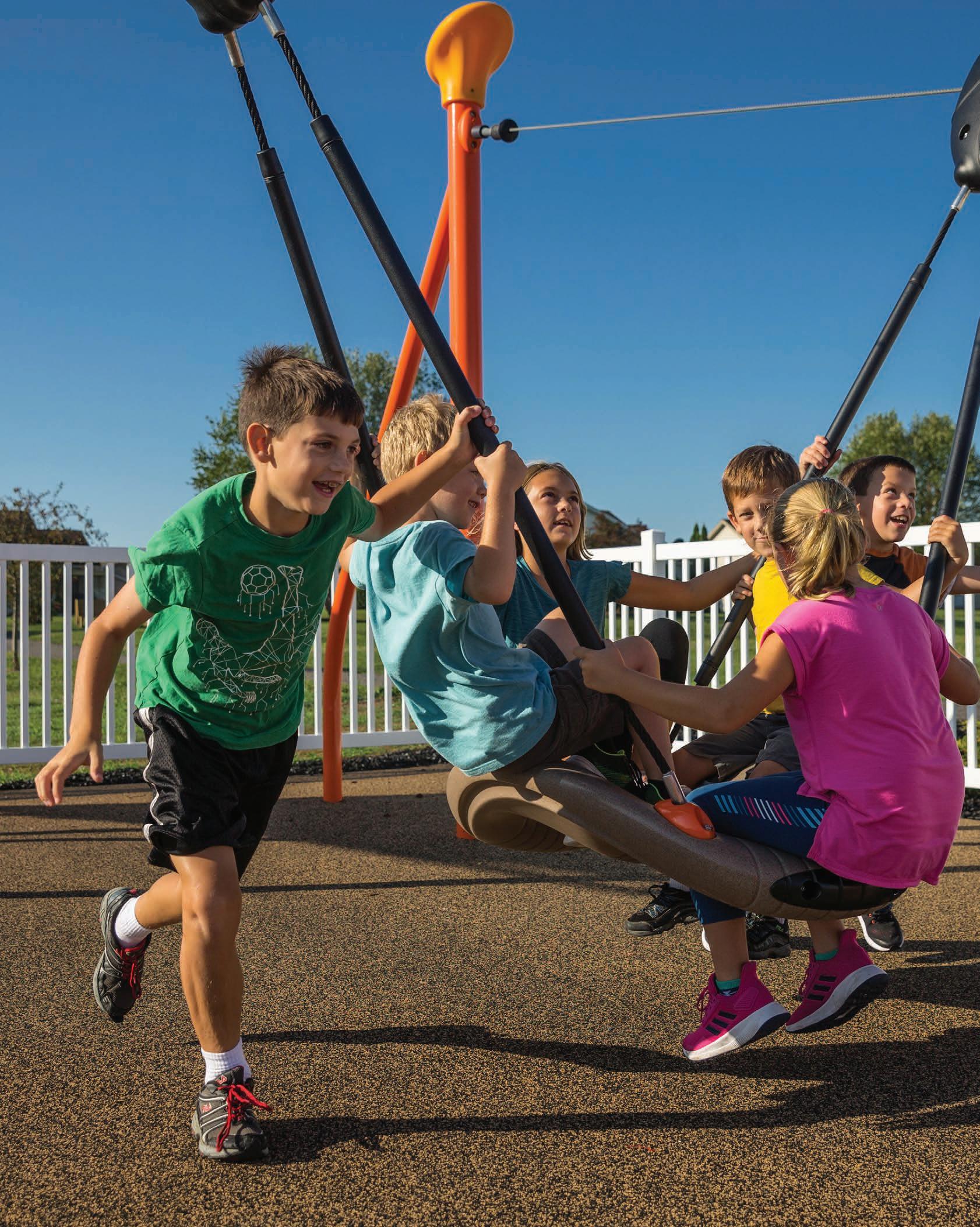
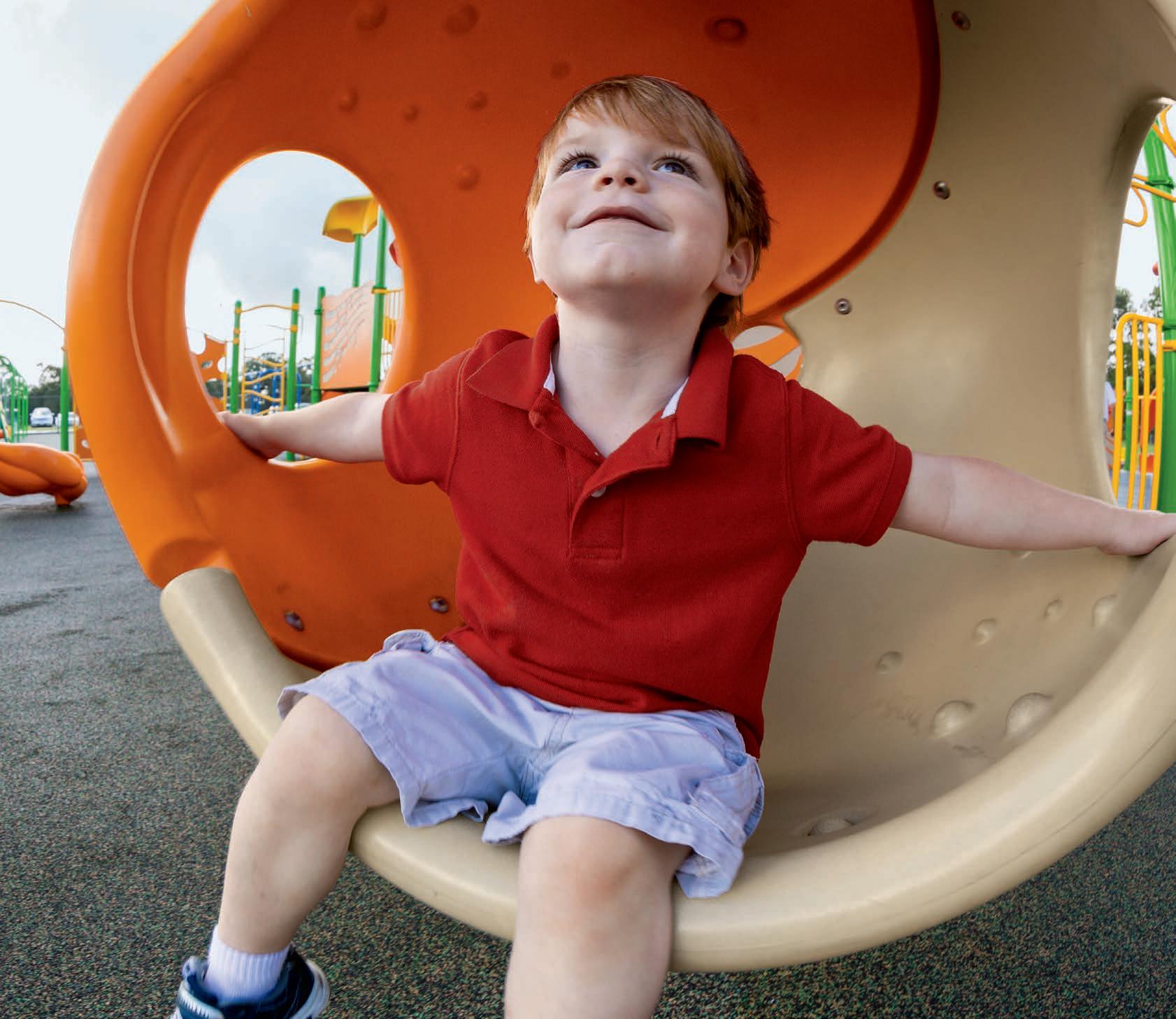
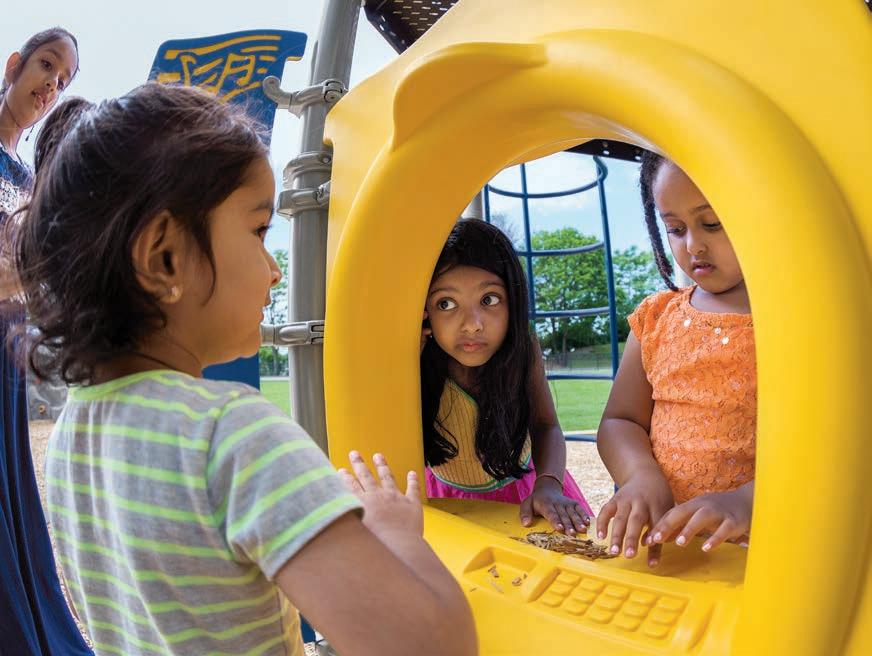
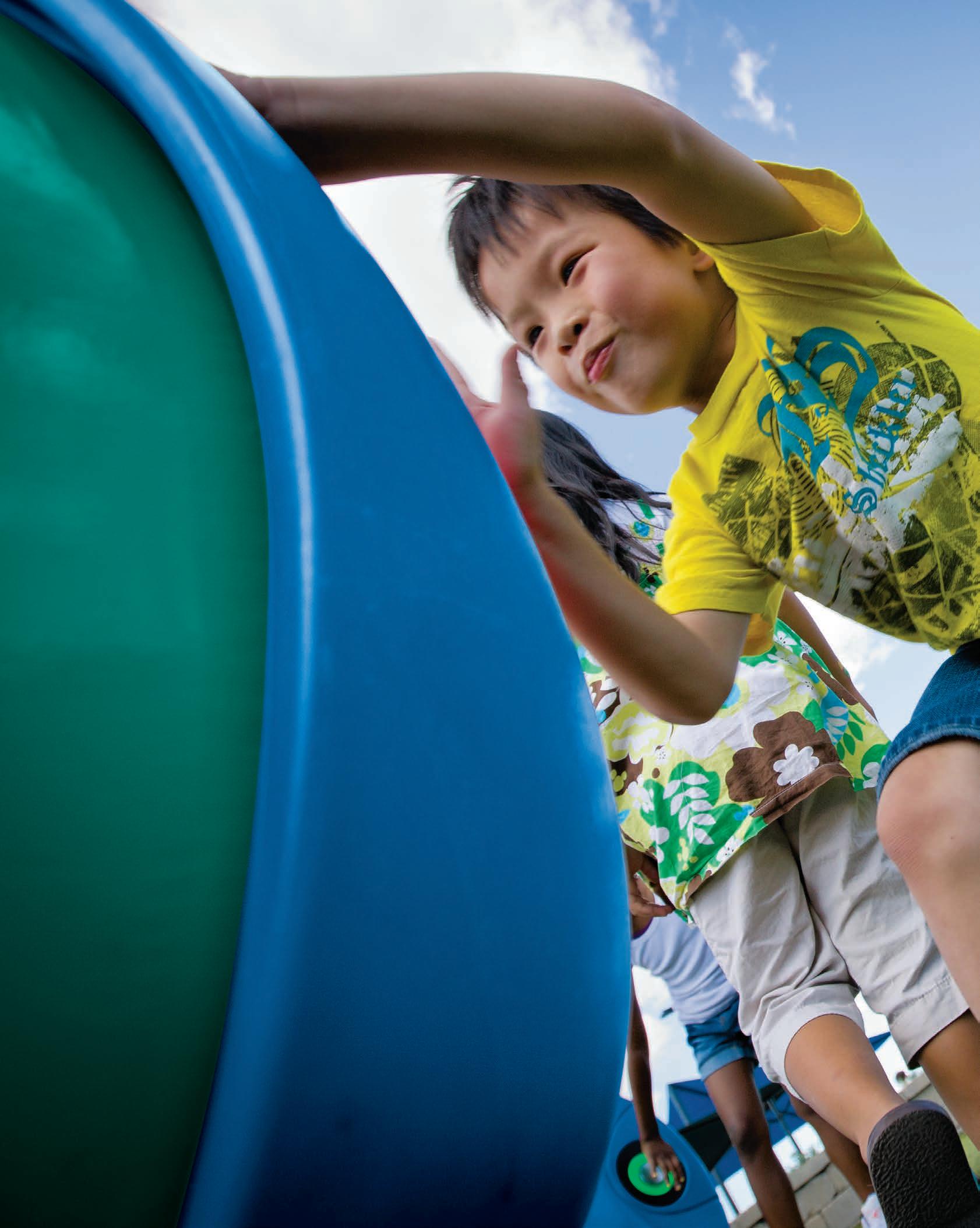
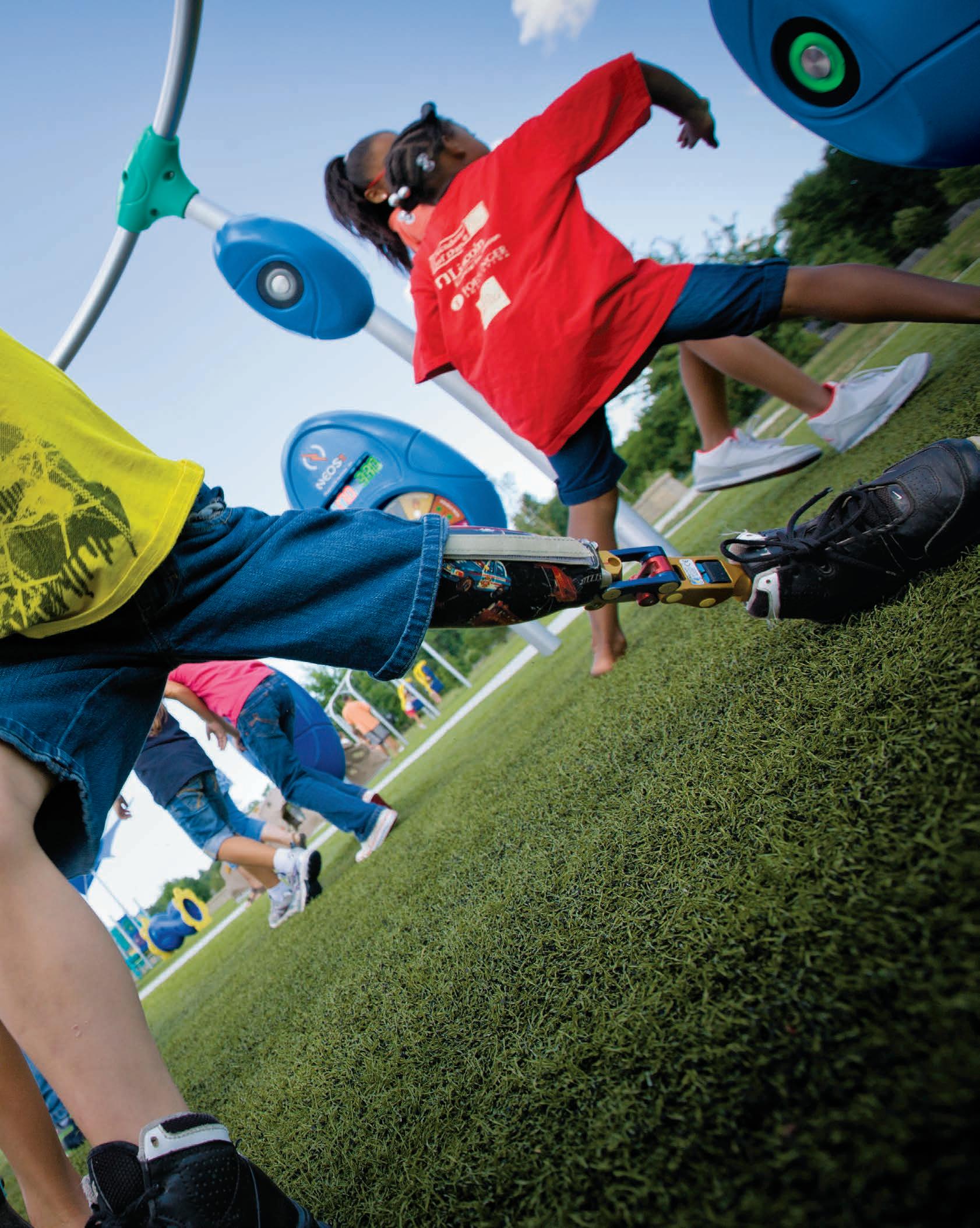
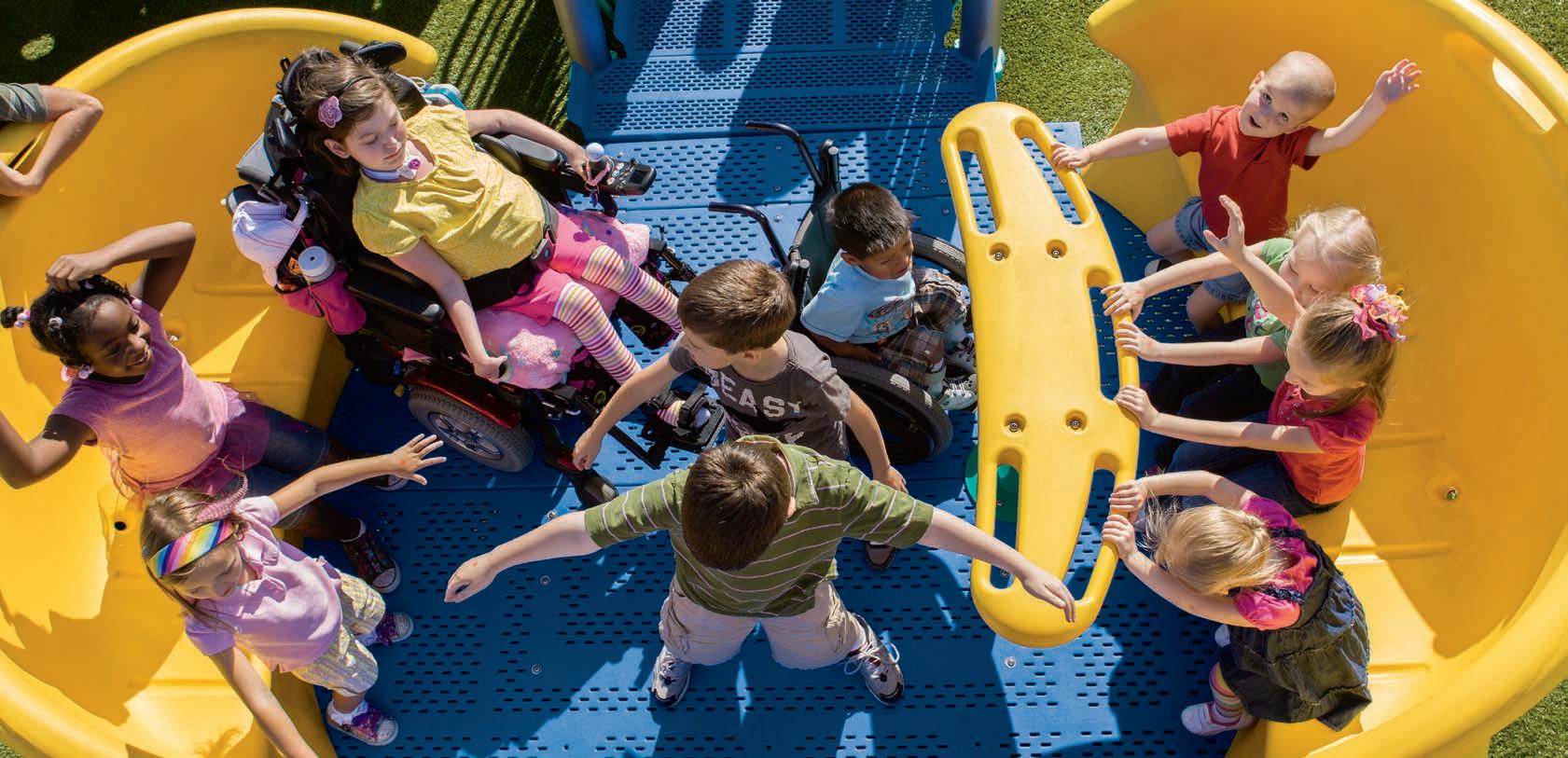
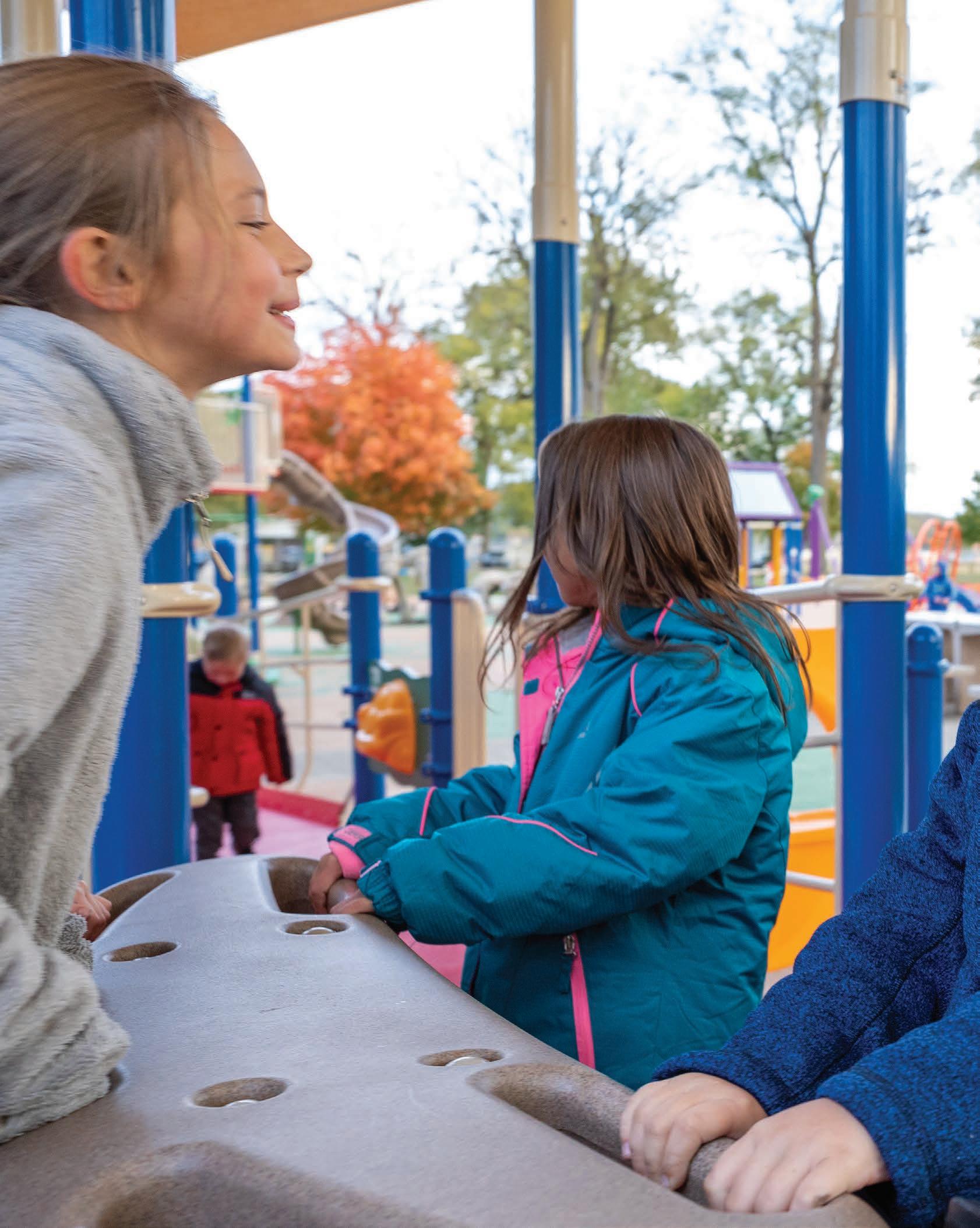
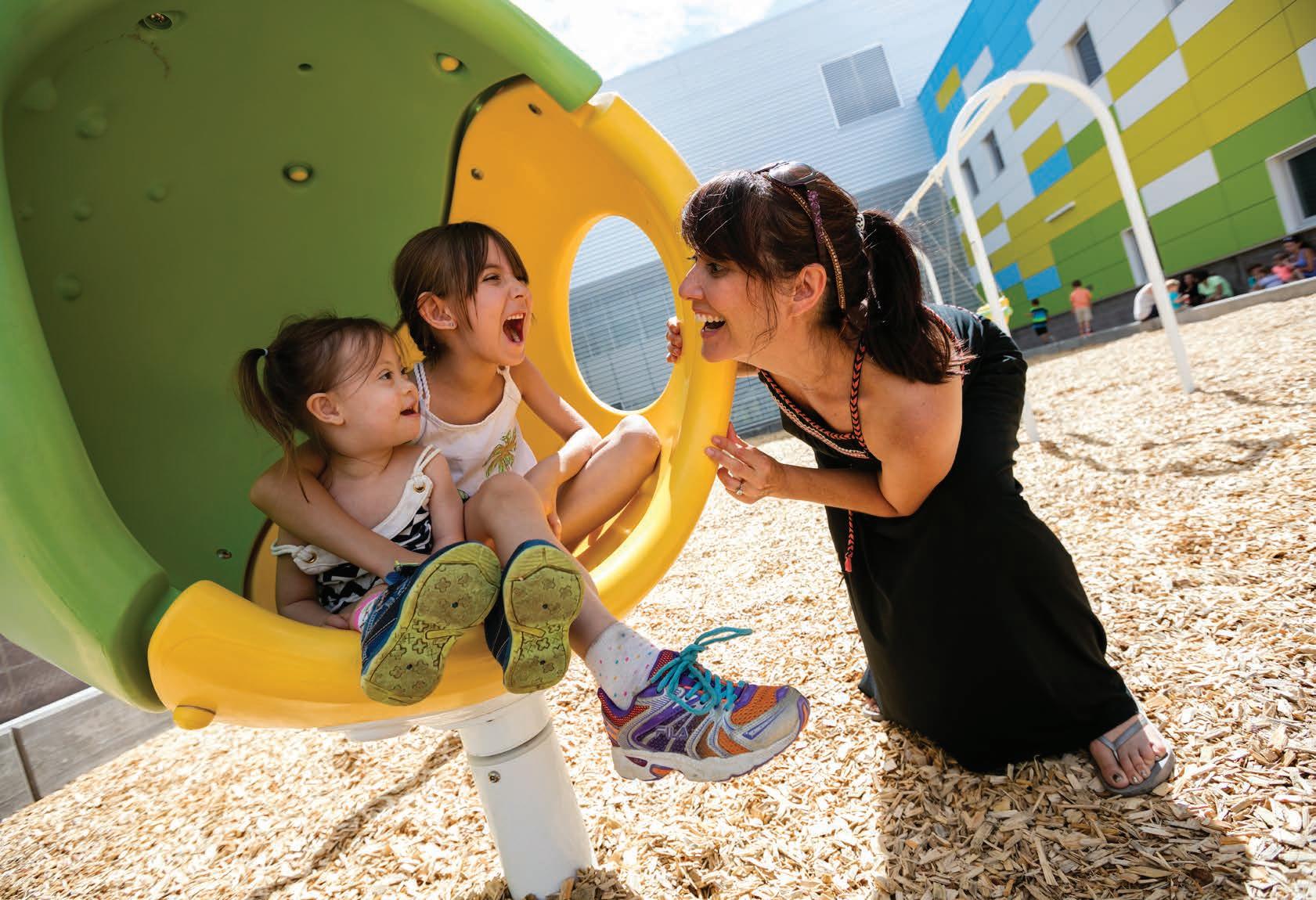
It’s not just about people with disabilities; it’s about everyone enjoying and sharing in the holistic benefits of play— physical, sensory, and social.
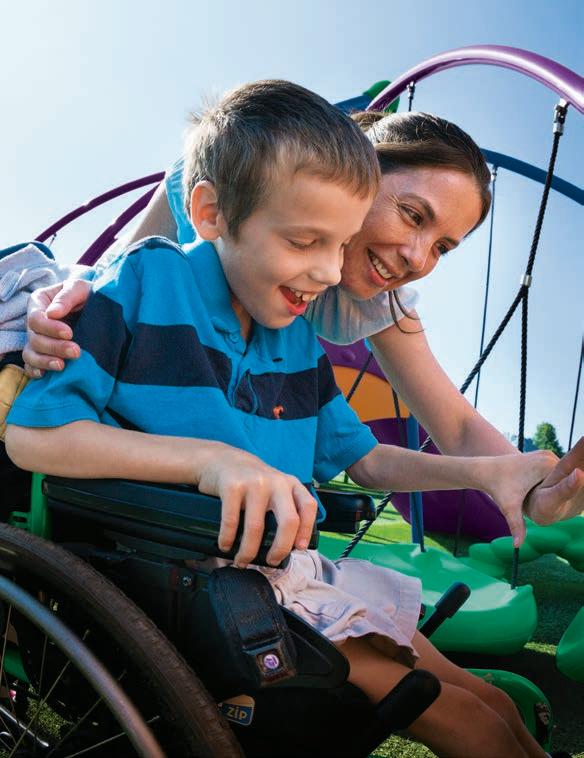
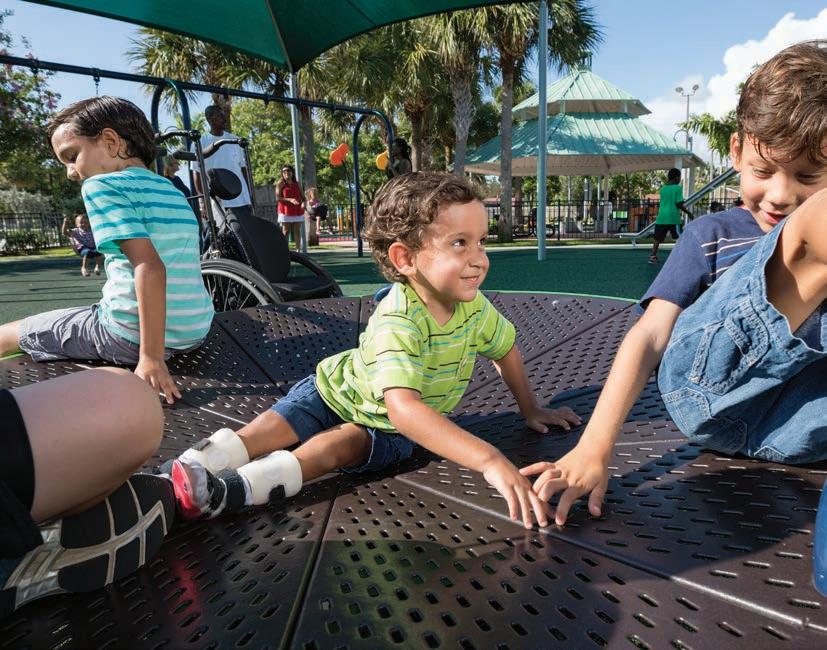
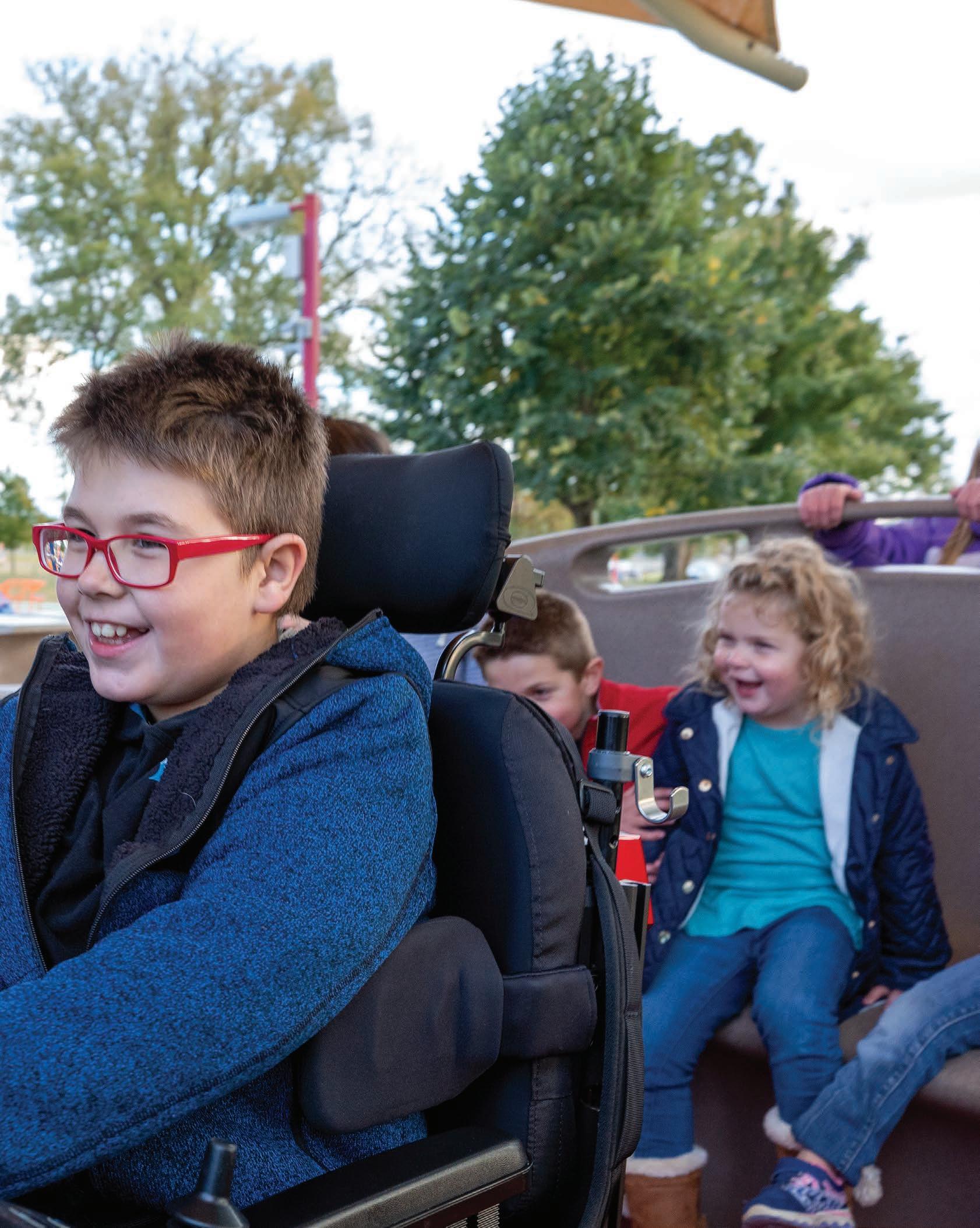
It’s about the family of a child with a disability, the typically developing child, and the parent or grandparent with a disability who wants to take a child to the playground.
Inclusion is more than access—it’s about being a part of something. It’s about making a difference in the lives of others. Because it’s the right thing to do.
Why create an inclusive playground?
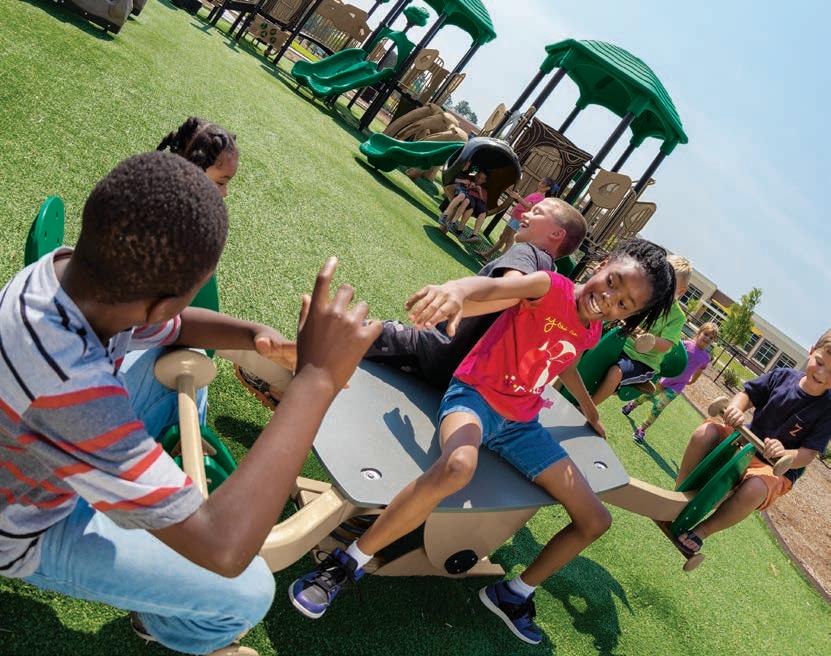
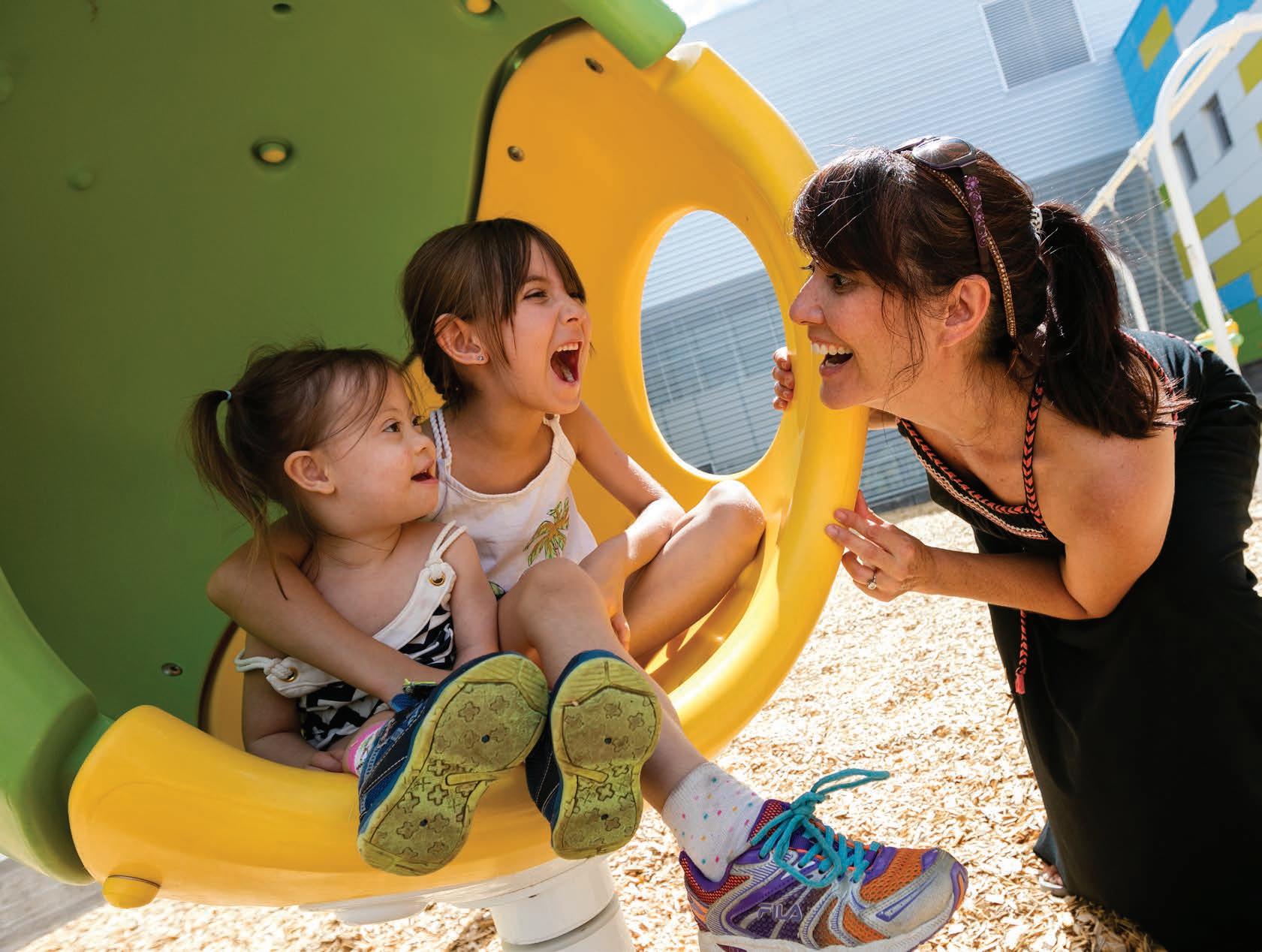
Because everyone deserves an opportunity to join in and play. It offers play experiences for everyone—the chance to be involved with one another, to make new friends, to be encouraged, to overcome a challenge and to learn compassion and empathy.
Inclusive playgrounds are built on the foundation of existing playground guidelines, but go beyond them to facilitate engagement between children.
What’s the difference between access and inclusion?
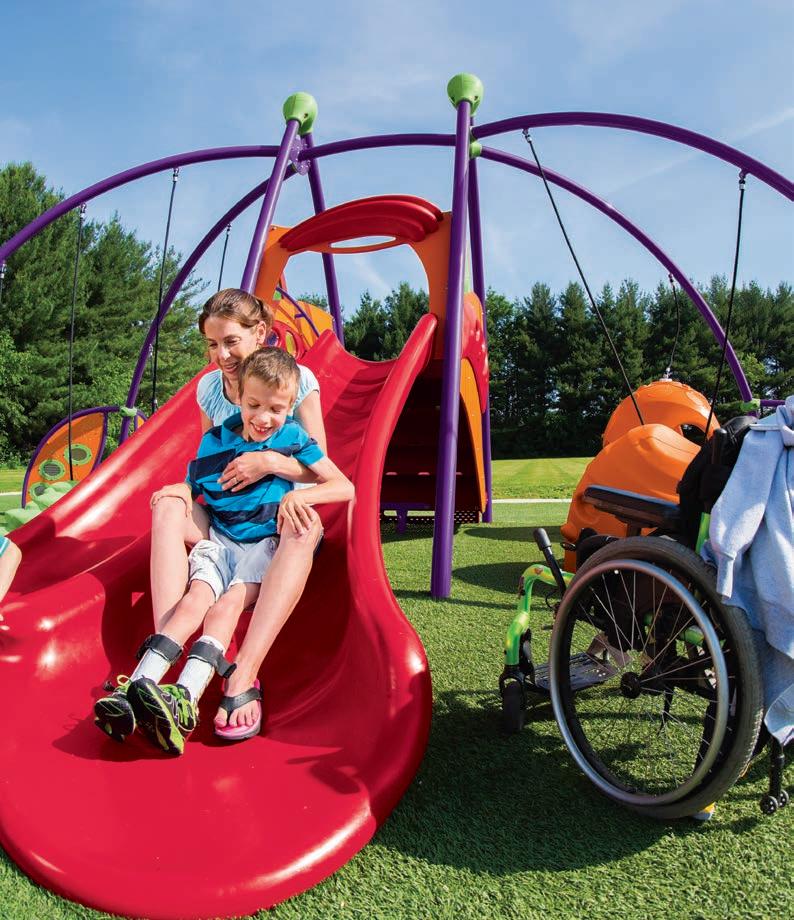
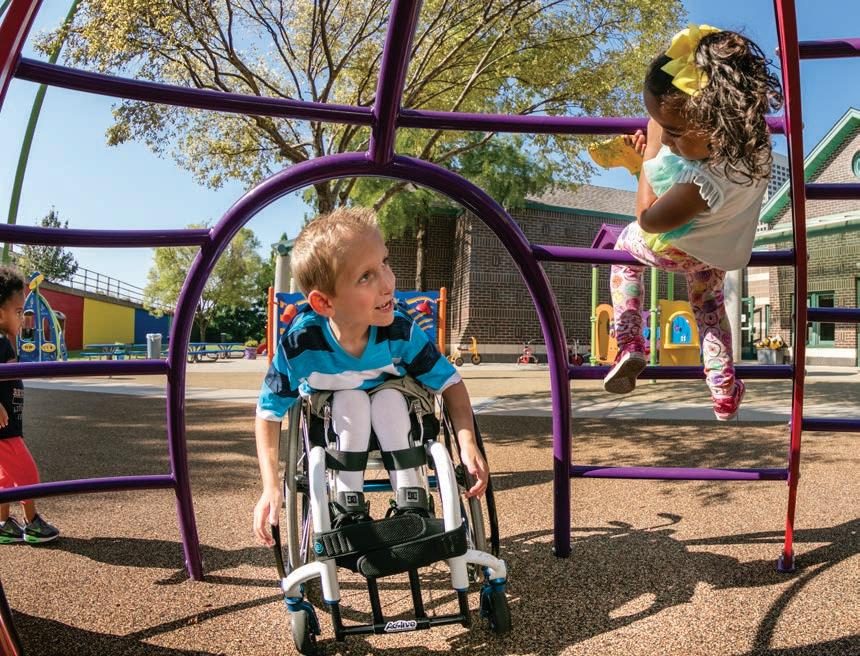
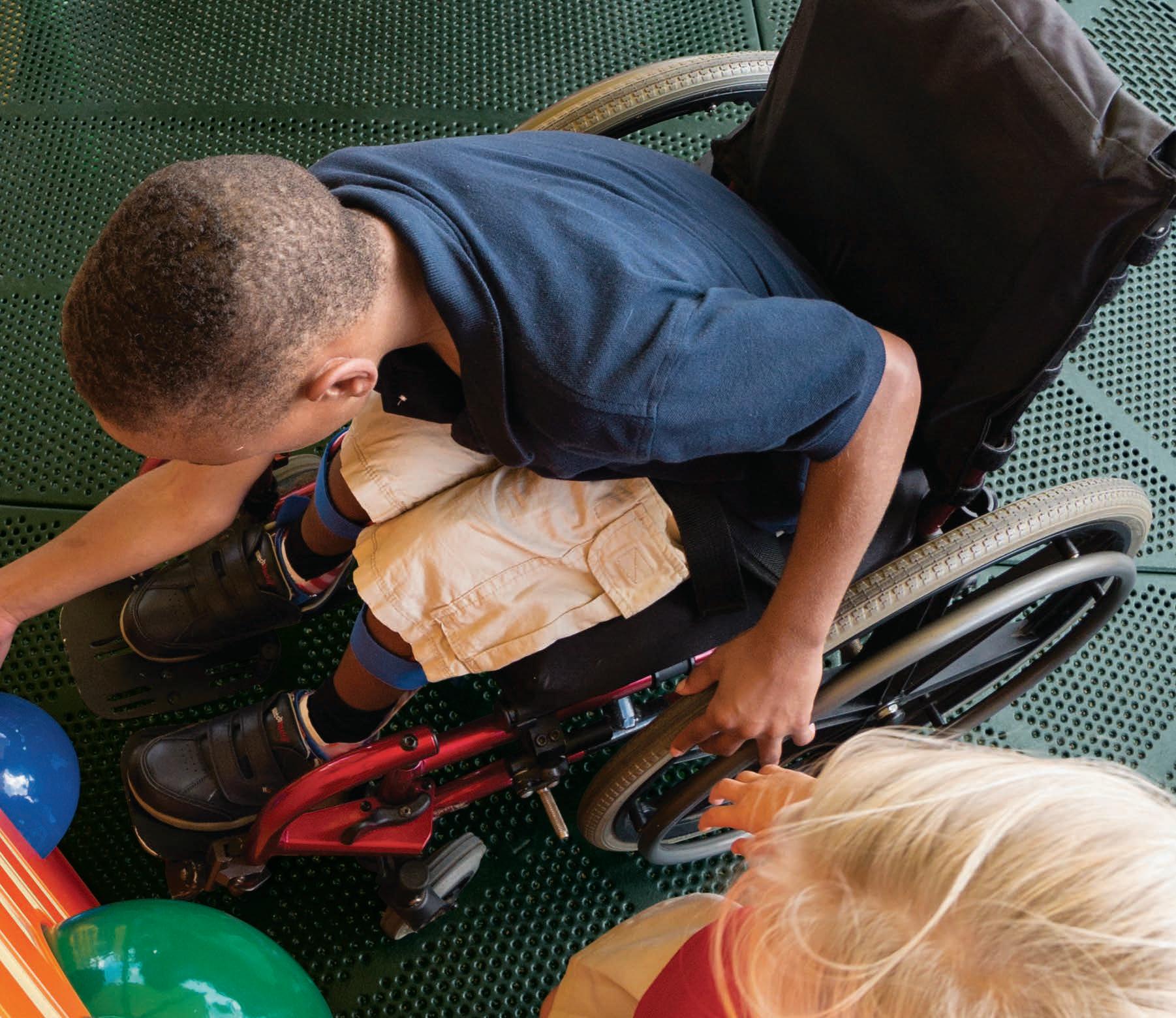
An accessible play area means that a child who uses a wheelchair can get into it. If it is inclusive, then the play activities have been selected and laid out in such a way that the child in the chair can engage with children of different abilities while they play.
Why isn’t ADA enough?
The main effect of The Americans with Disabilities Act (ADA) on the playground is allowing someone in a wheelchair to get to the equipment.
That’s a great start, but inclusion goes further and offers ways to engage people of all abilities with one another once they are there.
Learn how easy it is to bring an inclusive playground to your community.
“Do unto others…” is an important principle to live by, but it doesn’t help a playground designer or buyer take specific steps toward an inclusive playground. Our goal was to develop step-by-step techniques that a decision maker can use to move the needle on inclusive play for any playground.
The Journey to Inclusive Design
How Playworld Got Here
2010
Playworld partners with Let Kids Play, a Pennsylvania-based firm that designs accessible playgrounds, and reviews and recommends toys for children with disabilities.
• Holds play day to observe and analyze children of all abilities interacting with our playground equipment
2011
A cross-functional team of six experts assembles in Cleveland, OH to establish basics of inclusive play on the playground. The group tours Preston’s Hope playground.
• First draft of inclusive play guidelines written, and sent for national and international peer review
2012
The document is redrafted and sent for national and international public comment. Document revised again and published as the Inclusive Play Design Guide™.
• Playworld initiates ongoing commitment to meet with our product development team, resulting in products such as the Cozy Cocoon™, Balance Trax, and Triumph™ Climber
2013
Launch of in-depth inclusive play training and certification process for employees and partners.
• Development of multiple resources and tools to assist in design
• Categorization of products by play richness and challenge level
2014
Playworld develops continuing education courses, establishing its own CE program.
• “Inclusive Play: Designing Outdoor Environments for Everyone,” available as in-person presentation or online
• “Designing for All Abilities: Playground Beyond the ADA”—a 3-hour, hands-on inclusive play workshop
2015
A first in the industry, Playworld distills our years of experience into an inclusive playground evaluation process. This assesses the layout on formalized inclusive criteria (See page 24).
2016
Offered online inclusive play training to community advocates. Six modules that lead to Certified Inclusive Play Designer.
Inclusion isn’t just about access. It’s about making a difference in the lives of others.
There are 8 principles of inclusive play design that have the biggest impact.
Small but mighty, these 8 Keys unlock barriers for children and people of all ages and abilities to engage with one another through play.
8 Keys to Inclusion
Physical, Sensory, and Social
Create a rich play environment by offering a diverse range of activities across all three categories.
1 2 3
Multiple Levels of Challenge
Choose equipment with a wide variety of challenge levels to provide appropriate involvement for everyone.
Grouping of Activities
Invite engagement between children of different abilities by locating similar activities close to one another.
Elevated Play
Make high decks a destination point with engaging play so everyone wants to climb or wheel themselves up there.
The ‘Coolest Thing’
Identify the piece of equipment that you think children will be most excited about. Make sure that this activity is usable by everyone.
Pods, Rooms, and Zones
Develop specialized areas of play. This allows choices by a child who may be overstimulated by a noisy or very active area.
Unitary Surfacing
Surfacing can be divided into two groups: loose and unitary. Unitary surfacing allows people in wheelchairs to get to the play activities easily.
Routes and Maneuverability
Routes through the play area should be wide enough for people in wheelchairs to pass one another, and to enter, turn, and exit without difficulty.
Key to Inclusion:
Physical, Sensory, and Social Goal: Provide a rich play experience
The goal of the playground is to provide a rich, inclusive play space where children of all abilities can grow and learn. To do this, we have categorized our products as being physical, sensory, or social. It is possible for a piece of equipment to have more than one attribute, and even all three. Each type of play is crucial to any child’s development.
The total play experience should include activities from each category. Having a mixture of all three helps to create an exciting and more inclusive playground for all children.
There are many types of play in each category.
PHYSICAL PLAY
• Spinning
• Sliding
• Swinging
• Rocking
• Climbing
• Crawling
• Upper Body
• Balancing
• Jumping and Bouncing
• Running, Walking, and Rolling
• Movement experienced from a wheelchair
SENSORY PLAY
• Tactile
• Auditory
• Visual
• Cozy Spaces
• Interaction with Natural Features
SOCIAL PLAY
• Social Interaction
• Cooperative Play
• Dramatic and Imaginative Play
• Loose Parts
Examples of Physical, Sensory & Social
Sensory: Tactile and Cozy
Social: Dramatic and Imaginative Play
Physical: Climbing and Balancing
Social: Dramatic and Imaginative Play
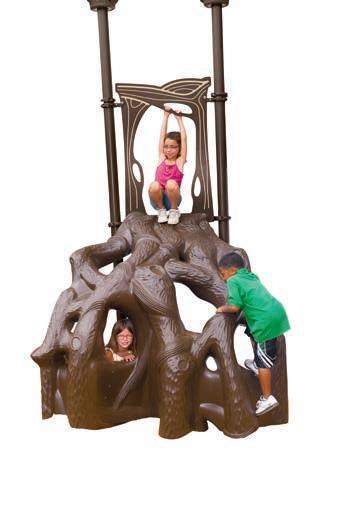
Wildwood Climber
Physical: Climbing
Place
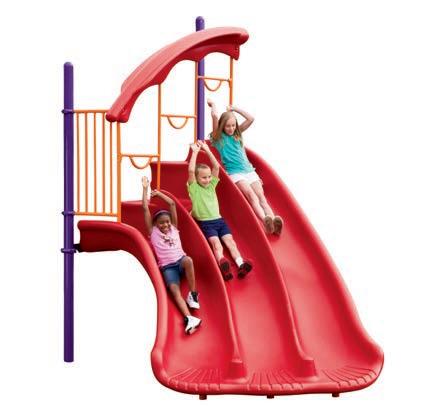
Trippple Racer Slide™
Physical: Sliding
Social: Interaction
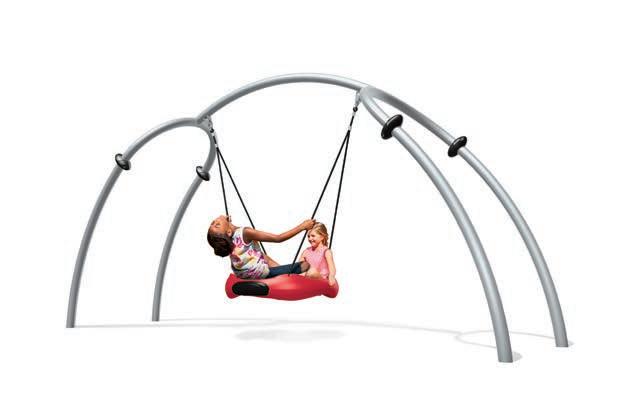
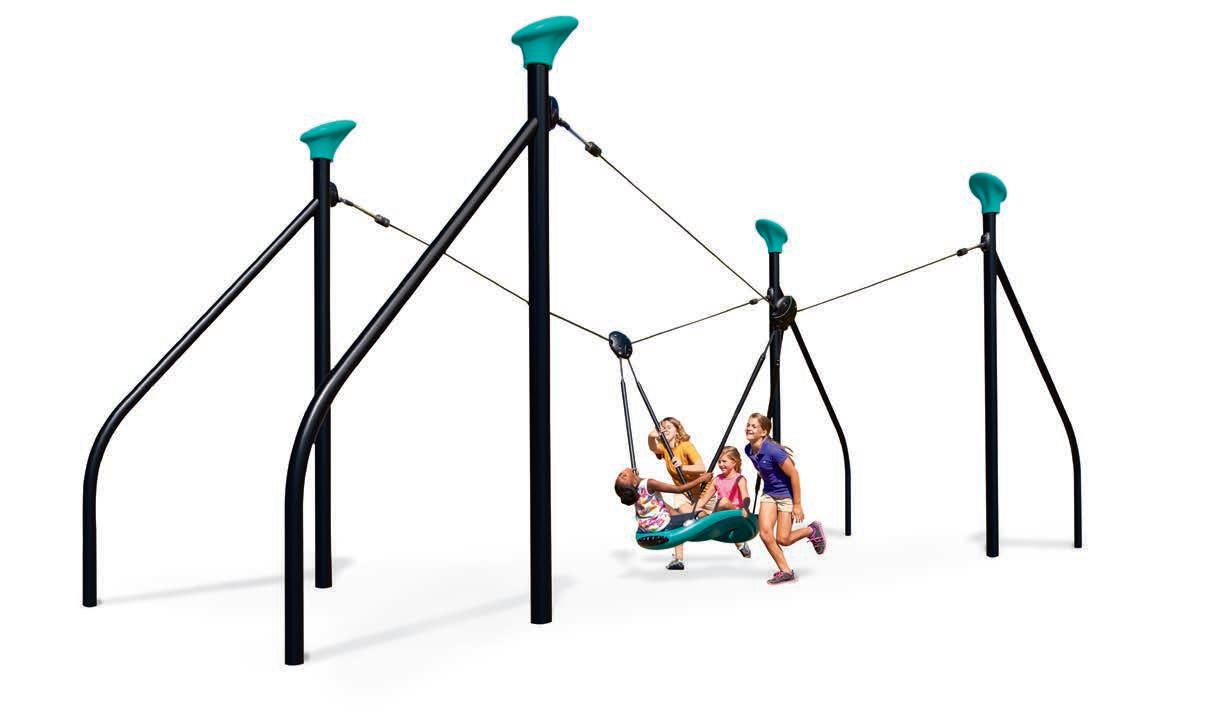
Hoopla Swing
Physical: Swinging
Physical: Climbing
Sensory: Tactile and Cozy Space
Social: Dramatic and Imaginative Play
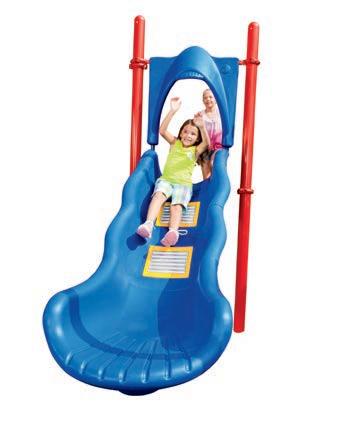
Roller Slither Slide
Physical: Sliding
Sensory: Tactile (Rollers provide a full body tactile experience)
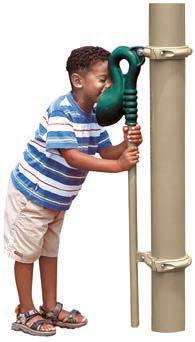
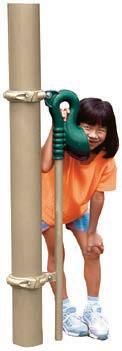
Babble-On
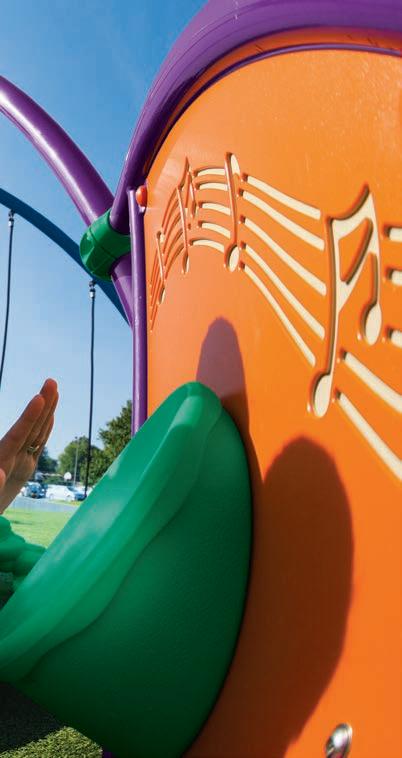
Sensory: Auditory
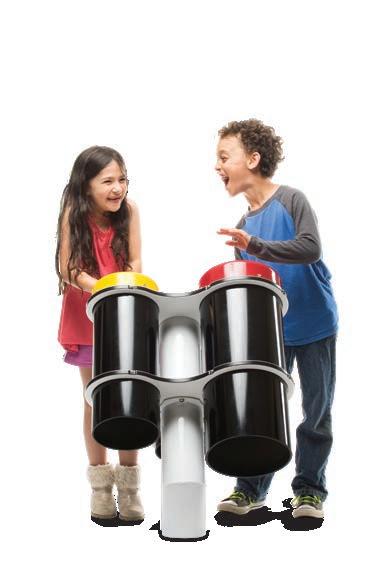
Sensory: Auditory and Tactile
Concerto
Key to Inclusion: Multiple Levels of Challenge
Goal: Offer a growth activity for everyone 1 2 3
We all prefer to be challenged at our own level, not a level someone else has decided is appropriate for us. Offering opportunities to advance and grow provides the child with the decision of when to attempt the next level of challenge.
Key
to Inclusion: Grouping of Activities
Goal: Invite engagement between children of different abilities Medium PlayWeb®
Grouping similar types of play equipment with varying levels of challenge together encourages children of different abilities to be in proximity to one another. This increases the chances that children will become familiar with one another, leading to understanding and empathy.
Grouping of Activities
Balancing
Climbing
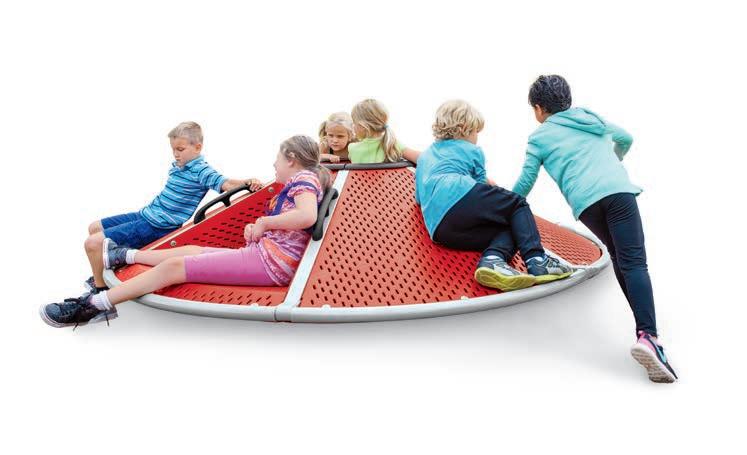
Spinning
Swinging
Level 1-3 Climbing
Balance Trax Dunes Level 1 Balancing
Playground Rating: A Squaw Creek Campground Park, Marion, Iowa Playworld Rep.: Fry & Associates
Vortex Level 2 Spinning
Picnic Boulder Level 2-3 Balancing
Log Hops Level 2 Balancing
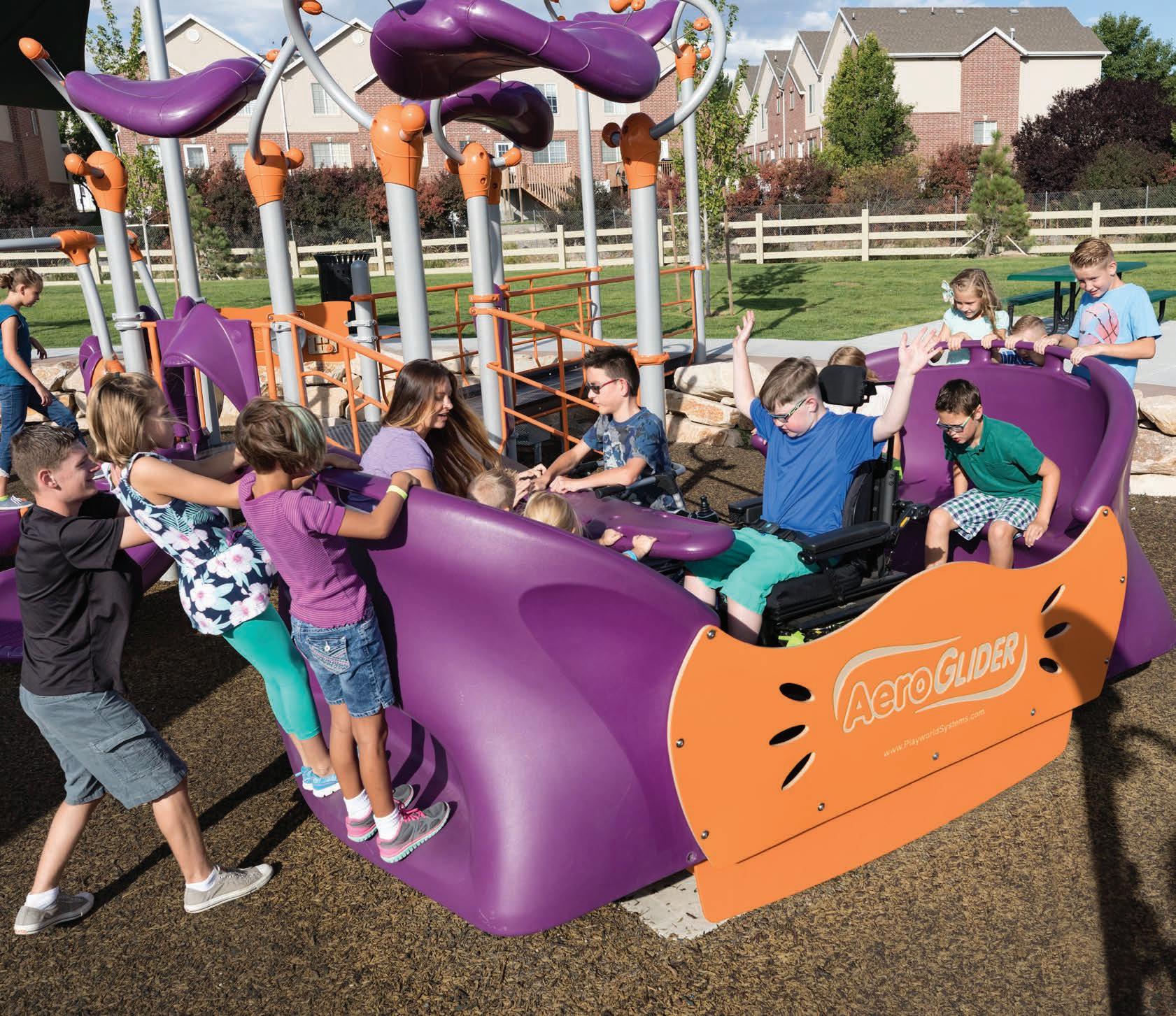
AeroGlider™ Provides a movement experience without leaving a chair.
Tire Swing Level 2, 3 Swinging
Accessible Swing Level 1 Swinging
Swings Level 1-3 Swinging
Note: Swings of different types are placed together.
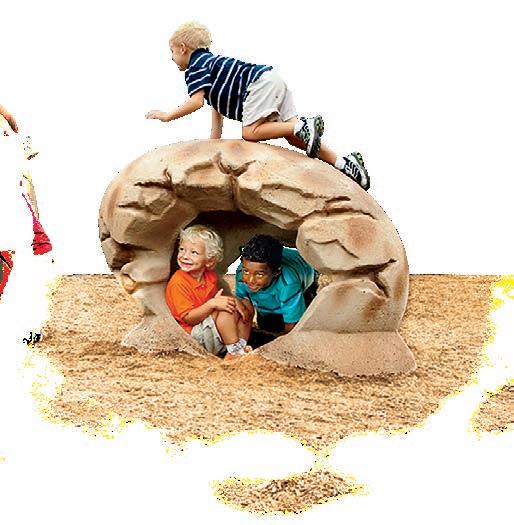
RockBlocks® Climbing Tunnel Level 2 Climbing
Cozy Cocoon™ Level 1 Spinning
Twister Level 3 Spinning
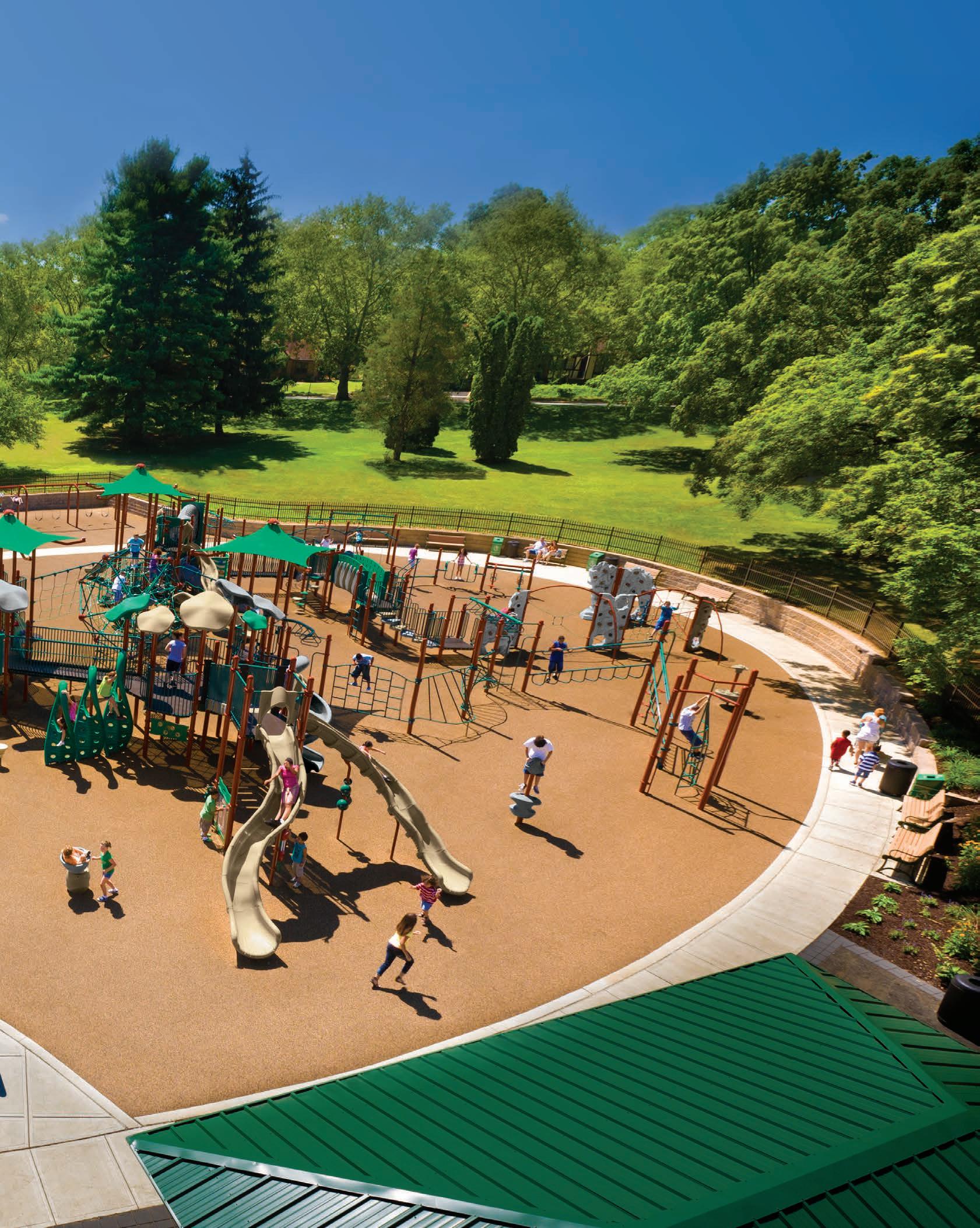
During a study* conducted before and after renovations at this park, visitors were asked how improvements impacted their park behaviors. The changes sparked positive behavioral outcomes such as increases in users and use, ease of use, winter use, activity variety, physical activity, and improved access for visitors with disabilities. Over 50% stated that they stayed longer, visited more frequently, and engaged in a wider variety of activities since the renovations.
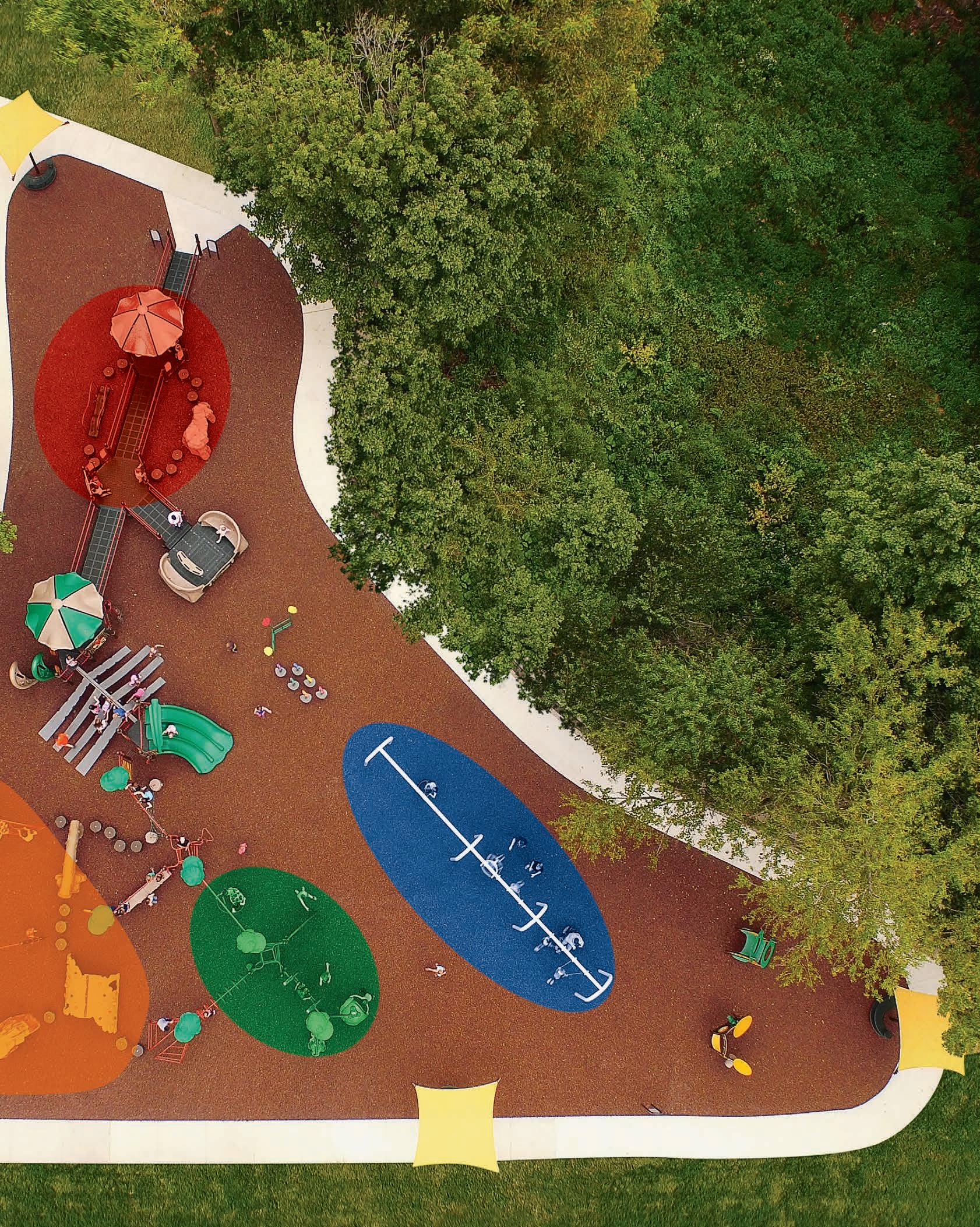
SHADE
Children on certain medications cannot be exposed to the sun for long periods of time. Shade allows children to play longer on the playground.
SENSORY Activities that provide tactile, visual, and auditory stimulation.
SOCIAL Opportunities for dramatic and imaginative play, and social interaction.
* Andrew J. Mowen, Ph.D. and Benjamin D. Hickerson, Ph.D. Do Park Investments Make a Difference? Results from a park renovation study at Allentown’s Cedar Creek Parkway, March, 2012
SEATING
Children can only stay as long as their parents are comfortable. Benches are provided to make sure that parents will stay as long as possible.
Playground
Rating: A+
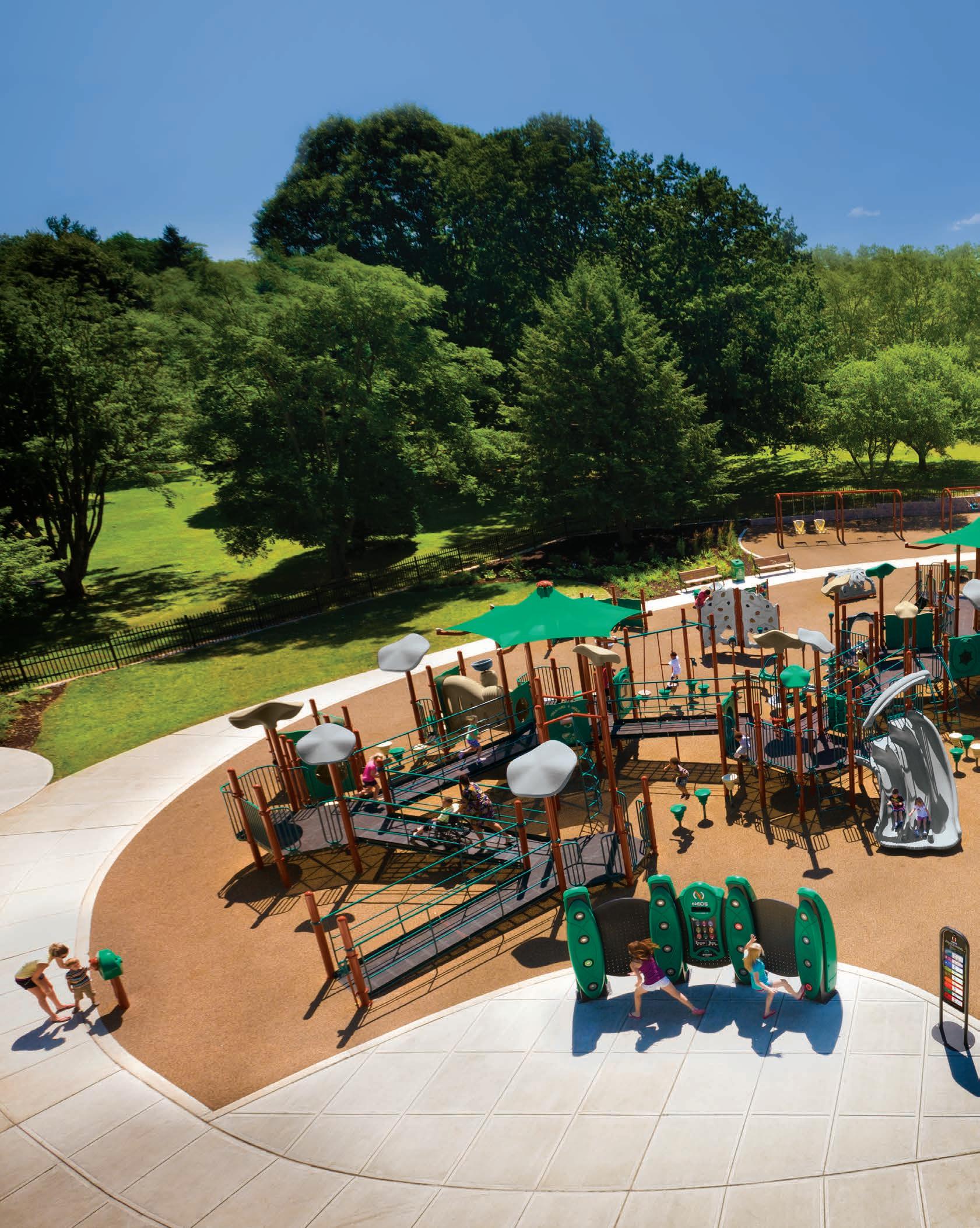
Cedar Creek Parkway, Allentown, PA
Playworld Rep.: George Ely Associates
PHYSICAL
Climbing, sliding and bouncing types of activities.
PERIMETER FENCE
Helps contain children on the autism spectrum who might otherwise become overstimulated and run into harm’s way.
ORIENTATION PATH
Allows children to assess the amount of physical, sensory and social engagement they can expect. Offers a safe zone where a child may retreat to in the event of overstimulation.
All-inclusive Dedication to Play
For Augusta Evans School in Mobile, Alabama, the new school building was a welcome update. But with limited budget, the project did not include a playground. Teachers and administrators knew they had to fill the gap.
Augusta Evans School is specialized—serving only kids with cognitive and physical disabilities. Children with special needs are more prone to obesity and diabetes. And children with ADHD and/or autism need outlets for excess energy. The benefits of play were not optional here.
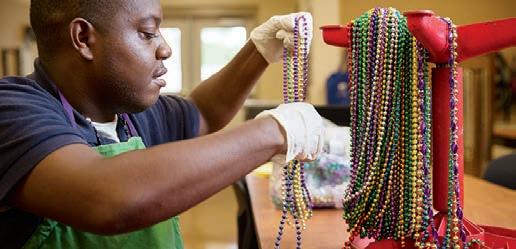
So fundraising began. Volunteers hosted golf outings, sold bricks, and reconditioned Mardi Gras beads for resale. Principal Allen Baggett launched a speaking tour of local organizations, barbecues, biker clubs—anywhere people were standing still. And people responded, including a major donation from the Rotary Club of Mobile.
Then came the next challenge: finding the right partner to build a playground for kids with special needs.
Sharing on the playground and working to earn money for their school—Augusta Evans’ students learn life skills inside and out.
Principal Baggett researched all the options locally, regionally, and nationally. He talked to lots of people. Then he chose Playworld. “I needed someone who specialized in play,” he says. “This playground needed to be great.”
Baggett worked with Warren Schlender, Playworld rep in Marietta, Georgia. “Warren came to see the school and meet the kids,” Bagget says. “He got a sense for what we needed, and gave us ideas, options, and a plan.”
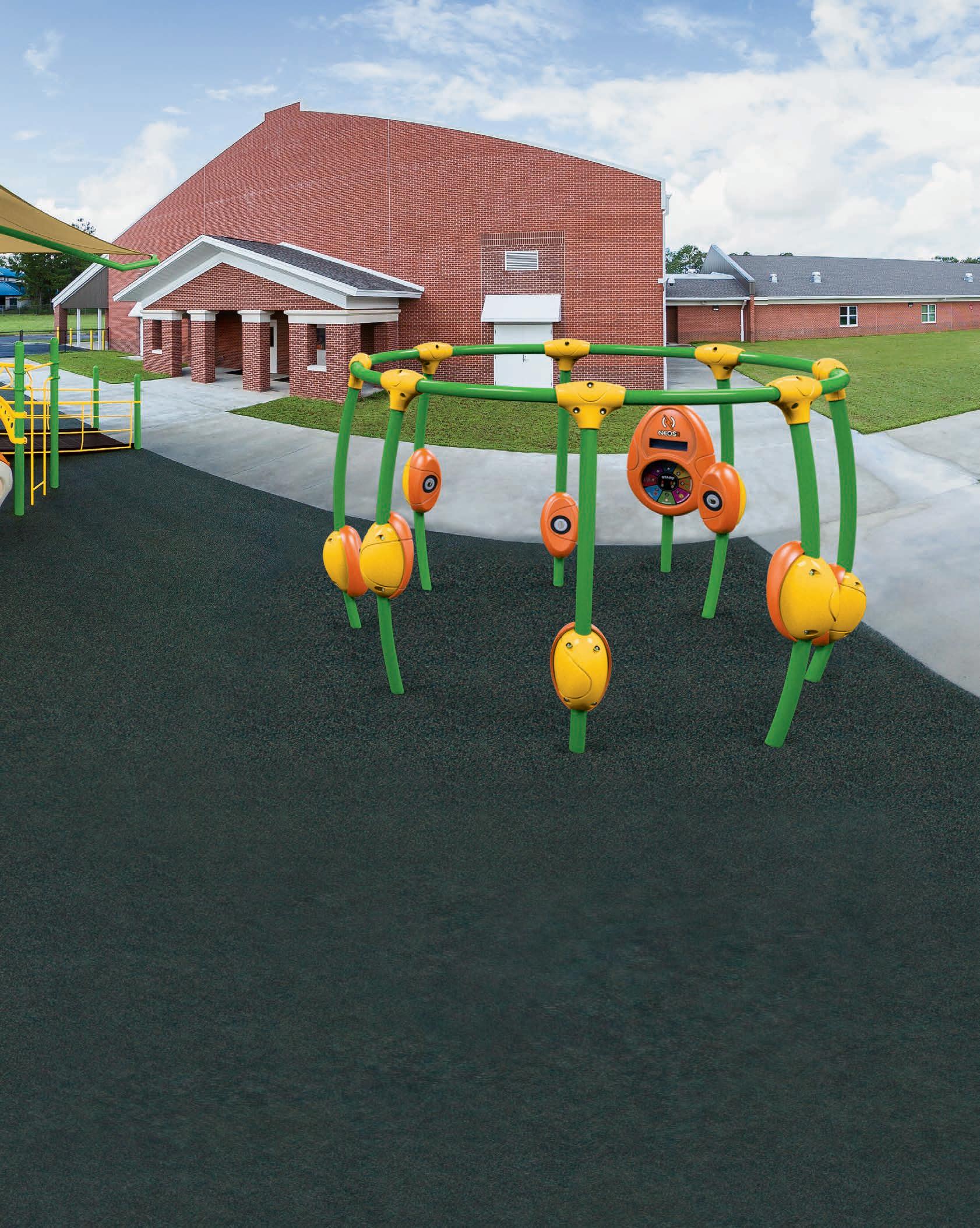
The result is lots of fun and exercise for the kids, and lots of specialized features to accommodate diverse abilities. In fact, the playground is A–rated for inclusivity, thanks to a full range of activities, challenge levels, cozy spaces (for sensory relief), transfer stations, and wheelchair access.
Principal Baggett highlights other features, too, including the surface material. “A lot of our kids have
Playground Rating: A
Augusta Evans Elementary, Mobile Alabama Playworld Rep.: Playworld Preferred
challenges with getting around. Between that and potential falls, I like knowing our kids are safe.”
The NEOS® 360°—an electronic challenge game with lights and touch pads—is a center of attention, prompting lots of friendly competition. “It wears them out,” Baggett says. “It wears me out!”
The playground gets rave reviews from students and teachers alike. It’s helped everyone make the emotional transition to the new school, and it helps the kids focus in class—so they can get back outside for more recess.
It took a lot of hard work to bring the power of play to the Augusta Evans kids. But considering the physical, emotional, and social benefits, we’d say it was well worth the effort.
Ground-based Play
While children love the experience of height, there needs to be a reason for children to go up. When including high play events, there should be more than just a slide at the top. In addition to ramps for access, panels, telescopes, or other fun activities, give the climb a sense of reward at the end.
Consider designing your inclusive playground around ground-based play events. This maximizes your funds and space to use on play events, not ramps. You can still give children the opportunity to experience height through trails and slides on hills overlooking the playground and stand-alone climbers.
1 2 3
Everyone at His or Her Level
We rate our equipment by challenge level that can be used in developing and designing playgrounds.
Level 1 equipment offers the most support, has a seat back or handholds, or is at ground level to enable all children to be on the playground.
Level 2 equipment decreases the level of support and requires a more developed skill set while enhancing and building more control and mastery. Can be higher to reach, require more body strength, etc.
Level 3 equipment often doesn’t provide support and relies on a child’s skill to further hone and control their physical movements. Can be higher, provide specialized routes requiring more advanced motor planning, etc.
Unity SpinR Level 1, 2, and 3 Spinning
Product Example per Level of Challenge
Accessible Swing Seats
Single Post Swing (Belt Seat) Sky Rail
Unity® Steppers
Beanstalk Climber
PlayWeb®
Moon Rock Climber N ature-Themed Log Tube Single Flex Tread Climber
Upper Body
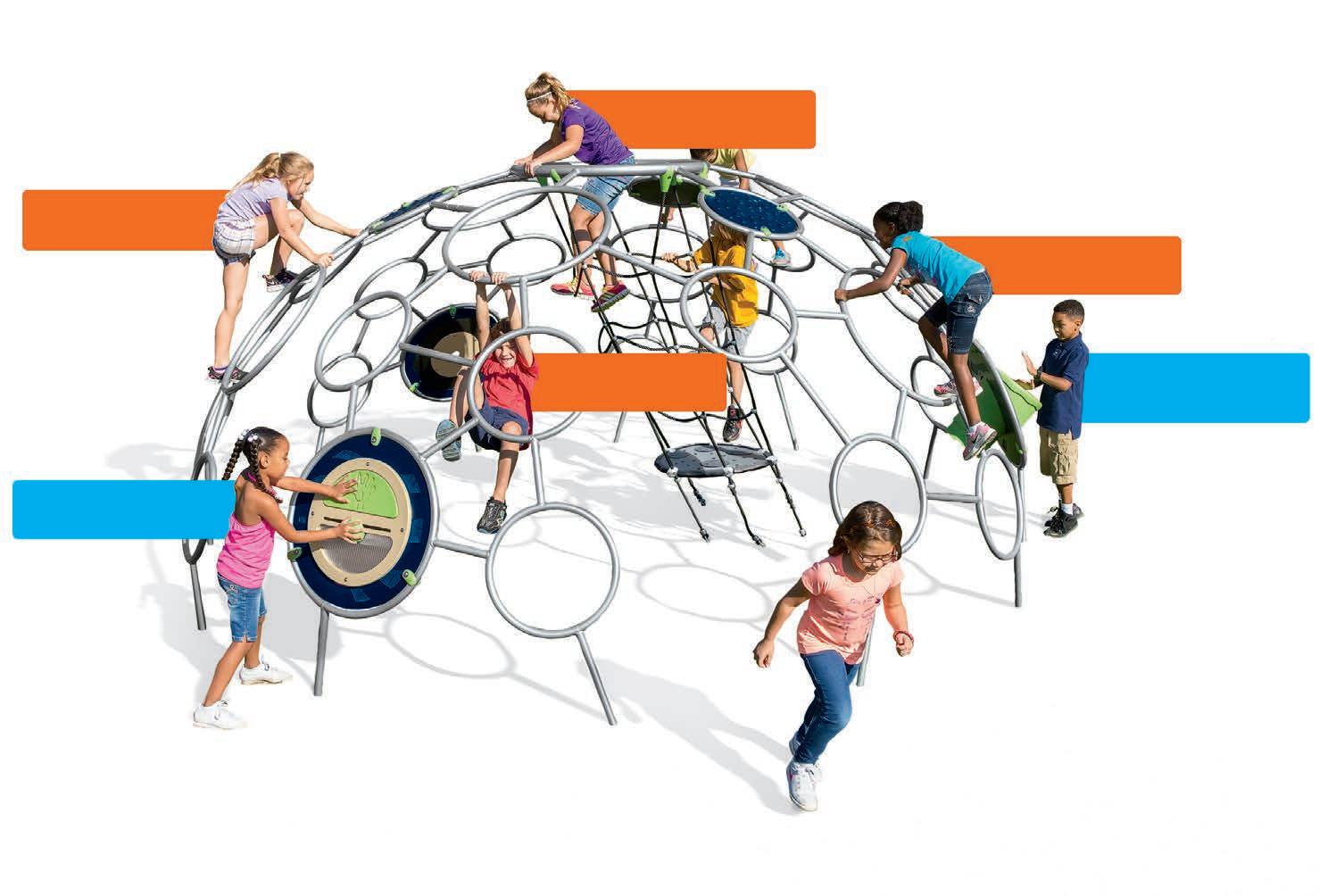
Unity® Dome
Unity® Canopy Sky Swivels
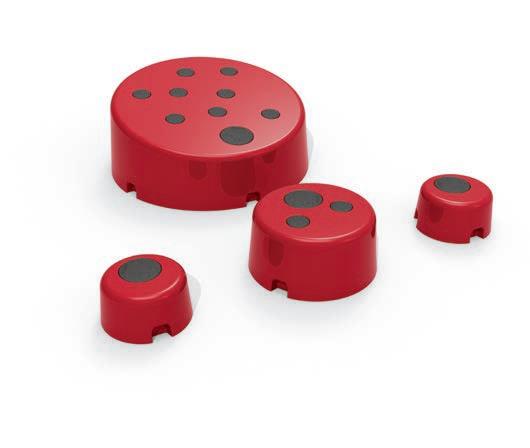
Balance Trax
Lily Pods Canyon Crossing
Playground Equipment Solutions:
Multifunctional Design Does Double (and Triple) Duty
When the budget or the space is tight, think about equipment that has multiple challenge levels and inclusive intents. This way of looking at equipment ensures that there is a connection between the needs of children, and the dollars and space used.
The Unity Dome provides physical activity with three levels of climbing, crawling, and upper body activities, as well as tactile and auditory sensory experiences with the optional Sensory Connections (shown), and social interaction. 1 2 3
Tactile and Auditory Sensory Experience
Physical Play
Social Play Sensory Play Social Interaction
U.S. Patent D728,721 S
1 2 3
Social Interaction
Tactile Sensory Experience
Balancing
Challenge Level 1
Lying down on cruiser
Challenge Level 2
Sitting up on cruiser
Challenge Level 3
Standing on cruiser
The Cruise Line provides all three types of play richness: a physical rocking motion experience that accommodates children of all abilities, social interaction and cooperative play, and a tactile encounter with molded features. Challenge level varies by a child’s ability to stand, sit, or lie down.
1 2 3
Climbing Challenge Level 1
Climbing Challenge Level 2
Climbing Challenge Level 3
Tactile Sensory Experience
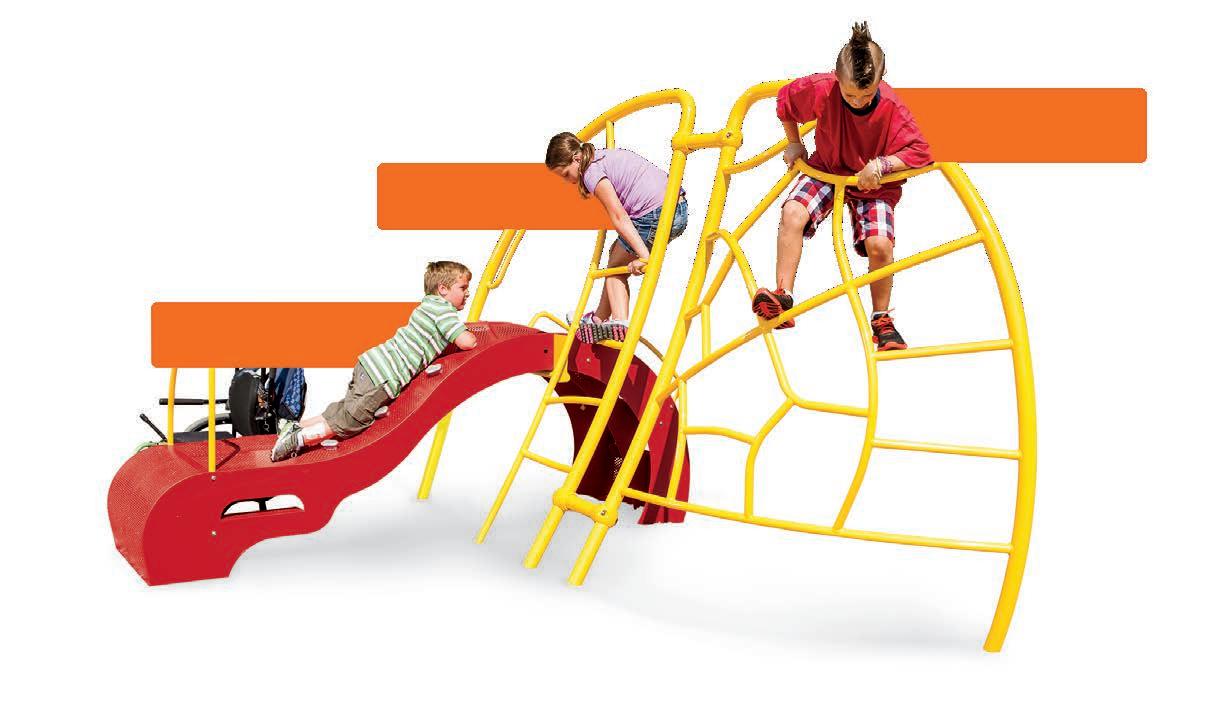
The Triumph Climber provides all three levels of challenge, as well as a tactile experience. Textured handholds enable climbing with upper body strength, and strategically located handles aid with transitions, pulling up and turning around. An easy transfer station and cradled deck shape prevent falls and provide a cozy perch. Also offers easy access for caregivers to assist and play.
Cruise Line ™
Triumph ™ Climber
Playground Ratings
Every playground can be assessed for inclusion. There are several ways that a playground can become more inclusive with some simple changes. See pages 28-29 for an example of a “before and after” showing how equipment layout can make a big difference in creating an inclusive playground.
Playworld’s Inclusive Playground Rating System
We rate playground layouts based upon principles found in the Inclusive Play Design Guide™ :
A+ Layout is inclusive and considers the needs of children on the autism spectrum
A Layout is inclusive
B Layout could be made inclusive with minor changes
C Almost any playground can be made inclusive with enough money and space. If we believe that more than 50% of the current design would need to be changed to make it inclusive, then it is rated as C.
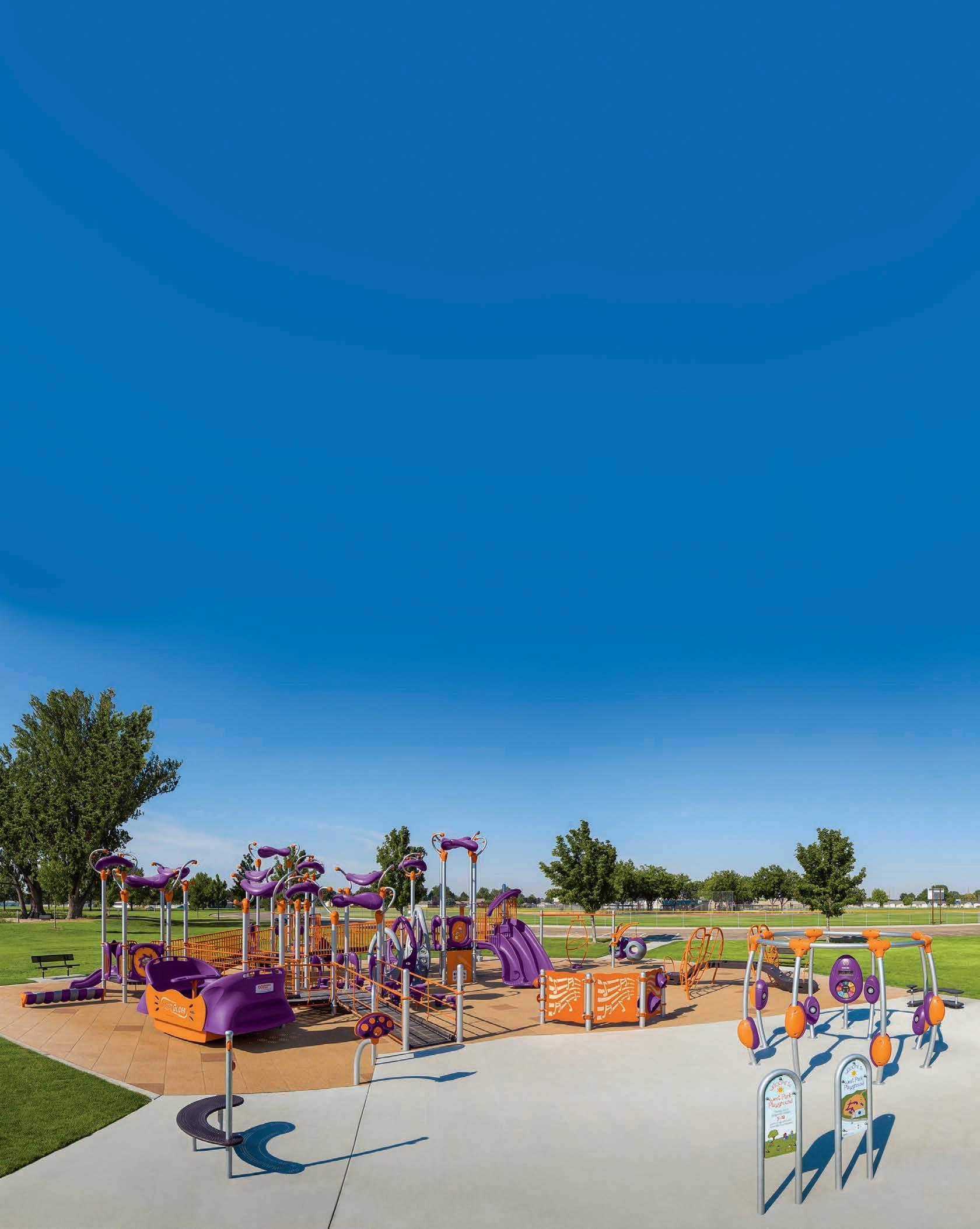
Playground Rating: A West Park, Nampa, ID Playworld Rep.: Recreation Today
Inclusion at Any Price Point
New Perspective on Creating Inclusive Playspaces
You can make a difference at any price point. An inclusive playground does not need lots of ramps and fancy equipment. Much can be accomplished by thoughtful decisions about levels of challenge and equipment location. Children of differing abilities playing in proximity increases the possibility of understanding, which leads to empathy and acceptance.
Existing Layout
In the example above, the original playground layout has a central play structure with freestanding equipment placed around it.
Revised Layout
In this layout, the central play structure has been flipped with the spinner now facing to the left, and the transfer station to the right.
The music center has been moved away from the quiet space under the Pup Tent, keeping the loudest and quietest parts of the playground separated.
To prompt engagement between children of different abilities… Contact your local Playworld representative for a playground assessment.
Spinners of varying challenge levels are now grouped together.
Climbers of varying challenge levels are now grouped together.
Spinner Grouping
Climber Grouping
Inclusive Playspace Idea Starter
This playground shows some great ideas put into action. We describe what works, and how to make it even better.
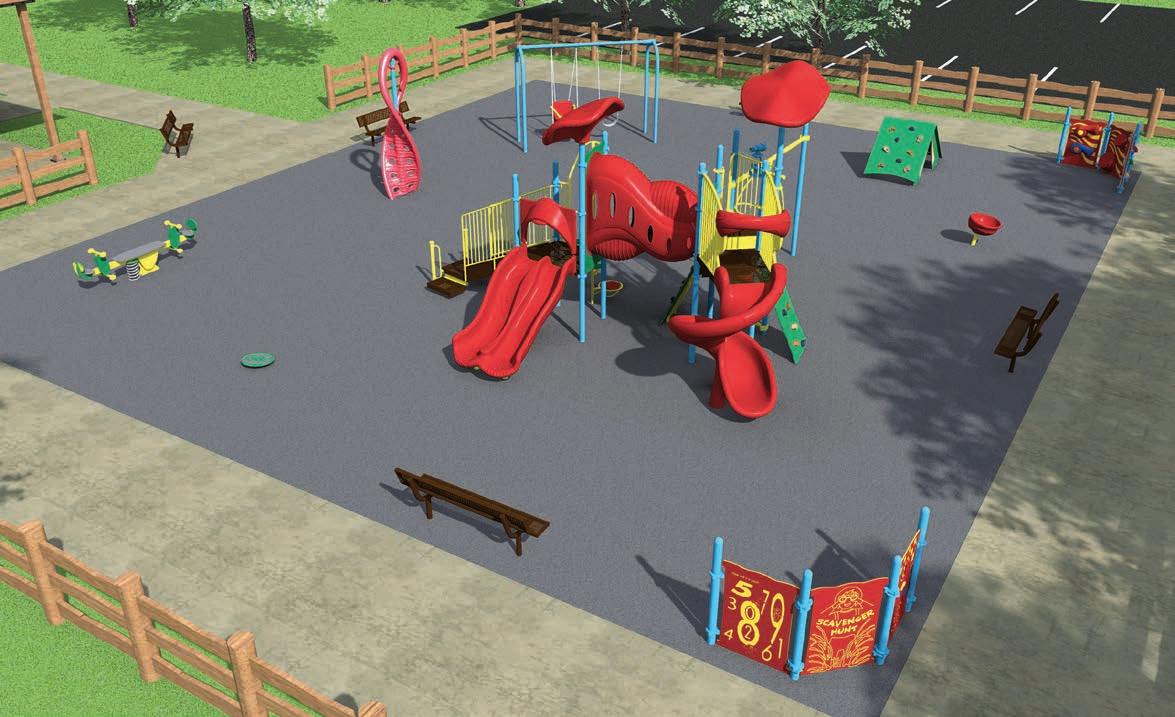
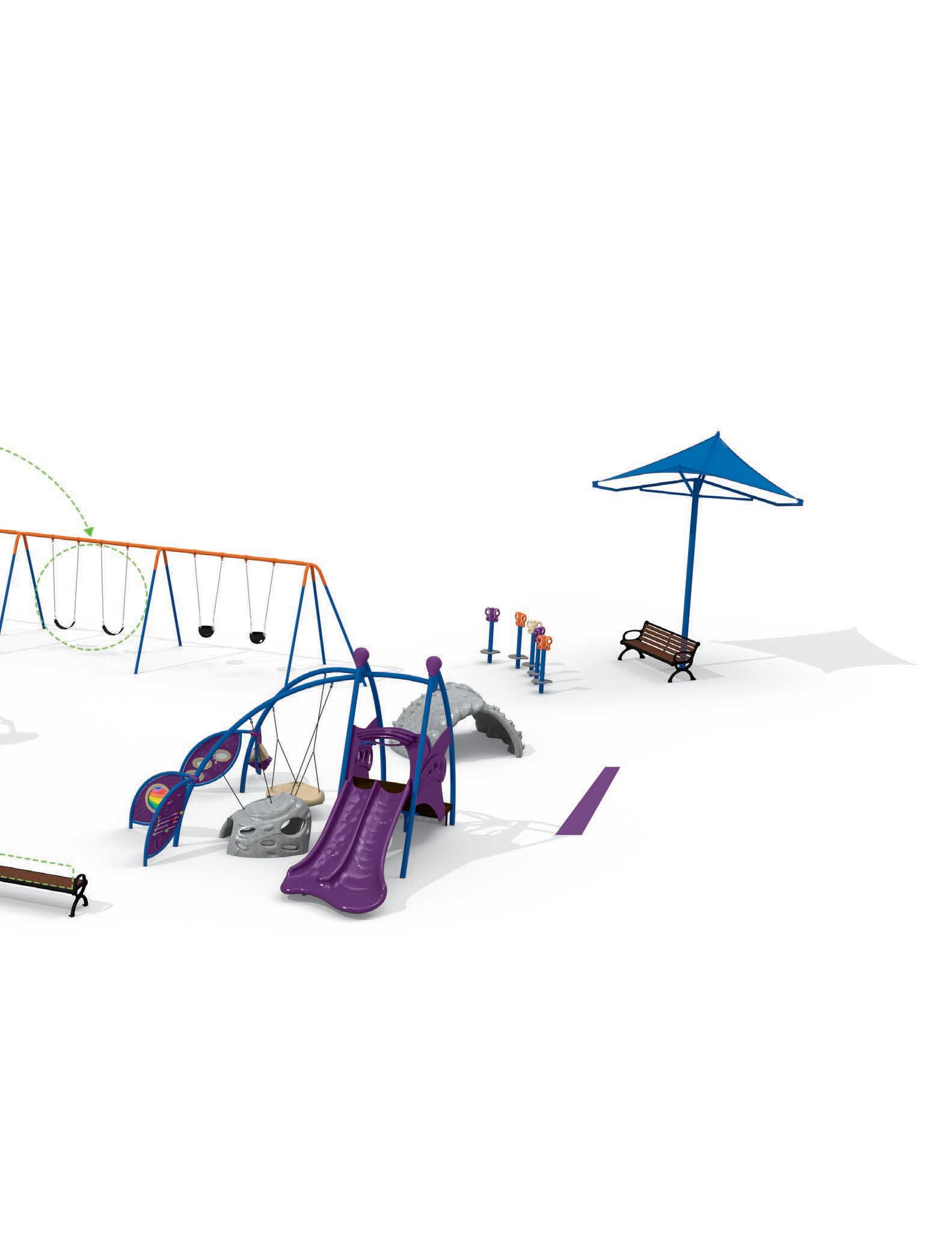
This playspace design incorporates physical, sensory, and social play, using fourteen different types of play activity. They include auditory, tactile, cozy spaces, cooperative, pretend, climbing, spinning, jumping, and running, plus amenities to support parents and caregivers.
Physical play events offer a range of challenge.
Change backless benches to benches with backs. Many adults (with and without disabilities) cannot sit for long periods without a backrest. If adults are comfortable, children will be able to stay and play longer.
Cozy Cocoon™ is a level 1 spinner, and both Revo and Spinami are level 2.
Add to the range of spinning activity levels with Spintastic, a level 3 spinner.
Spinami
Revo
Cozy Cocoon
Spintastic
*
Existing feature Idea for increasing inclusion
Move the accessible swing seats to the middle of the set. Without incurring extra cost, this makes a statement that children with disabilities are in the middle of the play activity.
Some medications cause sensitivity to the sun. Knowing shade is provided can make the difference between some people going to the playground and not going at all.
NEOS® offers sensory, physical, and social play—all on its own.
NEOS is the coolest activity * on the playground, and is accessible to all.
Create a linear pattern in the surfacing to add a level 1 balancing activity.
Put a path around the playground to offer a child on the spectrum an opportunity to review the play area, and as a safe place when things get too busy.
Coolest Activity: Nothing magnifies the differences between children more than having the most attractive piece of equipment be inaccessible to some of them.
Learn More
We’ve developed a variety of resources to assist you on your journey to make your inclusive playground a reality:
Play Rich ness Flashcards
Each card explains how various types of play activities benefit child development and lists specific play equipment that provides that type of play.
8 Keys to Inclusion
Quick reference sheet highlighting 8 main considerations to keep in mind when designing your inclusive playground.
Designing by Disability
Quick reference about well-known disabilities and the developmental needs of children with those disabilities.
Inclusive Play Design Guide™
A step-by-step guide on incorporating inclusive play principles into an existing or new playground, including design tips.
Inclusive Presentations for Continuing Education
The following workshops can be brought to your office. Credits will be reported for AIA, ASLA, and NRPA members where applicable.
Inclusive Play: Designing Outdoor Environments for Everyone
Every child who comes to the playground should be able to enjoy developmentally and age-appropriate play. This presentation provides an overview of inclusive playground design, emphasizing the importance of a child-focused planning process.
AIA 1.0 LU/HSW Credit, ASLA 1.0 PDH/HSW, NRPA .1 CEU Equivalent (good towards maintaining CPRP, CPRE or AFO).
Workshop: Inclusive Play
This is a half-day, hands-on design workshop. The participant will understand inclusion as a series of deliberate decisions that need not add cost, and be able to demonstrate to others the 8 key principles of inclusive playground design. The workshop begins with a presentation of key inclusive principles, then leads participants working in teams through a design of an inclusive playground.
AIA 1.0 LU/HSW Credit, ASLA 1.0 PDH/HSW, NRPA .1 CEU Equivalent (good towards maintaining CPRP, CPRE or AFO).