EDITOR’S NOTE
Dear Reader,
As we look back on the process of building our magazine this semester, we feel great appreciation for the way that the work of Middlebury Geographic and the stories that we share, in this issue more than ever, return to the value of community.
The concept of adventure, of exploring places unknown, can often be portrayed as something individual or solitary. However, here at Middlebury Geographic we want to recognize how sharing our stories, written and photographed, inherently includes other people. At its core, this magazine is driven by a love for connection.
Our stories from this issue invite the reader to join our storytellers across continents to summit mountains, dive into deserts, trek across new landscapes, and explore new perspectives on places already known. But a throughline we are proud to highlight in all of these varied stories of adventure is an acknowledgement of the people who join us along the way and make these world-shaping experiences possible.
For Evan in Tanzania, the community that he found there and the guides who supported him in summiting Kilimanjaro are central to the narrative. As we follow Makenna trekking across Torres del Paine National Park, it’s the connections with her friends that carry her through the experience. In Lily and Will’s story about Middlebury trees, the focal point of the essay is the underappreciated work of one man’s impact on campus. And in our dedication of this magazine to Jeff Howarth, we profoundly remember how our mentors shape us and the stories we are empowered to tell. As we collected words of appreciation and remembrance from students across our college, we felt how the connections we make with each other are the most important things of all.
In addition to the bonds formed between people across the stories featured in this issue, we also wanted to highlight the community that we have built on our Editorial Staff through making this magazine together. We were drawn to this club by a shared love of telling stories, not knowing how many memories we would share with each other.
Thank you for supporting Middlebury Geographic, reading our stories, and becoming a part of our community.
Ruby Salisbury ‘27 and Egan Turner ‘27 Editors in Chief
Violet Wexler ‘28
MIDDLEBURY GEOGRAPHIC
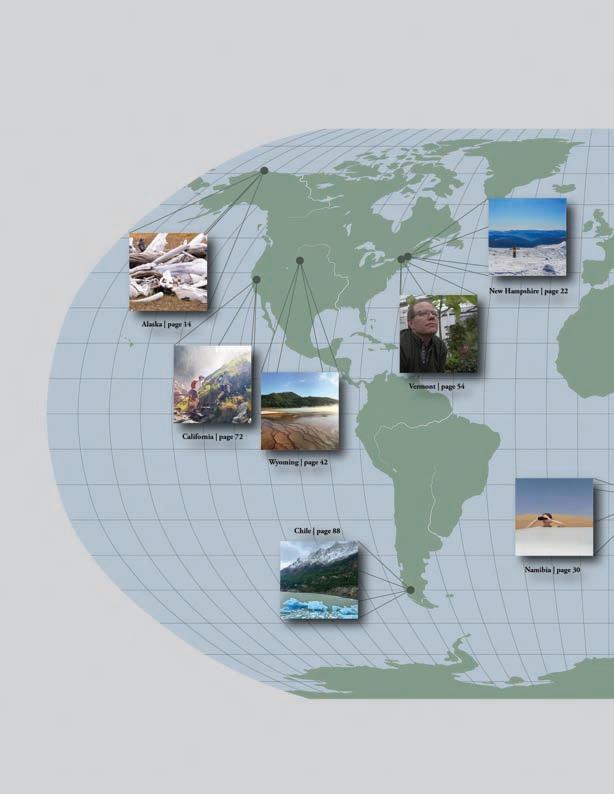
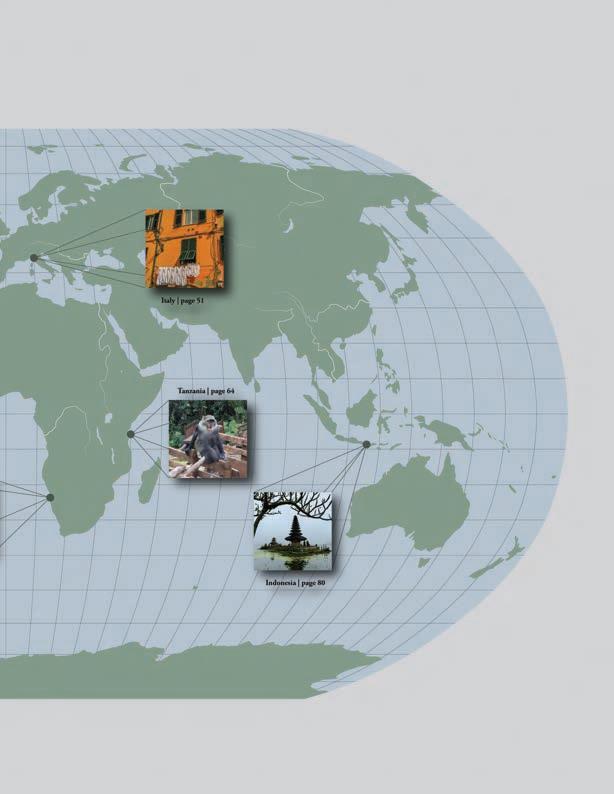
Cartography by Egan Turner ‘27
Dedicating the Issue
To Jeff Howarth: professor, advisor, mentor, and friend
Photos from Jessica L’Roe and Casper Wilson ‘28
This semester’s edition of Middlebury Geographic is dedicated to Professor Jeff Howarth. Jeff was one of the magazine’s first advisors back in 2009 and remained in this role for over a decade. He was an exceptional constant in the fledgling years of the publication as editors, designers, and contributors came and went.
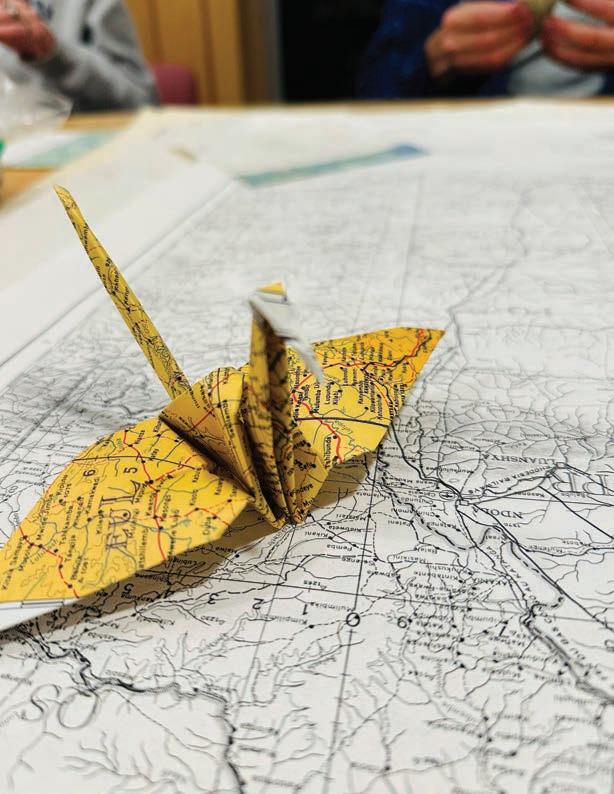
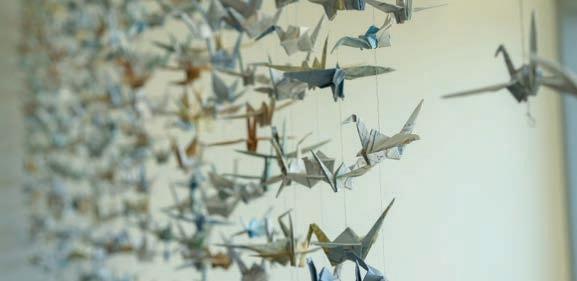
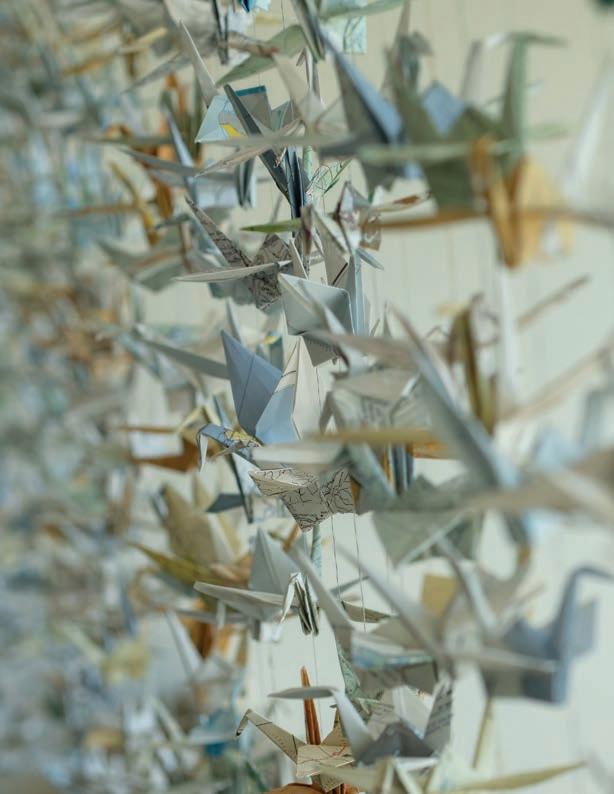
This February, Jeff passed away from a rare form of cancer. When Jeff took a leave from teaching in the fall, Jessica L’Roe, our current advisor, spearheaded an effort in the Geography department to fold origami paper cranes from old maps, blending Jeff’s passion for Japanese culture with his academic focus of cartography. This celebration of Jeff’s life remains hanging on the sixth floor of Bicentennial Hall, and we encourage all to take a look if they haven’t already.
Jeff was my advisor and taught my two favorite classes I’ve taken at Middlebury. He left a remarkable impact on my life. While I had loved looking at maps growing up, his Cartography course sparked my interest in their craft and broadened my perspective on the nuances and power that maps hold. It made me want to be a Geography major and made me fall in love with the discipline of mapmaking. Since then, I have taken up the hobby of working on various maps to continue practicing cartography in the hopes of pursuing it post-graduation.
What struck me most about Jeff was his passion for students. Not only was he an effective professor, but he cared so evidently for our wellbeing, sometimes at the cost of his own sanity. When I finished Cartography, hungry for more of his wisdom, I landed on the waitlist for his Mapping Global Environmental Change course the next fall, along with many others. Jeff nearly doubled the class size to fit all of us in, significantly increasing his own workload too. During that
class, he reported staying up to the early hours of the morning coding to prepare for class. This was just one of the examples of his immense passion for his work.
He always checked in on us individually. He noticed when reading The Campus that I occasionally wrote the crossword puzzles, and began sharing his comments on my puzzles before and after class each week. Pertinently, when I had to turn in a map for Cartography late because of a club rowing race, I stopped by his office hours to show it to him in-person. Rather than purely seeing it as a transactional moment of a student turning in a project, Jeff wanted to know how the race went, beaming as I recounted the weekend to him.
Jeff shared this passion and empathy with many of his students, as you will notice in our other testimonials. I recommend reading them and taking a break to reflect, as I did with each that came through my inbox. Hearing about his profound impact on others helped me process my own emotions on his passing and I hope it has a similar effect on our readers.
Only some individuals in this world have a uniquely powerful ability to inspire lifelong passion and dedication, and Jeff was one of those rare mentors for so many people. Anyone who had the opportunity to get to know Jeff, either through his courses or in passing, could immediately see his gift of natural leadership, rooted in authenticity and integrity. Taking Cartography with Jeff was a true highlight of my Middlebury experience, and his technical and individual mentorship has continued to inspire my work in geography and my perspective on life.
Egan Turner ‘27
Isaiah Bennett ‘25
“Everything on a map reflects a decision by the mapmaker.”
When introducing our final project for Cartography, Jeff began his lecture with these words. He made it clear that accuracy and care were more than abstract goals, pushing us to trust our judgment and meet frustrating problems with persistence. Moments like these built a sense of confidence that carried beyond our assignments, allowing the meticulous effort spent on a project to be a rewarding reminder of hard work.
That same dedication was expressed in the way he worked with students. Jeff had a way of turning a very challenging and technically rigorous course into the highlight of the week. He consistently encouraged creativity within a process that could otherwise feel purely technical. His generous individual attention to us, valuable advice on our work, quick-wit, and extensive expertise in mapmaking made an extraordinary impact on me and anyone fortunate enough to be instructed by him.
Ryan Reynolds ‘27
I always appreciated how dedicated Jeff was to his work. Every class, he brought such bright energy and went so indepth into cartographic design that I became inspired. No matter if it was color theory or the Helvetica documentary he had our class watch, I became invested in learning more. Now, I hope to pursue a career in cartography, and I am so grateful for the impact Jeff has had on my life.
Bernadette Osborn ‘26.5
The courses I took with Jeff changed the way I think about the world and I will be forever grateful for having learned from him. His presence will be greatly missed.
Shayah Kosak
‘27
Jeff was an extraordinary influence in my life. I had the privilege of taking two of his classes: Mapping Global Environmental Change and Cartography. Both left a lasting mark on me.
In the first class, he introduced me to coding in a way that actually stuck. He essentially taught me a new language, breaking down how a combination of text could produce complex zonal statistics that reveal geographic patterns and tell a story. It changed how I think about mapping and what’s possible within geography.
In Cartography, he taught me that design isn’t arbitrary. It’s intentional and takes real care. You could always count on Jeff to offer thoughtful, constructive feedback. The design principles I learned in that class have stayed with me and continue to shape my work today.
Jeff was one of the best teachers I’ve ever had. He taught in depth on topics and shared his knowledge in a way that was digestible and engaging, and he would always sprinkle in good bits of humor. Through his teaching, he showed me what it means to love learning and to find real joy in it. I was always most dedicated in his classes because of that.
I also had the privilege of working with Jeff on an independent study where we used Google Earth Engine to map land cover in Hokkaido, Japan as part of research on the Hokkaido red fox. We developed the methodology as we went, spending many hours problem-solving. When it came time to present at the Spring Student Symposium, Jeff helped me revise and practice my presentation, and ultimately bypass my fear of public speaking.
Beyond academics, Jeff was a deeply caring person. As I worked with him on this independent study, I was at a particularly difficult time in my life, with my sister on life support. I had fallen behind and was unsure if I could continue with the project. Jeff met me with understanding and encouragement. He reminded me that while life can be challenging, we have to keep moving forward. Those words stayed with me. Every time we met, he made space to check in—not just as a student and professor, but as people.
It is with deep sorrow that I write about him now, but the legacy he leaves behind is something to be celebrated. I will never forget the impact he had on my life, and I know I am far from alone in that.
Thank you, Jeff.
Ava Moseley ‘25.5
DANIEL ESPERANCINE FREIRE ‘28.5
CONTRIBUTORS
Daniel is a Sophomore from São Paulo, Brazil and Orlando, Florida. He’s majoring in International and Global Studies with a Global Migrations and diaspora track. He loves learning languages, traveling, hiking and the aesthetic of reading (though not reading itself). He speaks Portuguese, Spanish and Italian, and is studying Arabic and Russian.
CHRIS FACTEAU ‘28
Chris is a sophomore from Ticonderoga, NY, studying International Politics & Economics. His favorite things are cookie skillets (especially from Mr. Ups), jazz, and Adirondack sunsets. One of his life goals is to drive a tuk-tuk around Thailand during monsoon season.
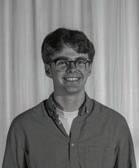
AVA IZEL MCCAULEY ‘29
Ava is a first-year student from Concord, MA who is considering majoring in both MBBC and Spanish. In her free time, she likes to hang out with friends, play soccer, ski, eat, travel, and take photos. She is really looking forward to visiting Japan and Norway this summer!
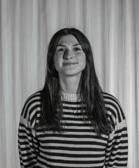
JOSH KERR ‘27
Josh is a Junior from Traverse City, Michigan. He is majoring in Environmental Studies and Earth and Climate Sciences and is especially interested in studying snowpack and hydrology. When he’s not in the classroom, you can find him planning future bike routes and ski tours that he’s unsure will ever get done.
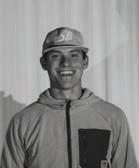
WILL HINKLE ‘26
Will is a senior from Fairfield, CT. He loves using storytelling and relationship-building to uplift the voices of people and nature. Dedicating much of his time to running program at YMCA Camp Woodstock and the Middlebury Mountain Club, he is eager to continue in work that integrates education and conservation.
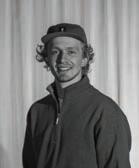
LILY JENSEN ‘28
Lily Jensen is a sophomore from Philadelphia majoring in Environmental Literature with a minor in Spanish. She enjoys making art, public speaking, reading, trail running, and playing games. Lily is very passionate about the power of storytelling in environmental justice, organizing, and activism. She loves encapsulating these experiences through writing and speaking.
KAI ARROWOOD ‘29
Kai Arrowood is a Comparative Literature major with a minor in Political Science. Aside from Middlebury Geographic, he is a news editor for The Campus and an avid participant in National Novel Writing Month.
CHLOE MITELBERG ‘28
Chloe is a born and raised New York City native studying Environmental Studies with a Psych minor. When she’s not rushing around campus on her electric bike, you can find her hunting for coffee, browsing self-help aisles, and curtly asking men to step away from the booth while she DJ’s at Chrome. Chloe’s spirit animal is a sloth.
EVAN YURKO ‘26
Evan is a conservation biology major/anthropology minor from Easthampton, Massachusetts. He is interested in development and its impacts on local and indigenous fisheries, particularly after studying octopus fishing in Tanzania. When not outside hiking, skiing, fishing, or playing ultimate frisbee, you can find him playing in Scrabble tournaments or playing chess while pretending to do work.
NATHANIEL RUBENS GOLDFARB ‘28
Nathaniel Rubens Goldfarb is a Sophomore from Washington, DC. He is a political science major and is a big fan of large geographic protrusions. In his free time, you can find him singing, making music, and playing Spikeball on Battell Beach.
MAKENNA BACHMAN ‘27
Makenna is a junior from Monkton, Maryland. She is a physics major, with a minor in Spanish. Makenna loves baking chocolate chip cookies, running (sort of), collecting postcards, playing ultimate frisbee, and making Spotify playlists.
Eve Sarti ‘29
Will Matrai
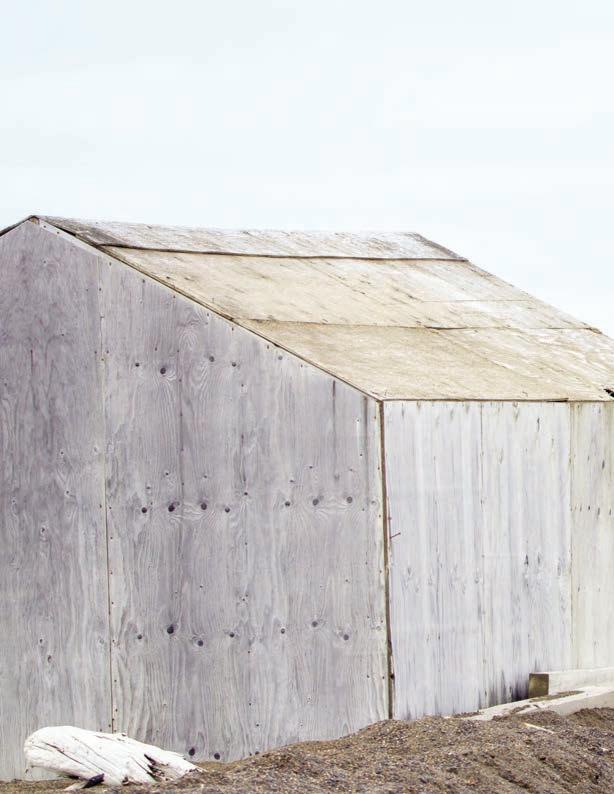
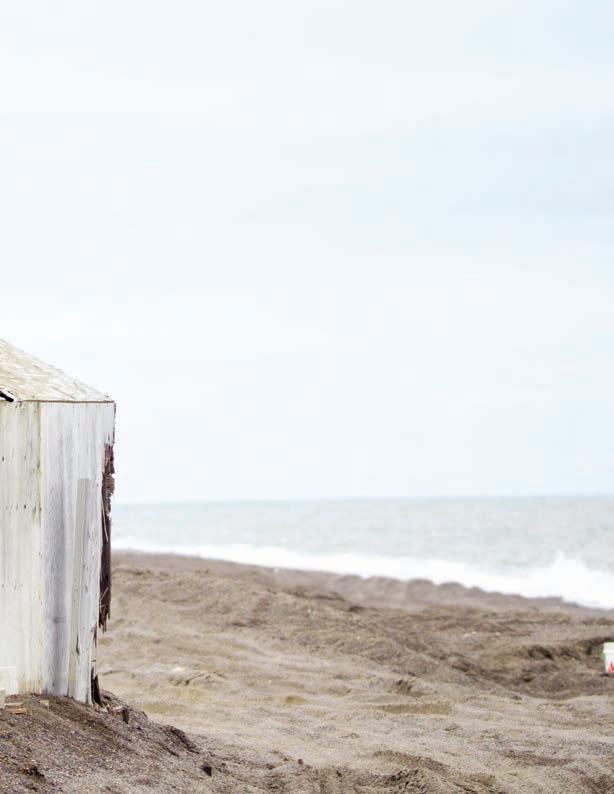
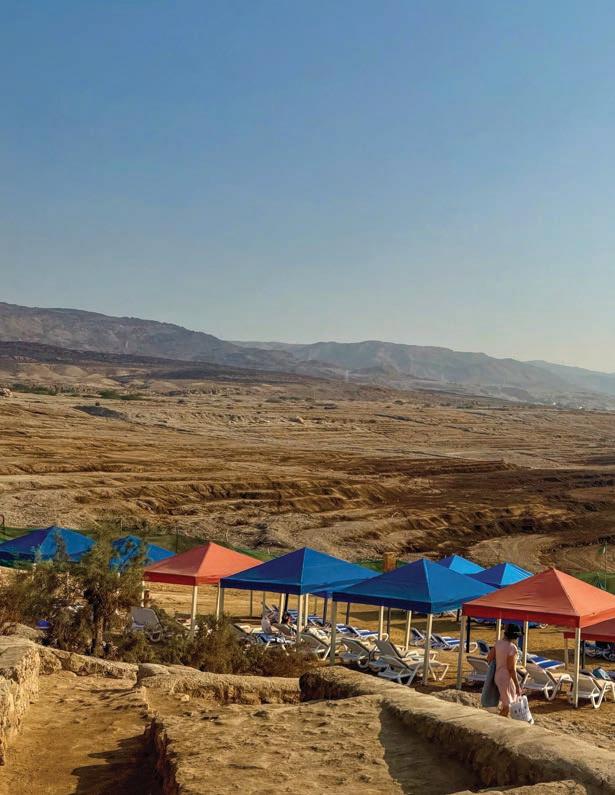
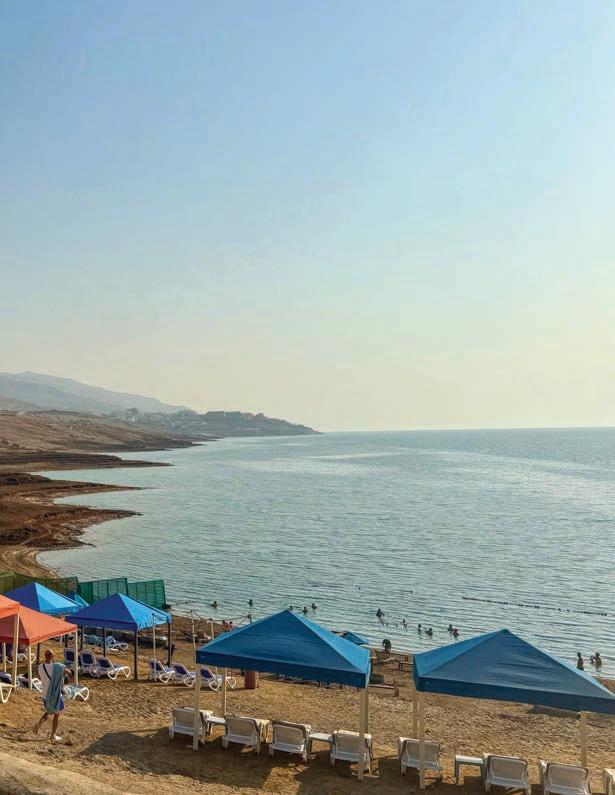
Iwill never forget looking out of my airplane window to the dichotomy of the towering mountains of Gates of the Arctic National Park and the barren tundra bordering the immense Arctic Ocean. Utqiaġvik: the northernmost place in America. I was only here for two days, a spur-of-the-moment decision that ended up being one of my most poignant memories.
The plane we had just stepped off of was already being cleaned for the crowd of people flying back to Anchorage. The isolated geography of Utqiaġvik creates physical and political space from mainland USA, consequentially enforcing increased grocery prices and a lack of governmental priority. Infrastructure investment for the Inuit people is scarce and the cost of survival is pushed onto the people who live there. To ease this financial burden many people go on monthly flights to Anchorage and bring back plastic tubs filled with basic necessities, from milk to toilet paper. These expensive burdens were theoretically aided by employment tied to the oil and gas industry–jobs that were created by the Alaska Native Claims Settlement Act of 1971. This act established Native corporations with the power to manage their own land and resources. It intended to create equity, but ended up promoting uneven outcomes generationally. Employment options overall are still limited, particularly for younger generations, causing them to leave their homes for work and subsequently driving organizations to begin outsourcing workers. What was meant to be a source of assistance for native populations became a source of division.
As I entered the hotel, I could tell just how special this place was. There were pictures of the local fauna up on the walls, Anaktavuk masks made with caribou hide and animal fur, and a ten foot baleen. On top of a table near the entrance, I came across a pile of flyers that advised what to do in case of a polar bear sighting, a scary reality many people must build their lives around. During check in, I asked the receptionist what the real possibility of coming across polar bears was. He told me that during summertime as temperatures rise above freezing, the sea ice retracts and the bears follow it. Relieved, I learned there was very little chance of encountering them while on land during the time I was there. However,
it was still not recommended to walk outside the main area of town without a weapon, or for tourists, without a guide.
On my first full day, I woke up to a sun so brilliant I
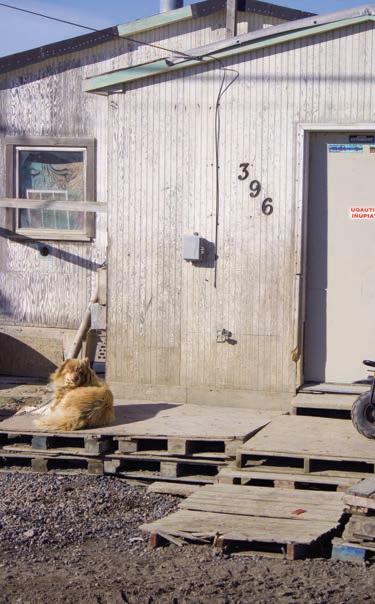
assumed I had overslept. To my shock, it was only 3:30 a.m. Though I knew of the “Midnight Sun,” seeing 3:00 a.m.
look exactly like 8:00 a.m. was disorienting. After a few more hours of sleep, I called the town’s only cab company to book a one-hour tour to begin my day. The driver arrived with a friend who offered to translate as the driver was not proficient in English. I did not want to be a burden, so I rejected the offer, which later became a bit of an issue since Google Translate did not support Iñupiaq–a language with only 3,000 speakers and many concepts that do not translate directly to English. We had to rely on gestures and laughter to communicate.
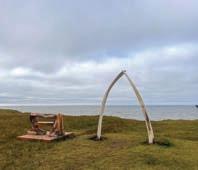
Our first stop was the most well known structure in town, the Utqiaġvik whale arch, which is an arch made from the jawbone of a bowhead whale. Next to it, we saw an umiak, which is similar to a canoe but enveloped in seal skin. Behind these structures sat the immense Arctic Ocean,
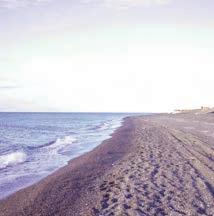
which was not the gloomy place with monstrous waves and icy waters that I had pictured. Instead, it had calm blue waters and small black rocks that resembled black sand. It was beautiful, but also very cold. I attempted the “Polar Plunge,” but after standing ankle deep in the frigid waters for a few seconds, I couldn’t go any deeper, so I unfortunately bailed on my attempt.
After getting back in the cab, we stopped by the northernmost football field in the world. It was donated by a Florida woman named Cathy Parker after she saw a video of kids in Utqiaġvik playing football on a makeshift field made with dirt and gravel. We visited the only college in an over 200-mile radius: Iḷisaġvik College. It is federally recognized as a tribal college that focuses on teaching Inuit students. It is the only higher education institution in the world that has Iñupiaq language classes, but also offers classes you could find at most other colleges.
As the tour ended, I asked to be dropped off at the grocery store, and on my walk back to the hotel, a massive pickup truck pulled over. In my home state of Florida, this might be a cause for alarm, but here, it was a friendly couple curious about what brought a tourist to their corner of the world. “Get in,” the man in the driver’s seat said. “We’ll show you the real Utqiaġvik.”
His name was Forrest, and his wife was named Jane. He used to be the Chief Financial Officer for the corporation of Utqiaġvik–the organization responsible for the political and financial representation of Inuit settlements in Alaska. He told me that he quit his job because of how little the U.S. government seems to care about his people.
It was a very difficult decision, because there are very few jobs in Utqiaġvik due to its small and shrinking population. Most people aim to work for either big oil or for the government, but very few people finish their education because the only school in town is extremely underfunded. This cycle of weakening education has a stronghold on the town’s operations, mirroring extractive colonial systems where resources leave, and the local community loses control over its future.
Many young kids are forgetting the Iñupiaq language and are not able to take part in cultural traditions such as whaling.
In 1972, the United States government imposed a ban on commercial whaling; however, due to the International Whaling Committee’s protections of Inuit Subsistence Whaling, those in Utqiaġvik are allowed 336 Strikes in a five-year period; “A strike includes any whale that is harpooned, regardless of whether it is ultimately landed” (Alaska Department of Health and Social Services). Nonetheless, the sale of whale meat is still prohibited. Because whaling is only possible during specific migration windows, families must freeze meat for months to survive.
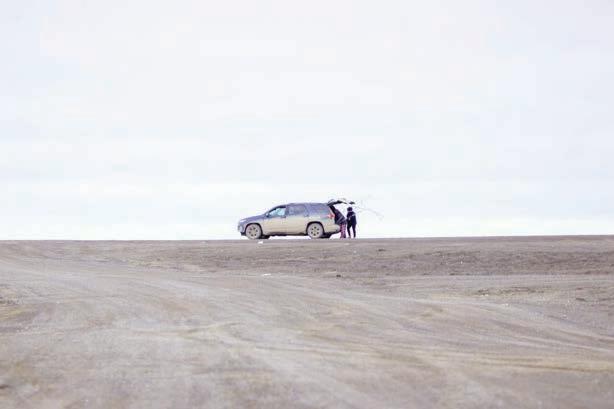
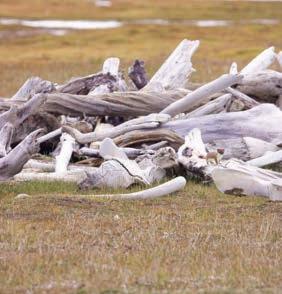
Forrest and Jane drove off-road for about an hour, and we eventually ended up in a place called Nuvuk, otherwise known as Point Barrow, the northernmost point in the United States. Around that area, we saw multiple leftover whale carcasses from the whaling months being eaten by local fauna, such as birds, Arctic foxes, and stoats. We were even able to spot signs of polar bears, which sometimes come to the area very early in the morning. There were big chunks of whale skin many feet away from the carcasses, as well as polar bear prints on the soil.
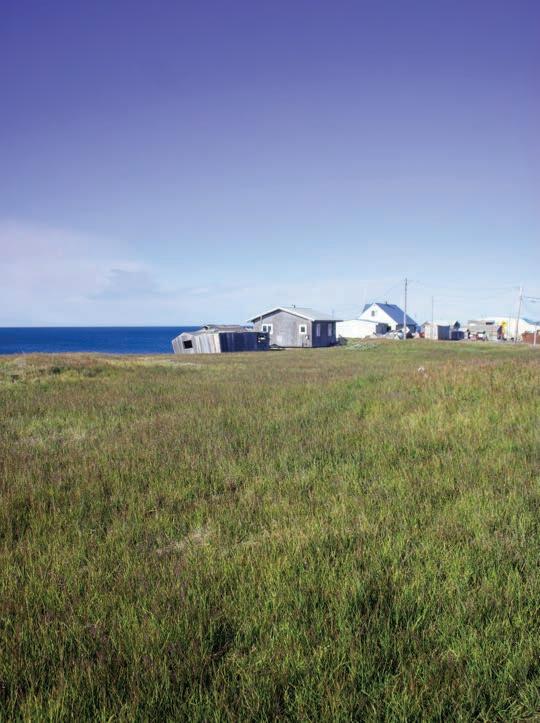
“‘We’ll show you the real Utqiaġvik.’”
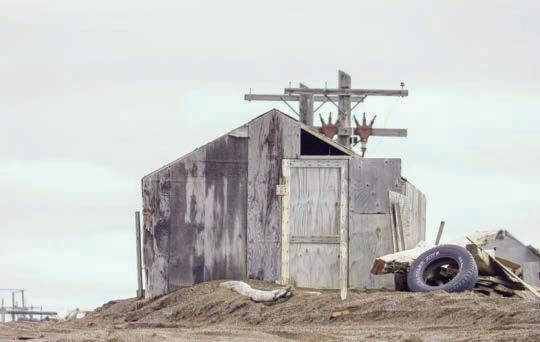
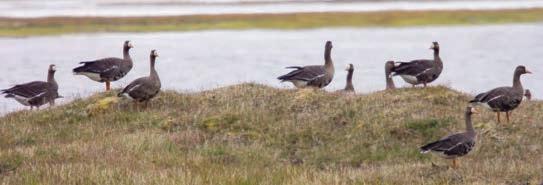
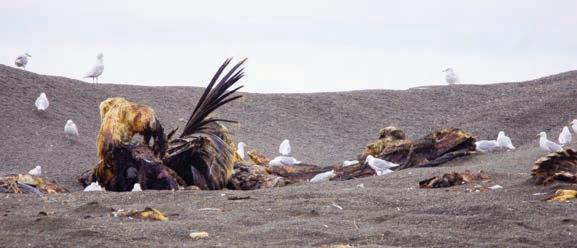
On the drive back, I could not help but look out the truck window as we drove alongside the Arctic Ocean. That’s when I saw dozens of birds perched on what looked like a large rock—or at least that’s what I thought until Forrest told me it was actually a dead walrus. Moments like this reminded me how different life in the Arctic is: what seemed fascinating to me was simply part of the ordinary, but spectacular, landscape.
They took me to visit the local reservoir, which I noticed was covered in an odd white foam. Jane explained it to be AFFF, a kind of firefighting foam that contaminated the water. To compensate, the water was treated with extremely high levels of chlorine, which is also dangerous, meaning drinking water is composed instead of expensive bottled water or reverse osmosis filters. In any other American city, this kind of contamination would be a national headline; here, it was just another governmental imposition that became a daily inconvenience.
Before we said goodbye, Jane spoke about the mental health struggles in the region, fueled by a variety of factors such as lack of recreation, the polar night, isolation, and the cold weather. Northern Alaska has among the highest suicide rates in the world, with the Alaska Department of Health and
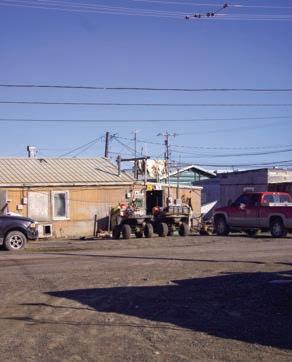
Social Services reporting a rate of 116.1 per 100,000 individuals. But, before our meeting was over, Jane showed me a video of her daughter happily swimming in the Arctic Ocean with friends, a happy ending with a note of resilience.
On my final voyage out of this place I had fallen in love with, I took a different route, and saw two polar bear skins drying out so they could later be used for coats. I assumed those two polar bears had lingered too close to people.
In just a couple of days, I learned more than I ever expected about the implications of the U.S. government’s sweeping intervention that is not catered to local interests. I also learned about resilience despite this neglect, and about entirely different ways of living. I initially came only because I had leftover miles from past trips, yet I left with a shifted perspective and so much to think about. Utqiaġvik is a place I believe anyone interested in expanding their worldview should experience. No video or documentary can replace what you learn by actually being there and speaking with the people who live there.
Sources:
Alaska Department of Health and Social Services, AKVDRS Summary of Violent Deaths Update — Alaska, 2016–2019. No. 4, September 25, 2020. Available at: http://www.epi.alaska.gov/bulletins/docs/b2020_04.pdf
George, Kavitha. “For One Utqiagvik Family, Spring Bowhead Whaling Marks an Important Milestone.” Alaska Public Media, AKPM Alaska Public Media, 3 May 2024, alaskapublic.org/news/2024-05-03/for-one-utqiagvik-family-spring-bowhead-whaling-marks-an-important-milestone. Accessed 8 Mar. 2026. Family, Spring Bowhead Whaling Marks an Important Milestone.
Non-Flying Organism
Kai Arrowood ‘29
Photos by Conrad Pratt ‘29
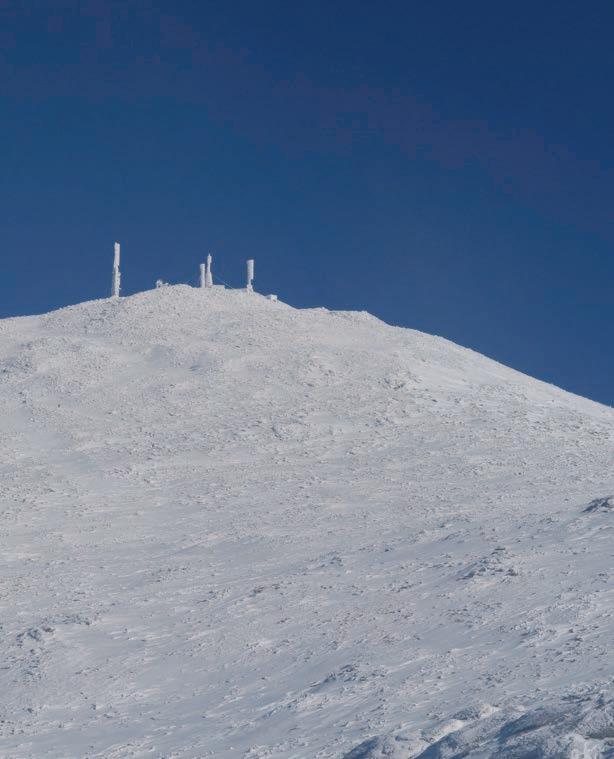
“We’re going to be the tallest non-flying organisms east of the Mississippi,” Conrad would tell me every time we turned a switchback and a slope slick with snow appeared. He was wrong, in a lot of ways. Mount Washington is the eleventh tallest mountain east of the Mississippi. The tallest one is actually in North Carolina, in the Smokies. We found out on the drive back into Vermont. We agreed to lie. No one would fact-check us, and the eleventh tallest mountain east of the Mississippi doesn’t have the same ring to it. Also, I knew that in the winter there would technically be non-flying organisms at the peak, because even at 6,288 feet lichen can grow among the rocks. Making our way up, I still didn’t believe it was real until we stood next to the summit sign, and I looked at a completely bare mountain face and a completely empty sky. I didn’t care about the lichen growing underneath
the layers of ice. I was the tallest non-flying organism east of the Mississippi.
I looked to my right and there was some kind of bird flying around. I looked at it, but it didn’t look at me. It might have been a crow, but I doubted a crow could be strong enough to survive the altitude. It was small, the color of vinyl, glittering as it slid out from the shadows of the observatory. It looked weightless. I envied it. A bird, with hollow bones and feathers that deflect moisture, and me, a human, with dense bones, a sweat-damp fleece sticking to cooling skin, and ten pounds of snow shoes and boots on each foot. I had struggled to get up to the summit, while the bird settled atop the mountain with ease. The bird floated away; we still had four miles of mountain to slide and scramble down.
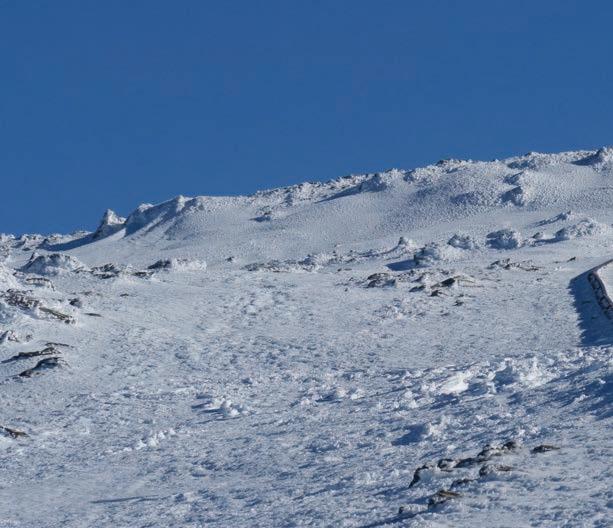
The summit was dotted with other hikers, among them a border collie with goggles that passed us on our way up and a gaggle of Quebecois posing shirtless at the summit, only to go silent and scramble for their jackets in the breathtaking cold. We were all eating frozen-solid protein bars, shivering, switching out our microspikes for snow shoes, and drinking water which had started to freeze halfway up the mountain. Us humans, with dense bones, thin skin, and poor temperature regulation, had climbed the eleventh tallest mountain east of the Mississippi.
We aren’t built for it, but we did it. And as you are reading this, there are more people doing it. We don’t know why a person decides to climb—everyone has their individual reasons. This makes us different from the bird: we aren’t driven by instinct. Instinct tells us we should not
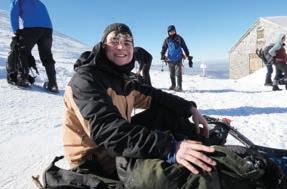
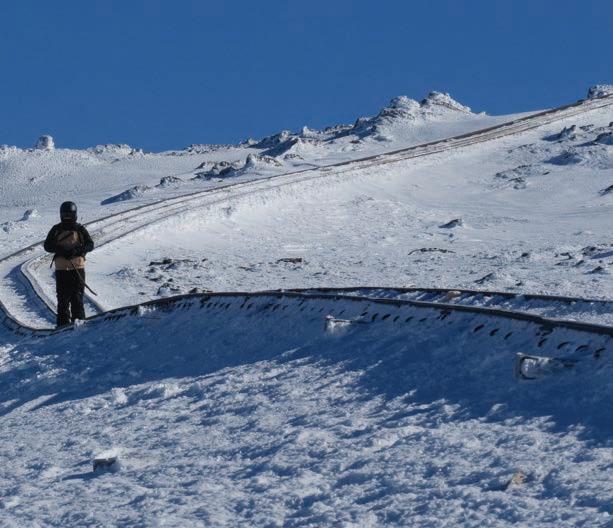
climb, and yet we do. Climbing is not fun. It’s cold, your gear is heavy, it’s steep, and you are always hungry but you can’t stop to eat for long without freezing. If your hands are exposed for too long the blood drains out of them.
We suffered far more than we needed to. The night before, we slept in the car. We had summer sleeping bags (the gear room was out of winter ones) and some blankets. No sleeping pads. We curled ourselves around a ten-gallon canister of water so that it wouldn’t freeze. I woke up a little after midnight covered in the condensation of my own breath, trembling uncontrollably. I had to choose between warmth, with my head tucked inside the sweaty organ of the sleeping bag, and oxygen, nothing but a thin hat shielding my sweat-plastered hair from the worst cold I’d ever experienced. Unsurprisingly, I did not sleep well. Every time the cold woke me up I lay shivering for nearly an hour, waiting for my large dose of melatonin to lull me back into an unsettling dreamscape. I dreamt I got swept off the mountain. I woke up much less excited to climb it. We made it to the trail early the next
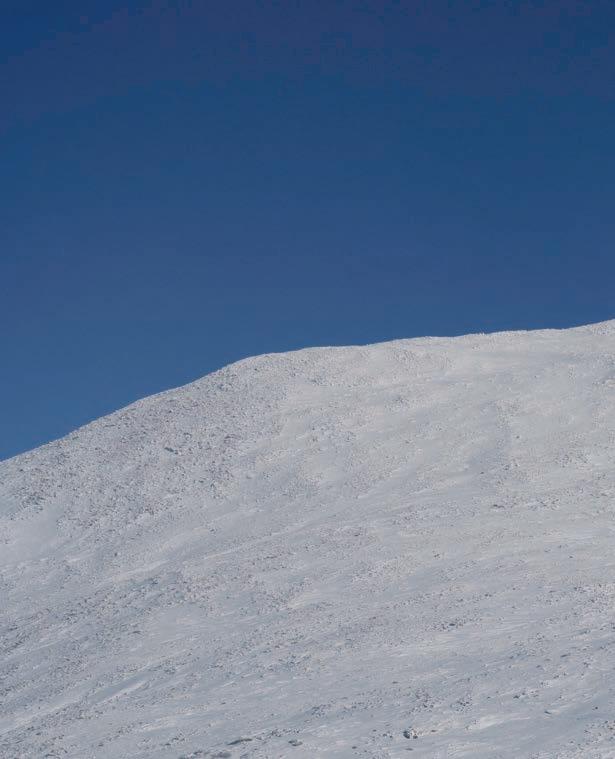
morning. It had been packed in, but there were spots where our feet slipped through a thick layer of snow and we began to wonder if the snow was infinite. We crossed creeks. The water that had not yet frozen was an invention of the mountain, slithering down its face. In the clearings of the trees, we could see the statues of meteorological equipment staunch on the peak, standing still and clean like marble. The mountain was so bare. We kept climbing. I licked a packet of frozen honey and ate tasteless pieces of chocolate that crumbled, powder-like, in my mouth. I put on and removed layers. I was sweating from the inside out, and moisture seeped through my layers from the outside in. Ice clung to our hair where it slipped out from our gators—a man behind us had a beard entirely cloaked in snow. I was becoming a part of the mountain, in a way. The only thing that distinguished me from it was movement.
It took a mile to reach the treeline. In that mile we ascended 1,500 feet. We crossed a frozen waterfall and everything made us imagine the woods when they are thawed.
“ I was becoming a part of the mountain, in a way. The only thing that distinguished me from it was movement.”
“We suffered for a mountain that is incapable of suffering. So, why did we climb? To see. That’s
why
I
did
it, I’ve decided. I climbed because I wanted to see.”
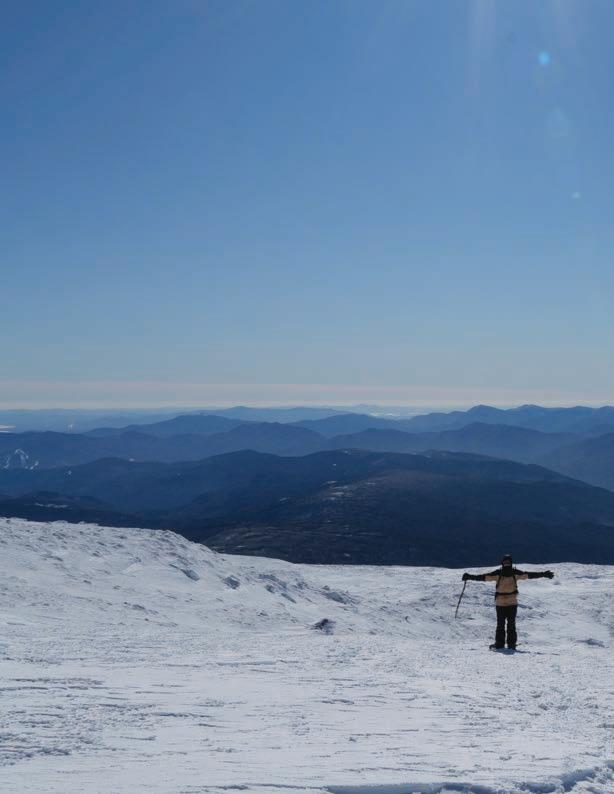
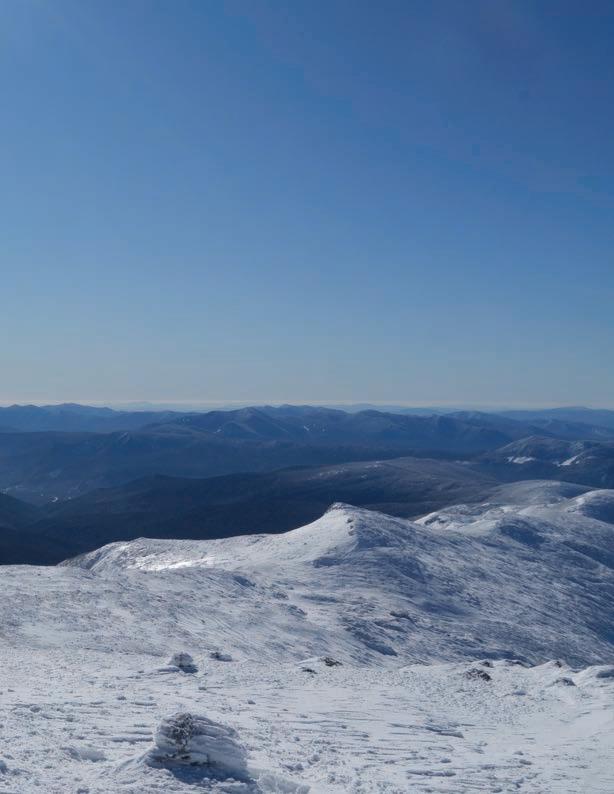
The trail was thin and steep and snowy, and the trees grew smaller, until they could not grow anymore. At this point we could see only three colors: blue, gray, and white. We reached the hut, where we stopped for water, and then stumbled towards the summit. We were exposed here. We could see everything. We dug our snow shoes into the thin, hard cover. I likened summiting to how I felt breaching the rim of the Grand Canyon after two nights camping beside the Colorado River, but this time I was in a desert of ice.
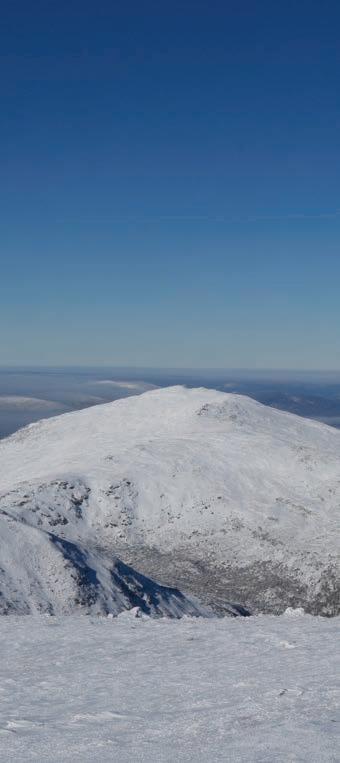
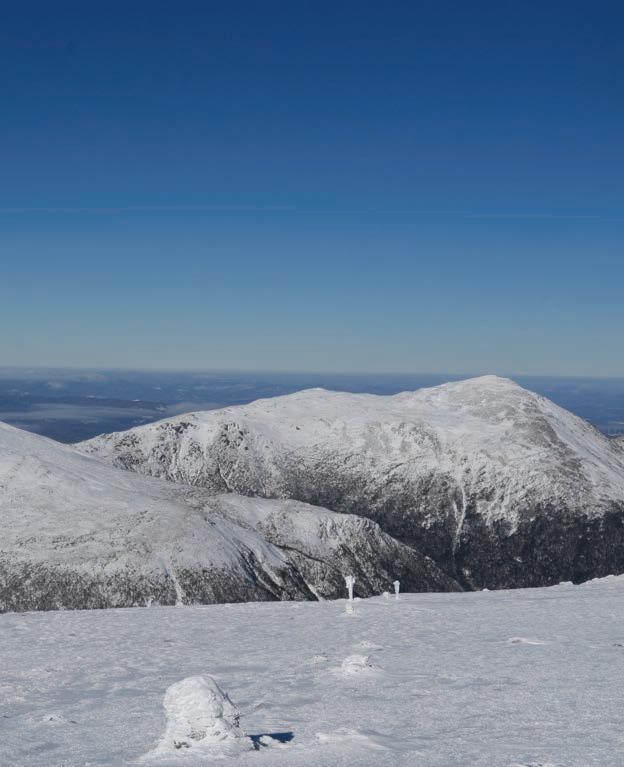
The conditions were as perfect as January conditions could be, and yet I was too exhausted to appreciate it. We followed the Mount Washington Cog Railway down, where the mountain fell off to our right: claustrophobic and yet exhilaratingly vast. Once below the treeline we stepped aside as people skied past us, soundless. As we descended we could see every mountain, the furthest away a slightly darker blue on the horizon, less perceived, more painted into our vision, constructed. I was in love with the descent. I was hungry, but I couldn’t feel it. I was cold, but couldn’t feel it. I didn’t believe I had any true sensation. I could only see. What was this novel feeling to the bird I had observed at the summit? It was another day. It was regular, routine.
We suffered for a mountain that is incapable of suffering. So, why did we climb? To see. That’s why I did it, I’ve decided. I climbed because I wanted to see.
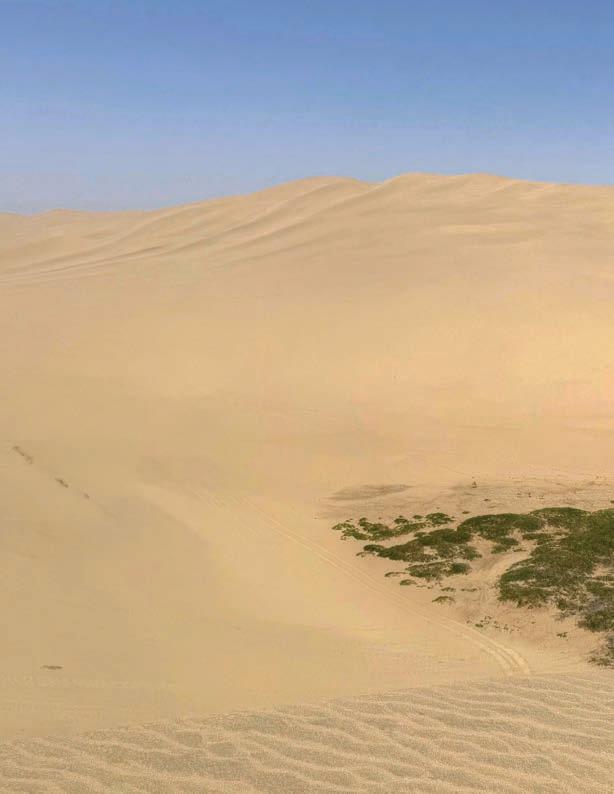
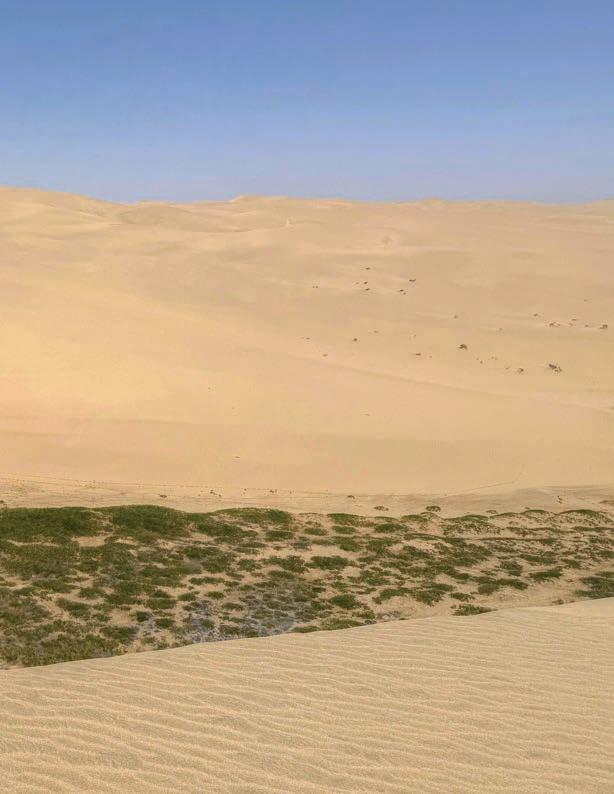
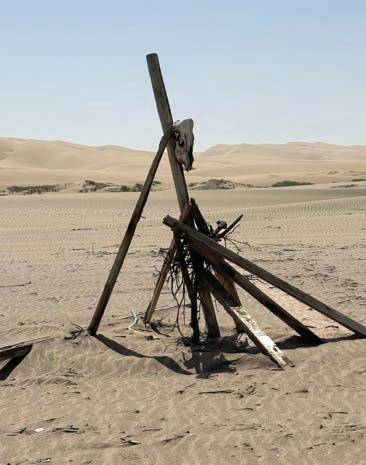
Alone for what feels like one-hundred miles in every direction, I find myself standing in the oldest desert on Earth. Here, seals surf waves while springbok snack on scrub just beyond the shore. The sand burns every inch of my bare feet. It is 102ºF, the UV is sixteen, and my retinas are slowly searing from the sun reflecting off the vast, white landscape. I should have worn sunglasses. But then again, my stubbornness also stopped me from bringing something even more crucial: sunscreen. As my neck steadily smolders, I ponder how anything could possibly survive here.
Our journey starts about thirty miles north of Namib-Naukluft National Park, in the coastal town of Swakopmund, Namibia. Rudi is a South African real estate agent, a devoted father of two, and a dedicated trainer to his new puppy. Today, however, he would transform into our driver, guide, and storyteller extraordinaire. We drove through the port of Walvis Bay, passing hundreds of makeshift homes built of sheet metal and oil rigs just beyond the shore extracting the nation’s wealth–a stark reminder of the country’s widespread inequality.
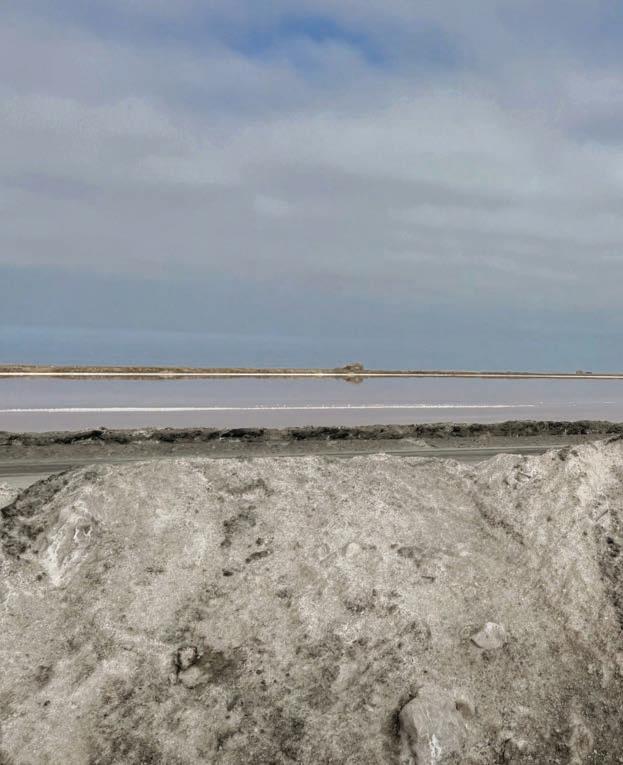
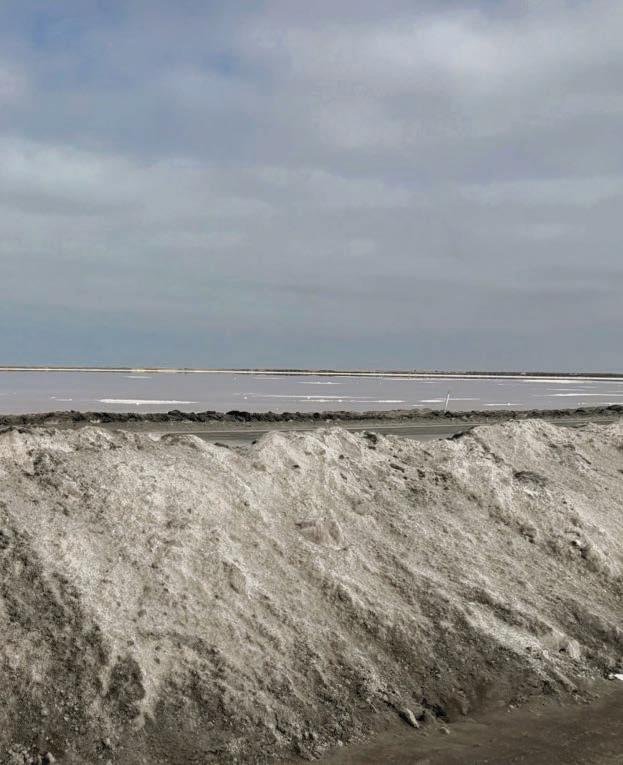
We traveled through salt fields that reeked of sulfur, burning every bit of my nose. The white flamingos and black-necked grebes, however, seem unperturbed by the stench, wading through the shallow pink-stained pools in search of algae. An old salt road eventually carries us away from the industrial din of the port and into the vast, silent nothingness of the desert. On the outskirts of the park, German tourists fish the shoreline. One excitedly shows us his freshly caught Kabeljou before returning it to the ocean.
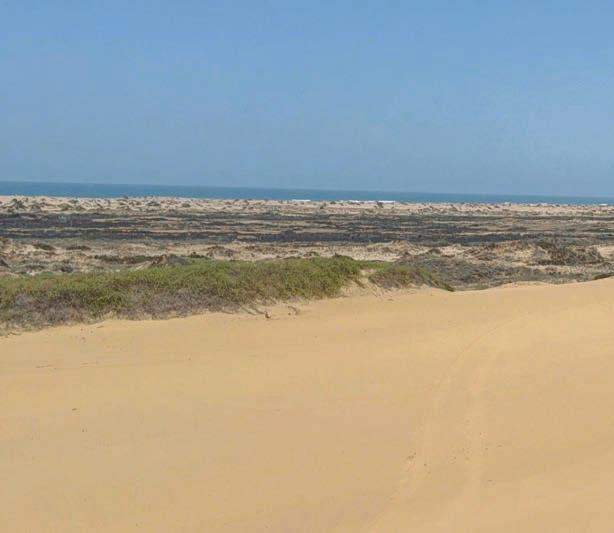
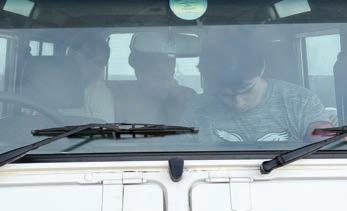
“Rudi likes to say the dunes constantly dance with the wind, as they slowly drift away from the shore, though we humans are always moving too fast to catch their best moves.”
As we drove across the barren desert, Rudi explained how it had formed over millions of years. On either side of us, clumps of green brush sprawl out, surrounded by small sand mounds. He tells us that every dune begins with the Nara plant, masters of the morning fog which famously rolls off the coast almost every day of the year. They provide the desert with life as they catch bits of wind-blown sand, accumulating over thousands of years into the banks we catch glimpses of in the distance. Rudi likes to say the dunes constantly dance with the wind, as they slowly drift away from the shore, though we humans are always moving too fast to catch their best moves.
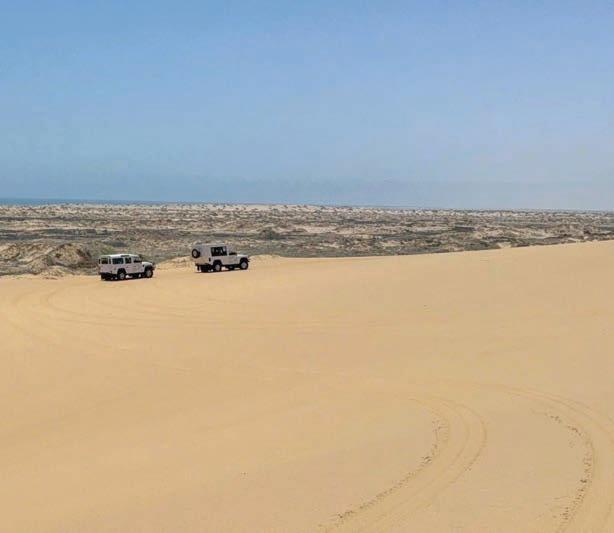
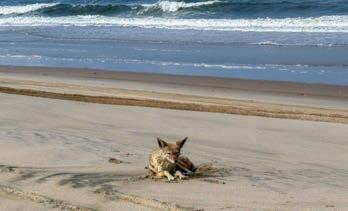
Life here is solitary. A black-backed jackal basks in the sun, perking up to see the commotion of our 1988 Land Rover Defender that has disturbed his nap. All the while, two baby seals struggle near the water. According to Rudi, their mother had abandoned them to fend against the swarming kelp gulls eyeing their next meal. One frantically trying to reach the other, the sibling quickly fading. Just in time, the seal comes close as the other drops its head for the last time. Heart torn, I wasn’t sure if I should cry of sorrow or from nature’s overwhelming beauty.
Dancing with Dunes
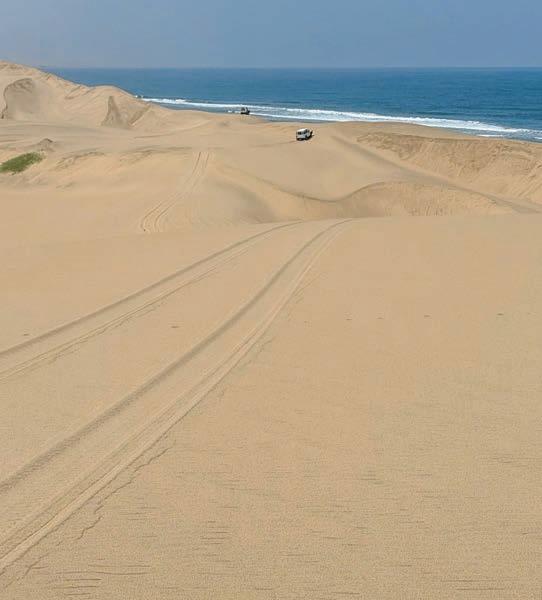
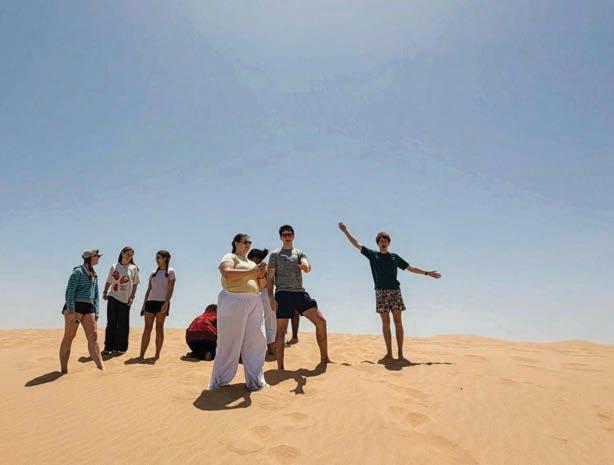
Rudi pulls us away, our tears barely held back, as we ascend a nearby dune. At the top, there is just the sun and an infinite sea of yellow slowly shifting beneath us. We march across thin ridges of sand, our feet sliding off either edge. Nathan suddenly descends the massive mound, disappearing into a valley between the dunes. Just a speck on the landscape, he carves our legacy into the desert floor for an eternal moment. “Midd!” An exclamation of our presence here. The wind will cover it within minutes, but for a moment, a fleeting moment, the desert sees us.
Nathan started the hundred-foot ascent as the afternoon sun baked him like an ant under the magnifying glass. His hands and feet quickly blister from the scorching sand before he can dig them in deeper to cool in the untouched ground. After the slow climb,
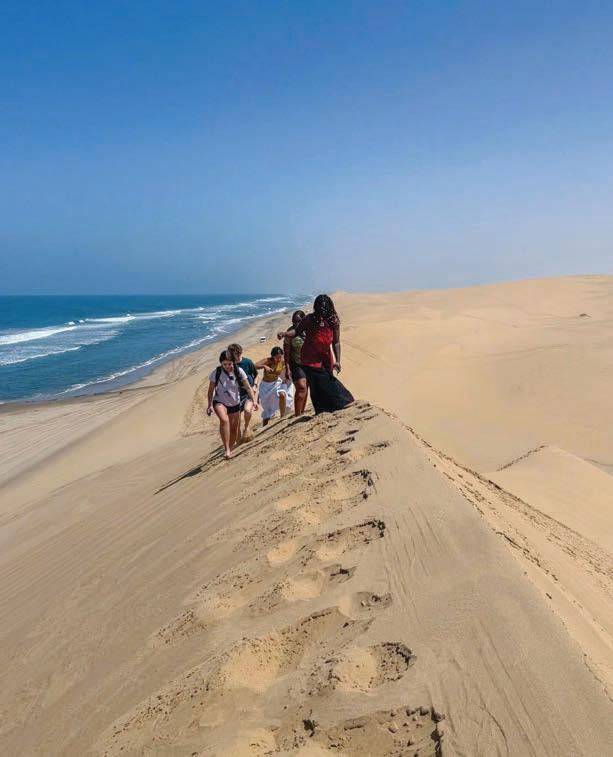
Nathan reemerged on our peak. He survived his adventure. It was now our turn to feel the thrill of flying down. Feet dig deep before crashing hard on stiffly packed spots of sand. We flew down, barely able to control ourselves, arms and legs going in every direction. Absolute adrenaline.
Deeper into the park, waves began to butt up against the dunes, leaving only feet to navigate between one-hundredfoot-high walls of sand and the bursting Atlantic. Our diesel engine roars, then sputters. We can’t quite crest Dune Colby. Rudi jokes we were just trying to say “Hi” to those watching us already up on the dune. After three attempts, we finally perch atop the thin, sandy peak. Rudi slams hard on the brakes. I fly forward into Leo’s seat before my seatbelt jolts me back. We teeter over the steep ridge, my heart almost beating out of my chest at the sight of such a drop to the shore. Rudi, calm as a clam, reins the two-ton beast to a halt.
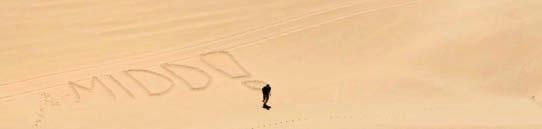
“‘Midd!’ An exclamation of our presence here. The wind will cover it within minutes, but for a moment, a fleeting moment, the desert sees us.”
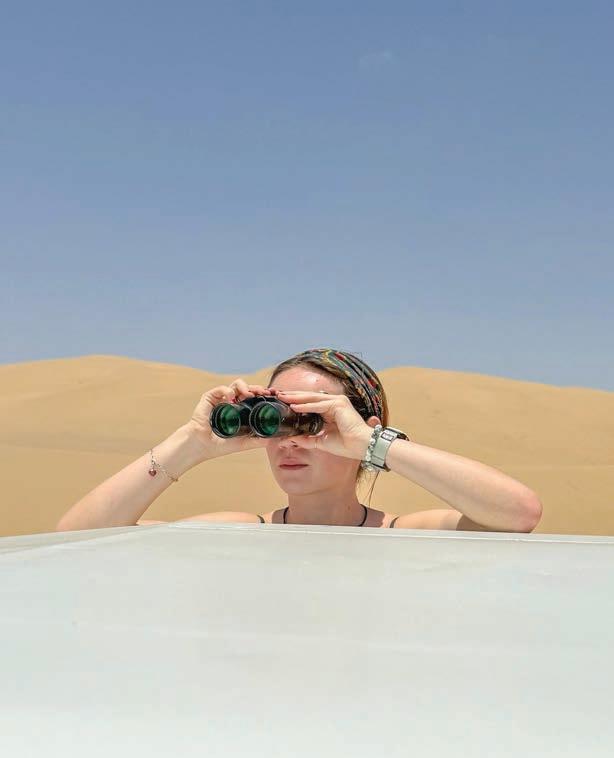
The blinding ridges of yellow and white blended together as we danced with the dunes, searching for any sign of wildlife. Rudi spots it. A pack of Oryx, Namibia’s national animal, grazing in the old river bed. Using a pair of cheap binoculars Rudi had “procured” from a pair of French tourists–his least favorite kind–we search the brush for their distinctive curling horns. Fiona, atop the roof, spots one. We frantically search, zooming our phones in as far as we could, barely making out the figure of what we learned was just our lunch.
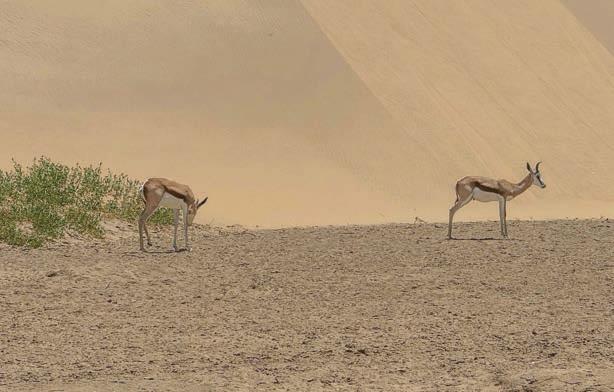
As we continued, we stumbled upon a pair of young springbok grazing on Nara behind a large dune. They seemed ambivalent to our presence as they stared, without halting their gnawing of the patches of shrub. The Nara gives birth to the dunes of the desert, but is also a lifeline of water for the creatures that reside here. It bears a pungently sour, round, spiky fruit. Food for the wildlife, but more importantly, Rudi’s favorite method of torture for his French “friends,” which he offers as a “local delicacy.”
Dancing with Dunes
What felt like a playground for tourists is for many a place of harsh realities and survival. The Himba live in the Namib desert, north of Swakopmund. They are cattle herders, who have lived amongst the dunes for nearly 500 years. They move in search of shrubs for their herds to graze on; well-fed, they can produce what is a staple food for them, sour milk. They constantly battle the desert, feeding their cattle and providing for their families. All the while, for people like me, the desert has become an oasis of adventure. My own battle ensues. How can I reconcile the exhilaration of this life-altering experience with the arduous lives of the Namib? Nonetheless, from the sulfurous grit of the ports to the silent heat of the deep dunes, the reality for those who call this land home remains a relentless, human struggle.
Dancing with Dunes
Our journey draws gradually to a close. Rudi tells us stories about life as we leave the stillness of the desert behind us. He moved to Namibia thirty years ago and never expected to be able to live as peacefully as he does now. If he’s not driving people through the desert, he’s golfing with his son, training his new German shepherd puppy, or making plans to go see his daughter at university in South Africa. Sometimes he misses home, but when he does he plays “Search for the Hero” by M People, his favorite song. Rudi reminds us to live. He says we are all trying to figure it out too fast. Out here, where the sand has been shifting for millions of years, the desert slows us down just enough for us to catch our breath.
“Rudi reminds us to live. He says we are all trying to figure it out too fast.”
Casper Wilson ‘28
FIRE IN YELLOWSTONE NATIONAL PARK
Josh Kerr ‘27
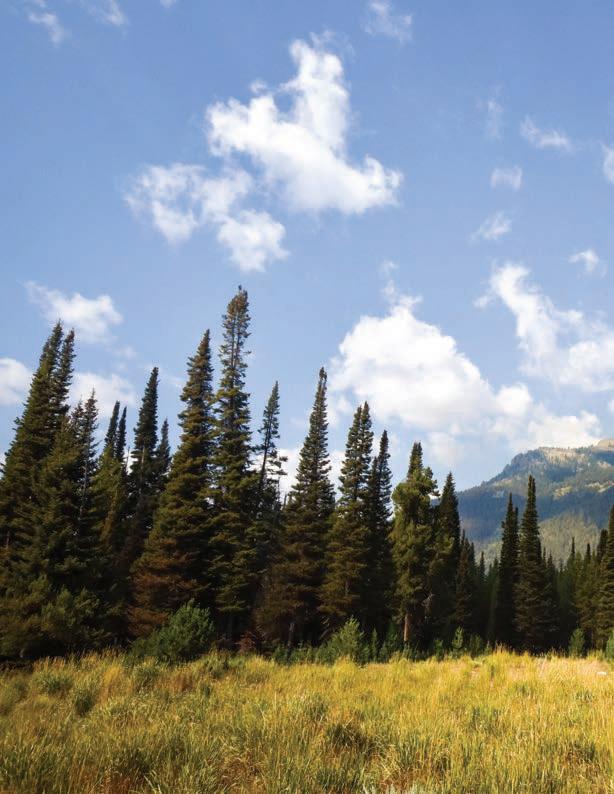
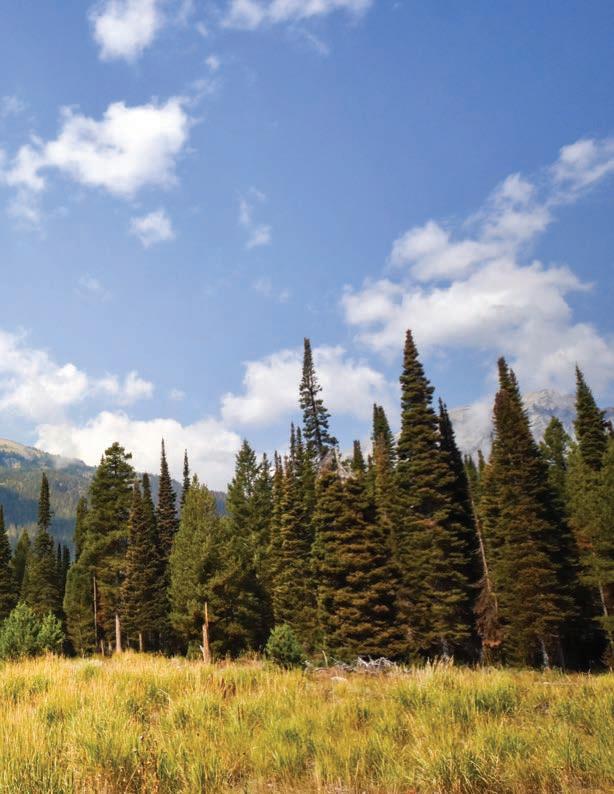
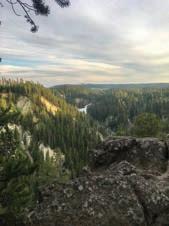
Walking through large swaths of charred forest, I encountered the presence of wildfire for the first time as a twelve-year-old visiting Yellowstone National Park. Those expanses of blackened poles with their lush, green understory, carried with them an eerie feeling–not unlike walking through a graveyard. The canopy that I was used to seeing in a forest had vanished entirely, and an abnormally strong wind whipped around our family as we hiked. At the same time, I was amazed at the amount of plant life in the understory; I had never seen so much green on a forest floor before, and all of it was poking out of a desolate landscape.
Later, we wandered through one of the visitor centers. I remember hearing the sounds of a video coming from an auditorium, which felt much more inviting than the countless plaques covered with diagrams and small text that filled the exhibit. I entered, waited for the previous film to finish, and sat down as a film about wildfire was queued up. This National Parks Service film told the story of the destructive wildfires of the summer of 1988, recounting the bravery of the wildland fire fighters, the devastated and angered reactions from those who loved Yellowstone’s natural beauty, and interestingly, fire as a regenerative force in a natural forest ecosystem. I was immediately drawn into the movie, and I sat completely attentive as if I was the only person sitting in the auditorium and the people on the screen were speaking directly to me.
“I did not realize it then, but an entire nation had been forced to reckon with an uncomfortable reality: the seemingly destructive force they spent a century repressing was going to burn regardless, and without it, the forest would not survive.”
ingly destructive force they spent a century repressing was going to burn regardless, and without it, the forest would not survive. Fire management policy has had a turbulent history since white settlers arrived in the American West. A particularly large burn in 1910 destroyed three million acres in the northwest, spurring federal officials to create a policy of total fire suppression. As a mascot of early twentieth century fire management policy, Smokey the Bear was created in 1944. This campaign encouraged a fear of fire and advertised the suppression of fire to the American public, and in turn, devalued the role of fire in natural systems. This suppression paradigm led to a buildup of natural fuel, as dry organic matter accumulated and lay dormant on the forest floor, for fires in America’s national parks and forests. That fuel would have historically been burned through by small natural fires or controlled burns orchestrated by indigenous peoples who utilized fire regularly in the American West.
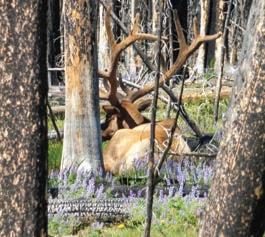
As the film continued, with its Ken Burns-style images sliding across the screen, I watched intently, more engaged in this than any class I was taking in sixth grade. The later stages of the movie provided me with a new perspective I had not yet considered, the beauty of the succession that takes hold of the wasteland of charred pine, spruce, and fir. Wildflowers quickly blanket the floor, creating a rippling sea of purple waves amid the blackened poles, some still pointing defiantly against the sky, as if
The film began by focusing on the interviews conducted with members of the public in the months following the fires. The individuals interviewed in the film lamented the destruction caused by the fires, claiming that Yellowstone’s beauty would never truly return, that the park was forever marred by a destructive force that humans failed to dominate. Sitting in that dark theater, I understood their grief. They had just lost something that had meant a lot to them, and worse, it seemed like humans were to blame for the uncontrolled spread that burned away their favorite forest. The narrative of the film leaned into the interviewees’ perspective that this devastating event was caused by a lack of suppressive wildfire management. I remember one of them saying that he thought the Yellowstone he once knew would never be the same. These criticisms attacked an evolving wildfire policy within the National Parks Service that was undergoing a significant shift. And yet, that morning, I had witnessed some kind of regrowth with my own eyes.
I did not realize it then, but an entire nation had been forced to reckon with an uncomfortable reality: the seem-
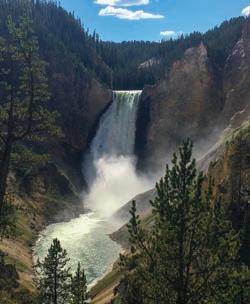
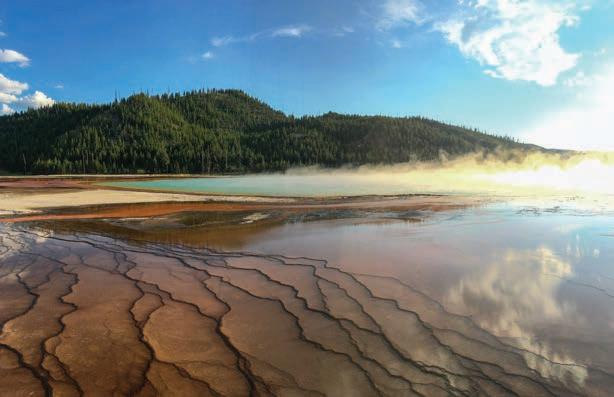
crash to the forest floor. Chamerion angustifolium, or fireweed, as it is commonly known, has the uncanny ability to rapidly colonize areas that have undergone intense, life-ending events, such as volcanic eruptions, wildfires, and bombings (Vizgirdas, USFS Plant of the week). This plant captured me with its ability to turn a desolate landscape into a beautiful one, marking the return of life to a devastated area. Sitting in that dark auditorium, I felt the full weight of the contradiction for the first time. How could we preserve nature as it is, with all of its natural processes, while still protecting it from a destructive force we didn’t fully understand?
The wildfire conversation remains intensely complex, and although the intricacies were somewhat lost on me when I was twelve, I understood this issue was not simple. I remember my dad showing me pinecones that produce a wax which can only be melted, and have their seeds deposited, by the heat of a wildfire. I couldn’t name the evolutionary process that led to the morphologic trait, but I could at least acknowledge that fire must have been a naturally-occurring phenomenon that affected forests on timescales longer than human intervention on Earth’s surface. Each of those towering pine trees lived for over one hundred years, dropping their cones that lay dormant on the forest floor, waiting patiently for a fire to coax out their seeds and release them into the ground, giving way to new life and the propagation of the forest struc-
ture. At the same time, I also understood the more obvious negative connotation of wildfire. Fire seemed like something to be afraid of. Fire does not just kill with its intense heat and flames, but also with an engulfing ash cloud that devastates nearby communities and pollutes.
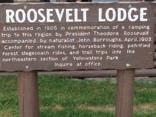
By building the giant, historic wooden Yellowstone Lodge, we had clearly placed our foot in the door as
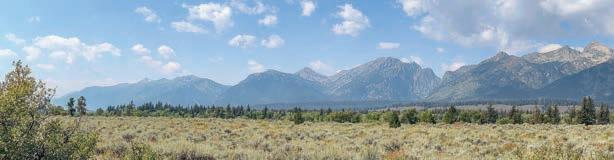
Casper Wilson ‘28
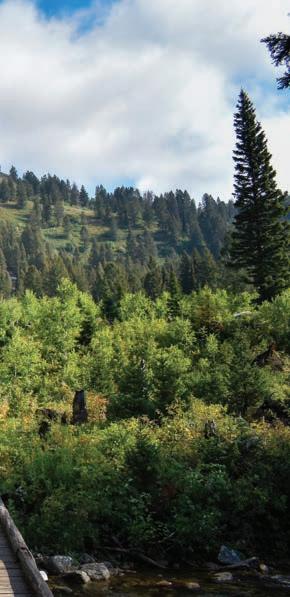
stakeholders in this landscape. Even a twelve year old could appreciate the building, it was beautiful and it complemented the landscape. The lodge was built to last and to help Americans experience the beauty of the nation’s first national park. It also meant that we had made ourselves permanent guests in a landscape that now had to share its reign with humankind. Walking through the lodge, I saw photographs depicting the reduced suppression efforts of the National Parks Service with their firetrucks shielding the lodge with a constant spray of water. In some ways, nature and humanity stood at odds—and this time, nature had the power to dominate us. We placed something we did not want to burn in an environment that continually burns. Somehow, we were going to have to change our
“...we had made ourselves permanent guests in a landscape that now had to share its reign with humankind.”
relationship with fire.
It wasn’t until a few years later that I revisited my relationship with fire, when my home in Northern Michigan suddenly became affected by the smoke of the Northeastern Canadian wildfires. The air irritated my lungs when I ran at cross country practice, and as I walked along the beach, the horizon above Lake Michigan hung in a haze that blurred the eerily orange sun. Some were quick to criticize a foreign fire management process they knew little about, while others admitted that it was an uncontrollable natural disaster. Some pointed to climate change as the culprit. I could then understand the risk fire poses to human health, even far away from its immediate and most serious effects. Looking at real-time fire maps, the size of these fires were hard to comprehend. Huge swaths of northern Canada were covered in red, orange, and yellow on my phone screen, a spatial immensity that I had no reference for. I remember reading that the only feasible tactic left for the Canadian government to fight these fires was to let them burn out at the end of the season, which at that point was
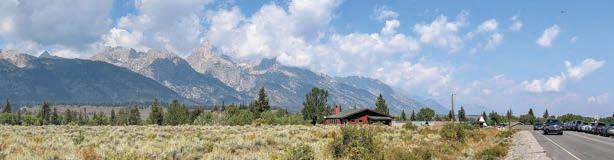
Casper Wilson ‘28
“Somehow, we were going to have to change our relationship with fire.”
several months away.
I brought these personal experiences to my final project in Jeff Howarth’s Cartography class. My interest in fire had smoldered over the years, and his rubric was a gust of wind that set in motion research on wildfires. Jeff taught me how to read maps as more than a flat image on a page, but that each one contains a narrative, author, and context even in the absence of words. He opened my eyes to details I had absorbed without ever noticing, like the way a river’s name is printed in blue and curves to follow its path, quiet-
ly telling you something about the landscape before you’ve consciously registered it. The cartographer has the power to dictate a narrative. We often see data as something immune to manipulation, and that because a map comes from data, a map should always be truthful and innocent, the cartographer is simply the passive messenger of data points. Jeff emphasized the opposite, that the cartographer is active in the interpretation and presentation of the information that comes across their desk. I remember sitting in his office and talking about this moral weight, that GIS skills are often put to extractive uses, and how we owed it to ourselves, the land, and others, to carefully consider how we are putting them to use. He instilled in me the idea that I have immense power, and therefore responsibility, with the
story that I was going to tell.
Jeff also instilled in me a critical way of looking at the landscape, one that looked beyond the current paradigm of land use. He valued the idea that different peoples and cultures occupied and interacted with the land in ways that
“The images from that film theater in the ranger station stay with me, even as I think about fire management through different lenses, and I still view fire with a childlike awe, bewildered by its complexity and power.”
differ from how we use it today, and that traces of these past relationships are still visible. He loved to remark, “I look at the land and see dead people,” a quote inspired by the indigenous burial grounds he observed while in his field work on the Channel Islands off of the coast of California. In a literal sense, he saw the people buried in the landscape. But more importantly, he saw how those people had once experienced the land—land that now serves an entirely different purpose. He applied this lens everywhere, like when he walked on Chipman Hill and saw its history through time as a grazing area, an evergreen plantation, and ski jump venue. Jeff encouraged me to tell a story of past land use through a map of wildfires, a story in which the United States government had all but erased. The US had disparaged an Indigenous fire practice that was critical to protecting both ecological and human health, dismissing it as primitive, destructive, and a threat to timber resources. Only later have we realized that this very practice was essential to conserving hundreds of millions of acres of public lands across the United States. Looking at the forests of Yellowstone using Jeff’s approach, I could see the land robbed of a process where nature and man worked in a harmonic understanding. That understanding had been systematically erased, and the forests paid the price for our misjudgement
reduced the risk of catastrophic wildfires. The twentieth century, therefore, saw a hiatus in the use of fire as an ecological management strategy that would prove to be catastrophic. Ironically, the colonial instinct to control fire molded it into an unstoppable and destructive force.
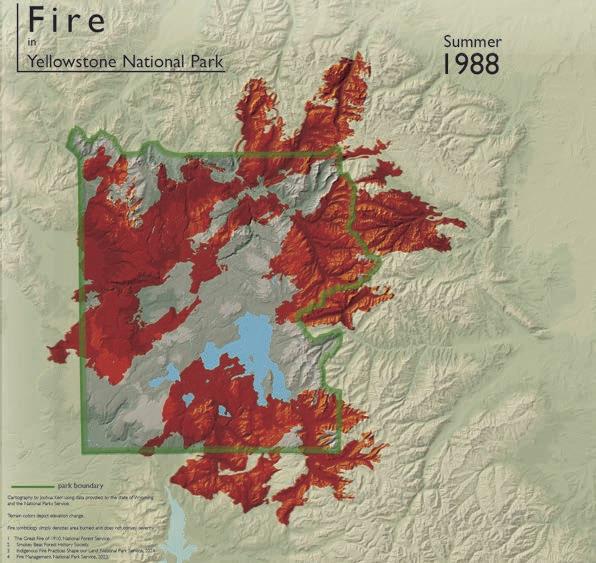
In the late 1960s and early 1970s, ecologists began to understand the fire’s important role in ecosystems and its regenerative properties. Thanks to these efforts, park officials changed tactics and allowed naturally-caused fires to burn themselves out in 1972, and the idea of experimenting with prescribed burns (Fire Management, NPS, 2023). By 1987, only 30,000 acres of the 2.2 million acre park were burned in either natural or prescribed burns due to relatively wet fire seasons while the fires of Summer 1988, comparatively, burned 793,000 acres (PBS. Yellowstone: shaped by fire).
In an interview with The New York Times, Alston Chase, the author of Playing God in Yellowstone, explained that every year an area in a park is left unburned, the equivalent of 300 gallons of gasoline in dry fuel is
Native Americans used fire to clear areas for crops and travel, to manage the land for specific species of both plants and animals, and to hunt game all over North America. Fire was used deliberately as a tool that promoted ecological diversity and
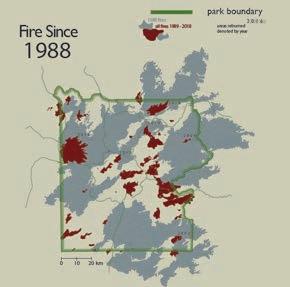
added per acre to the forest floor (Fire Management, NPS, 2023). Years of suppressive policy and a nonaggressive approach to prescribed fires, coupled with a particularly dry and windy summer, created the perfect conditions for massive fires to rage throughout the park. The fires of 1988 quickly became national news, and placed wildfire management in the public eye for the first time in American history.
Following the fires of 1988, the National Park Service reviewed the national fire management plan, where the review team reaffirmed the importance of wildfire in the life of a forest, especially one that is preserved as wilderness (Fire Management, NPS, 2023). The fires of 1988 affirmed the importance of regular fire in ecosystems in the western United States. Although the extreme fire suppression policy was reversed prior to 1988, its lasting effects and recency are to blame for the particularly devastating nature of the fire. As devastating as the fires of 1988 were, they provided clear evidence in support of the newly adopted fire management policy, and brought awareness to the American public that fire allows for new growth.
Now, indigenous peoples are being invited to share their
knowledge and relationship with the land, teaching the Forest Service and Parks Service their cultural burning practices while simultaneously returning these practices to a land that had seen them for thousands of years prior to the twentieth century. Not only are the actual acts of burning important, but the mindset that comes along with them; cultural burns seek to nurture the land, not just burn fuel for hazard mitigation (USFS Cultural Burns, 2025). These collaborations and paradigm shifts are integral in caring for forests, both on public and private land, and like fireweed, blossomed from the ashes of an especially destructive wildfire.
The fire film sparked in interest in me that I didn’t fully understand at the time, and it laid dormant until I was able to interact with it academically and understand the gravity of the issue: that this extended beyond a natural disaster, and was instead a mark of a colonial paradigm left on modern ecological management. The images from that film theater in the ranger station stay with me, even as I think about fire management through different lenses, and I still view fire with a childlike awe, bewildered by its complexity and power.
Sources:
Galinsky, Sesily. “Prescribed Burns: The Traditional Cure for a Modern Problem.” The Georgetown Environmental Law Review, 2025.
Harris, Sonia. “Yellowstone, Shaped By Fire.” PBS, 2000.
National Forest Service. “Cultural Burning Blending: Tradition and Stewardship on the Sierra National Forest.” USDA. 2025.
National Parks Service. “Indigenous Fire Practices Shape our Land.” USDA.
“The 1910 Fires.” Forest History Society.
“Smokey Bear.” Forest History Society.
Vizgirdas, Edna. “Plant of the Week: Fireweed (Chamerion angustifolium).” United States Forest Service, USDA.
Fire in Yellowstone National Park
Casper Wilson ‘28
Triptych Vignettes of Time and Space: ITALY
Ava Izel McCauley ‘29
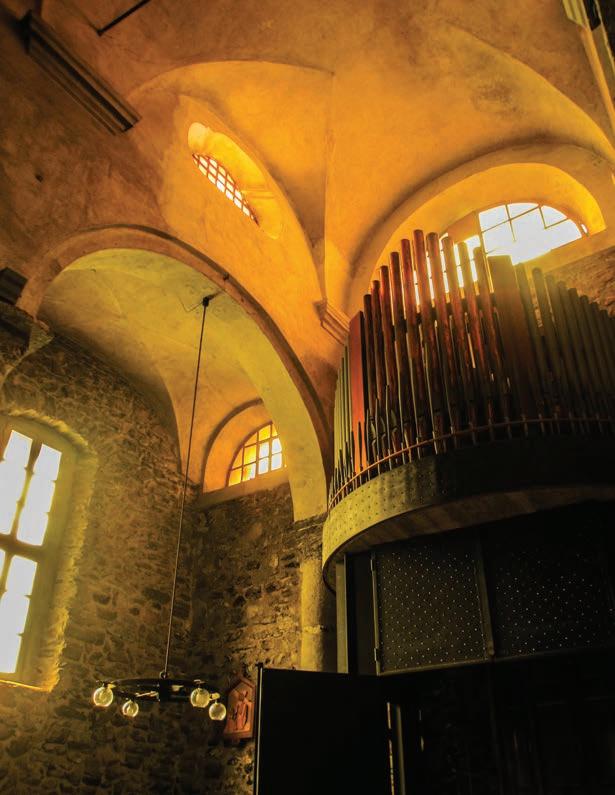
Ethereal, golden afternoon light spilled through the high arched windows into the simple stone interior of Vernazza’s Santa Margherita d’Antiochia church. The air inside was hushed and reverent, quietly broken by the echo of footsteps against the cool floor. My eyes couldn’t help but be drawn upwards, following the arches towards the vaulted ceilings. My gaze settled on the imposing pipe organ, which seemed almost out of place against the Gothic and Romanesque architecture.
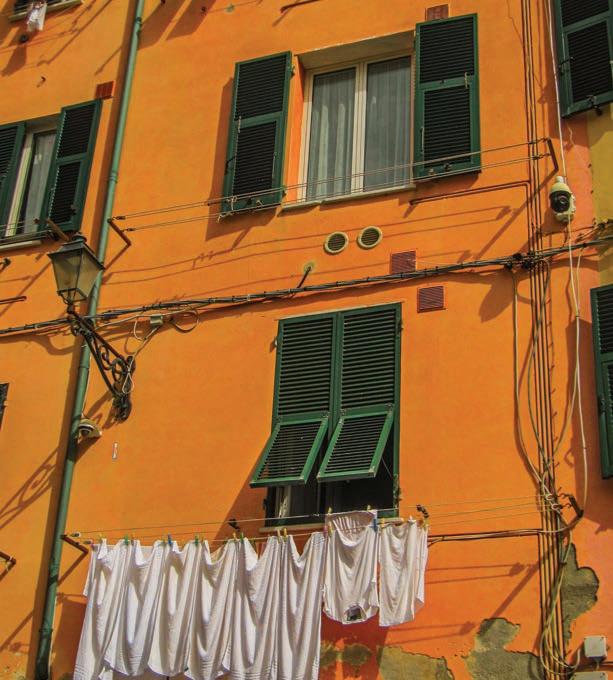
I’ve always thought that there was something so quietly idyllic about laundry hanging out to dry. The stark white of the towels and shirts catches the sunlight and is striking against the colorful peach walls and forest green shutters that frame the building. It is said that the fishermen of these small coastal Italian towns painted their houses bright colors so that they could recognize them while out at sea. The juxtaposition of the laundry –looking as it has for centuries – compared to the wires and cameras overhead, is a subtle reminder of how easily the ancient and modern coexist in the sequestered time capsule that is Cinque Terre.
Triptych Vignettes of Time and Space: Italy
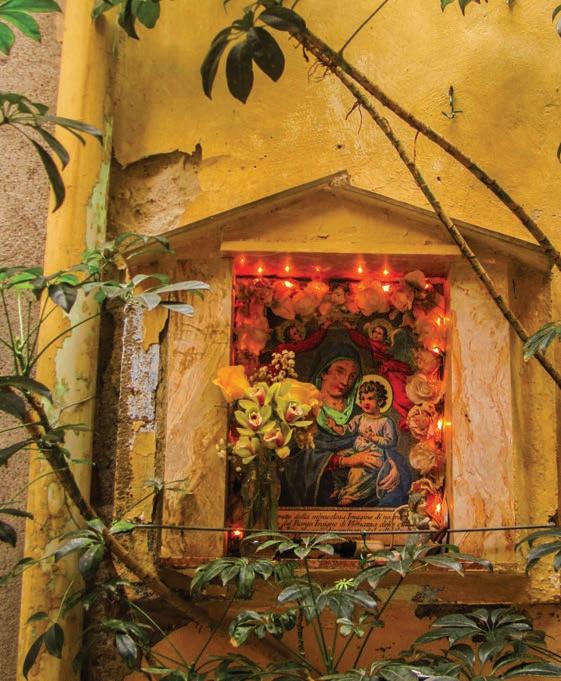
Tucked away in the labyrinthine alleys, this small “altarini” venerates the Madonna and Child. This miniature temple of sorts, with its glowing lights and fresh flowers, is easy to miss if you are not looking carefully. Embedded into the wall, it serves as an homage to the historically Catholic faith of the region, subtly incorporated into the everyday landscape of Vernazza. It is just one of countless hidden treasures to be found in this enchanting town nestled into the rocky Ligurian shore.
Will Hinkle ‘26 & Lily Jensen ‘28
Photos by Erin Pomfret ‘28
Taking Care of the Trees
Will Hinkle ‘26
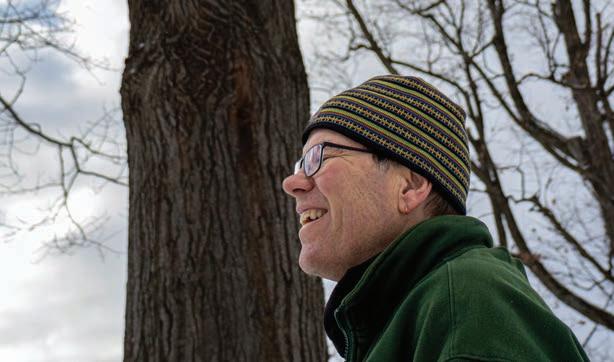
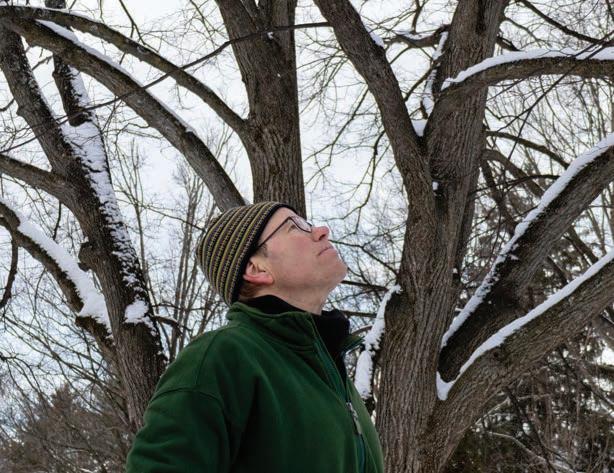
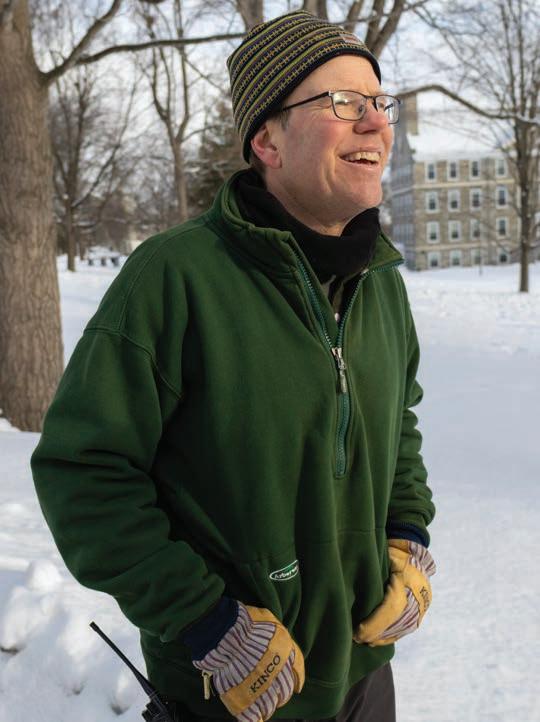
Alreadytwo hours into his work day of snow clearing and tree care, it was 7:30 on a snowy March morning when Tim Parsons–high-viz-clad with a pocket knife on his belt–arrived at the Davis Family Library foyer to lead us on his famed campus tree tour. We had hardly muttered a proper greeting before he jumped into a story of the bench we were sitting on, which he explained “is a piece of wood from a spruce tree that [used to be] right here,” as he pointed to a snowpile where that tree once stood. Tim explained that it was the Class of 1860’s tree, but it was struck by lightning in his first year and experienced more damage from the construction of Davis, at which point he had no choice but to cut it down.
After twenty years as Middlebury’s horticulturalist, the awe and admiration with which Tim gazes upon each of the 2,400 trees on campus has not faltered. These trees make up what Tim describes to be an urban forest, in which “shit happens,” and he has to help them survive in this harsh environment. As we walked and listened with Tim, he made it clear that each tree has a story and lesson to tell, and he makes it his mission to share them. Nevertheless, as the horticulturalist for our urban forest, he has a job to do, which can sometimes be hard. “All of these trees are my friends,” he explained to us while trying to address a fundamental component of his job: cutting down trees.
To accept loss is a challenging but prominent aspect of Tim’s work at Middlebury. Despite his relationships with the trees, he has to balance this with his responsibility to preserve the safety of campus, recognizing when a tree has run its course. Tim copes with losing these trees–his friends–by planting new ones. A natural storyteller, he let us in on his experience with the Ghost of Warner Science Hall, speaking to how he navigates this challenge.
In his second or third year at Middlebury, while updating his tree map on the Davis quad, “some old professor comes out of Warner Science. And this guy is so old…and I haven’t seen him since then,” as Tim put it. The old man–the Ghost of Warner Science–asked what Tim was doing, to which he explained that he was mapping the trees. “Do you plan to plant new trees?” questioned the old man. Committed to never cutting down a tree without replacing it, Tim told the old man that he absolutely would plant new ones. “Then are you going to plant them in the same line?” asked the old man once more. Unaware of this “line,” Tim asked the old man about it. “There used to be a sidewalk from the front door of Warner to the front door of Starr Library,” the old man responded. To this day, you can still see this ghost sidewalk from the line of trees on the Davis quad, explained, of course, by the Ghost of Warner Science.
The Ghost and his sidewalk are a testament to Tim’s legacy.
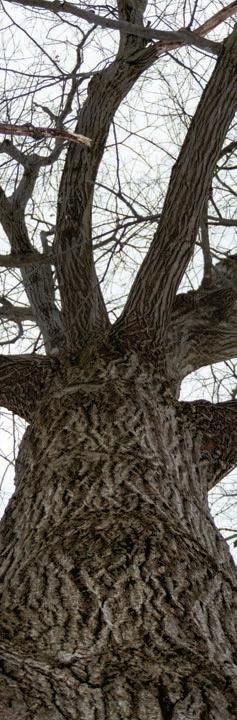
He plants trees to accept loss, and further, to allow the stories of the trees to be heard. Even as we experience loss, whether in the form of trees or elsewhere in our lives, Tim’s work maintains a spirit of listening, learning, and community.
While his responsibility is to care for overly stressed urban trees and plant new, healthy ones, his connections with the trees sometimes go deeper than this transaction. The so-called “Poet-tree” in front of Proctor Dining Hall is the perfect example of an urban tree experiencing stress. Inside the hollow trunk of the Poet-tree Tim has found collections of poems left by students year after year. Tim is particularly fond of the Poet-tree because of how it reflects the relationships, creativity, and community that emerge from interactions with trees, especially when a passer-by may not notice this concealed hollowness. On his shortlist for at-risk trees, Tim struggles to imagine cutting down the Poet-tree one day.
There are other risks that trees face in our forest. The once-prolific ash trees have been decimated by the emerald ash borer throughout the country. Elm trees are struggling at the hand of Dutch elm disease. The same story holds true with beech trees and the beech leaf disease. These trees dominated the Middlebury campus not too long ago, but have all been overcome by imported pests and diseases. It may be a losing battle, yet every year Tim injects the remaining ash trees with a pesticide in hopes that we can keep an integral feature of our landscape. He looks out for these trees, fighting to give them their best chance.
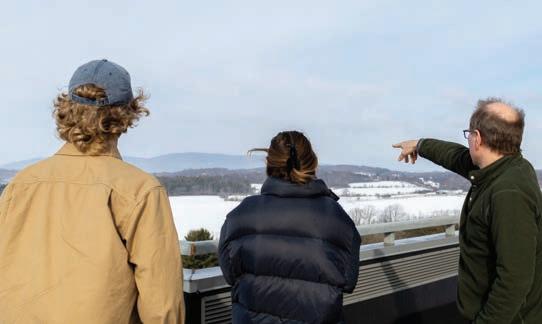
For Tim, trees transcend a mere aesthetic role on our beautiful campus. He thought for a moment while we stood atop the roof of McCardell Bicentennial Hall, gazing upon the 2,400 trees–our friends. “I’m taking care of the trees… and they’re taking care of me,” Tim concluded. Care, evidently, is a fundamental piece of what forms the strongest relationships.
Here at Middlebury, our relationships with the trees are necessarily reciprocal. In the urban forest, the trees are forced to adapt to us, but according to Tim, we must also adapt to the trees. Just as the trees depend on a horticulturalist to support their survival in a stressful environment, we all depend on the trees to support us as we manage a challenging academic and social environment.
“Care, evidently, is a fundamental piece of what forms the strongest relationships.”
This relationship allows us to relate to and learn from the trees on campus. Tim’s dedication to the trees is reflective of his dedication to our community. The countless Tim’s Tree Lessons, such as “trees are like kids…they grow best in groups,” are teachings of both Tim and the trees for us to take to heart. They are emblematic of how Tim’s horticultural work is inherently about community caring and learning.
“I want the landscape to be part of our educational mission,” Tim clearly articulated and reiterated throughout our conversations. He executes on this mammoth pursuit everyday. He envisions spaces like “BiHall Park” outside of McCardell BiCentennial Hall for students to learn alongside the landscape, and more tree groves where students can connect more deeply with nature and with each other. His frequent tree tours are always mobbed with attendees. He teaches a class every year, often in January, which is the chilliest class at Middlebury because, according to Tim, in order to learn about trees you have to learn to hug them.
As we celebrate Tim Parsons’s 20th year as the Middlebury horticulturalist, we give thanks to him for his stewardship of the trees.
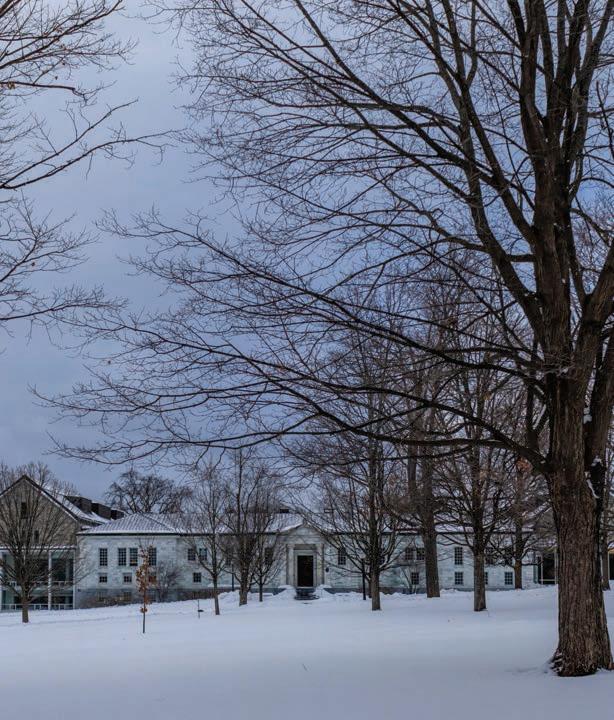
Taking Care of the Community
Lily Jensen ‘28
Tim is more than a caretaker of trees, he is also a caretaker of us both directly and indirectly. Trees benefit our experience of campus in more ways than I could attempt to list. To name just a few: blocking wind, providing shade, reminding us that there is beauty here that outlives us. “Trees grow up so high that they just come with this built in sense of awe…I’m like this really small thing in this really big world,” Tim said. There is such a pleasure of walking through campus, seeing a tree, and letting its largeness consume you. In this place that can often feel so small, the landscape helps us to see the vastness of the world that lies beyond.
Trees can provide a needed escape from all of the noise. Tim added, “I plant trees in some places almost like a wall… so you walk through these trees and you come into a new room.” Tree “rooms” are a framework for Tim to illustrate the feeling of awe that comes with being surrounded by and immersed in a chamber of trees on all sides. The aim is to give students an opportunity to spend time alone or with friends in these groves, escaping the towering buildings and beckoning books of Middlebury. It’s no coincidence that when Tim surveys his students on their favorite spots on campus they almost always point to a grove of trees. Moreover, Tim facilitates a connection between trees and students. An urban forester works to help the trees adapt to the harsh conditions of a human-built environment, but humans need help adapting to a harsh atmosphere too. A strong presence of well cared for trees can help us connect with a deeper, more natural self. A self that was present before the rise of disconnection and technology.
“In this place that can often feel so small, the landscape helps us to see the vastness of the world that lies beyond.”
Trees helping us with our uniquely human struggles is not just a nice idea, it’s scientifically proven. According to a study done by scholar and professor at Harvard University, Peter James, being surrounded by trees can have tremendous impacts on our well-being at any age (James 2021). He explains in an interview with WBUR radio Boston in 2021, exposure to trees is proven to prevent and improve depression, anxiety, cognitive decline and decrease vulnerability to chronic diseases like cancer (James 2021). It is no secret that at Middlebury, and other elite institutions around the globe, students are struggling. These realities have never been more apparent and clear to our community here at Middlebury as they are now. Planting a tree might not cure depression or anxiety, but this action has a far greater value beyond just campus aesthetics or replacing a tree that’s reached the end of its life.
James adds that while a trip to a national park can be amazing, transformative, and beneficial, it won’t give the same lasting health impacts as everyday interactions with trees. For example, something as simple as walking by the “Poet-tree” outside Proctor every morning on the way to class. It is important to celebrate those exotic adventures traveling to the Redwoods or even the Amazon, but I feel, and I’m sure Tim would agree, that we could try to extend the same level of celebration here, on Middlebury campus, where we spend
most of our time on a day-to-day basis. Either consciously or sub-consciously, everyone’s Middlebury experience–not just the students who love to travel, hike, and climb–has been shaped in some way by the trees of campus.There is a man behind that magic: Tim Parsons.
As we develop routines in such a busy, bustling place, observing trees as we go about our daily walks can be a ritualistic reminder to slow down. To observe. To ponder what it really means to be rooted in a place, even if for a fleeting, few years.
Mark Orten, Dean of Spiritual and Religious Life, eloquently explains the unique properties of trees as a meditative practice: “the tree itself, though it’s very predictable and reliable as an anchor, it changes itself…the personal inquiry, is not only how you experience the tree in itself as it is, but also how the tree is experiencing itself in the context of the environment.” Trees are more than just there; they can provide an embodied experience of place, solace, and groundedness.
Traditions tie us to trees, like the class trees, poet-tree, the Ghost of Warner Science, and the many other memorable stories and lessons that Tim told us. Memorial trees or the Blessing Tree outside the Scott Center for Spiritual and Religious Life are also meaningful expressions of grief and gratitude here on campus that tie students to a larger purpose, granting trees a special sacredness.
Tim frames this sacredness through a strong connection to place. “Trees with plaques are so cool because you’re actually making a memorial where you’re tying that person to a specific location. You can’t describe a tree without describing its location,” he said. Tim is specific and intentional about making decisions surrounding memorial trees:where to plant them and how to care for them. Trees can become exponentially more meaningful with a person, purpose, or place firmly affixed to them.
Despite the fact that trees are consistent and grander than us, they ultimately face the same impermanence and mortality that we experience. With real impacts of climate change becoming increasingly frequent in Vermont, more and more trees are flagged as “at-risk” and there are more and more tree emergencies for Tim to address, “These storms that we’re getting are that much more intense, that much stronger… most of the trees we cut down are now based on risk.” But it’s more than just the trees that are at-risk, it’s what the trees do for us. They provide more than just oxygen. This place, the trees here provide us with much more than we could ever quantify, new and old. It’s never been more essential to protect that connection and celebrate their ultimate protector.
Sources: Beland, Amanda, and Martha Bebinger. “Pining For The Forest: The Health And Climate Benefits Of Trees.” Episode. WBUR Radio Boston , September 8, 2021. https://hsph.harvard.edu/news/the-health-benefits-of-trees/
Tanzania Beyond the Frame
Evan Yurko
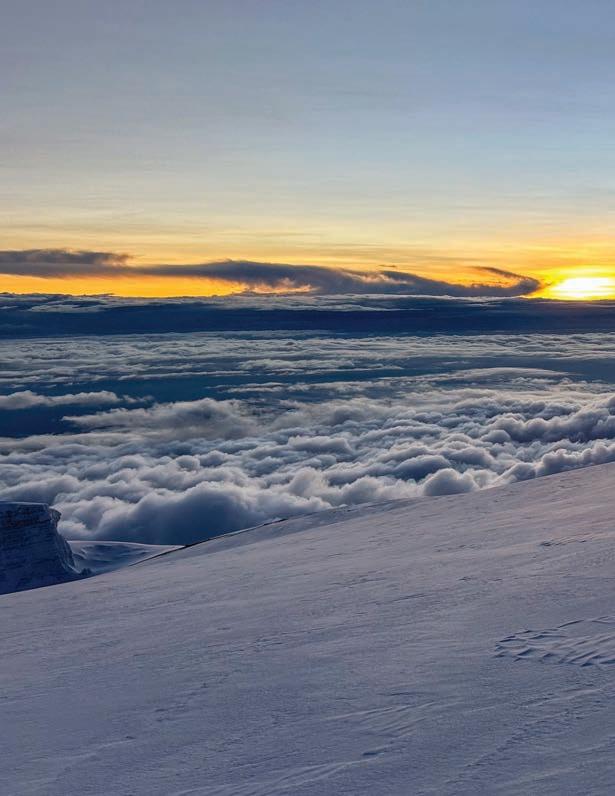
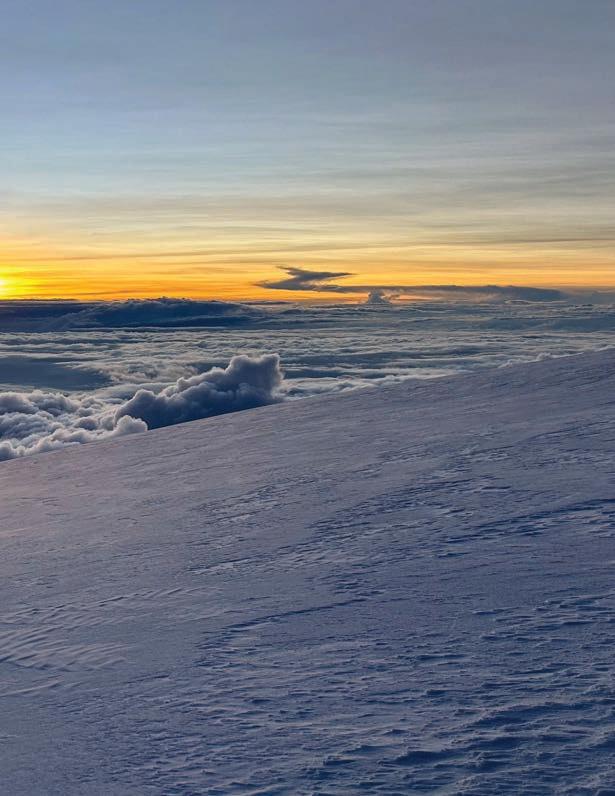
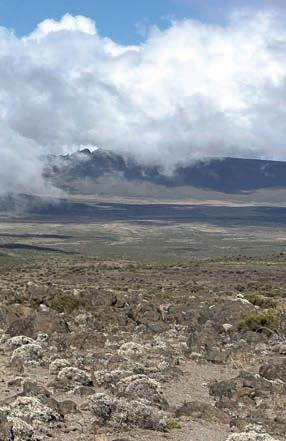
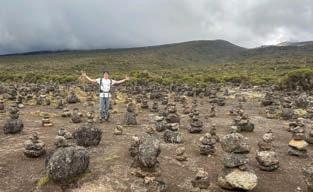
Each step felt heavier than the last, as the thin, dry air worked against me. At 19,300 feet, atop Mount Kilimanjaro’s Furtwängler glacier, my heart raced. My breathing was labored. “Pole, pole”—slowly, slowly—I told myself. That’s the Kiswahili phrase you hear time and time again on the mountain, uttered from guide to climber, from porter to porter. I focused on my feet in the deep snow, careful to lift one through the powder before moving the next. For days, other tour groups had been everywhere along the trail. By the fifth day, as we summited at dusk, all the other groups were gone. They were back at base camp sleeping, ready to wake up at midnight to
reach the summit by sunrise. We had the mountain to ourselves. So it seemed.
When I looked up from my footsteps, the pain receded. The setting sun crested over the clouds far below, light refracting over the ice and turning the snowfields gold, the sky a crisp persimmon. Captivated by the stunning view, I didn’t even notice the sign for Uhuru Peak, the summit, just a few hundred feet ahead. I ripped my gloves off and took out my iPhone, my hands numb in the whipping alpine wind. The cold sting was worth it, even if the photograph didn’t do the view justice. That picture joined the rest in my collection.
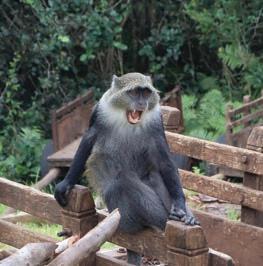
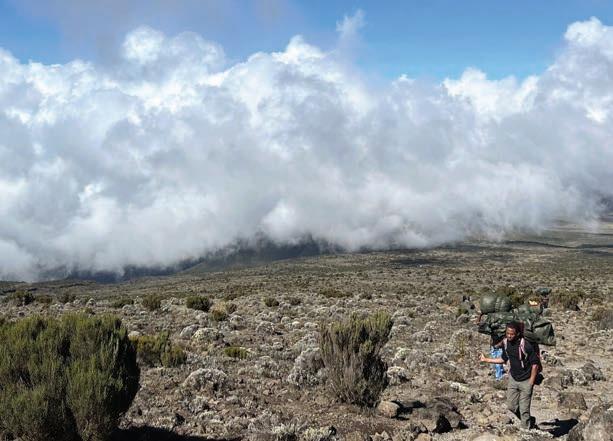
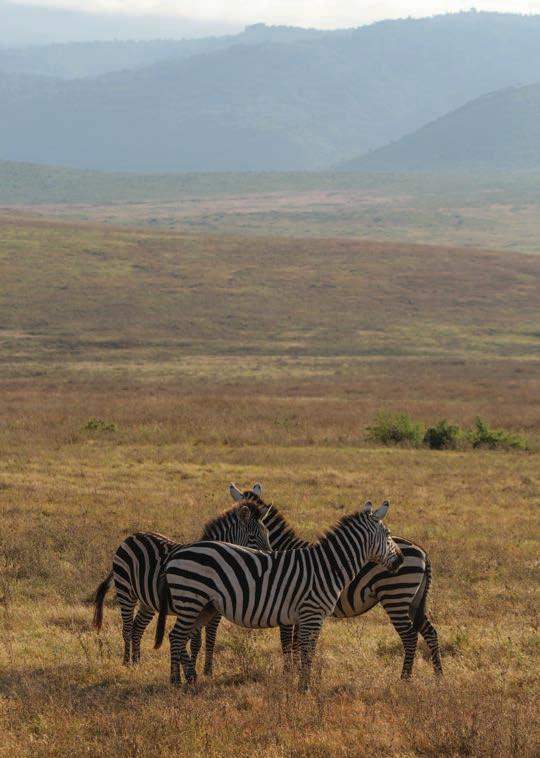
I returned from Tanzania with hundreds of these picturesque scenes in my camera roll from my semester abroad with the School for International Training (SIT). Any of them would fit right in any nature or geography magazine. In one, a parrotfish darts between the corals of Misali Island as a moray eel emerges to greet me with a wide-toothed grin. In another, a Sykes’ monkey screams as it seems to plot to steal our bananas at our research site in Jozani Chwaka Bay National Park. On the beaches of Nungwi, my classmates and I stand on a pristine white sand beach made up of crushed ancient corals that looks almost artificial. In the center of Dar es Salaam, the city pulses, one of the fastest-growing in the world. Lions and rhinos roam the floor of Ngorongoro Crater, home to one of the highest densities of large mammals in the world. I have just as many pictures of Kilimanjaro that depict the ecological transition of the mountain itself as we climbed from rainforest to moorland to alpine
desert to glacier. The terrain shifted, and the vegetation thinned. Above the clouds, only ravens and ground squirrels seemed to remain.
And yet, these are not the things I remember most. There’s something fundamentally missing from the landscape scenes in my camera roll. What photographs like these don’t always capture are the figures just outside of frame, the people who made it possible in the first place. Yes, I’ll remember that sunset as we approached the summit. I’ll remember the accomplishment I felt when my climbing buddy and classmate, Miles, and I finally reached Uhuru Peak and posed for the obligatory Instagram flick by the summit sign, even as Miles’ legs and lungs were ready to collapse with fatigue.
But who was behind the camera?
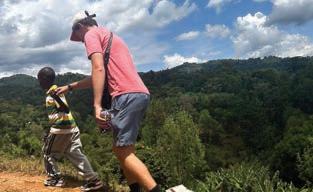
Mogli, our guide, one of the funniest, most rambunctious people I’ve ever met, whose thunderous laugh carried easily through the thin air. And Alex, a porter
whose steadiness and smile never faltered as he carried our heavy summiting gear, including an oxygen tank for Miles, in case his symptoms of altitude sickness worsened. Mogli regularly checked on Miles to ensure he could continue the ascent. Alex was a quiet but grounding presence and kept repeating those words, “pole, pole,” every time Miles and I looked back at him, helping us gain the confidence and composure to push on.
The questions people always ask Miles and me are, “How did you do it? How did you push through the pain and struggle?” The tongue-in-cheek answer we always give is that the power of the indomitable human spirit willed us to the summit. But the truth is, our porters and guides motivated us up the mountain, especially on that final summiting stretch. The grueling journey up Kilimanjaro usually takes at least six days, covering more than forty miles of trail and twelve thousand feet of vertical elevation gain. Our small group of three had eleven porters, two cooks, and two guides. All of them went out of their way to make our experience better.
Early each morning, our cook warmly greeted us before the sun had fully risen: “Hodi! Habari za asubuhi? Mmeamkaje? Mmelalaje?” I would respond in my limited Kiswahili, eliciting smile from our cook, who appreciated my attempt at conversing in his native tongue, though he was fluent in English. George, our other guide, conducted medical checks on us each morning after our delicious breakfast of hot cucumber soup and oatmeal, cracking jokes as he put the oximeter on my index finger. Each porter lugged more than fifty pounds of food, water, and equipment, and despite the heavy burden, they always smiled and greeted us as they passed, climbing at five times our speed. One of our porters carried a cooler on top of his head. The cooler filled with our poop as the day progressed. Perhaps that’s not a pretty picture, but that’s precisely the sort of thing not captured by the camera.
Yes, that’s their job, but I think that is an inadequate explanation. What struck me wasn’t that they were paid to help us, it was how they helped us—with warmth and humor, and by getting to know us personally. Greetings were never rushed. Smiles never felt rehearsed. It wasn’t just customer service. It was culture.
In Tanzania, wealth doesn’t often announce itself through the shillings you have in your pocket. It reveals itself through connections: who helps you when you’re down. It reveals itself through relationships built on reciprocity: I help you today, and you help me tomorrow. It reveals itself by who greets you in the street.
If you walk the streets of Stone Town, Zanzibar, where my semester abroad was based, you’ll be greeted by people you’ve never met. “Jambo”—a friendly hello, usually aimed at tourists. When you respond with “Sijambo. Habari yako, rafiki yangu?—I am well. How is your news, my friend?—they are delighted to stop and chat. In Tanzanian culture, it’s often considered rude not to greet someone as you pass, even a stranger. If you talk long enough with that stranger, they might invite you into their home for pilau and chapati–fragrant rice with beef and fresh spices, eaten with a thin bread to scoop the rice by hand from a communal pot. Even after you insist you’re finished, they might pile more onto the plate until the thought of another bite makes you surrender: “Nimeshiba”—I’m full. That stranger wants you to be a part of their community. I couldn’t see the same happening while walking the streets of New York City.
She fed me until she could no longer ignore my pleas of nimeshiba. I was introduced to friends and neighbors as the grandkids’ kaka—brother. In her home, I wasn’t a visitor; I was a member of the family.
Many tourists take photographs of the picturesque, coral-stone buildings lining the labyrinthine streets of Stone Town, most too narrow for cars. What do they miss? The greetings in the shop doorways, the bargaining between merchants and customers at the fish market, the bustle of bikes and people weaving through the commotion. It’s the rhythm of community unfolding just out of frame.
Tanzanian hospitality was no better showcased than in my host families. Mama Rahila welcomed me into her home and folded me in among her grandchildren: Latifa, Junia, Sudeis, Chupi, Hamad, and Jianna. She brought me to lavish, Arabic-style birthday parties, corrected my Kiswahili, and taught me the subtle distinctions between two bananas that looked the same to me: ndizi and matoke.
I have many pictures from Pemba Island, Ngezi National Forest Reserve, of ancient ruins, and the shoals of sardines off the coast over one of the best preserved coral reefs in the Indian Ocean. But that’s not what I remember most. In my short, one-week homestay on Pemba Island, I had a nearly identical experience in the home of Mama Asha, who treated me like one of her children: Saidie, Ashfird, Samaha, Hamed, and baby Tamira. Hamed brought me to play mpira, my penalty kick curving wildly right, eliciting laughs from dozens of children. While we waited for the goalie to retrieve the ball, the kids erupted into breakdancing in the dust. One challenged me to a dance-off and followed my poor performance with a backflip. Everyone cheered for both of us, even though there was a clear winner.
My host family taught me how to handmake my favorite sweet treat, kaimati, how to properly bargain for items at the market, and how to dance (less than gracefully) while dressed in kanzu and wearing a kofia — traditional Islamic clothing. Despite knowing that I would only be a part of their family for a week, they were no less generous.
Generosity was also a virtue among the entire Zanzibari staff at SIT, but especially from Said Omar, the program coordinator. When I was alone on the beaches of Jambiani for my month-long independent study project, my research on octopus fishing had hit a wall. The fisherman that SIT had set me up with didn’t show up,
and my translator canceled. Said, setting aside dozens of hours of work, made the hour-long drive to my field site. For someone to suddenly leave their work just for me felt extraordinary, and yet Said came to help, no questions asked. Through his connections in Jambiani, he quickly found Captain Bomboo, the octopus fisherman I shadowed for my project, and Ali, a local translator whom Said had worked with before. My dead-
in-the-water project was alive again.
I awoke early the next morning and sat down on the damp sand, waiting as the sun rose above the water—another picturesque scene. But the beauty of the sunrise felt secondary as I saw Bomboo come walking across the dune, boat motor in hand. At that moment, I felt elated, like I was a part of this shared community, not just a temporary visitor.
Ava Izel McCauley ‘29
Conservation is often romanticized as fieldwork at sunrise and discoveries made among beautiful backdrops. In Jambiani, I learned that conservation is about showing up for people. It’s about knowing whom to call and whom to trust. It’s about leaving your desk piled high with receipts to make sure a student’s work (and confidence) doesn’t collapse. Meaningful work isn’t sustained by individual determination alone, but by community. The sunrise was beautiful, but what made it unforgettable was knowing I wasn’t alone.
“Meaningful work isn’t sustained by individual determination alone, but by community.”
Even after leaving Tanzania, I know I am richer because of the connections I made there. In December, I received a WhatsApp message from Dr. Narriman Jiddawi, professor of fisheries management at the Uni-
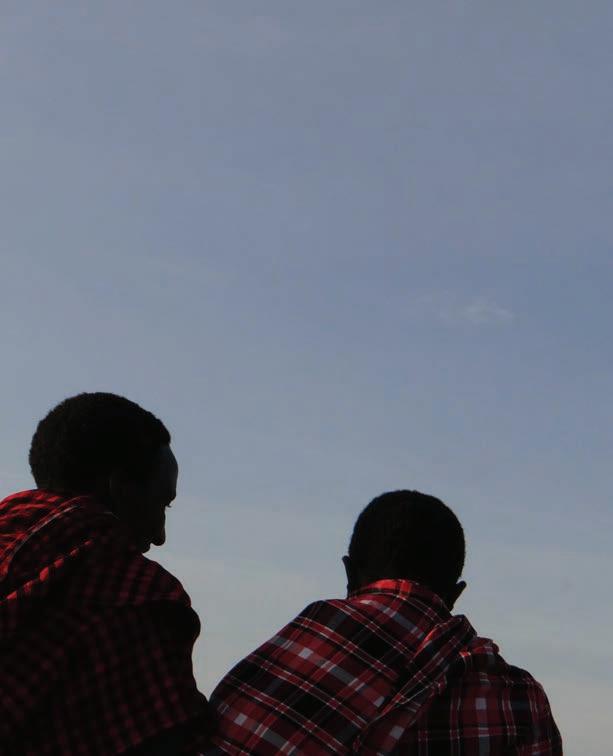
Ava Izel McCauley ‘29
versity of Dar es Salaam, and my octopus project advisor. I hadn’t talked with her in more than a year. She didn’t ask about my research. She simply wished me a Merry Christmas from her family to mine. That quickly brought a smile to my face. In that simple, unprompted message from thousands of miles away, I knew I had brought home more than just photographs. When I look back at my camera roll from Tanzania and Kilimanjaro, I don’t just see what’s in the frame. I think about what happened after the cameras were put away.
Our descent from Kilimanjaro was far from a storybook ending. Miles’ altitude sickness had worsened, and he was carried down by several porters summoned from basecamp who had quickly climbed up, their headlamps cutting an ascending line through the darkness. The next morning, the guides decided to evacuate Miles from the mountain as quickly as possible to get him out of the low-oxygen conditions of high altitude. Our climb down was more of a sprint. Most symptoms of altitude sickness can be relieved by getting off the mountain. As we rushed down, I didn’t fully appreciate the views or the
rapidly changing scenery. Just hours before, we were on a glacier at the top of Africa. Now we were in a rainforest surrounded by trunks covered in mossy bark. The landscape that had felt so monumental now felt insignificant in light of Miles’ condition.
We spent the last stretch of our descent in the back of an ambulance.
Miles was driven to the hospital while Jack, the third in our climbing group, and I spent the night at our hostel waiting for news. He was put on a ventilator overnight and given antibiotics to treat pneumonia and pulmonary edema. Miles was released early the next morning, disoriented and exhausted, alone outside a foreign hospital with minimal Kiswahili and no money in his pocket. But he wasn’t truly alone: strangers came together and gave him enough for a taxi fare. They didn’t know him. They didn’t owe him anything. There was no transaction, no expectation of repayment. Just a quiet understanding that when someone is in need, you help them, no questions asked. Maybe that was a storybook ending after all.
When I look at our summit photo now, I don’t just see two friends on top of Africa. I see the porters who rushed in to carry Miles down. I see the guides who ensured Miles’ safety. I see
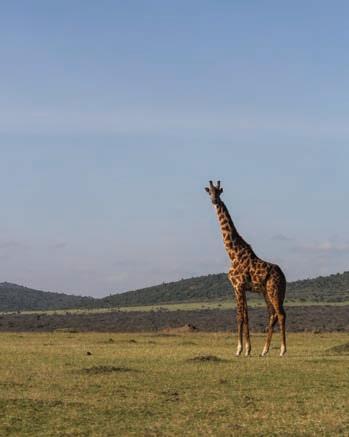
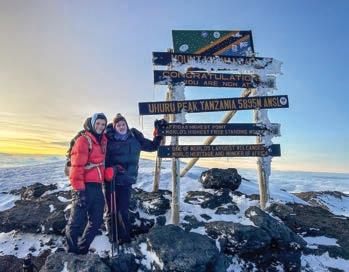
the strangers who made sure he could get home. Before Tanzania, I thought the wealth of my experience would be measured by my accomplishments: finishing my research, going on safaris and seeing rare wildlife, exploring tidal zones, conquering Kilimanjaro, and capturing the perfect photograph. I understand it differently now. The wealth I acquired is in the mentors who still check in. It’s in the host families who would welcome me back into their homes. It’s in the enduring relationships that last long after the semester ends. Wealth is knowing that there are people who will carry you down a mountain when you cannot walk. Wealth is a cab fare pressed into your hand by strangers who expect nothing in return.
The majestic landscapes and spectacular scenery were never the most important parts of my time in Tanzania. It was the wealth I gained in the people just out of frame. And, to me, that’s a far more beautiful picture.
Following Nathaniel Rubens Goldfarb ‘28 the Sun
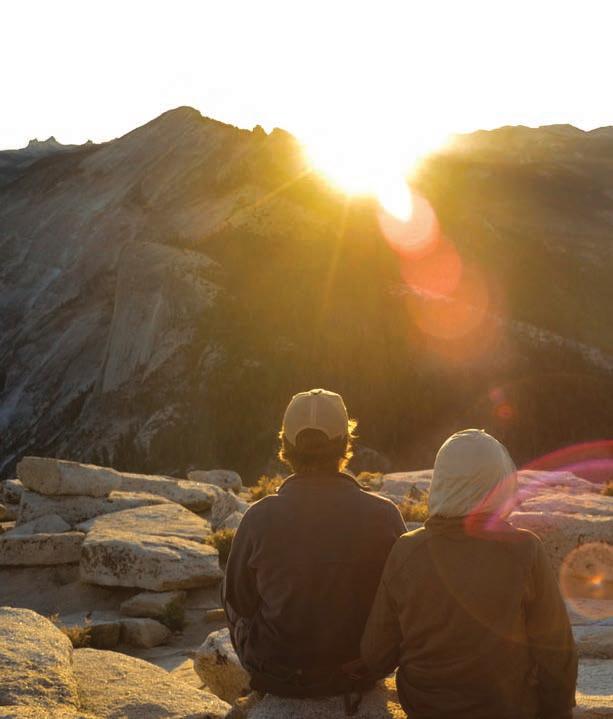
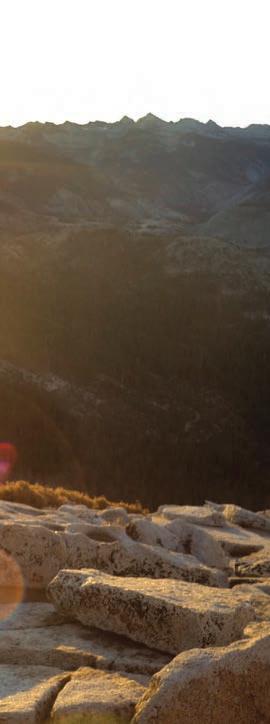
The soft walls of our home shake as the car is slammed with the force of sixty-five mph against the thick Nebraska air. I sit in a state of half-consciousness, embracing the touch of a stale T-shirt, which serves as a barrier between my back and the seat that reeks of the sweat I produced over the past six hours on what surely had to be the hottest day of all time. The zillionth three-ton pickup truck rushes by us in the left lane as our trusted jeep groans on, the gearshifter taunting us, threatening to simply pop out at any moment. I sigh as the orange light emerges over the space, creeping over the expansive cornfields that stretch out indefinitely on either side of the highway. This is why people live in Nebraska. The most beautiful sunset I have ever seen dominates the previously dull landscape, itching us onward as we tick off the miles, inching closer and closer to home: Washington, D.C. We’re still over a thousand miles away.
This is how I traveled home from a summer working in Yosemite National Park. Our method of transit: a 1997 red Jeep Wrangler with no AC, a soft top, and a stubborn refusal to go more than sixty-fivemph amidst the hundreds of miles of eighty-plus mph speed limits. A wooden park souvenir with Half Dome resting stoically in the foreground was strategically placed on the dashboard. It reminded us of a summer filled to the brim with adventure as we made our way through a midwestern world of strip malls, highways, and frustratingly flat terrain.
Two months earlier, with a car still feeling young and seats that still held on to their leather scent, we drove into the park for the first time. I had convinced a friend of mine from high school, the owner of the beloved Jeep, to come along on this adventure. Once he secured the job, he decided to ship his car out to California, committing to driving it back home at the end of the summer. We weren’t sure it would survive, but there was plenty of time to worry about that. As we drove in, 3,000-foot cliffs rose up on either side of a two-mile-wide valley. Tourists crowded the sides of the road, taking pictures of unbelievable sights. Right in the center, the cliffs directed our gaze toward the infamous Half Dome overhead, a granite dome at the edge of Yosemite Valley, rising to an elevation of 8,800 feet with a sheer face pointing towards the valley nearly 4,000 feet below.
Within a few weeks, we grew accustomed to a life in a canvas tent: a thirty-three-year-old roommate and a box outside to hide all our smellables from curious creatures. The most feared were the mice, which can leave behind hantavirus in their scat, killing a third of those who get it. It has no cure. Even with new people, diseases, and a first day on the job to worry about, Half Dome loomed larger by the day. It was the head-
line of the park, the biggest “must.” You just couldn’t leave the park without hiking it. We had seven weeks.
My first shift immediately expelled this aspiration from my mind. For nine hours, I tried my best to keep up with the never-ending barrage of customers. I sprayed pizza pans with grease until my hands cramped and prepped frozen crusts with sauce and cheese, all while trying to meet the new people around me. My coworkers were from Thailand, Colombia, Honduras, Kosovo, and even Sacramento. My mind was in just as many places that day as I adjusted to the stressful kitchen environment. Outside, the crunch of cars droned on, circling an overcrowded parking lot for a spot that didn’t exist. The tourists buzzed like flies, chasing rabid squirrels, exclaiming how cute and unafraid they were or complaining at the window about their lack of pizza after an hour of waiting. One simple look around would show that the number of people waiting greatly exceeded the number of pizzas any kitchen could make in that time.
When I escaped the kitchen for the first time, the only light left in the park shone on the face of the dome, which soaked up its last moments of the day, literally in the spotlight of the park. The cliffs produced a bluish glow in the twilight. I couldn’t believe it was real; it looked like a green screen rather than my real vision.
In the coming weeks we established our routine: going on adventures with fellow park employees in the late hours after work, then sleeping until the sun turned our tent into an oven, forcing us out to find shade. A new friend introduced us to a hidden river spot with Half Dome peeking up behind picturesque pines, where we would waste away the early hours before our shifts started. We subsisted on pizza, sneaking away the thirty-dollar treats that visitors sometimes waited hours for, and
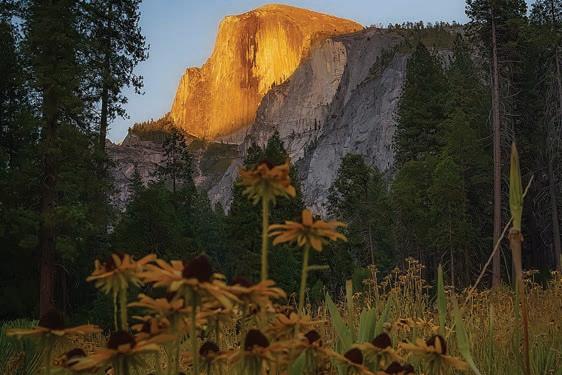
“When I escaped the kitchen for the first time, the only light left in the park shone on the face of the dome, which soaked up its last moments of the day, literally in the spotlight of the park.”
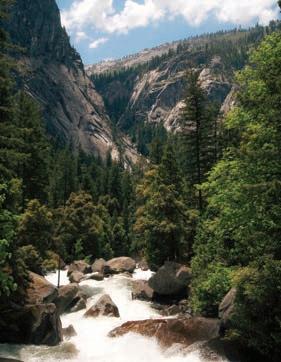
gorging ourselves by the river. We experienced the park in a way no tourist could, walking deep into the woods at midnight and hitting every secret and well-known attraction we could fit in.
We made friends who appeared in our contacts with the last name “Yosemite.” The most significant was a girl who worked at one of the lodges and happened to be a family friend of my sister’s friend from college–the contact who had given us both the idea to work in Yosemite. She had been there for a month prior, so upon our arrival she revealed the secrets she had discovered, took us on hikes, and opened up the world of park employees. Our other close friend was a coworker at the pizza restaurant. The closest in age to us among the rest of the crew, she quickly became a close ally at work.
A month into our stay, Half Dome was still an overarching presence, teasing us daily with its beauty, seeming to say: come take a closer look. We had established a great community and routine, but the truth is that most people don’t go to Yosemite to make pizzas. The more accessible hikes had been uncovered, so it was time to go all in.
A permit is required to hike Half Dome. This permit must be requested the day before you plan to hike, with just a nineteen percent chance of success. With the way our off days lined up, there was only one possible day a
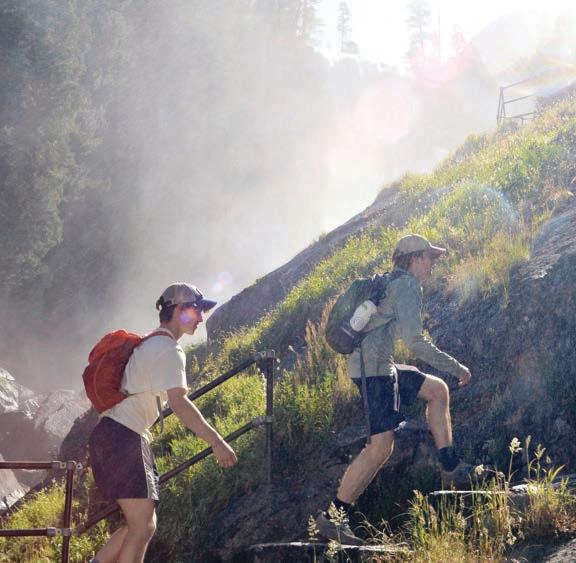
week we could set out. The first time we tried, no luck. The next chance came up soon after, and with our end date fast approaching, the stakes were high. The response came fast with approval for the next day, and we had less than twenty-four hours to prepare.
A hike this extraordinary deserved an extraordinary process. The well-known strategy among the employees was to hike overnight. Avoid the heat, crowds, and reach the top for the most magnificent sunrise the park has to offer. For us, speed was not our friend, so we had to start the hike at 11 p.m.. We spend the day stuffing our backpacks with harnesses, peanut butter, gloves, and trail mix, and our bellies with
calories. A bedtime of 8 p.m. aimed to squeeze in as much sleep as was logistically possible, and I awoke from hardly a doze with the entire campground still alive with the sound of people milling about, enjoying the evening. After one last check of the gear, we were off.
We moved slowly uphill with no bearing for distance. The darkness was oppressive all night, only the twinkling of distant stars keeping us grounded among the empty woods. My heart beat faster as we got closer to the edge of the treeline. We were on pace with our goal, still with an hour before sunrise.
“The very beginnings of a faint haze could be seen way out to our east... It was as if we had literally found ourselves in heaven, the world illuminated all around us with an ethereal glow.”
Getting to the subdome, less than a mile from the top, we made our first mistakes. In the dark, getting lost from the trail was not an option. As the terrain got rockier, the trail was harder and harder to follow. On the edge of a steep slope, we found ourselves lost, scrambling around to recenter ourselves. The Monster energy drinks we had ingeniously brought to keep us awake had induced headaches, my leg was cramping badly, and two of our headlamps had gone out. We were no longer beating the sun. My love-hate relationship with All Trails had reached a breaking point. Luckily, I was able to retrace our steps back to the trail, and we continued upwards.
At the crest subdome, where the granite starts and the climbing truly begins, the entire world stretched out around
us. From such a high point, the very beginnings of a faint haze could be seen way out to our east, while the stars finally shone directly at us, with no trees to block their twinkle. It was as if we had literally found ourselves in heaven, the world illuminated all around us with an ethereal glow. We excitedly strapped into our harnesses and began to climb the famous cables as our surroundings came into sharper focus. We reached the top to find an empty landscape of desolate stone that curved into the horizon on either side. We were the first ones to reach the top of the dome that day, not even the sun had beat us there. In the dawn, we could see the shining lights of Fresno, just sixty miles away, through the opening in the valley.
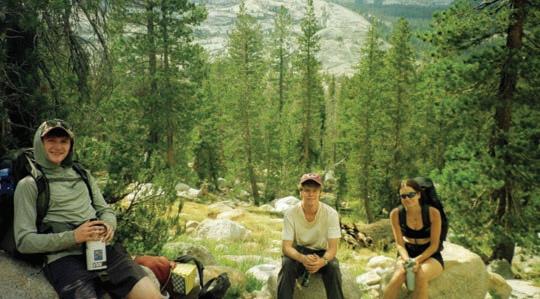
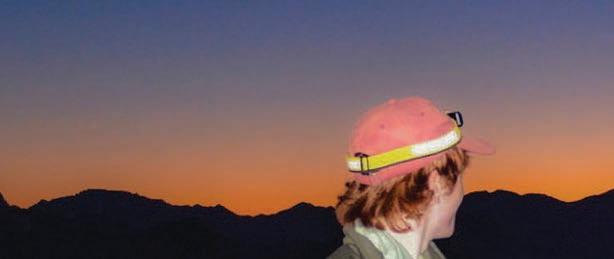
As fellow hikers joined us at the crest of the world, we sat down to watch the sun finally rise. It felt like the world was congratulating us on our long hike and providing the best reward there could be. This gift rose behind the mountains, illuminating the deep crevice that dropped 4,000 feet down to the valley. It was the most beautiful sunrise I had ever seen.
With the task complete, we could finish the summer satisfied, having racked up enough ‘dad lore’ to justify a summer in a national park. This is how I justified the five miserable days in that 1997 Jeep. Relentless sweat and endless highways left us discussing the story we would gain. A never-ending set of driving shifts, subway stops, and awkward meetings with distant contacts we earnestly sought to reconnect with because of their convenient location along our route.
By our last day, we had escaped the Midwest. All that was left was an unfathomably quick drive of just six hours from
Cleveland to D.C. Te energy was up, and the conversation animatedly bounced between the funniest and most memorable moments of the summer. We blasted Albanian rap, a gift from a friend at the pizza place, nd stalked the Instagram stories of our friends, already wondering what we had missed. The clouds had rolled in, finally blocking the sun and making the car temperate compared to the previous days. Pennsylvania brought the first hills in over a thousand miles, and I admired the green expanse that splayed out before us, the hills’ familiar shape and texture indicating that we were ever so close. A pile of cars stretched out in front of us, long-lost traffic elevating our moods even more. Looking out over the old, familiar landscape, I noticed how unfamiliar it had become. The memories of much more jagged, extreme cliffs and mountains shot a pang through my chest. In the presence of mountains, I felt at home.
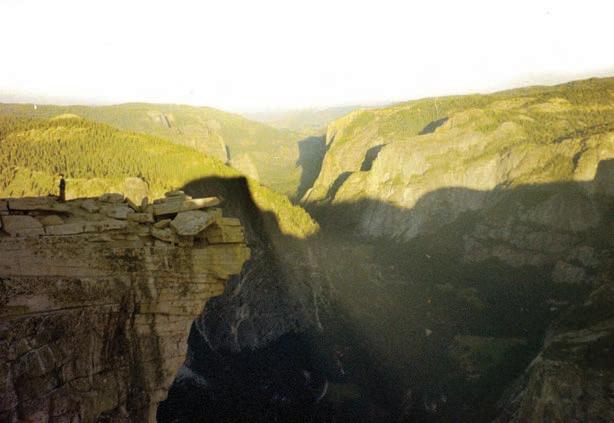
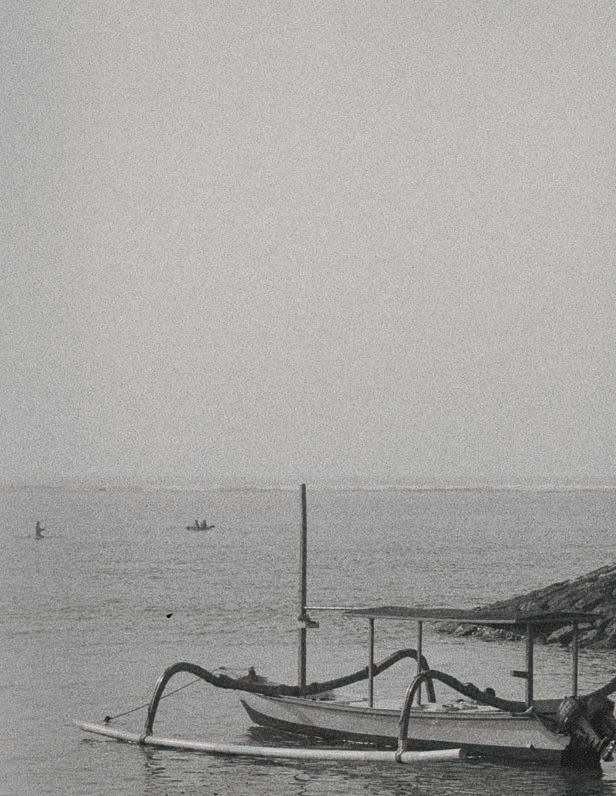
Lessons on Resilence
Chloe Mitelberg ‘28
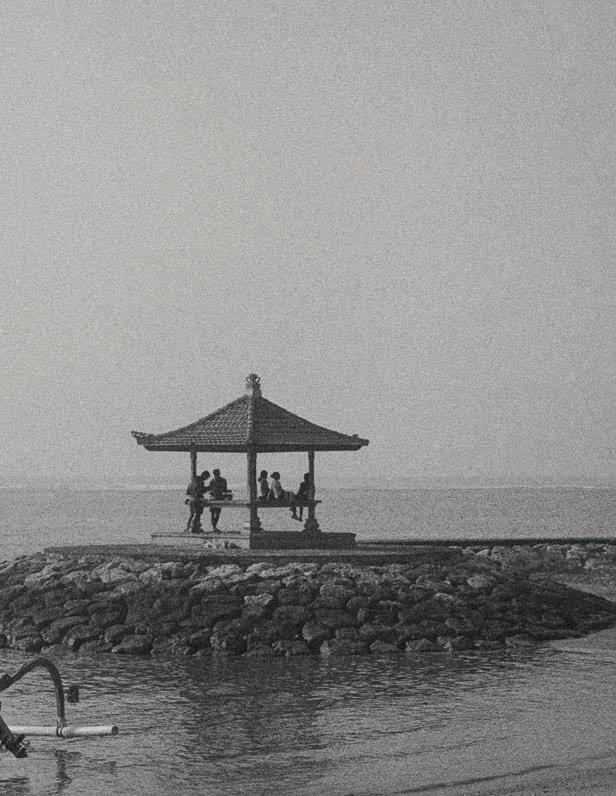
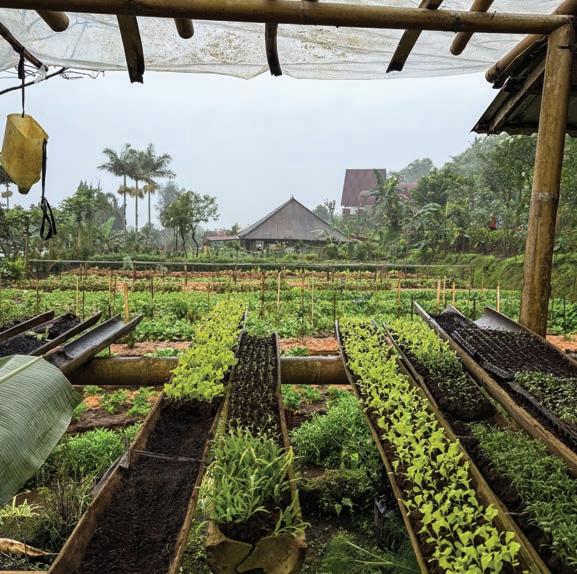
My summer internship in Bali, Indonesia took place on an organic, plastic free, and sustainable farm called “In The Raw.” I shadowed Putu, a farmer who decided after COVID-19 that he wanted to move away from plastic farming and become completely organic. He taught me how to plant beds in coconut mulch, create eco-enzymes, and even make his own organic version of pesticides with ingredients like turmeric.I gained valuable hands-on experience with regenerative and plastic-free farming practices and had a wonderful time learning from Putu.
I gained valuable hands-on experience with regenerative and plastic-free farming practices and had a wonderful time
learning from Putu. Bali’s landscape was unlike anything I had ever seen before. The rice fields had been harvested and had a rich, loamy quality to them. I could see the muddy water moving through the rice paddies, swirling around the roots that would push green shoots up in a few months’ time. The island had another mood entirely at the coast. In Sanur the water reflected the sun perfectly at dawn, making the sky and the sea merge into a pinkish orange canvas. The sweet and rich smell of incense burning at every offering, temple, and even on the streets filled me with awe. The incense is hand-crafted and used for daily Hindu rituals symbolizing devotion, peace, and purification. Bali had been everything I hoped it would be. My body, however, had other plans.
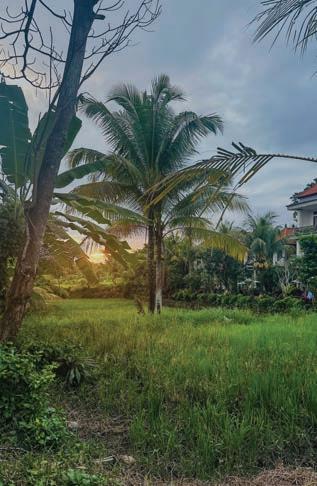
As I lay on the hospital bed staring at the blank moist ceiling, I noticed a green blob with yellow spots. I had never seen a lizard in an emergency room before, but here I was, with a cannula in my nose, waiting for the effects of the cortisone shot to kick in. I forgot why I had decided it would be a good idea to take on the tropical island filled with mosquitos, the one thing I’m allergic to. That said, traveling to Bali had been my dream ever since I was a little girl and watched my mom find a stillness there she hadn’t found at home. She gained a better understanding of who she was, discovered her passion for photography, and learned to meditate. Having managed to find the financial means for a flight and an internship located on the island for the summer, I was off on my excursion. It wasn’t until day three, during the most remote part of my trip, located in the north-center region of the Bedugal mountains, that I faced the worst reaction to a mosquito bite I had ever experienced. I was no stranger to the usual swelling, redness, and itchiness, but it was nothing a few epsom salt baths couldn’t fix. This, however, was different. I came back to my hotel room shaking and sweating. First my legs went numb, then my face, and before I knew it, I was in a wheelchair on my way to the hospital.
My body recovered, but the more I moved through the island, the more I realized Bali was carrying a weight no cortisone shot could fix. While sitting in a taxi cab in Ubud, one of the most touristic parts of the island, I noticed that Bali was different than I had imagined. There weren’t nearly as many locals as I thought there would be. The peaceful and quiet rural landscapes my mom had described were bustling with heavy traffic and lined with hotels. The deeply still and calm atmosphere that put Bali on the map, giving it the nickname “Island of the Gods,” had vanished in several areas. I was aware that I, too, was another tourist adding to that change.
Tourism has become the backbone of Bali’s economy, with the island hosting nearly 6.3 million visitors each year. Tourism hasn’t just shaped Bali’s economy—it has also started to reshape the meaning of the land itself. Balinese Hindu traditions are deeply embedded in everyday life. Small woven baskets filled with flowers, incense, and rice are placed as offerings multiple times a day outside homes, businesses, and temples. These rituals are not performances meant to be watched by outsiders.
“Temples are not attractions but living spaces where prayer and community are intertwined with daily routine.”
Yet in places like Canggu, one of the most heavily gentrified parts of the island, sacred life and rituals have begun to feel like something packaged for visitors. Ceremonies are oftentimes sometimes scheduled around tour groups; “authentic cultural experiences” are marketed online; and yoga retreats promise enlightenment for the price of a weekend package.
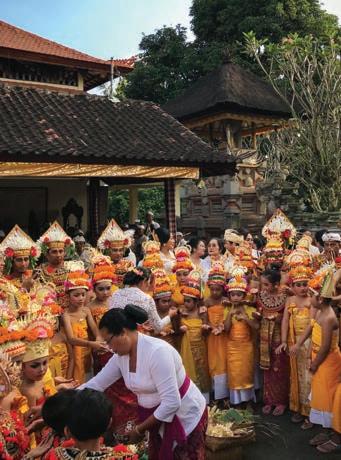
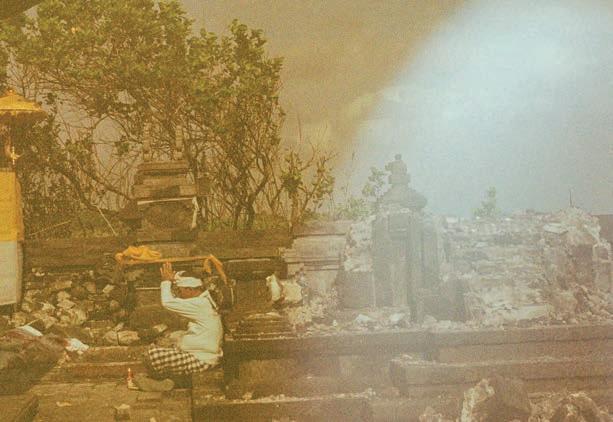
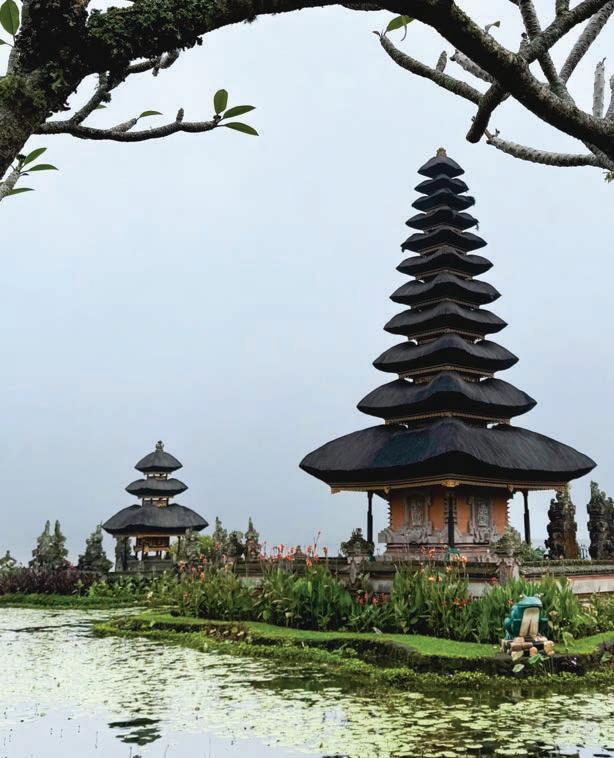
The severe gentrification Bali faces has had immense consequences. Inequality has also almost doubled over the last four years. More and more, foreign investors have bought land and rice fields from farm owners in order to create the next big hotel.
One place where this tension between tradition and reinvention became especially clear to me was Nuanu Creative City, where I spent part of my internship. Nuanu is marketed as a visionary in sustainable development that represents the future of Bali. The site includes a spa, a butterfly garden, beach clubs, event spaces, and art installations spread across the coastline. Founded by a Russian entrepreneur, the project presents itself as a creative hub for innovators, artists, and entrepreneurs from around the world. Walking through it felt like stepping into a carefully designed version of the island’s future; one that blends technology, sustainability branding, and global lifestyle culture. This is an altered landscape and a vision largely imported from outside the island. It raises a difficult question:
“When a place is marketed as “the future of Bali,” whose future is it really reflecting?”
The contrast between Nuanu and other parts of the island was striking. Earlier in my trip, I had spent time in the Bedugul Mountains where the forests felt untouched and the air was cooler. I visited black sand beaches on the eastern side of the island where fishermen launched their boats before sunrise, and water temples surrounded by mist where offerings were placed quietly at dawn. In these places, living tradition wasn’t arranged or advertised. It was simply part of daily routine, woven into the landscape and the rhythms of everyday life.
“‘when a place is marketed as “the future of Bali,’ whose future is it really reflecting?”
Like the mosquito bite that sent me to the hospital, Bali’s rapid transformation feels like a reaction to something external. The difference is that while my body eventually stabilized, the island may not get the same chance to recover. With gentrification spreading this rapidly on the island, in a few years Bali might become a completely different place.
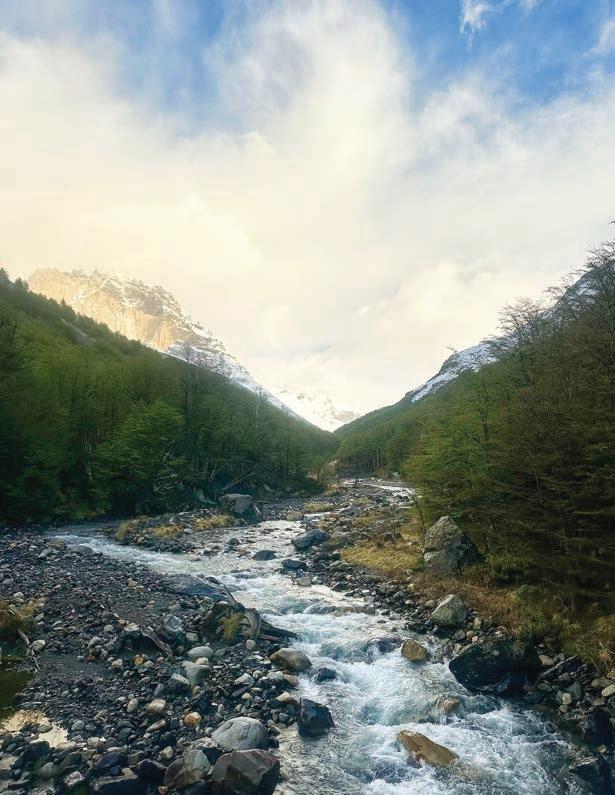
Makenna Bachman
‘27
Perfectly Imperfect:
The “ W U Trek” in Chilean Patagonia
It was time to begin. After months of planning, I was finally in Torres del Paine National Park. I had spent the three hour bus ride staring at the barren Patagonian landscape, the green and brown hues of bushes and scraggly trees blurring together for miles. After a brief ferry ride through a crystal blue lake, our group of four arrived at the Paine Grande Refugio, with nothing but our overstuffed packs and some semblance of a plan. We were ready to take on the famed W Trek. My first backpacking trip ever.
The first day was a trial run of sorts. We learned to adjust our layers in response to the unpredictable cycle of sun, clouds, rain, and wind. We found a rhythm with our hiking poles—right foot left arm, right arm left foot—that eventually became subconscious. We scrambled up rocks, crossed streams, and walked along the edge of cliffs overlooking Lago Grey. I ate too many M&Ms out of my trail mix. We took too many breaks.
“Most importantly, we got our first glimpses of the Patagonian scenery. It was unlike anything else in the world.”
The sun had already begun to set when we arrived to camp. We bickered a bit while setting up tents, especially after realizing we were missing a footprint and stakes. All this was resolved once we made pasta, which, given our hunger, tasted more like it had been cooked in a villa in Italy than on a camp stove. After dinner, the four of us squeezed into a tent to enjoy the simple pleasures of life: a deck of cards, stories, and a pack of Frugelés (my favorite Chilean candies).
As I lay in the tent that night, snuggled inside my sleeping bag, head on my lumpy makeshift pillow, I reflected on how I ended up here. I always knew I would like backpacking. I loved sleeping outside at my summer camp, where I listened to the sounds of the peepers and the waves of the Chesapeake Bay each night. Still, from a young age, I longed to be more fully immersed in nature through a proper backpacking trip, which I was sure I would accomplish at Middlebury. Yet although I spent ample time outdoors, I managed to go my first two years in college without a single backpacking experience. But here I was, in Chilean Patagonia of all places, finally living out the adventure and freedom of my childhood dreams. Despite the cold temperatures, I went to bed that night with a warm sense of contentment, excited to see what the coming days would bring.
We started day two late, and it wasn’t long before we were met with whipping winds and cold rain. Our lively dialogue quickly transitioned to silence, apart from the occasional comment on the absurdity of the Patagonian climate. Even though the conditions were objectively miserable, and we were determined to get to camp as fast as possible, I felt so alive. The wind and rain in my face were equal parts exhausting and exhilarating, and I was in awe of the raw landscape. The colors of the lake, and sky had completely changed since yesterday, and the dark, rich
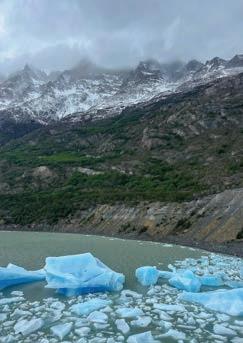
hues of the scenery stood out like never before. Getting myself from point A to point B was simultaneously a necessity, a challenge, and a thrill, and I reached an almost meditative state as I placed one foot in front of the other. There was a sort of simplicity, self-sufficiency, and primalness about the whole experience, which I think truly encapsulates the appeal of backpacking. At the risk of over-idealizing this, however, I will note I was never happier to finally make it to camp that evening.
Setting up camp in these conditions proved an ample challenge, especially as the wind repeatedly folded our tent into a taco from the wind before we could secure it. The whole situation was so ridiculous that I couldn’t help but laugh, even though our poor tent was now soaked from the rain. Our saving grace was the Paine Grande Refugio, a lodge next to our campsite targeted to people looking for a more luxurious backpacking experience than ours. The building had a common room with a fire, where we emptied our packs and desperately tried to dry our belongings before the area closed. Cold and pitiful looking, we sat barefoot, surrounded by all our trips’ contents, while a group of British boys not much older than us, played cards, sipped wine, and tried not to stare. To create a barrier against our soggy tent bottom, Ruby and I decided to cover our sleeping pads with trashbags. Quite satisfied by this simple innovation—the first of several on our trip—I returned to the tent with a new love for the problem-solving and creativity aspects of backpacking.
We awoke to the first true sunshine of our trip. Beautiful views of peaks and the lake replaced the dark and stormy abyss of the previous evening, in a way that made last night’s tribulations feel minuscule. Our rain fly and tent were still wet, so we had to wait for them to dry before packing them away. After some trial and error, we settled on swinging the tent in a ridiculous manner to achieve maximum drying efficiency. As a result, we again left camp later than we had hoped, and set off towards the beautiful mountains, where the balance of clouds and sun made for
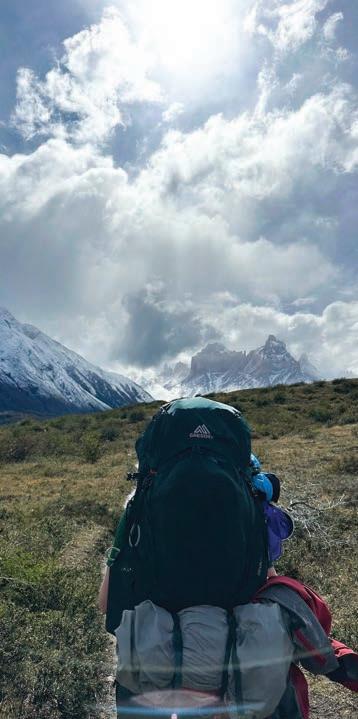
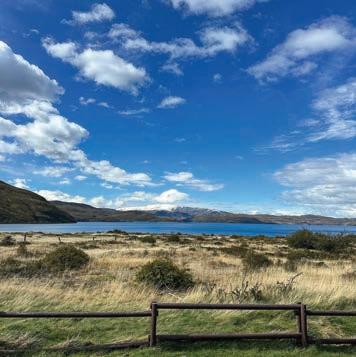
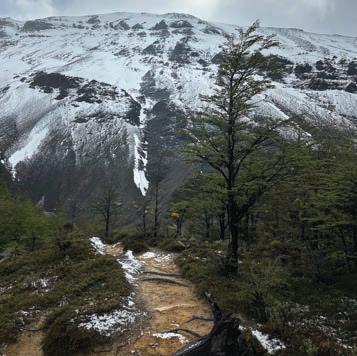
incredible lighting. Given our late start, reaching Mirador Británico, the middle of the W Trek, was unrealistic. We instead planned to drop our packs at the campsite and backtrack to Mirador Frances, which was only half the distance.
Unbeknownst to us, however, the path to the Miradores closed at 12:00 p.m.. When we tried to enter over three hours later, we were immediately stopped by a park ranger. Feeling like fools, we begrudgingly turned back towards camp, only to run into the British boys from the night before, who had just finished a lovely hike to the Miradores after a beautiful night’s rest in their dry beds. We laughed off the humiliation by nicknaming the different possible hiking routes. Even though we had failed to complete the W Trek (for Winners), we vowed to at least complete our newly invented U Trek (for Underachievers) by making it up the last portion of the W and thereby avoid our newly coined L Trek (for Losers). Nevertheless, we got to enjoy a beautiful afternoon in the valley, surrounded by glistening peaks and stunning turquoise lakes, along with a relaxing evening at camp. Sure, I would have rather seen the Miradores, but my excitement surrounding backpacking in the first place meant I was content and appreciative enough to not dwell on this mishap.
Day four was a success. We left camp on time, hiked through beautiful scenery, and maintained a good pace. Most importantly, we ended the day with a dessert I had been plotting to make since the beginning of the trip. Using our leftover ingredients, we heated chocolate, hot cocoa powder, butter, and brown sugar, and dipped marshmallows into the mixture, which was absolutely delicious but unsurprisingly left us feeling a bit sick. As we enjoyed our dessert, we reflected on our trip, how far we had come, and how little we had left.
This sense of peace suddenly came to halt, when a couple we had befriended on the trail approached to ask if we had a guide for the Mirador Las Torres hike the following day. We, of course, had not been aware that we even needed a guide, but we quickly discovered that everyone
The W-Trek
Torres Del Paine National Park, Chile
Itinerary:
Day 1: On Lago Pehoe Ferry and to Refugio Grey
Day 2: To Paine Grande Guardería
Day 3: To Área de Camper Francais
Day 4: To Las Torres
Day 5: To Mirador Base de las Torres and Out
Cerro Paine Grande Cuernos del Paine C o r d o n O gluin
Refugio Grey Area de Camper Francés
Paine Grande Guardería
Lago Skottsberg
de
else in our campsite had somehow already learned this and secured guides, which were newly mandated given the unseasonably snowy conditions. This thirteen mile round-trip route to the famed Torres is the most iconic hike in the park, so we were adamant to not skip this last section of the W. There was no way we were leaving the park having only completed the L Trek (for Losers).
Desperate for more information, we walked fifteen minutes from our campsite to the luxury hotel, a massive modern building that looked completely out of place in the middle of a national park. We stumbled dirty and disheveled into the hotel lobby, which was decorated with a taxidermy collection and mildly ominous mood lighting. At the desk, the employees curtly informed us that guide services were only for paying guests, but reluctantly showed us tomorrow’s bleak weather forecast after some begging. Eager to escape this fever dream of a hotel, we decided to instead try the Refugio building, where we continued to embarrass ourselves by asking everyone in sight for help. As the night stretched later, we even paid for thirty minutes of Wi-Fi to frantically contact tour agencies and Facebook groups, all of whom thought we were insane to be looking for a guide at this hour. We finally talked to someone who assured us that since we had crampons, the current conditions were navigable without a guide, and that if we showed up to the last section before the park rangers arrived, we should still be able to make it up. Left with no other options, but determined to at least try, we returned to our campsite around midnight and resolved to hike as far as we could go the following morning.
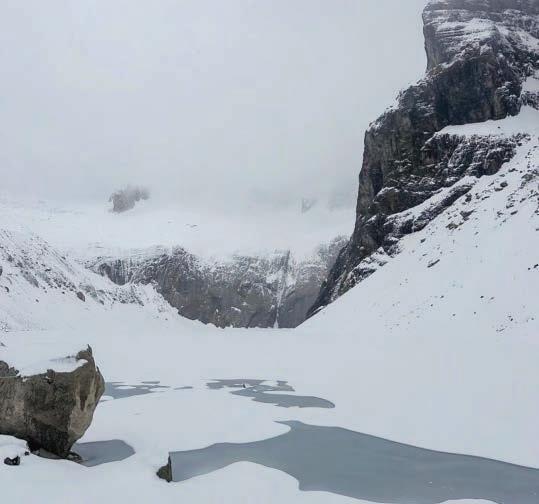
On just four hours of sleep, we set out on a mission to hike thirteen miles to the famous Torres. Thankfully we did not have any run-ins with pumas in the dark, despite the many warning signs we saw on the route. We climbed upwards as the sun rose, and were rewarded with stunning views in all directions. Our pace was aggressive as we raced against time, hoping to reach the ranger station before their morning shift started and summit the peak without being stopped. Over hours of hiking, the landscape gradually transitioned from open, rocky steppes to a lush forest with a rushing river. Eventually, we arrived at the ranger station, just a mile before the summit. We had been dreading this moment the entire hike, nervously brainstorming plans to wait for another group with a guide and sneak in behind them, or plead with the rangers to let us up.
To our excitement, there was no one in sight, and we quickly realized we had beat the rangers to their post. For the first time in the past twelve hours, we felt that we might actually have a shot at making it to the Torres.
The view did not resemble the photos we had admired of picturesque, jagged towers rising above a glistening blue lake. Instead, the frozen lake was covered in snow and the bases of the towers were barely visible through thick fog. Nevertheless, we were giddy, jumping with joy as we rounded the last corner. The circumstances of last night’s events turned a moment that would have normally been characterized solely by failure or disappointment into one of pride and excitement. The view was pretty in its own right.
We sat for a bit and enjoyed the magic and peacefulness of our snowy surroundings. Then, it was on to our final gamble of the trip: a sprint back down the mountain to catch the bus.
Thankfully, we made it just in time. As we exited the park, I looked back at the same landscape I had seen the first day with newfound understanding. We had encountered challenging weather, missed an entire portion of the trek, and failed to see the most famous viewpoint, and yet I still considered the journey to be a success. The story of our trek is not particularly monumental nor even admirable, but I like to believe that it is deeply relatable and human. In the world of outdoor adventure it often seems like the value of your experience is determined by your ability
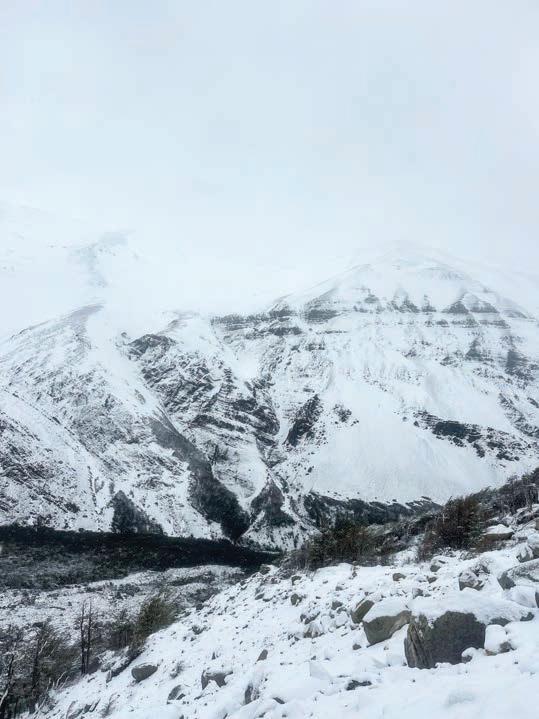
to achieve what you set out to accomplish. On this trip, however, I learned that there is so much more to backpacking than completing a certain route or seeing all the sites. I loved sharing stories, spending time with my friends, and cooking meals together after a long day of hiking. I loved the physical and mental challenge, and the occasional moments of absurdity. I loved carrying everything I needed and being completely self-sufficient. Most of all, I loved immersing myself in the nature around me, regardless of what it threw at us. I hope that this backpacking trip will be the first of many, and I eagerly await the next time I step onto the trail with a pack on my back, ready for a new adventure.
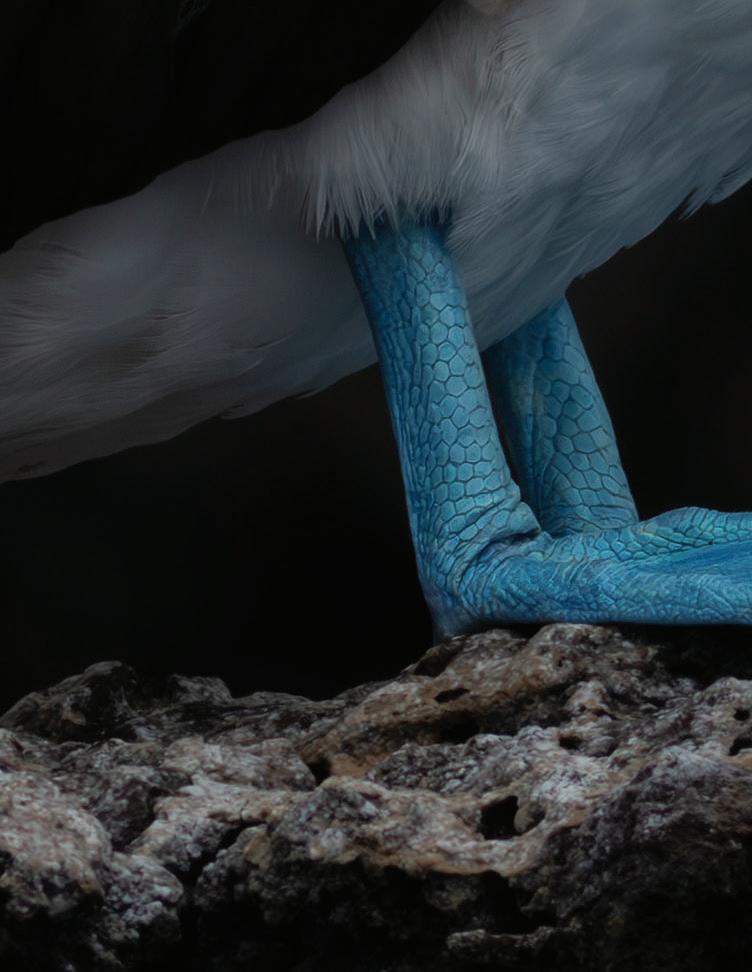
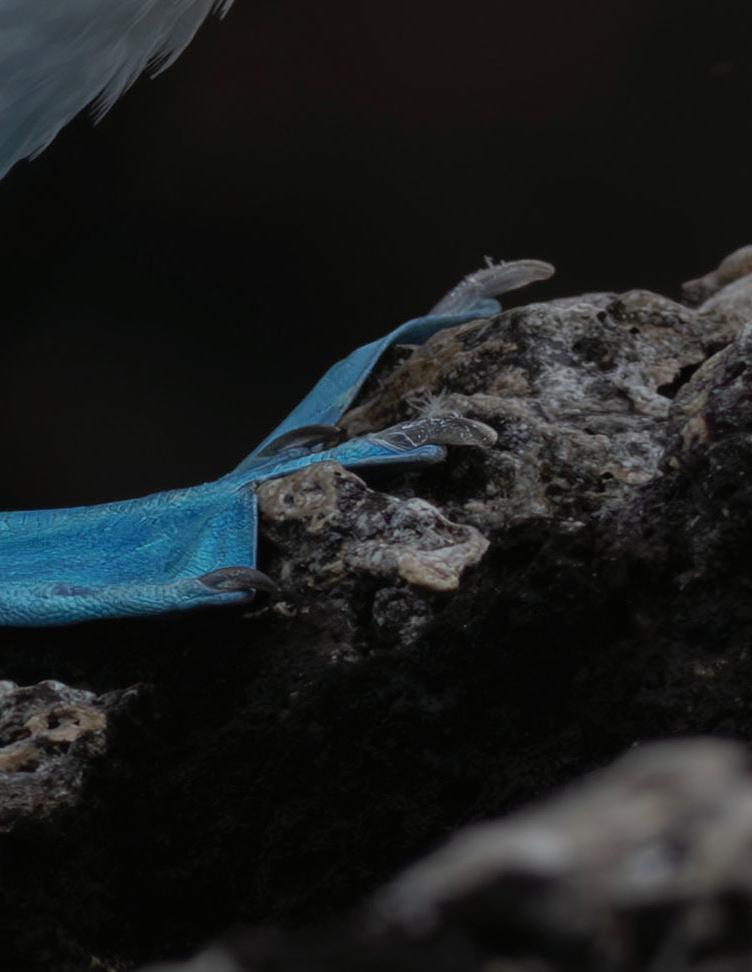
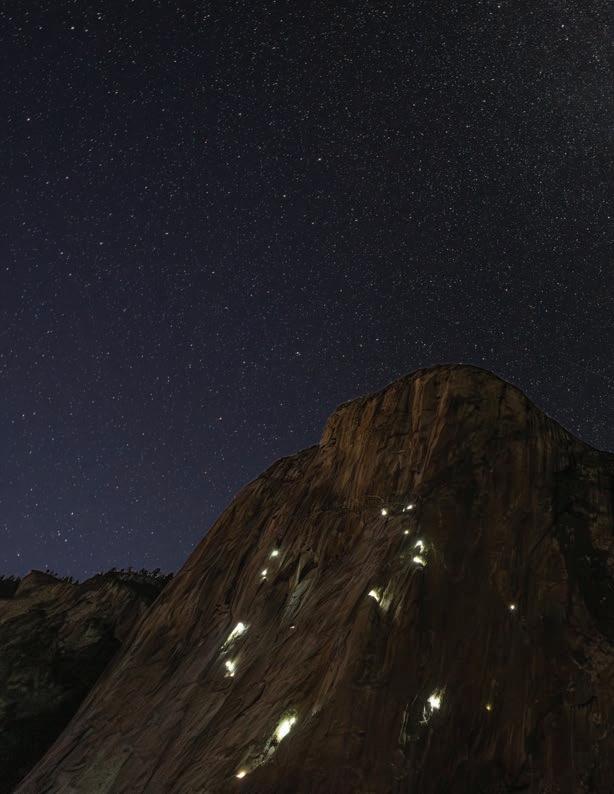
On the Back: Isador Shalev ‘28
Santiago Arbelaez ‘29.5
On the Cover: David Zhao ‘27
EDITORIAL STAFF
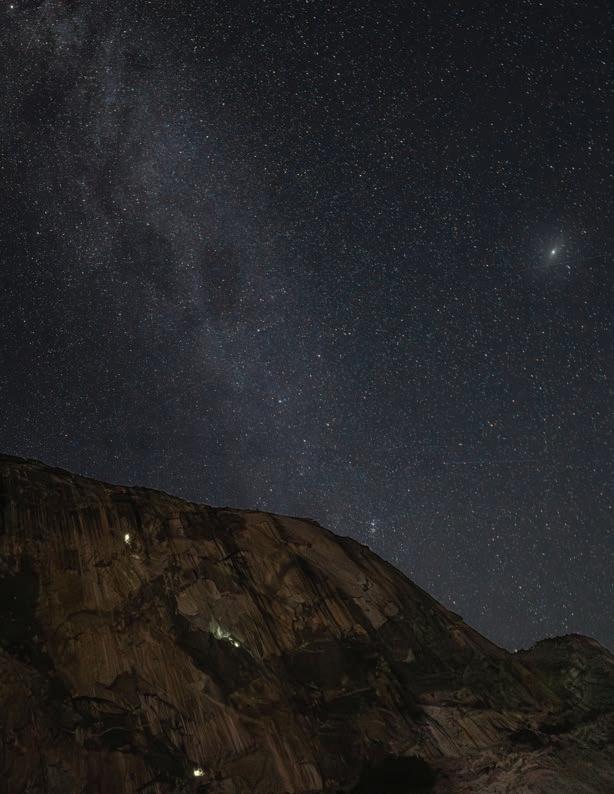
Managing Photo Editor
Erin Pomfret ‘28
Photo Editors
Theo McDonough ‘27
Casper Wilson ‘28
Mattias Herrera ‘29
Eve Sarti ‘29
Santiago Arbelaez ‘29.5
Presidents & Editors-In-Chief
Egan Turner ‘27 & Ruby Salisbury ‘27
Treasurer Lily Larsen ‘28
Secretary
Theo McDonough ‘27
Managing Copy Editor
Aurora Tobey ‘27
Copy Editors
Will Hinkle ‘26
Lulu Baker ‘27
Charlotte Bonomo ‘28
Luli Sabella-Capuano ‘28
Langan Garrett ‘28
Ariella Frommer ‘28.5
Kai Arrowood ‘29
mg@middlebury.edu
@middleburygeographic
middleburygeographic.com
Managing Layout Designer Kyra Dybas ‘28
Designers
Makenna Bachman ‘27
Henry Ellwein ‘28
Lily Larsen ‘28
Laurie Garcia ‘28.5
Liam “Frenchy” French ‘29