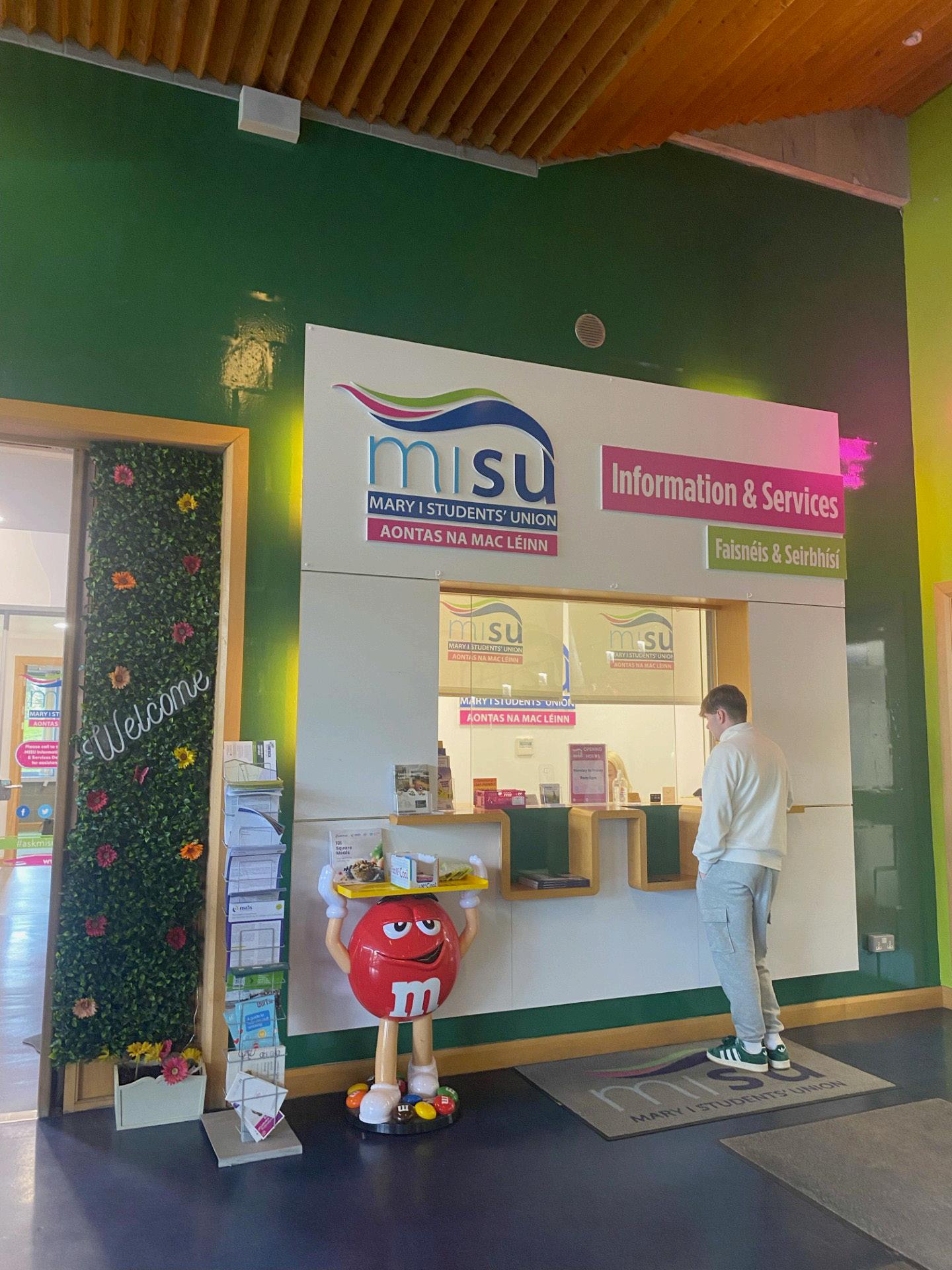
As part of their journalism module, Year 2 Media and Communication Studies students at Mary Immaculate College were tasked with individually researching and developing a story. Their remit was to cover a topic relating to MIC and/or Limerick city, and to produce radio, television and print media content on this. For the majority of the students, this was their first piece of journalism experience. What follows is a collection of articles written by the students, covering a range of topics they felt were of interest to the student and wider community. These include pressing issues relating to the cost-of-living for students, campus supports, and crime prevention in the city. Furthermore, they delve into local and campus culture and sports.
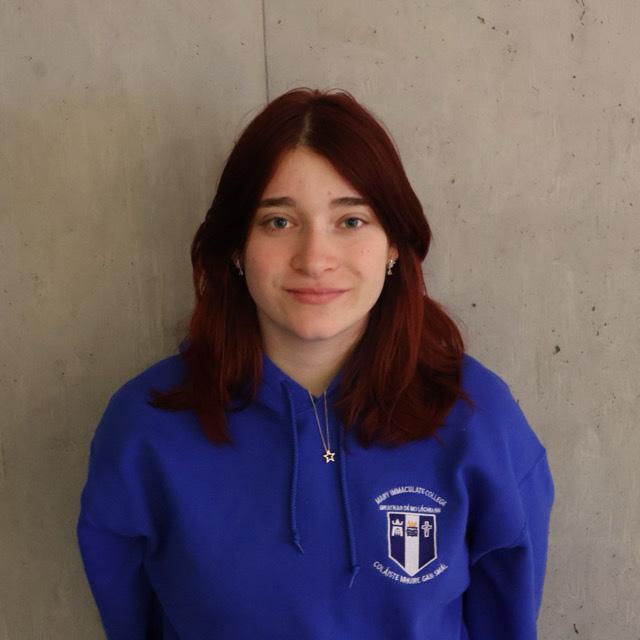
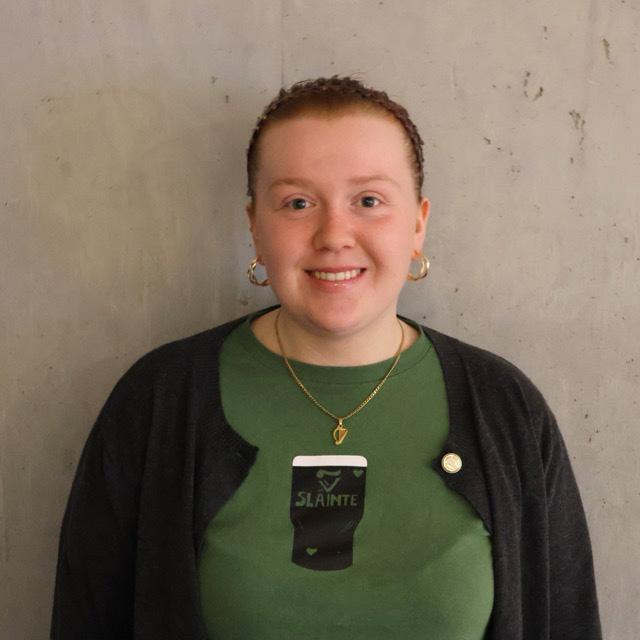
Our thanks to Karen Walsh, James Kennedy and Stephen Guinane for all their ICT and A/V support during this module. We also thank Cillian Callaghan who kindly volunteered to take headshots for the students.
We hope you enjoy this publication.
Dr Ciarán Ryan, Department of Media and Communication Studies.
Foreword
Congratulations to the journalists of 2025-26 on the quality and range of articles you have produced here in this first issue of MIC News.
It’s a wonderful to see your hard work presented in this excellent publication.
Special thanks go to your lecturer, Dr Ciarán Ryan, for bringing this first edition of the MIC News to publication and for teaching you the skills of researching and writing newsworthy stories.
We look forward to reading, hearing and seeing you in the media in a few years' time. The range of topics discussed here and the standard of writing augur well for the future of Irish journalism!
Gur fada buan sibh!
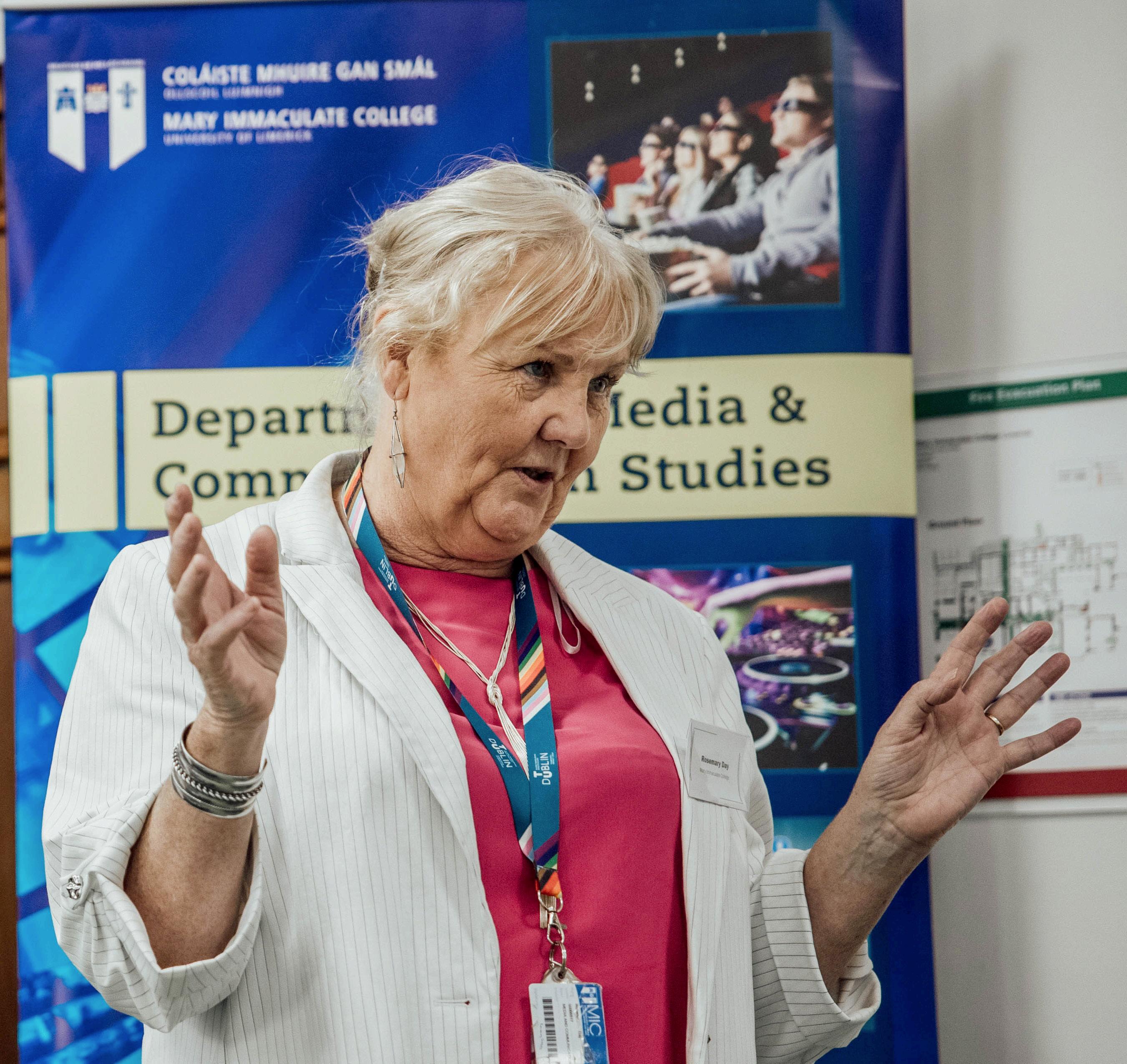
Dr Rosemary Day, Head of Department, Media and Communication Studies.
CONTRIBUTORS
Ninon Aillot
Aisling Browne
Aoife Buckley
Maeve Cadogan
Louise Carcassin
Sorcha Conroy
Ella Cresham O'Boyle
Shane Cunningham
Magda De Almeida Silva
Molly Donaghey
Odhran Harrison
Emma Hogan
Orlanne Jallet
Eileen Keane
Eoghan Kennedy
Isabel Lynch
Diarmuid Mangan
Kaya McCarthy
Claire Noonan
Orla O'Connor
Rachel O'Keeffe
Abbie O'Riordan
Reece Peters
Nicole Purcell
Blanche Rocher
Darragh Scanlan
Tara Shiels
Mischa Spillane
Emilie Twomey
Abi Vozza
FINANCIAL PRESSURES RESHAPING MODERN STUDENT EXPERIENCE
By Isabel Lynch
Students at Mary Immaculate College are increasingly balancing college with part-time work as rising living costs make it harder to afford basic everyday essentials.
For some, working is no longer optional but a necessity. This has changed the modern student experience, with more people juggling lectures, assignments, and work commitments throughout the academic year.
Katelyn Whelan, a second year BA student, has been working alongside her degree since first year “due to the cost of living you can’t go to college and not work... we have to live by working.”
Shirley Kearney, the Access and Disability Officer in MIC, stated that nearly all students are now working during term time, with many having jobs during the summer that they may continue into Christmas. She highlighted that “as it gets busier, the struggle is a bit harder and they may need to cut back hours.”
She added that while she may not be able to assess the direct impact on academic performance, part-time work can affect student participation and engagement in classes. This can make it more difficult for students to regularly attend lectures or fully engage with their coursework.
Katelyn explained that she stays back after college to do her study as she does not have time on the weekend due to her work schedule, which can be anything up to 16 hours.
“My employment is so good that if I need the time off, they’ll give it to me cause they understand that college comes first,” she added.
While some students like Katelyn can successfully manage both work and college, others find it much more difficult to cope with the competing demands.
Long working hours, shifts after classes and working on the weekend can reduce time for studying, attending lectures and experiencing the social benefits of being a student. This can impact academic performance and overall wellbeing.
"As it gets busier, the struggle is a bit harder and they may need to cut back hours."
- Shirley Kearney
Shirley also highlighted that while academic performance is important, college is more than coursework. She said that students who are working miss out on the social aspect of college including building friendships and connections; “coming to college is also an experience... you miss out on the social [side] and making the friends and the connections.”
She also explained that while there may not be specific supports only for working students. The college and student union offer many services and financial assistance schemes to help students supplement income. The college offers supports such as the counselling service and the medical centre to help students manage the pressures of balancing work and study.
RISING RENT PRICES PUTTING PRESSURE ON LIMERICK STUDENTS
By Tara Shiels
Finding affordable accommodation in Limerick has become increasingly complicated for students in recent years, with rising rent prices placing significant pressure on those attending college across the city.
Students are facing growing challenges in securing suitable housing, as demand continues to be greater than supply. With fewer affordable properties available, many are forced to compete for accommodation or settle for housing that may not meet their needs.
Many students begin searching months in advance, yet still struggle to secure housing due to demand. Second-year student in Mary Immaculate College, Rachel O’Keeffe, described the process of finding accommodation as “really difficult.” She added that many options were either unavailable or unsuitable for her.
“It was really hard to find accommodation for the full year,” she said. “Most places were only available for one semester, which made things more stressful.”
Rachel is currently paying €600 a month for a small room with three other roommates. The house is situated across from the college. Without accommodation, she would have faced a long commute. “If I didn’t get accommodation, I would have had to commute, which would take about two hours every morning.”
“You kind of have to take what you can get,” she said. “It might not be perfect, but at least you have somewhere to stay.”
For many students, the accommodation search can be stressful, often taking priority over academic work. The uncertainty of not knowing whether they will have a place to stay can add further pressure, particularly during exam periods and the beginning of the academic year.
Many students report that the rising cost of rent is having a wider impact beyond finances, affecting their overall well-being and college experience. According to recent reports, student accommodation has increased by a significant 92% for those renting private accommodation since 2019, according to Zurich Insurance. This has created financial strain for many students trying to balance living expenses alongside their studies. Increased financial pressure can lead to stress and anxiety, while also making it more difficult for students to focus on their academic work.
The Mary Immaculate College Students’ Union says the issue is affecting many students across the campus.
“Students are under a lot of pressure because they’re worrying so much about their financial situation,” said vice president of the MISU, Nat Horan. “That stress and anxiety are affecting their ability to focus on their studies and enjoy college life.”
“Their focus is shifting away from their studies because they’re dealing with something they have very little control over.”
The Students’ Union at Mary Immaculate College has been working to support students facing accommodation difficulties through a range of services. ‘We provide financial aid, and students can come in and talk to us,” they said. “We also offer support like the food pantry to help reduce some of the pressure.”
Nat believes that broader action is needed to address the issue. “This issue needs to be addressed at a higher level. It requires government intervention and more support for students, rather than leaving them to deal with it on their own.”
The ongoing housing situation has raised concerns about the long-term impact on student life in Limerick, with many questioning whether enough is being done to support those affected.
As rent prices continue to rise, many students in Limerick remain concerned about their ability to access affordable housing. With demand showing no signs of slowing, the issue of student accommodation is likely to remain a key challenge for those studying in the city.
INCREASE IN STUDENTS USING AI NO SPACE FOR STUDENTS?
By Eoghan Kennedy
The increasing usage of generative artificial intelligence (AI) has caused. some complications in the academic field. Third-level students throughout the country are using generative AI platforms such as ChatGPT to complete assignments for them and are passing off its work as their own.
Academic institutions have no definite way to detect the use of AI in a student’s work. In the academic year of 2024-2025 there were over 500 cases of students caught using AI in their work throughout the country.
The responsibility of detecting the usage of AI is left to the lecturers and professors who assign the assignments. Therefore, due to human error, there is no telling how many cases have fallen through the cracks undetected. In cases where students have been caught, the punishments vary from institution to institution. The usage of AI has left lecturers leaning more towards sit down examinations rather than essays as a way to ensure the work is the students own.
‘‘I think in the short term in the space we are in in this college with the resources at our disposal it is very difficult to justify giving an essay worth 50% for any one module and therefore, we had to reduce the weighting of essays because we cannot trust them at this point,’’ said Dr Eoin Flannery from MIC’s English department.
AI is not always a negative in the world of academia. There are plenty of ways that students can utilise AI in a way that can assist them.
‘‘Maybe you need to write a paper. You’re bad with time management so you go to a generative AI and say these are the assignments I have to do, this is the deadline for each assignment and this is how long I think it will take me to do it; can you prepare me a schedule for how I’m going to complete that work?,’’ said Dr Katherine Whitehurst, Direct of Teaching and Learning at MIC’s Learning Enhancement and Academic Development (LEAD) Centre. Dr Whitehurst emphasised that it is important for students to check with lecturers before engaging in the use of AI to ensure that the usage will not take away from their learning criteria.
She encouraged students to research the risks involved while accessing generative AI specifically in relation to privacy settings on devices to ensure student safety.
Parking has emerged as a significant issue for students at Mary Immaculate College. Both students and local residents are concerned as student numbers are increasing every year.
The number of students commuting from outside Limerick has increased significantly in the past few years.
In the college, there are currently three car parks: two are for students and one for staff. These car parks fill up quickly during the day and, as a result, students are parking in areas that are not designated. This includes areas with double yellow lines and outside private houses.
A significant number of students have voiced their concerns about the lack of parking on campus as many travel from different counties. This issue is concerning for students as some have missed lectures over not being able to park.
The Student Union president, Jayde Ryan, stated recently that an ambulance was unable to get to someone in need living near the college because there were too many cars blocking the road.
The college has tried to introduce an alternative by using a Park and Ride car park. This is located at the nearby Limerick Greyhound Stadium. The bus runs every half hour but has not been a popular option for many students, who dismissed it as inconvenient.
Other options that have been put forward have included public transport or active travel. However, these options cannot accommodate all students, in particular those outside the county.
SUPPORTS AVAILABLE FOR MIC STUDENTS
By Eileen Keane
College life can be challenging for students, especially when exams and assignments start to pile up. For students with disabilities, these challenges are more complex and demanding. That is why Mary Immaculate College has an Access and Disabilities office, established to provide students with disabilities the right support.
To understand the range of support available to students, Shirley Kearney, the Access and Disabilities officer at the college, explained the support the office provides. ‘‘For students with disabilities, there is one-to-one support, there's academic support. A lot of the students have trouble with their referencing, or Gaeilge might be a big challenge.’’
‘‘We have assistive technology support… There is also exam support as well, so it's very broad ranging,’’ she added.
Amanda Meaney, a student in the college who received some of this support, explained the types of support aids she received and how they helped her with exams and assignments.
‘‘They’ve given me support in different computer systems like Grammarly… I have a reader pen for exams, so it says the word for me so I can hear it being said.’’
She highlighted that for exams, ‘‘every hour I get ten minutes, so that’s very helpful, cause by the time it takes me to highlight the question, read it, that gives me a few extra minutes to plan it.’’
The Access and Disabilities office works with other departments in the college, such as the Academic Learning Centre, which provides academic support for students, such as referencing and essay writing guidance.
There are other supports available that can help students with different aspects of college. ‘‘We also have an occupational therapist, there is a sensory room and a meditation room,’’ Shirley added.
‘‘Some students, maybe who due to a physical disability, the chairs that are on campus or some of the classrooms might not be suitable, so we get a back support for them; it’s a simple thing that makes life an awful lot easier,’’ said Ms. Kearney.
This wide range of support gives students with disabilities the same opportunities in exams and assignments as other students in the college.
‘‘My favourite part is working with the students, I am very student-oriented… the most rewarding part is seeing students who thought they would never graduate actually graduating,’’ said Ms. Kearney.
Amanda Meaney underlined the kindness of the staff in the Access and Disabilities office. ‘‘They are very nice in there, sometimes I just stop in to have a chat… If I need anything, I can just go in and ask.’’
Amanda offered some advice to students who may be afraid to seek support from the Access and Disabilities office. ‘‘It’s a really big help, you don’t want to be struggling; it could affect your grades, whereas if you get the support you need, it can be a really big help.’’
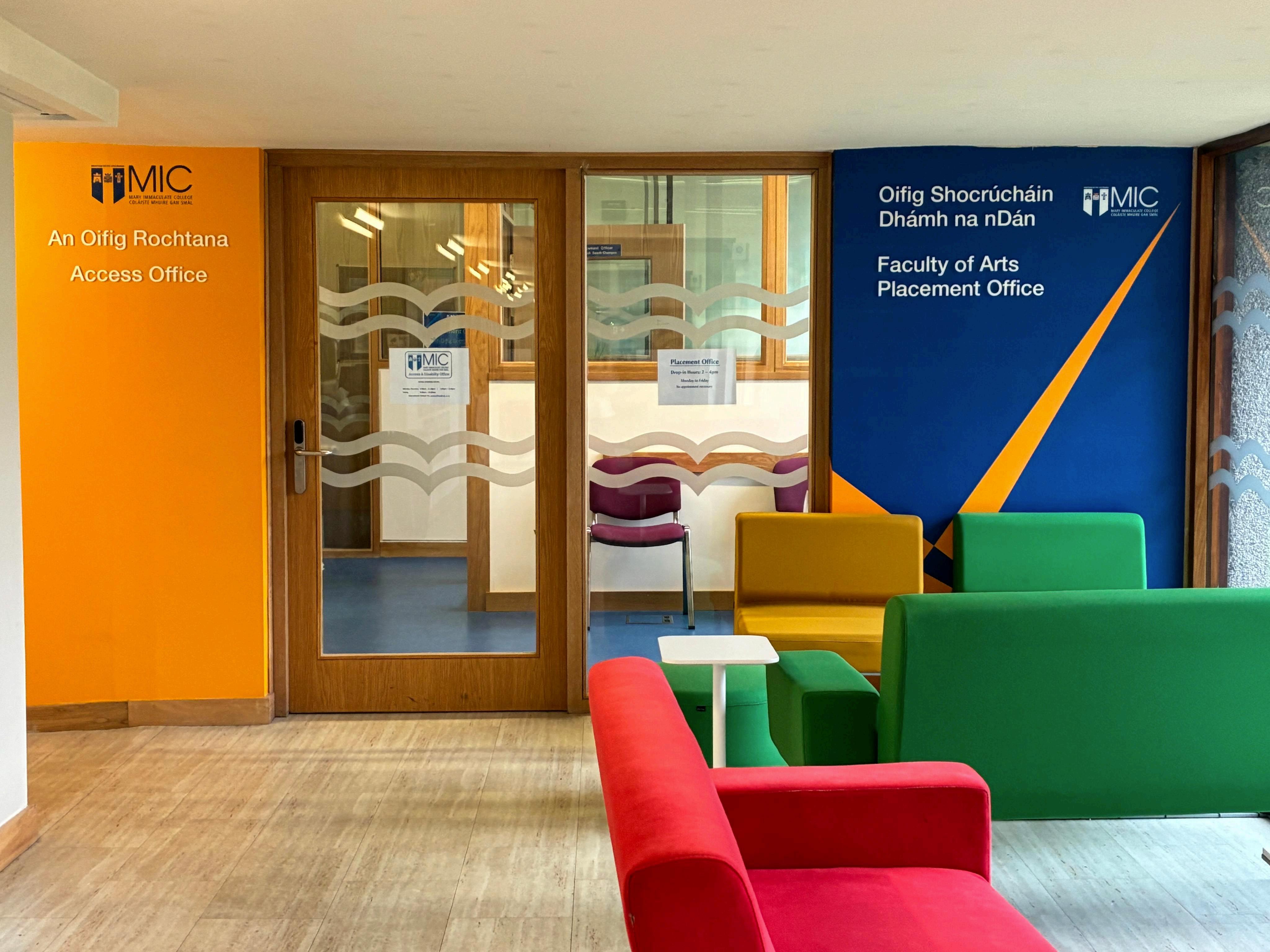
The Access and Disabilities office is situated on the ground floor of the foundation building. The office is open for students with disabilities to drop in if they have any questions or concerns. Students with disabilities can enter through the HEAR or Dare route to access these supports, or they can book an appointment with one of the staff members in the Access and Disabilities office, and they will go through the steps involved. The office is open from 9:30 am to 12:30 pm and from 2 pm to 4 pm, Monday to Friday.
The Access and Disabilities Office at MIC
STUDENT RACEDAY:
MEMORY MAKER OR
By Aisling Browne
Every year, thousands of students are drawn to racecourses around the country. Student Raceday has become a tradition amongst colleges and universities, and a reason for students to take a day off, dress up and enjoy themselves.
On Thursday, April 16, students from Mary Immaculate College (MIC), the University of Limerick (UL) and Technological University of the Shannon (TUS), gathered at the Limerick Racecourse.
Although many students attended the event to get dressed up and make fun memories with their friends, there are ongoing concerns about the effect that gambling has on young students.
Betting stands were set up all over the racecourse grounds for attendees to place bets, while many students utilised betting apps on their phones.
Studies on student gambling from the Department of Justice, Home Affairs and Migration, show that 29.1% of students have been gambling in the last year, with 31% of males and 27% of females participating.
In recent years, efforts have been made by some gambling organisations and racecourses to promote safe gambling, such as “Think Twice or You’ll Bet Regret It” and “Be Gamble Aware.org.”
Despite these concerns, both students and organisers suggested that the event was a success. “I thought it was incredible. I really enjoyed getting ready in the apartment and when we went it was really good craic,” said Fiona Bourke , a third year MIC student.
The MIC Students’ Union added that it was a fun social event for the college population. “I would like to think that it is for students to have fun and get dressed up and give them an opportunity to get interested in racing if they want to,” said their Vice-President Nat Horan.
MIC STUDENTS HAVE THEIR SAY ON SOCIAL MEDIA BAN FOR TEENS
By Aoife Buckley
Psychology students in Mary Immaculate College have stated that social media is negatively impacting young people’s mental health in various ways.
This comes in the wake of recent claims that Ireland may follow in the footsteps of Australia in banning social media use for children under the age of sixteen.
Maria Adorno, a third year Bachelor of Psychology student in Mary Immaculate College stated that social media can negatively affect self-esteem due to students constantly comparing themselves to other young people online.
She added that social media can cause students to have “very high expectations for themselves” which can be harmful for their personal self-image if these goals are difficult to achieve.
Emma Maune – who is also a third year Bachelor of Psychology student - claimed that many individuals are not meeting with their friends in person as often because they feel that they can just communicate with them online. She added that social media does not provide any sort of satisfaction or sense of accomplishment after people have used it like in the way that hobbies do.
A new study from RCSI University of Medicine and Health Sciences, published in December 2025, found that high social media use is strongly associated with poorer mental health and increased risk of self-harm among Irish adolescents.
However, experts from the Universities of Limerick and Galway have claimed that while there does seem to be a rise in mental health issues amongst young people, pinning everything down to one variable like social media is not the way to approach the situation.
"I would be concerned, however, that placing the blame for this increase in distress entirely on the use of social media, distracts from more fundamental societal issues that we know impact youth mental health substantially,” stated Dr Ruth Melia from UL’s Department of Psychology in February 2026.
As the debate continues, students at Mary Immaculate College are left to navigate their own relationship with social media. Whether it is a tool for connection or a source of pressure may ultimately depend on how it is used and how willing users are to step away from the screen.
MEDEMAP: SUPPORTING MEDIA DEMOCRACY
By Odhran Harrison
On 13 January of this year, the Irish representatives and participants of the MeDeMap Media and Democracy Project brought their resolutions to the European Union. Prior to this, they had brought these resolutions to both local and national councils.
The Citizen’s Parliament, held last spring here in Mary Immaculate College, presented 22 resolutions for improvements for Media participation in democracy along with other systemic change to assist those who produce Media to have more freedoms of content.
The MeDeMap project is a pan-European research project that was undertaken by 10 different European countries, including France, Italy, Poland, Czechia, Estonia, Slovenia, Austria, Germany, Portugal and Ireland with the intention of improving conditions for the media to support and protect democracy.
The council - headed by Dr Rosemary Day, Head of the Department of Media and Communication Studies in MIC –supplied questionnaires to local and national journalists. According to the journalists that addressed the Citizen’s Parliament, their profession has becoming increasingly difficult with the amount of fact-checking in comparison to how easy it is to post false and misleading information on social media.
There was also the question of representation in the newsroom, specifically between the split of working class and middle-class journalists, along with the gender gap as many women in journalism tend to be encouraged to move to other professions within media such as advertising.
Once the parliament had voted on their resolutions, they were taken to the Limerick City and County Council first. According to Jude McInerney – a researcher from MIC who worked on the project - the resolutions were “welcomed by the younger politicians” with a “real appetite for media literacy.”
However, it was when visiting Dublin that the resolutions were “taken seriously” such as establishing a universal basic wage for journalists and setting up a government funded internship programme in local newspapers and radio stations
After national parliaments, the resolutions were taken to the European Parliament in Brussels, where they were met by Irish members of the parliament and some of the other universities that took part in MeDeMap, including Austria, Czechia and Slovenia who coincidentally had very similar resolutions to Ireland.
ARE CLUBS AND SOCIETIES DYING OUT?
By Emma Hogan
There have been many different factors that have influenced clubs and societies at Mary Immaculate College, including cost of living, student motivation shifts, commuting, and the post Covid-19 impact.
While the numbers of members of different clubs and societies have appeared to have risen on campus, commitment levels have gone down, according to MISU’s Clubs and Societies Coordinator David Cuddihy.
“People don’t commit to stuff that is long term,” he stated.
A rise in the cost of living throughout Ireland has changed the college-going experience, and this would appear to have also influenced levels of participation in clubs and societies.
Students who commute to college tend to return home after their day of lectures have concluded. “What we are noticing is a complete change in the student environment, where people are only on campus during day time hours,” said Mr. Cuddihy.
This was echoed in the sentiments of Thomas Kelly, a Bachelor of Arts student at MIC, who does has not participated in clubs and societies . “To be honest, I wouldn’t really have the time and with commuting, it’s just a waste of diesel.”
MIC has promoted clubs and societies in multiple ways by using social media, posters around the campus, word of mouth, through participatory events, and even through student email reminders.
“I think they are promoted well, like there’s always posters up saying which clubs and societies are available,” stated Thomas Kelly.
“We can always do better. The biggest form of promotion we can do is to publicise what is going on,” added David Cuddihy.
HIGH VIS GARDAÍ ON THE BEAT IN LIMERICK
By Nicole Purcell
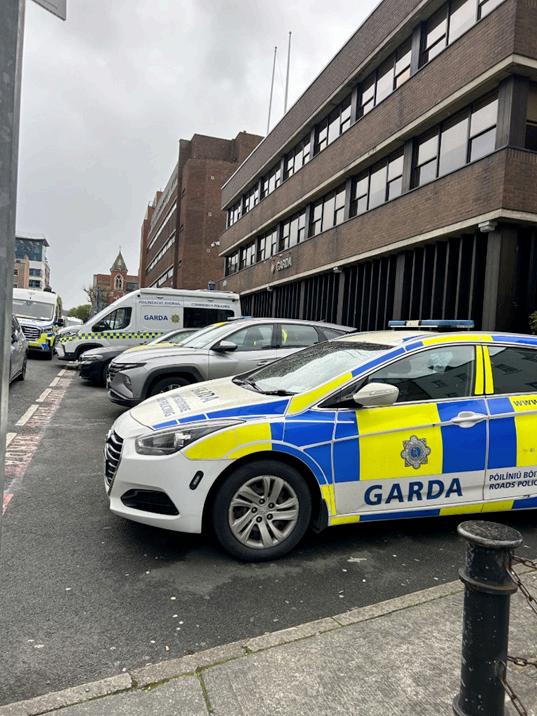
A new approach to policing has been launched in Limerick city to clamp down on shoplifting and other anti-social behaviour. Robberies nationally have been decreasing since the end of last year. Comparing the end of 2024 to the end of 2025, thefts from shops went down by 6% across the country while robberies from businesses dropped by 23%.
However, Gardaí from Henry Street Garda Station claim that having more members out on the streets, especially in busy areas, will play a role in the further reduction of these activities.
A spokesperson for Henry Street Garda Station, Aoife Bannon, Sergeant of community policing, stated that “Here in Limerick, we made a real push throughout 2025 to increase the number of Gardaí, including the deployment of 27 additional Gardaí on high visibility beat patrols.”
“We also have specific operations, such as Operation Croí, Operation Meirle, and Operation Táirge, which all help to focus on retail crime and really concentrate on the high risk and recidivist offenders,” she added.
This high visibility policing approach may crack down on crime in the city centre, with Gardaí promising arrests and objections to accused people getting bail if they are repeated offenders.
Gardaí from both Henry Street Garda Station and Roxboro Road Garda Station will be deployed daily on high visibility policing patrols across eight identified dedicated patrol areas.
"I'd encourage anyone who's been a victim of theft to report it to An Garda Síochána as soon as possible."
- Sgt. Aoife Bannon, Henry Street.
Up to 15 Gardaí will be deployed from 8am to 4am daily; seven on daytime patrols and eight on nighttime patrols.
These patrol areas have been identified based on an analysis of calls for service, crime trends, and feedback from the local businesses and community.
Gardaí have also confirmed that community policing will remain in place and continue to support public engagement and offer crime prevention advice to members of the public, residents, and the business community.
When asked about the initiative, a local security guard claimed that “theft in the city centre has increased dramatically unfortunately. We’ve seen it on the news but within the last week, there’s been a massive Garda increase on the streets, patrols dealing with day-to-day activities, anti-social behaviour, theft which is good for shops dealing with it.”
Photo courtesy of Limerick Leader
Photo courtesy of An Garda Síochana, Limerick
“It’s great to see a Garda presence on the street and it has definitely seemed to have helped the other shops. Let’s hope it continues and it has the effect that is needed,” he added. Despite all of these new initiatives, Gardaí still encourage anyone who is a victim of theft to report it to An Garda Síochána as soon as possible.
There are a few different ways a theft can be reported, and the process depends on which option a person chooses.
If the value is under €1,000, people can submit an online declaration through the Garda website. Once that's sent in, it goes straight to the local Superintendent's office, and from there it's assigned to a Garda member to follow up.
This approach is usually recommend when the theft has already happened and there's no immediate threat to property or people.
Another option is to call 999 or your local Garda station. When someone logs a call for service, it gets prioritised based on the details, and a Garda unit is dispatched when available. “Every Garda Division has a dedicated victims office that can help answer questions and offer support. And once you’ve made a report, the Garda member dealing with your case can keep you updated on how the investigation is progressing,” said Sergeant Bannon.
“The other advice we always give is around crime prevention. We always advise people to ensure to lock their homes, lock their vehicles and take precautions around personal safety and being aware of your surroundings,” she added.
Sergeant Bannon also recommended that shop owners take preventative measures such as installing good-quality CCTV cameras as it is an irrefutable tool in court. It helps Gardaí to establish what actually happened, so it’s a major asset for shopkeepers wanting to prove theft allegations.
She also advised that the most expensive products be placed in the least convenient places for thieves – such as behind the counter or directly under a camera to reduce their risk of robberies.
PROGRESS STREETS
By Ella Cresham O'Boyle
Limerick city has undergone many changes in recent years to try and improve the safety and reputation of the city.
A major new initiative is the visible beat patrols that are being carried out 20 hours daily by An Garda Síochána. These beat patrols are being carried out to reduce the number of visible crimes taking place on the streets. This new approach is deemed important for local residents as its aim is to keep the city feeling safe and makes it less daunting for new college students.
Limerick is home to approximately 34,000 third-level students. This high number across the three colleges makes it almost certain that nightlife will be busy. I spoke with member of the Gardaí and a resident recently moved to Limerick to gain insights into this and highlight this process.
“We don’t carry out a risk assessment in regards to students coming to the city, but we do carry out operational orders… we do put in additional resources to police that and make sure that we have sufficient resources working to respond and to be able to police the events that go on around that,” said Inspector Vinny Brick, based at Henry Street Garda Station in Limerick. “We recently introduced community safety wardens who are on the streets everyday Monday to Friday,” he added. This increased visibility has been noted by students, including Amy Golden, a second year student from MIC who hails from Castlebar, Co. Mayo. “Everywhere you look on a night out, there’s guards around all the time,” she said.
While there has been progress, the members of An Garda Síochána are aware that this is an ongoing programme to improve the city’s reputation.
REFERENDUM CHANGES UNION
By Maeve Cadogan
On 12 February, the Students’ Union in Mary Immaculate College (MISU) conducted a referendum to fundamentally change the structure of the union. The union has been lacking in members in all areas for a considerable time. This issue is most evident in class reps. There are currently twenty-five class reps while there is supposed to be 125.
The referendum – which was passed by 860 votes for, with 167 students voting against – will lead to the delegation of roles and responsibilities to other members of the student body, relieving some of the pressure from both the President and Vice-President.
content that MISU expected her to provide.
“I feel like it was really rushed,” she added.
GAEILGE'S
CAMPUS COMEBACK
By Darragh Scanlan
The Irish language has been a part of Mary Immaculate throughout its existence, and it now boasts an award winning Cumann Gaelach student society and a space exclusively for speaking the language called the Seomra Caidreamh.
Furthermore, there has been a recent surge in interest of the Irish language among the younger generation of the Irish population. This has been partially due to the rising popularity of popular music figures such as CMAT and Kneecap that use the Irish language in their songs. Gaelgoirí on campus have reflected on the current appreciation for the language, and whether or not it will just be a passing trend.
Jayde Ryan, the MISU President, said that they “found an extreme lack of engagement from students for the past few years,” and that “ever since Covid it’s just dropped.”
She emphasised that “students are looking for something different to what our current model is,” and this “radical change” had been on the cards for some time.
However, the referendum was not advertised in advance on the MISU social media pages. Amy Forkan, MISU’s Student Content Creator, stated that she did not fully understand the referendum and found it very difficult to make the
Even though the turnout was only one fifth of the entire student body at Mary Immaculate College, it was the largest vote received in the history of MISU referendums.
This referendum was seen by the leaders of the union as a critical measure to ensure the union does not cease to exist.
Ms. Ryan stated that she hoped that they could “diversify the voices that we have within the union,” and from this referendum “we’ll know more and we’ll know better of what students want to see and what they want us to fight for.”
Her primary hope for the future of MISU is they are “fighting for the right things and fighting for the right causes,” with the help of fresh voices and faces.
“I do feel like it’s still definitely a marginalised language,” said a student spokesperson. Even though the college may have more students studying Irish than other third-level institutions, she believed that anything they want through Irish needs to be fought for.
The efforts of the Cumann Gaelach extend into to realm of social media as they also promote the language through their Instagram page. They also teamed up with a student ran organisation from University of Limerick to run an Irish Ball.
The Seomra Caidreamh located in MIC’s library building is a central and welcoming space for the Irish language. However, “Irish is just falling in between all those cracks,” stated a staff member from the Seomra Caidreamh. They added that a long-term goal would be to integrate the Irish language into everything taking place at the Limerick campus.
As of this moment, the college does not hold any other facilities for the use of the Irish language.
In hopes that the language continues to be an interest to the MIC community the spokesperson said they are “looking at bringing out a diploma for staff and students,” but also looking towards the future hoping to start classes for beginners.
"EVERYONE SHOULD FEEL HEARD”: MIC STEPS UP INCLUSION WORK
By Magda De Alemida Silva
Mary Immaculate College has a focus on equality, diversity and inclusion this year, as staff and students worked to strengthen the sense of belonging across campus.
With students arriving from different cultural and social backgrounds, inclusion became a central priority for both the Students’ Union and the Equality, Diversity, Inclusion and Interculturalism Office (EDII) Office.
MISU Vice-President Nat Horan said inclusion mattered because MIC brought together “a lot of people from different backgrounds and a lot of different people from all different kinds of walks of life here.”
She added that “everybody feels comfortable and included in the college and that all their voices are heard.”
Ms. Horan explained that much of the positive feedback she received from students was linked to the work of the EDII Office.
This office oversaw a wide range of projects during the year. “I have been working around gender equality and EDII for about eight years,” commented EDII Manager Edel Foster.
She highlighted that the office supported work on gender equality, race equality and sexual violence prevention.
One of the most significant initiatives was MIC’s ongoing engagement with the Athena Swan framework. The programme, which originated in the United Kingdom, focused on gender equality in higher education and later expanded to include professional staff and broader intersectional issues.
Ms. Foster explained that “in 2022, that got broadened out again to look around wider intersectionality and EDII issues that should be a priority in your institutions.”
This expansion required MIC to develop long term action plans and gather data from staff and students.
Ms. Foster noted that data collection remained challenging, particularly where information was voluntary, but said that “the lack of data tells a
story as well.”
Alongside institutional work, student led events played a major role in shaping campus culture.
Horan pointed to several examples, including Pride Week organised by the Dramatic Arts Society, Black History Month activities, and the annual focus on Africa Day.
“There are students at the moment in the college that are organising a pub quiz for Palestine,” she added.
Ms. Foster emphasised that student involvement was essential, particularly in areas such as consent education and sexual violence prevention.
“We love running student events and getting students involved… you need to talk to the people that it affects the most,” she added.
Both Nat and Edel acknowledged that challenges remained. Edel said student engagement had become more difficult since the Covid-19 pandemic and stressed that inclusion could not be the responsibility of a single office. “It has to be cross campus, cross institution,” she explained.
She also noted that while MIC had made progress in areas such as mentoring and staff development, further work was needed in areas like disability supports for staff.
Ms. Horan believed the campus was generally inclusive, although she recognised that visibility and representation could always improve. “From my experience, people are happy, which is good,” she said.
She encouraged students to speak up if they felt unheard. “If you feel like there is any issues with diversity or inclusion… make your voice heard and let us know.”
Ms. Foster offered a similar message, emphasising that the EDII Office welcomed student ideas and participation. “We are here as a support for all students. Please do come along and engage with our office,” she said.
As MIC continues to grow and diversify, the work of inclusion remains central to campus life.
ERASMUS+: HOW MIC IS SHAPING GLOBAL CITIZENS ONE SEMESTER AT A TIME
By Blanche Rocher
Mary Immaculate college (MIC) in Limerick is celebrating more than 25 years of collaboration with more than 65 partner universities across Europe within the framework of the programme Erasmus+. Every year the university welcomes more than 80 international students. The programme, funded by the European Union, continues to grow in popularity. Dr Sandra Aline Wagner, who is the Erasmus coordinator at MIC, describes the programme as far more than an academic exchange. "Erasmus+ is transformative," she said. "It helps you become more independent, more confident and more open-minded. You meet people from all over the world, you experience a different way of living and learning, and you come home with new skills and lifelong friends."
MIC's partner network spans the length of Europe, from Bulgaria to Spain, taking in Norway, Austria, Belgium, Poland and many other countries . According to Sandra, the most popular destinations among outgoing students are Budapest, various Spanish cities and Austrian partner universities.
"Students love these locations because they offer a great mix of affordability, vibrant culture and strong academic programmes," she explained. "And in Spain's case, the sunshine doesn't hurt either,” she added with a smile.
But going abroad has a cost. The financial reality is something that every student must consider carefully. Sandra noted that a semester abroad usually costs between €3000 and €8000 euro. This type of spending covers the accommodation, the travel and daily living expenses.
For students who wants to come in Ireland, the country sits at the higher end of the spectrum. However, as Sandra explained, the Erasmus+ grant goes some way towards easing the burden, particularly for students heading to countries with higher living costs.
If students have to prepare a month in advance to go abroad, the universities have to prepare up to eight months in advance to coordinate application paperwork, accommodation and orientation events. The college’s biggest ongoing challenges according to Sandra is housing. "The demand in Limerick is so high due to the ongoing housing crisis," she said.
"We also want to make sure students settle in academically and socially, helping them adjust to the Irish system, understand expectations and feel part of the community is really important."
Among those who have made MIC their temporary home is Naomi, a third year applied languages student from France, who is currently completing her Erasmus placement in Ireland.
For her, a semester abroad was a requirement for her study, but she was more than happy to embrace it.
"I chose that course in France because it had an Erasmus," she said, "so I would have done it anyway”. Ireland was not her first choice of destination; she originally wanted to go to Japan.
Yet she has found plenty to appreciate from Ireland–from the countryside to the pub culture to an unexpected source of inspiration: the television series Derry Girls.
"I love the countryside and travelling around Ireland," she said, adding with a laugh that the one downside is the weather: "It's really wet and windy."
For Naomi, the experience has already proven its value, particularly for her language skills. Studying applied languages back in France, improving her English was always a core goal, and Ireland has given her the immersive environment she needed to do exactly that.
"I do think it will be helpful, especially to improve my English," she said. Being surrounded by native speakers on a daily basis has accelerated her progress.
Her advice to anyone hesitating about going abroad is straightforward: "It's a really nice experience to just go and open your mind, learn a new language, improve your skills and discover new cultures."
For students like Naomi, the experience has delivered on its promise both academically and personally. Whether the programme continues to grow will depend in part on how challenges like the housing crisis in Limerick are managed, but for now, both the college and its incoming students appear to be making it work.
LIMERICK TRANSFORMING AS STUDENT CITY
By Ninon Aillot
Today considered the 3rd student city in Ireland with approximately 25,000 students, Limerick has established itself as a vibrant, young and dynamic city.
MIC INCREASES SOCIAL MEDIA OUTPUT
Once nicknamed ‘Stab city’ because of its violent past, Limerick has managed to transform its image over the years.
Today, it is recognised for its academic and cultural development. The city is home to the University of Limerick (UL), one of the most prestigious universities in the country, ranked 5th nationally according to QS Top Universities.
In addition to UL, the city also boasts Mary Immaculate College (MIC) and the Technological University of the Shannon (TUS), contributing to a real student atmosphere. The campuses are lively and active thanks to the numerous clubs, societies and events organised throughout the year.
Cultural life in Limerick is also very rich. Between museums, concerts, festivals and pubs, students are never short of things to do.
According to Anna, a Ukrainian student who came to study in Limerick for a semester at Mary Immaculate College, the wide range of activities is one of the city’s biggest advantages: “This city has a lot of options on what to do and you never feel bored.”
“I’d say my favourite things to do would be going for a walk in People’s Park or along the riverbank, visiting the [Milk] Market on Saturday or going out to a pub or club on the weekends,” she added.
Limerick’s public transport network allows quick access to campuses, the city centre and the suburbs: “I think it’s a very accessible city with buses and trains. I think it’s very good for students,” said Orla, a first year student at MIC.
International students discovering the city for the first time frequently mentioned the warm welcome from the local population. “Every person I’ve met on my way so far was nice and welcoming, offered their help or anything they could do to make me feel good here,” explained Anna.
However, like many Irish cities, Limerick faces a housing crisis. Finding student accommodation is increasingly difficult, with residences fully booked early and private rents rising sharply. Many students are therefore forced to live with their parents and commute daily by train or bus.
Despite the housing crisis, Limerick remains an attractive student city for those looking for a rich university experience.
By Rachel O'Keeffe
Social media has been increasingly utilised to document the third level experience. At MIC, different departments have creates social media accounts in recent months as they have adapted to current trends.
“Social media is our primary marketing tool now,” said Cillian Callaghan from the MIC Communications Office. He added it was once more traditional media such as radio and newspapers, but these are now used to a lesser degree.
Social media platforms are now considered fundamental aspects of campus life in creating student engagement and serving as recruitment hubs. The Communications Office media channels now reflect the needs and interests of students.
Cillian also expressed his love for the job, stating that ‘‘no two days are the same.’’
Young people are now predominantly active on platforms such as Instagram and TikTok. The MIC official account is mainly active on Instagram and Facebook, which have a combined following of 50,000.
The individual faculties like Education, Arts and Psychology have also created their own socials to create a specific online platform for their students of interest. In recent weeks, the MIC Media and Communications department have started an Instagram account to report on relevant events and information.
Alongside clubs and societies such as ‘Midas’ and ‘Midance’ there are now dozens of accounts creating a strong online collective for the MIC community.
MISU runs an effective Instagram account with a following of nearly 7000 students and people of interest. The daily activity of this account reflects the importance of social media to keep students informed.
Darragh Scanlan, a 2nd year BA student from MIC, gave a student’s perspective of the role of social media within the college experience. As a commuter, he expressed the need for social media presence to keep up to date with relevant campus news. He claimed that the student’s union Instagram page is the “easiest and fastest way” to get information on vital things such as campus parking. Although some critique today’s reliance on the online world, he highlighted the benefit of social media to student commuters who find it more difficult to partake in after hour student life.
“Interacting with the pages makes me feel like I’m still a part of it even when I’m 50 minutes down the road,” he said.
It could be argued that apps such as Instagram have brought benefits to the student experience and have not lessened but enhanced the social life of college in MIC.
Entertainment
Meet new Limerick music talent Naima Albacete
By Orlanne Jallet
Limerick musician Naima Albacete has been gaining recognition in recent months for bringing the Irish language to life through contemporary music.
Through both her solo work and her band
The Caterers, Naima is truly making a name for herself in Limerick’s growing music scene.
Born and raised in Limerick, Albacete has been speaking Irish since she was young, and the language has become central to both her identity and her songwriting. “I realised that you can say a lot more through Irish than English,” she said.
Drawing inspiration from Celtic folklore, mythology, and the expressive nature of Gaeilge, she has developed a sound that blends traditional influence with modern alternative music.
For Albacete, writing in Irish is more than a style, it is a creative passion. She believes the Irish language allows for a depth of expression that can be difficult to grasp in English, especially through songwriting. That passion is reflected in her growing catalogue of original music and in the increasing attention her performances have been receiving around Limerick.
Although she has been playing music for years, Albacete has only recently begun releasing original songs, already making an impression with singles such as ‘Winter Court’ and ‘Tonic’. The song ‘Winter Court’, recently released on Spotify and Bandcamp, has introduced even more listeners to her atmospheric sound and folklore element.
Live performance has also become a major part of her journey. Albacete is a familiar face on Limerick’s live music scene and regularly shares her music on Monday nights at the 061 Open Mic in Charlie Malone’s, a popular platform for local musicians.
The weekly event has become an important space for emerging artists in the city, and Albacete’s performances there have helped build a loyal following. Places such as Charlie Malones offer Naima a place and a chance to grow her career as a local artist. Alongside her solo work, she is also a
member of The Caterers, a band formed in 2024 that has been steadily building momentum. Since coming together, the group has released several songs and played gigs around Limerick in places such as the Tavern, earning attention for energetic performances and an original sound.
The band has added another dimension to Albacete’s musical career, allowing her to explore collaboration while continuing to develop her solo identity. Albacete has also been wanting to collaborate with different artists to explore new music styles and genres.
Naima has made a significant impact on people passionate about music and the Irish language, inspiring learners through her creative use of both. Among those influenced is Rhys Jones, a second-year student at University of Limerick studying guitar and Gaeilge.
“It’s really great to hear Naima playing, and it’s inspiring to see somebody using language in such a creative way in music,” Jones said.
Despite balancing college, work and her music career, Naima has no plans to slow down. She hopes to continue releasing more music in the future while keeping her passion for the Irish language alive. “I have a few ambitious projects... Hopefully to get an album out towards the end of Summer.”
For a young artist still at the beginning of her journey, Naima Albacete is already making a strong impression. Through original songwriting, regular live performances, and a deep connection to Gaeilge, she is proving that Irish-language music can continue to evolve while reaching new audiences with her music.
“I'm very proud of my producing journey” Naima said. “You make mistakes... but you can improve the next time you write a song.”
With more music on the way and a growing local following, Naima Albacete is quickly becoming one of Limerick’s artists to watch.
Reece Peters goes backstage for this year's MIDAS production
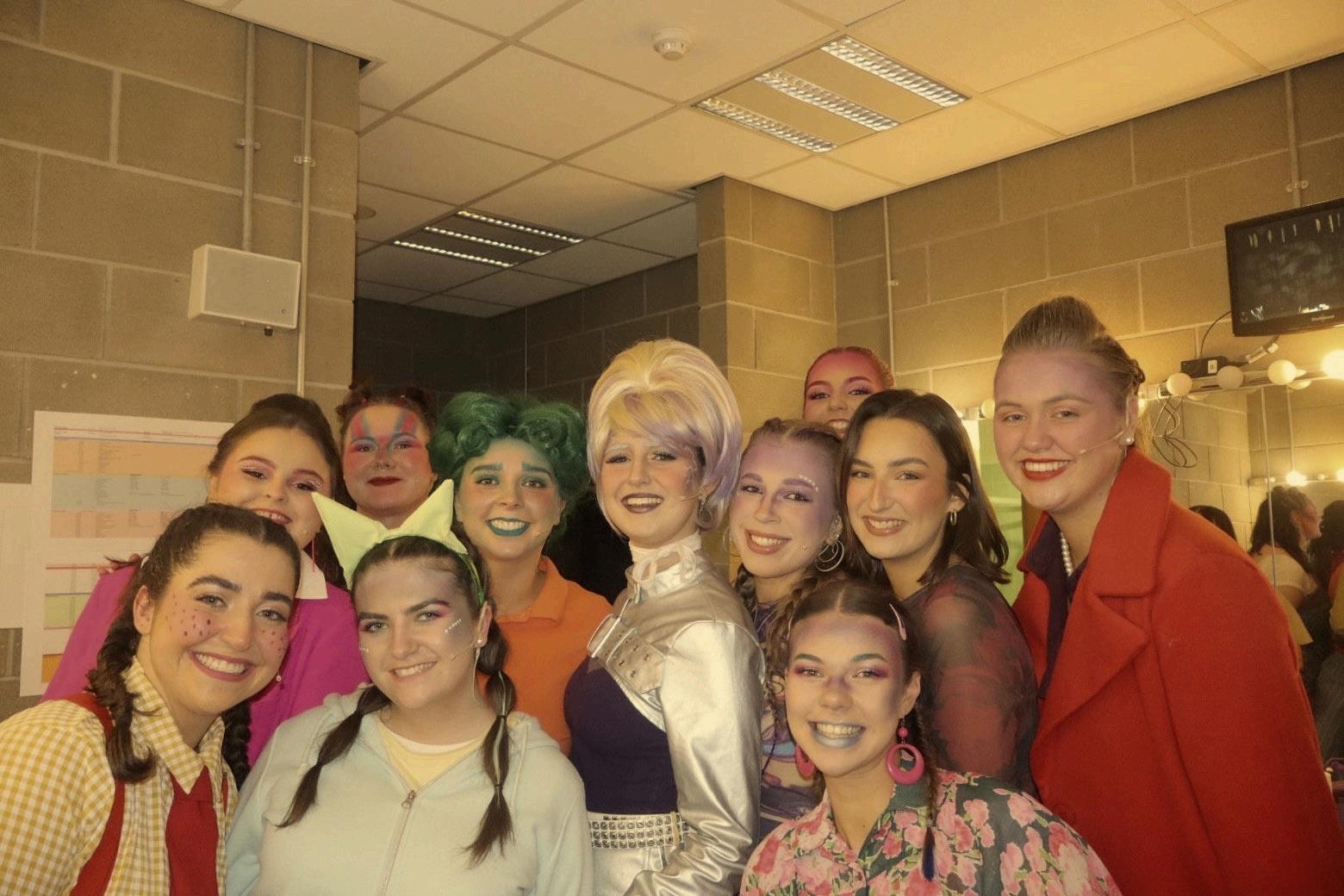
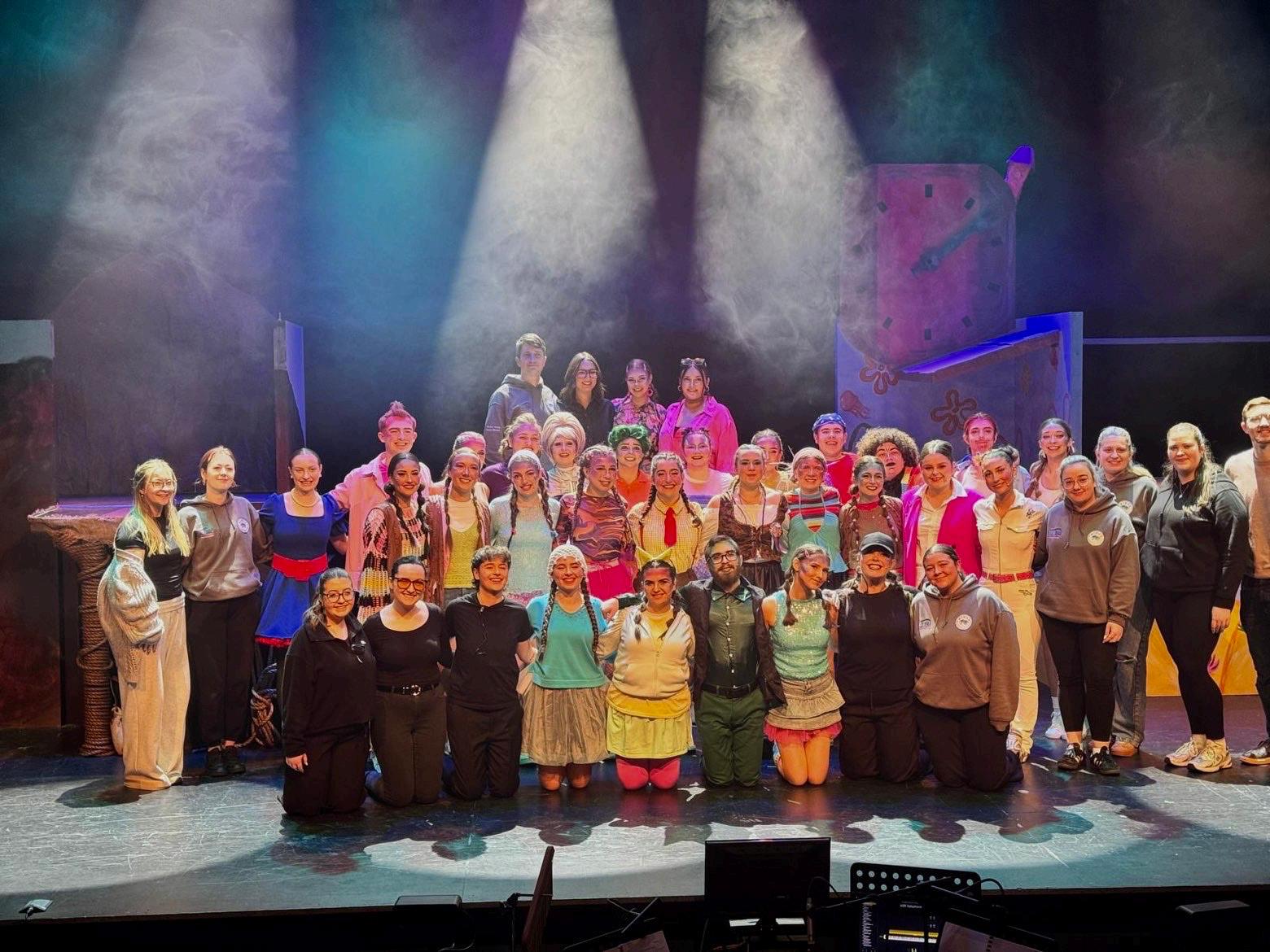
Mary Immaculate College is set to transform into the vibrant underwater world of Bikini Bottom this week, as students prepare to stage an ambitious production of SpongeBob SquarePants the Musical. With opening night fast approaching, excitement is building across campus as months of hard work has come to completion.
The student-led production, organised by the college’s musical society, features a cast and crew of more than 40 students.
Combining colourful costumes, energetic choreography, and complex staging, the show is one of the most technically demanding performances the college has undertaken in recent years.
Director Brona McGlinchey described the unique challenges of bringing such a well-known animated world to life on stage.
“SpongeBob is such a colourful animated world,” she said. “Definitely the underwater element of it … Bikini Bottom is under the water, so it’s hard to make that happen on the stage, but we’re getting there with costumes and set.”
Rehearsals have been ongoing for several months, with students balancing academic responsibilities alongside long evenings of practice.
According to McGlinchey, this balancing act has been one of the biggest challenges for those involved. “It’s just trying to find that balance if you’ve time during the day to be starting an assignment, things like that,” she explained. “But when you love something, you’ll make the time for it.”
Despite the pressures, the production has also pushed students to develop new skills, particularly in areas such as lighting and sound. McGlinchey admitted that these technical elements are where she finds the most pressure because they are outside of her control. “The things that I’m not completely sure of… the lighting, the sound, things I can’t control myself; they’d be the ones I’m most nervous for,” she said. One of the standout features of this year’s production is its originality. MIC is the first college in Ireland to stage the musical, and the cast has embraced a creative approach to character roles.
“Genderbending is a huge part of SpongeBob,” McGlinchey noted. “We have a female SpongeBob and a female Squidward, which I think is really unique… I think it’s really exciting to see.”
Bikini Bottoms Up! Under the water with SpongeBob UPDATE
surrounding the production, while also acknowledging the challenges of adapting an animated show for the stage.
“It was definitely something that originally made me both very excited and very scared,” she said. “It was my first time choreographing anything on this kind of large scale.”
Flynn explained that the larger-than-life element of the show allowed for significant creative freedom. “Because it’s so animated, it kind of meant that anything would go,” she said. “I was able to be really creative with all my dance moves.” However, that creativity has come with physical demands for the cast. “I definitely have not made it easy on them at all,” Flynn admitted. The production includes six featured dancers, an addition not seen in previous college musicals. “They are constantly dancing, but they are more than up for the challenge… they are six girls who just love to dance.”
The choreography blends multiple styles, including tap, ballet, and hip-hop, creating a visually dynamic performance. Flynn explained how she balances complexity with accessibility.
“Each dance has a very different style to it, so I can adapt the level of choreography,” she said. “On the bigger ensemble roles, clean, simple lines work best, while more technical elements are given to experienced dancers.”
As rehearsals enter their final stages, Flynn has noticed a significant improvement in the cast’s confidence and ability. “I’ve seen a massive difference,” she said. “From the very beginning to now… they were doing so, so well.”
She highlighted the tap number as a particular achievement. “Most of the girls in that number have never tapped before in their life,” Flynn explained. “To take them from zero to 100… has been something incredible to watch.”
The production is already generating strong interest, with tickets in high demand ahead of opening night. For many involved, the show represents more than just a performance, but it’s the result of weeks of collaboration, creativity, and dedication.
As the curtain prepares to rise, both cast and crew are eager to showcase their work. With its bold creative choices and high-energy performances, this year’s musical promises to make a lasting impression on audiences in Limerick.
Ireland’s film industry growth puts Limerick in the spotlight
By Claire Noonan
Government support and student voices highlight opportunities in regional filmmaking
The continued growth of Ireland’s film industry has placed Limerick in an increasingly prominent position, as the city develops into a recognised centre for production, education and creative talent.
Once overshadowed by Dublin, the region is now playing a growing role in the national screen sector.
In recent years, Ireland has become a more attractive base for film and television production, with both international and domestic projects choosing to film outside the capital. Limerick has benefited from this shift, offering a mix of filming locations, production facilities and a developing creative community.
The city has also begun to attract attention for its ability to support independent filmmaking, particularly projects seeking distinctive backgrounds outside Dublin.
One example of this is the locally produced film Once Upon a Time in a Cinema, which was filmed entirely in Limerick city. The production highlighted the city’s suitability for full-scale filming, using a range of local settings to bring the story to life while also showcasing Limerick’s cultural and historical identity on screen.
Projects like this have helped to reinforce the city’s growing reputation within the Irish film industry.
The Irish government has also played a role in supporting the industry’s regional expansion. Minister for Culture, Communications, Sport and Media Patrick O’ Donovan said funding structures have been adjusted to support smaller production companies.
“We have insisted that a serious chunk of money that is designated for RTÉ must be spent on small independent producers,” he said.
He explained that the aim of this approach was to ensure greater opportunities for independent companies, particularly those based outside Dublin. Minister O’Donovan also highlighted the role of Screen Ireland in supporting emerging production teams and helping to develop regional capacity.
Limerick’s growth has also been linked to strong educational infrastructure, which continues to supply graduates to the creative industries.
Local third-level institutions, such as the Technological University of the Shannon (TUS), have expanded film and media-related courses, contributing to a steady pipeline of trained graduates entering the sector each year.
TUS film student Amy O’ Malley said Limerick offers significant opportunities for those studying and pursuing careers in film.
“Limerick has everything that you’d need to develop both the academic and practical side of film studies,” she said. She added that access to facilities such as Troy Studios, along with university support and local creative networks, made the city particularly attractive for aspiring filmmakers.
O’ Malley also noted that many students hoped to remain in Limerick after graduation rather than relocating to Dublin or moving abroad.
While the industry in Limerick is expanding, challenges remain around securing consistent funding and maintaining production levels over time. Smaller production companies often rely on project-based work, which can create uncertainty between productions. Nevertheless, Limerick’s reputation within the industry continues to strengthen. The city has hosted a number of productions in recent years, supported by improved infrastructure, local talent and growing interest from filmmakers seeking alternative locations.
Nationally, Dublin remains the primary hub for large-scale productions and major studio resources. However, regional centres such as Limerick are increasingly being recognised for their potential to support a more balanced and distributed film industry.
Industry stakeholders have suggested that continued government support, combined with investment in education and facilities, could help strengthen regional production capacity further. A more decentralised approach could ensure that opportunities and resources are more evenly distributed across the country.
As Ireland’s film industry continues to expand, Limerick is expected to play a more significant role in shaping its future.
While challenges remain, particularly around funding consistency and competition with Dublin, the city’s growing reputation suggests it is well placed to benefit from future industry growth.
The continued development of Limerick’s film sector could provide new, long-term opportunities for local creatives while contributing to the wider success of the national screen industry.
Minister Patrick O'Donovan and Dr Susan Liddy, MIC. Photo: Brian Arthur
BASKING IN THE LIMELIGHT
By Emilie Twomey
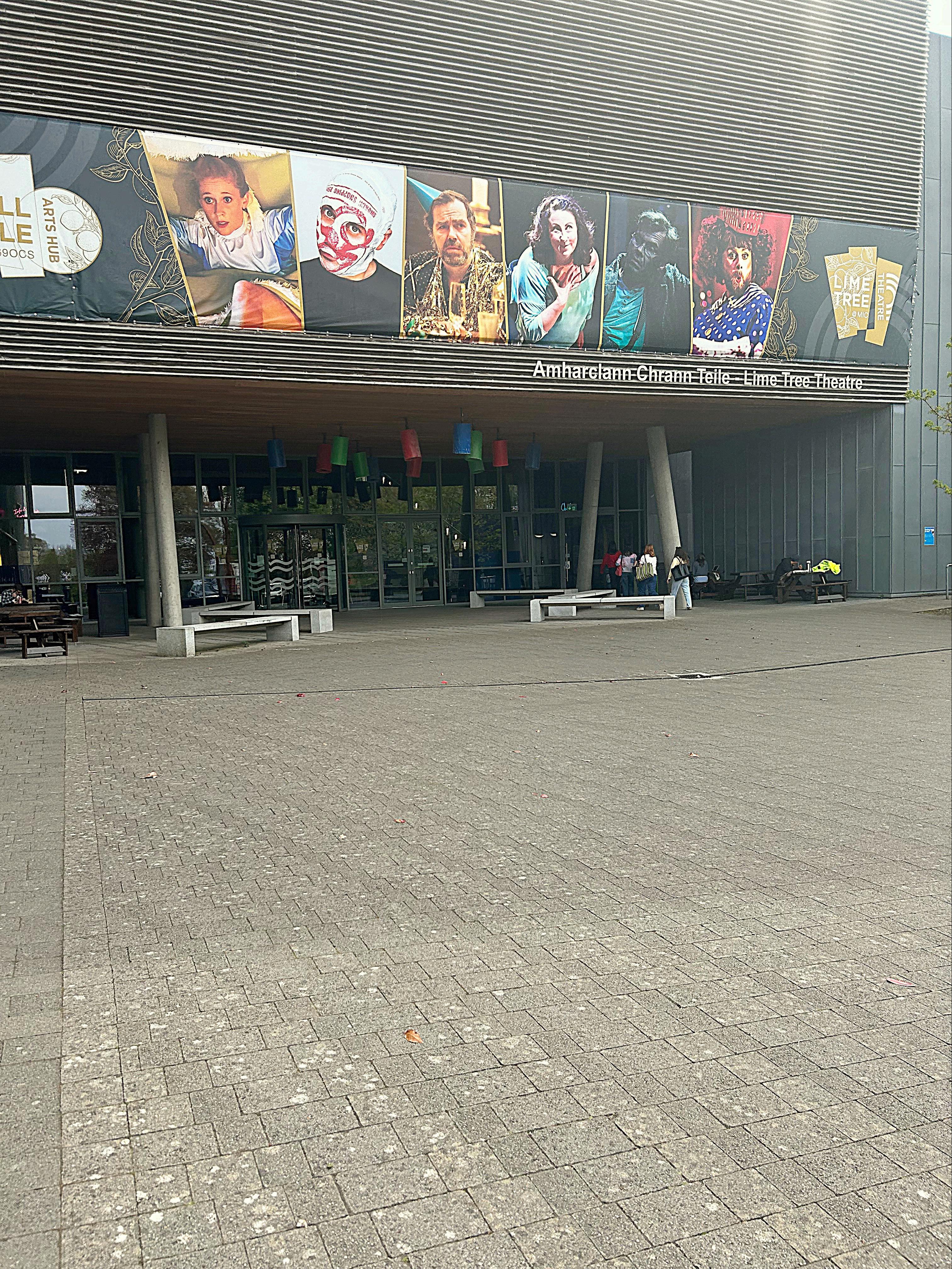
The Lime Tree Theatre, located in the heart of Mary Immaculate College, first opened its doors in October 2012. The venue has hosted a wide range of musicals, plays, comedies and school performances.
With such easy access to MIDAS and the Lime Tree Theatre, students of MIC have a wide range of opportunities to get involved in theatre both on and backstage in a professional theatre setting.
It is a good outlet for those who have never participated in anything to do with theatre before to give it a go and even get them out of their shell. It can build confidence for students and help with public speaking.
growth” Ann said.
“So many people had lost critical years to Covid and not being in rooms with each other,” local theatre practitioner Ann Blake stated.
“Theatre is an outlet for me to be able to express anything I was feeling,” added student Eimear Leonard.
Students around the entire college have benefited greatly from the theatre since its establishment; it doubles as a lecture hall for some of the larger courses, such as the
“Theres now a subject, if young people in second level education are coming into third level having studied Drama, they are coming in at a higher level of knowledge and experience which can only be beneficial."
“You’re going to learn so many skills in general that will have a knock-on effect in so many other areas.” Eimear stated.
Everyone has a responsibility in making sure a show runs smoothly and with little to no problems, that goes for set design, lighting, sound and especially the
actors. “Responsibility and accountability are learned in the making of theatre,” added Ann “You are part of a team even if you are playing the lead, you rely on everyone else,” Ann stated. From auditions to opening night, the pace of putting together a piece of theatre is very fast. It is also important for students who take part in theatre, especially in college, to start building up contacts and connections along the way to expand their range of work in the future.
The Lime Tree started as a receiving venue, not producing any shows on its own, but in the last number of years the Lime Tree has been able to put on its own pantos, which is a huge step for the theatre.
After recently wrapping up a production of SpongeBob the Musical, the theatre is set to stage some exciting things in the near future, such as “The Bookshelf Live” with former Late Late Show presenter Ryan Tubridy.
From Silence To Signal – Wired FM Returns
By Abi Elizabeth Vozza
The silence was noticeable. No music, no student voices, no late-night shows drifting through the air - Wired FM, Mary Immaculate College’s student radio station, had vanished.
Now, it is finally set to return. Wired FM is expected to resume broadcasting in coming months, with plans to relaunch both on FM and through online streaming platforms.
The revival of Wired represents more than just the comeback of a campus station: it offers students a renewed platform for creativity, practical media experience, and a stronger sense of community.
For many years, the station was woven into college life, where students tuned in to discover new music, hear campus news, and engage with issues that mattered to them.
Broadcasting for over three decades, Wired FM served as a creative outlet for students across Limerick. The station was established 32 years ago after securing a licence from Ireland’s media regulator, now known as Coimisiún na Meán. The station operated as a partnership between Technological University of the Shannon (TUS) and Mary Immaculate College, with the University of Limerick previously involved.
Its disappearance, however, was not the
"They talk about a "perfect storm," and a lot of things came together that made Wired unviable at the time" - Dr Rosemary Day.
result of a single issue. “They talk about a ‘perfect storm’, and a lot of things came together that made Wired unviable at the time,” Wired's chairperson Dr Rosemary Day explained.
The situation was further compounded by by personal loss.
“My colleague Tony Langlois said he would take it on, but within a month, he passed away. We lost a wonderful colleague and leader,” Dr Day said. “I then stepped up to take on the role.”
Despite the station’s absence, its loss was less noticeable than expected due to the constant turnover of students. “It’s a bit like asking someone if they miss something they’ve never had,” Dr Day said.
Yet for those who did experience it, its absence left a noticeable gap in campus culture.
Student radio offers something distinct from professional broadcasting; rather than being overly polished or scripted, it reflects authentic student voicestheir ideas, opinions, and personalities.
Day emphasised that passion lies at the heart of student radio and encouraged students, particularly those studying media, to get
involved.
“You can’t see the people who are talking on the radio, but you can hear the interest in their voices,” she said. “It’s something that people become really passionate about.”
Looking ahead, the revived station will not rely solely on traditional FM broadcasting. It also plans to embrace podcasting and digital platforms, ensuring it remains relevant in an increasingly online media landscape.
The relaunch will include opportunities for students to host shows, produce podcasts, and gain
hands-on experience in broadcasting.
Callum McGeary, a Master’s student in Media Studies, shared a similarly optimistic view. He added that interest in radio and podcasts has grown significantly in recent years, further highlighting the importance of Wired FM’s return.
“I think students will care about Wired FM coming back,” he said. “There’s a growing interest in radio and podcasting, especially when it’s student-oriented, particularly for Mary I students.”
He also expressed enthusiasm about getting involved himself. “I would definitely be looking to help out with Wired FM when it comes back,” he said.
“I would recommend that other students participate in it at least once. You gain a better appreciation of what goes on behind the scenes.” With podcasts and online content more popular than ever, opportunities like this are particularly valuable for students seeking creative outlets.
Wired FM’s return marks a renewed opportunity for student creativity and connection. As the station prepares to relaunch, it offers students something simple but powerful: a chance to be heard.
Unlocking career pathways through work placement
By Sorcha Conroy
Placement opportunities for Arts students at Mary Immaculate College play an increasingly important role in preparing students for the workplace.
In third year, Bachelor of Arts (BA) students have the opportunity to take part in either a work placement or an Erasmus exchange programme.
These experiences allow students to move beyond the classroom and gain practical insight into professional environments, while also developing key personal and transferable skills.
Students often report feeling more motivated and focused after completing placement, as it helps them better understand their strengths and future goals.
Patricia Casserly – MIC’s Placement Officer managerexplained that placement provides students with experience that cannot be replicated in a lecture setting. “We work closely with
employers to ensure students are placed in environments where they can develop and learn,” she said.
From a student perspective, placement is often viewed as an opportunity to explore different industries and gain a clearer understanding of career options.
Nat Horan, Vice-President of MISU, described placement as “a great opportunity” for students.
She also highlighted that students’ individual circumstances can shape how they engage with placement opportunities.
“Some students may have part-time jobs or other commitments,” she said, pointing to the importance of flexibility within the programme.
There are also practical considerations associated with placement. Some students may face financial challenges, particularly if placements are unpaid or require travel. Others may need to relocate or commute, which can create additional
Dance beyond the classroom
The dance society at Mary Immaculate College is continuing to grow in popularity,. Founded to provide a creative outlet on campus, the society has developed into a space that welcomes students of all experience levels.
A member of the society said the original aim was to make dance more accessible within the college environment.
“We wanted to create a space where anyone could come along and try dancing, regardless of their experience,” they said.
The society now runs a variety of classes, including beginner sessions as well as more advanced styles.
According to the society
pressure.
Despite these challenges, placement is widely recognised as an important step in preparing students for employment.
In addition, placement can help students to build professional networks that may benefit them in the future. By working alongside experienced professionals, students have the opportunity to make connections that could lead to future job opportunities or references. This exposure to real working environments also helps students to better understand workplace expectations, including communication, time management, and responsibility.
Overall, placement at Mary Immaculate College is viewed as a valuable and rewarding experience that supports both personal and professional development. While students may engage with it in different ways depending on their circumstances, it remains a central feature of the Arts programme.
By Molly Donaghey
member, demand plays a significant role in shaping the timetable. “We base a lot of our decisions on what students are interested in and when they’re available,” they said.
“We try to make sure there’s something for everyone, whether they’re just starting out or have danced before.”
A student involved in the society said that having a range of class times makes it easier to stay engaged. “People have different schedules, so having options really helps,” they said. Beyond its structure, the society also plays an important role in student life.
Participants describe it as a space that offers both social and personal benefits, particularly for those looking to connect with others outside of their academic courses.
“There’s a really welcoming atmosphere,” the society member said. “Even if you come in not knowing anyone, you quickly feel part of the group. It’s not just about dancing, it’s about meeting people and enjoying yourself.”
As the society continues to grow, organisers are considering ways to expand their offerings while maintaining the inclusive environment that has contributed to its success.
MIC robotics programme aims to inspire future STEM learning
By Diarmuid Mangan
Mary Immaculate College has introduced a new robotics programme designed to bring STEM education into primary school classrooms, while encouraging children to develop an early interest in science and technology. The initiative focuses on making subjects such as science, technology, engineering and mathematics more accessible through practical learning activities. By using robotics equipment in the classroom, pupils are given the chance to learn through hands on tasks that combine creativity with problem solving. The programme has been developed to support young learners by presenting STEM subjects in a form that is engaging and easy to understand.
through simple challenges, helping them develop more confidence while learning new skills.
Matthew Sheridan, a student teacher at MIC, said the project reflects the increasing importance of STEM education in modern society.
“Technology plays a major role in everyday life, and I think it is very important that children are introduced to these skills from an early age. Robotics offers a practical and enjoyable way for pupils to engage with science and maths.”
As well as supporting schoolchildren, the initiative also provides valuable experience for student teachers at the college. Those who were involved in
gained practical classroom experience while learning how to use innovative teaching methods that can be applied in their future careers.
“It gives us the opportunity to work directly with children in a creative environment,” said student teacher Cathal Bury.
The robotics sessions are designed to suit younger age groups by focusing on teamwork and communication. Pupils may be asked to complete tasks such as navigating a robot through an obstacle course.
Educators believe these activities can help children develop important transferable skills beyond the classroom. Problem solving, critical thinking and collaboration are increasingly valued in education and in the workplace, making programmes like this particularly relevant.
Learning has no age at MIC
By Mischa Spillane
A growing emphasis on lifelong learning at Mary Immaculate College has led to the expansion of the Age Friendly Programme, offering older adults new opportunities to engage with education and campus life.
The initiative forms part of Ireland’s broader Age Friendly Strategy, which aims to support older people in remaining active and connected within their communities.
At MIC, the programme invites older members of the public to attend lectures, participate in workshops, and access campus facilities, creating an environment where learning extends beyond traditional student demographics.
Dr. Patricia O’Sullivan, MIC’s Enterprise and Community Engagement Manager, explained that the initiative is about more than education.
“This programme is about inclusion and participation,” she said. “We want older adults to feel that the college is a space for them too, where they can continue learning and sharing their experiences.”
Participants in the programme come from a wide range of
backgrounds, many of whom are returning to an academic setting for the first time in decades. For some, the opportunity represents a chance to pursue interests that were previously inaccessible due to work or family commitments.
Dr O’Sullivan explained that the programme also encourages interaction between traditional undergraduate students and older participants, fostering intergenerational learning. This exchange allows students to benefit from the life experience of older adults, while participants gain insight into contemporary academic and social perspectives.
Dr Maeve Liston, the Director of Enterprise & Community Engagement, highlighted that the main goal of this progamme is to encourage the participation of older adults in core activities such as educational and research programmes.
“We also want to enhance access for older wellness, art, and cultural activities. And really, we want to engage our own retired community and ensure that there’s regular dialogue with organisations
Limerick's student nightlife
Student nightlife in Limerick has a reputation for being lively and at times unpredictable, shaped largely by the city’s strong student population and compact social scene.
With several higher education institutions feeding into the same nightlife ecosystem, evenings often begin casually in student accommodations before groups head into the city centre, where pubs, late bars and nightclubs quickly
By Abbie O'Riordan
fill with young people As the hours pass, the shift from controlled socialising to more erratic behaviour becomes noticeable, with an increase in minor alterations, accidents and medical issues.
In this context, emergency services, particularly paramedics, become a quiet but constant presence in the background of student nightlife, responding to
outside of the institution that represent the interests of an ageing population,” she said. In addition to academic lectures, the Age-Friendly Programme includes social events, digital skills workshops, and community-based activities. These elements aim to address issues such as social isolation and digital exclusion, which can disproportionately affect older populations. However, challenges remain. Accessibility, transport, and awareness of the programme are ongoing concerns for organisers. Ensuring that information reaches those who could benefit most is a key priority moving forward.
Despite this, Dr Liston believes older adults that attended the age friendly programmes at Mary Immaculate College have found it a very positive educational and social experience.
As Ireland continues to develop its Age Friendly initiatives, programmes like the one at MIC demonstrate how educational institutions can contribute to building more inclusive communities.
situations that range from mild to serious.
Paramedics do not prepare differently specifically for student nightlife in Limerick compared to other urban environments, as the patterns they encounter are broadly consistent with those seen in similar cities with active student populations.
For students, the presence of emergency services can serve as
both a reassurance and a reminder of the risks associated with excessive partying, though this awareness does not always translate into more cautious behaviour.
The culture of nightlife in Limerick, like in many student cities, balances on this edge between enjoyment and excess, where memorable nights out coexist with the occasional need for medical intervention.
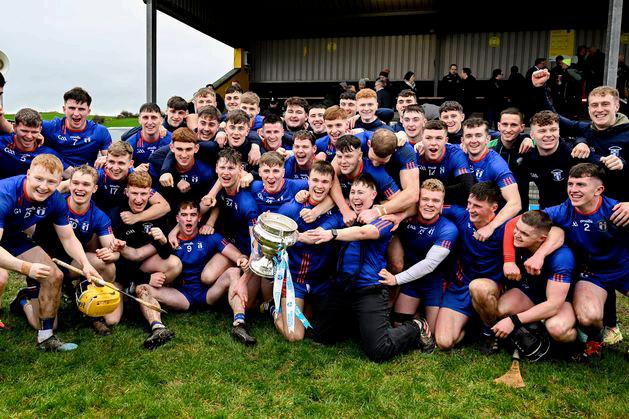
Sport MIC hurlers praised for Fitzgibbon Campaign
By Shane Cunningham
The Mary Immaculate College hurling team has been praised following their Fitzgibbon Cup final run, notably after their dramatic semi-final win over DCU that went to extra time.
That match proved to be a very tightly contested encounter, with MIC coming through victorious in a high-pressure game on a scoreline of 0-31 to 2-16 after extra time.
“The only time we led in the whole match was right at the end, and for it to go to extra time, and for that full time whistle to be blown, that moment was without a doubt, the highlight of my college career so far,” said Bobby Drohan, wing back on the MIC team. He also highlighted the pride he felt to put on the college jersey and what it meant to him as a student.
“It’s a massive, massive privilege, one that I try not to take for granted,” he added.
Team selector Daniel Morrissey put a huge emphasis on the importance of unity within the group during the campaign. “I’ll say it straight out. All the other Fitzgibbon teams - they wouldn’t have the same bond as the Mary I Fitzgibbon team,” he said. Morrissey also pointed out the significance of the achievement for the college, particularly given its size.
“It’s a small college, but at the same time there is a big initiative to keep sport driving on and students want to succeed,” he stated.
Although Mary I fell short in the final – losing on a scoreline of 4-31 to 3-21 against rivals University of Limerick - their campaign represents another significant achievement for the college and displays their ever-growing reputation in the third level competition.
The Fitzgibbon Cup is renowned for being the best hurling competition in third level education and is home to some of the most in-form inter-county talents around Ireland. MIC has established itself as a real strong competitor in the competition, regularly featuring in the later
MIC celebrate winning the 2024 Fitzgibbon Cup
Sport at MIC: More than just a game
college’s reputation.
MIC’s first Sports Council was established in the 1970s, at a time when the college had a relatively small student population, which had made it difficult to compete with larger colleges.
A turning point came in 1998 when the college first participated in the Fitzgibbon Cup, the most prestigious competition in higher education hurling. Since then, the college has gained in confidence and success, with victories in 2016, 2017 and 2024.
Sports can be a defining feature of student life. The college’s student union’s (MISU) Clubs and Societies Coordinator is David Cuddihy.
“My responsibilities are on the student’s side by making sure they’re organised, have everything that they need and the facilities for
collaboration with other departments. For example, they work closely with the Communications and Marketing Office to promote matches and activities. This strong internal structure enables MIC to mainatain a good cohort of teams despite its smaller size.
“We have around 12 or 13 teams that operate out there, the collaboration is consistently ongoing,” he added.
Although competition remains an important aspect of sport at MIC, Mr. Cuddihy stated states that success is not limited to winning.
“We would like to promote not only the winner but also the ones that have got far in the competition… we celebrate that because we’re such a small community here, when you look at beating colleges that have 20,000 students compared
to 5,000 here, it is definitely something to celebrate.”
Beyond competition, sport plays a crucial role in building connections among
Nat Horan - the MISU Vice-President for Student Experience and Wellbeinghighlighted that sport offers an alternative way for students to engage with college life.
She also emphasised the benefited of sport for mental and social wellbeing. “There is a lot of research around the way exercise can help you in a mental way.” Inclusivity is another key aspect of sport at MIC; Ms. Horan gave the example of Erasmus students. “It gives you the feeling to be part of something without asking you to do extra work for it,” she said
In university environments where academic demands can be intense, sport provides balance, connection and identity. At MIC, it is more than just a game; it is about creating a real student experience and a real community.
Seen or sidelined? Women in sport at MIC
Players and coaches highlight workload pressures, lack of visibility, and the need for greater recognition.
By Eabha McDonagh
One of the main difficulties identified by Dr Bowles is balancing academic and sporting commitments.
“We would have a lot of players here who are also playing at a very high elite level at an inter-county level,” he explained. “Trying to manage those various workloads can be a big challenge.”
For players like second-year camogie player Aoife Power, the motivation to continue playing comes from a lifelong passion for sport. “I’ve always had a love for camogie growing up and I wanted to continue that throughout my college years,” she said.
She also highlighted the social benefits of college sport, noting that it provides “a great opportunity for people to meet, make new friends, and meet new people.” However, both Richard and Aoife pointed to a clear gap in recognition between men’s and women’s sports. Dr Bowles noted that research consistently shows female athletes receive less media coverage than their male counterparts. “Players who are still playing may resent that a little bit,” he said.
Ms. Power compared the attention given to male competitions such as the Fitzgibbon Cup to the lack of support for women’s teams at the college. “I don’t think there’s enough recognition for women,” she added. This issue extends beyond the college environment and reflects broader trends in sport.
Ms. Power pointed to national examples, explaining that men’s All-Ireland finals regularly sell out, while female equivalents often do not attract the same level of attendance.
Social media promotion is another area where both see room for improvement. While Dr Bowles believes there is potential to develop stronger promotion strategies, he suggested this requires dedicated resources. “There needs to be some dedicated people who will look at that in terms
Participation in women’s sport at Mary Immaculate College is on the rise, but challenges around recognition, media coverage, and facilities continue to affect female athletes.
“Our participation rates are really soaring over the last number of years,” said ladies’ football coach and lecturer Dr Richard Bowles. “This year we fielded four teams in the Championship, which we had never done before,” he added.
This growth reflects a wider return to campus life following Covid-19, with more students eager to get involved in sport. However, despite this positive trend, female athletes still face a number of ongoing challenges.
of it being their job to publicise sport across campus,” he said. Facilities also play a role in limiting the visibility of women’s sport. Dr Bowles highlighted the lack of floodlights at MIC as a barrier to attendance.
“Our home games are played during the day, which can be quite difficult for people to get off lectures and come and attend,” he explained. He suggested that evening matches, similar to those in other universities, could significantly boost attendance.
Despite these challenges, the importance of a positive team environment remains central to player experience.
Power emphasised the role of coaches and teammates in shaping this atmosphere. “If you don’t have a good coach or a positive coach, you’re not going to have a positive mindset,” she said. “It’s vital in keeping spirits up within the teams.”
Overall, while women’s sport at Mary Immaculate College is growing in participation and
Both players and staff agree that with greater support and visibility, women’s sport can continue to develop and thrive on campus.
"You didn't want to be visible, you just wanted to blend in" - Jackie McCarthy O'Brien
FROM INVISIBLE TO UNSTOPPABLE: LIMERICK WOMEN IN SPORT
By Kaya McCarthy
Limerick has long been recognised for its strong sporting culture, but for decades, women were largely absent from the spotlight.
Today, athletes from different generations are reflecting on how far women’s sport has come, and what still needs to change.
Former Irish soccer and rugby international Jackie McCarthy-O’Brien and her daughter, ex-international soccer player Sam McCarthy, represent two generations shaped by sport in Limerick.
Together, their experiences highlight a shift from invisibility to growing recognition, while also revealing the challenges that remain.
McCarthy-O’Brien’s journey into sport began unexpectedly in the early 1970s. She recalled kicking a stray football back to a passerby in Shelbourne Park, a moment that would change her life. “You’ve got a sweet left foot,” she was told, prompting her introduction to a newly forming women’s team.
However, her experience extended beyond the pitch. As a Black woman growing up in Ireland at that time, she faced challenges that went far beyond sport.
“You didn’t want to be visible, you wanted to just blend in,” she explained, describing how sport became a way to be recognised for her ability rather than her identity.
For McCarthy-O’Brien, playing sport was not only about competition, but about proving that women belonged in spaces where they had long been overlooked. At a time when women’s sport received little attention, opportunities were limited and recognition was rare.
In the decades since, perspectives have shifted significantly. Increased media coverage, social media platforms and growing public interest have helped bring women’s sport into sharper focus.
“The landscape has changed completely for women in sport,” said McCarthy-O’Brien.
Despite this progress, she believes recognition is still catching up with the level of commitment shown by female athletes.
“It’s about time,” she added.
For Sam McCarthy, growing up in Limerick meant being surrounded by sport from an early age.
“From the minute I could walk, I had a football at my feet,” she said, describing a childhood shaped by passion and ambition.
Following in her mother’s footsteps, she went on to represent Ireland at multiple levels, from underage squads to the senior team. However, her experience of visibility differed significantly from that of her mother. While opportunities had improved, recognition was still inconsistent.
“I did feel invisible when I was younger,” she said. It was only later, as interest in the sport grew, that she began to feel acknowledged.
Now, Sam believes the focus should shift towards building stronger support systems for female athletes, particularly at local level.
Greater attendance at matches and increased public engagement, she argued, are key to sustaining progress.
Both women emphasised the importance of belief and perseverance in achieving success.
For McCarthy-O’Brien, this has remained a constant across generations.
“If you believe in yourself, if you put the hard work in… anything is possible,” she said. Their shared experiences reflect not only personal journeys, but a broader transformation within Irish sport.
What once required athletes to fight for recognition is gradually becoming a space where visibility is expected, rather than earned. While progress is undeniable, the story of women in sport in Limerick is still being written.
For one generation, the goal was to be seen. For the next, it may be to ensure that visibility leads to lasting support, opportunity and equality.
"From the minute I could walk, I had a football at my feet" - Sam McCarthy
Jackie McCarthy-O'Brien with daughter Sam and son Robert McCarthy (1993). Photo courtesy of Jackie McCarthy-O'Brien.