Small Business TOOLKIT 2026





Detroit has never needed anyone to hand it a future. This city builds its own. But building is not enough. In an economy that continues to shift faster than most small businesses can adapt, the difference between a business that endures and one that does not often comes down to access to capital, to networks, to the right information at the right time.
This year’s theme, “THRIVE: Tools, Resources & Real Pathways to Growth,” is a direct response to that reality. Detroit’s entrepreneurial spirit has never been in question. What too many Black business owners have lacked and what this edition is designed to address — is the infrastructure to move from surviving to building something that lasts.
At the Michigan Chronicle, we believe storytelling is incomplete without utility. This special edition achieves both. It spotlights organizations, programs, and funding pathways working to close the access gap for Black entrepreneurs in Metro Detroit and Michigan. It explores what it means to build a sustainable business: securing capital, building visibility, protecting mental health, and laying the groundwork for a legacy that lasts beyond any single owner.
What you will find in these pages are not aspirational concepts. They are verified resources, honest analysis, and the kind of practical guidance that can be put into action. Whether you are launching your first venture, stabilizing a business through a difficult season, or building the systems that will allow your enterprise to scale and transfer to the next generation, this edition meets you where you are. Detroit does not need to be told it can thrive. It needs the tools. Consider this your resource. Build boldly. Build with purpose. Thrive, Detroit.

Hiram E. Jackson Publisher, Michigan Chronicle Chief Executive Officer, Real Times Media






umented barrier facing Black-owned small businesses in America. In Detroit, that narrative is shifting. A growing network of community lenders, grant programs, and public-private funding initiatives has positioned the city as one of the more resource-rich environments for Black entrepreneurs in the country. The challenge now is not whether the money exists. It is whether business owners can find it, understand it, and access it before a financial crisis removes their options.
The funding landscape in Metro Detroit spans several categories, each serving a different stage of business development. Understanding which program fits a specific need is the first step most entrepreneurs skip, and the one that costs them the most.
For business owners pursuing grants, Motor City Match remains one of the most active and proven programs in the city. Administered by the Detroit Economic Growth Corporation, the program has distributed more than $20 million in grants since 2015 and completed its 29th funding round in August 2025. It awards cash grants up to $100,000 to entrepreneurs opening or expanding brick-and-mortar locations in Detroit neighbor hoods, paired with design support and one-onone advising. Eligibility is limited to Detroit-based businesses with a confirmed commercial loca tion. Black Leaders Detroit offers a different kind of access: no-interest loans and un restricted grants specifically for busi nesses majority-owned by people of African descent. In August 2025, the organization received $2.1 million from the Gilbert Family Foundation to ex pand its lending capacity. The Detroit Startup Fund, launched by the City of Detroit in July 2025, added another entry point for early-stage business es, offering seed grants of $15,000 and scale grants of $50,000 to De troit-based startups with scalable, community-impacting concepts.
Community development finan


more flexible underwriting standards and technical assistance for entrepreneurs operating in historically disinvested communities than traditional banks typically extend. Invest Detroit and the Detroit Development Fund both operate within this model, offering financing alongside advisory and business support services. Michigan Women Forward manages the Michigan Economic Opportunity Fund, a $10 million statewide microloan program offering loans up to $50,000 for women, veterans, and entrepreneurs of color who are socially or economically disadvantaged due to limited access to capital and credit. The fund was launched through support from Huntington National Bank, Ballmer Group, which contributed grant funding, the Michigan Economic Development Corporation, and the federal State Small Business Credit Initiative. Applications are processed directly through Michigan Women Forward.
For businesses seeking state and federal financing, the Michigan Economic Development Corporation facilitates a range of loan programs
The U.S. Small Business Administration provides guaranteed loan programs, surety bond support, and disaster financing available to qualifying businesses statewide. Business owners who are newer to these programs may find that the City of Detroit Small Business Services, operated through the DEGC, is a useful starting point for identifying which option aligns with their current stage and financial documentation.
Several patterns distinguish entrepreneurs who access capital successfully from those who do not. Applications that demonstrate a clear understanding of what a specific funder is trying to accomplish outperform generic submissions consistently. Motor City Match funds physical business openings in Detroit neighborhoods. Black Leaders Detroit funds Black-owned businesses explicitly. The Detroit Startup Fund targets scalable ventures with civic potential. Alignment between a business’s purpose and a funder’s mandate is not incidental to the application process. It is the application process.

Timing also matters considerably. Program officers at most of these organizations consistently advise entrepreneurs to make contact before an application window opens, attend informational sessions, and understand eligibility requirements well in advance of need. Entrepreneurs who present complete financial documentation, including business tax returns, a clear budget, and a specific deployment plan for requested funds, move through review processes more efficiently and with stronger outcomes.
The capital infrastructure in Detroit is more organized and more intentional than at any point in the city’s recent history. What it requires in return is preparation, specificity, and the strategic patience to build relationships that make access possible before urgency makes those relationships necessary.
In a marketplace where consumer attention is finite and competition for it relentless, visibility has become one of the most consequential operational challenges facing small business owners. A business that operates without a coherent digital presence, consistent branding, and an active customer acquisition strategy is not simply undermarketed. It is structurally disadvantaged in ways that compound over time and rarely surface in the financials until the damage is difficult to reverse.
For Black-owned businesses in Detroit, that disadvantage has historically been compounded by documented gaps in access to marketing infrastructure, professional networks, and the technical support resources that better-resourced competitors take for granted. Organizations across the city have spent the past several years building programming specifically designed to close that gap.

Branding is where most small business owners underinvest, and where the return on investment is often most significant. The distinction worth understanding is between aesthetics and brand. A logo and a color palette are design choices. A brand is the specific, consistent impression a business makes across every point of customer contact, and whether that impression generates enough trust to produce a transaction. For businesses building community trust over time, that consistency becomes a form of social proof that does not require a paid advertising budget to sustain.
TechTown Detroit is part of Michigan’s statewide SmartZone network, supported through the Michigan Economic Development Corporation, and serves as one of the city’s most substantive hubs for entrepreneurial development. The organization’s programming spans technology adoption, digital positioning, marketing strategy, and operational development, and is accessible to businesses at multiple stages of growth. For entrepreneurs looking to build a stronger foundation for their digital and marketing presence, TechTown’s resources offer a practical and well-supported starting point.
Detroit Means Business expanded its support network through a $3.4 million MEDC-backed initiative establishing 25 Small Business Support Hubs across the city. The hubs provide coaching, training, networking, and visibility support through six community partner organizations embedded in Detroit neighborhoods. For business owners who need structured support in developing their marketing approach or improving their digital presence, the hub nearest them is among the most acces-

SCORE Detroit provides free business mentoring through a national network of volunteer advisors with direct professional experience in marketing, customer acquisition, brand development, and a range of other business disciplines. The program is backed by the U.S. Small Business Administration and available to entrepre-
Search engine optimization remains among the highest-return investments available to a local business at minimal cost. A complete and accurate Google Business profile, consistent business name, address, and phone number across online directories, and content that reflects how customers actually search for a business’s category together produce meaningful organic visibility. Businesses that appear in local search results with strong review profiles and complete information are positioned to capture customer consideration before any direct outreach occurs.
The Michigan Black Business Alliance, which received $2 million in new investment from the Gilbert Family Foundation in August 2025, operates three programs directly relevant to business visibility: its Global Growth Accelerator for second-stage businesses, its Capital Connect program for financing access, and BizWiz, which provides one-on-one business coaching and technical assistance. The Detroit Regional Chamber offers membership and civic programming that extends business reach into the institutional relationships where referrals, contracts, and community positioning are cultivated. Both organizations reward active participation.
For small business owners in Detroit, the infrastructure to build meaningful visibility has never been more accessible or more intentionally organized. The tools, training, and networks to improve search presence, strengthen branding, and expand institutional relationships are available at little to no cost through the organizations named here. What converts that access into measurable outcomes is the discipline to engage consistently rather than episodically, across channels, across time, and before urgency turns visibility into a crisis to be managed rather than a competitive advan-

The conversation about small business success in Detroit rarely includes the psychological cost of building one. Financial performance metrics, market positioning, and operational efficiency dominate the advisory landscape. What receives considerably less attention is the relationship between founder mental health and business outcomes, a connection that a growing body of research in organizational psychology and entrepreneurship studies identifies as a significant factor in long-term business performance.
Black entrepreneurs navigate a set of compounding pressures that are distinct from those facing small business owners broadly. The racial wealth gap restricts access to the capital reserves that buffer businesses through difficult periods, meaning financial stress is higher and more persistent. Systemic barriers in lending, contracting, and professional networks require more effort to overcome than those facing business owners with built-in structural advantages. The additional weight of operating within communities that have limited access to institutional support, and high expectations for the businesses that serve them, adds a layer of social responsibility that is widely observed in research on minority entrepreneurship, even when it resists precise measurement.
Chronic stress produces measurable effects on cognitive function. Research in organizational psychology and neuroscience consistently documents that sustained high-stress environments impair the executive functions most critical to business leadership, including strategic planning, sound judgment, impulse regulation, and the ability to assess risk accurately. A business owner operating under chronic stress is not simply uncomfortable. They are operating with compromised cognitive capacity

that shows up in the quality of their decisions, their negotiations, and their leadership over time.
The following five practices draw from research published by the American Psychological Association, the Harvard Business Review, and the UC Berkeley Greater Good Science Center on entrepreneur mental health, burnout, and organizational wellbeing. They are offered here as evidence-informed guidance, not prescription, for founders navigating high-demand environments.

Scheduled recovery time. Recovery that is contingent on finished work is unlikely to occur, because the demands of running a business are not finite. Blocking and protecting specific time for rest, approached with the same commitment applied to revenue-generating activities, is among the most consistently recommended practices in entrepreneurship wellbeing research.
Separating identity from business performance. Founders who closely tie personal worth to business outcomes can find themselves making deci-
sions driven more by self-protection than by sound strategy. The psychological distinction between a struggling business and a failing person, while difficult to maintain in practice, has documented effects on decision quality and leadership resilience.
Maintaining at least one non-professional relationship. Social support from outside the professional context of the business provides what researchers describe as a buffering effect against the stress patterns associated with entrepreneurial burnout. A relationship with no transactional dimension offers a form of psychological grounding that professional peer networks alone cannot replicate. Recognizing the difference between productive discomfort and destructive stress. Growth-related discomfort and destructive stress are holistically different experiences. The former accompanies challenge and change. The latter impairs sleep, relationships, and decision-making over time. Developing the awareness to distinguish between them allows founders to respond appropriately rather than normalize conditions that warrant a change in approach.
Accessing culturally competent professional support. The availability of therapists, coaches, and counselors with specific experience serving Black entrepreneurs has expanded considerably. Using these resources reflects sound judgment about protecting one of the business’s most critical assets.
The businesses that demonstrate sustained operating history are typically led by people who recognized, at some point, that their own capacity was not separate from the health of the enterprise they were building. That recognition, and acting on it, is itself a form of business strategy.

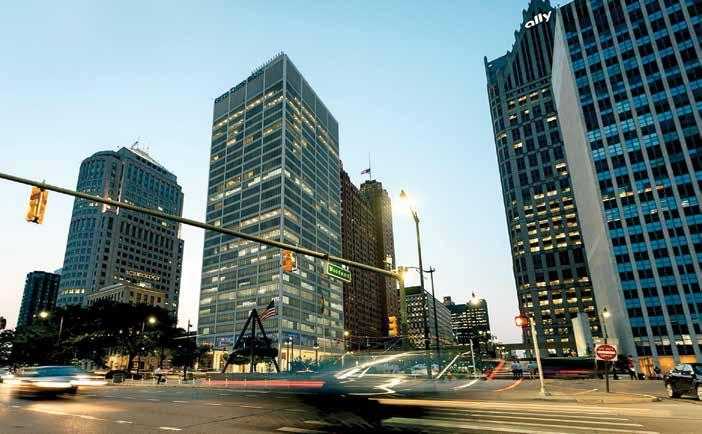
In Detroit, we’re all familiar with the idea of “grit,” but just as critical to the city’s success is the tightly knit community. Behind the hard-working attitude the city is known for is a spirit of collaboration, and the idea that a rising tide lifts all boats. These are foundational in the small-business community, where entrepreneurs, residents, and state resources are working together for a more prosperous future.
In the city’s Boston-Edison Historic District, cafe and gathering space The Congregation exemplifies community-entrepreneur symbiosis. It was founded by four neighbors who gauged neighborhood interest in transforming a vacant church into a community hub with coffee and cocktails.
“We saw our community and the lack of walkability in terms of places to go and grab something quick to eat and hang out,” said The Congregation co-owner Betsy Murdoch. “Coffee is a very communal beverage; it’s an easy entry point for people to sit down and have good conversation.”
After The Congregation proved successful, the founders renovated an adjacent long-abandoned house into a pizzeria called The Rectory. Renovating a house into a restaurant is no simple task, but the relationships the owners had formed opening The Con-

gregation provided a supportive network. The founders also leveraged the Michigan Economic Development Corporation’s (MEDC) Build MI Community Grant, which provides gap financing and technical assistance for smaller redevelopment projects.
“Without it, we would not be here,” says Murdoch. “We had lenders on standby, ready to give us a certain amount of money, but we could not get that final gap of funding figured out. The grant was a huge reason behind how we were able to make this happen…That’s the beauty of Detroit; it’s a very big city, but a very small town. Everyone wants everyone to succeed.”
Over in Eastern Market, Sara Chen started Pangoo
Apparel after moving to Detroit and discovering the welcoming climbing community at DYNO Detroit Climbing. As many can attest, women’s pants typically lack sufficient pockets, which is problematic when clinging to a rock wall. Chen designed more flattering, flexible pants with pockets deep enough to hold a water bottle, which drew a positive response after being shared on social media.
Without business experience and new to the sport, Chen found support and guidance from her community, Michigan’s outdoor recreation industry, and government programs. Her Kickstarter raised $175,000 from over 1,500 backers. The MEDC’s Michigan Outdoor Recreation Industry Office invited her to set up at Michigan Ice Fest, introducing her to new connections. At the same time, the MEDC-supported Michigan Outdoor Innovation Fund invested in Pangoo after the company won first place in the outdoor pitch portion of Michigan Tech Week.
“Many of my closest friends now have lived in Detroit their entire lives, and the journey of this city and this grit, this spirit of determination, meshes so well with the entrepreneurial experience and the journey of building a business,” Chen said. “This brand is really my love story to the Detroit outdoor community. I was never an outdoor person until I moved to Detroit, and finding this community was life-changing for me. Everyone genuinely wants to see each other succeed.”
In addition to direct small business support, the MEDC’s network of SmartZones and Small Business Support Hubs provides assistance and resources in regions across the state. SmartZones work with local universities, businesses, and community organizations, connecting them and sharing resources. Wayne State University’s TechTown is an MEDC SmartZone and helped community-favorite restaurant, Baobab Fare, during its most vulnerable time.
Just as Baobab Fare was preparing to launch, the pandemic struck. The restaurant was ineligible for the majority of pandemic relief because it had not yet opened, but a grant from TechTown’s Detroit Small Business Stabilization Fund proved critical for its survival.
“This saved us. We used it to pay bills at our building, for utilities — for everything,” Hamissi Mamba, Baobab Fare owner, wrote in the TechTown Blog in 2024. Since then, the East African restaurant has been named one of the best in the country by Esquire magazine and has been nominated for James Beard Awards three times.
Beyond SmartZones, the MEDC offers a wide range of resources to help small businesses and entrepreneurs all over the state start up, grow, or expand internationally. Small Business Support Hubs are a great starting point for entrepreneurs, as they can provide guidance on navigating the complexities of available resources and requirements for starting or growing a business. The MEDC recognizes that small businesses are not only essential to the local economy but also the identity and backbone of communities like Detroit.
To discover how the MEDC can help your business start or grow, visit Michiganbusiness.org.

Artificial intelligence adoption among small businesses in the United States has accelerated sharply. A 2025 report from the U.S. Chamber of Commerce found that 58 percent of small businesses reported using generative AI tools, up from 40 percent the year prior. The technology has moved from novelty to operational infrastructure faster than most business planning cycles can account for.
For Black-owned small businesses in Detroit, the opportunity is real and the access barriers are lower than they have ever been. The more pressing challenge, according to business development professionals working directly with Detroit entrepreneurs, is awareness of what the tools can actually do and where to get trained on using them effectively.
AI tools for small businesses are most usefully understood through the operational problems they solve rather than the technology that powers them.
In content and communications, tools including ChatGPT, Claude, and Google Gemini function as writing resources that can produce first drafts of marketing emails, social media content, website copy, customer proposals, grant application narratives, and business correspondence in significantly less time than manual production requires. The output quality depends on the specificity of the direction prompts given. The judgment, voice, and strategic decisions remain with the business owner. The tool reduces the time spent on execution.
In visual marketing, Canva’s Magic Studio has extended professional-quality graphic design to business owners without design training or a budget for

a designer. Branded graphics, social content, promotional materials, and presentation assets can be produced quickly and consistently. For businesses that have struggled to maintain visual brand consistency due to resource constraints, this category of tool can produce immediate improvements in speed, consistency, and visual quality.
In operations and financial management, platforms including QuickBooks embed AI to automate expense categorization, flag financial anomalies, and generate plain-language summaries of financial position. Automation tools including Zapier and Make.com allow business owners to connect separate software platforms and automate repetitive workflows, routing customer inquiries, scheduling follow-up sequences, and updating records, without requiring technical expertise. The cumulative time savings across these functions can amount to several hours per week.
In customer engagement, HubSpot’s free CRM tier includes AI-assisted email drafting, lead management, and record summarization. AI-powered customer service tools allow businesses to maintain responsiveness during off-hours without additional staffing costs, a significant operational advantage for single-owner and micro businesses.
In Detroit, several organizations are actively working to reduce the training gap that separates awareness of these tools from confident use of them. TechTown Detroit is currently running AI and Automation: Build Night 101 events, structured as beginner-level, hands-on workshops accessible to business owners without technical backgrounds. In January 2026, the City of Detroit and the Rocket Community Fund launched the Detroit Small Business Technology Fund, a $1,000 grant program for Detroit microbusinesses with 10 or fewer employees and under $500,000 in annual revenue. Grants are specifically designated for technology adoption including AI platforms, hardware, and software tools, and are distributed through trusted neighborhood partners including the Michigan Black Business Alliance, TechTown Detroit, and Michigan Women Forward. Business owners interested in the program should contact those organizations directly for eligibility information and application guidance.
The University of Detroit Mercy, in partnership with Mama Akua Community House, is delivering neighborhood-based AI literacy workshops in Detroit designed specifically for residents and small business owners, with a practical focus on sales, marketing, and content creation. The program uses micro-learning modules structured for participants without technical backgrounds.
At the national level, Grow with Google offers free AI training and access to its Google AI Professional Certificate for eligible U.S. small businesses, along with a Google Business Profile resource hub with visibility-focused tutorials and a network of local business coaches who provide in-person and virtual training. The Small Business Artificial Intelligence Training Act of 2026, reintroduced to the U.S. Senate in February of this year, would direct the Department of Commerce and the Small Business Administration to develop and distribute AI training resources specifically for small businesses, with designated support for rural, minority-owned, and advanced manufacturing enterprises.
The tools are accessible now. The training resources exist now, in this city and online. Businesses that adopt these technologies thoughtfully may be able to operate more efficiently, produce more consistent content, and serve customers more responsively than those that do not. That potential advantage is available to any business owner willing to begin.

Michigan is home to tens of thousands of Black-owned businesses, representing a significant and growing share of the state’s economic activity. Yet across that base, relatively few enterprises are structured to outlast their founders. The reasons are practical and well-documented. Black entrepreneurs historically have had less access to the legal, financial, and advisory infrastructure that transforms a revenue-generating operation into a durable institution, a gap thoroughly established in research from the Brookings Institution and the Federal Reserve on racial wealth disparities and systemic barriers in business development. Business formation happens faster than business architecture. And the urgent work of staying open in the present frequently crowds out the structural work of building for the future.
That gap has generational consequences. Wealth transfers through business ownership when the business has been built to transfer. When it has not, what passes between generations is not equity but experience, and experience, while valuable, does not appear on a balance sheet
In Detroit, where the economic history of Black wealth creation and extraction is neither distant nor abstract, the question of business legacy is not a philosophical one. It is a civic one. The businesses that have anchored Black neighborhoods in this city for decades are not simply commercial enterprises. They are cultural institutions, employment anchors, and proof that endurance is possible. Building more of them, and building them to last, requires a different set of decisions than building to survive the current quarter.
The Detroit Legacy Business Project, launched by the City of Detroit in November 2024, exists specifically to recognize and sustain this category of
business. Through three completed rounds as of early 2026, the program has distributed more than $930,000 in grants to 76 Detroit businesses that have operated for 30 or more years and contributed to the city’s cultural identity. Individual awards range from $2,500 microgrants to $50,000 citywide grants. The program is administered by the Detroit Economic Growth Corporation and maintains a formal registry recognizing longstanding Detroit businesses, making them eligible for technical assistance, promotional support, and official designation as Detroit Legacy
For businesses not yet at legacy status but building toward durability, several organizations in Detroit’s entrepreneurship ecosystem offer resources that address the structural dimensions of long-term business building. The SBDC Michigan network provides advising in operations, financial planning, and business systems, the disciplines that make a business functional independent of its founder’s daily presence. The University of Michigan’s Detroit Neighborhood Entrepreneurs Project, now housed at the Ross School of Business after relocating from the Ford School of Public Policy in 2024, connects Detroit entrepreneurs with interdisciplinary teams from law, business, design, and marketing at no cost to the business owner. The program has assisted hundreds of small businesses since its founding in 2016. Michigan SmartZones, a statewide network of technology-focused innovation districts supported through the Michigan Economic Development Corporation, provide entrepreneurs with access to incubation space, mentorship, and resources that extend beyond what a sole operator can typically access independently. Centrepolis Accelerator at Lawrence Technological University in Southfield serves businesses specifically in physical product development, manufacturing, and cleantech, offering product design, engineering, prototyping, and business planning services within that sector.

Succession planning is widely regarded by business advisors and small business development professionals as one of the most commonly overlooked disciplines among small business owners, particularly those whose enterprises are built around personal relationships, specialized expertise, or community reputation. A business that cannot function without its founder has not yet completed its own formation as a transferable institution. The practical work of succession planning does not require scale or complexity to begin. It requires documentation of processes, deliberate transfer of institutional knowledge, and an honest assessment of the difference between what makes a business valuable and what makes a specific individual within it indispensable.
Ownership structure is a key factor in business resilience at every stage of development. Research shows that businesses with credit in their own name, formal intellectual property protections, controlled customer relationship systems, and physical property where possible are better equipped to withstand economic disruption. These elements build over time and prove most valuable during crises or transitions.
Community-shaping businesses are intentionally founded and maintained by individuals who see value beyond short-term revenue. In Detroit, these individuals exist, and the supporting infrastructure is stronger than in the past. The main question is whether that support is engaged before the need becomes urgent.


Detroit has always been a city that builds. Not just cars, not just music, but people, and the businesses those people dare to bring into the world. What has too often separated a good idea from a lasting enterprise is not effort. It is access. Access to capital. Access to networks. Access to the right room at the right time.
The resources on this list exist to close that distance.
The 2026 THRIVE Top 25 was built by the Michigan Chronicle with a single purpose — to close the distance between Detroit entrepreneurs and the resources designed to serve them. Every organization listed here plays a specific role in Detroit’s and Michigan’s entrepreneurial ecosystem. Taken together, they represent a full runway, from the moment a business is imagined to the moment it becomes a generational asset.
This is not a list of possibilities. This is a list of pathways.
Whether you are in the earliest stages of building, working to stabilize what you have already started, or preparing to scale beyond what you initially envisioned, there is something here designed for exactly where you are. Use it intentionally. Use it often. And when you find the resource that changes the trajectory of your business, pay it forward by telling another entrepreneur where to look.
Venture 313: A Detroit-centric platform providing tech-enabled startups with
access to capital, mentorship, and educational resources.
Website: venture313.com
Motor City Match: A city-backed program awarding competitive grants and technical support to help businesses open physical locations in Detroit. Website: motorcitymatch.com
Black Leaders Detroit: Provides social and financial capital, specifically offering no-interest loans to support Black entrepreneurs.
Website: blackleadersdetroit.org
Michigan Economic Opportunity Fund: Provides versatile loan products and financial assistance to underserved entrepreneurs across the state.
Website: michiganbusiness.org/services/small-business/
Detroit Startup Fund: Focuses on attracting and growing high-tech startups in Detroit through specialized grant funding.
Website: detroitmi.gov/government/mayors-office/mayors-initiatives-andprograms/detroit-startup-fund
Detroit Legacy Business Project: Grants financial support to businesses operating for over 30 years to preserve Detroit’s cultural and economic identity.
Website: detroitmi.gov/opportunities/detroit-legacy-business-project
Invest Detroit: A mission-driven lender providing flexible capital and strategic advisory services to fuel neighborhood revitalization.
Website: investdetroit.com

Detroit Development Fund: A Community Development Financial Institution (CDFI) offering small business loans and technical assistance. Website: detroitdevelopmentfund.com
Michigan Women Forward: Dedicated to economic and social well-being through micro-loans, mentorship, and business development for women. Website: miwf.org
TechTown Detroit: An entrepreneurship hub offering incubator and accelerator programs for both neighborhood and tech-based startups. Website: techtowndetroit.org
ProsperUs Detroit: Provides entrepreneurship training, one-on-one coaching, and micro-lending for neighborhood-based business owners. Website: prosperusdetroit.org
Accounting Aid Society: Offers free professional tax preparation and specialized financial technical assistance for small business owners. Website: accountingaidsociety.org
Detroit Means Business: A citywide coalition serving as the primary hub for small businesses to access vetted resources and expert guidance. Website: detroitmeansbusiness.org
Small Business Development Center (SBDC Michigan): Provides no-cost business consulting, market research, and training for every stage of the business lifecycle. Website: michigansbdc.org
SCORE Detroit: Connects entrepreneurs with a network of volunteer business mentors for free, confidential professional advice. Website: score.org/mi/se-michigan/
Goldman Sachs 10,000 Small Businesses: A business education program helping established owners develop a customized growth plan and access capital. Website: 10ksbdetroit.com
University of Michigan Detroit Entrepreneurs Project: Connects University of Michigan students and faculty with Detroit businesses for consulting and strategic support. Website: detroit.umich.edu
Michigan SmartZones: A statewide network of tech clusters that facilitate the commercialization of new technologies and startup growth. Website: michiganbusiness.org/smartzones
Centrepolis Accelerator: Michigan’s premier hardtech accelerator helping hardware innovators and manufacturers scale their products. Website: centrepolisaccelerator.com
Michigan Black Business Alliance: Advocates for economic equity while providing Black entrepreneurs with access to exclusive resources and networks. Website: blackbizalliance.com
National Business League: The nation’s oldest advocacy group for Black businesses, focusing on procurement and professional development. Website: nationalbusinessleague.org
Detroit Regional Chamber: One of the largest chambers in the U.S., driving regional economic growth through advocacy and member services. Website: detroitchamber.com
City of Detroit Small Business Services: Manages the Detroit Business Opportunity Program to help local firms secure city contracts through certification. Website: detroitmi.gov/smallbusiness
Michigan Economic Development Corporation (MEDC): The state’s marketing arm and lead advocate for business development and site selection. Website: michiganbusiness.org
U.S. Small Business Administration (SBA): A federal agency providing counseling, capital, and contracting expertise to the nation’s small businesses. Website: sba.gov
A resource is only as powerful as the decision to use it. The 25 organizations, programs, and institutions compiled in this guide have collectively invested millions of dollars, thousands of hours of technical assistance, and significant institutional credibility into the proposition that Detroit’s small businesses deserve more than access to a marketplace. They deserve access to the infrastructure of real, sustainable growth.
What you do with this information matters. Book the appointment. Submit the application. Attend the workshop even when your schedule says otherwise. Introduce yourself before you need something, because the relationships that sustain a business are built long before a crisis makes them necessary.
The Michigan Chronicle has always understood that economic empowerment is inseparable from community empowerment. This toolkit extends that belief. It is not a comprehensive solution to the systemic barriers that Black entrepreneurs navigate. But it is a concrete, practical, and actionable starting point.
THRIVE is not a promise. It is a decision. And the resources to support that decision.





In every late-night grind and business pitch, in solar panels on the East Side, in the healing apps made for us, by us.
Detroit’s Black innovators aren’t chasing trends— we’re rewriting the narrative. This isn’t just hustle. It’s legacy. It’s vision turned real. It’s the next Black economy, born right here in the 313.