




Andre Ash and Lynzee Mychael from Michigan Chronicle’s Finally Friday, the night was a triumph for the city of Detroit and its vibrant community of young Black professionals.
The evening sparkled with a golden promise as we celebrated remarkable individuals from various walks of life. Among the honorees were the brilliant and visionary co-founders of Detroit Hives, Nicole Lindsey and Timothy Paul Jackson. Their work has not only changed the landscape of beekeeping and urban farming in Detroit but also exemplified the transformative impact Black professionals can have on their communities.
troiters. The symbolism of Black beekeepers revitalizing their city is a powerful testament to the resilience and ingenuity of our community.
As the night unfolded, we had the privilege of hon oring other outstanding individuals, each carving their own path to success. Clement “Fame” Brown, the creative mind behind Three Thirteen Detroit’s Brand Name, received the prestigious Entrepreneur of the Year Award. Brown’s commitment to empowering the city through fashion and entrepreneurship has left an indelible mark.
“Entrepreneur of the year – that’s a big deal,” said Brown. “It’s always an honor to be honored and it’s always a blessing to be in a room full of so many talented, accomplished, and popular people that look like me. I’m geeked. I started making and selling clothes as a kid and I always knew that I would have a business, but I never knew it would be Detroit’s brand name business, so I take a lot of pride in the fact that our business represents our city’s pride.”
By Jasmine West
also expressed disappointment in a statement, saying the company immediately went into contingency mode to protect its operations.
By Ebony JJ Curry SENIOR REPORTER

By Sam Robinson SENIOR REPORTER
Taking home the Corporate Excellence Award was Dannis Mitchell, Director of Community Engagement at Barton Malow.
Michigan Secretary of State Jocelyn Benson will carry the Democratic Party’s banner into the November race for governor after overwhelmingly defeating Genesee County Sheriff Chris Swanson in Tuesday’s primary election.
DPD Chief James White Says Increased Police Presence Culled Violence
By Andre Ash
ness district that had been the lifeblood of the community.
DIGITAL ANCHOR
19-year-old Brandon Young is one of many younger voters who are backing El-Sayed because he is highly critical of the state of Israel’s war in Gaza.
“Together we have created a social, environmental, and financial impact through bees,” said Jackson. Lindsey followed that sentiment with, “It is through our local partnerships and collaborative efforts that we exist in over 28 plus locations managing the health of 4.5 million honeybees – humbly speaking our movement has inspired others locally, nationally, and even internationally to take on similar missions.”
Michigan’s Democratic U.S. Senate primary captured the attention of the country, and Black voters across Metro Detroit were at the center of the conversation.
The Associated Press called the race for Benson shortly after polls closed Tuesday night. At the time of the projection, Benson had received 219,176 votes, or 84%, compared with Swanson’s 40,446 votes, or 16%, with 7.1% of precincts reporting.
Detroit Hives, a pioneering organization founded by Lindsey and Jackson, harnesses the power of urban beekeeping to revitalize neighborhoods in the Motor City. Their initiative not only addresses critical issues like environmental conservation but also provides valuable education and employment opportunities to Black De-
AP also declared John James the winner of the GOP primary.
Standing before supporters as the Democratic nominee, Benson cast the victory as a mandate to build a state government that answers to Michigan residents rather than political donors or powerful interests.
For many Detroiters, Interstate 375, or I-375, has long been just another stretch of urban highway, a concrete artery connecting different parts of the city. To some, it’s a mere convenience; to others, it’s an unremarkable part of their daily commute. However, there’s a deeper, far more troubling story beneath the surface of this seemingly ordinary freeway—a story of pain, displacement, and the lasting impact on Black Detroiters.
“It is so important to recognize that there are young leaders across the country, many that are born here in Detroit. I represent our city nationally and I tell people, ‘Yea I’m a D-girl I’m from the west-side of Detroit,’” Mitchell expressed. “But more importantly, I’ve been able to have experiences within an industry that not many of us, specifically women of color, have the opportunity to engage in and I’ve been the youngest person in the room, the only Black person in the room, and the only Sistah in the room, and I really had to articulate the importance of showing up, giving chances when others won’t, and being persistent.” As a trailblazing Black woman thriving in a predominantly male-dominated industry, her unwavering commitment to fortifying the connections between businesses and Detroit’s communities is unde-
“I am so thrilled to stand before you as the Democratic nominee for the next governor of Michigan,” Benson said. “Thank you for placing your trust in me to work for you and with you. The power of the people must always be greater than the people in power.”
The UAW has branded the industrial action as the “Stand-Up Strike,” focusing on specific plants within each automaker. UAW President Shawn Fain stated, “This strategy will keep the companies guessing. It will give our national negotiators maximum leverage and flexibility in bargaining. And if we need to go all out, we will. Everything is on the table.” Union leaders have also indicated that additional plants could be targeted in future waves if negotiations remain stalled.
The U.S. Senate primary between Abdul ElSayed and U.S. Rep. Haley Stevens was a test of establishment Democrats versus progressive insurgents. A generational divide among supporters could be seen throughout the race, as younger Black voters backed El-Sayed, and older Black voters supported Stevens.
It’s a history marred by pain, injustice, and economic devastation. More than 130,000 residents, primarily Black, were forcibly displaced. Families were uprooted, generational wealth was obliterated, and a thriving community was torn asunder. The wounds inflicted by I-375 run deep, transcending the physical barrier of a freeway to penetrate the very soul of Black Detroiters.
A string of shootings in Greektown in mid-April left both visitors and residents of this bustling downtown destination in awe. One of these shootings tragically claimed the life of a popular and beloved security guard following a dispute with a patron.
At the time the Michigan Chronicle went to print, Abdul was ahead of Stevens by roughly 25,000 votes with 13 percent of precincts reporting.
This painful legacy can be traced back to the nation’s interstate highway program of 1956—a program that aimed to connect the country but often did so at the expense of marginalized communities. In the case of I-375, it meant carving a path through the heart of Black Detroit, reinforcing segregation, and perpetuating inequality.
Benson now moves into a general election that will determine who succeeds Gov. Gretchen Whitmer, who cannot seek a third consecutive term. Michigan voters will elect their next governor on Nov. 3.
towards mending the wounds inflicted on Black Detroiters and restoring a sense of belonging that was so callously torn away in the past.
“One of Haley Stevens’ most famous quotes is, ‘Israel comes to me in my dreams,” Young said in an interview with Michigan Chronicle. “I’m so sick of America bending the knee and getting on its knees for Israel — Haley Stevens doesn’t really seem to be against that.”
The I-375 Boulevard Project is about more than just correcting historical injustices; it’s about redefining the future. It will connect downtown Detroit to surrounding neighborhoods, bridging the gap that was placed upon the city decades ago.
Michigan Black Legislative Caucus Chair Keith Williams has been a vocal supporter of Stevens. He’s backed the Representative through his role as caucus chair, and through his active Facebook account.
The male suspect allegedly shot the guard before fleeing the scene, while his female companion is accused of concealing the weapon in her bra.
A Holistic Approach to Providing Shelter and Support for Detroit’s Unhoused People
By Andre Ash DIGITAL ANCHOR
Her victory was widely expected, but its size gave Benson a decisive opening as Democrats begin the difficult work of holding the governor’s office in one of the nation’s most closely watched battleground states.
The November campaign will unfold as Michigan families continue confronting rising housing, utility, healthcare, grocery and transportation costs. Benson made affordability central to her victory speech while drawing a sharp contrast between the administration she intends to lead and the political loyalties she says have shaped government under President Donald Trump.
The tale begins in what is now Lafayette Park, once known as Black Bottom—a neighborhood rooted in African-American culture and history. Named after its dark, fertile soil, Black Bottom flourished during the mid1900s, nurturing the dreams and aspirations of prominent Detroiters like Coleman Young, Joe Louis, and numerous other Detroit legends. But in the name of urban renewal in the 1950s, this vibrant neighborhood was systematically dismantled, erased from the map, and replaced by a lifeless stretch of asphalt.
Older Black voters who have for years been considered reliable members of the Democratic Party told Michigan Chronicle they don’t trust the more progressive wing of the party. The dynamics played out at Woodbridge’s Roost Coffee last month when owner Jeff Tatum told Stevens one of the big problems he sees is the progressive left.
These incidents unfolded during an unseasonably warm spring, leading to increased pedestrian traffic and heightened tensions in the densely populated downtown area.
“Haley’s not about a photo op, she’s about getting something done,” Williams told Michigan Chronicle from Stevens’ watch party at the St. Regis Hotel on Grand Blvd. Tuesday night.
For one to aptly recognize the harm caused by such projects, it is vital to note that some of the planners and politicians behind those projects built them directly through the heart of vibrant, populated communities—oftentimes to reinforce segregation and sometimes as part of a direct effort to replace or eliminate Black neighborhoods.
“Who do you want Michigan leaders to work for? The people or the powerful?” Benson asked. “I will work for the people. Not the highest bidder. Not Donald Trump. You.”
Fain clarified the union’s strategy: “I want to give a major shoutout to the thousands of members who are on the picket lines right now fighting for all of us. The Stand-Up Strike is a new approach to striking. Instead of striking all plants at once, select locals will be called on to stand up and walk out on strike. This is our generation’s answer to the movement that built our union – the sit-down strikes of 1937. We told the Big 3 that Sept. 14 was the deadline and we meant it. We gave the companies our economic demands eight weeks ago and it took more than a month to get to the table.”
While the residential areas bore the brunt of this demolition, the heart of Black Bottom, its thriving business center, remained largely untouched. Restaurants, theaters, clubs, and bars—the very places that brought Detroit’s Black community together—were concentrated around Hastings Street, the epicenter of African-American culture in the city.
“As the next governor of Michigan, I will work to drive down costs, and I will be ready to stand up to anyone who gets in our way,” she continued.
Detroit Mayor Mary Sheffield, one of Benson’s prominent supporters, described the nominee as a leader who has remained connected to the city while demonstrating a willingness to take on difficult fights.
Homelessness continues to plague urban communities, with families and individuals grappling with the challenges of making ends meet in today’s economic climate. Whether it’s struggling to meet monthly mortgage payments or coping with soaring rental costs in a housing market marked by shockingly high prices, a variety of factors contribute to the growing issue of people becoming unhoused.
The union is pushing for a comprehensive list of demands. This
Meagan DunnJulie Schneider
Historically, shelters have provided a temporary respite for those in need, often serving as the first or second option after exhausting alternatives like staying with friends or family. Shelters offer a place to rest one’s head and a warm meal, albeit sometimes for extended periods. For others, being unhoused means living in cars or makeshift outdoor settings.
Detroit is where Benson and her husband are raising their son, Sheffield
Housing Resource Helpline in response to the challenges that residents face in navigating the complex system of housing services. The helpline provides a single point of contact for people seeking housing assistance and connects them with the resources they need.
Tatum set up the Stevens campaign to talk to Woodbridge Neighborhood Association leader Jai Singletary, a community leader and youth soccer coach.
Toward the end of the conversation between Singletary and Stevens, he showed photos of the children he coaches and told Stevens there’s no difference between these kids and the children in Gaza.
Then, in a cruel twist of fate, Hastings Street, too, was obliterated a few years later, making way for the construction of I-375. This marked the final blow, sealing the fate of Black Bottom and signaling the beginning of the end for Paradise Valley, the Black busi-
Support for the helpline comes from the Gilbert Family Foundation, which has pledged $10 million over three years to fund the program. Wayne Metro Community Action Agency manages the helpline, making it accessible to all Detroit residents. This initiative simplifies access to the City’s various housing services, ensuring that residents in need can easily find assistance.
But now, after decades of enduring the scars of I-375, there is a glimmer of hope on the horizon. Plans have been unveiled to transform this once-divisive freeway into a vision that seeks to right the wrongs of the past while heralding a new era of inclusivity and community revitalization.
Rev. Patricia Coleman-Burns of First AME Church of Farmington Hills told Michigan Chronicle Stevens stood up for her when she raised concerns about anti-Black racism in the city.
Today, the resurgence of Paradise Valley stands as a testament to the indomitable spirit of Black Detroiters and the enduring legacy of Black excellence. This historic district, once a vibrant hub for Black businesses and culture, is experiencing a renaissance that harkens back to its glory days. The destruction of Black Bottom may have torn apart a thriving community, but the resolute determination of a new generation of entrepreneurs and visionaries is reclaiming that lost legacy.
The surge in crime and the influx of visitors to Detroit’s downtown core garnered the attention of the Detroit Police Department (DPD), catching them somewhat off guard.
“We can’t keep playing this game — Haley understood that,” Coleman-Burns said.
James White, Chief of Police for the Detroit Police Department, said: “We were caught somewhat flat-footed right out the gate. By design we went into the spring deployment, which is less than the mid-summer deployment, and saw we say an uptick in violence that first warm weekend.”
“Genocide isn’t a Palestinian issue. We’ve all got to care about this... This isn’t a candidate issue it’s a human rights issue,” Singletary told Stevens. Stevens and El-Sayed are at opposite ends of the spectrum when it comes to American support for Israel. Stevens has long opposed any restrictions on arming the right-wing government. ElSayed calls the Israeli military’s actions in Gaza since the Oct. 7, 2023 Hamas attack a genocide.
Fueled by more than $100 million from the Infrastructure Investment and Jobs Act and other partners, this ambitious project aims to create jobs, remove barriers to economic growth, and reconnect the neighborhood with the rest of Detroit. It is a step

By Lynzee Mychael MULTIMEDIA JOURNALIST
Stevens has focused her campaign on her work with former President Obama during the auto industry bailout. She’s also touted her work helping pass the Chips and Science Act during the pandemic. She has said she would ensure voting protections and hold accountable corrupt Trump administration officials.
Chief White attributes the violence in Greektown to a combination of weather conditions and a surge in population.
In the heart of Paradise Valley, Blackowned businesses are not just flourishing but thriving, offering diverse services, products, and experiences that pay homage to the past while paving the way for a prosperous future. From jazz clubs to soul food restaurants, the Black Press, and art galleries to fashion boutiques, this revival is breathing life into the very essence of what once made this neighborhood a vibrant cultural epicenter. It’s a resurgence that extends beyond brick and mortar; it represents the resurgence of a spirit that refuses to be subdued.
A group of Congressional Black Caucus members, along with former Rep. Brenda Lawrence, D-Southfield, has endorsed Stevens’ U.S. Senate campaign. She was also endorsed last year by Keith Williams, the chair of the Michigan Democratic Party Black Caucus, and Michigan’s first Black House Speaker Rep. Joe Tate, D-Detroit.
Detroit City Councilman Fred Durhal III, representing District 7, where Eastern Market resides, told the Michigan Chronicle, “It’s still very early in the process, MDOT is
He explained, “ We saw numbers downtown that we have not seen, ever. People are emerging from COVID and there’s a feeling that we’re in a post-COVID era… and with the venues downtown and the reasons to come down with all the activities that are going on, we saw hundreds of more people and, in particularly, young folks, teenagers that we hadn’t seen.”
El-Sayed has said he would encourage the Supreme Court to overturn Citizens United, advocate for the passage of universal healthcare, and
Responding swiftly to the surge in violence, DPD adjusted its deployment plans. Rather than waiting for mid-summer, they deployed officers in the spring itself to address the situation.
The causes of homelessness are as diverse and complex as the individuals experiencing it. In response, the City of Detroit has adopted a holistic approach to combat this issue.
By Biba Adams STAFF WRITER
“Providing services and high-quality housing to persons at risk of or who are experiencing homelessness is a key priority of the City of Detroit, said Julie Schneider, Director of Detroit’s Housing and Revitalization Department.
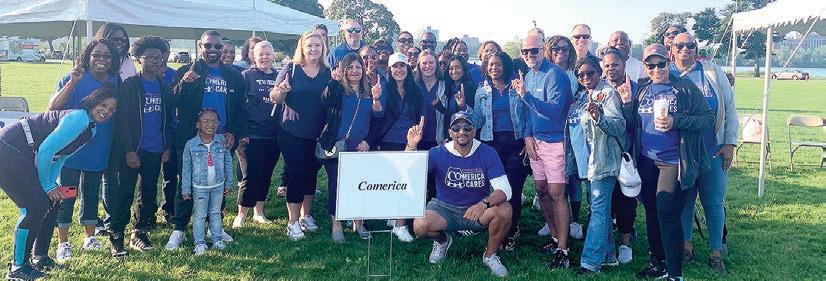
What a Federal Government Shutdown Could Mean for Detroiters? Comerica Celebrates 35 Years of
“This means focusing on building the pipeline of supportive housing and coordinating with the Continuum of Care on the delivery of critical resources such as emergency shelter, rapid rehousing, and diversion and prevention programs. It also means preserving and expanding affordable housing options for Detroiters of all incomes and improving housing stability though comprehensive service offerings available through the Detroit Housing Resource HelpLine and Detroit Housing Services Division within HRD.”

“The city and its partners offer a lot of great services to help Detroiters with their housing needs, but they don’t mean much if people don’t know how to access them,” said Mayor Mike Duggan. “Thanks to the efforts of our partners and the generous support of the Gilbert Family Foundation, we now have a simple process to guide residents to the right housing resource and a growing number of programs to help them.”
In May 2023, the City of Detroit launched the Detroit
From the days of the Great Migration when thousands of Black families flocked to Detroit in search of jobs and a better life, to the pivotal role they played in the city’s cultural and musical heritage, Black Detroiters have left an indelible mark on the city. However, in recent years, Detroit has experienced significant gentrification, which has raised concerns about the displacement of long-standing Black residents. Similar to a setting sun, there’s a rising spirit, and Black Detroiters are reclaiming their place in the city, despite the challenges posed by gentrification.
The Gilbert Family Foundation’s broader commitment involves pledging $500 million to support projects across Detroit over the next ten years, with housing initiatives being a significant part of their contribution.
passion for the city, and I just felt like I was a unifier. I could bring people together, and I also feel like I’m a person who knows how to
Notably, Detroit has witnessed a consistent decrease in recent years, with the number of unhoused residents steadi ly declining. In 2019, approximately 7,847 people were unhoused and entered the City’s community response system. In 2021, about 5,687 people experienced homelessness.
According to the City of Detroit, since the start of the fiscal year 2019 to 2021, Detroit saw a 28% decrease in the
As Wilkerson campaigned outside of Healing Spring Baptist Church on Hamilton, voters trickled in small numbers. This city of 7,000 residents is influential. It is in a key thoroughfare as Woodward runs through it from downtown to the suburbs.
There are five mayoral candidates this year, whereas in 2022, Glenda McDonald was unopposed in her pursuit of the office.
Wilkerson noted that, “I think that it’s good that we have choices. That’s the epitome of de-
During the Great Migration, thousands of Black families from the South came to Detroit in search of jobs in the booming automobile industry. Despite facing discrimination and segregation, they built vibrant communities on the city’s
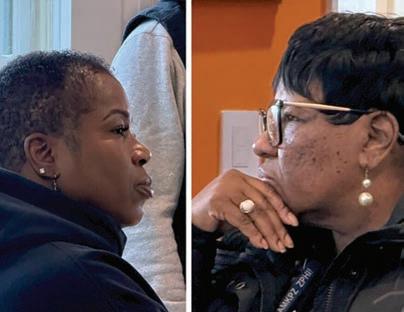
The rise in visitors to the Greektown area is evident in data from Placer.ai, a location analytics company specializing in visit trends and demographic insights through geolocation-enabled mobile devices. From May 1-Aug. 27, 2022, there were 1.3 million visits and 655,000 visitors to Greektown, according to Placer.ai. In the same period this year, these numbers increased to 1.4 million visits and 670,000 visitors.
As Detroit’s downtown area continues to attract both residents and visitors, the police department has implemented various enforcement measures to manage the increased population. Notably, metal detectors have been strategically placed throughout Greektown to deter the illegal carrying of firearms.
because of discrimination, but they were also coming because Black people was doing some stuff. When did Black people start doing things in the city? They started doing things in this area in the 1800’s. In the 1800’s the major thing that they were doing in Detroit is they were the leaders in the fight against slavery. The Underground Railroad is the root in the city of Detroit to all of this Black innovation
With two clear candidates in McDonald and Shamayim “Mama Shu” Harris, voters are divided. “The legacy residents want McDonald, but the new people want Mama Shu. There’s very clear lines,” one campaigner said.
However, another resident, a woman named Ennis, shared that she is supporting McDonald because she believes that she did make an impact during her first term. “I love Mama Shu,” she says, “But, I believe she has a lot on her plate with her foundation and Avalon Village—I would like to see her keep doing that.”
“We have strategically placed them at key points, “ Chief White explains. It has been a deterrent for some, and some have tested it. If you are legally carrying a weapon and carrying a CPL, have a great day. If you’re
She added, “I think McDonald did some good things and that she deserves four more years for that progress to continue.”
Wilkerson said that he wants any mayoral candidate to focus on transparency. “I think that it’s possible that we can deliver information to our constituency a little bit more transparent, but not only transparent, but digestible.”
mocracy. Right. So just to have not only choices but a wide variety of choices of people who have shown that they really care and have some commitment to the city, also. So to see that that’s kind of welcoming.”
people were coming to Detroit because Black churches were here, black schools were here, and its was Black businesses here,” said Jordon. “They were coming of course
He said that he feels the confusion when people walk away from city council meetings. “So if we can just be a little bit more intentional about how we get that information across, I think that we need to focus on that.”
the rights of all women are continued.

paring for this moment since the results of the 2016 election were final. We recently filed a law suit to stop the 1931 law from going into effect, and we’ve also asked the state courts to affirm that the Michigan constitu tion does already contain a right to abortion. Our advocacy arm, Planned Parenthood Advocates of Michigan, is a founding member of the coalition that launched Reproduc tive Freedom for All, a ballot initiative to affirm the right to abortion and reproductive freedom in the state constitution,” said Vasquez Giroux. “The bottom line is that we will do everything in our power to keep abor tion legal in Michigan, and if SCOTUS makes that impossible, we will do everything we can to ensure our patients can access the care they need.”
what the Supreme Court





self-abortions. Moreover, African American women and women of color, who already have a long-storied history with access and inclusion in medi-
islature adopts it.
officials work to ensure each woman who finds herself in the position to choose has access to care without the threat of legal action, many wonder
By Aaron Foley EDITOR-AT-LARGE
corporate boards to have more diverse representation and pass the legislation.
Residents in the 13th Congressional District could likely choose to advance a Democratic Socialist over a Democratic incumbent to square off against a Republican challenger in the general election this fall, the result of a closely watched primary indicative of changing attitudes toward progressive politics and a step toward fulfilling long-held hopes among party advocates to return the seat to Black representation.
Better collection and analysis of criminal justice data: BLAC recommends data collection and professional analysis be initiated with the assistance of our Attorney General, Michigan Commission on Law Enforcement Standards (MCOLES), Association of Michigan Prosecutors and other stakeholders to collaborate, collect and analyze data strategically.
Increase school funding: Statutory changes to increase the School Aid Fund revenue by at least $3.6 billion and establish a permanent weighted funding formula based on student and community needs and universal preschool (0-3).
utive races in 2020 and 2022.
What Thanedar’s end goal has been still confuses political insiders, but a path for McKinney to prevail in November could see the country’s largest Black-majority city have Black representation at the national level for the first time since 2023, when Michigan lost a seat in the U.S. House after the 14th District, last represented by Southfield’s Brenda Lawrence, was eliminated and its portions reallocated to remaining districts.
The health committee recommends reviewing state licensure policies to address the barriers that Black psychologists face in obtaining licensure in Michigan.
Donavan more than Shri, and you could say that my vote was more against Shri from my perspective.”
and she has carried those values throughout her entire career.” Sheffield also pointed to Benson’s administration of Michigan elections during an era of intense political pressure, threats against election workers and repeated efforts to undermine confidence in the voting process.
“As secretary of state, she helped make Michigan a national leader in fair elections,” Sheffield said. “I’ve watched Jocelyn lead with conviction and choose what is right even when it wasn’t easy.”
At the time the Chronicle went to print on election night, McKinney and Thanedar were neck-and-neck with nearly 35,000 votes counted.
Ban no-knock warrants: Urging the House Government Operations Committee to hold hearings on HB 5013 and other legislation that would ban or limit the use of noknock or quick knock warrants, and urging the state legislature to pass meaningful reform and advise Gov. Whitmer to sign the bill after the leg-
Reject censorship in history instruction: Encouraging Gov. Whitmer to ensure the goal for Michigan schools should be history instruction that is presented by professionals with the subject matter expertise, pedagogical skills, and judgment necessary to present complex information to students that are grounded in provable facts and add to the understanding of modern-day America.
McKinney, who currently represents portions of Wayne and Macomb counties in Michigan’s state house, could be on November’s ballot this fall as the Democratic nominee to represent the 13th, a role currently held by incumbent Shri Thanedar, whose third bid to retain the seat ended Tuesday night. McKinney will face Taras “T.P.” Nykoriak, a frequent ballot-hopper and the Republican Party’s nominee for this race.
the chancellor embraces.
Ensure equitable distribution of state health funds: Ensure all Michigan communities with a significant Black population receive adequate funds to address mental health issues.
“It will be so exciting and important for Donavan McKinney to represent us in Congress (if he wins),” Michigan Lt. Gov. Garlin Gilchrist II told th e Michigan Chronicle during a watch party for McKinney and other Democratic candidates at the IBEW 58 hall in the city’s Corktown neighborhood.
Protecting Black voting rights: Urge state officials to remain vigilant in the fight against schemes to disenfranchise Michiganders of color.
McKinney certainly is not Michigan or even Detroit’s first socialist; one could go as far back as late city councilman Ken Cockrel or as recent as sitting U.S. Rep. Rashida Tlaib. He is, however, arriving at a time when socialism among Democratic circles – and voting blocs – is being taken more seriously as not only a counter to conservatives but also a message to establishment Dems. Where socialists like Tlaib and New York’s Alexandra Ocasio-Cortez captured attention, McKinney and recently elected New York City Mayor Zohran Mamdani are capturing votes -- taking on anti-capitalist stances, diversifying their voter bases and loudly criticizing their peers on the same side of the aisle.
Increase mental health supports for the Black community: Recommending Michigan set a goal of increasing the number of Black mental health service providers by 20% each year over five years.
“Our movement united union workers and veterans, clergy and socialists, senators and representatives, city councilmembers and county executives, working people, mayors and school board presidents to show how the poorest district in the state can come together to defeat the richest lobbies and multimillionaires,” McKinney said. “I am so proud of all the work we have done together and so excited to see what the future holds.”
“I think of transformational leadership as a thoughtful approach that causes people to change but also causes the systems and circumstances they are operating in to change too,” Ivory said. “Transformational change doesn’t just ask people to do certain things; it asks them to change their view of what’s possible and excites them to drive that change together because they believe that what they’re doing will create positive change for everyone. That’s how entire systems change because
“BLAC members have worked hard to identify the needs of the Black community and we feel these recommendations will provide a solid first step towards breaking down barriers in education, community safety, health and business,” said BLAC Co-Chair Dr. Donna L. Bell.
Gilchrist, who himself is running for Secretary of State, only offered to endorse two candidates seeking office, McKinney being one of them. “To restore the seat that Charles Diggs sat in, one of the co-founders of the CBC [Congressional Black Caucus], and now have a Black Detroiter back in that seat would be important not just for Michigan’s congressional delegation, but to really anchor the CBC of the conference of the Congress.
people believe that they need to for themselves and others to live better lives.”
“I cannot wait to work with McKinney (if he wins) and how he’s going to be a fighter for our people,” Gilchrist added.
“Chancellor Ivery is a true transformational leader and an outstanding CEO, who is more than worthy of the CEO of the Year Award he just received, “ said Prof. James C. Mays, who teaches entrepreneurship and supply chain management at WCCCD’s Corporate College. “In his 27 years at WCCCD, Dr. Ivery has elevated WCCCD to become nationally recognized for excellence and innovation and preparing our students professionally and personally to do great things in the world.”
If Thanedar is defeated in the primary, it will mark the close – for the moment – of a bewildering career in Michigan politics, one that began out of ambiguity and ends with no clear ambition. Following a failed run for the governor’s seat in 2018, Thanedar, an Indian immigrant and chemicals entrepreneur who’d only moved to the state from Missouri eight years earlier, found another route to Lansing after winning the race to represent the 3rd District in the state House, before then turning his attention to D.C. and moving within the bounds of the U.S. House’s 13th District, winning consec-
BLAC will hold a virtual town hall meeting to discuss its policy recommendations on Thursday, May 12 at 4 p.m. Join BLAC and a virtual audience in discussing the recommendations to support the Black community.
At 34, McKinney also represents a wave of younger millennial and Gen Z-aged politicos whose left-of-the-left ideals have been increasingly embraced by voters who don’t mind the “socialist” part of Democratic Socialism – or conversely, adding to growing frustration with Democrats whose identifiers like “centrist” or “moderate” are silent.
Voters at Wayne County Community College’s polling place in downtown Detroit, which draws registrants from one of the city’s more age- and race-diverse areas, almost universally reflected that sentiment when speaking with the Chronicle after casting their ballots.
“I think Donavan is somebody who will be in the community, be connected, and folks in the district will know where he stands and where he is,” Detroit City Councilman Denzel McCampbell, a progressive Democrat, told the Chronicle at McKinney’s watch party. Like McKinney, McCampbell, a former Tlaib staffer, also leaned into socialist ideals to win a seat on council.
“What I’m really excited about is the constituent services aspect,” McCampbell says. “Some of the everyday issues have been missing in the 13th – I’ve heard people having issues with calling [the office] and being a true partner with all the federal, local and state governments. I think [McKinney] is going to be great at that, and I’m really excited to work with him in that way.”
BLAC is housed in the Michigan Department of Labor and Economic Opportunity. Members represent many professional backgrounds, including economics, law, public safety, health and wellness, arts and culture and media. They leverage their experiences and expertise to make recommendations to the governor on critical issues affecting the Black community.
“I can’t f*** with Shri,” said Joe, a voter who declined to share his last name, who chose McKinney over the incumbent Thanedar. “I agreed with
To learn more about BLAC and this upcoming event, visit www.michigan.gov/BLAC.
McKinney’s potential victory in tandem with a potential win for Abdul El-Sayed over Haley Stevens as the Democratic nominee to represent Michigan in the U.S. Senate shows a state flashing a new shade of blue that may seem familiar. Signs of a wave of socialism could linger as they did in 2016 when state voters chose then-presidential hopeful Bernie Sanders – who endorsed McKinney, El-Sayed, and a number of other candidates here – over Hillary Clinton as its initial Democratic choice for the White House.



Benson has served as Michigan’s secretary of state since 2019. Before entering statewide office, she served as dean of Wayne State University Law School from 2012 to 2016. Her tenure as secretary of state has made her one of Michigan’s most recognizable Democratic officials. She has overseen the implementation of voter-approved election changes, defended the state’s election system against false claims and promoted efforts intended to make Secretary of State services more accessible.
Michigan Democratic Party Chair Curtis Hertel said Benson’s record provides Democrats with a clear argument heading into the general election.
“As secretary of state, Jocelyn has saved Michiganders time and money by transforming a broken government system, and time and again, she’s stood up to Donald Trump to protect our fundamental rights and freedoms,” Hertel said.
He said a Benson administration would focus on lowering healthcare, utility and housing costs while building “an affordable future where everyone can stay and thrive in Michigan.”
Hertel also thanked Swanson for his campaign and called him “a champion for working people in Genesee County and across the state.”
Swanson entered the race with national recognition that grew after he marched with demonstrators during the 2020 protests following the murder of George Floyd. Despite that profile, he struggled to overcome Benson’s statewide name recognition, party support and fundraising strength.
Benson’s commanding primary win brings the Democratic contest to an end, but the larger race is only beginning. Michigan Democrats must now bring together voters across Detroit, its suburbs, small cities and rural communities while making the case that they should retain control of the governor’s office after eight years under Whitmer.
“Let’s take tonight’s landslide victory and get another come November,” said Benson.
Sheffield compared that challenge to the endurance Benson has shown while completing more than 40 marathons, including one while eight months pregnant.
“She is now running another marathon, a marathon to make life more affordable, from the grocery store to the gas pump,” Sheffield said. “A marathon toward a stronger and more prosperous Michigan.”
“The marathon continues,” she added, “but this time, we are all running beside her.”
get rid of the Immigration and Customs Enforcement (ICE) altogether.
El-Sayed was part of the group of officials that retooled Detroit’s health department after the city abandoned theHerman Kiefer public health complex after the 2008 financial recession. Under former Mayor Dave Bing in 2012, as the city prepared for municipal bankruptcy, the department handed over their work to a nonprofit called the Institute for Population Health.
El-Sayed also worked to increase support for a former Wayne County juvenile facility in Hamtramck where inmates reported experiencing violence and sexual assault.
His supporters include Wayne County Executive Warren Evans, Rev. Horace Sheffield, The Black Slate, the UAW and others.
Some who opposed El-Sayed pointed to him not backing former President Joe Biden, whose name on the ballot appeared without an opponent. Arab and Muslim Michiganders led the “Uncommitted” campaign during the February 2024 presidential primary, which saw more than a hundred thousand voters circle the “uncommitted” option on the ballot.
El-Sayed publicly endorsed former Vice President Kamala Harris days after Democrats announced she would be the party’s nominee instead of Biden — a move that drew criticism from some Arab and Muslim voters.
“I endorsed Vice President Harris because I understood that whether you saw this election from the eyes of a child in Detroit, or Wayne County where I was responsible, or you saw from the eyes of a child in Gaza, that Trump would have been worse, and we’re living through that now,” ElSayed said. “I also endorsed Uncommitted because at the end of the day, it’s a pretty crazy thing to ask a community to support a candidate who is using their tax dollars to drop bombs on their cousins.” Sam can be reached at srobinson@michronicle.com.
A3 | August 5-11, 2026
By Jasmine West
Polls have closed across Detroit and Downriver, ending a closely watched Democratic primary that will help determine who carries the voice of Michigan’s newly drawn 1st State Senate District to Lansing.
Justin Onwenu and former state Rep. Abraham Aiyash entered election night offering voters two different arguments for leadership. Onwenu has campaigned as a new, Detroit-rooted voice with experience in law, organizing and local economic development. Aiyash has asked voters to return an experienced progressive legislator to the state Capitol.
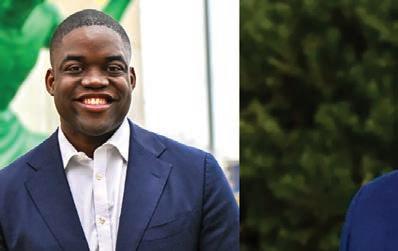
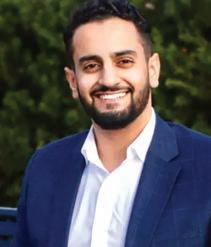
No winner had been declared as of publication.
The newly redrawn district includes part of Detroit and the Downriver communities of Ecorse, Lincoln Park, River Rouge and Wyandotte, requiring both candidates to build support across communities with distinct racial, geographic and political identities.
Speaking with the Michigan Chronicle after polls closed, Onwenu said his campaign’s greatest strength was its physical presence throughout the district.
“We’ve been present in our neighborhoods in every single part of our district, Detroit and Downriver,” Onwenu said. “We’ve knocked over 55,000 doors, and that doesn’t happen if you’re not focused on the issues that matter to people.”
He said residents repeatedly raised the cost of living, civil and voting rights, and the need for investment across neighborhoods that have too often gone without it.
“There’s been a lot of noise, but we’re focused on the issues that matter, and we’ve actually shown up in our neighborhoods,” Onwenu said.
Onwenu’s campaign attracted support from Detroit Mayor Mary Sheffield, mayors throughout the Downriver portion of the district, several labor unions and a large share of Detroit’s political leadership. The Michigan Chronicle also endorsed Onwenu ahead of the primary.
The strength of that coalition has made Black political representation one of the defining issues in the race. Detroit could enter the next legislative term without a Black member of the Michigan Senate, even though it remains the state’s largest majority-Black city.
Onwenu said that possibility carries consequences beyond the appearance of the Legislature.
“Representation is important, not just because representation matters, but because we have been ill-prepared to pass the Michigan
See SENATE DISTRICT 1 RACE Page A-4
By Jeremy Allen EXECUTIVE EDITOR
Michigan’s Aug. 4 primary elections stood for so much more than choosing nominees for November. It is emerging as one of the clearest tests yet of whether Democratic voters are prepared to accelerate a generational and ideological shift that could reshape the party heading into the 2028 presidential election.
Should progressive candidates score major victories in Michigan (progressive U.S. Senate candidate Abdul El-Sayed and 13th District Democratic Socialist Donavan McKinney led in their respective races at the time of print), the results would likely strengthen an argument already gaining traction among organizers, labor activists and younger Democratic voters: that the party’s future lies less with its traditional establishment and more with candidates embracing an unapologetically progressive economic agenda centered on universal health care, workers’ rights, affordable housing, corporate accountability, and aggressive action on income inequality.
Political observers have increasingly viewed Michigan’s Democratic Senate primary between El-Sayed and U.S. Rep. Haley Stevens as a referendum on the party’s competing visions. Stevens represents the more traditional Democratic coalition backed by many national party leaders, while El-Sayed has built his campaign around Medicare for All, campaign finance reform, and policies championed by U.S. Sen. Bernie Sanders and Rep. Alexandria Ocasio-Cortez. National media outlets have described the contest as one of the year’s most consequential Democratic primaries because of what it could signal about the party’s future direction.
The stakes extend well beyond Michigan because if progressive candidates can
demonstrate success in one of America’s premier battleground states, supporters argue it would undermine the long-held belief that left-leaning candidates can only win in safely Democratic districts or deepblue cities.
Instead, Michigan could become evidence that economic populism resonates with a broader coalition of working-class voters, young people, and communities frustrated by rising costs of living and widening wealth disparities.
“We have to break the way that algorithms have told us we have to think and start building with community again. What happens when you have community is that you have purpose. It’s not hard for you to say ‘I’m not just voting for me. I’m voting for them, and for them, and for them, and them, and them because these (people) are my community,’” El-Sayed said.
Recent polling suggests Democratic voters themselves have been moving left on many of those issues.
A Reuters/Ipsos survey released last week found that 71% of Democrats now identify as liberal, compared with 55% in 2012. Only 16% identify as conservative, down from 33% 14 years ago. Among self-described liberal Democrats, 76% say higher taxes on wealthy Americans and large corporations are essential, 71% support universal government-funded health care, and 72% prioritize expanded abortion access. The survey questioned 4,505 U.S. adults and carried a margin of error of approximately plus or minus two percentage points overall.
Those numbers suggest Democratic voters increasingly prioritize policies long associated with the party’s progressive wing. Michigan reflects those changing dynamics.
A Detroit Regional Chamber survey conducted earlier this year found El-Sayed performing particularly well among younger Democratic voters. Among likely Democratic primary voters ages 18 to 39, he attracted more than 40% support, more than triple the backing received by Stevens within that age group. The polling illustrated a widening generational divide that has become increasingly visible across Democratic politics.
Michigan would not be standing alone if progressive candidates continue gaining ground.
Across the country during the past year, candidates aligned with democratic socialism and the Democratic Socialists of America have steadily expanded their electoral footprint. New York City Mayor Zohran Mamdani’s rise has transformed him into one of the movement’s most influential political figures, while his endorsements helped propel several progressive congressional candidates to primary victories this summer.
Washington, D.C., also elected Janeese Lewis George as mayor following a campaign centered on affordability, housing and worker protections. Seattle elected Katie Wilson, another progressive city leader, while Atlanta’s Kelsea Bond became the first Democratic Socialist elected to that city’s council.
The Democratic Socialists of America says candidates it endorsed have won dozens of primary contests nationwide this year. According to publicly reported election tracking, DSA-backed candidates had secured victories in roughly 35 primary elections by late June, including several upset victories over entrenched incumbents. While those candidates represent only a fraction of Democratic officeholders nationwide, the results indicate the
By Dr. Darienne Hudson PRESIDENT/CEO UNITED WAY FOR SOUTHEASTERN MICHIGAN
Most of us know what it feels like to fall behind.
A surprise medical bill. A childcare issue that forces you to rearrange your entire week. An unexpected expense or unforeseen challenge that leaves you playing catch-up for the rest of the month.
For some families, those moments are temporary. For far too many of our neighbors, these struggles are an ongoing, daily reality.
Before we can close the gaps holding families back, we have to acknowledge how wide those gaps have become.
At United Way for Southeastern Michigan, we see these challenges every day. We hear from parents juggling work and the rising cost of necessities. Seniors stretching fixed incomes to cover food, medicine, and housing. Young adults struggling to keep up with today’s costs while trying to build a future for their growing families.
Before I came to United Way, I spent my career as a teacher and superintendent. I saw firsthand how financial instability shapes a child’s experience at home and in the classroom. When family budgets are strained and caregivers are stressed, children carry that burden with them.
The latest ALICE (Asset Limited, Income Constrained, Employed) Report, released by the Michigan Association of United Ways, reinforces what we’ve been seeing across the region for years. It shows that 41% of families across Macomb, Oakland, Washt-
enaw, and Wayne counties struggle to cover the cost of a no-frills monthly budget including only basic needs like food, housing and healthcare. Whether someone lives in Detroit, Warren, Pontiac, Ann Arbor, or any other community we serve, we hear the same message: working hard no longer guarantees financial stability.
By comparing basic expenses to what households are actually earning, the ALICE Report provides a much more accurate picture of financial hardship than traditional poverty measures. For example, the Federal Poverty Level (FPL) is primarily based on food prices established in the 1970s and indexed to inflation, meaning it doesn’t adequately capture the reality of rapidly rising essentials.
While 15% of households in southeast Michigan are reported to live at or below the poverty level, an additional 27% of households earn below the ALICE survival budget. Combined, these two numbers make up the percentage of total Michigan households living below the “ALICE Threshold.”
ALICE households—working families with earnings above poverty but less than the basic monthly survival budget—often make too much to qualify for many forms of assistance. Meanwhile, the rising of basics like food and gas are putting stability further out of reach.
In 2024, the annual survival budget for a family of four with two adults and two chil-
dren in southeast Michigan reached more than $97,000 as childcare costs alone increased by nearly 28% in a single year.
A family of four needs to earn $48.84 an hour to simply make ends meet. Yet, nine out of 10 jobs in our region pay a median wage far below what is needed to meet this allowance. Even households with two full-time earners often struggle to keep up.
The report is also a stark reminder that hardship does not affect everyone equally.
Nearly 62% of Black households in Michigan fall below the ALICE Budget Threshold as do nearly 73% of single parent-headed households
These numbers do not happen by accident. They reflect longstanding barriers to opportunity, education, employment, and wealth building that have continued to shape outcomes from the founding of our country to present day.
In addition to the ALICE report, calls to United Way’s 211 helpline provide a real-time view into what happens when families can’t make the budget math work.
Each day, our Southeastern Michigan 211 call center receives nearly 800 calls for help with utilities, food, housing, and other basic needs. Call volume has remained above pre-pandemic rates as the challenges families face remain very real.
Those we hear from are not asking for a shortcut. They are working, budgeting, sacrificing and doing what they can to get
ahead. The problem is that costs are rising faster than their paychecks.
Together, the ALICE Report and 211 data offer meaningful insight into the health of our community. Both point toward growing financial strain for far too many families. The impact of more than a third of local households facing financial struggles reaches far beyond individual families. Employers face workforce shortages and higher turnover. Children arrive at school carrying the weight of financial instability. Older adults delay needed care. Local economies lose momentum.
That is why United Way advocates for change in addition to providing support services. We champion policies such as the water affordability package and free school meals for all, while also supporting innovative solutions like RX Kids that help reduce financial strain on families. We bring together stakeholders from every community to solve complex challenges no single organization can solve alone.
Meeting this moment will require all of us. Employers, policymakers, educators, nonprofit organizations, philanthropists, and neighbors all have a role to play in ensuring every family in every zip code has an opportunity to thrive. We owe it to ALICE, and we owe it to ourselves. When families thrive, our communities thrive along with them.
Dr. Darienne Hudson is a high-energy nonprofit executive and life-long educator serving as President and CEO of United Way for Southeastern Michigan, located in Detroit and serving Macomb, Oakland, Washtenaw and Wayne Counties.
From page A-3
movement has become an increasingly organized force in Democratic primaries.
Taken together, those victories have fueled discussion about what Democratic leadership could look like after the 2026 midterms.
A successful night for Michigan progressives would almost certainly intensify conversations surrounding the party’s 2028 presidential nomination.
While it remains far too early to identify a favorite, progressive activists have increasingly argued that the Democratic Party should nominate a candidate who reflects its changing ideological base rather than relying on more established national figures. Ocasio-Cortez is frequently mentioned because of her national profile, fundraising strength and ability to mobilize younger voters, although several other progressive leaders could emerge over the next two years.
Michigan’s role won’t be to decide that race. Instead, it could serve as another piece of evidence that Democratic primary voters increasingly reward candidates running on ambitious economic agendas instead of incremental policy changes.
That distinction is important because presidential campaigns often take cues from successful state races. Winning messages become national talking points. Grassroots organizing models spread from one battle-
From page A-3
Voting Rights Act, to actually tackle this affordability and jobs crisis that we’re facing and to make sure that all of our communities and neighborhoods get investment,” he said.
“At a time when Detroit is in danger of having zero Black state senators, I think folks want to see Black leadership that’s prepared, that’s been rooted in our communities and that has a record of delivering.”
Aiyash has countered with his own record in Lansing, where he served in the Michigan House and became majority floor leader. He has criticized outside spending supporting Onwenu and argued that his legislative experience would allow him to begin working immediately.
Asked about those attacks, Onwenu said voters should judge the breadth of his endorsements and his record rather than the campaign’s negative exchanges.
“I was taught and raised a long time ago that if you have to cut other folks down and try to make yourself seem taller, then you must not be that tall,” Onwenu said.
“We’ve been focused on our positive vision,” he continued, pointing to support from district mayors, environmental advocates, unions and elected officials. “It’s
ground to another. Donor networks expand. Volunteer operations replicate successful strategies.
Michigan has frequently played that role in modern American politics.
Its diverse coalition of urban, suburban and working-class voters often provides an early indication of broader Democratic trends. Success there has historically carried influence beyond state borders because Michigan combines organized labor, large Black voting blocs, younger college-educated voters and suburban moderates in ways few other battleground states do.
If progressive candidates prove they can unite those constituencies under one electoral coalition, Democratic strategists nationwide would almost certainly study the formula.
The broader question would become whether Democratic voters are asking for different candidates or for a different governing philosophy focused more heavily on reducing economic inequality, expanding public investment, and confronting concentrated corporate power.
Michigan alone cannot answer that question, but if progressive candidates emerge from Tuesday’s primaries with significant victories, the state may provide one of the strongest signals yet that the Democratic Party’s ideological center of gravity continues moving left, setting the stage for a vigorous debate over who should carry that vision into the 2028 presidential campaign.
really easy to focus on social media videos, being negative. It’s a lot harder to develop a real record, and I think I’ve chosen the latter.”
Affordability remained at the center of Onwenu’s final message. Nearly one-quarter of the district’s residents live below the poverty line, while families across Detroit and Downriver continue to face pressure from utility bills, housing, groceries, transportation and other basic expenses.
“I think everything is about affordability,” Onwenu said. “Whether it’s groceries, whether it’s gasoline, it’s affordability.”
He identified protecting civil and voting rights as the other major concern driving the campaign, arguing that state lawmakers must be prepared to respond to actions coming from the Trump administration.
The results will determine which candidate advances to face Republican Patrick O’Connell in the November general election. They will also reveal which argument moved voters: Onwenu’s call for new, Detroit-centered Black leadership or Aiyash’s case for returning legislative experience to Lansing.
For now, both campaigns are waiting on the same people they have spent months trying to reach.
The voters have spoken. The count will determine whose message they trusted.

August 6, 2026
PUBLIC COMMENT PERIOD FOR THE STATE OF MICHIGAN’S DRAFT CONSOLIDATED ANNUAL PERFORMANCE AND EVALUATION REPORT (CAPER) AND HOUSING COMMUNITY DEVELOPMENT FUND (HCDF) ALLOCATION PLAN
Prior to submission of the Michigan Consolidated Annual Performance and Evaluation Report (CAPER) to the Housing and Urban Development (HUD) Office of Community Planning and Development, Michigan is required to publish the document for public review and comment. The Consolidated Plan proposes an action strategy by which those needs will be addressed, and the CAPER reflects activities undertaken between July 1, 2025 - June 30, 2026.
The annual action plans are funded by five formula programs covered in the Michigan Consolidated Plan (HOME, Community Development Block Grant, Housing Opportunities for Persons with AIDs, and the Emergency Solutions Grant). The Michigan State Housing Development Authority (MSHDA) is responsible for preparing the Michigan CAPER and soliciting comments from the public regarding the outcomes tied to the plan on an annual basis.
Per Public Act 346 of 1966, Part 125.1458, MSHDA must conduct three public hearings to receive public comment on the HCDF Allocation Plan before it is approved.
The comment period will commence on Thursday, August 6, 2026, and end on Tuesday, September 8, 2026. In-person public hearings will be held Tuesday, August 11, 2pm-3pm at MDOT North Region Office, 1088 M-32, Gaylord, MI 49735; Wednesday, August 19, 11am -12pm at the Grand Rapids State Office Building, 350 Ottawa Ave N.W., Grand Rapids, MI 49503 (Huron & Erie Conference rooms); and Wednesday, August 26, 10am-11am at Cadillac Place, 3028 W. Grand Blvd, Detroit, MI 48202 (Suite 4-600). A virtual public hearing will be held on Thursday, September 3, 1:30pm – 2:30pm via Microsoft Teams:
https://teams.microsoft.com/meet/290097188723875?p=GbuJhLTW9tO6sQW JcA
Meeting ID: 290 097 188 723 875, Passcode: ZW7Ly6Cg
The primary focus of the comment period is to receive comments regarding the draft CAPER report and the HCDF Allocation Plan. Copies of the CAPER report may be downloaded free of charge from the MSHDA website at: https://www.michigan.gov/mshda/neighborhoods/michigan-consolidated-plan. The draft 2027-2028 HCDF Allocation Plan can be on MSHDA’s website: https://www.michigan.gov/mshda/developers/housing-and-communitydevelopment-fund-hcdf
All interested parties are invited to submit written comments to the attention of Pierre-Denise Gilliam, 735 East Michigan Avenue, P.O. Box 30044, Lansing, MI 48909. Comments can also be submitted electronically to mshda-ndd@ michigan.gov, Attention: MSHDA Consolidated Plan Coordinator. Comments for the HCDF Allocation Plan may be submitted to mshda-ohs@michigan. gov. Written and electronic comments must be received no later than September 8, 2026.
Special Assistance: Feedback is encouraged from mobility-challenged individuals. Persons with disabilities needing accommodations for effective participation should contact the MSHDA Neighborhood Development Division at 517-335-2524 to request mobility, visual, hearing or other assistance.

A5 | August 5-11, 2026
By Dr. Anthony O. Kellum
CONTRIBUTING COLUMNIST
At the World Economic Forum in Davos, President Donald Trump raised a question that may define the future of the American housing market: Who will own the homes of the future? “America will not become a nation of renters,” Trump declared while promoting restrictions aimed at limiting certain large institutional investors’ access to federally supported mortgage financing for single-family homes. “Homes are built for people, not for corporations.”
The statement resonates because it identifies a growing anxiety in the American economy. Across the country, working families are competing not only with other prospective homeowners but with investment firms capable of making cash offers, purchasing homes in bulk and moving through transactions at a speed few ordinary buyers can match. For Black Americans, however, the question carries a deeper significance. The issue is not simply whether corporations should be allowed to purchase single-family homes. The more consequential question is whether policies intended to restrain institutional investors will create a genuine path to ownership for Black families or merely reduce one form of competition while leaving the larger barriers to homeownership intact.
For Black America, homeownership has never been only about having a place to live. It has been a means of building stability, accumulating wealth, creating inheritance and establishing a measure of economic independence. In a country where Black families were historically excluded from landownership, denied access to many neighborhoods and subjected to discriminatory lending practices, property has represented something larger than shelter. It has represented power. That is why the future of housing cannot be separated from the future of Black wealth.
The American home has always occupied two roles: It is both a place to live and an asset capable of producing opportunity. A home can provide security, but it can also create equity that helps finance education, support retirement, start a business or provide an inheritance to the next generation. This is the central idea behind Property is Power. Ownership gives families economic leverage. It provides choices and allows households to participate in the growth of the communities where they live rather than merely pay for the right to remain there.
Yet the housing market is increasingly shaped by institutions that view homes primarily as financial instruments. Large investors have purchased substantial numbers of single-family homes and converted many of them into longterm rental properties. Investors can bring capital to neglected neighborhoods, renovate distressed properties and provide needed rental housing. The problem is not investment itself. The concern is

By Jeremy Allen EXECUTIVE EDITOR
A new state law is expected to open the door for more private investment along Detroit’s waterfront by expanding the financing options available through the Detroit/Wayne County Port Authority.
Gov. Gretchen Whitmer signed Senate Bill 52 into law, authorizing the Port Authority to issue conduit, or “passthrough,” bonds for qualified economic development projects throughout southeast Michigan. The legislation allows the agency to help finance a broad range of waterfront developments, including manufacturing facilities, housing, entertainment venues, recreational projects, and other commercial investments.
The financing mechanism does not commit public dollars. Instead, private developers receiving the bond proceeds are responsible for repaying the loans, while the Port Authority serves as the conduit issuer.
Port Authority leaders say the new authority will help advance redevelopment projects on vacant and underutilized waterfront properties while creating opportunities for long-term economic growth.
“This legislation will give the Port Authority an important tool to accelerate the redevelopment of vacant industrial sites on the waterfront and encourage manufacturing, shipbuilding, large-scale entertainment and tourism,” said Jonathan C. Kinloch, chairman of the Detroit/Wayne County Port Authority Board. “This will create jobs in our
region and increase the economy for our entire state. As we increase tourism and manufacturing here in southeast Michigan, the entire state benefits.”
The legislation was sponsored by state Sen. Erika Geiss, whose district includes communities along the Detroit River. She said the law modernizes the Port Authority’s governing statute and expands its ability to facilitate investment in waterfront communities.
“With the signing of Senate Bill 52 into law, Michigan is giving the Detroit/Wayne County Port Authority the modern toolkit needed to compete on a global scale,” Geiss said. “This legislation is a gamechanger for how we invest in our Detroit River and waterfront communities. I look forward to seeing the redevelopment, job creation, and boosted property values to come.”
Conduit bonds are commonly used to help private entities secure lower-cost financing for projects that serve a public purpose. Under Senate Bill 52, neither the State of Michigan nor the Detroit/ Wayne County Port Authority is financially responsible for the debt. Bondholders are repaid solely by the private borrower, meaning taxpayers are not liable if a project fails.
That distinction has been a central point for Port Authority officials as they explain how the new financing authority will operate.
According to the agency, the law is intended to encourage private investment in strategic waterfront properties by reducing financing costs for eligible developments. Officials say those investments could support industrial ex-
pansion, business growth, new housing, entertainment destinations, and public access improvements along the region’s waterways.
Kinloch said the legislation also strengthens the Port Authority’s role in supporting redevelopment across southeast Michigan.
“Senate Bill 52 positions the Port Authority to play an even greater role in supporting economic growth along our waterways,” Kinloch said. “This financing tool will help unlock projects that create lasting economic value while protecting taxpayers and advancing the long-term vitality of our waterfront communities.”
The Detroit/Wayne County Port Authority oversees shipping and maritime economic development in Wayne County and along the Detroit River, one of North America’s busiest commercial waterways. In addition to supporting freight movement, the agency works with public and private partners on projects involving waterfront access, redevelopment, and maritime infrastructure.
With Senate Bill 52 now in effect, the Port Authority has added another financing option that officials say can help move eligible development projects from planning to construction without placing financial risk on taxpayers.
The agency also thanked Geiss and members of the Michigan Legislature for supporting the measure, saying the new authority will strengthen maritime infrastructure and help advance economic development opportunities across southeast Michigan.
By Mark S. Lee
CONTRIBUTING COLUMNIST
Black-owned media has long served as more than a source of news. It has been a trusted institution, an advocate for underserved communities, and an economic catalyst for entrepreneurs and neighborhood businesses. From covering the Civil Rights Movement to spotlighting local business success stories, Black media has consistently filled information gaps left by mainstream outlets. Today, however, the industry faces significant economic headwinds.
The challenges mirror those confronting local journalism nationwide. According to Northwestern University’s Medill School, the United States has lost more than onethird of its newspapers since 2005, with over 3,000 newspapers closing. As local news organizations disappear, communities lose trusted reporting, accountability journalism, and advertising platforms that connect businesses with consumers. Black-owned media has been especially vulnerable.
Historically, many Black newspapers and broadcasters have operated with smaller staff and tighter margins while serving audiences often overlooked by national advertisers. At the same time, advertising dollars have increasingly shifted to digital platforms, with Google, Meta, and Amazon capturing a substantial share of the digital advertising market. That shift has made it more difficult for community-based media organizations to compete for marketing budgets. Yet the audience remains significant.
According to Nielsen, Black Americans continue to be among the nation’s most engaged media consumers, spending more time with television, radio, smartphones, and social media than many other demographic groups. This represents tremendous purchasing power. The University of Georgia’s Terry College of Business estimates Black buying power now exceeds $2 trillion annually, making African American consumers one of the world’s largest consumer markets if considered independently. That creates an important business opportunity.
Mark S. Lee
For companies seeking authentic engagement with diverse audiences, Black-owned media provides something algorithms cannot: trust. Readers and viewers often have longstanding relationships with community newspapers, radio personalities, digital publishers, and local broadcasters who understand the issues affecting their neighborhoods. That trust translates into influence.
Black media has consistently elevated stories about small business owners, nonprofit organizations, educational opportunities, workforce development, and neighborhood investment. These stories not only inform readers but also stimulate local economic activity by connecting residents with products, services, and opportunities they might not otherwise discover. Detroit offers a powerful example.
For decades, Black-owned media outlets, in-
cluding the Michigan Chronicle, have chronicled the city’s entrepreneurs, faith leaders, educators, and civic organizations while helping businesses reach loyal audiences. They have celebrated economic development projects, highlighted minority-owned businesses, and provided platforms for discussions about housing, healthcare, education, and employment. Their role extends beyond journalism.
Black media helps preserve community history, strengthens civic engagement, and creates visibility for businesses that often lack multimillion-dollar advertising budgets. During elections, public health crises, and economic downturns, these trusted outlets frequently become essential sources of information. Innovation is also reshaping the industry.
Many Black-owned media organizations are expanding beyond traditional print and broadcast formats. Podcasts, newsletters, YouTube channels, streaming programs, and digital publications are helping publishers reach younger audiences while creating new sponsorship opportunities. Those embracing digital transformation are positioning themselves for long-term sustainability, even as the overall media landscape continues to evolve.
Still, sustainability requires investment. Supporting Black-owned media should not be viewed simply as a diversity initiative. It is a business strategy. Companies
invest in media because it delivers audiences. Black media delivers highly engaged audiences with deep community credibility—an asset that cannot be easily replicated through mass advertising alone.
Consumers also have an important role to play.
Subscribing to local publications, sharing stories, attending community events, and supporting advertisers who invest in Black-owned media all contribute to a stronger local information ecosystem. Every subscription and advertising dollar helps sustain journalists, photographers, editors, sales professionals, and publishers committed to telling stories that might otherwise go untold.
The future of Black media is ultimately tied to the future of local economies.
Strong communities depend on informed citizens, thriving businesses, and trusted institutions. Black-owned media strengthens each of those pillars by connecting people with information, opportunity, and one another.
As advertising models continue to evolve, one fact remains unchanged: communities need trusted voices.
The continued success of Black media is not simply about preserving history – it is about shaping the future of entrepreneurship, civic engagement, and economic opportunity for generations to come.
We invite readers, business owners, and future entrepreneurs to follow along, ask questions, and engage. If you have story ideas or questions, you can email Lee at mark@leegroupinnovation.com or visit leegroupinnovation.com.
From page A-1 what happens when ownership becomes too concentrated.
When large institutions acquire and hold substantial numbers of single-family homes, fewer properties may remain available for families seeking to buy. Those homes can become long-term rental assets, allowing institutional owners to collect rental income and benefit from future appreciation. The families living in those homes may receive the stability and flexibility of rental housing, but they generally do not build equity or share in the property’s increasing value. Over time, this can concentrate more of the wealth created by housing in the hands of large investors rather than among the households and communities where the properties are located. The concern, therefore, is not rental housing itself or the existence of investors, but whether the growing concentration of ownership limits opportunities for families who want to purchase homes and build long-term wealth through property ownership.
Trump’s proposed restrictions appear designed to address part of that imbalance. But they are not prohibited on institutional ownership. They do not prevent large investors from purchasing homes with cash, using private financing or relying on financial structures outside the conventional mortgage system. Even so, the policy signals an important principle: The American housing system should not be organized in a way that consistently gives corporate portfolios an advantage over families seeking a place to call home.
That principle deserves broad support. But principle alone will not create homeowners.
If institutional demand declines, more homes may become available to individual buyers. Black families could benefit, particularly in the lower and middle segments of the market, where first-time buyers often face the strongest competition. Yet a home is not truly accessible merely because an investor is no longer bidding on it. The prospective buyer must still qualify for financing, have sufficient income and acceptable credit, and possess enough savings to cover the down payment and closing costs. The buyer must still contend with high interest rates, rising insurance costs and a limited supply of attainable homes.
Reducing competition does not automatically create access.
That distinction is critical because many Black families face a challenge that is not simply one of income but of accumulated wealth. A family may be able to afford a monthly mortgage payment while lacking the savings required to purchase the home. A first-generation buyer may have no family equity to draw upon for a down payment or emergency expenses. Another family may have a strong record of paying rent but lim-
ited traditional credit history. The nation cannot simply tell corporations to step aside and assume that families will automatically be able to step forward. Families must also be given the tools to compete.
That requires a broader national ownership agenda one that includes meaningful down-payment assistance for qualified first-generation buyers, greater access to responsible small-dollar mortgages and policies that encourage the construction of attainable homes rather than concentrating on new development at the highest price points. It also requires a more serious commitment to rehabilitating vacant and distressed properties for owner-occupants. In communities where affordable housing already exists but has fallen into disrepair, public policy should help families acquire and restore those homes rather than allowing them to become automatic opportunities for institutional acquisition.
The mortgage industry must also continue to explore responsible ways of recognizing the financial realities of modern households. Underwriting standards should remain sound, but access should not be unnecessarily limited by systems that fail to account for self-employed borrowers, entrepreneurs, non-traditional income or strong histories of rental payment. The objective is not to weaken lending standards. It is to ensure that responsible borrowers are not excluded because the housing finance system has failed to evolve.
There is also a fundamental tension at the center of the housing debate. Policymakers want homes to become more affordable, but they also want to protect the wealth that existing homeowners have built through appreciation. Both goals are legitimate. For many Americans, a home is their largest asset. A dramatic decline in property values could erase household wealth, destabilize communities and create broader economic harm. But rising home values have different consequences depending on whether a person already owns property. For an existing homeowner, appreciation may represent growing wealth; for a renter trying to buy, appreciation may represent a moving target. The same increase in value that strengthens one family’s balance sheet may place ownership further beyond the reach of another.
This is particularly important for Black Americans because the racial wealth gap means that many Black families enter the housing market with less inherited wealth and fewer resources available to overcome the initial costs of ownership. The answer is not to destroy the equity current homeowners have earned, nor is it to accept a future in which ownership becomes increasingly concentrated among corporations and the already wealthy. The challenge is to protect the wealth of existing homeowners while expanding the ownership economy for those who have been left outside it.
That will require more housing, more attainable housing, more accessible financ-
ing and a more deliberate effort to help first-generation buyers build assets. It will also require measuring housing policy by outcomes rather than rhetoric. How many new homeowners were created? How many first-generation buyers entered the market? How many families moved from renting to owning? How much wealth remained within historically underserved communities? Those questions matter more than political declarations.
Renting is not a failure. Many Americans rent by choice, and rental housing will always be an essential part of a healthy economy. The danger arises when people who want to own are permanently prevented from doing so by rising prices, institutional competition and a financial system that rewards existing wealth while making it difficult to build new wealth. A nation of renters is not defined by the existence of renters. It is defined by the disappearance of meaningful pathways to ownership.
For Black America, the stakes are especially high. The history of housing has been inseparable from the history of exclusion. The consequences of redlining, restrictive covenants and unequal access to credit did not disappear when those practices became illegal. They continue to influence wealth, homeownership and access to capital. Understanding that history is not an argument for remaining trapped by it. It is an argument for designing policies capable of pro-
ducing a different future.
Trump’s declaration that America will not become a nation of renters should therefore be understood as the beginning of a policy conversation, not its conclusion. Restricting institutional investors may be a necessary step, but it is not a complete solution. America must do more than limit corporate competition; it must expand family ownership. It must create pathways for first-generation buyers, make small-dollar mortgages more available, increase the supply of attainable homes and help responsible borrowers overcome the down-payment barrier. It must also ensure that the wealth created through housing is not increasingly concentrated in the hands of institutions while working families remain permanent tenants.
The future will belong to those who own assets. The question is whether ordinary Americans and particularly Black Americans will have a meaningful opportunity to participate in that ownership economy. Property is more than an asset. It is security, inheritance and economic independence. It is the power to shape not only where a family lives, but what that family can pass forward.
Property is Power! is a movement to promote home and community ownership. Studies indicate homeownership leads to higher graduation rates, family wealth, and community involvement.

The Michigan State Housing Development Authority (MSHDA) is opening the Project Based Voucher (PBV) waiting list for Lee Plaza I and Lee Plaza II, located at 2240 W Grand Blvd, Detroit, MI 48202.
The property includes 29 one-bedroom apartments.
You may qualify if you are aged 55 or over, your household income is at or below 30% of the Area Median Income for Wayne County and your household meets the program’s requirements for individuals or families experiencing homelessness or in need of supportive housing services.
The waiting list opens August 5, 2026, and will remain open until further notice.
Beginning August 5, 2026, inquiries will be accepted by United Community Housing Coalition. To schedule an eligibility appointment, call (313) 946-1183 on Monday-Friday from 10:00am to 5:00pm.


By Jasmine West
Basement flooding is no secret in Detroit.
For generations of homeowners, a major rainstorm has meant more than watching water rise along the curb. It has meant rushing downstairs, checking the drain, moving furniture and hoping sewage or stormwater does not force its way into the basement.
When the water does come, the damage can be immediate. Furnaces, washers, dryers, family photographs, children’s belongings and finished living spaces can be destroyed. Then comes the cleanup, the insurance calls, the repair bills and the lingering fear every time heavy rain returns.
For approximately 1,200 households on Detroit’s west side, city officials say a newly completed $40.4 million stormwater project should offer greater protection from that familiar headache.

Mayor Mary Sheffield joined Detroit Water and Sewerage Department
Director Gary Brown,
Deputy Director Sam Smalley and community leaders to mark the completion of the Far West Detroit Stormwater Improvement Project, the largest green stormwater infrastructure project DWSD has completed to date.
The project is designed to keep more than 119 million gallons of stormwater each year out of Detroit’s combined sewer system. That is enough water to fill more than 171 Olympic-size swimming pools.
By redirecting and slowing rainwater before it reaches already burdened sewer pipes, the project is expected to lower the risk of weather-related basement backups for homes in the Far West neighborhood while reducing sewage overflows into the Rouge River.
“This $40 million project is another major example of how the City of Detroit is investing in neighborhood infrastructure to address challenges residents have complained about for years,” Sheffield said. “Thanks to this investment and DWSD’s leadership, 1,200 homeowners in this area won’t have to worry their basement is going to flood the next time we have a major rainstorm.”
Sheffield said that protection means greater peace of mind for families and could also strengthen home values in the neighborhood.
The project created a new storm sewer network that redirects runoff from approximately 213 acres of the surrounding community into two detention basins built inside Rouge Park near Warren Avenue and Outer Drive.
The basins temporarily hold stormwater, allowing it to move more slowly and filter naturally before being released into the Rouge River through a new outfall. Without that separation, much of the water would enter the same combined system that carries sewage, increasing pressure on pipes during heavy storms.
That pressure matters in Detroit, where intense rainfall can overwhelm portions of the sewer system and push water back toward residential properties.
“Every gallon of stormwater we can keep out of the combined sewer system creates additional capacity in our pipes and reduces the risk of basement backups for our customers,” Smalley said.
The work included the installation of more than 24,000 linear feet of new storm sewer, more than 14,500 feet of replacement water main and the rehabilitation of more than 15,700 feet of sanitary sewer through sewer lining.
Crews also completed 41 sanitary sewer repairs, disconnected downspouts at 400 homes, constructed the Rouge Park basins and built a new stormwater outfall along the Rouge River.
Construction began in 2022 after years of planning and community engagement involving residents, the Far West Civic Association, Friends of Rouge Park and other neighborhood stakeholders. Although the project was expected to take five years, it was completed in four.
Brown said the investment provides immediate relief in a neighborhood that has historically experienced serious flooding while supporting broader improvements across Detroit’s aging water and sewer system.
“This project represents a more resilient sewerage system and demonstrates DWSD’s commitment to investing in sustainable, long-term solutions to reduce flooding,” Brown said.
Since 2019, DWSD has increased its annual capital investment from approximately $100 million to more than $220 million, according to the department. The agency has also used grants and regional partnerships to move infrastructure projects forward.
The Oakland County Water Resources Commission helped secure funding because the Far West project also reduces pressure within the combined sewer system serving the Evergreen-Farmington Sanitary Drain Drainage District.
The project arrives as Detroit continues to confront the limits of infrastructure built for another era and the growing threat of heavier rainstorms.
Green stormwater infrastructure cannot prevent every flooded basement or eliminate every risk across the city. But in Far West Detroit, the project represents a shift from repeatedly responding to damage after the rain toward building protections before the next storm arrives.
For families who have spent years listening for the sound of water rising below their homes, that preparation can mean the difference between a storm outside and a disaster inside.
The Far West project has been a long time coming for residents who have spent years bracing for what the next hard rain might bring.
Its completion is worth recognizing. But the true test will come during the storms ahead, when residents find out whether the basins, pipes and new drainage system deliver the protection they were promised.
And beyond the 1,200 homes expected to benefit, families across Detroit remain in limbo. They are still checking their basement drains, moving belongings off the floor and wondering whether the next major infrastructure investment will finally reach their block.
For them, the Far West project is both a sign of progress and a reminder of how much work remains. Relief has arrived for one neighborhood. Thousands of other Detroit homeowners are still waiting for theirs.

By Jeremy Allen EXECUTIVE EDITOR
Michigan’s outbreak of cyclosporiasis has surpassed 10,000 reported cases, marking another milestone in what state health officials say is the largest outbreak of the intestinal illness ever recorded in the state.
As of Friday, July 31, the Michigan Department of Health and Human Services (MDHHS) reported 10,773 cases, an increase of 387 cases from the previous day. The outbreak has resulted in 193 hospitalizations, although no deaths have been reported. Health officials continue to investigate the source of the infections while urging residents to take precautions with fresh produce.
Cyclosporiasis is caused by the parasite Cyclospora cayetanensis, which spreads through food or water contaminated with human fecal matter. Typically, Michigan deals with about 50 cases per year. Symptoms typically include prolonged diarrhea, stomach cramps, nausea, fatigue, loss of appetite, and weight loss. Illness can last for weeks if left untreated.
The outbreak was first identified in late June after more than 170 cases were reported across several southeast Michigan counties, including Wayne, Washtenaw, Monroe, Lenawee, Livingston, Jackson and Shiawassee. Michigan typically records about 50 cyclosporiasis cases
during an entire year.
Wayne County has remained one of the areas with the highest number of reported infections since the outbreak began, with nearly 1,400 reported cases as of the end of July.
Early in the investigation, Wayne County health officials said they were tracking dozens of potential cases as the illness spread across southeast Michigan. As case counts climbed statewide, state officials continued to identify Wayne County among the counties with the greatest number of infections.
The outbreak has had a significant impact on public health agencies across metro Detroit. Local health departments have devoted staff to interviewing patients, identifying foods consumed before illness, and working with state and federal investigators to trace potential sources of contamination. Investigators have continued conducting case interviews as new reports arrive daily.
The U.S. Food and Drug Administration and the Centers for Disease Control and Prevention are investigating several outbreaks linked to fresh produce. One major investigation has connected illnesses in multiple states to iceberg lettuce served at Taco Bell restaurants and supplied by Taylor Farms de Mexico. Michigan officials have also said additional sources may be contributing to the state’s unusually large number of cases because not every patient reported eating the
same foods before becoming sick.
State health officials continue advising residents to wash fresh fruits and vegetables before eating them, although experts note that the parasite can be difficult to remove because it adheres to produce and is resistant to many disinfectants. Cooking produce to appropriate temperatures is considered the most effective way to kill the parasite.
Medical providers are also encouraging patients experiencing prolonged diarrhea lasting several days to seek medical care. Diagnosis requires a specific laboratory test because routine stool testing does not always detect Cyclospora. The illness can be treated with prescription antibiotics once it is identified.
The outbreak has expanded rapidly over the past month. Michigan reported fewer than 600 cases during the first week of July before the total climbed to nearly 1,000, then exceeded 3,300 by mid-July. The statewide total crossed the 10,000 mark last week and continues to increase as additional reports are confirmed by public health officials.
MDHHS continues updating case counts as laboratories report new infections and investigators monitor the outbreak across Michigan. Health officials are asking anyone who develops symptoms after eating fresh produce to contact a healthcare provider and cooperate with public health interviews to help identify the source of the outbreak.
By Jeremy Allen EXECUTIVE EDITOR
Wayne County Treasurer Eric Sabree is applauding the signing of new legislation by Gov. Gretchen Whitmer that preserves two tax relief programs designed to help homeowners avoid foreclosure by reducing the cost of paying delinquent property taxes.
The legislation extends the legal authority for county treasurers across Michigan to continue offering installment payment agreements and interest reduction programs that were set to expire. Without legislative action, county treasurers would have lost the ability to offer the programs that have assisted thousands of homeowners in Wayne County.
“This is a victory for taxpayers, property owners and communities in Wayne County,” Sabree said in a statement. “Without this action by the Governor and the Legislature, these vital payment plans would have ended and left us unable to help property owners keep their homes while they worked to pay delinquent taxes.”
Sabree thanked Whitmer, members of the Michigan Legislature, Sen. Stephanie Chang, House Speaker Matt Hall, the Michigan County Treasurers Association and county treasurers statewide for supporting the legislation.
The law allows county treasurers to continue entering into Tax Foreclosure Agreements with eligible residential property owners who have fallen behind on property taxes. It also preserves Delinquent Tax Reduction programs that reduce the amount owed through lower interest, penalties and fees for homeowners who qualify for a local poverty exemption.
In Wayne County, those programs operate as Pay As You Stay (PAYS) and the Interest Reduction Stipulated Payment Agreement (IRSPA). According to the Wayne County
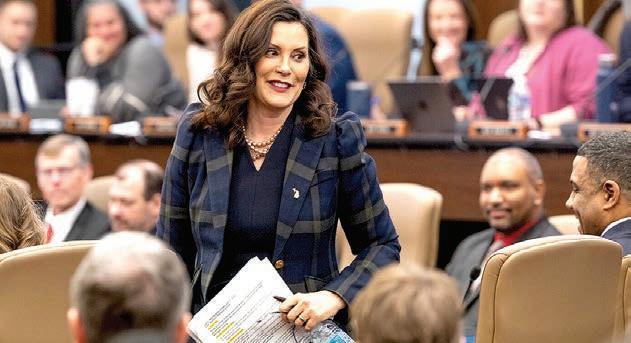
Treasurer’s Office, enrollment for the IRSPA program will reopen Aug. 1, while enrollment for the PAYS program is expected to begin in September, pending participation by local units of government.
Earlier this year, the Michigan Chronicle reported that the future of the IRSPA program was uncertain because the state law authorizing it was scheduled to expire on June 30 unless lawmakers acted. At that time, Sabree encouraged eligible homeowners to enroll before the deadline while legislative action remained pending. The program reduces the interest rate on eligible delinquent property taxes from 18% to 6%, allowing homeowners to consolidate multiple years of delinquent taxes into a more manageable payment agreement.
The Michigan Chronicle also reported in March that the Treasurer’s Office expanded online services to help residents enroll in taxpayer assistance programs before foreclosure deadlines. Those services included online applications for payment plans, eligibility information and appointment scheduling for residents seeking assistance with delinquent property taxes.
Wayne County’s taxpayer assistance programs include several options based on eligibility.
The Interest Reduction Stipulated Payment Agreement (IRSPA) is available to eligible owner-occupants
and reduces interest charges while combining delinquent tax years into a single payment plan. The Pay As You Stay (PAYS) program provides additional relief for eligible homeowners by reducing eligible interest, penalties and fees. Other payment plan options remain available for taxpayers with different circumstances through the Treasurer’s Office.
Sabree said continuation of the programs allows the Treasurer’s Office to continue working with homeowners facing financial hardship while providing a pathway to resolve delinquent taxes.
“We appreciate the Governor’s support along with Senator Chang, Speaker Hall and the Legislature’s commitment to work with the County Treasurer’s Association and individual treasurers across the state,” Sabree said. “We are grateful that we can continue these important programs which have already helped thousands of property owners in Wayne County stay in their homes and keep their property.”
Residents seeking information about payment plans or delinquent tax assistance can contact the Wayne County Treasurer’s Office or review eligibility requirements through the county’s payment plan resources. Enrollment for IRSPA begins Aug. 1, with PAYS enrollment expected to follow in September after participating local governments complete the implementation process.


B1 | August 5-11, 2026
By Miss AJ Williams
You’ve probably said this at least once this year — I need to protect my energy. Maybe you said it before letting go of a friendship that faded in a way that didn’t feel right. Maybe you said it before giving a family member some space, or muting someone you used to text every day. Maybe you thought it quietly before turning down an invitation because you knew you’d be around people who no longer felt like yours.
You weren’t wrong to feel that way. That instinct is real and comes from a true place. Not every relationship should have full access to your inner world. Not every space deserves your full attention. At some point, you realized your energy isn’t endless, and that was a tough lesson. You started choosing who gets close to you with real intention. This approach is based on self-awareness: you decide what comes into your life and what doesn’t. That’s not a mistake—it means the practice is working.



You got better at it. You noticed who left you feeling drained. You learned to recognize what didn’t feel right. You walked away before things became complicated. Most of the time, that was a sign of growth.
But here’s something to pause and consider. Even a good practice can end up carrying more than it was meant to.
Think back to the last time you talked about protecting your energy. Was it always about a relationship that had truly ended? Or was there a time when it covered up something else—a conversation you avoided, a friend you weren’t honest with, a partner who needed more from you than felt safe to give? Maybe you called your distance discernment before you really looked at what you were protecting yourself from. Maybe a community would have asked something real of you, something that meant staying even when it was uncomfortable, but you left and called it sovereignty because that felt better.
This isn’t about doing the practice wrong. Sometimes, a good framework can quietly make space for old fears once those fears learn the right words. Withdrawal can be self-care, but it can also be self-protection disguised as self-care. Silence can be discernment, but it can also be a kind of discernment that never gets challenged. Leaving can be sovereignty, but it can also be leaving just before a relationship would have asked you to grow. Both things can be true and use the same words. The real difference is what’s underneath, and that’s not always obvious.
Real growth isn’t supposed to feel easy. Intimacy brings some discomfort. Real relationships need the kind of vulnerability that makes you nervous before a tough conversation. Community asks you to stay and work things out when someone lets you down, instead of just leaving. None of this feels comfortable, but it’s how real change happens, along with the wisdom to know when it’s time to move on.
So here’s a question to really think about, even if it’s uncomfortable. The energy you’ve been protecting yourself from—is it always someone else’s? Or is some of it your own discomfort with what real intimacy and growth require from you?
This isn’t about going back to relationships you’ve truly outgrown or ignoring boundaries that came from real understanding. Some things you left behind were right to leave. But maybe not everything. Deep down, you probably already know the difference, even if you haven’t faced it yet.


By Miss AJ Williams
From vineyard coffee flights and lavender-infused treats to a memorable farmstand smashburger, Petoskey’s food scene is shaped by families who work the land and welcome visitors to enjoy what they’ve grown.
Traverse City might be Northern Michigan’s best-known food and wine destination, but Petoskey gives you a good reason to keep driving a bit farther north.
Here, the food story goes beyond fancy restaurants or tasting rooms. It reaches into lavender fields, organic gardens, and family vineyards. You’ll find it in a basket of fresh garlic, a glass of local wine, or a burger topped with produce grown right nearby.
Even more, Petoskey’s flavors are tied to the people behind them. Farmers, winemakers, and chefs do more than serve food—they help visitors see where it all comes from.
You can feel that connection right away at Petoskey Farms, where the tasting room overlooks rows of lavender and grapevines. Music floats through the air as the farm’s little baby doll sheep wander around, looking more like tiny, woolly backup dancers than livestock.


I had two flights in front of me, a set of lattes and four wines arranged in a neat vertical display. This moment captured what makes Petoskey Farms special. It’s not just a winery that also serves coffee. It’s a vineyard, coffeehouse, lavender farm, and a place where everyone feels welcome, whether you drink or not.
My favorite was the Petoskey White, which was light and refreshing—perfect for a sunny afternoon. The LOVE Sangria was the opposite: rich, bold, and ideal for sharing with friends.
The Roush family started building the property in 2012 after buying what used to be a hayfield. They planted 1,600 vines at first and later grew to about 11 acres of vineyard. As time went on, they added patios, wood-fired pizza, lavender, the coffeehouse, and the sheep.
Alaina Roush, the owners’ daughter, said that each new feature has made the farm experience richer and more sustainable. The sheep are cute, but they also have jobs. They eat the grass, fertilize the soil, and help aerate it with their hooves. Their wool might even be turned into pellets that hold water and slowly release it into the sandy soil.
This is a real example of how the farm tries to make its grapes, lavender, animals, and soil all work together.
The coffeehouse has its own family story. Alaina’s sister, Natalie, came up with the idea after college, using her barista experience. The family turned their former home into a café, giving visitors another way to enjoy the farm and helping the property become more than just a place for wine.
That idea of agriculture as an experience continued at Lavender Hill Farm
By Jeremy Allen
EXECUTIVE EDITOR
The proposal that ignited months of public debate over smoking, public health, and the future of Detroit Metropolitan Wayne County Airport has come to an abrupt end.
The Wayne County Airport Authority has canceled its request for proposals seeking a bar lounge concept that would have included food service, retail cigar sales, and an enclosed cigar smoking area inside Detroit Metropolitan Airport. The announcement, made during the authority’s board meeting in July, came from WCAA Chief Executive Officer Chad Newton, who said the decision followed an extensive internal review and was driven by the airport’s current financial outlook.
“I have accepted the recommendations from my key executives tasked to conduct due diligence on the cigar lounge concession concept,” Newton said. “After extensive analysis, they concluded that in light of the temporary financial and economic uncertainty caused by the closure of Spirit Airlines, now is not the time to promote novel or untested concessions at DTW. I agree with the conclusion and have directed that the RFP be cancelled.”
The request for proposals, issued on Oct. 1, 2025, called for a concession that combined a bar and restaurant with retail cigar sales and a dedicated enclosed smoking lounge. Any successful bidder would have been required to install a state-of-the-art ventilation and air handling system designed to reduce smoke exposure to the greatest extent possible.

Instead of becoming another airport concession,
has remained smoke-free since Michigan’s Smoke-Free Air Law took effect in 2010. Critics argued that introducing any indoor smoking – even inside a private, enclosed lounge away from the
The opposition grew steadily over the past year.
The Wayne County Commission approved a resolution urging the airport authority to abandon the proposal, citing concerns about worker safety and public health. Around the same time, members of the Michigan House of Representatives introduced a resolution encouraging the authority to halt the project, arguing that reopening the door to indoor
in Boyne City. Owner Bill Mansfield quickly showed that lavender isn’t just one kind of purple plant.
The 33-acre farm grows about 13,000 plants from 30 different varieties, all chosen to survive Northern Michigan winters. Since these types bloom at different times, Mansfield says the peak season isn’t just one perfect day—it’s a journey that lasts several weeks.
Some plants have sweet buds that are great for cookies and ice cream. Others have scents perfect for eye pillows and candles. Some types are best in gin or sparkling drinks, while the darkest blossoms are used as cocktail garnishes or dried decorations.
The takeaway was clear — lavender can do a lot.
You could see that variety in the farm’s shop. I was drawn to the Lavender Moon candle, lavender-sandalwood lotion, fresh lavender bundles, homemade lavender oil, and a special lavender tonic. The beeswax lotion, made with help from the farm’s bees, was another reminder that nearly everything on the property has a purpose.
Lavender Hill is also a venue, a shop, and a place for the community to gather. Its restored barn hosts weddings, dinners, and live shows, bringing together farming and entertainment. Walking through the barn, I could easily imagine a summer night there, with music inside and lavender fields just outside.
Mansfield believes education is a key part of agritourism. People might come for the photos, the scent, or the shopping, but they leave knowing that each type of lavender has its own uses in food, scent, and business. The farm’s labyrinth adds a wellness aspect—a hilltop maze for slow walks, reflection, and meditation.
Of course, not every great taste on this trip came from a wine glass.
At Bear Creek Organic Farm, the highlight was a grass-fed smashburger that might have been my best burger all summer. It started with a one-third-pound patty from Lakeside Farm, topped with Bear Creek’s organic caramelized onions, ripe tomato, and mixed greens. Cheddar, a potato bun, and Great Lakes potato chips rounded out the meal, but the real star was the farm’s Black Garlic Everything Sauce. This rich, garlicky aioli brought the whole burger together.
The food truck lets owners Brian Bates and Anne Morningstar show farm-to-table eating as it happens. Visitors don’t have to guess what fresh produce could become— they can taste it for lunch. The on-site market takes that connection further, offering produce for people to bring home to their own kitchens.

I left with big, fresh garlic bulbs and Bates’ words stuck in my mind: “We’re changing the world one tomato at a time.”
It’s a charming phrase, but it also shows how serious Bear Creek is about their work. Changing how people think about food doesn’t always start with a lesson on farming. Sometimes, it starts with a great burger.
At Boyne Valley Vineyards, which is family-owned, the Alpine Blanc surprised me and could easily compete with my usual sauvignon blanc. The winery’s treehouse tasting area is a cozy spot to relax alone or share a bottle with someone special, and their burnt ends add a smoky, rich touch to the visit.
The family’s story makes the vineyard stand out. Each person handles a different part of the business, from hospitality to other jobs, but everyone, as I was told, “touches the vine.” That saying sums up Petoskey’s food community. People may have different roles, but the land connects them all.
Local restaurants keep those flavors going into the evening. At Chandler’s Restaurant & Wine Cellar, the scallops with seasonal ramp sauce were worth savoring. At the Gypsy Spirits Tasting Room, the Strawberry Rhubarb Gin was a tart, botanical treat. The pork breakfast sausage at Hotel Perry’s Rose Room was one of the best I’ve had, and the duck confit at the 1911 Restaurant at The Terrace Inn deserves a spot on any Northern Michigan tasting list. The trip’s food journey tied together markets, vineyards, restaurants, and producers all around Petoskey.
Petoskey doesn’t have to copy Traverse City to get noticed for its food. Its real strength is in the personal touches—the owner talking about the plants, the daughter pouring the wine, the farmer serving vegetables grown right nearby.
The meals matter. The wine matters. But it’s the people behind them—the families who care for the vines, work the soil, and change the world one tomato at a time— who give Petoskey its lasting flavor.
smoking at DTW conflicted with the state’s longstanding public health policies.
Public health organizations also mobilized against the proposal.
Americans for Nonsmokers’ Rights, the Center for Black Health and Equity, and the African American Tobacco Control Leadership Council were among the groups that urged airport officials to reject the concept. In public statements and written comments, advocates argued that no ventilation system can eliminate the health risks associated with secondhand smoke and warned that airport employees should not be expected to work near an indoor smoking facility.
Polling conducted during the debate reflected similar concerns among Michigan voters. A statewide EPIC-MRA survey found that a substantial majority opposed adding a cigar lounge to Detroit Metropolitan Airport.
Community organizations encouraged residents to submit comments to the airport authority, and nearly 100 written responses were eventually filed, with most opposing the proposal. Health professionals, local residents, and airport workers all weighed in, framing the issue as one that extended beyond customer amenities to questions of workplace safety and community values.
Still, the proposal was not without supporters.
Some business advocates argued that an enclosed cigar lounge would appeal to international travelers accustomed to similar amenities in airports overseas. Others pointed to the potential for increased concession revenue and additional hospitality jobs, while emphasizing that the proposed lounge would have been physically separated from the airport’s general passenger areas.
Airport officials maintained throughout the process that the concept emerged in response to interest from local businesses and members of the community. They also stressed that any proposal would have required advanced engineering standards intended to minimize smoke migration beyond the enclosed lounge.
Ultimately, however, Newton’s explanation for ending the solicitation centered on economics rather than politics.
His statement made no reference to the public opposition campaign or the resolutions adopted by local and state elected officials. Instead, he cited uncertainty created by the loss of Spirit Airlines as the reason airport leadership concluded that introducing a new and untested concession was not appropriate at this time.
The cancellation effectively ends the procurement process before a
concessionaire was selected or construction plans advanced.
Public health advocates praised the announcement.
The Keep MI Kids Tobacco Free Alliance called the decision “a tremendous victory for the health of travelers and workers at Detroit Metropolitan Airport,” crediting sustained public engagement and advocacy for helping elevate concerns about indoor smoking. The organization said airport officials ultimately listened to public health experts, community leaders, and Michigan residents who argued there was no place for indoor smoking inside one of the state’s busiest public facilities.
For Detroit Metropolitan Airport, the decision closes a chapter that generated far more public attention than a typical concession proposal.
Questions about customer experience, economic development, public health, worker protections, and the role of a modern international airport all became part of the conversation as the proposal moved through months of public scrutiny.
With the request for proposals now canceled, DTW will continue operating as a smoke-free airport, preserving a policy that has been in place for more than a decade.
Whether the authority revisits a similar concept in the future remains unknown. Newton’s announcement leaves open the possibility that changing economic conditions could shape future concession opportunities. For now, however, the airport has chosen stability over experimentation, bringing an end to one of its most closely debated proposals in recent memory.
There’s a difference between the peace that comes from a boundary that has healed and the peace that comes from a boundary that’s still avoiding growth. They can look almost the same from the outside. Both might seem like discernment or peace. But your body knows which one you’re living in. It always has.
The real question isn’t if your boundaries are spiritually valid. It’s whether your sense of peace comes from doing the hard work, or from keeping your distance so you never had to do it. One is growth. The other is just avoiding change.
AJ Williams is a Spiritual Wellness Architect and Educator and the Managing Editor of the Michigan Chronicle. A thought leader at the intersection of spirituality, astrology, psychology, and identity evolution, she is the founder of Sunday Communion, a quarterly live transformation experience held in Detroit. The Inner Architecture is her editorial column on the work of becoming.
Detroit is the “Motor City,” a city with a population that heavily relies on cars. But with cars come expenses like insurance and occasionally traffic tickets.
The 36th District Court’s most recent amnesty program ran from March 9 through April 2, 2026. During this window, individuals with adjudicated cases could pay their original fines in full and have all late fees, penalties, and warrant costs waived.
During the Detroit program, Chief Judge William C. McConico said, “This amnesty program provides individuals with a meaningful opportunity to resolve outstanding court debt without the added burden of late fees and warrant costs. Our goal is to remove financial barriers and help members of our community move forward. The Court’s staff is fully committed to assisting participants and ensuring the success of this program.”

While that time has passed in the city of Detroit, other districts have launched similar programs.
On Monday, August 3, 2026, through Friday, August 21, 2026, the 16th District Court in Livonia will launch their own Amnesty Program.
During this period, the Court will waive the $35 default fee, 20% late fees, and $75 warrant fees on overdue citations/cases, resulting in significant savings and cancellation of outstanding warrants.
The amnesty program applies to adjudicated and defaulted cases with assessed fines and costs except garnishment cases with disclosures received from the State of Michigan. Driver’s license reinstatement fees are not included in the amnesty.
Attorney Todd Perkins of the Perkins Law Group says, “amnesty programs are great not only for the courthouse but for the people who owe money to the courts. The one caution that I might have with people getting involved in amnesty programs is getting an understanding of what they’re paying.”
It is important to distinguish between traffic tickets and traffic misdemeanors, which will still require a court date.
Additionally, Attorney Perkins notes that it is important to know if paying the reduced amnesty amount will result in points that can affect one’s license status or insurance payments. He notes that, “sometimes when you may not want to pay a ticket because paying a ticket is an admission of responsibility.”
He adds, however, that amnesty programs are an indication that courts are moving toward being more flexible as it relates to traffic tickets. “it’s really we’re moving in a positive direction to not necessarily being over overly punitive but making sure that you know people take care of the business and get back on the road safely.”
Payments are accepted in person, by mail, or online with credit cards. Payments made by mail must be postmarked by August 21, 2026. After August 21, 2026, late fees and penalties will be reinstated, and delinquent citations will be turned over to collections.
By Jasmine West

By Jasmine West
For years, earning his high school diploma remained unfinished business for Davonta Hence.
Hence, a 33-year-old Detroit father of five, had tried returning to school before, but life repeatedly got in the way. Between working as a custodian for the Detroit Public Schools Community District, raising children ranging from 1 to 12 years old, and managing the responsibilities of adulthood, completing his education seemed increasingly difficult.
Then, a conversation at work changed his direction.
While working at the former Northern High School building, Hence met an instructor connected to DPSCD’s Adult Education program. He asked whether it was still possible to enroll.
“I was second-guessing myself,” Hence said. “I had tried in the past, and I didn’t complete it. But I took that chance.”
That decision led Hence back into the classroom and, within a matter of months, across the graduation stage.
Hence earned his high school diploma through DPSCD’s Adult Education High School Completion program during the 2025-26 school year. His accomplishment was later recognized during a DPSCD Board of Education meeting, where he met Superintendent Nikolai Vitti and district board members.
For Hence, the recognition represented more than receiving a credential. It marked the completion of a goal he had carried for years and an opportunity to show his children what perseverance looks like.
“I wanted to show my kids that it’s never too late and not to ever give up,” Hence said. “Just to see the smiles on my kids’ faces and for them to know their dad is still trying and still can do it — that meant a lot.”
DPSCD’s Adult Education program serves adults age 18 and older who want to earn a traditional high school diploma or prepare for a high school equivalency credential, commonly known as the GED. The program also offers English as a Second Language courses and employment
A newly prepared section of the historic Liberal Arts Building at Marygrove will welcome its first middle school students this fall, marking another major step in the school’s growing K-12 educational pipeline.
The School at Marygrove will open its inaugural middle school program for the 2026-27 academic year with approximately 60 sixth-grade students. The students will learn in a dedicated area known as the “Lower Grove,” located inside the same building that houses Marygrove’s high school.
“We’re excited to open the doors in the fall and welcome our inaugural class,” said Lisa Williams, principal of The School at Marygrove’s K-12 campus.
The expansion follows the promotion of Marygrove’s first fifth-grade class, whose students will now move into the new middle school space. The elementary school opened in 2022 with kindergarten through second grade and has added another grade each year.
For Principal Lisa Williams, the opening represents more than an additional grade level. It connects the future of Detroit students to a campus shaped by the legacy of Mother Theresa Maxis Duchemin, a Black Catholic nun of Haitian descent who understood education as a pathway to opportunity and whose religious community helped establish the institution that became Marygrove College.
“We have our Black and Brown children able to learn on this beautiful and amazing campus that was started by a Black nun, Theresa Maxis,” Williams said. “This campus is rich in legacy and tradition.”
Marygrove’s high school opened in 2019 with ninth grade and followed the same gradual growth model. Williams said the school expects to have its full kindergarten-through-12th-grade structure completed within the next two years.
The middle school was not a last-minute addition. It was part of a broader plan to create what school leaders call a P-20 educational pipeline, beginning with prenatal and early childhood support and extending through college.
“The vision of the school is to create a P-20 pipeline,” Williams said. “It was always the intention to build out the elementary, middle and high school. We think it’s important that we start to mentor and teach our own. They’re going to matriculate through our system, so they are familiar with our culture and the systems that we are trying to cultivate.”
Marygrove’s academic model is rooted in social justice, engineering and project- and place-based learning. Williams
assistance intended to connect graduates with high-demand careers.
Dikea Riley, DPSCD’s deputy executive director for Adult Education, said the program is designed to meet adult learners wherever they are, including those who may feel embarrassed or discouraged about returning to school later in life.
“Oftentimes, many adult learners feel embarrassed about having to come back and earn their diploma,” Riley said. “We encourage them that it’s never too late to learn. It’s something they should not be ashamed to do, and we support them along the way.”
That support became especially important for Hence when his father died while he was completing the program.
Hence said he briefly fell behind in his classes while grieving. After learning about his loss, Riley called to check on him and determine whether he still planned to continue.
“It was a rough time for me, but I wasn’t giving up,” Hence said.
He continued attending classes while working and caring for his children. At home, his children watched as he completed assignments after finishing his custodial shifts.
“They would say, ‘Dad is busy,’” Hence recalled. “They saw that even though I go to work, I still work when I get off. You can’t always just work your job. You have to work on yourself, too.”
Riley described adult education as “a work of heart,” particularly because each student enters the program with a different set of challenges, responsibilities and reasons for returning.
The program has also offered wraparound assistance, including transportation support. Child care was previously available but was discontinued because of funding limitations. Riley said she hopes the service can eventually return, particularly because many adult learners are also parents.
DPSCD has operated adult education programming in different forms for more than 50 years. At various points, the district offered classes through community and faith-based organizations before moving to centralized adult education

said the goal is to help students connect classroom instruction to the needs of their communities and understand their ability to create change.
“We want our children to be the change that we want to see in the world,” she said. “We are cultivating that from K all the way to 12th grade and then beyond.”
The middle school opening comes after a year of major accomplishments across the Marygrove campus.
The school ended the academic year with a 100% graduation rate among its 71 seniors. Those graduates received more than $9 million in scholarship offers and are heading to colleges and universities throughout Michigan and across the country.
Marygrove students also earned recognition through an annual Detroit Pistons scholarship competition, with two students winning first-place honors.
The school’s robotics team reached the FIRST Robotics World Championship in Houston, becoming the first Detroit Public Schools Community District team to qualify for the international competition in nearly two decades.
Although the team did not advance at the world championship, Williams said the students gained invaluable experience by competing alongside talented young engineers from around the world.
“It was a phenomenal experience for our students to participate in,” she said.
The accomplishments reflect the school’s emphasis on giving students opportunities that extend beyond traditional classroom instruction. Engineering courses, robotics, social justice projects and partnerships with higher education institutions are central to the Marygrove experience.
University of Michigan students participating in the
sites on Detroit’s east and west sides.
The program now operates through district facilities and partnerships with Detroit at Work, with programming available at locations including Durfee Innovation Society and the Ross Career Center. Riley, a graduate of Cass Technical High School, has spent her entire professional career with Detroit Public Schools and DPSCD. She began teaching mathematics at Southeastern High School in 1999 before moving into district leadership. She joined the Adult Education department in 2021.
Although she is no longer a full-time classroom teacher, Riley said the program allows her to remain close to the work that first drew her to education.
“This is an awesome place,” she said. “It’s so rewarding.”
For students such as Hence, that work restores opportunities they may have believed were no longer within reach. Adult Education graduates are even given some of the traditional high school experiences they may have missed, including a graduation ceremony and an adult prom.
Hence attended the prom despite initially feeling hesitant.
“I’m not a very social person,” he said. “But I thought, I didn’t get the chance to do it then, so I might as well do it now. I danced a little bit, even though I can’t dance. I had fun.”
His message to other Detroit adults considering returning to school is straightforward.
“Don’t ever give up,” Hence said. “You might think you can’t do it, or that you don’t have time, but take that first step. You’ll be surprised how far you can actually get.”
He also wants prospective students to know they will not have to complete the journey alone.
“You might feel like you’re alone in it, but you’re not,” Hence said. “Once you take that first step, you’re going to have a whole family and a support system with them.”
Adults interested in DPSCD’s Adult Education program can learn more or begin the registration process at detroitk12.org/ adulteducation.
university’s Learning, Equity and Problem Solving for the Public Good program, known as LEAPS, are also housed on the Marygrove campus and take part in a hybrid academic program connected to both Detroit and the university’s Ann Arbor campus.
Williams said the presence of college students adds another dimension to Marygrove’s educational environment, allowing younger students to see higher education as something visible and attainable.
Families seeking admission to Marygrove must complete an application process. Students applying for grades six through eight are also asked to submit an essay designed to help staff understand how they learn and what support they may need.
“The essay doesn’t determine whether you get in or not,” Williams said. “It tells us what type of student you are, what type of learner you are and what are some things we can do to get ready for you.”
High school applicants must take an admissions examination and submit an essay, but Williams said school leaders consider the full student, including grades, activities and other factors, rather than relying only on a test score.
“We look at the whole child,” she said.
That approach will be especially important as Marygrove welcomes students into middle school, a period often shaped by academic, social and emotional transitions.
Williams said the school wants students to be challenged academically while also feeling safe, supported and confident in who they are. Social-emotional learning is part of the school’s effort to address trauma students may have experienced in previous schools or within their communities.
“With everything that’s happening in the world, we want to create space for joy,” Williams said. “We want to create space for students to discover who they are.”
She said the goal is to develop students who see themselves as thinkers, visionaries and changemakers while recognizing the talents and experiences they already bring into the classroom.
“We want them to feel good about who they are,” Williams said. “We want to hone in on what makes them smart or important and all the things they can contribute to make this a better world.”
For Williams, the middle school opening represents another chapter in a larger story unfolding on a campus rich with Detroit history, educational tradition and the legacy of Black leadership.
“It is just a special place,” she said. “We call it the magic at Marygrove.”

MAYOR, CITY OF DETROIT ADVERTISEMENT REQUEST FOR QUALIFICATIONS/PROPOSALS FOR ENGINEERING CONSULTING SERVICES FOR THE HOUSING & REVITALIZATION DEPARTMENT
COMMUNITY DEVELOPMENT BLOCK GRANT-DISASTER RECOVERY
FLOODPLAIN MITIGATION MEASURES AT JEFFERSON CHALMERS
NEIGHBORHOOD OF DETROIT
(DBA #12-FL25/CPO #6007519)
Written responses are requested from interested respondents (“Respondents”) to this request for qualifications/proposals. The purpose of this request is to provide qualified engineering consulting services associated with attenuating flooding and FEMA floodplain designation abatement, in the Jefferson Chalmers neighborhood of the City of Detroit, as more fully described in the Request for Proposals (RFQ/P).
Interested respondents may obtain a copy of the RFQ/P and all associated documents at BidNet Direct, (www.BidNetDirect.com). This unique request is titled “HRD CDBG-DR Floodplain Consulting Services” and will be posted on July 31, 2026. A pre-submittal meeting will be held 10:00am, Friday, August 7, 2026, at the Detroit Public Safety Headquarters, 1301 Third Street, Detroit, MI 48226.
The DBA will receive the responses, as herein set forth, via the online procurement platform BidNet Direct. Bid Proposals are due no later than 3:00 PM EDT, on Friday, August 28, 2026.
The Respondent may only submit one response to this Request for Qualifications/ Proposals. Participation in more than one submittal team will result in rejection of all responses by that Respondent.
Respondents submitting qualifications may be required to make an oral presentation(s) to designated City representatives. The issuing office, if required, will schedule such oral presentation(s). The Respondent must pay any travel costs incurred for such presentations.
The Respondent must agree to comply with the requirements of the City of Detroit’s Ordinances and Civil Rights, Inclusion (CRIO) executive orders. If there are any changes to the dates listed above, notifications will be posted in BidNet Direct. No response to this Request for Qualifications/Proposals may be withdrawn for at least 120 days after the actual opening of the proposals. The DBA reserves the right to waive any irregularity in any proposals, and to reject any or all proposals, should it be deemed in its best interest. If additional information is needed regarding this RFQ/P, please send questions, in writing, to the Detroit Building Authority via email to kayana.sessoms@detroitmi.gov.
KayanaSessoms
Must have 7 years of progressive, postbaccalaureate experience in an Electrical Engineering position. Exp. must include: Exp. leading hardware engineering teams in the automotive domain; Exp. with Battery Management Systems and cockpit electronics design and development; Exp. with ISO 26262 (Functional Safety) and automotive cybersecurity standards; Exp. with customer support with automotive OEMs; and Exp. defining hardware development cycles, managing schedules & allocating resources to meet project goals. Hybrid position, emp. must live in reasonable commuting dist. to office address. Domestic and International travel needed, up to 5%, including two annual trips to Visteon Mexico. Any applicant who is interested in this position should apply to job reference number J11046 at https://visteon-panorama.darwinbox. com/ms/candidatev2/main/careers/ allJobs.
ntwks; prod. devices; workstns; client end devices w/ SDS; video/audio conferencing syss; &iET ticket sys, or related. E-mail resume to Jobs@brose.com (Ref#11123).
The Suburban Mobility Authority for Regional Transportation (SMART ) is soliciting RFP Control No. 27-4413 –Western Oakland County Site Plan Study. RFP forms may be obtained beginning August 5, 2026, from http://www.mitn.info. Proposals are due by 3:00 PM ET, Monday, September 7, 2026. PUBLIC NOTICE OF
Refrigerant Fluid



(StatePoint) Between growth spurts, changing styles and busy days, backto-school shoe shopping can feel like a moving target for parents. The challenge? Finding pairs kids will actually wear without sacrificing durability, versatility or value.
This year’s top trends are making that decision easier, combining practical features with the looks kids are reaching for right now.
Clean, two-tone sneakers are leading the way. Black-and-white styles offer a simple, uniform-friendly option that work with any outfit. They give parents a low-maintenance choice that holds up from the classroom to after-school activities. At the same time, updated details are helping parents say “yes” to more trend-driven styles. Subtle animal prints and metallic finishes add personality without requiring a full wardrobe refresh. Brands like Nike, adidas and New Balance are incorporating these elements into wearable, kid-friendly designs.
Retro-inspired looks are also evolving this season, with strong influences from skate culture and early 2000s style. Chunkier silhouettes and padded sneakers like DC Shoes are showing up in everyday rotation. These styles are built for all-day wear and playground durability. Beyond trends, brand still matters, especially for parents looking for quality and consistency. Styles from Jordan Brand and Nike offer a balance of comfort, durability and everyday wearability. They are a reliable choice for school, sports and everything in between.
For parents looking to maximize each purchase, customization is another key trend. Shoe charms and “shoellery” are an easy way to bring personality to even the simplest pairs. They let kids refresh their look without needing new shoes and help those go-to styles stay in rotation longer. Footwear for older kids and teens is expanding beyond sneakers altogether. Western-inspired boots and festival-ready styles are gaining traction. These options give students more ways to express their style while still fitting into everyday routines.

To explore the latest styles from Jordan, Nike, adidas, New Balance and more, visit Rack Room Shoes in store or online.
As families check off their back-to-school lists, the right pair of shoes can help kids start the year strong. It can also give parents peace of mind that they’ve made a smart, lasting choice.

that
microbusinesses with five or
day-today stability. “The smartest business decisions are not
just about risk management. They are about peace of mind,” says Jeff Wright, vice president of Insurance Product at Simply Business. “By keeping your business funds safe, you protect the personal livelihood
use hourly rates for smaller tasks, project-based fees or retainers for steady work, and value-based pricing for the real-world impact you deliver. Protect your revenue by using clear pricing, building in a buffer for unexpected costs, and setting expectations upfront about what is—and isn’t—included in the project.Build a short-term buffer. With nearly half of surveyed owners reporting to have gone without income for at least a month, many business owners strain their personal finances early on to stay afloat. Aim to keep one to three months of both essential business and household expenses in reserve; even a modest cushion allows you to confidently manage late payments, canceled projects, or seasonal slowdown. Match coverage to your work. Insurance helps protect your business from unexpected expenses. General liability insurance can help cover costs tied to third-party bodily injury or property damage, while a business owner’s policy typically combines general liability with commercial property coverage and sometimes also business interruption
coverage to help replace lost income after a covered event. Evaluate your specific trade risks and buy policies that address them to close the gaps in your safety net without paying for unnecessary extras. Shop for
value in investing in yourself,” says Karen McDougald, founder of Tangaza Bath & Body Studio, “but I wish I’d known more about small business loans and grants.” In fact, the Simply Business survey found that small business owners rank access to external capital as the most valuable factor for securing long-term growth.
By taking practical, proactive steps to secure your working cash, savings, and family finances, you can safeguard your business and ensure it continues to thrive.

For Michigan innovators and creators, our most empowering creations might be the communities we build. Leading that charge are Alexa and Johnnie Turnage, who have built a thriving network of entrepreneurs and tech professionals through Black Tech Saturdays, an organization supported by the Michigan Economic Development Corporation and dedicated to empowering the next generation of Black trailblazers. the
Learn how the MEDC can help back your vision at MICHIGANBUSINESS.ORG