ther of Black politics, built a platform that connected journalism to power and power to community. That history mattered in the room on Wednesday, especially with so many elected officials in attendance and so much of the conversation centered on access, equity, and whether the region is finally ready to stop treating shared progress like an abstract concept.
Dennis Archer Jr., who moderated the opening forum, got right to one of the region’s longest-running pressure points: transportation.
He began by asking Tiffany Gunter, general manager and CEO of SMART, about the role transit plays in moving the region forward and why Southeast Michigan continues to lag when it comes to a truly connected system.
“PPMI has been preparing for this moment since the results of the 2016 election were final. We recently filed a lawsuit to stop the 1931 law from going into effect, and we’ve also asked the state courts to affirm that the Michigan constitution does already contain a right to abortion. Our advocacy arm, Planned Parenthood Advocates of Michigan, is a founding member of the coalition that launched Reproductive Freedom for All, a ballot initiative to affirm the right to abortion and reproductive freedom in the state constitution,” said Vasquez Giroux. “The bottom line is that we will do everything in our power to keep abortion legal in Michigan, and if SCOTUS makes that impossible, we will do everything we can to ensure our patients can access the care they need.”
“Regional transit has been stuck here in Southeast Michigan,” Archer said. “There’s a ballot initiative that allows some communities to opt out, what are those initiatives.”
Gunter said the timing of the question was fitting. “Today is national transportation day, so this is a perfect topic right now,” Gunter said.
corporate boards to have more diverse representation and pass the legislation.
She did not sugarcoat the challenge. “We do not have a comprehensive transit system, but we do have the opportunity to do so today,” she said. “We are up 40% when it comes to users since last year. I credit it to my team. My focus is back to the basics. It’s not uncommon to see me or my leaders in the garages at 3:45 in the morning with our drivers. We are at 77% on time for stops right now and that’s still not enough but it is progress.”
Better collection and analysis of criminal justice data: BLAC recommends data collection and professional analysis be initiated with the assistance of our Attorney General, Michigan Commission on Law Enforcement Standards (MCOLES), Association of Michigan Prosecutors and other stakeholders to collaborate, collect and analyze data strategically.
Ban no-knock warrants: Urging the House Government Operations Committee to hold hearings on HB 5013 and other legislation that would ban or limit the use of noknock or quick knock warrants, and urging the state legislature to pass meaningful reform and advise Gov. Whitmer to sign the bill after the leg-
Gunter said the ballot initiatives are central to the future of public transit because they serve as baseline funding and help position the system to leverage state and federal dollars. She pointed to Wayne County in particular.
“In Wayne County they’re pushing this initiative because there will be no opt outs,” Gunter said. “This will be historic, given the success in August to have a comprehensive transit system.”
the chancellor embraces.
Archer brought up a truth that often sits underneath conversations about regional transit in Southeast Michigan but does not always get said out loud.
“Race plays a huge role as to why this isn’t moving,” Archer said. “But I’m happy to see that we have three county executives that are partnering with you and making this happen.”
That tension between history and opportunity continued throughout the discussion. Maureen Donohue Krauss, president and CEO of the Detroit Regional Partnership, said the outside world often assumes Detroit already has the kind of transit system expected of a major city.
“It’s an expectation that we have it but we have to explain that we’re motor city and we’re built on cars,” Krauss said. “Companies around the world think that Detroit is a world class city so they should have a world class transit system, but we don’t. We can be the motor city and still have a quality transit system. It doesn’t have to be one or the other.”
Warren Mayor Lori Stone said transit matters well beyond Detroit’s borders.
“I’m very proud that Macomb has been a leader in public transit,” Stone said. “There’s a significant number of residents in our community who relies on transit.”
Detroit City Council President James Tate Jr. made clear that the stakes are especially high for Detroit residents, many of whom depend on public transportation to reach jobs, schools, and opportunity.
“The ballot initiative is
huge for the City of Detroit from our perspective,” Tate said. “I called DDOT and asked what is it going to take to have a world class system in Detroit and they began to give me budget numbers for this year, but I pushed back to say no, we have to think beyond this year. We can’t just put band aids on the situation.”
Elected officials are also working to keep Roe v. Wade intact thus holding off Michigan’s 1931 trigger ban. Governor Gretchen Whitmer released a statement saying, in part:
“The words ‘Roe overturned’ are no longer theoretical. I want every Michigander to know— no matter what happens in D.C., I’m going to fight like hell to protect access to safe, legal abortion in Michigan…”
Tate said higher wages have helped produce some improvements, though more work remains.
“We have to ensure that the talent that are in our local communities have the opportunity to use the transit system to get to the jobs,” he said. He added a message aimed at people who may not see themselves in transit debates.
“Even if you’re not a transit rider it is important that we stick behind this ballot initiative,” Tate said.
More than legal implications, overturning Roe v. Wade would impact several systems across the spectrum. With the potential to drive both foster and adoption numbers upward, a ban on abortions could leave many women to choose a less safe route restoring ‘back alley’ and illegal abortion practices, including self-abortions. Moreover, African American women and women of color, who already have a long-storied history with access and inclusion in medi-
islature adopts it.
That point landed because transit was not discussed as a side issue. It was discussed as economic infrastructure. It was discussed as workforce access. It was discussed as a regional test of whether leaders are truly prepared to share responsibility for shared outcomes.
Increase school funding: Statutory changes to increase the School Aid Fund revenue by at least $3.6 billion and establish a permanent weighted funding formula based on student and community needs and universal preschool (0-3).
Archer later asked Tate how Detroit can continue to grow downtown while equitably distributing investment across the city’s neighborhoods.
“The investment that we make downtown is different than our neighborhoods,” Tate said. “With the neighborhoods, it’s quality of life focused but when we talk about downtown its already attracting so there’s some assistance that we will continue to add but our investments in the neighborhoods are very important.”
He pointed to the city’s financial position as a sign that Detroit has room to think beyond short-term fixes.
Reject censorship in history instruction: Encouraging Gov. Whitmer to ensure the goal for Michigan schools should be history instruction that is presented by professionals with the subject matter expertise, pedagogical skills, and judgment necessary to present complex information to students that are grounded in provable facts and add to the understanding of modern-day America.
“Our balance sheet reflects $550M in reserve so we can think bigger and we’re going to do that to make sure our programs are accessible and visible to our residents,” Tate said.
Increase mental health supports for the Black community: Recommending Michigan set a goal of increasing the number of Black mental health service providers by 20% each year over five years.
Stone was asked about regionalism in a more direct way, including why major cultural and economic activity too often appears to stop at Eight Mile. She responded by talking about the need to build up every corner of the community while embracing a broader partnership with Detroit.
cine and healthcare, may be adversely impacted by the decision to overturn Roe v. Wade.
Lamborghinis,” Gunter said. “We spent $50M in 2024 in Michigan alone just buying widgets. But what we haven’t done was reach out to small businesses, but we do now have a small business outreach to bring in the community.”
She said there is a significant opportunity ahead, both inside the organization and through future investment.
Technology also surfaced as a key part of forward mobility. Gunter said transit agencies are working to modernize both rider experience and service delivery.
“What we are really concerned about is the impact on our patients. Access to abortion is already out of reach for far too many Michiganders, especially Black people and people of color who face additional barriers to care as a result of systemic inequalities and institutional racism. Losing access to legal abortion will impact those communities most, forcing people to become parents or expand their families against their will. Being able to decide and control if, when and how to become a parent is central to building and living a healthy, happy life,” said Vasquez Giroux.
“SMART and DDOT combined carriers 23 million people per year,” she said. “We do have an app, it’s the transit app, you can see real time when your ride is arriving. All of those are important and we offer wifi on our fast routes. All around the region you’ll start to see that SMART looks better. Our shelters are better and now we can take it to the next level.”
She pointed to the NFL Draft as proof that transit systems can rise to meet major regional moments.
Beyond the scope of pro-choice versus prolife, the fight for reproductive choice is one of freedom. As Michigan officials work to ensure each woman who finds herself in the position to choose has access to care without the threat of legal action, many wonder
“SMART carried almost 30k people for the NFL Draft weekend alone,” Gunter said. “If we can coordinate with planning, we can do the same with the resources we have now. Federal dollars can be competed for and brought here.”
The health committee recommends reviewing state licensure policies to address the barriers that Black psychologists face in obtaining licensure in Michigan.
Ensure equitable distribution of state health funds: Ensure all Michigan communities with a significant Black population receive adequate funds to address mental health issues.
One of the strongest applause lines of the morning came when Gunter announced a coming effort to support student riders.
“We are rolling out a program in the coming weeks that students can ride for free,” she said. “I want to make sure kids have access to transportation. And we’re doing so in partnership with the City of Detroit as well. If they have a student ID they can get on the bus.”
Protecting Black voting rights: Urge state officials to remain vigilant in the fight against schemes to disenfranchise Michiganders of color.
“BLAC members have worked hard to identify the needs of the Black community and we feel these recommendations will provide a solid first step towards breaking down barriers in education, community safety, health and business,” said BLAC Co-Chair Dr. Donna L. Bell.
Tate confirmed Detroit is moving in the same direction. “We’re doing the same with DDOT,” he said. “That’s coming up in the budget, students will ride free.”
By the end of the conversation, the panel shifted from diagnosis to responsibility. Archer asked what people in the room could do to help move each leader’s work forward.
Gunter kept it simple.
BLAC will hold a virtual town hall meeting to discuss its policy recommendations on Thursday, May 12 at 4 p.m. Join BLAC and a virtual audience in discussing the recommendations to support the Black community.
what the Supreme Court will rule in the upcoming days. Despite the decision, advocates on both sides of the argument are willing to continue their pursuits.
moment right now where everyone gets along. I am excited with this opportunity of actually getting along and actually working together. We will go much further along as a world class region, with a mantra that, you can be successful here.”
Ninety years after Louie Martin arrived in Detroit with little more than purpose and a one-way ticket, Michigan Chronicle is still convening the kind of room where power has to answer to people. That remains the value of Pancakes & Politics. It is not just who shows up. It is what gets said when the region is forced to confront whether it is truly ready to move together.
Ebony JJ Curry can be reached at ecurry@michronicle.com.
“Overturning Roe v. Wade would be a terrible break with nearly 50 years of judicial precedent and – more importantly – a blow against individual freedom. It is my hope that the majority of justices will reject the findings of this draft. If that is not the case, we need to stand with Senate Majority Leader Schumer and Gov. Whitmer in support of their efforts to preserve the right to reproductive freedom,” said Chair Alisha Bell, on behalf of the Wayne County Commission.
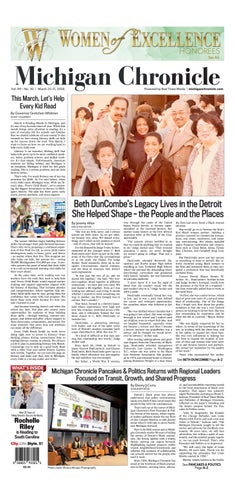
Beth DunCombe
sionally often came away struck by her intelligence, but also by her fairness. Real estate developer Chris Brochert met DunCombe during the savings-and-loan crisis in the late 1980s.
She represented the lender while he was trying to navigate financial trouble in a development partnership.
“She could have turned the screws on me,” Brochert recalled. “Instead, she worked with me. She was extremely intelligent, but she was also fair and empathetic.”
That interaction eventually led to a friendship that lasted decades. DunCombe even introduced Brochert to Archer Sr., who was preparing to run for mayor of Detroit at the time.
That balance – measured in truth and fairness, but grounded in principle – would come to define her approach.
“She was truthful in her beliefs… and if people thought she was being fair, it was because she was just being truthful in how she felt,” Judge Archer said.
In 1996, DunCombe stepped away from private practice to take on one of the most consequential roles of her career: President and CEO of the Detroit Economic Growth Corporation. The city was at a crossroads, searching for ways to attract investment, stabilize its economy, and reimagine its future.
“I see the revitalization of this city as a method to create job opportunities for our citizens,” DunCombe said at a Feb. 6, 1996, press conference announcing her appointment. “This is an exciting challenge – one that I take with great enthusiasm.”
many others started.”
Gary Torgow, chairman of Huntington Bank, will deliver the eulogy at Duncomb’s memorial service. He said her leadership came at a critical moment for the city.
“Beth Duncombe was a brilliant, astute, and remarkably ethical leader,” he said. “At a time when Detroit was confronting a number of major issues, Beth used every talent that she had – including her legal acumen, her transparency in leadership, her ability to bring people together, and her creativity – to help change the trajectory of Detroit.”
Even as her professional responsibilities grew, DunCombe remained grounded in the relationships that mattered most.
“Her husband made her glow. Hearing of her nephews and great-nephews, and spending time with them, made her glow. And what made her happy is when she closed a big deal – that’s when she’d glow,” Judge Archer said.
“It is imperative that we are building on economic development in every corner of the community and people are excited about downtown Detroit which is exciting but in Warren we have some challenges,” Stone said. “Having to revisit our zoning, we have over 200 vacant lots that are in desperate need of housing.”
She said Warren is also rethinking what commercial and mixed-use space can look like as the city plans for the future.
“Chancellor Ivery is a true transformational leader and an outstanding CEO, who is more than worthy of the CEO of the Year Award he just received, “ said Prof. James C. Mays, who teaches entrepreneurship and supply chain management at WCCCD’s Corporate College. “In his 27 years at WCCCD, Dr. Ivery has elevated WCCCD to become nationally recognized for excellence and innovation and preparing our students professionally and personally to do great things in the world.”
“I think of transformational leadership as a thoughtful approach that causes people to change but also causes the systems and circumstances they are operating in to change too,” Ivory said. “Transformational change doesn’t just ask people to do certain things; it asks them to change their view of what’s possible and excites them to drive that change together because they believe that what they’re doing will create positive change for everyone. That’s how entire systems change because people believe that they need to for themselves and others to live better lives.”
“We benefit when Detroit prospers because that spreads throughout the entire region,” Stone said. “During our previous administration Warren was insular and only wanted to take care of their own. It’s diverse now. These partnerships create community impacts. Take the NFL Draft for instance. It made people see the impact nationally.”
Tate said the city is trying to move closer to residents and potential vendors instead of expecting them to navigate systems on their own.
“We are now going out and having workshops within neighborhoods,” Tate said. “That’s the impact of exposure and tools. So those who want to can actually acquire contracts because they now know how because now, we go to them. That’s our focus getting deep into our community.”
Gunter echoed that point from the transit side, noting that public agencies must become more intentional about opening doors for small businesses.
“Buses aren’t cheap, they’re just as much as your
“Take the bus, experience the system,” she said. “I have had the experience to see what my riders are experiencing, it’s front door service, give it a shot, try a bus. We want to engage with organizations so ask us those questions, challenge us, we’re here for you and we want to hear from you.”
Over the next six years, the DEGC helped attract more than $5 billion in commercial, industrial and residential development and finance hundreds of millions in additional projects. DunCombe personally negotiated some of the most significant deals in Detroit’s modern history – deals that helped reshape Detroit’s modern skyline.
Those agreements were tied to two stadiums, three casinos (MGM Grand Detroit, MotorCity Casino Hotel, and Greektown Casino), and major corporate headquarters developments, which helped establish a new entertainment industry in the city. Those casinos would later become one of Detroit’s most reliable sources of municipal revenue.
She married Joseph Nuttall Brown in 1986, and their life together was marked by shared routines and quiet joys – music, evenings at home, and time spent with family. Motown classics often filled the background, a soundtrack that connected her to the city she never stopped working to improve.
The closeness she shared with her sister never faded, even as their lives evolved.
Tate called for investment and deeper engagement with Detroit’s young people.
BLAC is housed in the Michigan Department of Labor and Economic Opportunity. Members represent many professional backgrounds, including economics, law, public safety, health and wellness, arts and culture and media. They leverage their experiences and expertise to make recommendations to the governor on critical issues affecting the Black community.
To learn more about BLAC and this upcoming event, visit www.michigan.gov/BLAC.
“Invest, Detroit is open for business,” he said. “We want you to provide your energy and we have challenges like any other city, but we are in position looking for partners. We want to continue to keep that line of communication open and ensure that we are exposing our youth to exposure and opportunities. Take some time to spend some time with our young folks.”
Stone urged the region to stop wasting energy competing against itself.
“Let’s work smarter not harder,” she said. “We spend a lot of time competing at the expense of others, but what we find is in times where every economic demand is felt across our country we are looking at how do we work smarter and not alone.”
Krauss closed on a similar note, framing this moment as a rare opening for the region to change both its internal culture and its external reputation.
“An issue I’ve been thinking about is how this region has spent a lot of energy competing and fighting with each other,” Krauss said. “It’s really the image of how outsiders view us. If they see us always fighting with each other no one wants to deal with it. I have never seen a region like this
“She negotiated some really, really big deals… and she always was going to negotiate in the best interests of the city of Detroit,” Judge Archer said. “She was very firm in what she wanted to do and let everybody know.”
Developers who worked alongside her saw that same focus.
“She was one of the architects of putting together this entertainment gaming district,” said Chris T. Jackson, who was involved in the Greektown project. “But she also made sure the casinos committed to hiring Detroit residents and working with minority businesses. For her, the city always came first.”
Her presence at the negotiating table became legendary. Colleagues dubbed her the “Militant Midget,” a nickname that never fully captured the scope of her impact, but one her sister said spoke to her stature and her tenacity.
“She was not only a bright person, but a very thoughtful person who would answer questions of younger lawyers,” Mayor Archer said.
Her work extended beyond individual transactions, Mayor Archer added, because it helped shape systems, expectations, and access.
“There’s no question about it – she helped pave the way,” Archer said. “By her own nature, she opened up a lot of doors for other lawyers of color.”
The developments she helped bring to life – from Detroit’s casino industry to major corporate investments and the early phases of the now-award-winning riverfront – remain as gold stars on a resume that still impacts the city’s economy today.
“Everybody learned about what she was able to do when she moved into the corporate sector and was directly involved in making sure that we built new stadiums and developments that we now enjoy,” Mayor Archer said. “We’re benefiting today from all the things that she and so
“We were raised in a very loving, caring family. There was no competition between us, even though she’d say I tried to boss her around from time to time. We were just two little girls who became two adults who always enjoyed being in each other’s company,” Trudy Archer said.
That connection remained tangible every day.
“I’m looking at a chair right now and I can see her sitting in it in my living room. We lived in the same building. Even when we lived in Florida, we lived in the same building. I’d just call her and say, ‘come on up, let’s have happy hour,’ and she’d come up a few floors. We’ve been emotionally close all our lives and physically close for most of our lives,” Judge Archer said.
DunCombe’s influence was both personal and professional. Mayor Archer said her influence was so intentional that it helped shape both people and outcomes.
“I felt fortunate that I learned so much from her, just by listening to the challenges that she faced,” he said. “It was a joy to know her, to watch her work, and to learn from observing what she did.”
He added that her legacy is one that extends far beyond titles or recognition.
“She was a person to be very proud of and respected,” Archer said.
Across Detroit, her legacy is visible in projects, institutions, and opportunities that continue to push the city forward. But for those who knew her best, her legacy is defined just as much by the way she lived as by what she accomplished.
“I want people to remember her as the bright, brilliant person that she was, but also the very caring person that I know her to be,” Judge Archer said. “She was just a wonderful human being.”
And even now, with a lifetime of memories to draw from, the loss of C. Beth DumCombe resists an easy explanation.
“It’s kind of difficult at this time putting that relationship into words,” Judge Archer said. “It’s just – we shared everything and her opinion means so much to me in everything I do. I miss her.”
From page A-1
Detroit Council Member:
Data Centers
Could Grow City’s General Fund
By Sam Robinson SENIOR REPORTER
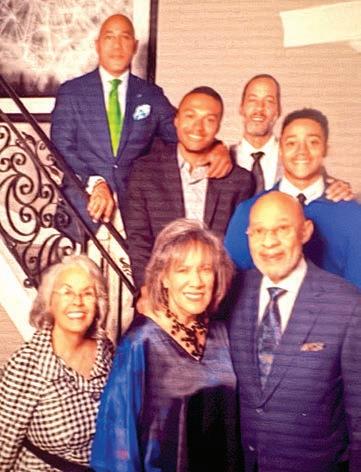
A Detroit City Council member is asking the mayor’s office not to issue new permits for large IT warehouses known as data centers for two years until the city has a “full understanding” of environmental concerns that come with the developments.
Council president James Tate and president pro-tem Coleman Young II were the two no votes for the approved resolution introduced by District 3 council member Scott Benson.
Council Member Angela Whitfield-Calloway was absent during the vote.
Nearly a dozen Michigan counties are planning for new data centers to go under construction this year. The controversial developments have drawn blowback from liberal environmentalists and rural residents, where centers are planned, who are mostly conservative.
Benson at the council on Tuesday said he’s neither for nor against data centers, but wants to establish rules for how the largescale developments are built. In an interview with Michigan Chronicle, Benson said he’s looking at the construction of data centers as a way to increase the city’s tax revenues.
The reaction of data centers has been mixed across the state, but Democratic and Republican leaders have both raised concerns while pointing out the potential economic benefits from the construction of data centers.
Former Detroit mayor Mike Duggan said he would require contracts with tech companies seeking to build data centers and said he would require data centers to use a cooling system that reduces freshwater use.
“These are the wealthiest companies in the world; there is no reason they can’t bear the full cost of the electrical rates,” Duggan said. “We are not going to jeopardize our water and lake system in order to get the data centers.”
At the Detroit City Council’s formal session on Tuesday, council members spoke about the potential risk and reward for the construction of data centers in Detroit.
“We’ve seen the negative impact if there’s no regulations in place. We are pushing hard for the mayor to place a moratorium. This isn’t about the industry pro or con, but proactive regulation,” Benson said.
On the potential for a data center to be an-
See DATA CENTERS Page A-4
Roots.
Michigan Chronicle Names
2026 Women of Excellence Special Honorees
By Ebony JJ Curry SENIOR REPORTER
Detroit has a way of teaching you what excellence looks like.
Sometimes it shows up in a packed election room where the lights never seem to go out. Sometimes it shows up in a boardroom where somebody is fighting to get resources into neighborhoods that keep getting promised everything and handed scraps. Sometimes it shows up at a union hall, where a woman walks into history because she refused to accept the limits that were placed on her.
That is the heartbeat behind the Michigan Chronicle’s 2026 Women of Excellence recognition, and this year’s special honorees carry that heartbeat in four very different lanes of leadership.
A lifetime strategist who helped Michigan learn how to talk to its people with respect and cultural fluency. A labor leader who broke barriers at the highest levels of the UAW. A philanthropic executive who has moved hundreds of millions of dollars into Southeast Michigan with a sharp eye on impact. A City Clerk who has mod-
ernized the machinery of democracy in Detroit while the whole country watched.
The Michigan Chronicle is spotlighting these honorees because their excellence is measurable. It’s visible. It’s built into systems that touch people’s lives.
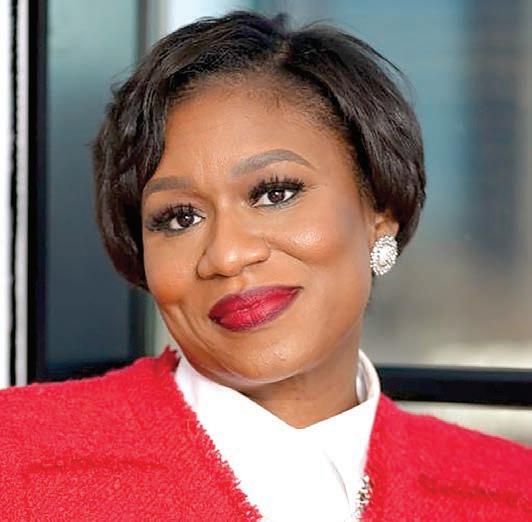
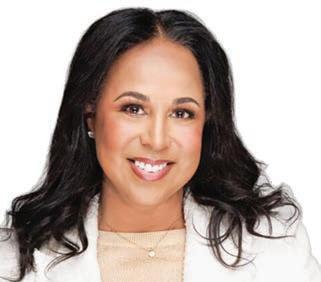
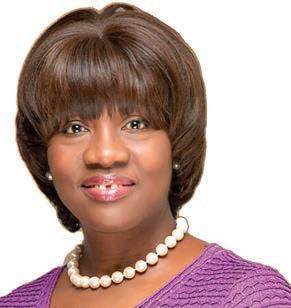
Georgella Muirhead, founder of Berg Muirhead, is the 2026 Michigan Chronicle Women of Excellence Lifetime Achievement Award honoree, and her career reads like a blueprint for what it means to communicate with communities instead of at them. Muirhead brings more than 50 years of experience in communications and community engagement across government, corporate, and nonprofit sectors. She started her career as communications director for Ann Arbor, East Lansing, and Southfield, then went on to lead Detroit’s 32-member communications team, overseeing citywide messaging and high-profile events that included presidential debates.
That work matters because cities run on trust as much as they run on budgets. Messaging shapes whether residents feel
included or ignored, whether they understand services or get shut out by bureaucracy, whether public policy feels like something happening to them or something being built with them in mind.
In 1998, Muirhead co-founded Berg Muirhead & Associates, now 98Forward, which is described as Michigan’s largest minority-owned PR firm. Under her leadership, the agency has served more than 150 clients and built a legacy focused on reaching multicultural and hard-to-reach audiences through campaigns designed to deliver results.
Her professional recognition is deep. She is an accredited PRSA member and has received more than two dozen national, state, and local awards, including the PRSA Silver Anvil Award and the AMA Grand Effie Award. In 2021, she was inducted into the PRSA Detroit Hall of Fame, a nod to her impact on the profession and the people behind it.
Muirhead’s excellence also shows up in the way she has mentored and guided other professionals, championing inclu-
This Detroit Mom is Running for a Competitive Eastside State Senate Seat
By Sam Robinson SENIOR REPORTER
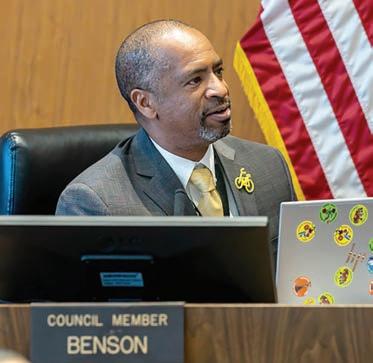
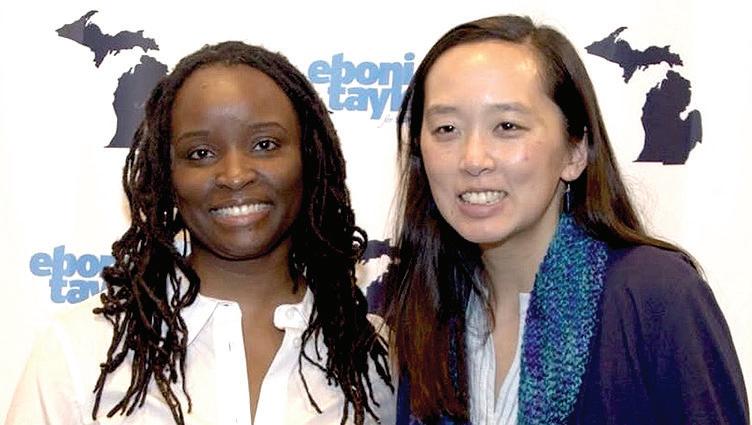
Eboni Taylor is a first-time candidate hoping to be elected to the state Legislature’s high chamber.
Taylor says her run for the 3rd state Senate district is powered by community support and her background helping Black women enter higher office.
She said in an interview with Michigan Chronicle this month that, as a legislator, she would stand with her community, hold billionaires accountable, and boost the investment to Detroit’s public schools.
In her day job, Taylor works for a Brooklyn-based organization called Higher Heights, which boosts Black women running for office. A mom of two whose role has kept her behind the scenes, Taylor said she’s stepping out as a candidate because of the need for a new era of Detroit leadership focused on community needs and accountability.
She said Stephanie Chang, who endorsed her campaign out of the gate, encouraged her to run for the seat.
“I want to go to Lansing as someone who’s not trying to be a career politician, but as a true voice of my community and of my people,” Taylor said. “Having worked with Stephanie, Sylvia Santana, and Erica Geiss, knowing they are term-limited, too, we’re losing a critical voice, which is the bread and butter of my ‘why.’ Chang, a progressive Democrat, currently represents the 3rd state Senate district that covers parts of Detroit’s eastside, Hamtramck, and Highland Park.
Taylor said working moms need repre-
sentation from “someone who can sit on committees and be in leadership.”
Taylor says the first bill she would introduce would address the affordability crisis.
“I know Donavan McKinney, Stephanie and Tonya Meyers Phillips are working tirelessly to hold utility companies accountable. Childcare too is a huge issue that affects people’s economic mobility.”
Taylor also pointed to failed efforts to put new regulations on payday lenders, which she said are “robbing our communities.”
The Democratic primary race for the 3rd state Senate district is shaping up to be highly competitive. Candidates include John Conyers III, Korey Hall, and former state Sen. Adam Hollier.
Hollier and Taylor consider each other friends and have known each other since
childhood, both have told the Michigan Chronicle.
“I consider Adam a friend, he’s a family man and a good guy,” Taylor said.
However, Taylor says when she tells people Hollier is also a candidate in the race,
“It’s like a shock, or maybe an eye roll.”
“It makes me feel kind of bad because Adam is a smart guy, he has a lot to offer.
I think he wants to continue to be a leader in this state, I just really want it to be something that he’s called by, versus, this just feels like musical chairs.”
Taylor said that when Hollier finally called and said that he was going to run, “I said we’re both going to put our best feet forward, I have no intention of hopping out of the race.”
Before Hollier announced he would run for the 3rd Senate district, he pivoted his Congressional bid into a bid for Secretary
of State. That was until Lt. Gov. Garlin Gilchrist ended his campaign for governor to launch a campaign for Secretary of State.
Hollier last week walked back two endorsements from former state Sen. Virgil Smith and Micah Gaines of Greater Christ Baptist Church.
The names were removed from a graphic Hollier posted and deleted. The version of the endorsement graphic that currently appears on his social media shows up without Smith’s or Gaines’ names.
Hollier’s campaign is endorsed by former state Reps. Lamar Lemons, Harvey Santana, Brian Banks, Wayne County Register of Deeds Bernard Youngblood, Wayne County commissioner Al Wilson, and a number of faith leaders.
Korey Hall, who is also running for the 3rd district Senate seat, has been quietly piling up support from labor and sitting elected officials.
Hall’s campaign is supported by Detroit Council members Scott Benson and Angela Whitfield Calloway, Rev. Horace Sheffield, Highland Park Mayor Glenda McDonald, Wayne County Commissioner Alisha Bell, state Rep. Amos O’Neal, and Wayne County Executive Warren Evans.
Evans’ endorsement of Hall’s campaign is notable because Evans stood behind Hollier when he challenged U.S. Rep. Shri Thanedar in the 13th Congressional District Democratic primary.
Hall’s campaign is also endorsed by Teamsters Local 214 and the Michigan Regional Council of Carpenters and Millwrights. You can reach Sam at srobinson@michronicle.com.
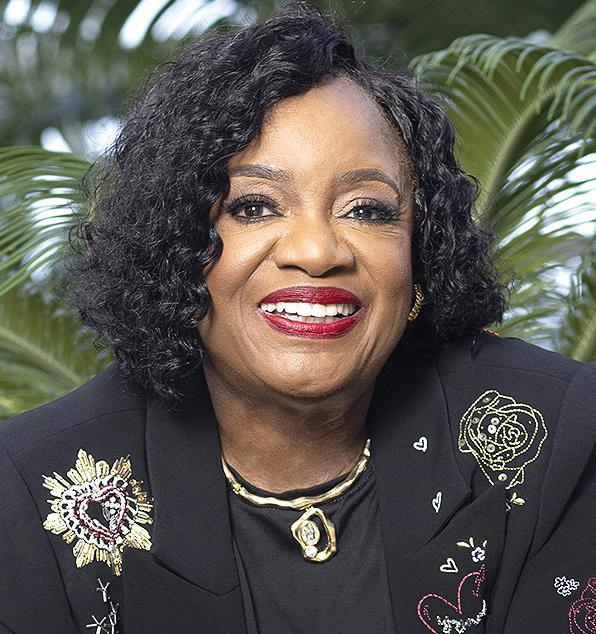
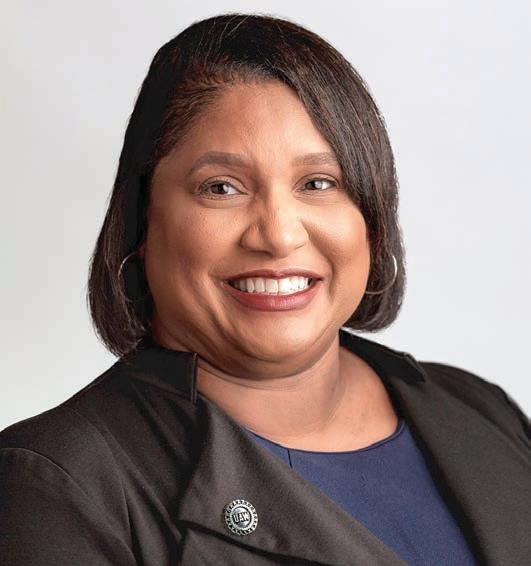
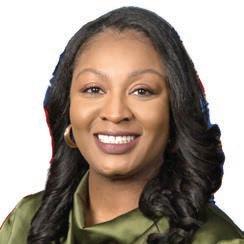
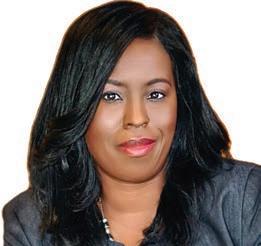
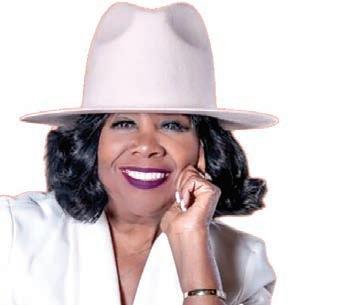
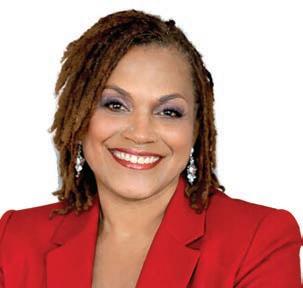
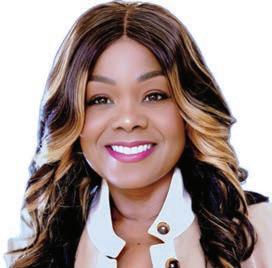
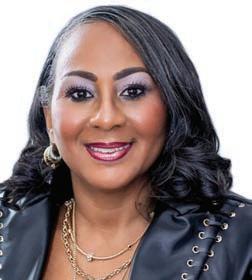
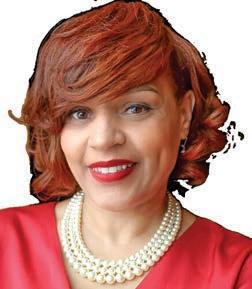
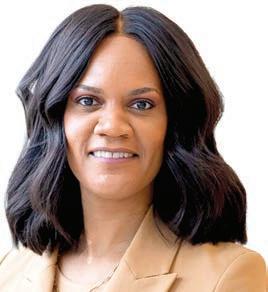
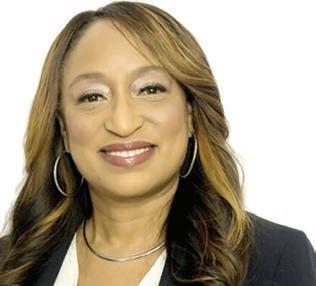
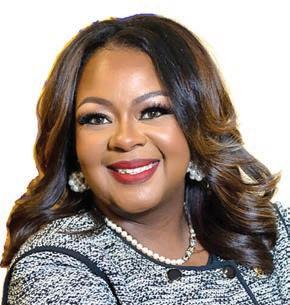
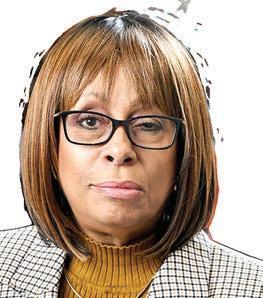
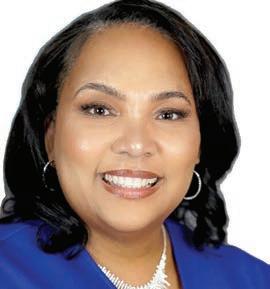
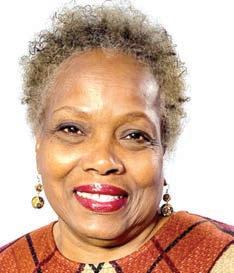
Janice M. Winfrey
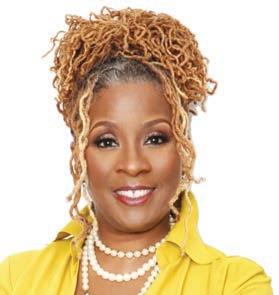
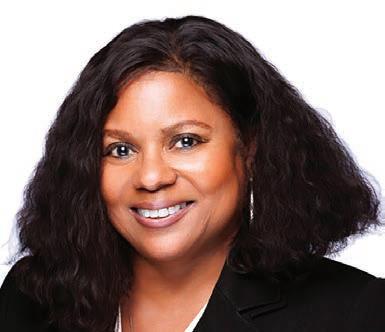
Georgella Muirhead
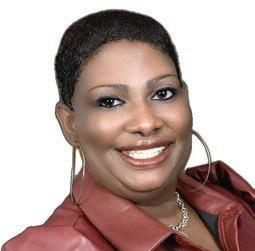
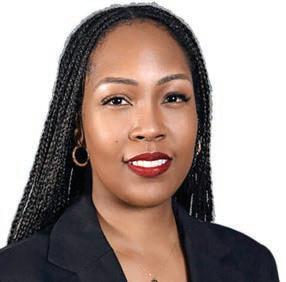
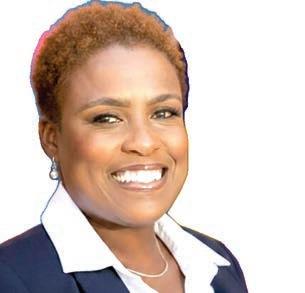
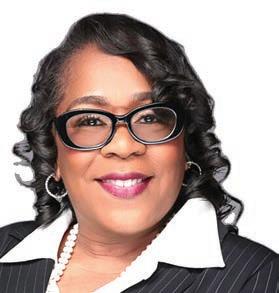
Laura Dickerson
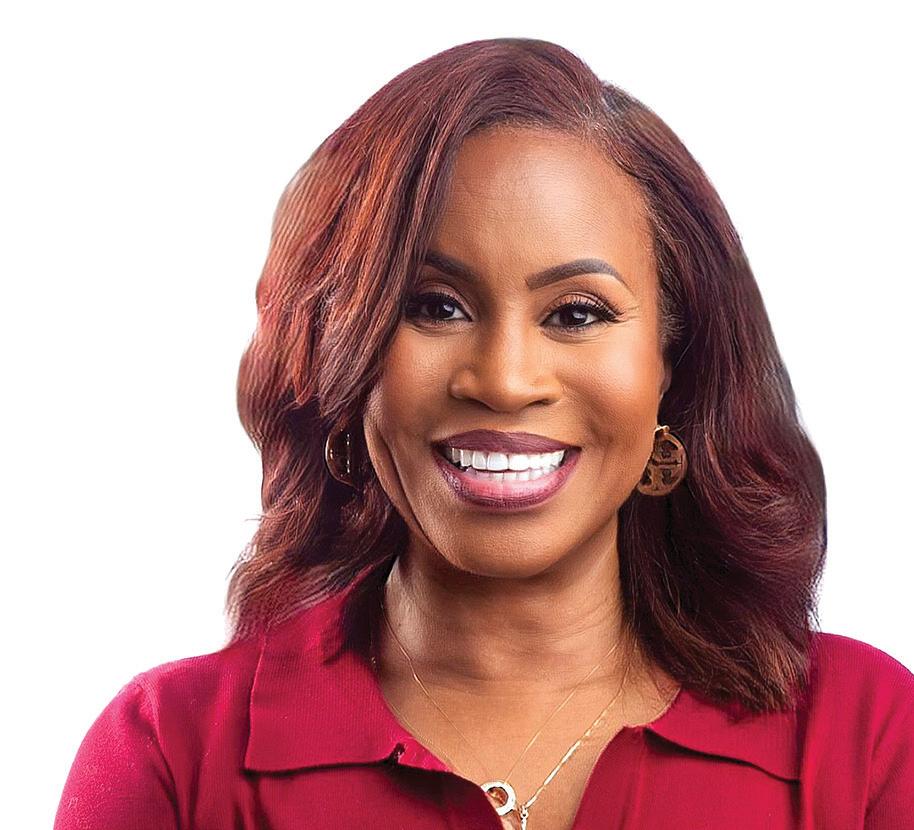
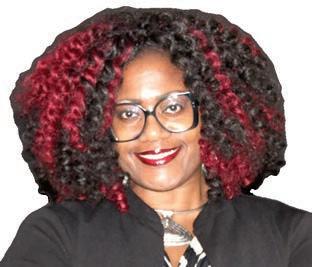
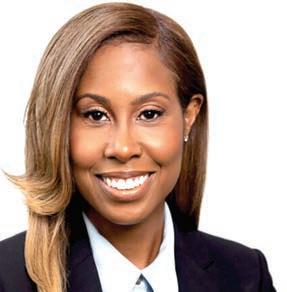
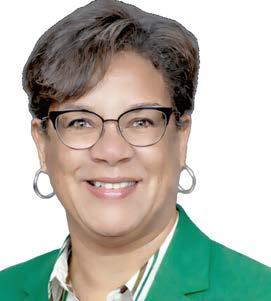
Kylee Mitchell Wells
Pistons, NBA Coalition to Host Clean Slate Summit to Removing Barriers for Detroiters
By Jeremy Allen EXECUTIVE EDITOR
The Detroit Pistons are marking the fiveyear anniversary of Michigan’s Clean Slate law with an effort that puts services directly in front of residents who need them.
In partnership with the National Basketball Social Justice Coalition, the team will host a Social Impact Summit on Saturday, April 11, at the Henry Ford Detroit Pistons Performance Center. The event is open to the public and designed to connect justice-impacted Detroiters with resources that can help clear longstanding hurdles tied to past convictions.
The summit will run in two sessions, from 10 a.m. to 12 p.m. and from 1-3 p.m., with organizers urging participants to register in advance as space is expected to fill quickly.
At its core, the gathering is about access. Attendees will be able to receive on-site assistance with record sealing, driver’s license restoration, and connections to mental health services. The Pistons are working alongside partners including the Clean Slate Initiative and Henry Ford Health to bring those services into one space, removing the need for residents to navigate multiple systems on their own.
“Detroit is a city built on resilience, and we believe everyone deserves a fair opportunity to move forward,” said Chris Economeas, senior director of community
and social responsibility for the Pistons.
“Through the Social Impact Summit, we’re proud to work with the National Basketball Social Justice Coalition and our community partners to help remove barriers facing justice impacted Detroiters, connect individuals to critical resources and reinforce our commitment to equity, second chances and meaningful change in our city.”
The promise of Clean Slate has been complicated by gaps in awareness and access for a lot of residents in the Detroit area.
While the law expanded opportunities for expungement and automated the clearing
Women of Excellence Special Honorees
From page A-3
sive communication strategies and helping shape the next generation of PR leaders.
Her story is Detroit-shaped, grounded in community engagement as a practice and a responsibility.
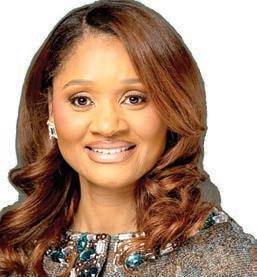
Laura Dickerson is being recognized as the 2026 Woman of the Year, and her trajectory speaks directly to the lived reality of what it takes for Black women to move through institutions that were never designed with them in mind.
Dickerson was elected to serve as Vice President by the UAW International Executive Board in June 2025 and sworn in on July 1, succeeding Vice President Chuck Browning, who retired on June 30. The milestone is historic by the facts provided: she is the first African American woman in the history of the UAW to be elected to the International Executive Board, and she is now the first African American woman to serve as Vice President.
Dickerson serves as the Director of the UAW Ford, Agricultural Implement, and Chaplaincy Departments, and she is the former Director of the TOP and Purchasing Departments. She was assigned as Director of the Technical, Office, and Professional (TOP) Department in March 2024. Prior to that, she was elected UAW Region 1A Director at a special convention in 2021 and re-elected in December 2022. Her leadership track also includes being appointed assistant director of Region 1A in 2020.
Her union roots run deep. Dickerson joined the UAW in 1997 as a member of UAW Local 600. She was elected chairperson of her unit for three terms from 2002 to 2010 and joined the bargaining team in 1999. She was elected delegate to the 34th and 35th UAW Constitutional Conventions and was selected to serve on the 35th Convention Resolutions Committee, where she was elected and served as chairperson. She has served as president of the UAW Local 600 TOP Advisory Council and held an elected position on the UAW National Community Action Program (CAP) Advisory Council in 2010.
The details matter because labor leadership is not symbolic work.
It involves negotiations, committees, governance, and the daily weight of representing workers’ lives. Dickerson served on the 2011 UAW Ford National Negotiations team. She served as project manager for the UAW Staff Voluntary Employees’ Beneficiary Association (VEBA) transition in 2014. She served as UAW Staff Council Vice President, negotiating the Staff Council agreement in 2016 and 2020. She also served as the UAW-Ford Enhanced Care Program Pilot Lead in 2012.
Her community presence is part of the record provided as well. Through her roles with Local 600, she has volunteered with Detroit Central United Methodist Church’s Feed the Homeless initiative and with the UAW-Ford Feed the Homeless project for Labor Day. Dickerson is also a breast cancer survivor and has participated in the Susan G. Komen “Race for the Cure” for many years.
Her education path includes both a bachelor’s and a master’s degree from Central Michigan University. Her bachelor’s degree
Data Centers
From page A-3
is in Industrial Supervision and Management with a minor in Industrial Safety. Her master’s degree is in General Administration with a concentration in Health Services Administration. She has received awards, including the Women of Excellence Award from the Michigan Chronicle in April 2021, Detroit Woman of the Year in 2024, and Exemplary Woman in Labor in 2025.
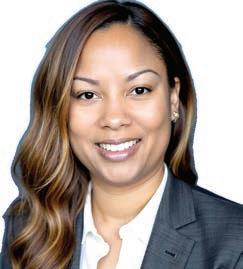
Kylee Mitchell Wells is receiving the 2026 Vanguard Award, and the word “vanguard” fits because her work sits at the intersection of resources, strategy, and the kind of long-view planning that determines whether a region grows equitably or leaves communities behind again.
Wells is the founding Executive Director of Ballmer Group’s Southeast Michigan office, where she leads the organization’s philanthropic efforts in the region. Under her guidance, Ballmer Group has invested over $330 million to date across the tri-county area.
That number signals scale, and it also signals responsibility. Philanthropic dollars can be transformative when they are deployed with local knowledge, accountability, and clear goals. Wells’ career history shows a consistent focus on housing, financial stability, and the public systems that either support families or fail them.
Before Ballmer Group, Wells served as the founding Senior Director at Enterprise Community Partners’ Michigan office, where she developed strategies for capital deployment, program implementation, and policy advocacy to address housing needs in low- and moderate-income neighborhoods across Michigan.
Her public-sector experience includes serving as an appointee in the City of Detroit’s Office of Grants Management, overseeing the strategic allocation, timely expenditure, and compliance of $185 million in federal grants. She began her work with the city as a management consultant at Conway MacKenzie, assisting with Detroit’s financial restructuring during the largest municipal bankruptcy in U.S. history, focusing on streamlining financial processes and improving operations within the Planning and Development Department.
Wells has also served as a Program Officer for Financial Stability at United Way for Southeastern Michigan, managing sector-based workforce partnerships and overseeing the strategic investment of a $10 million philanthropic fund. Her experience also reaches beyond Michigan, including service as a Program Director in Washington, D.C., under Mayor Adrian Fenty, where she led Bank on D.C., described as an economic inclusion initiative focused on improving financial access for low- and moderate-income residents.
Her corporate finance background includes more than a decade of experience at BOSCH-USA, General Motors Corporation, and the Detroit Regional Chamber. She holds a Master of Public Administration from Baruch College – School of Public Affairs and a Bachelor of Business Administration in Finance from Davenport University.
She has been honored by Crain’s Detroit Business as one of Michigan’s “100 Most Influential Women” and by America’s Community Council as their 2023 “Inclusion and Innovation” award recipient. She is also
of certain records, navigating eligibility and completing the process has proven difficult for people who don’t have the proper guidance to navigate the complexities of the project. Organizers say the summit is intended to close that gap by offering both direct services and information about how the law works.
Participants will also have access to sessions focused on existing laws and pending legislation related to criminal records, along with information on fair housing and civic engagement. The goal is to provide immediate assistance as well as a clearer under-
a former National Urban Fellow and a Michigan Political Leadership Program Fellow.
Wells is a proud Detroit native shaped by her education and experiences within Detroit Public Schools.
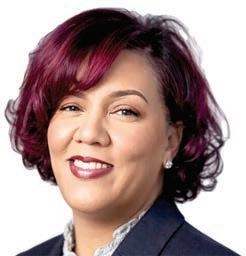
Janice M. Winfrey is also receiving the 2026 Vanguard Award, and her excellence lives in the infrastructure of democracy, the parts of civic life most people only notice when something goes wrong.
As Detroit City Clerk and Chairperson of the Election Commission, Winfrey has governed three charter-mandated roles since being sworn into office in 2006: City Clerk, Official Record Keeper, and Chief Elections Officer. She also serves as Chairperson of the Detroit Election Commission.
Her accomplishments are extensive and concrete. She established the Detroit Archives and Records Management Division to ensure citizens and interested parties have access to current and archived city records. She implemented a state-of-the-art City Council agenda management system designed to give citizens greater access to city government. She successfully implemented five new state-of-the-art voting systems in the City of Detroit.
Winfrey also established a precedent in the election community as one of the first among eleven major U.S. cities to release 100% of election results by 11:00 p.m. on election night during the 2006 election year.
After the passage of Proposal 3 in 2018, which established no-reason absentee voting in Michigan, Winfrey launched voter education and outreach to ensure Detroit voters understood the change in the law. The Detroit Department of Elections became the first in Michigan to establish satellite absentee voting centers, reducing Election Day congestion and improving voter access.
Her leadership during the 2020 Presidential Election during the COVID-19 pandemic is also detailed in the materials provided. Winfrey secured an additional $7.2 million to recruit and train poll workers and expanded voting access through twenty-two satellite absentee voting centers and thirty secure ballot drop boxes across the city. Detroit processed and tabulated more than 174,000 absentee ballots, producing a 51% voter turnout, while administering an election that drew national attention.
Her modernization work includes procuring and implementing the ReliaVote automated mail ballot system, described as a secure end-to-end platform that manages the preparation, mailing, tracking, and processing of absentee ballots, automating
standing of the systems shaping long-term stability.
“The Social Impact Summit reflects what’s possible when community partners come together with intention,” said James Cadogan, executive director of the National Basketball Social Justice Coalition. “Together with the Detroit Pistons and local leaders, we’re helping justice-impacted individuals remove longstanding barriers and access critical resources to take meaningful steps toward stability, opportunity and a fresh start.”
Holding the event inside the Pistons’ training facility, organizers say, is another example of how the institution is setting the standard for community engagement – using spaces typically reserved for professional sports to address broader social needs. And the impact on attendees will be immediate, whether that means beginning the process of clearing a record, restoring driving privileges, or connecting with support services that can affect employment and housing.
Five years after Clean Slate took effect, the work of making those opportunities widely accessible continues. To register, visit: pistons.formstack.com/forms/socialimpactsummitregistration.
Pre-registration will remain open until the summit has reached capacity. Walk-in availability will be extremely limited, and it is highly recommended to pre-register prior to the event.
outbound and returned ballot handling to strengthen the chain-of-custody while improving speed, accuracy, and transparency. She also modernized and reorganized absentee voting operations and the Central Counting system, and introduced electronic poll books and high-speed tabulators to support balanced counting boards.
Winfrey is a graduate of Cass Technical High School and has been recognized as a Distinguished Alumna. She attended Eastern Michigan University and Wayne State University. Her memberships include the Detroit Federation of Teachers; the Association of Wayne County Clerks; the Michigan Municipal Clerks Association; the International Association of Clerks, Recorders, Election Officials and Treasurers; the National League of Cities; and Alpha Kappa Alpha Sorority, Incorporated. She is also an active member of Greater Grace Temple.
The Michigan Chronicle will honor these Women of Excellence alumni awardees at the 2026 Women of Excellence recognition event, where community leaders, family, and supporters will gather in one room to celebrate their induction into the sisterhood of excellence.
The ceremony will take place on Friday, March 27, 2026, at Huntington Place in Detroit, bringing together women across industries who are shaping Michigan’s future with purpose and power.
Taken together, these honorees represent the kind of excellence that keeps Detroit moving, always has.
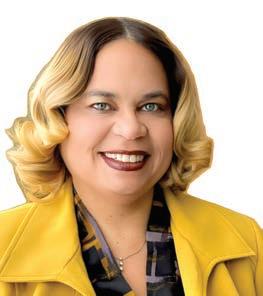
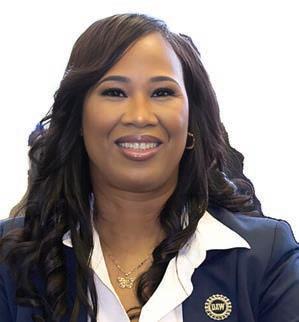
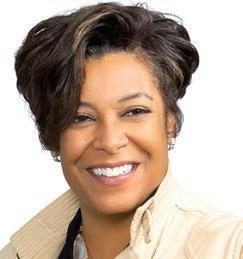
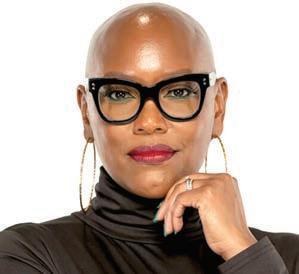
Georgella Muirhead helped shape how institutions communicate with the communities they serve. Laura Dickerson has carried workers’ voices into rooms where history gets written. Kylee Mitchell Wells has helped direct major investment toward systems that determine whether families stabilize and neighborhoods thrive. Janice M. Winfrey has built and modernized the processes that allow Detroiters to vote, to be counted, and to trust the count.
The Michigan Chronicle’s Women of Excellence recognition has always been about more than titles. This year’s special honorees show why. Their excellence is built into the city, into the region, into the structures that touch daily life — records, ballots, housing, wages, public trust, and the next generation watching what leadership looks like when it’s done with discipline and purpose. Ebony JJ Curry can be reached at ecurry@ michronicle.com
A5 | March 25-31, 2026 | michiganchronicle.com
The Michigan Chronicle Women of Excellence Awards, in its 19th year, celebrates local African American women who inspire others through their vision and leadership, exceptional achievements, and participation in community service. They are women who exemplify extraordinary stature, poise and grace. These women do it all while maintaining the delicate balance of filling the roles of helpmate, mother, teacher and professional. Our 2026 WOE Class are champions of economic empowerment and diversity, backbone of religious and educational organizations, and driving forces in politics and community service. Help us welcome these distinguished Women of Excellence.
SARAH ANTHONY
State Senator, 21st Senate District
Sarah Anthony has always fought for opportunity for all Michiganders. She has made history multiple times, serving as mid-Michigan’s first Black woman elected to the Michigan House of Representatives and the Michigan Senate. In 2023, she became the first Black woman to chair the powerful Appropriations Committee. Before serving in the Capitol, Anthony was the youngest served as Director of the Michigan College Access Network, partnering with education, nonprofit, and business leaders to provide coordinated supports for students. She is a daughter, sister, aunt, and champion for her hometown of Lansing.
LILA ASANTE-APPIAH
Chief Administrative Officer, Downtown Detroit Partnership
Lila Asante-Appiah has served as the Chief Administrative Officer at Downtown Detroit Partnership since 2022. She is a seasoned C-Suite executive recognized as a strategic business leader and change champion. Lila has over 25 years of experience and impactful leadership across various sectors including nonprofit, healthcare, higher education, apparel/promotional products, and business consulting.
Lila is also the President and Cofounder of Purposeful Pursuits, a professional coaching and consulting organization. She promotes cultivating relationships and partnerships to advance social service and community programs positioned to improve the lives of those served. As a mission focused organizational development expert, she is known for advancing organizational capacity building, and developing diverse, inclusive, and equitable workplace cultures.
Lila received her undergraduate degree in business administration and her master’s degree in organizational development from Roosevelt University in Chicago, Illinois. As well, she Is a certified professional and executive coach.
WANDA
P.
BOWMAN
Chief Financial Officer, Detroit Area Agency on Aging
Wanda Bowman is the Chief Financial Officer for Detroit Area Agency on Aging (DAAA). Previously, she served as Director of Finance for Blue Cross Blue Shield/Blue Care Network Company where she worked for more than 12 years. She has more than 25 years of experience in professional leadership roles. Over the course of her career, Bowman has worked with various accounting and managed-care organizations and has donated her expertise to nonprofit organizations such as Forgotten Harvest and Gleaners Food Bank. She has also given corporate leadership development and training classes for organizations in Metro Detroit.
Bowman has successfully completed all requirements for the designation of Professional, Academy for Healthcare Management. She is also an alumnus of the American Health Insurance Plans’ Minority Management Development Program. In this program, she traveled across the country to participate in National Health Care symposiums. She was elected as main speaker in Boston, Massachusetts where she spoke on the effects of Medicare on the aging population.
Bowman’s professional affiliations include National Management Association,HealthCare Finance Management Association and American Health Insurance Plans.She has served as Treasurer for the Board of Directors of Partners in Personal Assistance headquartered in Ann Arbor, Michigan.
Bowman holds a Master of Business Administration from Lawrence Technological University and a Bachelor of Business Administration from University of Detroit.
CHEVELLE BROWN
Founder and CEO, I Teach Chess
Chevelle Brown is the founder and CEO of I Teach Chess, an award-winning organization that uses the game of chess to develop critical thinkers, problem solvers, and wise decisionmakers. A U.S. Marine Corps veteran and retired Detroit Police Officer, Brown has transformed her leadership and discipline into an international teaching model, coaching students across the U.S., Canada, France, Dubai, and South Africa.
Her programs span schools, nonprofits, and universities, including collegiate coaching at Morehouse and Spelman Colleges, as well as community initiatives supporting veterans and senior citizens. She serves on the Michigan Chess Association Board, where she leads the Women’s State Championship Event, and on the Money Matters for Youth Board, where she applies her Think Critically Method to financial literacy. Through I Teach Chess and corporate development workshops, Brown illustrates how chess translates into leadership, business success, and lifelong excellence, with an ongoing mission to expand access, elevate coaches, and showcase the game’s impact on life outcomes.
KAREN A.D.
BURTON
SpaceLab | Noir Design Parti | A/E Collaborative | WSDI
Karen is a 35-year architecture, construction, and creative industry practitioner who leverages her background to shape design, cultural, and workplace experiences. She is the CoFounder and CEO of SpaceLab, a shared workspace and entrepreneurial ecosystem with locations in Detroit, Michigan and St. Petersburg, Florida. Through SpaceLab, she leads the corporate vision of elevating small businesses’ image, cultivates a community of designers, innovators, and city builders, and fosters collaboration within the shared workspace community. SpaceLab also works closely with the City of Detroit’s public art programs, helping steward projects that elevate artists, activate public spaces, and reinforce Detroit’s cultural identity.
Karen is also a Principal Partner at A/E Collaborative, LLC, an architecture and engineering consultancy that fosters synergy among industry professionals and works to unlock opportunities for small minority-owned firms to excel in major design projects. The firm recently led the project team for The Dr. Ossian Sweet Memorial Park on Detroit’s east side. Her technical architectural experience includes contributions to significant developments such as One Campus Martius (formerly Compuware Headquarters); Ford Field; Greektown Casino; and multiple multifamily and mixed-use developments, including CityCenter in Las Vegas—the largest private development in the United States at the time of her involvement. She has also served as an instructor of architecture, construction, and interior design at colleges throughout mid- and southeast Michigan.
Deeply committed to cultural preservation and narrative equity, Karen is Co-Founder of Noir Design Parti, an award-winning initiative documenting the history and career journeys of Michigan’s Black architects and integrating their stories into the broader architectural canon. Across multiple media platforms, she works to ensure that these contributions are recognized, preserved, and accessible. Karen’s leadership is rooted in community, collaboration, and inclusion. She is a co-founding board member of the Women’s Sustainable Development Initiative, where she mentors emerging women real estate developers. She also serves in leadership roles with the University of Michigan Club of Greater Detroit as well as the Urban Land Institute (Michigan), the Detroit chapter of the National Organization of Minority Architects, and the National Association of Black Women in Construction—advancing pathways for women and people of color in the built environment
JOELLA BUSH
Executive Director, Gianna House
JOELLA BUSH is the Executive Director of Gianna House. She leads transformative work for pregnant women and young mothers navigating homelessness and complex life challenges. A fearless and compassionate leader, Joella brings vision, strategy, and heart to everything she does.
Joella believes in the power of education through academic excellence. She holds a Master of Social Work (Wayne State University) and a Bachelor of Social Work with a minor in child welfare
(Oakland University), as well as certifications in Nonprofit Management and Human Services Management. With more than 30 years of nonprofit leadership experience, Joella has developed life-skills and career-exploration programs, cultivated community partnerships, and raised critical funding to serve women and children. As a former teen mother, Joella considers it one of God’s greatest blessings to walk alongside young women--teaching them the same values and resilience her mother instilled in her.
Joella leads with purpose, passion, and perseverance.
DR. NICOLE CLAUDIN
DNP,PMHNP-BC,QIDP
Director of Behavioral Health, DMC-Sinai Grace
Dr. Nicole Claudin, DNP, PMHNP-BC, QIDP, serves as the Director of Behavioral Health at Detroit Medical Center’s Sinai-Grace Hospital. She is a seasoned psychiatric mental health nurse practitioner and healthcare leader with extensive experience across inpatient, correctional, and community-based behavioral health settings. Dr. Claudin specializes in clinical quality improvement, regulatory compliance, and workforce development, with a strong emphasis on evidence-based and patient-centered care. She has led interdisciplinary teams in aligning clinical practice with Joint Commission, CMS, and NCCHC standards, including suicide prevention initiatives, just culture implementation, and performance improvement planning. Her leadership focuses on strengthening systems of care, promoting staff accountability, and enhancing safety and treatment outcomes for diverse and vulnerable populations. Dr. Claudin is known for translating complex regulatory and accreditation requirements into practical, sustainable clinical workflows. She remains deeply committed to advancing behavioral health services through education, mentorship, and continuous quality improvement.
REGINA CLEMONS
Vice President of Club Operations, Boys & Girls Clubs of Southeastern Michigan
Regina Clemons is a proud Detroit native whose leadership reflects the strength, resilience, and bold spirit of the city that raised her. Born and raised in Detroit, she has dedicated her career to empowering youth, strengthening organizations, and advancing opportunities for women and families across the community. A strategic thinker and courageous disruptor, Regina challenges the status quo, reimagines systems, and leads transformational change that drives measurable impact. She is known for pairing data-driven strategy with heart-centered leadership, guiding teams with clarity, accountability, and vision. Passionate about mentorship and women’s empowerment, Regina creates spaces where women are encouraged to elevate, lead unapologetically, and redefine success on their own terms. Being recognized as a Woman of Excellence represents a full-circle moment—an opportunity to uplift the very community that shaped her foundation. Regina continues to inspire through authenticity, innovation, and an unwavering commitment to meaningful, lasting change.
KATORA COLE, M.A. Chief Philanthropy Officer | Girl Scouts of Southeastern Michigan
Katora Cole is the Chief Philanthropy Officer of Girl Scouts of Southeastern Michigan. With more than 30 years of nonprofit leadership experience, she has served as Chief Development Officer for the Michigan Science Center, Orchards Children’s Services and The Heat and Warmth Fund (THAW) as well as leadership roles at Wayne State University.
Katora holds a BA in Psychology from Purdue University and an MA in Nonprofit Management, blending strategic expertise with a deep commitment to community impact. She was recently honored in The Soul of Philanthropy exhibit at the Detroit Historical Society for her contributions to Michigan’s philanthropic landscape. She serves as Vice President of the Association of Fundraising Professionals–Greater Detroit Chapter, on the Board of Orchards Children’s Services, and on the Detroit Symphony Orchestra’s Classical Roots Steering Committee. She is also a proud member of Delta Sigma Theta Sorority, Inc.
ELANJUA
NICOLE CURRENT
International Servicing Representatievs, UAW Nicole Current’s more than 30 years of service to the United Automobile, Aerospace and Agricultural Implement Workers of America (UAW) reflect a career marked by courage, excellence, and steadfast commitment to working people. She currently serves as the top Administrative Assistant to the UAW Vice President of the General Motors and Gaming Department, making history as the first woman and first person of color to hold this position in the 90-year relationship between the UAW and General Motors. In this influential role, Nicole helps support labor relations affecting over 50,000 hourly UAW-represented workers across General Motors and the casino industry nationwide. As a trusted leader in a traditionally male-dominated field, she stood at the table during the 2019 and 2023 national bargaining negotiations, helping secure historic wage increases and meaningful gains for UAW members at General Motors, MGM Grand, MotorCity, and Hollywood Casinos. Nicole’s leadership, faith in purpose, and unwavering resolve continue to open doors, uplift others, and set a powerful standard of excellence for women everywhere.
LATRESHA DAVENPORT
Mid-Michigan Oncology Senior Executive Territory Manager, ELI Lilly - Global Pharmaceutical Company
LaTresha Davenport, Sr. Executive Territory Manager in Oncology, is a strategic and vibrant leader whose inclusive mindset, resilience, and competitive spirit has helped strengthen teams across the organization. Known for building meaningful connections and elevating others, she leads with intention— prioritizing empowerment, collaboration, and impact. Passionate about the patients she serves, LaTresha is committed to improving lives through Lilly’s innovative therapies and supports diverse talent through mentorship, leadership development, and cultural initiatives. A four-time Platinum Performer, Top Sales achiever, Peer MVP recipient, and contributor to nine Circle of Excellence honors, LaTresha was named National and Area Territory Manager of the Year in the Cardiometabolic Health Business Unit, reflecting her broad execution excellence. She holds an MBA from the University of Phoenix and a B.S. in Marketing from The University of Alabama, where she became a member of Delta Sigma Theta Sorority, Incorporated, joining its longstanding commitment to sisterhood, scholarship, and service. A devoted wife to Marcus G. Davenport, PhD, and mother to Camden and Zoey, she and her family are members of Greater Grace Temple–Detroit.
LA SHANDA DAVIS
Director of Finance, Detroit Water & Sewerage Department
LaShanda Marzet Davis is an accomplished public finance executive, strategist, and civic leader with more than 30 years of progressive experience in non-profit, municipal government, and operational leadership. She has held the position of Agency Chief Financial Officer of the Detroit Fire Department, Deputy Chief Operating Officer of the City of Detroit and is currently the Director of Finance of the Detroit Water and Sewerage Department, where she is responsible for overseeing complex financial operations, strengthening internal controls, and ensuring organizational compliance. Recognized for her expertise in financial management and reporting, revenue optimization, and large-scale program implementation, including emergency response and infrastructure funding initiative, she is deeply committed to fiscal accountability, transparency, and supporting community revitalization. In addition, LaShanda is a dedicated mentor, actively developing the next generation of finance and public administration professionals. Her leadership reflects a strong blend of technical expertise, strategic vision, and service-driven values.
KEYANTEE DAVIS
Chief Human Resource Officer, Trinity Health Michigan
Keyanteé Davis serves as the Chief Human Resources Officer for Trinity Health Michigan, where she brings bold vision, deep expertise, and a people first philosophy to more than 23,000 colleagues in nine hospitals. Her leadership and impact have been widely recognized, earning distinctions such as Crain’s Notable Excellence in HR, the HRO Front of the Line Award, and the Inner Circle Award from Inforum.
Across her 26 year career, Keyanteé has led human resources in government, education, and healthcare, bringing a uniquely cross sector perspective to organizational strategy, workforce engagement, DEI advancement, and talent development.
A graduate of the University of Michigan, she earned an MBA from Walsh College and holds professional certifications from both HRCI and SHRM.
A champion for children and families, she serves on the boards of Kids Kicking Cancer and Federation of Youth Services, extending her passion for service beyond her day to day role.
LASHAWN ENGLISH Director, UAW Region 1
In December 2022, LaShawn English made history as the first woman and woman of color elected Director of UAW Region 1. Over 24 years, she has served the union in crucial administrative, bargaining, and community roles.
English’s union career began with United Association
Building Trades Local 370, where she earned journeyman credentials as a steam fitter and licensed plumber. After joining Stellantis Sterling Stamping Plant as a pipefitter, she became active in UAW Local 1264, eventually serving three terms as its first woman of color President. Her leadership expanded through positions including skilled trades delegate for over a decade, National Skilled Trades Council member, and National Negotiator for Stellantis (2015-2019). She also held roles on various local and regional committees.
English earned her bachelor’s in business administration from Baker College in 2014. As a mother, she champions policies supporting working families. She currently serves on boards including APRI, CBTU, and Michigan Democratic Party, while maintaining lifelong NAACP membership, remaining a fierce advocate for union members.
MONIQUE FIELD-FOSTER
Executive Partner Lansing Office, Warner Norcross & Judd
Monique C. Field-Foster is an accomplished government affairs attorney and Executive Partner at Warner Norcross + Judd LLP, where she leads the firm’s Lansing office and co-chairs its Government Advocacy and Affairs Practice Group. With more than two decades of experience shaping public policy and legislative strategy, she is widely respected for her ability to navigate complex government and regulatory environments.
Monique’s distinguished public service career includes serving as Deputy Director for Legislative Affairs under Governor Jennifer Granholm, director of governmental affairs for the Michigan Department of Management and Budget, legislative policy analyst for the Michigan House of Representatives, and Deputy Legal Counsel for Governor Gretchen Whitmer’s transition. She also served as Assistant Vice President for Strategic Initiatives at Michigan State University, advancing institutional priorities and public-private partnerships. Her leadership has earned recognition from Crain’s Detroit Business, Michigan Lawyers Weekly, and Top 100 Lawyers of Color. She has served on the Peckham Board of Directors and now sits on the Lansing Regional Chamber Policy Committee and the UM Sparrow Hospital Foundation Board. Monique is deeply committed to mentorship, equity, and excellence across Michigan.
TAMARA R. FLAKE
Vice President of Government Banking, Mercantile Bank
Tamara R. Flake is an accomplished financial services executive, community leader, and transformational advocate whose impact spans banking, entrepreneurship, volunteerism, and mentorship. As Vice President of Government Banking at Mercantile Bank, she is successfully building and scaling a new municipal banking portfolio, onboarding multiple publicsector clients, driving multi-million-dollar growth and revenue across Southeast Michigan. With nearly three decades of industry experience, she is widely respected for her strategic leadership, relationship excellence, and ability to deliver innovative community-focused financial solutions.
Tamara is the founder of IROCKITBALD LLC, a nationally recognized empowerment platform inspired by her Alopecia journey, and co-host of the EVRY Woman Talk Show, where she elevates conversations around identity, resilience, womanhood, healing, laughter, and generational impact. She is also a published author, motivational speaker, nonprofit board member, and mentor dedicated to advancing the next generation of emerging leaders, women and minorities.
MELANIE
HARRIS
President of Business Operations, Detroit Pistons
Melanie Harris enters her second season as president of business operations for the Detroit Pistons. Harris joined the organization Sept. 30, 2024, leading the organization’s business lines, driving growth of the Pistons brand, expanding revenue opportunities and elevating engagement with partners, sponsors, ticketholders and fans. Harris most recently served as vice president and general manager for Nike, Inc.’s Jordan Brand North America unit, where she led a cross-functional team in driving sales, merchandising, marketing, operations and strategy for the multi-billiondollar business across the US and Canada. She also served on Nike, Inc.’s Black Community Commitment taskforce. Before taking leadership of Jordan Brand in North America, Harris served as Nike, Inc.’s Vice President of Strategy and Development and was a member of Nike’s Executive Leadership Team. She spearheaded Nike’s corporate strategy teams on a global scale. She was responsible for developing enterprise plans aimed at fostering innovation, transformation and growth. She also guided game-changing partnerships, enhanced market intelligence and coordinated development for specific opportunities within Nike, Inc. Harris was a partner at the management consulting firm Bain & Company where she advised multi-national companies on customer experience, digital marketing, transformation, agile and performance improvement for nearly 10 years. She also served as an internal leader in Bain’s Social Impact and Diversity & Inclusion efforts, leading in a variety of social impact projects. In addition, Harris was the local and regional senior sponsor and leader within Bain’s Black employee affinity group and led efforts around recruiting and retention of Black and female business talent. Earlier in her carrer, she held roles in private label product development at Macy’s Merchandising Group and in store operations at Abercrombie & Fitch. The New York, NY native graduated from Yale University and Harvard Business School. A decorated college athlete,
DONETTA HOUSER-SLY
Human Resource Director, People, Experience and Technology, Amazon Detroit native, Donetta Houser-Sly, is a distinguished Human Resources leader guided by her priorities of faith, family, and community. Donetta serves as HR Director for Amazon’s North America Operations People, Experience & Technology organization, leading over 4,000 HR professionals across the U.S. and Canada. She joined Amazon in 2021 after 30+ years at General Motors, where she earned the GM “Excellence in Leadership Award” and provided HR services to 40+ plants and 65,000+ employees. She received her BA from Central Michigan University and MS from Walsh College. Donetta received Amazon’s 2024 “Renaissance Woman” award for outstanding professional accomplishments. Her commitment to mentoring spans multiple generations. She is a proud member of Alpha Kappa Alpha Sorority, Incorporated, and The Links, Incorporated. She serves on the Focus: Hope Board of Directors and represents Amazon as title sponsor for the Magic City Classic, the nation’s largest HBCU sporting event.
NIKKI HOWARD COMBS, CWP, MBA, BSE Owner & CEO 1 2 NV Events, 1 2 NV Events
From the boardroom to the ballroom, Nikki is a powerhouse in the event, venue, and hospitality industries. As CEO of “1 2 NV” Events, Nikki has produced million-dollar events, scaled venue operations to record growth, and cultivated strategic partnerships across corporate, community and nonprofit sectors. With an MBA from the University of Michigan and a bachelor’s degree in computer engineering, Nikki brings a rare fusion of technical savvy, business acumen, and creativity to every project. Nikki is also the visionary behind Ms. Nikki’s ETC, an innovative platform that equips hospitality professionals with confidence, class, and cultural fluency. Nikki has received many honors, including Who’s Who in Black Detroit –Entrepreneur, Woman of the Year from the National Association of Professional Women, and has held leadership positions in many organizations, including Alpha Kappa Alpha Sorority, Inc. Mother of one and mentor to many, Nikki continues to lead with passion, pearls, and purpose.
NIKOLE HOWARD-WHITSETT Treasurer, City of Detroit Water & Sewage Department
NiKole Howard-Whitsett has proudly served the City of Detroit since 2002 and, since 2016, has held the role of Treasurer for the City of Detroit’s Water and Sewer Department. A dedicated civic leader, she is an active member of the Detroit Alumnae Chapter of Delta Sigma Theta Sorority, Inc. and the Motor City Chapter of Jack and Jill of America, Inc., where she supports numerous community service initiatives and has positively impacted hundreds of girls through mentorship.
NiKole currently serves as Treasurer for her sorority and Internal Auditor for Jack and Jill and previously served as Treasurer for the Michigan Chapter of the FAMU Alumni Association. She holds a bachelor’s degree from Florida A&M University and an MBA from Wayne State University. NiKole and her husband, Maurice, are proud parents of five children: Jeremiah, Ethan, Nyla, Drew and Mia; and devoted members of LAM Christian Church for over 20 years.
Kimberly Hoyle is a strategic growth architect and business development executive with more than two decades of experience building sustainable revenue, expanding market presence, and aligning organizations around long-term growth strategies. Her background spans capital markets, real estate, infrastructure, and the built environment, where she has led complex business development efforts across highly regulated, multi-stakeholder landscapes. Kimberly leads corporate growth and strategic partnerships for DBG Detroit, and is responsible for advancing national, multi-year relationships that strengthen the organization’s impact on youth and families while supporting DBG’s long-term sustainability.
Prior to DBG, Kimberly served in senior growth leadership roles across the marketing, architecture, engineering, and municipal consulting sectors, where she built highperforming teams, strengthened sales and guided organizations through periods of expansion and integration. She brings a disciplined, outcomes-focused approach to partnership development, one rooted in shared value, trust, and long-term alignment. Kimberly holds dual bachelor’s degrees in marketing and Japanese Language from Eastern Michigan University. Based in Metro Detroit, she is deeply engaged in civic and community leadership, with service across organizations including Centers for Family Development, Inc., NW Goldberg Cares, ISAIC, the Detroit Institute of Arts, and the Urban Land Institute. Outside of work, Kim is a devoted wife and mother of three, and is driven by the belief that when communities invest in young people, everyone benefits.
SYDNEY JAMES Fine Arts Painter and Muralist
Interdisciplinary artist Sydney G. James is proudly a “girl raised in, and by”, Detroit with the colors and brushwork of her paintings as strikingly defiant and ever-changing as the city itself. A graduate of Detroit’s College of Creative Studies, James’ murals have transformed Detroit’s neighborhoods, skyline as well as the city’s art narrative. Her work appears on walls, canvas, fabric, Vans shoes, and on whatever she damned well chooses. In paintings, sculptures and murals, James places Black People first, never last nor forgotten. She is also a cofounder of the biannual BLKOUT Walls Mural festival which debuted in Detroit in 2021.
The 2024 College for Creative Studies Distinguished Alumni and awardee of the 2017 Kresge Foundation Fellowship, James’ work has been exhibited at the Museum of Contemporary Art Detroit, Cranbrook Art Museum, Charles H. Wright Museum of African American History, Muskegon Museum of Art, the Jane Lombard Gallery in New York as well as the Arts, Beats and Lyrics traveling exhibit. Sydney’s public artworks have lit up walls and spaces in cities across the United States, such as New Orleans, Brooklyn, NY; Atlanta, GA.; Los Angeles, CA.; Hawaii, Long Beach, CA, as well as across
MICHELLE L. JOHNSON
President & CEO, Legal Aid and Defender Association, Inc. Michelle Johnson is president and CEO of the Legal Aid and Defender Association (LADA), the oldest provider of free civil legal services for vulnerable individuals and families in Macomb, Oakland and Wayne counties. An advocate for justice and equity, Johnson joined LADA in 2002 after beginning her career with the Detroit Law Department. Under her leadership, LADA helps residents overcome barriers to housing, employment and stability through legal support in areas including expungement, landlord-tenant disputes and veterans’ advocacy. Johnson has held multiple leadership roles, delivering measurable outcomes for the individuals and communities LADA serves. Her leadership reflects a deep belief that justice should never depend on income, and she continues to guide her team with compassion, collaboration and a commitment to empowerment. Johnson oversees more than 2,500 cases annually and has secured significant grant funding from government, philanthropic and community partners to expand LADA’s reach. A Detroit native and earned her degrees from Eastern Michigan University and Wayne State University Law School.
TALONA JOHNSON
Cadillac International Product Manager
General Motors Company
Talona Johnson leads with purpose, vision, and heart. As Cadillac’s International Product Manager at General Motors, she operates at the forefront of global mobility, guiding crossfunctional teams, shaping vehicle strategy, and advancing innovation during a transformative era in automotive history. From launching her career with Saturn in 1995 to leading complex crossover, electric truck, and luxury EV programs, she turns challenges into opportunity and strategy into impact.
An engineer and mentor, she uplifts youth and expands access to STEM through leadership with NBMBAA, UNCF, and community initiatives, inspiring future leaders everywhere. She builds futures and empowers others to rise higher.
LATISHA JOHNSON
Council Member, District 4, Detroit City Council
Latisha Johnson has dedicated more than two decades to serving Detroit through community-focused growth and equitable development. She began her career promoting Detroit as a destination, helping bring significant economic activity to the city during difficult years.
In 2007, driven by a desire to work more closely with residents, she joined the Executive Board of the East English Village Neighborhood Association, contributing seven years to neighborhood revitalization. She later founded MECCA Development Corporation in 2014 to ensure residents had a strong voice as development accelerated citywide. Johnson has also held key leadership roles, including Treasurer of the 5th Precinct Police/Community Relations Council and Vice Chair of the Board of Zoning Appeals.
Elected to Detroit City Council in 2021, she represents District 4 and serves as Chair of the Planning and Economic Development Committee and Vice Chair of the Budget, Finance, and Audit Committee.
KAMILIA K. LANDRUM
Executive Director, Detroit NAACP
Kamilia Landrum is a transformational leader and one of Detroit’s most dynamic voices in community advancement. As the youngest Executive Director in the history of the NAACP Detroit Branch, she leads one of the nation’s most influential branches with vision, strategy, and bold execution. With more than 20 years of service to the Association, Kamilia has championed pivotal social justice efforts—from protecting Affirmative Action in Michigan to advancing Promote the Vote, expanding ballot access for millions. She drives high-impact partnerships and programming aligned with the NAACP’s five game changers: education, economic sustainability, criminal justice, civic engagement, and health equity. A committed mentor, she has reactivated and strengthened NAACP college chapters nationwide, cultivating the next generation of civil rights leaders.
In her first year as Executive Director, Kamilia brought the 110th NAACP National Convention to Detroit, generating over $11.5 million in economic impact. She also led the historic June Jubilee, commemorating the 60th anniversary of Dr. King’s first “I Have a Dream” speech in Detroit, and for the first time ever, included a combined celebration with the iconic Annual Fight for Freedom Fund Dinner.
A proud Cass Tech alumna, Kamilia holds degrees from Florida A&M University and Wayne State University. She is also a Detroit entrepreneur, founding The GlassDrum, Staged Spaces, and Gift Box Detroit—merging business innovation with community empowerment. Her leadership has earned numerous prestigious honors, cementing her legacy as a powerful force for impact and progress.
SHEILA MARSHALL
Chief Operating Officer, Forgotten Harvest
Sheila Marshall is the Chief Operating Officer of Forgotten Harvest, where she sets the organization’s operational direction and turns strategy into action across food sourcing, distribution, logistics, and facility operations. Appointed COO in 2024, she plays a pivotal role in strengthening performance, streamlining systems, and accelerating Forgotten Harvest’s reach across Metro Detroit.
With nearly 30 years at Meijer, Sheila built a distinguished career in operational leadership, progressing through multiple management roles to serve as a Market Director in several Midwest states over time. Her leadership of complex retail operations and large teams across different markets shaped a results-driven, peoplefirst leadership style grounded in community impact.
Before assuming the COO role, Sheila served as a Food Sourcing Specialist at Forgotten Harvest, gaining firsthand insight into the region’s hunger-relief landscape. Known for her collaborative approach, bold problem-solving, and passion for innovation, Sheila is driven to create a more resilient, food-secure future for communities across Metro Detroit.
TIFF MASSEY Artist
Tiff Massey is an internationally recognized artist whose work spans immersive installations, public art, wearable sculpture, and performance. Rooted in her experiences living and working in Detroit, Massey’s practice explores the relationship between the body, adornment, and the built environment through Black cultural expression and community-centered engagement.
Trained as a metalsmith and jeweler, Massey merges traditional metalsmithing with largescale sculpture, textiles, sound, and spatial design, creating works that operate across object, body, and architectural scale. Drawing on 1980s hip-hop culture and the visual language of adornment within the African diaspora, her work examines contemporary questions of race, class, identity, and popular culture. Massey was the first Black woman to earn an MFA in metalsmithing from the Cranbrook Academy of Art. Her work has been exhibited nationally and internationally and is held in the permanent collections of institutions including the Detroit Institute of Arts, the Cranbrook Art Museum, the Museum of Fine Arts, Houston, and the National Gallery of Victoria in Australia. In May 2024, Massey became the youngest artist to present a solo exhibition at the Detroit Institute of Arts; her exhibition, 7 Mile + Livernois, recorded the highest attendance in the museum’s history. Her honors include a 2021 United States Artist Fellowship, the 2019 Art Jewelry Forum Susan Beech Mid-Career Artist Grant, two Knight Arts Challenge awards from the John S. and James L. Knight Foundation, and a 2015 Kresge Artist Fellowship.
LATRICE MCCLENDON
Detroit Director, Knight Foundation
LaTrice McClendon is a bold, visionary leader at the forefront of Detroit’s resurgence driving transformational impact across philanthropy, education, and economic development.
As Director of the Detroit Program at Knight Foundation, she leads a high-impact portfolio of strategic investments that shape the city’s future. She champions initiatives that amplify Detroit’s cultural vibrancy, strengthen local institutions, and empower residents to lead change within their own communities. With disciplined strategy, innovation, and accountability at the core of her leadership, she ensures Knight’s investments produce measurable, lasting outcomes that advance inclusive growth and opportunity across Detroit. She also serves as President of the Detroit Public Schools Community District Board of Education, governing Michigan’s largest school district. Elected in 2022 and selected by her peers to lead, she is steadfast in accelerating student achievement, strengthening governance, ensuring fiscal responsibility, and delivering transparent, results-driven progress for Detroit’s students and families.
Previously, as Market Executive and President of Detroit for Huntington Bank, she led a billion-dollar community plan advancing affordable housing, small business development, and financial inclusion. Appointed by Gretchen Whitmer to the Black Leadership Advisory Council (BLAC), LaTrice helps advance equity and economic opportunity across Michigan. She also serves on several other boards throughout Detroit, further strengthening her civic leadership and impact across the city.
TIFFANY MCDOUGLE
Economic Stability/ Children’s & Adult Services Regional Director, Michigan Department of Health and Human Services
Tiffany McDougle has worked for the Michigan Department of Health and Human Services for 28 years. As a Regional Director, she oversees strategic planning and operational management across more than 20 southeastern county offices. Tiffany has led such key programs as Protective Services, Foster Care, Juvenile Justice, Adult Protective and General Care Services. Tiffany currently oversees half of the state’s workforce responsible for administering Economic Stability initiatives, such as food assistance, daycare, emergency services, and medical benefits. Beyond her professional responsibilities, she actively supports community organizations, including S.U.R.E Moms, Developing K.I.D.S, and local food bank initiatives. She engages with Eastern Michigan University’s School of Social Work through classroom panel discussions and career development. She been a member of Triumph Church since 2013. Tiffany attributes her strength and success to her faith, husband, sons, family and mentors.
JAZZ PARKS
Superintendent of Schools, Ann Arbor Public Schools
Jazz Parks serves as Superintendent of Ann Arbor Public Schools, bringing over 25 years of educational leadership experience, including roles as assistant principal, principal, and central office administrator. Committed to equitable educational access and student well-being, Jazz has earned state and national recognition for addressing students’ social-emotional and mental health needs. She has helped to develop statewide social and emotional learning networks and assisted with planning national cohorts. Jazz has served on multiple advisory councils and boards focused on domestic violence prevention, fine arts, educational leadership, and teacher preparation at both state and university levels.
Jazz holds a Bachelor of Arts in Secondary Education, English, and Sociology from the University of Michigan and a Master of Arts in Educational Leadership from Eastern Michigan University. She is certified through AASA and Howard University’s Urban Superintendents Academy.
STEPHANIE PEOPLES
Chief Operating Officer, One Detroit Credit Union
Stephanie Peoples, Chief Operating Officer of One Detroit Credit Union, is a dynamic leader whose career reflects a deep commitment to equity, excellence, and community centered financial services.
With more than 22 years of experience in banking and financial services, Stephanie has held senior leadership roles at one of the largest banks in the world, where she led district operations and advanced initiatives supporting entrepreneurs and small business owners. In these roles, she helped expand access to capital, strengthen business infrastructure, and deliver practical strategies for long-term growth all while building strong partnerships across communities throughout Michigan.
As Chief Operating Officer at One Detroit Credit Union, Stephanie oversees enterprise-wide operations with a focus on elevating the member experience, expanding business lending, modernizing systems, and developing products that directly reflect community needs. Her leadership is guided by five core principles: members, employees, processes, productivity, and sustainability. Stephanie holds a master’s degree in computer information systems and a bachelor’s degree in psychology, equipping her with a rare ability to blend systems, thinking, operational discipline, and an authentic understanding of people. Known as a servant leader, she brings structure, clarity, and heart to everything she does.
At the center of her work is a powerful belief: financial institutions should be engines of opportunity. Through her leadership, Stephanie continues to help build pathways to access, dignity, and financial stability for individuals, families, and businesses across Metro Detroit. Through her passion for community and financial resilience she is helping move One Detroit Credit Union into its next era.
CHERYL PORTER
Chief Operating Officer –Water & Field Services, Great Lakes Water Authority
Cheryl Porter is Chief Operating Officer – Water and Field Services for the Great Lakes Water Authority (GLWA) where she oversees five water treatment plants and water transmission to the Authority’s customer communities across southeast Michigan, ensuring GLWA’s water consistently meets and surpasses all quality standards and regulations.
Ms. Porter promotes and strives for operational excellence with a drive to mentor upcoming professionals in today’s ever-changing water sector.
As president of the American Water Works Association (2024-2025), she was the first African American and the first woman of color to be elected to this role in the organization’s nearly 150-year history.
Ms. Porter holds a BS degree from the University of Michigan, an MBA with a concentration in Human Resources Management from Madonna University and a Juris Doctor from the University of Detroit Mercy School of Law. She maintains State of Michigan operator certifications for both Water Distribution and Complete Treatment.
DORIS PORTIS
SVP, Chief Administrative Officer/-Chie, First Independence Bank
Doris Portis serves as Senior Vice President, Chief Administrative Officer and Chief Human Resources Officer at First Independence Bank, where she provides executive oversight of the human resources function, branch administration, and deposit operations across two Michigan branches, two in Minnesota, and one in Illinois. With more than three decades of Human Resources leadership experience spanning healthcare and banking, Doris is recognized for shaping high-performance cultures, leading organizational transformation, and advancing strategic initiatives that elevate workforce capability and operational excellence.
SANDRA COAKLEY-RAMOCAN, B.S., M.ED Director, Alternatives For Girls
Leading with dignity, grace, and resolve, Sandra CoakleyRamocan is a nationally respected advocate for those whose voices have been silenced. For decades, she has championed women, girls, and families navigate injustice, poverty, and broken systems, transforming compassion into action and crisis into opportunity.
As Director of Outreach and Education Services at Alternatives For Girls, Sandra Has designed and led direct service programs that empower women and girls escape violence, rebuild stability, and achieve economic independence. An educator, and visionary leader, she brings a relentless focus on restoring human dignity to those impacted by exploitation, inequity, and poverty.
Under her leadership hundreds of women have reclaimed their lives. Her expertise and proven approach have mobilized broad support from volunteers, local funders, and local, state, and federal partners.
A sought-after speaker on human trafficking, homelessness, and workforce development, Sandra brings clarity, courage, and conviction to some of the region’s most urgent challenges. With degrees in Human Services, Education, and Business Administration, she exemplifies how thoughtful, mission driven leadership can deliver lasting change across southeastern Michigan.
AMBRA REDRICK
Chief Executive Officer and Co-Founder, Teen HYPE
Ambra Redrick has the keen ability to plow through anyone or anything that stands in the way of serving youth. Not only does she guide the development and execution of Teen HYPE, she built it from ground up amidst the challenges of meager financial and human resources. Under her leadership, the organization soon began to prosper.
Ambra’s life-long quest to better the human condition has driven her to care for multiple populations in foster care, substance abuse, delinquency, HIV, women and children and youth-at-risk. She has leveraged over 17 years’ of experience in human services to recruit and govern a sharp as steel Board of Directors, and assemble a staff of dedicated Servant Leaders.
Educated with Master’s and Bachelor’s degrees in Social Work from Wayne State University, she knows that true knowledge begins when we open our hearts and cast our visions to bless the lives of others.
EMBEKKA ROBERSON
Superintendent, Birmingham Public Schools
Dr. Embekka Roberson became Superintendent of Birmingham Public Schools in 2021, becoming the first person of color and first woman to lead the district she has served for nearly two decades. Beginning as a fourth-grade teacher in Detroit Public Schools, she has established a career distinguished by meaningful leadership and service in communities throughout Wayne and Oakland counties. Her breadth of experience across elementary, middle, high school, and higher education give her a uniquely comprehensive understanding of student learning, grounded in a deep commitment to educational equity, student well-being, and ensuring every student feels seen, valued, and supported.
Dr. Roberson leads with purpose, recognizing the power of representation in executive leadership and public education. She holds a Doctor of Education in Educational Leadership and Policy Studies from Wayne State University and serves as an adjunct professor, preparing future leaders to strengthen systems and improve outcomes for all students.
DR. FREDERICKA ROBINSON, DNP, APRN, FNP-BC
Regional Director, Nurse Practitioner, Molina Health Care
Dr. Frederika Robinson, a native of Detroit, MI, is an accomplished and talented healthcare leader. As a doctorallyprepared Family Nurse Practitioner, she has led multi-state clinical teams and provided patient-centered care to improve health outcomes and reduce health disparities amongst some of the most marginalized populations. This work truly speaks to her passion for community outreach, public health, educating patients and improving health outcomes.
Furthering her commitment to service, Dr. Robinson is a member of Alpha Kappa Alpha Sorority, Inc. She is a charter member (2024) of the Alpha Gamma Lambda Omega Chapter seated in Detroit, MI. As a member she upholds the sorority’s purpose – being of “Service to all Mankind”. She is also a breast cancer survivor and frequently serves as an advocate to help and guide women who have been recently diagnosed. Dr. Robinson’s motto is, “life is to be lived”.
SYLVIA SANTANA
Senator, State of Michigan - 2nd District
Senator Sylvia A. Santana is a dedicated wife, mother, and public servant who has successfully helped reform the state’s justice system for adults and juveniles alike. She has also championed improvements to local government funding, increased funding to Michigan’s public schools so students are well-prepared for their future and continues to work on policies that reduce racial disparities in health outcomes.
She is serving her second term in the Michigan Senate.
Santana is very involved in her community, where she supports uplifting local organizations and individuals who are working hard to make the area the best place to live, work, and play. She is proud of the many cultures across the district and is deeply invested in efforts toward equity for women of color as it relates to businesses, health care, and more.
Santana majored in finance at Eastern Michigan University and graduated with a bachelor’s degree in business. She and her husband, Harvey, reside in Warrendale with their three children.
CAPRI SCOTT Owner/Director, Foundation First Childcare Development Center
Capri R. Scott is a lifelong Detroiter, educator and entrepreneur who has dedicated her career work to strengthening the academic foundation of Detroit children. As a graduate of Eastern Michigan College of Educations, Capri began her career as a first-grade educator with Detroit Public School Community District. After earning a master’s degree in Reading she served as a Reading Specialist and subsequently an English Language Consultant for the State of Michigan.
Through her experience, Capri recognized the urgent need for early learning support and founded Foundation First Childcare Development Center in 2021, during the height of the Covid 19 pandemic. Capri has embraced entrepreneurship and is currently in her fifth year of operations, with plans for expansion. Capri is an active member of Alpha Kappa Alpha Sorority, married to Reginald B. Scott ll and proud mother of Alexander.
CRYSTAL Y. SEWELL, SPHR, SCP Chief Human Resources Officer, The Kresge Foundation
Crystal Y. Sewell is a distinguished nonprofit executive and award winning human resources leader whose work illuminates pathways toward equity, empowered leadership, and inspiring transformation. As Chief Human Resources Officer at The Kresge Foundation, a $4 billion national philanthropy, she shapes bold, people centered strategies that help employees flourish and leaders thrive. Her visionary impact has earned recognition from Crain’s Detroit Business for Excellence in Human Resources.
She also serves as President of Alpha Kappa Alpha Sorority, Incorporated®, Lambda Pi Omega Chapter in Detroit, guiding more than 400 women in service and sisterhood. On the board of the Pearls of Promise Foundation, she established and generously funds the Trailblazers Scholarship Program, opening doors for first generation college students. A native Detroiter, Crystal leads with purpose and compassion— elevating lives, and reshaping systems wherever she serves. Walking beside her is her steadfast champion, her husband, Eugene, whose unwavering support amplifies the reach of her remarkable impact.
JULIE SPENCER WASHINGTON
Chief Marketing Officer, Trinity Health
Julie Spencer Washington serves as Trinity Health’s system-wide strategic leader for marketing, communications, customer experience, and philanthropy. She guides enterprise efforts to create and deliver an integrated and mission-driven care experience. Washington is a proven leader in strategy, marketing, crisis communication, change management and building high-performing teams aligned to organizational purpose. Under her leadership, Trinity Health has achieved historic philanthropic revenue, strengthened its storytelling and advanced meaningful improvements in patient experience built on trust and long-term loyalty. She and her family are active philanthropic supporters of Michigan-based causes and global organizations. She is an executive coach, speaker and mentor who inspires others toward personal growth, purpose and advocating for the common good. She holds a Master of Business Administration degree, Master of Healthcare Leadership degree, and a Bachelor of Arts degree in Chemistry and Psychology. She received a Doctor of Human Letters: Honoris Causa from Union Institute & University.
DR. DEANNA L. STEWART
Founder & Executive Director, Equity Alliance of Michigan
Dr. Deanna L. Stewart is the Founder and Executive Director of Equity Alliance of Michigan, a community development organization advancing inclusive economic growth and family stability. Through its Pillars: Entrepreneurship, Empowerment, and Employment Mobility, the organization delivers programs and resources designed to create long-term opportunity and economic mobility. Dr. Stewart is passionate about helping entrepreneurs transform vision into action through practical tools, guidance, and hands-on support.
With over 35 years of experience, Dr. Stewart advanced from entry-level roles to senior leadership in Corporate America while leading nonprofit organizations serving underserved communities. This dual-path career drives her people-centered, resultsfocused leadership style and her ability to provide meaningful, community-wide impact.
Dr. Stewart holds a Ph.D. in Human and Social Services, a Master’s Degree in Human Resources, and a Master’s Degree in Social Work. She serves on the Board of Directors for Community Development Advocates of Detroit, extending her leadership across Detroit’s ecosystem.
DR. CELIA S. THOMAS
Chief Operating Officer, Alternatives For Girls Celia Thomas, DHA, ACHE, is Chief Operating Officer of Alternatives For Girls (AFG), providing executive leadership in strategy, quality, financials, programming, and operations. Her 35-year career began in foster care/special-needs adoptions and reflects lifelong commitments to addressing social determinants of health, breaking generational cycles of poverty, and building pathways to self-sufficiency for children, youth, and families.
Dr. Thomas holds degrees in Psychology, Public Administration, and Health Administration and is a published author. She has been a peer reviewer for the Council on Accreditation and HHS FYSB grants. She serves on the Detroit Continuum of Care, the MCEDSV Board, and the National Board of Distinctive Schools.
Born and raised in Kingston, Jamaica, Thomas is a woman of faith, wife of 35 years, mother of four young adults, and DJ’s nana. Her consistent, compassionate leadership style and engaging personality manifest caring, mentorship, integrity, and the true spirit of a Woman of Excellence.
MARY WATERS
Council Member, Detroit City Council
Mary Waters’ story begins not in politics, but in the cotton fields of Alabama — a humble foundation that shaped her grit, faith, and unwavering work ethic. After moving to Detroit and graduating from Detroit Northern High School, she built her future in the very city she would later serve. She earned her accounting certification from the Detroit Business Institute and a Bachelor of Arts from the University of Michigan, preparing herself for a life of impact. A former three-term State Representative and historic Democratic Minority Floor Leader, Mary has long paired discipline with results — advancing expungement reform, directing resources to Detroit, and protecting working families.
On City Council, she has hosted deed fraud town halls to safeguard homeowners, launched tax relief initiatives, and championed small and minority-owned businesses and skilled trades pathways. Mary Waters is not a traditional politician. She is a true public servant — grounded, accessible, and relentlessly focused on protecting families and strengthening Detroit’s future.
DR. DONYETTA WHITE
Founder/CEO, Learning Links Academy
Dr. Donyetta White, CEO of The Learning Group, is a transformative education leader with more than 25 years of experience strengthening youth development across Michigan. White oversees statewide programs that foster resilience, leadership, and lifelong learning, while her Learning Links Academy advances early childhood education through nature-based, hands-on exploration. A proud Detroiter, she champions equity, access, and opportunity for families. Through her visionary leadership, Dr. White continues to empower children, uplift communities, and expand pathways to academic and personal success.
SANGEYA K. WIGGINS Control Tower/FieldQuality Specialist, Stellantis
ABBEY SHAW Director, SEEL, LLC
Abbey Shaw is a highly accomplished Director at SEEL, LLC, with a specialized focus on the energy efficiency industry and a proven record of leadership in compliance, process improvement, and program delivery. She is a certified Six Sigma Black Belt and holds a Master of Science degree from the University of Detroit Mercy, supported by more than 20 years of experience across Information Technology and STEM disciplines.
In her role, Abbey provides strategic oversight of complex energy efficiency and renewable energy programs, ensuring full alignment with regulatory requirements, contractual obligations, and industry best practices. She is recognized for her ability to translate regulatory frameworks into operationally sound processes that strengthen internal controls, improve data integrity, and enhance audit readiness. A key highlight of Abbey’s leadership is her role in directing the DTE and City of Detroit Solar Project, which delivers renewable energy and comprehensive energy efficiency upgrades to Detroit homeowners. Her work advances equitable, sustainable solutions that reduce energy costs, improve home comfort, and create lasting community impact through measurable environmental and economic benefits. Throughout her career, Abbey has demonstrated an unwavering commitment to excellence, transparency, and innovation. She is deeply passionate about sustainability and dedicated to advancing programs that generate measurable environmental benefits while improving quality of life for the communities served. Her leadership continues to drive meaningful change within SEEL, the energy efficiency industry, and the broader community.
Sangeya K. Wiggins is the Chief Operating Officer of Snagpod, LLC, and HR Officer for Snagpod Management, bringing more than 25 years of experience in the automotive and auto finance industry. She also serves as a Control Tower Engineer at Stellantis, where she drives quality and operational excellence in connectivity and infotainment systems.
A dedicated servant leader, Sangeya is the Past President of the Pontiac Alumnae Chapter of Delta Sigma Theta Sorority, Incorporated, the Current Advisor Co-Coordinator for the Midwest Region, and a board member of the Delta Fortitude Foundation. She also serves as Secretary for the Kicks 4 Kids Foundation, supporting youth-focused initiatives.
A proud Flint native, Sangeya credits her mother, an educator and community advocate, for shaping her values and leadership. She holds a B.A. in Communication and Sociology from Oakland University and an MSA in Public Administration from Central Michigan University. Sangeya enjoys serving the community, spending time with her husband, two college-aged children, and friends.
CHASTITY YOUNGBLOOD
Honorable Judge of the 36th District Court, 36th District Court
Judge Chastity Youngblood is a native Detroiter, graduating from Southwestern High School. She earned her Bachelor of Arts degree from Michigan State University and her Juris Doctor from Wayne State University Law School.
Prior to her judicial appointment, Judge Youngblood served for more than fifteen years as an Assistant Prosecuting Attorney with the Wayne County Prosecutor’s Office, where she prosecuted serious felonies matters, including violent crimes and homicides. During her tenure, she also served as lead counsel in the exoneration of three individuals who had been wrongfully convicted for murders they did not commit and sentenced to life imprisonment. In August 2025, Judge Youngblood was appointed to the 36th District Court by Governor Gretchen Whitmer. She currently serves on the Board of Directors for the D. Augustus Straker Bar Association, the State Bar of Michigan’s Access to Justice Policy Commission, and the State Bar of Michigan’s Representative Assembly. She is the mother of two sons.
C ity . L ife . Style .
Where City Meets Life and Life Meets Style
Empty Bowls Returns to Detroit After Six-Year Absence
By Aaron Foley EDITOR-AT-LARGE
A hunger-relief fundraiser is returning to Detroit for the first time in six years.
March 27 marks the revival of Empty Bowls in the region, an international event that brings together artists, restaurants, and food-security organizations for the common cause of addressing hunger.
Empty Bowls is a worldwide event that occurs annually in cities around the world, but first happened in Bloomfield Hills in 1990 by art teacher John Hartom, who came up with the idea of having students craft ceramic bowls and hold a soup lunch to raise awareness for world hunger. Over the years, Empty Bowls spun off into its own nonprofit and encouraged the model of artists everywhere partnering with local businesses and organizations in creating and marketing the ceramic pieces.
For this year’s return, organizers aim to distribute over 2,000 bowls and raise $80,000 to support hunger-relief efforts.
“Our goal is ambitious but grounded in the strength of this community,” Brian Kakas, president of the Michigan Ceramic Art Association and co-organizer of Empty Bowls Detroit 2026, said in a release. “Empty Bowls has always been about generosity, access, and shared responsibility. In this moment—socially, economically, and culturally—it feels more necessary than ever.”
Partners and sponsors include the title sponsor, D-Riven Engineering Solutions; Gleaners Community Food Bank; the Michigan Ceramic Art Association; Detroit Institute of Arts; Center for Creative Studies; Wayne State University; and participating restaurants Barda, Casa Amado Taqueria Detroit Athletic Club, Echelon Kitchen + Bar, Leila, Grey Ghost, Mabel Gray, Marrow, Medusa Cucina Siciliana, Oak & Reel, The Rind, Selden Standard, and Takoi.
For more information, visit www.emptybowlsdetroit2026.org. You can reach Aaron at afoley@michronicle.com.
After 25 Years of Telling Detroit’s Story to the World,
Rochelle Riley is Heading to South Carolina
By Aaron Foley EDITOR-AT-LARGE
For a quarter-century, Rochelle Riley has built an address book of contacts across Michigan that, if compiled in print, would probably rival that of the old Yellow Pages that used to drop on our doorsteps annually. Through these connections, Riley has been able to find the right person for the right job at every level, be it for correcting a bank error at her preferred financial institution or assembling a mass tribute to victims of the COVID-19 epidemic on Belle Isle.
In the days leading up to March 13, however, Riley found a glaring absence in her Rolodex: She couldn’t find a good moving company.
“Do you know a good moving company?” Riley asks this editor before going into an hourlong conversation about why, after a quarter-century and change, she’s headed back to her roots in the Carolinas after a lengthy stint in Detroit where she’s held three notable roles: Two official ones, as a metro columnist at the Detroit Free Press and later Director of Arts, Culture and Entrepreneurship at the City of Detroit, and a third unofficial position as holder of the city’s bully pulpit.
In between packing boxes and answering voicemails, Riley is gearing up for her next chapter in Charleston, S.C., as that city government’s Director of Cultural Affairs. The Tarboro, N.C., native goes out on a high note with a celebration of her time in Detroit at the Charles H. Wright Museum of African American History on March 13 – 313 Day – with a bevy of guest speakers and well-wishers.
The future of Detroit’s municipal arts and culture arm, which is a division of the City’s General Services Department, is unknown. Riley, who was hired into the role of director in 2019 under former Mayor Mike Duggan, tells the Chronicle she doesn’t know if Mayor Mary Sheffield has plans to appoint a successor. In her inaugural budget proposal to the City Council on March 9, Sheffield included a proposed allocation of city budget funding for GSD to continue operating the arts and culture office. An inquiry to Sheffield’s press team for more clarification about the budget, as well as a potential replacement for Riley, was not met by press time.
Whether the City appoints another arts director or not won’t fill a bigger void that opens upon Riley’s
return to the Carolinas. Since leaving her post at the Detroit Free Press in 2019, there has not been a regular Black woman columnist at either of the metro dailies – or a regular Black columnist at all. And many of the causes Riley championed during her 19 years at the Freep and issues she brought attention to – particularly calling attention to the city’s dismal literacy rates – haven’t quite permeated the city’s consciousness the same way since.
“The thing that that was exciting for me was, I came to a city where there were already Black women who had either been writing or were writing, and it wasn’t just me. And now, it’s voiceless,” Riley says.
“For a second, I thought, ‘am I allowed to stop? Do I have to go back to my column because nobody’s doing that?’ And then I decided -- that’s not fair to me if I found something else that I really love doing. I gave a lot of time to journalism and to communities into being that public servant.”
Riley arrived in Detroit in 2000; her first day at the Freep was September 11 of that year. Prior to that, she was a deputy managing editor at the Louisville (Ky.) Courier-Journal. At the time, the Detroit media market was flush with Black women editors and columnists, among them the late Betty DeRamus, a former Chronicle staff writer who went on to work for The Detroit News before her passing earlier this year, and Free Press columnists Susan Watson and Desiree Cooper.
“Bob [Robert] McGruder,” Riley says, speaking of the former Free Press Executive Editor, and noteworthy champion of industry diversity across the journalism landscape at large, “was my favorite editor in the country. Not many newspapers had a Black top editor, and he asked me to come – and I did. And I stayed for him.”
She tells a story indicative of the influence newspaper columnists had back in the day. Shortly after moving to Detroit, Riley said she walked into the nearest branch of her bank in pajamas, asking why all her money had been drained from a then-new account. After demanding to talk with a supervisor, the staff directed her to the manager’s secretary.
“And I asked, ‘is this a Little-S secretary or a Big-S secretary?” she says. After being directed upstairs, the secretary looked at Riley and looked at the copy of the Free Press on her desk, which featured Riley’s photograph and news that she’d be debuting a three-
By Aaron Foley EDITOR-AT-LARGE
It seemed like it was only a matter of time before multihyphenate creative Zack Fox deepened his relationship with Detroit and its culture. That moment is now.
Fox is teaming up with techno legend DJ Bone for an international tour of DJ sets that kicks off with the two performing a set at this year’s Movement festival at its usual Hart Plaza location.
“This is more than just a series of back-to-back sets, it’s about creating a link between generations and, crucially, emphasizing that the origins of techno are in the Black artists of Detroit,” DJ Bone said in a release announcing the tour. “I’ve been watching Zack’s work for a while - he’s selling hard tickets and taking proper techno to cities all over the USA with a real community-first focus.” Fox, an Atlanta native, is probably best known for his recurring role on ABC’s “Abbott Elementary” as the wannabe rapper ex of the series’ main character, played by Quinta Brunson. Before and after, however, Fox earned a cult following for his offbeat humor, hilarious alt-raps (please stream “Jesus is the One”), and a penchant for deep-cut R&B.
Along the way, he started spinning. In the last three years, Fox has not only played Movement but
also sets at Spot Lite, Big Pink and El Club.
Bone has been a fixture in Detroit techno for more than 30 years, first playing sets at The Shelter before spinning regularly at night on 107.5-FM. That led to regular gigs around town that drew listeners from around the globe, and Bone himself would soon find himself traveling as his stature grew in the Netherlands, the United Kingdom, and beyond.
“When it comes to DJing as an art form, Bone’s legacy is a holistic north star of inspiration for me. His technique, his ethos, his fearlessness and his determination to steward community through musical praxis,” Fox says in a release. “Playing alongside him isn’t just a dream collaboration, it’s school for me and our collective fans. Tutelage is so important in any medium and I couldn’t dream of a better wing to be taken under.”
After Hart Plaza, the two will travel to Amsterdam and Haarlem in the Netherlands, Manchester, England, and Antwerp, Brussels in the coming months, with more cities to be announced.
“Together I think we are going to cook up an electrifying collage of black electronic sound from Chicago, Atlanta, Baltimore, the UK, Miami, with a heavy handed emphasis on the foundation: Detroit,” Fox says. You can reach Aaron at afoley@michronicle.com.
See ROCHELLE RILEY Page B-2
Rochelle Riley
From page B-1
day-a-week column in the paper. The issue was rectified immediately.
Columnists at newspapers – this publication included – aren’t celebrities entitled to special treatment, which is not the reason why Riley’s money was restored sooner than the average customer. Instead, because they are essentially faces of their respective publications, they are entrusted with elevating issues to the forefront of the public’s mind while still being at the same level as their audience. A bank in that institution’s position was likely more concerned with its own reputation.
For Detroit, a city that was majority Black when Riley arrived here and continues to be as she packs, Black columnists carried a different weight. Riley is careful to note that every column she’s written wasn’t exclusively for or about Black people. Many of her topics du jour, however, did tend to resonate deeper with us.
Take, for instance, the decision to tear down Joe Louis Arena in 2019. Riley wrote that after the venue, built in 1970, was the most prominent structure in the city limits to bear the Brown Bomber’s name. (Trivialists will argue that the Monument to Joe Louis statue that sits at the end of Woodward Avenue in front of Hart Plaza -- otherwise known as “The Fist” -- is another one, but Riley’s argument was that the arena was indisputably known by who it was named for.) That led to more awareness to keep Louis’ name alive in town, and why we have the Joe Louis Greenway.
“I wrote a column saying that the Motown Museum needed to be expanded into this national treasure because – I’ll never forget, I really upset Mrs. Cole [of James H. Cole Home For Funerals] -- because this was when they were talking about moving the Motown Museum to Woodward Avenue to some building,” Riley says. And I said, the Motown Museum needs to expand right where it is, and maybe Cole Funeral Home can be relocated, and they take over that whole corner,” Riley says.
“Mrs. Cole didn’t speak to me for a year,” she laughs – but the Cole funeral home did not move. In fact, as residents see now, Motown decided to remain in place at West Grand Boulevard and expand from there.
“I wrote a column back when the riverfront looked like crap and said, ‘God, I wish we could do what Louisville did,’ because Louisville had the same thing, silos and cement buildings, and they turned it into this showplace. Now look at the Detroit Riverfront.
“I’m not saying these things happen because of me,” Riley clarifies. “I’m saying people were talking about these things, and they needed people to be excited about them.” Riley came into the news business at a challenging time for Black journalists, par-
Rochelle Riley spent nearly 20 years chronicling the lives and sharing the feelings of Detroiters about, well, practically everything. She cares about our children, our seniors, the way we live, and how Detroiters should live as well as anyone in any city in America or the world. In more than 1,000 columns, she was our voice. She took elected officials to task when necessary, and she wrote beautifully about people who may have never had a moment in the sun without her. Friends of Rochelle (F.O.R), a group of friends, mentees, and others, is compiling tributes and stories from people whose lives were changed by Rochelle. She has received text messages with copies of columns she wrote about you as a child or about your service as a teacher. After a quarter century of stellar public service to Detroit, as a columnist and then as an arts advocate in 2025, Rochelle deserves her flowers while she can be moved by them. So, if you appeared in a column or were among the many artists she worked with, provided funding for, or supported with her presence, please send those memories, instances of inspiration, or ways she helped you to FriendsOfRochelle25@gmail.com, attention Leah. The deadline is May 1.
ticularly women. Her first newspaper gig after college was in her home state of North Carolina at the Greensboro Daily Record, two-and-a-half hours from where she grew up in Tarboro. Like Detroit, Greensboro was a “two-newspaper town,” a term the media industry uses to describe cities that publish two daily newspapers. (The terminology is admittedly exclusionary, and perhaps a bit discriminatory, to weekly papers like this one.) Unlike Detroit, however, Riley encountered the kind of blatant, Southern-brand racism well into her adult years.
There were times on the job when she’d be called the N-word with a hard-R. “I would never have thought there was a Klansman anywhere north of the Mason-Dixon Line. I don’t know that there wasn’t, but it just wasn’t a thing. But there, you know, you were used to people in white sheets. I grew up at a time where there were still people in white sheets,” Riley says.
She then took a job covering news at The Washington Post – still a Southern city by geography, but a chocolate one. “Washington was a Chocolate City and owned it,” she says.
The Post, at the time, was a go-to for journalists following in the footsteps of Bob Woodward and Carl Bernstein, the two reporters who broke the Watergate scandal wide open. Decades later, even after ownership changes – it was once held by the Graham family, which currently owns local NBC affiliate WDIV, but is now operated by Amazon founder and CEO Jeff Bezos –and staggering layoffs earlier this year, the publication still holds a certain allure with working journalists.
For Black women at the Post, however, they’ve had to operate on a different scale. Not long before Riley’s tenure there was a newsroom scandal taught as a cautionary tale to generations of journalism school graduates, but largely unknown among the general public: The 1981 retraction of several articles by Janet Cooke, a Black woman reporter who fabricated a narrative about a
nonexistent juvenile heroin addict that won her and the Post a Pulitzer Prize that was immediately rescinded after the falsehoods were uncovered.
Riley recalls herself and other Black women in the field encountering a different kind of racism. “It was covert, not overt,” she says, describing the additional scrutiny she and her colleagues received at the time in mostly white newsgathering environments.
After a stint at the Dallas Morning News and then landing in Louisville, Riley became more “fearless” during her nearly 20 years at the Free Press.
“I never once thought about what somebody would say about what I wrote,” she says. “It wasn’t like, ‘oh my God, if I write this, then somebody’s going to call and curse me out.’ Like when I first started writing about adult illiteracy and how bad it was in Detroit, and people were calling me saying, ‘why are you telling people that?’ And of course, that meant I did it for another 15 years.”
“I just did what I thought was right,” Riley adds. “And for people who wanted somebody to do what was right, or somebody to encourage people to do what was right, they were glad somebody was saying it.”
Riley points to several more topics she’s covered that readers are familiar with now. She was an early bullhorn for calling attention to thousands of untested rape kits in Wayne County and amplified the idea of dividing the city into council districts.
“When I got ready to leave the Free Press and they had a party in the newsroom, [then-Executive Editor Peter Bhatia] says, ‘okay, so here’s Rochelle, and we all know she’ll throw a grenade in a room, and we’re going to miss that voice and that person who, if they see something, they’re going to call it out.’ And I didn’t think about it at the time because it wasn’t planned,” she says. But another recurring theme was ap-
pearing in her writing: Getting Detroit to realize the potential of its own untapped cultural resources.
“Art is business. Our creative workforce is made up of some of the most talented people anywhere in America, and they need to be treated like a workforce. Other cities get it. New York gets it. Seattle gets it. Austin gets it. Atlanta gets it,” she says.
“But we ought to embrace every kind of art. And we ought to own everything that we own,” Riley adds. Detroit DNA is in everything. Everything – fine arts, music, every music [genre]: techno, jazz, rock and roll; Detroit built the sound of young America for white folks and Black folks. You can stand on the street corner of Detroit now and start singing the Temptations, and five white guys will walk up and sing it with you. It doesn’t matter what color it is. What matters is that you all know the song.”
Just as Riley launched the Office of Arts, Culture and Entrepreneurship at the City in 2019, the COVID-19 pandemic struck a few months later the following year. Riley envisioned a public memorial for the growing tally of those lost to the virus, which manifested into large portraits of Detroiters displayed all around Belle Isle. The memorial remains one of Riley’s proudest, if somber, accomplishments.
Among Riley’s other highlights working at the city was the installation of nine murals across the city, appointing both a city historian and poet laureate, and generally strengthening the link between city government and the creative industries, both locally and nationwide.
“When I got here, there wasn’t a national chain grocery store, and Woodward Avenue had all these vacant buildings. I almost quit because I found out there wasn’t a movie theater here and we had to go to the Star Southfield every week,” Riley says. “And as the city kept changing and kept getting better, it’s almost like I didn’t want to leave because it was unfinished business -- and anything I could keep doing to get people to believe how great Detroit was.”
A certain voice is still missing from the media landscape, and a void will be evident upon Riley’s departure. Even while she was employed at the city, Riley says, the Free Press’ editorial page editor would still ask her to contribute to the paper.
“I gave decades to journalism into doing what it is. And now, journalism is not what it used to be. I’m very saddened by the state of journalism,” Riley says. “I don’t see stories about things that there ought to be stories about. I don’t see people questioning things that there ought to be, not just questions, but demands and outrage about things. And, you know, I did it. I did it for a long time. I did it proudly.
“Is there this void? Is there this hole? Yes,” Riley adds. “Am I the one to fill it? Not anymore, but I’m going to always love Detroit and every now and again I’m going to still throw a grenade in a room.”
You can reach Aaron at afoley@michronicle. com.
Property is Power!
The Poverty of Mindset vs. The Power of Ownership
There is a conversation we have avoided for far too long not because it lacks importance, but because it demands uncomfortable honesty. For generations, we have rightfully examined the systemic barriers that have restricted Black access to wealth, particularly in housing. Redlining, discriminatory lending and institutional exclusion are not distant history; they are lived realities with consequences that persist.
But if we are to move forward with power, we must also confront another truth, not all poverty is financial. Some of it is mental. And until we address the poverty of mindset, we will never fully realize the power of ownership. Many in our community inherited more than economic disadvantages, we inherited caution, skepticism and, in some cases, a justified fear of systems that historically failed us. That fear once served a purpose. It protected. It preserved but what once protected us can, if left unexamined, begin to limit us.
A mindset shaped by exclusion can unconsciously reject opportunity, even when access has expanded. We hear it in everyday language “I don’t want that kind of debt.” “I’ll wait until the market improves.” “Homeownership just isn’t for me right now.” These are not simply statements of preference; they are signals of a deeper internal conflict between historical experience and present-day possibility. At the same time, we are witnessing measurable progress. More Black Americans are college-educated than ever before. Professional advancement is evident. Incomes, in many cases, have increased. Yet homeownership rates have not kept pace. This is the paradox. We have learned how to earn, but many have not yet fully embraced how to own.
Education was never intended to be the finish line. It was meant to be the foundation. The more pressing question is not whether we are educated, but whether we are applying that education toward asset accumulation and wealth-building. Income, while important, is temporary. Ownership, by contrast, is enduring. Renting, by design, offers flexibility and requires less immediate responsibility. It can feel safe, predictable and controlled. But over time, it conditions the mind to operate in short-term cycles. Ownership demands something different. It requires vision beyond the present, discipline to commit overtime and the willingness to navigate complexity.
Ownership is not merely a financial transaction; it is a psychological shift. It forces individuals to think not just about where they are, but where they are going and what they intend to leave behind. There is also a cost to hesitation that rarely appears in financial projections. Every year spent waiting is a year of missed equity, rising home values, increasing rents and lost leverage. The market does not pause while we deliberate. It moves forward, with or without our participation. Those who engage, even without perfect conditions, position themselves to benefit from that movement.
Homeownership should not be viewed simply as a lifestyle decision. It is a strategic economic position. It serves as a hedge against inflation, a mechanism for disciplined saving, a platform for financial leverage and a transferable asset that can impact generations. It transforms income into influence.
In a society where economic power often shapes social and political outcomes, ownership becomes more than personal it becomes communal. It stabilizes neighborhoods, strengthens families and creates a foundation upon which broader opportunities can be built.
The narrative must shift. The question is no longer whether this is the perfect time to buy, but how one can position themselves to enter the market responsibly and strategically. It is not solely about what could go wrong, but about what is certain to be lost by remaining inactive.
This moment calls for clarity and conviction. It calls for a transition from consumer thinking to ownership thinking, from participation to stake holding, from earning to building. Property is Power philosophy is rooted in this transformation. It is not simply about acquiring real estate; it Is about redefining one’s relationship with wealth, opportunity and responsibility.
The question before us is not whether the barriers of the past existed they did, and their impact remains. The question is whether we will allow those barriers to dictate our level of participation today. The door to ownership is not closed. But it will not remain open indefinitely. Poverty of mindset is not a permanent condition. It is a perspective that can be challenged, reshaped and ultimately overcome. And when it is, something profound occurs. We move from seeking access to claiming position. Property is not simply something to be acquired. It is something that reflects who we are becoming.
Because in the end, Property is Power! Property is Power! is a movement to promote home and community ownership. Studies indicate homeownership leads to higher graduation rates, family wealth, and community involvement.
Warrior Academy Expands Beyond Detroit to Other Midwest Cities
By Ebony JJ Curry SENIOR REPORTER
A program born in Detroit to meet a need that too many schools still struggle to address has grown into a multi-state effort reaching more than 1,000 boys and young men each year.
Warrior Academy, founded by former educator and Army veteran Russell Harris Jr., has expanded from a small mentorship program into an organization with nearly 20 school sites across Michigan, Illinois, and Minnesota. What started as a Detroit-based response to gaps in leadership development and emotional support for boys now stands as a growing model for how schools and communities can respond with intention.
Michigan remains Warrior Academy’s largest hub, with 10 school sites across the state. New partnerships have also launched in Minneapolis and Chicago, pushing the program’s reach across the Midwest at a time when more schools are searching for ways to improve student engagement, emotional wellness, and academic discipline.
That growth matters because too many boys, particularly those navigating trauma, instability, and systems that were never designed to fully see them, are expected to figure out leadership and emotional control without the tools to do either well. Warrior Academy was built to respond to that reality through mentorship, peer leadership opportunities, wellness programming, and a direct focus on leadership, emotional intelligence, and academic discipline.
“Too often, boys are navigating systems and life circumstances without the emotional tools, mentorship, and structure they need to lead their own lives,” Harris said. “We are building the mindsets, skillsets, and habits that empower them to shape their futures by choice, not circumstance.”
Early outcomes reported by the organization suggest that the approach is producing measurable results. Warrior Academy says 95% of students report improved leadership skills. The program also reports 92% academic improvement in English language arts and math, along with a 98% reduction in school absences.
Those numbers arrive as districts across the country continue wrestling with student disengagement, attendance challenges, and the long-term effects of emotional stress on learning. Warrior Academy’s rise signals that schools are increasingly willing to invest in programming tailored specifically to boys and young men, especially when that programming centers both discipline and emotional wellness rather than treating them as separate needs.
Harris brings more than a mission statement to that work. A Chicago native and the first male in his family to graduate from college, he has spent more than 15 years leading youth development and education initiatives across the Midwest. His
By Mark S. Lee CONTRIBUTING COLUMNIST
Professional sports have always been about competition, passion, and civic pride.
But in today’s economy, sports franchises are also powerful business platforms — brands that influence tourism, drive local spending, create jobs, and shape how cities are perceived nationally and globally. In the Motor City, that intersection of sports, culture, and economic impact is especially visible. The city’s major professional sports franchises -- Tigers, Red Wings, Pistons, and Lions --are not only part of the city’s iconic identity, fabric, and psyche, but are key contributors to the region’s economic ecosystem.
Mark S. Lee
Helping guide how two of these iconic teams, the Tigers and Red Wings, connect with fans and the broader community is Asia Pierson, Senior Vice President, Brand Marketing, Ilitch Sports & Entertainment. The organization oversees the Tigers and Red Wings, along with large-scale experiences at Little Caesars Arena (LCA) and Comerica Park.
Sports extend far beyond logos, ticket promotions, and advertising campaigns. It involves shaping the narrative of a city, strengthening community relationships, and sustaining economic activity yearround.
Not only a source of local pride, a sports franchise also functions as an economic engine.
Each game day generates a ripple effect across the local economy. Thousands of fans traveling downtown contribute to restaurant traffic, hotel bookings, retail spending, parking services, and transportation demand. These activities support jobs and generate tax revenue that benefit the
career began in education, where he served as a dean before becoming principal of Jalen Rose Leadership Academy in Detroit at just 25 years old.
Under his leadership, the school reached a 96% to 98% graduation rate and 100% college acceptance, becoming one of Detroit’s top-performing open-enrollment charter schools. That experience, especially his work with young men dealing with unmet emotional needs, trauma, and instability, helped shape the philosophy behind Warrior Academy.
Originally launched in 2015 as “Morning Warrior,” the effort began as a small mentorship and fitness initiative for boys who needed additional support before the school day started. Over time, it evolved into a broader leadership and youth development model that now includes schoolbased programming, summer enrichment, paid peer mentorship, college readiness, and wellness retreats.
At the center of that work is a belief too often missing from policy conversations around boys: they deserve intentional spaces to grow socially, emotionally, and academically. That framing pushes back against a tendency to only engage boys when there is a disciplinary problem, an attendance issue, or a crisis. Warrior Academy’s model instead treats leadership and emotional development as necessary parts of preparing young men for school, relationships, and life.
Harris’s work beyond Warrior Academy reinforces that same focus on building longterm opportunity. He is also a social entrepreneur, founder, and multi-sector business leader whose work spans youth-focused ventures, technology solutions, and LaSalle + Harris Group, a Detroit-headquartered construction firm with projects across the country. Across those efforts, the throughline remains community transformation rooted in purpose.
He previously served as CEO of Soar Detroit, where he led a major expansion, secured millions in funding, managed multimillion-dollar budgets, mobilized hundreds of volunteers, and built partnerships with school districts and community organiza-
broader community and are closely aligned to driving consumer spending which drive ongoing and enhanced economic growth and activity.
Teams build strong emotional connections which can translate into long-term, generational loyalty that drives ticket sales, merchandise purchases, and corporate sponsorships.
One of the most important challenges facing sports organizations is balancing heritage with innovation. Longtime fans value tradition, while younger audiences often engage with sports through digital platforms, interactive experiences, and modern merchandise.
According to Pierson, the key is balancing tradition and modernization without losing identity.
“We modernize traditions without replacing them,” she explains. “That means, offering modern and exciting merchandise that keeps up with new trends while preserving the legacy of both brands, updating season campaigns and in-game presentations each year.”
This approach extends into the physical fan experience as well.
“We integrate heritage into new cam-
tions to address literacy and mentorship gaps. He also held senior leadership roles with Boys & Girls Clubs of Southeastern Michigan and The Future Project, where he launched new sites, expanded youth participation, and developed nationally recognized programs.
His background also includes service as a retired chaplain in the United States Army, where he provided spiritual and emotional support to soldiers and their families. That experience further deepened a leadership approach grounded in service, wellness, and emotional support rather than performance alone.
Harris has also studied business and leadership at Stanford University and education leadership at Harvard University’s Graduate School of Education. He holds a master’s degree in organizational management and leadership.
Still, Warrior Academy’s story is bigger than one résumé. Its expansion speaks to a broader question: schools and communities can no longer afford to ignore what it looks like to create spaces where boys and young men are taught how to lead, process emotion, stay academically grounded, and build healthy habits before crisis becomes the entry point.
Detroit helped birth one answer.
What began here as a small support system for boys needing more structure before the school day has grown into a regional model serving young men across three states. That kind of expansion does not happen without demand. Schools are looking for programming that understands many boys need more than intervention after something goes wrong. They need consistency, mentorship, accountability, and room to develop emotional language alongside academic skills.
Warrior Academy is positioning itself inside that gap.
Harris, now recognized nationally as an advocate for boys and young men, continues to push that work forward while also planning for what comes next. He is currently working toward launching a school for boys in Chicago, an effort that would further expand his mission of creating pathways for young men to thrive.
He and his wife are the parents of two daughters and a son, and that personal connection to family and future sits alongside a professional track record built across education, youth development, entrepreneurship, and service.
For Detroit, Warrior Academy’s growth offers something worth paying attention to. A locally rooted idea aimed at helping boys lead their own lives has moved beyond a single city while holding onto the same core premise that launched it: boys need intentional support, emotional tools, and spaces built with their futures in mind. Ebony JJ Curry can be reached at ecurry@ michronicle.com
paigns to keep legacy symbols visible and invest in experiential areas at Little Caesars Arena and Comerica Park that mix historic displays with interactive technology,” Pierson says. “And we leverage storytelling that connects past heroes with current players.”
And community engagement also plays a critical role.
“Community engagement is extremely important to us,” Pierson says. “We build emotional connection through community programs, charitable initiatives, and local partnerships. This emotional bond increases loyalty that extends beyond team performance.”
And representation matters.
Diverse leadership teams bring perspectives that shape how brands connect with broad audiences and tell more authentic stories.
“Brand messages resonate more authentically across demographics and storytelling gains nuance informed by lived experience,” she adds. “This strengthens emotional connection with fans of the Red Wings and Tigers, and venue audiences across the portfolio.”
Investing in community relationships, innovation, and understanding of the emotional connection is what drives economic growth.
In Detroit, the influence of sports continues to extend far beyond the arena and ballpark. When teams engage fans, invest in neighborhoods, and create meaningful experiences, the benefits ripple throughout the local economy. And when brand strategy aligns with community impact, the result is more than entertainment — it becomes a catalyst for economic momentum across the city. We invite readers, business owners, and future entrepreneurs to follow along, ask questions, and engage. If you have story ideas or questions, you can email Lee at mark@leegroupinnovation.com or visit leegroupinnovation.com.