
By Ebony JJ Curry SENIOR REPORTER
By Herbert J. Strather
An open letter to Mayor Sheffield, Dan Gilbert, General Motors, and the people of Detroit
Detroit has always been a city of builders.
We built cars. We built industries. We built music that changed the world. We built communities in the middle of struggle and hardship because people here have always known how to create something out of almost nothing.
By Ebony JJ Curry SENIOR REPORTER
That same spirit still exists in this city today.
Late Thursday night, Sept. 14, a historic moment unfolded in American labor relations as the United Auto Workers (UAW) union initiated a strike against Ford, General Motors (GM), and Stellantis. For the first time, the union took simultaneous action against all three major Detroit-based automakers. The action involves approximately 13,000 UAW members in assembly plants across Michigan, Ohio, and Missouri, who walked off their jobs after existing labor contracts expired at 11:59 p.m.
IBut too many of Detroit’s children are growing up surrounded by underinvestment, limited opportunity, and educational systems struggling to prepare them for the future that is rapidly arriving around them.

n a breathtaking celebration of talent, determination, and the unyielding spirit of Black excellence, the Michigan Chronicle marked its 10th Annual 40 Under 40 event Thursday evening. This year’s soirée, drenched in the theme “All Black Everything with Gold Accents,” transcended expectations and essentially illuminated the golden gems within the true essence of Black excellence. Hosted by the charismatic duo of Andre Ash and Lynzee Mychael from Michigan Chronicle’s Finally Friday, the night was a triumph for the city of Detroit and its vibrant community of young Black professionals.
This is not because our young people lack intelligence, creativity, or ability.
received the prestigious Entrepreneur of the Year Award. Brown’s commitment to empowering the city through fashion and entrepreneurship has left an indelible mark.
The evening sparkled with a golden promise as we celebrated remarkable individuals from various walks of life. Among the honorees were the brilliant and visionary co-founders of Detroit Hives, Nicole Lindsey and Timothy Paul Jackson. Their work has not only changed the landscape of beekeeping and urban farming in Detroit but also exemplified the transformative impact Black professionals can have on their communities.
Anyone who has watched a child master technology, solve problems through gaming, adapt to new systems instantly, or teach themselves skills online understands the truth: the talent is already here.
What is missing is investment.
Shortly before midnight on Sept. 14, GM released a statement expressing disappointment with the strike action, despite offering what it termed an “unprecedented economic package” that included historic wage increases. Stellantis also expressed disappointment in a statement, saying the company immediately went into contingency mode to protect its operations.
By Jeremy Allen EXECUTIVE EDITOR
“Entrepreneur of the year – that’s a big deal,” said Brown. “It’s always an honor to be honored and it’s always a blessing to be in a room full of so many talented, accomplished, and popular people that look like me. I’m geeked. I started making and selling clothes as a kid and I always knew that I would have a business, but I never knew it would be Detroit’s brand name business, so I take a lot of pride in the fact that our business represents our city’s pride.”
they don’t always bring is transparency.
WTaking home the Corporate Excellence Award was Dannis Mitchell, Director of Community Engagement at Barton Malow.
By Ebony JJ Curry SENIOR REPORTER
That is why many people across this city cannot stay silent while discussions continue about demolishing one of Detroit’s most recognized landmarks without first exploring what else it could become for the people of Detroit.
hen Michigan’s political and business leaders talk about data centers, they do so like they’re the next auto industry and the next big thing that can drag the state into the future.
ness district that had been the lifeblood of the community.
“Together we have created a social, environmental, and financial impact through bees,” said Jackson. Lindsey followed that sentiment with, “It is through our local partnerships and collaborative efforts that we exist in over 28 plus locations managing the health of 4.5 million honeybees – humbly speaking our movement has inspired others locally, nationally, and even internationally to take on similar missions.”
The Renaissance Center does not only represent office space or architecture.
It represents possibility.
Detroit Hives, a pioneering organization founded by Lindsey and Jackson, harnesses the power of urban beekeeping to revitalize neighborhoods in the Motor City. Their initiative not only addresses critical issues like environmental conservation but also provides valuable education and employment opportunities to Black De-
For many Detroiters, Interstate 375, or I-375, has long been just another stretch of urban highway, a concrete artery connecting different parts of the city. To some, it’s a mere convenience; to others, it’s an unremarkable part of their daily commute. However, there’s a deeper, far more troubling story beneath the surface of this seemingly ordinary freeway—a story of pain, displacement, and the lasting impact on Black Detroiters.
And before that possibility is permanently destroyed, the people of this city deserve the opportunity to participate in imagining a different future.
The UAW has branded the industrial action as the “Stand-Up Strike,” focusing on specific plants within each automaker. UAW President Shawn Fain stated, “This strategy will keep the companies guessing. It will give our national negotiators maximum leverage and flexibility in bargaining. And if we need to go all out, we will. Everything is on the table.” Union leaders have also indicated that additional plants could be targeted in future waves if negotiations remain stalled.
Ambassador John Rakolta Jr., Chairman of Walbridge, described data centers as the most significant economic development opportunity for the Detroit Region in the last 150 years. He compared these facilities to the railroads of the 19th century or the interstate highway system, saying that while internal staffing may be specialized, the surrounding economic activity within a 50mile radius is substantial.
“It is so important to recognize that there are young leaders across the country, many that are born here in Detroit. I represent our city nationally and I tell people, ‘Yea I’m a D-girl I’m from the west-side of Detroit,’” Mitchell expressed. “But more importantly, I’ve been able to have experiences within an industry that not many of us, specifically women of color, have the opportunity to engage in and I’ve been the youngest person in the room, the only Black person in the room, and the only Sistah in the room, and I really had to articulate the importance of showing up, giving chances when others won’t, and being persistent.” As a trailblazing Black woman thriving in a predominantly male-dominated industry, her unwavering commitment to fortifying the connections between businesses and Detroit’s communities is unde-
The AI boom is being sold as proof that the economy is strong, but the reality underneath the headlines looks very different because in the first quarter of 2026, roughly 75% of all U.S. economic growth came from AI-related spending. Take away the massive investments being poured into data centers and AI infrastructure, and the nation’s economic growth would have been almost flat.
It’s a history marred by pain, injustice, and economic devastation. More than 130,000 residents, primarily Black, were forcibly displaced. Families were uprooted, generational wealth was obliterated, and a thriving community was torn asunder. The wounds inflicted by I-375 run deep, transcending the physical barrier of a freeway to penetrate the very soul of Black Detroiters.
That’s not the kind of growth most families actually feel in their everyday lives. Wages are still tight for many households. Housing costs remain high. Cities are still fighting for investment that reaches neighborhoods instead of balance sheets.
structure costs, protect water resources, and secure meaningful community approval.
His comments make it clear that the politicians supporting data centers recognize the distrust surrounding them.
A string of shootings in Greektown in mid-April left both visitors and residents of this bustling downtown destination in awe. One of these shootings tragically claimed the life of a popular and beloved security guard following a dispute with a patron.
towards mending the wounds inflicted on Black Detroiters and restoring a sense of belonging that was so callously torn away in the past.
And Detroiters have reasons to be skeptical because for decades, neighborhoods in the city have been asked to absorb the environmental consequences of other people’s economic vision.
The I-375 Boulevard Project is about more than just correcting historical injustices; it’s about redefining the future. It will connect downtown Detroit to surrounding neighborhoods, bridging the gap that was placed upon the city decades ago.
Heavy industry, truck traffic, refineries, incinerators, polluted air – those burdens have historically landed hardest in Black and working-class communities, even leaving the 48217-area in Detroit as one of the country’s most polluted zip codes.
What if parts of the Renaissance Center became a national hub for education, technology, entrepreneurship, innovation, and community development?
This painful legacy can be traced back to the nation’s interstate highway program of 1956—a program that aimed to connect the country but often did so at the expense of marginalized communities. In the case of I-375, it meant carving a path through the heart of Black Detroit, reinforcing segregation, and perpetuating inequality.
The male suspect allegedly shot the guard before fleeing the scene, while his female companion is accused of concealing the weapon in her bra.
By Andre Ash
DIGITAL ANCHOR
What if students could walk through robotics labs, artificial intelligence learning centers, coding academies, engineering simulations, digital arts studios, and business incubators inside one of the most recognizable buildings in America?
The need is real.
The tale begins in what is now Lafayette Park, once known as Black Bottom—a neighborhood rooted in African-American culture and history. Named after its dark, fertile soil, Black Bottom flourished during the mid1900s, nurturing the dreams and aspirations of prominent Detroiters like Coleman Young, Joe Louis, and numerous other Detroit legends. But in the name of urban renewal in the 1950s, this vibrant neighborhood was systematically dismantled, erased from the map, and replaced by a lifeless stretch of asphalt.
The pitch in favor of data centers focuses on jobs, innovation, investment, economic growth, and, in a state that’s spent decades trying to reinvent itself after manufacturing losses hollowed so many communities, that message sounds hard to resist.
What’s driving the numbers right now is a spending spree by a handful of tech companies racing to dominate artificial intelligence. Giants like Meta, Alphabet, Microsoft, Amazon, and Oracle are expected to spend more than $440 billion on AI infrastructure in 2026 alone.
A Holistic Approach to Providing Shelter and Support for Detroit’s Unhoused People
What if Detroit transformed a symbol of corporate power into a symbol of opportunity for future generations?
Fain clarified the union’s strategy: “I want to give a major shoutout to the thousands of members who are on the picket lines right now fighting for all of us. The Stand-Up Strike is a new approach to striking. Instead of striking all plants at once, select locals will be called on to stand up and walk out on strike. This is our generation’s answer to the movement that built our union – the sit-down strikes of 1937. We told the Big 3 that Sept. 14 was the deadline and we meant it. We gave the companies our economic demands eight weeks ago and it took more than a month to get to the table.”
For one to aptly recognize the harm caused by such projects, it is vital to note that some of the planners and politicians behind those projects built them directly through the heart of vibrant, populated communities—oftentimes to reinforce segregation and sometimes as part of a direct effort to replace or eliminate Black neighborhoods.
But residents across the state – especially those in rural areas where investors are seeking to buy cheap land for data center investments – are starting to ask questions about who actually benefits?
While the residential areas bore the brunt of this demolition, the heart of Black Bottom, its thriving business center, remained largely untouched. Restaurants, theaters, clubs, and bars—the very places that brought Detroit’s Black community together—were concentrated around Hastings Street, the epicenter of African-American culture in the city.
COVID pushed many students further behind academically, but educational inequality existed long before the pandemic. Too many young people across Detroit continue facing barriers to technology access, advanced training, mentorship, and career
The union is pushing for a comprehensive list of demands. This
Homelessness continues to plague urban communities, with families and individuals grappling with the challenges of making ends meet in today’s economic climate. Whether it’s struggling to meet monthly mortgage payments or coping with soaring rental costs in a housing market marked by shockingly high prices, a variety of factors contribute to the growing issue of people becoming unhoused.
Meagan DunnJulie Schneider
Then, in a cruel twist of fate, Hastings Street, too, was obliterated a few years later, making way for the construction of I-375. This marked the final blow, sealing the fate of Black Bottom and signaling the beginning of the end for Paradise Valley, the Black busi-
Housing Resource Helpline in response to the challenges that residents face in navigating the complex system of housing services. The helpline provides a single point of contact for people seeking housing assistance and connects them with the resources they need.
That question is getting louder as giant AI-driven data centers begin spreading across Southeast Michigan and beyond. These facilities, which power cloud computing and artificial intelligence systems, require enormous amounts of electricity, massive cooling systems, tons of fresh water, and acres of land. They often arrive with tax breaks and promises of economic revival. What
Historically, shelters have provided a temporary respite for those in need, often serving as the first or second option after exhausting alternatives like staying with friends or family. Shelters offer a place to rest one’s head and a warm meal, albeit sometimes for extended periods. For others, being unhoused means living in cars or makeshift outdoor settings.


The causes of homelessness are as diverse and complex as the individuals experiencing it. In response, the City of Detroit has adopted a holistic approach to combat this issue.
“Providing services and high-quality housing to persons at risk of or who are experiencing homelessness is a key priority of the City of Detroit, said Julie Schneider, Director of Detroit’s Housing and Revitalization Department.


“This means focusing on building the pipeline of supportive housing and coordinating with the Continuum of Care on the delivery of critical resources such as emergency shelter, rapid rehousing, and diversion and prevention programs. It also means preserving and expanding affordable housing options for Detroiters of all incomes and improving housing stability though comprehensive service offerings available through the Detroit Housing Resource HelpLine and Detroit Housing Services Division within HRD.” In May 2023, the City of Detroit launched the Detroit


The question for places like Detroit is whether this AI economy will create real opportunity for local communities, workers, and small businesses or whether it will mostly benefit a small circle of already-powerful corporations building the digital backbone of the future.
Support for the helpline comes from the Gilbert Family Foundation, which has pledged $10 million over three years to fund the program. Wayne Metro Community Action Agency manages the helpline, making it accessible to all Detroit residents. This initiative simplifies access to the City’s various housing services, ensuring that residents in need can easily find assistance.
But now, after decades of enduring the scars of I-375, there is a glimmer of hope on the horizon. Plans have been unveiled to transform this once-divisive freeway into a vision that seeks to right the wrongs of the past while heralding a new era of inclusivity and community revitalization.
Former Detroit Mayor Mike Duggan, now running for governor, has acknowledged that concern directly. Earlier this year, Duggan said communities are increasingly angry because projects are often negotiated behind closed doors before residents even know what is happening. He told Michigan Chronicle that the state needs to set standards for data centers and said no project should move forward unless developers pay infra-
“The city and its partners offer a lot of great services to help Detroiters with their housing needs, but they don’t mean much if people don’t know how to access them,” said Mayor Mike Duggan. “Thanks to the efforts of our partners and the generous support of the Gilbert Family Foundation, we now have a simple process to guide residents to the right housing resource and a growing number of programs to
The Gilbert Family Foundation’s broader commitment involves pledging $500 million to support projects across Detroit over the next ten years, with housing initiatives being a significant part of their contribution.
Notably, Detroit has witnessed a consistent decrease in recent years, with the number of unhoused residents steadily declining. In 2019, approximately 7,847 people were unhoused and entered the City’s community response system. In 2021, about 5,687 people experienced homelessness.
According to the City of Detroit, since the start of the fiscal year 2019 to 2021, Detroit saw a 28% decrease in the
These incidents unfolded during an unseasonably warm spring, leading to increased pedestrian traffic and heightened tensions in the densely populated downtown area.
So when residents hear that a new wave of industrial-scale digital infrastructure is coming, powered by diesel backup generators and demanding huge amounts of energy and water, many people see a familiar pattern repeating itself.
Today, the resurgence of Paradise Valley stands as a testament to the indomitable spirit of Black Detroiters and the enduring legacy of Black excellence. This historic district, once a vibrant hub for Black businesses and culture, is experiencing a renaissance that harkens back to its glory days. The destruction of Black Bottom may have torn apart a thriving community, but the resolute determination of a new generation of entrepreneurs and visionaries is reclaiming that lost legacy.
The surge in crime and the influx of visitors to Detroit’s downtown core garnered the attention of the Detroit Police Department (DPD), catching them somewhat off guard.
James White, Chief of Police for the Detroit Police Department, said: “We were caught somewhat flat-footed right out the gate. By design we went into the spring deployment, which is less than the mid-summer deployment, and saw we say an uptick in violence that first warm weekend.”
Fueled by more than $100 million from the Infrastructure Investment and Jobs Act and other partners, this ambitious project aims to create jobs, remove barriers to economic growth, and reconnect the neighborhood with the rest of Detroit. It is a step
Environmental advocates across Michigan have warned that data centers could increase utility costs and strain the electrical grid while delivering relatively few permanent jobs in return. Some critics describe the projects as “extractive,” arguing that local communities take on the environmental and infrastructure burdens while multinational tech companies reap the profits.
Chief White attributes the violence in Greektown to a combination of weather conditions and a surge in population.
In the heart of Paradise Valley, Blackowned businesses are not just flourishing but thriving, offering diverse services, products, and experiences that pay homage to the past while paving the way for a prosperous future. From jazz clubs to soul food restaurants, the Black Press, and art galleries to fashion boutiques, this revival is breathing life into the very essence of what once made this neighborhood a vibrant cultural epicenter. It’s a resurgence that extends beyond brick and mortar; it represents the resurgence of a spirit that refuses to be subdued.
Tyler Marie Theile, vice president and chief operating officer of the Anderson Economic Group, said in a recent forum that a small data center facility employing about 25 full-time workers can generate roughly $1 million in annual payroll
He explained, “ We saw numbers downtown that we have not seen, ever. People are emerging from COVID and there’s a feeling that we’re in a post-COVID era… and with the venues downtown and the reasons to come down with all the activities that are going on, we saw hundreds of more people and, in particularly, young folks, teenagers that we hadn’t seen.”
Detroit City Councilman Fred Durhal III, representing District 7, where Eastern Market resides, told the Michigan Chronicle, “It’s still very early in the process, MDOT is
Responding swiftly to the surge in violence, DPD adjusted its deployment plans. Rather than waiting for mid-summer, they deployed officers in the spring itself to address the situation.
The rise in visitors to the Greektown area is evident in data from Placer.ai, a location analytics company specializing in visit trends and demographic insights through geolocation-enabled mobile devices. From May 1-Aug. 27, 2022, there were 1.3 million visits and 655,000 visitors to Greektown, according to Placer.ai. In the same period this year, these numbers increased to 1.4 million visits and 670,000 visitors.
As Detroit’s downtown area continues to attract both residents and visitors, the police department has imple mented various enforcement measures to manage the increased population. Notably, metal detectors have been strategically placed throughout Greektown to deter the illegal carrying of firearms.
“We have strategically placed them at key points, “ Chief White explains. It has been a deterrent for some, and some have tested it. If you are legally carrying a weapon and carrying a CPL, have a great day. If you’re
It’s the only statewide executive office ever held by a Black person in the his tory of Michigan’s government, and Austin held that seat for 24 years. Should either win their elections, it would mark historic wins for African Americans in state government this century, as fewer than 10 Black Republicans have ever been elected to state-level positions in Michigan history.
women been premoment of the final. a law1931 law effect, asked the affirm that constitucontain abortion. Our Planned Advocates of founding coalition ReproducAll, a affirm abortion and freedom in constitution,” Giroux. is that everything in aborMichigan, makes we will we can patients care they
to have representalegislacollection and criminal jusrecomcollection analywith the AttorMichigan Law Standards Association Prosecutors stakeholders collect and strategically. warHouse Operations hearand other would ban of noknock urging the pass reform and Whitmer to the leg-
cine and healthcare, may be adversely impacted by the decision to overturn Roe v. Wade.
feels underwhelming compared to the scale of the projects themselves.
From page A-1
for local households and more than $1.1 million in annual tax revenue for the municipality.
Half of those jobs would be new to the community, she said, and more than 100 indirect jobs would be supported through spending and related activity. She added that a large data center could generate economic activity comparable to hosting two Detroit Lions playoff games each year.
Elected officials are also working to keep Roe v. Wade intact thus holding off Michigan’s 1931 trigger ban. Governor Gretchen Whitmer released a statement saying, in part:
“The words ‘Roe overturned’ are no longer theoretical. I want every Michigander to know— no matter what happens in D.C., I’m going to fight like hell to protect access to safe, legal abortion in Michigan…”
But the tension from residents still resides. They ask: if that’s what the city gets from having data centers, how much profit must the owners of the data centers be turning? And what non-financial costs could befall the communities?
That tension is especially sharp in Detroit, where city leaders are trying to balance economic development with long-standing environmental justice issues. Earlier this year, Detroit City Council approved a resolution urging the city to consider a two-year moratorium on new data centers while officials study their environmental and economic impacts.
“I asked the city to slow down on siting data centers. It wasn’t because I am opposed to them; I’m neither for nor against data centers in Detroit. All I want is for us to learn more so we can make educated decisions about sensible community informed zoning regulations for the location of these facilities in our city,” Detroit City Councilmember Scott Benson said.
“What we are really concerned about is the impact on our patients. Access to abortion is already out of reach for far too many Michiganders, especially Black people and people of color who face additional barriers to care as a result of systemic inequalities and institutional racism. Losing access to legal abortion will impact those communities most, forcing people to become parents or expand their families against their will. Being able to decide and control if, when and how to become a parent is central to building and living a healthy, happy life,” said Vasquez Giroux.
what the Supreme Court will rule in the upcoming days. Despite the decision, advocates on both sides of the argument are willing to continue their pursuits.
A manufacturing plant employing thousands of workers is one thing. A giant warehouse-sized server facility employing a relatively small permanent workforce is another. Residents look at these massive developments and wonder why they should accept increased energy demand, noise concerns, land use changes, and environmental risks for what may amount to only a modest number of long-term jobs.
There is also the issue of public subsidies. Michigan lawmakers approved major tax exemptions for data centers in 2024 in hopes of attracting investment. Supporters say those incentives are necessary to compete nationally. Critics see them as another example of corporate welfare where public resources flow to some of the wealthiest companies in the world while ordinary residents continue struggling with affordability.
And underneath all of this is a larger philosophical question about what kind of economic development Detroit and Michigan actually want.
“I’ve made it clear to the stakeholder’s group that utility bills cannot increase for our residents. I’ve also made it clear that we must lean into the sustainability issues, particularly around water usage, and find a way to ensure we aren’t damaging our natural resources.”
The decision to pause reflected growing anxiety over what unchecked expansion could mean for residents who already deal with high utility bills, high asthma rates, flooding, and aging infrastructure.
More than legal implications, overturning Roe v. Wade would impact several systems across the spectrum. With the potential to drive both foster and adoption numbers upward, a ban on abortions could leave many women to choose a less safe route restoring ‘back alley’ and illegal abortion practices, including self-abortions. Moreover, African American women and women of color, who already have a long-storied history with access and inclusion in medi-
But the other side of this conversation is that Detroit needs investment. The city needs a stronger tax base and new streams of revenue as funds from the city’s $826 million in COVID relief are going to be exhausted soon. The city needs redevelopment of vacant industrial land. It needs technology jobs that can keep younger workers in Michigan instead of losing them to places like Texas or California. Supporters of data centers argue that if Michigan refuses these projects, other states will gladly take them instead.
islature adopts it.
Increase school funding: Statutory changes to increase the School Aid Fund revenue by at least $3.6 billion and establish a permanent weighted funding formula based on student and community needs and universal preschool (0-3).
Should the state aggressively chase every emerging industry regardless of environmental cost? Or should it slow down and ask whether communities are genuinely benefiting?
The reality is that data centers will likely become a major part of Michigan’s future – economically and environmentally. At this point, that seems inevitable. The real issue is whether residents will have meaningful power in shaping how these projects happen, where they go, and who profits from them.
Beyond the scope of pro-choice versus prolife, the fight for reproductive choice is one of freedom. As Michigan officials work to ensure each woman who finds herself in the position to choose has access to care without the threat of legal action, many wonder
A coalition backed by organizations including the Michigan Chamber of Commerce, DTE Energy, and the Detroit Regional Chamber has pushed back against what they call “misinformation about data centers,” arguing the facilities are essential to Michigan’s future economy.
“Overturning Roe v. Wade would be a terrible break with nearly 50 years of judicial precedent and – more importantly – a blow against individual freedom. It is my hope that the majority of justices will reject the findings of this draft. If that is not the case, we need to stand with Senate Majority Leader Schumer and Gov. Whitmer in support of their efforts to preserve the right to reproductive freedom,” said Chair Alisha Bell, on behalf of the Wayne County Commission.






From page A-1
Kentucky Gov. Andy Beshear told Michigan Chronicle last month he believes that the difference in the 2026 elections will be whether Black voters show up at the polls.
“I believe that Black voters are going to be absolutely critical in ’26 and ’28, and that means the Democratic Party can’t take them for granted,” Beshear said. “I believe that a candidate like me — well, a governor like me — who will never be able to feel the pain of discrimination, will never be able to feel the scars left by the legacy of slavery and Jim Crow, needs to make sure he’s always surrounded by the right leaders.”
The health committee recommends reviewing state licensure policies to address the barriers that Black psychologists face in obtaining licensure in Michigan.
There is some truth in that. Artificial intelligence is reshaping industries everywhere, and the infrastructure behind it has to exist somewhere. Michigan leaders are understandably nervous about missing another technological shift after watching the state lose population and economic influence over the last several decades.
a population of 875,101 people, with 14.1% identifying as African American (approximately 123,389).
James’ campaign for U.S. House in 2024 followed a pool of Black Republican candidates that ran to be elected in 2022; James Craig, Austin Chenge, Articia Bomer, Trump-endorsed Secretary of State candidate Kristina Karamo, and state Rep candidate Daylen Howard.
“We’re fit to cheer but not fit to lead,” says Wayne Bradley, the former MIGOP Black outreach director, who left the party over his disagreements with President Donald Trump. “It appears like we’re here to give our support, but we’re not here to be the leaders of the other party.”
There have only been three Black governors in the history of the United States: Virginia’s L. Douglas Wilder, elected in 1989; Deval Patrick of Massachusetts, elected in 2006; and Maryland’s Wes Moore, elected in 2023.
Michigan Democratic Party chair Curtis Hertel told Michigan Chronicle earlier this year that the party opened an office in Detroit with the goal of increasing the number of Black candidates for the many seats that are up for election this year and in years to come.
Ensure equitable distribution of state health funds: Ensure all Michigan communities with a significant Black population receive adequate funds to address mental health issues.

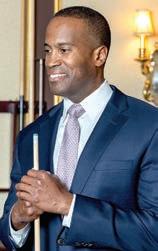
Bradley, now a consultant in Southfield, says he’s considering voting for James or former Detroit Mayor Duggan for governor.
Bradley believes James’ rhetoric that has pushed Black Democratic voters away has been shaped by the Trump era. Without having to worry about what the president does, he’d be more popular with voters on the other side of the aisle, Bradley suggested.
Lt. Gov. and Secretary of State candidate Garlin Gilchrist has often framed Michigan’s tech future around innovation and digital infrastructure, particularly as the state tries to position itself as a hub for advanced mobility and emerging technology industries.
While he has generally promoted technology investment as part of Michigan’s economic future, critics argue that the state still lacks strong guardrails for communities that may bear the costs of that growth.
Protecting Black voting rights: Urge state officials to remain vigilant in the fight against schemes to disenfranchise Michiganders of color.
Secretary of State Jocelyn Benson has also started calling for stricter safeguards around data center development, including stronger public hearings and protections for residents and ratepayers. That shift matters because concern about data centers is becoming politically mainstream and it’s no longer confined to protests by environmental activists.
Reject censorship in history instruction: Encouraging Gov. Whitmer to ensure the goal for Michigan schools should be history instruction that is presented by professionals with the subject matter expertise, pedagogical skills, and judgment necessary to present complex information to students that are grounded in provable facts and add to the understanding of modern-day America.
Meanwhile, Detroit’s new mayor Mary Sheffield has spoken frequently about equitable development and making sure longtime-Detroit residents benefit from investment rather than being displaced or ignored. That framework is going to be tested if major tech infrastructure projects continue moving toward the city.
“We’re trying to build people from the ground up in so that we’re making investments early in people. And that’s what has to change,” Hertel said. “I think that for far too long, the people have a right to feel ignored. We showed up to Detroit (in 2024) a month before an election and asked people for their votes. To me, that wasn’t actually authentic. It wasn’t real, we weren’t part of their communities. We have a lot of work to do in that regard.”
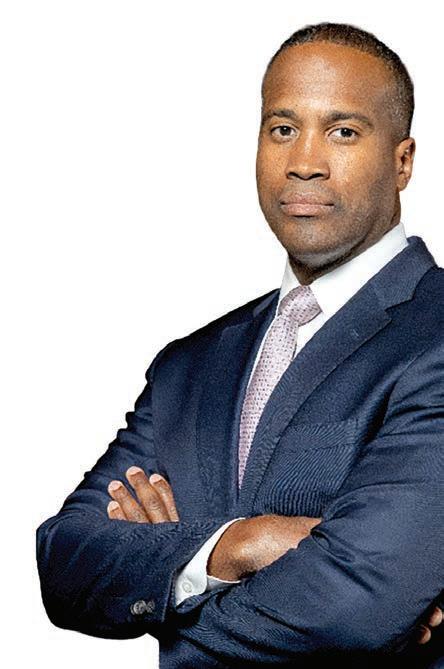
James Throughout the Years
James Jr., a graduate of Brother Rice High School, who lives in Shelby Township, has deep roots in Metro Detroit.
“John’s experience with politics has been where he’s shown that Black folks, in certain ways, are against him,” Bradley said. “So, he doesn’t necessarily trust folks the way, you know, he should.”
James’ father is one of the most successful Black business owners in Southeast Michigan, Bradley said.
“John’s dad is awesome — someone I can relate to in terms of his come up, his dad and my dad are close in age,” Bradley said. “He does a lot of stuff quietly for the Alpha House in Detroit, he’s what I would call 10 toes down.” Gilchrist’s Bid at History
Gilchrist graduated from Farmington High School and has spoken about how race shaped his experiences, growing up in and being profiled by police in the affluent suburb.
His father, John James Sr., challenged discriminatory practices that kept African Americans out of the trucking industry, which brought on regulatory changes that opened the door for Black-owned businesses.
James Sr. currently sits on the Charles H. Wright Museum of African American History board as a member Emeritus.
Gilchrist, the first Black lieutenant governor, suspended his campaign for governor in January to run for Secretary of State instead.
Gilchrist would be the second Black Secretary of State in the history of Michigan.
Increase mental health supports for the Black community: Recommending Michigan set a goal of increasing the number of Black mental health service providers by 20% each year over five years.
Perhaps one of the biggest criticisms of data centers from protesters is that the promised economic payoff often
“BLAC members have worked hard to identify the needs of the Black community and we feel these recommendations will provide a solid first step towards breaking down barriers in education, community safety, health and business,” said BLAC Co-Chair Dr. Donna L. Bell.
preparation in rapidly growing industries.
At the same time, Detroit possesses extraordinary talent, resilient communities, world-class institutions, creative entrepreneurs, and people who deeply care about the future of this city.
people believe that they need to for themselves and others to live better lives.”
Ninety days for the community to organize public conversations, redevelopment ideas, partnerships, educational concepts, and constructive proposals for the future of the Renaissance Center.
The question is not whether Detroit has vision.
The question is whether we are willing to invest in that vision before choosing demolition.
This conversation should not belong to one individual, one company, or one political group.
It should belong to the people of Detroit. Educators. Architects. Engineers. Technology companies. Artists. Universities. Students. Community organizations. Business leaders. Neighborhood residents.
“My father grew up across the street from Mississippi State & couldn’t attend the school because he is black,” James said in a post to Facebook last year. “Today, his son is the only black Congressman representing Michigan in our nation’s Capitol.”
He’s used his family history in campaign stumps in front of Republican crowds before.
BLAC will hold a virtual town hall meeting to discuss its policy recommendations on Thursday, May 12 at 4 p.m. Join BLAC and a virtual audience in discussing the recommendations to support the Black community.
But James has also received criticism from Republicans for the way he talks about his family history, identity, and connection to an era of this country in which Black people did not have the same rights as others. He received criticism from some in posts on social media honoring civil rights icon Jesse Jackson after his death earlier this year. He’s also made comments sympathetic to Black Lives Matter protestors during the 2020 social justice movement.
Austin served in the position from 1971 to 1995. His administration as Michigan Secretary of State has been highly acclaimed for operational innovation and efficiency.
Austin was the first Secretary of State in the United States to create a program that allowed people to register to vote when getting a driver’s license. Austin was class valedictorian from Detroit’s prestigious Cass Technical High School and went on to become Michigan’s first African American certified public accountant.
Other states soon began adopting so-called “motor voter” laws. In 1993, Congress made his innovation a national law. He was reelected five times, making him the longest-serving secretary of state in Michigan history.
“America is a nation built by swollen hands on stolen lands,” James told WDET in the height of the protests, saying he was quoting Pharrell Williams.
“Unless you’re, like, a political nerd who cares about voting rights you probably don’t know who he is,” said Branden Snyder, the leader of Michigan’s Working Families Party, a national group that backs grassroots candidates rooted in social justice.
Ninety days to determine whether these buildings can serve a greater public purpose for future generations.
Ninety days to allow Detroiters themselves to help shape the future of one of the most recognized landmarks in our city.
We are not asking the city to preserve an empty monument without purpose.
And if, after a genuine community effort, no viable and constructive future can be demonstrated for the property, then the community can honestly accept that reality and move forward together.
To learn more about BLAC and this upcoming event, visit www.michigan.gov/BLAC. embraces. transforleadership as a approach that change the syscircumstancoperating Ivory “Transformationdoesn’t just do certhem view of and exdrive that because what create everyentire because
“Chancellor Ivery is a true transformational leader and an outstanding CEO, who is more than worthy of the CEO of the Year Award he just received, “ said Prof. James C. Mays, who teaches entrepreneurship and supply chain management at WCCCD’s Corporate College. “In his 27 years at WCCCD, Dr. Ivery has elevated WCCCD to become nationally recognized for excellence and innovation and preparing our students professionally and personally to do great things in the world.”
Everyone should have the opportunity to contribute ideas about what these buildings could become before irreversible decisions are made.
So today we are asking something simple and reasonable of the leadership of this city: Before final demolition decisions move forward, will you give the people of Detroit 90 days?
James has also made comments during his campaigns that attack “wokeness.”
BLAC is housed in the Michigan Department of Labor and Economic Opportunity. Members represent many professional backgrounds, including economics, law, public safety, health and wellness, arts and culture and media. They leverage their experiences and expertise to make recommendations to the governor on critical issues affecting the Black community.
But before demolition becomes destiny, Detroit deserves the opportunity to dream, to collaborate, and to participate in deciding what comes next. Because cities are not remembered only for what they tear down. They are remembered for what they choose to build together.
Contact: hstrather@gmail.com 313-444-9691
That term, which refers to the understanding of racial injustice and inequality, has been deployed by Republicans for the past decade as a pejorative for progressive values.
Republicans have been taking aim at voter protections from the Civil Rights era, gutting the Voting Rights Act this year, allowing Republican states to redraw their political maps to do away with Black majority voting districts. Some conservatives, including James, were hostile to liberal Black Americans in May 2020, arguing that protests against police brutality were attacks against police. Republicans and some moderate Democrats blasted those who were sympathetic to calls to defund police departments in major cities.
And in November of 2020, many Republicans, led by President Donald Trump, accused Black cities without evidence of somehow rigging the presidential elections in favor of former President Joe Biden, who won the 2020 election decisively.
“Woke don’t work,” James said on social media in 2022. “It’s not about black or white. It’s about red, white and blue!”
The pushback against race-conscious ideology has led to restrictions on race-related content in Republican states across the country, like Oklahoma and Florida, which rejected an AP African American history course in state high schools and bars public universities from using resources toward Black identity groups.
James’ comment was a reaction to a Newsweek cover that showed several prominent Black conservatives like Herschel Walker and Candace Owens.
James is the first African American elected to the U.S. House of Representatives to serve Macomb County. In 1970, Macomb County’s population was approximately 625,309, with 1% identifying as African American (roughly 6,253).
In 2023, the U.S. Census Bureau reported Macomb had
Snyder says either James or Gilchrist being elected would be important for the next generation of Black candidates, proving that they can win.
“If John James won, I’d have more questions than answers, but Black folks haven’t really been afforded a lot of those opportunities to run the statewide ticket, right? And, you know, we just had this entire debacle, particularly on the Democratic side, with Aghogho Edevbie and Garlin being knocked out of their two races. Garlin’s win would make the argument, at least on the Democratic side, that Black folks can run and win.”
The First Black Gubernatorial Nominee
Bill Lucas was the first Black person to receive a party nomination for governor, winning in the 1986 Republican primary. He was defeated handily by Democratic Gov. James Blanchard.
After a stint as an FBI agent, Lucas became a Wayne County undersheriff and was eventually appointed sheriff to fill a vacancy. He was twice reelected after being elected Wayne County Sheriff in 1970.
Lucas also won an election in 1982 for county executive, a new position at the time.
Republicans thought Lucas could get votes in Wayne County, where he was from. However, Blanchard won in a landslide.
“Bill (Lucas) should have stayed a Democrat, but he got talked into it by some Republicans and destroyed his credibility,” said Keith Williams, the chair of the Michigan Democratic Party’s Black Caucus.
Lucas, who passed away in 2022, remains the only Black gubernatorial candidate to earn either party’s nomination to make it to a general election.
The election of either Gilchrist or James would be historic. Both appear to be frontrunners of their respective parties for their respective campaigns. Michigan voters will decide their outcomes in about 10 weeks.
You can reach Sam at srobinson@michronicle.com.
As Michigan heads into the hottest months of the year, many households see their energy use shift dramatically. Cooling your home can account for nearly half of your summer energy consumption, and factors like heat waves, rapid temperature swings, increased AC use, and even longer billing cycles can all contribute to higher bills.
With a few simple steps, you can take control of your energy use and keep costs down this summer:
• Keep your AC clean: Clear away leaves, grass and debris from around your outdoor unit and make sure

•
on your annual bill.
• Keep vents clear: Make sure furniture or rugs aren’t blocking air vents so your cooling system can distribute air evenly.
• Visit DTE’s Marketplace (dtemarketplace.com) and enjoy instant savings on energy-efficient products for your home this summer.
If you’ve recently completed an energy efficiency improvement project in your home, explore DTE’s rebates center (rebates.dteenergy.com) to see whether you qualify for a money saving rebate. It’s an easy way to get rewarded for making your home more efficient.
Find additional tips to stay cool and save energy all summer long visit dteenergy.com/summer.
In neighborhoods across Detroit, housing instability and transportation barriers continue to shape daily life, affecting everything from employment opportunities to access to health care. While these challenges are complex, the solutions often begin locally, led by nonprofit organizations that understand their communities best.
The DTE Energy Foundation’s Community Empowerment Awards: Critical Repairs Program is designed to help those organizations do exactly that, remove barriers and strengthen stability where it matters most.
Now entering its third year, the Community Empowerment Awards focuses on promoting safe, stable housing that honors individual dignity and to eliminate transportation barriers that impede access to basic human needs (including, but not limited to, employment, access to health care and other essential services).

Detroit-based organizations have already seen the impact. Past Community Empowerment Awards funding has supported 22 nonprofits statewide, representing nearly $670,000 invested in community-centered solutions. Among them is Detroit Rescue Mission Ministries, which leveraged the support to bring new life, safety and opportunity to families in Highland Park.
“This project is a gift to the families of Highland Park,” said Dr. Chad Audi, president and CEO of Detroit Rescue Mission Ministries. “With the support of the DTE Foundation, we are turning an overlooked space into a place of joy, safety and community pride.”
Rather than one-size-fits-all solutions, the Community Empowerment Awards prioritize projects designed by nonprofits rooted in the communities they serve, particularly those addressing long-standing inequities across Detroit and Southeast Michigan.
This year, eligible nonprofits can apply for grants of up to $30,000 in each focus area. The proposal window opens May 25 and runs through July 3, 2026, with final award notifications expected in September and public announcements in October.
Eligible applicants must be 501(c)(3) public charities operating within DTE’s service territory and directly benefitting the communities they serve. Projects must be non-energy related, demonstrate long-term sustainability and align with the Foundation’s commitment to community-driven impact.
For Detroit nonprofits already doing the work on the ground, repairing homes, keeping residents mobile, and helping families stay connected to opportunity, the Community Empowerment Awards represent more than funding. They represent partnership, investment and belief in the power of local solutions to create lasting change. Full program guidelines and application details are available at EmpoweringMichigan.com/community-empowerment-awards.
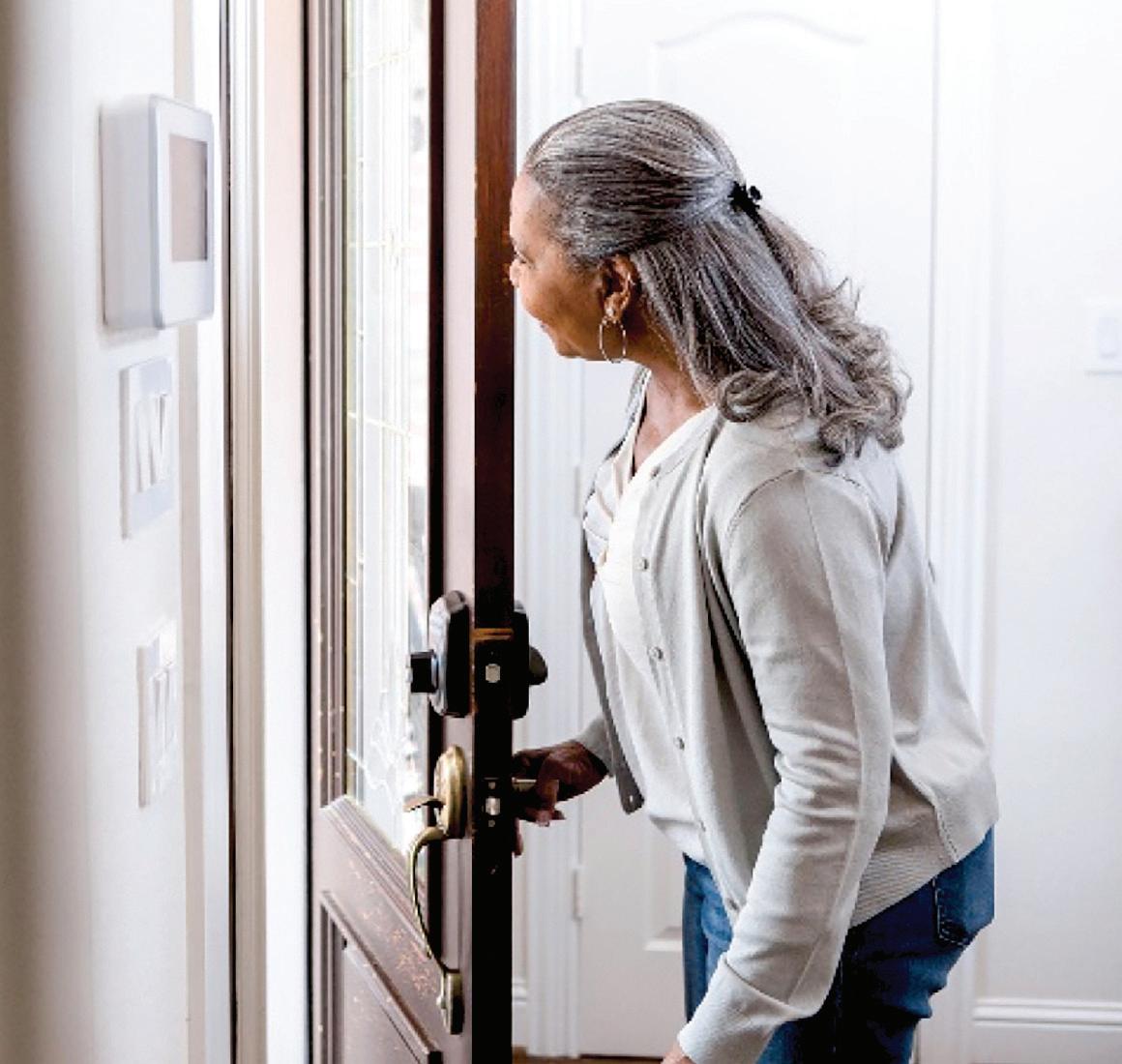
weather warms up, alternative gas suppliers are pitching their services door-todoor, over the phone or in public spaces, which can lead to confusion or concerns about who these people may be. Learn the facts about gas choice and alternative gas suppliers below.
Recruitment tactics
Two ways alternative gas suppliers solicit customers are over-the-phone and at their door. Make sure the alternative gas representative is clear about the company they work for, especially at the door. A worn badge should show the company name. DTE will never offer deals on rates over the phone or in person.
Suppliers often pitch contracts with short-term promotional rates – such as free gas during low-usage summer months – but these rates can change quickly, and higher prices can follow once the promotion ends.
Regulation
Although alternative gas suppliers are licensed by the MPSC, their rates are not regulated and can change at any time. DTE’s gas rates are regulated and must be reviewed and approved by the MPSC on behalf of customers.
Choosing your supplier
You can choose any natural gas supplier with unregulated rates or stay with DTE at regulated rates. DTE will still deliver gas to those who switch, as well as maintain equipment, read meters, perform safety checks, and handle billing.
If you are considering an alternative gas supplier, you should compare options as you would for any product. We encourage checking the MPSC’s comparison tool at michigan.gov/compareMIgas, reviewing supplier prices and contract terms and reading all materials before signing.
Once you are using an alternative gas supplier, you should regularly review your bill and compare rates, which are subject to change.
Avoid involuntary sign-ups
Do not give out your account number over the phone or at your door to an alternative gas supplier unless you know who you’re speaking with and would like to sign up for their service. You can lock in your supplier – whether it’s DTE or an alternative gas supplier – to keep your supplier from being changed without your knowledge. Call us at 800.477.4747 to do this. Learn more at dteenergy.com/gaschoice.
The right tree. The right place. Fewer power outages.

A Bold Civic Media Partnership
Putting Detroit’s Most Urgent Conversations in the Hands of the People Living Them
DETROIT — The Michigan Chronicle and Wayne County Community College District (WCCCD) today announced the launch of “Chronicle Conversations: Detroit Voices in Action,” an episodic civic documentary and editorial series designed to convene authentic, structured dialogue with everyday Detroiters on the issues defining their lives, their families, and their city’s future.
The partnership unites two of Detroit’s most deeply rooted community institutions, one the region’s premier gateway to higher education and economic mobility, the other a nearly century-old media organization with an unmatched legacy of amplifying Black voices across metro Detroit and beyond. It is a deliberate, shared declaration that the people closest to Detroit’s challenges deserve to be at the center of its most important conversations.
“Wayne County Community College District has always been more than a place of learning, we are a place of belonging, of becoming, and of bold civic action,” said Dr. Curtis L. Ivery, Chancellor of Wayne County Community College District. “This partnership with the Michigan Chronicle is a declaration that the voices of everyday Detroiters matter, that their stories deserve a stage, and that the solutions to our most pressing challenges already exist within our own communities.”
el examination of what it actually takes to come home: the barriers, the advocates, the employers, and the individuals navigating a system rarely designed for their success.
Work, Mobility, and the New Blue Collar. Detroit has always built things. But the hands doing that work, and what that work pays, looks different than it did a generation ago. This episode examines who the skilled trades are for now, who gets access, and what economic dignity looks like in a city rebuilding its industrial identity.
Youth and Cultural Capital. Detroit’s young people are not waiting to be discovered. This episode explores how they are creating, organizing, and defining value on their own terms, and what institutions owe them in return.
Each episode will be accompanied by companion editorial content published in the Michigan Chronicle in print and digital, amplifying key themes and extending the conversation beyond the screen to readers across the region.
The series will culminate in a live town hall hosted on the WCCCD campus, bringing together participants from across the series alongside policymakers, institutional leaders, and community members for a public forum designed not to dictate solutions, but to legitimize lived experience, surface contradiction, and foster the kind of honest synthesis that drives change.

Unlike traditional media coverage that frames community challenges from the outside looking in, “Chronicle Conversations” is built on a deliberate, structured approach to storytelling that puts lived experience at the center. Each episode will be filmed on location in community centers, homes, houses of worship, and cultural institutions with a curated circle of voices. Conversations will be moderated, not manufactured. Each episode is anchored by a single focused theme, with participants selected for their authentic proximity to that topic, not their titles or their talking points.
“For nearly a century, the Michigan Chronicle has carried the stories of Detroit’s Black community. Through struggle, through renaissance, and through every chapter of this city’s relentless reinvention,” said Hiram E. Jackson, Publisher of the Michigan Chronicle. “We are not interested in comfortable conversations. We are interested in necessary ones.”
The result is a series that is raw, real, and purposefully unpolished, shaped around some of Detroit’s most urgent and underexplored conversations:
Black Youth and Mental Health. An honest look at the emotional weight carried by Detroit’s young people, and the community systems and gaps that shape how they cope, heal, and ask for help.

Re-Entry and Recidivism. A ground-lev-
WCCCD students will be embedded throughout the production process, researching topics, supporting field production, and contributing content, gaining hands-on experience in media, civic engagement, and community storytelling as part of the college’s enduring commitment to applied, real-world learning.
“Chronicle Conversations: Detroit Voices in Action” will be distributed across Michigan Chronicle print and digital platforms, social media channels, and WCCCD’s campus and community networks, reaching audiences throughout metro Detroit and Wayne County. The first episode is expected this May.
About Wayne County Community College District — Wayne County Community College District is a comprehensive, open-access institution serving students and communities across Wayne County, Michigan. With five campuses and a deep commitment to educational equity and workforce development, WCCCD is one of the region’s most vital pathways to economic opportunity and lifelong learning. For more information, visit www.wcccd.edu.
About Michigan Chronicle — The Michigan Chronicle is Detroit’s leading African American news organization and one of the nation’s most recognized Black media brands. Founded in 1936, the Chronicle is part of Real Times Media (RTM), headquartered in Detroit and operating multimedia platforms across multiple U.S. markets. Its mission is to inform, inspire, and empower African American communities through trusted, high-quality journalism and content. For more information, visit www.michiganchronicle.com.

A5 | May 20-26, 2026
By Jasmine West
Detroit’s future has never rested on one block, one institution, or one funding stream. It lives inside classrooms, neighborhood corridors, public spaces, nonprofit networks, youth programs, and the families still asking whether the city’s growth will reach their front porch.
That truth shaped the latest Michigan Chronicle Pancakes and Politics conversation, where a panel of the city’s most powerful and dynamic philanthropic leaders examined how investments in Detroit neighborhoods, education, public spaces, youth development, and people can create ripple effects across Southeast Michigan and the state.
Moderated by Dennis Archer Jr., the discussion brought together Latrice McClendon, Detroit director for the Knight Foundation; Angelique Power, president and CEO of The Skillman Foundation; Kylee Mitchell Wells, executive director of Southeast Michigan Ballmer Group; and Wendy Lewis Jackson, managing director of the Detroit Program at The Kresge Foundation.
Detroit’s story stretches beyond the city limits. Its neighborhoods have long carried cultural, economic, and civic weight for the region. The question before the panel was how philanthropy can support that power without replacing government responsibility, community voice, or long-term public investment.
Archer opened the conversation with education, asking what needs to change from an infrastructure standpoint at the government level when it comes to Detroit schools.
McClendon pointed directly to school funding and the need to shift how Detroit students are discussed.
“We need equitable funding for all students but especially for Detroit public school students,” McClendon said. “Surrounding suburban schools get more per pupil and we need to have a narrative shift that there is good and brilliance in our students even against facing tough situations at home with lack of resources. The ladies that are sitting here with me have committed over $40 million to DPSCD and that’s why philanthropy is so important, it takes an entire village to support our students.”
Archer pressed further, noting that philanthropy is often used as a bandage for systemic problems. He asked what must change at the government level so philanthropy can enhance education rather than simply patch what is broken.

Power said Michigan’s education challenges require a cohesive public vision, not isolated grants.
“Michigan is 44th in terms of education,” Power said. “We didn’t get here overnight, and philanthropy isn’t going to fix it with a grant. We need a cohesive vision for education infrastructure. We want Michigan to be a top 10 state for education. What is everyone’s responsibility from state to district?”
Mitchell Wells thanked Gov. Gretchen Whitmer for making education funding a priority, while pointing to Michigan’s fragmented system as a barrier.
“I want to thank Governor Whitmer for being the first governor to put as much money into education in Michigan,” Mitchell Wells said. “We have a fragmented system. We have 800 districts and when there’s a fragmented system, it isn’t easy to track the money. We have to get on track.”
Power framed the challenge as structural and cultural. She said Detroit must think about education as a full system of learning, not only a school system, especially as artificial intelligence and digital tools reshape the future of work.
“The skills that you’re going to
By Jeremy Allen
EXECUTIVE EDITOR
There was a celebration near Little Caesars Arena on May 13, but it wasn’t because of the Detroit Pistons. (Unfortunately, they lost Game 5 of the NBA Playoffs 117-113 to the Cleveland Cavaliers.)
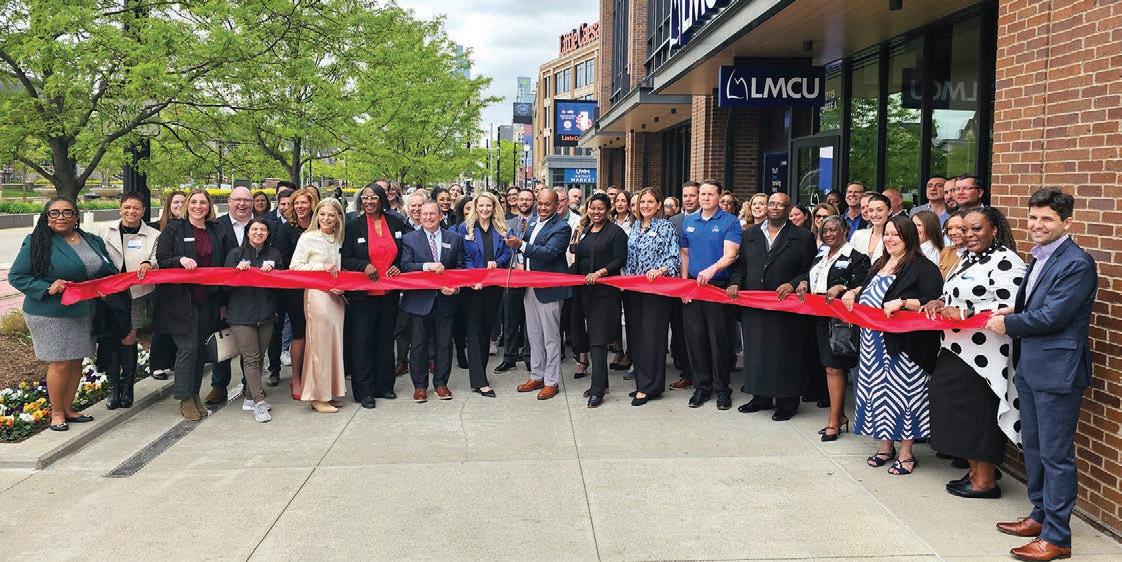
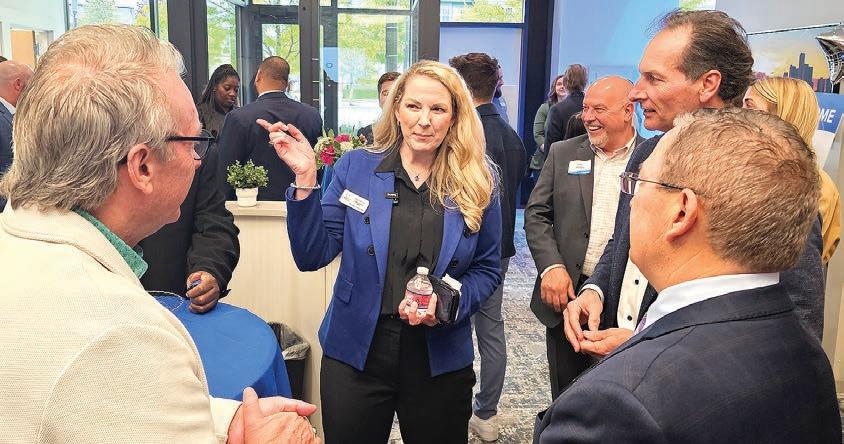
Instead, hundreds of financial professionals, community leaders, entrepreneurs, and developers gathered at 2175 Woodward Ave. near downtown Detroit to welcome Michigan’s largest credit union, Lake Michigan Credit Union, to the city as it cut the ribbon on its first-ever Detroit branch. For Lake Michigan Credit Union – better known as LMCU – the opening marked a long-awaited arrival into Michigan’s largest city and one of the state’s most important economic and cultural hubs. And CEO Julie Leonard made that among her first missions when she became the organization’s leader in March 2024.
“This is a huge milestone for us to be here and plant our flag in downtown Detroit,” said LMCU CEO Julie Leonard during the ribbon-cutting ceremony. “The largest credit union in the state is here. The vision couldn’t have happened without many people, and his excitement from the very beginning, and it truly does take a village.
“When I came back to Michigan after being away for several years, we came down to Detroit and we felt the energy and the excitement,” Leonard said. “We knew that we didn’t have to recreate the wheel – it was already started here. We wanted to plug in and be a part of this.”
need to be resilient in an AI digital world, we have to think about this as a system of learning, not just a system of schools,” Power said.
She added that Detroit’s strength cannot be separated from the well-being of its residents.
“There is no strong Detroit unless there are strong Detroiters,” Power said. “Until every family feels like they have a strong school to send their kids to, we have a lot of work to do. It’s not that the ideas or innovations aren’t there. It’s that the capital isn’t there.”
Mitchell Wells lifted up the district’s health hubs as one example of investment that reaches beyond students alone.
“The health hubs are an investment where, at certain schools throughout the Detroit district, they have resources for the entire family,” Mitchell Wells said. “Shoutout to Latrice and superintendent Dr. Vitti for putting those health hubs in place.”
Panelists also pointed to recent DPSCD progress as part of Detroit’s broader education story.
McClendon noted that the district is at an 88% graduation rate and “on track to outpace the state.” Mitchell Wells added that Detroit Public Schools will be highlighted among the gains happening across
the country.
For the panel, Detroit’s neighborhoods remained central to any honest conversation about growth. Jackson said the city has learned from the older assumption that downtown investment would naturally trickle out to surrounding communities.
“We’ve learned so much from the thought of investing downtown will trickle throughout the rest of the city,” Jackson said. “It’s important to think about the success of the city as a thriving downtown and the growing economic engines located in our neighborhoods because that’s what really makes or breaks a neighborhood.”
Archer connected that point back to education, noting that school performance and announcements tied to DPSCD matter because they help determine whether families, employers, and key players are drawn to the city.
Jackson said trust-based philanthropy has changed how foundations approach neighborhood investment.
“Trust-based philanthropy is changing the game,” Jackson said.
“How do we ensure that residents are helping make decisions on
where resources go? At Kresge we are working directly with residents on the design of where the investments go in neighborhoods.”
Detroit’s recovery is often measured through what people can see, including buildings, roads, parks, and commercial corridors. The panel argued that social infrastructure carries equal weight in long-term regional growth.
“We try to integrate these approaches,” Jackson said. “You have to think about early childhood education, arts and culture, and you have to marry it with safe neighborhoods as well as climate and how to integrate. We all are trying to look at this much more holistically.”
Darienne Hudson of United Way asked the panel about innovation, nonprofit partnerships, and measurable results. Mitchell Wells pointed to Ballmer Group’s partnership with United Way around summer youth programming.
“I am so happy that Ballmer has been able to partner with United Way,” Mitchell Wells said. “We are coming up on three years of a summer youth program and we are trending close to 70,000
The excitement surrounding the launch was evident throughout the event, where executives repeatedly described Detroit as a community they wanted to join instead of as a market they wanted to conquer.
“At the end of that tour, she said to me, ‘Well, where’s our Detroit branch?’” Peltier said. “And I had to tell her, ‘We don’t have a Detroit branch.’”
The response was immediate.
“She said, ‘Let’s make this happen.’”
“We looked at a lot of different properties, and then (Keith Bradford, president of Olympia Development of Michigan) brought me here,” he said. “I stood right over here on the dirt floor and I called Julie myself and I said, ‘Julie, I think we just found our Detroit branch.’” Michigan’s Largest Credit Union LMCU Opens its First-Ever Detroit Branch
According to Chief Growth Officer and Senior Vice President Marty Peltier, the idea to bring business to Detroit materialized almost immediately after Leonard began touring company locations across Michigan and Florida.
That vision ultimately led the organization to downtown Detroit, where the new branch now sits in the heart of the city’s
entertainment and business corridor near Little Caesars Arena.
From page A-5
kids this summer. We are so proud to say we have been able to invest under my leadership. That is a partnership that really cares about the youth and I’m glad to be in partnership.”
McClendon pointed to Black Tech Saturdays and the Joe Louis Greenway as examples of work connected to thriving neighborhoods, public spaces, technology, culture, and civic life.
“We need to make sure that we have thriving neighborhoods,” McClendon said. “Knight Foundation is the biggest funder of journalism in the country. We truly believe that arts and culture, advancements of public spaces and tech are very important to us at Knight.”
Power reminded the room that nonprofits are facing real pressure, and that community support must extend beyond applause.
“Nonprofits are under attack right now, and I think it is very important that we shout out the ones we know,” Power said. “It’s important to put all of our dollars and volunteer hours to nonprofits who are here to help us.”
Dr. Chanel Hampton, director of education and youth affairs for the City of Detroit, asked how philanthropy can shift the narrative to include all Detroit children and how foundations are bringing youth voice into grantmaking, decision-making, and daily work.
Power said young people must be partners, not afterthoughts.
“We are in service to young people, but we need not do things for young people but with young people,” Power said. “At Skillman we have a youth council who gives grants, who decide what they want to focus on and what they want to give. It is extremely important that we look at our work with youth lenses. To have youth a part of policy as well.”
Archer also asked how neighborhood investment can prevent displacement. McClendon said the conversation should begin with residents who have remained, built, organized, and sustained their communities.
“We need to focus less on displacement, and we need to focus on the residents that are here and founders who have stayed and amazing CDCs,” McClendon said. “Making sure that residents who are currently there are being heard and we need to welcome new things

in neighborhoods as well.”
The conversation closed with job readiness, skilled trades, and how philanthropy can help Detroit students prepare for a changing economy.
Power said the economic landscape is shifting quickly, but education and preparation still matter deeply.
“The economy is changing so fast right now,” Power said. “The one thing we do know is that graduating high school and college, there will be more opportunities for more salary and healthcare. Detroit has the Detroit Promise, so college is paid for, and not enough students are taking advantage of that. Beyond that, it is important to start before high school.”
McClendon pointed to DPSCD’s high school redesign as part of that preparation.
“On behalf of DPSCD, we are in the middle of high school redesign, and it’s needed because we are focused on what Michigan students need in order for our kids to graduate, go to college and be able to come back and live in Michigan,”
McClendon said.
Mitchell Wells said philanthropy must also be introduced as a career path early, especially for students who may not know the sector exists.
“There’s more that we need to do throughout the school year,”
Mitchell Wells said. “I want to be in the schools talking to students about philanthropy. It’s important that we get out early to talk to kids about these careers, some that need a four-year degree and some that don’t, that have large salaries.”
McClendon ended with a clear statement of commitment.
“Philanthropy can’t solve problems, but we can determine who we will invest in,” McClendon said. “Regardless of what’s happening at the federal level, we will continue to fund, and we are very unapologetic about funding Detroit. We all know what Detroit looks like and we are going to continue to fund Detroit.”
The conversation made plain that Detroit’s future will require more than isolated investment. It will require equitable school funding, resident-led neighborhood development, youth voice, nonprofit strength, public-private alignment, and a shared belief that Detroit’s people are not problems to manage, but leaders to invest in.
Leonard said the transformation from construction site to completed financial center exceeded even her expectations.
“From that two years ago, seeing the dirt floor to what it is today – let me tell you what – this is way beyond my expectations that this could have ever happened,” she said.
While the branch opening represents a significant expansion for LMCU, company leaders made it clear that their strategy in Detroit centers on partnership and community investment.
The organization already serves more than 625,000 members through what is now 75 branches statewide. Founded in 1933, LMCU has grown into the largest credit union in Michigan, offering consumer banking, lending, mortgages, and commercial financial services.
Leonard also used the occasion to emphasize the differences between credit unions and traditional banks.
Chamber of Commerce, the National Association of Women Business Owners, Oakland Thrive, and the Detroit Economic Growth Corporation.
LMCU’s Detroit market leader, Byron Sanders, who joined the organization earlier this year, described the opening as both personally and professionally significant.
“I’m excited about being here,” Sanders told attendees. “I’m excited about being in my hometown, working in my hometown.”
Standing before a crowd filled with local leaders and business professionals, Sanders welcomed guests to what he called “the heart of Detroit.”
“You’re right in what we call the District, right in what we call Midtown,” he said. “Welcome to Midtown. Welcome to Detroit. We’re excited to have you here.”
“Credit unions are not-for-profit,” she said. “We are here to serve our members. We give back to our members.”
That philosophy, she added, extends beyond financial products and into direct community engagement.
“If you haven’t seen us yet around Detroit, we are out and about,” Leonard said. “We are boots on the ground. We’re not waiting.”
To underscore that commitment, LMCU announced a new initiative tied directly to the branch opening. For every new member who joins the Detroit branch through the end of June, the credit union will donate $10 to Methodist Children’s Home Society.
“We want to give back to the community right away,” Leonard said. “We just want to link arms together and really amplify the impact and make as much difference as we can here.”
The event highlighted LMCU’s growing relationships with Detroit-area business and civic organizations, including the Michigan Hispanic


Sanders also connected the Detroit expansion to the credit union’s long-term growth strategy. LMCU has publicly set a goal of reaching one million members within five years – a milestone he believes cannot happen without a meaningful presence in Detroit.
“I wholeheartedly believe that the only way we’re going to get to our million-member goal is by going through the city of Detroit,” Sanders said. “We have to partner with all of you who are here.”
He noted that while LMCU already has strong recognition across western Michigan, opening in Detroit solidifies its statewide footprint.
“Whenever you go out of town, whenever you go to another state, and you say, ‘I’m from Michigan,’ the first thing they say is, ‘Oh, how close are you to Detroit?’” Sanders said. “So now we can say we’re right in Detroit.”
As the ceremony concluded, attendees gathered outside for the official ribbon cutting before returning inside for networking, food, and celebration.
The thread that tied the event together for LMCU executives was that it symbolized the beginning of what they hope will become a lasting relationship with the city.
“We’re here,” Sanders said simply. “We’ve planted our flag.”



















Health care is personal – and access to quality, affordable health insurance is essential to provide the peace of mind and security that Michigan’s families and employers deserve. But health insurance costs are rising, and we are working hard to keep them affordable.
THE PROBLEM IS COMPLEX.
Health insurance premiums reflect the total cost of care that occurs upstream in the health care system. Prices for medical care and prescription drugs have been rising well beyond the rate of inflation for many years. This trend, combined with the surging use of an expensive system, resulted in Blue Cross Blue Shield of Michigan paying $1.02 in claims for every $1 in premiums in 2025. This is why health insurance premiums are under pressure now.
WE ARE BRINGING SOLUTIONS FORWARD.
Blue Cross advanced several solutions in 2025 to help ease these upstream cost pressures:
Reduced our administrative expenses by $420 million –with a target of $600 million in reduced spending.
Lowered prices for certain high-cost drugs through the introduction of biosimilar alternatives – saving our customers 90% off the list prices.
Partnered with eight Michigan hospital systems on newly signed value-based contracts that align payments with the results achieved for their patients.
THERE IS STILL MUCH MORE TO DO.
We are advocating for system-wide solutions involving insurers, hospitals, doctors, drugmakers and policymakers. We also will continue making our own efforts, and we will not rest. Because health care is personal, it’s important, and affordability matters.

B1 | May 20-26, 2026
By Miss AJ Williams
Rest is not something you earn after working hard or proving yourself. It is not just what happens when you are burned out, or what a vacation or a free Sunday afternoon gives you between other obligations. True rest is an act of spiritual sovereignty. For many Black women, choosing to rest can be one of the most challenging acts there is.

It is important to be clear about this. The idea of “rest” has become part of the wellness industry, just like many other things our culture has turned into products. There are candles, playlists, and even a whole look built around rest, which can serve a surface purpose. But the deeper issue—the feeling that rest is dangerous, selfish, or undeserved—has not really changed. We have accepted the products but not questioned the beliefs behind them.
For many Black women, the real challenge with rest is not about having enough time. It is about a belief that ties self-worth to being useful. This belief did not come from personal failure. It was passed down and encouraged by families, workplaces, and communities that valued constant work and strength. In some families, love was shown through hard work. In some jobs, those who never complained or asked for help were promoted. In many communities, strength was the only way to be seen. The message, repeated over and over, was clear: you matter because of what you do for others.
When this belief is deeply rooted, being still does not feel peaceful. Instead, it feels uncomfortable and exposed. As soon as you stop moving, your mind starts asking: What am I not doing? Who needs me? What is piling up while I rest? This discomfort is not laziness. It is your sense of self feeling threatened. If your identity is built around being useful, not doing anything can feel unsettling. The urge to get up and do something is not a weakness—it is the old conditioning trying to protect itself.
This is why it is important to distinguish between rest that comes from burnout and rest that is chosen. Burnout forces you to rest, while sovereignty means you choose it. These are not the same. When your body finally gives out from doing too much, rest feels like defeat. Your mind does not become calm—it just runs out of energy. There is no real peace, only exhaustion pretending to be rest. But when a woman chooses to rest because she knows she does not have to prove her worth, the experience is completely different. It reveals the old beliefs more clearly. When things are quiet, you can finally hear what has always been there.
In true stillness—not just a relaxing morning, but the deeper quiet where you start to reflect—you begin to see how you have understood yourself. You might hear a voice that keeps track of what you are not doing. There can be discomfort, as if you have forgotten something or let someone down. Sometimes, you feel guilty not because you have neglected anyone, but simply because you chose yourself over being productive. That guilt is a sign of your old conditioning. The real spiritual work of rest is not about feeling comfortable. It is about learning to sit with whatever comes up when you stop performing.
All the articles in this series have been leading up to one main question, which I am finally asking here. If you have been reflecting on the ideas from the first five pieces, if you have started to notice the identity you were given and have begun to grieve the ways you had to survive, if you are reclaiming the parts of yourself you lost by always being strong, and if you are starting to feel more stable inside, then you are ready for the real question. It is not “when will you
See REST AS RESISTANCE Page B-2
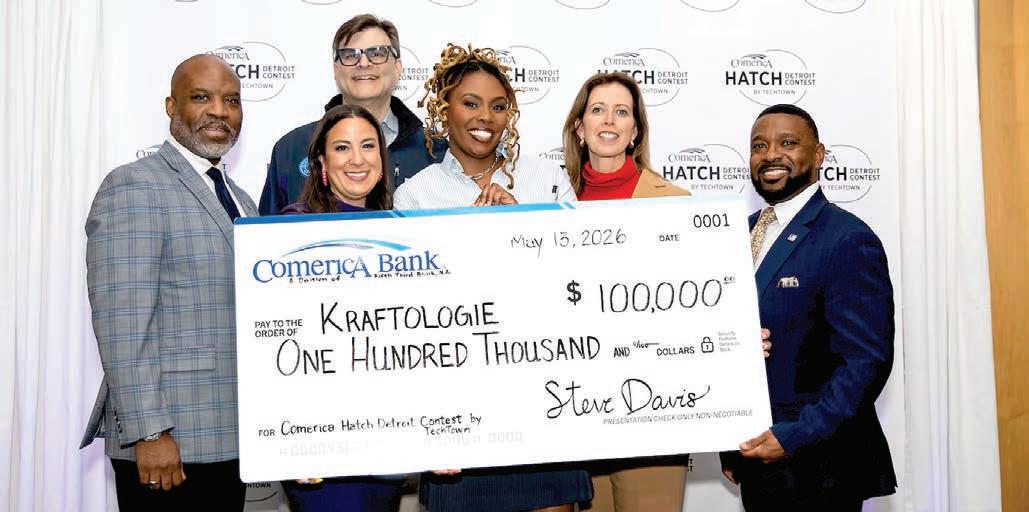
By Aaron Foley EDITOR-AT-LARGE
Anyone with WiFi remembers the collective groans that reverberated across Metro Detroit in April 2024, when the much-ballyhooed “Hollywood sign” that wasn’t made its underwhelming debut on eastbound I-94 crossing into Detroit from Dearborn. And without getting too deep into revisiting why that chaos unfolded the way that did – let’s just say there was a lesson there about A.I. that many of us still haven’t learned yet – there were a few queries and theories about how the Detroit Sign, which is now what we call it, could have made a bigger splash.
Among some of the feedback from the crowd at the time: Nobody thought to tap in with Trice Clark?
Back in 2024, Clark had gone all in on building herself up as “Detroit’s Handy Woman,” after having spent years building, well, almost everything else. A self-taught craftswoman, Clark at that point had earned a reputation among event planners as a go-to for constructing sets, backdrops, and other interactive displays out of wood, metal, or both – on the side, as she had a primary career in event production herself. In May of that year, with a growing following and increasing requests for her services, Clark was able to leave her day job to become a full-time artisan.
The stars weren’t aligned for Clark’s entrepreneurial efforts to have solidified in time to bid on an RFP for the I-94 sign, but that’s not to say that a project of that scale won’t ever come her way in the future.
Last week, Clark’s profile was raised even higher after winning this year’s annual Comerica Hatch Detroit contest, a rigorous competition among local startups vying for a $100,000 prize.
With the big check in hand, Clark will use the funds toward opening a community space, Kraftologie, where she plans to educate future artists of all ages through workshops and other classes, while retailing kits and patterns for fellow DIY-ers.
“I feel like I had to put it all out there, and I was stretched in different ways that I’m not normally used to performing under,” Clark tells the Chronicle in the afterglow of her Hatch victory, which was announced in front of a crowd of supporters at TechTown.
“I had to do a whole campaign, and I’m not normally the biggest social media girl.” (We’ll challenge that assertion later.) “But I was also in the streets in real life, putting flyers on people’s cars at Pistons games, so I feel good.”
The blueprint for Kraftologie was first drawn on the east side off E. Warren, where Clark grew up the only girl in the family. Her mother was an only child, but there were plenty of great uncles and cousins, some of whom babysat her. “And whatever they were doing with their sons is what I had to do,” Clark says.
“So if they were on the roof, I was down at the bottom picking up the shingles,” she adds. “I like to call myself a ‘backyard carpenter,’ because everything that [my uncle] taught me is how I learned. All of those things – all of the carpentry, all of the woodwork. We made treehouses growing up, go-karts…that’s how I got into it, just in the backyard.”
Detroit has always been a city that appreciates its painters and photographers; whether their work hangs at the DIA or covers a wall of a beauty supply store, there’s no hesitation in labeling it as art. That vocabulary isn’t as freely applied when it comes to work produced with harder materials, where there are firm delineations on who can wear what title. The carpenter without an art degree wouldn’t readily call themselves a woodworker, nor would the welder at the plant frequently use a more academic term like metalsmith.
There’s room for new thinking there, Clark says, especially considering the uncle who initially showed her the basics of making something worth looking at. “He is an artist, and he doesn’t consider himself an artist, because it’s political on who gets to call themselves an artist,” she says. “He is a craftsperson, but he’ll tell you that he’s a Ford man who worked in the glass plant for 30 years. But he knows how do to everything, and he passed that on to me.”
For the Hatch Detroit competition, Clark was one of four semi-finalists whittled down from more than a dozen entrepreneurs and startups all pitching how they’d add to Detroit’s economic landscape with a funding boost, an intensive process that involves weeks of pitching to both the public and the contest’s panel of judges. During the final round at Techtown, Clark noted to the panel that she hadn’t taken a required – emphasis on required – art class since fifth grade, one of many anecdotes supporting a larger idea of making art and craft more communal and accessible without the pretense. “I grew up going to Arts and Scraps – I’m a scrappy girl,” she says, referring to the longtime eastside nonprofit that collects reusable materials for use in community art education. “With Kraftologie, I hope that people are introduced to arts and crafts early, and they can pick their job trajectories from there.”
Woodwork has been Clark’s calling card, but she’s also skilled in metalsmithing and blacksmithing. The list of Black women in those trades is short but not entirely blank, partially due to the recurring question of where labels and titles apply.
“When I look up Black women metalsmiths and blacksmiths, the first thing that comes up is slavery, because we did every craft. But they’re looking at it like a sense of utility and need, and not ‘this person does this gorgeous work,’” she says. “Craft has always been communal with things that you need first. I’m carrying on for the women before me who didn’t get acknowledged for this work, but we’re definitely doing this work.”
Clark points to hometown heroine Tiff Massey, the internationally acclaimed metalsmith who became the first Black woman to earn a BFA in the field and the youngest artist to be exhibited at the DIA with “7 Mile & Livernois.” (“Blacksmithing, metalsmithing, welders…we’re all sistas,” Clark says, highlighting the technical differences between these similar disciplines.) That’s one permanent name on the list. Still, Clark herself finds herself the only one or one of a few in some spaces – the only woman, the only Black woman, the only Black person period, any one of those descriptors has come to be the usual.
That’s played into Clark’s attempts to boost the ranks,
By Sam Robinson SENIOR REPORTER
Artists are gearing up to let the music play at the annual Movement Festival, Memorial Day weekend at Detroit’s Hart Plaza.
Detroit birthed techno in the eighties after the imaginative work of African American musicians, such as Derrick May, Stacey Pullen, and Kevin Saunderson. Like Motown soul, the techno style is laced with the identity of the city where it was born.
Much like in the 1980s, the new crop of Detroit disc jockeys who started spinning in venues across the city during the pandemic didn’t wait their turn to make a name for themselves.
These Black artists are set to take the various stages for Movement Festival at Hart Plaza, May 23-25: Saturday:
K’Alexi Shelby is a Chicago house music pioneer whose upbringing in the late 70s led to a soulful house style that permeated across the city’s other artists. His enchanting “Essence of a Dream” is known as a Chicago house classic. (Stargate stage at 2 pm)
AK is a Detroit-based DJ part of the women-led Blueprint. 313 collective, whose sets — which mix ghettotech, throwback R&B, and Sexyy Red’s latest banger — are tough to forget. (Waterfront stage at 3 pm)
Carl Craig is a Grammy-nominated techno icon whose Detroit roots in the second wave of the city’s powerful techno scene during the early 1990s are known internationally. Craig attended Cooley High School. (Stargate stage at 9:35 pm)
JMT is a 24-year-old DJ and producer from Pontiac, who’s known for high-energy performances on any given weekend as part of Detroit’s rich DJ scene. (Waterfront stage at 4 pm)
Stacey Hotwaxx Hale is a pioneer of House music, known as one of the first female DJs who played house music on the radio in Detroit at WGPR 107.5 in the 1980s, and in recent years
has held residence at Spotlite Detroit, Marble Bar, and Panorama Berlin. She blends Motown Soul with funk, techno, and hip hop. (Stargate stage at 6:30 pm)
Danny Brown is a critically acclaimed Detroit rapper whose collaborations range from some of the biggest names in music, like Kendrick Lamar and ASAP Rocky, to Gen Z favs like JPEGMAFIA and Jane Remover. (Waterfront stage at 11 pm)
Stacey Pullen is the self-proclaimed “ambassador for Detroit Techno” and is considered one of the pioneers of the genre. (Stargate stage at 8 pm)
Terrance Dixon’s 30-year career is known for blending unconventional sounds over atmospheric beats. His debut album, released in 2000, “From the Far Future,” is considered a classic in the genre. (Underground stage at 5 pm)
Sheefy McFly is a DJ and artist best known for his murals all across the city. His fashion style pulls from Detroit staples — Cartier glasses, fur coats, and gators. (Detroit stage 9 pm)
Dames Brown is a Detroit-based vocal trio comprised of Athena Johnson, Teresa Marbury, and LaRae Starr. The group mixes elements of soul, gospel, and house. (Stargate stage at 6:30 pm)
Zack Fox is an Atlanta-raised comedian and actor best known for his funny posts on Twitter in the 2010s. Fox’s set at last year’s festival turned out to be a huge daytime crowd, while his DJ sets posted to YouTube have millions of views. (Waterfront stage at 7 pm)
Jessica Care Moore is a Detroit poet and performance artist who has, for years, bridged the gap between poetry and hip hop. Her voice appears on songs by Common, Talib Kweli, Madlib, and Karriem Riggins. She’s also on the lineup on Monday at the Movement stage. (Stargate stage 9:30 pm)
Peezy is a Detroit rapper from the eastside whose hit “2 Million Up” gained notoriety nearly 15 years ago as a member of Team Eastside. (Waterfront stage at 10:30 pm)
DJ Stingray 313 is a techno artist and DJ who moved to Berlin, Germany, to participate in the city’s rich cultural scene. Stingray performs while covering his face with a mask, “to keep

the mystique up,” he says. (Underground stage at 10:30 pm)
Sunday:
E-Dancer is a group comprised of legendary techno artist Kevin Saunderson and his son Dantiez Saunderson. Saunderson’s contributions to the genre helped shape it into what it has become. A member of the Belleville Three, with Derrick May and Juan Atkins, Saunderson and his family are Movement royalty. (Movement stage at 9:20 pm)
The Saunderson Brothers are Saunderson’s two sons, Damarii and Dantiez Saunderson. The brothers, now in their 30s, have been hitting the Movement stage for more than a decade. (Pyramid stage at 5 pm)
Zoe Tally is a Detroit DJ known for exploring sonic textures in her own music as well as what she plays. Tally performs her debut set at Movement Sunday. (Detroit stage 5 pm) Father Dukes is a Detroit DJ whose sets include selections of jungle and drum and bass tracks. Check out this set from Dukes at The Lot Radio in Brooklyn. (Pyramid stage at 2 pm)
Syreeta is a London-based DJ who caters her sets to underground and festival audiences. Whether at Glastonbury and Coachella or at London’s underground clubs like Drumsheds or Tobacco Dock, Syreeta’s performances are energetic and house-driven. (Pyramid stage at 3:30 pm) DJ Killa Squid is a Detroit-based DJ and influencer whose sets range from footwork to Detroit rap classics from the 2010s.
From page B-1
which is demonstrating to others that it can be done. While honing her many crafts over the years, Clark would occasionally livestream herself at work or in the studio to a digital audience, giving instructions along the way. Then she started teaching workshops and classes in person around town, sometimes coming full circle with sessions at Arts & Scraps, where she’s now a board member.
One of Clark’s star pupils is her 14-year-old son, who’s keeping with tradition by doing whatever the older relative does. “He edits videos for his friends, but he won’t let me see them. He’s an artist. He’s sensitive about his stuff. He will not let me see his videos,” she said while laughing.
There’s also the entrepreneurial gene that’s revealing itself: “He’s my event photographer – he charges me. He sends me an invoice; he’ll say, ‘you have to buy me
snacks, you have to feed me. I’m not paying for that.’”
Now, Clark said that she’s not the social media type, but there’s evidence to the contrary. Occasionally, Clark does go viral in Detroit digital circles whenever she posts some of her elaborate creations, and a number of supporters have now helped in her Hatch campaign with reposts and awareness. A memorable, more widespread moment came a few years back by way of her son when, in a lighthearted display, Clark tweeted a screenshot of a text exchange with him while she was out on the town and he was waiting up with a babysitter.
Forgetting that she and her son share each other’s locations on their respective devices, Clark was caught off guard when her son clocked that she was at Delmar, the now-defunct hotspot known for its rooftop debauchery, formerly located in the “Greektown area,” – which is where Clark said she was after
From page B-1
rest?” but “can you exist without always performing?”
This question is not just for discussion— it is about the foundation of who you are. When a woman has truly worked on her identity, she can reach a place where being still is not good or bad. It just belongs to her. She can spend an unproductive hour without feeling guilty or needing to call it special. Rest is not resistance or a reward. It becomes a natural part of life for someone who no longer feels the need to prove her
From page B-1
(Detroit stage at 6 pm)
Monday:
Keith Worthy is a Detroit-based DJ raised on the eastside whose sets featuring timeless Detroit deep cuts alter the brain chemistry of listeners. (Detroit stage at 8 pm)
Nia Archives is a UK-born drum and bass artist and DJ who has opened for Beyoncé and has been featured on songs with artists like PinkPantheress. Read about how she played a part in the jungle music revival here. (Waterfront stage 7:15 pm)
Whodat, aka Terri McQueen, is a De-
immediately cutting off her side of the location sharing.
“Yes, I was in the Greektown area,” Clark said after the Hatch win. It was retweeted more than 10,000 times, and for a brief time on the Detroit internet, “I’m in Greektown area” became shorthand for letting followers know you’re about to have – or in the middle of having – the time of your life. (And maybe being somewhere you ain’t supposed to be in the process.)
For Clark, it was an inside look at the balance between parenting and adulting. “He still checks my location, all the time,” Clark says -- which years ago felt more necessary than it does lately.

“He saw me growing from working 12- and 14hour days in event production, to being at home now, having dinner with him or bringing him along to jobs with me because he can come,” Clark says. “He sees that flexibility, and he does tell me that ‘you look happier now.’ Because I am.”
worth. This is the kind of identity I hope these articles help you move toward—not just someone who knows how to rest, but someone who does not need to question her own value.
Even if you are not there yet, the foundation is starting to take shape.
AJ Williams is a Spiritual Wellness Architect and Educator and the Managing Editor of the Michigan Chronicle. A thought leader at the intersection of spirituality, astrology, psychology, and identity evolution, she is the founder of Sunday Communion, a quarterly live transformation experience held in Detroit. The Inner Architecture is her editorial column on the work of becoming.
troit-based DJ and serious crate digger who regularly spins deep house records at Temple Bar, Motor City Wine, and Marble Bar. (Detroit stage 7 pm)
Green Velvet is the alter ego of Chicago-born producer Curtis Alan Jones. He mixes funk, techno, and spoken word vocals like on his 1997 hit, “Answering Machine.” (Movement stage at 6:20 pm)
DJ Minx is a longtime Detroit DJ and producer who engineered and hosted WGPR’s electronic music show, Deep Space Radio. Minx helped shape house music in Detroit and was honored with a Spirit of Detroit award in 2018. (Pyramid stage at 9:30 pm) You can reach Sam at srobinson@ michronicle.com.


By Tricia A. Keith PRESIDENT AND CEO, BLUE CROSS BLUE SHIELD OF MICHIGAN
Each year at the Mackinac Policy Conference, business and government leaders across Michigan come together to talk about the state’s biggest challenges and how to find solutions and move forward together.
This year, healthcare affordability should be at the top of their list. For most people, health care is much more than a policy debate — it’s a kitchen table issue that drives some often-difficult personal decisions. It shows up at the pharmacy counter. In the monthly budget. When someone puts off care because they are worried about the bill that will follow. Employers feel it too, as they work to offer good coverage while managing rising costs. Health care affordability is putting real pressure on families, businesses and communities across our state.
The Health Care Cost Equation
That’s why Blue Cross Blue Shield of Michigan is speaking more plainly about what’s driving healthcare costs and what it will take to contain them. Families and employers deserve a better explanation about why coverage keeps getting harder to afford.
The biggest driver is the cost of care itself, which has been rising for years, far faster than everyday expenses. Since 2000, overall inflation has increased about 93%. Over that same period, the price of medical services rose roughly 150% and hospital prices surged by more than 280% — three times inflation.
Prescription drugs are adding even more pressure. In 2024, the median list price for a new specialty drug topped
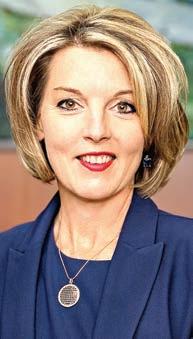
$370,000, about double what it was just three years earlier. That kind of growth pushes up costs across the system and makes coverage harder to sustain.
At Blue Cross, we see that pressure every day. In 2023, Blue Cross Blue Shield of Michigan paid $88 million a day in claims for its 5 million members. In 2024, that rose to $100 million a day. In 2025, it climbed again to about $107 million a day.
When costs rise upstream, they show up downstream in the premiums and budgets of families and employers across Michigan.
In 2024, Blue Cross Blue Shield of Michigan paid $1.04 in benefits for every $1 collected in premiums. In 2025, we brought that down to $1.02, through pharmacy initiatives and administrative cost reductions. That’s progress. But it’s still unsustainable.
From Symptoms to Solutions
We know the health care system works best when we all work together to find solutions. Providers, drug companies, employers, policymakers and health plans all have a role. There is good work underway, but not at the pace this moment demands.
At Blue Cross Blue Shield of Michigan, we’re focused on steps that can help contain costs and improve outcomes. In the past year, we signed eight new contracts with hospital systems that include value-based care components. These
By Sam Robinson SENIOR REPORTER
A Highland Park woman who transformed her block after gun violence took the lives of her two sons is challenging the city’s incumbent mayor, saying she wants to create a citizen-focused government and go further in economic development efforts.
Shamayim “Mama Shu” Harris, 60, launched her campaign for Highland Park mayor this week at Highland Park’s Prayer Temple of Love with dozens of supporters. She is challenging incumbent Mayor Glenda McDonald, who was first elected in 2022. Harris has experience working within city government, previously leading the Highland Park Charter Commission and Board of Education, and serving as vice president of the city’s housing commission.
Highland Park has fewer than 10,000 people. Leaders have been trying to remove blight and revitalize the city in the decades after major disinvestment from the auto companies. The city’s de-
cline began after Chrysler left and workers began working out, as did business.
Abandoned homes, hospitals, and other structures have turned the city into a hub for urban exploration tourism.
“Sometimes it’s tough getting things done as a citizen,” Harris told Michigan Chronicle in an interview on Tuesday. “Just some of the red tape that you have to go through — I’m looking at some of the things that I have to go through just to build something that is going to service the residents.”
Harris’ path was sparked by the traffic death of her two-yearold son Jakobi RA in 2007 by a hitand-run driver, and the murder of her 23-year-old son Chinyelu in 2021, which remains unsolved.
Harris said getting permits for certain installations at her Avalon Village on Avalon Street off Woodward and 2nd Avenue has been like “pulling teeth.”
Harris’ community park, which includes gardens, a basketball court, and a “homework house”
for students, has received national attention. She owns dozens of lots along the street.
“I’ve made partnerships, collaborated with different entities and am looking a little further, I’m not just maintaining and i want to take more chances. I don’t want us to just live in what we’re living in now,” Harris said.
McDonald, who was first elected in 2022 after serving on the city council, ran unopposed as the only name on the ballot. She faced an unsuccessful recall effort in 2024 led by Highland Park activist and serial litigator Robert Davis. She lost by 28 votes when she ran for mayor in 2019 against former Mayor Hubert Yopp.
McDonald and Harris were both present inside of Harris’ homework house at Avalon Vil-
arrangements are built to pay for better outcomes, not simply more care, and we’re hopeful more health systems will join us in the fight for affordability.
We’re also working to expand access to generic and biosimilar drugs that can deliver the same clinical benefit at more sustainable prices. In 2025, our biosimilar program saved $80 million in 2025 by switching high-priced biologics to alternatives that cut list-price costs by about 90%. And 99% of members stayed on therapy.
We also have to control our own costs. In 2025, we cut administrative expenses by more than $420 million toward a multi-year target of $600 million. We also continue to invest in technology that increases efficiency and makes care simpler for members, customers and providers.
Partnership Drives Progress
None of us want a future where healthcare costs keep outpacing paychecks and squeezing business’ budgets year after year. Mackinac Island creates space for candid conversations about what is driving those costs and what must change. But these conversations are bigger than a conference. We need to continue to work together to find solutions to the health care cost equation, and to make healthcare more affordable and accessible for everyone.
Blue Cross Blue Shield of Michigan is proud to support this year’s Mackinac Policy Conference as a diamond sponsor. We’ll be there to help move the conversation toward solutions that improve affordability. Michigan families and employers need action more than ever.
Tricia A. Keith is president and CEO of Blue Cross Blue Shield of Michigan. For more information on healthcare affordability and the solutions BCBSM is working toward, visit www.mibluedaily.com/affordability.
lage last month for a community meeting with state Rep. Tonya Meyers Phillips and state Sen. Stephanie Chang.
“Some people don’t know that our mayor is the mayor because of lack of reaching out,” Harris said, adding that she believes there is a lack of collaboration between the city and its neighbors.
“I think different folks in Highland Park, some who feel this way, some who don’t, fear being swooped up by Detroit,” Harris said. “That is a fear and that kind of keeps people over here and not really want to grow or take a chance or see what’s going on.”
“We’re your neighbor, we’re the heart of Detroit. Let’s just talk about Woodward looking all beautiful in New Center, then you get to Highland Park, and we know how that is looking right now, it has potential. Then you go down in that next city, Ferndale, and then the other looks so beautiful down there. We need to get this right here together. Highland Park needs to be healed.”
McDonald, who has credited the county’s assistance in demolishing blighted structures, could not be immediately reached for comment.
The primary election for Highland Park mayor is Aug. 4. Candidates Attie
J Douglas
and Joshua
have also filed to run for mayor. The mayor held a press conference earlier this year to announce the demolition of Highland Towers, a historic apartment building that will take $1 million to get rid of, city officials say.
A long list of sites will be included in the city’s demolition efforts to rebuild it “from the ground up,” McDonald says.
McDonald has also overseen the construction underway to replace the city’s 115-year-old water infrastructure. Residents faced two boil water advisories in a month last spring, and have reported low water pressure and high water bills. Residents were hit with additional fees to pay for system repairs as part of the city’s agreement to pay off its $55 million Great Lakes Water Authority debt, a move approved by the city council and the mayor.

McDonald and her allies coined a new slogan for Highland Park: “A city in motion.” You can reach Sam at srobinson@michronicle.com.




81% of WSU alumni choose careers in Michigan

$4.6 billion economic impact

At Wayne State University, what starts in Detroit transforms Michigan. Students, faculty and researchers build their lives and careers in our state, working in local communities to develop life-saving treatments, revolutionary new technologies, businesses that strengthen our economy, and works of art that move and connect us.
Wayne State generates more than $4.6 billion in economic impact in Michigan each year, fueling jobs, attracting research funding, supporting businesses, and creating opportunities in cities and neighborhoods across the state. But our greatest impact can’t be put into numbers. Instead, it’s seen in healthy families, growing neighborhoods, thriving businesses, and the countless Warriors building bright futures in Michigan and beyond.
Move Michigan forward with WSU at go.wayne.edu/michigan


(StatePoint) Sponsored Advertising Content. A new study exploring the relationship between Americans and their money, reveals how emerging technologies and shifting attitudes are changing money habits.
The 2026 Wells Fargo Money Study, now in its third year, explores how Americans are thinking, feeling and taking action with their money. The findings reveal consumers are adopting new strategies, looking to have greater confidence when making financial decisions, and being more thoughtful about their spending. Here are some of the report’s top findings:
Defining the American Dream

Americans, especially younger generations, view entrepreneurship as a pathway to autonomy. The majority of adults polled, 61%, say owning a business is part of the American Dream. Even more, 69% of Gen Z adults, share that belief.
Of those who don’t own a business, 74% of Gen Z adults and 58% of Millennials want to someday, with the majority saying that doing so would allow them to control their own destiny. That control though comes with some downside. A majority of business owners report using personal savings, personal credit or home equity to fund their business.
“The desire to own a business reflects a growing belief that success is defined on one’s own terms. While entrepreneurship can offer freedom and flexibility, it also comes with financial risk, which is why preparation, resilience, and informed decision - making matter more than ever,” said Emily Irwin, head of Private Wealth Planning at Wealth & Investment Management.
Gen Z Faces Financial Pressure
Forty-six percent of Gen Z respondents describe their financial lives as messy, and many say they are postponing plans such as relocating, getting married, education and career changes. This financial pressure extends beyond young adults themselves, with 64% of parents of the 18-28 set saying their children rely on them financially, whether for money, housing or other support. At the same time, Gen Z is increasingly turning to nontraditional sources for financial information, such as YouTube, Instagram, TikTok and online communities.

“As young adults lean on both family and nontraditional sources for support, open communication, clear expectations, and shared planning can help families navigate this stage together,” said Irwin.
Using AI for Good, but With Caution
A growing number of Americans are eager to try out new technology, like Artificial Intelligence, when managing finances, however experts wonder if respondents know enough to use AI to their advantage.
Nineteen percent of U.S. adults say they have used artificial intelligence in the past year for ideas or education about their money. Among Gen Z adults, that percentage doubles.
Most consumers using AI say they turn to it to better understand potential financial moves, identify new ideas, and weigh risks and rewards. Two -thirds have acted on suggestions generated by AI, and of that subset, 90% say those ideas were profitable or worthwhile.
“Technology can spark ideas and build awareness, but it works best when paired with a solid financial foundation, trusted guidance, and an understanding of how those insights apply to real-life goals,” said Irwin.
Other study findings include a reported increase in savings and investments over the past year, increased intentionality about spending, continued employment concerns, and a widespread appreciation for banking apps and rewards programs. For more information, visit https://www.wellsfargo.com.
Wealth & Investment Management offers financial products and services through bank and brokerage affiliates of Wells Fargo & Company.
Data
Full Stack Software Engineer Positions offered by Ford Motor Company (Dearborn, Michigan). Note, this is a hybrid position whereby the employee will
offered by Ford Motor Company (Dearborn, Michigan). Note, this is a hybrid position whereby the employee will work both from home and from the anticipated worksite. Hence, the employee must live within a reasonable commuting distance from the anticipated worksite. This position involves Design and Build Data Pipelines: Architect, develop, and maintain scalable data pipelines and microservices that support real-time and batch processing on GCP. EOE. Apply online: careers.ford.com