
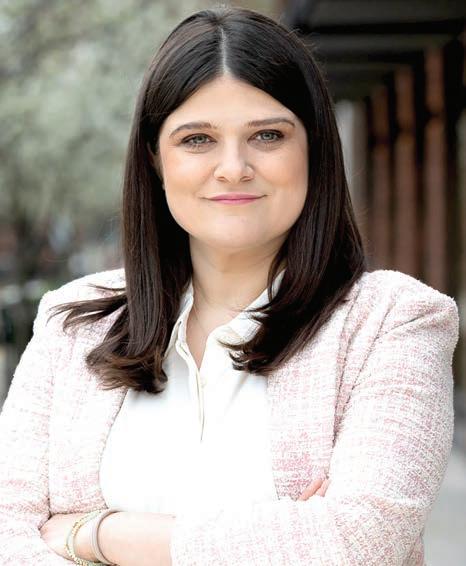
aley Stevens has built her career in public service around a simple commitment: bringing people together to solve problems and delivering results that improve the lives of Michigan families. Since being elected to Congress, Stevens has focused on strengthening Michigan’s manufacturing economy, expanding opportunities for workers and students, investing in infrastructure, supporting small businesses, and ensuring that communities across the state benefit from federal investments.
Severe Turbulence Research and Development Act, the Hostage and Wrongful Detainee Day Act, and provisions of the Countering Wrongful Detention Act that were included in national defense legislation.
That effectiveness is rooted in her focus on issues that directly affect Michigan families. Stevens has made strengthening the state’s manufacturing economy one of her top priorities, recognizing that Michigan’s future depends on remaining a leader in advanced manufacturing, technology, and innovation.
That approach has been reflected in her work on the CHIPS and Science Act, where she helped write and advance legislation designed to strengthen American semiconductor production, protect supply chains, and bring manufacturing investment back to communities across the country. She has also introduced legislation focused on securing critical mineral supply chains, protecting Michigan’s automotive industry from unfair foreign competition, and ensuring that next-generation vehicle technologies are developed and built in the United States.
Her record reflects a focus on turning ideas into action. During the 118th Congress, Stevens was recognized by the Center for Effective Lawmaking as the most effective Democratic member of Michigan’s congressional delegation. She was recognized for sponsoring 26 significant or substantial pieces of legislation, with six of her bills passing the House of Representatives and multiple measures ultimately becoming law. Her accomplishments include the FAA
troiters. The symbolism of Black beekeepers revitalizing their city is a powerful testament to the resilience and ingenuity of our community.
“I will continue to support manufacturing, innovation, and education at the federal level to bring jobs and prosperity to Michigan,” Stevens said in an endorsement interview with Michigan Chronicle. “By developing smart industrial policy and investing in these key fields, we will continue to develop and build the technologies of tomorrow with a highly skilled union workforce.”
niably commendable.
Amidst the glitz and glamour, the event also showcased the diversity of talent within our community. From Paris
Stevens understands that economic growth must create opportunities for working people. Her goal is not only to attract investment, but to ensure that Michigan communities see the benefits through good-paying jobs, workforce development, and long-term economic security.
Onwenu for Michigan’s 1st State Senate District
n a breathtaking celebration of talent, determination, and the unyielding spirit of Black excellence, the Michigan Chronicle marked its 10th Annual 40 Under 40 event Thursday evening. This year’s soirée, drenched in the theme “All Black Everything with Gold Accents,” transcended expectations and essentially illuminated the golden gems within the true essence of Black excellence. Hosted by the charismatic duo of Andre Ash and Lynzee Mychael from Michigan Chronicle’s Finally Friday, the night was a triumph for the city of Detroit and its vibrant community of young Black professionals.
As the night unfolded, we had the privilege of honoring other outstanding individuals, each carving their own path to success. Clement “Fame” Brown, the creative mind behind Three Thirteen Detroit’s Brand Name, received the prestigious Entrepreneur of the Year Award. Brown’s commitment to empowering the city through fashion and entrepreneurship has left an indelible mark.
Brings the Experience and Relationships to Move District 3 Forward
a forensic scientist pushing the boundaries of her field, to math wizards like Donna Laster, who
“I will continue working with

The evening sparkled with a golden promise as we celebrated remarkable individuals from various walks of life. Among the honorees were the brilliant and visionary co-founders of Detroit Hives, Nicole Lindsey and Timothy Paul Jackson. Their work has not only changed the landscape of beekeeping and urban farming in Detroit but also exemplified the transformative impact Black professionals can have on their communities.
the strike action, despite offering what it termed an “unprecedented economic package” that included historic wage increases. Stellantis also expressed disappointment in a statement, saying the company immediately went into contingency mode to protect its operations.
The Michigan Chronicle proudly endorses Justin Onwenu for Michigan’s 1st State Senate District because he represents the next generation of principled, results-driven leadership that Detroit and Downriver deserve. At a time when our communities demand safer neighborhoods, stronger economic opportunities, and leaders who understand both policy and people, Onwenu has demonstrated a proven commitment to delivering meaningful change before ever holding elected office.
“Entrepreneur of the year – that’s a big deal,” said Brown. “It’s always an honor to be honored and it’s always a blessing to be in a room full of so many talented, accomplished, and popular people that look like me. I’m geeked. I started making and selling clothes as a kid and I always knew that I would have a business, but I never knew it would be Detroit’s brand name business, so I take a lot of pride in the fact that our business represents our city’s pride.”
By Ebony JJ Curry SENIOR REPORTER
“Together we have created a social, environmental, and financial impact through bees,” said Jackson. Lindsey followed that sentiment with, “It is through our local partnerships and collaborative efforts that we exist in over 28 plus locations managing the health of 4.5 million honeybees – humbly speaking our movement has inspired others locally, nationally, and even internationally to take on similar missions.”
As the City of Detroit’s first Director of Entrepreneurship and Economic Opportunity, Onwenu has focused on helping entrepreneurs and small businesses – the backbone of Detroit’s economy – grow and succeed. Small businesses account for nearly 99% of all businesses in Michigan and employ almost half of the state’s private workforce. Strengthening these businesses is essential to creating jobs, building wealth, and revitalizing neighborhoods, and Onwenu has
The UAW has branded the industrial action as the “Stand-Up Strike,” focusing on specific plants within each automaker. UAW President Shawn Fain stated, “This strategy will keep the companies guessing. It will give our national negotiators maximum leverage and flexibility in bargaining. And if we need to go all out, we will. Everything is on the table.” Union leaders have also indicated that additional plants could be targeted in future waves if negotiations remain stalled.
Delivers Results for Michigan’s 1st District
Detroit Hives, a pioneering organization founded by Lindsey and Jackson, harnesses the power of urban beekeeping to revitalize neighborhoods in the Motor City. Their initiative not only addresses critical issues like environmental conservation but also provides valuable education and employment opportunities to Black De-
Greektown Had 1.4 Million Visits This Summer and No Shootings
Leadership is built long before a candidate’s name appears on a ballot. It is built through years of showing up, solving problems, and creating partnerships that improve people’s lives. Korey Hall’s career has been defined by that kind of service – working across government, community organizations, faith institutions, and neighborhoods to ensure residents have a voice in decisions that affect their future.
Taking home the Corporate Excellence Award was Dannis Mitchell, Director of Community Engagement at
ness district that had been the lifeblood of the community.
For the residents of Michigan’s 1st House District, effective representation means having a leader who understands the community, responds to its needs, and delivers meaningful results. State Representative Tyrone Carter has consistently demonstrated that commitment through legislative leadership, strategic investment in local priorities, and a steadfast focus on improving opportunities for families across Southwest Detroit, River Rouge, and Ecorse.
For many Detroiters, Interstate 375, or I-375, has long been just another stretch of urban highway, a concrete artery connecting different parts of the city. To some, it’s a mere convenience; to others, it’s an unremarkable part of their daily commute. However, there’s a deeper, far more troubling story beneath the surface of this seemingly ordinary freeway—a story of pain, displacement, and the lasting impact on Black Detroiters.
As a candidate for Michigan State Senate District 3, Hall brings decades of experience navigating the systems that shape communities. His record includes service as a senior advisor and director of the Detroit Office in the Governor’s administration, regional director for former U.S. Senator Debbie Stabenow, political director for U.S. Senator Gary Peters, and leadership roles with organizations focused on community development and public assistance. That experience has given Hall a unique understanding
“It is so important to recognize that there are young leaders across the country, many that are born here in Detroit. I represent our city nationally and I tell people, ‘Yea I’m a D-girl I’m from the west-side of Detroit,’” Mitchell expressed. “But more importantly, I’ve been able to have experiences within an industry that not many of us, specifically women of color, have the opportunity to engage in and I’ve been the youngest person in the room, the only Black person in the room, and the only Sistah in the room, and I really had to articulate the importance of showing up, giving chances when others won’t, and being persistent.” As a trailblazing Black woman thriving in a predominantly male-dominated industry, her unwavering commitment to fortifying the connections between businesses and Detroit’s communities is unde-
It’s a history marred by pain, injustice, and economic devastation. More than 130,000 residents, primarily Black, were forcibly displaced. Families were uprooted, generational wealth was obliterated, and a thriving community was torn asunder. The wounds inflicted by I-375 run deep, transcending the physical barrier of a freeway to penetrate the very soul of Black Detroiters.
towards mending the wounds inflicted on Black Detroiters and restoring a sense of belonging that was so callously torn away in the past.
Since first taking office in 2019, State Rep. Carter has built a record centered on public safety, youth development, education, workforce opportunity, and neighborhood revitalization. His experience as a former Detroit police officer continues to inform his work in Lansing, where he has advocated for policies that strengthen public safety while investing in prevention and community partnerships. Carter has also served in House leadership, including as House Minority Assistant Leader, reflecting the confidence his colleagues have placed in
The I-375 Boulevard Project is about more than just correcting historical injustices; it’s about redefining the future. It will connect downtown Detroit to surrounding neighborhoods, bridging the gap that was placed upon the city decades ago.
Brings a Legacy of Service to Michigan’s 5th House District
DPD Chief James White Says Increased Police Presence Culled Violence A string of shootings in Greektown in mid-April left both visitors and residents of this bustling downtown destination in awe. One of these shootings tragically claimed the life of a popular and beloved security guard following a dispute with a patron. The male suspect allegedly shot the guard before fleeing the scene, while his female companion is accused of concealing the weapon in her bra.
This painful legacy can be traced back to the nation’s interstate highway program of 1956—a program that aimed to connect the country but often did so at the expense of marginalized communities. In the case of I-375, it meant carving a path through the heart of Black Detroit, reinforcing segregation, and perpetuating inequality.
Has Earned Another Term in Michigan’s 8th House District
Represents the Next Generation of Leadership for Michigan’s
Public service is more than a profession for Candace Calloway—it is a calling rooted in community, collaboration, and a lifelong commitment to improving the lives of others. As a candidate for Michigan’s 5th House District, Calloway offers a combination of professional experience, civic leadership, and a family tradition that values service above self. That foundation has shaped a career focused on strengthening neighborhoods, expanding opportunities, and ensuring government works for the people it serves.
The tale begins in what is now Lafayette Park, once known as Black Bottom—a neighborhood rooted in African-American culture and history. Named after its dark, fertile soil, Black Bottom flourished during the mid1900s, nurturing the dreams and aspirations of prominent Detroiters like Coleman Young, Joe Louis, and numerous other Detroit legends. But in the name of urban renewal in the 1950s, this vibrant neighborhood was systematically dismantled, erased from the map, and replaced by a lifeless stretch of asphalt.
These incidents unfolded during an unseasonably warm spring, leading to increased pedestrian traffic and heightened tensions in the densely populated downtown area.
A Holistic Approach to Providing Shelter and Support for Detroit’s Unhoused People
For one to aptly recognize the harm caused by such projects, it is vital to note that some of the planners and politicians behind those projects built them directly through the heart of vibrant, populated communities—oftentimes to reinforce segregation and sometimes as part of a direct effort to replace or eliminate Black neighborhoods.
Homelessness continues to plague urban communities, with families and individuals grappling with the challenges of making ends meet in today’s economic climate. Whether it’s struggling to meet monthly mortgage payments or coping with soaring rental costs in a housing market marked by shockingly high prices, a variety of factors contribute to the growing issue of people becoming unhoused.
While the residential areas bore the brunt of this demolition, the heart of Black Bottom, its thriving business center, remained largely untouched. Restaurants, theaters, clubs, and bars—the very places that brought Detroit’s Black community together—were concentrated around Hastings Street, the epicenter of African-American culture in the city.
Calloway currently serves as a Construction Manager with the City of Detroit’s General Services Department, overseeing projects that improve public infrastructure
Fain clarified the union’s strategy: “I want to give a major shoutout to the thousands of members who are on the picket lines right now fighting for all of us. The Stand-Up Strike is a new approach to striking. Instead of striking all plants at once, select locals will be called on to stand up and walk out on strike. This is our generation’s answer to the movement that built our union – the sit-down strikes of 1937. We told the Big 3 that Sept. 14 was the deadline and we meant it. We gave the companies our economic demands eight weeks ago and it took more than a month to get to the table.” The union is pushing for a comprehensive list of demands. This
The strongest legislators are those who pair a deep commitment to their communities with the ability to deliver meaningful results. Since taking office in 2021, State Representative Helena Scott has established herself as a thoughtful policymaker, an effective coalition builder, and a tireless advocate for Detroit families. Her record reflects a consistent focus on expanding opportunity, strengthening neighborhoods, and advancing legislation that improves the lives of working people. For these reasons, the Michigan Chronicle proudly endorses Helena Scott for re-election to Michigan’s 8th House District.
Housing Resource Helpline in response to the challenges that residents face in navigating the complex system of housing services. The helpline provides a single point of contact for people seeking housing assistance and connects them with the resources they need.
Today, the resurgence of Paradise Valley stands as a testament to the indomitable spirit of Black Detroiters and the enduring legacy of Black excellence. This historic district, once a vibrant hub for Black businesses and culture, is experiencing a renaissance that harkens back to its glory days. The destruction of Black Bottom may have torn apart a thriving community, but the resolute determination of a new generation of entrepreneurs and visionaries is reclaiming that lost legacy.
The surge in crime and the influx of visitors to Detroit’s downtown core garnered the attention of the Detroit Police Department (DPD), catching them somewhat
Transitions in public leadership are moments that require careful consideration. When a district moves from one chapter of representation to the next, voters must choose someone who can honor the community’s progress while bringing the energy, perspective, and commitment needed to address future challenges.
But now, after decades of enduring the scars of I-375, there is a glimmer of hope on the horizon. Plans have been unveiled to transform this once-divisive freeway into a vision that seeks to right the wrongs of the past while heralding a new era of inclusivity and community revitalization.

James White, Chief of Police for the Detroit Police Department, said: “We were caught somewhat flat-footed right out the gate. By design we went into the spring deployment, which is less than the mid-summer deployment, and saw we say an uptick in violence that first
Chief White attributes the violence in Greektown to a combination of weather conditions and a surge in population.
Meagan DunnJulie Schneider
Historically, shelters have provided a temporary respite for those in need, often serving as the first or second option after exhausting alternatives like staying with friends or family. Shelters offer a place to rest one’s head and a warm meal, albeit sometimes for extended periods. For others, being unhoused means living in cars or makeshift outdoor
Then, in a cruel twist of fate, Hastings Street, too, was obliterated a few years later, making way for the construction of I-375. This marked the final blow, sealing the fate of Black Bottom and signaling the beginning of the end for Paradise Valley, the Black busi-
A lifelong Detroiter, graduate of Detroit Public Schools,
Support for the helpline comes from the Gilbert Family Foundation, which has pledged $10 million over three years to fund the program. Wayne Metro Community Action Agency manages the helpline, making it accessible to all Detroit residents. This initiative simplifies access to the City’s various housing services, ensuring that residents in need can easily find assistance.
Fueled by more than $100 million from the Infrastructure Investment and Jobs Act and other partners, this ambitious project aims to create jobs, remove barriers to economic growth, and reconnect the neighborhood with the rest of Detroit. It is a step

Federal
Carries a Deep Detroit Legacy into the Fight for Michigan’s 11th District
By Lynzee Mychael MULTIMEDIA JOURNALIST
The causes of homelessness are as diverse and complex as the individuals experiencing it. In response, the City of Detroit has adopted a holistic approach to combat this issue.
Some candidates run for office because they want to change their communities. Others run because their communities have shaped every part of who they are. Kimberly Fisher represents the latter. Her candidacy for Michigan’s 11th House District is rooted in generations of connection to Detroit, a career built around service, and a belief that leadership begins with understanding the people and neighborhoods a representative is elected to serve.
“The city and its partners offer a lot of great services to help Detroiters with their housing needs, but they don’t mean much if people don’t know how to access them,” said Mayor Mike Duggan. “Thanks to the efforts of our partners and the generous support of the Gilbert Family Foundation, we now have a simple process to guide residents to the right housing resource and a growing number of programs to help them.”
In Michigan’s 9th House District, Arthur Harrington represents that next generation of leadership – one rooted in public service, community engagement, and a commitment to expanding opportunity for Detroit residents.
In the heart of Paradise Valley, Blackowned businesses are not just flourishing but thriving, offering diverse services, products, and experiences that pay homage to the past while paving the way for a prosperous future. From jazz clubs to soul food restaurants, the Black Press, and art galleries to fashion boutiques, this revival is breathing life into the very essence of what once made this neighborhood a vibrant cultural epicenter. It’s a resurgence that extends beyond brick and mortar; it represents the resurgence of a spirit that refuses to be subdued.
Detroit City Councilman Fred Durhal III, representing District 7, where Eastern Market resides, told the Michigan Chronicle, “It’s still very early in the process, MDOT is
The 9th District, which includes Hamtramck, downtown Detroit, Midtown, and New Center, has been
He explained, “ We saw numbers downtown that we have not seen, ever. People are emerging from COVID and there’s a feeling that we’re in a post-COVID era… and with the venues downtown and the reasons to come down with all the activities that are going on, we saw hundreds of more people and, in particularly, young folks, teenagers that we hadn’t seen.”
Responding swiftly to the surge in violence, DPD adjusted its deployment plans. Rather than waiting for mid-summer, they deployed officers in the spring itself to address the situation.
“Providing services and high-quality housing to persons at risk of or who are experiencing homelessness is a key priority of the City of Detroit, said Julie Schneider, Director of Detroit’s Housing and Revitalization Department.
“This means focusing on building the pipeline of supportive housing and coordinating with the Continuum of Care on the delivery of critical resources such as emergency shelter, rapid rehousing, and diversion and prevention programs. It also means preserving and expanding affordable housing options for Detroiters of all incomes and improving housing stability though comprehensive service offerings available through the Detroit Housing Resource HelpLine and Detroit Housing Services Division within HRD.”
In May 2023, the City of Detroit launched the Detroit

Fisher is not seeking to represent a community from a distance. She has spent more than three decades living in the district, where her family has maintained roots for generations. She describes her family’s history as one shaped by Detroit Public Schools, union jobs, faith, and service – experiences that have informed her understanding of the challenges and opportunities facing working families today.
The Gilbert Family Foundation’s broader commitment involves pledging $500 million to support projects across Detroit over the next ten years, with housing initiatives being a significant part of their contribution.
Notably, Detroit has witnessed a consistent decrease in recent years, with the number of unhoused residents steadi ly declining. In 2019, approximately 7,847 people were unhoused and entered the City’s community response system. In 2021, about 5,687 people experienced homelessness.
That connection matters as Michigan’s 11th House District prepares for its next chapter. Fisher is seeking the seat currently held by State Representative Donavan McKinney, who has endorsed her candidacy. The support of the sitting representative is significant because it reflects confidence that Fisher understands the responsibilities of the office and has the experience, relationships, and commitment necessary to continue serving the district effectively.
From the days of the Great Migration when thousands of Black families flocked to Detroit in search of jobs and a better life, to the pivotal role they played in the city’s cultural and musical heritage, Black Detroiters have left an indelible mark on the city. However, in recent years, Detroit has experienced significant gentrification, which has raised concerns about the displacement of long-standing Black residents. Similar to a setting sun, there’s a rising spirit, and Black Detroiters are reclaiming their place in the city, despite the challenges posed by gentrification. During the Great Migration, thousands of Black families from the South came to Detroit in search of jobs in the booming automobile industry. Despite facing discrimination and segregation, they built vibrant communities on the city’s east
The rise in visitors to the Greektown area is evident in data from Placer.ai, a location analytics company specializing in visit trends and demographic insights through geolocation-enabled mobile devices. From May 1-Aug. 27, 2022, there were 1.3 million visits and 655,000 visitors to Greektown, according to Placer.ai. In the same period this year, these numbers increased to 1.4 million visits and 670,000 visitors.
Public service isn’t just measured by the offices a person holds, but by the impact they make long before they enter the spotlight. For decades, Angelique Peterson-Mayberry has been doing the work that strengthens communities –advocating for workers, supporting students, building inclusive workplaces, and creating opportunities for families. Her election to the Wayne County Commission represents a continuation of a lifetime dedicated to service, accountability, and progress. The Michigan Chronicle proudly endorses Angelique Peterson-Mayberry for Wayne County Commissioner in District 5 because she brings the experience, relationships, and proven leadership necessary to represent one of Detroit’s most important districts.
According to the City of Detroit, since the start of the fiscal year 2019 to 2021, Detroit saw a 28% decrease in the
and west sides.
Fisher brings a background that blends government experience, community engagement, and small-business leadership. Her work has
because of discrimination, but they were also coming because Black people was doing some stuff. When did Black people start doing things in the city? They started doing things in
As Detroit’s downtown area continues to attract both residents and visitors, the police department has implemented various enforcement measures to manage the increased population. Notably, metal detectors have been strategically placed throughout Greektown to deter the illegal carrying of firearms.
“We have strategically placed them at key points, “ Chief White explains. It has been a deterrent for some, and some have tested it. If you are legally carrying a weapon and carrying a CPL, have a great day. If you’re
Peterson-Mayberry’s story is deeply connected to the communities she serves. A lifelong Detroiter and third-generation UAW autoworker, she learned the value of advocacy and collective action at an early age. At just 25 years old, she made history as the youngest and first African American woman elected Trustee of UAW Local 245, beginning a leadership journey that would span nearly three decades in the labor movement and corporate sector. Her work with UAW included roles as Employee Resource Coordinator, Women’s Committee Chairperson, Certified Diversity Facilitator, and International UAW Ford Community Relations Director.
churches were here, black schools were here, and its was Black businesses here,” said Jordon. “They were coming of course
as Detroit faced economic decline and population loss in the late 20th century, many
That experience gave Peterson-Mayberry a unique understanding of how economic opportunity, workplace equity, and community investment are See ANGELIQUE PETERSON-MAYBERRY’S Page A-6
women been premoment of the final. a law1931 law effect, asked the affirm that constitucontain abortion. Our Planned Advocates of founding coalition ReproducAll, a affirm abortion and freedom in constitution,” Giroux. is that everything in aborMichigan, makes we will we can patients care they
to have representalegislacollection and criminal jusrecomcollection analywith the AttorMichigan Law Standards Association Prosecutors stakeholders collect and strategically. warHouse Operations hearand other would ban of noknock urging the pass reform and Whitmer to the leg-
cine and healthcare, may be adversely impacted by the decision to overturn Roe v. Wade.
Elected officials are also working to keep Roe v. Wade intact thus holding off Michigan’s 1931 trigger ban. Governor Gretchen Whitmer released a statement saying, in part:
Michigan state and local officials, businesses, and unions to ensure we are doing all we can to bring federal investments home to Michigan,” Stevens said.
Her commitment to workers extends to education and training opportunities. Stevens has consistently advocated for expanding access to college, strengthening apprenticeship programs, and preparing students for careers in emerging industries.
“The words ‘Roe overturned’ are no longer theoretical. I want every Michigander to know— no matter what happens in D.C., I’m going to fight like hell to protect access to safe, legal abortion in Michigan…”
fair share of federal funding for critical infrastructure in our local communities has been, and will continue to be, a priority for me,” Stevens said. She has also delivered direct federal funding for local projects. In 2026, Stevens secured more than $8.4 million in federal funding for nine Oakland County projects, including investments in public transportation, community facilities, recreation, water infrastructure, emergency preparedness, and road improvements. One project alone will expand Oakland County’s transit fleet with 16 new buses expected to provide approximately 100,000 additional transit rides each year.
“We must continue investing in and supporting apprenticeships, trade schools, and other post-secondary options,” Stevens said. “We must also support curriculum development that prepares our students for next generation jobs.”
More than legal implications, overturning Roe v. Wade would impact several systems across the spectrum. With the potential to drive both foster and adoption numbers upward, a ban on abortions could leave many women to choose a less safe route restoring ‘back alley’ and illegal abortion practices, including self-abortions. Moreover, African American women and women of color, who already have a long-storied history with access and inclusion in medi-
She has introduced legislation such as the Pell to Grad Act to expand access to Pell Grants, the AID Act to improve student aid opportunities, the Data Science and Literacy Act to strengthen technology education, and the Accounting STEM Pursuit Act to expand pathways into high-demand careers. She has also worked to address workforce shortages in critical fields through legislation supporting teachers, nurses, and manufacturing workers.
Stevens’ focus on economic opportunity also includes supporting entrepreneurs and small businesses. She has introduced legislation to expand access to capital and mentorship for minority-owned businesses, reduce costs for consumers and employers, and provide support when businesses face challenges such as prolonged power outages.
islature adopts it.
Infrastructure investment has been another major part of Stevens’ congressional work. She supported the Bipartisan Infrastructure Law, which provided billions of dollars for Michigan communities to improve roads and bridges, expand broadband access, upgrade water systems, and strengthen public infrastructure.
“Making sure that Michigan gets its
Increase school funding: Statutory changes to increase the School Aid Fund revenue by at least $3.6 billion and establish a permanent weighted funding formula based on student and community needs and universal preschool (0-3).
Reject censorship in history instruction: Encouraging Gov. Whitmer to ensure the goal for Michigan schools should be history instruction that is presented by professionals with the subject matter expertise, pedagogical skills, and judgment necessary to present complex information to students that are grounded in provable facts and add to the understanding of modern-day America.
made that mission central to his public service. His record extends beyond economic development. As a community organizer, someone with a law degree, and environmental justice advocate, Onwenu helped organize residents in Detroit, River Rouge, and Ecorse to address neighborhood concerns, supported efforts that secured cleaner air protections for schoolchildren, and helped pass the Detroit River Protection Ordinance to safeguard one of the region’s most important natural resources. He served as a law clerk for the UAW and SEIU and was the youngest member on Gov. Whitmer’s Black Leadership Advisory Council. He has also raised more than $150,000 for the United Community Housing Coalition to help keep families in their homes and
Increase mental health supports for the Black community: Recommending Michigan set a goal of increasing the number of Black mental health service providers by 20% each year over five years.
“What we are really concerned about is the impact on our patients. Access to abortion is already out of reach for far too many Michiganders, especially Black people and people of color who face additional barriers to care as a result of systemic inequalities and institutional racism. Losing access to legal abortion will impact those communities most, forcing people to become parents or expand their families against their will. Being able to decide and control if, when and how to become a parent is central to building and living a healthy, happy life,” said Vasquez Giroux.
what the Supreme Court will rule in the upcoming days. Despite the decision, advocates on both sides of the argument are willing to continue their pursuits.
cluding programs that connect mental health professionals with public safety responses.
“I believe we need to have appropriately staffed, trained, funded, and accountable police forces,” Stevens said. She has also pushed for greater transparency in government, including legislation to prohibit members of Congress from trading stocks while serving in office and requiring greater financial disclosure from elected officials.
Through her community project work, Stevens has prioritized investments that improve everyday life for residents, including replacing aging infrastructure, improving public spaces, supporting seniors, expanding transportation options, and strengthening local economic development.
Her constituent service record has also been a significant part of her time in Congress. Stevens’ office has worked to help Michigan residents navigate federal agencies, secure earned benefits, resolve casework issues, and access resources they are entitled to receive. Her approach has been centered on ensuring that government works for the people it represents.
“Overturning Roe v. Wade would be a terrible break with nearly 50 years of judicial precedent and – more importantly – a blow against individual freedom. It is my hope that the majority of justices will reject the findings of this draft. If that is not the case, we need to stand with Senate Majority Leader Schumer and Gov. Whitmer in support of their efforts to preserve the right to reproductive freedom,” said Chair Alisha Bell, on behalf of the Wayne County Commission.
At the core of Haley Stevens’ public service is a belief that leadership should be measured by results. She has laid out clear goals for her continued work: lowering costs for families, bringing more high-paying jobs and investment to Michigan, and delivering improvements that residents can see in their own communities.
“I want Michigan families to be able to look at the jobs created, costs lowered, investments delivered, and problems solved, and know that I was fighting for them every day,” Stevens said.






Stevens has also focused on housing affordability, recognizing that too many families are struggling to achieve homeownership or find affordable housing. She has introduced legislation to help first-time homebuyers save for down payments, expand affordable housing opportunities, and repair homes that have fallen into disrepair.
Beyond the scope of pro-choice versus prolife, the fight for reproductive choice is one of freedom. As Michigan officials work to ensure each woman who finds herself in the position to choose has access to care without the threat of legal action, many wonder
“Homeownership is simply out of reach for too many today,” Stevens said. “I believe we must take steps to help individuals live the American dream and buy a home.”
The health committee recommends reviewing state licensure policies to address the barriers that Black psychologists face in obtaining licensure in Michigan.
Public safety and government accountability have also been central to her agenda. Stevens has advocated for appropriately staffed, trained, funded, and accountable law enforcement agencies while supporting investments in community-based approaches, in-
Haley Stevens has demonstrated a commitment to Michigan’s workers, businesses, students, and communities. Her record reflects an emphasis on innovation, economic opportunity, infrastructure investment, and effective government. She has spent her time in Congress focused on delivering results for the people she represents, and her continued leadership would provide Michigan with an advocate committed to building a stronger future for the state.
What it boils down to is that Michigan needs Democratic representation in this seat. It needs someone who can beat Mike Rogers in November and someone who can help keep the balance of powers close enough in hopes that Democrats can regain control of the Senate in 2028. The hope is that Michigan is the beginning of that wave, and we believe Stevens is the right person to set that wave in motion.
of how local priorities can be elevated into statewide action.
District 3 includes communities with deep histories and distinct identities, including Detroit’s east side, Highland Park, and Hamtramck. The district needs a senator who understands that progress requires more than policy discussions – it requires relationships, accountability, and the ability to bring people together around shared goals.
Ensure equitable distribution of state health funds: Ensure all Michigan communities with a significant Black population receive adequate funds to address mental health issues.
That’s why Michigan Chronicle is endorsing Haley Stevens as Michigan’s next U.S. Senator.
volunteered as an attorney assisting residents through the expungement process—demonstrating a lifelong commitment to expanding opportunity and justice.
Protecting Black voting rights: Urge state officials to remain vigilant in the fight against schemes to disenfranchise Michiganders of color.
Public safety remains one of the defining issues facing the First District. Onwenu recognizes that safe communities require more than enforcement alone. His vision combines support for law enforcement and first responders with investments in violence prevention, youth programs, affordable housing, neighborhood revitalization, and economic opportunity. Research consistently shows that thriving neighborhoods with strong economic foundations experience lower rates of crime, and his approach reflects that reality.
Equally important, Onwenu has earned the confidence of respected leaders across Detroit. A majority of the Detroit City Council has endorsed
his judgment and ability to build consensus.
Representative Carter has been an active legislator, sponsoring nearly 100 pieces of legislation and participating in more than 4,000 recorded votes during his tenure in the Michigan House. That level of engagement demonstrates a consistent commitment to the legislative process and to representing the interests of his constituents on issues
“BLAC members have worked hard to identify the needs of the Black community and we feel these recommendations will provide a solid first step towards breaking down barriers in education, community safety, health and business,” said BLAC Co-Chair Dr. Donna L. Bell.
that directly affect their daily lives.
people believe that they need to for themselves and others to live better lives.”
Equally important is Carter’s focus on bringing resources back to the communities he serves. Recent appropriations he championed include support for the Detroit Police Athletic League to expand youth programming, funding for The Heat and Warmth Fund (THAW) to assist Michigan families facing energy insecurity, and investments in public safety and educational initiatives that benefit
BLAC will hold a virtual town hall meeting to discuss its policy recommendations on Thursday, May 12 at 4 p.m. Join BLAC and a virtual audience in discussing the recommendations to support the Black community.
his candidacy, in addition to endorsements from Wayne County Executive Warren Evans and Detroit Mayor Mary Sheffield, reflecting broad confidence in his ability to unite communities and deliver results. That support is a testament to both his character and his effectiveness as a public servant. Michigan’s First Senate District deserves a leader who understands that economic development, public safety, and community empowerment are inseparable. Justin Onwenu has spent his career building coalitions, creating opportunities, and standing with working families. His experience, vision, and record of service make him exceptionally well-prepared to represent Detroit and Downriver in Lansing.
For these reasons, the Michigan Chronicle enthusiastically endorses Justin Onwenu for Michigan State Senate District 1.
communities throughout the state. These efforts reflect an understanding that strong neighborhoods are built through strategic investments in people, public safety, and opportunity.
focus on delivering practical results that improve quality of life.
Hall has built his campaign around a vision of servant leadership focused on safer neighborhoods, stronger schools, good-paying jobs, and government that listens. His proposed “District Solutions Table” reflects that approach by bringing together city leaders, educators, law enforcement, small businesses, labor representatives, and faith leaders to identify priorities, assign responsibilities, and track progress. He has also emphasized transparency through regular progress reporting and expanded constituent engagement throughout the district.
of other individuals. He has also received support from mayors, faith leaders, civic organizations, and labor groups, including the Council of Baptist Pastors of Detroit and Vicinity, the Michigan Regional Council of Carpenters and Millwrights, Teamsters Local 214, the Fannie Lou Hamer Political Action Committee, and the Eastside Slate. The breadth of Hall’s support matters because it reflects confidence from people and organizations that understand the challenges facing District 3 firsthand. Support from elected officials reflects trust in his ability to work effectively across government. Labor support reflects his commitment to economic opportunity and working families. Faith and community endorsements reflect recognition of his long-standing investment in neighborhoods and civic life.
Hall’s candidacy is rooted in the belief that government works best when residents are not simply consulted but included. His experience has given him the ability to connect community concerns with the resources and policies needed to address them.
Michigan’s 3rd Senate District deserves a representative who understands the importance of relationships, has experience delivering results, and is prepared to advocate for every neighborhood. Korey Hall brings those qualities together with a lifelong commitment to service.
To learn more about BLAC and this upcoming event, visit www.michigan.gov/BLAC. embraces. transforleadership as a approach that change the syscircumstancoperating Ivory “Transformationdoesn’t just do certhem view of and exdrive that because what create everyentire because
“Chancellor Ivery is a true transformational leader and an outstanding CEO, who is more than worthy of the CEO of the Year Award he just received, “ said Prof. James C. Mays, who teaches entrepreneurship and supply chain management at WCCCD’s Corporate College. “In his 27 years at WCCCD, Dr. Ivery has elevated WCCCD to become nationally recognized for excellence and innovation and preparing our students professionally and personally to do great things in the world.”
given her first-hand insight into how public systems operate and where they can better serve residents. She has emphasized a focus on lowering household costs, improving access to resources, supporting neighborhood investment, strengthening economic opportunities, and ensuring that government remains accountable to the people who rely on it. Her campaign has also attracted support from a broad coalition of organizations and community leaders. Fisher has earned endorsements from groups including the Detroit Fire Fighters Association, Michigan Democratic Party Black Caucus, Run For Something, D4 Women in Action: Chisholm Jordan Institute, The Black Slate, Her Bold Move, and The Eastside Slate. She has also received backing from elected officials including Representative Donavan McKinney, Representative Stephanie Young, Representative Helena Scott, Wayne County Clerk Cathy Garrett, Wayne County Commissioner Alisha Bell, Detroit City Council President James Tate, and other local leaders. The importance of that coalition extends beyond the number of endorsements. Support from labor, civic organizations, and
BLAC is housed in the Michigan Department of Labor and Economic Opportunity. Members represent many professional backgrounds, including economics, law, public safety, health and wellness, arts and culture and media. They leverage their experiences and expertise to make recommendations to the governor on critical issues affecting the Black community.
Representative Carter serves more than 90,000 residents in the 1st House District, and his work continues to emphasize accessibility, accountability, and service. Whether advocating for neighborhood improvements, supporting workforce development, or securing resources for community organizations, he has maintained a clear
elected leaders reflects confidence in Fisher’s ability to bring people together around shared priorities. Labor support highlights her connection to working families and economic opportunity. Backing from community organizations reflects trust in her commitment to neighborhood concerns. Support from public officials demonstrates confidence that she can collaborate effectively and represent the district with purpose.
Fisher’s priorities reflect the concerns residents regularly identify: the rising cost of living, the need for stronger neighborhood infrastructure, access to good-paying jobs, affordable utilities, public safety, and government that listens before it acts. As Detroit and surrounding communities continue to evolve, the district needs a representative who understands both the challenges residents face today and the opportunities ahead.
Kimberly Fisher brings a rare combination of lived experience, professional knowledge, and deep community ties. Her story is a Detroit story – one built through family, service, and a commitment to giving back to the place that shaped her.
For these reasons, the Michigan Chronicle proudly endorses Kimberly Fisher for Michigan State Representative in the 11th House District.
For these reasons, the Michigan Chronicle proudly endorses State Representative Tyrone Carter for re-election to Michigan’s 1st House District. His record reflects experienced leadership, meaningful community investment, and a continued commitment to serving the people of Detroit and Downriver with integrity and purpose.
That commitment to collaboration has earned Hall support from a broad coalition of leaders and organizations. His endorsements include Governor Gretchen Whitmer, former U.S. Senator Debbie Stabenow, U.S. Senator Gary Peters, State Representative Joe Tate, State Representative Tyrone Carter, State Representative Amos O’Neal, Wayne County Executive Warren Evans, Wayne County Commission Chair Alisha Bell, and and a host
For these reasons, the Michigan Chronicle proudly endorses Korey Hall for Michigan State Senate District 3.


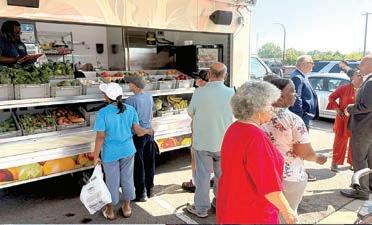
About 453,000 Wayne County residents receive food assistance, more than any other county in Michigan. For a lot of those households, the money is not the hard part. The trip is. A grocery store three or five miles away may as well be thirty if they have no way to get there.
So through the Well Wayne Fresh Truck program, Wayne County and Eastern Market Partnership are making the trip for them.
The Well Wayne Fresh Truck is a refrigerated mobile market that pulls up where people already are. It keeps a recurring route through 22 sites across the county, parking outside senior housing, WIC clinics, health centers, and community organizations, in Dearborn, Detroit, Ecorse, Hamtramck, Highland Park, Inkster, Lincoln Park, Melvindale, River Rouge, Romulus, Taylor, Wayne, and Westland. The stops were not guesses. The county mapped food insecurity and grocery access by zip code and sent the truck where the numbers were worst.
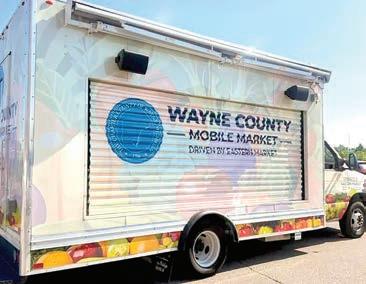

This is a market, not a giveaway. Shoppers pay at prices set to be affordable, with SNAP, cash, credit, or debit. And because the truck honors Double Up Food Bucks, every dollar of food assistance spent on fruits and vegetables is matched with another dollar of the same. Michigan lifted the daily match ceiling this spring, so the SNAP money that stretches thin at a supermarket goes about twice as far standing at the back of this truck.
The stock is not fixed either. Eastern Market has been running smaller versions of this for fifteen years and orders according to what each site actually buys, so a neighborhood that wants collards and okra can get collards and okra by asking. And the produce comes from Michigan growers, including urban farmers in Detroit, which means the dollars spent at the curb do not leave.
Schedules and stop times: easternmarket.org/food-access/ well-wayne-fresh-trucks.
By Warren C. Evans COUNTY EXECUTIVE
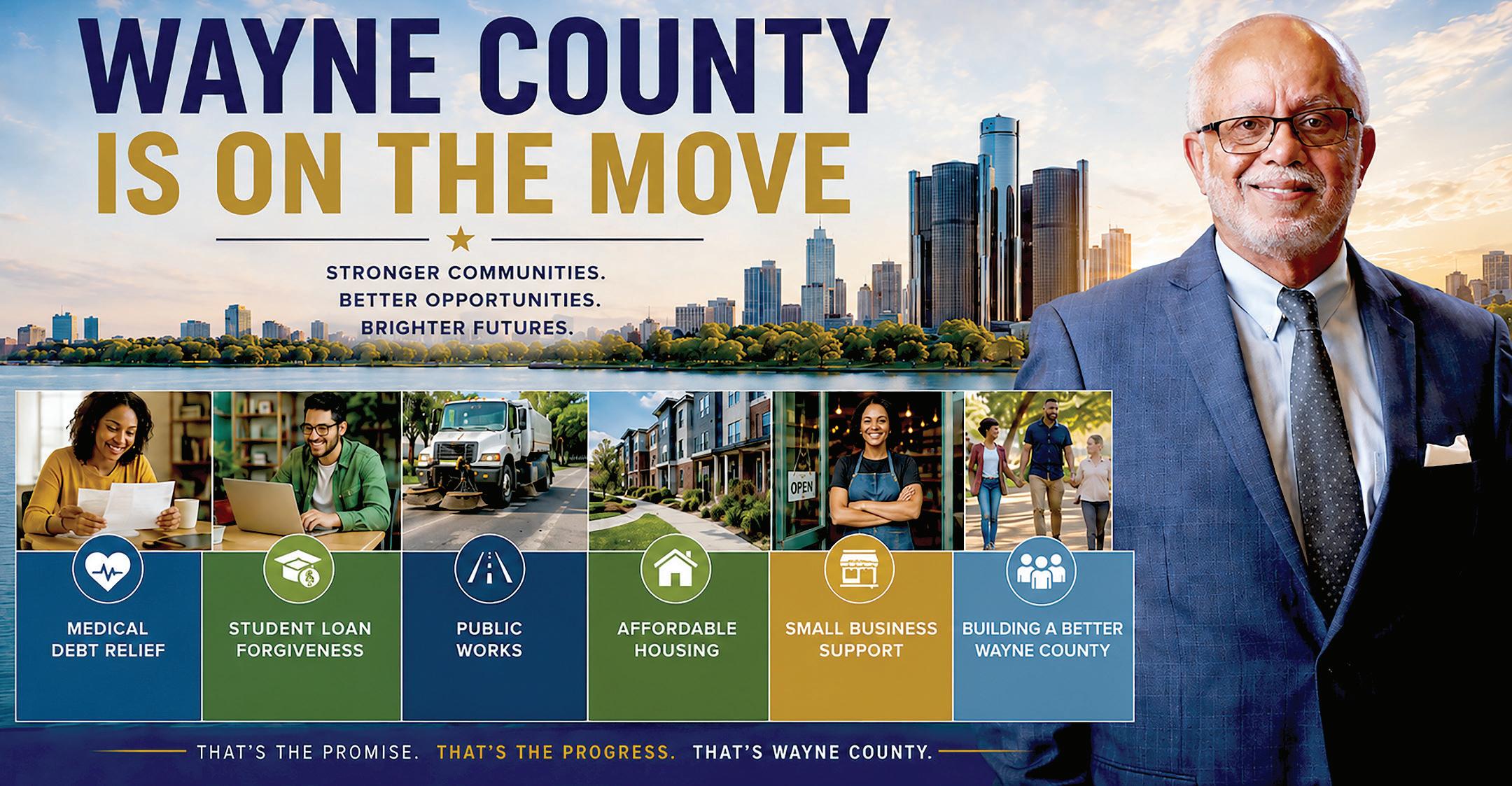
I have always said that being a public servant means serving the public. That has been my guiding principle for the more than five decades I have spent serving the people of Wayne County. In my mind it is a sacred promise I have made to all of our residents, whether they voted for me or not.
To that end, my administration continues to make good on that promise by providing the sort of programs and opportunities designed to improve everyone’s quality of life.
Medical Debt Relief
Since the 2025 launch of Wayne County’s Medical Debt relief program, more than 83,000 residents have received $58 million in medical debt elimination. Wayne County is committed to helping our residents move forward with less financial stress and a healthier future.
Student Loan Forgiveness
Thanks to this program, Wayne County residents are saving hundreds each month:
• $9.11 million in projected loan forgiveness
• $12.72 million in managed student debt
• A 66% average monthly payment reduction
• An average monthly savings of $443
Public Works
• More than 2,500 miles of roads swept
• More than 6,000 catch basins cleaned
• The Miller Rotunda Bridge has been replaced
• The Allen Road Project is on track, building a stronger, safer connection.
Affordable Housing
We’ve committed more than $1 million dollars in down payment assistance. Additionally, we’ve awarded preliminary letters to more than a dozen affordable housing projects.
This is about more than ideas on paper. It’s about stability for families who want to put down roots. We’ll keep investing in housing that more people can afford.
We’re launching a small business hub that helps entrepreneurs move from idea to growth with free or low-cost support. We’re talking about business planning, financial guidance, legal help, and access to capital and new technologies.
We’re giving entrepreneurs in every community a clear path to launch, grow, and thrive.
As we help small businesses grow and stay right here in Wayne County, we also have to make sure they can afford to live here.
When I began my first term as County Executive in 2015, the short-term goal was simple: let’s just survive.
But short-term goals don’t build a vision. They just keep you afloat.
And just staying afloat has never been my idea of success. A real vision means seeing beyond where we are to where we need to be, then building the bridge that gets us there.
From the start, my vision has been clear: a strong and vibrant local economy, and safe, healthy and family-friendly communities. We’ve come a long way. But what excites me most is where we can be in the next five years if we stay focused and keep working together
Wayne County Executive Warren C. Evans is a lifelong public servant. From leading Michigan’s most populous and diverse county through dual health and economic crises, to restoring fiscal responsibility following the Great Recession, Executive Evans is a proven leader. During his administration there have been 11 straight balanced budgets, plus an ‘A’ credit rating from Wall Street which has helped spark substantial economic development.
Before he was elected Wayne County Executive in 2014, Evans rose through the ranks of the Sheriff’s office, serving as Undersheriff, the department’s second-in-command officer, from 1987 through 1991. In 2001, Evans was named Chief of Special Operations for the Wayne County Prosecutor’s Office, before being appointed as Wayne County Sheriff in 2003, where he served until 2009, winning two subsequent elections in 2004 and 2008. He has also served as Chief of Staff of the Wayne County Commission and Assistant County Executive.

Wayne County was certified Gold this year in the Michigan Green Communities Challenge, a statewide sustainability scorecard that measures exemplary action across multiple categories, including climate resilience, climate adaptation, energy efficiency, renewable energy, water conservation and protection, clean mobility, materials management, planning, and community engagement. But before anyone puts that on a banner, it is worth saying what it is and what it is not.
It is not a trophy. Forty-seven of the sixty-eight communities that participated statewide earned Gold.
What it is, is a door.
Certification is what makes a community eligible for things that money usually buys: free technical assistance cohorts, peer networks, fellowship programs that place trained staff inside a city that could never afford to hire them.
Over the past year, Wayne County has continued to expand its sustainability and resilience work through the Sustainability & Innovation Division’s programs
and partnerships. This included advancing Wayne Forward, the County’s technical assistance and peer-learning program for local governments; supporting communities with flood risk planning, strengthening local preparedness around heat, smoke, and air quality; and continuing work on the County’s Building Decarbonization Roadmap.
Here is why that matters.
Yes, Wayne County earned Gold. But so did Livonia, Dearborn, Canton, Plymouth, Inkster, River Rouge, and Detroit.
That second group is the story. Those are not communities with sustainability teams and grant writers on staff. Those are communities that have absorbed this region’s industrial exhaust for a century while being told to wait their turn. Getting them through the same door as the well-resourced suburbs is not symbolism. It is access to capacity they have never been able to buy.
Juan Jhong-Chung, who manages the county’s Wayne Forward program, put it plainly. The recognition matters, he

said, because “it reflects not only Wayne County’s progress, but the growing momentum we are seeing across our communities.”
Wayne Forward is the mechanism. It gives local governments access to experts, to each other, and to what Jhong-Chung calls the work of moving sustainability “from ideas into implementation.”
Erin Kelly, who directs Wayne County’s Sustainability and Innovation division, describes the approach as “practical, collaborative solutions that strengthen infrastructure.” That is a modest way to put it. On the ground, it means a county lending out expertise to cities that cannot afford to hire any.
By Aaron Foley
EDITOR-AT-LARGE
In 2025, the State of Michigan touted that its rate of recidivism – the term used for parolees re-entering the prison system after three years or less – had dropped to 21 percent, a historic low for the state that would place it on par with most other states across the country.
Calling it a “success rate,” the statistics emphasized that 79 percent of parolees did not return to prison, and that these newly reflected numbers were in line with the state’s overall prison population dropping. All those numbers dovetail with repeated reports from the City of Detroit about historic crime lows year to year in the city limits.
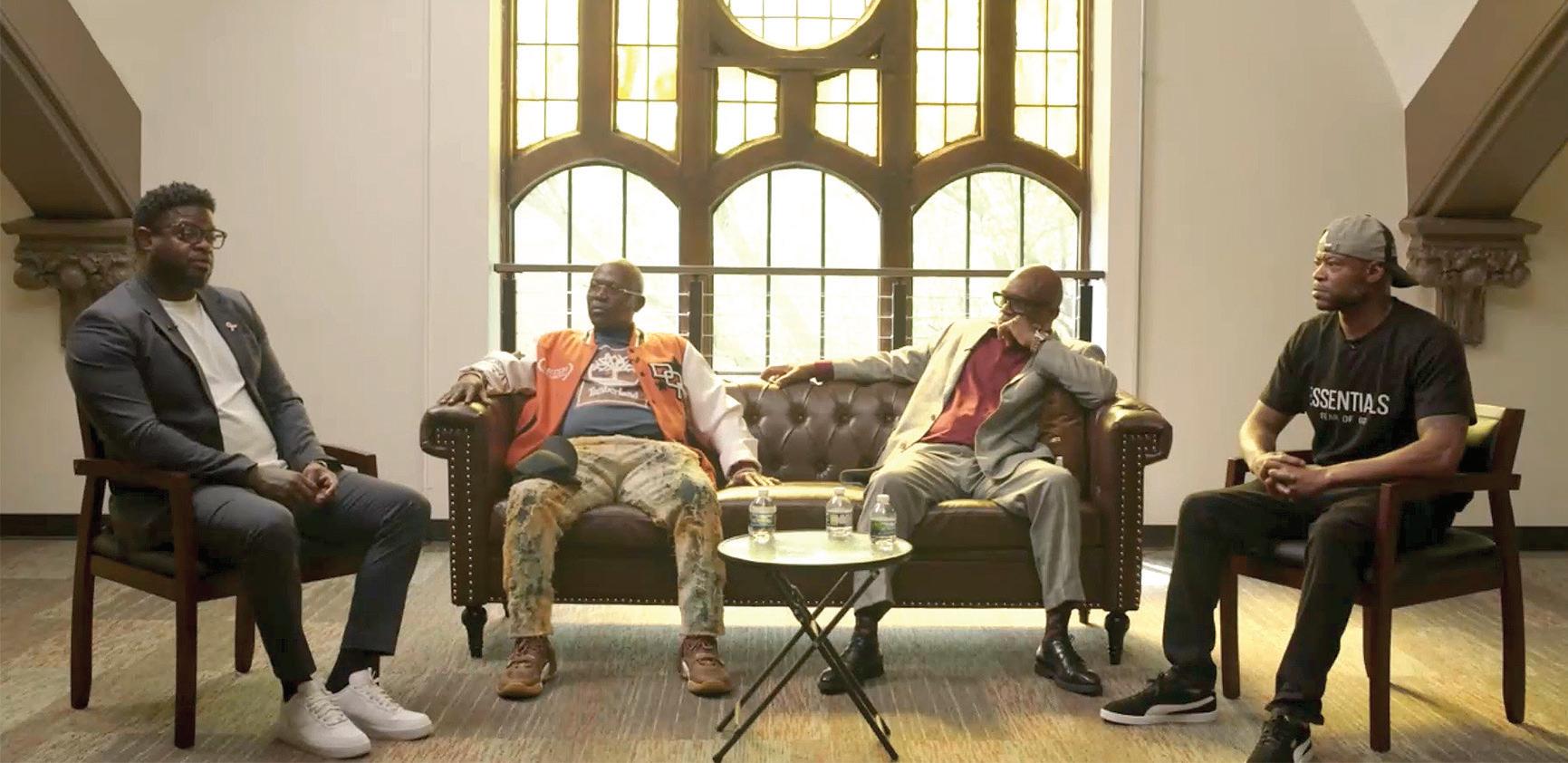
sistent crisis in Detroit. Anecdotal observations suggest that parolees are getting younger, their timelines aligning with when Detroit struggled the most with rising crime and declining economic fortunes. Chronicle Conversations: Episode 1 focuses on four men and their experiences.
“I was born during the crack epidemic...I was born in 1977 – I caught the end of it,” says Reginald Randolph, one of this episode’s participants. “But I can remember the recreation centers around my neighborhood going out in 1990 or ’91. After we got out of school, we would be playing in the park where the drugs were being sold, [and] people were being shot.”
“You know… a product of your environment. I wanted to get out as a kid,” he said.
a career in commercial trucking. In recent years, several employers have relaxed their restrictions on hiring, be it “banning the box” – that is, removal of a checkbox on applications detailing whether someone has committed a felon or was once incarcerated – or working with institutions like Wayne County Community College District to move into disciplines that are boosting their workforces.
Often, however, being “home” doesn’t always equate to being “free.”
It would be easy to point formerly incarcerated persons to a waiting infrastructure, but those with experience within the system say that their time within the system can often determine their time outside of it –specifically if they do time in federal prison
oners to pursue education, or knowledge period, within those bounds than at the state level, he says, and that kind of environment can foster certain kinds of relationships that last on the outside.
During his time inside, Kennedy said he was guided by someone who was incarcerated who “was like a father, though I would never call someone that who’s not my father,” he said. “Mentorship is the secret sauce of everything. Mentors are going to show you everything you learned so you don’t repeat the mistakes.” The full conversation is available now at: youtube.com/@MichiganChronicle.


“It’s a different form of a hierarchy in federal prison…that don’t really exist in ing from his experience in the former and relating it to experiences from those he’s worked with who have spent time in the
nity violence intervention group FORCE Detroit, points to what he says is a lack of motivating factors within Michigan’s state prisons, official or otherwise. There




A5 | July 29 - Aug. 4, 2026
By Dr. Anthony O. Kellum GUEST COLUMNIST
O. Kellum
America is entering one of the most significant economic transitions in its history, though it will unfold quietly. Over the next two decades, aging Americans are expected to transfer more than $100 trillion in wealth to their heirs, making it the largest intergenerational transfer of assets the nation has ever witnessed. Homes, businesses, investment portfolios and land will pass from one generation to the next, reshaping who owns wealth in America. Yet beneath the staggering dollar figure lies a more important question: Who owns the assets that will be inherited, and who will once again be forced to start from scratch?
For Black America, this may become one of the defining economic questions of the twenty-first century.
The racial wealth gap is often discussed through the lens of income, education or employment. Those factors matter, but they tell only part of the story. Wealth is not created primarily by wages it is created by ownership income allows families to live assets allow families to build. The distinction is critical because the coming inheritance economy will reward decades of accumulated ownership rather than decades of earned income.
Inheritance is often imagined as a multimillion-dollar estate, but most generational wealth is transferred in quieter ways. It is the parent who provides a down payment on a child’s first home, it is the grandparents whose paid-off house allows the next generation to avoid years of rent, it is a family business that continues producing income long after its founder has retired, sometimes the inheritance is not cash at all, it is simply a stronger starting point.
That is how wealth compounds across generations.
A modest inheritance used to purchase a home in one’s thirties can become hundreds of thousands of dollars in equity by retirement. A family that receives financial help early gains something more valuable than money alone: time. Time allows appreciation to work, time allows investments to grow, time allows the next generation to spend more years owning assets rather than trying to acquire them.
This is why homeownership occupies such a central place in the American economy. For most middle-class families, a home is the largest asset they will ever own and the most valuable asset they will eventually transfer. Monthly mortgage payments gradually become equity. Rising propSee INHERITANCE ECONOMY Page A-7
By Jasmine West
Michigan’s newly signed state budget will preserve Medicaid services, continue free meals for public school students and direct new funding toward child care and affordable housing as state leaders brace for the effects of sweeping federal policy changes.
Gov. Gretchen Whitmer signed the bipartisan fiscal year 2027 budget into law Tuesday, July 21, marking the final state spending plan of her administration. The budget takes effect Oct. 1 and was negotiated as Michigan faces rising costs, shifting federal requirements and an estimated funding gap tied to changes in federal health care and food assistance programs.
Sen. Sarah Anthony, D-Lansing, who chairs the Senate Appropriations Committee and served as the Senate’s lead budget negotiator, said the spending plan was designed to give residents a measure of stability during a period of economic and political uncertainty.
“While politicians in Washington have stoked fear, chaos, and uncertainty across the state and nation, here in Michigan, we’ve worked across the aisle to deliver a budget that provides residents with financial relief, stability, and peace of mind,” Anthony said.
Anthony called the plan a response to challenges affecting families across the state, including the cost of groceries, health care, housing and child care.
“From protecting crucial health care and food benefits and tackling our housing and child care challenges to continuing to invest in programs that make a real difference for real people, the 2027 state budget is a promise to the people of Michigan — we’ve got your back,” she said.
The budget was approved without new state taxes or fee increases, according to Senate Democrats. It continues several programs intended to lower household expenses, including free school breakfasts and

By Sam Robinson SENIOR REPORTER
Local officials announced a $500,000 appropriation from the state to modernize the Highland Park Justice Center on Hamilton Avenue.
The renovations aim to modernize the city’s detention facility, improve security, and consolidate public services under one roof.
“This facility will be a community hub,” said Mayor Glenda McDonald. “It will not just be for detaining prisoners. It will be a place where community can come. We have block club meetings here. We have different training. This is a training facility that we’re in that we’ve already started working on, and so it will be a hub where people can come get resources that they need, and invest in their community.”
McDonald and Highland Park Police Chief James McMahon expressed gratitude for the investment, highlighting its significance in enhancing the police department’s capabilities and creating a safer environment for officers and detainees.
Officials said the project will also transform the center into a community hub, fostering trust and providing resources for local residents.
“I want to thank Mayor Glenda McDonald and Police Chief James McMahon today, and all of our local community partners,” said state Rep. Tonya Meyers Phillips. “As we gather here to celebrate an important and critical investment in Highland Park’s future, public safety begins with our communities, and it starts with community care and giving our local leaders
and law enforcement the tools that they need to serve our community effectively and with dignity and love, and this is what this investment is all about.”
Meyers Phillips said the half-million dollars will create a safer and more holistic, modern facility to facilitate criminal justice reform.
“It is also a critical investment in public safety. These improvements will improve security, bring public services under one roof, and provide holistic services to the residents of Highland Park,” Meyers Phillips said. “This investment represents something I firmly believe in-that every single community deserves a safe public infrastructure system. Again, one that is wrapped in community love and community care, and Highland Park deserves the same.”
McMahon, the city’s police chief since entering the role in an interim capacity in 2023, thanked stakeholders for the investment, saying an updated detention facility is something the police department has spent years advocating for.
“So to see this come to fruition is really great,” he said.
McDonald echoed the sentiment that the efforts to improve the facility are a long time coming.
“Today is about investing in people. Every resident deserves to feel safe in their community, and to know that the public safety services they rely on are equipped to meet the records,” McDonald said. “This funding allows us to take an important step towards the goal that by completing renovations at the Highland Park Justice Center.”
You can reach Sam at srobinson@michronicle.com.

lunches, the Working Families Tax Credit, retirement tax relief and Rx Kids, a cash-assistance program for pregnant people and families with infants.
The state allocated $200 million to continue providing free breakfast and lunch to approximately 1.4 million public school students. State officials estimate the program saves participating families about $1,000 per child each year.
The budget also maintains the expanded Working Families Tax Credit, which state officials say provides an average of nearly $3,900 in tax relief to roughly 665,000 Michigan families. The continued rollback of the state retirement tax is expected to save about 500,000 seniors an average of $1,000 annually.
Among the most consequential parts of the budget is the state’s effort to protect Medicaid and food assistance following changes approved at the federal level.
The federal tax and spending law passed last year introduced new administrative costs and eligibility requirements for Medicaid and the Supplemental Nutrition Assis-
tance Program, commonly known as SNAP. Michigan officials have warned that those changes could make it more difficult for residents to maintain health coverage and food benefits.
More than 2 million Michigan residents receive health coverage through Medicaid, while approximately 1.4 million rely on SNAP assistance.
Anthony and other Democratic leaders said the federal changes created a roughly $1 billion challenge for the state. The final budget avoids reductions to core Medicaid services while allocating money to help state agencies and residents navigate the new federal requirements.
The plan includes $184.3 million to address those changes, including increased state costs for administering SNAP. It also provides $40 million for staffing and implementation, $20 million for community health navigators and $28 million for Michigan Works agencies that are expected to receive additional referrals involving Medicaid and SNAP recipients.
The navigators will assist residents who
must document their eligibility or comply with new work and reporting rules. The spending is intended to reduce the number of people who lose coverage because of paperwork, missed notices or confusion surrounding the federal requirements.
The budget also continues funding for food assistance rather than shifting the increased federal administrative costs onto families.
For schools, the plan establishes another record for per-pupil funding and begins implementing a weighted funding formula. Under that approach, schools would receive additional resources based on student needs rather than relying solely on a uniform allocation for each pupil.
The formula is intended to direct more money toward districts serving students from low-income households, English-language learners and children requiring additional educational services.
Funding also continues for school mental health programs, campus safety, literacy efforts and incentives intended to recruit and retain educators.
The state will maintain free prekindergarten access and higher-education assistance through the Michigan Achievement Scholarship and Michigan Reconnect. The budget directs $532 million to the Achievement Scholarship, which helps eligible students attend community colleges, public universities and private institutions.
Child care providers, many of whom have struggled with rising operating expenses and staffing shortages, will receive additional support through a newly established Childcare Fund.
The budget includes $30 million for child care and makes the state’s Tri-Share program permanent. Tri-Share divides eligible child care expenses among an employee, the employer and the state, reducing the amount paid by working parents.
Lawmakers have promoted the program as both a family affordability measure and
FEDERAL CUTS Page A-8
From page A-1 and public spaces. Her career has also included leadership roles with Detroit Public Schools Community District, The Nature Conservancy, and the City of Detroit, giving her firsthand experience in education, neighborhood development, environmental stewardship, and local government. She holds a bachelor’s degree in applied health sciences with a concentration in Public Health, bringing a multidisciplinary perspective to the policy challenges facing Michigan communities.
Her commitment to service extends beyond her professional career. As founder of The Black Pack, Calloway has worked to expand Black participation in outdoor recreation and conservation while creating opportunities for families to engage with Michigan’s natural resources. She is also active in civic organizations, including Alpha Kappa Alpha Sorority, Incorporated and the Detroit Association of Women’s Clubs, reflecting a consistent record of leadership that extends well beyond election season.
That record has earned Calloway the confidence of an unusually broad coalition of leaders and organizations. She is endorsed by incumbent State Representative Regina Weiss, whose support reflects confidence in Calloway’s ability to continue effective representation for the district. Labor organizations – including the Michigan Education Association, the American Federation of Teachers Michigan, AFSCME, the International Brotherhood of Electrical Workers Local 58, and the Northern Midwest Regional Council of Carpenters – have also backed her campaign, signaling trust in her commitment to working families, public education, and good-paying union jobs.
Calloway has also earned endorsements from Detroit Mayor Mary Sheffield, Black Slate, Planned Parenthood Advocates of Michigan, the Michigan League of Conservation Voters, Young Democrats of Michigan, Fems for Dems, and Detroit Police Commissioner At-Large Darryl Woods, among many others. Together, these endorsements illustrate confidence from organizations and leaders focused on healthcare access, environmental stewardship, civic engagement, public safety, and community advocacy. While endorsements alone do not define a candidate, the breadth of support behind Calloway reflects a reputation for thoughtful leadership, collaboration, and public service across multiple sectors.
Her campaign priorities focus squarely on the issues residents discuss around kitchen tables every day: lowering the cost of auto insurance, expanding affordable housing, strengthening workforce development and skilled trades, investing in early childhood education, improving neighborhood infrastructure, and protecting Michigan’s public schools. Those priorities recognize that thriving communities are built by investing in people, creating economic opportunities, and ensuring every neighborhood has the resources to succeed.
The 5th House District – encompassing Northwest Detroit, Oak Park, and Royal Oak Township – deserves a representative who understands both the opportunities and the challenges facing its residents. Candace Calloway has demonstrated throughout her career that leadership is measured by service, collaboration, and results. Her professional experience, community engagement, and broad coalition of support make her well prepared to represent the district in Lansing.
For these reasons, the Michigan Chronicle proudly endorses Candace Calloway for Michigan State Representative in the 5th House District.
trust of her colleagues through leadership.
represented by State Representative Joe Tate, who made history as Michigan’s first Black Speaker of the House. Tate’s tenure brought significant visibility and leadership to the district, making the choice of his successor especially important. Harrington has earned Tate’s endorsement, a meaningful vote of confidence from the current representative who understands the responsibilities and expectations that come with serving this community.
At 24 years old, Harrington brings a fresh perspective shaped by direct experience in government and public policy. He is a Wayne State University law student, previously interned with U.S. Senator Gary Peters while attending Hampton University, and currently serves as a policy analyst for Detroit City Council Member Mary Waters. Those experiences have given him firsthand exposure to how legislation, local government, and community priorities intersect.
Harrington’s campaign is built around the belief that government should be accessible, responsive, and focused on improving residents’ everyday lives. His priorities include expanding affordable housing, strengthening economic opportunities, supporting small businesses, investing in education, and ensuring communities have the resources needed to thrive. For a district experiencing continued growth and transformation, having a representative who understands both its history and its future is essential.
His candidacy has also earned support from a broad coalition of political, civic,
labor, and community organizations. Harrington has been endorsed by the Future Dems PAC, Michigan Democratic Party Black Caucus, Council of Baptist Pastors of Detroit & Vicinity, Fannie Lou Hamer Political Action Committee, Wayne County Democratic Black Caucus, Detroit Fire Fighters Association Local 344, The Original Eastside Slate, and The Black Slate, Inc. He has also received support from elected officials including Wayne County Executive Warren C. Evans, Wayne County Commission Chair Alisha Bell, Detroit City Council President James Tate, and other local leaders.
The significance of those endorsements extends beyond a list of names. Support from labor organizations reflects confidence in Harrington’s commitment to working families and economic opportunity. Backing from faith leaders and civic organizations reflects trust in his ability to remain connected to neighborhood concerns. Support from elected officials demonstrates confidence that he can collaborate effectively across levels of government to deliver results for residents.
As Michigan’s 9th District prepares for a new era of representation, voters deserve a leader who understands the responsibility of the office and the importance of showing up for the community. Arthur Harrington brings a combination of policy experience, youthful energy, and a deep respect for public service. His ability to build a coalition of support while remaining focused on the needs of residents reflects the kind of leadership required for the district’s next chapter.
For these reasons, the Michigan Chronicle proudly endorses Arthur Harrington for Michigan State Representative in the 9th House District.
and alumna of Marygrove College, Scott’s commitment to public service was shaped long before she arrived in Lansing. She spent more than two decades as a union member and trainer with United Airlines before serving as Lead Organizer for Southeast Michigan Jobs with Justice, where she worked alongside labor, faith, and community organizations to advance workers’ rights, fair wages, and paid sick leave. That background gave her firsthand experience building consensus among diverse stakeholders – an approach that continues to define her legislative leadership today.
Scott’s effectiveness is reflected not only in her advocacy but in her legislative record. Since arriving in Lansing, she has sponsored 77 bills and resolutions, offered seven amendments, and cast nearly 3,000 recorded votes on behalf of her constituents. Beyond those numbers, she has helped advance landmark legislation restoring prevailing wage protections, repealing Michigan’s right-to-work law, expanding protections under the Elliott-Larsen Civil Rights Act, providing free breakfast and lunch for Michigan public school students, rolling back the retirement tax for many seniors, and strengthening commonsense gun safety laws. She also sponsored legislation establishing May 2 as Negro Leagues Day in Michigan, recognizing the enduring legacy of the Detroit Stars and the Negro Leagues’ profound contribution to American history. Together, these accomplishments reflect a legislator focused not simply on introducing bills, but on helping enact policies that improve the lives of working families.
Representative Scott has also earned the
From page A-1 From page A-1
connected. During her career at Ford Motor Company, she served in leadership roles focused on diversity, equity, and inclusion, including Global Diversity, Equity and Inclusion Manager for Manufacturing and Executive Program Director for the National Joint DEI Ford Department. Her work helped shape policies affecting employees across one of the world’s largest automotive companies.
Her commitment to education has been equally significant. Peterson-Mayberry served more than eight years on the Detroit Public Schools Community District Board of Education, including as board president, where she helped guide decisions affecting more than 50,000 students, educators, and families. During her tenure, she worked on issues involving student success, district accountability, and the long-term direction of Detroit’s public education system.
In 2025, Peterson-Mayberry was appointed to the Wayne County Commission’s District 5 seat following the passing of longtime Commissioner Irma Clark-Coleman. Her appointment reflected the confidence of county leaders who recognized the value of her experience in education, labor, corporate leadership, and community advocacy.
Since joining the Commission, Peterson-Mayberry has taken on responsibilities that directly impact county operations and residents’ quality of life. She serves on the Audit Committee, Government Operations Committee, Public Safety, Judiciary and Homeland Security Committee, and Economic Development Committee. These assignments place her at the center of over-
As Chair of the House Energy, Communications and Technology Committee, she oversees legislation affecting Michigan’s energy future, broadband expansion, and communications infrastructure. She also serves on committees addressing housing, insurance and financial services, regulatory reform, and higher education while helping establish the bipartisan Legislative Care Caucus to elevate the needs of caregivers and Michigan’s growing senior population.
Her record has earned the confidence of leaders across government, labor, and community organizations. Endorsements from Governor Gretchen Whitmer, Lieutenant Governor Garlin Gilchrist II, Secretary of State Jocelyn Benson, organized labor – including UAW Regions 1 and 1A, AFSCME, and IBEW Local 58 – and advocacy organizations such as Planned Parenthood Advocates of Michigan and GIFFORDS reflect broad confidence in her ability to translate community priorities into legislative action.
The diversity of that coalition matters because it represents educators, skilled trades workers, healthcare advocates, public safety leaders, and neighborhood organizations that have worked alongside Scott and witnessed her effectiveness firsthand.
The 8th House District deserves experienced leadership that understands Detroit’s history while helping shape its future.
Helena Scott has demonstrated that effective representation requires listening, collaborating, and delivering measurable results. Her legislative accomplishments, community roots, and unwavering commitment to public service have earned the trust of her constituents and colleagues alike.
For these reasons, the Michigan Chronicle proudly endorses Helena Scott for re-election to Michigan’s 8th House District.
sight, public safety, fiscal accountability, and economic growth decisions affecting Wayne County residents.
Her record also reflects a commitment to recognizing and uplifting the people who make communities stronger. As commissioner, Peterson-Mayberry has introduced resolutions honoring long-time public servants, community leaders, and residents whose actions have made a difference throughout Wayne County. Her leadership style emphasizes that government should not only create policy but also celebrate and support the people who sustain communities every day.
Peterson-Mayberry has earned recognition throughout her career, including the Michigan Chronicle’s Woman of Excellence Award, the NAACP’s Great Expectations Award, United Way’s Woman of Influence and Volunteer of the Year honors, and the African American Leadership in Education Award. These distinctions reflect a consistent pattern of leadership built around service rather than recognition.
Wayne County’s 5th District deserves a commissioner who understands the connection between education, jobs, neighborhoods, and economic opportunity. Angelique Peterson-Mayberry has spent her life building bridges between those priorities. Her experience is extensive, her commitment is demonstrated, and her record shows a leader prepared to continue delivering for residents.
For these reasons, the Michigan Chronicle proudly endorses Angelique Peterson-Mayberry for Wayne County Commissioner, District 5.




By Dr. Nikolai P. Vitti SUPERINTENDENT, DETROIT PUBLIC SCHOOLS COMMUNITY DISTRICT
On August 4th, a single line on the back of your ballot will help decide what the next generation of Detroit students can count on. It’s called Proposal S, and I want to be direct about what this vote is — and just as importantly, what it isn’t.
Every school district in Michigan is required to do this. Local millages happen across the state for all 539 school districts; they are not unique to DPSCD or Detroit and are required by the state to receive state funding.
This is not a new tax. For years, Detroit’s Operating Millage has gone toward paying off Detroit Public Schools legacy debt; this was debt tied to retirement obligations, operating bonds, and an emergency loan issued when our District was restructured to survive. That debt will be fully repaid this September. This is to be celebrated! Once the debt is completely paid off this September, a “yes” for Proposal S allows those funds to be used directly by Detroit Public Schools Community District. This includes funding for employees, school programming, and everything else that runs the District.
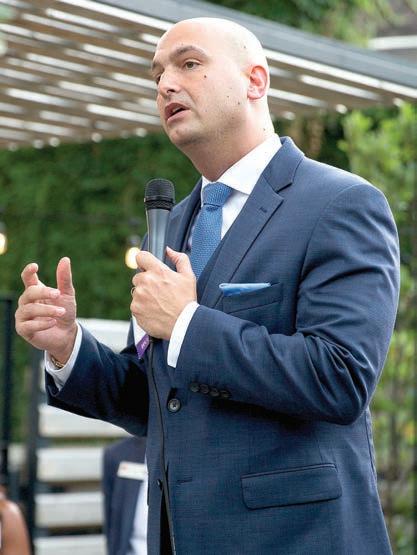
Homeowners and renters will pay nothing. Proposal S applies to business property and non-homestead property, just as the current millage does. If you own or rent the home you live in, this proposal costs you nothing. This tax is paid by businesses in the City that own property so they can fairly contribute to the educational future of our City.
Over the past decade, I have spent my time as Superintendent working alongside our School Board, our teachers and staff, students, and our families to rebuild trust in the District and to show real progress. Our graduation rate has grown from 64% in 2021 to 83% in 2025, narrowing the gap with the state to less than one percentage point. DPSCD students are outpacing 91% of districts nationwide on academic recovery in literacy and mathematics since the pandemic
From page A-5 erty values increase household wealth. That equity can finance college education, launch businesses, weather financial emergencies and eventually become an inheritance. Homeownership is more than housing. It is one of America’s most effective wealth-building institutions. Yet Black families remain significantly less likely to participate in that system. The Black homeownership rate continues to trail that of white households by a substantial margin, reflecting not only present-day market conditions but also the cumulative effects of policies that excluded Black families from ownership for much of the twentieth century. Redlining, restrictive covenants, discriminatory lending and unequal access to federally backed mortgages denied millions of Black Americans the opportunity to accumulate equity during decades when home values appreciated dramatically.
The laws changed the balance sheets did not. The homes purchased by previous generations became appreciating assets. Those assets are now becoming inheritances. Families that owned property for decades are passing not only houses to their children but also the financial security those homes created. Equity financed education, supported retirement, expanded business opportunities and enabled future home purchases. The wealth generated by one generation became the starting capital for the next.
Many Black families, by contrast, are only now beginning to build what others have been transferring for generations.
This helps explain why educational achievement alone has not eliminated the racial wealth gap. Black Americans have made ex-

according to national studies. In fact, our Black students are showing more improvement than 95% of their peers throughout the country since the pandemic. Beginning teacher salaries have improved from $35K to $55K and our most veteran teachers will now make over $100K as compared to $65K when I started. This has reduced teacher vacancies from over 400 to less than a dozen annually. We have restored music and art programming throughout the District, expanded athletics, hired guidance counselors at all of our schools, and ensured mental health services at our all schools for our students. We are building a brand-new Pershing and Cody High School and all of our schools with a few exceptions will have air conditioning by 2029. Progress is happening, and none of that happened by accident, and none of it is guaranteed to continue without stable, predictable leadership and funding.
If Proposal S does not pass in August, then this goes back on the ballot in November. If it fails again, then the District will have to hold a special election in May, at a cost of roughly $1 million. Beyond that cost, the stakes are high: without this revenue, the District faces a ~$120 million shortfall that would put employment, student programming, and our progress at risk. This is a chance to lock in the progress we have made together and continue the momentum forward!
Detroit voters deserve full information on what this vote does and does not do. I want to be as transparent as possible: this proposal replaces an expiring tax structure with an equivalent one, at no new cost to residents, so that our schools don’t lose funding at the very moment our operating debt is finally behind us.
Our students didn’t create the financial challenges the District has worked through over the past decade to overcome and should not be the ones who suffer through an uninformed or protest vote regarding Proposal S. Please do the right thing on August 4th and vote “yes” to support our local millage.

If Detroit voters approve Proposal S on Aug. 4, the operating millage would give Detroit Public Schools Community District access to local revenue it has not previously been able to direct toward its own classrooms.
For years, the operating millage collected on Detroit business property went toward retiring the debt of the former Detroit Public Schools. DPSCD, formed in 2016, educated students but did not receive those dollars. With that debt scheduled for full repayment in September, Proposal S would allow the district to collect the millage for current operations.
A second change makes the question more immediate. The state budget approved July 3 eliminates the $124 million in operating funds Michigan had been providing to DPSCD, on the assumption the district will now collect that revenue through a millage of its own. Where the money would go
The millage would generate about $112 million during the 2026-27 school year. DPSCD’s total budget for the coming year is roughly $1.1 billion, with state and federal funding providing the rest.
Operating revenue covers the recurring costs of running schools. It cannot be used for capital projects, such as major building improvements or new construction.
It also functions differently from most other funding a district receives. State aid arrives through a per-pupil formula. Federal dollars come attached to specific programs and populations. Grants carry restrictions on how and where they can be spent.
Local millage revenue is flexible. A district can apply it where the need is greatest in a given year, which is why operating funds shape decisions that recur every budget cycle: how many teachers a district can employ, what programs it can sustain, whether buildings stay maintained on schedule.
DPSCD has identified several areas it says Proposal S revenue would support.
traordinary gains in higher education, professional occupations and entrepreneurship those accomplishments deserve recognition. But professional success does not automatically produce inherited wealth. Two families may earn similar incomes while accumulating vastly different levels of wealth because one owns appreciating assets and the other does not.
The difference is ownership. Income is earned one paycheck at a time wealth grows while its owner sleeps.
This reality should reshape how we think about Black economic progress. Too often, we measure advancement by the number of degrees earned, executive positions attained or elected offices won. Those milestones matter, but they are incomplete if they are not accompanied by growing ownership. Economic mobility should not end with higher incomes it should culminate in stronger family balance sheets.
That means asking different questions. Are Black families purchasing homes earlier? Are they retaining those homes long enough for appreciation to compound? Are Black entrepreneurs building businesses that survive beyond their founders? Are parents establishing wills and estate plans that preserve rather than divide family assets? Are children inheriting property, or simply inheriting the responsibility of beginning again?
These questions rarely dominate public debate, yet they may prove more consequential than many of the issues that do.
Public policy also has an important role to play. Expanding affordable homeownership, strengthening fair-lending protections, protecting heirs’ property, increasing access to estate planning and supporting


first-generation buyers would help more families enter the ownership economy. Financial education should extend beyond budgeting and credit scores to include equity, appreciation, estate planning and the long-term value of holding appreciating assets. Schools, churches, civic organizations and financial institutions all have a role in helping families think not simply about earning income but about preserving wealth.
There must also be a cultural shift in how success is defined. Consumer spending is visible. Ownership is often quiet. A luxury car announces itself immediately, a paid-off home, a diversified investment account or a family trust rarely attracts attention. Yet it is those quieter achievements that create financial stability across generations. The purpose of ownership is not simply to improve one’s own life it is to leave the next generation standing on a stronger foundation than the one inherited.
That is the broader philosophy behind Property is Power. Housing is central because real estate remains the primary source of wealth for most American families, but the principle extends beyond housing itself. It includes businesses, land, re-
tirement accounts and every appreciating asset capable of creating opportunity over time. The essential question is not whether Black Americans are participating in the economy it is whether they are accumulating ownership within it.
The largest wealth transfer in American history is already underway. For millions of families, it will arrive as property, investments and businesses built over decades. For others, there will be little or nothing to inherit. That reality should not inspire resentment; it should inspire resolve. The challenge before Black America is not merely to receive more inheritance but to create more of them.
The previous generation fought courageously to expand access. The next generation must be equally committed to expanding ownership. Because history suggests that while income can improve a family’s standard of living, ownership changes its future.
That is the enduring promise of Property is Power.
Property is Power! is a movement to promote home and community ownership. Studies indicate homeownership leads to higher graduation rates, family wealth, and community involvement.
Teacher and staff compensation is one. The district has said the millage would fund higher salaries for teachers and school staff, a factor in both recruiting and retention. Detroit competes with surrounding districts for educators, and compensation is a primary variable in where teachers choose to work.
Arts, music, physical education and athletics are another. The district has said Proposal S would support continued investment in those programs across all schools. Enrichment programming is often among the first areas reduced when school budgets contract, because it sits outside state-mandated instructional requirements.
Career and college programming for high school students is a third. The district has pointed to expanded pathways in this area, including programs that connect students to postsecondary options and workforce training before graduation.
The district has also cited classroom supplies for students and teachers, student support services, transportation and routine building maintenance.
What a “no” vote would mean
Proposal S is an operating millage, not a comprehensive funding plan. It would not resolve enrollment pressures, conditions across an aging building portfolio, or the broader question of how Michigan funds public education.
The state has already eliminated the roughly $124 million it previously sent DPSCD each year. That reduction takes effect regardless of the election outcome, which means a vote against Proposal S would not preserve the current funding picture. Proposal S is the district’s mechanism to replace those dollars. If it passes, the roughly $112 million it generates would largely fill the gap. If it fails, the district has no comparable source to turn to.
The consequences would not arrive all at once. Voters could reconsider the question in the Nov. 3 general election, but the window is finite. Superintendent Nikolai Vitti has said that if the millage is not approved by July 1, 2027, DPSCD would face a $111 million deficit for the 2027-28 school year, a shortfall that would force reductions.
That is the decision in front of Detroit voters on Aug. 4. More information about Proposal S is available at millage-2026.squarespace.com. Voters can confirm registration and polling locations through their local clerk or the Michigan Voter Information Center at mvic.sos.state. mi.us.
Federal Public Law 98-435 requires that polling places be accessible to disabled voters.
If a polling location is not disabled accessible, this law allows the assignment of an alternate polling place. However, several polling places which were previously inaccessible are now accessible to disabled voters.
Disabled voters are entitled to vote at the polls within the precinct where possible. Pollworkers are obligated to provide whatever assistance is needed to facilitate the voting process.
Disabled voters with an inaccessible polling place are eligible to vote without notice at the:
Department of Elections 2978 W. Grand Blvd. Detroit, MI 48202
until the close of voting at 8:00 p.m. on Election Day.
If additional information is needed, or to confirm disabled accessibility, please contact the Department of Elections office at (313) 876-0190.
Janice M. Winfrey City Clerk & Chairperson
Detroit Election Commission
By Jasmine West
Forty rising leaders whose work reaches across business, public service, education, health care, law, technology and community development have been selected for the Michigan Chronicle’s 2026 class of 40 Under 40 honorees.
This year’s class reflects the range of talent shaping Metro Detroit and beyond. The honorees include an artificial intelligence leader at Google, a Black history curator at The Henry Ford, attorneys, physicians, engineers, entrepreneurs, educators, labor leaders and professionals working directly with Detroit’s young people, families and neighborhoods.
The Michigan Chronicle will recognize the honorees during its 2026 40 Under 40 Awards and Induction Celebration at 6 p.m. Thursday, Aug. 27, at Harmonie Club, 311 E. Grand River Ave. in Detroit.
For years, the Michigan Chronicle’s 40 Under 40 program has created space to recognize young Black professionals whose leadership can sometimes happen outside the spotlight. The annual celebration brings that work forward, honoring people who are building careers while using their positions to strengthen institutions, expand access and create opportunities for others.
The 2026 class includes professionals carrying significant responsibilities inside some of the region’s largest employers and public institutions.
Anthony Chambers serves as Google’s North America lead for AI infrastructure strategy and partnerships. Tamarah Riley is
an engineering director and senior director of external partnerships at Whirlpool Corporation. Tyrone Williams serves as plant manager at Ford Motor Company’s Rawsonville Components Plant, while Mesh McFerrin is operations manager at LM Manufacturing.
Health and human services are also strongly represented. Micah Aaron is a tenure-track assistant professor at the University of Michigan School of Public Health. Dr. Randall McPherson is a family medicine physician with Oak Street Health, and Dr. Kimberly Stokes-Mason is a counseling psychologist at the University of Michigan-Dearborn.
Brianna Eccleston directs the Public Health Division within the Wayne County Department of Health, Human and Veteran Services. Kyra R. Watts serves as a principal management engineer at Henry Ford Health, while Kayla D. Perry leads marketing and communications for the Detroit Area Agency on Aging.
Several honorees are working inside schools and organizations serving young people. Bianca Hardy is a project manager within the Detroit Public Schools Community District’s Office of Communications. Evangerline Trice is an athletic director with the district, and Stevon Scott is director of corporate and community affairs for River Rouge School District.
Jonaz Byrd serves as impact director for City Year Detroit. Dorothy “Dee” Smith is director of strategy and partnerships at Teen HYPE, Victor D. Robinson leads external partnerships and community engagement for Urban Alliance, and Damiana Sorrell is
chief program officer for the Girl Scouts of Southeastern Michigan.
The class also recognizes leaders working in government, labor and civic life. Keith Butler serves as District 5 manager in the City of Detroit Mayor’s Office. Chris Jackson is a Pontiac city councilman, while Lynda S. Jackson serves as recording secretary for UAW Local 7. Tyrone “T.J.” Winfrey is co-founder of CIVIC, and Jaren Roberts-Brown is assistant vice president of marketing and communications for the Suburban Mobility Authority for Regional Transportation.
Detroit’s nonprofit and community development network is represented through leaders including Rhonda Evans, marketing director for Life Remodeled; Erica George, deputy director of Cass Community Social Services; Jermaine Peguese, special projects manager for the NAACP Detroit Branch; and Tracey Lynn Pearson, communications officer for The Kresge Foundation.
Christiana Ware, founder and chief ecosystem architect of GapBridge Strategies, joins the class alongside Ashley Nicole McCullough, a development manager at Bedrock Detroit, and Belvin Liles III, a principal with Invest Detroit Ventures.
Business owners and entrepreneurs selected for the class include Brandon Davis, president and owner of Davis Insurance Group Agency; Marcel Smith, operator and owner of Chick-fil-A Lincoln Park; and Dr. Victoria King, founder and CEO of The Tax Gurus and Easy Tax Solutions.
Former Detroit Lions running back Joique
Bell II was recognized for his work as founder of Parlay Detroit, U Charge UP and the Joique Bell Charity. Antwuan Markel Hawkins, an attorney, business owner and real estate broker, leads Levine Benjamin Law Firm and Five Star Luxury Realty.
The class also includes Joaquin Gouch, a financial advisor with Merrill Lynch; Myles Baker, a senior labor and employment attorney at DTE Energy; and Briaunna Durhal, an associate at Jones Day.
Monique Benoit, director of brand building and strategic initiatives at Ulta Beauty, joins marketing and communications leaders including LaTrell Bell, major gifts officer at Michigan Humane, and Amber N. Mitchell, curator of Black history at The Henry Ford.
The 2026 class represents a generation of leaders already influencing how Metro Detroit works, grows and serves its people. Their titles span industries, but the larger story is found in the responsibility behind them. They are managing classrooms, shaping public policy, leading companies, expanding access to health care, building businesses and creating pathways for the people coming behind them.
That is what the Michigan Chronicle’s 40 Under 40 recognition has long made visible. Leadership does not begin when someone reaches the highest office or earns the biggest title. It is built in the years when young professionals are taking risks, carrying institutions forward and proving that age does not determine impact.
To purchase tickets, visit https://michiganchronicle.com/mc4026/.
a workforce development tool, particularly for parents who cannot return to work because the cost of care would consume much of their earnings.
The new fund is also intended to give providers greater financial stability in a sector where tuition payments often fail to cover the full cost of staffing, facilities, food, insurance and other operating expenses.
Housing remains another central part of the budget.
The spending plan continues a $50 million annual housing investment for the fourth consecutive year. It also includes funding for affordable housing development, home repairs, weatherization and supportive housing.
Part of the funding will support a continuum-of-care approach for residents experiencing homelessness. That model pairs temporary shelter with services such as case management, health care, employment assistance and help securing permanent housing.
The housing investments come as families across Michigan contend with rising rents, limited housing inventory and aging homes in need of significant repairs. Those challenges have been especially pronounced in Detroit and other communities where residents face older housing stock, high utility costs and longstanding barriers to financing improvements.
The bipartisan agreement also includes $343 million in additional local road funding, bringing total road spending to approximately $3.1 billion. Another $123.8 million increase will support public transit and rail programs.
Although Democrats emphasized the budget’s protections against federal cuts, Republican legislative leaders pointed to reduced spending, government accountability and the preservation of essential services as key elements of the final agreement.
House Speaker Matt Hall said the plan redirected funding away from government waste and toward roads, schools and public safety. House Appropriations Chair Ann Bollin said the budget maintained state reserves while protecting Medicaid and other priorities.
For Anthony, the agreement concludes her fourth budget cycle as Senate Appropriations chair and demonstrates that lawmakers can still reach a deal across party lines despite deep divisions in Lansing and Washington.
The budget will not eliminate the financial pressures facing Michigan families or resolve the state’s shortages of affordable homes and child care providers. It does, however, preserve several programs residents already use while positioning the state to respond to federal changes that could otherwise place health care and food assistance at risk.
“At a time when Michiganders are struggling with higher costs, this budget puts money in their pockets,” Whitmer said during the signing. “It continues free breakfast and lunch for all 1.4 million public school students, cuts taxes, fixes roads and protects Michiganders from the harms” of the federal law. From page A-5




B1 | July 29 - Aug. 4, 2026
By Miss AJ Williams
For a while, something has been changing in Black communities, and many of us sensed it before we could name it. A friend who once sang in the choir now hosts a moon circle at home. A cousin who still gives to her church talks to her grandmother’s photo as if she never left. A coworker casually shares that she drew a card before her interview, and it gave her just the message she needed. These things are no longer hidden. They appear in group chats, on bookstore shelves, and in the way women now say ancestors as naturally as their mothers once said, Lord.

To outsiders, this shift can seem like a break from tradition. It may look like Black women are leaving the faith they grew up with, swapping Sunday services for Saturday rituals, and choosing something more personal over scripture. Even those experiencing it can feel this way. There is often a quiet guilt, a sense of leaving behind something sacred or letting down ancestors who are no longer here. The common story, whether told with worry or pride, is about loss—a generation moving away from organized religion, searching for something new because the old ways no longer met their needs.
But that story leaves out something important. What seems like leaving is actually a return. The practices now reappearing in Black communities—ancestral veneration, divination, plant medicine, earth-based rituals, and energy work—are not borrowed from new wellness trends. They are pieces of a spiritual wisdom that has always been ours, but was interrupted by colonization, forced conversion, and the intentional breaking of African people’s ties to their sacred traditions. Whole belief systems, ways of connecting with ancestors and understanding the land, were called superstition, banned, or pushed underground. They survived in hidden ways, woven into spirituals, root work, and the corners of a faith that was brought in to replace them.
Organized religion, though it became central to many lives, did not arrive as a gift. Often, it came as a substitute, introduced just as the original traditions were being labeled dangerous because of their strength and unity. The moon, the herbs, is not a hunger for something unfamiliar. It is the body remembering something it was never fully permitted to forget. Suppression does not erase intelligence. It buries it, and buried things have a way of resurfacing exactly when the conditions finally allow for it. What is happening now, at this particular cultural moment, is not a crisis of faith. It is faith finding its way back to a root system that was cut but never killed. The generation reaching for these practices is not inventing a new spirituality. It is being reached by an old one that has been waiting, patiently and persistently, for an opening wide enough to return through.
If you are the woman who left the church and felt the burden of that choice, you were not giving up your heritage. You may have been moving deeper into it without knowing.
Recognizing this does not mean you have to choose between traditions. It means changing how you value what is already yours. The next time you reach for the cards, water, flame, or moon, remember you are not making it up as you go. You are carrying on something real. Practice it with the same care your grandmother brought to her pew, because it is the same heritage asking to be continued, not forgotten.
AJ Williams is a Spiritual Wellness Architect and Educator and the Managing Editor of the Michigan Chronicle. A thought leader at the intersection of spirituality, astrology, psychology, and identity evolution, she is the founder of Sunday Communion, a quarterly live transformation experience held in Detroit. The Inner Architecture is her editorial column on the work of becoming.

By Biba Adams STAFF WRITER
When 400 pairs of sneakers to be given away to children in the NW Goldberg community were stolen from a warehouse, the story could have ended with devastation and disappointment.
Instead, individuals and business entities rallied behind the organization, replacing what was stolen and ensuring that HOOPFEST went off without a hitch.
“The theft was heartbreaking, that someone would do that and take from children in need,” says Nedra Hall, 33, a homeowner in the neighborhood. “I could see how someone could be discouraged.”
She added, “But it was so inspiring to see some many people show up to help.”
For 4 years, HOOPFEST has been the signature event for NW Goldberg Cares. Featuring free hair braiding and haircuts, basketball competitions, musical performances, and the highlight… a free shoe giveaway.
This year, July 17-19, HOOPFEST went on to be one of the most successful yet. Daniel Washington, Founder and Executive Director of NW Goldberg Cares, says that he ended the successful 3-day weekend feeling “amazing.” He
said that he is “super grateful” for the many individuals and organizations like StockX, Michigan State University, Kicks for All, and USA Basketball who stepped up to help.
“Kids were able to eat until their hearts were content, play eat ice cream and even enjoy a Michael Jackson impersonator who had the crowd rocking,” says Washington. While the event was a success, he did also find a lesson in the theft.
“I learned mostly that we can’t store that type of inventory in that location,” he explains that even in ongoing conversations with Detroit Police who are investigating the theft that there had never been a prior incident. “You assume that people would understand not to take things that aren’t theirs.”
Washington added that the extensive press coverage of the theft has been a lesson for the children of his community, many of whom were interviewed or questioned about the incident. “I think it’s important that we allow this to instill in them that you don’t take things that don’t belong to you and that your actions can have a lasting and cascading effect.”
Just one day after HOOPFEST, Washington was still on the move. He was escorting his youth campers to the
Cranbrook Institute to watch and learn some basic tennis moves. He also shared that he is already focused on next year’s event.
“We want to ensure that it gets bigger and better every year,” he says, “that may not mean more shoes given away, but maybe more events, more activations, and attractions.”
One of the most popular attractions this year was the free hair grooming, cuts for little boys and braids for girls. Takara Cook braided hair all day on Sunday, and she was uplifted to see the smiles on the faces of the little girls who would get out of her chair. “It really took me back to my childhood,” she added, “they were beautified because they were already beautiful.”
Nedra Hall, a resident, volunteered all weekend. She helped with the shoe distribution and keeping the park clean; she added that the event was also great for networking. “There were a lot of people who were intrigued and came to visit the neighborhood looking to possibly buy in the area.” She explained that her interest in the community’s work and development convinced her to buy her home there just over a year ago. She said that the event and the work of NW Goldberg Cares fit her personal core values. “We pull up when when we show up.”
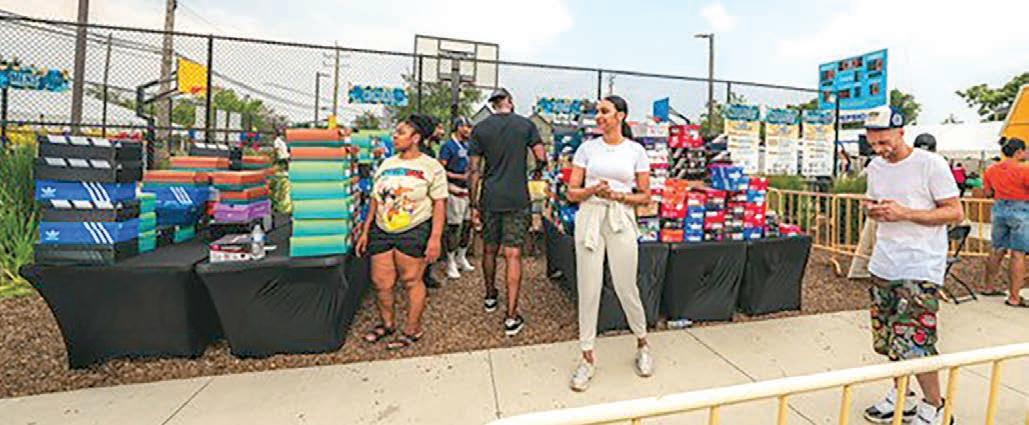
By Biba Adams STAFF WRITER
For more than a decade the Detroit Regional LGBT Chamber has supported LGBTQ+ businesses, entrepreneurs, professionals, and allies. The organization has recently expanded to become the Michigan Pride Chamber of Commerce marking a deeper statewide commitment to expand business resources, advocacy, workforce development, and economic opportunity for LGBTQ+ professionals.
“Our vision has always been bigger than a single region,” said Kevin Heard, President & Executive Director of the Michigan Pride Chamber of Commerce. “Every LGBTQ+ entrepreneur, professional, and business owner deserves to know there is an organization advocating for them, connecting them to opportunity, and helping them grow. We’re not waiting for someone else to solve these challenges. We’re investing in Michigan by building stronger businesses, stronger leaders, and stronger communities. When our businesses succeed, our communities thrive.”
According to the National LGBT Chamber of Commerce, LGBTQ+-owned businesses contribute an estimated $1.7 trillion annually to the U.S. economy, with that

impact increasing to more than $2.1 trillion when mid-sized LGBTQ+-owned businesses are included.
While specific numbers for Black LGBTQ entrepreneurship are not tracked, it can be presumed that many are vital engines of community wealth, job creation, and cultural innovation. Further, it is commonly understood that Black entrepreneurs face well-documented systemic disadvantages in securing business loans and venture capital.
Black LGBTQ+ founders experience compounded barriers at the intersection of race and queerphobia/sexism.
The Michigan Pride Chamber of Commerce will launch a statewide listening
tour, strengthen relationships with local Pride organizations and community leaders, recruit regional board leadership, expand educational webinars and virtual resources, and create new opportunities for entrepreneurs and professionals to connect throughout every region of Michigan.
“Throughout my career in workforce development and corporate strategy, I’ve seen firsthand how the right relationships, resources, and mentorship can transform businesses and careers,” states Christina Ware, Board Vice-Chair. “I’m excited to bring that experience, along with the relationships I’ve built across Michigan, to help our members grow, build meaningful partnerships, and access opportunities that
allow them to scale. We also recognize the incredible organizations and leaders already serving communities throughout our state. Our goal is to partner with them, elevate their work, and bring additional resources, visibility, and statewide connections that strengthen the impact they’re already making.”
The Chamber also plans to collaborate with local chambers of commerce, economic development organizations, municipalities, educational institutions, foundations, and corporate partners to ensure entrepreneurs throughout Michigan have greater access to mentorship, education, certification opportunities, procurement pathways, and capital.
“Strong businesses create stronger communities,” said Anthony Williams, Chief Executive Officer of Corktown Health. “When LGBTQ+ entrepreneurs have access to meaningful relationships, trusted resources, and opportunities to grow, the impact extends well beyond their individual businesses. It creates jobs, strengthens families, and builds healthier, more resilient communities. The Michigan Pride Chamber is helping build that foundation by fostering economic opportunity, empowering LGBTQ+ businesses, and strengthening communities across our state.”
By Jeremy Allen EXECUTIVE EDITOR
Detroit seniors will soon have another tool to help them feel safer at home through a new partnership that pairs technology with community support.
Amazon and the Detroit Area Agency on Aging (DAAA) announced a new initiative that will provide 1,000 Ring home security devices to older adults across Detroit at no cost. Eligible seniors who enroll in the program will receive a Ring camera, professional installation from a technical team working with Amazon and the DAAA, and a lifetime Ring Basic subscription, all free of charge.
The program is designed to help older adults remain safe, connected, and independent while aging in place, a goal leaders from the city, Wayne County, Amazon, and the DAAA said they share.
Speaking at the Coleman A. Young Recreation Center, Detroit Mayor Mary Sheffield thanked older residents for the generations of service they have given to the city before highlighting the latest investment in their well-being.
“I just wanted to be here to say thank you to Amazon and thank you to DAAA for this investment in support for our seniors,” Sheffield said. “We know that being safe in your home is so essential to quality of life. Everywhere I go throughout the city with our seniors, safety always comes up in all the ways of staying in their homes. So to provide free access to a camera is just so important to the overall quality of life and dignity of our seniors.” Sheffield said the camera initiative builds on work the city has already undertaken during her first six months in office to improve services for older adults. She pointed to the creation of Detroit’s Office of Senior Affairs, the launch of a senior food access program serving senior apartment buildings, the expansion of senior advocates working throughout neighborhoods and efforts to improve housing conditions for older residents.
“We have been busy working to ensure that we are advancing the issues and priorities of our seniors,” Sheffield said. “It’s our responsibility as the city to now pour back and give to you. God bless you all. I love you and thank you for all that you’ve done for us.”
Wayne County Board of Commissioners Chair Alisha Bell said the Ring cameras offer seniors added peace of mind by allowing them to see who is at their door before opening it.
“As we get older, feeling safe and secure in our home becomes more important than ever,” Bell said. “Doorbell camera systems such as Ring can provide an extra layer of protection by allowing seniors to see who’s at their door without having to open the door, whether it’s a family member, a delivery driver or an unexpected visitor.”
Bell also emphasized the cameras’ role in deterring crime.
“Visible cameras can discourage package thieves,” she said.
“We know how those porch pirates come onto our porch to steal our packages, but it can reduce vandalism and unwanted visitors. If something does occur, you have the footage to take to the police so they can have that as evidence.”
She said it represents another
investment in helping older adults remain independent while feeling secure in their own homes.
“The safety, protection, and independence of our seniors is so very important,” Bell said. “Whatever the Detroit Area Agency on Aging can do, whatever Wayne County and the State of Michigan can do, we are there to help our seniors live in their homes independently, with privacy and protection.”
Ronald Taylor, president and CEO of the Detroit Area Agency on Aging, said the organization sees the initiative as another way to fulfill its mission of helping older adults age with dignity while addressing challenges that often extend beyond physical safety.
“This initiative is more than just the distribution of products,” Taylor said. “This initiative is really about improving outcomes and improving the lives of individuals.”
Taylor noted that tens of thousands of older adults in metro Detroit live alone, often spending much of their day without regular interaction.
“What you may not realize is that these individuals probably spend 10 hours or more of their awake hours by themselves,” Taylor said. “Loneliness leads to depression, and depression leads
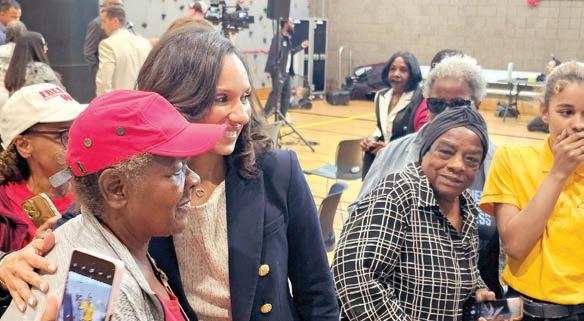
to mental health issues. This Amazon project really helps us address the issue of loneliness by providing connectivity and also by addressing safety.”
The DAAA will oversee outreach, enrollment, and ongoing support for participants. As seniors sign up for the program, technical teams working with Amazon will schedule installations and ensure participants understand how to use their new devices.
“Our team will provide outreach, enrollment assistance and technical support to the individuals who receive the product,” Taylor said. “We will also work to ensure that individuals who receive this product can benefit from the resources that it provides.”
Taylor said the organization’s work has always centered on helping people remain in the homes and neighborhoods they know best.
“We believe that aging means living,” he said. “Individuals should not feel like they’re isolated or forgotten. We believe that gracefully aging means living life abundantly. It is our mission to create a community where indi-
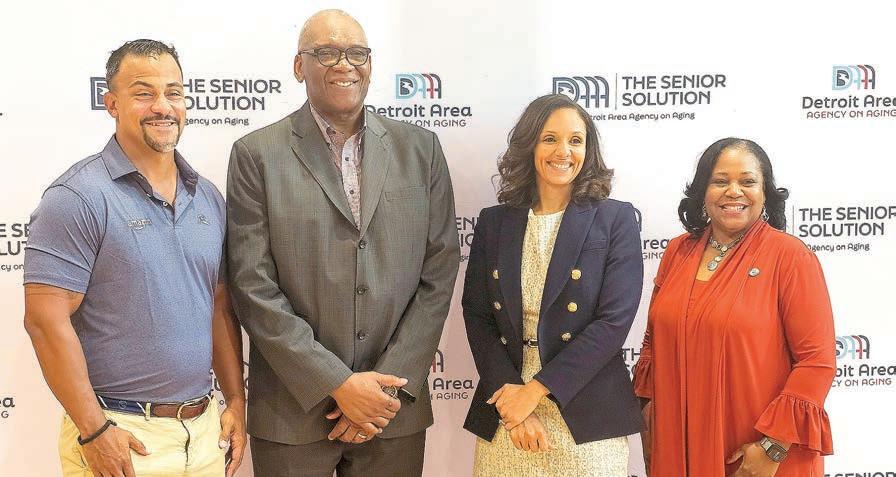

viduals can age in place with dignity and quality of life.”
For Amazon, the donation reflects the company’s commitment to strengthening the communities where its employees and customers live.
Ian Conyers, Amazon’s head of community affairs, said the company hopes the cameras will extend the sense of security seniors feel in community spaces to the place that matters most.
“At Amazon, we don’t only want to be a great employer, but a great neighbor,” Conyers said. “We want to make sure that safety and security extends to your home. We’re very invested in Ring’s mission to make neighborhoods safer, and we’re so happy to be able to provide these for our seniors to feel safe and age with dignity.”
Conyers said the initiative also supports family members and caregivers who help older adults remain independent.
“We want to make sure that Detroiters feel safe at home and are connected to their community,” he said.
The Detroit Area Agency on Aging, established in 1980, serves older adults, adults with disabilities and caregivers throughout Detroit, the five Grosse Pointes, Hamtramck, Harper Woods and Highland Park. The nonprofit connects residents with home- and community-based services, advocates for healthy aging and helps individuals make informed decisions about long-term care.
Applications for the Ring camera program will be managed by the Detroit Area Agency on Aging. Seniors selected for the initiative will receive one of the 1,000 donated devices, professional installation, and a lifetime Ring Basic subscription at no cost, giving them another resource to help them remain safe, independent, and connected in the homes they have spent a lifetime building.

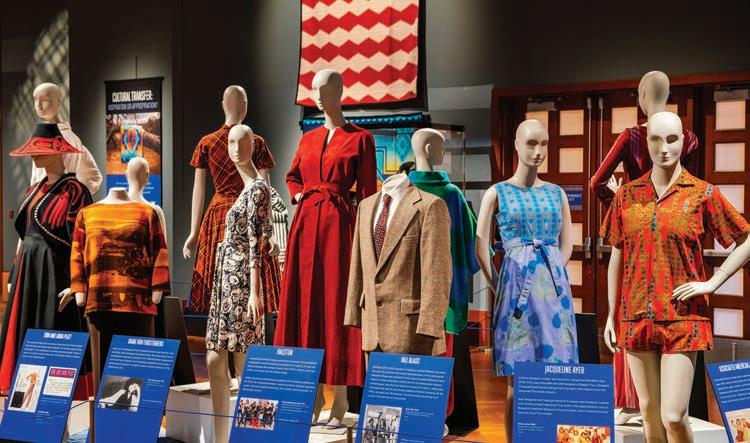
TUESDAY, AUGUST 4, 2026 POLLS WILL BE OPEN FROM 7:00 A.M. TO 8:00 P.M. TO THE QUALIFIED ELECTORS OF THE CITY
NOTICE IS HEREBY GIVEN THAT A
For the purpose of voting for the following offices:
United States Senator
County Executive
• Representative in Congress • County Commissioner – 5th District ONLY
• State Senator • Delegate to County Convention
PLEASE TAKE NOTICE that the City of Detroit will be voting on the following proposition as presented and listed below:
DETROIT PUBLIC SCHOOLS COMMUNITY DISTRICT COUNTY OF WAYNE STATE OF MICHIGAN
OPERATING MILLAGE REPLACEMENT PROPOSAL
If it is determined that the School District of the City of Detroit is no longer authorized to levy an operating millage to retire its legacy debt under State law this proposal would replace that levy by authorizing the Detroit Public Schools Community District to levy the statutory limit of 18 mills on all property, except principal residences (owner occupied homes) and other property exempt by law, for general operating purposes and allow the School District to continue to levy the statutory limit of 18 mills in the event of future Headlee rollbacks of up to 6 mills. This authorization will allow the School District to receive revenues at the full per pupil foundation allowance permitted by the State. Shall the limitation on the total amount of taxes which may be assessed against all property, except principal residences and other property exempted by law, situated within the Detroit Public Schools Community District, County of Wayne, Michigan, be increased in the amount of 24 mills with 18 mills being the maximum allowable annual levy ($18.00 on each $1,000 of taxable valuation), for a period of twenty (20) years, 2026 to 2045, inclusive? This operating millage if approved and levied, would provide estimated revenues to the School District of $112,000,000 during the 2026 calendar year, to be used for general operating purposes.
■
Persons with disabilities needing accommodations should contact the Department of Elections at 313-876-VOTE (8683).
If you have any questions regarding your polling location on Election Day, please contact the Detroit Department of Elections at (313) 876-0190. MICHIGAN LAW MANDATES ALL VOTERS TO PRESENT VALID PHOTO ID AT THE POLLS OR COMPLETE AN AFFIDAVIT OF VOTER NOT IN POSSESSION OF PICTURE IDENTIFICATION. Acceptable forms of photo IDs are: Michigan Driver’s License or a Michigan Personal ID; Driver’s License or Personal ID by another state; Federal or State Government photo ID; U.S. Passport; Military ID with photo; current Student ID with photo or Tribal ID with photo.
Absentee ballots are available for all elections. Registered voters may obtain a ballot at the Detroit Department of Elections, the Detroit City Clerk’s Office or at any of our Early Voting Centers listed below.
District 1
WCCCD Northwest Campus 8200 W. Outer Drive Detroit, MI 48219
District 2
Northwest Activities Center 18100 Meyers Rd. Detroit, MI 48235
District 3
Farwell Recreation Center 2711 E. Outer Drive Detroit, MI 48234
HOURS OF OPERATION:
District 4
WCCCD Eastern Campus 5901 Conner St. Detroit, MI 48213
District 5
Department of Elections 2978 W. Grand Blvd. Detroit, MI 48202
District 6 City Clerk’s Office (Coleman A. Young Municipal Ctr.) 2 Woodward Ave., Ste. 106 Detroit, MI 48226
Clark Park 1130 Clark St. Detroit, MI 48209
District 7
Adams Butzel Recreation Complex 10500 Lyndon Detroit, MI 48238
• Early Vote Centers will open on Saturday, July 25, through August 2, 2026, 9:00 a.m. to 5:00 p.m.
• Monday through Friday from 8:00 a.m. to 5:00 p.m. (Department of Elections)
• Monday through Friday from 9:00 a.m. to 4:00 p.m. (City Clerk’s Office)
• Saturday, August 1st from 8:00 a.m. to 4:00 p.m. and Sunday, August 2nd from 9:00 a.m. to 4:00 p.m. (Department of Elections)
• Monday, August 3rd – Absentee voting ceases at 4:00 p.m.
• Election Day, Tuesday, August 4th from 7:00 a.m. to 8:00 p.m.
Voters may also submit their ballots by dropping it into any of our drop boxes (24 hours, 7 days a week) listed below.
Crowell Community Center 16630 Lasher Rd. Detroit, MI 48219
Rouge Park Golf Course 11701 Burt Rd. Detroit, MI 48228
North Rosedale Park Community House 18445 Scarsdale Detroit, MI 48223
Greater Grace Temple 23500 W. Seven Mile Rd. Detroit, MI 48219
WCCCD Northwest Campus 8200 W. Outer Dr. Detroit, MI 48219
Liberty Temple Baptist Church 17188 Greenfield Rd. Detroit, MI 48235
Greater Emmanuel Institutional COGIC 19190 Schaefer Hwy. Detroit, MI 48235
Tindal Recreation Center 10301 W. Seven Mile Rd. Detroit, MI 48221
Northwest Activities Center 18100 Meyers Rd. Detroit, MI 48235
Palmer Park Community Center 1121 Merrill Plaisance St. Detroit, MI 48203
Perfecting Church 7616 E. Nevada Detroit, MI 48234
Faith Temple 19000 Conant Detroit, MI 48234
Greater St. Paul 15325 Gratiot Ave. Detroit, MI 48205
Farwell Recreation Center 2711 E. Outer Dr. Detroit, MI 48234
Heilmann Recreation Center 19601 Crusade Detroit, MI 48205
Balduck Park 5271 Canyon Detroit, MI 48236
Franklin Library 13651 E. McNichols Detroit, MI 48205
Bethany Lutheran Church 11475 E. Outer Drive Detroit, MI 48224
Jesus Tabernacle Church 11001 Chalmers Detroit, MI 48213
WCCCD Eastern Campus 5901 Conner Detroit, MI 48213
Considine Center 8904 Woodward Ave. Detroit, MI 48202
Greater Christ Baptist Church 3544 Iroquois Ave. Detroit, MI 48214
Horatio Williams Foundation 1010 Antietam Ave. Detroit, MI 48207
Renaissance Baptist Church 1045 E. Grand Blvd. Detroit, MI 48207
Butzel Family Center 7737 Kercheval Detroit, MI 48214
Department of Elections 2978 W. Grand Blvd. Detroit, MI 48202
Detroit Pistons Performance Center 690 Amsterdam St. Detroit, MI 48202
WCCCD Downtown Campus 1001 W. Fort St. Detroit, MI 48226

Unity Baptist Church 7500 Tireman Detroit, MI 48204
Clark Park 1130 Clark Detroit, MI 48209
City Clerk’s Office 2 Woodward Ave., Ste. 106 Detroit, MI 48226
Kemeny Recreation Center 2260 S. Fort St. Detroit, MI 48217
Davison Service Yard 8221 W. Davison Detroit, MI 48238
William S. Ford Memorial Church 16400 W. Warren Detroit, MI 48228
Edison Library 18400 Joy Rd. Detroit, MI 48228
Adams Butzel Recreation Complex 10500 Lyndon Detroit, MI 48238