

For thousands of Detroit and Wayne County residents, the damage caused by Michigan’s tax foreclosure crisis did not end when the property was taken.
By Ebony JJ Curry SENIOR REPORTER
Families lost homes they had owned for decades, neighborhoods were hollowed out, and potential generational wealth disappeared block by block. In many cases, homes were sold at auction for far more than the taxes owed, yet former owners received nothing from the sale.

By Ebony JJ Curry
SENIOR REPORTER
Late Thursday night, Sept. 14, a historic moment unfolded in American labor relations as the United Auto Workers (UAW) union initiated a strike against Ford, General Motors (GM), and Stellantis. For the first time, the union took simultaneous action against all three major Detroit-based automakers. The action involves approximately 13,000 UAW members in assembly plants across Michigan, Ohio, and Missouri, who walked off their jobs after existing labor contracts expired at 11:59 p.m.
That changed after a series of landmark Michigan Supreme Court rulings reshaped how the state handles tax foreclosure profits. Wayne County officials now say people whose properties were foreclosed may be entitled to money if those properties have sold at auction for more than the minimum bid amount. Former owners and others with a legal interest in the property have until July 1, 2026, to file a claim for potential surplus proceeds.
IThe message from the Wayne County Treasurer’s Office is simple: don’t leave money on the table.
n a breathtaking celebration of talent, determination, and the unyielding spirit of Black excellence, the Michigan Chronicle marked its 10th Annual 40 Under 40 event Thursday evening. This year’s soirée, drenched in the theme “All Black Everything with Gold Accents,” transcended expectations and essential ly illuminated the golden gems within the true essence of Black excellence. Hosted by the charismatic duo of Andre Ash and Lynzee Mychael from Michigan Chroni cle’s Finally Friday, the night was a triumph for the city of Detroit and its vibrant community of young Black professionals.
Under Michigan law, specifically MCL 211.78t, people who owned the property or held a “meaningful equity interest” at the time of foreclosure may qualify to receive remaining proceeds after taxes, interest, penalties, and administrative costs are paid. That includes homeowners, mortgage holders, and lienholders.

The evening sparkled with a golden promise as we celebrated remarkable individuals from various walks of life. Among the honorees were the brilliant and visionary co-founders of Detroit Hives, Nicole Lindsey and Timothy Paul Jackson. Their work has not only changed the landscape of beekeeping and urban farming in Detroit but also exemplified the transformative impact Black professionals can have on their communities.
The Treasurer’s Office says eligible residents should immediately download and complete a Notice of Intent form available through the county’s Claims & Auction page at WayneCountyMI.gov/Treasurer. The form must be notarized and submitted either in person or through certified mail to the Wayne County Treasurer’s Office at 400 Monroe Street, 5th Floor, Detroit.
Shortly before midnight on Sept. 14, GM released a statement expressing disappointment with the strike action, despite offering what it termed an “unprecedented economic package” that included historic wage increases. Stellantis also expressed disappointment in a statement, saying the company immediately went into contingency mode to protect its operations.
By Ebony JJ Curry SENIOR REPORTER
Brown. “It’s always an honor to be honored and it’s always a blessing to be in a room full of so many talented, accomplished, and popular people that look like me. I’m geeked. I started making and selling clothes as a kid and I always knew that I would have a business, but I never knew it would be Detroit’s brand name business, so I take a lot of pride in the fact that our business represents our city’s pride.”
By Jasmine West
Taking home the Corporate Excellence Award was Dannis Mitchell, Director of Community Engagement at Barton Malow.
DPD Chief James White Says Increased Police Presence Culled Violence By Andre Ash
rebound from the pandemic.”
DIGITAL ANCHOR
ness district that had been the lifeblood of the community.
“Together we have created a social, environmental, and financial impact through bees,” said Jackson. Lindsey followed that sentiment with, “It is through our local partnerships and collaborative efforts that we exist in over 28 plus locations managing the health of 4.5 million honeybees – humbly speaking our movement has inspired others locally, nationally, and even internationally to take on similar missions.”
County officials say waiting could cost people thousands of dollars. The issue is especially meaningful in Detroit, where tax foreclosure became one of the defining crises of the post-recession era.
For many Detroiters, Interstate 375, or I-375, has long been just another stretch of urban highway, a concrete artery connecting different parts of the city. To some, it’s a mere convenience; to others, it’s an unremarkable part of their daily commute. However, there’s a deeper, far more troubling story beneath the surface of this seemingly ordinary freeway—a story of pain, displacement, and the lasting impact on Black Detroiters.
Detroit Public Schools Community District students are learning at a faster rate than students in most districts across the country, according to the updated 2026 Education Recovery Scorecard, a national report from Stanford University’s Educational Opportunity Project and Harvard University’s Center for Education Policy Research.
The report found that DPSCD students are gaining an average of 1.21 grade levels of learning per year. That places Detroit above the national average of 1.0, similar to Michigan districts at 1.03, and the state of Michigan at 0.97. DPSCD ranked 695th out of 8,147 districts nationwide, placing the district in the 91st percentile for learning growth.
Detroit Hives, a pioneering organization founded by Lindsey and Jackson, harnesses the power of urban beekeeping to revitalize neighborhoods in the Motor City. Their initiative not only addresses critical issues like environmental conservation but also provides valuable education and employment opportunities to Black De-
The UAW has branded the industrial action as the “Stand-Up Strike,” focusing on specific plants within each automaker. UAW President Shawn Fain stated, “This strategy will keep the companies guessing. It will give our national negotiators maximum leverage and flexibility in bargaining. And if we need to go all out, we will. Everything is on the table.” Union leaders have also indicated that additional plants could be targeted in future waves if negotiations remain stalled.
Previous reporting by Michigan Chronicle documented how Wayne County has already returned more than $3.8 million to former property owners and interest holders tied to earlier foreclosures. Those payments followed years of criticism over Michigan’s former practice of allowing counties to keep surplus profits from tax foreclosure auctions.
“It is so important to recognize that there are young leaders across the country, many that are born here in Detroit. I represent our city nationally and I tell people, ‘Yea I’m a D-girl I’m from the west-side of Detroit,’” Mitchell expressed. “But more importantly, I’ve been able to have experiences within an industry that not many of us, specifically women of color, have the opportunity to engage in and I’ve been the youngest person in the room, the only Black person in the room, and the only Sistah in the room, and I really had to articulate the importance of showing up, giving chances when others won’t, and being persistent.” As a trailblazing Black woman thriving in a predominantly male-dominated industry, her unwavering commitment to fortifying the connections between businesses and Detroit’s communities is unde-
It’s a history marred by pain, injustice, and economic devastation. More than 130,000 residents, primarily Black, were forcibly displaced. Families were uprooted, generational wealth was obliterated, and a thriving community was torn asunder. The wounds inflicted by I-375 run deep, transcending the physical barrier of a freeway to penetrate the very soul of Black Detroiters.
The scorecard shows Detroit moving in a stronger direction than the state. DPSCD’s recovery trend is +0.13 grade levels per year. Similar Michigan districts are at +0.01. The state average is -0.02, meaning Michigan overall continues to decline in academic recovery, while Detroit has improved each year since 2022.
towards mending the wounds inflicted on Black Detroiters and restoring a sense of belonging that was so callously torn away in the past.
A string of shootings in Greektown in mid-April left both visitors and residents of this bustling downtown destination in awe. One of these shootings tragically claimed the life of a popular and beloved security guard following a dispute with a patron.
The I-375 Boulevard Project is about more than just correcting historical injustices; it’s about redefining the future. It will connect downtown Detroit to surrounding neighborhoods, bridging the gap that was placed upon the city decades ago.
Reading gains are among the strongest points in the report. DPSCD’s reading recovery trend ranks in the 88th percentile nationally. Black students in the district rank in the 95th percentile nationally for reading improvement. Hispanic students, low-income students, female students, and male students all posted recovery trends in the top quartile nationwide.
For decades, Michigan counties could seize a property over unpaid taxes and then sell it at auction, even if the final sale price greatly exceeded the debt. Former owners walked away with nothing.
This painful legacy can be traced back to the nation’s interstate highway program of 1956—a program that aimed to connect the country but often did so at the expense of marginalized communities. In the case of I-375, it meant carving a path through the heart of Black Detroit, reinforcing segregation, and perpetuating inequality.
The finding gives Detroit a different place in the national education conversation. DPSCD, once defined publicly by emergency management, enrollment loss, facility struggles, and pandemic disruption, is now being studied for growth. The district was also named one of six school systems nationally profiled as a “District on the Rise” for sustained post-pandemic progress.
By Andre Ash DIGITAL ANCHOR
DPSCD Board President Latrice McClendon said the numbers reflect intentional work, not luck.
The male suspect allegedly shot the guard before fleeing the scene, while his female companion is accused of concealing the weapon in her bra.
“Look, the improvement didn’t happen by accident, and I want to be very clear about that,” McClendon said. “The strategy has always been rooted in intentionality. We set goals, we measure them, and we hold ourselves accountable.”
Fain clarified the union’s strategy: “I want to give a major shoutout to the thousands of members who are on the picket lines right now fighting for all of us. The Stand-Up Strike is a new approach to striking. Instead of striking all plants at once, select locals will be called on to stand up and walk out on strike. This is our generation’s answer to the movement that built our union – the sit-down strikes of 1937. We told the Big 3 that Sept. 14 was the deadline and we meant it. We gave the companies our economic demands eight weeks ago and it took more than a month to get to the table.”
The tale begins in what is now Lafayette Park, once known as Black Bottom—a neighborhood rooted in African-American culture and history. Named after its dark, fertile soil, Black Bottom flourished during the mid1900s, nurturing the dreams and aspirations of prominent Detroiters like Coleman Young, Joe Louis, and numerous other Detroit legends. But in the name of urban renewal in the 1950s, this vibrant neighborhood was systematically dismantled, erased from the map, and replaced by a lifeless stretch of asphalt.
Housing advocates and legal scholars argued the practice disproportionately harmed Black homeowners in Detroit, where inflated property assessments and economic instability pushed thousands into foreclosure after the Great Recession.
Superintendent Dr. Nikolai Vitti said the recovery began during the pandemic, when DPSCD made the decision to keep live instruction and a full school day in place while students learned online.
Holistic Approach to Providing Shelter and Support for Detroit’s Unhoused People
“We kept the cameras on and kept direct instruction going on,” Vitti said. “We knew that our students just needed that direct instruction by the teacher.”
For one to aptly recognize the harm caused by such projects, it is vital to note that some of the planners and politicians behind those projects built them directly through the heart of vibrant, populated communities—oftentimes to reinforce segregation and sometimes as part of a direct effort to replace or eliminate Black neighborhoods.
McClendon said the board has focused on setting the vision, funding priorities, and asking hard questions, while Vitti and district teams execute. She pointed to increased enrollment, stronger attendance, higher student achievement, teacher recruitment and retention, expanded arts and academic programming, stable school leadership, and restored financial health as part of the broader progress.
Today, the resurgence of Paradise Valley stands as a testament to the indomitable spirit of Black Detroiters and the enduring legacy of Black excellence. This historic district, once a vibrant hub for Black businesses and culture, is experiencing a renaissance that harkens back to its glory days. The destruction of Black Bottom may have torn apart a thriving community, but the resolute determination of a new generation of entrepreneurs and visionaries is reclaiming that lost legacy.
These incidents unfolded during an unseasonably warm spring, leading to increased pedestrian traffic and heightened tensions in the densely populated downtown area.
The surge in crime and the influx of visitors to Detroit’s downtown core garnered the attention of the Detroit Police Department (DPD), catching them somewhat off guard.
Entire neighborhoods were destabilized, especially between 2011 and 2015 when Wayne County foreclosed on tens of thousands of Detroit properties. Many homes were purchased by speculators for a fraction of their market value, only to fall back into tax delinquency again years later.
While the residential areas bore the brunt of this demolition, the heart of Black Bottom, its thriving business center, remained largely untouched. Restaurants, theaters, clubs, and bars—the very places that brought Detroit’s Black community together—were concentrated around Hastings Street, the epicenter of African-American culture in the city.
The legal turning point came through Michigan Supreme Court decisions including Schafer v. Kent County and Hathon v. State of
The union is pushing for a comprehensive list of demands. This
Homelessness continues to plague urban communities, with families and individuals grappling with the challenges of making ends meet in today’s economic climate. Whether it’s struggling to meet monthly mortgage payments or coping with soaring rental costs in a housing market marked by shockingly high prices, a variety of factors contribute to the growing issue of people becoming unhoused.
That choice mattered when families were already navigating housing instability, health concerns, job loss, food insecurity, and gaps in technology access. Vitti said the district could not assume parents and guardians would be able to replace the role of trained educators during a crisis.
Housing Resource Helpline in response to the challenges that residents face in navigating the complex system of housing services. The helpline provides a single point of contact for people seeking housing assistance and connects them with the resources they need.
After schools reopened, he said DPSCD treated the pandemic as a new baseline, not an excuse.
Meagan DunnJulie Schneider
Then, in a cruel twist of fate, Hastings Street, too, was obliterated a few years later, making way for the construction of I-375. This marked the final blow, sealing the fate of Black Bottom and signaling the beginning of the end for Paradise Valley, the Black busi-
But now, after decades of enduring the scars of I-375, there is a glimmer of hope on the horizon. Plans have been unveiled to transform this once-divisive freeway into a vision that seeks to right the wrongs of the past while heralding a new era of inclusivity and community revitalization.
“We have been very intentional and unapologetic to say, our kids have to rebound from the pandemic,” Vitti said. “We know the pandemic was hard, especially on the city and our families and our students, but our children deserve to
Historically, shelters have provided a temporary respite for those in need, often serving as the first or second option after exhausting alternatives like staying with friends or family. Shelters offer a place to rest one’s head and a warm meal, albeit sometimes for extended periods. For others, being unhoused means living in cars or makeshift outdoor
The district’s academic interventionists have also played a role. The college-degreed staff members work one-on-one and in small groups with students, mainly in literacy and math. Vitti said the model helps classroom teachers keep grade-level instruction moving while students receive targeted support for specific skill gaps.
Support for the helpline comes from the Gilbert Family Foundation, which has pledged $10 million over three years to fund the program. Wayne Metro Community Action Agency manages the helpline, making it accessible to all Detroit residents. This initiative simplifies access to the City’s various housing services, ensuring that residents in need can easily find assistance.
James White, Chief of Police for the Detroit Police Department, said: “We were caught somewhat flat-footed right out the gate. By design we went into the spring deployment, which is less than the mid-summer deployment, and saw we say an uptick in violence that first warm weekend.”
Chief White attributes the violence in Greektown to a combination of weather conditions and a surge in population.
“That has helped teachers lessen the burden and the heavy weight on their shoulders alone in moving students that are below grade level,” Vitti said.
Fueled by more than $100 million from the Infrastructure Investment and Jobs Act and other partners, this ambitious project aims to create jobs, remove barriers to economic growth, and reconnect the neighborhood with the rest of Detroit. It is a step
In the heart of Paradise Valley, Blackowned businesses are not just flourishing but thriving, offering diverse services, products, and experiences that pay homage to the past while paving the way for a prosperous future. From jazz clubs to soul food restaurants, the Black Press, and art galleries to fashion boutiques, this revival is breathing life into the very essence of what once made this neighborhood a vibrant cultural epicenter. It’s a resurgence that extends beyond brick and mortar; it represents the resurgence of a spirit that refuses to be subdued.
Attendance remains the hardest part of the story. DPSCD
Detroit City Councilman Fred Durhal III, representing District 7, where Eastern Market resides, told the Michigan Chronicle, “It’s still very early in the process, MDOT is
He explained, “ We saw numbers downtown that we have not seen, ever. People are emerging from COVID and there’s a feeling that we’re in a post-COVID era… and with the venues downtown and the reasons to come down with all the activities that are going on, we saw hundreds of more people and, in particularly, young folks, teenagers that we hadn’t seen.”
By Sam Robinson SENIOR REPORTER
By Lynzee Mychael MULTIMEDIA JOURNALIST
The causes of homelessness are as diverse and complex as the individuals experiencing it. In response, the City of Detroit has adopted a holistic approach to combat this issue.

Detroit Shows Why
What a Federal Government Shutdown Could Mean
Responding swiftly to the surge in violence, DPD adjusted its deployment plans. Rather than waiting for mid-summer, they deployed officers in the spring itself to address the situation.
“Providing services and high-quality housing to persons at risk of or who are experiencing homelessness is a key priority of the City of Detroit, said Julie Schneider, Director of Detroit’s Housing and Revitalization Department.
“This means focusing on building the pipeline of supportive housing and coordinating with the Continuum of Care on the delivery of critical resources such as emergency shelter, rapid rehousing, and diversion and prevention programs. It also means preserving and expanding affordable housing options for Detroiters of all incomes and improving housing stability though comprehensive service offerings available through the Detroit Housing Resource HelpLine and Detroit Housing Services Division within HRD.”


Senate Democrats in Lansing last week unveiled a package aimed at protecting free and fair elections.
“The city and its partners offer a lot of great services to help Detroiters with their housing needs, but they don’t mean much if people don’t know how to access them,” said Mayor Mike Duggan. “Thanks to the efforts of our partners and the generous support of the Gilbert Family Foundation, we now have a simple process to guide residents to the right housing resource and a growing number of programs to help them.”
The rise in visitors to the Greektown area is evident in data from Placer.ai, a location analytics company
The Gilbert Family Foundation’s broader commitment involves pledging $500 million to support projects across Detroit over the next ten years, with housing initiatives being a significant part of their contribution.
The legislation, Senate Bills 961–964, would prevent local governments from passing tactics that civil rights groups have said are voter suppression and intimidation. The package would also require language disability assistance. Another provision would establish research and training on election administration.
From the days of the Great Migration when thousands of Black families flocked to Detroit in search of jobs and a better life, to the pivotal role they played in the city’s cultural and musical heritage, Black Detroiters have left an indelible mark on the city. However, in recent years, Detroit has experienced significant gentrification, which has raised concerns about the displacement of long-standing Black residents. Similar to a setting
In May 2023, the City of Detroit launched the Detroit
Notably, Detroit has witnessed a consistent decrease in recent years, with the number of unhoused residents steadi ly declining. In 2019, approximately 7,847 people were unhoused and entered the City’s community response system. In 2021, about 5,687 people experienced homelessness.
According to the City of Detroit, since the start of the fiscal year 2019 to 2021, Detroit saw a 28% decrease in the
Democrats, at a press conference with Secretary of State Jocelyn Benson to outline the plan, mentioned the Supreme Court’s decision to remove key protections of the 1965 Voting Rights Act earlier this month in
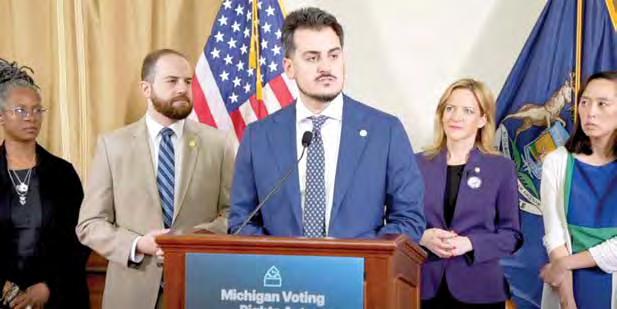
the
says it is the only large district in Michigan to reduce chronic absenteeism below pre-pandemic levels. Other large districts in the state have seen chronic absenteeism rise since 2019, with most increasing between 5 and 22 percentage points.
Still, the district’s rate remains high. Last school year, 60.9% of DPSCD students were chronically absent, an improvement of nearly five percentage points from the year before.
“I won’t sugarcoat it,” McClendon said. “Chronic absenteeism remains our most urgent challenge.”
Vitti said DPSCD has reduced chronic absenteeism by about 10 percentage points overall, dropping from roughly 70% to about 60%. The district has used attendance agents in large schools, the Parent Teacher Home Visit Project, attendance incentives, student recognition, school surveys, transportation support, and more than 78,000 homes through summer 2025 canvassing and outreach tied to attendance and enrollment efforts.
“We’ve dropped it below where we were before the pandemic, which is uncharacteristic of school districts throughout the country,” Vitti said. “Still high, obviously, but obviously, we’re showing great improvement.”
For DPSCD leaders, attendance is tied directly to academics. Vitti said students who miss 18 or fewer days of school are three to four times more likely to be at or above grade level and college-ready on assessments.
“At the high school level, where a lot of the attendance is on the shoulders of students to get to and from school, we’ve moved to an incentive where students receive $100 after New Year’s when we come back after break if they’re present five days in a row,” Vitti said. “They get $100 for that week.”
The district has also expanded wraparound services to address barriers that keep students from school. DPSCD now operates 12 health hubs across Detroit, providing free medical care to students and families. The hubs also connect families to mental health support, vision screenings, eyeglasses, dental care, food resources, eviction support, immigration assistance, and

other services. Nurses are now in every school.
McClendon said those supports are not separate from academics.
“You cannot teach a child who is hungry, traumatized, or housing insecure and then walk away expecting test scores to climb,” McClendon said. “These are not soft initiatives. These are academic strategies.”
For McClendon, the report carries personal weight. She is a DPSCD graduate, a district parent, and now board president.
“My children are in DPSCD not because I have to. I could afford private school,” she said. “They’re in DPSCD because I know we have excellent schools, excellent teachers, and excellent administrators.”
She said the district’s gains challenge assumptions that have followed Detroit students for too long.
“The narrative that Detroit kids can’t perform has always been a lie, and the data is proving it now,” McClendon said. “Black children in Detroit are outpacing suburban peers in growth. Let that sink in.”
The district’s graduation rate also points to progress. The class of 2025 marked the fourth consecutive year of improvement since the pandemic low of 64.5% in 2020-21. DPSCD has recovered 18.7 percentage points, narrowing the gap with the state average from 16 points to less than one point.
Michigan, which ruled that governments could not keep profits beyond what was owed in taxes and fees.
The rulings forced counties statewide to create processes allowing former owners to reclaim surplus proceeds. Wayne County Treasurer Eric Sabree has repeatedly emphasized that the money never belonged to the county in the first place.
“This is money that belongs to the people,” Sabree previously told Michigan Chronicle. “When someone is legally entitled to proceeds from the sale of tax foreclosed property, we believe it’s our responsibility to inform people that those dollars are available and can be returned to them.”
Still, one of the biggest challenges has been awareness. Many residents who lost homes years ago assumed every connection to the property ended after foreclosure. Others moved, lost records, or never learned they might qualify for compensation. Legal experts and housing advocates say confusion around the process remains widespread. CBS Detroit recently reported that many former homeowners across Wayne County still do not know they could be eligible for surplus funds tied to foreclosed properties sold at auction.
“Overturning Roe v. Wade would be a terrible break with nearly 50 years judicial precedent and more importantly – a blow against individual freedom. It is my hope that the majority of justices will reject the findings of this draft. If that is the case, we need to stand with Senate MajorLeader Schumer and Gov. Whitmer in support their efforts to preserve right to reproducfreedom,” said Chair Alisha Bell, on behalf of Wayne County Commission.
That is why county officials are urging people to act now rather than wait until after the auctions conclude.
Here is how the process works:
Residents must first confirm that the property was foreclosed and determine whether they held ownership or another recognized legal interest in the property at the time.
Next, they must complete the county’s Notice of Intent form, provide information about the property and their ownership interest, and have the document notarized before submission.
The completed form must be delivered to the Treasurer’s Office by July 1, 2026.
If a claim is properly filed, the Treasurer’s Office says claimants will receive additional paperwork — Form 5744 — by January 31, 2027. That form allows claimants to formally file a motion in Wayne County Circuit Court between February 1 and May 15, 2027. A judge will then determine whether surplus funds exist and how payments should be distributed.
County officials stress that filing the initial Notice of Intent before July 1 is critical. Missing the deadline could eliminate a claimant’s opportunity to recover funds entirely.
The Treasurer’s Office is also encouraging residents to seek legal guidance if they are uncertain about eligibility or documentation requirements.
The State Bar of Michigan’s Legal Referral Center can provide assistance at irs.michbar.org or by phone at (800) 968-0738.
The county has published a checklist encouraging residents to:
■ Download the claims documents
■ Confirm foreclosure dates
■ Verify ownership or lienholder status
“We were written off,” McClendon said. “Detroit schools were a punchline for too long. And now we are within a fraction of a point of the state average in graduation. That is a movement.”
DPSCD’s next phase includes multiple diploma pathways beginning in 2026-27, including honors, dual degree, career-ready, and arts diplomas. The district also expects Davis Aerospace Technical High School to return to Coleman A. Young International Airport by fall 2026, while the vacant Cooley High School is slated to become a district and community-based sports facility.
“It’s definitely gratifying, humbling,” said Vitti. “It makes me emotional to think about. But, you know, people told me that I would ruin my career by taking this job. And to me, that was just defining the challenge as to why I would take the job.”
The scorecard does not mean DPSCD’s work is finished. Chronic absenteeism, overall proficiency, transportation, funding equity, and family stability remain serious challenges. But the new data does make one point clear: Detroit students are growing, and the country is now being asked to pay attention.
Vitti said the recognition gives the district more leverage to fight for the resources students deserve.
“We’re only scratching the surface of their potential,” he said.
■ Complete and notarize
forms
■ Submit documentation before July 1
Monitor mail for court filing instructions in 2027
The broader conversation surrounding foreclosure in Detroit remains emotionally charged because the effects are still visible across the city.
Vacant lots remain where family homes once stood. Elderly residents who lost homes over relatively small tax debts continue to struggle financially. Entire communities are still rebuilding from years of displacement tied to aggressive foreclosure practices.
Even as Wayne County works to return surplus proceeds, officials continue to stress foreclosure prevention as the top priority.
Earlier this year, the Treasurer’s Office urged homeowners who are behind on taxes to enroll in payment plans and assistance programs designed to help residents avoid foreclosure altogether. Wayne County reported that tax foreclosures have declined dramatically in recent years, reaching some of the lowest levels seen in decades.
But for residents who have already lost property, the new claims process is a second chance to recover at least part of what was taken. But again, the deadline is approaching quickly.
In a committee hearing on the bills last week, Deputy Secretary of State Aghogho Edevbie said the court ruling is “one of the most shameful discriminatory actions taken by the U.S. Supreme Court of the 21st century.”
The decision is the latest in the attempt to allow states to “have an open door to discriminate against Black and Brown voters,” Benson said, noting Michigan, led by a Democratic governor through the end of the year, won’t be eager to redistrict its maps like Tennessee, Florida, Mississippi, Alabama and South Carolina.
Detroit NAACP President Rev. Wendell Anthony, whose organization had been warning the stripping of the VRA’s Section 2 was coming, also spoke against the ruling.
“The recent decision of the United States Supreme Court to gut the Voting Rights Act of 1965 places a chokehold on the neck of the right to vote,” Anthony said.
The sponsors of the bill say they are putting a priority on passing the package.
“As Washington continues chipping away at fundamental voting protections, it’s up to the states to stand up and ensure our elections remain free, fair, and accessible to all eligible voters,” said Sen. Darrin Camilleri (D-Trenton), lead sponsor of the bill package.
The Michigan Voting Rights Act aims to uphold the integrity of the state’s election process. Bill sponsors said it was developed with input from Benson and other advocacy organizations that focus on expanding voter accessibility in Michigan and across the country, including the Fair Elections Center, NAACP Michigan State Conference, and Brennan Center for Justice.
Detroit state Sen. Stephanie Chang mentioned Supreme Court Justice Kagan’s dissent, which wrote the VRA was one of the most consequential acts of power, born out of the blood of civil rights marchers.
“In Michigan and across the country it is critical now more than ever that state legislatures take action to ensure that voices of voters of color and all voters are heard in our democracy,” Chang said.
At a press conference on Tuesday, May 19, lawmakers acknowledged the House version of the package, which is led by Southfield Rep. Jason Hoskins, likely faces a brick wall in Republican House Speaker Matt Hall. There’s no indication the package has support from any Republican, which is required for it to reach Gov. Gretchen Whitmer’s desk.
However, the bills head to a full vote in the Senate after passing through the Senate Elections and Ethics Committee.







A3 | June 3-9, 2026
By Jeremy Allen EXECUTIVE EDITOR
A new $7 million partnership between the Pontiac Housing Commission and Ohio-based F&M Bank is expected to expand single-family housing construction in Pontiac and create more pathways to homeownership for local residents.
The investment will help launch the first phase of the Pontiac Housing Commission’s “100 Homes for Pontiac Program,” an initiative designed to address the city’s housing shortage by building more than 100 attainable homes by 2030.
Under the agreement, funding from F&M Bank will support construction of 12 new homes across two Pontiac neighborhoods.
City housing studies estimate Pontiac needs roughly 3,000 additional housing units to meet demand. Housing leaders say the program is intended to help close that gap while creating opportunities for first-time homebuyers, working families and residents currently using housing assistance programs.
The homes will include a mix of one- and two-story designs with different floor plans aimed at making ownership more accessible for a range of buyers.
Ahmad Taylor, executive director of the Pontiac Housing Commission, said the effort is focused on helping residents build long-term financial stability.
“Homeownership is the central avenue to generational wealth,” Taylor said. “We are excited to partner with a community-focused financial institution to catalyze real opportunities for our residents to physically move to the next chapter of their life.”
The housing commission launched the program earlier this year as part of a broader strategy to increase attainable housing in the city. The initiative also includes homebuyer education courses for Housing Choice Voucher clients and renters interested in purchasing homes for the first time.
Participants who complete the courses may qualify for down payment assistance. The Pontiac Housing Commission also offers Homeownership Vouchers through the U.S. Department of Housing and Urban Development to help renters transition into homeownership.
Art McClellan, president of the Pontiac Housing Commission Board of Commissioners, said the program is part of a larger effort to strengthen neighborhoods across the city.
“I am excited about all of the activity being conducted by the PHC,” McClellan said. “Working with our partners, we are bringing much needed attainable housing to the community. We have many more plans in the works and look forward to bringing
See NEW HOUSING GROWTH IN PONTIAC Page A-4

By Jeremy Allen EXECUTIVE EDITOR
Detroit students entering high school this fall could walk away four years later with far more than a diploma. Under a new redesign unveiled by Detroit Public Schools Community District, students across the city’s neighborhood high schools will now have access to daily career advising, college credits, industry certifications, internships, and five distinct diploma pathways aimed at preparing them for life after graduation.
The initiative was announced in front of alumni, educators, business leaders, and longtime champions of Detroit students at the DPSCD Foundation Hall of Fame Alumni Gala in May, and district leaders say is the most significant transformation to the city’s neighborhood high schools in decades.
The redesign will roll out across all 11 DPSCD neighborhood high schools and aims to move students beyond simply earning a diploma. District leaders say the focus is now on making sure every graduate leaves high school with a plan, meaningful credentials, and direct exposure to college or career opportunities.
Beginning in 9th grade, students will receive daily advising and career navigation support that follows them through graduation. The district is also introducing five diploma pathways designed to better align students with their goals and interests. Those pathways include Honors, Dual Degree, Career Ready, Arts, and Michigan Merit.
Students pursuing the Honors diploma will take Advanced Placement courses intended to strengthen applications to fouryear universities. The Dual Degree pathway will allow students to earn both an associate degree and a high school diploma simultaneously. Career Ready students will graduate with credentials needed to enter the workforce immediately after high school. Arts
students will build competitive portfolios for continued artistic study, while the Michigan Merit diploma will signify completion of all state graduation requirements.
“In Detroit, we don’t have a talent gap — we have an opportunity gap. And this redesign fills that gap with great intentionality and more resources,” said Dr. Nikolai Vitti, DPSCD Superintendent. “We really want high school to be a springboard to life, college, and careers — not just a diploma you get on the way out the door.”
District officials say the redesign changes not only coursework, but also the structure of the school day itself. An eighth period will be added to create space for seminar-style learning and electives. During that period, students will either participate in a “design your life” course or take electives that satisfy graduation requirements.
By their junior and senior years, students are expected to spend more time outside traditional classrooms and inside college campuses, workplaces, and internship programs. Through dual enrollment partnerships and career-based opportunities, district leaders hope students will graduate with both experience and confidence about what comes next.
The redesign is built around four core pillars: advising and navigation, rigor and readiness, schedule and structure, and college and career aligned experiences. District officials say each piece is intended to work together to create more individualized support for students while also raising expectations academically.
“This is the kind of systemic change that doesn’t happen overnight — it takes vision, collaboration, and a willingness to rethink everything about how we serve students,” Dr.Vitti added.
“Our teachers, principals, counselors, board members, and families all had a hand in shaping this framework. High School Redesign ensures that a DPSCD diplo-
ma means something — that every graduate walks across the stage with a credential, a plan, and a real advantage in life.”
District and foundation leaders emphasized that the redesign was shaped through conversations with students, educators, principals, school board members, families, and community stakeholders. The goal, they say, was to build a model rooted in the realities Detroit students face while also responding to their ambitions for the future.
Under the plan, a ninth grader who may be struggling academically or uncertain about career goals will immediately receive targeted support. That includes daily advisory sessions, academic intervention, and opportunities to explore different career interests early in high school instead of waiting until senior year to begin planning for life after graduation.
“By 10th grade, that student selects a diploma pathway,” said Kerrie Mitchell Campbell-Mabins, CEO of the DPSCD Foundation. “By 11th and 12th grade, they are earning college credits or industry certifications through community college partnerships, participating in paid internships, and graduating with a clear next step — whether that is a high-wage job or continued education.”
The district’s recent graduation data helped drive urgency around the redesign effort. DPSCD’s on-time four-year graduation rate recently climbed to 83.2 percent, surpassing the district’s previous record of 78.3 percent and placing the district within less than one percentage point of the statewide average.
Still, district leaders say deeper challenges remain inside neighborhood schools. More than half of current 10th graders are behind on graduation credits, and only 24 percent
By Jeremy Allen EXECUTIVE EDITOR
Mike Duggan may have just become the most overqualified unemployed man in Michigan.
Only a few weeks removed from ending his independent run for governor, Duggan now occupies a strange and unfamiliar political space: available. For the better part of three decades, Michigan has always known where to find him. He’s been a prosecutor, a hospital executive, “the mayor,” a crisis manager, and a self-billed (although, likely, well-earned) turnaround artist. He’s been the person powerful people call when the room is on fire and nobody else can stop the panic. And right now, two of Michigan’s most powerful institutions are dealing with exactly that kind of instability.
The University of Michigan is searching for a president after Santa Ono’s abrupt departure saga spiraled into national political theater. His replacement Kent Syverud suffered a most unfortunate brain cancer diagnosis in April 2026 shortly after he was hired to replace Ono in January.
Michigan State University is again beginning another search after Kevin Guskiewicz announced he was leaving East Lansing for Clemson barely two years into his tenure, citing dysfunction and infighting among trustees as an “unsustainable situation.”
That means Michigan’s two flagship universities – institutions with multibillion-dollar budgets, global brands, massive

athletic empires, political landmines, and deeply fractured governing cultures – are simultaneously looking for stabilizing leadership.
Which raises a question that would have sounded absurd a decade ago but feels surprisingly plausible now: What if Mike Duggan became the president of either Michigan or Michigan State? He wouldn’t just be a ceremonial figurehead or a fundraising mascot. (He cited an inability to fundraise nationally for his gubernatorial bid, but fundraising at one of these institutions is a whole different ballgame than
getting donations for a political career.) He
would be an actual institutional fixer.
At first glance, the idea sounds unconventional because Duggan is not an academic. Michigan State has a history of not always choosing true academics as president, but Michigan doesn’t.
But Duggan doesn’t come from faculty ranks and he’s never been a provost or dean or department chair. He doesn’t carry the traditional résumé markers that higher education still pretends are indispensable.
But the presidency of a modern flagship university increasingly resembles the man-
agement of a major American city more than the stewardship of a faculty senate. These jobs are now part governor, part CEO, part fundraiser, part crisis communications specialist, part political negotiator. University presidents spend as much time navigating donors, legislators, trustees, lawsuits, media storms, and athletic controversies as they do discussing curriculum or scholarship. The romantic idea of the university president as purely an intellectual shepherd has largely disappeared. Under these pretenses, Duggan’s résumé suddenly becomes more relevant.
Detroit was effectively a broken institution when he became mayor in 2014. The city had just emerged from bankruptcy, as public trust had collapsed and basic services were unreliable. Entire neighborhoods felt abandoned and Duggan inherited a city that was both dysfunctional and exhausted civically, emotionally, and financially. What followed was undeniable stabilization. (Whether it was equitable and miraculous like Duggan supporters try pushing is debatable.)
Under Duggan, Detroit regained fiscal footing, rebuilt municipal credibility with portions of the business community, reduced blight in visible ways, improved city services, and projected competence after years of national humiliation. Critics can and do argue that the revival disproportionately benefited downtown and corporate interests. But even many of those critics ac-
From page A-3
knowledge that Duggan brought operational order to chaos.
Michigan and Michigan State are still wrestling with institutional trauma, so Duggan bringing order matters most in this conversation.
Michigan State has spent nearly a decade trapped in the aftershocks of the Larry Nassar scandal, one of the greatest moral failures in the history of American higher education. The scandal exposed catastrophic institutional cowardice and systemic protectionism across multiple levels of leadership. Lou Anna Simon resigned in disgrace in 2018. Since then, the university has cycled through a dizzying succession of interim and permanent leaders, with Guskiewicz becoming effectively the seventh presidential figure in eight years depending on how one counts interim appointments. Instability has become part of the institution’s identity.
And then there is the board itself. Guskiewicz’s departure has not been subtle. He openly suggested trustee dysfunction had become corrosive enough to undermine governance. Reports surrounding his exit described public infighting, leaks, personal agendas, and factional behavior severe enough that even a major salary increase could not persuade him to stay.
That kind of environment practically begs for somebody with political toughness and institutional discipline.
Meanwhile, Ann Arbor has its own version of turbulence.
Ono appeared headed to become president of the University of Florida before conservative backlash there detonated his candidacy. Critics targeted his past support for diversity, equity, and inclusion initiatives, and Florida’s Board of Governors ultimately rejected his appointment despite support from Florida trustees. The spectacle turned Michigan’s presidency into another casualty of America’s ideological wars over higher education. Then came U-M’s gutting and erasure of everything the university had built to promote DE&I for the past decade.
And before that came years of scandal and reputational bruising at Michigan itself: the fallout from the Robert Anderson abuse scandal, controversies over campus protest responses, debates over DEI, donor pressure, athletic investigations, and constant political scrutiny from Lansing and Washington, D.C.
Neither university should be interested in “just” hiring an academic anymore. They need to hire someone capable of surviving institutional combat. We know Duggan has experience in that department. And he’s not necessarily a perfect fit, but the concept of President Duggan becomes…interesting.
There are similarities between Duggan’s career path and the increasingly nontraditional routes universities now embrace for leadership. Higher education has already shifted toward executives with backgrounds in medicine, business, politics, law, and large-scale administration. Some of the most successful modern university presidents have operated less like scholars and more like coalition builders and public executives.
Duggan’s years running the Detroit Medical Center may actually matter as much as his mayoralty. Before he became mayor, he rebuilt the DMC financially and operationally, turning around an institution that had become synonymous with instability. Academic medicine and large research universities already overlap heavily in structure, bureaucracy, fundraising, and political influence. Duggan understands how sprawling public-facing institutions work. And he understands Michigan.
That may sound simplistic, but it matters. Both universities increasingly operate under national scrutiny while simultaneously remaining deeply tied to state politics, state funding battles, donor networks, labor tensions, and regional economics. Duggan knows every major power center in the state. He knows business leaders. He knows organized labor. He knows Lansing. He knows how to negotiate with difficult boards. He knows how to survive public controversy. And knowing how to survive public controversy may matter most because there are also compelling reasons why Duggan would be a risky choice.
University communities are not cities and faculty governance matters more than, say, reporting to a city council. Shared governance is what makes universities work, and intellectual culture matters. Many professors would likely recoil at the idea of a hard-nosed political executive leading an
academic institution. Duggan’s managerial style of disciplined, centralized, and transactional decision-making could easily clash with the slower, consensus-oriented culture of academia.
And then there are the moral and political questions that inevitably follow him. Duggan leaves office with high approval numbers, but not without controversy. Critics have long accused his administration of prioritizing development interests over neighborhoods. Others question the depth of Detroit’s comeback beneath downtown optics. The city’s demolition program generated years of scrutiny and federal investigation over bid-rigging allegations involving contractors and city officials. Duggan has not been charged with wrongdoing, but his name inevitably hovers around conversations involving the “dirt scandal” and broader concerns about political favoritism in Detroit contracting. In higher education, optics and ethical credibility carry as much, if not more, weight than in politics.
A university president does so much more than just managing systems. They embody institutional values and they become symbolic figures. Every unresolved controversy becomes campus conversation, and every perceived ethical compromise becomes a faculty petition. Duggan would almost certainly encounter skepticism from students and faculty who already distrust
corporate-style leadership in academia. There is also a racial dimension worth acknowledging honestly.
Duggan built deep political support among Black Detroiters despite being a white mayor leading America’s largest majority-Black city. That coalition was real and politically durable. But it was also complex and occasionally fragile. University campuses operate under different cultural pressures and different ideological expectations. Some would view Duggan as a pragmatist uniquely capable of navigating racial politics. Others would see him as emblematic of establishment governance that prioritizes order and development over transformational equity.
Still, it is difficult to ignore how naturally his skill set aligns with this moment. Michigan’s universities need steadiness and vision right now. They need presidents who can lower the temperature in rooms full of competing egos and people who understand budgets, politics, media pressure, institutional trauma, and public trust. They need leaders capable of surviving modern America’s endless outrage cycle while keeping billion-dollar organizations functional. Duggan has spent most of his adult life practicing those skills, and perhaps there is something fitting about the possibility.
Duggan’s gubernatorial campaign ended with speculation, but no clearcut scandal or
collapse. Instead, he and his supporters said it ended with political reality. He concluded there was no viable path forward as an Independent candidate in an increasingly polarized climate. The irony is that higher education may actually offer him something politics no longer can: a place where competence still occasionally outweighs ideology. At least in theory.
Whether Michigan or Michigan State would ever seriously consider him is another matter. Search firms tend to prefer conventional candidates until desperation changes the equation. Faculty blocs would likely revolt early alumni reactions would probably be mixed. Trustees might either love the idea or fear the controversy it would ignite.
But if these institutions are truly looking for stability instead of symbolism, Duggan’s name probably deserves more consideration than people initially think. Because after years of scandal, turnover, political warfare, trustee dysfunction, and public distrust, both universities may eventually realize they are no longer searching for traditional scholars. They should probably be searching for people who can walk into chaos with a clear vision, take the inevitable punches that will come along the way, and institute measurable change in sentiment and results. Duggan can prove that he’s done all those things.
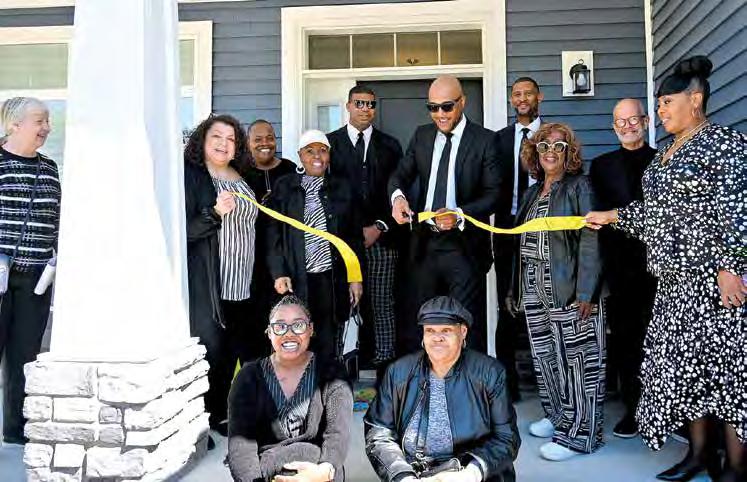
that vision to life.”
F&M Bank leaders said the partnership reflects the bank’s growing investment in Michigan communities, particularly in Pontiac.
The bank currently has more than $700 million in commercial loans throughout Michigan and has financed several redevelopment projects in downtown Pontiac, including the $14.5 million redevelopment of the Pontiac State Bank Building and the Little Art Theatre.
“To partner with the Pontiac Housing Commission on a project of this scale and impact is incredibly meaningful for F&M
Bank,” said Lars Eller, president and CEO of F&M Bank. “Strong communities are built through opportunity, stability and longterm investment.”
Rob Graham, senior vice president of commercial banking at F&M, said the project is intended to create broader economic momentum in the city.
“We’re proud to help bring this vision to life alongside the Pontiac Housing Commission,” Graham said. “Projects like this create momentum, for residents, neighborhoods and local businesses.”
The first two homes connected to the program have already been completed at 240 W. Wilson St. and 40 Pinegrove St.
According to the housing commission,
From page A-3
of students attend college after graduation. Officials say the redesign is intended to close those gaps before students fall too far behind.
Two schools — Western International High School and East English Village Preparatory Academy — piloted aspects of the redesign during the current school year. District leaders say the early signs have been encouraging.
“I don’t think I’ve ever been more excited about anything as a principal,” said Western Inter-
national High School Principal Angel Garcia. “Our ninth graders were significantly more on track after the pilot. The data is clear – we’re moving in the right direction.”
The redesign will expand this fall to East English Village Preparatory Academy, Central, Cody, Denby, Henry Ford, Mumford, Northwestern, Osborn, Pershing, Southeastern, and Western International Academy.
Implementing the plan across all schools comes with significant financial commitment. District leaders estimate
demand has already been strong. More than 360 residents submitted applications expressing interest in the Wilson Street property. The Pinegrove home has already been sold and will house a Housing Choice Voucher participant, with more than 100 families expressing interest.
The housing commission is also emphasizing local economic participation through the project by partnering with Pontiac-area contractors and businesses.
Bloomfield Hills-based Max Broock Realtors agent Geri Anderson is serving as broker for the homes, while Pontiac small businesses including C-Care Lawn Services and Green’s Heating & Cooling are also participating in the project.
Housing commission officials said additional local contractors are still being sought as construction continues.
the annual cost at $13.5 million. To help close the remaining funding gap, the DPSCD Foundation is launching what it calls the “1,100 Impact for High School Redesign” campaign.
The initiative encourages donors to contribute $1,100 annually, or roughly $92 per month, to support a student’s year of academic and mentorship services. Foundation leaders say the investment is meant to directly sustain advising, intervention, and career development opportunities that are central to the redesign.
“High School Redesign is personal to me. I’m a DPSCD grad. High school should not be the same experience now as it was
for me 20-something years ago,” said Campbell-Mabins. “We’re ensuring a brighter future for all Detroit students. This will benefit the entire ecosystem –and the city as a whole.” Foundation officials also announced that the first 100 donors will become part of the Founding 100 Circle, which includes permanent recognition, annual impact reports, and invitations to the Annual Impact Summit.
For DPSCD leaders, the redesign effort represents a shift in how Detroit students are prepared for adulthood, and the goal is to connect education directly to opportunity, economic mobility, and long-term success.


A5 | June 3-9, 2026
By Dr. Anthony O. Kellum
CONTRIBUTING COLUMNIST
There is a dangerous mindset quietly circulating through parts of Black America, and even high-income earners believe that wealth-building must wait for perfect conditions. Black America has become obsessed with interest rates.
Turn on financial television, scroll through social media, or sit in almost any conversation about housing, and the discussion eventually circles back to the same anxiety rates are too high. Buyers are waiting, consumers are nervous and the market feels uncertain, and within Black America, particularly among educated professionals, aspiring homeowners, and first-generation wealth builders, that anxiety has quietly evolved into something more dangerous paralysis. Too many people are waiting for perfect conditions before they allow themselves to participate in ownership.
Perfect rates. Perfect prices. Perfect timing. Perfect certainty.
But wealth has never been built that way in America. Ownership has always rewarded movement more than hesitation. That is especially important for Black folks to understand right now because while many people are frozen by fear and over analysis, others are still buying. Investors are still acquiring assets. Families with long-term vision are still positioning themselves for the next twenty years, not just the next six months. And perhaps that is the central misunderstanding in today’s housing conversation the goal was never supposed to be chasing low interest rates.
The goal is ownership. The goal is assets. The goal is equity. The goal is appreciation. The goal is legacy.
Somewhere along the way, many Americans became psychologically attached to the abnormal housing market created during the pandemic era. Mortgage rates at 3 and 4 percent were treated as though they represented the natural order of the economy rather than what they actually were emergency-era monetary conditions created during an extraordinary period in modern history. Those rates were never guaranteed to last. Historically speaking, what we are seeing now is far closer to a normal market than what America experienced a few years ago. Yet many potential buyers remain emotionally anchored to that anomaly, waiting for the market to somehow return to a version of itself that may never fully exist again.
Meanwhile, opportunity keeps moving, and that is the real danger not rates themselves, but hesitation. Because while some people are debating whether to wait, others are acquiring duplexes, four-family properties, commercial storefronts, single-family rentals, and appreciating land. Others are building equity while many are still building excuses. The people quietly creating wealth in America understand something fundamental that many consumers still struggle to fully embrace you are not marrying the interest rate. You are marrying the asset interest rates can change markets fluc-
See BUILD ASSETS FIRST Page A-6
In 1975, George Barnes Jr. made a decision that would define a generation. He walked away from a hospital job where advancement was limited and opened his own eyecare practice on Detroit’s east side. Heritage Optical Center became the first Blackowned full-service dispensary in Michigan—a business that didn’t just serve the community, it changed what was possible in the region.
Fifty years later, Heritage Vision Plans has evolved into something far bigger. What started as a neighborhood optical center expanded into vision benefits administration, eventually creating a national entity serving major corporate clients. The business grew because George understood innovation and how to build relationships that lasted.
Now George’s children Lenny and Tracey are stepping into greater leadership roles while honoring what their father built. Their story shows what succession planning looks like when it’s built on legacy and evolution—when a family commits to passing forward not just a business, but a vision that began in 1975 with a decision to build wealth and opportunity in their own community.
From One Vision to Many
When George opened Heritage in 1975, he was doing more than launching a business. He was building generational wealth in a community where those doors were rarely open. By the early 1990s, having established retail success, George recognized a

By Amanda Nothaft DIRECTOR OF DATA AND ANALYSIS AT THE UNIVERSITY OF MICHIGAN
Property taxes in Detroit, the highest among major U.S. cities, continue to burden the city’s low-income households. Failure to pay these taxes can lead to foreclosure.
Mayor Mary Sheffield advocated for property tax relief during her first State of the City address in March 2026. Sheffield proposed a 30% to 60% cut in property taxes in the city, a change Michigan lawmakers would need to approve.
The City of Detroit will likely take in approximately US$164 million from property taxes in the 2026 fiscal year, less than a tax collected from the city’s casinos. Property taxes fund public safety, libraries, sanitation and other city services.
Amanda Nothaft, the director of data and analysis at Poverty Solutions at the University of Michigan, explains the extent of Detroit’s property tax burden and avenues for reform.
What do you think about the mayor’s approach to this longstanding issue?
Mayor Sheffield’s property tax proposal is a bold effort to bring in new residents, make homeownership more affordable and fight poverty. Tax savings can help Detroit residents pay for their basic needs.
Detroit’s existing high property taxes may deter people from moving to the city and limit residents’ ability to get jobs and start businesses.
Finding a permanent funding source to replace the revenue lost from lowering property taxes is the biggest challenge to the mayor’s proposal. In the long term, Sheffield believes population and economic growth in Detroit will offset the costs, but her administration will need to find other sources of revenue in the short term. Adopting new taxes will require working with state leadership to pass new legislation. Proposals include an entertainment tax on sports and con-
cert tickets.
How much are Detroiters paying in property taxes now? Is it high compared to similar cities?
Detroiters paid the highest effective property tax rate among major cities in the United States at 3.02% in 2024, according to a study from the Lincoln Institute of Land Policy.
An effective property tax rate is the actual percentage of a property’s total market value that is paid in property taxes. The high effective rate in Detroit is driven by both high tax rates and low home values.
Detroit’s tax rate is significantly higher than that of other Midwestern cities. Milwaukee’s effective tax rate is 1.78%. In Indianapolis, it’s 1.20%, and in Chicago, it’s 1.50%.
With a shrinking tax base, Detroit faces financial pressures to generate revenue to fix aging infrastructure and fund city services. These factors have encouraged local taxing authorities to set a high millage rate, 48% above the median rate for other Michigan cities. A millage rate is the tax a homeowner pays per $1,000 of the value of their property. What factors fuel the costly bills?
Detroit has experienced decades of erosion to the tax base due to long-term population loss that has driven down property values, coupled with fixed costs to maintain existing infrastructure.
These constraints, along with the need to fund services to support a low-income population and the lack of authority to generate revenue from other taxes, all contribute to high property taxes. All Michigan cities face this challenge, as state law requires legislative approval to levy local taxes. This power is granted more freely in other states, such as Illinois and Ohio. How do high property taxes affect a resident’s ability to buy a home in the city?
High property taxes make it harder to

larger strategic opportunity in vision benefits administration. His relationships with the City of Detroit, local unions, and the Detroit school board became the backbone of Heritage Vision Plans, transforming a local achievement into a regional legacy.
“I knew Detroit was my place to be. Heritage was the first African American-owned company in Michigan doing what we were doing,” George said. “I developed a relationship with Mayor Coleman Young, and once he understood what we could do, he helped me become a provider for the city. We saw an opportunity with the state of Michigan providing glasses to employees, and we got a license to be one of three independent companies.”
That forward-thinking transformed the business from a single-sector operation into a diversified enterprise. Heritage Vision Plans emerged as a separate national entity with a network of nearly 32,000 providers. George’s ability to recognize when to evolve, combined with his talent for building relationships that lasted through economic shifts, became the company’s competitive advantage.
His children were shaped by this environment from an early age. “On the weekends, my mom would cook dinner, pack it up, and we’d bring everything down to the office to eat. Then [George] would go to work, and Tracey and I would help clean the store, polish furniture and clean all the
afford a home. Let’s look at how property taxes are calculated and what they add to a mortgage payment.
The online real estate platform Redfin reports that the median home price in Detroit was $104,000 in March 2026. A purchaser putting 20% down and taking out a 30-year mortgage at a 6.6% interest rate would have a monthly mortgage loan payment of around $531. Property taxes are an additional cost. In Michigan, homeowners pay property taxes on 50% of the property’s assessed value. Assessments are based on market value and determined by city officials for each property every two years.
Applying the 2024 Detroit’s homestead millage rate of 67.9464 to 50% of the value of a median-priced home, or $52,000, results in a property tax bill of nearly $3,533 a year, or $294 a month, adding an additional 50% to base monthly housing costs. For a Detroit household making the city’s annual median income of $39,938, $825 per month on mortgage and taxes would consume 25% of their income.
In addition to mortgage and property taxes, homeowners also need to pay for homeowners’ insurance and water at rates that exceed national norms. And then there are bills for electricity, gas and internet service to pay.
Compared to a suburban home at the same price point, a Detroit home comes with a higher tax burden – possibly even 70% more than a city like Sterling Heights or Livonia – fewer community services such as recreation centers and poorer performing schools. This could make buying in Detroit seem like a bad financial decision. Businesses face even higher property tax rates – 82.18 mills in 2025 – which is 34% higher than the statewide median of 61.20 mills. The higher tax rate, combined with complicated regulations and high fees for licenses and permits, makes it hard for anyone to open and maintain a small business in Detroit.
frame displays,” said Lenny. Lenny learned to make glasses at 13. Tracey grew up close to day-to-day operations. Though Lenny spent time building experience outside the family business before returning, both ultimately stepped into leadership roles with a deep understanding of Heritage at its core. Building for the Next Chapter In 2012, the formal succession began. Tracey stepped into Chief Operating Officer (COO), drawing on operational depth she’d developed through years inside the business. Lenny, known as a natural people person, became Vice President (VP) of Sales and Business Development. Together they formed a complementary partnership – her operational excellence balancing his sales acumen.
George remained deeply involved in the retail side, the part closest to his heart. That continued presence provided stability during the transition, giving Lenny and Tracey space to lead while keeping the company’s original mission intact. A formal succession plan was put in place, and the transition unfolded with intention and clarity. Heritage’s approach stands in contrast to a broader challenge facing many small businesses across Detroit. According to recent research, 58% of Detroit small business owners expect to retire within the next decade, yet only 48% have begun planning for who will take over—a transition that will shape the future of local jobs and communities.
From page A-5
What is the best way to reform property taxes?
Research finds that high property taxes disproportionately hurt low-income households. This highlights the importance of property tax reform in Detroit.
However, research also shows that cutting property taxes can have negative consequences if the cuts result in fewer government services.
A reduction in property taxes could ease financial pressures on Detroit homeowners but could also result in fewer government services. Charly Triballeau/AFP via Getty Images
Because of these potential negative impacts, how taxes are cut matters if the goal is to improve affordability. Simply replacing property taxes with sales taxes affects low-income residents
tuate debt can be refinanced terms can improve over time, but first, ownership must exist.
That is the step many people keep postponing. There is no refinancing without first acquiring the property, there is no equity without ownership, there is no appreciation without positioning yourself inside the market, there is no generational wealth without assets attached to your family name. And Black American, must become more disciplined about understanding this distinction. For too long, many conversations surrounding Black wealth have been dominated by caution rather than acquisition. We have become hyper focused on what could go wrong while overlooking what ownership has historically made possible. Yes, preparation matters yes, buyers should understand financing, taxes, reserves, debt ratios, and market conditions. But eventually, strategy must become action. Because real estate has never primarily been about perfection it has always been about positioning.
Families and investors who quietly build wealth in America understand this instinctively. They think long term they acquire strategically they understand that assets held over time tend to reward patience and ownership far more than fear and hesitation. And Black families must increasingly think this way if we are serious about transforming our economic future. Because ownership changes how people live, think, and move through the world.
A homeowner thinks differently
more, hurts renters and makes the tax base more volatile since revenues are directly impacted by economic cycles. In a recession, sales taxes fall because people spend less. Property taxes remain constant. What laws are already in effect to protect homeowners?
Proposal A and the Headlee Amendment are the current strategies used to control property taxes in Michigan.
Proposal A went into effect in 1994 and the Headlee Amendment was adopted in 1978.
Proposal A is a statewide law that limits the increases in taxable value of a property to the rate of inflation or 5%, whichever is lower.
The Headlee Amendment restricts property tax revenue growth at the city, township or county level to the rate of inflation.
Both laws benefit existing homeown-
than a renter. An investor thinks differently than a consumer. A family with appreciating assets approaches life differently than a family surviving entirely on earned income. Property creates leverage. Property creates flexibility. Property creates options during economic uncertainty.
Most importantly, property creates inheritance, and inheritance is where communities begin building real economic continuity across generations. This is why Black America cannot afford to continue functioning primarily as consumers inside communities we do not own.
Ownership matters! Homeownership should not simply be viewed as a lifestyle milestone or a symbolic achievement it should be understood as economic infrastructure. A mortgage is not merely a monthly payment over time; it often becomes a transfer mechanism from expense into equity.
Rent disappears. Equity accumulates. That distinction changes families over twenty or thirty years.
And yet too many people continue approaching wealth from a scarcity mindset, believing opportunity is limited or unavailable to them. But wealth-building has always required expansive thinking.
The ocean does not know limitation. A person can approach the ocean with a spoon, a bucket, or an entire swimming pool, and the ocean remains infinite. The limitation is rarely the opportunity itself. More often, the limitation is the mindset approaching it. Black America must begin thinking larger economically. Not recklessly. Not irresponsibly.
ers but do not improve affordability for new home buyers. Circuit breaker tax credits, which tie property taxes to people’s ability to pay, can be a successful and equitable way to make buying a home more affordable.
Circuit breakers are the basis of programs like the Homestead Property Tax Credit in Michigan, which passed in 1973, and are used throughout the country to help low-income, elderly and disabled homeowners.
By keeping property taxes in check, these credits reduce tax burdens for low-income homeowners and protect owners in rapidly gentrifying areas. They can prevent property tax increases that can economically destabilize a household and lead to foreclosure.
If Detroit were to expand circuit breakers by raising the income eligibility requirements, it could help more Detroiters stay in the city and also attract new residents.
But strategically and expansively. Buy the first property. Build the first layer of equity. Acquire the first appreciating asset. Then continue building from there.
One property can become two, and equity can help finance future acquisitions. Appreciation can create leverage rental income can create flexibility. A family home can become the foundation of a family portfolio. That is how wealth compounds quietly over time, and that is how communities rise economically. There is also a broader responsibility attached to ownership that extends beyond individual success. Wealth becomes transformative when it circulates intentionally. When Black families own homes, support Black businesses, hire Black professionals, invest in Black neighborhoods, and pass assets down to future generations, entire communities become more stable and resilient.
That is how schools improve. That is how neighborhoods stabilize. That is how political influence expands. That is how children inherit opportunity instead of instability.
And perhaps most importantly, that is how economic dignity becomes normalized. The future of Black wealth in America will not belong exclusively to those who earned the highest salaries. It will belong to those who acquired appreciating assets early, leveraged them intelligently, held them long enough to compound, and transferred them intentionally across generations.
Property is Power! is a movement to promote home and community ownership. Studies indicate homeownership leads to higher graduation rates, family wealth, and community involvement.
From page A-5
Heritage Vision Plans closed that gap. They planned. They communicated. They developed the next generation through exposure and real responsibility. In a city where 70% of business owners say preserving employees’ jobs is a top priority, that kind of planning carries real weight.
Chase has been part of Heritage’s story since 1975. That relationship has endured through corporate credit cards, financial tools, and ongoing support in achieving long-term growth. For a business navigating succession, having a financial partner who understands the company’s evolution makes all the difference.
“Heritage Vision Plans shows what’s possible when a founder builds for both community impact and long-term continuity. As Lenny and Tracey step further into leadership, we’re proud to support the family with tools and guidance that help the business keep growing while staying true to George’s original mission,” says Brian Gwizdz, Assistant Vice President, Business Relationship Manager, Chase Business Banking.
The Foundation That Lasts
George opened Heritage Optical Center in 1975 because he saw an opportunity where others saw a barrier. Fifty years later, that same vision guides how Lenny and Tracey lead. They inherited a business, yes—but more importantly, they inherited a founder’s understanding of what it means to see around corners and build something that lasts. What George created was a platform for generational wealth-building and opportunity. That’s what makes 2012’s succession feel less like a handoff and more like the next chapter of a single story.
Heritage’s success came from specificity: inherited shares that clarified ownership, a clear COO/ VP split that matched each sibling’s strengths, George’s continued presence to anchor continuity, and financial partners like Chase who understood the long-term strategy.
Chase for Business can help guide that work. Visit chase.com/NationalTreasures or speak with a Chase Business advisor to learn more about succession planning resources and how to build the clarity a business needs to thrive across generations.
This article is for Informational/Educational Purposes Only: The opinions expressed in this article may differ from the official policy or position of (or endorsement by) JPMorgan Chase & Co. or its affiliates. Opinions and strategies described may not be appropriate for everyone, and are not intended as specific advice/recommendations for any individual or business. The material is not intended to provide legal, tax, or financial advice or to indicate the availability or suitability of any JPMorgan Chase Bank, N.A. product or service. You should carefully consider your needs and objectives before making any decisions, and consult the appropriate professional(s). Outlooks and past performance are not guarantees of future results. JPMorgan Chase & Co. and its affiliates are not responsible for, and do not provide or endorse third party products, services or other content.
JPMorgan Chase Bank, N.A. Member FDIC. ©2026 JPMorgan Chase & Co.

All children should be tested for lead at ages 1 and 2, and by age 6. Children should also be tested at other ages if they are at high risk of lead exposure.
Lead exposure can happen when children:
• Crawl or play in dust or soil that contains lead particles.
• Put their hands, toys, or other objects in their mouths after touching lead dust.
• Drink water from lead pipes or plumbing fixtures.
• Eat lead-contaminated food or spices.
• Breathe in or swallow lead dust in homes built before 1978.
• Chew windowsills or other items with lead-based paint or coatings.
• Come into contact with lead from a parent’s job or hobby that involves lead.
Talk to your doctor about blood lead testing for your child. Michigan.gov/MiLeadSafe


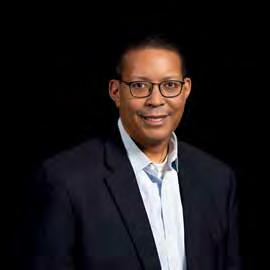
Dr. Gavin Beckford, PhD
Economic Development & Downtown Development Authority (DDA) Manager | Canton Township
Barry Blackwell
Director of Community Relations
Henry Ford Health
Arnold Boyd
Founder and CEO
Student Transportation Services
Darnell Boynton
Chief Corporate Compliance Officer & General Counsel
CNS Healthcare
Teferi Brent Director - Office of Neighborhood and Community Safety | City of Detroit
Dr. Harold Cadwell, Jr.
President and CEO
Transformation Development Corporation
Dr. Andre Camp
Sergeant & Professor Detroit Police Department, Cleary University & Walsh College
Tyrone Carter State Representative Detroit 1st District
William C. Childs, II, DO Doctor of Osteopathic Medicine
Henry Ford Health
Hon. Poncé D. Clay
Judge 36th District Court
Walter Davis
Deputy Chief, Security and Integrity Group Great Lakes Water Authority
Jason Dixon
CEO
Strategic Alliance CDC
Charles Dulin
Director of IT & Facilities
Centers For Family Development, Inc. (dba Black Family Development)
Dr. Rashid Faisal
Department Chairman for the College of Urban Education | Davenport University
Jonathan Feild, Esq.
Attorney at Law Ven Johnson Law
David Felton
Recruiter
Wayne County Sheriff's Office
Gary Ganaway
Commercial Director
AXN Automotive Systems
John Gardner
Manager, Veterans Initiatives/ Diversity Hiring/Career Tech Work Based Learning Programs| ROUSH Industries
Sean Gray
Senior Vice President of Small Business Detroit Economic Growth Corporation
Huey S. Gray III
Director of Membership Detroit Regional Chamber
Aaron Hall
Vice President, Detroit Market CHN Housing Partners / Detroit Housing Network
Dr. Nelson Henry
Chief Executive Officer Center for Strategic Leadership & Organizational Coherence
Lawrence Hood
Chief Executive Officer Detroit Academy of Arts and Sciences
Bruce Hunt
Executive Director Detroit-Windsor Dance Academy
Kevelin B. Jones, II Superintendent Flint Community Schools
Rashaan Josey
President - Automotive Bose Corporation
Jerry Lawrence Jr. Principal / Director University Prep Science and Math High School
Kevin Manuel
Owner
Amada Senior Care
Myron Montgomery
Principal East English Village Preparatory Academy
Dr. Cleamon Moorer, Jr.
Founding Executive Director Eye Care for Detroit
Quantez Pressley
Pastor
Third New Hope Baptist Church
Tyron Releford
Business Unit Leader, Global Supply Chain
General Motors
Dan Ringo
Vice President of Operations and Compliance SEEL, LLC
Dr. Teronto Robinson, MD, MSHCM Family Medicine Physician
John D. Dingell VA Medical Center Corewell Health
Richard T. Seay
Deputy Mayor / Director, Information Technology |City of Pontiac
Bruce Simpson Assistant Wayne County Executive Wayne County
Shawn Smith Manager, Labor Relations / NFL Official Blue Cross Blue Shield of Michigan / NFL
Chris Taylor Community Engagement & Outreach
Director United Way for Southeastern Michigan
Damon Thompson Senior Director, National Housing Local Initiatives Support Corporation (LISC)
Dwayne Walker UAW Local 900 President UAW / Ford
Maurice Wallace Owner & Executive Chef
LoneStar Catering
Stefen J. Welch
Vice President, Public Affairs Detroit Pistons
Rev. Darryl Williams
Pastor St. Stephens AME Church
Glenn Wilson President and CEO Communities First, Inc.
Dr. Warren Woodruff, DDS Owner/Dentist
Caring Smiles Family Dentistry
Darryl Woods
Police Commissioner, Vice Chair City of Detroit
DeJuan Woods Director of Marketing and Community Relations First Independence Bank
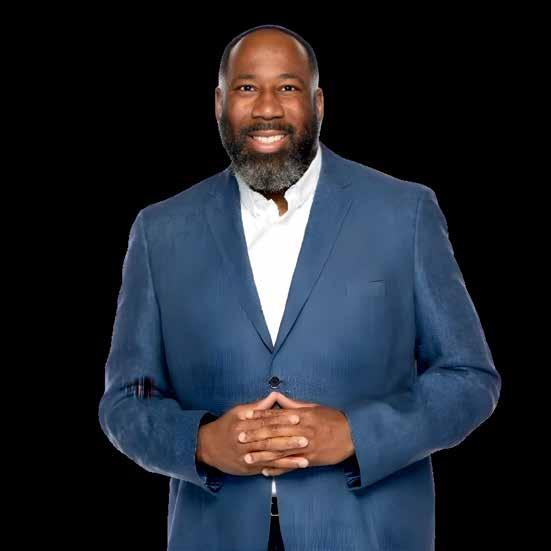





B1 | June 3-9, 2026
By Miss AJ Williams
Most people connect with astrology much like they approach other identity systems — searching for a label that matches what they already feel about themselves. They learn they are a Scorpio, have Virgo rising, or that their moon is in Pisces, and begin to assemble a clearer picture. At first, this brings clarity and validation. The chart feels accurate. The tendencies, emotional habits, and the places where you get stuck or feel most alive are described with real precision. For example, someone with their moon in Cancer often feels things more deeply than others and carries their emotional history in their body.
Someone with Saturn in the seventh house often faces unique challenges in close relationships. The chart does not invent these things. It simply names what is real.
However, many people stop at just naming the pattern. Once they identify it, it slowly becomes their explanation for everything.
“That’s just how I am” becomes a common phrase. What started as self-awareness turns into a fixed idea of who they are. Astrology, which could be a powerful tool for guidance, ends up being used as a limit instead of a guide.
A birth chart is more than a description of who you are. It is a map of the landscape you are moving through, and that is different. A map shows you what is there, like the tough spots, your natural strengths, and the areas that will challenge you. It exists to help you move forward with awareness. The map does not define you; it helps you find your way.
If you read your chart as just a description, you are asking, “Who am I?” But if you see it as a map, you start asking more helpful questions like, “What am I working with? Where does this path ask more of me? What have I not yet discovered here?” These are different questions, and they lead to different outcomes.
Real transformation starts with seeing things clearly. This is not about judging or diagnosing, but about honestly looking at the pattern, what it does, and where it comes from. When used well, the birth chart is a precise tool for this kind of understanding. It does not create your patterns; it names them. It gives you clear language to see what you are dealing with, instead of feeling like something is always wrong with you. Naming these patterns is not the end of the process. It is just the beginning.
A challenging Saturn placement does not mean you are broken in that area. It shows where your soul chose to do important growth work, and when you understand what it asks of you, you can move through it with awareness instead of repeating the same mistakes. Venus in a sign that complicates love is not a life sentence. It points to where your relationship patterns are most complex and, once you understand them, where the greatest depth can be found. The North Node is not a fixed destiny. It shows the direction your soul is growing toward in this life, and knowing this helps you see when you are moving forward in your growth or slipping back into old habits. This is the dimension that is almost entirely missed when astrology is used only as a personality system. The planetary cycles moving through your chart are not random weather. They are developmental timing — periods when certain patterns become most available for healing, when particular areas of your life are under construction, when the friction you are feeling is not a sign that something is wrong but a sign that something is ready. Being able to read that timing does not remove the difficulty. It changes your relationship to it. You stop asking “why is this happening to me?” and start asking “what is this asking of me?”
That change, from feeling lost to finding direction, is what a map can offer.
See YOUR BIRTH CHART Page B-2

By Sam Robinson SENIOR REPORTER
Thousands of electronic movement fans converged at Hart Plaza downtown Detroit Memorial Day weekend for a celebration of one of the city’s renowned exports: techno music.
While the weather added a misty haze to the foggy stages Saturday and Sunday, festival goers were basking in the sunlight Monday, Memorial Day to listen to bass pounding tracks from some of the most exciting DJs in the world.
Movement attendees who came for the first time said they’ll be back, while longtime Movement goers said the festival is a family tradition.
The Michigan Chronicle caught up rookies and Movement veterans from across Metro Detroit to ask why they came and keep coming back.
It’s Lauryn Hixon’s second Movement, but the first time she’s gone all three days, she says.
Hixon, 24, came for MCR-T and BoyzNoize, plus Zack Fox. Hixon says those curious about Zack Fox’ style should check out one of his sets. Fox is perhaps best known as a comedian and social media savant, but has captured a following playing music as well.
“The hype is well deserved,” she said.
afternoon to perform a surprise set.
It’s not just the music that brings Hixon to Hart Plaza over Memorial Day, it’s the vibes, she said. Seeing how creative people are through fashion and music taste is inspiring, Hixon said.
“The other reason I love Movement is it’s a free and non-judgmental space and I like to see what people wear, their fashion — I just like to see everyone being themselves. You’re really able to absorb the music and the city of Detroit and it just makes me so happy.”
Hixon watched Carl Craig rip the Movement stage from near the fountain, before Dom Dolla closed out the festival from the same stage.
At the underground stage Monday night, Dutch DJ Ki/Ki sent Chase Anderson and his girlfriend into a trance. Macomb County natives, it’s their first ever Movement festival. Anderson says he’ll be coming back.
“We’ve been waiting to hear Ki/Ki live for a while — this is great stuff,” Anderson told Michigan Chronicle. “It’s hypnotizing.”
Still dancing with his partner, Anderson said he’s attracted to sets where DJs are playing the type of music that allows listeners to close their eyes and escape. He wasn’t the only one getting lost in the music during Movement.


Spirit Plaza Reopens with Free Summer Programming, New Stage and Family Amenities
By Jasmine West
Detroiters will have another free outdoor option downtown this summer as Spirit Plaza reopens following a $2.9 million renovation that added a permanent covered stage, new playground equipment, turf, more seating and added shade.
Programming begins Saturday, June 6, with a grand reopening celebration from 10 a.m. to 8 p.m. The event will include DJs, fitness classes, food trucks, resource tables, inflatables, a gaming truck and family activities.
Located around the Spirit of Detroit statue on Woodward Avenue between Larned and East Jefferson, Spirit Plaza has operated as a public gathering space since 2017. The plaza was first created as a temporary use of the former street space. The latest renovation keeps the same general layout while making several features permanent. The update replaces the temporary stage with a covered stage, adds a swing set, expands the play area, installs a turf lawn and increases seating with umbrellas. City officials said the changes are meant to support

and community gatherings.
“Spirit
said
Accessibility

By Jasmine West
Janice Cosby Adams started graying long before most people around her were thinking about aging. Her gray hair appeared during her teenage years, becoming part of her identity through different stages of life, relationships, challenges, growth and reinvention.
What some women are taught to cover, Adams learned to carry.
Now, the Southfield author, speaker and creator of Jan’s Gray Glam, LLC is turning that lifelong journey into her debut memoir, Gray-Fully: Wisdom From My Hair. The book is a personal reflection on aging, beauty, self-acceptance and the freedom that comes with no longer apologizing for who you are becoming.
At a time when women are often pressured to hold onto youth at any cost, Adams is offering a different message. Gray hair, for her, is not a loss of beauty. It is evidence of life, wisdom, confidence and presence.
“This book isn’t about hair,” Adams said. “It’s about what my hair taught me — about life, about letting go, and about finally being comfortable in my own skin.”
Through humor, honesty and lived experience, Gray-Fully speaks to women navigating change, reclaiming confidence and redefining beauty on their own terms. Adams’ growing platform, Jan’s Gray Glam, has already inspired thousands of women to embrace elegance, authenticity and selfworth at every age.
In a conversation about the memoir, Adams reflected on aging gracefully, the spark behind the book and the deeper meaning behind every gray strand.
What does Janice Cosby Adams bring to the conversation of aging gracefully, and what does that mean to you?
Adams said her contribution to the conversation is rooted in honesty, elegance, humor and experience.
“For so long, women have been taught to fear aging, hide it, or apologize for it,” Adams said. “Instead, I choose to live out loud as I age.”
For Adams, aging gracefully is not about pretending time has not passed. It is about embracing the woman who is still evolving.
“I believe aging gracefully is really about embracing who you are becoming instead of mourning who you used to be,” she said.
That perspective shapes the foundation of Gray-Fully. Adams views aging as a fullbody, full-spirit journey that touches the mind, emotions, faith, identity and physical presence.
“To me, aging gracefully means evolving with intention — mentally, emotionally, spiritually and physically,” Adams said. “It’s understanding that beauty and feeling sexy does not have to disappear with age. In many ways, it deepens.”
Her hope is that women see confidence, peace, wisdom and authenticity as forms of beauty that do not expire.
“We just have to embrace it and learn to be more comfortable in our own skin as we age,” she said.
What was the spark that ignited your memoir, Gray-Fully?
Adams said her gray hair became a conversation starter long before it became a book.
“I started truly graying while I was in my teens,” she said. “So my gray hair has been with me most of my life. Through thick and thin — and during the ups and downs of my life.”

Over the years, people regularly stopped Adams to ask about her hair. Some offered compliments. Others asked questions. Many shared their own fears about aging, beauty and going gray.
“Complete strangers would stop me to ask questions, compliment me, or share their own fears about aging and going gray,” Adams said.
Those exchanges helped her recognize that the conversation was about much more than appearance.
“In a way, I kind of became a hero to many because I was unapologetic about being gray,” she said. “Over time, I realized that my hair was only the beginning of the conversation.”
What people were really asking about, Adams said, was confidence, self-acceptance, identity and freedom. That realization became the foundation for the memoir.
“I knew there was a much deeper story to tell,” she said. “Not just about my gray hair, but about life, growth, womanhood, resilience and learning to embrace yourself.”
Where does the thought of “wisdom from my hair” come from?
The subtitle, Wisdom From My Hair, grew out of Adams’ understanding that her gray strands carried meaning beyond style.
“The subtitle came from realizing that every gray strand represented a lesson, a season, a challenge, or a victory in my life,” she said.
For Adams, hair became a symbol of healing, maturity and truth. It reminded her that growth is not always loud. Sometimes, it shows up strand by strand, year by year, through the quiet evidence of survival and self-acceptance.
“My hair became symbolic of growth, healing, experience and authenticity,” she said. “My gray hair taught me patience. It taught me confidence. It taught me not to try to fit society’s expectations.”
Most importantly, Adams said, her hair taught her that aging is not something to run from.
“It taught me that aging is not something to hide from, but something to honor,” she said.
What has been your experience with aging gracefully? What was the moment you began to embrace your gray-fully matriculation?
Adams described her experience with aging gracefully as freeing and transformational.
Like many women, she once viewed
At its best, astrology does not tell you who you are. It shows you the unique work you are here to do, and when you are most ready to do it. Astrology is most helpful not when it confirms what you already think about yourself, but when it points out what you have not yet noticed, and gives you the clarity to work with it on purpose.
The chart is a map; how you use it is the real practice.
AJ Williams is a Spiritual Wellness Architect and Educator and the Managing Editor of the Michigan Chronicle. A thought leader at the intersection of spirituality, astrology, psychology, and identity evolution, she is the founder of Sunday Communion, a quarterly live transformation experience held in Detroit. The Inner Architecture is her editorial column on the work of becoming.


aging through the lens of society’s expectations. Over time, that lens shifted. She stopped seeing aging as something to resist and began seeing it as a form of becoming.
“Eventually, I realized there was much more power in embracing who I was becoming than trying to hold onto who I used to be,” Adams said.
Her turning point came when she stopped treating her gray hair as something that needed an explanation.
“My turning point came when I stopped seeing my gray hair as something that needed to be explained, justified or covered,” she said. “I began seeing it as a part of my evolution.”
That shift changed how she saw herself.
“Once I embraced it fully, I felt more authentic, more confident, and more at peace
uled
with myself than ever before,” Adams said.
Who reassured you that aging gracefully is intentional?
Adams said reassurance came from faith, maturity and people who valued authenticity over perfection.
“I’ve also been inspired by women who carried themselves with confidence, grace and wisdom regardless of age,” she said.
That kind of influence helped her understand that aging gracefully requires daily intention. It is not passive. It is a choice women make in a world that often tells them youth is the standard for beauty, relevance and value.
“Over time, I realized aging gracefully needs to be intentional because it requires you to choose self-acceptance every day,” Adams said. “In a world that constantly tells women you are only valuable in this life if you are young.”
Through her memoir, Adams pushes back against that message with a personal story that feels both intimate and universal.
What is the biggest takeaway you want readers to walk away with after reading?
Adams wants readers, especially women, to understand that aging does not require disappearance.
“I want readers to walk away knowing they do not have to disappear as we age,” she said. “There is beauty, purpose, confidence and power in every season of life.”
For Adams, gray hair is her visual symbol, but the message reaches far beyond hair color. It is about reclaiming voice, presence and identity.
“I hope my book encourages people — especially women — to stop apologizing for who they are, and start embracing themselves fully,” she said. “Gray hair may be my visual symbol, but the real message is about living authentically and unapologetically.”
Where can readers buy Gray-Fully: Wisdom From My Hair?
Gray-Fully: Wisdom From My Hair can be purchased at jansgrayglam.com.
Readers can follow Janice Cosby Adams and Jan’s Gray Glam on Facebook, TikTok, YouTube and Instagram. For speaking engagements, book signings and other events, Adams can be reached at Jance.cosby@yahoo. com.
31. A pedestrian bridge will connect Hart Plaza to Spirit Plaza during the race weekend. The reopening gives downtown Detroit another public space where residents can gather without an admission cost. For families looking for free summer activities, workers looking for a place to eat outside and residents looking for a central place to enjoy music, movement and community programming, Spirit Plaza will again serve as one of the city’s most visible outdoor gathering spaces.


By Jeremy Allen
EXECUTIVE EDITOR
With summer break right around the corner, many Metro Detroit parents are asking the same question: “What are the kids going to do all summer while I’m at work?”
United Way for Southeastern Michigan says its Summer Discovery program is helping answer that question for thousands of families across Wayne, Oakland, and Macomb counties, but enrollment closes June 15.
The free summer program gives students entering kindergarten through eighth grade a place to learn, explore, stay active, and have fun during the summer months. Through partnerships with local schools and community organizations, kids get academic support in reading and math while also participating in hands-on activities like STEAM projects, arts and crafts, sports, field trips, digital learning, and more.
And for many parents, the program offers something just as important: peace of mind.
“Families are trying to balance work, childcare, and keeping kids engaged over the summer,” organizers said. “Summer Discovery helps make that possible.”

The program’s impact is already showing up in the numbers.
According to United Way and Ballmer Group, students in the 2025 Summer Discovery program gained more than 15 percentage points in reading proficiency and more than 20 points in math proficiency. Organizers say those gains are stronger than many comparable summer learning programs around the country.
Last summer, nearly 30,000 students participated across the tri-county area, including more than 3,400 additional Detroit students compared to the previous year.
Parents say the benefits go beyond academics.
About 87% of families reported the program helped them manage work and summer childcare responsibilities, while 83% said it helped save money. Nearly all participating families said their children returned to school feeling more prepared and confident.
That kind of support matters, especially at a time when many families are still dealing with rising costs for childcare, camps, and other summer programs.
Summer Discovery is also helping address what educators often call the “summer slide,” when students lose some of the academic progress they made during the school year if they are not engaged in learning during the summer months.
But organizers say the goal is not to recreate a traditional classroom experience.
“This is about making learning fun,” one program leader said during the organization’s 2025 celebration event in Detroit. “Kids are building friendships, trying new things, and staying connected while continuing to grow academically.”
Backed by a $62 million investment from Ballmer Group, Summer Discovery is planning a major expansion for 2026, with hopes of serving as many as 50,000 students throughout Southeast Michigan.
Families interested in signing up are encouraged to apply soon before spots fill up ahead of the June 15 deadline.
More information and enrollment details are available through United Way for Southeastern Michigan’s Summer Discovery website: https://unitedwaysem.org/resources/summer-discovery.
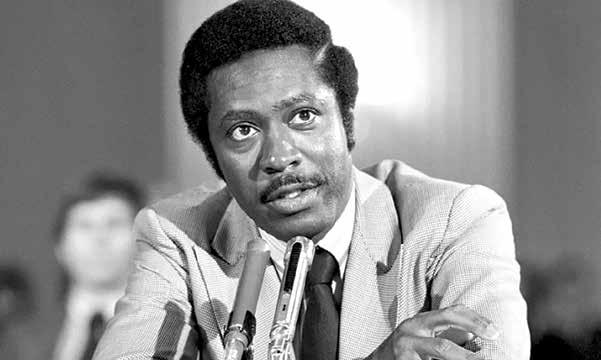
By Jasmine West
Clarence B. Jones understood that words could move a nation, but only if they were tied to courage, strategy, sacrifice, and the relentless demand for justice.
Jones, the civil rights lawyer, speechwriter, activist, and trusted adviser to the Rev. Dr. Martin Luther King Jr., died Friday, May 22, 2026, at a senior living community in Cupertino, California. He was 95. His death closes another chapter in the living memory of the Civil Rights Movement, yet his work remains deeply present in every fight over voting rights, racial justice, free speech, and Black political power.
For many, Jones’ name will forever be linked to King’s “I Have a Dream” speech, delivered at the 1963 March on Washington before more than 250,000 people gathered at the Lincoln Memorial. Jones helped shape portions of that historic address, including the legal and moral framework that called America to account for a promise it had never fully kept to Black people. He was also one of the organizers of the march, a defining moment that helped build momentum for the Voting Rights Act of 1965.
Yet reducing Jones to a speechwriter would miss the depth of his life’s work. He was King’s lawyer. He was a strategist. He was a fundraiser for the Southern Christian Leadership Conference. He was one of the people King trusted during some of the most dangerous and consequential years of the movement.
When King was jailed in Birmingham, Alabama, in 1963, Jones helped smuggle out what became “Letter from Birmingham Jail,” one of the most enduring moral documents of the Civil Rights Movement. King’s words in that letter challenged the nation’s comfort with gradualism and laid bare the cost of waiting for justice from systems built to delay it.
Jones also helped defend King in 1960 when Alabama officials brought tax evasion charges against him, a case many civil rights leaders viewed as an effort to weaken the movement by imprisoning its most visible leader. He later played a role in the landmark 1964 Supreme Court case New York Times v. Sullivan, which strengthened press protections by requiring public officials to prove “actual malice” in defamation cases involving news coverage.
Born Jan. 8, 1931, in Philadelphia, Jones was the son of working-class parents, a chauffeur and a maid. He graduated from Columbia College in 1953, served in the Army, and then earned his law degree from Boston University in 1959. Before joining King’s inner circle, he worked as an entertainment lawyer in
California, moving among figures like Harry Belafonte, Sammy Davis Jr., and Frank Sinatra.
His path changed in 1960 when he joined King’s legal team. From that point forward, Jones became part of the machinery behind a movement that reshaped American democracy.
After King’s assassination in 1968, Jones continued breaking ground. He became the first Black allied member of the New York Stock Exchange and later became principal owner and publisher of The New York Amsterdam News, one of the nation’s most significant Black newspapers. His commitment to the Black press carried the same understanding that shaped his work with King: Black communities needed institutions capable of telling the truth about power, policy, and survival.
Jones later taught at Stanford University and the University of San Francisco, where he co-founded the Institute for Nonviolence and Social Justice. In 2024, President Joe Biden awarded him the Presidential Medal of Freedom, the nation’s highest civilian honor. Even in his final years, Jones did not retreat from public life. He continued warning against efforts to weaken Black voting power and roll back civil rights gains. Just weeks before his death, he criticized President Donald Trump’s push for congressional redistricting, calling attention to the political danger of attempts to dilute Black representation.
Rev. Al Sharpton remembered Jones as “a brilliant strategist, lawyer, author, and philanthropist,” adding that many civil rights leaders owed him “a great debt.”
Jones was also the subject of a recent documentary, The Baddest Speechwriter in the World, directed by Golden State Warriors star Stephen Curry and Oscar-winning filmmaker Ben Proudfoot. The film introduced his story to a new generation at a moment when the lessons of the Civil Rights Movement remain urgent.
Clarence B. Jones leaves behind five children and his longtime partner, Lin Walters. He also leaves behind a record of service that cannot be separated from the ongoing struggle for Black freedom.
His life reminds us that movements are never carried by one voice alone. Behind the speeches that define history are the organizers, lawyers, strategists, writers, fundraisers, and truth-tellers who help make those words possible. Jones was one of them. He stood close enough to history to help write it, and long enough to remind America that the dream was never meant to stay a dream.




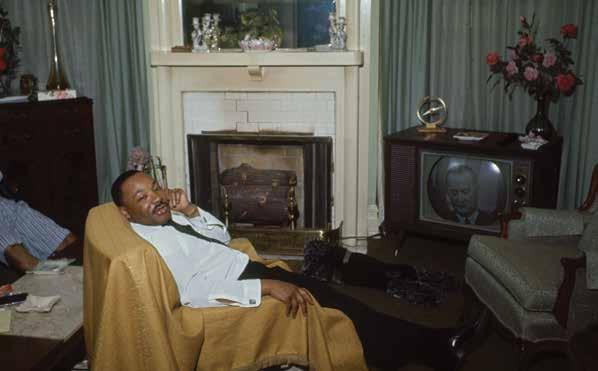
Opening June 12 in Greenfield Village®, the Dr. Sullivan and Mrs. Richie
and community. Within these walls, Dr. Martin Luther King Jr. and other civil rights leaders gathered to strategize the Selma to Montgomery marches and help secure the passage of the Voting Rights Act of 1965.
Carefully relocated from Selma, Alabama, the Jackson Home is The Henry Ford’s first major home acquisition in 40 years. Restored to its 1965 appearance, it will serve as a place of learning, reflection and inspiration.
Reservations are now open and required throughout the village season.

YOU’RE INVITED TO THE
WELCOMING THE JACKSON HOME TO THE NEIGHBORHOOD
Experience history in the making with a vibrant village-wide celebration of culture, community and courage as the Jackson Home opens its doors to the public for the first time in Greenfield Village®
FREE FOR MEMBERS OR INCLUDED WITH VILLAGE ADMISSION.

12-14

PROGRAMS & ACTIVITIES
■ Chef Demonstrations ■ Special Vignettes ■ And More!
FEATURED MUSICAL PERFORMERS
■ Kim Fleming & Friends
■ Nikki D & The Sisters of Thunder
■ Adia Dobbins
Alvin Waddles and the Hope UMC Gospel Choir
■ Denise Davis & The Motor City Sensations
DJ Jungle 313
■ LaShelle’s School of Dance
■ Lulu Fall
■ Rev. Robert B. Jones
■ Rosa Warner Jones
String Band
■ Taslimah Bey Quartet

By Aaron Foley EDITOR-AT-LARGE
If you’ve been paying attention to our publication lately, we’ve been increasing our efforts to not only reinforce our status in the community as a conversation leader, but remind that we’re a community listener as well.
As the Chronicle’s editor-at-large, I’ve been tasked with leading a supplementary platform here for dialogue around some pressing topics that need more discussion, or in some cases, add much-needed nuance to ongoing discussions that lack it. Too often we in media go into these discussions assuming truths based on outdated or obsolete ideology, or we don’t spend enough time peeling back layers to reveal something we would not have considered. And often, such discussions don’t lead to solutions or new ways of thinking and simply add to the noise.
It’s why we’re hoping to do something different with “Chronicle Conversations,” a new multimedia project here in collaboration with Wayne County Community College District that launches later this year. Over the next few weeks, we’ll be filming conversations on separate topics with folks like you – the ones on the ground and behind the scenes of change in the region – with the goal of impacting long-term discussions and solutions, long after the cameras are off.
Our inaugural four topics include re-entry and recidivism in the prison system; youth and mental health; building the middle class; and youth engagement with arts and culture. The thought behind these topics, as well as future ones we’d like to tackle, revolves around fostering and encouraging more honest dialogue among Black residents across the area, and taking a closer look at how differences across the region – as close as east side or west side to as wide as the city or the rest of the state – impact said issues.
We’ll be rolling these discussions out in both video and written form, with emphasis on the latter presented in ongoing weekly editions of the Chronicle, adding to our increasingly robust content offerings. And we’re tentatively planning a larger-scale, town hall-style discussion that interlinks the aforementioned topics, all as we continue to seek more opportunities for discussion.
Now this is not a flex, but I’ve done my fair share of panel discussions and roundtables, and I have been around the Detroit block to know that, as mentioned earlier, a lot of these conversations go nowhere. That’s why I – and this publication – need your help in making sure that we do have some resonance in this community. What do we need to talk about? What’s missing? What can we add? What can we learn? Who do we need to amplify? What stereotypes do we need to avoid? Where do we need to be?
I do have an answer to the last question: The east side, the west side, Southwest, the ‘burbs just as much as the neighborhoods. That is where we’re hoping these conversations will not only be rooted in, but reverberate. You’ll find me and my colleagues more on the ground as we move forward, all as part of our larger effort to continue being your trusted Black weekly. So please feel free to drop me a line for what’s on your mind: afoley@michronicle.com.

By Sam Robinson SENIOR REPORTER
Local statewide legislative races will take the temperature of Democratic voters across Metro Detroit this August.
The values of the Democratic Party are being shaped in Detroit, where campaigns of local candidates are mirroring those of national political figures.
Michigan Democrats are attempting to take back the state House in November as Democrats nationally will try to ride polling showing President Donald Trump’s unpopularity to their own victories across state’s including Michigan.
While Republicans nationally are spending millions to turn Michigan’s opening Senate seat red for the first time since 1992, politicos believe the winner of the state’s Democratic primary could be model for a 2028 candidate that motivates Democratic voters to elect the party’s next president.
The state’s current split government came after Democrats lost their legislative trifecta after 2024.
In the 2022 election, new district lines, drawn in Michigan by an independent commission, gave Democrats their first governing trifecta in 40 years.
If last month’s state convention was an accurate indicator, there’s
momentum among Democratic voters who are angry with the party’s status quo.
Many party members who voted for Lt. Gov. Garlin Gilchrist and Eli Savit are embracing progressive values championed by national figures such as NYC Mayor Zohran Mamdani, U.S. Rep. Alexandria Ocasio-Cortez, or Sen. Bernie Sanders.
But others in the party say in Michigan, a state that’s voted for President Donald Trump twice in 2016 and 2024, its too risky to run far left candidates in general elections against formidable Republicans.
Whether or not Arab candidates sympathetic to Palestinians supported former Vice President Kamala Harris will also come into play for many Black voters in Detroit still disappointed over her November 2024 defeat.
The following primary elections are considered safe Democratic seats, meaning the winner of the primary election will likely win the Nov. 3 general election.
The primary election takes place on Aug. 4.
State Senate District 1
Former state Rep. Abe Aiyash faces newcomer Justin Onwenu, an appointee of former Mayor Mike Duggan and current Mayor Mary Sheffield. Working Families Party-backed Aiyash
and Onwenu, who is endorsed by a range of local lawmakers from Wayne County Executive Warren Evans to former U.S. Rep. Andy Levin, have both taken aim at DTE Energy, promising to stand up to lobbyists to lower rates.
The area includes Detroit and the Downriver communities of Ecorse, Lincoln Park, River Rouge and Wyandotte.
State Senate District 2
Abbas Alawieh, a former Congressional staffer and leader of the Uncommitted movement, faces state Rep. Erin Byrnes, D-Dearborn.
The seat, currently represented by Sylvia Santana, was moved from primarily Detroit to Dearborn after the state’s independent redistricting process.
State Senate District 3
Former state Sen. Adam Hollier faces Eboni Taylor, who was recently endorsed by Sen. Bernie Sanders. Hollier first ran for Congress, then dropped to run for Secretary of State, then dropped that race to run for the Eastside state Senate seat. The district covers parts of the eastside of Detroit and Highland Park, plus the entirety of Hamtramck.
There are 10 candidates running for the seat; Korey Hall, John Conyers III, LaTonya Garrett and Toinu Reeves, Kimberly Knott among others.
Senate District 10
Amanda Treppa is campaigning as a new face against state Rep. Natalie Price. Treppa is the newcomer and is backed by the Working Families Party and by Rev. Horace Sheffield. Mark Anthony Murphy Jr. is also running.
The area contains one of 710 state legislative districts in the country where people voted for President Barack Obama in 2008 and 2012 and President Donald Trump in 2016.
House District 8
Incumbent state Rep. Helena Scott is being challenged by Democratic Socialists of America-backed candidate Chris Gilmer Hill.
House District 11
Kimberly Fisher, backed by the Michigan Working Families Party faces Macomb County commissioner Michael Howard.
The winner of the Aug. 4 primary is expected to replace state Rep. Donavan McKinney, who isn’t running for reelection to the House seat, instead running to defeat U.S. Rep. Shri Thanedar for Michigan’s 13th Congressional District. McKinney has endorsed Fisher.
You can reach Sam at srobinson@michronicle.com.