By Governor Gretchen Whitmer
By Ebony JJ Curry SENIOR REPORTER
It’s springtime in Michigan. That means more sunshine, warmer temperatures, and the anticipation of a Pure Michigan summer. It also means road construction season is back. That’s a big deal this year. Thanks to the largest bipartisan roads deal in Michigan history, we’re fixing more state and local roads than ever before, lowering costs for drivers and creating tens of thousands of jobs.
Late Thursday night, Sept.
14, a historic moment unfolded in American labor relations as the United Auto Workers (UAW) union initiated a strike against Ford, General Motors (GM), and Stellantis. For the first time, the union took simultaneous action against all three major Detroit-based automakers. The action involves approximately 13,000 UAW members in assembly plants across Michigan, Ohio, and Missouri, who walked off their jobs after existing labor contracts expired at 11:59 p.m.
By Ebony JJ Curry SENIOR REPORTER
When I ran for office in 2018, Michigan roads were in bad shape. Drivers white-knuckled it over too many pothole-plagued roads and bridges. Businesses dealt with unreliable infrastructure that made it harder to move goods and grow. Too many Michiganders spent more on car repairs and dealt with daily frustrations just trying to get where they needed to go. I heard that complaint everywhere I went in 2018, and it’s one of the reasons I made the promise to fix the damn roads.
their city is a powerful testament to the resilience and ingenuity of our community.
IShortly before midnight on Sept. 14, GM released a statement expressing disappointment with
n a breathtaking celebration of talent, determination, and the unyielding spirit of Black excellence, the Michigan Chronicle marked its 10th Annual 40 Under 40 event Thursday evening. This year’s soirée, drenched in the theme “All Black Everything with Gold Accents,” transcended expectations and essentially illuminated the golden gems within the true essence of Black excellence. Hosted by the charismatic duo of Andre Ash and Lynzee Mychael from Michigan Chronicle’s Finally Friday, the night was a triumph for the city of Detroit and its vibrant community of young Black pro-

By Sam Robinson SENIOR REPORTER
As the night unfolded, we had the privilege of honoring other outstanding individuals, each carving their own path to success. Clement “Fame” Brown, the creative mind behind Three Thirteen Detroit’s Brand Name, received the prestigious Entrepreneur of the Year Award. Brown’s commitment to empowering the city through fashion and entrepreneurship has left an indelible mark.
The evening sparkled with a golden promise as we celebrated remarkable individuals from various walks of life. Among the honorees were the brilliant and visionary co-founders of Detroit Hives, Nicole Lindsey and Timothy Paul Jackson. Their work has not only changed the landscape of beekeeping and urban farming in Detroit but also exemplified the transformative impact Black professionals can have on their communities.
also expressed disappointment in a statement, saying the company immediately went into contingency mode to protect its operations.
As governor, I’ve kept my promise. Over the past several years under the Rebuilding Michigan plan, we’ve rebuilt and repaired some of the busiest roads across the state –filling potholes, modernizing bridges, and making commutes safer and smoother. This work didn’t happen overnight, and it wasn’t always easy, but it was consistent. Every construction project you pass is part of the larger effort to make sure Michiganders can rely on the roads beneath them.
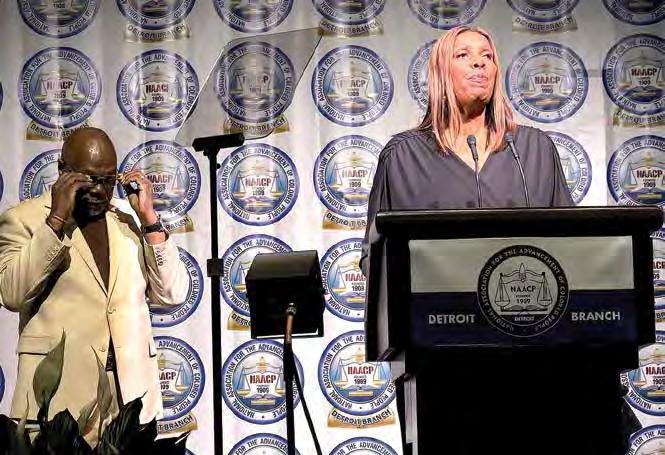
Opposing Republican-backed efforts to add more restrictions to voting was the theme of the Detroit Branch NAACP's gala Sunday, which included appearances from civil rights icons and Democratic political leaders.
By Ebony JJ Curry SENIOR REPORTER
Thousands of people converged inside downtown Detroit's Huntington Place for the 71st annual NAACP Freedom Fund Dinner, which raises money for the organization.
“Together we have created a social, environmental, and financial impact through bees,” said Jackson. Lindsey followed that sentiment with, “It is through our local partnerships and collaborative efforts that we exist in over 28 plus locations managing the health of 4.5 million honeybees – humbly speaking our movement has inspired others locally, nationally, and even internationally to take on similar missions.”
“Entrepreneur of the year – that’s a big deal,” said Brown. “It’s always an honor to be honored and it’s always a blessing to be in a room full of so many talent ed, accomplished, and popular people that look like me. I’m geeked. I started making and selling clothes as a kid and I always knew that I would have a business, but I never knew it would be Detroit’s brand name business, so I take a lot of pride in the fact that our business rep resents our city’s pride.”
Taking home the Corporate Excellence Award was Dannis Mitchell, Director of Community Engagement at Barton Malow.
ness district that had been the lifeblood of the community.
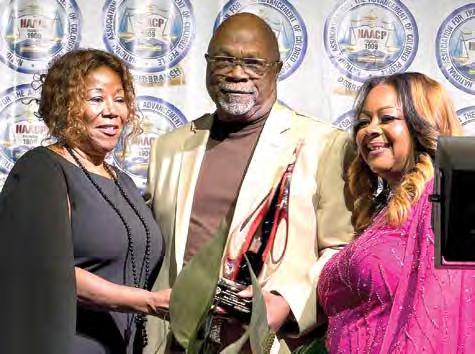
Ruby Bridges, the first African American child to attend formerly whites-only elementary school in Louisiana in 1960 honored with NAACP award Sunday.
For many Detroiters, Interstate 375, or I-375, has long been just another stretch of urban highway, a concrete artery connecting different parts of the city. To some, it’s a mere convenience; to others, it’s an unremarkable part of their daily commute. However, there’s a deeper, far more troubling story beneath the surface of this seemingly ordinary freeway—a story of pain, displacement, and the lasting impact on Black Detroiters.
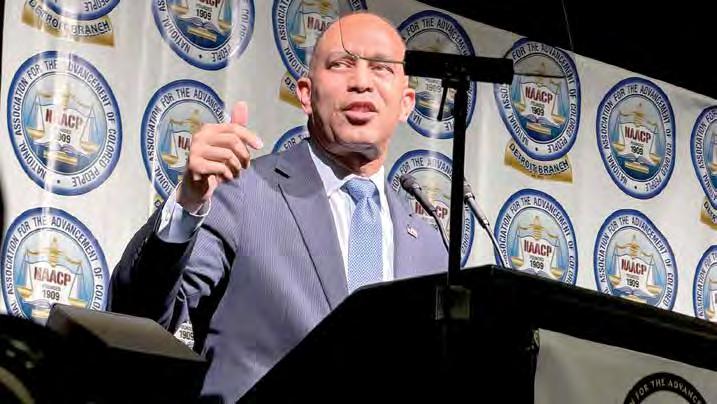
U.S. House Minority Leader Hakeem Jeffries, D-New York, was also a featured guest and speaker.
"We are not, have never been a hopeless people, and we cannot start today,” Bridges said on stage.
Detroit Hives, a pioneering organization founded by Lindsey and Jackson, harnesses the power of urban beekeeping to revitalize neighborhoods in the Motor City. Their initiative not only addresses critical issues like environmental conservation but also provides valuable education and employment opportunities to Black De-
The UAW has branded the industrial action as the “Stand-Up Strike,” focusing on specific plants within each automaker. UAW President Shawn Fain stated, “This strategy will keep the companies guessing. It will give our national negotiators maximum leverage and flexibility in bargaining. And if we need to go all out, we will. Everything is on the table.” Union leaders have also indicated that additional plants could be targeted in future waves if negotiations remain stalled.
Rebuilding Michigan was a step forward, but it was a short-term fix. Fixing the damn roads meant finding a long-term, sustainable plan – one that didn’t just address state highways, but local roads and bridges too. Last year, we got it done. Republicans and Democrats, labor and business, counties and municipalities all came together to deliver the largest roads funding deal in Michigan’s history. We’re investing in our infrastructure for the long haul.
“It is so important to recognize that there are young leaders across the country, many that are born here in Detroit. I represent our city nationally and I tell people, ‘Yea I’m a D-girl I’m from the west-side of Detroit,’” Mitchell expressed. “But more importantly, I’ve been able to have experiences within an industry that not many of us, specifically women of color, have the opportunity to engage in and I’ve been the youngest person in the room, the only Black person in the room, and the only Sistah in the room, and I really had to articulate the importance of showing up, giving chances when others won’t, and being persistent.” As a trailblazing Black woman thriving in a predominantly male-dominated industry, her unwavering commitment to fortifying the connections between businesses and Detroit’s communities is unde-
It’s a history marred by pain, injustice, and economic devastation. More than 130,000 residents, primarily Black, were forcibly displaced. Families were uprooted, generational wealth was obliterated, and a thriving community was torn asunder. The wounds inflicted by I-375 run deep, transcending the physical barrier of a freeway to penetrate the very soul of Black Detroiters.
The
Bridges was the recipient of the James Weldon Johnson Lifetime Achievement Award. She spoke about how her parents were driven by the desire for her children to have an education they lacked. Her father, a World War II veteran, was disillusioned by racial disparities in the military, she said.
This painful legacy can be traced back to the nation’s interstate highway program of 1956—a program that aimed to connect the country but often did so at the expense of marginalized communities. In the case of I-375, it meant carving a path through the heart of Black Detroit, reinforcing segregation, and perpetuating inequality.
Jeffries said. "Here in America, we should be able to agree to disagree without ever being disagreeable with each other. At the same time, I can assure you that we will continue to speak truth to power at all times as we navigate our way through trials, the turbulence and the tribulation of this moment."
of concealing the
By Andre Ash
DIGITAL ANCHOR
Fain clarified the union’s strategy: “I want to give a major shoutout to the thousands of members who are on the picket lines right now fighting for all of us. The Stand-Up Strike is a new approach to striking. Instead of striking all plants at once, select locals will be called on to stand up and walk out on strike. This is our generation’s answer to the movement that built our union – the sit-down strikes of 1937. We told the Big 3 that Sept. 14 was the deadline and we meant it. We gave the companies our economic demands eight weeks ago and it took more than a month to get to the table.”
The tale begins in what is now Lafayette Park, once known as Black Bottom—a neighborhood rooted in African-American culture and history. Named after its dark, fertile soil, Black Bottom flourished during the mid1900s, nurturing the dreams and aspirations of prominent Detroiters like Coleman Young, Joe Louis, and numerous other Detroit legends. But in the name of urban renewal in the 1950s, this vibrant neighborhood was systematically dismantled, erased from the map, and replaced by a lifeless stretch of asphalt.
Now, because of that work, more Michiganders will have safer, smoother drives – whether they’re heading to work, school, or the store. Drivers will deal with fewer popped tires and costly repairs. Thousands of workers will have good-paying jobs helping to rebuild our infrastructure. And businesses will have the reliable roads they need to keep Michigan’s economy moving.
"They were both sharecroppers in a tiny town in Mississippi where education was a luxury that they did not hold," Bridges said. "We are all standing on the hopes and dreams of someone that came before us."
A Holistic Approach to Providing Shelter and Support for Detroit’s Unhoused People
Homelessness continues to plague urban communities, with families and individuals grappling with the challenges of making ends meet in today’s economic climate. Whether it’s struggling to meet monthly mortgage payments or coping with soaring rental costs in a housing market marked by shockingly high prices, a variety of factors contribute to the growing issue of people becoming unhoused.
While the residential areas bore the brunt of this demolition, the heart of Black Bottom, its thriving business center, remained largely untouched. Restaurants, theaters, clubs, and bars—the very places that brought Detroit’s Black community together—were concentrated around Hastings Street, the epicenter of African-American culture in the city.
The union is pushing for a comprehensive list of demands. This
Through the end of this construction season, we will have fixed more than 26,500 lane miles of road, nearly 2,000 bridges, and supported tens of thousands of jobs each year. So, when you see those orange barrels on your drive...remember to slow down. There are Michiganders at work. And if you find yourself complaining about just how much construction you see… I’m sorry, but you’re welcome. Because construction season is open, we’re building a stronger, safer Michigan for tomorrow.
Detroit Branch NAACP President Rev. Wendell Anthony said ahead of the dinner during a press conference Sunday afternoon security was beefed up after Saturday's White House Correspondence Dinner shooting where a suspect was arrested and charged with attempting to assassinate the president among other charges.
Meagan DunnJulie Schneider
Then, in a cruel twist of fate, Hastings Street, too, was obliterated a few years later, making way for the construction of I-375. This marked the final blow, sealing the fate of Black Bottom and signaling the beginning of the end for Paradise Valley, the Black busi-
Housing Resource Helpline in response to the challenges that residents face in navigating the complex system of housing services. The helpline provides a single point of contact for people seeking housing assistance and connects them with the resources they need.
For one to aptly recognize the harm caused by such projects, it is vital to note that some of the planners and politicians behind those projects built them directly through the heart of vibrant, populated communities—oftentimes to reinforce segregation and sometimes as part of a direct effort to replace or eliminate Black neighborhoods.
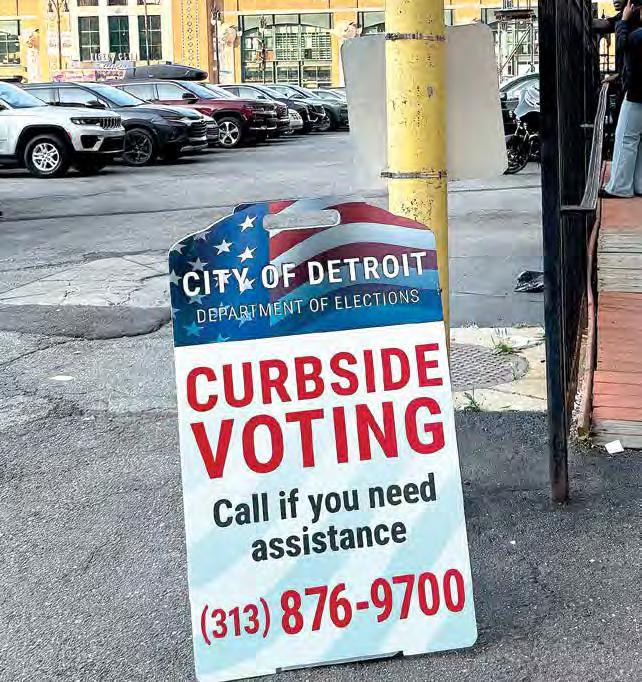
Jeffries, among other speakers on stage including Anthony, mentioned the federal effort to require IDs to vote in elections. Underpinning the proposal are conspiracy theories pushed by President Donald Trump and his allies suggesting large cities are somehow rigging their elections in favor of Democrats.
stands as a testament to the indomitable spirit of Black Detroiters and the enduring legacy of Black excellence. This historic district, once a vibrant hub for Black businesses and culture, is experiencing a renaissance that harkens back to its glory days. The destruction of Black Bottom may have torn apart a thriving community, but the resolute determination of a new generation of entrepreneurs and visionaries is reclaiming that lost legacy.
last month needed to make the ballot. If the signatures are certified with the state, the Republican-backed initiative will make the November ballot.
These incidents unfolded during an unseasonably warm spring, leading to increased pedestrian traffic and heightened tensions in the densely populated downtown area.
The surge in crime and the influx of visitors to Detroit’s downtown core garnered the attention of the Detroit Police Department (DPD), catching them somewhat off guard.
But now, after decades of enduring the scars of I-375, there is a glimmer of hope on the horizon. Plans have been unveiled to transform this once-divisive freeway into a vision that seeks to right the wrongs of the past while heralding a new era of inclusivity and community revitalization.
Jeffries thanked law enforcement and all who were tasked with keeping the dinner safe on Sunday.
"Political violence is never acceptable,"
Historically, shelters have provided a temporary respite for those in need, often serving as the first or second option after exhausting alternatives like staying with friends or family. Shelters offer a place to rest one’s head and a warm meal, albeit sometimes for extended periods. For others, being unhoused means living in cars or makeshift outdoor
Despite there being no evidence to suggest large scale improprieties, Republican leaders have mostly capitulated to many within their base who believe Trump actually won the 2020 election.
Support for the helpline comes from the Gilbert Family Foundation, which has pledged $10 million over three years to fund the program. Wayne Metro Community Action Agency manages the helpline, making it accessible to all Detroit residents. This initiative simplifies access to the City’s various housing services, ensuring that residents in need can easily find assistance.
"They have collected over 700,000 signatures — that means people have been keyed up for that, and they paid a lot of money to get these signatures. And sometimes people may not know what they've signed. Somebody in the store, post office asked you to sign and you signed because a person looks so pitiful."
James White, Chief of Police for the Detroit Police Department, said: “We were caught somewhat flat-footed right out the gate. By design we went into the spring deployment, which is less than the mid-summer deployment, and saw we say an uptick in violence that first warm weekend.”
Chief White attributes the violence in Greektown to a combination of weather conditions and a surge in population.
Anthony told Michigan Chronicle during the afternoon press conference he expects to be a participant in a concerted effort to oppose the Americans for Citizens Voting proposal, which turned in well over the required 450,000 signatures
Fueled by more than $100 million from the Infrastructure Investment and Jobs Act and other partners, this ambitious project aims to create jobs, remove barriers to economic growth, and reconnect the neighborhood with the rest of Detroit. It is a step
In the heart of Paradise Valley, Blackowned businesses are not just flourishing but thriving, offering diverse services, products, and experiences that pay homage to the past while paving the way for a prosperous future. From jazz clubs to soul food restaurants, the Black Press, and art galleries to fashion boutiques, this revival is breathing life into the very essence of what once made this neighborhood a vibrant cultural epicenter. It’s a resurgence that extends beyond brick and mortar; it represents the resurgence of a spirit that refuses to be subdued.
Lt. Gov. Garlin Gilchrist told Michigan Chronicle that lying to get people to sign petitions should be illegal. Gilchrist last weekend earned the Democratic Party's nomination for Secretary of State. Gilchrist joined NAACP leaders Sunday calling for an opposition campaign against the GOP-back voting initiative.
"Our message is it's already illegal if you’re not a citizen,” Gilchrist said. “If someone gets discovered attempting to do that, they get prosecuted and held accountable. We will need to make sure that
He explained, “ We saw numbers downtown that we have not seen, ever. People are emerging from COVID and there’s a feeling that we’re in a post-COVID era… and with the venues downtown and the reasons to come down with all the activities that are going on, we saw hundreds of more people and, in particularly, young folks, teenagers that we hadn’t seen.”
Detroit City Councilman Fred Durhal III, representing District 7, where Eastern Market resides, told the Michigan Chronicle, “It’s still very early in the process, MDOT is
By Sam Robinson SENIOR REPORTER
By Lynzee Mychael MULTIMEDIA JOURNALIST
The causes of homelessness are as diverse and complex as the individuals experiencing it. In response, the City of Detroit has adopted a holistic approach to combat this issue.
“Providing services and high-quality housing to persons at risk of or who are experiencing homelessness is a key priority of the City of Detroit, said Julie Schneider, Director of Detroit’s Housing and Revitalization Department.

What a Federal Government Shutdown Could Mean for Detroiters?
At-Large Detroit City Council member Mary Waters is running for Congress in Michigan’s 13th District, which is currently represented by Democrat U.S. Rep. Shri
Thanedar.
“This means focusing on building the pipeline of supportive housing and coordinating with the Continuum of Care on the delivery of critical resources such as emergency shelter, rapid rehousing, and diversion and prevention programs. It also means preserving and expanding affordable housing options for Detroiters of all incomes and improving housing stability though comprehensive service offerings available through the Detroit Housing Resource HelpLine and Detroit Housing Services Division within HRD.”
“The city and its partners offer a lot of great services to help Detroiters with their housing needs, but they don’t mean much if people don’t know how to access them,” said Mayor Mike Duggan. “Thanks to the efforts of our partners and the generous support of the Gilbert Family Foundation, we now have a simple process to guide residents to the right housing resource and a growing number of programs to help them.”
The Gilbert Family Foundation’s broader commitment involves pledging $500 million to support projects across Detroit over the next ten years, with housing initiatives being a significant part of their contribution.
Waters’ name appears on the Wayne County Clerk’s unofficial list of candidates for the 13th District. The list was obtained by the Michigan Chronicle on April 21, the filing deadline for candidates.
In May 2023, the City of Detroit launched the Detroit

From the days of the Great Migration when thousands of Black families flocked to Detroit in search of jobs and a better life, to the pivotal role they played in the city’s cultural and musical heritage, Black Detroiters have left an indelible mark on the city. However, in recent years, Detroit has experienced significant gentrification, which has raised concerns about the displacement of long-standing Black residents. Similar to a setting sun, there’s a rising spirit, and Black Detroiters are reclaiming their place in the city, despite the challenges posed by gentrification.
Notably, Detroit has witnessed a consistent decrease in recent years, with the number of unhoused residents steadi ly declining. In 2019, approximately 7,847 people were unhoused and entered the City’s community response system. In 2021, about 5,687 people experienced homelessness.
Black Democrats have been trying to take the seat back from Thanedar, an Indian American businessman, since his self-funded campaign won a crowded Democratic primary election in 2022.
According to the City of Detroit, since the start of the fiscal year 2019 to 2021, Detroit saw a 28% decrease in the
During the Great Migration, thousands of Black families from the South came to Detroit in search of jobs in the booming automobile industry. Despite facing discrimination and segregation, they built vibrant communities on the city’s east
Thanedar spent more than $10 million in his 2018 campaign for governor. Prior to that, he served a single term in the Michigan Legislature before being elected to Congress.
Thanedar won reelection in the
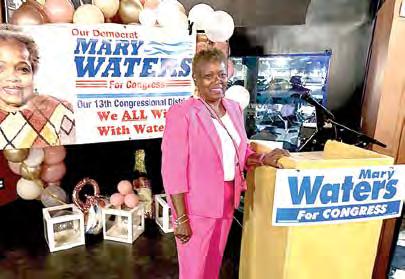
August 2024 Democratic primary, taking 54% of the vote, defeating Waters, who took 34% of the vote. Waters’ campaign in 2024 was endorsed by former Detroit Mayor Mike Duggan, who is running for governor as an independent.
and west sides. Over time, these neighborhoods became centers of Black culture and entrepreneurship.
According to Historian Jamon Jordon Black resilience in the city has roots that extend far before the Great Migration and will persist
“It’s not the best news for young Donavan (McKinney) that’s
Responding swiftly to the surge in violence, DPD adjusted its deployment plans. Rather than waiting for mid-summer, they deployed officers in the spring itself to address the situation.
The rise in visitors to the Greektown area is evident in data from Placer.ai, a location analytics company specializing in visit trends and demographic insights through geolocation-enabled mobile devices. From May 1-Aug. 27, 2022, there were 1.3 million visits and 655,000 visitors to Greektown, according to Placer.ai. In the same period this year, these numbers increased to 1.4 million visits and 670,000 visitors.
retaries; he’s a veracious mailer telling voters what he’s doing. I get calls asking to join his town halls on a regular basis too. He’s at every 13th District meeting; he’s doing the job.”
Financial records revealed a fund connected to the American Israel
because of discrimination, but they were also coming because Black people was doing some stuff. When did Black people start doing things in the city? They started doing things in this area in the 1800’s. In the 1800’s
As Detroit’s downtown area continues to attract both residents and visitors, the police department has implemented various enforcement measures to manage the increased population. Notably, metal detectors have been strategically placed throughout Greektown to deter the illegal carrying of firearms.
“We have strategically placed them at key points, “ Chief White explains. It has been a deterrent for some, and some have tested it. If you are legally carrying a weapon and carrying a CPL, have a great day. If you’re
for sure,” political strategist Greg Bowens told Michigan Chronicle.
long after our current phase of gentrification.
“Black people were coming to Detroit because Black churches were here, black schools were here, and its was Black businesses here,” said Jordon. “They were coming of course
“Mary’s a tough campaigner with high name recognition. It doesn’t cost her anything to run. It would be hard to beat Shri on a good day. He presents himself as a true-blue Democrat. He did the articles of impeachment against cabinet sec-
Rep. Donavan McKinney, who launched his campaign last April, pointed to the lack of investment in the area, arguing Thanedar has “more in common with Donald Trump and Elon Musk than people like us.”
“It will be nearly impossible (to unseat Thanedar) with more than
from Detroit, providing a soundtrack for the civil rights movement and inspiring generations. Motown Records, founded by Berry Gordy Jr., was not just a record label but a symbol of Black excellence and empowerment. However, as Detroit faced economic decline and population loss in the late 20th century, many
will rule in the upcoming sion, advocates on both sides of the argument are willing to continue their
“Overturning Roe v. Wade would be a terrible break with nearly 50 years of judicial precedent and – more importantly – a blow against individual freedom. It is my hope ings of this draft. If that is not the case, we need to ity Leader Schumer and Gov. Whitmer in support of their efforts to preserve tive freedom,” said Chair Alisha Bell, on behalf of
From page A-1

candidates Portia Roberson and state Sen. Adam Hollier, among several other candidates.
From page A-1
our power to keep abortion legal in Michigan, and if SCOTUS makes that impossible, we will do everything we can to ensure our patients can access the care they need.”
we are reminded that we have already solved this problem, and that we don't need attempts to make it harder for more people to vote or make it illegal to people who already can't vote."
alley’ and illegal abortion practices, including self-abortions. Moreover, African American women and women of color, who already have a long-storied history with access and inclusion in medi-
throughout the dinner.
ductive choice is one of freedom. As Michigan officials work to ensure each woman who finds herself in the position to choose has access to care without the threat of legal action, many wonder
night was New York Attorney Gener-
islature adopts it.
Both of Michigan's U.S. Senators spoke at the dinner Sunday, U.S. Sen. Elissa Slotkin and U.S. Sen. Gary Peters. As did Gov. Gretchen Whitmer, who offered a "Big Gretch, out," in the final words of her speech, her last at the dinner as the sitting governor.
al Letitia James, who gave an on stage shoutout to Michigan Attorney General Dana Nessel in her remarks for standing against Trump administration amid efforts to obtain Michigan voters' ballot data.
one candidate splitting the Black vote and without a real reason to boot him out,” Bowens said. “It seems to me that over the years, the importance for folks of Detroit having Black representation has become less and less so, sadly.
McKinney’s campaign is backed by U.S. Sen. Bernie Sanders, U.S. Rep. Rashida Tlaib, and the Michigan Working Families Party.
Gilchrist said he expects there to be a strong coalition opposing the question should it be on the ballots of Michigan voters this November.
corporate boards to have more diverse representation and pass the legislation.
Anthony and other speakers on stage Sunday also honored the life and legacy of Rev. Jesse Jackson, who passed away earlier this year.
Increase school funding: Statutory changes to increase the School Aid Fund revenue by at least $3.6 billion and establish a permanent weighted funding formula based on student and community needs and universal preschool (0-3).
Candidates for governor, Genesee County Sheriff Chris Swanson, Secretary of State Jocelyn Benson and former Detroit Mayor Mike Duggan, who left the Democratic Party to run as an independent in 2024, were meeting with guests throughout the night.
The health committee recommends reviewing state licensure policies to address the barriers that Black psychologists face in obtaining licensure in Michigan.
“AG Nessel is the holder of light and liberty in Michigan," James said as Nessel recorded part of her remarks with her cell phone in her seat.
It’s been tough for those outside of Detroit, as well, Bowens said.
“We haven’t been able to elect a Black person to Congress outstate, from Saginaw to Muskegon.”
At one point, a group of middle school-aged kids recited Rev. Jesse Jackson's "I am somebody. Jaelen Reaves, 16, sang in a tribute to Jackson, who was honored by speakers
Duggan's seat on the main stage remained despite no longer being the mayor of Detroit. Anthony, representing himself, endorsed Duggan for governor last year in a move that shocked some Democratic Party insiders.
Better collection and analysis of criminal justice data: BLAC recommends data collection and professional analysis be initiated with the assistance of our Attorney General, Michigan Commission on Law Enforcement Standards (MCOLES), Association of Michigan Prosecutors and other stakeholders to collaborate, collect and analyze data strategically.
James was the recipient of the NAACP's Ida B. Wells Freedom and Justice Award. She also condemned the violence at the White House Correspondents Dinner Saturday night, saying “Political violence has no place in society... I Yearn and pray for a compassionate, civil, competent and inclusive government in Washington, D.C.”
Ensure equitable distribution of state health funds: Ensure all Michigan communities with a significant Black population receive adequate funds to address mental health issues.
Sam can be reached at srobinson@ michronicle.com.
By Jeremy Allen EXECUTIVE EDITOR
Among the other guests Sunday
Protecting Black voting rights: Urge state officials to remain vigilant in the fight against schemes to disenfranchise Michiganders of color.
Thanedar snapped Detroit’s 70-year streak of being represented in Congress by Black leadership. He won the Black vote in Detroit’s 13th congressional District Democratic primary in 2022, defeating Black
“Sen. Sanders has long been a progressive champion for working class Americans and I am honored to receive his endorsement,” McKinney said of Sanders’ endorsement last year. “His political courage and his commitment to doing the right thing — even when it’s unpopular, even when it’s hard, even if he’s alone — are a true inspiration to me, as is his commitment to fighting for a more just, more equal America.”
You can reach Sam at srobinson@michronicle.com.
The conversations shaping Detroit’s future don’t always happen in council chambers or corporate boardrooms.
Reject censorship in history instruction: Encouraging Gov. Whitmer to ensure the goal for Michigan schools should be history instruction that is presented by professionals with the subject matter expertise, pedagogical skills, and judgment necessary to present complex information to students that are grounded in provable facts and add to the understanding of modern-day America.
some of The initiatives the city has implemented over the past five years.
Ban no-knock warrants: Urging the House Government Operations Committee to hold hearings on HB 5013 and other legislation that would ban or limit the use of noknock or quick knock warrants, and urging the state legislature to pass meaningful reform and advise Gov. Whitmer to sign the bill after the leg-
Oftentimes, they take place over breakfast, where the stakes feel just as high and the tone is a little more candid. On Wednesday morning, May 13, Michigan Chronicle will continue to carve out that space with its third 2026 panel series of its Pancakes & Politics speakers’ forum – this time with a focus that lands squarely on the intersection of philanthropy and neighborhood impact.
Increase mental health supports for the Black community: Recommending Michigan set a goal of increasing the number of Black mental health service providers by 20% each year over five years.
the chancellor embraces.
The third forum in the 2026 series feels both timely and overdue, with a conversation about how philanthropic dollars and leadership are influencing education, the arts, and long-term investment in Detroit neighborhoods. Titled “From Detroit Neighborhoods to Regional Impact,” the discussion is expected to veer in the direction about the tangible ways institutions are shaping daily life across the city.
Philanthropy has stepped in to fill gaps left by shrinking public resources, but that role raises ongoing questions. Who decides what a neighborhood needs? How are residents included in those decisions? And what happens when philanthropic priorities shift?
people believe that they need to for themselves and others to live better lives.”
The panel brings together a group of women whose work sits at the core of that influence. Wendy Lewis Jackson of the Kresge Foundation has spent years directing funding strategies that ripple through community development projects, arts initiatives, and public spaces. Her work often operates behind the scenes, but the results are visible in corridors where investment once felt uncertain.
Angelique Power, leading the Skillman Foundation, comes into the conversation with a focus on children and education, but her reach extends into how systems either support or fail Detroit’s youngest residents. Skillman’s role in shaping educational outcomes, particularly in communities that have faced decades of disinvestment, gives her a vantage point grounded in both urgency and accountability.
“I think of transformational leadership as a thoughtful approach that causes people to change but also causes the systems and circumstances they are operating in to change too,” Ivory said. “Transformational change doesn’t just ask people to do certain things; it asks them to change their view of what’s possible and excites them to drive that change together because they believe that what they’re doing will create positive change for everyone. That’s how entire systems change because
From the Knight Foundation, Latrice McClendon adds another layer, representing an organization that has increasingly prioritized Detroit as a key city in its national portfolio. And her role as newly elected president of Detroit Public Schools Consolidated District brings even a different perspective to the conversation. Knight’s investments in journalism, civic engagement, and the arts have played a part in reshaping how Detroit tells its own story and who gets to tell it.
Kyliee Mitchell Wells rounds out the panel, bringing perspective from the Ballmer Group’s work across Southeast Michigan. That organization has adopted a data-driven approach to philanthropy, targeting systemic issues tied to economic mobility, education, and family stability. In a region where disparities remain stark, that approach has sparked both optimism and scrutiny about how large-scale giving can move the needle.
Together, the panel reflects a cross-section of influence that extends beyond individual programs. These are leaders who help determine where money goes and how priorities are set.
Moderating the conversation is longtime Chronicle emcee Dennis Archer Jr., a familiar name in Detroit’s business and civic circles. As chairman and CEO of Sixteen42 Ventures, Archer has built a career around connecting opportunity with strategy, and his role as moderator positions him to push beyond surface-level answers.
The timing of this forum is important as Detroit continues to navigate a period of uneven recovery, where downtown development often grabs headlines while neighborhood concerns remain more complex and, at times, less visible. Additionally, Detroit is set to exhaust the $826 million in COVID-relief funding it received from the federal government in 2021 and will likely rely on philanthropic support to sustain
“BLAC members have worked hard to identify the needs of the Black community and we feel these recommendations will provide a solid first step towards breaking down barriers in education, community safety, health and business,” said BLAC Co-Chair Dr. Donna L. Bell.
BLAC will hold a vir-
“Chancellor Ivery is a true transformational leader and an outstand ing CEO, who is more than worthy of the CEO of the Year Award he just re ceived, “ said Prof. James C. Mays, who teaches entrepreneurship and supply chain manage ment at WCCCD’s Corpo rate College. “In his 27 years at WCCCD, Dr. Ivery has elevated WCCCD to become nationally recog nized for excellence and innovation and preparing our students profession ally and personally to do great things in the world.”
The panelists each operate within systems that attempt to address those challenges, but the effectiveness of those systems often depends on collaboration.
Pancakes & Politics has built its reputation on creating space for those kinds of honest conversations, and the format of the forums allow for a level of accessi-
Those questions show up in classrooms lacking consistent resources, in arts programs fighting for sustainability, and in neighborhoods where investment arrives in the form of one-off donations instead of sustained giving efforts.
bility that larger conferences sometimes lack. For people who are interested in participating in this sold-out forum, you can watch live starting at 7:50 a.m. on May 13 by logging on to MichiganChronicle. com/pancakesandpolitics, or by visiting Michigan Chronicle’s YouTube page. Additionally, Michigan Chronicle’s broadcast partner WDIV/Local 4 Plus will stream the event live at ClickOnDetroit. com/pancakesandpolitics.

A3 | April 29 - May 5, 2026
Op-Ed by County Executive Warren C. Evans
If you own a car in Wayne County, you probably don’t think much about transit. You get in, you go. But for hundreds of thousands of your neighbors, the absence of a reliable way to get around isn’t a minor inconvenience. It’s a daily calculation that shapes where they work, whether they see a doctor, and how far their paycheck actually stretches.
Wayne County is the largest county in Michigan. It is also one of the most transit-underserved. And right now, those two facts are colliding in ways that affect all 43 communities, whether they realize it yet or not.
The Gap Is Bigger Than Most People Know
Seventeen communities within Wayne County have opted out of regional transit service. No fixed bus routes. No reliable connection to the broader system. In some of these areas, ridership demand is actually high. The routes just don’t exist.
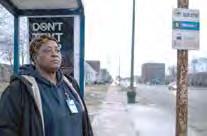
For a shift worker in Inkster trying to get to a 6am job, that means Uber or nothing. For a senior without fixed-route service nearby, it means rationing doctor visits based on who’s available to drive. For a young person who just aged out of school transportation, it means discovering that the county they grew up in wasn’t built for them to move around independently.
Car-dependent families can spend 15 to 20 percent of their income on transportation alone, a number that hits hardest for working families already managing rising costs on flat wages.
Why This Moment Matters
Wayne County has had transit conversations before. Studies, frameworks, proposals. What’s different now is that there’s an actual decision on the table.
In August, Wayne County residents will vote on a transit measure designed around real demand data, not legacy routes or political compromise. The framework includes new routes, route extensions, and micro-transit options sized to fit communities that don’t need a full fixed-route system.
But a good framework doesn’t automatically become a yes vote. Trust in regional transit governance is uneven. Making the case for reconnecting means being specific about what changes, honest about what hasn’t worked before, and clear about who benefits.
What a Connected County Actually Looks Like Transit isn’t just about buses. It’s about whether Wayne County residents can reach jobs, healthcare, and education without it costing them half a day and a tank of gas.
A stronger transit system means a worker in Taylor can take a job in Dearborn without buying a second car. It means a family in a suburban community can get to a specialist without coordinating three rides. It means young people have a reason to stay in Wayne County because they can actually move through it. That’s what One Wayne County really means. Not just connected roads, but connected lives.


Wayne County has always had what it takes. World-class infrastructure. A diverse, hardworking population. An airport that moves people and goods across the globe. Forty-three communities with real talent, real ambition, and real need.
What it hasn’t always had is a clear path connecting those communities to those opportunities. That’s the work happening right now. And it’s bigger than any single project or program. It’s a fundamental shift in how Wayne County thinks about what infrastructure actually means. Infrastructure Is More Than Roads
When most people hear the word infrastructure, they think of roads and bridges. And yes, Wayne County is investing heavily there. The $50 million Miller Rotunda bridge replacement in Dearborn and the $85 million Allen Road Grade Separation project are real, significant, and long overdue. Both have meant real inconvenience for residents, workers, and commuters. County Executive Warren C. Evans has been direct about that.
But Evans is equally direct about what comes next. “There’s light at the end of the tunnel,” he said recently, “and it’s not an approaching train.” The Allen Road project breaks new ground within the month. Miller Rotunda completes this summer. When the work is done, Wayne County will have safer, more reliable connections across some of its most traveled corridors.
That matters. But it’s only part of what building a connected county actually requires.
The deeper investment is in people. Specifically, in making sure the young people growing up in Wayne County today can access the jobs that will define the regional economy tomorrow.
The Sky Is Not a Metaphor. It’s a Career Path.
Here is a fact that most Wayne County residents don’t know: 250 aircraft mechanic positions are expected to open in Michigan by 2032. Wayne County sits next to one of the busiest airports in the country. And right now, there aren’t enough trained workers in the pipeline to fill those jobs.
County Executive Evans, working with Wayne RESA, is building that pipeline.
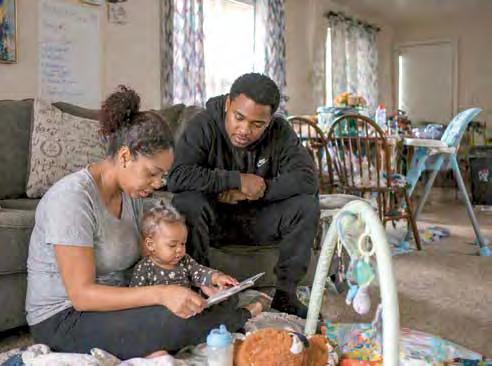
The Aviation and Aeronautics Career Program is already active in 11 school districts across Wayne County. Students are beginning aviation education as early as elementary school, building toward piloting skills, drone technology, and aviation maintenance by the time they reach high school and college.
If just 8 students from each of the county’s 33 school districts complete the aviation technician pathway, Wayne County graduates could fill every one of those 250 projected openings.
Wayne County Has Made Progress.
Here’s What Still Needs to Happen.
For families navigating the real cost of education and the real uncertainty of the job market, this matters. Aviation maintenance careers offer competitive wages, longterm stability, and credentials that don’t require a fouryear degree and the debt that comes with it. In a county where more than 200,000 residents are already carrying over $7 billion in student loan debt, a workforce pathway that builds economic security without compounding that burden is not a small thing. It’s a lifeline.
One Wayne County Means Everyone Gets a Shot
The through line connecting transit, infrastructure, and workforce development is the same in every case. Wayne County already has the assets. The airport exists. The jobs will exist. The school districts exist. What hasn’t always existed is the intentional, coordinated system that connects a kid in Romulus or River Rouge or Redford to the opportunity sitting a few miles away.
That’s what Evans means when he talks about One Wayne County. Not a slogan. A structural commitment to making sure geography, zip code, and family income don’t determine whether a young person in this county can access what this county has to offer.
The transit vote in August is part of this. So is the aviation program. So are the roads and bridges being rebuilt right now under real inconvenience and real investment. Each piece is a component of the same larger project: a Wayne County where the connections between people and opportunity are real, reliable, and built to last.
What This Moment Requires
None of this is finished. The transit framework still needs a yes vote. The aviation program is in 11 districts and needs to reach 33. The bridge projects will be complete this summer but the next round of infrastructure needs is already being mapped.
Evans is clear-eyed about where the county is. “We don’t just talk about hopes and dreams,” he has said. “We work with anyone willing to make those dreams real.”
That’s the ask for Wayne County residents right now. Not blind faith in government. Not patience without information. But engagement. Showing up for the transit conversation. Asking whether your school district is part of the aviation pathway. Knowing what is being built, why it’s being built, and what your family stands to gain when it’s done. And voters should know that this proposed millage will replace the current millage, which means this is an all-in proposal. Because partial measures won’t get the job done.
Wayne County has always had what it takes. The work right now is making sure every resident can say the same about themselves.
For most residents, county government is background noise. It runs the roads, manages the budget, keeps the courts moving. You notice it most when something breaks.
What’s harder to see, and worth understanding heading into a consequential year, is what has quietly shifted over the past decade and what still has to happen for that progress to hold.
Wayne County has passed eleven consecutive balanced budgets, a streak that matters because the county entered the current administration carrying serious financial instability. Moody’s has since upgraded the county’s credit rating, a signal that fiscal discipline has been consistent enough to register with the people who track it professionally.
On public safety, Wayne County invested heavily in a regional violent crime reduction initiative that brought together city, county, state, and community organizations around shared data and coordinated strategy. Since that initiative launched, homicides in Detroit have been cut roughly in half. Non-fatal shootings are down 62 percent since 2020. Carjackings, which earned Detroit national infamy at their peak, are down 64 percent over the same period.
In November, the county launched
Rx Kids in six communities including Dearborn, a public health program that provides direct cash support to pregnant residents and new mothers during the first six months of a child’s life. Since launch, more than $1.5 million has been distributed to nearly 900 families.
These are real results. They are also incomplete ones.
The transit framework that County Executive Warren C. Evans has spent the past year developing with regional partners goes to voters in August. If it fails, 17 communities that currently have no reliable transit service stay that way.
The aviation career pipeline designed to connect Wayne County students to 250 expected aircraft mechanic openings by 2032 is running in 11 school districts. It needs to reach 33.
Progress in Wayne County is not a finished story. It’s a direction. Residents who want to be part of shaping it don’t have to wait for an invitation. Learn what’s being built in your community, show up for the conversations that are happening right now, and make your voice part of the decisions that will define what Wayne County looks like five years from now. The door is open. The question is whether you walk through it.



A5 | April 29 - May 5, 2026
By Mark S. Lee
CONTRIBUTING WRITER
It’s an economy that looks better than it feels, especially for business.
If you’re trying to make sense of this economy, you’re not alone. The numbers say one thing – but everyday experience often says another. For businesses, that gap isn’t just confusing – it’s shaping real-time decisions.
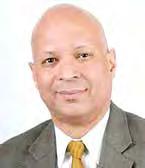
On paper, there’s still momentum. Consumer spending remains surprisingly strong, with retail sales showing that Americans are continuing to open their wallets and purses. Job growth has held steady, and unemployment remains relatively low. From a distance, that’s a solid foundation for business activity.
But on the ground, the story is more complicated. Consumer Confidence Slipping
Consumer confidence has dropped sharply, and businesses are feeling it in subtle but important ways. Customers are still buying—but they’re more cautious, more selective, and more price-sensitive. That shift is forcing businesses to rethink everything from pricing strategies to inventory and staffing.
Higher Household Costs
Increased costs can lead to an adverse effect on affordability.
As households face higher costs for essentials, discretionary spending is tightening. For (small) businesses, that means fewer impulse purchases, longer decision cycles, and greater resistance to price increases. In response, many are absorbing higher costs themselves – squeezing already thin margins.
Housing adds another layer. Elevated mortgage rates have slowed the housing market, which doesn’t just impact buyers and sellers – it affects contractors, suppliers, real estate professionals, and the broader ecosystem of businesses tied to homeownership and development.
Then there’s energy. Rising gas prices are hitting businesses twice – once in their own operating costs, and again through their customers. Whether it’s delivery, logistics, or simply keeping the lights on, higher energy costs are cutting into profitability while also reducing consumer spending power.
Overall Business Environment
The result is a business environment defined by tension.
Some companies – particularly those serving higher-income customers – are holding steady or even growing. Others, especially small and midsized businesses, are navigating a much tighter path. They’re adjusting hours, delaying expansion, rethinking hiring, and looking for ways to operate more efficiently without sacrificing service.
In many ways, this is becoming a test of adaptability.
Looking Ahead
Businesses that are leveraging technology, including AI, to streamline operations and better understand customer behavior are finding ways to stay competitive. At the same time, there’s a grow-
See THE ECONOMY Page A-6
By Dr. Anthony O. Kellum
CONTRIBUTING COLUMNIST
By any conventional measure, the housing market is “cooling.” Prices are no longer surging at pandemic-era rates. Mortgage rates, while still elevated, have eased slightly from their peak. Inventory, in some regions, is beginning to loosen on paper, this looks like relief. But for first-time buyers, especially those without intergenerational wealth, this is not a recovery. It is a recalibration of exclusion. First-time homebuyers now account for roughly one-fifth of the market, a historic low. That number is not simply a statistic; it is a signal it tells us who the market is no longer built for.
By Jeremy Allen EXECUTIVE EDITOR
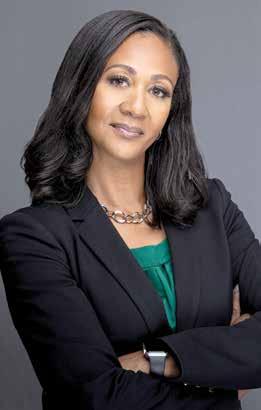
The Michigan Department of Labor and Economic Opportunity recently announced the recipients of $3 million in Young Professionals grants and $1 million in Young Professionals Plus grants to provide youth and young adults with a meaningful introduction to the world of work, including career exploration and preparation, job skills, and earned income.
Young Professionals and Young Professionals Plus grants have been awarded to the state’s 16 Michigan Works! Agencies, including nearly $265,000 of the $4 million grant, were directed to the Detroit Employment Solutions Corporation (DESC). The grants statewide will support the creation and/or enhancement of locally developed Young Professionals employment initiatives to meet the unique needs of the communities they serve.
“With its focus on supporting underserved populations, including those with disabilities, the Young Professionals initiative prepares our future workforce to meet employers’ needs,” said LEO Director Susan Corbin in a statement.
“This initiative empowers young people to explore different career pathways by removing their barriers to employment, allowing them to pursue meaningful careers right here in Michigan.”
Young Professionals supports Michiganders aged
14-24 years old who face barriers on the path to employment by exposing them to multiple career and educational opportunities, such as obtaining work experience or earning an in-demand training certificate. Young Professionals Plus is supported by state funds and creates additional opportunities to engage youth who may not be eligible for Young Professionals funding.
In 2025, more than 600 young people participated in Young Professionals activities to explore a wide spectrum of career interests and pathways.
“Young Professionals allows our Michigan Works! partners to take a localized approach to support young adults, helping us close equity gaps, address talent shortages, and remove barriers to employment,” said LEO Workforce Development Director Krista Johnson. “This funding supports our future workforce by placing young adults on a path to achieve lifelong economic sufficiency.”
Michigan Chronicle recently connected about the grant to DESC with Terri Weems, the Executive of Workforce and Detroit at Work for the City of Detroit, and Mary Sheffield’s Special Advisor to the Mayor on Workforce.
We asked Weems several questions about how the grant would impact the organization’s efforts.
See DETROIT’S YOUNG WORKFORCE Page A-6

family wealth move with a distinct advantage. They can waive contingencies, absorb higher monthly payments, and outbid competitors without relying heavily on financing. Meanwhile, first-generation buyers those building wealth in real time are asked to compete in the same arena without the same tools.
The dominant narrative frames today’s housing challenge as one of affordability homes cost too much, and borrowing costs remain high, hovering in the 6 to 7 percent range. This is true, but incomplete. The deeper truth is more structural. The issue is not just that homes are expensive, it is that the pathways into homeownership are increasingly narrow, calibrated toward those who already possess capital.
To understand this moment, we have to shift from thinking about price to thinking about position. Today’s housing market rewards liquidity. Cash buyers, equity-rich homeowners, and those able to leverage
High home prices alone do not exclude people. High prices combined with elevated interest rates, tight credit conditions, and aggressive competition from cash buyers do. Add to that the burden of student debt and rising rents, and what emerges is not simply a difficult market, but a structurally imbalanced one. The result is predictable access to homeownership is not disappearing, but it is becoming more conditional less about income, more about existing wealth.
And that distinction matters.
What This Means for Black Buyers
For Black households, the implications are particularly acute not because of a lack of aspiration or financial discipline, but because of history. The median Black household holds a fraction of the wealth of the median white household. This is not incidental, it is the cumulative result of decades of policy, from redlining to exclusionary lending practices, that systematically limited Black access to asset-building opportuni-

ties chief among them, homeownership.
In today’s market, that history shows up in very contemporary ways. Lower median wealth translates directly into smaller down payments. Smaller down payments translate into higher monthly costs and, often, less competitive offers. In a market where sellers favor certainty and speed, this can mean losing out repeatedly even when one is fully qualified.
At the same time, Black college graduates are more likely to carry student debt, often at higher balances. That debt affects debt-to-income ratios, reduces borrowing capacity, and delays the ability to save. Layer in higher rental burdens in many urban markets, and the pathway to ownership becomes not just longer, but steeper.
What we are witnessing is not simply a continuation of the racial homeownership gap. It is its quiet reinforcement through
market dynamics that appear race-neutral but operate within a deeply unequal starting point and yet, there is another layer to this moment one that deserves attention. Black homebuyers today are disproportionately first-generation. They are not merely purchasing homes; they are interrupting cycles. They are converting income into assets in families where that conversion has historically been obstructed. That makes their presence in the market both more precarious and more significant. When the market tightens, it is not just individual buyers who are affected. It is the possibility of wealth transmission itself. The Illusion of Access It would be easy to interpret recent shifts slightly lower rates, modest increases in inventory as signs that access is improving. But access is not simply about whether one can qualify for a mortgage. It is about
From page A-5
MC: What was DESC’s operating budget for fiscal year 2025-2026?
Weems: DESC’s operating budget for 25/26 is $66 million. These funds support workforce development efforts across Detroit, including youth and adult employment and training, and employer partnerships.
MC: This grant is specifically aimed at young people. How will this translate into tangible outcomes for Black youth in Detroit, particularly those who are disconnected from school or the workforce?
Weems: This investment allows us to directly connect young people – especially those disconnected from school or work – to paid, meaningful experiences, career exploration, activities, and internships, including our signature program: Grow Detroit’s Young Talent. Additionally, it allows us to connect young people to our year-round youth career exploration and internship opportunities.
MC: What barriers are facing young Detroit professionals, and how will DESC prioritize dismantling those barriers with this funding?
Weems: For disconnected youth, the biggest barrier is often lack of access and opportunity – not lack of talent. This funding allows us to meet young people where they are and connect them to our income and pathways forward across hundreds of employer partners. With this funding, we are prioritizing two core barriers.
Access to first opportunities - Many young people don’t have networks that connect them to employers or career pathways.
Work readiness and exposure gaps - This is not a deficit in ability, but a lack of exposure to professional environments, expectations, and career navigation.
MC: Can you walk me through what success looks like a year from now? What metrics or milestones will demonstrate that this funding has meaningfully improved economic mobility for Detroit youth?
Weems: We expect to see an increase both in youth working and in youth wages.
We already know that participants in GDYT have shown to have better school attendance, a higher graduation rate, and more often go on to pursue post-secondary opportunities. In addition to tracking the number of youth placed annually in summer internships
(over 8,000) and in year-round career exploration activities, we track the following:
• The number of youth who obtain an industry-recognized credential;
• Youth engagement and retention in our programs, including repeated engagement;
• The number of youth who have obtained permanent jobs, who pursue post-secondary education, and stay connected to the workforce system.
MC: There’s often skepticism about whether workforce programs lead to long-term career pathways. How will this initiative ensure that participants are not just placed in jobs, but positioned for sustained growth and wealth-building?
Weems: We are intentional about placements. We’re not just matching young people to any job – we’re connecting them to opportunities aligned with their self-identified interests and career goals. Employers are part of that process, interviewing participants to ensure alignment from the start. That matters for retention, growth, and longterm success.
We’re also strengthening the connection between education and the workforce. We are working closely with our K-12 and post-secondary partners to embed career readiness, internships, and real-world exposure directly into the high school experience. This allows young people to build skills and explore pathways before they ever enter the full-time workforce.
For example, we are partnering with local labor unions to integrate curriculum into high schools so that students can graduate with industry-recognized experience and credentials. That creates a direct bridge into apprenticeships and high-quality careers, not just temporary jobs. At the same time, we’re expanding summer opportunities so young people can continue exploring and building on those pathways.
At a systems level, the mayor has also been very intentional about alignment – bringing leaders from K-12, higher education, and workforce onto transition teams and the Workforce Board to ensure we are building a connected pipeline, not fragmented programs.
Ultimately, our goal is not just placement – it’s progression. We want young people to enter pathways that lead to higher wages, stability, and long-term economic mobility, and that requires alignment across education, employers, and workforce systems. That’s what this initiative is designed to deliver.

whether one can compete effectively once qualified. This is where the current market reveals its deeper logic.
A buyer may be approved for a loan, have stable income, and demonstrate financial responsibility and still be structurally disadvantaged. Not because of poor decisions, but because the market increasingly privileges those who arrive with capital already in hand. In this sense, the affordability crisis is misnamed. Affordability suggests a gap between income and price. What we are seeing is a gap between wealth and opportunity. That gap is harder to close.
Property is Power, and the Question Ahead
If property is power, as this series insists, then the conditions under which property is acquired matter as much as the property itself. The current housing market is not shutting people out explicitly. It is doing so implicitly, through a set of financial expectations that align more closely with inherited advantage than earned progress.
For Black buyers and for all first-generation buyers the challenge is not simply to enter the market, but to do so in a system that was not originally designed with them in mind and has not fully adjusted since. The question, then, is not whether the market will stabilize. It is who that stability will serve. Because a market that becomes easier for investors but remains difficult for first-generation homeowners is not a healthy market, it is a selective one. And selectivity, when mapped onto existing inequality, has a way of reproducing it.
The danger of this moment is not that homeownership is disappearing. It is that it is becoming more predictable, less a function of effort, more a function of starting point. For those who understand property as a vehicle
for freedom, for security, for intergenerational transfer, that should not be an acceptable outcome.
The market may be cooling. But its underlying logic remains unchanged, and until that changes, affordability will remain only part of the story.
Property is Power! is a movement to promote home and community ownership. Studies indicate homeownership leads to higher graduation rates, family wealth, and community involvement.
ing recognition that automation should enhance – not replace – the human experience that customers still value.
Looking ahead, the key question is sustainability – not just for consumers, but for businesses. How long can companies continue to absorb higher costs if customers push back on prices? And what happens if consumer spending begins to slow more noticeably?
For now, the economy is holding – but both consumers and businesses are feeling the strain.
It’s an economy that looks better on paper than it feels in practice. And for business owners, that means leading through uncertainty, making sharper decisions, and staying closely attuned to a customer who is still spending – but thinking twice.
We invite readers, business owners, and future entrepreneurs to follow along, ask questions, and engage. If you have story ideas or questions, you can email Lee at mark@leegroupinnovation.com or visit leegroupinnovation.com.


By Scott Benson DETROIT CITY COUNCILMEMBER
You cannot turn on the news these days and not see a story about how a community is fighting against data centers. These large facilities store and process massive amounts of data that is used to power a lot of aspects of our lives – cloud computing, streaming, and the ever-growing artificial intelligence (A.I.) that is becoming increasingly embedded in our daily lives.
According to the MIT Sloan School, A.I. is poised to transform the global economy, with projections suggesting it could add $7 trillion to $15.7 trillion to global GDP by 2030, driven by rapid advancements in automation and infrastructure, including chips and data centers.
I feel Detroit needs to be competitive in this sector. Our city has a long history as home to creators, innovators, and inventors. The A.I. boom is here, and we must be ready for it.
This is why I asked the city to slow down on siting data centers. It wasn’t because I am opposed to them; I’m neither for nor against data centers in Detroit. All I want is for us to learn more so we can make educated decisions about sensible community informed zoning regulations for the location of these facilities in our city.
The city council approved, on a 6-2 vote, my resolution requesting the mayor implement a moratorium on data centers. With or without this pause, I am gathering a wide spectrum of stakeholders – city officials, business representatives, utility company leaders, and advocates for sustainability and the environment – so that we can all have robust and thoughtful discussions about how to best regulate data centers so they do the least harm to our people, our natural resources, and our city.
We recently met as a group for the first time with 40 people in attendance. During this introductory meeting, I set the stage for the work I want this group to accomplish –a commonsense community-informed framework that regulates data centers. We will continue to meet over the next several months with the goal of implementing a zoning ordinance that regulate data centers by the end of 2026.
If you have been following the debate across the US about data centers, you know they have positive and negative impacts on communities. The positive impacts include bringing high paying construction and trades jobs to the community while the facility is being built, and an increase in local tax revenue. The negatives are the potential impact to the environment and an increased strain on the energy grid Data centers use a tremendous amount of water in their cooling systems, which makes Michigan and the other Great Lakes states an attractive place to build data centers. They also use a significant amount of electricity. In some communities where data centers have been built, utility costs have soared for residential customers as utilities scramble to build and upgrade infrastructure to support a data center. Data centers also are noisy. People living near them often complain about the noise and its impact on the value of their property.
Many of these problems are associated with hyperscale data centers, which are massive facilities usually exceeding 1,000 acres of land, which is something Detroit cannot offer. Hyperscale data centers are used by such companies as Microsoft, Google, Amazon, and Apple. However, we can accommodate smaller facilities, but they also have the same pros and cons of hyperscale data centers – positive economic benefits and negative environmental impacts.
How the city balances the opportunities and challenges that data centers present will be critical.
I’ve made it clear to the stakeholder’s group that utility bills cannot increase for our residents. I’ve also made it clear that we must lean into the sustainability issues, particularly around water usage, and find a way to ensure we aren’t damaging our natural resources. The expansion of data centers in the Great Lakes region creates a strain on local water resources. It’s been estimated that less than a third of the data centers nationally are tracking their water usage. Fortunately, Detroit requires buildings over 25,000 square feet to track and report their water usage as part of my Energy and Water Benchmarking Ordinance, passed in 2023. We should be requiring that as the state which is literally defined by water.
I encourage residents to stay informed and follow my office on this issue. It is critical to the future of our city and state.
Hon. Scott Benson is a Detroit City Councilman who represents the 3rd District on Detroit’s north eastside. Scott also serves his community by sitting on numerous boards, is an avid cyclist, and a proud husband and father.
By Sam Robinson SENIOR REPORTER
Michigan state Sen. Mallory
McMorrow’s outraised her Democratic primary opponents in the most recent reporting period, FEC records show.
McMorrow raised more than $3 million in the first three months of the year, compared to about $2.3 million from former Wayne County health director Abdul El-Sayed and $2 million from U.S. Rep. Haley Stevens.
“This is absolutely huge,” McMorrow said in a video.
Reports filed Wednesday, April 15, with the Federal Election Commission show McMorrow raised nearly all of her money from individual donors. 120,000 people have given to the campaign of the 39-year-old state senator from Royal Oak since she launched her campaign for U.S. Senate.
FEC records show McMorrow also finished the most recent reporting period with more in her war chest than Stevens for the first time since candidates began reporting their fundraising totals.
El-Sayed led candidates in money raised from outside of the state, nearly $1.3 million. McMorrow’s campaign saw more than $830,000 from outside the state, with Stevens raising about $1.2
By Sam Robinson SENIOR REPORTER
Michigan Gov. Gretchen Whitmer last week called the Department of Justice request to view Wayne County’s 2024 presidential election ballots direct federal interference.
The Detroit News on Sunday reported President Donald Trump’s Department of Justice is attempting to obtain all ballots submitted for the 2024 election in Wayne County, where Republicans have launched baseless claims of election impropriety for years.
Trump and his allies have since the 2020 argued widespread fraud occurred in Wayne County and Detroit, the largest city in the state where more than 70% of residents are Black.
City of Detroit Deputy Clerk Andre Gilbert told Michigan Chronicle the city has not received a similar request but will be prepared if the DOJ were to issue the city a similar letter.
Harmeet Dhillon, an assistant attorney general, sent a letter Tuesday to Wayne County Clerk Cathy Garrett, demanding records be released to the federal government, the News reports.
“Michigan’s elections are safe and secure, and any attempt to suggest otherwise is an attempt to take away Michiganders’ constitutional right to vote,” Whitmer said. “More than 1,600 locally elected clerks across Michigan ensure that every citizen can vote and have their vote counted. This demand is a poorly disguised attempt to justify more doubt and misinformation about our elections as well as direct federal interference.”
Attorney General Nessel sent a letter to Assistant Attorney General Harmeet Dhillon, urging her to uphold the rule of law and reject the Trump administration’s “fishing expeditions into the debunked conspiracies.”
A spokesperson for the DOJ did not reply to Michigan Chronicle’s request for comment.
Trump and his allies have for years taken aim at Black cities like Detroit, Philadelphia and Baltimore.
In 2020, a group of voters backed by the NAACP filed a lawsuit against Trump and his presidential campaign, arguing that the campaign was openly seeking to disenfranchise Black voters in Detroit.
During the 2022 midterm election, Kristina Karamo, who ran for Secretary of State against Jocelyn Benson, attempted to sue the city of Detroit to halt the counting of absentee ballots, which would have disenfranchised thousands in the city who cast votes by mail.
Trump’s campaign and his allies have presented no real evidence of widespread voter fraud that would have affected the outcome of the 2020 or 2024 election. They have faced multiple defeats in court.
In its letter, the DOJ justifies its request by citing three isolated instances of state-prosecuted voter fraud cases related to the 2020 election, and a civil case which was dismissed by now-retired Chief Judge Timothy Kenny from the Wayne County Circuit Court.
Each of the criminal cases were identified as suspicious by local clerks, referred to Michigan’s Bureau of Elections for investigation and successfully prosecuted by the Department of Attorney General, officials said.
Claims of voter fraud in the 2020 election referenced in the letter from Costantino v. Detroit were rejected by the court, which found the allegations to be “incorrect and not credible.”
Officials said none of the cases highlighted in the letter as examples of fraud were from the 2024 election cycle.
“Once again, President Trump is weaponizing the Justice Department in an attempt to sabotage our democratic process and turn it into his own personal agency to interfere in state elections. This request is as absurd as it is baseless,” Attorney General Dana Nessel said in a statement.
You can reach Sam at srobinson@michronicle.com.

million from non-Michiganders.
After flipping a Republican-held Oakland County district in 2018, her viral speech on the Michigan Senate floor in April 2022, which caught the attention of Hillary Clinton, turned McMorrow into a high-profile state political figure and national fundraiser. The state’s Independent Redistricting Commission pushed her district into part of Detroit after she defeated former state Sen. Marshall Bullock, D-Detroit, in an August 2022 primary. Critics of Bullock at the time pointed to
his campaign accepting a donation from former Sen. Majority Leader Mike Shirkey, while supporters questioned McMorrow’s ability to represent Black Detroiters.
McMorrow is tied at 24% in the Democratic primary race with former Wayne County health director Abdul El-Sayed, according to an Emerson College/WOOD-TV poll published Thursday, April 16.
A poll from the same firm in January showed McMorrow ahead in the primary with 22% of the support, to 17% for Stevens and 16% for El-Sayed.
Stevens has said since the beginning of her campaign that she believes she is the best-equipped Democrat to defeat former U.S. Rep. Mike Rogers, the Republican running for Michigan’s open U.S. Senate seat.
U.S. Sen. Gary Peters announced last year he wouldn’t seek reelection. Peters told Michigan Chronicle at the Michigan Democratic Party convention over the weekend, voters have three good choices to pick from.
“We have three really wonderful candidates that are running for
the Senate,” Peters said. “I’m confident in all of their abilities, and now they need to get out and make their case to the people in the state of Michigan.”
Stevens was booed by party delegates at the Michigan Democratic Party convention last weekend, where Israel’s influence on American politicians remained top of mind for thousands of party members who propelled progressive Democrats to decisive victories. Party delegates chose progressives in the races for Secretary of State, Attorney General, and University of Michigan regent.
Stevens handed out physical copies of her 2025 tax return at the convention, saying she is the only candidate to do so. She called on other Michigan Senate candidates to be transparent and do the same.
Rogers, who does not have an opponent raising a significant amount of money in the Republican primary race, still maintains a cash advantage over the entire field.
“The future of our state and country are riding on this race, and we are fighting every day to earn working families’ support,” spokesperson Alyssa Brouillet said in a statement.
You can reach Sam at srobinson@michronicle.com.

B1 | April 29 - May 5, 2026
By Miss AJ Williams
Survival mode is not a malfunction. It is the body’s way of adapting to challenges. Calling it a flaw is common in self-help circles, but it misses the point. Before we had words for these feelings, our bodies learned to sense which needs would be met or ignored and which actions would be accepted or punished. The nervous system builds a structure to help us function in certain situations. Many traditions have noticed this, and today, we often call it strength.

These adaptive behaviors develop in complicated ways. Children don’t choose to become overly responsible; they adapt because their environment requires it. When a child meets these demands, she is rewarded with safety, affection, or reassurance. These rewards are often subtle: a tired mother feels relief when her daughter takes on tasks, a teacher praises the calm student, and a community admires the woman who handles everything without complaint. These small reinforcements don’t feel like conditioning. They feel like love, or something close to it, until the long-term effects show up much later.
Over time, these survival strategies become part of who we are. When we repeat an adaptation for years, it stops feeling like a way to cope and becomes a natural part of our personality. For example, a girl who learns to rely on herself may grow up to believe she never needs help. A girl praised for being mature may become an adult who doesn’t know how to be vulnerable. These outcomes aren’t wrong or dishonest. They happen because survival strategies can become the main way others see us—and how we see ourselves.
At this point, much of the advice about healing falls short. It’s not as simple as just letting go. You can’t easily give up a way of thinking that has supported you for years and expect everything to stay the same. Letting go of a survival strategy that’s been reinforced by important relationships can feel like taking apart the foundation of who you are. Resisting this change isn’t a sign of weakness. It shows your body remembers past threats and is understandably cautious about facing them again.
Moving from survival mode to self-abandonment is more complicated than people often realize. This change happens when the original threat is gone, but the old behavior continues as if the danger is still there. The mind doesn’t always notice that things have changed. It keeps watching for problems, reacting to old pain, and handling relationships as if there’s still a crisis. As a result, the protective habits stick around long after they’re needed, sometimes becoming so automatic that a person doesn’t even notice she’s lost touch with herself.
Unlearning survival mode can be hard, and many wellness stories can make it sound easier than it is. First, you have to recognize that your old coping strategies actually worked and deserve respect before you can let them go. This means admitting that being reliable and strong has come with a real, often hidden, personal cost. Real grief is part of this—not just as a figure of speech, but as something you truly feel. For many people, being tough was the only way to get by. Letting go of that identity means grieving the part of yourself that helped you survive. There’s no way around this grief; it’s at the heart of the process.
What we often call burnout is really the body’s way of saying that the old coping strategies are now causing harm. This deep tiredness shows that what once helped is now holding you back. The exhaustion isn’t just telling you to do less; it’s a message from the part of you that managed everything, asking for permission to rest. Letting this part step back isn’t a betrayal. It’s a way to honor that its job is done.
There is no instruction at the end of this essay because instruction is not what this work requires. What it requires is slow, unhurried recognition. Notice how much of your life is still being run by a mechanism that does not know it is safe to stop. Recognition itself begins to change things. The architecture loosens—almost imperceptibly—when it is finally seen. You do not have to dismantle it today. You only have to stop pretending it is your name.
AJ Williams is a Spiritual Wellness Architect and Educator and the Managing Editor of the Michigan Chronicle. A thought leader at the intersection of astrology, psychology, and identity evolution, she is the founder of Sunday Communion, a quarterly live transformation experience held in Detroit. The Inner Architecture is her editorial column on the work of becoming.
Where City Meets Life and Life Meets Style

By Miss AJ Williams
I was just a “young tender” when Floetry found me. I was learning the ways of love in real time, the obsession, the merging, the slow loss of self you mistake for intimacy, and then the heartbreak that arrives when you realize you can’t find your edges anymore. Floetry was the soundtrack to it all. Being in that Detroit audience on April 18, all these years later, felt like running into a former version of yourself at a party. You remember her, and you see how you’ve grown.
The women in that room were the generation that was introduced to adult love at the same time Floetry was giving us the words for it. We showed up with our whole history. The nostalgia was real, but it was not sentimental. It was more like recognition.
Since their emergence in the early 2000s, Floetry has held a singular place in R&B. Their platinum debut, Floetic,
arrived at a moment when the genre was moving fast and loud, and they went quiet and deep instead. Marsha Ambrosius’ vocals alongside Natalie “The Floacist” Stewart’s spoken-word delivery gave poetry a lead role, not a cameo. Natalie is a poet rooted in spoken-word tradition, and her cadence on stage carries the literary weight of that foundation. Together, they built a blueprint for how lyricism and soul could coexist at the center, not the edges, of mainstream music. Nearly two decades later, the catalog still holds.
The moment that stopped the room was not a song. On stage, Marsha and Natalie embraced, embodying the reunion tour’s healing theme as they named what years had taken: missed births, missed weddings, the silence that grows between once-inseparable people. They called each other family and meant it. For an audience sorting through their own love histories, watching two women publicly repair something tender felt like a full-circle gift.
We had all lost something along the way. Some of us were still finding it.
As someone who reads the sky for a living, I could not help noticing the timing. Natalie, The Floacist, is an Aquarius. Marsha, The Songstress, is a Leo. Opposite signs, which in astrology does not mean incompatible. It means completion. The lunar nodes are moving into Leo and Aquarius in the coming cycle, a shift that astrologers associate with healing between the individual and the collective, the personal and the visionary. That Floetry chose this season to return, and to do so honestly, felt less like a tour decision and more like the right moment finally arriving.
The Say Yes Tour is being framed as a celebration and a reclamation. Both are true. But what I left with was simpler than either of those words. I left thinking about the young woman I was when this music first mattered to me, and how much of her I had carried, quietly, into that room. Floetry gave her a good night.
By Aaron Foley EDITOR-AT-LARGE
Two Detroit-based artisans were awarded one of the art world’s most prestigious fellowships this month, earning a grant that will allow them to perform at the intersection of tradition and innovation.
United States Artists announced five overall fellowships to a new class of Knight Arts + Tech Fellows, an annual initiative that supports artists with unrestricted grants of $50,000 to further their disciplines, practices, and new approaches in technology and media.
Wesley Taylor and Taeyoon Choi are the dual Detroit fellows, alongside Miguel Novelo and Rhonda Holberton, both of San Jose, and the collaborative duo LIZN’BOW of Miami.
“Through the Knight Arts + Tech Fellowship, we aim to not only strengthen the arts and technology ecosystem through longterm investment in the individuals and artistic practices that fuel innovation, but also foster a community among artists and cultural workers and continued growth across the field,” said Kristina Newman-Scott, Vice President for Arts at Knight Foundation.
“Working across various disciplines and mediums, this year’s Fellowship class offers an examination of how evolving technological systems shape our environments, behaviors and forms of connection. Their work inspires consideration for innovation as a site of relational

and communal possibility. We are thrilled to support each of these artists and we welcome their arrival and participation within our community.”
Taylor is a multidisciplinary artist whose practice combines installation, video art, and sound to make a world. His decades-long practice hones the lessons and sharpens sensibilities learned from Detroit artists who came before him, shaping his craft of sampling, referencing, and recontextualizing to demonstrate themes of placemaking, histories of entanglement with the present and the future, and the necessity of Black imagination.
“This is a crucial piece to moving some objectives and agendas that I have going,” Taylor told Michigan Chronicle. “I’m fully appreciative of this, and it’s a major relief for me. This is a crucial piece to moving some objectives and agendas that I have going I’m fully appreciative of this and it’s a major relief for me. I’m trying to work on some ambitious projects, and this is aiding that at the right time.”
Taylor is working on what he calls the Black Portal Project, which is a vacant theater he’s renovating near Detroit’s Conant Gardens neighborhood on the east side.
“The space is dedicated to tech-based, experimental performance work,” he says. “At the moment, the theater is completely condemned, so it needs a lot of work. At the
same time, in this state of disrepair, I’m artistically engaging with the building, trying to figure out ways on how a condemned building can be useful.”
Choi is an artist, writer, and educator who explores the poetics of technology and human relations. Currently teaching at Wayne State University, he works with images, text, and code, oftentimes in collaboration with fellow artists, experts, and community members.
“You know, it’s really sign of support from the community because it’s nominated anonymously,” Choi told the Chronicle. “And it’s a really good welcome sign to the city and the area because I’m relatively new to Detroit.”
He will use this time to make “capital-A arts,” conducting research around technology, society, and the relationship between computers and art in human life.
“I really also spend a lot of time thinking about education and community service and different ways of sharing the research with a wider audience,” Choi says.
“I’m an outsider and I think I’ll never feel like I’m from here -- I think you need at least a couple of generations of embedded living to call yourself a true Detroiter,” he adds. “But at the same time, the city is wide enough and generous in a way that it welcomes newcomers, and people who don’t really fit into boxes, or people who are in between genre or identity.”
You can reach Aaron at afoley@michronicle.com.

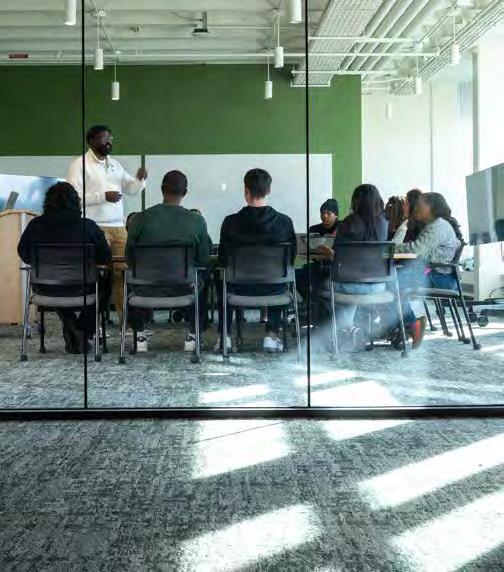
Wayne State University is committed to providing an accessible, affordable education to all Warriors. Programs like the Heart of Detroit Tuition Pledge and the Wayne State Guarantee break down financial barriers that too often prevent people from pursuing a degree. From orientation to graduation, we deliver tailored support that helps students succeed in their studies and thrive in their careers. That’s Warrior Strong — support that meets students where they are and turns potential into progress.



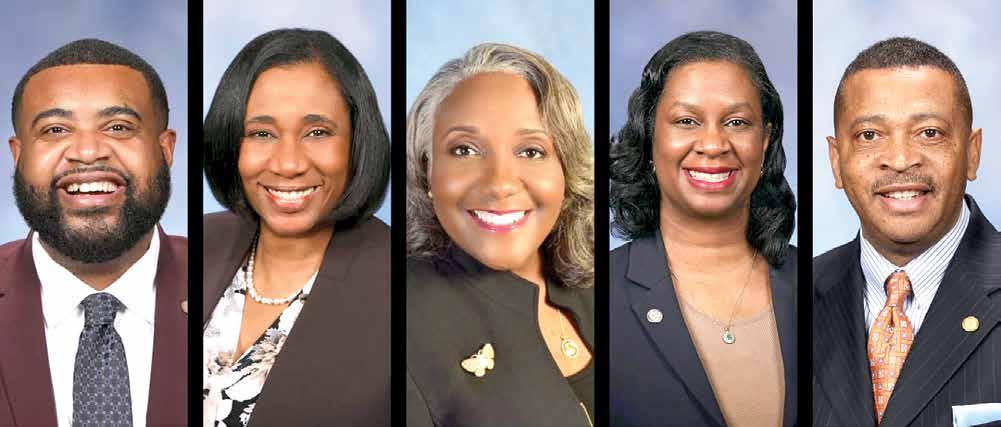
Five members of the Michigan Legislature’s Detroit Caucus to be inducted at the 5th Annual Tyrone E. Winfrey Hall of Fame Alumni Gala on May 16
The Detroit Public Schools Community District Foundation today announced the 2026 class of Detroit Public Schools Community District Hall of Fame inductees. Five members of the Michigan Legislature’s Detroit Caucus, all proud graduates of DPSCD high schools, will be formally honored at the 5th Annual Tyrone E. Winfrey Hall of Fame Alumni Gala on Saturday, May 16. The VIP Hour is 6 – 8 PM, and the Main Event is from 8:30 PM – Midnight. Tickets are $150 and available at dpscdfoundation. org.
The DPSCD Hall of Fame recognizes distinguished alumni whose leadership and service have created meaningful impact beyond their graduation, particularly those who continue to champion opportunities for Detroit students and public education. This year’s class embodies that commitment. As members of the Detroit Legislative Caucus, these leaders have demonstrated sustained advocacy for advancing Detroit’s public schools and the success of the next
generation of students.
“We are incredibly proud to induct these five trailblazers into the DPSCD Hall of Fame,” said Kerrie Mitchell Campbell-Mabins, president and CEO of the DPSCD Foundation. “Their careers are a testament to what a Detroit public school education makes possible, and their ongoing commitment to our students and schools makes this recognition especially meaningful.”
2026 Hall of Fame Inductees
The following Michigan state representatives will be inducted into the DPSCD Hall of Fame during the VIP Hour of the 5th Annual Tyrone E. Winfrey Hall of Fame Alumni Gala:
Stephanie A. Young is a Democratic state representative serving Michigan’s 16th House District and the Chair of the Detroit Legislative Caucus. She has held key leadership roles focused on families, children, and community development - and previously served as executive director of Detroit’s Community Education Commission. Young is a graduate of Cass Technical High School, Class of 1983.
Tyrone Carter is a Democratic member of
Whether death or divorce leads to the end of a marriage, getting another chance at love is an amazing feeling. While they are on the wings of love, we stress to happy couples the importance of estate planning for blended families. This is because people often fail to revisit their estate plan—or draft one at all after a second marriage. This can lead to disastrous results for someone’s spouse and their children from a previous relationship.

Let’s take Bill. Bill was married to his first wife Barbara for twenty-five years before she passed away from cancer. They had three children who are now adults. Bill did not even think about dating until seven years after Barbara passed away. He falls in love with Joan, who he met during a chance encounter at a coffee shop. Joan has two children from her first marriage who are young adults. Bill and Joan ultimately marry and settle into their new life together, not thinking twice about planning for the unexpected. Joan moves into the home Bill shared with Barbara. They travel, enjoy jazz concerts, and other events. Their children even get along well and spend holidays together. You could not write a better story!
Unfortunately, the unexpected comes only three years after they marry. Bill dies after a freak accident at work. Joan and his children are heartbroken. About a month after the funeral, the cracks in the picture-perfect family frame start to appear. Bill’s children assume that they are entitled to their parents’ home — the one they were lovingly raised in. When Joan starts making comments about adding her children to the deed and restricting access to the home, Bill’s children are furious. They even call the police to gain entry to the home but are told that it is a “civil” issue and they need to go to court. Joan then files for a restraining order against them! Bill’s children immediately contact an attorney to see what their options are. They estimate the house alone is worth about $200,000 and are ready for war.
Bill’s children are shocked to discover all that Joan is entitled to as a surviving spouse—especially because they were not married long. Bill died without a Will. Under Michigan law, Joan is entitled to a hefty sum of Bill’s estate off the top ($201,000 in 2026!) and splits the balance of the remaining assets with Bill’s children. Bill’s children are devastated—and there is nothing they can do about it.
This is precisely what happens when you plan to fail. There are more stories like Bill’s than you could imagine. The good news is that it does not have to be yours. Contact an experienced estate planning attorney to help you get your affairs in order today!
Attorney Jehan Crump-Gibson is the Co-Founder and Managing Partner at Great Lakes Legal Group PLLC, where she concentrates her practice in probate and estate planning, business and real estate matters. Great Lakes Legal Group is a growing black-owned law firm serving clients throughout the state of Michigan and in federal courts across the country. Jehan has served as Faculty for the National Business Institute and the Institute of Continuing Legal Education concerning business, probate and estate planning matters. She is a legal analyst with Fox2 Detroit’s The Noon and the author of the book A Matter of Life and Death.
the Michigan House of Representatives who has represented Detroit-area districts since 2018 and is the immediate past chair of the Detroit Legislative Caucus. A former executive lieutenant with the Wayne County Sheriff’s Office, with more than 25 years in law enforcement, he has built a career in public safety and community leadership. Carter graduated from Southwestern High School in 1980.
Helena Scott has been a Democratic state representative serving in the Michigan House since 2021. A longtime Detroit resident and labor organizer, she has more than 15 years of experience in community activism and workers’ rights advocacy. Scott is a graduate of Mumford High School, Class of 1978.
Tonya Myers-Phillips is a Democratic state representative and attorney serving Michigan’s 7th House District. She previously served on the Detroit Charter Revision Commission and has a strong background in law and public service. Myers-Phillips graduated from Renaissance High School in 1995.
Donavan McKinney is a Democratic
state representative from Detroit serving in the Michigan House since 2023. His work focuses on environmental justice, economic equity, and community advocacy. McKinney is a graduate of Renaissance High School, Class of 2010.
This DPSCD Hall of Fame class reflects Detroit’s public school legacy, from Cass Tech and Renaissance, to Southwestern, Mumford, and beyond - and the enduring civic impact of those who walk the halls of Detroit’s public high schools.
The 5th Annual Tyrone E. Winfrey Hall of Fame Alumni Gala is themed, “A Different World: A Future-Forward Celebration of DPSCD.” The evening brings together executives, civic leaders, elected officials, entrepreneurs, philanthropists, and alumni to celebrate distinguished graduates and raise critical funds for Detroit students.
Proceeds from the Gala directly support the DPSCD Foundation’s mission to expand opportunity, strengthen career pathways, and provide critical resources that help students succeed.
Tickets and sponsorship opportunities are available at www.halloffamedetroit.org.
By Hodari P.T. Brown GUEST COLUMNIST
There is a hard truth that many people of faith have been hesitant to confront directly. What we are witnessing in modern politics, particularly within segments of the Republican Party, the Evangelical Christianity community, and the broader Religious Right, is not simply a difference in political ideology. It is a spiritual conflict over the integrity of faith itself.
At the center of this issue is the erosion of a foundational principle: the Separation of Church and State. This principle was never meant to remove faith from public life. It was designed to protect faith from political corruption and to ensure that no government could weaponize religion for power. When politics begins to dictate theology, faith is no longer sacred. It becomes a tool.
That is exactly what we are seeing unfold. When Faith Becomes a Political Weapon
There is a growing pattern where scripture is selectively quoted, distorted, and repurposed to justify policies and behaviors that stand in direct contradiction to the core teachings of faith. The message of Jesus Christ was rooted in love, compassion, humility, service, and justice. He consistently stood with the poor, the sick, the marginalized, and the oppressed.
Yet today, we see leaders and influencers who claim religious authority while promoting division, exclusion, and harm. We see support for war not as a last resort for protection, but as a first response for dominance. We see silence, deflection, or even defense when it comes to abuse, exploitation, and injustice.
This is not faith. This is distortion.
War, in any religious context, has historically been framed as a tragic necessity only in defense against harm. It was never intended to be glorified, politicized, or used as a mechanism of control. The normalization of aggression contradicts the very essence of spiritual teaching, which calls for peace, reconciliation, and restoration.
The Danger of False Doctrine
False doctrine does not always appear obvious. It often comes wrapped in familiar language, religious symbolism, and cultural identity. It sounds like faith, but it does not produce the fruit of faith.
When religion is used to justify harm against the vulnerable, it ceases to be righteous. When policies disproportionately impact the poor, restrict access to basic needs, or
ignore the suffering of communities, they are not aligned with any true spiritual tradition.
Scripture across traditions calls believers to protect the widow, the orphan, the stranger, and the oppressed. These are not optional values. They are central commandments.
To defend systems or leaders that harm these groups while claiming religious justification is not just a political stance. It is a spiritual contradiction.
A Moment of Reflection in Global Faith Leadership
Recent criticism directed at Pope Francis for advocating peace highlights a deeper issue. When a global religious leader calls for peace, reconciliation, and restraint, that should not be controversial within faith communities.
It should be expected.
The backlash reveals how far political influence has shifted the moral compass of some who claim to act in the name of religion. Peace is not weakness. Compassion is not compromise. These are the highest expressions of faith. Faith Is Measured by Love, Not Loyalty to Power
As believers and as leaders, there is a responsibility to discern the difference between genuine faith and political ideology dressed as faith. Blind loyalty to any political party, whether the Republican Party or otherwise, should never take precedence over truth, justice, and moral integrity.
Faith does not belong to a political party.
Faith belongs to the people. It belongs to communities seeking hope, healing, and purpose. It belongs to those who are striving to live out principles of love, compassion, respect, and service.
A Call to Return to True Principles
This is not a call for division. It is a call for alignment.
It is a call for believers across all denominations and backgrounds to come together and reclaim the true essence of faith:
• Love over hate • Compassion over cruelty
• Truth over manipulation • Justice over oppression
• Peace over unnecessary conflict
Religious freedom must be protected, not politicized. Faith must be lived, not leveraged. And doctrine must be rooted in truth, not distorted for influence.
As ministers, leaders, and believers, there is a duty to speak clearly and act courageously. Not to condemn people, but to confront harmful systems and ideologies that misrepresent what faith truly stands for.
Because at its core, faith is not about power.
It is about people.
And any system that forgets that has already lost its way.
Hodari P.T. Brown, MBA


By Sam Robinson SENIOR REPORTER
Democratic voters across the state ousted controversial University of Michigan regent Jordan Acker at the party’s endorsement convention.
Civil rights attorney Amir Makled and incumbent regent Paul Brown received the most votes from party delegates.
Acker, a Southfield-based attorney, faced criticism and controversy during his first term as a regent and in the days leading up to the Democratic convention. Messages allegedly sent by Acker show sexual comments about a party strategist and a disparaging message about Gov. Gretchen Whitmer in a Slack group chat.
A report from The Guardian scrutinized Acker’s relationship with Attorney General Dana Nessel, who charged student protestors demanding the University of Michigan end all of its investments in Israel over the war in Gaza.
Nessel was criticized by left-wing Democrats and other groups like the ACLU of Michigan, which argued that the student protesters were practicing free speech. Nessel was also booed by pro-Palestine party members during a caucus meeting at last year’s February convention.
Acker, who opposed students seeking divestment from Israel, ran on what he and the regents were able to accomplish during his prior term, including reforming how sexual misconduct cases are handled on campus, a neutrality policy on union organizing, and the expansion of the Go Blue Guarantee to Michigan residents whose household incomes are under $125,000,
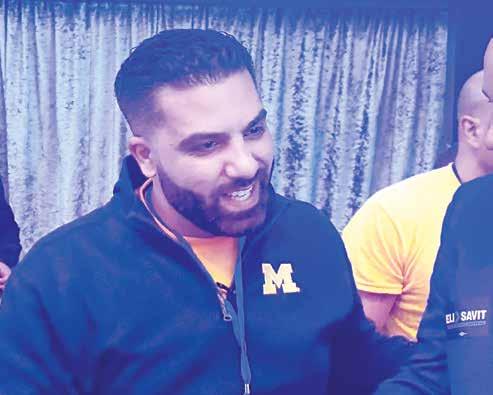
The Michigan Daily reports.
Makled told Michigan Chronicle in an interview on Sunday that he’s running to support students and shake up the status quo.
“I want to make sure we’re not lost in the outside noise that’s happening around the outside issues here,” Makled said. “When we saw free speech, DEI, academic freedom and issues of gender affirming care being trampled on, we recognized our liberties were at stake.”
Incumbent trustee Brianna Scott and
Kelly Tebay Zemke, the director of Government and External Relations for The Henry Ford Museum, won party endorsements to the Michigan State University Board of Trustees.
Labor attorney Richard Mack and civil rights attorney Shereef Akeel were endorsed by the Wayne State University Board of Governors.
Candidates for Wayne State’s Board of Governors include Democratic activist Naz Hussan, Akeel, Mack, and recent Wayne
State graduate and activist Jeremiah Wheeler. Akeel told Michigan Chronicle he’s focused on foreign students affected by President Donald Trump’s policies. In his career as a civil rights attorney, Akeel won cases involving travel bans and religious discrimination.
“Wayne State is the number one university for social mobility,” Akeel said. “Wayne State lifts people up, I’m here to lift people, lift the graduation rate for first generation students. I have five boys. I want them to do better than me.”
Akeel said Democrats must endorse strong candidates
“Wayne State could conceivably run by Republicans,” Akeel said.
Mack, a member of the 13th Congressional District Democratic Party’s executive board, said he wants to use his experience wading through government budgets to help deliver a top-notch education for students, while fairly compensating faculty and staff.
Mack told Michigan Chronicle he would fight to bring fairer wages to Wayne State workers and faculty.
“I am driven to help make WSU more affordable, safe, and connected to the entire state of Michigan,” Mack said.
University of Michigan Republican candidates include Lena Epstein and Michael Schostak. Republican candidates for Michigan State Board of Trustees: Julie Maday, state Sen. Roger Victory, R-Georgetown Township.
The general election is on November 2. You can reach Sam at srobinson@ michronicle.com


The Michigan Department of Environment, Great Lakes, and Energy (EGLE) is holding a public comment period and a hybrid public hearing to allow the public the opportunity to comment on the proposed conditional approval of two air permits.
The public comment period is open from April 29, 2026, until June 11, 2026, with a hybrid (in-person and virtual) public hearing on June 4, 2026 for:
Companies: Marathon Petroleum Company LP (Marathon) and MPLX Terminals LLC (MPLX). Marathon is located at 1001 South Oakwood Boulevard in Detroit, Michigan, and MPLX is located at 12700 Toronto Street in Detroit, Michigan. What is open for comment:
The Michigan Department of Environment, Great Lakes, and Energy (EGLE) is holding a public comment period and
a hybrid public hearing to allow the public the opportunity to comment on the proposed conditional approval of two air permits.
Marathon is requesting to increase flexibility in their feedstock and fuels, as well as changes to permit conditions. (Air Permit Application Package No. PKG-0000452)
The public comment period is open from April 29, 2026, until June 11, 2026, with a hybrid (in-person and virtual) public hearing on June 4, 2026 for:

Companies: Marathon Petroleum Company LP (Marathon) and MPLX Terminals LLC (MPLX). Marathon is located at 1001 South Oakwood Boulevard in Detroit, Michigan, and MPLX is located at 12700 Toronto Street in Detroit, Michigan.
• MPLX is requesting to use the vapor combustion unit control device instead of the vapor recovery unit control device for a limited amount of time. (Air Permit Application Package No. PKG-0000668)

Technical details:
What is open for comment:
The public comment period and hybrid public hearing are to allow all interested parties the opportunity to comment on the proposed conditional approval of two Permits to Install (PTI). It has been preliminarily determined that the requests from Marathon and MPLX will not violate any of EGLE’s rules nor the National Ambient Air Quality Standards.
• Marathon is requesting to increase flexibility in their feedstock and fuels, as well as changes to permit conditions. (Air Permit Application Package No. PKG-0000452)
• MPLX is requesting to use the vapor combustion unit control device instead of the vapor recovery unit control device for a limited amount of time. (Air Permit Application Package No. PKG-0000668)
Technical details:
Additionally, the requests from Marathon and MPLX will require revisions to Renewable Operating Permit (ROP) No. MI-ROP-A9831-2012c (SRN A9831). This public comment period meets the public participation requirements for a future administrative amendment to the ROP.
The public comment period and hybrid public hearing are to allow all interested parties the opportunity to comment on the proposed conditional approval of two Permits to Install (PTI). It has been preliminarily determined that the requests from Marathon and MPLX will not violate any of EGLE’s rules nor the National Ambient Air Quality Standards.
Provide comment in any of these ways by June 11, 2026:
• Online: MiEnviro Portal for Marathon or MiEnviro Portal for MPLX
• Email: EGLE-AQD-PTIPublicComments@Michigan.gov
Additionally, the requests from Marathon and MPLX will require revisions to Renewable Operating Permit (ROP) No. MI-ROP-A9831-2012c (SRN A9831). This public comment period meets the public participation requirements for a future administrative amendment to the ROP.
• Voicemail: Call 517-284-0900
Provide comment in any of these ways by June 11, 2026:
• Online: MiEnviro Portal for Marathon or MiEnviro Portal for MPLX
Mail: Permit Section Manager, EGLE, AQD, P.O. Box 30260, Lansing, Michigan 48909-7760
• Email: EGLE-AQD-PTIPublicComments@Michigan.gov
• At the hybrid public hearing on June 4, 2026, starting at the close of the informational session. The sole purpose of the public hearing will be to take formal testimony on the record.
• Voicemail: Call 517-284-0900
• Mail: Permit Section Manager, EGLE, AQD, P.O. Box 30260, Lansing, Michigan 48909-7760
EGLE will host an informational session before the hearing to explain the proposed permits and our technical review. There will also be an opportunity for the public to ask questions of EGLE staff.
Attend the hybrid informational session and public hearing on June 4, 2026 at 5:30 PM: Attend in person: Kemeny Center, 2260 South Fort Street, Detroit, Michigan 48217.
• At the hybrid public hearing on June 4, 2026, starting at the close of the informational session. The sole purpose of the public hearing will be to take formal testimony on the record. EGLE will host an informational session before the hearing to explain the proposed permits and our technical review. There will also be an opportunity for the public to ask questions of EGLE staff.
• Join online: pre-register any time or join at 5:30 PM at https://bit.ly/AQD060426
Attend the hybrid informational session and public hearing on June 4, 2026 at 5:30 PM:
• Call in: 855-758-1310 and use meeting ID 897 6693 5606
• Attend in person: Kemeny Center, 2260 South Fort Street, Detroit, Michigan 48217.
• Join online: pre-register any time or join at 5:30 PM at https://bit.ly/AQD060426.
• Call in: 855-758-1310 and use meeting ID 897 6693 5606
Get technical reports about this project: Online at Michigan.gov/EGLEAirPublicNotice choose ‘Applications Open for Comment’
• Detroit: EGLE, AQD, 313-456-4681
Get technical reports about this project:
• Detroit: City Clerk’s Office, 313-224-1990
• Online at Michigan.gov/EGLEAirPublicNotice, choose ‘Applications Open for Comment’
• Detroit: EGLE, AQD, 313-456-4681
• Detroit: Wayne County Clerk’s Office, 313-967-6938
• Detroit: City Clerk’s Office, 313-224-1990
• Lansing: EGLE, AQD, 517-648-6663
• Detroit: Wayne County Clerk’s Office, 313-967-6938
• Lansing: EGLE, AQD, 517-648-6663
Requests for translation or other accessibility concerns can be sent to: EGLE-Accessibility@Michigan.gov
Requests for translation or other accessibility concerns can be sent to: EGLE-Accessibility@Michigan.gov
Puede enviar solicitudes de traducción u otras cuestiones de accesibilidad a: EGLE-Accessibility@Michigan.gov EGLEAccessibility@Michigan.gov
Puede enviar solicitudes de traducción u otras cuestiones de accesibilidad a: EGLE-Accessibility@Michigan.gov EGLEAccessibility@Michigan.gov
Michigan Department of Environment, Great Lakes, And Energy
Cindy Smith, Section Manager
Consulting Architect –Developer Tools Positions offered by Ford Motor Company (Dearborn, Michigan). Note, this is a hybrid position whereby the employee will work both from home and from the anticipated worksite. Hence, the employee must live within a reasonable commuting distance from the anticipated worksite. Provide Strategic Alignment of Software engineering tool product strategy with experiential products and overall business goals. Domestic and International Travel Required up to 10%. EOE. Apply online: careers.ford.com
Data Engineer
Positions offered by Ford Motor Credit Company LLC (Dearborn, Michigan). Note, this is a hybrid position whereby the employee will work both from home and from the anticipated worksite. Hence, the employee must live within a reasonable commuting distance from the anticipated worksite. Design and build production data engineering solutions to deliver reusable patterns using Google Cloud Platform (GCP) services: Big Query, Dataflow, DataForm, Astronomer, Data Fusion, DataProc, Cloud Composer/Air Flow, Cloud SQL, Compute Engine, Cloud Functions, Cloud Run, Artifact Registry, GCP APIs, Cloud build and App Engine, as well as real-time data streaming platforms like Apache Kafka, GCP Pub/Sub and Qlik Replicate. EOE. Apply online: careers.ford.com
the anticipated worksite. Hence, the employee must live within a reasonable commuting distance from the anticipated worksite. Develop and maintain advanced analytics capabilities essential for pricing and go-to-market strategies, including product allocation, distribution, and mix optimization. EOE. Apply online: careers.ford.com
Diagnostics Systems Engineer
Positions offered by Ford Motor Company (Dearborn,
the existing ADAS system. EOE. Apply online: careers.ford.com

with an environmental footprint.
New survey data from Allstate Protection Plans shows that Americans are thinking more seriously about that impact. The challenge is that habits around recycling, trade-ins, and refurbished devices are still lagging behind awareness.
Allstate Protection Plans’ latest mobile survey shows that 52% of Americans say the environmental impact of smartphones is extremely or very important. That is a strong signal that sustainability is no longer a niche issue in consumer tech. People are paying attention not just to what their phones do, but to what happens to them over time.
That shift is also showing up in how people think about refurbished devices. Nearly two-thirds of consumers, 65%, say refurbished electronics are both economical and sustainable. People increasingly understand that extending the life of a device can reduce waste and deliver real value.

NA Dealer Ordering Software Engineer
Positions offered by Ford Motor Company (Dearborn, Michigan). Note, this is a hybrid position whereby the employee will work both from home and from the Dearborn office. Hence, the employee must live within a reasonable commuting distance from Dearborn, MI. Own features from concept through production for both front-end (Angular) and back-end (Java/Spring Boot) components. EOE. Apply online: careers.ford.com
REQUEST FOR PROPOSALS (RFP) CONSULTANT – CUSTOMER SERVICE AND SECRET SHOPPER SURVEY DEVELOPMENT, DISTRIBUTION AND ANALYSIS October 2022
OTA Deployment Engineer Positions offered by Ford Motor Company (Dearborn, Michigan). Note, this is a hybrid position whereby the employee will work both from home and from the anticipated worksite. Hence, the employee must live within a reasonable commuting distance from the anticipated worksite. Deploy Over the Air Software (OTA) to company owned and consumer vehicles. EOE. Apply online: careers.ford.com
But there is still a gap between what consumers believe and what they do. While many people see the benefits of refurbished devices, only 18% say they have ever bought a refurbished phone. The same disconnect shows up in recycling. Only 20% of consumers say they recycle their old phones, while 8% still throw them in the trash. Another 26% say they are not confident they know how to recycle a phone properly.
BID # 07-01-2022 REBID
Detroit Local Initiatives Support Corporation (LISC) is seeking proposals for a qualified consultant to work with Detroit LISC to create, distribute and analyze customer service surveys to gather information about the services of the Detroit at Work One Stop System. The findings from the surveys will be analyzed and put into interim and final reports to be submitted to LISC. Specifically, Detroit LISC is seeking those with proven experience in the following areas:
✓ Evaluation ✓ Survey Creation, Distribution and Collection
Software Engineer Positions offered by Ford Motor Company (Dearborn, Michigan). Note, this is a hybrid position whereby the employee will work both from home and from the anticipated worksite. Hence, the employee must live within a reasonable commuting distance from the anticipated worksite. Work on a Balanced Product Team and collaborate with the Product Manager, Product Designer, and other Software Engineers to deliver analytic solutions. Responsible for the development and ongoing support and maintenance of the analytic solutions. EOE. Apply online: careers.ford.com
✓ Analysis
Report Development
Program Design
Software Engineer
Product Development Engineer
Visit https://www.lisc.org/detroit/about-us/careers/ to download full RFP. Responses to this RFP are due Friday, October 21 and should be emailed to kgallick@lisc.org. LISC is committed to working with Small Business Enterprises (SBEs), Minority-Owned Business Enterprises (MBEs), and Women-Owned Business Enterprises (WBEs). LISC encourages submissions from SBEs, MBEs, and WBEs.
Positions offered by Ford Motor Company (Dearborn, Michigan). Note, this is a hybrid position whereby the employee will work both from home and from the Dearborn office. Hence, the employee must live within a reasonable commuting distance from Dearborn, MI. Develop and refine design validation methods for ensuring proper featurelevel performance. Domestic Travel Required up to 10%. EOE. Apply online: careers.ford.com
Positions offered by Ford Motor Company (Dearborn, Michigan). Note, this is a hybrid position whereby the employee will work both from home and from the anticipated worksite. Hence, the employee must live within a reasonable commuting distance from the anticipated worksite. Implement solutions and problem resolution relating to Teamcenter platform. EOE. Apply online: careers.ford.com
The Suburban Mobility Authority for Regional Transportation (SMART) is soliciting RFQs for Pre-Employment, Drug, and Alcohol Screenings Control No. 23-3659. RFQ forms may be obtained beginning October 19, 2022, from http://www.mitn.info. RFQs are due by 3:00 PM ET, November 11, 2022
Product Manager –SCM Analytics Positions offered by Ford Motor Company (Allen Park, Michigan). Note, this is a hybrid position whereby the employee will work both from home and from the anticipated worksite. Hence, the employee must live within a reasonable commuting distance from the anticipated worksite. Lead deployment of software solutions for Supply Chain Management Analytics. EOE. Apply online: careers.ford.com





That uncertainty helps explain why so many devices never make it back into the circular economy. Instead, they sit unused at home. In fact, the average household has 1.8 unused smartphones tucked away in drawers. One forgotten phone may not seem like much, but across millions of households, those unused devices represent a major missed opportunity for reuse, refurbishment, or responsible recycling.
The Detroit Transportation Corporation Office of Contracting and Procurement requests proposals from qualified firms to provide CCTV and network upgrades. This includes modernization efforts for the CCTV system, Public Address (PA) system, Variable Message Signs (VMS), and Wired Backbone Network system, at the MCF, at each DPM station, and at substations described herein.
At the same time, ownership habits are changing in ways that could support a more sustainable future. Consumers are keeping their phones longer. Twentythree percent say they keep their phones for three to four years, and 21% say they only upgrade when their phone breaks. Battery life now ranks ahead of price as the top factor influencing purchase decisions.
All bids must be received by the Detroit Transportation Corporation
These shifting priorities are good for consumers, and good for sustainability. Holding onto devices longer, protecting them from damage, repairing them when possible, and making smarter end-of-life decisions all help reduce unnecessary waste.
The takeaway is that more responsible electronics ownership doesn’t have to be complicated. Small actions can make a real difference. Consumers can trade in old devices instead of letting them collect dust. They can use certified electronics recycling programs instead of throwing phones away. They can donate working phones so someone else can keep using them. And when it is time for a replacement, they can consider refurbished models as a practical, lowerwaste option.
A few simple steps can also make phone recycling feel easier and more secure. Backing up data, signing out of personal accounts, performing a factory reset, and removing SIM or memory cards can help people feel more confident about passing a device on for reuse or recycling.
The good news? Consumers already care. Now the opportunity is to turn that awareness into action. One traded-in phone, one recycled device, one refurbished purchase at a time, consumers can help cut e-waste and move personal tech in a more sustainable direction.