FREE
Presented By
www.theoutdoorsmanguide.com • 1
2 • The Outdoorsman
FEEL THE THUNDER. GENERATIONAL MEMORIES. Premier Kansas Outfitter with lodging, meals and memories that will last a lifetime!
Proudly Expanding to Tennessee. nativethunderoutfitters.net Ⅰ 573-247-5532
Visit our website to book today. www.theoutdoorsmanguide.com • 3
Contributors Account Executive Hanna Sitting Crow (CEO) 605-760-4269 hanna@michelscom.com
Team Of Writers Ingrid Hayward, Sarah Fairmont, Joseph Cottle, Dave Bean, Melissa Bachman, Matthew Schlueter, Jarrod Fredericks
Grayson & Seth Swanstrom Corsica, SD
Curt Gacke Lake Clitherall, MN
Jerrick Nickerson Pierre , SD
Amy Hendrix Harding County, SD
PHOTOGRAPHerS Oak River Media, Final Light Photography,
Graphic Designer Erin Sedra
Editor Heather Jordan heather@michelscom.com
Vice President/Director of Digital Marketing Cory Johnsen 605-951-3567 cory@michelscom.com
Director Of Operations Melissa Chinn 605-310-7563 melissa@michelscom.com ON THE COVER PUBLISHER Michels Communications Corporation PO Box 91606, Sioux Falls, SD 57109 605-332-0421 • www.michelscom.com Copyright © 2026 All rights reserved. Printed in the U.S.A. Reproduction without permission from Michels Communications Corp. is strictly prohibited. The publisher has made every effort to ensure the accuracy of the material in The Outdoorsman. However, as unpredictable changes and errors do occur, the publisher can assume no responsibility or liability for errors, changes or omissions.
4 • The Outdoorsman
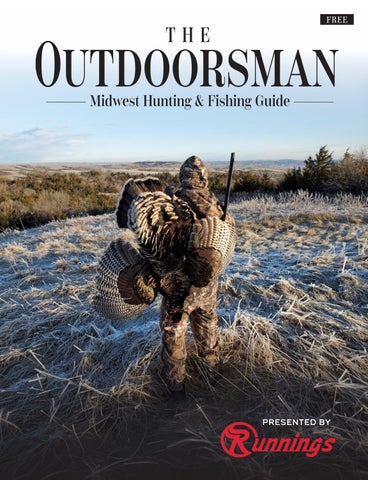
Along the mighty Missouri River in south-central South Dakota, a frosty morning held the promise of an unforgettable hunt. Father and son duo Blaine and Riley Weippert had done their homework, locating the birds the evening before and returning under the cover of darkness to set their decoy before sunrise. As the first light broke across the frost-covered landscape, the silence gave way to thunderous gobbles. Soon, magnificent toms appeared, strutting boldly toward the decoy. In that breathtaking moment, patience, preparation and tradition came together, creating more than a successful hunt. It was a memory between father and son that would last a lifetime.
Letter from the Director
Welcome to The Outdoorsman
Growing up in California, many of the outdoor traditions that define life in the Midwest weren’t part of my childhood. When I moved to Northwest Iowa as a teenager, I spent more time figuring out how I could get back to the ocean rather than appreciating all the beauty of the outdoors around me. It wasn’t until I met my fiancé 3 years ago that I began to actually explore the vast beauty of the Midwest and learn the skill behind hunting, ice fishing, hiking and to appreciate the smell of fresh air. That connection became the inspiration behind The Outdoorsman. Bringing this first issue to life has given me the opportunity to connect with local business owners and outdoor enthusiasts throughout the Midwest. Their passion, knowledge, and commitment to our communities are at the heart of this publication. Our goal is to celebrate the people, places, businesses, and traditions that make the outdoors such an important part of life here. I’m incredibly proud to share our first issue with you, and I hope these pages inspire you to explore somewhere new, support a local business, or simply spend a little more time with family enjoying the outdoors. Thank you to everyone who helped make The Outdoorsman possible—and thank you for joining us at the beginning of what we hope will become a lasting tradition. Melissa Chinn Director of Operations Michels Communications Corp.
www.theoutdoorsmanguide.com • 5
Table of Contents Pheasant
Waterfowl
big game
9
23
31
32
MORE THAN BIG BUCKS South Dakota BIG Bucks For the founder of South Dakota BIG Bucks, hunting has always been about more than trophies. What began as time spent hunting with his father inspired a Facebook page that grew into a community celebrating hunting, family, tradition and the outdoors.
6 • The Outdoorsman
WANT TO BE FEATURED IN THE OUTDOORSMAN? Email your photo(s) and a brief description to hello@michelscom.com, scan the QR code or text PHOTO to 833-698-6729.
18
A SOUTH DAKOTA HUNTING TRADITION Ponca Creek Guide Service For nearly 20 years, Ponca Creek Guide Service has offered authentic pheasant hunting on a family farm near Gregory and Burke. Today, brothers Kyle and Kelly Wilhelmsen continue their family’s tradition of farming, conservation, wildlife and South Dakota hunting.
TURKEY
Fishing
Stories
39
41
53
www.theoutdoorsmanguide.com • 7
8 • The Outdoorsman
SEND YOUR PHOTOS TO HELLO@MICHELSCOM.COM TO BE FEATURED
DAVE BEAN | DE SMET, SD
PHEASANT THE OUTDOORSMAN
Fields, Flushes & Fall Traditions There is a moment every pheasant hunter knows: the dog locks up, the grass goes quiet, and anticipation fills the field. Then a rooster bursts skyward in a flash of copper, green, and gold. Across South Dakota and the surrounding Midwest, that moment brings friends and families back to the prairie season after season. Pheasant hunting is woven into the region’s fall traditions. Harvested fields, shelter-belts, grassy draws, and thick cover create the backdrop for long walks, good dogs, and stories that last well beyond the final flush. Some hunters favor the teamwork of a group drive, while others enjoy following a pointing dog through a quiet patch of native grass.
Success starts with understanding the landscape, respecting landowners, and giving birds the cover and conditions they need. Wind, weather, food sources, and hunting pressure can all shape a day in the field. A thoughtful approach often matters as much as miles walked. In the pages ahead, explore hunting destinations, welcoming lodges, knowledgeable guides, dependable gear, and the dogs that make every outing memorable. Whether you are planning your first prairie hunt or returning to a favorite place, this section celebrates the pursuit, the people, and the traditions that make pheasant country special.
Win an Ultimate Pheasant Hunting Experience for two, featuring three days of guided hunting on private land, three nights in a charming country farmhouse, experienced guides, and exceptional hunting dogs.
TEXT BIRD TO 833-698-6729
OR SCAN
TO ENTER www.theoutdoorsmanguide.com •9 Provided by Boondocks Pheasant Hunts | Value of $3,000 | Winner announced 8/1/27
10 • The Outdoorsman
www.theoutdoorsmanguide.com • 11
12 • The Outdoorsman
TAKE YOUR SHOT 6,000+ consolidated acres in Clark, SD 3 Days • 2 Nights • 9 Birds All-Inclusive Food, Drinks, Snacks & Lodging
huntoaktree.com | 605.303.8733
only $2,500 PER Person www.theoutdoorsmanguide.com • 13
Two Brothers Turn a Lifetime of Hunting Into a Business By Ingrid Hayward
For Cody and Sawyer Thompson, hunting has always been a fall tradition. Growing up in western South Dakota, the brothers spent their childhood outdoors, playing sports, trying different hobbies, and, most of all, hunting. They were always looking forward to the next season, the next adventure, and the next opportunity to be out in the field. That passion eventually became a business. Today, the brothers operate Two Brothers Outfitters, offering guided hunting experiences throughout western South Dakota. Their business is built on something you can’t learn from a map or a manual: years of experience in the country they call home. Learning the Business Cody’s path into outfitting began after high school. He spent a couple of years in college before taking a job with a local outfitter, which gave him a chance to learn what it takes to run a successful operation. Cody learned to guide hunters, manage hunting grounds, and handle the many details before, during, and after a hunt. Eventually, his younger brother Sawyer joined him full-time. Working together was easy, as they already had years of experience in the field together and a shared idea of what they wanted to offer hunters. When the opportunity came to start their own operation, it was a natural next step. 14 • The Outdoorsman
“Sawyer and I both wanted to do more hunting, and this is a way to facilitate that for us both,” Cody explains. The brothers say their approach is simple: provide quality hunting opportunities, take care of the details, and give guests an experience worth the trip to South Dakota. The operation offers guided hunts across multiple seasons, including big game, turkey, and predator hunts. Each hunt brings its own challenges, and the brothers use their knowledge of the area to help hunters make the most of their time in the field. Taking Care of the Details A successful outfitting business involves much more than simply finding game. Planning, transportation, lodging, hunting locations, and communication all play a role. Lodging is included unless other arrangements are made during the planning process. For hunts near Spearfish, guests can stay at comfortable local accommodations at the direct rate, with no markups or additional fees. Hunts in the northern areas may include a lodge, hotel, or bed-andbreakfast, depending on availability. The goal is to make the logistics simple so hunters can concentrate on enjoying the experience. Guests traveling to South Dakota for a hunt don’t have to sort out every detail themselves, since the guides know the area and what it takes to put together a productive day.
Today, the brothers operate Two Brothers Outfitters, offering guided hunting experiences throughout western South Dakota.
The Dogs Are Part of the Team No upland hunting operation would be complete without good bird dogs, and Doc and Dozer have earned their place. Doc is an American Black Lab, while Dozer is a field-bred golden retriever. Both are well-trained, hard-working dogs with the drive to spend long days in the field. They track, flush, and retrieve, and are expected to work from the first step into the field until the last bird of the day. For Cody and Sawyer, the dogs aren’t simply hunting companions. They are working partners and an important part of the operation. Black Hills Pheasant Hunts The upland side of the business is located at Black Hills Pheasant Hunts on Valley 1 Road near Fruitdale, South Dakota. Set in the foothills of the Black Hills, the property features river-bottom grass, Conservation Reserve Program land, standing corn, and sorghum. The variety of habitat provides good cover for pheasants and plenty of terrain for hunters and dogs to work. Hunters can choose a guided experience or a do-it-yourself day in the field. That flexibility allows experienced hunters to use the property on their own while also giving those who want the benefit of a guide and trained bird dogs another option. Built on Experience For Cody and Sawyer, the business has grown from a lifelong interest into a career they can build together. “Working with my brother is the best!” Cody exclaims. They know western South Dakota because they grew up hunting it. They understand the work that goes into preparing for a season and the importance of making sure a hunter’s time in the field is well spent. Their goal is to provide good hunting opportunities, take care of the details, and help create the kind of experience that brings people back. “Meeting the people from all different walks of life is neat,” Cody shares. For two brothers who have spent most of their lives planning their next hunt, turning that passion into a business seems like a pretty good way to make a living. Your hunt, shaped to your needs.
(605) 389-2610 • cody@twobrothersoutfitters.com • twobrothersoutfitters.com www.theoutdoorsmanguide.com • 15
16 • The Outdoorsman
Hunting & Lodging Booking for 2027
great pheasant hunts • Hosting Hunters for 75 Years • Guides & Dogs • Self-Guided Hunts • Hunters’ Dogs Welcome • 2025 Pheasants Forever Conservation of the Year Award WE DO NOT COMBINE GROUPS GREATPHEASANTHUNTS.COM
Reserve our lake apartment for 2027 weekends or weeks • Kayaking • Paddle Boating • Fishing • Campfire • Beautiful Sunsets 605-520-8836 | STO@ITC.NET www.theoutdoorsmanguide.com • 17
A South Dakota Hunting Tradition By Ingrid Hayward
Long before Ponca Creek Guide Service began welcoming pheasant hunters to the fields between Gregory and Burke, South Dakota, the land was already part of a family vision. Grandpa Dave started the farm, planting the roots of what would become a multigenerational South Dakota operation. The next generation, dad Terry, saw a future where agriculture and wildlife could thrive side by side. He envisioned a productive working farm that also provided habitat for wild pheasants, healthy deer and other wildlife.
18 • The Outdoorsman
For nearly 20 years, the brothers and their families have welcomed pheasant hunters to the farm through Ponca Creek Guide Service, sharing not only South Dakota hunting country, but a way of life that has been passed down through their family.
That connection is exactly what makes hunting at Ponca Creek special. Hunters pursue wild South Dakota pheasants across the same working farm the family tends throughout the year. There are no guarantees about how a day will unfold. Birds might hold tight for the dogs one morning and make hunters cover plenty of ground the next. That unpredictability is part of an authentic wild pheasant hunt.
For Kyle and Kelly, farming and hunting aren’t separate endeavors. They’re all connected to the same land.
Ponca Creek Guide Service got its start through Kyle’s in-laws and grew continued to grow every year through word of mouth.
Today, brothers Kyle and Kelly Wilhelmsen are honored to carry that vision forward.
Hunters enjoyed the experience, returned the following season and often brought friends and family with them. Over the years, many of those trips have become annual traditions. Ponca Creek hunts from South Dakota’s traditional pheasant opener, the third Saturday in October, through the weekend before Christmas. Groups of eight to 10 hunters work especially well, although groups of all sizes are welcome. Depending on the group, Ponca Creek has up to six guides available. Dogs can be provided, or hunters can bring their own. The guides’ knowledge of the farm, terrain and habitat helps put hunters in the right places, but the wild pheasants ultimately decide what happens next. While guests come for the hunting, Ponca Creek also offers a glimpse into life on a working South Dakota farm. During pheasant season, Kyle and Kelly might spend the morning guiding hunters before returning to farm work that keeps them busy well into the night.
Their families are part of the operation, too, with their children growing up surrounded by farming, hunting and the guests who return each fall. “My brother and I, and our families, get to do this together. That’s pretty great,” Kelly shares. What began with Grandpa Dave’s farm grew through Terry’s vision of agriculture working hand in hand with nature. Today, Kyle and Kelly are carrying the torch, caring for a landscape where farming remains productive and wildlife continues to flourish. Guests can stay in one of Ponca Creek’s two lodge homes or find accommodations nearby in Gregory. After a day in the field, there’s time to settle in, swap stories and replay the shots that connected, along with the ones that didn’t. After nearly two decades, Ponca Creek remains rooted in family, farming, wildlife and the South Dakota outdoors, carrying a three-generation vision forward for the generations still to come.
To book a hunt or for more information, call 605-809-5626 or email kjwilhelmsen@yahoo.com.
www.theoutdoorsmanguide.com • 19
20 • The Outdoorsman
www.theoutdoorsmanguide.com • 21
22 • The Outdoorsman
WATERFOWL
SEND YOUR PHOTOS TO HELLO@MICHELSCOM.COM TO BE FEATURED
OAK RIVER MEDIA
THE OUTDOORSMAN
Where Sky Meets Water Few hunting experiences compare to watching a flock of ducks or geese circle overhead, respond to a call and finally commit to the decoys. Waterfowl hunting is a fall tradition that brings hunters to prairie potholes, marshes, lakes, rivers and harvested fields in pursuit of migrating birds. The region sits along major migration routes, creating opportunities for a variety of waterfowl throughout the season. Mallards, pintails, teal, gadwalls and other ducks move through the wetlands, while Canada geese and snow geese can fill the skies and fields as migration conditions change. Weather plays a major role. A strong north wind or approaching cold front can bring new birds, making scouting an important part of a successful hunt.
Whether tucked into a marsh blind, hiding along a cattaillined shoreline or lying in a field blind among corn stubble, hunters need to disappear into their surroundings. And then there are the dogs. Watching a well-trained retriever mark a falling bird, hit the water and return to the blind is one of the great traditions of waterfowl hunting. But the experience is about much more than the harvest. It’s setting decoys before sunrise, watching the horizon come alive, sharing a blind with friends and hearing wings overhead before you can even see the birds. Every migration brings a new season, new conditions and another reason to head back to the water.
Waterfowl hunters rely on a combination of strategy and patience. Decoy spreads are designed to give passing birds a convincing place to land, while calls imitate the sounds of ducks and geese below. Good concealment is equally important. www.theoutdoorsmanguide.com • 23
24 • The Outdoorsman
www.theoutdoorsmanguide.com • 25
By Joseph Cottle Understanding DizzyDrops Outdoors starts with understanding the name. A stone-cold shot on a duck or a goose will make their wings stay open. At that speed, with the air catching underneath, the bird doesn’t just drop. It spins. It gets dizzy. That flat spiral down to the decoys, 30 yards out on a cold Nebraska morning, is the shot every waterfowl hunter lives to make. It’s also how Zach Hessler and his business partner, Dave Brunz, came up with a name for their Instagram account when Zach was just fifteen years old.
26 • The Outdoorsman
That was eight years ago. The account was just for fun; photos and video from hunts on public land, something to share the experience. Dave had barely touched a shotgun in 15 years before Zach talked him back into the field. They had a great day. They made an account. Within a season, a couple of local guys who saw the posts asked how much it would cost to come hunt with them. Zach wasn’t sure what to charge so he just threw out a number: $150.
“I started at the bottom of the barrel,” he recalls. “No experience, no calling gear, two dozen old Bigfoot decoys I bought off Facebook Marketplace for two hundred bucks. They were basically gray. Borrowed layout blinds from my dad. A seven-foot pony trailer with rust holes in the siding.” He knew how to start from nothing. He’d been doing it since he was twelve. Getting kicked out of his house at 12, and living on his own by 14, Zach doesn’t dwell on it, but he doesn’t skip past it either. Dave’s family took him in. They gave him food, a roof, and a place to be for three or four years. And somewhere in that stretch, hunting became more than a weekend activity.
put my passion and my energy into and think about before I made decisions. Because this is what I’d lose.” He channeled the same build-from-scratch instinct into his day job. For seven years he worked on cars, sweeping floors and doing oil changes before eventually becoming the youngest ASE mastercertified mechanic in the state of Nebraska. He approached the outfitting business the same way: researching pricing, studying what other operations across the country offered, talking to clients about what they’d experienced elsewhere. Zach is twenty-six now. He has eight guides working under him, a meals and lodging package offered at a fraction of what competitors
“This business and this industry is what saved me from being the type of person I was on the path to be,” Zach shares. “I’d probably be sitting in jail if it wasn’t for this. If I didn’t have something to
www.theoutdoorsmanguide.com • 27
charge, sponsors including Dirty’s Outerwear, and a presence at trade shows from the National Wild Turkey Federation to Delta Waterfowl. The three-day, four-night all-inclusive package, shells included, runs $1,950 per person, roughly a third of what comparable outfitters charge. The same groups book with him year after year. What he’s actually selling, he’ll tell you, isn’t birds on the ground. “It’s never about the hunt,” Zach explains. “It’s the camaraderie in the blind. The friendships. The memories. That’s what people are paying for, whether they know it or not.” The clients who come in treating it like a body count are, in his words, the bad apples. The ones he looks forward to are kids. Youth hunters pay a flat $100 regardless of the package. Military, first responders, and veterans get their own discount. He has a threeyear-old son who’s already coming along for the ride, and a three-month-old at home.
28 • The Outdoorsman
“If I could take kids out over a group of forty-year-old adults, I’d do it in a heartbeat,” he adds. “Getting to see their faces when the birds come in; that’s where the passion really is. And maybe it saves some other kid the way this saved me.” Western Nebraska doesn’t get on many people’s hunting lists. It probably should. The panhandle holds some of the heaviest bird concentrations in the region including ducks, geese, massive turkeys, along with deer that have never seen pressure, and DizzyDrops Outdoors has spent eight seasons learning exactly where they are. The name piques people’s interest. By the end of the first hunt, everyone understands what it means.
For more information, pricing, available dates or to book your hunt, contact Zach Hessler at 308-765-8770 or visit dizzydropsoutdoors.com
www.theoutdoorsmanguide.com • 29
30 • The Outdoorsman
BIG GAME
SEND YOUR PHOTOS TO HELLO@MICHELSCOM.COM TO BE FEATURED
lyn hoffman | FORT PIERRE, SD
THE OUTDOORSMAN
Where the Hunt Becomes a Story There’s something about deer season that changes the way you look at the landscape. A quiet tree line becomes a travel corridor, a fresh scrape tells a story, and when the first light breaks across a frosty field, every movement catches your attention. Sometimes, the best hunts are the ones you never planned.
But the size of the antlers wasn’t what made the hunt unforgettable. It was that his family was there to experience it with him. That combination of pursuit, people and tradition is at the heart of deer hunting across the Midwest.
With just two days left in rifle season and no clients scheduled to hunt at Whispering Winds Outfitters, owner Lyn Hoffman decided to scout the property himself. Trail cameras had already revealed several impressive bucks, but it didn’t take long after arriving to realize just how good the timing might be. Two nice whitetails appeared almost immediately, including a distinctive buck with split G2s.
Inside this section of The Outdoorsman, you’ll find more of the stories and experiences that make hunting special. Visit SD BIG Bucks to see an impressive collection of deer, elk and other big game taken by hunters throughout the region. Read about passing the hunting tradition to the next generation, and learn why firearm safety, preparation and responsible hunting practices remain essential every time we head into the field.
Using the brush and trees for cover, he closed the distance to about 75 yards. One well-placed shot from his .30-06 dropped the buck within steps. It would become his biggest whitetail to date.
Because in the end, a successful hunt is about far more than the animal you bring home. It’s about the land, the lessons, the people beside you and the stories you’ll be telling for years to come. www.theoutdoorsmanguide.com • 31
32 • The Outdoorsman
www.theoutdoorsmanguide.com • 33
34 • The Outdoorsman
Passing It On One of the questions I get asked more than almost any other is, “How do I get my kids interested in hunting?” It’s a question I love because there isn’t one perfect answer. Every family is different. But if there’s one thing I’ve learned, it’s that the earlier you introduce kids to the outdoors, and the more fun you make it, the more likely they’ll fall in love with it on their own. Today it seems like quality family time is harder to come by than ever. Between sports, school activities, work schedules, and the constant pull of phones and electronics, uninterrupted time together can be pretty rare. That’s one of the reasons I’ve always been so grateful for hunting. It gives our family a reason to slow down, unplug, and simply enjoy being together. Ben and I feel incredibly fortunate to be raising our kids in South Dakota, where the outdoors is simply part of everyday life. Our children have grown up exploring pastures, checking trail cameras, looking for deer sheds, fishing ponds, and tagging along on hunts. We know not every family has those same opportunities, but the lesson isn’t about where you live. It’s about making time for the outdoors wherever you are. One mistake I see people make is waiting until their kids are “old enough” to hunt before introducing them to it. By then, life often looks very different. Sports schedules fill every weekend. Friends become the priority. Other interests naturally take over. We wanted hunting to simply be something our kids grew up around. Jax was coming with us on turkey hunts before he could even walk. Did those hunts look anything like they did before kids? Not even close. Our backpacks carried far more snacks than hunting gear. We packed extra clothes, coloring books, toys, and enough treats to solve just about any meltdown. We rarely stayed until noon, even if the birds were still gobbling. Sometimes we’d hunt for an hour and head home. Other mornings we’d spend more time looking at bugs than watching for turkeys. And honestly, those were some of the best hunts we’ve ever had. The goal was never to make him sit perfectly still or expect him to act like an adult. The goal was to make sure every experience left him wanting to come back. It worked.
By the time Jax was three years old, he talked about hunting nonstop. He knew what different animals were, loved checking trail cameras, and couldn’t wait for the next opportunity to climb into a blind. His passion wasn’t forced. It happened naturally because hunting was always associated with fun, family, and adventure. Now Bella is following the same path, and it’s been amazing watching her experience everything with that same sense of curiosity. Seeing both of our kids discover the outdoors has reminded Ben and me that the harvest is only a tiny part of why we hunt. The memories are what matter. Looking back, I realize that’s exactly how I was raised. My mom and dad both hunted, and they made sure my brother and I were included every chance they got. Those weren’t just hunting trips, they were family traditions. Looking back now, I realize they gave me far more than a passion of hunting. They taught me patience, responsibility, respect for wildlife, and an appreciation for where our food comes from. Those are lessons we’re trying to pass on to our own kids. All our kids have watched every step of the process, from scouting and preparing to processing the meat that eventually ends up on our dinner table. They understand that wild game doesn’t magically appear wrapped in plastic. It requires work, patience, dedication, and respect for the animals that provide it. Those lessons have shaped the way they view food, conservation, and the outdoors in ways I never could have taught inside a classroom. Will our kids hunt forever? I honestly don’t know. What I do know is they’ll always remember sitting in a blind eating too many snacks, laughing at squirrels, listening to turkeys gobble at sunrise, and spending uninterrupted time together as a family. If those memories are what stay with them long after they’ve grown up, then every early morning, every shortened hunt, and every extra bag of snacks was more than worth it. Because in the end, the greatest thing we pass down isn’t our rifles, bows, or favorite hunting spots. It’s the tradition of spending time together outdoors. —Melissa Bachman, Host of Winchester Deadly Passion
www.theoutdoorsmanguide.com • 35
36 • The Outdoorsman
www.theoutdoorsmanguide.com • 37
38 • The Outdoorsman
TURKEY
SEND YOUR PHOTOS TO HELLO@MICHELSCOM.COM TO BE FEATURED
Michael hedden & ross bartz
THE OUTDOORSMAN
When the Gobblers Call From the rugged Black Hills to open prairie and winding river bottoms, South Dakota sits at the center of an impressive region for turkey hunting. Venture beyond the state’s borders into Wyoming, Nebraska, North Dakota, Minnesota and Iowa, and the possibilities expand even further, giving hunters access to an incredible variety of terrain and hunting experiences. To the west, the Black Hills stretch into Wyoming, creating a vast landscape of ponderosa pine, spruce, aspen, grassy meadows and secluded draws. Public land provides plenty of room to explore, and hunters willing to leave roads and heavily traveled areas behind can find quieter country and opportunities to work a gobbler. To the south, Nebraska offers another change of scenery. Wooded river corridors, rolling grasslands, agricultural fields and shelterbelts create excellent turkey habitat. Follow the Missouri River and its tributaries through South Dakota and into neighboring states, and hunters will find countless pockets of promising country.
North Dakota adds expansive prairie, river bottoms and wooded drainages, while Minnesota and Iowa bring a mixture of farmland, timber, creek bottoms and rolling hills. Each landscape requires hunters to adjust how they scout, call and approach birds. Finding turkeys is only part of the challenge. Weather, hunting pressure, nesting activity and changing conditions can influence how vocal and responsive birds are. One morning may echo with gobbles while the next is nearly silent. That unpredictability is part of what makes turkey hunting so exciting. South Dakota and the surrounding region offer dramatically different landscapes, giving hunters plenty of opportunities to explore new territory. Whether you’re calling through Black Hills timber, setting up along a Missouri River bottom or exploring prairie and farmland across the Midwest, there’s an enormous amount of turkey country waiting to be discovered. www.theoutdoorsmanguide.com • 39
40 • The Outdoorsman
SEND YOUR PHOTOS TO HELLO@MICHELSCOM.COM TO BE FEATURED
GUNNER WILD WEST GILBERTSON OUTFITTERS | BITTER LAKE
FISHING THE OUTDOORSMAN
From River Currents to Frozen Lakes There’s something about fishing in the Midwest that keeps you wondering what’s waiting beneath the surface. It might be a walleye along a Missouri River shoreline, a perch pulled through the ice or a bite that turns an ordinary afternoon into a story worth telling. The opportunities are as varied as the landscape. The Missouri River offers room to explore, while smaller lakes hold their own surprises, including submerged roads that trace a landscape hidden beneath the water. Every destination brings a different challenge and another reason to make one more cast. Some days call for trolling along a shoreline or working a jig near underwater structure.
Others are best spent casting from the bank, watching a bobber with the kids or exploring a lake you’ve driven past for years. You don’t always need a big boat to make a lasting memory. For something outside the usual routine, paddlefishing offers a distinctive pursuit. When winter settles in, the adventure continues. Ice fishing brings friends together over drilled holes, warm drinks and the anticipation of a moving rod tip. From a portable shelter on a small lake to a guided trip in a SnoBear, there’s another way to experience the Midwest’s waters. Grab your gear, bring someone along and see where the water takes you.
Win an Ultimate Ice Fishing Experience featuring two nights of lodging and an unforgettable guided ice fishing adventure on the legendary waters of South Dakota’s Glacial Lakes Region.
TEXT FISH TO 833-698-6729 Provided by Wild West Outfitters | Value of $1,800 | Winner announced 8/1/27
OR SCAN
TO ENTER
www.theoutdoorsmanguide.com • 41
42 • The Outdoorsman
www.theoutdoorsmanguide.com • 43
brothers tony & jesse severson gavins point dam | yankton, sd
HUNTING FOR A NEW HOME?
Full-time REALTOR® specializing in acreages, first time home buyers, and Veteran relocations, putting your interests first! Licensed in SD, MN & IA
CASEY HATCH REALTOR®
605-777-9090 “What we got with Casey as our Realtor was so much more than just a place to move. He specializes in lifestyle and legacy moves. This was a monumental undertaking and we couldn’t have asked for a better person to get us to our dream. Thanks for coming to visit and seeing the updates!!!” - Kimberly Erickson
EACH OFFICE IS INDEPENDENTLY OWNED AND OPERATED
www.theoutdoorsmanguide.com • 47
By Sarah Fairmont
When winter settles over northern Minnesota, Lake of the Woods transforms into one of the Midwest’s premier ice-fishing destinations. Known as the “Walleye Capital of the World,” the massive lake offers anglers miles of frozen water and opportunities to catch walleye, sauger, northern pike, perch and other species throughout the winter season. One of the biggest advantages of ice fishing Lake of the Woods is the variety of ways to experience it. Resorts around the lake make winter fishing surprisingly accessible, maintaining plowed ice roads and offering heated day houses, sleeper fish houses, equipment rentals and transportation onto the ice. Whether you’re an experienced angler bringing your own gear or a first-timer looking for a fully outfitted trip, there are options for nearly every level of experience.
With abundant fish, experienced guides and an entire winter tourism industry built around getting anglers on the water, Lake of the Woods belongs on the bucket list of anyone who loves ice fishing.
For those who want to make a weekend of it, Lake of the Woods has numerous resorts offering cabins, dining, fishing packages and other amenities. Some even offer sleeper houses that allow anglers to stay overnight right on the ice.
Arnesen’s Rocky Point Resort (800) 535-7585 www.arnesens.com With transportation to and from the fish houses, equipment rentals and sleeper houses available, Arnesen’s makes it easy to settle in and enjoy one of Minnesota’s premier winter fishing destinations.
Ballard’s Resort (218) 634-1849 www.ballardsresort.com Providing family fishing adventures since 1961. For the 2026-27 winter season, Ballard’s Resort will offer its regular ice-fishing packages at half price for kids 12 and under.
Zippel Bay Resort (218) 783-6235 www.zippelbay.com Ice fishing packages include plowed ice roads, heated day houses, sleeper fish houses and spear houses. Features a 1,000 sq. ft. full bar and food menu setup on the lake where guests can fish indoors.
“It’s about reading the birds and responding to what they’re telling you through their response calls and flight patterns.”
Calling the Dakotas: Duck Commander’s Playbook By Heather Jordan Photography by Duck Commander South Dakota duck hunters live a double life. One weekend you’re crouched at the edge of a prairie pothole slough, watching a mixed bag of mallards, pintails, gadwall, teal, and wigeon work a small spread. Next, you’re set up on a river system where current, timber edges and open water change everything about how birds approach. It’s a different world from the flooded timber of Arkansas or the coastal marshes of the Gulf, and it demands gear and calling that can flex with it. We sat down with the team at Duck Commander to talk gear, calls and loads for hunters working that in-between terrain, and the conversation kept coming back to one idea: start with the duck, not the equipment.
IT STARTS WITH THE DUCK Duck Commander’s roots go back to a simple idea from founder Phil Robertson: calls should be easy enough to blow that calling never becomes the obstacle standing between a hunter and a successful hunt. That philosophy still shapes how the company builds calls today, but it’s paired with something a little more nuanced: Sound has to match the bird, and then it has to match the moment. “It’s both,” the Duck Commander team explains, “the foundation of each call is built on the species’ behavior while terrain and hunting conditions dictate how that sound needs to be delivered.” Robertson’s original goal was to build calls that sound like an actual duck, not an optimized competition call, and that’s still the line that separates Duck Commander from much of the field. Take two calls built for opposite jobs. The Classic Commander delivers a soft, raspy tone modeled on a single old mallard hen, with a double-reed system that needs less air pressure and is easier to control. The Cut Down 2.0 goes the other direction entirely, built for wind and nasty weather, with the range and volume to punch through rough conditions but still enough finesse to transition into a soft finishing call. But gear alone won’t close the deal. As the Duck Commander team put it, it’s not a simple matter of buying the right call for the right terrain; it’s about reading the birds and responding to what they’re telling you through their response calls and flight patterns. The order of operations: species first, environment second and bird behavior in the moment last, but never ignored.
SINGLE-REED VERSUS DOUBLE-REED: CONTROL VERSUS FORGIVENESS For hunters building out a lanyard, the single-reed/double-reed question is one of the first decisions, but it’s less about experience and more about the sound, feel, and performance a hunter prefers. Single-reed calls offer a wide range of pitch, volume, and tone, giving callers room to manipulate their sound and add variations when working birds. They’re especially effective when hunters want maximum control for pressured or call-shy ducks. Double-reed calls bring their own advantages to the blind. The two-reed design produces a naturally rich, raspy duck sound with excellent consistency and control. They’re generally easier to operate, but that doesn’t make them a beginner’s call. Many accomplished callers and experienced hunters prefer double reeds for their realistic tone, dependable performance, and convincing sound in a variety of hunting situations. Duck Commander offers proven options in both styles. The Jase Robertson Pro Series SELECT and Phil Robertson Pro Series are double-reed calls designed to deliver the rich, consistent sound those hunters prefer. For the versatility and responsiveness of a single reed, the Commander Cut offers greater freedom to manipulate pitch and tone. Ultimately, the best choice isn’t determined by experience. It comes down to which call gives a hunter the sound, feel, and confidence they want when birds are working.
SMALL AND FAST: CALLING AND LOADING FOR TEAL Early-season teal hunting is its own animal, and Duck Commander’s approach reflects that. Bluewings have distinctive vocalizations. Hens produce a short series of higher-pitched quacks, while drakes let out a high-pitched whistle, so the recommendation is a teal call with a high pitch, worked aggressively enough to grab their attention. Early in the season, teal respond well to excited calling, and short, high-pitched sequences are the go-to cadence. A standard mallard call can still pull a passing flock’s eye, and experienced callers can even reproduce teal sounds on a traditional single-reed mallard call, but as always, the birds get the final say. Because teal are small and fast, the load and choke setup should lean light rather than heavy. A solid starting combination: 12 or 20-gauge, No. 4 or No. 6 steel shot, and an improved cylinder or modified choke. Ducks Unlimited backs this up, pointing to No. 4 steel over decoys with an improved cylinder choke as a strong early-teal combination, and noting that a 20-gauge suits these fast, small-bodied birds well. The bottom line on teal: Match your calling to the bird — high, fast, and excited — and choose a load and choke that give you a dense, forgiving pattern for quick, close shooting. You don’t need to overpower a teal. You need to be ready for it.
PINTAILS: LET THE SPREAD DO THE TALKING Few birds in South Dakota test a caller’s patience like a call-shy pintail. Duck Commander’s advice here is almost counterintuitive: Don’t try to out-call the bird. Give pintails a realistic sound, get their attention, and then let the decoy spread take over. Sometimes a single call is all it takes; other times a hunter has to talk a bird all the way down to feet-in-the-decoys. A few soft whistles can be enough, and once a pintail commits, the best move might be to set the call down entirely and trust the spread.
MATCHING SHOT SIZE TO THE BIRD When it comes to loads, Duck Commander’s philosophy mirrors its approach to calling: Build around the bird first. Smaller, fastmoving birds like teal call for a dense pattern: think No. 6 or No. 4 steel. For larger birds like mallards and northern pintails, No. 3 and No. 2 steel cover most typical hunting distances, with No. 2 steel a common choice for bigger birds at longer range. Hunters working a mixed bag often find No. 3 steel strikes the best balance of pellet count and energy. The bigger piece of advice: Prioritize a well-patterning load over simply reaching for a bigger pellet. Match the load to the bird, the expected range and the conditions, then actually pattern the shotgun so you know what that combination is doing before opening morning. Season timing matters, too. Early-season hunts often mean fastmoving teal and close-range opportunities, while late-season conditions can bring larger, more cautious birds and longer shots. As the season progresses, hunters may need to adjust their load to match the species, conditions, and distances they expect to encounter. Whatever the load, pattern it at the distances you’re actually going to be shooting.
NEW GEAR ON THE HORIZON Duck Commander isn’t slowing down heading into this season. Watch for the Commander Cut, Catahoula Cut, Reaper Cut, the Jase Robertson Pro Series SELECT, and a new DC Braided Leather lanyard; all landing in time for hunters gearing up for opening weekend. Whether you’re working a prairie pothole slough or a stretch of river current, the throughline in Duck Commander’s approach is consistent: Know the bird, read the moment, and let the gear serve the hunt, not the other way around.
LEARN MORE AT DUCKCOMMANDER.COM