
On a Personal Note
Dear Friends & Clients,
I recently read a great book for my monthly Book Club, Go As A River. A lot of important life messages in the book and I couldn’t help but also relate it to real estate. The real estate market has its own path with ebbs and flows. 2021-23 brought an incredible and unprecedented market with increased demand, decreased inventory, rising prices, and booming sales volume. As we close out the 2024 high season, the market has shifted as inventory has increased, and depending on what segment of the market your property is in it may still be appreciating, normalizing, or trending downward. My message to buyers and sellers: while we would all love to buy low and sell high, understand the flow of your specific market, and buy and sell when it’s the right time to make a change. I could talk about real estate for hours (as I often do) so please call me if you want to hear more!
On A Market & Personal Note
Whether I am out with clients looking at homes, meeting with a seller discussing the sale of their home, or out socially with friends, the most common question I
have been asked in the last month is “can you explain what is happening with the National Association of Realtors (NAR) Proposed Settlement?”
There is so much information in the general and real estate media about the NAR Proposed Settlement, some accurate and some not. As a licensed Realtor in Sarasota for over 37 years, there will be some changes as to how my peers and I will conduct our business as a result of the proposed settlement, beginning in mid-late July.
What won’t change is that my Team and I will continue to guide our clients with the highest level of expertise and professionalism as you embark on one of the most important financial decisions of your lives. What will change is how offers of compensation to Realtors® are disseminated, as the settlement prohibits this information to be shared on the MLS and Buyers will be required to sign a Buyer Broker Agreement with their Realtor which will define how they will be compensated.
I hope you will agree that if I have represented you in a real estate
transaction, I have been a valued and reliable partner on your real estate journey. Studies show that 90% of home buyers have historically worked with Realtors®. There are so many moving parts to a real estate transaction! I have assisted with determining the budget, educating you on the pros and cons of different locations, finding the right property, skillfully negotiating price and terms, connecting you with lenders, insurers, attorneys and other service providers and vendors, assisting with navigating the important due diligence process, handling the myriad of post contract/preclosing critical steps, resolving issues, and continuing to be a resource post-closing.
Just as I applied the book Go As A River to Buyers and Sellers, my real estate business will also adjust to the changes in the market as it always has... I will continue to update you on the changes to come and look forward to continuing to be your trusted advisor.
Lenore LENORE TREIMAN MBA, REALTOR®May 2024 All things
1605 Main Street Sarasota, FL 34236 941.356.9642 Contact / LenoreTreiman @michaelsaunders.com LenoreTreiman.com
REAL ESTATE
Select solds
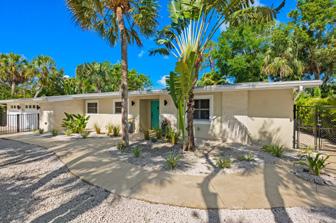
4520 HIGEL AVENUE | SIESTA KEY Single Family | $1,225,000
Real Estate & Lifestyle News
5 TILE TRENDS WORTH CONSIDERING FOR YOUR HOME IN 2024
https://www.forbes.com/sites/jamiegold/2024/04/09/5-tile-trends-worthconsidering-for-your-home-in-2024/?sh=5a0a08f24577
PLANT SOME SEEDS AT ONE OF SARASOTA’S EIGHT COMMUNITY GARDENS
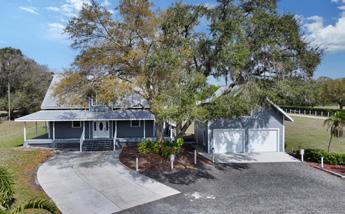
7400 RICHARDSON ROAD | SARASOTA Single Family | $995,000 | Sold $45k over asking price
https://www.sarasotamagazine.com/home-and-real-estate/communitygardens
THE GREATEST SHOW ON EARTH’ GALLERY OPENS AT THE RINGLING
https://www.sarasotamagazine.com/arts-and-entertainment/2024/04/ greatest-show-on-earth-gallery-ringling-museum
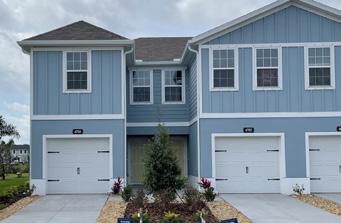
4706 OLD BLUSH STREET | LAKEWOOD RANCH Townhouse | $339,665
8460 BROADSTONE COURT | BRADENTON Single Family | $2,676,790
7909 WYNDHAM COURT | UNIVERSITY PARK Single Family | $1,200,000
7667 DAVID BOULEVARD | PORT CHARLOTTE $508,806 | Single Family
2205 FLOYD STREET | SARASOTA Single Family | $565,000
2309 TERRY LANE | SARASOTA Single Family | $355,000
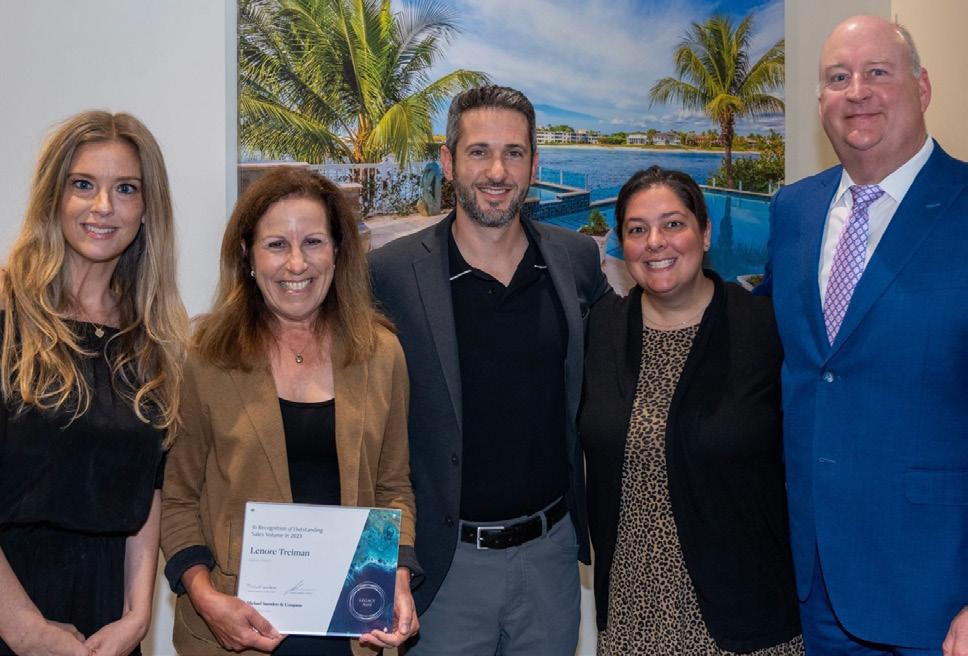 My team: Kelly Sallee, Lenore Treiman, Daniel Treiman, Amy Cullen and Drayton Saunders at a recent MSC awards ceremony.
Will the Fed Cut Rates? Analysts Weigh in
BY CHRISTOPHER RUGABERRate cuts usually happen when the economy weakens. The recent strong jobs report and low unemployment have some wondering if a rate cut will happen this year.
WASHINGTON – Ever since the Federal Reserve signaled last fall that it was likely done raising interest rates, Wall Street traders, economists, car buyers, would-be homeowners – pretty much everyone –began obsessing over a single question: When will the Fed start cutting rates?
But now, with the U.S. economy showing surprising vigor, a different question has arisen: Will the central bank really cut rates three times this year, as the Fed itself has predicted — or even cut at all? The Fed typically cuts only when the economy appears to be weakening and needs help.
Lower interest rates would reduce borrowing costs for homes, cars and other major purchases and probably fuel higher stock prices, all of which could help accelerate growth. An even more robust economy might also benefit President Joe Biden’s re-election campaign.
Friday’s blockbuster jobs report for March reinforced the notion that the economy is managing quite nicely on its own. The government said employers added a huge burst of jobs last month – more than 300,000 – and the unemployment rate dipped to a low 3.8% from 3.9%.
Some analysts responded by arguing that it’s clear the last thing the economy needs now is more stimulus from lower rates.
“If the data is too strong, then why are we cutting?” asked Torsten Slok, chief economist at Apollo Global Management, a wealth management firm. “I think the Fed will not cut rates this year. Higher (rates) for longer is the answer.”
In March, the central bank’s policymakers – as a group – had penciled in three rate cuts for 2024, just as they had in December. Some economists still expect the Fed to carry out its first rate reduction in June or July. But even at last month’s Fed meeting, some cracks had emerged: Nine of the 19 policymakers forecast just two rate cuts or fewer for 2024.
Since then, Friday’s jobs data, combined with an unexpectedly buoyant report showing that factory output is expanding again after months of contracting, suggested that the economy is extending an unexpected run of healthy growth. Despite the Fed’s aggressive streak of rate hikes in 2022 and 2023, which sent mortgage rates and other borrowing costs surging, the economy is defying longstanding expectations that it would weaken.
Such trends have made some Fed officials nervous. Though inflation is down sharply from its peak, it remains stubbornly above the Fed’s 2% target. Rapid economic growth could reignite inflation pressures, undoing the progress that has been made.
In a slew of speeches this past week, several Fed officials stressed that there was little need to cut rates anytime soon. Instead, they said, they need more information about where exactly the economy is headed.
“It’s much too soon to think about cutting interest rates,” Lorie Logan, president of the Federal Reserve Bank of Dallas, said in a speech. “I will need to see more of the uncertainty resolved about which economic path we’re on.”
Raphael Bostic, head of the Atlanta Fed, said he favored just one rate cut this year – and not until the final three months. And Neel Kashkari, president of the Minneapolis Fed, sent stock prices falling Thursday afternoon after raising the possibility that the Fed might not cut at all this year.
“If we continue to see strong job growth,” Kashkari said, “if we continue to see strong consumer spending and strong GDP growth, then that raises the question in my mind, well, why would we cut rates?”
Still, a strong economy and hiring, by themselves, might not necessarily preclude rate reductions. Chair Jerome
Powell and other officials, such as Loretta Mester, president of the Cleveland Fed, have underscored that the main factor in the Fed’s rate-cutting decision is when – or whether – inflation will resume its fall back to the central bank’s 2% target. They note that the economy managed to grow briskly in the second half of 2023 even while inflation fell steadily. Inflation is just 2.5% now, according to the Fed’s preferred measure, down from a peak of 7.1%.
Still, in January and February, “core” prices – which exclude volatile food and energy costs – rose faster than is consistent with the Fed’s target, raising concerns that inflation hasn’t been fully tamed.
As a result, the government’s upcoming reports on inflation will be scrutinized for any signs that inflation is easing further. Wednesday’s report on the consumer price index is expected to show that core prices rose 0.3% from February to March, which generally is too fast for the Fed’s liking.
One reason why Powell suspects the economy can keep growing even as inflation cools is that the supply of workers has soared in the past two years. This trend makes it easier for the economy to produce more and avoid shortages even when demand stays strong. It also helps keep wage and price growth in check.
A surge in immigration in the past two years, most of it unauthorized, has dramatically increased the number of workers willing to fill jobs. Their entry into the job market has mostly ended the labor shortages that bedeviled the economy after the pandemic and caused wages to spike for workers in retail, restaurants, and hotels.
“There are significantly more people working,” Powell said in a discussion at Stanford University this week. “It’s a bigger economy, rather than a tighter one.”
Whether that trend of a rising labor supply can continue this year will help determine the Fed’s next steps.
Still, speaking at a conference at the San Francisco Fed last month, even Powell acknowledged that the healthy economy reduces the urgency of rate cuts: “This economy doesn’t feel like it’s suffering from the current level of rates.”
Indeed, Slok and some Fed officials think borrowing costs aren’t restraining the economy as much as they would have in the past. That’s because in today’s economy, several trends could keep growth, inflation and interest rates higher than in the past two decades. These include a more productive economy, larger government budget deficits and the return of some manufacturing to the United States, where it is more expensive, from overseas.
“It is extremely difficult to make the case that the Fed should be cutting rates at all – and arguably, the debate about raising rates again should be more lively than it is currently,” said Thomas Simons, an economist at Jeffries, a brokerage.
Copyright 2024 The Associated Press. All rights reserved. This material may not be published, broadcast, rewritten or redistributed without permission.
Lenore Treiman MBA, REALTOR ® 941.356.9642 LenoreTreiman@michaelsaunders.com LenoreTreiman.com 1605 Main Street | Sarasota, FL 34236 | 941.951.6660 | michaelsaunders.com
*Data obtained from REALTOR® Association of Sarasota and Manatee