250 YEARS
BALTIMORE’S UNTOLD ROLE IN THE TOPPLING OF A KING

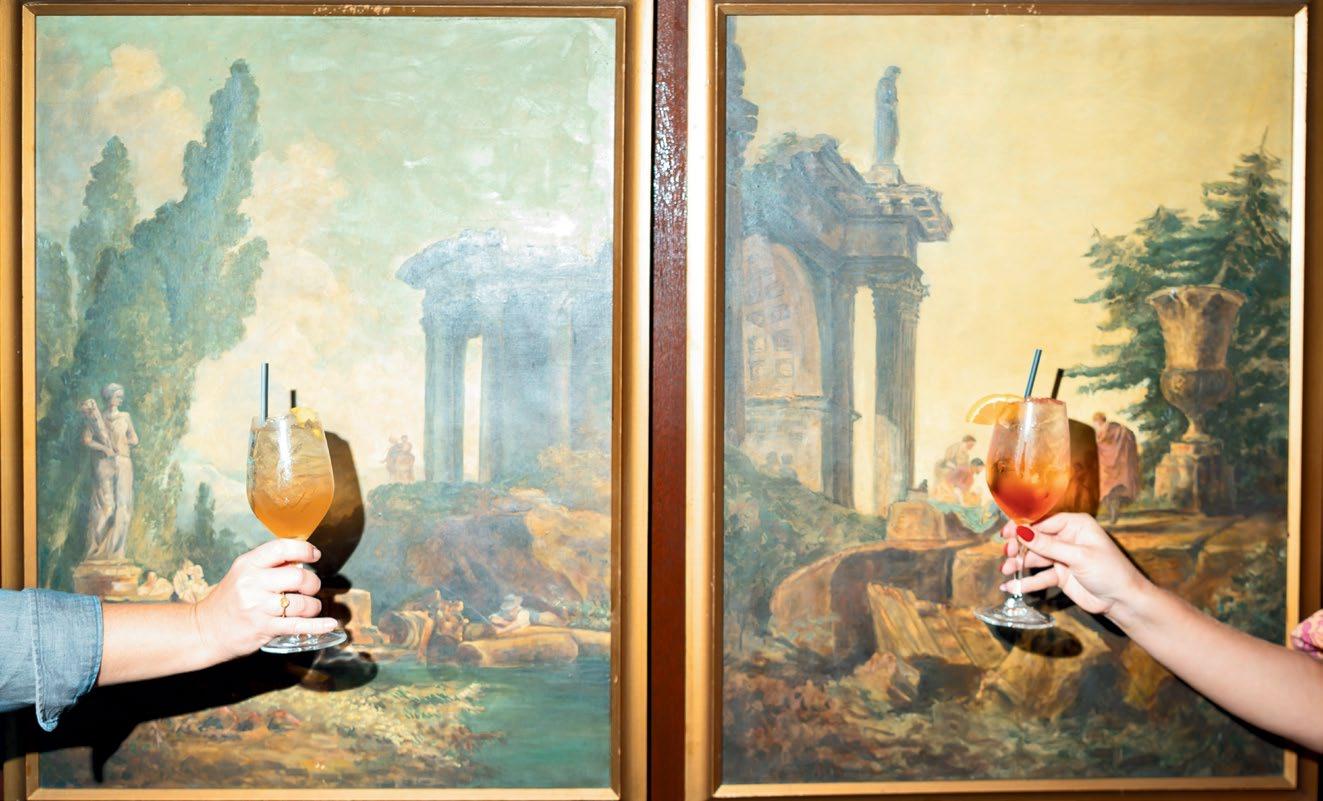
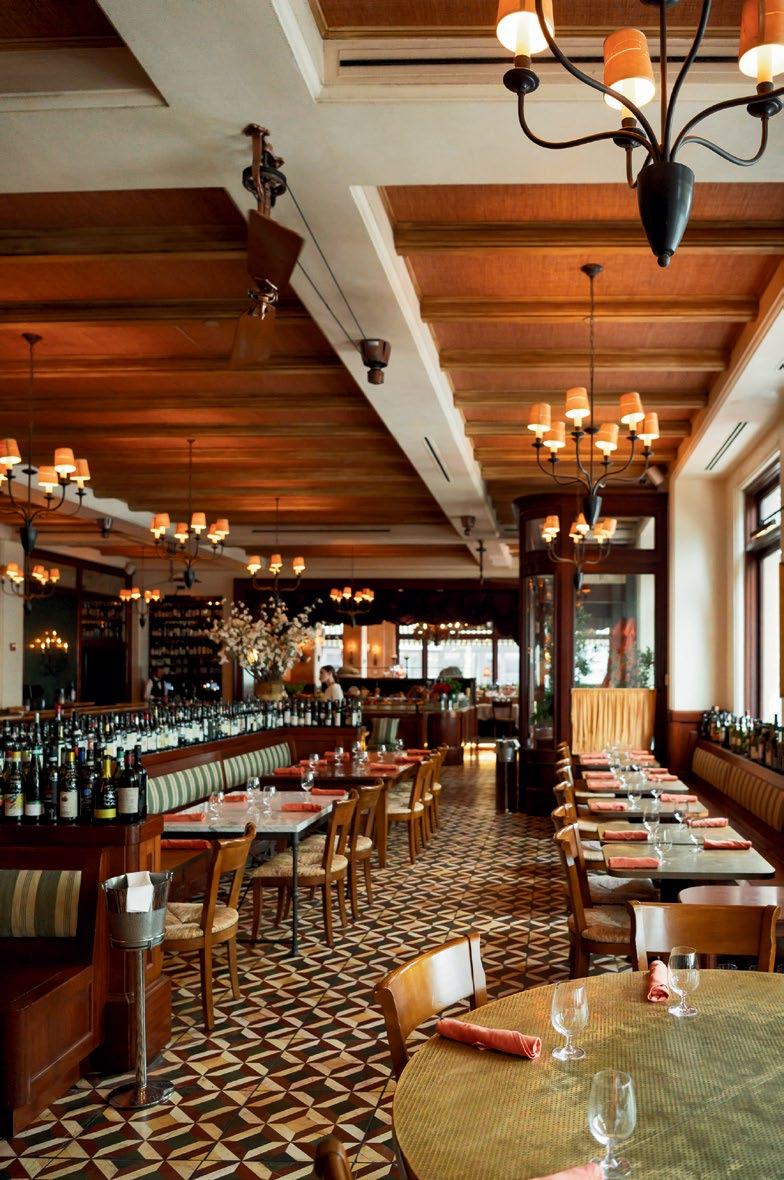

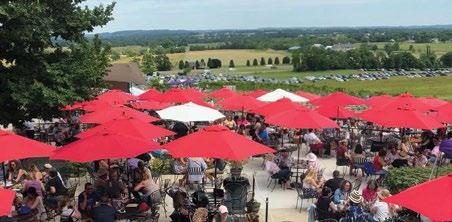
Make the most of summer evenings at The Oregon Grille’s outdoor bar during Happy Hour, Monday through Friday from 4–6 p.m. Surrounded by lush countryside and timeless charm, it’s a perfect way to unwind and savor the season.
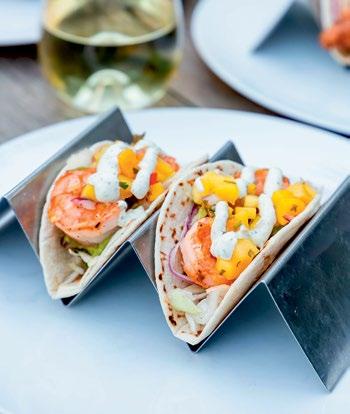
Happy Hour just got a whole lot better at The Valley Inn. From Sunday-Thursday, enjoy specialy from 4-7p.m. at the outdoor bar while soaking up the relaxed, family-friendly vibe. Grab a bite, sip on great drinks, and catch live music that keeps the good times rolling all evening long. It’s the perfect way to kick back with friends & family before the week starts.
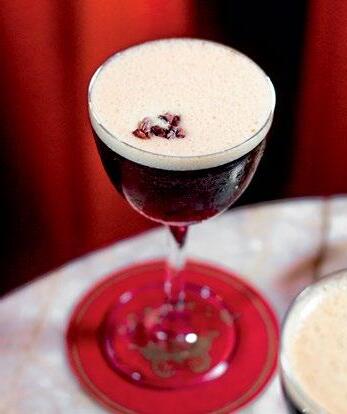
Step into the elegance of Monarque’s Happy Hour, where French sophistication meets Baltimore charm. From Tuesday to Saturday, 5–7 p.m., indulge in $8 handcrafted cocktails like the signature Monarque Martini, $6 wines, and $5 bottled beers. Only on Thursdays you’ll find $2 Espresso Martini from 5pm to close.
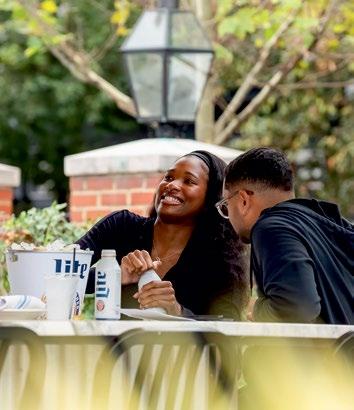
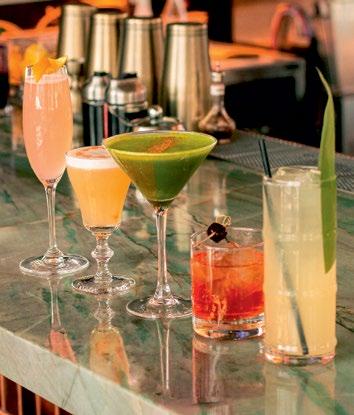
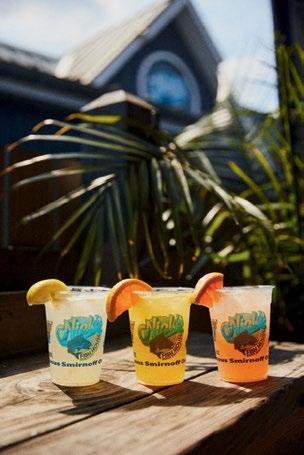
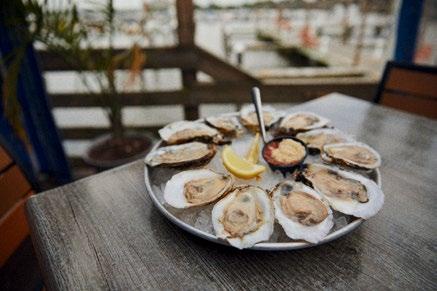
Sunshine, seafood, and crushes—The Choptank’s patio is the place to be this summer. Happy Hour runs Monday through Friday from 4–7 p.m. with $7 wines, $5 beers, $8 crushes, and coastal bites like catfish sliders, steamed mussels, and $1.50 oysters. Grab a seat outside and let the good times roll in Fells Point.
Ease into the evening with Happy Hour at Nine Tailed Fox, Sunday through Friday from 4–6 p.m. Sip $8 spirits, $6 wines, and $5 beers as you unwind at the bar. Experience bold flavors, cocktails, and stylish surroundings redefining Chinese dining in Cross Keys.
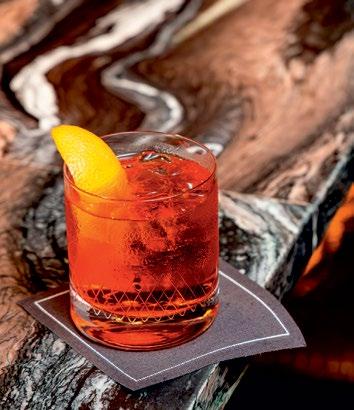
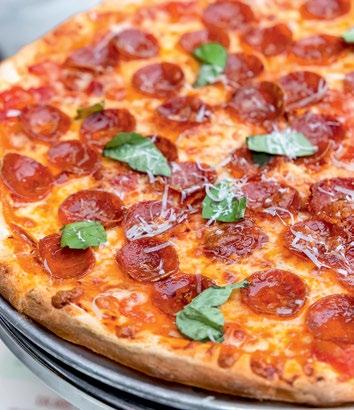
Order of the Ace offers a refined yet relaxed Happy Hour experience, perfect for enjoying thoughtfully crafted cocktails and quality bites. Whether you’re meeting friends or easing into the evening solo, their carefully curated menu pairs effortlessly with a warm, inviting atmosphere. It’s where sophistication meets comfort, making every visit feel effortlessly special.
At Italian Disco, every day is a party with Happy Hour seven days a week from 4–7 p.m. at the bar. We're talking $4 pints, $8 signature cocktails, and $10 select pizzas. Come for the specials, stay for the scene.
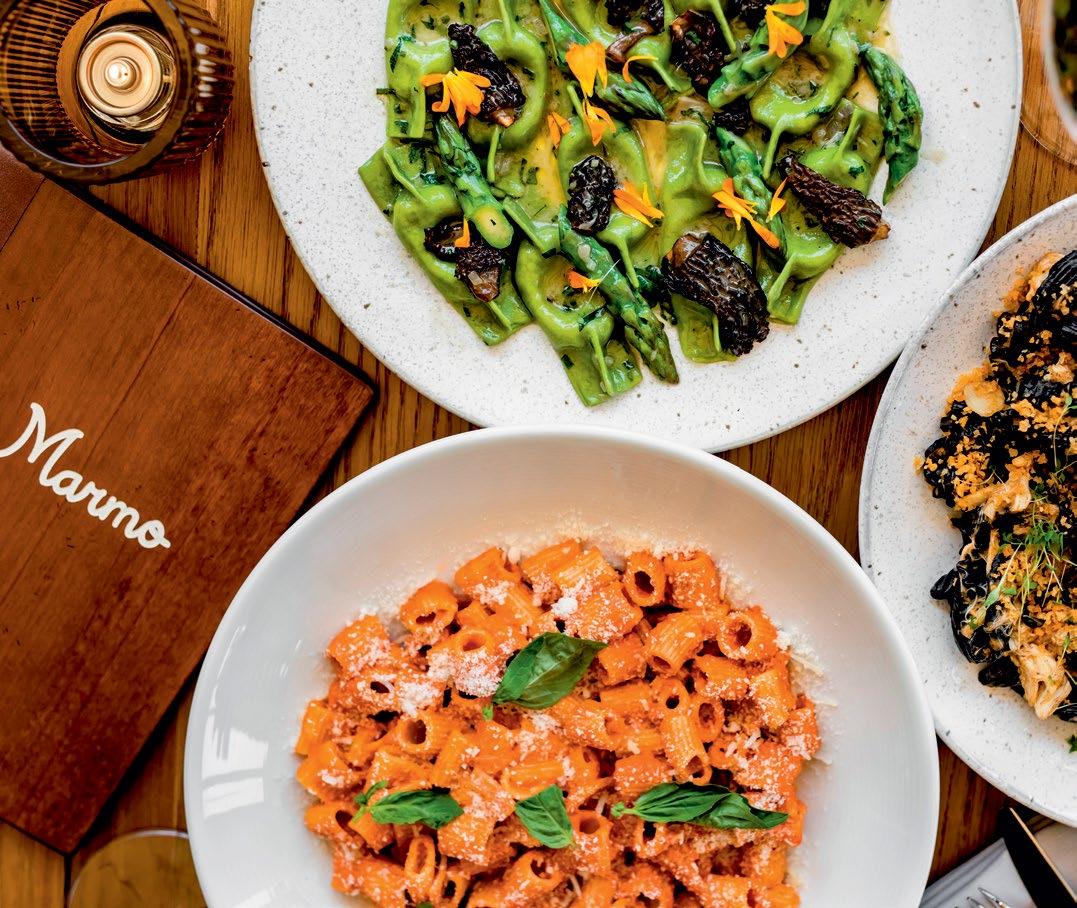
@MarmoAnnapolis MarmoItalian.com
Now open in Annapolis, Marmo brings together timeless Italian cuisine and contemporary sophistication in a striking waterfront setting. Inspired by the success of Atlas’ celebrated Italian concepts, the Italian chophouse features a menu centered around premium steaks, expertly prepared chops, housemade pastas, and fresh seafood.
Guests can explore an extensive Italian wine list highlighting standout selections from some of Italy’s most renowned vineyards, alongside thoughtfully crafted cocktails served at the main interior bar or on the second-floor terrace overlooking panoramic views of Annapolis.
@ArmadaCantina ArmadaCantina.com
Armada is a vibrant cantina poised to energize Annapolis’ waterfront dining scene. Nestled along the dock, Armada invites guests to savor the flavors of Mexico with a menu featuring authentic Mexican cuisine. From a wide range of tacos, burritos, quesadillas and more, Armada promises a culinary experience enriched by bold and vibrant flavors. The beverage menu is anchored by an extensive selection of tequila and agave spirits, inviting patrons to explore the diverse world of libations while soaking in the ambiance of waterfront dining.






















JULY 2026
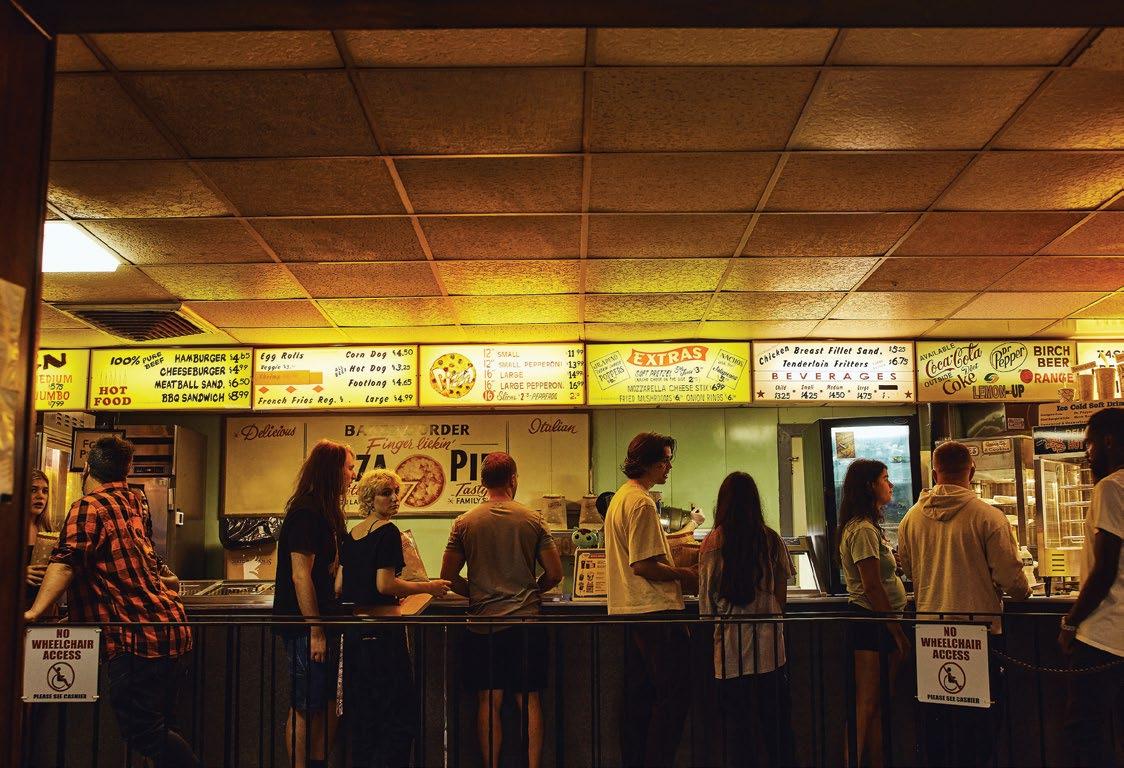
The concession
same as it ever was. For more photos of this iconic 70-year-old drive-in theater, see p. 104. LET’S ALL GO TO THE
We go behind the scenes at a slice of Americana: Bengies Drive-In, now celebrating its 70th year. Photography by Justin Tsucalas. Introduction by Lydia Woolever.
92
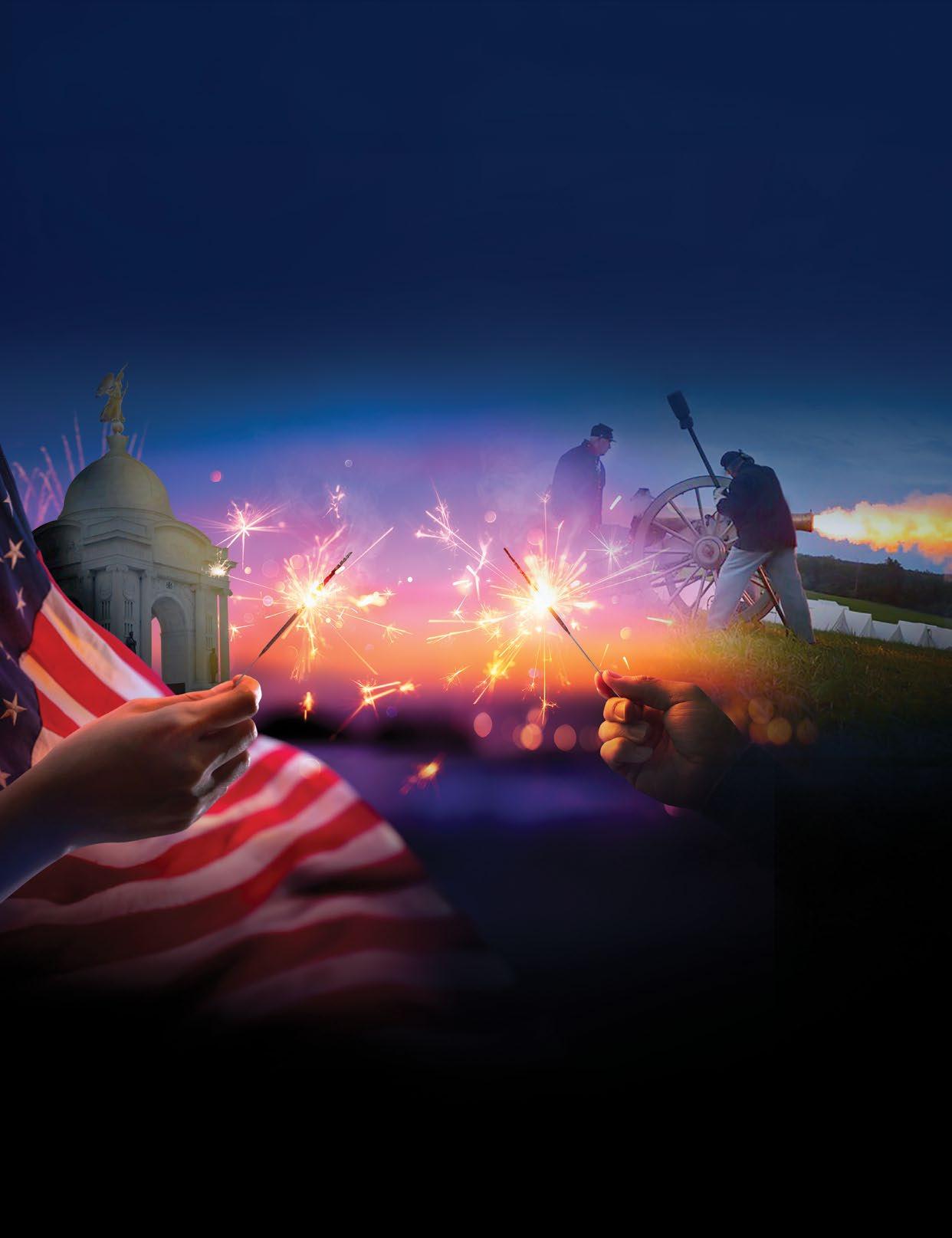
To commemorate America’s 250th birthday, we reveal how our city helped shape America. By Emma Katherine Bilski and Ron Cassie


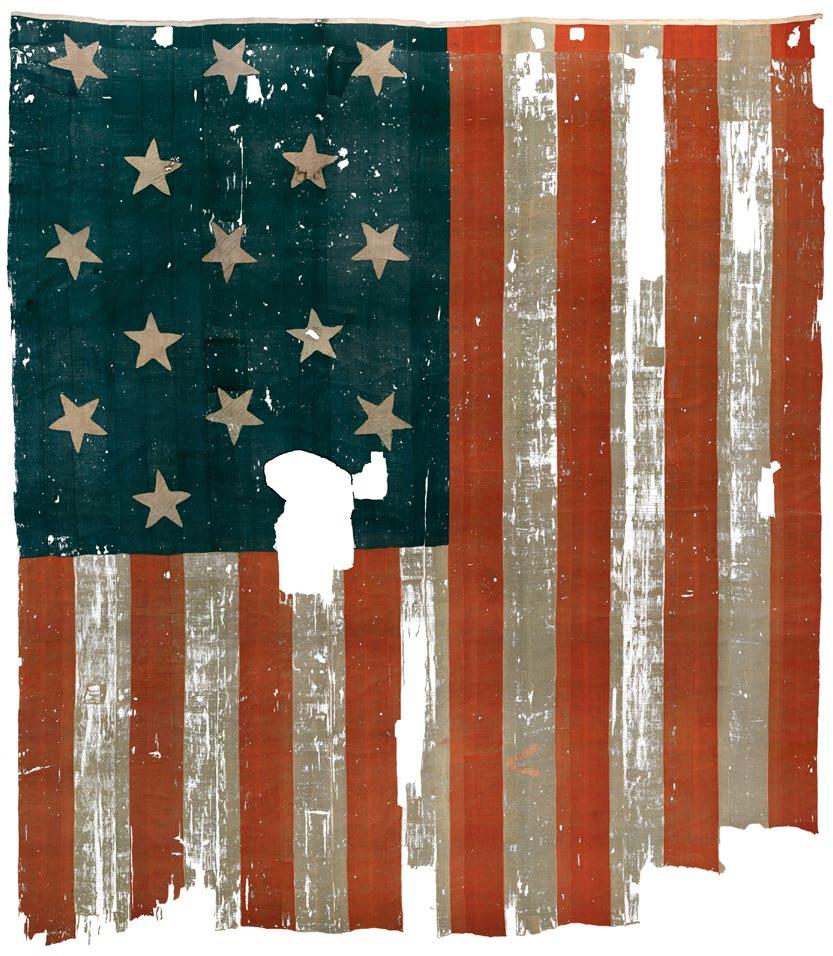
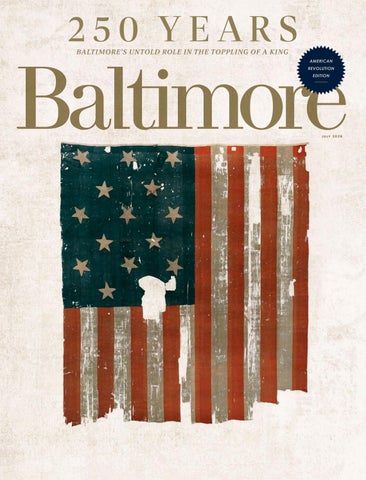
ON THE COVER: Mary Pickersgill’s 1813 hand-sewn Star-Spangled Banner that flew over Fort McHenry. Courtesy of the Smithsonian National Museum of American History.
Magnificent




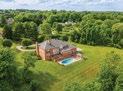
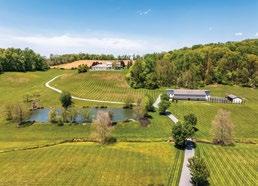
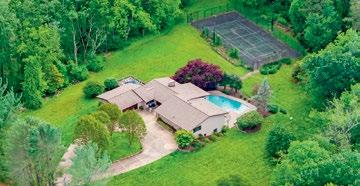
9,600SF+ incls luxe Primary Ste, beautifully built-out, walkout LL., dreamy pool
extraordinary stone pavilion w/outdoor Kit & FP, 3-car garage,immaculate
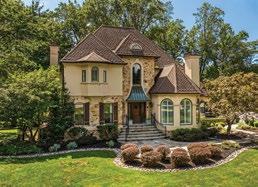











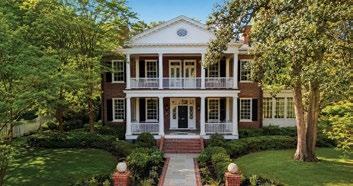
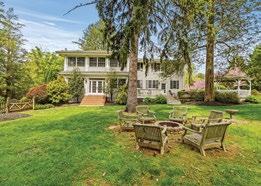
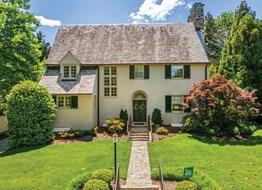
Stately Roland Park Colonial offering 5 BRs, 4 full & 1 half BA with nearly 5,800 sq ft. Features grand porches, 3 FPs,
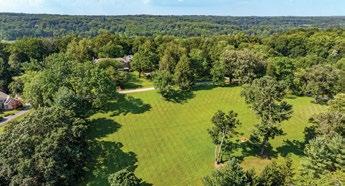
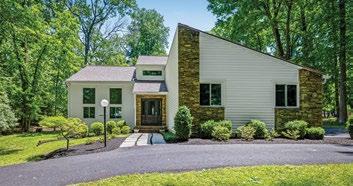
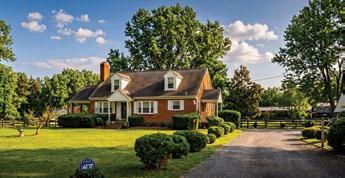
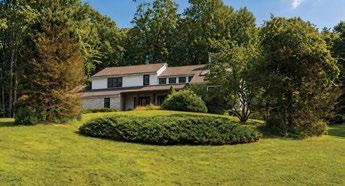
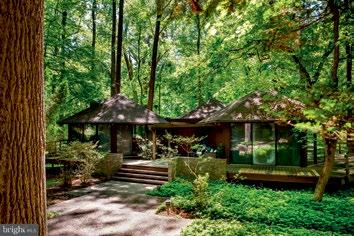
spacious 7BR 4BA Contemporary on 1.09 wooded acs in cul-de-sac. Vaulted ceilings sun-filled interiors open
& FamRm w/FP finished walkout LL 2-car garage. Updated systems + solar & EV charger. Alisa Goldsmith | 917-282-8899 $750,000
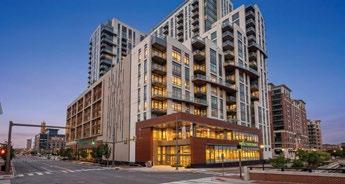
















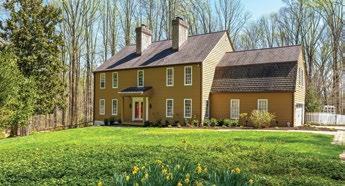

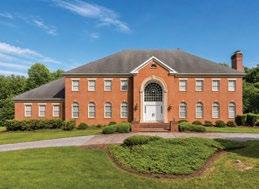
in this sought-after community & only one w/a basement. Gourmet Kit, LR w/gas FP, vaulted sunroom, large study, luxe Primary Ste, private lot, finished LL & 2-car garage. Karen Hubble Bisbee | 443-838-0438 $1,275,000






volume 119 // issue 7
46 TRAVEL Thirteen famous (and nearly famous) waypoints on the road to America’s founding. By Marty LeGrand
52 COMMUNITY The women of the Pitch & Putt Golf Club of Baltimore helped desegregate the city’s public courses and advance the civil rights movement. By Dan Cook
27 METRO When dance meets protest; and why is everyone suddenly playing Mahjong? Edited by Lydia Woolever
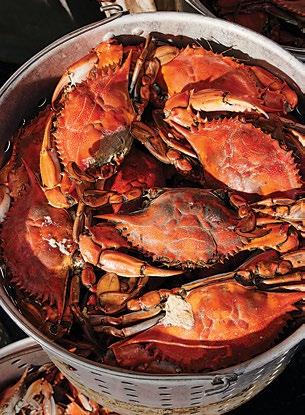
118 REVIEW Emmert’s Seafood is a waterman’s dream crab house. By Amy Scattergood
120 REVIEW Surf’s up at Fisherman’s Crab Deck in Kent Narrows. By Mike Unger
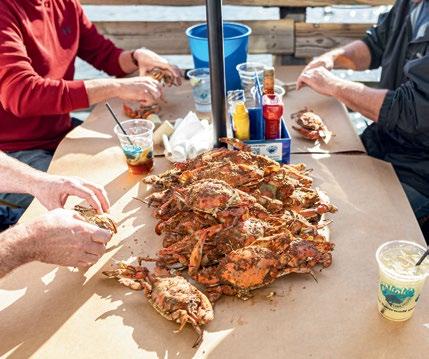
122 Q&A Why the wait for your steamed crabs at Nick’s Fish House is actually a good thing. By Jane Marion
124 DINING GUIDE Local listings.
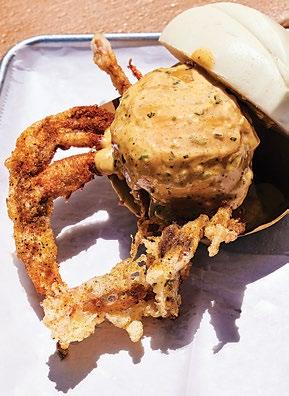
126 TRENDING Ekiben’s new crab sandwich is bliss on a bun. By Jane Marion
YOU ARE HERE By Ron Cassie




this month on

»Instagram: Comment of the Month @andrew3stax Being a snowball snob has gotta be the most forced strong opinion one could ever have; [it’s] artless ice and sugar. [Editor’s note: Agree to disagree!]

»Web Exclusive: BIG SCREEN You went behind the scenes at Bengies Drive-in. Now see more photos of the classic theater online.
CRABTASTIC
The only MD fest devoted to crabs returns to the B&O Railroad Museum on July 11. Feast on all things crab——plus cocktails, beer, and desserts. @bmag.co/crabfest.
SIMPLY THE BEST
On August 6 at the Talon & Backstage at M&T Bank Stadium, eat, drink, dance, and see and be seen as you celebrate the Best of Baltimore. For tickets: bmag.co/bobparty26.
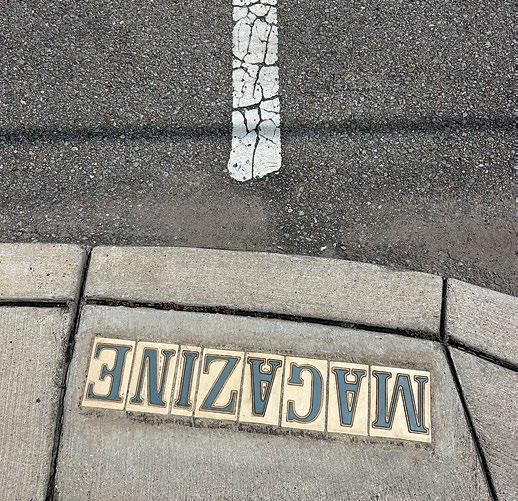
“IT WAS A TRUE HONOR TO REPRESENT OUR TOWN.”
In late May, Baltimore magazine attended the City & Regional Magazine Awards in New Orleans, Louisiana. Our team had received several nominations for our work over the past year—and ultimately went home with the grand prize: General Excellence. As one might expect in the Big Easy, it seemed like there were serendipitous signs for our visit everywhere, with our favorite being Magazine Street, a main drag that runs through the heart of the city. “We’re so proud of our small-but-mighty staff for pulling together these magazines each month, and for doing our best to represent Baltimore,” says senior editor Lydia Woolever, who snapped this photograph along her travels. “It was a true honor to represent our town, and meant the world to have its stories recognized by our most esteemed peers.”
HAPPY BIRTHDAY, U.S.A.
In case you missed it, America has a big birthday this year. From parties and tours to air shows and exhibits, we give you the scoop on all the ways to celebrate.
GET THE SCOOP
Here’s a challenge you’ll happily accept this summer: Lick your way through all the ice cream shops in Baltimore. We’ll give you a headstart with our online ice cream guide.
LIGHTS FANTASTIC
Want to see fireworks on the Fourth of July but not sure where to go? We’ve got you covered with our guide to the most spectacular displays in the region.

Do the Right Thing, Spike Lee’s funny, profane, and incendiary film about racial tensions boiling over on a sweltering day in Brooklyn, which firmly established him as one of America’s great auteurs.
Now & Then forever and always.
Because both Jaws and Stand by Me go without saying: Moonrise Kingdom. Wes Anderson, the coolest kids ever, coastal Maine, Edward Norton and Harvey Keitel as Scout leaders, etc. We watch it on repeat.
My favorite sport, hands down, is baseball and two films about the boys of summer are tied at number one in my book: Bull Durham and Field of Dreams
I love The Sandlot. A bunch of kids playing ball and all the funny things that happen——just takes me back. And the scenes of July 4th between the block party, food, and seeing the fireworks make me feel like a kid again.

Inquiries: Send
Publisher and CEO Stephen A. Geppi
Chief Operating Officer Debbie Darmofal
EDITORIAL
Editor-in-Chief
Max Weiss
Deputy Editor
Jane Marion
Senior Editors
Ron Cassie
Lydia Woolever
Home Editor
Janelle Erlichman Diamond
Special Editions Editor
Christianna McCausland
Research Editor
Amy Scattergood
Editorial Interns
Kendra Bryant
Claire Huss
Brenna Tichy
Kwame Uva
Senior
Contributing Writers
Marty LeGrand, John Lewis, Suzanne Loudermilk, Corey McLaughlin, Mike Unger
Contributing Writers
Rafael Alvarez, Ana Bak, Dan Cook, Alanah Nichole
Davis, John Farlow, Teri Henderson, Lauren LaRocca, Ethan McLeod, Sophia Naughton, Michele Wojciechowski
DIGITAL
Digital Senior Editor
Lauren Cohen
Digital Operations Manager
Megan McGaha
Contributing
Digital Designer
Aaron Hope
CREATIVE STUDIO
Director
Ray Bularz
Content Director
Christianna McCausland
Senior Graphic Designer Michael Tranquillo
ART & PRODUCTION
Creative Director
Amanda White-Iseli
Special Editions Art Director
Staci Lanham
Production Manager
Jon Timian
Senior Advertising &
Marketing Designer
Emily Odend’hal
Assistant Art Director
Alicia Corman
Contributing Photographers
Schaun Champion
Marlayna Demond
J.M. Giordano
Stacy Zarin Goldberg
Wesley Lapointe
Mike Morgan
Christopher Myers
Matt Roth
Scott Suchman
Justin Tsucalas
SHAN Wallace
Tyrone Syranno Wilkens
Micah E. Wood
ADVERTISING
Vice President of Sales
Stephanie Shapiro
Senior Account
Executives
Gayle Burns
Michelle Coughlan
Danny Glazer
Jodi Hammerschlag
Jennifer Rosenberger
Account Manager
Michelle Weinstein
MARKETING
Director of Marketing
Lorann Cocca
Content Marketing Manager
Kamilia Arroyo
EVENTS
Events Director
Jackie Hershfeld
Email: cs@baltimoremagazineservice.com (Include daytime phone number) Subscriptions 800-365-2808
Texas.
Every year, specifically in the dead of summer, I love to watch Rear Window It’s more of a 3D experience if you suffer through the heat alongside the characters. Bonus points if you watch it outside, on a mattress placed on a balcony. IYKYK.
Jaws. I saw it when I was maybe 4 years old as a kid in Ocean City. Definitely messed up that summer for me.
Wet Hot American Summer, a Jewish summer camp classic with an iconic cast.
The Parent Trap. The Lindsay Lohan remake is iconic (especially the summer camp scenes), but my mom and I also rewatch the 1961 original with Hayley Mills, Maureen O’Hara, and Brian Keith all the time.
We will not know-
with
(HUD) at 800-669-9777.
-
IN
Waterfront Dining | Crab House | Private Event Spaces | Live Music
Waterfront Dining | Crab House | Private Event Spaces | Live Music
Waterfront Dining | Crab House | Private Event Spaces | Live Music
Waterfront Dining | Crab House | Private Event Spaces | Live Music
“Best Outdoor Dining” in Baltimore Magazine Reader’s Poll
“Best Outdoor Dining” in Baltimore Magazine Reader’s Poll
“Best Outdoor Dining” in Baltimore Magazine Reader’s Poll
“Best Outdoor Dining” in
“Best Outdoor Dining” in Baltimore Magazine Reader’s Poll
“Best Crab House” finalist in Baltimore Magazine Reader’s Poll
Waterfront Dining | Crab House | Private Event Spaces | Live Music
“Best Outdoor Dining” in
Poll
410 - 347 - 4123
- 4123
- 4123 www.nicksfishhouse.com
www.nicksfishhouse.com
- 347 - 4123 www.nicksfishhouse.com








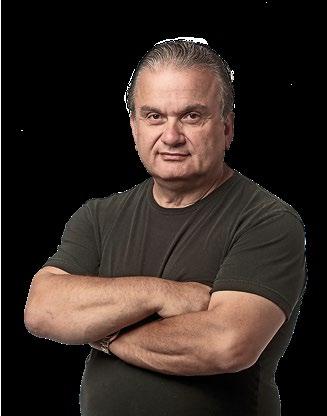
“Both on tours and in writing, I love being able to tell these stories from Baltimore during the American Revolution, because they illustrate so well the importance of ordinary people’s contributions,” says the local tour guide and historian, who co-wrote our cover story. “Revolutions are the work of many hands——and making Revolutionary War successes possible was women’s work.”


“It’s so special to have the opportunity to reflect on our Pro-Democracy Dance Protests, which somehow we’ve been doing for a year——it has really flown by,” says Souza, a former Baltimore arts editor. “Before this, I hadn’t realized how much our country and city had changed during this time. We’re facing entirely different, and also related, issues around our rights and freedoms. It’s an incredible feeling to find community with total strangers once a month. It’s been such a beautiful ride and has provided some of my best Baltimore memories.”


“Photography isn’t usually allowed inside Bengies, so it was great getting the chance to document a place that many Baltimore people know but rarely get to see in photographs,” says the contributing photographer, who shot our photo essay on the famed drive-in theater. “The space has such a specific feel to it that it didn’t need much styling or interference from me. Also, the popcorn is genuinely perfect.”
Board-certified physicians from the University of Maryland are in Columbia, offering evaluation and personalized care in more than 20 medical specialties, including:
• Dermatology
• Facial Plastic Surgery
• Family Medicine
• Lyme Disease
• Neurosurgery
• Ophthalmology
• Orthopaedics
• Rheumatology
• Urgent Care
Be seen by the same expert providers located Downtown, but in a convenient neighborhood setting. Call 667-214-2100 or visit umfpi.org/ columbia to learn more.
LOCATIONS:
UM Faculty Physicians
5890 and 5900 Waterloo Road
University of Maryland
Orthopaedics
5500 Knoll North Drive


AS AN AMERICAN, of course, you have heard of the Annapolis Tea Party. Wait . . . you haven’t? That’s because it was overshadowed by the larger and admittedly more consequential Boston Tea Party, which came a year earlier. (Ain’t that the way it always goes for Maryland?) Turns out, Maryland—and Baltimore, in particular—had a substantial role in the American Revolution. There may have been no actual fighting here—that was reserved for the War of 1812. But Baltimore was where the Congressional Congress assembled to hide from British troops—briefly making Baltimore Town, as it was called, the capital of the United States. And it was troops from Maryland who held the line against an infamous British siege in 1776, allowing George Washington and his army to safely retreat, and earning Maryland its “Old Line State” moniker. Also, ever wonder how La-
fayette Street got its name? Yeah, it’s that Marquis de Lafayette, the famed French freedom fighter (played by Daveed Diggs in Hamilton), who was a frequent guest at his favorite Baltimore tavern. (Not sure if he showed off his rapping skills while he was here.)
In honor of our nation’s semiquincentennial (try saying that 10 times fast), our cover story, co-written by senior editor Ron Cassie and historian Emma Katherine Bilski, reveals Baltimore’s hidden role in the American Revolution. It wasn’t just battles and clandestine meetings of Founding Fathers. They report that women, enslaved African Americans, immigrants, Native Americans, and indentured servants all played a large part in the revolution.
Outside of Baltimore, there are other places to celebrate our nation’s 250th anniversary. In her travel story, “George Washington Slept Here,” senior contributor Marty LeGrand shares 13 waypoints on the road to the nation’s founding, including the Liberty Bell and Valley Forge in Pennsylvania, the Chestertown Tea Party festival, and the Declaration of Independence diorama at the National Portrait Gallery in D.C.
One of America’s greatest inventions? The car. Another one? The commercial movie industry. Put them together and you have the drive-in movie theater, which is about as American as it gets. It’s also something of an endangered species. Enter Bengies Theater, the Middle River drive-in that is now celebrating its 70th year and boasts the biggest outdoor movie screen in the U.S. We go behind the scenes at Bengies with our all-American photo essay. There’s tons of other great stuff in this issue, including our all-crab edition of Local Flavor. Hope you all have a great Fourth of July (and learn to pronounce semiquincentennial). See everyone next month.
20 Years Ago This Month: With our “Big Salary Survey,” we peeked at the paychecks of local workers, including a first-year police officer ($37,964), an elementary school teacher ($48,294), and a plastic surgeon ($294,957). And congrats to that fine artist on the cover who pulls in $48,000 a year!
STEVE GEPPI Publisher




Whoa! What an issue. (“Homegrown,” June.)
@marthaluciusstrategist, via Instagram
Thanks for honoring some of our many wonderful local farmers.
Cindy Wolf, via Instagram
What a great article and feature on [Moon Valley Farm].
@jlmstrategiccommunications, via Instagram
The people that make it all possible! @mmmmunexplainedbacon, via Instagram
As chairwoman of Adults for a Decent Bedtime, I approve this message (“Baltimore 5 to 9,” May).
@jesssolomazing, via Instagram
So much good stuff here. Thanks for including us.
Greedy Reads, via Instagram
Oh. This is. Genius.
@newvintagebysam, via Instagram
That was so good! I was getting teary eyed [reading it] as my childhood was spent at Lou’s corner store. Being old enough to go to the store by myself was such a big deal, even if I had to set the gallon of milk down every couple steps. Gina made the best snowballs and always knew how I liked my lunch sandwich. Such great memories!
Kim Spindler Lapchak, via Facebook
This is wonderful! I took a trip down Memory Lane and could smell the deli and butcher shops of the corner stores in the Belair/ Edison neighborhood where I grew up.
Anne Turner-Boffen, via Facebook
Such a terrific read. Your story is bringing back memories of the corner stores in Lauraville/Hamilton section of Baltimore where I grew up.
Mary Jackson Lutz, via Facebook
Great story! I remembered all the stores mentioned and frequented most growing up. Brought back many good memories.
Lori Berends Kutchey, via Facebook
No one better to carry the torch and continue to innovate an iconic institution than Kaitlin Radebaugh (“Flower Power,” May).
@peterbecker8, via Instagram
Such a wonderful business and family. So happy to see it is in such good hands.
Jean Hall Hart, via Facebook
They did my wedding flowers 49 years ago. Still love their designs.
@vabuckelew, via Instagram
I feel seen.
@uptownbmore, via Instagram
I grew up with a corner store in Park Heights. Felt like Superman when I was allowed to go by myself (“Little Shops on the Corner,” May).
@cmichelecarter, via Instagram




SATURDAY, JULY 11
5:30-9:30 PM
Come hungry! Charm City's most talented chefs are incorporating our summer jewel into inventive, handheld bites. Think: crab tacos, pretzels, corn, and more. Plus, steamed crabs (of course!), drinks, desserts, and sides (fries, anyone?) to round out this culinary festival.
Tickets:
General Admission: $20
Group Discount: $15 (4+ Tickets)
All tickets include access to festival grounds and vendors, plus live music and a 1-year subscription to Baltimore magazine. (Food is not included in ticket price.) VIP: $50 One-hour early entry, guaranteed seating, special crab crackin' bundle
For more information and tickets, visit bmag.co/crabfest The only Maryland food festival for all things crab.
PRESENTING SPONSOR:

EDITED BY LYDIA WOOLEVER
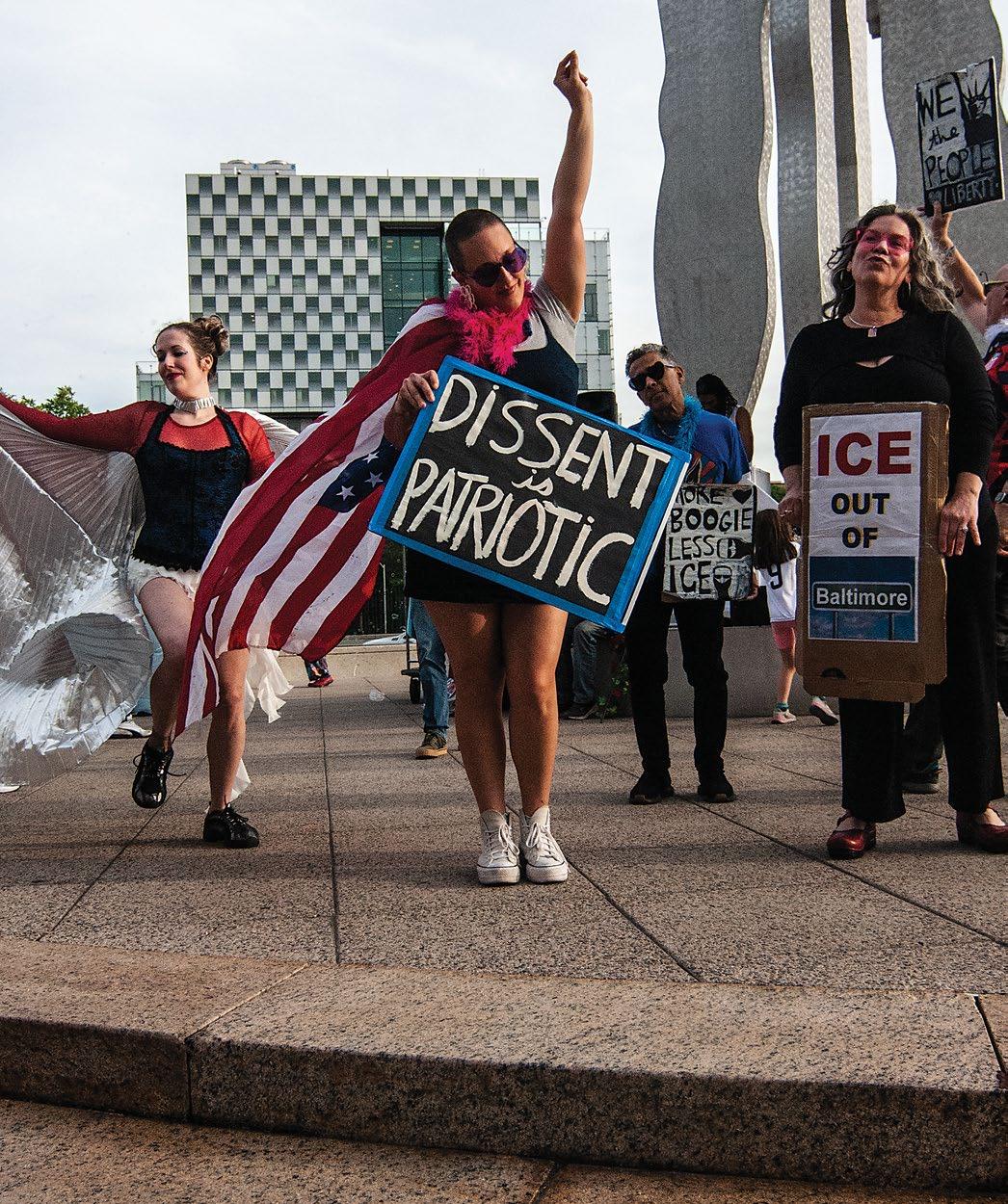
At Penn Station, our monthly Pro-Democracy Dance Parties are a source of joy during divisive times.
BY GABRIELLA SOUZA
ne Friday a month, I don an American-flag cape, heart-shaped sunglasses, and a neon boa, then wait outside Baltimore Penn Station for rush-hour passengers to exit like kids on the last day of school. Music swells from speakers behind me, and signs held by our band of merry protestors proclaim what we dance for: More Boogie Less I.C.E. No Kings, No Wars, No Camps. Democracy: I Still Dig It.
Our group of 50 or so doesn’t resemble the image of angry protestors conveyed across the news and social media. Some carry tambourines or wear rainbow skirts. Others don inflatable costumes (my favorite is a hippo wearing a tutu) and one dancer always dresses as Lady Liberty. We aren’t afraid of becoming spectacles, because, the way we see it, joyfully expressing who we are and what we stand for is the strongest act of resistance against a world lurching toward tyranny.
My friend Sonia Shah and I came up with the idea for what we now call Pro-Democracy Dance Parties after the 2024 election. She and I met in a hip-hop dance class and bonded over our shared love of movement, which allowed us to release our rage and frustration in a country changing faster than we could keep up. At other protests, I longed to process my emotions and express myself more than just holding a sign. So, when Sonia found a video of protestors line-dancing in Washington, D.C., we thought, “Why not?”
One year ago, we first took our positions on the concrete pedestal of the train station’s Male/Female Statue with a karaoke speaker and six-hour playlist, wondering if anyone would show up. We started with a few dancers who quickly became regulars and friends, including our resident DJs, Gonzostein and Tew Slim, who mix house music and dance favorites by artists like Daft Punk and Baltimore’s own Ultra Naté.
Now, every third Friday at 5:30 p.m., there are always new faces, including joggers midway through runs, ride-share drivers who leave their cars with emergency lights flashing, children who twirl in bubbles that waft from our pop-up DJ booth—even passengers who drop their suitcases, shed their inhibitions, and join us. At least once, hundreds of people stretched down Charles Street and circled the statue’s plinth in an hours-long conga line. Along the way, we’ve unlocked an infectious expression of community that has bonded us as a group and to Baltimore, which embraces us for all our eccentricity. Like this town, our effort is unapologetically DIY. We bring extra signs and boas. Volunteers help cart DJ equipment up Charles Street. There are no instructions on our sign-up forms, but the people of Baltimore keep showing up with flying colors, dressed as Care Bears and Uncle Sams, lugging snare drums and cowbells.
“I JUST FELT ALL THE STRESS FLOW OUT OF ME.”
Others have shared how much they need our pro-democracy movement, too. A commuter who identified herself as an immigrant once teared up telling me what it meant to get off the train from her job in D.C. and encounter our unbridled joy. One regular relayed how our inclusive environment is the highlight of the month for her son with disabilities, who “just doesn’t want to be judged.” A friend who received good health news a few hours before coming to dance told me, “I just felt all the stress flow out of me.”
The dance parties encourage a reckless abandon, but there’s always a minute right before the music starts when I feel the sting of self-consciousness. I grimace, thinking of my awkward concentrating face that others will surely see. I ask myself, “If I get off rhythm, will I become an internet laughingstock? Do I look ridiculous?” “Yes, of course,” I remind myself. That realization and acceptance is part of the process.
I start to move while the sun begins its descent over I-83, the breeze twirling my cape. I join the steps of my fellow dancers, moving freely, in celebration of who we are and what we believe. That all are welcome. That having the freedom to embrace our uniqueness is what makes our country great. That we can resist with joy instead of anger. That we can stand, united, against hate. I heave a sigh and let the bliss set in.
A new compilation celebrates songs that never made the cut.
In May, as The Late Show officially wrapped its iconic run on late-night television, we couldn’t help but think about Future Islands. How had it already been 12 years since this Baltimore indie-rock band graced that show, then hosted not by Stephen Colbert but David Letterman? That magnetic performance sent them careening into the national spotlight but their hometown already knew the magic of vocalist Samuel T. Herring, bassist William Cashion, and keyboardist Gerrit Welmers. (Drummer Mike Lowry joined in 2014.) This year marks their 20th anniversary and, for it, they’ve released a compilation album, From a Hole in the Floor to a Fountain of Youth, out now as a double LP. But don’t expect the greatest hits. Instead, these 20 songs never quite made the final cut. For their cult following: a reason to rejoice.
THE REGION’S BEST QUIPS, QUOTES, AND BONS MOTS.
“We never give up. We always thrive. We can overcome anything. We get out the mud every time.”
—Photographer Devin Allen, when asked during Artscape about Baltimore’s superpower, Instagram, 5/23
“This is an outrageous, unprecedented slush fund.”
——Sen. Chris Van Hollen, questioning acting Attorney General Todd Blanche during a Senate hearing about the Department of Justice’s new “anti-weaponization fund,” established in a settlement to President Trump’s $10-billion lawsuit against the I.R.S., 5/19
“I’m hoping that maybe there’ll be some more political courage that pops up.”
——Former Gov. Larry Hogan, in an interview about the current state and future of the Republican Party, on the need to stand up to Trump, The Washington Post, 5/17
“I just wanted to see his beautiful silver hair at a distance.”
——Clavel owner Lane Harlan on the excitement of musician David Byrne’s surprise dinner at her Remington taqueria after his Hippodrome performance this spring, The Baltimore Banner, 5/20






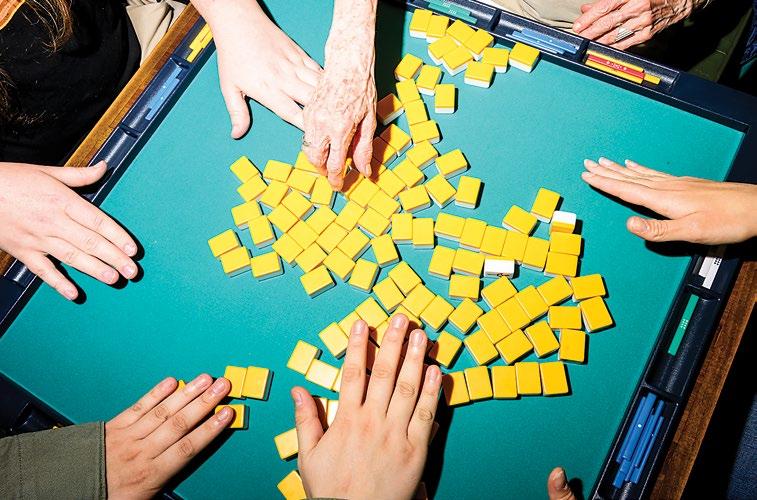
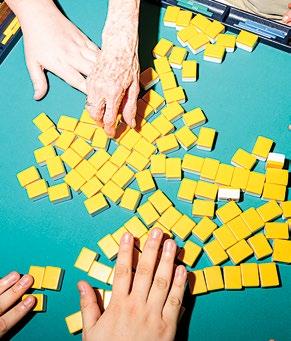
The game that revolves around skill, strategy, and a little bit of luck is sweeping Baltimore.
IT’S A THURSDAY NIGHT on the most ordinary of weeks and No Land Beyond is hopping. Weave your way downstairs and you’ll find folks packed into this board-game bar on North Avenue, four to a table, playing one particular game that’s recently had a massive revival. Maybe you can close your eyes and guess what it is just from that distinctive click-clack sound.
Yes, it’s Mahjong, and here, specifically, Riichi Mahjong, a Japanese multiplayer variant, hosted by Charm City Riichi, that’s like a mixture of poker and rummy, where you need to carefully navigate each draw and discard to stay alive. These days, Mahjong is being played all across Baltimore in its many forms—there are over 40 distinct regional styles, each with unique rules, tile counts, and scoring systems—the most popular being American, Chinese, and Japanese. (There’s also a long tradition of Jewish women playing Mahjong—the American variety, spelled Mah Jongg—but that’s a story for another day.)
Now in their 60s, Leslie Lichtenberg and Randi Jacobson met as students at Pikesville High School. They both learned the American version when their kids were babies. “We’ve been playing for well over 30 years, and what’s so cool now is that we feel like people are finally seeing what we’ve known for decades,” says Lichtenberg. The two launched Mahj Mixers, now in its third year, and are booked months in advance for both private lessons and events. The Orioles recently hired them to lead a class with the players’ wives. Back at No Land, Emma Spicknall explains she first discovered Mahjong through a video game called Yakuza: Like a Dragon. For others, it was through watching anime, or thanks to that famous Mahjong scene in Crazy Rich Asians, or out of a desire to connect with their Asian heritage. “People are especially looking for things to do in third places,” says Spicknall, who moved here 18 months ago and used Mahjong to connect with new friends.
finnigan madison, who helps run Charm City Riichi along with Spicknall and Alisha De La Cruz, says it’s about the game, sure, but it’s mostly about the community. “I went from being a lonely, broken-hearted person in early recovery to being a supported, clean person with a core group of close friends.”
Lichtenberg and Jacobson know that feeling, too. Their purpose was always to share their love of the game and hope others start their own traditions. “We’ve been playing together for so many years,” says Lichtenberg. “We’ve watched our kids grow up and get married and have babies, and we’ve been through all the ups and downs of life together around the Mahjong table. So, our goal is just that other people will have that same experience.”—Janelle Erlichman Diamond
1
335,000
Projected Bay Bridge traffic this past Memorial Day Weekend.
57%
Decrease of opioid-related overdose deaths in Maryland since 2020, marking a 10-year low.
6
million
Maryland residents living in areas experiencing ongoing drought as of late May, with reduced rainfall this spring compounding an especially dry 2025.
1 cartoon cat







THE TOP THINGS TO DO IN BALTIMORE THIS MONTH.
EDITED BY
LYDIA WOOLEVER
WRITTEN BY Sophia
Naughton
7/4
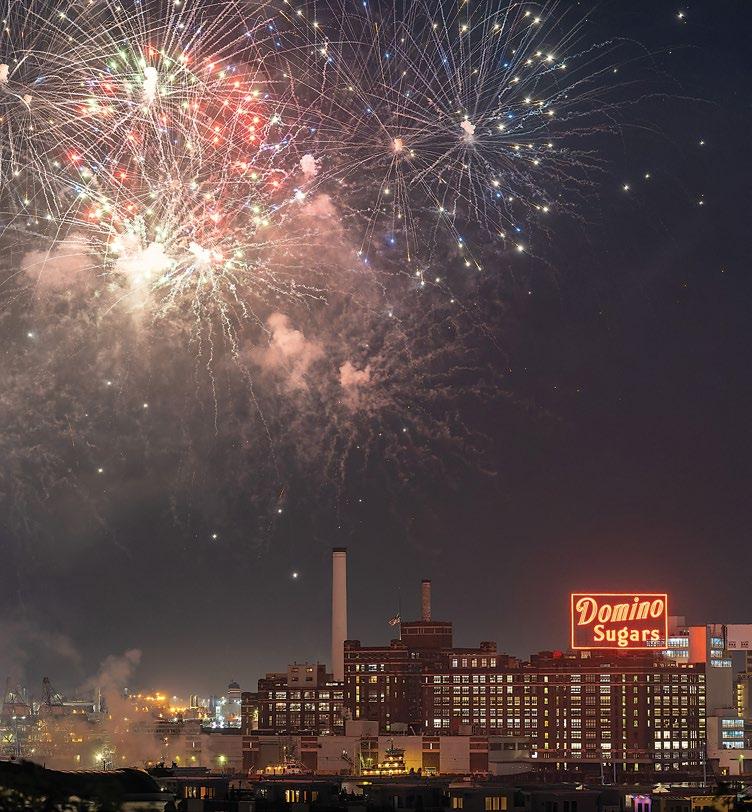
Festivals. On America’s 250th birthday, there will be no shortage of celebrations throughout the MidAtlantic, from nearby Washington, D.C., to the temporary U.S. capitol of Annapolis, to the historic streets of Baltimore. And if you find yourself near the Inner Harbor, you can bet on double the dazzle, as colorful fireworks fill the sky over the waterfront. For free family fun, these festivities kick off at the amphitheater on Pratt Street, followed by live music along the promenade and a silent disco at Point Park. Also consider the Baltimore Museum of Industry as your vantage point for its epic views and evening activities. After the rockets’ red glare, catch a drone show that launches from Middle Branch Park.
7/3-4
BSO’S STAR-SPANGLED 250
Music. Pack a picnic and celebrate Independence Day with the Baltimore Symphony Orchestra during its outdoor concert featuring classic patriotic tunes from “The Star-Spangled Banner” to the Star Wars score, followed by a spectacular fireworks show. Oregon Ridge, 13401 Beaver Dam Rd., Cockeysville. 8 p.m. $20-30. bsomusic.org.
7/4
B&OS’s 250TH ALL-AMERICAN BASH Festivals. All aboard the American Freedom Train No. 1, which last hit the tracks nearly 50 years ago during the nation’s Bicentennial. Step into history with live music, a BBQ lunch, craft beer, and more for the whole family. B&O Railroad Museum, 901 W. Pratt St. 10:30 a.m.-3:30 p.m. $12-20. borail.org.
7/5
BACH HANDEL & FAURE
Music. Celebrate 250 years of American music with a performance by the Bach In Baltimore Concert Choir and Orchestra, which will be one of Maestro T. Herbert Dimmock’s final shows of his nearly 40-year tenure. St. Joseph Parish, 100 Church Ln. 4 p.m. bachinbaltimore.org. FREE.
7/6
LADEW BUTTERFLY HOUSE
Outdoors. The Ladew Butterfly House opens for the season, until late September, with a guided tour to learn about these insects, their favorite plants, and how to support their habitat, as well as a chance to view them at different life stages. Ladew Topiary Gardens, 3535 Jarrettsville Pike, Monkton. 9 a.m.-3:30 p.m. Free-$22. ladewgardens.com.
7/8
BENSON BOONE
Music. After his recently sold-out global American Heart Tour, this rising pop star is backflipping right back into the spotlight in downtown Baltimore. CFG Bank Arena, 201 W. Baltimore St. 8 p.m. $53-406. cfgbankarena.com.
7/9-22
YOUNG BLOOD Exhibitions. Since 2008, the Young Blood program has helped give local Masters of Fine Arts students a platform to connect with other blossoming artists. In the Bromo Arts District, see selections from their recent thesis projects. Maryland Art Place, 218 W. Saratoga St. Tues.-Sat. 12-4 p.m. mdartplace.org. FREE.
7/9-26
VARIATIONS ON SILENCE
Theater. For the 22nd year, Rapid Lemon Productions presents a series of 10-minute plays from local playwrights, exploring last year’s audience-selected theme: “Silence!” Strand Theater, 5426 Harford Rd. $10-25. strand-theater.org.
7/9-30
FLICKS FROM THE HILL
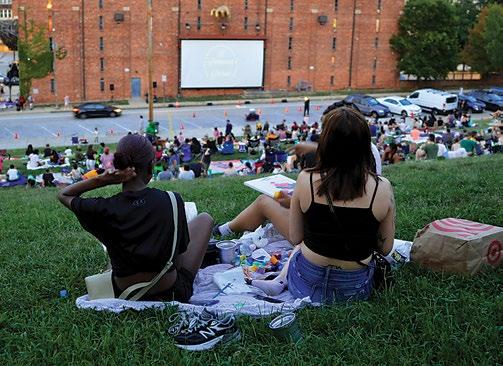
Film. Every Thursday, enjoy a movie night under the stars with outdoor screenings of family favorites like The Wiz, A Wrinkle in Time, Men in Black, and Labyrinth. Arrive early to snag the best spot on the hill, plus after-hours museum admission, movie-inspired activities, and food trucks. American Visionary Art Museum, 800 Key Hwy. Thurs. 5-9 p.m. avam.org. FREE.
7/10
ORIOLES TURNSTILE NIGHT
Music. The Birds take on the Royals, featuring an exciting collaboration with this Baltimore-bred, Grammy Award-winning hardcore band. Fans who purchase special tickets will take home a limited-edition Turnstile-Orioles jersey. Oriole Park at Camden Yards, 333 W. Camden St. 7:05 p.m. $75.14-124.23. mlb.com.
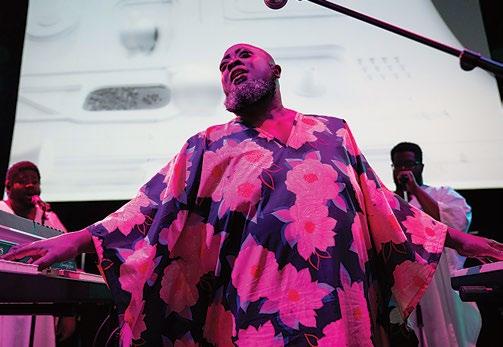
7/10-12
BALTIMORE CARNIVAL
Festivals. For one full weekend, this annual fete brings a Caribbeanstyle parade complete with colorful masquerade bands, live music, dancing stilt walkers, and more family-friendly festivities to Druid Hill Park. Druid Hill Park, 900 Druid Park Lake Dr. Fri. 3-10 p.m., Sat. 12 p.m., Sun. 9 a.m.-10 p.m. baltimorecarnival.org. FREE.
7/16
NATIONAL AQUARIUM VOYAGES Festivals. For the eighth installment of this National Aquarium interactive after-hours series, the institution partners with Tim “Chyno” Chin, aka The Boy with the Blue Beard, for a night that celebrates the Black female chefs of the local dining scene in the Blue Wonders exhibition. National Aquarium, 501 E. Market Pl. 6 p.m. $60. aqua.org.
7/17-10/31/2027
THE LINES WE CROSS Exhibitions. Attend the opening
of this brand-new Lewis Museum exhibition celebrates 250 years of Maryland’s contributions to the United States of America. Reginald F. Lewis Museum, 830 E. Pratt St. Mon. & Thurs.-Sat. 10 a.m.-5 p.m., Sun. 12-5 p.m. Free-$12. lewismuseum.org.
7/18
DISABILITY PRIDE ARTS FEST Festivals. Celebrate Disability Pride Month with Make Studio, the Maryland Department of Disabilities, and the Enoch Pratt Free Library with arts organizations, mini-art workshops, stage performances, and more. Enoch Pratt Free Library, 400 Cathedral St. 10 a.m.-2 p.m. prattlibrary.org. FREE.
7/18-19
STAVROS HALKIAS
Comedy. This unabashedly brazen comedian, writer, and actor may live in the Big Apple now, but he hasn’t forgotten his Baltimore roots. Known for his Ravens superfan character Ronnie, Stavvy returns home to bring laughs to the city that raised him —a rescheduled date from April after he broke his arm in a scooter accident. The Lyric, 140 W. Mt. Royal Ave. 7 p.m. $38.90-257.05. lyricbaltimore.com.
7/18-19
PHISH
Music. On the heels of their 14th studio album, this iconic, cult-followed jam brand lures the masses to Columbia for two nights of funk, psychedelia, and rock n’ roll, with the performance featuring all four original members. Merriweather Post Pavilion, 10475 Little Patuxent Pkwy., Columbia. 7 p.m. $62-186. merriweathermusic.org.
7/25
KOJO ASTRONAUT
Music. Perfectly paired with the museum’s Douriean Fletcher exhibition, Afro House presents a new work that thumbs through love, liberation, and our relationship to the universe, with artistic director Scott Patterson pushing the boundaries of music beyond sound. The Walters Art Museum, 600 N. Charles St. 3 p.m. thewalters.org. FREE.
7/25-8/2
FLUID MOVEMENT
Performance. In their Candy Land production, the beloved water-ballet performance troupe takes you on a flavorfilled journey through the city to save the Domino Sugar Factory from the evil Lord Natty Boh. Riverside Park Pool & Clifton Park Pool. Sat.-Sun. 5 & 7 p.m. Prices vary. fluidmovement.org.
7/31
BALTIMORE’S
Festivals. Baltimore is celebrating its 297th birthday and you’re invited. Dance the night away with DJ Tanz, an open bar, light bites, and birthday desserts from local vendors. Baltimore War Memorial, 101 N. Gay St. 7 p.m. $58.85132.49. livebaltimore.com.
Exhibitions. This two-year exhibit features eight artists representing communities across the state to chronicle the last 250 years through the lives of Marylanders. The community is encouraged to engage with the artwork to create an evolving narrative during the span of the exhibit. Star-Spangled Banner Flag House & Museum, 844 E. Pratt St. Tues.-Fri. 10 a.m.-3 p.m., Sat. 10 a.m.-4 p.m. Free$9. flaghouse.org.
To read more events, arts, and culture coverage from our editors, check out events.baltimoremagazine.com



Experts at the University of Maryland School of Dentistry offer the full range of services to patients of all ages, from dental exams and cleanings to braces and retainers, cosmetic veneers and implants, and lifesaving oral cancer detection and treatment.
As the world’s first dental college and Maryland’s only provider of academic dentistry, our clinical faculty and dental professionals are involved with research and teaching in addition to practicing dentistry.
Additionally, the team is highly trained and uniquely qualified to care for patients with special needs and those with highly complex oral health conditions.


Appointments are available at our Faculty Practice within one week, and same/next day for urgent concerns.

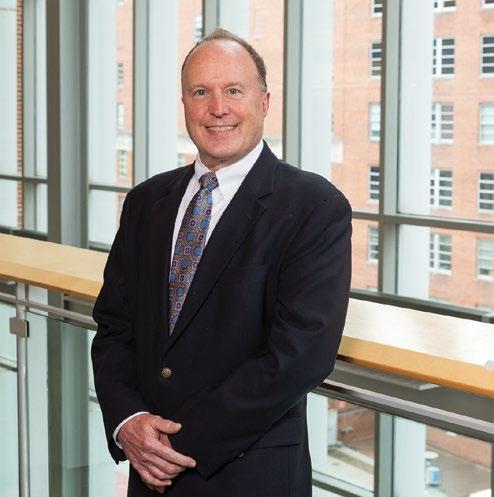
Dr. David George, a respected leader and faculty dentist at the University of Maryland School of Dentistry, speaks to Baltimore about how digital dentistry and AI-driven models are impacting and improving the field, and ensuring better long-term outcomes, particularly that of dental implant placement.
As an expert in clinical care, dental education, and practice operations, Dr. George is also uniquely equipped to offer his best advice when choosing an oral health provider for you and your loved ones.
What are the most common dental concerns you treat in your practice?
Other than preventive care, the most common conditions include tooth decay, periodontal (gum) disease, tooth loss, cracked or worn teeth, and infections requiring endodontic (root canal) or surgical management.
Explain what a dental implant is and how it was traditionally placed.
A dental implant is a titanium fixture surgically placed into bone to replace a missing tooth root and supports a crown, bridge, or denture. Traditionally, placement relied on 2D imaging, stone models, and freehand surgical techniques guided by clinician experience rather than digital technology.
Why would a patient need a dental implant?
Patients may need a dental implant to replace missing teeth, restore chewing function, preserve bone, maintain facial structure, and improve esthetics and overall oral health. Dental implants are used in a range of circumstances from replacing a single tooth to an entire mouth. The causes of need also vary—from disease or infection to trauma and cancer treatment.
What are the challenges of traditional implant placement?
Some challenges include limited visualization of anatomy, variability in placement accuracy, longer surgical times, higher risk of complications, and less predictable restorative outcomes.
Senior Associate Dean for Faculty Affairs and Strategic Initiatives
University of Maryland School of Dentistry
Chief Operating Officer, Faculty Dental Services
650 W. Baltimore Street, Baltimore, MD 21201
410-706-7961
dental.umaryland.edu/patients
“Digital and AI-assisted approaches [to dental care] improve placement accuracy, reduce surgical invasiveness, enhance safety, and lead to more predictable functional and esthetic outcomes.”
How are you using digital dentistry and AI for robot-assisted/guided placement of dental implants?
We use advanced 3D imaging techniques such as CBCT digital imaging and intraoral scanning, along with AI-driven planning software to create precise treatment plans. These are integrated with guided surgical systems and robotic-assisted platforms to enhance accuracy and optimize implant positioning.
What impact does this new technology have on patient outcomes and care?
Digital and AI-assisted approaches improve placement accuracy, reduce surgical invasiveness, enhance safety, and lead to more predictable functional and esthetic outcomes.
How are digital dentistry and AI transforming the future of dentistry?
They are enabling personalized, data-driven care while improving diagnostic precision, streamlining workflows, supporting minimally invasive techniques, and expanding access to high-quality treatment.
What’s your best advice for patients when selecting a dental provider?
Patients should seek a provider with strong credentials, a commitment to evidence-based care, experience with advanced technologies, clear communication, and a patient-centered approach to treatment planning that considers individual needs and goals.
What makes the team at University of Maryland School of Dentistry unique?
The faculty at the University of Maryland School of Dentistry provides a broad spectrum of clinical expertise from general dentistry to specialty and surgical care. The team combines patient care excellence, cuttingedge research, and a strong academic mission—integrating education, innovation, community outreach, and interdisciplinary collaboration to advance oral health and improve lives in Baltimore City and beyond.
BY RON CASSIE

THE REVOLUTIONARY WAR is remembered as a fight won by Americans who had the nerve to ignore the edicts of King George III, dump British tea into the Boston Harbor, and go toe to toe with the world’s greatest military power. But it was larger than just the 13 colonies’ battle for independence. The war was also a full-throttle global conflict, as other European empires, namely France, Spain, and the Dutch Republic, assisted the American cause and challenged British dominance across North America, the Caribbean, and India.
In fact, it is very unlikely the Americans would’ve prevailed without their allies. The French and Spanish, in particular, forced England to divert military resources away from America to defend their empire. They provided foreign financing and credit as well, bankrolling much of the eight-year campaign.
In The American Revolution and the Fate of the World, University of Maryland historian Richard Bell, British-born coincidentally, reevaluates our understanding of the Revolution. Not just the global nature of the conflict, but that here at home it was, in fact, a civil war, with African Americans and Native Americans fighting on both sides. It’s a must read for those who want to expand and deepen their understanding of American history.
And there was a great propaganda battle. Today’s conspiracy theories are not exactly a novel political tactic. There’s a fierce battle waged by patriot writers and loyalist writers to win the hearts and minds of those who are neutral at the start. Writers like Paul Revere and Samuel Adams try to persuade them to adopt George Washington’s side and maybe even pick up arms. Patriots try to convince their fellow colonists that British East India Company tea has been packed down into chests by Chinese warehouse men with filthy feet. . . . [Meanwhile] loyalists are weaponizing their fellow colonists’ fear of foreigners by spreading ugly, untrue rumors that the arriving French Catholic soldiers have orders to persecute American Protestants, steal their lands for King Louis of France, and even ban the speaking of English in America.
Everything considered, Harry Washington might have the most compelling personal saga in the book. What I like about the remarkable life of Harry Washington, who, at one time, was enslaved to George Washington, is that both have their own way of pursuing ideas of liberty. For George Washington, that means liberty from the control of the British government, and it has to do with land, trade, and political power. For Harry, it’s freedom from slavery, most immediately, and then all that comes after that in terms of seeking self-determination, civil rights, and political
power. It’s a journey that takes him from revolutionary America to British Canada, and then to Sierra Leone in West Africa.
We’re also reminded the Revolutionary War, like nearly every war, was not good for the American or British economy. The war was an economic disaster for almost everyone involved, on every side. The British economy was ruined by the suspension of trade with its biggest customers in America. The economies of the 13 rebel colonies completely collapsed when trade was cut off with their biggest trading partner, the British Empire, including Canada and the Caribbean. It’s calamitous. Shipping is halted, which creates huge shortages, price hikes, and hyperinflation. People lose their jobs. Companies go out of business. On both sides of the Atlantic, that puts enormous pressure on politicians to end the war. In Britain, those economic concerns drive numerous peace petitions sent to Parliament and to the king by ordinary hard-up British people, who want this economic hardship over as quickly as possible.
A good place to start is the framing of the Revolution as America’s first civil war. Not just because the Founding Fathers were British citizens, but because most Americans weren’t onboard initially. There wasn’t the polling we do today, but the best estimates are 40 percent of white residents [in America] would’ve been considered patriots, maybe 40 percent neutral——think of them as today’s swing voters——and 20 percent strongly loyal to England.
What does Thomas Paine mean in 1776 when he declares Americans “have it in our power to begin the world over again?” He’s encouraging readers to take the leap, to embrace the cause of independence, to fight this war and win it, because as humans we all have extraordinary amounts of political power and agency. When we work together, we can do great things. He’s also noting that for a group of rebel colonies to break away from an empire in the 18th century would be unprecedented and send a signal around the world that the king’s control over his colonies is neither permanent nor invincible. That such an example could reshape the modern world, and it has, right? There have been loads of revolutions in the wake of the American Revolution.








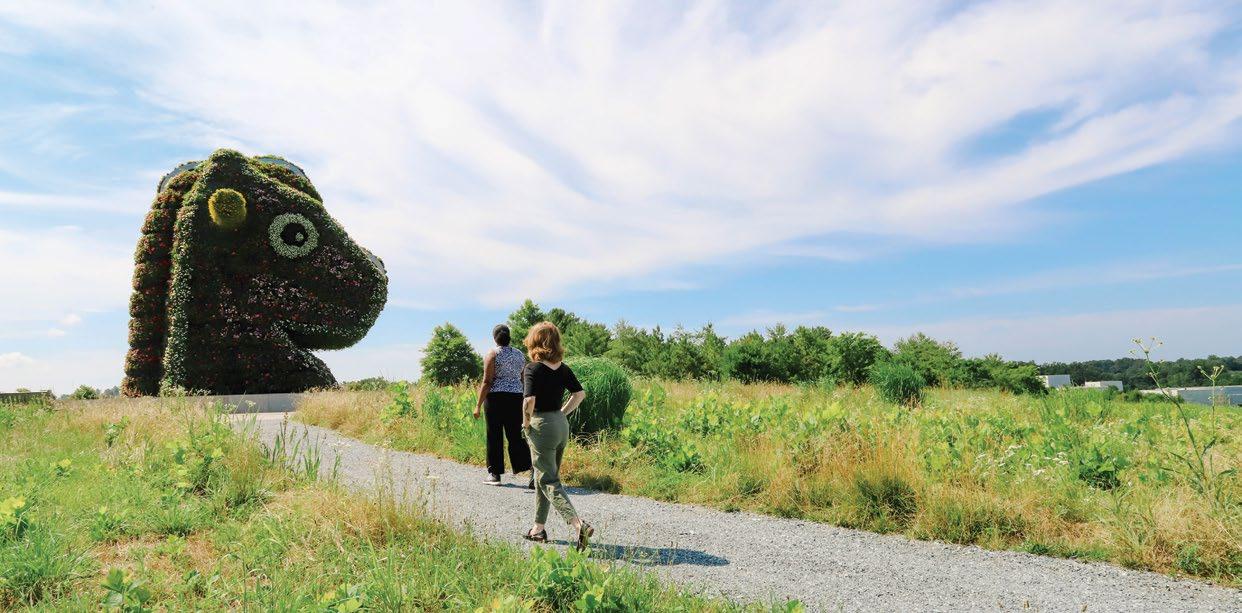



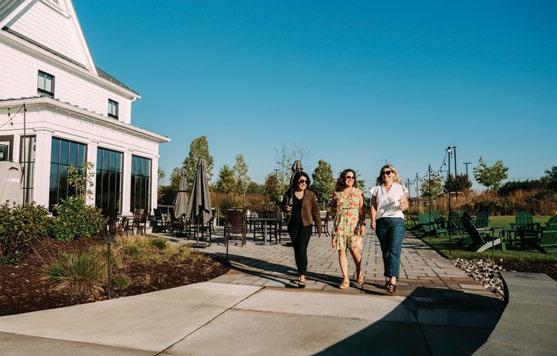
Sip craft cocktails at a hidden farm speakeasy, bike the towpath along the C&O Canal, savor globally inspired cuisine, and discover art, shopping, festivals, and events. It’s an easy weekend escape to Maryland’s Cultural Capital - just a quick drive from Baltimore.





GOOD TIMES GREAT DRINKS IN MONTGOMERY COUNTY, MARYLAND
Savor a glass of rosé with views of Sugarloaf Mountain. Share a pint on a working horse farm. Visit a brewery tucked in a pine forest. Taste cider made steps from the orchard. Start planning your weekend along the Tastemakers Trail - just a quick drive from Baltimore


















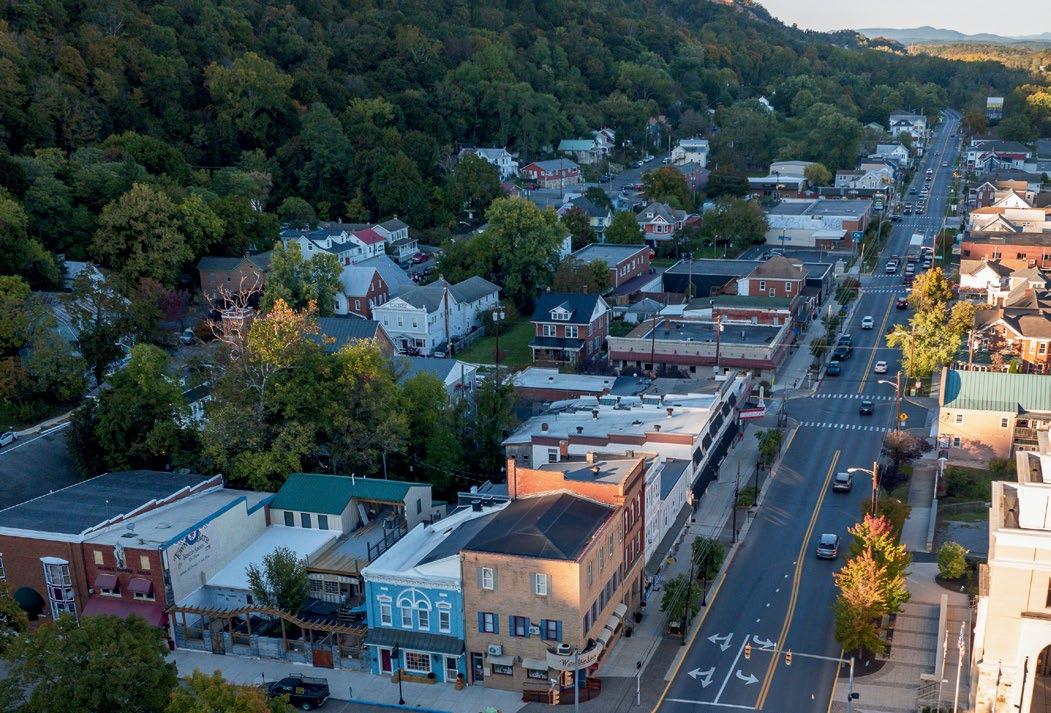








1748 - GEORGE WASHINGTON FIRST DOCUMENTS “YE FAM’D SPRINGS” 1776 - BATH, WV, IS FOUNDED IN BERKELEY COUNTY, VA 1802 - BERKELEY SPRINGS, IS NAMED AS THE POSTAL CODE OF BATH, VA






1820 - BATH BECOMES COUNTY SEAT OF NEWLY FORMED MORGAN COUNTY, VA 1863 - WEST VIRGINIA SECEDES FROM VIRGINIA 2026 - BATH, WV, IS OFFICIALLY DECLARED AS AMERICA’S FIRST SPA TOWN
1863 - WEST VIRGINIA SECEDES FROM VIRGINIA
celebrarte 250 years at america’s first spa











Thirteen famous (and nearly famous) waypoints on the road to America’s founding.
As the United States throws itself a bang-up 250th birthday party, the MidAtlantic will be front and center. Ground zero could be Philadelphia, home to the Liberty Bell and Independence Hall. Or perhaps Washington, D.C., with the nation’s capital boasting copies of its original founding documents.
If you’re traveling this summer, don’t miss smaller commemorations, either. The Eastern Shore’s tribute to a pair of homegrown heroes. Allegany County’s trail of pedigreed trees. Or George Washington’s favorite soaking spot in West Virginia.
In honor of America’s original 13 colonies, we’ve collected a baker’s dozen regional destinations—all relatively close to Baltimore—worth visiting during this celebratory season.
PENNSYLVANIA:
York, Valley Forge, Philadelphia, and Brandywine
When the Founding Fathers formally bade Great Britain adieu in Philadelphia on July 4, 1776, Pennsylvania became the birthplace of a revolution that quickly enmeshed even its peaceable Quaker settlers.
York (52 miles) Who knew this modestly sized colonial town—an hour’s drive north of Baltimore today—once served as the U.S. capital? It’s true. The Second Continental Congress fled Philadelphia for nine months beginning in September 1777 when the Brits occupied the city. At the York County History Center, learn how John Adams, John Hancock, and other delegates from the 13 original colonies convened at the county courthouse to adopt the Articles of Confederation, the Constitution’s precursor.


Here, leave enough time to explore the campus. Don’t miss the acclaimed, hands-on History Center Museum , opened in 2024, where touchscreens literally put the past at your fingertips and guided tours include a reconstructed courthouse where the Continental Congress met.
Valley Forge (100 miles) Ninety miles east of York, in suburban Philadelphia’s King of Prussia, lies one of the Revolution’s most hallowed grounds, Valley Forge. Now a 3,500acre National Historical Park, it marks the riverside encampment where Gen. George Washington and his Continental Army endured disease, starvation, and brutal weather in the winter of 1777 and ’78. Drive, hike, or bike a scenic 10-mile loop to see the soldiers’ recreated log barracks, tour the stone house that served as Washington’s headquarters, and take in stirring monuments, including the National Memorial Arch, honoring the soldiers’ “incomparable patience and fidelity.” Philadelphia (99 miles, or 1-hour train
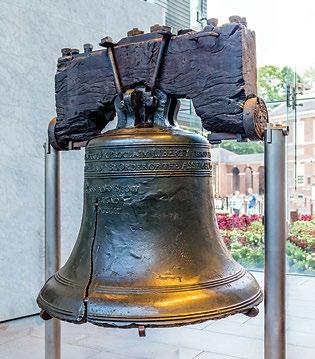
trip) Next up, Philadelphia, where you can’t swing a cheesesteak this year without hitting some reminder of the city’s bragging rights. Weekly neighborhood “Saturday Firstivals” mark Philly’s many other national feats—first bank, zoo, flower show, hot-air-balloon flight, World’s Fair, and even . . . Slinky. For the core historic celebration, head to the Old City District, home of Independence Hall, the Liberty Bell, and the Benjamin Franklin Museum While taking in those must-see attractions, leave ample time for the nearby Museum of the American Revolution and the National Constitution Center. The former hosts a truly inspiring exhibit, “The Declaration’s Journey,” tracing the history and impact of the document from 1776 through struggles for civil and women’s rights, to freedom movements around the world. The latter brings the story of that founding document to life—almost literally in Signers’ Hall, where you stroll among 42 life-size bronzes of the framers (including three Marylanders).
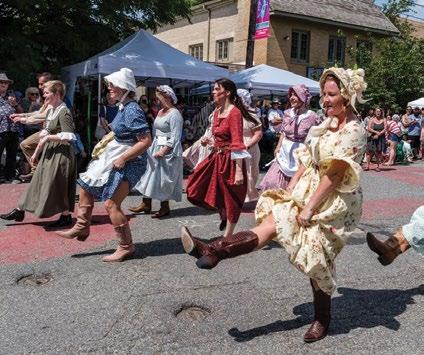
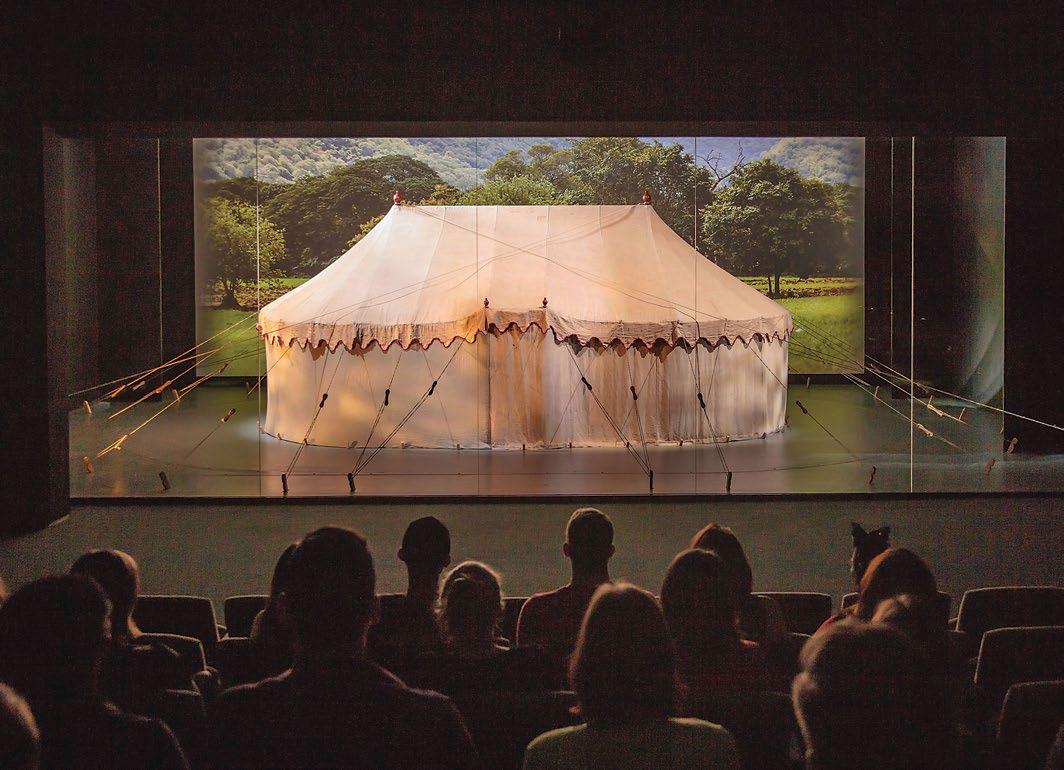
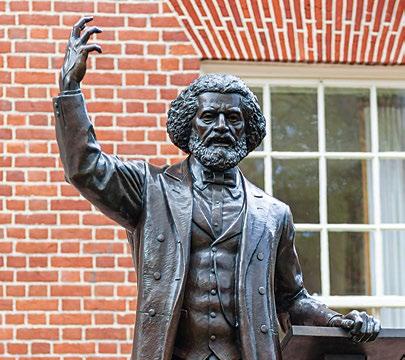
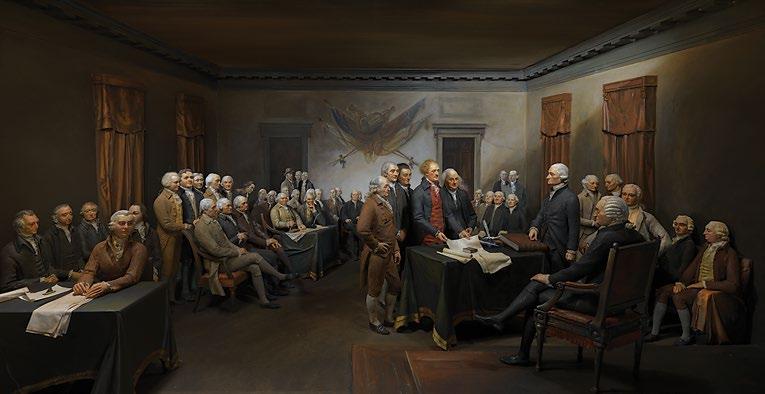
Previous page: George Washington's war tent theater at the Museum of the American Revolution in Philadelphia This page, clockwise from top left: The Frederick Douglass statue in Easton, Maryland; the Liberty Bell at Independence Hall in Philadelphia; colonial women dancing at the Chestertown Tea Party Festival; the Declaration of Independence diorama at the National Portrait Gallery in D.C.
Brandywine (78 miles) Forty-five minutes west via I-95 lies Chadds Ford and the Brandywine Battlefield Park, honoring the largest single-day land battle of the Revolution. On September 11, 1777, British forces led by Gen. William Howe clashed with Washington’s Continental Army. Some 30,000 soldiers fought on multiple fronts near the Brandywine River. Howe’s troops eventually won, forcing the fledgling American government to flee Philadelphia for York, but the patriots’ battlefield tenacity boosted troop morale.
At the Visitors Center, watch an orientation film and see military artifacts. Take guided tours of the houses of two Quaker farmers caught up in the conflict, including one that was used as Washington’s headquarters.
Although no major Revolutionary War battles occurred on its soil, Maryland supplied some of the war’s most stalwart patriots, and the Eastern Shore’s fertile fields became the “Breadbasket of the Revolution.” For some, independence took longer to arrive.
Easton (69 miles) Massachusetts has Paul Revere’s midnight dash; Maryland has Tench


Tilghman’s 200-mile marathon. Gen. Washington’s trusted aide-de-camp, Tilghman carried news of Britain’s surrender from Yorktown to Philadelphia, an arduous journey thought to have shortened his life. On the Eastern Shore, Tilghman’s native Talbot County hasn’t forgotten him, or its more famous son, abolitionist Frederick Douglass. About an hour from Baltimore, stop first at Old Wye Mill, a restored gristmill that, twice monthly, grinds grain as it has since 1682. During the Revolution, its flour sustained Washington’s troops. Today, its artisanal flours are still for sale.
Talbot’s county seat, Easton was the Eastern Shore’s colonial capital. A historical marker denotes Tilghman’s long-vanished birthplace, “Fausley,” but you’ll learn more about him—and Douglass—at “We the People of Talbot County,” a new exhibit at the Talbot Historical Society’s Larry Denton Museum. Also visit “Bear Me Into Freedom,” a unique exhibit at the Chesapeake Bay Maritime Museum in nearby St. Michaels where you can “ask” questions of a Douglass hologram and receive AI-generated replies. Better yet, go stand in front of his bronze statue at the nearby courthouse and take some time to ponder his legacy yourself.
Oxford (79 miles) On to Oxford via the Oxford-Bellevue Ferry, which has been plying the Tred Avon River since 1683. Once a bustling colonial port, Oxford endures as a quiet village reflecting its seafaring past. The nowshuttered Robert Morris Inn was the home and place of business of wealthy merchant Robert Morris Sr., whose son, Robert Morris Jr., personally financed the patriots’ war effort before a central bank could be established. The old inn, closed since last fall, is awaiting its own savior to restore the property to its former glory. Here, visit the small Oxford Museum, where you can learn more about the Morris family. Look for Tench Tilghman’s gravesite in the Oxford Cemetery
Chestertown (75 miles) Heading home, make a detour to Chestertown, up north in Kent County. Known for its reenactment of a 1774 patriots’ protest each summer, the town boasts plenty of colonial cred. Stroll the historic district and admire the buildings—Widehall, River House, and the circa-1746 Custom House—that define this former British port
of entry. Chestertown’s Washington College, founded in 1782 and named for George himself, was the first college chartered in the nation. Originally the residence of a prominent colonial slave trader, the Custom House is now home to the college’s Starr Center for the Study of the American Experience, a wellspring for powerful projects like Chesapeake Heartland, in which students and scholars preserve local African-American history.
Every Memorial Day weekend, residents and reenactors don tricorns to celebrate the Chestertown Tea Party Festival, commemorating the day when tax-weary townspeople teatotaled a cargo of the British beverage into the harbor. The original event has yet to be historically verified, but the legend merrily lives on.
THE NATION’S CAPITAL: Washington, D.C., Alexandria, Virginia, and the Potomac River
The nation’s current capital literally was a swamp in the 1770s—marsh surrounded by woods and plantations. Back then, prominent politicians and thinkers of the day lived across the Potomac River in Virginia. Washington, D.C. (40 miles, or 45-minute train trip) D.C.’s waterlogged landscape has changed, to say the least, and now includes a wealth of free, federally run museums. Don’t miss the National Archives, where the nation’s founding documents—the Declaration of Independence, Constitution, and Bill of Rights—are preserved for viewing. To avoid long waits, make timed reservations online.
The Smithsonian Institution’s museums are collectively celebrating “Our Shared Future: 250.” See Abraham Lincoln’s top hat and 249 other priceless historical objects at the National Museum of American History. Meanwhile, the National Portrait Gallery will showcase an impressive wax diorama last on view 50 years ago. In intricate detail, the restored work depicts members of the Second Continental Congress at the signing of the Declaration.
Alexandria (60 miles) Old Town Alexandria exudes colonial American history. Tour Gadsby’s Tavern Museum, two 18th-century hostelries whose patrons included the Washingtons and other prominent Virginians. A new exhibit highlights colonial women,
specifically Hannah Griffith, an enterprising businesswoman and tavern operator. The city will honor its 277th birthday plus America’s 250th on July 11, culminating with a grand fireworks display.
Potomac River (70+miles) Here, less than an hour’s drive from Alexandria, you can tour two stately Potomac River estates, George Washington’s Mount Vernon and George Mason’s Gunston Hall. If you haven’t visited Mount Vernon recently, you’re in for a treat. A new exhibit immerses visitors in Washington’s “Revolutionary Life.” Eavesdrop on vital political conversations he held in Philadelphia. Interactively face decisions he made as general. And meet historical interpreters at a mock Continental Army encampment.
Long before libertarianism existed, there was George Mason, a planter-politician fiercely protective of individual liberties (except, notably, those of his slaves) and wary of government tyranny. He helped write Virginia’s Declaration of Rights. Learn more about him at Gunston Hall, his 1759 estate, whose grounds include a Georgian-style mansion, formal gardens, and a visitors’ center.
Big Pool, Maryland, Berkeley Springs, West Virginia, and Cumberland, Maryland
By the time the first shots of the American Revolution were fired in Lexington and Concord, Massachusetts, the Western frontier had breached the Appalachian Mountains, where a certain future president made his mark as a young surveyor and a promising officer.
Big Pool (100 miles) Ninety miles west of Baltimore, in Big Pool, Maryland, sits Fort Frederick, built by English colonists for protection during the French and Indian War and repurposed to imprison His Majesty’s troops during the Revolutionary War. The fort’s 18-foot-tall stone wall and two barracks have been restored so visitors to this state park can, for example, inspect the spartan quarters in which the POWs lived in overcrowded conditions.
Berkeley Springs (108 miles) To the west of this citadel of armaments and suffering, Berkeley Springs remains a recuperative retreat in West Virginia. Its healing, thermal
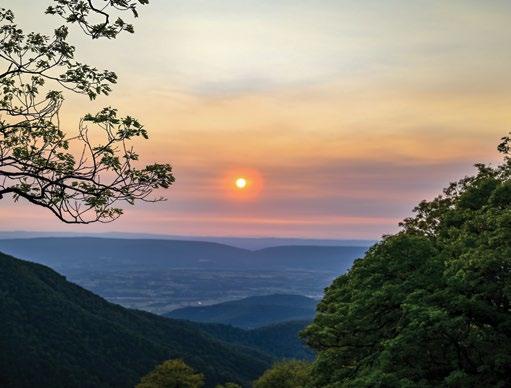
waters have beckoned spa-goers since 1776, when founders named the town Bath. George Washington not only slumbered here, but he also bathed in its springs. Today, Berkeley Springs State Park has recreated his bathtub, a stonelined trench touted as “the country’s only outdoor monument to presidential bathing.” Dip your toes where George soaked his saddle-sore tush, then book a full spa treatment, including massages and saunas, at the park’s bathhouses. A natural 74.3 degrees year-round, the springs running through the park are free to serenity-seeking soakers.
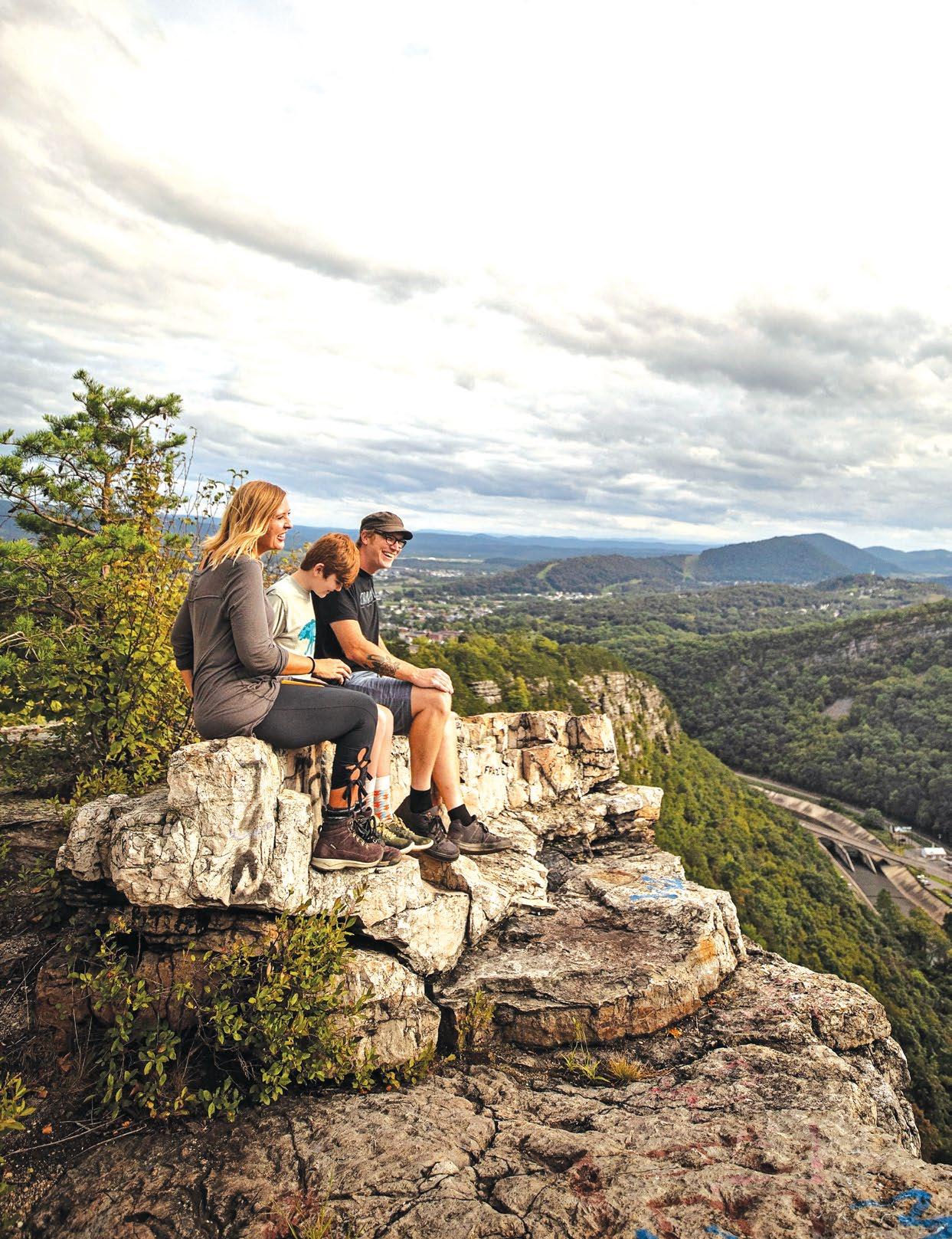
Cumberland (140 miles) Further still into the western panhandle of Maryland, mountainous Cumberland guarded the colonial frontier and forged the military career of our first commander-in-chief. As a young officer during the French and Indian War in decades prior, Washington served at Fort Cumberland. The fort itself is gone but one original structure survives: a 1750s log cabin that served as Washington’s headquarters and now sits in lovely Riverside Park. Although you can’t enter, a peep into its window displays offers a glimpse of 18th-century military life.
Washington first visited Cumberland as a surveyor and last visited in 1794 as the first U.S. president. Learn about his local connections at the Allegany Museum’s “Crossroads of America” exhibit. Don’t miss its detailed model of Fort Cumberland and an AI-aged bust of Washington as he looked in the 1750s.
Follow Allegany County’s Liberty Tree Trail to find 15 genetic descendants of Maryland’s original Liberty Tree, a tulip poplar beneath which the colonial Sons of Liberty met. Local forester Champ Zumbrun has become the Johnny Appleseed of Liberty Tree conservation, propagating and sharing seedlings from this living symbol of American independence.
MARTY LEGRAND is a Baltimore senior contributor.

The women of the Pitch & Putt Golf Club of Baltimore helped desegregate the city’s public courses and advance the civil rights movement.
The drive down Washington Avenue amid the urban sprawl of southwest Baltimore provides zero indication that Carroll Park Golf Course is nearby. Finally, two weathered stone columns mark the entrance to the course’s crumbling macadam parking lot. Splotches of patchy grass and sparse trees surround an octagon-shaped clubhouse that’s lined with pale-yellow clapboards and designed for function more than form. The traffic on I-95, a chip shot away from the course’s western border, adds a constant din to the gritty ambiance.
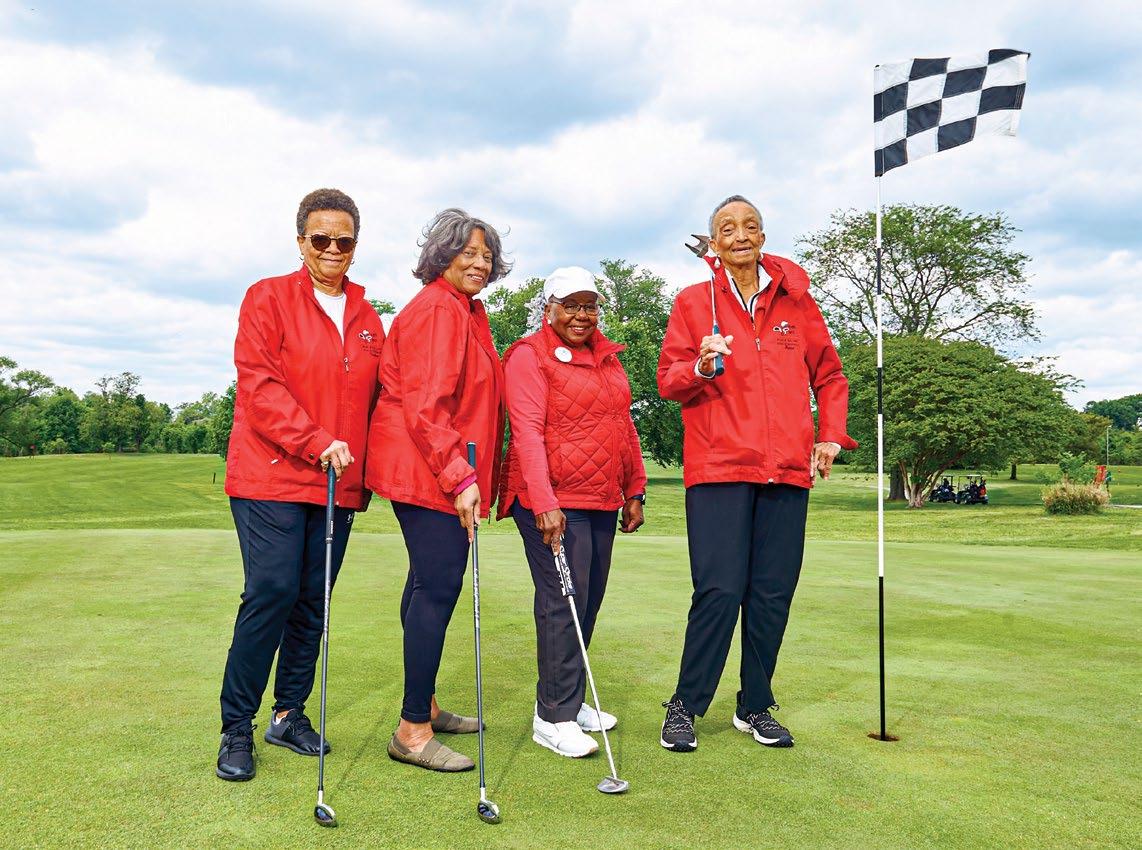
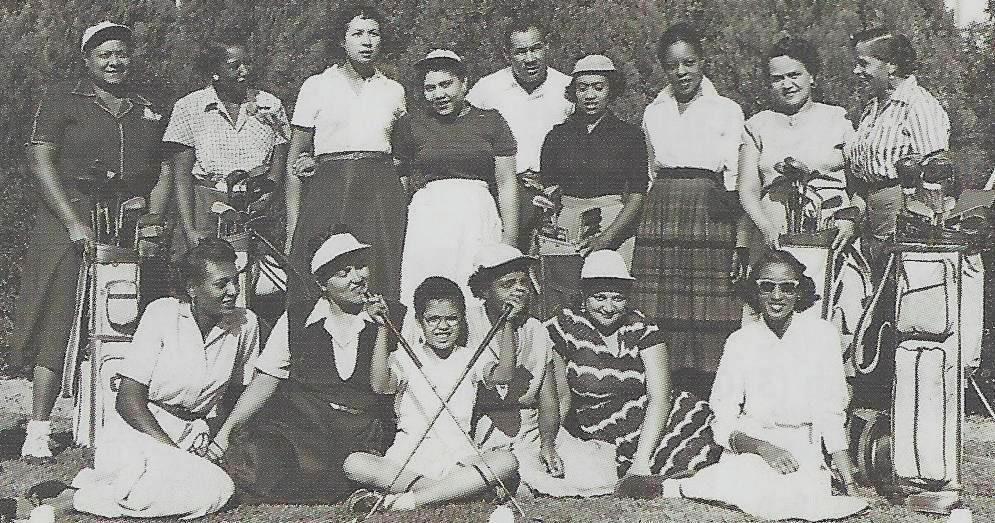
Above, From left: Verdeen Cornish, Brenda Goburn Smith, Patricia Stokes, and Mattie Gaines on the green at Carroll Park.
Carroll Park, a compact nine-hole course, is teeming with activity this spring morning. Two teenagers take practice swings in the tee box of a short par-3, waiting for a middle-aged Black man to putt out on the green. An elderly Asian woman walks up the ninth fairway, nearing the end of her round, while two white men in workwear approach the first tee to begin theirs.
The scene presents the egalitarian beauty of blue-collar municipal courses, where all are welcome to shoot par, the standard marker of success and the game’s great equalizer for every player, regardless of race, creed, color,


























or national origin. But that’s not how it used to be. Especially not here and especially not for golfers who were born with the wrong skin tone for the time.
The Pitch & Putt Golf Club of Baltimore was established on these grounds in 1938 when African-American women joined forces at the only course where they were allowed to play. But even that privilege had not come without a fight.
Brenda Goburn Smith, a current Pitch & Putt member who also served on the advisory committee for the Baltimore Municipal Golf Corporation, which manages the city’s courses, discovered details of that fight—and Carroll Park’s important role in the desegregation of golf—in a research paper published in the journal The Geographical Review
“As I read through it and the story began to unfold, I kept thinking, this is fascinating,” she says. “Our club and the course share intertwined histories.”
The shared past began in 1923, when Carroll Park Golf Course opened as a “whites only”
club. Eleven years later, the Monumental Golf Club of Baltimore, an African-American organization, challenged that policy and scored an apparent legal victory when Baltimore’s Board of Public Park Commissioners (BPPC) essentially segregated the park. White golfers were granted exclusive rights to play the course on Tuesdays, Thursdays, Saturdays, and the second and fourth Sundays of each month. African Americans were allowed to tee off on Mondays, Fridays, and Saturdays. But they were still banned from playing on the city’s three other public courses.
The plan initially gained traction because giving Black people access to Carroll Park aligned with the U.S. Supreme Court’s Plessy v. Ferguson decision of 1896, which ruled that racial segregation did not violate the 14th Amendment if separate facilities for both races were equal in quality.
Carroll Park was separate but decidedly not equal, however. The city’s other public courses featured the standard 18 holes, but Carroll
Park’s 35 acres had room for only nine. Baltimore had spent more than $1 million on upkeep of the municipal golf courses since their openings, but only $21,665 had been earmarked for Carroll Park, where it was impossible to differentiate fairways from unkempt rough and patches of groomed sand were sorry excuses for greens. The sandy greens forced golfers to perfect their short games and inspired the name of the fledging Pitch & Putt club.
Pitch & Putt originally launched as a coed club until the men broke off to form the Colonial Golf Club in 1967. The male members grew to love the game while caddying at the city’s white courses and developed their own game by traveling to play other African-American golfers in Philadelphia and Washington, D.C. Some of the men’s wives who went along on the trips and started playing alongside their spouses would become the original female members of Pitch & Putt.
They were getting into golf just as local organizations were formed to grow the game’s emerging popularity among white women. The first Maryland Women’s Amateur Championship was held in 1921, and the Women’s Golf Association of Baltimore was founded in 1930. The women of Pitch & Putt were challenging gender stereotypes as much as they were pushing for racial equality.
Carroll Park’s conditions remained second rate into the 1930s, cementing its reputation as the worst public course in Baltimore and causing desegregation supporters to spotlight the inequalities within the “separate but equal” mandate.
Years of legal wrangling and public debate followed, marked by cycles of small legal victories for desegregation supporters, opposition appeals, and court decisions that kept restrictive race policies in place. Finally, when Dallas Nicholas and the Monumental Golf Club once again threatened legal action in the early 1950s, BPPC voted to allow all residents full access to the city’s municipal golf courses. It also opened access to the city’s baseball diamonds, tennis courts, and other athletic facilities.

Then, in 1954, the U.S. Supreme Court voted to overturn school segregation enacted by Brown v. Board of Education, a decision that ended the “separate but equal” doctrine and firmly established equal access to Baltimore’s public facilities, Carroll Park among them.
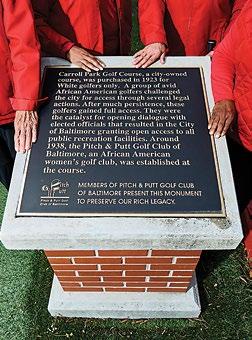
As Pitch & Putt prepared to recognize 80 years of continuous existence in 2018, Goburn Smith realized the club needed to honor the legacy of its original members and link their efforts to Carroll Park. Monumental Golf Club took the lead in the court rooms, but it was the original members of Pitch & Putt who stood their ground at Carrol Park and helped push for change by playing the game they loved when it wasn’t convenient or comfortable to keep teeing it up.
“We weren’t in charge of the city, but we had a significant impact on developing legislation to open access to the city’s courses for everyone,” Goburn Smith says. “We needed to preserve our story and make sure it got told because no one else was telling it.”
The group raised money through fundraising golf tournaments to commission, install, and dedicate a stone monument next to Carroll Park clubhouse’s main doors. The plaque that adorns it reads in part: “A group of avid African American Golfers challenged the city for access through several legal actions. They were the catalyst for opening dialogue with elected officials that resulted in the City of Baltimore granting open access to all public recreation facilities.”
Andrea Morgan, Pitch & Putt’s current president, represented the group in May 2025 when it was inducted into the African American Golfers Hall of Fame in Florida. “Moments like that really put things in perspective,” she says. “Being recognized as a legacy group made me realize it’s bigger than yourself, and it’s bigger than our generation.”
Today, young African-American golfers thankfully don’t think twice about deciding where to play. But that wasn’t always the case, and that history matters. “What do we want the club’s influence to be 50 years from now?” asks Morgan. “How do we leave something behind for who comes next?”
Part of those efforts include sponsoring student scholarships at Morgan State University. In February, Andrea Morgan attended the school’s annual breakfast held to honor Martin Luther King Jr. and gave scholarships to three students who are studying to become a dental hygienist,
social worker, and engineer.
“I’ve never been prouder of our women,” says Morgan. “The little bit of money that we’re able to give back shows we accomplish more as a group than we do individually.”
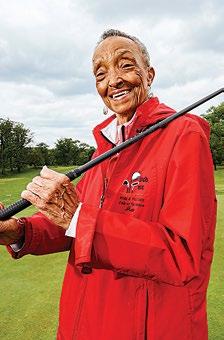
Today, Pitch & Putt has approximately 30 active members who remain committed to promoting and advancing interest in women’s golf, and teaching the skill, patience, and integrity needed to play the game competitively. The youngest members are in their 50s and the oldest—by a long drive—is 92-year-old Mattie Gaines, a tall, wiry woman who doesn’t look or act her age. Gaines still plays golf each week, including this morning, after which she sat at a long table in Carroll Park’s clubhouse and enjoyed a post-round chat with fellow Pitch & Putt members Patricia Stokes and Verdeen Cornish.
“WE NEEDED TO PRESERVE OUR STORY AND MAKE SURE IT GOT TOLD.”
Gaines, an athletically gifted physical education teacher in her youth, was approached some 30 years ago by Fopeanna “Fobie” Johnson, her neighbor and one of Pitch & Putt’s most effective recruiters, with the suggestion to take up golf. Gaines balked at the merits of chasing a little white ball around a field, but eventually gave it a try.
It didn’t go well. She quit in the middle of her second round in tears when she quickly realized golf’s cruel truth: The game is exceedingly difficult and maddingly frustrating.
Gaines, who gives off the distinct impression of someone who doesn’t give up easily, took a few lessons and discovered something else about the game. Just one pure shot during a round—when the mind stops overthinking mechanics, freeing the body to flow through the perfect swing—is intoxicating as hell and fuels the pursuit of impossible perfection. She’s been chasing the feeling ever since.
Besides, back when Gaines took up golf, she had to improve her game if she wanted to join some of her friends who were already members of Pitch & Putt.
The members were downright competitive back then and didn’t want hackers to slow down rounds or embarrass them when they traveled to compete against other women’s clubs in Philadelphia and Washington, D.C.
“Oh, you needed to be good,” says Cornish, who picked up the game while working at Domino Sugar. Her male colleagues often talked business on the golf course and Cornish, who aspired to climb the corporate ladder, was determined to fit in. Unfortunately, her initial experience on the course wasn’t much better than what Gaines endured.
She nearly quit, but a female friend convinced her to play a couple rounds with members of Pitch & Putt. Cornish was more comfortable with the women but still felt compelled to work on her game for more than a year before officially becoming a member.
Pitch & Putt has since softened its scorecard standards, but the women remain sticklers for following the rules of golf and understanding its unique etiquette. You play the ball where it lies and maintain pace of play. You don’t walk on anyone’s putting line and you most certainly finish short putts. The women of PPGC don’t hand out gimmes.
“When you’re in our group, you play the game the right way,” says Stokes, who runs Bogey Free, a Baltimore-area program that introduces beginners to the game with lessons based on Pitch & Putt tenets. “It’s not just about knowing how to swing a club. It’s about understanding how to behave on the course. Good habits impact how comfortable and confident you feel when playing.”
Golf is clearly important to the Pitch & Putt members, but so is the sisterhood.
When Morgan joined in 1994, she was 31 years old, the youngest member at the time. Five years later, she had her first child, a daughter the Pitch & Putt women doted on like proud aunts. It had been 20 years since a newborn graced the group and they threw a club-mandated baby shower for the ages. Yes, such festivities are noted in the bylaws.
Morgan had moved to Baltimore from Michigan to attend the University of Maryland School of Dentistry, and the Pitch & Putt women became her extended family. In between studies, she’d pack up her daughter’s things, grab her clubs, and head for the course.
“I wouldn’t know who would end up holding her while I played, but someone always did,” says Morgan, who cherishes pictures of her young daughter tottering down fairways and sitting on golf carts. “She grew up with the group. Those were great times.”
The Pitch & Putt women also come to gether at times of great loss. When the club’s beloved president Stephanie Wil liams died unexpectedly in January 2023, the members held a memorial golf tourna ment that attracted more than 100 golfers and raised $12,000, which added to the Morgan State scholarship fund.
Forest Park Golf Course in Baltimore serves as Pitch & Putt’s unofficial home course, but the women consider them selves a traveling group. They carpool to courses in Maryland, Delaware, and Pennsylvania on the second and fourth Sundays of each month, from April to Oc tober. Several members also get together for weekly rounds at courses throughout the city, including a standing tee time on Thursday mornings at Carroll Park.
“We make sure that people who don’t have transportation can get to courses to play,” says Cornish.





“We’ve been together so long and love each other so much. Our friendships are, you know . . .”
Her voice trails off.

“Sacred,” Gaines says, finishing the thought, as only a dear friend can do.
It’s a beautiful way to describe the deep bond that exists among Pitch & Putt members. They’re forever united because of a shared love of golf and a passion for memorializing the women who came before them.
Gaines is asked about the Carroll Park monument and why the group worked so hard to have it placed. Her countenance changes, portraying proud confidence, and she speaks in a measured tone, pausing slightly between each word to emphasize what only the club’s women truly understand.
“Because we are important.”
DAN COOK is a regular Baltimore contributor.




In a world of AI-generated memes, don’t we all crave a little authenticity?
Enter our annual FACES profile section, in which we connect you with the real people living, working, and thriving right here in our Baltimore region. From educators to advocates, attorneys to orthodontists, our FACES profiles feature the stories not only of what these leaders do, but why.
Each year we present this as both a resource and an inspiration, a reminder of all the great work and, more importantly, great people here in the Baltimore region. No AI required.
Nader Kalhor, President
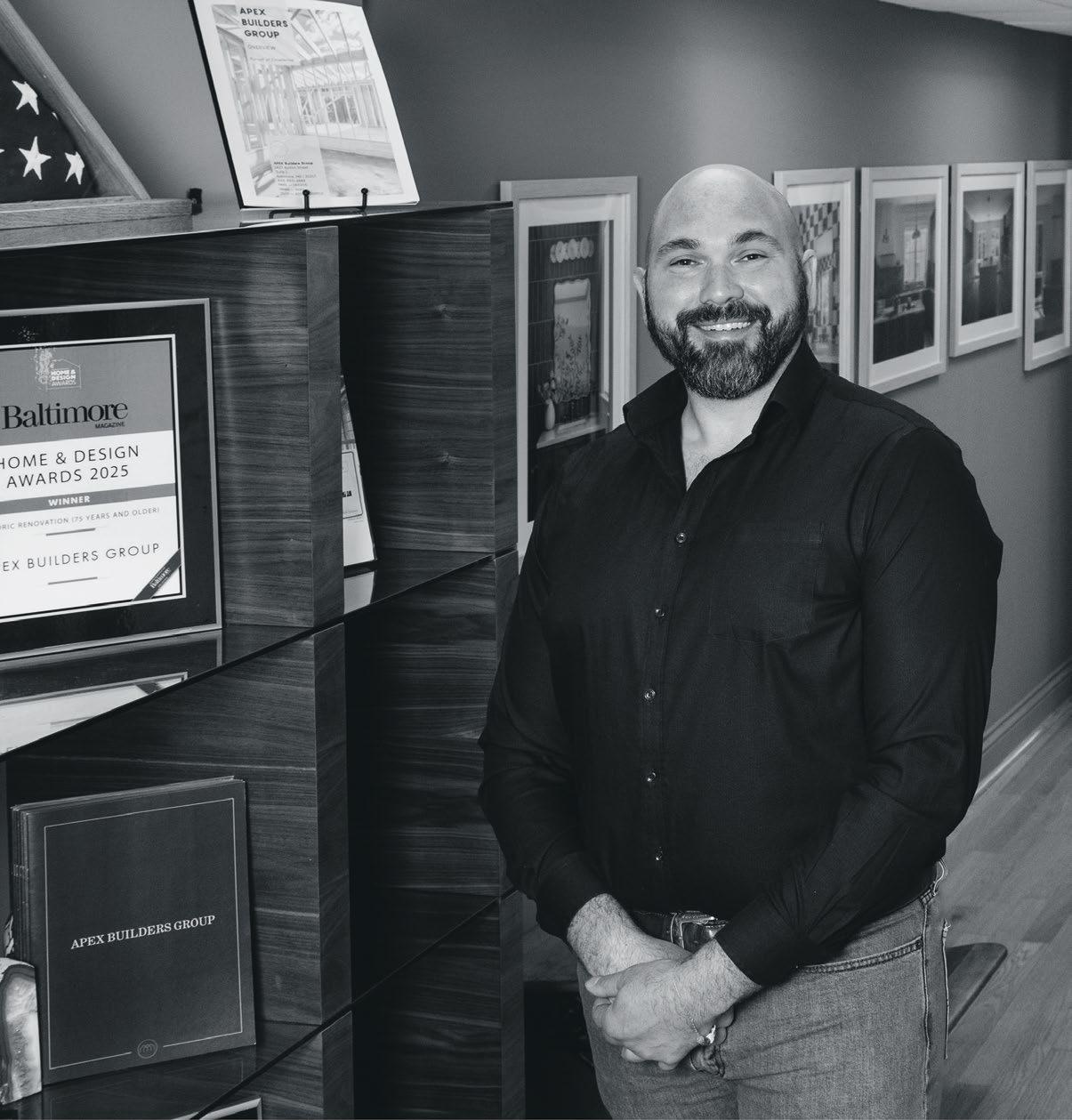
Nader Kalhor, president of Apex Builders Group, is a third-generation builder who learned his craft working alongside his father from a young age. There he gained an understanding of craftsmanship, problem-solving, and the level of detail required to build exceptional homes. Today, Apex specializes in luxury residential construction, offering new custom homes, historical restorations, renovations, additions, home management, and ongoing home maintenance services. The company has grown thoughtfully thanks to longstanding relationships built on trust, quality, and attention to detail. A boutique builder by choice, Apex crafts homes with an unprecedented level of care, creativity, and connection with clients, an approach that defines Apex and differentiates it in the industry. Kalhor still abides by advice from his father: Focus on building the best home possible and doing right by the client above all else.

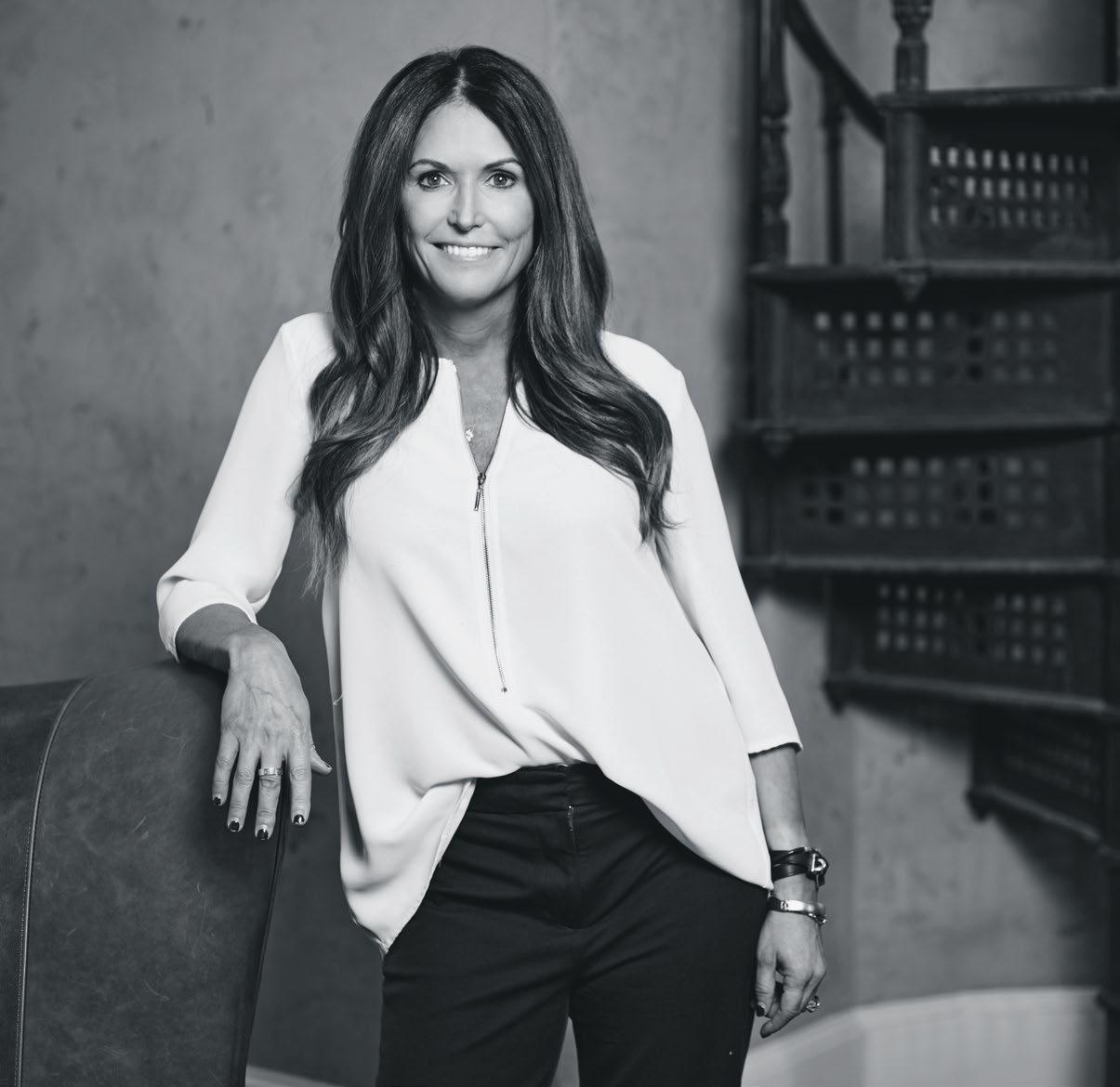

Julia Arfaa has always been passionate about medicine and debate was a natural talent. Medical malpractice perfectly combines her two passions. She founded ARFAA Law Group in 2013 to provide plaintiff medical malpractice litigation and catastrophic personal injury. ARFAA is distinguished by its high medical knowledge, skill in trial and crossexamination, strong work ethic, and its unwavering dedication to its clients.
ARFAA has received record-setting jury awards in all types of malpractice cases—including some of the largest jury awards for children who sustained brain injury at birth in the state of Maryland ($21 million and $15.6 million).
A graduate of Smith College and a cum laude graduate of Syracuse University College of Law, ARFAA has grown from her home office to a thriving firm located in Clipper Mill in Hampden. Arfaa is regularly named a Top 100 Super Lawyer in Maryland and, for the past four years, has been named one of the Best Lawyers in America. In addition to her law practice, she is a board member of the Casey Cares Organization, a nonprofit that provides supportive services to children and their families faced with life-altering disabilities and illnesses. Casey Cares awarded her the Children of Champion Award for 2026 for her support.
Through her tireless and compassionate representation, Arfaa has become one of the most successful plaintiff’s trial lawyers in the state.
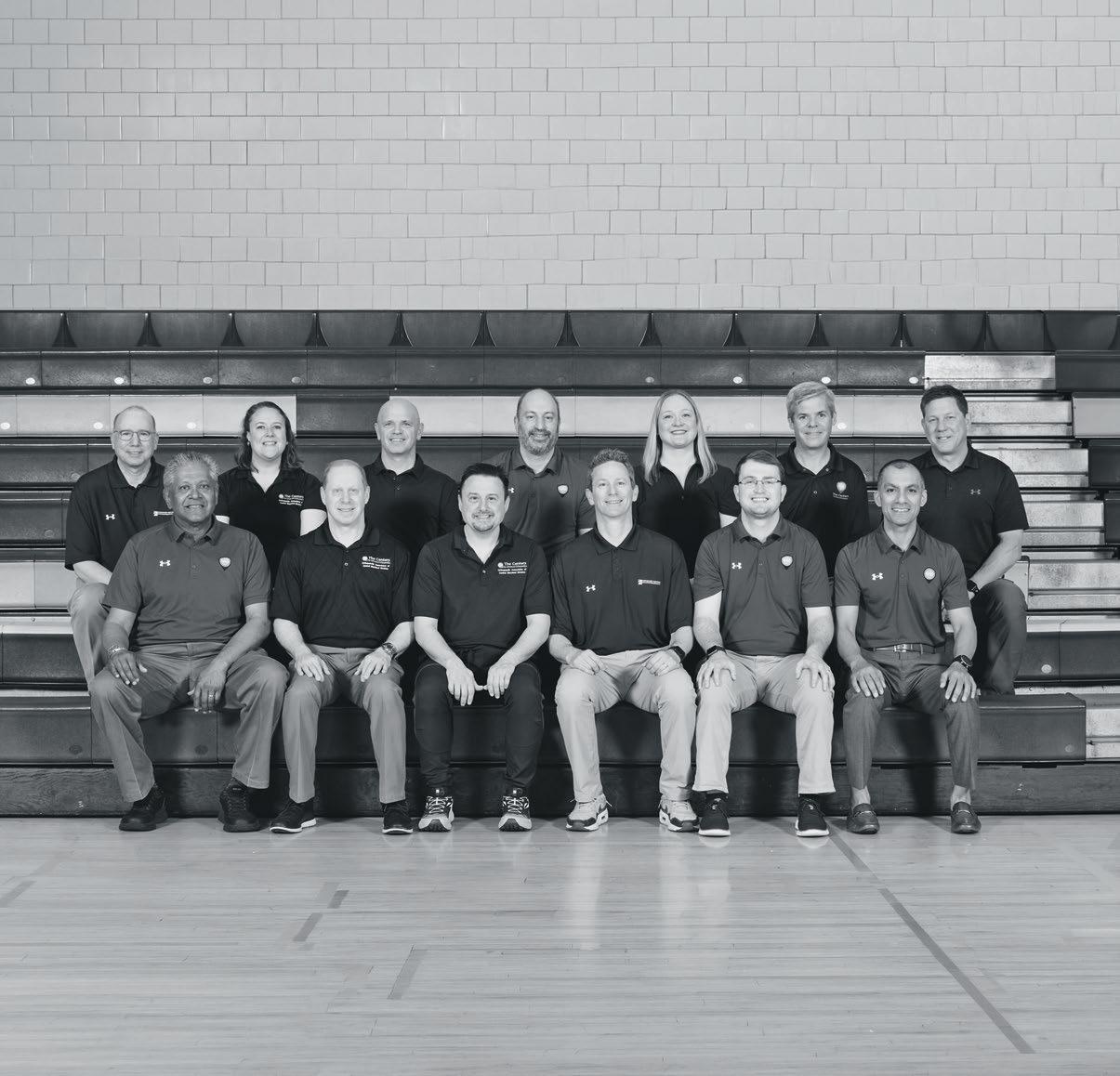
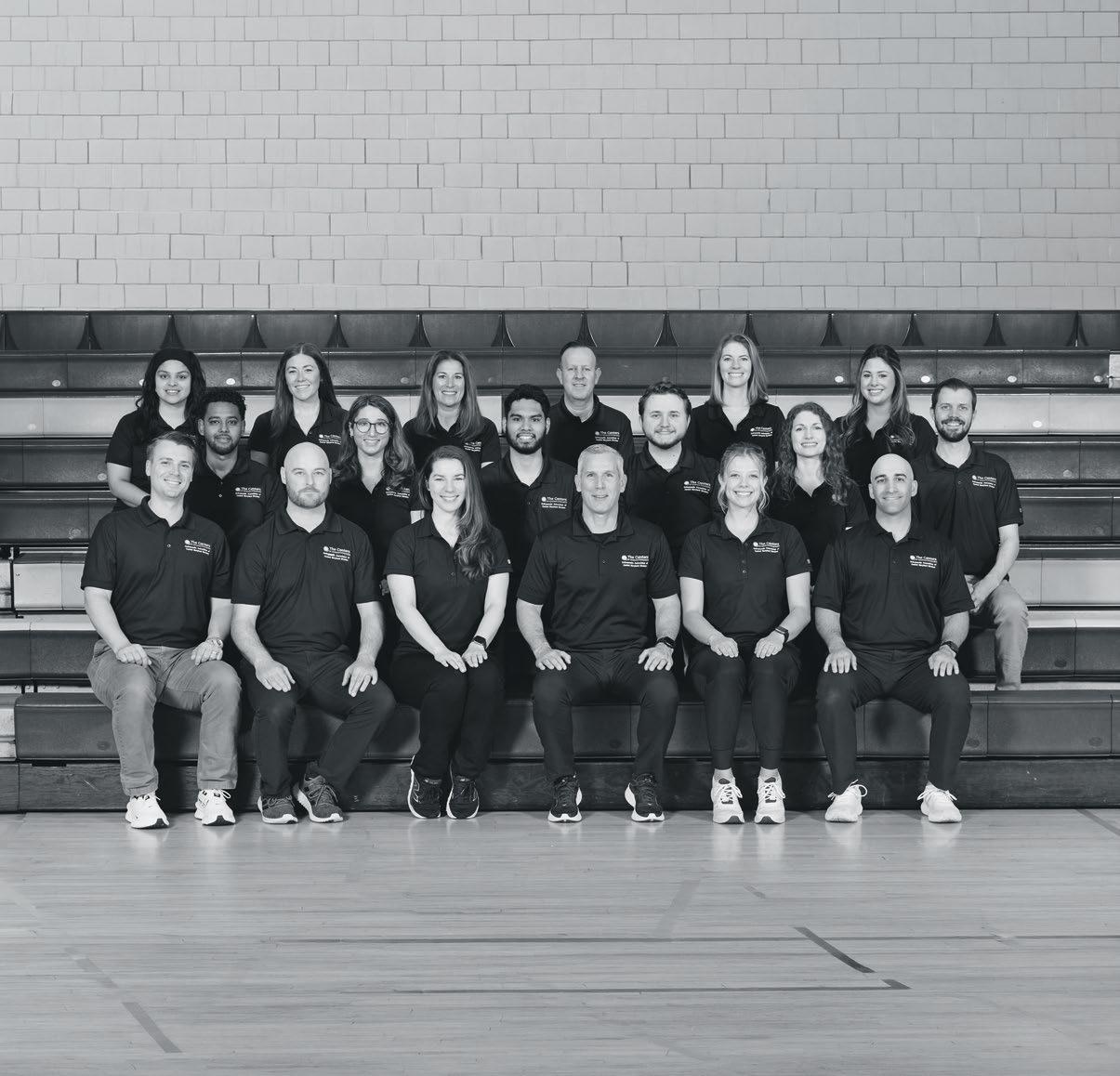
At Orthopaedic Associates of Central Maryland (OACM), we know orthopedic care is about more than bones and joints. It’s about helping you get back to your life, your routine, and the people and activities you love. As part of the Centers for Advanced Orthopaedics, our team brings together experienced specialists who truly work together to support you. Behind every visit is a group of providers communicating, collaborating, and making sure nothing gets missed. Because when your care team is connected, you feel the difference.
Whether you’re recovering from an injury, living with ongoing pain, or preparing for surgery, you’ll have a team by your side who listens, answers your questions, and takes the time to understand your goals. We believe care should feel personal, not rushed, and that trust is built through every interaction.
With more than 60 providers, including surgeons, advanced practice providers, and physical therapists, your care is guided by people who are committed to helping you move forward with confidence. And with several convenient locations, physical therapy centers, after-hours care, and on-site imaging and orthotics, getting the care you need is simpler and more accessible than ever.
From sports injuries to spine care, joint replacement to pain management, we’re here to help you move more comfortably, regain your strength, and return to the moments that matter.
Visit www.mdbonedocs.com to learn more or schedule your appointment.

Drs. West and Zdanowicz are distinguished as expert periodontists in the Baltimore area and board-certified in periodontology and dental implant surgery. Dr. West was selected by his peers as one of Baltimore magazine’s “Top Dentists” in 2025 and 2026. Both doctors are active members of the American Academy of Periodontology and the American Board of Periodontology. Dr. West is a fellow of the International College of Dentists in recognition of his service to the community and dental profession. Drs. West and Zdanowicz are proud veterans of the United States Navy and Air Force, respectively.
Their practice is located in a 4,000-square foot office space, containing eight state-of-the-art operatories. The entire space utilizes the most advanced technology to provide a customized experience
for patients. Both doctors support sedation dentistry as an additional option to ensure patient comfort.
Drs. West and Zdanowicz have advanced skills in cosmetic dental implant placement, alveolar ridge reconstruction with bone grafting, and periodontal plastic surgery. They are certified to use both soft and hard tissue lasers for minimally invasive periodontal procedures, which can address severe infections around teeth and dental implants. Their practice is known for managing complex dental cases in coordination with patients’ general dentists. Drs. West and Zdanowicz are focused on the comfort and satisfaction of their patients with a highly attentive team.
Frank Avena’s story is one of determination, resilience, and heart. Rising from foster care and humble beginnings, he built a successful nationwide contracting company before becoming a driving force behind Jarrettsville Furniture. Known for his bold vision and ability to make things happen quickly, Avena has helped transform the store into one of the area’s most recognized furniture destinations. But beyond business, he is deeply committed to giving back. As title sponsor of the Maryland Italian Festival, Avena proudly supports a celebration of family, heritage, and community. His leadership, generosity, and belief in helping others continue to shape both Jarrettsville Furniture and the community around it. Avena’s greatest success is not just what he’s built—but the people he continues to inspire.

Charlie Ward, DDS, AAACD
At Baltimore Dental Arts, Charlie Ward, DDS, AAACD, provides comprehensive aesthetic and restorative dentistry. A frequent winner of Baltimore’s Top Dentist award, Ward recently became the only American Academy of Cosmetic Dentistry-accredited dentist in Baltimore and one of only approximately 450 in the world. He is on the visiting faculty of the Pankey Institute (a nonprofit dental continuing-education facility) and provides pro bono care through Donated Dental. Ward and the dentists and staff at Baltimore Dental Arts embrace technology, particularly digital impressions and 3D printing. Through his practice, Dr. Ward is able to work closely with patients to improve their health and confidence while applying his own technical and artistic skills to improve smiles.
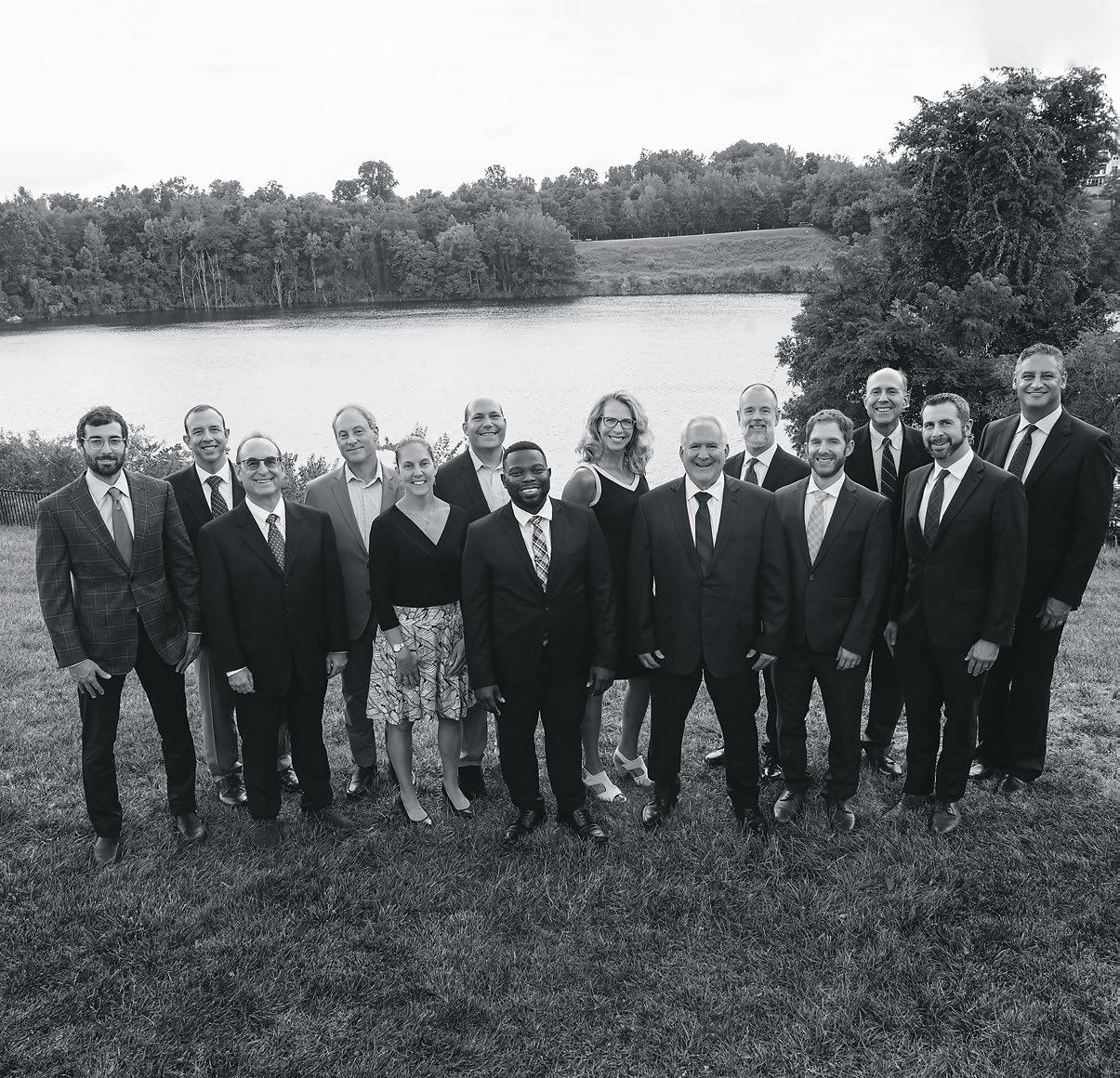
A DIVISION OF THE CENTERS FOR ADVANCED ORTHOPAEDICS
Left to right back row: Dr. Robert Dolitsky; Dr. Peter Jay; Dr. Barry Waldman; Dr. Chad Zooker; Dr. Lisa J. Grant; Dr. Jason P. Brokaw; Dr. Robert Riederman; Dr. David P. Buchalter.
Ian Weiner; Dr. David Jacobs; Dr. Yonah Heller
As the region’s oldest independent orthopedic group, OrthoMaryland remains committed to delivering expert, compassionate care with the personal attention our patients have trusted for 101 years. Now, we’re expanding access to expert orthopedic care. With the successful openings of our new walk-in centers in Abingdon and Reisterstown—and a brand-new Westminster location opening this September—OrthoMaryland is bringing faster, more convenient care closer to home for even more communities. Whether it’s a sports injury, sprain, fracture, joint pain, or unexpected injury, our walk-in centers provide same-day expert care. Patients also benefit from on-site X-ray, bracing and casting, physical therapy, and access to some of the area’s leading orthopedic specialists. Throughout the region, we’re keeping our communities moving with trusted orthopedic care for every generation.
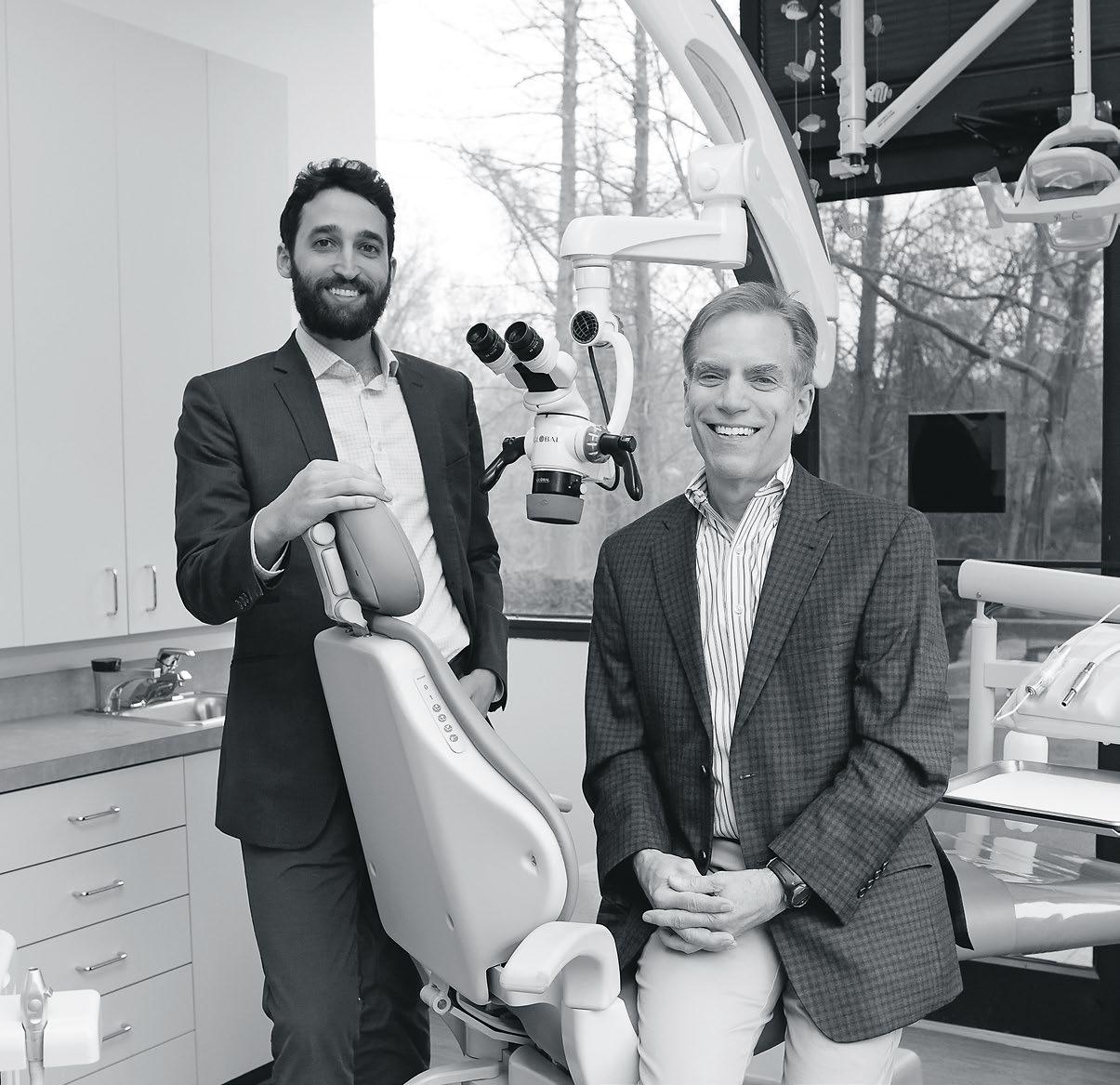
Dr. Nathan Dancykier and Dr. Keith Boenning
Specializing in the restoration and replacement of teeth, including cosmetic, implant, and reconstructive dentistry, Dr. Nathan Dancykier and Dr. Keith Boenning whiten, reshape, and repair broken, cracked, and unsightly teeth with the most cutting-edge tools and techniques available today. “All of our restorative procedures are performed using a surgical microscope, ensuring enhanced accuracy while allowing us to be minimally invasive, so that our patients’ comfort is never compromised,” explains Dr. Dancykier. Named “Best Dentists in America” and “Top Dentist” in Baltimore magazine for 20-plus years, the practice has established the reputation as one of the premier cosmetic dental centers in greater Maryland. Accuracy and precision are their trademarks, delivering a beautiful smile in a safe environment to each and every patient.

EYE TO EYE
Alex Chernoff, Optician/Stylist
Alex Chernoff grew up in the family business, learning from his father. Now, 42 years later, he runs an optical studio focused on helping customers look and feel great. “I have a vested interest in making sure my customers get glasses that bring out the absolute best in them,” he says. “Customers come to me looking for the same transformation they noticed on someone else—a refreshed, modern look. Glasses can do that. Glasses are incredible.” Chernoff is passionate about quality and craftsmanship. Eye to Eye carries more than 5,000 unique frames from all over the world and brands like Chopard and Porsche Design, just to name a few. Frames can be fitted with high-end lenses meticulously finished in the in-store lab. Come see why Eye to Eye is where doctors often refer patients with complex prescriptions and why the store is frequently recognized among Baltimore’s best. As a bonus, when you visit us you’ll get to meet Leo, our puptician.
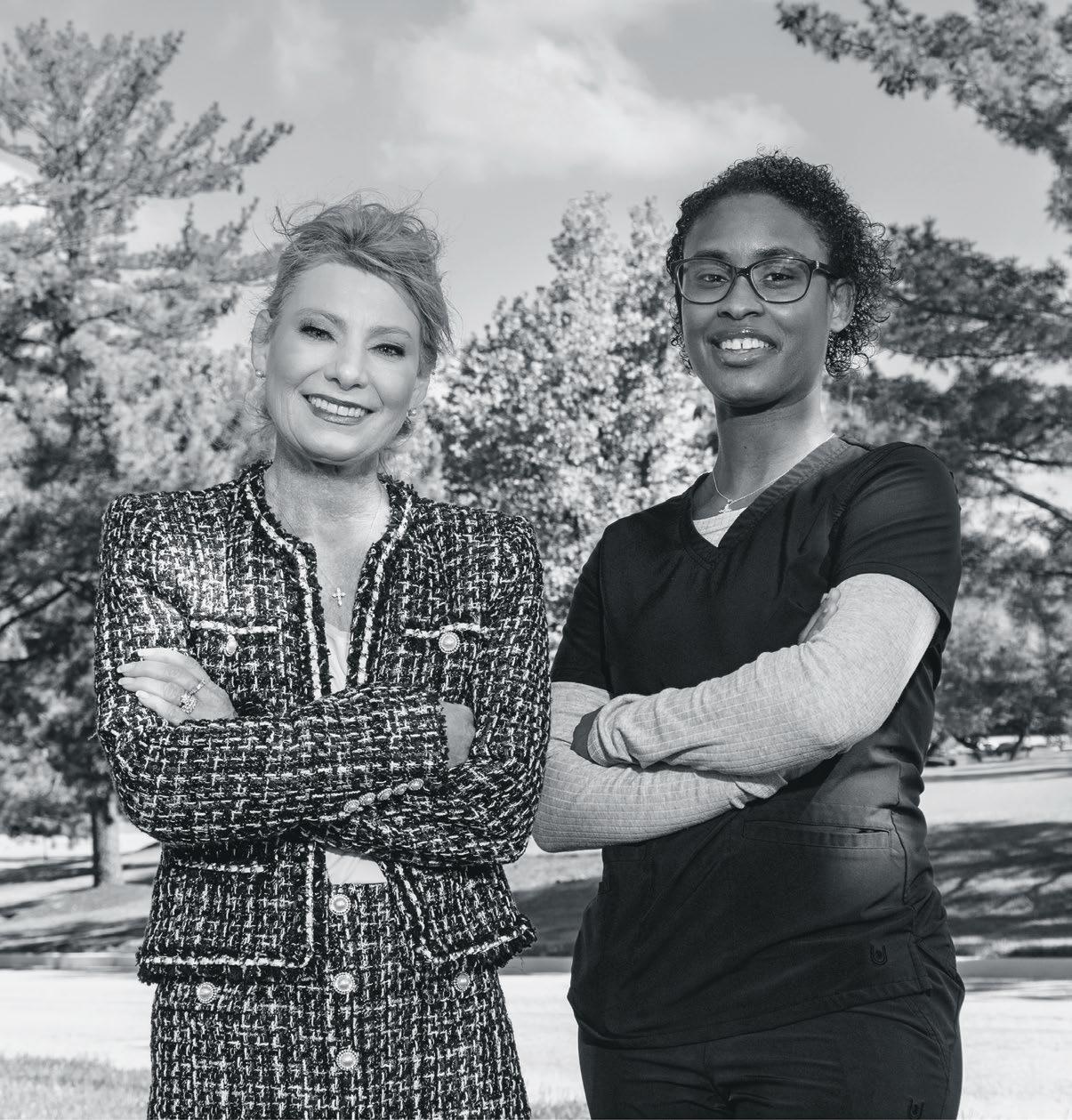
Lisa Rusyniak, President & CEO, Goodwill Industries of the Chesapeake, Inc. and Trimiea Cannady, Excel Center Graduate
Lisa Rusyniak has spent 30 years at Goodwill dedicating herself to breaking down barriers to employment. During her 14 years as president and CEO, she recognized that adult education was the greatest unmet need for Baltimore City residents and, in 2023, she launched The Excel Center, Maryland’s first tuition-free adult high school for those 21 and over. Built on a proven national Goodwill model, The Excel Center offers free childcare, transportation support, behavioral health referrals, and flexible scheduling. The results speak for themselves: 398 students enrolled, 1,125 credits earned, and 100 graduates. Trimiea Cannady, a single mother of three, left high school in 11th grade. Lacking a diploma for years, she enrolled in The Excel Center’s first class, graduated in 2024, and walked away with both a diploma and a medical front office certification. Her next chapter is just beginning.
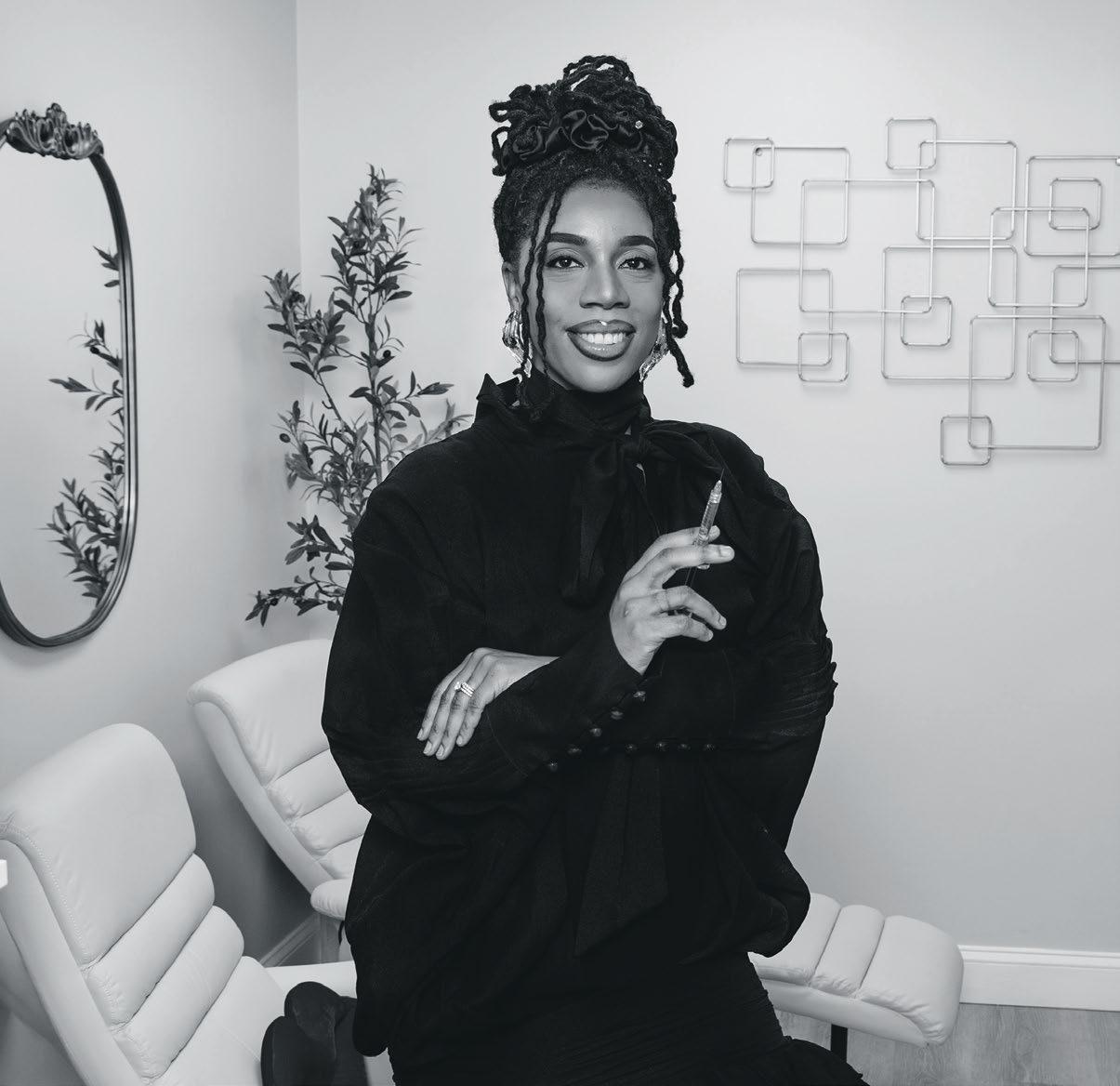
Reena Gray, Nurse Practitioner and Owner
Reena Gray, nurse practitioner and founder of Gray Aesthetics Med Spa, is widely recognized by her clients as the “Facial Balancing Queen” for her refined approach to aesthetic medicine and signature ability to create naturally harmonious results. With an elevated eye for beauty and balance, she specializes in enhancing each client’s unique features with intention, precision, and artistry. Gray Aesthetics Med Spa offers a curated range of advanced aesthetic treatments, including neuromodulators (Tox), dermal fillers, PDO threads, PRP/PRF treatments, customized skincare, chemical peels, and biostimulators. Since opening in 2021, the practice has become known for delivering luxury aesthetic experiences rooted in trust, education, and exceptional patient care. Gray’s mission is to create a warm, welcoming, and inclusive space where every client feels valued, confident, and cared for.
Claudia Nachtigal, Head of School
Claudia Nachtigal, head of The Highlands School, didn’t set out to choose education; she simply spent her life in the service of helping others thrive. Opened in 1996, the school offers an academic program designed for students with learning differences and achievement gaps. It has grown into a thriving K–8 school. The Highlands School has been recognized as Best Private School in Harford County by Best of Harford, with Nachtigal also named Best Principal.
Nachtigal has a certificate in advanced education leadership from Harvard Graduate School of Education, a master’s in theological studies, and was named one of Maryland’s Top 100 Women by The Daily Record. She is known for her ability to bring people together around a shared mission—and to make sure families know their children don’t have to suffer through school.
Seated: Janet Kelly, Co-Founder, and The Honorable Francis X. Kelly Jr., Chairman and Co-Founder.
Founded in 1976, Kelly Benefits has grown from humble beginnings in the basement of the Kelly family home in Timonium, Maryland, into one of the region’s leading providers of group insurance, employee benefits administration and technology, retirement planning, and payroll solutions. What began as a mission to help small businesses access affordable health insurance now supports more than 10,000 corporate clients through a team of nearly 500 dedicated professionals. As Kelly Benefits marks its 50 th anniversary, the company remains committed to supporting its clients, brokers, team members, and the community— guided by the same principles that have defined it from the start: integrity, excellence, respect, humility, and generosity.

DR. KELLY L. GEOGHAN
Board-Certified Podiatrist and Heel Pain Specialist
Our feet support every step we take and play a vital role in our overall health. “Foot damage—mostly caused by wearing ill-fitting shoes, strenuous overuse, or carrying excess weight—can quickly lead to a host of painful maladies that prevent normal daily activities,” states Dr. Kelly Geoghan. She continues, “It is critical to see a qualified podiatrist as soon as something goes wrong.” Dr. Geoghan is a board-certified podiatrist with over 25 years of experience caring for patients in her native Baltimore community. At her practice, Dr. Geoghan offers a wide range of treatments—from custom orthotics and injections to Shockwave Therapy and surgery—using the most advanced technology and techniques available today. Renowned for her clinical expertise, gentle manner, and outstanding results, Dr. Geoghan works with patients to repair their ailments, relieve their pain, and help them resume the active lives they desire.
Jared Krieger, Chief Executive Officer
The team at KG Growth Partners believes that public benefit companies doing meaningful work deserve capital that doesn’t cost them equity or pile on debt. We serve organizations scaling fast, diversifying revenue, or navigating capital-intensive growth, including defense innovators and mission-critical R&D ventures. These clients need development, funding, strategy, and government relations run as one integrated practice, not as disconnected services. Jared Krieger founded KG Growth Partners to deliver exactly that. By bringing our disciplines together under one roof (development, funding, strategy, government relations, narrative creation, and community), we keep our clients focused on what matters most: building the project.
Johnnie Fielding and Subramonianpillai Teal, Founders
Founded by East Baltimore natives Fielding and Teal in 2009, Leading by Example (LBE) is a mental health and family-strengthening organization. Fielding and Teal are both first-generation college graduates, masters-level social workers, and licensed clinicians focused on improving the quality of life for children and families in Baltimore City, Baltimore County, and Harford County. Their vision from the beginning was to build a healing institution that prioritized people’s strengths prior to diagnosing illness. Moreover, they sought to eliminate barriers to accessing help by taking counseling into underserved homes and neighborhoods.
leadingbyexamplellc.com
Locations in Nottingham, Abingdon, and Baltimore
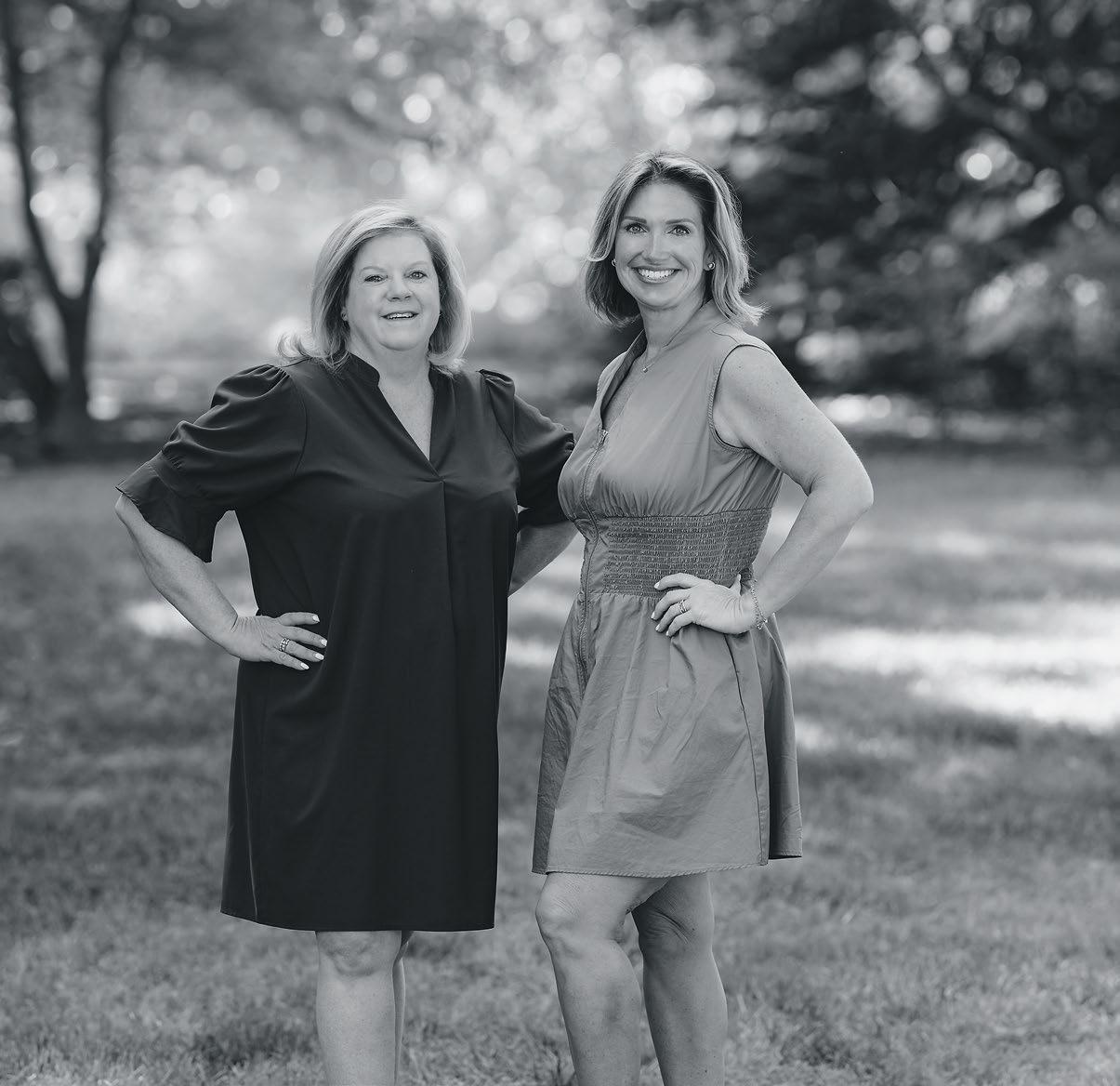
Christine Harrington, CEO Rachel Smith, Director of Sales and Marketing
Londonderry on the Tred Avon is a premier, 62+ independent living community nestled on the banks of the Tred Avon River in Easton, Maryland. Proudly resident-owned for 35 years, we offer a unique sense of ownership and belonging.
Led by CEO Christine Harrington and Director of Sales and Marketing Rachel Smith, who have decades of combined experience and local expertise, the team is committed to the highest standards of senior living. Together with the residents, they continue to showcase the engaging, carefree lifestyle that has made Londonderry a landmark on the Eastern Shore for over three decades.
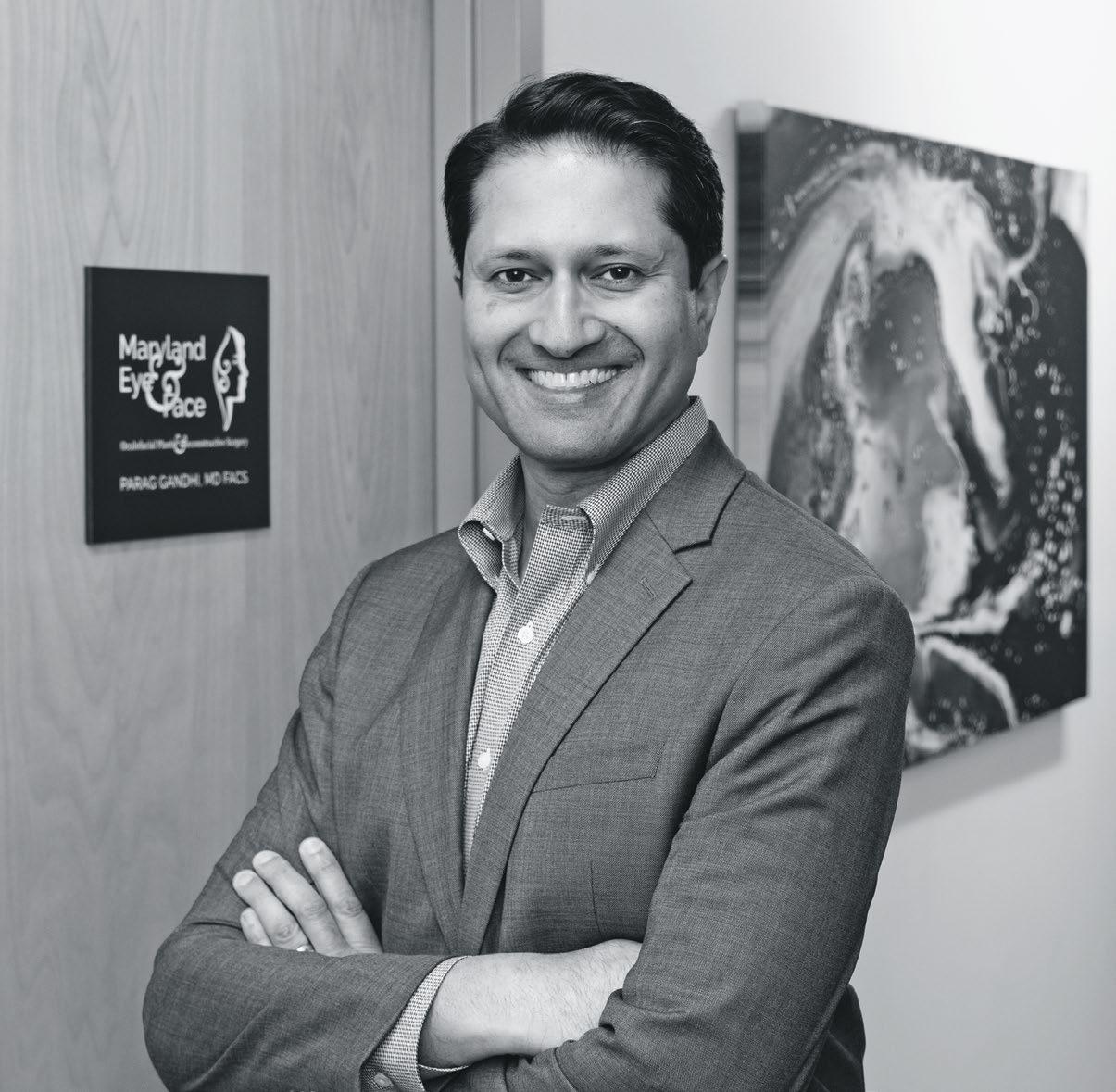
Parag Gandhi, MD FACS, Oculofacial Plastic and Reconstructive Surgery
Dr. Parag Gandhi and his team provide a wide range of facial and periocular reconstructive and aesthetic procedures, from laser eyelid surgery to the newest technologies in skin resurfacing, tightening, and enhancements. Board-certified and fellowship-trained with nearly 20 years of experience, he is known for building connections with his patients during office consultations. Dr. Gandhi is well-regarded as a compassionate surgeon and expert in his field, with a keen commitment to applying his skills and leadership through international service missions that build sustainable programs overseas. He was the recipient of the American Academy of Ophthalmology Achievement Award in 2019 for his work, and numerous other recognitions. With a focus on achieving balanced results and fostering long-term relationships with their patients, Dr. Gandhi and his staff are excited to welcome you to Maryland Eye & Face in Franklin Square.
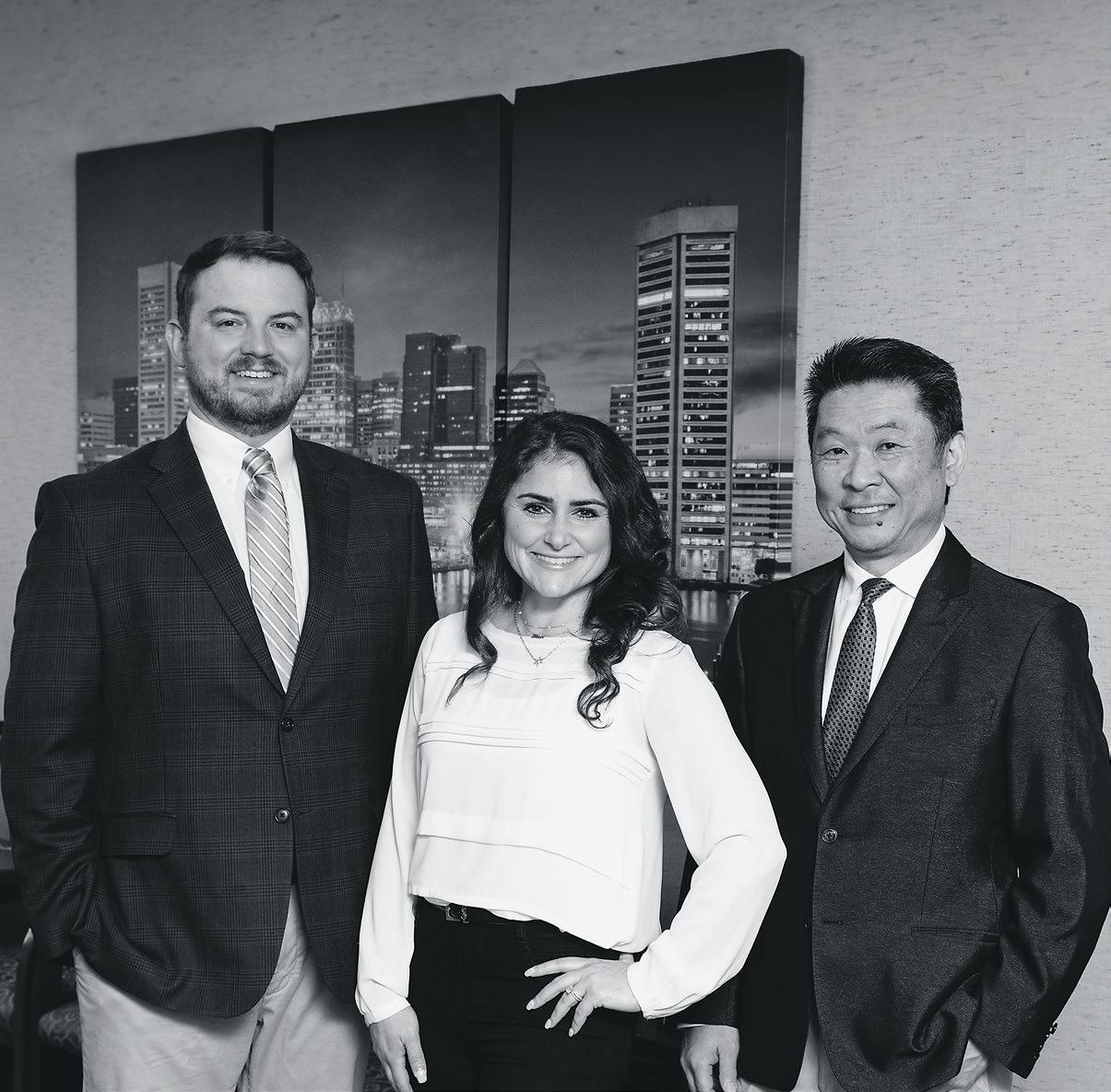
Terry Slevin, DDS, MS; Morgan Hurwitz, DDS, MS; Kyong Choe, DDS, MS
Drs. Feldman, Slevin, Hurwitz, and Choe combine the specialties of periodontics and prosthodontics with implant dentistry for a comprehensive approach to improve the appearance and health of your smile. All of our doctors are board-certified in periodontology and dental implant surgery from the American Board of Periodontology. Dr. Feldman is the founder of the Implant Periodontal Prosthesis Program at the University of Maryland School of Dentistry, where he serves as an associate clinical professor. Dr. Choe earned his degree at the University of Maryland School of Dentistry and received hospital-based training at the Baltimore Veterans Affairs Hospital. Dr. Slevin holds degrees from West Virginia University and the University of Maryland School of Dentistry. Dr. Hurwitz earned her degrees at the University of Maryland School of Dentistry and completed an oral surgery internship at the University of California, Los Angeles.
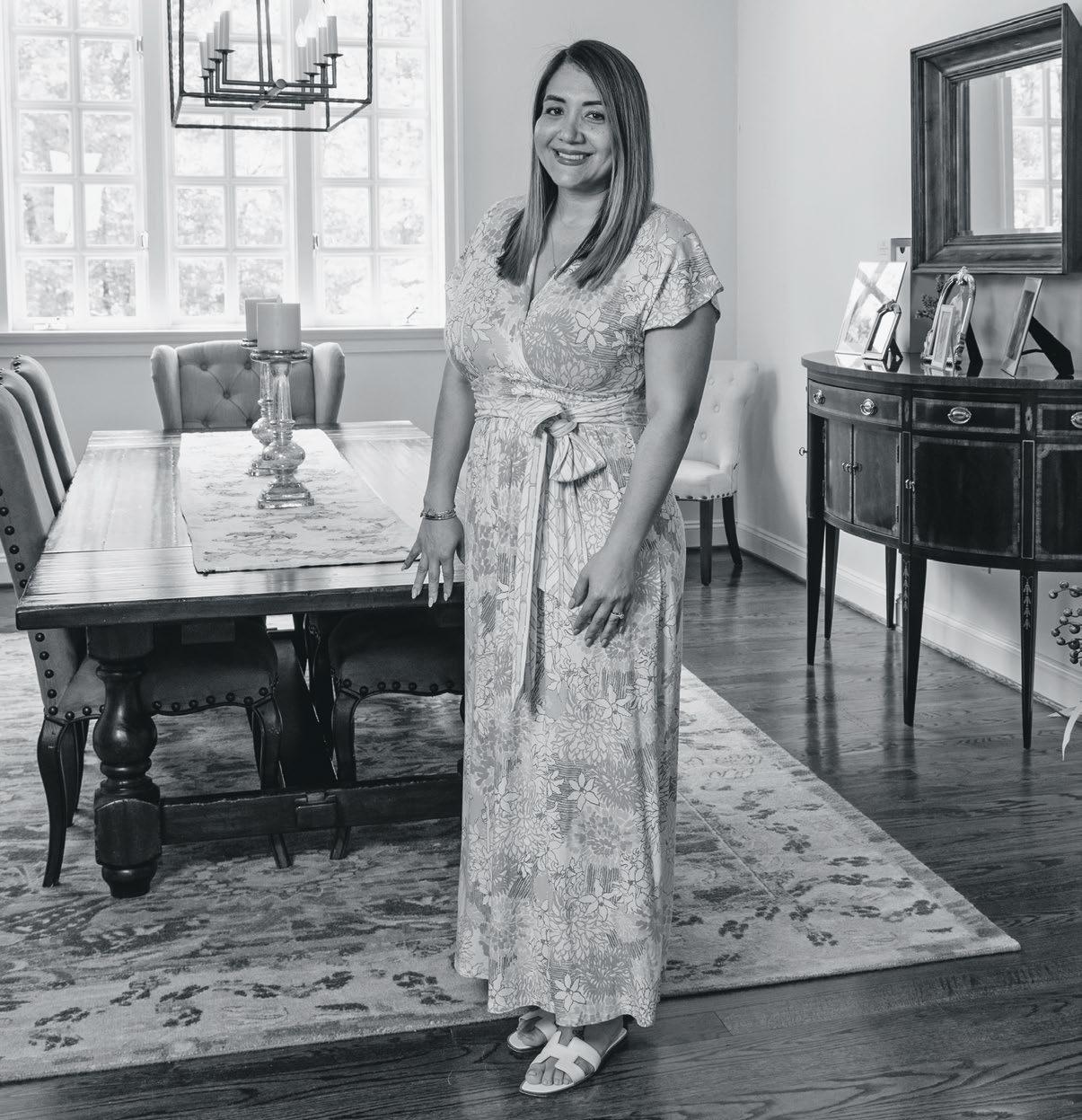
Julissa Lambruschini, Owner
Julissa Lambruschini, owner of MJ Baltimore Cleaning Services, built the company alongside her husband, Renzo, nearly 20 years ago with a vision centered on trust, consistency, and exceptional service. What began as a small family business has grown into one of Baltimore’s most respected residential and commercial cleaning companies, serving Baltimore City and Baltimore County. MJ Baltimore Cleaning Services specializes in recurring cleanings, deep cleanings, move-in and move-out cleanings, post-construction cleaning, office cleaning, window cleaning, pressure washing, and concierge-style home services through MJ Home Services. Known for professionalism, attention to detail, and personalized care, the company is committed to creating clean, peaceful spaces while building lasting relationships with clients through dependable, high-quality service.

Andrew J. Paladino, CPA, MSF
Andy Paladino, of the Paladino Financial Group, provides financial planning in a professional, caring, and engaging environment to those who value advice, are open to new ideas, and want the best for themselves and their families. With a clear, concise, and understandable voice, we help them feel empowered and assured and provide them with confidence and clarity about their future through a process we call The Playbook Pro Method®, where savings, retirement income planning, and tax strategies are incorporated into your “playbook.” Paladino formed the Paladino Financial Group in 2004 after working for a large Baltimore CPA firm. He coaches middle-school baseball at The Park School of Baltimore, is the commissioner of
and helps the

Matthew H. Wallengren, DDS, PA
Dr. Matthew H. Wallengren and his team help patients achieve their optimal oral health, function, and aesthetics in a comfortable and relaxed atmosphere. Research has shown that oral health has a significant impact on overall health, and this knowledge serves as the foundation for the compassionate and comprehensive care they provide. Learn why teeth wear down, chip, and crack, and why it’s not “just stress.” Dr. Wallengren and his team use only proven technology backed by independent research, not marketing professionals, to deliver the quality of dentistry you deserve. They are committed to advanced training in aesthetic dentistry, restorative dentistry, and gingival health. We invite you and your family to visit the dental office of Dr. Matthew H. Wallengren, D.D.S., P.A. and experience compassionate care in a safe, healthy, and sincere environment.
Susi Silesky, Chief Brand Strategist & Founder
Susi Silesky, chief brand strategist and founder of Silesky Marketing, quips that her career started with “a pink slip and a trip to Jazz Fest.” When her firm laid her off, she went to New Orleans and returned ready to open her own company. Now 30 years later, Silesky Marketing is a modern, fully remote powerhouse with a team spread across the country. The firm manages everything from branding and market strategy to execution—including social media and web development—as the firm manages every touchpoint of your marketing ecosystem. This seamless, high-level approach is built to scale clients’ businesses without the friction of managing multiple vendors.“We have a deep, personal commitment to our clients’ growth,” says Silesky. “We don’t just want you to have a presence; we want you to win.”

Jeffrey Sirody, Partner
Sirody Bankruptcy Center is the largest consumer bankruptcy firm in the state of Maryland. The attorneys have helped tens of thousands of people eliminate debt and get a fresh start, while stopping serious challenges like foreclosures, repossessions, wage garnishments, tax collections, and the like. Jeffrey Sirody has been a successful independent attorney since 1991. With several locations around Maryland and the ability to leverage technology to better serve clients, the firm can offer efficient and effective representation. “Our experience and quality of staff sets us apart from other bankruptcy attorneys,” says Sirody. “Having successfully handled many thousands of bankruptcy cases, we understand the process, and how to make the experience as easy and stress-free for our clients as possible.”
As president of Smithouse Design + Build, Dave Smith takes pride in helping clients transform their homes through thoughtful planning, creative design, and expert project management. Over more than 20 years, Smithouse has grown from a team of three to a talented staff of 40 and is one of the region’s premier full-service residential remodeling firms. Smithouse is known for going above and beyond, emphasizing communication, organization, and care throughout every phase of the remodeling process, earning the company numerous honors, including Baltimore’s Best of Baltimore and Home & Design Awards, The Baltimore Sun’s Best of Baltimore, Remodeling magazine’s Big50, and multiple National Kitchen & Bath Association design awards. Smithouse strives not only to be the best remodeling company in Baltimore, but the best remodeling company for Baltimore.
Kirsten LaVeck; Joseph Zanelotti
Stewart Title Mid-Atlantic Commercial is the premier, single-source solution with the skill, scale, and financial strength to deliver certainty in an uncertain world. Partner with us to secure the future of even your most complex commercial transactions, ensuring a successful closing. We build strong relationships by being a partner who will listen and keep your best interests in mind. Our world-class underwriters are ready with creative, customized solutions. We offer a single point of contact for your transactions and for the expertise you need for multi-site, multi-state, and international deals, plus access to our global network of resources. Our products are underwritten by Stewart Title Guaranty Company. Working with the same closing team on every transaction provides quality assurance and gives you consistent underwriting and pricing, which leads to quicker decision-making. With Stewart Title Mid-Atlantic Commercial, you have the peace of mind that only comes from a company that brings over a century’s worth of experience to the table.
GELMIN & JIMENA PORTILLO
Taco Love Grill Founders
Inspired by her late father’s dream of opening a taqueria in Mexico City, Jimena Portillo turned that vision into reality in 2011 with her husband, Gelmin, when they launched Taco Love Grill. What began as a single neighborhood spot has evolved into a growing family of concepts, including Taco Love White Marsh, Taco Love Federal Hill, Birria Love Parkville, Tito’s Fried Chicken by Taco Love in Bowleys Quarters, and the newest addition, Taco Love Grill at McHenry Row. Celebrated for authentic Mexican dishes made from time-honored family recipes, the brand has built a loyal following across the region. From rich birria and hearty tortas to carne asada and handcrafted margaritas or mezcal cocktails, each experience is designed to be vibrant and memorable.
Natalie Sams, Founder & CEO
Natalie Sams is a licensed aesthetician with over 20 years in the industry and the founder and CEO of loftMD, Baltimore’s first open-concept treatment space. LoftMD offers a curated range of skin-regenerative and corrective aesthetic treatments designed for long-term skin health and natural, refined results, including advanced facials, brows and lashes, and medical-grade aesthetic treatments such as microneedling, laser, and injectables. “What sets us apart is our integrative approach, blending aesthetics with wellness through infrared sauna and cold plunge while working alongside our medical director, Dr. Paige Harrison, to support skin health from the inside out,” says Sams. LoftMD offers approachable treatment planning and memberships designed to grow with clients while supporting long-term results.
Managing Director, Private Wealth Manager, The Pearce Group at Merrill Private Wealth
Kent V. Pearce, managing director, private wealth manager (Towson, Maryland), along with his associates, forms one of Merrill’s distinguished private wealth management groups. The Pearce Group works with a select number of clients, combining the resources of a leading global investment firm with a personalized approach to wealth management. Pearce’s team provides investment advice and customized financial strategies to affluent individuals, families, executives, business owners, foundations/ endowments, private and public companies, and professional athletes/entertainers.
Merrill Lynch, Pierce, Fenner & Smith Incorporated (MLPF&S), is a registered broker-dealer, registered investment adviser, Member SIPC and a wholly owned subsidiary of Bank of America Corporation. MAP8912954
Rachel A. Sye, Chief Operating Officer
Rachel A. Sye serves as chief operating officer of TurnAround Inc., an organization dedicated to supporting individuals affected by sexual violence, domestic violence, and human trafficking. Since joining the organization in 2016, she has played a key role in its growth, particularly during the COVID-19 pandemic—when a surge in clients prompted a 220% increase in staffing and expansion to two additional offices. This year, Sye celebrates 30 years of work in human services. As a survivor of teen and sexual violence herself, she brings hope and understanding to her role. She has led key projects, such as working with Baltimore City Police to improve how sexual assault victims are interviewed and helping to open Maryland’s first licensed residential program for child victims of human trafficking.
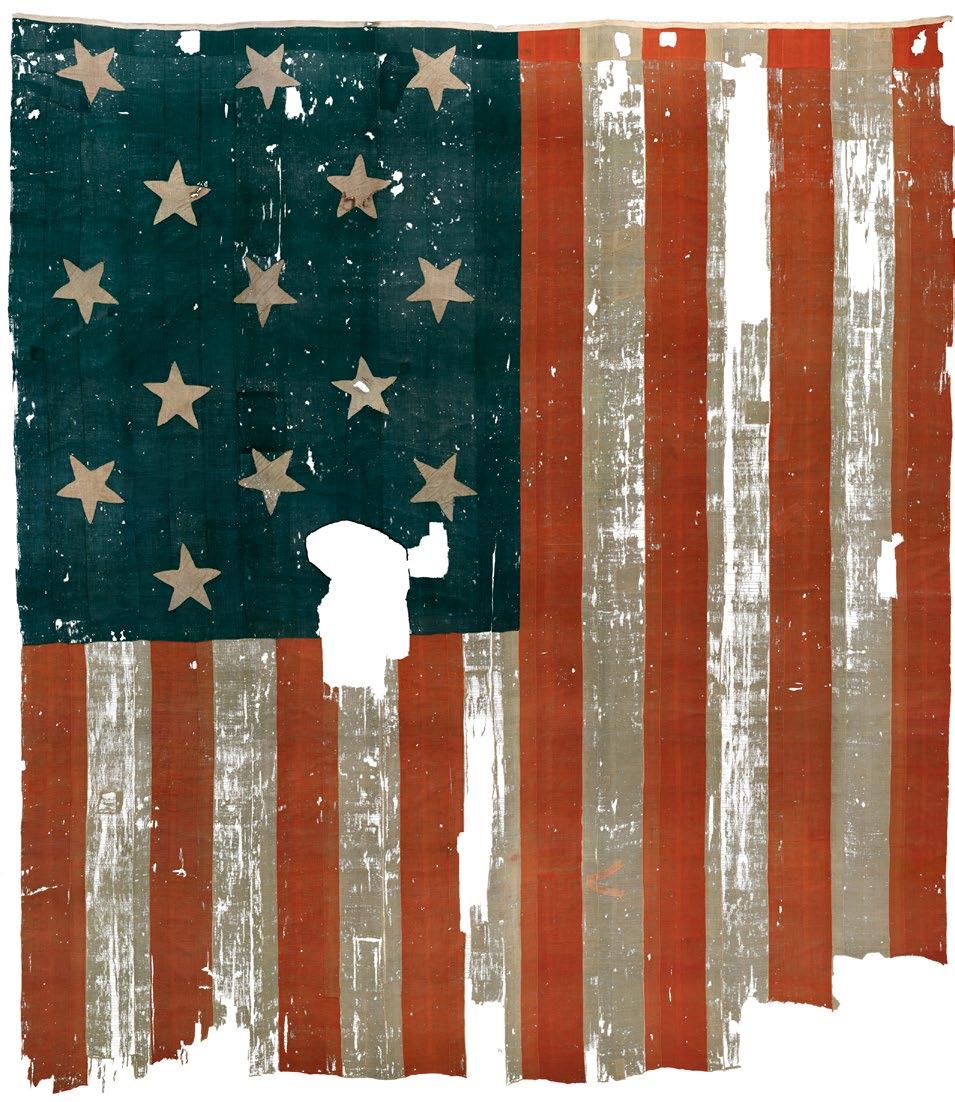
250 YEARS AGO: BALTIMORE AND THE TOPPLING OF A KING
TThe Continental Army was in shambles in the fall of 1776. The Declaration of Independence had been issued just months earlier, but the revolution appeared to be slipping away. Gen. George Washington had been defeated time and again, including at the disastrous Battle of Long Island where Washington himself escaped capture only because of the courage and sacrifice of Maryland’s First Regiment.
In mid-November, following a series of Continental Army retreats, the British laid siege to Fort Washington in Manhattan. The British and Hessian soldiers of King George III then advanced across the Hudson River to New Jersey, forcing the abandonment of Fort Lee. Thousands of American soldiers were killed, wounded, or captured during these British assaults, including 2,800 patriots at Fort Lee alone. Combined with mass desertions, the Continental Army dwindled to little more than 5,000 available men.
The surviving American troops fled to Pennsylvania with the British on their tail.
That December, however, with winter setting in, British Commander William Howe stopped the chase. He positioned outposts from central Jersey to the Pennsylvania line, in towns like Trenton, Bordentown, and Princeton. Believing the rebellion nearly crushed, he sent other troops back to winter quarters in New York.
The Continental Congress, which had been assembling in Philadelphia, did not anticipate Howe would temporarily halt his advance at the shores of the Delaware River. Just 30 miles from Trenton, they feared the British would sack the City of Brotherly Love next. After adjourning on Dec. 12, 1776, they hustled for safely to Baltimore Town—whose estimated population was just 6,000 at the time.
Congress convened again on Dec. 20 at the Henry Fite House, on the site of today’s CFG Bank Arena. The threestory, 14-room tavern, with fireplaces and a stable for 30 horses, was the largest building in Baltimore. It was near places to lodge and eat, but also on the western edge of town and out of cannonball range from Baltimore’s harbor. While Congress met there, Fite’s Tavern took on the name Congress Hall. Unfortunately, the building was destroyed by fire in 1860.
While in Baltimore, Congress members complained they could only get to the Fite House on horseback through

deep mud. But they created the Board of War during this time and a new Treasury Committee, too. “We have done more important business in three weeks than we had done, and I believe should have done, at Philadelphia, in six months,” Samuel Adams declared early into the session.
Congress stayed in Baltimore through the end of February 1777. Famously surprising the British with a daring, Christmas night crossing of the icy Delaware River, Washington won several key battles during the intervening months, including the Battles of Princeton and Trenton, rejuvenating American hopes and morale.
Congress reconvened in Philadelphia again on March 5. Howe would eventually occupy Philadelphia in the fall of 1777, causing Congress to flee yet again, but to York, Pennsylvania, this time. Although the American Revolutionary War would last another six hard years, no major battles were fought in or near Baltimore (unlike the War of 1812). And so, sandwiched between Philadelphia and the final victory in Yorktown, Virginia, the Revolutionary War
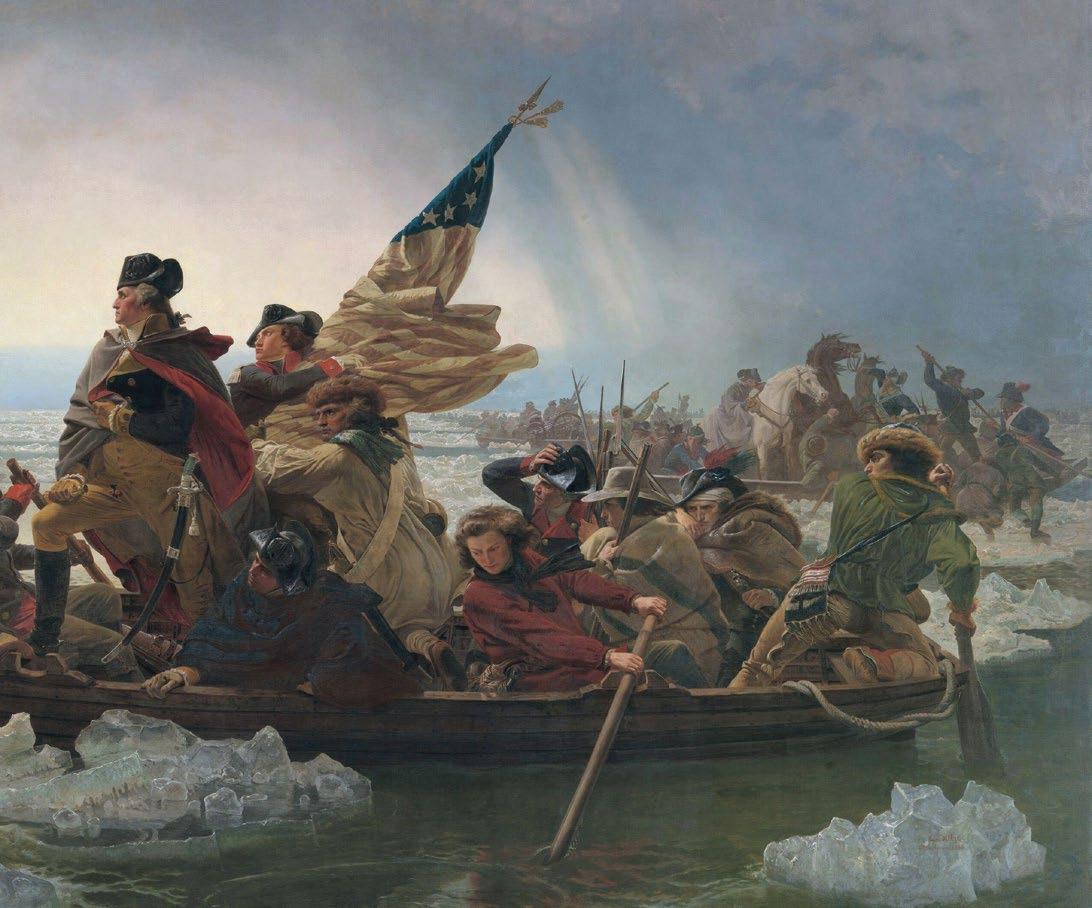
story here has long been underappreciated. In particular, the crucial role played by local women, African Americans, immigrants, exiles, indentured servants, and foreign allies—in a revolution that reshaped the course of human history—has rarely, if ever, been told completely.
Nine years before the Revolutionary War broke out, Baltimoreans were already organizing in opposition to British colonial policies. Laid out in early 1730, Baltimore Town had become a growing urban center with an economy based on trade through its burgeoning port. By 1765, when Britain’s Parliament passed the Stamp Act, local merchants were already suffering the effects of a credit squeeze, currency shortage, and an adverse balance of trade with England and continental Europe. Leading Bal-
ABOVE: “Washington Crossing the Delaware” is one of three 1851 oil paintings by artist Emanuel Leutze, depicting the surprise Christmas night attack on Trenton, New Jersey. PREVIOUS SPREAD: Mary Pickersgill’s 1813 hand-sewn Star-Spangled Banner (42' x 30') that flew over Fort McHenry.
timore merchant William Lux feared that the direct tax on colonial print materials— newspapers, pamphlets, magazines, legal and business documents, among other goods—“must inevitably ruin us.” Worse still, the Stamp Tax revenue was used to fund British troops stationed on American soil. Lux, whose father, Darby Lux, gave the anglicized version of his name to downtown’s Light Street, was a member of the Mechanical Company of Baltimore, the ad hoc representative government formed because the Maryland Assembly refused to allow Baltimore Town to officially incorporate with its own city government.
In February 1766, William Lux wrangled members of the Mechanical Company of
Baltimore into a local chapter of the Sons of Liberty, following the lead of Boston, New York, and other colonial cities. These Baltimoreans, who were merchants and moderately well-off craftsmen motivated at least in part by economic self-interest, joined with the Boston Sons of Liberty—think Paul Revere, John Hancock, the Adams brothers—and enacted a nonimportation agreement with Britain in protest of the Stamp Act (aka, taxation without representation). Through community pressure in key cities, these early groups of antimonarchy agitators compelled colonial officials to illegally transact business without the stamps mandated by the Act.
After news arrived in Baltimore in April 1766 that the British Parliament had repealed the Stamp Act due to intense resistance in the colonies, the Sons of Liberty disbanded. Even so, their tactics and alliance, including the coalition between craftsmen (“mechanics” in the parlance of the time) and merchants that undergirded the Mechanical Company—set the precedents for political organizing in Baltimore during the Revolutionary War.
In Baltimore Town, as well as most of colonial America, taverns were crucibles of Revolutionary fervor and venues for political assembly and debate. Referred to interchangeably as “inns” and “public houses,” too, taverns offered meals along with beer, hard cider, wine, and liquor—colonists drank roughly three times as much modern Americans—and lodging for travelers. Some taverns catered to elites, for example serving tea, hot chocolate, and coffee
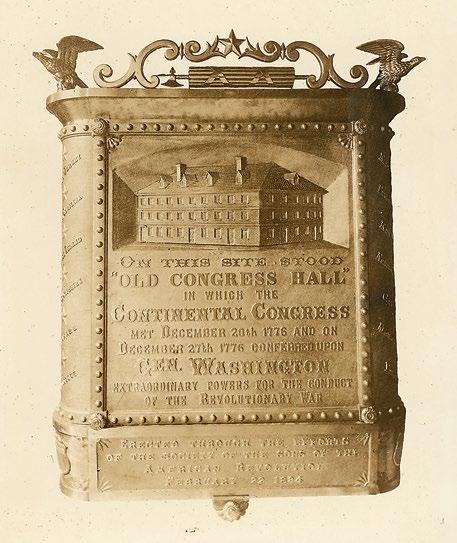
BALTIMORE IS A VERY PRETTY TOWN,” JOHN ADAMS
WHILE THE CONTINENTAL CONGRESS WAS STATIONED HERE IN THE WINTER OF 1776-77.
to genteel travelers for breakfast; some did not and served only simple fare, if they sold food at all. In general, taverns were places where white men drank and talked, making plans, holding court, and practicing politics while the white women and Black people who worked at the inns were excluded from social and political participation.
In 1773, the very first issue of Baltimore’s first newspaper, the Maryland Journal and Baltimore Advertiser, ran an advertisement declaring that “Daniel Grant . . . hath opened an Inn and Tavern at the sign of the Fountain”—at the intersection of today’s downtown Light and Redwood streets, just north of the present-day Water Street Tavern. Grant “hath provided every Thing for the Accommodation of Gentlemen, their Servants, and Horses, in the best Manner.” In other words, this was one of those fancier establishments. Over the course of the war, the Fountain Inn accommodated a number of Founding Fathers and Revolutionary War leaders, including John Adams, Thomas Jefferson, the Marquis de Lafayette, and of course Gen. George Washington. Troop movements brought military officers like Washington and his young French protégé, Maj. Gen. Lafayette, to town. But when Washington slept here, who made his bed? Who brought the general his morning tea and his evening Madeira? Domestic laborers, largely enslaved African Americans, indentured servants, and free white women, who were critical to Baltimore’s Revolutionary War role as a staging point for the Continental Army. Some of this specific domestic labor was likely done by the Black women enslaved by Daniel Grant, including Nanny Smith, Catherine, and Penn, who are named in a subsequent city tax list. The tavern owner’s presence is still visible today in the name of Grant Street, which abuts the old Fountain Inn location.
In fact, Washington and his staff stopped at the Fountain Inn in September 1781 on their way to the decisive Battle of Yorktown. It was also from the steps of the tavern that Washington reviewed the Maryland militia in 1798, when war with France threatened.
Coincidentally, a recovered cannonball from Fort McHenry—fired by the British during the Battle of Baltimore in 1814—sits as a very small monument in front of today’s Redwood Place apartments near the site of the Fountain Inn.
There remain few traces of Revolutionary War-era Baltimore Town in present-day Baltimore City, besides the names of many of our central streets. There is the aforementioned Light Street and two—Fayette Street and Lafayette Avenue—which pay homage to the beloved volunteer freedom fighter from France. Street. Others include John, Eager, and Howard streets, which honor Maryland-born Continental Army Col. John Eager Howard. Eutaw Street commemorates the bloody 1781 Battle of Eutaw Springs in South Carolina, where Howard and Maryland troops fought fiercely.
Paca and Chase streets are named for two of Maryland’s Declaration of Independence signers—William Paca and Samuel Chase. Stricker Street is named for John Stricker, who served with Washington and later became a commanding general in the War of 1812. And then there’s Baltimore’s Lafayette Square, and the Lafayette statue and the city’s Washington Monument at Mount Vernon Place, which began construction in 1815. It must be noted all these men were also significant enslavers, outside of Lafayette. A lifelong abolitionist, Lafayette later tried, unsuccessfully, to persuade the future first president—one of the richest men ever to hold the nation’s highest office—to emancipate the men, women, and children he enslaved.
Interestingly, Baltimoreans named Pratt Street, the city’s main harbor thoroughfare, as well as Camden Street (and thus Camden Yards) as an expression of their gratitude to British parliamentarian Charles Pratt, the 1st Earl of Camden. A staunch supporter of civil liberties, Pratt opposed the Stamp Act, insisting taxation was predicated on representation, and advocated for the American colonists.
There are more markers of Baltimore’s involvement in the revolution: Tucked inside the northeast corner of the CFG Bank Arena is a large bronze plaque commemorating the Continental Congress’ threemonth legislative session on that site. From Dec. 20, 1776, until Feb. 27, 1777, Baltimore Town was the capital of the United States. By this time, Baltimore was more or less universally pro-Revolution in its politics and comparatively well-fortified with Fort Whetstone—later rebuilt as Fort McHenry—as well as artillery breastworks on Fells Point. Theoretically, Baltimore was also defensible because of geography—all told, a good place to flee from the approach of British forces.
During his stay, Massachusetts delegate John Adams wrote in his letters that “Baltimore is a very pretty Town.” He enjoyed long walks around Fells Point and other parts of town and dined with local civil and military Revolutionary leaders, but like other members of the Continental Congress, also complained repeatedly that the streets were “very dirty and miry” and “the muddiest I ever saw.”
Of course, Baltimoreans were not at fault for their miry streets, Adams noted, “because they had determined to pave the Streets before this War came on, since which they have laid the Project aside.” (Apparently, Baltimore’s imperfect streets have been an issue from the start, but their initial paving at least did resume after the war.)
Later in 1777 and for similar reasons, Maryland Gov. Thomas Johnson and the five-man Council of Maryland also “adjourned to Baltimore.” Like Congress before them, they were fleeing Brit-
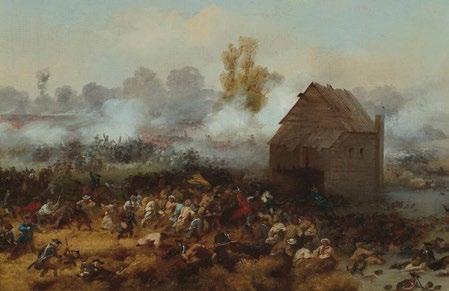
The "Old Line State” regiment is honored with a monument in Brooklyn.
IN AUGUST 1776, Thomas Stone, one of Maryland's four signers of the month-old Declaration of Independence, sent urgent news from Philadelphia to Annapolis that a major battle loomed in New York City. Stone reported “. . . by the last accounts they [the British] were shipping their men and making all necessary preparations for an attack.” Fortunately, the unit that became known as the Maryland First Regiment was already headed north.
Anticipating the British assault, George Washington placed most of his Continental Army forces in Manhattan. The British, however, landed 10,000 infantrymen on Long Island's western edge where the Marylanders were now stationed——launching a brutal fight in what is today’s Brooklyn. As the morning of August 27 progressed, the overwhelming British troops surrounded the Marylanders. According to one survivor’s account, the British “infantry poured volleys of musket balls in almost solid sheets of lead.” Yet, the “Maryland 400” charged and charged again with their fixed bayonets.
The significance of the “Maryland 400,” roughly the size of the five companies that took the heaviest losses, cannot be overstated. (The moniker may have been a shout-out to the “Spartan 300” of lore.) The intense fighting stalled the British offensive for the day, allowing Washington and his army to safely retreat——thereby saving the Revolutionary War and also earning Maryland its “Old Line State” nickname. Watching the Marylanders’ charges from a hilltop, Washington is said to have cried out, “Good God, what brave fellows I must this day lose!” When it was over, 256 Marylanders lay dead, with a hundred more captured. Only Maj. Mordecai Gist, a 33-year-old Baltimorean, and a handful of others would make it back to the American camp.
ABOVE: Painting by Alonzo Chappel, 1858, depicts Lord Stirling leading an attack against the British in order to buy time for other troops to retreat at the Battle of Long Island, August, 1776.
ish forces who were en route to Philadelphia. The Brits’ fleet had sailed right past Annapolis on their way up the Chesapeake Bay. It is unclear where this executive branch of Maryland’s government sat in session while in Baltimore, although they had made use of Grant’s Fountain Inn on previous visits to town.
Wherever they met, the governor and council fretted over reports of loyalists and deserters and hashed out the logistics of military manpower and supplies. Arriving in mid-August, they adjourned to Annapolis at the end of September when they ran out of money to pay their debts in Baltimore.
Warfare depends upon logistics and the Continental Army depended on Baltimore Town. Our history goes largely ignored in histories of the Revolutionary War, because Baltimore was not a battlefield—but it is incorrect to say nothing important happened here. As a port town with an agricultural hinterland and a well-established ironmaking industry, Baltimore was an important supply and distribution center for food, clothing, and ordnance for Revolutionary troops up and down the eastern seaboard.
PREVIOUS: The plaque inside CFG Bank Area, which commemorates the site’s one-time home of the Continental Congress. BELOW: Baltimore’s monuments to the Marquis de Lafayette and George Washington in Mount Vernon Place.
In February of 1781, the quartermaster general and commissary general of the Continental Army sent word to Baltimore’s civic leadership that the Marquis de Lafayette was on his way to Baltimore with his detachment of troops. The Marquis was moving as rapidly as possible and required essential provisions for his troops on short notice. They emphasized, “we are assured of your readiness to do essential service by your country on every occasion.” So, Baltimoreans got to work.
When Lafayette arrived in Baltimore, it became clear the soldiers under his command were in dire need of clothing as well as food. Under the leadership of David and Elizabeth Poe—coincidentally, the patriotic, future grandparents of the celebrated poet by the same name—the prosperous families of Baltimore Town pitched in together. The gentlemen took up a collection to buy materials, and the ladies set up something like an assembly line and produced approximately 3,000 garments for the soldiers in less than three months. (One document suggests that the clothes were produced within three weeks.)
In response, the Frenchman wrote, “Per-
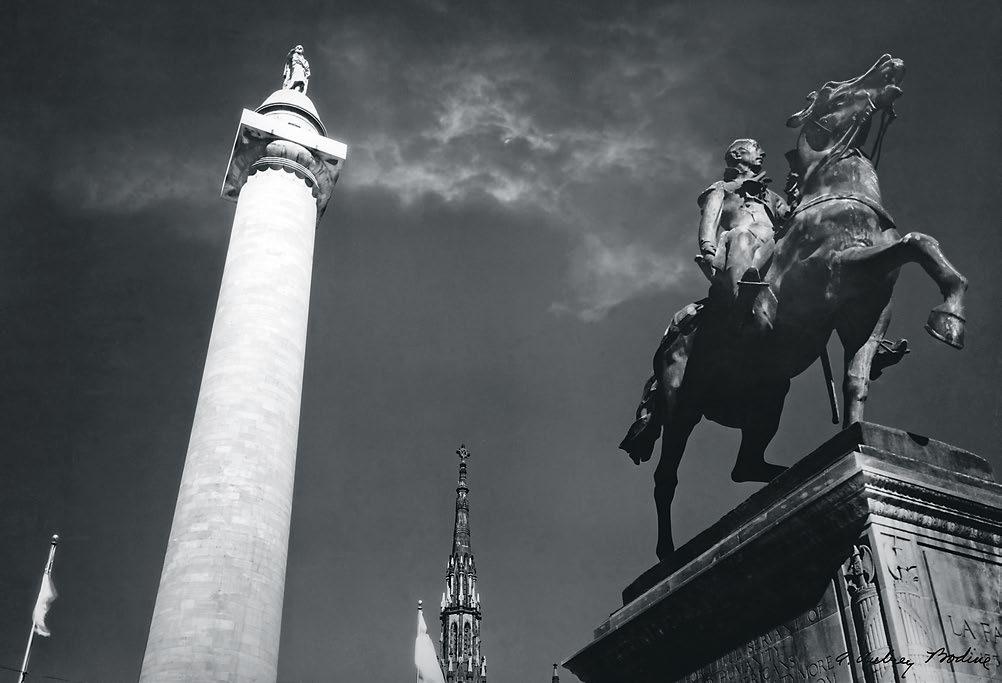
IN AUGUST 1791, Baltimore County-born Benjamin Banneker, a self-taught astronomer, agriculturalist, and surveyor, and son of a formerly enslaved father, penned a letter to Thomas Jefferson that challenged prevailing claims about Black people’s supposedly inferior intellect. Claims later expressed by the future president in his Notes on the State of Virginia, first written in 1781. Included was a copy of Banneker’s forthcoming almanac.
Banneker connected the conditions of enslaved people to the colonists’ struggle for independence from British tyranny and pointed out the hypocrisy of the Declaration of Independence author, citing his own “self-evident” truth “that all men are created equal.” The letter also appealed to Jefferson’s belief in a just and merciful God. While Jefferson penned a brief reply, thanking Banneker for his almanac, he did not directly address the ethical and moral criticisms raised by the man often considered the first African-American man of science. Banneker’s 100-acre-plus property and 18th-century residence are now home to the Banjamin Banneker Historical Park and Museum in the wooded hills between Catonsville and Ellicott Ciy.
Here are excerpts from Banneker’s handwritten missive:
Sir, I freely and Chearfully acknowledge, that I am of the African race, and in that colour which is natural to them of the deepest dye, and it is under a Sense of the most profound gratitude to the Supreme Ruler of the universe, that I now confess to you, that I am not under that State of tyrannical thraldom, and inhuman captivity, to which too many of my brethren are doomed; but that I have abundantly tasted of the fruition of those blessings which proceed from that free and unequalled liberty with which you are favoured and which I hope you will willingly allow you have received from the immediate hand of that Being, from whom proceedeth every good and perfect gift.
Sir, Suffer me to recall to your mind that time in which the Arms and tyranny of the British Crown were exerted with every powerful effort in order to reduce you to a State of Servitude, look back I intreat you on the variety of dangers to which you were exposed, reflect on that time in which every human aid appeared unavailable, and in which even hope and fortitude wore the aspect of inability to the Conflict, and you cannot but be led to a Serious and grateful Sense of your miraculous and providential preservation; you cannot but acknowledge, that the present freedom and tranquility which you enjoy you have mercifully received, and that
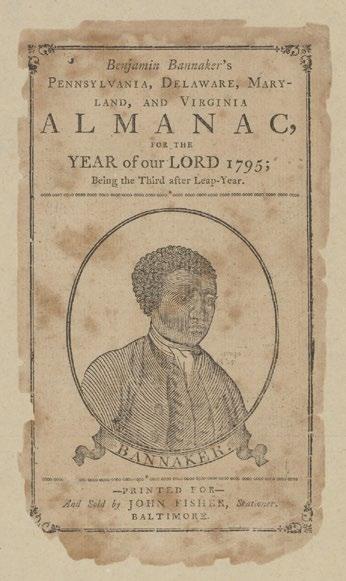
it is the peculiar blessing of Heaven.
This Sir, was a time in which you clearly saw into the injustice of a State of Slavery, and in which you had just apprehensions of the horrors of its condition, it was now Sir, that your abhorrence thereof was so excited, that you publickly held forth this true and invaluable doctrine, which is worthy to be recorded and remember’d in all Succeeding ages. “We hold these truths to be Self evident, that all men are created equal, and that they are endowed by their creator with certain unalienable rights, that among these are life, liberty, and the pursuit of happyness.”
Here Sir, was a time in which your tender feelings for your selves had engaged you thus to declare, you were then impressed with proper ideas of the great valuation of liberty, and the free possession of those blessings to which you were entitled by nature; but Sir how pitiable is it to reflect, that altho you were so fully convinced of the benevolence of the Father of mankind, and of his equal and impartial distribution of those rights and privileges which he had conferred upon them, that you should at the Same time counteract his mercies, in detaining by fraud and violence so numerous a part of my brethren under groaning captivity and cruel oppression, that you should at the Same time be found guilty of that most criminal act, which you professedly detested in others, with respect to yourselves.
Sir, I suppose that your knowledge of the situation of my brethren is too extensive to need a recital here; neither shall I presume to prescribe methods by which they may be relieved; otherwise than by recommending to you and all others, to wean yourselves from these narrow prejudices which you have imbibed with respect to them, and as Job proposed to his friends “Put your Souls in their Souls stead,” thus shall your hearts be enlarged with kindness and benevolence toward them, and thus shall you need neither the direction of myself or others in what manner to proceed herein . . .
. . . with the most profound respect your most Obedient humble Servant, —Benjamin
Banneker
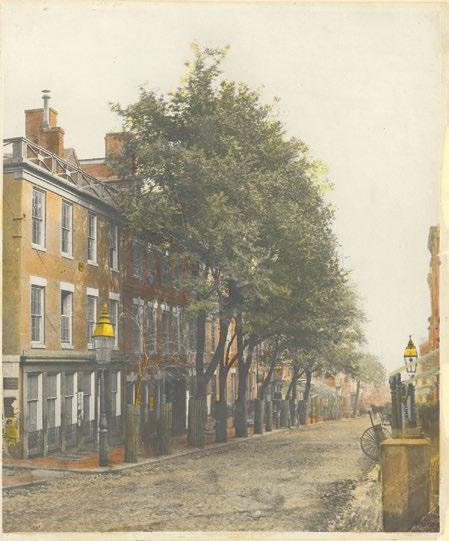
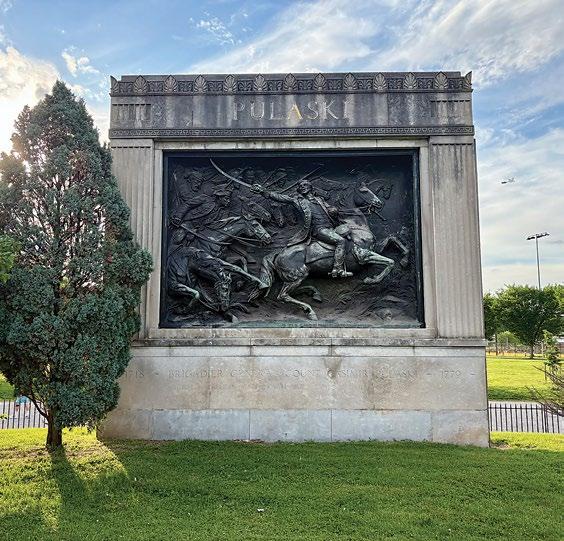
mit me to request my respectful thanks may be presented to the ladies of Baltimore . . . not only from a general respect to the fair sex, but more particularly because I know the accomplishment of those to whom I am indebted.”
The chivalrous Lafayette was a frequent visitor to Baltimore and Maryland during and after the war. The inscription at the base of the statue of him on horseback in Mount Vernon Place reads:
LA FAYETTE IMMORTAL
BECAUSE A SELF-FORGETFUL SERVANT OF JUSTICE AND HUMANITY BELOVED BY ALL AMERICANS
BECAUSE HE ACKNOWLEDGED NO DUTY MORE SACRED THAN TO FIGHT FOR THE FREEDOM OF HIS FELLOW-MEN
Brigadier Gen. Casimir Pułaski, an exiled Polish officer who later became known as “the Father of the American cavalry,” also spent time in the Baltimore area during the Revolutionary War, recruiting for his regiment, colloquially known as “Pulaski’s Legion,” in early 1778. Roughly six months earlier, Pułaski was credited with saving George Washington’s life, or at minimum preventing his capture, with a bold charge at the Battle of Brandywine that allowed the general time to escape. Pulaski, however, struggled to obtain both funding and respect from the Continental Congress and army leader-
ABOVE: A colorized photo of the old Fountain Inn; the bronze relief sculpture of Gen. Casimir Pulaski at Patterson Park. OPPOSITE: Baltimore’s Mary Katharine Goddard’s printing of the Declaration of Independence commissioned by the Continental Congress.
ship, so by all accounts he had a more frustrating time in Baltimore than did Lafayette. Despite the frustration—or even more so, because of it—his formation and training of a wildly diverse cavalry regiment led by immigrant officers was a truly remarkable accomplishment. His service is honored with the naming of Pulaski Highway as well as a massive relief statue at Patterson Park.
It’s worth noting today that historians estimate that up to one-third or one-half of the Continental Army were immigrants. Also, that Native and Black Americans fought on both sides and that a sailor of mixed African and Indigenous ancestry, Crispus Attucks, is traditionally regarded as the first person killed in the Boston massacre, and thus the first patriot killed in the American Revolution.
As a coda to the Pulaski story, recent osteoarcheological research on his remains has indicated Pułaski was likely intersex (born with both male and female sexual characteristics). Perhaps Pułaski’s Legion was more indicative of diversity in American history than anyone realized at the time.
Despite the full-throated rhetoric about liberty, Baltimore’s contributions to the Revolutionary War effort were often produced by the hands of enslaved African and African-American laborers. Nowhere
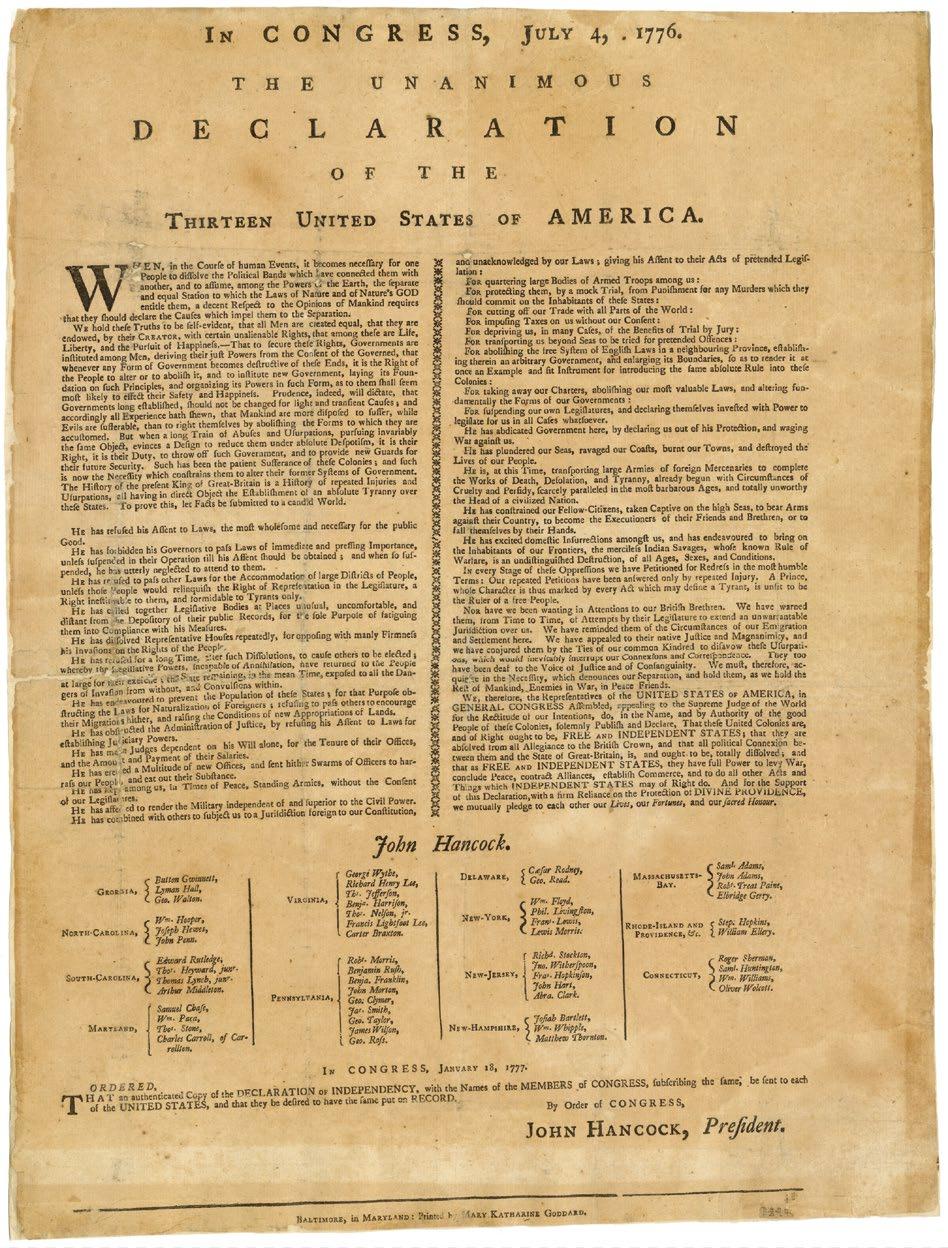

Often overlooked, Maryland patriots held their own Annapolis "tea party."
THE BOSTON TEA PARTY is a defining story of the American Revolution. Passed by the English Parliament, The Tea Act of 1773 granted the British East India Company a monopoly on tea sales in the 13 colonies, adding fuel to the American colonists’ “no taxation without representation” rally cry. Less familiar, however, are similar episodes up and down the Atlantic coast. Roughly a dozen cities joined in with their own tea protests, including Annapolis, where angry mobs forced Loyalist merchant Anthony Stewart to row out to the ship he owned, the Peggy Stewart, and burn it——along with its import tea——himself.
Stewart had paid the import tax, which helped fund the British occupation and violated the colonists’ non-importation resolution, to ensure the ship’s breathing cargo——53 indentured servants——would be allowed to safely disembark, which they did.
The Oct. 19, 1774 burning of the Peggy Stewart, named for its owner’s daughter, incidentally, was destructive evidence of the revolutionary fire brewing in Maryland just five months before the start of the war.
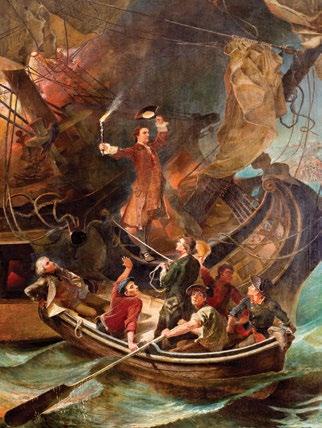
was this more apparent than in the town’s defenses. On Whetstone Point, at the site where Fort McHenry still stands today, around 250 laborers built Fort Whetstone in a few grueling months in 1776. One 19th-century historian specifically described all these workers as “colored.” Whether or not he had evidence for that claim, it is clear the available workforce for large public works projects in Baltimore was made up primarily of enslaved Black people.
During the Revolutionary War, indentured servants and free white men joined the armed forces. Marylanders, including Baltimoreans, who served heroically in the Continental Army (see the accompanying “Maryland 400 sidebar”) are immortalized in our state nickname, the Old Line State. But because Baltimore was a manufacturing and distribution hub for the Continental Army, enslaved people were kept on the home front where their labor was needed, instead of being sent off to fight. They toiled in hazardous conditions at forges and furnaces, making cannons and ammunition; they worked at Baltimore’s shipyards and built ships for the nascent United States Navy; at ropewalks, they made miles upon miles of rope for those same ships; and much more.
The laborers who constructed Fort Whetstone likely included the 100 (or more) people enslaved by Baltimore Town’s revolutionary leaders, as well as the approximately 137 people enslaved by the Principio Company whose iron-working operations included a small iron mine on Whetstone Point. We don’t know all their names, but as of 1781, the enslaved miners who worked there included Chintz, Cyrus, Dick (noted as “Blind Miner”), Joe, Prince, Sypio, and Will (a “Lame Miner”). The civilians who worked at Fort Whetstone in the months after it was built included free and enslaved Black men. One was known as Nathaniel the carpenter and another was Ned the drayman (cart-driver). A Black woman named Bett carried water for the fort, according to the personnel rosters from the fort, at the Maryland State Archives.
The uncomfortable clash between the ideals of liberty and the reality of bondage did not go unnoticed by Black Americans. Enslaved people fled Baltimore Town and Baltimore County, seeking freedom, throughout the war. Troop movements in the Chesapeake region offered fruitful opportunities for enslaved people. On Nov. 7, 1775, the loyalist governor of Virginia—John Murray, the fourth Earl of Dunmore—officially offered freedom to enslaved people who fled their revolutionary enslavers to join the British armed forces. This “Dunmore Proclamation” opened the metaphorical floodgates. Baltimore’s leading enslavers eventually responded by setting up an expensive system of slave-patrol boats in 1780, the cost of which they tried to foist onto the government of Maryland as an additional component of coastal defense against the British.
From 1774 until 1784, the newspaper of Baltimore Town, the Maryland Journal and Baltimore Advertiser, was published by an entrepreneurial and patriotic woman named Mary Katherine Goddard. One contemporary account described Goddard, who never married, as a “woman of extraordinary judgment, energy, nerve and strong good sense.” Such was her reputation that Benjamin Franklin appointed her the first postmaster of Baltimore, which made her the first woman to
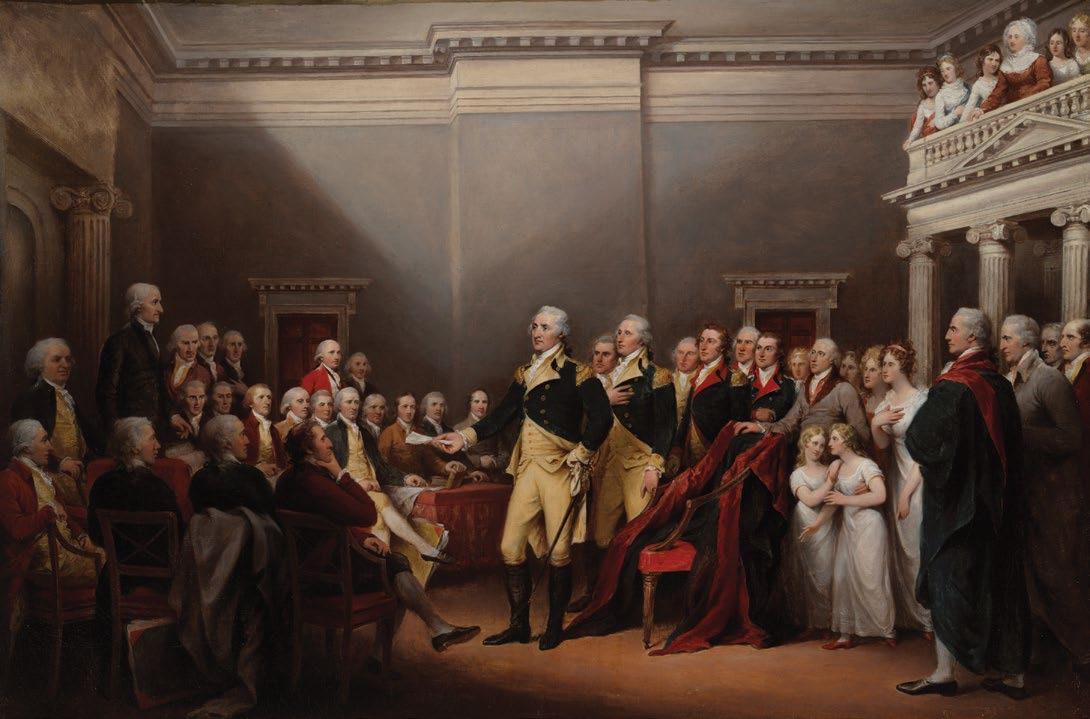
run a national government office. Her brother, William Goddard, co-edited the newspaper with her at other times, but the Maryland Journal was essentially her responsibility during the Revolutionary War. Although Mary Katherine Goddard later enslaved and eventually freed multiple people, most notably a young Black woman named Belinda Starling, she does not appear to have relied on an enslaved workforce during her tenure as the newspaper’s primary editor.
At the request of the Continental Congress while stationed in Baltimore, Goddard also famously produced the first printed edition of the Declaration of Independence that included the names of all its signers.
She printed her full name at the bottom, too: a lot smaller than John Hancock’s name, but no less permanently inked and indented into the paper. A copy of this January 1777 printing is held in the collection of the Maryland Center for History and Culture, not far, of course, from our Washington Monument and the statue of Lafayette. The imprints of her name, and the signers’ names, remain tangibly present.
At noon on July 29, 1776, the Declaration of Independence was read out loud to the people of Baltimore where the Battle Monument stands today, near the Clarence M. Mitchell Jr. City Courthouse. At the time, it was the site of the courthouse of Baltimore County, which had jurisdiction in Baltimore town. Loyalist sheriff Robert Christie Jr. had refused to do the reading, and he
ABOVE: Gen. George Washington surrending his military commission to the Continental Congress at the Old Senate Chamber of the Maryand State House in Annapolis.
fled town after threats of mob violence. Local attorney and clerk William Aisquith read it instead. As Mary Katherine Goddard described the event in her newspaper afterwards, “the Declaration of INDEPENDENCY was proclaimed . . . at the Head of the Independent and Artillery Companies, and the several Companies of Militia, to the great Joy and Satisfaction of the Audience, with a Discharge of Cannon, &c. and universal Acclamations for the Prosperity of the Free UNITED STATES . . .
“In the Evening the Effigy, representing the King of Great Britain, was carted through the Town, to the no small Mirth of the numerous Spectators, afterwards thrown into a Fire made for that Purpose,” Goddard recounted. She added, “Thus may it fare with all Tyrants.”
The heavy fighting in the Revolutionary War finally reached a conclusion in October 1781 at the Battle of Yorktown, which forced the surrender of British Gen. Charles Cornwallis. Aided greatly by French troops | CONTINUED ON PAGE 127
DOWN AT THE DOWN AT THE
D N R I V I E D N R I V I E
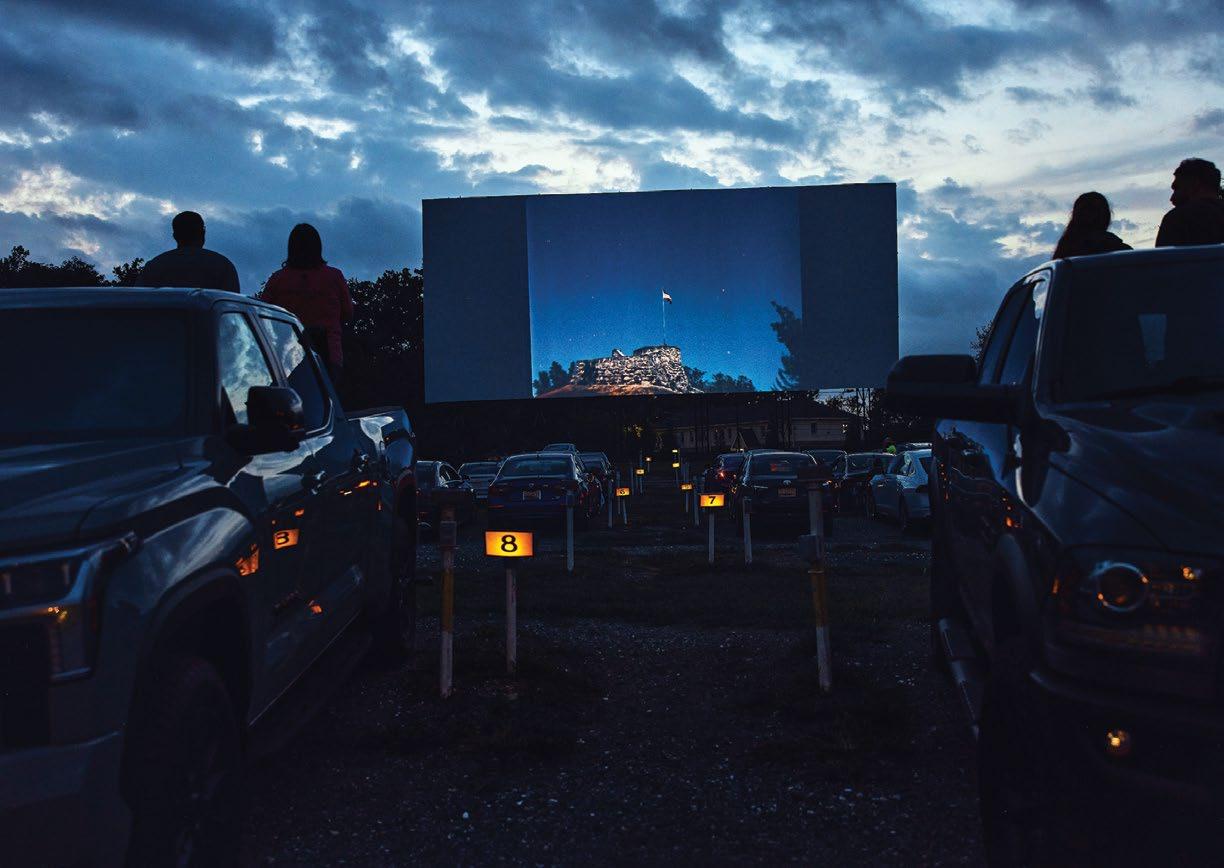
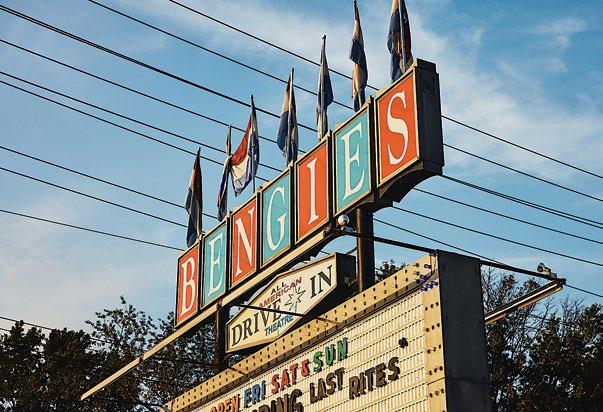
EVENTY YEARS AGO THIS SUMMER, the lights dimmed and the first movie flickered onto the screen at the Bengies Drive-In Theatre in Middle River. It was early June 1956, about two decades after the first such outdoor cinema opened in nearby New Jersey, coinciding with America’s automobile boom as highways newly unfurled across the United States.
On the far edge of Eastern Avenue, just past the Glenn L. Martin Aircraft Company and a few miles from the Chesapeake Bay, Bengies would bring this novel form of entertainment to the nighttime sky in Baltimore. Opened by brothers Hank, Jack, and Paul Vogel, the new attraction began as a sprawling mecca for motion pictures, more than a dozen acres in total, named for its surrounding neighborhood (which, in random trivia, was named after the nickname of the 23rd U.S. president, Benjamin Harrison). With a background in construction, the Vogels built a sprawling 50-by-120-foot screen, a Cinemascope projection tower, a classic midcentury concession stand, auditorium-style seating (now long gone), and a grassy parking lot that fit some 1,000 vehicles. A Googie marquee beckoned in big Buicks, Fords, Cadillacs, Chryslers, and Chevys of the day, full of couples and families who wanted to see Hollywood’s westerns, horror films, and romantic comedies for only a few cents.
Over the decades that followed, Bengies evolved with the times, adding radio-based audio in the 1980s and eventually digital projection in the early 2010s. But to this day, the experience largely remains the same——still, as they call it, a “real-live, honest-to-God, all-American drive-in movie theatre.”
From early spring through early winter, cars roll down this Baltimore County drive to see big-screen blockbusters and the occasional retro title. The snack bar overflows with popcorn, sodas, and soft pretzels. As the show begins, the National Anthem blasts over the loudspeaker and, at intermission, vintage animated trailers add to the Americana feel, reminding moviegoers of a dazzling golden age, when thousands of drive-ins once operated throughout this country. They unfold their blankets. They unpack their lawn chairs. They pop open their trunks, sit on their trailer hitches, tune in their dials, and transport to another world for a few short hours.
“The nostalgia, it’s undeniable,” says co-owner Ken Adam, 45, who started working in the concession stand as a teenager in the ’90s. He runs the place with D. Vogel, the third generation of his family to keep the reels rolling at Bengies, now one of the very last of its alfresco kind. (There are said to be about 300 active drive-ins left across the country, a steep decline from its mid-20thcentury heyday, when there were more than 4,000.)
Luckily, though, Bengies endures, celebrating its 70th birthday now through August 15 with a run of throwback films for every decade they’ve been in business.
“The movie business isn’t what it used to be, but it’s always fascinated me,” says Vogel, 68. “I’m here all year and it’s different every night—the sun sets a little bit later or earlier every day. But there’s this moment when you look at the sky and know: It’s showtime.”
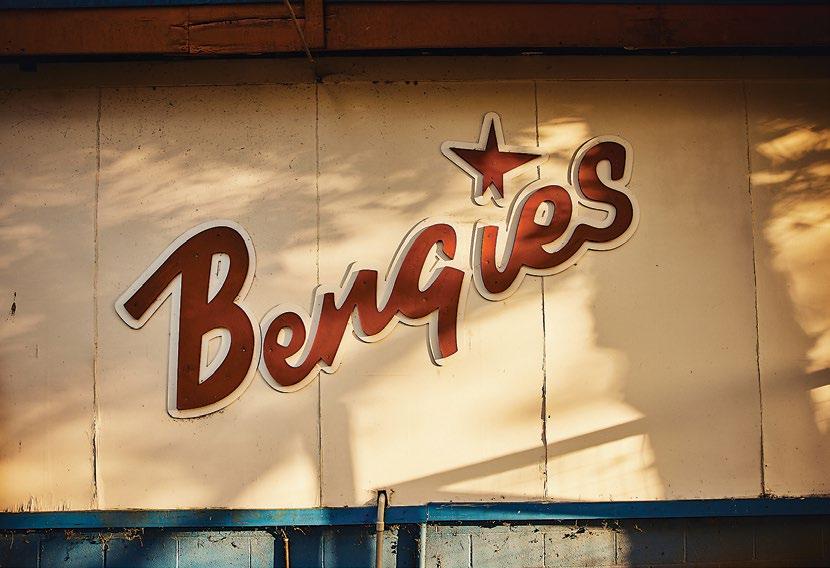
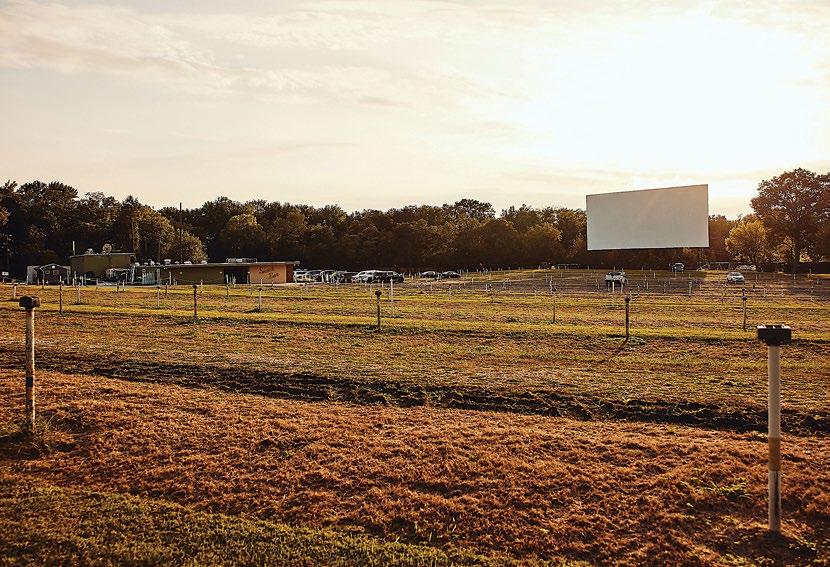
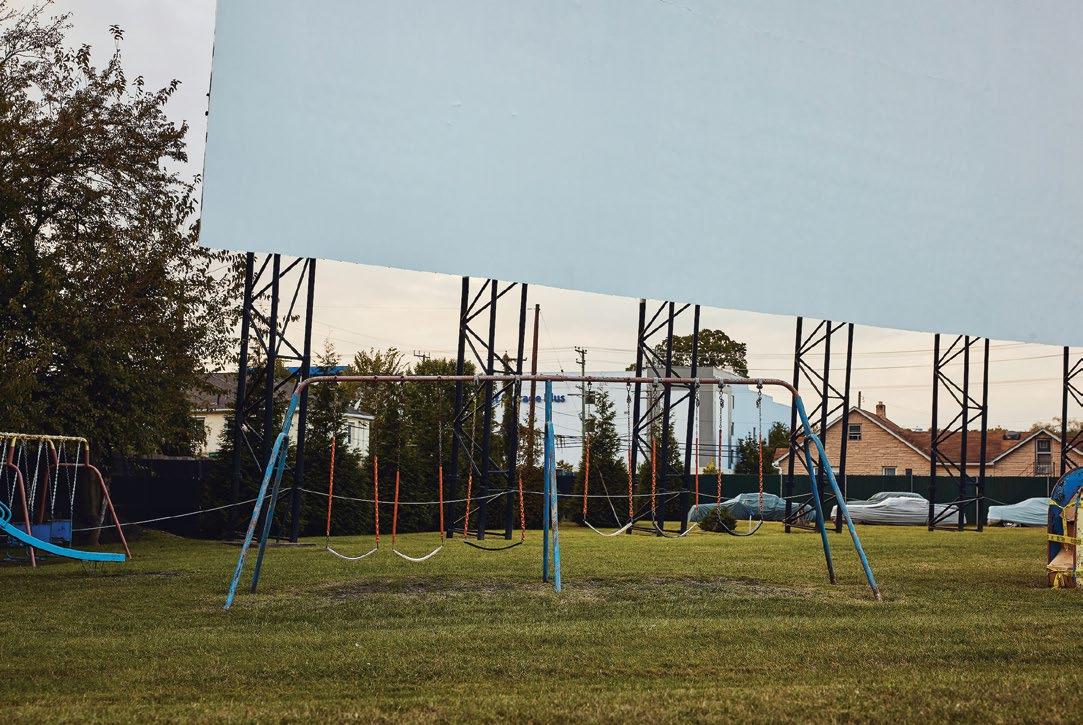
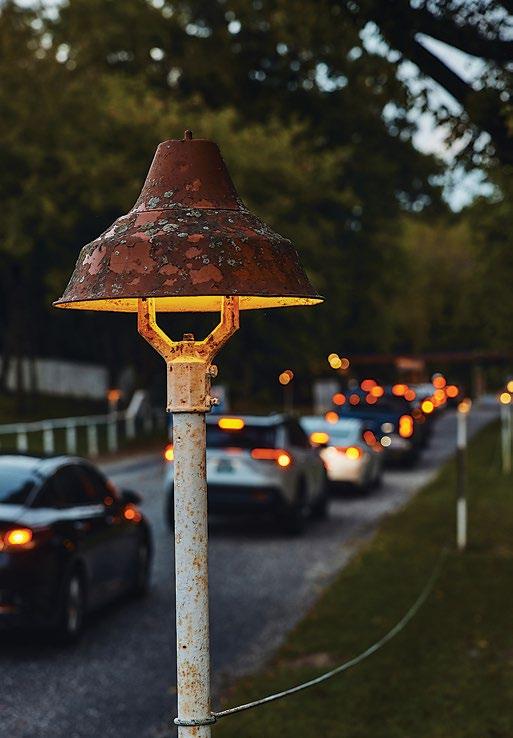
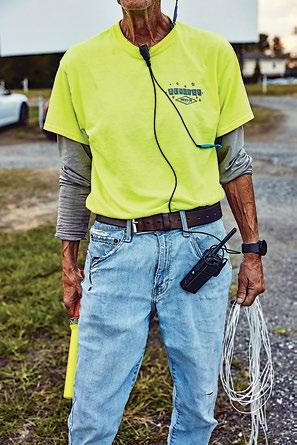
THIS PAGE, clockwise from top: Scenes from a movie night at Bengies: A swing set awaits a pre-show hang; staff helps direct traffic; a row of cars queues into the ticket booth off Eastern Avenue. OPPOSITE PAGE, from top: A patron shows off Bengies’ pet-friendly policy; every evening begins with the National Anthem.

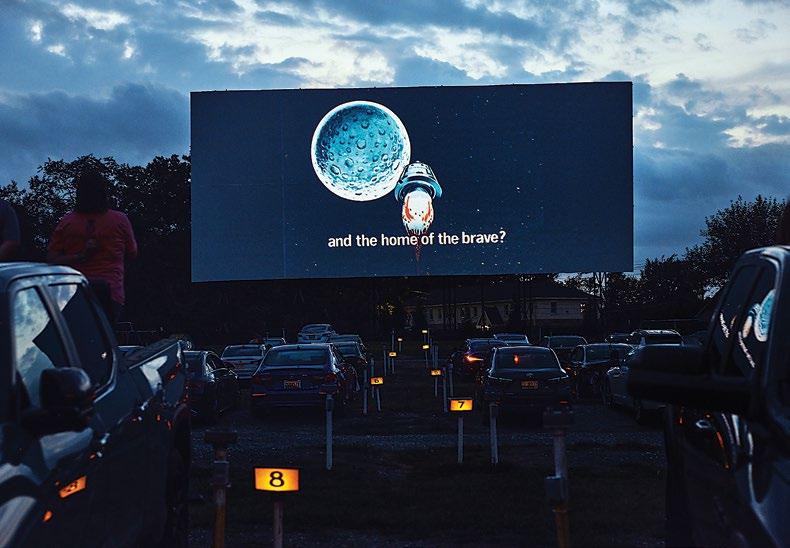
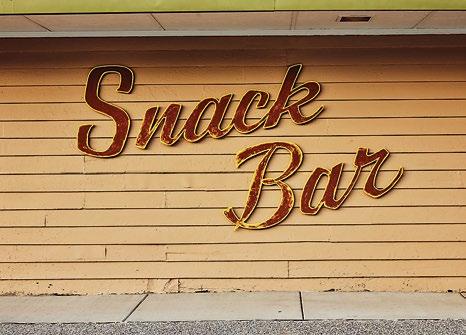
THIS PAGE, from top: Scenes from the concession stand at Bengies, which slings everything from hot dogs, hamburgers, and crinkle-cut French fries to Baltimore’s beloved snowballs and peppermint lemon sticks. OPPOSITE PAGE, from top: Fresh popcorn cooks away in the snack bar, with extra butter always on offer.
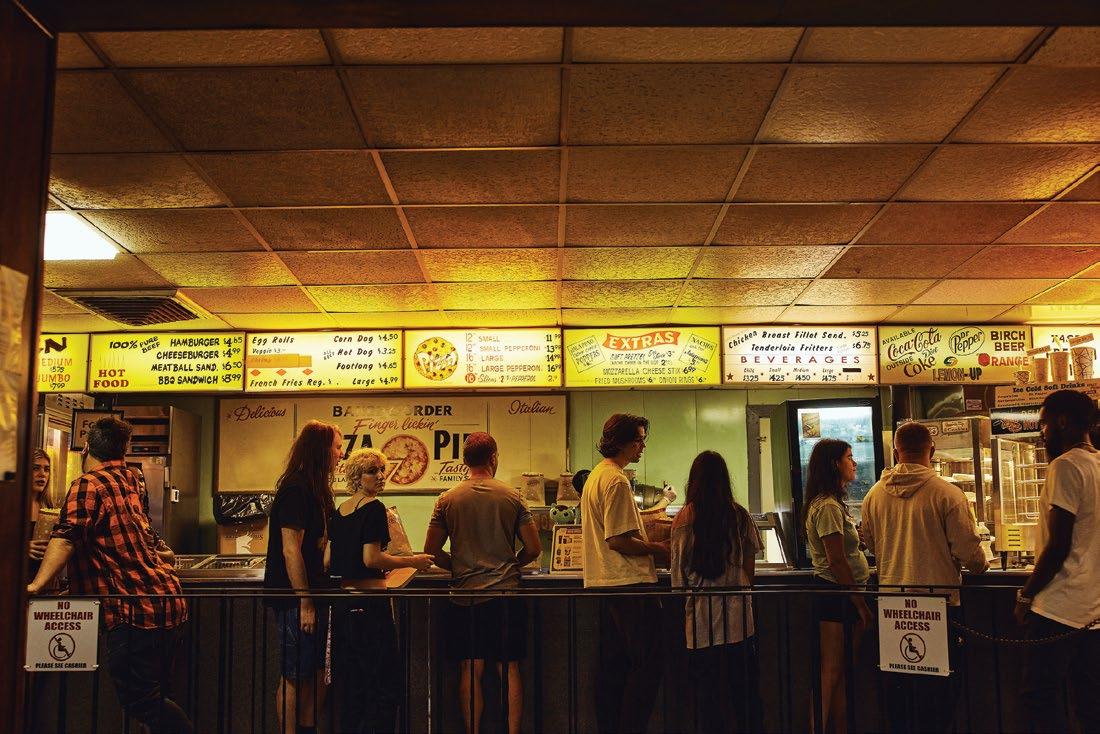
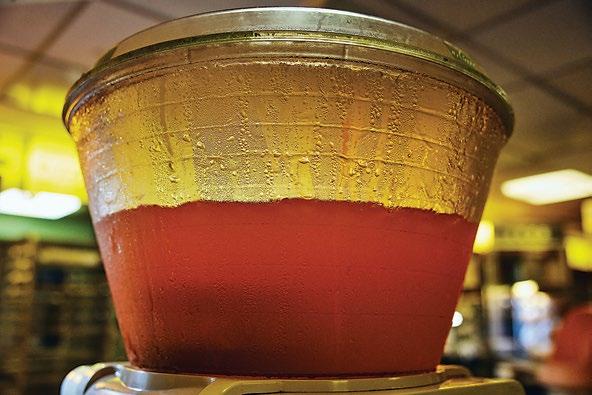



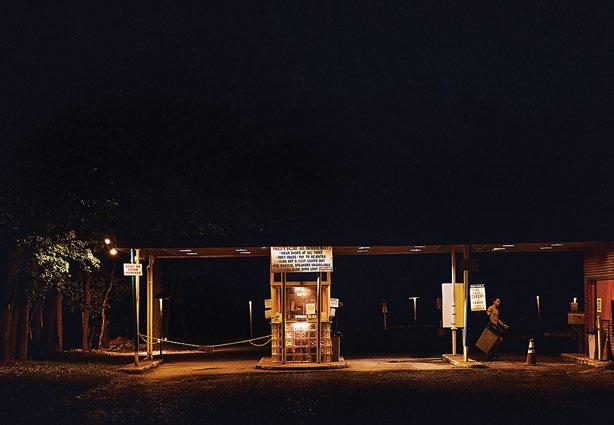
THIS PAGE, clockwise from top: A quiet ticket booth at the end of the night; patrons get comfortable for a double-feature film; field attendant Don Heller, who’s worked at Bengies for more than a decade. OPPOSITE PAGE, from top: Old lights illuminate the evening; one road in, one road out, with an old driveway leading moviegoers into a world of cinema magic.

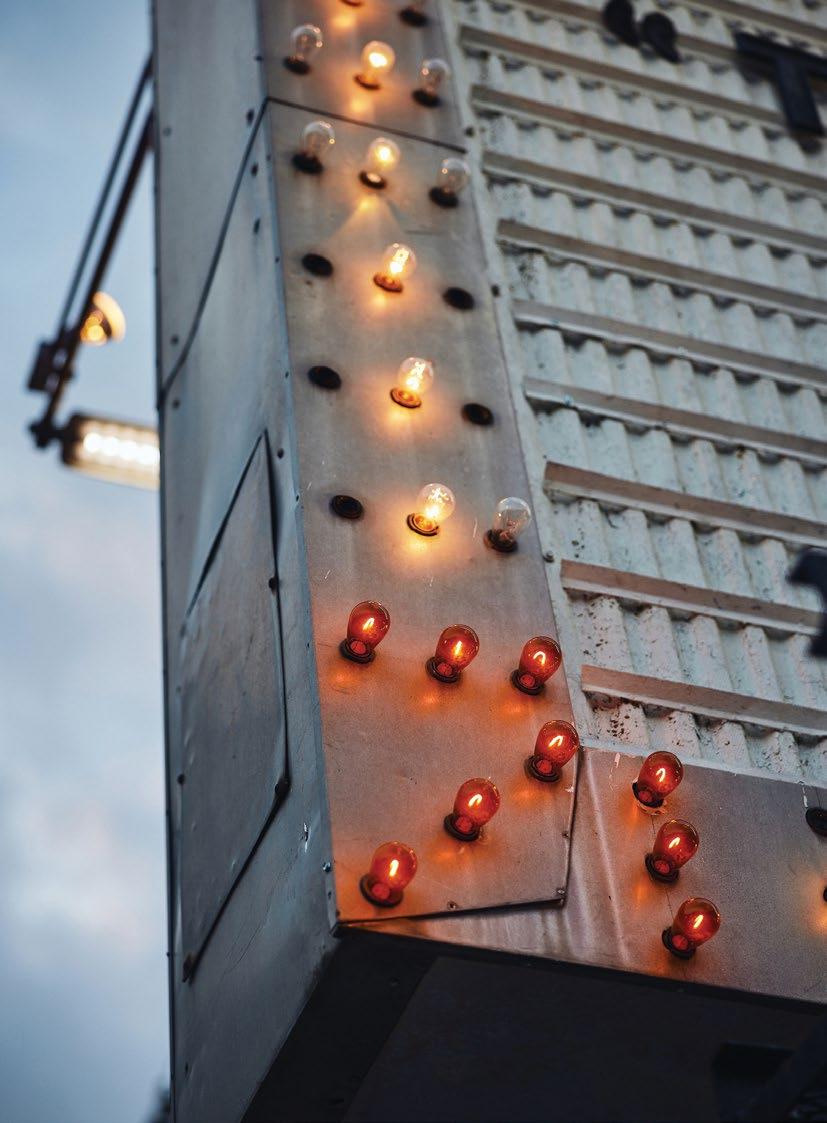

EDITED BY JANE MARION
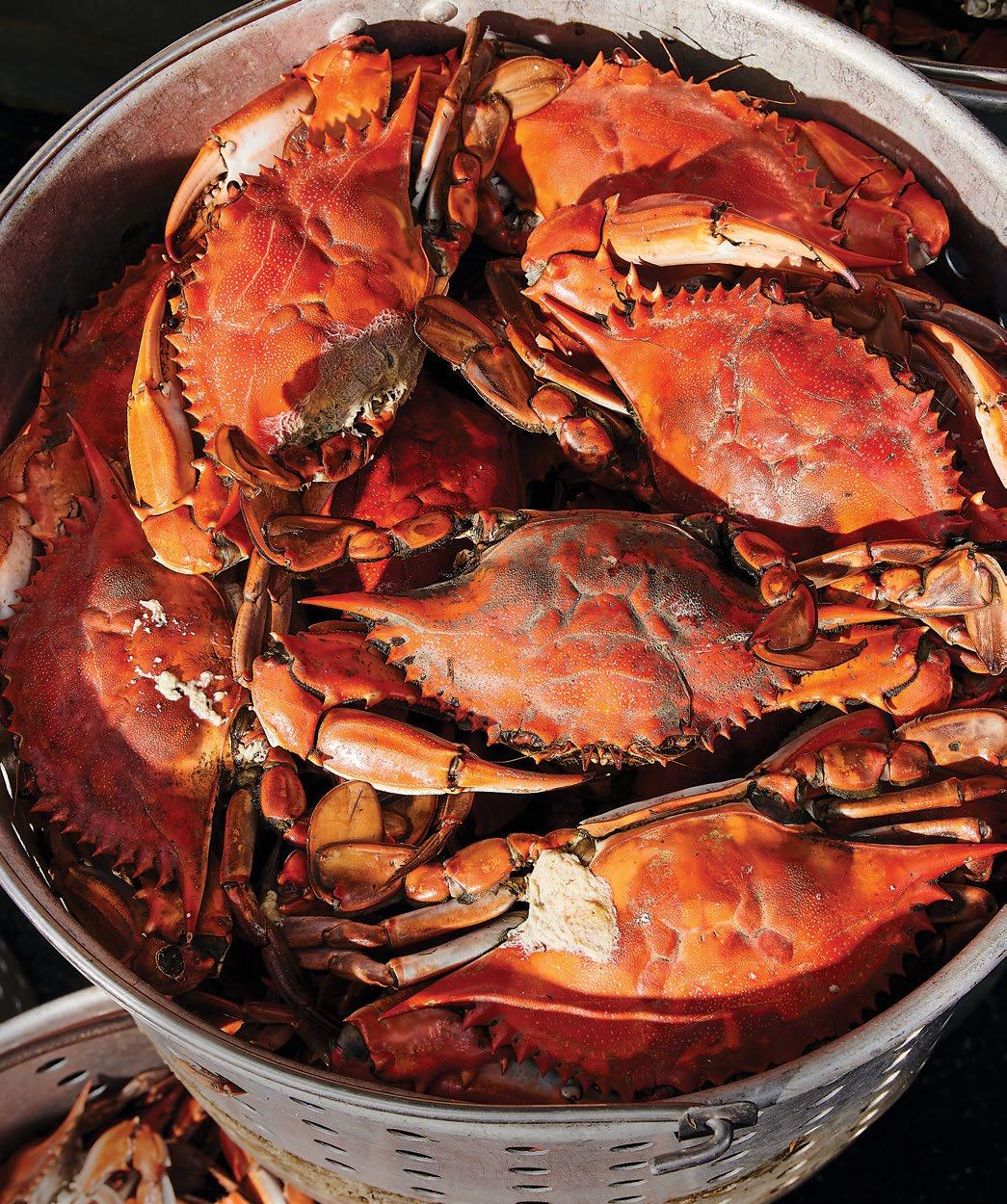
FULL STEAM AHEAD
Head to Emmert’s, a quintessential crab house in Dayton. PAGE 118>>
ON THE PLATE THIS MONTH:
Sea and Be Seen
Q & A
We
Trending



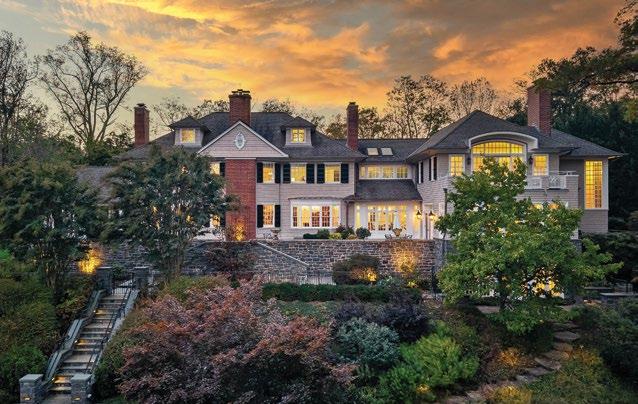
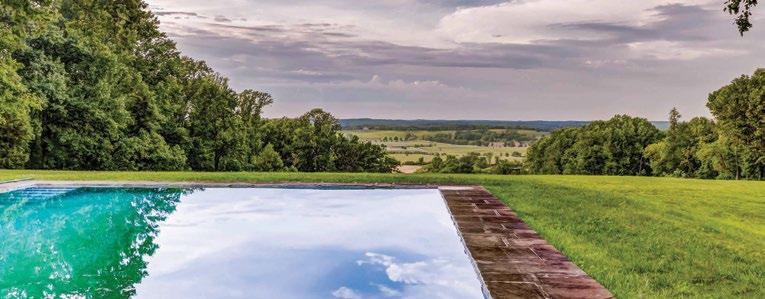

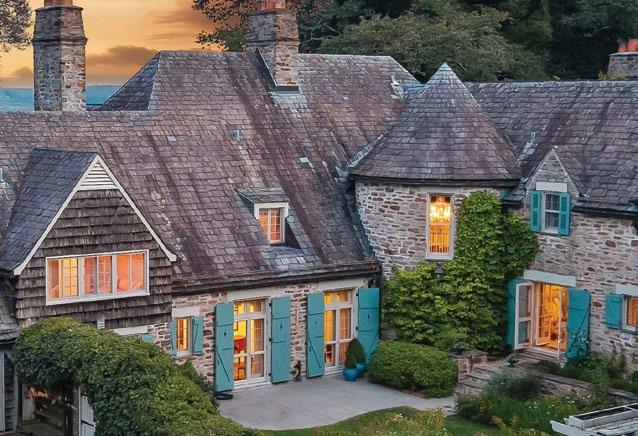





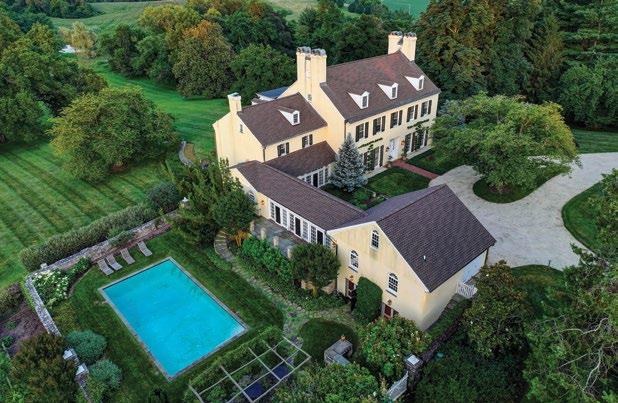



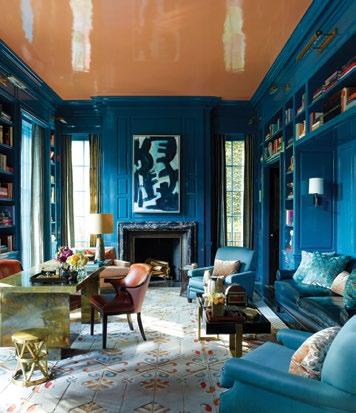
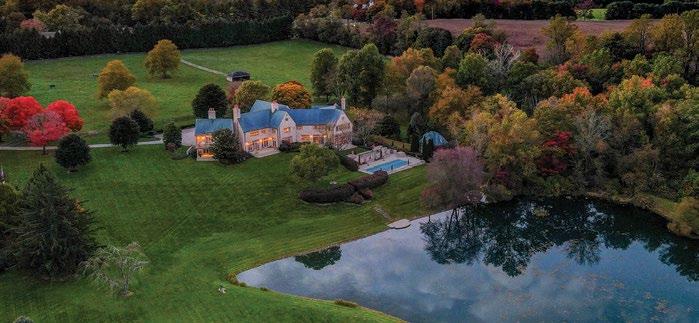

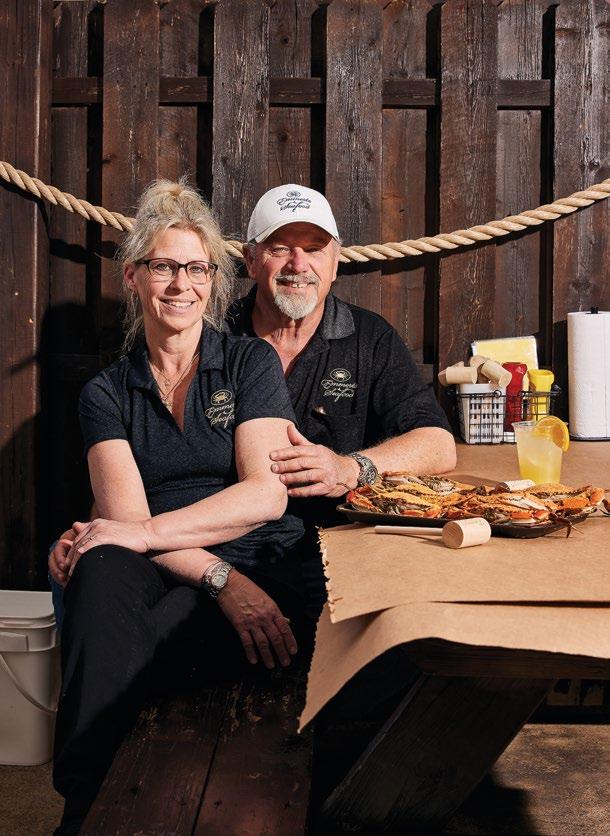
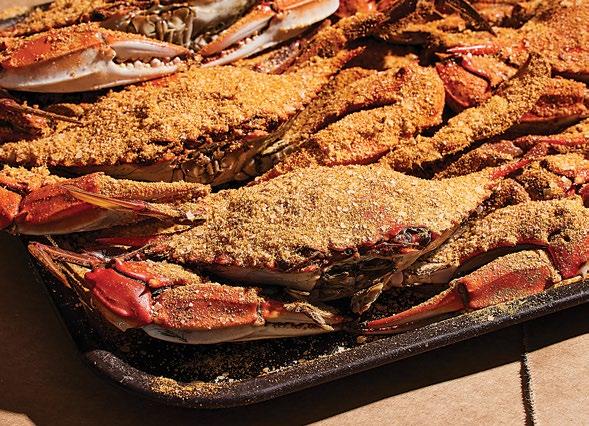
Emmert’s Seafood is a waterman’s dream crab house.
BY AMY SCATTERGOOD
Lori and Jimmy Emmert’s seafood and crab house, sitting by the side of a country road in Dayton, about 25 miles southwest of Baltimore, is a decidedly old-school version of the beloved Maryland genre. Emmert’s Seafood encompasses a palebutter-yellow clapboard house, an attached covered outdoor patio, and, for good measure (not to mention historical significance and a bit of roadside advertising), the long firehouse-red custom seafood-steaming trailer where the business officially began. Inside the restaurant, old family photographs (Jimmy culling oysters on the South River; Jimmy on another boat with his grandfather), nautical maps, and newspaper clippings (a Waterman’s Gazette story on the family) line the cornflower-blue paneled walls of the cozy dining room. A boxy bar stands just inside the door, where the bartender can be seen squeezing
fresh citrus for crushes. Past an open door to the steam room, through which you can see huge metal pots cooking two-bushelsworth of crabs, a corridor leads to the patio dining room. There, picnic-style tables are arranged in formation, topped with brown paper tablecloths weighted down by baskets of condiments, crab mallets, and rolls of paper towels, as if acknowledging that weather is always coming. Heat lamps stand at attention. Locals and visitors, tourists and regulars all sit, gathered around plates of hush puppies and crab dip, bowls of crab soup, mandatory mounded trays of spice-dusted steamed crabs, and, eventually, maybe a slice of Smith Island cake. Imagine an Old Line State iteration of some Norman Rockwell painting.
The origins of Emmert’s, as well as the Emmerts themselves, began long before the
advent of that seafood trailer. Both Lori and Jimmy grew up on the same road in Shady Side and have known each other since childhood. They married in 1987. Jimmy is the fourth generation of watermen in his family and the pair have spent their lives on Chesapeake Bay boats. “Jimmy started working on the water when he was 15”—when he got his first work boat—“but he’s been on the water forever,” says Lori, sporting an Emmert’s shirt, a blonde ponytail, and a gold crab necklace. She narrates the history of the framed photo of Jimmy on Parish Creek alongside his grandfather, Capt. Vernon “Whitey” Wilde, who himself came from a long line of Chesapeake Bay commercial watermen and who taught Jimmy how to fish, clam, oyster, and, of course, crab.
Once people found out that he was a local waterman, Jimmy began selling his catch to restaurants and eventually the couple decided to start steaming their own seafood. The Emmerts formed an LLC in 2003, bought the trailer in 2014, and took over the former Floyd’s Crossroads Pub in 2024. When they first started the trailer business, Lori still had a fulltime job with an accounting firm but Jimmy stopped crabbing because, he says, “you can’t be two places at once.”
These days, Lori works at Emmert’s too, though she still takes time off during tax season. It is a decidedly family operation, with Lori baking many of the pies and cooking family-recipe dishes (the cream of crab soup is a recipe “that’s like 200 years old,” says Lori) while Jimmy unloads bushels of crabs outside the steam room. Brendan Floyd, who is both bartender and manager, has worked at the restaurant for years: The Emmerts bought the place from his parents. “I kinda came with the building,” he says as he juices more citrus.
In the two years since the Emmerts began cooking for their brick-and-mortar spot—the trailer has been retired—the menu has ex-
Clockwise, from left: Lori and Jimmy Emmert sit at one of their outdoor picnic tables; a dozen seasoned crabs; a photo of their workboat, “Lori,” hangs on a wall; fresh citrus for crushes .
panded to include all the appetizers, soups, sandwiches, and fish platters you’d expect from a traditional crab house. There are also frogs legs on the menu, something one usually finds in classical French restaurants. When they were still working out of the trailer, says Lori, “We got them for a customer who wanted them, actually his mother, who lived in West Virginia or something.” They sold them raw, as the trailer didn’t have a fryer, and customers kept asking for them. And so when they moved into the restaurant with its fryer, the frog legs, which are now breaded and fried, came with them.
And then there are the crabs, dredged in a proprietary blend of Halethorpe’s J.O. Spice, and delivered to those brownpapered tables hot from the steamer. Emmert’s serves crabs year-round, so they’re Maryland crabs during the season, then sourced from Texas and Louisiana. After a lifetime of living and working on the water, the Emmerts source their local catch from friends and neighbors, and their wholesalers are often former colleagues who have gotten off the water.
Behind the restaurant, Jimmy unloads more bushels of the crabs that have defined both his family and his own lifetime. “It’s a social thing when you eat seafood,” he says, remembering his grandparents’ porch parties. “We really bought this because our customers at the trailer said, ‘Won’t y’all just buy a brick-and-mortar so we can come and eat your crabs and drink beer.’” Done and done.
EMMERT’S SEAFOOD: 4809 Ten Oaks Road, Dayton, 301-490-4423. HOURS: Wed.-Thurs., 3:30-9 p.m.; Fri., 3:30-10 p.m.; Sat. 11:30 a.m.10 p.m., Sun. 11:30 a.m.-9 p.m. PRICES: Apps, $6.95-$23.95; sandwiches, $13.95-MP; entrees and steamed crabs, $21.95-MP; desserts, $5.99-$7.99 AMBIANCE: Old-timey crab house.
ARCHIVES
To read more dining reviews, check out our archives online at baltimoremagazine.com.
BY MIKE UNGER
The vacation vibes are intense at Fisherman’s Crab Deck, the sprawling restaurant/ crab house/dock bar in Kent Narrows. Music—often live—mixes with the sound of mallets hitting shells to create a distinctly Maryland soundtrack. As boats bob in the marina, the scent of steamed crabs wafts through the air, completing a symphony of the senses that’s kept people coming back for 35 years. While many here are indeed on an Eastern Shore getaway, it’s actually a less-than-hour drive from Baltimore. The restaurant is a centerpiece of a little strip of Queen Anne’s County known as Fisherman’s Village, which has been serving food and drinks on the slower side of the Bay Bridge for nearly a century. Back in 1930, Alex Thomas and his wife, Mae, opened the original Fisherman’s Inn seafood restaurant. Today, the village has grown to include a hotel, boat slips, fishing charters, and multiple bars and restaurants. Kirby Schulz is the hospitality coordinator for the village and a member of the family that started it and still runs it to this day. “We’re on our fourth generation, and pretty much every one of us has their hand in it one way or another,” says Schulz, whose father, Jody, and two uncles are the current owners. “We’ve all worked as bussers, runners, servers. Every one of us has put our blood, sweat, and tears in.”
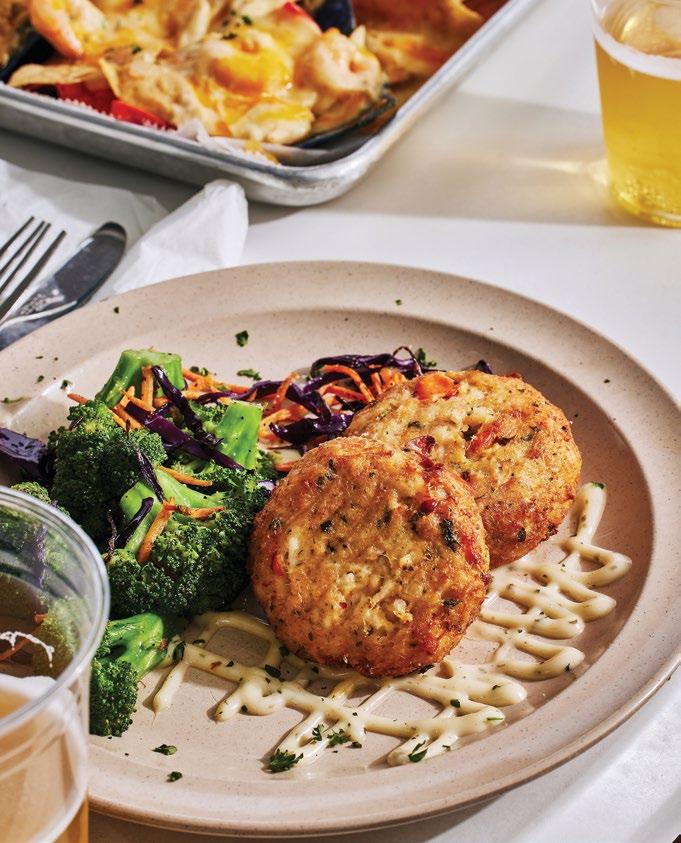
Below: The seafood cakes at Fisherman’s Crab Deck.
The crab deck includes its own dock where boaters can tie up while they dine, a large bar area, and a massive dining room. A smaller menu is available at the bar, which serves a host of specialty cocktails including fresh squeezed crushes and staples like the Cucumber Refresher, a mix of gin, muddled cucumber, and fresh squeezed lemonade. The bar menu includes a variety of sandwiches and appetizers, including the popular seafood nachos. Shrimp and crabmeat doused with cheese sauce atop a heap of tortilla chips isn’t for everyone, but for those whose palates welcome a somewhat odd melding of flavors, it works. Seafood puritans might prefer steamed clams served in a buttery broth.
Crabs are the focal point here, and an average of 150 bushels a week are steamed using Fisherman’s Inn proprietary seasoning. Manufactured by Halethorpe’s J.O. Spice Co., it’s a blend of salt, paprika, and other spices that was created by the family. It gives the crabs a slightly less spicy, but no less rich taste. Crabs, sourced from Louisiana and Maryland, are available April to October. When we visited in April, the jumbos (priced at $149 per dozen), and the larges ($99 per), were from the Gulf of Mexico, and were meaty and sweet. Crabs can be ordered by the dozen, half dozen, or individually. Crab soup is a good barometer of a crab house’s bona fides, and the vegetable variety here is spot on. With a hint of spiciness, plentiful crab meat, and veggies, it’s a great start to whatever comes next. The main menu is heavy on seafood, with local favorites like rockfish, blue catfish, and soft shells in a variety of forms. Among the most interesting items is a cousin of the classic crab cake. The seafood cake, created by chef James Hill, is a blend of crab, lobster, and shrimp topped with lemon aioli sauce. Much like Fisherman’s Village itself, it starts with a time-tested foundation and reimagines it for today.
FISHERMAN’S DECK: 3032 Kent Narrow Way S., Grasonville. HOURS: Sun.-Thurs. 11 a.m.-9:30 p.m., Fri.-Sat.: 11 a.m.-10 p.m. PRICES: Appetizers: $7.99-24.99, entrees: $24.99-43.99; steamed crabs: market price. AMBIANCE: Casual waterfront.
To read more dining reviews, check out our archives online at baltimoremagazine.com .

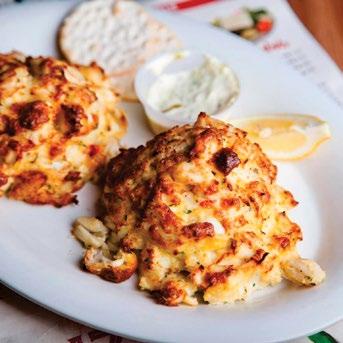


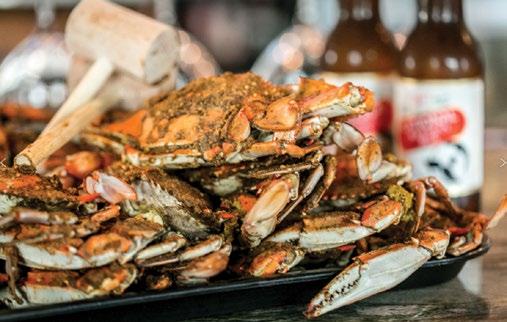

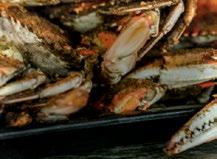



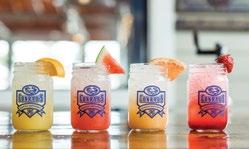



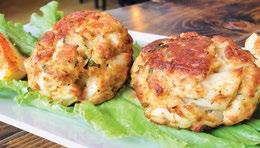



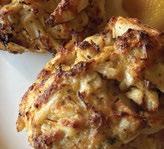







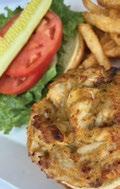







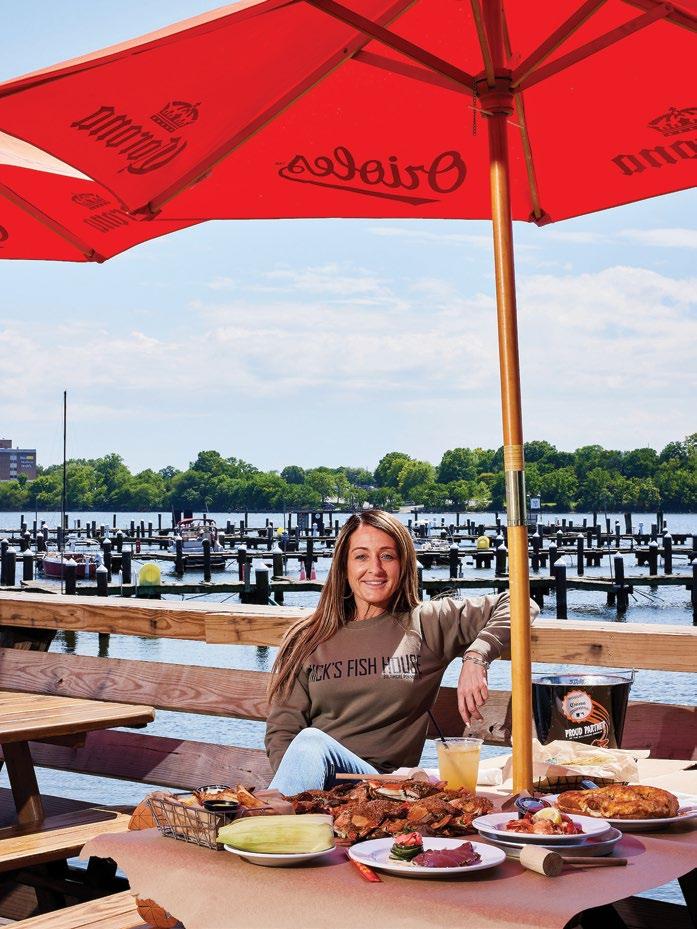
Why the wait for your steamed crabs at Nick’s Fish House is actually a good thing.
BY
JANE MARION
LIKE MOST BALTIMOREANS, Carly Eutsler, pictured, grew up eating crabs. “My grandmother, Rita, was from Baltimore, and it was part of what we did as a family,” she says. “Every Memorial Day, Mother’s Day, every holiday, we were doing crabs, steamed shrimp, corn on the cob—the whole Chesapeake thing.”
So it makes perfect sense that when the Catonsville native started working at Nick’s Fish House in 2012 as a server—she’s now one of the Baltimore Peninsula restaurant’s managing partners—she wanted to pass on her passion to the restaurant’s 300,000 visitors a year.
“When people come to Nick’s, we want them to eat, drink, and be merry,” says Eutsler. “We want people to feel good when they are here—that’s the goal.”
There are a lot of crab houses out there. How does Nick’s stand out in the crab house crowd? It’s the vibe that gets people in the door. The live music outside makes you feel like you’re transported. You’re in Baltimore, but you’re at a destination. You have boats pulling up. You see city life as you look to the Hanover Street Bridge. You see all the cars so you feel like you’re in the city, but you’re also on the water.
How does your food and drink set itself apart?
For the drinks, they’re squeezing fresh oranges and grapefruits for the crushes. We don’t prebatch anything. We don’t pre-steam our crabs, so they’re not sitting around for a couple days and getting recooked. When we say, “Hey, it’s going to take 20 or 25 minutes for your crabs to hit the table,” that’s the reason.
Where do you source your crabs? Unfortunately, you can’t have crabs from the Chesapeake Bay year-round because the water freezes. I tell people we have both—as soon as I can pull from Maryland, I pull Maryland. Otherwise, in the off-season, we get them from the Gulf.
How many crabs and crushes do you sell on a busy night? There are times when we are selling about 2,500 orange crushes in a week of summer and that’s just one flavor. As for crabs, on say Mother’s Day weekend, we might sell 2,200 crabs in a single night.
Why do you think the ritual of eating crabs has such a hold on us? I think it’s about the taste first, but then it becomes about the social experience. Out-of-towners are like, you have to pick this thing in order to eat it, and then it may not fill you all the way up? But then they realize this is an exciting and fun way to eat. I have guests who drive from Philly every other weekend to get here.
What are some other dishes people should order? We are Nick’s Fish House—our fish entrees are delicious. Some of the stuff we do when we have rockfish on special is incredible. The steamed shrimp and ahi tuna are great. People love the crab pretzel, and the shrimp and crab eggroll has been a top seller since we put it on the menu—we hand roll those every day.
What are some of the funnier things you’ve seen tourists do with a steamed crab? I’ve seen people try to eat them with a fork and knife. I’ve seen people just staring at them sometimes. They will literally look at it and they’re like, “What do we do?” We’ve created a how-to video for people to learn while they wait in line.


The Dining Guide is a reader service compiled by Baltimore’s restaurant reviewers. These are our recommendations, based on recent visits and reviews. The list will change periodically to reflect other restaurants that merit recognition. For a complete restaurant list, visit baltimoremagazine.com/dining-guide. Send listing information to Jane Marion at mjane@ baltimoremagazine.net.
KEY
B Breakfast
L Lunch
D Dinner Accessible Valet BYOB
Indicates paid promotion
COOKHOUSE New American. 1501 Bolton St., 410225-9964. This neo-Victorian spot features innovative fare in a gorgeous setting. Plates rotate weekly but you can’t go wrong, whether you decide on a vegetarian offering or seafood entree. Cocktails are equally inspiring. D Wed.-Sat., after-hour cocktails on Sat. $$
GUNTHER & CO. New American. 3650 Toone St., 443-869-6874. Seasoned restaurateurs Jerry Trice and Nancy Hart Trice put worldly spins on local ingredients at this visually stunning spot with knockout New American fare. D Tues.-Sun., brunch Sat.-Sun. $$$
THE DIVE Bar Fare. 3123 Elliott St., 667-3097499. While Top Chef alum Jesse Sandlin’s project is a dive bar, it’s also family-friendly. The
Dive serves an eclectic mix of classic bar fare and tantalizing stoner foods, including smashburgers, a sandwich with peanut butter, potato chips, and Sriracha, and pizzas topped with “Dorito essence.” And what would a good dive bar be without a list of signature mixed drinks and a rotating selection of colorful frozen cocktails? D Mon.-Sat. $$
GERTRUDE’S CHESAPEAKE KITCHEN Chesapeake. The Baltimore Museum of Art, 10 Art Museum Dr., 410-889-3399. Chef/owner John Shields is wellknown for his traditional Chesapeake fare. Gertie’s crab cake, honoring the recipe of Shields’ grandmother, is a favorite, along with fried oysters and rockfish. L, D Wed.-Sun., brunch Sat.-Sun. $$
AMMOORA Syrian. 751 Key Hwy., 410-872-6610. Consulting chef, restaurateur, and Syrian native Dima Al-Chaar, alongside tech entrepreneur Jay Salkini, have crafted a dining experience inspired by the Levant region of the Eastern Mediterranean. Although the menu is composed heavily of plant-based mezzes, there are still some omnivorous offerings, like a beef short-rib entree with mushroom freekeh. Combine these dining options with an elegant setting amidst the Inner Harbor and this is an easy choice to make for an evening on the town. D daily. $$$$
SOBO CAFE New American. 6 W. Cross St., 410752-1518. The focal point of this bright Federal Hill fixture is a concise menu that lists rotating, seasonal dishes such as rosemary hummus, shortrib, and chicken pot pie. L Fri.-Sat., D daily. $$$
THE BLACK OLIVE Greek. 814 S. Bond St., 410-2767141. It’s pricey, but who else gives you fresh Dover sole and dorade on a regular basis, while also serving elegant renditions of lamb and beef tenderloin? L Mon.-Fri., D daily. $$$$
LITTLE DONNA’S Bar Fare. 1812 Ban St., 443-4383956. Chef and owner Robbie Tutlewski, who formerly worked in D.C.’s Michelin-starred Tail Up Goat, alongside his wife Kaleigh Schwalb, have given new life to beloved Henninger’s Tavern at this adorable corner bar-restaurant. Look for Polish dishes inspired by the chef’s late grandmother, after which the bistro is named. Offerings include thin crust, deck-oven pizzas, stuffed pork schnitzel, all with farmers market-y produce throughout. D Tues.-Sat. $$
MARTA Italian. 2127 East Pratt St., 443-7085962. Set inside what was once the old Salt Tavern, this boîte is certainly a worthy (albeit up-
scaled) successor. Chef Matthew Oetting, of the famed The Modern in New York City, brings a menu perfect for a quick weeknight drink and snack, as well as a full-on weekend date night. The beautifully plated pastas, gnocchi Sardi pomodoro and ziti alla Bolognese, to name a couple are sure to satisfy. Get a craft cocktail to wash it all down. D Tues.-Sun., brunch Fri.-Sun. $$$$
THAMES STREET OYSTER HOUSE Seafood. 1728 Thames St., 443-449-7726. This oyster house turns out impressive Maryland, Mid-Atlantic, and New England seafood. As you would expect, the selection of juicy oysters——and other raw bar items——is a joy. L Fri.-Sun., D daily. $$$
DYLAN’S OYSTER CELLAR Seafood. 3601 Chestnut Ave., 443-759-6595. This intimate oyster bar offers some of the best shucks in the city. The simple menu is full of hits, from seasonal salads and crudo to nostalgic coddies to one of the best burgers in the city. Dylan’s is the kind of warm and inviting neighborhood spot that patrons travel to——even if they don’t live in the immediate environs. D Tues.-Sat. $$
THE FOOD MARKET New American. 1017 W. 36th St., 410-366-0606. Chef/co-owner Chad Gauss showcases comfort cuisine. The Amish pretzels are a local legend. D daily. brunch Sat.-Sun. $$$
WOODBERRY TAVERN Farm-to-Table. 2010 Clipper Park Rd., Owner-chef Spike Gjerde reimagined, remodeled, and reopened his Woodberry Kitchen into this micro-sized restaurant that still proudly sources all its ingredients from local Chesapeake farmers——a feat that won him a James Beard Award in 2015. The menu reflects this dedicated farm-to-table zeal with the cleverly named Ryeaged Rib-eye Au Poivre and curried rockfish from the waters of the Chesapeake. D Wed.-Sun. $$$
CHARLESTON Low Country. 1000 Lancaster St., 410-332-7373. This award-winning restaurant keeps the accolades coming under the careful guidance of James Beard Award-nominated chef/ owner Cindy Wolf. The multi-course tasting menu, paired with wines if you like, features stellar preparations of seasonal foods. The conscientious service is legendary. D daily. $$$$
CINGHIALE Italian. 822 Lancaster St., 410-5478282. This restaurant takes its signature cuisine seriously. Pastas are made in-house, the salumi are carefully selected, and the ingredients are top-notch. Executive chef Ryan Shaffner delivers exquisite fare whether you opt for the more casual enoteca (wine bar) or the osteria (dining room). D Mon.-Sat. $$$$
RUSTY SCUPPER Seafood. 402 Key Hwy., 410727-3678. The Rusty Scupper delivers high quality seafood and grilled steaks with attentive service and a relaxed vibe. Chef Matt Harris’ signature dishes include jumbo lump crab cakes, local chargrilled rockfish, blackened shrimp and grits, and a Chesapeake-style spice rubbed chicken. The food is not to be outdone by the panoramic view of the Inner Harbor and downtown skyline. B, L, D Mon.-Sun. $$$
THE HELMAND Afghan. 806 N. Charles St., 410752-0311. This long-standing Baltimore wonder has introduced scores of diners to the joys of Afghan cuisine, from the kaddo borwani (baked pumpkin in yogurt-garlic sauce) to the aushak ravioli. Shockingly reasonable prices are a treat. D Tues.-Sun. $$
MAGDALENA, A MARYLAND BISTRO International. 205 E. Biddle St., 410-514-0303. This fine-dining den inside The Ivy Hotel emphasizes Chesapeake cuisine based on seasonal availability. Enjoy entrees in one of several dining areas, including the Garden Room, which overlooks The Ivy’s picturesque courtyard. D Tues.-Sat. $$$$
THE PRIME RIB Steakhouse. Horizon House, 1101 N. Calvert St., 410-539-1804. The restaurant is worth the splurge when you’re in a celebratory mood——and even if you’re not. With its leopardprint carpets, dramatic black walls, and baby grand, this is the perfect place to get your swank on. D Tues.-Sun. $$$$
THE CORNER PANTRY Light Fare. 6080 Falls Rd., 667-308-2331. Chef Neill Howell showcases his British heritage with a wide variety of light fare, including house-made baked goods and sandwiches. A buffet-style cold bar boasts a spread of grab-and-go options if you’re in a hurry. B, L, Mon.-Sat. $$
MT. WASHINGTON TAVERN. Seafood, American. 5700 Newbury St., 410-367-6903. Filled with horse racing, jockey, and Chesapeake Bay memorabilia, this historic tavern is a Baltimore staple that's been family-owned and -operated for over 45 years. Utilizing many local ingredients, the tavern makes everything in house. The chef's creative take on regional flavors showcases both seafood and elevated comfort dishes, while the raw bar rotates oysters weekly from the U.S. and Canada. The ambiance imbues casual comfort with three dining rooms, including the trademark Sky Bar, an open-air, second-floor deck. L Mon.Fri., D daily, brunch Sat-Sun. $$
CLAVEL Mexican. 225 W. 23rd St., 443-900-8983. Inspired by co-owner Lane Harlan’s beloved Oaxaca, Mexico, Clavel emphasizes zesty ceviches, affordable tacos on handmade tortillas, and an exhaustive list of mezcals. D Mon.-Sat. $$
JOHNNY’S New American. 4800 Roland Ave., 410773-0777. Stop in this Foreman+Co. restaurant to get a little taste of the Chesapeake by way of Roland Park. Open for lunch and dinner, Johnny’s offers everything from a Cobb salad to tempura shrimp tacos. L Mon.-Fri., D daily, brunch Sat.Sun. $$$
PETIT LOUIS BISTRO French. 4800 Roland Ave., 410-366-9393. You can count on exemplary service and superior French bistro fare (onion soup, whole roasted chicken) at this Roland Park charmer. The cozy dining room is noisy but friendly. L Tues.-Fri., D daily, brunch Sun. $$$
ALMA COCINA LATINA Venezuelan. 1701 N. Charles St., 667-212-4273. Award-winning chef Héctor Romero takes us to his mother country of Venezuela to introduce us to the bright, beautiful flavors reflecting the myriad influences of Indigenous ingredients and immigrants who have settled in his country. Look for dishes such as coconut-plantain coated branzino and orange and cardamom-marinated duck breast with kumquat confit. D Mon.-Sun., brunch Sat.Sun. $$$$
LE COMPTOIR DU VIN Natural Wine Bar. 1729 Maryland Ave., 443-297-7384. Ever since its opening in 2019, we’ve been saying what now everyone knows, including Bon Appétit, which named this Station North spot a Best New Restaurant: Le Comptoir is truly special. Look for a concise menu of French-inspired favorites like chicken liver, the signature lentil dish with labneh, and a killer pork pâté. D Wed.-Sat. $$
THE VALLEY INN New American. 10501 Falls Rd., 410-828-0002. The jockey-themed décor of this historic building reflects its reputation as a hangout for the Greenspring horse-riding elite. Featured menu items cater to any level of hunger, and the crab soup is stellar. L, D daily. $$
THE OREGON GRILLE Steakhouse. 1201 Shawan Rd., 410-771-0505. This elegant restaurant fits the scene with its displays of burnished saddlery and a trove of Maryland memorabilia. The clubby feel extends to the menu, with oysters Rockefeller, beef tenderloin, and New York cheesecake. L, D daily, brunch Sun. $$$
LIBERATORE’S RISTORANTE Italian. Multiple locations, including 9515 Deereco Rd., 410-5613300. Don’t be fooled by its location in an industrial park. Inside the restaurant, you’ll find a lovely Tuscan setting, where you can enjoy traditional favorites such as veal Parmigiana and shrimp fra diavolo. L Mon.-Sat., D daily. $$$
STONE MILL BAKERY New American. 10751 Falls Rd., 410-821-1358. Husband-and-wife owners Alfie and Dana Himmelrich present this neighborhood cafe that highlights their scratch-made breads, baked goods, soups, salads, and sandwiches. Always order the lemon squares. B, L, D Mon.-Sat. $$
GLENWOOD’S American. 10997 Owings Mills Blvd, Owings Mills, 410-902-1000. Glenwood's welcomes you with an ambiance brimming with energy and an upscale vibe. Immerse yourself in the action of the open-air kitchen, enjoy the buzzy bar, or savor the breeze on the outdoor patio. Glenwood's is an excellent venue for engaging in business meetings, lunch outings, or the simplicity of a delicious meal (chicken pot pie, Eastern Shore-style crab cakes) and gracious service. L, D Mon.-Sun. $-$$
LINWOODS New American. 25 Crossroads Dr., 410-356-3030. Linwoods can be a special occasion spot or a more casual place to sit back at the grill line and watch the action unfold. Wherever you sit, you’ll feel pampered, whether you’re tucking into a crab cake, a wood-fired pizza, a piece of grilled fish or speical housemade pasta. L Tues.-Fri., D daily. $$$
ANNE ARUNDEL COUNTY
PRESERVE New American. 164 Main St., 443598-6920. As its name suggests, this farm-totable gem makes use of pickled and fermented ingredients, listing dishes like pickle-brine fried oysters and quinoa fritters with pickled string beans. L D Wed.-Sun. $$
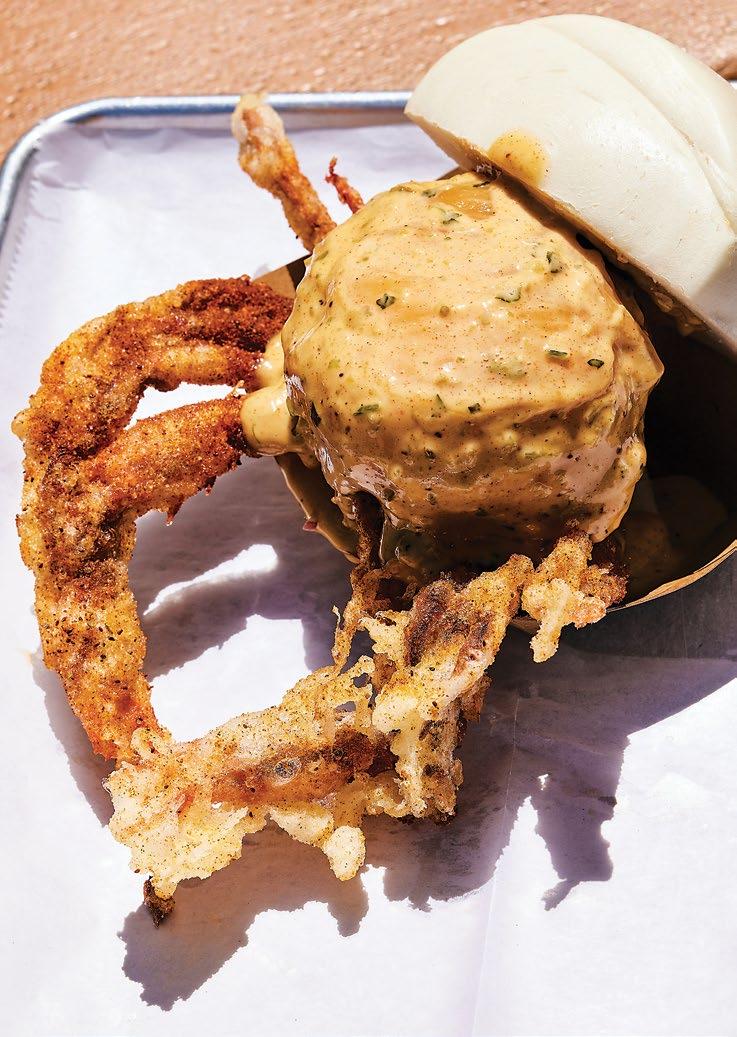
BY JANE MARION
LOOK, EVERYONE IN MARYLAND LOVES CRAB CAKES. And most of us love soft-shell crabs, too. They’re both delicious local dishes served in a variety of ways, from Thai softshell crab curry to crab cake BLTs. But no culinary genius has ever considered combining them—until now. Enter Ekiben’s Maryland Softie sandwich. It’s a sandwich so unique,
it has a huge fan following on social media. (Even our governor was recently spotting digging into one, proclaiming, “This is such a good bite.”)
The Softie is an epic two-handed affair—a deep-fried soft-shell crab topped with cheddar cheese, a dousing of remoulade, a hit of Old Bay, and, yes, a massive crab cake, all stuffed
“IT’S QUINTESSENTIAL MARYLAND. THE ONLY THING THAT WOULD MAKE IT MORE MARYLAND IS IF WE HAD NATTY BOH ON THE SIDE.”
inside a house-made steamed bao bun.
“It’s quintessential Maryland,” says Ekiben co-owner Steve Chu. “The only thing that would make it more Maryland is if we had Natty Boh on the side.”
The belly-busting extravaganza, which is only available at the Locust Point location, often sells out within minutes—and for good reason.
“We only use live soft-shell crabs we get straight from our crabber,” says Chu. “It has a lot of meat inside and it’s juicy and briny and sweet. People have a lot of opinions about crabmeat and where it comes from, but the one thing that’s undisputed is that the closer you source your soft-shells, the better they are— ours are local.”
Soft-shells, says Chu, are an underrated gem in the Old Line State.
“Everyone talks about how good our crabs are, but we undersell how incredible our softshells are,” he says. “You can get blue crabs from Texas to Louisiana to the Carolinas to Maryland, but what makes our crabs so special is the brackish water—that’s what makes the crab so sweet.”
Depending on the year, soft-shells are generally available from late April through fall, though for Chu, the season starts “when the crabbers call.”
“You talk about farm-to-table,” he says of the creation, “we’re going from Bay-to-box.”

and French naval support, the Continental Army surrounded the British forces and compelled the beginning of negotiations that ultimately led to the recognition of American independence.
However, Gen. Washington remained commander in chief of the Continental Army for two more years until a formal peace was agreed upon with the signing of the Treaty of Paris in September 1783.
In early December 1783, nine days after the last British soldiers left American soil, Washington bid farwell to his officers at Fraunces Tavern in New York City (a museum today). Overcome with emotion, Washington lifted a glass and said, “With a heart full of love and gratitude, I now take leave of you; I most devoutly wish that your latter days may be as prosperous and happy, as your former ones have been glorious and honourable.”
Then he began making his way to Annapolis, where Congress was convening temporarily—ironically, a mob of still-unpaid Continental soldiers had threatened the Congress in Philadelphia—with the intention of resigning his military commission. The idea of a victorious general willingly surrendering absolute power without seizing the throne or a dictatorship would shock the world.
Washington resigned as commander-inchief on Dec. 23, 1783. In a ceremony in the Old Senate Chamber at the Maryland State House—the moment commemorated by Baltimore's Washington Monument—his action established the precedent of military subservience to civilian authority in the United States. Returning to life as a private citizen, Washington placed his trust in the fledging republic’s democratic experiment.





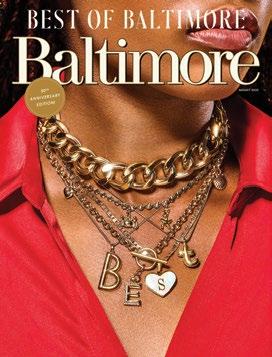
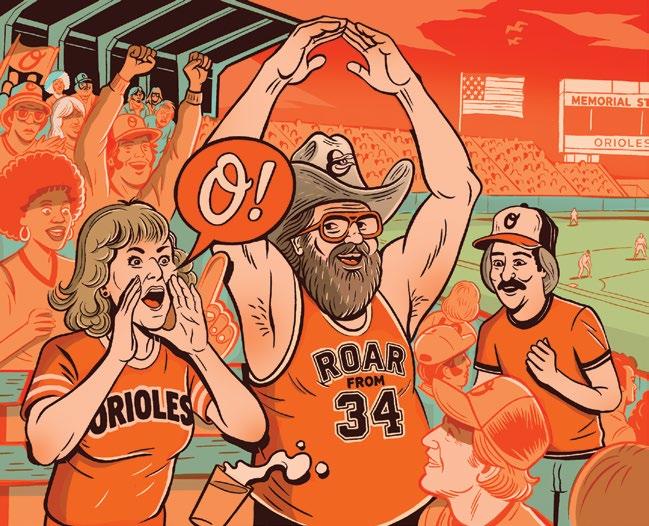
No one in Baltimore needed an explanation why a teary-eyed and emotional Michael Phelps, who had just won his 20th gold medal, suddenly burst into laughter atop the podium at the 2016 Rio Olympics. But the rest of the world did. What was so funny? This is how he explained it to NBC afterward: My boys from Baltimore were down on the other end, and back in Maryland, we all say “O!” for the Orioles during that part of the National Anthem. And all of the sudden I hear them roar “O!” and I knew exactly where it came from, and I just lost it . . .
Anyone who has ever attended Camden Yards or M&T Bank Stadium—or run in the St. Patrick’s Day 5K, for that matter—is familiar with Baltimoreans shouting “O!” at sporting events in tribute to our beloved Birds during the playing of “The Star-Spangled Banner.” But most probably do not know the tradition’s origin story. It dates, not surprisingly, to the rowdy, it’s-not-over-until-it’s-over summer of 1979. Sparked by a league-leading 48 come-from-behind victories, the Orioles topped all of baseball that year with 102 victories. On 11 occasions, they won after trailing by least three runs. Those O’s also delivered five ninth-inning rallies, including a special night on June 22 when Doug DeCinces blasted a two-out, two-run, walk-off homer that sent Memorial Stadium into delirium and launched a phenomenon officially coined “Oriole Magic.”
However, the untold story behind shouting “O!” during the National Anthem did not emerge until many years later. Not until Memorial Stadium’s legendary Section 34 diehards gathered for a reunion after superfan Wild Bill Hagy passed away in 2007. A local reporter began inquiring how it all started and basically the Section 34ers pointed the finger at a blonde, 5-foot-2, then-24-year-old Northern High School grad who rarely missed a game. Now 70 and still a diehard, Mary Powers spontaneously yelled “O!” during the first word of the second-to-last line—as in, “O! say does that star-spangled banner yet wave”—completely upsetting the normally solemn hush of the moment. And literally upsetting some patriotic fans in the upper deck around her.
“It was warm that night and I’m pretty sure it was a Friday because there was a big crowd,” recalls Powers, a retired financial services assistant. “A lot of people turned and shot me dirty looks, you know, they didn’t think it was appropriate.”
One person who did not shoot Powers a dirty look was Hagy, the beer-guzzling, cowboy-hatted Dundalk cab driver famous for leading the O-R-I-OL-E-S cheers from his Section 34 perch. He glanced back at Powers and smiled. So did a crazy, then26-year-old fan named Marty Bass, who confirmed this account shortly before retiring last month after a singular 48-year Baltimore broadcasting career. “Mary was standing right behind me when I heard her scream ‘O!,’” reiterates Bass, who remains friends with Powers to this day and eventually got her on camera a few years ago to recount the saga.
“We knew Marty as the morning TV guy, but nobody ever treated him any differently than anyone else,” Powers says. “Just one of the group.” She adds that before most games, she, Bass, and much of the Section 34 crew would pregame nearby at Waverly’s Olympic Lounge, which put out a big deli buffet, especially for the late 8:05 Friday starts. As The Washington Post once noted, not only Memorial Stadium but Waverly itself was colorful—“an interesting mix of working-class blacks, aging socialists, artists, retirees and renovating couples”— with not one but two sports bars just north of 33rd Street and Greenmount, the Olympic Lounge and the Stadium Lounge.
Powers explains the inspiration behind her now-iconic slice of Baltimore history wasn’t anything she’d thought about beforehand. That summer, she and her baseball pals had simply gotten into the habit of accentuating the “O” at the start of all kinds of words— “O”-ver, “O”-nly, “O”-lympic Lounge, etc.—a jokey way of celebrating the team’s rebound from fourth place the year prior. Hagy picked up on it the next night and slowly but surely it moved from section to section to the point where it could be heard during broadcasts that fall of the World Series (the results of which will not be discussed here).
Of course, it’s coincidental the pronunciation of “O” is a signature feature of Bawlmerese and that “The Star-Spangled Banner” was penned under bombardment in the city’s historic harbor. Over time, yelling “O!” didn’t merely catch on, it morphed into a uniquely Baltimore statement of hometown pride.
“But don’t overthink it,” Bass says, winkingly. “It was, and is, just a little fun thing we do.”
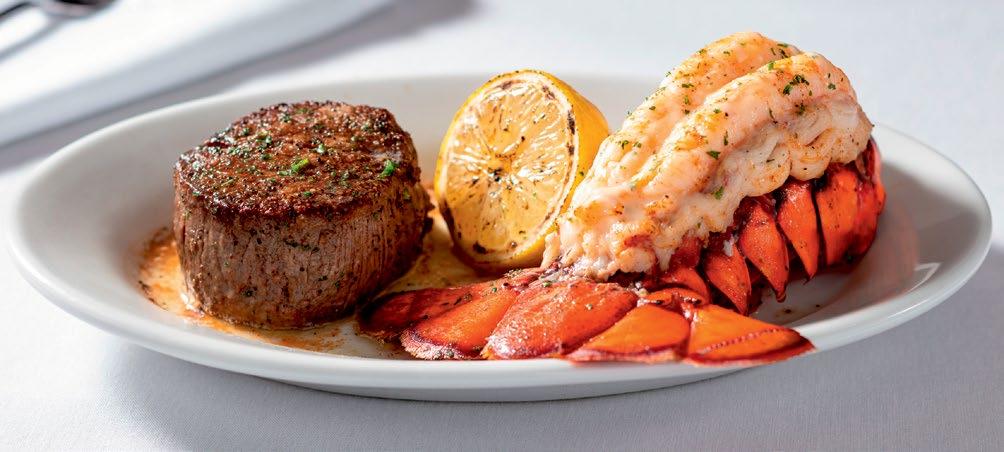


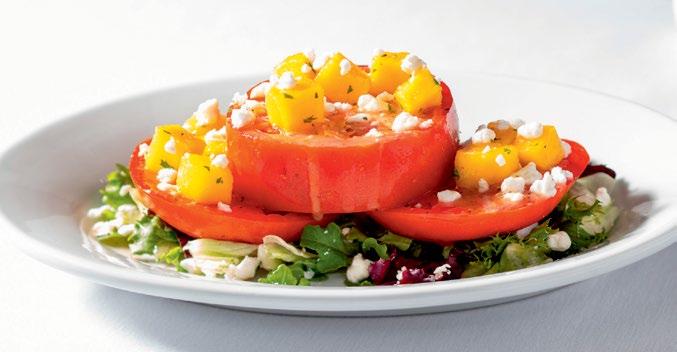

Becca thought they were migraines. Until they weren’t. Then at 37, she was diagnosed with stage 4 brain cancer, glioblastoma, one of the most aggressive cancers imaginable. In an instant, everything changed.
At University of Maryland Medical System, where teaching and discovery shape our care, her treatment began with specialists who pursue every possible option when the stakes are high.
After surgery, radiation and chemotherapy, Becca was offered something more: access to a focused ultrasound clinical trial. This first-in-the-nation approach allowed her team to temporarily open the blood-brain barrier, allowing chemotherapy to reach its target more effectively.
Today, Becca is traveling, working out and back to living her life. Because when expertise, innovation and access come together — it changes what’s possible.
umms.org/better | A better state of care.