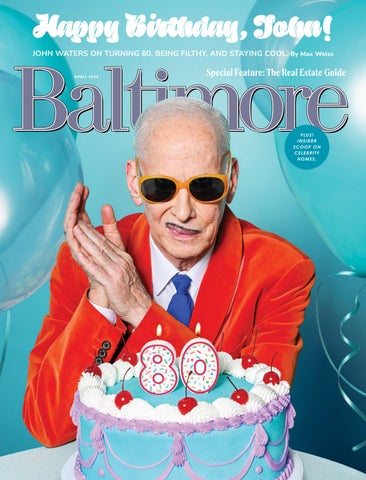
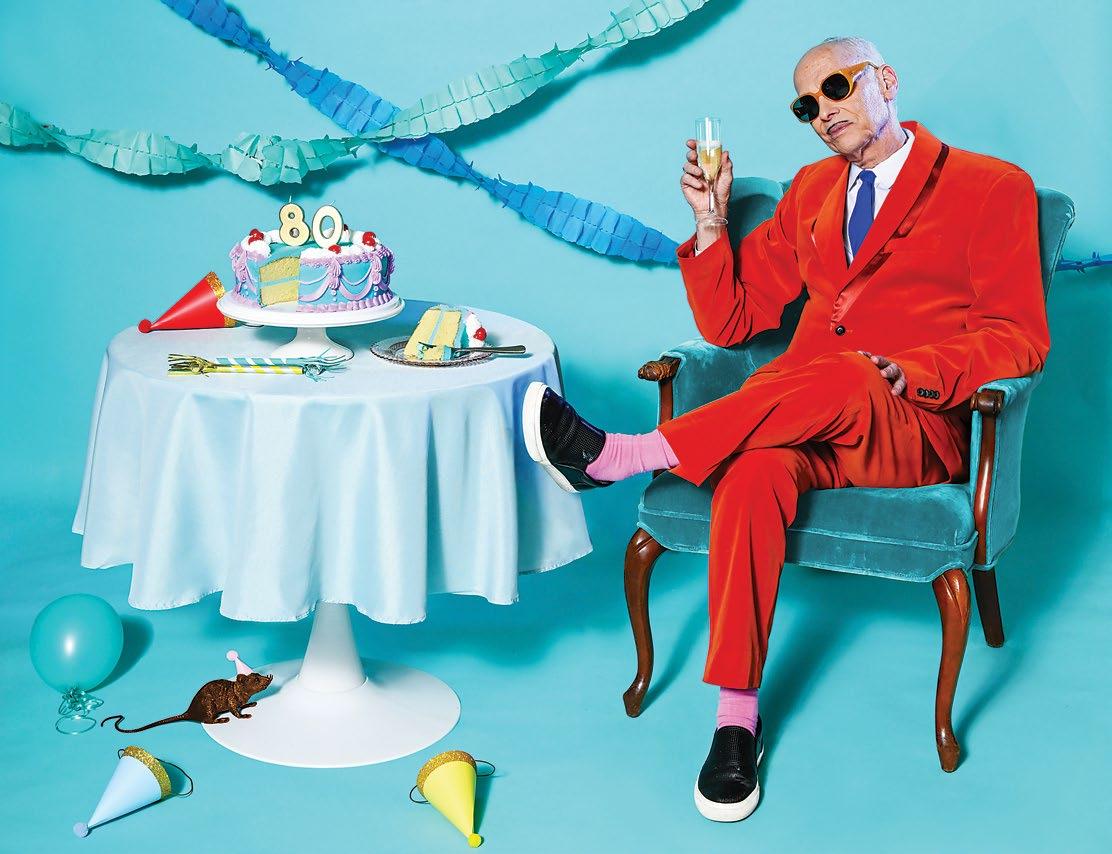
JOHN WATERS ON TURNING 80, BEING FILTHY, AND STAYING COOL. By Max Weiss
Special Feature: The Real Estate Guide
PLUS! INSIDER SCOOP ON CELEBRITY HOMES.
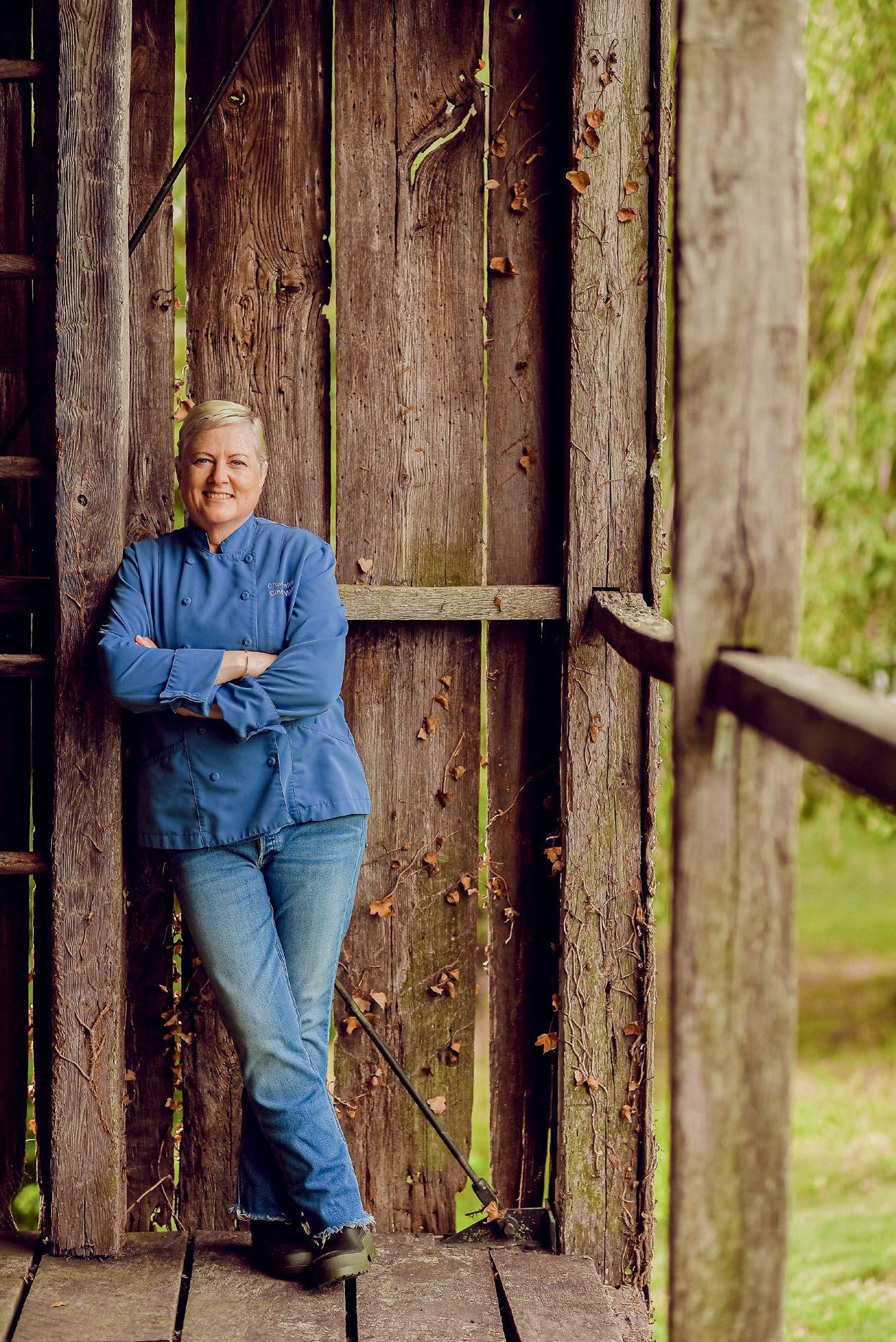
“From my farm to my Charleston kitchen, spring has arrived bringing all the season’s treasures with it.”
-Chef Cindy Wolf
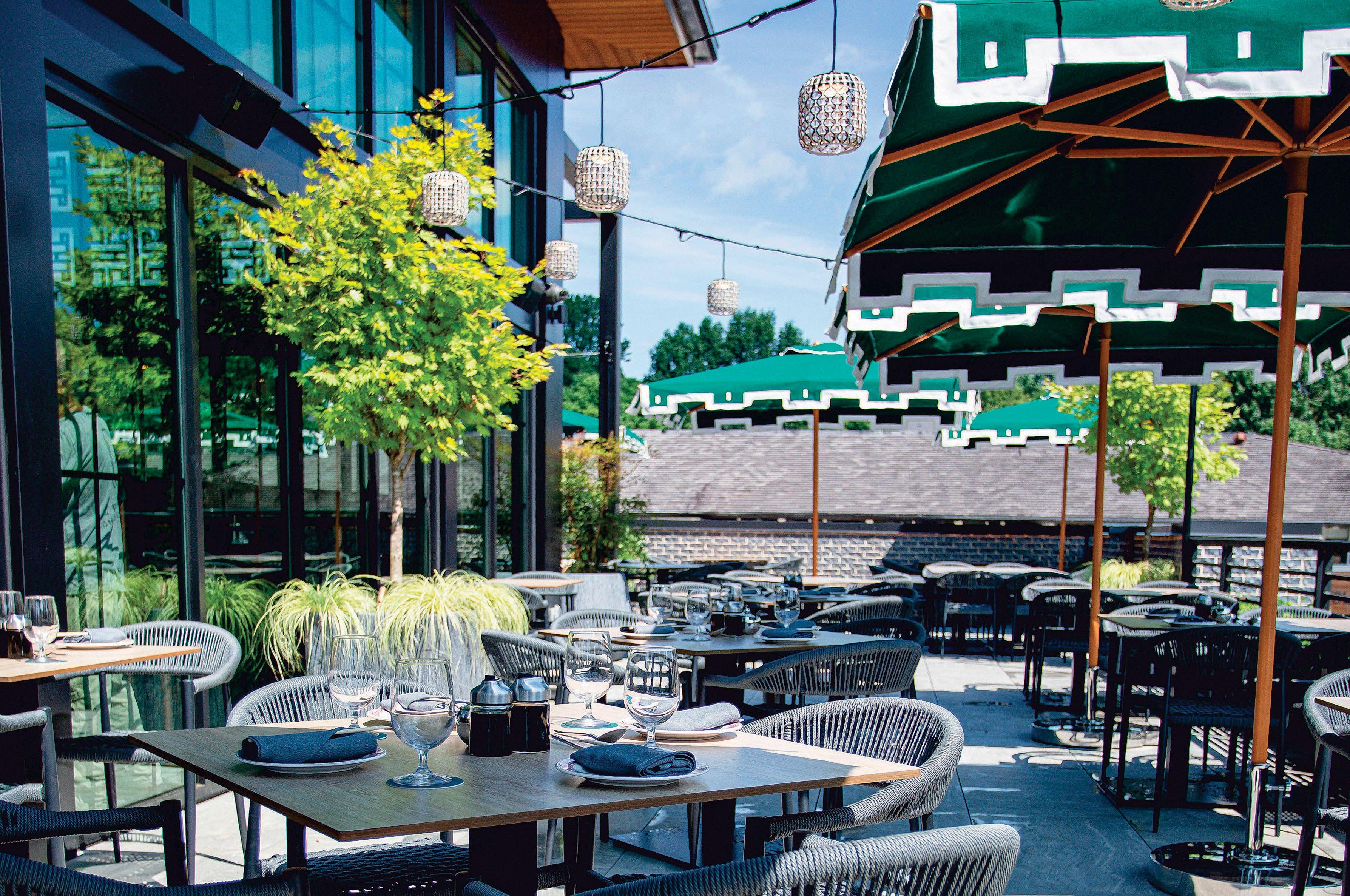
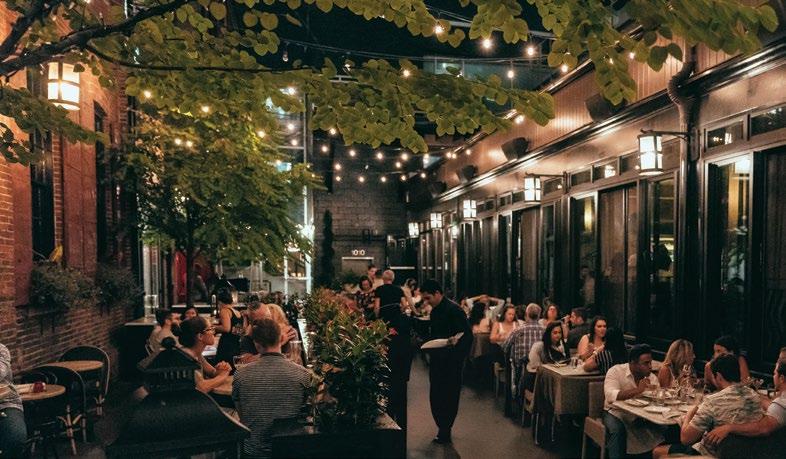
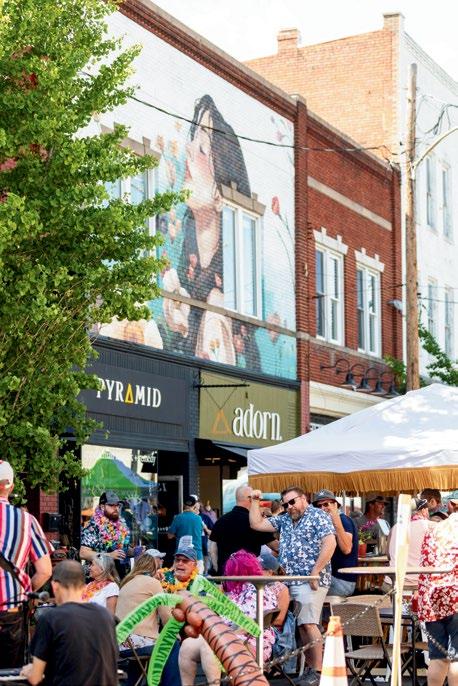
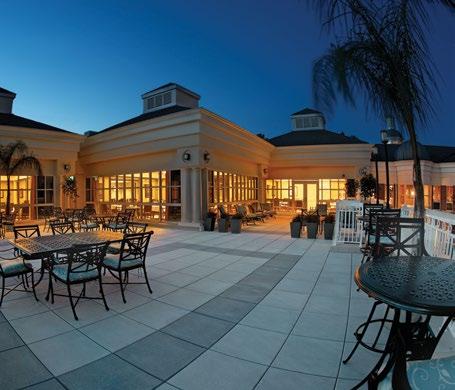
Patio Dining
Loch Bar
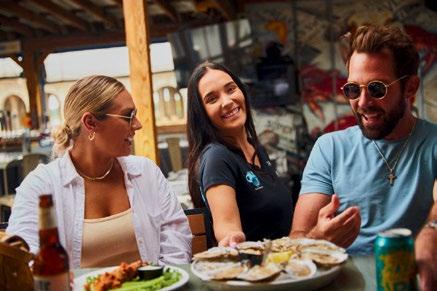
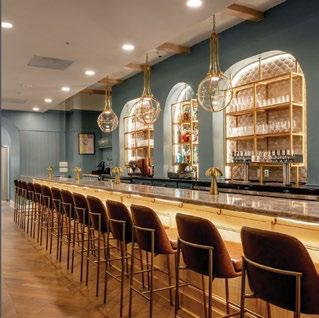
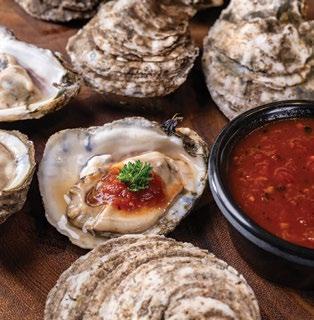
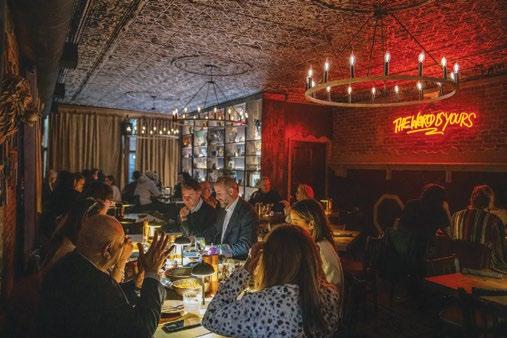
Located in the Four Seasons Hotel, Loch Bar is a classic Maryland tavern known for its classic charm and culinary offerings, boasting one of the region’s largest raw bars and a diverse selection of whiskeys, all complemented by live music from local bands.
LochBar.com
The Bygone
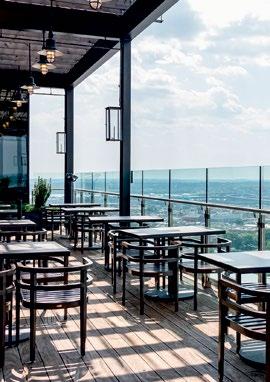
The view of Baltimore doesn’t get better than from the 29th floor. This 1920s gastro pub offers signature rotisserie items including an array of poultry, game, and meat. Enjoy signature cocktails on the outdoor balcony while soaking in the views of Charm City.
TheBygoneRestaurant.com
Tagliata
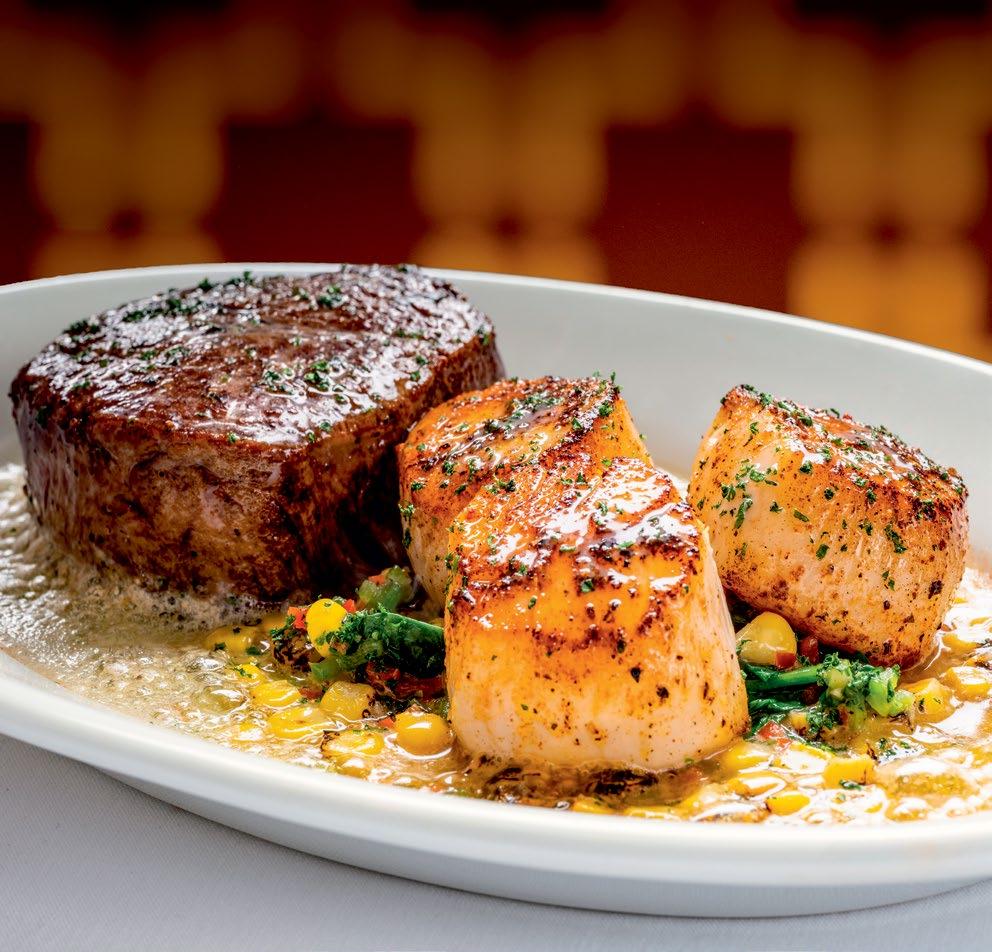
This Italian chophouse boasts an impressive menu featuring hand-cut steaks, fresh hand-rolled pasta, house-made charcuterie, and a bounty of fresh seafood. Be sure to enjoy a crisp bottle of wine while listening to live piano music under the sparkling lights of our patio.
TagliataRestaurant.com
Maximón
Maryland’s famous cuisine with a cocktail, crush, or one of 20 draft beers. With an outdoor bar, games, live local music, and plenty of seating, it’s the perfect spot to soak up the neighborhood vibe.
TheChoptankRestaurant.com
Azumi
An oasis of style, comfort, and warmth in Baltimore’s Harbor East neighborhood, Azumi brings an uncompromising commitment to the Japanese craft, using quality ingredients. Immerse yourself in
James Joyce
For over 18 years, this cozy and inviting Irish pub has welcomed both locals and tourists alike. As the sun sets, join us for dining under the stars on our patio, where the warm glow of lights and the fresh evening air create the perfect setting for a truly unforgettable experience.
JamesJoyceBaltimore.com
The Italian Disco
Located in the historic Bagby Furniture Building, Italian Disco is a restaurant and bar with a retro twist. Serving pizza, sandwiches, calzones, pasta, and more, Italian Disco also has 36 beers on draft, cocktails, and wines.
a full Azumi experience with an omakase tasting menu or nigiri platter to taste the best of Azumi’s fresh seafood.
Immerse yourself in the vibrant flavors of South American & Mexican cuisines at Maximón. Set amidst captivating stone architecture, wood, marble furniture, and lush greenery, the atmosphere perfectly complements the culinary journey.
MaximonRestaurant.com
The Choptank
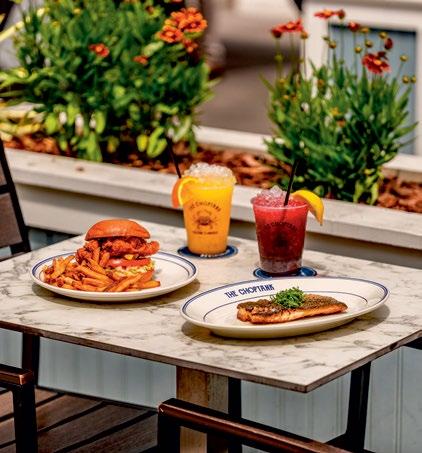
The Choptank is a lively crab house located in historic Fells Point. Savor
AzumiRestaurant.com
The Valley Inn
The locally inspired menu and expansive bar program, makes The Valley Inn the perfect place to dine with family, enjoy cocktails, and watch sports. The outdoor patio is one of the best in Baltimore County with it’s outdoor bar, umbrellas, and lawn games.
TheValleyInnMD.com
TheItalianDisco.com
Watershed
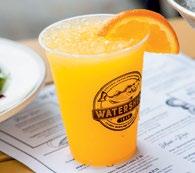
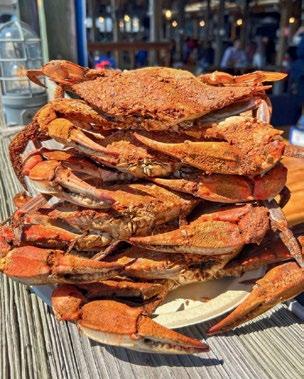
Located in the heart of Federal Hill, our classic Maryland seafood house is not only renowned for its signature dishes like steamed hard-shell blue crabs but also serves as the perfect spot for O’s game days. With our rooftop deck offering an intimate outdoor experience, complete with a full bar, TVs, and a gaming area, you can enjoy the excitement of the game while indulging in delicious seafood fare.
WatershedBaltimore.com
The Oregon Grille
The Oregon Grille’s renovated outdoor patio is the perfect place to enjoy a drink with friends or family with its spacious outdoor bar. The bar is equipped with TV’s, making it a great spot to catch up on local sports. If you’re feeling chilly, there are three gas fire pits nearby.
TheOregonGrille.com
CAN YOU SEE WILD HORSES AND DOLPHINS IN THE SAME PLACE?
WHERE IN THE OBX
Only in The Northern Outer Banks
Only in The Northern Outer Banks will memories be filled with Corolla Wild Horses roaming free on pristine beaches, historic maritime attractions, luxurious accommodations and abundant laidback family fun. Plan your perfect vacation!
We are Scheinker Legacy Wealth Advisors
Leading with integrity, humility, and philanthropy are central to our interactions with clients.
Secure your legacy. Reach out now to bridge the gap between your assets and your aspirations.
Named to Forbes Best-In-State Wealth Management Teams List since 2023
JOSHUA A. SCHEINKER
Managing Director, Financial Advisor
TODD B. GARLISS
Vice President / Wealth Management, Financial Advisor
DANIEL P. VERBIC
Vice President / Wealth Management, Financial Advisor
JORDAN HIGGINS, CFP®, CLTC®
Assistant Vice President / Wealth Management, Financial Advisor
Janney Montgomery Scott LLC, 40 Wight Ave, Suite 510, Hunt Valley, MD 21030 www.scheinkerwealthadvisors.com | 410.580.2680 scheinkerwealthadvisors@janney.com
For more information about Janney, please see Janney’s Relationship Summary (Form CRS) on www.janney.com/crs which details all material facts about the scope and terms of our relationship with you and any potential conflicts of interest. For more information about any awards referenced, including relevant criteria, please visit Janney.com/awards-disclosures or contact your Financial Advisor.
Your Backyard. Reimagined.
CUSTOM DECKS & ELEVATED SPACES
OUTDOOR KITCHENS & ENTERTAINMENT AREAS
PATIOS, HARDSCAPING & POOL SURROUNDS
SCREENED PORCHES & COVERED PAVILIONS
Atmosphere, Engineered.
GAITHERSBURG,
HUNT
APRIL 2026
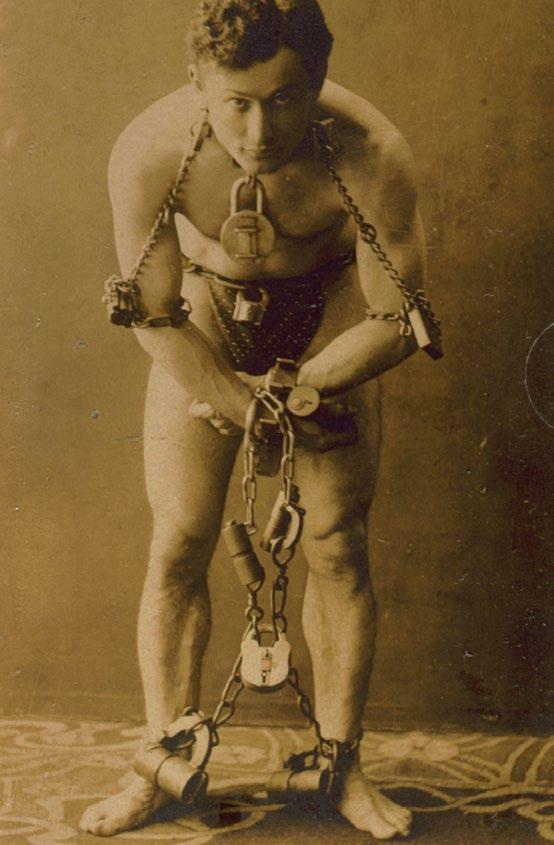
HE’LL SLEEP WHEN HE’S DEAD
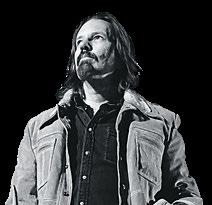
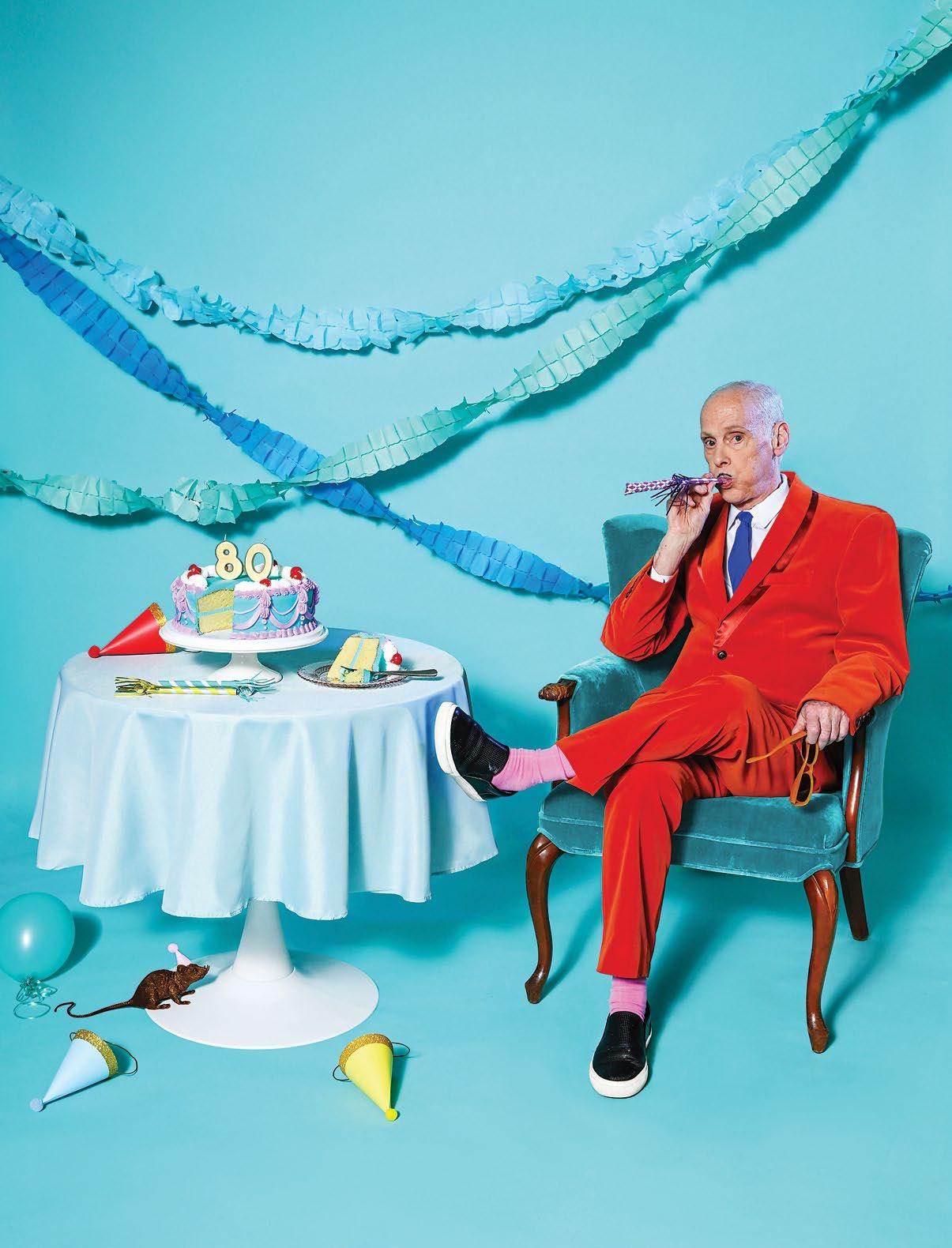
On the eve of his 80th birthday, Filth Elder John Waters shows no sign of slowing down. By Max Weiss
REAL ESTATE 2026
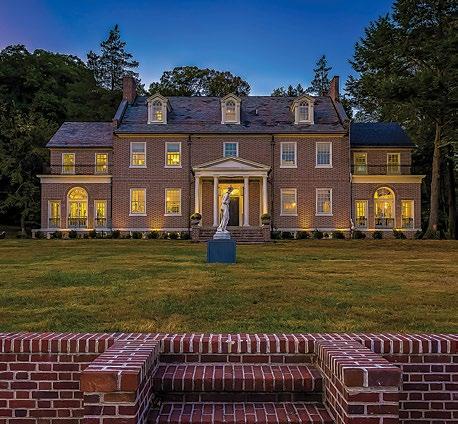
Local realtors tell all about selling the homes of the famous and infamous——plus how to position your home like a star. By Christianna
McCausland
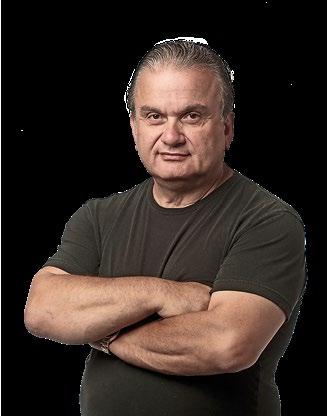
ON THE COVER: John Waters is turning 80. Grooming by Perryn Morris. Photo Assistance by Matilda Myers. Photography by Christopher Myers.
Waters
FILTHY AND FABULOUS AT 80
PHOTOGRAPHY BY CHRISTOPHER MYERS
| THE DOWNS
ROCKLAND
Exceptional home on finest, most private lot in gated Rockland!
COLUMBIA BEACH
HELMSLEY COURT
LAURELFORD
renovated 4BR/4BA contemporary on 1.45 acs. Features soaring ceilings, open GreatRm w/
MARYLAND’S PREMIER REAL ESTATE
of Roots.
A World of Reach.
For over 108 years, Hubble Bisbee Christie’s International Real Estate has guided Maryland buyers and sellers through their most important transactions with the personal attention, care, and commitment to exemplary results that every client deserves. As the exclusive Christie’s International Real Estate Affiliate for Northern and Central Maryland, the Eastern Shore and the state of Delaware, we bring world-class marketing reach to every listing and exclusive opportunities to every buyer, while focusing on providing a seamless, concierge-level experience built on trust, discretion, local market expertise, and a genuine investment in your outcome. From the first conversation to the final signature and well beyond, our sterling standard of service speaks for itself.
Concierge Service, White-Glove Service at Every Step: Pre-sale preparation, staging coordination, deeply knowledgeable accompanied showings, expert buyer guidance and seamless transaction management handled with experienced confidence, confidentiality, and personal attention from start to finish.
Global Reach, Local Roots: As an exclusive Christie’s International Real Estate Affiliate, your property reaches qualified buyers across 50+ countries, backed by 108 years of successful transactions deeply rooted in trusted relationships throughout Maryland’s finest communities.
Strategic Marketing: Stunning photography, drone footage, and extensive fully customized print and digital campaigns crafted to attract the perfect buyer from the local market to a global audience.
Discretion You Can Count On: Elevated privacy considerations, highly nuanced transaction navigation, complex financial planning; we deliver representation grounded in four generations of expertise, experience, confidentiality and trust.
CONTRACTIN1DAY!
RUXTON
ROLAND
FARMINGTON
PHOENIX | MILLGATE
RUXTON
Iconic 5BR 3BA cedar-shake home perched above Ruxton Rd,
UNDERCONTRACT
UNDERCONTRACT
Lynn Plack | 410-340-2939
HUNT MEADOW
If you’re looking for a f inancial advisor in central Maryland to help you navigate your f inancial journey, trust in our professional team. Our f inancial advisors are your partners in building a secure and rewarding f inancial future. Our commitment to excellence drives us to provide personalized f inancial education and solutions tailored to your unique needs
Investment advisory services offered through Elite Income Advisors, Inc., a registered investment advisor located in Ellicott City, Maryland. The firm only conducts business in states and jurisdictions in which they are properly registered or exempt from registration requirements. Registration is not an endorsement of the firm by securities regulators and does not mean the advisor has achieved a specific level of skill or ability. All investment and insurance strategies have the potential for profit or loss. Asset allocation, rebalancing, and diversification will not necessarily improve an investor ’s returns and cannot eliminate the risk of investment losses. Insurance and annuity products are sold separately through Retirement Planning Services, Inc. Insurance and annuity product guarantees are subject to the financial strength and claims-paying ability of the issuing insurance company. Neither Elite Income Advisors, Inc. nor Retirement Planning Services, Inc. is engaged in the practice of law or accounting. Tax information provided is general in nature and should not be construed as legal or tax advice. Always consult an attorney or tax professional regarding your specific legal or tax situation.
DEPARTMENTS
volume 119 // issue 4
DEPARTMENTS
68 MARITIME Four generations of the Lynch family have guided General Ship Repair. By Amy Scattergood
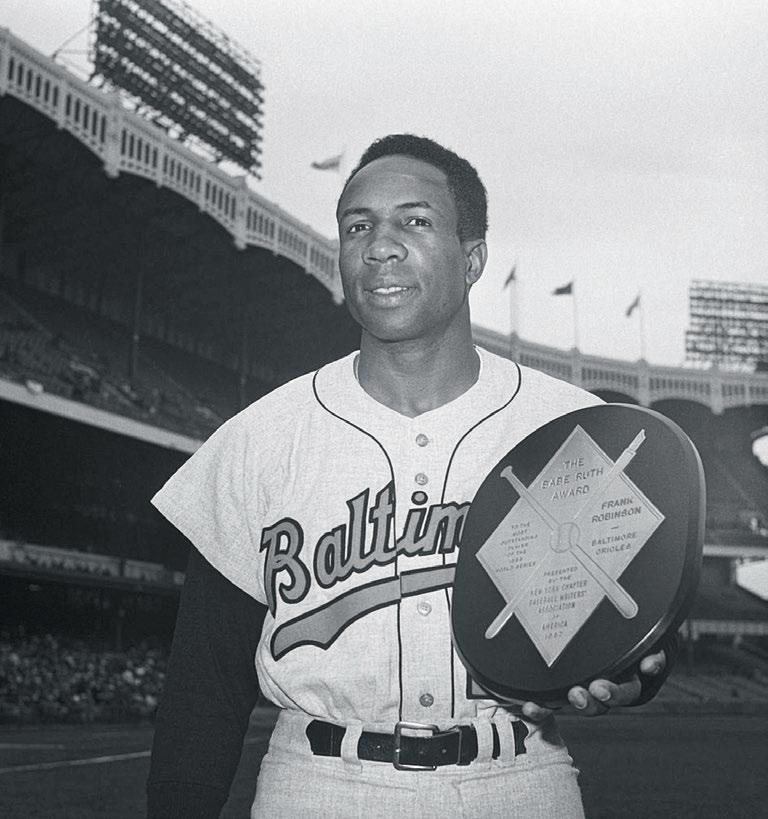
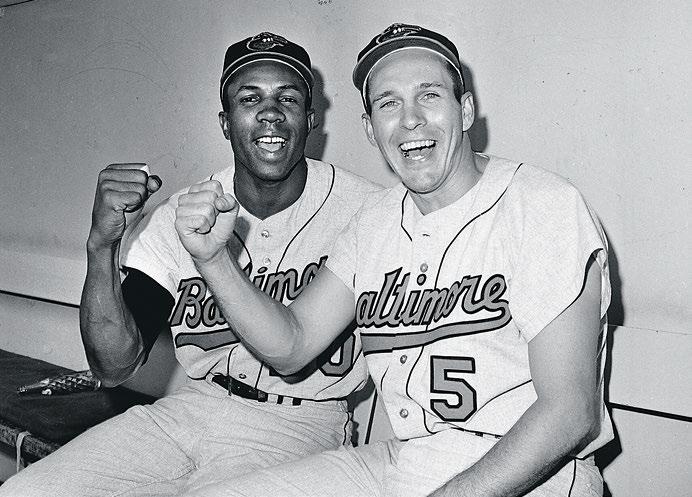
74 SPORTS Sixty years ago, the Orioles’ trade for Frank Robinson spurred the O’s first World Series title, transformed the team into a dynasty ——and changed Baltimore. By Ron Cassie
UPFRONT
35 METRO The National Lacrosse Hall of Fame marks a decade in Sparks; a DJ encourages active listening; plus novelist Jung Yun on her new 9/11 novel.
LOCAL FLAVOR
108 REVIEW Nine Tailed Fox is a big hit in the Village of Cross Keys. By Jane Marion
110 REVIEW À Demain brings toasts to Hampden. By Amy Scattergood
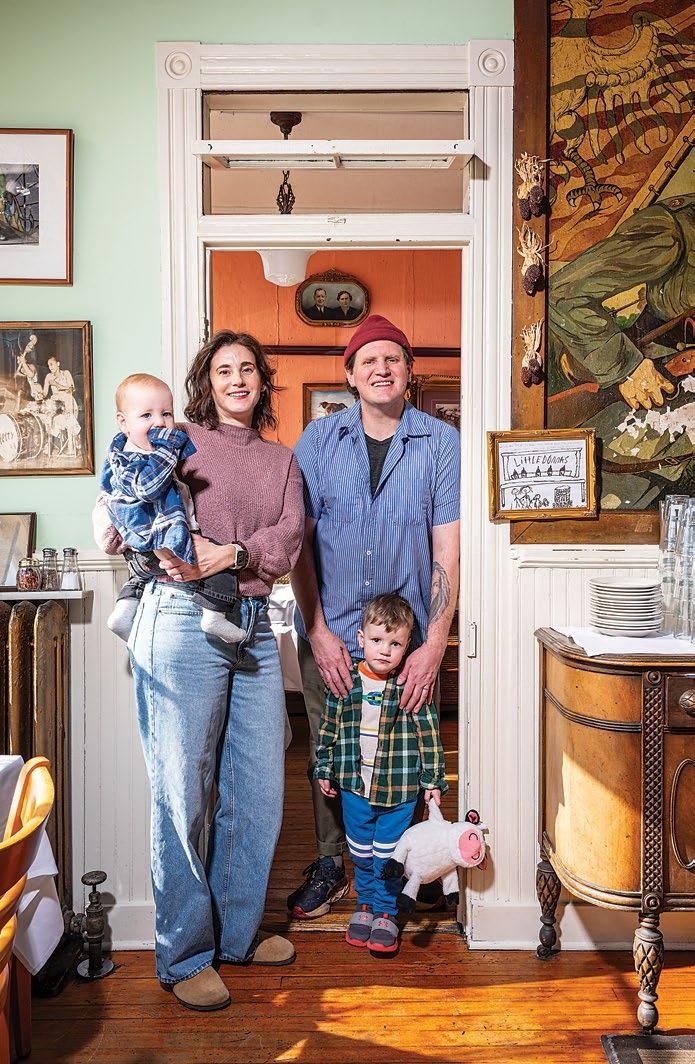
112 Q&A For chef Robbie Tutlewski, living with his family above Little Donna’s in Fells Point has its own joy——and challenges. By Jane Marion
114 DINING GUIDE Local listings.
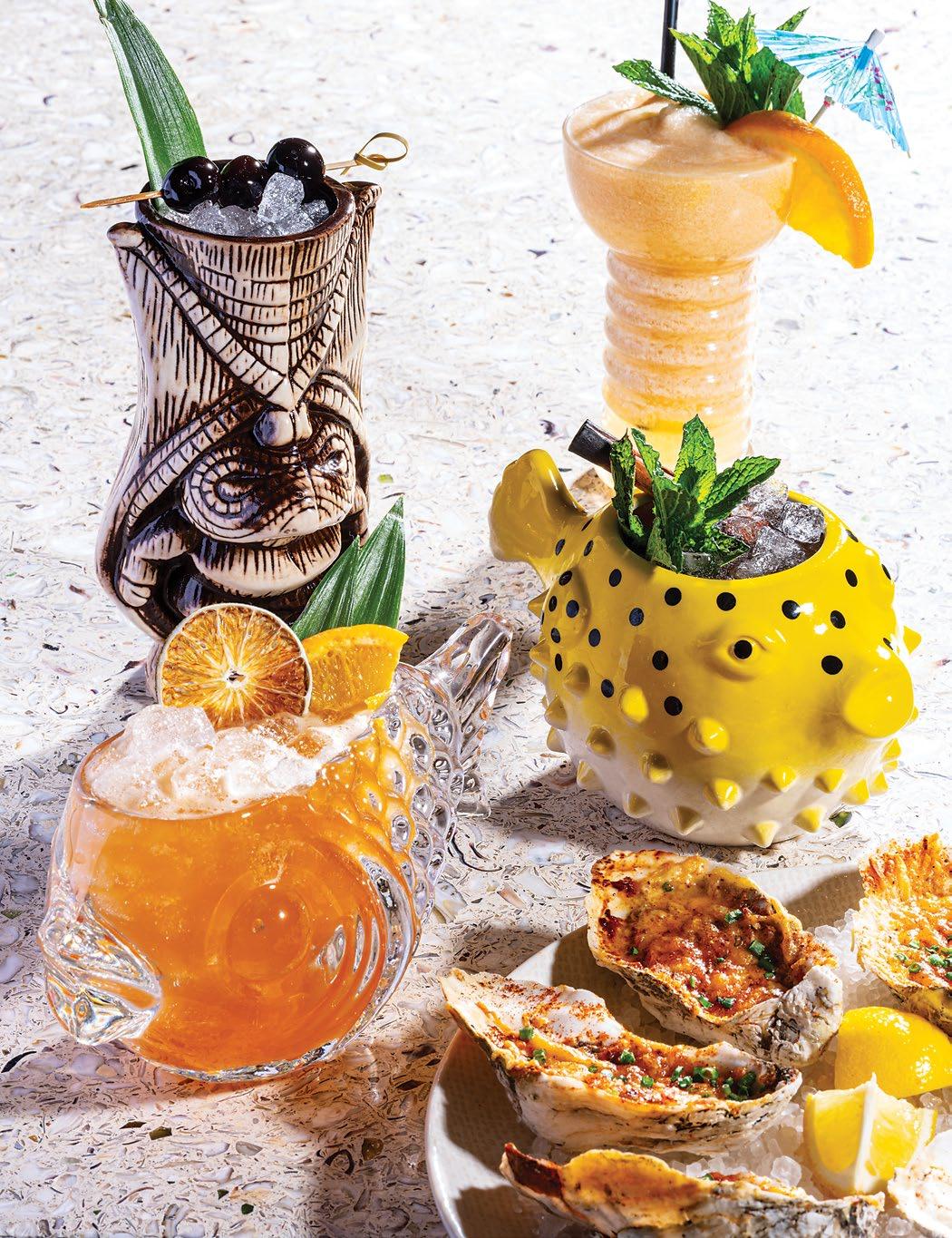
116 TRENDING Retro tiki cocktails are making a splash. By Jane Marion
SPECIAL SECTIONS
51 NURTURING A NEST EGG Area financial planners share how to plan for retirement saving and spending. Plus, our annual guide to Continuing Care Retirement Centers. By Hannah Chenoweth
82 GEARING UP A look at trends driving today’s auto industry. By Hannah Chenoweth
Preservation of natural anatomy
Less post-operative discomfort
Faster return to daily activities
Minimal anesthesia
Smaller incisions
Maryland’s premier breast surgeons, Dr. Cohen and Dr. McMillan are two of only 50 surgeons in the nation trained in Preservé® by Motiva®, the new standard in breast enhancement.
With over 50 years of combined experience, they offer patients a refined option designed to respect the body and support a smoother recovery.
Benefits noted compared to traditional breast augmentation techniques.
this month on
BALTIMOREMAGAZINE.COM
SOCIAL SKILLS
»Instagram: Comment of the Month @mxllysworld “Not this being how I find out Snail Mail is from my home town.”
WEB EXCLUSIVES
»Web Exclusive: THE BIG 8-0 See John Waters show off his modeling skills and hear from editor-in-chief Max Weiss in our online video.
BIRDS’ NEST
After making some big moves in the off-season, the O's are ready to take on the rugged AL East. Read our coverage all season long.
EGG-CELLENT
Looking for an Easter brunch? A great place to get your seder takeout? Or maybe an egg hunt for the kids. We’ve got you covered with our Easter and Passover coverage.
behind the scenes
“IT WAS AN HONOR TO THROW OUR OWN LITTLE 80TH BIRTHDAY SOIRÉE.”
For our cover shoot, “It was an honor to throw our own little 80th birthday soirée for the legendary John Waters,” says Creative Director Amanda White-Iseli. “Having been with the magazine 28 years this month, I’ve had the pleasure of directing a few photo shoots with John—including one at his home, when I was eight months pregnant with my now18-year-old son. I still have the Polaroids.” For this shoot, White-Iseli worked with photographer Chris Myers to create a lively scene complete with all the kitsch you could hope for, from retro-style cakes to rats (one even snuck under the table, see p. 91). “We even gave John a birthday present: boxes of his favorite—Jujyfruits.”
The next day, a gaggle of slowly deflating balloons were all that was left of our shindig.
MARKET TRENDS
Grab your biodegradable tote bags and get thee to a farmers market. But don’t leave home without our exclusive Farmers Market Guide for all the inside scoop.
SOUND OFF
Here’s your chance to tell us what you think about the best in dining, shopping, and more. Voting in our Best of Baltimore Readers Poll begins April 29 at bmag.co/bobrp26.
CLASH OF THE CRABS
The competition is on. Which area crab house is the best of the best? You decide. Vote for your favorite beginning April 13 at bmag.co/crabclash.
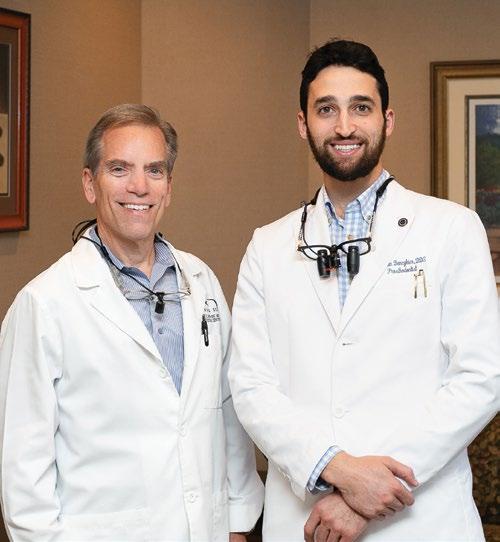
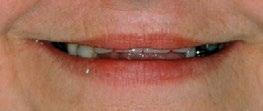
Specializing in the restoration and replacement of teeth, Drs. Boenning and Dancykier whiten, reshape and repair broken, cracked, and unsightly teeth with the most advanced techniques available. With over 35 years of experience, the practice has established a reputation as the premier cosmetic dental center in greater Maryland. With accuracy and precision they create beautiful smiles for a lifetime.
THE O YSTERS ARE JUST THE BEGINNING
Locust Point. Great neighbors. Lots of green space. Walkability to restaurants and bars. And a short five-minute water taxi to Fells Point, Harbor East, and Canton.
Roland Park. I could wander around looking at the 20th-century architecture and landscaping of Frederick Olmsted’s historic “garden suburb” forever.
Union Square. Around the park, there are gorgeous rowhomes with bright-red brick, rounded entryways, wroughtiron railings, and, of course, marble steps, showing off the artistry of this city’s architecture.
neighborhood is super charming and artistic.
Brewers Hill, because I grew up there when it was Highlandtown. It holds so many great memories for me.
I’m very into Remington lately——such a fresh, modern vibe——but Bolton Hill will always be my dream neighborhood for the close community, gorgeous architecture, and proximity to the arts.
WHAT IS YOUR FAVORITE NEIGHBORHOOD IN BALTIMORE?
Publisher and CEO
Stephen A. Geppi
President
Michael Teitelbaum
Vice President Finance and Operations
Debbie Darmofal
EDITORIAL
Editor-in-Chief
Max Weiss
Deputy Editor
Jane Marion
Senior Editors
Ron Cassie
Lydia Woolever
Home Editor
Janelle Erlichman Diamond
Special Editions Editor
Christianna McCausland
Research Editor
Amy Scattergood
Editorial Interns
Kendra Bryant
Claire Huss
Brenna Tichy
Kwame Uva
Senior
Contributing Writers
Marty LeGrand, John Lewis, Suzanne Loudermilk, Corey McLaughlin, Mike Unger
Contributing Writers
Rafael Alvarez, Ana Bak, Dan Cook, Alanah Nichole Davis, John Farlow, Lauren LaRocca, Ethan McLeod, Sophia Naughton, Michele Wojciechowski
DIGITAL
Digital
Senior Editor
Lauren Cohen
Digital Operations
Manager
Megan McGaha
Contributing
Digital Designer
Aaron Hope
BUSINESS
Finance Consultant
Zach Papesh
CREATIVE STUDIO
Director
Ray Bularz
Content Director
Christianna McCausland
Senior Graphic Designer
Michael Tranquillo
ART & PRODUCTION
Creative Director
Amanda White-Iseli
Special Editions Art Director
Staci Lanham
Production Manager
Jon Timian
Senior Advertising &
Marketing Designer
Emily Odend’hal
Assistant Art Director
Alicia Corman
Contributing Photographers
Schaun Champion
Marlayna Demond
J.M. Giordano
Stacy Zarin Goldberg
Wesley Lapointe
Mike Morgan
Christopher Myers
Matt Roth
Scott Suchman
Justin Tsucalas
SHAN Wallace
Tyrone Syranno Wilkens
Micah E. Wood
ADVERTISING
Vice President of Sales
Stephanie Shapiro
Senior Account
Executives
Gayle Burns
Michelle Coughlan
Danny Glazer
Jodi Hammerschlag
Jennifer Rosenberger
Account Manager
Michelle Weinstein
MARKETING
Director of Marketing
Lorann Cocca
Content Marketing Manager
Kamilia Arroyo
EVENTS
Events Director
Jackie Hershfeld
I loooooove Canton and Patterson Park!
My neighborhood, Lake Walker. Growing up in Marietta, Georgia, I was accustomed to waving at strangers and getting a wave in return. But in my 20+ years living in Baltimore, I rarely got a wave back until we moved to Lake Walker.
Hoes Heights. Lived there when my kids were born and you could stroller walk to Hampden, Roland Park, and Charles Village.
Waverly. It combines the best of different Baltimores (old and new, racially/ethnically, income strata), is ideally walkable and transit-accessible, and has the best farmers market in the city.
Riverside, 21230! Hands down the BEST neighborhood in the city. They say it takes a village and Riverside is mine.
Fells Point. Lived there with my wife, pre kids, and we had the best time.
Editorial Inquiries: Send queries to the editor (no phone calls, please). The magazine is not responsible for unsolicited manuscripts or photographs. Rosebud Entertainment LLC does not necessarily support the opinions of authors. To subscribe or obtain assistance with a current subscription, call 800-365-2808. Equal Housing: All real estate advertised herein is subject to the Federal Fair Housing Act, which makes it illegal to indicate any preference, limitation, or discrimination based on race, color, religion, sex, handicap, familial status, or national origin, or an intention to make any such preference, limitation, or discrimination. We will not knowingly accept any advertising for real estate that is in violation of the law. All persons are hereby informed that all dwellings advertised are available on an equal opportunity basis. If you believe that you may have been discriminated against in connection with the sale, rental, or financing of housing, call the United States Department of Housing and Urban Development (HUD) at 800-669-9777.
University of Maryland Medical Center (UMMC) living donation transplant recipients receive a kidney or part of a liver from a live donor. Living donor transplants are faster and the organs last longer than from a deceased donor.
UMMC offers robot-assisted, minimally invasive living donor procedures such as kidney removal and kidney implantation so that both recipients and donors have quicker healing and less scarring.
April is Donate Life Month and the perfect time to start looking for a living donor. A better state of care. Actual
UNIVERSITY OF MARYLAND
MEDICAL CENTER
DOWNLOAD A FREE GUIDE
Visit umm.edu/LivingDonorKidney or scan the QR code to download the living kidney donation guide.
Visit umm.edu/LivingDonorLiver or scan the QR code to download the living liver donation guide.
KERRY FOLAN
“Author Jung Yun told me her title, All the World Can Hold, comes from the James Weldon Johnson poem, “Beauty That Is Never Old,” which I have read many times since our chat,” says the freelancer. “Like Jung’s book, it’s about scale——how our own tiny lives and our own tiny loves are actually enormous, even when the wider world is very dark. Both book and poem are essential reading for 2026.”
“Photographing John Waters is always an absolute privilege because I was born and raised in Baltimore,” says Myers. “He is so easy to work with. He knows how to turn his modeling chops on in an instant and gives more than you could ever imagine. I was lucky enough to have my daughter, Tilly, assist me on this shoot and he was quite kind to her as well. And he always gives some funny little tidbit on every shoot. This time it was his supreme hatred for pickleball.”
J.M. GIORDANO
“General Ship is ‘The Alamo’ of Baltimore’s waterfront,” says Giordano, who shot “Ship Shape.” “I love driving by and seeing the bright blue workshop building amid the grays and browns of that strip of Key Highway. Shipyards have been a staple of Baltimore’s harbor since the city was founded 296 years ago. Knowing that this one is thriving well into the 21st century is as comforting as a dozen Maryland blues at L.P. Steamers.”
This Charming Man
How does John Waters stay so cool at 80?
IT’S HARD TO BELIEVE that our cover boy, filmmaker and professional mischiefmaker John Waters, is about to turn 80. He seems as vital as ever. And that’s the premise of editor-in-chief Max Weiss’ profile of the world-famous auteur: What is John Waters like as an octogenarian? How does he stay so active, so curious, so . . . cool? Weiss gets to the bottom of this by interviewing Waters in his (surprisingly conservative) North Baltimore home, attending his outrageous stand-up show, “A Date With John Waters,” and talking with some of his closest friends. She found that one of the biggest keys is that Waters actually likes young people. Most people his age—and even younger—grumble about “kids these days.” Not Waters: He is fascinated by youth culture—he consumes it, he observes it, he creates it. But while, even at 80, he still has the ability to shock,
Weiss also found him to be remarkably kind, polite, professional, even genteel. It’s that quality, even more than his razor-sharp wit, that keeps him booked and busy, as the kids say. Read more about Baltimore’s gift to the world in “He’ll Sleep When He’s Dead,” on p. 88. (Oh, and happy birthday, John. Thanks for being you.)
Waters owns four residences but he’s not the only celebrity who invests in real estate. In special editions editor Christianna McCausland’s “2026 Real Estate Guide,” she spills the secrets of the rich and homebuying. Yes, Tom Clancy requested a gun range in his Inner Harbor condo (he was turned down) and other celebs tend to want things like safe rooms and soaking tubs. Privacy is a key key factor when buying or selling a celebrity home. Celebs don’t want pictures of their interiors splashed all over real estate websites like Zillow. In her dishy feature, McCausland talks to agents about the unique challenges of having a client who’s famous— or infamous (*cough* Kevin Spacey)—and gives pointers on how you can position your own home like a star.
And there’s another big anniversary this year—it’s been 60 years since the Orioles made the best trade in franchise history: Milt Pappas for Frank Robinson (pretty sure even Milt would agree that was a win for the boys in orange and black). Robinson went on to become both the league and World Series MVP that year and, perhaps even more critically, helped ease racial tensions in and around Baltimore. Senior editor Ron Cassie explores how that one trade changed a team—and a city.
Enjoy the issue and, as ever, go O’s!
20 Years Ago This Month: We breathed a sigh of relief that the great housing market boom of the early aughts was not a bubble but actually had legs. Home prices, we noted, had risen 33.4 percent from 20022004. With that in mind, we offered the best places to live in Baltimore, factoring in things like price, schools, crime, green spaces, and walkability. Among our favorites? Lauraville, Ten Hills, and Nottingham.
STEVE GEPPI Publisher
11 waterfront towns. Beaches for miles. Plan your next adventure together at North Carolina’s uncrowded coast: crystalcoastnc.com/baltimore.
FEEDBACK
TABLE TOPS
current voice on all things Baltimore. David Simon, via Bluesky
I need two copies [of this article]. One to read. One to treasure.
@darkndifferent, via Twitter
TRUE ROMANCE
B.K. Borison is a treasure (“Her Local Valentines,” February). Love her work. @beezandbea, via Instagram
LEGENDS ONLY
2201 Russell St. | Baltimore 443.505.8461
1205 Crain Hwy N | Glen Burnie 443.988.4316
5325 Spectrum Dr. Ste. 150 | Frederick 443.600.5648
CONTACT US TO SCHEDULE A VISIT: LEGACYWOODPRODUCT.NET
Last year when this issue came out, I remember saying to myself, “Next year, Oleum will be in this” (“Best Restaurants,” March). [It took] discipline, belief, and relentless hard work. Thank you, Baltimore, for featuring us. And Baltimore, thank you for seeing us.
Chef Alisha Adibe, Oleum, via Instagram
GOOD STOCK
So many icons in one picture (“A Black Arts Renaissance,” February).
@iamcurtisbryant, via Instagram
Yes, absolutely Baltimore is having [an arts] renaissance. Look at the opera coming to The Lyric, the Amy Sherald exhibit at the BMA, and the Lena Waithe play at Center Stage. The arts in Baltimore is booming! @the_mobetta, via Instagram
HOLLYWOOD EAST
I am so touched by this feature in Baltimore about my love for Baltimore, shabbat, and Jewish food (“Chicken Soup for the Soul,” March). To see a deeply Jewish story given so much space and gloss feels especially meaningful right now. Thank you, Janelle Erlichman Diamond, for telling my story so generously.
I did not know The Meteor Man was filmed here (“Once Upon a Time...in Baltimore,” January). I loved that movie as a kid! @themarkoflyfe, via Instagram
ROAD RAGE
Atara Bernstein, via Instagram
If you went to Louie’s Bookstore Cafe or The Daily Grind you would always see some actor. @bonnievysotsky, via Instagram
During the pandemic the Baltimore roads were like Mad Max (“The Fast Lane,” March). We can’t camera our way out of this. This requires actual law enforcement pulling people over.
@coredenale, via Reddit
Send us letters to letters@baltimoremagazine.net or through our various social media channels. Letters may be edited for length or clarity.
NEWS YOU CAN USE
Wonderful read (“Truth Without Apology,” February). Beyond its importance to the cause of civil rights, The Afro was essential for a young, white police reporter trying to comprehend the whole of Baltimore. I was a devoted reader right down to the society notes. Similarly, Ron Cassie is our best
PRESENTING SPONSOR
$250,000+
BRG Healthcare
LEADING FOR LIFE SPONSORS
$200,000 - $249,999
ExpressCare Urgent Care
The Whiting-Turner Contracting Company
GRATITUDE SPONSORS
$100,000 - $199,999
Friner Family
The Rosenberg Family and the Henry and Ruth Blaustein Rosenberg Foundation
Steinmetz-Carberry Family Philanthropic Fund, Jay Steinmetz and Claire Carberry
RECOVERY SPONSOR
$75,000 - $99,999
M&T Bank
HEALING SPONSORS
$50,000 - $74,999
Canon
Crothall Healthcare Inc.
Lowell Glazer & Beverly Penn and the Lowell & Harriet Glazer Family Philanthropic Fund
Truist
US Acute Care Solutions
INNOVATION SPONSORS
$36,000 - $49,999
Continental Realty Corporation
David and Barbara B. Hirschhorn Foundation
DPR Construction
Greenberg Gibbons
Greenebaum Enterprises
HCT Pathology Services, LLC
HomeCare Maryland
KPMG LLP
Labcorp
Len Stoler, Inc.
Scott & Lisa London
RESILIENCE SPONSORS
$25,000 - $35,999
BDO
CAO - OrthoMaryland
Annette and Joe Cooper
Cove Electric, Inc.
Footlick Family Foundation
Dr. Marc H. and Mrs. Nancy Gertner
SPECIAL THANKS TO OUR GALA SPONSORS
Thank you for supporting LifeBridge Health and giving for our families, our communities and our future.
Sponsorships as of 3-2-26
Hackerman Foundation
Healthcare Legal Solutions, LLC
Hill Development Group, LLC
Huron
Johnson Controls
David, Jessie, Kelsey, Joe and Charlye Krajewski and Lauri Richmond
Fred and Phyllis London
Meltzer Family Fund
Ellen & Neil Meltzer - Amy & Alan Meltzer
Metz Culinary Management
Premier, Inc
Pulse Medical Transportation
Remedi SeniorCare of Maryland
Donna and Jimmy Smith
SOS Technology Group
Springwell Senior Living Community
Wilmot Sanz, Inc.
WORLD-CLASS CARE SPONSORS
$18,000 - $24,999
Attman Family of Acme Paper
CBS News Baltimore
EMJAY Engineering and Construction Co., Inc.
Gina and Dan Hirschhorn
JLL
Live! Casino & Hotel Maryland
Merritt Properties & Bavar Properties Group
MFI Realty
Anne Louise & Howard Perlow
RCM&D
Dr. Jerome and Susan Reichmister
Greg and Sharri Rochlin
Vitalize
HOPE SPONSORS
$10,000 - $17,999
The 1916 Company | Radcliffe Jewelers
Lynn Abeshouse and Irv Tark
Drs. Don Abrams and Jason Kissel
Alliant Insurance Services
American Trading and Production Corporation
The Associated: Jewish Federation of Baltimore
Avila Home Care
The Baltimore Banner
Baker Donelson
Baxter Baker
Laura Black and Charles Klein
in Honor of Marc Gertner
The Blavatt Family
Chason, Rosner, Leary & Marshall, LLC
Chesapeake Urology Associates
Cintas Corporation
Cisco
Cognizant Technology Solutions
Connection
Lee Coplan and Linda Huganir
Floors, Etc.
FutureCare Health and Management Corporation
and Phyllis and Leonard J. Attman Foundation
Georgia Pacific
Get Well RhythmX
Goodell, DeVries, Leech & Dann, LLP
Gordon Feinblatt, LLC
HandCraft Linen Services
HealthPRO Heritage
International Center for Limb Lengthening
Kennedy Krieger Institute
Klein’s ShopRite of MD and Jayne Klein, Marshall and Rachel Klein, Sarah Klein and Doug Hentz, Rachel Klein and Alex Kahn
Law Offices of Friedman & Friedman, LLP
The Louise D. and Morton J. Macks
Family Foundation Inc.
Medical Staff of Sinai Hospital of Baltimore MedPower
Miles & Stockbridge MOI
Networking Concepts, Inc.
Northwest Hospital Medical Staff
Obrecht Properties LLC
Palantir Technologies
Pediatrix
The Philip and Harriet Klein Foundation
Post Acute Physician Partners
ProMD Health, Inc.
The Rosalee and Richard Davison Foundation Inc.
Bruce L. Rosenberg
Rubin Institute for Advanced Orthopedics
Saul Ewing, LLP
Sinai Mitzvah Foundation
Tydings & Rosenberg LLP
Vaughn Greene Funeral Services, P.A. Weinman Company / Mandy & Dennis Weinman
EDITED BY LYDIA WOOLEVER
WHERE LACROSSE LIVES
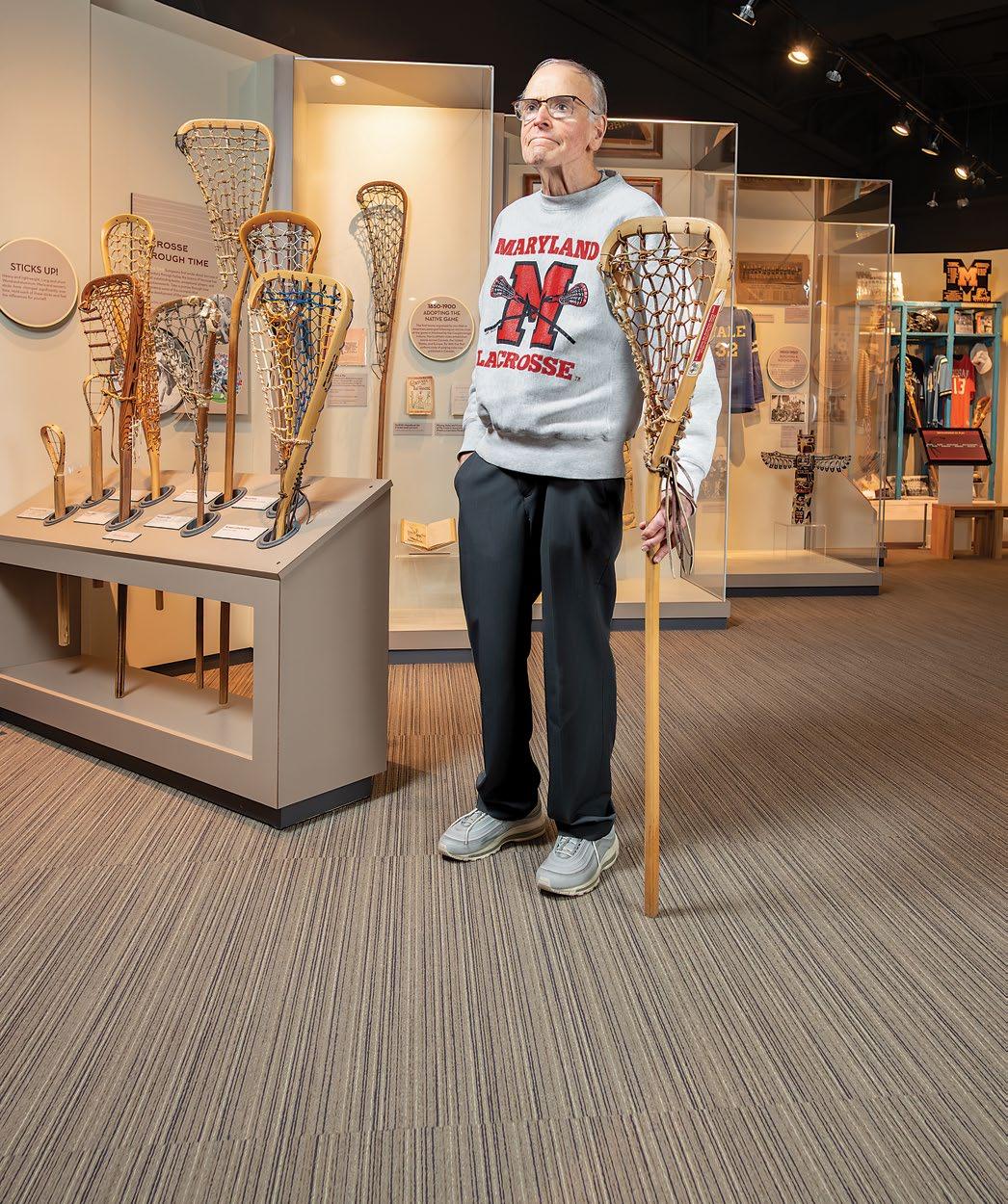
The National Lacrosse Hall of Fame marks a decade in Sparks.
BY COREY MCLAUGHLIN
METRO
ere stands John Flannery, “the father of American Lacrosse.” Hanging on a wall of the National Lacrosse Hall of Fame and Museum in Sparks, a circa-1879 portrait shows the 26-year-old Canadian, posing outdoors in a crew-neck shirt and dark shorts, stick over his shoulder, his confident expression suggesting he’s ready for a game—and the Gilded Age.
A few feet away, though, visitors learn that lacrosse’s origin story dates back even further. About a dozen wooden sticks of various shapes and sizes highlight the sport’s Native American heritage and different forms of the game played as early as the 11th century. “Canada was the first place that the white man started playing it—they saw the natives playing,” says Joe Finn, pictured, previous page, the Hall of Fame’s longtime archivist, gesturing amid exhibits that span the centuries.
Given its present-day ubiquity in Baltimore, it’s no suprise that lacrosse’s National Hall of Fame is here, and has been since 1957. As lacrosse season hits full stride this spring, they will celebrate their 10th anniversary at the Baltimore County headquarters of USA Lacrosse. But the city and region’s importance to the sport was hardly preordained.
In 1636, French missionaries first recorded the Huron tribe of modern-day Ontario playing a ritual game. They called it “La Crosse,” the webbed sticks being reminiscent of a bishop’s crozier. Two centuries later, a Montreal dentist published its first rule book and, with that, the aforementioned Flannery eventually brought the fast-paced game—12 against 12; most goals wins—with him to the United States.
Organized lacrosse spread from there, including to the Old Line State. In 1878, members of the Baltimore Athletic Club traveled to an athletic competition in Rhode Island. There, C.J. Iglehart came up short in the one-mile run, but his crew caught New Yorkers and Bostonians competing for a national lacrosse title. “They liked what they saw,” Finn says, “so they brought rules and equipment home.” A few months later, Baltimore’s first recorded lacrosse game took place in West Baltimore. As The Baltimore Sun reported, 24 men played “the Canadian Indian game of lacrosse, which has been gradually growing in favor in this vicinity, and is decidedly an improvement on baseball.” Spectators paid 25 cents. The game lasted 90 minutes. The winners received silver scarf pins shaped like lacrosse sticks—the first awards for the sport in Baltimore, but hardly the last.
“THE SPORT’S HISTORY RUNS DEEP IN BALTIMORE.”
Since then, lacrosse has woven its way into the fabric of life here. Johns Hopkins University fielded a team by 1883, more clubs emerged, and today, nets dot school and neighborhood yards. In 2016, USA Lacrosse opened a new headquarters in Sparks and built a beautifully designed home for the Hall of Fame, replacing cramped quarters near Hopkins. Inside, there are also tributes to women’s lacrosse, which was popularized in the U.S. by a Bryn Mawr School coach in 1926, and Morgan State University’s pioneering Ten Bears team, the first from a historically Black college. Additionally, there are displays devoted to international competition (lax returns to the Olympics in 2028). Admission is free.
On one wall, wooden squares with the names and faces of more than 450 Hall of Famers form a mosaic. There’s Jim Brown (yes, the football legend), dozens of Baltimore natives, and a record 72 inductees affiliated with Hopkins, as well as 34 from rival University of Maryland, speaking to the region’s dominance of the sport. Finn, who joined the Hall of Fame as a volunteer in 1998, knows about every player and artifact. “A lot of people are surprised by the James Naismith connection,” he says, referring to the Basketball Hall of Fame namesake, who invented that sport to stay in shape for . . . lacrosse.
The sport’s history runs deep, and it lives in Baltimore.
STATE
OF THE ART
Explore the next generation of American art at the MICA Grad Show.
Finally, spring has arrived, and that means before long school will be out for summer at colleges across Baltimore. Until then, admire the creative accomplishments of graduate students from the Maryland Institute College of Art. Through July, visit multiple galleries across the 200-year-old campus to view works from myriad disciplines. Through April 12, explore graphic design and illustration, and from April 17 to May 3, explore fine art, sculpture, photography, and mixed media. Off-site, starting on April 11, the colorful canvases of MFA paintings will be on display at The Peale, and on April 29, you can screen MFA films at the Parkway Theatre.
THE BUZZ
THE REGION’S BEST QUIPS, QUOTES, AND BONS MOTS.
“A.I. slop.”
The Baltimore Sun Guild, criticizing the daily newspaper’s recent use of A.I. to analyze local politics instead of its human reporters, X, 2/13
“Why on Earth would I do that?”
—Local electronic artist and film composer Dan Deacon on leaving Baltimore for bigger cities like New York or Los Angeles, NPR’s World Cafe, 1/30
“I witnessed people suffering in extremely inhumane conditions.”
—Sen. Jamie Raskin, following a visit to the U.S. Immigration and Customs Enforcement (ICE) Field Office in Baltimore, citing overcrowding, no showers, and a single toilet for more than 50 men detained during Trump Administration raids, 2/13
“Don’t expect anybody to bring peace to us. . . . We have to create it ourselves.”
—Venerable Bhikkhu Paññakara, who led two dozen of his fellow Buddhist monks on a 2,300-mile “Walk of Peace” from Texas to Annapolis this winter, WYPR, 2/13
“So are you guys going to cover the John Denver song, ‘Thank God I’m A Country Boy?’ That’d be sick.”
—New Orioles first baseman Pete Alonso, in conversation with Turnstile guitarist and longtime O's fan Pat McCrory, YouTube, 2/17
Favorite Vacation Spots
Do you have a favorite vacation spot? Somewhere you return to every year? I think that many of us have those places we return to year after year.
When my brother and I were kids, our grandparents lived in Massachusetts. For many years, we vacationed on the Cape, and then on a lake in Maine. The memories we made are irreplaceable. We had so much fun, exploring, swimming, making up songs, and relishing time with family.
In our teenage years, my parents chose Bethany Beach as our vacation place. We packed the station wagon with everything we’d need for a week or two, including the sun umbrella. We played miniature golf daily, ate sundaes, and spent days on the beach in the sand and surf.
It seems like many people have a favorite location, whether it is returning to Ocean City or Fenwick or Nantucket, year after year, as families grow and change. Have you thought about buying a second home? A place you can rent when you are not using it? I can help with that. My referral network is worldwide, and I can put you in touch with the right realtor no matter where you want to be.
Now I vacation in Rehoboth Beach, DE and on St John in the USVI. I just made my 20th trip to St John in February, and the sun, gorgeous beaches, great food, and island spirit never let me down. Let me help you find your next place!
Where’s Ashley?
Skinny Legs, Coral Bay, St John
atermelonW Cay, St John Cinnamon Bay, St John
$625,000
FOR THE RECORD
A new listening party digs deep into the power of sound.
ON SUNDAY NIGHTS, Wet City typically takes the night off on West Chase Street. But twice a month at the end of the week, this beloved bar, known as the spot for Spagett cocktails and some of the city’s best wings, will be jam-packed with people, swaying in their seats, enveloped in the sounds of iconic musicians. Think Sly and the Family Stone, Herbie Hancock, Daft Punk, Amy Winehouse. This is “The Evening Ritual,” a monthly record-listening session focused on unplugging and fully immersing in sound.
At the front of the room, behind the decks, is John Canale, also known as “Basement Selector,” staging a quiet rebellion against the digital streaming age. He carefully pulls an album and drops the needle— a gesture so practiced it looks like a prayer. “It’s the physical act,” says Canale. “Choosing the record, pulling the vinyl out of the sleeve, smelling the cardboard and the paper. It’s a ritual that is very analog, very tactile. And when you do that with a room full of people, it becomes a restorative, meditative thing.”
A kid from the Philadelphia suburbs, Canale came of age during a golden era of ’90s radio, where DJs curated an education on the cultural anthropology of music, rather than just simply playing hits. He listened obsessively and channeled a passion for hip-hop and streetwear culture into a fashion career, working with creative heavyweights like Marc Ecko in New York City. When a role at Under Armour brought him to Baltimore in 2014, he arrived with a veteran tastemaker’s eye for detail.
“I’m creative at heart,” says Canale, who specializes in graphic design, branding, and merchandising. “This is another facet of me that I’ve been wanting to explore for a long time.”
About 10 years ago, he became enamored with the concept of the Japanese jazz kissa—intimate, smoke-filled listening cafes where music isn’t background noise, but the guest of honor. He was thrilled to discover there was something called the Baltimore Kissa Society. After attending a few of their events, he felt inspired to launch his own.
Each session celebrates one groundbreaking album. Last February, the first centered on Stevie Wonder’s Innervisions. By the second, which spotlighted Herbie Hancock’s Headhunters, the room was filled to the brim. The platform has since expanded to other popular venues like Good Neighbor and Mera Kitchen Collective. He now also collaborates with guest DJs like poet Celeste Doaks and curator Crave, using these sessions to showcase even more musical perspectives and advocate for a radical return to active listening.
But it’s not just about music, it’s about gathering. “Community, friends, strangers—for something that is an intentional and focused moment,” he says. “It’s one thing when you engage in [music] alone. . . . But when you engage in it with a group of people, it can really restore your senses.”—Teri Henderson
2
70,000
of
1 in 4
People killed by police in Maryland who were in a mental-health crisis, according to the Maryland Office of the Attorney General.
30 years
Taxidermy
1
Grammys won by Baltimore hardcore band Turnstile in February.
Attendance
Amy Sherald’s American Sublime exhibition at the Baltimore Museum of Art.
Tenure of The Brewer’s Art in Mount Vernon before its sudden closure this winter.
tiger head stolen from the Maryland Club in December.
ROADS LEAD to TOWN
The List
THE TOP THINGS TO DO IN BALTIMORE THIS MONTH.
EDITED BY
LYDIA WOOLEVER
WRITTEN BY Sophia
Naughton
3/11-10/25
Exhibitions. The Walters Art Museum is typically known for its antiquities, with a 36,000-object collection that dates back to 5,000 B.C.E. Its latest exhibition, however, organized by the Museum of Arts and Design in New York City, is firmly situated in the future. Designer Douriean Fletcher uses her futuristic jewelry-making as a powerful tool for storytelling, most notably in major motion pictures like Black Panther, where her work helped the film win an Oscar for best costume design. View more than 100 wearable artworks from throughout the self-taught artist’s career, including pieces worn by Queen Ramonda and the Dora Milaje in those blockbuster films, alongside a selection of other costumes. Each piece is an exploration of adornment, considering the ways in which such beautiful touches define characters, create worlds, and celebrate Black sovereignty on screen. The Walters Art Museum, 600 N. Charles St. Wed.-Sun. 10 a.m.-5 p.m., Thurs. 1-8 p.m. thewalters.org. FREE
4/1-5/31
NATURE DEFICIT ORDER
Exhibitions. Enter artist Rachel Lee Hovnanian’s simulated woodland that was once the BMA’s Spring House, which asks us to consider what we’re missing while absorbed in technology. Baltimore Museum of Art, 10 Art Museum Dr. Wed.-Sun. 10 a.m.-5 p.m., Thurs. 10 a.m.-9 p.m. artbma.org. FREE
4/4
CARDI B
Music. This Grammy-winning pop star stops in downtown Baltimore on her first tour in six years, performing from her latest album, “Am I the Drama?” CFG Bank Arena, 201 W. Baltimore St. 7:30 p.m. $254-1,200+. cfgbankarena.com.
4/8-12
MARYLAND FILM FEST
Film. Cinephiles unite for five days of showcasing local and global film talent, new technology, music, art and more, with nightly after-parties and fun-filled opening and closing night events. Parkway Theatre, 5 W. North Ave. $15-350. snfparkway.org.
4/9
GOSPELFEST
Music. The Baltimore Symphony Orchestra performs with HBCU choirs from Morgan State, Coppin State, Howard University, and Bowie State to honor the life and legacy of late gospel icon Richard Smallwood. Joseph Meyerhoff Symphony Hall, 1212 Cathedral St. 7:30 p.m. $19-68. bsomusic.org.
4/10-11
BREAD & PUPPET THEATRE
Theater. Don’t miss a magical performance of puppetry packed with music, politics, current events, and surprises of all kinds from this iconic Vermont-based DIY troupe. 2640 Space, 2640 St. Paul St. 7 p.m. Prices TBD. breadandpuppet.org.
4/11
CITYLIT FESTIVAL Festivals. This annual all-day celebration gathers literary heavyweights for readings, panel discussions, craft intensives, and more, all for the love of the written word. Locations & times vary. citylitproject.org. FREE
4/11
THE BIG BALTIMORE KITE FEST Festivals. Welcome spring with this whimsical pastime as colorful kites fill the air in the Highlandtown alongside make-your-own activities, food pop-ups, and more. Patterson Park, 2601 E. Baltimore St. 12-4 p.m. creativealliance.org. FREE
4/13-12/31
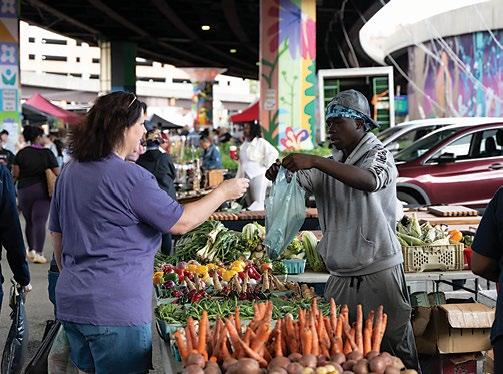
BALTIMORE FARMERS MARKET Festivals. Maryland’s largest farmers market kicks off its 49th season with local produce, area food makers, and family-friendly crafts and activities downtown beneath the Jones Falls Expressway. Holliday & Saratoga sts. Sun. 7 a.m.-12 p.m. promotionandthearts.org. FREE
4/16-5/10
HOLES
Theater. In this grand adventure, theatrically adapted for the stage from its award-winning namesake novel, teenagers unearth buried secrets under the desert sun. Baltimore Center Stage, 700 N. Calvert St. Times vary. $10-90. centerstage.org.
4/17-18
BALTIMORE OLD TIME MUSIC FESTIVAL
Music. Father-son duo Ken and Brad Kolodner host their annual celebra-
tion of old-fashioned Americana music, with concerts, dancing, and kids' activities on the waterfront. Baltimore Museum of Industry, 1415 Key Hwy. Fri. 5-10:30 p.m., Sat. 10 a.m.-11 p.m. $20-110. baltimoreoldtimefest.com.
4/18
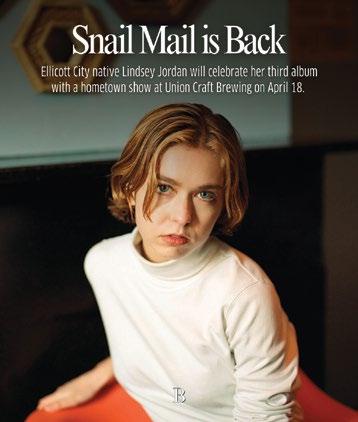
SNAIL MAIL
Music. Ellicott City’s Lindsey Jordan returns to Baltimore for a highly anticipated performance of her new album, Ricochet, with opening acts and local beer outside at Union Collective. Union Craft Brewing, 1700 W. 41 St. 4 p.m. $39.67. unioncraftbrewing.com.
4/18-19
SHEN YUN
Dance. Celebrate China’s rich cultural heritage in this classical dance performance featuring an orchestral soundtrack and scenographic effects. Hippodrome Theatre, 12 N. Eutaw St. Sat. 2 & 7:30 p.m., Sun. 2
p.m. $106-233. baltimore.broadway.com.
4/19
RISE BMORE
Music. In a moving tribute, this annual concert recognizes the anniversary of Freddie Gray’s death, featuring artists who showcase the city’s wide-ranging musical talent, from Peabody professors to hiphop artists. 2640 Space, 2640 St. Paul St. 8 p.m. risebmore.com FREE
4/24-25
STAVROS HALKIAS
Comedy. Best-known by many locally as his Ravens superfan character “Ronnie,” this unabashedly brazen comedian, writer, and actor returns to his hometown for two nights on his latest stand-up comedy tour. The Lyric, Fri.-Sat. 7-9:30 p.m. $44.15-257.05. lyricbaltimore.com.
4/24-26
BALTIMORE
TATTOO CONVENTION
Exhibitions. Enter a world of all things tattoo with this annual weekend festival, featuring worldclass artists, collectors, and more. Baltimore Convention Center, 1 W. Pratt St. Times. vary. $25-50. bccenter.org.
4/24-5/17
THE TEMPEST
Theater. In Shakespeare’s last solo play, follow the tale of Prospero, an exiled magician who weighs his powers between forgiveness and retaliation. Chesapeake Shakespeare Company, 7 S. Calvert St. Times vary. $25-69. chesapeakeshakespeare.com.
4/25
SOLE OF THE CITY 10K
Sports. Race around the Inner Harbor and surrounding communities in this annual 10K race that ends with an after-party along the waterfront. Harbor Point, 1310 Point St. 8:30 a.m.-12 p.m. $86.80269.75. charmcityrun.com.
4/25
MARYLAND HUNT CUP
Sports. For 126 years, Baltimore County has been the home to the state’s timber-race tradition. Join the tailgate traditions, catch the fast-flying race, and raise a cup to the elite equines showcasing their speed. Tufton Ave. Gates: 11 a.m. Race: 4 p.m. $60-150. marylandhuntcup.com.
4/25
ZOO STORIES
Theater. Commemorate 150 years of the Maryland Zoo with the Stoop Storytelling Series, sharing tales of childhood memories and animal encounters, with live music by June Star. Maryland Zoo, 1 Safari Pl. 6:30 p.m. $25. stoopstorytelling.com.
4/28-30
WAVERLY BOOK FEST
Festivals. Celebrate a love of the literary at this annual community fest, with a book fair, micro-press showcases, and author readings throughout the weekend in the neighborhood of Waverly. Locations & times vary. waverlybookfestival.com. FREE
TO 5/17
PING-PONG POP-UP
Exhibitions. Show off your Marty Supreme skills in this sporty installation featuring graphics by designer Bruce Willen, state-of-the-art tables, and stadium seating. Jewish Museum of Maryland, 15 Lloyd St. Sun. 10 a.m.-4 p.m., Mon-Wed. 12-4 p.m. Free-$10. jewishmuseummd.org.
To read more events, arts, and culture coverage from our editors, check out events.baltimoremagazine.com
3,730 Transactions
in Sales
Settled in one week or less
From vibrant coastal towns in the Mid-Atlantic to the most sought-after communities in North Carolina and Florida, we’ve already done the work. Our agents live where we serve, so we understand the lifestyle and can help you and your clients navigate the communities. We have headquarters in Maryland , Delaware , North Carolina , and Florida . In addition, we serve Pennsylvania, Washington, DC, and Virginia.
Our 400+ full-time, highly trained real estate professionals are ready to help.
Scan here to discuss joining Northrop Realty or for a 30% referral today!
Reviews: Books
BY KERRY FOLAN
COME ABOARD
JUST A FEW DAYS AFTER the 9/11 terrorist attacks, Baltimore-based writer Jung Yun embarked on a family cruise aboard the real-life ship from The Love Boat. “Until my feet were actually on the plank walking up to the ship, I was sure we were going to cancel,” recalls Yun, who has channeled the surreal dissonance of that experience into a sensitive and surprisingly funny new novel, All the World Can Hold——a 9/11 book that’s not about 9/11. Aboard a fictionalized version of Yun’s own trip, three unrelated characters, each unhappy in their own way, experience a life-changing voyage. With no way off the boat and tragedy looming in the background, they are forced to reconsider what they can’t control, and what they must. Yun, who was born in Seoul, Korea, and raised in North Dakota, has lived in Baltimore for the last decade, after accepting a job teaching creative writing at D.C.’s George Washington University. She is the author of two critically acclaimed previous novels——Shelter (2016) and O Beautiful (2021), but she says this is the book she’s been working on the longest. We spoke with the Otterbein resident about how this story finally came to fruition.
of thought I was immortal. The events of 9/11 disabused me of that notion very quickly. Within nine months, I quit my [nonprofit] job, I sold my apartment, I went back to grad school to start a creative writing program in my 30s, which everyone thought was crazy. I’m not sure if I would be writing today if 9/11 hadn’t forced me to look inward and realize I didn’t like what I was doing with my life.
Despite the grave subject matter, I would say this is the funniest of your three novels. Do you agree? I have been wanting to write about my experience of 9/11 for 25 years, but I couldn’t figure out a way to do that without becoming utterly grief-stricken. Leaning into the surreality of the cruise was, I think, the turning point when the book started to become a novel that I could see myself writing and finishing. A lot of the humor is just straight realism about things that I remember from the ship, like the men’s sexy leg contest. Particularly in the early 2000s, when there were no smartphones, the cruise crew existed to entertain you, distract you, keep you busy, keep you happy, etc. And they went to great——sometimes hilarious or absurd——lengths to do that.
The image of the cruise ship also offers a powerful metaphor in this novel. Yes. In the
context of horrific tragedy, what can these people do except make choices about their own lives? When we first meet them, I think all three characters are kind of being carried along. And this event forces them to actually make some choices, which they haven’t been doing, and to be greater agents of their own future.
Do readers need to be familiar with The Love Boat to get the book? You don’t need to know what The Love Boat was in order to appreciate this book, but I hope that it’s a fun Easter egg for people who do know the show, and know that there were always three main storylines that hit a landing point by the time the cruise ends. That said, I don’t necessarily consider this book to have a Love Boat-style happy ending. How the reader leaves each character and reads what happens to them next is largely dependent on their sense of optimism or pessimism in the world.
9/11 is a fraught moment, both in the grand scheme of American history and on a personal level for those of us who lived through it. What made you want to write about it? 9/11 was a history-changing moment, but I think the reason why it has such personal significance to me is that it pushed me to make a lot of big changes in my own life. Witnessing so much destruction, so much loss of life, made me feel mortal for the first time. I was 29 years old and working all the time [in New York] and not sleeping and not eating well and smoking a bunch of cigarettes, and I kind
For a longer version of this interview, check out baltimoremagazine.com
You’ve been thinking about this novel for decades. What was your practice when you finally sat down to write? I’m an early morning writer, usually starting at 5 a.m., but I can only sit at my desk for about three or four hours before I need to leave the house. A big part of my writing process is thinking about scenes or sections that I still have to write, which I do while walking around the city. My favorite loop is the longest, hugging the harbor all the way from our home in Otterbein to the waterfront park in Canton. Last year, we adopted a dog. Buddy gets me out of the house even more, which is good for the brain and the lower back. We also like to hit the pocket parks in our neighborhood, walk up Howard Street, or out to Locust Point, and I always come back to my desk feeling ready to write again.
Out now via the 37 Ink imprint of Simon & Schuster.
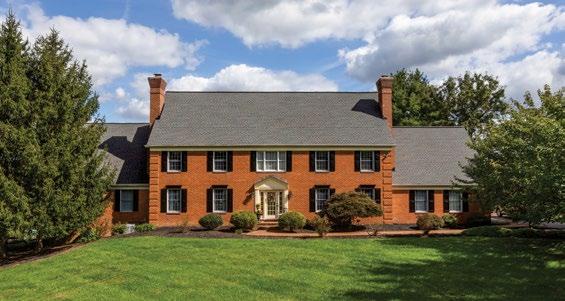
3203 Glouchester Drive Fallston
An extraordinary home set on a highly desirable lot in the prestigious Woodsbrook community of Fallston. This sprawling 8000SF all brick home has a prime end of cul de sac location, and is situated on 3.69 acres with scenic views of surrounding farmland. Owners have beautifully updated (including a gorgeous kitchen reno) and expanded this home. Main level addition includes a massive luxury primary suite, the original remains on upper level providing two true owner’s suites. Finished walkout lower lvl with half bath leads to patio surrounding a Gunnite pool with waterfall & integrated spa. Every detail — inside and out — has been thoughtfully designed!
Meet licensure requirements, prepare for exams or boost your career at any stage.
Explore over a dozen affordable courses, including:
• Home inspection
• Maryland Home Improvement Exam prep
• Real estate sales
• Real estate appraisal
Dental Exams Save More Than Smiles Detect
oral cancer early with annual screenings.
Experts at the University of Maryland School of Dentistry offer the full range of services to patients of all ages, from dental exams and cleanings to braces and retainers, cosmetic veneers and implants, and lifesaving oral cancer detection and treatment.
As the world’s first dental college and Maryland’s only provider of academic dentistry, our clinical faculty and dental professionals are involved with research and teaching in addition to practicing dentistry.
Additionally, the team is highly trained and uniquely qualified to care for patients with special needs and those with highly complex oral health conditions.
Appointments are available at our Faculty Practice within one week, and same/next day for urgent concerns.
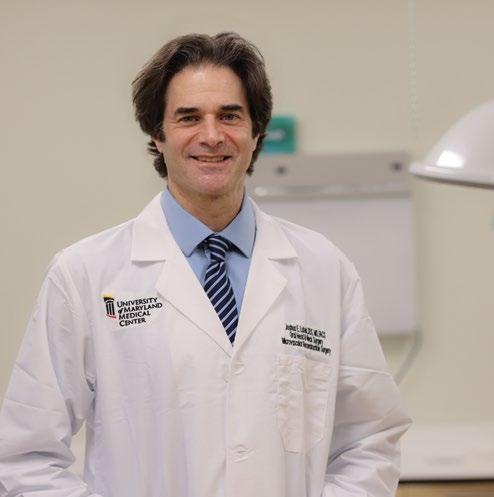
BALTIMORE’S THOUGHT LEADER OF THE MONTH
Dr. Joshua Lubek was drawn to the specialty of oral, head and neck cancers when he was training as a resident, attracted by the opportunity to establish lifelong connections with patients while providing complex surgical care. Below, Dr. Lubek discusses the prevalence of head and neck cancers, and exciting advancements in treatment and research.
What are the most common types of oral, head and neck cancers you see?
Squamous cell cancer is the most common cancer that we see, often developing on the specialized surface lining (mucosa) of the oral cavity and oropharynx (tonsil and tongue base) Other less commonly treated cancers and tumors include those of salivary gland origin, underlying connective tissue (muscle and bone), and skin cancer of the face. We also treat tumors and cysts of odontogenic origin (toothrelated tissue), which are rarely cancerous in nature.
Are there specific risk factors for developing oral cancer?
Alcohol and tobacco abuse increase risk, and patients who are immunosuppressed (perhaps due to medications, genetic disorders, or autoimmune diseases) are also at higher risk. However, we are seeing an increase in oral cavity cancers in those with no past medical history, and especially among younger patients. Currently, we have no obvious explanation for this change other than a combination of unknown genetic and environmental factors. Most cancers occurring specifically within the tonsil and tongue base have a known association with the human papilloma virus (HPV). This virus does not appear to play a role in the development of oral cavity cancers.
What are the early symptoms, and when should someone be evaluated by a specialist?
Early symptoms include a non-healing mouth sore or ulcer, unexplained mouth bleeding or loose teeth, red or white mouth patches, mouth pain, swallowing difficulties, or a new neck lump. Any red or white mouth sore that has not resolved in about three weeks should be evaluated by an oral health professional.
What’s your best advice for someone who is newly diagnosed?
It is completely normal and human to feel scared, especially of the unknown. You must think positive and stay focused on the upcoming task of completing your
JOSHUA LUBEK, DDS, MD, FACS
Professor of Oral-Maxillofacial Surgery; Director, Head and Neck Oncology, Microvascular Reconstruction and Oral-Maxillofacial Surgery Hospital Services, University of Maryland School of Dentistry and University of Maryland Medical Center
650 West Baltimore St., Suite 1401, Baltimore, MD 21201
410-706-6195
dental.umaryland.edu/oms
“Any red or white mouth sore that has not resolved in three weeks should be evaluated by an oral health professional.”
therapy. It is important to rely on the support of loved ones, friends, and your care team. At University of Maryland, we will help you throughout every step of this challenging journey. Our relationship will continue once you have healed and become a cancer survivor. Remember to ask questions and be an advocate for yourself.
What treatment options are currently available, and are they successful?
Treatment options vary from surgery or radiotherapy for early-stage disease to the use of multimodality therapies (surgery, radiation, chemotherapy, and immunotherapy) for more advanced cancers. Newer targeted therapies, including immunotherapy along with other tumor biology-specific drugs, have shown great promise in the fight against advanced stage cancers. Minimally invasive surgical techniques using transoral robotic surgery (TORS) coupled with proton radiation therapy are also utilized in the management of oropharyngeal cancers to help minimize complications and long-term morbidities.
Tell us about the exciting research and discoveries taking place in your field. There are numerous areas of exciting research within the field of oral cancer care, such as the use of genetic sequencing of tumor DNA mutations for the development of patient-specific targeted drug therapies, immune system enhancing drugs to fight cancer cells, and the use of artificial intelligence for the detection of pre-malignant disease. We use advanced reconstructive techniques including microvascular autotissue transfer, 3D printing, and virtual surgical computer planning to help restore patient form and function, thereby improving quality of life. Novel tissue engineering techniques are being researched and utilized to help regenerate both bone and soft tissue while decreasing surgical morbidities.
What do you appreciate most about the oral and maxillofacial surgery team at the University of Maryland School of Dentistry?
We provide high-quality, compassionate care for complex oral cavity, oropharynx, face, head-neck and jaw-related conditions. Our dual appointments in both medicine and dentistry make us uniquely positioned to deliver the complete rehabilitation with respect to structure, function, esthetics and dental rehabilitation. We are an all-inclusive bridge between surgery, medicine, and dentistry.
NURTURING A NEST EGG
Area financial planners share how to plan for retirement saving and spending. Plus, our annual guide to Continuing Care Retirement Centers.
By Hannah Chenoweth
ho among us hasn’t daydreamed about ditching the daily grind for drinking margaritas on the beach? Even if retirement feels far off and full of unknowns (or, frankly, straight-up improbable), it’s never too early to start planning and investing in your future. Focusing on the things you can control is one of the best ways to set yourself up for retirement success.
The good news is you get to decide what success looks like. According to Baltimore’s financial planning experts, it’s not about insider stock picks, get-rich-quick “hacks,” or even how much money you make. What really matters is having a plan and showing up for it consistently, no matter how much you earn.
WHERE TO START
First things first: Planning for the future starts with understanding where every dollar is going today. Taking a clear-eyed look at your spending helps ensure you’re acting in alignment with your priorities,” says Justin Garritt, financial advisor and founder of Garritt Financial Solutions LLC. “The most successful people with money save and spend intentionally in line with their values, not to keep up with other people,” he adds.
Once you know your starting point, you can take small, intentional steps toward hitting your retirement savings goals. While there’s no one-size-fits-all approach, a smart move for a lot of people is contributing to a 401(k), a pre-tax retirement account offered by many employers.
“The specifics of a 401(k) match vary by employer, but the idea is the same: Your employer contributes money based on how much you put in,” Garritt explains. “With a full match, every dollar you contribute is matched dollar for dollar; with a partial match, such as 50 percent, your employer adds 50 cents for every dollar you save.”
The bottom line? Don’t leave free money on the table.
“Definitely check your company’s benefits and make sure you’re
contributing enough to get the full employer match,” echoes Philip Snyder, founder of Snyder Asset Management. “In 2026, contribution limits jumped from $23,500 to $24,500, with extra “catch-up” contributions if you’re over 50–or even bigger if you’re 60–63.”
Another retirement account that should be on your radar is the Roth IRA, which allows you to invest money you’ve already paid taxes on. Your money grows tax-free, and you can withdraw the funds without taxes and penalties after age 59 and a half.
“If your income is on the lower side, it can make sense to focus on a Roth IRA and pay taxes now,” says Garritt. “But if you’re in a higher tax bracket—over 22 percent—you might prioritize pretax accounts to reduce your taxable income now, with the hope of withdrawing it later at a lower rate.”
A financial advisor’s dream scenario? You max out both your 401(k) and Roth IRA, then get strategic with any extra savings. A brokerage account can be a smart move because it lets you invest money you can access anytime, without penalties. Don’t overlook your Health Savings Account (HSA) and Flexible Savings Accounts (FSA) either. “These are truly unsung hero accounts,” Garritt says, “because no other investment vehicle is pre-tax going in and out.” If maxing out every account is out of the cards, don’t stress: Focus on diversification instead. “Having a mix of tax strategies matters more than maxing out every account,” says Snyder. “It gives you greater flexibility and control over withdrawals when retirement rolls around.”
PLAN YOUR DAYS, NOT JUST YOUR DOLLARS
No matter what your “ideal” retirement looks like, it’s probably very different from your parents’ or grandparents’ experience, says Kent Pearce, managing director and private wealth manager of The Pearce Group at Merrill Private Wealth Management.
“Instead of walking out of work and never looking back, many people today are easing into a lifestyle transition. They want to stay active, and lifespans keep getting longer,” he says. “That’s why I say the biggest risk isn’t market swings, it’s outliving your money.” Without a plan or budget, retirees are at risk of spending more than they did while working; after all, there are more free hours in the day to shop. That’s why planning how you spend your days is just as important as planning how you spend your dollars. Garritt adds that retiring from full-time work at a younger age while working part-time can be an attractive way to “ease in” to retirement while staying active and engaged.
Another area that’ll affect your retirement spending, of course, is Social Security. According to Snyder, how it fits into your plan depends on your perspective: Is it income you want to spend now, or longevity insurance?
While we can’t know exactly how long we’ll live, it helps to be honest with yourself about your situation. Does longevity run in your family? Do you have any health concerns? How might your marital status affect your plans? If you think you’ll live past 78, for example, claiming Social Security at 62 might be too soon.
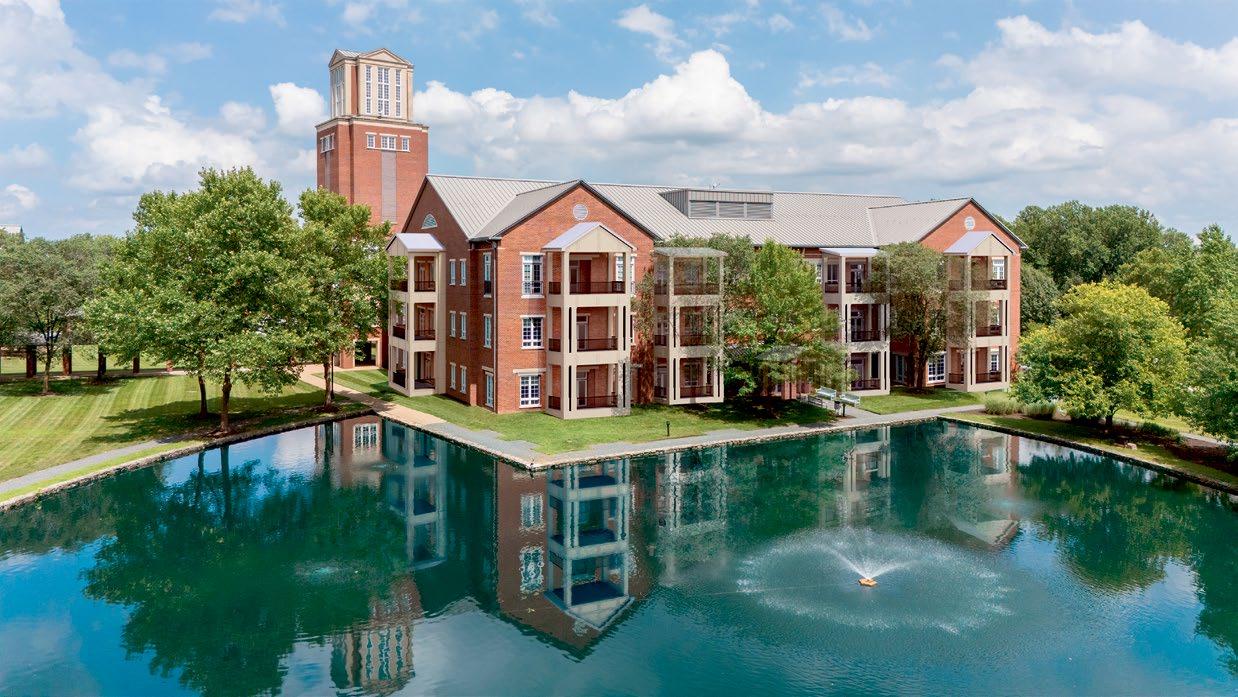
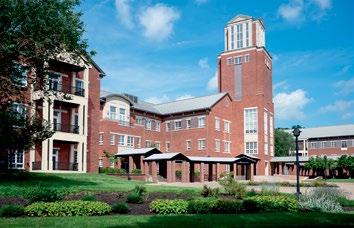
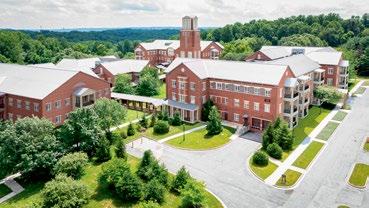
For over 45 years, Broadmead has been more than a place to live — it’s been a warm and welcoming Life Plan Community where neighbors become friends, creativity flourishes, and every voice is valued. Now, we’re thrilled to invite you to be part of our next chapter: our first-ever off-site expansion, Broadmead at Ridgebrook.*
Offering 80 elegant apartment homes crafted for comfort and independence, set within 60+ acres and featuring comprehensive campus-to-campus shared amenities.
If retirement is on the horizon and you’re not quite where you’d like to be, Snyder says you have three main levers: save more, work longer, or spend less. While that advice isn’t new, financial planners are now using technology to make these choices more strategic.
“Tools like Monte Carlo simulations model different market scenarios and assign a success score, showing how likely your money is to last. A score of 100, for example, means your savings should outlive you, no matter what the market does,” he explains. “If retirement planning is keeping you up at night, seeing a financial planner can help give you both strategic advice and peace of mind.”
SPENDING IN YOUR RETIREMENT ERA
Once you get to retirement (and a big congratulations if you’re there!), making your savings last doesn’t have to be complicated. One of the most well-known strategies is the four percent rule: in your first year of
retirement, withdraw four percent of your total savings—say, $40,000 from a $1 million nest egg— and then adjust that number for inflation each year. Historically, it’s helped retirees stretch their money for about 30 years.
Another approach is the “guardrails” method, which gives retirees who have more discretionary income a good amount of flexibility. Your portfolio has a high and low limit: if it’s doing well, you can spend a little more; if it dips, you pull back. “It takes out the guesswork, giving clear rules for when you can splurge or scale back, so you don’t run out of money,” says Snyder.
These are just two of many ways to budget in retirement. Your strategy ultimately depends on your goals, risk tolerance, and financial situation, which is exactly where a financial planner can help. And no matter your timeline, the experts all agree: What you do now matters.
“One of the biggest powers we have is compounding,” says Pearce. “Never underestimate how important it is to get your money to work for you.”
FOR MANY, CHOOSING TO SELL A home and move to a retirement community is a significant financial decision made in or around retirement. Our annual guide to Continuing Care Retirement Communities (CCRC) follows to provide a starting point for this important search.
BAYWOODS OF ANNAPOLIS
7101 Bay Front Drive
Annapolis, MD 21403
Baywoodsofannapolis.com
BLAKEHURST
1055 W. Joppa Road
Towson, MD 21204
Blakehurstlcs.com
BROADMEAD
13801 York Road
Cockeysville, MD 21030
Broadmead.org
CARROLL LUTHERAN VILLAGE
300 St. Luke Circle
Westminster, MD 21158
Clvillage.org
CHARLESTOWN
RETIREMENT COMMUNITY
715 Maiden Choice Lane
Catonsville, MD 21228
Ericksonseniorliving.com/charlestown
EDENWALD
800 Southerly Road Towson, MD 21286 Edenwald.org
FAIRHAVEN
7200 Third Avenue
Sykesville, MD 21784
Actsretirement.org
GINGER COVE
4000 River Crescent Drive
Annapolis, MD 21401
Gingercove.com
LUTHERAN VILLAGE AT MILLER’S GRANT
9000 Fathers Legacy Ellicott City, MD 21042
Millersgrant.org
MARYLAND MASONIC HOMES
300 International Circle Cockeysville, MD 21030 Mdmasonichomes.com
MERCY RIDGE 2525 Pot Spring Road Timonium, MD 21093 Mercyridge.com
THE RESIDENCES AT VANTAGE POINT 5400 Vantage Point Road Columbia, MD 21044 Vantagepointresidences.org
RESORTS OF AUGSBURG 6811 Campfield Road Baltimore, MD 21207 augsburgseniorliving.org
ROLAND PARK PLACE 830 W. 40th Street Baltimore, MD 21211 Rolandparkplace.org
*Information courtesy of the Maryland Department of Aging, as of February 2026.
Best Restaurants R eaders ’ P oll Winners
We spend a lot of time ruminating on what, exactly, makes the Charm City dining scene one of the best in the nation. Each year, our team of food reviewers are challenged to identify the best of the best and deliver their findings in our March Best Restaurants issue.
But we know that our readers have their own criteria for what makes a restaurant or bar outstanding—so we created this readers’ poll to honor their picks, from the best comfort food to the top wine program.
Now, without further ado, here are the results.
A special thank you to our sponsor for supporting this year’s poll.
Best Restaurants
R eaders ’ P oll Winners
AFRICAN CUISINE
WINNER: DUKEM ETHIOPIAN CUISINE
Finalists: Jollof Bowl, Spice Kitchen
AFGHAN CUISINE*
WINNER: THE HELMAND
BARTENDER
WINNER: CHUCK CALLOWAY, MICHAEL’S CAFE
Finalists: Mauricio Mendoza, Taco Love Grill; Ashlea Zahner, MaGerks Pub
BRUNCH
WINNER: YEIBOH KITCHEN
Finalists: Miss Shirley’s Cafe, Cece’s Roland Park
CHEF
WINNER: HÉCTOR ROMERO, ALMA COCINA LATINA
Finalists: Eric Houseknecht, Thames Street Oyster House; Fabricio Aguilar, Michael’s Cafe
CHESAPEAKE FARE
WINNER: THAMES STREET OYSTER HOUSE
Finalists: Koco’s Pub, The Urban Oyster
CHINESE CUISINE
WINNER: NIHAO
Finalists: Joey Chiu’s Greenspring Inn, Nine Tailed Fox
COCKTAIL PROGRAM
WINNER: PATTERSON PINS
Finalists: The Bluebird Cocktail Room; Dutch Courage
COMFORT FOOD
WINNER: TITO’S FRIED CHICKEN
Finalists: Ekiben, Frank’s Pizza & Pasta
DESSERTS
WINNER: VACCARO’S ITALIAN PASTRY SHOP
Finalists: Taharka Brothers Ice Cream, Café Dear Leon
A special thank you to our sponsor for supporting this year’s poll.
RESTAURANT WITH LIVE MUSIC
WINNER: CAT’S EYE PUB
Finalists: Nick’s Fish House, Holy Frijoles
SERVER
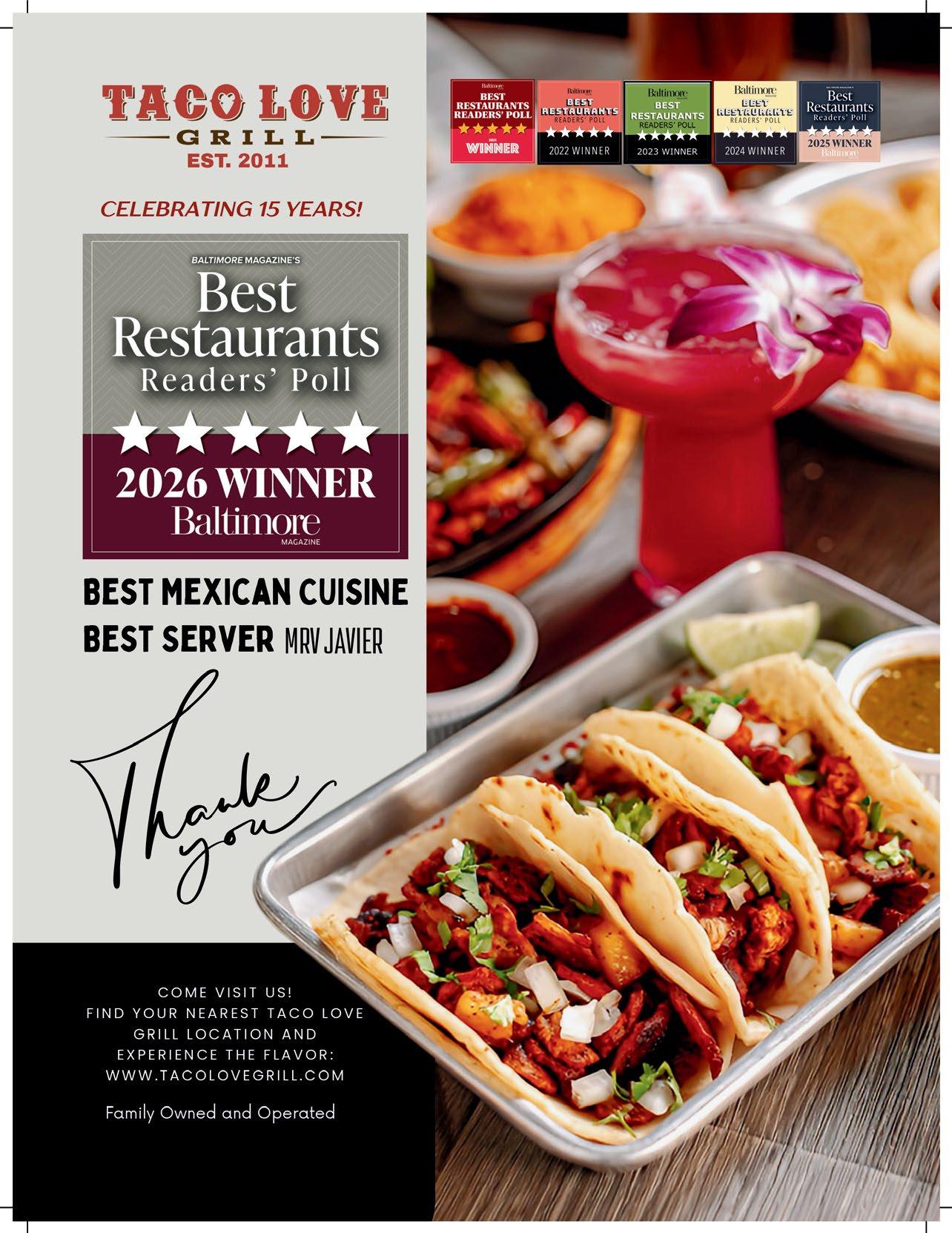
WINNER: MARVIN ARRIAGA, TACO LOVE GRILL
Finalists: Paige Hartlove, Nick’s Fish House; Teresa Marconi, Thames Street Oyster House
STEAKHOUSE
WINNER: THE PRIME RIB
Finalists: The Beaumont, La Barrita
THAI CUISINE
WINNER: BODHI CORNER
Finalists: Mayuree Thai Tavern, The Dara
VEGAN/VEGETARIAN CUISINE
WINNER: NEPENTHE BREWING CO.
Finalists: Golden West Cafe, Oleum
WINE PROGRAM
WINNER: CHARLESTON
Finalists: Cece’s Roland Park, Love Pomelo
*Editor’s Notes: All nominations were generated by readers, however, Baltimore magazine staff diligently fact checks poll results upon tallying to ensure the winners list aligns with our journalistic standards of factual accuracy.
• The Helmand was the overwhelming winner chosen by readers in the “Middle Eastern” category. However, Afghanistan is located in South-Central Asia.
• Charleston fuses French techniques with Lowcountry influences.
• As of early 2026, Jong Kak was temporarily closed due to permitting and inspections coinciding with a renovation.
• Costiera and Zaatar were winners chosen by readers in the Italian and Middle Eastern categories, respectively. However, Costiera is Coastal Mediterranean-inspired and Zaatar is a Mediterranean restaurant.
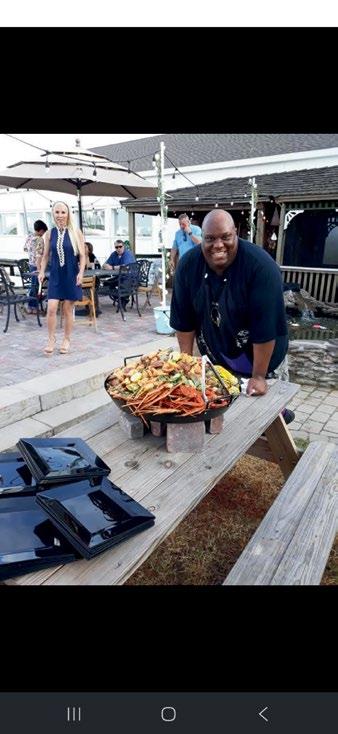
NICK’S FISH HOUSE
IN
BALTIMORE PENINSULA
NICK’S FISH HOUSE IN BALTIMORE PENINSULA
NICK’S FISH HOUSE IN BALTIMORE PENINSULA
NICK’S FISH HOUSE IN BALTIMORE PENINSULA
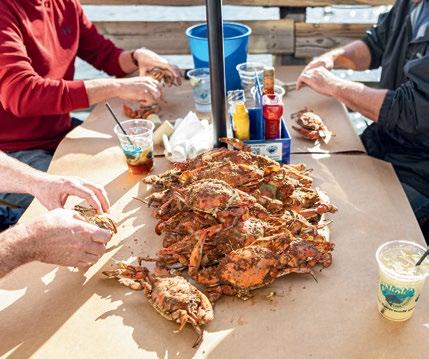
Waterfront Dining | Crab House | Private Event Spaces | Live Music
Waterfront Dining | Crab House | Private Event Spaces | Live Music
Waterfront Dining | Crab House | Private Event Spaces | Live Music
Waterfront Dining | Crab House | Private Event Spaces | Live Music
NICK’S FISH HOUSE IN BALTIMORE PENINSULA
“Best Outdoor Dining” in Baltimore Magazine Reader’s Poll
“Best Outdoor Dining” in Baltimore Magazine Reader’s Poll
“Best Outdoor Dining” in Baltimore Magazine Reader’s Poll
“Best Outdoor Dining” in
“Best Outdoor Dining” in Baltimore Magazine Reader’s Poll
“Best Crab House” finalist in Baltimore Magazine Reader’s Poll
Waterfront Dining | Crab House | Private Event Spaces | Live Music
“Best Outdoor Dining” in
Poll
410 - 347 - 4123
- 4123
- 4123 www.nicksfishhouse.com
www.nicksfishhouse.com
- 347 - 4123 www.nicksfishhouse.com
@midlina baltimore
Four
generations of the Lynch family
have guided General Ship Repair.
O Ship Shape
n the south side of Baltimore’s Inner Harbor, jigsawed between the Domino Sugar refinery and the Baltimore Museum of Industry, sits The General Ship Repair Corporation. Where once there were convoyed rows of such shipyards along the Inner Harbor, now there is only this one, a family-owned yard that’s been in operation for more than a century. In fact, it’s one of just three ship repair works still in operation in the greater Baltimore area—the other two are in Curtis Bay—one of which only repairs Coast Guard vessels.
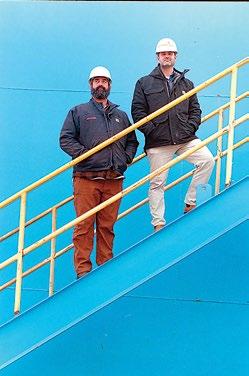
General Ship Repair (GSR) is a testament to the city’s maritime roots and the long history of the port of Baltimore, as well as a reminder that this whole stretch of the Inner Harbor was once composed not of hotels and condos, but of those shipyards. Situated on a two-plus-acre stretch between Key Highway and the Patapsco, it’s composed of a pair of old brick buildings; one shop each for fabrication, machinery, and electrical repair; and two 1,000-ton floating dry docks. GSR’s endurance is also a testament to the Lynch family, who founded the business in 1924 and still owns and operates it.
Above: From left, Ryan Lynch and his brother, Chaz.
Charles “Buck” Lynch first started GSR as a small marine machine shop on Light Street, in the location that’s now home to the Baltimore Hyatt Regency. He moved the shipyard a mile and a half down the road to its present site in Locust Point in 1929. The business went bankrupt during the Great Depression, but Lynch managed to buy it back at auction and to grow the shipyard, which, during the height of World War II, employed as many as 600 workers. Over the years, the company has repaired and serviced schooners, steamships, paddlewheelers, tugs, tour boats, and super tankers.
Sitting in his wood-paneled office on the second floor of the original building, photographs and paintings and ship paraphernalia from the last hundred years lining the walls, Ryan Lynch, the company’s current president and Buck’s great-grandson, downplays his family’s legacy.
“We fix ships,” he says of his team, which now numbers 45, conceding that it is kind of a broad description. As he sits behind his desk, his father’s desk nearby, three generations of his family looking down from their portraits and photographs, Ryan seems remarkably comfortable, a man happy in the setting he quite literally grew up with. While his brother, the company’s vice president— tall, black-bearded—looks like a waterman, Ryan—youthful, clean-shaven, and clean-cut, with a Carhartt jacket taking the place of the mandatory life jackets worn on the pier—presents more like a weekend-dad outdoorsman.
“We’re taking tugboats or dinner-group cruising boats or smaller, 50-to-180-foot vessels and dry-docking them, so lifting them out of the water and being able to do full dry-dock work—blasting paint on the hull, any steel repairs on the hull, any mechanical work that needs to be done underwater,” Ryan says. GSR
also travels to ports to work on big ships like the gray military vessels that anchor nearby, and they’re able to do on-site emergency repairs when and wherever needed (they’ve gone as far afield as Hawaii).
Back in the day, paddle-wheelers—historic steamboats with large, engine-driven, submerged wheels that propelled the vessels— would come into the Inner Harbor and head to the original location of GSR for repair. These days, much of their current work is done at the two massive dry docks at the pier a few hundred feet from where Ryan is sitting. There, at the location that’s been their home for the last century, GSR’s crew can work on two ships at a time, “plus whatever’s in the water.” Here’s the thing about ship repair: It’s painstaking work, alternating between dangerous jobs and a lot of patience between them. But it’s also highly skilled, time-honored work, and an absolutely critical component of any busy port.
Clockwise from left: GSR’s exterior; views of the two dry docks; brothers Chaz and Ryan Lynch; working on a ship docked at the pier.
Ryan pulls up historical photos of this southern stretch of the Inner Harbor, once a row of dry docks and graving docks—the narrow, excavated basins with reinforced walls used to repair ships too large for dry docks—and machine shops, where now there is only the shipyard his great-grandfather began. Over the years, as each generation took the helm—from Buck to Buck’s son, Jack; to Jack’s sons, Derick, Mike, and Cary; to Derick’s sons, Ryan and Chaz—the business grew.
”The technology of ship repair hasn’t changed too much,” says Ryan. “The machines get nicer and better, but they’re not crazy. It’s not like we’re using robots.” He gestures over to a second wooden desk in the corner, the one used by his father before he retired in 2023. Derick wanted to keep the desk, though it’s clear it’s mostly honorary—these days, he just comes in for board meetings. But the desk functions like the portraits on the wall, a reminder of a century’s worth of history: of family, of ships, and of Baltimore.
Walk across the bridge—an old metal walkway salvaged from some ship or pier—from Ryan’s office to the newer machine shop, then downstairs and across a parking lot to the pier and its two dry docks, and you can see the Domino’s sign to your right, a neon reminder of the duration and history of Baltimore’s storied Inner Harbor. Though many Baltimoreans’ experience of its maritime history tends to be limited to trips on the water taxi or a booze cruise excursion or visits to the Frederick Douglass-Isaac Myers Maritime Park Museum, it’s worth noting that Baltimore is the 16th busiest port in the country, in 2024 handling 45.9-million tons of international cargo valued at $62.2 billion. It took the collapse of the Francis Scott Key Bridge in March of 2024 to reify to many of us the importance of Baltimore’s port.
“I think people don’t know too much about the maritime industry and how important it is,” says Ryan, noting that this changed when the bridge fell. “Luckily for us, we had a lot of projects already here, like long-term projects,” when the disaster occurred and blocked the entrance to the harbor for 78 days while crews
worked to safely clear the debris. “This industry is very much a rollercoaster,” he continues, noting the obvious: that a vital aspect of any busy port is not only its access, but keeping the vessels that use it well-maintained.
The company has repaired a hundred yearsworth of barges, tankers, and tugs, and these days they work on maybe 20 to 30 vessels a year, many of which include boats docked for Coast Guard-mandated maintenance that might take more than a year to complete. They’ve also worked on such notable vessels as the Pride of Baltimore II, the historic Baltimore clipper ship reproduction; the WW II restored Liberty ship, the S.S. John W. Brown; a series of Army Corps of Engineers boats; the N/S Savannah, a historic nuclear-powered merchant ship; the icebreaker A.V. Sandusky, which is operated by the Maryland Dept. of Natural Resources and which GSR originally built; and, yes, even Baltimore’s famous trash wheels (while not quite ship-sized, they’re big enough to warrant expert repair).
GSR also has a long-term relationship with the small fleet of the Historic Ships of Baltimore, which includes the USS Constellation and the submarine Torsk, all permanently docked on the northern side of the Inner Harbor.
This breadth of skills is reflected in the trajectory of the current generation of the Lynch family. Both Ryan and his brother, Chaz, along with Dave Gross one of two current vice presidents, worked in the shipyard alongside their father and uncles during high school. Ryan graduated from the Merchant Marine Academy as a maritime engineer, then worked on commercial ships; Chaz enlisted in the Coast Guard.
“I joined the Coast Guard to get out away from home, and so I pretty much went as far away as possible,” Chaz says of his stint, which included three years in Alaska. Then, perhaps inevitably, came the pull home. “I wanted to come back to the family business,” Chaz says, now in his office down the hall from his brother’s. “This is what I know.”
Office manager Jessica Morrison, who in 2019 had the daunting task of succeeding a woman who had worked for GSR for 48 years (“hired by my grandfather,” says Ryan), came to the company not from the Coast Guard but from the Baltimore Symphony Orchestra, where she played the French horn (“I went to Peabody for too many degrees to count”). But she is also a longtime sailor and so was attracted to a mari-
time industry job. And one of the many things she loves about her job is exactly that history.
“It is incredible talking to all these older employees, or people who just worked around the port, and hearing their stories and really thinking about how much of an influence shipbuilding has had in this area,” she says one morning at her desk down the hallway from Ryan’s office. Her office, too, is decorated like a ship museum, photos and paintings of historic ships on the walls, hard hats and lifejackets strewn across various chairs and tabletops.
“We are the western-most seaport on the East Coast,” Morrison says, underscoring the importance of the port of Baltimore that many don’t realize. “The reason why we get so many of the cars on the railroad ships? It’s the least expensive way to bring them in here, because we are the farthest-west point for them to load them onto rail cars.
“I WANTED TO COME BACK TO THE FAMILY BUSINESS. THIS IS WHAT I KNOW.”
“The maritime community is such a transient community,” Morrison continues. “But we have a very high retention rate here. Most of the other yards on the East Coast aren’t like that. If you go down to Virginia Beach, some of the larger yards down there, they’re all contracted, and they move around constantly.”
Her favorite part of the job is seeing the historic ships they work on. (“I always go and nerd out with them whenever they show up.”) And she loves that, until recently, all the records were kept by hand—as in handwritten or typewritten—until Ryan took over and she was tasked with moving the company’s recordkeeping process to digital.
But what Morrison is most proud of is GSR’s apprentice program she spearheaded, which is in its third full class. “Maryland public schools have a great youth apprenticeship program. And depending on which school district you’re in, some of them will do more with warehouse or maintenance or automotive—those are the big ones. We were
their first maritime program, and it took me years to get all the paperwork through.”
This is at least partly because working in shipyards is one of the most dangerous of professions, only behind working as a stevedore (those who unload cargo from ships), and so convincing the state of Maryland that they were going to keep kids safe took some work. The goal is to give students real-world experience that can lead to maritime industry jobs. “But the other part of this for us is we’re building a pipeline for ourselves,” Morrison says, noting that GSR hired both of their first two apprentices. The experience has been as meaningful for the crew as it has been for the kids. “They take them under their wings,” she says of the longtime GSR employees, “and they’re supportive. It’s been a really great experience, not only for our practices, but for our staff.
“Now I’ve got these high school students, and I have people who are mentors for them, who are peers, who said, ‘I started out here, yeah, and now I’m here, and you can do it too, and I can show you.’ And I think some of our oldtimers are really happy to show them the ropes.”
Later that morning, the crew moves a tour boat around the pier, maneuvering the ship into the three-section dry dock. Men in hard hats and lifejackets walk the parapets and shout orders to others moving and securing tow ropes as the huge ship comes around the corner and settles in. The water has already risen, coming in from the Patapsco, flooding over the supports and creating a stable system for the needed repairs. In fact, this is a stable system, of mechanics and history and family, all coming together to continue the long trajectory of this city’s maritime community.
It is a community that is set to continue for this family-run business, as Ryan and Chaz have four kids between them, all under the age of 10. “They’re very young,” says Chaz, “so we’re going to leave that decision up to them.” But young as they are, they’re all out on the water with their fathers “as much as possible.” Come what may, the fifth generation of the Lynch family will likely be carrying on their longtime tradition, eventually, on and in service of the water.
AMY SCATTERGOOD is the research editor at Baltimore
Getting Frank
Sixty years ago, the trade for Frank Robinson spurred the Orioles to their first World Series title, transformed the team into a dynasty——and changed Baltimore.
Fifteen-year-old Mike Sparaco and his buddy, Bill Wheatley, had made plans to meet two girls for miniature golf on Sunday, May 8, 1966. Instead, they got stood up. Not a great feeling, but it happens. On the teenagers’ dejected walk home, however, a greater fate—there is no other word for it—intervened. While cutting through the parking lot at Memorial Stadium, a roar erupted, causing them both to glance up. Suddenly, fans in the top row of the bleachers began yelling and gesturing toward them.
“We thought, ‘What’s going on?’” Sparaco recalled in a 2016 interview with The Sun. “Bill said, ‘Maybe somebody hit one out.’ I said, ‘Great, maybe we’ll get a new baseball and play with it.’” The first car he peaked under was a white Cadillac and there was the ball, almost but not quite
Left: Frank Robinson holding his Most Valuable Player award for the 1966 World Series.
in reach. “No sooner had I crawled under to get it than all these people came running over. A guy with a transistor radio shouted, ‘Frank Robinson just hit that!’”
Robinson’s blast, off Cleveland’s Louis Tiant, who had tossed three straight shutouts to start the season, was like a scene from The Natural. Departing Memorial Stadium high above the leftfield line, the tiny sphere cleared the Colts’ press box before bouncing over a fence and rolling to a stop 540 feet from home plate.
The Orioles needed to sweep that day’s twin bill to vault into a first-place tie with Cleveland. Buoyed by 11,000 youngsters on hand for Safety Patrol Day, a record crowd of 49,516 watched the O’s take the opener, 8-2, behind Robinson’s first home run of the day. Paced by his epic first-inning salvo off Tiant, they won again, 8-3, in the second contest.
The feat so inspired the city that the team’s booster club, the Orioles Advocates, commemorated it. During a pregame ceremony a week later, they raised an orange flag with black lettering at the spot where the ball exited the park. It simply read “HERE” and flew until the O’s final season on 33rd Street. More importantly, the moonshot put the American League—and Baltimore, then a Colts town—on notice that the O’s, known for their pitching and defense, were now a potent offensive force as well.
The O’s had acquired the veteran slugger in the offseason from Cincinnati, where Reds’ owner Bill DeWitt described Robinson as “not a young 30” after the deal. The words haunted DeWitt, who would sell the team at year’s end, and lit a fire in Robinson. He smashed a home run in each of his first three games in his new uniform. Still, this one was different.
As Robinson jogged to right field to start the next inning, public-address man Bill LeFevre announced the HR was the first ever hit completely out of Memorial Stadium. During a nearly minute-long standing ovation, Robinson tipped his cap several times. The moment went beyond baseball. Not only had he spent a decade in Cincinnati before being told to pack his bags, he and his wife, Barbara, had confronted prejudice in buying a house in Baltimore, their adopted, racially diverse, but segregated city.
On the 50th anniversary of the mythic blast,
called the ovation a seminal moment in his career. Hearing the cheering, the slugger told The Sun, “I felt like I really belonged in Baltimore.”
“BAD TRADES ARE PART of baseball—now who can forget Frank Robinson for Milt Pappas, for God’s sake?”—Annie Savoy (Susan Sarandon’s character) in Bull Durham.
In early December 1965, when baseball news typically sprinkled the sports section like light snow, the Orioles and Reds announced a swap that would rank among the most consequential in the history of professional sports. So much so that, like Boston’s short-sighted sale of a certain larger-than-life Pigtown native to the Yankees, it became a part of baseball lore.
In Cincinnati, DeWitt framed it as forwardlooking. Milt Pappas had won 16 games in ’63 and ’64 for the O’s. He was 26 and the team’s all-time winningest pitcher. The Orioles threw in Jack Baldschun, a solid reliever, and untested outfielder Dick Simpson. Suffice to say, none played up to the Reds’ hopes.
Robinson belonged in another class altogether. With guys named Mays, Mantle, Aaron, and Clemente. He had won Rookie-of-the-Year honors, an MVP trophy, and carried Cincinnati to the ’61 pennant. The year prior to the trade, in an era dominated by pitching, he mashed 33 homers and drove in 113 runs. DeWitt, however, a devotee of former Brooklyn Dodger GM Branch
Rickey, believed “it was better to trade a player a year early than a year late.” He also maintained his club needed pitching, which was true.
Left unmentioned was DeWitt’s contentious relationship with his star.
In Baltimore, the reaction was jubilation.
“Cannons at the four corners!” Harry Dalton, the O’s director of player personnel, shouted upon completing the deal, referring to the power-packed foursome of first baseman Boog Powell, third baseman Brooks Robinson, left fielder Curt Blefary, and the new slugger in right.
Considered one of the sharpest baseball executives ever, Dalton understood how Robinson would impact the O’s lineup. Batting behind him, Brooks and Boog drove in 209 runs. Behind them, Blefary added 23 home runs and another 64 RBIs. Frank? He won the Triple Crown (.316, 49 HRs, 122 RBI) and the MVP—the only player to win the award in both leagues until Shohei Ohtani accomplished the feat in 2024.
The Orioles took the pennant by a landslide nine games. Then, in one of the most dominating World Series performances ever, the O’s swept the favored Los Angelese Dodgers. Robinson drilled a first-inning HR in the opener out west. Then another in the series-clincher here.
“Sometimes, you can point to one incident in a season as a big one,” veteran O’s reliever Moe Drabowsky recalled to longtime Sun sportswriter John Eisenberg. “To me,
Above: Frank with Brooks Robinson after their 5-2 win in the World Series opener against the Los Angeles Dodgers in L.A., 1966.
when Frank hit that ball out of the stadium off Tiant, it galvanized the whole team. It was like, ‘We’re going to be tough to beat this year.’”
JACKIE ROBINSON WAS venerated for the abuse he silently withstood while breaking baseball’s color line.
Frank Robinson, whose rookie year overlapped Jackie Robinson’s last season, was not a turn-the-other-cheek ballplayer.
He leaned over home plate and defied pitchers to throw inside. Hit 198 times in his career, he gained a reputation for dusting himself off and getting his revenge with a retaliatory home run. (Don Drysdale, who Robinson homered off in his first at bat of the ’66 Series, was a familiar nemesis.) Even at 51 in an old-timers’ game, after being accidentally knocked down by former big-league pitcher Jim Bibby, Robinson dug back in and put one over the fence. Similarly, Robinson was a menace on the basepaths, breaking up double plays like a linebacker. Early in his career, a hard, spikes-up slide into third base led to a scrap with Braves’ Hall of Famer Eddie Matthews, who blackened his eye with a right cross. Robinson had to leave the field, but, true to form, returned for the second game of the doubleheader and responded with a home run and decisive catch.
He had played in segregated environments in Utah and South Carolina in the minor leagues, places where he wasn’t allowed to eat in the same restaurants or stay in the same hotels as his white teammates. Those experiences and others may have hardened his exterior as a young ballplayer. But, raised in hardscrabble Oakland, California, he was never a go-alongto-get-along type. Neither, coincidentally, were two guys he played ball with growing up—Bill Russell, who became the first Black head coach in the NBA in 1966—and Curt Flood, the Black centerfielder who challenged baseball’s reserve clause and set the stage for free agency in the 1970s. Robinson, of course, would become baseball’s first Black manager with Cleveland in 1975—and win AL manager of the year honors for helming the O’s 1989 “Why Not?” run.
One thing Robinson let his new teammates know was that he didn’t believe in fraternizing with the enemy. The O’s were a little too
5 Y E A R S
congenial for his liking.
“If somebody was talking on the field with one of the opposing players, Frank would say, ‘Why do you go out and talk to those guys when in five minutes, you’re going want to kick their butt?’” Powell says. “‘Take them out for dinner after the game. They’re not your friends on the field.’ And he was right and we stuck to that.”
Robinson, who did not lack for a sense of humor despite his fierceness between the lines, also instituted and served as the presiding judge of the team’s Kangaroo Court. With a mop over his head and a broom handle as his gavel, Robinson dispensed fines for mental errors and botched routine plays. “We only did it after games we won so there’d be no hard feelings. If you threw to the wrong base, it cost you a dollar,” Powell says. “It wasn’t the dollar. It was that someone was paying attention [to your mistake] and you knew it. That was the edge Frank brought to the team.”
“What did Frank mean to the Baltimore Orioles franchise?” Jim Palmer mused, phoning into a MASN show shortly after his ex-teammate passed in 2019. “He put us on the map.”
In fact, Drabowsky’s prediction that the O’s would be “tough to beat” in ’66 after Robinson’s parking lot shot proved an understatement.
During Frank Robinson’s playing career in Baltimore, the O’s were the best team in pro sports and maybe the best baseball club ever. From 1966 to 1971, they won 100 games three times, captured four pennants, and took a second World Series in 1970. (Not incidentally, Drabowsky, who tossed 6-plus innings of scoreless relief in Game 1 of the ’66 Series, played a significant role on several of those clubs.)
To be clear, the Orioles were a very good baseball team before Robinson came over. They finished third in the 10-team AL in ’64 and ’65. And they didn’t just have “cannons at the corners” in ’66. They had Hall of Famers at third in Brooks and at short in Luis Aparicio. And future All-Stars Paul Blair and Davey Johnson stepping into full-time roles in center and at second.
The O’s themselves weren’t sure they needed Frank Robinson. A fourth future Hall of Famer, 20-year-old Jim Palmer, was set to join 23-year-old standout Dave McNally in the rotation. “When the trade was announced, I was sorry to see Milt go,” Powell recalls from Florida as the 2026 preseason gets underway. “He was a friend, teammate, and a genuinely
good pitcher.” Indeed, Pappas finished with 209 career victories. “I respected Frank, we all did,” Powell says. “But we didn’t know Frank.”
Robinson had carried a rep in Cincinnati as a difficult guy. That changed quickly. As far as his new teammates were concerned, it was love at first sight. Robinson later commented the city might not have been ready for him, a reference to the housing bias, “but the Orioles were.”
“The day he arrived at spring training, he hit one after another into the palm trees,” Powell says. “I still remember telling Etch [catcher Andy Etchebarren], standing next to me, ‘We’ve taken a step up.’ Frank fit in right from the start. We liked the way he was and didn’t want him to be anyone other than who he was.”
“WHAT DID FRANK ROBINSON MEAN TO THE ORIOLES? HE PUT US ON THE MAP.”
Robinson’s issues with the Reds management stemmed from racial prejudice, salary disputes, and his outspoken personality. Pete Rose later said the club gave him grief for becoming too friendly with Robinson and Vada Pinson, another Black ballplayer. When fans and the Cincinnati media gave Robinson a hard time during the ’65 slump, it convinced DeWitt he could move him without too much blowback.
Meanwhile, Baltimore Afro-American Hall of Fame baseball writer Sam Lacy, civil rights groups, and Black fans had pushed the O’s for years to sign Black players. For their part, the Orioles acknowledged they hoped Robinson would appeal to the city’s “Negro” community.
The team’s leader when he arrived was the guy whose last name he shared. Brooks Robinson’s soft-spoken modesty and civility endeared him to everyone—never more so than when Frank Robinson joined the club.
A six-time All-Star, Brooks had earned his own MVP in 1964. The addition of another superstar, a Black slugger who’d been labeled “a troublemaker” by his previous club, could’ve potentially disrupted the team’s chemistry.
But while Frank dealt with remnants of legal segregation in Baltimore, his acceptance in the O’s clubhouse was a non-issue. (On the
cusp of the World Series, Mayor Theodore McKeldin appealed to bar owners to ignore state law allowing them to ban Black residents: “I find it a distasteful piece of irony that I must make this plea in light of the fact that without Frank Robinson, a person who could be excluded by such business, we would probably have no World Series.”)
In his 1988 autobiography, Extra Innings, Frank said race relations on those Orioles teams were unlike any other club he played for. Brooks and Frank dressed next to each other for the entirety of their six years together in Baltimore, setting the tone for the team. The pair became known as the “Robinson Brothers” and after their playing careers, made a Lite Beer commercial playing off their names and similarities, clarifying, however, “we are not identical twins.”
The images of Brooks and Frank—one from Little Rock, Arkansas, the site of pitched segregation battles, the other from the birthplace of the Black Panthers—standing shoulder to shoulder, hitting in tandem in the heart of O’s batting order spoke volumes during the Civil Rights era.
“I suspect Brooks was the key reason why, for the first time in my 14 years of professional baseball, Black players and white players had drinks together and meals together when we were on the road,” he wrote. “Not every single night, but two or three times on most road trips. None of the players really invited me, Paul Blair, or Sam Bowens to join them. But Brooks might ask me where I was going after a game, and not knowing the restaurants in most American cities, I might say I wasn’t sure. Then Brooks would say something like, ‘Well, Boog, Jerry [Adair], Curt, and I are going over to this restaurant.’”
Winning helps, and Orioles fans responded in kind, embracing the club as never before. The devotion the team receives today can be traced back to the heyday of Frank and Brooks and that first, unlikely championship 60 years ago.
Jim Melonas, whose son, Mark, raised a replica HERE flag at the old Memorial Stadium site—now a recreational field—on the 50th anniversary of Robinson’s home run, grew up in Hamilton. He had started his freshman year at the University of Maryland when the O’s met the Dodgers. He and his friends squeezed into a VW Beetle to greet the team at then-Friendship Airport after they won the first two games in L.A. Then they followed the team to Memorial Stadium. “Somehow, we got stuck between two
Pikesville Medical Associates
Concierge Medicine in Baltimore, MD
Personalized care. Direct access. More time with your doctor, because your health deserves nothing less.
I believe healthcare works best when patients feel heard, understood, and empowered to take charge of their health. Understanding is the
of their buses, and were waved into the team parking lot,” Melonas, who went on to a career in business, enthusiastically recalls. “We ended up helping carry some of the players’ bags. It was one of the best moments of my life.” Though there was an encore.
Days later, a girlfriend invited him to Game Four. Her father had an extra ticket. “Frank Robinson’s home run sailed two rows over our heads in left field.”
“Do I remember Frank Robinson coming to Baltimore?” asks Rev. Alvin Hathaway, who grew up with Elijah Cummings in West Baltimore and recently led the restoration of Thurgood Marshall’s elementary school. “I was at City College High School from 1966 to 1969. Those were the Orioles’ hottest years. I worked at Memorial Stadium part-time. Not only do I remember Frank Robinson, I was selling popcorn when Louis Tiant threw that ball that he knocked out of the park.”
Hathaway highlights how accessible Robinson was, as well as the city’s other pro athletes. “You’d see him and his wife, Barbara, at Cross Keys, around town. They were a regal couple. That era of sports figures were community-minded people. He embodied it.”
Hathaway also notes Baltimore was a Colts’ town prior to ’66 in the city’s white— and Black communities. For good reason. “They won championships, and had personalities like Lenny Moore, Jim Parker, Willie Richardson, John Mackey, Lenny Lyles.
“When Frank came in, this was a homerun guy, and you coupled him with Paul Blair, and things started to shift in terms of African Americans being attentive to the team.”
Academics were important at City College, but so were sports, Hathway continues, adding he worked 15 to 20 ballgames at Memorial Stadium a year. He carried popcorn because it was light. “I wanted to see the game,” he says. “I was on left field side when Frank stepped in against Tiant, who came up with that big windup. It was tense already when he threw that pitch, and man, and the next thing, all you heard was ‘pop!’ Everybody turned their head. I dropped my tray. I couldn’t believe how hard he had hit that ball. I still can’t.”
RON CASSIE is a senior editor for Baltimore.
Gearing Up
A look at what trends are driving today’s auto industry and how to get the most out of your vehicle.
By Hannah Chenoweth
You don’t need to be a gearhead to know that the automotive industry has undergone some serious turbulence in the past few years. Likely, you’ve felt it with your wallet.
Take, for instance, the fact that a seven-year car loan is becoming the new norm. Or that the average new car price in the U.S. topped $50,000 for the first time ever last year, according to the Kelley Blue Book. Even if you’re not in the market to buy, you may have felt the squeeze of rising insurance, maintenance, and registration costs. The latter has doubled for Marylanders in just two years, alongside higher speeding ticket fines, which (hopefully) haven’t hit your account.
The Current Landscape
Wondering how car ownership got so painfully expensive? To make sense of today’s market, we need to first revisit the perfect storm of 2020. During the pandemic, widespread manufacturing disruptions and a shortage of automotive chips collided with a surge in demand. As a result, prices for both new and used cars shot up dramatically, and many buyers found themselves paying way over sticker just to get a car.
Six years later, we’re still feeling the ripple effects. Andy Bauer, vice president and regional executive for the Baltimore branch of the Federal Reserve Bank of Richmond, notes that while new car inventory is in a better place, people are holding onto their used cars longer, leaving fewer options on the market. “Dealers are seeing more people come into their service shop and spring for repairs on older, higher mileage vehicles, cars they might have replaced in the past,” he says.
The pandemic also shaped the kinds of cars available today. When chips became scarce, manufacturers focused on building higher-end vehicles that brought in more revenue, “a shift that came at the expense of more basic, affordable models,” says Bauer.
Between rising costs, supply chain disruptions, vanishing electric vehicle incentives, and shifting tariffs, you might assume new car sales have dropped. Surprisingly, that’s not the case: U.S. sales actually rose about two percent in 2025, driven by gas-powered trucks, SUVs, and hybrids.
“Treat the service schedule like it’s your car’s roadmap to longevity.”
That modest growth, however, likely reflects the behavior of wealthier buyers rather than the broader market, says Dr. Michael McMillan , associate clinical professor of accounting and information assurance at University of Maryland.
“In a K-shaped economy, the two arms of the K tell the story: The downward arm shows people who are struggling, while the upward arm shows the ones who benefit,” he explains. “It’s a clear sign that the gap between the wealthy and everyone else keeps getting bigger.”
Navigating the Car-Buying Process
While higher-income buyers can usually handle the bigger price tags on new vehicles, lower-income households are more likely to struggle in today’s market. With a credit score under 700, lenders and dealers have the upper hand, McMillan notes. Even if new cars occasionally offer slightly lower interest rates, opting for a used car is often the wiser choice for these households.
The good news? Cars are depreciating assets, and a little research can make a used car a sound investment. Plus, we’re past the “no negotiation” era of a few years ago, says Bauer, explaining that as supplies have increased the opportunity to haggle has returned.
“Manufacturers are still offering incentives to move certain cars off the lot, whether through rebates or programs that lower interest rates,” says Bauer. “So while the list price is one thing, the real cost can be much lower once incentives are factored in.”
That’s why Bauer emphasizes doing your homework before stepping onto the dealership lot. Part of his work involves watching consumer behavior, and he adds that another way people are adjusting to rising costs is by shopping around for insurance and switching policies more frequently.
If you know a car purchase is on the horizon,
McMillan recommends saving up for a strong down payment and avoiding a long-term loan, if possible. “A lower monthly payment is tempting, but it increases the total cost and keeps you upside down longer—owing more than the car is worth,” he explains.
While he advises against loans longer than five years, McMillan suggests keeping your vehicle for at least that long to get the most value. When it comes to choosing a car, remember that flashier models come with higher repair and insurance costs. His advice echoes a familiar refrain from dads everywhere: Focus on reliable transportation that gets you from point A to point B, not the bells and whistles.
Preventative Maintenance 101
Whether your car is brand-new or well past its warranty, preventative maintenance still matters— a lot. Yet it’s becoming somewhat of a lost art, says Tim Hollenshade Jr. , the fourth-generation owner of Hollenshade’s Auto Service in Towson.
His advice is simple: Find a mechanic you trust and keep up with the manufacturer’s recommended service schedule.
“Those guidelines aren’t arbitrary; they’re the bare minimum for keeping your car running smoothly and lowering long-term costs,” says Hollenshade. “Treat the service schedule like it’s your car’s roadmap to longevity.”
If trust issues with auto shops have been holding you back, it may help to know that many shops are turning to technology to boost transparency. Digital vehicle inspections (DVIs) are becoming more common, allowing technicians to send photos and videos straight to your phone or email, so you can see exactly what they’re seeing, instead of being surprised by recommended repairs.
Hollenshade emphasizes that a good mechanic provides long-term value, not just a quick fix—and that kind of relationship takes effort on both sides.
“You can’t bring in a 15-year-old car with 150,000 miles and expect one repair to fix everything,” says Hollenshade. “It’s like going to the doctor for the first
time at 80 and getting upset that they can’t cure every ailment. Plus, regular check-ups cost much less than emergency surgery.”
Another reason to be proactive with maintenance: Today’s engines aren’t what they used to be. Modern cars come with new needs that aren’t always obvious to the average car owner. One example is the rise of direct fuel injection, which sprays fuel straight into the engine cylinder instead of over the intake valves. It improves efficiency and gas mileage—but there’s a trade-off.
“Because fuel no longer flows over the valves, they don’t get ‘washed’ clean like they used to and grime can build up,” explains Hollenshade. “That’s why intake cleanings are more important now, even though they’re often overlooked. The key is catching issues early, before it turns into a much bigger problem.”
Even with all the high-tech features in modern cars, the basics still matter. Things like regular oil changes, keeping your tires in shape, and checking your brakes and fluids aren’t going out of style any time soon. Engines and standards may evolve, but staying on top of maintenance and catching small issues early is the best way to protect your car—and your wallet—in a market that never stops changing.
Shostakovich Symphony No. 5 Reinaldo Moya Polo Romanesco H S H O N
JUNE 1, 2026, 8:00 PM JOSEPH MEYERHOFF SYMPHONY HALL
ANNAPOLIS SYMPHONY ACADEMY
ORION YOUTH ORCHESTRA
Performing Side-by-Side with ASO Musicians
Nancy Galbraith
Midnight Stirring
Conducted by Claire Lewis, ASA Assistant Conductor
Benjamin Britten
Soirées musicales, Op. 9
Conducted by José-Luis Novo, ASA Director of Orchestral Activities
ANNAPOLIS SYMPHONY ORCHESTRA
Both conducted by ASO Artistic Director Maestro José-Luis Novo
Tickets for this performance must be purchased through the Meyerhoff Symphony Hall website
https://my.bsomusic.org/20282/20283
Annapolis Symphony Academy Orion Youth Orchestra
ON THE EVE OF HIS 80TH BIRTHDAY, FILTH ELDER JOHN WATERS SHOWS NO SIGN OF SLOWING DOWN.
By Max Weiss
Photography by Christopher Myers
GROOMING BY PERRYN MORRIS. PHOTO ASSISTANCE BY MATILDA MYERS.
THE CROWD AT THE BALTIMORE SOUNDSTAGE is rapidly filing in. They are young and old, Black and white, queer and straight, hipster and normcore. Of course, only one man could draw such a wildly diverse group in Baltimore: John Waters. They’re all here for his “Date With John Waters,” a Valentine’s Day-themed iteration of his annual comedy show. In the entranceway, there is Waters merch: a “Filthy Towel”; a barf bag that reads, “He’ll Make You Sick”; and a graphic T-shirt with a picture of Waters and the words “Join the Cult!” printed across the front. The buzz in the room is palpable. Behind me, a group of millennials is discussing their favorite Waters films. “I’m just going to be a basic bitch and say Pink Flamingos,” one says, although she notes she also has a soft spot for Pecker, which she saw on her first date with her current partner. There’s a general agreement that Pecker is really good. “I’ve watched it so many times,” says her boyfriend. Someone else mentions a recent screening of Multiple Maniacs at The Charles Theatre: “Halfway through the screening, I thought, ‘I should’ve smoked a bowl before this.’” There are knowing laughs.
Throughout the packed theater, new friendships are being forged, all bonding over a mutual love for Waters and his come-as-you-are, merry prankster ethos. Finally, the man of the hour emerges, looking dapper as always in a red velvet suit and standing in front of a podium decorated with an illustration of himself—The Pope of Trash—dressed as an actual pope. The crowd cheers loudly. Waters pulls out a notebook and starts to tell jokes. Not just any jokes, but a rapid-fire series of set-ups and punchlines, one after the other, told at a breakneck pace, easily two jokes a minute. Many of the jokes, naturally, are about Valentine’s Day. “I guess I’m your foreplay tonight,”
he says. There is what can only be described as a riot of dirty words—“rimming” and “cunnilingus” and “butt plugs”—and plenty of phrases you’ve never heard of before. (Now might be a good time to remind you that this is a John Waters profile. It will not be G-rated.) There are jokes about turds, because bathroom humor will never not be funny to him (to wit: the ceremoniously bequeathed “John Waters All Gender Restrooms” at the BMA). There’s self-deprecation: “I was born with dementia,” and pop culture references that fly over the heads of many in attendance, much to his dismay. “Lillian Hellman used to be so famous,” he sighs. There are jokes about his age. He notes that a “gerontophile” is someone who is attracted to old people. The next step for him? Necrophiliacs.
The theme of the show is basically this: Be irreverent, break the rules, dismantle the patriarchy and, frankly, anything else that bores you. Waters has made it clear at this point that he no longer associates with the left—he finds them to be humorless scolds—and says his politics these days are in the “radical middle.” But many of the jokes are at the expense of President Trump and his cronies (he suggests that drag queens go to the Melania film and heckle it). At the end of the show, he does a Q&A, answering questions about his number-one tip for staying sexy forever (“have fun; be curious; eavesdrop”) and his best-ever date (“you didn’t pay enough to find out”). There’s a freewheeling, casual, almost familial atmosphere as people shout out their questions, and as the night goes on one thing becomes eminently clear: John Waters loves his fans as much as they love him.
Eighty-year-olds are not supposed to be cool. Wrinkles aren’t cool. Bad knees aren’t cool. AARP memberships are not cool.
And yet, on the eve of his 80th birthday, John Waters remains eternally, ineffably, indisputably cool.
He’s not the only old guy who’s cool, but he’s the rare old guy who has the ability to constantly reinvent himself.
Mick Jagger, for example, is cool but mostly because he’s been doing the same Mick Jagger schtick for 60 years. He’s like some geriatric version of his strutting 1960s persona—impressive, for sure, but more a marvel of stamina than anything else. Ditto for Iggy Pop (who happens to be a good friend of Waters’), still defiantly shirtless and screeching, punk rock forever—but not exactly evolving.
THE THEME OF THE SHOW IS BASICALLY THIS: BE IRREVERENT, BREAK THE RULES, DISMANTLE THE PATRIARCHY AND,
FRANKLY,
ANYTHING ELSE THAT BORES YOU.
There are old celebrities who remain cool by staying out of the spotlight. It’s their elusiveness that makes them cool. Jack Nicholson sort of falls into this category these days. As does, say, Sophia Loren.
And there are plenty of aging celebrities who are revered— kept alive by longtime fans and admirers—but not relevant.
But Waters, who was born on April 22, 1946 at Union Memorial Hospital, is different. He fits into a very rarefied category— occupied only by him, David Byrne, Jane Fonda, and perhaps one or two others. It’s not just that kids dig his classic work—the iconic films like Pink Flamingos, Polyester, Hairspray, and Serial Mom—although they do. It’s that he’s still making work that they consume today.
This year, he appeared in the intro to Sarah Squirm: Live + In the Flesh, a comedy special by SNL’s raunchiest and edgiest cast member (who, come to think of it, with her kitschy costumes and potty mouth, seems like a bit of a Waters protégée). In the special, he played a judgmental stage manager: “Now go out there and remind them why God invented the barf bag!”
He was on the couch—along with Baltimore’s own Stavros Halkias, uncharacteristically deferential—for John Mulaney’s post-modern talk show, Everybody’s Live with John Mulaney.
And his own annual “A John Waters Christmas” comedy show plays to sold out shows across the country.
He hosts an annual hardcore music festival—I kid you not— called Mosswood Meltdown. This year’s lineup includes Bikini Kill, The Dead Milkmen, Iggy Pop, and the god-tier indie band, Pavement. On the webpage for the festival, which takes place on July 17-19 in Oakland, California, Waters calls it, “The Warped Woodstock” and an “Asshole-free Altamont.” (As a rally cry, he suggests: “Coachella, go to hella!”)
On top of that, he has modeled—looking elegant and suave for a 2020 Saint Laurent campaign and hamming it up with one of his besties, the actress Mink Stole, in a 2022 Calvin Klein campaign highlighting “chosen families.” (He was also hired for the 2019 Nike “No Cover” campaign celebrating ’90s NYC streetwear—ironic since he hates exercise.)
He has been cast in the next season of American Horror Story. (Showrunner Ryan Murphy is a friend.)
On Instagram, the John Waters Divine Trash Page has 198,000 followers. On TikTok, where the audience is even younger, the page has 288,000 likes.
A TikTok video from November of last year, which features Waters bad-mouthing gay bars—“they’re so square . . . I want bohemia—in bohemia, gay and straight people [hang] around together”—has more than 60,000 views.
So how has he done it? How has the Pope of Trash, a nickname coined for him by Beat writer William Burroughs, turned himself into the Filth Elder (a nickname he has given himself)?
I decided to go straight to the source to find out.
His home, in a tony section of North Baltimore, is not what you’d expect. The living room where we have our conversation has leather and worn velvet couches, lots of brown, artwork, and walllength shelves spilling over with books.
“Young people hate this,” Waters says. “They hate brown furniture more than anything else. But it’s mostly books and contemporary art, right? Granny [stuff].”
Look closely, however, and there are a few clues that a Filth Elder resides here—for one, sitting in the corner on a rocking chair is an eerily life-like doll named Bill. It’s clear that Bill has been there for a while, because he’s looking a little worse for wear.
“He’s getting scarier and scarier looking,” says Waters, with glee. “He started out white and now he’s black, like a dildo— they change colors. My son is turning into a black dildo—and I accept him.”
While Baltimore is—and always will be—his home base (“of course I love it . . . I never left”), he now has four homes.
There’s this house, his primary residence, plus an apartment in New York, an apartment in San Franciso, and, just purchased, a house in Provincetown, Massachusetts.
“HAVE YOU EVER BOMBED?” I ASK. HE LOOKS CONFUSED, “NO, THAT’S NEVER HAPPENED.”
“What man buys a fourth home at 80?” cracks Waters. “An optimist.”
He says all the houses have virtually the same décor.
“People always say, this looks exactly like your other house!”
Which makes sense, because Waters is a man who likes the comfort of rituals.
He takes pride in the fact that he gets up every morning at the exact same time.
“To the second, I get up at 6 a.m.,” he says. Then he checks his emails and takes a bath.
“Not a shower—too violent for me.”
Next, he reads the six newspapers he has delivered to his home—including The Baltimore Sun, The Washington Post, The Wall Street Journal, and USA Today.
From there, he reads about six more newspapers online, including The London Times.
“And then at 8 a.m.—not 7:59, not 8:01—I go into my writing room and get to whatever I’m writing that day.”
The ideas come from the newspapers, they come from his life, they come from the internet, they come from pretty much anywhere.
His favorite websites are Chaturbate (the world’s largest adult webcam site) and Andy Warhol’s grave webcam. (“Best Andy Warhol film ever made,” he says.) He occasionally lurks on Instagram—for some reason, the algorithm feeds him videos of cats destroying houses—and TikTok, but he never posts. “I make a living by what I say,” he says. “Why would I put that for free online?”
Once he comes up with a joke or an idea, he has a system of sorting them in little cubbyholes. One cubbyhole is for film ideas, one for books, one for stand-up specials, etc.
He scribbles the ideas by hand—notepads in the car, notepads next to his bed.
He writes for a few hours and then he moves onto running his business.
“My Filth Empire is complicated,” he explains.
Indeed. He does roughly 50 comedy shows a year—the annual Christmas specials, plus shows with names like “John Waters: Going to Extremes,” the aforementioned “A Date With John Waters,” and this year, the “John Waters 80th Birthday Celebration.” There are speaking engagements (he’s the headliner at the Association of Writers & Writing Programs Conference, held this year in Baltimore), talk show appearances, photo shoots, readings, book signings, gallery talks and openings, acting gigs (he delights in pointing out that he has more than once played a “pervert” on Law & Order: SVU), exclusive private events like the Vanity Fair Oscars party, the four-day Camp John Waters (with this year’s guest counselors, Ricki Lake and Mink Stole), that punk rock fest he hosts, more than the occasional magazine interview (he’s very generous with the press), and so on. It’s exhausting just thinking about it.
When I ask him if he exercises, he replies: “Yeah, walking around in airports.”
He still looks great—lanky and tall, although he insists that he’s no longer skinny.
“Here’s how you be skinny,” he says. “You wear something weird on your face and good shoes, and they don’t look in the middle.”
But he does take care of himself. Famously, he adheres to the idea that if you eat well during the week, you can indulge yourself on weekends.
And he stopped smoking 23 years ago.
“I write it down every day,” he says. “I haven’t had a cigarette in 8,346 days. It’s the only thing I ever regret in my life—smoking cigarettes.”
He was a heavy smoker—five packs a day of Kools.
“I smoked having sex in the middle of the night. I set the bed on fire. I smoked swimming. I smoked doing every possible thing.”
He says he doesn’t miss it. For one thing, he’s lost friends to cancer. “And if you smoke now, you’re stupid, right?” he says. “When I was young there were ads saying, doctors recommend you smoke Kools when you have a cold. What doctors? They should be in jail!”
He no longer thinks smoking makes you look cool—and vaping is even worse. “It’s sneaky. Sneaky little bastards. I see them sneaking around and vaping.”
He doesn’t, however, regret the viral PSA he created many moons ago that for a long time was played before the trailers at The Charles Theatre. Ostensibly a PSA against smoking, it was quite the opposite, with a smirking young Waters taking luxurious drags of his cigarette and talking about the impossibility of sitting through a European art film without one. “I’m telling
you, smoke anyway, it gives ushers jobs.” The video ends with an enormous plume of smoke emerging from Waters’ lips that he swallows in one impish gulp. (Disappointing fact I learned about the video: It was not created for The Charles Theatre, as I had assumed. He made it in one take for the Nu-art Theatre in Los Angeles to be played before a showing of Pink Flamingos. “The film ran there for 10 years. Talk about good legs.”)
Still, even for a non-smoker, a guy who watches what he eats, it’s a grueling schedule.
“But he loves it, he lives for it, he’d have it no other way,” says his longtime friend, the film critic Dennis Dermody.
“He has that energy about him,” says veteran MPT broadcaster Rhea Feikin, another longtime friend (you’ll see a pattern emerging here). “He doesn’t get tired easily and when he does, he doesn’t give in to it. He doesn’t baby himself at all. That’s part of his professionalism.”
The comedy tours and other projects are a way to supplement his (considerable) income—he hasn’t made a full-length film since 2004’s A Dirty Shame.
“The movie business as I know it is completely over,” he says.
These days it’s a world of studio tentpoles and streaming television.
Briefly, it seemed like Liarmouth: A Feel-Bad Romance, the hilariously profane novel he wrote in 2022, was going to turn into a film starring Aubrey Plaza as scammer Marsha Sprinkle, an absolutely delicious pairing of actress and auteur. Plaza was ready to sign on the dotted line—but the funding never came through. He accepts this with characteristic equanimity. He’s a realist.
He misses making movies but, in a way, it’s all the same to him—writing novels, writing screenplays, doing stand-up, creating visual art. It’s all an expression of his fertile, endlessly creative mind.
He tells me he’s been doing some form of those comedy gigs since the beginning—even before the films—starting with puppet shows for friends. (He would have the puppets bite the hands of children in the audience and make them scream.)
The only difference now is that he does his comedy in front of thousands of people.
“Have you ever bombed?” I ask.
He looks confused, “Like, no one showed up?”
“No, like, no one laughed.”
It’s as though I’m speaking Greek.
“No, that’s never happened.”
There’s a reason why John Waters is everyone’s dream dinner guest.
He is truly one of the wittiest people you’ll ever meet. He’s well-versed in virtually every subject—from art to film to politics—and his takes are always incisive, irreverent, and laugh-out-loud funny. He has a way of
talking, of italicizing certain words, that is unmistakable. (You don’t just read a John Waters quote, you hear it.)
When I ask Waters who his own dream dinner party guests are, he points out that he’s already met almost everyone on his list. (“I was even in the same room with Tennessee Williams,” he says, “but he had been drinking—he wasn’t at his best.”) Of those no longer with us, he offers outlaw gay playwright/ philosopher Jean Genet; Peyton Place writer Grace Metalious; Elvis Presley—“cause he’s how I knew I was gay”—and authors James Purdy and Jane Bowles. He doesn’t pick Dorothy Parker because she’s “been at too many dead dinner parties for me.”
As for the one living person he still wants to meet? Eminem.
Waters’ considerable skills as a raconteur are not the only reason he’s a coveted dinner party guest. He has impeccable manners, too. Rhea Feikin calls him a “well-bred boy,” which is true. He grew up in Lutherville and was raised Catholic. He went to the ultra-preppie Calvert School through the sixth grade, which “taught me every single thing I know and use today,” he says.
That’s part of the fascinating paradox of Waters: He’s a man famous for showing Divine eating dog shit or being sexually defiled by a giant lobster, but he’s also one of the most polite, professional people you’ll ever meet.
Over and over again, his friends talk about his kindness and his generosity.
“He’s the most loyal friend you could ever imagine,” says Dermody.
“He is a fabulous and true friend, not just to me, but to everybody whom he’s friends with,” says Feikin.
And this is crucial. It’s impossible to truly know John Waters without understanding the importance of his friends. They’re his chosen family—a term usually reserved for kids, often queer ones, who got kicked out of their homes. In Waters’ case, his parents were loving and supportive, albeit slightly baffled by him. “I always assumed that [his parents] had no idea how they created this subversive and hilarious creature,” Feikin says.
But his friends are his world.
And the rumors are true. He is going to be buried with his fellow Dreamlanders—including Pat Moran, Mink Stole, and Dennis Dermody—right next to Divine at the Prospect Hill Cemetery in Towson.
“We call it Disgraceland,” he says.
One day, visiting Divine’s grave, Waters turned to Dermody and deadpanned: “FINAL DESTINATION.”
Dermody has known Waters since 1972, when they met through a mutual friend—famed Dreamlander Cookie Mueller—in Provincetown.
“She kept saying, ‘You’ve got to meet my friend, John. You have the same taste in books and movies. And we met, and that was very true.”
Waters and his crew used to come for summers—they’d see films and have cook-outs and take drugs
Real Estate Guide Real Estate Guide
Local realtors tell all about selling the homes of the famous and infamous—plus how to position your home like a star.
By Christianna McCausland
Illustrations By Alicia Corman
WHEN BEST-SELLING AUTHOR TOM CLANCY purchased six condominiums in Baltimore’s Ritz-Carlton Residences between 2009-2010, he had a highly unusual request: He wanted to convert some of the space into a gun range. An avid firearms collector who was known to include meticulously researched information on weapons in his books, Clancy had built ranges at all his other homes. According to Charlie Hatter, who sold Clancy his sprawling conglomeration of condos, Baltimore City law said, “No, thank you.”
“We ended up turning it into a spa-manicure-pedicure area,” Hatter says. He notes there was also a movie theater.
Hatter knows a little about high-end real estate. He still represents The Ritz-Carlton Residences, has been the director of sales for the Four Seasons Private Residences, and co-owns the luxury real estate firm, Monument Sotheby’s International Real Estate. He sold Kevin Spacey his double pier home at Harborview in 2017, and represented former Under Armour executive (and brother of its founder) Scott Plank when he sold his Silo Point condominium to boxer Gervonta Davis. And those are just the names he’s able to drop.
Despite the millions of dollars being transacted and the high profile of some of his clients, Hatter says famous people really are just like us. “They care about every dollar just like anyone else negotiating a transaction,” he says. “And they’re very hands-on because obviously real estate assets are very important even to the wealthiest clientele.”
CELEBRITY BUYERS AND SELLERS may put their pants on one leg at a time like the rest of us, but that doesn’t mean they don’t pose unique challenges to their realtors.
“I would say a top concern is discretion.”
“I would say a top concern is discretion,” says Jeremy Batoff, associate real estate broker and team lead of the Batoff Group at Compass. “But that’s not only true for this level of clientele; everyone values that.” He notes, for example, that he had a listing where the owner, not a celebrity, did not want
This spread, from left: Tom Clancy owned multiple units in the Ritz-Carlton Residences; Michael Phelps’ previous Baltimore home in Fells Point.
the bedrooms photographed. Today, when everything is photographed and put online, many people want to reclaim some boundaries.
“People value their privacy because them selling their home could have implications for their work,” he continues. This is particularly true of high-profile people. If a well-known CEO has chosen to sell a home, for example, it could easily get the rumor mill grinding that the company or its leadership are in upheaval. For this reason, it’s common practice that non-disclosure agreements (NDAs) are signed fast, furiously, and frequently. And not just between the agent and who they represent but also potential buyers who often need to sign an NDA before even setting foot in a home. Batoff says most buyers sign without a fuss, though it can get complicated if it’s a family with kids. One can imagine the upset it would cause to have a teenager post a selfie in a Ravens player’s bathroom on Instagram.
Keisha McClain, realtor with the Hubble Bisbee Group of Christie’s International Real Estate, adds that it isn’t just about privacy, but safety. McClain has been in real estate since 2006, but her career took a turn when she met and wed former Ravens player and Super Bowl champion Jameel McClain. She has since represented more than 50 professional athletes, including Roquan Smith, Marlon Humphrey, and C.J. Mosely.
“While working in New York, I represented [NFL tackle] Damon Harrison in the purchase of a home,” she recalls. “Before he even had the chance to move in, the address and listing photos were leaked online. Reporters were physically staked out at the property, creating a serious safety issue. The story was ultimately covered by
Name-dropping Neighborhoods
Some of Baltimore’s most well-known neighborhoods are home to notable people, so pay attention——you never know who you might pass on the block or bump into getting coffee.
Baltimore
HOMELAND / ROLAND PARK
There are many notables who call this North Baltimore neighborhood home, including former mayor and governor Martin O’Malley. No wonder, as it is a beauty, with its varied classical architecture styles and single-family homes sitting on lush green lawns.
GUILFORD / TUSCANY CANTERBURY
There is a certain romance to the gorgeous, historic manses to be found in historic Guilford and the architecturally sophisticated townhomes and condominiums of its adjacent neighbor, TuscanyCanterbury. Perhaps that’s why this area has appealed to the likes of Olympic champion ice skater Dorothy Hamill, John Astin (the OG Gomez Addams), and writer-director-icon John Waters
PEN LUCY / EDNOR GARDENS
Just a stone’s throw from Guilford’s Sherwood Gardens is the neighborhood where rapper Tupac spent his formative years, attending Roland Park middle school and Dunbar before moving to Baltimore School for the Arts (where he befriended fellow Baltimorean Jada Pinkett Smith). These are neighborhoods of Victorian rowhouses and duplexes that abut the charming Lake Montebello.
CROSS KEYS
After selling her Roland Park home, Pulitzer Prize-winning author Anne Tyler reportedly set up camp in this community, which is also where Oprah lived in her WJZ-TV days.
RESERVOIR HILL
Though he now lives in Minnesota, Sisqó (remember the “Thong Song”?) and members of the R&B group Dru Hill grew up in this historic West Baltimore community. Cinematographer Bradford Young lives there now, in an enclave that includes other Black creatives.
Page Six, which only amplified the risk.”
McClain says she makes it her business “to protect these clients, not just help them find housing.” She often suggests that high-end clients manage their real estate transactions through a trust, which provides a level of privacy. She will only discuss a property’s celebrity connection if a client no longer lives in it and sharing the story doesn’t pose a security concern; if she currently represents them or they still reside in the house, discretion always comes first.
But certainly, having that celebrity connection must add to the allure of a house? McClain says that neither fame nor infamy (like, say, if a criminal lived in the house) will necessarily hurt or harm a deal—but it will complicate things.
When your average person is buying a bungalow in Pikesville, the team on the deal is pretty streamlined. That is not always the case when working with very high-end clients, says James Baldwin, team lead of the Baldwin Griffin Group of Compass. “I’m generally working with family offices, managers, or legal teams,” he explains. “Some clients are deeply hands-on; others delegate entirely.”
All those experts having a hand in a transaction can, Baldwin explains, make celebrity deals a longer process, especially if there are a lot of contingencies and people who need to okay the deal before anyone signs on the dotted line.
“I am on occasion dealing with the client’s architect or interior designer who has just flown in from overseas,” he says. “And with that comes risks. . . . If they don’t like the property or don’t think it meets the needs of their client, it can be a total deal-breaker.”
In general, a little fame can help boost a home’s image when it’s going up for sale. It brings a certain novelty to a place, especially if the storytelling is crafted well.
“A great example is 967 Fell Street in Fells Point, a property that has had several notable owners over the years, including Michael Phelps, a well-known CEO, and later my
client, Calais Campbell,” says McClain. “When Calais relocated to another city, selling wasn’t the right move. Instead, we repositioned the property as part of his real estate portfolio and placed it into the rental market. I currently manage the property, and its ownership history has made it more appealing not less.”
If you can trace a property’s lineage back in time, nostalgia can also be a factor. “Baltimore has a deep history many people cherish,” says Batoff. “There was a house locally that had a connection to Edgar Allan Poe descendants, and it became ‘The Poe House’ and people loved it—even though Poe himself hadn’t even lived there. That helps.”
Buyers may also assume that if a famous person is selling their home, the quality of the finishes and contracting work are likely to be very high-end. Especially if a home has been designed by a reputable local designer or architect in Baltimore where those relationships matter, says Baldwin.
But fame has its downside. It can create unrealistic expectations, for example. Once a buyer or seller knows a transaction has a celebrity presence, they may think money is no option. “That mindset is exactly why protecting a client’s assets matters so much. Fame doesn’t eliminate the need for smart financial decisions—it increases it,” says McClain.
And while “fame creates curiosity,” says Baldwin, “mishandled fame creates noise.”
It’s a reason Batoff tells all his clients— celebrity and otherwise—to depersonalize their home as much as possible before it is shown. “Especially with sports figures, they often have a lot of memorabilia. That can become a distraction because you don’t know if the buyers are focused on that or are they focused on the house?”
He adds that some buyers shy away from purchasing a celebrity’s home because they are wary of the news headline that reads: “So-andso’s house sold for X amount.”
Even a little infamy has its benefits, so long as the home wasn’t the scene of a heinous crime. The sale of Kevin Spacey’s condominium has made every gossip page, and its failure to sell is likely more due to a weak condo market than the fact that its former owner is an alleged predator. (The home is currently off the market.) But there are limits; one area realtor shared that buyers pulled out of a transaction when they realized the previous
“They care about every dollar just like anyone else negotiating a transaction.”
This spread, from left: “The Poe House” in Owings Mills; Matthew Judon’s (former) colorful kitchen.
owner was on the sex offender list. They feared the address and its notoriety could be attached to their family.
EVERYONE HAS HEARD the stories of celebrities and the outrageous riders that can be added to their contracts—Rihanna apparently asked that her dressing room on tour have a fur rug and Lady Gaga requires a police escort wherever she goes so she doesn’t get stuck in traffic. What must it be like to be inside their homes?
“Safe rooms are more common than you might imagine, as are bomb-shelter-type structures,” says Baldwin. He once found an enormous safe behind a closet door—the seller had forgotten it was even there and never disclosed it.
McClain points out that athletes come with their own unique set of challenges: Thanks to short-term contracts and trades, they don’t always know how long they’ll be sticking around. In that case, McClain tries to make the transition as smooth as possible Take former Raven Matthew Judon, who hired McClain to sell his property in Reisterstown when he was traded to the Patriots less than a year after moving in. She did her part, helping him recuperate some of the heavy investment he’d made into the home—including a $70,000 Aire soaking tub—before he left for New England.
And then there’s navigating some of the more, well, pushy buyer requests.
“I once had a buyer who wanted to bring her kids over to use the pool,” says Batoff. “The seller was a celebrity and was okay with it.” Another client wanted to spend the night in the house before buying it. That request was denied by its well-known owner.
Whether it’s a multimillion-dollar country estate or a city penthouse with a view, Hatter says the fun and exciting part of transacting high-end real estate is that a top-tier property will always rise above the noise. “Even when fame goes wrong, the quality of the product is still superior. You always market from a position of strength.”
FEDERAL HILL
Author Laura Lippman and NBC’s own former first daughter, Jenna Bush Hager, have called this South Baltimore community, known for its pub crawls and accessibility to the stadiums, home.
FELLS POINT
For many years, Olympic swimming star Michael Phelps made his home here in a waterfront townhome complete with a roof deck, as did Homicide: Life on the Street star Melissa Leo
LITTLE ITALY
It’s not all spaghetti carbonara in this diminutive icon of the neighborhood scene. This is where former Speaker of the U.S. House of Representatives Nancy Pelosi grew up (in the home of her father, himself a former Baltimore mayor).
DOWNTOWN
Given the popularity of the harbor front condo, celebrities obviously enjoy their privacy alongside an impeccable vista. Both author/screenwriter Tom Clancy and actor Kevin Spacey have owned rooms with a view in the heart of downtown.
Further Afield
NORTHERN BALTIMORE COUNTY
The enclaves of Owings Mills, Hunt Valley, and Cockeysville offer notables a desirable level of privacy. No doubt that’s why many——including O’s great Cal Ripken Jr. and Ravens such as Ray Lewis and Brandon Williams——have called the area home. Will and Jada Pinkett Smith also sold one of their homes, in Owings Mills, in 2024. Dr. Ben Carson—— pioneering neurosurgeon and former U.S. Secretary of Housing and Urban Development——still owns a property in North Baltimore County.
EASTERN SHORE
Once called the “Hamptons of the Chesapeake” by Forbes, luxe buyers appreciate the privacy of Maryland’s Eastern Shore, while its relative proximity to Washington, D.C., makes it a favorite pied-a-tier for notable politicos. Former U.S. Secretary of Defense Donald Rumsfeld and former Vice President Dick Cheney owned homes here, as did Lynda Carter, Brian Billick, and many more.
Position Your Home Like a Star
Not a celeb? No problem. Our real estate experts say any home can get the star treatment as it gets ready for sale.
DO IMPORTANT UPDATES
If it’s time to replace something———an outdated appliance or worn carpet——and you’re looking to market your home, spend the money on quality. It will pay you back as will basic maintenance like power washing a home’s exterior and getting windows professionally cleaned. “Paint, lighting, and minor repairs consistently outperform price reductions,” says McClain. Above all, listen to the wisdom of your realtor. “If you’re the person with purple walls and your agent says to paint them a neutral color, follow their advice,” says Baldwin.
CREATE A SENSE OF MYSTERY
In today’s tell-all-show-all society, McClain says celebrity realtors are intentional about what is shared publicly. “Limit unnecessary photos, avoid oversharing floor plans, and control showing access. Creating a sense of discretion immediately elevates how a property is perceived.”
DECLUTTER & DEPERSONALIZE
“Whether you’re a known figure or not, you don’t want buyers to get distracted by your pictures or coffee table books,” says Batoff. Remove clutter and personal items. In addition to being a distraction, you could inadvertently send the wrong message. House cluttered with kids’ toys? That empty-nester couple who comes for a showing may think the home isn’t for them.
PHOTOGRAPH LIKE A STAR
Invest in good listing photos, but more isn’t always better. Batoff says he asks sellers what they love about the house and then captures that in photography. “If they say the light on the back porch is gorgeous in the afternoon, we’re going to show that,” he says. And focus on details rather than photos of every room from every angle. Baldwin likes to highlight what he calls “lifestyle imagery”——close ups of fine craftsmanship, for example, or a subtle nod to the privacy gate.
PRICE IT RIGHT
It doesn’t matter what tax bracket you’re in—— don’t let emotion set the price of a house. “Pricing should be rooted in market data and buyer psychology,” says McClain. “The right price creates momentum, competition, and stronger outcomes.”
WORK WITH A PRO
“Because of reality shows, sellers think they’re experts,” Hatter says. The real reality is that real estate transactions are challenging. Hatter suggests interviewing several realtors before selecting the one who’s right for you——then following their guidance. “A strong agent guides decisions, manages exposure, protects your financial interests, and advocates for your longterm goals,” says McClain. “That level of care should never be reserved only for celebrities.”
EDITED BY JANE MARION
Local Flavor
DINING REVIEWS, DRINKS, HOT SPOTS, TIDBITS, AND RESTAURANT LISTINGS
GIVE A TOAST
Q & A
PERFECT
PACKAGES
Expect dumplings for days at Nine Tailed Fox. PAGE 108>>
PHOTOGRAPHY BY SCOTT SUCHMAN
Artisanal toasts are in the spotlight at À Demain in Hampden. PAGE 110
Little Donna’s chef Robbie Tutlewski talks about working from home. PAGE 112
Trending Tiki and tropical cocktails get a shot of nostalgia. PAGE 116
YEAR OF THE FOX
Nine Tailed Fox is a big hit in The Village of Cross Keys.
BY JANE MARION
Step inside Nine Tailed Fox, Atlas Restaurant Group’s two-story, 200-seat black-brickand-steel monolith at The Village of Cross Keys, and you’ll understand why the Chinese-food restaurant was two years in the making. Even by Atlas’ outsized standards, the whole space, overseen by Ira Imerlishvili, design director at Patrick Sutton Interior Design, is an ambitious, larger-than-life venture, with its jade accents, sprawling rooftop patio, airy atrium, and splendid second-floor bar. It’s a vast space but also balances spectacle with intimacy, thanks to mood lighting, private nooks, and ethereal artwork inspired by traditional Chinese silk paintings and a sculptural rope suspended from the ceiling of the main dining room to anchor the soaring space. Behind-the-scenes is plenty splashy, too. The kitchen is a generous 2,700-square-feet with a team of 44, including Hong Kong-born executive chef Jeffrey Mei and Timur Fazilov, chef of Asian cuisine, whose C.V. includes a stint at the famed Morimoto in Qatar. The restaurant’s namesake is the mythical “nine-tailed fox” drawn from East Asian my-
thology. The fox is known for its longevity, cosmic wisdom, and ability to shapeshift. This could, in fact, serve as a metaphor for Atlas founder Alex Smith, who has mastered the art of time travel, as his ever-morphing empire covers almost every continent and time period from the Jazz Age (The Ruxton), to the ’70s (Italian Disco), to the Belle Époque (Monarque). This time, Mr. Smith goes to China with a restaurant that taps into America’s long love affair with Chinese food that began when Chinese immigrants, primarily from the Canton region, came to California for the Gold Rush, soon adapting their cuisine for Western palates. From the looks of the restaurant on any given night, that love affair is still going strong.
The menu at Nine Tailed Fox references both past and present, highlighting Cantonese classics, alongside clever, more modern com-
binations drawn from a country with countless regional cuisines.
That means you can expect a catalogue of the familiar Chinese-American staples that most Americans grew up eating—orange beef, chicken chow mein, General Tso’s chicken—whether you enjoyed them in Chinatown (if your city was lucky enough to have one) or at simple momand-pop neighborhood take-out spots.
But, in addition to those commonly known standards, there are more modern takes on traditional fare, such as black-truffle roasted duck, or lamb (a commonly consumed protein in China) spiced with cumin and cilantro and folded into pan-fried potstickers.
DUMPLINGS ORIGINATED DURING THE HAN DYNASTY, AND THAT HISTORY IS HONORED HERE.
Along with the potstickers, you’ll find a slew of more traditional dumplings. Dumplings are thought to have originated 1,800 years ago during the Han Dynasty, and that history is honored here—the dumplings are handmade by a team of five and treated as something of an art form. You can make an entire meal out of mixing and matching, including perfectly pleated xiaolongbao (soup dumplings) filled with bits of chicken; pillowy shrimp dumplings bursting bundles of sweetness; or a fantastic vegetarian version stuffed with assorted mushrooms. There’s a bottle of black vinegar and jar of house-made chile crisp on every table that’s meant for the dumplings but adds a hit of heat and umami to most everything on the table. Another favorite appetizer was the SingaporeStreet Slaw, a Technicolor twist on Lo Hei salad made for the Chinese New Year. It’s stacked with shredded seasonal vegetables tossed with cashews, fried taro, and fried vermicelli, then mixed tableside in a raspberry and preserved plum vinaigrette. The whole affair is a textural and visual delight with its riot of crunch and a confetti of color.
As for the entrées—prettily presented on the same ’50s-style plates from the Sunday sojourns to Chinatown of my Philly youth— every visit led me to a new discovery. Over a
Clockwise, from left: Okra and eggplant stir-fry; the second-floor bar; the Singapore slaw; executive chef Jeffrey Mei. Opener: An array of dumplings and potstickers.
handful of meals, that included a beef and mango dish, accompanied by iceberg lettuce for a crisp element and a cooling component; the pepper steak: tender, wok-seared beef with green bell peppers and leeks in a dark, peppery sauce that delivered real depth and bold, spicy flavor; and a lovely, aromatic vermicelli noodle dish mixed with shrimp and an assortment of vegetables. Speaking of vegetables, there are plenty of wonderful vegetarian options, including stir-fried sweet pea shoots scented with garlic and dotted with fried onions; and stir-fried eggplant and okra doused in a spicy-sweet cashew sambal. Interestingly, okra is not commonly found on local menus but is a widely used ingredient in Chinese cooking. Don’t miss the chance to order it here.
My only quibble? The kitchen could use more coordination. Dishes are served seemingly tapas-style, which means that the appetizers and entrees come out rapid fire—and often all at the same time. Also, because servers don’t write dishes down, on my outings something almost invariably went wrong. On more than one occasion, an entire dish was missing. On another visit, a server sheepishly came back to the table and asked us to repeat the entire order all over again. (Note to servers everywhere: Write the dang order down.)
Service missteps aside, Nine Tailed Fox is a great addition to our dining scene. I enjoyed expanding my palate, while revisiting old favorites. It made me nostalgic for those family outings when, even as our feast was revealed beneath those bell-shaped lids, I’d crane my neck to see what other tables had ordered. It’s that kind of fare. Even if the cuisine is ancient, the thrill never gets old.
NINE TAILED FOX, 3 Village Square, 443-6889511. HOURS: Sun.-Thurs. 11:30 a.m.-11 p.m.; Fri.-Sat. 11:30 a.m.-1 a.m. PRICES: Appetizers: $8-16; entrees: $19-76* (whole Peking duck); desserts: $4-14. AMBIANCE: Nouvelle Chinese.
ARCHIVES
To read more dining reviews, check out our archives online at baltimoremagazine.com.
TOAST OF THE TOWN
À Demain brings fancy toasts to Hampden.
BY AMY SCATTERGOOD
When you first enter À Demain Cafe, which opened on Hampden’s 36th Street restaurant row last July, you’d be forgiven for thinking you’d wandered into an antique shop. There’s a gorgeous old Victrola by the door, a flowered settee, old-fashioned light fixtures and wall hangings, and gilded old mirrors with the shop’s menus painted on the glass. Owner Christian Yoo will likely be stationed behind the counter, offering not curios but croffles and crookies—hybrid waffle-croissants and cookiecroissants—toasts, quiches, and croque monsieurs.
À Demain, which translates to “see you tomorrow” in French, is Yoo’s first business venture, and he runs the shop with his wife, Kelly. He credits the décor, he says one weekday morning in between making matcha lattes and cappuccinos, to Gott Efni, the Ellicott City florist that
Below: A trio of toasts at À Demain Cafe.
did the couple’s wedding. It’s a charming location, though be warned that the only seating is on the front porch, which in the colder months sports a heating lamp and vinyl curtains.
As for the menu, Yoo chose to highlight toasts because they were “very brunchy.” “You can put anything on toast,” says Yoo, noting that they’re also pretty straightforward recipes, which seemed right for his first restaurant venture. They’re also quite beautiful: open-faced sandwiches similar to Scandinavian smorrebrod that come in iterations of avocado-hummus, roasted tomato-burrata, mushroom, honey-ricotta, and a lox version decorated with capers and pickled red onions. For the bread, they use excellent whole-grain slices, which are delivered daily from Lyon Bakery in Hyattsville.
In addition to the toasts, there are singleserving quiches, round pies the size of soup bowls that come in mushroom or bacon and cheese; tidy square croque monsieurs; croffle Benedicts—which is what you get when you press laminated dough in a waffle iron, then top the results with poached eggs and sauce— and, in a nod to Yoo’s Korean heritage, bulgogi melts. Should you want something with more bells and whistles than toasts, you can trick out your croffle with Nutella, strawberries, matcha, bananas, Oreos, or Biscoff.
With its rough-wood counter, plants trailing from shelving, and oversized floral pillows on that settee, À Demain is a very cozy place. And while the front porch can be a bit chilly at times, that giant heat lamp wards off the cold and extends the cozy vibes beyond the front door. Though the crookies and croffles are cute, it’s the toasts that we’ll be coming back for. With their thick rustic bread and wellexecuted toppings, they’re an excellent alternative to most breakfast offerings, and, yes, “very brunchy,” indeed.
To read more dining reviews, check out our archives online at baltimoremagazine.com .
From our renowned restaurant to your celebration, Linwoods has spent over 35 years transforming Baltimore's luxury dining and catering landscape with our unwavering commitment to excellence.
MAKING BACKYARDS FUN!
We're the one-stop shop for all of your backyard needs. We are located in Grasonville, Maryland and serve the Annapolis, Baltimore, Maryland beaches & DC areas for over 30 years. We specialize in outdoor patio furniture, BBQ grills, garden decorations, and a wide variety of storage sheds, buildings and structures. We offer free delivery and set up of most of our products within a 60 mile radius, as well as free Maryland and Delaware beach deliveries.
GUESS WHO’S COMING TO DINNER
For chef Robbie Tutlewski, living with his family above Little Donna’s in Fells Point has its own joys——and challenges. BY JANE MARION
WHEN ROBBIE TUTLEWSKI and his wife, Kaleigh Schwalbe, were looking for a place to live after a move from Washington, D.C., they were instantly enchanted with Upper Fells Point. “There were Christmas lights and people had their flowerpots out,” says Tutlewski. “We walked around the area, but I never thought anything would open up.”
But in 2021, something did. That something was the building that housed the iconic Henninger’s Tavern, including a five-room residence upstairs. Schwalbe saw potential, while Tutlewski saw a lot of work. After all, the three-story brick building at 1812 Bank Street was built circa 1850 and tending to it seemed like a job all its own. In addition to being a family home, at one time, the historic building had housed a medicinal liquor store and sold ice cream. Tutlewski knew he wanted to open a restaurant. It just never occurred to him that he’d live over it.
“I didn’t know anything about how to get a restaurant started—how to hire staff, where to get produce, so to add on another layer of things to go into a space that had a lot of needs wasn’t what I was looking for,” says Tutlewski. “I was just looking to survive.”
But he relented. The couple moved into the home in 2021 and, by June 2022, their charming restaurant—with its menu of Polish specialties and tavern-style pizzas, and granny-chic vibe—was open for business. By September of the following year, Little Donna’s was named one of the 50 Best Restaurants in America by The New York Times.
Four years (and two babies) later, the gifted chef enjoys feeding some 140 or so patrons who arrive for dinner on a busy night. “A lot of people coming into the restaurant say, ‘Wow, it feels like were in somebody’s house,’” says Tutlewski. “I always love to tell them, ‘You are in someone’s house—you’re in my house!’”
Did you have concerns about living and working in the same place? One hundred percent, but I thought, if this sucks and the restaurant fails, at least we have a place to stay—we’ll figure out what to do with the downstairs.
Your commute appears to be exactly 12 steps. What’s it like to have such a short trip to the restaurant? That’s probably the one thing I really miss—the commute. I miss that transition time just being able to space
out. But if we lived somewhere else, the restaurant would not be as successful as it is. I wouldn’t have been able to make the commute and have a baby.
How do you balance being a dad with being a chef? There’s a lot of back and forth. We start turning the lights on, firing up the stove, making the dough, and making pierogies at 7 a.m. I have to finish at five to pick up one of the kids [as the restaurant is opening]—and around 7 p.m., I head upstairs to help put the kids to bed.
Is it hard to have boundaries for yourself in both your personal and professional life? It’s really challenging. The biggest one was having to step away from the focus of food since having our first son, Jesse. There are still things that I want to do here but they have to be on the backburner for now. Does your staff come upstairs into your home? Staff is always allowed to come upstairs and three of the people on staff help with childcare—some of them have extra jobs, so I’m only going to ask when I really need it. They will watch the baby monitor or bathe them. It’s not a card I pull often but sometimes I’ll be like, “Hey, can you watch the kids tonight?”
How do you decompress? I try to get away. In the past, I couldn’t leave because I had to drain the boiler every day during the winter. I couldn’t put that much responsibility on everyone here. I couldn’t put on their prep task, “Cut onions, marinate fish, drain the boiler, this door fell off the hinge.” We’re slowly getting to the point of getting rid of those issues so people can just cook. Sometimes I feel like I’m spending more time working on this stuff than managing and running a restaurant, but it’s gotten better.
What does your almost-three-year-old, Jesse, think about the restaurant? He knows what’s going on, that Daddy is at work. He comes in and says his hellos, says his holas to everyone, every single day. He has known the staff since day one. He loves looking at [patrons] and seeing what they’re eating. He walked up to somebody one time and goes, “Oh, nice pizza”—and he really meant it.
WW MM WOMEN WHO MOVE MARYLAND
PRESENTED BY
More than 100 remarkable women gathered at the Marriott Owings Mills Metro center for an afternoon of inspiration, connection, and celebration. Held in honor of Baltimore magazine’s Women Who Move Maryland special section, the event brought together the outstanding female professionals featured in the February 2026 issue.
THANK YOU TO OUR SPONSORS AND PARTNERS
Opposite: Little Donna's chef Robbie Tutlewski with wife, Kaleigh Schwalbe, and children, Jonah and Jesse.
national brews, and comfort foods. L, D daily, brunch Sat.-Sun. $$
RESTAURANT RECOMMENDATIONS
The Dining Guide is a reader service compiled by Baltimore’s restaurant reviewers. These are our recommendations, based on recent visits and reviews. The list will change periodically to reflect other restaurants that merit recognition. For a complete restaurant list, visit baltimoremagazine.com/dining-guide. Send listing information to Jane Marion at mjane@ baltimoremagazine.net.
Canton
THE DIVE Bar Fare. 3123 Elliott St., 667-309-7499. While Top Chef alum Jesse Sandlin’s project is a dive bar, it’s also family-friendly. The Dive serves an eclectic mix of classic bar fare and tantalizing stoner foods, including smashburgers, a sandwich with peanut butter, potato chips, and Sriracha, and pizzas topped with “Dorito essence.” And what would a good dive bar be without a list of signature mixed drinks and a rotating selection of colorful frozen cocktails? D Mon.-Sat. $$
VERDE Italian. 641 S. Montford Ave., 410-522-1000. Dig into wood-fired Neapolitan pizzas, panini, and calzones at this bustling hangout featuring communal tables, Edison lightbulbs, and marble accents. D daily, L Sat.-Sun. $$
Goat, alongside his wife Kaleigh Schwalb, have given new life to beloved Henninger’s Tavern at this adorable corner bar-restaurant. Look for Polish dishes inspired by the chef’s late grandmother, after which the bistro is named. Offerings include thin crust, deck-oven pizzas, stuffed pork schnitzel, all with farmers market-y produce throughout.
D Tues.-Sat. $$
MARTA Italian. 2127 East Pratt St., 443-708-5962. Set inside what was once the old Salt Tavern, this boîte is certainly a worthy (albeit up-scaled) successor. Chef Matthew Oetting brings a menu perfect for a quick weeknight drink and snack, as well as a full-on weekend date night. The beautifully plated pastas, gnocchi Sardi pomodoro and ziti alla Bolognese paired with a wide assortment of wines and house cocktails, are sure to satisfy.
D Tues.-Sun., brunch Fri.-Sun. $$$$
B Breakfast L Lunch
D Dinner Accessible Valet BYOB
Indicates paid promotion KEY
Charles Village
GERTRUDE’S CHESAPEAKE KITCHEN Chesapeake. The Baltimore Museum of Art, 10 Art Museum Dr., 410889-3399. Chef/owner John Shields is well-known for his traditional Chesapeake fare. Gertie’s crab cake, honoring the recipe of Shields’ grandmother, is a favorite, along with fried oysters and rockfish. L, D Wed.-Sun., brunch Sat.-Sun. $$
BALTIMORE CITY
Bolton Hill
COOKHOUSE New American. 1501 Bolton St., 410225-9964. This neo-Victorian spot features innovative fare in a gorgeous setting. Plates rotate weekly but you can’t go wrong, whether you decide on a vegetarian offering or seafood entree. Cocktails are equally inspiring. D Wed.-Sat., after-hour cocktails on Sat. $$
Brewers Hill
GUNTHER & CO. New American. 3650 Toone St., 443-869-6874. Seasoned restaurateurs Jerry Trice and Nancy Hart Trice put worldly spins on local ingredients at this visually stunning spot with knockout New American fare. D Tues.-Sun., brunch Thurs.-Sun. $$$$
HUCK’S AMERICAN CRAFT New American. 3728 Hudson St., 443-438-3380. Lisa Potts' venture offers upscale tavern fare, a slew of local and
Federal Hill
AMMOORA Syrian. 751 Key Hwy., 410-872-6610. Consulting chef, restaurateur, and Syrian native Dima Al-Chaar, alongside tech entrepreneur Jay Salkini, have crafted a dining experience inspired by the Levant region of the Eastern Mediterranean. Although the menu is composed heavily of plant-based mezzes, there are still some omnivorous offerings, like a beef short-rib entree with mushroom freekeh. Combine these dining options with an elegant setting amidst the Inner Harbor and this is an easy choice to make for an evening on the town. D daily. $$$$
SOBO CAFE New American. 6 W. Cross St., 410-7521518. The focal point of this bright Federal Hill fixture is a concise menu that lists rotating, seasonal dishes such as rosemary hummus, short-rib, and chicken pot pie. L Fri.-Sat., D daily. $$$
Fells Point
LITTLE DONNA’S Bar Fare. 1812 Ban St., 443-4383956. Chef and owner Robbie Tutlewski, who formerly worked in D.C.’s Michelin-starred Tail Up
THAMES STREET OYSTER HOUSE Seafood. 1728 Thames St., 443-449-7726. This oyster house turns out impressive Maryland, Mid-Atlantic, and New England seafood. As you would expect, the selection of juicy oysters——and other raw bar items——is a joy.
L Fri.-Sun., D daily. $$$
Hampden/Clipper Mill
DYLAN’S OYSTER CELLAR Seafood. 3601 Chestnut Ave., 443-759-6595. This intimate oyster bar offers some of the best shucks in the city. The simple menu is full of hits, from seasonal salads and crudo to nostalgic coddies to one of the best burgers in the city. Dylan’s is the kind of warm and inviting neighborhood spot that patrons travel to——even if they don’t live in the immediate environs. D Tues.-Sat. $$
THE FOOD MARKET New American. 1017 W. 36th St., 410-366-0606. Chef/co-owner Chad Gauss showcases comfort cuisine. The Amish pretzels are a local legend. D daily. brunch Sat.-Sun. $$$
WOODBERRY TAVERN Farm-to-Table. 2010 Clipper Park Rd., Owner-chef Spike Gjerde reimagined, remodeled, and reopened his Woodberry Kitchen into this micro-sized restaurant that still proudly sources all its ingredients from local Chesapeake farmers—— a feat that won him a James Beard Award in 2015. The menu reflects this dedicated farm-to-table zeal with the cleverly named Rye-aged Rib-eye Au Poivre and curried rockfish from the waters of the Chesapeake. D Wed.-Sun. $$$
Harbor East
AZUMI Japanese. 725 Aliceanna St., 443-220-0477. Slick décor and lively house music make this trendy spot a must-try for Japanese fine dining. From colorful sushi rolls and rock shrimp to spicy snow crab
tempura and A5 Wagyu beef, the inventive takes on classic Far East delicacies are plentiful. L Mon.-Sat., D daily. $$$$
CHARLESTON Low Country. 1000 Lancaster St., 410332-7373. This award-winning restaurant keeps the accolades coming under the careful guidance of James Beard Award-nominated chef/owner Cindy Wolf. The multi-course tasting menu, paired with wines if you like, features stellar preparations of seasonal foods. The conscientious service is legendary. D daily. $$$$
CINGHIALE Italian. 822 Lancaster St., 410-5478282. This restaurant takes its signature cuisine seriously. Pastas are made in-house, the salumi are carefully selected, and the ingredients are topnotch. Executive chef Ryan Shaffner delivers exquisite fare whether you opt for the more casual enoteca (wine bar) or the osteria (dining room). D Mon.-Sat. $$$$
Inner Harbor
THE CAPITAL GRILLE Steakhouse. 500 E. Pratt St., 443-703-4064. The well-appointed, luxurious dining room suits the thick, dry-aged-in-house beef, impeccable seafood, massive side dishes, and deeply rich desserts. L Mon.-Fri., D daily. $$$$
RUSTY SCUPPER Seafood. 402 Key Hwy., 410727-3678. The Rusty Scupper delivers high quality seafood and grilled steaks with attentive service. Chef Matt Harris’ signature dishes include jumbo lump crab cakes, local chargrilled rockfish, blackened shrimp and grits, and a Chesapeake-style spice rubbed chicken. The food is not to be outdone by the panoramic view of the Inner Harbor and downtown skyline. B, L, D Mon.-Sun. $$$
Little Italy
CAFÉ GIA Italian. 410 S. High St., 410-685-6727. This charming family ristorante with colorful murals inside and out delivers homey, hearty Sicilian cuisine. The atmosphere is gracious, unpretentious, and friendly. L Mon.-Fri., D daily. $$
SABATINO’S Italian. 901 Fawn St., 410-727-2667. This Little Italy mainstay takes a no-strings-attached approach to its old-school Boot Country dishes. The delicacies range from generous portions of gnocchi, fettuccine, and lasagna to its claim-to-fame Bookmaker Salad, topped with shrimp and a house dressing. L, D daily. $$$
Locust Point
COPPER SHARK New American. 921 E. Fort Ave.,
410-202-2268. This seasonal New American spot inside the historic Foundry building is a great spot to visit for bar snacks and bourbon-based drinks at the bar or more elevated entrees in the dining room. Think horseradish-crusted salmon and filet mignon slathered in roasted bone marrow butter. In season, dining alfresco is always a good option. D Mon.-Sat., brunch Sunday. $$$
LIMONCELLO ITALIAN
RESTAURANT AND WINE BAR
Upscale Italian. 900 E. Fort Ave., 443-708-1540. This newish Italian hotspot in Locust Point wows with its Amalfi Coast-inspired seafood dishes (think head-on shrimp, delicious calamari, and octopus) and fantastic homemade pasta dishes. Uber there and think about ordering a flight of limoncello. L Mon.-Fri., D daily. Brunch. $$
Mount Vernon
THE HELMAND Afghan. 806 N. Charles St., 410752-0311. This long-standing Baltimore wonder has introduced scores of diners to the joys of Afghan cuisine, from the kaddo borwani (baked pumpkin in yogurt-garlic sauce) to the aushak ravioli. Shockingly reasonable prices are a treat. D Tues.-Sun. $$
MAGDALENA, A MARYLAND BISTRO International. 205 E. Biddle St., 410-514-0303. This fine-dining den inside The Ivy Hotel emphasizes Chesapeake cuisine based on seasonal availability. Enjoy entrees in one of several dining areas, including the Garden Room, which overlooks The Ivy’s picturesque courtyard. D Tues.-Sat. $$$$
THE PRIME RIB Steakhouse. Horizon House, 1101 N. Calvert St., 410-539-1804. The restaurant is worth the splurge when you’re in a celebratory mood——and even if you’re not. With its leopardprint carpets, dramatic black walls, and baby grand, this is the perfect place to get your swank on. D Tues.-Sun. $$$$
RESTAURANTE TIO PEPE Spanish. 10 E. Franklin St., 410-539-4675. This Baltimore classic continues its legacy, with white-washed, subterranean dining rooms, pitchers of fine sangria, and an unwavering menu that never disappoints. Even the servers seem to have been there forever. D daily. $$$$
Mt. Washington
THE CORNER PANTRY Light Fare. 6080 Falls Rd., 667-308-2331. Chef Neill Howell showcases his British heritage with a wide variety of light fare, including house-made baked goods and sandwiches. A buffet-style cold bar boasts a spread of grab-and-go options if you’re in a hurry. B, L, Mon.-Sat. $$
MT. WASHINGTON TAVERN. Seafood, American. 5700 Newbury St., 410-367-6903. Filled with horse racing, jockey, and Chesapeake Bay memorabilia, this historic tavern is a Baltimore staple that's been family-owned and -operated for over 45 years. Utilizing many local ingredients, the tavern makes everything in house. The chef's creative take on regional flavors showcases both seafood and elevated comfort dishes, while the raw bar rotates oysters weekly from the U.S. and Canada. L Mon.-Fri., D daily, brunch Sat-Sun. $$
Remington
CLAVEL Mexican. 225 W. 23rd St., 443-900-8983. Inspired by co-owner Lane Harlan’s beloved Oaxaca, Mexico, Clavel emphasizes zesty ceviches, affordable tacos on handmade tortillas, and an exhaustive list of mezcals. D Mon.-Sat. $$
Roland Park
JOHNNY’S New American. 4800 Roland Ave., 410773-0777. Stop in this Foreman+Co. restaurant to get a little taste of the Chesapeake by way of Roland Park. Open for lunch and dinner, Johnny’s offers everything from a Cobb salad to tempura shrimp tacos. L Mon.-Fri., D daily, brunch Sat.Sun. $$$
MISS SHIRLEY’S CAFE Southern. Several locations including 513 W. Cold Spring Ln., 410-889-5272. This Roland Park favorite offers a tempting menu that includes belly-busting dishes like chicken and waffles and coconut cream-filled French toast. B, L daily. $$
PETIT LOUIS BISTRO French. 4800 Roland Ave., 410366-9393. You can count on exemplary service and superior French bistro fare (onion soup, whole roasted chicken) at this Roland Park charmer. The cozy dining room is noisy but friendly. L Tues.-Fri., D daily, brunch Sun. $$$
Station North
ALMA COCINA LATINA Venezuelan. 1701 N. Charles St., 667-212-4273. Award-winning chef Héctor Romero takes us to his mother country of Venezuela to introduce us to the bright, beautiful flavors reflecting the myriad influences of Indigenous ingredients and immigrants who have settled in his country. Look for dishes such as coconut-plantain coated branzino and orange and cardamom-marinated duck breast with kumquat confit. D Mon.Sun., brunch Sat.-Sun. $$$$
LE COMPTOIR DU VIN Natural Wine Bar. 1729 Maryland Ave., 443-297-7384. Ever since its opening in 2019, we’ve been saying what now everyone
TROPI-COOL TRENDING
Retro tiki cocktails make a splash.
BY JANE MARION
FROM THE CORAL WIG’S Painkiller to The Duchess’s Pirate Princess, tiki-inspired cocktails—bold, boozy, juicy, and often overthe-top—are enjoying a renaissance. “There are a few factors as to why tiki or tropical cocktails are trending,” surmises mixologist Brendan Dorr, who owns the gin bar Dutch Courage and the James Beard-nominated Pink Flamingo. “The whiskey bubble has popped, and people are moving on to other spirits. Also, guests are becoming more educated with their spirit knowledge, especially when it comes to rum.” Dorr does make a distinction between tropical and tiki drinks, however. “Tiki cocktails are more theatrical, whereas tropical cocktails is a general term for cocktails using tropical fruit, spices, and citrus— the styling is simpler,” he says. “Also, with tropical cocktails we aim to avoid the cultural appropriation that can go along with tiki.”
knows, including Bon Appétit, which named this Station North spot a Best New Restaurant: Le Comptoir is truly special. Look for a concise menu favorites like chicken liver, the signature lentil dish with labneh, and a killer pork pâté. D Wed.-Sat. $$
TAPAS TEATRO Small Plates. 1711 N. Charles St., 410-332-0110. As its name suggests, mini Spanish dishes meant for sharing take precedence at this artsy eatery equipped with brick archways and a marble-top bar. D Tues.-Sun. $$
BALTIMORE COUNTY
Brooklandville
THE VALLEY INN New American. 10501 Falls Rd., 410-828-0002. The jockey-themed décor of this historic building reflects its reputation as a hangout for the Greenspring horse-riding elite. Featured menu items cater to any level of hunger, and the crab soup is stellar. L, D daily. $$
Hunt Valley
Owings Mills
GLENWOOD’S American. 10997 Owings Mills Blvd, Owings Mills, 410-902-1000. Glenwood's welcomes you with an ambiance brimming with energy and an upscale vibe. Immerse yourself in the action of the open-air kitchen, enjoy the buzzy bar, or savor the breeze on the outdoor patio. Glenwood's is an excellent venue for engaging in business meetings, lunch outings, or the simplicity of a delicious meal (chicken pot pie) and gracious service. L, D Mon.-Sun. $-$$
LINWOODS New American. 25 Crossroads Dr., 410356-3030. Linwoods can be a special occasion spot or a more casual place to sit back at the grill line and watch the action unfold. Wherever you sit, you’ll feel pampered, whether you’re tucking into a crab cake, a wood-fired pizza, a piece of grilled fish or speical house-made pasta. L Tues.Fri., D daily. $$$
ANNE ARUNDEL COUNTY
Annapolis
PRESERVE New American. 164 Main St., 443-5986920. As its name suggests, this farm-to-table gem makes use of pickled and fermented ingredients, listing dishes like pickle-brine fried oysters and quinoa fritters with pickled string beans. L D Wed.-Sun. $$
That’s exactly why bartender Pat Turner of True Chesapeake Oyster Co. is careful to honor the history of the kitschy cocktails with the Hampden spot’s “Tiki Tuesdays.” “Tiki recipes are classics,” he says. “The people who came before us aced these drinks, so for our recipes, we’ve turned to places like Smuggler’s Cove [in San Francisco] and Don the Beachcomber [in Hollywood]. Most workers who made tiki drinks were Filipino—these cocktails are an ode to them.” The revival of the tiki tradition is an antidote to current craft cocktails. “Cocktail culture has been trending more and more minimalist,” says Turner. “The nicer cocktail spots have the daintiest glasses with the most minimalist garnish—maybe just a simple trimmed peel or a spot of oil. Along with that, there’s a desire for a goofy mug, extravagant garnishes, and setting things on fire— sometimes you need a little maximalism.”
THE OREGON GRILLE Steakhouse. 1201 Shawan Rd., 410-771-0505. This elegant restaurant fits the scene with its displays of burnished saddlery and a trove of Maryland memorabilia. The clubby feel extends to the menu, with oysters Rockefeller, beef tenderloin, and New York cheesecake. L, D daily, brunch Sun. $$$
Lutherville/Timonium
LIBERATORE’S RISTORANTE Italian. Multiple locations, including 9515 Deereco Rd., 410-561-3300. Don’t be fooled by its location in an industrial park. Inside the restaurant, you’ll find a lovely Tuscan setting, where you can enjoy traditional favorites such as veal Parmigiana and shrimp fra diavolo. L Mon.-Sat., D daily. $$$
STONE MILL BAKERY New American. 10751 Falls Rd., 410-821-1358. Husband-and-wife owners Alfie and Dana Himmelrich present this neighborhood cafe that highlights their scratch-made breads, baked goods, soups, salads, and sandwiches. B, L, D Mon.Sat. $$
VIN 909 WINECAFE New American. 909 Bay Ridge Ave., 410-990-1846. Brick-oven pizzas paired with international wines are the highlight of chef Justin Moore’s seasonally inspired menu at this Eastport restaurant.L Wed.-Sat., D Tues.-Sun. $$
HOWARD COUNTY
Fulton
ANANDA Indian. 7421 Maple Lawn Blvd., 301725-4800. This sister restaurant to Peerce's is just as magical, with staples such as lamb vindaloo and halibut in fresh mango salsa. D Tues.Sun. $$
Clockwise, from top left: Three Dots and a Dash, Pearl Diver, Zombie, and Bourbon King Kamehameha, plus roasted oysters at True Chesapeake.
He’ll Sleep When He’s Dead.
and create mischief.
“We had a shared anarchy that made it exciting,” Dermody says.
Dermody still marvels at how his rebel friend, the ultimate counterculture figure, has become so damn respectable: an entire exhibit devoted to him at the Academy Museum of Motion Pictures in 2022. A star on the Hollywood Walk of Fame that same year. An exhibit at the Baltimore Museum of Art.
Dermody remembers attending the opening of the Broadway musical, Hairspray, based on Waters’ seminal film. He said he’d had mixed feelings about the original Hairspray, despite its critical and commercial success, because Divine had died so shortly after “and ruined everything.”
“I couldn’t think of Hairspray anymore without being sad by the whole experience,” says Dermody. But then he joined Waters and Waters’ parents, along with a few close friends, at the Broadway opening. “And we were crying at the end when they dragged John up on stage and people were cheering and giving a standing ovation. It was like, ‘Okay, this can be happy again.’”
Like most of Waters’ friends, Dermody has had cameos in some of the films. Most memorably he was one of the people “whacking off” in the porn theater in Cecil B. Demented
“They did a close-up of me and everything,” he says with unmasked pride. “I just remember [actor] Stephen Dorff saying to me, ‘Go Dennis, go!’”
Local grand dame Rhea Feikin, a Baltimore institution herself, is another—and perhaps the most unlikely—of Waters’ longtime friends. They met in the 1970s, back when they were both hanging out at the beatnik speakeasy Martick’s. “He had lank, long hair and was really skinny,” Feikin recalls. She was drawn to the bohemian wildness and liveliness of Waters and his crew and she provided a shield of respectability for him.
“Whenever he had an opening at The Senator, he would ask me to sit next to his mother because I was the only person he knew that she thought was sane,” she says with a chuckle.
Feikin adored him from the moment she met him—and still does. “I admire him enormously and I treasure our friendship. Even though he’s become famous, he’s never changed and he’s never forgotten any of his friends.”
At Feikin’s 90th birthday party, Waters performed a skit with a puppet. Back in simpler times, Feikin did a weather report on WBAL with a puppet sidekick called Sunshine. Waters called his potty-mouthed version, “Sun Slime.” Sample dialog: “Happy birthday, you bitch!” It brought the house down. And even this slice of silliness was scrupulously planned.
“He wrote a script and made sure there was a podium,” Feikin says. “He is never not prepared.”
She, too, has appeared in Waters’ films, memorably in Hairspray, where she played a teacher and uttered the famous line about Tracy Turnblad’s hairdo: “Whatever you call it, it’s a hair don’t!” She says people still occasionally run up to her on the street and shout the line.
When I ask Feikin what her friends think about her relationship with Waters, she gives a delighted laugh: “They’re jealous.”
But perhaps other than Glenn Milstead, aka Divine, who died of a heart attack in 1988, Waters’ closest friend and confidante has always been a brassy redhead with a larger-than-life persona of her own, EmmyAward-winning casting director Pat Moran.
“He knows me like the back of his hand,” Moran says with a chuckle.
They met in 1964 at Flower Mart—both suburban kids trying to soak up the beatnik life of the city—and have been thick as thieves ever since.
“Somebody either gets you or they don’t,” says Moran. “And he gets me—and I get him.”
Like all of Waters’ friends, she gushes about his kindness and loyalty—his willingness to step up when times are bad. They’ve been through a lot—the AIDS crisis, the death of friends, various personal trials.
“He’s been there like an anchor,” she says. Is he perfect? “No,” she scoffs. “He can be an asshole and so can I! But we always tell each other the truth.”
At one point she and Waters were the post-
er children for a kind of punkish youthful rebellion. “But we’re old people now,” says Moran, in a “go figure” sort of way.
Yet they remain as close as ever.
“We talk on the phone every day,” she says.
Indeed, it’s a friendship that will literally never expire, considering that they’ve both going to be buried next to Divine.
“You don’t get out of this [friendship group] until you croak,” Moran says.
I ask Waters what he thinks Divine would’ve been like as an old person. “He probably would’ve done the same thing I did—find a way to keep going and reinvent himself,” Waters says. And he definitely would’ve explored more acting gigs. “He got great reviews for the first time in his life after Hairspray. . . . He would’ve played men, women, everything.”
Waters is proud that his dear old friend has become an icon, even in death. “It’s amazing to me that he’s more famous now than ever,” Waters says. “People put flowers on his grave. Kids have tattoos of him—they talk about him all the time. He’s not dead in that way.”
But all things being equal, I say, it’s better to actually be alive, right?
He laughs: “I’d rather be alive and unemployed than dead and famous.”
Of course, Waters is very much both alive and famous. As you can imagine, he gets loads of fan mail: letters, postcards, artwork, dolls, albums, and lumpy packages of indeterminate status. But he doesn’t receive it at home, or even his office. He has it sent to his favorite indie bookstore, Atomic Books in Hampden.
“John’s an avid reader and likes strange books, the weirder the better,” says Benn Ray, who co-owns the store with his partner, Rachel Whang. “He also loves getting fan mail.”
So it was arranged, many years ago, that all of Waters’ fan mail would be sent to Atomic Books.
“One time, I think someone sent him an uncooked ham,” Ray says.
Atomic Books has become the unofficial John Waters store in Baltimore and Ray says they have benefited enormously from the partnership. “We sell more John Waters books, I think, than anyone else in the world.”
“HE TOLD ME, YOU CAN’T GET OLD IF YOU HANG OUT WITH YOUNG PEOPLE.”
Occasionally, overly optimistic Waters fans—from all over the world—will stop by the store, hoping to run into the man himself. “And sometimes they do!” says Ray.
When Waters does a signing—of a book or a DVD or his recent audio project, The John Waters Screenplay Collection (reading his scripts out loud, Waters says, made him realize just how shocking they truly were)—he does it at Atomic Books.
“They’re sort of like festivals,” Ray says. “People start lining up first thing in the morning, sometimes even the night before. The line will go around the block.” And Waters takes his time with every fan. He signs paraphernalia, as long as it wasn’t bootlegged (he and his lawyers are constantly on the lookout for fraudulent Waters merch). The year he came to promote his hitchhiking odyssey, Carsick , he brought a cardboard sign, à la the cover of the book. He stayed until the end of the line.
“He was there until 1 a.m.,” Ray says.
So what is it that inspires such devotion in Waters’ fans? And why do young people still think he’s cool?
“I don’t get up every day and try to be cool,” Waters says. “But I think as long as you continue to be in touch with young people, they’ll think you’re even cooler.” Another key, says Waters, is not to trot out the old “we had so much more fun in my day” canard.
“No, we didn’t,” he says. “They are having just as much fun.”
motto, “I’ll Sleep When I’m Dead,” and go to heavy metal bars.
“I just like to see how everyone looks.” He praises Baltimore’s thriving underground culture. “Baltimore has always had bohemia because it’s cheap.”
He likes young people, finds them interesting and fun.
“He wants to know what young people are into. He wants to know what’s going on,” Dermody says. “He [told me], you can’t get old if you hang out with young people.”
“He genuinely likes all different kinds of people,” notes Feikin.
“Let’s get real here,” Moran says. “Young people love him because he’s lovable.”
And somehow, despite the edginess of his humor, he has never been canceled.
“I say unbelievable shit and no one ever gets mad,” Waters says.
This is partly because the audiences who attend his performances are selfselecting.
“If you’re coming to see me you want me to [go there].”
Also, he says, “My whole show is about going to that edge. But I always make fun of myself first.”
It goes back to that inclusivity thing. Waters’ work is always about bringing people together—the squares and the outlaws, queer and straight, Black and white.
Even his tour merch displays that ethos: “Join the Cult.” He wants you to be a part of his joyful, iconoclastic club. And honestly, who wouldn’t want to be a member?
And he should know. Yes, Waters goes out to nice restaurants and goes to galleries and does fancy things with his fancy friends, but he also still loves to hang out at the Club Charles, with its famous MAX WEISS is the editor-in-chief for Baltimore.
UNCHAINED
CHARLES AND BALTIMORE STREETS
fter placing Harry Houdini in a straitjacket, binding his legs, and hanging him upside down from a cornice of the old Sun Building, the Baltimore Police Department boasted their handiwork would be the first to hold the cagey escape artist. Officers George Baudel and James Moncks had pulled the straitjacket extra tight, tugging it twice before fastening its leather strap. From there, they buckled the sleeves of the suit, securing his sheathed arms across his chest. “Run me up as high as you want,” Houdini told the officers, dismissing their braggadocio. “It’s immaterial to me.”
The legendary performer’s famous 1916 appearance in Baltimore, 110 years ago this month, drew an estimated 50,000 people to one of downtown’s busiest intersections. The crowd, which began arriving two hours before the lunchtime show, crammed the streets, windows, and rooftops, bringing traffic to a halt. To the onlookers’ delight and BPD’s dismay, Houdini—wriggling like a hooked marlin—contorted himself from the confinement in little more than three minutes. He tossed the straitjacket to his fans below and took a dangling bow, while still strung high above the crush of spectators.
Ever the promoter, Houdini’s public exploit was intended to hype his appearance that week in the city. At West Franklin Street’s Maryland Theatre, Houdini promised to unveil his famous “Chinese Water Torture Cell.” He also challenged carpenters, locksmiths, and craftsmen to construct something from which he could not extricate himself.
Houdini’s greatest trick may have been his own reinvention, however. He was born Erik Weisz in Budapest. Not, as he often claimed, in Appleton, Wisconsin, where his father briefly served as rabbi to a local congregation before losing his appointment and falling into poverty. Harry Handcuff Houdini— the name he used when registering for the draft in 1918—was inspired by French magician JeanEugène Robert-Houdin, whom he admired. Though he rarely attended synagogue and his wife, Bess, was Catholic (“I am always afraid,” she said, explaining why she never watched him perform), he never tried to escape his Jewish heritage. During World War I, he formed the Rabbis’ Sons Theatrical Benevolent Association with Irving Berlin and Al Jolson.
Houdini’s last performance in Baltimore took place on Nov. 9, 1925. At the Academy of Music on Howard Street, he once again thrilled audiences with his water-torture escape as well as his careercapping “Three Shows in One” exhibition, which included illusions, more escape acts, and the exposure of fraudulent psychics—a personal crusade. The show’s equipment filled a 60-foot railcar.
Symbolically, Houdini’s performances represented self-liberation in a country of immigrants, many of whom had also changed their names to assimilate and sought freedom of one type or another—political, economic, psychological—from their past.
The most enduring stage performer of his time, Houdini died on Halloween 1926—from an inflammation of his abdomen lining following an appendectomy. (He did not die in his wife’s arms after nearly drowning during an underwater escape, as portrayed in the 1953 Tony Curtis film.) He was also no stranger to Baltimore or Maryland, appearing nearly 100 times in the state during his career.
“Houdini’s own story, combined with his public persona, embodied the ability to escape from individual limits, limits of all kinds,” says Spencer Horsman, the magician/owner of Illusions Magic Bar, who recreated Houdini’s famous straitjacket escape high above the Federal Hill venue at its opening 20 years ago. “What’s his quote? ‘My brain is the key that sets me free.’ He was an artist, a storyteller, a powerful imaginative force who transcended confinement. That’s why we remember him.”
Expert sports injury care.
When you are sidelined from an injury, sports medicine specialists from University of Maryland Orthopaedics can get you back in the game quickly.
The board-certified team of physicians, athletic trainers, acupuncturists, and physical therapists provides proper diagnosis, faster recovery and better outcomes for athletes of all ages and levels.
And as part of an academic medical center, our experts can offer the latest treatments available, including non-narcotic pain relief options, integrative techniques, and minimally-invasive procedures.