Field Hockey wins fifth straight conference title, advances to NCAA tourney
 JACK SCHMELZINGER SPORTS EDITOR
For the 11th straight year, Miami field hockey (13-7, 5-1 Mid-American Conference) has finished the regular season winning either the regular season or tournament championship for the Mid-American Conference (MAC).
This year, they won both.
As the regular season champs, Miami hosted this year’s MAC tournament. The RedHawks beat Ball State 2-0 on Friday in the semifinal and then Appalachian State 3-1 in the Championship match on Saturday.

Junior midfielder Paula Peña Martinez had four goals on the weekend, including a hat trick on Saturday.
Field hockey is a lot like soccer, but played with waist-tall sticks and a solid plastic baseball-sized ball. The field is as long as a football field, but 20 yards wider. Each side gets 10 field players and a goalie. The players are only allowed to touch the ball with one side of their stick, the flat one.

Interestingly, you aren’t allowed to shoot left-handed due to safety concerns.
Friday’s shutout was an insanely dominant defensive performance. Miami finished the game with 14
shots on goal, while Ball State didn’t record a single shot attempt. Miami had nine penalty corners to Ball State’s zero.
Literally no recorded offense.
To take a shot in field hockey, you have to be within the “scoring circle,” a semi-circle with a 16-yard radius that extends from the goal line and surrounds the net. Any time Ball State got even a morsel of forward momentum, Miami would trap them before they got near the circle. A quick pass or two later, the ball would be back on Miami’s offensive side.
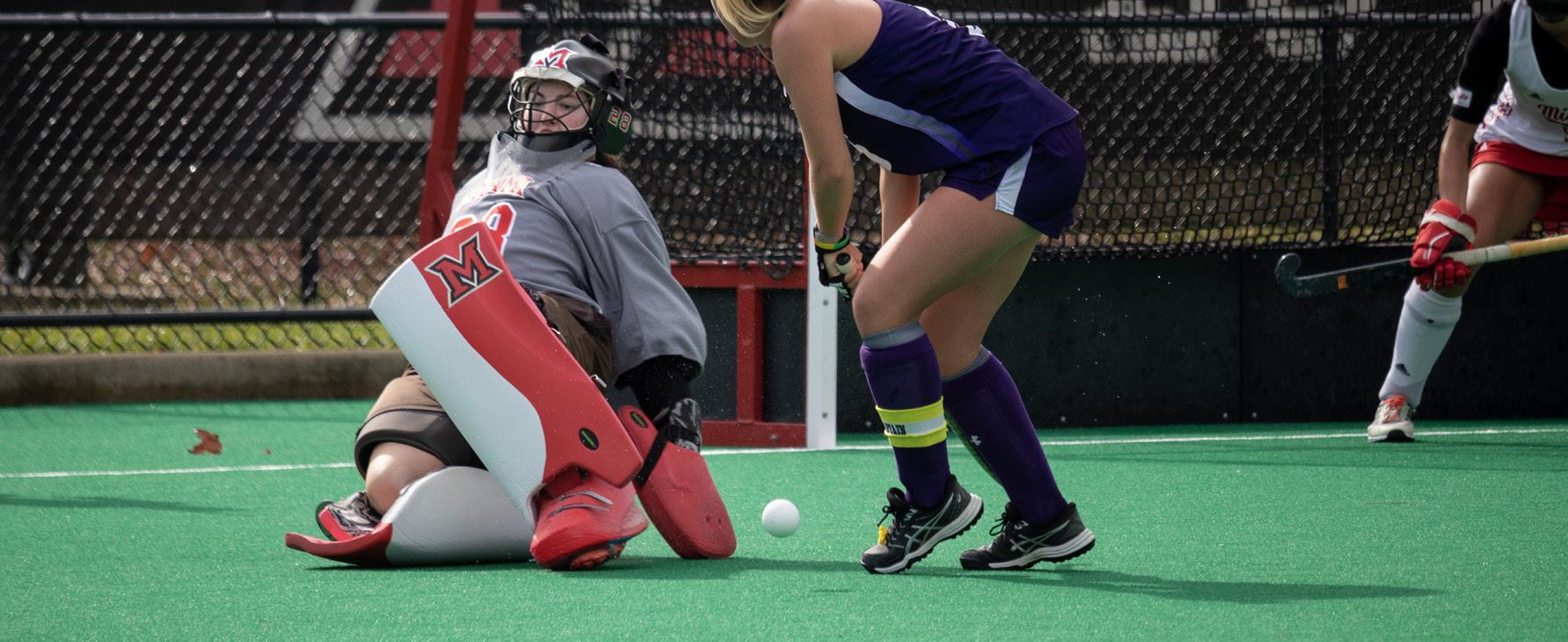

Paula Peña Martinez and sophomore defender Katherine Groff
contributed the RedHawk goals on Friday. Junior midfielder Claudia Negrete Garcia assisted on both.
Saturday’s game wasn’t quite as one-sided (would that even be possible?), but it was never in doubt for the RedHawks. Peña Martinez scored her three goals before Appalachian State scored its one in garbage time.
Junior back Jenna Kirby, a defensive stalwart for these RedHawks took home tournament MVP honors.
Senior midfielder Luli Rosso, senior back Macy McHale and Peña Martinez were also named to the all-tournament team.
Miami travels to Evanston, Ill. to play Rider in the opening round of the NCAA tournament at 3 p.m. on Wednesday, Nov. 9. If they win that, they stay in Evanston to play No. 2 Northwestern two days later at 1 p.m. Miami’s reign of dominance over the MAC is seriously impressive, but it seems they’ve proven all they can at that level. The next step to cementing this as one of the best runs in Miami sports history is success at the national tournament. This could be a legacy-defining week for these ’Hawks.
@jackschmelznger schmelj2@miamioh.edu
MOMANY ASST. CAMPUS & COMMUNITY EDITOR
A levy to support the Talawanda School District (TSD) failed to pass with 66% of votes against it.
If passed, the levy would have increased residents’ property taxes annually by $199.50 per $100,000 assessed value. The goal was to generate $4.8 million a year to help dig the school district out of a deficit.
Pat Meade, president of the Talawanda School Board, said since the levy did not pass, TSD has to find ways to make up that revenue.
“We’re going to have a work session where the board and the administrative leadership talks about reductions that we will have to do,” Meade said. “We will have to cut items, and we will have a discussion about what needs to be cut.”
Meade confirmed no cuts have been determined yet. He assured the community that even though TSD is in a deficit, the school district has cash reserves to support the financial needs of running a school until they start seeing revenue generated by cuts.
The last time TSD proposed a levy was in 2004. The levy passed and increased income taxes by 1%. Residents like Dawn King, who has lived in Butler County for 43 years, were worried about paying more in taxes if this year's TSD levy passed.
King is a parent with kids in TSD, and as an active member in the community, she attends almost every TSD school board meeting. She voted against the levy because she doesn’t agree with how TSD is spending its budget.
“We were told that when we voted for the [2004 levy], we were going to get our new high school, our new elementary school with that money that would circumvent us from having to have another property tax levy,” King said. “And here we are.”
Sam Morris has lived in Butler County for 31 years. Morris was one of the co-chairs of Yes for Talawanda, a political action committee (PAC) advocating for the levy. Morris said he is saddened to see the levy not pass, but does not diminish anyone who didn’t vote for it.
“I’m obviously disappointed because I supported it, but I don’t begrudge anybody who voted against it,” Morris said. “I’m disappointed, but I’m not mad at anyone personally. I understand it.”
Meade said the school district has not seen the impacts of the failed levy yet, but the most affected people will be community members of the school district.
“It’s students, parents and staff that will bear the brunt of us trying to live with the money that is provided to us by the community for their children and by the state,” Meade said. “We have to live with the money we have.”
Meade said students and parents in the school district will begin to see most of these cuts at the start of next school year, but some things will be cut in the second half of this school year to start saving money immediately.
One of the things the school board is considering this school year is bringing back pay-to-play for spring sports. Pay-to-play is a way for schools to raise money by charging students a fee to play sports. Meade confirmed that the cost of pay-to-play has not yet been determined.
Morris, whose children play sports in TSD, is concerned with how much the fee will cost. Although his child is too young for the pay-to-play to affect him right now, he said the cost will likely be expensive.
“I will be shocked if it’s less than $900,” Morris said.

King said more information about the levy from the school board would have been helpful, but she believes the school board was unprepared to share more information.
“Everything that was being said was kind of rumor mill from the [Yes for Talawanda] movement,” King said. “Nothing was set in stone, and as far as I know, the board never even discussed it. There should have been a plan, if it passes, this is what we’re doing. If it fails, here’s what we’re going to do.”

Morris disagreed and argued that the school board was transparent with all its data.
“I know very well that the school district published all kinds of facts and background and data,” Morris said. “They were very transparent … you’ll never see what you don’t look for.”
As Meade and the rest of Talawanda’s school board determines what is next for the district, he assures the community that education will remain a priority in all discussions.
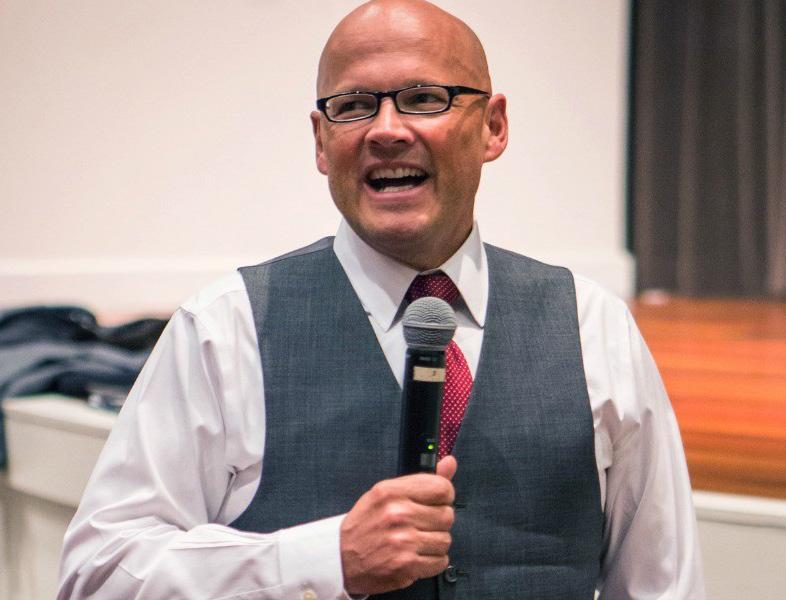
“Our core mission is educating students, so we’re going to ask what are the things we spend our money on that are not a part of that mission,” Meade said. “We will stay away from [cutting into] the core mission as much as possible.”
controversy among faculty
REAGAN RUDE ASST. CAMPUS & COMMUNITY EDITOR
Miami University’s Board of Trustees announced that it has added an additional year to President Greg Crawford’s contract, which now spans five years through 2027.
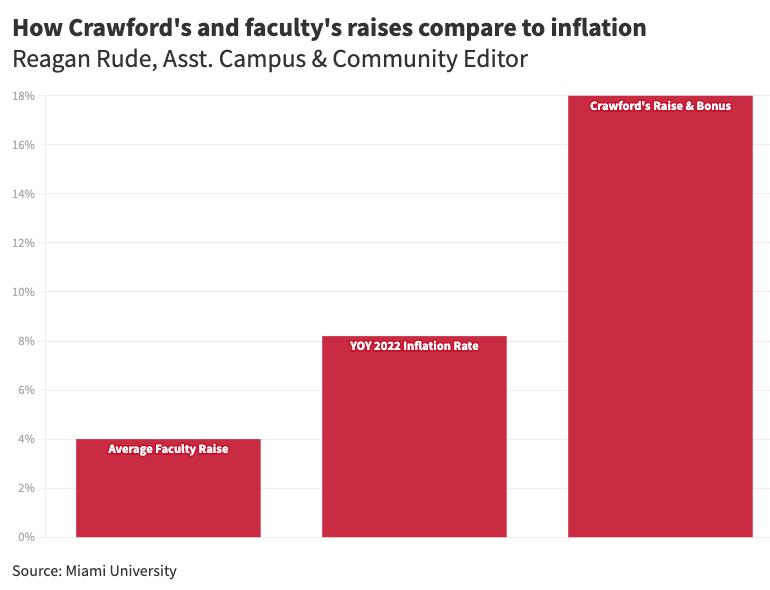
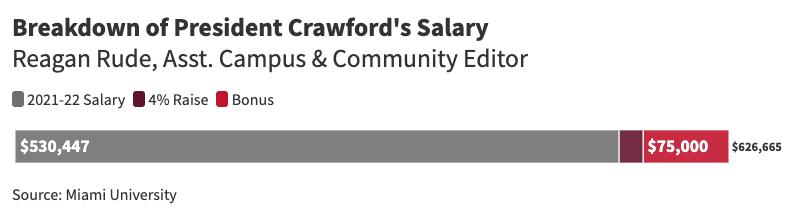
The board also issued Crawford a 4% annual raise as well as a bonus of $75,000 per year. The raise brings his salary to $551,665, while the bonus bumps it to $626,665 per year — a figure drastically higher than what an average faculty member makes.
Mary Schell, chair of the Board of Trustees, said in a press release that Crawford’s performance throughout the pandemic played a role in their compensation decision.
“His leadership has been innovative and has kept us focused on our mission to deliver an unparalleled academic experience to Miami students,” Schell said. “The board is pleased with Greg’s leadership and the direction the university is going.”
The Faculty Alliance of Miami (FAM) was quick to point out that the annual nature of the bonus makes it guaranteed income, so in the long-term, Crawford received an 18% raise, while most faculty received 4%.
Cathy Wagner, a professor of English and lead organizer for FAM, said it was disheartening to hear about Crawford’s raise knowing what those at the bottom of the payroll are making.
“Our instructors on regional campuses are the lowest paid in the

‘We have to live with the money we have’: Controversial school district levy fails to pass
Crawford’s raise and bonus spark
ALICE
@alicemomany momanyaj@miamioh.edu Volume 151 No. 7 ESTABLISHED 1826 OLDEST COLLEGE NEWSPAPER WEST OF THE ALLEGHENIES Miami university — Oxford, Ohio THURSDAY, NOVEMBER 10, 2022 CONTINUED ON PAGE 2 In this issue SPORTS Isabelle Prese, the backbone of the championship class - page 10 HUMOR If a founding father were to visit Oxford… - page 14 OPINION Stop cliquing, start forgiving - page 12 STYLE It's time to stop buying from SHEIN - page 9 ENTERTAINMENT The best songs to play for your family at Thanksgiving dinner - page 7 CAMPUS & COMMUNITY Oxford Community Band celebrates 35 years - page 5 FOOD Calzones and comedy: the unlikeliest of duos - page 8 AFTER A TALAWANDA SCHOOL DISTRICT LEVY FAILED TO PASS, THE SCHOOL BOARD WILL HAVE TO FIGURE OUT HOW TO MAKE UP REVENUE. PHOTO BY JAKE RUFFER JUNIOR MIDFIELDER MARY KATE BARBEE PUSHES THE BALL UP FIELD IN A GAME AGAINST NORTHWESTERN. LAST WEEK PHOTO BY JAKE RUFFER UNIVERSITY PRESIDENT GREG CRAWFORD AND WIFE RENATE CRAWFORD CONGRAGULATE THE REDHAWKS ON THEIR MID-AMERICAN CONFERENCE TITLE.
BY JAKE RUFFER STAR SENIOR GOALKEEPER ISABELLE PERESE KICKS A BALL AWAY FROM THE NET AGAINST NORTHWESTERN.
BY JAKE RUFFER MIAMI'S BOARD OF TRUSTEES EXTENDED THE PRESIDENT'S CONTRACT AND ISSUED HIM A 4% RAISE, PLUS A $75,000 ANNUAL BONUS.
PHOTO
PHOTO
BY BRETT MILAM
PHOTO
Things to do
Jake
Jessica
Sarah
Hannah Horsington
Skyler
Devin
Fred
Sacha
Teddy
Maggie
Reece
Claudia
CONTINUED FROM FRONT
state, and we have part-timers making under $3,000 a class,” Wagner said. “There’s a class of employees at Miami being treated extremely differently from other classes.”
Wagner stressed she has nothing against Crawford and is more concerned with the pay discrepancy between administrators and faculty. She said Miami reveals its values in the way
it allocates money.
James Kiper, a professor of computer science who retired last year, said he didn’t have an issue with Crawford’s raise. Kiper said it’s necessary to pay presidents that amount in order to attract top talent. Crawford’s pay, he said, is the competitive rate the university has to pay to get a good president.
Fri
Step Afrika!
7:30 p.m. Hall Auditorium
African American fraternities and sororities showcase percussive dance styles mixed with traditional African dance. 11/11
Mon

Carla Hall: Food and Fashion, Finding Purpose Through Passion
7:30 p.m. Hall Auditorium
Celebrity chef Carla Hall will visit Miami to talk about her career. 11/14
Tues
JANUS Forum: Life After Roe

Taylor Auditorium
Miami’s political science department hosts a discussion on a post-Roe world. 11/15
Wed
QT-CON
Drag & Fashion Show
Shriver Center, John E. Dolibois Room
On the final day of QT-CON (Queer and Trans Conference), drag queen P.H. Dee will headline a drag show. 11/16
Thur
6 p.m.7:30 p.m.
8 p.m.
Global Friendship Thanksgiving Dinner
Shriver Center, John E. Dolibois Room This event is an opportunity for international students to experience a traditional American holiday. 11/17
4:30 p.m.7:30 p.m.
Miami Holiday Arts & Crafts Sale 10 a.m.6 p.m. Armstrong Student Center Shop for original handmade items such as pottery, art, jewelry and more. 11/30
Wed
“When you compare [his salary] to faculty, it’s probably [a] six to one or seven to one difference,” Kiper said. “Which is nowhere close to the pay difference at big corporations, where executives are making millions.”
Wagner acknowledged that the pay difference highlights the inequality within our society and in higher education.
“[Pay] doesn’t seem to be in relation to the work that is actually being done,” Wagner said. “It’s the status quo, but that doesn’t mean there isn’t something we could do, we’re not powerless to improve our lives.”
Theresa Kulbaga, a professor of English at Miami’s Oxford and Hamilton campuses, said she was frustrated at the disproportionate raise faculty received, which she noted will not keep up with inflation.
“We’re lucky if we get a few percent annually in the overall merit raise pool, which is not even a pool that applies to all faculty,” Kulbaga said. “It’s the pool that chairs have to decide who gets a 1% raise, who gets 2%, who gets 3% in any given year.”
Kulbaga said the low salaries of non-tenure track faculty is exacerbated by the university’s resistance to their inclusion in the faculty union.
“It reflects the university’s values when precarious faculty are underpaid and are also told they don’t belong in the bargaining unit with
tenure-line and tenured professors,” Kulbaga said. “Somehow they’re a different category of employee, even though they do basically the same job.”
Kiper argued that Crawford’s salary is fair, though he does think non-tenure track faculty should get better pay. Still, he said, professors should be motivated by more than just money.
“There are reasons that we choose to teach and not take the higher salary jobs, because we like working with students, we like doing research,” Kiper said. “It’s a lifestyle choice that we’re making, not just following the dollar but doing what makes us happy.”
Ashlea Jones, director of executive communications, wrote in an email to The Miami Student that the Board of Trustees came to their decision after reflecting upon achievements made in the previous academic year, including the completion of DEI Task Force recommendations and a record-breaking year for fundraising.
The average increment pool for this year was 4% for Miami employees, and the Board voted to provide President Crawford with a 4% salary increment,” Jones wrote.
rudere@miamioh.edu
THURSDAY, NOVEMBER 10, 2022 Coming Up... 2 Most awarded college newspaper in Ohio at the 2020 Regional Mark of Excellence Awards by the Society of Professional Journalists. COSETTE GUNTER-STRATTON EDITOR-IN-CHIEF Advertising information: ankenedw@miamioh.edu Send us a letter? eic.miamistudent@gmail.com The Miami Student is published biweekly during the school year by the students of Miami University in Oxford, Ohio. The content of The Miami Student is the sole responsibility of The Miami Student staff. Opinions expressed in The Miami Student are not necessarily those of Miami University, its students or staff. CORRECTIONS POLICY The Miami Student is committed to providing the Miami University community with the most accurate information possible. Corrections may be submitted up to seven calendar days after publication.
Bammerlin Managing Editor
Chamberlin Soren Melbye Design Editors
Whitehead Senior Campus & Community Editor
Scott Campus & Community Editor
Schmelzinger Sports Editor Ames Radwan Opinion Editor
Ankeney Asst. Opinion Editor
Macy Alice Momany Maggie Peña Reagan Rude Asst. Campus & Community Editors
Hogan Erin McGovern Hannah Potts Designers
Abby
Macey
Lexi
Sean
Jack
Devin
Luke
Emily
Patrick Sullivan Humor Editors
Johnson
Sean
Entertainment Editors
Peña
Scott
Editor
Hollowell Asst. Entertainment
Media Editor
Erne Social
Food Editor
Ames Radwan
Editor
Ruffer Photo
Monahan Asst. Photo Editor
Grace Hays Audio Editor
Video
Editor
Perry Magazine Editor
Ankeney Business Manager
Reeder Jr. Faculty Adviser
Bellman Business Adviser
Are you a: • writer • photographer • designer • or illustrator? Visit miamistudent.net to Join the TMS Team! Crawford’s raise and bonus spark controversy among
Aim Media Midwest Printer
A comprehensive guide on how ASG funds student organizations
“at the discretion of a majority of the funding committee.” If an organization does not meet these criteria, it will not get the amount requested.
Gallo said another reason organizations don’t get funding is because planned events must be on the Hub before the hearing.
“If your event is not on the Hub before the start of the funding hearing, unfortunately, that’s the number one leading reason an org doesn’t get funding,” Gallo said.
“We’ve seen a lot more organizations asking for funding,” Bragg said. “We’ve seen a lot more collaboration, and we’ve seen a lot more specific funding.”
Some organizations find the funding process simple, others disagree Jack Ernstberger, treasurer of Miami’s Guitar Club, requested money on behalf of the organization for the first two cycles of funding hearings in September and October.
Miami University community mourns death of student
ALICE MOMANY ASST. CAMPUS & COMMUNITY EDITOR
ALICE MOMANY ASST. CAMPUS & COMMUNITY EDITOR
At Miami University’s Associated Student Government’s (ASG) October funding hearings, the Indian Students Association asked for $600 to fund their organization. ASG gave the club $1,700.
Students for Life requested $8,000. They received $10.
The American Institute of Architecture Students asked for almost $7,000. ASG gave them $0.
ASG receives the money to give to organizations from the university’s basic general fee incorporated into student tuition. Michael Gallo, secretary of finance for ASG, did not know ASG’s current operating budget but reached out to Maria DeVictor, secretary of the treasury for ASG. Gallo did not respond with the amount.
There are five opportunities throughout the school year for student organizations to apply for funding. Student organizations can request funding in each of the five cycles for items such as marketing supplies, guest speakers and food.
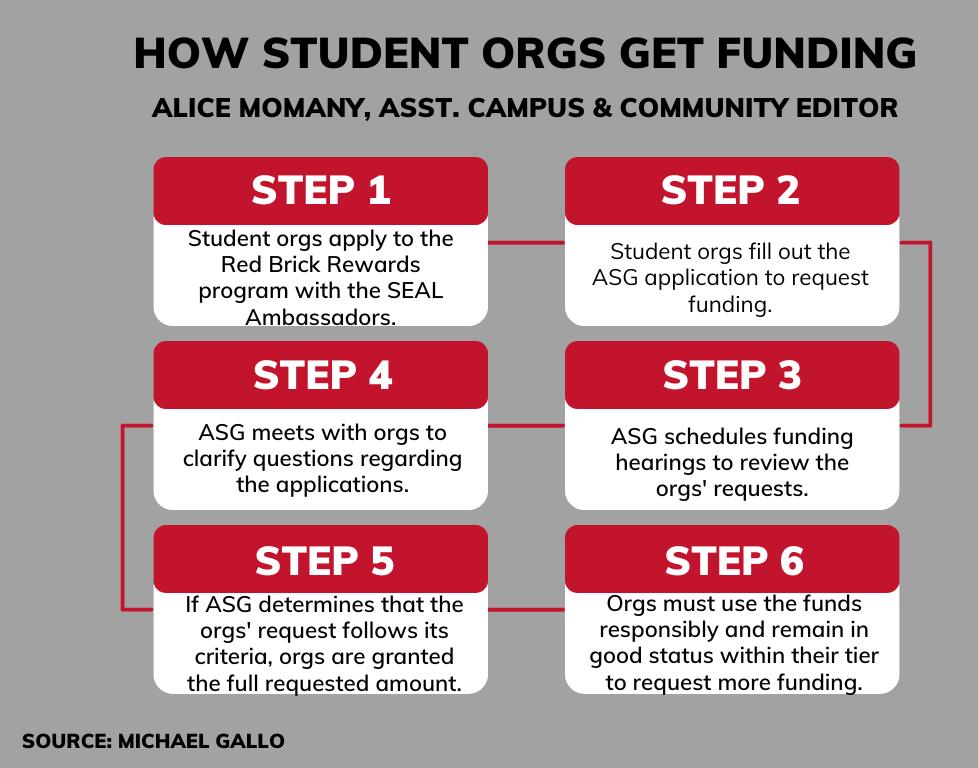
An organization can request funding from ASG by filling out paperwork that details how much money they need, where the money is going and quotes for everything they intend to purchase. Then, ASG hosts scheduled hearings to go over the request. Any amount under $300 is automatically approved and does not require a hearing.
“We have four different criteria,” Gallo said. “Each criteria represents 25% of funding. [We ask] is it accessible by BCRTA route? Is it open to all students? Do they have any penalties? Does it fit the purpose of the org as defined in the organization’s constitution?”
In order to receive 100% of an organization’s requested funding, an off-campus event has to be along the BCRTA bus routes. An event also has to be “open for all” which means admission cannot be charged to attend. If an organization has not demonstrated responsible spending history and has penalties imposed by ASG, they will lose 25% of their funding. Lastly, an event has to be educational while aligning with the
If an organization receives more funding than ASG recorded, Gallo said it’s due to discrepancies between the amount requested.
“The student organization has to type [the amount requested] manually [on an Excel spreadsheet], and if that’s too low, that just means that the actual document they sent us has a higher number,” Gallo said.
Red Brick Rewards Program
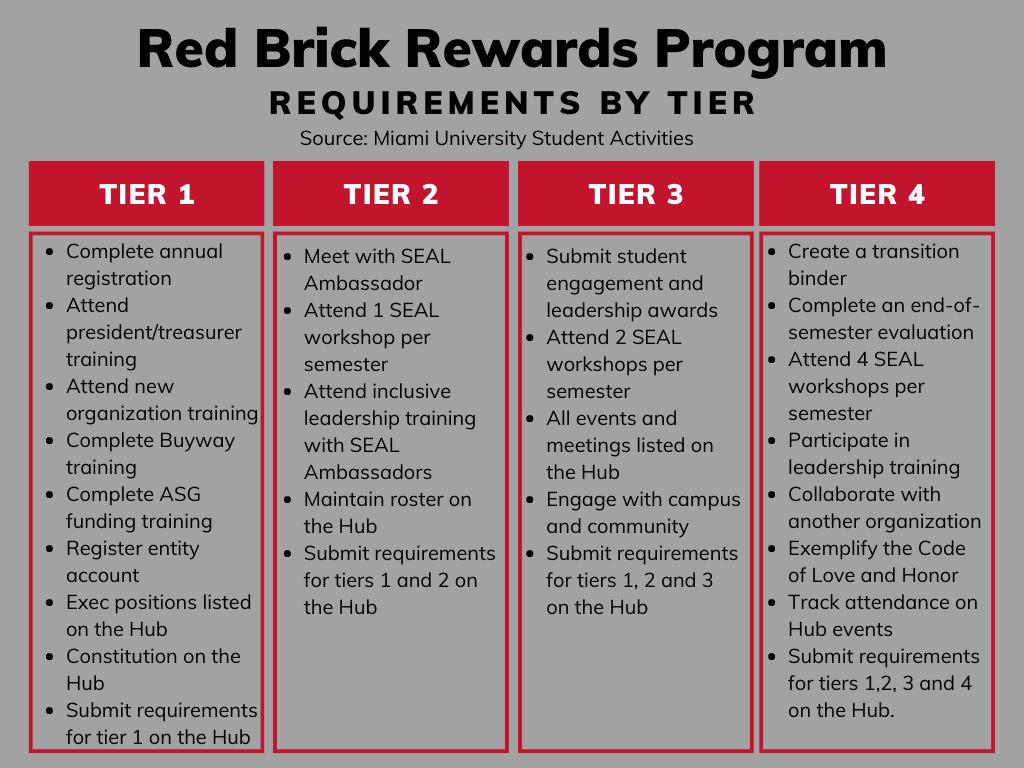
Before a student organization can receive funding, it has to apply for the Red Brick Rewards program through the SEAL Ambassadors. Red Brick Rewards, established in 2018, is a four-tier system that determines how much an organization can request in funding. If a student organization maintains its tier while completing other requirements, it can move up in the tier system and request more funding.
JS Bragg, the assistant director for Student Organizations at Miami, said the Red Brick Rewards program is a fair and equal way to allocate money to student organizations.
“ASG had to completely revamp funding because there were a few policies that were making it impossible to accurately allocate funding to orgs,” Bragg said.
This year, ASG allocated more money for each of the tiers. Student organizations in tier one are limited to $3,000. Tier two organizations are restricted to $6,000. Tier three is capped at $7,500, and student organizations in tier four status can request up to $12,500. New student organizations can request up to $1,500 and have one semester to complete the requirements for tier-one status.
“ASG is running with a budget surplus right now because we still got our full allocations during 2020 and 2021 despite student organizations not hosting the same number of events,” Gallo said. “So just in the spirit of trying to use that money for what it was originally intended, we increased the caps for tiers.”
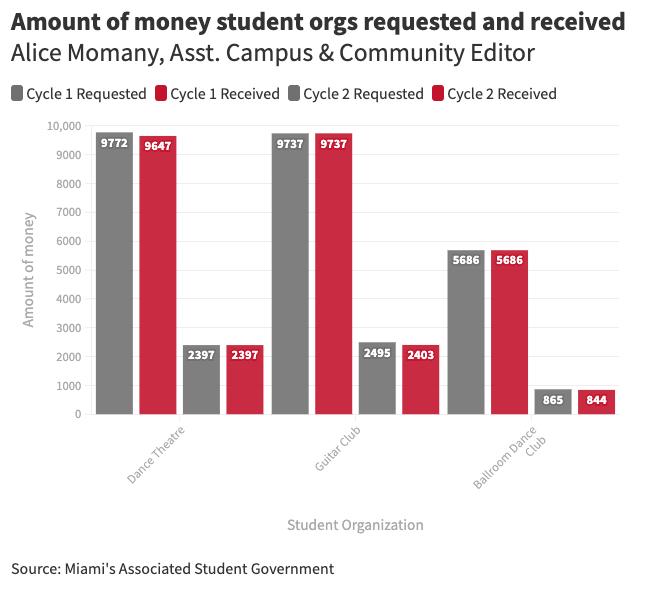
Livia Zuesi, the treasurer of Dance Theatre, a tier four organization, said the increase in funding was helpful because it allowed them to spend more on costumes and equipment.
For the first cycle, the tier four club received 100% of the funds they requested, which was more than $9,000. After the second cycle, the club received 96%, which was more than $2,000. Ernstberger said he doesn’t remember why they didn’t receive the full amount, but that it didn’t impact the club too much.
“We did both cycles, and they went pretty well for us,” Ernstberger said.
With the $11,000 they received, Ernstberger said the club bought food, guitars, amps and other equipment. Since this is Ernstberger’s first term as treasurer, it was the first time he participated in an ASG hearing, but he said the process was simple to understand.
Dance Theatre also submitted requests during both funding cycles and received 98% of its funds the first time and 100% the second time. During the first cycle, there was a discrep-
The Miami University community is grieving the loss of a student who died on Nov. 5.
In an email to The Miami Student, Ashlea Jones, director of executive communications, wrote the student lived in Hamilton Hall and died that morning.
“We are heartbroken to lose this member of our community and send our condolences to our student’s family and friends,” Jones wrote. “At this time, our priority is to provide support for our community.”
Kim Vance, director of the Center for Student Activities, said the student was a member of the Alpha Omicron Pi sorority.
Saturday, Nov. 5 was also the first day of sorority sprites dates. Sprite dates are days when potential new members visit the sorority suites to meet the members and learn more about the sorority. Vance said Alpha Omicron Pi was not participating in the sprite dates, but other sororities housed in Hamilton Hall were.
Vance was in Hamilton Hall when she looked out the window to see emergency vehicles surrounding the building.
“I looked out the window, and I saw several police cars right in front of Hamilton and blocking the service driveway that goes to the trash cans,” Vance said. “Then, I looked to the side, and I saw the van that said ‘coroner’ on it.”
Vance said the student’s friends found her and quickly called emergency services.
Despite the tragedy, Vance said they did not stop sprite dates and continued the event until 2 p.m. The second day of sprite dates, Sunday, Nov. 6, was canceled.
“We didn’t stop sprite dates because … it would have been not good to say everybody has to leave because that would have drawn more attention to what was transpiring,” Vance said.
Vance said the cause of death has not yet been determined but hopes it is confirmed soon.
ancy in a dance instructor coming to visit, but it was fixed during the second cycle. Zuesi said the process was confusing at first but easier to understand during the second cycle.
“I think I was overwhelmed a little bit at the start mainly because I was just learning the new role, but once I got the hang of it, the document is pretty self-explanatory,” Zuesi said.
Maggie Fryman, president of the Ballroom Dance Club, also found the process confusing when she went through it the first time.
“When I went through the training, it made a lot of sense, but I never applied it until I had to, and after I applied it, then I came up with more questions,” Fryman said.
Ballroom Dance Club, a tier three organization, completed both funding cycles this semester. It earned 100% of its request the first time and 97% the second time. Fryman said the second time was due to a discrepancy in booking a place to stay for an overnight trip.
Fryman suggested clearer guidelines and more interactive resources for first-time organizations.
“There’s lots of SEAL workshops that we have to attend,” Fryman said. “It would be interesting to have an ASG-specific SEAL workshop … potentially a workshop specifically for treasurers or even an online workshop of what a funding hearing looks like and what problems have come in hearings and how orgs can prevent those problems from happening.”
To ensure that organizations get the amount they request, Gallo encourages any new or existing organization to reach out with questions.
“Quite honestly, that’s one of the pieces of information that we wish we could share because there are so many rumors, and things that I can tell you are blatantly false are rummaging around out there, and that’s hurtful,” Vance said. “That’s hurtful to the family; that’s hurtful to friends.”
One of Vance’s concerns is the social media response to the tragedy. She said she was surprised to hear about some of the comments posted online.
“I never expected that people would take to social media to just make assumptions, cast aspersions, spread disinformation, false information, speculation that has not been confirmed, and then make judgments about what other people may or may not have done,” Vance said. “I never would have expected that, and I’m so thoroughly disgusted.”
In an email to The Student, Jayne Brownell, vice president for Student Life, wrote she understands the want to learn more information, but the university is respecting the family’s request for privacy.
“We understand the desire to know more, but when we do lose a student, we always work to honor the wishes of the family about what information is shared,” Brownell wrote. “In this case, they have asked for privacy, so we are not sending out a note to the community or sharing any information about the student.”
Student Counseling Services is hosting numerous therapy sessions for the Panhellenic community and residents in Hamilton Hall.
purpose of the organization.
If an organization doesn’t fulfill these criteria, there are two “make-up” categories: an event has to be a late-night event or service-based. According to ASG’s Funding Committee Standing Rules, a late night event is an on-campus event that occurs after 8 p.m. on Thursday, Friday or Saturday. A service-based event is defined
“This semester, it’s cool because [ASG] upped funding by $2,500,” Zuesi said. “Normally, it’s $10,000, and we normally hit $10,000. This year, we were able to request a little bit more because they gave us extra money.”
Bragg said the program, now in its fourth year, has increased the number of organizations asking for funding.
“We’re always available. We’re here to help student orgs,” Gallo said. “If you want to set up a meeting, we can set up a meeting to talk about it. If you want us to look over your funding doc, we can look over your funding doc. We’re here to help.”
momanyaj@miamioh.edu
Miami’s Office of Residence Life is working with students who feel uncomfortable living in Hamilton Hall to move to a different dorm.
Brownell encouraged any students struggling with loss to seek help through Student Counseling Services and the 24/7 H.O.P.E. Line.
Oxford receives grant for Amtrak station
will begin in 2026. The station will be located at 909 S. Main St., behind SDS Pizza.
Bill Snavely, mayor of Oxford, said construction will not begin for a while because of technicalities with the grant, and the Talawanda Schools Nelson Morrow building will need to be torn down. The people who currently work in the building will be relocated to the Oxford Senior Center.
day through Oxford, [that would be better].”
Amtrak currently comes through Oxford on Tuesdays, Thursdays and Saturdays around 2 a.m. on the Cardinal line connecting Chicago to Cincinnati.
ford is Miami University,” Snavely said. “And there are thousands of students who might like to get to and from campus on the train. There’s also a lot of people in this region who would like to travel on train. It’ll be very convenient I think.”
Thanks to a $2.1 million grant, Miami University students could arrive in Oxford by train in the future.
The City of Oxford submitted an application to the Ohio-Kentucky-Indiana (OKI) Regional Council of Governments for its Surface Transportation Block grant to construct an Amtrak train station. The grant is on a reimbursement basis, so after con-

The city’s application for the grant requested just less than $2 million, but about an additional $100,000 was included in the award to account for inflation.
Miami will provide $350,000 in its partnership with the city, and the city will cover any additional costs.
Construction of the station, which will include restrooms, a passenger waiting area and covered shelters,
“There’s a lot of things that have to be done, and you also have to do engineering, you have to do the actual plans, so it takes time,” David Prytherch, a professor of geography at Miami and an Oxford City Council member, said the next step for the station is to move from a construction planning phase to an advocacy one.
“We need, as Oxford, to work with mayors, with our governors, [and with] the federal government to improve the train,” Prytherch said. “A train station that only gets a train three days a week in the middle of the night, it’s good, but if we can have a train station that has eight trains a
Jessica Greene, assistant city manager, said the current project has been in progress for a long time. Before being appointed assistant city manager, she worked with Enjoy Oxford and was involved with the project to get more people to Oxford. Once she became assistant city manager, she worked on the initial design.
“I’m thrilled,” Greene said. “It’s really exciting to see that start to come to fruition after years of work.”
Snavely said he thinks it would be great if the station brought more people to Oxford.
“I think that depends on whether we are successful enough [of] a stop that additional lines, additional trains are made available to this route,” Snavely said.
Oxford is a good location for a station primarily because of Miami students, Snavely said.
“That’s our main business in Ox-
Dennis Brock, an Oxford resident, said an Amtrak station would benefit the community because people will be able to travel more.
“It makes the people that live here more mobile,” Brock said. “So perhaps people who don’t have cars [and] younger people [can] get somewhere else.”
Scott Shriver, another Oxford resident, said he believes now is the time for rail travel to become more widespread in the U.S. because many people may be struggling to afford a car.
“It doesn’t make sense for the country to invest in rail, but it makes sense for individuals to use rail,” Shriver said. “And I would suggest that Oxford has now played a leading role in making that possible for the people in our little region.”
hogemh@miamioh.edu
THURSDAY, NOVEMBER 10, 2022 3
From $0 to $12,500:
BILL SNAVELY, MAYOR OF OXFORD, SAID CONSTRUCTION ON THE STATION WILL NOT BEGIN UNTIL 2026 DUE TO TECHNICALITIES WITH THE GRANT. PHOTO PROVIDED BY CITY OF OXFORD
momanyaj@miamioh.edu
GRAPHIC BY ALICE MOMANY
What Election Day looked like in Oxford
Miami University receives Purple Star Award for supporting veterans and military-affiliated students
 CHLOE MCKINNEY THE MIAMI STUDENT
Shaun Hogeback enlisted in the Marine Corps Reserves when he was 17. Escaping a tough domestic situation, he wanted the stability of military life, along with its other benefits, like tuition assistance. Joining the reserves made college affordable for Hogeback, and in 2018 he started school at Miami University.
Through more than a few missed classes and a year-long deployment, Miami supported Hogeback’s career and education. Now, because of its dedication to him and many other students like him, Miami is recognized statewide as a Purple Star school.
Miami earned the Purple Star Award from the Ohio Department of Education in May. Miami was one of the first universities to receive this award, which recognizes a commitment to veteran and military-affiliated students.
Benefits at Miami, said the council wanted to standardize the process of earning the designation across the state and keep decisions fair.
“We realized that [institutions] were essentially paying to play,” Hoch said. “If you paid your fees, paid your dues, then they would grant you that designation. So, to make it a little more fair for institutions in the state of Ohio, we decided to try to appeal to the Ohio Department of Education to see if there’s a way that we could create a statewide recognition system.”
This system became a reality in 2017.
While the Purple Star Award was originally only available to K-12 Ohio schools, it expanded to include higher education institutions this year. Brent Shock, vice president for Enrollment Management and Student Success, said Miami is glad to be recognized, and the award shows the university’s dedication to its military and military-affiliated students.
BY HANNAH POTTS
STAFF REPORT
THE MIAMI STUDENT
After Tuesday’s election, Republicans in Ohio dominated statewide races.
Incumbent Mike DeWine was re-elected for Ohio’s governor, fending off former mayor of Dayton Nan Whaley with more than 62% of the vote.

In the Senate race to replace Rob Portman, J.D. Vance won Ohio’s U.S. Senate seat against Tim Ryan, a member of the U.S. House of Representatives since 2003. Vance, author of “Hillbilly Elegy,” won with more than 53% of the vote.
Republicans prevailed in local races in Oxford, too. Sara Carruthers, an incumbent Republican for State House District 47, maintained her seat with 65% of the vote. She bested Miami University sophomore Sam Lawrence.
The Miami Student spoke to voters at the polls on Election Day. Read the full story online. Here’s how Election Day looked in Oxford: 7 a.m.
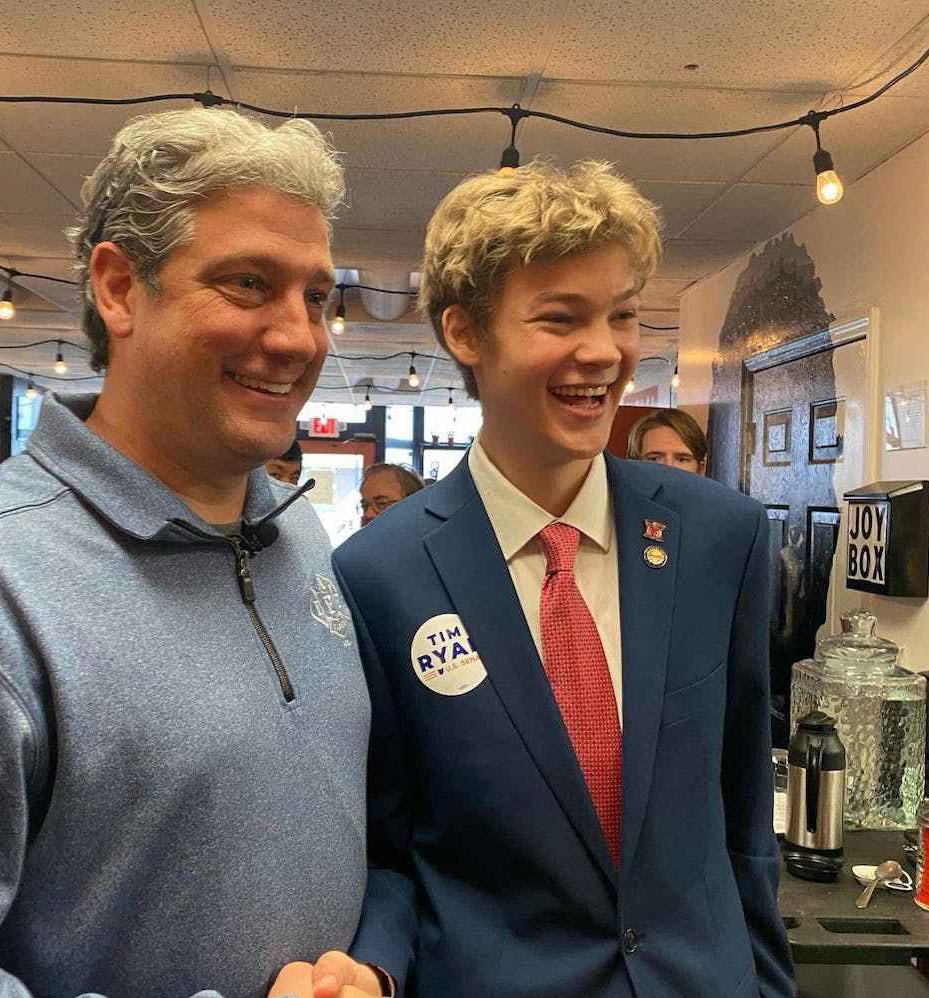
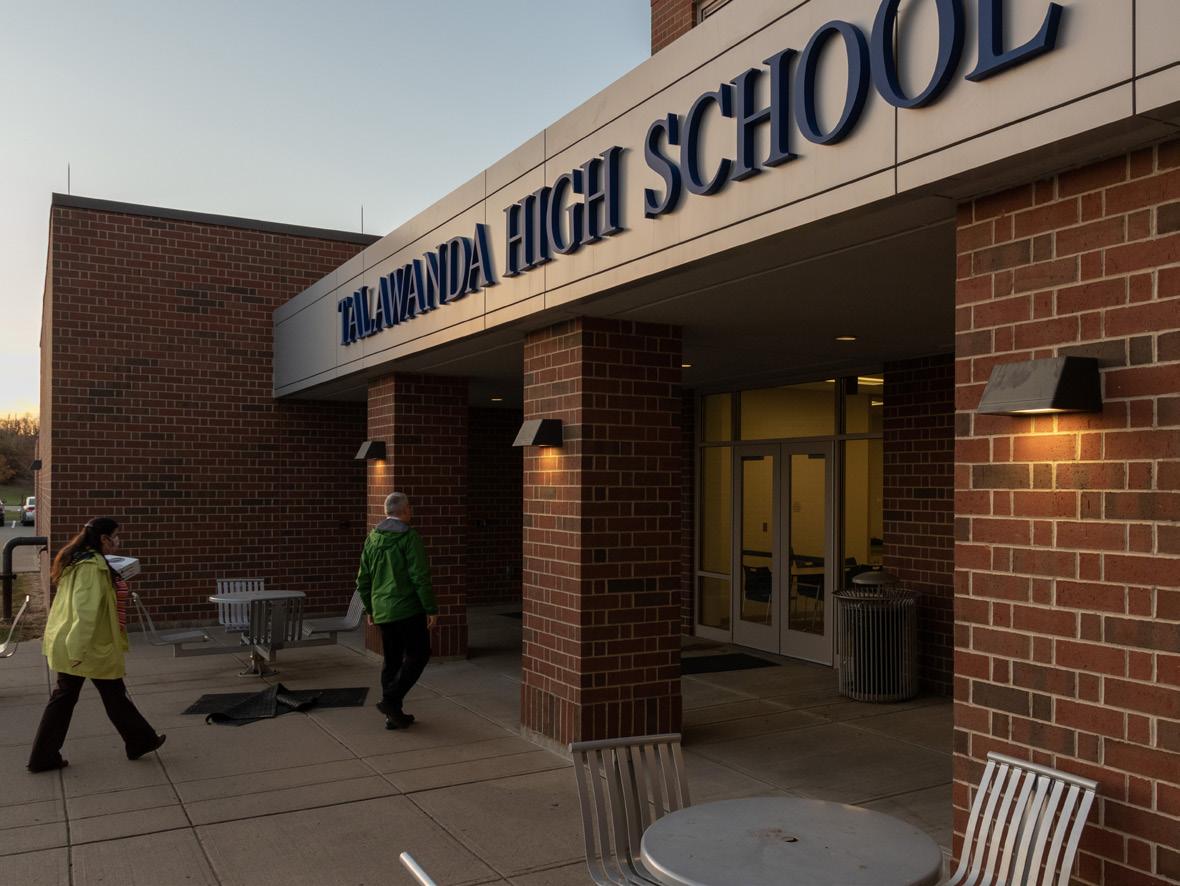
The sun had not yet risen over Talawanda High School, but Butler County residents were already at the voting booths for Election Day on Nov. 8.
Gail Hamilton, who has lived in Oxford for two years, was the first one in line. Hamilton said she was voting to see a change in Ohio’s government from Republican to Democratic.
Despite Hamilton’s political alignment, she voted for incumbent Mike DeWine for Ohio’s governor, although she doesn’t agree with some of DeWine’s beliefs.
“Unfortunately, I voted for DeWine regardless of his stance on abortion because Whaley just looks like an idiot,” Hamilton said.
Noon
Vanessa Hickcox, a senior marketing major at Miami, said the issue that’s most important to her during this election is the governor race.
“I came to vote just because I’m really concerned with the governor in particular,” Hickcox said. “I am hoping to replace the incumbent governor.”
Skylar Corder, a junior primary education major, is originally from Cincinnati (Hamilton County) but has been voting in Butler County for state elections over the last few years. While some voters have voted in years past, Ned Neely, a first-year university studies major, said today was his first time voting and the process was relatively easy.
“It was actually really smooth,” Neely said. “I was not expecting that. I just walked in. Bada boom, bada bing. Out of there.”
6 p.m.
After the sun set, turnout was sparse. New voters entered only every ten minutes or so.
The last voter to vote at Marcum was Trenton Nalls, a sophomore software engineering major. Nalls said the reason he voted last minute was because of his school work, and he would like to see Election Day as a federal holiday in the future.
“I voted for Nan Whaley for governor,” Nalls said. “I recognized the name because she was actually mayor of Dayton, where I live, so that was cool to see.”
The Purple Star Award is given to schools that are considered military-friendly and has many variations across the United States. However, this Ohio-specific designation is different from other programs because it is a free application process. One of the groups who initiated the program was the Ohio Veterans Educational Council, an organization of public and private institutions.
Nathan Hoch, a member of the council and coordinator of Veteran
“We’re excited for the recognition,” Shock said. “We had already been supporting these students, and it was a chance for the university as well as a number of other universities to be recognized.”
Hogeback said Miami has gone above and beyond to accommodate his needs as a military student.
“As a member of the reserves, once a month, you go away for drill, and that’s a weekend,” Hogeback said. “Most of the time, it’s going to take up a Friday and sometimes a
Thursday, and I never had a conflict with a professor for anything involving military service.”
Hogeback said before his deployment to the Middle East last year, Hoch helped him set his affairs straight.
“Miami isn’t obligated to hold your credits,” Hogeback said. “Nathan did everything. He put me on academic leave. He held all my scholarships and all the grants. Then when I came back, he was the first person I talked to, and he got me re-enrolled right away. He did not have to do any of that … Technically I’m supposed to file for all that paperwork, but he did it on his own time.”
Hogeback’s professors also helped
him transition into deployment. Prior to his deployment, he had to do a workup, which is several months of extended duty.
“I missed a lot of class time the spring semester, and all the professors were very understanding,” Hogeback said. “They actually let me take my exams early in most of my classes, which allowed me to leave in May for deployment.”
For Hogeback, Miami has earned its Purple Star.
“In terms of how Miami does,” Hogeback said, “I definitely think they deserve the award.”
mckinn15@miamioh.edu
Passed down and passed on: Professor Liz Wilson’s passion for religion
the students in the sense to get them to relax, to create an environment where she can relate to them in a better way, it sort of cuts down the walls that sometimes go up between students and faculty,” Hanges said.
“But yet on the other hand, she teaches courses where she can take students into some spaces where there is a lot of challenge.
She loves to challenge them.”
cross-listed with women, gender and sexuality studies and checks off the diversity and inclusion requirement for the Farmer School of Business, so she taught a variety of students. She also enjoys teaching REL 101 which deals with death and end-of-life care.
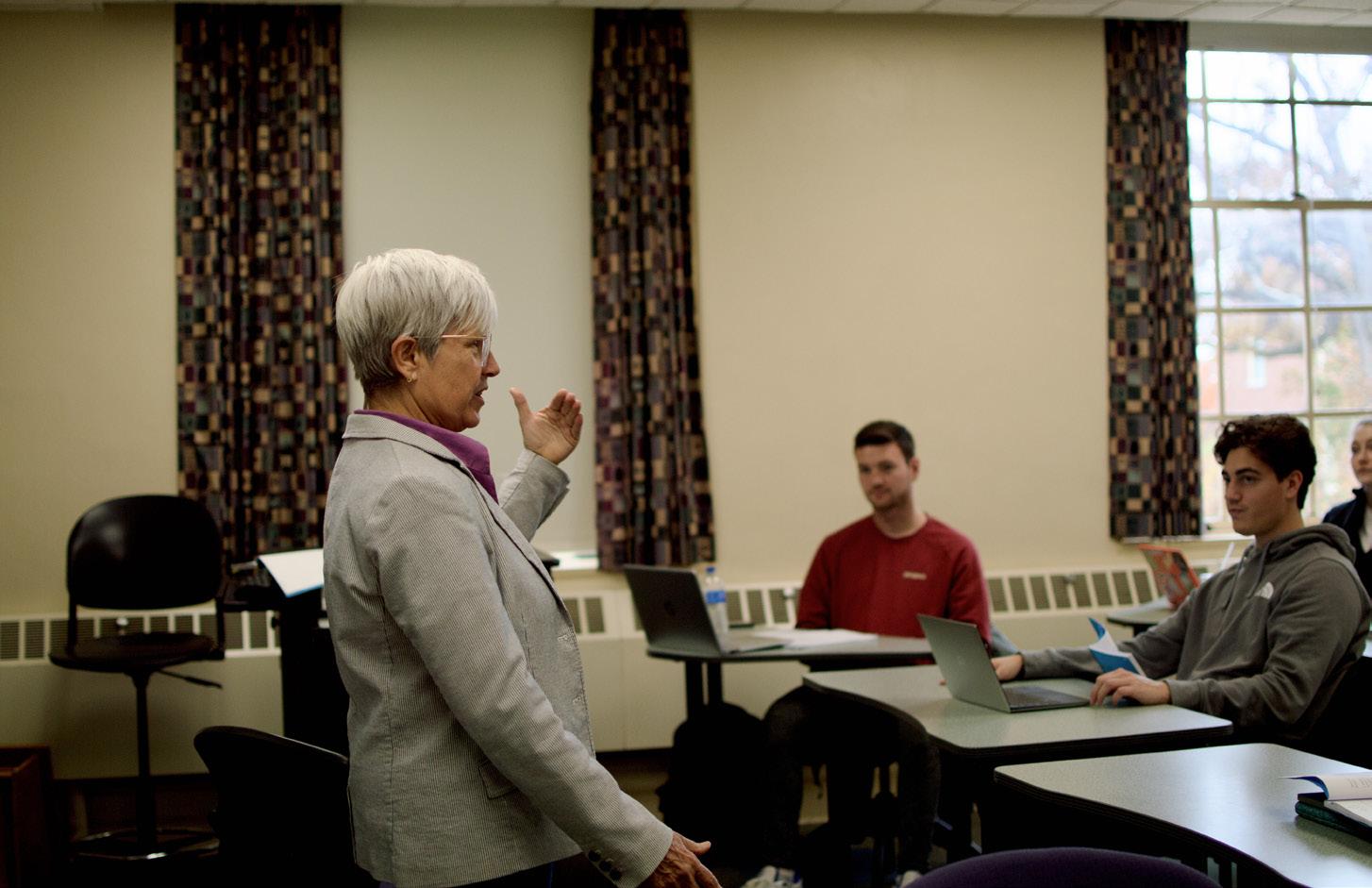
“Students do things like write their own obituary, sort of plan ahead, like, what would I want to have said about myself, and what are my values?” Wilson said. “It’s just a chance for us all to grapple with questions of ultimate meaning, so I wouldn’t say it’s fun, but it’s very moving.”
She and Kathleen Knight-Abowitz, a professor in the Department of Educational Leadership, recently received a grant from the National Endowment for the Humanities to create a summer institute for teachers to learn about Muslim-American lives and Islam in the Midwest.
When Liz Wilson took a class on Hinduism in college, she went to the professor and said, “I want to do what you do.” The class sparked her passion for religious studies and changed the trajectory of her career.
“It’s funny because I hadn’t really planned on going that direction at all, but I wanted to study abroad, and the India program was very inexpensive,” Wilson said. “And in order to do that program, I had to take a class on Hinduism.”
Wilson, now a professor of comparative religion at Miami University, grew up all over: in North Carolina, Kentucky, Indiana and Ohio. She attended a small college in North Carolina called Davidson College. Fewer than 2,000 undergraduates went to the school, so everyone knew each other.
Since then, Wilson has traveled to India eight times. In 2014, she and Vaishali Raval, a psychology professor, took students to India on a trip to study family religion.
“I learned so much from the trip because, for example, we were going to clinics where lay people were learning how to do mental health therapy with each other … and the folks who ran those clinics, who did the training, were amazing,” Wilson said. “I was blown away.”
Wilson worked at Miami before the chair of the department, James Hanges, arrived. They knew each other from the University of Chicago because both were in the divinity school there. He said Wilson is good at loosening people up and the department was much more collegial after she arrived.
In class, her students think more in depth about the ideologies they hold and why they hold them.
“She finds ways to sort of disarm
Wilson has worked at Miami since 1992. She served as the chair of the Department of Comparative Religion from 2004 to 2010 and director of graduate studies for eight years. She chaired the department during the 2008 recession and had to defund a graduate program. She said she heard many “nos” from the dean’s office.
“I would say I had a good experience [as chair], it was just a matter of poor timing,” Wilson said.
She said her time as director of graduate studies was rewarding because she got to know the graduate students in a different way. Currently, she is not the chair of the department or director of graduate studies. She is still a professor, though, and teaches six different classes on religion.
Wilson’s favorite class she has taught is REL 313: Marriage Across Cultures because students could compare and talk about different religious traditions. The course is
“We’re really excited that the funding came from the National Endowment for the Humanities,” Wilson said. “And we’re going to have people here studying for two weeks with world-renowned experts.”
Wilson said the program is a collaboration between the comparative religion and educational leadership departments. During the summer institute, teachers will visit the Islamic Center of Greater Cincinnati, learn what it is like to be in school as a Muslim-American through a panel of discussions with Muslim families and discover the role that Muslims play in research and innovation in the Midwest.
“Liz is such a thoughtful scholar, plus a talented, dedicated teacher,” Abowitz wrote in an email to The Miami Student. “She’s the real deal, and we are lucky to have her here at Miami.” stumbata@miamioh.edu
Sam Lawrence loses to incumbent Sara Carruthers
RILEY CRABTREE THE MIAMI STUDENT
Miami University sophomore Sam Lawrence lost his bid for Ohio House District 47 during the Nov. 8 midterm elections. His opponent, Republican Sara Carruthers, won 65.2% of the votes.
Over the past couple of months, the campaigns of both Carruthers and her opponent, Lawrence, a political science major, were closely monitored both on campus and within the rest of Butler County. On Oct. 13, the two candidates participated in a debate.
Miami students had mixed emotions on the results of the race.
Lana Money, a first-year political science and pre-law major, said she was let down, but she knew the loss was a possibility.
“It’s disappointing because obviously we support fellow Miamians and want them to succeed, but I can understand people who wanted to vote for someone with more experience,” Money said.
Dylan Frank, a first-year undecided business major, expected the loss as well, but was pleased with the
turnout nonetheless.
“We saw a shift in politics,” Frank said, “I was just happy with the effect, even if we lost.”
Even though Lawrence didn’t win, there were benefits to his run. Thomas Feazell, a first-year political science major, thinks Lawrence has a promising future.
“He has a base here now,” Feazell said, “and a large group of people who know who he is.”
Money agreed with the sentiment.
“Lawrence got his name out there and has these great connections and network,” Money said, “Now he has experience running in a real election.”
It’s unclear what Lawrence plans to do next, but many Miami students believe he has built a platform for future success in runs.
Lawrence and his campaign staff could not be reached for comment.
crabtrr@miamioh.edu
THURSDAY, NOVEMBER 10, 2022
4
Campus and Community
GRAPHIC
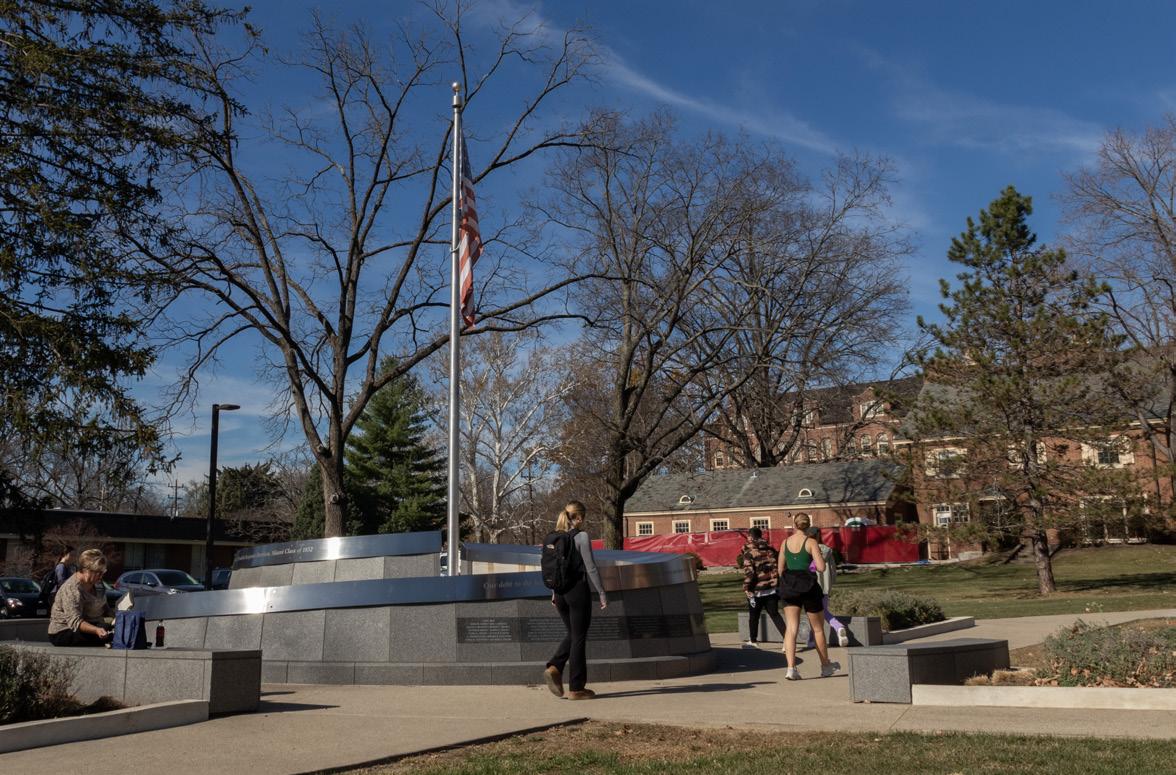
THIS ALUMNI VETERAN TRIBUTE CELEBRATES MIAMI ALUMNI IN ALL BRANCHES OF THE MILITARY. PHOTO BY JAKE RUFFER
TAYLOR STUMBAUGH THE MIAMI STUDENT
LIZ WILSON, A PROFESSOR OF COMPARATIVE RELIGION AT MIAMI UNIVERSITY, ASKS HER STUDENTS TO THINK DEEPLY ABOUT THEIR OWN IDEOLOGIES. PHOTO BY SARAH FROSCH
ALTHOUGH HE SPENT A LOT OF TIME CAMPAIGNING, MIAMI UNIVERSITY SOPHOMORE SAM LAWRENCE LOST THE ELECTION FOR A SEAT IN THE OHIO HOUSE OF REPRESENTATIVES TO INCUMBENT SARAH CARUTTHERS. PHOTO PROVIDED BY SAM LAWRENCE
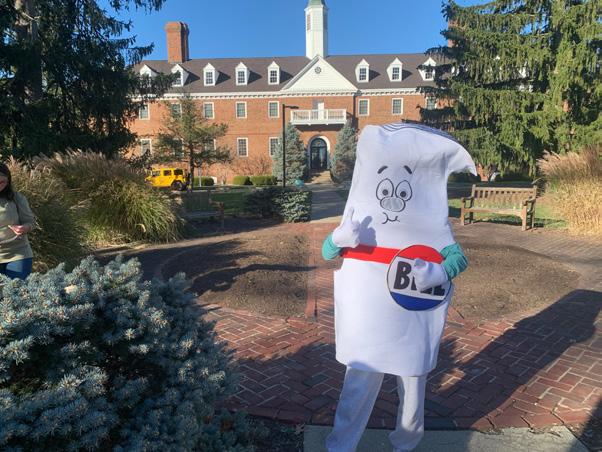
A MASCOT OF BILL FROM “SCHOOLHOUSE ROCK!” TOOK PICTURES WITH STUDENT VOTERS OUTSIDE MARCUM HOTEL. THE VOTERS HAD TO FILL OUT SIGNS ABOUT WHY THEY VOTED. PHOTO BY LUKE MACY
Oxford Community Band celebrates 35 years
LAURA GIAQUINTO SENIOR STAFF WRITER
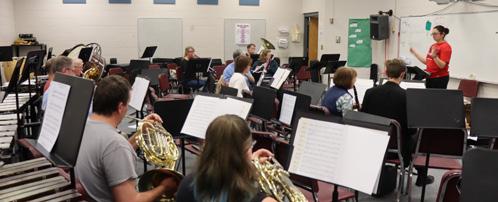
This year, the Oxford Community Band is celebrating its 35th year. The community band can be spotted playing at events Uptown, at the Oxford senior center and Talawanda High School.
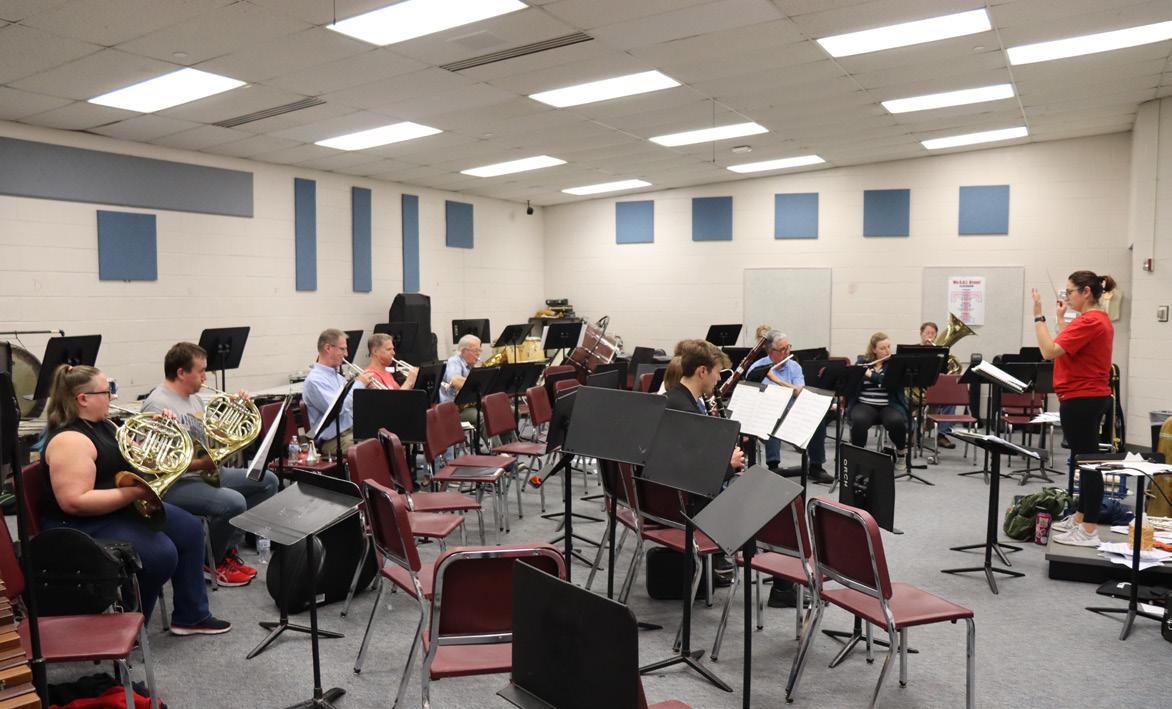
The band, established in 1987, was started by Ted Beerman, who ran a local music store in Oxford. Beerman created the community band for adults who enjoy playing instruments. The band rehearses every Tuesday at Talawanda Middle School from 7 p.m. to 8:15 p.m.
The community band attracts a wide range of ages, with a 23-year-old as its youngest current member and an 83-year-old as its oldest. At times, the community band has even had members in high school.
The band’s longest-serving member, Fred Schuurmann, joined during the community band’s second season in 1987.
Kathi Taylor also joined the community band during its second season, and after taking a few years off for her grandchildren, has returned. Taylor played clarinet in high school but stopped playing until she joined the community band.
“I saw the band in concert on the Fourth of July, and they said ‘this is our last concert of the season, but come next fall’ and so I did,” Taylor said. “I was so excited. I had to go find a used clarinet real quick.”
Valerie Ubbes joined the community band in 2011, and a year later, her husband Bill Ubbes followed.
Valerie Ubbes started playing bassoon in ninth grade and spent her high school summers in the ’70s at Interlochen Arts Academy in Michigan. She didn’t play the bassoon again until 2008 when Bill bought her one, and in 2011 she joined the community band.
Her husband, a retired engineer, played trumpet in high school and was in a pick-up jazz band in college. Bill Ubbes put his instrument away for about 20 years, until his wife told their church music director she knew someone who could play the trumpet. He has played every day since then.
“It’s fun, it’s a good group of people, and it’s an opportunity to play.” Bill Ubbes said. “It’s the high point of
the week for a lot of us.”
Bill Ubbes says his favorite memory in the community band is from a Christmas concert Uptown.
“We were supposed to play ‘Here Comes Santa Claus’ until Santa Claus arrived,” Bill Ubbes said. “Well, Santa Claus one year got lost, so we played ‘Here Comes Santa Claus” for like half an hour. The conductor was looking around saying, ‘I think I see him, no, that’s not him.’”
Throughout the years, some longterm members have been unable to continue in the band.
“They move into assisted living and can’t play anymore, and we really miss them,” Bill Ubbes said. “It’s like losing a parent.”
Mary Keister moved to Oxford in 2020 and joined the community band about a month ago. Keister said the band is a creative outlet and a great way to meet new people.
“It’s hard to get to know people in the community if you don’t engage in activities, so this for me is a way for someone who is newer to Oxford to get out and [meet] people while engaging in an activity that I really enjoy,” Keister said.
Keister began playing the drums in fifth grade. The band has long been without a percussionist and is excited to have Keister.
Gregg Wentzell has served as the community band’s president since 2011. He joined the community band in 2001 after seeing an ad in the Oxford Press and speaking to friends who were already in the band.
“I didn’t join right away, I got myself [in] a little bit better shape and finally showed up at rehearsal,” Wentzell said. “It’s a perfect kind of stress relief and something I didn’t realize I’d missed as much as I did until I started doing it.”
As president, Wentzell’s role involves lining up concerts, hearing feedback and welcoming new members.
The band has about 20 consistent members. Community band members have come from all around the Oxford area including Hamilton and Fairfield, Ohio, and New Haven and Richmond, Indiana. Many members of the band are Miami faculty, retired Miami faculty and music teachers.
“That we get to draw in everyone from working people around the area
to students, teachers and retired folks makes for a really diverse group,” Wentzell said “It keeps it interesting that we have different people with different input on the music and on what they enjoy playing.”
Austin Marshall is a band director in Union County, Indiana. Marshall has been a member of the Oxford Community Band for about a year. He heard about it from another band director in Indiana who is also in the community band.
“One thing I really like about the band is that instead of being on the podium, I get to be where my students are when I’m yelling at them everyday,” Marshall said. “Here I sit down and get to be like ‘maybe I could’ve done this better,’ so it’s a humbling opportunity.”
Valerie Ubbes said her favorite part of the community band is performing for others.
“The most exciting part about the band for me is playing in nursing homes, the senior center, and getting around town wherever we can play,” Valerie Ubbes said. “Giving music and giving concerts really is great, because the audience appreciates it and we get to play for them.”
Kat Magnone, a fourth-year graduate student at Miami, joined the community band about a year and a half ago, and said she enjoys its casual atmosphere.
“I started [in the band] because I’d really been missing something in my social calendar,” Magnone said. “I’d always been in some sort of musical ensemble until I came to Miami, so I was really missing that connection that I had with music and with my fellow musicians.”
The Oxford Community Band’s next performances are Nov. 11 at the Veteran’s Day Parade in Uptown Park 11 a.m.; Dec. 3 at the Oxford Holiday Festival in Uptown Park at 5 p.m.; and Dec. 12 at the Oxford Senior Center at 6:30 p.m.
The community band is always looking for new members of any playing ability, and there are no auditions required. Interested potential members can reach out to Gregg Wentzell (wentzegw@miamioh.edu).
giaquiln@miamioh.edu
Miami hosts 14th annual Graduate Research Forum
 ANNA REIER THE MIAMI STUDENT
For a year and a half, Madisen Kimbrel spent her time stressing out bacteria.
As a microbiology Ph.D. candidate, Kimbrel conducted research and studied how bacteria responds to different stress factors.
“We looked at how these organisms and environments responded to various stress factors,” Kimbrel said. “We found that this stress prevents them from being able to grow and reproduce.”
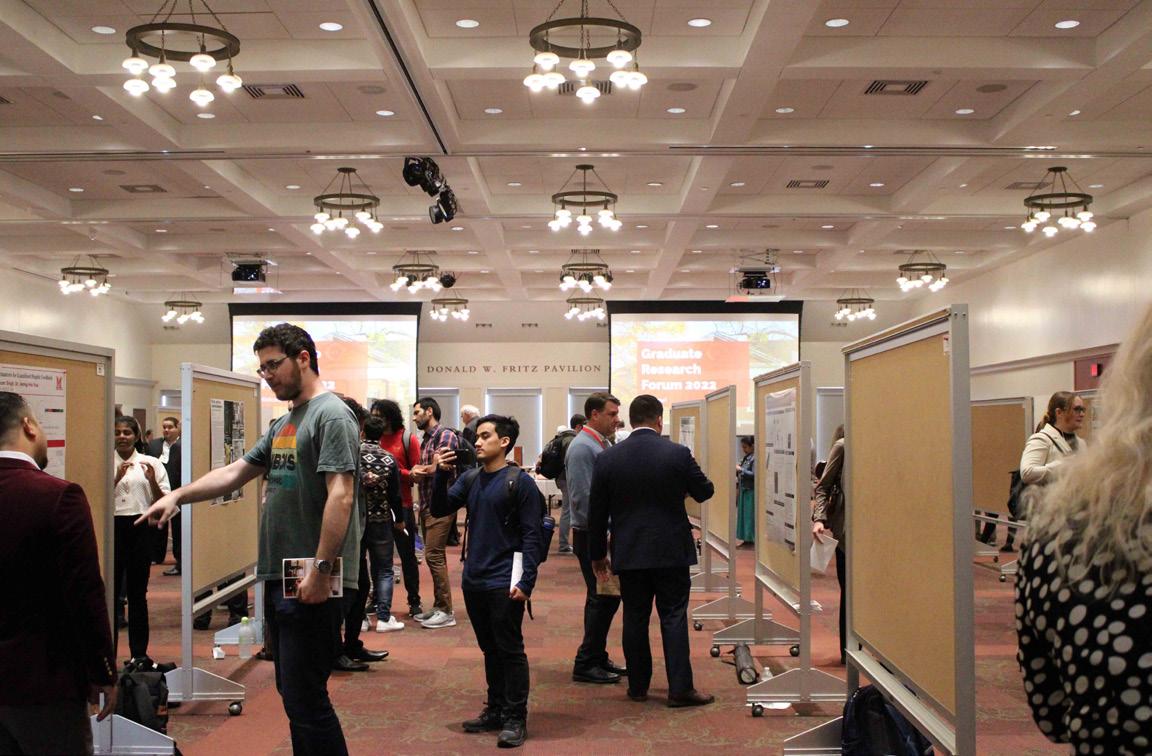
She presented her findings Nov. 4 at Miami University’s Graduate Research Forum. At Armstrong Student Center’s Fritz Pavilion, 110 total graduate students presented research from months-long projects.
These projects came from four different academic divisions, with 25 different programs being represented. Programs included kinesiology, computer science, chemistry and more. The topics spanned from the study of auto-catalytic biosensors to social anxiety as a factor of binge drinking among university students.
Sam Brown, a graduate student in the biology department, presented his research on the purkinje neurons in the cerebellum.
“This is the part of your brain that has a lot to do with your coordination,” Brown said. “So when you’re walking up the stairs or tracking a ball to catch it, it does most of that.”
Brown said his goal is to find the parts of the brain that determine how often neurons fire.
The forum was broken into two
segments, consisting of poster and oral presentation sessions. A panel of alumni judges voted on the Outstanding Presentation Award winners, which will be announced in the following weeks.
Last year’s winners consisted of six presenters, three in the poster category and three in the oral. One of the winning oral presenters was Katherine Stahlhut, a doctoral candidate who presented on “linking plant functional traits to mycorrhizal mutualisms.”
Stahlhut was awarded a research fellowship with the National Science Foundation Graduate Research Fellowship Program, an organization focused on the scientific research of graduate students, for her work that has continued throughout the course of this year.
The event was coordinated by Elise Radina and Amity Noltemeyer, both associate deans of the graduate school. Noltemeyer was incredibly impressed with the presentations put on by the researchers this year.
“Overall, it was such an exciting and inspiring day,” Noltemeyer said. “I was impressed by the diversity and impact of their research, as well as their skill in explaining it to others outside of their discipline.”
Year after year, the graduate forum continues to be a high point for the Miami Graduate community. Noltemeyer said the event gives students an opportunity to develop as researchers and communicators.
“I am already looking forward to next year,” Noltemeyer said.
reieram@miamioh.edu
Jewish organizations support students amid concerns of rising antisemitism
LUKE MACY ASST. CAMPUS & COMMUNITY EDITOR
When Hannah Lefkowitz, a senior social work major, was exposed to COVID-19 and had to isolate during Passover her sophomore year, she didn’t know how she would celebrate.
Lefkowitz’s mom posted a message on Miami University’s parents Facebook page asking for help so her daughter could still celebrate the Jewish holiday.
Rabbi Yossi Greenberg of Miami’s Chabad, a Jewish organization in Oxford, responded to the post and, with Miami’s Hillel, another Jewish organization, arranged for kosher food to be sent to Lefkowitz. They also set up a Zoom meeting for Lefkowitz to still participate in the traditional Seder Passover meal.
Lefkowitz was not an active member in either of the organizations, but she felt supported by their acts.
“It was very much like a village,” Lefkowitz said. “Everybody just chipped in where they could, even though they had never met me before.”
Since then, Lefkowitz has become involved with both groups, like many other Jewish students on campus.
These organizations have established themselves in Oxford to support Jewish students at Miami, and support is a necessity, especially with growing concerns of antisemitism throughout the nation.
The Anti-Defamation League, an anti-hate organization, reported that it received the highest number of antisemitic incidents last year, with 2,717 reports of assault, harrasment and vandalism. Other controversies have added to concerns of antisemitism, particularly with comments from hip-hop artist Ye (previously known as Kanye West).
On Oct. 15, three Miami students toppled a sukkah, a Jewish holiday hut, on Hillel’s property. Within less than a week, the men came forward, and after a police investigation, no evidence of antisemitism was found.
Daniel Renfield, a junior account-
ing major, is a part of both Hillel and Chabad and serves as the treasurer for Chabad. Renfield says these organizations help establish connections among Miami’s Jewish population.
“It gives you a great sense of community because the percentage of Jews at Miami isn’t so big, so you don’t just run into people,” Renfield said. “Just coming to a place where everyone’s Jewish and just connecting, it’s really valuable.”
Chabad and Hillel are both international organizations that function in partnership with the university. Hillel estimates that Miami’s campus has close to 1,000 Jewish students in total. The Hub lists 177 members for Miami’s Hillel and 89 members for Miami’s Chabad, although neither group has formal membership, with some larger programs attracting nearly 3o0 students.
Whitney Fisch, executive director of Miami’s Hillel, said the organization aims to offer a place to support Jewish students.
“We are a community organization, and our goal is to engage, connect and empower students on campus to explore their Jewish identity, so that they can create and inspire the next generation of Jewish leaders,” Fisch said. “We want to enrich and engage in an effort for Jewish students at every point of their Jewish journey.”
Both organizations achieve this through social events, education sessions about Jewish life and Shabbat dinners, a weekly celebration for Jewish people.
Hillel Gray, a professor in the department of comparative religion, said it’s important to take multiple factors into consideration when studying levels of antisemitism. He said concerns that college students regularly face antisemitism on campus are tied to political divisiveness.
“There’s a lot of media attention in the Jewish world … toward college campuses now and whether there’s more antisemitism,” Gray said. “But a lot of that is driven by political interests, both on the left and the right, blaming each other and trying to categorize each other as a source of an-
tisemitism.”
An article titled “Trends in Jewish young adult experiences and perceptions of antisemitism in America from 2017 to 2019” examined this trend and tied the rising levels of antisemitism to an increased focus on discriminatory acts.
According to the article, published in the academic journal Contemporary Jewry, Jewish concerns about antisemitism were strongly tied to media reports on antisemitism and discrimination against other minorities, showing that Jewish people feel their fates are tied to other marginalized groups.
The article also says most Jewish college students perceive almost no antisemitism on campus.
Miami has had a few concerns when it comes to antisemitism. In 2019, a former Miami student used Venmo to request money from a Jewish student with attached comments that referenced the Holocaust.
This year, Jewish organizations have mainly dealt with vandalism. Before the Sukkah was toppled in October, Chabad had its Menorah stolen from the front porch on Sept. 29, but it was returned the next morning with an apology and money for the damage.
Greenberg filed a police report for the incident, but after the Menorah was returned with the apology, he asked police to drop the case. Since Greenberg moved to Oxford, he’s experienced more positivity than anything from the community.
“I’ve lived in Oxford for many years and experienced nothing but love and admiration, very nice people here,” Greenberg said. “This is a lovely town and a great university. Jewish students should feel safe here.”
Still, some Jewish students have problems with the university.
Lauren Somers, president of Miami’s Hillel and a junior business analytics and fashion corporate business co-major, said sometimes Jewish holidays conflict with classes.
“I do think that being the only person in a lot of my classes that’s Jewish, or being the minority, is difficult,” Somers said. “On things like the High
Holidays, where despite Miami having a calendar of religious holidays, professors don’t look at that. They schedule exams [and] presentations on High Holidays.”
Hillel and Chabad both help students work with professors to reschedule if classes interfere with Jewish holidays. Cristina Alcalde, vice president of Miami’s Office of Institutional Diversity and Inclusion (OIDI), wrote in an email to The Miami Student that the university also tries to make professors aware of these conflicts.
“About a year ago we also created a Religious Observances and Inclusive Scheduling Guide, which provides guidance to help avoid scheduling important events, activities, and deadlines on holidays observed by members of the Miami community,” Alcalde wrote. “More specifically, OIDI sent out a note about this to senior leadership before Jewish [High Holidays].”
To Somers, however, the fact that classes need to be rescheduled at all is still frustrating.
“It’s kind of that idea of equity where if you bring up to a professor that it’s on the holidays, most of the time they’ll want to work with you and say that’s totally fine,” Somers said. “But it’s just that having to ask and having to reschedule.”
Some of the main problems for Jewish students come from other students.
Because the Jewish homeland is in Israel, difficulties can arise when discussing the conflicts between Israel and Palestine. Fisch said Hillel frequently receives complaints that students are unable to demonstrate Zionism, the support of the protection of a Jewish homeland, because of these conflicts.
“Zionism has been co-opted by other movements and defined by other people rather than Jewish people, which is wildly frustrating,” Fisch said. “It’s been a struggle that even organizations who claim to be inclusive, they have it [as] ‘we’re inclusive except if you identify as a Zionist.’”
Somers said the organization tries to create events to help inform stu-
dents about the conflict.
“We have events centered around Israel and learning about the conflict, learning about what different sides have done,” Somers said. “Hillel does the best job it can at separating; while we are proud to be Zionist, and we are proud to support Israel, we very much do not believe that Israel is completely innocent and hasn’t done bad things.”
Hillel also offers a program called Birthright Israel, where Jewish students can take a trip to Israel.
Fisch suggested that in order to better support Jewish students, people should try to educate themselves and others. She suggested correcting antisemitic behavior to avoid creating unsupportive environments.
“The amount of students that are on this campus who are Jewish but don’t own it because … they’ve been around friends for two, three years who tell Hitler jokes, tell right-wing kind of white conspiracy jokes about Jews and replacement theory and things like that,” Fisch said. “That is running rampant, and we need allies to call that out.”
Caleb Krainman, a first-year game simulation major, said when experiencing harmful behavior to the Jewish community, it’s important not to fight back with anger.
“Don’t come back with hate,” Krainman said. “And you tell them, you calmly explain why they’re wrongand you always welcome them … You’re not going to fix anything through fighting fire with fire.”
Gray uses a similar viewpoint when handling antisemitic remarks.
“I generally try to call people in rather than call them out,” Gray said. “If you’re calling them out, then usually you’re trying to shut them down or cancel them or get them to stop, and there are people who probably need to do that. But for my purposes, I’m usually trying to relate to people and connect to people.”
OIDI has compiled a list of resources on its website to help students identify antisemitism.
THURSDAY, NOVEMBER 10, 2022 5
@lukejmacy macylj@miamioh.edu
THE OXFORD COMMUNITY BAND IS MADE UP OF ABOUT 20 MEMBERS CONSISTING OF MIAMI
FACULTY AND MUSIC TEACHERS FROM THE SURROUNDING AREAS. PHOTO BY OLIVIA PATEL
110 GRADUATE STUDENTS PRESENTED THE RESEARCH PROJECTS THEY HAVE BEEN WORKING ON FOR MONTHS. PHOTO BY GRACE AXLUND
mean because
up
JANE MCKINLEY
THE MIAMI STUDENT
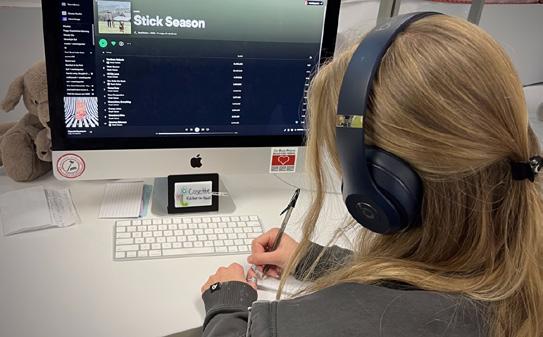
When I listen to Noah Kahan’s recently released album, “Stick Season,” I am transported to a rundown paved road in a small Vermont town.
The air feels crisp but not chilling, and even though I may have never entered this town before, a sense of warmth and nostalgia fills my heart. As I drive, I pass little red barns and steep wooded mountains that seem to paint the sky in the distance.
Kahan, a Stafford, Vermont native, evokes the emotions I’ve felt when I drive from my hometown in New Jersey up to the small, quiet towns of New England, woven between steep mountains and flowing streams.
Kahan’s latest songs sound like they were perfectly crafted for a coming of age film. The light sprinkling of the airy banjo mixed with the depth and strength of the guitar sounds reminiscent of deep colored evergreens mixed with tall oaks enveloping a New England road on a cloudy autumn day. The combination of dark green foliage contrasted by the warm, glowing yellows makes the surroundings feel balanced and calm.
I was surprised when I saw that Kahan’s album didn’t begin with his single, “Stick Season,” which gained popularity on TikTok.
But as I listened to the first track on the album, “Northern Attitude,” I completely understood the choice. As Kahan introduces the chorus, the tempo and volume of the instruments start to incline, just like the winding roads of Vermont.
The build to Kahan’s cathartic confession paints the memory of driving through New Hampshire or Maine on an early morning. The blaring sun peaks through the trees and blinds your eyes with a golden hue that complements the changing leaves. As the car goes faster, climbing higher and higher, the trees start to blur, but a feeling of excitement remains constant.
“If I get too close, and I’m not how you hoped,” he sings. “Forgive my northern attitude / Oh, I was raised out in the cold / If the sun don’t rise, ‘til the summertime / Forgive my northern attitude / Oh, I was raised on little light.”
Kahan expresses his inner conflict with confronting his honest feelings and coming to terms with love, loss and his struggle to face his ambition.
His words are rooted in the New England mentality of independence, and I’m not using “independence” to sound boastful or to make the argument that people on the East Coast are the best. In New England, this sense of independence sometimes feels isolating rather than empowering.
Maybe it’s because we grow up in a hurry searching to move on to one of the bigger surrounding cities that makes us think we don’t have time to express our feelings to others and make ourselves vulnerable.
In “Homesick,” one of his grittier songs on the album, he sings, “I would leave if only I could find a reason / I’m mean because I grew up in New England.”
Embedded in his songs there’s youthfulness yet nostalgia, bitterness but also a sense of hopefulness that wraps around you like a personal, warm and supportive hug from Kahan.
Even though I go to school far away from New England and my home, Ohio — and especially Miami — still provides glimpses of this album. Maybe it’s because I have also created a home at Miami, and I’m a sucker for Oxford in the fall, with the changing leaves accented by the iconic red brick, but I hope other listeners find comfort in Kahan’s words.
Because it is true, the people here make “Ohio feel just like Central Park.”
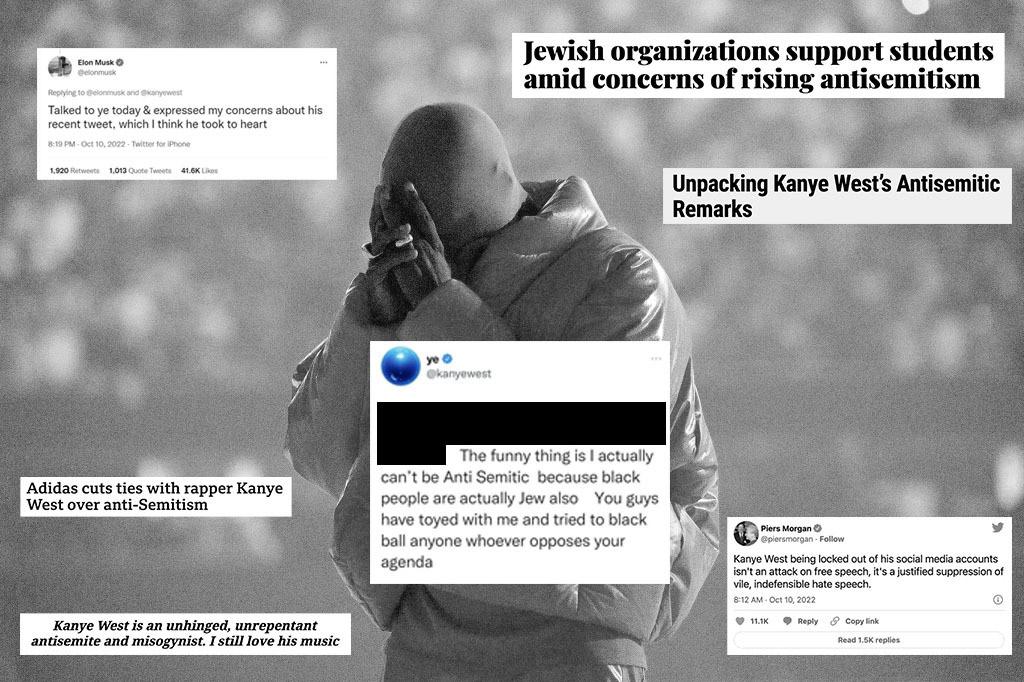
The unfortunate inevitability of Ye discourse
Fisch said. “Be more proactive. Don’t just sit in the reactive as an armchair advocate. Call it out before it gets to this level. This is not the first time.”
Grant Titlebaum, a first-year mechanical engineering major, recalled Ye’s previous controversies.
“I’m surprised people still take him seriously for his comments, especially how he’s been in the past, too,” Titlebaum said. “I have no problem with people liking his music, but taking his comments seriously? You’re looking at what he said in the past, and it’s like, why would you listen to him now?”
Titlebaum hits upon something crucial here: Ye is empowered by controversy, leading to a cycle that was always going to inevitably lead to something like this.
For what it’s worth, Ye is facing consequences, significantly more than in previous similar situations. But he still refuses to fully apologize or even clarify his statements, which is a nonstarter when it comes to gaining public forgiveness.
REECE HOLLOWELL ASST. ENTERTAINMENT EDITOR
Cards on the table: Ye (previously known as Kanye West) is one of my favorite artists of all time.
His music, and by extension hiphop as a genre, found me at a formative age and largely shaped what I would become interested in and how I would think about it. Albums like “The College Dropout,” “Late Registration” and “My Beautiful Dark Twisted Fantasy” still mean a lot to me to this day.
But being a Ye fan is exhausting.
It was easier to wave off his more outspoken moments in the past. Sure, his interviews and public statements were often contentious, but the only thing he was damaging was his public image. The quality of his music more than made up for it.
The moment many started questioning that balance came in 2016 when he became an outspoken supporter of former President Donald Trump. Trump’s stated platform threatened to hurt marginalized communities, and many of Ye’s fans became disillusioned by his willingness to throw his weight behind these views.
Before 2016, Ye had been viewed as a somewhat progressive figure in hip-hop. Early in his career, he criticized former President George W. Bush for his response to Hurricane Katrina and spoke against the prevalence of homophobia in hip-hop. Even after his Trump association, Ye was outspoken in his push for prison reform.
This endorsement coincided with a highly publicized deterioration of Ye’s mental health, which led to him canceling his then-ongoing tour and being hospitalized.
Ye’s bipolar condition took center stage for the next few years of his career, even being the main focus of his 2018 now self-titled album. Much of his erratic behavior around this time was attributed to his illness and his apparent unwillingness to take medication for treatment.
It’s important to contextualize Ye’s recent actions and statements within this history because it shows that not only is this not a new occurrence, it’s depressingly predictable.
Over the last month, Ye has been embroiled in yet another controversy, this one over antisemitic and conspiratorial comments. He has appeared on high-profile platforms like the “Drink Champs” podcast and “Tucker Carlson Tonight,” spreading his rhetoric to millions of viewers.
“We’re not going to be owned by the Jewish media anymore,” Ye said in an interview with Chris Cuomo. “Every celebrity has Jewish people in their contract … And these people, if you say anything out of the line with the agenda, then your career can be over.”
Quotes like this are inexcusable.
According to the Anti-Defamation League, 2021 saw the highest number of antisemitic incidents in the U.S. since the organization began tracking in 1979. This was a 39% increase from 2020, and included a 52% rise in right-wing extremist activity — the groups Ye is courting with his statements.
As unhinged as Ye’s rants have been in the past, they rarely served to draw ire toward anyone except himself. This is different, a targeted attack on a group who is already seeing an unprecedented amount of harassment aimed their way. These worries become even more prevalent when localized to Miami University.
On Saturday, Oct. 15, three Miami students vandalized a part of the university’s Hillel center, which houses an organization dedicated to fostering community between Jewish students on campus. Though the culprits were not charged with a hate crime, the incident still resonated and sparked conversations about Jewish acceptance at Miami.
In a report by The Miami Student about antisemitism at Miami, multiple community members talked about the impact of Ye’s statements.
“The biggest thing that I’ve seen is celebrities making major antisemitic comments … We saw [Ye] recently,” said Matt Seifert, a first-year accounting major. “And following those you always see a huge rise in attacks of Jewish organizations, and you also see a bunch of people who are saying no one’s actually taking those comments seriously when in reality, they are.”
Whitney Fisch, executive director of Hillel at Miami, feels that people don’t take Jewish problems seriously until someone prominent begins speaking against them, at which point it’s too late.
“You get all these celebrities coming out saying antisemitism is wrong, but where were you before this?”
Ye might be able to move on from this, but as Seifert makes clear, it’s unlikely everyone else can.
“There were a couple of songs of his that I loved. I had them on most of my playlists; I had to take them off,” Seifert said. “I just lost all respect for him, and I’m honestly glad to see that he’s falling because of this.”
Some have called for a large-scale boycott of Ye’s music, with even Spotify’s CEO Daniel Ek criticizing him.
I don’t think this is the solution.
Deplatforming absolutely works, as shown earlier this year with the case of Andrew Tate, but Ye’s antisemitic messages aren’t being spread through his music, at least not the music that’s available on streaming services. Even if it was removed, Ye is too big to fail at this point; as long as he can publicly speak, he will continue making headlines.
This is all going to come down to a personal choice whether to engage with his art, and it’s perfectly understandable why, as in the case of Seifert, someone would choose not to.
I myself have felt weird about listening to his music for the last several weeks, and I have very little connection to the communities being affected by his comments. That’s just it, though: people are being affected, and that’s enough to tip the scales for me.
Time will tell how long the fallout from this will last, but one thing’s for sure: Ye’s not finished.
Take that how you will.
Additional reporting by Assistant Campus & Community Editor Luke Macy.
BROCKHAMPTON announces final album before split
ings into their music.
When I recommend BROCKHAMPTON’s music to my friends, I give them all the same warning: You won’t like this at first.
Listening to BROCKHAMPTON for the first time, it comes across as a cacophony of sound, verses that don’t make sense and random synthetic noises.
It’s as jarring as it is intriguing. From high energy, heart pounding bangers like “BOOGIE” to emotional, heart shattering songs such as “GINGER,” the band offers a dynamic range of music that’s hard to define.
What’s more interesting than their music, though, is their history.
In “JELLO,” founder Kevin Abstract raps “Met all my friends through Kanye West and I ain’t met him yet,” referencing the formation of the band via an online Ye (formerly known as Kanye West) forum in 2010. The group originally called themselves AliveSinceForever before changing their name to BROCKHAMPTON in 2014.
Currently, the band consists of 13 members who contribute to vocals and production.
BROCKHAMPTON coined the catchphrase “America’s favorite boy band.” They push the boundaries of a stereotypical boy band’s appearance, featuring members from diverse backgrounds.
Songs like “FIGHT” highlight members Ameer Vann and Dom McLennon’s experiences with racism and finding their place in the world.
Several songs incorporate Abstract’s struggles of growing up queer in a small Texas town.
The band is no stranger to expression through music. BROCKHAMPTON has released albums every year since 2016, with the pandemic in 2020 causing the only exception. With such a wide range of songs, the band tackles a variety of topics and incorporates their own personal feel-
In 2018, member Ameer Vann left the band after allegations of sexual assault. The band canceled the remainder of its 2018 tour dates and released a statement saying they “were lied to” and expressed remorse for not “acting sooner.”
BROCKHAMPTON used the song “DEARLY DEPARTED” as an outlet to express their complex feelings of grief and betrayal toward their former friend. Abstract begins the song by saying, “What’s the point of having a best friend if you end up losin him?” while McLennon mentions in the song that he “does not feel obligated to dismiss the truth because of how I feel about our time.”
The unique way BROCKHAMPTON addressed Vann’s departure from the band demonstrates their persistence in the industry. The band went on to produce albums “iridescence,” “GINGER” and “ROADRUNNER.”
After their Coachella performance in the spring of 2022, BROCKHAMPTON announced, while wearing varsity jackets that read “All good things must come to an end,” their final album would be released by the end of the year.
There is no official stated reason for the indefinite hiatus, but it
appears that time is the biggest factor for the split. Although BROCKHAMPTON has maintained a presence in the industry for almost 12 years, which is impressive considering the large number of members involved, many members, such as Abstract, Matt Champion, Joba and Merlin Wood, have found success in solo projects.

At the end of October, Brockhampton released information on social media about their final album “The Family.” “The Family” will consist of 17 tracks that drop on Nov. 17.
BROCKHAMPTON tends to experiment with different sounds and concepts, and fans will likely get a better feel for the album as the band drops more singles and art to accompany. Fans have already noted that the titles of their new songs are not fully capitalized, and the band responded via their instagram story that this signifies a “new era.”
I hope “The Family” encompasses themes and stories of BROCKHAMPTON’s journey and brotherhood and leaves a sense of closure. BROCKHAMPTON’s music accompanied me through many occasions, from workouts to contemplative moments alone to screaming the lyrics in the car with my best friends.
You might not enjoy BROCKHAMPTON and their outlandish style, and that’s okay. It’s not for everybody. But I’ll always appreciate their contributions to the music industry and to my life.
@HollowCentral hollowrr@miamioh.edu
EMILY SIDERITS THE MIAMI STUDENT
siderie@miamioh.edu entertainment THURSDAY, NOVEMBER 10, 2022 6
PART OF A TWEET FROM YE HAS BEEN REMOVED FOR SENSITIVITY. GRAPHIC BY REECE HOLLOWELL
GRAPHIC BY SEAN SCOTT
mckinlji@miamioh.edu
‘I’m
I grew
in New England’: Noah Kahan’s newest album rings with nostalgia
NOAH KAHAN’S NEW ALBUM, “STICK SEASON,” TRANSPORTS LISTENERS TO A SMALL NEW ENGLAND TOWN ON A CRISP AUTUMN DAY. PHOTO BY MAGGIE .PEÑA
The best songs to play for your family at Thanksgiving dinner

distraction from Pawpaw’s bigoted remarks and bring everyone together. Consider adding the following songs to your Thanksgiving playlist. They’re guaranteed to spark some conversation. Your family will be thankful, trust me.
“FDT” - YG
Your conservative uncle will absolutely love this one. This song will spark an insightful, civil conversation about politics. In fact, by playing this tune for your family, you may be able to change some views.
“WAP” - Cardi B feat.
Megan Thee Stallion
“Sexxx Dreams” - Lady Gaga
CHLOE SOUTHARD STAFF WRITER
Thanksgiving is right around the corner, which means it’s time to start preparing for passionate football fans, debates with relatives and the everlasting bloat from overeating at dinner.
It’s the same thing every year: Your dad and uncles are screaming at whatever football team they’re rooting for, Meemaw is finishing up the turkey and your mom and aunts are gossiping at the table. Your cool cousin asks if you’d like to join them on a “walk.”
GRAPHIC BY EMILY HOGAN
And all is well until Pawpaw says something offensive at dinner.
Now you’ve got the entire family attacking you because you called Pawpaw out. Your cool cousin would normally back you up, but they’re no longer mentally present after your “walk.” So, after dinner, you go home feeling defeated by Pawpaw’s defenders, and you’re so bloated you have to unbutton your pants.
Repeat the cycle next year.
But this year, I’ve got a way for you to jazz up your Thanksgiving dinner. What would your family love more than mashed potatoes and turkey? Some good music — it’ll serve as a
“Cola”- Lana Del Rey Woah, three songs? Yes, that’s right, three songs to ignite thoughtful discussions about women’s sexuality. In 2022, we’re all about women’s empowerment, and an empowered woman is in tune with and owns her sexuality.
Showing your family that big names such as Cardi B, Lady Gaga and Lana Del Rey are proud of their sexuality will make it easier for them to understand “kids these days.”
These songs may even help dear Meemaw realize some things about herself.
“Shake Ya Ass” - Mystikal
In between all the delightful conversations at dinner, you’re going to want something to get the whole family up and moving. This is the perfect song for a dance break. Your winedrunk aunt will definitely appreciate
Ned Fulmer, John Mulaney and how media impacts cheating scandals
EMILY SIDERITS THE MIAMI
STUDENT
“Ned loves Ariel with all his heart. I’m not crying, you are.”
In 2018, user Nico Jones commented on The Try Guys’ Youtube video, “The Try Guys Try 14 Hours of Labor Pain Simulation.” Their comment garnered over 9,000 likes in agreement.
In the video, Try Guys member Ned Fulmer recreates his wife Ariel’s 14-hour labor experience during the birth of their son. Hooked up to a machine that simulates labor pains, the remaining three members of the group attend to the “pregnant” Fulmer. The video includes cuts to both an expert who explains what happens during labor and Ariel, who explains the events of her own labor in detail.
This video is the Try Guys’ most popular video with 16 million views. It not only captures the playful dynamic of the group perfectly, but Fulmer’s devotion to his family. Over time, the members of the group created brands for themselves. Fans labeled Fulmer as the doting husband who mentioned his wife at any given opportunity.
Which is why his secret relationship with co-worker Alexandra Herring came as such a shock.
On Sept. 27, the Try Guys announced Fulmer’s departure via posts on Twitter and Instagram stating they will no longer work with him.
The scandal led to an onslaught of memes as fans expressed outrage and shock. Many made comparisons to comedian John Mulaney, who’s stand-up often revolved around wife Anna Marie Tendler. In May of 2021, Mulaney abruptly ended their relationship and began a new relationship with actress Olivia Munn.
Scandals among media icons are not new, but Fulmer’s and Mulaney’s feel different and almost personal, as the brands they built for themselves contradicted their behavior. While Mulaney did not technically cheat, fans feel betrayed by the abrupt ending of his marriage.
Ron Becker, professor of media and communication at Miami University, said our perceptions of celebrities are often very slim.
“Oftentimes it’s about reducing who you are to a very narrow brand identity,” Becker said “And people are always more complicated than those self presentations. Usually a lot.”
When we look at Mulaney’s or Fulmer’s work, we build ideas around them based on the information they present to us. It’s easy to become invested in the family friendly, wife-loving stories they tell us.

“There’s a way in which consumers are often passionate,” Becker said. “We can often be invested in these idealized celebrity brand identities. We want to believe them.”
Then, the audience perpetuates the brand built by the celebrity.
Kathleen Kollman, visiting assistant professor in the Department of Media, Journalism and Film and Global and Intercultural Studies at Miami, said one-sided relationships between
fans and celebrities also play a role in our perception of figures like Mulaney and Fulmer.
“A lot of this all has to do with the phenomenon of parasocial relationships … where we do get really invested in popular culture figures who we admire and enjoy,” Kollman said. “So you begin to develop relationships, at least mental ones, even if you don’t actually know that person.”
The audience builds a relationship with a person based on the specific image or brand they portray. This generates feelings of betrayal when our favorite stars behave differently from the idea we create of them.
“There’s a blurry line when it comes to certain kinds of content that isn’t necessarily branded as fiction,” Kollman said. “We just always default to the idea that this must be fact.”
If Fulmer didn’t heavily brand himself as a devoted family man, perhaps the audience reaction would be less harsh. Kollman notes how different styles of brands can create different audience expectations.
“Leonardo DiCaprio has kind of cultivated a brand for himself that is not necessarily very family-friendly, per se, in his own personal life,” Kollman said. “So when he dates very young actresses and models, we’re not necessarily surprised. But something like the John Mulaney situation, where a lot of his content was built on a little bit of a wholesome wife guy persona, that sort of disconnect happens because of the way he had built his brand.”
Despite the immediate backlash to Fulmer and Mulaney’s cheating scandals, Kollman believes cancel culture will have little to no lasting effect on the stars.
“There really aren’t too many long term effects [to cancel culture],” Kollman said. “There’s always going to be fans who want to see them, rally and see a comeback story. So I don’t know that it’s as long term or long standing as people think.”
Becker said cancel culture is complex. Audiences don’t like hypocrisy, but they also hold celebrities to impossible standards and are harsh on them when they fall short.
When celebrities do inevitably fail to live up to these standards, it’s another form of entertainment.
“We also like to see celebrities fall,” Becker said. “That’s a trope, and that’s a narrative that has existed for a long time and there can be pleasures in that.”
Fulmer and Mulaney’s recent scandals are mirrors into our own morality. We don’t know these people, yet we express genuine interest in their shortcomings. Instead of becoming so invested with the lives of celebrities, we should always hold a lens of skepticism and admire their work while recognizing that’s not who they completely are as a person.
“We are all complicated people,” Becker said, “who are often filled with contradictions and have different parts of our personality.”
it if no one else does.
“Big Balls” - ACDC
If you’d like to give an anatomy lesson over Thanksgiving dinner, this would be the ideal song. You can wow your family with your extensive knowledge of human anatomy and teach your younger cousins and siblings a valuable lesson about their bodies.
“Fuck Tha Police” - N.W.A
“Cop Killer” - Body Count
Your conservative uncle will go crazy for these songs. If you’d like to stir up an intellectual conversation about the justice system, you should definitely give these a stream.
“Your Rebel Flag”Insane Clown Posse
This one will serve as a polite, respectful warning to Pawpaw. Make sure you look him right in the eyes as you sing along. I also suggest wearing a shirt with this song’s lyrics on it during dinner.
“Dear God” - XTC
Have some religious relatives that’ll be attending dinner? Don’t worry, this is the perfect tune to play for them! They’ll be thrilled to hear this song and discuss faith with you.
“I Kill Children” - The Dead Kennedys
Let’s face it, the United States has a fascination with serial killers, and what’s a better way to acknowledge that fact than playing this song? Your family members will be left reflecting on the nationwide obsession after hearing this punk classic.
“Squidward’s Nose”CupcakKe
This one’s for the younger siblings and cousins at dinner. There’s nothing that kids love more than “SpongeBob Squarepants,” and you wouldn’t want to leave them out of the conversation. Parents will be elated that you’ve shown their children a fun song about their favorite cartoon.
“If U Seek Amy”Britney Spears
What’s a good playlist without Britney Spears? This is a Britney classic, and your family will have a great time deciphering the hidden message in this song.
“Stupid Hoe” - Nicki Minaj “Fuck You” - Lily Allen
Even if dinner flops after playing this list of songs for your family, don’t worry — I’ve got you. These two songs serve as the perfect disses. They’ll help you win an argument and truly make for an unforgettable Thanksgiving.
Not only will this list of songs complement Thanksgiving, but it’ll place you at the center of everyone’s attention. The entire family will be wowed by this playlist. In fact, they’ll probably be so impressed that they’ll ask you to make next year’s Thanksgiving playlist.
You’ll quickly become everyone’s favorite. Thank me later.
@_chloebowie_ southacr@miamioh.edu
‘The Great War’: Swifties face off against Ticketmaster
 MEGAN MCCONNELL STAFF WRITER
I was laying in bed, snug as a bug beneath the covers and scrolling through Instagram when I saw it: Taylor Swift’s tour announcement. After nearly five years, Swift will return to the stage for the “Eras” stadium tour, which will feature songs from her past ten albums, including her most recent release, “Midnights.”
The tour will feature a range of special guests, including Paramore, Phoebe Bridgers, Gracie Abrams, beabadoobee, girl in red, MUNA, HAIM, GAYLE and OWENN.
Ticket prices will range from $49 to $449. However, according to the official Ticketmaster website, “ticket prices may fluctuate, based on demand, at any time.”
Only a brief moment of shock passed before I shot up, threw my covers to the floor and grabbed my laptop. My mom had already emailed me instructions on how to register for presale tickets.
Because of a high expected volume of buyers, access to the presale will be awarded via Ticketmaster’s Verified Fan program. Those that are “verified” and selected to participate in the presale will receive an email on Nov. 14 along with a registration number. However, not all fans that register before Nov. 9 will be selected to participate in the presale.
I clicked the link.
After a few moments, the page loaded, revealing an empty progress bar across the center of the page. A purple avatar acted as a marker for my space in line.
Five minutes passed.
Then, 30.
And, suddenly, one hour became two.
Little by little, the tiny avatar moved progressively to the right until finally, after nearly three hours, my laptop dinged.
Despite disclaimers from Ticketmaster that order did not matter, Swifties, including myself, raced to register for the Verified Fan program.
First-year psychology major Sophie Salerno said she and her friends experienced wait times ranging from two to four hours.
“The people who did it in the morning had it worse,” Salerno said. “I was trying to do it [in the] later afternoon. It wasn’t as bad but still pretty long.”
Despite waiting two hours, Salerno said the registration process itself went relatively smoothly. However, this wasn’t the case for everybody.
As soon as my laptop dinged, I typed my information into Ticketmaster and selected my preferred show. All that was left was to confirm my account via phone number. I sat and waited for a text message with my confirmation code, but it never came. I clicked “send new code,” but
again my phone remained silent.
HOLLOWELL
My phone number was correct, but I reentered it, just in case, before trying again. And again. And again. But still, no confirmation code came.
I resigned to try again later when, finally, my phone buzzed. The confirmation code.
I typed in the six digit number. Invalid.
My phone buzzed again with another. Invalid.
Every confirmation code requested from the last half hour slowly came in before I was finally able to input the correct one and push my laptop aside.
However, registration is just half the battle.
There is no guarantee that everyone who registers for Verified Fan will get the opportunity to buy tickets in the presale.
First-year psychology major Sadie Childs is having various family members and friends register to increase her chances of being verified. She also received a boost in line for presale tickets after buying the “Midnights” album.
“I’m feeling pretty hopeful about it,” Childs said. “[I’m] a little bit nervous I won’t get tickets. I think it’ll probably just be a stressful morning, but considering how big the stadiums are I feel weirdly good about it.”
Although there are no guarantees, fans like Salerno and Childs are excited by the prospect of hearing Swift perform multiple albums from throughout their childhood.
“I feel like everyone kind of grew up listening to Taylor, so I think it’ll be really fun that the concert’s not just going to be one album,” Salerno said.
Since the tour announcement, I have registered two emails, my mom has registered one and my sister has registered another one. Yet, despite having four chances to be verified, my confidence remains low after long wait times to register for presale, glitches with the confirmation code, boosts given to merch buyers and the sheer size of the Swiftie nation.
Ticketmaster has also stated that it expects “the demand for tickets to see Taylor Swift: The Eras Tour to be overwhelming,” which isn’t exactly reassuring.
Even if I receive a registration code for presale, Ticketmaster has received heat from fans in the past for making it increasingly expensive and, thus, difficult to get tickets, as seen in sales for recent tours, such as Harry Styles’s “Harry’s House.”
For now, all I can do is turn on Swift’s discography and hope that on Nov. 14 I receive at least one email with a registration code before the real battle for tickets begins.
THURSDAY, NOVEMBER 10, 2022 7
siderie@miamioh.edu
mcconnmn@miamioh.edu
BY REECE HOLLOWELL
GRAPHIC
GRAPHIC BY REECE
AMES RADWAN FOOD EDITOR
When it comes to different cuisines, Oxford has its fair share of offerings. On High Street alone, you can find Indian, Chinese, Italian, Mexican, Cincinnatian, American and all sorts of other options.
One of my favorite cuisines, however, is conspicuously missing from the Uptown amalgamation: Cuban.
Anyone who has ever heard me speak of home, or read one of my many hometown-themed articles for that matter, knows that I grew up just outside of Tampa, Florida. Although a bit hot and a bit crazy sometimes, Tampa is a fantastic place that shaped me into the person that I am today.
And that is a person who loves Cuban food.
You see, there’s a neighborhood in Tampa known as Ybor City — or, as you may have heard it called, “Tampa’s Little Havana.” Ybor is so packed with Cuban heritage and cuisine that my fifth-grade Spanish class once took a field trip there to learn about Cuba, since we couldn’t go to the country itself.
From black beans and rice to fluffy Cuban bread and, of course, the Tampa classic of a Cuban sandwich that’s made like no other Cuban you’ve ever had before, I was raised on Cuban cuisine.
It’s not just in Tampa proper, either. The influence of our Little Havana extends beyond the bay, all the
way down to St. Petersburg, where my mom has worked my entire life. And tucked on the side of a busy street in Gulfport, just a 3-minute drive from my mom’s work, lies Habana Café.
This little café, with its charming mural-covered walls and big arched windows, was always my go-to lunch spot on bring-your-daughter-towork days, which happened quite a lot when I was younger. Mom would get her Cuban sandwich, and in my practicing little-kid Spanish, I would order the same thing every time: arroz congrí.
You may have heard this dish called “moros y cristianos,” since it originated in Spain, named after the centuries-long clash between the Muslims and Christians of the Iberian Peninsula. Or maybe you’ve just heard it called black beans and rice.

But arroz congrí is so much more than just beans and rice tossed in a pot and cooked. There’s a long, slow process of sautéing peppers and onions, adding spices and watching the dark liquid from the black beans seep ever-so-slowly into the white rice, giving it that murky color. It tastes unlike any beans and rice you’ve ever had — so rich and full of flavor that only time can lend to food.
Or so I thought.
Because, this week, I found a 35-minute version of the recipe online, and now I’m here to share it with all of you.
From self-proclaimed healthy recipe blog SkinnyTaste, this quick
recipe perfectly encapsulates all of those mother-daughter lunches of my childhood — and, even better, it’s easy as pie. Or should I say easier than pie?
There’s a little bit of chopping (peppers and onions) and measuring (spices, rice and water) involved, but other than that, the prep work is very minimal. You sauté the peppers and onions with some garlic, then dump everything — that mixture, the beans, the rice, the water and the rest of the spices — into a pot and cover it for twenty minutes.
It sits for five more minutes off of the heat.
And that’s it. That’s the recipe.
It might be the easiest Weekly Veg recipe we’ve encountered so far.
Best of all, I didn’t have a conniption trying to open the can of beans with a can opener — Goya, the brand recommended by SkinnyTaste, packages their black bean cans with a handy little tab opener instead.
After my (admittedly minimal) cooking work was done, I had a whole pot full of arroz congrí to eat. My taste buds couldn’t wait for it to cool down, even, and I burned my tongue on the first bite — but it was worth it.
This recipe tastes like home to me. There’s no other way to describe it. Somehow, this little 35-minute
recipe brought me back to the Habana Café. The full-bodied spices and
on


me all the way back to Ybor City. And if I closed my eyes for just a moment, it was almost like I was a seven-year-old having lunch with her mother again.
Try this recipe — journey to my childhood with me. You won’t regret it.
Rating: 10/10 Have a recipe you’d like to see on The Weekly Veg? Email it to me and I’ll be happy to test and rate it.
radwanat@miamioh.edu
LUKE MACY ASST. CAMPUS & COMMUNITY EDITOR
On Nov. 1, America celebrated National Calzone Day.
Calzones have always fascinated me. They’re often compared to pizza, with both being from Italy and standardly consisting of dough, tomato sauce and cheese, plus whatever other toppings the devourer desires.
I celebrated the holiday the only way I know how: getting calzones from Oxford’s resident calzone shop, Doughby’s.
For those looking to try something out of the ordinary, Doughby’s has a wide range of options. Categories include breakfast, pork, beef, chicken, veggie and a combination option called “premium.”
My go-to is “the Italian,” as I’ve developed a strong liking for Italian meats like pepperoni and salami. The Italian also has ham, mozzarella, ricotta and parmesan, with marinara dipping sauce on the side, making for a perfect and classic combination.
However, what fascinates me more than the taste is that calzones are one of the funniest foods in the world.
I say this not to mock Italian cuisine, but to emphasize what makes calzones so special.
The design of the calzone makes it “the fool’s pizza.” The ingredients being enclosed in dough rather than on top makes the user seem unable to eat a pizza without spilling the ingredients on their shirt.
Not only does the calzone seem to have been designed for clumsy people, it’s also a selfish food. One of the advantages to pizza is that it’s easy to share, being divided into slices. Calzones can logistically only be eaten by one person, making it less cost-effective and more narcissistic.
The enclosed nature of the calzone also leads to much more fun with toppings than pizza would normally allow. Toppings are hidden, making the pockets a mystery and hiding any unconventional approaches.
As fun as pizza is to say, calzone is even better. Both have the not-often-seen letter z, but the origin of the word “calzone” makes it funnier. The name in Italian roughly translates to “trouser leg,” which seems completely nonsensical.
Additionally, calzones are completely unnecessary when compared to pizza. They both contain the same ingredients; the only thing that’s different is the presentation.
Two of TV’s greatest sitcoms would agree with my theory about the hilarity of calzones.
The first, “Seinfeld,” demonstrates this with its season seven episode “The Calzone,” shown above. In the episode, George Costanza gets his boss, Steinbrenner, hooked on calzones. Costanza manipulatively uses the calzones to eat lunch with Steinbrenner, allowing him a chance to share his ideas with Steinbrenner about work.

The calzone’s fillings in this episode also further demonstrate the idea that calzones can have different toppings than pizza. The calzones in the episode use eggplants, a vegetable that would seem absurd to be seen on a pizza.
Costanza is also the perfect character for this plot because he is the most foolish on the show. He represents the idea of the calzone in which all the ingredients need to be contained to prevent spilling on a foolish eater.
The other sitcom that shows the calzone as a means to comedy is “Parks and Recreation.” No specific episode is focused on calzones, but the character Ben Wyatt has a particular affinity for the food.
Throughout the show, Ben Wyatt will make references to how much he loves calzones, even trying to start his own restaurant for them, which he dubs “the low-cal calzone zone.” The other characters’ reactions to this are often over the top, belittling him for his opinion on the food.
Wyatt is played as a straight character on the show, the outsider looking in on the bizarre actions of the Parks and Recreation staff. These harsh reactions make calzones the punchline, proving that the concept of the calzone on its own is enough to carry a joke.
While pizza, America’s more popular of the two, makes calzones unnecessary, the calzone will remain one of my favorite and one of the funniest foods.
Citizenship
Democracy Week SEPTEMBER 19-22, 2022 Monday, Sept 19 | 10 a m | Quad and Lawn, Hamilton Campus U S District Court Naturalization Ceremony Join us on the Hamilton Campus as we host the U S District Court for the Southern District of Ohio for the formal swearing-in of approximately 75 new U S citizens Tuesday Sept 20 | 10 a m | Harry T Wilks Conference Center Hamilton Campus Live On-campus Proceedings: Ohio 12th District Court of Appeals The Ohio Court of Appeals for the 12th District will meet on campus to hear arguments in two pending appellate cases in the Ohio courts Tuesday Sept 20 | 10 a m –2 p m | Johnston Hall Parking Lot Middletown Campus donortime com/donor/schedules/drive schedule/62120 Wednesday, Sept 21 | 10 a m –2 p m | Schwarm Hall Parking Lot, Hamilton Campus donortime com/donor/schedules/drive schedule/62075 Blood Drives Give back to your community by giving blood and enjoy some free merch! Appointments with the Community Blood Center s Bloodmobile can be made online above Wednesday Sept 21 | 5 p m | Shriver Heritage Room Oxford Campus Lecture: “Authority and Democracy” Featuring Daniel Ziblatt In this lecture Daniel Ziblatt Ph D co-author of the 2018 New York Times bestseller How Democracies Die and the Eaton Professor of Government at Harvard University will discuss what history tells us about the state of democracy today and what may lie ahead Presented in cooperation with the Miami University Humanities Center Visit MiamiOH edu/Menard-Events for remote attendance Thursday Sept 22 | 10–11:30 a m | Schwarm Hall Dining Area Hamilton Campus Rapid Rights! Miami students share their research via brief presentations on some of the key civil liberty issues that face Americans today Thursday Sept 22 | Noon-1 p m | Jack Rhodes Study Mosler Hall Hamilton Campus Campus Free Speech Forum Participate in a non-partisan open forum to discuss free speech law and contemporary free speech controversies, including the limits of on-campus speech, the scope of protections for social media platforms and more Come ready to share your ideas! Moderated by Daniel Hall professor of Political Science and Justice & Community Studies Thursday, Sept 22 | 3–4:30 p m | Armstrong Student Center 1082, Oxford Campus Careers in Civic Engagement Fair Interested in a career in public service? Learn more about public service-oriented career opportunities and meet with employers from think tanks nonprofits and governmental organizations at this free event All events are free and open to the public; no tickets are required unless otherwise noted FOOD
and
rich flavors
my tongue sang
@lukejmacy macylj@miamioh.edu
CALZONES GO PERFECTLY WITH A THEMED EPISODE OF SEINFELD.
PHOTO BY LUKE MACY
ARROZ CONGRÍ IS A POPULAR CUBAN DISH THAT CAN BE A MAIN ENTRÉE OR A SIDE.
THURSDAY, NOVEMBER 10, 2022 8 ‘The Weekly Veg’: Arroz congrí Calzones and comedy: the unlikeliest of duos Are you a: • writer • photographer • designer • or illustrator? Visit miamistudent.net to Join the TMS Team!
PHOTO BY AMES RADWAN
META HOGE SENIOR STAFF WRITER
SHEIN and its sister company Romwe are well known for carrying trendy styles at very low prices.
A plain textured sweater costs a little over $12 at SHEIN. A similar top can cost much more at other stores.
Despite its popularity, SHEIN has become the subject of multiple controversies regarding ethics.
In 2020, SHEIN came under fire when pictures of a swastika necklace listing circulated on social media. The listing labeled it as a “swastika pendant necklace.” SHEIN issued an apology, stating that the necklace was supposed to be a Buddhist swastika, which symbolizes spirituality and good fortune.
“[It] has a different design than the Nazi swastika which stands for hate - but frankly, that doesn’t matter because we should’ve been more considerate of the symbol’s hurtful connotations to so many people around the world, and we didn’t,” the apology read.
SHEIN has also been noted to copy the work of designers. In one instance, a designer behind a Black-
owned company called Elexiay designed a handmade crochet sweater costing $330. SHEIN posted a listing with the same design and colors for $17. In another, an artist’s design appeared in a wall art listing.
The most recent controversy came from a documentary titled “Inside the SHEIN Machine: UNTOLD.” The British TV network Channel 4 went to SHEIN’s factory in China undercover to shed a light on the working conditions. Channel 4 found that pay for new employees is withheld for the first month, the average shift can last up to 18 hours per day, employees can lose earnings as punishment for stitching mistakes and more.
In addition to issues with being ethical, SHEIN is also bad for the environment.
According to the United Nations Alliance for Sustainable Fashion, the clothing and textile industry is responsible for 2-8% of greenhouse gas emissions worldwide.
Around 56 trillion gallons of water are used to make clothing per year. It takes almost 2,000 gallons to make just one standard pair of jeans.
Around 6% of all waste in the U.S. comes from textiles, which is where
SHEIN comes in.
SHEIN is one of the brands that dominate the fast fashion market. According to Investopedia, fast fashion is “low-priced but stylish clothing that moves quickly from design to retail stores to meet new trends, with new collections being introduced continuously.”
A major characteristic of fast fashion is that the clothes aren’t designed to last, and they usually don’t. Fast fashion uses cheaper manufacturing methods and because of the constant introduction of new styles, older ones are more likely to be thrown out. Some shoppers admitted to only wearing their purchases a few times.
Other fast fashion brands that are big in the U.S. include Zara, H&M and Fashion Nova.
SHEIN was also accused of greenwashing earlier this year when the company made a $15 million donation to help with clothing waste in Ghana but made no changes to its business model.
Greenwashing is the term used to describe when companies provide misleading information or give a false impression that their products or actions are environmentally-friendly,
even when they actually aren’t.
SHEIN’s history of being unethical and unsustainable outweighs the things that make it attractive to consumers.
However, clothing at low prices that keeps up with the trends can be a necessity for some college students. Here are a few ways you can create a wardrobe that is affordable, more sustainable and more ethical:
1. Go thrifting Thrifting helps with the textile waste issue because thrift stores and second-hand shops help keep clothes out of landfills. Thrift stores also usually carry items at low prices. There’s also a wide variety of options with thrifting, so you can likely find items that keep up with the trends. On the issue of waste, if you’re looking to clean out your closet, consider donating clothes instead of throwing them away.
2. When purchasing clothes, buy items that you know you will wear long-term Consider buying clothes that won’t go out of style right away. These can include items with common pat-
terns, neutral tones or timeless designs. That being said, if you do find an item that is unique, buy it if you know you’ll wear it multiple times and not just once or twice.
Buying timeless items can also help with affordability because if you create a wardrobe with clothes you can easily mix and match, you may not feel the need to buy more.
3. Do research about the brand you’re considering buying from
Do a Google search about a brand you regularly purchase from or one that has a new piece you want. If multiple entries come up about controversies surrounding the brand, maybe reconsider. Being conscious about where you spend your money can help to stop giving money to companies with bad practices.
Doing some of these things can help reduce the popularity of unethical and unsustainable brands like SHEIN.
@meta__hoge hogemh@miamioh.edu
ALLISON LEE THE MIAMI STUDENT
From Balanciaga to Diaghilev, Yves Saint Laurent to Versace, the Met Gala has had its fair share of designer themes. And 2023 will be no different, boasting Karl Lagerfeld, the uber-iconic designer and creative director of the house of Chanel, who died in 2019.

Despite his crucial role in being creative director and producing the iconic double-c logo the brand still uses today, Lagerfeld had always been controversial, making several fatphobic comments, speaking out about Germany’s migrants, and villainizing victims of sexual abuse.
Although having a designer as the face of the Met Gala is nothing new, should Lagerfeld really be the one to celebrate?
Fatphobia in the fashion industry, sadly, is nothing new. Clothing brand Brandy Melville has constantly received backlash from consumers worldwide for their one size fits all branding.
Anna Wintour, Editor-in-Chief of Vogue magazine, has repeatedly chosen to promote distorted body images by displaying photoshopped images of models on the covers.. Clothing sizes 18 and over are considered to be “plus size,” while the average weight of American women is 170 pounds, according to the cdc, which translates to between a size 18 and 20 for most brands. It’s safe to say that the industry has historically been promoting thinner body types.
So when Lagerfeld said, “No one wants to see curvy women,” to Focus (German magazine) in 2009, or to
Metro France in 2012 that Lana Del Rey is “A little too fat,” it perpetuates the stigma of plus-size individuals more and more, pushing them away from an industry that should be inclusive of anyone and everyone.
In the same interview with Focus in 2009, Lagerfeld said, “There are fat [mothers] sitting with their bags of crisps in front of the television, saying that thin models are ugly.” He, again, pushes a false narrative about fat people; that they are lazy — another stereotype that stigmatizes plus-size individuals.
In 2005, Lagerfeld published his own book, The Karl Lagerfeld Diet, following his 92 pound weight loss. He had referred to his diet as “A sort of punishment,” to Ingrid Sischy in an interview, essentially promoting disordered eating for the sake of losing weight — a dangerous act that results in a plethora of health complications.
There has been a lot of progression in the fashion world since then with brands expanding their repertoires to include plus-size sections within their stores and plus-size models on the runway and in their promotions.
That still doesn’t erase Lagerfeld’s words and actions, and doesn’t excuse the fact that, for Lagerfeld, the fashion industry should only show off their skinniest models. His quotes are still there, and his mindset is soon to resurface with even more damning consequences as the Met Gala approaches.
Lagerfeld not only has been insensitive about body sizes and inclusion, but has spoken his mind, in unsavory taste, about the #MeToo movement and about Germany opening its borders to migrants.
“What shocks me the most in all
of this are the starlets who have taken 20 years to remember what happened,” He told Numéro magazine, in regards to the #MeToo movement. “If you don’t want your pants pulled about, don’t become a model! Join a nunnery, there’ll always be a place for you in the covenant. They’re recruiting, even!”
Making tasteless jokes about a movement that took a lot of courage and zeal to create shows this man’s true colors, if the blatant and shameless fatphobia didn’t.
In 2017, Lagerfeld went on the French talk show “Salut les Terriens!”
Angela Merkel, German Chancellor, had then opened Germany’s borders, offering refuge for Syrians fleeing from conflict.
“One cannot — even if there are decades between them — kill millions of Jews so you can bring millions of their worst enemies in their place,” Lagerfeld said.
In the same interview, Lagerfeld said “I know someone in Germany who took a young Syrian and after
four days said, ‘The greatest thing Germany invented was the Holocaust,”
It’s extremely troubling, to say the least, that Vogue is deciding to celebrate somebody who had pushed a false narrative of refugees and Jewish people alike.
On the day of the Gala, it’ll be interesting to see what invitees wear, and what they say about the designer who brought them the theme.
leeam8@miamioh.edu
GRAPHIC BY MACEY CHAMBERLIN
Karl Lagerfeld is the Face of the Met Gala’s 2023 Theme–Why Promote Such An Ignorant Person? It’s time to stop buying from SHEIN THURSDAY, NOVEMBER 10, 2022 9 style OPEN POSITION: STYLE SECTION EDITOR POSITION INCLUDES: Working with Style writers every other week to put together a Style page Potentially writing your own Style pieces every other week • Pitching Style story ideas Attendance every other week at production to proof the Style page Attendence every Sunday at the TMS budget meeting Contact eic.miamistudent@gmail.com
PHOTO BY LEXI WHITEHEAD
Jack Clement: the journey to earning the C
JON SCHOOLEY THE MIAMI STUDENT
The RedHawks are on the penalty kill. Canisius is moving the puck around the top of their offensive zone, firing passes back and forth, trying to get the RedHawks moving around. Finally, the man on the right flank sees an opening. He fires a onetouch slapshot as the Miami goalie starts his slide across the crease.
In the split second before the puck gets to the net, senior captain Jack Clement is there. The puck bounces off the big defensman’s thigh and caroms away. The RedHawk bench erupts.
Clement has woken up to bruises plenty of times in his RedHawk career. He’s blocked 174 shots over the years. Anyone will tell you he’s one of the toughest players on the team. Most people will probably say he’s number one.
He’s only missed one game over his career too. Iron man Clement’s toughness and reliability were just two of the characteristics that led fourth-year Head Coach Chris Bergeron to name him team captain before this season.
Clement, a senior from Detroit and a marketing major in the Farmer School of Business, plans to graduate at the end of this year.
Clement believes the key to his game and career success is due to his simple play style. He emphasizes taking care of the little things, and this style has allowed him to make some amazing plays throughout his career. His personal favorite is the last seconds of the Ferris State game last season where he scored a shorthanded goal to force overtime against Ferris State last.
Pre-Miami and Takeaways from Junior Hockey:
Before attending Miami, Jack played two years of junior hockey, which is a competitive level of ice hockey for 16-21 year olds. After high school, Jack took the non-traditional route and decided to join the Shreveport Mudbugs of the North American Hockey League (NAHL). Then in his second year played for Des Moines Buccaneers of the U.S. Hockey League (USHL).
Clement had a good experience playing juniors.
“I lived with one of my best friends from Michigan also,” Clement said. “We ended up winning the championship that year, which was awesome. It was tons of fun, and a great first year in junior experience and I was in one spot the whole year, which was nice, and a little bit rare.”
Clement was named to the First Team All-Rookie Team with the Mudbugs in 2018-19, and won the NAHL title.
But Clement wasn’t always the high achieving player he is today.
“I wasn’t ready to play college
hockey, just physically,” Clement said. “I needed to get bigger, faster, stronger. Juniors did a great job of developing those aspects of my game.”
But really, juniors helped Clement’s gain something more than just technical skill. He said it was vital to developing his maturity off the ice as well.
“Moving away from home, with all your friends going to college is hard,” Clements said. “You’re going to live with another family and just play hockey. So it forces you to grow up in a different way. This helped once I finally got to college because of the experience and maturity under my belt as a freshman, which helps not only in the classroom, but on the ice as well.”
Why Miami?
Miami runs deep in Clement’s family.
His older sister and younger sister both attend Miami. However, what brought him to Oxford was current hockey Head Coach Chris Begeron.
“He’s just such an unbelievable guy, just in terms of doing what he says he’s going to do and a guy you can really trust and lean on,” Clement said. “He’s going to shoot you straight and he isn’t playing any games with you. And I feel like that’s pretty rare to have that approach, especially at this level.”
During Clement’s time in junior hockey, he was actively pursued by University of Nebraska-Omaha, where Begeron was at the time. The two developed such a strong bond, that when Begeron took the job at Miami it was a “no brainer” for Jack to follow. Clement said Begeron has been his biggest mentor during his time at Miami.
“So right from day one we’ve had a really good relationship and I think that that’s obviously carried over into now my senior year just kind of growing every year together,” Clements said. “His first year was my first year, and we went through the whole process together and I think that is pretty special.”
The Student Athlete Experience
Clement will be graduating this year with a degree in marketing. It hasn’t always been easy to balance hockey and school.
“It’s definitely been difficult, there’s so much discipline,” Clement said. “You have to get a certain routine.”
He said it was important for him to keep a separation between his academics and his sport.
“Finding the balance is key because I would say I’m not at my best on the ice when I’m not doing well in the classroom, and when I’m not doing well in the classroom I’m not doing well on the ice,” Clement said. “They kind of go hand in hand. So if I know that I’m doing everything I can at the rink to be as good as I can on
the ice and if I know I’m putting the work outside the rink, studying, then I know I’m giving myself a chance to succeed in both.”
Leading This Team Back on Track
Clement was named captain of the hockey team in August.
He describes his leadership style as lead by example, and never wants to ask something of someone he would not endure himself. He prides himself on taking care of the little things and keeping his game simple.
Clement focuses on reaching out to players, but not just on the ice. He wants his teammates to build up trust in each other off the ice, which will only help their team chemistry.
After multiple consecutive bad seasons, the RedHawks started off hot this season, picking up four wins in their first six games. However they quickly cooled off and have hit adversity the past few games. Clement believes the key is consistency and to keep moving forward not focusing on mistakes.
“Everyone’s going to make mistakes, and everyone’s going to have a bad game,” Clement said. “But we can’t let one thing or one play or one game affect the season. We have the opportunity every weekend to control our destiny. We play against really good teams every night in our conference, and we know that. But just kind of playing at that consistent level and not being too high when we’re playing well, and not being too low when we lose a couple of games in a row.”
Accomplishments
Clement is the player everyone wants to have on their team. He is the ultimate team player and represents Miami the way we all should. After all he has achieved throughout his career he remains humble and is always looking forward.
Here are some of Clement’s accomplishments through the years:
• Two Time state Champion in High School
• First Team All-Rookie Team with Shreveport
• NCHC Rookie of the Week Miami Hockey’s Dr. Phillip Shriver Rookie of the Year Three-time member of the NCHC Academic All-Conference team
Two-time NCHC Distinguished Scholar-Athlete Miami Hockey’s Tom Brown Unsung Hero Award
Blocked 57 shots a teamhigh in 2019-2020
Scored a shorthanded goal at Ferris State to force overtime
• Played 94 of 95 games as of the 21-22 season
• Blocked 60 shots last season, with a career-high six against Omaha @jschool_22 schoolj2@miamioh.edu
Profile: Isabelle Perese, the backbone of a championship class
JACK SCHMELZINGER SPORTS EDITOR
Isabelle Perese started playing field hockey in her freshman year of high school. She doesn’t really remember how she ended up the goalie.
“I feel like whenever I try something new, I like to make it as difficult on myself as possible,” Perese said. “I don’t know why I do that, it often backfires.”
It appears that she chose the right position. Perese, now a senior at Miami University, has had an illustrious career. In 77 career games over four years, she’s allowed just 104 goals. She’s saved nearly three quarters of all the shots she’s seen. In 29% of her career starts, she’s recorded a shutout.
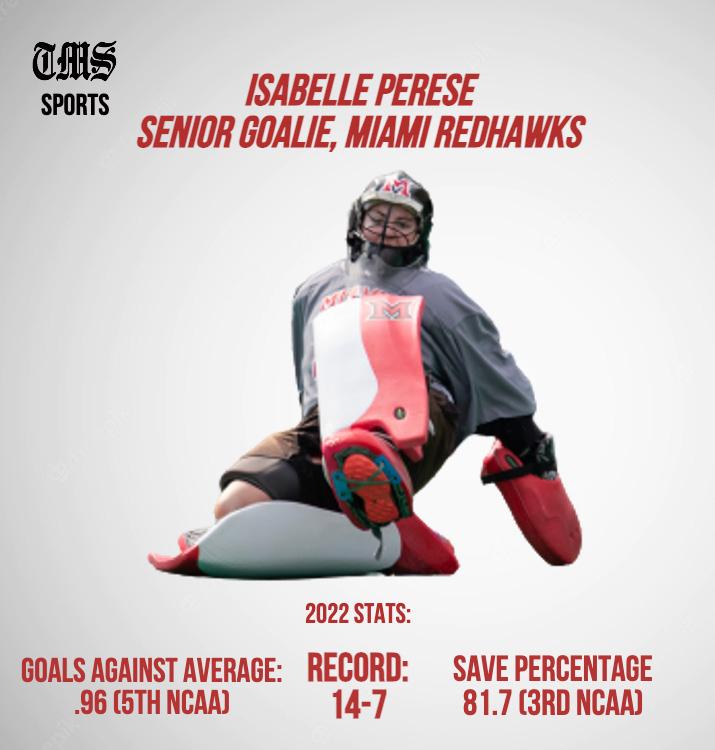
Every year Perese has been here, Miami has won both the regular season and tournament championships of the Mid-American Conference. Perese, the team’s last line of defense, has had to be extraordinarily consistent and clutch for her team to have such a reign of dominance.
This year has been her best season yet. She holds the National College Athletics Association’s (NCAA) third-highest save percentage at 81.3%, and she’s fifth-best in the country with a .991 goals against average. Perese has always been excellent, but this year she might be the best.
“I feel good, having four years under my belt stopping college shots,” Perese said. “Also, we got a new assistant coach this year, and he kind of focuses on the goalies. He brought a different level of competition and kind of shook things up. He’s made me really want to compete with myself and try to be better every day. I think he had a major impact on it.”
confidence to have more of a voice on the team. I’m trying to step into that role even if it’s not always, like, super comfortable.”
Nearly four years into her college career, Perese has seen and done a lot. Some people say that the grind of being a student athlete isn’t worth it. Perese is not one of those people.
“I’ve always been someone who has to be busy all the time,” she said. “It’s held me super accountable to academics and everything. I don’t feel like I really missed out on anything either. It’s just given so much back to me. I wouldn’t trade it for the world. I feel like it’s such a unique experience that not that many people get to do. So hopefully when I’m old and gray I get to tell my grandchildren that I played a division I sport. And maybe they’ll think it’s cool?”
After she graduates, Perese plans to become an elementary school special education teacher. She might coach field hockey too.
“I do think about that,” she said. “The teacher-coach is just such a pairing. I’m thinking that I’ll be done with school at like 4 p.m. So what am I gonna do?”
She just doesn’t know where she wants to go yet.
“I mean, I’m from Columbus, and then I went to school in Ohio. So ideally I’d like to go somewhere else and just see a different part of the country,” Perese said. “But my whole family’s in Columbus. I don’t know if I’d be able to leave that.”
Whenever her field hockey career comes to an end, Perese will miss it. Some parts of the college field hockey experience are nearly impossible to replicate.
WILL KEHRES THE MIAMI STUDENT
Excitement is building within Miami University’s football program surrounding the return of EA Sports’ NCAA Football video game.
EA’s college football game was a very successful project. It didn’t garner the international popularity of other EA hits like Madden, but you don’t have to look far on social media to find people still obsessed with it. However, EA hasn’t released the game since 2013 because of regulations which prohibited the company from using the names, images, and likenesses of real players.
Starting junior quarterback Brett Gabbert has fond memories of playing EA’s NCAA Football during his childhood.
“I probably played NCAA 10, 11, 12 and 13,” Gabbert said. “I would actually play as my older brothers a little bit, so those are some fond memories for me.”
On July 1, 2021, the National Collegiate Athletic Association (NCAA)
introduced a new policy for name, image, and likeness (NIL) regulation that permits student-athletes to monetize their NIL. The move rocked the college football landscape. Many players immediately began capitalizing on the new opportunities to be compensated for the use of their NIL, with those in the top national programs receiving huge sums of money for various endorsement deals.
The developments have sparked a debate within college football surrounding the implications of the new policy. While supporters point out the economic benefits for players, critics argue that the new financial motives will create widespread issues, citing the excessive use of the transfer portal that has already taken shape.
“I personally don’t really partake in [NIL deals], but I do think that it is great that college athletes are earning well deserved money,” Gabbert said.
While the effects of the new NIL policy have been less dramatic for players at schools such as Miami, it has opened the door for NCAA Football to make a return. With the new
NCAA Football game set to release soon, many Miami players are excited about the prospect of being included.
“It would be pretty cool,” Gabbert said. “It’s something you grow up thinking about, playing college football. If the game does end up coming out, it’ll be kind of cool to see myself in a video game and to have other people play as me.”
Other players, such as junior defensive lineman Austin Ertl, share Gabbert’s enthusiasm about the pending release.
“Yeah, I think it would be really cool,” Ertl said. “I think it’s something that is pretty surreal. If you think about it, no matter the circumstances, being in a video game is pretty awesome, so I’m looking forward to it. Hopefully the game comes out when they say it does. I think it’ll be pretty darn cool.”
Currently, EA Sports plans to release its new NCAA Football game in July 2023.
@willkehres kehreswe@miamioh.edu
In field hockey, the goalie has a pretty tough job. The net Perese protects is seven feet tall and 12 feet wide. If you’ve never felt a field hockey ball, just trust me: they are heavy and solid.
And wouldn’t it be scary to be in Perese’s position? Standing back in that net alone. The hopes of the entire team resting on your shoulders.
“It can feel a little isolating at times,” Perese said. “I mean, during the game, I always try to keep super focused and not get distracted. Our defense is really good though, so there’s time’s where I’m not getting a ton of action. Sometimes I have to be like ‘Okay, stop.’ I can’t let my mind wander.”
When a goalie messes up, everyone notices.
“When multiple goals happen you have to reset super quickly,” Perese said. “You have to forget about it. We say ‘goldfish mentality.’”
But for goalies, there are good feelings too.
“Every first shot, if I can make a good save, my nerves just disappear,” Perese said. “It’s like ‘I’m good now’”
It doesn’t take long watching a Miami field hockey game to realize that Perese is a leader on the field. She directs traffic with her stick and calls out to teammates who can’t see the whole field like she can.
“I don’t think leading from a vocal standpoint comes super naturally to me,” Perese said. “I try to lead more by example, just working hard and hoping others follow. But being a goalie, it’s a really vocal position. I’m super loud and obnoxious on the field. My teammates are probably like ‘shut up, like just be quiet.’ But I feel like as I’ve gotten older, [Head Coach Iñako Puzo] has given me the
“I’m always thinking of ways to compete, like what intramural can I play?” she said. “But I don’t think I can replicate the team anywhere. I can’t imagine anything like that.”
But Perese still has another season of eligibility remaining after this one due to the pandemic year. She’s still not sure if she’s going to take it.
“I feel like it’d be pretty hard to walk away from the game if I still have more to give,” Perese said.
Perese doesn’t know what’s in store for her over the next twelve months, but she does know how she’ll be approaching every game of this week’s NCAA tournament.
“You just never know when it could be your last game. That’s something we always talk about. Play every game like it’s your last,” she said
She seems more worried about how her parents will handle her final game, whenever it comes.
“It’s been a part of my life and my family’s lives for so long. My parents never miss a game, they’re my biggest supporter,” Before Perese has to think about any of that though, her RedHawks have the chance to make a name for themselves, with the NCAA tournament starting this week.
Last year, the RedHawks made it to the sweet-sixteen where they lost in a heartbreaking last-minute comeback to No. 3 Michigan.
“It was terrible,” Perese said. “We think about it all the time. We’re never gonna forget that feeling, and we’re gonna do our best to never let that happen again.”
Perese and the ’Hawks start the tournament slate off on Wednesday, Nov. 9 against Rider in Evanston, Ill. If they win that, they’ll move on to play No. 3 Northwestern on Friday.
@jackschmelznger schmelj2@miamioh.edu THURSDAY, NOVEMBER 10, 2022
10
sports
EA’s NCAA Football is coming
and
Are you a: • writer • photographer • designer • or illustrator? Visit miamistudent.net to Join the TMS Team!
back
Miami football players are excited about it
GRAPHIC BY JACK SCHMELZINGER AND JAKE RUFFER
Third quarter Xavier run hands RedHawks opening loss
STEVEN PEPPER STAFF WRITER
The Miami University women’s basketball team lost its season opener at home on Monday night to the Xavier Musketeers 87-68. The game was close until the Musketeers went on a 20-4 run in the last 5:21 of the third quarter.
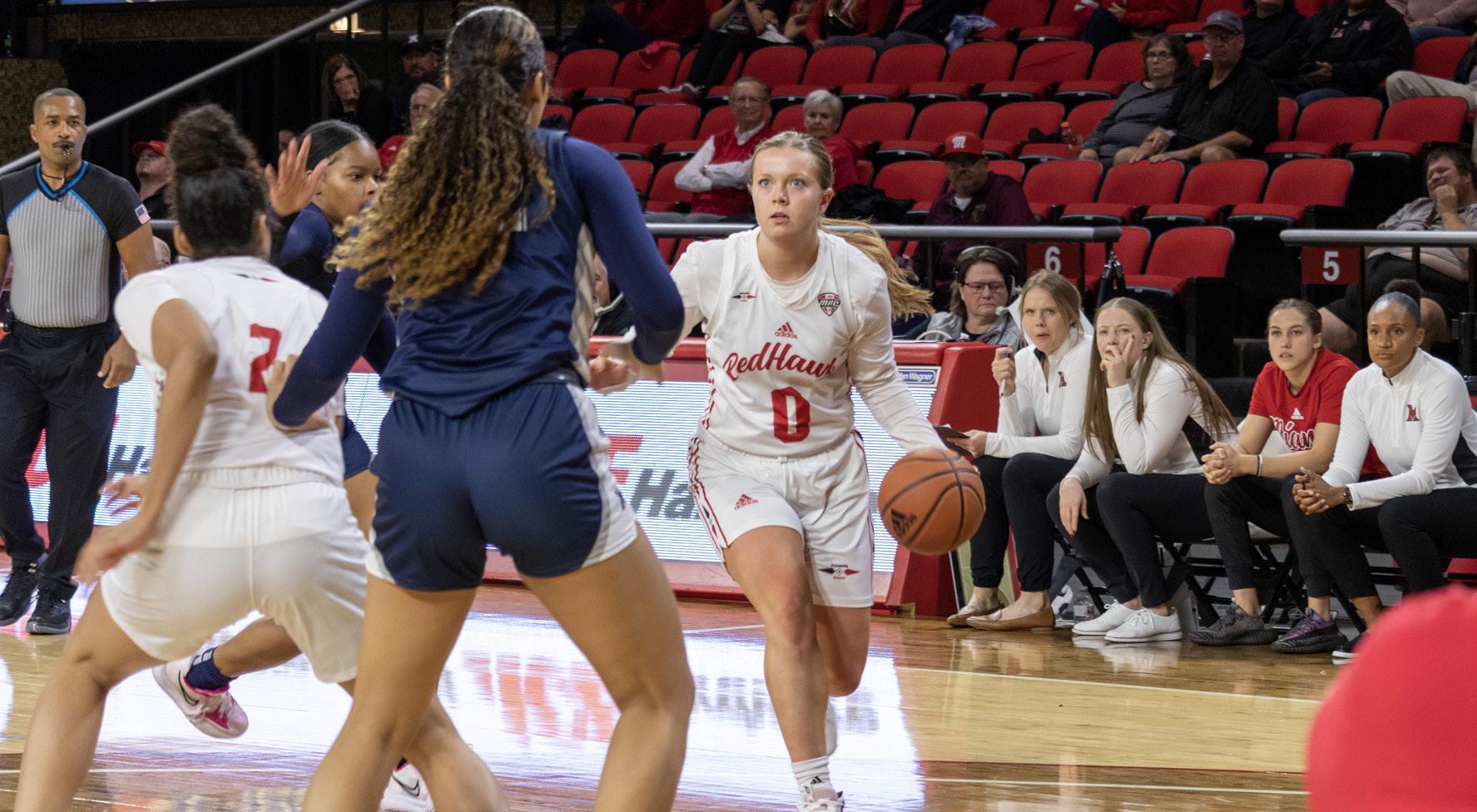
Most of the RedHawks’ game was sloppy. Their 23 turnovers and 18 fouls opened the door for many Musketeer opportunities.
The ‘Hawks got on the board early with a backdoor cut layup from sophomore guard Maddie Cluse.
Cluse was spectacular on Monday, leading the team in scoring with a career-high 24 points. She had moments where she would take over the game. When Miami was down 9-5 in the first quarter, she went on a personal 7-0 run within a minute.
Sophomore guard Ivy Wolf sank a mid-range pull-up with nine seconds left in the opening frame to end the quarter tied at 14.
Wolf had a lot on her plate.
With star senior guard Peyton Scott still recovering from injury, Wolf played all but four minutes, because the RedHawks wanted to keep a ball handler on the floor. Scott scored 28 points in a 77-73 road victory at Xavier last year.
Wolf finished with 17 points and a career-high six steals. However, the demand on her to carry the load might have been too much, as she shot 5/19 from the field and 1/7 from three.
The RedHawks muscled together a 13-4 run, sparked by two tough finishes from Cluse around the basket, to go up 30-25.
However, sophomore Xavier guard Kaysia Woods hit multiple jumpers in a 10-straight point Musketeer response. Four RedHawks and two Musketeers made free throws at the end of the half made the halftime score 37-34 in favor of the visitors.
In a halftime interview with ESPN, Miami head coach DeUnna Hendrix said that turnovers and fouls were the reason why the team was behind.
The RedHawks had 15 first-half turnovers. Last season, the team averaged 17.8 per game.
The match was close because the Musketeers were sloppy early on as well. They finished the game with 21 turnovers and 19 fouls.
The RedHawks did battle with the Musketeers for the first five minutes of the second half. Wolf shook off two quick misses and locked in. Her defensive pressure forced multiple turnovers, which led to points, including two consecutive jumpers from her to go up 45-44.
However, when Xavier reduced the negative plays, they gained momentum quickly and made it challenging for Miami to come back. The Musketeers went on a 20-4 run to close the third quarter 64-49.
Foul trouble severely hurt the RedHawks in the third quarter. Cluse picked up her fourth foul 72 seconds into the third, and Hendrix kept her out until the fourth.
Without Scott and now Cluse, no one on the floor was able to string a couple of buckets together, especially once Wolf cooled off. The RedHawks missed their last five field goals during the Musketeer push.
Junior forward Sierra Morrow also checked out early in the third with four fouls, and the RedHawks defense felt her absence. Without North Iowa Community College’s 2021 leading shot blocker on the court, the Musketeers found more success in the paint.
Cluse checked back in at the beginning of the fourth, and it seemed like she could not wait to get back onto the floor. On the team’s first possession, she grabbed an offensive rebound off a missed free throw and converted on an and-one. Then she connected on two of her next three triples to cut the lead down to single digits at 73-64 with 6:20 remaining.
Unfortunately, Musketeer junior guard Mackayla Scarlett’s hot hand scored 10 points on perfect efficiency in the final quarter to extend their lead to the end.
The RedHawks (0-1) are on an 8-game losing streak dating back to the end of last season. They look to bring back winning energy to the locker room this Friday at home against Vermont. Tip-off is tossed at 10:15 a.m. You can watch the game on ESPN+.
@stevenpepper38 pepperse@miamioh.edu
Upcoming Miami athletics schedule

Passing
Brett Gabbert (74/115, 816 yards, 4 touchdowns)
Aveon Smith (64/121, 735 yards, 7 touchdowns, 4 interceptions)
Rushing
Keyon Mozee (106 rushes, 455 yards, 2 touchdowns)
Aveon Smith (63 rushes, 314 yards, 3 touchdowns)
Tyre Shelton (54 rushes, 231 yards, 3 touchdowns)
Kevin Davis (41 rushes, 220 yards, 1 touchdowns)
Receiving
Mac Hippenhammer (41 receptions, 551 yards, 7 touchdowns)
Miles Marshall (19 receptions, 296 yards, 1 touchdown)
Jack Coldiron (21 receptions, 248 yards, 1 touchdown)
Defense
Interceptions: Yahsyn McKee(2), Jacquez Warren (2), Ryan McWood, John Saunders Jr., Eli Blakely
Sacks: Corey Suttle (5), Brian Ugwu (5) Matt Salopek (3.5), Caiden Woullard (3.0)
Tackles for loss: Salopeck (5.5), Wise (4.5), Woullard (4), McWood (4)
Tackles: McWood (99), Salopek (87), Michael Dowell (77), Warren (46), Saunders (44)
Miami hockey alumnus Andy Greene announces retirement
JEFFREY MIDDLETON THE MIAMI STUDENT
On Oct. 12, 2022, Miami RedHawk hockey alumnus Andy Greene announced his retirement from the National Hockey League (NHL) after signing a one-day contract with the New Jersey Devils.
Greene spent his last two full seasons with the New York Islanders after being moved at the trade deadline in 2020 from the Devils, where he spent 14 of his 16 years. He played a total of 1,057 NHL games.
Despite not being the most skilled offensively, Greene was a defenseman that every coach could rely on. He averaged just over 21 minutes per game for his NHL career, with his highest average being 24:35 in 2013-14.
Before eating minutes for Stanley Cup contending teams in the NHL, Greene spent four years playing for the Miami RedHawks, from 2002-2006. He was Miami’s captain in his junior and senior seasons.
Greene won a Central Collegiate Hockey Association (CCHA) title with the Redhawks and advanced to the NCAA Tournament twice in 2004 and 2006.
Additionally, Greene was selected as a second-team All-American in 2005 and first-team All-American in 2006. He also won the CCHA Best Offensive Defenseman award in 2004-05 and 2005-06. He was a Hobey Baker finalist his senior season.
However, these awards and experiences wouldn’t have happened if Greene didn’t fall in love with Miami on his recruiting visit.
“Once you step foot on [Miami’s] campus, it’s a beautiful place, and I just had a good feeling when I went down there,” Greene said. “Obviously, it worked out for the best. Everything I had heard about Miami was true, and once I stepped foot there, I loved every second after that.”
Miami offered a lot, according to Greene.
“I thought it was a great opportunity to meet new people and start a new chapter fresh,” Greene said. “Going in, I thought I could be a good player and really establish this as a big-time program. I felt like I could be a part of the solution.”
However, a program with pedigree doesn’t build itself.
“We wanted to build a culture there that the guys enjoyed,” Greene said. “The guys held each other accountable, and we worked hard for each other and played hard for each other, and truly enjoyed hanging out together. We tried to make it as close to a family as possible.”
Current RedHawks hockey Head Coach Chris Bergeron was an assis-
tant coach during Greene’s time at Miami. Bergeron provided nothing but praise after Greene announced his retirement from the NHL.
“I speak on behalf of anybody who knows Andy, within the Miami Hockey program or not, but he is such a fantastic human being, and we wish him nothing but the best in his retirement...we’re just so proud of him and what a great career,” Bergeron said. “Hopefully, he can sit back and celebrate it a little bit because he deserves it.”
Greene had plenty of good things to say about his former coach too, highlighting the tough-love nature of Bergeron and his coaching style.
“He’s very passionate and very demanding, but in a good way,” Greene said. “He’s someone that loves the program. He puts his whole heart into it. He did back then, and I know he’s still doing that today. It was something that I always appreciated. The passion he has and how much he cares not just about the program but for you as a player. It was awesome to have, and I always appreciated it.”
Greene was inducted into the Miami Athletics Hall of Fame in 2019, helping to seal his legacy as one of the most influential players ever to don the red and white.
“It was a huge honor,” Greene said. “You don’t go in [to the program] and think I want to go to the hall of fame. You just want to be a good player and try to be the best you can be. Being recognized for that and be among people that are in there before me and that will continue to be elected in there, it was just a huge honor”.
However, as much as Greene looks fondly back on the induction, it’s not what he is most proud of. Instead, it’s his academic pursuits that have stuck with him over the years.
“I think the best part of that was being able to earn and get my degree,” he said. “It took me a while to get it, but I did get it. I always said I’d finish my degree and graduate from there, and that is something you can never take away.”
Greene’s legacy with the RedHawks lives on. He made his mark in Oxford and did great things in the NHL, carrying the values he learned from Miami into the professional scene.
It’s impossible to attribute the growth of a program to one player, but the RedHawks’ hockey story wouldn’t be close to what it is today without the impact of Greene’s leadership on and off the ice.
@jjmid04 middleje@miamioh.edu
Miami soccer stats leaders
THURSDAY, NOVEMBER 10, 2022 11
Miami
Leaders EAST Ohio BGSU Buffalo Kent St. Miami Akron WEST Toledo Ball St. Easter Mich. Western Mich. Central Mich. Northern Ill Miami hockey stats leaders Player Games Goals Assists #22 Joe Casetti 10 5 3 #29 Matt Barbolini 8 4 4 #19 Red Savage 10 3 4 #13 Max Dukovac 10 1 6 #8 PJ Fletcher 10 2 4 #32 Ludvig Persson, goalie (4 wins, .913 save percentage, 2.79 goals against average) Conf 5-1 4-1 4-1 2-3 2-4 0-6 CONF 4-1 3-2 3-3 2-3 2-3 1-4 Overall 7-3 5-4 5-4 3-6 4-6 1-9 Overall 6-3 5-4 6-4 3-6 3-6 2-7 Mid-American Conference football standings Miami hockey stats leaders Miami field hockey stats leaders (all through 21 games) Player goals assists #9 Claudia Negrete Garcia 13 6 #13 Paula Peña Martinez 16 0 #18 Luli Rosso 5 11 #55 Macy Mchale 1 11 #16 Katherine Groff 3 2 #28 Isabelle Perese, goalie (13 wins, 147 shots faced, 16 goals allowed, .99 goals per game (6th NCAA))
Player games goals assists #11 Camber Hayes 20 1 8 #22 Makenna Morrison 19 5 1 #33 Madeline Schlecht 19 5 0 #15 Norah Roush 17 3 0 #32 Taylor Hamlett 10 3 0 #1 Izzie Vaccari, goalie (20 games, 91 shots faced, 14 goals allowed, .70 goals per game)
Kills: Allyson Severance (293), Ellie Hanson (230), Abby Stratford (144) Assists: Hayden Hicks (552), Lydia Harper (257), Grace Norris (100) Digs: Ellie Hanson (219), Brooke Jackson (218), Allyson Severance (196) Blocks: Maggie McCrary (12), Gentry Warrick (7), two tied (5) Blocks: Maggie McCrary (9), Gentry Warrick (4), two tied (3)
Football Stats
Miami volleyball stats leaders (through 26 games)
MAC field hockey final standings Conf Overall Miami 6-1 13-7 Kent St. 6-1 9-9 Appalachian St. 5-2 13-5 Ball St. 4-3 7-12 Ohio 3-4 8-9 Longwood 2-5 5-12 Bellarmine 2-5 4-15 Central Michigan 0-7 2-16
SOPHOMORE GUARD CLARE CHAMBERS SIZES UP A XAVIER MUSKATEER IN THE TEAMS OPENING GAME PHOTO BY JAKE RUFFER
So your candidates lost...
only two options, this is common. Not just for me, but for most Americans.
This past Election Day was my second experience voting in Ohio and my second experience of overwhelming disappointment.
Sam Lawrence lost. Vanessa Enoch lost. Tim Ryan lost. Nan Whaley lost. It’s disheartening.
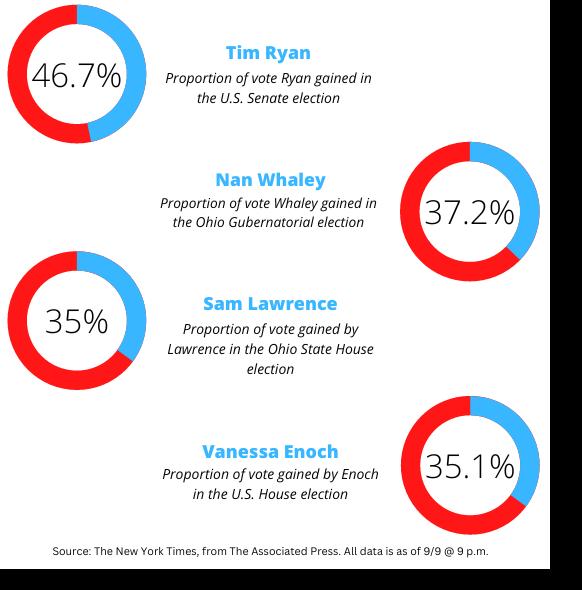
But giving up is never the answer to this frustration.
I’m not the only left-leaning person in Oxford who wanted a better Election Day result. Thousands of people in Butler County were disappointed and will continue to see a red trend in this district.
However, it is crucially important to keep caring.
Even though every election is touted as “the most important election of our lives,” making each election feel more trivial than the last, the tagline is always true.
Whether you’re a Democrat in rural Oxford or a Republican in urban Cleveland, you need to keep showing up, keep organizing and keep voting
We saw evidence of higher turnout this past election day than we do at most midterms. Democrats flipped the Republican Pat Toomey’s senate seat in Pennsylvania. Republicans flipped Sean Patrick Maloney’s House seat in New York. A Democrat retained her Governorship in Kansas
These were huge wins, and not expected outcomes of the 2022 election.
Even Rep. Lauren Boebert might not win her district in Colorado.
Record turnout in Georgia in 2020 led the once-Republican stronghold to become a battleground for the presidential election, and again this midterm election, sending the senate election to its second runoff in a row.
That only happened because Democrats in Georgia decided it was time to make a difference.
It’s all about turnout. It’s about the decision to believe that one person can make a difference.
antee that nothing will change. Look at Georgia, at Colorado, at Pennsylvania, at New York or at Kansas, and see that nothing stays the same when people don’t give up.
Don’t stay disheartened. Get pissed.
Decide to make a difference. Help your candidate canvass the next election cycle. Donate. Get out there.
I’m pissed that my candidates lost. I’m pissed that the Talawanda School Levy failed. I’m pissed that a state constitutional amendment requires citizenship as a requirement to vote in local Ohio elections.
But that doesn’t mean I’m giving up. In fact, it means I care even more now.
So none of your candidates won on Election Day…
Do something about it.
ankendw@miamioh.edu
DEVIN ANKENEY, ASST. OPINION EDITOR
As a leftist independent stuck voting for the Democratic party as the lesser of two evils in a heavily Republican district in Ohio, election night
GRAPHIC BY DEVIN ANKENEY
can be wildly disappointing. But that doesn’t mean I’ll stop caring, paying attention or voting.
From my count, not a single candidate for whom I voted actually won their respective election. In a political sphere where there are most often
All elections — nay, every individual election is the most important of our lives. Voting is the most important function of a democracy, and continuing to vote is the only way to make a difference, even if nothing changes in your district for a long, long time.
There are no surprises or changes without effort, mobilization and care.
You might have watched local Ohio coverage this past election night and felt defeated. You might feel that it isn’t worth caring for anymore, that it will never change.
Giving up is the only way to guar-
Stop cliquing, start forgiving
TEDDY JOHNSON CO-HUMOR EDITOR
In my almost three semesters at Miami University, I cannot help but notice the overwhelming cliquiness of our campus culture.
It seems as though if you are “in” you are in, and if you are “out” if you are out. Once you find that first group of friends your freshman year, you cannot leave that group or socialize with other groups without being ostracized by your “original” friends.
Or if you are in an athletic team, student organization, fraternity, sorority, etc., those are your friends. That’s final.
It can be seen in residence halls, homes, student organization offices, dining halls and pretty much everywhere.
By the time I started socializing my
first year, everyone had already established their friend groups, leaving me struggling to make new friends.
Okay, I get it. You don’t want to be the person who throws off the “group dynamic” or brings in the annoying new person. But what if they end up enhancing the group? Does that person not deserve a chance?
How about second chances?
Those seem to be non-existent anymore in friend groups, and clique culture contributes to that.
Some of my dearest friends have been exiled from friend groups because of one mistake they made. What kind of place would the world be if people did not forgive each other?
Nobody is perfect. It’s that simple. And you wouldn’t want to be cut out for one little thing, so why would you willingly do that to somebody else?
Don’t blame yourself for climate change
I think most of us can agree that Miami is like a bubble. But within that bubble are numerous other clique bubbles — where people hang out with the same people, and their thoughts, opinions, hopes and dreams echo around that bubble and hold steadfast.
Insanity can be defined as doing the same thing over and over again, but expecting a different result each time. That is what you are doing by hanging out with the same people. You will not grow as a person by exposing yourself to the same people on a daily basis.
The Miami Bubble, as I call it, leads to a campus culture where so many people are the same. I do not feel like enough people are open to making new friends, hearing new thoughts or trying to understand other people’s experiences, and it breaks
my heart.
I know when you graduate you want to say, “These were my best friends and we did absolutely everything together,” and that’s fine!
But be willing to make new friends! Hang out with new people! Explore other friend groups! By constantly staying with the same people, you may be missing out on someone who could be your future best friend or even Miami Merger.
Excluding people and sticking with your cliques will not get you anywhere in life. People remember how you treated them and you could be excluding someone who could help you down the line or have a huge impact on your life.
I pride myself on being able to be a part of many different groups of people, and I encourage readers to try the same. I have my TMS friends,
hall friends, work friends, going-out friends, gym friends and more. Trust me, it is okay to hang out with lots of people. It will make you a much more well-rounded person and you will feel more connected to the Miami student body.
We need to build a stronger sense of community on this campus, and that starts with you.
Be more inclusive. Take risks on a new person. Be vulnerable. Try new things. Try something differently. Stop being so cliquey and give people a chance.
john1595@miamioh.edu
SAM NORTON COLUMNIST
Did you know that there are websites where you can calculate your carbon footprint? Once you input every little aspect of your day into one of these calculators, you will be given an estimate of the amount of emissions you are responsible for on a daily basis.
Shame on you — you should feel terrible about how much you are contributing to global warming, right?
These websites can be found all over the internet, published by many different sources. These sites ask the user to input all potential areas in which they have determined any normal person may be responsible for carbon emissions.

Although these calculators seem to be an innocent way to cut down on your emissions, the story behind them is much more complex.
Carbon footprint calculators appeared as early as 2004, popularized by a surprising industry — big oil itself, specifically the British Petroleum
(BP) company. Advertised as a way to show that these companies cared about the environment, it was in fact a subtle way to push the blame for the climate crisis off of themselves and onto the average citizen.
Not only can these be misleading in the actual numbers the websites calculate for individuals, but the sites are also misleading as to what the real problem is. These calculators place normal people in the hot seat, claiming them to be the reason behind the planet’s unprecedented warming, while the oil companies that create the actual problems hide behind a facade of false sustainability.
I was reminded of this intrinsic difference between the wastes of individual people and large corporations this past week due to the Student Sustainability Council’s fall 2022 Sustainability Week. It got me thinking about how much push there has been in the last several years to educate people on how to live more sustainably.
Now, don’t get me wrong, I support this education and this promo-
tion of a sustainable way of living, 100%. I do my best every day to be the least wasteful as possible in all aspects.
However, I believe that there needs to be a change in the motivation behind this lifestyle.
Your decision to change to a greener lifestyle should not come from a place of guilt, but rather a place of willingness. You should want to live more sustainably, not because you feel you will be to blame for a future climate disaster. Do it because you love nature, because it can be cheaper, or just because it makes you feel better about how you interact with the environment.
Large groups of people coming together to change their ways can lead to tremendous changes, no doubt, but we cannot take all of the responsibility onto ourselves to fix the planet. It is this self-criticism that allows these industries and companies to continue their harmful practices.
The term for merely putting on a show of environmental consciousness has been labeled “greenwash-
ing.” This is an accurate term for companies such as BP, because while many fossil fuel companies try to pacify ever-growing public concern over dangerous carbon emissions, BP is still funneling hundreds of millions of dollars into political lobbying just in the U.S. alone.
What this does is allow the large companies, like BP, to fly under the radar. Lest we forget, only 100 companies are responsible for 71% of global emissions. That is where the real challenge in tackling climate change lies.
It is when we force these companies to own up to their impact and change their business practices that we will see the biggest results. This can be done by electing candidates who do not accept money from fossil fuel lobbyists, voting with your dollar – which is the practice of being more conscious of what and from whom you purchase – and holding these companies accountable for their actions.
Lots of people have a lot of anxiety about the future of our global envi-
ronment and the consequences that may arise. Some reports say we are past the point of no return, some say we still have a few years and some still say that we will be fine in the end.
There is so much data and so many different proposed outcomes that it can be quite overwhelming to digest it all. The acknowledgment that humans are hurting the environment and the willingness to try to fix it is good, but becoming too wrapped up in fear and guilt is not.
As university students, we will all soon be entering the real world, with much more freedom and many more choices in how we live our lives. As we enter this stage of our lives, let us be conscious of our waste and care for our planet.
But do not forget who the real problem is, or the real way to create change.
THURSDAY, NOVEMBER 10, 2022 Opinion 12
nortonsm@miamioh.edu
GRAPHIC BY AMES RADWAN
only year two...
ANNA CALES THE MIAMI STUDENT

You know what they say: in college, you’ll figure out who you are and what you want to do for the rest of your life. But honestly, I think that’s far from the truth. If anything, college has made me have an identity crisis.
Sure, college has a plethora of majors and minors that are supposed to help gear you towards your destined future. And yes, this might be pretty encouraging if you go into college without the slightest idea of what you want to study.
But with so many options, it’s so overwhelming.
How am I supposed to know what I really want to do when I don’t even have time to try out everything? What if I spend every semester up until my last studying something I thought I wanted but it turns out I don’t?
These kinds of thoughts haunt me
every day.
I went into college knowing that I wanted to study journalism — I love writing, I absolutely despise math and I love having a creative outlet.
My first semester of college was last fall. I took Sociology of Gender (SOC/WGS 203), and I really enjoyed it. It opened my eyes to sexist bias not only in society but also in the media. This led me to think about adding a women’s and gender studies (WGS) double major — which I just did, by the way.
Things seem to have sorted themselves out now, but last fall, I was rethinking everything.
I fell down this rabbit hole of wondering if I should even major in journalism.
“Should I just major in WGS and minor in journalism? Should I replace journalism with a strategic communication or a media and communication major instead? Or what about adding graphic design or film
How am I already having an identity crisis?
studies?”
Thoughts like these were often on my mind.
I went into my first semester thinking I knew exactly what I wanted out of college, but by fall break, I had absolutely no idea.
My next course of action wasn’t crazy or innovative in any way: I just talked to my academic advisor. We decided that I should take both journalism and WGS classes spring semester to help me make up my mind.
Honestly, that felt like such an easy solution that I must’ve been crazy to ask for help. But really, I’m one of those people that just needed some kind of plan more than anything else.
And asking for help is never a bad thing.
My next semester went well. I took an assortment of classes relating to journalism and WGS. I felt more confident about my first idea to add a WGS double major. Unfortunately, I did take an anthropology course and
started thinking what-if’s again.
But, honestly, I think that’s part of it. Some of your mind is always going to wonder, “What if?”
I could never in a million years be a woman in STEM, but part of me does wonder what it would be like.
I probably will never take a class in Farmer while I’m here, but I do think about that possible businesslike version of me.
You’re probably never going to be 100% certain in any choices you make, especially in college (unless you’re somehow just that sure of yourself).
Deep down, I knew that I didn’t want to stray from journalism, no matter how many other interests I discovered. I was just doubting myself.
It’s scary knowing that your major is supposed to be what you stick with for the rest of your life. That’s a big decision. I’d like to think that the majority of the time, people ultimate-
ly do make the right decision.
I know this isn’t always the case, and it may take some trial and error, but you typically end up with something that suits you best.
Plus, college isn’t everything. Plenty of people go into fields not relating at all to their college major after graduation.
This isn’t to say that you won’t have an identity crisis in college because, if I had to guess, you probably will. But that’s okay. It’s okay to make sure what you’re pursuing is what you really want. It’s okay to wonder what a STEM version of you would be like even if you know you could never do that.
I have identity crises almost every month, but I’m finally starting to feel like I’ve made the best decision possible for myself.
calesae@miamioh.edu
really nothing to do in Oxford:’
There’s a lot more than you think
RILEY CRABTREE THE MIAMI STUDENT
I’ve heard it a lot since I came to Miami University: “There’s really nothing to do in Oxford.” Is there really not anything to do, or are we just not looking in the right places?
I would argue the latter is true.
Oxford is a small town. There’s absolutely no argument about that coming from me. I’ve been here during the summer months and the town feels practically vacant.
As a person who has lived in a small town their entire life (my hometown has a population of around 6,000), I feel I should share my hacks and tricks for finding events and places to visit locally.
Before I came to college this fall, I looked at all the events on websites like Enjoy Oxford and Miami Activi-
ties and Programming (MAP). Just within the first few weeks of being in Oxford, I was able to watch Shakespeare in the Park, attend the Jennette McCurdy Q&A and go shopping Uptown at the local boutiques.
I didn’t even know about all the residence hall events, like Stanton’s awesome Scary-oke night, or all the campus outreach from clubs like Hillel and the Associated Student Government Inclusion Forum, but I do now.
Through these events, I’ve met a large variety of students with different backgrounds, majors and experiences, but I’ve also met a lot of students I can relate to and now call some of my best friends. I’ve even been able to network and meet people with similar career interests who are able to connect me with promising opportunities for internships and job experiences.
It’s safe to say I have had an eventful time ever since I first came here.
Beyond my own experiences so far, there are also a lot of places I want to check out in the future.
Uptown there’s You’re Fired Pottery Studio, Future Great Comics and plenty of places for grabbing food. The nightlife Uptown has trivia at places like Top Deck and Church Street Social, Bachelor watch parties and even theme nights.
Uptown Park also frequently hosts farmer’s markets with fresh food and crafts (every Saturday at 9 a.m.), along with music events.
Near campus, there are plenty of opportunities to explore too. Peffer Park and the Conrad Formal Gardens provide an outdoor setting that students can enjoy with friends. Miami has an art museum on Western Campus, a zoology museum located
Fast fashion isn’t your fault, but you can slow down
AVA KALINA COLUMNIST

As a society, we drown our minds and hurl our money into new cars, unlimited food, shoddy furniture and cheap clothes. We have been convinced that we live in a consumer society, and we do. We have been convinced that we are consumers, and we are.
We have been ruining the planet with our purchases and buying from the companies that push unrelenting narratives of trend across media to fulfill our desires for goods, all while exploiting the earth and its people, but it’s not our fault.
Fast fashion exists by fast strategy. The marketing departments of large brands such as Zara, Forever 21, SHEIN and H&M depend and prey on consumers like us to fall into their trap.
The marketing campaigns of retailers are constantly on the radio, on our “For You Pages,” in our texts and flooding our emails. Brands come up in conversations and ‘haul try-on’
videos, trending styles are gawked at in the bathrooms of bars and TikTok shopping guides.
Whether we realize it or not, big brands have infiltrated our lives. Both SHEIN and H&M were the top two spenders in digital fashion advertising for the first half of 2021. We are victims that fall into their traps of relentless consumption.
This summer, Amazon ran an ad campaign that truly disgusted me. As kids were preparing to head back to school, Amazon began mass-driving the slogan “spend less on your kids.”
Their goal was to convince parents to spend less on their kids, because their school supplies won’t last, they’ll outgrow their clothes in a month and everything will be out of style next year anyways.
Face of the campaign, American actress Kathryn Hahn, shook her head in a video commercial ad and degradingly said, “Kids… one year they want all dinosaur stuff, the next camels.”
Spend less on low-quality goods, because you’ll just need to buy your
kid a new trashy backpack next year!
When I was in elementary school I used the same pink, floral Lands End backpack every day until the fifth grade (I was the new girl in fifth grade and wanted to be different so I got a Vera Bradley crossbody briefcase, because it was chic). I took that backpack with me to sleepaway camp, family trips and piano practice, and to this day it’s sitting in the back of my closet — a bit stained and frayed, but perfectly usable.
Back in my day, kids weren’t getting a new backpack every year just because they suddenly had an affinity for camels.
Behind the immoral ad campaigns and the pressure of constant trendiness is the industry’s “race to the bottom,” which is the persistent demand for cheap goods, often accomplished by taking production overseas where factories are filled with cheap labor.
The workers of sweatshops, mostly children and women, are paid outrageously low wages in dangerous conditions. This then raises the question: If we completely stop purchas-
in Upham Hall, and a geology museum in Shideler Hall — all of which I had no idea existed before I just decided to walk around with my friends for fun, which is a great activity on its own, too.
One of the most enjoyable things on campus, in my opinion, is the bevy of sporting events. Football, basketball, hockey and soccer, just to name a few — they’re all insanely fun to watch.
Even if you don’t enjoy the sport itself, being in a crowd of students who are just excited to be there and support other Miamians is an experience in and of itself.
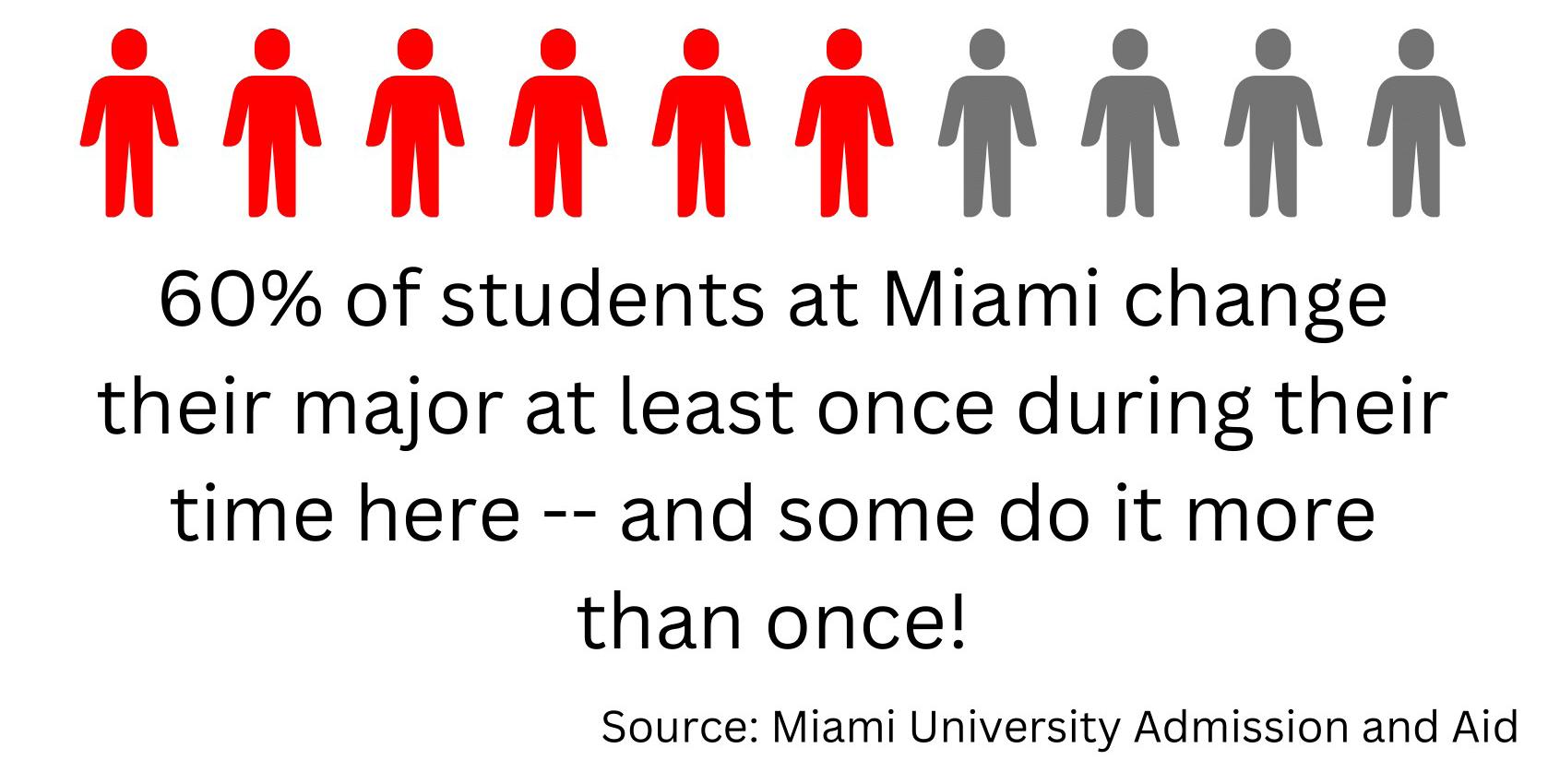
At my first Miami hockey game, I was pleasantly surprised by the amount of support in the student section. Even when the game looked bleak, there was always someone starting a chant to get the crowd loud
again.
I never had that much fun at sporting events in high school and I’m really starting to believe that it’s hard to find that level of enthusiasm and pride in any other community.
I’ve come to discover that Oxford and the Miami community are special places in their own right, with opportunities around every corner. We may not have an amusement park (though MAP will bus students to King’s Island for special events) or an indoor mall, but we have a lot of places and people here in Oxford that make it unique and provide something for everyone to enjoy.
There’s no lack of events or things to do — you just have to explore and enjoy what’s bound to be some of the most memorable years of our lives.
ing from SHEIN, then how will the woman in the factory in India stitching your top feed her children?
The dimensions of guilt associated with fast fashion are deep and multifaceted, and it should not all be placed on the consumer, but we can still work on changing our mindsets.
As a victim of fast fashion, you can fight it by slowing down.
Take the courage to not immediately purchase the new top that everyone is ordering. Wear clothes that make you feel like yourself, that are worn with love, and hopefully made with love too. Although it might seem more expensive at first, buying sustainably can be cheaper in the long term.
Use your purchasing power to support brands that have missions to act ethically and follow through. The website Good On You investigated and rated 4,000 brands on their environmental track records.
We were born into consumer lifestyles, we ingest the advertising everyday in our media and we face the struggle of feeling the need to be ‘in style’ all the time.
Don’t blame yourself, but don’t fall into the trap. Fight fast fashion by slowing down.
THURSDAY, NOVEMBER 10, 2022 13
kalinaae@miamioh.edu
crabtrr@miamioh.edu
‘There’s
It’s
GRAPHIC BY HANNAH POTTS
GRAPHIC BY HANNAH POTTS
GRAPHIC BY AMES RADWAN
Best
TEDDY JOHNSON CO-HUMOR EDITOR
Thanksgiving meals can be incredibly boring. Holding a conversation with family members you didn’t even know you had is always incredibly difficult. But fortunately, I am here. These are the best topics to bring up at Thanksgiving dinner.

Politics
I would be remiss not to mention politics as the perfect topic to bring up at Thanksgiving. Instead of discussing what you are thankful for with your family, you should discuss hot button issues and politics. When your liberal, gender studies major cousin and conservative, gun wielding, toothless uncle start debating if the Jan. 6 attack on the Capital was a protest or a siege,
be sure to thank me.
Tensions will be flaring but the entertainment will be rivaling that of Alabama losing a football game. Sit back, make some popcorn and let the show begin.
Marriage Be sure to tell Great-Grandma Shirley that your 24-year-old cousin, Dany, still isn’t married. Back in her day, she had a husband serving in WWI by 17, six kids by 18 all while working in the factory while the kids were at school. So the fact that your cousin is not married yet is actually preposterous.
If Shirley really gets into it she will start hitting your cousin with her cane and start shouting words you didn’t know were in her vocabulary.
Tattoos
People of older generations are convinced that the only people who have tattoos are criminals. Knowing this fact, please show all the visiting aunts and uncles and grandparents that new tattoo of Kim Kardashian’s face you got on your butt.
Great-Grandpa John will ask what gang you’re in, Grandma Eleanor will likely pass out, and Dad may stop paying for college but hey, it definitely got the conversation going.
Real Jobs
Even though your cousin, James, just graduated from college and has a job waiting tables, that is not a “real job.” According to the rest of the family, he should have his life completely figured out by now. When they were his age, they had 9-5 jobs at the bank
or the office with a 401K and a health care plan set up. Make sure everyone knows he does not have a real job yet.
Religion The time has come. The moment we have all been waiting for. Time to say grace. Grandma will ask for volunteers to say grace. Volunteer your atheist cousin who believes in evolu-
BY ERIN MCGOVERN
tion, not in the Bible’s creation story to lead the pinnacle of the Thanksgiving meal. This will be sure to get the room buzzing. john1595@miamioh.edu
ford, houses an array of students at a university. Miami University as it is called, claims to provide an education equivalent to that of prestigious institutions such as Princeton or Yale. Preposterous.
The time machine needs a day to recharge so I am going to take in the sights of this foreign place.
I must admit that our time traveling adventure left me with quite the appetite so I set out to find something to satisfy my hunger. After wandering around the campus getting some unfriendly stares from students wearing “Lululemon” and drinking “Buck’s Star,” I found a hall of dining.
to which I responded by explaining my current dilemma. Clearly enamored by the bicyclist riding across the street, he moved onto the next person and asked about their classes.
Alas, whilst I am here I should discover something of importance that could help the war effort.
I asked a blue-haired woman where I could find something dangerous and she directed me to the center for student recreation.
depressed. Very intriguing tactic if I must say.
As my time in Oxford neared an end, I decided to find the nearest tavern to consume an ale. I stumbled upon an establishment called Brick Street and got denied the first time because I did not present a university identification to the people guarding the door. Even though I am clearly the eldest person here, I was commanded to “try the front door.”
TEDDY JOHNSON CO-HUMOR EDITOR
If you did not already know, our founding fathers had a time machine they used to help win the American Revolution. In the testing stages, they sent Thomas Jefferson back to the future to learn about the outcome of the war. Unfortunately, he landed in
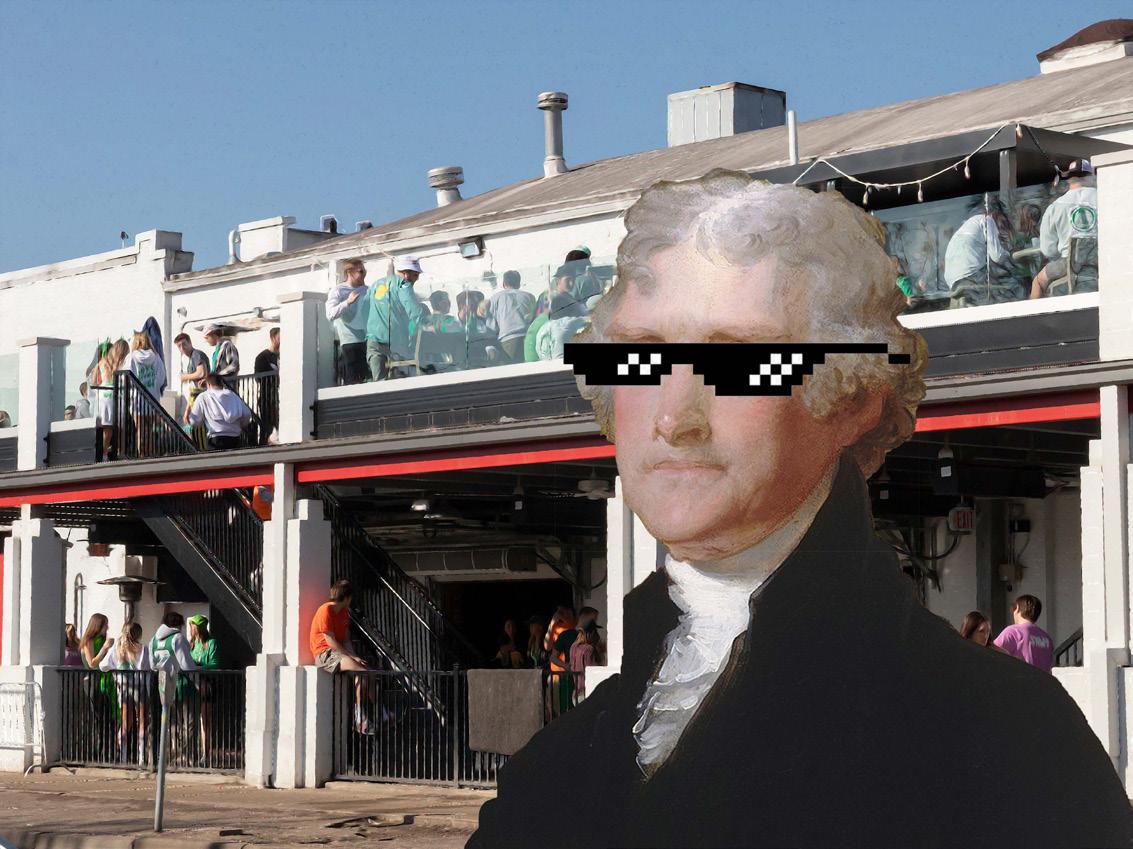
present day Oxford, Ohio.
Recently, Professor Stephen Norris of Miami’s history department uncovered his account of his visit to Oxford. Deep within the walls of Upham Hall, Norris discovered this letter… Dearest Colonial Brethren, I have stumbled upon quite possibly the strangest place I have encountered. This place, known as Ox-
This, “Maplestreet” by no means was a feast. The lines to simply get a slice of bread were longer than my voyage to France! I finally settled with a triangular shaped food called pizza. However, a lock of hair was cooked into the center. Clearly this food was meant for prisoners, vagabonds, and red coats. Disgusting.
Next I visited a man with a shiny bald head who claimed to be the president of the university. He enthusiastically asked me, “How are classes?”
Visiting “the rec” proved to be exactly what I needed. Men the size of tiny houses were lifting stones that must have weighed as much as my horse! I inquired as to how one can gain such strength.
One of the beastly men pointed out a container of powdered substance known as “pre.” He then proceeded to place his left nostril on the jar, and breathed it in. I then did as he did and felt a strange tingling sensation through my body. He gave me a sample to give to our esteemed General Washington. This could be the key to beating those damned redcoats.
Another beastly man told me that the key to lifting heavy stones is being
After a period of time, I was let into the tavern and began to consume ale. I do not recall most of the events that occurred due to the amount of ale and “canned trash” I consumed. However, I do remember hearing a tune talking about the “Pursuit of Happiness.” The only Pursuit of Happiness I know is Life, Liberty and the Pursuit of Happiness which I will incorporate into the Declaration I have been writing.
I look forward to returning back to my Virginia estate and using “pre” to load into my musket.
Regards, Thomas Jefferson
john1595@miamioh.edu
Headline dump Pickup line dump
PATRICK SULLIVAN CO-HUMOR EDITOR
Are you Miami University? Because I want to love and honor you.
Knock Knock. “Who’s there?” Irish. “Irish who?” Irish you’d let me take you out.
Are you from Tennessee? “Because I’m the only 10 you see?” Nah, you’re a hard 6, but I needed to break the ice.
Do you have a bandaid? Because I scraped my knee falling for you.
Can I take a picture of you so I can show Santa exactly what I want for Christmas?
They call me Gaslight because I’ll have you feeling guilty for our entire relationship.
Are you Santa Claus? Because I want to feed you cookies until you’re fat and jolly.
Is your name Herpes? Because you seem like something I won’t be able to get rid of.
Are you a toilet? Because I want to fall asleep on you tonight.
What do you call a super-funny single
person who fears commitment? Me, nice to meet you.
They call me Rapid Fired. Because I’ll satisfy you in a very timely manner.
Do you believe in love at first sight? No? *turn 360 degrees* How about at second sight?
What’s the difference between my bedroom and the Oxford Police Station? You’ll actually enjoy being handcuffed in my bedroom.
They call me Jimmy John’s because I’m freaky fast!
Are you a McDonald’s ice cream machine? Because you look like you’re going to get my hopes up only to break my heart.
Are you a Brick Street trashcan? Because you look like a mistake I’ll gladly make.
They call me Skipper’s. I’m not your first choice, but at least you’re not going home empty handed.
Are you the Pulley Diner line? Because I’d like to take it slow with you.
Professor Shaves
Is Told That Greg Crawford Halloween Costume Is “Too Late”
Resurgence of Pink Feathered Cowboy Hats Means Bad News for Flamingos
“Where Is The Snow?” Asks Out-ofState Student Who Definitely Doesn’t Know Anything About Snow
Students Seeking French Cuisine on Campus Protest “Eiffel” Actually Being a Pizza Place
humor
THURSDAY, NOVEMBER 10, 2022 14
topics to bring up at Thanksgiving
If a founding
were
visit
dinner
father
to
Oxford…
GRAPHIC
GRAPHIC BY MACEY CHAMBERLIN
SULLIVAN CO-HUMOR EDITORS AMES RADWAN FOOD EDITOR Hell is Real People Cancel Thanksgiving Claiming “ALL TURKEYS GO TO HELL” Miami Registration System Once Again Leads To Increase in Anxiety and Fear in Students Opinion: Ohio University is A Wannabe Miami University Student Counseling Services Offers OU Hate Week Workshops For Students to Destress Zach Wilson Slides into Gisele Brady’s DMs Minutes After Divorce Papers With Tom Brady Are Filed Undercover Meth Labs At An All Time Due to Record Number of Breaking Bad Halloween Costumes
The Miami Merger Stat You Were Told In Your Miami Tour is Fake
Study Shows: Size Does
Matter; Hundreds
Turkeys Take Up Arms Ahead of Holidays; Fights Have Broken Out All Over Farms
Want For Christmas
Purchased
TEDDY
JOHNSON PATRICK
BREAKING:
New
Not
Relieved
Man in 6 Year Long Coma Awoken After Hearing Mariah Carey’s All I
Woman Drowns in Too Many “Grateful”Themed Throw Pillows
from TJ Maxx
Head,
ACROSS
2. Miami’s current football coach’s last name 4. Students flock to Brick Street on Saturday afternoons for “Beat the ______”? 8. The ticket-selling service Taylor Swift fans are using 12. Miami student that ran for state house 13. online clothing company known for its low prices and controversial production methods 14. and Honor Cup, Instead of homecoming king and queen, Miami awards the ____________?



DOWN

1. An Italian food with a pocket for holding stuffings 3. The number of Starbucks locations in Oxford 5. Hall, This residence hall is one of the most photographed buildings in Ohio 6. Company building a station in Oxford 7. Star, award Miami recently received for supporting military-affiliated students 9. A Jewish hut used to celebrate the holiday Sukkot 10. This famous scientist shares a name with one of the Crawford’s dogs 11. First name of the ghost said to haunt Peabody
NOW HIRING:
If you have Thursday mornings open, have a car on campus and are willing to travel around Uptown and campus to deliver The Miami Student newspapers every other week, please contact...
Cosette Gunter-Stratton (guntercr@miamioh.edu)
...about becoming TMS’s newspaper distributor. This is a paid position starting as soon as possible or in spring 2023. Email for details!

CROSSWORD
THURSDAY, NOVEMBER 10, 2022 15 FOLLOW US! you know you want
;) Mia m iOH . edu / P e r f ormingAr t s S e r ie s
the
our
@miamistudentmedia @miamistudent @themiamistudent
to
CROSSWORD, 11/10/2022 Look for
answers on
Instagram next Thursday, 11/17!
DISTRIBUTOR TMS
ROBBINS
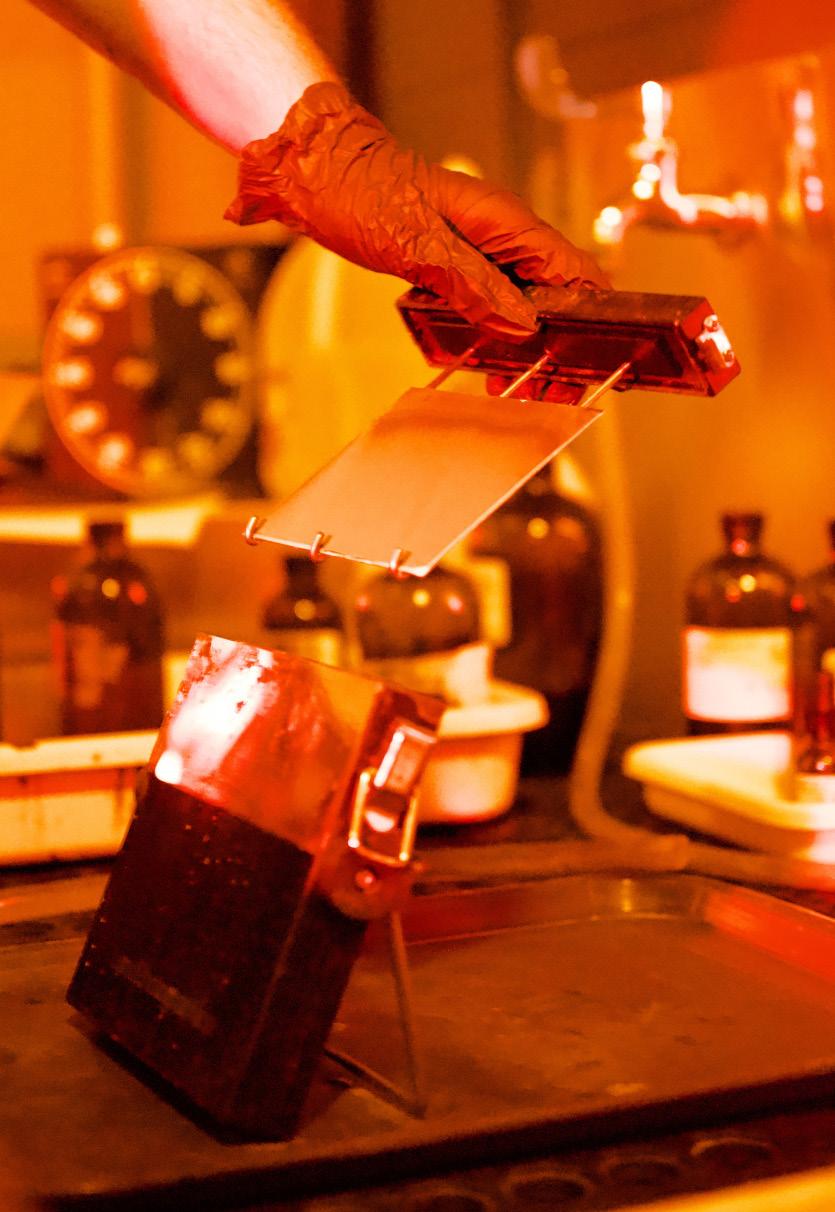
 SARAH FROSCH

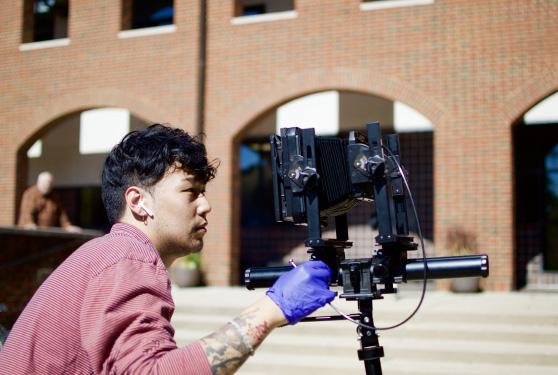

THURSDAY, NOVEMBER 10, 2022 photo story 16
get a picture of the past using vintage photography process
Students
CONTRIBUTOR
CONTRIBUTOR Taking a photograph today is an incredibly simple process — point, shoot and a digital image is instantly saved. It’s a testament to how complex phones and digital cameras have become today. However, the modern method of photography isn’t the only one: Jon Yamashiro’s ART 357 class opens with the wet plate collodion process of photography, slowing down the photographic process to a snail’s pace: Half an hour of work will result in a singular photograph and, as a result, the photographer is much more compelled to think about what they want to capture before taking a picture. Sophomore media and communication major Trace Kuchii experienced the process first-hand in Yamashiro’s class. AFTER MAKING SURE HIS SHOT IS LINED UP, KUCHII PUTS THE HOLDER AND THE PLATE INTO A LARGE FORMAT CAMERA. BECAUSE OF THE LIMITED TIME BETWEEN PREPARING THE PLATE AND THE COLLODION COMPLETELY DRYING, THE CAMERA AND SUBJECT HAD TO BE PREPARED BEFOREHAND.
HENRI
A WET COLLODION CHEMICAL IS APPLIED TO AN ALUMINUM PLATE. THIS CHEMICAL IS THE FIRST COMPONENT OF THE WET-PLATE PROCESS. THIS CHEMICAL SLOWLY HARDENS INTO PLASTIC, AND ALLOWS THE SILVER NITRATE — THE KEY INGREDIENT OF PHOTOGRAPHY — TO STICK TO THE PLATE. HOWEVER, THE PROCESS IS INCREDIBLY TIME-SENSITIVE, BECAUSE THE CHEMICALS CAN’T FULLY DRY; THE PHOTOGRAPHER HAS ONLY MINUTES BEFORE THE PLATE BECOMES UNUSABLE.
AFTER THE COLLODION IS APPLIED, THE PLATE IS LEFT IN A SILVER NITRATE BATH FOR TWO TO THREE MINUTES. THE SILVER NITRATE IS LIGHT SENSITIVE AND, AS SUCH, CANNOT BE EXPOSED DIRECTLY TO LIGHT. INSTEAD, THE PLATE HAS TO BE PROCESSED IN THE DARK UNTIL IT IS PUT INTO A LIGHT-TIGHT HOLDER.
PHOTO BY SARAH FROSCH
PHOTO BY SARAH FROSCH
AFTER PREPARING THE PLATE AND PLACING IT INTO THE CAMERA, KUCHII TAKES THE PHOTO. DUE TO THE LOW SENSITIVITY OF THE METAL PLATE, THE PHOTO WILL USUALLY HAVE TO BE EXPOSED FOR AROUND TWO SECONDS IN BROAD DAYLIGHT. INDOORS, IT COULD TAKE LONGER THAN AN ENTIRE MINUTE.
PHOTO BY SARAH FROSCH
ONCE THE PHOTO HAS BEEN TAKEN, THERE ARE TWO MORE CHEMICALS THAT HAVE TO BE APPLIED IN DARKNESS: THE DEVELOPER, WHICH BRINGS OUT THE IMAGE, AND THE FIXER, WHICH ALLOWS IT TO SURVIVE IN NORMAL LIGHT. ONCE BOTH OF THESE CHEMICALS HAVE BEEN APPLIED, THE PLATE CAN BE REMOVED FROM THE CONTAINER, AND A ONE-OF-A-KIND PHOTOGRAPH CAN BE SEEN.
PHOTO BY SARAH FROSCH
STUDENTS IN YAMASHIRO’S CLASS CREATED DOZENS OF THESE EXPOSURES, BASING THEIR OWN PHOTOS ON THE WORKS OF HISTORICAL WET-PLATE PHOTOGRAPHERS WHO THEY STUDIED.
PHOTO BY SARAH FROSCH
PHOTO BY SARAH FROSCH
