
EXTRA! EXTRA! Stop. Read more into it.
Media literacy matters now more than ever
Editorial Staff
News alerts appear on our phones, headlines fill our social media feeds and videos are circulated across platforms almost instantly after being posted. Information is constantly at our fingertips. But with that access comes a growing challenge: distinguishing what is true from false.
Artificial intelligence, misinformation and hostile polarization toward the press make that distinction even more difficult.
The spread of false information has created an urgent need for media literacy and responsible reporting.
Fake news, misinformation and disinformation
Fake news refers to false or misleading information presented as legitimate reporting. While some of this content is created as satire or for entertainment purposes, much of it is designed to mislead audiences and influence public opinion.
Not all false information is spread with harmful intent. Misinformation occurs when inaccurate information is shared unknowingly, while disinformation is deliberately created to deceive. The intent of each is different, but both contributed to confusion and misunderstanding.
As artificial intelligence continues to evolve, the line between real and fake is becoming increasingly difficult to identify. AI tools can generate realistic images, videos and text in seconds, allowing fabricated content to spread faster and appear more convincing than ever before.
“If someone wants to find a seemingly realistic post that supports their stance, they easily can — even if the information shared is false,” said Yolanda Del Pino, a member of UM’s Debate Team. “This leads to many sharing mis -
information, since the audience themselves don’t know it’s false.”
OpenAI’s recent decision to shut down Sora — a generative AI video model — is a big win in the fight against fake news, but AI generated videos were and still are rampant across social media. This week, it’s the controversial Love Island fruit, but what will it be next?
Even harmless content — like viral videos of animals doing unrealistic tricks like jumping on a trampoline — demonstrates how believable AI-generated media has become.
But when applied to political or social issues, that same realism can have far more serious consequences.
Unlike in traditional newsrooms — where stories are reviewed, fact-checked and edited by multi -
“Understanding how information is produced and circulated is essential to making informed decisions .”
Ana Francois UM
Communications Professor
ple people — many social media influencers post without a second set of eyes looking over their con -
tent. Our attention spans are too short to fact check everything and we scroll to the next video, often without a second thought.
“In a media environment shaped by algorithms and emotion-driven content, media literacy isn’t optional — it’s a civic skill,” said UM Communications Professor Ana Francois. “Understanding how information is produced and circulated is essential to making informed decisions.”
Bias in media
Bias within media organizations just further complicates how audiences are interpreting information.
It is well known that many media organizations are biased. According to AllSides, outlets like The Atlantic, The Guardian and The New York Times are left leaning, while Fox News, The Federalist and the New York Post lean right.
Del Pino participated in a campus-wide St. Patrick’s Day debate on March 17 about whether social media companies should be held liable for misinformation.
“The debate definitely strengthened how distinguishing between misinformation and fact has become a problem in social media,” said Del Pino. “Though it is information unintentionally shared, it still worsens the political polarization.”
Although bias does not automatically mean falsehood, it does create blind spots for readers. While two outlets on the opposite end of the political spectrum may produce the same content, the framing could cause audiences to accept misinformation that aligns more with their views.
Media biases also come with disinformation campaigns. They capitalize on the reader’s existing views, sharing a false headline confirming what they already believe about the “other side.” This contributes to the already polarizing climate in Amer-
thought would do comedy,” he said.
By Brianna Pearson Co-A&E Editor
UM alumni and comedian Gianmarco Soresi built a career on crowd work and talking to strangers, even though he openly admits he hates talking to strangers. Now he has more than 1 million strangers following him on Instagram and watching his viral sets.
The 37-year-old comedian, who graduated from the University of Miami in 2011 with a Bachelor of Fine Arts in musical theater, now tours internationally and performs for audiences from Hong Kong to Fort Lauderdale. “I really thought I was going to be on Broadway. That was the whole dream,” he said.
Soresi didn’t arrive at UM planning to become a comedian. He came in convinced he would end up on Broadway, only to realize by senior year that his singing voice wasn’t going to carry him there.
He shifted toward acting, then toward writing, as he slowly realized the future he imagined might not be the one waiting for him.
By the time he graduated, he had become a quieter, more self-doubting version of the freshman who once believed he’d be the next Daniel Day-Lewis.
“I wasn’t confident. I wasn’t quick. I wasn’t the guy anyone
Speed should not come at the cost of accuracy.
Rushing to be the first to post about sue can be extremely risky. If something is posted without being fact checked, it is easy to make mistakes.
The instinct to listen closely, react instantly and squeeze meaning out of every detail eventually became the backbone of his crowd work.
Soresi credits several UM professors for pushing him in the right direction, especially those who taught him how to write.
“I kind of look at my stand - up
“If you treat people with respect, even the weirdest moments can turn into something great . ”
Gianmarco Soresi UM Alumni and Comedian
from a scriptwriting perspective, and that came from a great teacher named Bruce Miller,” Soresi said.
His playwriting and script analysis classes — including one taught by Miller, aka Professor Emeritus, a longtime UM professor of theatre arts known for directing, playwriting and teaching acting — shaped the way he builds jokes today.
Miller, now retired, said he “of course” remembers Soresi and was surprised that script - analysis classes, not the two years of acting training he taught him, were what stuck with him most.
The class taught Soresi to break down structure and analyze why something works, a skill he still relies on every time he sits down to create new material.
His classmates also helped shape him, whether they challenged him, annoyed him or simply tolerated him.
Even the conservatory’s strangest exercises like lip - sync drills, clowning sessions and the infamous “gun exercise” forced Soresi out of his comfort zone in ways he didn’t appreciate until much later.
However, Miller clarified that he was not the one who ran this “gun exercise” Soresi mentioned, and that it was another professor in the same program who was also named Bruce.
“That exercise consisted of holding the class hostage when one person brought out a realistic looking

tlegrounds for polarization — instead of seeking for the most accurate source, readers are looking for the source that best sides with their views. This is known as confirmation bias, which can lead a person to have overconfidence in their personal opinions. It is important to consume media from different sources to get the most accurate information possible.
What needs to change and The Hurricane’s role
As media landscapes continue to evolve, both journalists and consumers must adapt.
Headlines carry more responsibility than ever in this age dominated by short-form news and rapid media consumption. Responsible reporting starts with accurate, thoughtful headlines that inform rather than mislead.
These mistakes contribute to the
At the same time, audiences should sume this type of content. Rather than immediately resharing or reposting, taking the time to actually read the full article can help mitigate misinformation. Slowing down, questioning sources and seeking multiple perspectives are essential steps in becoming more media literate.
"Fake news thrives when audiences stop asking basic questions — who created this, why it exists, and what evidence supports it,” Francois said. “Media literacy helps audiences slow down and think critically, especially when misleading content can look convincingly real.”
As a trusted source of information for students and faculty, it is our responsibility to uphold journalistic standards while distributing accurate, verified news to a growing campus community.
If you have information to share with TMH, submit a tip through the link on our website or in our bio on Instagram @themiamihurricane.
This UM grad didn’t make it to Broadway, but he made it everywhere else
prop gun to intimidate the others,” Miller said, adding that he “did not approve of [it] and today [it] would have triggered much complaint and protest, and maybe worse.”
Soresi also joked that if UM ever wanted to hire him, he’d be “ready for that gig,” a line delivered with equal parts affection and disbelief.
Since graduating, his career has been shaped by constant travel. International tours have taken him to Asia, Europe and Australia, where
he has learned how differently jokes land depending on the country.
Not every crowd - work moment has been pleasant. His worst gig — a bachelor- party performance for a man entering his second marriage — still haunts him.
“It was one of those shows where you’re like, ‘Oh, this is going to be bad,’ and then it’s even worse than you imagined,” Soresi said.
CONTINUED ON PAGE 5
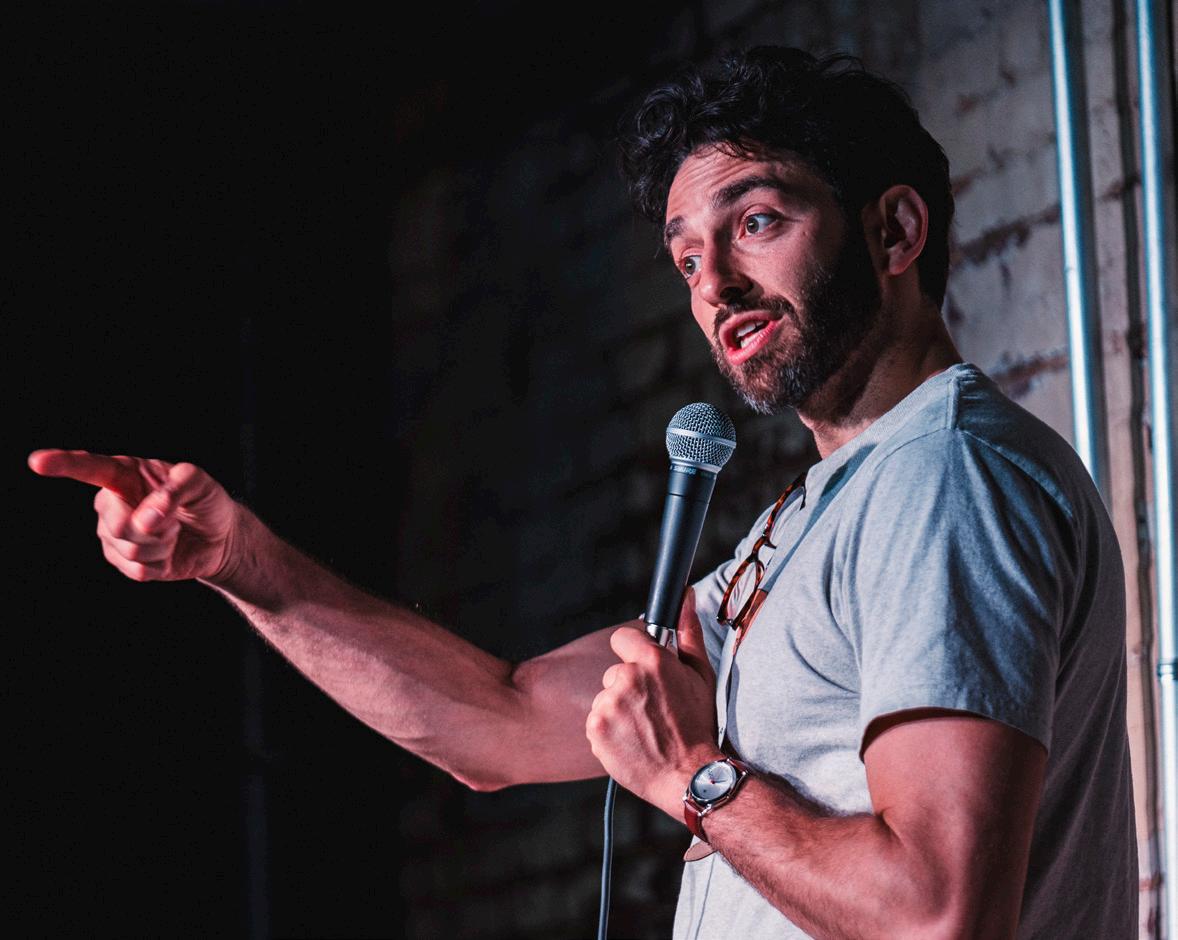
Courtesy of Olivia Kelliher, assistant to G. Soresi Univertsity of Miami Alumni and Comendian Gianmarco Soresi interacts with crowd during performance on Aug. 12, 2023.
Sovannreach Po // Graphics Editor
Thousands of microplastics are hiding in campus soil
By Keira Faddis Co-Opinion Editor
The University of Miami is frequently described as “resort-looking.” Palm trees line walkways, Lake Osceola reflects the sun and landscaping crews maintain the polished appearance that defines campus. To the average student walking to class, the campus looks clean.
But beneath the surface, a different story is unfolding.
Lauren Novorska, a UM senior double majoring in ecosystem science and policy and anthropology, has spent the past year studying the soil beneath students’ feet. Her research has uncovered thousands of pieces of macro and microplastics embedded across multiple campus locations.
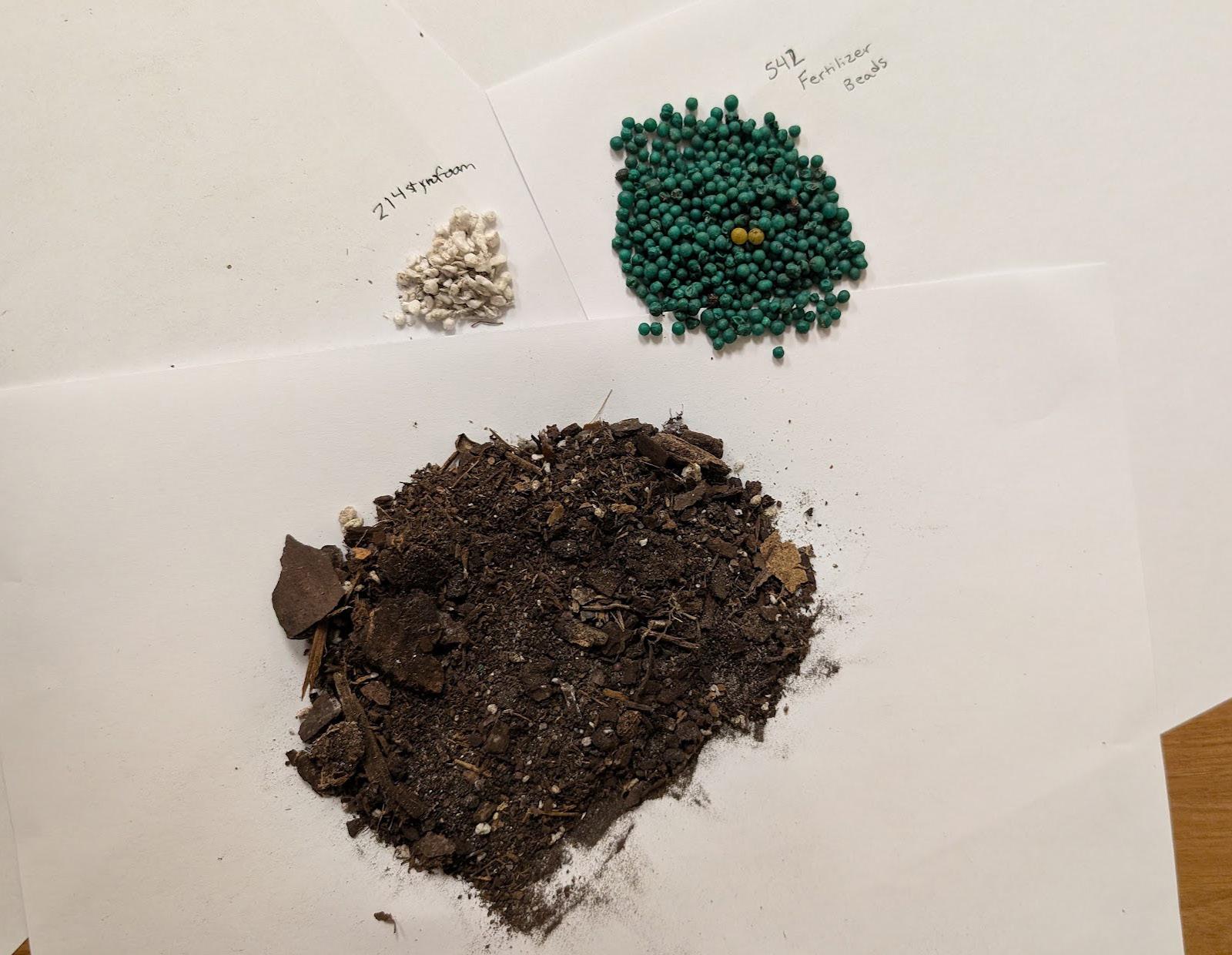
“I’ve been seeing things like fertilizer beads, Styrofoam, confetti, glitter, pieces of fabric — like dryer lint and clothing threads and strings — popping up again and again,” Novorska said. “So clearly, there's an issue here.”
During the 2024 fall semester, Novorska was working on a class project when she read a paper about filtering plastic out of soil.
Because plastic is hydrophobic, it rises when mixed with oil. This allows researchers to isolate and count the macro and microplastics.
She did not expect much to result from this project, but tried it anyway.
“I honestly didn’t expect it to work,” Novorska said. “But when I tried it, I was astonished by the amount of plastic that came out of the soil.”
One test sample, collected near the Watsco Center on campus, contained 384 pieces of plastic in a single 16-ounce jar. The Watsco Center is used throughout the year by UM athletics, but it is also a venue for dozens of graduation ceremonies, including UM and other schools in the area. At these events, it is common for confetti cannons to be popped for photos, potentially leaving behind hundreds of pieces of plastic.
“That’s when I realized something was actually wrong,” she said. “I thought campus was very clean.”
The results turned a small class project into a full-scale undergraduate thesis. Over the next year, Novorska collected 30 soil samples from locations at UM and 30 more at St. Petersburg College in St. Petersburg, Fla.
Samples were collected from “hot spots” on campus. Locations included outside the food court, near residence
halls and around campus landmarks. Every sample from UM contained plastic, with the lowest having two pieces. At St. Petersburg college 13 samples had no plastic.
“In one jar I found more than a thousand pieces,” she said. “Several others had 700 or 800.”
As her research expanded, Novorska began mapping her findings. She found that microplastics are not randomly distributed — that they accumulate in specific areas tied to student behavior.
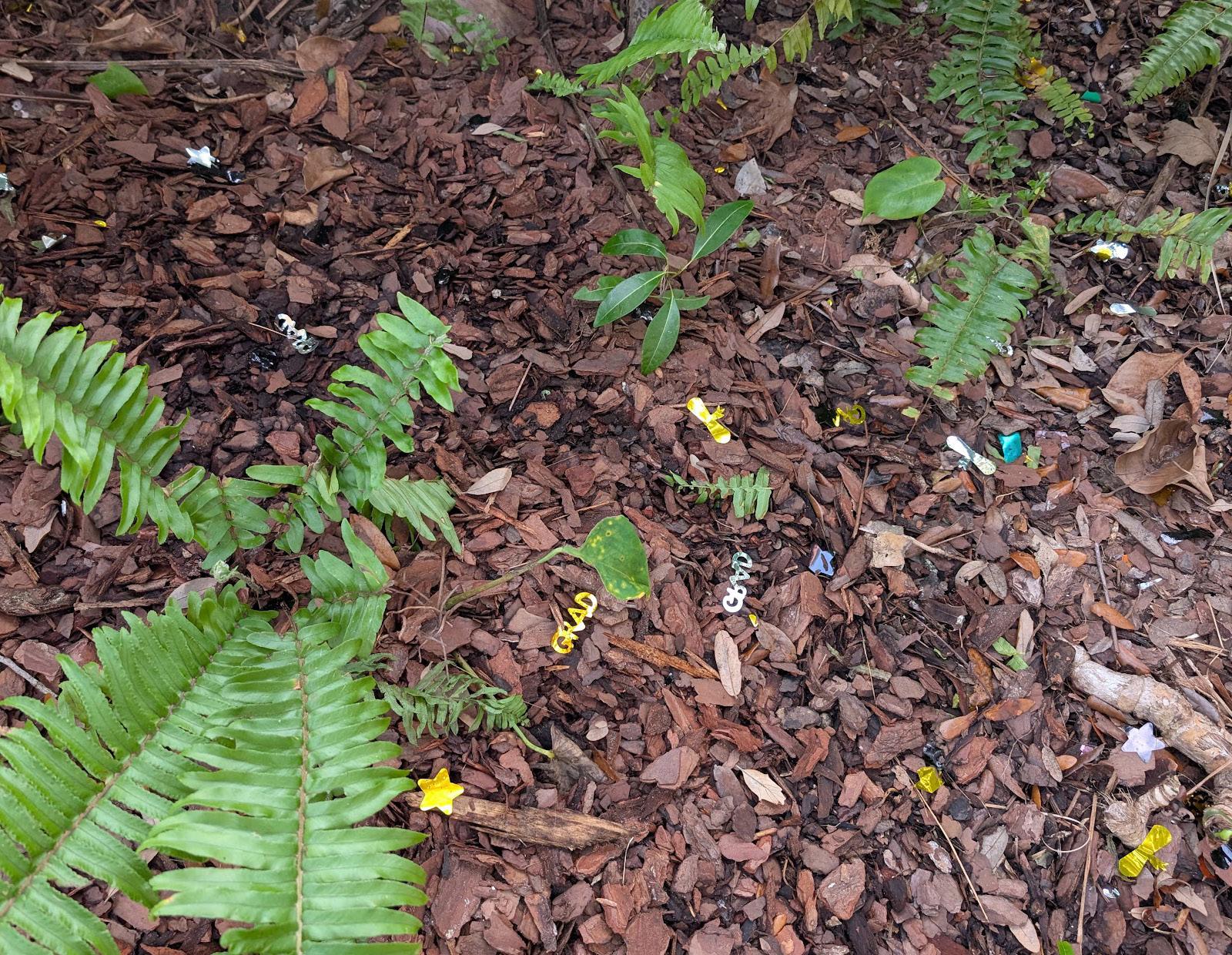
Outside of the food court, she found a high concentration of wrappers likely carried by the wind. Near the U statue — a popular spot for graduation photo shoots — she found layers of confetti embedded in the soil.
“Over at the U statue, I did a sample a couple of weeks ago that had 396 pieces of plastic, and more than 100 pieces of confetti in it,” she said. “I kept digging and digging, and I never stopped seeing confetti as I was digging, which is very concerning.”
The findings revealed a disconnect between how clean campus appears versus what actually exists in the soil.
“And the pollution you leave behind won’t affect you it will affect the students who come after you ”
Lauren Novorska UM Senior
Visible litter, known as macroplastics — which are larger than 5mm, is relatively limited on campus Novorska said. The real issue is the microplastics — pieces smaller than 5mm.
“You can’t see them when you’re
just walking by, but once you start looking for them, they’re everywhere,” she said, pointing out a piece of plastic just outside the window near Shalala.
Blending her anthropology background with environmental science, Novorska approached her research like an archaeological study — using plastic as a lens to understand human behavior.
“I'm looking at these 10 sites to see what the plastic in the soil itself tells us about the students on campus,” she said. “What does it tell us about our use of different goods and potentially even the production of plastics?”
One of the most common pollutants she identified was small green beads. Initially, neither Novorska nor campus experts could identify them.
Eventually, she traced them back to fertilizer — specifically polymer-coated fertilizer beads commonly used in potted plants brought onto campus.
A majority of the microplastics she found originated from these beads, rather than from campus landscaping practices. Other materials — including confetti, Styrofoam and synthetic fibers — reflected everyday student activities.
Her research also revealed geographic differences. While every UM sample contained some sort of plastic, a few samples from St. Petersburg College contained little to none. Novorska suspects the difference may be due to variations in maintenance practices, landscaping materials or campus culture.
At UM, visible litter is often quickly removed, but less noticeable microplastics are left behind.
“Our landscaping and maintenance staff do a great job of keeping campus looking clean, but you can't clean up what you can't see,” Novorska said.
Plastic doesn’t just stay where it lands. Rain washes debris from sidewalks into the soil, then into Lake Osceola and eventually into Biscayne Bay.
“This isn’t just a UM issue,” she said. “It’s a Miami issue, a Florida issue — and honestly, a global issue.”
Her findings also highlight plastic’s persistence. In one sample near Mahoney-Pearson Residential College, she discovered a candy wrapper from more than a decade ago still intact.
“It was sitting in the top layer of soil, and I could still read everything on it,” she said. “It makes you think — what will people find that we leave behind?”
For Novorska, the research has fundamentally changed how she views campus and cleanliness itself. Her work has also shifted her personal habits and sparked a broader mission: changing
student behavior.
By combining research, education and policy change, Novorska hopes to help reduce plastic pollution on campus.
She is working with campus organizations to develop an educational campaign that frames microplastics in ways that resonate with different students, from public health concerns to environmental impacts and policy implications.
One initiative focuses on replacing plastic confetti with paper alternatives during graduation season.
“You’re celebrating your future while actively harming it,” she said. “And the
pollution you leave behind won’t affect you — it will affect the students who come after you.”
Novorska plans to continue her work in graduate school, pursuing a masters degree in water science, policy and management.
While the scale of microplastic pollution can feel overwhelming, she remains optimistic.
“There is still hope,” she said. “There are actions we can take — as individuals and as a community — to reduce our reliance on plastic.”
Student entrepreneurs compete for $67,500 at annual Business Plan Competition
By Skyla Thomas Staff Writer
$67,500 is at stake in the The University of Miami Herbert Business Schools’ annual Business Plan Competition. For 24 years, this experience has been a chance for students to gain real advice and mentorship, and pitch their business idea to a panel of experienced judges.
Dr. Susan Amat, an associate professor of professional practice in the Department of Management at the Herbert Business School, has been running the business plan competition with two of her colleagues for the past five years. She also participated in the competition while she was at UM completing her MBA. They host two competitions a year, beginning in the fall with the elevator pitch competition and then the business plan competition in the spring.
“Every Wednesday, we have a workshop for the next six weeks, starting on Wednesday [March 18], where we help entrepreneurs, especially those who aren't in the business school, understand different parts of the business plan,” Amat said.
Any student can participate in the competition, whether they are a business student or not. Some students have already developed a company and others have just started their business.
Students have access to mentors, pitchlabs and workshops. Applications are due on April 3 and are evaluated, then about 20 to 30 students will progress to the semi-finals.
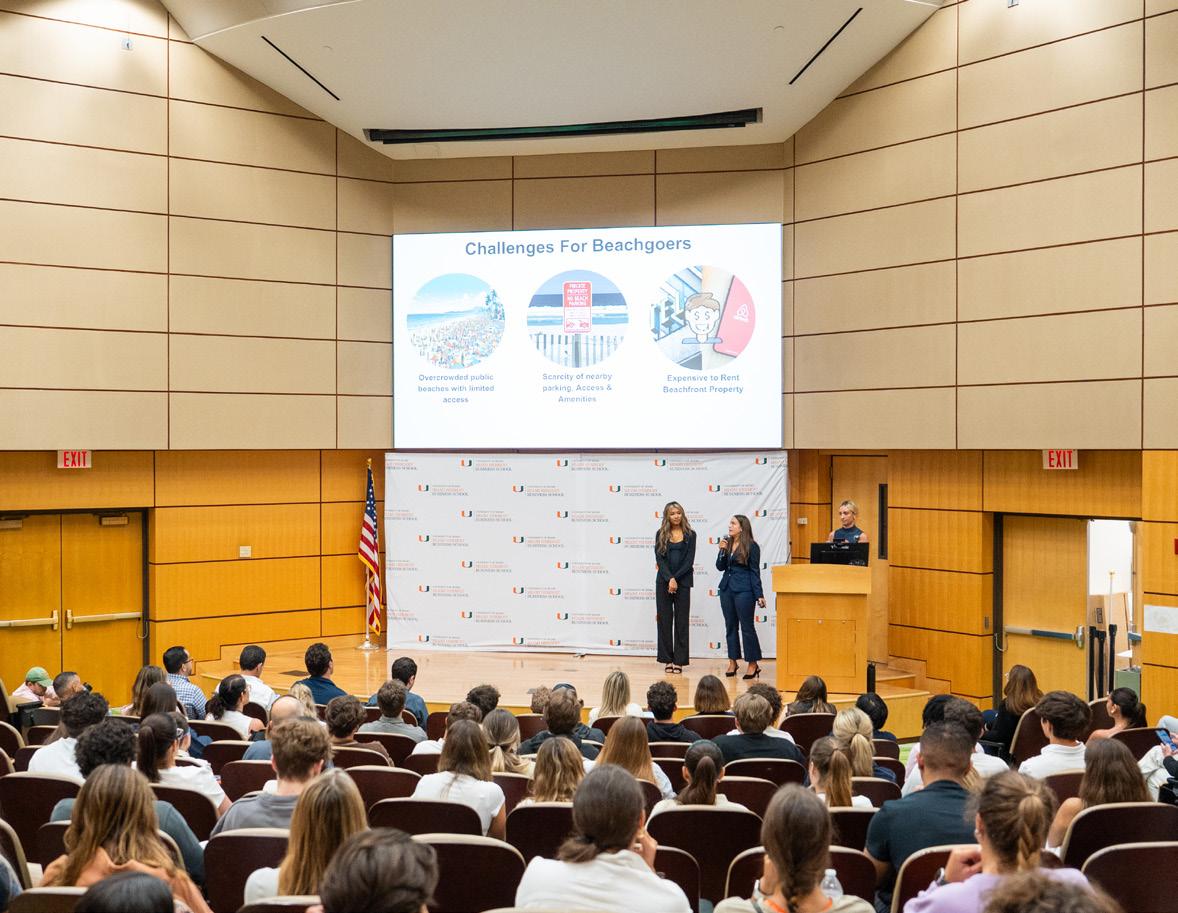
In the semi-finals, entrepreneurs will present and answer questions to a panel of judges, with six to eight groups progressing to the final round. The final round is scheduled to be held in the Storer auditorium where family, friends, faculty and students can come to cheer.
Amat highlights the importance of the competition as a great opportunity, even if you don’t win prize money. Overall, it is a great experience that builds your company and skills.
“We've had so many companies not win the top prize, but get 100 downloads during the competition, find investors, and find customers,” Dr. Amat said.
“Because you put yourself out there and you're making a sales pitch for finding great people to get involved, invest in you, buy your product, etc.”
Kyle Levy was one of these students who participated in the business competition. In his first year at UM, he first came up with his business idea, Unihop. Levy was first inspired when he noticed how uncoordinated the UPS store was on campus.
“We offered an alternative solution, where people could send packages to us, and then they could schedule a time, and we would hand deliver it to them at any of the buildings. And people loved it, especially at the start of each semester,” Levy said.
Unihop has since evolved to be a successful company that provides faster and more efficient deliveries, and works with many businesses that rely on local deliveries.
In terms of being successful in the
competition, Dr. Amat said that the most important step to developing your company is to really hone in on what the consumer problem is, and then work from there.
“The reality is entrepreneurship is about solving a customer problem for profit. And so I would say that the key to doing well in life, in entrepreneurship, but definitely for our competition, is focusing on who's your customer and what problem are you solving from them,” Dr. Amat said.
While starting up his business, Levy said that he participated in the competition partially because he had a good relationship with Dr. Amat who encouraged him to take part, but also because he wanted to take advantage of the great resources that the business school provides.
“I had known about the competition before coming to UM, and I knew that was the big thing to do in the business school,” Levy said.
Dr. Amat emphasized the importance of utilizing all the resources available while you are still in college. The Miami Herbert business schools ranking has gone up throughout the years with the entrepreneurship program ranked No.16 nationally.
“There are many, many tools and competitions like this that are merit-based that if you're putting the time in and you can show that you are ready to lead something to the next level, there's support there for you,” Dr. Amat said.“
So I think that that's a really incredibly lucky evolution of the school.”
Throughout the process, Levy said that he developed many crucial skills for developing his now successful company. He says that personal resiliency was one of the main skills that he got out of the experience. Levy says that when managing a business there are never any easy days, and being in the competition taught him to be resilient and put in the most effort he can.
Dr. Amat said that, throughout the years she has been a part of the competition, it has evolved and improved. When Levy was doing this competition it didn’t include the multitude of
resources that are available to students now, such as the pitch labs and workshops. However Dr. Amat says that when she returned to the program 5 years ago she had bigger plans for the business plan competition.
“When I came back, I had a very focused goal of making sure we prepared students with an international mindset and with the best practices of high growth entrepreneurs,” Dr. Amat states. “Every year we've ended up getting stronger and stronger student teams and existing businesses competing.”

Courtesy of Lauren Novorska Campus mulch sample with isolated microplastics and fertilizer beads after extraction from an 8-ounce soil sample; 756 total pieces identified on Jan. 28, 2026.
Courtesy of Lauren Novorska
A patch of campus mulch littered with graduation confetti blowing into bushes near the Rock while walking to class, Nov. 10, 2025.
Courtesy of Daniel Menendez
chance
Competition on April 2, 2025 .
Gonzalez-Acosta named
incoming Senate Speaker Pro Tempore
By Casey Servatius Senior Staff Writer
The University of Miami Senate voted for their Speaker Pro Tempore for the 2026-2027 school year, with Rafael Gonzalez-Acosta winning the election held on Wednesday, March 25.
The Speaker Pro Tempore is the second-in-command of the Senate, and works closely with the Speaker. Trinity Vodovoz was recently elected to be the next Senate Speaker.
As Gonzalez-Acosta prepares to step into his new role, he is reflecting on the goals he hopes to achieve.
“My biggest goal for Senate is to create better connections with constituencies and administration,” said Gonzalez-Acosta. “The First Year Senators can have forums with freshmen for example, and have space to actually talk with their constituents.” Gonzalez-Acosta joined the Senate during the first semester of his freshman year. He is a current junior and has served as a College of Engineering Senator for the past three years. In this role, Gonzalez-Acosta worked to widen engineering software access beyond UM Wi-Fi.
“I worked with IT to make a virtual machine where you can access the software off campus so commuter students don’t have to stay here until midnight finishing assignments,” Gonzalez-Acosta said.
He also served as the Faculty Senate Liaison where he worked with administration members and relayed information back to Student Senate.
During his time on Senate, Gonzalez-Acosta has pushed to improve grade transparency for students alongside fellow Senators.
“We want professors to be posting grades on time and for students to have access to the grading scale on the syllabus before registering for classes,” Gonzalez-Acosta said.
His years of experience and collaboration with fellow Senators prepared Gonzalez-Acosta to run for Speaker Pro Tempore.
New $1.5M
“I was inspired by the Senators that came before me,” Gonzalez-Acosta said. “My big in Senate was the Speaker Pro Tempore during my freshman year, so it’s like I am standing on the shoulders of giants.”
Gonzalez-Acosta was one of four candidates in the Speaker Pro Tempore election. He ran against his fellow CoChair of Academic Affairs, as well as the two Chairs of University Affairs, making for a competitive race. They each gave a three minute speech, with an additional 90 seconds for questions.
A specific issue that Gonzalez-Acosta would like to further address in Senate is the career services department at UM. He wants to improve resume reviews and career fairs for all students.
“Miami is an industry hub. The industries should be coming to campus,” said Gonzalez-Acosta.
As a student leader, Gonzalez-Acosta hopes to leave a legacy in Senate by setting an example for future Senators and creating a tight-knit community.
“The Speaker and I want to leave Senate better than we found it, and build a long-lasting relationship between students and administration,” said Gonzalez-Acosta.
initiative strengthens support for human trafficking survivors in Miami-Dade
By Jadyn Cohee Contributing Writer
A new $1.5 million investment brought by the State Attorney General’s office is bringing renewed hope to the fight against human trafficking in Miami-Dade County, expanding resources for survivors and strengthening efforts to prevent exploitation.
Announced in late February, the funding will support law enforcement operations, enhance prosecution efforts and expand critical services for survivors — including shelter, counseling and long-term recovery programs at organizations like Camillus House.
The organization, long known for serving Miami’s most vulnerable populations such as the homeless or those struggling with addiction and mental health disorders, has become a critical refuge for individuals escaping exploitation.
Residents receive not only food and shelter, but also counseling, mental health support and guidance toward independence such as job application programs and or DMV services.
As Miami prepares to host global events like the World Baseball Classic, Ultra Music Festival, the Miami Open and the 2026 FIFA World Cup, hundreds of thousands of visitors are expected to arrive. Camillus House and other similar organizations are preparing to meet growing needs with expanded support.
“We work very closely with the State Attorney’s Office,” said Erika Pineros, director of anti-trafficking services. “Our CEO promised 50 beds for recovery, which is unseen.”
While these events bring economic growth and international attention, experts say they can also increase vulnerability for those at risk.
“Anywhere where there’s tour-
ADVERTISEMENT OPEN MIC NIGHT

ism, you will see an uptick,” Pineros said. “Every time that Miami had a big event, I would get a lot of clients during that time.”
Human trafficking — the use of force, fraud or coercion to exploit individuals for labor or sex — remains a persistent issue in Miami-Dade County, often hidden in plain sight.
“It could happen to your brother, your sister, your child, your grandchild,” Pineros said. “It’s something that’s happening in our own backyard.”
Recent data from the Miami-Dade trafficking unit shows more than 200 reported cases in recent years, though advocates believe many more go unreported.
At Camillus House, those realities are personal.
“Whenever you’re put in a vulnerable situation, human trafficking and a lot of these predators can take advantage of people,” said Jonathan Beis, a resident of Camillus House.
Advocates say the expanded funding will help meet a growing demand for these services and allow more people to access the help they need.
“There’s good resources here,” Beis said. “We need more funding to get people into better situations and to help people have hope in their lives.”
For leaders at Camillus House, hope is already taking shape.
“The blessing is in the giving and not the receiving,” said Sam Gillus, Senior Vice President of Operations. “Then that person who receives it, you see them later on giving it to someone else.”
As Miami prepares to welcome the world, this investment ensures that protection and support for vulnerable communities remain part of the city’s future.
Because behind every dollar is the chance for someone not just to survive — but to start again.

Miami Dolphins player shares his recovery journey with Substance Awareness Club
By Lauren Whitesell Contributing Writer
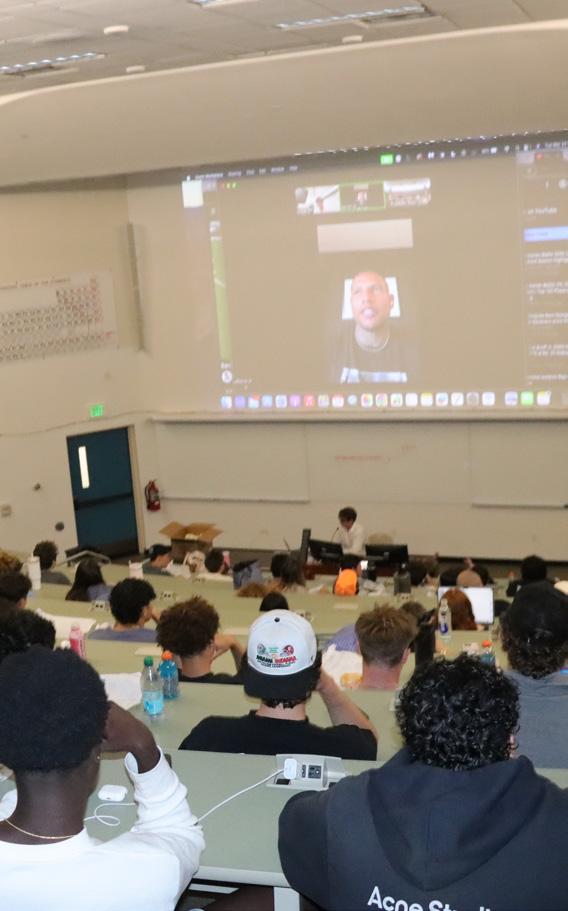
Miami Dolphins tight end Darren Waller collaborated with UM’s Substance Awareness Club to share his experience with substance abuse and his recovery journey on Tuesday, March 24.
Waller said that his first experience with drug use was at a friend’s house when he took hydrocodone in his sophomore year of high school.
“I was kind of depressed at the time, really anxious, really wanting to fit in and looking for something that would quiet all of the noise going on inside my mind,” Waller said.
His substance use escalated by junior year of high school, drinking beer, liquor and smoking cannabis. Waller then went on to play football at Georgia Tech from 2012 to 2014, where his drug use became even more frequent.
“How much I could drink, how much I could smoke, that became my identity. It was around that time that I started to see like, ‘Oh, this is kind of different from everybody else,’” Waller said.
Despite Waller’s substance use, those around him did not initially notice any warning signs.
“It wasn’t really anything that anyone could pick up on. I could always give you a smile, make you laugh, I was getting good grades,” Waller said.
Waller’s experience is more common than some people may realize.
According to the 2023 National Survey on Drug Use and Health, 22% of college students had taken an illegal substance within 30 days of taking the survey and that over a quarter of college students had a substance use disorder (SUD).
During the 2015 NFL draft, Waller was drafted by the Baltimore Ravens. He played for three years before he received a yearlong suspension from the NFL for repeatedly failing drug tests.
A few months after receiving his suspension, Waller overdosed in August 2017 when he unknowingly took fentanyl.
“That was a moment that definitely opened the door for my life to change,” Waller said.
Waller spoke about the time he spent in a rehabilitation program following his overdose and emphasized how being honest with himself and others helped him in making a meaningful recovery.
“When you can get these things out and share them, you almost feel lighter emotionally, mentally, spiritually,” Waller said.
He also talked about other coping strategies he learned in the program that he used once he returned home, including journaling, meditating and taking walks.
“I may not be back in the league, I may not be making as much money as I was before, but I’ll at least feel good about the life I’m starting to make,” Waller said.
Before going back to the Ravens post-suspension, this time as a practice squad member, Waller worked at Sprout’s Farmers Market. He was later signed by the Oakland (now Las Vegas) Raiders ahead of the 2018 season, where he played in the last several games in
2018 and was given the opportunity to start in 2019.
“The work that I was doing in recovery was, I think, what allowed me to have the foundation to take that opportunity and capitalize on it,” Waller said.
Waller emphasized that isolation can be a major warning sign of substance abuse and gave the audience questions to ask themselves about people in their life that they are worried about.
“Are they around people on a regular basis? Do they say they’re gonna show up to certain places and they don’t?” Waller said.
According to the Mayo Clinic, financial and physical health issues as well as changes in behavior are additional signs of SUD.
For those seeking help for their substance abuse, Waller believes that people need to be motivated from within in order to truly make a recovery.
“People need to get tired of their own situation,” Waller said. “Even if they go down the path of recovery, but they’re doing it for a sport, another person, it will always fall on its face because it’s never about them.”
To close out, Waller reminded people that their mistakes do not define them and that they can live a fulfilling life despite setbacks.
“Even though we’re trying to walk a certain path, you don’t have to be perfect to have a successful life,” Waller said.
Substance Awareness Club president and founder Luke Bell was very appreciative of turnout for the event.
“This [support from students] is a full circle moment for me. This is a huge part of the reason why I’m sober,” Bell said.
The Darren Waller Foundation, a non-profit foundation started by Waller to help young people receive treatment for substance abuse, has more information about Waller’s story on their website.
Visit @umsubstanceawareness on Instagram to learn more about how to get involved in substance awareness-related events on campus.
Rafael
Courtesy of Cam Willy
Miami Dolphins Tight End Darren Waller speaks to students in the Substance Awareness Club via Zoom on March 24, 2026.
Courtesy of Rafael Gonzalez-Acosta
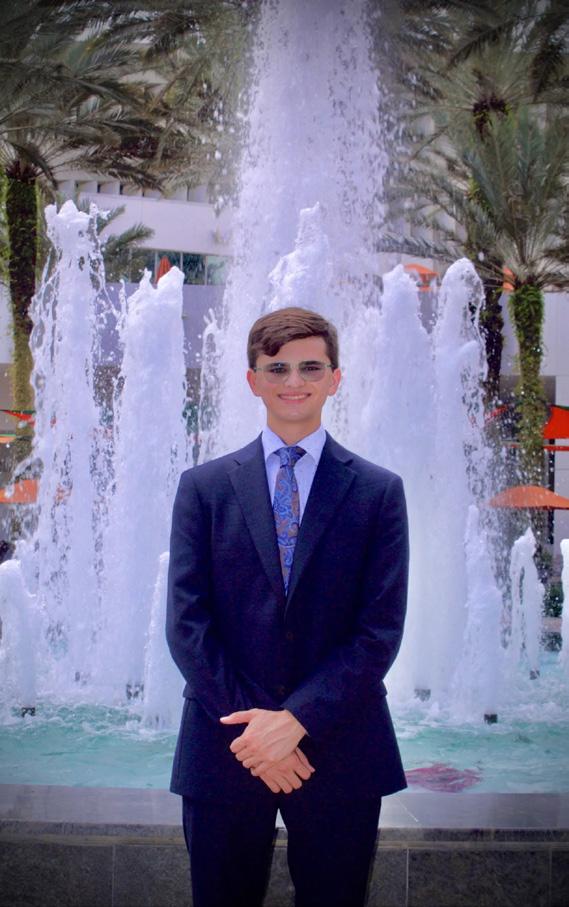
Rafael Gonzalez-Acosta, the newly elected Speaker Pro Tempore stands in front of Cesarano Plaza.
Courtesy of Jadyn Cohee
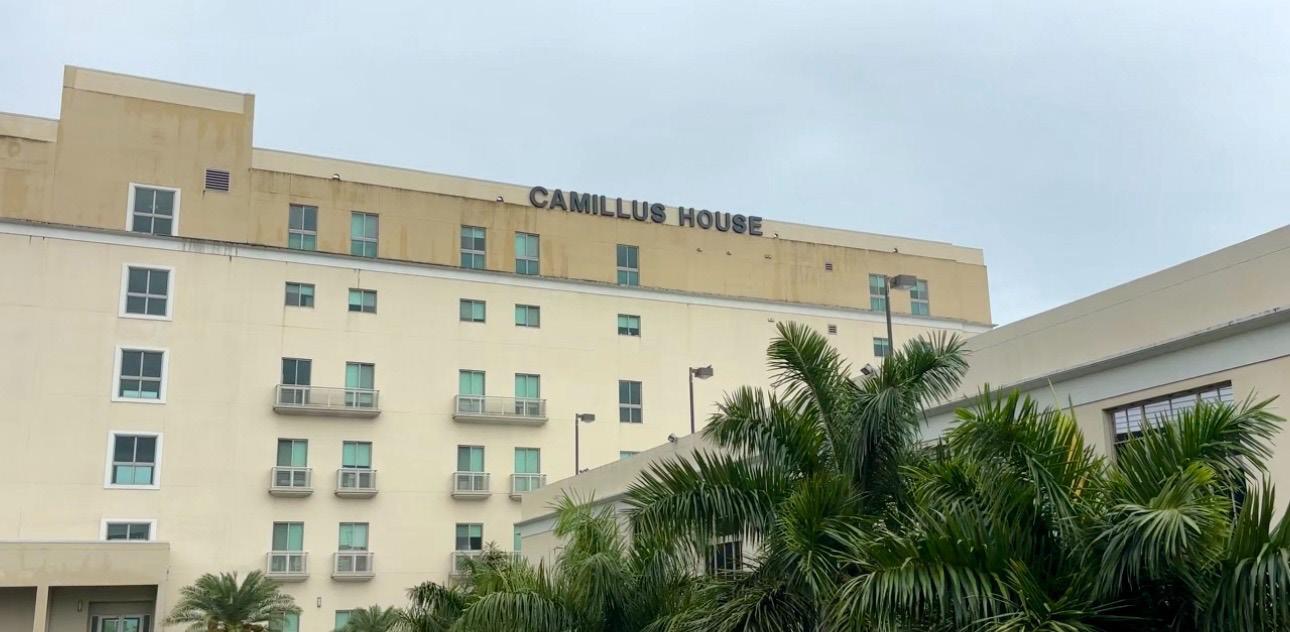
The Camillus House rehabilitation and recovery building in downtown Miami.
Step aside Google, the TikTok search is taking over
By Birdie Church Contributing Writer
Search engines didn’t disappear
— they moved.
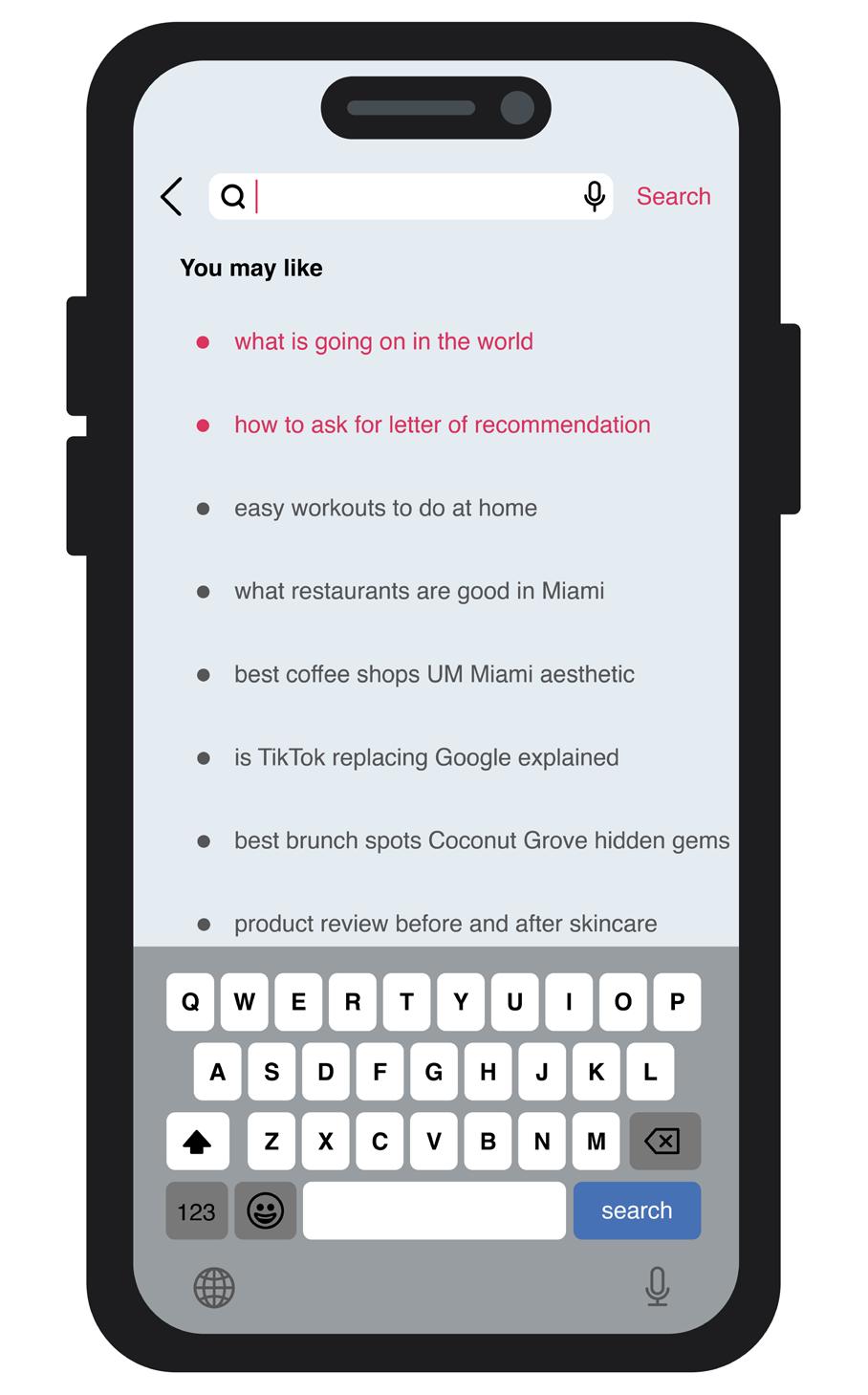
TikTok is essentially the new Google. With Gen Z’s love for the 15-second visuals, paired with the hyperspecific algorithms, TikTok’s search results are better than those of Google.
One in five Americans got their news from TikTok in 2025 according to a Pew Research study, meaning information intake is clearly making a change. And, honestly? It’s for a good reason.
The shift from Google to TikTok is beneficial because it delivers more accessible, visual and user-driven information that better matches how younger generations consume content.
The internet’s growing reliance on AI has led to a decline in Google’s once-trusted reliability. Google recently changed its algorithm to have AI-generated results at the top of the page, instead of its pre -
vious method of showing an excerpt of the most relevant source.
The shift toward TikTok reflects a rebellion against this change — a preference for human-driven, experience-based content over AI-generated answers.
“I hate to admit it, but since I am on TikTok so constantly, I find out most of my news from there,” UM freshman Shannon Brickley said. “Whenever I want to know more, I will search it up and doomscroll.”
This is more popular among students than people think. In an interview with Fortune Magazine, Senior Vice President of Google Prabhakar Raghavan emphasized that TikTok is taking over in little ways, such as finding a place to go for lunch. According to their studies, 40% of young people go straight to TikTok or Instagram instead of a regular search engine like Google.
When looking for restaurants on Google, results are largely sponsored or have a massive number of reviews from being around for so long. As a result, these older places
are bumped to the top of the search regardless of the quality of the food.
Even the UM student go-to coffee or matcha classic, Honey Veil, is being underserved on Google. While it doesn’t come up on the first page of any search engine for coffee shops around UM, it is one of the first coffee shops when searched on TikTok.
The difference isn’t just in the quality of the suggestion, but also the quality of the way information is communicated.
TikToks are short-form videos, allowing for visuals, paired with information that takes little to no work to consume.
Attention spans have been vastly shortened by the internet, so TikTok’s entertaining approach to information is more aligned with how information is naturally consumed now.
TikTok’s personable, young and entertaining approach is beginning to give Google competition for the best search bar. Google is not being erased, but as people evolve their habits and Google declines in its content. Its dominance is fading, leaving TikTok to be the future of search.
Some days, it’s easier to be Canadian
By Madeline Darby Staff Writer
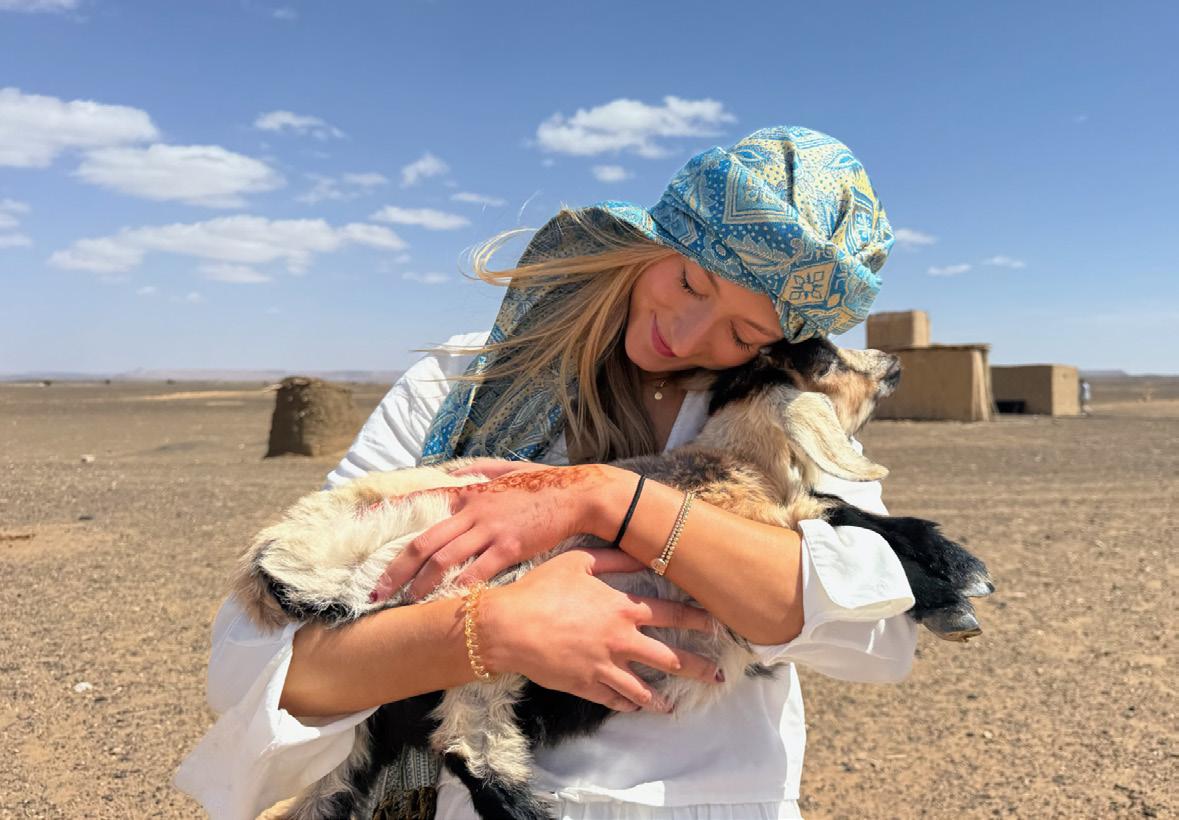
I was in Morocco, shopping in the Souks of Marrakesh, when a shop owner asked where my friends and I were from.
Without hesitation, my friend answered, “Canada.”
It wasn’t the first time I’d heard American students abroad use that lie. Europeans often stereotype Americans as loud, rude or self-centered — percep-
tions now compounded by widespread disapproval of President Donald Trump. But, this was the first time I understood the answer as something more than social convenience. It was about safety.
Just two days before we touched down in Africa, the U.S. urged citizens to leave parts of the Middle East amid escalating tensions tied to U.S.-Israeli strikes on Iran. Morocco, on the opposite side of North Africa, wasn’t under threat, but distance doesn’t eliminate impact. While the Moroccan government
has maintained strategic ties with Israel, public sentiment has been far less unified. Following the Israeli and U.S. attacks on Iran, demonstrators have protested against an Islamic country they feel connected to, reflecting broader solidarity within the Muslim world.
Even without direct involvement, Morocco faces the ripple effects — rising energy costs, inflation and potential drops in tourism. With the U.S. tied to these pressures, it risks a negative reception overseas.
While I wasn’t in direct danger, I was entering a country with a long, complex and often divided political relationship with Israel and & the U.S. — one where it’s difficult to anticipate how someone might view the war, or respond to me as an American.
That unease isn’t limited to Africa. Across Europe, leaders have distanced themselves from U.S. military actions. Officials in countries like Germany and France have made it clear they do not see the conflict as theirs.
Germany’s Defense Minister, Boris Pistorius, told reporters, “This is not our war, we have not started it.” Echoing Germany’s stance, French President Emmanuel Macron said at the start of a cabinet meeting on the Middle East conflict, “We are not party to the conflict.” In response, Trump publicly criticized allied leaders, straining already fragile perceptions of the U.S. abroad,.
aAnd those perceptions matter. Surveys show a sharp decline in how Americans are viewed internationally in recent years, largely influenced by the re-election of President Donald Trump.
European views of Americans have shifted drastically. Approval plummeted from 61% in Oct 2024 to 25% by Feb 2026 according to EU News, with more than half of Europe’s nations now having an unfavorable view.
Just the other day, my roommates and I were greeted by a restaurant host who ushered us inside for drinks. As we began talking, he asked, “You’re from the U.S.?”
This time, we said yes — and without missing a beat, he replied, “F**k Trump.”
Our waiter went on to explain that he was from Cuba, a country Trump recently said he could “do anything [he] want[s] with” amid oil-blockade negotiations. The host went on to say that Cuba deserved to be left alone before guiding us to our table.
Encounters like these reveal how my identity as an American alone can spark outrage, even in something as ordinary as being seated at a restaurant. In these moments, I often find myself falling silent — feeling a sense of guilt, yet also aware of how little control I have over the decisions of my country.
I don’t even feel comfortable telling Europeans what I study. Every time I
tell someone I study journalism I’m met with the same question: “FOX or CNN?” They treat our country’s political division as a kind of game, pulling my arm to see which “side” I lean on. Even a customs officer at the airport, after asking me what I studied, smirked before asking me, “What are your thoughts on Ukraine and Russia? Does Russia have a right to defend itself?” If I'm not being blamed or ridiculed, I’m being prodded, questioned and tested. There is a strange fascination with U.S. politics, with our views on international policy and global affairs.
It makes it harder to separate individual identity from national reputation — a reputation I’m not always proud of. I’m not alone. Nearly three quarters of those living in the U.S. believe Americans have a bad reputation overseas, and 80% blame recent politics, such as the tariffs, skewing what Europeans think of the U.S., according to Upgraded Points. Being American doesn’t mean agreeing with American policy, or the current administration. Still, it raises a difficult question: is it safe to be one?
For a long time, that question was more about perception than risk. Now, with rising global tensions, it feels more real — less about embarrassment, more about uncertainty. Some days, it's just easier to be Canadian.
Put your tinfoil hat on: You shouldn't dismiss conspiracy theories
By Lazaro J. Chavez Jr. Senior Staff Writer
When you think about conspiracy theories or theorists, you probably imagine a crazy person with a tin foil hat going on about how people in the government are lizards. You might also think about that meme from “It’s Always Sunny in Philadelphia” where Charlie Day’s character scribbles over the wall like a madman.
But, not everyone who’s a theorist wears their tin foil dunce hat. In fact, some conspiracy theories have solid evidence and end up turning out to be true.
In a day and age where everything really isn’t as it seems, it’s important to not brush off some theorists, because many have actually turned out to be correct. Below are just a few examples of conspiracies that have been proven true. MK Ultra
Rumors that the U.S. government was making strides on mind control circulated during the 1960s. Those rumors sounded like something straight out of a science fiction novel. That was until government documents clarifying this dystopian idea were declassified in the 1970s.
From 1953 to 1973, the CIA conducted illegal and highly unethical experiments on unwitting U.S. citizens, according to a senate select committee. The agency administered LSD and other drugs to prisoners, psychiatric patients and even military personnel.
They utilized psychological torture and employed sensory deprivation in an attempt to develop mind control and interrogation techniques to use against the Soviet Union.
With other controversies surrounding government trust at the time the files were declassified, it was safe to say that many people’s trust in the federal government had been punched in the gut.
The ultimate false flag: Operation Northwoods
Believe it or not, U.S. military officials wanted to stage a terror attack on American soil targeting American civilians as an excuse to invade Cuba according to declassified files. The plan known as Operation Northwoods was a real drafted plan by U.S. military officials in 1962. It would’ve been an unthinkable notion that the military would create a plan that would kill American citizens, especially to justify a conflict with a man like Fidel Castro.
Castro had implied that he would be willing to destroy Cuba over surrendering to the U.S in a letter to Soviet Premier Nikita Khrushchev following the Bay of Pigs fiasco, which can be found on the JFK presidential library website. Declassified documents revealed a proposed plan of committing acts of terrorism in major U.S. cities, including Miami, and blaming the attacks on Cuba to manufacture public support for a war against Castro. Again, The Bay of Pigs invasion had failed in dramatic fashion.
Thankfully, President John F. Kennedy rejected the plan, but the paperwork remains a chilling reminder of what military leaders were considering.
The Watergate cover-up
The Watergate cover up is the gold standard of modern political conspiracies. When a group of men broke into the Democratic National Committee headquarters at the Watergate complex in D.C. in 1972, it was initially dismissed as a third-rate burglary.
The idea that the president of the U.S. was intimately involved in a criminal espionage ring and a massive cover-up seemed far-fetched. To some, it may have even been seen as a poor attempt at pivoting by Democrats to blame the loss of 1968 and potential loss they would be facing in Novem-
ber on Republican sabotage.
It certainly wasn’t believable enough for most Americans in 1972, having virtually zero impact on President Richard Nixon’s historic landslide victory against George McGovern.
But thanks to relentless investigative journalism and subsequent congressional hearings, the public learned the truth. The conspiracy went all the way to the Oval Office, ultimately forcing Nixon to resign in 1974.
Unanswered questions
Other conspiracy theories that have yet to be proven true but have drawn massive speculation include Jeffrey Epstein’s suicide, the assassination of President Kennedy and the OJ Simpson murder case. Even with some of these cases being half a century old, they still raise questions about the trust people place in those in charge, and about cracks in the justice system.
With the recent release of the Epstein Files, many secret dealings and emails have been revealed about who Epstein dealt with over the years — including with prominent politicians and celebrities. There is further scrutiny over the security footage and guard logs on the night Epstein committed suicide in a New York jail, showing a three minute jump in time with not much explanation, also fueled speculation about whether he did kill himself or not.
In 1972, the house select committee found that there was likely a conspiracy to kill President Kennedy. Whether President Johnson, the Soviets, or any of the other groups theorized had been involved in the killing has never truly been determined, or even outright dismissed. Even 60 years later when President Donald Trump released new files about the assasination, no new information was revealed.
The entire world was glued to their TV sets in 1994, when former NFL Running back OJ Simpson was charged with the double murder of his
ex-wife and her friend. Simpson was found not guilty in 1995, but the case officially remains unsolved. While several theories have been proposed, the main one still centers on Simpson. These claims have been backed, for a lack of a better term, by the evidence used in the trial of the century. These include Simpson’s blood at the scene and the blood of both victims being found in a sock at his house — all pointing the bloody glove at him.
But it was his daring hypothetical confession, “If I Did It” that was released in the early 00’s, which details how Simpson would’ve likely killed Brown and Goldman that further fueled speculation. An interview with his former agent Mike Gilbert in the ESPN special “OJ: Made in America,” supports the widely accepted theory that Simpson was guilty.
In the final episode of the limited docu-series, Gilbert details the final
night he and Simpson spent at the Rockingham Estate, the home Simpson lived in during the years before and after the murders.
Gilbert says he asked Simpson why he did it. Simpson calmly said, Gilbert claims, that had Brown not answered the door with a knife she would have lived.
Simpson died in Apr 2024 still publicly maintaining his innocence. Leaving one of the most famous murder cases in American history to remain permanently unresolved.
While most conspiracy theories on the internet today are baseless, history shows us that we shouldn’t blindly trust official narratives without question. Healthy skepticism is a vital part of democracy. Especially when something goes “unsolved” on the books like the Simpson case.
The next time someone brings up a wild theory, just remember: Even a broken clock is right twice a day.

Courtesy of Madeline Darby Madeline Darby cradles a baby goat in her arms during her trip to Morocco on March 7, 2026.
Sovannreach Po // Graphics Editor
This UM grad didn’t make it to Broadway, but he made it everywhere else
By Brianna Pearson Co-A&E Editor
CONTINUED FROM PAGE 1
The groom didn’t want him there, didn’t want jokes about his weight and didn’t want jokes about his life. Soresi spent 30 min utes performing for someone who clearly wanted him to disappear. The experience now serves as his baseline for discomfort. Noth ing on tour ever feels that bad by
comparison.
His most wholesome moment came on the opposite end of the spectrum. During a show, he struck up a conversation with a furry in the audience. The interaction was so unexpectedly sweet that it even tually led to him headlining a furry festival.
“I thought it was a joke at first, but they were dead serious,” Soresi said.
Soresi still talks about it fond ly, mostly because it proved that trust and tone can turn even the strangest situations into something
meaningful.
“If you treat people with re spect, even the weirdest moments can turn into something great,” Soresi said.
Through all of this, he remains clear about what he wants audienc es to take away from his perfor mances. Laughter comes first, but he also hopes people leave with a sense of skepticism and curiosity.
His comedy, he says, is rooted in the idea that “everyone’s full of sh—t,” including himself. Humor becomes a way to examine that truth
without slipping into cynicism. From a musical theater major who doubted his voice to a come dian who built a career on conver sations he never wanted to have, Gianmarco Soresi’s path has been shaped by contradictions, risks and the unexpected benefits of his UM education.
His journey wasn’t the one he planned, but it became one defined by reinvention and a confidence built slowly, sometimes painfully and always with a sense of humor.
Wednesday Market getting replaced by Gainsday Market
By Brianna Pearson Co-A&E Editor
Students walking to the Wednes day market on April 1 were met with a shocking sight: The familiar smell of Hibachi bowls and fresh produce had been replaced by an unmistakable cloud of grilled meat and the buzzing of Nutribullet Pro 900s.
The Wednesday Market has of ficially been replaced by Gainsday Market, a new protein‑obsessed pop‑up market run by two UM fra ternities: Pi Kappa Beta and Alpha Zau Chi, who announced the take over late Tuesday night.

The change affects the long‑stand ing weekly market that once brought local vendors to campus selling fruit, pastries and handmade goods. Now, the space is filled with high‑protein meals and gym‑rat drinks that look like they were designed by someone who has never tasted sugar.
One of the featured items at Gainsday Market is Pi Beta’s sig

nature dish, the “Ultimate Bulk Bowl,” a meal that looks less like lunch and more like a dare.
The bowl is built with 11 ounces of unseasoned grilled chicken and a scoop of tilapia flakes added “for texture.”
There’s also a half hard‑boiled egg chopped into microscopic pieces, qui noa measured to the gram, a drizzle of “liquid protein concentrate” that smells faintly like metal and three almonds placed on top “for aesthetic balance.”
Pi Beta junior and cashier John “Jimbo” Smith said the bowl is “engi neered for maximum gains,” though he admitted he hasn’t actually eaten one.
“We calculated the macros down to the decimal,” Smith said. “It’s like 74 grams of protein, zero sug ar and no carbs. But that’s the point. If you’re tasting things, you’re not bulking hard enough.”
Many students who relied on the original Wednesday Market for a midweek treat were stunned by the transformation.
Sophomore business major Tir ley Shemple said she felt “person
ally attacked” when she realized her favorite taco stand had been re placed by a table stacked with vac uum‑sealed chicken breasts.
“I used to come here for birria taco dates with my roommate,” Shemple said. “Now, everything smells like a gym bag. I don’t want to consume 40 grams of protein before noon. I want carbs and joy.”
Pi Beta’s meals are prepared by Gary F. Elld, a 67‑year‑old house cook who says he “found his call ing in protein science.” Elld, a for mer roadside vendor who once ran a stand selling only turkey legs and raw chickpeas, treats Gainsday Mar ket like a personal mission.
“I’ve dedicated my life to helping these boys grow,” Elld said while dust ing chicken with creatine. He wakes up at 4 a.m. every Wednesday to prepare the meats, insisting he’s “here to build men, not serve salads.”
Alpha Chi is responsible for the market’s core item: the “Breakfast‑Ba sic Shake,” a beige, frothy blend. The shake includes two scoops of
whey, instant coffee grounds, half a banana, sugar‑free Monster, three gum my vitamins, a spoonful of warm egg whites, and “one mystery ingredient chosen daily by the brotherhood.” Clay Brewis, a junior in Alpha Chi who was aggressively promoting the drink to people walking by, insisted it’s “the perfect morning starter.”
“If you don’t like it, your discipline is the problem,” Brewis said. The UM fraternities’ Gainsday Market will open again on April 8. Check the fraternity’s Instagram every Wednesday morning to see what’s on the menu and how much protein you’ll be getting.
Editor’s Note: This is a fake, parody article. None of the information or peo ple in the article are true or real. This article is part of The Miami Hurricane’s April Fools Edition, and was written to remind our readers how easily misinformation can spread and how important it is to question what you’re reading.
Best April Fools’ pranks to pull on UM students
By Gaby Collazo & Samantha Rodriguez Staff Writer & Co-A&E Editor
April Fools’ is the only time of the year when you are ethically allowed to psychologically torture your friends. You can use nearly any conversation throughout the day to break their reali ty for a couple of glorious seconds. So much potential, so little time. Canes care for Canes, so here are some April Fools’ pranks you can use to keep your friends on their toes.
Sebastian the Ibis and Gigi are breaking up
Gigi’s had enough of losing March Madness. She’s leaving and taking her Smoothie King flavor and Dia monds Direct sponsorship with her.
Cue the AI generated images of her at Regatta and Sebastian crying alone in the Watsco Center.
Convincing your friends that the University’s mascot power couple couldn’t make it like Alix Earle
and Baxton Barrios will send a shiver down their Hinge account’s spine. The prank is just as heart breaking as it is bizarre.
When you tell them it’s a joke, it’ll help them see that they care about an thropomorphic animal couples more than they thought.
Bill Cosford Cinema is turning into a pilates studio
Forget the popcorn and pick up those circle weights. The Bill Cosford Cinema, home to free movie screen ings throughout the academic year, is turning into your friends’ dream — or worst nightmare.
You can just see it: the room full of pilates boards with the instructor dressed in Alo Yoga clothes on the stage. Say the pilates classes are the same price as a three credit course and it’s still believable.
Go as far as to give them a date for the first class and tell them Mario Cristobal will be a special guest.
Helpful tip: the more specific you get with your April Fools’ pranks, the easier it is to believe.
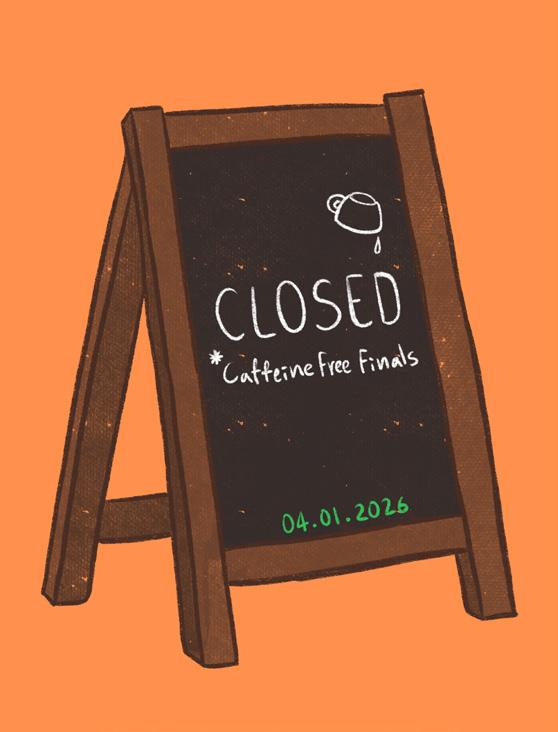
Starbucks, the Archivist and Vicky’s closed for finals week as part of “caffeine free finals”
As the caffeine epidemic contin ues across the country, especially among college kids, the University of Miami is testing a new concept called “caffeine free finals.” With the school year coming to an end, finals are looming, and what is needed is not caffeine for pulling all nighters or giving an energy boost for studying.
The psychology department at UM has run several experiments test ing how students perform with and without the help of caffeine.
With an overwhelming amount of students acing tests without caffeine, UM has decided to ban all major cof fee spots on campus in hopes that av erage final scores will rise.
Part of Herbert Wellness Center shut down to build duck sanctuary
The ducks on campus are multiply ing by the minute. At this rate, there may be more ducks at UM than students. Be
Sovannreach Po // Graphics Editor
cause of this alarming issue, part of the Wellness Center is being demolished to build forever homes for the ducks. Those baby chicks you saw and took pictures of all cuddled up and cozy? They are homeless and are in need of a nice roof over their heads. Say goodbye to those exercise class es and say hello to the new feathery weights for the gym. Hopefully Sebastian does not get mad at his new, cuter competition.
‘The Puerto Rican Prince:’ UM student rises in the ring
By Arianna Philip Contributing Writer
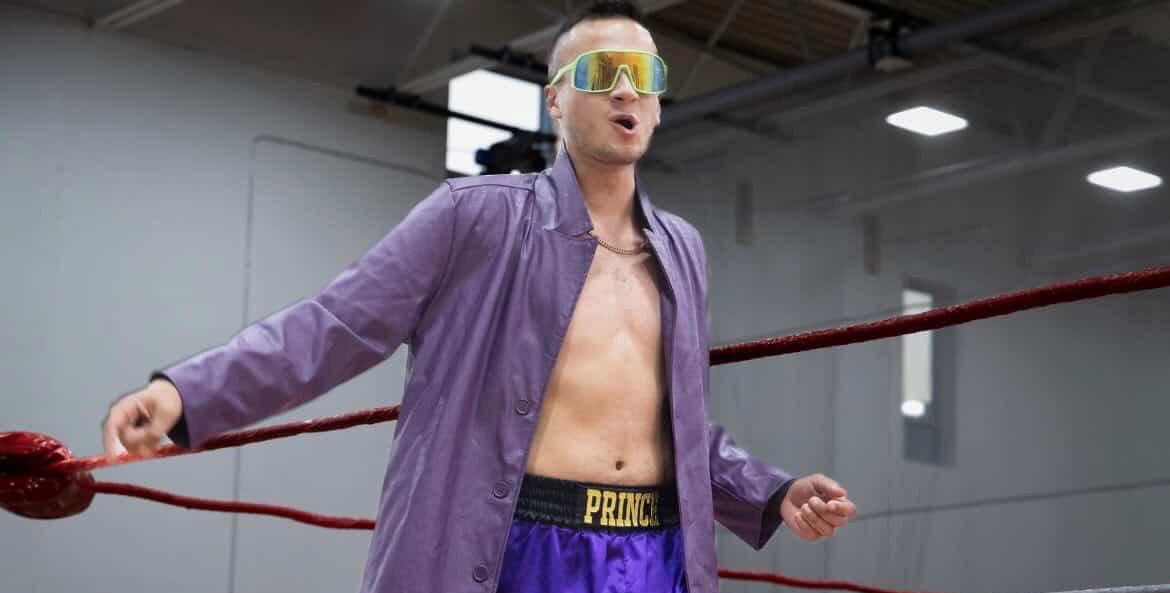
High school backyard matches were just the beginning for one UM student, who turned his love for wrestling into a career while pursuing college classes. Long before stepping into a pro fessional ring, Angel Santiago’s journey began in high school with a homemade wrestling organization he created with his friends. It was here that he officially created his ring name, “The Puerto Rican Prince.”
“Starting out in the BWO [Backyard Wrestling Organization] helped me to really get my foot in the door, and it is what set me on the path to bigger match es and experiences,” Santiago said.
The BWO started as a passion project but quickly gained traction as they landed on Fox News. It was more than just a hobby, but rather an early step toward the career he ulti mately wanted to pursue.
This passion followed him to Mi ami, as he began formally training under wrestler Doc Holiday during his sophomore year, someone who not only helped shape his technical skills, but also his mindset.
Under Holiday’s guidance, he learned that success in wrestling isn’t just about performance, but about perception, and understanding how others see you in the industry.
“Doc taught me that perception shapes everything. People treat you based on how they see you, not al ways what’s real,” Angel said.“He pushed me to break those perceptions, understand where people are coming from, and be aware of who doesn’t have my best interests in mind”
At the same time, he was very in volved on campus. He served as ex ecutive producer for UMTV’S com edy show “Off the Wire” and held multiple leadership positions in the University’s professional film frater nity Delta Kappa Alpha, becoming vice president in his senior year.
Balancing those responsibilities with wrestling required constant effort and sacrifice. Without estab lished connections in Florida, he had to build his name from the ground up.
He traveled for training and re lied on friends for rides to shows, staying consistent even when oppor tunities were limited.
“I just kept showing up and trust ing that my work would pay off, even when things felt uncertain,” Angel said.
After about six months of per sistence, things began to shift. His first major break came during his junior year at the Space Coast State Fair. Ini tially scheduled to only open the show, he was unexpectedly given the chance to fight in the main event after anoth er wrestler dropped out. He delivered an impressive performance, giving his career the push in the right direction.
Since then, he has continued to build momentum, even appearing at the same event as well known wres tlers like Kurt Angle and Kevin Nash.
More recently, in February, he ex perienced one of the most meaning ful moments of his career in Milford, Connecticut, where he defeated a cur rent WWE wrestler, Aaron Rourke, in front of a crowd of over 400 people.
The match was especially significant because it brought together people from every stage of his life, family, friends from high school and even a close friend who served as his manager for the night.
“Winning that match felt surre al, especially knowing how much it meant not just for me, but for every thing it represented,” Santiago said.
The event raised money for the Boys and Girls Club of Milford, some thing he said made the experience even more meaningful, as he is grateful for the opportunity to give back to a com munity that has always supported him.
Despite these milestones, the path has not been easy. For newcomers without established connections, the wrestling world can be cliquey and elitist. Breaking into those circles re quired not only talent, but resilience.
Through it all, Holiday’s mentor ship remained central. Teaching him how to stay grounded, protect himself in the ring, and maintain a positive outlook regardless of wins or losses.
“He showed me how to stay fo cused and hold the right mindset, no
matter what happens in the ring.”
Equally important was the support system he found at UM. He credits Del ta Kappa Alpha in particular for encour aging him to keep going, even when his path didn’t fit the traditional mold. That support made it possible for him to con tinue pursuing something that many people didn’t initially understand.
Beyond the ring, wrestling has shaped how he approaches life. It has reinforced the idea that persistence leads to progress, that if you commit to something and continue showing up, results will follow.
It has also shown him the impor tance of community, both in receiving support and giving it back. Looking ahead, he hopes to not only face big ger names in wrestling, but also create opportunities for others who may have
the talent but lack the exposure.
“I’ve been in that position before, so now I want to give opportunities to people who have the talent but just need a chance, especially those who are willing to really work for it.”
For students considering unconven tional paths, his advice is simple: don’t be afraid to put yourself out there.
“Art only means something if peo ple can see and react to it,” Santiago said. “You can’t be afraid of judg ment, people will always have some thing to say. You just have to push through the uncomfortable.”
From backyard wrestling to main event matches, his journey shows that success isn’t always linear. Per sistence and consistency can take you far, and The Puerto Rican Prince is a clear example of that.
Courtesy of Angel Santiago Angel Santiago assumes his persona, “The Puerto Rican Prince,” in the ring.
Author of longest running anonymous column revealed … kind of
By Gaby Collazo Staff Writer
V’s Take, formerly Dear V, is The Miami Hurricane’s most controversial and longest-running column. Known for its anonymity and sharp satire, V tackles everything from love and sex to campus gossip. Over the years, V has taken many forms, with a different secret V shaping the voice of each era.
Not written for the “politically correct or easily offended,” V has spent decades talking about topics that people might be scared or uncomfortable to discuss face-to-face.
Always appearing as the final piece in the newspaper, V’s take on life brings together the news, sports, opinion and arts and entertainment, serving as a closing note for each edition.
“A reader can pick up a paper wondering what the V’s Take article is going to be this time, and hopefully read an article or two as they navigate through the pages to find it,” said Salvatore Puma, a former V writer.
Puma, who graduated from UM in spring of 2025, wrote as V for four semesters. Starting out as a writer for UM’s magazine, Distraction, Puma became known for his creative pieces such as “Bottom Friendly Foods” and “Best places to take a dump on campus.”
Puma drew inspiration for articles from his own experiences as an openly gay male, as well as stories from friends and email submissions from readers.
“I’d tell myself it gave me an opportunity to have the topic be as timely as possible, but really it’s because my best ideas come under desperation,” said Puma. “The sleep deprivation added a nice flavor to the text.”
One of Puma’s columns was even taken down online. The piece, described by Puma as “basically a beginners guide to Gaydar,” satirized
perceptions about masculinity.
“It poked fun at the idea of the performative male and how we sometimes perceive a guy who is up to date on trends and takes care of himself as some sort of queer, because what straight man would do that?”
Despite criticism over language and stereotypes, Puma said he understood why some readers took issue with the column. Still, he believed the backlash missed the larger picture.
“In the path for queer rights and equality I think there is bigger fish to fry than a satirical article about thinking a man in jorts and sambas is a little gay,” Puma said.
V dates back further and is embedded not only with history but also with personal connections between V writers, such as the friendship between Alexandra Vasquez Sarrine and Jamie Ostroff.
Sarrine, a journalism major who graduated in 2008, inherited “Dear V” from her sorority sister.
“Naturally, my personal experience is my primary resource when it comes to giving personal advice,” said Sarrine. “People would submit questions via email and I would pick the ques -
tion I thought would result in the most interesting column. I would think about it, maybe discuss it with a few close friends or my then-boyfriend (now husband), then draft a response.”
In the February 7-10, 2008, edition of The Hurricane, Sarrine wrote a column that caused a storm on campus. Responding to a sexually explicit and graphic question, she knew the topic was sensitive but did not anticipate the reaction.
“Some people were pretty shocked to see something so graphic printed in our newspaper, and it definitely created a buzz on campus,” Sarrine said.
“Shortly after its publishing, the School of Communication hosted a townhall-type panel to discuss this particular Dear V column in relation to the limits of free speech.”
“What a teaching moment [it was] and at least we all (most of us) had a laugh,” said Sarrine.
As Sarrine’s time at Miami came to an end, she passed the role to her close friend, Jaime Ostroff, in 2009. Though Ostroff only wrote as V for a year, she made the most of the experience.
“I remember sitting in my class -
SPORTS
es and listening to people giggle behind me over something they had no idea I’d written. It was the literal best,” said Ostroff.
Since its beginning, V has always embraced bold topics and openness. It is a persona that connects with readers without bias or judgement.
“First of all, V goes there,” said Ostroff. “As long as V answers those questions with an open mind, no judgment and maybe a little sense of humor, the column will always have a place.”
From answering questions about “biggest turn offs” to addressing unsafe relationships and body image, Ostroff said she proudly represented V with authenticity.
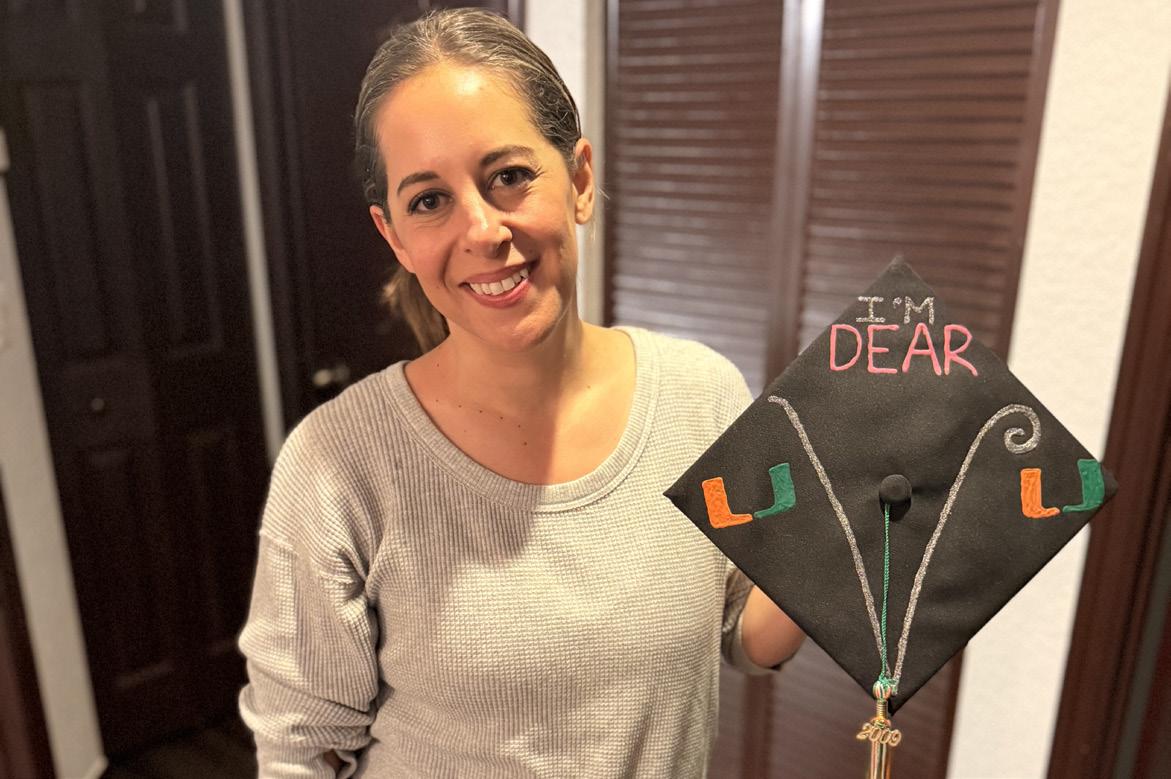
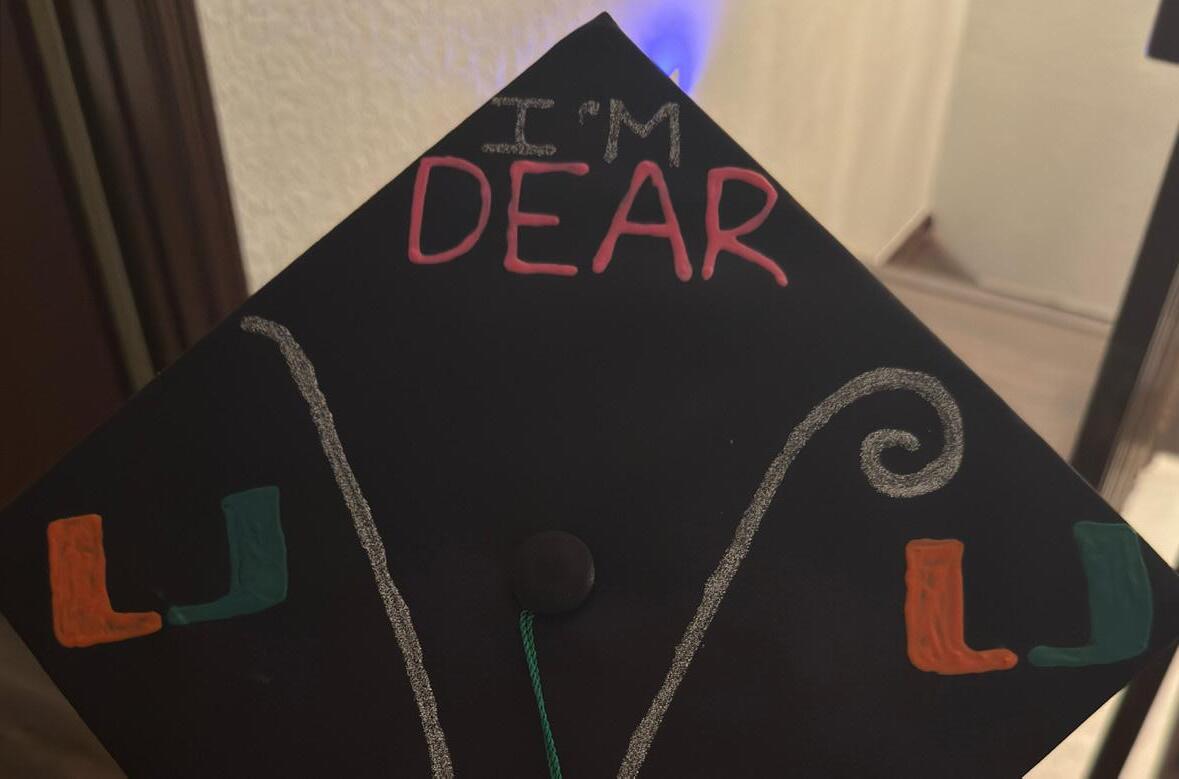
At graduation, she even wrote “I’m Dear V” on her cap and showed it to President Donna Shalala as she walked across the stage to accept her diploma.
The current V, who remains anonymous, draws from both personal and past experiences to shape their version of V’s voice. They emphasize the column’s importance in giving students a platform to express their thoughts.
“My goal this year as V was to be fun, sassy and opinionated,”
said the current V. “[V] is saying what everyone else is thinking or what the student body really wants to hear.”
Like past writers, the current V draws information from personal experience, friends’ relationships and readers’ submissions. They said anonymity plays a key role in the column’s success.
“[With] sensitive and controversial topics it’s important to protect the writer’s identity,” said V. “It makes things more fun to read a gossip column when you don’t know who’s writing it.”
Through anonymity, V creates a space where thoughts, questions, and opinions can be expressed without fear of judgement. V is a collective identity shaped by generations of writers and students, each bringing in their own experiences and perspectives.
As Ostroff captures, “V is you! You are V!” — a reminder that V is not just a columnist, but a reflection of the entire UM community. Want to talk to V? Send them an email at dearv@themiamihurricane.com or fill out the online submission form you can find on The Miami Hurricane website.
From a six-week stay to 35 years: Amy Deem’s run at Miami
By Zach Cohen Senior Staff Writer
Amy Deem arrived in Coral Gables in 1988 with a suitcase in one hand and a plane ticket back to West Virginia in the other.
Deem never used that return ticket. What was intended to be a brief six-week internship in the University of Miami’s compliance department turned into a 35-year renaissance for Hurricane Athletics.
From volunteering as an assistant coach with the track & field team to being named Miami’s women’s track & field head coach in 1990, Deem took a leap and never looked back.
“I’m as passionate about the University of Miami and the things that it has to offer young people, as I was the day I got on this campus,” Deem said.
When Deem started, the program had zero NCAA qualifying marks. Now, she’s won 17 conference championships at Miami, coached 215 All-Americans and 19 national champions.
Even after surgeries in both her knees, which ended her collegiate career, Deem still laces up her shoes.
At the crack of dawn, she runs through the streets of Coconut Grove, striding down towards the marinas and cutting across Kennedy Park, making sure to get her three miles in every morning.
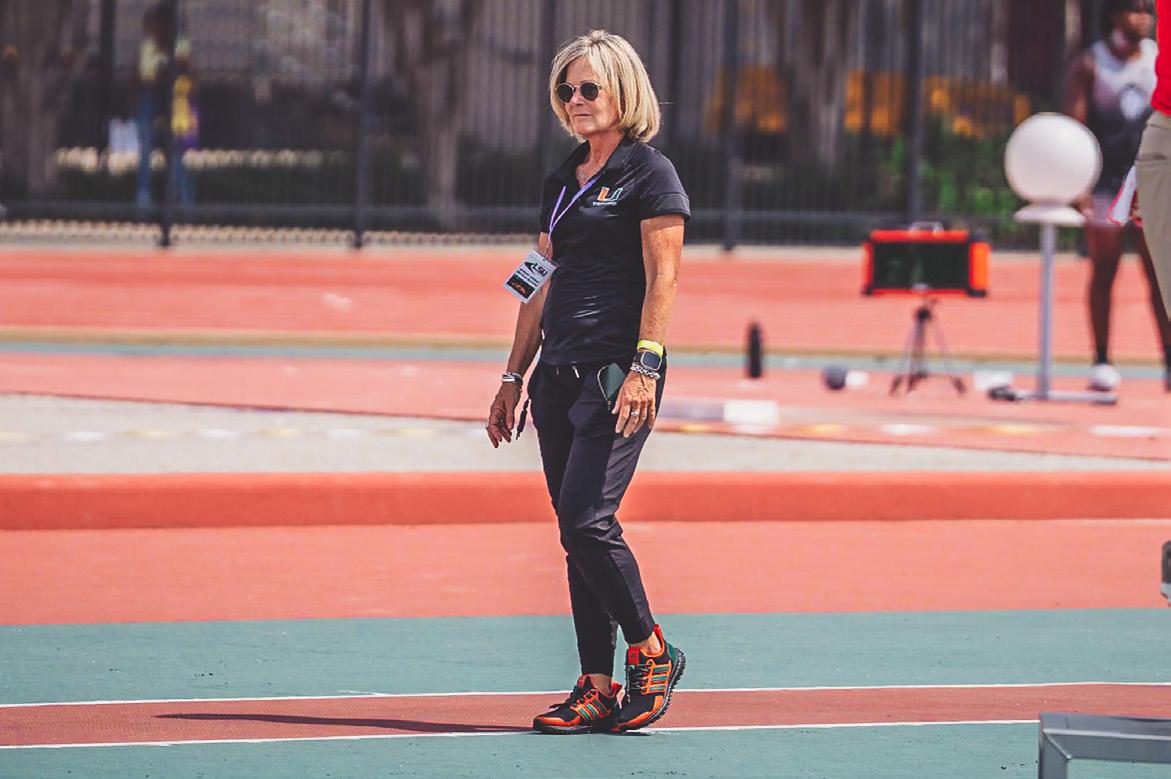
Women’s Track and Field Head
Louisiana State University.
For Deem, excellence starts when the streets are quiet, birds are chirping, and when everyone else is still sleeping.
By 6:30 a.m. she is with her team in the weight room, turning prodigies into champions.
“She is a no nonsense lady. But what was cool is she matched that [energy] … she was always going to be on time,” said former weight thrower and Miami indoor and outdoor shot put record holder Isaiah Simmons.
Simmons described Deem as being “firm yet fair.”
Coaching does not just happen on the track or in the weight room
— it happens in her office as well.
“Deem called me into her office to have a heart to heart and said ‘you got to tighten up or we’re going to have to move on from you,’” Simmons said. “She’s not scared to say what needs to be said in order to get you to start acting right.”
The hard conversations aren’t intended to cause conflict. They stem from a place where Deem deeply cares about her athletes and the sport. Her athletes describe her as passionate, determined, and driven — traits Deem agrees she possesses.
“I probably would put determined [to describe myself], be -
cause I’m one of those people that don’t tell me I can’t do something, because I’m going to do everything in my power to prove you wrong,” Deem said.
That determination translates into a commanding presence.
“When she did speak, everyone got quiet and they listened to her. So it was just this aura, you know, about her, this mystique that, you know, is hard to verbalize,” Simmons said.
In 2008, Deem was promoted to Miami’s Director of Track & Field/Cross Country, becoming the sixth woman to oversee both the men’s and women’s track & field and cross country program at a Division I school.
It seemed like things only went up from there when she was named the women’s track & field head coach for the 2012 USA Olympic team where the team won 14 medals.
For Amy Deem, representing the red, white, and blue was a moment to embrace, but coaching on the olympic stage comes with its own kind of pressure 2020 Olympic head coach Rose Monday, who was one of Deem’s assistants during the 2012 Games, noted some of the challenges the West Virginia native had to face.
Nike representatives were in Deem’s ear trying to get their athletes on the 4x100-meter relay team,
and personal coaches of the runners were attempting to influence how Deem managed their runners.
Deem handled it with class and inspired Monday throughout the process.
“When I was in Tokyo during the global pandemic, I thought, ‘How would Amy have handled this?’ She would have done this, she would have done that. And it seriously gave me a sense of calm,” Monday said.
Shortly after reaching the peak of her career, Deem had a life altering moment — her mother passed away.
“That was a very emotional year for me, because my mom was my best friend,” Deem said.
Her mother’s death on top of the Miami track & field program not being as dominant as it once was resulted in a tough stretch for Deem.
However, with determination, she took the Hurricanes back to glory, winning back-to-back ACC indoor championships in 2016 and 2017.
“She just coaches with confidence,” Monday said. “You can see that her athletes admire her, you see that they trust her immensely. And then they do well because of it.” Whether Deem is on the track with a stopwatch in hand or snacking on a handful of M&M’s, she always wants the best for her athletes.
She arrived in Coral Gables uncertain about her future. Thirty-five years later, Deem is still here — and still setting the pace.
Canes women’s tennis earns comeback victory on the road
By Luca Mucciardi Staff Writer
Miami Hurricanes women’s tennis (11-3, 7-1 ACC) was rewarded with a well-deserved victory after an impressive comeback against the Georgia Tech Yellow Jackets (9-9, 3-4 ACC) Friday afternoon in Atlanta, Ga. on March 27. Georgia Tech came flying out of the gates, winning the first two doubles matches to secure the doubles point in a sweeping fashion. Taly Licht and Sabritt Dozier took down the Canes duo of Aely Arai and
Dominika Podhajecka 6-0 on court two, while Given Roach and Eleni Karantali earned a 6-4 victory over Maria Vargas and Daria Volosova on court three. Despite the early deficit, Miami bounced back immediately in singles play. Volosova earned a timely 6-2, 6-3 victory over Dozier to put Miami on the board, knotting the match up at 1-1. Just a few moments later, Podhajecka took down Olivia Carneiro on court five, 6-4, 6-3, sending Miami into the lead. The most pivotal win of the day for the Hurricanes came from No. 101 Sofia Rochetti. In her top-court debut, Rochetti secured a 6-3, 6-3 ranked victory over No. 66 Alejandra Cruz to extend Miami’s lead to 3-1. Roach would keep Georgia Tech alive, pulling the Jackets back within one on court three with a well fought out 7-6 (2), 6-4 win over Arai. Up 3-2 with just two matches left to play, Miami looked to Jaquelyn Ogunwale to secure the win. In a three-set thriller, Ogunwale took down Seri Nayuki 5-7, 6-4, 6-3, earning the match win for the Hurricanes. The win propelled Miami to 7-1 in conference play, as the season works its way to a conclusion.
Courtesy of UM Athletics
Coach Amy Deem at a meet on April 21, 2023, at
With just five ACC matches remaining, the Hurricanes sit at third place in the conference, trailing only behind Virginia and North Carolina. Miami will face off against UNC at home on
Courtesy of Jamie Ostroff
Jamie Ostroff holding her graduation cap from 2009 revealing her identity as V.
Courtesy of Jamie Ostroff
Jamie Ostroff revealing her identity as V on her graduation cap from 2009.
Storylines to keep track of during Canes football spring practice
By Shea McDonald Senior Staff Writer
Football returned to Greentree on Tuesday, March 24, as spring practice kicked off for the Miami Hurricanes.
With battles for playing time and a mix of veterans and newcomers, camp will be exciting to watch, culminating on April 18 for Miami’s spring game.
It’s time to find the diamonds in the rough and answer the questions about how Miami reloads to attack next season after a national championship appearance.
Mirabal rebuilds his wall
With weapons available across the skill positions, the only major question mark right now for this UM offense is how it can rebuild an offensive line after losing four starters.
While plenty more shuffling could happen, as of the first day it looks like Miami’s tackles decision may be set.
Following practice, redshirt junior Matthew McCoy hinted at the staff’s plan for him.
“I’m just focused on trying to play right tackle, getting better, getting my group better and leading,” McCoy said.
With his experience mainly at
guard, McCoy will need to pick up the position fast, especially given he’s likely lined up across from true freshman five-star Jackson Cantwell at left tackle.
Both are going to be tested all spring long, something they’re used to. Cantwell participated in scout team drills last January as an early enrollee.
“Rueben [Bain] and [Akheem]
Mesidor were [Cantwell’s] baptism by fire at the end of the season,”
Coach Cristobal said.
On the interior, the picture isn’t as clear.
Samson Okunola and Ryan Rodriguez are two names that come to mind, but with Rodriguez’s injury history Miami has some young guys fans should keep an eye on in the rotation.
Max Buchanan and SJ Alofaituli, two second year players, are going to make a push.
Buchanan brings size and physicality to maul opponents on the interior while Alofaituli was a top-100 recruit in the 2025 class and earned time last year in some jumbo sets for Miami.
Time will tell as this group shuffles and offensive line coach Alex Mirabal finds a group that gels.
Rise of young front seven
With veteran Ahmad Moten out
for the start of spring “dealing with some stuff,” according to Cristobal, Miami has plenty of guys to watch throughout spring.
Justin Scott, Marquise Lightfoot and Armoundo Blount will aim to take the next step in their development as juniors. Each year, the former five-stars have rotated in spurts and impressed, but now they will have the chance to establish themselves as 3-down players for the Hurricanes.
Canes’ fans have to keep an eye on their highest rated recruit from the 2024 class, Hayden Lowe.
As a freshman, Lowe’s size, strength and motor would have earned him playing time had he not suffered a season-ending injury. Now, fully healthy, Lowe can make the jump into what Blount and Lightfoot have been on the edge for Miami.
In the linebacker room, Chase Smith and Mo Toure returning are the expected duo, but watch for Kellen Wiley. The second-year linebacker has an NFL frame at 6-foot-4, 235 pounds and has the skills of hybrid edge/linebacker. How he puts it together this spring will be fun to watch.
Receivers battling for playing time
This room could be the most fun to watch all spring long. Malachi Toney
and Cooper Barkate are likely locks as starters but the rest will be a war.
“The receiver room will be the most competitive it’s been since we’ve been here,” Cristobal said.
West Virginia transfer Cam Vaughn made a statement with his downfield contested catch ability and could slot into a true deep-threat receiver role for Miami. But, the Canes’ underclassmen will have something to say about that.
Milan Parris stands at 6-foot5 and Samourian Wingo stands at 6-foot-2, both very fluid and
speedy for their size.
However, sophomore Joshua Moore is the one that could impress the most.
Last season’s opening game, Miami’s staff showed confidence in Moore by starting him against Notre Dame where he recorded a couple catches. Moore, when given an opportunity, showed the ability to make plays with the ball in the air and could easily be the guy to look for in this receiver room.
Miami stuns Clemson in extra innings after late break through
By Omar Pinto Staff Writer
Lifted by a five-run tenth inning, the Miami Hurricanes took down the Clemson Tigers 8-3 to open a three game series on Thursday night, March 26 on the road at Doug Kingsmore Stadium.
With two outs and the bases loaded in the tenth, up stepped Hurricane hero Daniel Cuvet.
One of Miami’s most productive hitters in program history, there was zero doubt from the dugout that the Fort Lauderdale native would come through for a UM side desperate for an ACC series opening win.
Cuvet lived up to those expectations, smoking a ball to third base that Tryston McCladdie couldn’t handle, sending the ball down the left field line and bringing home all three runners.
The Canes plated two more insurance runs to extend the lead to five, heading to the bottom half of the inning just three outs away from a crucial road win.
Closer Ryan Bilka trotted back onto the mound to begin his third inning of work on the night. Full of adrenaline as he stared the Clemson hitters down,
the Richmond transfer sat down the side with three strikeouts, earning both the win for himself and UM. Bilka threw three scoreless innings from the bullpen, allowing only three
hits in his longest outing of the year reaching more than 50 pitches.
The Hurricanes got on the board early, as Alex Sosa worked a walk and Derek Williams singled to put two
men on base. With two outs, Brylan West came up to the plate and delivered, shooting an RBI single up the middle to score a run.
West led the way on offense with three hits and two RBIs, continuing his strong run of form this season.
The Canes built on their lead during the third inning, starting off with Sosa as he ripped a double down the left field line. West once again came up big, bringing Sosa home with a double of his own. He was brought in by Vance Sheahan, who forced an RBI single through the right side, extending the lead to 3-0.
This lead proved crucial for Miami, who started freshman left-hander Sebastian Santos-Olson on the mound. Usually the midweek starter, Santos-Olson was forced to make his first ACC start since AJ Ciscar, the typical opener, was ruled out with a bicep strain.
The bats finally came alive for the Tigers in the bottom of the fifth after a Tyler Lichtenberger single and a Bryce Clavon double gave Clemson runners on first and third with one out.
Lyndon Glidewell took the mound for the Hurricanes to relieve Santos-Olson in a tough spot, looking to get them out of a jam. The
Austin Peay transfer escaped the jam, only allowing one run.
The Tigers inched closer once more in the sixth as a plethora of errors ruined Frank Menendez’s debut appearance for Miami.
After Luke Gaffney reached on an error by West, back-to-back bloop singles brought him home, cutting the deficit to just one run. With all the momentum, Lichtenberger launched an RBI single into right field, tying the game up at three.
It appeared Clemson would send its fans home victorious in the ninth with two runners in scoring position. But with the game on the line, Bilka came up huge with a strikeout, getting Miami out of a tough jam and sending the game to extra innings where the Canes handled business.
The Hurricanes carried the momentum throughout the series, narrowly losing 7-6 on Friday before clinching the series on Saturday with an emphatic 8-6 victory over the Tigers.
With its first ACC series victory of the season under its belt and now sitting just below .500 in conference play, Miami (21-7, 4-5 ACC) will aim to ride some momentum throughout the month of April.
Keionte Scott boosts draft stock with standout performance at pro day
By Alyssa Golden Staff Writer
With all 32 NFL teams represented and more than 100 NFL personnel watching closely, the University of Miami’s Pro Day served as a final chance for Hurricane NFL hopefuls to prove themselves ahead of the 2026 NFL Draft.
Action began at 2 p.m. on Monday, March 23, with the 40-yard dash.
Scouts filled the bleachers near midfield of the Carl Soffer Indoor Practice Facility, watching each drill closely and taking notes as the day unfolded.
One player in particular arrived
determined to prove he is worthy of being a top pick.
Miami cornerback Keionte Scott stole the spotlight after running a 4.33-second 40-yard dash. His time would have ranked second among cornerbacks at the NFL combine — the league’s week-long showcase where top college football prospects perform for coaches, scouts and general managers.
While he was invited to the NFL combine last month, Scott opted to only participate in the interview process, not the on-field workouts or testing.
Without a combine performance to lean on, Monday served as Scott’s primary opportunity to make his case
to NFL front offices.
After his impressive showing in the 40-yard dash, he demonstrated he has more than just speed, recording a 10-foot, 3-inch broad jump and a 44inch vertical jump.
The 6-foot, 195-pound sixth-year senior totaled 64 total tackles, includ ing 13 for loss, five sacks and two in terceptions returned for touchdowns in his lone season with the Hurri canes.
Before transferring to Miami, Scott spent three seasons at Auburn.
“The journey to get to where I am today has been a lot of ups and downs,” Scott said. “A lot of ques tions, lots of long nights. It’s definite ly a lot of emotions. I feel like I’ve

him all the way up to the second When asked about the emotionsmained focused on what comes “24-hour rule, and then it’stion, Scott may hear his name called much sooner than expected when the 2026 NFL Draft takes place in Pittsburgh from April 23-
Miami’s 2026 Pro Day on March 23, 2026.
Miami athletic director named NACDA Athletic Director of the Year
By Luca Mucciardi Staff Writer
“Athletics is a part of the greater university community and we need to be a shining example of integrity, innovation and commitment.”
That is what athletic director Dan Radakovich said when he stepped up to the podium at his introductory press conference on Dec. 14, 2021. Nearly five years since his induction, Radakovich has demonstrated each of these characteristics he cited, elevating multiple athletics programs back to national prominence.
One of 28 nominees, Radakovich is one of four athletic directors being honored for his service to football at the Division I Football Subdivision Level.
When Radakovich arrived in Coral Gables, Hurricanes football was at a low point in its history.
Since 2006, the Hurricanes held just a single bowl win, a single 10win season and no significant ACC or post-season success.
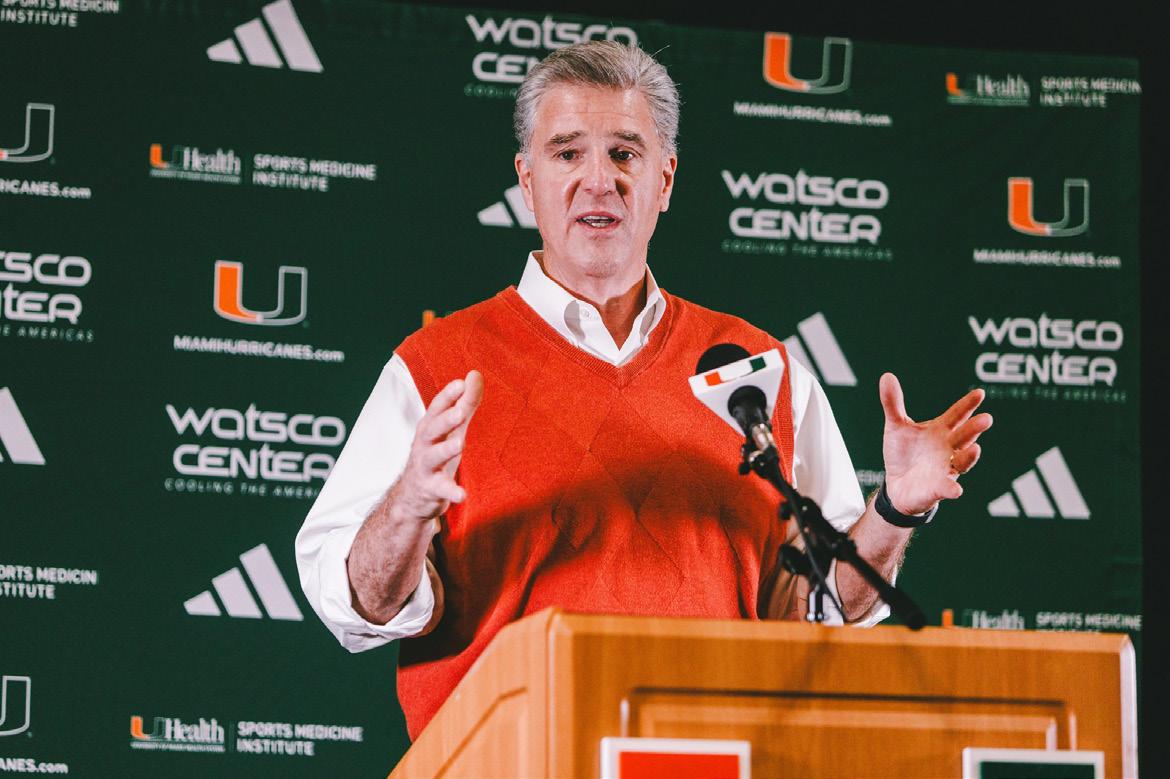
As South Florida players flocked to rivals and out-of-state competitors,, The U was being left behind as the glory days were over and the program criticized for a lack of investment. Radakovich came in with head coach Mario Cristobal, both UM alums, hungry to bring UM back to national prominence.
In the years since, the two have worked hand-in-hand to get Miami football back to the top of the country. Each year, football has improved in record, in recognition, and in ability to recruit between keeping guys home or from the transfer portal.
From five wins in 2022 to national champion runner-ups in 2025, Radakovich has helped bring sports culture back to life on campus, starting on the football field.
Navigating the new world of NIL and paying student-athletes, Radakovich has developed relationships with donors and sponsors to improve facilities and give Hurricanes athletes the best chance to succeed.
In the 2024-2025 academic year alone, Miami athletics received $36.4 million in gifts and contributions, its second-highest total in school history from more than 7,000 donors.
While football is what’s earned him this honor, that’s not to say that Miami hasn’t had other stars shine throughout his tenure.
Radakovich has consistently invested in athletic developments with the expansion and improvement of facilities for all its sports. Most recently, Miami has upgraded women’s basketball and baseball locker rooms as well as the renovation of football’s indoor practice facility.
In the 2022-2023 season, Hurricanes hoops reached historic new milestones as the men’s program made their first ever Final Four and the women their first Elite Eight berth in school history. Swim and Dive has back-toback National champion diver Chiara Pellicani, Track and Field has earned a long list of ACC and National honors and Hurricanes baseball was one run away from a trip to Omaha last season.
Off the field, Hurricanes athletics reached a school record 94% graduation success rate and have been at the top of community service winning the annual Community Service competition twice in 2022 and 2024 with levels of 99% student-athlete involvement. Radakovich will be honored for the work he’s put in across his five years in Coral Gables. The ceremony will be held at the National Association of Collegiate Directors of Athletics’ 61st Annual Convention on June 9, 2026 in Las Vegas.
Courtesy of UM Athletics
Graduate First Baseman Brylan West slides into home plate on March 26, 2026, at Doug Kingsmore Stadium.
David Lebowitz// Photo Editor Former UM defensive back Keionte Scott runs the 40-yard dash at
Courtesy of UM Athletics
Dan Radakvich speaks at a press conference on Oct. 21, 2024.
Brian Mulvey // Photo Editor
Sophomore defensive end Marquise Lightfoot celebrates against Ohio State University at AT&T Stadium in Dallas, Texas, on Dec. 31, 2025.
V dear v@themiamihurricane.com
V’s Take is The Miam i Hurrican e’s most cont ro versial an d longest running column .
V’s Take is a satirical work published biweekly by students and for students using our generation’s “colorfu l” language. V addresses all things love, sex and gossip on campus. V is not for the politically correct
How do I navigate a friendship with someone who has different political views?
Friendships can be hard
There comes a point when you realize a friend doesn’t see the world the same way you do. It can feel incredibly awkward or out of pocket when you’re mid-latte and suddenly debating something way deeper than oat milk versus almond milk.
The truth is, you are not required to agree with your friends on everything. In fact, if you do, one of you is probably lying.
But navigating these differences can be difficult.
First, figure out if something is a difference or a dealbreaker. There’s a big gap between “they like dogs more than cats” and “they fundamentally disrespect people.”
If their views don’t align with your core values, you’re allowed to take a step back. This is why it’s important to decide which topics really matter most to you.
Don’t be surprised if the more you start to think about it, the more you realize you might not agree with some of your long-time friends from back home that you once thought you had everything in common with.
If you decide a disagreement is not that
Love, V
deep, relax and take a deep breath. Not everything has to be a debate and sometimes it’s ok to say, “I think I see that a little differently” and move on.
Agreeing to disagree is a favorite of mine.
Now, if you find yourself getting into arguments often, it’s probably time to reevaluate the friendship.
On the other hand, if you’re constantly biting your tongue, what seems like harmony will quickly turn into exhaustion and resentment.
At the end of the day, the best friendships aren’t built on identical viewpoints, they’re built on mutual respect.
You can disagree, roll your eyes internally and still care about someone. The key is figuring out if both of you can do that without turning every difference into a battlefield.
I’ve found that keeping an open mind about not only your friend’s beliefs, but also about your own, can help shape your relationships and who you are as a person for the better. That’s just my two cents.