
AFM Imaging Liquid
Imagine being able to watch the machinery of life as it works — proteins folding, cells communicating, or drugs interactingwiththeirtargets—allinrealtime and at an almost unimaginable scale. This is no longer science fiction. ThankstoadvancementsinAFMimaging liquidtechniques,scientistscannowdive deep into the nanoscale world of biology and materials science in environments wherelifeactuallyhappens.
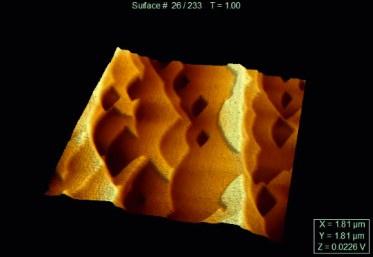
Traditionally,AtomicForceMicroscopy (AFM)wasatechniquebestsuitedfor dry,vacuum,orair-basedenvironments. Itworksbydraggingasharptipacrossa surface,muchlikearecordplayerreads avinyl,tomaptopographywithatomiclevelprecision.Butforyears,studying delicatebiologicalsampleswasa challengebecausedryingthemoutor removingtheirnaturalliquid environmentwouldaltertheirstructure.
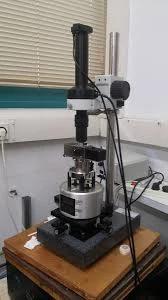
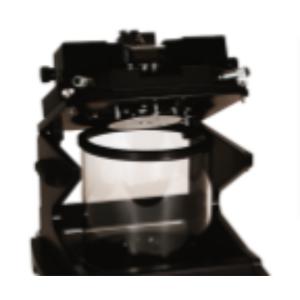
Enter liquid environment imaging. By performing AFM imaging liquid techniques, researchers can now submerge both the sample and the probeinafluid.Thisisagame-changer,particularlyforbiology.A2024 study published in Analytical Chemistry highlighted how combining AFM with infrared spectroscopy in liquid environments allows for nanoscale chemical imaging that was previously impossible . This meanswecannowlookatlivecells,studyhowtheyreacttodrugs,and observethebehaviorofbiomoleculesintheirnative,hydratedstate.
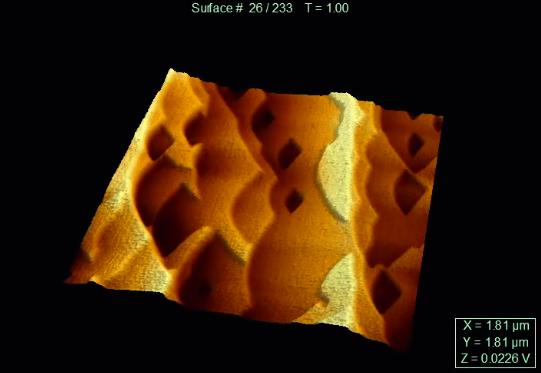
Recent innovations have even introduced specialized detection liquids that contain fewer ions and organic compounds. Studies show that usingtherightfluidcansignificantlyimproveimagequality,especially for soft biological samples like mouse brain cells . By optimizing the liquid medium, the AFM tip interacts more gently and cleanly with the sample,producingsharper,moredetailedimages.
Thedemandforhigherresolutionis constantinnanotechnology.Researchers atvariousinstitutionsarebuildingcustom low-noiseAFMsthatachievealateral resolutionofjust0.09nanometers.This levelofdetailallowsscientiststovisualize thehydrationlayersonlipidbilayersand understandhowsaltaffectsmembrane structureatthesub-molecularlevel.This iscrucialfordevelopingnewdrugsand understandingdiseasesattheir fundamentalsource.
When working with such sensitive and advanced equipment, performance and reliability are paramount. This is where expert support becomes invaluable. Many laboratories rely on professional AFM Service providers to ensure their systems are operating at peak condition. These services range from routine preventative maintenance to full system evaluations, helping labs avoid costly downtimeandensuringthateveryimagecaptured isaccurateandpublication-ready.
As with any sophisticated technology, the march of progress can leave older hardware behind. However, many research institutions and industrial labs have invested heavily in legacy systems that still hold immense value. These workhorses of the nanotech world often just need a little attention to get back in the game.
This is where the niche but vital field of Old AFM Repair comes into play. Specialized technicians can evaluate aging systems, identify complex failures, and restore them to factory certification . Whether it’s upgrading scanners, replacing wornout electronics, or simply recalibrating the system, repairing an old AFM is often a cost-effective alternative to purchasing a brand-new instrument . This is particularly important for institutions looking to maintain high research output without exceeding budget constraints.
When discussing the history and reliability of AFM technology, one brand that stands out in the landscape is Molecular Imaging. Known for its innovative designs and robust systems, Molecular Imaging was a key player in making AFM technology more accessible and versatile. While the company has since become part of Oxford Instruments’ Asylum Research family, the legacy of its engineering lives on . Many of these legacy systems are still in operation today, a testament to their build quality, and they are often the subject of Old AFM Repair and upgrade services to keep them competitive with modern standards . Modern support for these systems, as well as current-generation models, includes everything from remote desktop diagnostics to onsite engineer visits. Companies now offer comprehensive plans that cover not just repairs, but also preventative maintenance, software updates, and even training to help users master new techniques .
The ability to perform high-resolution imaging in liquid is opening doors we never knew existed. From watching amyloid fibrils form (linkedtoAlzheimer’sdisease)toobservingthereal-timeeffectsof pharmaceuticals on cell membranes, AFM imaging liquid applicationsareattheforefrontofmedicalandmaterialsresearch
. As the technology continues to evolve, the need for skilled AFM Service and reliable Old AFM Repair will only grow. By maintaining the tools we have and pushing the limits of the ones we build, the futureofnanotechnology—andourunderstandingoftheworldat thesmallestscales—hasneverbeenbrighter.
ORIGINAL CONTENT: https://medium.com/@zarakellyus/afm-imaging-liquidapplications-in-modern-nanotechnology-e3913442e297