The Hawai’i State Board of Education has a new statewide policy prohibiting student cell phone use in public schools to “eliminate distractions in classrooms, enhance academic focus and improve social interaction.” This policy was passed on Feb. 12 and is scheduled to take effect in the 202627 school year.
In response to the statewide phone ban in Hawai’i public schools, McKinley High School students answered a Pinion poll regarding the policy, with a large majority of students saying they knew about the phone ban being implemented next year. In addition to this, many students responded opposing the policy.
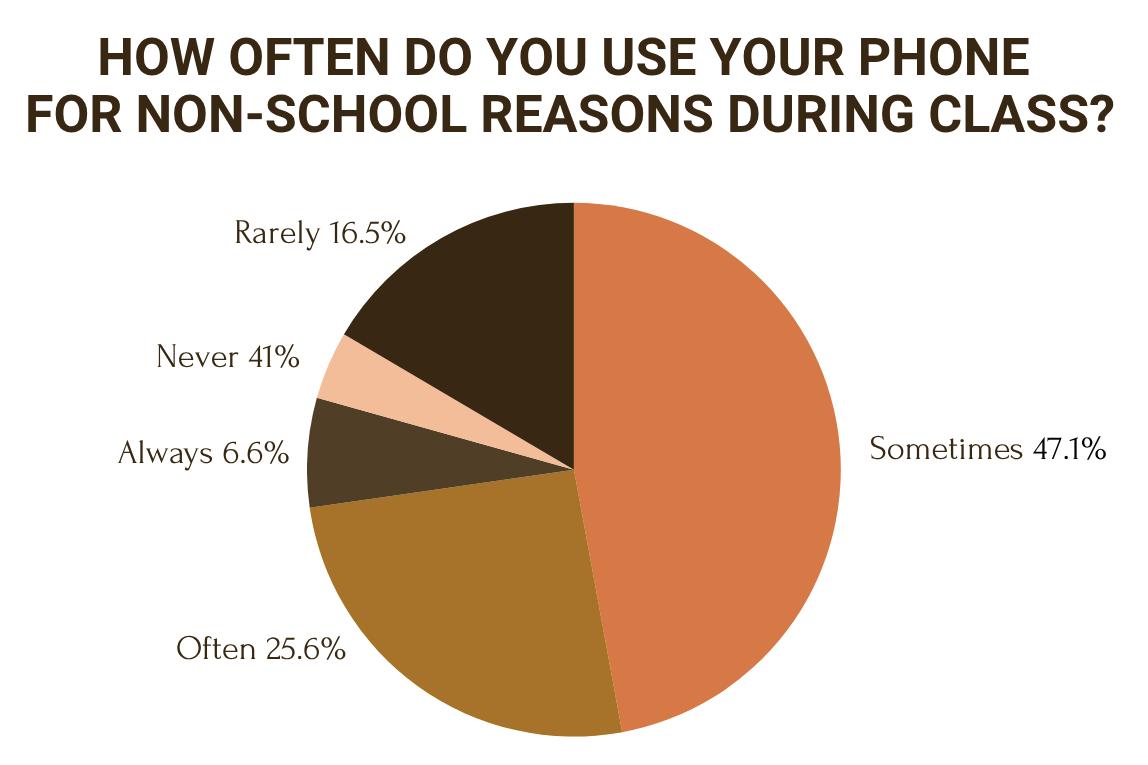
Students responded on a scale of one to four—one being phones do not harm students during instructional time at all, and four being they do. The majority answered with a two.
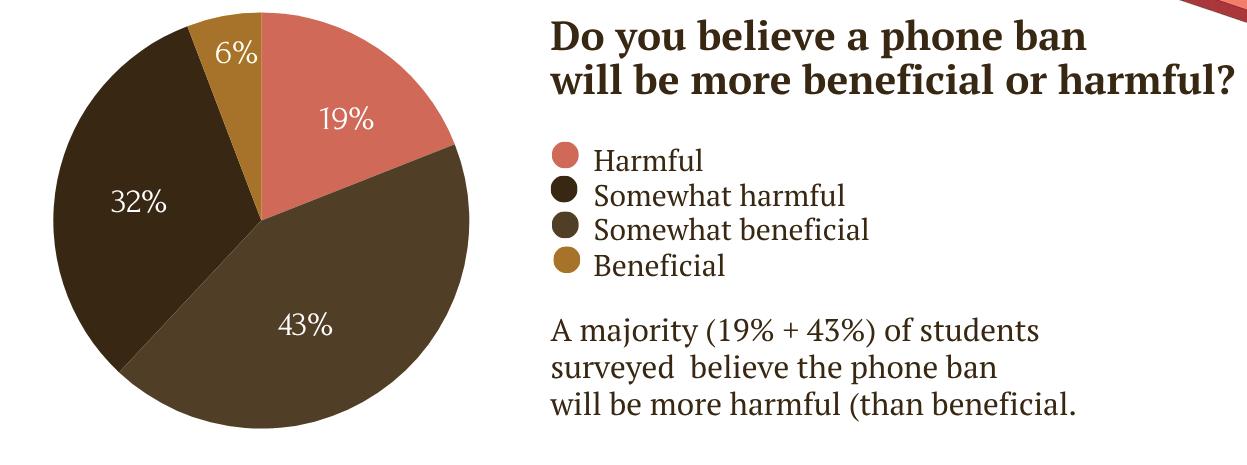
Along with this, the majority of students said this phone ban will be more harmful to students.
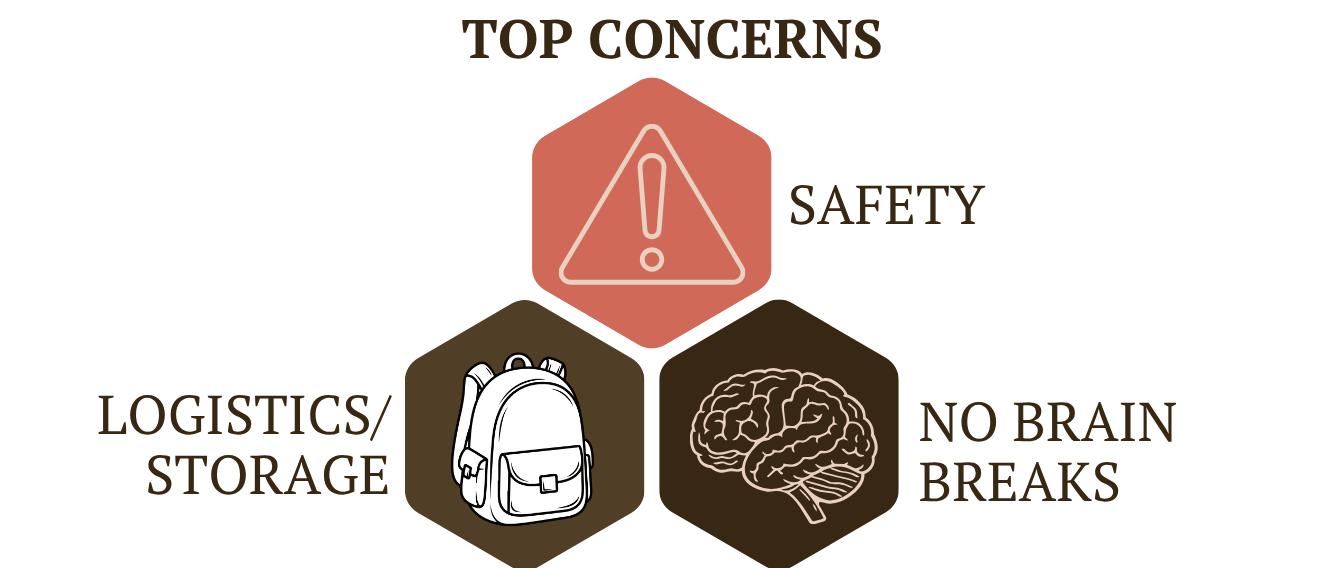
Their biggest concern with the policy is regarding emergencies, and how they will be able to contact their parents if one occurs.
“A phone ban will make it harder
to contact family members in case of emergencies. Students will all have a harder time relieving stress if access to phones becomes limited,” said an anonymous student on the poll.
Students replied to the poll saying it is the teacher’s fault for not making lessons engaging.
“It is not a phone issue but a personal issue … along with the teacher being boring,” said another student replying to the poll.
What Is the Policy?
This policy states cell phone use is prohibited during all school hours in elementary and middle school. For high schools, it is only prohibited during instructional time. However, high schools may have the discretion for students to use their phones outside of that time—before or after school, lunch and at designated breaks.
The Board of Education has been discussing this policy since early 2025. According to the official policy, the board recognized cell phones have been “used to engage students in innovative learning, but that informal learning has concerns.” Some of these concerns include cyber-bullying, distraction from work and interpersonal communication.
Another concern was the
inconsistent regulations on a school level—meaning not all schools have the same policies. The board wanted a unified policy, reflecting “student development readiness to establish clear expectations.”
The board collected data regarding complex area perceptions of the policy. According to their data, 86% of schools have a policy for cell phone use, while 14% stated they do not. The most common phone policy is having them turned off and kept in backpacks.
The board has conducted many public hearings for the community to testify. Logan Otani, Center for Tomorrow’s Leaders Vanguard member and University of Hawai’i at Manoa (Story continued on p. 2.)
All infographics by Jacky Oasay based on statistics from a Pinion survey with 121 respondents.
The student-run newspaper of McKinley High School
A majority (19% + 43%) of students surveyed believe the phone ban will be more harmful than beneficial.
(Story continued from p. 1.)
student, testified in support of the policy.
Otani and her team were there for the passing of the BOE policy, and are now in partnership with the Board of Education to create a consistent implementation plan for all schools.
Along with this, they have been researching what other schools nationwide have been implementing for phone bans.
Student Thoughts -
Comparing to the Mainland Poli’ahu Cootey-Garcia (c/o ‘28) moved to Hawai’i this year from Oregon. She said her school had a stricter phone ban policy compared to the one being implemented in Hawai’i.
Cootey-Garcia said in Oregon and other mainland schools, they have an “off and away” policy from bell to bell, even during lunch and passing periods. The only exceptions were for documented medical reasons.
“I felt really restricted,” CooteyGarcia said. “You had to go all the way to the office to get your phone.” Even with the travel to the office, Cootey-Garcia said the chances of them letting students use their phones are very low, even in emergencies.
Compared to the Oregon policy, Cootey-Garcia said she likes Hawaii’s more.
“I understand not having them in class, because I think phones can distract you a lot,” she said.
However, she said she thinks a lot of students will rebel due to this policy, even though it is nothing compared to the ones implemented in other states.
“I think they would go even more crazy if it was the one in the main-
land … I don’t think they understand how lucky they are,” she said.
Cootey-Garcia emphasized the importance of mutual respect between administrators and students.
“They cannot make students feel like they are less than what they are by taking their stuff away,” CooteyGarcia said. “Administrators should make sure that teachers are also being nice to students so there isn’t a big rebellion.”
What Does Administration Say?
In a Pinion article written two years ago regarding phone use in school, Principal Ron Okamura was interviewed and said the administration team thinks every day about putting a mandate on phones.
In that interview, Okamura said, “We would like to see some kind [of policy] across the DOE, some consistent rules or policies.”
At that time, Okamura said he saw dangers of phone usage regarding cyberbullying and fighting. “We think about [phone mandates] every day because there’s not a day where someone doesn’t come up and says ‘Look! Someone is bullying me,” Okamura said.
In response to the new phone ban policy, he said the biggest concern with the policy is implementationgetting kids on the same page with
adults and ensuring parents feel safe. The students’ main concern at McKinley is safety and using their phones during emergencies.
“When I was in school, when there was a family emergency or my parents had to get in contact with me, they called the office,” Okamura said.
He also said when many students use their phones during emergencies, it puts more people at risk of danger. For instance, Okamura said phone lines can get blocked when too many people are calling at once.
“Our parents don’t understand that the safest place [during lockdowns] is within the classroom,” Okamura said. He also said he does not want to risk parents coming to campus when there is an emergency.
Besides the concern of implementation, Okamura is happy this policy is going into place. However, he is still waiting for the solidified policy for a consistent basis around schools.
Currently, Okamura said they are looking at phone lockers and focusing on a way for the policy to also be consistent within McKinley. He said a system where the students only put their phones in their bag is not the best as the temptation to use it will still be there.
Okamura’s plan for the phone ban next year for students who refuse to put their phones away is a three warning system—telling them to put their phones away, the teacher holding onto it and then getting sent to the office.
“Rules are made because something happened that wasn’t good, or to prevent something that could be,” Okamura said. “If you choose to do something wrong, you’ve got to be willing to accept the consequences.”
Storm Floods O’ahu, Affects Communities
by Keilana Yandall
According to reports, March backto-back kona lows caused the worst flooding O’ahu has experienced in 20 years. Heavy winds and rain damaged the homes and communities of the people of Hawai’i, which led the Hawai’i Department of Education to shut down all schools twice.
Residents across O’ahu experienced different degrees of changes and impact.
Ezequiel Pina (c/o ‘29) said, “It affected me, because water was coming into the house, even though I live on the second floor, and the power went out, [it] just kept going on and on.”
Pina said while everything was happening, he called family and friends to make sure everyone was okay. In addition to this, he charged his devices in case the power went out for a long period of time.
Pina said it was tough learning about the storm because he has family in Kaneohe and Ewa Beach, areas that were hit harder than Kapahulu, where he lives.
According to the National Weather Service, flash flooding occurred across the island with the most impact being in the Windward and North Shore areas.
Dominic Niyo (c/o ‘26), a Pinion staffer, said that although he first heard about the storm a week in advance on Instagram, he did not think it would be serious. Hawai’i experiences frequent rain and storm alerts, which some people such as Niyo did not take seriously because of how frequent the reports are.
“They have storm [warnings] almost daily and it’s just regular light rain,” he said. “For this storm it was the first time in four years, [my] first time in high school, where they actually had to close schools.”
The storm also interrupted spring break, which was meant for students and teachers to rest. Instead of doing so, many had to endure the storm and
worry about their homes, rather than getting a mental refresh for the new quarter.
David Scarlino, who teaches juniors, said, “I’m pretty exhausted.. maybe [I’m] just coming out of being so overwhelmed from it.”
During the duration of the storm, Scarlino spent his spring break wiping down walls and floors. He added at one point, the power was out for over a day.
“Spring break was just, no break. It really wasn’t a break,” he said.
After the storm ended, people faced serious repercussions. Even for those whose homes were not completely destroyed, damage was still critical.
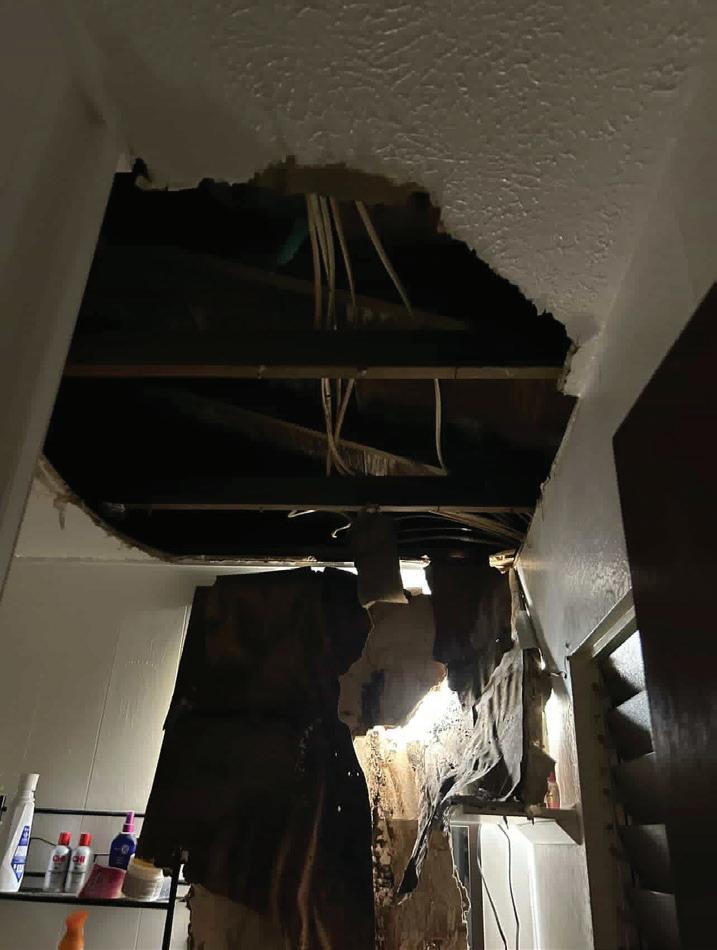
Shunya Ku’ulei Arakaki, a social studies teacher for special education students and workplace readiness, said, “On Friday the 13th, I was actually just at home doing nothing. There’s nothing we could do. It was during that night, my roof above my bathroom came crashing down.”
Arakaki said her reinforcements is a tarp in the shape of a V that covers the hole in her ceiling and directs
the water that comes in into a bucket below it.
Her electricity bill is twice as much as it normally is because her solar panels were destroyed. Arakaki said she regrets not having someone come in to periodically check her roof. She said she wouldn’t be in the predicament she is now if she had done so.
As residents began recovering from the effects of the storm, the community came together to support one another.
“We had a community meeting, and we’re all trying to figure out how to secure our homes,” said Arakaki.
Arakaki and her neighbors have put in new foundation walls to support the floors of their home that was washed out because of the heavy rain.
Though the storm was underestimated and affected many in unimaginable ways, families and communities are still building each other up.
“Don’t matter how big the problem is or the disaster, just have you and your community stick together and we’ll pull through this,” Pina said.
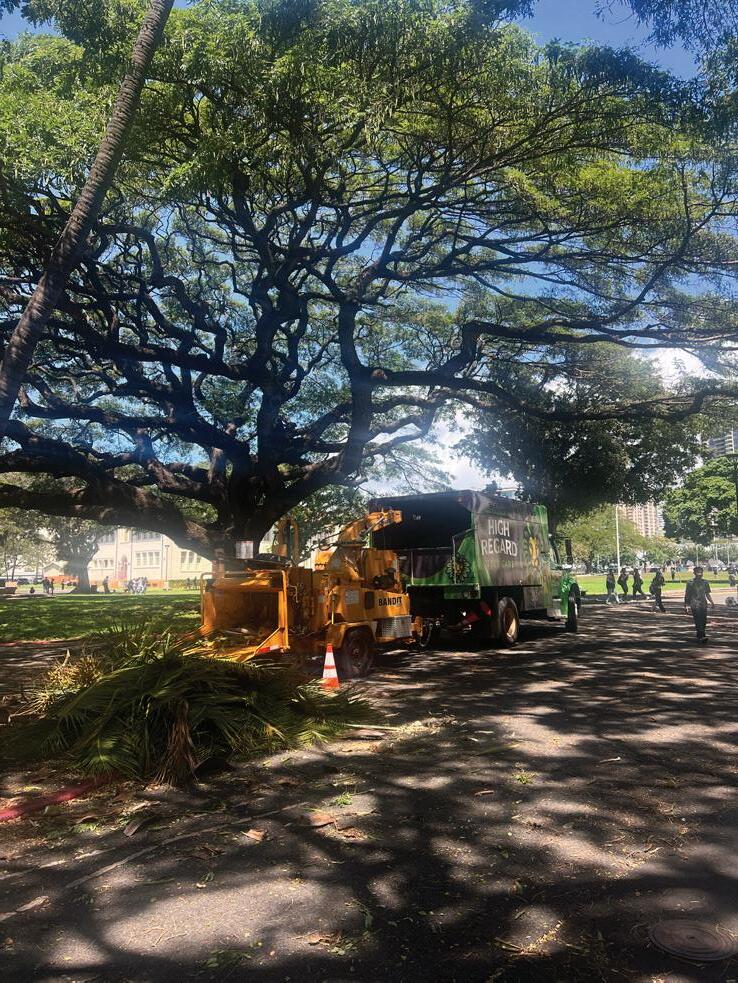
Workers clear damaged trees and debris at McKinley High School following the March flooding.
Photo by:Keilana Yandall
Shunya Ku’ilei Arakaki’s master bathroom ceiling caved in due to storm, revealing mold and gunk. Photo courtesy of Shunya Ku’ulei Arakaki
McKinley Running Dry
Concerns Grow Over Unreliable Water Fountains on Campus
by Poli’ahu Cootey-Garcia
At McKinley High School, students and teachers may not always have reliable access to clean drinking water due to concerns of poor filtration in water fountains, and limited availability across campus.
Throughout the school day, students depend on campus water fountains to stay hydrated. However, many fountains have low-quality filters, and are sometimes located far from classrooms, making it difficult for students to consistently access clean drinking water.
McKinley spans across 45 acres of land, requiring students and staff to walk long distances between classes, often under the sun. These conditions can lead to dehydration, making access to water even more important. Despite this need, multiple students say the current water system is not meeting expectations.
Student teacher Kelsey Paulseth says she drinks about eight cups of water a day, but often runs out before the school day ends. Because of this, she brings an extra water bottle to refill her main flask. Paulseth explained that she avoids relying on
school fountains because of concerns about water quality on campus.
Band student Melissa Nishihara (c/o ‘29) also emphasized both the lack of access and the need for improvement. She said the school should not only improve filtration, but also provide a water bottle for students when needed. During long rehearsals, she says hydration becomes a challenge.
“When we have rehearsals, we don’t have a water fountain in the band room or even in the auditorium,” Nishihara said.
Additionally, she said she often has to wait until she gets home to drink water.
For student athletes like Kena Anien (c/o ‘27), access to clean water is even more critical. Due to intense physical activity, athletes are at a higher risk of dehydration throughout the day. Anien said that while some fountains are heavily used, they are not always well-maintained. He specifically mentioned fountains in the A building near the boys bathroom, E building near the girls bathroom and the sink in the cafeteria as okay to use. Despite its heavy use, he said the fountain in the gym is one of the worst on campus.
“It is constantly being used by athletes, coaches, and students, and that fountain should be the main one with good filtration,” Anien said. “The water is milky.”
In response to these concerns, Principal Ron Okamura addressed both the condition of the water fountains and student responsibility in maintaining them. Okamura said that some of the damage to the fountains may come from student misuse.
“Why would you beat something up that’s there for you?” Okamura said.
At the same time, Okamura said
that maintaining water quality is also the responsibility of school staff.
“As for the filters, the custodians should be going around checking and replacing those filters when they need to be,” Okamura said.
Okamura’s response suggests that while systems are in place, they may not always be consistently changing the filters.
These concerns recognize the broader issue pertaining to water quality affecting students, teachers and staff alike. While McKinley provides basic facilities; access to reliable drinking water remains inconsistent. As students continue to navigate long, hot days on campus, the condition and availability of water resources play a bigger role in their health, and overall school experience than many realize.
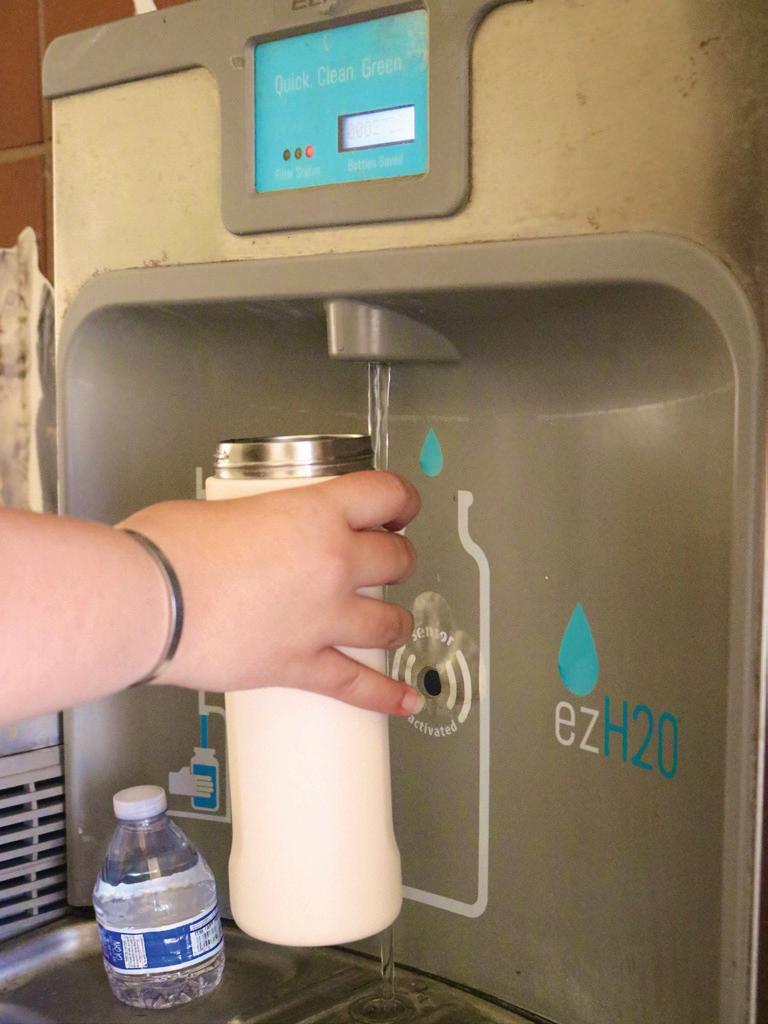
Water dispensing from a W Building water fountain with a red light indicating the filter needs to be changed.
Photo by Poli’ahu Cootey-Garcia
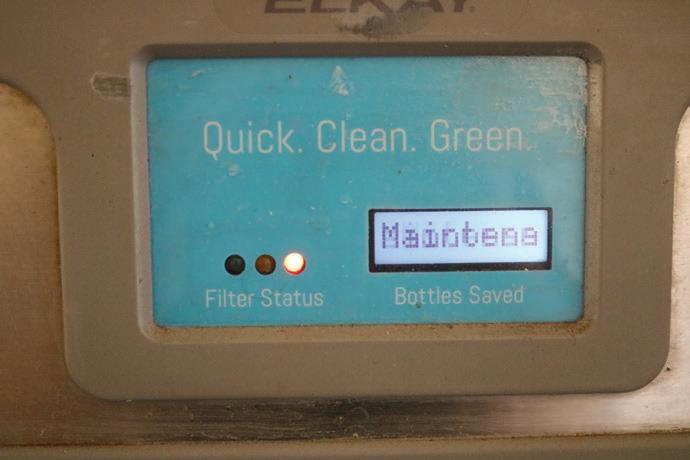
Water fountain filtration indicating maintainance is required, followed by a red blinking light to show poor water quality.
Photo by Poli’ahu Cootey-Garcia.
Author Visits McKinley
by Elle Kakuda
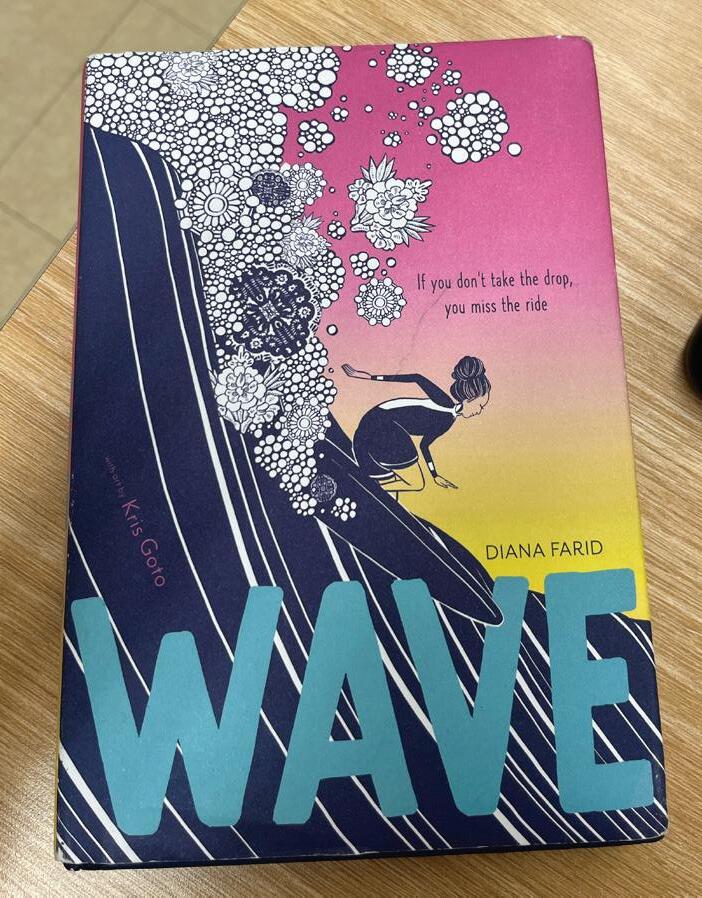
Diana Farid is the author of a book entitled “Wave.” She came to visit McKinley freshmen on March 25.
Farid was inspired to be an author because she wanted to write about things not discussed enough.
“I felt the need to write them down,” she said.
She expressed how ideas would pop up into her head and would want to write about it, also expressing how she wanted to write down her feelings through telling a story.
Farid visits schools often: 5-10 times a year. She enjoys getting to meet people and engaging in conversation with students. She learned about what the students are passionate about, and felt a connection with the students through learning about them.
Her inspiration for writing this book was how she wanted to incorporate a character with a passion for music, incorporating music from 1987. She also wanted to add the elements of poetry to the book, adding lines of poetry into her book. She felt a connection between these things, creating characters based on these themes.
Farid faced a few challenges when writing her book. She felt emotional, when one of the characters faced a struggle. She felt that when she wrote this, she started to feel emotions flowing from within her.
“I noticed that I myself would start crying and get really emotional.” she said. Writing the emotional part of the story made her feel a sense of sadness as the character was suffering.
9th grade ELA teacher Jordin Carmichael set up a book signing with Farid. The students got a chance
to meet her, they were able to give her drawings and artwork that they created for her. They also got their copies of her book signed.
Shelly Nguyen (c/o 29’) expressed how she was excited to get a chance to meet Farid in person. She felt that it was most memorable to see the different illustrations in the book and learning about them.
“Her talking about the book and the different kinds of illustrations possible.”
The illustrations of the book were made by Kris Goto. Kris Goto is a self-taught artist, known for her pen and ink drawings.
Nguyen said that she learned how you can deal with losses or struggles, because in the book it has some of those topics involved. She talked about how her favorite part of the book was how the poems flowed together nicely.
In the book, Phoenix [the best friend of the main character], was her favorite character, since he pushed through battling with lymphoma, which he had faced
throughout the story. He was Nguyen’s favorite character, making him a very memorable character.
Shekainah Cruz (c/o ‘29) felt excited to meet Farid, due to the fact that she was an author.
“The fact that she was an author of the book already made me feel excited, because knowing that she could be well known,” she said.
Her favorite part of the book was the dynamic of the book. She felt that they talked nicely towards each other.
Cruz felt it was memorable that the character Ava wrote a song dedicated to her friend Phoenix. Capturing the emotional bond between the two, and expressing her feelings for him. She also found when Ava and Phoenix hung out at the beach together created a wholesome moment for them.
She learned that it can be hard to grieve when losing a loved one, eventually having to move on from the passing of them.
Cruz, too, enjoyed how the poems flowed together, surprised that it was written this way which added a unique writing style, unlike anything she’s seen before.
“Wave” is a fiction story about a 13-year-old girl named Ava, who was passionate about surfing and singing. Ava’s mother didn’t think that was the career for her, offering her a different path in the medical field. At the same time, Ava struggled with OCD, which added stress to her life. Phoenix suffers from a disease called lymphoma, which he battles throughout the story. Ava begins to have feelings for Phoenix but doesn’t want to ruin the friendship that they have. Phoenix does unfortunately pass away later in the book, leaving Ava heartbroken, grieving over the memories they made together, and the bond that they had.
Diana Farid’s book “Wave” won the Cyblis Award.
Senior Council Reflects on Fun Yet Stressful Year
by Laurie He
Liam Choy (c/o ‘26), the senior class president, joined the council his junior year as class secretary. Choy said he did not run for council, but stepped in because the council needed a secretary. Choy said he felt his time as junior secretary helped his class, and he wanted to make a bigger difference his senior year, so he ran for, and won, president.
“I wanted to really make sure that my class had, hopefully, the best final year. Senior year is your last year of high school and college isn’t the same,” Choy said.
Choy said as president he made agendas, made sure everything was correct and everyone in the council stayed on task. He also helped plan events like fundraisers, prom and the commencement ceremony, communicating with their class adviser, Jennifer Nakamoto, and other staff helping out in the process.
“I even found myself talking to our representative at Prince Waikiki for months on end [when planning for prom],” Choy said. “It’s kind of weird sometimes, being in my position and
As school year 2025-26 nears its end and seniors prepare to graduate, members of the senior council look back on what led them to the council and moments of high emotion and reflect on those who helped them and what is in their future.
talking to adults.”
When Choy first became senior class president, he said he thought it would be much easier than it really was, but his experience has taught him that things are never going to go how they are expected. Choy had a list of events that he wanted to do but as the year went on, he realized most of them could not be done because there was not enough time or manpower, or the council fell short on planning.
“We were supposed to have events every single quarter, but we just didn’t have the time to do it because we also had our own school work and personal life to attend to,” Choy said. “I’m at the point where if it fails, it fails. And that’s okay, we’ll just continue on with it.”
Choy said he felt proud when they had a senior sweep during Tiger Rally when the seniors won all three games. He said that seeing his class come together to decorate the gym, getting excited about the games and having fun, even though everyone was in different friend groups felt really nice to him.
“It made me feel like this is my class. This is my class,” Choy said.
Choy said he sometimes wishes he was not president because he could not enjoy his senior year as much, and he is struggling a little bit academically. But he also said he would not have been given so many opportunities or got to meet some people if he was not president.
“It’s like a double-edged sword in a way,” Choy said.
In order to cope with stress now that there is less than a month left of school, Choy said he usually hangs out with his friends. Choy said his friends are like a backup council to him and he can lean on them for support no matter what.
“I feel like my friends are the only reason why I was able to accomplish so much. I have them to thank for almost everything. I love them so much. They have been there to witness almost every single one of my crash outs and burnouts,” Choy said. Since Choy is about to start a new chapter of his life, he said he is very excited because he enjoyed high school and it is where he met all his friends. Choy also feels relieved because high school was such a hard time for him and he thinks college will give him more freedom.
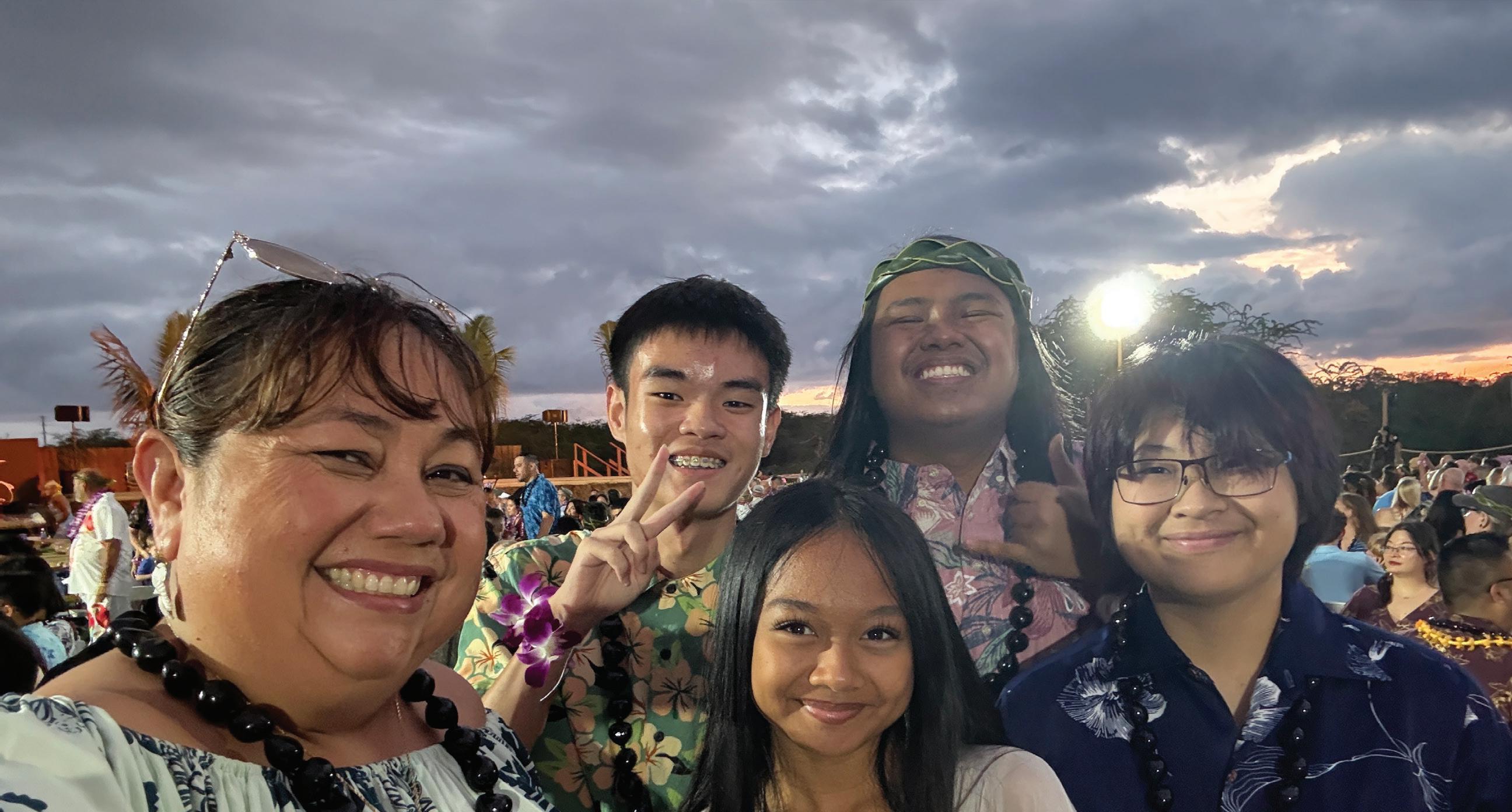
(From left) Jennifer Nakamoto and Kenny Duong, Sean Giron, Hau’oli Tabije and Liam Choy (all c/o ‘26) at Senior Luau. Photo courtesy of Jennifer Nakamoto. All headshot photos by Laurie He.
“I keep saying it but I don’t think I would be where I am if it wasn’t for all my friends like Cheska, Jewel, Kyu, [and] Kaiden. … I’m really excited to graduate and finally move forward,” Choy said.
A piece of advice Choy has for students interested in running for class
Kenny Duong (c/o ‘26), the senior class secretary, said he decided to run since no one else applied for the position and he wanted to share the fun ideas he had for events. As class secretary, Duong takes notes during council meetings and keeps a class binder that stores all their records so they can do reflections after each event.
Duong said there were times when it was hard to keep up with deadlines, and that there was a lot of miscommunication during Dance and Chant. So, the council tried their best to check in with the volunteers and
Jennifer Nakamoto, a ninth grade math teacher for the Legendary House and math department chair, is the Class of 2026 teacher adviser. Nakamoto said she has held this position for four years, starting from when the Class of 2026 was in their freshman year. Initially, Melissa Kamakawiwoole was the teacher adviser for Class of 2026 and Nakamoto said she volunteered to help her. Somewhere during the year, Kamakawiwoole left the school for a while and there was no guarantee she would come back, so Nakamoto became the sole class adviser.
Nakamoto said her role as teacher adviser is to be an adult presence that guides the senior council. Especially during their freshman year, where Nakamoto said she had to be more hands-on with them because the council was new to the school. But by the time the council entered their senior year, she is mainly there to give
president is to really think about it. He said serving the school is fun, but students who are interested should keep in mind that it is a big commitment.
“I wish someone told me that it’s not about you, it’s about your class, when I first joined. … What you do is
managed to get everything done the day of the event.
“I’m actually really happy that we finished it in time,” Duong said. “Despite Dance and Chant being pretty stressful, I did really enjoy the event, especially when we had judging day and we went all out on our performance.”
Despite it sometimes being stressful for him, Duong said he still thinks being class secretary is fun because he enjoys taking notes at council meetings. All the practice helped him when he was taking notes for other classes, like AP Psychology.
“It has taught me to … not just copy and paste the entire notes, but also to
for your class [and] you basically put yourself behind your class and council,” Choy said. “I wouldn’t discourage them from doing it, but just to really sit there and think about … if you’re really up for the role or not.”
advice and sign purchase orders.
“You need big patience,” Nakamoto said. “Sometimes what is clear to me isn’t necessarily clear to students, so I have to explain more than what I thought I needed to.”
Compared to when the council members first took office, Nakamoto said everyone has become more outspoken and has gotten better at getting their class to participate in various activities.
“They’ve grown as leaders,” Nakamoto said.
In order for a council member to succeed in their position, Nakamoto said she believes they need to be good listeners. And similar to what Choy said, Nakamoto said the members have to separate how they feel from what the class wants because they are representing them.
“It helps if you’re well spoken, but that’s not the end all be all,” Nakamoto said.
When the Class of 2026 won the song contest for the third year in a
summarize everything that is important for me to know,” Duong said.
Duong said he feels that the past four years went by too fast and everything feels a bit daunting to him. At the same time, Duong is excited to graduate and walk across the oval. A piece of advice Duong has for students interested in running for class secretary is to be as attentive and communicative as possible.
“If you have any questions or … if you feel like you’re missing out on something, don’t be afraid to ask, even if it may seem scary to you,” Duong said.
row, it marked the first time a senior class was ever on the trophy for winning the song contest at Tiger Rally. Nakamoto said it made her realize why she does what she does.
“When we had rehearsals and practices, I told the seniors the only thing I really cared about was winning that trophy. And they did it,” Nakamoto said. “I was very proud of the class.”
Now that the Class of 2026 is about to graduate, Nakamoto said thinking about it makes her sad. She said she teared up when the class was singing at Tiger Rally because she was so proud of them. At the same time, she said she is glad she teaches freshmen because you see them for four years.
“I don’t get them just as seniors … I am with them the whole time,” Nakamoto said. “Kids that were my Legendary students, just looking at them and seeing how grown up they are, … it makes me a little bit sad, but also very happy.”
Senior class vice president Sean Giron and treasurer Hau’oli Tabije were not available for an interview before the publication deadline.
Micronesian Club Changes Name to Nesian Roots, Emphasizing Identity
by Rose Ganotisi
The Nesian Roots Club at McKinley High School, formerly known as the Micronesian Club, was renamed this year to unify students from various Pacific Island backgrounds into one organization.
The name change took place at the end of the 2024–25 school year when Mohealani Feiloaki (c/o ‘26) stepped into the role of president. With the transition, she led the decision to change the name of the club from Micronesian Club to Nesian Roots Club.
When reflecting on the change, Feiloaki said, “I feel like it’s going to welcome more people because it’s not just Micronesian. It’s also Polynesian and Melanesian now.”
The club is advised by Dusty Santos, who has taught at McKinley since 2010, alongside co-adviser Lorheba Josiah, who joined the school in 2022.
According to Santos, the name change also helped solve challenges caused by separate smaller clubs, such as Polynesian and Melanesian groups, which often struggled with limited adviser support. He said bringing them together under one organization created a more unified space for students to support one another academically and socially.
Josiah said the change has also led to a noticeable increase in membership. She said the club has more Samoans and Tongans this year than ever before.
Both advisers said they stepped into the role because of their commitment to supporting students.
“When I first started working [at McKinley] I saw that there were lots of Micronesian students here, and nobody really likes to work with them, that’s where I stepped up to formalize
the club,” Santos said.
Santos, who is Micronesian and from Pohnpei, said he can relate to many of the students’ experiences.
“I might be one of the only people that they can talk to because I can understand where they’re coming from, what they’re struggling with, and what their home life is like,” he said. “Also, I’m the one that communicates with their parents.”
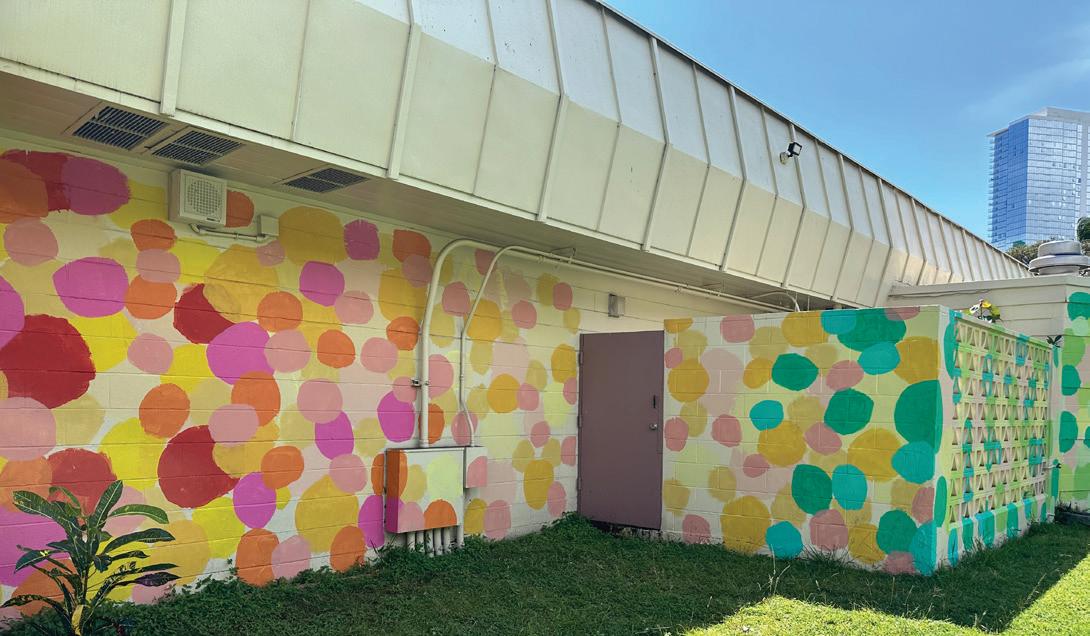
He added that the club focuses on helping students succeed academically, build social skills and serve the school community. The club participates in on-campus activities such as campus beautification projects, including cleaning and repainting sidewalks, as well as off-campus events like attending the Micronesian Festival, Youth Summit and Women’s Day Celebration.
“All the moments that we go out to do activities, either on campus or off campus, I feel proud of [the students in this club] because as the adviser, I expose them to things that I don’t know who else will show them,” Santos said.
Josiah previously served as an adviser for the Micronesian Club at Palolo Elementary, where she worked alongside a partner to support and teach the Micronesian community. When she moved to McKinley, she said she was looking for a less demanding role but still wanted to contribute to the community, so she chose to serve as assistant adviser for the Nesian Roots Club.
Josiah said what she believes makes the club special is its ability to give students a sense of identity and belonging on campus.
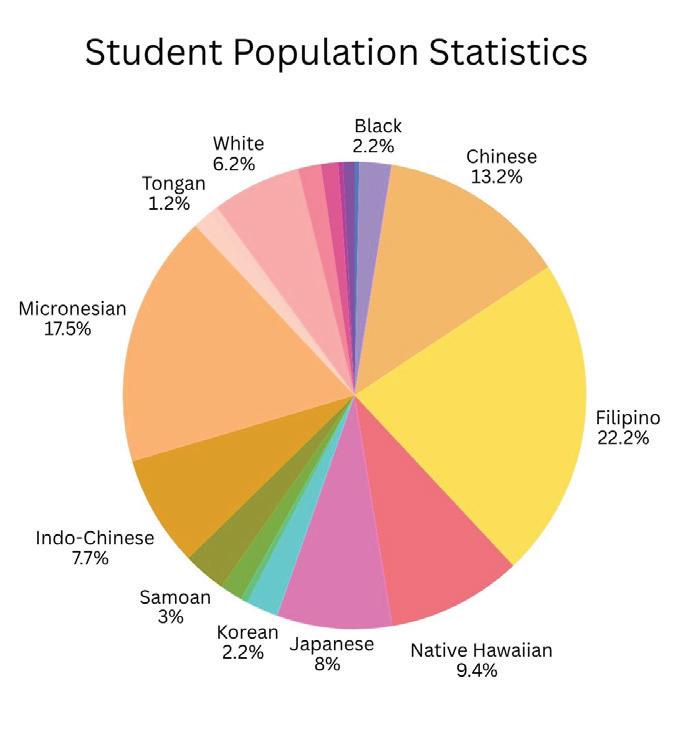
A student population study from last year shows that McKinley’s Micronesian population is the second largest ethnic group after Filipino
McKinley statistics from 2024-25 school year State of Hawaii Department of Education Accountability Resource Center of Hawaii. Infographic by Rose Ganotisi.
students, accounting for 17% of the total student population.
Club president Feiloaki said the new name reflects cultural pride across multiple Islander groups.
“The name Nesian Roots represents my pride in my own culture, because I’m Tongan, and I know that a lot of other Polynesians and Micronesians take pride in who they are,” she said.
Feiloaki said she feels the club allows her to connect with her roots because it connects her with people who are a part of the same ethnic group.
According to The Clay Center for Young Healthy Minds, identity plays a key role in human development by providing a sense of self, purpose and direction while shaping how individuals connect with their communities.
Feiloaki described her connection with other club members to be deeper than friendship.
“Even though we’re not related, the way I talk to them and the way we create bonds, it feels like family,” she said.
In Memoriam: Dianne Boons
by Dominic Niyo
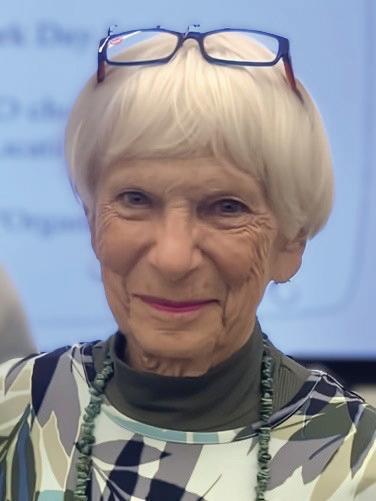
Silver-haired and tiny, Dianne Boons walked down the King Street sidewalk on her way to meet a group of young journalists—a group that, at the time, included me. She lived in a condo not far from campus, but she never treated McKinley High School as a place she simply passed by. Once a reporter herself, she returned to the rhythms of a newsroom in the way she knew best—by listening closely and offering what she could.
Born Aug. 9, 1939, Boons peacefully passed away on March 22, 2026, at the age of 86. A longtime Honolulu resident, she became involved with McKinley in 2022 after learning about the school’s band booster program. A childhood band student who had watched the McKinley musicians in parades for years, she said in a 2023 Pinion interview that she wanted to support them.
That first step led her to join the School Community Council as its Community Representative, and soon after, she began volunteering weekly with the school’s newspaper, The Pinion. In the newsroom, she mentored student journalists by reviewing drafts, discussing ethical reporting and strengthening clarity and structure within their stories.
Before her time at McKinley, Boons worked as a daily newspaper reporter in New York and Colorado, covering topics including mental health. Her reporting earned recognition
from the Mental Health Association. After relocating to Hawaii in 1982 to support her brother in starting a law firm, she continued communication-related work and later taught business communication at Hawai‘i Pacific University.
Pinion adviser Cindy Reves said Boons quickly became known for encouraging students through their drafts and helping them think through their writing. She called Boons the newsroom’s “biggest cheerleader,” someone who supported students through every stage of the process with guidance shaped by her reporting experience.
“She used to write letters to [students],” Reves said. “She was always leaving little messages of encouragement.”
Reves also recalled how meaningful it was to have Boons in the newsroom during difficult moments. When the staff had to cover the death of a McKinley student, Reves said having another adult to think through the ethical questions and emotional weight “made a really hard situation easier to navigate.” Boons listened, offered perspective and helped students consider how to handle the story with care.
Former Pinion editor-in-chief Shane Kaneshiro (c/o ‘24) said what he remembered most was how Boons approached editing.
“She let you talk,” he said. “She let you show the way you wanted the article, and then she guided you.”
He described how she met with
students one-on-one, reading their drafts closely and helping them shape their ideas without imposing her own voice—a style he said continues to influence how he leads and edits today.
“She was always there … even though she didn’t need to be,” Kaneshiro said.
As one of the students she mentored, I knew her simply as Ms. Boons. When I brought her drafts— from political to investigative reporting—she stopped at sentences that didn’t track, asked why I chose a certain angle and pushed me to justify every detail. She never rewrote my work; she made me explain it, a process that forced me to think more deliberately about every choice on the page. That growth shaped the journalist I was becoming and helped open opportunities I never expected, including my selection for the 2025 Al Neuharth Free Spirit and Journalism Conference in Washington, D.C. Boons’ presence in the newsroom left a lasting imprint—not just on the stories she edited, but on the students who learned to write and think under her guidance.
A private celebration of life will be held in the fall. To learn more about her earlier involvement with McKinley, see her 2023 profile, “Former Newspaper Reporter Gets Involved With the School Community,” at mhspinion.com
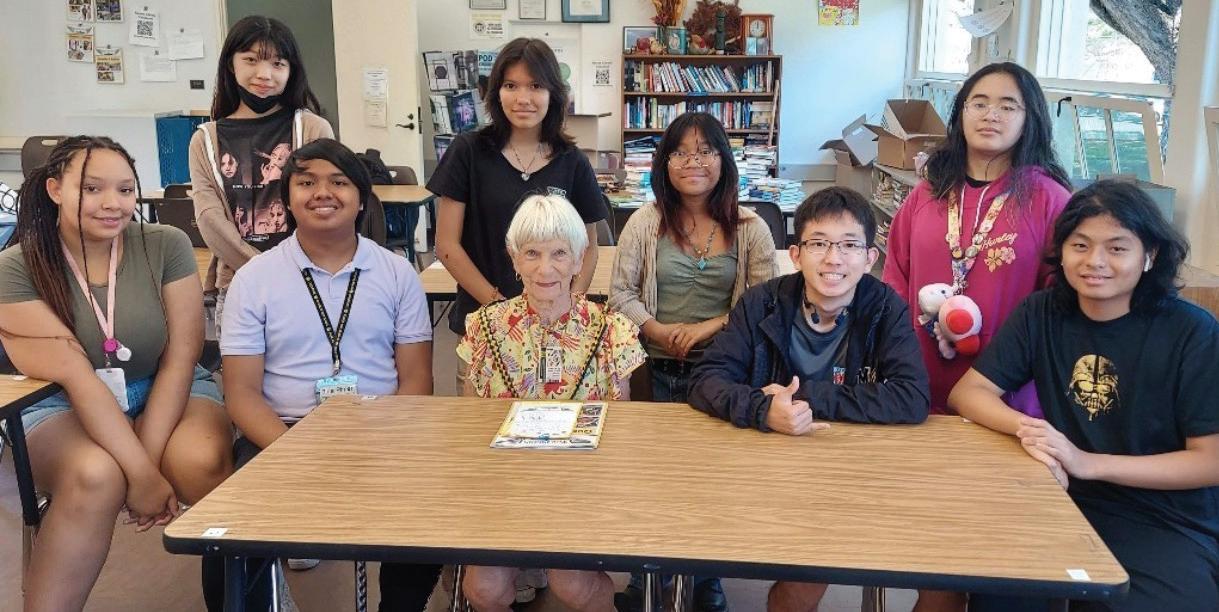
The 2022-23 The Pinion staff celebrates Dianne Boons for her mentorship.
Newswriting Adviser Recognized For Empowering Student Journalists
by Rose Ganotisi
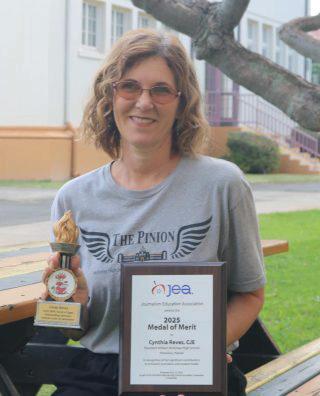
In August, Cynthia Reves, The Pinion’s adviser since 2010, received the Journalism Education Association’s Medal of Merit, a prestigious award honoring current Journalism Education Association members who have made significant contributions to scholastic journalism.
She was nominated for the honor at the end of the 2024-25 school year. This nomination required a letter of recommendation, short bio, letters of support, clear images of the nominee, and work by or about the nominee. At the start of the 2025-26 school year, Reves learned that she was one of four educators recognized as award recipients.
Reves has always been interested in reading and writing, but her interest in journalism grew while in high school, where she wrote for her school newspaper, literary magazine and yearbook. At the time, the Watergate scandal and the movie “All The President’s Men” had greatly increased attention to journalism.
“Journalism was really sexy at the time because of Watergate in the late ‘70s. So it was a big time for journalism school. A lot of people who were interested in journalism went to journalism school,” Reves said.
After graduating high school, she went on to college to major in journalism, with the goal of becoming a journalist and traveling the world. She applied to some English-speaking newspapers in Europe, but did not get any of those jobs.
“I still wanted to travel so then I went to Japan to teach English … and my life just kind of took a different turn,” she said.
Reves taught in Japan as an English as a Second Language teacher for three years before moving to Hawaii to earn her master’s degree in teaching. She then became an English as a Second Language teacher at Ka’ewae
Elementary School and Stevenson Middle School, before moving to McKinley. At McKinley, Reves taught English as a Second Language until a position opened for the Newswriting elective. Due to her background in journalism, she was selected for the role and began working with students to produce The Pinion.
“When I started there were only three, maybe four, people on the staff. We were really, really small,” Reves said.
When she first entered the world of teaching journalism, Reves did not know much about how to get students involved and recognized for journalism outside of class, but was quickly able to make connections after discovering the Hawaii High School Journalism Awards.
In 2015, she co-founded the Hawaii Scholastic Journalism Association and now serves as the Hawaii state director for the Journalism Education Association.
Jacky Oasay (c/o ’26), a student who has been in Reves’ Newswriting class for three years and wrote a letter supporting her Medal of Merit nomination, said she was not surprised that Reves won.
“She does a lot for journalism. She pushes her students to go testify, she makes sure that events happen in order for student journalists to be recognized, and for students to have an opportunity to explore journalism as a career, which is really important,” Oasay said.
Newswriting students describe Reves as dedicated and passionate about helping students develop as ethical journalists. This is reflected in another award she received in 2022, the Big Island Press Club’s Torch of Light. This award honors individuals who show high commitment to public transparency, truth, and the public’s right to know.
“I think Ms. Reves really deserves all of these awards. Anyone who works that hard and pushes for those
things should be recognized,” Oasay said.
Dominic Niyo (c/o ‘26), who has also been in Reves’ Newswriting class for three years, recalls his first impression of her as a freshman was that she seemed scary and intense. But after taking a break from Newswriting his sophomore year and experiencing other teachers’ styles, he realized that Reves is the way she is because she genuinely cares about her students.
“Some people don’t go above and beyond to help their students, but Ms. Reves is one of the teachers who does. She believed in me when I didn’t believe in myself, and that’s something I’m really grateful for,” Niyo said.
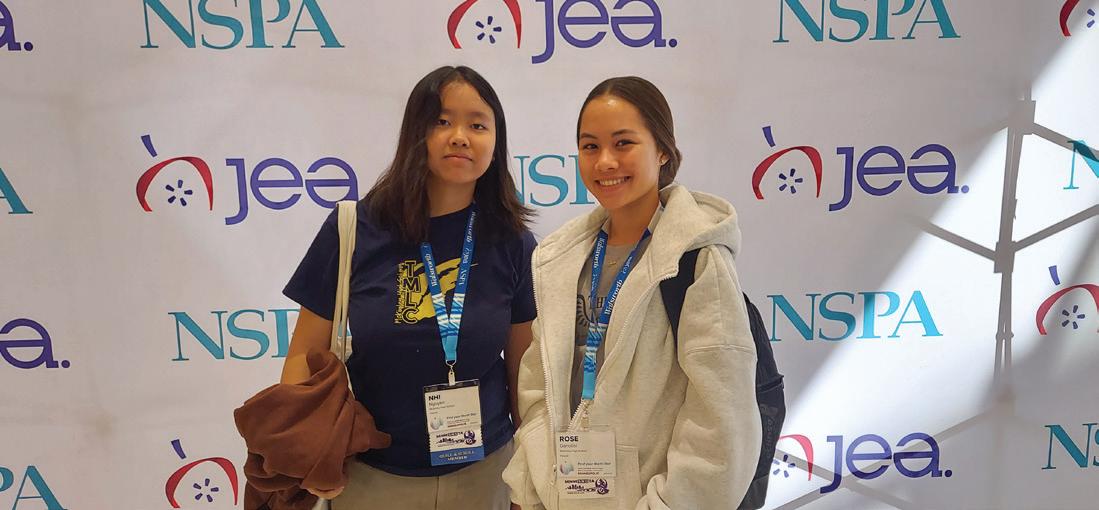
In April, Reves and two Pinion staffers went to the JEA/NSPA Spring Journalism Convention in Minneapolis. Reves was recognized for her Medal of Merit honor at the awards luncheon during this trip.
In August 2025, she earned the Journalism Education Association’s Medal of Merit for significant contributions to scholastic journalism.
In 2022, Pinion adviser Cindy Reves earned the Big Island Press Club’s Torch of Light for commitment to public transparency, truth, and the public’s right to know.
Photo by Rose Ganotisi.
Hawai’i High School Journalism Awards for The Pinion
OVERALL 4th in State
Cheska Orias
2026 PINION
MOST VALUABLE STAFFER
Cheska Orias
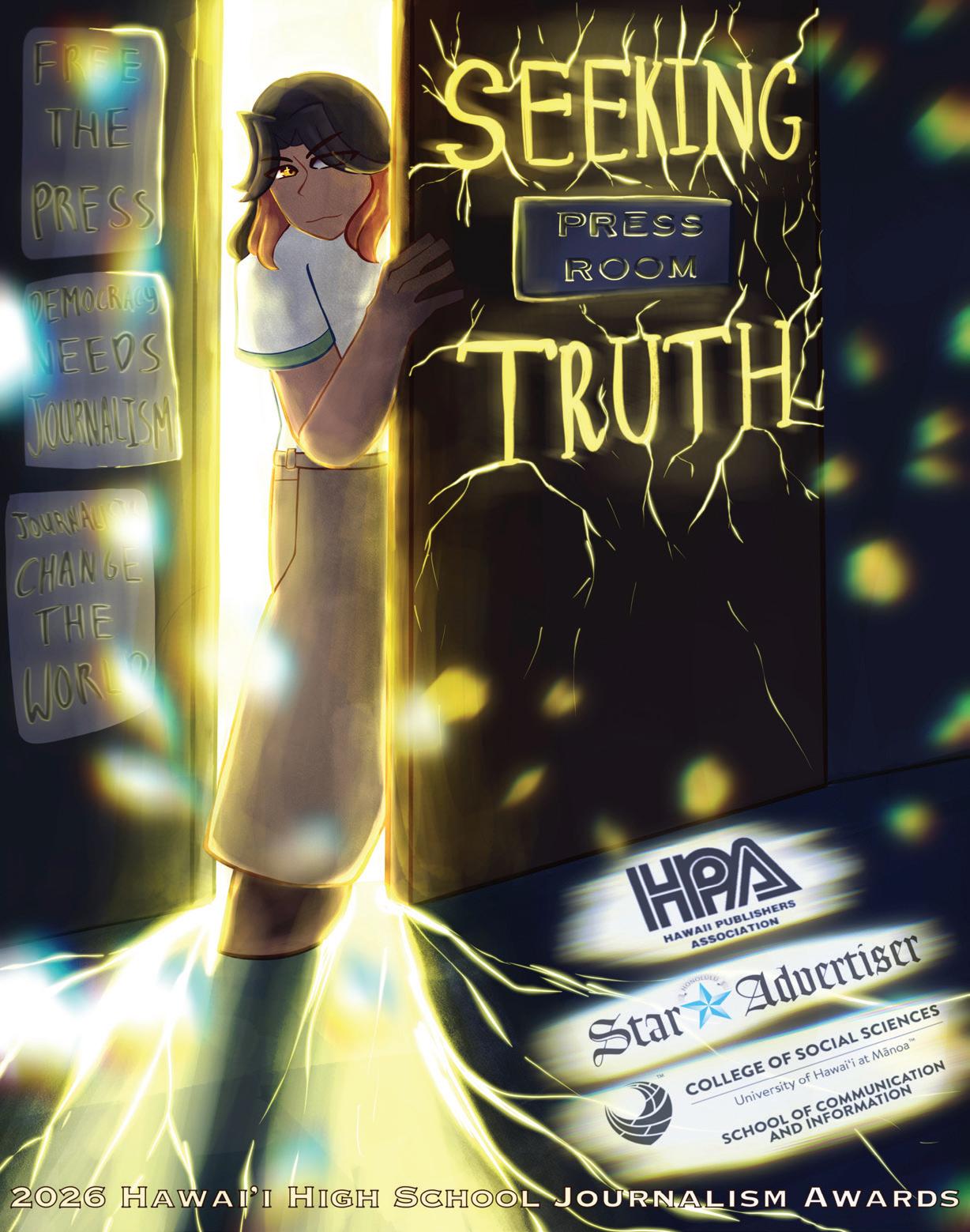
3rd – Contest Poster
“Seeking Truth”
WRITING DIVISION 4th in State
Jacky Oasay
1st – Investigative
“Archive Pursuit Requires Digging Through Digitizing Methods”
Malia Manuel & Dominic Niyo
1st – News-Based Editorial
“Silence Created a Vacuum, Students Filled It”
Nhi Nguyen
3rd Place – Review
“‘The Silent Patient’: Good Potential, Poor Execution”
Best of Student News Online
Laurie He
“Commendation: The Dynamic Duo Wiring Robotics Success”
Rose Ganotisi
“Literal: Is it Really a New Reading App for the TikTok Generation?”
“Opinion: Human Artists Have Passion – AI Has None” Staff
2nd – Website
PHOTO DIVISION 5th in State
Quill and Scroll Writing, Visual and Multimedia Awards
Cheska Orias
Editorial Cartoon - First Place
"AI Would Have Done Worse"
Editor-in-Chief
Cheska Orias
Assistant Editors
Kena Anien - Social Media
Rose Ganotisi - Web Editor
Dominic Niyo - General Editor
Nhi Nguyen - Print Editor/Co Editor-in-Chief
Alex Azhari - Copy Editor
Jacky Oasay - Copy Editor
Newswriting I
Poli’ahu Cootey-Garcia
Ellie Gonzaga
Laurie He
Elle Kakuda
Keilana Yandall Adviser
Cynthia Reves
Questions or Comments?
Interested in Donating or Advertising? Email - Cynthia.Reves@k12.hi.us
Mission
The Pinion strives to provide and maintain accurate, entertaining and informative news for the students, staff and alumni of McKinley High School. We strive to show diligence in creating all our content so we can make a positive contribution to the public.
Publication Information
The Pinion is published by the Newswriting class and printed by the Reprographics Learning Center. Find all content and more at mhspinion.com. Print archives are at issuu.com/mhspinion.
The Pinion McKinley High School 1039 South King Street Honolulu, HI 96814