
















Editor’s Choice
Control & Automation
Electrical & Electronics
Facilities Management
Gears, Drives & Motors
Health & Safety
Instrumentation, Monitoring & Process Control
& Machinery
ABB
ABB reinstates operations at floodstruck Novelis
ADVANCED ENGINEERING
Make UK and Make UK Defence to launch first joint pavilion at Advanced Engineering 2026
BMW
BMW Group produces its two-millionth all-electric vehicle
ENDOLINE
Why packaging automation is no longer just about speed
PAILTON ENGINEERING
How cobots are making automation viable for specialist manufacturers
FANUC
FANUC launches 11kg ‘lightest’ collaborative welding robot
KASTO
KASTO’s automation solution assists one of the most innovative plants in Germany
DESOUTTER
Scaling defence electronics manufacturing without compromising quality
EMS
How miniaturisation drives innovation
LANE ELECTRONICS
HUBER+SUHNER high performance
VITA 67.3 RF interconnect portfolio available from Lane Electronics
TEKNOMEK
Teknomek expands offering with precision balances and washdown scales

In fact, we have a whole range of non-clog
pumps which will give you incredibly precise measurement of gaseous, viscous and shear-sensitive fluids without any loss of flow.
We’re North Ridge Pumps, the UK’s largest pump supplier with over 25 years’ experience. We’re expert at specifying exactly the right pump for every client – not just an off-the-shelf, one-size-fits-all solution.

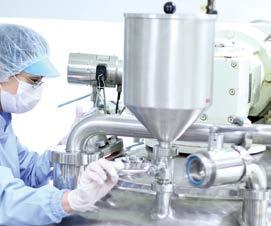
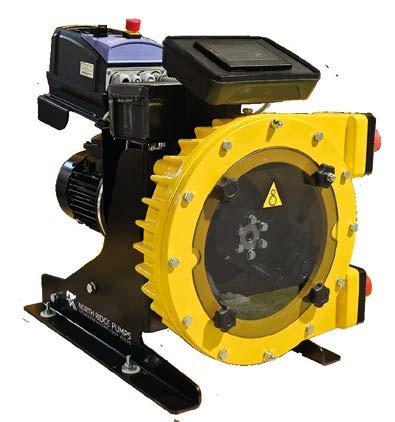
That’s probably why we’ve completed over 2,000 successful projects for clients all around the world. You can read case studies at www.northridgepumps.com


The leading source for innovators in Technology, Manufacturing and Maintenance within the Engineering & Processing industry worldwide.
Published bimonthly, a subscription to PECM magazine is essential for Process Engineers, Chemical Engineers, Instrumentation Engineers, Mechanical Engineers, Plant Engineers, Precision Engineers, Environmental Engineers & General Engineers, Companies and Organizations in the Food, Dairy, Beverage, Brewing, Semiconductor, Pharmaceutical, Biotechnology, Chemical, Oil & Gas, as well as all UK's major manufacturing units.
Every issue of the magazine contains the latest news, in-depth features, together with product innovations and case studies showing how process engineers are implementing new technologies to reduce costs and impact on the environment.
With over 158,000 readers worldwide the publication is widely read, recognized, and well respected within the Process, Engineering & maintenance industries.
A subscription to PECM magazine is the industry's 'must have' publication.
SUBSCRIBE TO 6 BIMONTHLY ISSUES OF PECM FOR JUST £27
• The magazine gets delivered directly to your door once every issue is published
• The quality of the hard copy enhances the reading experience
To Subscribe please call 01304 806039
SUBSCRIBE TO OUR DIGITAL EDITION COMPLETELY FREE OF CHARGE
Designed for the digital age, the magazine has been created for easy viewing on all electronic devices. All our issues stored in one place: get unlimited access to our previous and future issues.
To Subscribe please visit www.pecm.co.uk/subscribe

EDITOR IN CHIEF
Antony Holter editor@mhmagazine.co.uk
BUSINESS MANAGER
Josh Holmes josh@mhmagazine.co.uk
SALES DIRECTOR
Jake Page jake@pecm.co.uk Tel: 01227 937174
SALES MANAGER
Martin Richardson martin@pecm.co.uk Tel: 01304 086039
DIGITAL MANAGER
Jamie Bullock jamie@mhmagazine.co.uk Tel: 01227 936971
Please
EDITOR
Elizabeth Hutton elizabeth@pecm.co.uk
STUDIO DESIGNER
Richard Bland richard@mhmagazine.co.uk
ACCOUNTS DEPT
Alison Holmes accounts@pecm.co.uk Tel: 01227 936976
PUBLISHING DIRECTOR
Martin Holmes martin@mhmagazine.co.uk Tel: 01304 806039
DIGITAL ASSISTANT
Stacey Goodwood Tel: 01227 936971
MH Media Global Ltd. 18/20 Newington Road, Ramsgate, Kent, CT12 6EE Tel 01304 806039 l www.pecm.co.uk
When catastrophic flooding struck the aluminum manufacturing facilities operated by Novelis in Sierre, Switzerland, the company faced a potential crisis that could have disrupted global automotive supply chains serving major automotive manufacturers. Working with ABB’s emergency response teams, Novelis restored critical operations within 60 days. Two years on, the restoration continues to serve as a model for industrial resilience and rapid infrastructure recovery.
National disaster hits critical suppliers
Torrential storms and melting snow hit the Sierre district of western Switzerland – known as the “city of the sun” – in the early hours of a June morning. Events took a devastating turn for the industry located in Sierre. Novelis’s plant was flooded overnight.
Novelis in Sierre is renowned for its fully integrated production
process and plays a crucial role in supplying aluminum components to the automotive industry. The 24/7 Novelis plant processes over 200,000 tons of aluminum annually and for over four decades has produced high-quality aluminum sheets, collaborating closely with worldclass automotive manufacturers to innovate and enhance vehicle design.
With critical infrastructure compromised and supply to automotive customers disrupted, immediate action was essential.
The power of a seamlessly coordinated emergency response Angeles Fernandez, Local Division Manager for Electrification Service in ABB Switzerland, immediately coordinated with AluInfra Services SA, which manages electrical infrastructure at the Sierre industrial site.
After flood waters receded and emergency services declared sites
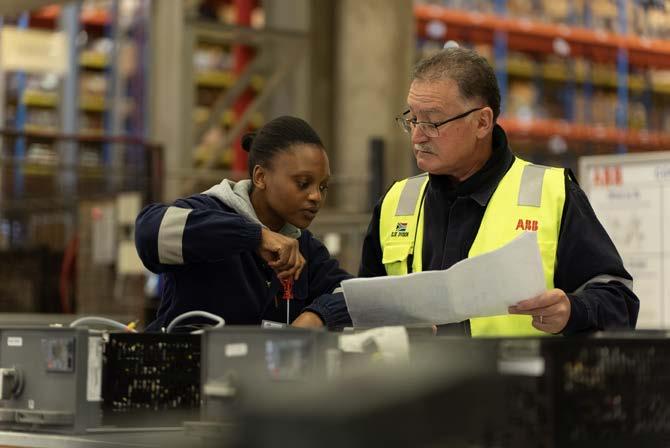
safe to enter, ABB teams assessed the extensive damage to critical electrical infrastructure and production equipment across the facility.
The scale of the challenge was immediately clear – with key systems compromised, restoring operations would require coordinated expertise across multiple specialties.
Serge Gaudin, Plant Manager at Novelis, recalls, “Our entire plant had been submerged for weeks, and mud and water had compromised the critical systems which power our operations. Minimizing downtime and restoring production as rapidly as possible was vital to maintain our standing as a trusted partner to our customers.”
To coordinate the recovery effort, ABB brought together expertise across engineering, sales, procurement and export control, deploying specialist engineers with deep knowledge of the compromised systems to manage the installation and commissioning of replacement equipment.
ABB worked shoulder-to-shoulder with Novelis teams to optimize their existing electrical infrastructure and get operations running at peak performance.
ABB mobilized specialist engineers from across Europe who worked under challenging conditions and demanding timelines. After successfully fast-tracking replacement parts ahead of
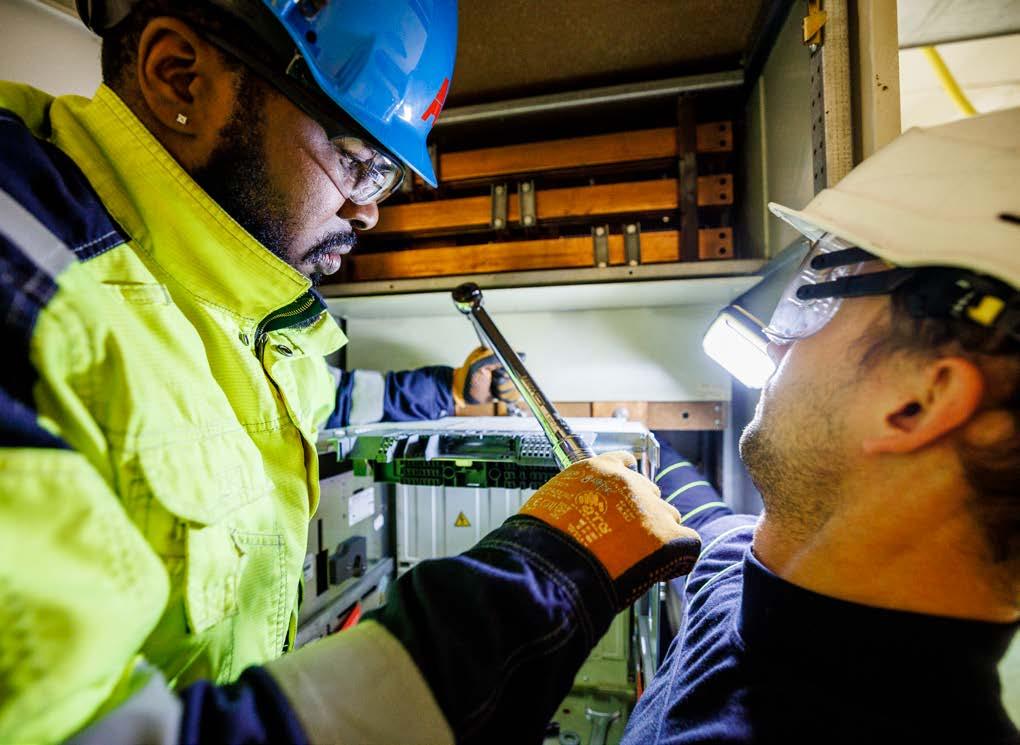
schedule, ABB restored basic power operations by in just about a month’s time.
Fernandez said: “When a critical facility such as this faces disaster, standard timelines simply don’t apply. Our teams across Europe came together across divisions, borders and time zones, recalibrating our existing processes to act as an extension of Novelis’s operations.”
Two parallel teams then cleaned and tested equipment at the sites’ substations while replacement parts were transported across the continent. The substations were re-energized in September, a critical step to resume production on the hot rolling, followed by the cold mill – weeks ahead of initial projections.
Senior Project Manager Stefan Kumm from ABB’s Process Automation business was already in Switzerland for a separate Novelis modernization initiative, and swiftly
Minimizing downtime and restoring production as rapidly as possible was vital to maintain our standing as a trusted partner to our customers.
pivoted to support the emergency response.
The successful restoration has since strengthened ongoing relationships between Novelis, AluInfra and ABB. “The speed of the response was critical for us,” said Gaudin. “ABB’s teams minimized the impact on our customers and ensured we could maintain our position in the supply chain during a very challenging period.”
The rapid restoration was a crucial contribution to resume production at Novelis’ Sierre plant and maintain continuity in the global automotive supply chain. It ensured the site could continue running consistently for its automotive customers and demonstrated how cross-border collaboration and quick response to infrastructure challenges can prevent wider industry disruption.
“Our first task was triage, determining what could be salvaged and what needed replacing,” Mr Kumm explained. “The sheer scale of the challenge became clear when we saw the mud-covered switchgear in the substations as well as the 160-ton main motor and hundreds of submerged control systems. Time was critical and every second counted.” For further information, please visit www.abb.com
As extreme weather events become more frequent across Europe, the response in Sierre remains a benchmark for rapid industrial recovery.
The brand synonymous with reliability and versatility when it comes to the manufacture of switches, has now added precise acquisition and communication of energy data to its’ portfolio.
PHI, the electronics division of Kraus & Naimer has recently introduced a product range which can record and display energy data, complementing the company’s existing reputation for providing market leading industrial switching solutions.
Unlock your company’s energy efficiency potential
With electricity costs increasing, it has become critically important for organisations to actively measure and understand their energy usage. Without accurate data, energy consumption often goes unmanaged, leading to inefficiencies, hidden waste, and unnecessarily high operational costs. By implementing energy monitoring systems, businesses can gain real-time insights into how energy is being consumed across different processes, equipment, and sites.
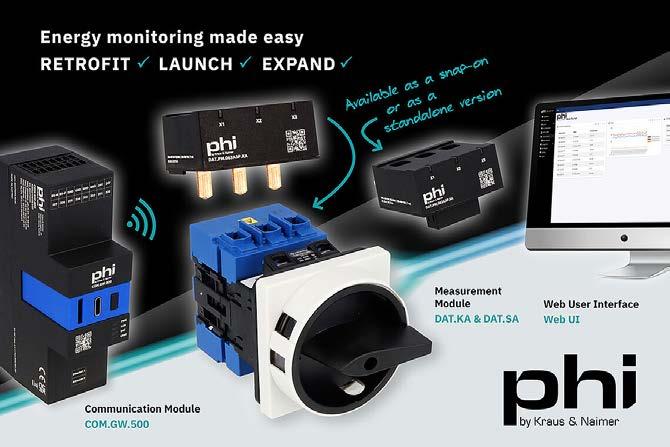
for optimal analytics and monitoring
This level of visibility enables companies to identify energyintensive areas, detect anomalies such as equipment running outside of operating hours, and uncover inefficiencies that would otherwise go unnoticed. As a result, organisations can make informed decisions to optimise processes, improve equipment performance, and adopt more efficient operating practices.

With electricity costs increasing, it has become critically important for organisations to actively measure and understand their energy usage.
Communication Module COM.GW.500
In turn, these optimisations directly contribute to reducing
The communication module (COM) serves as a gateway for one or more DAT measurement modules.
electricity bills, often delivering a strong return on investment over time. Beyond the financial benefits, energy monitoring also supports wider sustainability objectives. By tracking and reducing energy consumption, businesses can lower their carbon emissions, meet regulatory or corporate environmental targets, and strengthen their commitment to responsible energy use.
Ultimately, energy measurement is not just a cost-control tool, it’s a strategic asset that empowers organisations to drive efficiency, improve resilience in the face of rising energy prices, and build a more sustainable future.
Energy monitoring with Kraus & Naimer - simple precise and efficient, the modular components record the energy consumption of machines, systems and processes in real time – delivering valuable data to optimize your energy


Measurement Modules DAT.SA & DAT.KA*
The solution is compatible with energy management systems according to ISO 50001 and offers seamless integration into existing IT environments. Energy data is measured in real time and is always accessible and verifiable.
Unlock your company’s energy efficiency potential.
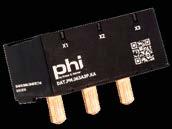
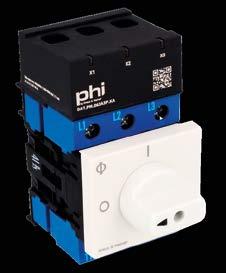
The measurement module (DAT) is available in two versions (DAT.SA & DAT.KA*), both featuring configurable LED indicators and wireless data transmission. Measurement Data Acquisition Current, voltage, power, energy

Real-time Data Acquisition for optimal analytics and monitoring
Real-time Data Acquisition for optimal analytics and monitoring
COMMUNICATION module
COM.GW.500
COM.GW.500
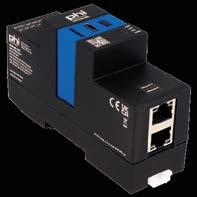


Communication Module COM.GW.500
The communication module (COM) serves as a gateway for one or more DAT measurement modules.
The communication module (COM) serves as a gateway for one or more DAT measurement modules.
COM serves as a gateway for one or more DAT measurement modules. Transmits data to higher-level systems. Local storage of historical data. Integrated local web user interface for live data analytics.
Interfaces for transmitting measurement data to higher-level systems
Interfaces for transmitting measurement data to higher-level systems



Measurement Modules
DAT.SA & DAT.KA*
Measurement Modules DAT.SA & DAT.KA*
The measurement module (DAT) is available in two versions (DAT.SA & DAT.KA*), both featuring configurable LED indicators and wireless data transmission.
DAT modules with configurable LED indicators and wireless data transmission.Measures current, voltage, power & energy.
The measurement module (DAT) is available in two versions (DAT.SA & DAT.KA*), both featuring configurable LED indicators and wireless data transmission.
Measurement Data Acquisition
Measurement Data Acquisition
Local storage of historical data
Local storage of historical data
Integrated local web user interface for live
Integrated local web user interface for live data and analytics
Power Supply
Power Supply
24 V DC or PoE
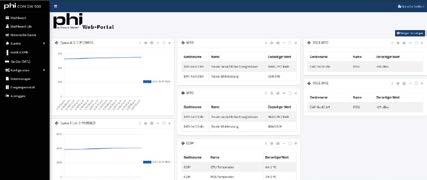

Setup alarms for max/min thresholds
*The DAT.KA module differs from the DAT.SA in its mounting and is specifically for the KA40 and KA63 switches from Kraus & Naimer. Communication Module COM.GW.500
Customisable dashboard for clear monitoring.
The local web user interface is used to display measurement data and configure the COM module and DAT modules.
Management and setup of alarms when measurement values exceed or fall below thresholds
Current, voltage, power, energy
Current, voltage, power, energy
(The*DAT.KA also measures terminal temperature, specifically designed for the KA40 and KA63 switches from Kraus & Naimer).
Terminal temperature (DAT.KA*)
Terminal temperature (DAT.KA*)
Power Supply
Power Supply
100-440 V AC (50/60 Hz)
Measurement Range
Measurement Range
0-63 A
0-63 A
Web User Interface Web UI L1 L2 L3 DAT COM
100-440 V AC (50/60 Hz)
Measurement Modules
*The DAT.KA module differs from the DAT.SA in its mounting and is specifically for the KA40 and KA63 switches from Kraus & Naimer.

Huck® fasteners have long been a trusted solution in industries requiring high-strength, vibrationresistant fastening. These fasteners play a crucial role in ensuring structural integrity and safety in a wide range of applications and industries. Given their significance, many engineers and professionals frequently turn to search engines with technical queries about Huck® fasteners. In this article, we address some of the most commonly asked questions about these specialised fasteners.
What are Huck® fasteners?
Huck® fasteners are advanced fastening solutions designed to provide secure, high-strength joints that resist vibration and loosening over time.
What are the different types of Huck® fasteners?
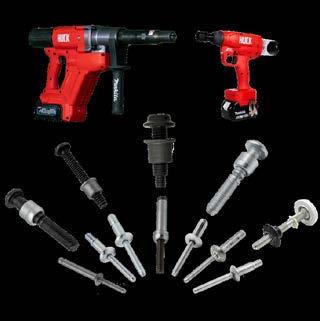
Huck® fasteners come in various types, each designed for specific applications.
HuckBolts®: also known as LockBolts® are a two-piece, highstrength fastening system consisting of a pin and a collar, designed for permanent, vibration-resistant joints. They are installed using a swaging process, which eliminates the need for re-tightening, making it ideal for structural, transportation, and heavy-duty applications requiring superior strength and long-term reliability.
Huck® Blind Fasteners: are highstrength, one-sided (blind-side) fastening solutions used when access to the blindside of a joint is restricted. They provide vibration resistance, high shear strength, and consistent clamping force, making them ideal for aerospace,
Huck® fasteners have revolutionised fastening technology with their strength, durability, and vibration-resistant properties.
automotive, rail, and structural applications where reliability and quick installation are essential.
Which industries use Huck® fasteners?
Huck® fasteners are widely used across multiple industries, including: Automotive & Heavy-Duty Trucks: Common in truck chassis, suspensions, and trailers for secure, maintenance-free fastening. They can be used in anything, including defence vehicles and F1 racing cars!
Railroad & Transportation: Applied in railcar construction and track infrastructure to withstand constant vibrations.
Construction & Infrastructure: Utilised in bridges, portable buildings and large metal framed structures for strong, permanent joints.
Solar Energy: Huck® fasteners are used in solar panel mounting systems to secure structures against wind loads and environmental stress.
Wind Turbines: Huck® fasteners are used in tower assembly, nacelles, and rotor components for secure, vibration-resistant connections.
Shipbuilding & Marine: Resistant to corrosion and extreme conditions,
making them ideal for naval and commercial ships.
Manufacturing & Industrial
Equipment: Used in a multitude of production lines for durable and efficient fastening solutions.
Aerospace: Used in aircraft assembly for their lightweight strength and vibration resistance.
If there’s a fastening requirement, Huck® fasteners have a solution.
How do Huck® fasteners differ from traditional bolts?
Huck® fasteners differ from conventional bolts in several ways: Vibration Resistance: Unlike bolts and nuts that can loosen over time due to vibrations, Huck® fasteners maintain their hold, making them ideal for high-vibration environments.
Installation Speed: Huck® fasteners are installed using hydraulic, pneumatic and battery tools, making the process faster and more efficient than tightening a bolt and nut.
Structural Integrity: The swaging process of Huck® fasteners creates a permanent joint, eliminating the need for re-torquing or maintenance.
What installation tools are required to install Huck® fasteners?
Installing Huck® fasteners requires specialised tools. These tools include:
Pneumatic: Powered by compressed air, these tools are commonly used in high-volume assembly lines.
Hydraulic: Used for heavy-duty applications, providing more force for larger fasteners.
Battery-Powered: Offering mobility and flexibility for production and field applications.
Are Huck® fasteners reusable?
No, Huck® fasteners are designed to be permanent. Once installed, they cannot be removed without damaging the fastener. If disassembly is required, the fastener must be mechanically removed and replaced.
Reusing nuts and bolts can also compromises structural integrity due to thread deformation, fatigue, and reduced clamping force. Torque relaxation and material wear increase failure risks, especially in high-load or vibration-prone applications.
For safety and reliability, engineering best practices recommend new fasteners to maintain precise tension and prevent mechanical failure.
How do Huck® fasteners compare to welding?
Many industries choose Huck® fasteners over welding due to the following advantages:
Speed of Installation: Huck® fasteners can be installed in seconds, whereas welding is time-consuming.
Consistent Strength: Welds can be inconsistent due to material variations and operator skill, whereas Huck® fasteners provide uniform strength.
Safety: Welding requires specialised training and safety precautions, whereas Huck® fasteners can be installed quickly with minimal training and risk.
No Heat-Affected Zones: Welding can weaken surrounding materials, whereas Huck® fasteners maintain the integrity of the structure.
How do you select the right Huck® fastener for your application?
Choosing the right Huck® fastener depends on several factors:
Load Requirements: Determine the strength needed for the application.
Material Compatibility: Ensure the fastener material matches or is compatible with the materials being joined.
Environmental Conditions: Consider factors like corrosion resistance, temperature, and exposure to chemicals.
Accessibility: Choose between blind (one-piece) or LockBolts® (twopiece) fasteners based on assembly constraints.
What are the maintenance requirements for Huck® fasteners?
Since Huck® fasteners create a permanent joint, they require little to no maintenance. Unlike traditional fasteners, which need periodic re-tightening, Huck® fasteners maintain their strength and integrity throughout their service life. However, regular inspections of the structure in which they are used are still recommended to ensure overall safety.
Huck® fasteners have revolutionised fastening technology with their strength, durability, and vibrationresistant properties. As industries continue to seek reliable and maintenance-free fastening solutions, the demand for Huck® fasteners remains strong. Whether you’re an engineer, technician, or procurement specialist, understanding the fundamentals of Huck® fasteners can help you make informed decisions about their applications and benefits.
How can Star Fasteners help with Huck® fasteners?
Star Fasteners UK Ltd is a leading distributor and expert in Huck® fasteners, offering comprehensive support to help you make informed decisions about their applications,
benefits, and installation. Here’s how we can assist:
Expert Technical Advice: Our team provides specialist guidance on selecting the right Huck® fasteners based on load requirements, material compatibility, and environmental conditions.
Product Range & Availability: We offer a wide selection of Huck fasteners, including LockBolts®, blind fasteners, and installation tools, ensuring you get the right solution for your needs.
Installation Support: We supply pneumatic, hydraulic, and batterypowered installation tools and can provide training on proper usage for efficient and secure fastening.
Cost & Performance Optimization: We can help to identify costeffective fastening solutions while ensuring long-term reliability in high-vibration and structural applications.
After-Sales Service: We provide ongoing support, maintenance advice, and troubleshooting to ensure your fastening solutions perform optimally.
Do Star Fasteners offer a tool repair and hire service?
Tool Repair Service: We provide comprehensive maintenance and repair services for installation tools, ensuring your equipment remains in optimal condition.
Tool Hire Service: Star Fasteners offers short- and long-term tool hire options, ideal for busy periods or specific projects requiring specialised equipment. We also provide service hire tools while your equipment is under repair in our workshop.
By addressing these frequently asked questions, Star Fasteners hopes to provide valuable insights for those considering Huck® fasteners for their projects. Their superior performance and reliability make them a leading choice for industries where strength and durability are paramount.


Interactive
Expert


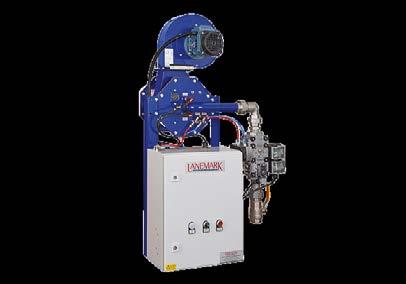


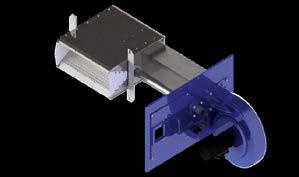
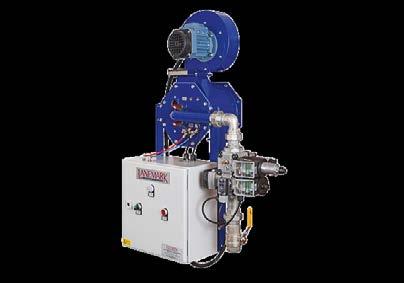
We were recently contacted by a potential new client in Guinea who were having issues with the centrifugal pumps at their mining site.
Their existing units were losing pressure, also known as prime, when operating because of low incoming water pressure. This was causing significant water shortages across their site.
In fact, the inlet pressure to their centrifugal pumps was so low that the pumps had to be stopped or have their pumping capacity vastly reduced, to prevent expensive damage to their pumps.
Why was water pressure dangerously low?
There were a number of factors. They were being caused by a continuing lack of government investment in vital national infrastructure, demand from other users nearby as well as leaks within the suction pipe.
The client recognised that identifying the exact cause of the problem could take years. So they were looking at timely and costeffective ways for them to maintain production within their mine without suffering stoppages and incurring downtime.
In short, they had to stop their existing pumps losing prime in service, make sure that they were always primed and wouldn’t experience any harmful dry running. They asked North Ridge pumps for advice.
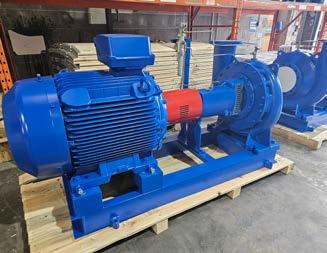
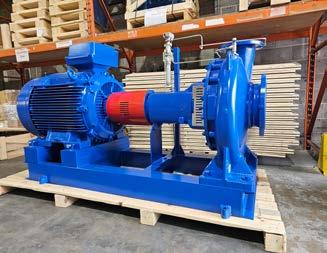
These self-priming freshwater transfer pumps will deliver around 400M³H at 40M head.
So what was our specification for this client?
The mining company wanted to explore various options for solving their problem. After looking into the issue and discounting submersible and vertical immersion pumps, we recommended that they use a surface-mounted self-priming pump.
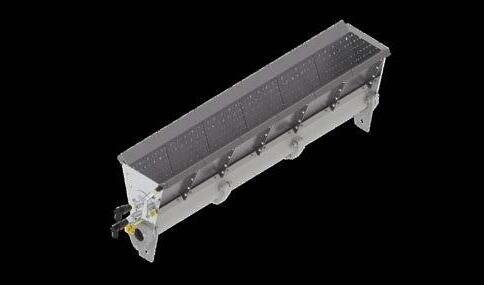
From our discussions, we knew that the client already had compressed air on site for this particular application. We therefore selected a pair of our XHLE end suction centrifugal pumps fitted with an air-driven air ejector for pump priming. This will enable these high flow self-priming pumps with air ejector to achieve a suction lift of 6.5M.
Traditionally, self-priming pumps feature an open or semi-open
impeller to handle solids or unexpected particles. As these selfpriming freshwater transfer pumps are end suction pumps with closed impellers they will operate at a higher efficiency due to the impellers having sidewalls.
This means that these high flow selfpriming pumps with air ejector can operate at around 81% efficiency. An equivalent self-priming pump may only be able to reach around 60%70% efficiency due to the impeller design.
In addition, the 1000rpm motor helps to ensure that NPSH requirements are kept low and enables the pump to operate for long periods without needing frequent servicing.
Built with ductile iron casings and impellers for many years of uninterrupted service, these selfpriming freshwater transfer pumps will deliver around 400M³H at 40M head.
If you have an application or process needing a self-priming pump or aren’t sure if you need a different type of pump, talk to North Ridge Pumps today to see how we can help.
Make UK and Make UK Defence will, for the first time, host a joint pavilion at Advanced Engineering 2026, bringing together two of the UK’s most influential industrial advocates in a single, visible platform.
The move reflects their shared role at the centre of UK manufacturing and defence – representing thousands of companies to government and policymakers –and their commitment to making sure the realities of doing business are heard in national debates on industrial strategy, growth, skills, regulation, net zero and national security.
By combining their presence at Advanced Engineering, the associations are not only creating a stronger showcase for members but also using the event as a live listening post. The pavilion will give engineers, leaders and innovators a direct route to the organisations representing the industry, especially at a time when decisions on industrial strategy, defence spending and technology investment are being made.
“Make UK and Make UK Defence are the leading organisations that key stakeholders turn to when they want to know what is really happening in UK manufacturing and the defence supply chain” says Simon Farnfield, Head of UK Manufacturing Cluster at Easyfairs “Bringing them together in a single pavilion at Advanced Engineering is about more than exhibition real estate - it is about giving industry a stronger, more coordinated voice”
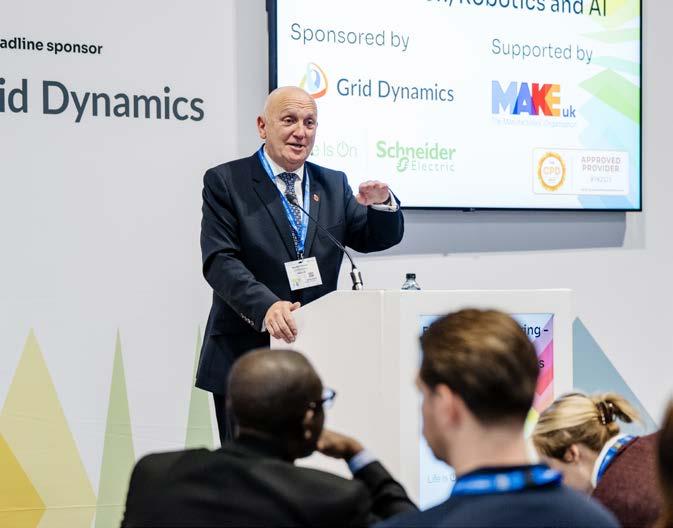
Make UK and Make UK Defence are the leading organisations that key stakeholders turn to when they want to know what is really happening in UK manufacturing and the defence supply chain
Advocates at the heart of UK industrial policy
Make UK and Make UK Defence are recognised as leading interlocutors between industry and government. They provide data, analysis and frontline insight that
shape policy on everything from skills and productivity to export support, defence procurement and regulation.
At Advanced Engineering, this advocacy role will be highly visible. Members and visitors will be able to talk directly with policy and public affairs teams, share what is making projects “increasingly hard work to get over the line”, and feed into the evidence base that shapes future government decisions.
“In a year when engineers are battling volatile energy costs, skills shortages, supply chain disruption and rising expectations on net zero and digitalisation, having these two leading advocates on the show floor creates a direct feedback loop between real projects and national policy”, says Simon Farnfield.
The launch of the joint pavilion reflects the way advanced engineering now works in practice: technologies, talent and supply chains increasingly span multiple sectors, and the most successful projects often combine expertise across industries.
Stephen Phipson CBE, CEO, Make UK said: “By presenting a unified presence, Make UK and Make UK Defence aim to demonstrate how collaboration between civil and defence manufacturers can accelerate innovation, support export growth and enhance the UK’s industrial resilience.
“While the pavilion will have a strong advocacy dimension,
it is also a commercial and technical platform for members. Exhibiting companies will be able to demonstrate how UK manufacturing and defence suppliers are addressing real world problems at the design and development stages - from electrification and lightweighting to automation, advanced materials, AI enabled tools and new testing approaches.”
Companies interested in exhibiting in the Make UK / Make UK Defence pavilion at Advanced Engineering 2026 should contact their Make UK or Make UK Defence representative, or the Advanced Engineering team, for information on availability and participation options.
About Make UK
Make UK, The Manufacturers’ Organisation, is the representative voice of UK manufacturing. Collectively we represent 20,000 companies of all sizes, from startups to multinationals, across engineering, manufacturing, technology and the wider industrial sector. Everything we do – from providing essential business support and training to championing manufacturing industry in the UK and the EU – is designed to help British manufacturers compete, innovate and grow.
From HR and employment law, health and safety to environmental and productivity improvement, our advice, expertise and influence enables businesses to remain safe, compliant and future-focused.
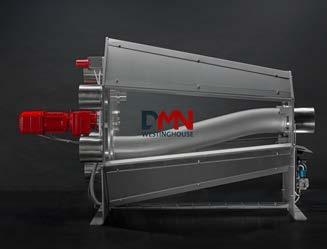
DMN-WESTINGHOUSE simplifies pneumatic conveying with the new M-TDV
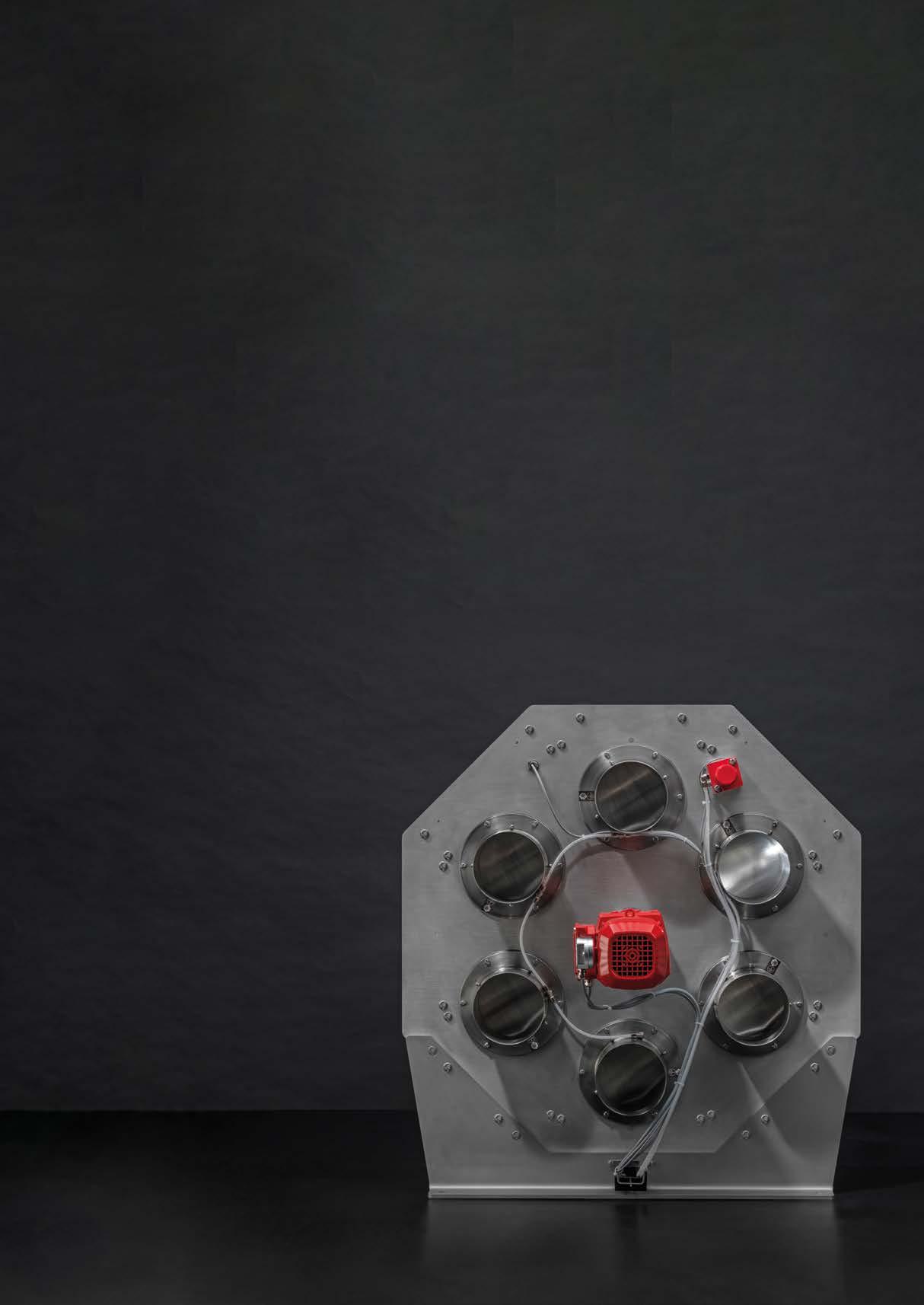
DMN-WESTINGHOUSE has introduced the M-TDV multiport tube diverter valve, a compact solution designed to simplify pneumatic conveying systems by replacing complex arrangements of multiple two-way diverter valves. Capable of handling up to 14 routing positions within a single unit, the M-TDV enables efficient diversion of one conveying line to multiple destinations or convergence of multiple lines into a single outlet.
In a 1-to-14 configuration, a single M-TDV can replace up to 13 conventional two-way diverters. This significantly reduces the number of valves, actuators, control points, connections, and maintenance requirements, resulting in a simpler and more cost-effective system design.
The valve supports the principle of “doing more with less.” By integrating multiple routing functions into one compact unit, it reduces equipment count, control complexity, installation effort, and plant footprint. For process engineers, this creates greater flexibility in plant layout while streamlining system operation.
The M-TDV also improves product handling. Traditional serial diverter arrangements can introduce multiple direction changes, increasing turbulence, wear, pressure loss, and the risk of product degradation. The M-TDV limits the conveying path to just two smooth bends through a single
valve. Combined with precise port alignment and optimised internal geometry, this promotes gentle product flow and helps protect fragile powders and pellets during transport.
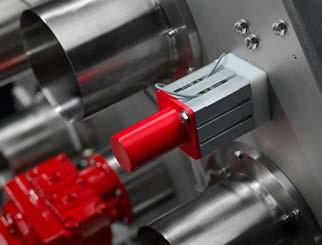
At the heart of the design is a rotating swan neck that directs material along the selected route. Exact alignment between the swan neck and valve ports ensures a smooth, uninterrupted flow path. A robust frame maintains alignment under full piping loads, while intelligent switching selects the shortest route to the required port. An encoder and alignment cylinder provide accurate positioning and secure port locking.
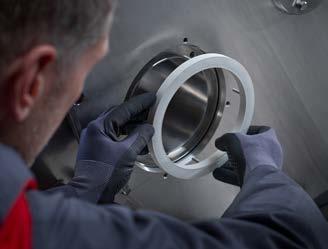
Maintenance has also been simplified. Electrical and pneumatic components are mounted externally for easy access and protection from product exposure. Seal replacement can be carried out without disconnecting pipework, helping minimise downtime. A built-in QR code provides direct access to installation, maintenance, and service information.
For hygienic applications, the M-TDV is available with FDAapproved white EPDM inflatable seals, stainless steel contact parts, EC1935/2004-related compliance, and USDA-accepted versions. ATEXcertified models are also available.
Suitable for conveying powders and pellets, the M-TDV is offered in sizes from 40 to 150 with configurations ranging from 4 to 14 ports, operating across temperatures from -20°C to +100°C and pressures from -0.8 to 3.0 barg.
DMN-WESTINGHOUSE continues to support dry bulk solids handling industries worldwide with engineered valve solutions focused on reliability, product quality, and long-term process performance.
BMW Group produces its two-millionth all-electric vehicle
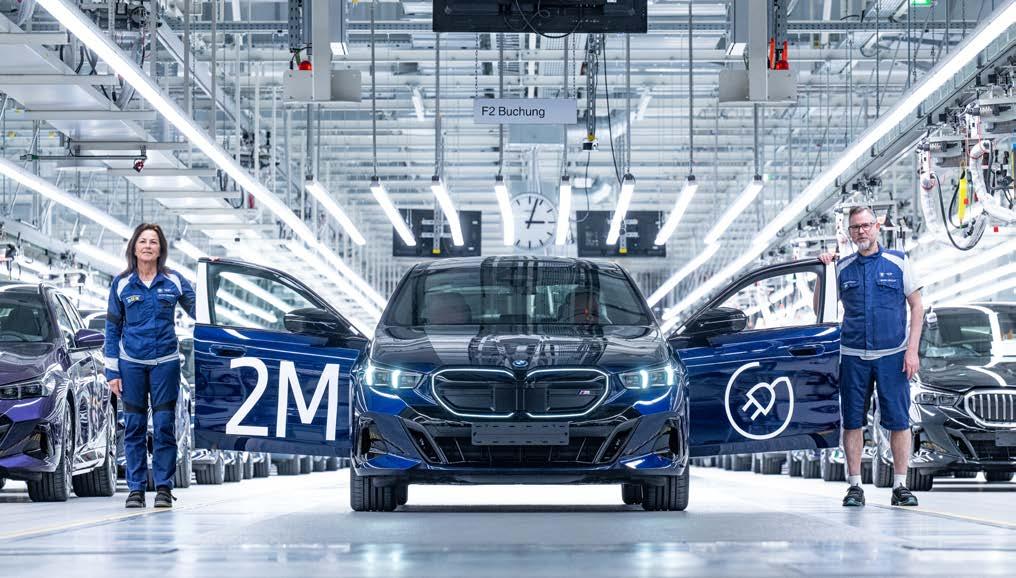
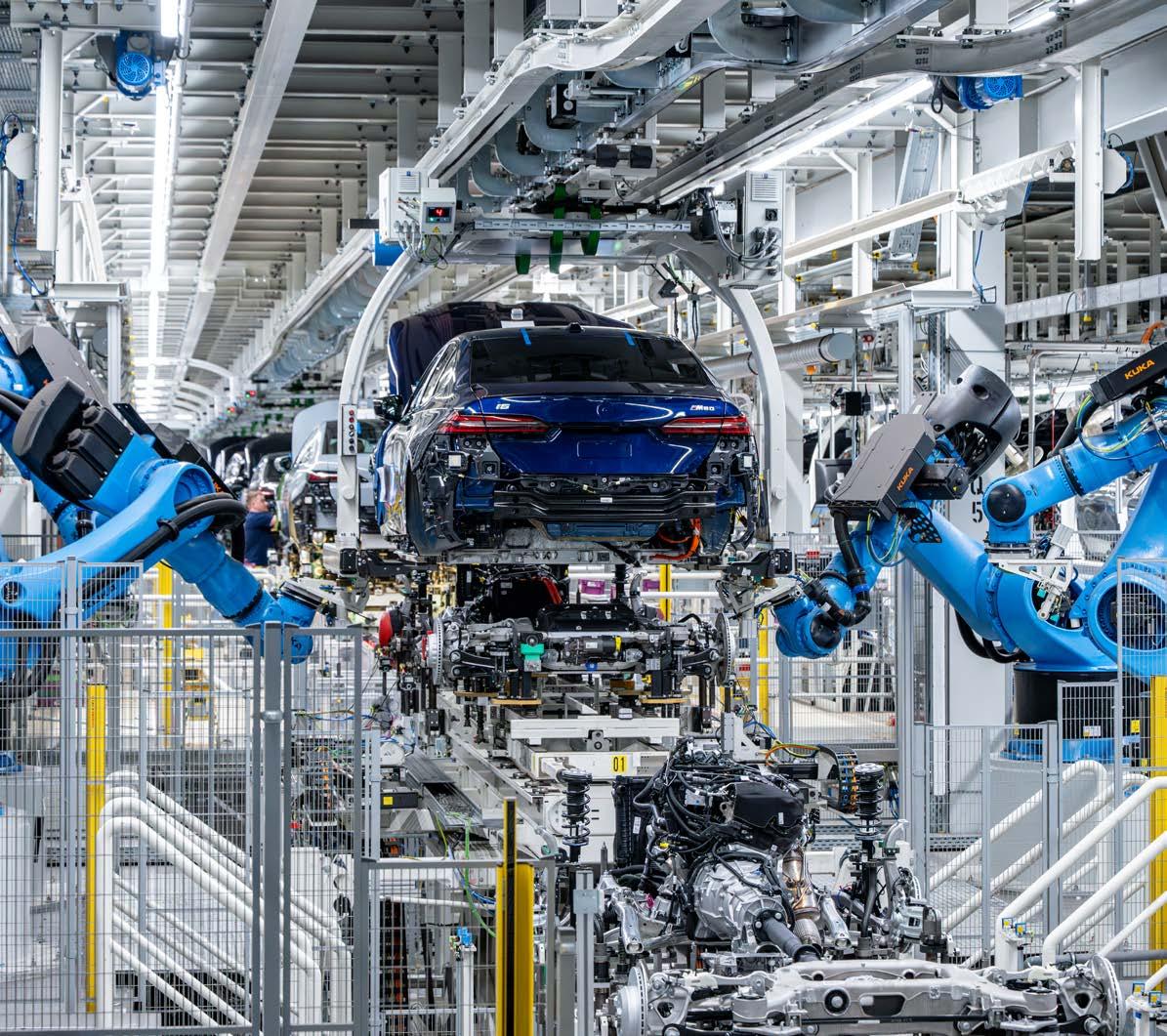
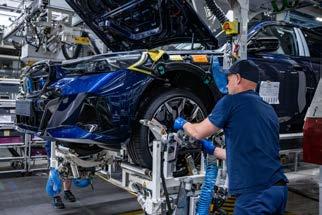
One out of two million: A BMW i5 M60 xDrive sedan (energy consumption combined: 19.5–19.4 kWh/100 km (WLTP); CO2 emissions combined: 0 g/km (WLTP); CO2 class(es): A) in Tansanit Blue assembled at Plant Dingolfing is the two-millionth all-electric vehicle produced by the BMW Group. The anniversary vehicle is going to a customer in Spain.
BMW Group Plant Dingolfing: home to the most all-electric models
Plant Dingolfing began series production of all-electric automobiles in 2021 with the BMW iX. Today, it builds the widest range of BEV models within the BMW Group: the BMW iX, the BMW i5 sedan and touring, and the BMW i7. Since 2021, more than 320,000 allelectric vehicles have already been built at the Lower Bavarian site. This means that almost every sixth of the BMW Group’s total of two million BEVs comes from Dingolfing. In 2025, more than a quarter of the vehicles produced at Plant Dingolfing were all-electric.
strategy with maximum flexibility
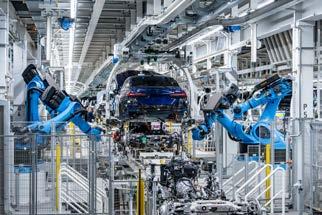
As part of the BMW iFACTORY, the BMW Group continues to pursue a technology-open approach in its plants: vehicles with different powertrains are flexibly produced in a mixed build on a single production line. For several years now, at least one all-electric model has been rolling off the line at every German BMW Group plant - e-mobility has become the new normal across the company’s production network. In doing so, the BMW Group is making a significant contribution to Germany being the world’s secondlargest production location for electric cars today.



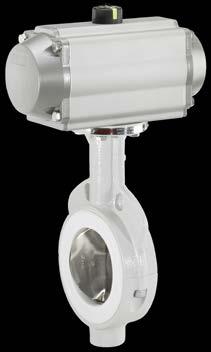
Combining efficiency with responsibility, GEMÜ supports the evolving energy landscape with high-quality, safe, and durable valve solutions.
Explore our robust valve range:
Abrasion & corrosion-resistant valves for mineral separation and processing.
Minimal-deadleg designs for precise electrode slurry mixing.
High chemical resistance for refining and battery recycling processes.
Custom stainless steel & PTFE solutions for battery cell production.











• Blended Learning –live online, 1:1s, more
• On-site / On-call
• Practitioner Level
• In-depth, Part-time
• Subject expert Tutors
• Mentor support



_CLEANER FUEL
_GREENER PERFORMANCE
_EFFICIENT, COMPACT, MODULAR, AND FULLY ELECTRIC
SUSTAINABLE STEAM FOR EVERY APPLICATION.








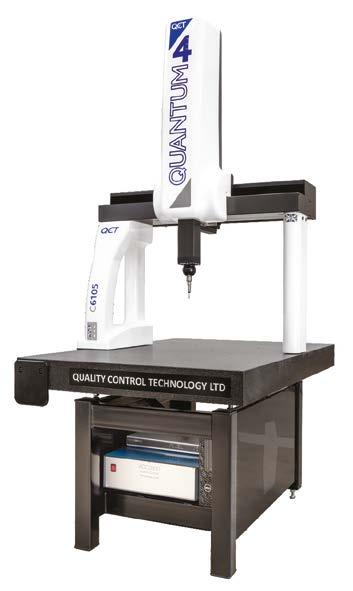
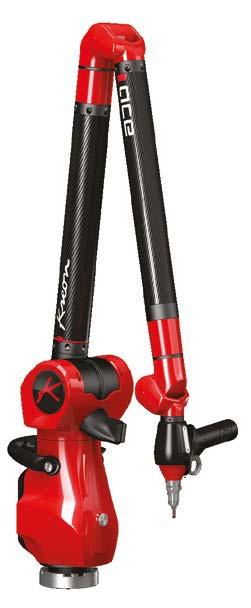
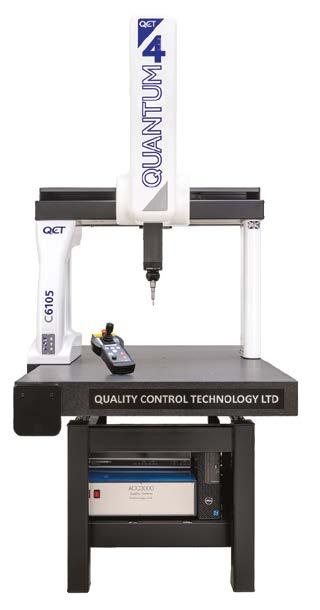
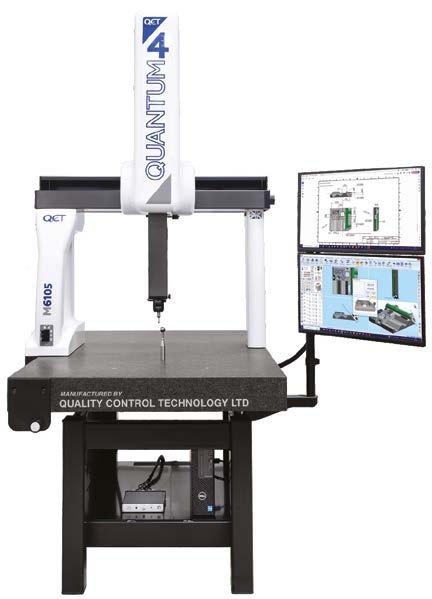
Quality Control Technology are a one stop solution for all your business CMM requirements, we have the largest stock of New and Refurbished CMM’s in the UK, with over 30 years’ experience of CMM service, calibration and repair.
New CMMs
The ‘Quantum 4 CMM Range’ is built and designed at QCT’s UK works and is available in a variety of standard frame sizes, other sizes can be built on request. All CMM’s are supplied with our bespoke software and interfaces. The Quantum 4 offers outstanding build quality and cost to performance ratio.
New Ace Portable Inspection Arms
The ACE arm offers portable measuring capability for the largest of projects as well as the flexibility to take the measuring machine to the object. Like our Quantum range, the Ace measuring arm offers exceptional quality and is the perfect system for contact and noncontact 3D measurements with the addition of the laser scanning options.
Refurbished CMMs
At QCT we only select high quality used machines, completely strip and overhaul them. Each used machine is rigorously tested, with all pneumatic pipes replaced, air bearings removed, cleaned, serviced & refitted. Electronics are tested & unsupported items are replaced with new. The original interface and controller are replaced with QCT’s own along with a new computer and operating system. QCT refurbished machines are supplied as a full turnkey package, fully backed with a comprehensive warranty. Re-using the frame of a pre-used CMM means that fewer resources are required to produce them, reducing their carbon footprint.
Service and Calibration of all CMMs
QCT also offers an ongoing calibration and service contract package to ensure your CMM is operating at its optimum.
n Subcontract CMM Inspection n CMM Calibration to UKAS
n CMM Service & Repair n CMM Relocation
n CMM Retrofits
With more than 60% of UK manufacturers increasing investment in automation, endof-line packaging systems are evolving far beyond traditional throughput-focused machinery as manufacturers look to improve productivity, operational resilience and flexibility within increasingly complex production environments.
Across sectors including food and beverage, e-commerce and consumer goods, end-of-line automation is becoming one of the most demanding areas of modern production engineering.
Automation engineers are now being asked to design systems capable of handling growing SKU variation, changing packaging materials, labour shortages and tighter production footprints, all while maintaining Overall Equipment Effectiveness (OEE).
Manufacturers are also under increasing pressure to improve productivity while managing labour shortages, sustainability targets and growing production complexity, accelerating demand for more flexible and scalable automation systems.
“Manufacturers are no longer looking purely at throughput,” explains Andrew Yates, Managing Director at Endoline Automation. “They need systems that can adapt to changing production requirements, integrate effectively with existing infrastructure and support long-term operational resilience.”
Production variability is now becoming the operational norm. Manufacturers are processing shorter production runs, more frequent changeovers and greater packaging diversity than ever before. In high-
mix production environments, flexibility has become one of the primary performance metrics.
Modern random case sealing systems, for example, are increasingly expected to identify and respond dynamically to changing case dimensions without manual intervention. The ability to accommodate varying case sizes in real time has become critical in environments where stopping lines for manual adjustment is no longer commercially viable.
At the same time, sustainability targets and lightweighting initiatives are creating new engineering challenges around packaging materials themselves. Even small inconsistencies in board grade, flute structure or recycled content can influence how effectively materials perform during case erecting, sealing and conveying processes.
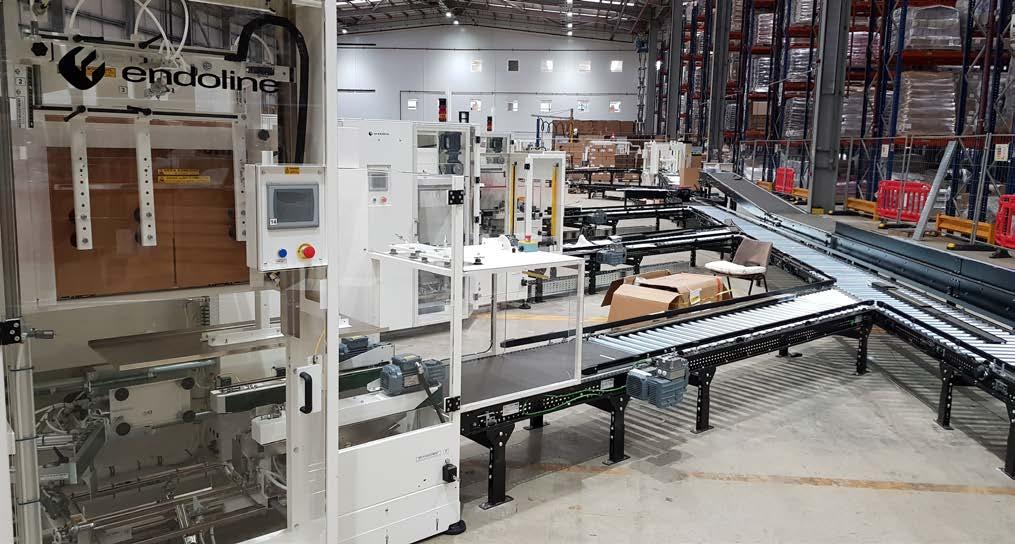
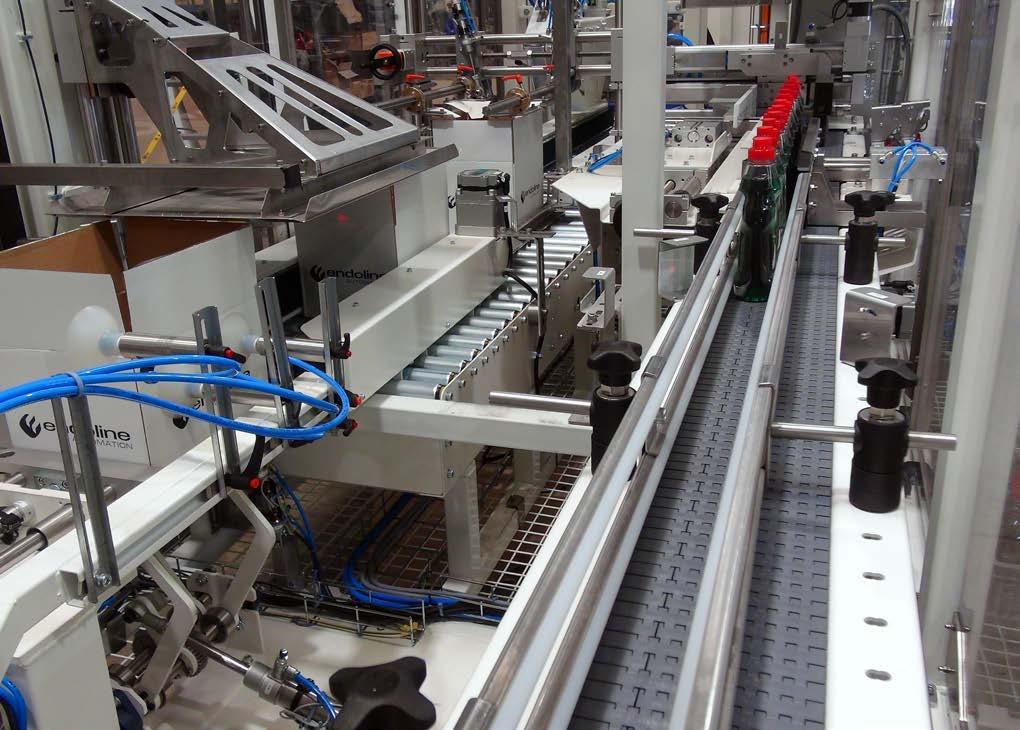
As a result, packaging automation is becoming far more dependent on controlled handling dynamics. In modern case erecting systems, opposing vacuum handling arrangements are increasingly being used to distribute opening forces more evenly across the structure of the case, helping to improve repeatability when processing heavier corrugated formats or less consistent recycled materials.
“What appears to be a straightforward packaging process often involves highly complex engineering considerations around material handling, force distribution and repeatability,” adds Andrew.
Manufacturers are also increasingly prioritising scalable and modular automation strategies rather than complete line replacement projects. The ability to integrate effectively with existing upstream and downstream equipment, while
For further information, please visit www.endoline-automation.com and integration across connected production environments.
One of the biggest integration challenges manufacturers faces is ensuring new automation can communicate effectively with existing equipment and production infrastructure.
supporting future expansion, has become a major engineering consideration.
Modern packaging machinery is no longer viewed purely as a standalone mechanical asset. Increasingly, manufacturers expect end-of-line systems to contribute to wider operational efficiency through real-time performance monitoring, diagnostics, line coordination
“One of the biggest integration challenges manufacturers faces is ensuring new automation can communicate effectively with existing equipment and production infrastructure,” concludes Andrew. “Flexibility and scalability are becoming just as important as mechanical performance.”
This is also driving greater focus on machine accessibility, reduced cabling complexity and integration flexibility to simplify commissioning, maintenance and long-term operational support.
Ultimately, end-of-line automation is no longer simply about speed or output. It is becoming a far more sophisticated systems engineering discipline, where flexibility, maintainability, integration and long-term operational resilience are all critical to manufacturing performance.
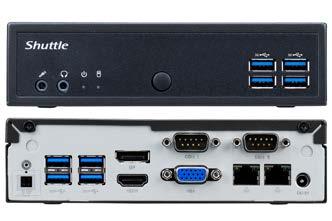
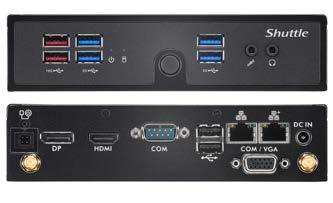
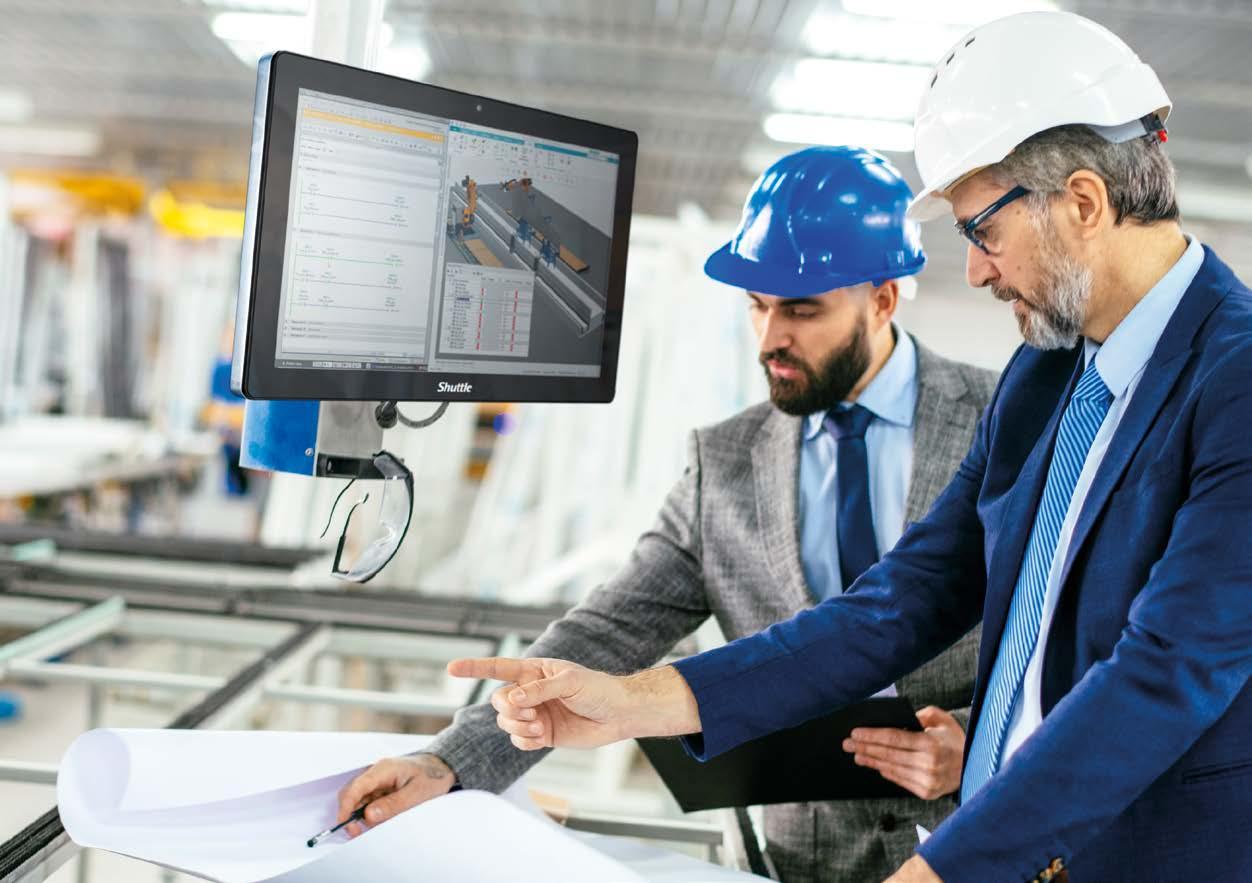
Modern industrial IT solutions today are expected to do far more than simply operate reliably. They must be robust, energy-efficient, easy to integrate, and capable of running continuously under demanding conditions. This is exactly where Shuttle’s compact industrial PCs DL40N and DS50U5 come into play. Both systems are designed to support companies in their digital transformation across production, logistics, and automation environments.
The Shuttle DL40N is specifically engineered for use in harsh industrial settings. Its fully fanless design eliminates the need for active cooling and, as a result, removes one of the most common sources of mechanical failure. With no moving parts in the cooling system, maintenance requirements are significantly reduced, enabling stable 24/7 operation over long periods of time.
Dust, debris, and temperature fluctuations—typical challenges in factories, warehouses, and production lines—have minimal impact on its performance. This makes the DL40N particularly suitable for applications such as machine control, simple edge computing tasks, digital signage, and automation control systems.
Another key advantage of the DL40N is its energy-efficient architecture. In large-scale deployments where multiple devices run simultaneously, this efficiency can lead to noticeable

reductions in operational costs. At the same time, businesses benefit from increased system reliability and reduced downtime. Thanks to its compact form factor, it can be easily integrated into control cabinets, mounted behind displays, or installed directly on industrial equipment without requiring significant space.
The Shuttle DS50U5 is designed for scenarios that require substantially higher computing performance. Equipped with a powerful Intel Core processor, it is capable of handling complex industrial workloads where real-time data processing, analysis, and communication are essential. Typical use cases include industrial IoT gateways, monitoring and control platforms, AI-assisted edge computing applications, and centralized management of interconnected production systems.
Despite its higher performance capabilities, the DS50U5 maintains a compact and space-saving design, making it ideal for installations where space is limited. In addition, it offers a wide range of connectivity options, including interfaces for displays, sensors, cameras, and
network infrastructure. This ensures seamless integration into existing industrial environments without the need for extensive system modifications.
Together, the DL40N and DS50U5 form a versatile and scalable industrial computing portfolio. Depending on specific requirements, companies can choose between a rugged, low-maintenance solution or a more powerful computing platform—or deploy both in combination within the same infrastructure. This enables optimized coverage of diverse operational needs across production and logistics environments.
Overall, both systems provide a forward-looking foundation for Industry 4.0 applications. They combine stability, scalability, and energy efficiency in compact designs, helping organizations streamline processes, increase automation, and drive long-term digital innovation.
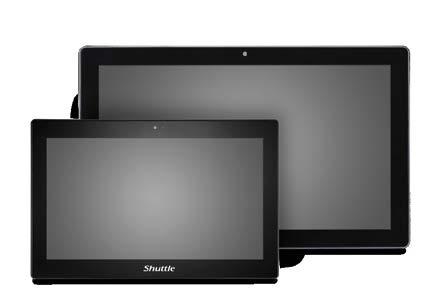
15.6 inch (39.6 cm), Full HD
10-point capacitive multitouch
Intel Core i5-1235U
Up to 64 GB DDR5 SO-DIMM
M.2-2280 slot for NVMe SSD
2× 2.5G LAN, Wi-Fi 5 (802.11ac)
HDMI 2.0b, VGA, 8× USB, 1× COM
9–36 V input voltage (optional)
Also available as M15AL01 in white with antibacterial coating and POAG
21.5 inch (54.6 cm), Full HD
High-performance, highly integrated panel PC solutions featuring capacitive widescreen multitouch, a robust 3 mm aluminium chassis and front IP65 protection. All models operate fanlessly and can be configured for specific industrial requirements. Each system is available in two colour variants. More information: WWW.SHUTTLE.EU
TIP: Your PANEL PC ‒ as individual as your project! Use our product configurator and customise your barebone perfectly to suit your requirements. go.shuttle.eu/RuDLM




10-point capacitive multitouch
Intel Core i3-1215U or Core i5-1235U
Up to 64 GB DDR5 SO-DIMM
1× 2.5-inch SATA HDD/SSD, 1× M.2-2280 slot for NVMe SSD
2× 2.5G LAN, Wi-Fi 5 (802.11ac)
HDMI 2.0b, VGA, 8× USB, 2× COM
9–36 V input voltage (optional)
Also available as M21AL01 in white with antibacterial coating and POAG FROM £717*
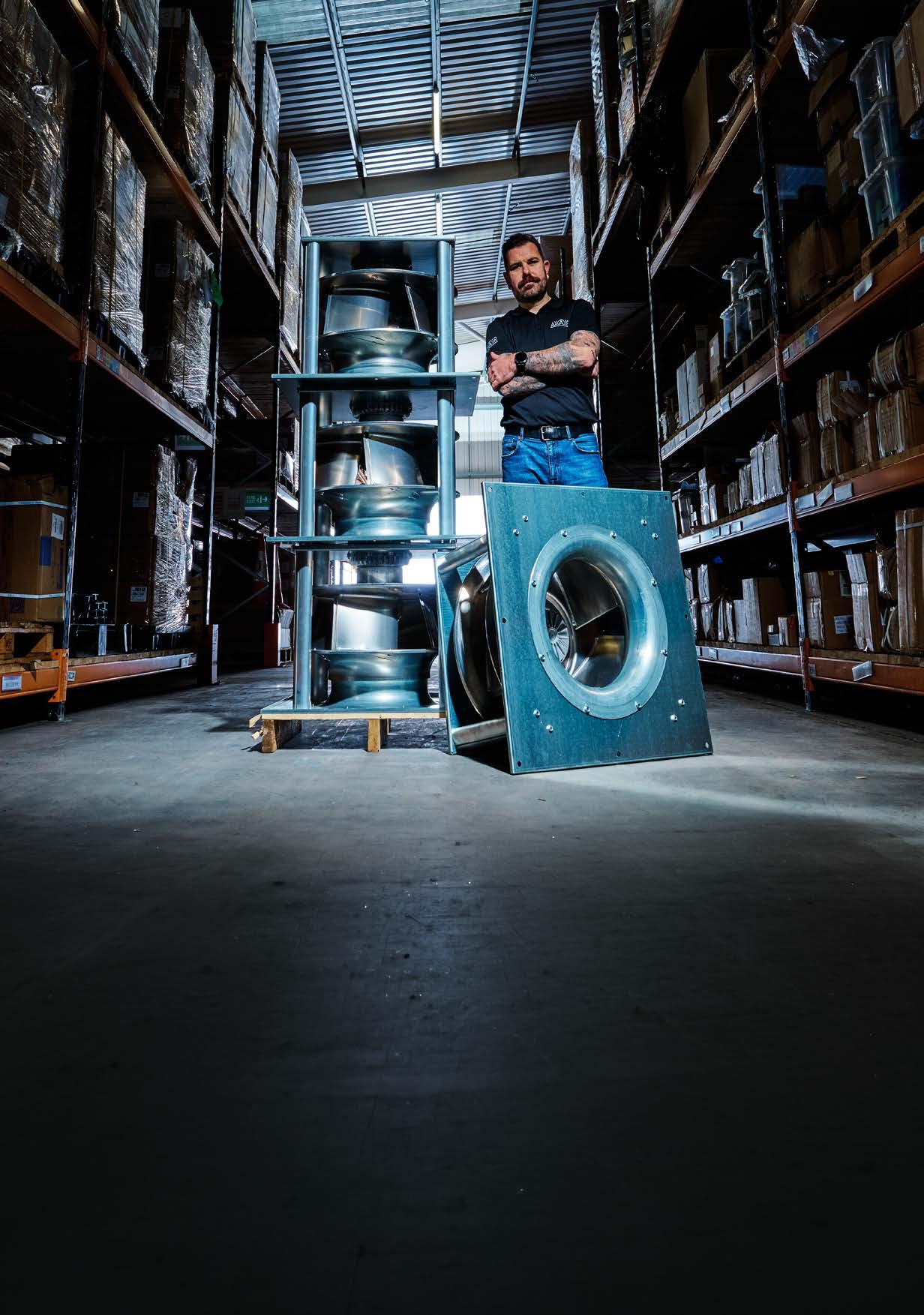
Andrew Jones, Technical Director at Axair Fans explains why engineering judgement and initiative matters, and why that won’t change with the growth of A.I use any time soon.
I’ve been selling and specifying industrial fans for a while, I started at Axair in 2010. In that time, I’ve seen a lot of things change; lead times, energy regulations, the way customers expect to be communicated with. What hasn’t changed is that getting the right fan into the right system still requires someone who understands what’s going on inside that system, and increasingly, that’s becoming a differentiator rather than a given.
There’s a lot of noise right now about A.I transforming technical sales, and yes like most people we dabble with A.I tools, I’m not precious about it’s use and I’m not oblivious to the advantages of getting things done more efficiently. But there’s a gap between what these tools can do and what people seem to think they can do, and in industrial fan specification and supply that gap matters enormously.
When an enquiry comes in, what’s written down is never the full, complete picture. A customer will tell you they need a fan to move a certain volume of air at a certain static pressure, but what they often don’t tell you, because they don’t always know it’s relevant, is that the system has a long duct run with two 90-degree bends, or that the installation environment hits 60°C in summer for example.
An A.I tool will work with what it’s given and if customers don’t know, how can ai? An experienced engineer

A.I will no doubt help engineers work faster, but it can’t replace the experience that comes from years of seeing systems succeed, fail and surprise you.
asks questions that the customer never thought of. That’s not a small distinction, that’s the difference between a fan that works and a fan that causes a phone call further down the line.
As an independent technical distributor, we intentionally work with a breadth of manufacturers. It means when a requirement comes in, we’re not constrained by a single product range, we’re looking across the market for what actually fits, but that only works if you know the ranges well enough to make the call quickly and confidently. There’s a skill in knowing which manufacturer
to approach first for a particular application, which product family delivers the required efficiency, and which solution can meet both the duty point and the customer’s lead-time requirements. Customers come to us because they trust the recommendation, not simply a list of products that appear to match a specification.
The judgement required to pull that together, sense-check it against the application, and come back with a confident recommendation is still a human skill. Experience teaches you when something doesn’t quite add up and needs further investigation. That’s not a knock on technology. It’s just honest about where the value sits.
We’ve built Axair’s approach around the idea that technical support isn’t a bolt-on. It’s why we spend time understanding applications, challenging assumptions where necessary, and helping customers arrive at the right solution.
I’m not making an argument against technology. We use it, and we’ll use more of it, but the conversation about A.I replacing technical expertise in industrial fan supply is, at best, premature. In our world, there are still too many variables, unknowns and situations where the right answer starts with a question rather than a specification sheet.
A.I will no doubt help engineers work faster, but it can’t replace the experience that comes from years of seeing systems succeed, fail and surprise you. That’s where the knack comes from. It’s built over time, and for now at least, it’s not something you can download.

WE DON’T JUST SELL FANS!
We’re trusted by leading UK engineers to deliver industrial fan solutions that address complex application air movement challenges. No AI, no stock photos.
Real engineering expertise that stands up.
Wall Colmonoy Limited (UK) launches £2.5m advanced vacuum investment casting facility to strengthen UK aerospace and defence supply chains
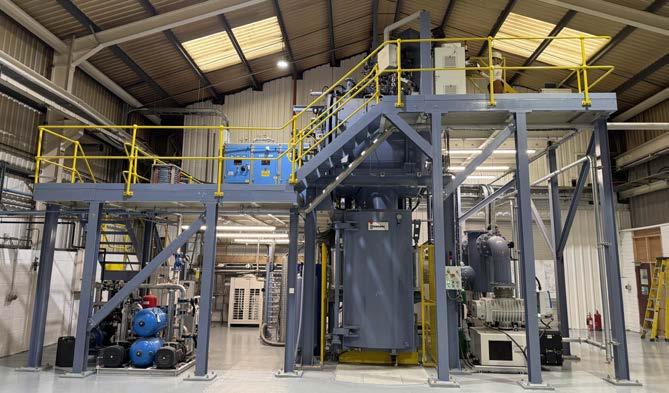
Pontardawe, Wales Wall Colmonoy Ltd has officially launched a £2.5 million Vacuum Precision Investment Casting (VPIC) facility in South Wales, in a move set to strengthen the UK’s aerospace and defence manufacturing capability.
Unveiled at the company’s European Headquarters in Pontardawe, the new facility is supported by the Defence Technology Exploitation Programme (DTEP) and the Defence and Security Accelerator (DASA) and has been developed in collaboration with Rolls-Royce. The investment is expected to enhance domestic production of highintegrity aerospace components and improve resilience across critical UK supply chains.
Central to the development is one of the largest commercially available vacuum casting furnaces in the UK, capable of producing components weighing up to 200kg in an oxygen-free environment. This enables the manufacture of ultra-clean, high-performance alloys required for next-generation aerospace engines and defence applications - capabilities typically limited to major global manufacturers. By making this technology commercially accessible, the facility addresses a recognised gap in the UK’s advanced manufacturing landscape.
The VPIC facility also integrates advanced digital simulation and ‘digital twin’ technologies, allowing

This investment represents a significant step forward for our UK operations and for the wider manufacturing sector.
casting processes to be optimised prior to production, reducing development time, cost and material waste. In parallel, it supports more sustainable manufacturing through the recycling of legacy aerospace materials into high-value alloys for modern applications.
The launch event on 18 March brought together representatives from industry, government and partner organisations, reflecting the project’s national significance
as well as its impact on the regional economy. Wall Colmonoy, which has operated in Pontardawe for nearly six decades, said the investment would safeguard skilled jobs while creating new opportunities in advanced engineering.
Rob Davies, Managing Director of Wall Colmonoy Limited, “This investment represents a significant step forward for our UK operations and for the wider manufacturing sector. The VPIC facility enables us to deliver advanced aerospace and defence components while strengthening critical capability within the UK.”
With a strong pipeline of development programmes already in place, the facility is expected to play a key role in supporting aerospace, defence and other high-integrity sectors in the coming years.
For further information, please visit www.wallcolmonoy.co.uk
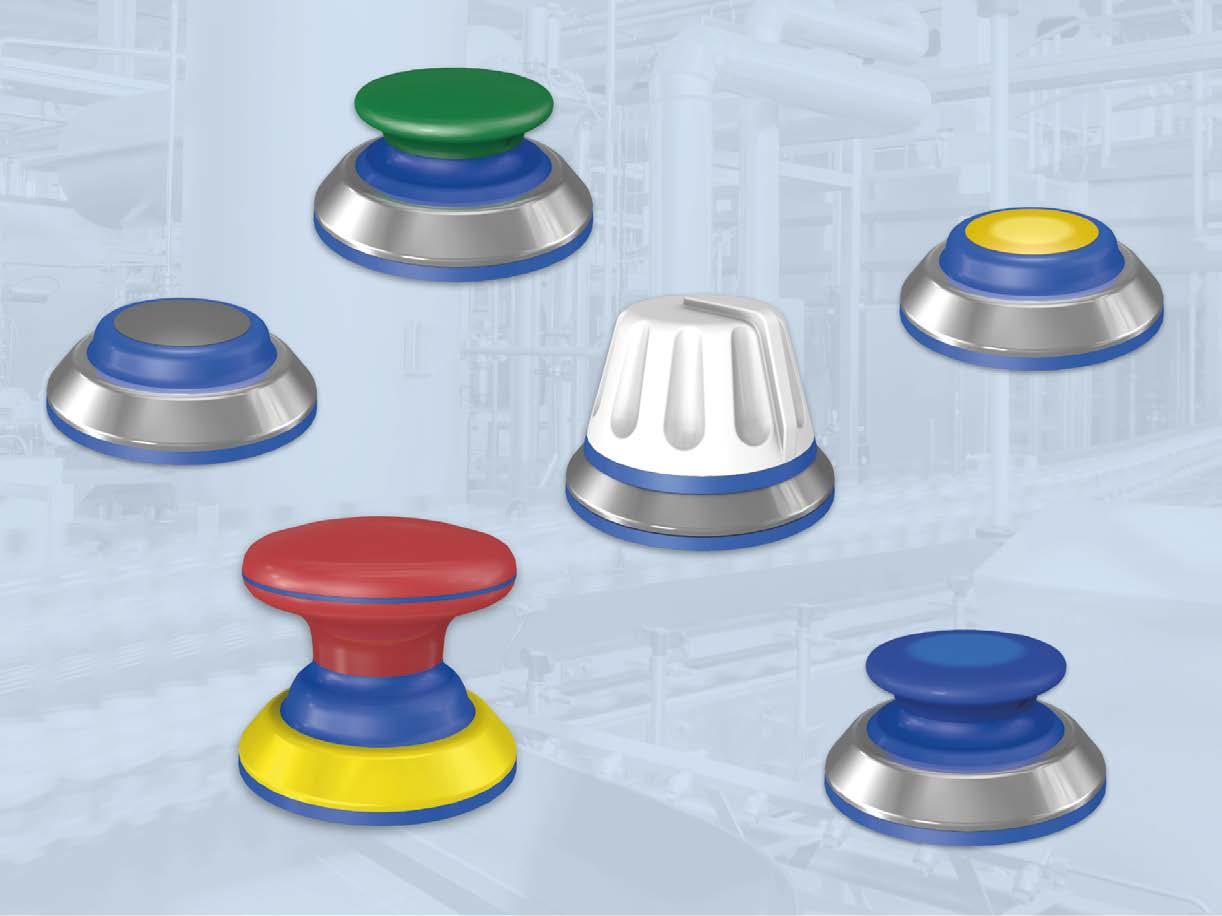
Schmersal now offers a complete range of innovative command and signalling devices specifically designed for hygiene-sensitive environments in the food processing industry.
Engineered for maximum cleanliness and reliability, these devices feature seamless transitions between sealing elements and surfaces, no protruding parts makes them exceptionally easy to clean. Their robust design withstands high-pressure washdowns and aggressive cleaning agents, meeting the highest hygiene standards.
With 147 device options available including mushroom pushbuttons, selector switches, and potentiometer-rotary switches you have the freedom to configure your control panels exactly how you need them.
Whether you are upgrading existing systems or building new equipment, this range offers the flexibility to design a safe and hygienic human-machine interface that fits your exact requirements.
For added customisation, all devices can be supplied with individual laser marking, including your company logo.

www.schmersal.co.uk
uksupport@schmersal.com
COPCO
Atlas Copco launches next-generation ZS 4 (VSD) oil-free screw blowers
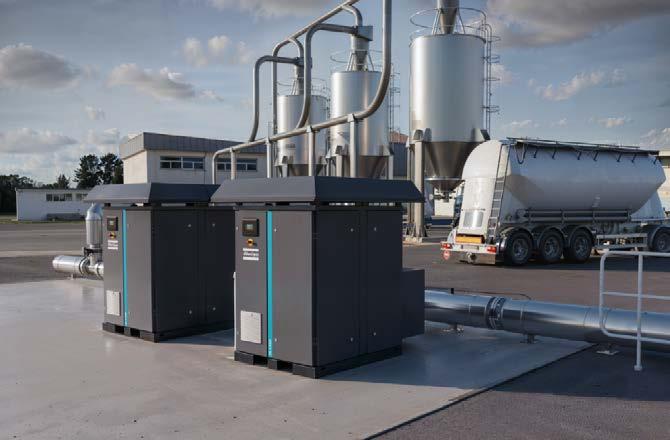
Atlas Copco has launched a new range of oil-free screw blowers, the ZS 4 (VSD), a significant evolution in its low-pressure blower portfolio. Building on the success of the ZS blower platform and incorporating advancements from VSD+ (variable speed drive) technology, the ZS 4 (VSD) delivers enhanced energy efficiency, optimised pressure performance, lower lifecycle costs and quieter operation for demanding industrial applications.
The ZS 4 (VSD) is available with a low pressure (below 800 mbar) element for applications such as wastewater aeration. For pneumatic conveying and other industrial settings, it offers an advanced high-pressure element. The new blower range includes an innovative smart pressure split design, ensuring optimal operation across varying pressure demands; and is available in a power range of 37-90 kW. Its high-efficiency IE4/ IE5 motor helps reduce energy consumption while maintaining stable airflow and consistent output.
“With AMP8 driving increased investment across the UK water sector, energy efficiency and wholelife cost reduction remain key priorities for wastewater operators. The ZS 4 (VSD) has been developed to help utilities meet these challenges through lower energy consumption, reduced maintenance requirements and reliable long-term operation”, said Kirk Lyons, National Sales Manager – Low Pressure at Atlas Copco Compressors UK.
With up to 35% greater energy efficiency compared to traditional lobe blowers and a 3% improvement
internal damping - support improved working environments.
The ZS 4 (VSD) has been developed to help utilities meet these challenges through lower energy consumption, reduced maintenance requirements and reliable long-term operation.
in specific energy requirement (SER), the ZS 4 (VSD) helps customers lower operating costs and reduce total cost of ownership. Performance benefits include stable airflow, even under constant load, and optimised output across varying pressure requirements. Class 0 oil-free compression ensures clean, reliable air, while noise levels as low as 75 dB(A) - due to refined acoustics and
Reliability features include a warranty of up to 5 years on the screw element (up to 60,000 hours – subject to the use of Atlas Copco genuine parts and certified service), robust construction for harsh industrial conditions and reduced mechanical stress for fewer failure points and a longer lifespan.
Compact, quiet, and plug-and-play, the ZS 4 (VSD) sets a new benchmark for oil-free blowers. By combining advanced engineering with energysaving innovations, Atlas Copco continues to support industries in improving productivity, reducing environmental impact, and lowering operating costs.
To find out more about the ZS 4 (VSD) oil-free screw blower range and its suitability for wastewater and industrial applications, visit: https://hubs.li/Q04lbz_V0
For further information, please visit www.atlascopco.com/en-uk/compressors
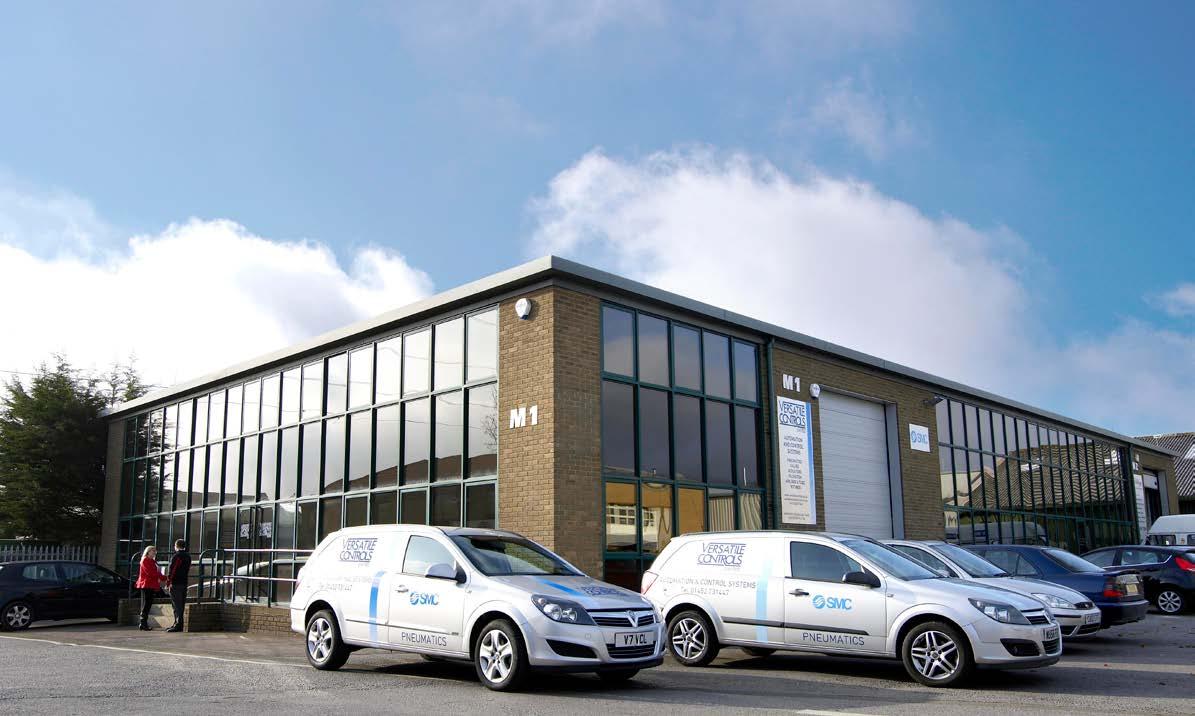
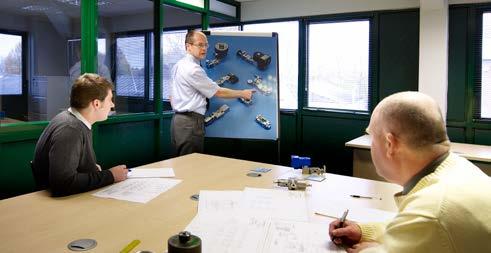
Versatile Controls Ltd supply high quality stainless steel valves and service to the oil and gas, petrochemical, and process industries. For these industries reliability is essential - only trusted components can be considered.
The names of Versa Valves, Ruelco, and ITT are synonymous with dependability. This is how the business started in 1987. These products are on specification with some of the prestigious names in the industry - Shell / BP / Exon Mobil.


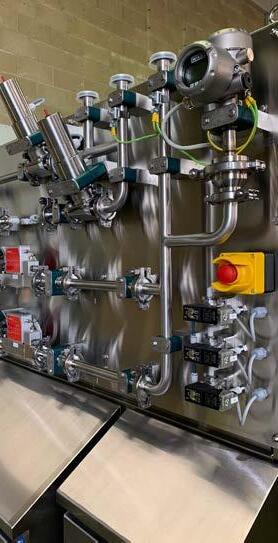
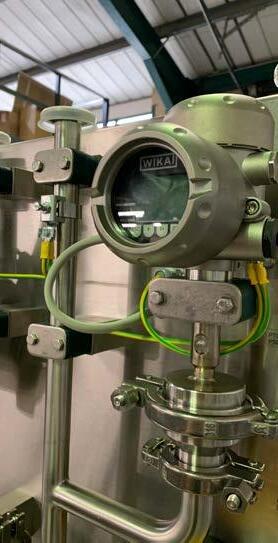



Visit our website or contact our expert technical sales team for more information. sales@versatilecontrols.co.uk | www.versatilecontrols.co.uk
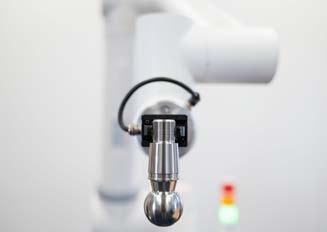
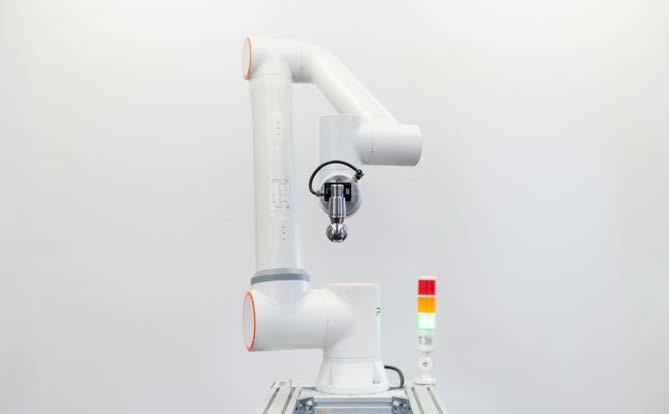
When most people think of robotics on the factory floor, they often picture large automotive assembly lines with industrial robots performing repetitive tasks away from human workers. However, this model has rarely suited specialist manufacturers, where the challenge has been finding automation that is flexible enough for their ways of working. Here, Suraj Jandu, Lead Project Engineer at Pailton Engineering and speaker at Robotics & Automation 2026, explains how collaborative robots, or cobots, are changing that.
The UK’s productivity challenge is well documented, and relatively low robot adoption is widely cited as a contributing factor. According to the International Federation of Robotics (IFR), the UK sits consistently below leading manufacturing economies in robot density rankings, particularly when compared with countries such as Germany, Singapore and South Korea.
Why specialist manufacturers are lagging behind
For high-volume, low-mix manufacturers, the business case for automation is straightforward. For specialist, low-volume, high-mix producers, it has been historically more difficult to make the numbers work. Set-up times, programming complexity and integration costs combined with the sheer variety of components moving through a facility can make traditional automation feel prohibitively rigid and expensive.
The result is a persistent gap, with many highly capable UK manufacturers effectively excluded from the automation advances adopted by larger manufacturers
Automation that your workforce believes in is automation that genuinely works.
years ago. Cobots do not solve every part of that problem, but they do change the equation significantly. Faster to deploy and designed for flexibility rather than fixed-function operation, cobots offer a more accessible entry point for manufacturers that have not previously found one.
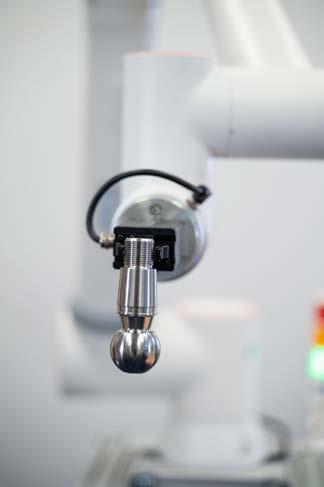
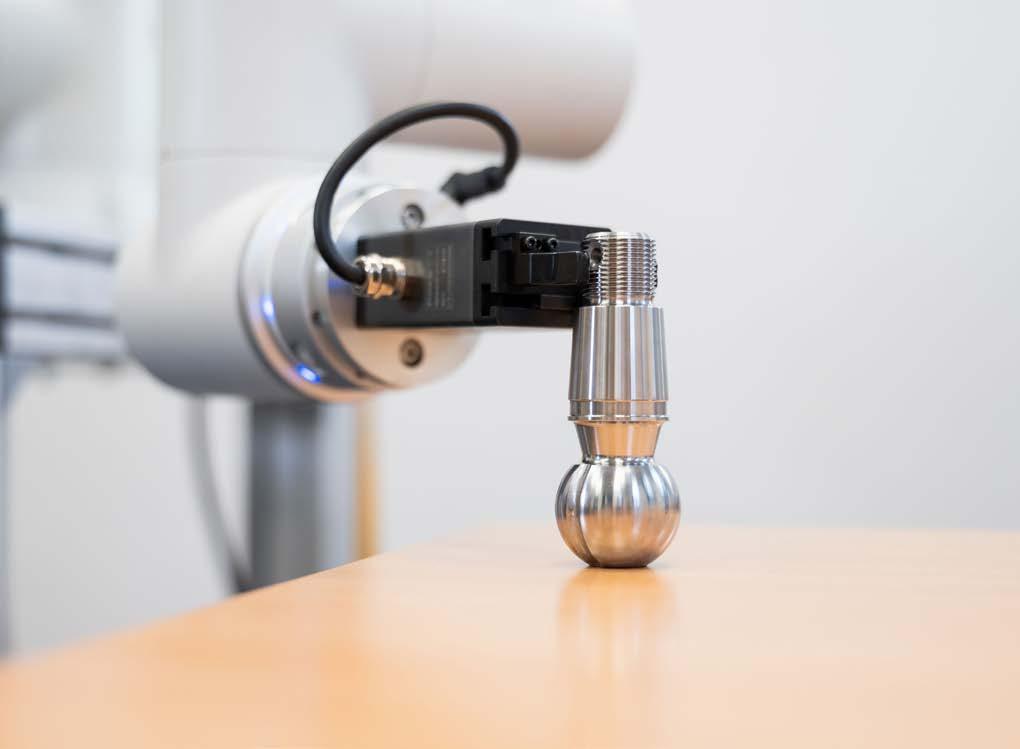
At Pailton Engineering, that shift is already underway. Following a successful trial period, the company recently installed a FAIRINO FR10 cobot in its induction hardening ball pin cell, a considered move that
reflects a broader programme of modernisation taking place across the facility.
The FR10 is purpose-built for exactly this kind of environment. It also offers a level of precision brings genuine consistency to tasks that previously relied on sustained manual effort, while the cobot’s collaborative design means it works cohesively alongside the team rather than in isolation from it.
This approach speaks to a broader philosophy at Pailton Engineering around automation. Rather than a wholesale transformation of the production line, the cobot represents a deliberate first step of proving the concept, building confidence internally and establishing a foundation for what comes next.
Taking that first step inevitably surfaces challenges that no amount of planning can fully anticipate. For Pailton Engineering, integrating the FR10 into a live production environment has been as instructive as the efficiency gains it has delivered. The process forces a business to examine its own operations with fresh eyes, identifying where bottlenecks sit, where variability creeps in and where the case for machine precision is the strongest.
For many manufacturers, the hesitation around automation isn’t purely financial. The prospect of introducing robotics into a facility where skilled and experienced people work raises questions that don’t always have straightforward answers.
Transparency is critical during this stage of adoption. Businesses should involve their team throughout the process while keeping the message simple and consistent: automation exists to make workers’ lives better, not make them redundant.
In a sector where skilled engineers are difficult to recruit and retain, this approach is as much a business strategy as it is good HR practice. Automation that your workforce believes in is automation that genuinely works.
With technology advancing and barriers to entry lowering, the business case for incremental automation is stronger than ever. However, it remains uneven across much of UK manufacturing. It requires more manufacturers sharing practical examples of what adoption looks like on the ground, alongside a clearer
understanding of how automation can be introduced in stages rather than as a single transformation programme.
The tools are already available and the economic case is increasingly clear. The challenge is not technological capability, but having the confidence to begin.
The increasing demand for automated systems using servos is often thwarted by the time taken to implement the systems for the wide range of applications needed.
To code and test the system, many months are often required for implementation and even more time to then diagnose and support it on an on-going basis.
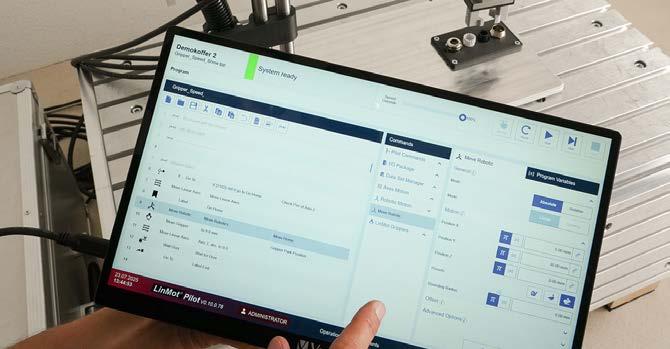
LinMot is proud to present a major milestone: the no-code robot control LinMot Pilot.
It is an intuitive, web-based platform for configuring and controlling multiaxis LinMot Flat Robots and LinMot linear and Rotary motors — without a PLC or deep programming knowledge.
Instead of complex code, LinMot Pilot relies on parameterisable commands, clear logic modules, and intuitive widgets. This allows even demanding tasks such as screwing, conveyor synchronization, or pick-and-place to be implemented quickly, safely, and efficiently.
Sequential programs can be created in just a few clicks. These programmes can include IF queries, waiting times, jump labels, variables and movement commands.
You will be able to program like a pro – without prior knowledge, using a no-code platform working directly in your browser.
Minimal training time is required allowing fast prototyping, quickly turning your ideas into action.
LinMot have also built in their knowhow for process specific applications
Sequential
programs can be created in
just a few clicks.
that are parameterised via custom wizards.
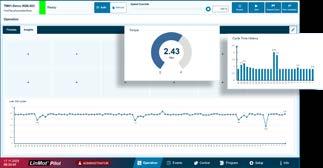
A customisable interface will be available soon. This will allow you to visualise process data, cycle time and any other information of the system. The interface can be easily tailored to your application needs with userdefined controls using clean and modern design elements.
Additional function packages for specific processes as well as smartcamera integration will also be available soon. Packages will include

conveyor tracking, camera interface, capping and screwing, palletising and much more.
LinMot Pilot runs on the LinMot: TM01 technology module which controls up to 8 axes with a 1.5 Ghz 4-core processor with a 2ms. Cycle time. This controls with the Servo Drives and any additional I/O via EtherCAT.
In turn, the TM01 can be integrated with many PLCs via either the Profinet or Ethernet/IP interface and supports Industry 4.0 thanks to OPC UA.
In conclusion, LinMot Pilot offers a much faster and easier way to automate your application.
For further details, please contact Quin Systems, your local LinMot specialist.









FANUC launches 11kg ‘lightest’ collaborative welding robot
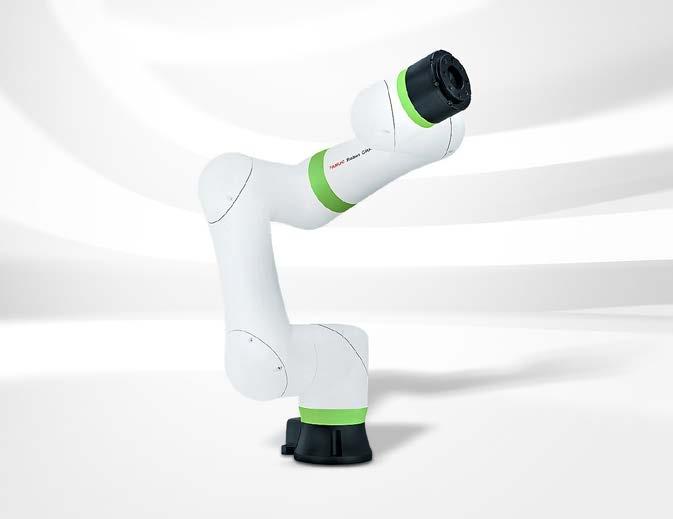
FANUC has announced the European launch of its CRX-3iA collaborative robot, the lightest and smallest model in the CRX portfolio to date. With a total weight of just 11kg, FANUC’s latest offering is compact, portable, intuitive and precise, making it ideal for welding applications. Addressing growing demand in sectors such as shipbuilding and steel construction, it can be carried easily with just one hand, allowing a single person to supervise multiple welding locations and mitigating the Europe-wide shortage of skilled welders.
Boasting a 3kg payload, the CRX3iA can manipulate a welding torch and a seam-tracking sensor simultaneously, while its ±0.02 mm repeatability delivers the precision necessary for critical welding tasks. It automatically detects its installation angle after relocation and identifies weld seam locations and calculates paths accordingly, thanks to a third-party laser scanner or touch sensor. Meanwhile, an optional magnetic base enables it to be secured directly to large steel structures. This reduces system complexity compared with traditional robot installations, which typically need heavier equipment and additional safeguarding measures.
As part of the wider CRX series – which extends to 30kg payload and 1,756mm reach – the CRX3iA integrates fully with FANUC’s established control and software ecosystem. It also incorporates FANUC’s wrist button technology, which allows operators to guide and teach positions directly
Manufacturers need automation that adapts to their environment, not the other way around.
from the robot arm, streamlining programming and shortening changeover times.
Beyond welding, the CRX-3iA is ideally suited to applications such as intralogistics and mobile automation. Its compact footprint and low mass also make it ideal for mounting on an automated guided vehicle (AGV), where it can support picking, placing and line supply tasks. In addition, it
lends itself well to education and training environments, where space constraints often render the use of traditional industrial robots impractical.
“Manufacturers need automation that adapts to their environment, not the other way around,” says Paul Ribus, FANUC’s Head of Sales Coordination Europe. “With the CRX-3iA, we focused on portability, fast deployment and high repeatability. It allows customers to take advantage of collaborative welding and handling wherever the work is, without complex installation.”
Visitors to FANUC’s Open House will be able to see the new CRX-3iA collaborative robot first hand when it makes its debut appearance in the UK on 3rd/4th November.
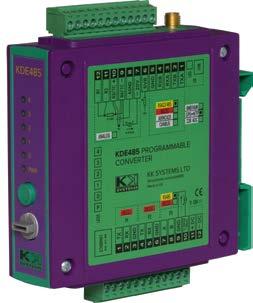
An oven-ready solution for your new IoT, protocol conversion, data acquisition or telemetry project
Free and license-free C development kit (STM Cube IDE)
Ethernet TCP/IP with TLS HTTPS security & USB
Four Serial Ports 232/4xx
Analog I/O 16/22 bit & 4-20mA
PT100/1k & TC input
Lots of example code
GPS Time Server for high security LANs
Expandable I/O
ARINC429
Remote FW updates Made in UK From £129

KK Systems Ltd 01273 857185
kksystems.com/kde485
Distances from meters to tens of km, cyber secure non-IP protocol, no SIM cards. Point-to-point, simplex or half duplex, with gateways to interface to BMS and SCADA. 100% autonomous in operation over a billion messages already delivered annually. Backed up with a team with over 40-years sector experience.
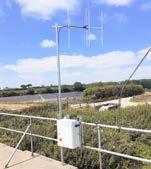

4-20mA, Logic Levels, Volt-free Contacts, SDI-12



Battery, Solar or 24V ac or dc to 230V ac Supply Options SRD, Ofcom Licenced Radio or Iridium Satellite Options
Custom Enclosures & Branding Options
Complete Systems from Sensor, Antenna to BMS Interface


Radio Data Networks Limited, The Innovation Farm CM22 7QU Tel:+44 (0)1279 600 440: sales@radio-data-networks.com www.radio-data-networks.com


By Fabian Reiß
SEW-EURODRIVE, a specialist in drive technology, received the prestigious “Factory of the Year” award in the “Outstanding Series Production” category.
This honour was presented during the 34th “Factory of the Year” Congress held in Dortmund on March 18 and 19, 2026. At the award ceremony, SEW-EURODRIVE showcased the Smart Factory North Hall (Halle Nord) located in Graben-Neudorf, near Karlsruhe, illustrating how modern series production is designed today.
The globally active company provides products that are utilised across various industries, including intralogistics, mechanical and plant engineering, as well as complex conveyor systems, such as baggage handling systems in airports. The award-winning North Hall facility in Graben-Neudorf is recognised as one of Germany’s most advanced production centres. Technology from KASTO Maschinenbau based in Achern, Baden plays a significant role in this acclaimed plant by supplying essential components for production and material flow logistics. Key factors contributing to the award include the innovative plant design, modern Industry 4.0 methodologies, and the implementation of the “nevertouch-a-part” principle, which minimises manual contact with components throughout the entire production process.
SEW-EURODRIVE utilises several highly automated systems from

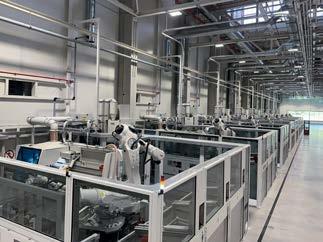
Eight fully-automated production circular saws cut workpieces up to 180 millimetres in diameter. Robots sort and stack the cut-pieces.
Furthermore, there are seven output stations dedicated to material separation.
We are delighted that SEW-EURODRIVE received this award—our systems play an important role in this modern plant.
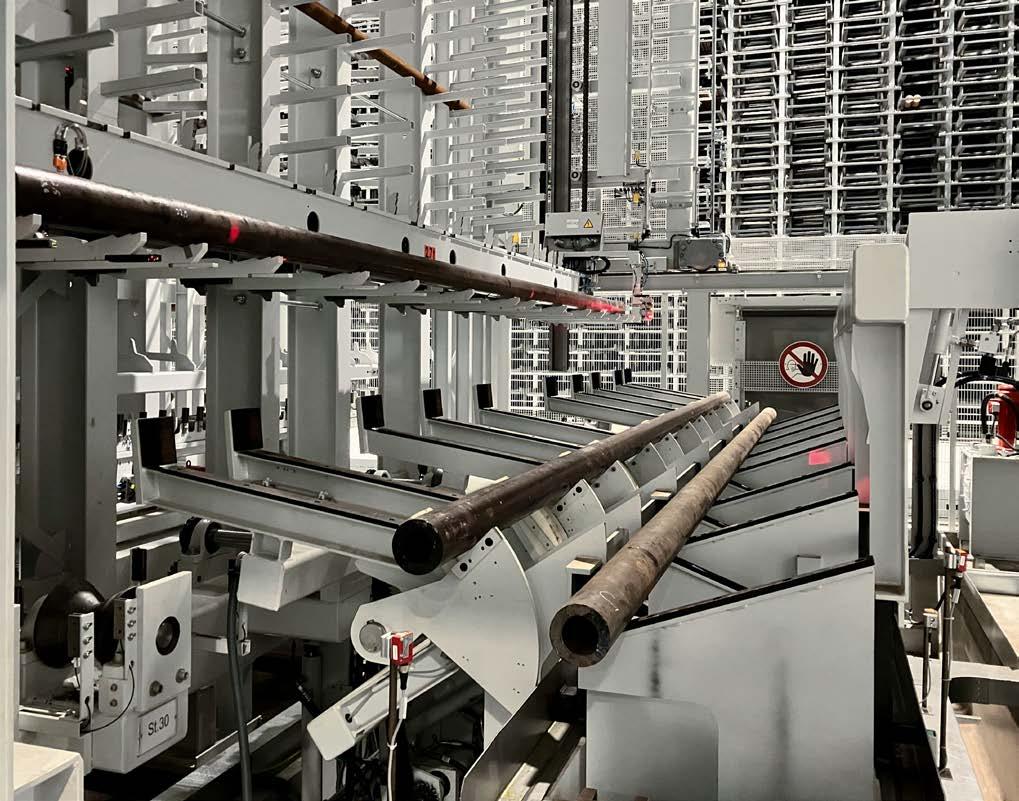
KASTO to supply its production lines: Central to this unique global system is a honeycomb storage system that accommodates 5,140 locations for cassettes, each with a load capacity of up to three tonnes. Additionally, there is a sawing centre with 450 locations for individual bars.
These systems supply eight fullyautomated circular saws equipped with robotic handling systems, along with a high-performance automatic bandsaw designed for large material cross-sections.
Thanks to the KASTO Warehouse Management System (WMS), all systems are fully digitally interconnected. This enables the completely automated system to be operated by as few as four people. KASTO technology ensures that production lines are consistently supplied with materials, as material movements are conducted automatically and according to demand.
The implementation of this significant lighthouse project at KASTO involved nearly all technical divisions, including robotics, sawing technology, storage logistics, and software development. This initiative is among the most extensive in the history of this family-owned business.
“We are extremely proud that SEW-EURODRIVE has received the ‘Factory of the Year’ award. Our systems played a crucial role in one of the most innovative factories in
Europe. This lighthouse project will always stand out as a significant milestone in the history of KASTO,” says Armin Stolzer, Managing Director of KASTO Maschinenbau GmbH & Co. KG.
KASTO has a rich engineering tradition that spans over 180 years. Originally a pioneer in sawing technology, the company has developed into a global leader in sawing, storage, and material handling systems. KASTO is at home wherever metal is cut, stored, and moved, playing a crucial role in the value chain for a wide range of metal products ranging from chair legs to highrise building cladding, and e-bikes to aircraft. With a broad-minded
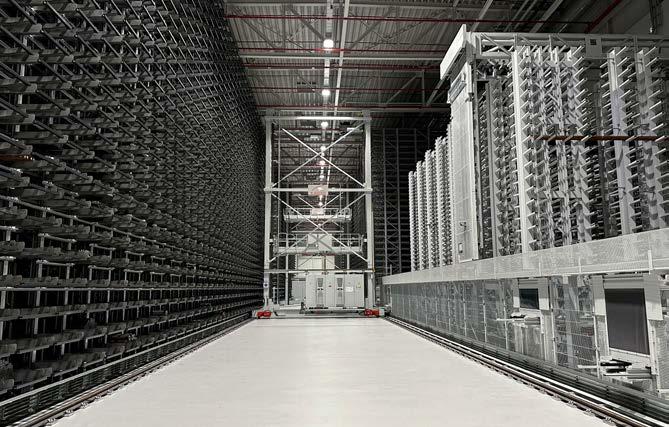
The new storage system is the combination of a KASTO honeycomb storage system that accommodates 5,140 cassettes and a KASTO sawing centre with 450 locations.
approach, the company excels in managing complex large-scale projects, showcasing its exceptional strengths.
As EV charging infrastructure grows, reliability has become just as important as charging speed. High-power stages naturally attract attention during development, yet many field failures begin elsewhere. In practice, the low-voltage architecture inside the charger often determines whether the system performs consistently over years of operation.
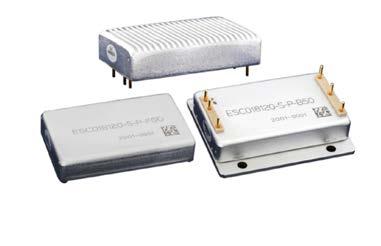
At Ideal Power, we work with engineers and product teams to help simplify the process of specifying, sourcing and supplying reliable power solutions. We regularly see projects where the highpower section has been carefully engineered, but the auxiliary power stage receives less attention. That approach can create problems later in the development cycle and in the field.
The Hidden Role of the Internal Power Supply
Every EV charger contains an internal power supply responsible for supporting communication, protection and control functions. Low-voltage rails, typically 5V, 12V or 24V, power microcontrollers, HMIs, relays, cooling systems and communication modules.
These circuits do not deliver charging current, but they are responsible for maintaining stable operation. If voltage regulation drifts or electrical noise reaches sensitive electronics, communication failures, nuisance trips and unexpected resets can follow.
For this reason, the DC/DC stage is
At Ideal Power, we work with engineers and product teams to help simplify the process of specifying, sourcing and supplying reliable power solutions.
much more than a simple voltage converter. It acts as the stability anchor for the entire charger.
EV chargers operate in demanding environments. Long duty cycles, elevated temperatures and switching noise place continual stress on internal electronics.
Without adequate derating and filtering, component ageing accelerates and ripple levels increase. Poor isolation can allow noise from the AC/DC stage to reach control circuitry. The results are often familiar:
• Failed EMC testing.
• Unstable CAN or Ethernet communication.
• Unexpected resets.
• Nuisance protection trips.
• Increased service calls and redesign costs.
These issues frequently originate in the low-voltage architecture rather than the high-power stage.
Mechanical layout and charging power often dominate early discussions. The internal power architecture is sometimes addressed later, creating unnecessary risk.
At Ideal Power, we recommend considering the DC/DC stage during concept development. Input range, isolation requirements, output tolerances, thermal conditions and EMC performance should all form part of the initial design process. Early selection helps reduce PCB rework, simplifies filtering and preserves thermal margins before compliance testing begins.
Wide bandgap technologies such as GaN and SiC continue to improve efficiency in high-power stages, but dependable EV charging still relies on stable low-voltage rails.
High-power conversion delivers the energy. Reliable charging starts with a properly specified internal power architecture. If you are developing EV charging equipment, our technical team can help you specify and source the right AC/DC and DC/DC solutions from the start.

Work with Ideal Power from the start of your project to get the right PSU first time.
Our expert-led support, bespoke products, and flexible call-off service help you avoid delays, reduce risk, and stay in control. Visit our Website

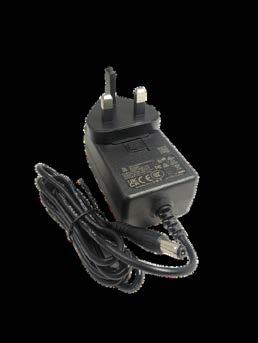
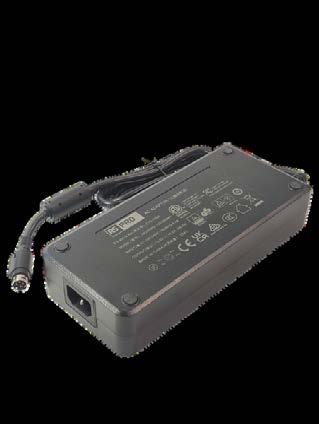


Electronics has turned defence assembly into a one-way process. Once sealed, there is no practical route back. Manufacturers can’t keep up with demand, so they push throughput higher. At the same time, the rising density of electronic systems shifts risk into assembly, where defects are harder and more costly to rectify. Here, Howard Green, Senior Account Manager at industrial tools manufacturer Desoutter, explains why execution control is becoming critical to defence electronics manufacturing.
Defence systems are increasingly defined by embedded electronics across guidance, radar, communications, navigation and electronic warfare. As electronics account for a growing share of system value, production risk is shifting into assembly. According to the Global Electronics Association, electronics “account for 17 per cent of defence equipment value, up from ten per cent in 2000, and are projected to reach 25 per cent by 2035 - 2040”. As this share increases, the nature of production risk moves with it.
Deviations are now far more likely to become faults buried within dense electronic assemblies. Incomplete connector engagement, fastening variation or contamination within PCB stacks can remain undetected until failure in service. As assemblies become more compact, the opportunity to correct these defects narrows. In missile, drone and radar systems, stacked PCB architectures can make rework impractical once

be corrected. In systems stored for years before use or activation, failure therefore results in scrapping rather than repair.
High-density PCB stacks and compact modules are often inaccessible even before encapsulation, limiting verification and sometimes requiring destructive testing later in production. As a result, quality can no longer be solely reliant on final inspection and must be embedded directly into the assembly process.
Defence systems are increasingly defined by embedded electronics across guidance, radar, communications, navigation and electronic warfare.
integration progresses, shifting the emphasis from correction to prevention.
This constraint is amplified by the operating environment. Defence electronics may need to operate from -50°C to +130°C while withstanding vibration, shock, moisture and long shelf life. To achieve this, assemblies are often sealed or encapsulated (potted) in later production stages. Once this is complete however, internal access is lost and defects can no longer
Defence electronics manufacturing is also affected by supply chain volatility. Many defence platforms now depend on commercial offthe-shelf electronic components, creating continuous redesign pressure as parts become obsolete or unavailable during production lifecycles. The result is constant variation within production environments that still demand precision. Unless controlled directly within assembly, regular component substitutions and availability changes increase inconsistency on the production line.
At the same time, waste sensitivity is increasing. Defence rated components are high value, longlead items, and replacements are not always straightforward. Under these conditions, a single assembly defect may mean losing components that are difficult or slow to replace. As a result, manufacturing performance is increasingly measured through first pass yield rather than downstream correction capability.
To operate within these constraints, manufacturers are shifting away from relying on post process inspection and towards controlling variation at the point of execution. This is driving the adoption of smart assembly tooling which embeds quality directly into production.
Fastening remains one of the most common sources of deviation in electronics-intensive builds where small torque differences can affect PCB alignment, connector reliability and long-term stability. Controlled tightening systems reduce this variation at source, even in dense or low-access environments.
From here, the focus shifts into the structure of the assembly process itself. Digital assembly guidance enforces correct sequencing and supports “no-faults-forward” manufacturing by preventing operators from progressing with incorrect configurations when an anomaly is identified. Without this layer, variation introduced through component or build differences can quickly translate into defects.
Visibility across the build then becomes critical. Traceability
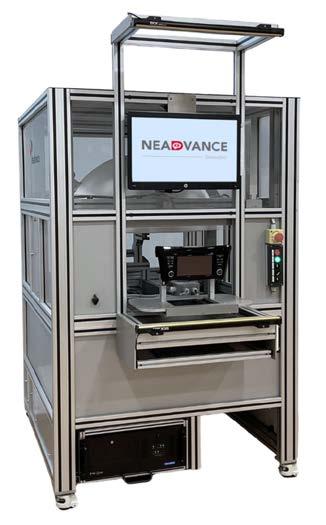
systems create a continuous record of how each unit is assembled, allowing manufacturers to identify and contain defects before they propagate downstream. This shifts traceability from passive documentation into an active quality control mechanism.
Validation is also moving earlier in the process. Vision systems and in-process verification tools are increasingly used to confirm
placement and condition before assemblies are sealed, where intervention would no longer be possible. By embedding verification within assembly, manufacturers reduce dependence on final inspection in products where rework may not be viable.
These controls reflect a broader shift in how production is managed. As recovery becomes less feasible, performance is increasingly defined by process consistency during assembly rather than correction after the fact. Production is now constrained as much by the stability and consistency of processes as it is by factory capacity.
In defence electronics manufacturing, quality can no longer be inspected into the product after the fact. It must be controlled at the point of execution. As systems become more complex, difficult and costly to rework, assembly itself becomes the decisive stage where production success or failure is determined.
To learn more about how Desoutter supports scaling defence electronics manufacturing, sign up to the newsletter.

Today, after successfully operating for over 30 years, Laser S.O.S. Group’s core business sectors are in the support of a comprehensive range of solid-state lasers and IPL platforms used in various industrial applications such as drilling, cutting, welding, marking, diamond cutting, the manufacture of jewellery, medical and beauty application. These days, lasers have become as common as drills and lathes and their application has grown exponentially.
LaserSOS has grown from an operation that supplies consumable items such as laser lamps, laser crystals, laser optics and mirrors, cooling systems and power supplies to an organisation that not only supplies but also produces and maintains complete laser delivery systems throughout the world. It continues to develop tailor made solutions for specialist application such as diamond cutting and marking.
LaserSOS is an independent operation that through its success in the international laser market has been able to develop close and effective working relationships with a broad range of providers of technologies, products and services used by laser systems. These close relationships and the volume of business the company can place has helped obtain better and quicker levels of service and support for its clients worldwide.
The breadth of stock held by the organisation is second to none and where competitors may
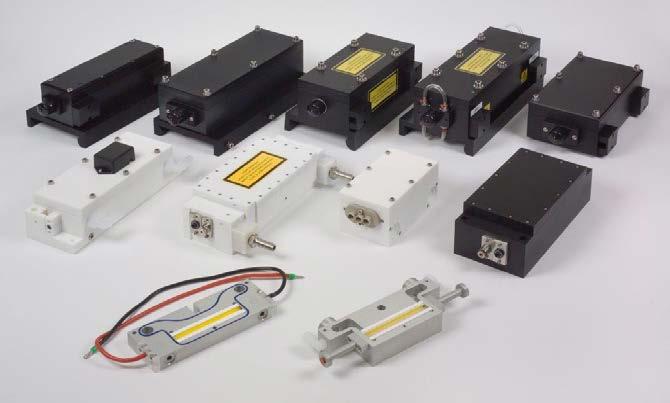
and sales of a broad range of components and services plus its own in-house facilities.
These days, lasers have become as common as drills
and lathes and their application has grown exponentially.
offer a client a single laser lamp, LaserSOS can provide several types with a variety of technical and commercial options. On frequent occasion, speed of delivery can be the paramount consideration and LaserSOS has developed a knowledge and experience of the necessary logistics to deliver an item anywhere across the globe.
LaserSOS provides its clients with extensive and in-depth technical understanding of key laser technologies, gained by the development of procurement
Frequently, a client will provide photos or samples of products it requires but will only have the laser system name and no part number. Finding solutions quickly can help facilitate business growth along with the maintenance of comprehensive stock levels.
Today, the business is not simply a merchanting operation. Over time, it has created and enhanced its inhouse assembly and test facilities. Its current facilities located several miles outside of Cambridge offers a one stop shop providing components and technical services direct to all laser end-users.
LaserSOS has active operations in the USA, Germany, Poland and India providing technical and commercial support across the globe.

Like the evolution from bulky cassette-based Walkman to today’s pocket-sized smartphones that can store and play tens of thousands of songs — modern engineering also demands greater capability within dramatically reduced physical footprints. Whether it’s surgical robots that must fit advanced sensors into tight spaces, or aircraft systems where lighter parts translate directly into fuel savings, miniaturisation brings both opportunities and challenges in design. Here, Chris Handcock, design lead at drive system supplier Electro Mechanical Systems, explores how miniaturisation is changing product design.
Over the past 20 years, we’ve seen huge cube-like TVs shrink to a centimetre thick, while terabytes of data can now sit on a chip no bigger than a fingernail. This change is apparent across industry too. Smaller, lighter, more efficient systems offer clear advantages, but miniaturising drive systems isn’t simply a matter of scaling down existing motor designs. It must carefully balance torque, power density, motor type and thermal management.
Medical devices such as minimally invasive surgical tools, diagnostic sensors and compact implantable systems require tiny, highperformance components. Take for example, robotic-assisted laparoscopic surgery. Here, miniature drive systems are used to actuate wristed end-effectors within instrument shafts often less than 10mm in diameter. These systems must deliver high torque at low speeds to enable precise
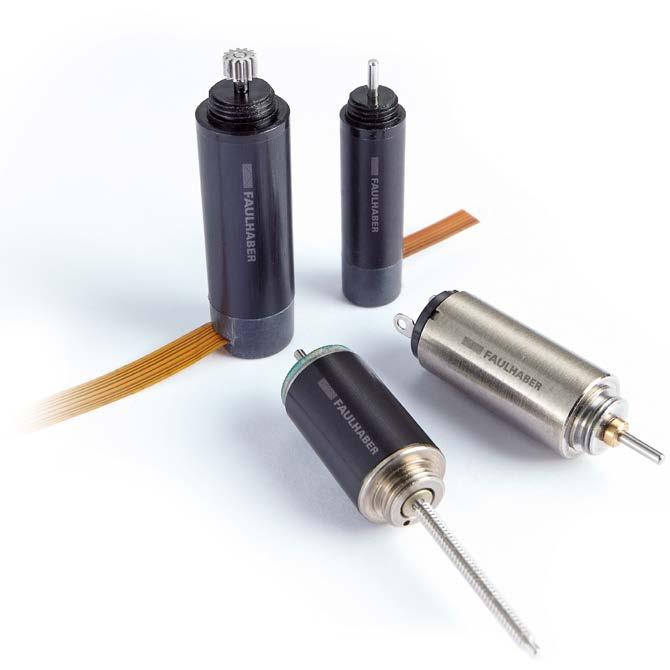
articulation, while maintaining minimal backlash and low inertia for accurate, repeatable motion. Thermal performance is tightly constrained because heat generated within the motor or gearbox must remain below thresholds that could affect surrounding tissue. As a result, the motor’s architecture, gear reduction, materials selection and thermal modelling become critical at the first point of design.
In aerospace and automotive applications, every gram of weight removed can contribute to greater fuel efficiency, reduced payload, and better design flexibility. Whereas, in industrial automation, robotics and consumer electronics
increasingly rely on compact motors and electronics to deliver power and precision in confined spaces.
While each sector seeks different benefits of miniaturisation, they all share the same set of pressures — limited space, demand for mobility or portability and a need for functionality without bulk. As a result, shrinking component size has become a strategic choice and designers are rethinking the architecture, materials and even manufacturing techniques to meet these demands.
But reducing size can bring trade-offs. Small motors do not

automatically deliver output as larger ones. To meet the same standards, engineers must carefully consider factors like torque output, power density, loadhandling capability and energy efficiency. Smaller motors tend to have lower torque, meaning that designers may need to compensate with gearing, high-performance materials or alternative motor types.
Here, selecting the correct micro motor technology becomes critical. For example, coreless DC motors may suit applications where dynamic response and low inertia matter, such as medical or robotic systems. On the other hand, brushless DC motors, like those from FAULHABER, may provide a better balance of efficiency, lifespan and power-to-weight ratio for aerospace applications.
Although they offer precise control, stepper motors can be less efficient and more challenging to integrate at very small scales. In each case, motor type, winding
geometry, magnet strength, gearheads, feedback systems and controls must be tuned to ensure performance without exceeding the constraints imposed by size.
Another engineering challenge that presents with miniaturisation is thermal management. As motors get smaller, they lose surface area relative to the amount of heat they generate. High power density in a compact space can lead to heat accumulation, which can degrade performance, reduce efficiency and damage components.
To mitigate this, designers must address heat as an integral part of the design process rather than as an afterthought. Solutions could include optimising magnetic materials, improving insulation, designing housings or airflow paths to aid heat dissipation, or embedding thermal sensors. In some cases, compact systems might incorporate heat-spreading housings, micro-cooling channels
real success demands more than shrinking hardware — it requires careful consideration of motor selection, uncompromised manufacturing precision and the support of custom design solutions.
and other advanced thermal management features.
Addressing these considerations at the start of a concept is essential, as thermal limitations can dictate the performance envelope of a miniature motor. This is where precision manufacturing becomes crucial. Off-the-shelf motors and gear systems are often unable to meet the tight spatial, mechanical and performance constraints associated with tiny applications.
For bespoke solutions, consider selecting a partner such as EMS, which provides a comprehensive custom design and manufacturing service, from its UK based facility.
Miniaturisation is reshaping engineering, but consequently driving new expectations for performance, efficiency and design across every sector. Small, lightweight components now unlock capabilities that once seemed impossible. But real success demands more than shrinking hardware — it requires careful consideration of motor selection, uncompromised manufacturing precision and the support of custom design solutions.
To learn more about the custom design service provided by EMS, visit the website or get in touch with a member of the team.
For further information, please visit www.ems-limited.co.uk
HUBER+SUHNER high performance VITA 67.3 RF interconnect portfolio available from Lane Electronics LANE ELECTRONICS
Specialist connector distributor Lane Electronics, is pleased to announce the availability of the HUBER+SUHNER an all-new VITA 67.3 interconnect portfolio designed for use with their proprietary solderless MINIBEND® radio frequency (RF) cable termination technology. This new connectivity portfolio is a gamechanger for the ever-evolving miniaturisation needs of the global aerospace and defence markets.
The VITA 67.3 standard enables reliable, high-frequency signal transmission in aerospace and defence applications by standardising blind-mate RF interfaces at the backplane. This helps reduce cable management challenges and enhances system modularity and scalability.
HUBER+SUHNER is a member of The Open Group‘s SOSA Consortium, which empowers government and industry to collaboratively develop open standards and best practices, and the VITA (Vendors in Technology and Aerospace) Standards Organisation and has been delivering high performance and high reliability connectivity solutions for several decades. Their MINIBEND® is the driving force behind the aerospace and defence industry’s most versatile, low profile flexible cable assembly solutions.
With the launch of the HUBER+SUHNER’s VITA 67.3 interconnect portfolio, Lane Electronics can provide design engineers with high performance coaxial cable options featuring the industry’s smallest bend radius

This new connectivity portfolio is a gamechanger for the ever-evolving miniaturisation needs of the global aerospace and defence markets.
immediately behind the RF contact, enabling extremely tight routing without sacrificing durability or performance.
Key features and benefits of VITA 67.3:
• Complete VITA 67.3 RF connectivity portfolio featuring SMPM, SMPS, and NanoRF interfaces delivered as dropin assemblies from a single source, including hybrid RF/fibre optic configurations.
• The largest portfolio of cable and connector options for PCB and chassis connectivity, including high frequency D38999 contact options up to 65 GHz, ensures applicationtailored interconnect solutions are selected at design-in
• Competitive low loss .047- and .086size cable options available.
• All assemblies manufactured in accordance with IPC/WHMA-A-620 Class 3
• Dedicated express production line provides made-to-order VITA 67.3 assemblies on short lead-times.
Phil McDavitt, Strategic Business Manager at Lane Electronics says, “The new HUBER+SUHNER VITA 67.3 RF interconnect product range is aimed at Mission System OEMs and Integrators, and Embedded Computing OEMS (PIC). It offers system designers market leading revolutionary solderless termination technology enabling extremely tight and robust cable routing while improving system performance with premium cable options.
Lane Electronics connectivity solutions include RF and Fibre-Optic connector and cable assemblies, widely used in defence and security applications. Lane is a franchised distributor for many of the industry’s leading electrical and electronic connector manufacturers including EATON Souriau, CINCH Fibreco, HellermannTyton, Axon’, Positronic, Nicomatic and LEMO.
Backed by a strong commitment to quality, reliability and traceability procedures Lane Electronics also hold a significant number of key approvals. Next day delivery is available on more than 90% of standard products while, for non-standard products, rapid in-house development, assembly and testing of specialist military, industrial and motorsport circular connectors is available lead times which are generally much quicker than those offered by other connector suppliers.
For more information call +44 (0) 1403 790 661, email sales@fclane.com or visit https://www.fclane.com/
Most customers will tell you just how efficient Sepura oil-water condensate units are. But did you know that our patented filtration media found inside every genuine Sepura unit is made from recycled glass bottles?

This not only makes the outputs from our units environmentally friendly but also our manufacturing process too.
Going green and achieving your targets doesn’t have to be a compromise.


Interview by Jake Page, Head of Sales ,PECM
Jake: Today we’re here with Dean Gooch, the sales manager in England for the CPA Engineered Solutions Limited, which is of course part of the CPA group. Dean, thank you for joining us this morning. How are you?
Dean: I am very well, thank you. How are you?
Jake: I’m very well. The weather’s been nice. The football result was brilliant the other night. I don’t know if you managed to catch the game or if you was busy working?
Dean: Yeah, I was, of course, probably like many others, , I was working away, but I managed to catch the game at one of the local pubs where I was staying. So it was good to see the atmosphere and see a positive result. Good performance, I guess.
Jake: Absolutely brilliant. I’ll be honest, when Harry Kane Missed, the first penalty, I was a little bit worried. I think the whole nation was, but we soon put that right. And what a great start. And to beat such a big team so early on, it was fantastic,
Dean: It wouldn’t be normal without a bit of drama to start the game off with. So, you know, we’re all kind of used to those circumstances when watching the team play.
Jake: How’s business? Is everyone keeping well your end?
Dean: Yeah, it’s a busy period, as you’d expect. You know, much of what we do at CPA can be quite seasonal at times. You know, it’s the

Evaporative cooling uses the natural process of water evaporation, making it far more energy-efficient than conventional air conditioning.
time of year where you get the heat waves and people are being reactive in some cases. You know, situations where people are asking, what can you do for me and how quickly could you do it? So you’re always on hand to try and sort of meet the demand, so to speak. But no, things in general are quite good, quite steady, and, you know, we’re always looking for new opportunities.
Jake: How does evaporative cooling help businesses reduce their energy consumption and carbon footprint while still delivering effective workplace cooling?
Dean: No single cooling technology suits every application. The right solution depends on the

environmental requirements of the space. While some facilities require precise temperature and humidity control, direct evaporative cooling provides an effective comfort cooling and ventilation solution for many industrial and commercial environments.
Available in direct, indirect, and hybrid formats, evaporative cooling delivers effective cooling with significantly lower energy consumption than conventional air conditioning. By reducing energy use and introducing fresh air, it can help businesses improve workplace conditions while supporting sustainability goals.
Jake: With energy prices continuing to rise, what level of savings can businesses typically achieve by choosing evaporative cooling over conventional air conditioning systems?
Dean: Evaporative cooling uses significantly less energy because it relies on the natural cooling effect created when water evaporates into an airflow. In contrast, conventional air conditioning systems use compressors, condensers, and refrigeration circuits, all of which consume large amounts of electricity.
As evaporative cooling only requires a fan and a small water recirculation pump, its energy demand is much lower. While a refrigeration system may require 20–50kW of electrical input to cool a large industrial space, an evaporative cooling system can deliver similar airflow using just a few kilowatts.
However, the two technologies serve different purposes.
Refrigeration-based systems are best suited to applications requiring precise temperature and humidity control, whereas evaporative cooling is primarily a cost-effective comfort cooling and ventilation solution.
Jake: Which industries and applications benefit most from evaporative cooling technology, and why is the technology particularly effective in these environments?
Dean: The suitability of evaporative cooling depends more on the environment than the industry itself. It is widely used in warehouses, manufacturing facilities, logistics centres, agricultural buildings, sports facilities, and other large spaces with high heat loads and occupancy levels.
As UK temperatures continue to rise, many businesses are turning to evaporative cooling as an energy-efficient solution. However, applications requiring precise temperature and humidity control, such as clean rooms, pharmaceutical facilities, and some electronics manufacturing environments, are often better suited to alternative technologies.
Jake: How does effective temperature control through evaporative cooling improve employee comfort, wellbeing and productivity in industrial and also, I guess, commercial workplace?
Dean: Thermal comfort is influenced by more than temperature alone. Factors such as air movement, humidity, radiant heat, and indoor air quality all play a significant role in how people experience their working environment.
In many industrial settings, such as laundries, production facilities, or areas close to ovens and machinery, temperatures can become extremely high, creating uncomfortable and potentially challenging working conditions. Direct evaporative cooling helps by introducing large volumes of fresh air, increasing airflow, and reducing heat build-up.
This not only improves thermal comfort but also enhances indoor air quality by removing stale air and
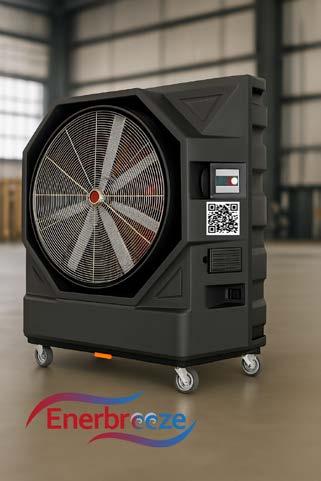
diluting airborne contaminants. Good ventilation is increasingly recognised as an important contributor to employee wellbeing, workplace satisfaction, and retention. By reducing heat stress and fatigue, evaporative cooling can help improve concentration, productivity, and overall workplace performance.
Jake: What are the key advantages of evaporative cooling compared with traditional refrigerated air conditioning systems, would you say?
Dean: Direct evaporative cooling and refrigeration-based air conditioning serve different purposes. Refrigeration systems provide precise temperature control, while evaporative cooling is primarily a comfort cooling and ventilation solution.
Evaporative cooling uses the natural process of water evaporation, making it far more energy-efficient than conventional air conditioning. It also continuously introduces fresh outside air, helping to improve indoor air quality and manage heat build-up.
Unlike refrigeration systems, evaporative cooling does not use refrigerant gases, eliminating the need for F-Gas compliance, leak detection, and associated maintenance requirements.
Jake: in terms of a healthy,
healthier working environment and just air quality in general, how does evaporative cooling support healthier working environments and improve the indoor air quality itself?
Dean: Discussions around the building performance focuses on energy efficiency and temperature control, but good ventilation is really important in creating a healthier, productive indoor environment. I think, you know, it became much more widely understood during the pandemic. Attention was drawn into the role of ventilation, reducing concentration of airborne contaminants within, you know, occupied or heavily occupied spaces.
And, but, you know, ventilation should not always be considered during periods of public health concern. It remains fundamental, you know, to managing indoor air quality, controlling the heat buildup, creating a comfortable environment for people to work in, to learn, you know, and spend time in it, you know, that’s what we’re you know, we should all be concerned and pay attention to what’s required to remain healthy in these type of environments.
Jake: As businesses place greater focus on sustainability, energy efficiency, and workplace conditions, what role will evaporative cooling play in the future of industrial climate control?
Dean: The future of climate control is unlikely to be defined by a single technology. Instead, businesses are increasingly seeking solutions that balance employee wellbeing, energy efficiency, indoor air quality, and sustainability.
Direct evaporative cooling will continue to play an important role in large industrial and commercial environments, providing effective comfort cooling, fresh air, and heat management with low operating costs. Meanwhile, advances in indirect evaporative cooling are expanding its use in humiditysensitive applications, including data centres and other mission-critical facilities, where energy efficiency and reliable operating conditions are essential.
Ultimately, the most successful projects begin with understanding the building’s requirements before selecting the most appropriate technology.
Jake: What makes evaporative cooling particularly effective in challenging environments where traditional cooling solutions may be difficult, impractical, or energy intensive?
Dean: It comes down to matching the technology to the application. If the objective is thermal comfort, you know, heat managing management within large volume spaces, you know, evap cooling can provide a really good energy efficient alternative. You know, there are different configurations of evaporative coolers, you know,
You know, not every space is the same, so you know it might be an approach to an application where it might not just use one style of configuration. I think you know, as with any cooling technology, the key is understanding what the requirements of the building and just making sure that you’re designing and using the right product for the right space.
Jake: Every building and application has different cooling challenges. How can CPA Engineered Solutions help businesses understand their requirements and identify the most effective cooling strategy for their environment?
Dean: One of the biggest misconceptions about industrial climate control is that one solution fits every building. In reality, every facility has different requirements based on factors such as building design, occupancy, heat loads, and operational demands.
At CPA, we start by understanding the problem before recommending a solution. Many overheating issues are not simply cooling problems but airflow and ventilation challenges. That’s why we assess the environment and select the
most appropriate approach, whether that’s evaporative cooling, ventilation systems, air movement solutions, or a combination of technologies.
With over 38 years of experience, CPA helps clients make informed decisions based on engineering principles, delivering solutions tailored to their specific requirements.
Jake: How does CPA Engineered Solutions support customers throughout the entire process, from initial consultation and system specification through to installation, commissioning, and ongoing support?
Dean: Successful cooling and ventilation projects depend on more than just equipment. They require a clear understanding of the building, its operational needs, and the project objectives.
At CPA, we support customers from initial site surveys through to design, installation, commissioning, and ongoing maintenance. By assessing building characteristics and heat loads, we develop solutions based on engineering principles rather than assumptions.
Our goal is to ensure customers have confidence that they have selected the right solution for their building, both now and in the future.
Jake: It’s encouraging to see growing awareness of workplace comfort, air quality, and energy efficiency. Today’s discussion has highlighted the role evaporative cooling can play in supporting sustainability, reducing energy costs, and
improving employee wellbeing and productivity.
With that in mind, Dean, is there anything else you’d like to share with the readers of PECM Magazine?
Dean: Thank you, Jake, for the invitation. During my 16 years with CPA, I’ve seen the business grow significantly. While we’re a service-focused company, we also provide a wide range of solutions through specialist divisions, including compressed air services, refrigeration, and project delivery. This allows us to support customers across multiple areas of their operations, not just with a single solution.
Jake: Dean, it’s been a pleasure speaking with you today. Thank you for taking the time to share your insights on evaporative cooling and the wider industry.
Before we finish, is there anything exciting on the horizon at CPA that you can tell us about, such as new products, technologies, or developments our readers may be interested in?
Dean Gooch: We’re always looking for new opportunities and identifying common challenges within industry. By understanding the problem first, we can determine the most effective solution.
At CPA, we focus on what we do best and continually look for ways to improve our expertise and services. Thank you for the invitation and the opportunity to speak with you today. I look forward to seeing the publication.

In an era where environmental regulations are tightening and industrial efficiency is non-negotiable, CODEL has launched a trio of triboelectric dust monitors tailored to meet diverse compliance and operational needs with precision and reliability.
A range engineered for precision and performance
Available now, CODEL’s Triboelectric Dust Monitor Range comprises three model families:
• DCEM 6000
A premier, QAL1-certified analyser designed for continuous emissions monitoring. It meets the stringent EN 14181 and EN 15267-3 standards, delivering exceptional accuracy and sensitivity for processes where regulatory compliance is critical.
• EnergyTech 600 Series (including ET 600 and ET 610)
A versatile mid-range option certified to EN 15859, offering realtime particulate measurement for balanced compliance and operational insight. ET 600 excels as a dust monitor, while ET 610 is optimized for early-stage filter leak detection, ideal for process control across power generation, cement, chemical, and manufacturing sectors.
• EnergyTech 300 Series
A cost-effective solution built for burst bag detection in dust extraction systems, offering fast, reliable alerts in applications such as woodworking, mineral processing, and bulk material handling.
Access to real-time data through CODEL Cloud, issues can be addressed before escalation, reducing maintenance costs and retaining uptime.
The advantage of triboelectric technology
What sets this range apart is the proven triboelectric sensing method, known for its robustness, minimal maintenance, and accurate, realtime readings. Unlike optical devices susceptible to alignment issues, humidity, or soot, triboelectric monitors deliver dependable performance even in harsh industrial environments.
Smart, connected monitoring with CODEL Cloud
Each monitor in the Triboelectric Range integrates seamlessly with CODEL Cloud, a centralized digital hub for real-time data, reporting, and analytics. This connectivity enables proactive maintenance, enhanced compliance tracking, and improved filtration efficiency, all accessible remotely and securely.
A launch met with excitement and momentum
CODEL officially unveiled the Triboelectric Range earlier this year and received an overwhelmingly positive response from both customers and distributors. Industry feedback praised the range’s versatility, accuracy, and costeffectiveness, especially in reducing operational downtime.
Why it matters to industry
• Compliance without compromise:
Whether the project demands high-level regulatory monitoring or practical filter control, there’s a model tailored to deliver precision under the relevant standards.
• Operational Efficiency:
Access to real-time data through CODEL Cloud, issues can be addressed before escalation, reducing maintenance costs and retaining uptime.
• Future-proofing:
Built with scalability and adaptability in mind, the Triboelectric Range supports evolving environmental standards and industry expectations.
Final thoughts
CODEL’s Triboelectric Dust Monitor
Range marks a significant leap forward in the field of emissions and filtration monitoring. By pairing highperformance triboelectric sensing with innovative cloud integration, CODEL offers industrial operators agile solutions that are both futureready and firmly aligned with regulatory demands.
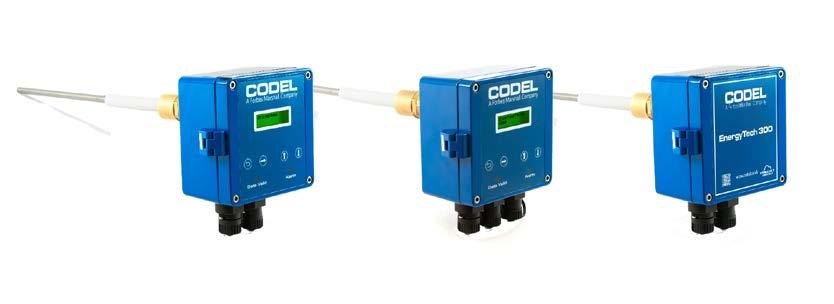




CODEL’s comprehensive range of dust monitors is designed to meet every level of industrial emissions monitoring. Whether you need simple, cost-effective burst bag detection or a high-precision has a solution tailored to your application.


DCEM 6000 - Certified to EN 14181 & EN 15267-3 (QAL1) 0-7.5mg
EnergyTech 600/610 - Certified to EN15859 with mg/m3 output available.
EnergyTech 300 - Affordable solution for burst bag detection
Triboelectric sensor technology, proven method for accurate dust detection.
Direct sensing method, actual particulate concentration.
Easy installation with minimal maintenance required.
Compatible with CODEL Cloud, online real time data platform.
Scan for more
Industrial Manufacturing, Power Plants, Cement Plants, Dust Collectors, Chemical Manufacturing, Mining Operations, Woodworking and Sawmills, Waste Management, Recycling Plants, Power Generation, Pharmaceutical, Construction Sites

For more information and full specification
1629

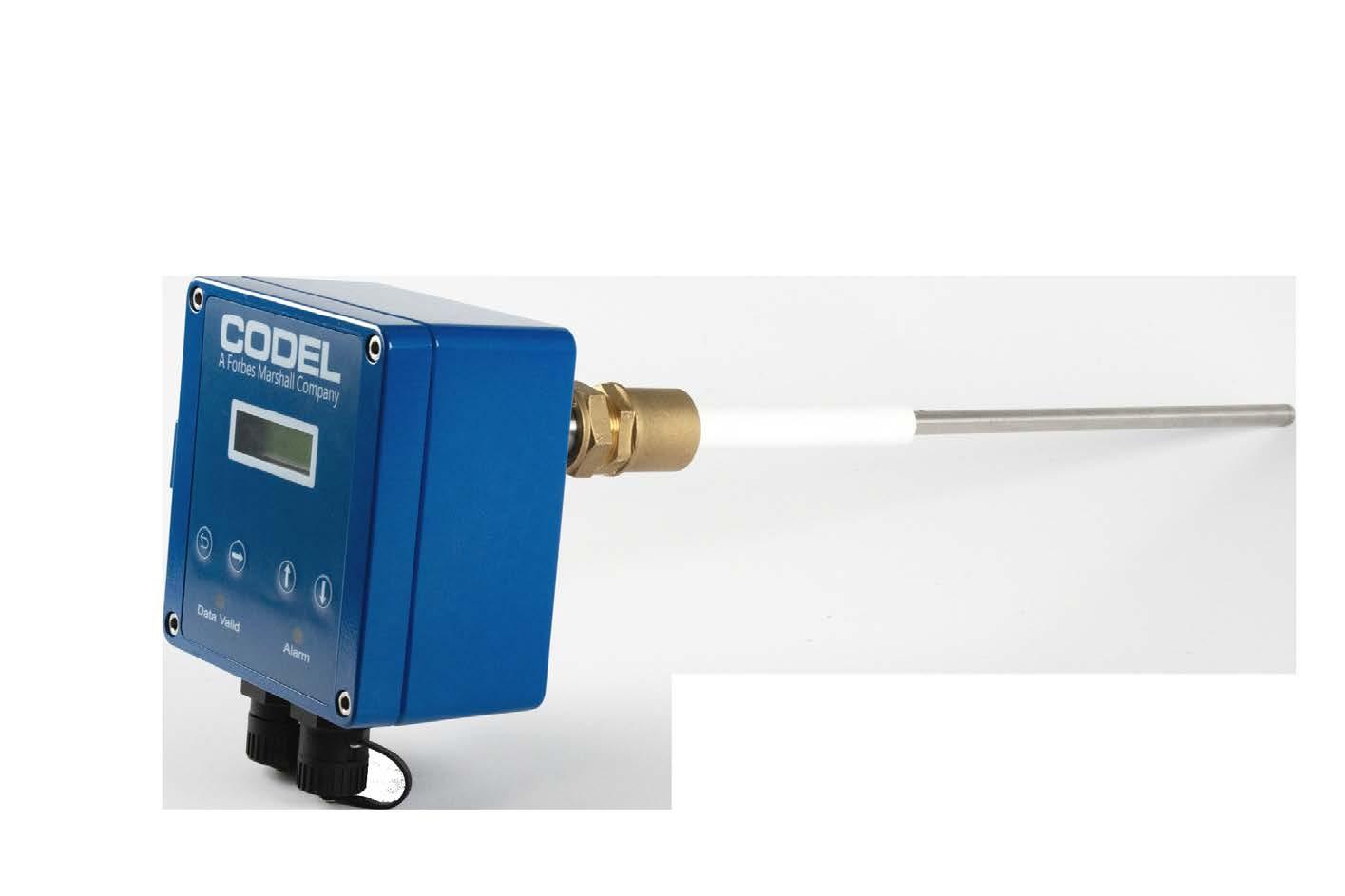

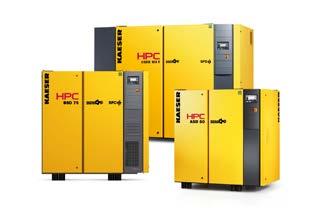





Revicon Solutions Ltd, based in the East Midlands, is a specialist consultancy in Lean Manufacturing and Manufacturing Engineering. We work closely with organisations to tackle long-standing challenges and deliver practical, innovative solutions that drive measurable results. Our mission is to help businesses unlock their full potential through proven methodologies and tailored strategies aligned with their goals.
With over 27 years of experience in global manufacturing, we bring expertise across sectors including fabrication, machining, and assembly. This knowledge enables us to understand complex manufacturing environments and provide actionable insights. At Revicon Solutions, we leverage Lean behaviours, tools, and strategic deployment to streamline operations,


reduce waste, and boost efficiency. We have supported businesses of all sizes— from SMEs to multinationals—in achieving sustainable growth and operational excellence. Our experience includes designing and building new facilities, managing work transfers, establishing supply chains, and resolving critical supplier issues. We pride ourselves on delivering solutions that are both innovative and practical.
Whether your objectives involve reducing lead times, improving product quality,
empowering your workforce, or increasing value-added activities, Revicon Solutions is here to help. We work collaboratively with your teams to ensure improvements are implemented effectively and sustained over time.
Our passion for manufacturing excellence is matched by our commitment to customer satisfaction. If you’re ready to take your operations to the next level, visit Reviconsolutionsltd.com or call 07388 236940. We look forward to partnering with you to achieve your goals.
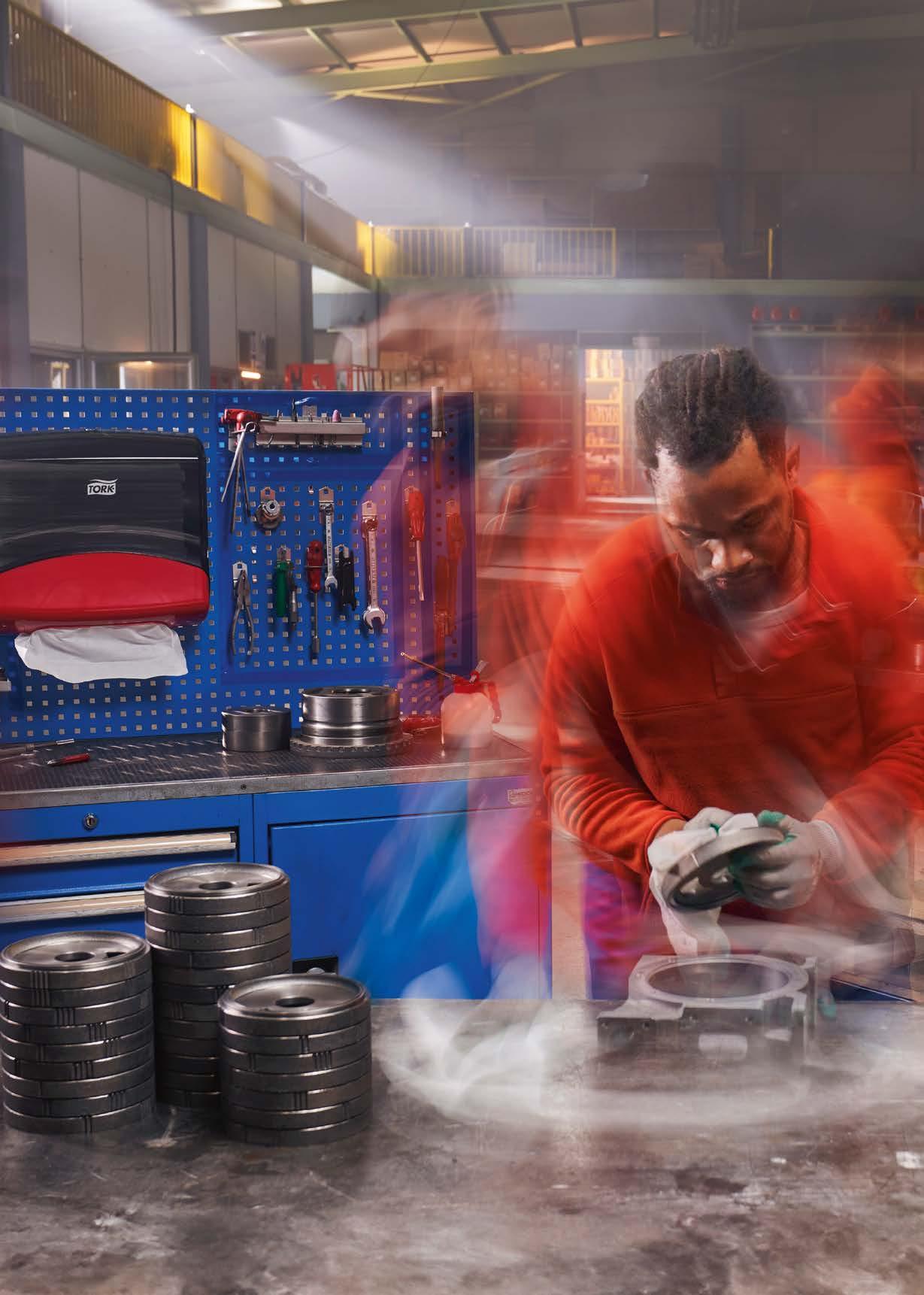
Discover how Tork exelCLEAN® Cleaning Cloths can save your business time by cleaning 32% faster than rags.* And Tork Performance® Dispensers can be placed exactly where needed to decrease interruptions and reduce motion waste.
Better hygiene for better productivity
tork.co.uk or tork.ie
Tork, an Essity brand
*Panel test conducted by Swerea Research Institute (Sweden, 2014)
Rotech Systems has an excellent worldwide reputation when it comes to rotation monitoring. We have been in business for over 40 years, ser vicing many different industries from the food Industr y to the mining sector. Our products are extremely robust. Guaranteeing the end user a trouble free solution, to all their monitoring applications


all

For more than 50 years, Computar has set the pace for lens manufacturers by pioneering new and innovative optics. With a solid foundation based on Japanese engineering and agile production facilities spanning the globe, Computar continues to manufacture the highest-quality optical products.






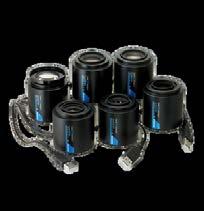
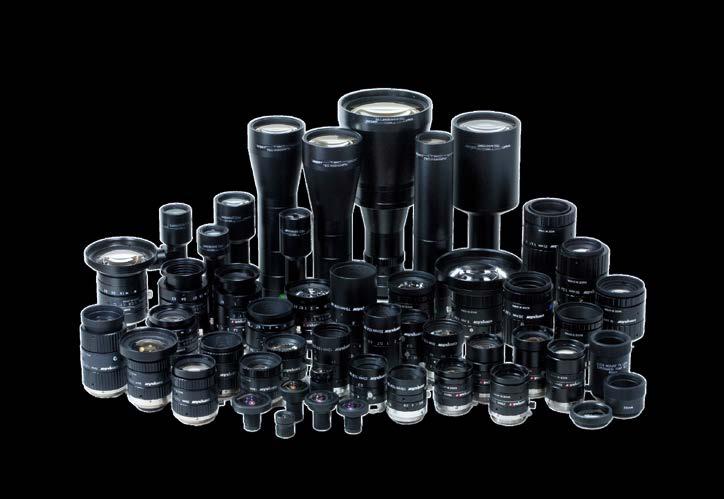

Exceptional Temperature & Humidity Uniformity
Built for Performance
Walk-in Solutions
Proven Standard Products
Compliant with Various Standards
t.01874 711 209
e. sales@jts-test-chambers.co.uk
www.jts-test-chambers.co.uk
Unit 3 | Talgarth Business Park | Brecon | LD3 0PQ
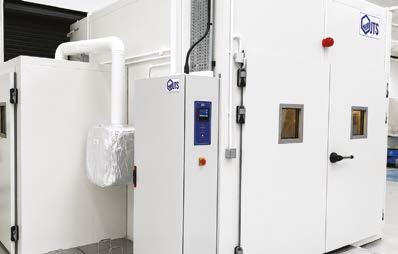

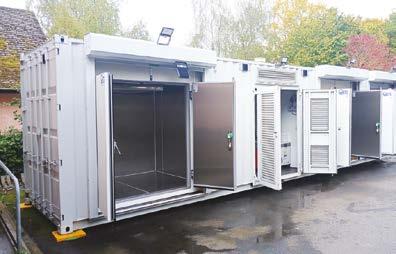

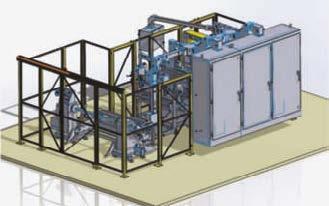
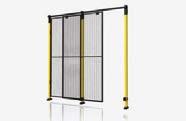
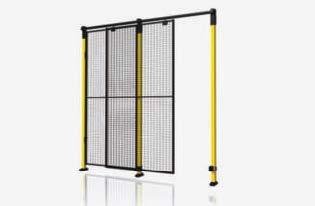
Teknomek expands offering with precision balances and washdown scales
Hygienic furniture and equipment specialist Teknomek has expanded its laboratory and cleanroom range with the addition of precision balances and washdown scales from Adam Equipment. Designed to support accuracy, compliance and hygienic operation, the new range provides laboratories with reliable weighing solutions suited to controlled environments.
Teknomek has introduced a carefully selected range of analytical balances, precision balances and washdown scales to its catalogue, supporting applications across laboratory, cleanroom and controlled production environments. The models have been chosen to meet the stringent requirements of sectors such as pharmaceuticals, engineering biology, research and high-spec manufacturing, where accuracy and repeatability are critical to operational performance and regulatory compliance.
The new business partnership brings together Teknomek’s expertise in hygienic equipment and Adam Equipment’s specialism in durable, highperformance balances. Known for reliability, competitive value and strong customer support, Adam Equipment’s products are particularly well suited to clean and controlled environments, aligning closely with the needs of Teknomek’s customers.
The analytical and precision balances are designed to deliver highly accurate measurements,
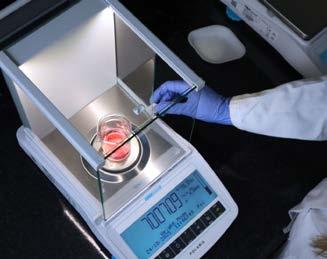
supporting tasks that demand exacting levels of sensitivity. Features such as intuitive operator interfaces, rapid stabilisation times and robust internal calibration capabilities enable reliable dayto-day use in busy laboratory settings. The inclusion of draft shields and compact footprints ensures suitability for controlled environments where airflow and space constraints must be carefully managed.
Alongside these, Teknomek has added washdown scales designed for harsher environments where hygiene protocols involve frequent cleaning. These units are constructed to withstand regular washdown procedures, with sealed components and durable materials that help prevent ingress and support consistent performance over time. This makes them particularly well suited to laboratory support areas, sample preparation zones and cleanadjacent processing spaces where hygiene and durability must be balanced.
Across the range, ease of cleaning and contamination control are key
considerations. Smooth surfaces, minimal dirt traps and robust construction support efficient cleaning regimes, aligning with the needs of cleanroom and laboratory operators working to strict hygiene standards.
The addition of weighing equipment complements Teknomek’s wider portfolio of hygienic furniture and equipment, enabling customers to specify furniture, equipment and critical instrumentation through a single, trusted supplier. This integrated approach supports Teknomek’s overarching mission, to help customers create productive, risk managed and hygienic work environments.
“Accurate weighing plays a fundamental role in maintaining compliance and ensuring product quality in laboratory and cleanroom environments,” says Michelle Locke, product and marketing manager at Teknomek. “With the addition of Adam Equipment balances and scales, we are strengthening our ability to support customers with reliable, high-performance solutions that integrate seamlessly into hygienic workspaces.
“Whether customers are working in highly controlled analytical settings or in areas requiring regular washdown, this expanded range provides the flexibility to meet both precision and hygiene requirements, helping to reduce risk and support consistent, compliant operations,” Michelle concludes.
As energy saving targets and product quality requirements evolve, accurate realtime monitoring of plant and equipment becomes ever more important. But most steam trap users are still working with outof-date information collected “by hand” on long intervals. DCO Systems is working to modernise steam monitoring with costeffective monitors that eliminate work and deliver continuous real-time analysis.
Periodic inspection to real-time insights (“Time is money”)
Failing to resolve faults quickly has significant costs. Typical industry estimates are for a yearly failure rate of around 10% of traps. A UK site with 100 traps inspected annually could expect losses of nearly £16,000 from traps that fail in the year. This assumes medium size leaks, while large leaks (a “blowing trap”) are even more costly.
Working with surveys that are only undertaken periodically (often only on an annual basis) can mean that faults are not detected for many months.
Outdated fault knowledge prevents timely maintenance. A lack of timely maintenance
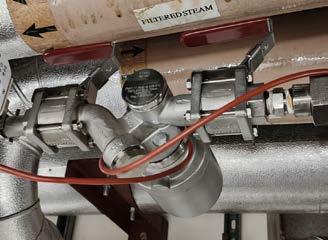
raises the cost of steam and reduces product quality through the poor delivery of steam; the risk of damage from water hammer also increases in the presence of failed cold traps.
Real-time knowledge of performance optimises the site maintenance routine and greatly reduce the duration of equipment fault conditions. Reducing fault time significantly reduces costs.
Better monitoring is possible Technology advances have enabled new monitoring capabilities across all types of plant and production sites, and steam
systems can very much benefit from those advances too. Better energy harvesting, as well as new sensor and communication technologies, deliver more capabilities and more functionality more easily.
The use of energy harvesting technology eliminates the restrictions of cabled and battery powered devices. Monitors can now be continuously on, collecting more sensor data more often. This creates an unmatched depth and breadth of data on your steam systems.
deployment for
piloting and monitor scaling
Avoiding complicated, high-cost installations is critical to quickly deploy pilot and test projects and demonstrate the benefits of the latest monitoring technology.
Designed and manufactured in the UK DCO Systems’ Easy Steam Trap Monitor delivers on this promise. Eliminating invasive installation work, operating independently of on-site IT infrastructure, the simplified deployment reduces time to go live and delivers benefits more quickly for a faster return on investment (ROI).
Promptly identify steam trap leaks and faults with real-time monitoring solutions. With fast deployment from a pilot through to a whole site installation, no invasive work (no shutdown requirement) and no integration with local networks or IT systems required.
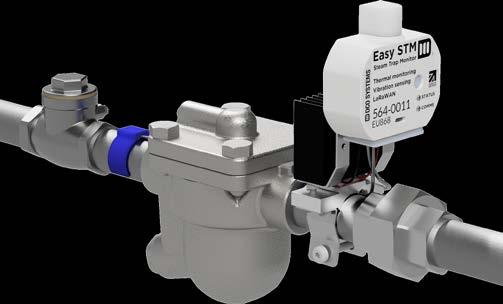
⦿ Simple - Quick install on any steam trap type
⦿ Cost effective - High return on investment through loss reduction
⦿ Zero maintenance - Energy harvesting eliminates battery changes
⦿ Live data - Real-time temperature, acoustic, vibration, etc.
⦿ Turn-key - End-to-end solution with
⦿ Wireless Technology

With support




Bericap UK and Sumitomo (SHI) Demag present findings from 18-month collaborative development project testing every performance aspect of the latest PAC-E machine in a real production setting. Results corroborate the 50%+ energy savings, market-leading all-electric fast cycle times and 1.5 year ROI claims.
It is uncommon for companies to embed end-users in the creation of a flagship innovation, especially in large-scale machinery. Defying convention, Bericap UK and Sumitomo (SHI) Demag rigorously tested the new energy-efficient, fast-cycle PAC-E machine for caps and closures using high-pressure production conditions. Through this collaborative approach, both organisations established a new industry benchmark, demonstrating the significant advantages of integrating operational insights from end-users throughout the development process.
“With razor-thin margins, processing speed is everything in the packaging industry. We never imagined allelectric could meet our performance demands until the PAC-E machine proved otherwise. Utilising our highdemand production environment as the proving ground, Sumitomo (SHI) Demag delivered on their productivity promise, giving us the competitive edge to take our business even further,” explains Bruce Margetts of Bericap UK.
“Working so closely with the Sumitomo (SHI) Demag team has been incredibly valuable. It led to a game-changing machine that is not only transforming our operations but could reshape the entire packaging industry,” adds Bruce.
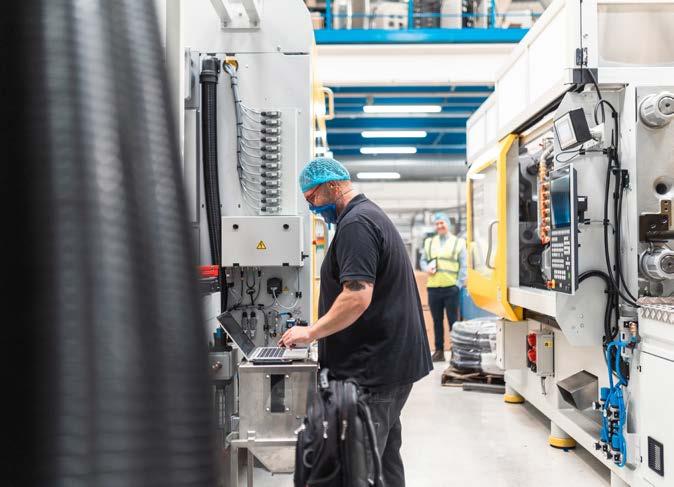
After observing the performance advantages and energy efficiencies throughout an 18-month testing period, Bericap UK proceeded to place an order for a serial production 350 ton PAC-E.
Already conceptualised with significant input from Sumitomo in Japan and the German product engineers, the PAC-E development faced one major industry challenge. This new machine would have to demonstrate and convince packaging manufacturers that it could match the previously unparalleled performance of Sumitomo (SHI) Demag’s ElExis SP series, but deliver the environmental, cleanliness and efficiency benefits of an all-electric system.
Bericap UK in Hull provided the real-world, demanding production
environment to validate and optimise the machine’s capabilities. Accommodating a 350 ton PAC-E in active production, over 18 months the machine ran over 11 million cycles. This enabled the Sumitomo (SHI) Demag engineering team to fine-tune cycle speeds, furtherimprove component resilience and reduce energy consumption in cap production by over 50%, all while delivering on Bericap’s live commercial orders.
“In fact, the machine was running continuously and proving to be so energy efficient and reliable, it was challenging to persuade the production team to switch it off to make adjustments,” notes Bericap UK process engineer Dean Bramley.
For the entire duration of the project, engineers, process managers, directors and technical specialists from both companies
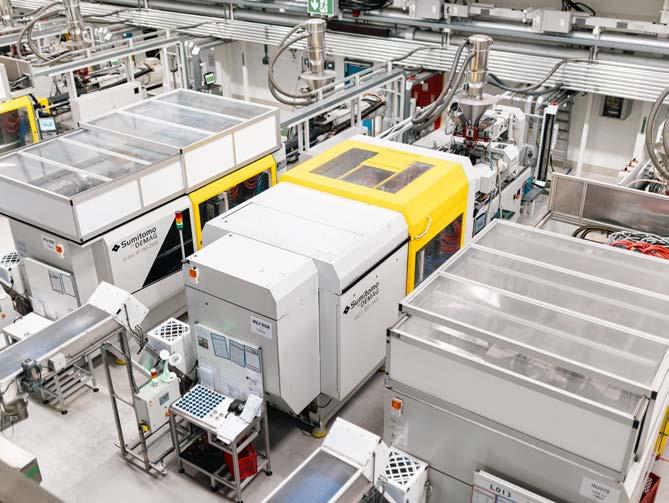
The PAC-E machines combine German manufacturing precision with advanced Japanese all-electric technologies to save caps and closures manufacturers over 50% energy
hosted regular on-site reviews, bi-weekly development meetings and weekly technical calls. This continuous feedback loop allowed PAC-E to evolve through live production insights rather than lab-based testing.
The end result has changed the landscape of plastic packaging production for the benefit of all mass manufacturers, claims Sumitomo (SHI) Demag’s UK & Ireland Managing Director Dave Raine. He expands: “With Bericap’s demanding production environment, we were able to analyse hundreds of application datasets, engage with mould makers and ultimately refine the machine to meet the precise production and user safety requirements.”
Given the urgency of Net Zero and the emphasis on sustainable design, PAC-E drew upon its extensive allelectric expertise. Specifically, the all-electric direct drives designed by Japanese parent company Sumitomo Electric, served as a springboard to initiate faster machine developments for sectors
Customers are signalling that they want absolute certainty before they make a purchase decision.
traditionally served by hydraulic and hybrid machines, reports Dave Raine.
With an advanced model ready to market, PAC-E’s functionality underwent months of live tests at Bericap UK. Production parameters such as cycle time stability, dosing consistency and thermal loading on the drives and spindles were just several of the focus areas. By the end of the testing programme, the collaborative team had generated all the production data required to prove that PAC-E consistently achieved speeds and energy savings once considered unattainable with all-electric injection moulding.
Sumitomo (SHI) Demag engineer Aaron Driver reflects: “Cycle time,
energy consumption and machine uptime are the biggest variables in ROI, so they became our core development priorities. By zeroing in on these performance indicators and continuously refining every element that influenced them, we were able to break through innovation limitations.”
Towards the end of the testing programme a full injection profile linearity study was conducted by Bericap UK. This helped to distinguish the differences between the El-Exis and PAC-E to build up a portfolio of evidence as to why the PAC-E significantly benefitted the company’s production strategy and provided proof of the benefits.
One of the key highlights of this impartial study drew attention to the re-engineered motion system optimised for short-stroke, highprecision applications. Although the maximum injection speed is lower (550 mm/s vs. 1000 mm/s), the dynamics are significantly higher. The result is sub-2-second cycle times, fast enough to support production of over 1 billion caps per year on machines running 24/7.
“Customers are signalling that they want absolute certainty before they make a purchase decision. The development has to be mature, the performance excellent, the energy savings significant. PAC-E was co-developed with and for the customer and with this programme we have proven that PAC-E delivers on every count. In Bericap’s case it made 500 million caps per annum, more than halved energy consumption, equating to a 1.5 year ROI,” states Dave.
Operations Director Chris Hood concludes: “The level of cooperation and desire to succeed on this project was exceptional. The Sumitomo (SHI) Demag UK team went above and beyond in their availability and determination to take learnings from the installation and implement solutions and improvements. These can be seen on the final production machines installed by the Bericap Group.”
For further information, please visit www.sumitomo-shi-demag.co.uk
As manufacturers continue to push component complexity, material performance and quality requirements, traditional surface processing methods are increasingly being put under strain.
Deburring, cross-hole deburring, surface preparation and part marking all remain essential operations — but conventional approaches can introduce variability, tool wear, contamination, and unwanted stress on high-value parts.
At MACH 2026 (20–24 April, NEC Birmingham), TextureJet will be showcasing Electrochemical Jet Machining, a surface engineering technology designed to deliver high-precision, repeatable results without the drawbacks of traditional processes.
Visitors to Stand 20-588 will be able to see the system in action and learn its benefits for key applications including edge breaking, cross-hole deburring, surface preparation and part marking.
TextureJet’s process is engineered to provide controlled, consistent feature modification — helping manufacturers achieve improved edge shaping and surface quality, even on delicate components and advanced materials. By eliminating the need for traditional abrasives and reducing reliance on harsh chemicals, the technology offers a cleaner approach that supports both production consistency and sustainability goals.
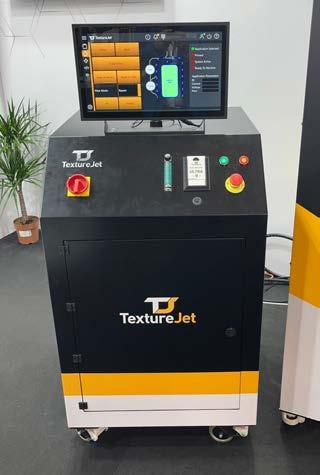
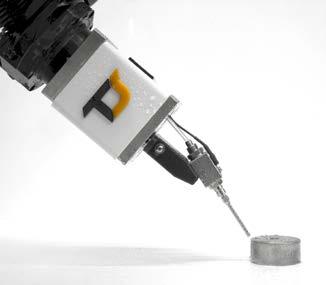
Our technology is gamechanging when it comes to modifying component features and surfaces with precision and control.
A key highlight of the show will be the launch of a new partmarking system, alongside the latest evolution of TextureJet’s flagship technology: the nextgeneration STAT® machine. The updated STAT system delivers enhanced performance in a streamlined, compact design, giving manufacturers greater flexibility, usability and control.
“We’re proud to be showcasing our latest innovations at MACH this year. It’s a fantastic opportunity to connect with industry leaders and demonstrate how TextureJet is helping manufacturers push the boundaries of surface processing,” said Jonathon Mitchell-Smith, CEO and Founder, TextureJet. “Our technology is game-changing when it comes to modifying component features and surfaces with precision and control. By eliminating the need for traditional abrasives and chemicals, our solutions offer a cleaner, more consistent, and more sustainable approach to surface engineering.”
MACH attendees will be able to explore how the technology supports production challenges in sectors where surface integrity, accuracy and repeatability are critical — particularly for highvalue components and complex geometries.
To see the system live, visit TextureJet at Stand 20-588, or arrange a meeting in advance via: texturejet.com/contact/
For further information, please visit www.texturejet.com

[ Designed for your profit ]
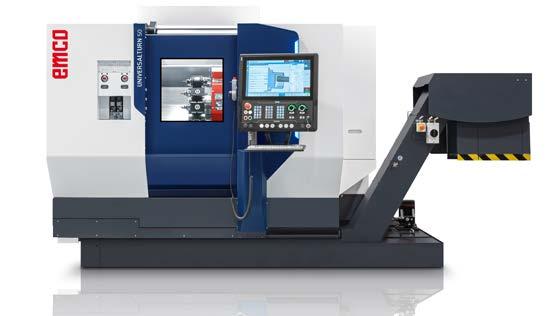
More performance. More precision. More future. All-purpose turning machine for precise and high-performance machining
With the new UNIVERSALTURN 50, EMCO sets the next milestone in complete machining of bars and chuck parts. Developed for maximum precision, dynamics and process reliability, the compact high-performance turning centre offers everything that modern manufacturing centres require: powerful drive systems, an integrated Y-axis for extended milling and flexible automation concepts. Whether complex turned and milled parts for mechanical engineering, the automotive industry, medical technology or defence – the UNIVERSALTURN 50 impresses with its outstanding rigidity, intuitive operation and scalable equipment.
CNC turning center for bar stock work up to Ø 25 mm (1”) and also chucking work. The EMCOTURN E25. Uncompromising quality right down to the last detail at a very reasonable price. With an extremely solid machine base, a thermo symmetric spindle headstock, high precision spindle bearings, preloaded roller guideways in all axes, a fast 12 stn tool turret and your choice of Sinumerik 828D or Fanuc 0i TD. Available with driven tools, C axis for main spindle, Manual tailstock with automatic quill.
• High-precision turning centre for efficient complete machining of bars up to 51 mm bore
• Integrated Y-axis for extended milling and maximum machining versatility
• Highly dynamic drive systems for fast machining cycles and maximum accuracy
• Compact counter spindle for precise rear-side machining without additional re-clamping
• Powerful tool turret with up to 12 driven tool positions
• Scalable automation solutions – from integrated swivel loaders to gantry systems
• Stable cast machine bed for maximum rigidity, damping and process reliability
• Absolute measuring system for maximum repeat accuracy without reference point homing
• Intuitive operation with SINUMERIK ONE –optionally available with FANUC 0i plus control from 2026
• Perfectly coordinated machine concept for applications in mechanical engineering, automotive, medical technology, defence and more
• Made in Austria
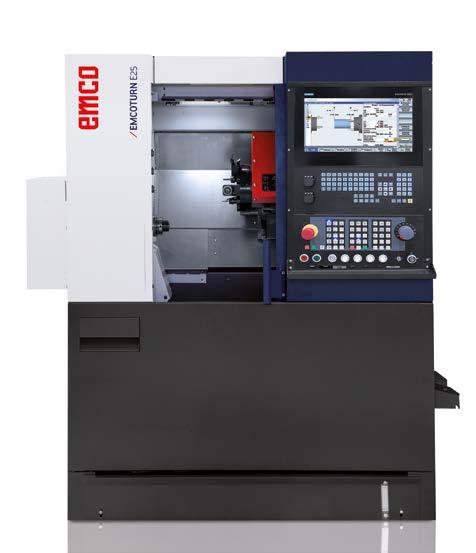
We have been supplying threading tools and gauges since 1987.
Together with supplying plain plug and ring gauges this is all that we do, we therefore consider ourselves to be specialists in this field.
We supply worldwide.
We hold extensive ready stocks that include all of the standard stuff that others offer, but also includes taps, dies, die nuts, die head chasers, thread rolls and gauging for threads not normally available 'off the shelf '.
Our real time stocks can be checked and purchased online at www. threadtools.com Just enter the thread details into the search box on the home page.
You will be directed to the item, if stocked, or to our specials, (custom manufacture), sales team. who will quote to supply at competitive rates, in good time.
As an account holder you can also order online from our listed in stock items, at your normal terms. We realise that you need the right item at the right price and quality, and in a reasonable time frame.
We are geared to provide that.
We can ship stocked items same day.
Our experienced sales staff can assist and advise you on any technical issues.
We welcome enquiries from resellers and can offer terms to suit.
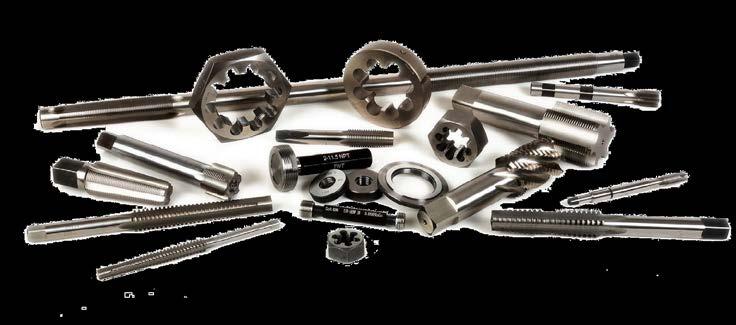
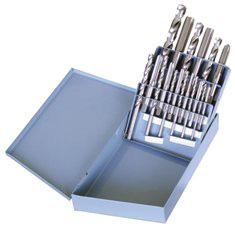
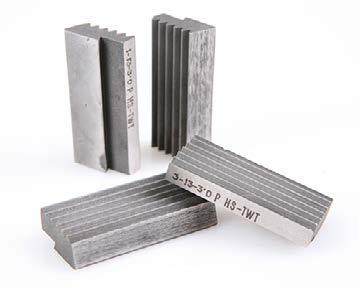
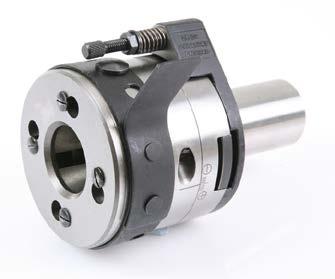
11 Padgets Lane, South Moons Moat, Redditch B98 0RA UK +44(0)1527 520 580 sales@threadtools.com www.threadtools.com
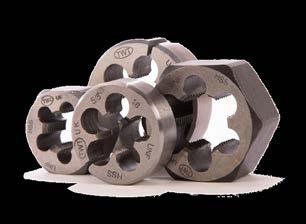
HSS DIES & DIE NUTS
Large
and many Special Threads. Check our stocks
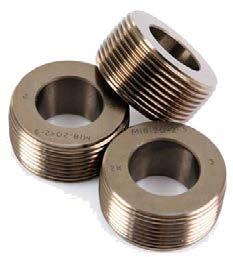
Large shelf stocks for all Standard and many Special Threads. Check our stocks online. THREAD
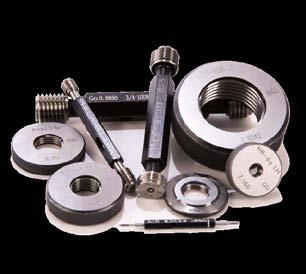
THREAD GAUGES all types. Large stocks for standard and SPECIAL threads. Any non stocked can be quoted for custom manufacture.
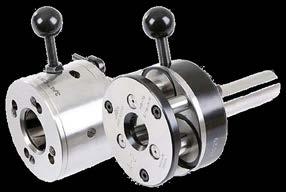
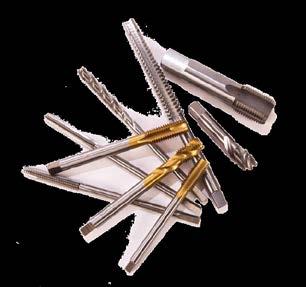
CUSTOM
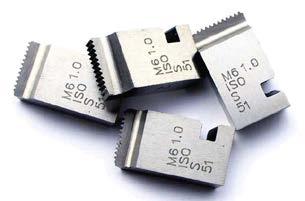

A large proportion of work going through subcontractor C&M Precision’s Maldon factory involves machining copper bar fed into CNC mill-turn lathes. Five sliding-head models, and one Fixed Head out of the thirteen turning centres on the shop floor, all of which have been supplied by Citizen Machinery UK, have LFV (low frequency vibration) functionality in the operating system of their Mitsubishi controls. It results in much higher productivity and increased yield when converting malleable copper into high-end electronic components for OEMs in the medical, radar, satellite and broadcasting sectors.
Owner John Cable explained that for many of these jobs, a particular grade of copper known as OFHC (oxygen-free high conductivity) has to be used, which is more than 99 percent pure. One 60 mm long, tighttolerance component previously produced from 3 mm diameter bar on an early Citizen Cincom M16 slider without LFV had to be turned in one pass through the guide bush down to 1.20 - 1.22 mm diameter along half its length. The continuous string of copper swarf frequently damaged the component and often became lodged in the counter spindle, preventing synchronous
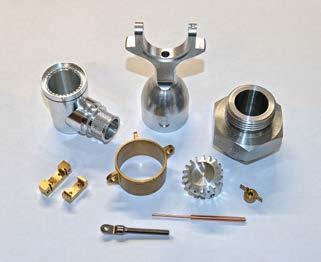
transfer after part-off and causing the machine to alarm out. Productivity was severely impacted and up to 20 percent of parts had to be scrapped.
Mr Cable enthused, “Transferring the job to a Cincom L12-VIILFV we bought in 2019 was a real winner. With the LFV function turned on, the copper chips like brass. Yield is now 100 percent, throughput is high and we can even leave the machine to run unattended.”
2025 saw the arrival of another 32 mm sliding head. This being C&M Precision’s 2nd L32 type XII with LFV. The first L32 being so successful that they had to buy another. This machine also has a fully programmable B axis gaining more use of live tools in cross, inline and angled positions as well manufacturing components more complete with minimal set up time. The L32’s have only a gang and
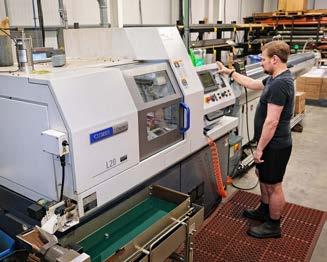
back end working tool posts , so are faster when manufacturing less complicated parts.
C&M Precision’s latest Miyano acquisition are from Citizen’s Miyano range of fixed-head lathes. Installed in December 2024, the twin-turret ANX-42SYY model with Y-axis capability on both turrets Allowing C&M to gain capacity between 38mm and 42mm diameter components whilst also having another machine with LFV technology.
Mr Cable continued, “It made sense to go the Miyano route in view of our good experience with the Cincom lathes. People say it is not good to have all your eggs in one basket, but in Citizen’s case it is. We now have a single point of contact for applications, backup and service and the supplier is very capable and responsive to our needs.”
As to the future, Mr Cable sees continued purchase of LFV lathes inevitable. While high pressure coolant systems break swarf adequately on his current larger lathes, as they mainly process freecutting materials, LFV is a must when it come smaller diameter components on hard to chip materials.
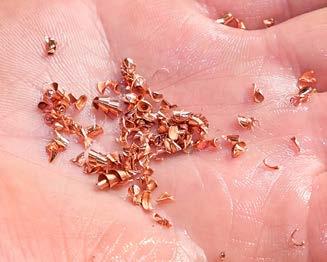

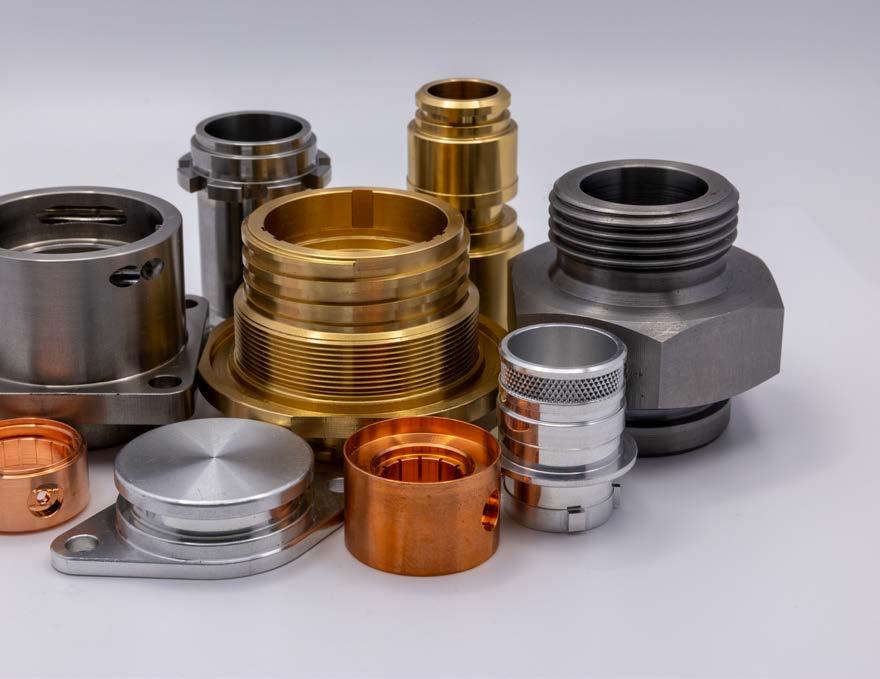
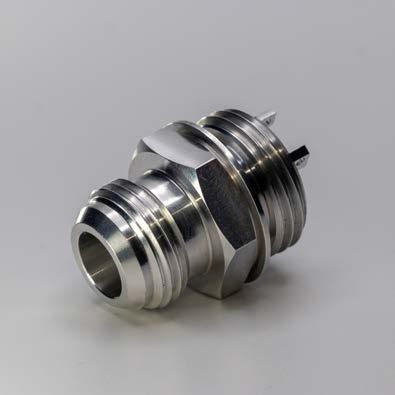
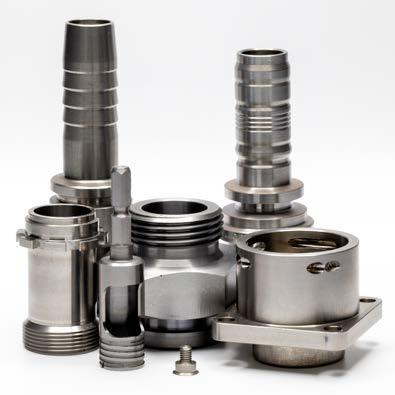
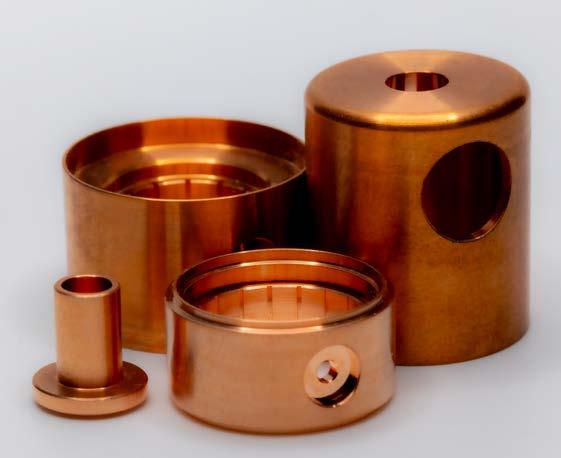



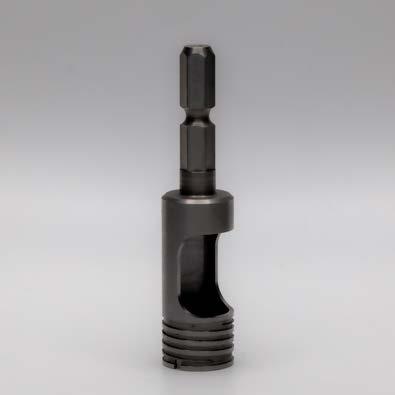
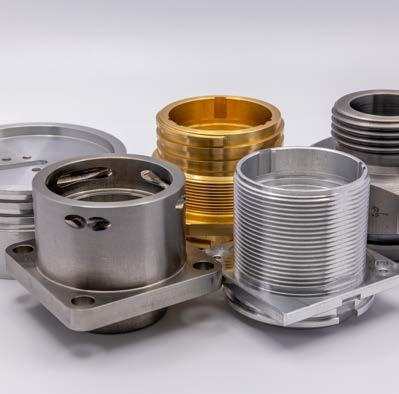

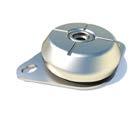
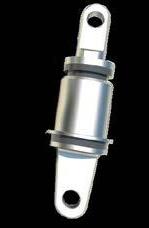
Since 1981, ENEMAC has been developing high-precision safety couplings (torque limiters) made of stainless steel that meet the strict hygiene requirements of the food, medical and pharmaceutical industries. The resulting product portfolio includes a wide range of stainless steel couplings that are specifically designed for the demanding operating conditions in these industries.

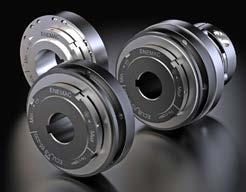
For applications where a complete stainless steel design is not absolutely necessary, ENEMAC offers safety couplings with corrosion-resistant surface modifications. These torque limiters are optimised through specific material treatments such as nitrocarburising, gas nitriding and a final oxidation layer. Heavy-duty components such as roller bearings and balls are made of stainless steel, while disc springs are coated with a corrosion-inhibiting coating. This makes these couplings ideal for use in damp or aggressive environments as well as in outdoor applications.
ENEMAC combines the highest precision in drive technology with consistent hygienic design, offering durable, resilient solutions for safety-critical and regulated industries.
INDUS Engineering Services is proud to offer a wide range of custom control panels, automation systems and special purpose machinery. After working on major control and automation projects for several of the south’s leading brands, the company has recently acquired a new premises with the aim of increasing production capacity of bespoke and sub-contract, control panel manufacture. The new premises will also allow us to support the wider range of engineering
Precision in every panel
activities carried out by the company, such as the design, manufacture, and testing of special purpose machinery. Also, to further our goals to reduce our carbon foot print we will be installing a high efficiency solar PV array in the coming months. For more information on the services that are available please do not hesitate to contact and we will be happy to discuss your project needs and requirements.
www.indusengineering.co.uk

Unlock efficiency with custom control panels tailored to your needs
At INDUS Engineering Services, we specialize in creating bespoke control panels designed for reliability, performance, and ease of use. Whether you’re in manufacturing, automation, or any other industry, our expertly crafted panels are built to streamline operations and optimize performance.
Why Choose INDUS?
Tailored Solutions: Our control panels are designed and built to meet the specific needs of your business, ensuring seamless integration into your systems.
Industry Expertise: With over 10 years of experience, we understand the unique demands of industries such as manufacturing, automation & FMCG.
High-Quality Components: We only use the best materials and components to ensure long-lasting and efficient performance, helping you reduce downtime and maintenance costs.
Compliance & Safety: All our products are designed to meet the highest safety standards and comply with relevant industry regulations.
Rapid Turnaround & Support: From design to delivery, we ensure quick, reliable service and offer ongoing support to ensure your systems run smoothly.
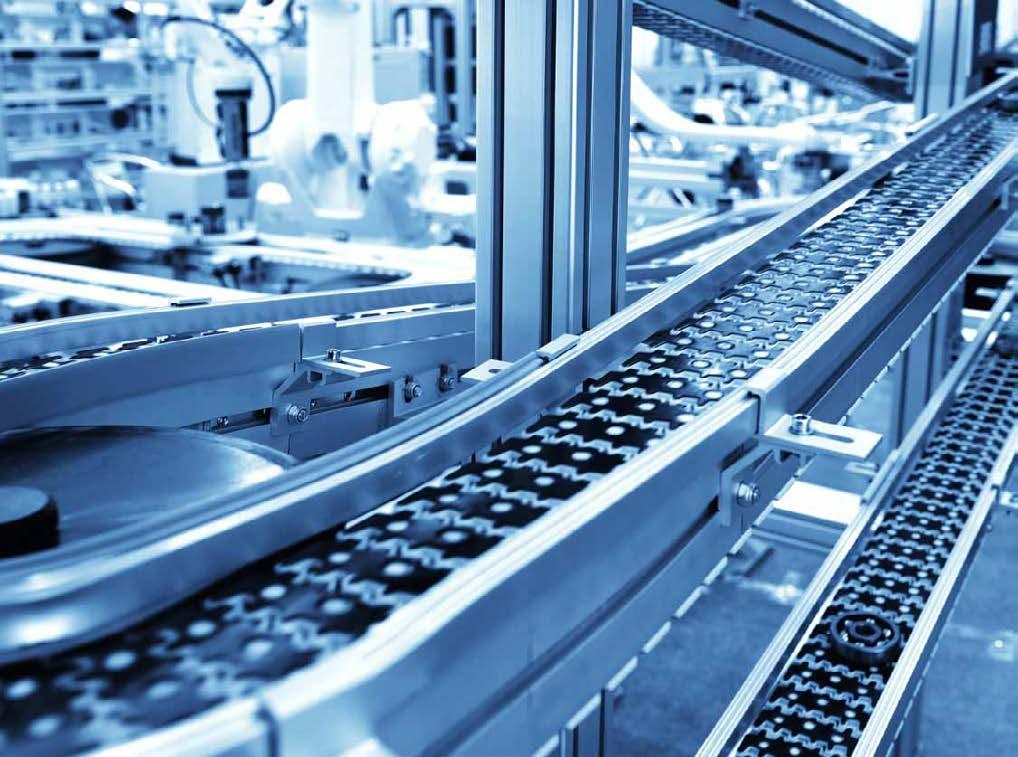

Our Services Include:
• Custom Control Panel Design & Fabrication
• PLC & HMI Integration
• Automation & Process Control Solutions
• Panel Upgrades & Retrofits
• Electrical Engineering Consultations
• 24/7 Maintenance & Support Services


By Kris Thacker, Technical Sales Manager, Sumitomo (SHI) Demag
It is widely accepted that drive controls play a pivotal role in injection moulding machines. However, there remains some ambiguity about how significantly they influence overall performance.
Kris Thacker, Technical Sales Manager, Sumitomo (SHI) Demag clarifies that drive controls are unquestionably fundamental to the machine’s operational capabilities.
Over the years, drive technology has seen incremental improvements, leading to variations in performance across different models. Some drives are designed to achieve faster acceleration and enable quicker braking, enhancing productivity and cycle times. Others are engineered with a focus on energy efficiency, helping processors reduce power consumption and operational costs.
Ultimately, the choice of drive control can shape not only the speed and responsiveness of the machine, but also its energy profile and suitability for specific moulding applications. As drive technologies continue to evolve, understanding these distinctions becomes essential for optimising both performance and efficiency in injection moulding operations.
Controlling the injection pressure and process optimisation is essential for mouldability as this precise motion control is what the drive achieves. Much like a gearbox, the drive in every injection moulding machine transforms the rotational speed into a linear movement. The science is the same for all drives
Kris Thacker explains why drive controls are fundamental to the operational capabilities of injection moulding machines.
across the ages, whether it is hybrid, variable frequency, electric servos, electric belt, direct drives or allelectric drives.
The choice of drive in injection moulding used to be application dependent as the requirements for sector and processing applications need to factor in so many varying aspects. This included holding patterns, rapid changes in acceleration and deceleration, cooling times and component removal.
With the arrival of mass production and trade globalisation, the 1980s and 1990s machine hierarchy was characterised by widespread adoption of hydraulic drives. These were hydraulic fixed displacement or hydraulic variable displacement drives, and featured a motor, pump, valve and hydromotor. The fact many mould shops continue to use these machines is testament to their
robustness and longevity.
However, a score of 0.46 for relative efficiency in today’s manufacturing climate is not great. It means that more than half of the input energy is being wasted. This could be improved by optimising processing parameters. Yet, given the elevated energy costs, a relative efficiency rating of 0.46 strongly suggests that your current machine may have reached a point of significant inefficiency.
Switching to a model with an allelectric belt drive or direct drive will reduce cycle time, save energy and improve moulding precision and part quality. Resulting in long-term operational savings.
Sitting between all-electric and hydraulics are servo hydraulic systems. These provide a highperformance and more energyefficient alternative, while retaining the benefits of hydraulic force. Often achieving a relative efficiency rating of over 0.85, these moulding machines use a variable speed drive motor to drive either a fixed or variable displacement pump.
Found predominantly in advanced manufacturing, robotics, automotive and aerospace, the servo hydraulic market still supports manufacturers. Now, the focus is on the next generation of servo motors. These will be powered by drives that combine the power density of hydraulics with the precision, control, energy efficiency and smart connectivity of electric drives.
At 0.92 relative efficiency, high torque electric direct drives represent the most consistent efficiency benchmark. Some of the
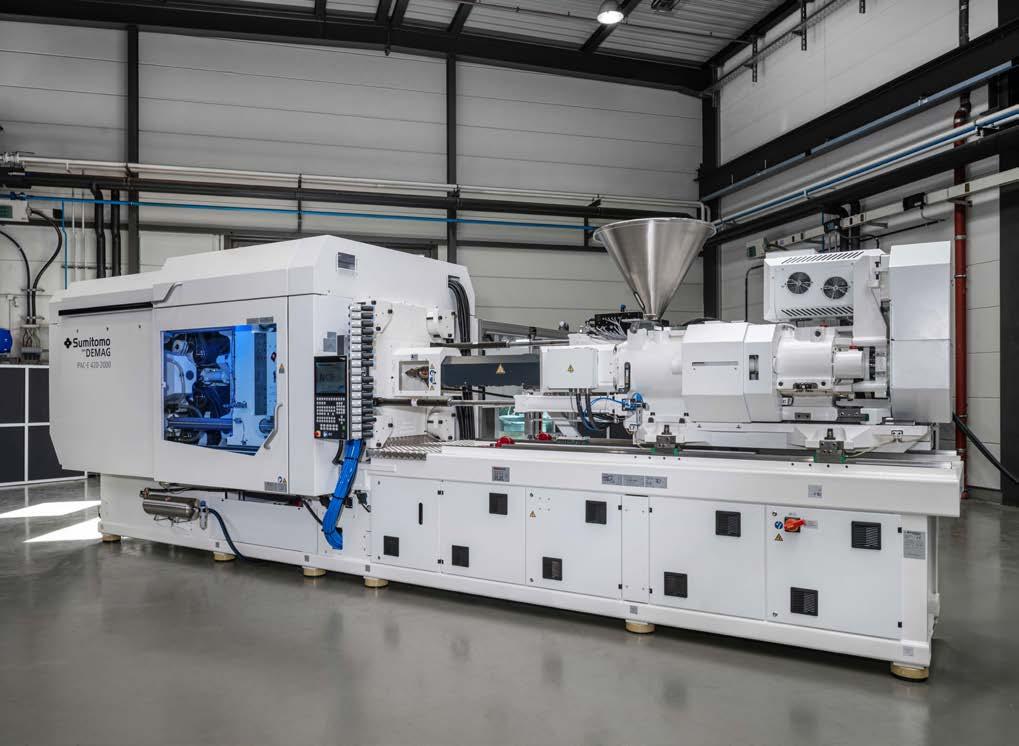
Sumitomo (SHI) Demag’s advanced electric direct drive technology featured on the IntElect and PAC-E series has a huge impact on efficiency and machine reliability.
highest performing machines with all electric drives can reduce energy consumption by over 80% compared to hydraulic technology. Additionally, the evolution of technologies now means that electric drives are increasingly viable for processing faster applications including caps and closures, as well as heavier loads such as automotive parts.
But even here, electric drive variants can and do vary. For example, an all-electric direct drive can be very different to a belt drive electric axis. A belt drive for example will typically couple the servo motor to the axis via a belt and ball screw assembly. Although noisy (from rotational velocity) and more complex to control, its relatively low mass and low inertia support quick and precise changes.
Conversely, an all-electric direct drive will couple the motor to
Sumitomo (SHI) Demag, the company that pioneered the drive concept a century ago, continues to distinguish itself in the market through its advanced electric direct drive technology.
the ball screw controls. This is especially important for controlling platen stiffness. These drives adapt especially well to velocity changes, with little overshoot. Marginally more energy efficient (~4-5%) than belt/ gear systems, all-electric direct drives can also perform several tasks simultaneously in parallel operation.
www.sumitomo-shi-demag.co.uk
Sumitomo (SHI) Demag, the company that pioneered the drive concept a century ago, continues to distinguish itself in the market through its advanced electric direct drive technology. This too has a huge impact on efficiency and machine reliability.
Unlike other engineering companies, Sumitomo (SHI) Demag is the only known global firm in this field to design and manufacture its own drive motors entirely inhouse. This means that all drives are tailored to meet the unique operational demands of injection moulding machines.
From the perspective of relative efficiency, this integrated process plays a significant role in improving operational performance, expanding production capacity and further advancing energy efficiency.
Before diving into the benefits of the L60 thermocouple welder, let’s first address the question: What is a thermocouple welder? A thermocouple welder is a specialised device used to join the ends of thermocouple wires together to create a reliable and accurate junction. This junction is crucial for accurately measuring temperature in various applications, ranging from industrial processes to scientific research.
The L60 Thermocouple Welder is a compact, simple-to-use instrument designed for thermocouple and fine wire welding, offering a range of features tailored to meet the diverse needs of users:
• Precision Welding: With precise control over welding parameters, the L60 welder enables users to create consistent and robust junctions for thermocouples of various types and wire diameters, ensuring accurate temperature measurements in any environment.
• Versatility: Whether you’re working with type K, N, T, or other thermocouple wires, the L60 welder provides the versatility to handle a wide range of materials, making it suitable for a myriad of manufacturing applications.
• Ease of Use: Featuring an intuitive interface and user-friendly controls, the L60 welder simplifies the welding process, allowing operators to achieve professional results with minimal training or expertise required.
• Durability: Engineered to withstand the rigors of industrial environments, the L60 welder is built with
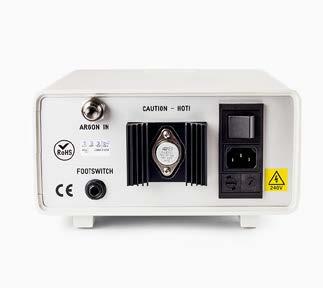
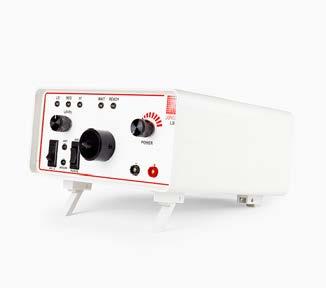
the L60 welder provides the versatility to handle a wide range of materials, making it suitable for a myriad of manufacturing applications.
durability in mind, ensuring reliable performance and longevity even in the most demanding conditions.
• Comprehensive Accessory Kit: The L60 welder comes complete with a comprehensive accessory kit providing users with everything they need to get started right out of the box, including the following;
Wire Holding Pliers & Lead / Safety Glasses / Magnifying Eyeglass / Argon Hose / 2 x Carbon Electrodes / Spare 2A Fuse & Mains Lead / Footswitch for greater ease of use / Welder Pen & Plate / Impact Clip
View the L60 welder full specification and buy on-line at www.labfacility.com
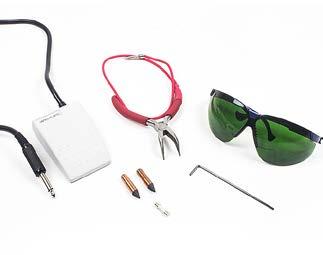
We’re excited to make purchasing Labfacility temperature sensors even easier for you! Through our partnerships with Digikey and Farnell, you now have multiple convenient options to access our high-quality temperature measurement products. Both Digikey and Farnell stock an extensive selection of our products, including thermocouples, RTDs, and Connectors, ensuring you can quickly find the specific product you need for your application. With their reliable service and global distribution networks, you can trust that your order will arrive promptly and with the highest level of care.


Newcode Partnership is a UK-wide coding, marking and labelling specialist helping manufacturers keep products clearly identified, traceable and ready for market. We work with businesses that need reliable date codes, batch numbers, barcodes, 2D codes and labels applied accurately across live production environments.
Our role is not simply to supply equipment. We help customers choose the right system, install it properly and support it throughout its working life. That matters because when coding, marking or labelling goes wrong, the impact quickly reaches production, dispatch, compliance and customer confidence.
As the official UK distributor for Hitachi, Anser and Evolabel, Newcode covers continuous inkjet, thermal inkjet and automated print and apply labelling. We support manufacturers across food and drink, pharmaceutical, industrial, packaging, personal care and general manufacturing. Our technology proudly prints on 95% of eggs sold in the UK, which says something about the reliability manufacturers trust us to deliver.
What makes Newcode different is the way we work with customers. We take time to understand the line, product, substrate, environment, operator requirements, compliance needs and long-term running costs before recommending anything. Equipment is matched to real production needs, not selected
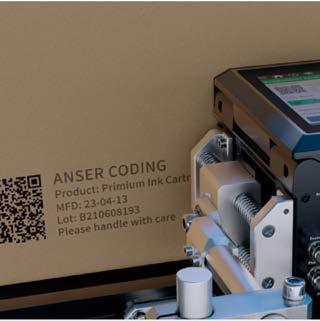
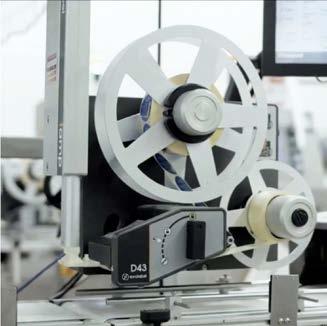
Our role is not simply to supply equipment. We help customers choose the right system, install it properly and support it throughout its working life.
from a catalogue because it looked right on paper. We stay involved after installation too.
• Five-year warranty covering all parts and labour, going further than most suppliers are willing to commit.
• Free Printer Deal on the Hitachi UX2 with no upfront cost, so businesses can upgrade without capital pressure.
• Same-day endeavour support and a next-day guarantee to stop downtime becoming a dispatch problem.
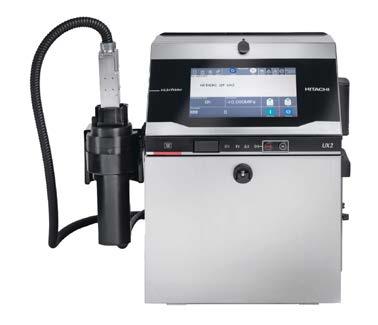
• Industry-leading self-clean station that prevents solvent spillage and reduces operator exposure as standard.
• Price-matched consumables where applicable, keeping ongoing running costs predictable.
• Regular engineer health checks for larger fleets, keeping maintenance proactive rather than reactive.
For manufacturers reviewing their coding, marking or labelling setup, speak to a Newcode engineer who understands live production - not a sales team working from a brochure.

Here at daysoft® we’re focused on what matters: providing simple, affordable vision solutions that are kinder to the planet without compromising on quality.
We believe healthy eyesight should be affordable for everyone
So we cut out the middleman and pass the savings to you. daysoft® lenses are made to rigorously high standards in our UK lab and then sold online, straight to you. As the only company in the world that design, make and sell contact lenses directly to customers, we’re able to replace other brands for half the price without compromising quality.
We’re trailblazers in innovation and expertise
We’ve always been ahead of the curve when it comes to innovation and design. Our chairman, Ron Hamilton, invented daily disposables and built the world’s first laboratory dedicated to making them. We continue to innovate and improve, using patented daysoft® technology and our unique Soft-Edge™ design to offer you the safest way to wear lenses at an amazingly affordable price.

We’re the environmentally conscious choice
We’re conscious that single-use daily disposables have an impact on our planet. That’s why we’re working towards innovative solutions to reduce our carbon footprint.
Our unique INPAC technology enables us to reduce excess plastic waste by up to 50%.
Designed and manufactured in the UK, our contact lenses have a lower carbon footprint than those that are shipped from across the globe.
made medical devices
Safe, accessible, healthy eye care for everyone is at the heart of our vision at daysoft®
We’ve always been ahead of the curve when it comes to innovation and design.
Our contact lenses are medical devices, and as such are required to meet strict standards, measured through a rigorous regulatory framework.
ALL OF OUR CONTACT LENSES ARE:
• Manufactured under the control of a certified Quality Management System, compliant with ISO 13485:2016.
• Approved under the European Medical Devices Regulations (Directive 93/42/EEC) under The Medical Device Regulations (Canada), licence #61427
• We’re also subject to regular audits by SGS Belgium Ltd, to ensure we continue to meet regulatory requirements, including stringent checks on the effectiveness of our sterilisation process.
How we make daysoft® contact lenses
daysoft’s® manufacturing process has been designed around the high specification details of the contact lens itself. Our state-of-the-art facility in Blantyre, Scotland only makes daily-disposable lenses and our processes, along with a highly skilled workforce allow us to supply you with the highest quality lenses at the most affordable price.

From only 27p per lens
Order our amazingly affordable daily disposable contact lenses lovedaround the world, visit daysoft.com
Over 1.25 billion daysoft® lenses have already been sold. Visit daysoft.com/map.
daysoft®is a Registered Trade Mark of DAYSOFTLimited

Daysoft successfully replaces other brands for half the price.”
Dr
Dr Ronald S Hamilton CBE, Founder and Owner of Daysoft Limited is the Inventor of the world’s first daily-disposable contact lens.
Order daily disposable around
Over 1.25 already and click daysoft® is


Akona introduces Rotary Batch Mixer for gentle and repeatable dry material blending
Leading material processing and material handling solutions company, Akona Process Solutions, has launched its Rotary Batch Mixer, expanding its mixing and blending portfolio with a batch solution engineered for consistent blend quality, gentle material handling and simplified sanitation across dry bulk processing environments.
The new machine utilises a gravitydriven rotary tumbling process rather than internal paddles, ribbons or agitators. This low-shear mixing method minimises particle damage, segregation and heat generation, while achieving uniform blends in short cycle times, including applications involving minor or trace ingredients.
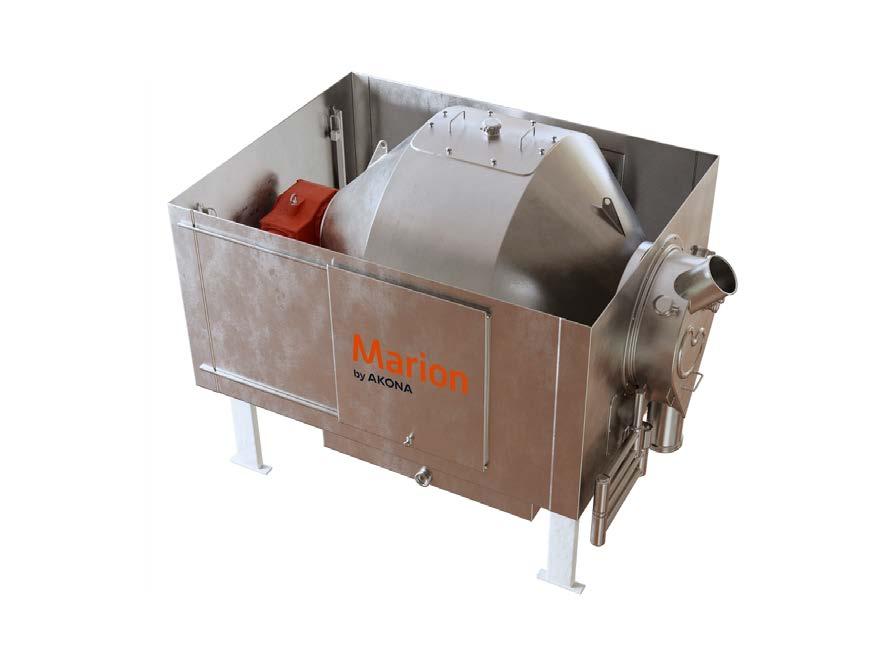
Unlike conventional mixers that rely on internal shafts and seals, the Rotary Batch Mixer features a shaft-free internal geometry with no submerged seals or agitator components. This design significantly reduces maintenance requirements and allows for faster, more effective cleaning between batches, supporting higher uptime and improved batch-to-batch repeatability.
According to Matt Banowetz, VP Engineering and Product Development at Akona Process Solutions: “From an engineering standpoint, the Rotary Batch Mixer was designed to remove common sources of maintenance and variability found in traditional batch
Unlike conventional mixers that rely on internal shafts and seals, the Rotary Batch Mixer features a shaft-free internal geometry with no submerged seals or agitator components.
mixers. By relying on controlled vessel rotation and internal mixing flights, we’re able to deliver consistent blending while reducing mechanical complexity, cleaning time and product loss.”
Suitable for processing dry powders, granules, pellets and fragile or friable materials, it is used across industries, including food and bakery, nutraceuticals, coffee, spice blends, agricultural products, plastics and chemical powders.
The Rotary Batch Mixer is available in multiple capacities and can be configured to meet specific process requirements. Optional features include liquid spray systems for coating or flavour addition, load cells for batch weight verification, dusttight inlet and discharge valves, and PLC-ready controls for integration into automated production lines.
The new Akona mixer builds on the established performance of Marion mixing technology, combining durable construction with straightforward mechanical design to deliver reliable batch blending with minimal downtime.
Designed for manufacturers seeking predictable batch performance, gentle handling and efficient changeovers, the Rotary Batch Mixer provides a practical solution to improve blend consistency while simplifying operations and maintenance in dry bulk processing applications
For more info, visit https://akonasolutions.com/mixing-and-blending-solutions/mixers/rotary-batch-mixer/
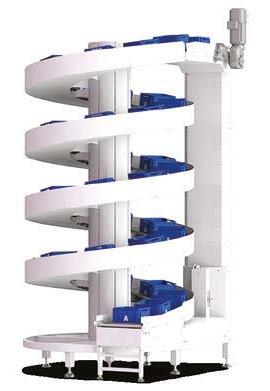

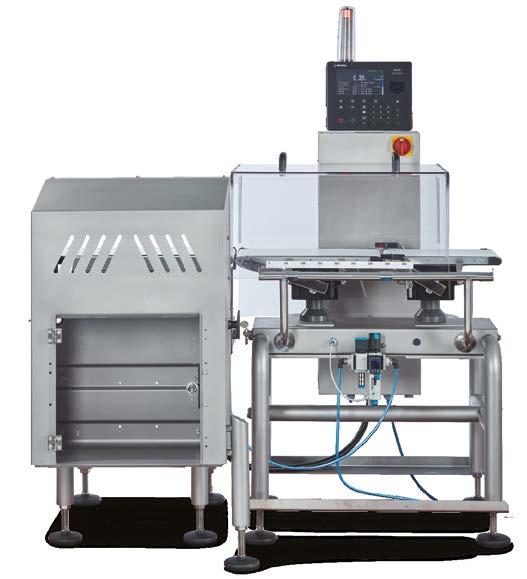
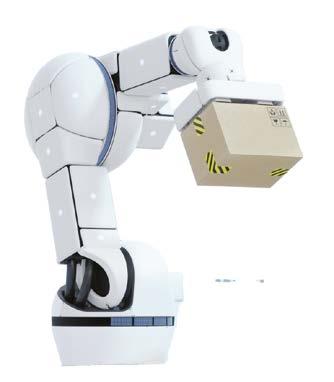

22 - 24 September 2026 l NEC, Birmingham
See automation take centre stage at the Greatest Processing & Packaging Show - the PPMA Show® 2026, held at the NEC, Birmingham from 22 to 24 September. Meet over 350 exhibitors, discover the latest technologies, experience live demonstrations and network with new contacts. Scan the QR code to reserve your free pass today.
Considering the worldwide economic challenges, Lutz Holding GmbH is focusing more on research and development as well as digital transformation across the group. The products developed include a pump for lubricating grease that can be operated with a standard cordless screwdriver and mobile technology for the treatment of drinking water used in crisis areas in Ukraine. In recognition of this exceptional innovative strength, the company has now been awarded the TOP 100 Seal, a contest organized under the scientific direction of Prof. Dr. Franke of the Vienna University of Economics and Business, one of the world’s leading researchers in innovation.
“For us, innovation is not an end in itself, but the foundation of our success,” emphasizes managing director Heinz Lutz. “The fact that we received an award on our very first attempt shows just how much the ideas of our employees are shaping the future of our company.”
This innovative strength is evident in concrete projects of great social and technical significance. Fully automated mobile water treatment plants provide up to 300,000 people in crisis-stricken areas such as Ukraine with clean drinking water—with support from GIZ (German Society for International Cooperation).
The company has also attracted international attention with one of its most recent inventions: The Lutz LubeDrive grease pump, which can be powered by a standard cordless screwdriver and makes workstations more ergonomic by eliminating
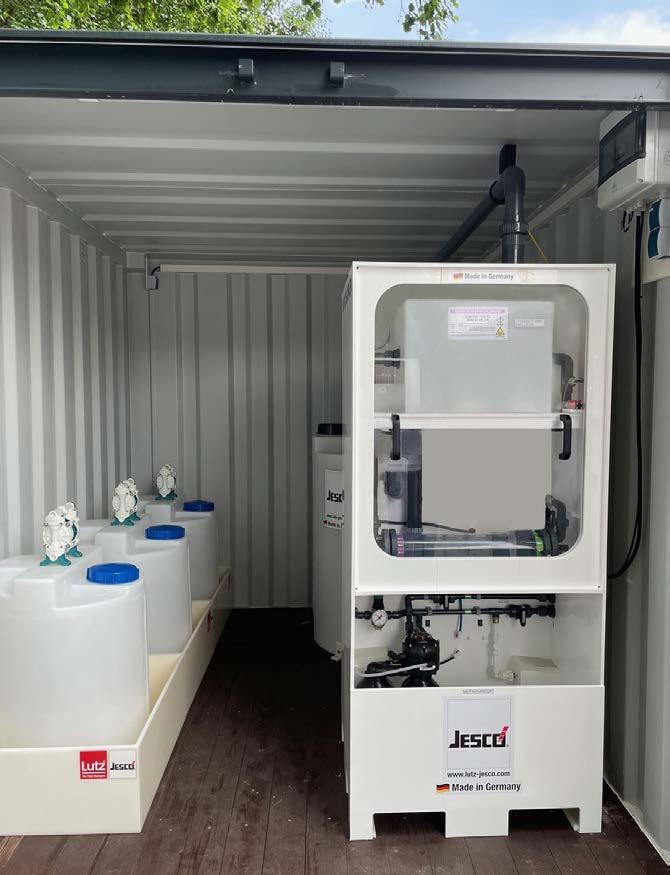
cumbersome, heavy, and expensive motors and pneumatic connections.
“Our strength lies in developing practical solutions that offer real added value to customers worldwide—whether through more efficient processes, sustainable technologies, or customized system solutions,” adds Takumi Nasu, Head
of Research & Development at Lutz Pumpen.
This innovative strength is no accident; it is part of our corporate culture, in which we encourage new ideas, embrace bold approaches, and actively drive technological progress. A key component of this culture is digital transformation,
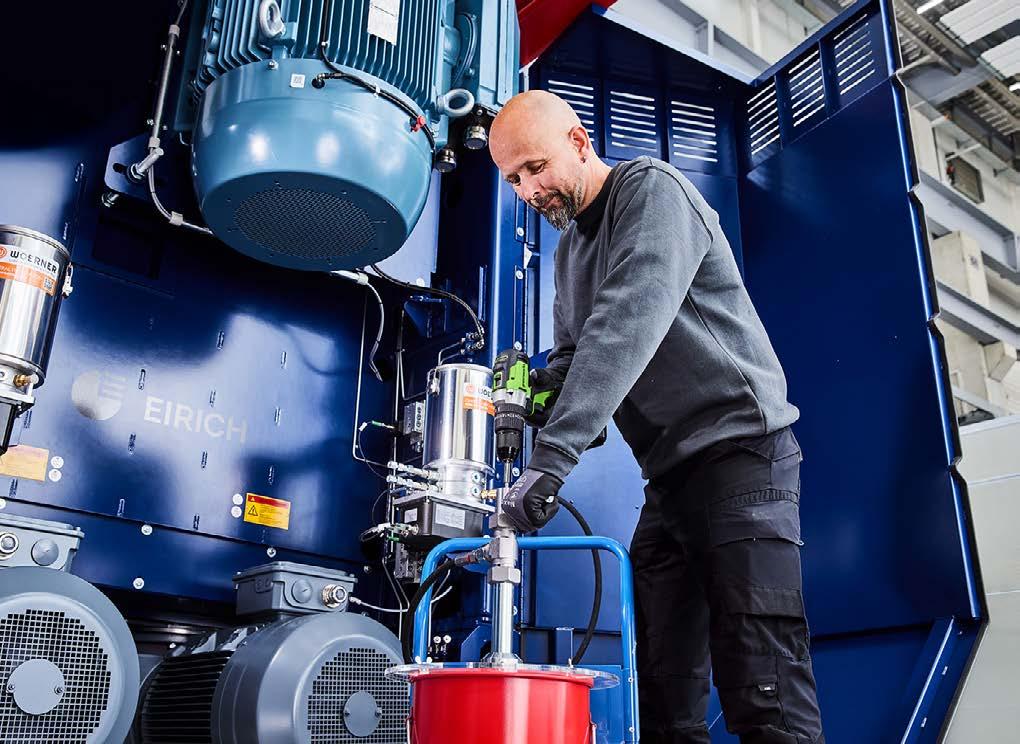
which opens up new ways for us to connect knowledge and implement projects with even greater agility.
“For us, digital transformation is a key driver for strengthening the innovative capacity of our entire group and unlocking new potential in other areas,” says Susanne Maurer, Head of IT at the Lutz Group.
With over 70 years of experience, branches in 13 countries, and more than 130 representatives worldwide, the Lutz Group sets the standard in fluid management and environmental technology. The TOP 100 Award confirms that innovative strength is a key competitive advantage that strengthens companies in the long term and drives their growth.
The spoils: On June 26, Lutz Holding GmbH will be honored by mentor Christian Wulff, former President of Germany, at the German SME Summit in Heidelberg.
With over 70 years of experience, branches in 13 countries, and more than 130 representatives worldwide, the Lutz Group sets the standard in fluid management and environmental technology.
Since 1993, compamedia has been awarding the TOP 100 Seal to medium-sized companies that demonstrate exceptional innovative strength and above-average success in innovation.
The competition’s patron is former Federal President and Minister-
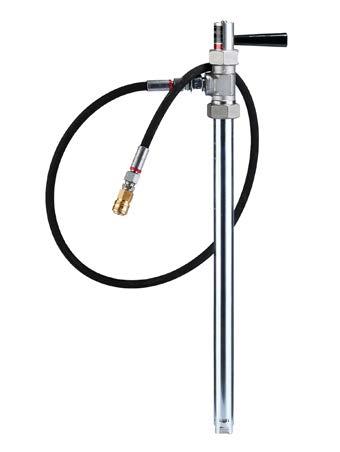
President Christian Wulff. The project partners include the Fraunhofer Society and the German Association for Small and MediumSized Businesses (BVMW). The company ranking is presented in collaboration with manager magazin as media partner and the magazine ZEIT für Unternehmer as a partner.
For more information and to register, please visit www.top100.de.
SEEPEX supports sustainable energy production through anaerobic digestion
Reliable feedstock handling is becoming critical for UK anaerobic digestion (AD) plants as operators aim to maximise throughput, improve stability and increase renewable gas output under increasingly variable conditions.
Biomethane produced from agricultural residues, food waste, sewage sludge and other organic materials supports the decarbonisation of heat, transport and industry. Continued investment in anaerobic digestion infrastructure is driving demand for robust process technologies that maintain high availability and stable performance under demanding feed conditions.
SEEPEX technology enables efficient biogas production
Effective pretreatment and feeding of biomass slurries is essential for maximising biogas yield. SEEPEX progressive cavity pumps and
BTEX hopper pump for biogas substrate feeding, engineered for contaminated media with easy cleaning, fast maintenance and high reliability in tough conditions.
SCT pump enables quick in-place maintenance and longer service life, reducing downtime and operating costs in biogas applications.

Maintenance efficiency is further improved with Smart Conveying Technology (SCT), featuring a twopiece stator and rotor design that enables servicing without pipework removal, reducing downtime by up to 85 percent.
Expanded BTEX and BN
SEEPEX has extended its BTEX and BN pump portfolio to capacities from 5 to 160 m³/h at pressures up to 8 bar, supporting agricultural digesters, food waste plants and co-digestion facilities.
The BTEX design provides effective premixing, blending dry and fibrous solids with liquids before pumping.
macerators ensure a controlled and continuous feed of pretreated material into the digester. Maceration reduces particle size and increases surface area, improving microbial access and fermentation stability.
AD plants routinely handle fibrous agricultural residues, manure, bedding, food waste, sand, stones and wood fragments. These materials increase wear, blockages and maintenance demand across conveying systems.
SEEPEX addresses these challenges through reinforced materials, optimised hopper geometry, integrated solids separation zones and abrasion resistant components.
The BTEX design provides effective premixing, blending dry and fibrous solids with liquids before pumping. This reduces sedimentation, improves process stability and supports more consistent digester loading. Operators benefit from lower internal mixing demand, improved flow consistency and enhanced gas yield potential.
“The combination of high flow rates, robust construction, efficient premixing and maintenance friendly technology makes the pumps an ideal solution for operators wishing to increase throughput and run processes more reliably,” says BerndGuntram Schulz, Product and Market Manager Biogas at SEEPEX.
With higher capacities, improved substrate conditioning and wear resistant design, SEEPEX continues to support the anaerobic digestion industry in improving operational efficiency and renewable energy production.
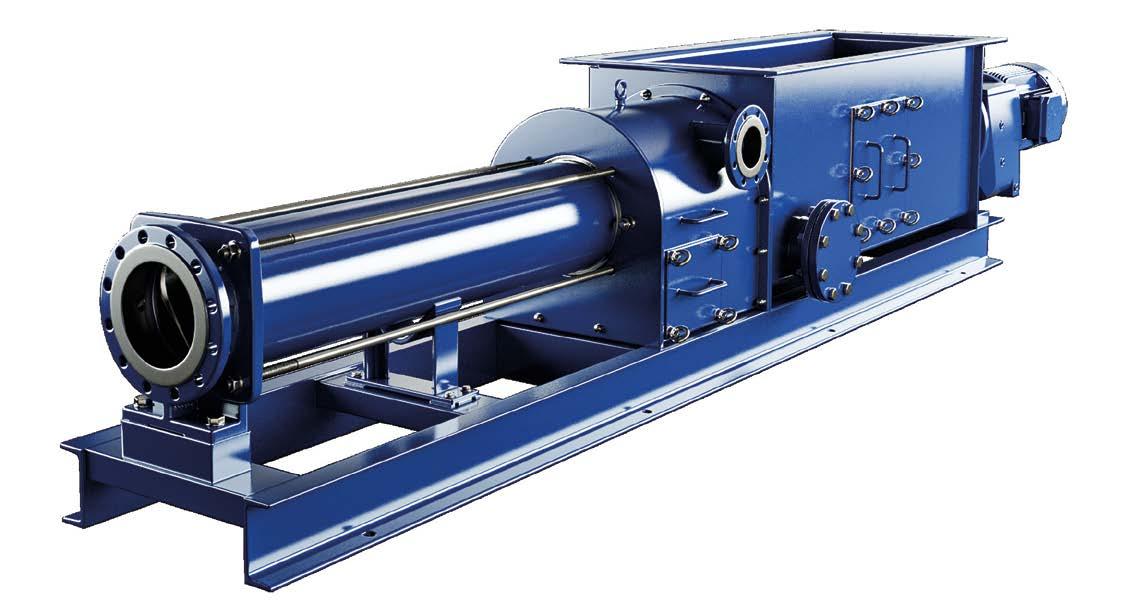
Optimized Pre-Mixing Reduces Retention Time and Increases Biogas Output
As biogas facilities continue to increase in scale and capacity, reliable highvolume feeding solutions are essential. The new SEEPEX BTEX sizes extend conveying performance up to 160 m3/h, supporting larger plant concepts and higher throughput requirements.
YOUR BENEFITS WITH BTEX
y Flow rates up to 160 m3/h
y Reliable handling of high dry solids
y Reduced fermenter retention time
y Lower mixing energy demand
y Robust heavy-duty construction
y Simplified maintenance SEEPEX
KEITH Manufacturing Co. highlights Freight Runner® Dock-to-Trailer System for safer, faster material transfer
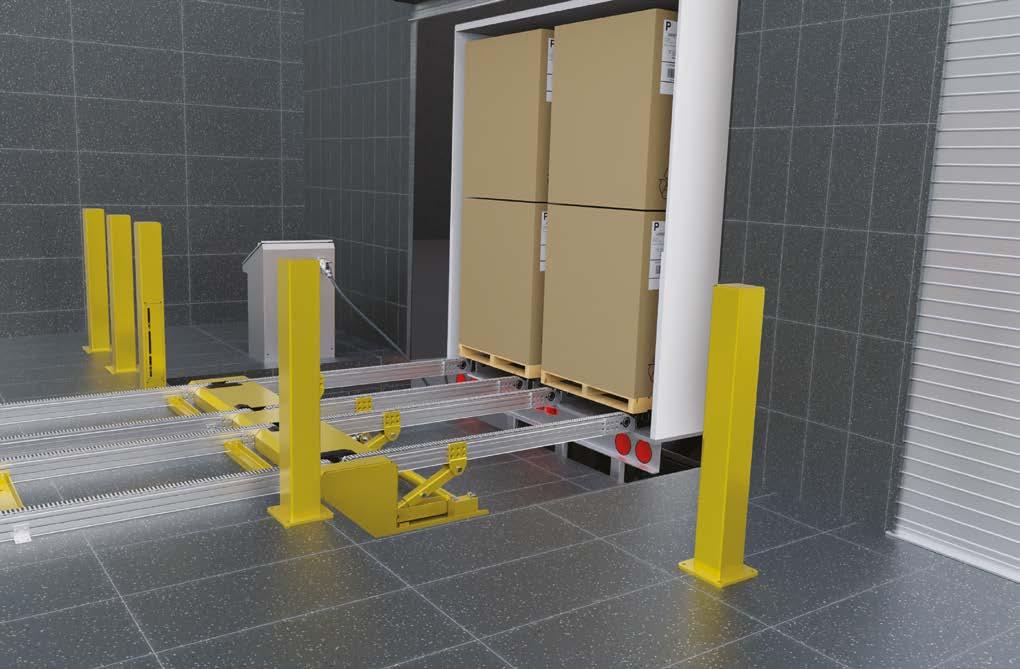
KEITH Manufacturing Co., a global leader in innovative material handling solutions, is highlighting its KEITH® Freight Runner® Dock-to-Trailer System, an Auto Truck Loading (ATL) solution that automates pallet transfer between dock and trailer. The system eliminates the need for personnel or forklifts to enter trailers and replaces the traditional dock plate with an automated pathway, creating a direct, hands-free dock-to-trailer connection.
With loading docks among the highest-risk areas for injuries and roughly a quarter of warehouse injuries occurring on the dock,
Freight Runner automates one of the riskiest points in the distribution chain. It keeps personnel and equipment off the dock plate and out of trailers to reduce fall risk, removes workers from the loading area to lower the chance of forklift impact, and eliminates manual product handling that can cause lifting injuries, while also reducing exposure to extreme hot or cold conditions at dock doors.
Facilities can load or unload trailers in as little as five minutes, far faster than traditional forklift methods. This combination of safety and speed cuts driver idle time, minimizes staging requirements,
improves trailer turnaround and boosts equipment utilization, helping operations reduce injuries, minimize product damage and improve dock efficiency.
Freight Runner is designed for closed-loop distribution and dedicated route networks, synchronizing dock and trailer conveyors for seamless transfer between facilities. This closed-loop integration supports consistent, hands-free operations that help maintain product integrity for applications such as food, beverage and cold-chain logistics, while reducing congestion and simplifying dock workflows.
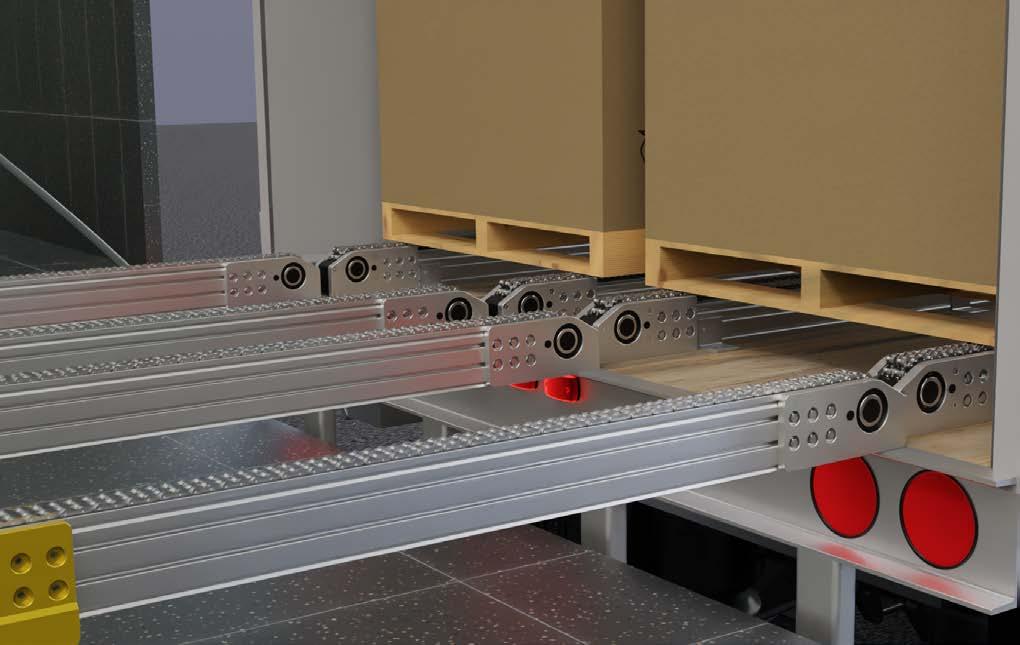
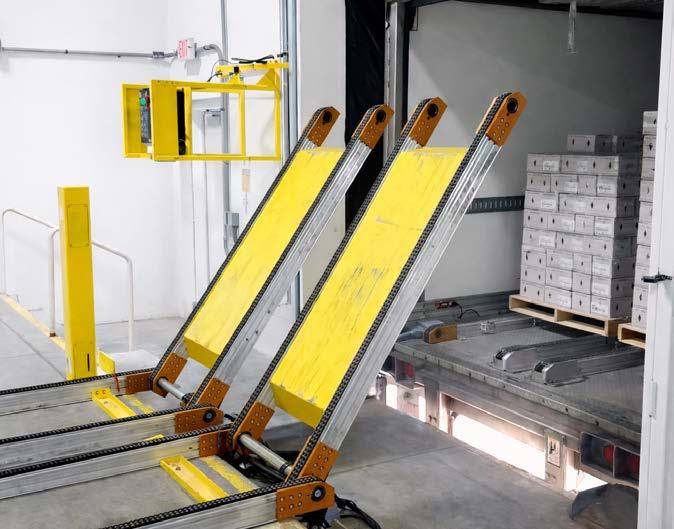
Adaptable configurations make the Freight Runner system a valuable tool for handling pallets in a range of environments, from warehousing and 3PLs to assembly lines and vehicle or trailer interiors. A “drop-in” chain and runner conveyor design simplifies installation and integrates with existing
infrastructure, and the modular system is easy to install without major overhauls or construction. Trailers can also be equipped so the system operates independently using electrical or hydraulic power, extending the benefits of automated dock-to-trailer conveying to off-dock locations.
Facilities can load or unload trailers in as little as five minutes, far faster than traditional forklift methods.
Featuring corrosion-resistant roller chains and engineered for minimal maintenance, Freight Runner is built for long service life in demanding environments. In refrigerated docks, shortened load and unload times help reduce door-open duration, supporting better temperature control and energy efficiency across cold-chain operations. As an industry leader in material handling innovation, KEITH Manufacturing Co. is redefining dock-to-trailer automation with the Freight Runner system, helping customers set new benchmarks for safety and efficiency.
For more information, please visit www.KEITHwalkingfloor.com.

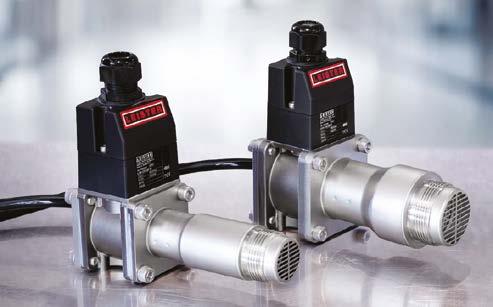
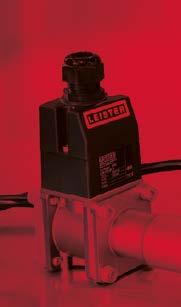


Reinforced housing engineered to withstand high-pressure conditions
Modular design for a wide range of adapters
Space-saving design ideal for compact systems with limited space
Easily adapted to many industrial processes - packaging, food processing, automotive manufacturing, tube production


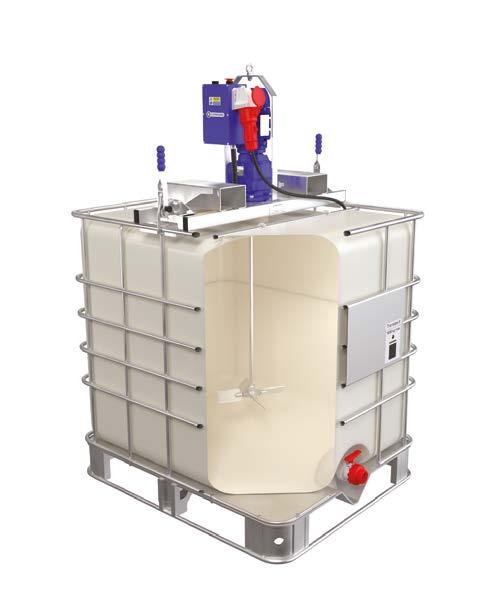

A new area of growth in copper trade for certain countries across Africa is rising, supported by Monometer’s supply of new melting technology. This is technology offering reliable, high-quality metal processing for the conversion of scrap materials to specification ingot suitable for export. This export of ingot from such countries as Zambia and Rwanda is new and emerging, supported by newly established local manufacturing capacity utilising exclusively Monometer furnaces and ancillary equipment.
These installations support regional valueadded production. However, performing effectively in emerging industrial areas requires more than equipment alone; it requires technical understanding, robust systems, and effective operator training for a working partnership to succeed.
Monometer has been working closely within these markets, our recent project in Rwanda comprising the installation and commissioning of a complete melting and casting system — including a Monometer rotary furnace, casting machine, and filtration unit — now fully operational and producing copper ingots to specification.
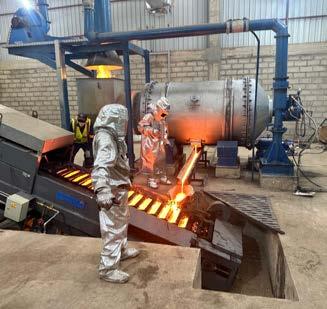
This achievement reflects more than a successful installation. It demonstrates Monometer’s ability to deliver reliable, well-engineered solutions in regions where infrastructure, a workforce of often limited experience and feedstock variations, present unique demands. These are not projects that succeed through equipment alone; they succeed through practical expertise, training, planning, and hands-on support — areas in which Monometer has built a strong reputation over decades.
Both Rwanda and Zambia are seeing a gradual shift toward more controlled, professionalised metal-processing operations, and our ongoing work in these regions places Monometer in a position of early leadership. The technical complexity of establishing such facilities — from material handling to furnace performance to achieving consistent casting quality — requires specialist knowledge that cannot be improvised or quickly replicated.
As production continues in Rwanda, the results reinforce what we have long believed: that well-designed rotary furnace systems, implemented with care and supported by experience, enable meaningful industrial progress. Monometer is committed to supporting this advancement, building long-term partnerships, and ensuring that new facilities in emerging markets operate safely, efficiently, and to a consistently high standard.
The foundation has been laid. The systems are running. And Monometer continues to lead with evidenced capability, not claims.







thinnest insulating layers and lowest eddy current losses for optimal ef ciency
L Type Laminated MagnetsRECOMA 35E - world’s most ® power dense SmCo operates well in extreme temps
Samarium Cobalt Magnetscomplete
High Speed Rotors, Stators and full Motors -
system integration from prototype to production
Thin, Flexible Lead-Free Shielding -
protect electronics and astronauts from radiation and RF/EM interference
Precision Thin Metals - T itanium, Ar non NGOES, TM Molypermalloy and other foils rolled to 2 micr
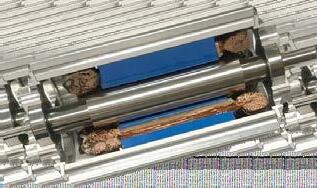



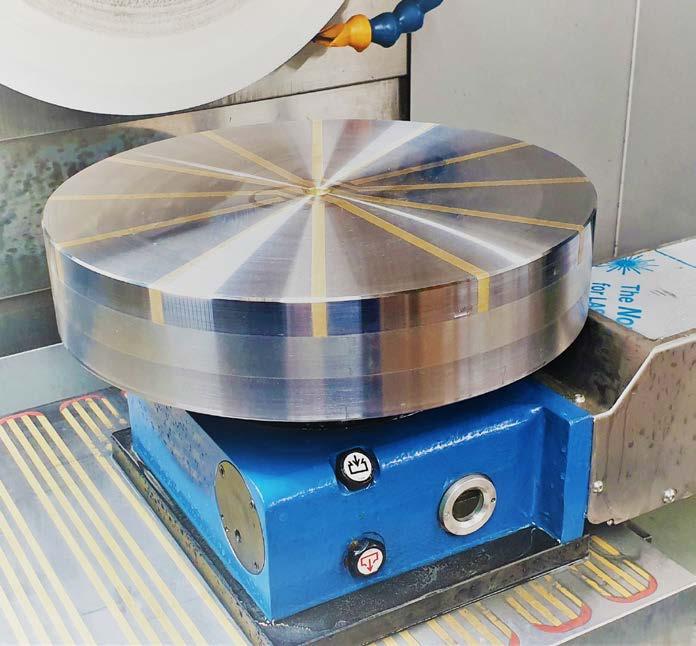
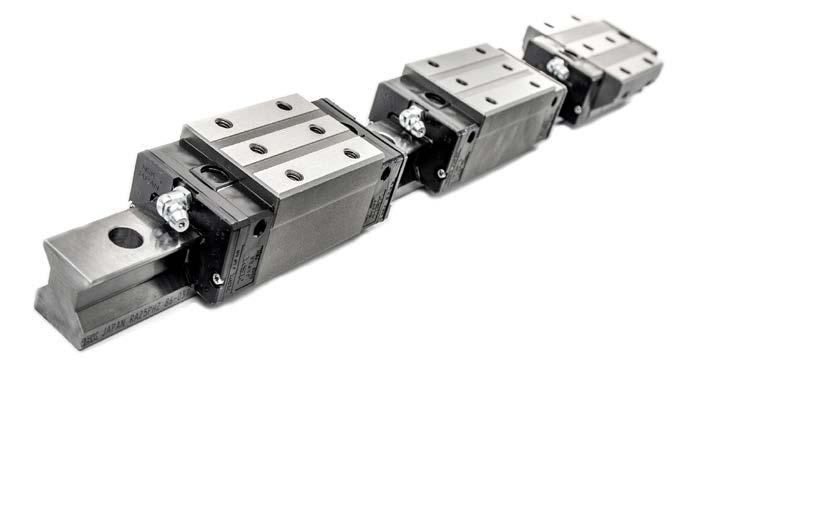
ROSS Pneumatrol enhances machinery safety through tailored fluid power solutions.

With over 100 years of expertise in fluid power safety, ROSS Pneumatrol delivers trusted, innovative solutions that help industries worldwide meet evolving machinery safety standards and operational demands.
Our Services
Training on machinery safety including a TUV-Approved Certified Functional
Safety Expert Training
Machinery conformity and LOTO audits
Machinery Risk Assessments
Class-Leading Safety Valves
Installation Services
ROSS Pneumatrol’s machinery safety services leverage global expertise, offering certified training, conformity audits, and tailored solutions that meet international standards. Our experts help clients achieve compliance and operational excellence across diverse industrial sectors
For More Information Visit Our Website
The valve manufacturer GEMÜ, the global market leader in the valves, measurement and control systems sector for sterile applications, has developed a new valve product as part of its new product generation. The GEMÜ D41 diaphragm valve features EasyLock technology. This enables maintenance in seconds, reduces complexity and makes handling diaphragm valves significantly easier. GEMÜ is thereby reshaping the future of valve designs
The pneumatically operated GEMÜ D41 diaphragm valve is designed for use in aseptic manufacturing sectors. The sealing concept of the valve is based on the newly developed GEMÜ diaphragm, which also hermetically separates the actuator from the working medium. GEMÜ D41 with EasyLock technology is installed entirely without loose components via a central gearbox.
The GEMÜ D41 diaphragm valve with EasyLock technology is easy to handle, safe to use and effective in its process. EasyLock technology offers not only more reliable installation, but also an even compression of the diaphragm. The actuator is fixed to the body via a bayonet fitting and then centrally tensioned via a gearbox entirely without any loose components using an outer hexagon. This makes actuator mounting and disassembly, commissioning and diaphragm replacement significantly simpler and quicker.
Furthermore, the diaphragm with bayonet pin facilitates diaphragm replacement, while
The GEMÜ D41 diaphragm valve with EasyLock technology is easy to handle, safe to use and effective in its process.
the new diaphragm technology offers greater safety and precision in plants. Due to the new seal system with fixed chambering, the natural setting behaviour of the diaphragm is controlled such that it is no longer necessary to retighten the diaphragm. The optimized rolling behaviour of the diaphragm provides better controllability and ensures low stress on the diaphragm, meaning that maintenance intervals can be optimized to specific applications. The new body design not only saves weight but also ensures a high flow and homogeneous flow characteristics. This enables the GEMÜ D41, as well as the GEMÜ D40 diaphragm valve already announced, to achieve up to 100% higher Kv values.
The pioneering products of the GEMÜ LEAP product generation
not only include the GEMÜ D41, but also three further valves and two automation components:
GEMÜ D40 – the high-performance, pneumatic diaphragm valve
GEMÜ S40 – the pneumatic globe valve with angle seat and straight seat designs
GEMÜ P40 – the efficient tank bottom valve with PD technology
GEMÜ 12A0 – the intelligent electrical position indicator
GEMÜ 44A0 – the multi-functional combi switchbox
Throughout 2026, GEMÜ Great Britain are running a nationwide roadshow, giving customers the chance to explore the new innovations up close and discover how they can enhance applications.
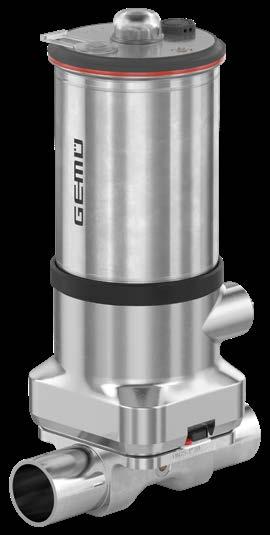
Introducing the Micronics UX5000 Clampon Flow Meter for use in Hazardous Environments. A high performance ATEX USM, made in the UK with a remarkably low price point.
ABLE, as Micronics’ exclusive UK representatives for the Model UX5000, are delighted to announce the arrival of a truly technically elite and commercially advantageous clamp-on ultrasonic flow meter.
The UX5000 flow meter uses a crosscorrelation transit time algorithm to achieve precise flow measurements. It generates an ultrasonic beam at a specific frequency, transmitting it between transducer crystals in two directions: first from the downstream transducer to the upstream, then reversing from upstream to downstream. As the liquid moves through the pipe, it slightly increases the speed of the ultrasound transmission.
This time difference, calculated as T1−T2, is directly proportional to the liquid’s flow velocity, providing an accurate measurement of flow rate.
Applications for the UX5000 are many-fold. The UX5000 is ideal for harsh, heavy duty industrial measurement of liquid flow in pipes. Being non-invasive and easy to install, it is particularly well suited to the chemical, water and oil industries.
Key Features:
• Non-invasive, efficient, and easy installation, no process downtime
• Cutting edge technology at its most affordable
• Certified for use in hazardous areas (ATEX)
• Reliable measurement accuracy – up to 0.5% with process calibration
• Separate Display (DCSIU) and Remote Measurement
• Unit (RMU) allows flexibility in installation
• Cost effective metering for harsh, heavyduty applications
• Single and Dual Channel Options
• Remote System Setup and Monitoring
Have a live application? Contact our flow specialists to book a demonstration.
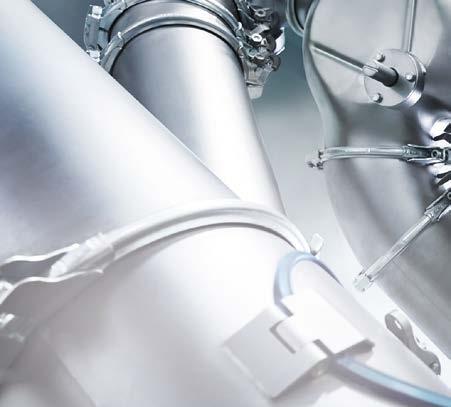
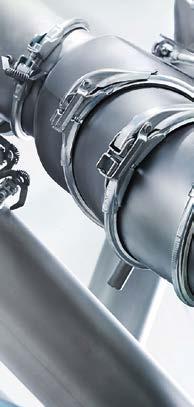

Our modular pipework system is engineered to handle bulk materials of every kind: powders, pellets, granules, biomass, and more. Designed for absolute reliability, it delivers smooth ow, rapid installation, and long-term performance in even the toughest environments. Whatever your process demands, our system adapts, protects, and performs without compromise.
For more informations www.jacob-group.com/uk/

This year, JACOB UK marks 25 years as part of the internationally respected JACOB Group, a milestone that reflects a quarter-century of progress, partnership and commitment to British industry.
From its beginnings as Modular Pipework and Ducting, through to becoming a leading UK supplier of premium modular pipework systems, JACOB UK’s story is one of continuous development while staying true to the values that matter most: quality, reliability, technical expertise and customer service.
Before joining the JACOB Group in 2001, the business operated as Modular Pipework and Ducting,
already serving UK industry with specialist modular pipework solutions. That established expertise has provided the ideal platform for future growth.
What followed was a transformation from a small three-person operation, led by John West and supported by a 600m² warehouse, into a fully established subsidiary serving customers across the UK and Ireland. Today, from its headquarters in Church Stretton, Shropshire, JACOB UK supports customers through sales, technical guidance, warehousing, finance and marketing functions. The result is a business that combines local responsiveness with the backing of a global manufacturing leader.
Over the last 25 years, JACOB UK has grown steadily while expanding both its capabilities and customer reach. What began as a modest UK operation has developed into a trusted partner for businesses across a broad range of sectors.
The company has strengthened its stockholding, broadened its service capability and continually adapted its offer to meet changing market demands. Yet despite that growth, the core objective has remained the same: to provide dependable, high-performance modular pipework systems supported by knowledgeable people and responsive service.
Engineering innovation that delivers
Innovation has long been central to the JACOB name, and customers in the UK continue to benefit from ongoing product development focused on installation speed, hygiene, safety and durability.
Solutions such as the QUICK CONNECT pull-ring system have helped make installation faster and more secure, while specialist conductive and explosion-protection components support safer operations in demanding environments. The development of wear-resistant finishes and corrosion-resistant materials has also helped extend product life in harsh industrial settings.
One of the most significant developments has been the FOOD GRADE range, designed to meet increasingly strict hygiene and compliance requirements in food, pharmaceutical and other sensitive production environments. As the first modular pipework system to comply with EC 1935/2004 and FDA requirements, it demonstrates JACOB’s ability to anticipate customer needs and respond with practical innovation.
Built for modern industry
Today, JACOB UK supplies solutions to a diverse customer base. Its systems are used in sectors ranging from grain handling, milling, pet food and baked goods production through to pharmaceuticals, recycling, biomass, chemicals and cleanroom environments.
The business is also seeing strong opportunities in emerging markets such as battery manufacturing and defence, where demand for highquality engineered systems, technical assurance and reliable delivery continues to grow.
In a competitive market, JACOB UK has built a reputation for offering something more than a standard pipework product. Customers value the combination of premium materials, engineering quality,
technical support and dependable service.
Many competitors offer lower-grade alternatives that may appear similar at first glance, but customers quickly recognise the difference in durability, fit, finish and long-term performance. JACOB UK also supports projects with bespoke components, technical consulting and certification for highspecification applications where compliance is essential.
In
a competitive market, JACOB UK has built a reputation for offering something more than a standard pipework product.
People remain at the heart of the JACOB brand. Founded by Friedrich Jacob and still family-run more than 100 years later, the wider Group combines heritage with a modern, forward-thinking culture centred on innovation and long-term thinking.
That same culture is reflected in the UK business, which has grown professionally over the last 25 years while retaining the close teamwork, practical attitude and customer focus that defined its early years. Customers benefit from the best of both worlds: the relationships and responsiveness of a local UK team, combined with the engineering depth, manufacturing capability and product development of an international group.
“Reaching 25 years is something we’re incredibly proud of. Milestones like this are really about people - the customers who have trusted us, the partners who have supported us and our team here in the UK whose hard work and commitment have helped shape the business over the years,” said Kim Littleton, Managing Director at JACOB UK.
Proud to be part of Shropshire
JACOB UK’s Church Stretton base plays an important role in the company’s success. It enables responsive service, strong stock support and close customer contact, while giving the company a valued local identity.
The business supports the wider Shropshire community through employment, long-term careers, chamber membership, supplier partnerships and sponsorship of local schools and sports teams.
As JACOB UK celebrates this important anniversary, the focus is firmly on the future. The ambition is to continue building on the foundations of the last quartercentury by growing sustainably, strengthening service capability, deepening customer relationships and bringing the latest JACOB innovations to customers across the UK and Ireland.
Above all, the company remains committed to being the trusted name customers turn to for quality, expertise and long-term reliability.
CEO of JACOB Group, Patrick Jacob, had this to add: “For 25 years, JACOB UK has driven our successful development in the UK market and strengthened our international position. At JACOB, people always come first and I’m extremely proud of the dedicated and excellent team behind this achievement. I look forward to continuing this journey together for many years to come.”
Celebrating 25 years in the JACOB Group is not only a moment to reflect with pride, it is also an opportunity to thank the customers, partners and colleagues who have made the journey possible.
With a dedicated team, collaborative partnerships with its customer base, a proven reputation and exciting opportunities ahead, JACOB UK is forward to the next chapter with confidence.
Manufacturers face increasing pressure to improve efficiency, reduce waste and optimise performance. Whether the objective is lowering energy consumption, improving process reliability or supporting sustainability initiatives, success ultimately depends on one thing: understanding what is happening on site.
The challenge is that many facilities already generate vast amounts of operational data through Building Management Systems, Energy Management Systems and plant control systems. Yet even in highly instrumented environments, assumptions can still creep into decision-making.
For Shane Kennedy, Environmental and Sustainability Lead at C&C Group’s Bulmers facility in Clonmel, Ireland, independent monitoring has become an essential tool for turning assumptions into evidence.
When Shane joined the business, which owns brands including Bulmers, Magners and Tennent’s, he quickly identified opportunities to improve operational efficiency. However, he also uncovered a familiar challenge.
“I came in here and I noticed there was a lot of quick, easy wins just from an initial view of the site. But the problem that they had was poor metering.”
Like many manufacturing facilities, Bulmers already had monitoring systems in place. However, sitewide consumption data can only tell part of the story. Understanding

how individual assets perform often requires more targeted investigation.
To support sustainability projects and secure funding, Shane relies heavily on Measurement and Verification.
“If I go in for a project, I always want grants. But all of these need measurement and verification.”
Without reliable baseline data, projected savings remain estimates. With accurate monitoring, they become measurable outcomes.
To support this work, Shane deployed Tinytag Energy Loggers across a variety of projects. One particularly application involved the facility’s compressed air system, often one of the largest energy consumers in manufacturing.
By installing Tinytag Energy Loggers to compressors, Shane was able to compare measured performance against data recorded by the
site’s existing EMS and the results revealed something unexpected.
“I can use your loggers against what I’m recording on my energy management system. If it’s within one percent, that’s fine. But I’ve actually found that the power factor on one of my compressors was completely off and I was able to find that out from your loggers.”
The discrepancy prompted further investigation and uncovered inaccuracies within existing metering infrastructure. Without independent monitoring, the issue may have remained hidden.
This highlights an important principle: monitoring is not simply about collecting data, it is about validating assumptions and creating confidence in decision-making.
The same approach has since been applied across lighting systems, LED upgrade programmes and EV charging infrastructure. Rather than relying solely on aggregated site data, Shane can isolate individual systems and understand their true impact.
As he explains: “That’s the best thing. You can’t ask why without data. That’s energy. It’s all about the data.”
For manufacturers operating in these sectors, the lesson is clear. Improvements begin with accurate measurement. By helping engineers move from assumption to evidence, Tinytag Energy Loggers support better troubleshooting, stronger validation and more informed decision-making.
For further information, please visit www.geminidataloggers.com
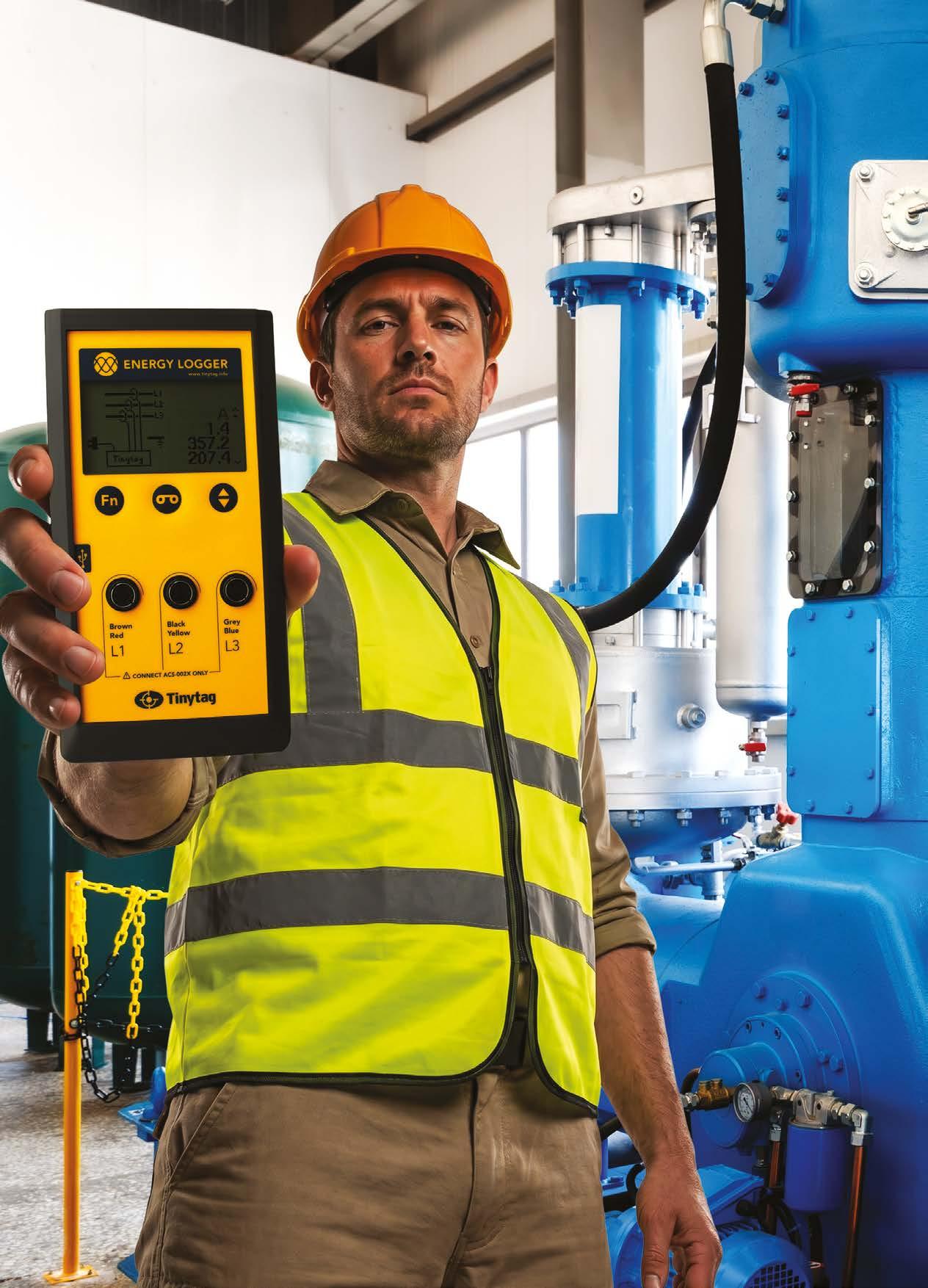

Monitor energy consumption non-intrusively across equipment and facilities, without interfering with services or uptime. Monitor equipment-level usage.
Identify hidden inefficiencies. Gain clear visibility of where, when and how energy is being used, so inefficiencies can be identified and addressed with confidence.
Establish accurate energy baselines to justify investment, validate change and support funding or grant applications. Verify energy-saving projects.
Replace guesswork with reliable data that supports smarter operational decisions and longterm efficiency planning. Make data-driven decisions.