TURNING ENERGY INSIGHT INTO ACTION FOR UK MANUFACTURING SMES
With rising energy costs and increasing pressure to improve operational efficiency, UK manufacturers are being challenged to do more with less. The government’s commitment of £2 million to support energy efficiency through the Made Smarter Adoption Programme reflects a growing recognition that digital tools and data-led decision-making are essential for sustainable growth, particularly for SMEs.
However, before manufacturers can invest in new equipment, automation or energy-saving technologies, they must first understand how energy is being used across their operations. Without accurate, granular data, efficiency initiatives risk being based on assumptions rather than evidence.
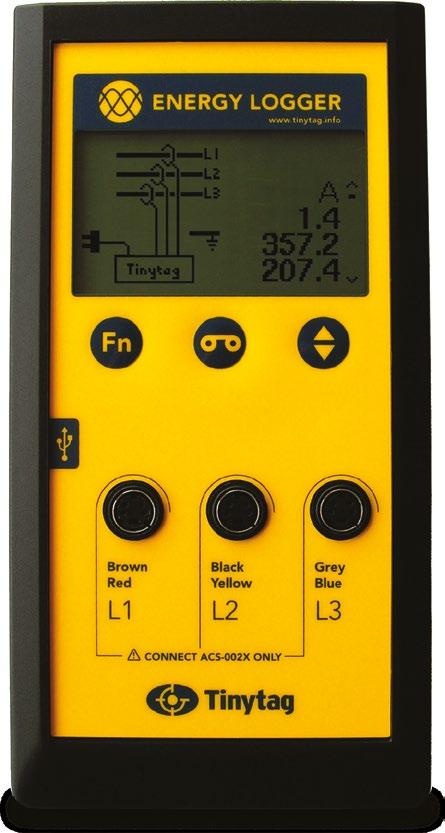
This is where energy monitoring becomes a powerful enabler. Tinytag Energy Loggers by Gemini Data Loggers provide manufacturers with a clear, objective view of electrical consumption by measuring voltage, current, power and power factor either across an entire facility or at critical points throughout. By establishing reliable energy baselines, businesses can identify inefficiencies, uncover hidden waste and prioritise improvements with confidence.
For operations managers and facilities teams, this data supports smarter decisions. From validating the impact of process changes and equipment upgrades, to justifying investment cases and supporting funding applications. Crucially, it turns energy efficiency from a theoretical goal into a measurable, manageable operational discipline.
For manufacturers looking to go further, energy monitoring can also highlight areas where deeper investigation is required. Uneven energy demand or unexplained consumption patterns may indicate issues with airflow, insulation or thermal performance. There are areas where targeted diagnostic services such as Thermal Mapping can provide further insight.
With over 40 years of experience designing and manufacturing robust, reliable data loggers in the UK, Tinytag by Gemini Data Loggers helps manufacturers take the first, most important step toward energy efficiency: understanding their environment. Armed with accurate data, UK SMEs are better placed to take advantage of initiatives and funding and build more resilient, efficient operations for the future.
Visit: www.geminidataloggers.com/energy-in-manufacturing to learn more Tinytag by Gemini Data Loggers
Turn energy costs into actionable insight.
Gain clear visibility of where, when and how energy is being used, so inefficiencies can be identified and addressed with confidence.
Build a data-driven case for efficiency improvements.
Establish accurate energy baselines to justify investment, validate change and support funding or grant applications.
Reduce waste without disrupting operations.
Monitor energy consumption non-intrusively across processes and infrastructure, without interfering with production or uptime.
Move to evidence-based decisions and control.
Replace guesswork with reliable data that supports smarter operational decisions and longterm efficiency planning.
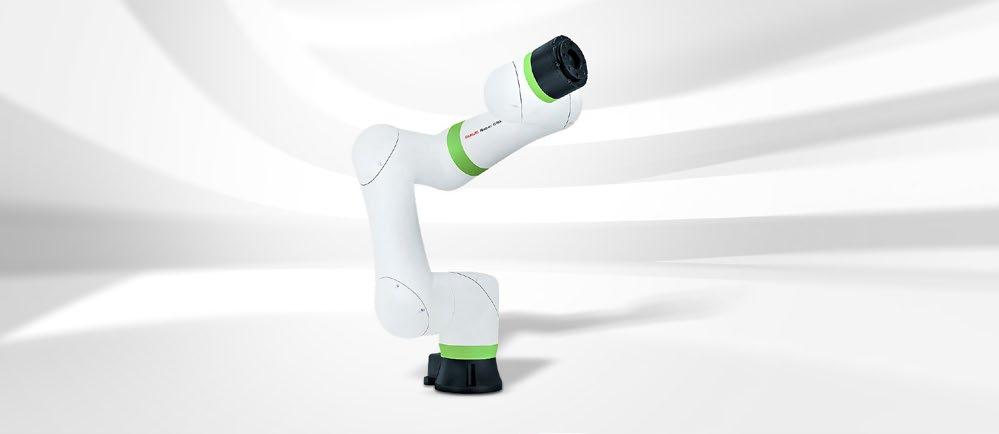
FANUC has announced the European launch of its CRX-3iA collaborative robot, the lightest and smallest model in the CRX portfolio to date. With a total weight of just 11kg, FANUC’s latest offering is compact, portable, intuitive and precise, making it ideal for welding applications. Addressing growing demand in sectors such as shipbuilding and steel construction, it can be carried easily with just one hand, allowing a single person to supervise multiple welding locations and mitigating the Europe-wide shortage of skilled welders.
Boasting a 3kg payload, the CRX-3iA can manipulate a welding torch and a seam-tracking sensor simultaneously, while its ±0.02 mm repeatability delivers the precision necessary for critical welding tasks. It automatically detects its installation angle after relocation and identifies weld seam locations and calculates paths accordingly, thanks to a thirdparty laser scanner or touch sensor. Meanwhile, an optional magnetic base enables it to be secured directly to large steel structures. This reduces system complexity compared with traditional robot installations, which typically need heavier equipment and additional safeguarding measures.
As part of the wider CRX series – which extends to 30kg payload and 1,756mm reach – the CRX-3iA integrates fully with FANUC’s established control and
software ecosystem. It also incorporates FANUC’s wrist button technology, which allows operators to guide and teach positions directly from the robot arm, streamlining programming and shortening changeover times.
Beyond welding, the CRX-3iA is ideally suited to applications such as intralogistics and mobile automation. Its compact footprint and low mass also make it ideal for mounting on an automated guided vehicle (AGV), where it can support picking, placing and line supply tasks. In addition, it lends itself well to education and training environments, where space constraints often render the use of traditional industrial robots impractical.
“Manufacturers need automation that adapts to their environment, not the other way around,” says Paul Ribus, FANUC’s Head of Sales Coordination Europe. “With the CRX-3iA, we focused on portability, fast deployment and high repeatability. It allows customers to take advantage of collaborative welding and handling wherever the work is, without complex installation.”
Visitors to FANUC’s Open House will be able to see the new CRX-3iA collaborative robot first hand when it makes its debut appearance in the UK on 3rd/4th November. www.fanuc.eu
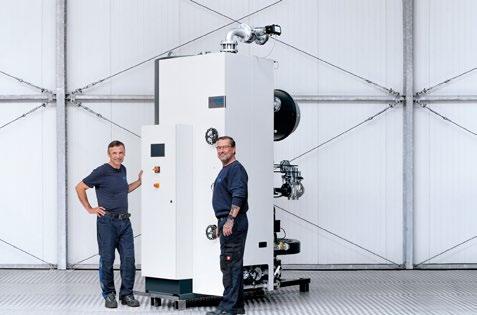
CERTUSS has been supplying high-quality steam generators to a wide range of industries for many years, helping businesses optimise their processes with reliable and efficient steam solutions. As energy efficiency becomes increasingly critical in today’s rapidly evolving industrial landscape, CERTUSS technology continues to provide real value for organisations looking to improve performance while reducing operating costs.
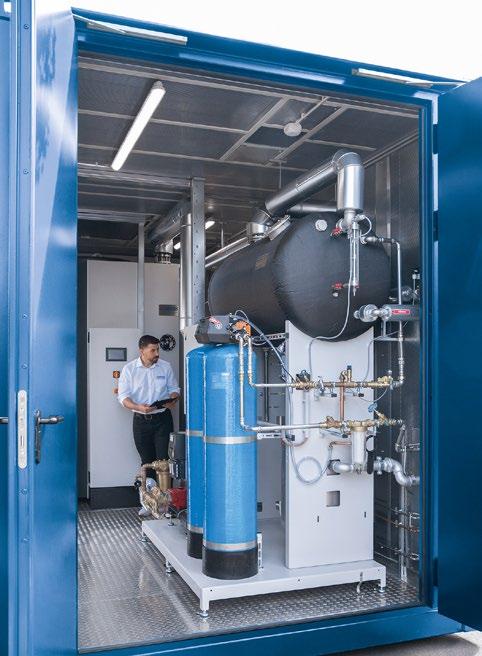
Manufactured in Germany, CERTUSS steam generators are built with precision engineering and a strong focus on efficiency, reliability, and longevity. Designed to meet the demands of modern industry, our systems provide a dependable supply of steam for a wide variety of applications, including food processing, healthcare, pharmaceuticals, manufacturing, sterilisation, and cleaning processes.
CERTUSS offers a comprehensive range of fossil fuel steam generators, with capacities from 80kg/hr up to
2000kg/hr on a single unit. For larger steam demands, our modular systems can be combined and supplied as pre-piped skid units, enabling outputs of 8000kg/ hr and higher, while maintaining the flexibility, redundancy, and efficiency that CERTUSS systems are known for.
In addition, CERTUSS provides electrical steam generators, offering capacities from 10kg/hr up to 320kg/hr on a single unit. The EMX range features advanced modular systems that can be combined to achieve higher capacities while delivering full modulation, ensuring precise control and maximum energy efficiency.
A key advantage of CERTUSS steam generators is their highly efficient design. Rapid start-up times, responsive control, and excellent thermal efficiency allow businesses to generate steam exactly when it is needed while minimising energy consumption and operating costs.
CERTUSS systems are also designed with practicality in mind. Their compact footprint makes them ideal for installations where space is limited, while the modular design allows systems to grow alongside increasing steam demand.
At CERTUSS UK, we combine world-class German manufacturing with local expertise and support, working closely with customers to deliver tailored steam solutions that save time, space, and money.
CERTUSS UK – Reliable Steam Generation, Engineered in Germany.
www.certuss.co.uk
LEIBINGER AND KOMAX JOIN FORCES FOR AUTOMATED CABINET WIRING
AUTOMATED WIRE PROCESSING AND INTEGRATED MARKING COMBINED IN A SINGLE MACHINE.
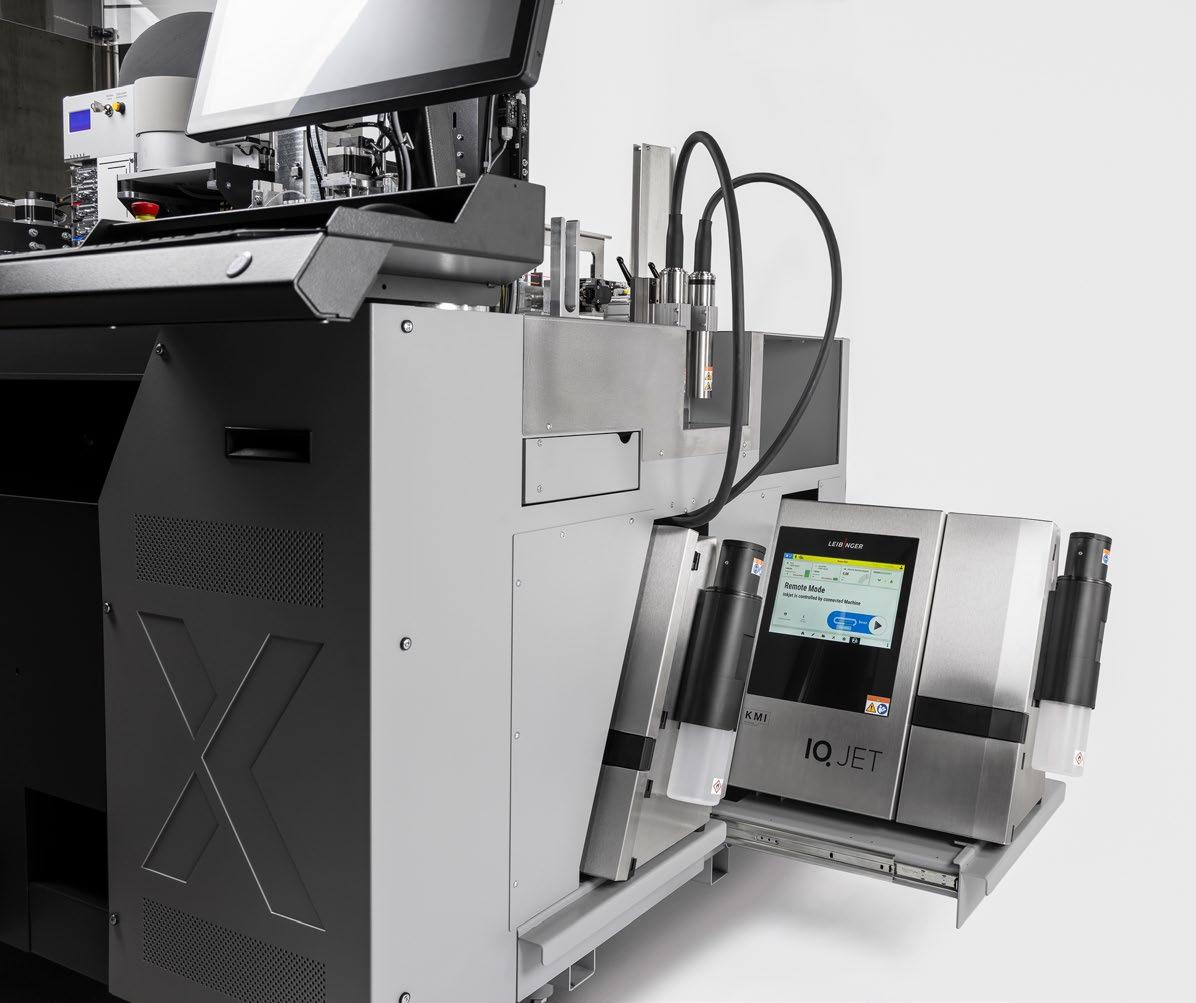
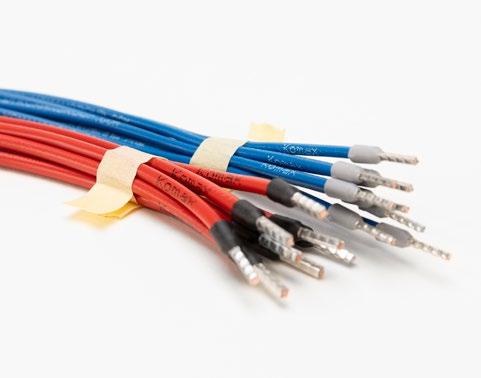
Shorter throughput times, lower error rates and more efficient use of skilled labor are key success factors for control cabinet and machine manufacturers. With their new partnership, LEIBINGER and KOMAX now offer a wire processing solution designed to address exactly these challenges: the powerful ZETA 620 G2 combines automated processing with integrated CIJ marking, helping manufacturers streamline operations and increase productivity.
The ZETA 620 G2 consistently automates cabinet wiring workflows. From the digital wire list to the ready-to-install wire bundle, the system creates an efficient production process with minimal manual
intervention. The machine processes wires with crosssections from 0.5 to 6 mm², supports up to 24 wire types and offers flexible ferrule processing options.
Integrated marking for maximum process reliability
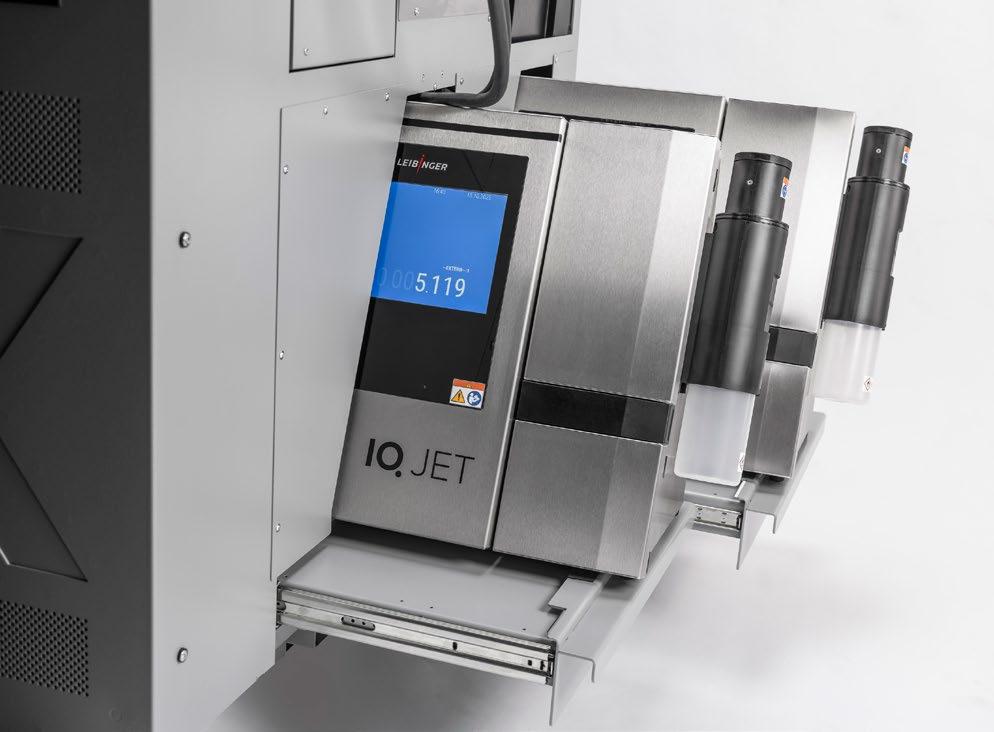
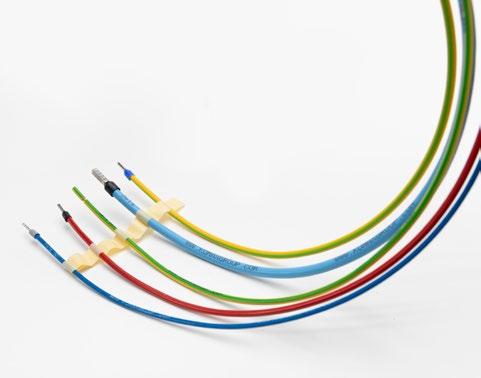
With the integration of two LEIBINGER IQJET continuous inkjet printers, wire marking becomes an integral part of the automated production workflow. Via the KMI interface, the systems are fully integrated into the machine and synchronized with the processing operation. Wires are automatically and precisely marked according to specifications –without requiring additional process steps.
“With the market launch of the ZETA 620 G2 featuring integrated marking, we are setting new standards in automated wire processing,” says Matthias Felder, Product Manager at KOMAX. Michael Wöhrmann, Business Development at LEIBINGER, adds: “By extending the system with integrated marking, we have created an even more seamless workflow that significantly streamlines day-to-day operations for control cabinet manufacturers.”
To ensure maximum flexibility, two IQJET printers are used – one standard and one pigmented version. This enables reliable, high-contrast marking on both light and dark wires, including properties, batch numbers and customer-specific text. LEIBINGER’s extensive ink portfolio delivers optimal, abrasion-resistant and overprint-resistant printing results on a wide variety of wire insulation materials. Users also benefit from a complimentary sample testing service to identify the ideal ink for their specific application.
Technology that makes the difference
As an innovation leader in industrial coding and marking, LEIBINGER brings key technological advantages to the partnership.
“With IQJET, we offer a plug-and-print marking system that can operate for up to five years without maintenance. It stands for exceptionally easy integration thanks to smart interface connectivity, intuitive day-to-day operation and minimal maintenance requirements. IQJET is designed to do exactly what users expect: deliver reliable printing performance without creating additional workload for operators,” says Florian Kuppel, Senior Project Manager Product Innovations at LEIBINGER.
LEIBINGER’s automatic nozzle sealing technology ensures maximum print quality and high uptime. At the end of production, the nozzle seals airtight, preventing ink from drying out. As a result, the printer is immediately ready for operation again even after extended production pauses – without flushing procedures.
Additional benefits are provided by the integrated Refresh Station. It enables fully automatic printhead cleaning in just two minutes without operators coming in contact with solvents. This function is particularly valuable in demanding applications such as wire processing, where ink particles may settle inside the printhead. The Refresh Station is included as standard in all IQJET systems.
An integrated uninterruptible power supply (UPS) provides additional operational security. In the event of a power failure, the system shuts down in a controlled manner, ensuring a safe restart without additional cleaning effort.
Partnership with a clear focus on integration
The integration of LEIBINGER marking technology into the ZETA 620 G2 was carried out in close collaboration between KOMAX and LEIBINGER and specifically tailored to the requirements of automated cabinet wiring. The primary focus was the seamless integration of the marking system into the existing machine and data workflow.
“The IQJET marking solution could be integrated into the ongoing process in a compact and highly reliable way,” explains Michael Franz, Project Manager at the KOMAX Group.
www.leibinger-group.com
WHY CONNECTED AUTOMATION WILL DEFINE THE NEXT DECADE OF THE TRADE
DARREN HODSON, MANAGING DIRECTOR OF WAGO UK & IRELAND, ON HOW BUILDING AUTOMATION, ENERGY MANAGEMENT AND PLUG-AND-PLAY CONNECTION ARE RESHAPING THE ROLE OF THE ELECTRICAL INSTALLER, AND WHERE TO FOCUS TO STAY AHEAD OF THE CURVE.
Walk onto a commercial site today and the job looks recognisably similar to one ten years ago. The cables are still pulled, the boards are still built, the testing is still done. Look closer though, and the work has changed. Lighting talks to occupancy. Heating talks to weather data. Solar talks to storage. Switchgear talks to a building management system that talks to a tenant’s phone. The installer is no longer wiring up a building. The installer is wiring up a connected system.
That shift is going to define the next decade of our trade. Smart buildings, energy monitoring and connected automation are no longer specialist work reserved for niche projects. They are becoming the default specification on commercial fit-outs, industrial refurbishments, public sector estates and increasingly on housebuilding too. Anyone working on commercial or domestic electrical jobs has a stake in where this is going.
The good news for the trade is that the path to higher-value work has rarely been more obvious.
The installers who build genuine confidence with three things in particular, plug-and-play connection systems, basic building automation, and energy monitoring, are the ones quoting on bigger jobs and winning repeat specifications.
Get fluent in plug-and-play, not just terminal blocks
Twenty years ago a connection was a connection. Today, the connection method you choose can shave hours off a programme, cut callbacks to almost zero, and let a contractor you have never met pick up where you left off. Push-in and leveraction connectors have done a lot of heavy lifting on this front, and the rise of pre-wired luminaire and small-power systems has gone further again. A site team running plug-and-play distribution can roughin lighting and final connect at a pace traditional methods cannot match, with a clean audit trail and far fewer interpretation mistakes.
The practical takeaway is to learn the systems properly, not just the products. Understand which connector belongs in a junction box, which belongs in a luminaire, which is rated for outdoor or harsh environments, and which is approved for the panel. Specifiers notice when an installer can answer those questions on the first visit. So do main contractors signing off variations.
Treat building automation as core knowledge
Building automation used to live in a different conversation, run by controls specialists with their own language and their own tools. That wall has come down. A modern commercial project routinely expects the electrical contractor to deliver lighting control, HVAC interfaces, metering and a degree of integration into the wider BMS. Even on smaller schemes, room automation and energy-saving controls are now standard rather than premium.
You do not need to become a controls engineer overnight. You do need to be able to read a basic schematic for a controller, understand the difference between a hardwired input and a digital one,
know what a typical I/O system looks like, and feel comfortable terminating into one. Manufacturers are making this dramatically easier. Configuration apps, image-recognition tools, on-site documentation and free design software now sit on every installer’s phone. Use them. They are designed for the working day, not the showroom.
Energy monitoring is the gateway to the bigger jobs
Energy management is where the regulatory and commercial pressure is heaviest, and it is where electrical installers are best placed to win new ground. ESOS reporting, sub-metering for ESG disclosure, EV charging load management and the ongoing push towards Net Zero all rely on accurate, granular electrical data. That data has to come from somewhere, and someone has to install the meters, current transformers and gateways that produce it.
Installers comfortable with metering, sub-circuit monitoring and the basics of energy data become the obvious first call when a building owner asks how to demonstrate consumption against targets. From there, the conversation moves naturally into controls, microgrid-ready distribution and, on the right sites, into industrial work where the value of every kilowatt is closely measured.
The bigger picture
Connected automation expands the installer’s role rather than threatening it. The trade has always sat at the meeting point of design intent and physical reality, taking what an engineer drew and making it work on a wall, in a ceiling, behind a panel door. That has not changed. What has changed is the reach of that expertise. An installer who understands plugand-play, building automation and energy monitoring is no longer competing on price for a fit-out. They are partnering on a building.
WAGO has spent 75 years working alongside installers, panel builders and engineers across every one of those changes. The kit gets smarter, the systems get more connected, but the people on site are still the ones who decide whether a project lands well. The installers who lean into this shift, rather than waiting for it to settle, will be the ones writing the next chapter of the trade.
www.wago.com
BANELEC LANDS £500,000 AEROSPACE ORDER FOR ENGINE FAN CASE LIFTING SYSTEM
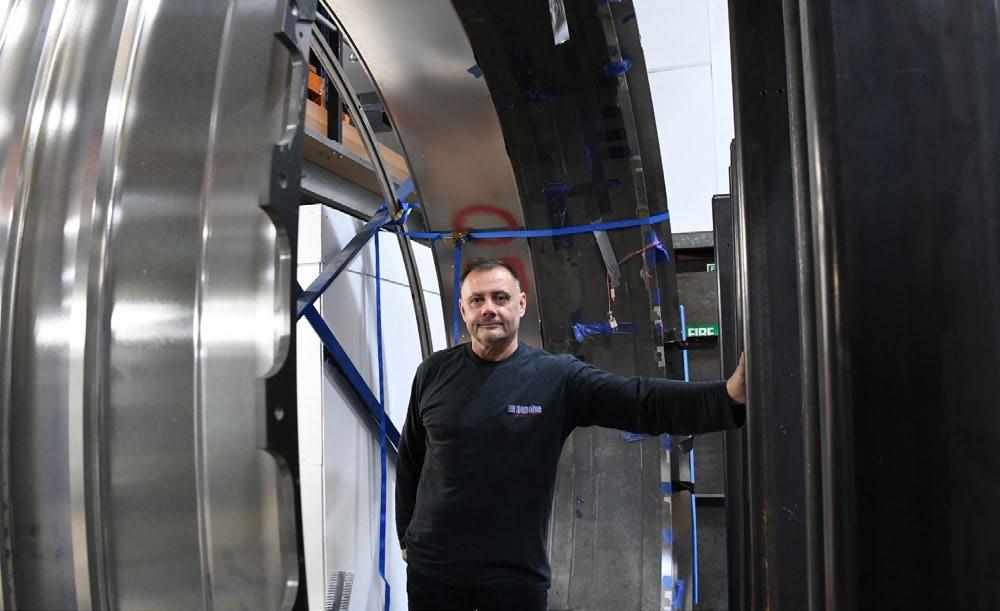
Banelec, the Brierley Hill-based electrical control systems specialist, has successfully completed a major £500,000 contract for a fan case lifter designed for a global aerospace OEM, marking another significant milestone for the West Midlands manufacturer.
The project saw Banelec develop and deliver assisted lifting equipment created to solve repetitive health and safety strain injuries associated with handling large, heavy fan case units during aerospace manufacturing. The bespoke system enables operators to lift, lower and rotate the components safely and precisely, reducing physical strain on engineers while improving handling accuracy on the production line.
The contract win underlines Banelec’s growing reputation as a trusted behind-the-scenes engineering partner for some of the world’s biggest industrial brands. From its base in the Black Country, the business has built its name over more than two decades by designing and manufacturing bespoke electrical control and automation systems that
help customers improve safety, productivity and operational performance.
Managing director Dean Banner said the successful completion of the project demonstrated the value of combining practical engineering expertise with a clear understanding of customers’ workplace challenges.
“This was a major contract win for Banelec and one we are extremely proud to have delivered successfully,” he said. “The brief was not simply to move a large aerospace component from one position to another. The real challenge was to create a solution that directly addressed repetitive strain and manual handling risks for the people working on and around the fan case every day.”
“By designing assisted lifting equipment that can raise, lower and rotate the unit in a controlled and precise way, we have helped the customer create a much safer working environment while also improving consistency and efficiency in the process.”
Dean Banner MD Celebrates Major Aerospace Order
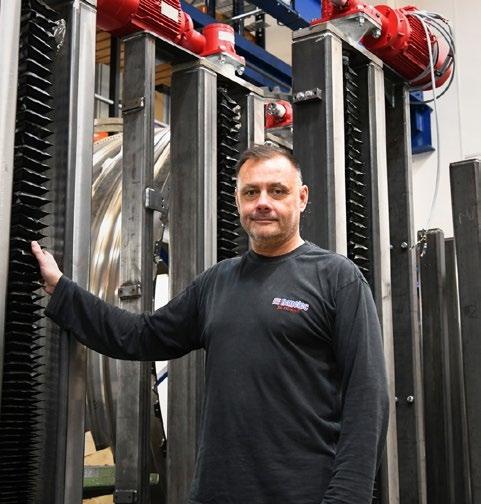
Banelec worked closely with the customer to understand the demands of the application before designing a system based around three electricpowered jacks positioned equidistantly around the fan case. Each jack is controlled through its own electrical control panel, with all three operating in unison to manipulate the load safely in line with operator requirements. A radio control system provides a user-friendly interface, allowing engineers to control movement smoothly and with confidence.
For the aerospace customer, the system represented a step-change in both operator safety and process capability. Fan case units are critical aircraft engine components, but their size and weight can make them difficult to handle during construction and finishing operations. The ability to reposition the unit safely at different heights reduces the physical demands placed on workers and lowers the risk of damage to valuable components.
Banner said the contract reflected Banelec’s wider approach to engineering-led problem solving.
“At Banelec, we are at our best when we are solving real operational problems,” he said. “This project is a strong example of how smart electrical control and automation can make manufacturing not only more productive, but also safer and more sustainable. That is exactly where industry is heading, and it is where we add the greatest value.”
“To secure and complete a £500,000 order for a major global aerospace OEM is a significant achievement for our team in Brierley Hill. It shows that specialist engineering expertise developed here in the West Midlands can compete with the very best and deliver on some of the most demanding projects in global manufacturing.”
The installation was completed efficiently and integrated into the customer’s existing flow line with minimal disruption. Extensive testing was then carried out to assess lifting capacity, durability, reliability and control accuracy under a range of operating conditions.
Banelec said the success of the project has helped establish a new benchmark for safe fan case handling in aerospace production and reinforces the company’s credentials in delivering bespoke systems for highspecification industrial environments.
Known for its work across automation, hazardous area controls, robotics, Industry 4.0 applications and electrical control systems, Banelec has supplied
solutions to major names including Rolls-Royce, Jaguar Land Rover, GKN, Chevron, BP and Aibel. The latest aerospace contract adds further weight to its claim of being one of the sector’s best-kept secrets.
With demand growing for smarter and safer manufacturing solutions, the company believes projects such as the fan case lifter highlight how UK engineering firms can play a critical role in helping global manufacturers modernise production while protecting their workforce.
About Banelec
Banelec is a Brierley Hill-based electrical control systems and automation integration specialist with more than 20 years’ experience supporting manufacturers across a wide range of industries. Known as one of the sector’s best-kept secrets, the company designs and delivers bespoke solutions that improve safety, productivity and operational performance, with expertise spanning automation, hazardous area systems, robotics and Industry 4.0 applications. Working with major global brands including Rolls-Royce, Jaguar Land Rover, GKN, BP and Chevron, Banelec combines practical engineering know-how with a problem-solving approach to help customers modernise manufacturing and operate more efficiently in demanding industrial environments.
For more information, visit www.banelec.com
Brett Barratt of Warrior Doors discussing security sliding doors for NCI sites
HELU CABLES IN DYNAMIC INSTALLATIONS
DEVELOPMENT COOPERATION: POWER SUPPLIES ON RILINEX.
In an industrial environment, cables must fulfill far more functions than just transmitting electrical power or signals. They should maintain full reliability even under heavy mechanical loads, in harsh working conditions, and during intensive use.
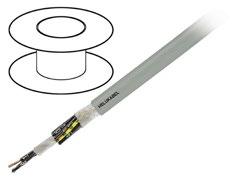
HELU cables designed for cable carriers (drag chain) are specifically engineered for dynamic applications. They perform well in both fast-operating machine tools with limited installation space and in port installations where long travel distances are required. Each of these applications demands appropriately selected materials, construction, and technical parameters. Below we present an overview of such HELU products – adapted to diverse and most demanding applications in industry and automation.
In this article, we cover topics such as:
• Ethernet infrastructure in mobile installations
• Control cables for robotics
• Hybrid cabling, i.e., control and power
• Advantages of polyurethane insulation
• Requirements for drive power cables
• Signal conduction in dynamic systems
HELUKAT® Network
Cables
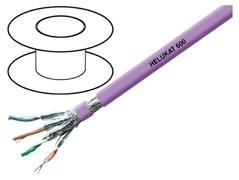
HELUKAT® cables are advanced cabling for Ethernet applications, also ideal for industrial automation systems. HELU offers cables adapted to work in drag chains and in challenging environmental conditions. The products meet the PROFINET standard requirements and offer high transmission parameters – from category 5e to 7e.
HELUKAT100-FTP-FF HELUKAT® 100
HELUKAT600-SSTP-SF HELUKAT® 600
PROFINET-C-PVC HELUKAT® PROFInet C
The cable construction is standardized, so RJ45 connectors are mounted at the ends using a standard crimping tool. The outer jackets are made of flameresistant PVC or material with FRNC properties.
MULTIFLEX 512® Series
MULTIFLEX 512® cables are designed for use in drag chains. They come in unshielded and doubleshielded versions, using braided copper wires. Their main purpose is signal transmission in static and dynamic installations. The latter includes machines, machine tools, robots, etc. The flexible control cables MULTIFLEX 512® have sliding properties and provide optimal operational durability, thanks to the use of PP core insulation and an outer PUR sheath, free from adhesive substances and resistant to cuts.
MF512-PUR2X0.5 MULTIFLEX 512®-PUR
MF512-C-PUR2X1 MULTIFLEX 512®-C-PUR
MULTIFLEX 512® cables have 2 to 36 cores (numerically marked) with cross-sections from 0.75mm2 to 2.5mm2. The rated voltage is 300/500V. Regardless of the version, the cores are made in a stranded format, providing the cables with the highest possible flexibility.
Hybrid Solutions TOPSERV® and TOPGEBER
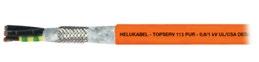
“Hybrid” cables are those that simultaneously serve for power supply and signal transmission. Such demand most often occurs when controlling servomechanisms, which is why many hybrid solutions from HELU belong to the TOPSERV® series. They are adapted for use in advanced production processes, robotics, tool industry, etc. The cable may have, for example, an additional overall shield and is most often made in compliance with various standards (VDE, UL, and CSA).
TOPSERV110P-71705 TOPSERV®110
TOPSERV113P-74508 TOPSERV®113
TOPGEBER512-705221 TOPGEBER 512
The cable specifications match the parameters provided by leading servo drive manufacturers, so that the cables can be used without obstacles in
the machine industry, construction and installation of production robots, in automation, and in other applications within production engineering. All the hybrid cables described here are also adapted for laying in cable chains.
PURö Cables
The products are available in two variants: shielded and unshielded. Both versions are used, among others, in industrial automation, production lines, and drive systems.
SUPERTRONIC® Series
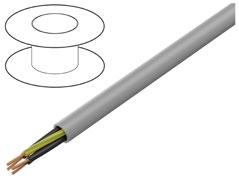
HELU brand cables from the PURö series are solutions designed for work in demanding industrial conditions, where mechanical and chemical resistance is crucial. Their key construction aspect is the polyurethane (PUR) sheath, which provides high resistance to abrasion, oils, greases, UV radiation, atmospheric factors, as well as coolants, ozone, etc. Due to their high flexibility, these cables perform well in moving applications, such as cable carriers, robots, or CNC machines. Typical operating temperature ranges and bending resistance make them a more durable alternative to classic PVC cables, especially in applications where significant mechanical loads occur.
F-C-PUR-JZ-7G1.5 F-C-PURö-JZ
PURO-JZ-4G0.5 PURö-JZ
PO-JZ-HF3G0.5 PURö-JZ-HF
The cables are resistant to temperatures ranging from -40°C to 80°C. Their rated voltage is 300/500V. A single cable can contain up to 50 cores with a cross-section of 1.5mm2 while maintaining class 5 flexibility, i.e., relatively high flexibility, although their diameter in such cases reaches 24.2mm. Selected products from various PURö series meet the Eca CPR standard requirements.
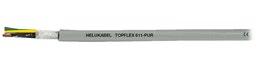
TOPFLEX®611 Series
The TOPFLEX® series includes power cables mainly intended for use in regulated drives, especially with inverters. Their polyurethane insulation provides high resistance, similar to the PURö solutions described above. The products are adapted for installation in dynamic systems, characterized by good flexibility and durability even with frequent bending.
Cables from the SUPERTRONIC® 310-PVC and SUPERTRONIC®PVC series offered by HELU are flexible control and signal cables intended for use in industrial automation and electronics. Variants marked with the letter “C”, such as SUPERTRONIC® 310-C-PVC and SUPERTRONIC®-C-PVC, have a copper shield. Differences between the “310” variants and the standard SUPERTRONIC® series result from construction and purpose, with the 310 models being more suited for precise signal applications and data transmission.
TOPFLEX611CP-4G1.5 TOPFLEX®611-C-PUR
TOPFLEX611P-4G1.5 TOPFLEX®611-PUR
STR310-C-10X0.14 SUPERTRONIC® 310-C-PVC
STR310-4X0.14 SUPERTRONIC® 310-PVC
STR-C-PVC3X0.34 SUPERTRONIC®-C-PVC
STR-PVC2X0.25 SUPERTRONIC®-PVC
SUPERTRONIC® cables support rated voltages up to 1500V (selected versions). They have 2…25 cores with a cross-section of 0.14mm2, 25mm2 or 34mm2 – always made in a stranded format, to ensure high flexibility. Individual cores are color-coded. The PVC insulation ensures that the products have good resistance to oils and work in dynamic installations.
KNOWLES LOGISTICS CUSTOMERS TO BENEFIT FROM LATEST INVESTMENT TO DRIVE EFFICIENCY
AND PRODUCTIVITY
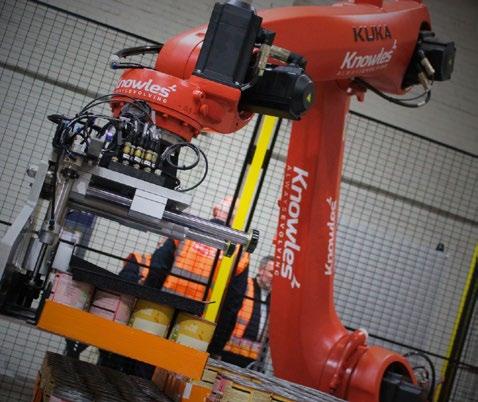
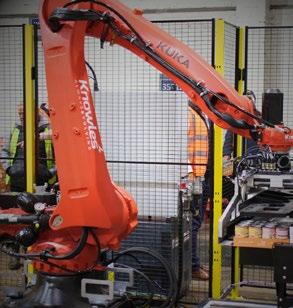
Knowles Logistics – one of the UK’s leading endto-end supply chain specialists in the food, beverage and packaging sectors – has announced a major investment in a co-packing robot, further strengthening its commitment to innovation across its operations.
The robot, supplied by German manufacturer KUKA and customised by Cambridge-based automation experts Granta, will significantly enhance Knowles’ copacking capabilities.
The technology enables flexible repackaging of food products and packaging formats to meet customers’ varying requirements, such as creating multipacks or bespoke promotional configurations.
From the moment it leaves KUKA’s factory, the robot is fully operational, with Granta’s bespoke modifications ensuring it integrates seamlessly into Knowles’ processes. This investment enables the company to offer an automated co-packing service that delivers greater precision, speed, and adaptability for its clients.
Alex Knowles, CEO, Knowles Logistics, said: “This co-pack robot marks and exciting step forward as we continue to embrace automation across our business.
“It provides us with the flexibility to quickly reconfigure product formats to meet customers’
changing needs while simultaneously improving efficiency and productivity and is yet another example of how Knowles is continuing to invest to deliver smarter, faster, and more sustainable supply chain solutions.”
The new co-packing system follows a series of recent investments in automation and digital transformation across Knowles’ warehousing and fulfilment operations.
In the past twelve months, the company introduced autonomous cleaning robots – the CR700 Robotic Scrubber Dryer and K900 Industrial Vacuum Sweeper Robots – supplied by Crescent Industrial’s Cleaning Intelligence brand. Operating around the clock, these machines have reduced manual cleaning requirements, freeing team members to focus on higher-value operational tasks.
Added to this has been the introduction of inventAIRy XL, an inventory management drone which has proved to be a game-changer for Knowles Logistics’ perpetual inventory (PI) teams and customer offering. By automating the inventory management process, Knowles can offer maximised accuracy and traceability of product movements whilst significantly increasing cycle counts.
These latest developments reflect Knowles’ continued growth and success. Over the past year the award winning company has invested substantially in expanding its electric vehicle fleet as well as in its operation further driving sustainability across its operation.
The business continues to explore further automation and digital initiatives to enhance efficiency, sustainability, and service excellence across its endto-end logistics operations.
22 - 24 September 2026 l NEC, Birmingham
The stage is set for the PPMA Show 2026, held at the NEC, Birmingham from 22 to 24 September. See over 350 exhibitors, discover the latest technologies, experience live demonstrations and meet new contacts. Scan the QR code to reserve your free pass today.
THE PEOPLE BEHIND RA AUTOMATION
A COMPANY GROUNDED IN TECHNICAL EXCELLENCE AND LONG-TERM CUSTOMER RELATIONSHIPS.
In less than two years since launch, RA Automation Ltd. has secured a strong foothold in system integration, completing projects for major names including Amazon and Pukka while exceeding its initial growth targets.
RA Automation may be a relatively new name, but the expertise behind the business tells a different story. With a combined 45 years of experience in system integration, co-founders Ashley Adams and Richard Boon have built a company grounded in technical excellence and long-term customer relationships.
“We’re a systems integrator predominantly working across airports, logistics, and food & beverage,” explains Ashley Adams. “Currently we’re a team of eight, specialising in PLC and visualisation software, electrical design, control panel supply, and full project management.”
A business built on shared values
The decision to launch RA Automation was rooted as much in philosophy as opportunity. Having previously worked together in senior roles, Ashley and Richard made a conscious decision to build a business aligned with their own principles.
“We’re big believers in a customer-first approach and long-term relationships based on trust,” says Richard Boon. “Seeking short-term gains at the expense of customers is not how good working relationships are built. We always want to do right by our customers, even if it means making less in the short term.”
That mindset has resonated. Since launching in October 2024, the business has grown rapidly, expanding to a team of eight while completing highprofile projects and surpassing growth targets.
Playing to their strengths
From the outset, RA Automation has focused on depth rather than breadth. “Rather than trying to
be experts in everything, we have chosen to double down on our experience in airports, logistics, and food & beverage,” says Richard. “That allows us to deliver high-level systems that create real value.”
At its core, the company solves operational challenges around throughput and system performance. “Our customers come with varying issues, but often it boils down to throughput capacity,” explains Ashley. “We design systems that increase throughput in a controlled, manageable way.”
However, technical capability is only part of the equation. “A big part of what we do is understanding how operators interact with the system. We build that picture with the customer based on their specific needs and our team’s expertise.”
High-level integration
“Like most system integrators we offer an end-toend solution, but what sets us apart is the calibre of the people behind the systems,” says Ashley. “We’ve assembled a highly capable team that provides excellent service at every stage.”
The results often speak for themselves. “Our solutions are a low-risk investment. They’ve consistently proven to increase throughput capacity.”
“In many cases, we’re replacing manual processes with fully automated systems,” adds Richard. “That leads to reduced labour costs, increased efficiency, and improved safety.”
“When people think of conveyors, they often think of the basics. Where we really add value is in high-level system integration.”
Growth without compromise
Looking ahead, RA Automation is focused on growth without compromising service quality. “Whether there are eight or eighty of us, our goal will always be to provide a personable, dependable service,” says Ashley.
“Ultimately we’re here to improve our customers’ operations over time,” Richard concludes. “We look forward to helping more businesses achieve tangible results through effective system integration.”
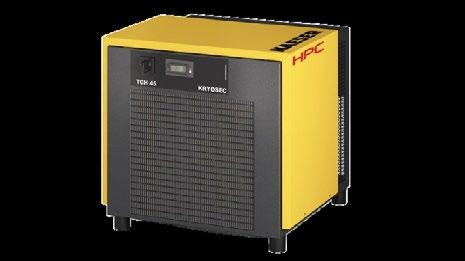
GREAT THINGS COME IN YELLOW PACKAGES
Compressors are perhaps the most important equipment that a company has, whether they have a factory, farm or workshop. It powers their vital machinery. So, if the compressor fails, so does production.
That’s why it needs to be reliable – and not just the compressor, but the dryer, and filters, too.
Mixing and matching brands might appear to save money upfront. But you pay for it down the line, when the cheap brand can’t be repaired and needs replacing after a few years.
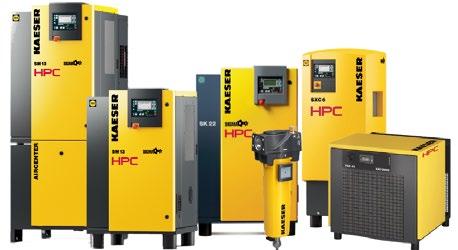
HPC KAESER compressed air equipment is renowned for quality, reliability and energy efficiency. Our equipment not only saves you thousands of pounds a year in energy bills, but it lasts for decades, too.
So, it makes sense to go in all HPC KAESER when you are building a compressed air system.
And right now, we have a special offer that makes it easier for you to do just that.
The HPC KAESER Package Promotion
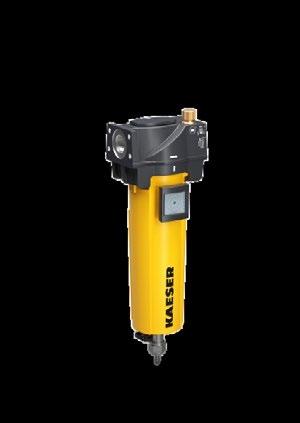
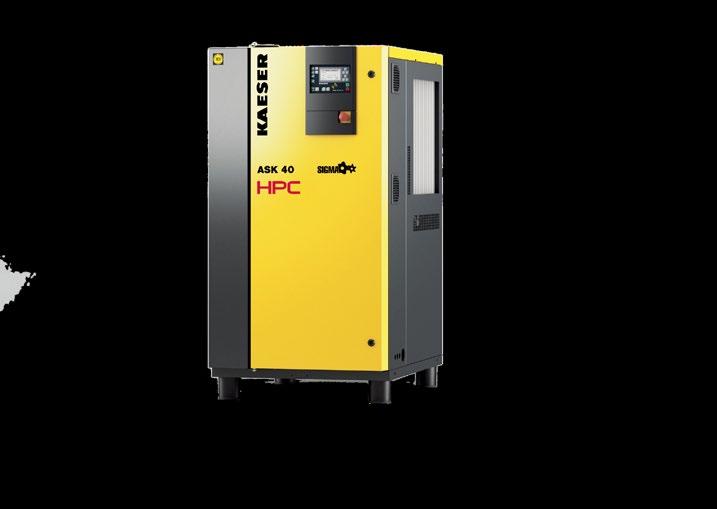
The HPC KAESER Package Promotion is a limited time special offer on a 3-in-1 bundle* which ensures maximum reliability and air quality across your compressed air system.
Ideal for garages & workshops, this compressed air package includes a belt-driven screw compressor, refrigeration dryer and afterfilter.
Compressors featured in this promotion: SXC, SM, SM RM, SK, ASK and AIRCENTER Series.
* The SXC Series and AIRCENTER Series - which already come with integrated refrigeration dryers- include an afterfilter only.
FROM MEASUREMENT TO INTELLIGENCE:
WHY DATA IS REDEFINING QUALITY IN UK MANUFACTURING.
Manufacturing is entering a new phase in which measurement alone is no longer enough. For decades, precision metrology has underpinned quality assurance, providing a definitive answer to a simple question: does the part meet tolerance or not? Today, that binary view is being overtaken by a more strategic reality — one in which the real value lies not in the measurement itself, but in what the data reveals about the process behind it.
As tolerances tighten, production rates increase and supply chains become more complex, manufacturers recognise that inspection data is no longer a byproduct of quality control but a critical operational asset. Increasingly, businesses are shifting from pass/fail verification towards a model in which measurement becomes a continuous source of insight, capable of driving process stability, improving yield and accelerating decision-making.
“Historically, inspection has been treated as a checkpoint — a way of confirming whether something
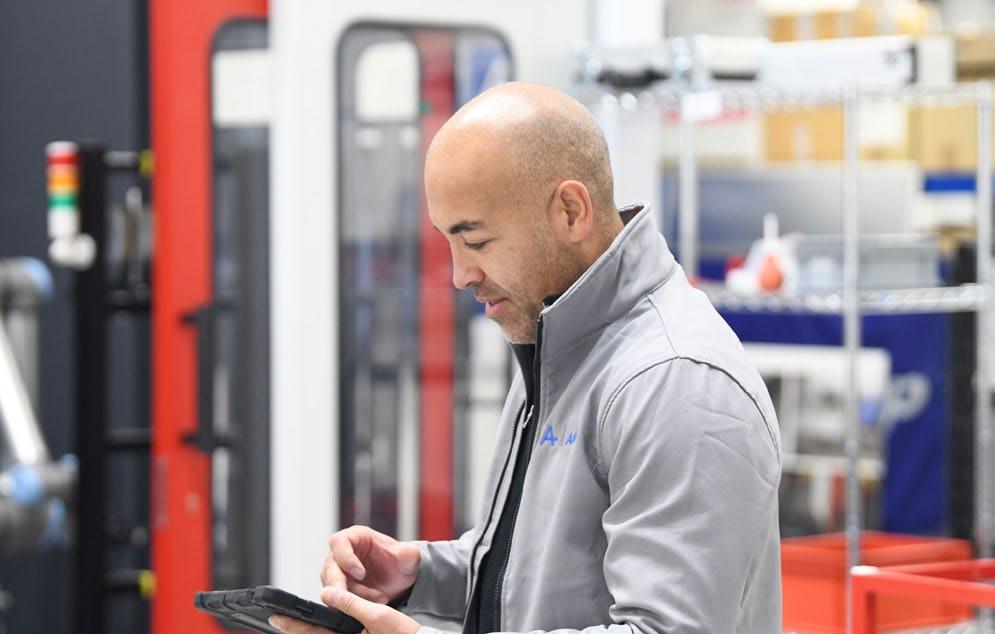
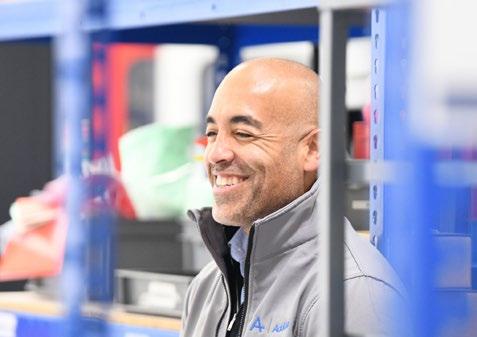
is right or wrong at a moment in time,” says Ben Anderson, Managing Director of Derby-based metrology specialist AddQual. “But that doesn’t tell you why something is happening or what’s about to happen next. The real opportunity is to use that data to understand and control the process itself.”
Subtle process drift, for example, can now be identified long before it results in non-conforming parts. Tool wear, environmental variation and fixture instability— factors that historically might only be detected after a failure—can be predicted and addressed in advance. In this context, measurement becomes less about catching defects and more about preventing them. The implications extend beyond process control. In highly regulated sectors such as aerospace, the ability to link measurement results to specific instruments, operators and timestamps is becoming essential. Traceability is no longer just about compliance; it is about confidence—providing customers and regulators with clear, defensible evidence that quality decisions are robust and repeatable.
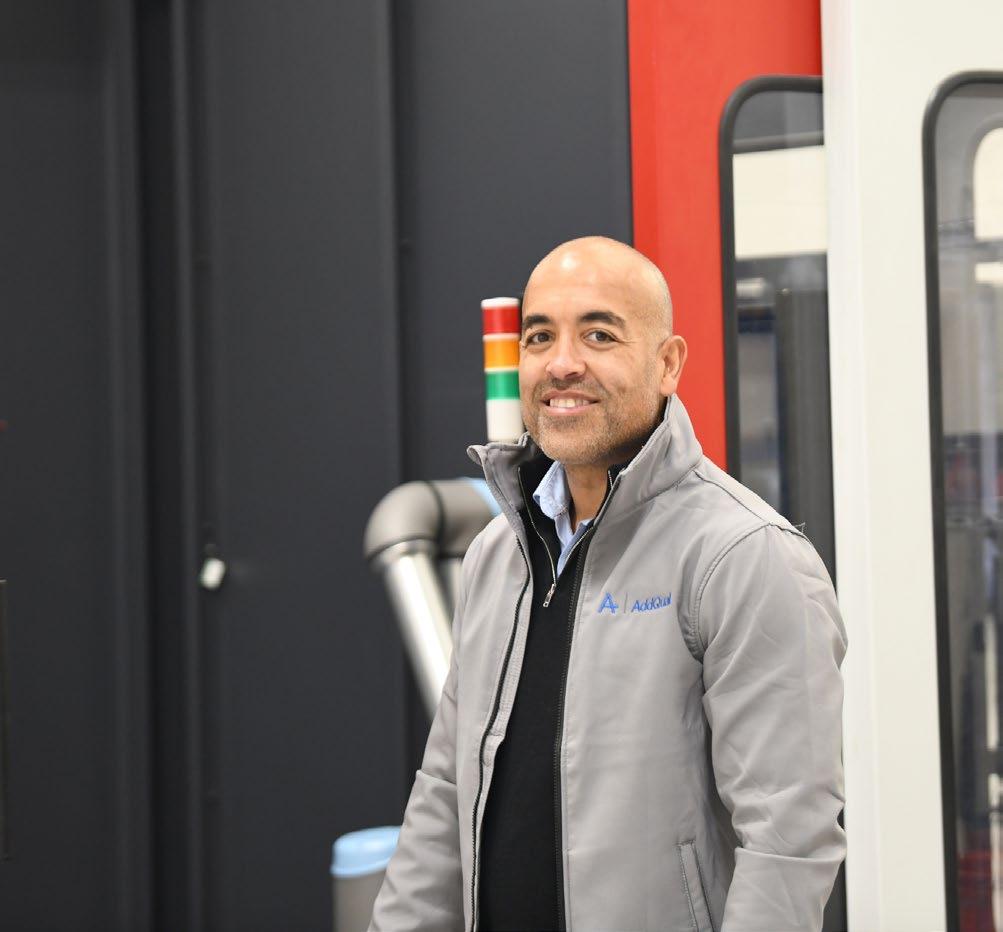
AddQual Managing Director, Ben Anderson
At the same time, the rise of Industry 4.0 is reinforcing the importance of connected measurement. In an increasingly digital factory environment, machines, sensors and systems are expected to communicate in real time, enabling faster and more informed decisionmaking. However, without reliable measurement data feeding that ecosystem, even the most advanced automation lacks the feedback required to function effectively.
“People often talk about automation in terms of machines and robotics, but the reality is that automation without data is just motion,” Anderson explains. “If you don’t have structured, reliable measurement data feeding into your systems, you’re still making decisions based on assumptions.”
It is within this context that AddQual has developed its MiDAS platform, designed to move inspection beyond verification and into the realm of operational intelligence. MiDAS acts as a digital decision aid, standardising how inspection and repair processes are planned, executed and continuously improved. Rather than simply recording measurement outcomes, the system captures a wide range of variables associated with part condition, process capability and inspection performance. This enables manufacturers to monitor capability in real time, identify risks, and model different scenarios—such as changes to tolerances or process parameters—to understand their impact on yield, throughput and turnaround time.
Crucially, this approach allows organisations to move towards what AddQual describes as a “fail fast, pass fast” model of decision-making. By identifying nonconformance earlier in the inspection cycle and providing clear, data-driven guidance on repair or scrap decisions, manufacturers can reduce rework, protect margins and improve overall flow through the system. To achieve the Zero Defect Journey, the aim is to create a closed-loop process in which inspection, decision-making and learning are fully integrated.
“The challenge for many manufacturers is decision capability, rather than measurement capability,” says Anderson. “They have the data, but it’s fragmented, inconsistent or not being used effectively. We are
focused on turning that measurement activity into something that actually drives better outcomes.”
However, as major OEMs and tier-one suppliers come under increasing pressure to accelerate throughput, a familiar pattern is beginning to emerge. When bottlenecks appear in qualification and inspection, the instinctive response is often to invest in more hardware—typically additional CMM capacity—to push more parts through the same process. Ben Anderson believes that reaction, while understandable, risks solving the wrong problem.
“When operational pressure falls on quality departments, the default is to buy more CMMs,” he says. “But that’s often just adding capacity to an inefficient system. You’re speeding up the same decisions, not improving them.”
Anderson draws on a well-known analogy here to reframe the conversation. “There’s a famous quote attributed to Henry Ford: ‘If I had asked people what they wanted, they would have said faster horses.’ That’s exactly the situation many manufacturers find themselves in today. The challenge isn’t to make inspection faster in isolation — it’s to rethink what inspection is actually there to do.”
This shift is being enabled by the growing adoption of digital measurement systems, which automatically capture inspection results in structured formats and make them available for analysis. Instead of isolated readings taken on the shop floor, manufacturers can now build continuous datasets that reveal patterns, trends and relationships that would otherwise remain invisible. The real constraint is not measurement capability, but decision capability. More machines may increase throughput locally, but without better use of data, they do little to address rework, delayed decisions or inconsistent outcomes across the wider system.
This is the gap that MiDAS has been designed to fill. Rather than focusing on increasing inspection volume, the platform transforms how inspection data is used—structuring it, contextualising it, and feeding it back into the decision-making process in real time. By capturing part condition, monitoring process capability and enabling scenario-based analysis, MiDAS allows manufacturers to make faster, evidencebased decisions on whether to pass, repair or scrap components.
The effect is a shift away from capacity-driven thinking towards intelligence-driven performance. Instead of asking how to measure more parts, manufacturers can begin to ask how to make better decisions, earlier in the process.
“We challenge our customers with that example deliberately,” Anderson adds. “Because the answer isn’t always more equipment. Sometimes it’s a different way
of thinking—using the data you already have to remove the bottlenecks altogether.”
The benefits are already becoming clear. Structured inspection data not only supports faster and more consistent decisions but also accelerates the development of less experienced inspectors, improves audit readiness and provides objective evidence for customers and regulators.
In aerospace MRO environments, where turnaround time and reliability are critical, this can translate directly into competitive advantage. More broadly, the transition from measurement to intelligence is reshaping how manufacturers think about investment.
Increasingly, decisions around metrology equipment are being driven not just by accuracy or speed, but by the ability to generate, capture and integrate data within a wider digital ecosystem. The return on investment is no longer measured solely in microns, but in insight. For AddQual, this reflects a wider shift in the role of quality within manufacturing — from a necessary control function to a strategic enabler of performance.
“Measurement will always be fundamental,” Anderson concludes. “But in modern manufacturing, it’s only the starting point. The real value comes from what you do with that data — how you use it to make better decisions, faster. That’s where the next generation of competitive advantage is being built.”
For more information, visit www.addqual.com
[ Designed for your profit ]
[ Designed for your profit ]
emco.co.uk
sales@emco.co.uk 02392 637100
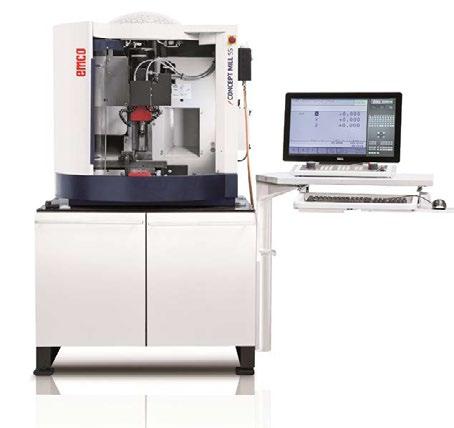
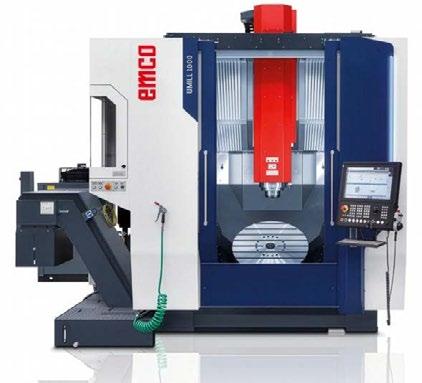
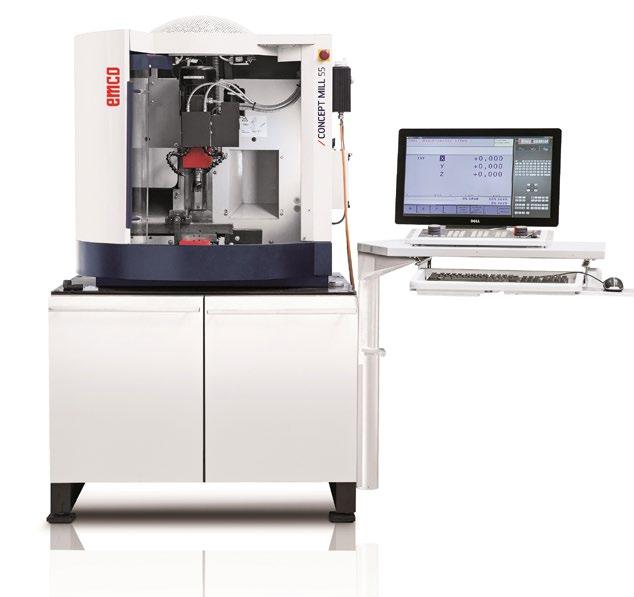
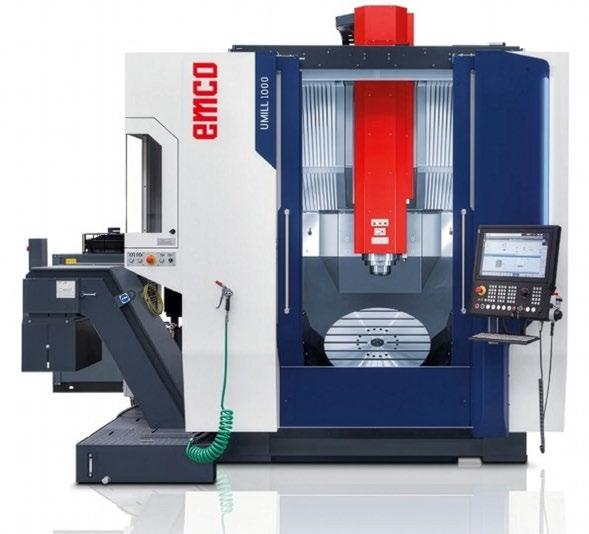
Emco CNC Milling Machines Range
From the Industrial training Concept Mill 55 to the Full 5 Axis Simultaneous UMILL 1000. There is an Emco mill for all applications.
Emco CNC Milling Machines Range
From the Industrial training Concept Mill 55 to the Full 5 Axis Simultaneous UMILL 1000. There is an Emco mill for all applications.
• Compact CNC desktop Milling machine
• Industrial quality components
• High-resolution axis motors
• Engraving Spindle Facility
• Robotic interface for integration into FFS/CIM systems
HIGHLIGHTS
• Compact CNC desktop Milling machine
• Safety technology according to CE
• Stepless variable main drive
• Industrial quality components
• NC dividing unit as an optional fourth axis
• Stable gray cast iron construction
• Infinitely variable main and feed drives
• CNC 3D continuous path control
• Fully covered work area
• Robotic interface for integration into FFS/CIM systems
• High-resolution axis motors
• Engraving Spindle Facility
• Backlash-free storage of the axis spindle in accurate angular ball bearings lubricated for life
• Safety technology according to CE
• Automatically reference points
• Stepless variable main drive
• Clockwise/Counterclockwise spindle rotation
• Spindle bearing lubricated for life
HIGHLIGHTS
• Top thermostability
• Top machining precision
HIGHLIGHTS For full specs and information on our milling range please contact us at sales@emco.co.uk
• NC dividing unit as an optional fourth axis
• Stable gray cast iron construction
• Infinitely variable main and feed drives
• CNC 3D continuous path control
• Fully covered work area
• 5-axis simultaneous machining in a gantry structure
• Backlash-free storage of the axis spindle in accurate angular ball bearings lubricated for life
• Modern moving column concept with optimal accessibility
• Automatically reference points
• Clockwise/Counterclockwise spindle rotation
• Solid swivel-rotary table with torque motors, direct measuring systems dimensions of Ø 800 mm provide high stability and precision
• Spindle bearing lubricated for life
• Wide swivelling range +/-125°
• Turning table for milling and turning operations
• Standard linear scales in X-Y-Z
• Cutting-edge control technology from Siemens or Heidenhain
HIGHLIGHTS
• EMCONNECT available for Sinumerik
• Extensive options such as 60 / 90 tool stations magazine
• Optimal chip removal
• 5-axis simultaneous machining in a gantry structure
• Top thermostability
• Attractive price-performance ratio
• Top machining precision
• Flexible for automation (front)
• Modern moving column concept with optimal accessibility
• Solid swivel-rotary table with torque motors, direct measuring systems dimensions of Ø 800 mm provide high stability and precision
• Wide swivelling range +/-125°
• Turning table for milling and turning operations
• Standard linear scales in X-Y-Z
• Cutting-edge control technology from Siemens or Heidenhain
• EMCONNECT available for Sinumerik
• Extensive options such as 60 / 90 tool stations magazine
• Optimal chip removal
• Attractive price-performance ratio
• Flexible for automation (front)
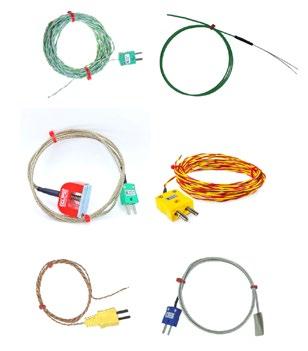
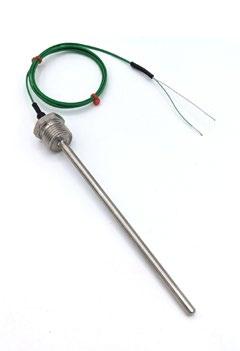
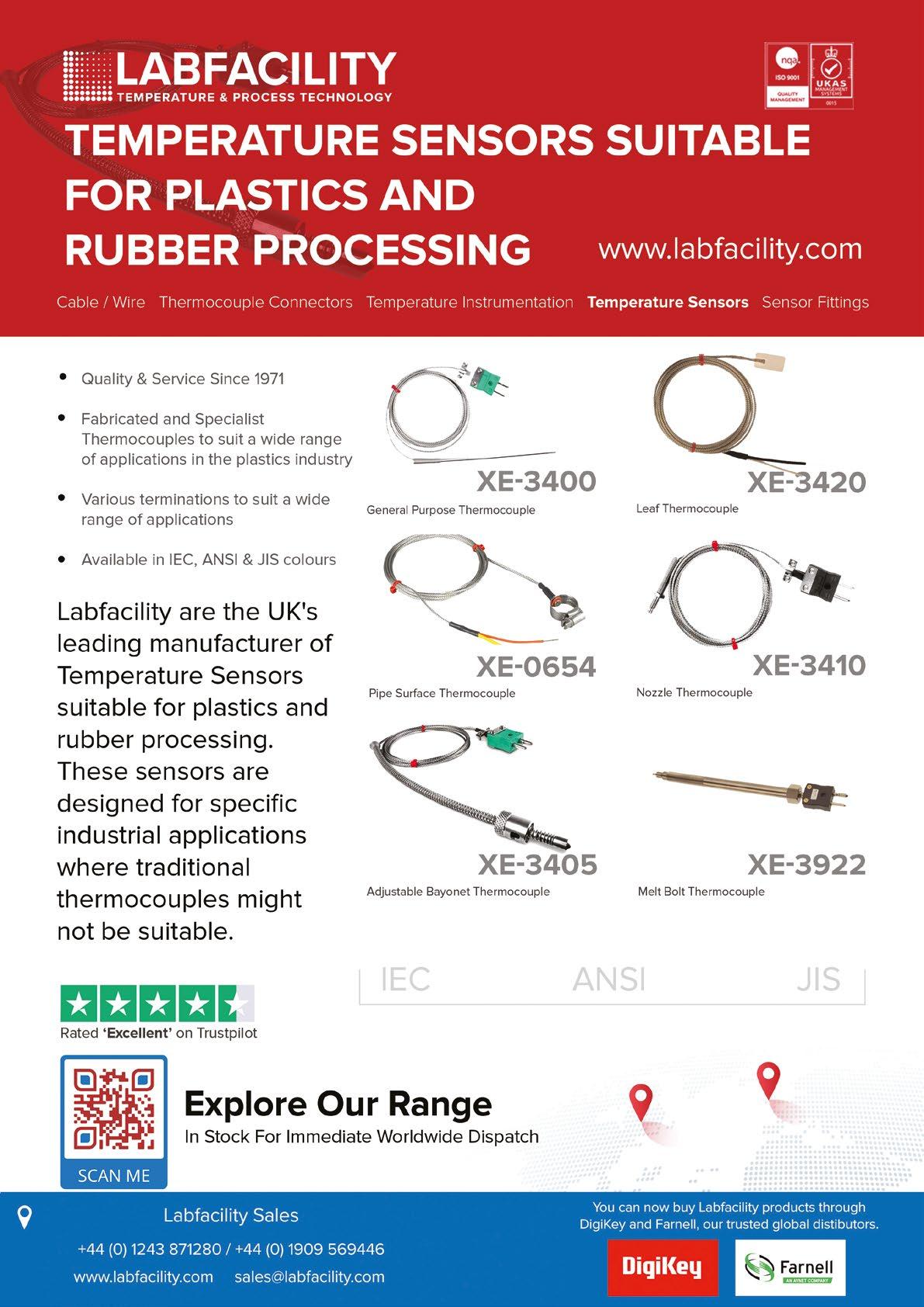
7 FACTORS TO CONSIDER WHEN SELECTING A THERMOCOUPLE
Thermocouples are widely used in temperature measurement across various industries, from manufacturing to research laboratories. However, with a myriad of options available, choosing the right thermocouple for your application can be daunting. To help you make an informed decision, here are seven factors to consider when selecting a thermocouple:
1. Temperature Range: The temperature range of your application is crucial in determining the type of thermocouple suitable for your needs. Thermocouples are classified into different types based on their temperature ranges, such as Type K (−200 to 1,350 °C), Type J (−210 to 1,200 °C), and Type T (−250 to 400 °C). Ensure the thermocouple you choose can withstand the temperatures present in your environment without compromising accuracy.
2. Accuracy Requirements: Consider the level of accuracy required for your temperature measurements. While most thermocouples offer sufficient accuracy for general applications, some high-precision environments may demand specialised thermocouples or additional calibration to meet accuracy standards.
3. Chemical Compatibility: Evaluate the compatibility of the thermocouple materials with the substances present in your application environment. Exposure to corrosive chemicals or gases can degrade the thermocouple, affecting its accuracy and lifespan. Choose materials resistant to corrosion and chemical reactions to ensure longevity and reliability.
4. Response Time: The response time of a thermocouple refers to how quickly it can detect and accurately measure changes in temperature. Faster response times are essential for dynamic processes or applications where rapid temperature fluctuations occur. Consider the response time requirements of your application to select a thermocouple that can provide timely and precise measurements.
5. Mechanical Strength and Durability: Assess the mechanical strength and durability of the thermocouple, especially if it will be subjected to harsh operating conditions or physical stress. Choose a robust construction and protective sheathing to prevent damage from vibration, abrasion, or
mechanical impact, ensuring the thermocouple’s reliability and longevity.
6. Environmental Conditions: Take into account the environmental conditions in which the thermocouple will operate. Factors such as humidity, pressure, and atmospheric contaminants can influence the performance and lifespan of the thermocouple. Choose a thermocouple with suitable insulation and protective measures to withstand the specific environmental challenges of your application.
7. Cost and Long-Term Maintenance: Consider the initial cost and long-term maintenance requirements of the thermocouple. While budget constraints may influence your decision, prioritise quality and reliability to avoid frequent replacements or costly downtime due to equipment failure. Evaluate factors such as calibration frequency requirements, recalibration costs, and availability of spare parts to assess the overall cost of ownership.
In conclusion, selecting the right thermocouple involves careful consideration of various factors, including temperature range, accuracy, chemical compatibility, response time, mechanical strength, environmental conditions, and cost. By prioritising these aspects and conducting thorough research, you can choose a thermocouple that meets your specific application requirements, ensuring accurate temperature measurement and reliable performance.
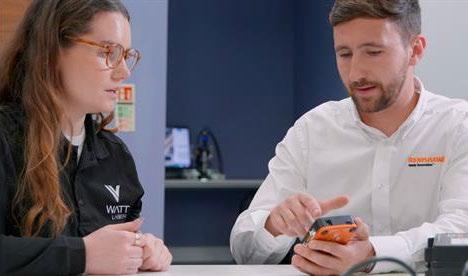
RENISHAW ENCODERS DELIVER LASER PRECISION AT WATT LASER
Founded in 2020, Watt Laser is a Glasgow-based UK engineering company specialising in high-precision laser systems. The company was born from the vision of a highly experienced laser expert who, after leaving his previous role, wanted to produce innovative surface engineering machines using ultra-short pulse lasers. Starting with just three people, Watt Laser has grown into a dynamic team with a strong emphasis on innovation and agility.
Background
Watt Laser’s core mission is to transform highprecision manufacturing by replacing traditional chemical and mechanical processes with cleaner, more efficient laser-based solutions. Its systems are used across sectors including electronics, semiconductor packaging, automotive (including Formula 1), MedTech, and energy. The company’s culture is built around empowering young engineers, fostering creativity, and maintaining a startup-like agility even as the company grows.
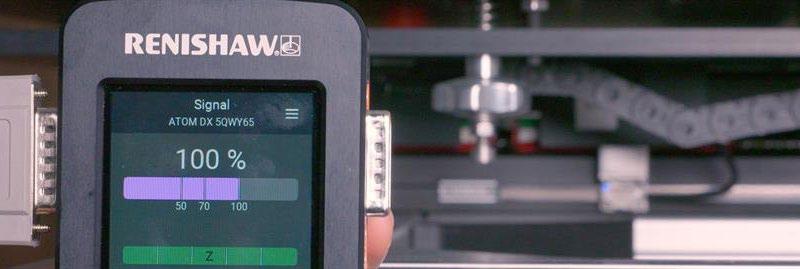
Central to Watt Laser’s success is a commitment to precision. Its machines operate at micron and submicron levels, where even the smallest deviation can lead to significant downstream failures. To achieve this level of accuracy and repeatability, Watt Laser relies on Renishaw’s encoder technologies, particularly the ATOM™ encoder series and the ADTpro-100 Advanced Diagnostic Tool.
Challenge
Watt Laser’s engineering challenges are rooted in the extreme precision required by its customers. Whether manufacturing surface-mount technology (SMT) stencils for circuit boards or welding multi-layer stencil structures, the tolerances are unforgiving.
As Declan Brannagan, Operations Manager at Watt Laser, explains: “In the SMT stencil industry, they cut holes and if that hole is out of position by the width of a human hair, the process falls apart. iPhones don’t get made; smartwatches don’t get made.”
This level of fine precision requires not only highperformance laser systems but also motion control solutions that can eliminate mechanical imperfections such as backlash in ballscrew stages. As Waleed Hafez, Senior Development Engineer at Watt Laser, notes:
“With ballscrew stages, we do get some backlash. With Renishaw encoders, we’re able to measure and correct for the backlash in real time.”
Another challenge was scalability. Watt Laser needed to streamline its production processes to meet increasing demand without compromising quality.
Installation speed and reliability became critical. Fraser Hemming, Senior Product Engineer at Watt Laser, highlights this:
“We needed to get a high-accuracy quality machine to market as quickly as possible.”
Additionally, Watt Laser’s inspection systems, such as the QC100, required encoder solutions capable of measuring micron-level features.
Solution
Renishaw ATOM encoders
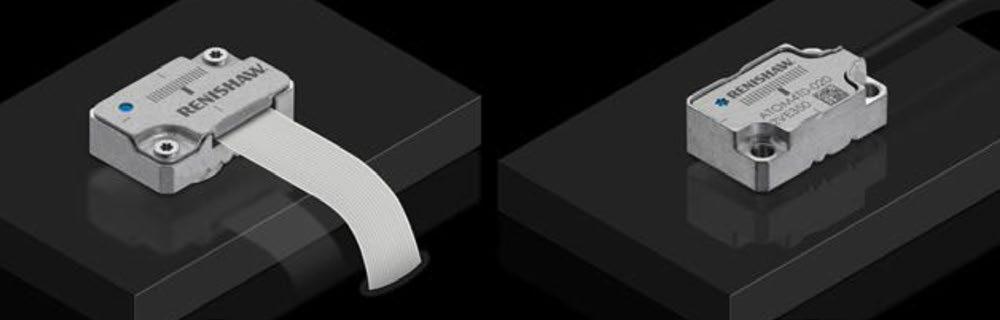
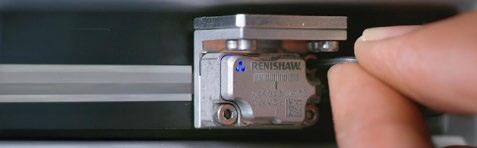
ATOM encoders provide position measurement at fine resolutions, down to 0.1 micron, for ultra-precise motion control. The compact readhead design allows easy integration into custom laser systems and an integrated set-up LED simplifies installation. ATOM readheads feature filtering optics which provide superior signal stability and reliability, essential for maintaining accuracy during multi-pass laser processing.
Hemming explains, “The resolution is appropriate for all our applications. We’ve managed to increase our throughput of machines by 30% since we started installing the ATOM systems.” Hafez adds, “The ATOM encoder enables us to have fine control over the motion profiles. Our laser path is incredibly smooth and precise, which enables us to have the best products.”
Renishaw ADTpro-100 Advanced Diagnostic Tool
The ADTpro-100 tool offers various functions to enhance encoder installation and maintenance. A colour touch screen provides plug-and-play functionality with no need for external software. Comprehensive real-time encoder data is immediately available, including encoder serial number, status, signal size, and signal Lissajous plot. The ADTpro-100 is a portable, handheld diagnostic tool ideal for both manufacturing and in-field optimisation or faultfinding.
Hafez describes it as “a useful tool… it makes installation a lot quicker and easier.” He also notes a 30% increase in installation throughput thanks to the ADTpro-100’s streamlined set-up process. “It’s super easy to use,” Hafez says, “and there’s not much training required.”
Results
The collaboration between Watt Laser and Renishaw has delivered measurable and strategic benefits across multiple areas:
1. Enhanced precision and product quality
Renishaw encoders have enabled Watt Laser to achieve and maintain sub-micron accuracy across its systems. This precision is critical in sectors like electronics and semiconductor packaging, where even the smallest deviation can result in product failure. Hafez emphasises, “We’re able to create intricate features. Without the 0.1 micron resolution, we wouldn’t be able to have that repeatability.”
2. Increased throughput and efficiency
The ease of installation and reliability of Renishaw encoders have led to a 30% increase in machine build throughput, allowing Watt Laser to meet growing demand without sacrificing quality.
Fraser confirms, “We can install the ATOM encoder quickly. It gives us more throughput for our machines.”
Streamlined field service and diagnostics
The ADTpro-100 has empowered Watt Laser’s technicians to perform quick diagnostics and installations in the field, reducing downtime and improving customer satisfaction.
“It gives you all the information you need,” says Hafez. “Resolution, type, output – everything’s on there.”
4. Strong technical support and collaboration
Responsive support and shared values in innovation have made Renishaw a trusted supplier for Watt Laser. Fraser notes, “Renishaw is at the peak of metrology... we align ourselves with companies that are strong in innovation.”
Hafez adds, “Any technical questions we’ve had have been answered really quickly and accurately… it gives you peace of mind.”
5. Competitive advantage
By integrating Renishaw’s technologies, Watt Laser has positioned itself as a leader in high-precision laser engineering and processing systems. Its ability to offer end-to-end solutions, from machine design to process integration, sets it apart in the market.
In summary
Elizabeth Shaw, Senior Business Development Executive at Watt Laser, explains:
“We’re not just manufacturers of machines. We want to fundamentally change high-precision manufacturing… we want to make it greener, faster, and more repeatable.”
Watt Laser’s collaboration with Renishaw exemplifies how precision engineering, innovative technology,
and strong relationships can drive growth and transformation in advanced manufacturing. Through the integration of ATOM encoders and the ADTpro-100, Watt Laser has enhanced its capabilities, improved efficiency, and delivered exceptional value to its customers.
As Hafez puts it, “When I think of the ATOM encoder, I think of precision, reliability, and ease of use. It’s another selling point for our customers that we’re using the best of the best.”
For further information on Renishaw’s encoders, visit www.tinyurl.com/2nmyzws9
DURABLE ENGRAVED IDENTIFICATION
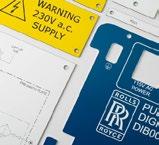
As automation systems become more advanced and interconnected, clear and durable identification is playing an increasingly important role across manufacturing, engineering and process industries. From control panels and switchgear to asset tracking and maintenance systems, engraved identification products help support efficiency, traceability and long-term reliability.
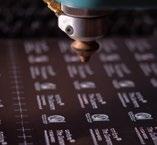
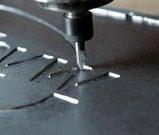
Brunel Industrial Engraving work with customers across the automation sector to produce high quality engraved labels, control panel legends, valve tags and machine identification solutions designed for demanding industrial environments. Increasingly, businesses are also incorporating QR codes and barcodes into their identification systems to improve access to technical information, maintenance records and digital documentation.
Engraved QR codes and barcodes can be added to a wide range of materials including stainless steel, anodised aluminium and flexible impact acrylic, providing a permanent and highly legible solution suitable for harsh industrial conditions. When linked with digital maintenance platforms or asset management systems, these codes can help engineers quickly access schematics, service histories or operational data directly from the equipment itself.
As Industry continues to evolve, durable engraved identification remains a simple but essential part of smarter automation systems.
and enhan cing
EEMUA's MIPC course helps practitioner-level engineers to be where they are needed – on-site and on top of the latest industry developments and good practice in primary containment of hazardous substances.
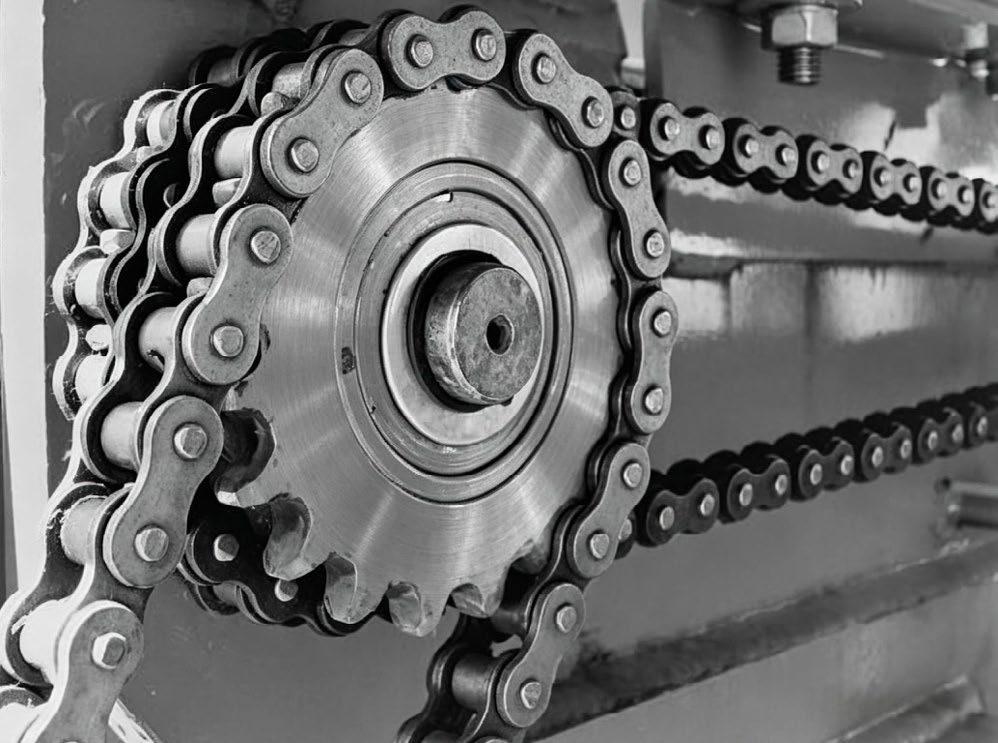
Chains add lubrication and tensioning touchpoints in compact layouts.
WHEN RIGHT-ANGLE DRIVES BEAT CHAIN-AND-BELT LAYOUTS IN COMPACT AUTOMATION
START WITH THE REAL QUESTION: PACKAGING OR LONG-TERM STABILITY?
Chains and belts are strong for long spans and flexible routing. Right-angle drives are strong when you must turn power by 90° in a tight envelope and keep the system more stable over time. In compact automation, the real differentiators are repeatability drift, maintenance workload, guarding, and thermal behavior.
Where Right-Angle Drives Win (Common Cases)
Scenario A: The space is tight, you must turn 90°, and you want an integrated module
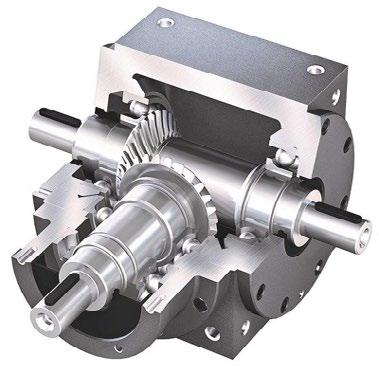
Chains and belts can route around corners, but they add space for tensioners, idlers, brackets, and guarding. A right-angle unit turns power in a compact module for tight automation layouts.
Scenario B: You need stable ratio and synchronization consistency
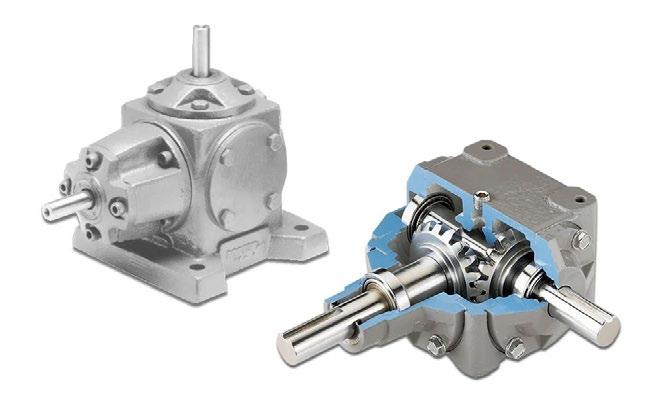
Belts can slip and chains can elongate, both causing ratio and timing drift over time. Gear-based right-angle drives keep ratio fixed by geometry, making them a strong choice for synchronized, repeatable motion in compact automation.
Scenario C: Cleanliness and contamination sensitivity (food/packaging/clean lines, dusty environments)
Chains need lubrication and regular upkeep, which can add contamination risk. Enclosed right-angle drives keep lubrication contained and simplify guarding and cleanliness.
Scenario D: You want to reduce exposed moving parts and lower guarding burden
Chains and belts often need guarding for safety. Right-angle gear units enclose the mesh, simplifying protection and maintenance.
Scenario E: You want to remove “tensioning and tracking” from the maintenance routine
Belts and chains need alignment, tension control, and ongoing maintenance. If you want fewer adjustments and touchpoints, enclosed right-angle drives are easier to manage.
Scenario F: Torque density matters in a tight envelope
Chains handle higher loads than ordinary belts but need open lubrication and maintenance. Right-angle gear units deliver stable output in a compact package when the route is chosen well.
When Chains and Belts Can Be the Better Choice
This section improves engineering credibility—rightangle drives are not a universal upgrade.
• Very long center distances: chains/belts are natural solutions for long spans.
• You want compliance or shock absorption: some belt layouts provide helpful elasticity, smoothing shock and vibration.
• Ultra-low cost with acceptable maintenance: chains/ belts can be easier to source, modify, and replace quickly on site.
Quick Rule-of-Thumb
• If your layout is tight and you must turn 90°, a rightangle module usually reduces parts and guarding.
• If repeatability drifts due to slip/stretch, gears reduce adjustment work over time.
• If long span and lowest cost dominate, chains/belts may still win.
Before Replacing Chain/Belt With a Right-Angle Drive
• Confirm thermal margin under duty cycle.
• Lock ratio + output direction from the speed/torque target.
• Define backdrive vs holding requirement (with a torque window).
• Verify housing and bearing stiffness for peak load.
• Control mounting interfaces (datums/coaxiality/ squareness).
• Define lubrication + sealing + service interval.
• Ensure service access avoids “replace the whole unit.”
• Set a simple acceptance check under load (sound/ temperature).
Conclusion
In compact automation applications, right-angle drive systems are generally better suited for modular designs that excel in repeatability, testability, and maintainability due to limitations in installation space, heat dissipation, repeatability, cleanliness, and maintenance costs.
Sealed right-angle drives help control lubrication and contamination exposure.”
A right-angle module packages the turn and the output in one compact unit.”
WEG STREAMLINES GEAR SELECTION WITH NEW DIGITAL TOOL
GEAR
PROSELECT OFFERS TECHNICAL SELECTION WITH INTUITIVE NAVIGATION.
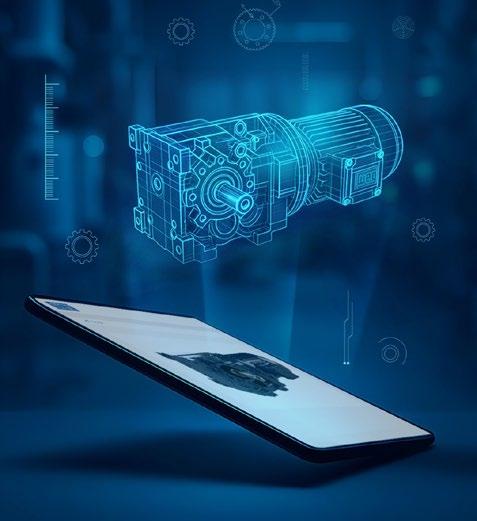
WEG, a global manufacturer of industrial automation, gearboxes, motors and drives has launched Gear ProSelect, a digital tool designed to simplify and standardise the selection, configuration and documentation of gearboxes and gearmotors.
Developed as a single global solution, the tool provides a consistent method for sizing across regions while reducing the time typically required for manual calculations or engineering support.
As industrial automation expands worldwide, so too does the gearbox market, which is estimated to reach USD 33.4 billion in 2026. Growing complexity, tighter timelines and rising demand, require faster, more standardised and digitally driven selection methods.
In response, WEG is further advancing its digitalisation strategy by modernising product selection and configuration tools, aligning its gearbox portfolio with the connected, data-driven environments that define today’s industrial landscape.
As part of this approach, WEG has developed Gear ProSelect (GPS) which lets users size and configure gearboxes directly through a web-based platform using application-specific data. By entering parameters
such as mass, speed and inertia, users receive product recommendations supported by integrated mechanical and thermal validation.
The thermal validation feature represents a unique differentiator in the market. Thermal validation analyses heat generation and dissipation under defined operating conditions, ensuring the selected gearbox can operate within acceptable temperature limits and reducing the risk of overheating or premature wear.
The platform supports two selection methods, a traditional approach based on technical input data like motor power, torque and output speed, and a second method based on the drive data of the customer’s machine. This allows configurations to reflect real operating conditions rather than nominal values alone.
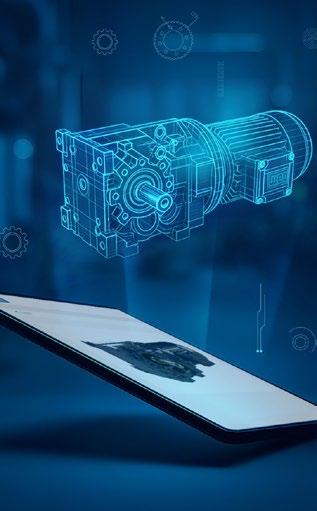
Following sizing, users can configure accessories through a visual interface with real-time 3D model updates. Technical documentation, including datasheets and 2D and 3D drawings in multiple formats and up to 20 languages, is generated automatically.
“Gear ProSelect represents a major step forward in WEG’s digital transformation strategy,” said Marcio Yoshikazu Ematsu, European marketing manager at WEG. “By combining intelligent validation, realtime visualisation and global standardisation, we are providing customers with greater autonomy while strengthening operational efficiency across our worldwide network.”
Gear ProSelect is integrated with WEG’s EASY e-commerce system, enabling users to move from configuration to quotation and purchase within the same workflow. The platform is available to customers, distributors, sales representatives, assemblers and application engineers, supporting a unified digital process across the value chain. Its scalable architecture also lays the foundation for future digital integrations, supporting continued business growth and market expansion.
STOP UNIFYING EVERYTHING
IN A MONOLITHIC UNS WHERE EVERY NODE TRUSTS EVERY OTHER NODE, YOU HAVEN’T BUILT RESILIENCE, YOU’VE BUILT A BLAST RADIUS.
The Promise
For the past few years, the industrial automation world has been chasing a single idea: put everything into one monolithic namespace. Connect every PLC, sensor, historian, and ERP system into a single data fabric. One broker to handle protocol conversion, naming conventions, security, and edge-to-cloud bridging. It solves a real problem — decades of incompatible data islands have cost the industry enormously in engineering hours, delayed decisions, and missed optimization.
The Problem
But solving a data accessibility problem by removing all architectural boundaries is like solving traffic congestion by tearing out every curb, sidewalk, and traffic signal.
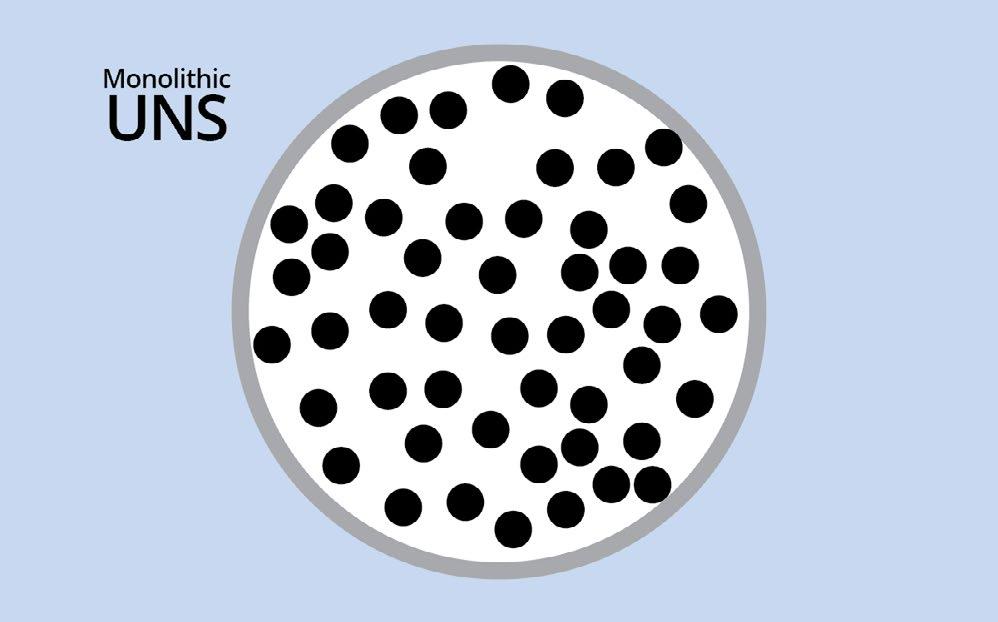
When every node in your namespace can reach every other node, you have not built a resilient system. A compromised HMI in one building has a direct path to your corporate historian. A misconfigured MQTT client can flood your broker and take down visibility across the entire plant.
In traditional OT architecture, segmentation was a feature — sometimes an accidental one, but a feature nonetheless. Air gaps and protocol barriers meant that a failure or breach stayed local. A monolithic UNS trades that containment for convenience, introducing a single point of failure, increased latency, and difficulty segmenting OT networks.
The architects and engineers who have to live with these systems are asking questions the evangelists skip: What happens when the broker goes down? What is the blast radius of a compromised node? How do you enforce data sovereignty across sites? Who owns the schema?
The Fractal Alternative
There is another way. A fractal UNS replicates the same namespace structure at every level of the operations hierarchy — machine, line, factory, site, enterprise, and cloud. Each cell, line, or site maintains its own local namespace, fully functional and autonomous. Data flows through defined, controlled pathways — not through open mesh connectivity.
A fractal UNS delivers everything a monolithic namespace promises, plus the structural resilience that such architectures lack:
• Fault isolation. A broker failure at one level does not cascade to others. Each layer operates independently and the system degrades gracefully.
• Contained blast radius. A compromised node can only reach what it is architecturally permitted to reach. Lateral movement — the defining characteristic of modern ransomware campaigns — is constrained by design, not by policy alone.
• Defined data sovereignty. Bounded namespaces let you enforce what data crosses which boundaries — critical for multi-site operations, joint ventures, and regulatory compliance.
• Scalable governance. Schema ownership is distributed to the teams closest to the data.
• Predictable performance. Traffic stays local until it needs to go broader.
None of this requires abandoning the UNS vision. It requires implementing it with the same rigor you would apply to any critical OT system.
Why It Requires Purpose-Built Software
You cannot simply chain MQTT brokers together and call it a fractal UNS. MQTT’s QoS guarantees do not propagate reliably across more than one broker connection. Clients at the end of the chain have no way of knowing whether their data is current or stale.
Software designed for a fractal UNS guarantees data consistency from each source to each user. If communication between levels breaks, that data is flagged as disconnected immediately at every downstream node. When the connection is restored, data quality changes back to good right away for every user in the chain.
The UNS concept has proven value. Unifying your namespace is the right goal. But building a single, fully connected namespace is the wrong architecture for any operation that cares about resilience, security, or maintainability. Stop unifying everything. Start segmenting with intent.
Cogent DataHub software from Skkynet is built on a fractal-ready connectivity architecture designed for industrial environments where security and resilience are not optional.
www.cogentdatahub.com
IMPULSE EMBEDDED SUPPORTS DEMANDING APPLICATIONS WITH CUSTOM INDUSTRIAL COMPUTING
Impulse Embedded Ltd, a leading UK provider of industrial computing solutions, supports OEMs, system integrators and technical buyers with a broad range of standard and custom computing systems for demanding industrial applications.
Industrial computing projects often involve more than selecting a standard computer platform. Customers may need to account for processing performance, I/O, environmental conditions, installation constraints, operating system support, supply chain continuity, product lifecycle expectations and long-term technical support.
Impulse Embedded helps customers move from early research and platform selection through to system definition, integration and deployment. The company provides pre-sales consultation, system specification, design and engineering support, integration and manufacturing services, lifecycle technical support, supply chain management and deployment assistance.
A Broad Range of Platforms for Demanding Environments
Impulse Embedded supplies industrial computer platforms for a wide variety of performance, environmental and installation requirements.
Their range includes rackmount computers, industrial rackmount servers and rackmount GPU servers for higher-performance applications where expandability, processing power or server-grade capability are important. DIN-rail industrial computers and fanless industrial computers support space-constrained industrial installations where compact design, low maintenance and reliable operation are priorities.
The company also offers ATEX Zone 2 industrial computers for hazardous areas, wide temperature industrial computers for more extreme operating conditions, tower computers for applications requiring industrial-grade performance in a traditional format, and IEC 61850-3/IEEE 1613 rackmount systems for power and substation environments. Application-focused ranges also
support sectors including substation, marine, railway and in-vehicle computing.
Custom Systems Built Around Application Needs
Alongside configurable off-the-shelf platforms, Impulse Embedded develops custom industrial computing systems for projects with specific technical, mechanical or environmental requirements.
This can include systems with tailored expansion options, enclosure formats, thermal characteristics, mounting requirements, software images, branding, certification considerations or lifecycle planning. By engineering systems around the application, Impulse Embedded helps customers create platforms aligned with the environment they will operate in and the role they need to perform.
The company also provides custom touchscreen, HMI and panel PC solutions where usability, display performance, installation method and wider system integration are central to the specification. These systems can be tailored around screen size, touch technology, front panel design, ingress protection, mounting arrangement, processor platform and connectivity.
Industrial Computing Capability for Complex Projects
Impulse Embedded gives customers access to both configurable industrial computers and more specialised solutions developed around exact project requirements. This helps customers compare standard and custom options, understand where engineering input may be needed, and identify the most appropriate route for their application.
By combining broad industrial computing ranges with custom system design, integration and lifecycle support, Impulse Embedded helps customers specify and deploy computing solutions for demanding industrial, embedded and edge computing environments.
Find Out More
More information is available on the Impulse Embedded website:.
Explore their service offering today at www.impulse-embedded.co.uk, or get in touch with their knowledgeable team directly at 01782 337 800 or email sales@impulse-embedded.co.uk.
Version 11 is committed to
Our latest release introduces an advanced security model for real-time process data. Now supporting LDAP, TOTP, and a new Data Diode mode, DataHub isolates OT networks by making secure, outbound-only connections through firewalls, fully supporting DMZ architectures and safe cloud connectivity. Learn more at CogentDataHub.com
SkkynetTM, DataHubTM, Cogent DataHubTM, the Skkynet and DataHub logos are either registered trademarks or trademarks used under license by the Skkynet group of companies (“Skkynet”) in the USA and elsewhere. All other trademarks, service marks, trade names, product names and logos are the property of their respective owners.
Electrical , Instrumentation , Control and
y ber Security in Industrial Engineering
• ' By Industry, For Industry’, practical guidance for everyday and irregular situations and tasks
• Readily accessible for all in the industry – wherever they are, whatever time they have
• E-learning for continuing professional development
• Webinars and seminars for knowledge sharing and professional ne tworking
This selection of specialist publications and many more resources including FREE procedure checklists
To make EEMUA’s guidance, training, events and other practical resources work best for you and your team please ask@eemua.org or visit www.eemua.org Design and installation of
MORE SUSTAINABLE FACILITY MANAGEMENT
STRATEGIES FOR IMPROVING ENERGY EFFICIENCY IN INDUSTRIAL HEAT TRANSFER SYSTEMS.
Sustainability is no longer just a buzzword but an essential strategy for facilities managers looking to reduce operational costs and improve their environmental impact. According to the International Energy Agency (IEA), industrial heat accounts for two-thirds of industrial energy demand and nearly one-fifth of global energy consumption, making it a key area for efficiency improvement. By optimising heat transfer systems, facilities managers can reduce their energy usage while driving sustainability. Here Dave Dyer, technical sales engineer at thermal fluid specialist Global Heat Transfer, outlines practical steps to achieve this.
Thermal fluid systems face multiple operational challenges beyond just energy efficiency. One critical concern is the degradation of the fluid itself, which can occur when it’s exposed to high temperatures or poorly maintained systems. Without proper preventative measures, this degradation can escalate into serious safety and environmental hazards.
Retain more, use less
Uninsulated equipment in heat transfer fluid systems can waste substantial amounts of energy, leading to higher costs. For instance, if pipes carrying heated
fluids aren’t properly insulated, they lose heat to the surrounding air. As a result, the system must work harder to maintain the desired temperature, increasing both energy use and the likelihood of thermal fluid degradation.
In a heat transfer system, certain areas are particularly prone to energy loss — such as piping and flanges. For example, flanges are joints connecting two pipes, which can allow heat to escape or even fluid to leak. Insulating these critical points prevents unnecessary heat loss, helping systems maintain consistent temperatures and reducing energy consumption.
Uninsulated equipment in heat transfer fluid systems can waste substantial amounts of energy, leading to higher costs. For example, if pipes carrying heated fluids aren’t properly insulated, they can lose heat into the surrounding air. As a result, the system works harder to maintain the desired temperature, increasing both energy use and the likelihood of thermal fluid degradation.
Research from the U.S. Department of Energy estimates that adding insulation to pipes can cut heat loss by up to 90 per cent, yielding significant cost savings over time. For maximum efficiency, using sprayed glass insulation which is non-porous is recommended, particularly for areas within 600 millimetres of flanges. Beyond this, standard materials like a rock-based mineral fibre product can complete the insulation.
After addressing these critical areas, additional measures such as valve and strainer jackets should be considered. These removable covers are designed to fit over specific components that help further reduce heat loss and protect equipment in high-temperature environments. Once insulation is in place, how can you confirm it’s performing as expected?
This is where thermal imaging comes in. By using infrared technology, thermal imaging cameras visualise heat retention and loss across a system, offering clear comparisons before and after insulation. This not only confirms insulation effectiveness but can also guide adjustments to boiler temperatures, improving overall energy efficiency.
By addressing heat loss through targeted insulation and using tools like thermal imaging, facilities managers can achieve significant savings while moving toward sustainability. However, energy efficiency must go hand in hand with system safety.
Preparing for the unexpected
While insulation helps reduce energy loss, facilities must also be prepared for the unexpected, such as oil spills. These incidents can pose environmental hazards and disrupt operations, so basic containment measures remain essential. Regular inspection of bunded areas and ensuring pill kits are accessible, with staff trained in proper response protocols, can help minimise risk and maintain safe working conditions.
One sometimes overlooked safety measure is the use of spray guards on flanges and valves. In the event of a leak or seal failure, even a minor release can cause high-pressure fluid to spray, creating hazardous conditions for personnel and increasing the risk of fire or equipment damage. Spray guards act as a vital containment solution, preventing this spray from escaping.
Modern spray guards are designed for both durability and performance, offering reliable protection while supporting compliance with international safety standards such as SOLAS regulations and the Model Code of Safe Practice IP15. These standards acknowledge that even fluids typically regarded as non-hazardous can become dangerous when released under pressure as mist or spray.
In systems using thermal fluids, where pressure and temperature are often high, spray guards offer essential protection against sudden gasket failure or unexpected leaks, helping facilities meet compliance requirements while protecting people, equipment and the environment.
Proper ventilation
Energy efficiency isn’t just about retaining heat, it’s also about ensuring systems operate optimally. Ventilation plays a critical role in keeping thermal fluid systems running efficiently and safely.
Expansion tanks accommodate changes in the volume of thermal fluid as it heats and cools but without proper ventilation the expansion tank gets too hot which oxides the fluid. The expansion tank vent should be piped to the ground floor into a vented dump tank. This setup adds an extra layer of safety, along with clear signage and restricted access to
reduce fire risks and is located away from drains and water courses.
Inside heater rooms, airflow is essential. Installing louvre panels at different heights on walls, doors or windows ensures natural circulation of air, preventing heat buildup. For areas where structural modifications aren’t possible, electric fans or ducting can provide effective alternatives. For indoor expansion tanks, maintaining at least a two metre clearance around the tank ensures sufficient airflow and prevents overheating.
Each of these improvements, insulation, bunding and ventilation, contribute to more sustainable operations on their own. Together, they form a comprehensive approach that balances energy efficiency and environmental responsibility.
However, implementing these measures is only the beginning. Maintenance plans like Thermocare®, provide facilities managers with the tools and expertise they need to keep systems running at peak efficiency. By regularly sampling fluids to tailor system audits, equipment lifespan can be extended, downtime can be reduced, and overall sustainability can be improved.
Sustainability isn’t achieved overnight, but small, strategic changes can lead to transformative results. Facilities managers who focus on retaining energy, preparing for the unexpected and optimising airflow not only improve their environmental impact but also ensure operational efficiency and safety. By taking these steps and partnering with a thermal fluid experts, facilities managers can build a system that’s both sustainable and cost-effective.
Sustainability isn’t achieved overnight, but small, strategic changes can lead to transformative results. Facilities managers who focus on retaining energy, preparing for the unexpected and optimising airflow not only improve their environmental impact but also ensure operational efficiency and safety. By taking these steps and partnering with a thermal fluid experts, facilities managers can build a system that’s both sustainable and cost-effective.
Visit Global Heat Transfer’s website for more insights into optimising thermal fluid systems.
POWERING ASPHALT PRODUCTION UNDER CHALLENGING CONDITIONS
HARSH PRODUCTION ENVIRONMENTS NEED SMARTER, MORE DURABLE SYSTEMS.
Blistering heat, swirling abrasive dust and relentless heavy loads. Asphalt mixing plants operate in some of the most demanding industrial environments. Managing heat, controlling torque and ensuring long-lasting performance are not just priorities, they are essential for continuous plant operation. Here, David Strain, technical director at systems integrator Technidrive, explores how carefully engineered industrial drive systems can tackle these extremes, optimise performance and extend service life.
According to the European Asphalt Pavement Association (EAPA), the European road network consists of over 5.5 million kilometres of roads, and over 90 per cent of this is paved with asphalt. Asphalt is a mixture of aggregates and bitumen primarily
used in road construction due to its durability and reliability. During production, these aggregates are dried, screened and mixed with bitumen.
There are currently around 4000 asphalt plants in Europe producing 300 million tons per year and at this scale reliability is non-negotiable. However, in an asphalt plant, the drive systems in the machinery required to carry out key processes are subjected to constant torque demands from heavy rotating drums and material conveyors.
At the same time, dust and abrasive particulates accelerate wear, placing strain on seals, bearings and lubrication systems. Standard drives often struggle in these conditions, but a carefully engineered approach
can significantly extend equipment service life and improve reliability.
Reliable operation in challenging environments
High ambient and process temperatures mean that motors and gear units that can operate reliably under thermal stress are essential, as depending on the type of asphalt, the temperature can range from 100190°C.
Using the right lubricant is key under these conditions, as for every 10 - 15 °C increase in temperature, the life of the lubricant is typically halved. Considering operating temperature and ensuring that appropriate high-temperature lubricants are used to protect critical bearing surfaces is one way that engineers can keep asphalt production machinery running under heat and load. Robust sealing solutions can also prevent heat-induced degradation of components and ensure smooth bitumen handling in the mixer and transfer lines.
Ensuring reliable operation at elevated temperatures also depends on choosing motors and gearboxes that are designed for continuous heavy loads and effective heat dissipation. Gearboxes like the Bonfiglioli 300 Series heavy-duty planetary gear unit can provide the high torque density and mechanical robustness needed for asphalt plant applications where load and temperature are combined.
Helical bevel and parallel shaft gearmotors are also a good choice, offering compact designs for operations where space may be limited, along with efficient power transmission and improved heat management
to maintain performance even in the harshest conditions.
Managing shock and load variability
Torque surges are another major challenge in asphalt mixing operations. Drum mixers and conveyors frequently experience sudden load changes during start-up or when material flow fluctuates. Without proper control, these surges can cause mechanical shock and accelerate wear on gearboxes and bearings.
To address this, plant managers can integrate intelligent drive control solutions such as variable speed drives (VSDs) and motor control systems. By precisely managing acceleration, speed and torque, VSDs reduce start-up stress by gradually increasing the voltage and frequency, providing a ‘soft start’ that can protect machinery from damaging shock loads.
Advanced control systems also allow operators to adapt to changing process conditions in real time. Adjusting motor speed to match material flow not only improves reliability but can also enhance energy efficiency and process consistency by limiting unnecessary energy usage.
Asphalt mixing plants will always push drive systems to their limits. However, with a carefully chosen combination of high-performance motors, durable gear units and smart drive control, the limits can be managed effectively. The right solutions can enable operations to withstand extreme temperatures, abrasive conditions and demanding torque requirements, delivering reliable performance and extended service life in one of industry’s toughest
For robust, reliable motor and drive solutions for quarrying, visit the Technidrive website here.
NEXT-GEN EDGE AI
ADVANTECH EXPANDS GLOBAL EDGE AI PARTNER ECOSYSTEM WITH DEEPX AND LAUNCHES FIRST JOINT SOLUTION.
Advantech, a global leader in IoT intelligent systems and embedded platforms, announces its partnership with DEEPX, a leading Korean AI semiconductor innovator specializing in NPU (Neural Processing Unit) technology. This collaboration expands Advantech’s AI chipset ecosystem and introduces the company’s first AI acceleration solution powered by DEEPX technology, the EAI-1961 series Edge AI Acceleration Module.
“Advantech evaluates a broad range of AI chip technologies to address diverse industrial needs,” said Joey Hsu, Director of Advantech’s Embedded Sector. “DEEPX demonstrates commendable efficiency in power and thermal performance, which is essential for reliable edge AI deployment. By integrating DEEPX’s energy-efficient NPU with Advantech’s industrial hardware expertise, we aim to offer more optimized AI solutions for next-generation edge systems.”
The newly launched EAI-1961 series is Advantech’s first product featuring DEEPX’s DX-M1 NPU
technology. Designed in the industry-standard M.2 form factor, the module delivers up to 25 TOPS of AI inference while supporting up to 4GB of LPDDR5 memory. Its highly energy-efficient architecture ensures stable thermal behavior even during heavy workloads, making it well suited for vision-centric applications such as robotic vision, intelligent surveillance, in-vehicle computing, and precision medical diagnostics.
“Advantech is the undisputed leader shaping the global industrial automation and embedded computing ecosystem,” said DEEPX CEO Lokwon Kim. “This collaboration marks a defining moment for DEEPX as our technology moves toward becoming a global industrial standard. By leveraging Advantech’s unparalleled worldwide network, we are ready to showcase the strength and competitiveness of DEEPX’s AI chips on the global stage. The integration of our DX-M1 NPU into Advantech’s platforms will empower customers with unprecedented AI performance and efficiency, enabling smarter, faster, and more sustainable edge applications.”
For more information, please visit www.advantech.com
MOTION-TOLERANT CABLES WITH FLEXIBILITY: SUPPORTING RELIABILITY IN AUTOMATED EQUIPMENT
In robotics and factory automation, movement is not limited to the robot arm or production mechanism. Cables, flexible printed circuits and internal wiring must also move repeatedly, often inside compact spaces where bending, sliding and twisting are part of normal operation.
As machines become smaller, faster and more flexible, cable routing becomes an important design consideration. A cable that is too rigid, too large or unsuitable for repeated motion can affect installation, maintenance and long-term equipment reliability. This is particularly relevant in robot body wiring, cable carriers, machine vision systems, movable optical connections and other areas where signal, power or data transmission must remain stable during movement.
OKI Electric Cable develops wire, cable and FPC technologies for applications including factory automation, robotics, medical
WHEN LABEL PRINTING JOINS THE PRODUCTION LINE
In automated production, inefficiencies do not always originate in the core process itself. They often emerge between stages, particularly where labelling still depends on preprinted stock, manual intervention, or delayed changeovers. As production becomes more flexible, these weak points are increasingly difficult to ignore.
For many manufacturers, labelling remains just outside the main production flow. It is a necessary step, but one that can still rely on manual handling, repeated checks and fixed label inventories that are not always suited to changing product requirements. As product variants grow and traceability demands increase, that model starts to look less efficient.
OKI’s Pro10 Series Inline Printer takes a different approach. By combining the compact OKI Pro1040 desktop label printer with the DX-Labeler stacker and robotic arm, the system is designed to bring label printing and application closer to live production, rather than leaving them as a separate downstream task. This shift matters because inline labelling is not simply about producing colour labels on demand. It is about linking label output more closely to production data, reducing interruptions, and giving manufacturers a more responsive way to manage variable information on the line.
When labelling is tied directly to production data, it becomes part of the production sequence rather than a standalone
devices and semiconductor production equipment. Its product range includes robot cables designed for moving sections of equipment, as well as flexible printed circuits that support three-dimensional wiring in confined spaces.
One example is the ORP-SL105°C slim high-flexibility robot cable. Rated up to 105°C and 300V, it is designed for repeated movement, including sliding, swinging-bending and twisting. According to OKI Electric Cable, the cable can withstand more than 100 million sliding movements, more than 20 million swinging-bending movements and more than 20 million twisting movements.
OKI Electric Cable also offers custom cables designed to meet specific application requirements.
For engineers designing compact automated systems, these components may not be the most visible part of the machine, but they can have a direct impact on routing, reliability and service life.
end-stage activity. Label creation, printing, verification and application can then occur in sync with the job, helping to reduce delays and improve continuity across the line.
From an engineering perspective, the value lies not only in the print engine itself, but in the role the system can play within the wider workflow. Labelling becomes less of a stop-start activity and more of an integrated stage, aligned with the pace and logic of production. That has clear value where variable data, rapid changeovers and production continuity are increasingly important.
There is a broader lesson here for automation teams. Factory efficiency is often discussed in terms of robotics, sensors and control systems, but smaller workflow stages can have a significant effect on overall performance. Labelling is one of them. If it sits outside the rhythm of production, it creates friction. If it is integrated more closely with the line, it can support faster adaptation and better control without requiring a complete overhaul.
Seen in that light, inline label printing is more than a packaging upgrade. It reflects a wider shift towards more responsive manufacturing, where information, print and application are handled in step with production itself. For operations looking to reduce waste, improve flexibility and remove avoidable bottlenecks, labelling is no longer a side issue. It is an integral part of the production strategy.
Visitors will be able to see the OKI Pro1040 Label Printer with DX-Labeler at HANNOVER MESSE 2026, which takes place from 20 to 24 April 2026 in Hannover, Germany. The event is positioned as a major international meeting point for industrial transformation, making it a fitting stage for solutions that connect print, data and automation more closely on the factory floor.
EMI FILTER FOR HIGH-FIELD MRI SYSTEMS AND SENSITIVE IMAGING PROCESSES FROM EMIS
PROVIDE SUPPRESSION OF UNWANTED SIGNALS OVER A WIDE FREQUENCY RANGE UP TO 10GHZ.
Global EMC solutions provider EMIS announces the availability of the MF420-2CF-M MRI Filter, a specialised electrical filter for use in Magnetic Resonance Imaging rooms to block unwanted electromagnetic interference (EMI) and radiofrequency interference (RFI) from entering or leaving the MRI environment.
Designing or selecting an EMI filter for high-field MRI systems is very different from general electronics filtering as MRI environments are extremely sensitive to RF noise and require shielded-room integrity as
well ultra-high attenuation across wide frequency bands.
EMI filters are critical in MRI High-field systems which operate with very low-level RF signals in an environment featuring strong static magnetic fields. External EMI contamination can degrade signalto-noise ratio, create artifacts in images and cause regulatory non-compliance. Even cables entering the MRI room can act as antennas and leak noise into the shielded enclosure.
MRI EMC filters provide strong suppression of unwanted signals over a wide frequency range up to 10GHz, preventing external noise from affecting MRI signals and ensuring high-quality diagnostic images. These filters are typically installed at the point where power lines or signal cables enter an MRI shielded room, for example:
1. Power line filters - Main AC supply (single/threephase), Gradient amplifiers, RF amplifiers.
2. Signal line filters - Ethernet / data lines, patient monitoring systems, fire alarms, intercoms, sensors.
MRI filters are specially designed to meet the strict performance requirements of equipment manufacturers and ensure compatibility with highfield MRI systems and sensitive imaging processes. The filter components are enclosed in a shielded and sealed metallic housing that protects against dust, moisture, and corrosion ensuring long-lasting performance.
Key features include:
• Connection via threaded conduit and flexible wire leads, allowing fast and secure installation in shielded MRI rooms.
• Designed with an internal discharge bleeder resistor that safely discharges stored electrical energy when power is turned off, reducing the risk of electric shock during maintenance.
• Designed with low leakage current, ensuring patient safety by minimising unintended current flow.
EMIS aims to offer an end-to-end solution to meet industry’s ongoing EMI Challenges. With a robust global supply footprint across eight industry segments, EMIS is continuously investing in technology and skills to deliver its promise of efficiency with seamless customer support.
EMI Solutions has been designing and manufacturing EMI filters for more than 40 years and is a global source for efficient EMI and EMC solutions across all industries, applications and the frequency spectrum. Products available include EMI/EMC Components, Feedthrough Components, Power Quality, Military Grade Filters and Surge Protection.
Customers are supported by a very experienced consulting team, a fully equipped Pre-Compliance Lab and a huge safety certified standard product offering of over 2500 part-numbers produced in their own very efficient facility.
KOLLMORGEN INTRODUCES NEW CONTROLLER AND HIGH-VOLTAGE CAPABILITY IN ITS ESSENTIALS ™
From simplified control to high-voltage performance up to 4 kW, the expanded Kollmorgen Essentials portfolio makes it easier to design, deploy and scale affordable motion systems.
RADFORD, VA. — Kollmorgen Corporation, a global leader in motion control and automation systems, announces the expansion of the Kollmorgen Essentials™ portfolio with the addition of the PCMM2G Essentials controller and new high-voltage drive capability up to 4 kW. Together, these additions extend the Essentials advantage to support a broader range of industrial applications and motion requirements.
Machine builders can now right-size performance, scalability and budget to configure a complete, cost-effective motion system that is easier to design, deploy and scale—delivering greater versatility and value.
“OEMs need the flexibility to design the right system for their machines without having to overbuild or compromise,” said Chris Cooper, Global Director, Product Management. “With the expanded Essentials portfolio, they can scale performance and cost to meet their needs with a single solution.”
Scalable control to meet application needs
The new 8-axes PCMM2G Essentials controller offers the same proven performance and integration capabilities of the original PCMM2G at a price point scaled for lower-Commented [WK1]: If we change the words up a little as I recommended, does the lead in to the second sentence needs to change a bit?
axis-count applications, such as indexing and basic positioning. This compact, multi-axis controller lets machine builders meet specific requirements without sacrificing performance.
PCMM2G Essentials is part of a complete, integrated Essentials motion system—including motor, drive, controller, and software—from a single supplier. This reduces system complexity, engineering effort and commissioning time. It also seamlessly integrates
with the Kollmorgen Automation Suite™, with no incremental licensing fees and lifelong updates, lowering the total cost of ownership and maximizing the value.
High-voltage capability for standard industrial environments
The Kollmorgen Essentials™ high-voltage drive extends the simplicity and affordability of Essentials into higher-power industrial environments. It provides support for 240–480 VAC, three-phase input and system capability up to 4 kW (from 3 kW), aligning with standard industrial power used across North America and Europe.
This capability enables deployment in automotive parts manufacturing, logistics facilities, material processing, machine tools and more without requiring a transformer or workaround. By eliminating the need for external power adaptation, the high-voltage drive improves energy efficiency and simplifies overall system design.
Altogether, the expanded portfolio reinforces the Essentials approach to making high-performance motion accessible across the full spectrum of machine design. From industrial facilities to simple motion applications, machine builders get one portfolio to mix and match solutions based on performance, axis count and cost needs.
Explore their service offering today at www.impulse-embedded.co.uk, or get in touch with their knowledgeable team directly at 01782 337 800 or email sales@impulse-embedded.co.uk.
ROSS Pneumatrol enhances machinery safety through tailored fluid power solutions.
What We Do
With over 100 years of expertise in fluid power safety, ROSS Pneumatrol delivers trusted, innovative solutions that help industries worldwide meet evolving machinery safety standards and operational demands.
Our Services
Training on machinery safety including a TUV-Approved Certified Functional Safety Expert Training
Machinery conformity and LOTO audits
Machinery Risk Assessments
Class-Leading Safety Valves
Installation Services
We Provide Best Services
ROSS Pneumatrol’s machinery safety services leverage global expertise, offering certified training, conformity audits, and tailored solutions that meet international standards. Our experts help clients achieve compliance and operational excellence across diverse industrial sectors For More Information
Our Website
Free CPD sessions available every other month!
Get in touch to learn more.
CPD Training Expert Speakers
At DEHN UK, we don’t just protect infrastructure — we empower professionals. Our comprehensive technical services are designed to elevate your knowledge and ensure compliance with the latest standards in:
» Lightning Protection
» Surge Protection
» Electrotechnical Regulation
» And more...
Our CPD courses are tailored for engineers, consultants, and contractors seeking to deepen their understanding of protection technologies. Delivered by industry experts, our sessions cover regulatory frameworks such as BS EN IEC 62305, BS 7671 IET 18th Edition, and Lightning as a Source of Ignition.
Our technical services and CPD help you achieve compliance and reduce risk with confidence. Delivered by our CompEx-trained team, our expert support and tailored training identify potential issues on site and equip your team with the knowledge to address them - ensuring safer, compliant and well-informed operations.
With over a century of global expertise, DEHN are the experts you can trust.
+44 7818 504 976
Sean Passant MIET Technical Manager sean.passant@dehn.co.uk
IBC & DRUM MIXING STATIONS
Achieve consistent product quality at the point of use for a wide range of applications. Guide rails position the IBC and the mixer is raised and lowered with a push-button operated electrical actuator.
Fixed or mobile mixing stations are supplied complete with a control panel and safety interlocks.
Mixing stations can be adapted to integrate with systems on site including pumps, valves, weighing and measuring instrumentation and controls to meet specific site requirements.
Please get in touch to discuss your mixing requirements with our helpful engineers.
our complete range of servo gearboxes and rack On our standard range of planetary and spiral bevel gearboxes and rack and pinion solutions. ON-TIME DELIVERY OR IT’S FREE!
Guaranteed delivery - another industry rst for Apex Dynamics. FREE PRODUCT if we are late on what we
AI-POWERED ELECTRICAL
ALLIGATOR AUTOMATIONS REDUCES ENGINEERING EFFORT BY 50% WITH
Alligator Automations India Pvt. Ltd., a manufacturer of end-of-line packaging automation systems, has reduced engineering effort in electrical design by around 50% by implementing WSCAD’s E-CAD solution.
The company’s ten-person electrical engineering team now uses WSCAD for creating electrical schematics, control cabinet design, and project documentation. Previously, tasks such as wire numbering, device grouping, and bill-of-materials generation had to be performed manually, resulting in project delays and an increased risk of errors. After switching to WSCAD, many of these steps are now automated, significantly improving both efficiency and design accuracy.
“Tasks that previously required manual work are now automated,” says Sagar Bhavsar, Control Engineering Manager at Alligator Automations. “Wire numbering alone now takes roughly half the time, allowing our team to focus more on complex design and optimization tasks.”
Alligator Automations develops customized automation solutions including robotic palletizing systems, packaging automation, automatic loading systems, and intralogistics conveyor technology. Projects cover the entire value chain – from
design and development to manufacturing, installation, commissioning, and long-term support for customers in industries such as food & beverage, paint & cement, fertilizer & petrochemicals, as well as tyre and agro industries.
“Automation projects are becoming increasingly complex while engineering timelines continue to shrink,” says Dr. Axel Zein, CEO of WSCAD. “At the same time, AI is fundamentally changing how electrical engineering is performed. By automating documentation, verification, and knowledge retrieval, engineers can focus more on system design and optimization instead of repetitive tasks. The Alligator Automations example demonstrates how standardizing the E-CAD environment can significantly increase engineering efficiency.”
Beyond schematic creation, WSCAD supports precise 2D and 3D control cabinet layouts, automatic wire routing, and direct data transfer to cabinet manufacturing systems. This eliminates media discontinuities and reduces sources of error. AIsupported design, documentation, and multilingual translation capabilities further accelerate project delivery while ensuring compliance and data quality.
A detailed case study describing the implementation and workflows at Alligator Automations is available on the WSCAD website: www.wscad.com/us/case-study-alligator-automations/
MANUFACTURING DEAL SET TO HELP FISH VACCINATION SPECIALIST SCALE-UP
A LEADING AQUACULTURE SPECIALIST - THAT IS CHANGING THE WAY FISH ARE VACCINATED SAFELY - HAS SIGNED A MAJOR MANUFACTURING DEAL.
Sgorran, which was founded by industry experts Kristian Clezy and Gordon Jeffrey, is looking to scaleup production of its groundbreaking Inoca machines by tapping into the outsourcing capabilities of PP Control & Automation.
The deal will see the full build carried out at PP C&A’s world class facility in the West Midlands, giving the Stirling-based firm the capacity to increase sales and spend more time on R&D for future models.
Harnessing the power of innovation, the machines can safely vaccinate 2500 fish per channel, with the modularity of the design allowing up to eight channels at its peak.
Driven by automation, the technology delivers up to three intraperitoneal (IP) vaccines and a single intramuscular (IM) vaccine commonly required by fish farms around the world.
“Interest in Inoca is coming from all over the globe and we quickly realised that we could not keep up with demand if we tried to do it ourselves,” explained
Kristian, who has many years’ experience in the sector.
“Our strengths rest in the design and innovation of the aquaculture technology, and this is what we want to focus on. We started to look for an outsourcing partner and was blown away by the capabilities of PP Control & Automation when we visited its site and spoke to its new product introduction and engineering teams.”
Sgorran and PP C&A has worked together to create a dedicated NPI cell, which will soon progress into a full build line, including mechanical, pneumatic and electrical control assemblies.
Supply chain management will be overseen by the English outsourcing specialist, helping to cut lead times by four weeks and providing increased purchasing power.
Design for manufacture specialists will also look to create new process blueprints to follow, establishing the production capacity to build up to 12 Inoca machines every year.
L-R: Steve Hawkes (Engineer at PP C&A), Kristian Clezy (Founder at Sgorran), and Mark Johnson (Engineering Manager at PP C&A)
“The first two models are destined for UK and Europe, with the latter up to eight channels wide,” added Kristian.
“That’s where the modular build is so important. You can have as little as one, right up to eight, giving the client the capacity to vaccinate up to 100,000 fish every day.”
He added: “Although we have lots of experience in the team, we are a relatively new business and that can sometimes cause issues when pitching for future orders. Partnering with PP C&A has changed those perceptions and we’re now seeing customers starting to place orders, as they now know we can meet lead times and volumes. You can’t put a value on that.”
PP Control & Automation operates from a 5,500m² facility in the heart of the West Midlands.
From here, it builds models for over 20 of the world’s largest machinery manufacturers, including technology that protects mobile phones from water damage, makes F1 cars faster, automates the milking of cows and unlocks new energy storage and generation solutions.
PP C&A’s deal with Sgorran brings aquaculture into its diverse sector mix and will see it build up to four machines over the next twelve months - with that number expecting to treble by 2027.
Mark Johnson, Engineering Manager at PP Control & Automation, added his support: “We have significant experience in helping technology disruptors take new machines to market quickly and cost-effectively.
“This is what we will be doing for Sgorran as the company looks to make inroads into the fish vaccination market. Our engineers have started the first build, with the brief to identify production improvements and potential supply chain rationalisation, as we work through the first iterations.”
Gary Haynes, Chief Sales Officer at PP C&A, concluded: “Importantly, we have given Kristian and his team the confidence to talk to new customers knowing that there is repeatable build quality and a guaranteed 12week lead time in place.”
For further information, please visit www.ppcanda.com or follow the company across its social media channels.
L-R: Gary Haynes (Chief Sales Officer at PP C&A), Kristian Clezy (Founder at Sgorran)
At Cat Pumps we can provide engineered pump packages that are bespoke to customer requirements. We have over 50 years’ experience of providing Cat Pumps pump packages to a variety of industries and can provide skid systems with the following options:
Electric Motors
There are number of options available.
Drive Systems
Our pumps can be connected to a motor in a variety of ways.
Base or Frame Configuration
We can mount the pump package simply on a base plate or on a frame designed specifically to meet your installation needs and space envelope.
Motor Controls
To control the pump package, we can supply DOL or VSD controls configured to meet your exacting requirements.
Pump Package Accessories
To compliment the Cat Pumps pump package, we can supply a multitude of pump accessories.
Contact us today to learn more about custom pumping systems! UK: +44 01252 622031 | sales@catpumps.co.uk | www.catpumps.co.uk
Complete IO-Link solution from a single source: sensors, masters, and infrastructure
A wide range of of sensor technologies for flexible solutions
Unlocking added value. Discovering flexibility. Enabling Industry 4.0.
Sensors and Systems with IO-Link
Ready for Industry 4.0 and IIoT: future-proof with an open, manufacturer-independent standard
Predictive maintenance: real-time diagnostics simplify troubleshooting and reduce downtime
Increased system availability and reduced installation costs www.pepperl-fuchs.com/tr-io-link