• A trusted partner to the landscaping, forestry and construction industries
• Specialists in sustainable landscaping and urban greening
• Supporting projects from concept through to completion
• More than 5,000 product lines in stock, backed by a resilient supply chain
• Expert technical advice and industry-leading customer support
• Nationwide, flexible delivery with next-day options
• Comprehensive programme of CPD and training seminars
CONTENTS ISSUE 80
THIS ISSUES MAIN FEATURES
Publishing
Martin Holmes martin@mhmagazine.co.uk
Sales Director
Lee Martin lee@landud.co.uk
Digital Manager
Jamie Bullock jamie@mhmagazine.co.uk
Garden Design
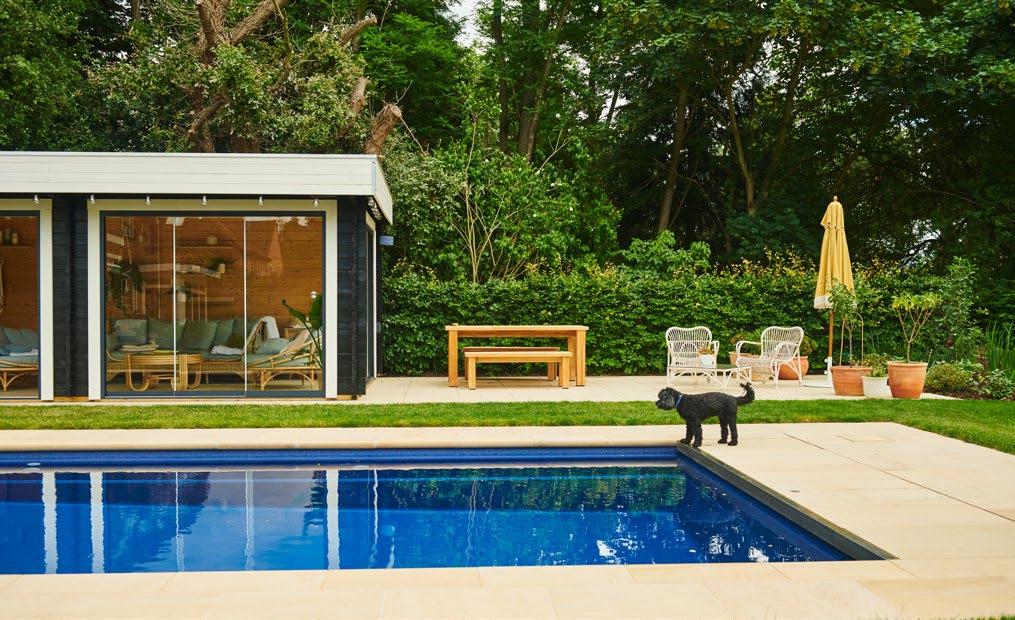
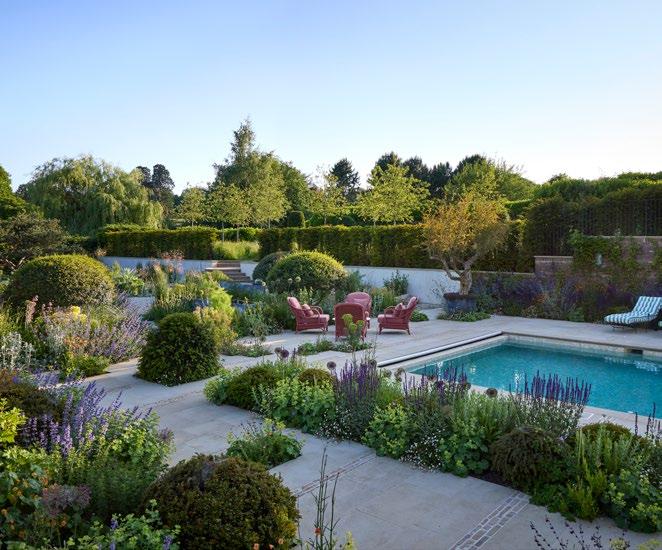
4 - Personal Private Resort: Designing a five-star staycation garden.
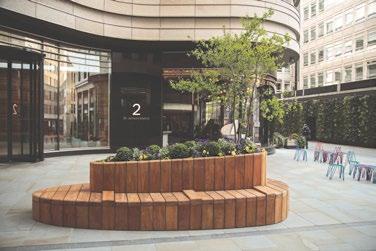
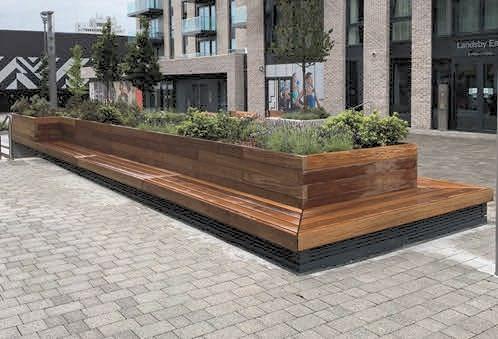
6 - Seating for public spaces.
8 - Forest Garden welcomes outdoor entertaining.
10 - Creating spaces that transition seamlessly.
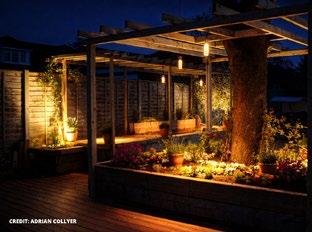
14 - Outdoor lighting trend alert.
16 - How to keep landscapes glowing after dark.
18 - Landscape projects that illuminate new ways of outdoor living.
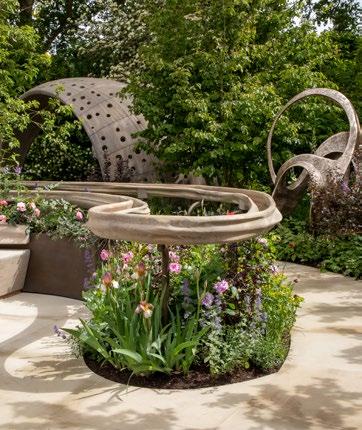
22 - Parkinsons UK Garden: The emotional architecture of timber.
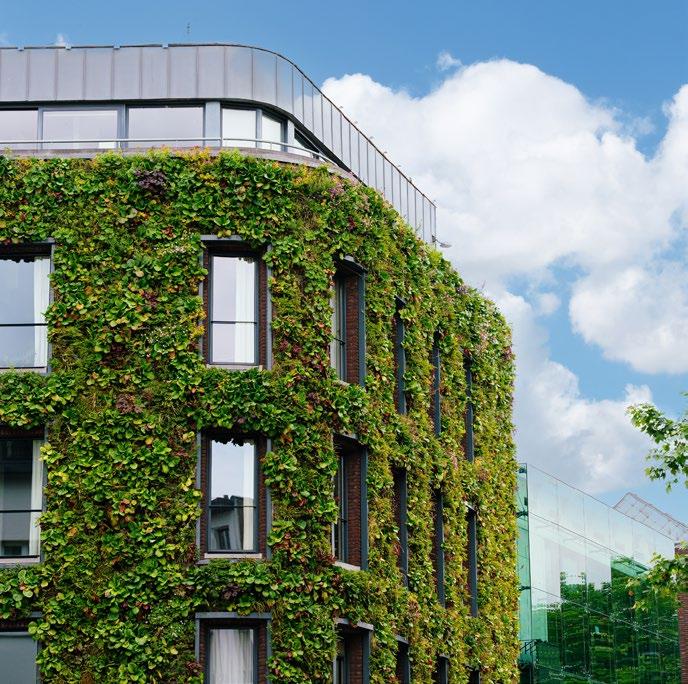
26 - Ensuring success of urban greening initiatives.
Decking
32 - Designing outdoor spaces that stand the test of time.
34 - Decked Out: Pedestal super structures hold it together.
36 - Five things to look for when choosing composite decking.
Bound Surfacing
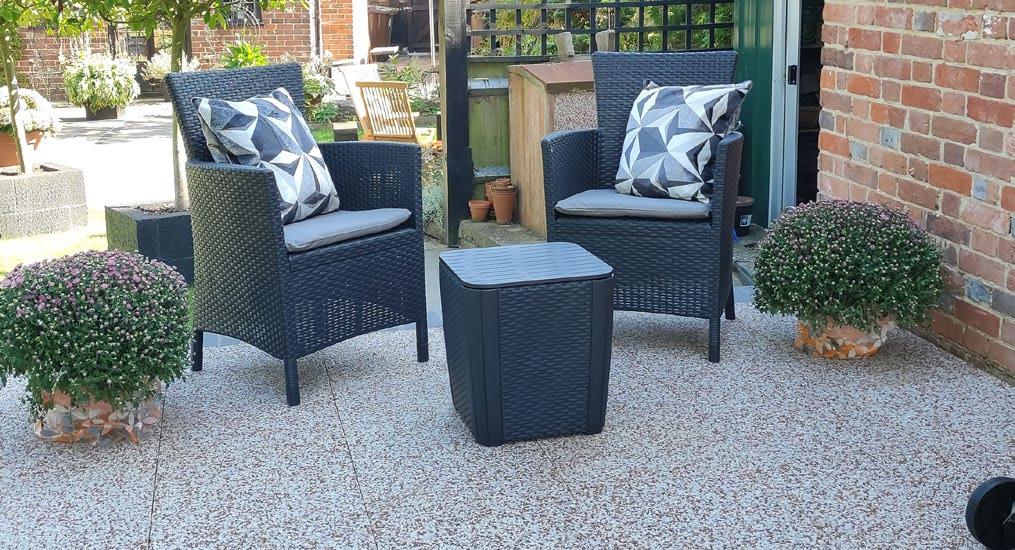
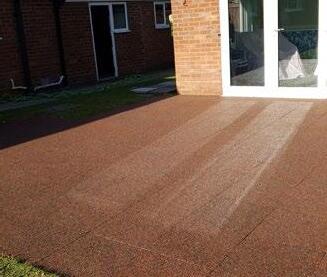
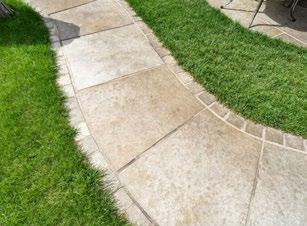
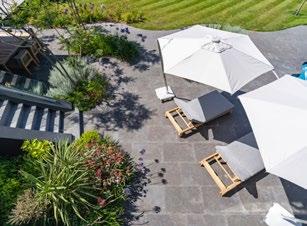
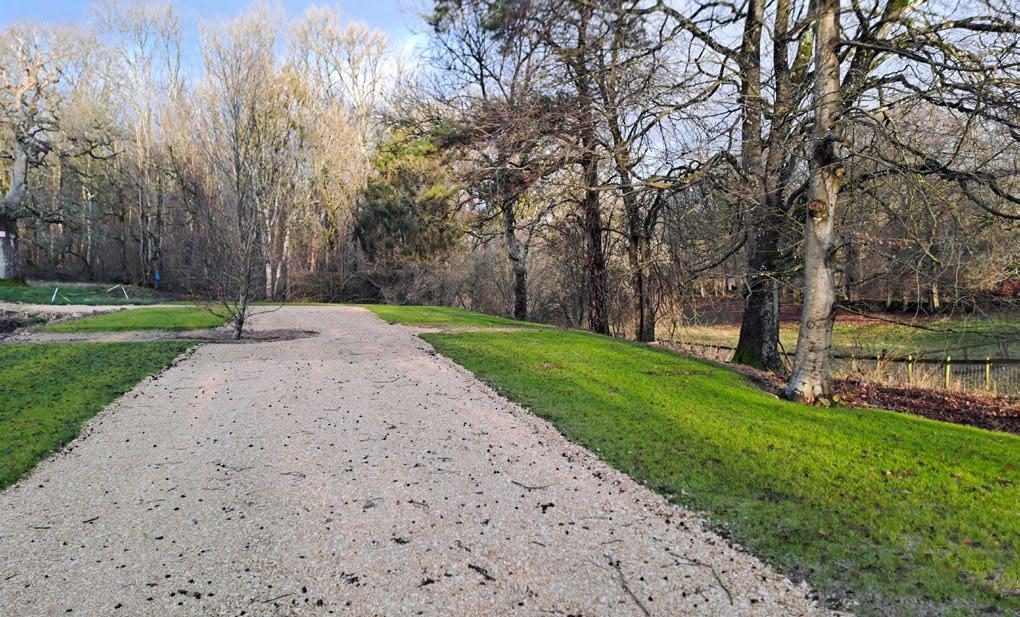
40 - Resin bound paving has emerged as a revolutionary solution.
41 - Vuba Chemical Innovations (Vuba) has officially acquired Sureset.
Concrete & Stonework
43 - Getting textured porcelain right.
44 - No staining with GFTK Paving Jointing even on Sawn Sandstone.
46 - Patio and driveway drainage issues homeowners should know about.
Green & Blue Infrastructure
48 - From Orchids to Ecosystems.
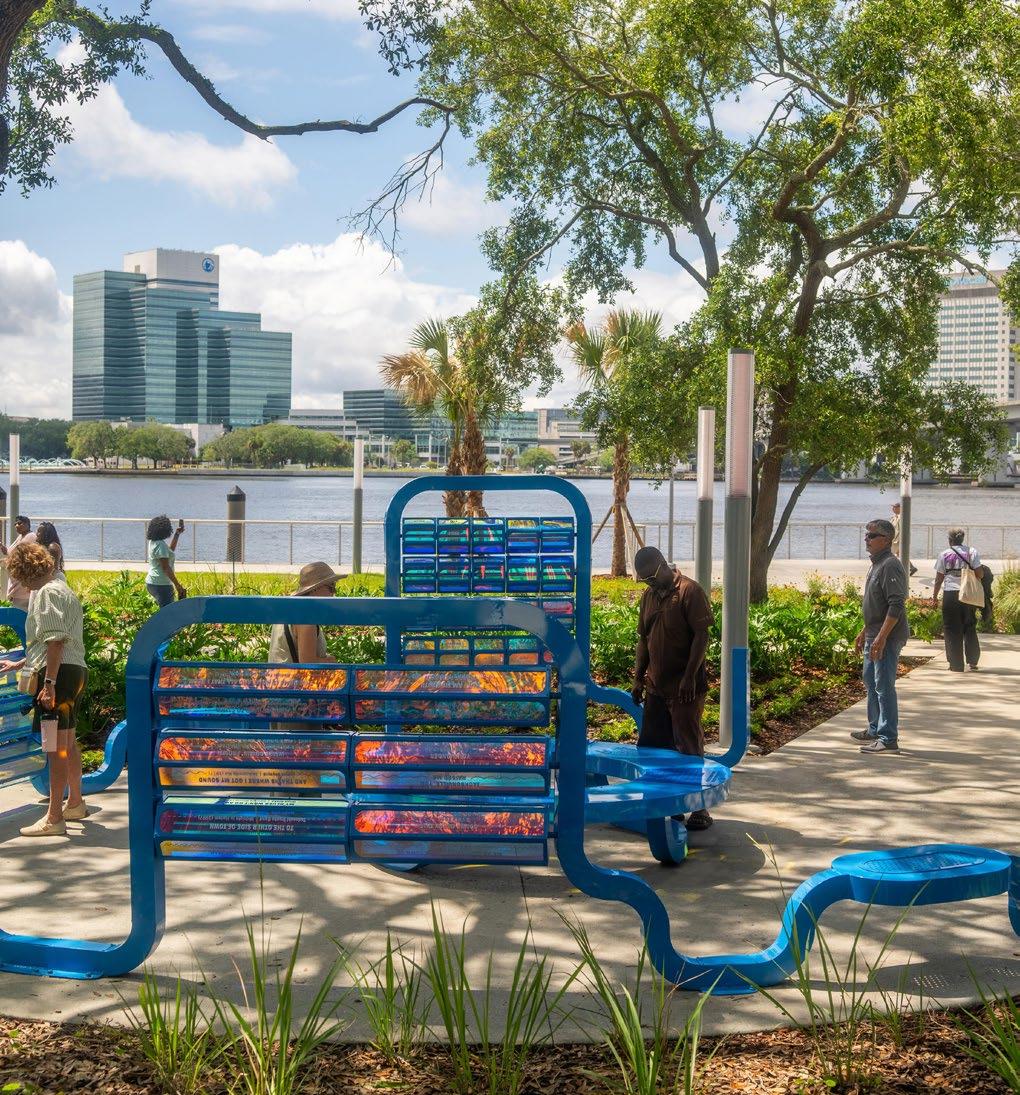
52 - The Urban Conga unveils a ‘A Cappella’, a new public art installation.
Editor-in-Chief
Antony Holter editor@mmhagazine.co.uk
Editor
Lorna Davidson lorna@landud.co.uk
Business Manager
Josh Holmes josh@mhmagazine.co.uk
54 - Managing rainfall at source: Why a connected Suds approach helps meet the requirement.
Landscaping Services
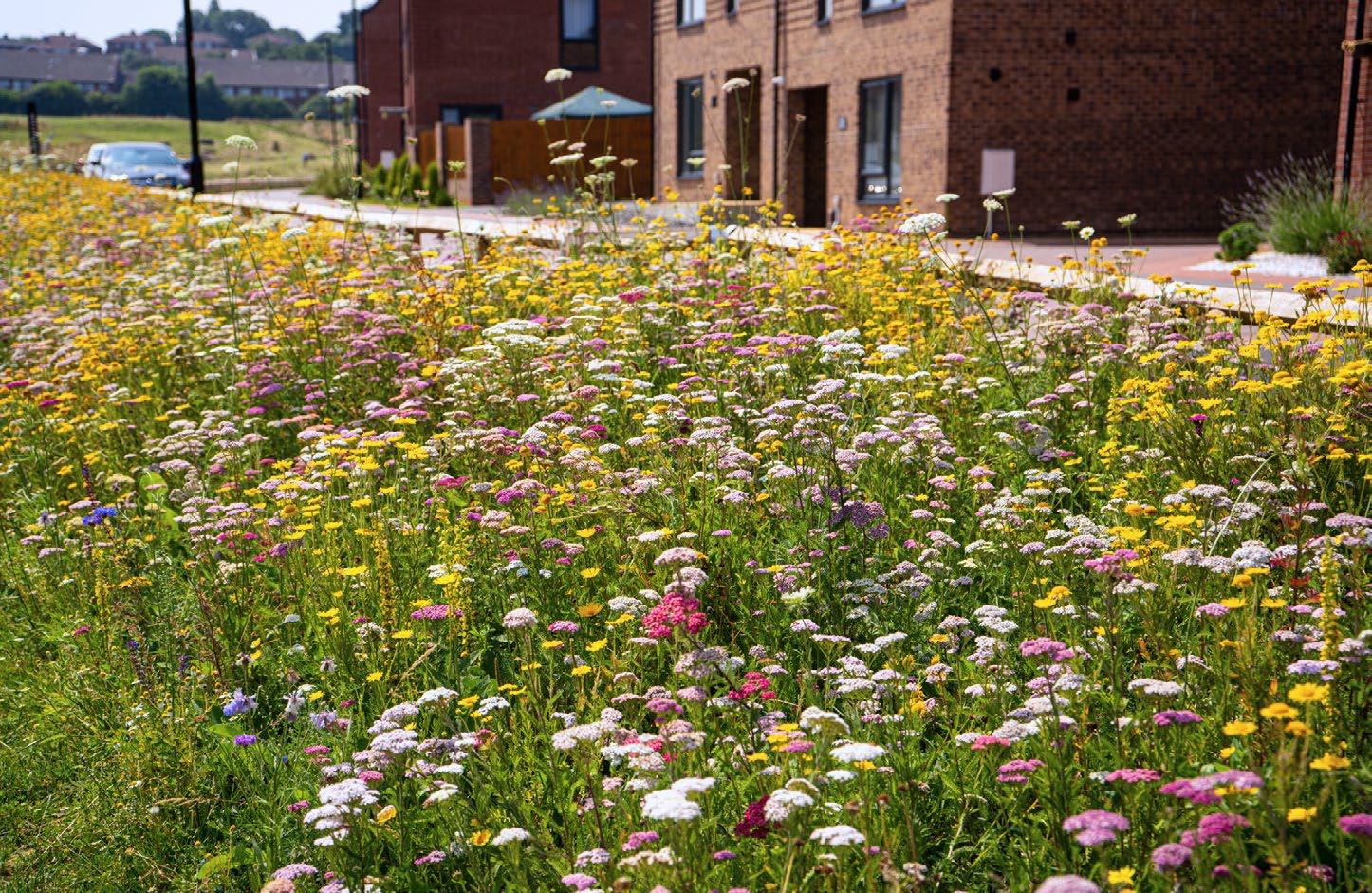
56 - Future Proofing: Pictorial Meadows® turn maximises adaptation and resilience to future climate changes.
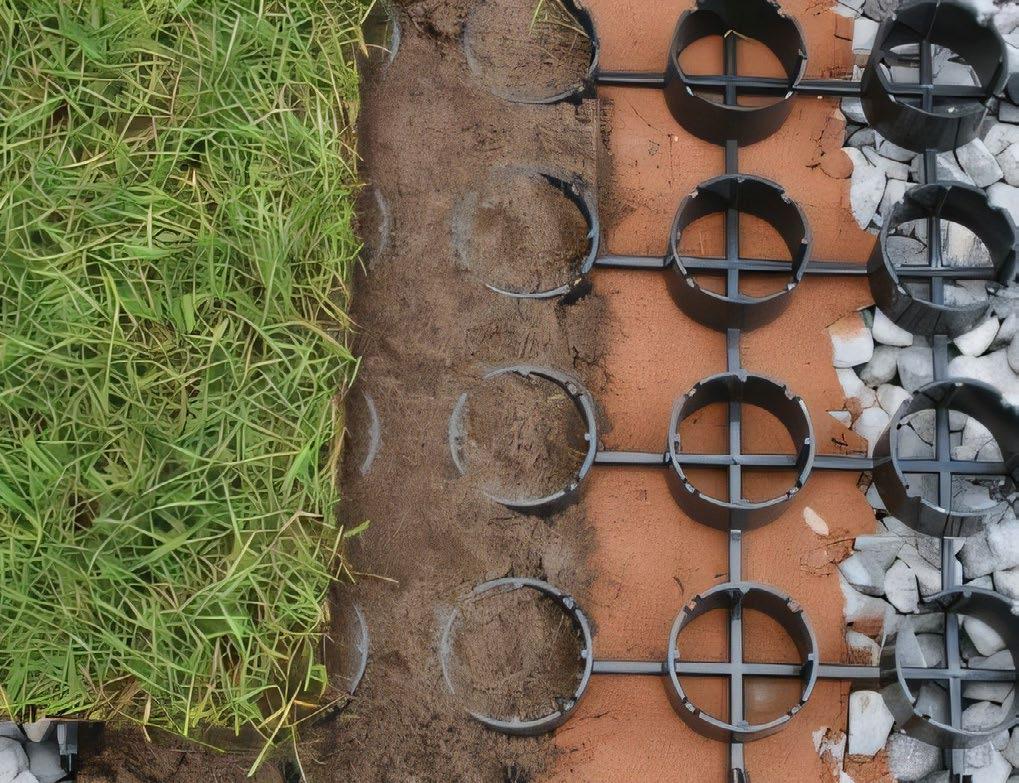
58 - Green parking solutions set to shape peak landscaping season projects.
60 - Bali Awards maintain half century of Elite Status with help from “Best in the Business” judging panel.
62 - Design out the weed: Bridging landscape architecture and eWeeding tech.
64 - Pellenc sets new standard with the launch of the Rasion 3 easy pedestrian lawnmower.
66 - From field to future: Supporting biodiversity through green infrastructure.
70 - Blakedown Landscapes completes major redcevelopment worlds.
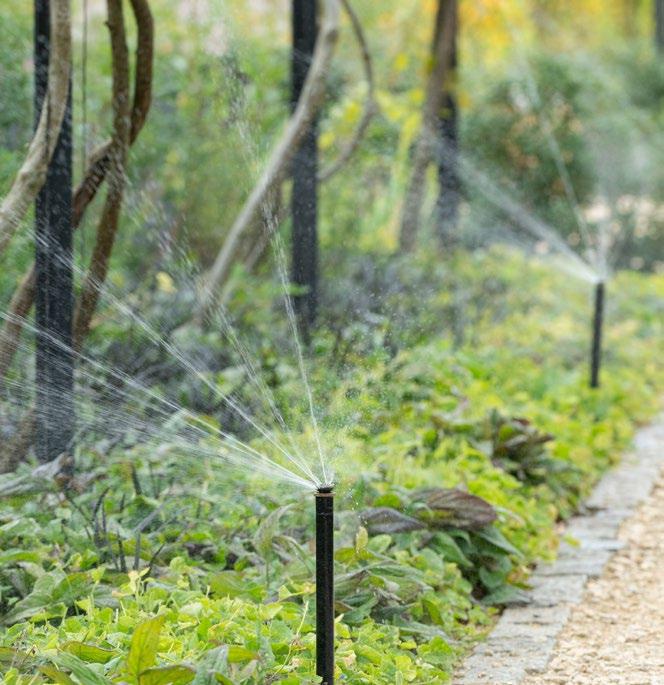
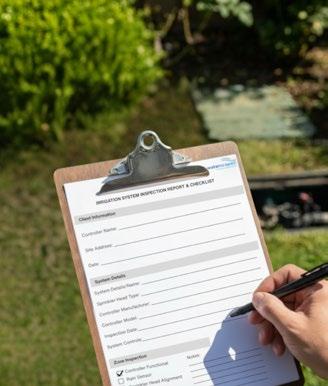
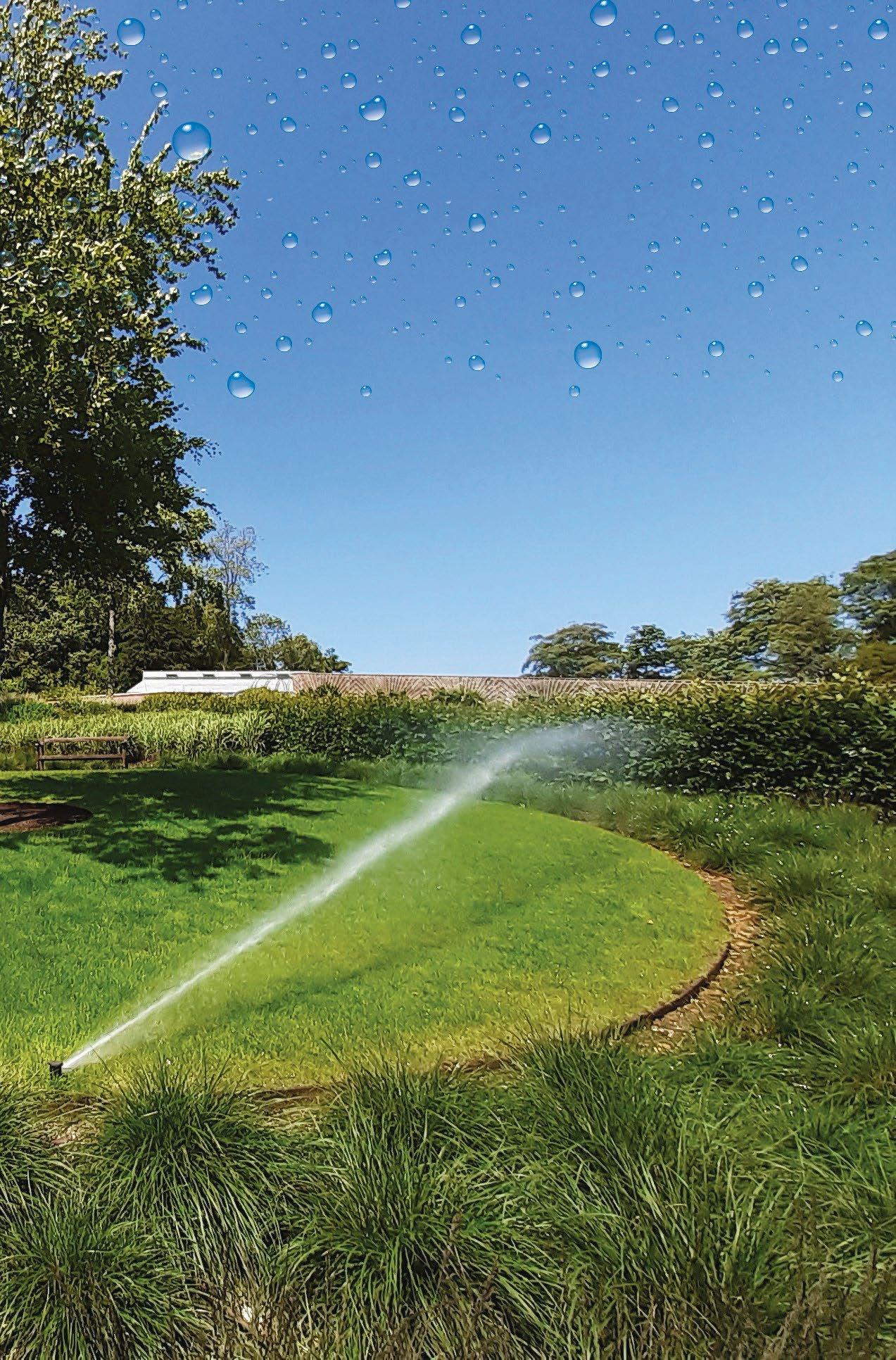
72 - Repeat irrigation faults are telling you something.
Sports & Play
74 - Bringing play to the heart of the conversations.
Tools, Plant & Equipment
80 - KAR UK launches K-series hose reel trolley.
82 - Groundsfest 2026: The event bringing lanscaping professionals together.
Studio Designer
Leila Schmitz leila@mhmagazine.co.uk
Marketing Enquiries - 01227 936974
Editorial Enquiries - 01304 806039
Other Enquiries - 01304 806039
Publishers
MH Media Global Ltd. 18/20 Newington Road, Ramsgate Kent CT12 6EE
DESIGNING A FIVE-STAR STAYCATION GARDEN
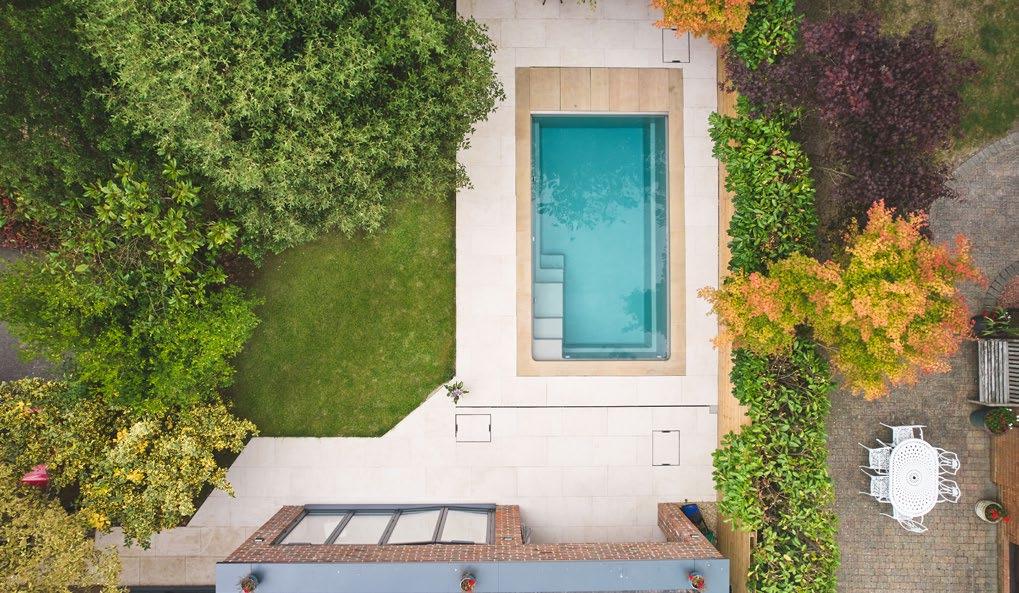
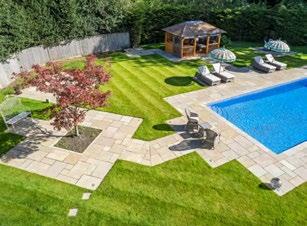
With more of the nation looking to spend holidays within the UK, curating the perfect private garden that provides resort-level escapism has shifted towards the top of homeowners’ priority list. Optimising investments in outdoor areas has encouraged homeowners to develop luxury spaces that offer the calm, sensory experience usually associated with travel destinations.
A recent Swimming Pool Trends Report from Compass Pools by Waterstream, drawing research from 2,000 UK homeowners, revealed that more than a quarter of UK homeowners view the swimming pool as the ultimate luxury lifestyle asset, ahead of state-of-the-art gyms or home cinemas.
This aspirational desire comes from a rise in the popularity of staycations and the increase in
homeworking, encouraging more time in the home environment. As the summer approaches, achieving a perfect personalised garden space that combines the beauty and functionality of a holiday destination is the next step for making the most of time spent at home.
The Pool as Architectural Anchor
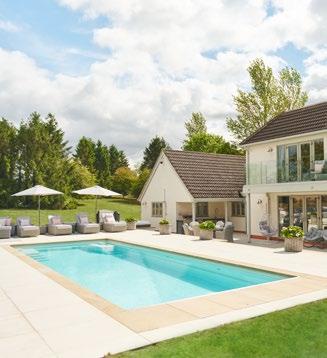
The most premium hotels prioritise guest enjoyment throughout their spaces, making sure each area has a purpose. Swimming pools are a prominent feature in these outdoor spaces, and are often zoned to encourage synthesis between spaces. Moving between the hotel amenities, you will often find the pool at the centre, supporting the sense of peace or active enjoyment sought from holiday retreats.
The same approach can be used in residential settings, using discreet,
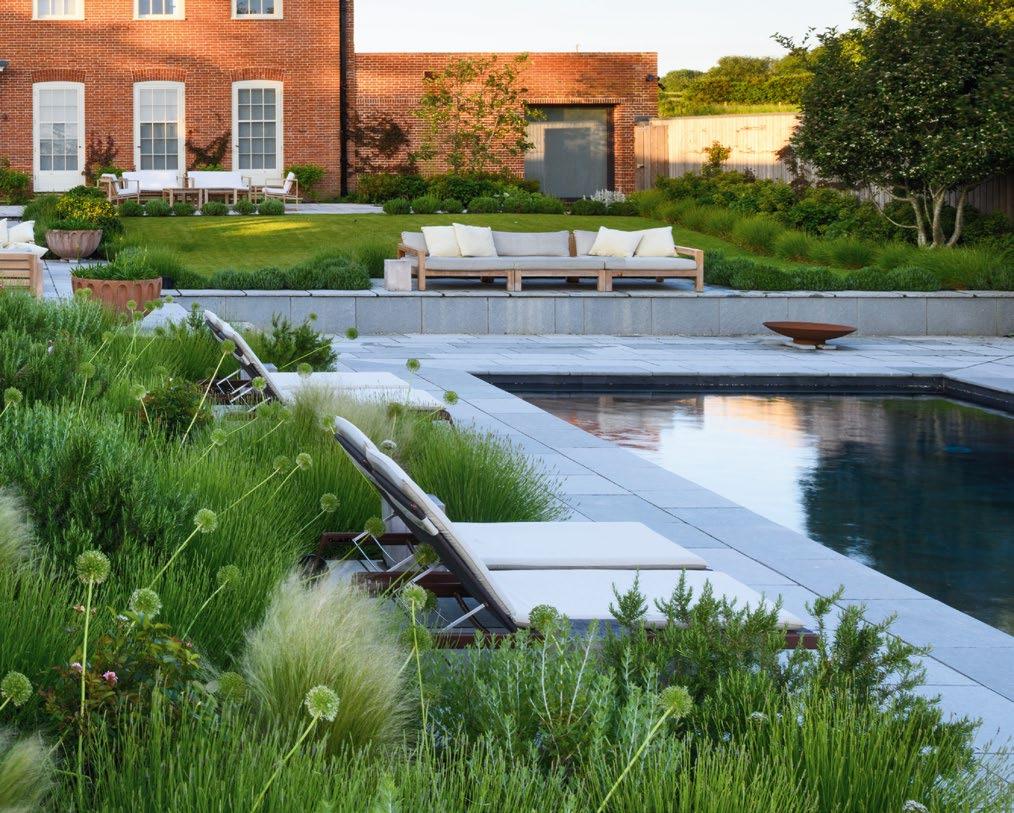
precision planning to make the most of compact spaces. Using the pool as the architectural focal point and planning your garden with this in mind helps inform the flow of pathing, views, planting and key entertaining areas. The pool can provide structure and stillness, letting surrounding garden elements settle naturally around it.
Material Continuity and Restrained Colour
A defining characteristic of resortstyle gardens is subtle and nuanced colour choices that complement the theme used throughout the interior and exterior. The recent Compass Pools trend report found that contemporary pool design has shifted away from high-contrast surfaces in favour of deeper tones that respond to light and landscape. Compass Pools’ Nova® colour range, an advanced gel-coat system with
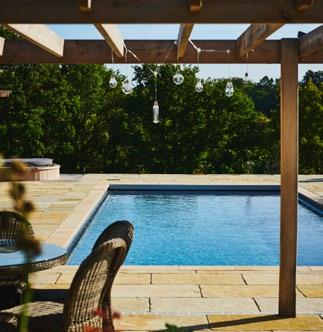
a translucent holographic effect, mimics the aesthetic of popular holiday destinations, bringing the beach to your door. Once the pool is filled with water, the finish subtly mirrors the sky, planting and architecture around it. These tones allow the pool to sit comfortably alongside natural stone, porcelain or timber decking, reinforcing material continuity.
The choice of materials define how a garden looks and feels, and consistent textures and palettes allow your garden to read as a unified, quietly luxurious space.
Designing for Quiet Ritual and Wellness
The private resort garden is designed around relaxation and recuperation, offering a place to escape. As seventy percent of homeowners believe investing in a swimming pool will improve their wellness, health and fitness, pools are being designed to support these personal rituals. Early morning swims and quiet, reflective evenings are part of the hotel wellness experience, and bringing these moments to your home can make every day feel luxurious. Lighting also plays a role, with resort gardens and spas favouring low-level
illumination that allows water to glow softly. This approach echoes the atmosphere of luxury wellness retreats, where light influences a softened, quieter mood.
Water quality has also become an integral part of the experience, as we seek more natural pool solutions. Compass Pools’ Nature range uses mineral-rich systems, delivering water that feels gentle on your skin, lending a sensory and spa-like swimming experience.
Enduring Luxury
“In every project, we consider how a pool is lived with over time, integrating all the small details that make it feel just as easy as a hotel stay. You can enjoy a pool with all the practical benefits, like superior insulation and safety covers, without ever compromising on its aesthetic,” comments Alex Kemsley, MD of Compass Pools by Waterstream.
This quiet efficiency reflects the broader shift in luxury values seen in the trends report, where quality performance is essential to the design story. These elements bring a sense of time away into the home environment and make it something that can be enjoyed day to day.
To download the full Swimming Pool Trends Report, visit the Compass Pools website www.compass-pools.co.uk.
SEATING FOR PUBLIC SPACES
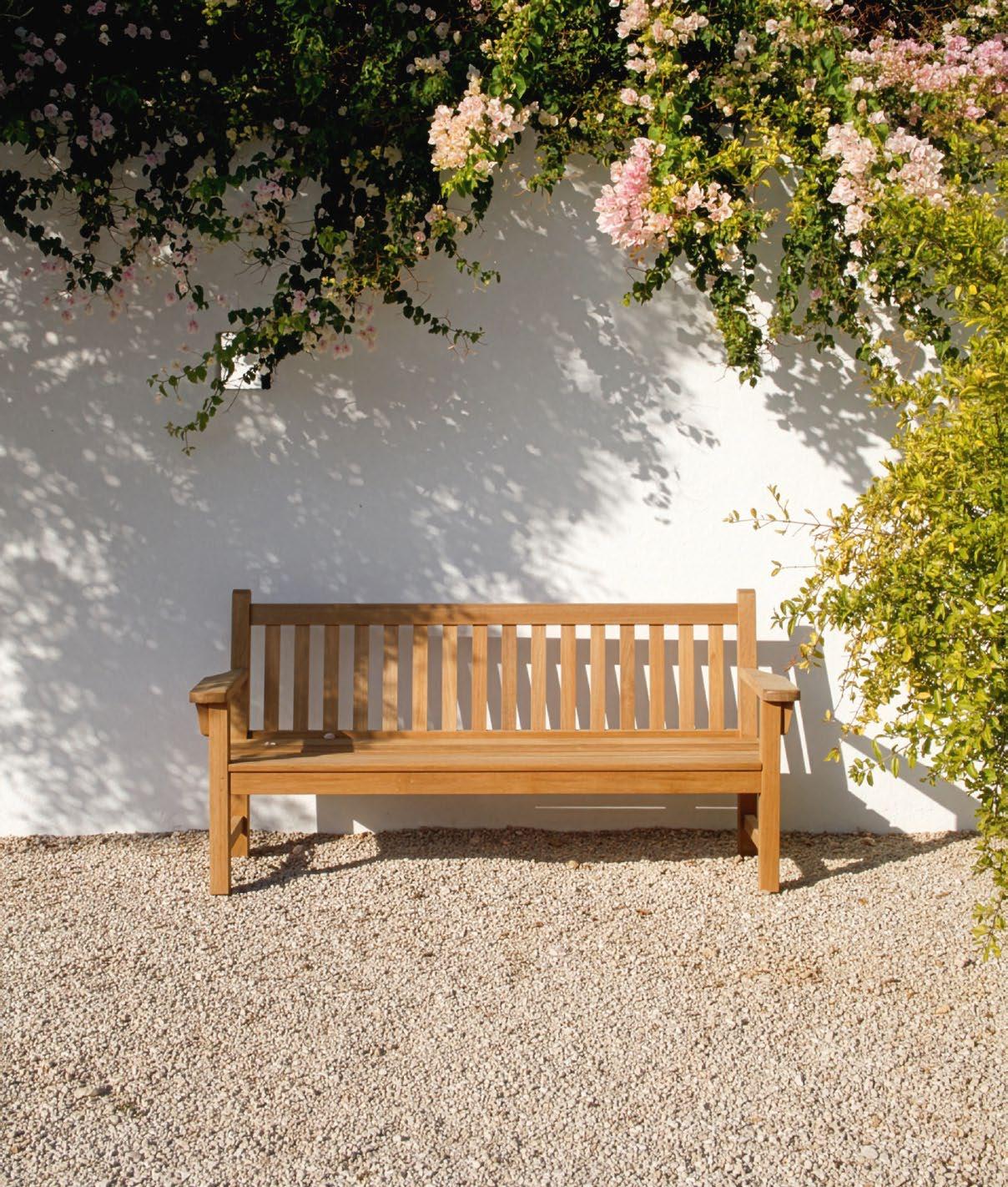
Barlow Tyrie seats have a versatile application, finding their place in public spaces such as parks, gardens, churches, cemeteries and city centres.
Our seats have been specified for public spaces worldwide since 1920.
Why Barlow Tyrie?
• Manufacturing superior outdoor furniture for over one hundred years
• Premium FLEGT certified grade A quality teak
• Exceptional customer service
• Long warranty – five years
• Longevity: some seats are still in London parks after 60 years
• Classic seat designs, with some in production since the 1920s
• Inscriptions and plaques available for memorial seats
• Security fastenings available for seats in public places
• We hold stock in our UK warehouse throughout the year
• Design your space using our 3d planner tool with AR
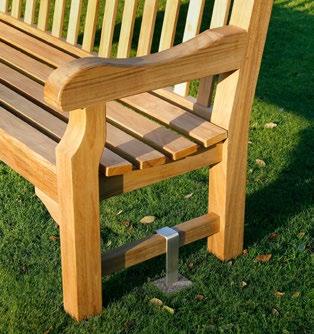
We have two ways to secure your furniture: Seat Fixing Irons and Brass Security Fasteners.
Inscriptions and Plaques
We offer two options to personalise your furniture: a carved inscription or a Bronze Plaque, available for most of our teak armchairs, benches and seats. These inscriptions personalise a gift to a loved one or provide a unique and distinctive memorial. Our planner tool allows you to design view your inscription or plaque. Contact our customer service department with your requirements or with any questions.
Seating for catering
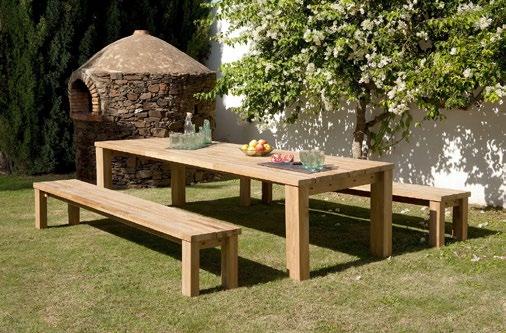
Our Titan rustic teak range has a robust design and grand dimensions. The teak used for this furniture is laminated and includes wild grain patterns and knots, giving it a rugged farmhouse appeal. It is ideal for outdoor public dining.
Glenham Seat 180
A Chelsea Pensioner on a London Seat, Sloane Square, London C.1955
Rothesay Seat 180 with Stainless Steel Fixing Iron
Panel inscription detail Titan Table 300 with Titan Bench 200
FOREST GARDEN WELCOMES OUTDOOR ENTERTAINING
BRITS ARE PREPARING FOR A SUMMER OF GARDEN PARTIES AS INTEREST IN OUTDOOR ENTERTAINING SURGES
New research from Forest Garden, the UK’s largest manufacturer and distributor of wooden garden products, shows Pinterest searches for ‘garden party’ and ‘summer garden party’ have soared over the last month.*
The trend suggests homeowners are already planning how to make the most of their outside spaces, with gardens increasingly being used as social hubs for everything from relaxed family barbecues to drinks with friends and summer celebrations.
And as al fresco entertaining moves up the agenda, Forest Garden is helping homeowners get gardenparty ready with a range of outdoor entertaining essentials, including garden bars, seating, tables and privacy screens designed to turn patios, lawns and terraces into stylish summer hosting spaces.
Jenny Davis, Head of Marketing at Forest Garden, said: “With warmer weather on the way and the upcoming World Cup giving people another reason to gather at home, garden parties are set to be a huge part of summer entertaining this
year. More homeowners are looking at their gardens as proper social spaces, rather than somewhere that only gets used occasionally.”
According to the experts at Forest Garden, the key to creating the ultimate party garden is all about planning.
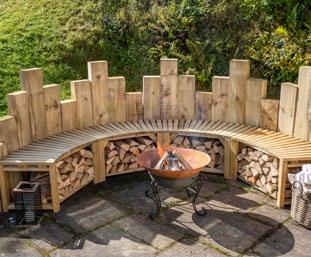
A garden bar instantly creates a focal point for drinks and hosting, while outdoor tables and seating help make the space feel relaxed and practical. Specially-designed curved seating around a firepit will keep the cold at bay as temperatures dip.
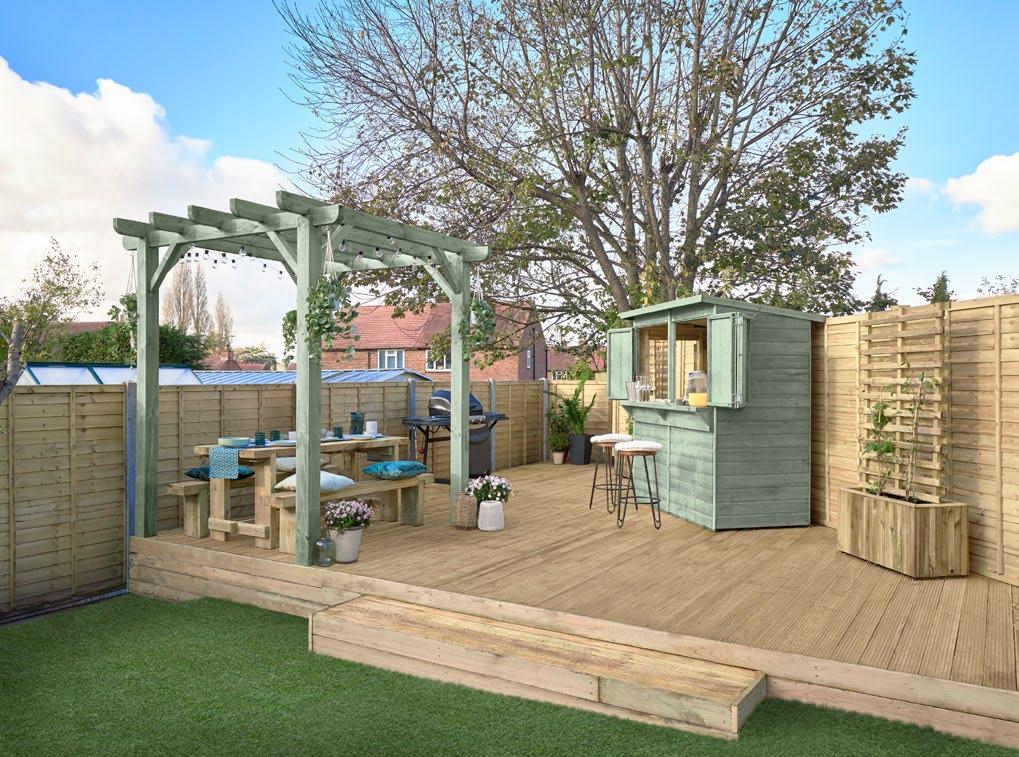
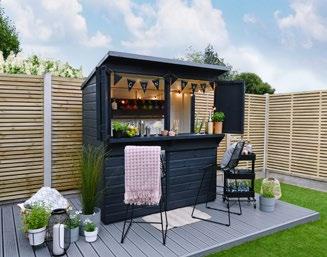
A garden bar, such as the Shiplap Pressure Treated 6x3 Pent Garden Bar from Forest Garden, is the ultimate centrepiece for those looking to create a social space for entertaining this summer
Privacy screens are another essential and are a simple way to make an outdoor space feel more intimate, especially in overlooked gardens. They can also help define zones, soften boundaries and create a more finished look.
Jenny added: “You do not need a huge garden to make this work, even a compact patio can become a brilliant entertaining area if the layout is planned properly.”
Forest Garden’s versatile range of wooden garden products, which are ideal for creating an entertaining outdoor space, are available now. Prices start at £104.49.
*Pinterest searches for the terms ‘Garden Party’ and ‘Summer Garden Party’ were up 30% and 40% respectively over the month (ending 01/05/2026) in Great Britain and Ireland.
CURVED FIREPIT BENCH (PACK OF 2)
£447.99
Enhance your outdoor space with these beautifully crafted firepit benches, a true statement piece for any garden.
Designed for versatility, this bench can be used on its own, paired with another, or arranged with up to eight benches to create a full circle, ideal for gatherings around a firepit.
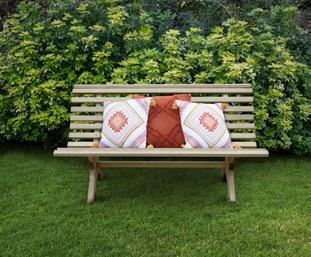
KUBA BENCH 1.5m
£199.99
This design-led bench features a beautifully curved seat that combines both comfort and
sturdiness, making it the perfect spot for a peaceful retreat.
The gentle curve of the bench enhances your relaxation experience, while its contemporary, modern design adds a touch of sophistication to your outdoor space
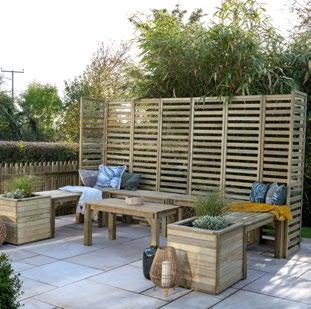
MODULAR SEATING OPTION 4
£ 826.49
The Modular Garden Seating range provides you with the flexibility to design a seating area which suits your purpose and your space.
This V4 garden seating set includes eight upright trellis panels, five benches, two square seats/tables, and 2 square planters.
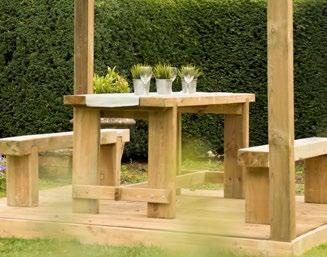
REFECTORY TABLE AND SLEEPER BENCH SET – 1.8m
£553.99
If you’re looking for a contemporary and robust outdoor dining set then the 1.8m Refectory Table & Sleeper Bench Set from Forest will make the perfect addition to your garden. The comfortable smooth-planed Sleeper Benches and matching Refectory Table create the perfect outdoor space to dine with family and friends
SHIPLAP PRESSURE TREATED 6x3 PENT GARDEN BAR
£751.99
A great way to entertain friends and family, the garden bar is the perfect choice for serving drinks and food. This bar features a solid top bar and a serving hatch with bifold shutters.
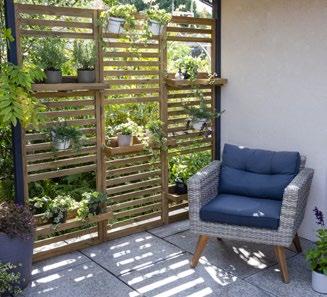
SLATTED WALL PLANTER 1 SHELF
£104.49
This Slatted Wall Planter is ideal for anyone who wants to create their own modern living plant wall. For those who don’t have a large garden for vegetables or perennials, a wall mounted vertical garden is the answer.
CREATING SPACES THAT TRANSITION SEAMLESSLY
FROM THE STRUCTURED INTERIOR TO THE ORGANIC BEAUTY OF THE OUTDOORS
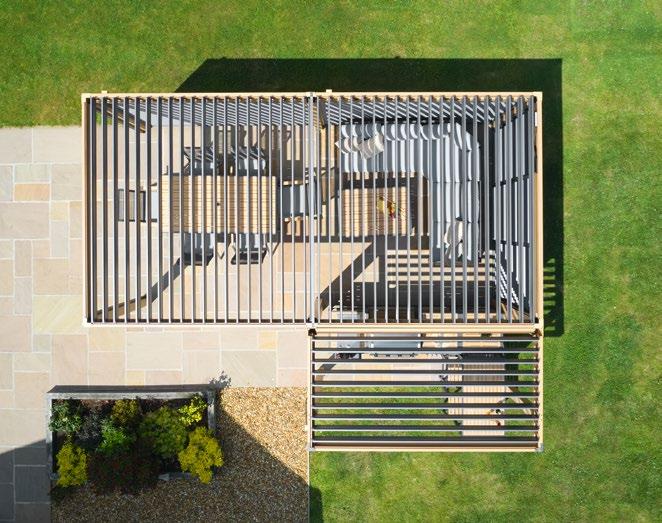
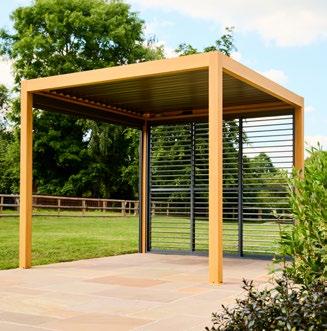
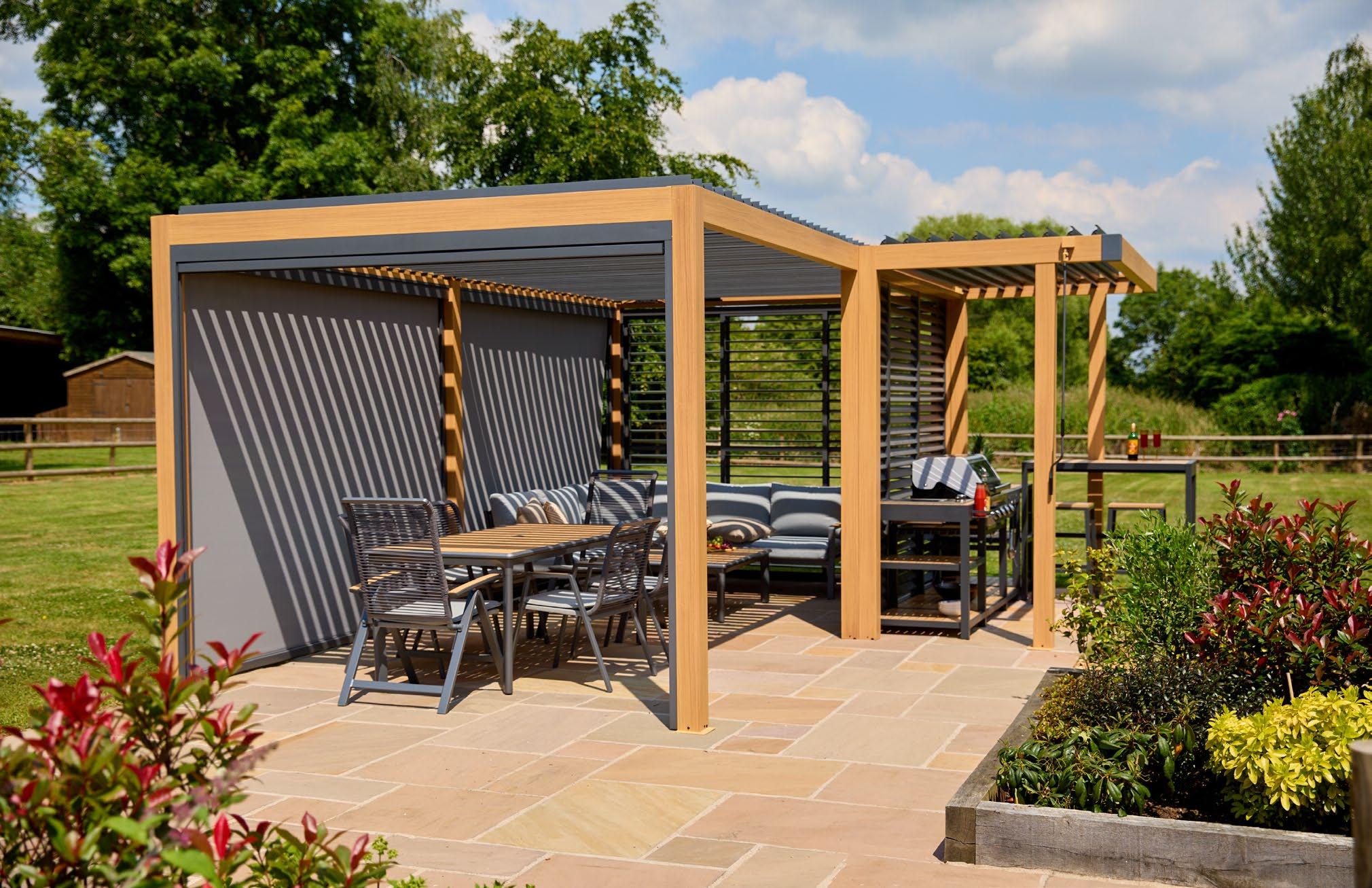
For the modern landscape architect and garden designer, the challenge lies in creating spaces that transition seamlessly from the structured interior to the organic beauty of the outdoors. It requires a focal point that offers both architectural integrity and year-round functionality. Enter the Savannah Pergola range by Atkin & Thyme: a definitive solution for professionals dedicated to elevating the British garden.
Following the success of their warm oak colourway, Atkin & Thyme have expanded the collection to include a sophisticated new Birch woodeffect finish. Though it possesses the aesthetic softness of natural timber, the Savannah is engineered from high-grade, durable aluminium. This ensures the structure is not only UV and heat resistant but fully waterproof, capable of withstanding significant snow loads and high winds - essential reliability for the unpredictable UK climate.
The hallmark of the Savannah range is its versatility. The adjustable louvered roof panels allow designers to manipulate the environment, inviting in dappled light or providing complete shelter at a moment’s notice. To further tailor the space, Atkin & Thyme offers three distinct wall options: sleek sliding louvered doors, fixed panels, and texteline blinds with integrated crank handles. These customisable elements allow for precise control over privacy and weather protection, ensuring the final build feels like a true extension of the home.
As evening falls, integrated, remotecontrolled LED lighting transforms the pergola into an atmospheric retreat. Whether sheltering a curated lounge set or a private spa, the result is a beautifully lit ambience that extends the usability of the garden well into the night.
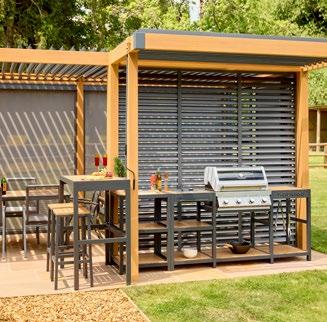
The vision continues beyond the structure itself. The Savannah ecosystem includes a modular
outdoor kitchen system, offering 4 or 6-burner configurations alongside bespoke storage cabinetry, and a refined furniture collection. With a signature slatted finish, these pieces harmonise with both classical and contemporary schemes.
To support your next project, the Atkin & Thyme design team is available to guide you through the specification process, ensuring every technical requirement is met. Professionals can configure their vision directly online or collaborate with the team to create a bespoke outdoor sanctuary that truly defines luxury living.
www.atkinandthyme.co.uk
Savannah Pergola Systems
Elevate Every Blueprint
Are your clients dreaming of a bespoke outdoor sanctuary? With a variety of sizes and premium customisable options, our pergola collection provides the architectural finish your projects deserve.
Speak to our team about our Savannah Pergola range today.
SILVER-GREY WOOD, NATURALLY PROTECTED
For decking and garden timber, the OrganoWood® Wood Protection System offers a refined way to create a beautiful silver-grey finish while helping to protect and preserve outdoor wood.
Creating an outdoor space that feels elegant, natural and easy to live with starts with the materials. Timber brings warmth, texture and character to decking, facades, fencing, furniture and garden structures — but outdoors, it also needs to cope with weather, sunlight, moisture and everyday use.
The OrganoWood® Wood Protection System has been developed to make that process simpler. Designed for outdoor wood surfaces, the system helps timber develop a light, smooth surface that naturally turns silvergrey over time. The result is a calm, understated finish that blends beautifully with contemporary architecture, landscaped gardens and natural surroundings.
At the same time, the treatment helps reduce the risk of cracks forming, supports a smoother surface and reduces the need for ongoing maintenance. For homeowners, designers and landscapers looking for a clean, natural aesthetic, it offers a practical alternative to traditional wood oils and wood protection agents.
A complete system for outdoor wood
The OrganoWood® Wood Protection System consists of three complementary products: Wood Cleaner, used for pre-wash and maintenance; 01 Wood Protection, the base coat; and 02 Surface Protection, the topcoat.
Together, they are designed to clean, protect and finish outdoor timber surfaces. The system can be used on decking, fencing, planter
boxes, outdoor furniture, docks and untreated facades. Recommended timbers include pressureimpregnated wood, Thermowood, pine, spruce and larch.
The base treatment, 01 Wood Protection, is an eco-labelled silicon product that helps give the wood its distinctive silver-grey patina. 02 Surface Protection is applied as the topcoat, helping to create a waterrepellent surface. Wood Cleaner and 01 Wood Protection are eco-labelled with “Good Environmental Choice” by the Swedish Society for Nature Conservation.
Inspired by nature’s own chemistry
At the heart of OrganoWood® is a patented Swedish innovation inspired by nature’s own solutions. The technology imitates natural mineralisation processes and is based on silicon minerals, which are attached to the wood fibres using patented OrganoClick® technology.
This encapsulation of the wood fibres helps protect the timber and counteract the degradation process. The result is a system that works with the natural character of wood, rather than covering it with a heavy surface treatment.
For absorbent wood types such as pine and spruce, silicon penetration is particularly effective. The products can also be used on wood that has previously been treated with oil, lacquer or glazing, provided the earlier treatment has worn away. Once wood has been treated with OrganoWood®, it should not be painted over.
A beautiful silver-grey finish
One of the most appealing qualities of the OrganoWood® system is the way it allows timber to age with a natural, silver-grey nuance. Treated wood acquires a harder, smoother
surface, helping to reduce the risk of crack generation while creating a refined visual finish.
The greying process is driven by sunlight, UV light and water, so the timing will vary depending on the location, exposure and weather conditions. The effect is normally visible after several weeks. At first, the colour change may appear slightly uneven or spotty, but this gradually settles as the timber continues to weather.
After roughly a year, treated wood placed outdoors in sunlight develops a more uniform silver-grey lustre. Shaded areas may take longer, while horizontally mounted wood will usually grey more quickly than vertically mounted boards.
Less maintenance, more natural beauty
For tired decking or weathered outdoor timber, OrganoWood® offers a simple way to refresh the surface and extend the natural lifespan of the wood. By helping the timber become smoother, more weather resistant and easier to maintain, the system supports outdoor spaces that are both practical and beautiful.
Whether used for a garden deck, a timber facade, outdoor furniture or landscape features, the OrganoWood® Wood Protection System creates a finish that feels considered, contemporary and close to nature.
The result is silver-grey wood in harmony with its surroundings — elegant, durable and naturally inspired. Find out more at www.osmouk.com
Osmo, Good for Wood
OUTDOOR LIGHTING TREND ALERT
JAMES KENDALL, OPERATIONS DIRECTOR AT KES LIGHTING & HOME
“Garden lighting is often treated as an afterthought, but it has the potential to completely change how a space is used. The right lighting allows homeowners to continue enjoying their garden long after sunset, whether that means entertaining friends, relaxing outdoors or simply appreciating the view from inside the house.”
What is your favourite outdoor lighting trend this year, and why?
One of my favourite outdoor lighting trends is the move towards layered, low glare garden lighting that feels soft, atmospheric and intentional rather than overly bright.
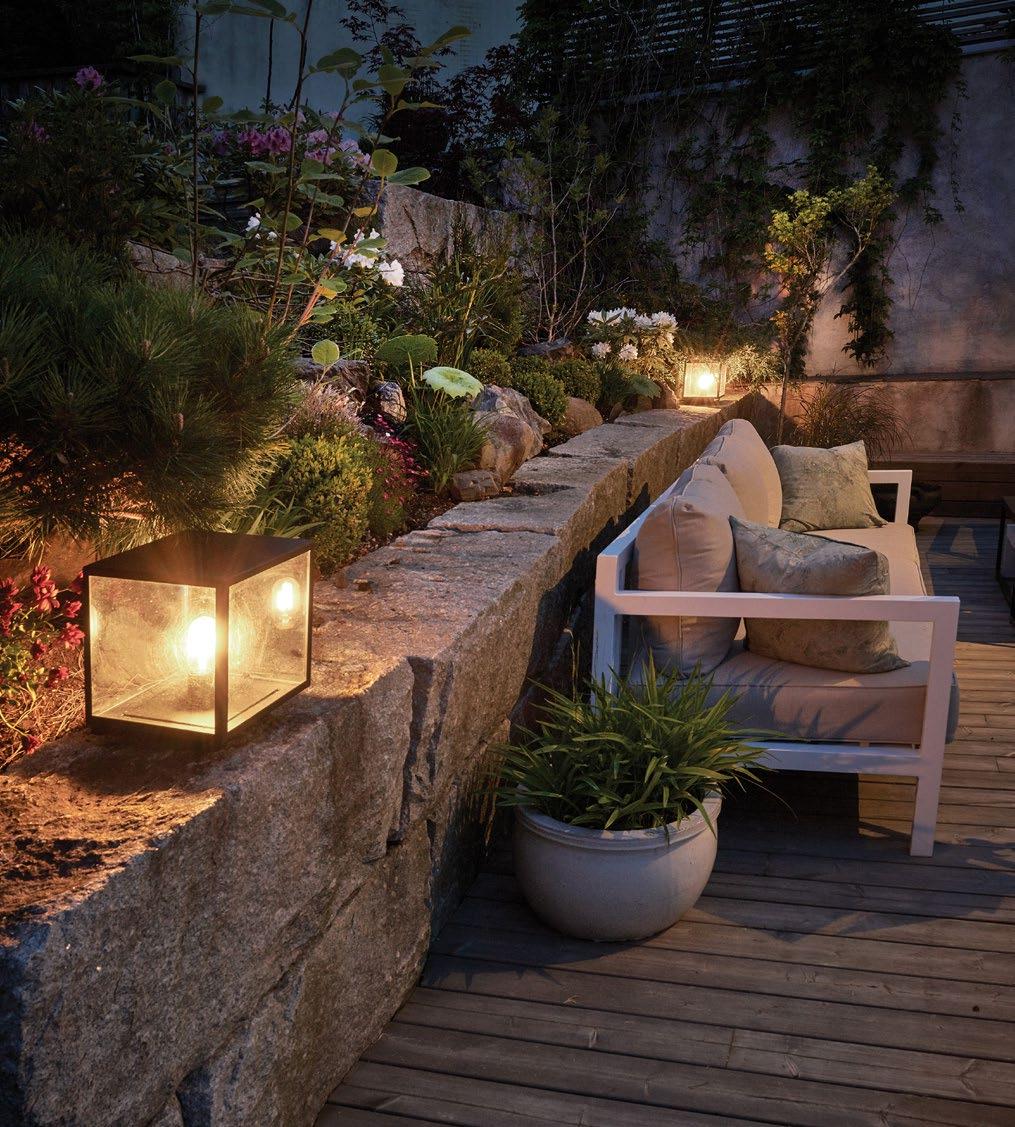
Homeowners are moving away from harsh floodlighting and instead using a combination of pathway
lights, subtle uplighting and discreet wall fittings to create warmth and depth outdoors. This approach feels far more sophisticated and allows gardens to become genuine extensions of the home, especially as outdoor living continues to grow in popularity.
What I particularly like about this trend is that it balances beauty with practicality. You still get safe, usable outdoor spaces, but without losing the relaxed ambience people want when entertaining or unwinding in the evening.
How do you recommend styling this trend?
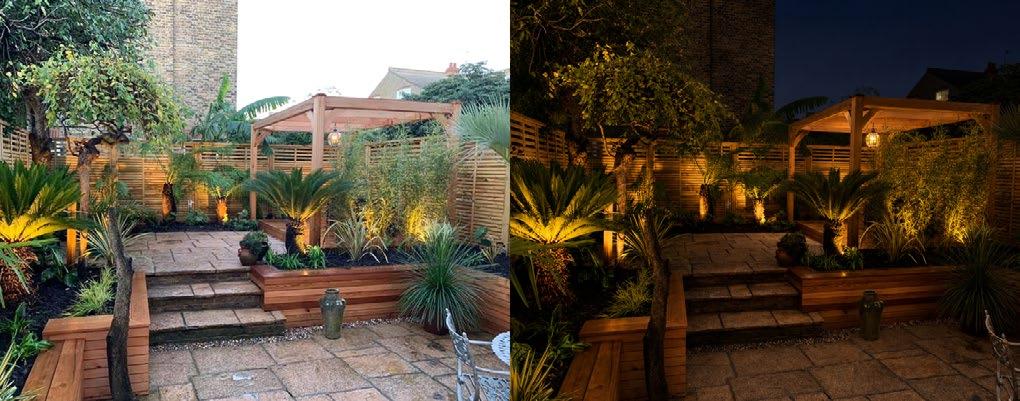
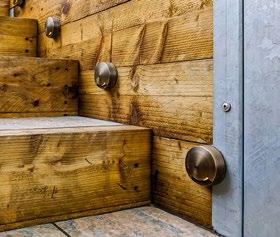
The key is to think in layers, much like you would indoors. Start with practical lighting for paths, steps and entrances, then introduce
softer accent lighting to highlight planting, trees or architectural features. Rather than trying to light every corner of the garden, focus on creating pockets of light and shadow, which adds atmosphere and makes the space feel more luxurious.
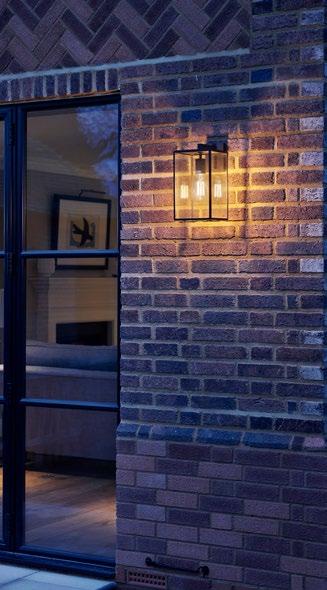
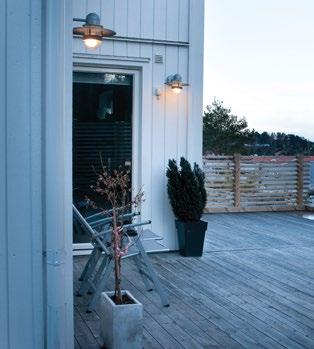
I would always recommend choosing warm white LEDs, as these create a much more inviting glow than cooler tones. Keep fixtures discreet and consistent in finish, whether
that is matte black, bronze or natural metal, so the scheme feels cohesive. If you have a seating area or pergola, adding decorative wall lights or pendants can help create an outdoor room effect, which is a major trend for gardens in 2026.
HOW TO KEEP LANDSCAPES GLOWING AFTER DARK
A beautifully designed outdoor space shouldn’t lose its appeal when the sun goes down. Whether it’s a private garden, hospitality terrace, or communal landscape, lighting can carry the day’s atmosphere into the evening, allowing clients to enjoy their outdoor spaces long after sunset.
For landscapers, lighting adds another layer of value to a project. A thoughtfully lit garden can feel larger, warmer and more inviting after dark, transforming patios into social spaces, pergolas into focal points and pathways into welcoming routes through the landscape. When planned correctly, lighting doesn’t simply illuminate a space; it helps shape the way people experience it.
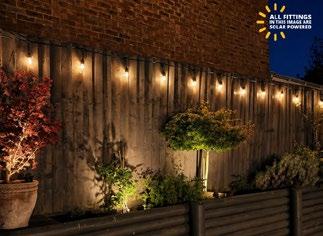
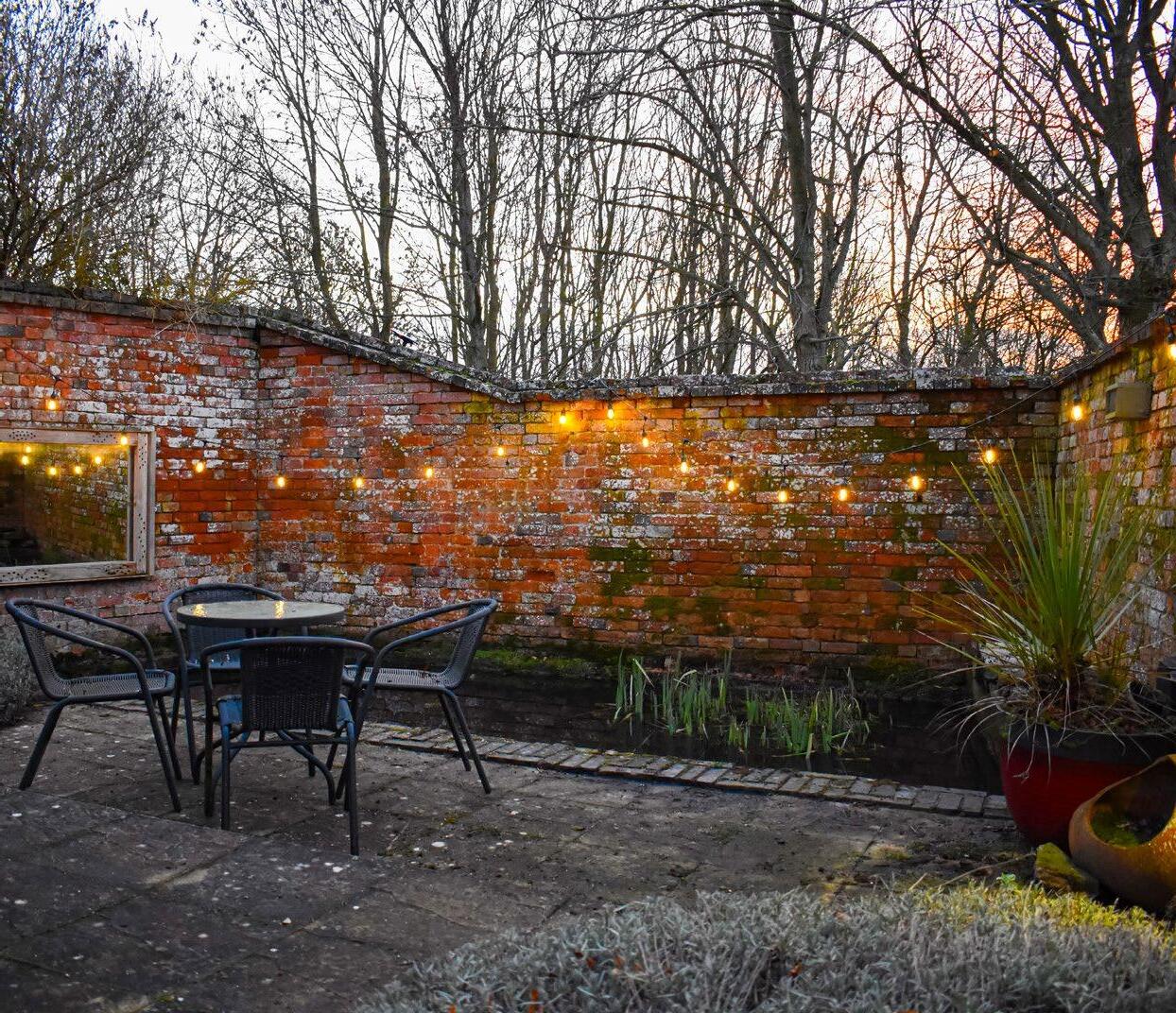
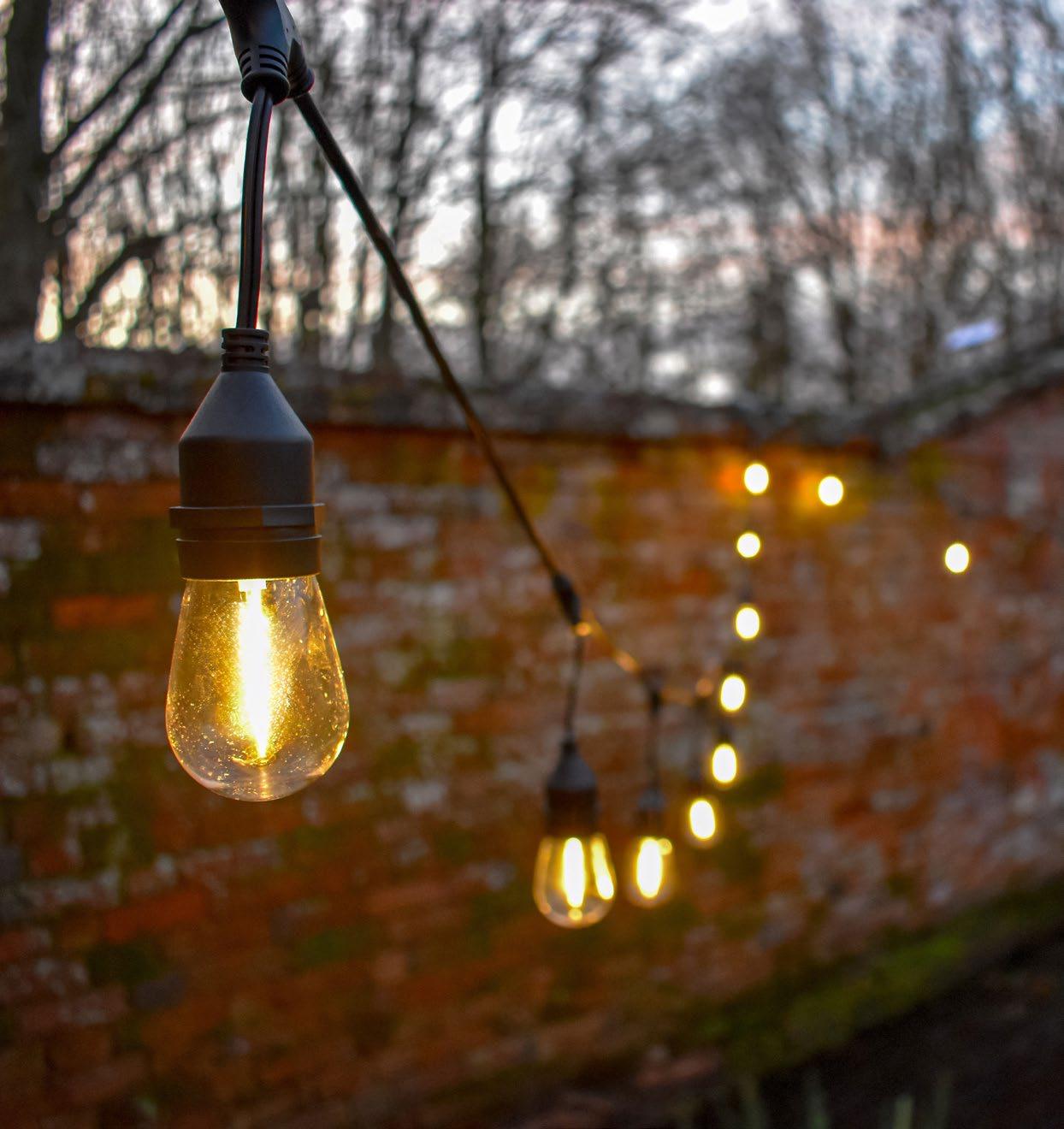
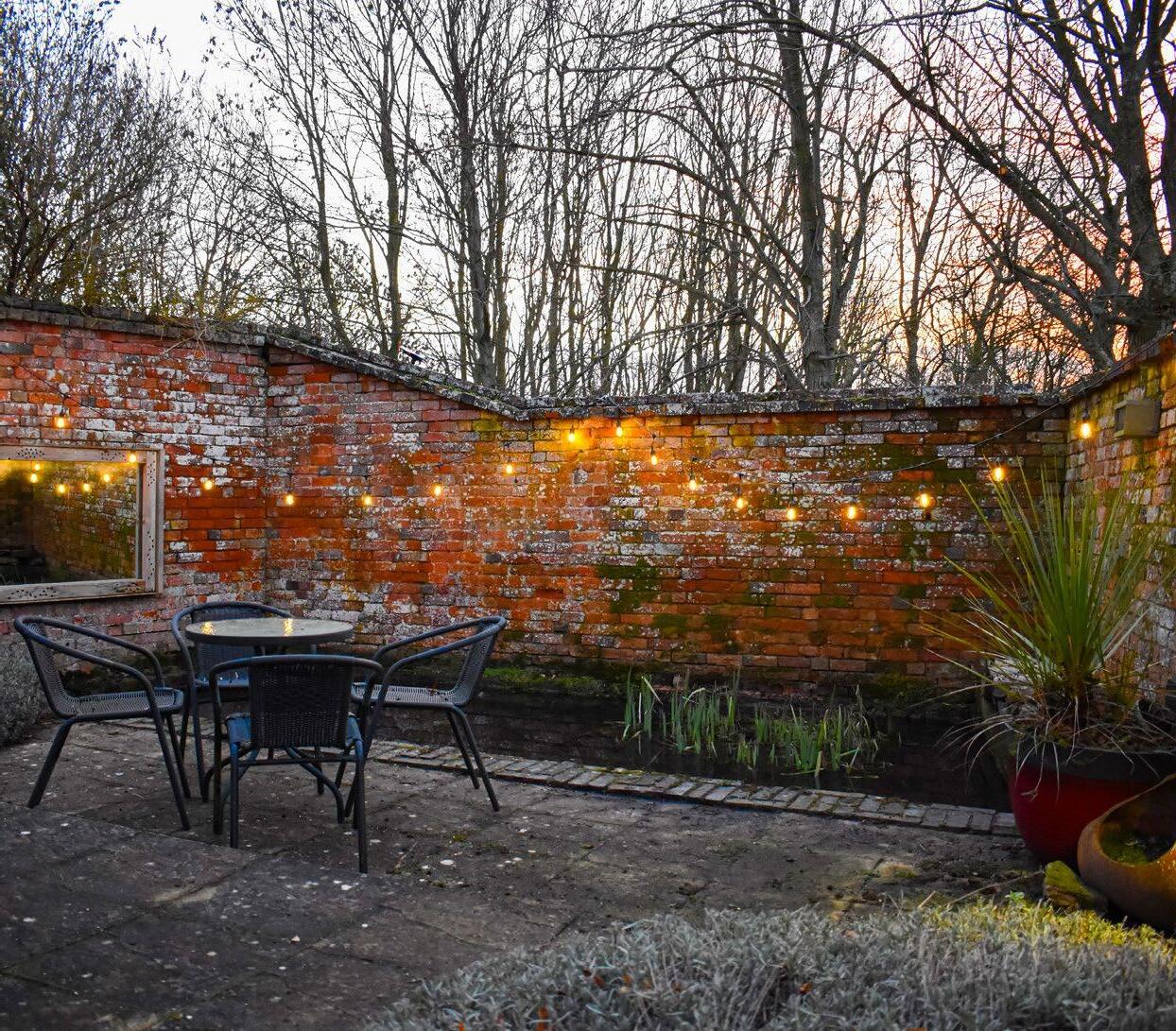
One of the most effective ways to create instant atmosphere is through festoon lighting. Suspended above seating areas, outdoor
kitchens, dining spaces or pergolas, festoon lighting introduces warmth, character and a relaxed ambience that naturally encourages people to stay outside. Lumena’s Orion 12V Festoon Lights, part of the Cosmic Range, are built for professional installations, offering a reliable and versatile alternative to domesticstyle string lights. Featuring warm 2700K LED filament lamps and Lumena’s VERSA Plug & Play connectivity, Orion makes it simple to create striking outdoor environments with straightforward installation.
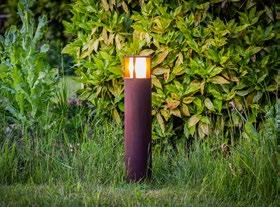
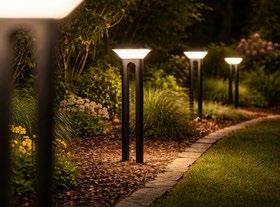
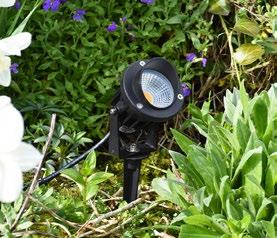
Alongside decorative lighting, a balanced lighting design should also consider function. Path lights, bollards, wall lights and spotlights can help guide movement safely around a space while drawing attention to planting, architectural features, feature walls and specimen trees. The most successful lighting designs are rarely the brightest. Instead, they use carefully controlled light to create depth, contrast and visual interest, helping a landscape reveal a different personality after dark.
For larger or more permanent projects, 240V lighting remains a dependable solution. Professional solar lighting can also achieve impressive results where access to
mains power is limited or extensive cabling is undesirable. While the initial investment can sometimes be higher, solar lighting can reduce installation disruption and eliminate ongoing electricity costs, offering long-term value for end users.
Whether the solution is 12V festoon lighting, 240V fittings or solar alternatives, the objective remains the same: to help outdoor spaces stay welcoming, functional and enjoyable long after daylight fades. After all, the best landscapes deserve to be enjoyed day and night.
For more information on professional outdoor lighting, or for help planning the right lighting design for your project, visit www.lumenalights.com, email sales@lumenalights.com, or call 01327 871161.
LANDSCAPE PROJECTS THAT ILLUMINATE NEW WAYS OF OUTDOOR LIVING
For Claude Monet, his garden was his principal source of artistic inspiration. Virginia Woolf made the most of sunny days in the almost always grey county of Sussex, to write within a corner of her vegetable garden which her husband lovingly tended. Even David Lynch, the king of modern surrealism, was in the habit of painting in the outdoors around his Los Angeles workshop. The message is clear: outdoor spaces promote creativity, but also calm, and above all else the much sought-after sensation of wellbeing that we all covet.
Whether it be a Mediterranean garden or an urban terrace the following refuges keep us in contact with the natural world, and curating their design, especially the lighting, is key to enjoying the uplifting experience they provide. Lighting that follows the rhythm of the day and becomes the focus of attention at night, contrasting light and shade, complementing the architecture and integrating with the landscape.
An historic garden reimagined from a contemporary perspective
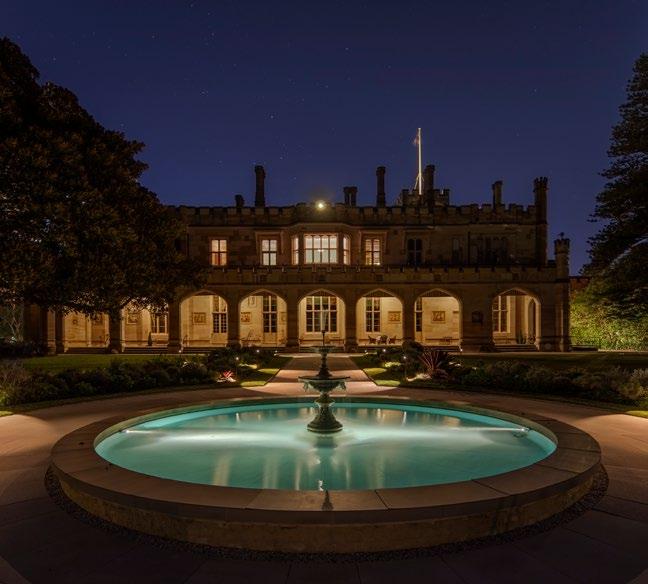
The first project takes us to the heart of Sydney, next to its iconic
Opera House. And specifically, to the gardens surrounding Government House, where landscape architect Jane Irwin‘s redesign has successfully updated this idyllic landscape without sacrificing its essence, opting for native species and an organic layout that connects the building to the harbour.
An outdoors inspired by the Mediterranean
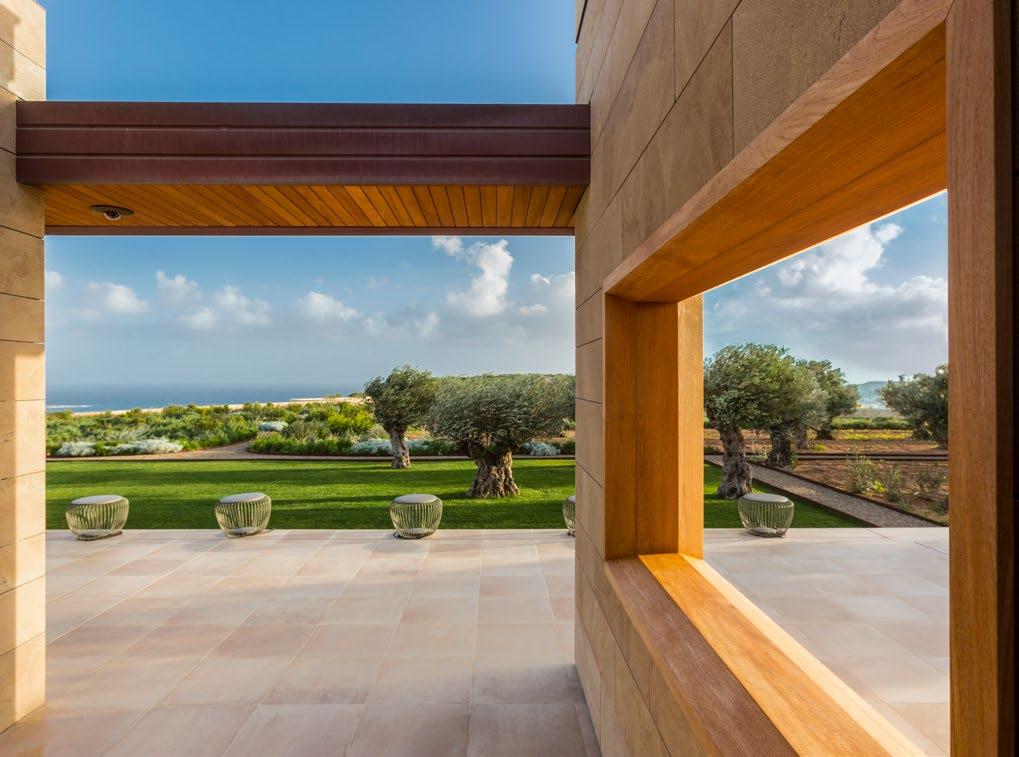
This single-family residence on the Costa Brava, designed by Cristina Soler, constitutes an exercise in combining architecture and nature, where white stone, natural wood textures and a subtle chromatic
palette create a pure Mediterranean ambience that blends seamlessly with its coastal setting.
Here, the exterior lighting complements the architecture discreetly, integrating with the garden and highlighting the natural landscape.
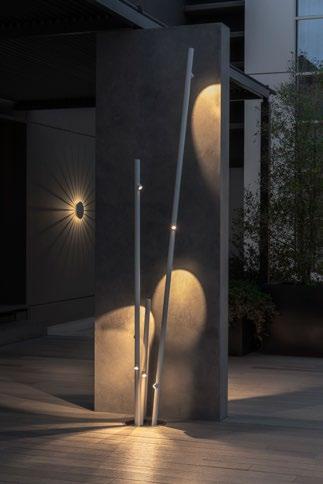
Bamboo is camouflaged between the greenery like a piece of sculpture; Brisa projects a warm beam of concentrated light that frames the fragrant plants; while Meridiano throws a stripped light over the ground plane, combining functionality and art.
A dream villa with sea views
The light and the views are the common thread that runs through this house in Malta, whose refurbishment directed by the Rome based Luca Peralta Studio, aimed to celebrate the relationship between the built environment and the landscape. To achieve that end the architecture is organised over two horizontal planes, that frame the views and underline the sensation of space and calm.
Just beside the swimming pool the Bamboo collection defines the limits
of space and introduces a sculptural organic element. Its slender stems that emit a warm integrated light, suggest the form of the bamboo while projecting reflections over the surface of the water, effortlessly integrating with the setting.
Along the exterior circulation that connects different areas of the villa, several pieces from the Meridiano collection are arranged in a row, addressing two requirements: lighting the path and providing seating. Their LED light source creates a striking interplay of light and shadow on the ground, transforming the terrace into a place of relaxation from which to contemplate the villa’s Mediterranean garden and the sea, in the distance.
A multi-purpose urban terrace
The last project is accommodated within an urban terrace in Barcelona, designed by Josep Lluís Xuclà that brings together natural materials, meeting and relaxation areas, as well as a selection of light fittings that adapt to the different phases of the day.
From the Out series, that provides a diffuse light with minimum contrast,
to the elegant and warm lighting provided by Mayfair Mini, and the Empty collection that acts as table, stool and lamp all at the same time, not forgetting unique fittings such as Bamboo and the Meridiano sconce lamp, Vibia displays the versatility of its outdoor collections to perfection in the creation of welcoming spaces within any context, both commercial and domestic.
In summary, these four projects, although very different in scale and ambition, share the same conviction: lighting the outdoors redefines the relationship between architecture, landscape and human experience. Beyond simply lighting, they create spaces for rest and enjoyment, but also for freeing up our minds to meditate and think creatively (or as David Lynch would put it: catching the big fish).
Featured Products:
Bamboo Brisa
Meridiano
Out
Mayfair Mini
Empty
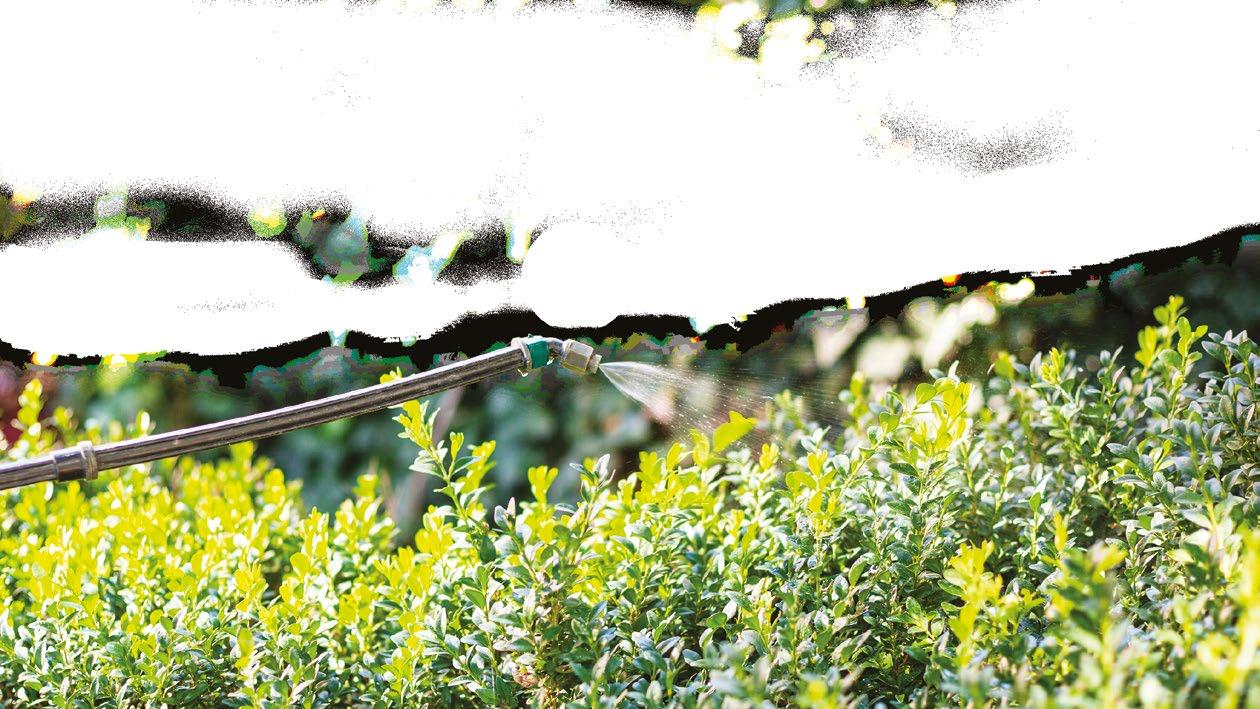
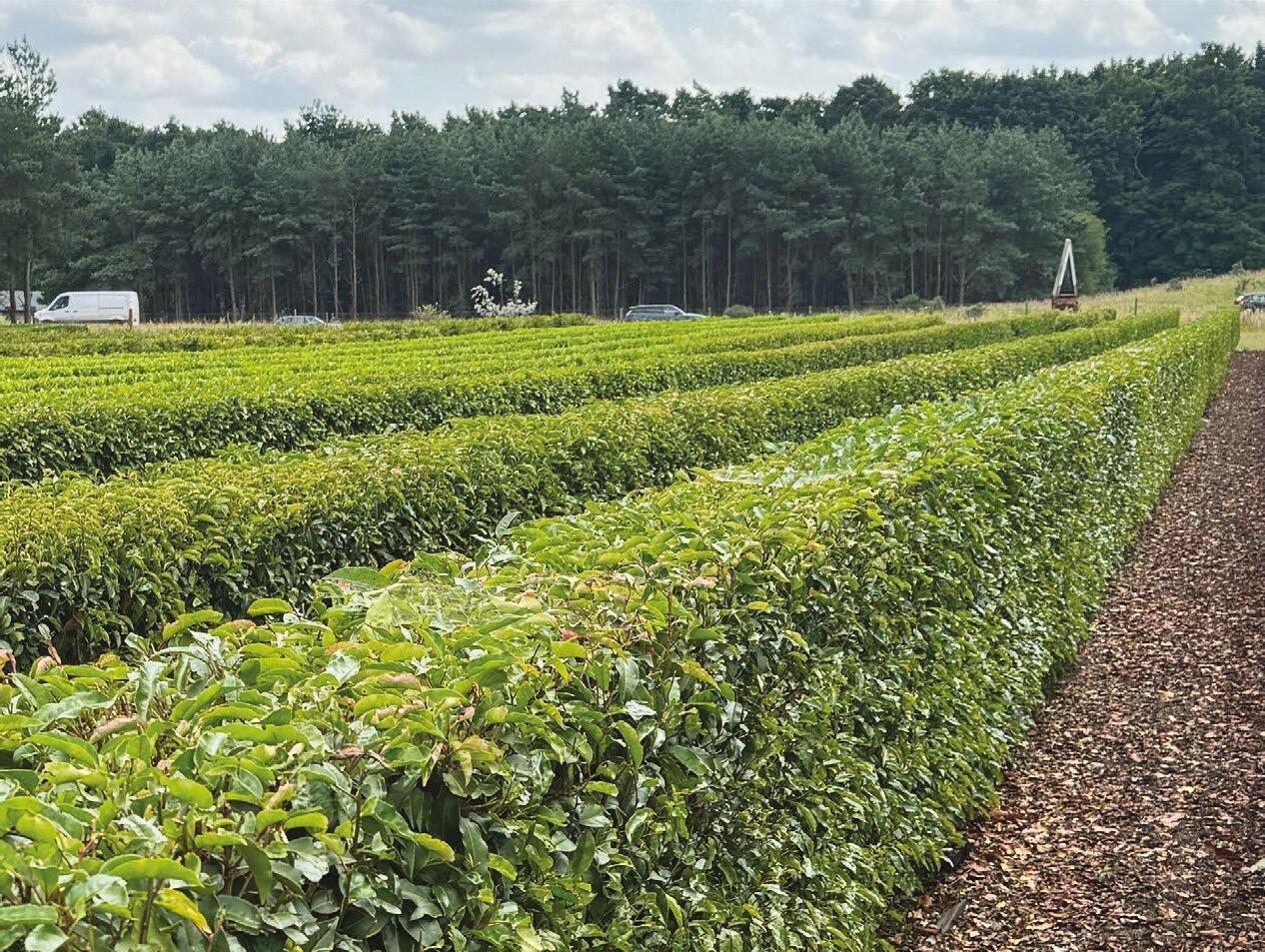
Water-Wise Hedging from Elveden Instant Hedge
Many people will be surprised to learn that mature hedges from Elveden Instant Hedge, actually need relatively little irrigation. Conventional horticulture decrees that transplanting large trees, shrubs or hedges makes them incredibly thirsty and that without copious amounts of water, they will not thrive. However, our waterefficient growing techniques mean that Elveden Instant Hedge – no matter which species are involved – require only a few minutes of drip fed irrigation every day, even in high summer. Read on to discover why...
Slower ‘Unforced’ Growth Means Hardier Plants
At Elveden Instant Hedge, our focus is on creating a quality product. Not just visually, but in terms of plant health, biosecurity, and climate change resilience. Our hedges are grown from UK-gathered seed whose parent plants are known to thrive in our unique climate. Seeds are nurtured into young whips which are then transplanted into the free-draining soil on our Suffolk nursery.
We allow our hedges to take their time to reach maturity. No forced growth. Just the right amount of good nutrients and careful monitoring of soil moisture levels. We do not want the plants to become overly dependent on irrigation, either do we want to drown the developing rootlets.
Mature Hedges Transplanted With Minimal Stress
Our production method involves nurturing a strong root system before encouraging the vegetative growth above the ground. By stimulating the production of a robust network of roots and root hairs, we grow hedges that are capable of making full use of even small amounts of soil moisture.
This not only supports our harvesting system and allows us to dispatch mature hedges with minimal to no packaging, it also creates a highly self-sufficient plant that makes good use of the water available to it. Alongside our tried and tested nursery practices, our specialised harvesting machinery ensures minimal root disturbance. Meaning that Elveden Instant Hedges are barely stressed by the dispatch process.
cases, applying drip irrigation for a few minutes in the early morning and the late evening is sufficient to sustain a newly transplanted hedge in even the most inhospitable drought conditions.
Our nursery staff will be pleased to advise on the watering requirements best suited to your Elveden Instant Hedge.
Water Efficient Measures Allow All-Year Round Establishment
The slowly matured plants and carefully managed root system of an Elveden Instant Hedge is just one of the reasons that our products can be installed at any time of year. With no need to consider seasonal issues, your project management will be smoother and more simplified.
Ready to learn more?
The Elveden Estate in Suffolk is a family run, innovative farming enterprise with a passion for wildlife conservation and sustainability. Famous for their sought-after Christmas Trees, Elveden developed their Instant Hedge product in the 1990s to satisfy the demand for pre-grown hedging in the construction and landscaping industries.
The organisation is continually refining their growing methods in order to mitigate the threat of climate change and biosecurity. They are also passionate about creating job opportunities in the horticultural and farming sectors.
17 varieties and mixes
Contract growing service available
Contact kevin.Harden@elveden.com to discuss your hedging needs and arrange a nursery tour.
PARKINSONS UK GARDEN:
THE EMOTIONAL ARCHITECTURE OF TIMBER
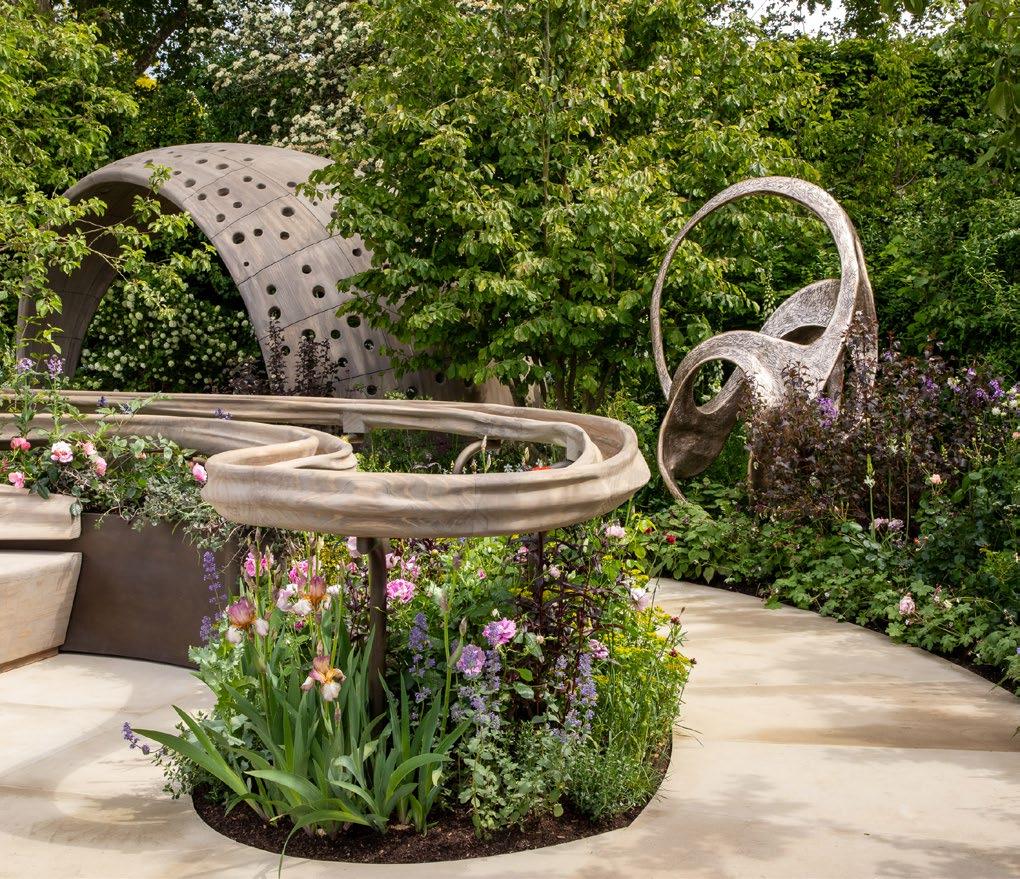
Curated alongside 15 people living with Parkinson’s, the garden was designed to evoke an emotional and sensory response, not simply a visual one. Every material choice had to feel empathetic to the lived experience of Parkinson’s, and timber became central to that conversation because people instinctively want to touch it: it brings warmth, tactility and a softness that more industrial materials simply cannot replicate.
Working with Millimetre, the material palette was carefully considered to balance sensory experience with long-term performance. Some of the timber elements were reduced
to around 10mm in thickness, which would typically create a significant risk of movement or distortion in a conventional timber product. Accoya’s exceptional dimensional stability and low swelling and shrinkage rates made it possible to achieve the delicate architectural detailing and refined finish the design required, while maintaining durability over time.
The sensory qualities of the garden were especially important. Features such as the tactile handrail and flowing water were designed to help stimulate the senses and encourage movement, recognising that people
with Parkinson’s can experience freezing episodes. The sound, movement and touch elements work together to create moments of reconnection and calm within the space.
The garden also demonstrates timber’s versatility as both a structural and emotional material. The supporting metalwork was intentionally designed to complement rather than compete with the timber, while a pre-aged finish was used to maintain a soft, natural tone and allow the beauty of the material to remain central to the experience.
Sustainability and longevity were equally important considerations. Following Chelsea, the garden will move to the John Radcliffe Hospital, giving the project a meaningful second life beyond the show itself. That circular approach aligned closely with Accoya’s Cradle to Cradle Certified® credentials and wider focus on long-life, sustainable design.
The garden’s impact was recognised across the show, winning both the BBC / RHS People’s Choice Award and a Silver Award at RHS Chelsea Flower Show 2026 - a testament
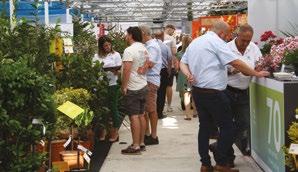
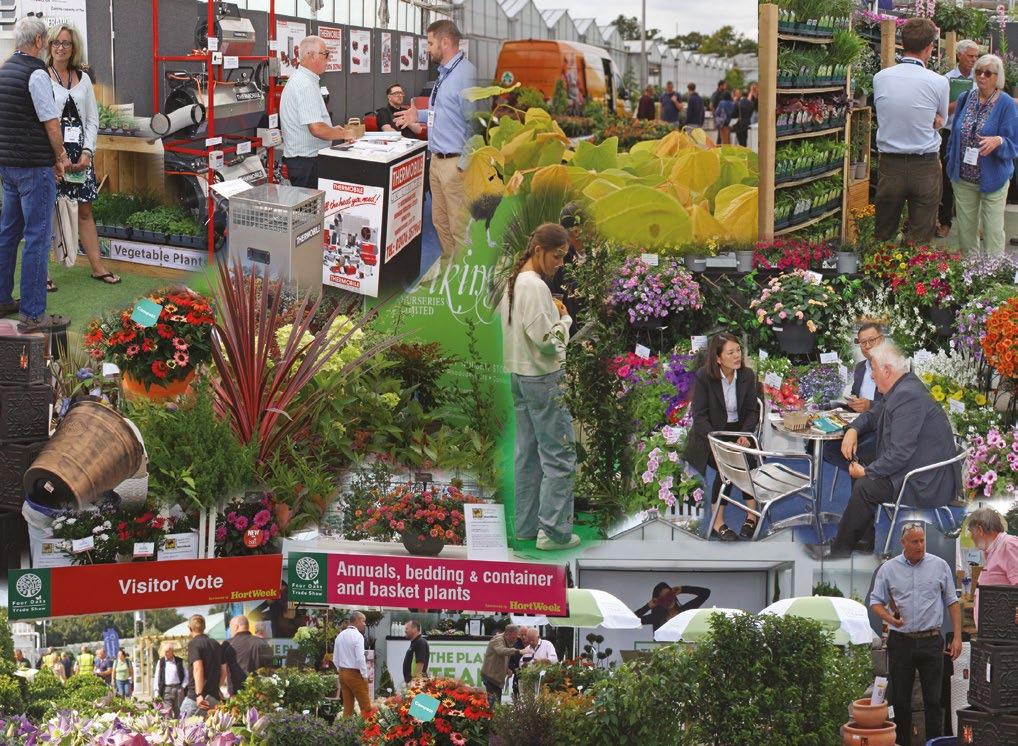
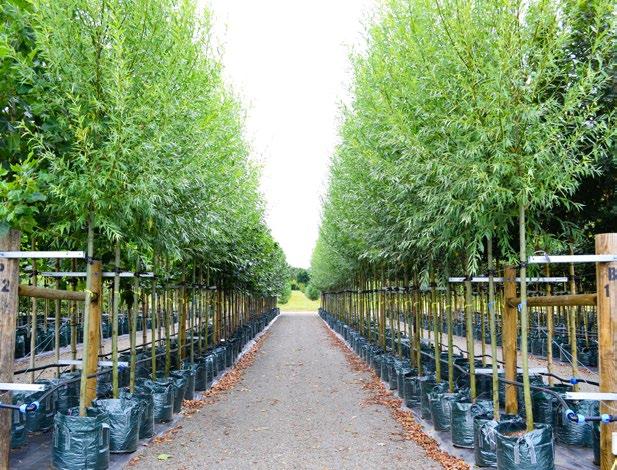
Four Oaks Trade Show provides a unique opportunity for landscapers, urban designers, and public realm specialists to meet the people and products driving the latest industry innovations and trends. It’s where professionals visit to explore the plants, materials, and products shaping the coming generation of outdoor spaces and landscapes.
Set across a 23 acre nursery site near to the Jodrell Bank Space Observatory, Four Oaks offers something few shows can match: a genuinely horticultural environment where plant quality, structure, and performance can be assessed at first hand. For landscapers and designers, the show highlights new stock varieties giving them the chance to compare suppliers, and source project ready stock with confidence.
Visitors include commercial landscapers, garden designers, urban design teams, local authorities, housing developers, and public realm contractors — all looking for reliable supply partners and practical solutions. Whether it’s hedging for large scale infrastructure schemes, climate resilient perennials for urban planting, or the latest substrates, irrigation systems, and anchoring technologies, Four Oaks brings the entire supply chain together over the two days of the show.
With the show’s respected New Plant and New Product Awards, technical talks, and hands on demonstrations, Four Oaks offers exhibitors multiple ways to showcase themselves whilst also providing visitors with insight into the latest innovations in the landscape and urban design world.
What makes this event quite special and unique is that The Four Oaks Cash and Carry is also located on the site giving exhibitors and visitors the opportunity to see the fabulous wide range of living stock varieties and sundries available at this, the UK’s largest horticultural one stop shop.
The show dates for 2026 are Wednesday 2nd and Thursday 3rd September. www.fouroaks-tradeshow.com
FOUR OAKS CASH & CARRYTHE PROFESSIONAL’S CHOICE
The professional’s choice with an unbeatable wide range, all at one location. Over 1,500 lines of trees and shrubs, from starter plants to stunning specimens with standout varieties from Italy and Spain. Masterpiece bonsai and sculptural plants. There is also a full selection of sundries, including furniture, pots and compost.
Four Oaks Cash & Carry is the ‘go to’ place for landscapers, contractors, designers, and grounds managers who demand plant quality and service reliability. It has established itself as a trusted sourcing hub for professionals who need consistent standards, efficient turnaround, and access to a broad reliable horticultural range that performs well on site.
Featuring an extensive, continually refreshed selection of trees, shrubs, hedging, perennials, grasses, and seasonal colour. Stock is presented in a way that allows professionals to hand select
plants, ensuring confidence in root development, canopy structure, and overall vigour, critical when delivering schemes with tight specifications or client scrutiny.
Four Oaks provides the practical essentials that keep project installations moving including bulk composts, specialist substrates, controlled release fertilisers, irrigation fittings, tree anchoring systems, pots, trays, and sundries. With competitive trade pricing and stock levels aligned to seasonal demand, Four Oaks Cash and Carry supports efficient procurement and reduces downtime between each stage of any project.
The on-site team provide technical expertise and friendly experienceled guidance on species suitability, establishment challenges, and long term maintenance considerations. This can be particularly valuable as we adapt to climate resilience, biodiversity targets,
and shifting client expectations.
Quite simply when seeking dependable supply, consistent quality, and a partner who understands the pressures of delivering high performance landscapes, Four Oaks Cash & Carry is the professionals choice.
Located near to the Jodrell Bank Space Telescope and just 5 miles from J18 of the M6, the site has large parking and loading facilities. Nationwide delivery is available depending on order. Please ask our friendly team for details.
The Four Oaks Trade Show the UK’s premier show for the horticulure trade is also on the same site and open on Wednesday 2nd and Thursday 3rd September this year making a great opportunity to visit.
The largest ‘one stop shop’ in the UK, for all your Horticultural needs
The professional’s choice with a quite unbeatable wide range, all at one location. Over 1,500 lines of trees and shrubs, from starter plants to stunning specimens. Standout varieties from Italy and Spain. Masterpiece bonsai and sculptural plants. Full selection of sundries, including furniture, pots, compost and much more.
ENSURING SUCCESS OF URBAN GREENING INITIATIVES
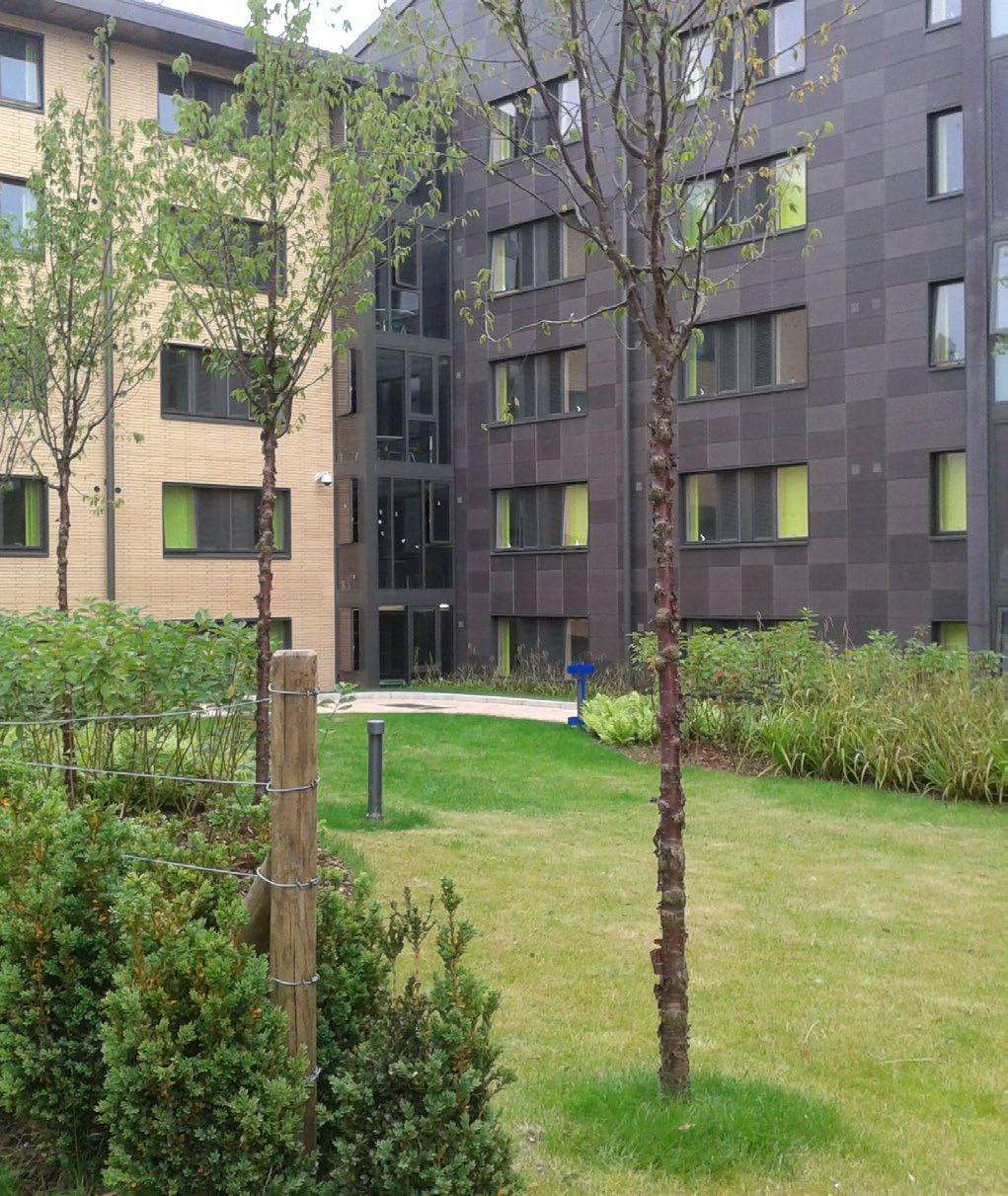
The industry is becoming increasingly focused on the number of trees being planted, but far less attention is sometimes given to whether those trees will still be thriving decades later. BNG and the growing 3-30-300 conversation are beginning to change that.
Both move the discussion away from simple planting targets and towards long-term performance — canopy cover, biodiversity value, urban resilience and the wider wellbeing benefit mature landscapes provide over time. That shift matters, because successful urban greening is rarely determined by planting numbers alone.
A scheme can achieve impressive handover figures yet still struggle long term if the fundamentals are wrong: insufficient soil volume, poor rooting conditions, unrealistic species
selection, or inadequate maintenance provision. The reality is that urban trees are expected to survive in increasingly difficult conditions. Compaction, restricted rooting environments, heat stress, drought pressure and pollution all place significant pressure on establishment and long-term canopy development. That means specification needs to focus less on novelty and more on resilience as well as using the right tree in the right place.
Species selection needs to prioritise proven urban performers capable of tolerating difficult environments while still delivering biodiversity benefits through pollen, nectar, habitat value, and ecological associations. Maintenance is equally critical. The first five to ten years ultimately determine whether a landscape succeeds or declines, yet aftercare is still too often treated as
secondary to installation. Watering, formative pruning and ongoing management are not optional extras if schemes are expected to deliver meaningful BNG outcomes in the long term.
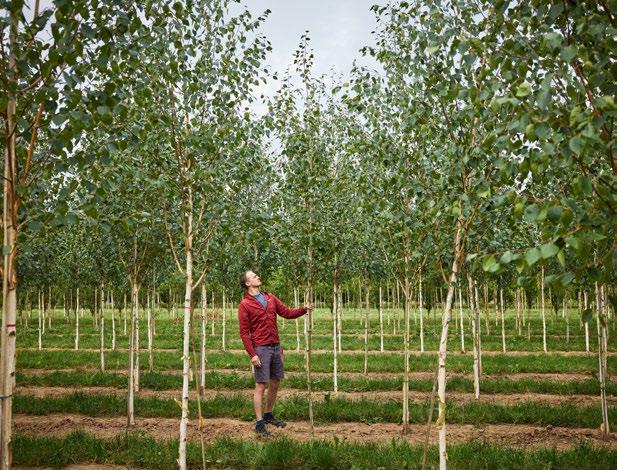
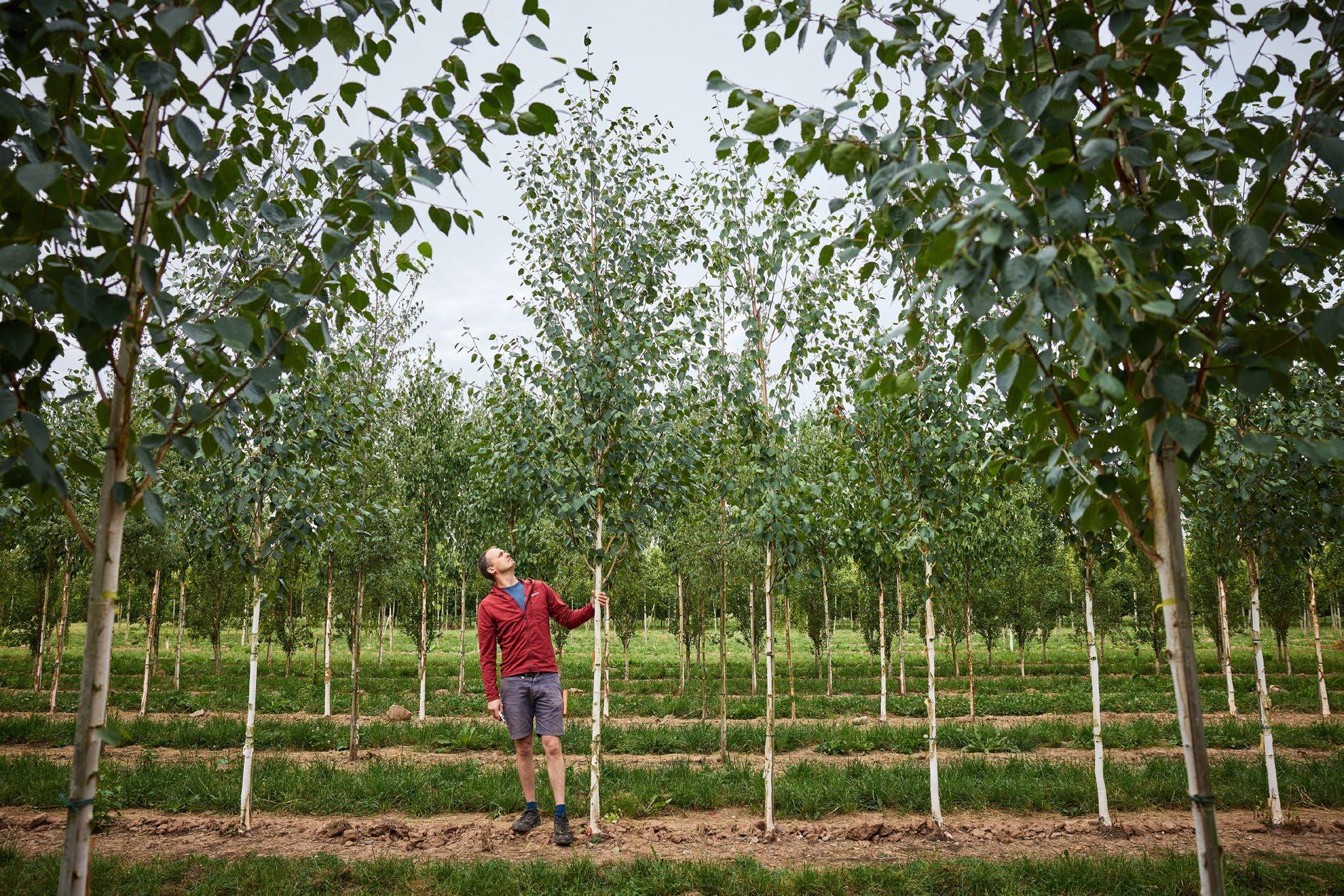
This is also driving changes within the supply chain. Growers are increasingly adapting production around climate resilience, yearround planting capability, and urban specification requirements. Wyevale Nurseries has been actively promoting the 3-30-300 message alongside continued investment in container tree production and peat-free systems that support more resilient establishment and flexible planting programmes.
But ultimately, long-term success is as much a delivery issue as a design issue. Correct installation, realistic maintenance contracts
and professional aftercare are what convert planting plans into lasting canopy cover and biodiversity gain. That is why experienced landscape contractors and organisations such as BALI – British Association of Landscape Industries remain so important in achieving quality, accountability, and long-term landscape performance.
Planting numbers are easy to report. Long-term landscape performance is much harder — but that is what will ultimately determine whether BNG and 3-30-300 genuinely succeed.
The shift towards a more holistic approach in urban greening signifies a promising evolution in how we view and manage our natural environments. The emphasis on long-term sustainability over mere numbers encourages us to consider the broader ecological picture. It’s about creating spaces that not only survive but thrive, contributing to the health and wellbeing of urban populations and the planet.
To truly ensure the success of urban greening initiatives, collaboration across various sectors is essential. This includes local governments, landscape architects, urban planners, environmental scientists, and community groups who must work together to craft comprehensive and sustainable strategies. Education and public engagement also play crucial roles. By raising awareness about the importance of long-term tree care and the benefits of mature urban ecosystems, communities can be empowered to participate actively in nurturing their local environments, cultivating a culture of care and responsibility towards urban ecosystems.
Innovative technologies and data-driven approaches are becoming increasingly integral to these efforts. Tools such as GIS mapping, remote sensing, and predictive modelling can help in assessing canopy cover, identifying areas of need, and monitoring tree health over time. By leveraging such technologies, stakeholders can make informed decisions that enhance urban resilience and biodiversity.
Furthermore, policy frameworks need to support these initiatives by prioritizing long-term funding and incentives for projects that demonstrate sustainable practices and measurable outcomes.
GARDEN DESIGN
This might include grants for research into climate-adaptive species, subsidies for maintenance programs, or tax incentives for businesses that contribute to urban greening.
Ultimately, the future of urban landscapes hinges on a holistic approach that values the intricate
interplay between human and natural systems. The success of strategies like BNG and 3-30-300 will depend on our commitment to nurturing and sustaining the green infrastructure we establish today. With careful planning, diligent maintenance, and a focus on resilience, we can create urban environments that
support biodiversity, enhance quality of life, and stand the test of time. Ultimately, by fostering environments where trees adapt and thrive, cities can create vibrant, resilient spaces which enhance the environment.
www.wyevalenurseries.co.uk
Built to Last Inspired by Nature
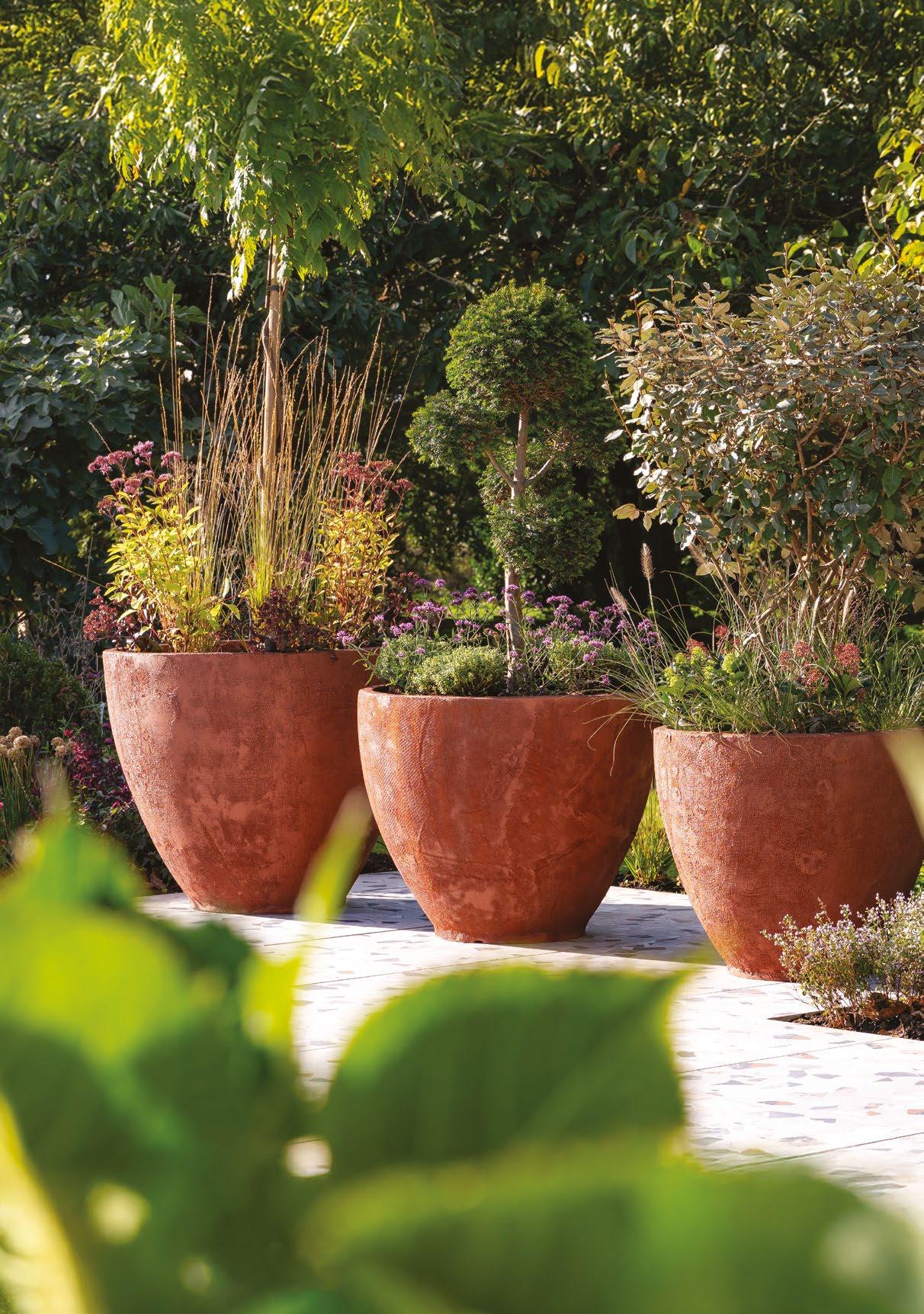
Our Supreme Resin Planters feature hand-finished brass, copper and terracotta surfaces, crafted from automotive-grade resin for all-weather durability, remarkable lightness, and generous capacity in a range of versatile sizes.
Recycled Materials UV & Frost Resistant Built Like a Car
DESIGNING OUTDOOR SPACES THAT STAND THE TEST OF TIME
In landscape architecture and urban design, the success of an outdoor space extends far beyond its appearance on completion. As designers increasingly balance aesthetics, sustainability and lifecycle considerations, material selection plays a vital role in creating landscapes that continue to perform for years to come.
From commercial projects and hospitality venues to residential developments and mixed-use schemes, outdoor environments are expected to withstand constant use and exposure to the elements while maintaining their visual appeal. As a result, specifiers are seeking solutions that deliver both design flexibility and long-term durability.
Decking remains a key feature within contemporary landscape design, helping to define spaces, create connections between built and natural environments, and enhance the user experience. Whether used in rooftop terraces,
communal courtyards, waterfront developments or private gardens, decking contributes both functionality and warmth to a scheme.
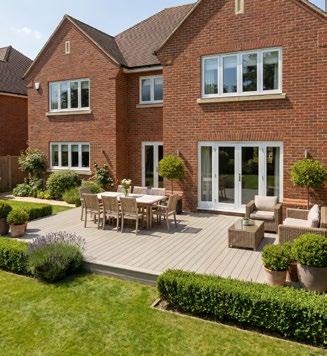
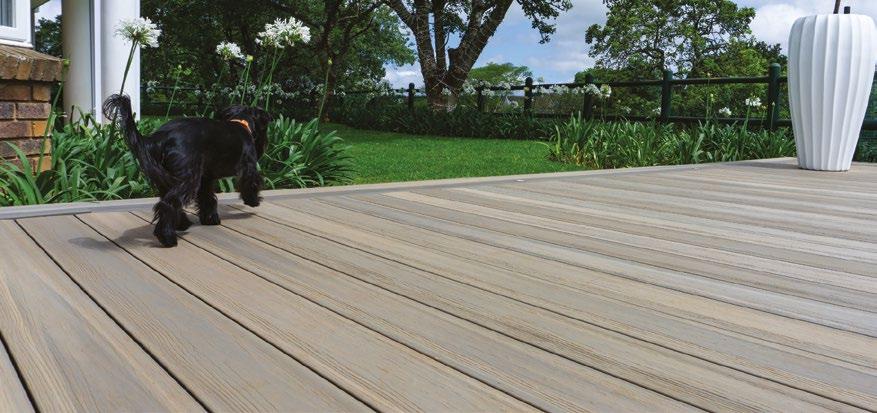
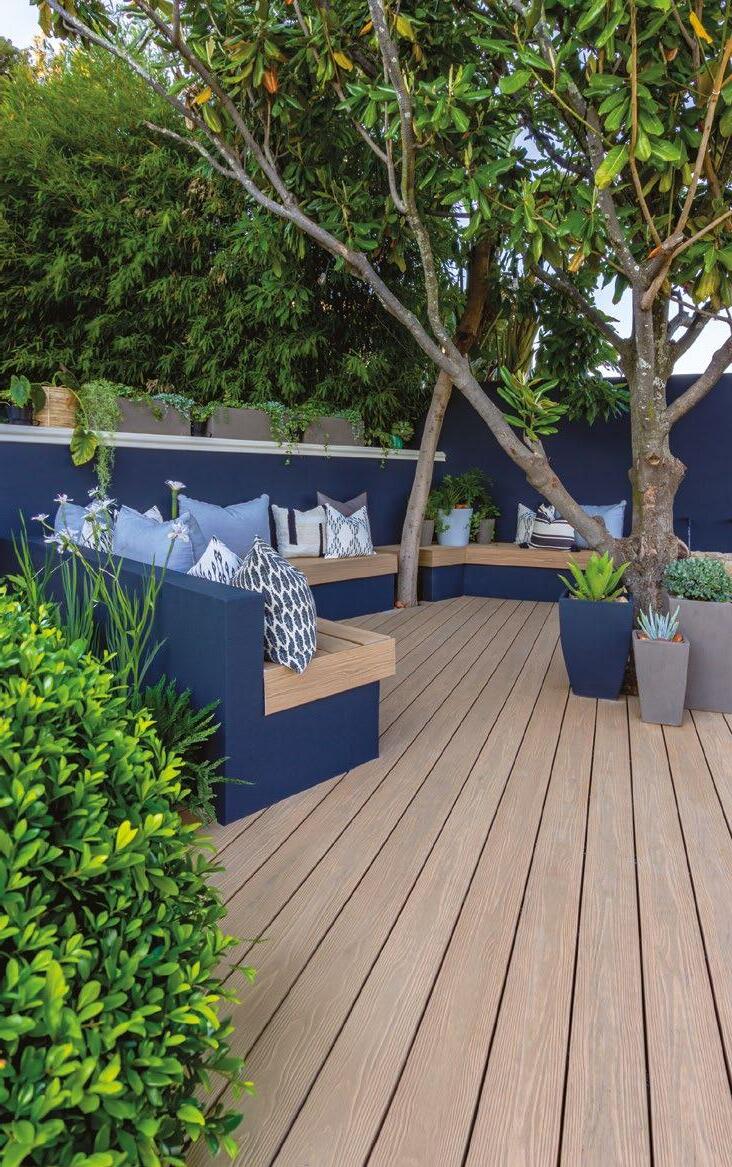
As expectations around longevity grow, composite decking is increasingly being specified as an alternative to traditional timber. Eva-Last composite decking combines the natural look of wood with advanced composite technology, providing a durable, low-maintenance solution designed for long-term outdoor performance.
The Eva-Last range includes both Apex and Infinity decking collections, allowing landscape professionals to select a solution that aligns with project requirements and budget. Infinity offers a durable composite decking solution suitable for a wide range of applications, while Apex incorporates an advanced acrylic cap for enhanced aesthetics, excellent slip resistance
and industry-leading warranty protection.
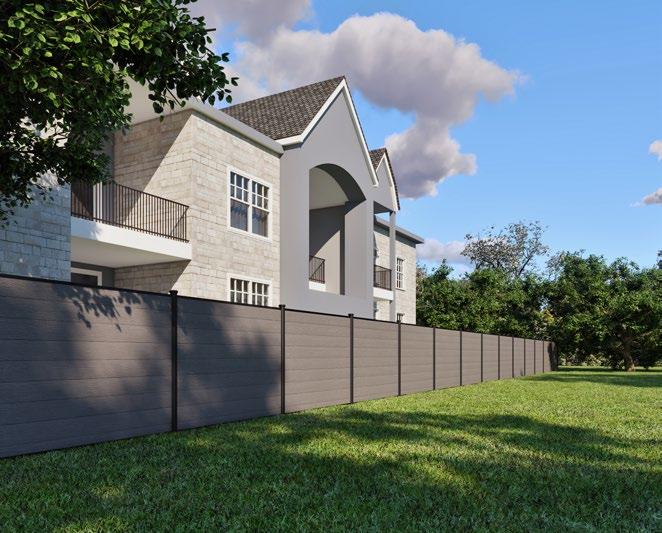
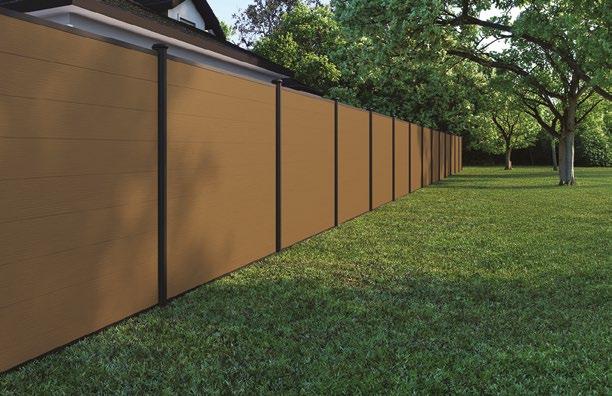
Boundary treatments are equally important in defining outdoor spaces, yet traditional timber fencing can be vulnerable to rot, warping, cracking and fading. These issues often result in ongoing maintenance requirements and premature replacement.
Evolver composite fencing, manufactured using Eva-Last’s proven Infinity technology, provides a modern alternative fencing for long-term performance. Combining durable composite boards with a robust aluminium framework, the system is highly resistant to moisture, insects and weather-related deterioration. Supported by a 25-year warranty, Evolver requires little to no maintenance and is designed to retain its appearance year after year.
For landscape architects and specifiers seeking to create outdoor environments that combine design excellence with lasting performance, Eva-Last decking and Evolver fencing offer a cohesive solution built to endure.
www.eva-last.co.uk
DECKED OUT: PEDESTAL SUPER STRUCTURES HOLD IT TOGETHER
Suspended deck systems are the unseen (and unsung) hero of many a successful public or private paving/ decking scheme.
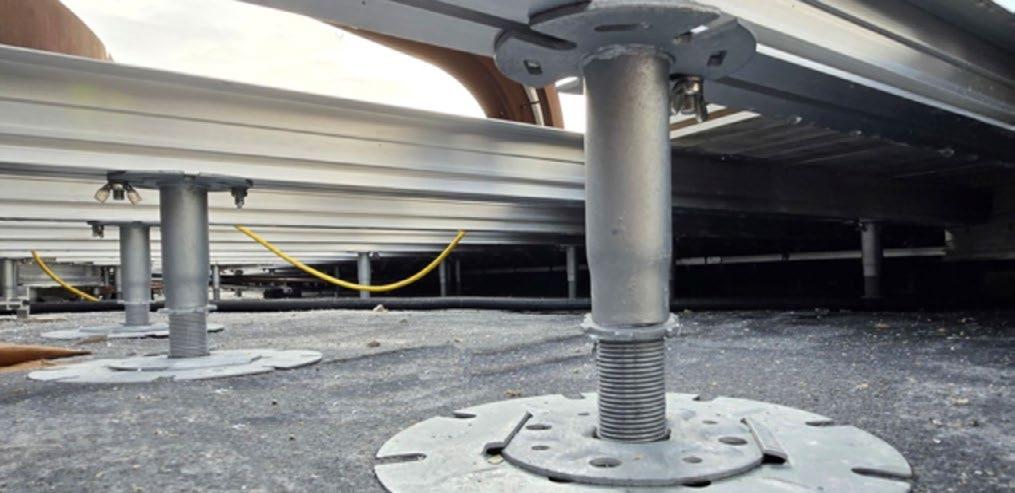
For hidden underneath ultra flat porcelain tiles or composite boards, for example, is a carefully planned substructure of plastic or metal pedestals supporting the surface finish.
Not only are suspended deck systems quick and clean to install (no sand or mortar required), they can even out height differences across sites, make fitting flush with doors or other features - such as swimming pools - a breeze, deliver built-in drainage and provide a useful void into which services such as electricity and water can be routed.
Even better, not all surface finishes are mechanically fixed, allowing them to be removed for access to the floor below, facilitating easy maintenance and future-proofing projects.
Projects
Award-winning Wallbarn is the UK’s leader in pedestal and substructure systems, providing its solutions to a wide range of projects, from the newly renovated Harrods Helideck event space in London, to King’s College Hospital’s ground-breaking new outdoor critical care unit, a fire-rated terrace re-development for the historic Roehampton Club and a residential scheme in Knightsbridge, where the substructure and Class A fire rated porcelain decking completed wrap-around spaces at an exclusive duplex apartment.
Wallbarn has also completed expansive public paving schemes, supplied systems for restaurants, offices and hotels and provided the finishing touch for rooftop spaces at high-end apartment developments, quite literally paving the way for designers to furnish these areas with planters, seating, tables etc.
But it’s not all about big and exclusive - Wallbarn is just as happy to supply smaller schemes and even DIY domestic projects. It’s pretty confident that it has a pedestal, substructure, paving/decking system to suit most installations. And, because the company holds industryleading stock levels at its base in Croydon, South London, can get product to site quickly, with next day delivery possible.
Wallbarn also offers a pedestal design and planning service, with experts on hand to assist with projects.
About pedestals
An easy way to spot hard landscaped areas supported by pedestals is to look for slim gaps just millimeters wide between pavers or decking strips. These gaps are formed when the slabs or decking are clicked into place on special lugs attached to pedestal headpieces. The lugs firmly hold the floor elements in position and the gaps facilitate drainage.
A huge benefit of using pedestals is quick installation, being lighter than bedding into mortar, the ability to cope with complex shapes/pitches and ease of maintenance – flooring elements such as slabs and decking can easily be removed for inspection or repair and services can be run in the void beneath. In short they are a quick and cost-effective way to transform unused and unattractive areas into good-looking, usable spaces.
There are a wide variety of plastic and metal pedestals on the market, from entry level fixed-height solutions to self-levelling, adjustable, heavyweight and fire-rated Class A solutions. All provide a ‘floating floor’ with uniform, spirit-level flat surfaces and separate paving/decking from the base structure, improving
drainage, protecting the surface beneath and avoiding the need for sand and cement.
System selection
Correct pedestal specification depends upon project needs, complexity and paving weight. Consider if the site has differing levels, height thresholds or lightwells/ roof windows/penetrations. For example, a roof deck may have blemishes or ridges where felt overlaps, or the thickness of paving slabs may differ slightly across a project. Both situations are perfect for self-levelling pedestals, which can also be used to create fall across a flat roof or space. Adjustable pedestals with a self-levelling headpiece would, for example, neatly complete a ground floor area required to be flush with the doorway threshold of a house or building without compromising the DPC.
Paved or decked public areas can be subject to high pedestrian traffic so it is really important to install a pedestal system that can withstand the required weight/heat tolerances/ elements long-term without failing. Check that the system you use offers independent testing (ie for weight tolerance), has demonstrable quality control/manufacturing provenance and proof of installed performance.
For Wallbarn pedestals are our core product and a sector we have more
than 40 years of experience in. We are a market leader in the UK and have supplied projects around the globe, from the Canadian Arctic Circle to Australia, Dubai to Hong Kong, USA to Zanzibar, South Africa to Iceland. We know that failures can happen when an inferior product is installed. Not only is it expensive to replace, it poses public risk. A good example is a city centre project we were asked to inspect following the partial collapse of raised paving; a member of the public had been injured. On site we discovered that the architect’s specification for pedestals carrying independent laboratory certification had been disregarded in favour of a cheaper alternative that became brittle in cold temperatures, shattering. The contractor was held liable for the claim, which included a personal injury claim. While not common, this demonstrates the inherent dangers of using product without clear evidence of independent product testing and certification or a track record of performance.
Confidence in your supplier is key, and Wallbarn has the products, the know-how and the customer support to help its customers get installations right first time.
www.wallbarn.com
FIVE THINGS TO LOOK FOR WHEN CHOOSING COMPOSITE DECKING
Homeowners making a significant investment in their outdoor space usually want three things: for it to look fantastic, perform well day-today and stand the test of time. For projects involving a composite deck, choosing the right building materials is the key to meeting client expectations.
Focusing on a handful of essential factors will give you confidence that you’re not just installing a stunning deck – you’re delivering a valuable asset your client can enjoy for years to come.
Here are the five things to prioritise when choosing composite decking:
1. Warranties
Warranties are a signal of a manufacturer’s confidence in the quality and durability of their product.
Composite decking that comes with an extended warranty period can reassure your clients that their investment is protected over the long term, making it easier for them to choose a premium product.
The most reputable brands typically offer 25-year limited residential
warranties and 10-year commercial warranties. Unsurprisingly, the world’s number one decking brand, Trex®, leads the pack with a 50year limited residential warranty for decking boards in its premium Signature®, Transcend® and Transcend Lineage® ranges.
Warranties differ across brands, so it’s important to understand what’s included and what’s not. A worthwhile warranty should provide coverage against material defects, splitting, splintering, rot and decay under normal usage conditions. Damage caused through incorrect installation, inadequate structural
support or abnormal use would not typically be covered.
2. High performance
The materials and methods used to create composite decking boards vary widely and directly affect how the boards perform under everyday use.
For maximum performance and durability, choose solid decking boards that are ‘capped’ with a protective shell that shields them against scratches, fading and stains, as well as mould, mildew and moisture.
The weather-resistant shell featured on brands including Trex – the first manufacturer to introduce it – means your client’s deck will look better for longer and be robust enough to stand up not just to kids, pets and entertaining, but also to the UK’s lessthan-perfect climate.
3. Low maintenance
One of the biggest reasons homeowners choose composite decking over traditional timber decking is that it needs minimal maintenance. As well as lower upkeep costs, it means more time enjoying their outdoor space and less time spent making it look good.
In practical terms, ‘low maintenance’ should mean no sanding, sealing or staining and only occasional cleaning to keep a deck looking its best. However, not all composite boards perform equally, with lower-quality or uncapped products being more prone to staining, fading or mould growth, especially in shaded UK gardens.
This is where product specification really matters. Decking with a protective outer shell or cap will resist moisture ingress and staining and withstand everyday wear
without the need for ongoing maintenance. It’s also worth checking manufacturer guidance on cleaning and care to make sure the finished deck will deliver the effort-free experience your client is expecting.
4. Sustainability
For many homeowners, sustainability has moved on from being a nice-to-have to an important part of purchasing decisions. If this matters to your clients, it’s another reason to choose composite decking over traditional timber.
When assessing the environmental credentials of composite decking brands, look for a brand that uses a high proportion of recycled materials, such as reclaimed wood fibres and recycled plastics. As well as reducing the demand for virgin timber, this also gives new life to materials that might otherwise end up in landfill.
An extra tip: don’t take claims about sustainability at face value – it’s worth looking beyond the marketing hype to understand what a manufacturer is actually doing to ensure their materials are responsibly sourced. Checking that the brand you’re specifying is credible on this front will help you meet the expectations of the most eco-conscious clients.
5. Product and price range
One of the biggest advantages of composite decking is the ability it gives you to match a client’s vision to their budget.
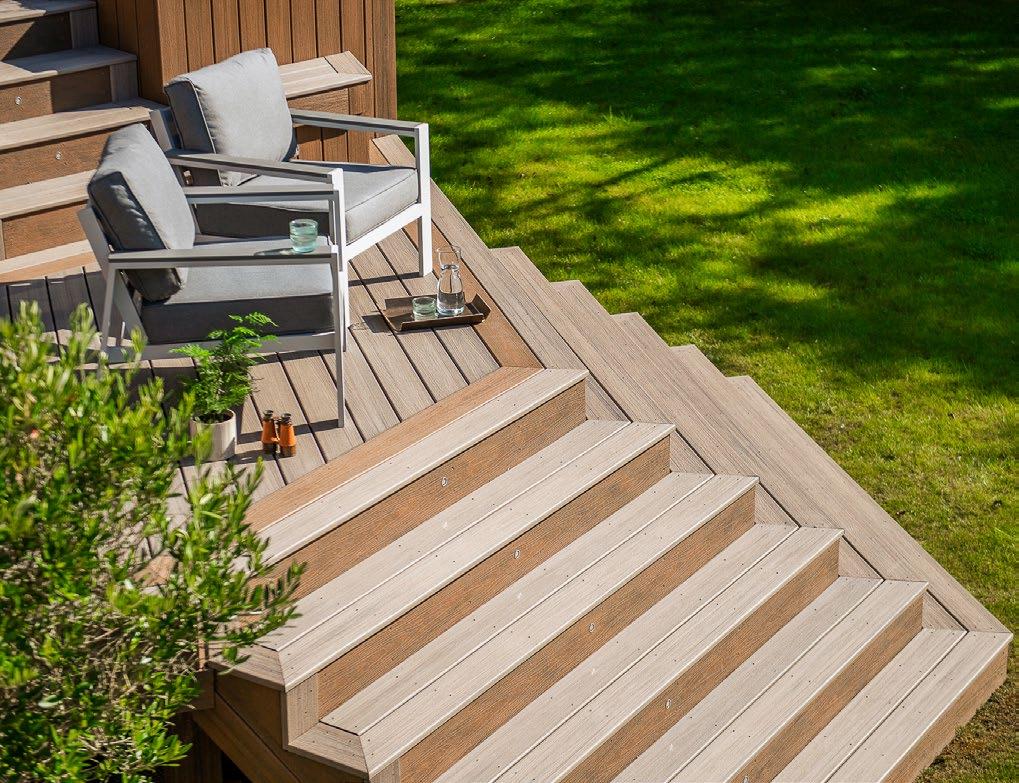
This is much easier to achieve with a brand that offers a clear, tiered product range. For example, Trex’s range progresses from the entrylevel Enhance® Basics collection to the mid-range Enhance Naturals range, the premium Transcend and Transcend Lineage lines and the
luxury Signature collection. Each step up brings enhanced aesthetics, greater durability and longer warranties, while still offering core features including easy upkeep and resistance to fading and staining*.
For clients, this means a budgetconscious project can still offer the benefits of performance and durability. At the higher end, photorealistic grain patterns and a broader choice of colours mean you can achieve a more refined, designled finish.
Having a range of collections to choose from also makes it easy for you to present options to clients transparently and explain what the differences in costs and features mean over the lifespan of the deck.
Discover Trex
Inventing composite decking 30 years ago, Trex is now the world’s number one decking brand, sold in more than 47 countries.
Designed to be different, all Trex’s boards are engineered to be high performance and low maintenance and are created from up to 95% recycled and reclaimed materials. In fact, Trex has never felled a single tree to create its decking.
2026 has seen Trex introduce two new colours to its UK range – Carmel, a light oak in its Transcend Lineage range, and Tide Pool, a soft, warm grey in Trex’s Enhance collection, both of which incorporate Trex’s innovative SunComfortableTM technology. Read more about them here.
For more information on Trex visit uk.trex.com. To order free Trex samples,
*For details, visit uk.trex.com/ warranty and uk.trex.com/care
*For details, visit uk.trex.com/care and uk.trex/com/warranty
RESIN BOUND PAVING HAS EMERGED AS A REVOLUTIONARY SOLUTION
Resin bound paving has emerged as a revolutionary solution in the realm of urban landscaping, offering a marriage of durability, aesthetics, and eco-friendliness. Among the frontrunners in this innovative field is SUDwell, a company that has been spearheading the adoption of resin bound paving slabs. Their commitment to quality, sustainability, and versatility has not only transformed landscapes but also set a benchmark for the industry.
One of the most striking features of SUDwell resin bound paving slabs is their durability. Constructed using a blend of high-quality resin and natural aggregates, these slabs boast exceptional strength and resilience. Unlike traditional paving materials that are prone to cracking and erosion over time, SUDwell resin bound paving slabs offer long-term stability, making them a cost-effective investment for both residential and commercial projects. This durability not only minimizes maintenance requirements but also ensures that the beauty of the paved surface endures for years to come.
Moreover, SUDwell’s commitment to sustainability sets them apart in an industry often plagued by environmental concerns. By utilizing natural aggregates sourced from sustainable local suppliers and employing eco-friendly manufacturing processes, SUDwell minimizes its carbon footprint while maximizing the environmental benefits of resin bound paving. These slabs allow rainwater to permeate through the surface, reducing the risk of flooding and minimizing strain on drainage systems. This permeability also promotes groundwater recharge, contributing to the preservation of local ecosystems.
Beyond their practical benefits, SUDwell resin bound paving slabs offer unparalleled versatility in design. With a wide range of colors, textures, and patterns available, designers and homeowners alike have the freedom to unleash their creativity and customize their outdoor spaces to suit their unique preferences. Whether it’s a sleek contemporary patio or a rustic garden pathway, SUDwell resin bound paving slabs provide the
perfect canvas for bringing any vision to life.
In conclusion, SUDwell resin bound paving slabs represent a groundbreaking innovation in urban landscaping, offering a harmonious blend of durability, sustainability, and design versatility. As cities and communities worldwide seek sustainable solutions for their infrastructure needs, SUDwell stands as a shining example of how innovation can transform the urban landscape while preserving the planet for future generations.
VUBA CHEMICAL INNOVATIONS (VUBA)
HAS OFFICIALLY ACQUIRED SURESET
Vuba Chemical Innovations (Vuba) has officially acquired SureSet, the company that pioneered the resinbound industry in the UK. This acquisition represents a significant milestone not only for Vuba and SureSet, but for the wider resin bound sector.
For three decades, SureSet has built an unrivalled reputation for delivering one of the industry’s most trusted and proven resin systems across domestic and commercial projects. Recognised for quality and innovation, it’s become the industry’s most specified commercial system and a trusted choice across commercial projects.
Founded in 2009, Vuba has grown into a global leader in the resin bound industry, manufacturing resin and investing over £4m into an aggregate processing facility in 2024 and this year, Vuba is opening a second aggregate processing facility. Its award-winning commitment to innovation has driven major
advancements, including bringing marble aggregates to the UK market for use in resin bound systems, the development of VubaMac - a base designed for resin installs - and the use of structural reinforcement mesh, which adds 73% strength to overlay installs. Combined with growing homeowner awareness, international partnerships, and local distribution facilities across the UK, this has significantly increased demand for these systems.
The acquisition is about more than growth. It reflects a shared commitment to innovation, quality, and ultimately protecting SureSet’s legacy as the brand that established the resin bound industry in the UK, ensuring their influence continues for years to come.
Peter Watts, Founder of SureSet said:
“We believe Vuba represents the right long-term home for the SureSet brand. Their scale, infrastructure, and market position provide a strong
platform for the next chapter and continued growth of SureSet.”
Sean Scott, Founder of Vuba added:
“SureSet’s contribution to the resin bound industry is unparalleled. They laid the foundations for an entire sector and inspired companies like ours to push the industry forward. Through acquiring SureSet we will protect that legacy, while making sure the company that started it all continues to lead and inspire the future of the industry.”
By bringing together SureSet’s proven legacy and Vuba’s forwardthinking approach, the acquisition marks an exciting future for both Vuba and SureSet customersmaintaining the same high standards across both brands while giving each network access to the combined strengths and advantages of both companies.
SETTING THE STONE STANDARD FOR SPRING PROJECTS: STONEWORLD’S BESPOKE MASONRY FOR LANDSCAPERS AND GARDEN DESIGNERS
As the new season approaches and projects begin to move from concept to reality, this is the moment where the right material partners make all the difference. Specifications tighten, details need clarity, and reliability becomes the priority. That’s where we step in.
At Stoneworld Oxfordshire, we blend traditional masonry skill with modern capability to help you deliver outdoor
spaces with confidence. Our workshop produces bespoke paving, steps, wall copings and architectural details, supported by digital templating and a 7-axis robotic carving system for precise, consistent results.
We focus on turning detailed design work into practical, workable stone solutions that install smoothly on site. It’s
a straightforward, collaborative process designed to keep your project moving and maintain the level of finish your clients expect.
If you’re planning installations for spring and summer, now is the ideal time to bring us into your workflow.
Explore what we can support this season at www.stoneworld.co.uk
Photo credit: Jason Ingram via Charlotte Sanderson Garden Design
GETTING TEXTURED PORCELAIN RIGHT
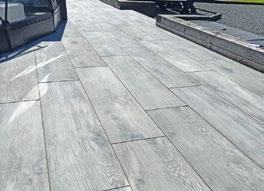
Last year saw a significant shift in textured external porcelain, with engineered slabs dominating market growth. Once a niche product, these tiles have become a top choice for external patio installations, especially in more contemporary settings – and deservedly so. They’re exceptionally durable and resistant to stains, frost and fading. Being dense and low-porosity, they absorb very little moisture, so they stand up brilliantly to heavy foot traffic and our increasingly extreme weather. They also open the door, literally, for seamless home to garden installations, as the same tile can often be used indoors and outdoors - a popular choice for single-level applications through bi-fold doors.
Do all porcelain tiles need to be sealed?
As a general rule, no. Only polished porcelain tiles need to be sealed. This is because the polishing process opens up tiny fissures in the tile which can create a porous surface that’s vulnerable to stains. Polished porcelain tiles aren’t recommended outdoors because they don’t provide sufficient grip underfoot. Matt porcelain tiles with a textured finish are the safe and practical option for patio areas, and for seamless installations. However, whilst these tiles don’t need to be sealed, there
are lots of benefits to be gained from the application of a pre-grout ‘barrier’ treatment.
The benefits of a barrier treatment
Tiles that have a textured surface can easily become stained by grout and installation residues, which become trapped in the high and low surface points. This is particularly common in external applications, where brush-in jointing compounds are frequently used. Once these residues build up, the texture of the tile can become congested, and the tile’s slip resistance may be reduced. Ongoing cleaning and maintenance can also become more difficult. To prevent these issues, we recommend the application of ECOPROTEC Pre Grout Protection.
A water-based treatment that’s applied before grouting, ECOPROTEC Pre Grout Protection creates a barrier that protects tiles from staining and makes the removal of residues easier. It also makes installation easier, as it extends grout working times by preventing rapid moisture absorption and keeping the grout fluid for longer. A final coat after installation also makes ongoing maintenance easier.
ECOPROTEC Pre Grout Protection is applied to clean surfaces using a broad paint brush, foam roller or light pressure sprayer. It cures in approximately 30 minutes, after which a second coat is applied and left for a minimum of one hour before grouting or pointing. Once grout or pointing is dry, and all residues have been removed, a further coat can be applied to cover both the tile surface and joints.
Additional protection can be provided outdoors with the application of ECOPROTEC Porcelain Paving Enhancer. A water-based, PFAS-free solution, ECOPROTEC Porcelain Paving Enhancer creates a ‘just washed look’ without compromising slip-resistance. As well as enhancing appearance, the finish also provides further resistance to foot traffic, wear and stains.
For more advice, browse ECOPROTEC TV on YouTube, visit www.ecoprotec.co.uk and contact ECOPROTEC on 01823 662722 and technical@ecoprotec.co.uk
NO STAINING WITH GFTK PAVING JOINTING EVEN ON SAWN SANDSTONE
KEEP WORKING IN WET WEATHER WITH NO SHRINKAGE CRACKING
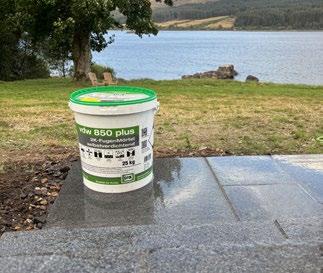
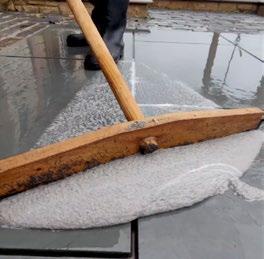
The unique GftK vdw 850 plus Paving Jointing Mortar from NCC Streetscape, is the ’State-of-theArt’, and designed for you to start and finish on schedule, despite wet weather forecasts, and even in in the rain. There is also no concern or worries about ensuring that residual water is removed from the joints, as the GftK mortars allow optimum use of wet-slurry application techniques. They are highly cohesive with extended flowability to spread easily across the paved surfaces and into the joints, where they displace any residual water with highly efficient self-compaction; and due to this, there is no additional tooling or finishing required either.
No Staining
The 2nd-generation, water-dispersed epoxy technology is exclusive to GftK, and the resin is precoated on spherical alluvial glacial sands (fine no-fines aggregates), which are used to optimise the grading curve and granulometry, for the highest performance in application and
service. This unique formulation prevents the separation and resin loss that with inferior products leads to the contamination and staining of the paved surfaces (even if they call it a temporary sheen!), especially on lighter and more permeable and sensitive natural stone. This also provides the high flow characteristics and selfcompacting capabilities, plus this high cohesion allows more water to be used and support optimum wet-slurry application, so it is ‘the wetter the better’ at this stage with GftK mortars. This is to the extent that this could cause separation and loss of performance with the other epoxy products on the market.
By selecting GftK vdw 850 plus you have no worries about staining, or the unsightly resin bloom from the 1st-generation epoxy mortars in damp weather conditions. There is also none of the annoying cement haze that you can easily get from all cement-based jointing materials.
No
more wating for
dry conditions and a dry forecast
With the advantages of GftK vdw 850 plus, and the finer grade GftK vdw 815 plus for narrow joints >3mm wide, you can plan to start, apply and complete your jointing and repointing works when you are ready and on schedule, not just when the fickle British weather cooperates! Get the job completed on time and with minimal final surface cleaning requirements, just rinse and brush off with a little more water in a fine hose spray. You can even keep working in the rain when you need to get finished - No delays for your jointing and repointing works, plus no loss of joint quality and durability.
For Contractors – ‘No Delays and Get Paid On Time!’
- For Owners – ‘No Delays in Opening / Getting Back into Service!’
They can be used for all types of paving, everywhere from domestic patios, paths and driveways, to paving around retail and commercial centres, and for heavily trafficked paved roads and other public areas such market squares. GftK vdw 850 plus hardens quickly in the joints, to get areas open and/or back into service as fast as possible, and then to withstand the toughest exposure and service demands.
A further advantage of using GftK vdw 850 plus, is that the material hardens by internal cross-linking and there is no short- or longterm shrinkage and consequential cracking problems, as there always will be with cement-hydration and air-drying jointing products,
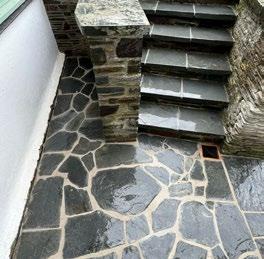
which are the root cause of many joint failures. This also makes it the perfect solution for joints with variable widths, for example in the repointing of traditional Yorkstone and historic Slate slabs or Granite setts, as well as in Crazy Paving, which seems to be coming back in fashion. This ensures long-term shrinkage free performance, plus being tough and resilient, it can withstand high-pressure jet-washing and even mechanical streetcleaning machines.
Whether the weather looks set against you, or you just want to minimise the risk of joint issues and comebacks, and with fewer site limitations and more advantages, get the security of GftK vdw 850 plus on your next project – No delays, and saving you and your clients time and money when it matters!
- The Only Truly Wet-Weather Paving Jointing
• No delays - No waiting to joint
• No concerns over water in joints
• Keep jointing in cold (> +3oC)
• Easy wet-slurry application
• Very high flow & self-compacting
• No tooling or finishing required +
• No waiting to clean off
• No washboy required
• No haze & No efflorescence
• Fast curing & hardening +
• No shrinkage cracks
• Highest joint performance
• Optimum strengths & flexibility
• Fully resistant to traffic, de-icing salts, and jet-washing
Visit our website for more information on GftK vdw 850 plus paving jointing: www.nccstreetscape.co.uk/paving-jointing/vdw-850plus.html And for more information on Paving Repointing: www.nccstreetscape.co.uk/type-of-area/paving-repointing.html
Drainage issues are rising as outdoor projects surge, with pooling water and failing paving becoming common. Many homeowners discover too late that surface water management is a structural decision, not an afterthought. For self builders and renovators, understanding the fundamentals can make the difference between a durable outdoor space and one that quickly develops problems.
Award winning landscaper and Bradstone Assured installer Darren Plumridge comments.
Understanding the legislative requirements
The legal obligations around surface water drainage are clear, but frequently overlooked. The fundamental requirement is that all surface water falling onto a driveway or paved area must be managed within the property boundary. It must not run onto the public highway or neighbouring land, or into existing mains drainage.
This obligation has long existed within building regulations, but enforcement became much clearer from 2008 onwards, particularly following the introduction of sustainable drainage systems (SuDS) legislation. Councils expect homeowners and contractors to demonstrate where surface water goes and how it is controlled.
A common misconception is that water can be discharged into roadside drains. Road drainage is designed solely for the highway itself, not for private driveways or patios. Allowing water to run off a property can lead to enforcement action and may also cause issues later when a property is sold and surveyed.
How these requirements can be met
There are several compliant ways to manage surface water within a property boundary. These include directing water into soakaways, using drainage channels that feed
into appropriate outfalls, installing permeable paving systems or, in more limited scenarios, dispersing water into soft landscaping such as rain gardens.
Early planning is essential. Drainage must be considered alongside finished levels, gradients and ground conditions. A solution that works well for one property may be unsuitable for another, particularly where clay soil, older buildings or shallow underground services are present.
Top four drainage methods
The best way to manage surface water depends on soil type, garden layout and the age and construction of the property.
1. Soakaways
For many homeowners, a soakaway is one of the simplest and most effective ways to deal with rainwater on a patio or driveway, but only when the conditions are right. Soakaways are designed to collect surface water and let it gradually disperse into the surrounding ground, keeping it away from the home and preventing pooling.
Positioning is critical. A soakaway should always be located at least five metres away from the building line. Ground conditions play a decisive role. Soakaways work best in free draining soils such as loam, chalk, sand and flint. Heavy clay does not allow water to disperse effectively and is generally unsuitable unless additional engineered drainage measures are introduced.
2. Drainage channels
Linear drainage channels are commonly used with standard paving where surface water naturally falls towards the property or the site boundary. Their purpose is to intercept runoff and direct it to a suitable outfall, most often a soakaway.
When installed correctly, drainage channels are reliable and low maintenance. Problems typically
arise where channels are poorly bedded, incorrectly supported or installed with wrong falls. Blocked outlets can also undermine long term performance.
3. Permeable paving systems
Permeable paving is widely misunderstood and is often installed incorrectly. Fully compliant permeable driveways remain relatively uncommon and are most frequently specified on new housing developments where SuDS compliance is required as part of the planning process.
A properly installed permeable paving system is a fully engineered construction, not simply block paving laid using standard methods. The entire buildup must allow water to pass vertically through every layer.
Permeable systems also require deeper excavations than conventional driveways, which increases cost and complexity. The wider joints needed for permeability can encourage weed growth if maintenance is neglected. When installed correctly, however, performance is immediate, with water disappearing straight through the surface and into the ground below.
4. Rain gardens and soft landscaping
Rain gardens are nature’s own soakaway. These are plant beds that allow rainwater to run off the patio or driveway and disperse naturally into the ground rather than requiring man made drainage structures.
Rain gardens work best where water can be directed into a contained planting area, such as in front of a boundary wall. In most situations, they are a supplementary measure rather than a primary drainage solution.
www.bradstone.com
• No wet weather delays
• No concerns over water in joints
• Very high flow & self-compacting
• No tooling or finishing required +
• No haze & No efflorescence
• Fast curing & hardening +
• Suitable for random sized joints
• No shrinkage cracks
• Optimum strengths & flexibility
• Fully resistant to traffic, de-icing salts, and jet-washing
Visit: www.NCCStreetscape.co.uk
Email: sales@NCCinAction.co.uk
Call: 01257 266696
FROM ORCHIDS TO ECOSYSTEMS: THE RISE OF THE LIVING ROOFTOP
The discovery of a rare orchid, once thought extinct in the UK, on a rooftop in the City of London is a striking reminder of the ecological potential of the most unlikely of settings. Roof terraces represent a genuine opportunity to transform previously underused rooftop spaces into environments that contribute to biodiversity while adding social and environmental value to buildings. James Faulkner, Innovation Manager at roof terrace experts Raaft, explains how modular terrace systems are helping designers integrate decking, planting and living elements into coordinated and high-performing rooftop landscapes.
Visual appeal might well be the starting point when green roofs are discussed, but a welldesigned roof terrace can deliver a measurable ecological value. By providing genuine microhabitats that attract insects, pollinators, birds and even small mammals,
they also offer food sources, shelter and nesting opportunities. This requires thoughtful planting, varied substrate depths and features such as deadwood or shallow water trays, elements that turn a roof from a decorative feature into a fully functioning ecosystem.
Rethinking rooftops
The London rare orchid discovery offers a compelling reason for specifiers and building owners to rethink the potential of rooftop spaces. This shift in thinking opens up the conversation around roof terraces in supporting biodiversity, food production, wellbeing, social interaction and climate resilience.
In the city of London, an extensively refurbished and reconfigured BREEAM ‘outstanding’ building at 60 London Wall is an excellent example of this thinking in practice. The building’s roof terraces are home to beehives producing honey
sold directly from the building. The project demonstrates how biodiversity-led design can thrive at height, even in the heart of the financial district.
Right plant, right roof
The specific technical conditions of the roof, not ground-level landscape conventions, should always drive planting selection. Drought-tolerant perennials, native wildflower mixes, sedum and biodiverse meadow systems are among the most effective options, particularly when combined with irrigation strategies suited to the building’s location and exposure.
The Spiral at 66 Hudson Yards in New York brings this into sharp focus. For this landmark project, Raaft provided aluminium joists and adjustable pedestals to connect atrium workspaces on every tower floor. Featuring around 13,000 square feet of outdoor space planted above
300 feet, The Spiral is the city’s first attempt to grow greenery at this vertical scale. Initial plant selections were ultimately replaced with hardier, wind and drought-resistant species suited to the extreme conditions at height. Planting varies by elevation and orientation with prairie species used on the windexposed south side, shade tolerant on the north side and carefully selected flowering trees managed to balance resilience with uplift forces.
Designing from day one
Structural loads, irrigation, access, and planter placement need to be designed holistically from the earliest conceptual stage rather than retrofitted. Early coordination also avoids costly mistakes later, particularly on projects where weight limits and waterproofing are critical.
The retrofit challenge
Many landscape and roofing contractors will be familiar with retrofitting green terraces onto existing buildings. Weight limitations, restricted access, shallow build-ups, drainage constraints and long-term maintenance requirements can all
GREEN & BLUE INFRASTRUCTURE
limit what is achievable, especially on older or lightly loaded roof structures.
Modular terrace systems distribute weight efficiently, allow controlled drainage and provide accessible service zones, all without compromising waterproofing. Components can also be removed or reconfigured for maintenance, extending the lifespan of both the terrace and the roof beneath. Beyond installation, modular components are engineered to withstand extreme weather, moisture and UV exposure over the long term, reducing the maintenance burden on landscape teams managing these spaces.
Nature, health and design
Across commercial and healthcare settings, access to nature and occupant wellbeing have become increasingly linked in design decisions. Green roof terraces have been shown to improve mood, reduce stress and boost productivity, making them a priority for organisations focused on employee wellbeing, patient recovery and ESGdriven design.
NHS mental healthcare projects represent some of Raaft’s most safety critical work in this area. In these environments, surfaces and fixings must minimise risk of self-harm or injury. One effective solution has been resin-bound gravel, a porous yet continuous, fixed surface that combines drainage performance with safety and comfort underfoot.
Modular design
Far greater design flexibility than traditional build-ups is one of the defining advantages of modular terrace systems. Adjustable pedestals and modular components allow decking, paving, planters and green spaces to be seamlessly combined into highly customisable layouts without invasive construction.
At 60 London Wall, this flexibility enabled intricately cut porcelain tiles, curved CorTen steel planters and bespoke hardwood benches to coexist on the same terraces. The result is a series of busy, thriving communal spaces that balance architectural ambition with generous planting.
Rooftops as living assets
Treating rooftops as designed landscapes in their own right, rather than passive elements of the building envelope is where the opportunity lies. The ability to lift and reconfigure modular components without damage also supports a more adaptive approach to planting, allowing schemes to evolve as species establish, mature or need replacing.
Through careful coordination between terrace systems, waterproofing and planting design, modular roof terraces can deliver lasting value, supporting biodiversity, enhancing wellbeing and adapting over time as buildings and their uses change. For architects, contractors and landscape professionals, that represents both a specification challenge and a significant opportunity.
TREE RELOCATION: CIVIC TREES – WE DON’T JUST MOVE TREES, WE SAFEGUARD THEM
For over 60 years, Civic Trees has been at the forefront of tree relocation across the UK. From introducing Europe’s first Vermeer tree spade to designing the globally renowned Newman Frame, we have consistently led the way in innovation, combining technical expertise with a genuine passion for preserving nature.
Why Relocate a Tree?
Because every tree matters. Relocating a tree isn’t simply moving it—it’s about preserving life. By saving a tree from being cut down, we protect the environment, support sustainable urban growth, and maintain the natural beauty of our surroundings. In a world where sustainability has never been more important, tree relocation is a practical and responsible way to make a lasting difference for future generations. Each tree we relocate continues to provide shade, clean air, and aesthetic value, contributing to healthier, more vibrant communities.
At Civic Trees, every relocation begins with a thorough assessment of the tree’s health, size, and root system. Our team carries out a detailed site-specific risk assessment to ensure the entire operation is carried out safely and efficiently. Using specialist equipment, we carefully lift the tree with minimal disturbance to its roots, transport it securely, and replant it in its new location. From the moment a tree is uprooted to the ongoing care it receives after replanting, our skilled team ensures it adapts successfully and thrives for many years to come.
We believe that a tree is only as healthy as the care it receives. Through meticulous handling, expert planting techniques, and dedicated aftercare, Civic Trees safeguards every tree as if it were our own.
Our unwavering commitment to staff training, safety, and technical excellence means our clients can trust that every relocation is performed to the highest standards.
By choosing to relocate rather than remove trees, we preserve nature’s beauty while supporting sustainable growth in urban and rural communities alike. At Civic Trees, we
take pride in treating every tree as the most prized asset it is, ensuring it continues to enhance landscapes and enrich lives for generations.
Civic Trees – Because a tree is only as strong as the care it receives. www.civictrees.co.uk
THE URBAN CONGA
THE URBAN CONGA UNVEILS ‘A CAPPELLA’, A NEW PUBLIC ART INSTALLATION CELEBRATING JACKSONVILLE’S ENDURING MUSICAL LEGACY
Located within the new Jacksonville Riverfront Music Garden, A Cappella connects visitors with the city’s rich musical heritage through the lyrics of both past and present local artists, inspiring creativity, participation, and new expressions of song. A Cappella is an interactive public artwork that celebrates the individuality and interconnectedness of the many musical voices that have emerged from Jacksonville, Florida, across generations. Located within the new Jacksonville Riverfront Music Garden along the St. Johns River, adjacent to the Jacksonville Symphony, the installation serves as both a tribute to the city’s rich musical heritage and an invitation for visitors to become part of its ongoing story.
Situated within a musical note embedded in the landscape, the
flowing form of the artwork draws inspiration from the structure of a symphony. The installation is organized into four distinct sections inspired by the four movements of a symphony, each shaped by a unique tempo, emotion, and theme. Centered on the ideas of motivation, home, love, and freedom, these movements create a sequence of experiences that collectively portray Jacksonville as a living symphony composed of many voices, perspectives, and eras. While each section offers its own atmosphere, they remain connected through a shared narrative that reflects the city’s cultural identity.
Inspired by the lyricism and storytelling found throughout Jacksonville’s musical history, A
Cappella transforms song lyrics into an open-ended, interactive experience. Visitors are invited not only to reflect on the city’s musical legacy, but also to actively participate in it by creating new verses of their own.
Developed through extensive community engagement, the project draws from a collection of 84 songs by more than 60 Jacksonville artists spanning the 1920s through the 2020s. Residents helped identify songs and lyrics that resonate with the history, character, and identity of Jacksonville, resulting in a diverse collection of voices and musical styles connected by shared themes that transcend time. The work is also set up to accommodate new artists to be added over time.
Selected lyrics were deconstructed into individual words and short verses that can be rearranged and recombined into countless new compositions. Through the playful act of remixing words from different artists, genres, and decades, visitors can discover unexpected connections while creating their own lyrical expressions. The installation highlights how ideas explored in music across generations continue to resonate today, revealing both the diversity and continuity of Jacksonville’s cultural landscape.
The visual design further expands upon the project’s open-ended approach to play and discovery. Dichroic and reflective panels invite visitors to engage with shifting light, color, shadow, and reflections throughout the day. Integrated seating areas encourage gathering, conversation, and observation, while a central circular bench serves as a communal focal point, explaining the relationship between the four movements of a symphony and the four sections of the artwork.
Together, these elements create opportunities for learning, reflection, and shared experience. By combining music, play, storytelling, and public participation, A Cappella creates a dynamic environment that honors Jacksonville’s musical identity while empowering new voices, interpretations, and connections to emerge for generations to come.
www.theurbanconga.com
MANAGING RAINFALL AT SOURCE:
WHY A CONNECTED SUDS APPROACH HELPS MEET THE REQUIREMENT TO RETAIN THE FIRST 5MM OF RAINFALL ON SITE
Why the first 5mm?
With new housing developments expected to retain the first 5mm of rainfall on site, developers and landscape professionals face a growing challenge: how do you manage everyday rainfall when space is already under pressure?
The first 5mm matters because it represents the frequent, light rainfall that often creates the “first flush” of urban runoff. As rain washes across roofs, roads and hard surfaces, it can pick up oils, microplastics, metals and other pollutants before carrying them into drains, sewers and local waterways. Capturing this rainfall at source helps reduce pollution, ease pressure on sewer networks and better mimic natural greenfield conditions, where much of this water would be intercepted by vegetation, absorbed by soil or lost through evaporation.
Small steps to successful solutions The answer is unlikely to be one larger tank, one deeper excavation or one standalone drainage product. Increasingly, effective SuDS design depends on using a connected network of complementary features that slow, store, filter and reuse water close to where it falls.
This is where the UK can learn from countries such as the Netherlands, where water-sensitive urban design has been embedded into public realm and development thinking for many years. Dutch cities have demonstrated that rainwater management does not need to be hidden underground. It can be visible, multifunctional and integrated into streets, buildings, landscapes and community spaces.
The way forward for constrained UK sites
For UK projects, particularly on constrained sites, this means thinking beyond traditional drainage infrastructure. A more workable approach is to spread storage and treatment across the scheme, using a network of smaller, integrated interventions that manage water within a tighter footprint.
Green and blue walls can intercept rainfall and direct surplus to storage, while smart water butts capture roof runoff for reuse. SuDS planters and rain gardens add further capacity, supporting attenuation, filtration, habitat and amenity in compact spaces. When combined with green roofs, specialist soils, intelligent controls and materials such as Hydrorock, these elements form a coordinated, site-wide system that holds water and releases it gradually back into the ground.
One approach, multiple benefits
This approach is not only about flood risk. Recent years have shown how quickly the UK can move from intense rainfall to drought conditions and hosepipe bans. For homeowners, schools, community gardens and developments with biodiverse planting, retaining water on site will become increasingly important. Captured rainwater can
be reused to irrigate trees, living walls, planters, edible gardens and productive landscapes, reducing reliance on mains water during dry periods.
A connected SuDS strategy therefore supports both flood resilience and drought resilience. It helps meet planning and drainage requirements while also contributing to biodiversity, urban cooling, water quality and place quality.
The strongest schemes use a management train of smaller, integrated interventions, each performing a clear role within the wider system. Together, they create landscapes that absorb rainfall, reuse water, support planting and reduce pressure on drainage networks.
At BioScapes Group, this joinedup thinking sits at the heart of how landscapes are planned and delivered. It reflects an integrated approach to landscaping that considers water alongside biodiversity, soil health and longterm performance. By designing systems where these elements work together, it becomes possible to create places that respond to everyday rainfall, support thriving ecosystems and remain resilient as conditions change.
FUTURE PROOFING: PICTORIAL MEADOWS® TURF MAXIMISES ADAPTATION AND RESILIENCE TO FUTURE CLIMATE CHANGES
The Pictorial Meadows® turf range comprises over 100 different varieties of wildflowers. This rich diversity of species provides considerable climate resilience. The plants themselves have originated from a wide geographical area and whilst many are UK natives, the inclusion of wildflowers from more diverse climatic conditions are extending meadow resilience to the increasing extreme weather incidents that we are experiencing. Without the need to irrigate following establishment, we have seen the meadows thrive in our increasingly hotter and drier summers. Having also been tested for survival in the cooler, damper winters of Northern England, they also appear to be thriving across Scotland and as far north as Finland. Different species exhibit varied means of survival, from very deep rooting to the ability to self-propagate through seed production. The breadth of species introduced within the Pictorial Meadows® turf range means that in every conceivable microhabitat, there will be a dynamic adaptation going on within the overall community that can flex and adapt with the changing climate.
Contribution towards carbon neutrality
Pictorial Meadows® was originally developed as a high-value yet
low-maintenance alternative to mown grass and ornamental flower borders, both of which are resourceheavy. They are established by seed, delivering upwards of 150 plants per square metre, creating a density of plant material which discourages weeds and therefore also reduces ongoing maintenance resources. Maintenance can be reduced to a simple spring weed check and just one annual cut-and-collect per year, significantly reducing fuel consumption when compared to cut grass or other ornamental flower displays. Annual cutting material can all be composted by green waste recycling and the meadow ‘compost’ is itself also a means of improving soil health, reducing irrigation needs and, most importantly, cutting down on chemical and manual weed control across the wider urban landscape. Every square metre of meadows planted will contribute to taking carbon out of the atmosphere. Good for people and planet
Pictorial Meadows® are designed not just for improved environmental resilience, but to be especially attractive and valuable for pollinators and people. These meadows have an exceptionally high floral content as well as an extended and very varied flowering period. Unlike many horticultural hybrid flowers that have been bred
primarily for bloom size, these wildflowers rely on their natural attributes to attract pollinators, helping them spread and survive. In addition, the plants themselves provide a great habitat for much more of our native fauna and are an especially valuable winter source of oil-rich seeds for birds. And, what normally attracts bees and butterflies, also pleases people! The many forms of foliage and flower, plus the almost daily changes in colour and form buzzing with life, provides a rich sensory experience for people.
Where to use
Pictorial Meadows® turf is quick and easy to establish and has a wide range of applications. This includes slopes, rooftops, Sustainable Urban Drainage Systems, wet/dry areas, shade, semi-shade, full sun and various soil types.
As part of The Green Estate CIC, Pictorial Meadows® has been creating adaptive and resilient urban spaces for over twenty years. Our mission has always been to create more sustainable, resilient and liveable cities by integrating nature into urban planning and design.
Planting for the future with Pictorial Meadows® turf
Pictorial Meadows® turf contains 100+ wildflower species, delivering climate-resilient planting. Its breadth of species supports adaptability across different microclimates – thriving through hotter, drier summers and cooler, damper winters without irrigation after establishment. Lowmaintenance and versatile, it suits parks, SuDS, verges, housing, visitor attractions and educational settings.
Get in touch with our team of experts for project specification support and tailored advice.
GREEN PARKING SOLUTIONS SET
TO SHAPE PEAK LANDSCAPING SEASON PROJECTS
REINFORCED GRASS PARKING REFLECTS GROWING DEMAND FOR GREENER DRIVEWAY AND OVERFLOW PARKING SOLUTIONS
As the landscaping season approaches, demand is continuing to rise for parking and driveway systems that combine permeability, durability and a more natural appearance. Across hospitality venues, rural properties and countryside developments, reinforced grass and gravel surfaces are becoming an increasingly popular alternative to traditional hardstanding.
One project reflecting this trend is the reopening of the historic Tunnel
House Inn in the Cotswolds, where a 600m² overflow parking area has been reinstated using Beauxfort Grassrings ahead of the pub’s spring 2026 reopening.
Located beside the Coates portal of the Sapperton Canal Tunnel within the Cotswolds Area of Outstanding Natural Beauty, preserving the character of the landscape was central to the project. Rather than introducing a visible hard surface, the aim was to create additional
parking capacity while retaining a fully grassed finish.
Grassrings reinforce the ground beneath the surface, helping to prevent rutting, soil compaction and surface deterioration during vehicle use while maintaining a green, permeable appearance. The system allows spaces to function as parking areas during busy periods without losing their visual identity as landscaped green space.
The project reflects wider landscaping trends expected throughout the 2026 season, with growing interest in permeable driveway systems, overflow parking solutions and low-visibility ground reinforcement that supports both
drainage performance and softer landscape aesthetics.
“We’re seeing increasing demand for parking solutions that don’t visually dominate a landscape. Particularly within hospitality and countryside projects, clients want surfaces that
remain green, permeable and in keeping with their surroundings while still delivering reliable structural performance.”
08001978885 | www.beauxfort.com
BALI AWARDS MAINTAIN HALF CENTURY OF ELITE STATUS
WITH HELP FROM “BEST IN THE BUSINESS” JUDGING PANEL
With the BALI National Landscape Awards 50th anniversary on the horizon, one of the secrets to its enduring success – the calibre of its judging panel – continues to reinforce the awards’ reputation as the industry’s ultimate benchmark for excellence.
Led by Head Judge and industry legend John Melmoe, it is made up of some of the most respected figures in landscaping, horticulture and garden design. The panel brings together collective centuries of hands-on expertise, technical knowledge and award-winning experience. Their insight ensures that every entry is assessed to the highest professional standards, giving genuine weight and prestige to every accolade awarded. This year sees three new handpicked judges join the esteemed panel, among them Dave Twist of
Elite Landscapes, whose career spans apprenticeships at Wisley Gardens, work with The Royal Parks, and the successful growth of Elite Landscapes into one of the South-East’s leading landscaping companies. Having secured more than 20 BALI Awards himself, Dave understands first-hand the commitment and craftsmanship required to achieve a BALI award. Designer Chris Deakin also joins the panel, bringing more than 30 years of experience across horticulture, landscape design and RHS show gardens. With multiple gold medals and a Tudor Rose Best in Show award to his name, Chris is passionate about championing standards across the profession. For him, the awards not only celebrate excellence but also inspire innovation and creativity. Completing the trio is Ray Stephenson of Marshalls, whose
extensive career has seen him work on major projects including Disneyland Paris and the Channel Tunnel. With specialist expertise in hard landscaping and previous judging experience through the Marshalls Awards, Ray believes the BALI judging panel is “the best out there”, reflecting the depth of knowledge and scrutiny behind the awards process.
Together, the panel’s combined experience ensures entries are evaluated not simply on appearance, but on technical execution, innovation, planting quality, sustainability and overall project delivery. From drainage solutions and structural detailing to planting harmony and presentation, judges look for projects that demonstrate excellence in every aspect.
As BALI marks 50 years of celebrating landscaping achievement, the strength and integrity of its judging process remains central to the awards’ enduring prestige – continuing to raise standards and inspiring future generations. Read
Find out how you can get involved, sponsor, and attend the awards at baliawards.co.uk
Email: izzy.plain@bali.org.uk
Telephone: 07936 944258
DESIGN OUT THE WEED: BRIDGING LANDSCAPE
ARCHITECTURE AND EWEEDING TECH
The Afterthought Dilemma
For decades, the workflow of landscape architecture followed a predictable, if flawed, cadence: design beautiful spaces, build them, and leave the inevitable headache of weed control to maintenance crews and their chemical backpacks. It was a “design first, spray later” mentality.
However, the modern landscape design sector has shifted under our feet. With mounting public health concerns, strict municipal regulations, and a collective push toward urban biodiversity, chemical weed control is rapidly becoming a relic of the past. The challenge for
contemporary designers is no longer just aesthetic—it is operational. We must design spaces that actively discourage weed growth from day one, and ensure that where weeds do break through, they can be managed using smart, chemical-free technology.
Designing for Defiance: Proactive Weed Suppression
Weed control doesn’t begin with a maintenance schedule; it begins on the drafting board. A truly sustainable urban space uses landscape architecture as its first line of defence.
• Strategic Plant Density: Rather than spacing specimens sparsely and relying heavily on mulch to fill the gaps, contemporary planting plans should prioritize rapid canopy closure. Utilizing dense matrices of groundcovers (such as Waldsteinia or Alchemilla) effectively starves opportunistic weed seeds of sunlight.
• Hardscape Engineering: The joints in block paving and stone flags are notorious incubators for weeds. Specifying polymeric sands or highperformance, weed-resistant jointing mortars during the design phase blocks seed lodgement and prevents root penetration.
eWeeding Roller
Power Source
100% Battery Powered (Quiet, Zero Emissions)
Treatment Width 60cm
Side-Shift Function 8cm lateral adjustment
Systemic Kill Targets root system entirely
• Edge Definition: Clean, continuous recycled plastic or concrete edging between turf and planting beds prevents aggressive stoloniferous grasses from invading ornamental zones, significantly minimizing manual edging labour.
The Infrastructure Blind Spot and the Rise of “eWeeding”
Even the most meticulously designed garden will experience weed encroachment, particularly across hard standings, gravel paths, and kerbsides. When manual weeding is too labour-intensive and thermal foam or flame weeding proves too energy-inefficient, where do designers turn?
The market has responded with electrophysical weed control— popularly known as “eWeeding.” Instead of poisoning the soil or merely scorching leaves, this technology applies high-voltage electricity directly to the plant.
How it works: The electrical current passes from the leaves, down through the stem, and directly into the root system. It instantly boils the water molecules within the plant cells, rupturing the cell walls and destroying the weed systemically from the inside out to prevent regrowth.
Spotlight on Innovation: The eWeeding Roller
Among the professional-grade equipment spearheading this
Ideal for hospital grounds, schools, cemeteries and quiet urban squares.
Dictates optimal width for secondary pedestrian pathways and garden walkways.
Allows precise weeding right up against walls, flush kerbs, and structural boundaries.
Reduces the frequency of maintenance cycles, keeping landscapes pristine longer.
transition is the eWeeding Roller. Specifically engineered for urban spaces, pavements, and hard landscapes, it offers a prime example of how future maintenance capabilities dictate current design choices. See graph above.
Designing For the Machine: The Ultimate Synergy
To completely eliminate chemical weed control, the garden designer and modern maintenance equipment must work in lockstep. Knowing that tools like the eWeeding Roller are available allows us to optimize layouts for maximum operational efficiency:
• Dimensional Alignment: When drawing pathways, courtyards, or access routes, designers should plan in multiples of the equipment’s working width. A 120cm or 180cm wide path allows an operator to clear the area in perfectly efficient, parallel passes with a 60cm roller.
• Obstruction-Free Boundaries:
The eWeeding Roller’s 8cm sideshift capability is a game-changer for clearing weeds next to walls. Designers can maximize this by keeping hardscape edges flush and avoiding intricate, jagged recessed corners where equipment cannot physically reach.
• Zoned Maintenance Layouts: Grouping hardscape materials by their mechanical accessibility ensures that high-traffic public
LANDSCAPING SERVICES
plazas can be seamlessly swept by professional electrophysical rollers without risking damage to adjacent sensitive soft scaping.
A Chemical-Free Horizon
The future of landscape and urban design is inherently ecological. By shifting our perspective from reacting to weeds to designing them out, we bridge the gap between architecture and technology. When thoughtful spatial layout, dense planting matrices, and advanced electrophysical tools like the eWeeding Roller unite, the reliance on synthetic chemicals simply evaporates. It’s cleaner for the planet, safer for the public, and a far more elegant way to design.
READY TO TRANSFORM YOUR MAINTENANCE WORKFLOW?
Contact us today to order your Roller or book a professional site treatment: E: roller@naturavolt.com T: 01509 387654 www.naturavolt.com/roller
PELLENC SETS NEW STANDARD WITH
THE LAUNCH OF THE RASION 3 EASY PEDESTRIAN MOWER
Pellenc, the pioneer in professional battery-powered tools, is proud to announce the release of the Rasion 3 Easy, a professional-grade 24” (60 cm) self-propelled mower designed to redefine the balance between heavyduty performance and whisper-quiet operation.
As urban environments increasingly demand reduced noise and zero emissions, the new Rasion mower provides a powerful solution for contractors and municipal teams. Engineered for high-frequency use, this mower combines a massive 60 cm cutting width with a surprisingly light frame, weighing just 28 kgs.
Unmatched Manoeuvrability and Versatility
The Rasion3 is built for the complexities of modern landscaping, featuring a unique zero-turn radius system and front caster wheels that can be unlocked for 360° agility or locked for precision stability when working on slopes.
To handle diverse terrain and varying grass lengths, Pellenc has expanded the cutting height range to include new 85/95 mm settings. This allows for precise, selective mowing in demanding conditions without sacrificing the efficiency of the highperformance dual-blade system.
Built for the Professional
Despite its lightweight design, the Rasion 3 is heavy-duty in every sense. Key features include:
Reinforced Protection: Side and front bumpers protect the caster wheels and chassis.
Hardened Components: A reinforced blade support and collection bin ensure longevity in harsh environments.
All-Weather Reliability: Equipped with waterproof wheels for consistent traction and performance in damp conditions.
Efficiency Without the Noise Operation is as quiet as it is productive. With a maximum sound power level of just 95 dB, the Rasion 3 allows professionals to work in noise-sensitive areas such as hospitals, schools, and residential zones without disturbing the public or requiring hearing protection for the operator.
When paired with the ULiB 1500 battery, the mower delivers industryleading range, capable of maintaining up to 1.3 acres (5,400 m²) or providing up to five hours of continuous mowing on a single charge.
Pellenc battery-powered equipment is distributed exclusively in the UK and Ireland by Etesia UK.
For more information, visit www.etesia.co.uk/pellenc
Chemical-free weed control for paths and hard standings
Ideal
Pavements
Cobbled Paths Concrete
Car Parks Cemeteries
Gravel Paths Tarmac
With its side-shift feature, weeds along edges are treated effectively. The results are quick and precise, leaving pathways with a clean and sharp appearance for months. Thanks to its compact design, the eWeeding Roller can easily fit into a small van.
Technical Specifications:
Fully battery powered
Treatment width: 60cm
Side-shift: 8cm
3-6 hrs of operation per charge
Highly manoeverable
1.1m x 0.7m x 0.5m (l x w x
FROM FIELD TO FUTURE: SUPPORTING
BIODIVERSITY THROUGH GREEN INFRASTRUCTURE
The landscape industry is entering a period of significant change. Biodiversity Net Gain requirements, climate resilience targets, and increasing expectations around sustainable development are reshaping the way green infrastructure is planned and delivered across the UK. While much of the discussion understandably focuses on policy, design, and implementation, there is also value in considering where these landscapes begin: in the field.
As growers and suppliers of green solutions, we see first-hand how environmental performance starts long before a project is completed. Whether it is cultivated turf, species-rich, wildflower or green roof systems, the success of any landscape depends on the quality and resilience of the living materials that form its foundation.
The introduction of mandatory Biodiversity Net Gain (BNG) has encouraged developers, planners, and landscape architects to think differently about the ecological value of their projects. This is
a welcomed development for our industry. It recognises that development and environmental enhancement should work hand in hand, with green infrastructure delivering measurable environmental benefits alongside social and economic value.
While no single landscape product can achieve biodiversity objectives on its own, a combination of welldesigned green infrastructure can make a significant contribution. Species-rich and wildflower habitats provide food and shelter for pollinators and other wildlife. Green roof systems create valuable ecological networks in densely developed urban environments. Quality turf contributes to urban cooling, carbon capture, water infiltration, and the creation of accessible green spaces that support community wellbeing.
What is becoming increasingly clear is that biodiversity is not confined to designated nature reserves or rural environments. Urban landscapes now play a critical role in supporting ecological connectivity. Every
housing development, commercial scheme, school, public park, and rooftop presents an opportunity to create habitats that contribute to wider environmental goals.
Climate resilience presents an equally important challenge. Across the UK, we are experiencing more frequent extreme weather events, from intense rainfall and flooding to prolonged dry periods and rising temperatures. These conditions place increasing pressure on both built infrastructure and natural environments.
For growers, climate resilience is not simply a design consideration; it is something we manage every day. Producing high-quality vegetation requires careful stewardship of soil, water, and natural resources. It also requires adapting growing practices to changing weather patterns and ensuring that the landscapes we supply are capable of thriving in increasingly challenging conditions.
The success of Biodiversity Net Gain and climate adaptation strategies will ultimately depend on collaboration. Landscape architects, ecologists, contractors, developers, planners, and growers each have an important role to play. By engaging the supply chain early, projects can benefit from practical expertise that helps translate environmental ambitions into deliverable, longlasting outcomes.
The future of urban development will increasingly be judged not only by what is built, but by how effectively it supports nature and responds to environmental change.
From a grower’s perspective, the conversation is no longer simply about creating attractive landscapes.
THE COMPLETE PACKAGE
Increase Biodiversity: Our award winning plastic free wildflower turf is a game-changer for promoting local ecosystems. By incorporating a variety of native plants, you can create beautiful, biodiverse habitats that attract pollinators and support wildlife.
Golf Courses: Achieve the perfect balance of aesthetics and playability with our premium turf options tailored specifically for golf courses. Enjoy lush greens and resilient fairways that enhance the golfing experience for players of all levels.
Sports Pitches: Our high-performance turf is ideal for sports pitches, providing a durable and consistent playing surface that stands up to the rigors of competitive play, ensuring safety and enjoyment for athletes.
General Landscaping: Whether you’re designing a park, garden, or recreational area, our versatile turf solutions offer the ideal foundation for any landscaping project, delivering beauty and functionality.
RESTORING CLARITY WITH OTTERBINE
Poor water clarity is more than an aesthetic concern — it’s an early warning sign that the ecosystem beneath the surface is out of balance. When water becomes murky, sunlight struggles to penetrate, oxygen levels fall, and algae can quickly take hold. Left unmanaged, a once healthy pond or lake can become difficult and costly to restore.
At the heart of this decline is often a simple issue: insufficient oxygen. In stagnant conditions, natural circulation slows or stops. Organic matter settles on the bottom and decomposes without oxygen, releasing nutrients that feed algae and further cloud the water. It becomes a cycle only intervention can break.
That intervention is aeration — and this is where Otterbine’s aeration systems excel.
What is water clarity?
Water clarity refers to how deeply light can penetrate the water column. Clear water typically contains low levels of suspended soil particles or algae. Turbid water, by contrast, contains high concentrations of inorganic matter
or Total Suspended Solids (TSS), which scatter and absorb light, reducing visibility.
What affects it?
Clarity is constantly shifting. Rainfall, temperature, wind, and nutrient inputs all influence how particles move and biological activity changes. Warmer months increase oxygen demand, making water more vulnerable to imbalance. Managing clarity isn’t about achieving perfect transparency — it’s about maintaining a stable, healthy equilibrium and Otterbine’s aeration systems help keep that balance in check year round.
Robert Jackson, Division Manager at Reesink Hydro Scapes, distributor of Otterbine in the UK, explains: “Contrary to popular belief, water clarity cannot be determined by visibility. While clear waters do indicate a general state of health, it’s not true that murky waters are unhealthy. It’s best to test — good clarity is defined as less than 5mg of TSS per litre, with below 2mg of chlorophyll per litre the sweet spot for clear water.”
How Otterbine restores clarity Prevention is the most effective
strategy and the most powerful longterm solution is by adding aeration. By circulating and oxygenating the water, Otterbine systems oxidise suspended particles, causing them to drop out of the water column. Increased dissolved oxygen supports aerobic bacteria, reducing organic waste naturally and minimising the need for chemicals.
Why Otterbine?
Otterbine’s aeration systems are environmentally friendly, and cost effective. Its fountains and aerators keep water clean and odour free, maintain nutrient balance, and control algae and weed growth. With industry leading oxygen transfer rates, minimal maintenance, and an average lifespan of 15 years, they are trusted worldwide. Reesink Hydro Scapes supports the range with warranties of three to five years.
Robert continues: “Otterbine offers both surface spray aerators, which move water through the air, and diffused aerators, which pump oxygen from the bottom up. Choosing the right system depends on four factors: surface area, depth, water quality, and available power.”
Restoring
balance, naturally
In an era where environmental stewardship matters more than ever, Otterbine provides a sustainable, long term solution. Rather than masking symptoms, mechanical aeration restores the natural balance essential for clear, healthy water.
Discuss with the experts in water management at Reesink HydroScapes how an Otterbine aerator can eliminate the problem and prevent avoidable and costly problems.
Premier John Deere dealership selling agricultural, construction, professional turf, and garden machinery from 7 depots
Industry leaders in technology and aftersales service
Established as a family business in 1976, Farol today has a team of over 350 staff whilst still remaining 100% family owned.
BLAKEDOWN LANDSCAPES COMPLETES MAJOR REDEVELOPMENT WORKS
AT THE HORNIMAN MUSEUM AND GARDENS
Blakedown Landscapes has completed delivery of a major transformational redevelopment scheme at the Horniman Museum and Gardens as part of the wider Nature + Love project.
Working as Principal Contractor alongside Feilden Fowles Architects, J & L Gibbons and Focus Consultants, the project has delivered a series of new visitor spaces, landscape improvements and ecological features across the site.
The completed works include the new cafe and Kusuma Nature Play area, new glasshouse and community garden, extensive planting and pathways, and integrated sustainable drainage features designed to respond to the site’s challenging topography and surface water management requirements.
Located within the Kusuma Nature
Play Area, the new Gardens Cafe - to be operated by Colicci - has been seamlessly integrated into the surrounding landscape. Designed by Feilden Fowles, the building combines a glulam timber structure with extensive glazing and a cantilevered roof which provides flexible covered seating areas while reducing the visual impact of the building across the site. The design also incorporates measures to improve thermal performance and reduce operational energy demand.
Alongside the build elements, the project has included significant landscape and environmental works, with new swales, rain gardens and below ground bioretention systems introduced to help manage surface water run-off across the steeply sloping site. New planting areas and
community spaces have also been created to support biodiversity, education and public engagement with nature.
Gordon Seabright, Chief Executive of the Horniman Museum and Gardens said: “We were delighted to work with Blakedown Landscapes on this exciting phase of our Nature + Love project, and to open these new spaces for everyone to enjoy.
Their knowledge and expertise has helped us to unlock formerly underused areas of our Gardens to improve access and create wonderful new outdoor experiences, ensuring that all our visitors can connect with the natural world, now and in the future.”
Chris Wellbelove, Managing Director of Blakedown Landscapes, said: “This phase of the Horniman Nature + Love project has seen a significant transformational redevelopment which we have been proud to deliver. The multi-disciplinary scheme combines significant build elements with landscape construction, sustainable drainage and ecological improvements across a sensitive and highly visible public environment. The completed works deliver a range of new visitor spaces alongside significant landscape and ecological improvements, supporting biodiversity, accessibility and public engagement with nature.”
The Nature + Love project has been supported by The National Lottery Heritage Fund and will also see the redisplay of the historic national history gallery, opening in early 2027.
GREEN-TREE INTENSIVE ROOF GARDEN
SUBSTRATE
SUPPORTS MAJOR ROOFTOP AND PODIUM DEVELOPMENT IN TRAFFORD
Project Overview
Lumina Village is a major Build-toRent regeneration development in Trafford, Manchester, forming part of a wider 120-acre civic quarter regeneration masterplan, delivering approximately 4,000 homes alongside commercial space, infrastructure, and an enhanced public realm.
The Podium phase is a key part of this regeneration and comprises a 440-home Build-to-Rent development, including apartments and townhouses, with extensive podium landscaping, a half-acre rooftop garden for residents, and 5.4 acres of public realm.
Green-Tech Involvement And Products Supplied
Green-tech supported Wright Landscapes with the supply of 350m³ of Green-tree Intensive Roof Garden substrate for the podium and roof level landscape construction.
The roof and podium structures required a specialist growing medium that would meet strict technical criteria, including:
1. Reduced load to comply with structural loading limits
2. Consistent drainage performance for roof build-ups
3. Long-term plant health and rootin stability
4. Suitability for intensive and semiintensive roof planting systems
5. Compliance with the approved landscape specification and design intent
Wright Landscapes appointed their own independent soil scientist to test and verify the suitability of the Green-tree Intensive Roof Garden substrate supplied for the project. The material was assessed and confirmed to be suitable for intensive roof garden applications, meeting the requirements of the project specification.
This verification process included assessment of the substrate composition against the project specification, focusing on particle structure, organic matter content and overall stability. Drainage and water-retention characteristics were evaluated to ensure performance under roof-garden conditions and to confirm suitability for the proposed planting palette and establishment strategy. Following this process, technical approval was provided prior to supply and installation.
Green-tech supplied a specialist lightweight, intensive roof garden substrate designed for high-level landscape applications where weight-loading constraints, drainage performance, and long-term plant establishment are critical. The material was delivered in dumpy bags and craned directly into position at the podium and roof garden level, in line with site constraints and installation sequencing requirements.
Impact and Outcome
The completed roof and podium landscapes at Lumina Village now provide high-quality external amenity space for residents, enhancing biodiversity, visual amenity and the usability of outdoor environments within the development.
The collaboration ensured a specification-compliant, intensive roof-substrate solution, efficient installation at height with controlled logistics, and the successful establishment of conditions for rooftop planting systems.
Joe Jeavons, Group Marketing Manager for Domis Construction, comments, “Completing Lumina Village is a significant achievement for everyone involved in delivering the scheme. As one of Trafford’s most ambitious developments, we are proud to have delivered this project alongside Glenbrook Property and to see it now forming a lasting part of Trafford’s regeneration.
The commitment shown throughout has been exceptional, and the collaboration, technical expertise and reliable supply chain support have all played an important role in the successful delivery of the podium and roof landscape elements.”
REPEAT IRRIGATION FAULTS ARE TELLING YOU SOMETHING
Most commercial irrigation faults are easy enough to fix. The ones worth paying attention to are the faults that keep coming back. A valve that fails twice a season, dry patches that return weeks after a repair, or pressure that keeps sagging at the far end of a zone aren’t bad luck. They’re symptoms, and they usually point somewhere specific.
Low pressure at the furthest heads often traces back to a pipe or filter blockage. It can even be where sites get extended, and irrigation systems get stretched to cover new areas without the hydraulic design being revisited, resulting in poorer coverage and ultimately plant failure.
Repeat valve and solenoid failures tend to point to electrical issues or water quality rather than unlucky components. Dry patches that come back after every fix usually mean a coverage or design problem, not a maintenance one. Controllers that lose their programmes point to failed backup batteries or power supply faults that a replacement controller won’t solve.
Seasonal performance drops are their own category. A system that copes in May and struggles in July isn’t necessarily faulty. It may be running against a schedule set in spring, or against demand it was never sized for. The distinction matters, because one is a programming adjustment and the other is a design conversation.
“When the same fault comes back a third time, stop fixing the fault and start asking what’s causing it,” says Ed Harwood, Maintenance Contracts Manager at Waterscapes. “Repeat faults are diagnostic information. A condition survey traces the cause, and it’s nearly always cheaper than another season of repairs.”
For estates and facilities teams, the practical step is to log repeat faults rather than treating each callout as a one-off. Three visits to the same zone in a season is a pattern, and patterns are what a survey is designed to read. It also makes budget conversations easier, because the case for a repair or an upgrade arrives with evidence attached.
Waterscapes provides specialist irrigation and water feature maintenance, repair, refurbishment, and technical support including a full design facility, for commercial and public-facing environments across the UK.
BRINGING PLAY TO THE HEART OF THE CONVERSATION
When people think of childhood, they often think of play.
The freedom to explore. The excitement of climbing a little higher than before. The friendships formed on swings, roundabouts and playground adventures. Play is woven into childhood memories, yet its value is often underestimated when conversations turn to policy, planning and investment.
That is why Wicksteed was proud to attend a special event at Number 10 Downing Street, bringing together parents, carers, children and organisations committed to championing the role of play in children’s lives.
Held on Global Parents Day, the event provided an opportunity to celebrate the important role parents and caregivers play in supporting
children’s development, while also highlighting how play contributes to healthier, happier and more connected communities.
For Wicksteed, the invitation represented something much bigger than a single event. It was an opportunity to help ensure that play remains part of the national conversation.
Why Play Matters
For over 150 years, Wicksteed has been dedicated to creating spaces where children can play, learn and thrive. Throughout that time, one thing has remained constant: play is not simply recreation. It is an essential part of childhood development.
Research consistently shows that play supports physical health, social development, creativity, resilience
and emotional wellbeing. Through play, children learn to navigate challenges, build confidence, develop friendships and explore the world around them.
Yet access to quality play opportunities is not equal across all communities.
Many children face barriers to play, whether through a lack of accessible facilities, limited outdoor spaces or environments that do not meet the needs of children with different abilities. Creating opportunities for all children to play is not just desirable; it is essential.
This belief sits at the heart of everything Wicksteed does.
Inclusive Play for Every Child
As part of the event, Wicksteed showcased two pieces of equipment designed to demonstrate the power of inclusive play.
Alongside a bespoke Elephant Springy, created specifically for the occasion by Wicksteed’s
manufacturing team in just five working days, visitors were also introduced to a product from the company’s new Universally Inclusive range.
The range has been thoughtfully designed to create truly shared play experiences, enabling children of different ages, abilities and backgrounds to play together rather than separately.
Inclusive play is about far more than accessibility. It is about belonging.
When children can play side by side, they build friendships, learn from one another and experience the simple joy of shared experiences. Inclusive design helps remove barriers and creates environments where every child feels welcomed, valued and able to participate.
Events such as this provide an important opportunity to demonstrate these principles in action and showcase how thoughtful design can positively influence children’s experiences.
Putting Play on the Agenda
One of the most valuable aspects of the day was the opportunity to engage with parents, carers, children and decision-makers in a setting that encouraged meaningful conversation.
Too often, discussions around community development focus on housing, transport and infrastructure while overlooking the role that play spaces can have in shaping healthier communities.
Quality play provision delivers far-reaching benefits. It encourages physical activity, supports mental wellbeing, strengthens community connections and creates opportunities for social interaction between families.
Well-designed play spaces can become focal points within communities, bringing people together and helping create a sense of belonging.
For policymakers, seeing children actively engage with play equipment
and witnessing the positive interactions it creates provides a powerful reminder of why play should be considered a vital community asset rather than an optional extra.
If we are serious about creating healthier, happier communities, play must form part of the conversation from the very beginning.
Protect Play, Protect Childhood
The event also aligned closely with the wider themes being championed throughout the year, including the growing movement to recognise and protect children’s right to play.
This message resonates strongly with Wicksteed’s own values.
Every child deserves access to opportunities that allow them to
explore, imagine, learn and grow through play, regardless of their background, ability or where they live.
As communities continue to evolve, it is vital that children’s needs remain at the forefront of planning and investment decisions. Protecting opportunities for play is ultimately about protecting childhood itself.
Looking Ahead
As Wicksteed celebrates 150 years of British manufacturing and more than a century of play innovation, the company remains committed to advocating for the importance of play and supporting the creation of spaces that bring communities together.
The event at Number 10 was a reminder that play has the power to connect people from all walks of life. It demonstrated the role that play can have in supporting families, strengthening communities and helping children develop the skills
and confidence they need for the future.
Most importantly, it reinforced a simple but powerful truth: every child has the right to play.
By continuing to champion inclusive design, support community investment and engage in conversations that shape policy, Wicksteed hopes to help ensure that future generations have the opportunity to experience the benefits of play for years to come.
To find out more about Wicksteed’s range of play equipment, or to discuss a project, get in touch with
sales@wicksteed.co.uk
01536 517028
Wicksteed.co.uk
Natural timber forms designed to complement their surroundings and invite exploration
Free site visit & design
Spares stocked at our UK factory Extensive guarantees
KAR UK LAUNCHES K-SERIES HOSE REEL TROLLEY
KAR UK has announced the launch of its brand-new K-Series Hose Reel Trolley – a robust, Britishbuilt solution designed to meet the demands of modern turf care and industrial washdown applications.
Handmade in the UK by a local manufacturing partner close to KAR UK’s headquarters, the K-Series Hose Reel Trolley combines craftsmanship, durability and practical design all in one compact unit.
Developed for use across golf courses, sports pitches, parks, nurseries, agriculture and industrial environments, the K-Series Hose Reel Trolley has been engineered with daily, heavy-duty use in mind. Its sturdy construction and thoughtful design make it ideal for both field operations and on-site washdown tasks where reliability is critical.
At the heart of the design is a weather-resistant blue powdercoated frame, finished with a distinctive KAR-made laser-cut logo, reinforcing the quality and provenance behind the product. A
heavy-duty galvanised tow hitch ensures strength and longevity, even in challenging conditions.
Mobility across sensitive turf areas has also been carefully considered. The trolley is fitted with wide pneumatic tyres featuring turf-friendly tread, providing excellent stability while minimising surface impact – a key benefit for greenkeepers and grounds professionals working on fine turf.
The K-Series Hose Reel Trolley is available in two configurations to suit different operational needs:
BARE unit – ideal for users looking to integrate the trolley into existing hose and equipment setups.
Ready-to-Go bundle – supplied complete with 50 metres of 1-inch hose and a Hunter SpotShot, offering a turnkey solution straight out of the box.
To ensure consistent service and support, the K-Series Hose Reel Trolley will be available exclusively
through KAR UK’s trusted distributor network.
The K-Series Hose Reel Trolley has already been put through its paces in real working conditions by Jimmy Butler, Head Greenkeeper at Wyke Green Golf Club, who praised its practicality and build quality.
“As a course manager, I’ve found the KAR Hose Trailer to be a very practical and durable piece of equipment. It clips easily onto our course workman/runaround, making it quick and simple to use during daily maintenance.”
Jimmy also highlighted the trolley’s stability and reliability during regular use:
“The trailer is well-built and handles regular use on the course without any problems. It tows smoothly over uneven ground and feels secure at all times. After consistent use, it has proven to be strong and reliable with no issues.”
“Overall, it’s a tough, easy-to-use hose trailer that saves time and does the job well. I’d recommend it to any golf course looking for a reliable hose transport solution.”
With British manufacturing at its core and a focus on strength, usability and professional performance, the K-Series Hose Reel Trolley sets a new standard for hose transport in turf care and industrial applications.
You can also follow KAR UK on X and Instagram @KARUK_LTD for much more news, reviews and insightful views.
For more information, please visit www.karuk.com
56V PROFESSIONAL BATTERY SERIES
FEEL THE POWER
Built for professionals, ECHO’s 56V Battery Series offers low noise, zero-emissions and low maintenance. Often rivalling the power of their petrol equivalents, many products are lighter, making them highly manoeuvrable and causing less user fatigue.
www.echo-tools.co.uk
ITS NOT JUST FASTENERS AND SCREWS
We understand that when it comes to construction, repairs, or decorating, having the right materials is essential for success. That’s why at Screwshop, we are committed to offering an extensive range of fasteners, screws, and fixings for every application. Whether you need the perfect screw for a specific material or high-quality fasteners to secure vital structures, our product range has you covered.
Our commitment to quality and service is second to none and we are always adding to our portfolio. Its not just fasteners and screws, we offer tools, accessories, sealants, decorating preparation and more, we have maintained our reputation for brilliant products and reliable services.
Our knowledgeable team is always available to provide advice and guidance on choosing the right materials for your specific requirements.
Screwshop continues to expand its range of products to meet customer needs and provide alternatives and brands you are looking for. We update our website with new products. Some of our latest additions are below www.screwshop.co.uk/new-products
GROUNDSFEST 2026: THE EVENT BRINGING LANDSCAPING
PROFESSIONALS TOGETHER
Live demonstrations, the latest innovations, free education and a dedicated Landscape Zone supported by the British Association of Landscape Industries (BALI) make GroundsFest 2026 a must-attend event for the landscaping industry.
Landscapers, landscape architects, contractors and grounds professionals are being invited to register now for GroundsFest 2026, which returns to Stoneleigh Park, Warwickshire, on 16 and 17 September.
Now firmly established as one of the industry’s leading events, GroundsFest offers a refreshing alternative to the traditional trade show, combining live machinery demonstrations, hands-on experiences, free educational content and unrivalled networking opportunities in an informal and welcoming environment.
For landscaping professionals, GroundsFest provides the perfect
opportunity to see the latest equipment, tools and technology working in real conditions. Visitors can compare machinery side-by-side, speak directly with manufacturers and suppliers, and make informed purchasing decisions based on live demonstrations rather than static displays.
The event brings together hundreds of exhibitors showcasing everything from battery-powered equipment, compact machinery and utility vehicles to landscaping tools, irrigation systems, arboricultural equipment, turf care products and commercial vehicles. Whether you’re looking to improve productivity, embrace new technology or explore more sustainable working practices, GroundsFest provides access to the latest innovations from across the industry.
A major feature for 2026 is the dedicated Landscape Zone, which once again has the support of the British Association of Landscape
Industries (BALI). The zone will provide a focal point for landscape professionals, offering opportunities to meet leading suppliers, discover new products and connect with fellow contractors, designers and industry experts. BALI’s continued involvement further strengthens GroundsFest’s commitment to supporting and celebrating the landscaping sector.
Alongside the exhibition, visitors can take advantage of a comprehensive programme of free seminars and panel discussions, with industry specialists sharing practical advice, technical knowledge and insights into the latest trends affecting the landscaping profession.
GroundsFest has also become known for its unique atmosphere. More than just an exhibition, it is an event built around the people in the industry, creating opportunities to catch up with colleagues, build new relationships and enjoy two days away from the day-to-day demands of work.
From live entertainment and networking to exciting demonstrations and attractions, GroundsFest offers an experience that visitors genuinely look forward to each year.
Whether you’re an established landscaping contractor, a designer, local authority professional, estate manager or someone looking to stay ahead in a rapidly evolving industry, GroundsFest 2026 offers an invaluable opportunity to see what’s new, learn from experts and connect with the wider landscaping community. Register for FREE at www.groundsfest.com