FOOD & DRINK PROCESSING & PACKAGING Issue 62 2026
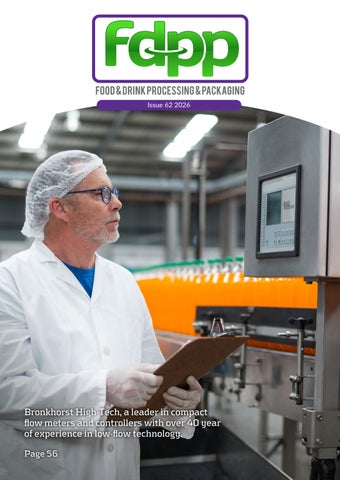
Bronkhorst High-Tech, a leader in compact flow meters and controllers with over 40 year of experience in low-flow technology. Page 56
DHS DOOR HANDLE SYSTEM: ENHANCE YOUR PRODUCTIVITY WITH VISIBLE MACHINE STATUS Schmersal’s innovative DHS door handle system combines the functions of a robust door handle with the signalling of machine status via illuminated handle or push-button. The door handle system is designed for use with the AZM40 solenoid interlock or with safety sensors from the RSS36 and RSS260 series or as a stand-alone solution. The illuminating handle signals various machine conditions over its area using seven different colours, enabling the user to control the colours individually to signal the machine status. In addition, a push button is available, which can be individually adapted to customer requirements using the coloured push button caps. The pushbutton can be used for tasks such as a reset function or a request to open the guard door.
SCHMERSAL | Enigma Business Park Malvern, Worcestershire, WR14 1GL
www.schmersal.co.uk uksupport@schmersal.com
Contents
Features The Team Editor Amanda Buckingham editor@fdpp.co.uk Business Manager Josh Holmes josh@mhmagazine.co.uk Publishing Director Martin Holmes martin@fdpp.co.uk
Digital Sales Manager Jessica Bennett T: 01227 936971 Sales Manager Jamie Bullock jamie@mhmagazine.co.uk Tel: 01227 936971 Studio Designer Leila Schmitz leila@mhmagazine.co.uk
M H Media Global Ltd.
18/20 Newington Road, Ramsgate Kent, CT12 6EE
Tel 01304 806039
www.fdpp.co.uk
All web addresses are interactive, simply click the web address of your choice to view the company website. There is also a useful tool bar where you can search for a specific product. Please mention FDPP when responding to items in this issue.
Every effort is made to ensure the accuracy and reliability of material published in Food & Drink Process & Packaging however, the publishers accept no responsibility for the claims or opinions made by the contributors, manufacturers or advertisers. No part of the publication may be reproduced or transmitted in any form or by any means, mechanical, electronic (including printing), recording or stored in any information retrieval system without the prior written consent of the publisher.
ALISON HANDLING SERVICES
< 04
QUIREPACE
< 06
VOLKMANN UK
< 08
JAI
< 10
NORTH RIDGE PUMPS
< 12
CASTLE PUMPS
< 16
INVICTA BAKEWARE
< 18
KECOL PUMPING SYSTEMS
< 19
BERTHOLD TECHNOLOGIES
< 20
TITAN ENTERPRISES
< 22
REGAL REXNORD CORPORATION
< 24
HART DOORS SYSTEMS
< 26
CERTUSS UK
< 27
LANEMARK COMBUSTION ENGINEERING
< 27
NIELSEN MCALLISTAR
< 28
WEK-TEC
< 29
DAYSOFT
< 30
GEMINI DATA LOGGERS UK
< 33
TIMBERMARK ID SYSTEMS
< 36
ELCOMPONENT
< 38
PHOENIXTM
< 42
IDEAGEN
< 44
DONGHUA
< 48
DSC
< 51
TRADETECH PRO
< 51
HPC PLC
< 51
THE ASHTON GROUP
< 51
E-CON SYSTEMS INDIA PVT
< 52
BRONKHURST UK
< 56
AUTOPACK
< 58
LUTZ UK
< 62
FOCUS LABEL MACHINERY
< 65
OKI EUROPE
< 66
OKI
< 65
RMIG
< 68
FDPP - www.fdpp.co.uk 3
Sustainable, Reliable, Ready to Ship Why Alison Handling Leads the Storage Market
Alison Handling Limited is the UK’s largest independent stockist of new, reusable and recyclable plastic storage solutions offering boxes, trays, totes, pallets, dollies and pallet boxes. We also offer a range of metal products too, including roll cages, lockers, dollies etc. At Alison Handling we are very proud of our 35 years’ experience and reputation for the right product, at the right price, promptly delivered from our extensive warehouses often within 24 hours of receipt of order. With an enviable level of Customer Service and technical
4 FDPP - www.fdpp.co.uk
expertise, Alison Handling is also environmentally responsible and the majority of our storage solutions are fully recyclable. Our quality storage products are ideal for both commercial, industrial and domestic use. Whether you require large containers for bulk storage, stack & nest containers to maximise storage, yet save space, small parts storage boxes or pallets, along with our own manufactured wheeled dollies that complement our boxes - Alison Handling is the company that really understands its customers’ needs.
Our products are available in a vast selection of colours and sizes which can be used in many sectors, such as food & catering, horticulture, agriculture, entertainment/hospitality, manufacturing, retail, waste management and recycling, healthcare and education. View our extensive Catalogue: www.alisonhandling.com/ download/flip/catalogue_2019 Speak to a member of our Customer Services Team today on 01772 687940 and visit our website www.alisonhandling.com
STAY AHEAD WITH ALISON HANDLING
THE UK’S LARGEST INDEPENDENT STOCKIST OF NEW, REUSABLE AND RECYCLABLE PLASTIC BOXES, TRAYS, PALLETS AND PALLET BOXES Andrea House | Freckleton Road | Kirkham | Lancashire | PR4 3RB
enquiries@alisonhandling.com
www.alisonhandling.com 01772 687 940
Why vacuum selection matters in food factories Walk into any food factory and you will find dust. Flour around mixers, sugar near packing lines, crumbs under conveyors. Most is removed with an industrial vacuum cleaner, often chosen because it was available not because it was right. That matters. Food dust can be harmful to breathe in and many common products including sugar, cereals and flour are combustible. A poor choice of cleaning equipment does little to control that risk and can even make it worse. The starting point is simple: understand what you are picking up and where you are working. From there the specification of the vacuum system, the filtration and the tools can be matched to the actual hazard instead of guessed at. Engineering a machine for the job BVC – British Vacuum Cleaners – is built by Quirepace in Fareham and supplied as industrial vacuums to order. Rather than pushing a fixed
6 FDPP - www.fdpp.co.uk
catalogue, the company sizes and configures each machine for the job it will be doing.
and stop with the process. The aim is a vacuum that is part of the process design, not just another piece of mobile equipment.
M-Class and H-Class machines are used where dust is hazardous to health. Where there is a risk of an explosive atmosphere an ATEX rated unit is required. In many food plants both issues apply so a single machine may need certification for hazardous dust and explosive dust together. Primary filters can be supplied in a range of media including anti-static options. Hazardous dust machines use additional stages so that collected product stays in the bin and the discharge air is clean.
Tools, hoses and the people using them Performance at the nozzle can be as important as performance at the machine. Hoses that are too large for heavy material will not maintain enough conveying velocity. Hoses that are too small for bulky waste will block. BVC offers a range of hose sizes so the system can be set up for what is really being collected, whether that is dense product, light packaging waste or fine dust around machinery.
BVC Quirepace also designs application specific variants. Some units provide both vacuum and low pressure blown air to help dislodge stubborn deposits. Others are supplied with high level cleaning equipment for steelwork and services or are linked into production controls so they start
Floor tools are available in robust metal constructions with adjustable height. Inserts can be changed so the same body can be used with either brush strips or rubber lips. For bulk product, aeration tools help keep material moving in the airstream instead of bridging. Getting these details right makes daily cleaning quicker and less frustrating so operators are more likely to use a system that actually clears debris and hygiene standards benefit. When to look at Central Vacuum Cleaning Portable machines will always have a place because they are flexible and simple to move. On larger sites though, the number of machines and cable routes can grow to the point where they get in the way of production.
In that situation Central Vacuum Cleaning is worth serious consideration. A central plant, usually located in a service area, is connected to the factory by fixed pipework with connection points around the building so that operators can plug in a hose where dust and spillages occur. There is no machine to wheel across the factory and no trailing power leads. For the engineering team, maintenance and filter changes happen in one place instead of many. Performance is consistent at each outlet and the system can be designed into the wider dust control strategy.
Treat vacuum cleaning as part of the factory safety and hygiene system, not as an afterthought and the choice of equipment becomes clearer. Working with a specialist manufacturer makes it easier to match the solution to the real risks on site and to keep pace as production changes.
Looking beyond purchase price Industrial vacuum systems fill up with abrasive product, run in hot and cold environments and are often used every shift. If they fail, production, hygiene and audit readiness are all affected. For that reason whole life value usually matters more than lowest purchase price. BVC industrial vacuum cleaners are manufactured in the UK and supported by BVC Quirepace’s sales and engineering team, local service and spares and a five year parts warranty.
BVC Quirepace offers free on site demonstrations of BVC equipment at food factories in the UK. For more information or to discuss your site, contact Quirepace: T: 023 9260 3700 E: bvcsales@quirepace.co.uk W: www.quirepace.co.uk | www.bvc.co.uk Mention Food & Drink Processing & Packaging when you contact us and we will apply a 5% discount to your first order for BVC industrial vacuum equipment.
FDPP - www.fdpp.co.uk 7
Do Not Accept Unnecessary Downtime as Part of the Process One key change can make all the difference
Vacuum conveying is steadily becoming the industry standard for bulk material transfer in the food sector. Anyone working in production knows the familiar challenge. One product flows perfectly while the next clogs, crumbles or arrives at the line already damaged. Many sites tell us they lose hours every month resetting lines or reconfiguring equipment to handle a different ingredient. Across the industry, manufacturing plants regularly lose more than 300 hours each year through unplanned downtime or changeovers. In food and consumer goods environments, even more hours disappear to stoppages and general inefficiencies. That’s why truly versatile conveying matters. Volkmann UK vacuum conveyors are designed to handle the widest possible range of bulk materials, from fine powders and granules to nuts, sweets, mushrooms or even bottle caps. A single system adapts to different material characteristics, gentle enough for fragile powders yet robust enough for heavier, coarse or mixed loads. You don’t need multiple conveyors or endless adjustments. Just one system that moves everything safely, cleanly, efficiently.
8 FDPP - www.fdpp.co.uk
Unplanned downtime, slow changeovers and clouds of dust with every bag opened have become routine frustrations for many food and drink manufacturers. Yet in an industry driven by consistency, cleanliness and efficiency, these quiet bottlenecks can be major barriers to growth. Powders such as sugar, flour, cocoa, starch, coffee, milk powder, spices and flavourings are vital ingredients but often the hardest to manage. Irregular flow, clumping, airborne dust, operator exposure and long cleaning cycles all contribute to avoidable losses. Traditional mechanical methods can make these issues worse and increase the risk of contamination and operator strain. This is why the move toward enclosed vacuum conveying systems continues to gain momentum. For over four decades, Volkmann has specialised in the safe, hygienic and dust-free transfer of powders and bulk materials. Volkmann’s compressed-air driven vacuum conveyors offer a clean, reliable and ATEX-certified alternative to mechanical transfer methods. By using dense-phase and plug-flow technology, ingredients are moved gently and consistently, protecting product integrity while keeping the environment dust-free. Volkmann’s vacuum conveying systems support manufacturers by enabling rapid changeovers, compact layouts and scalable throughput, up to 10,000 kg/h where required, dependent on conveying distances and product characteristics. Often the biggest contributor to efficiency loss isn’t always equipment failure. It’s constant
micro disruptions, emptying hoppers manually, cleaning spills, clearing blockages, stopping to switch products, or breaking down equipment for lengthy washdowns. Volkmann systems are built specifically to remove these interruptions. ‘Tools-free’ disassembly enables rapid cleaning and fast product changeovers. With fully enclosed transfer routes, dust is eliminated at the source, improving both hygiene and operator safety. A recent installation at TasteTech shows the real-world impact. Commercial Director Rob Sinton explained that “the Volkmann system simplified the process and removed a manual handling concern we’d been trying to rectify for years.” Beyond the core conveying systems, Volkmann UK also provide a wide range of bulk material handling solutions including drum discharge units, bulk bag unloading stations, vibratory feeders and rip-and-tip equipment, enabling seamless integration into larger process lines. What sets the company apart is its engineering-led approach and commitment to helping customers find the right solution for their specific material and process requirements. Volkmann UK offers free on-site trials of their vacuum conveyor with no obligation. See firsthand how it can reduce unnecessary downtime, revolutionise production processes and boost efficiency. Contact Volkmann UK to arrange a trial or request a brochure and visit their website for more details. VOLKMANN UK Limited, Unit 4 Anglo Office Park, Lincoln Road, High Wycombe, Bucks, HP12 3RH +44 (0) 1494 512228 mail.uk@volkmann.info uk.volkmann.info
FDPP - www.fdpp.co.uk 9
Improving food quality With the help of powerful machine vision technology The world’s population is growing steadily. In order to optimize the nutrition of billions of people, increasing automation of processes is required in many areas of the food industry. Powerful machine vision systems play a crucial role in optical quality control in this environment. In this interview James Cameron, Sales Manager EMEA at JAI, explains requirements and solutions for the food industry. How has the food industry evolved with machine vision and what are the trends for the next five years? James Cameron: Over the past five years, machine vision in the food industry has evolved from a static inspection tool into a more intelligent system to secure qualityassurance and even predict data. In the fruit sector, deep learning and multispectral imaging are becoming more standard to detect outside surface defects together with internal defects, resulting in reliable grading, fewer false rejects, and the ability to estimate internal quality factors like sugar content or bruising non-destructively. The shift to edge processing and embedded AI has allowed real-time decisions directly on the production line, improving consistency and reducing waste. Over the next five years, the focus will shift increasingly toward predictive vision systems. Deep learning models will not only classify defects but forecast freshness, ripeness, and shelf life. We’ll also see growing use of 3D and laser-based imaging for precise localization and robotic handling for packaged goods. Future growth will come from modular and customized vision platforms with optical lane sorters and free-fall sorters to adopt customer needs. These systems will connect inspection data across the entire value chain to packaging making machine vision one of the key enablers for efficient and waste-reduced food manufacturing.
10 FDPP - www.fdpp.co.uk
The optical sorter vision market is already large and growing double digits, signifying the critical role of vision adoption for the food industry. What are the special demands for machine vision in the food industry? James Cameron: In the optical sorting industry, fresh fruit is typically inspected while transported through cups or lanes, allowing each product to be stabilized for precise surface and color analysis. Whereas vegetables, grains, and rice are more often evaluated in free-fall sorters, where
Another trend is the clearly growing demand for external and internal quality grading of food objects, which requires a multispectral or hyperspectral approach. This brings the need to look at both visible light for color inspection and NIR or SWIR wavelengths at the same time objects are passed. To check for damaged items that are not visible from the outside, for example bruises on apples that will sooner or later develop into rotten spots. An additional challenge for machine vision systems in these use cases in food sorting and grading is that rotating and spinning objects as well as speed variations can give blurry images.
objects are analyzed mid-air for shape, color, and foreign material detection. These 360 degree inspections can only be achieved by free fall systems where the objects are checked while they fall. This obviously also involves high speeds during inspection.
In the optical sorting industry, fresh fruit is typically inspected while transported through cups or lanes, allowing each product to be stabilized for precise surface and color analysis. To make things even more demanding, many of these applications need very accurate color data, to distinguish small and challenging defects that appear in the same colour range like finding dark yellow spots on French fries.
Optical sorting of vegetables, grains, rice and more in the food industry is often evaluated in free-fall sorters, where objects are analyzed mid-air for shape, color, and foreign material detection.
What are possible vision solutions for these high requirements? James Cameron: There are various technical options on the market, like multi-camera solutions with separate waveband selection and combining the images together. Or having two cameras looking through a beam splitter, that divides the image acquisition and inspection tasks, but this usually leads to synchronization issues, more complex set-ups and higher cost. PRISM cameras on the other hand can optimally exploit their advantages under the conditions: They have the great ability to compromise depth of focus with difficult angles looking at objects, in such way that the image as output can be used directly. PRISM cameras offer great opportunities to see visible and infrared wavelengths by using just one camera and supply multiple streams as output. This also helps to be much more flexible with the set-up for focal distance, as you can easily change a different lens, which is more difficult with a beamsplitter set-up. This type of camera can solve the challenge of obtaining multispectral data in lane-sorting, belt-sorting and free-fall sorting machines to inspect, grade and sort food items looking at both visible and infrared (NIR or SWIR) light data. JAI offers 4-sensor prism-based line scan cameras that allow for simultaneously catching R-G-B images for precise color grading plus NIR or SWIR images to detect foreign objects like stones, stems and leaves or catch “under surface defects” like bruises or rot. An important feature for users is that, compared to multi-camera setups, this technology helps to reduce calibration and installation time.
How come JAI has such special products and PRISM cameras for this particular market?
Apart from the food industry, are there other fields where JAI PRISM cameras offer advantages?
James Cameron: JAI was one of the first industrial camera manufacturers offering these kinds of solutions for color inspection, using area-scan and line-scan camera types. Prism-based cameras separate light into red, green and blue or if required even NIR or SWIR wavelengths and direct the light to three respectively four separate and perfectly pixel aligned image sensors. With a single optical axis for all light bands, these cameras eliminate parallax issues, so-called HALO effects, and ease complex spatial alignment procedures associated with off-angle viewing, round objects, or objects falling at different speeds. There is only minimal color crosstalk between the colors because the precisionengineered hard dichroic filters with steep spectral cutoff direct the different pure wavelengths to the dedicated sensors, so you get true-to-life colors which improves the image quality and thus the inspection results. JAI cameras even provide individual exposure control for each channel if there is a need to look at specific wavelengths. These features result in better, HALO free images with supreme color accuracy and spatial precision, helping users to obtain better and more consistent quality in their free fall sorting machines. The food industry uses this type of machines a lot, so JAI’s PRISM cameras were somehow predestined for this market.
James Cameron: As mentioned before, the food industry is special as food is organic, meaning its characteristics are always changing and not all the same. You need the right pixel information to ensure clear separation of details. In addition, food manufacturers have high standards when designing machines that need to offer high performance in food safety and quality. This is where PRISM plays an important role and enables smarter solutions for customer demands. The market shows there is a growing need for customized solutions, so machine builders depend on reliable hardware for easy integration with software packages.
The single optical plane in prism cameras (left image) ensures that each pixel on each sensor is focused on the same point at all times to give HALO free images for best color accuracy and spatial precision, whereas quad linear cameras (below image) lead to Halo effects.
Nevertheless, there are other fields of application apart from the food industry where the image quality of JAI’s PRISM cameras offers advantages. One of these examples is the recycling industry, the large fields of textile, print and glass inspection, or even agriculture. These and many more industries can benefit from this technology. Applying PRISM blocks in cameras ensures that the collected light from objects can be transformed into true color information, making challenging color separation easier, no matter if you inspect food or other products.
James Cameron: “One of the main issues in the food industry is to increase inspection efficiency and endquality when grading and sorting food items. “
Image Credits: JAI
JAI Sweep+ Series multi-channel cameras allow for getting simultaneous and separate inspection images of visible R-G-B light (400 to 700 nm) and NIR light (700 to 1000 nm) or SWIR light (800 to 1700 nm).
For information about requirements and vision solutions for the food industry, please visit insights.jai.com/jai-cameras-forfood-and-beverage-industry For more information please visit: www.jai.com
FDPP - www.fdpp.co.uk 11
Hygienic AOD Pumps Transform Food Production easy to dismantle, handle a wide range of viscosities, and meet strict hygiene standards. Thorough cleaning isn’t just best practice— it’s legally required to prevent contamination and comply with FSA and FDA standards. With consumer awareness of food safety high, hygienic production directly impacts reputation and competitiveness. Our specification After visiting the facility, we recommended various pump technologies to simplify fluid transfer. The best option was an air-operated diaphragm pump, with two choices: 1. Foodboxer – hygienic, stainlesssteel internal parts, tri-clamp connections, FDA-approved elastomers.
A major food manufacturer needed two fast, hygienic, and versatile pumps for a rapidly expanding facility being used for sauce manufacture. Sauces combine liquids and solids to add flavour, moisture, and texture. Modern production involves cleaning and blending ingredients like vinegar,
Most of our pump projects involve large industrial sites with minimal hygiene requirements. Food manufacturing is the opposite— tight on space, highly manual, and demanding strict hygiene. These facilities are built for maximum efficiency in limited areas, with production equipment packed closely together.
sugar, and spices, then cooking the mixture to achieve consistency and kill bacteria. Adding a thickening agent cools the mixture into a gel, with precise temperature control being essential to prevent curdling or failed thickening. The pumps were needed to transfer up to 800 kg at a time of liquids such as honey, oils, and chili to mixers within 20 minutes. Space constraints meant an existing IBCmounted barrel pump was used, but its awkward position under a low gantry required moving the container before installing the pump.
12 FDPP - www.fdpp.co.uk
This compact layout supports workflow and hygiene but also restricts movement and makes manual handling harder. Much of the hands-on work is done by skilled operatives, which can involve repetitive awkward lifting, tipping and decanting of containers. Ergonomic design is therefore critical, equipment must be safe, easy to use, and accessible for everyone to maintain efficiency and protect wellbeing. Why process plant cleaning is so important This was a demanding brief: two pumps had to be lightweight,
2. Hygienix – fully drainable polished stainless steel with a <0.8 µm finish for maximum hygiene and easy cleaning. The client chose the Hygienix 100, a 1” hygienic air-operated diaphragm pump with a rotatable, fully drainable head and built-in stand for ground-level operation. It handles fluids with solids up to 5 mm at 100 L/min and 8 bar, with stainless-steel AISI 316 components and mostly triclamp connections for tool-free dismantling and cleaning. An air regulator allows operators to control transfer speed. The solution met strict hygiene standards while keeping the highspeed production line running smoothly. If you need a proven, hardworking, cost-effective fluid transfer pump for use in a demanding environment, speak to North Ridge Pumps – we’ll be happy to help you.
We’re pump specialists, so you don’t need to be
Sanitary Pumps Engineered for Your Process Optimise performance with specialist support
Whether you’re dealing with clogging, separation, downtime, or other issue it’s costly. Time wasted troubleshooting and lower production mean missed targets and less profit. A sanitary pump is the solution but choosing the right one feels like stepping into a minefield. You know what you need it to do but with so many options, it’s difficult to know which is best for your process and parameters. + Accelerated stator wear + Clogging + Changes to fluid consistency + Clean-in-place and sterilise-in-place hygiene issues + Crushing of sensitive products + Inconsistency in finished product + Inaccurate transfer of flavourings or ingredients + Liquid separation + Seal wear or failure
EXAMPLE PRODUCTS: + Abrasive mixtures + Creams, milk & ice cream + Edible oils & fats + Fish & meat + Fruits eg. cooked apples, plums, berries, grapes
We’ve been engineering sanitary pumps for sectors such as distilling, brewing, food manufacturing/processing, and more, for 20+ years. We understand industry-specific processes and know what it takes to optimise performance through better-suited pump design - giving you complete peace of mind.
+ Grains & seeds
EXPERT GUIDANCE:
+ Sheer sensitive liquids
Our expert engineers understand your process and guide you through the options, so you can confidently select the most suitable sanitary pump.
+ Pastes & purees + Syrups, juices & alcohols + Vegetables & peelings + Waste eg. trimmings, packaging & offcuts + Solid laden or viscous mixtures
Want to optimise performance sooner? Speak to one of our specialists.
+44 (0) 1773 302 660
sales@northridgepumps.com | www.northridgepumps.com
FDPP - www.fdpp.co.uk 13
Building a circular economy – what should food manufacturers be thinking about? By-lined to Becky Raisewell-Bunn, Food Application Specialist
Strategy citing waste reduction as one of its priority outcomes. So, what are the key areas food manufacturers need to consider as they strive for a more circular economy? Packaging and processes
The food and drink industry is facing significant challenges relating to waste and sustainability, with 1.3 billion tonnes of food wasted globally each year according to the Food and Agriculture Organisation (FAO). This contributes to 8-10% of global greenhouse gas emissions annually – and while there is currently no mandatory waste reduction target in the UK, the government has revised its Food
14 FDPP - www.fdpp.co.uk
Packaging plays a dual role that must be considered in parallel: on the one hand, it can help reduce food waste, but on the other, the use of packaging materials contributes to environmental waste. There are proven, effective and well-established packaging technologies that extend shelflife and, in so doing, reduce food waste. By altering the atmosphere inside food packaging, for example, Modified Atmosphere Packaging (MAP) helps to slow down bacterial and microbial growth – ultimately preserving the taste, safety, quality and integrity of the produce for
longer. Shelf life can be extended further by combining MAP with cryogenic freezing (Freshline Superfresh®) to slow down the food deterioration after thawing. This allows food manufacturers to reduce seasonal bottlenecks, optimise production, or simply bring product to market that can be sold and consumed for an extended period of time. Technology therefore can play an important role in reducing food waste and lowering related carbon emissions. Then there’s the packaging itself. Striving for a more circular economy, which sees plastics being repurposed, then recycled at the end of their life to be put back into the supply chain, can help promote a more sustainable model, therefore reducing waste. According to a study by GoUnpackaged, Berry, Tesco, Ocado Retail and others, switching 30% of grocery store goods into sustainable packing could result in a reduction
of 300,000 tonnes of packaging waste per year. So, how do we get there? The good news is that positive advances are already underway with research into more environmentally friendly packaging materials. In fact, recyclable and cardboard trays are in widespread use. Efforts are also ongoing to develop more sustainable methods for using plastic, but there is still some way to go. As an industry, we must continue investing in research and development to create improved packaging solutions - especially those compatible with technologies like Modified Atmosphere Packaging - without compromising food safety. At the same time, we need to support growing consumer efforts toward sustainability. One opportunity lies in ensuring that packaging is clearly labelled with disposal instructions, particularly for biodegradable materials. Additionally, campaigns that promote accurate recycling practices play a vital role in driving long-term behavioural change and reducing environmental impact. Data and AI But while packaging and related technologies are an established part
of the food manufacturing sector, a newer area for exploration is the use of data and artificial intelligence (AI) – something that has an increasingly important part to play in achieving a circular economy and increasing sustainability. Remote data monitoring, using technology such as Air Products Smart Technology (APST) is already making a difference in the freezing sector. Capturing, recording, investigating and interrogating realtime data allows for better informed environmental and business decisions by optimising nitrogen usage. The technology, which can be built into new cryogenic freezer systems means that food producers can monitor, control and tackle issues within their freezers remotely – improving energy efficiency and reducing product loss. Smart sensor technologies like this are important in the food waste reduction journey. The reality is that a more end-to-end approach is needed to allow food producers to control and monitor the temperature of their produce as it moves from farm to factory, factory to distributor and finally to the consumer. Temperature control and humidity monitoring, for example, help ensure that fruit and vegetables are consumed before
they spoil – again reducing waste in the supply chain. Further innovation is still needed however to create more integrated technologies, allowing food manufacturers to ensure food quality and reduced spoilage even after produce leaves the factory. With greater use of data and AI offering at least part of the solution, any new developments in this area must, of course, go hand in hand with training of staff to utilise this technology, as well as robust data protection and cyber security. A circular economy The pressure on the food and drink industry is all too real but the scale of the opportunity is equally big – and the sector is already taking positive strides forward. From packaging to AI innovation, there are practical measures available right now that can change the course of food waste in this country and offer commercial benefit too. With greater collaboration and innovation between producers, manufacturers and the entire supply chain, the UK can achieve a more circular economy – we just need to exploit every available opportunity.
FDPP - www.fdpp.co.uk 15
A Batch Made in Heaven In the world of manufacturing, precision is everything the need for the clients purchasing and installing additional control equipment. As well as its variable speed drive, the beauty of this pump is that it allows batching to be specified either by volume or by intervals, as well as a calendar for operation automation at set date/times. This peristaltic dosing pump also comes with configurable inputs and outputs that can be used for signal relays to determine when the pump should operate for example when fluid in the receiving container has dropped to a set low level. These benefits allow for highly precise dosing of the additives whilst also freeing up operator time to carry out more value adding tasks.
You will know how a consistent appearance, performance, taste and texture is vital in meeting your quality standards, reducing waste and protecting your brand with the consumer. Relying on the manual control of transfer is not only putting the burden on your production team (and we all know that time is money!), but also increasing the chance of recipe inaccuracies due to human error. And that is why the accurate transfer of chemicals, process fluids or ingredients combined with the AMP-CONTROL peristaltic pump really is a “batch made in heaven”. Castle Pumps have recently solved two clients’ batching requirements with their AMP-CONTROL peristaltic pump. The first was a manufacturer of low calorie sweeteners looking to batch 10 litres of Glycerin at a time during the production process of their products. The second was involved in the treatment of industrial wastewater and wanted to dose
16 FDPP - www.fdpp.co.uk
5-10 litres of ferrous sulphate and caustic soda at a time from an IBC into the water being treated. Both wanted control over the speed at which they could transfer and the ability to accurately determine how much to transfer in each batch. And that’s when Castle Pumps knew the AMP-CONTROL was the ideal solution. Peristaltic pumps are often used for batching applications thanks to their smooth operation and ability to accurate dose even the smallest volume of fluids at low flow rates. Another huge benefit of the peristaltic design is that with the inner hose being the only wetted part, there is only one component to wear and maintain without risk of seals leaking and valves blocking. The AMP-CONTROL model in particular however had the intelligence to satisfy the companies’ requirements of automation and accuracy without
As a fail-safe the AMP-CONTROL also comes with a hose leakage sensor to shut down the pump and alert the operator, as well as a hose replacement alert for preventive maintenance after a set interval to prevent downtime in production. Getting the wrong pump for your process can result in inconsistency in the finished product, crushed solids, clogging, excessive wear, loss of productivity, waste of costly product or at worst, contamination. Always trust technical experts to specify the right pump for your application. For further information, please visit www.castlepumps.com
Pumps To Drive Your Process Efficiency
Pump smarter, not harder. Use our 15 years’ experience to save excessive wear, process failures, product waste & operator time. ✓ FDA & 3A hygienic solutions for food and drink
✓ Highly accurate dosing of ingredients & additives ✓ Delicate fluids sensitive to consistency changes
✓ Solid-laden products without crushing or clogging ✓ 99.98% barrel emptying to prevent product waste
✓ Models for the safe handling of cleaning chemicals
Contact our technical sales engineers now!
A division of the CTS Group, Part of FlowMax Ltd
T. +44 (0)1773 533 283 | E. sales@castlepumps.com | W. castlepumps.com
Engineered for efficiency: Invicta’s practical approach to food production equipment In today’s demanding food and drink manufacturing environments, performance, hygiene and reliability are non-negotiable. Equipment must not only withstand constant use but also integrate seamlessly into production processes. For more than a century, Invicta has been supporting producers across the sector with robust, intelligently designed handling and storage solutions built for real-world use. Manufacturing all its products inhouse at its North Yorkshire facility, the company supplies a broad spectrum of food producers – from large-scale processors to independent specialists. Its extensive range spans trolleys, racks, trays, dispensing and storage containers, worktables and dollies, manufactured in both metal and plastic to suit different production and hygiene needs. While Invicta offers a wide selection of proven off-the-shelf products, it is the company’s bespoke design and manufacturing capability that continues to set it apart. Working
closely with customers, Invicta’s experienced engineers develop tailored equipment that fits precise operational requirements – whether that involves maximising space, improving workflow, or meeting specific hygiene or handling challenges. From one-off custom builds to full production-area refits, every solution is designed with practicality and longevity in mind. Products can be supplied with a range of finishes, coatings and materials to suit different operating conditions, food safety compliance and durability expectations. “Our approach is simple – we design equipment that genuinely works for our customers,” says Martin Brown, Managing Director at Invicta. “By working collaboratively at the design stage, we can deliver solutions that improve efficiency, reduce handling issues and stand up to years of continuous use.” That approach is reflected in Invicta’s exceptionally loyal customer base.
In its latest customer survey, 98% of customers rated the workmanship as ‘excellent’ or ‘good’ and said they would purchase from Invicta again. Many customers have been with the company for years, making Invicta their trusted, go-to supplier for food production equipment. Fast lead times, competitive pricing and consistent build quality underpin Invicta’s long-standing reputation. As an employeeowned business, the focus remains firmly on long-term partnerships, responsive service and delivering real operational value. From preparation and processing to storage, transport and dispatch, Invicta provides dependable, madeto-measure equipment that supports the evolving needs of the food and drink industry – all engineered and manufactured in the UK. To find out more, visit www.invictabakeware.co.uk, call 01751 473483, or email sales@invictabakeware.co.uk. All quotes are free and without obligation.
18 FDPP - www.fdpp.co.uk
Struggling to see the phases in your separation process? Process optimisation with microwave technology
Proper monitoring is essential to
profiling systems provide more
distinguish between oil, water,
reliable monitoring in challenging
and emulsion layers, especially
conditions, ensuring optimal
in desalters, where ineffective
separation and process stability.
separation can lead to salt and water carryover, corrosion, and fouling.
The benefits go beyond efficiency
Rag layers and persistent emulsions
Lower energy consumption,
can further disrupt operations,
reduced fouling, improved
increasing chemical consumption
catalyst performance, and a longer
and causing process inefficiencies.
equipment lifespan mean a smaller
While direct measurement methods
environmental footprint while
can be affected by buildup and
boosting your bottom line. Ready to
emulsion height changes, indirect
transform your operations?
solutions like nuclear density
20 FDPP - www.fdpp.co.uk
Summary of key benefits: •R eal-time, continuous online monitoring of moisture or solids content ensures precise and reliable process control •E arly detection of quality deviations allows for immediate corrective actions, ensuring consistent product quality, minimizing waste, and optimizing resource use. •M ulti-frequency technology enables dynamic plausibility
checks and representative measurements across the entire pipeline cross section. •C ost reduction through optimized resource use and precise compliance with legal requirements – avoiding unnecessary safety margins that can lead to increased fat content and significant financial losses.
or solids content in the medium can be determined with high accuracy. The superior multifrequency technology from Berthold ensures very stable and reliable measurements, unaffected by interfering reflections or resonances from the measuring environment.
microwave measuring systems for the determination of moisture and concentration belong to our extensive portfolio. The production of high-quality measuring systems for industry and research began more than 75 years ago in Bad Wildbad in the Black Forest.
About Berthold Technologies
For further information please visit this link: www.berthold.com/dairy
The measuring principle
As a world technology leader in the field of radiometric measuring systems, Berthold products convince with outstanding measuring performance and reliability. The main fields of application are, for example, in chemical & polymers (etc. fertilizer industry), steel and power plants, mining & mineral processing, waste & recycling, refineries, paper, glass and as well as in the food industry (etc. sugar beets). In addition,
The measurement system generates microwaves that interact with the water molecules due to their high dielectric constant. This interaction causes an attenuation of the microwave energy, which can be detected as phase shift and attenuation. Since the phase shift and attenuation change are directly proportional to the water content in the product, the concentration
FDPP - www.fdpp.co.uk 21
Titan Enterprises’ Beverage Flow Meters: Turbine vs. Ultrasonic – Which is Right for You? When it comes to beverage dispensing and flow measurement, Titan Enterprises offers two distinct solutions: the well-established Beverage Turbine Meter and the newly released Ultrasonic Beverage Meter. Each has unique strengths and trade-offs, making the choice application-dependent. Here we define the differences between the technologies used within each Beverage flow meter:
• Flow Range: 1.
Beverage Turbine: 0.6–10 l/min - limited low-end capability.
2.
Ultrasonic Beverage: 0.2–10 l/min - better for low flow applications.
• Linearity & Repeatability: 1.
Beverage Turbine: ±1.0% FSD linearity, excellent ±0.1% repeatability.
2.
Ultrasonic Beverage: ±2% of reading linearity, ±0.5% repeatability.
Measurement Technology • Turbine Meter: Operates on a mechanical principle using a Pelton wheel turbine and sapphire bearings. This design provides consistent repeatability and has 1.5% Full Scale Accuracy but introduces moving parts into the system. • Ultrasonic Meter: Uses the ‘time of flight’ principle to measure flow, with no moving parts. This eliminates mechanical wear and contamination risk, while offering a completely clean, straight bore, and accuracy better than 2% of reading. Materials & Design • Turbine Meter: Constructed from PVDF with sapphire bearings and Viton™ seals, it is robust and resistant to a wide temperature range. This device is NSF-approved under the NSF standard 169 as ‘Special Purpose Food Equipment and Devices’. • Ultrasonic Meter: Built from food approved ABS/PC polymer with Viton™ seals, offering a lightweight design with a straight 6 mm bore. The absence of internal obstructions makes it easy to clean using sponge balls. All parts are to FDA / EU food approved standards and NSF-approval will be sought for this product when it reaches full commercialisation. Performance • Granularity: 1.
Beverage Turbine: 1400 pulses per litre (lower resolution).
2.
Ultrasonic Beverage: 5000 pulses per litre (higher resolution).
22 FDPP - www.fdpp.co.uk
• Temperature Range: 1.
2.
Beverage Turbine: 0–125 °C, suitable for hot and cold beverages. Ultrasonic Beverage: 3–15 °C, restricted primarily to chilled beverages.
robust, highly repeatable flowmeter, and capable of handling hot beverages. •U ltrasonic Beverage Meter: Hygienic design with no moving parts, higher resolution, factorysettable K factor, potential for both NPN and PNP outputs, and easy cleaning. Good linearity enables effective use of the device in variable flow rates. Disadvantages •B everage Turbine: Moving parts within the meter require cleaning and can cause blockages if not maintained. •U ltrasonic Beverage: Narrow temperature range limits use to cold beverages; higher upfront cost.
Installation & Operation
Comparison Verdict
• Both beverage meters use John Guest 3/8” push-fit connections, ensuring compatibility with standard tubing.
For beverage systems where cost-efficiency, high repeatability, and wide temperature tolerance are priorities, Titan’s Beverage Turbine Meter remains a solid choice. However, in applications demanding hygiene, easy cleaning, low-flow measurement, and longterm reliability with no moving parts, Titan’s new Ultrasonic Beverage Meter justifies its premium price.
• Pressure drop is minimized in both designs, though the ultrasonic’s straight 6mm bore gives it a lower overall pressure drop. • Power requirements differ slightly: the beverage turbine meter runs from 5–24 VDC, whereas the ultrasonic models require 7–24 VDC. • Both types are calibrated in-situ by the customer to suit the system requirements. • No moving parts within the ultrasonic beverage meter eliminates any contamination issues and allows the use of sponge balls to clean. Cost Considerations • Beverage Turbine: Budget-friendly and reliable, particularly for high-temperature or mixed-use applications. • Ultrasonic Beverage: While higher priced, provides hygienic operation, minimal maintenance, and superior low-flow performance. Unique Selling Points • Beverage Turbine: A low-cost,
The ultrasonic beverage meter is more accurate over the flow range, so ideal for monitoring systems with variable flow. It was also designed to allow cleaning with sponge balls in a beer dispense hose and pipe system. Ultimately, the decision comes down to whether you value economy and temperature versatility (Turbine) or hygienic design and precision at low flows (Ultrasonic). For the full technical data of each beverage meter, visit Titan’s website. For more information on Titan Enterprises and its flow meter solutions for the food and beverage industry, contact Titan Enterprises via email sales@flowmeters.co.uk
Ultrasonic Flowmeters
Turbine Flowmeters
Innovative Liquid Flow Measurement Solutions Titan Enterprises is a leading design and manufacturer of innovative end user and OEM high-performance flowmeters and flow measurement instrumentation, used within a wide range of processes, environments and applications. • Compact, robust, reliable • Excellent accuracy and repeatability • Measure low to high flow ranges and viscosity
Oval Gear Flowmeters
• High chemical resistance • NSF-Approved mini turbine flowmeters • ATEX-compliant and high pressure Oval Gear models • OEM bespoke design capability Titan’s liquid flowmeters are designed and manufactured to ISO 9001 with traceable calibrations.
Instrumentation +44 (0)1935 812790 sales@flowmeters.co.uk www.flowmeters.co.uk
REQUEST A FREE QUOTE TODAY
Breakthrough Flowmeter Technology
Single source plug-and-play conveyor solutions from Regal Rexnord rated Sealmaster™ bearings; or for systems that are subjected to daily washdowns there are stainless steel solutions.
For most members of the public, the thought of their local bakery calls to mind the smell of freshly baked bread and a delicious choice of pastries – sweet and savory. Yet behind the scenes, industry insiders know that the process of getting baked goods to the consumer is full of engineering challenges. Hygiene standards, packaging challenges, sticky dough and hot ovens mean that a lot of expertise and investment goes into delivering these treats. Daniel Nussbaum, Manager Powertrain and Inside Sales at Regal Rexnord, explains how plugand-play conveyor solutions can reduce cost and add simplicity for processing and packaging solutions.
systems - such as bearings, chains, belts and motors – are viewed as ‘commodity products’. Parts that need to be bought and replaced fairly frequently to avoid costly downtime, but that can’t really add any specific value to the overall productivity of the system. As such, they instruct their procurement managers to simply source products based on considerations such as price and availability. However, this is rarely the ideal process. At Regal Rexnord we’ve brought a multitude of brands together, each with specialized products designed specifically for food processing and baked goods, which can each be integrated into a single, engineered package.
In the fast-paced world of bakeries, the production line is always under pressure to keep up with the demand for freshly baked goods. There is no opportunity to store up a reserve of product to mitigate unexpected downtime, so reliable operation and ease of maintenance is essential to remain competitive. Conveyor systems are essential infrastructure for mass production, from the initial proving stages, through to baking, packing and sorting, so it makes sense to make sure they are as efficient and reliable as possible. System integration vs. commodity procurement For some operators, the components that make up conveyor
24 FDPP - www.fdpp.co.uk
Whether a customer is investing in a brand-new production line, or is looking to upgrade their existing facility, our engineers are able to approach the challenge as a true systems integrator should; building a solution that is specified and designed with each unique challenge in mind. For example, our engineers can specify bearings from various brands depending on the specific needs of the client’s application. For systems that would be hard to access, Regal Rexnord can supply sealed for life bearings that require little to no maintenance; for mixing applications with high levels of flour dust there are the IP69K-
With a single engineering team specifying all the components within the conveyor system, the end-user can rest assured that all the parts will be fit for purpose and integrate seamlessly. Single source supply – the proof is in the pudding Procurement specialists and maintenance engineers can also benefit from the single source solution on offer from Regal Rexnord. While the components can be specified across multiple brands, end-users can specify all products and engineering services from a single entity, using the most convenient sales center depending on the client’s locations. All brands within the Regal Rexnord family can offer expert advice and systems integration across the whole powertrain. For procurement teams this guarantees that pricing is direct from the manufacturer whilst only a single supplier needs to be onboarded. By managing its global supply chain to maximum effect, the company makes your logistics a lot simpler. The benefits here extend to aftersales support, where maintenance teams can access spare parts and service engineers from local Regal Rexnord facilities. These teams can support with condition monitoring and preventative maintenance plans which means that they work with you as partners to prevent costly, unplanned downtime. www.regalrexnord.com
partner Engineered to perform in the toughest food and beverage environments. From processing to packaging, every component in a powertrain system needs to meet the highest standards of hygiene and reliability. Regal Rexnord provides stainless steel drives, washdown motors, and precision conveying systems designed to keep production lines running safely and efficiently while meeting strict hygiene standards. Our technologies are trusted by global food and beverage manufacturers to maximise uptime, minimise product waste, and simplify maintenance. Built on decades of expertise and innovation, we help you see beyond individual parts to build a powertrain with unlimited possibilities.
www.regalrexnord.com
Rexnord™ Bauer Gear Motor™ Boston Gear™ Cambridge™ LEESON™ Sealmaster™
Creating A Better Tomorrow
Hart Door Systems completes international foods’ contract
Keith Fisher
Working for a leading global foods business, Hart Door Systems has completed the installation of three of Hart’s door types at a plant in Greater London National Operations Manager Keith Fisher comments that the client had requested work to commence on a Thursday and be complete in readiness for the start of following week. “This was a clear requirement which, by working over the weekend, we completed the installation of one Speedor Eco, one Speedor Mini and one Hart’s roller shutter, despite the pressures resulting from multiple trades working in the same area.
British design a high security, larg pascals), fire and
“We were very much aware of the need to start and complete the installation to a food compliance deadline for the client. Resultantly the three doors up and running with no interference of operation of the client’s business,” says Mr Fisher. “This we achieved satisfactorily. The installation demonstrates our flexibility, our range of door types and our commitment to deliver a superior service.” Doug Hart, Hart’s chairman, says the ‘can do’ approach “is a good example of the team drive within Hart”. He adds: “We are a global
26 FDPP - www.fdpp.co.uk
Hart’s Speedor Eco, Hart’s roller shutter and Speedor Mini.
business, delivering high quality door systems which can be seen on every continent. This has only been achieved through the team ethic which clearly is still very evident throughout the company.”
Hart protects peop www.hartdoors.com
The CERTUSS E10MX – E320MX model range represents a new performance class of electric steam generators The full steam output is available within 3-5 minutes after the system is turned on. The output can be regulated continuously from 0 to 320 kg/h. Installation of the safe and space saving steam system can be placed in almost any working environment. The width of the steam generator matches standard door size (less than 80 cm). Maintenance of the unit with simple one-view control and remote control. The steam generators are pre-piped and prewired, with feed water tanks included in the steam units. Also available as stainless steel variant. This means that steam can be produced for industrial or culinary needs. https://www.certuss.co.uk/products/ electric-steam-generators/electricale10mx-e320mx/
HMA 2A
TX
FDB
High efficiency
Choice of operating fuels
Customised design to suit each install
Ideal for variable plant conditions
Reduced NO₂/CO Emissions
Proven in a wide range of applications
Air replacement or “Make-Up”
Choice of burner heat inputs up to 1150 kW
Larger heat input available on request APL technology -modulating gas and air
Up to 30:1 turndown Up to 205 kW per foot
FDGA APL technology - modulating gas and air Ideal for variable plant conditions Heat input range up to 1,550 kW Choice of operating fuels
BESPOKE DESIGN
Our gas burner systems offer users reliable, high efficiency, process heating solutions. From design, manufacturing and supply to installation, commissioning and ongoing support, we fulfill process liquid, oven and air heating needs for both new-build and conversion projects.
FULL RANGE OF INTERNATIONAL ACCREDITATIONS
FDC Heat input range up to 1,550 kW Choice of operating fuels Packaged burner design Up to 40:1 turndown
BURNERCARE SERVICE
Lanemark Combustion Engineering Limited Lanemark House, Whitacre Road, Nuneaton Warwickshire CV11 6BW United Kingdom
info@lanemark.com +44 (0) 24 7635 2000
FDPP - www.fdpp.co.uk 27
Driving Digital Transformation in Food Production motivate teams, while leadership can utilise contextualised data to plan expansions and investments confidently. Elevating Safety, Quality, and Compliance
The food and beverage industry faces constant pressure to deliver speed, quality, and compliance while managing volatile supply chains and rising consumer expectations. Pen and paper or spreadsheets are no longer an option, digitalisation is the foundation for resilience and growth. Nulogy, a leader in collaborative manufacturing and supply chain solutions, offers a portfolio that includes Shop Floor, Smart Factory, and Nulogy’s Quality & Compliance platform, enabling food producers and contract manufacturers to unlock efficiency, visibility, and compliance across their operations. Real-Time Control for Contract Manufacturing For contract manufacturers and packers, operational agility is critical. Nulogy’s Shop Floor software provides a centralised, real-time view of production processes, materials, and labour. This visibility ensures that every stakeholder, works from the same accurate data set. By digitalising scheduling, inventory tracking, and quality checks, Shop Floor
28 FDPP - www.fdpp.co.uk
eliminates manual bottlenecks, enabling faster, more reliable fulfilment. The benefits extend beyond efficiency. With integrated batch traceability and compliance workflows, food producers can meet stringent standards such as HACCP, BRCGS, and FSMA without relying on paper-based systems. This capability is vital for maintaining trust and avoiding costly recalls. Turning Data into Performance Gains Downtime and inefficiencies can erode margins and disrupt customer commitments. Nulogy’s Smart Factory solution tackles this challenge by delivering real-time machine monitoring and automated data capture. Manufacturers gain instant visibility into stoppages, throughput, and overall equipment effectiveness (OEE), empowering teams to act before issues escalate. Smart Factory optimises operations and fosters a culture of continuous improvement. Visual dashboards and analytics
Food safety and compliance remain non-negotiable. Nulogy’s Quality & Compliance platform digitalises risk and quality management across multi-site operations. Its platform enables frontline teams to capture data offline, flag deviations, and generate real-time reports for standards like ISO, SQF, and BRCGS. This eliminates paperbased audits and accelerates corrective actions, safeguarding brand reputation. It strengthens supplier relationships through dedicated portals, ensuring transparency from farm to fork. By integrating scoring engines and intelligent templates, it aligns workflows with global frameworks, making audit readiness a continuous state rather than a last-minute scramble. The Opportunity Ahead The opportunities for digitalisation in food and beverage production are clear. With Nulogy’s solutions, food producers can move to proactive, data-driven excellence. In essence, better manufacturing plants, better productivity, equal better profit for today’s modern food processers. www.nulogy.com
Non-Invasive 6 logs Sterilization by
Intense Pulsed UV Light Its effectiveness increases with the UV pulse power in w/cm² to a sample from equal to the one of continuous wave UVC light and up to the PUVD region: only at PUVD bacteria & spores are fully physically disintegrated, as per the chart and photo on the left. Wek-tec was first to publish these results in 1999-2001 and ever since works in this spectral region, not yet adapted by most of our competition. Baxter Corp. (USA) back in 2013 independently proved it with our standard R&D system as below by disintegrating UV resistant spores of B. Pumilos in transparent infusion bags at acceptable rates of 7 to 9 pulses, to be delivered in 3s on lines.
<PUV regions of many others> < our PUVD region> overlap regions of cheap CW UVC lamps is the most efficient!
Our proven PUV R&D < automatic or analogue > bench-top systems ready to be shipped for rent or purchase with spare UV flash lamps. Our similar PUV systems were used Worldwide at many labs and cited in various industrial or peer-reviewed publications.
All our bench-top R&D & pilot production PUV & PEF systems are listed here For pilot or small production wektec has built fully automatic in-line PUV systems as on the left photo. Plus, offers Intense PUV systems for custom applications as on the right for hospitals. PUV fuly automatic tunnel includes products handling modules.
More on our systems, technology http://www.wek-tec.de
wek-tec systems have benefits
This fully automatic system is designed to fully sterilize air and surfaces plus fresh infusion bags.
and publications please inquire at info@wek-tec.de
of the German manufacturing
From only 26p per Lens
ndon_Underground_Oct25_v6.indd 1
“
Daysoft successfully replaces other brands for half the price.” Dr Ronald S Hamilton CBE, Founder and Owner of Daysoft Limited is the Inventor of the world’s first daily-disposable contact lens.
.com
Daily Disposable Contact Lenses
Loved All Over the World
Order our amazingly affordable daily disposable contact lenses loved around the world, visit daysoft.com Over 1.25 billion daysoft® lenses have already been sold. Visit daysoft.com and click on Global Order Map (GOM). daysoft® is a Registered Trade Mark of DAYSOFT Limited
31/10/2025 12:58
“
My wife has been wearing these lenses for over 10 years now, and she swears by them after having tried other lenses. I have very sensitive eyes and this was my first time trying contacts, and they’ve been great!”
12/12/25 Hrn - daysoft.com
Raising the bar for chocolate conching by combining precision control and sustainable operation By Brith Isaksson, Global Food and Beverage Segment Manager, ABB Scaling up chocolate production shouldn’t mean longer cycle times and higher energy bills. Conching is a perfect example of a process that is essential for texture, taste and smoothness, while also being one of the most energy-hungry. For too long, many conches have run on fixed speeds and timers, with “just-in-case” overprocessing of the chocolate built in. As a result, producers face hidden energy costs and compromised quality. Highefficiency motors and variable speed drives (VSDs) change that equation, turning conching into a controllable process that scales cleanly. Why precision matters more at scale With conching, many producers err on the side of caution and opt for longer conche times rather than risking integrity of texture or flavour. At pilot scale, an extra five minutes in the conche is a safety net. But at 50 batches a day, you pay for it twice: on the meter, and in consistency. Scale multiplies small choices. In fixed-speed, timer-based conching, that cushion becomes routine overprocessing. Motors churn under partial load, heaters overshoot, and energy is consumed without any improvement in the final product to show for it. Meanwhile, small shifts in torque, speed or temperature can
32 FDPP - www.fdpp.co.uk
snowball into uneven viscosity and flavour notes that vary from batch to batch. Scaling smoothly with retrofits Retrofitting legacy conches with IE5‑class ultra-efficient motors and VSDs enables true load‑based control. Drives can follow recipespecific speed and torque profiles, adapting to changing rheology in real time. With these retrofits, torque and power signatures become reliable proxies for when a batch is done. So, manufacturers can eliminate “safety minutes” and stop on time, every time. At scale, those saved minutes translate into lower kWh per tonne and measurable reductions in Scope 2 emissions. This is something SACMI Packaging & Chocolate experienced firsthand. By
pairing ABB IE5 SynRM motors with ACS880 drives on 5–8 hour conches, they gained tighter load based control and higher partial load efficiency. Over a typical 7,000‑hour year on a mid‑sized conche, they cut energy use by 3–4%, enough to avoid around 22 tonnes of CO2 emissions annually. That’s equivalent to the emissions from driving 56,000 miles in an average petrol car, all while maintaining the same premium chocolate quality their customers expect. Control without compromise More energy and time don’t make better chocolate; smart retrofits and recipe‑aware motor‑drive systems do. With these tools, chocolate producers can raise the ‘bar’ — without raising the bill. www.abb.com/global/en/industries/ food-beverage
9˚c 6˚c
See The Degrees.
Control The Risk. THERMAL MAPPING WITH TINYTAG
4˚c
8˚c
Gathering Quality Data for 40 Years 9Identify hot and cold spots to ensure consistent product conditions. 9Validate compliance with food safety standards.
Start mapping the invisible today...
9Optimise energy efficiency by improving cooling and HVAC performance. Validate your processing, packaging and storage environments with precision temperature mapping. Tinytag temperature and humidity data loggers deliver accurate, auditable data for mapping, validation, and regulatory compliance, helping
+44 (0) 1243 813000
to identify hot spots, cold spots, and compliance risks before they impact product
sales@geminidataloggers.com
quality and your brand reputation.
www.geminidataloggers.com
geminidataloggers.com/thermal-mapping BRITISH DESIGN & MANUFACTURE
BS EN ISO 9001:2015 Picture for illustration purposes only
BS EN ISO 14001:2015.
Mapping Consistency: The Hidden Science Behind Safe, Efficient Food Production of spoilage or contamination. Why It Matters in Food Processing and Packaging Temperature control is integral to both product safety and energy efficiency. Without consistent mapping and validation, facilities risk: • Product degradation or spoilage due to temperature excursions. Understanding the Invisible Variable – Temperature In the food and drink sector, precision is not just a process requirement, it’s a commercial and legal necessity. Every stage of production, from raw ingredient storage to packaging and distribution, relies on maintaining controlled environmental conditions. Yet, temperature uniformity is often the most underestimated variable. Even a few degrees of fluctuation in a cold room or process area can compromise product quality, trigger compliance issues, or lead to costly product losses. For modern food processors and packagers, thermal mapping, also known as temperature mapping, has become a cornerstone of quality assurance and regulatory compliance.
• Inconsistent batch quality leading to waste and loss of consumer trust. • Non-compliance with HACCP, BRCGS, or ISO 22000 requirements. • Increased energy consumption from overcompensating heating or cooling systems.
These studies go beyond routine monitoring, they create a detailed profile of how a facility behaves under real operating conditions. For facilities handling perishable goods, this insight can mean the difference between a safe, compliant product and one at risk
34 FDPP - www.fdpp.co.uk
FM professionals need precise information on system performance. Mapping studies can help you identify where airflow or refrigeration inefficiencies are occurring, and can often pinpoint issues such as blocked ducts, uneven air distribution, or insulation failures. 3. Operations and Site Managers Responsible for productivity and cost control, you can use mapping data to optimise HVAC and refrigeration systems, reducing energy spend while maintaining consistent product conditions.
Thermal mapping identifies the true performance of storage, refrigeration, and process areas to help ensure that systems perform as expected, and to enable proactive correction before small inefficiencies turn into major failures.
The Risks of Temperature Inconsistency Even in highly automated facilities, temperature variations can arise from multiple factors:
What Is Thermal Mapping? Thermal mapping is the process of assessing and documenting how temperature is distributed across a controlled space over time. Using precision data loggers, sensors are strategically placed to capture detailed readings and identify inconsistencies such as hot spots, cold spots, or uneven airflow.
2. Facilities and Maintenance Engineers
• Door openings and workflow traffic. • Uneven air circulation or fan malfunctions. Who Benefits the Most 1. Quality Assurance Managers As a QA Manager, the priority is ensuring every product that leaves the site is compliant and safe. Thermal mapping gives you traceable, audit-ready data to demonstrate that environmental controls meet regulatory expectations and internal standards.
• Variations in product load and stacking height. • Equipment performance differences between zones. • External climate and building insulation. Without documented validation, these variables can lead to uneven chilling or freezing, shortened shelf life, or microbial growth which are all critical issues in
food production. A single incident of temperature non-compliance can result in expensive recalls and damage to your brands reputation. Thermal Mapping for Regulatory Confidence Regulators and auditors increasingly expect documented proof that temperature-controlled areas have been validated through mapping studies. Thermal mapping provides: • Evidence of compliance with regulatory standards (BRCGS, HACCP, ISO 22000, FDA). • Assurance during audits - mapping reports demonstrate due diligence. • Support for validation of new installations - confirming new cold rooms, freezers, or production lines meet design specifications before commissioning. Tinytag: Trusted Environmental Monitoring from a British Manufacturer Manufactured in Chichester, West Sussex, Tinytag by Gemini Data Loggers are known globally for their accuracy, reliability, and robustness. With over 40 years of experience, Gemini’s Tinytag range has earned the trust of industries where data integrity is critical such as in the food, pharmaceutical, and biotechnology sectors. Tinytag data loggers measure temperature, humidity, CO2, energy and other conditions across a wide range of environments, from production zones and cold rooms
to transport and warehousing. Our rugged design and simple operation make our data loggers ideal for the challenging conditions found in food and beverage facilities. Beyond Monitoring: The Tinytag Thermal Mapping Service Whilst our data loggers provide continuous environmental tracking, thermal mapping takes monitoring further by validating entire areas through planned, strategic studies. Our trusted partner, Valcomm, delivers comprehensive thermal mapping and validation services tailored to each facility’s specific needs: • Thermal Mapping Studies: Detailed temperature distribution analysis identifying hot / cold spots across process and storage areas. • Validation Services: Full documentation ensuring compliance with food industry and regulatory standards. • Consultancy: Expert advice on best practice, risk mitigation, and system optimisation. Together, Tinytag and Valcomm offer flexible solutions from fully managed projects to guided DIY mapping kits, helping facilities of all sizes achieve compliance with confidence. Key Benefits of a Tinytag Thermal Mapping Programme • Assurance of temperature uniformity - safeguarding product integrity throughout production and storage.
• Regulatory compliance - meeting BRCGS, HACCP, and ISO 22000 standards with auditable data. • Improved energy efficiency - identifying inefficiencies to reduce running costs. • Risk mitigation - preventing product loss and unplanned downtime. • Operational insight - optimising layout, airflow, and loading practices. Turning Data into Action The real value of mapping lies not only in data collection but in data interpretation. Tinytag’s intuitive software can help you to transform thousands of logged readings into actionable insights, allowing managers to visualise trends, identify anomalies, and implement corrective actions quickly. By combining historic and realtime data, organisations can move from reactive to proactive environmental management, maintaining both compliance and efficiency. Conclusion: A Measured Approach to Quality Thermal mapping is more than a regulatory checkbox, it’s a strategic investment in product quality, safety, and operational resilience. In an era of rising energy costs and tighter compliance standards, accurate environmental data is the foundation of good manufacturing practice. With our proven expertise, British manufacturing heritage, and partnerships with industry specialists like Valcomm, food and drink processors can ensure their environments are validated, efficient, and ready to meet both customer expectations and regulatory demands. Tinytag by Gemini Data Loggers Accurate, reliable, and trusted environmental monitoring solutions for the food and drink processing industry. Learn more: www.geminidataloggers.com
FDPP - www.fdpp.co.uk 35
T-Mark’s M2 printers score a gold for butter maker’s productivity
T-Mark has supplied two if its new, own-brand, thermal inkjet printers, to help butter and ghee manufacturer, Whitacre Gold, reduce the downtime and maintenance costs they experienced with their previous set up. The family business produces jars of ghee and blocks of butter, both of which require labelling with batch number and best before information. For added complexity, the label on the jars has two separate boxes, which must both be filled with product information. For marking the labels on its jars of ghee, Whitacre Gold was using a thermal inkjet printer, which was incorporated into the label making machine. Because of this integration, it was difficult to add the second printhead, required to print in the second of the two data boxes. For printing the wrappers for its blocks of butter, Whitacre had been using a Continuous Inkjet Printer, which did not suit the company’s purposes as they did
36 FDPP - www.fdpp.co.uk
not need to run it 24/7. When used intermittently, the printer tended to get clogged and needed regular cleaning, as well as regular costly servicing.
and best before information on
Looking at how to meet both sets of requirements, T-Mark proposed its M2 printers, which offer the most cost-effective solution.
can be solved by simply switching
On the jar labelling production line, the printer can use two printheads, creating an overall print height of 25mm, which means Whitacre Gold can print a separate message in each box on the jar label. It also gives the flexibility to mark different sized labels by simply adjusting the size of the message. The printers are straightforward to programme with a touch-screen interface, making the message creation quick and easy. The information box on the butter wrapper can easily be printed within the 12.5mm print height of a single printhead. So, a second M2 printer with a single printhead has been combined with an encoder and a sensor to print the product
the wrapper before it is wrapped around the butter block. The new system needs minimal maintenance as any quality issues the ink cartridge. Ben Richardson from T-Mark said: “We are delighted to have been able to help Whitacre Gold solve their printing problems. They can now mark both jar sizes of ghee which have different label sizes. They have a simple interface that they are confident using, which is the same for both printers. They are happy they can now spend less time and money maintaining the printers.” T-Mark is a subsidiary of Timbermark ID Systems Ltd, an Oxfordshire based company, which has been providing inkjet printers to the timber and packaging industries since 2004. www.t-mark.co.uk 0330 153 8320
T-Mark M2 printer Thermal Inket Printer • •
• •
High resolution printing Prints up to 25mm high with 2 printheads Zero maintenance Prices start from £850 for single printhead model
•
•
•
•
www.t-mark.co.uk sales@t-mark.co.uk 0330 153 8320
Combine with a sensor for label printing Easy to programme with touch screen No maintenance; no mess Ideal entry level printer
Optimising Energy and Resource Efficiency: The Role of Monitoring Solutions by Elcomponent Ltd
Implementing metering and monitoring systems can appear complex, but Elcomponent makes the process clear, practical, and effective. We begin by working closely with clients to identify the areas where monitoring will deliver the most benefit—whether that’s energy use, water consumption, or environmental conditions. With this understanding, we design and optimise systems that are robust, reliable, and cost-effective, ensuring that the solution is fit for purpose without unnecessary complexity or expense. Once installed, we support clients in managing their data and using it to its fullest potential, helping them extract long-term value from their investment. In this way, monitoring becomes more than measurement: it becomes a tool for insight, efficiency, and continuous improvement. Energy Efficiency and Carbon Savings Energy consumption represents a major operational cost in food production. Elcomponent’s monitoring systems provide realtime data on electricity, gas, and heat usage, allowing businesses
38 FDPP - www.fdpp.co.uk
to identify inefficiencies and reduce waste. This drives down costs, lowers carbon emissions, and supports compliance with evolving energy regulations and sustainability targets. Water Conservation Water is essential in food processing but often poorly monitored. Elcomponent’s advanced meters enable businesses to track usage across operations, detect leaks quickly, and optimise water use during cleaning, cooling, and processing. The result is reduced waste, lower costs, and more sustainable water management. Temperature, Humidity, and Air Quality Control Maintaining the right environmental conditions is critical for both product quality and safety. Elcomponent’s sensors deliver accurate monitoring of temperature and humidity throughout production and storage, while air quality monitoring protects staff and reduces the risk of contamination. These systems support both
compliance and product integrity. Predictive Maintenance and Process Optimisation Continuous monitoring also supports predictive maintenance by highlighting potential issues before they become critical. This minimises downtime, extends equipment lifespan, and safeguards production continuity. In addition, data insights reveal opportunities for further optimisation, helping businesses improve processes and increase overall efficiency. Conclusion Elcomponent’s solutions combine technical expertise with practical support, enabling food processors to monitor resources effectively, cut costs, and enhance sustainability. From system design to ongoing optimisation, Elcomponent provides a complete monitoring approach that delivers lasting value and supports longterm operational improvement. Elcomponent Ltd sales@elcomponent.co.uk www.elcomponent.co.uk
Energy & Environmental Monitoring Systems Elcomponent simplifies metering and monitoring, helping businesses identify priorities, designing robust and cost-effective systems. Turning data into meaningful savings, efficiency gains, and sustainability improvements
Email us at sales@elcomponent.co.uk or call us on 01279 503173
www.elcomponent.co.uk
Visitor registration now open for Southern Manufacturing & Electronics 2026 Celebrating 28 years of British engineering excellence Southern Manufacturing & Electronics 2026: A First Look at the Engineering Calendar’s Biggest Annual Event Visitor Registration Opens for Southern Manufacturing & Electronics 2026 Celebrating 28 Years of British Engineering Excellence London, 26/11/25 Visitor registration is now open for Southern Manufacturing & Electronics 2026, the South of England’s leading annual event for engineering and electronics professionals. Taking place from February 3–5, 2026 at the Farnborough International Exhibition Centre, the show marks its 28th year as a key meeting point for the UK’s industrial community. Celebrated for its heritage and distinctly British character, Southern Manufacturing & Electronics continues to attract engineers, designers, manufacturers and innovators from every corner of the UK. Its strong domestic following is complemented by growing international interest, offering overseas exhibitors and visitors a valuable opportunity to engage
with the UK market and strengthen sovereign supply chains. The event is home to the largest electronics trade show in the UK, showcasing the full breadth of the electronics supply chain. From components, PCBs and semiconductors to test & measurement solutions, design services and advanced manufacturing technologies, the show provides an unrivalled platform for discovering innovations, sourcing new suppliers and connecting with industry specialists. Now part of the Easyfairs portfolio, one of the world’s top 20 exhibition organisers, the event will retain its core identity while benefiting from Easyfairs’ digital expertise and extensive industry networks. Exhibitor demand is stronger than ever, with the 2026 edition already close to full capacity, reinforcing the show’s reputation as the UK’s premier marketplace for manufacturing and electronics innovation. Visitors and exhibitors will also gain access to Easyfairs’ event app and smart badge technology, enabling seamless information exchange and
helping participants maximise the value of every interaction. A number of popular features return for 2026, including the Global Electronics Association’s Soldering Competition. New for this year is the Wire Harness Competition, set to draw significant interest with its focus on practical technical skill. Two dedicated seminar theatres, one for Manufacturing and one for Electronics, will host a full programme of CPD-accredited presentations. Expert speakers will share actionable insights on improving production efficiency, strengthening digital capabilities and unlocking opportunities for business growth. Attendees will gain practical guidance on integrating digital tools and systems to enhance productivity and longterm competitiveness. “Southern Manufacturing & Electronics has been the beating heart of the UK’s engineering calendar for nearly three decades,” said Simon Farnfield, Event Director at Southern Manufacturing & Electronics. “We’re committed to preserving what people love about the show while introducing smart tools that deliver even greater value. We look forward to welcoming the community back to Farnborough in February.” www.southern-manufacturing-electronics.com
40 FDPP - www.fdpp.co.uk
The Heart of British Manufacturing & Electronics
10000+ attendees
28
years as the South’s leading industry show
Start your year in 2026 at Southern Manufacturing & Electronics - the nation’s favourite industrial event and the essential meeting point for the South’s manufacturing and electronics communities.
Bringing together over 550 suppliers, from global giants to agile SMEs, the UK’s leading trade show offers a complete view of the supply chain in one dynamic marketplace.
550+ exhibitors
As the first major industrial event of the year, Southern is your opportunity to stay ahead of the curve, connect with key partners, and drive projects forward, for a successful year of innovation and growth.
“I’ve found it incredibly useful - great for sparking new ideas and making valuable contacts. It’s exciting to discover a wide range of technologies and products I hadn’t come across before. It’s an excellent way to stay up to date with the latest industry trends. The event is massive, with so much to see. I’d definitely recommend attending, and I’m really looking forward to the seminars!” Peter Bates, Design Engineer, Rolls-Royce
Visit the website
southern@easyfairs.com +44 (0)20 3196 4414
Meet your HACCP Cook Validation Challenges with PhoenixTM As part of any Food processors HACCP program validation of cook and chill processes is a critical and significant task taking time, effort, and resources. PhoenixTM have developed a thruprocess temperature monitoring technology specifically for this task designed to meet the challenges of the food processing market. Ideal for the validation process for any new cook regime, new product, or annual process certification. Whether performing an oven survey “oven mapping to identify cold spots” or validating the cook under production conditions, the thru-process profiling solution gives you the accuracy, efficiency, and reliability you need to satisfy your HACCP demands. As its name suggests thru-process profiling is the method by which product and or process temperature is monitored throughout the complete cook / chill process. Monitoring of continuous conveyorised linear and spiral ovens and semi-continuous or rotational batch cooks is feasible where the use of external recorders with trailing thermocouples is tedious, impractical, and unsafe.
The data logger itself can operate between -40 °C to 80 °C with a data logger accuracy of ±0.3 °C operating below +50 °C.
The analysis tools include the ability to calculate Fo/Pu values for the process against target microorganisms.
Data logger and thermocouple correction factors can be further applied to maximise measurement accuracy.
The information gathered, further to process validation, can be used to allow informed process problem solving and optimisation to maximise product quality, yield, process productivity and efficiency.
PhoenixTM offer a family of thermal barriers to suit the process type, duration, and temperatures of a wide range of cook regimes.
Employing the thru-process principal process monitoring can be performed under true production conditions without compromising line productivity. At the heart of the thru-process monitoring system is the PhoenixTM data logger. The PhoenixTM NT data logger range has been designed specifically for the challenges of monitoring food processing applications with an IP67 case design protecting from moisture. Type K or Type T data logger options allow accurate measurement of both cook and chill processes.
42 FDPP - www.fdpp.co.uk
An extensive range of different thermocouple types is also available to suit different product types, sizes and monitoring demands. The PhoenixTM Thermal View Food Software provides a comprehensive suite of analysis tools to convert the raw profile temperature data into useful process information.
Contact PhoenixTM to help Find, Fix and Forget your Food Cook Problems! www.phoenixtm.com
Efficient HACCP Cook & Chill CCP Validation
! s t n u o c e c n ie r e Where exp
Product Safety Process Efficiency Improved Product Yields Rapid Fault Finding Full HACCP Certification
ü
Thru-process temperature monitoring solutions for all your cook applications
PhoenixTM Technology • Accurate IP67 data logger (Type K or T) • 10 Measurement Points for full oven mapping • Thermal barrier options to suit cook regime • Comprehensive thermocouple range • Standard miniature thermocouple plugs • Calibrated thermocouple options • Food trays and thermocouple jig options • Full lethality (Fo/Pu) and reporting • Real Time RF Telemetry options • Local efficient calibration and service support
Phoenix Temperature Measurement 25 Earith Business Park, Meadow Drove, Earith, Cambridgeshire PE28 3QF, UK
T: 01353 223100 E: sales@phoenixtm.com
www.phoenixtm.com
Strategic imperatives for food and beverage in 2026 Latest research from compliance experts Ideagen reveals the questions to ask to ease the pressure in 2026 year, according to the Institute of Food Technologists with improved production efficiency and supply chain tracking as their primary driver. These technologies are also fundamental for maintaining food safety and preventing fraud critical areas identified as ongoing priorities.
After a year when 64% of food and beverage leaders identified financial risks as their top concerns, according to the latest research from compliance experts, Ideagen, the industry’s focus is shifting for 2026. Companies are moving beyond immediate pressures, targeting strategies that drive longterm resilience and sustainable growth. As geopolitical risks and regulatory demands increase, forward-looking growers and manufacturers are investing in predictive analytics, digital verification and robust operational standards to address these challenges head-on. Recent disruptions - including geopolitics and extreme weather have highlighted persistent supply chain vulnerabilities. Ideagen’s research found, 56% of mediumsized food and beverage production businesses now cite supply chain risk as a top priority. In 2026, those companies wanting to lead the way are diversifying suppliers and deploying real-time digital tools
44 FDPP - www.fdpp.co.uk
to build agility. This approach ensures they can adapt sourcing and production strategies as risks evolve, creating a stronger foundation for growth. Regulatory shifts are a major catalyst for transformation. For example, enforcement such as the EU Deforestation Regulation will force companies to prioritize compliance initiatives. However, rather than perceive it as a burden, the focus in 2026 is shifting from meeting minimum requirements to leveraging compliance as a strategic asset. By implementing digital supplier verification and enhancing traceability, businesses can navigate regulatory complexities while building meaningful consumer trust. And we can’t look ahead without talking about the impact of AI. Digital transformation is at the core of industry progress. Nearly half of food and beverage companies plan to prioritize AI investments this
The food and beverage industry has always shown adaptability and resilience, thriving amidst shifting consumer demands and technological advancements. As companies work to overcome recent financial challenges, the sector is focusing on smarter strategies to boost efficiency, strengthen supply chains and ensure stability. Its willingness to diversify and innovate secures its future and reinforces its commitment to meeting the needs of a dynamic global market. To download the latest research, including the questions to ask in 2026, visit Ideagen.ai/FIAR
Bringing together excellence in food & beverage compliance Ideagen unites Authenticate and Safefood 360 to deliver complete farm-to-fork visibility through the industry’s most comprehensive compliance software platform. Stop managing multiple systems. Start preventing compliance issues.
Ideagen Food & Beverage = Complete compliance control
Trusted by the best
Food safety 35+ digital HACCP modules, automated monitoring, real-time alerts
Supply chain Multi-tier visibility, digital traceability, FSMA 204 compliance
Supplier management Automated scoring, digital audit tools, AIpowered risk detection
ESG reporting EUDR compliance, Scope 3 calculations, sustainability dashboards
See the unified platform in action Discover why the top food & beverage brands choose our integrated software over managing multiple systems. Book your free software demonstration ideagen.com/industries/food-and-beverage e: info@ideagen.com | w: ideagen.com Copyright © Ideagen Limited
Ideagen: E-Book/White Paper/Guide Title / 1
Mettler-Toledo: Overcoming Inspection Challenges in Manufacturing Real Meat Products Miriam Krechlok, Segment Marketing Manager, Mettler-Toledo Product Inspection
The meat industry is undergoing profound change. Consumers are not simply choosing between meat and no meat but balancing their intake. Red meat consumption is declining, while poultry and seafood are on the rise. Levercliff’s study on The Future of Meat cited that about 30% of consumers are eating more poultry, many are adding seafood, and others are turning to vegetarian and plant-based proteins. This balancing act means red meat demand may soften further, while poultry and seafood volumes increase. Globally, forecasts suggest poultry will deliver more than 60% of growth in meat consumption over the next decade . For processors, this shift brings new complexity, such as different products, formats and expectations, all running through facilities that are already under pressure to deliver efficiency and profitability.
46 FDPP - www.fdpp.co.uk
As meat processors adapt to these changes, many are turning to product inspection technologies to help them stay compliant and competitive. Rather than serving only as a checkpoint to catch physical contaminants, modern inspection systems now play a central role in supporting compliance with retailer and regulatory standards. At the same time, they help manufacturers protect brand integrity, reduce waste, and drive the production efficiency needed to maintain profitability in a changing market. Why meat processing raises the stakes for inspection Meat production is one of the most established and tightly regulated sectors in food manufacturing. Oversight is intense worldwide, with authorities such as the USDA in the United States, the EFSA
in Europe and SAMR in China setting strict frameworks that make inspection the foundation of market access. The production environment itself raises the stakes further. Lines often handle thousands of products per hour, leaving little margin for error. The variety is wide, from meat joints to poultry fillets, and each presents different product inspection needs. Fresh meat also has a shorter shelf life than many categories, so any disruption from recalls, rework or retailer rejection has an immediate financial impact. Added to this is the heightened biological risk, meaning both equipment design and inspection accuracy must be of the highest standard. Because the industry is so mature, regulators, retailers and consumers also hold it to some of the strictest
expectations in food. A single error can do more than trigger a recall. It can permanently damage a brand’s reputation or close off export markets. At the same time, meat is a price-sensitive category, where unnecessary waste directly erodes profitability. Robust inspection helps reduce this risk by catching contaminants early, preventing rework and controlling giveaway. Inspection challenges in meat processing For manufacturers, robust inspection is therefore not just a regulatory requirement but a competitive necessity. Checkweighing highlights one of the most persistent issues. Products such as sausages, fillets and seafood portions are often irregular in shape, creating instability on conveyors and leading to fluctuating readings. Overcompensating for this can result in unnecessary giveaway, eroding margins in a competitive market. Modern smart, dynamic checkweighers with high-speed load cell technology provide more consistent and stable measurements, helping processors cut waste and protect profitability. Metal detection is generally very effective in the meat category. Since meat can be conductive due to its high moisture content, it can cause a product effect, which reduces sensitivity and leads to more false rejections. However, advanced metal detectors equipped with either Dual- or Multi-Simultaneous Frequency and Product Signal Suppression technology (3S algorithm) such as the M34R and Profile Advantage can minimize the product effect, improve sensitivity and protect the brand. Additionally, these innovations virtually eliminate false rejects, thereby boosting productivity. X-ray inspection is central in meat and poultry processed products, where bone detection is one of the hardest tasks. A single missed fragment can undermine consumer confidence and trigger costly recalls. Advanced dual-energy systems, such as the X52 from Mettler-Toledo, are designed to address this challenge by separating low-density materials from the product background and
making bone fragments easier to detect. X-ray also identifies other contaminants such as glass, stone and dense plastics, adding further protection. Vision inspection is key to uphold brand integrity. Meat and poultry products are expected to reach retailers with accurate labels and undamaged packaging. Vision systems verify barcodes, text and graphics in real time, preventing costly rework, fines or product withdrawals while supporting consistency on the shelf. Hygienic design cuts across all these technologies. Meat processing requires intensive cleaning regimes, and inspection equipment must withstand repeated washdowns without adding downtime. Open frames, sloped surfaces and easyto-clean components are vital to maintaining biological controls while keeping production flowing. Looking ahead The coming decade will bring profound shifts for meat processors, such as declining red meat volumes, rising demand for poultry and seafood, and growing consumer interest in plant-based proteins. Alongside these changes, sustainability and transparency expectations will intensify. Regulators are increasingly encouraging digital traceability
tools, from connected inspection data to blockchain systems, to give real-time visibility across supply chains. At the same time, reducing waste is a growing priority, not only for cost control but also to meet environmental goals. With all of this in mind, product inspection is about more than compliance. It protects consumers, strengthens trust and helps processors compete in an increasingly dynamic market. By detecting foreign body contaminants, maintaining weight accuracy and verifying labelling, inspection technology supports both consumer protection and operational efficiency. It also delivers the data and connectivity that regulators and retailers increasingly expect, giving processors confidence that products can move seamlessly through global markets. As protein categories diversify, product inspection remains the constant. It adapts across red meat, poultry, seafood and alternatives, helping producers cut waste, protect margins and prepare for the next generation of protein production. To explore inspection technologies in more depth, click here or visit www.mt.com/pi-meatpoultryguidepr
FDPP - www.fdpp.co.uk 47
Chains that Keep Food Lines Running
In an industry where efficiency, hygiene and uptime are nonnegotiable, supply-chain reliability is critical. The Donghua Chain Group, operating in the UK as Donghua Limited, is steadily reshaping how food processors and packaging machinery manufacturers think about chain technology. Since launching its UK arm in 2009 and expanding to a 25,000 sq ft warehouse in the West Midlands, the company has built a reputation as a trusted engineering partner. Bob Wellsbury, Managing Director of Donghua Limited, explains: “What sets Donghua apart is our commitment to producing chains that meet the unique demands of food production which requires heavy wash-downs, hygiene critical environments, highspeed throughput, and minimal downtime.”
48 FDPP - www.fdpp.co.uk
He adds: “From Roller Chains and Polymer Conveyor Chains to Universal Attachment Chains and bespoke builds, our chain solutions include food safe coatings, H1 food-grade lubrication, and lubrication-free polymer options.” These qualities are vital on packaging machinery. Modern packaging systems operate at high speeds, and any chain related failure can stop sealing, labelling or carton-forming operations instantly. Donghua’s pre-loading of attachment chains, precise matching of chains that run in parallel, and tight manufacturing tolerances, all contribute to high performance chain solutions. Donghua’s UK-based chain workshop, which provides rapid turnaround chain cutting, measuring and matching of chain, hot-dip lubrication, and bespoke
assembly, plays a key role in the company’s growth in the UK. For OEM’s manufacturing packaging equipment, or processors running multiple packaging machines, a local capability means less waiting for imports and faster recovery when a production line demands an urgent replacement or customised solution. With rising demand for flexible packaging formats, tighter hygiene regulations, and pressure for faster changeovers, the reliability of core components like chain systems has a direct impact on productivity. Donghua chain delivers operational resilience that modern food manufacturing and packaging demands. To discuss your Food Processing Chain requirements, call 01902 866200
Food Industry Chain Supplied in a variety of materials and finishes, with H1 food grade lubrication, Donghua Chain is the chain of choice for maximum working life and reduced maintenance downtime. Donghua supplies the food production industry with a range of high quality chain compatible with leading food equipment manufacturers including:
Baker Perkins, Bradman Lake, Ishida, Johnson, Krones, Meurer, Panamat, Rademaker, Raque and more...
Tel: 01902 866200 donghua.co.uk/food-industry Donghua Limited Sidings Close Wednesfield Way Wolverhampton West Midlands WV11 3DR
Tube
FDPP - www.fdpp.co.uk 49
Advancing Food Safety with AI learning. It also enhances human decision-making through the extraction and interpretation of data. Complementary inspection technologies
A new report released by BCC Research indicates that AI technology applied to areas such as contaminant detection, traceability and compliance is projected to grow at a CAGR of 30.9% by 2030 . Anticipated to be valued at USD$13.7 billion, this will revolutionise food safety and strengthen quality control reports Phil Brown, Sales Director at Fortress Technology Europe. Machine vision is integral to this key trend. Forming part of a larger inspection system, adding vision capabilities to existing technology, for example metal detection or X-ray, strengthens quality control by capturing an image and processing it against set quality control parameters. In inspection technology, vision is usually deployed for label verification, rather than food surface defects. For example, it can inspect the top and bottom of the pack to ensure that labels and promotional offer stickers are correctly placed and feature dates. The result is greater compliance with legislative food labelling rules. AI that supports food inspection efficiency One of the most valuable ways to contribute to a safer, more secure and sustainable food supply chain, as well as maintain a competitive edge in the industry, is through process and operational optimisation. Leveraging smarter
50 FDPP - www.fdpp.co.uk
technology and predictive analytic tools can help to create a safer, digitised and more traceable food system There are various inspection configurations available to food processors, from standalone metal detectors, checkweighers, x-ray and vision systems, to combination systems in any arrangement of these technologies. One of the greatest benefits of combination units is that the data centre can be integrated, rather than trying to tie multiple disparate database formats together. Fortress is already using its proprietary data software package, Contact 4.0, across its metal detection and checkweighing technologies. It enables processors to review, collect data and securely oversee the performance of multiple Fortress metal detectors, checkweighers or combination inspection machines connected on the same network. Deployment of this type of data reporting provides context to support rule-based machine
Integrating multiple inspection technologies into a single combination system is another exciting development. Metal detectors and X-ray systems offer different but complementary ways to screen for contaminants. The addition of vision systems can provide labelling and pack fill checks, as well as ensuring pack separation as products are fed onto inspection machine conveyors. Intuitive data management and the accessibility of AI now make it possible to integrate any combination of these inspection technologies – metal detection, checkweighing, X-ray and vision. When integrated into a single system, this synergistically enhances the performance of each technology. The addition of vision to all these inspection technologies is especially exciting as it can allow for the collection of comprehensive data on each inspected pack. In the future this could include details on weight, size, visual integrity, contaminant detection results and adherence to quality standards. Fortress Technology will be showcasing all these developments, including its new Vyper Vision on an operational combination machine at Interpack 2026, Hall 11, Stand E30.
Pamargan Flange Seals bring innovation into Food Safe
Next level N2 solutions
A new approach to sealing of liquified food piping systems using FDA Compliant Seals. A reusable lifetime replacement to Spiral Wound Gaskets.
Generate N₂ on-site Save up to 90% in costs
Characteristics
Ultra-low O₂ content
• Re-usable - seal for life
Integrates with existing
• Can be used in contact with any type of aqueous food
systems Advanced filtration system
• Fully compliant to the USA food standard CFR21 FDA 1772600 for Fatty Food
N₂ on demand Scaled to meet needs
• Fully compliant with FDA regulation and meets the requirements of EU directive 1935:2004 which covers rubber compounds in contact with food under article 3
Energy efficient 3rd party validated & certified Typical ROI: 1-3 years Rental options available
• Our FDA Compliant compound has been formulated using a citrate plasticiser and can therefore be classified as Phthalate Free • Elastomers are available for all areas of food production • TOOL COMPATIBILITY: compatible with all pumps, flow meters, valves and drives used in the food industry
Contact an HPC specialist today, to find out more. Call: 0845 4300 472 or visit www.hpcplc.co.uk
For more information, please visit our website or contact us directly on 01226 273 700. www.ashtonseals.co.uk/pamargan-flange-seals
FDPP - www.fdpp.co.uk 51
Enhancing Food Packaging Inspection with e-con Systems’ HDR Global Shutter Camera Conveyor Monitoring for Food Packaging Inspection Ultra-fast events need specialized capturing Some inspection tasks rely on custom ROI modes to zoom into a small region, such as barcode areas, seal lines, and fill-level windows. See3CAM_37CUGM can reach up to 838 fps with selected ROI configurations, giving processors more temporal data to spot issues such as seal crease defects or intermittent filling irregularities. Conclusion
Food and beverage lines depend on continuous conveyor movement. Every pack, tray, bottle, and wrapper passes under cameras that confirm placement, check seals, and validate labels. These tasks demand imaging that stays sharp even when the belt moves fast, packaging surfaces vary in reflectivity, and lighting shifts between bright stainless steel zones and dim tunnels. e-con Systems’ See3CAM_37CUGM is a 3MP HDR global shutter camera based on the Sony Pregius S IMX900 monochrome sensor. It is equipped with imaging features perfect for accurate conveyor analytics. Fast-moving belts need distortionfree capture Food items rarely stay still. Biscuits roll, pouches sway, foil glints under LEDs, and labels pass by at high frame rates. See3CAM_37CUGM’s global shutter technology prevents motion blur and geometric distortion, ensuring every frame
52 FDPP - www.fdpp.co.uk
preserves true dimensions. It is crucial when verifying label alignment, counting packaged units, or spotting misplaced components on the pack. Lighting varies constantly along the line Inspection happens under mixed lighting conditions due to glossy metal reflections, sudden shadow pockets, heat-lamp zones, or plastic-wrapped surfaces. See3CAM_37CUGM addresses this with Quad HDR up to 120 dB, extracting detail from both bright and dark regions of the scene. Conveyor stages require rapid exposure adjustments Different packaging formats move through the same line. See3CAM_37CUGM’s fast autoexposure reacts quickly to these shifts, so that brightness stays stable. Such a level of consistency is crucial for algorithms that classify packaging variations, verify label zones, or track seal uniformity.
These features of e-con Systems’ See3CAM_37CUGM bring stronger confidence to conveyor inspection workflows where packaging accuracy, seal reliability, and label consistency shape daily output. When imaging keeps pace with production speed, downstream teams gain cleaner data for quality checks and waste reduction. Vision models operate with fewer blind spots, operators respond sooner to trend shifts, and compliance teams get clearer evidence trails for audits. With dependable imaging anchoring the process, food lines can maintain better throughput and fewer rejections across diverse packaged food products. Learn more about See3CAM_37CUGM here or visit our website www.e-consystems.com
Snap-on Industrial unveils New Product Range Inspired by Customer Feedback
Snap-on Industrial held its third annual INSIGHT event at the Red Bull Technology Campus, an opportunity for the world-leading productivity solutions company to connect with its customers and preview new products that have been developed in direct response to feedback gathered at previous Insight events. Snap-on Industrial has been in partnership with Red Bull Powertrains for the last four years, making the prestigious MK-7 event space a natural choice for this day-long event. Invited guests from the military, rail, aviation, and energy industries came together to take part in interactive product demonstrations, tour the Red Bull
54 FDPP - www.fdpp.co.uk
factory, and hear from their crossindustry peers during two in-depth panel discussions. Celebrating its 105th anniversary this year, Snap-on Industrial has earned a reputation for relentless innovation. The company now has more than 4,300 live patents and is passionate about forging close relationships with its customers, gathering valuable insights from these interactions so it can continue to create new tools and industrial solutions that meet the needs of engineers today and tomorrow.
highlight of our calendar, providing a unique opportunity to spend time with our customers, showcase our current and upcoming product range, and gather feedback that will shape our products and solutions as we move forward. There’s nothing more rewarding than being able to share our new prototypes with the people who inspired their creation; several of the products being previewed today have been developed on the back of questions and comments we received at last year’s event.” Torque Control
Richard Packham, Director - UK & Europe for Snap-on Industrial, said: “Now in its third year, our annual INSIGHT Event has become a
Launched on 1st October 2025, the Control Tech+™ Electronic Torque Wrenches represent the
next generation of digital torque wrenches. Reflecting the shift towards digital being seen across the torque industry, Snap-on Industrial’s expanded product range means there’s now a solution for every client, no matter their scope or scale. Engineered with the aerospace and natural resources industries in mind, the Control Tech+™ Electronic Torque Wrenches are Bluetooth enabled for easy monitoring and reporting; runs on rechargeable batteries; and has earned an IP64 rating thanks to being virtually waterproof as well as dust and gas resistant. Power Tools Making their debut at INSIGHT 2025, two power tool prototypes and two new drills were previewed at the event, with guests encouraged to get hands-on and try the new technology for themselves. The industrial drill has been crafted based on customer feedback. It is robust; is designed so that engineers can reduce repetitive strain injuries by keeping their wrist and arm inline; and can achieve speeds of up to 6000 rpm. Accuracy is enhanced
by limiting the drill to 10% speed at start while the higher rpm available means users can work more efficiently, drilling more holes per battery charge. The upgraded 14V angle or collet drill is ideal for use in tight spaces, especially for those working in aviation, thanks to the flexible angles that can be achieved. It can now also reach higher speeds, be adapted with interchangeable heads, and has a larger battery size that takes just one hour to fully charge.
Snap-on Level 5 Tool Control Empowering organisations to have complete visibility of their tool inventory, Automated Tool Control, a subset of the Level5 program of Tool Control, has empowered organisations to have complete visibility of their tool inventory for the past 15 years. Subject to continuous development and improvements, this dynamic system allows users to unlock the power of data and move at the speed of work.
Early prototypes still in development included a new rivet shaver and temporary fastener tool. Both were tested by the guests and the feedback provided will shape their continued development ahead of next year’s event.
The L5 Connect customisable
Hand Tools
These insights flow into
software is secure, intuitive, and built to address everyday issues, using cameras, RFID tags, and barcodes to track when tools are removed and returned and when they require repair or calibration.
downloadable reports that can Ever since Snap-on Industrial pioneered the idea of taking five handles of different configurations and ten sockets of varying dimensions and fashioning them to “Snap-on” to one another interchangeably, it has been known for its inventive and practical approach to hand tool development. Intelligently designed to be in tune with an engineer’s instincts, each tool has a distinctive ridging to improve grip, provide a consistent user experience, and limit the amount of force required. Its pliers are the perfect example with a serration talon grip that offers 57% more pulling power when clamping compared to its closest competitors.
help organisations ensure their tool inventory is fit for purpose, have a full audit trail of each tool if they go missing or are damaged, and restrict access to authorised users. L5 Connect is compatible with the Level5 Tool Control series; ATC Box, ATC Locker, ATC Portal, and the ATC FlexHub, an asset management storage solution for items in varied sizes developed based on feedback received at the first INSIGHT event in 2023. Tel: 01536 413904 Email: ukindustrialmarketing@ snapon.com Visit: www.snapon-industrial.co.uk
FDPP - www.fdpp.co.uk 55
Innovative Solutions for Low Flow Dosing with High Precision In the food, pharma, and chemical manufacturing industries, precision and efficiency are of utmost importance. With the use of often expensive liquids, it is essential to dose accurately and repeatably to achieve the highest possible quality of the end product with minimal waste. It almost goes without saying that the latter contributes to cost reduction. Bronkhorst High-Tech, a leader in compact flow meters and controllers with over 40 year of experience in low-flow technology, has developed a flexible solution that meets today’s requirements for highly accurate dosing, whether continuous, in ratio, or in batches. Innovative Liquid Dosing Solutions One of Bronkhorst’s latest innovations is a versatile solution designed to meet the precise liquid dosing needs of various industries, including pharmaceuticals, chemicals, and food production. This solution combines a flow meter and a pump to create an efficient feedback control system, ensuring accurate and repeatable dosing. Key Features and Benefits • Customization: At the heart of this solution are the liquid flow meter and the pump, which together form the core of the system. This combination ensures precise and stable dosing, delivering flows ranging from 50 mg/h to 1000 kg/h, depending on the configuration. Additionally, the system offers numerous options such as a PLC/ HMI for user-friendly operation, filters to remove particles from the liquid, safety valves, and an optional automated bypass. This bypass allows the pump to deliver very stable small flows down to a few droplets per hour, adapting to
56 FDPP - www.fdpp.co.uk
various process needs with great flexibility. •V ersatility: Supports continuous flow control, ratio control, and rapid batch dosing, making it suitable for a wide range of applications from medicine research to aroma dosing in sweets to catalysis pilot plants. •P recision: Accurate dosing is crucial for maintaining product quality and consistency. This solution excels in this area, making it an indispensable tool for industries where precision, up to an accuracy of 0.2% of reading flow, is paramount. • I ntegration: The system can be seamlessly integrated with existing processes, enhancing overall efficiency and effectivity. The elementary components are mounted in a robust frame and the system can be electrically connected to any main PLC/HMI of the existing process. •S afety Features: Options for overpressure valves and filters ensure safe and reliable operation for a long time.
Applications in food processing In the food production sector, not only is accuracy important, but perhaps even more so, repeatability. This solution ensures that the taste, colour, and aroma of the final product remain consistent, which is obviously key in the food industry. So, every process has to deliver consistent outcomes all the time, a dosing solution with an integrated flow meter ensures this. It can dose ingredients in batches, continuously, and often in small quantities into a main stream at a predetermined fixed ratio relative to the main flow. This guarantees you can always enjoy the taste of your favourite food. www.bronkhorst.com
Bronkhorst Modular Liquid Dosing Solution (MLDS)
od e Fo rag s ve on Be luti
So
MASS FLOW & PRESSURE MEASUREMENT AND CONTROL
Bronkhorst in Food & Beverage Dosage of liquid additives Fermentation process control Aseptic packaging Aeration of food products
Scan QR code for more information
Bronkhorst (UK) Ltd +44 (0)1223 833222 sales@bronkhorst.co.uk www.bronkhorst.com
Growth and Innovation in Food and Drink Packaging
Autopack, the UK’s leading independent integrator of packaging lines, has celebrated a remarkable year of expansion and is looking ahead with confidence as it helps meet the needs of food and drinks manufacturers. The company has achieved tenfold growth in turnover and strengthened its capabilities through strategic acquisitions, positioning itself as a trusted partner for businesses seeking advanced packaging solutions. Adding value through acquisitions The acquisition of Nottinghambased Autopak Machinery, a specialist in bespoke bag filling and handling equipment, marks Autopack’s third major deal, following earlier additions of Postpack and Technosys. These moves have expanded its expertise in flexible packaging and boosted group turnover to £17 million. Alongside this growth, Autopack continues to invest in people, with a strong focus on apprenticeships and career development to build a diverse and skilled workforce. The company is committed to excellence and aims to deliver
58 FDPP - www.fdpp.co.uk
exceptional processing and packaging line solutions through its independence, best-in-class partners and technical expertise. Bespoke solutions for sauces line Autopack’s success is seen in projects such as its collaboration with P&B (Foods) Ltd. The company delivered a fully automated sauces line, handling products from 250ml to 1 litre in both glass and plastic containers at speeds of up to 6,000 bottles per hour. The turnkey solution included advanced filling, capping and labelling systems, ensuring efficiency and consistency. This achievement has led to further automation projects for P&B Foods, including lines for ghee and edible oils. Growing partnerships Indeed, innovation and partnerships remain central to Autopack’s strategy. A new partnership with SIDE, a leading manufacturer of PET blow moulding machinery, opens opportunities for customers to produce bottles and containers on-site. This approach reduces costs, eliminates complex logistics
and supports sustainability by cutting transport and storage requirements. From large water tanks to small oil bottles, Autopack and SIDE offer versatile solutions for modern production needs. As the food and drink industry faces increasing demands for efficiency, sustainability and flexibility, Autopack is ready to deliver. With its growing portfolio and a dedicated team, the company is set to help manufacturers automate to meet their packaging challenges and seize opportunities in 2026 and beyond. For Autopack enquiries please contact: Jonathon Stewart, UK Sales Director T: 01432 677000 E: jonathon.stewart@auto-pack.co.uk
www.auto-pack.co.uk
Packaging Machinery Manufacturers & Suppliers Whether it’s automatic, semi-automatic, flexible or rigid, we’ve got you covered.
Complete Project Management As leading packaging machine suppliers, we eliminate the hassle of sourcing and installing new filling and packing machines. We take full responsibility for the project at every stage, with expert advice to guide you pre- and post-sale.
Bespoke Filling & Packaging Equipment We are expert packaging machine suppliers and integrators. Our qualified team of engineers can create bespoke packaging machinery that is fully customised to your needs.
For more information E: info@auto-pack.co.uk | 01432 677000
www.auto-pack.co.uk
From Shell to Shelf: Top Tips for Processing Egg Products By Matt Hale, Global Key Account Director, HRS Heat Exchangers and safety, as well as maximise shelf life, so choosing the right heat exchangers and processing systems is essential. Eggs are not only highly perishable, but also contain a complex mixture of heatsensitive proteins, fats, vitamins and minerals. Furthermore, they are comprised of both white and yolk, each of which have different textural and nutritional characteristics.
Eggs are one of nature’s most nutrient-dense foods, containing high quality protein as well as being naturally rich in vitamin D, B2 (riboflavin), vitamin B12, iodine, selenium, and several other essential dietary vitamins and minerals. It’s therefore unsurprising that they are one of the world’s most popular foods. The Netherlands tops the global egg consumption stakes (per person) by some margin, followed by Hong Kong, China, Mexico and the Maldives1. As you would eggspect (sorry!), thanks to their great natural packaging, the majority of eggs are supplied in their shells, but depending on country and market, the demand for liquid egg products remains strong, accounting for 17% of the UK market2, and 29% in the US3 last year. For safety and product longevity, most liquid egg products are pasteurised (sometimes known as Extended Shelf Life, or ESL, egg products). Challenging characteristics Processing eggs involves a number of key cooling and heating processes to maintain product quality
60 FDPP - www.fdpp.co.uk
Fresh eggs have a thick white and a raised yolk. Over time, the white thins and the yolk spreads and enlarges as water passes through the membrane from the white into the yolk. Because of this, eggs need to be refrigerated and processed quickly, and one of the key stages in the production of liquid egg is to cool the product to around 5 °C or less immediately after breaking and filtering to prevent further bacterial growth. The contents of an egg are essentially sterile until broken, so one of the aims of processing is to reduce or eliminate any bacteria or contamination which may be introduced once the egg is cracked. Liquid whole egg and yolk should
be held at or below 4 °C, and egg whites below 7 °C, meaning that heat exchangers (such as the HRS MI Series) are crucial in egg processing. Key pasteurisation considerations The other crucial thermal process for producing liquid egg products is UHT pasteurisation. However, while the white and yolk are distinct components, when mixed, they interact mutually – for example, egg white is denatured at 58 °C while yolk is denatured at 65 °C. These low temperatures can make it hard to aseptically process natural liquid egg products, so in many cases eggs are cooked before the minimum time and temperature required for pasteurisation has been achieved. Pasteurisation can induce a number of unwanted effects, however, including gel formation and softening of the yolk, or irreversible denaturation of the proteins and changes to appearance. If not handled correctly, thermal pasteurisation can decrease protein content,
change physical characteristics such as texture and colour, and increase product viscosity. Choosing the right pasteurisation regime and equipment is therefore vital to minimise and prevent such unwanted effects. Various time and temperature regimes are used to pasteurise eggs depending on the product, which could be whole egg; separated egg (whites or yolks); or a treated product, like salted yolk. Each product type presents a different challenge in terms of viscosity, and products with added salt also introduce a higher likelihood of equipment degradation or corrosion. Despite these difficulties, there are several benefits of pasteurisation, including food safety, product uniformity and improved shelf life. Depending on the exact combination of treatment time and temperature used, it may be possible to produce a shelf life of up to 16
weeks for refrigerated liquid egg products. The benefits of corrugated tubes Historically, plate heat exchangers have been typically used to pasteurise egg products, but these can allow product to coagulate on the plate surface. This can in turn foul the heat exchanger so that frequent cleaning is required to maintain operational efficiency, adding time, energy and cost to the process while reducing production capacity. In comparison, corrugated tube heat exchangers such as the HRS MI Series, are ideal for pasteurising liquid egg and other egg products. The corrugated design creates turbulent product flow, which reduces fouling and improves heat transfer. This means that a smaller corrugated tube heat exchanger will provide an equivalent (or even superior) performance to a
similar-sized smooth tube heat exchanger. Where there is greater risk of fouling, or where the product needs particularly careful handing (for example, with some cooked egg products), then the gentle action of the HRS Unicus Series of reciprocating scraped surface heat exchangers (SSHEs) is ideal. A final consideration when choosing equipment for egg processing is the ability to clean-in-place (CIP), which is particularly important given the physical nature of the product and the potential for the formation of harmful bacteria. All HRS heat exchangers and pasteurisation systems are designed for efficient, thorough and traceable CIP, giving users peace of mind in addition to industry-leading performance. T. +44 (0)1923 545 625 E. info@uk.hrs-he.com W. www.hrs-heatexchangers.com
FDPP - www.fdpp.co.uk 61
Lutz Wobble Plate Pump Release containing solids with a viscosity of up to 1,000,000 millipascal seconds and a temperature of up to 205 °C.” The new wobble plate pumps, which are made of robust stainless steel, are suitable for application in a range of industries including the paint and coatings industry, the sealants and adhesives industry, From varnish and sealants up to lubricants: Whenever users in industry want to pump large quantities of highly viscous media, they run the risk of altering the quality and integrity of the pumped liquids. Lutz Pumpen has developed the solution to this problem. Its new TR series wobble plate pumps enable the sensitive pumping of up to 30,000 litres of highly viscous liquids per hour. This new development will be on display. The new wobble plate pump from Lutz Pumpen enables the sensitive pumping of up to 30,000 litres of highly viscous liquids per hour. (Image source: Lutz Pumpen GmbH) The TR series wobble plate pumps make use of a tried-and-tested principle: a spherical pump housing accommodates a wobble plate that sits at an angle on a shaft. The rotation of the shaft causes the plate to perform a characteristic wobbling movement. It continuously changes the volume of two chambers on both sides of the shaft. This creates alternating positive and negative pressure, which draws liquids into the pump and expels them through an outlet opening. An efficient principle that has proven itself with highly viscous liquids such as oils, lubricants, varnish, sealants and silicones. “The new TR series wobble plate pumps from Lutz Pumpen offer a high-performance solution for industrial applications in which high flow rates at high viscosity pose a challenge,” says Heinz Lutz, Managing Director at Lutz Holding. “The new industrial pumps pump up to 30,000 litres of thick or viscous liquids and media
62 FDPP - www.fdpp.co.uk
the pharmaceuticals industry, the cosmetics industry, the oil industry and the food industry. Maintaining the quality and integrity of the pumped media at high flow rates The new TR series wobble plate pumps are characterised by their sensitive handling of sensitive products. “Many companies working in an industrial context have found that even expensive systems have a negative impact on the quality and integrity of highviscosity media when pumped at a high flow rate,” says Lutz. To address this problem, the design of new pumps placed a particular focus on sensitive product handling. “The special design of the wobble plate pumps means that they generate a continuous and almost pulsationfree flow, which is subjected to only minimal shear forces. There is no crushing whatsoever. In addition, their compact design minimises the contact time between the medium and the pump. This ensures that the quality and integrity of the pumped media are maintained.” This was demonstrated in a range of applications, including the work of a company that produces shampoos with integrated air bubbles. Conventional pump systems that produce high shear forces would have caused the tiny bubbles to combine into larger air bubbles. “With pumps from the new TR series on the other hand, the original product properties are retained.”
“For many companies, fast maintenance is decisive in a time of skills shortages” The TR series impresses not only with its high performance and sensitive product handling, but also enables effortless integration into existing process landscapes. With units ranging in length from just 316 to 440 mm, users have the flexibility to mount them horizontally or vertically. The pump head can be rotated in 90 degree increments to allow easy adaptation to existing pipework. The series provides a range of mounting systems such as flange, milk pipe, TriClamp and Camlock. “We have also worked to ensure that the TR series wobble plate pumps are low maintenance and can be cleaned easily, even after connection of pipework. This is crucial for many companies, especially in times of skills shortages,” says Andreas Rössler, Sales Manager at Lutz Pumpen. “Simply dismantling the pump head means that cleaning and maintenance work, such as replacing the wobble plate or shaft seal, can be completed within ten minutes. This ensures increased availability and greater productivity.” The TR series wobble plate pumps are available in three versions: The TR015, an entry-level version, operates with a 3 kW motor, 10 bar pumping pressure and achieves a flow rate of 6,000 litres per hour. The TR030 has a 5.5 kW motor and works with a flow rate of up to 12,000 litres per hour at a pressure of 15 bar. The TR080 – the Goliath of the series – achieves an output of up to 30,000 litres per hour with a 7.5 kW motor at a pressure of 15 bar. Lutz Pumpen can offer FDAcompliant versions for the food and pharmaceutical industries and aluminium bronze versions for the petrochemical industry. www.lutz-jesco.com/uk
Food Processing Pumps Drum emptying system with follower plate used in the pharmaceutical, food and cosmetics industries designed for the gentle emptying of drums filled with highly viscous, paste-like and substances quick removal of the pump or pump tube for cleaning pump certified and approved according to current „3-A Sanitary Standards”
Wobble plate pump for gentle pumping of highly viscous liquids simple cleaning and sterilisation (CIP & SIP) quick maintenance and servicing without disassembly to minimise downtime FDA conformity & ATEX certification for the highest safety standards Lutz (U.K.) Ltd. Unit D1 Loades Ecoparc | Black Horse Rd Exhall, Coventry | CV7 9FW | Phone: +44 02477103306 | www.lutz-jesco.com/uk
Northern Monk upgrades labelling with Monarch system from Sovereign Labelling Machines The independent brewery has improved the consistency and quality of its labels and labelling at the same time as reducing waste many systems into the can making and decorating industry. These have been installed by brands and co-packers requiring efficient and high-quality output. “We are delighted to have been tasked by Northern Monk, the UK’s leading independent brewery, to support it with the labelling it needs to maintain and strengthen its position in the market.
Leeds, UK-based independent brewery Northern Monk Brew Co has successfully installed a Monarch wraparound labeller from Sovereign Labelling Machines, improving the operational performance of the business and the impact of labelled cans. Northern Monk is known for its use of traditional monastic brewing values and processes to produce a range of beers that have a progressive approach to ingredients and techniques. Sovereign is the leading supplier of high-quality labelling and sleeving systems for many different industries and important applications. This includes the vast beverage market, where labelled cans are one of the most prominent forms of product decoration. The system installed by Northern Monk is a Sovereign Monarch line. It features a linear wrap labeller that precisely and securely applies full-height wraparound labels onto containers. This is preceded by a scroll-fed system that controls the
64 FDPP - www.fdpp.co.uk
flow of cans, with servo-driven conveyors ensuring smooth and controlled passage of containers to be labelled throughout the line. The system is being used to label cans for supermarket retail, special editions, and Patrons Projects beers, which account for around 40% of the beer packed by Northern Monk. Self-adhesive labels are applied to cans at a rate of up to 200 a minute using the Sovereign Monarch line. Nat Newport, Trainee Packaging Manager at Northern Monk, explained: “We were looking for a labeller that could meet current demand, eliminate issues we were encountering, while also being future-proof. “The result of this project has been a huge improvement in operational efficiency, a reduction in label waste, and a much higher quality to our applied labels.” Jordan Hynes, Business Development Manager at Sovereign Labelling Machines, said: “Over the last three decades, we have supplied
“Northern Monk is a fantastic example of the impact high-quality labelling has for a brand and its products. It also goes to show the true impact on production and operational efficiency when labelling is not at the required level.” Mr Newport added: “Our new Sovereign Monarch labeller has brought our operational efficiency back up to where it needs to be and reduced the workload on our operators, enabling them to more effectively allocate their time. “Overall, this project has been a great success and allowed us to achieve an even better result than we hoped.” For further information on Sovereign Labelling Machines and its labelling and sleeving solutions, please see www.sovereign-labelling.co.uk
Focus Label Machinery: Driving Sustainable Innovation in Hybrid Label Printing As the label printing industry evolves, sustainability and flexibility have become top priorities for converters worldwide. Focus Label Machinery Ltd, a UK-based leader with over 40 years of expertise, is at the forefront of this transformation— delivering hybrid solutions that combine cutting-edge technology with ecoconscious practices.
in Focus’s presses is the adoption of UV/ LED curing systems. Unlike conventional mercury lamps, LED curing consumes less energy, generates minimal heat, and offers instant on/off functionality—reducing power usage and extending lamp life. This not only lowers operational costs but also supports sustainability goals by cutting carbon emissions.
Hybrid Printing for Maximum Versatility Focus Label Machinery’s hybrid platforms, such as the DFlex Digital Hybrid Press, integrate high-speed inkjet technology with traditional flexographic units. This configuration allows converters to produce short runs, variable data, and complex designs while incorporating inline finishing—all in a single pass. By merging digital and flexo, printers can reduce waste, minimize setup times, and achieve exceptional print quality across diverse substrates.
For converters seeking an even greener approach, Focus now offers a DFlex Water-Based Digital Hybrid system. These inks eliminate harmful solvents, reduce VOC emissions, and comply with stringent environmental regulations. Combined with energy-efficient drying technology, waterbased solutions deliver vibrant colours while meeting the growing demand for eco-friendly labels and packaging.
Sustainable Curing: UV/LED and WaterBased Options One of the most significant advancements
D I G I TA L
I N K J E T
Meeting Market Demands Responsibly Brand owners increasingly require shorter runs, faster turnaround, and sustainable production methods. Focus’s hybrid presses address these needs by enabling quick job changes, reducing material
S Y S T E M
waste, and supporting environmentally responsible practices. A Complete Partnership Beyond hardware, Focus provides endto-end support—from installation and training to servicing and consumables— ensuring customers maximize their investment. With British engineering at its core and a commitment to innovation, Focus Label Machinery empowers converters to stay competitive while embracing sustainability. The Future Is Hybrid and Green As the industry shifts toward ecoconscious solutions, Focus Label Machinery leads the way with hybrid presses that combine digital flexibility, flexo durability, and sustainable curing technologies. Whether through UV/LED efficiency or Water-Based inks, Focus is redefining what’s possible in label printing. jamest@focuslabel.com www.focuslabel.com
Digital Hybrid Versatility
> Print resolutions: 600 x 600dpi / 600 x 1200dpi > Integrated SEMI rotary or FULL rotary converting > Stand alone flexo printing, converting & coating press > Print & supply on demand > Reduced waste & single pass > High end print driver software & RIP > Variable information printing > CMYK & White option > No click charges > Only pay for ink you actually use > Competitive ink pricing > Wide range of subsrates > Combined digital & flexo printing > Re-register facility for pre-printed webs Focus Label Machinery Ltd: Kendryl Park • Chapel Lane • Bingham Nottingham • NG13 8GF • England • Telephone: +44 (0) 1949 836223 • Fax: +44 (0) 1949 836542 E-mail: admin@focuslabel.com • Web: www.focuslabel.com
FDPP - www.fdpp.co.uk 65
Experience the PLAVI ES9542R 5 Colour Roll to Roll Label Press at OKI’s January Open House OKI will host print service providers and in-house producers across food and drink, cosmetics, nutraceuticals and other label driven sectors at its Open House on 22 January at the Egham offices, where attendees can view the PLAVI ES9542R in full operation. The event shows how in-house label production can improve quality control, lower costs and speed up launches.
High Power in a Compact Design: The New SNT9524 from FEAS With the new SNT9524 switch-mode power supply, FEAS introduces a remarkably compact yet highly powerful unit for demanding industrial environments. Measuring only 110 x 132 x 138 mm, the SNT9524 delivers an impressive 540 W / 700 VA with an output current of 15 A. It can be easily mounted on a DIN rail or wall and operates reliably within a temperature range of –40 °C to +80 °C. Its robust aluminum housing with full encapsulation provides complete protection against dust, moisture, and vibration. LED and relay indicators show mains, overload, and temperature status. A 130% current boost, automatic
The PLAVI ES9542R (OKI printer + DPR winder) is designed for brands that require consistent, high quality labels across wines and spirits, artisan food and beverages, nutraceuticals and cosmetics. Its five colour CMYK+WHITE digital press produces waterproof, grease proof and alcohol resistant labels that maintain their appearance from processing to retail display.
overtemperature shutdown with restart, and full overload,
Featuring a 330 mm media width, print lengths up to 1,320 mm and continuous runs up to 200 metres (media dependent), the printer supports both coated and uncoated papers as well as PP and PET films. The integrated WHITE toner delivers strong, opaque designs on transparent, coloured and metallic effect substrates.
With its combination of
The system also includes a DPR unwinder and rewinder equipped with pneumatic shafts, ultrasonic tension control and a web guide system for smooth, reliable operation.
Made in Germany.
Scan the QR code to register for the Open House
www.feas.com
66 FDPP - www.fdpp.co.uk
no-load, short-circuit, and Fuse Mode protection ensure maximum operational safety. The SNT9524 meets all relevant VDE, EN, UL, CSA, CE, and UKCA standards, offering PELV/SELV safety voltage and parallel connection capability. performance, reliability, and compact design, FEAS once again sets the benchmark for rugged industrial power supplies -
FEAS GmbH
A CONFECTIONERY JUNGLE PACKAGED AUTOMATICALLY. BROUGHT TO LIFE WITH SCHUBERT.
How can you package confectionery and baked goods flexibly in a wide variety of pack formats? With pick & place robots that accurately position each product and systems that effortlessly switch between different packaging materials. Saving precious resources – with virtually no waste. This is our Mission Blue. A true benefit for the climate and the many FMCG manufacturers who have been relying on us since 1966. And for you too. www.schubert.group/en/confectionery-snacks.html
Custom-made perforated metal solutions Our passion for perforation drives us to create innovative perforated solutions tailored to your needs.
If you would like an overview of your options and wish to explore the potential for your industry further, we invite you to visit us online at rmigsolutions.com. Here, you can learn more about perforation, applications, products and solutions for key sectors.
Discover the advantages of partnering with the world’s largest supplier of premium perforated solutions. With in-house tool shops and skilled experts, we have the know-how and capacity to help you achieve your goals and benefit from the possibilities that perforation offers.
The website brings together essential knowledge about perforation, hole types, materials and dimensions, enabling you to strengthen your decision-making and save valuable time in the process. If you have any questions or are ready to order, our competent staff will assist you further.
RMIG Ltd · Phone +44 1925 839610 · info.uk@rmig.com · rmigsolutions.co.uk