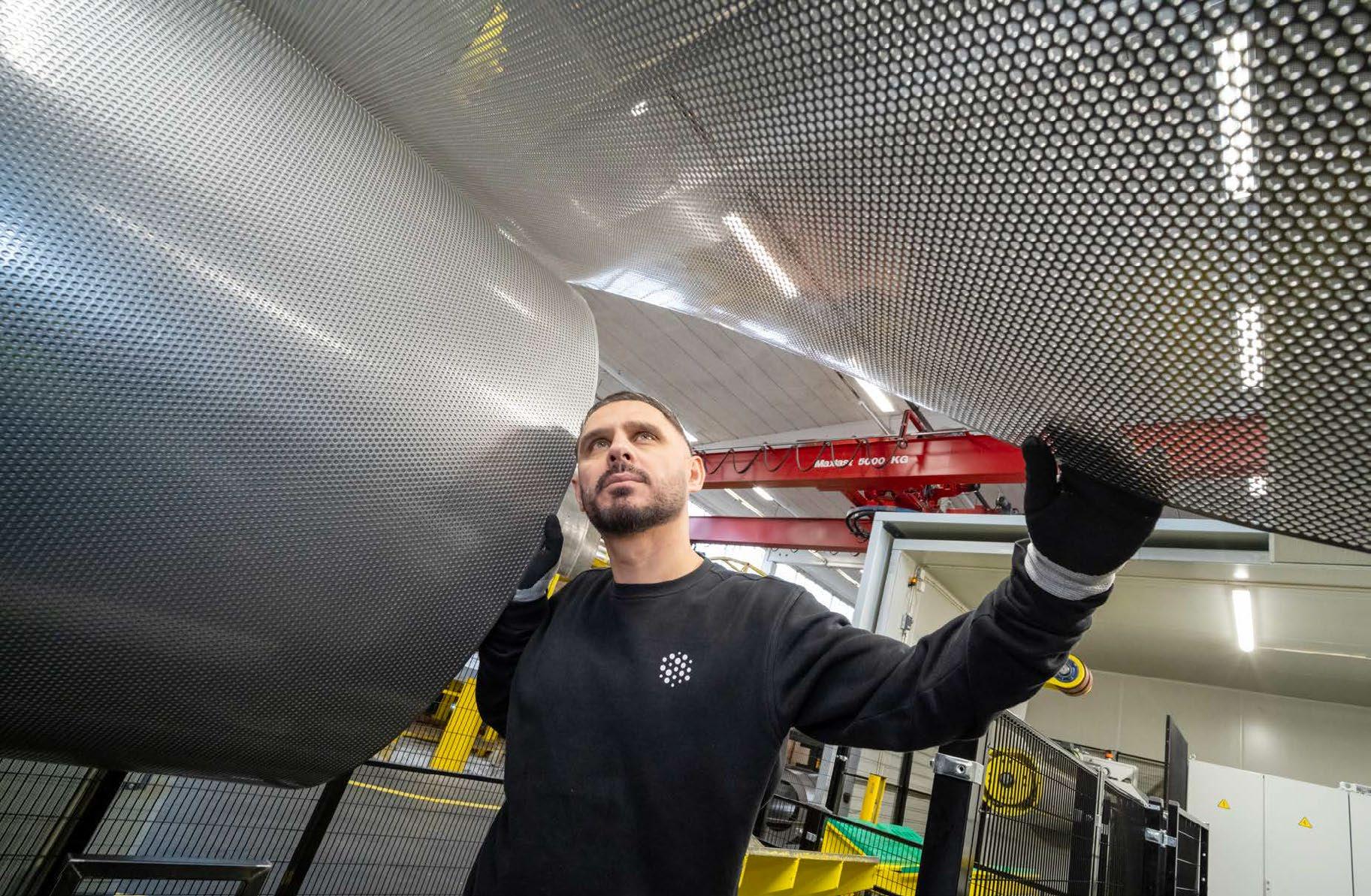
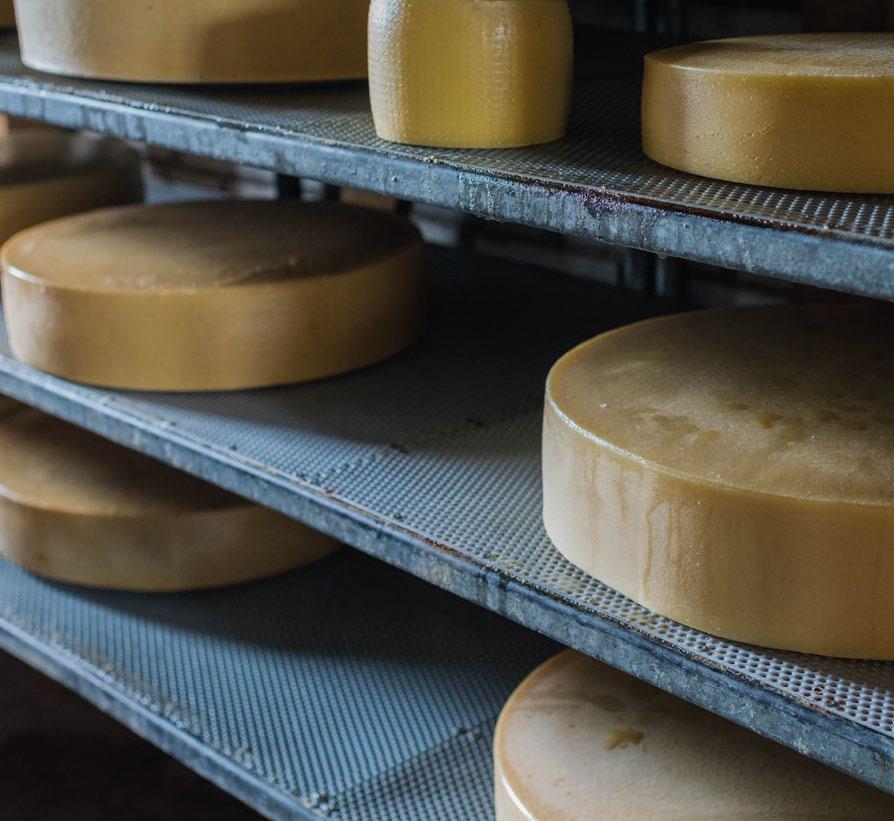
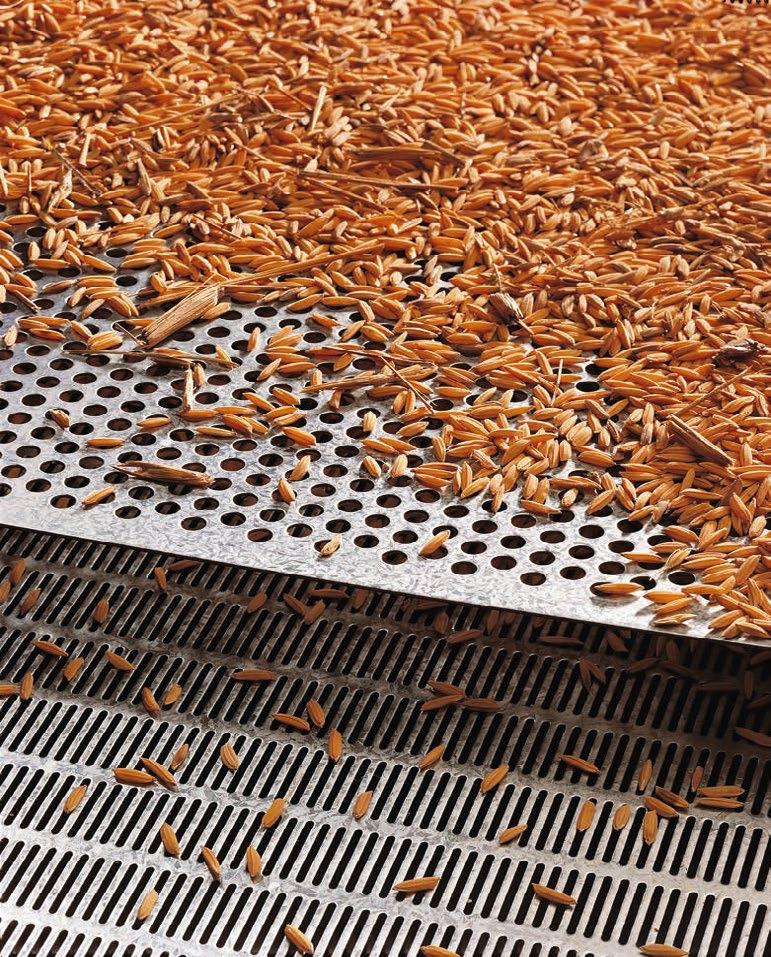
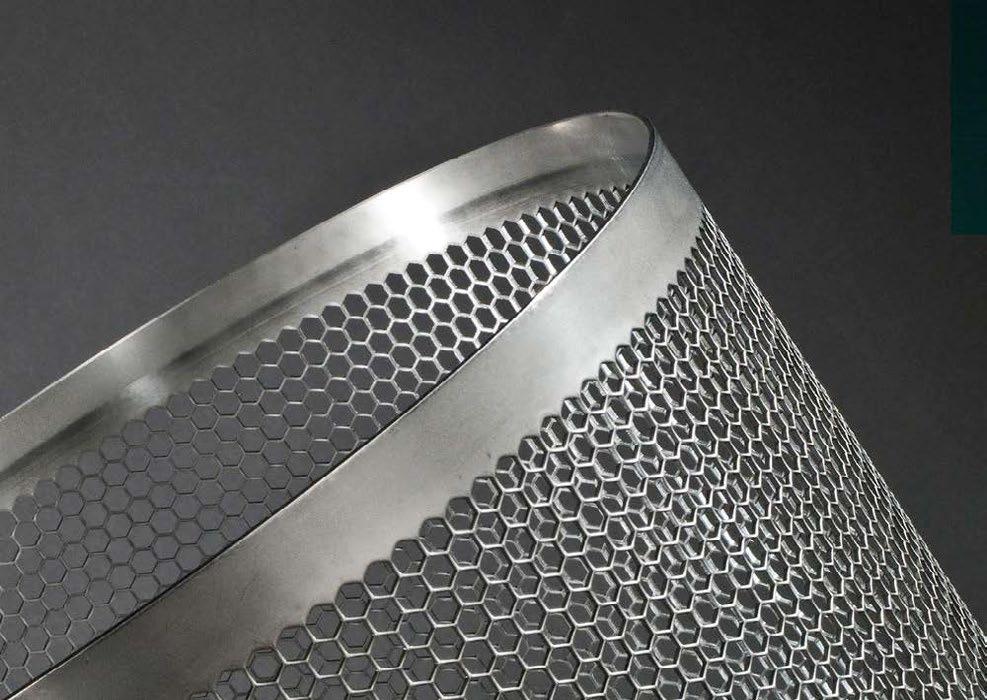
The world’s largest supplier of premium perforated solutions with over a century’s experience in perforation.
Page 45
The world’s largest supplier of premium perforated solutions with over a century’s experience in perforation.

The world’s largest supplier of premium perforated solutions with over a century’s experience in perforation.
Page 45
The world’s largest supplier of premium perforated solutions with over a century’s experience in perforation.


Editor Amanda Buckingham editor@fdpp.co.uk
Business Manager Josh Holmes josh@mhmagazine.co.uk
Digital Sales Manager Jessica Bennett T: 01227 936971
Sales Manager Jamie Bullock jamie@mhmagazine.co.uk Tel: 01227 936971
Martin Holmes martin@fdpp.co.uk Studio
Leila Schmitz leila@mhmagazine.co.uk
M H Media Global Ltd. 18/20 Newington Road, Ramsgate Kent, CT12 6EE Tel 01304 806039 www.fdpp.co.uk
Features
< 08 THE STRATEGIC ADVANTAGE OF TREATING CALIBRATION AS A SERVICE
By Joern Migge, Head of Market Management and Service, Mettler-Toledo Product Inspection.
< 18 AUTOMATING EFFICIENCY IN SUSTAINABLE POTATO PACKING
Pengelly Farms, a long-standing Cornish potato producer, has significantly enhanced operational efficiency by integrating automated case assembly and sealing technology from Endoline Automation.
< 24 FOOD AND DRINK FIRMS
SEEK GREATER CONTROL OVER VOLATILE ENERGY COSTS
Rooftop solar is becoming an increasingly important part of the energy strategy for factories, chilled warehouses and distribution centres of food and drink.
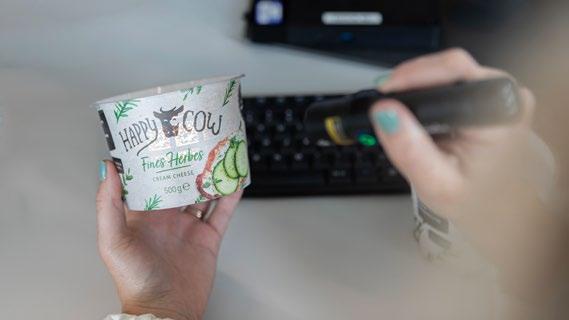
< 44 FOOD METAL DETECTOR SOLVES DAIRY PRODUCT EFFECT
Food safety specialist Fortress Technology explains how product effect can interfere with detection signals and reduce sensitivity in dairy applications.
< 54 AUTOMATION IN THE MEAT INDUSTRY
A new level.
Walk into many bakeries and you will still find compressed air being used to blow crumbs, flour dust and debris from production equipment, conveyors and difficult-to-access areas. It is quick, familiar and often seen as the easiest solution when deposits build up in tight spaces.
However, as food manufacturers continue to focus on hygiene, dust control and operational efficiency, more sites are questioning whether blowing material around the factory is really the best and safest approach.
While compressed air can remove debris from inaccessible areas, it does not necessarily remove it from the production environment. In many cases, the material simply becomes airborne before settling elsewhere, creating additional cleaning requirements and potentially increasing housekeeping challenges.
For bakeries handling flour and other powdered ingredients, there is also the wider issue of dust management. Fine dust particles can spread throughout
a production area if cleaning methods are not properly controlled, making effective housekeeping more difficult to maintain.
This challenge was highlighted during discussions between the engineering team at Warburtons’ Ilkeston bakery and Patrick Pritchett, Sales Manager at BVC (British Vacuum Cleaners), part of Quirepace Ltd.
The bakery required a solution for removing crumb and flour
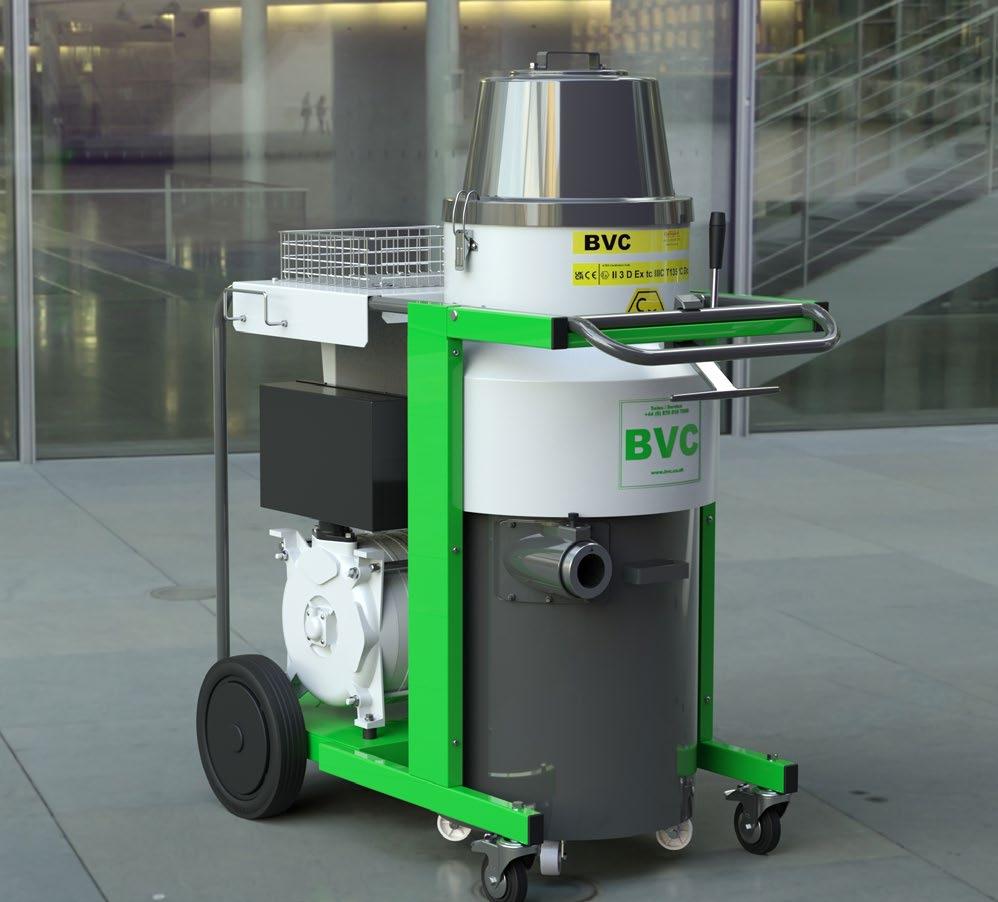
dust from around conveyors and production equipment, while reducing reliance on high-pressure airlines for routine cleaning tasks.
According to Patrick, this is not an uncommon situation.
“Many bakeries face the same issue,” he explains. “There are always areas around production lines where crumb and flour deposits build up. Operators often turn to compressed air because it is quick, but in many cases it simply moves the material somewhere else rather than removing it completely.”
The challenge is particularly noticeable around conveyor systems, support framework, elevated walkways and other areas where access can be restricted. Traditional vacuum systems can sometimes struggle to reach these locations effectively, leading sites to rely on compressed air as a practical alternative.
The question then becomes how to dislodge debris from confined spaces while still collecting it in a controlled manner.
Following a site assessment at Warburtons, BVC proposed a modified version of its ATEX-rated TI60 industrial vacuum system. The unit incorporated a dedicated blowing outlet, allowing operators to use low-pressure airflow to loosen deposits before collecting them through the vacuum system.
The concept differs significantly from the use of traditional highpressure airlines. Rather than dispersing debris across the surrounding area, the aim is to provide a more controlled cleaning process that combines dislodging and collection as part of the same operation.
The approach has also been adopted elsewhere within the bakery sector. Similar systems have been supplied
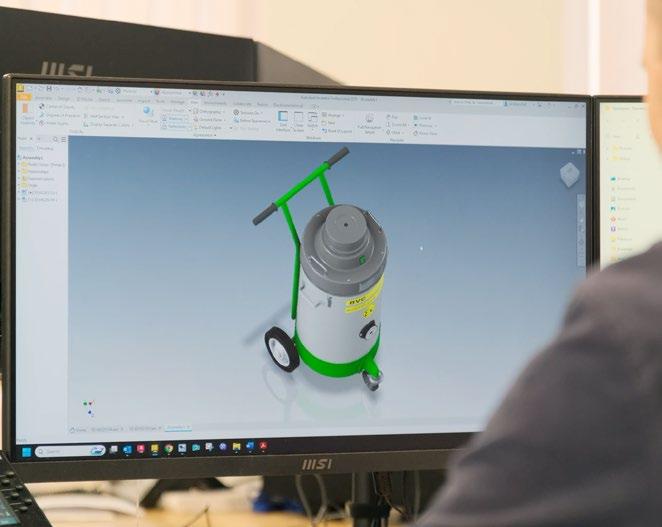
to Fine Lady Bakeries, where comparable cleaning challenges were identified around crumb and flour dust accumulation.
For food manufacturers, the wider lesson is that cleaning methods should be considered as part of the overall production and hygiene strategy rather than simply a housekeeping task.
An effective cleaning regime helps maintain standards, supports operational efficiency and reduces the time spent repeatedly dealing with the same accumulations of dust and debris.
It can also help minimise the amount of airborne material generated during cleaning activities, creating a cleaner and more controlled production environment.
As bakery operations continue to increase throughput and automation, cleaning challenges are unlikely to disappear. If anything, the complexity of modern production lines means that difficult-to-access areas are becoming more common.

For that reason, manufacturers are increasingly looking beyond traditional cleaning methods and assessing whether alternative approaches could deliver better results.
For some sites, that may mean upgrading existing vacuum equipment. For others, it may involve rethinking how cleaning is carried out altogether.
What remains clear is that effective cleaning is not simply about removing debris from one location. It is about ensuring that material is collected, contained and removed from the process in the safest and most efficient way possible.
BVC Quirepace offers free onsite demonstrations of industrial vacuum equipment at food manufacturing facilities across the UK.
For further information, contact BVC on 023 9260 3700, email sales@quirepace.co.uk or visit www.quirepace.co.uk/industrialvacuum-cleaners/.
Mention Food & Drink Processing & Packaging when making an enquiry and a 5% discount will be applied to your first order for BVC industrial vacuum equipment.
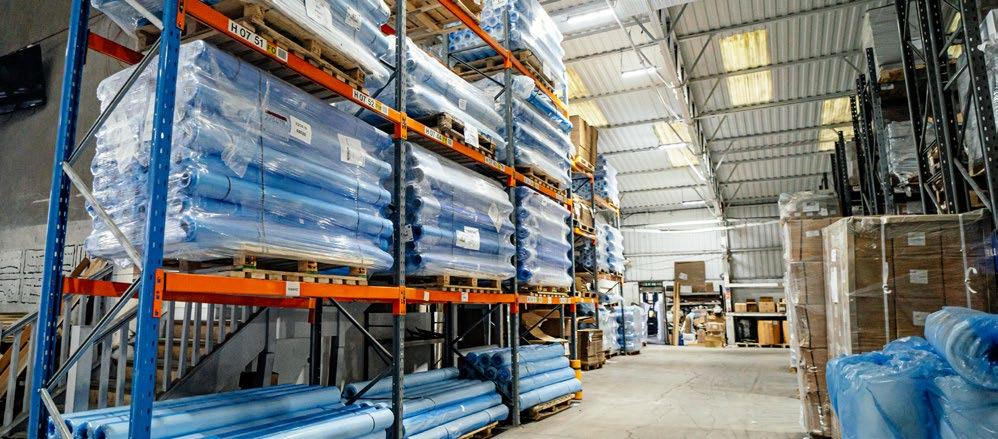
Ireland’s food and drink sector remains one of the country’s most dynamic industries. From artisan producers to large-scale dairy, meat and beverage manufacturers, businesses face rising pressure around efficiency, sustainability, compliance and product protection. While primary packaging is often prioritised, tertiary packaging and dispatch operations are equally important in safeguarding goods and maintaining supply chain performance, ensuring products reach customers in optimal condition and reinforcing the need for more efficient end-to-end packaging strategies.
Food and drink manufacturers must balance product protection with operational efficiency, reducing waste while maintaining consistency across demanding production environments. Whether handling fresh meat, dairy, prepared foods or beverages, they require reliable packaging systems that support quality standards, traceability and throughput. This growing complexity is increasing demand for integrated packaging partners who can support both equipment and process optimisation across the full production and dispatch
cycle, particularly as sustainability targets become more stringent and supply chains more pressured.
Hub Packaging works in partnership with food and beverage producers across Ireland, providing end-of-line packaging machinery, consumables, technical expertise and ongoing support. The company specialises in tertiary packaging and warehouse dispatch solutions designed to secure goods for storage and transport while improving operational efficiency. Its tailored systems help reduce packaging waste, improve pallet stability, minimise transit damage and streamline warehouse operations, enabling manufacturers to maintain consistency and reliability across high-volume environments while adapting to evolving production demands.
The company’s range includes stretch wrapping systems, pallet strapping equipment, protective materials and fully integrated automation for endof-line processes. These solutions improve load containment, reduce handling errors and increase throughput while supporting greater consistency across busy
production lines. Hub Packaging also provides installation, servicing and preventative maintenance to maximise uptime and extend equipment lifespan.
Demonstrating continued investment in the sector, the company recently acquired Clonmel-based Faleen Sales Ltd, strengthening its expertise in strapping and dispatch solutions and expanding its presence across Munster, while enhancing its ability to deliver responsive local support nationwide.
Trusted by more than 3,000 customers across Ireland and the UK, Hub Packaging continues to invest in people, products and services that enhance packaging efficiency and supply chain performance. Its partnership-led approach combines technical expertise with responsive support, helping manufacturers improve productivity and resilience as the industry evolves.
Learn more about Hub Packaging’s end-of-line packaging and dispatch solutions for food manufacturers at www.hubpackaging.com/food.
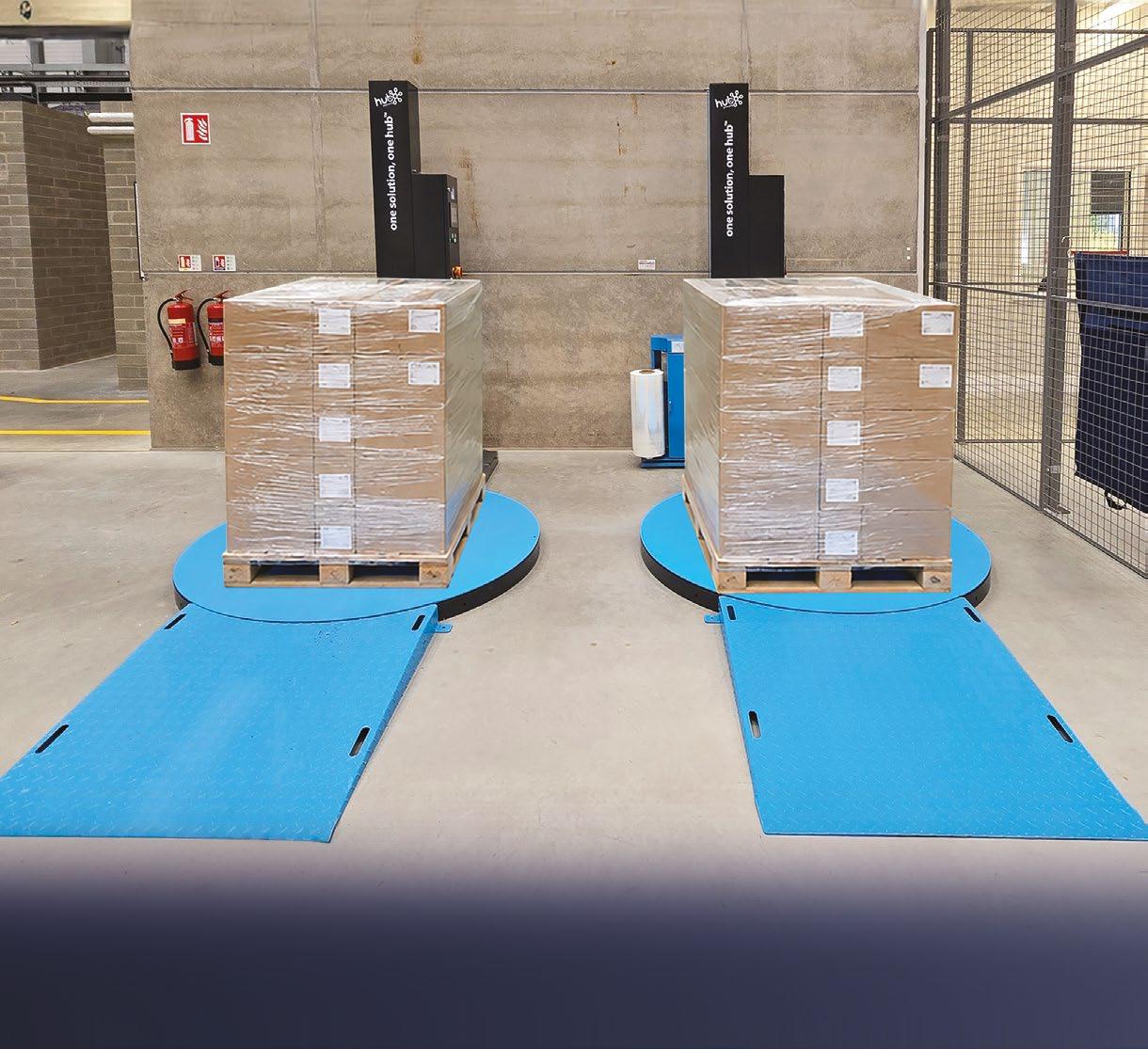
Trusted by manufacturers across Ireland for over 50 years,
Hub Packaging helps food and drink producers improve packaging performance, reduce waste, and optimise end-of-line operations.
From packaging consumables and transit protection to automated end-of-line systems, we deliver practical solutions that improve

Free Packaging & End-of-Line Review
> Reduce packaging waste
> Improve pallet stability
> Minimise product damage
> Increase packing throughput
Contact:


Reduce Packaging Costs & Waste
> Packaging audits
> Material optimisation
> Sustainable packaging alternatives
> Bespoke packaging design
productivity, enhance pallet stability, and help products reach customers in perfect condition.
Whether you’re looking to reduce packaging costs, increase packing line efficiency or support sustainability goals, our packaging specialists can help.

Protect Food & Drink Products
Throughout Distribution
> Transit packaging solutions
> Stretch wrapping systems
> Strapping & pallet protection
> Load stability improvements

Improve Packing Line Efficiency
> Pallet wrappers
> Strapping machines
> Void-fill systems
> Case sealing automation

By Joern Migge, Head of Market Management and Service, Mettler-Toledo Product Inspection
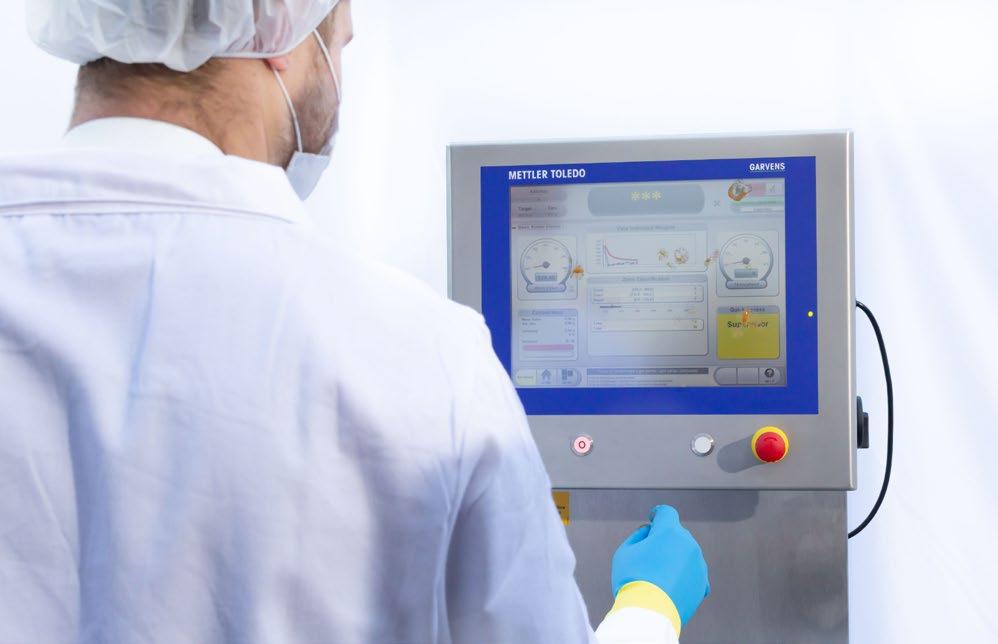
Precision in manufacturing is often measured in grams, not guesses. Small inconsistencies in product weight can lead to higher costs, wasted materials and strained compliance processes. While calibration is a routine requirement for any business using automatic weighing instruments, its real potential lies in how it is used.
Calibration is the process of assessing how closely a weighing instrument performs compared to a known reference value. It allows manufacturers to understand the possible variation in readings and determine whether equipment is delivering consistent results. This variation is called measurement uncertainty. When viewed not as a technical obligation but as a tool for improvement, calibration becomes a key driver of performance. It supports better decision-making,
improves reliability on the line and helps manufacturers respond more effectively to commercial and regulatory pressures.
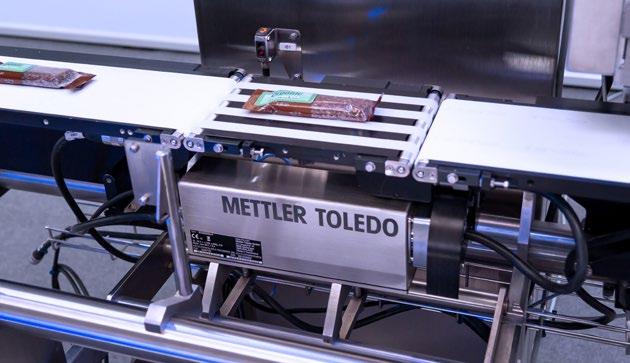
Automatic weighing instruments, including checkweighers and catchweighers, are subject to gradual performance drift. Factors such as mechanical wear, conveyor misalignment and ambient conditions can all affect weighing accuracy. Regular calibration identifies these issues and helps teams understand how closely instruments are performing to expected standards.
The brand new EURAMET (European Association of National Metrology Institutes) Calibration Guideline No. 26 provides a structured method for determining this uncertainty. Developed with manufacturers such as Mettler-
Toledo, it outlines how calibration should be conducted in production environments using appropriate test loads and process conditions. It also defines how to calculate repeatability, reproducibility and the effects of off-centre loading. For manufacturers, this creates a consistent framework that supports accurate comparison across lines and sites.
However, the value of calibration is not in the measurement alone. It is in how the results are applied. Manufacturers who treat calibration as a core part of their service and maintenance strategy will see far more value than compliance alone would offer.
Controlling costs through process improvement
Many manufacturers operate in environments where even small inefficiencies have a significant financial impact. Consistent overfilling of packs may seem minor on a single unit basis but can result in thousands of pounds in product giveaway over time. Underfilling, on the other hand, risks noncompliance, customer dissatisfaction and costly recalls.
Calibration data helps to pinpoint where these issues are occurring. It can show whether instruments are consistently reading above or below expected levels and whether environmental factors or loading methods are contributing. Acting on this information allows teams to fine-tune processes and reduce unnecessary costs without compromising quality.
Treating calibration as part of a broader service strategy also supports better planning. For example, if a checkweigher shows increasing variation across weights or signs of deteriorating repeatability, it may indicate that servicing is needed before a more serious fault develops.
Over time, tracking these patterns allows maintenance teams to shift from reactive repairs to proactive interventions. This reduces unplanned downtime, supports higher line availability and extends the life of critical equipment. Where replacement is under consideration, calibration data can also help determine whether performance remains within operational limits or if investment is justified.
In regulated industries such as food, pharmaceuticals and chemicals, audit preparedness is a constant concern. While the EURAMET guideline does not define compliance thresholds, it provides traceable, structured documentation that supports audits and inspections.
EURAMET Calibration Guideline No. 26, for example, provides a recognised framework for checkweigher calibration and verification services. This supports manufacturers in maintaining compliance with quality management systems such as ISO 9001, where measurement equipment must be calibrated or verified against traceable standards as part of demonstrating measurement validity.
Professional calibration is central to this process. It must be performed by qualified service engineers using traceable reference standards, as it requires specialist knowledge of weighing technologies, environmental influences and uncertainty calculations. By scheduling professional calibration at defined intervals, typically at least once a year, or more frequently in demanding environments, manufacturers can gain verified confidence in weighing accuracy and access to validated documentation that demonstrates control over their processes.
This expert-led approach not only strengthens compliance but also provides the traceability and transparency needed to reduce audit stress and build trust with regulators and customers alike.
Benchmarking performance across systems and locations
Where production takes place across multiple lines or sites, calibration becomes even more valuable. When the same methodology is applied consistently and results are recorded over time, manufacturers can benchmark equipment performance more effectively.
This can reveal areas where processes need adjustment, highlight equipment that is underperforming and help prioritise upgrades or training. It also helps align teams across functions, such as quality, operations and engineering, around a shared understanding of performance.
Shifting the role of calibration from compliance to business intelligence
The most important shift comes when calibration is no longer treated as an isolated event. When embedded within a continuous service and maintenance approach, it becomes part of a broader effort to optimise performance.
It enables teams to move beyond pass or fail outcomes and use calibration data to understand trends, spot early warnings and improve decision-making. This supports a culture of performance, where teams feel confident that their equipment is working as intended and have the insight to act when it is not.
As manufacturing environments grow more complex, the ability to act on performance data is increasingly important. Faster product changeovers, tighter regulation and rising demand for traceability all require systems that are not only accurate but fully understood.
Calibration gives manufacturers the clarity they need to meet these demands. It provides a consistent method for assessing performance and a practical foundation for improvement.
Learn how forward-thinking manufacturers are using calibration not just to stay compliant, but to optimise performance across their operations by visiting www.mt.com
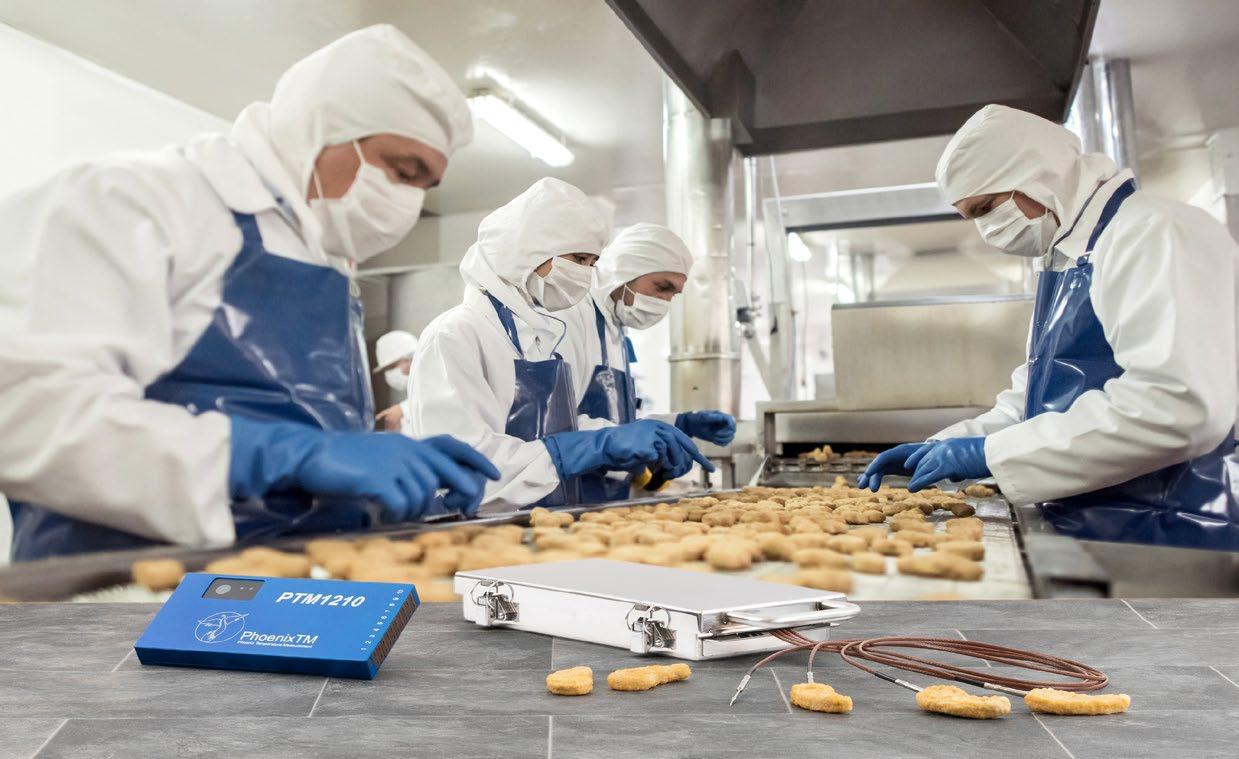
They say that “the proof of the pudding is in the eating” but when it comes to industrial bread baking that’s a little too late. To get the best out of your bread or bakery product significant understanding and control of the baking process / oven is essential to get form, shape, texture and colour you desire. As part of any Food processors HACCP program validation of the bake processes is a critical and significant task taking time, effort, and resources. PhoenixTM have developed a thru-process temperature monitoring technology specifically for this task. The multichannel data logger with up to 10 thermocouples (Type K or T) travels through the oven protected by a thermal barrier to suit the bake regime (Temperature and Time) and challenges of the product transfer. The data logger is designed for food processing and has a IP67 case protecting from moisture and will operate accurately between -40 °C to 80 °C, inside the barrier, with high performance cold junction compensation.
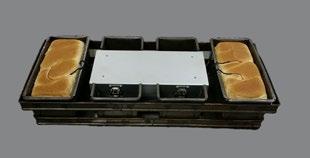
For bread loaves the thermal barrier is designed to fit inside a modified bread tin strap (image shown right). Monitoring conveyorised mesh belt ovens either product core temperature can be measured
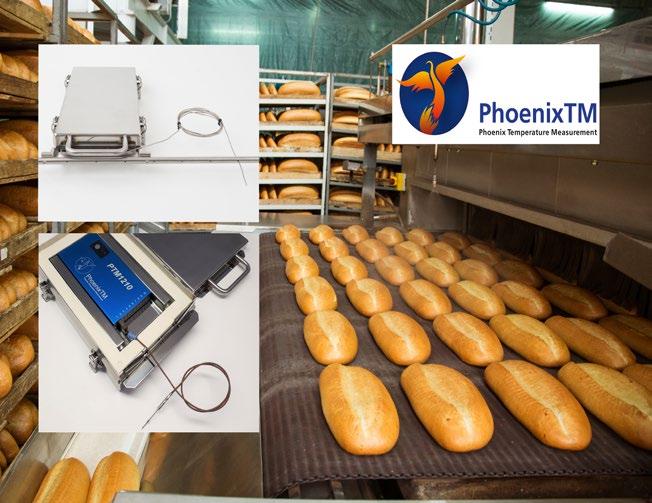
alternatively a fixed arm assembly can be fitted to the thermal barrier to locate thermocouple across the belt width. Ambient temperatures can be measured accurately and reproducibly allowing efficient oven mapping and identification of ‘Hot’ and ‘Cold’ spots within the oven.
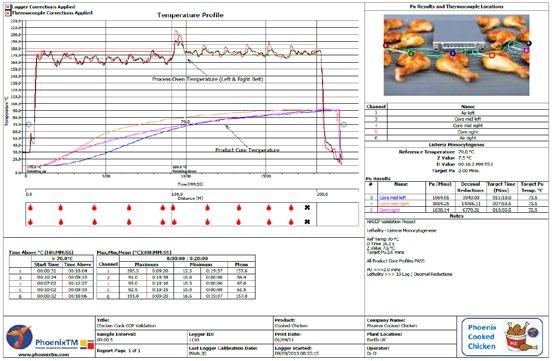
The temperature profile stored in the data logger can be reviewed, analysed and reported in custom designed PhoenixTM Thermal View Food Software.
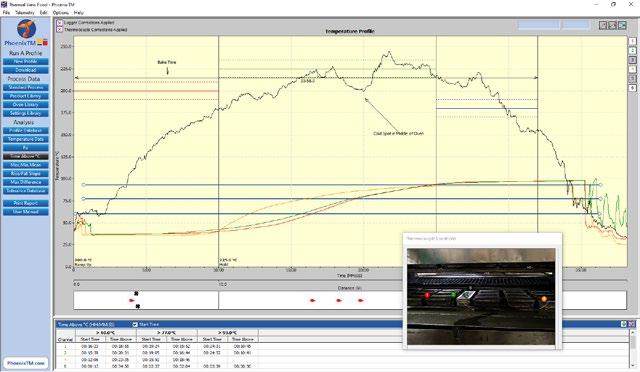
A comprehensive suite of analysis tools converts the raw profile temperature data into useful process information. Analysis of key process criteria such as yeast kill time to guarantee height of bake, starch gelatinisation time to control bread crumb structure and arrival time to control final bake and colour formation can be performed using the data analysis tools. Analysis tools also include the ability to calculate Fo/Pu values for the process against target microorganisms.
The information gathered, further to process validation, can be used to allow informed process problem solving and optimisation.

Product Safety
Process Efficiency
Improved Product Yields
Rapid Fault Finding
Full HACCP Certification
Thru-process temperature monitoring solutions for all your cook applications
PhoenixTM Technology
• Accurate IP67 data logger (Type K or T)
• 10 Measurement Points for full oven mapping
• Thermal barrier options to suit cook regime
• Comprehensive thermocouple range
• Standard miniature thermocouple plugs
• Calibrated thermocouple options
• Food trays and thermocouple jig options
• Full lethality (Fo/Pu) and reporting
• Real Time RF Telemetry options
• Local efficient calibration and service support
Phoenix
Food processors, beverage manufacturers and packaging operators face increasing pressure to reduce utility costs, improve operational efficiency and demonstrate environmental performance. With rising energy costs and growing sustainability obligations, having accurate, realtime visibility of water, electricity and gas consumption has become essential for identifying waste, reducing costs and supporting continuous improvement initiatives.
Elcomponent Ltd delivers intelligent utility monitoring solutions specifically designed for demanding industrial environments. Combining decades of metering expertise with modern data collection technologies, Elcomponent helps organisations gain actionable insight into utility consumption, enabling informed decisions that improve efficiency, reduce waste and support sustainability goals.
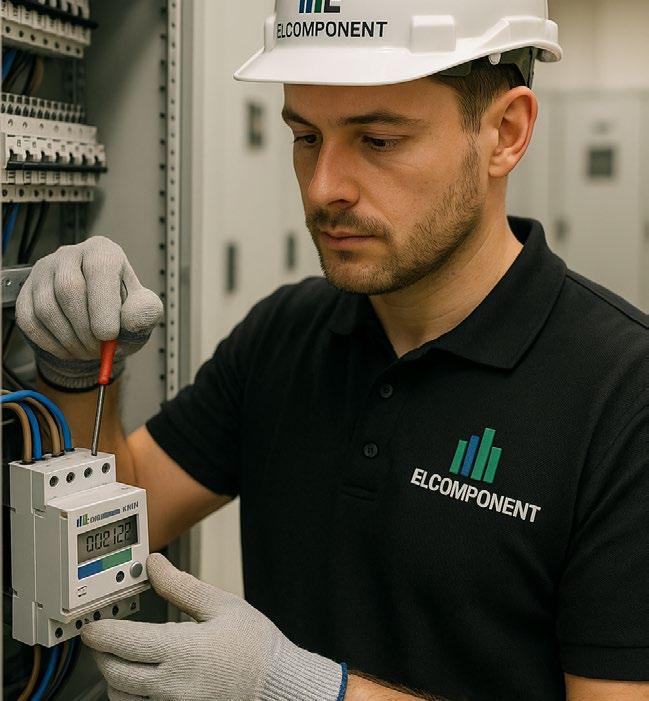
Every site presents different monitoring challenges, which is why Elcomponent designs solutions around the specific requirements for each site. Depending on the application, systems can utilise LoRaWAN wireless technology, traditional wired networks or a combination of both.
LoRaWAN provides secure, long-range communications and is particularly effective in challenging environments such as production areas, warehouses, chilled storage facilities and plant rooms. Where permanent infrastructure or higher-speed communications are required, wired technologies including Modbus, M-Bus and Ethernet can be incorporated into the solution.
This flexible approach ensures reliable data collection while minimising installation costs and disruption to production operations.
Elcomponent specialises in collecting data from both existing and new utility metering infrastructure, providing a centralised platform for monitoring and analysing resource consumption across an organisation. Our company’s experienced in-house engineering team delivers system design, installation, integration and commissioning services, ensuring
reliable and accurate data collection from day one.
• Existing or new water meters
• Existing utility meters, submetering
• Existing or new gas metering
• Temperature, heat, steam and environmental sensors
• Data sharing and integration with external platforms via API
By integrating utility and operational data into a single platform, organisations gain a comprehensive view of resource consumption, enabling improved efficiency, reduced waste and better-informed decision making across their facilities.
Water is a critical resource across food processing, beverage production and packaging operations, supporting production processes, cleaning regimes, hygiene requirements and site services. Elcomponent’s monitoring solutions provide visibility of water usage across sites, production lines and individual processes.
Automated monitoring enables organisations to identify excessive consumption, detect leaks quickly and support environmental reporting requirements. Historical analysis and benchmarking also help identify opportunities for conservation and process improvement.
Energy costs remain a significant operational expense across food processing, beverage and packaging facilities. Monitoring electricity and gas consumption at a detailed level allows organisations to understand where energy is being used and where opportunities for improvement exist.
By analysing utility usage by process, production area, production line or building, businesses can identify inefficiencies, validate energysaving initiatives, support carbon
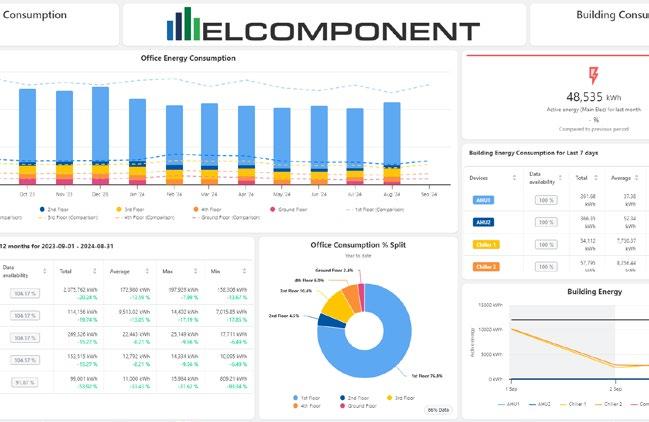
reduction programmes and improve budgeting accuracy.
The result is better operational control and a stronger foundation for sustainability reporting, carbon reduction strategies and energy management programmes.
Beyond data collection, Elcomponent provides remote system health monitoring and support services to help ensure long-term system reliability.
The platform can monitor communication status, device health and network performance, enabling proactive identification of issues before they impact data quality. Remote diagnostics reduce the need for site visits while helping maintain system uptime and performance.
Many food and packaging facilities already have water, electricity and gas meters installed but are not fully utilising the valuable data they contain. Elcomponent specialises in connecting existing metering infrastructure into a single monitoring platform, providing real-time visibility, alarms, reporting and actionable insights without the need for major infrastructure replacement. Elcomponent delivers practical monitoring solutions that help organisations reduce waste,
improve efficiency and achieve sustainability objectives.
Elcomponent has extensive experience delivering metering and monitoring solutions across industrial, food processing and packaging sectors. From initial site assessment and system design through to installation, commissioning and ongoing support, every solution is tailored to deliver meaningful operational insight.
Whether the objective is reducing utility costs, improving sustainability performance, enhancing compliance or supporting energy management initiatives, Elcomponent provides a scalable, future-ready platform that turns utility data into actionable intelligence.
Whether you are looking to improve utility visibility across a single production facility or a multi-site operation, Elcomponent can help transform utility data into measurable savings.
Contact Elcomponent today to discuss your monitoring requirements.
Tel: 01279 503173
Web: www.elcomponent.co.uk















FOR










CONTROLLING OVERHEADS HAS NEVER BEEN MORE CHALLENGING.




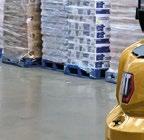
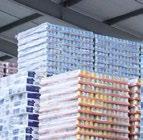
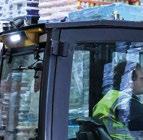
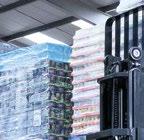
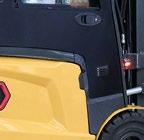
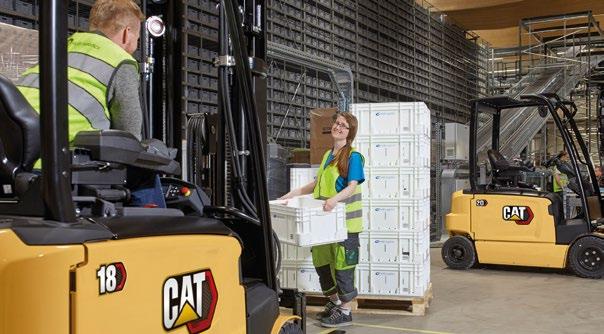
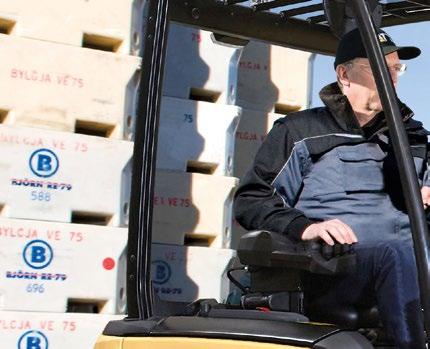
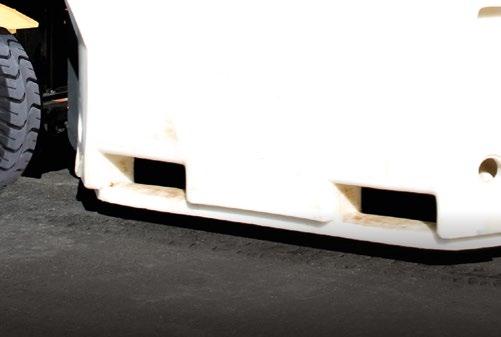
Fuel and energy prices continue to fluctuate, and equipment lead times remain unpredictable. Impact Handling keeps a wide range of forklifts in stock in the UK, helping you avoid uncertainty and secure today’s costs, without compromising on choosing the right truck for the job.
Materials handling equipment isn’t always top of mind in that conversation – until it starts to cause a problem. Forklift trucks are often seen as basic, everyday tools rather than something more strategic. When they’re unavailable, incorrectly specified, or take too long to arrive, the impact is felt across the operation.

The reality is that uncertainty now sits across the whole decision-making process. Availability can no longer be taken for granted, and pricing is often just as variable. While waiting might feel like the correct approach, it can just as easily create its own risks – causing operational pressure at the worst possible time.
When equipment isn’t right, or isn’t there when it’s needed, the e ects snowball into a cascade of avoidable disruption and exposure to increased costs.



Having that level of certainty makes a tangible di erence. With forklifts and warehouse equipment available from UK stock, Impact Handling removes one of the biggest unknowns in the decision-making process for our customers.







Instead of waiting and hoping conditions improve, businesses can move forward with exactly what they need, exactly when they need it, with confidence that we’re on hand to deliver.
Whether it’s electric, diesel or LPG counterbalance trucks, warehouse equipment or the latest EQ Line range, our immediate availability enables operators to plan with greater certainty, lock in costs at the point of order, and keep operations running smoothly without disruption.
In today’s market, certainty is what transforms operational challenges into competitive advantage, and that’s exactly what we’re committed to delivering.
















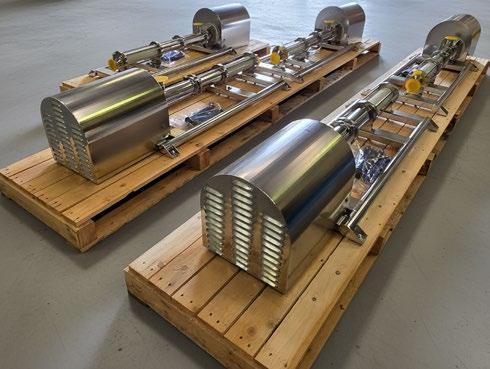
North Ridge Pumps are the UK’s leading pump supplier with over 25 years’ experience specifying pumps for a huge range of companies and applications.
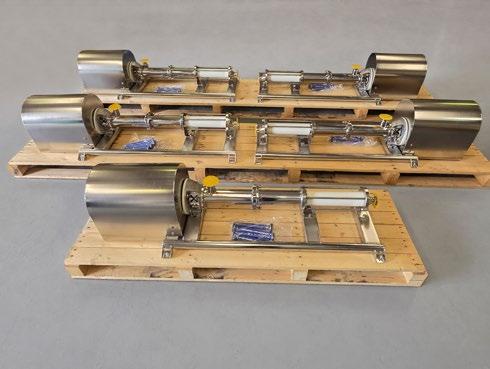
One of their latest projects was for a client who was transferring serum to a heat treatment tank. They needed five rotary vacuum drum filter feed pumps of pharmaceutical grade as a key component of the process.
What did they specify?
North Ridge pumps have complete flexibility in pump selection. They’re not tied down to any specific pump technology. Which means they can choose the best pump for every job.
An application like this requires the highest standards of hygiene. So they selected five North Ridge DX/JX hygienic progressive cavity pumps, with flexible shafts made from titanium alloy to ensure better hygiene, easier cleaning and outstanding performance over a longer period.
Maximum hygiene levels
Fully complying with standards EHEDG and 3A for use in the chemical, cosmetic, food, beverage
and pharmaceutical industries, these pumps are optimised for maximum sterilisation when performing clean-in-place (CIP) operations, a crucial process in maintaining equipment and plant hygiene standards.
Pumping up to 10m³ at 10 bar, the design has a motor-mounted inverter designed to regulation (EC) 1935:2004 for food contact. This is the overarching EU legislative framework for all materials and articles coming into contact with food.
The product contact surfaces are polished to a <0.5 Ra (Roughness Average) finish and have no dead zones or areas of stagnation.
This rating means it has a highly polished, mirror-like surface finish which is mainly used in hygienecritical or precision engineering applications.
On each pump, the bi-directional sanitary mechanical seal is positioned directly in the main flow at the inlet. This improves cleanliness and hygiene as it’s not located within a dead zone.
Designed as aseptic, each pump has a 3A Class I Certified molded gasket 3-A to ensure maximum cleanability.
Products, facilities or processes which are classified as ‘designed as aseptic’ are engineered to be completely free of pathogenic microorganisms to prevent contamination or infection. They have seamless wipe-able surfaces, controlled ventilation and rigorous manufacturing controls.
Each feed pump has an integral cover which maintains hygiene by preventing bacteria, organic debris, food particles or contaminants from settling in the cooling fins. This is crucial for compliance in food, beverage and washdown environments.
If your company needs exceptionally hygienic, pharmaceutical grade pumps for transferring viscous and nonviscous fluids, speak to North Ridge Pumps today to see how we can help.
www.northridgepumps.com
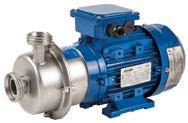
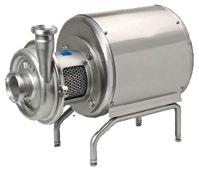
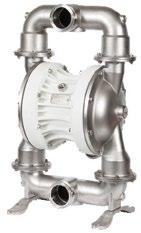
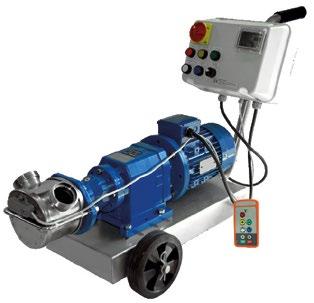
Optimise performance with specialist support
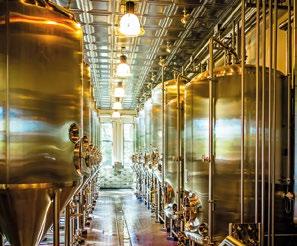
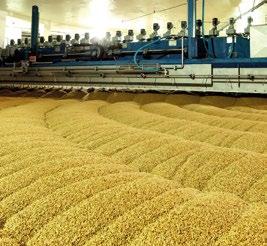

Whether you’re dealing with clogging, separation, downtime, or other issueit’s costly. Time wasted troubleshooting and lower production mean missed targets and less profit. A sanitary pump is the solution but choosing the right one feels like stepping into a minefield. You know what you need it to do but with so many options, it’s difficult to know which is best for your process and parameters.
+ Accelerated stator wear
+ Clogging
+ Changes to fluid consistency
+ Clean-in-place and sterilise-in-place hygiene issues
+ Crushing of sensitive products
+ Inconsistency in finished product
+ Inaccurate transfer of flavourings or ingredients
+ Liquid separation
+ Seal wear or failure
We’ve been engineering sanitary pumps for sectors such as distilling, brewing, food manufacturing/processing, and more, for 20+ years. We understand industry-specific processes and know what it takes to optimise performance through better-suited pump design - giving you complete peace of mind.
Our expert engineers understand your process and guide you through the options, so you can confidently select the most suitable sanitary pump.
EXAMPLE PRODUCTS:
+ Abrasive mixtures
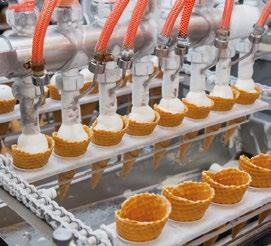
+ Creams, milk & ice cream
+ Edible oils & fats
+ Fish & meat
+ Fruits eg. cooked apples, plums, berries, grapes
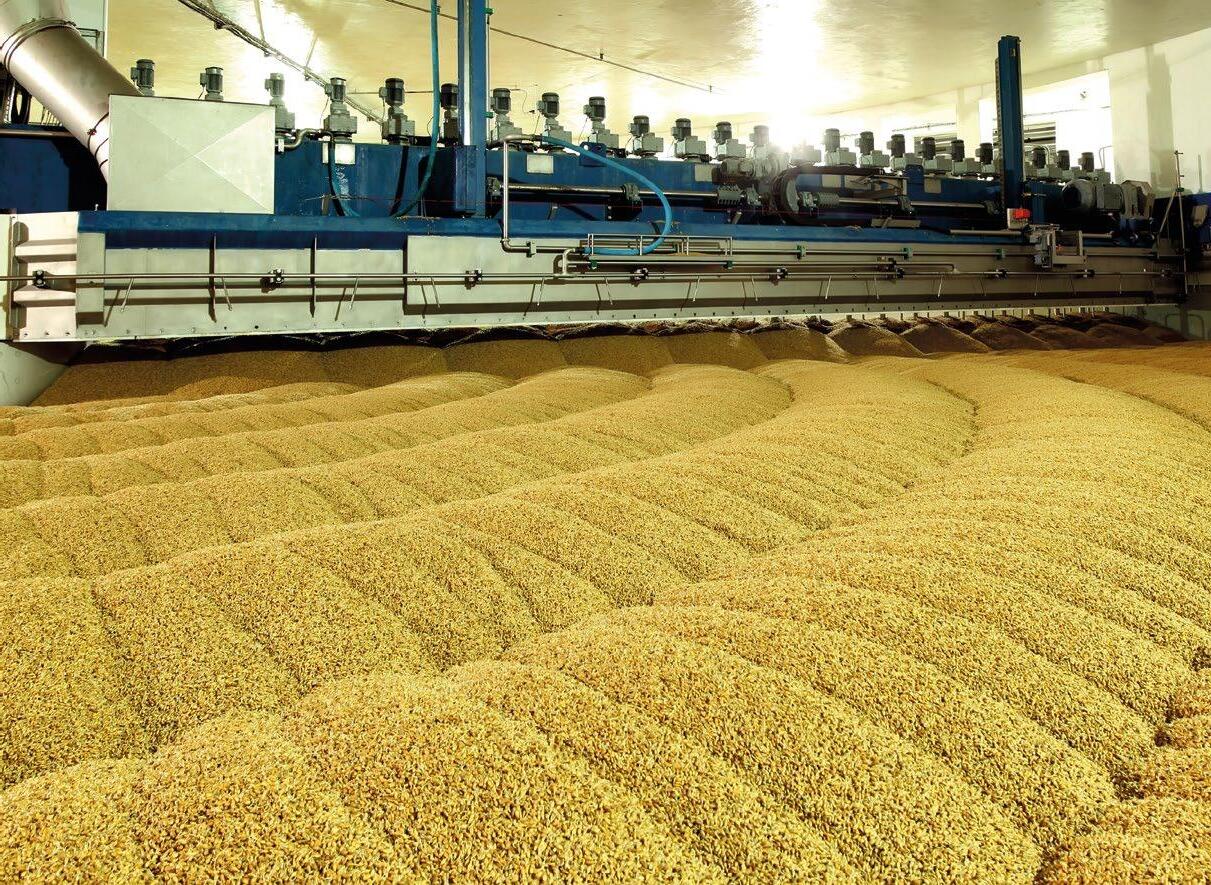
+ Grains & seeds
+ Pastes & purees
+ Syrups, juices & alcohols
+ Vegetables & peelings
+ Waste eg. trimmings, packaging & offcuts
+ Sheer sensitive liquids
+ Solid laden or viscous mixtures
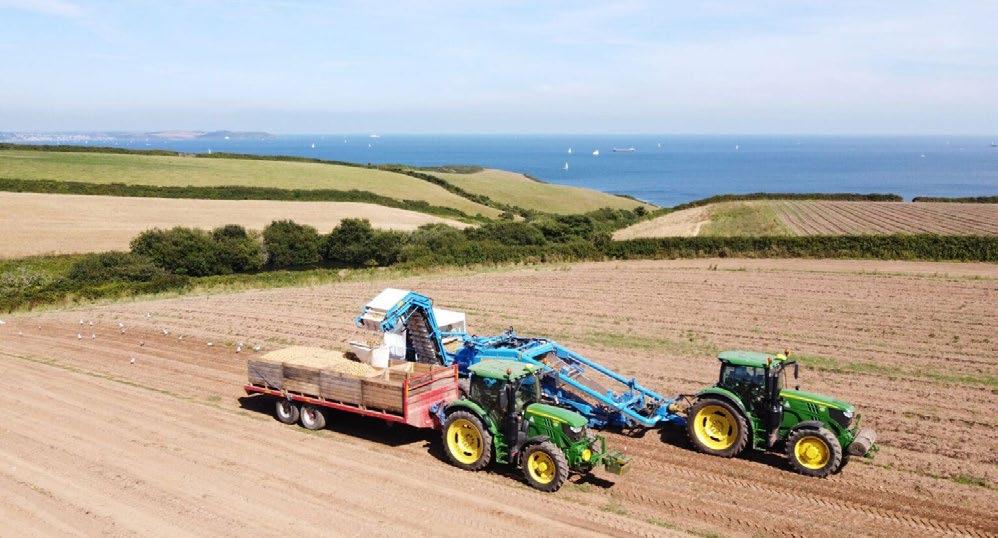
Pengelly Farms, a long-standing Cornish potato producer, has significantly enhanced operational efficiency by integrating automated case assembly and sealing technology from Endoline Automation.
In the coastal landscape of Helston, West Cornwall, Pengelly Farms has spent over half a century perfecting its potato harvest. Established in 1967, this family-run operation has evolved from a local grower into a premier UK producer of premium salad potatoes. Managing 1,200 acres, they supply approximately 16,500 tonnes of produce annually to UK and European supermarkets, wholesalers and high-end restauranteurs.
However, as the Red Tractor and LEAF-accredited farm scaled its infrastructure, it encountered a classic industrial friction point: the high-speed potato packing bottleneck.
Following the recent modernisation of its processing line with a highspeed Newtec chute loader, Pengelly
Farms identified an opportunity to optimise its downstream packing operations. The manual assembly and sealing of heavy 10kg boxes presented a significant operational challenge as this consistently struggled to keep pace with the upgraded system.
The traditional manual processes were no longer aligned with the performance of advanced grading and sorting technology. As a seasonal operation, Pengelly Farms recognised that increasing labour alone would not deliver the longterm efficiency gains required. Instead, they partnered with UK end-of-line packaging specialist Endoline Automation.
Dual vacuum solves box assembly issues
To transport potatoes across the UK, Ireland and mainland Europe, Pengelly Farms utilises heavy, twinwalled cardboard cases. Although these provide the structural integrity for a 10kg potato payload, they can be notoriously difficult to automate. Stiff, heavy-duty
cardboard often resists opening. In a standard automated system, this can lead to bridging, tearing or recurrent machine jams.
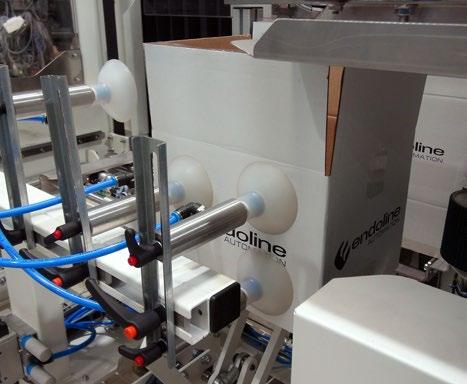
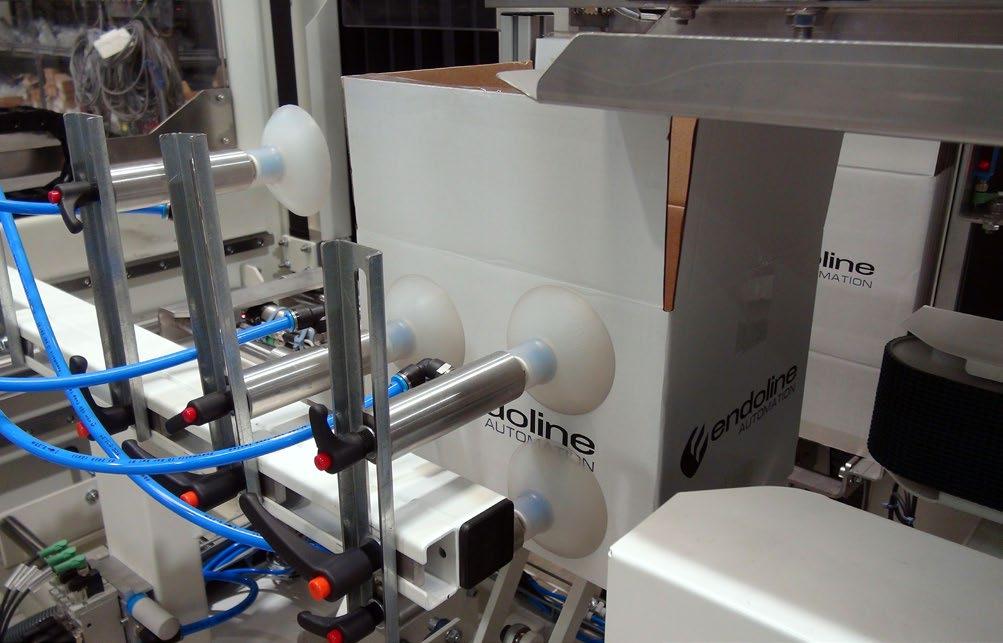
The solution lies in the ‘dual opposing vacuum technology’ unique to Endoline. Rather than attempting to pull the box open from a single direction, the system applies force symmetrically.
“The dual opposing vacuum technology is especially beneficial when forming heavy-duty boxes. It works by clamping each side of the case during the forming process applying the same amount of pressure to simultaneously open it from both sides,” explains UK Sales Manager James Saywell.
From a technical standpoint, this is a masterclass in using physics to bypass mechanical resistance. Neutralising the inherent stiffness of the twin-walled card by applying equalised pressure, the compact Endoline machine eliminates the physical strain of manual manipulation.
This significantly reduces packaging waste, which supports sustainability and maintains the continuous production flow, notes Pengelly Technical Manager Ben Cavill.
Rather than taking a ‘scorched earth’ approach to existing infrastructure, Endoline instead treated the farm’s existing equipment as a modular tech stack. This included maintaining brand interoperability between several equipment suppliers.
The Endoline 221 Case Erector and 613 Case Sealer were integrated into the existing packing area that already featured heavy-duty Haith multi-size graders and Tomra 3A optical sorters. The Case Erector was specifically selected for its compact footprint, allowing it to be slotted into the existing packing shed without requiring a costly facility expansion. By feeding the bottomsealed cases directly into the Newtec chute loader using an existing conveyor, Pengelly’s achieved a seamless flow from potato grading to case filling.
“Endoline Automation was extremely accommodating. Labour
shortages meant we needed to automate this aspect of our potato packing line. But replacing our high end sorting and grading equipment was non-negotiable. Endoline worked around this. As a result, we are already exploring automating labelling and palletising with them,” comments Ben.
Transitioning from manual assembly to the Endoline 613 Fully Automatic Case Sealer ensures that every potato case arrives with the customer in the same condition it left the Helston packing shed. Automation provides mechanical consistency.
“Handling 10kg boxes can be an arduous task. Manual sealing is often the first place where quality control on fresh produce packing lines slips, particularly at the end of a long shift,” highlights James.
Precision sensing governs the entire Pengelly packing process. Once the potatoes are washed and graded, they are dropped into a loading chamber. A signal triggers when the weight is exact, and each potato case is then vibrated. This vibration is critical as it settles the product
below the scoreline, ensuring the top flaps can be closed and sealed by the Endoline 613 machine without obstruction.
The strategic investment in automation, combined with a 2022 expansion of an 1,800-tonne cold store, has brought Pengelly Farms’ total chilled storage capacity to 10,000 tonnes. This allows the farm to manage its 16,500-tonne annual yield with unprecedented control, keeping potatoes in peak condition to ensure year-round availability.
By simplifying once-laborious tasks by automating case erection and sealing, the farm continues to shield itself from labour shortages while increasing its production
capacity. “Through automation, Pengelly is ensuring we preserve our Cornish farming heritage for years to come,” concludes Ben.
For further information on any of Endoline’s extensive range of machines, please contact Endoline on Tel: + 44 (0) 1767 316422, email: sales@endoline-automation.com or visit the website at www.endoline-automation.com

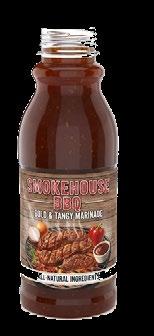
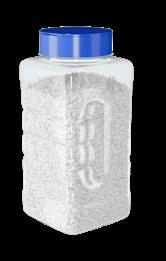
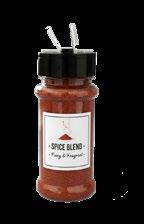
Moulded Packaging Solutions Ltd is a family-owned manufacturer of plastics packaging, based in Blyth, Northumberland. Established in 2006 by industry experts Alan Charlton and Iain McLeod, the company began production in 2007 from a modest 6,000 sq ft facility in South Northumberland. With over 60 years of combined experience in polymer manufacturing, plastics moulding, and packaging, our founders created a lean and responsive operation tailored to meet customer needs. Specializing in PET/rPET containers, MPS provides both a range of standard items and fully customized designs. Our focus covers various sectors, from food service to industrial applications, with a strong emphasis on reusable, recyclable, and sustainable products.
Quality assurance is fundamental to MPS. We are ISO 9001:2015 certified, and in 2018, we achieved an AA grade under the BRCGS Packaging Global Standard on our first attempt—a distinction we consistently uphold. Additionally, our investments in ecoefficient machinery, green energy sourcing, and environmental

waste management support our commitment to reducing our carbon footprint.
Under the joint leadership of Charlton (Managing Director) and McLeod (Manufacturing Director), MPS positions itself as a responsive, independent UK manufacturer— merging community roots with international reach. Our mission is to provide customers with adaptable, premium-grade packaging solutions while promoting regional employment and sustainable practices.
MPS is here to assist, creating packaging solutions tailored to our customers’ needs, guiding them through the development process from the initial concept to the finished product. Our highly skilled design and mould manufacturing team has access to a variety of global resources. Our customers can trust that our mould quality and manufacturing lead times are among the best in the industry, as we maintain highly competitive mould prices and aim to transition from the finalization of approved designs to production-scale manufacturing in as little as 8 weeks.
Some other key information:
• Manufacturing our own preforms as part of two-stage injection blow moulding
• Bottles and Jars stock ranging from 100ml-6000ml
• Various shapes including round, square, rectangular, and square round
• Recent investment includes 38mm neck, to go alongside our popular 63mm, 70mm and 110mm
• Capacity to expand and undertake new projects
At MPS, we’re proud to be one of the few remaining independent UK based manufacturers where our flexibility offers key benefits to our customers.
www.mps-europe.com
As regulatory requirements evolve and sustainability pressures increase, food contact materials remain one of the most dynamic and closely scrutinised areas of the packaging industry. To help businesses navigate this changing landscape, Smithers will bring together leading experts from across the value chain at the Plastics & Paper for Food Contact Packaging Conference, taking place in Vienna on 9-10 December 2026.
The two-day event will provide attendees with the latest insights into the regulatory, technical and commercial developments shaping
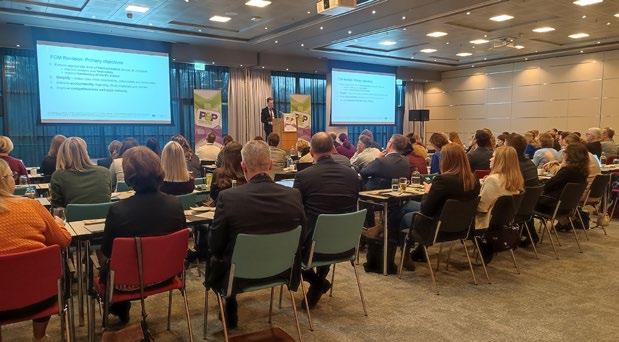
the future of food contact packaging. Bringing together packaging manufacturers, raw material suppliers, brand owners, regulators, testing laboratories and consultants, the conference offers a unique forum for knowledge sharing and networking. Key topics on the agenda include current and future regulatory considerations for the food contact materials industry, the impact of the Packaging and Packaging Waste Regulation (PPWR), PFAS and other chemicals of concern, and the latest approaches to risk assessment, testing and toxicology. Sessions will also explore
challenges surrounding NIAS, recycled materials and purity requirements, as well as compliance considerations for inks and adhesives.
Whether you are looking to understand emerging regulations, assess the implications of new legislation, or connect with industry peers facing similar challenges, Plastics & Paper for Food Contact Packaging provides an essential opportunity to stay informed and prepare for the future.
Secure your place at www.food-contact.com

In food processing, the most visible innovations tend to be robotics, inspection systems, highspeed packaging and data-driven production controls. Yet the success of each depends on something far less glamorous: the physical infrastructure that keeps power, control and communications cables organised, protected and accessible.
In a plant where washdowns, temperature swings, product changeovers and continuous operation are routine, wire management is no longer a back-ofpanel detail. It is part of the hygiene, safety and uptime conversation.
This is where conduit, cable routing and wire protection deserve more attention from engineering, maintenance and quality teams. Poorly routed cables can create hard-to-clean ledges, strain points, abrasion risks and unnecessary downtime when a line has to be modified or troubleshot. By contrast, a disciplined wire management strategy supports sanitation, makes inspections easier and gives maintenance teams a clearer, safer environment in which to work.
Panduit is a useful example of how infrastructure suppliers are adapting to the realities of food and beverage manufacturing. Its broader wire management, protection and
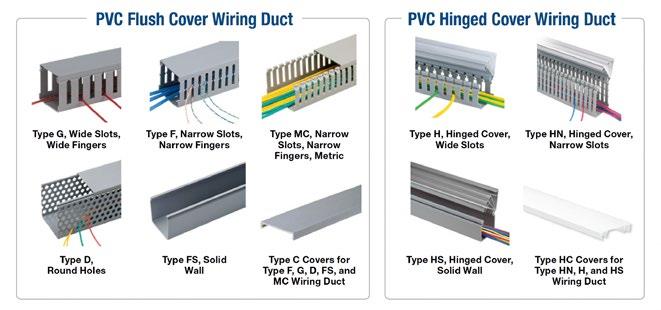
routing portfolio covers wiring duct, cable clips and supports, cable sleeves, tubing, wraps, wire basket tray systems, cable ties, mounts and accessories. That matters because food plants are not singleenvironment facilities. A control cabinet, a wet processing area, an overhead run and a packaging line may all need different materials, installation methods and levels of protection. A supplier that can support those application differences helps reduce improvisation in the field.
The strongest case for better cable management is contamination prevention. Food processors
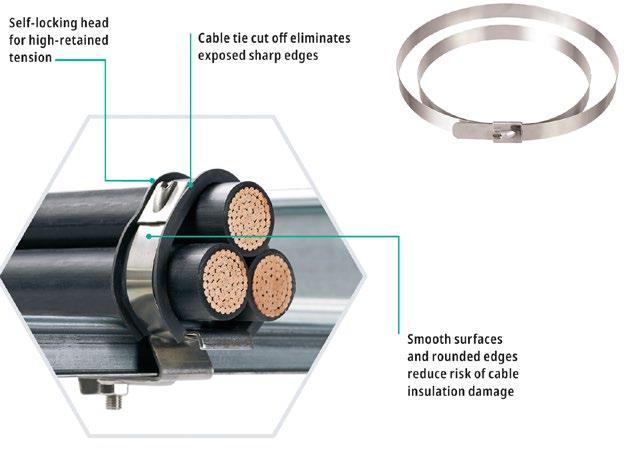
already understand metal detection, hygienic zoning and foreign-material control on the product side of the operation. The same mindset should be applied to the infrastructure around the line. Panduit’s metal-detectable and antimicrobial cable ties and mounts are designed for hygienecritical environments such as food processing, using detectable materials and antimicrobial properties to support traceability and contamination control. In practical terms, that gives engineers and QA teams another layer of defence when fastening, identifying and securing cable bundles near production.
Durability is equally important. Food and beverage facilities can be punishing places for ordinary components. Cleaning chemicals, moisture, vibration, heat, cold and frequent intervention by maintenance staff all test the integrity of cable supports and routing systems. Panduit’s range of solutions help technicians work faster when production pressure is high.
www.panduit.com
Jack Caveney filed his first Wiring Duct patent in 1955, and Panduit has continuously innovated Wiring Duct for 70+ years. Panduit wiring duct is the top choice in the market for efficiently organizing and protecting wires and cables.
f Faster panel installation
f Secure, vibration‑resistant covers
f Protects wiring during routing
For more information, visit panduit.com/wiring-duct
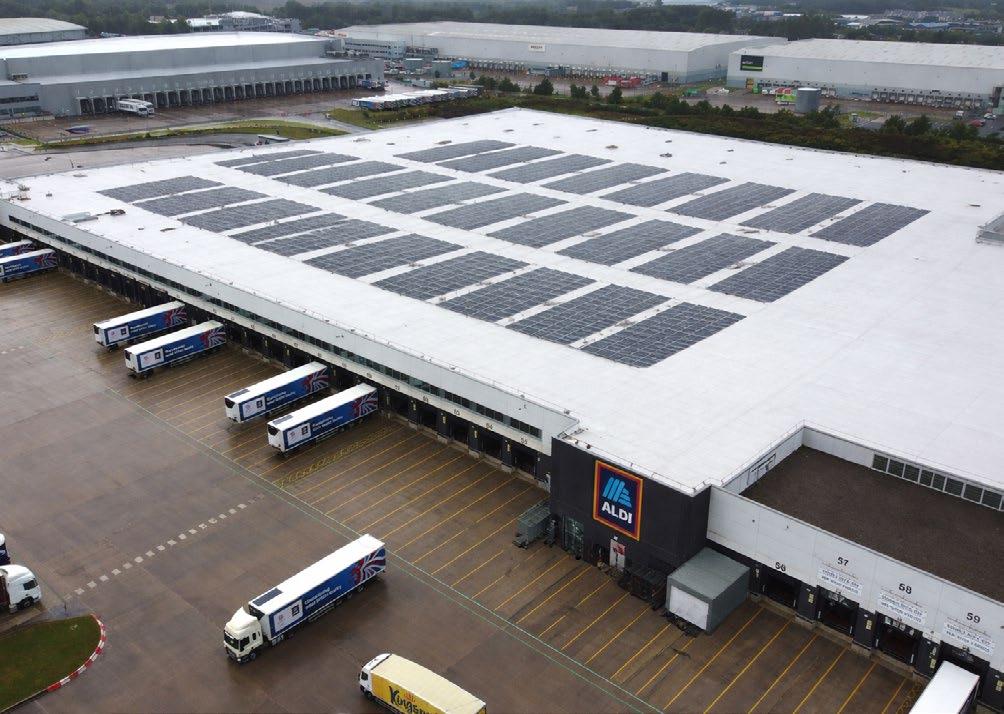
Rooftop solar is becoming an increasingly important part of the energy strategy for factories, chilled warehouses and distribution centres of food and drink.
A birds-eye view of any commercial estate across the UK will increasingly reveal hundreds of solar panels on the roofs of factories and warehouses, helping to produce the energy they need.
And, with the addition of conflict in the Middle East and global uncertainty over energy costs and supplies, even more food and drink companies are looking to invest in solar energy.
That’s according to Fusion 360, a UK-wide installer of solar panel
systems on large structures including the premises of manufacturers and distributors of food and beverages.
“One of the strongest benefits of installing solar panels is the reduced reliance on mains energy. Add to that the increased sustainability and lower costs, particularly when powering energy-hungry refrigeration and chillers, and it’s perhaps clear why we’re seeing growing interest from businesses helping to feed Britain”
says Joanne Skinner, Commercial Director of Fusion 360.
Due to the widespread use of refrigeration and chillers within processing and storage facilities, as well as the energy consumed by refrigerated trailers, the food and drink sector can be highly energydependent.
International instability caused by the pandemic and wars in Europe and Asia has encouraged many UK food and drink companies to strengthen their supply chains and

take measures to reduce risks from fluctuating energy costs.
Fusion 360 specialises in electrical design and installation, including new-building electrics, communications networking and installing solar PV panels on both new and existing buildings.
The firm recently completed a major project for Aldi’s regional distribution centre in Bathgate, Scotland, where they replaced over 4,000 solar panels with the latest technology to provide self-generated and lower-cost electricity.
“From food factories to packing plants and distribution warehouses, many food and drink related companies have expansive roofs which lend themselves well to solar energy. With continuous advances in PV technology, every new generation of solar panels is delivering greater power, longer life and a faster return-on-investment” adds Joanne.
360 has installed solar PV systems which help businesses generate sustainable power for use on site. Depending on the customer’s requirements and grid connection, surplus power can either be restricted from entering the grid or exported where suitable arrangements are in place.
Since the beginning of 2026, and the impact of the US-Iran conflict in particular, they’ve reported a notable increase in enquiries, particularly from companies related to food and drink.
“Businesses tell us they’re looking to gain greater control over their energy use and make costs both lower and more predictable. With continuing inflationary pressure across the food sector, investing in onsite solar is one practical way businesses can reduce their exposure to volatile electricity prices,” concludes Joanne
Find out more about Fusion 360 at www.fusion360group.co.uk


Peracetic acid (PAA) has become a widely adopted antimicrobial agent in the food industry, valued for its powerful oxidising properties and environmentally responsible profile. Used extensively in fruit and vegetable washing, meat and poultry processing, water treatment, and packaging line sanitation, PAA delivers rapid and effective microbial control against bacteria, viruses, fungi, and spores, even at low temperatures. Unlike many traditional chemical sanitisers, PAA breaks down into harmless biodegradable byproducts - primarily acetic acid, oxygen, and water - making it particularly attractive for food-safe cleaning applications.
As food processors continue to prioritise hygiene, sustainability, and operational efficiency, the accurate dosing and monitoring of PAA has become increasingly important. Maintaining the correct concentration is essential: underdosing can compromise hygiene and product safety, while overdosing introduces unnecessary chemical costs and the risk of material compatibility issues.
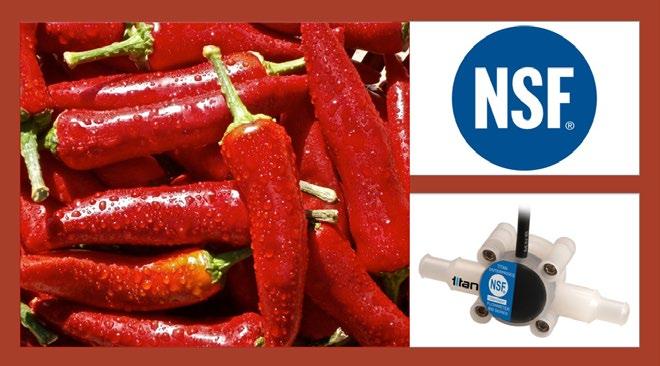
Titan Enterprises’ NSF-approved 800 Series flowmeters are widely installed within PAA dispensing systems to ensure precise and reliable chemical dosing. Designed specifically for demanding industrial and hygienic
environments, the 800 Series flow sensors combine robust turbine flowmeter technology with chemically resistant materials, making them particularly suitable for aggressive cleaning agents such as PAA.
Approved under NSF Standard 169 as ‘Special Purpose Food Equipment and Devices’, the 800 Series flowmeters incorporate materials that maximise durability and long-term performance. The meter body is manufactured from PVDF (Polyvinylidene Fluoride), a material known for its exceptional resistance to acids and oxidising chemicals. Multiple seal material options, including Viton™, EPDM, and Kalrez®, allow users to select the most appropriate chemical compatibility for their application. In addition, sapphire bearings provide extremely low friction and excellent wear resistance, ensuring long service life even under continuous operation.
One of the unique engineering strengths of the 800 Series flow measurement device is Titan’s proprietary turbine flowmeter design, which utilises fully encapsulated magnetic components. In typical turbine flowmeters, exposed magnets or metallic elements can degrade when exposed to aggressive
chemicals. Titan’s design eliminates this failure mode entirely, offering a reliable, contamination-free solution for PAA dosing systems –while maintaining the flowmeter’s competitive low cost.
A critical application of PAA in food production is within cleanin-place (CIP) and sterilise-in-place (SIP) systems. These automated cleaning processes are designed to sanitise equipment such as pipelines, tanks, and fillers without dismantling machinery, ensuring both efficiency and consistency. However, the effectiveness of CIP and SIP regimes relies heavily on the accurate dosing and monitoring of sanitising agents. Titan’s NSF-Approved flow meter enables operators to deliver precision dosing of PAA concentration within CIP and SIP cycles. This not only ensures consistent microbial control but also assists food processors maintain both productivity and hygiene compliance.
By enabling precise dosing and repeatable process control, Titan’s 800 Series flowmeters help to uphold high sanitation standards, reduce chemical waste, and support compliance with increasingly stringent food safety regulations. Combined with the proven effectiveness of PAA, they provide a reliable and costeffective solution for modern food production environments.
For further information on Titan’s range of turbine flowmeters, visit www.flowmeters.co.uk
To discuss a liquid flow measurement solution for your specific OEM application, contact Titan Enterprises on +44 (0)1935 812790 or email sales@flowmeters.co.uk
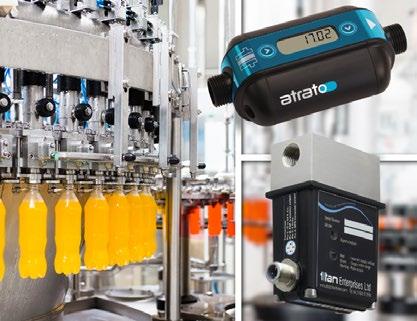
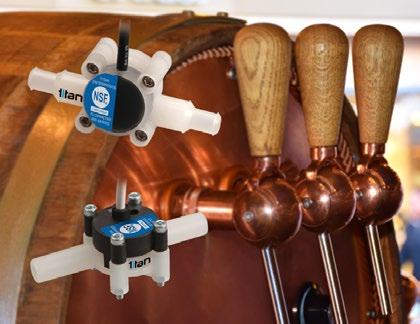
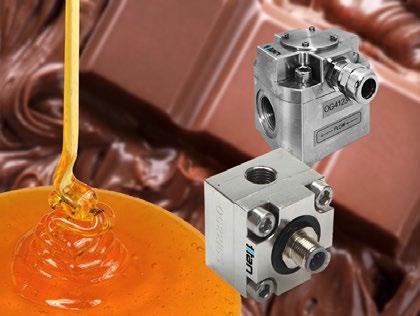
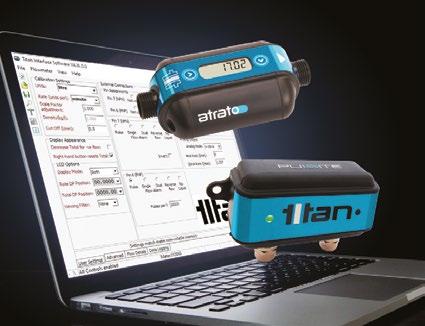
Titan Enterprises is a leading design and manufacturer of innovative end user and OEM high-performance flowmeters and flow measurement instrumentation, used within a wide range of processes, environments and applications.
• Compact, robust, reliable
• Excellent accuracy and repeatability
• Measure low to high flow ranges and viscosity
• High chemical resistance
• NSF-Approved mini turbine flowmeters
• ATEX-compliant and high pressure Oval Gear models
• OEM bespoke design capability
Titan’s liquid flowmeters are designed and manufactured to ISO 9001 with traceable calibrations.
+44 (0)1935 812790 sales@flowmeters.co.uk www.flowmeters.co.uk

By Matt Hale, Global Business Development Director, HRS Heat Exchangers

If hot honey and ‘swicy’ (sweet plus spicy) were the must-try flavour combinations of 2025, then there’s no doubt amongst those in the know that this year’s (literal) hot food trend is ‘fricy’, an intriguing mixture of fruity and spicy.
Google reports that interest in the search term ‘fruity and spicy’ doubled globally between February 2025 and February 2026, and the potential options are increasing. From condiments to salads, stir fries to cocktails, this culinary sensation is introducing consumers to interesting dishes from around the world – such as Mexico’s vasito loco, Filipino pork hamonado or Thai som tam – as well as creating new mashups and flavour combinations. While many of these flavour combinations will be created at home or in restaurant kitchens, the accompanying demand for condiments, sauces and drinks –such as spicy margaritas – presents both opportunities and challenges for food and drink manufacturers.
Combinations of spice, heat and fruit are not unique to South America or Asia. Italy’s Mostarda di Frutta has been accompanying grilled and cold meats and cheese for centuries, while North African tagines and Indian chutneys have long combined strong spice flavours and fruit. In fact, there is a scientific reason for the popularity of such flavour pairings – not only does the sweetness help to temper and counter the heat and spice (for example, soothing the taste receptors in the mouth that have been stimulated by capsaicin), but both create pleasure signals in the brain, offering the diner a multilayered experience greater than the sum of its parts.
For manufacturers, the fricy trend presents two key challenges in terms of processing. The first is that the importance of flavour and texture in these (sometimes novel) foodstuffs means that it is vital that processes such as heating, cooling and pasteurisation do not affect the quality or organoleptic properties of the finished product.
Secondly, as an identified ‘trend’, the current demand for many of the more exotic fricy ingredients, like Mexican chamoy or Japanese yuzu kosho, may be somewhat transient. Therefore, being able to produce products in small batches using existing equipment allows companies to trial demand without making significant capital investment to create products which may have limited or finite demand.
Many products which fall into the fricy category will have textures which are as complex as their flavour profiles. Fruit pieces and purees, thick textures and emulsions
will need to be preserved during manufacturing and thermal processing, so it is important to choose a heat exchanger that is suitable for both the product and the process.
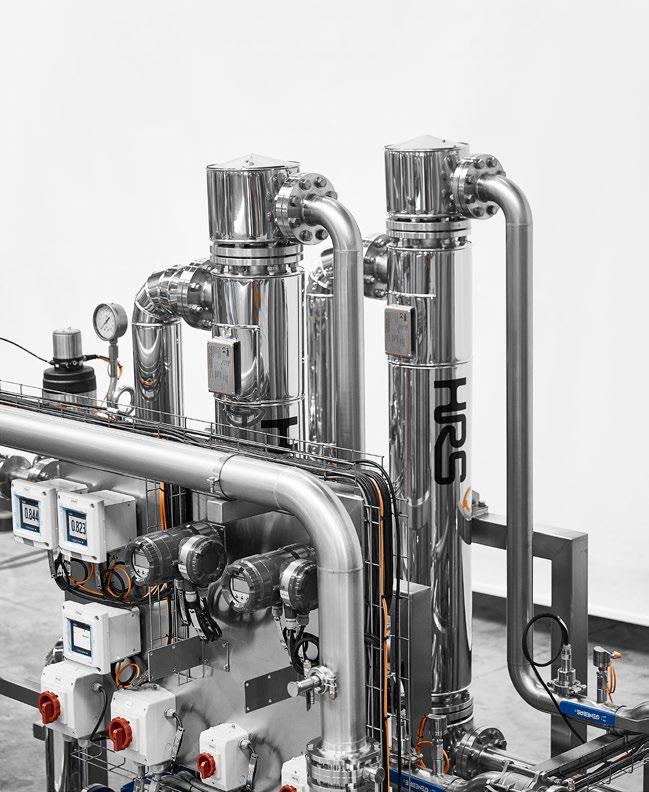
In many cases, a scraped surface heat exchanger (SSHE) will be required to ensure the necessary combination of product mixing –without damage – plus heat transfer. The HRS Unicus Series of reciprocal SSHEs is ideal for processing fricy foodstuffs as it features separately controlled hydraulic scrapers. Available in a range of designs, the Unicus is fully controllable, enabling a variety of products to be moved gently but effectively through the heat exchanger, providing timely and efficient heat transfer without damaging product integrity. Where more thorough mixing is required, or where materials are particularly thick or viscous (such as hot honey), then the HRS R Series, with its proven rotary scraper action, is more suitable.
Having flexible equipment which is capable of producing a range of different product types is a major benefit when trialling new products or producing short runs. Speed of changeover is a key consideration, as any downtime will increase overall production costs.
All HRS heat exchangers and food processing systems are designed for effective and thorough Cleaningin-Place (CIP) via integrated components and controls. Prior to cleaning, as much product as possible should be removed to minimise wastage and energy use. This is often done by physical removal or using air or water under pressure, although in certain situations the HRS R Series can be run in reverse to remove and recover some product. Common elements found in most CIP systems include pre-rinsing, a high temperate caustic or chemical wash, and intermediate and final rinses. Washing processes use a combination of chemicals and agitation (such as turbulent flow in corrugated pipes) to remove dirt.
As a food and drink manufacturer, whether or not you are responding to the current fricy trend, it is vital to have reliable and efficient heat exchange equipment which is quick to adapt to changing consumer demands. Speak to HRS Heat Exchangers today to discuss our full range of corrugated tube and scraped surface heat exchangers for food and drink products.
www.hrs-heatexchangers.com

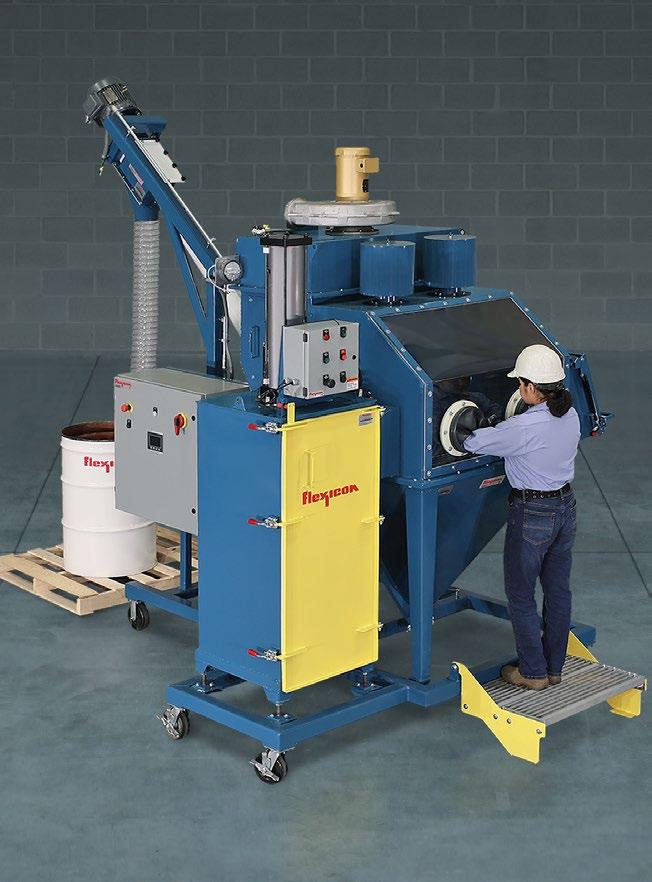
A new FLEXICON® Mobile Bag Dumping Station with glove box, bag compactor and flexible screw conveyor transfers material manually dumped from handheld sacks into elevated process equipment or storage vessels across multiple plant locations dust free. The system isolates bulk material from the operator and plant environment throughout opening,
dumping and compaction of bags, and the conveying of material downstream.
The self-contained system’s frame is equipped with locking wheel casters, ensuring stability during heavy load transfers while allowing the unit to be easily rolled into storage or for cleaning when not in use.
Using built-in rubber gloves, operators retrieve bags through a hinged door on the hood’s sidewall, placing them onto a grate for opening and emptying without direct skin contact. Emptied bags are then passed through a second hinged door on the opposite sidewall into the integrated bag compactor, streamlining disposal.
The dust collector maintains negative pressure within the enclosure, and a dual-cartridge filtration system captures dust generated during dumping, bag disposal, and compaction. Filters are easily accessible via a removable interior baffle and feature quick-disconnect fittings for fast replacement.
The high-capacity cylinder on the bag compactor can compress up to 80 bags into a removable bin. Safety interlocks on the compactor’s main door and the flapper door linking it to the dust hood prevent operation unless the door is securely closed.
Material flows from the hopper into the charging adapter of the screw conveyor. A stainless-steel screw with a specialized geometry effectively handles both free- and non-free-flowing bulk materials, including those prone to packing, caking, smearing, seizing, or fluidizing—without causing blend separation.
www.flexicon.com


Air
Reduced
Customised


Larger
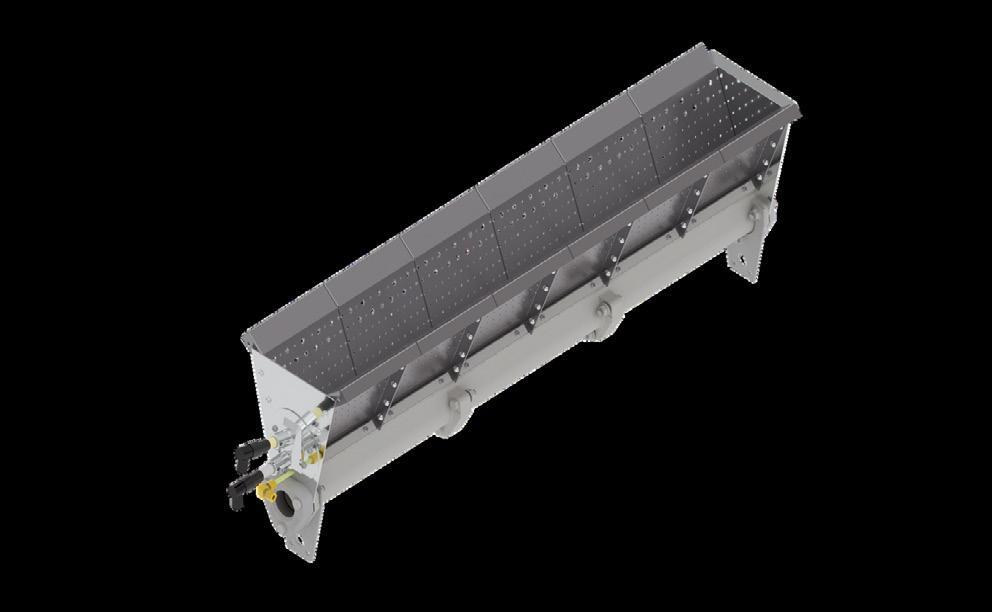
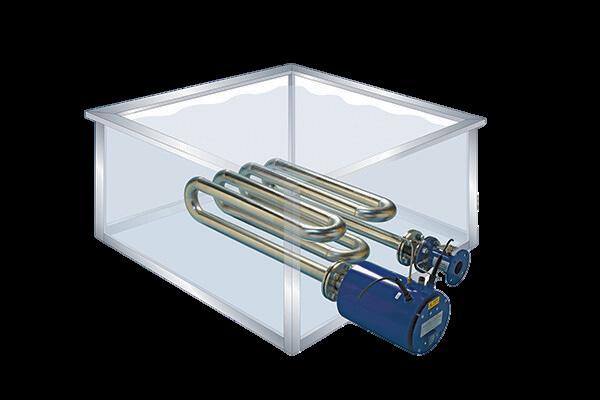
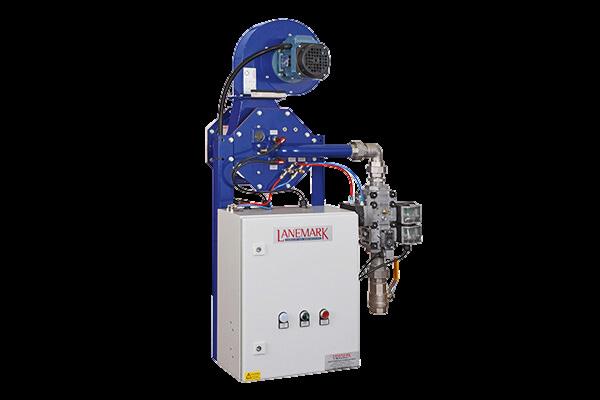
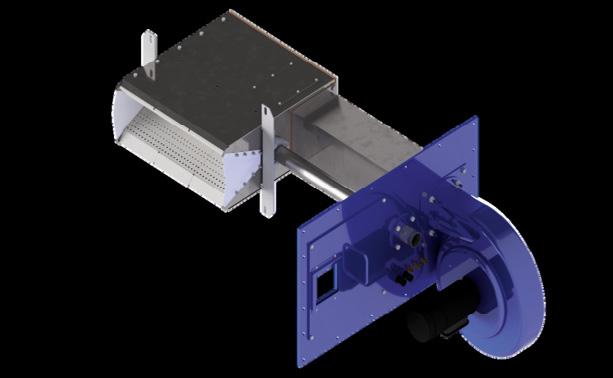
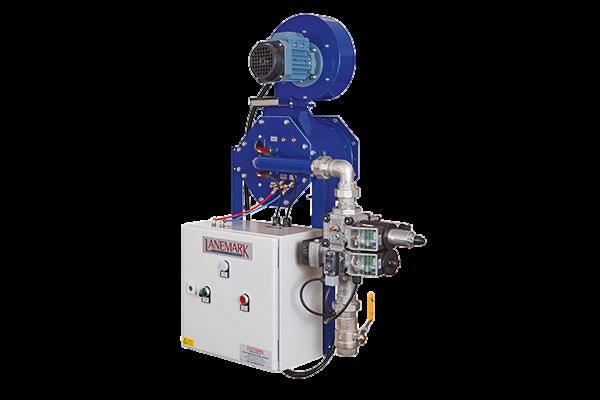
Our gas burner systems offer users reliable, high efficiency, process heating solutions.
From design, manufacturing and supply to installation, commissioning and ongoing support, we fulfill process liquid, oven and air heating needs for both new-build and conversion projects.

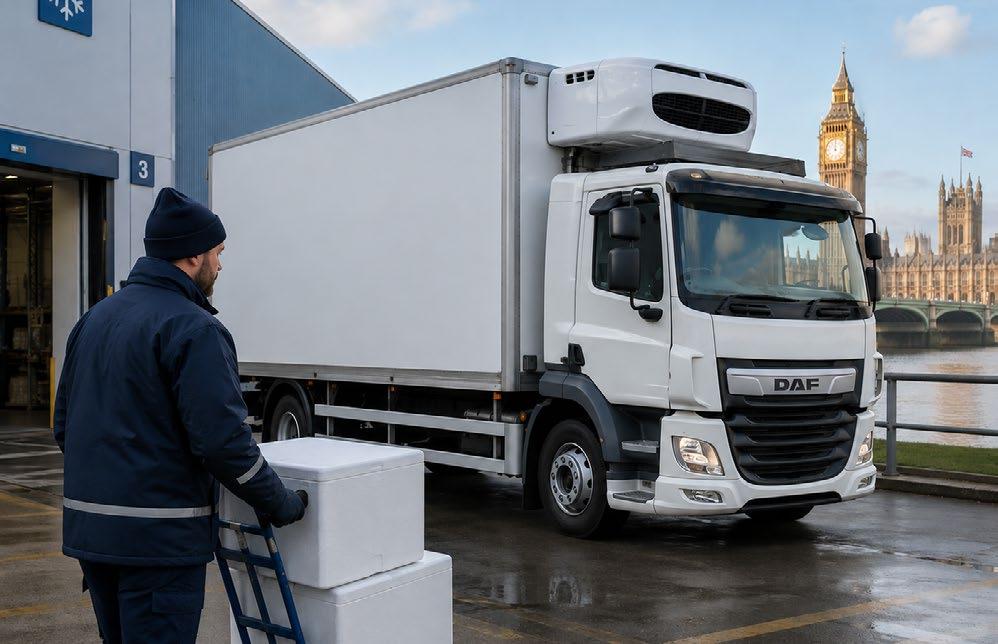

Brands could be facing significant cost increases under the UK’s Extended Producer Responsibility (EPR) regulations, with cold-chain packaging emerging as a key area of impact, according to Hydropac.
While the new regulations are now in force, there remains considerable
uncertainty across industry about who is affected and what businesses need to do.
In particular, many organisations are still unaware that they may now have reporting obligations under the expanded EPR framework, or that packaging material choices can have a direct impact on future compliance costs.
Under the UK’s Extended Producer Responsibility (EPR) regulations, businesses classified as ‘large producers’ - those with annual turnover above £2 million and handling more than 50 tonnes of packaging each year - are required to report packaging data, meet recycling obligations and pay EPR waste disposal fees.
This ‘large producer’ threshold captures a growing number of manufacturers and direct-toconsumer brands as the frozen and chilled category continues to expand.
Under EPR regulations, these businesses may be required to fund the disposal of packaging that enters household waste streams. Crucially, the fees are based on the type and weight of material classified as packaging waste.
For pet food, food and bev and DTC brands operating at “large producer” scale, packaging choice is now a material cost driver, with a clear and measurable financial gap between gel and water-based ice packs.
What Does This Mean for Brands?
Hydropac analysis shows that with a water ice pack, only the thin outer plastic film is classed as packaging and subject to disposal fees, resulting in a cost of around 0.55p per 500g unit.
By contrast, with a gel ice pack, both the plastic outer layer and the full weight of the gel contents are classified as chargeable material under EPR. This results in a total cost of around 14.3p per 500g unit.
This means gel packs can carry an additional ~13.75p per unit in disposal-related fees compared to water-based alternatives. Unlike many other compliance costs, this is one businesses can actively influence through material selection.
When applied to packaging volumes typical of “large producers”, the cost impact becomes significant.
A business handling 50 tonnes of packaging annually could face around £13,750 in additional yearly costs when using gel ice packs compared to water-based alternatives. At 100 tonnes, this rises to approximately £27,500, increasing to £55,000 at 200 tonnes and over £137,000 at 500 tonnes.
Smaller businesses are also increasingly within scope.
Organisations with annual turnover above £1 million and handling more than 25 tonnes of packaging must now register and report packaging data annually, even though they are not currently liable for full EPR waste disposal fees.
This means businesses that previously assumed EPR did not apply to them may now have reporting obligations. As those businesses grow and move into the “large producer” category, understanding the financial implications of packaging choices becomes increasingly important.
Hydropac believes the regulations represent a significant shift in how packaging decisions are evaluated, moving sustainability from a purely environmental consideration to one with direct commercial consequences.
Colin Rowland, Managing Director at Hydropac, said:
“For years, we’ve been advocating for simpler, more sustainable cooling solutions, not just from an environmental standpoint, but because they make practical sense. What’s changed is that EPR now puts a real financial value on those material choices. Businesses are no longer choosing packaging purely on performance, they’re also choosing it on lifetime cost.”
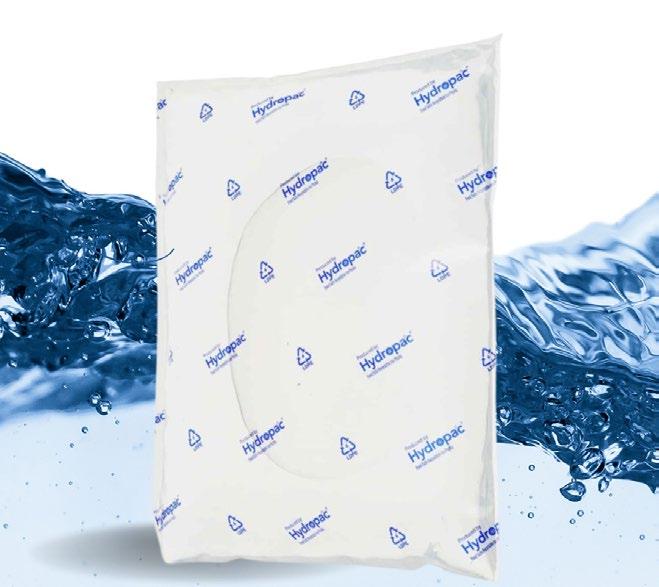
With gel packs, you’re paying to dispose of the entire contents as well as the plastic. With water packs, it’s just the outer film. That’s the fundamental difference, and it’s now directly reflected in the numbers.”
He added:
“One of the biggest challenges we’ve seen isn’t necessarily the legislation itself, it’s the uncertainty surrounding it. We’ve spoken to businesses that genuinely don’t know whether EPR applies to them, whether they’re required to report, or what impact their packaging choices will have on future costs.
The expansion of reporting requirements means many more companies are now within scope, even if they’re not yet paying full EPR fees. That makes this the ideal time for businesses to understand their obligations before those costs become a reality.”
Hydropac believes the changes will drive greater scrutiny of packaging choices across the sector.
Colin continued:
“As the market adjusts, we expect businesses to look much more closely at both cost and compliance. There’s also a wider point around making sure supply chains are aligned with EPR requirements, because ultimately, accountability sits with producers.
What’s clear is that the commercial case for water-based solutions has never been stronger. For many brands, switching is one of the simplest ways to reduce both cost and regulatory exposure.”
As frozen and chilled categories continue to grow, Hydropac is encouraging manufacturers to review both their EPR obligations and their cold-chain packaging strategies as part of wider cost, compliance and sustainability planning.
www.hydropac.co.uk
As awareness and scrutiny around PFAS (‘Forever Chemicals’) continues to grow, many food manufacturers are reviewing the materials used across production environments and exploring practical alternatives for the future.
Pioneered by Invicta, Invirobake™ is a new PFAS & PFOA-free coating technology designed for industrial bakeware and wider food manufacturing applications. Using advanced Sol-Gel ceramic technology, it is one of the first PFASfree industrial food-contact coating solutions of its kind available to the UK market.
Designed for demanding production environments, Invirobake™ has been developed to provide a viable non-stick coating solution while supporting the industry’s move towards safer and more environmentally responsible manufacturing processes. Initial testing has shown encouraging results, with the coating offering high temperature capability, durable non-stick performance and full compliance with recognised EU and US food-contact standards.
While many food manufacturers are looking to go PFAS-free, they still require the reliability, durability and consistency needed to operate efficiently within high-output commercial environments. And for many businesses, the challenge lies in identifying practical alternatives without compromising operational performance.
Invicta is working closely with customers to trial Invirobake™ under real production conditions, helping manufacturers assess suitability, durability and longterm performance within their own operations.
Trevor Talbot, coatings specialist at Invicta, said: “The move away from traditional fluoropolymer coatings is not straightforward, but it is something the industry is starting to prepare for. Invirobake™ offers food producers a practical and costeffective alternative and we are more than happy to arrange trials that will enable customers to evaluate its performance and suitability for themselves.”
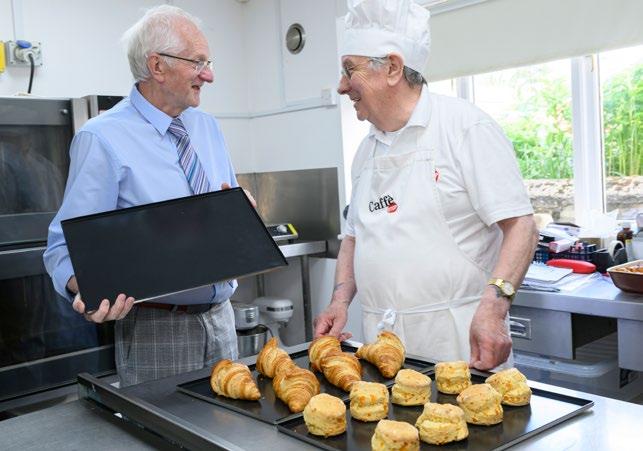

Founded in 1912, Invicta is one of the UK’s leading manufacturers and suppliers of industrial bakeware and equipment for the bakery, catering and food processing industries with customers ranging from independent producers through to large-scale manufacturers and household brands.
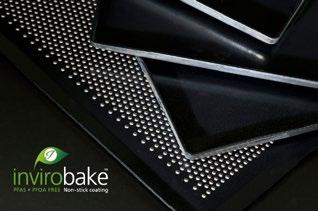


For further information about Invirobake™ or to arrange a coatings trial, visit:
www.invictabakeware.co.uk /invirobake/ call: 01751 473483 or email: sales@invictabakeware.co.uk
In the push for plastic-free packaging, French specialist and PulPac licensee Hébert Group has teamed with ANDRITZ to scale up Dry Molded Fiber production. Located in Orgelet, France, the family-owned company has long championed responsive, highquality consumer packaging.
Consumers and brand owners are increasingly demanding alternatives to conventional plastic packaging. The Hébert Group specializes in the development and manufacture of custom-molded packaging solutions for leading European and global brands across the food, dairy, cosmetics, and reuse sectors. The group is acutely aware of the challenges being faced to offer more sustainable packaging.
Julien Hébert, Chief Commercial Officer at the Hébert Group, says, “We listen closely to our customers to create products that are chosen by the top names in the food and cosmetics industries. In the course of these discussions, we have gained a deeper understanding of their expectations regarding sustainable development.
“This approach has naturally driven us to diversify our technologies, creating new opportunities and strengthening our position as a pioneer into other raw materials and environmentally friendly processes.”
After intense market analysis in 2020, the company began to look deeply into the groundbreaking technology of Dry Molded Fiber made from natural cellulose fibers. By 2023 the group had set up a dedicated building and ecosystem along with installation of its first Dry Molded Fiber line.
“We pride ourselves in our approach to sustainability in our manufacturing processes, which are energy and water efficient and where we can use materials of renewable or recycled origin that are free from fossil fuels,” continues Julien Hébert. “And this is why we have made the decision to add Dry Molded Fiber to our process offerings.”
To launch its Dry Molded Fiber journey, the group formed a separate business unit in 2023 – Herpulp – and since then has invested in several first-generation
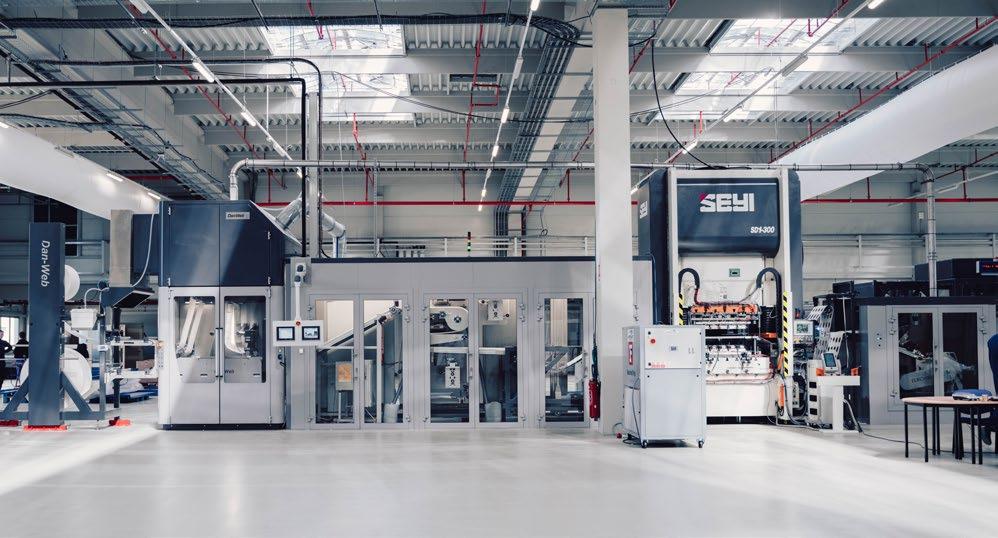
Modula lines incorporating ANDRITZ Dan-Web mill-to-web forming technology. In 2024, ANDRITZ stepped in to support the group with a dedicated expert team to complete the commissioning and stabilize process and product consistency. Throughout 2025 the Hébert Group benefited from technical visits, parameter optimization, and process upgrades including the signing of a comprehensive service contract. The service contract enables ANDRITZ to continue supporting the Hébert Group during the commissioning of the lines, with the objective being to achieve a Site Acceptance Test (SAT) and ensuring proper and reliable operation of the lines.
Mathieu Hébert, Chief Operating Officer at the Hébert Group says, “Fiber integration began even before the installation of our first line in Orgelet, with the construction of a dedicated facility designed to prevent any risk of crosscontamination. Today, we are incorporating this activity into the scope of our standards and, in the long term, aim to position this technology as a complement to our core business, allowing us to
extend our product portfolio and meet a wider range of customer requirements.
“We have been supported in this process by the experienced ANDRITZ team that is highly dynamic, motivated, and committed. Customer feedback is already highlighting the cost effectiveness, high quality finishing, and unique premium perception of our Dry Molded Fiber products.”
The company currently produces trays and lids using Dry Molded Fiber technology under its Herpulp brand name and is investigating deep-draw products for production in the future.
Regulatory pressure to phase out single-use plastics, rising customer expectations, and the need to maintain cost and performance standards are all challenges for the future. Packaging specialists are on the front line. Success requires strong technology partners who not only supply equipment but actively support optimization and long-term service.
“We strongly believe in the Dry Molded Fiber concept as a way to scale up sustainable packaging, even more so since we started working with ANDRITZ,” says Julien Hébert. “For us, this partnership represents an excellent opportunity for several reasons: ANDRITZ’s extensive experience in providing complete industrial solutions to the pulp and paper industry, technical support in project management, and strong market demand for this type of packaging solution.
“Our next ambitions together include lowering the cost to the
market, securing the stabilization of production lines, and co-developing molds tailored to the Dry Molded Fiber technology.”
The Hébert Group-ANDRITZ collaboration is a clear example of how targeted investment, technical expertise, and shared vision can deliver truly sustainable packaging that is better for the planetwithout compromising quality or speed.
Bruno Roche, Senior Vice President, ANDRITZ Nonwoven & Textile, explains:
Replacing single use plastic by natural cellulosic fibers is definitely the most sustainable path forward for packaging. Dry Molded Fiber is made industrially possible by combining well-known, proven technologies – Airlaid forming, nonwoven converting, and thermoforming – all recognized solutions within the ANDRITZ portfolio, now integrated into a seamless industrial process that significantly reduces water and energy consumption while supporting recyclable and circular packaging solutions.
For ANDRITZ, Dry Molded Fiber is a natural extension of its longstanding DNA, rooted in decades of expertise in pulp, paper, and tissue technologies. The opportunity is substantial: even a fraction of single-use plastic packaging converted to fiber would justify new pulp mill investments — at the core of ANDRITZ’s businesses. Economically viable Dry Molded Fiber starts with affordable, fitfor-purpose raw materials, where ANDRITZ brings both vast expertise and a full suite of sustainable energy solutions. Add to this our
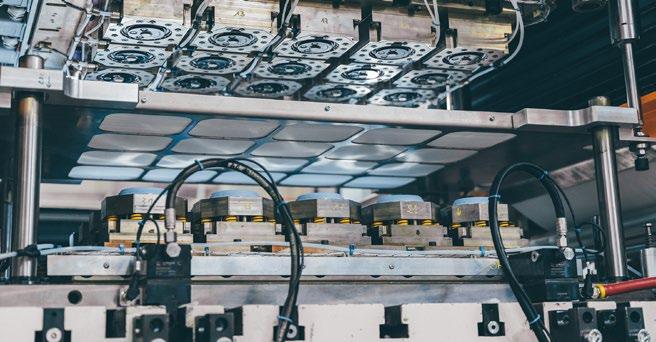
proven industrial know-how in scalable pressing and molding –drawn from our position in the automotive sector – and ANDRITZ is uniquely placed to industrialize Dry Molded Fiber at the scale brand owners require. With pioneers like Hébert Group, we are building this value chain together, with ambition and humility.
To accelerate Dry Molded Fiber industrialization, ANDRITZ has invested in a complete Airlaid Dry Molded Fiber Technical Center in the “Cellulose Valley” in Grenoble, France, purpose-built to support pioneers like Hébert Group from day one. Proximity and deep collaboration between our teams create a unique advantage: solutions validated in a full industrial environment in Orgelet, from fiber formulation and forming through to mold validation and end-product applications.
Through its Solution as a Service concept, ANDRITZ derisks innovation under strict confidentiality — helping producers move with confidence from pilot trials to fullscale turnkey DMF lines, and from ambition to market.
PulPac works closely with licensees, machine partners, and technology partners to industrialize Dry Molded Fiber and bring fiberbased applications to market. The progress made by Hébert Group and ANDRITZ is an important example of how this ecosystem moves forward in practice, combining industrial commitment with application know-how, process insight, and scalable machine technology.
“Dry Molded Fiber is moving forward because committed people and companies are making it happen. Together with licensees like Hébert Group and machine partners like ANDRITZ, we are building the industrial foundation needed to scale the technology. This is how Dry Molded Fiber moves from ambition to industrial reality,” says Sanna Fager, Chief Commercial Officer at PulPac.
www.andritz.com
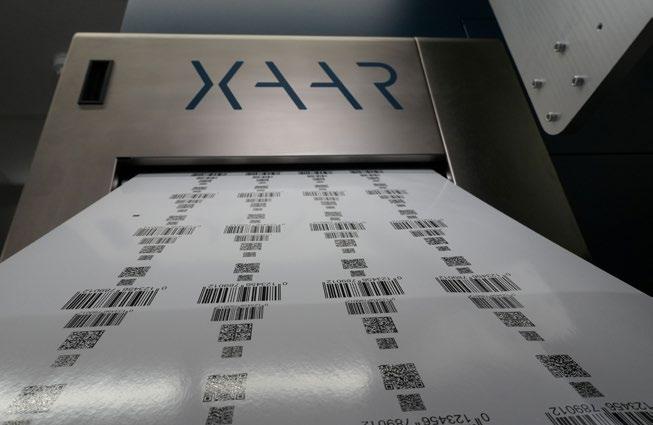
Neil Cook, Head of Strategic Marketing at Xaar, explains how digital inkjet is enabling standout decoration and embellishment alongside the personalisation, coding and traceability that brands and converters now need from their packaging.
Digital inkjet is becoming an increasingly important part of modern packaging production. Once seen primarily as a tool for shorter runs or niche applications, it is now moving into the mainstream as brands and converters look for greater flexibility, personalisation, traceability and speed to market. For Xaar, this shift highlights the growing role of inkjet not only in decoration and embellishment, but also in coding and marking, where consistent, production-grade performance is essential.
One of the biggest opportunities lies in personalisation. Digital inkjet allows brands to create packaging that feels individual and premium, without the delays and inefficiencies associated with
conventional processes. The collaboration last year between Diageo, Kammann, Marabu and Xaar on Johnnie Walker bottles showed how digital print can deliver high-impact, individualised decoration at scale, while keeping the focus on designled differentiation rather than sensitive consumer data. It was a clear demonstration of how inkjet can help premium brands combine creativity, collectability and commercial viability.
At the same time, ink innovation is expanding what packaging producers can achieve. Xaar’s Ultra High Viscosity Technology has enabled Marabu to develop inks that deliver sharp contours, durable haptic effects and wider production windows at faster speeds. In practical terms, that means richer decoration, tactile finishes and more robust embellishment for bottles and other packaging formats, helping brands create stronger shelf impact while maintaining production efficiency.
This same innovation is also driving the move towards hybrid production, where digital capability is integrated into analogue print and finishing lines. Xaar’s Versatex printbar is designed precisely for this environment, enabling embellishments such as textured effects, high-build varnishes, cold foils and high-opacity whites to be added to existing presses. More recent developments, including Versatex Black, extend that role further by bringing high-definition variable data printing to analogue label presses and finishing lines, allowing converters to add 1D and 2D codes, serialisation and humanreadable information without disrupting established workflows.
That evolution matters as GS1 Sunrise 2027 approaches. Packaging will increasingly need to do more, combining visual impact with robust traceability and scannable 2D codes. Xaar’s technologies are helping to address both requirements in a single workflow, supporting embellishment, personalisation and coding at production speed. For packaging manufacturers, that makes inkjet not simply an added feature, but an increasingly strategic part of future-ready production.
www.xaar.com
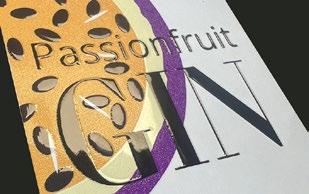
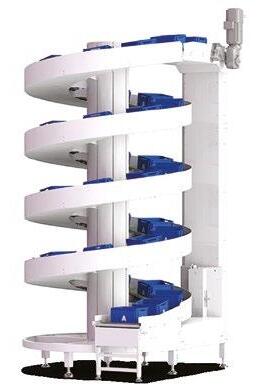
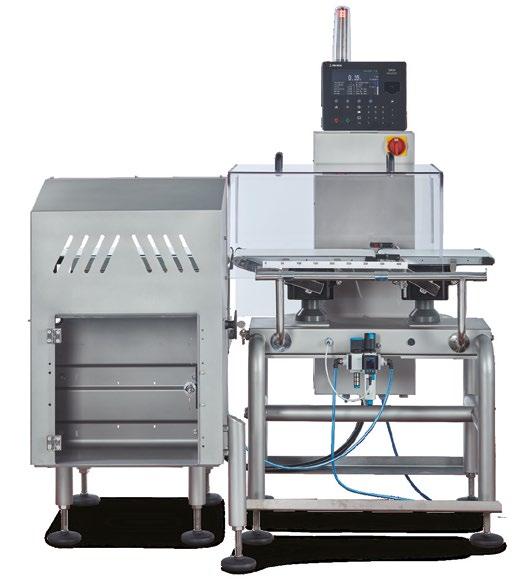
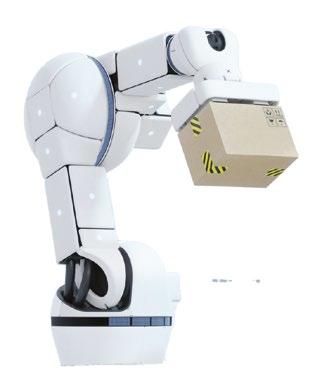

22 - 24 September 2026 l NEC, Birmingham
See automation take centre stage at the Greatest Processing & Packaging Show - the PPMA Show® 2026, held at the NEC, Birmingham from 22 to 24 September. Meet over 350 exhibitors, discover the latest technologies, experience live demonstrations and network with new contacts. Scan the QR code to reserve your free pass today.
How electric motors and variable speed drives control critical stages of
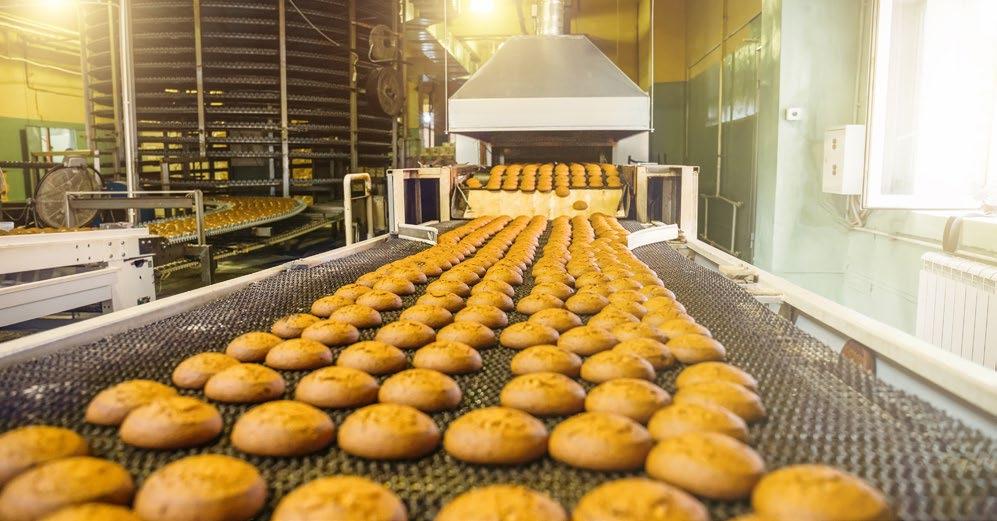
Electric motors and variable speed drives (VSDs) are fundamental to modern food manufacturing, providing the precise control needed to keep production lines running efficiently. With rising energy costs, strict hygiene requirements and increasing pressure to minimise downtime, selecting the right motor and drive technology has become more important than ever.
Although the UK has the world’s fourth-largest food and drink manufacturing sector, around 48 per cent of the food consumed in the UK is imported. Improving the efficiency and resilience of domestic production is therefore a growing priority, placing greater emphasis on technologies that maximise output while reducing operating costs.
Motors rarely work in isolation. They form part of wider systems that rely on consistent speed, torque and process control. Poor motor specification can create bottlenecks across an entire production line, making careful selection essential.
One of the biggest advantages of VSDs is their ability to automatically adjust motor speed to match demand. By monitoring factors such as speed, current and torque, VSDs respond in real time to changing production requirements.
In meat processing, for example, motors power extraction systems and refrigeration fans that maintain safe operating conditions. Without a VSD these systems typically run at a fixed speed, regardless of demand. A VSD allows airflow and cooling capacity to increase or decrease automatically, improving efficiency, reducing waste and freeing operators to focus on higher-value tasks.
Food manufacturing environments also place significant demands on electrical equipment. Highpressure washdowns and aggressive cleaning chemicals require motors with appropriate ingress protection, typically IP55 or higher, while installation practices are equally important for preventing water ingress and extending service life.
Hygiene regulations have also influenced motor design. Smoothbody motors with food-safe coatings reduce areas where bacteria can accumulate, while specialised gear units and motors offer enhanced protection against corrosion in demanding foodgrade environments.
Energy efficiency is another major consideration. While IE efficiency ratings remain important, greater savings are often achieved through VSDs, which reduce motor speed during periods of lower demand. Across conveyors, pumps, mixers, fans and refrigeration systems, these incremental savings can significantly reduce energy consumption over time.
Ultimately, motor and drive specification is more than an engineering decision. The right combination improves reliability, reduces downtime, lowers energy costs and supports compliance with food safety standards— making these technologies a vital part of efficient, resilient food manufacturing.
www.technidrive.co.uk
Autopack, the leading independent integrator of automated packaging lines, has a strong track record in providing tailored solutions to meet key customer challenges with equipment at every stage.
Boosting efficiency sustainably
Part of its success story is the ability to collaborate world-class manufacturing partners, providing customers in the food and beverage sector with solutions that enhance their operation, bolstering efficiency. One example is through Autopack’s partnership with Barcelonabased SIDE, the leading manufacturer of PET blow moulding machinery. As SIDE’s UK and Ireland distribution partner
Autopack is seeing increased demand for blow moulding lines to produce PET bottles and containers in-situ. As an integral part of the production line, blow moulders offer significant cost and sustainability benefits to manufacturers.
Pre-formed empty bottles no longer need shipping or storing avoiding the complex and costly logistical challenges for packing a wide range of goods.

Precision and performance are also evident through Autopack’s partnership with Italian equipment manufacturer Weightpack and its expertise in netweight filling for liquids. For example, in the ever-demanding dairy market Weightpack’s systems are being used for extended shelf life/aseptic (UHT) fillers and cappers. Every solution is engineered with an eye on hygiene, precision, and performance, utilising Autopack’s knowledge of UK manufacturing environments.
Weightpack’s systems operate inside compact sterile chambers, fully isolated from non-sterile areas. Every internal component is designed to be washed and sanitised, maintaining a consistently secure and contaminantfree environment. The result is a robust decontamination process that eliminates potential contaminants and safeguards product integrity.
Modular approach
Not all packing line solutions need to be fully automatic. For example,
products that require packing into buckets such as sauces, dry goods, snacks and confectionery are using Autopack’s semi-automated bucket line. This is helping customers eliminate the manual effort of separating and orientating empty buckets from a stack, at a lower initial cost compared to a fully automatic system.
Working with Autopack users can design a bucket line suited to their specific needs. From bucket de-nesters, bucket sealers, filling systems, lid de-nesters and lid pressing rollers, each system can be specified to today’s needs and added to later if required.
Autopack’s reputation rests on the proven automated benefits its turnkey lines deliver for customers time and again. From improved speed and efficiency in PET bottles to reduced costs and wastage in liquid filling or semi-automation in packing buckets, Autopack can meet the packaging automation challenges across the food sector and beyond.
For Autopack enquiries please contact: Jonathon Stewart, UK sales director T: 01432 677000 E: jonathon.stewart@auto-pack.co.uk

Manchester-based holistic health drinks manufacturer Jinger Drinks has increased production and improved efficiency with the help of Adelphi’s Response Benchtop Filler, enabling the fast-growing company to keep pace with rising demand while reducing waste and freeing up staff for other areas of the business. Since installing the Response in September 2025, Jinger Drinks has streamlined what was previously a labour-intensive process, with the compact filler able to accurately fill containers from 4ml to 1l at a speed of up to 40 containers per minute. Previously, three employees were needed to fill, cap, tighten and label the bottles by hand, with these staff members now redeployed elsewhere in the business.
Founded in Manchester in 2022, family-run business Jinger Drinks was born when its CEO, Alya, began researching natural ways to help with joint pain and arthritis. After developing a range of pressed organic ginger wellness recipes, Alya began selling the drinks at local markets, where demand grew quickly, with products regularly selling out. With the company doubling in size each year, the success of the wellness tonics soon led Alya’s son, Nial, to join the business as director, followed by his brothers, helping transform what began in a family kitchen into a rapidly growing nationwide wellness brand.
Dedicated to promoting holistic health through natural and organic ingredients, Jinger Drinks produces a range of wellness tonics designed to support immune health, joint
pain, arthritis and inflammation, alongside acid reflux, indigestion and heartburn. Committed to organic excellence, Jinger Drinks takes pride in sourcing only the finest organic ingredients.
As demand increased, Jinger Drinks needed a faster, more efficient filling solution to support production growth without compromising on quality or increasing waste. Adelphi’s Response Benchtop Filler has enabled the company to significantly improve productivity, while also allowing staff previously dedicated to hand filling, capping and tightening bottles to support other areas of the business.
“We are delighted that with Adelphi’s Response’ help, we have been able to increase our productivity to meet soaring demand. The Response saves us both time and money and has had a massive positive impact on the business. It is reliable, we only need one person to operate it, and it improves consistency since it fills the same amount each time, so there is no waste. We’re already thinking about what we can buy from Adelphi next to help support our continued growth,” said Nial.
Designed to deliver fast, hygienic, accurate and repeatable filling, the compact Adelphi Response Benchtop Filler liquid and cream filling machine can help manufacturers reduce product waste and improve process efficiency for small-batch food and drink production, as well as laboratory production environments. Suitable for liquids, oils, gels, creams, pastes and products containing particulates, the versatile system can fill bottles, jars, tubes, vials, pots and similar containers.
The Response also offers flexibility for manufacturers looking to scale production. There are four standard interchangeable pump sets allowing accurate filling across different volumes, to suit different container
sizes and product types, while an electropolished finish improves hygiene and cleanability.
With a compact and convenient design, the Response Benchtop Filler has a small benchtop footprint, ideal for facilities where space is limited, making it well-suited for small batch production runs, start-ups, pilot plants, growing manufacturers and laboratories.
A wide range of interchangeable nozzles are available to accommodate different product viscosities and container dimensions. These nozzle options include swage tip nozzles, cut-off nozzles with tip sealing and full-bore cut-off nozzles in multiple sizes, supporting clean, drip-free filling.
There are also flexible product feed options where liquid products can be drawn directly from bulk containers via a suction hose and non-return valve. Meanwhile, thicker products, creams and pastes can be fed through a hopper system, again with multiple hopper sizes available to suit production requirements.
Food and drink manufacturers will also be pleased that the Response can be cleaned rapidly and the machine fully strips down in as little as three minutes, significantly reducing downtime between product changes and supporting high hygiene standards.
Designed for growing businesses, the Response is available with one or two filling heads and can operate as a semi-automatic system or be upgraded for greater automation as production demand increases.
As Jinger Drinks continues to grow, supporting customers’ holistic health journey, Adelphi looks forward to continuing to support the company’s expansion, while helping other growing manufacturers scale production efficiently.
For further information, telephone: +44 (0) 1444 472 300 or visit www.adelphi.uk.com


Co-located with:


The only UK event connecting you with all industrial ecosystems

9,000+ engineering professionals
200+ speakers
400+ suppliers
6 free CPD accredited forums

Association partners Register Now


"Great to discover solutions we didn’t even know existed. Visiting gave us new ideas we can take forward and direct access to the people behind them.
Jack Farrar, Automotive Engineer, JLR








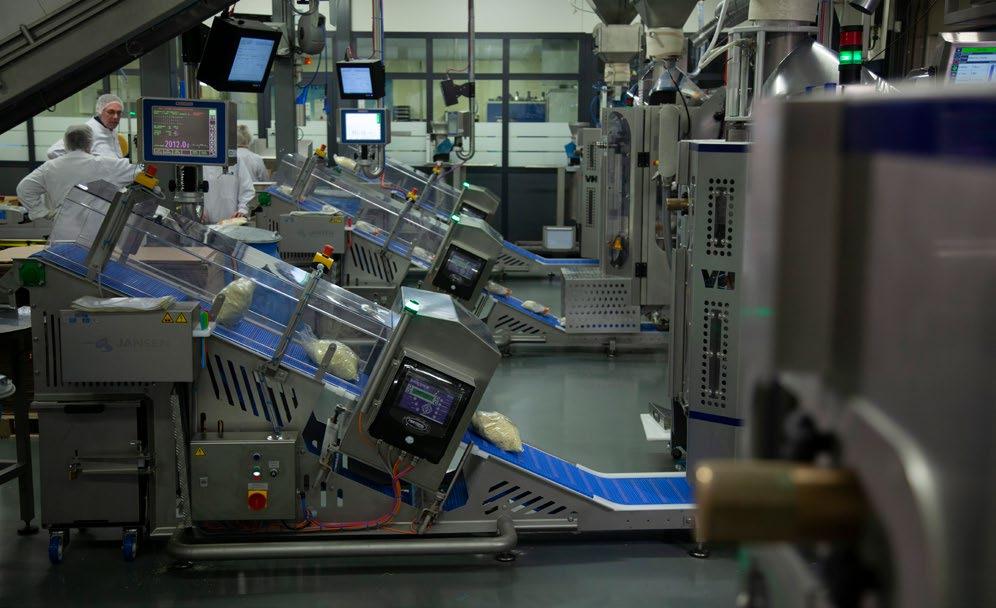
Water, like metal, is conductive, which means dairy products can react differently in a food metal detector’s magnetic field. For example, a solid block of cheese behaves differently than grated, sliced or soft cheese. This product effect may result in the product being rejected and good food being wasted.
To identify a metal contaminant within conductive products, a metal detector must address product effect. Reducing the aperture size in relation to the product size can be a simple way to increase metal detector sensitivity and reduce this margin of error. Features like single pass product learning and automatic calibration can also help.
However, with single frequency metal detectors running ‘wet’ products there is often a trade-off between ferrous and stainlesssteel performance depending on the selected frequency. Typically, higher frequencies exhibit increased performance in detecting stainlesssteel versus ferrous metals. The best approach is to find a frequency that balances the lowest product effect with detection of target contaminants.
Fortress Technology’s Interceptor software algorithms can adapt to these changing characteristics by distinguishing between product specific indicators and those that flag anomalies.
AutoPhase is another useful tool from Fortress Technology that can help to counteract product effect. For larger cheese blocks weighing up to 20kg, high product effect along with the product size adds another challenge as product signature constantly shifts when a single block moves through a metal detector aperture. M-phase is an algorithm developed specifically for this unique effect.
Vepo Cheese installed seven identical incline Interceptor metal detectors to overcome product effect on their grated cheese lines, all equipped with data reporting to enhance traceability. www.fortresstechnology.co.uk

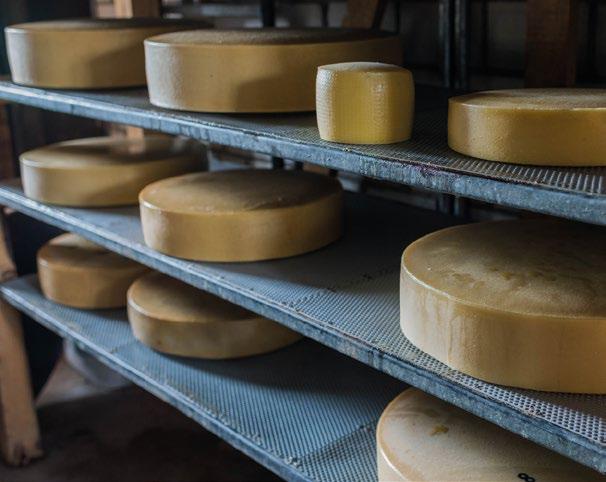
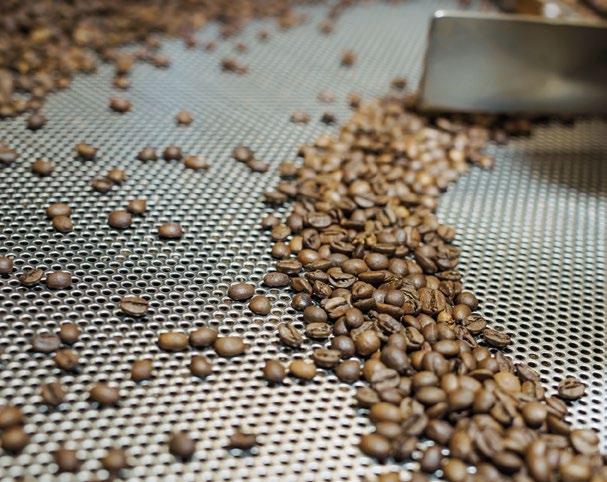
Perforation ideal for food processing
Perforated sheets from RMIG Solutions meets the high levels of hygiene demanded by the food processing industry. Perforated screens are also strong with important thermal capabilities, making them useful for a wide range of food processing applications. RMIG Solutions tailor-made perforated solutions are ideal for cleaning, heating and steaming in food production environments. Whether it’s baking trays, cereal cleaning or ingredient conveyors, all of RMIG Solutions perforated materials can be customised for each application.
RMIG Solutions ability to work with different grades of stainless steel, aluminium and galvanised mild steel at very high perforation specifications, allows us to provide the
food industry with perforated materials that give high air and fluid flows through burr-free open area designs.
This provides ideal solutions for cleaning, heating and steaming in food production environments. So wether it’s baking trays, helical feeding drums or ingredient conveyance, all our perforated materials can be tailormade for fabricating and finishing in applications to meet customer’s exacting requirements.
RMIG Solutions also deliver a wide variety of stock sheets in various materials and hole configurations, which we can deliver within 24/48 hours for those urgent requirements.
In less than two years since launch, RA Automation Ltd. has secured a strong foothold in system integration, completing projects for major names including Amazon and Pukka while exceeding its initial growth targets

RA Automation
may be a relatively new name, but the expertise behind the business tells a different story. With a combined 45 years of experience in system integration, co-founders Ashley Adams and Richard Boon have built a company grounded in technical excellence and long-term customer relationships.
“We’re a systems integrator predominantly working across airports, logistics, and food & beverage,” explains Ashley Adams. “Currently we’re a team of eight, specialising in PLC and visualisation software, electrical design, control panel supply, and full project management.”
The decision to launch RA Automation was rooted as much in philosophy as opportunity. Having previously worked together in senior roles, Ashley and Richard made a conscious decision to build a business aligned with their own principles.
“We’re big believers in a customerfirst approach and long-term relationships based on trust,” says Richard Boon. “Seeking short-term gains at the expense of customers is not how good working relationships are built. We always want to do right by our customers, even if it means making less in the short term.”
That mindset has resonated. Since launching in October 2024, the business has grown rapidly, expanding to a team of eight while completing high-profile projects and surpassing growth targets.
From the outset, RA Automation has focused on depth rather than breadth. “Rather than trying to be experts in everything, we have chosen to double down on our experience in airports, logistics, and food & beverage,” says Richard. “That allows us to deliver high-level systems that create real value.”
At its core, the company solves operational challenges around throughput and system performance. “Our customers come with varying issues, but often it boils down to throughput capacity,” explains Ashley. “We design systems that increase throughput in a controlled, manageable way.”
However, technical capability is only part of the equation. “A big part of what we do is understanding how operators interact with the system. We build that picture with the customer based on their specific needs and our team’s expertise.”
“Like most system integrators we offer an end-to-end solution, but what sets us apart is the calibre of the people behind the systems,” says Ashley. “We’ve assembled a highly capable team that provides excellent service at every stage.”
The results often speak for themselves. “Our solutions are a lowrisk investment. They’ve consistently proven to increase throughput capacity.”
“In many cases, we’re replacing manual processes with fully automated systems,” adds Richard. “That leads to reduced labour costs, increased efficiency, and improved safety.”
“When people think of conveyors, they often think of the basics. Where we really add value is in highlevel system integration.”
Looking ahead, RA Automation is focused on growth without compromising service quality. “Whether there are eight or eighty of us, our goal will always be to provide a personable, dependable service,” says Ashley.
“Ultimately we’re here to improve our customers’ operations over time,” Richard concludes. “We look forward to helping more businesses achieve tangible results through effective system integration.”
For more information, visit www.raautomation.co.uk
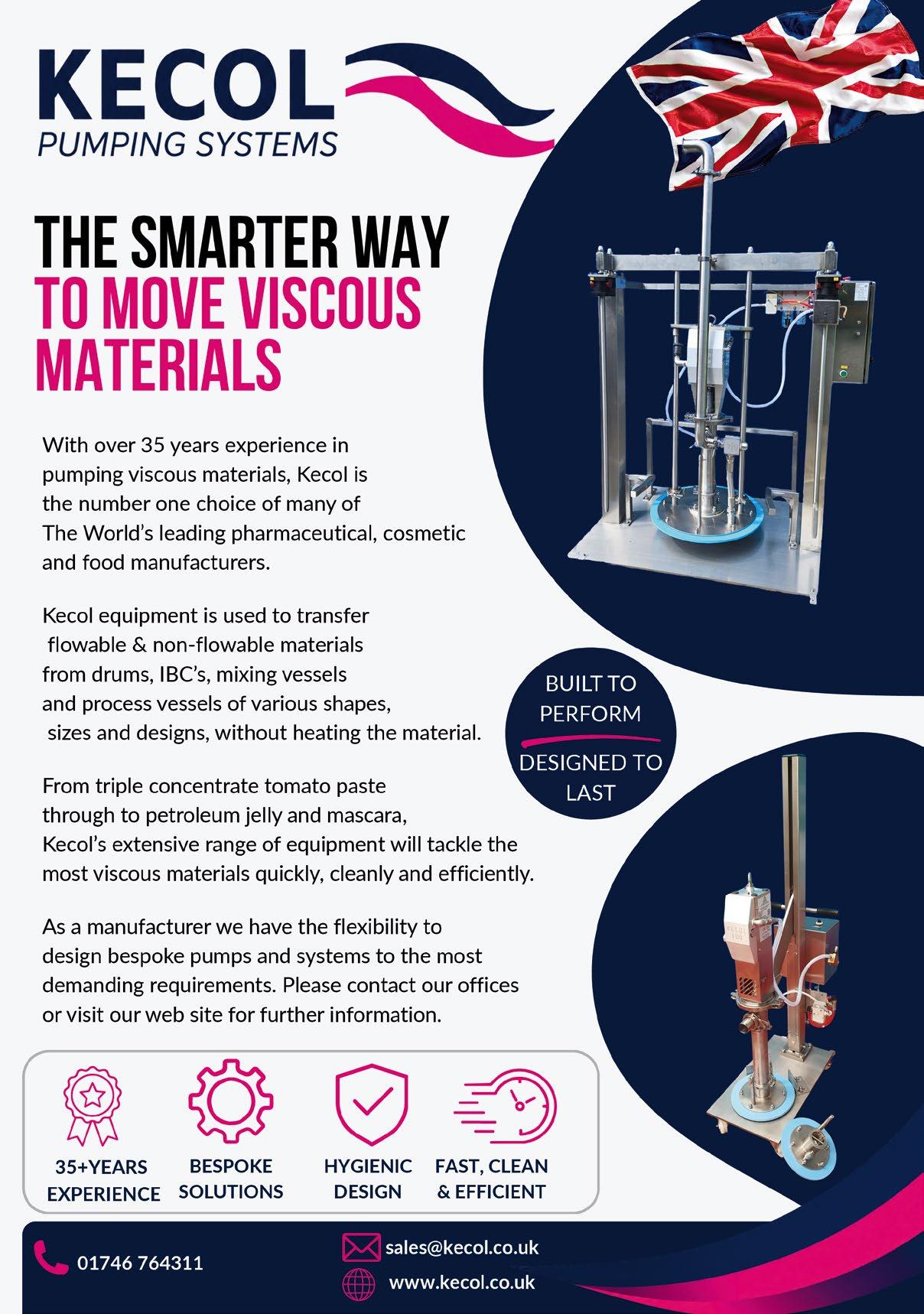
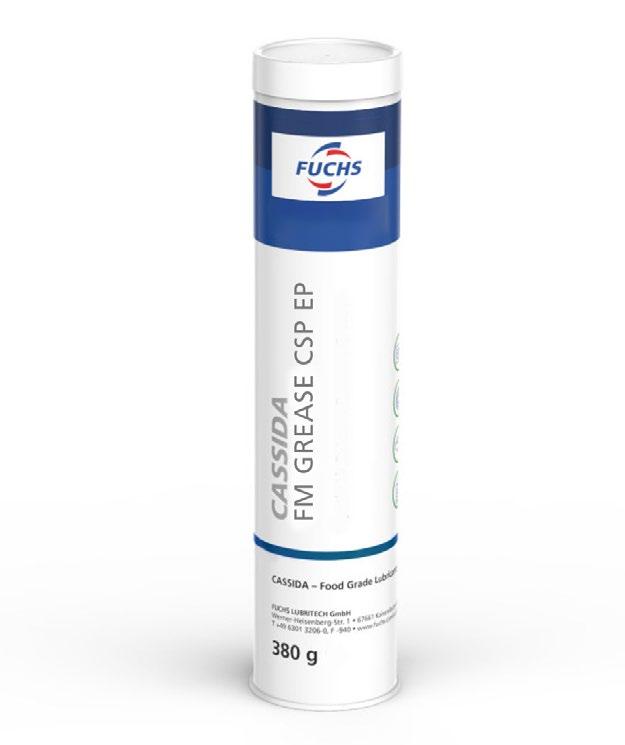
FUCHS Lubricants Co., the world’s largest independent lubricant manufacturer, spotlights its CASSIDA FM GREASE CSC EP Series. This high performance, NSF H1-registered food-grade grease is designed to keep critical food and beverage processing equipment running reliably where incidental food contact is a concern. Formulated with a calcium sulfonate complex thickener and white mineral oils, the series delivers lubrication performance, protection, and reliability that support both productivity and compliance.
CASSIDA FM GREASE CSC EP 1 and 2 provide robust mechanical stability
in both dry and wet conditions, showing minimal consistency change in roll stability and modified roll stability tests. This stability helps the grease stay in place, maintain its structure, and protect components under continuous mechanical stress and water exposure. Excellent tackiness and resistance to water spray-off make it well suited for environments with frequent high-pressure washdowns that can otherwise strip lubricant from exposed components.
The series offers a wide operating temperature window, resisting oil
bleed and maintaining structural integrity at elevated temperatures due to its high dropping point, while also maintaining high mobility at temperatures as low as -20°C (-4°F) for use in cold storage and refrigerated areas. This allows maintenance teams to standardize on a single food-grade grease across hot, ambient, and cold sections of their facilities, simplifying inventory and relubrication practices.
To protect heavily loaded components, CASSIDA FM GREASE CSC EP delivers extreme pressure and antiwear performance, including a high 4-ball weld load and low friction with minimal wear scar. These properties help extend bearing life, reduce wearrelated failures, and minimize unplanned downtime on assets such as conveyors, mixers, and pumps operating under high loads or at high speeds, supporting longer maintenance intervals and reduced grease consumption.
CASSIDA FM GREASE CSC EP is suitable for roller and plain bearings, mechanical linkages, electric motor bearings, pump shafts, and centralized lubrication systems. The NLGI 2 grade is particularly effective in hightemperature, steam-laden, or high-speed applications, while NLGI 1 is optimized for automated and centralized systems where reliable pumpability is essential. The series is NSF H1 registered and Kosher and Halal certified.
For additional information, visit www.fuchs.com/us/en/product/ product/143757-FM-GREASE-CSCEP-SERIES/

Decorative shrink sleeves enable full 360° branding, allowing for vibrant colours, detailed information, and striking graphics. Viscose uses durable flexographic printing that resists scuffing and wear, ensuring a premium look and feel throughout the product lifecycle. This provides brands with the opportunity to maximise shelf impact and deliver bold, eye-catching packaging.
How Viscose Can Help
Using advanced flexographic printing technology, we deliver premium shrink sleeves with excellent print quality and fast turnaround times.
Our capabilities include:
• Up to 8-colour UV flexographic printing using latest LED print technology
• A range of eco-conscious materials such as; recyclable PET, industrially compostable PLA, and 30% post-consumer recycled (PCR) rPET
• Wide stock caliper range from 45 to 70 micron
• Complimentary origination
• Low MOQs, tailored to promotional runs & emerging brands
• Lead times from as little as two weeks
• High speed welding and cutting including multiple perforation & anti tamper options
• Multiple supply formats: reel-fed tubing, pre-cut sleeves, and pre-formed sleeves
• Complimentary technical advice, in-house colour matching and design guidance
• Optional finishes including matte, gloss, matte varnish, and perforations
• Pre-distortion and artwork creation available on request www.viscoseclosures.com

A new case study on the Quantum Design UK and Ireland website highlights how ELROILAB and Specim hyperspectral imaging technology helped a major baby food manufacturer reduce customer complaints by 90%.
The challenge was detecting tiny chicken bone fragments and other contaminants in minced chicken products— materials that are often difficult to identify using conventional RGB cameras or manual inspection. By combining Specim’s FX10 and FX17 hyperspectral cameras with ELROILAB’s AI-powered SPECTRAL AI software, the system can identify contaminants based on their spectral signatures rather than visual appearance alone.
Installed directly on the production line, the solution performs real-time inspection and automatically removes foreign materials, improving food safety, production consistency, and operational efficiency.
Following the project’s success, ELROILAB plans to expand the technology into recycling and other industrial sectors.
QDUKI are the distributors for Specim Hyperspectral in the UK and Ireland.



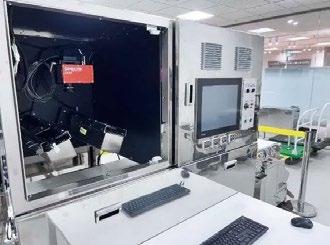
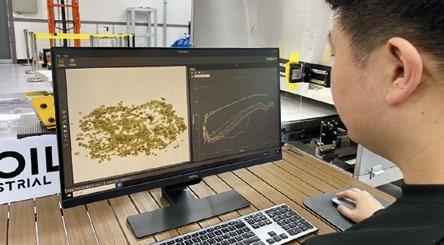


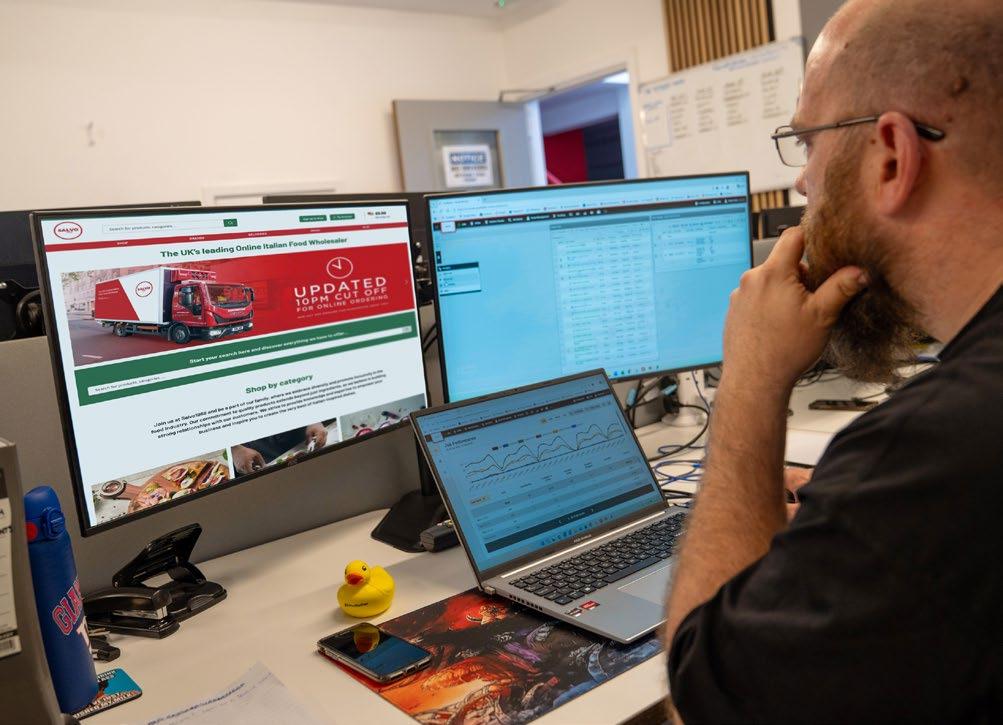
The UK’s first online Italian food wholesaler and distributor, Salvo 1968, is using Podfather to improve efficiencies and boost customer service across its delivery operation.
A family inspired business, with decades of heritage and sector experience, Hertfordshire-based Salvo has seen an increase in vehicle efficiency, evidenced by a 25 percent reduction in fleet size, after rolling out the logistics solution.
Since originally implementing Podfather, Salvo has also expanded geographically with depots in Brighton, Bristol and Manchester, and added to its product offering with a new frozen food category.
“Founded in 1968, we were the first importer of restaurant and
pizzeria ingredients from Italy,” commented Rosa Gibson, Head of Brand and Marketing at Salvo 1968, and granddaughter of the founder Salvatore Cumbo. “Over the last five decades we have continued to innovate, launching the first B2B online trade platform, offering a national delivery service, and more recently using the Podfather logistics solution to streamline our processes and improve our performance and customer experience.”
Salvo originally introduced Podfather a number of years back, but it wasn’t until a recent change in management that the software, which includes route planning and optimisation features, electronic
proof of delivery evidence (ePOD) capture, and real-time ETA notifications and tracking, was used to its full potential effectively. Following a review of internal workflows and processes, the new management team has implemented upgraded handheld devices making them easier to use, has introduced new software and solutions that are integrated with the Podfather workflows and has reengineered how Podfather sits within the business.
Sammy Turone, General Manager at Salvo 1968, added, “When I joined the business there wasn’t an appetite for new technology or new ways of doing things. So, I explored what did work. I built on
the individual strengths that were present in the existing staff and I engaged with the Podfather team.
“We now have a robust solution, with Podfather at its core, that is delivering tangible results for our customers, our staff, and our bottom line, and we have the ambition to build on this for future success and growth.”
Offering a next day service, five days a week (six in London), Salvo covers central and southern England, Midlands and Manchester using its own vehicles. Making on average 300 deliveries a day, with a mixed fleet of 3.5- to 18-tonne temperaturecontrolled vehicles, Salvo works closely with its customers to accommodate special requests and requirements. Using Podfather to plan routes and optimise vehicle usage Salvo has been able to extend its order cut off time to
22:00 hrs and has reduced the overall size of its fleet by 25 percent representing significant financial and environmental savings.
“Before we used Podfather we had fixed routes, manual processes, and an over-reliance on paper,” added Paulo Silva, Senior Operations Manager at Salvo 1968. “Using Podfather we are addressing all of these issues. We are more reactive to new customers and changing customer requirements, we have automated our workflows, and we are working towards being paper free.”
In addition to the use of Podfather’s advanced route planning and optimisation tools, Salvo has also embraced the visibility offered by the software with real-time tracking and the ability to share ETA notifications and live updates with its customers, internal service team
and management. Electronic Proof of Delivery evidence, including time, date and location stamped photographs and signatures as well as instant notifications of order exceptions or defects is also available digitally making it easy to access, share and digest. Salvo has also recently launched a WhatsApp web tool to further improve its customer experience and engagement.
“We are already extremely proud to collaborate with the finest suppliers of Italian ingredients and to supply some of the UK’s most respected pizza and food service brands,” Turone concluded. “By further utilising Podfather’s features, functionality, and information that it captures, we can continue to improve the efficiency of our delivery operation and the service we provide with positive impacts.”
www.thepodfather.com
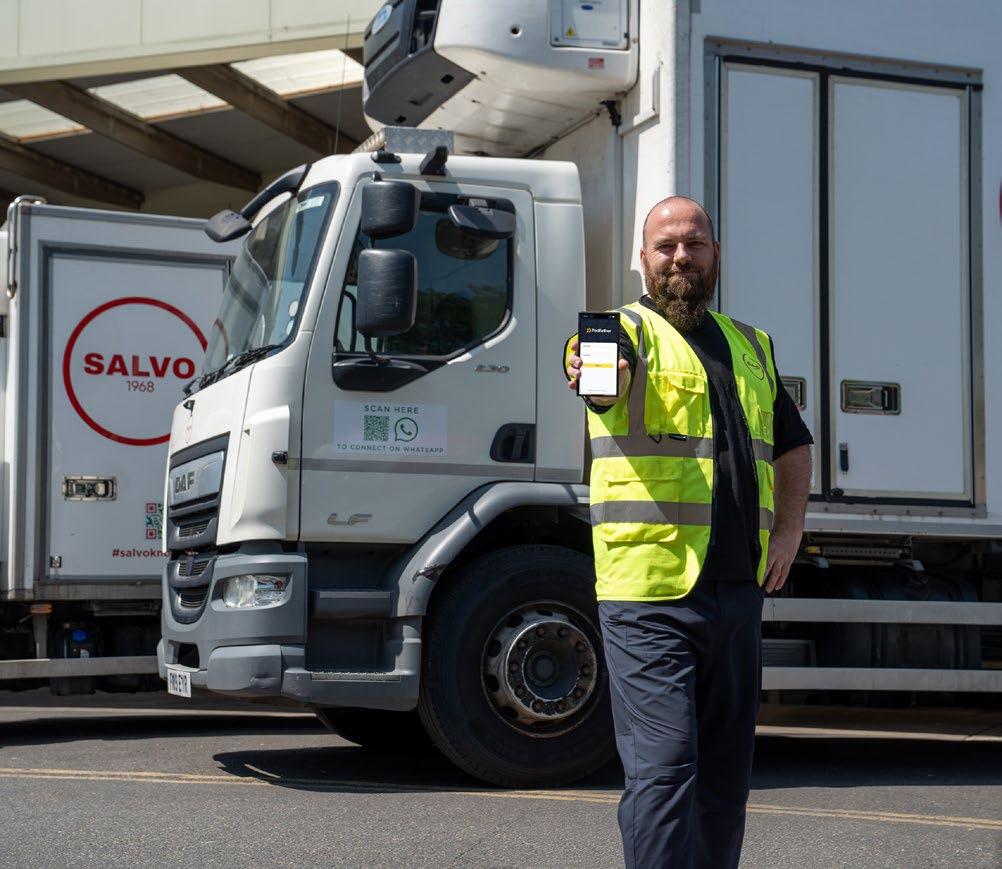
Experts from leading hygienic flooring specialists Kemtile attended the Sustainable Food Factory show today for the first time with a powerful message around the benefits of laying sustainable floors in fast-moving food production environments.
Sustainable Food Factory is the UK’s leading event for decarbonising food and beverage operations, bringing together the UK’s value chain to learn, collaborate, network and share best practices in sustainable food and beverage operations.
Kemtile, a division of Stonhard, has been providing high performance flooring solutions to customers across the UK’s food and beverage industry for over 40 years.
Their ‘single source’ approach to flooring focuses on extending shelf life, reducing material waste, supporting efficient cleaning regimes and future-proofing sustainable food production.
Insights into sustainable flooring for a vertical farming factory will be on offer as the experts look to drive debate around moving the approach to sustainability from a moment to a mindset.
At the show on Stand A3, they will also be launching several product innovations in the space – notably new kerbing technology from international kerbing partner, Polysto.
CleanRock® kerbs are a next generation composite which includes recycled cut off materials from the company’s CleanSheet panels for walls and ceilings, making the kerbs stronger and more sustainable.
The new technology builds on an earlier highly innovative R & D project exploring recycled composite materials including recyclates from wind turbine blades.
Dave Sleight, Key Account Manager at Kemtile, commented: “Sustainability is not only about reducing energy consumption, but also creating facilities that last longer, perform better, generate less waste and support efficient food production for years to come.”
Together with technical partners in Stonhard – which operates in 50+ European markets and has 100 years of its own install and manufacture expertise to share – Kemtile has redefined sustainable flooring for

super demanding Clean-in-Place (CIP) environments.
CIP areas present some of the harshest conditions within food and beverage manufacturing regularly reducing the lifespan of conventional flooring systems, leading to repeated repairs, increased material consumption, unplanned downtime and higher lifecycle costs.
To meet these challenges Stonchem CIP from Stonhard is an advanced flooring system that combines the proven thermal shock resistance and durability of Stonclad UT with the exceptional chemical resistance of Stonchem 800 series vinyl ester technology.
Dave again: “It simply supports a more sustainable approach to high pressure facility management.”
Setting the tone for Kemtile’s approach to sustainable practice is Stonhard parent company RPM International Inc. Based in the US, RPM is a $7.4 billion multi-national company founded in 1947 with a significant commitment to a sustainable future.
Its Building a Better World programme integrates sustainability into every level of its business and equips its associates at Kemtile and across the world with an understanding of how sustainability issues - like climate change – may impact us and encourages them to lead and innovate.
Dave again: “The most sustainable flooring solution is one that performs reliably for years. We help our clients reach their own sustainability goals while maintaining the highest standards of hygiene, safety and productivity.”
www.kemtile.co.uk/sustainableflooring/

Promptly identify steam trap leaks and faults with real-time monitoring solutions. Fast deployment from pilot through to site with no invasive work (no shutdown requirement) and no integration with local networks or IT systems required.
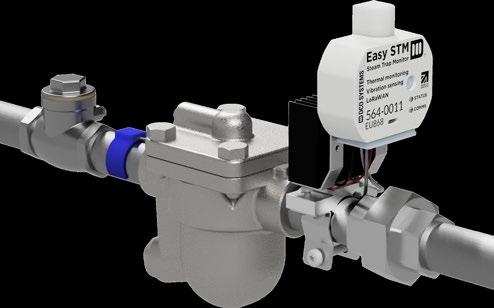
⦿ Simple - Quick install on any steam trap type
⦿ Cost effective - High return on investment through loss reduction
⦿ Zero maintenance - Energy harvesting eliminates battery changes
⦿ Live data - Real-time temperature, acoustic, vibration, etc.
⦿ Turn-key - End-to-end solution with no on-site IT requirements
⦿ Wireless Technology - With support for world-wide LoRaWAN and BLE standards


+44 (1285) 359059
www.dcosystems.co.uk

Reduce energy costs with commercial solar and electrical solutions for refrigeration, processing and distribution.
Energy solutions designed and installed across the UK


Food and drink brands need packaging that keeps pace with changing product ranges, seasonal campaigns and shorter promotional runs.
The OKI Pro9542dn packaging and graphic arts printer gives brands, packaging teams and print providers the flexibility to produce high-quality, short-run work inhouse, without waiting on external production schedules.
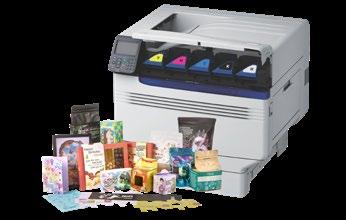
With CMYK + WHITE capability, the Pro9542dn prints WHITE on dark or transparent media or beneath colour for greater impact on non-white substrates. It is ideal for packaging prototypes, labels, short-run pouches, paper bags, tags, stickers, window signage and premium brand materials where colour, opacity and shelf appeal matter.
The printer supports media from A6 to SRA3, banner lengths up to 1.3 m, and media weights up to 360 gsm single-sided. With output speeds of up to 50 ppm on A4, depending on media and settings, it helps food and drink businesses improve control, speed and creative flexibility.
www.oki.com

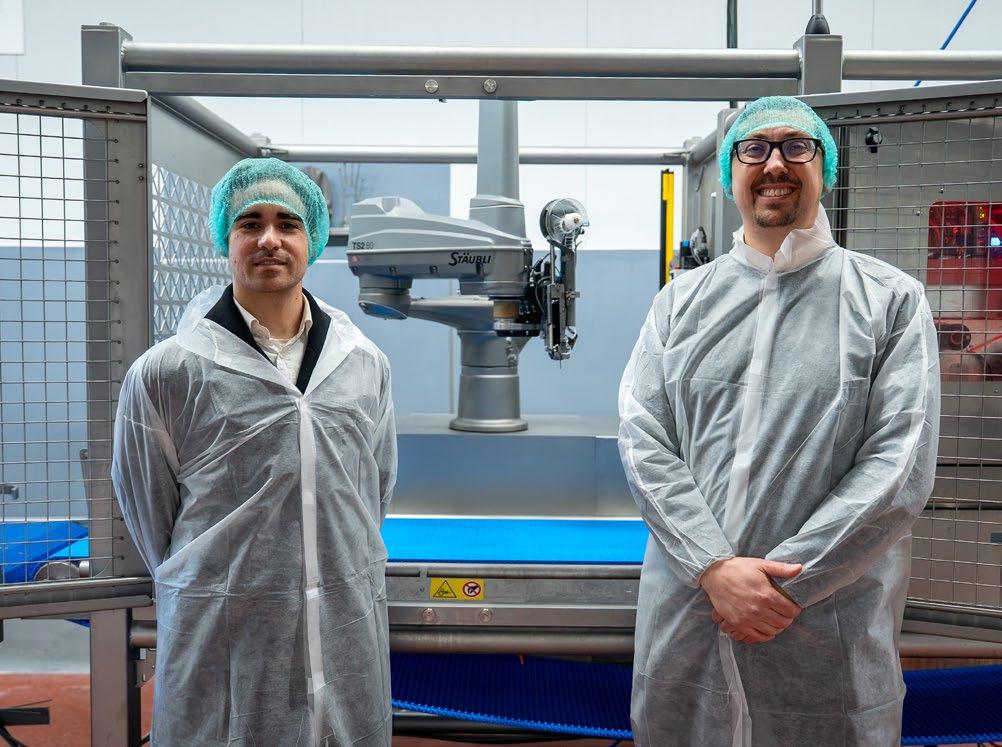
AI- and robot-based labeling of Serrano hams
Until recently, labeling Serrano hams, which is a must because it determines their progression through different aging and drying processes, was a laborious task. Since a robot could not detect the bones in the ham, human involvement was indispensable. Now, a Spanish systems integrator has developed an AI-based robotic system capable of performing this task. The labels – up to 900 per hour – are injected by a Stäubli SCARA robot designed for hygiene-sensitive applications in the food industry.
It takes 10 to 18 months of drying and ripening for a delicious Spanish Serrano ham to be ready for consumption, and this process consists of several steps. A mediumsized Serrano producer can process
more than 5,000 hams per day, so labeling them with the week, year, and batch number is a small but crucial step early in the process. For human operators, this entails physical strain. It also requires expertise, as they must avoid areas with bones, which the application tool cannot penetrate.
It is obvious that given these conditions, automation would be progress. Yet, although the Serrano industry is not small, this goal has not been achieved, and it is equally obvious why: As a natural product, the position of the bones in the hams, which account for 30 to 40% of the total weight of an 8 to 12-kg Serrano ham, differs. For each individual ham, the operator must make individual choices based on their experience.
So, is there no chance of robotbased automation here, even though robots are certainly capable of applying labels? Timpolot, an automation expert located in Olot, a center of meat production in Eastern Spain, has found a solution by combining a Stäubli robot with a fastener applicator and an AIsupported vision system.
Jordi Bassols, founder and General Manager of Timpolot, describes the process: “The hams are manually placed on a conveyor belt in a random manner. A vision system identifies the position of each piece and, using AI, determines the ideal labeling point while avoiding bone impact.”
In the meantime, a printer creates a plastic label. A robot, installed beside the conveyor and equipped with a standard pneumatic fastener applicator, picks up the label and, guided by tracking coordinates from the camera, injects the applicator’s needle into the ham.
A robot that processes up to 180,000 kg of ham per day
The line described is operated by a major Serrano ham producer with a very high output. The SCARA robot, a Stäubli TS2-80 HE, processes 150,000 to 180,000 kg/day of ham at a continuous rate of 750 pieces/ hour, peaking at 900 pieces/hour, which implies a cycle time of only four seconds. In fact, the robot could work even faster, but label printing and previous processes limit the speed.
Jordi Bassols: “By automating this task, we address several important aspects: first, improving job quality, reducing sick leaves, and allowing operators to be dedicated to highervalue tasks; and second, achieving better traceability control by centralizing all IT management at one single point.”
Designed for applications with high hygienic standards
The robot that Timpolot chose – the Stäubli TS2 series in the HE (humid environment) version – is designed for food industry applications. The surfaces are smooth, and the housing is designed to withstand regular cleaning with industrial detergents and medium-pressure water. Further, the robot is lubricated with food-grade H1 oil. “Hygiene is key in all food industry processes, and Stäubli ensures the reliability and food safety
demanded by our clients,” Jordi Bassols adds.
But there are several other reasons why Timpolot opted for a Stäubli robot, such as the ease of programming it with the VAL3 system, and its mechanical excellence, with oil-immersed gear reducers that ensure a long lifetime. Smooth integration with the PLC is achieved through comprehensive connectivity to multiple industrial protocols. Stäubli also offers high-quality after- sales service worldwide.
In the words of Jordi Bassols, “Overall product quality is essential to a solid solution. With Stäubli, this quality is ensured, both in terms of finish and mechanical reliability. We know these robots will last for many years with few issues, which is key to guaranteeing that a production line is profitable in the long term.”
Data infrastructure: Connectivity between camera, AI-enabled PC, PLC, and robot
On the data and IT side, the camera is connected to a PC (running software developed by Timpolot), where image processing and AIbased analysis take place. The coordinates are sent to the PLC (Omron NX1P2), which transmits them to the robot via Ethernet/IP and manages the peripherals. In addition to handling I/O, the PLC serves as a key communication hub for all the line’s equipment, providing information to the operator via the HMI.
The role of AI is crucial here. Jordi Bassols: “Since hams are irregular
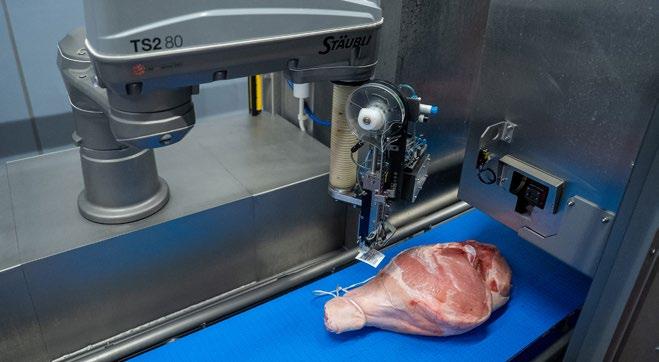
objects, part of the algorithm uses traditional vision functions, but the integrated AI can determine the labeling point more precisely and predict bone positions, which prevents needle breakage during fastener injection.“
A food industry first: AI-based individual label application at top speed
The line has now been running for several months, to the client’s complete satisfaction. What makes it unique is the task it performs. Until now, labeling could only be performed by humans, as it is a complex process. As Jordi Bassols explains, “In the meat industry, no two pieces are identical, which makes handling more complex. The robot must allow smooth communication with the peripherals to adapt to constant changes. It also guarantees labeling quality, with all labels being placed in the same position on each ham, while ensuring reliable product traceability, enabling the client to deliver a high-quality final product.”
For Stäubli, the project was both a challenge and a success. Josep M. Serra, Robotics Director at Stäubli Española: “We have extensive experience with robots in the food industry, but this is not a common solution: a high-end automation system, adapted to high hygienic requirements, handling individual products with integrated AI and bespoke programming by Timpolot. We look forward to starting new projects with this innovative systems integrator.”
www.staubli.com
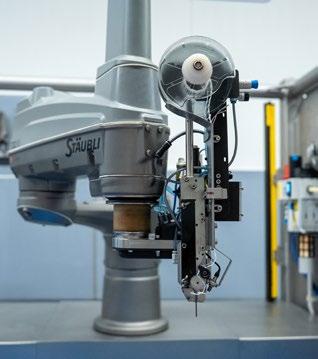
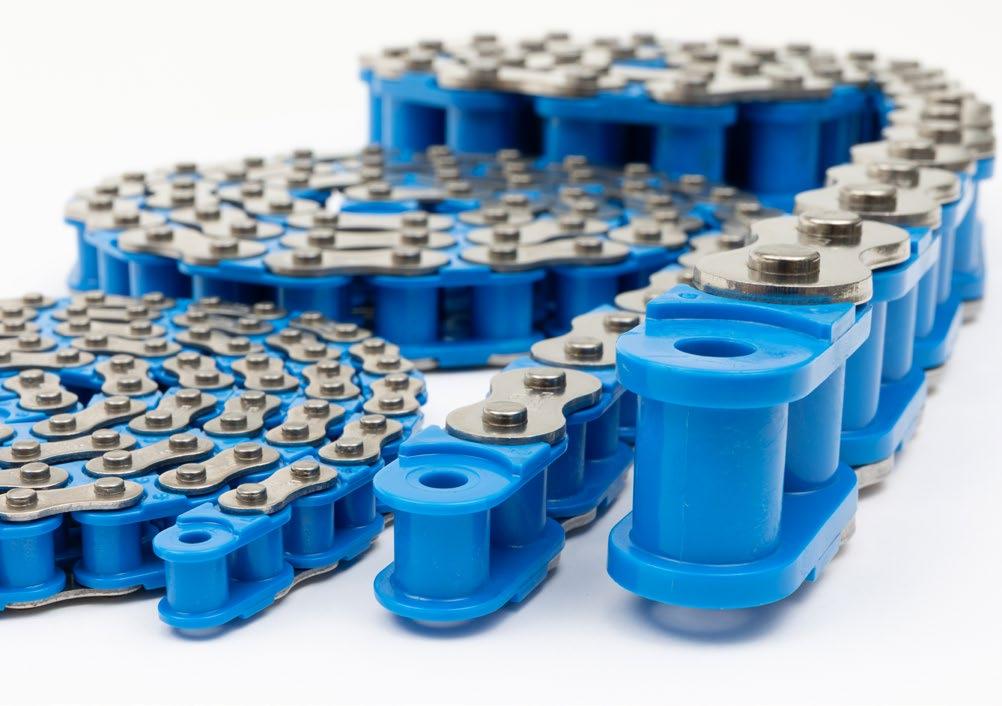
In food and drink manufacturing, efficiency, hygiene and uptime are fundamental to success. As production lines become faster and more complex, even the smallest component can have a critical impact on performance. Chains remain a vital yet often overlooked element in ensuring continuous, reliable operation.
Donghua Limited is helping reshape how food processors and packaging machinery manufacturers approach chain solutions. Since establishing its UK presence in 2009 and expanding into a 25,000 sq ft facility in the West Midlands, the company has positioned itself as a leading engineering partner to the sector.
What sets Donghua apart is their commitment to producing chains that meet the unique demands of food production which requires
solutions that can withstand heavy wash-downs, meet strict hygiene standards, operate at high speeds, and deliver minimal downtime.
Donghua’s chain portfolio reflects these demands
From Roller Chains and Polymer Conveyor Chains to Universal Attachment Chains and Bespoke assemblies, the company offers solutions designed specifically for the food processing industry. Features such as food-safe coatings, H1 food-grade lubrication, and lubrication-free blue polymer options ensure compliance while reducing maintenance requirements.
These capabilities are particularly critical in packaging applications where modern machinery operates at increasingly high speeds. A single chain failure can
halt sealing, labelling or cartoning processes, leading to costly downtime. Donghua addresses this risk through precision engineering – pre-loading Attachment Chains, accurately matching parallel running chains, and maintaining tight manufacturing tolerances to ensure smooth, reliable performance.
Chain, though often hidden from view, plays a central role in maintaining line efficiency. By combining application-specific design, high manufacturing standards, and technical support, Donghua Limited is delivering the operational resilience that modern food manufacturing and packaging operations demand.
To discuss your Food Processing Chain requirements, call 01902 866200.

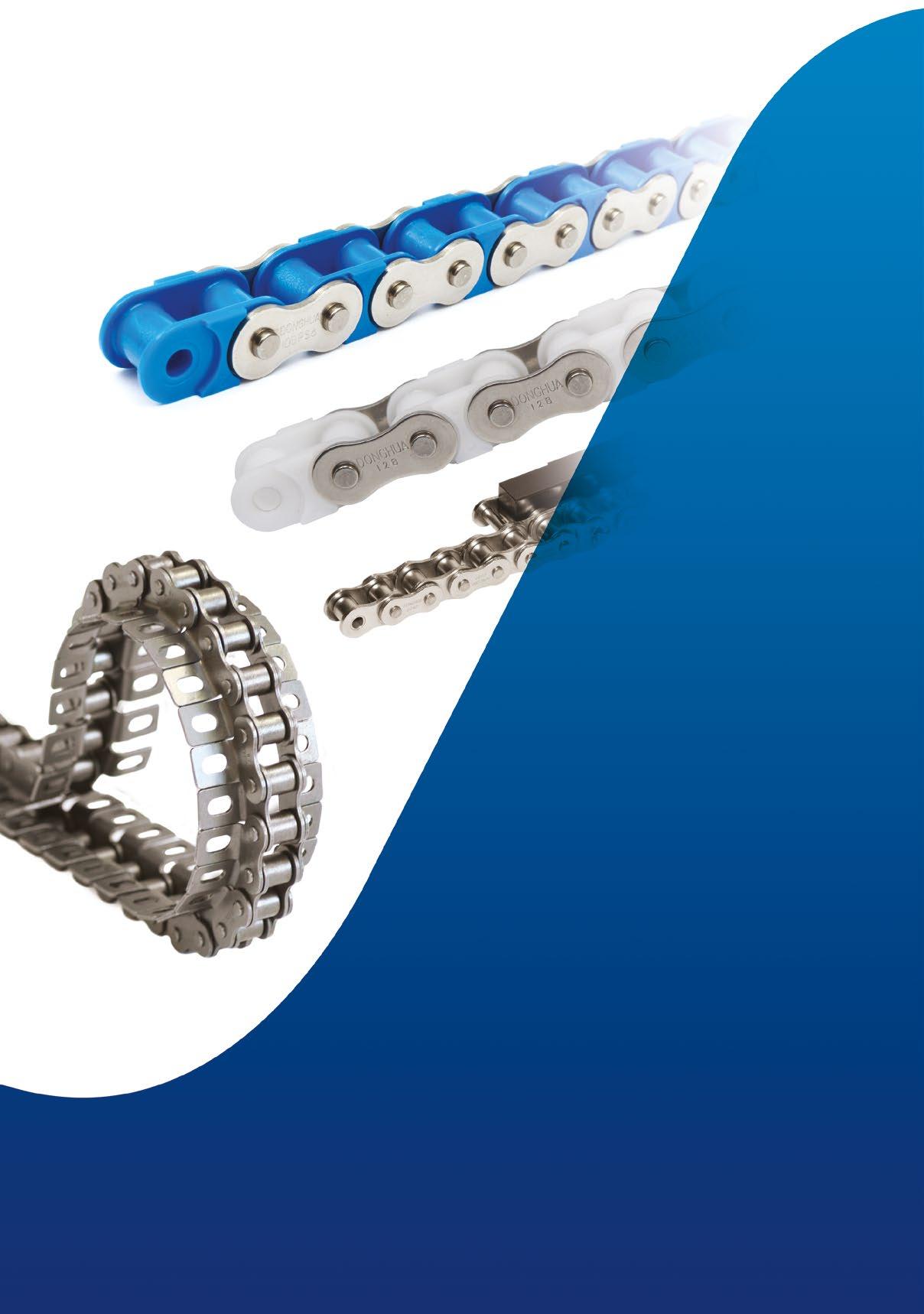

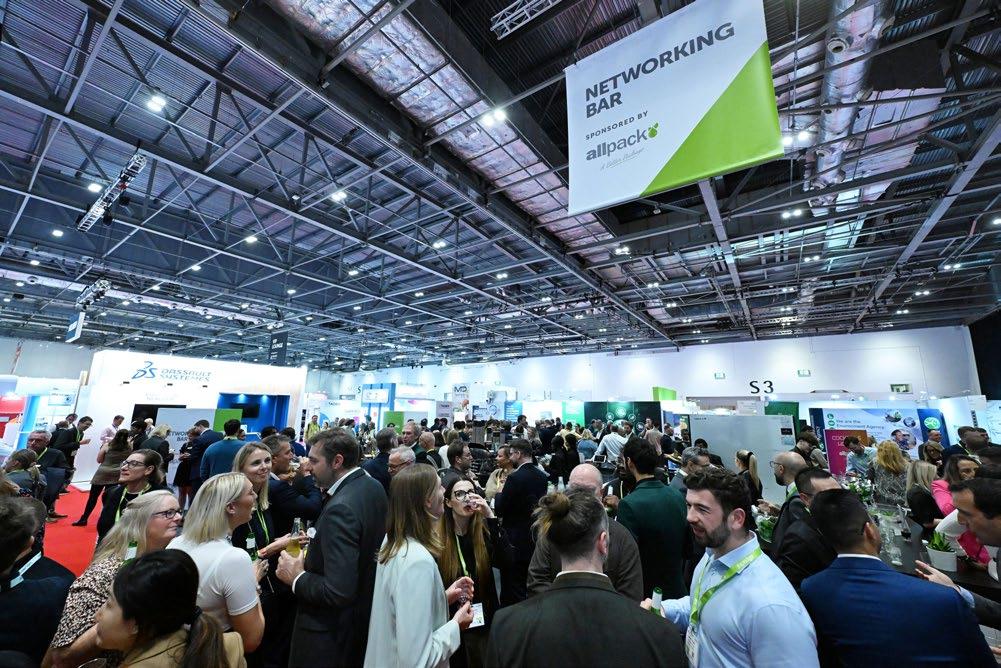
New strategic partners, including BRC, FDF, INCPEN and WRAP, underline growing industry collaboration, as London Packaging Week returns to Excel London on September 16 & 17
London Packaging Week returns to Excel London on September 16 & 17, reinforcing its position as the UK’s leading cross-industry packaging, innovation and policy platform, defined this year by collaboration, credibility and growing ecosystem alignment.
A major development for 2026 is the expansion of its strategic partner network, with leading trade associations, industry bodies and policy organisations further aligning around London Packaging Week as a central platform for collaboration, shared expertise and collective progress on packaging’s most urgent challenges.
New partners joining this year include the British Retail Consortium (BRC), Food and Drink Federation (FDF), INCPEN (Industry Council for Packaging and the Environment), Products of Change, Recoup, and WRAP, representing the full spectrum of retail, FMCG, circular-economy leadership, and environmental policy. Their involvement signals a clear shift across the industry from parallel conversations to shared action, where collaboration is now essential to delivering meaningful progress on sustainability, regulation and innovation.
“London Packaging Week has become a place where the most important conversations in packaging are not only happening but being shaped in real time,” said Sema Tezel Basbug, Head of Marketing at Easyfairs UK.
“Whether you are a global brand, a specialist supplier, a policymaker
or a design-led start-up, the value lies in being part of the dialogue. The industry is moving too quickly and becoming too interconnected for anyone to operate in isolation.
This is where perspectives meet, where assumptions are challenged, and where practical direction begins to form across sustainability, regulation and innovation. If you are serious about the future of packaging, this is not a show to observe from the sidelines.”
This expanded ecosystem sits alongside long-standing partners, including the British Printing Industries Federation (BPIF), British Plastics Federation, BCMPA - The Association for Contract Manufacturing, Packing, Fulfilment & Logistics, Foodservice Packaging Association, PackUK, Smithers, Walpole and the Wine and Spirit Trade Association, reinforcing the depth of expertise embedded within London Packaging Week and
its role as a central convening point for the UK packaging industry.
Together, these organisations form a unified platform where policy direction, commercial strategy and materials innovation intersect.
WRAP will mark this collaboration with a dedicated networking breakfast on Wednesday, 16 September at 9 am in the VIP Lounge, bringing together senior industry voices to focus on practical progress in packaging sustainability and circular economy solutions.
London Packaging Week also sits at the centre of the UK’s evolving regulatory landscape, including Extended Producer Responsibility
(EPR) and wider packaging policy frameworks, reflected in a keynote from Esther Carter, Chief Strategy Officer at PackUK.
Her session, “Next steps for industry in the evolution of EPR”, taking place on Wednesday, 16 September from 11:45 am to 12:10 pm, will examine how the sector moves from regulatory readiness to practical delivery, and the alignment now required between policy ambition and commercial packaging strategy within a single shared forum.
This alignment is further reflected in a high-level conference
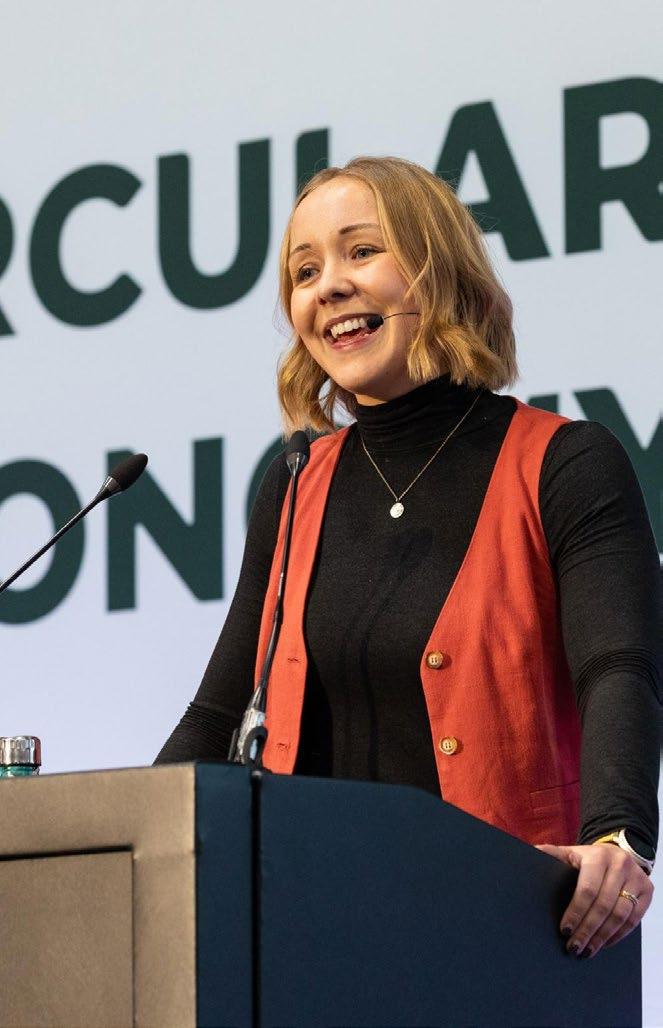
programme featuring senior leaders from across the industry, including representatives from the British Retail Consortium, British Soft Drinks Association, Walpole, Ecosurety and the British Beauty Council, alongside technical and regulatory experts shaping the next phase of packaging transformation.
Alongside this, the event continues to bring the industry together at scale, with confirmed participating brands including Aldi, Amazon, Charlotte Tilbury, Disney, Fred Perry, Jo Malone, John Lewis, Lush, Marks & Spencer, Mars, No7, Superdrug, Tesco, Waitrose, William Grant & Sons, Müller, Compass Box Whisky, Selfridges, Diageo, Suntory Beverage & Food Europe, PepsiCo, Penhaligon’s, L’Occitane and Molton Brown, spanning luxury, beauty, retail, drinks and FMCG.
With 5,700+ visitors, 220+ exhibitors, 90+ expert speakers and thousands of products on display, London Packaging Week offers one of the most holistic and in-depth views of the global packaging industry, bringing together policy, retail, FMCG, luxury, materials and design under one roof. It is London’s home of packaging innovation and design, uniquely positioned as the place where the industry comes together not just to discuss change, but to deliver it.
London Packaging Week takes place on September 16 & 17, 2026, at Excel London. Register now to attend.
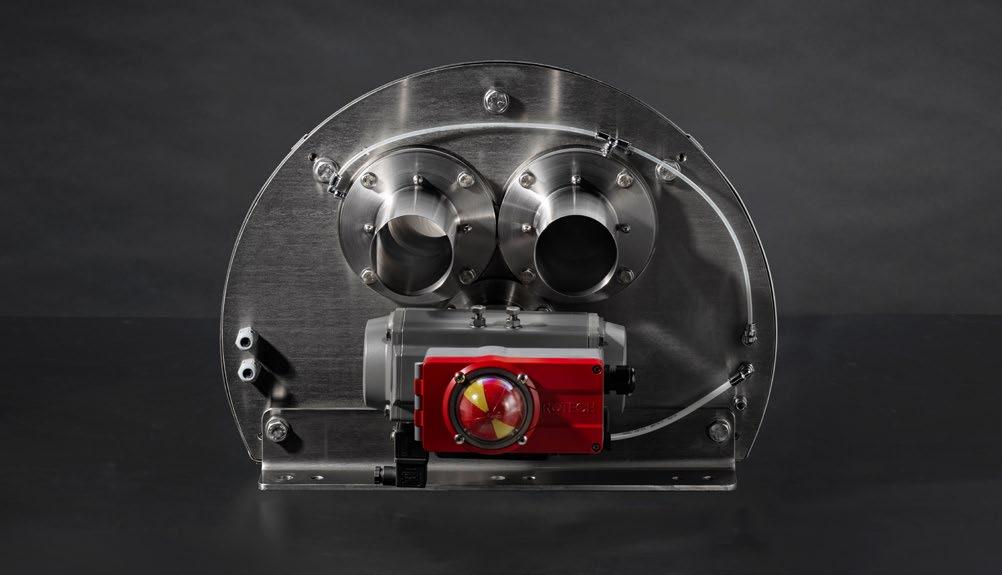
As longstanding producers of diverter and rotary valves, we often discuss valve performance with users in the field – whether they work with our valves or those of a competitor. One unhappy dry bulk solids processor referred to his diverters as a ‘necessary evil’. Understandable, perhaps. But also, a bit harsh.
Diverter valves are crucial for the transport of raw material, but they can also cause a loss of product quality, a loss of factory real estate, and even a loss of line potential. We want to tell you what we told this unhappy processor: it does not have to be that way.
For many dry bulk solids processors, the physical state of their raw material is as critical as its chemical composition. Especially industries that handle friable solids – from specialised pharmaceutical granules and infant formula to ceramic catalysts and high-value
polymers – struggle with retaining material integrity. They are fighting a fight with a silent thief of value: mechanical product degradation.
Every time a fragile material changes direction within a pneumatic conveying system, it is at risk. Traditional diverters often feature sharp bends that damage the raw material when transported at a high speed. The product disintegrates, with potentially disastrous results.
This is the cost of dust:
Degradation of a valuable resource: When you reduce breakage of your valuable raw materials, you can use them fully. You will be able to enjoy not 87% of your raw materials, not 92%, but up to 99%.
Heightened risks of fire and explosions: Friables that crumble and break cause dust clouds (also
known as fines). This increases the risk of fire and explosions – and that should really be your first reason to consider an alternative.
Reduced system efficiency: Another disadvantage of excessive dust is that it can drive up backpressure and make your system less efficient.
Inconsistent bulk density: Broken particles will pack more tightly, which can cause problems with volumetric dosing and batch weights down the line.
By replacing a series of diverter valves with a single multiport tube diverter, you already diminish the number of collision points in your installation. But if you choose a well-designed multiport like DMN-WESTINGHOUSE’s M-TDV Multiport Tube Diverter, your flow becomes truly smooth.
The M-TDV is a multiport valve without sharp bends. Its design centres around ‘full bore’ architecture that features a swan neck: a continuous, curved internal pipe. This pipe automatically aligns with the desired outlet, so instead of a hard collision, the transported dry bulk solids experience a sliding transition. A design that does away with the disadvantages mentioned above.
Diverter valves are big boys – but you know that already. They are so large that many dry bulk solids processors struggle with their legacy footprint: the surface taken up by their existing equipment. Manifolds and forests of piping can take up a lot of space, while moving or even expanding your facilities is never easy, if even feasible. Having insufficient room can hamper innovation and is an almost guaranteed brake on your efficiency.
This is where a multiport valve can breathe new life into your facility. To illustrate this, we’ll have another look at the M-TDV. Say you want to replace five diverters that take up a surface of 4.31 m2 together (see the image for the setup).
The single M-TDV that replaces
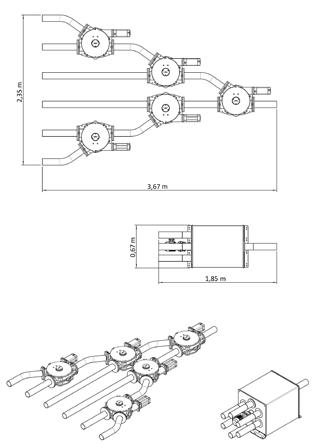
them, has a footprint of 1.24 m2. This multiport frees up 3.06 m2, which opens up a world of possibilities. Bear in mind that the more diverters you replace, the more space you win.
Any producer will be happy with more space, but dry bulk solids processors with cleanrooms benefit especially. The high costs per m2 of a cleanroom makes for an even more convincing argument in favour of multiports.
Hygiene to the Highest Standard
Gone are the days of “clean enough”. Authorities issue ever stricter food safety protocols, while multi-ingredient recipes frequently feature allergens. This makes hygiene by design a matter of legal compliance and brand reputation for dry bulk solids processors.
Traditional valves often feature dead zones: small pockets or crevices where material can build up, ferment, or cross-contaminate the next batch. Future-forward producers of multiports must take these threats into account.
Circling back to the M-TDV, you will find that its design is a direct response to the increasingly strict food safety protocols. With its enclosed product path, the tube-totube design inherently eliminates these contamination pockets. The M-TDV even exceeds current requirements, making it a futureproof solution that is EC 1935/2004and FDA-compliant, with ATEX 2014/34/EU-certified and USDAaccepted versions available.
A multiport is a long-term investment. When evaluating its business case, your focus must shift from initial capital outlay to Total Cost of Ownership (TCO). The return on investment is found in a series of quantifiable areas. We already had a look at some advantages:
• Yield recovery: By reducing product degradation to a minimum, you convert what was previously dust back into sellable, high-grade product.
• Regaining factory real estate: The space-saving design of a multiport frees up valuable space in your facility, allowing you to expand your production.
• Risk mitigation: By choosing a
hygienically designed multiport, you ensure that every batch meets the physical as well as the sanitary specifications required by increasingly discerning global markets.
But a multiport diverter has more to offer:
• Less and simpler maintenance: Replacing 10+ valves with a single unit means your maintenance team only has one set of actuators and one set of seals to monitor. This reduces your spare parts inventory and diminishes your mean time to repair, with fewer labour costs for maintenance.
• More uptime: With fewer components to fail, your system is operational for a longer time, and thereby more productive. And when you go for a diverter like the M-TDV, its design ensures that changeovers between different products are significantly faster.
• Energy Efficiency: A more direct and smoother product flow also means your solids encounter less overall resistance during transport. As a result, components operate with more ease, resulting in measurable savings in kWh over the course of a production year.
Conclusion: A Future-proof Approach to Diverting Dry Bulk Solids
With dry bulk solid materials becoming more complex and safety standards getting increasingly strict, the equipment that routes these products must evolve as well. The multiport tube diverter represents this evolution at the crossroads of fluid dynamics, spatial efficiency, and hygienic integrity.
With a premium multiport diverter, engineers can ensure that the product leaving the facility is of the exact same quality as the product that entered the line. In the world of high-value processing, that consistency is the ultimate value proposition.
Please get in touch with the DMN-WESTINGHOUSE: +44 1249 818 400 or dmn.uk@dmnwestinghouse.com
Companies within the Fortifi Food Processing Solutions (“Fortifi”) unified platform of leading global brands demonstrated protein processing and breading innovations at ProPak Asia 2026 from June 10-13 in IMPACT Arena, Exhibition and Convention Center, Muang Thong Thani, Bangkok, Thailand. In three booths within Challenger Hall 3, Provisur, Nothum, LIMA, Bettcher and Cantrell-Gainco demonstrated technology for meatbone separation and multi-mode breading.
In Booth C3-AU28, attendees experienced Provisur’s STS Belt Separator, which maintains fiber integrity and structure with low temperature rise while it removes bone fragments and cartilage from fish and seafood. The unit’s simple operation includes patented automatic pressure control and easy HMI-designed onscreen storage of product recipes.
In Booth C3-AN78, Nothum featured the SuperFlex four-in-one homestyle breading machine for consistent yields with flat, drum, tripleflip and handtoss modes. Its versatility enables processors to replace multiple machines with one efficient producer and achieve changeover in minutes.
In Booth C3-AQ04, Thailand-based distributor KW Global Technology Co., Ltd. displayed the LIMA RM 170 S meat-bone separator, which produces high-quality mechanically separated meat (MSM) at yields of 40%-45% on pork back bones and
neck bones, and up to 80%-85% on chicken carcasses. Its small-footprint design offers continuous operation with low energy consumption in an ergonomic configuration.
Also in Booth C3-AQ04, attendees saw the Bettcher Quantum Flex and Flex+ Trimmer lines for improved performance and durability with any Bettcher motor system, along with two pieces of Cantrell-Gainco
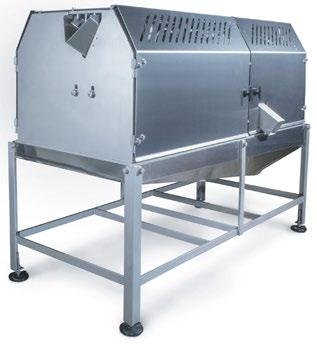
poultry processing equipment. The Cantrell-Gainco Viscera Stripper optimizes gizzard recovery and the Cantrell-Gainco Gizzard Harvester processes up to 175 gizzards per minute.
www.fortififoodsolutions.com
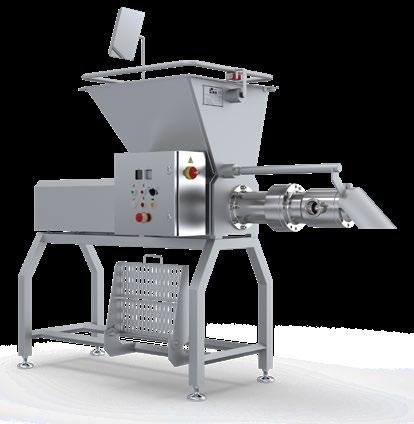
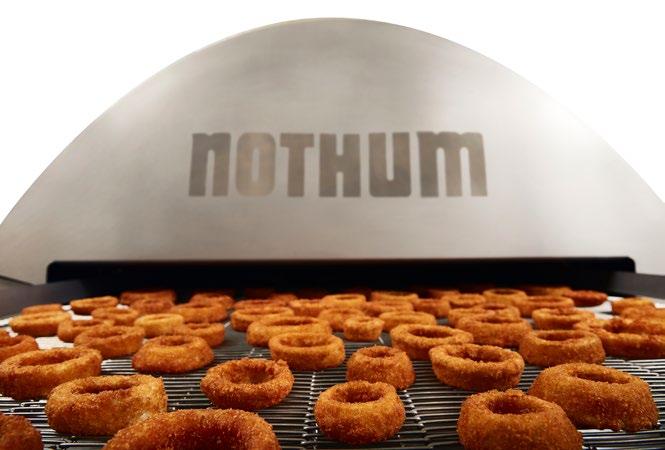
A format designed to enhance summer fresh dishes, with an offer that combines the authenticity of Parmigiano Reggiano PDO with the versatility of Spinoro, a 100% Italian hard cheese also suitable for vegetarians
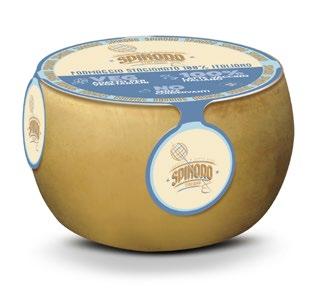
Sant’Ilario d’Enza (RE, Italy), 2 July 2026 – In a context where the food industry is expected to develop increasingly distinctive, practical products aligned with consumption trends, the choice of ingredients plays a strategic role. Within this scenario, DalterFood Group - a company with over 45 years of experience in the national and international dairy sector—offers its Parmigiano Reggiano shavings as a solution that combines raw material quality, ease of use, and enhancement of the final product.
Made from Parmigiano Reggiano PDO produced in the Group’s dairies located in the Reggio Emilia Apennines, through a short and controlled supply chain, these “shavings” stand out for their square, regular format, designed to ensure visual consistency and easy integration into a wide range of industrial applications. They are ideal for enhancing the flavour of light, fresh summer dishes such as ready-to-eat salads, pasta salads, and other seasonal ready meals. They are also an excellent accompaniment to carpaccio and packaged cured meats, and can add a premium touch to ready-made pizzas.

For companies operating in the organic segment, DalterFood Group also offers organic-certified Parmigiano Reggiano, compliant with organic farming standards and fully integrable into high valueadded product lines.
Completing the range is Spinoro “shavings”, a mature hard cheese produced in Italy with 100% Italian cow’s milk sourced from farms in the Po Valley (Northern Italy). Thanks to the use of microbial rennet, Spinoro is also suitable for vegetarian consumers, enabling food companies to expand their product portfolios with offerings aligned with increasingly specific dietary requirements, without compromising on taste.
Further strengthening the offer is DalterFood Group’s consultantstyle and tailor-made approach, which allows both the cut size and packaging to be customized according to specific customer needs and intended use. While maintaining the characteristic regular square format, the “shavings” can be developed in different sizes— such as 2x2 cm, 4x4 cm, or 5x5 cm— to best suit recipes and the desired final presentation.
On the packaging side, DalterFood Group offers 500 g and 1000 g trays designed to meet the operational and logistical needs of the food industry. These are complemented by single-serve sachets made 100% by recyclable plastic, particularly suitable for inclusion in ready-to-eat salads, ready-made soups, and trays of carpaccio and cured meats, where they add a service component to the final product. This practical solution helps reduce waste and responds to the growing focus on sustainability.
With this offer, DalterFood Group confirms its position as a strategic partner for the food industry, capable of providing cheese solutions specifically developed to meet the application, production, and positioning needs of companies. An offering that combines expertise, flexibility, and attention to market trends.
www.dalterfood.com
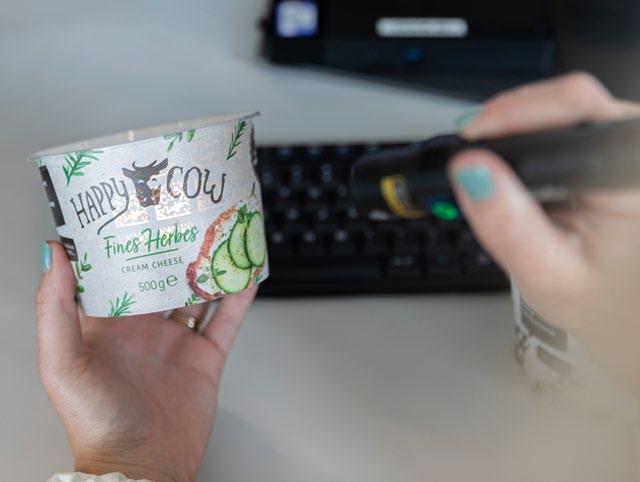
Polytag, the UK’s leading data capture and marketing platform enabling the circular economy, has announced a partnership with global leader in premium label solutions, Multi-Color Corporation (MCC). The partnership allows brands to incorporate Polytag’s innovative UV tag technology directly into in-mould labelled (IML) packaging for the first time, helping brands unlock valuable consumer recycling data while supporting future advanced sorting capabilities within recycling infrastructure.
By combining MCC’s Global IML business unit’s expertise in in-mould labelling with Polytag’s packaging intelligence platform and UV tag technology, the collaboration extends packaging traceability capabilities to a broader range of packaging applications, including products where traditional labels may not be suitable or durable enough, such as frozen foods and other demanding retail environments. Most recently, the two companies collaborated to roll out Polytag technology to the Happy Cow’s faux brand tub packaging, in
support of a recent demonstration day organised by standardised barcode experts, GS1 and optical sortation company, Pellenc ST. This showcased how connected packaging and advanced sorting technologies can work together to improve material recovery and traceability for IML packaging types.
Polytag’s UV tag acts as an invisible digital fingerprint that is readable by specialised detection units installed at Material Recovery Facilities. Unlike visual identification systems, UV tags can carry detailed packaging-specific data that cannot be determined from an image alone, such as material composition, recycled content, manufacturing content and material origin. This enables packaging to be identified and sorted based on attributes that are critical to recycling outcomes, helping create higher-quality recycled material streams and supporting a more circular economy.
This data is also fed back to brands through the Polytag platform, providing valuable recycling data that can help offset Extended
Producer Responsibility (EPR) fees, while also informing packaging design and on-pack information to increase recyclability. The technology has already been deployed on milk bottles for major brands and retailers including Waitrose and Ocado. Through the collaboration with MCC Global IML, Polytag is enabling this technology to scale, supporting the end goal to make every material traceable, regardless of its packaging type, and further enabling the circular economy.
Alice Rackley, CEO of Polytag, said: “Working with MCC allows us to extend the reach of our technology, and scale into new packaging formats, helping brands access valuable recycling data while preparing for the future of connected packaging and digital product information.”
Nico Van de Walle, Senior Product and Circularity Manager at MCC Global IML, said: “The packaging industry is entering a period of transformation as brands prepare for greater product transparency and the wider adoption of connected packaging technologies. By combining MCC’s expertise in IML with Polytag’s technology, we’re helping bring connected packaging to more products and more consumers.”
Jon Anderson, Chief Technology Officer at Polytag, said: “For connected packaging to deliver real value, it needs to work across as many packaging formats as possible. Extending our technology into IML packaging is an important step forward. It allows brands to gain deeper insight into what happens to packaging after use, as well as gathering data to support better recycling and circularity goals.”
www.polytag.io
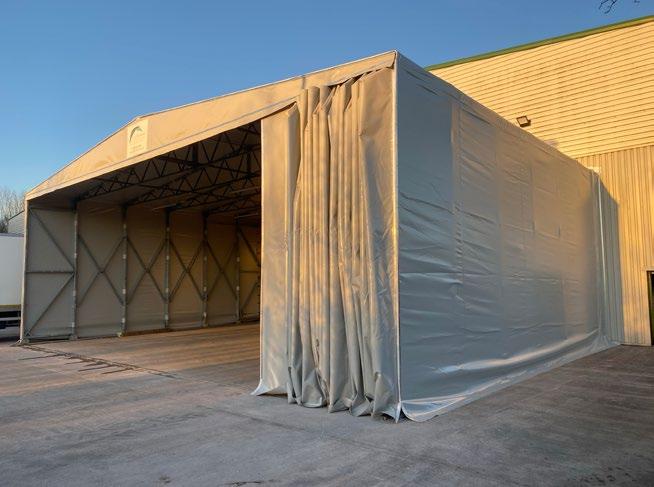
With mounting pressure on warehouse space, businesses looking to expand in a rapidly evolving, highly unpredictable environment, are having to frequently and quickly re-evaluate how to future-proof their strategy for growth, both in the short and long term.
With traditional bricks and mortar, a five-year lease is not long but many businesses don’t have the money to commit to those timescales, the associated business rates or the certainty that they can fix themselves to one specific location. It’s often inconvenient to move and can take significant time to find the ideal conventional premises, a luxury that not many businesses have. “Temporary” warehouse buildings, such as those manufactured by CopriSystems, are carefully and individually designed to lead a dynamic life so they can be relocated to a new site or modified to suit a business’ ever-changing needs. CopriSystems understand there is no one-size-fits-all model so will work with each organisation to establish how best to optimise the space available and come up with a design solution that will integrate with your existing buildings,
systems and daily operations – i.e modular to enable an expansion or reduction in size at any time, telescopic to allow for easy loading and unloading of goods by crane or retractable for minimal disruption on a site that must remain accessible.
It may be that a relocation to a new conventional warehouse is in your growth plans but, right now, a custom-made temporary structure could be just the right solution to give you some breathing space while you consider your next move. Since disruption is the new normal, the trend for on-demand warehousing is prevalent but be sure to choose a building solution that can be easily modified without compromise when responding to altered circumstances. Warehouse buildings need to be designed in a manner that offers maximum adaptability, flexibility and durability, in case the temporary solution needs to become more permanent.
Quick installation time alone is a huge draw for businesses that need to respond fast without having to commit to a fixed location but this
should not mean that you have to sacrifice on strength or quality of materials. CopriSystems’ canopies can typically be designed, installed, fully functional and operational within 8 weeks of ordering. They are manufactured off-site to avoid any disruption and once delivered, a small or medium-sized canopy can be erected on an existing concrete base in a matter of days. Their structures are built using strong, corrosion-free, galvanised steel frames that are engineered to last and covered with a heavyduty, flame-retardant PVC-coated polyester fabric, which offers complete protection from arduous marine conditions as well as heavy wind and snow loadings. A 10year guarantee comes as standard, although many are still going strong after 20.
Consider the financing. The cost savings are significant compared to conventional bricks and mortar and for businesses looking to build resilience and flexibility into their plans, a prefabricated warehouse could be the best tactical solution for now. It is a more affordable and viable alternative to a rigid, constrained property market and one that’s proven to be effective time and time again, no matter what circumstances threaten to destabilise our supply chains.
Changes are coming thick and fast from all angles and we know that industrial buildings must be able to consistently perform at the highest level without impacting on daily operations. With that in mind, look for flexibility in every area of your decision to install a temporary building, from the initial design to the financing, the short-term usage plan and long-term growth strategy.
For more information, contact sales@coprisystems.com www.coprisystems.com
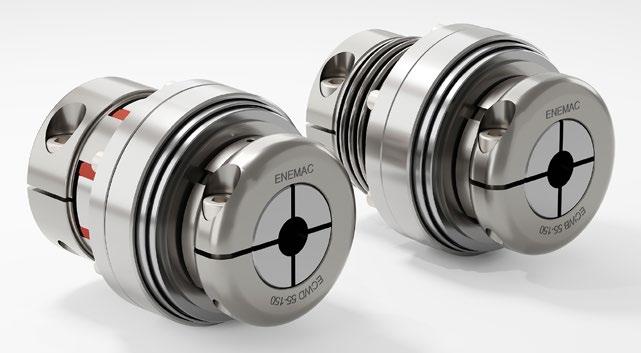
With the ECWB and ECWD series for direct drives and the ECV and ECW series for indirect drives, ENEMAC offers a comprehensive portfolio of stainless steel safety couplings for use in hygienically sensitive environments. These couplings are specifically designed for industries such as food and beverage processing, pharmaceuticals, medical technology, cleanroom applications, and general process industries with frequent cleaning and disinfection cycles.
All couplings are manufactured entirely from high-grade stainless steel and are consistently designed without coatings. This eliminates the risk of particle generation and significantly reduces corrosion susceptibility—key requirements in hygiene-critical applications. The integrated disc springs are also made of stainless steel. Their compact and robust design supports hygienic machine layouts and enables straightforward integration into modern drive systems.
The couplings function as precise torque limiters, reliably protecting machinery and equipment against overload. For
direct drive systems, the ECWB combines a torque limiter with a metal bellows coupling, allowing for the compensation of shaft misalignment while maintaining high torsional stiffness and precise torque transmission. The ECWD integrates a torque limiter with an elastomer coupling, offering additional vibration damping, backlash-free operation, and a plug-in design that simplifies installation.
For indirect drives, such as chain or timing belt systems, the ECV and ECW provide compact and robust solutions capable of handling high lateral loads. They are available with different shafthub connections, either via keyway (ECV) or clamping hub (ECW), ensuring flexibility in mechanical integration.
Across the product range, the couplings cover a torque range from 5 Nm to 900 Nm. Shaft diameters for the direct drive variants range from 8 mm to 65 mm, while the indirect drive versions are designed for speeds up to 4,000 rpm and lateral loads up to 30,000 N. The permissible temperature ranges extend from –50 °C to +150 °C for the ECWB and from –30 °C to +90 °C for the ECWD.
All variants are designed for maintenance-free or lowmaintenance operation and offer high release accuracy for reliable overload protection. Depending on the coupling type, they provide either misalignment compensation or vibration damping. The durable stainless steel construction ensures long service life, even under aggressive environmental and cleaning conditions.
The ECWB, ECWD, ECV, and ECW series provide a consistent and technically robust solution for hygienic overload protection in both direct and indirect drive systems. By combining precise torque limiting, high operational reliability, and hygienic design principles, they are ideally suited for demanding applications with strict requirements for cleanliness, corrosion resistance, and system availability.
www.enemac.eu

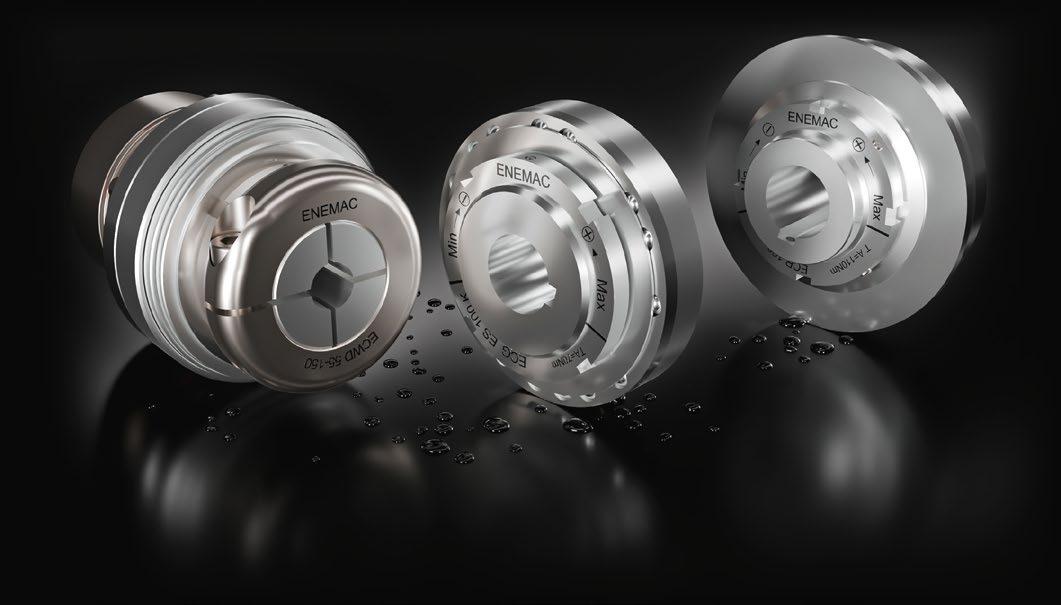

_CLEANER FUEL
_GREENER PERFORMANCE
_EFFICIENT, COMPACT, MODULAR, AND FULLY ELECTRIC
SUSTAINABLE STEAM FOR EVERY APPLICATION.