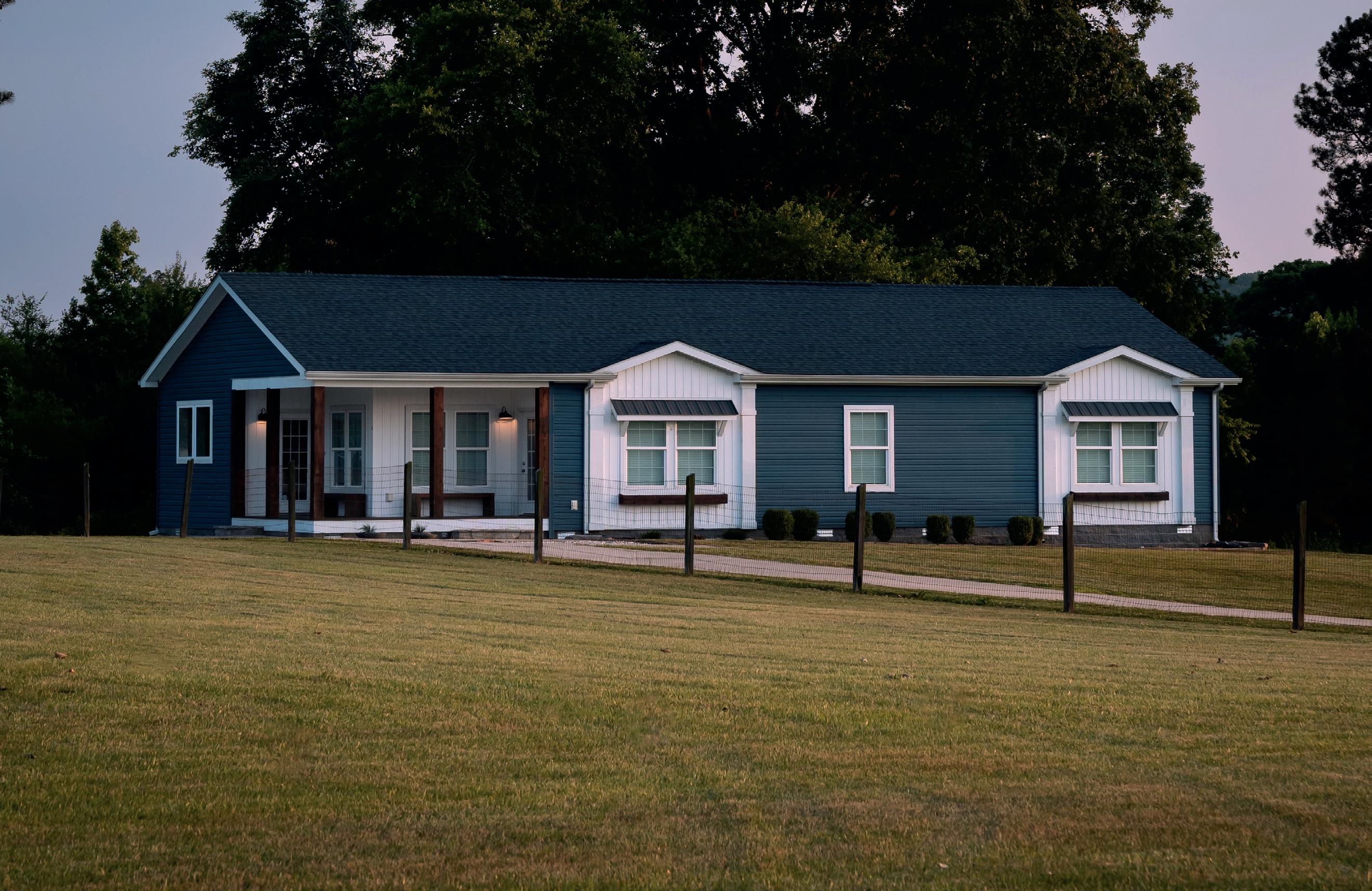
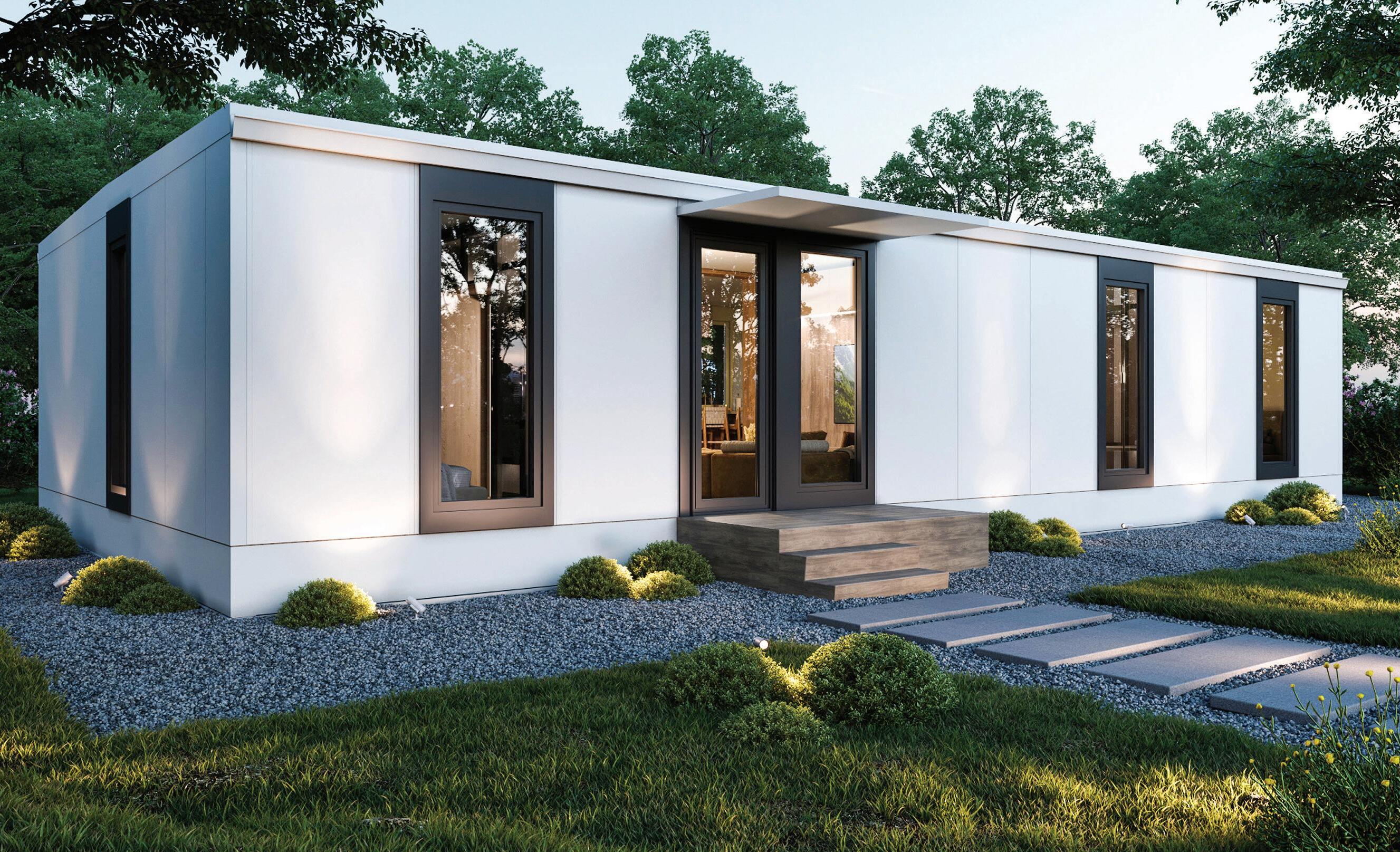
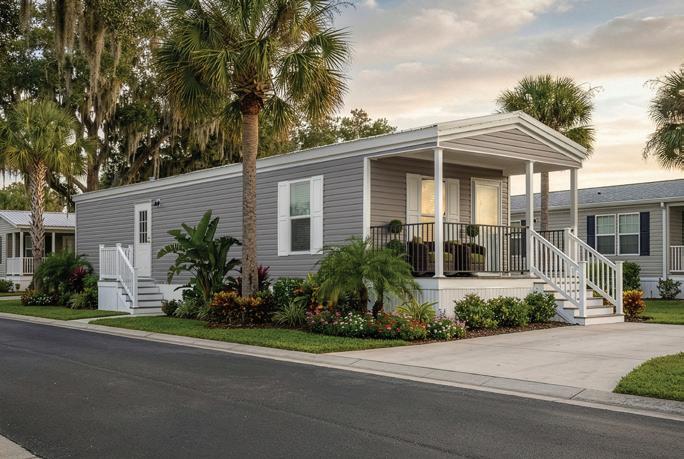
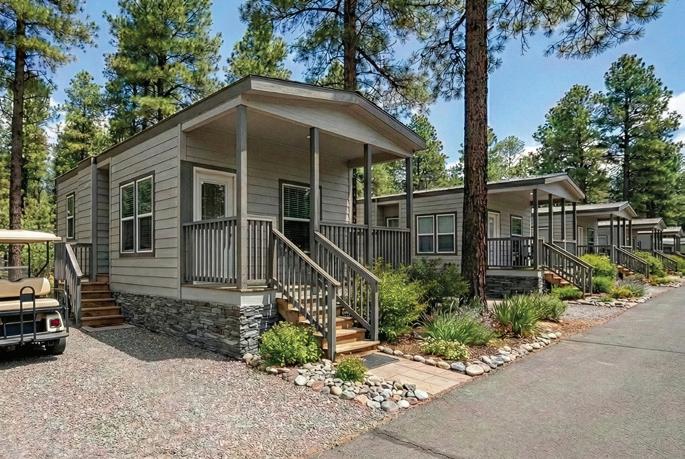
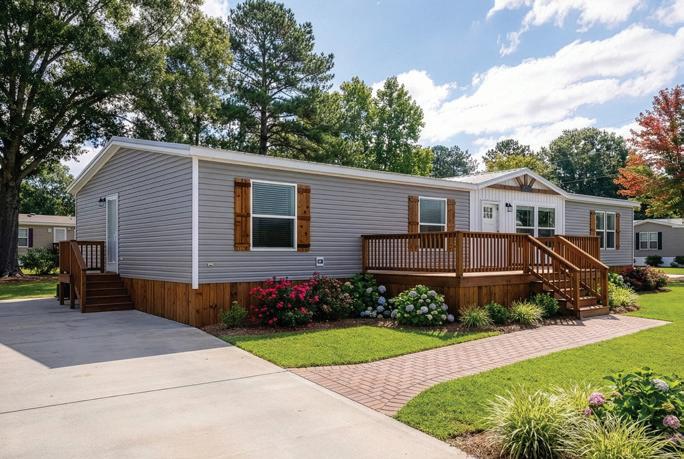
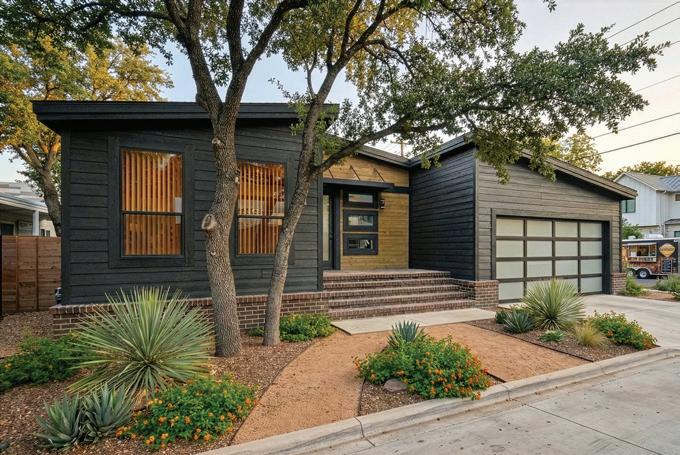
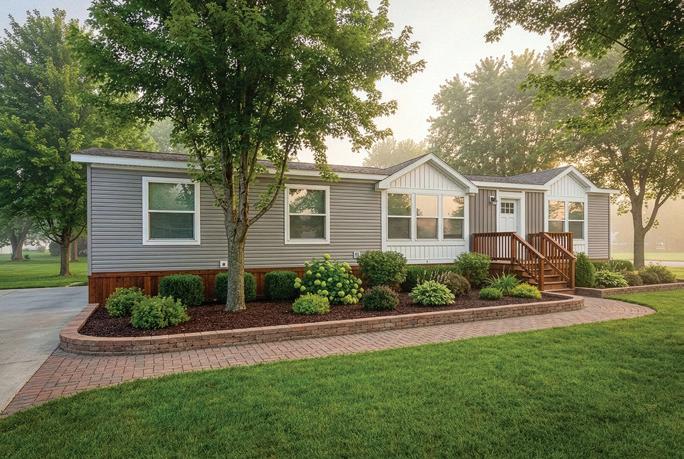
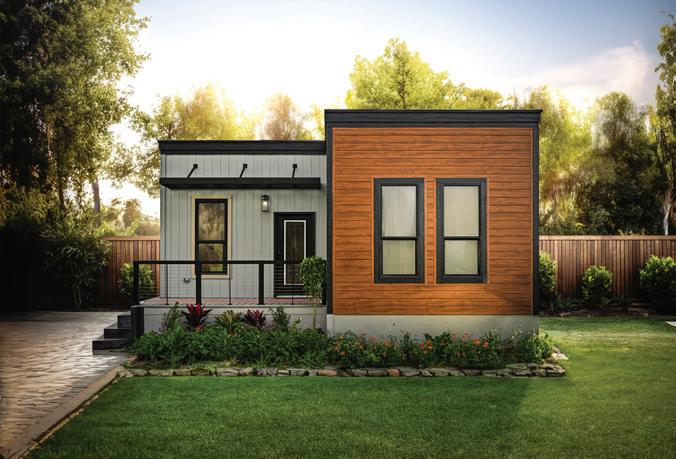
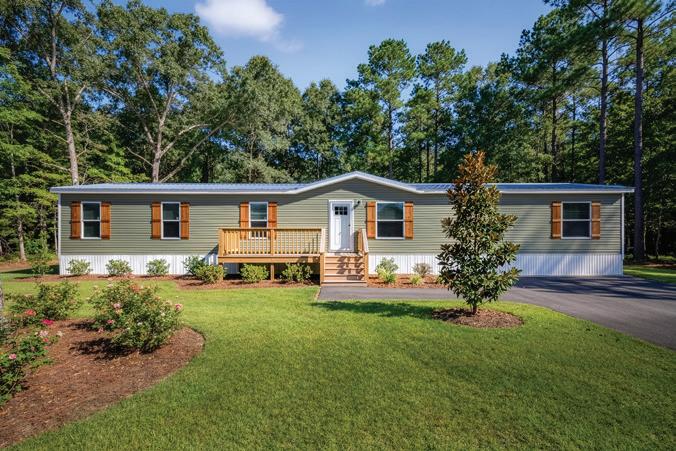
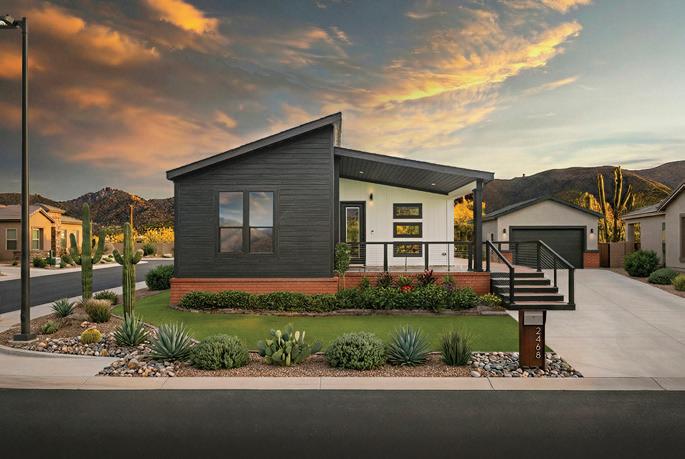
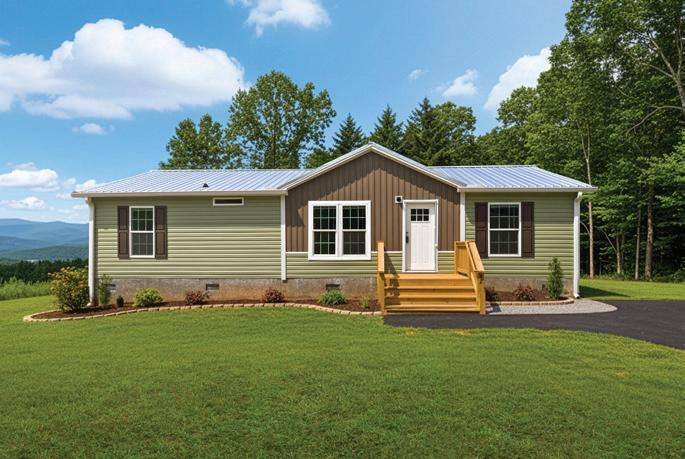
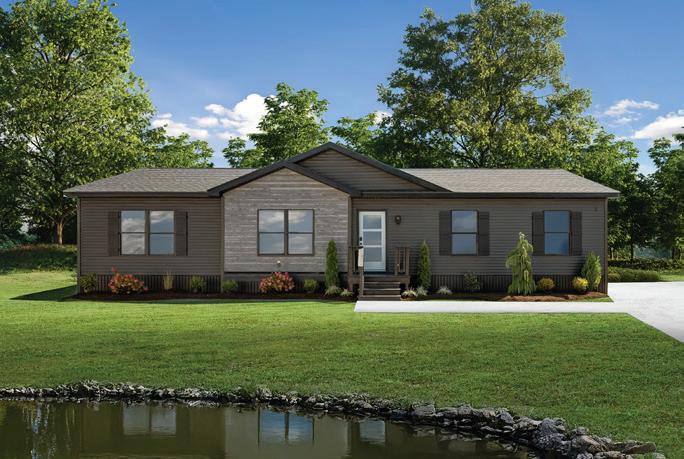
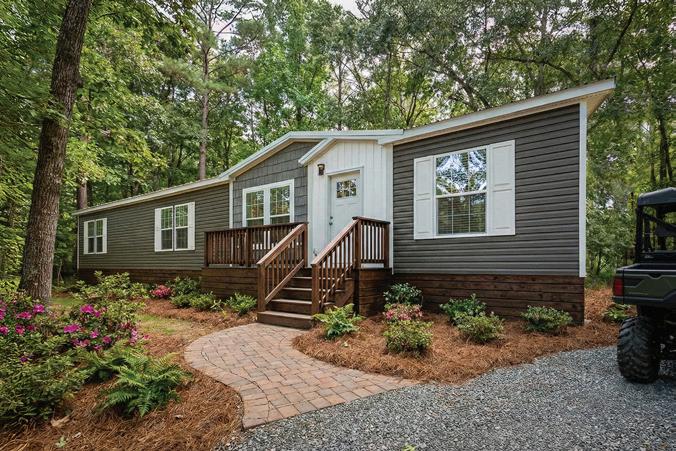
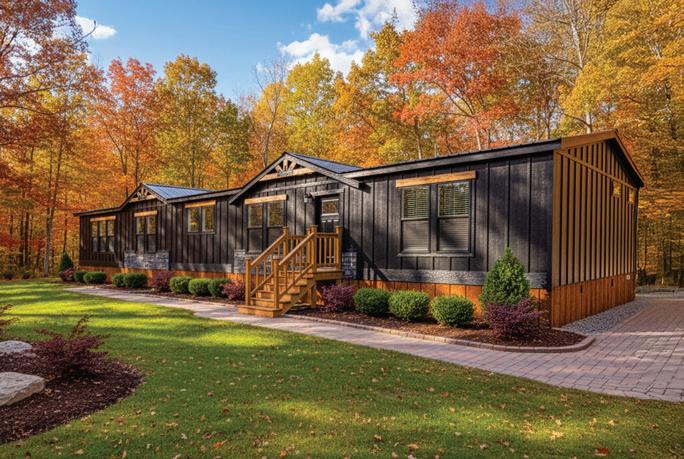
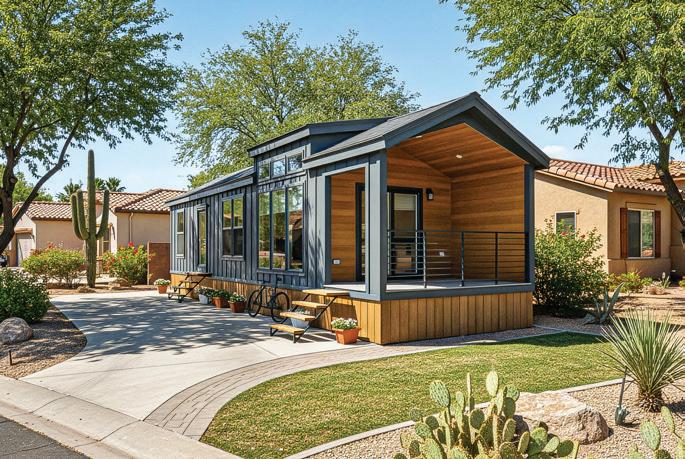
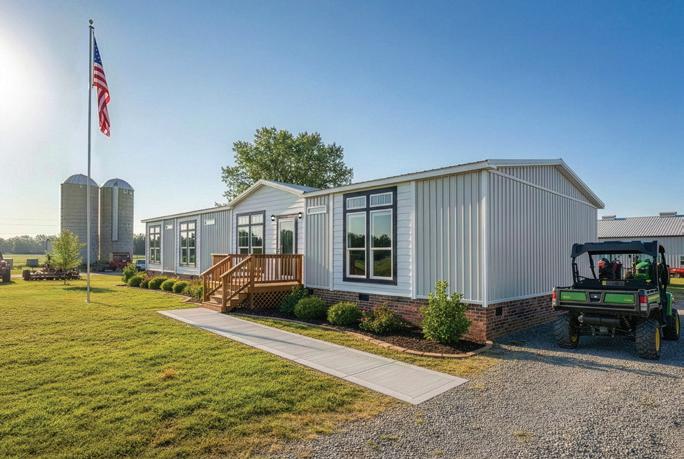
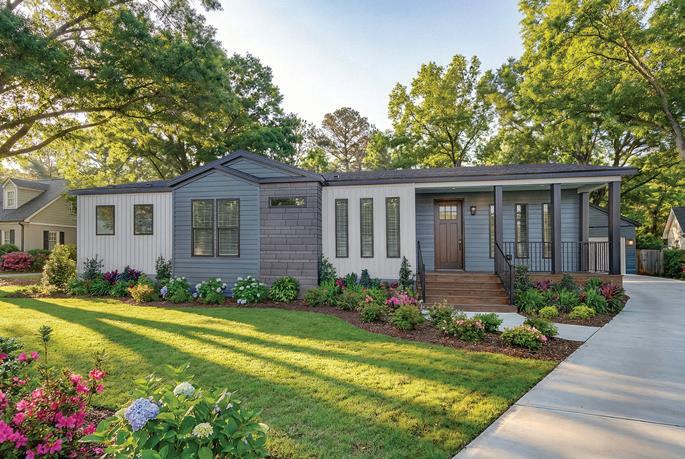
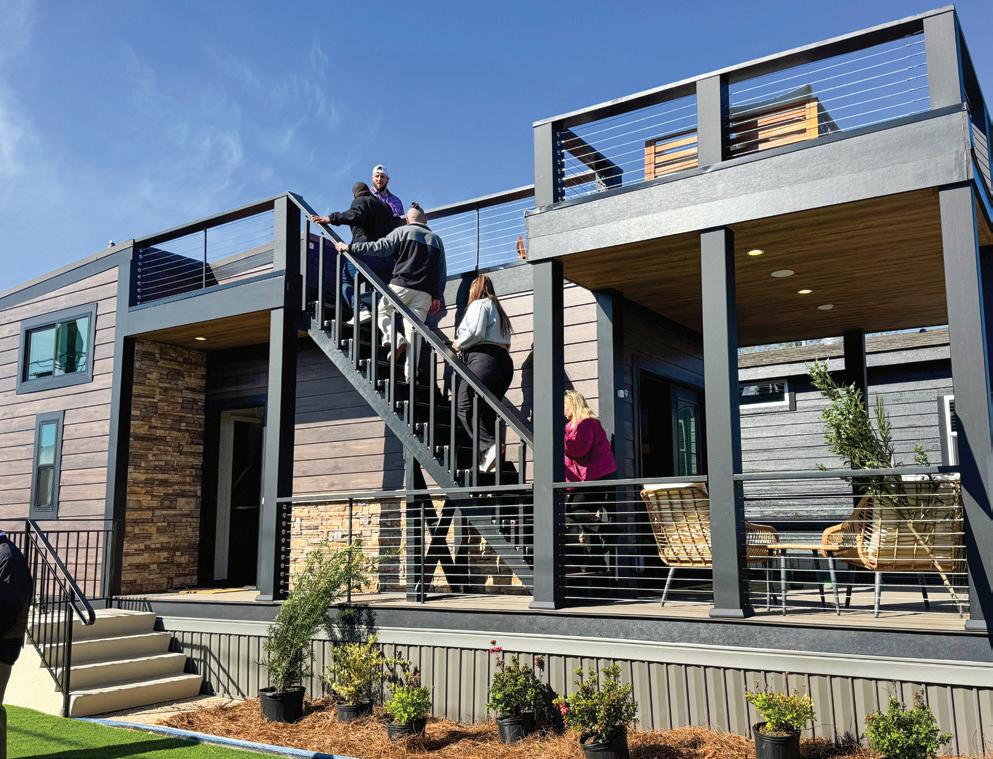
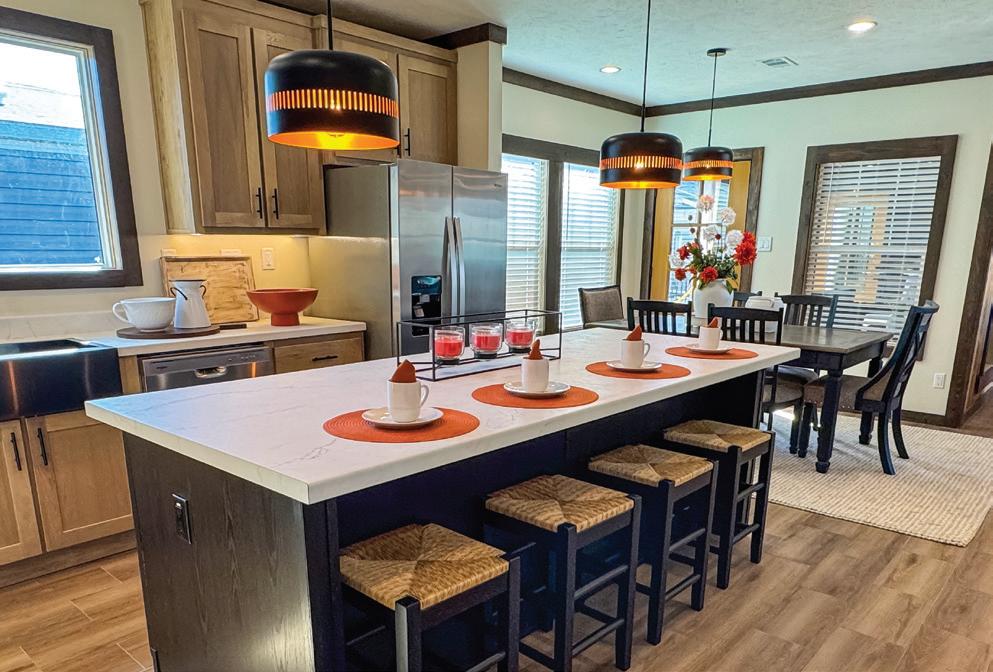
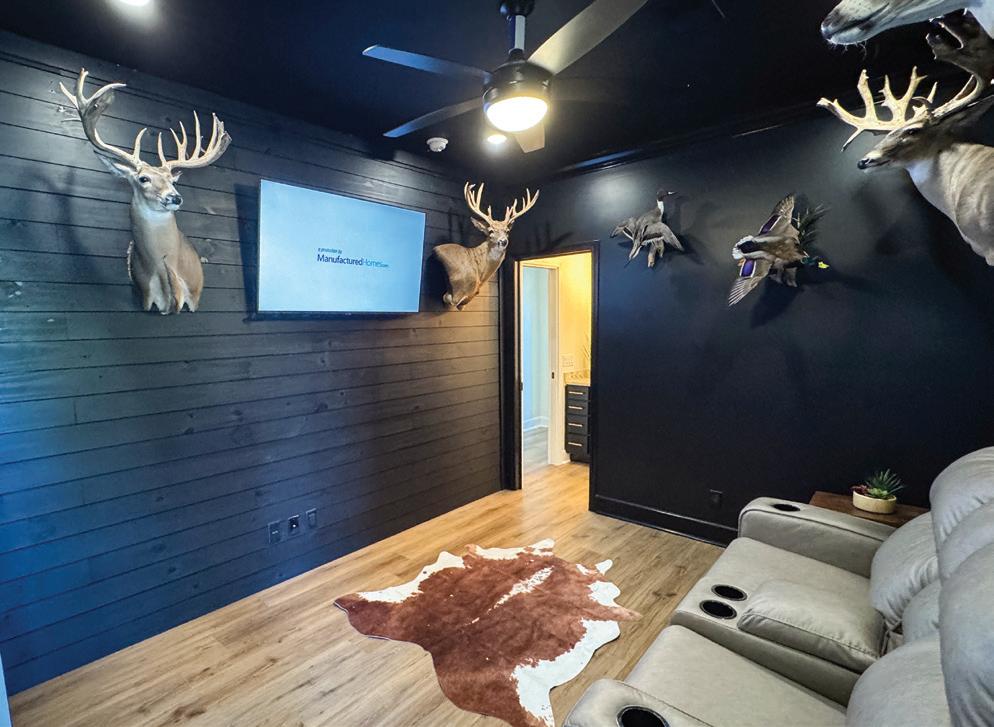
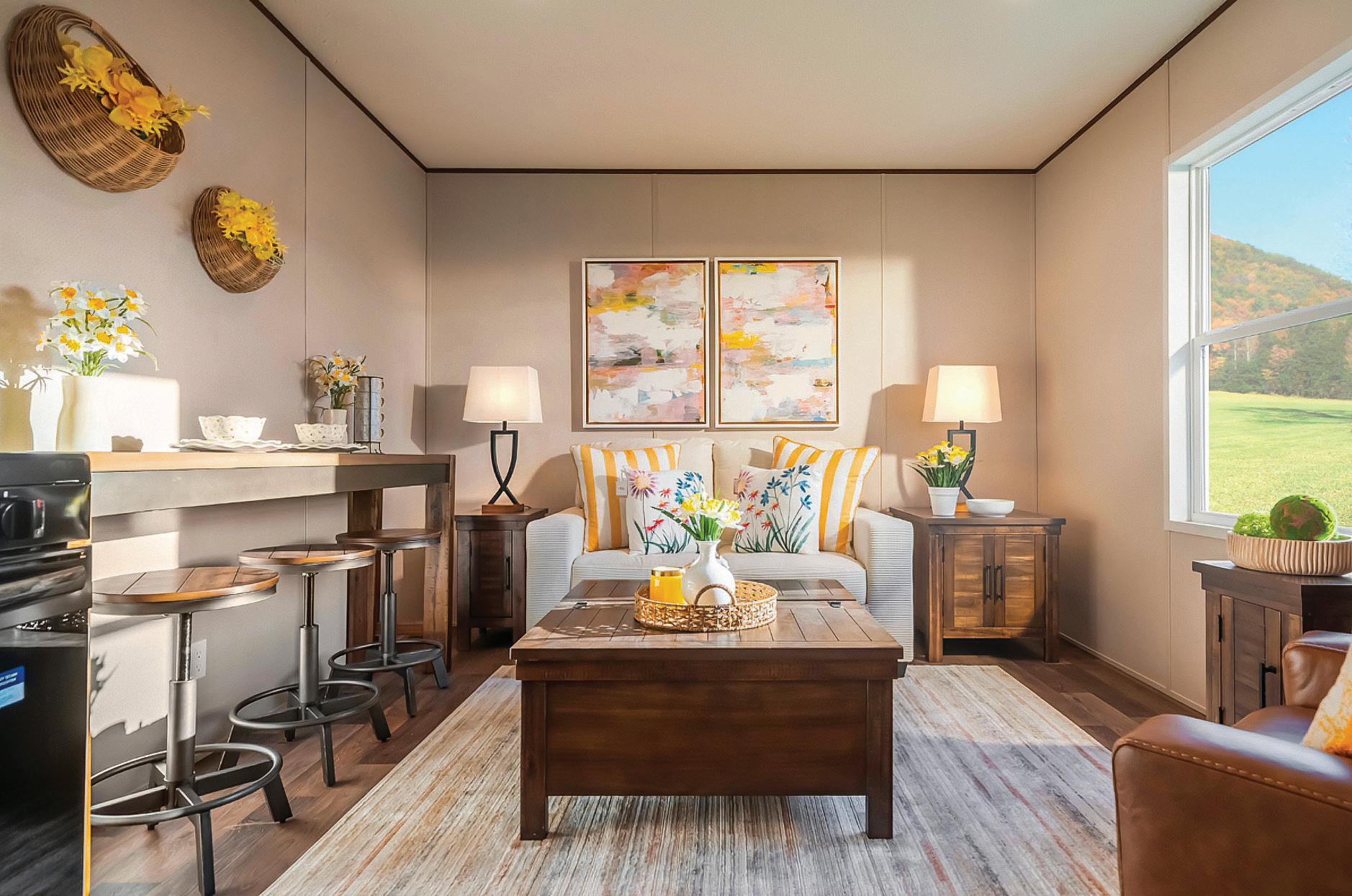
At Champion, building award-winning homes is just the start. We support every aspect of offsite construction to provide a seamless process that can help you simplify and grow your business. From financing and construction services to transport, marketing support, and customer care, we’re your one-stop source for turnkey MH solutions.
■ Free Marketing Services from Our Experts
■ Centralized DIGS Retailer Portal to Manage Inventory, Leads & More in One Place!
■ The Setting & Finishing Services You Need
■ Quicker Buyer Move-Ins
■ One Trusted Partner for All Your Projects
■ Powered by Triad ® Financial Services
■ Competitive Programs
■ Services Retailers & Communities
Letter from the Publisher
Empathy, and Yearning for Answers
It’s a more than difficult time to make sway when it comes to the economy, even from a writer’s perspective. Hey, in a publisher’s letter, an assertion can be made, and all that’s at stake is a bruised ego. On the other hand, many manufactured housing professionals have to make this same “sway” and on it rests not only reputation, but the viability of programs and companies, and the positive outcomes you wish for your customers. My empathy is real.
The manufactured housing industry is currently challenged by high energy costs and interest rates. It seems Fed Chairman Jerome Powell will be able to ride out his term with no further changes to the base rate, after holding in March and April, and that reductions would ensue upon the seating of his replacement, most likely President Trump’s top pick, Kevin Warsh.
There was a good jobs report in April, but wages declined and the cost of living ticked up again in the first quarter. Existing home sales across industries and nationwide were down 3.6 percent year over year in March.
We know that consensus is building among policy makers that factory-built housing is a “must-have” amid recovery from a long drought in the pace of homebuilding. But what market instability, and what cost drivers beyond energy, might come out of the conflict overseas?
Only time will tell.
Patrick Revere is vice president of communications at MHVillage and publisher for the MHInsider magazine and blogs. His background is in print news, language, and communication.
VOLUME 9, EDITION 3 2026 MAY JUNE
MHInsider.com
PUBLISHER
Patrick Revere | patrick@mhvillage.com
SENIOR GRAPHIC DESIGNER
Merit Kathan merit@mhvillage.com
EDITORS
Dawn Highhouse dawn@mhvillage.com, Sean Vichinsky | sean@mhvillage.com
CONTRIBUTING EDITOR
George Allen | gfa7156@aol.com
CONTRIBUTORS
Wes Cannon Suzanne Felber | Steven Lane
Doug Ohlemeier | DJ Pendleton Rob Ripperda Enon Winkler
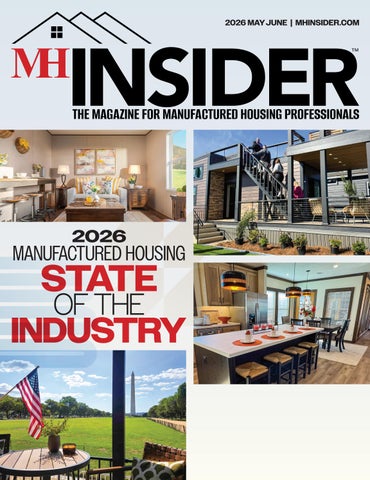
COVER IMAGES
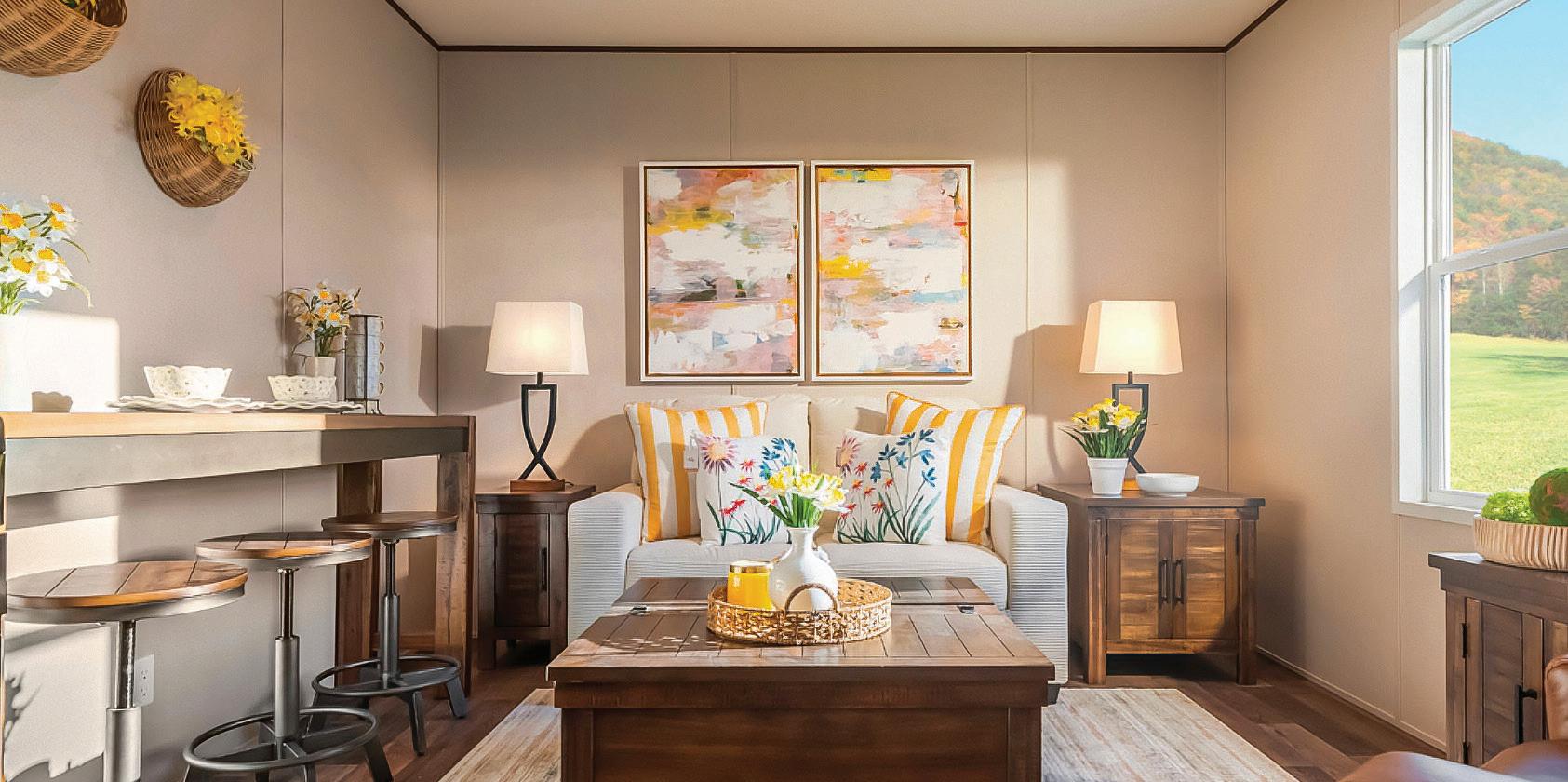
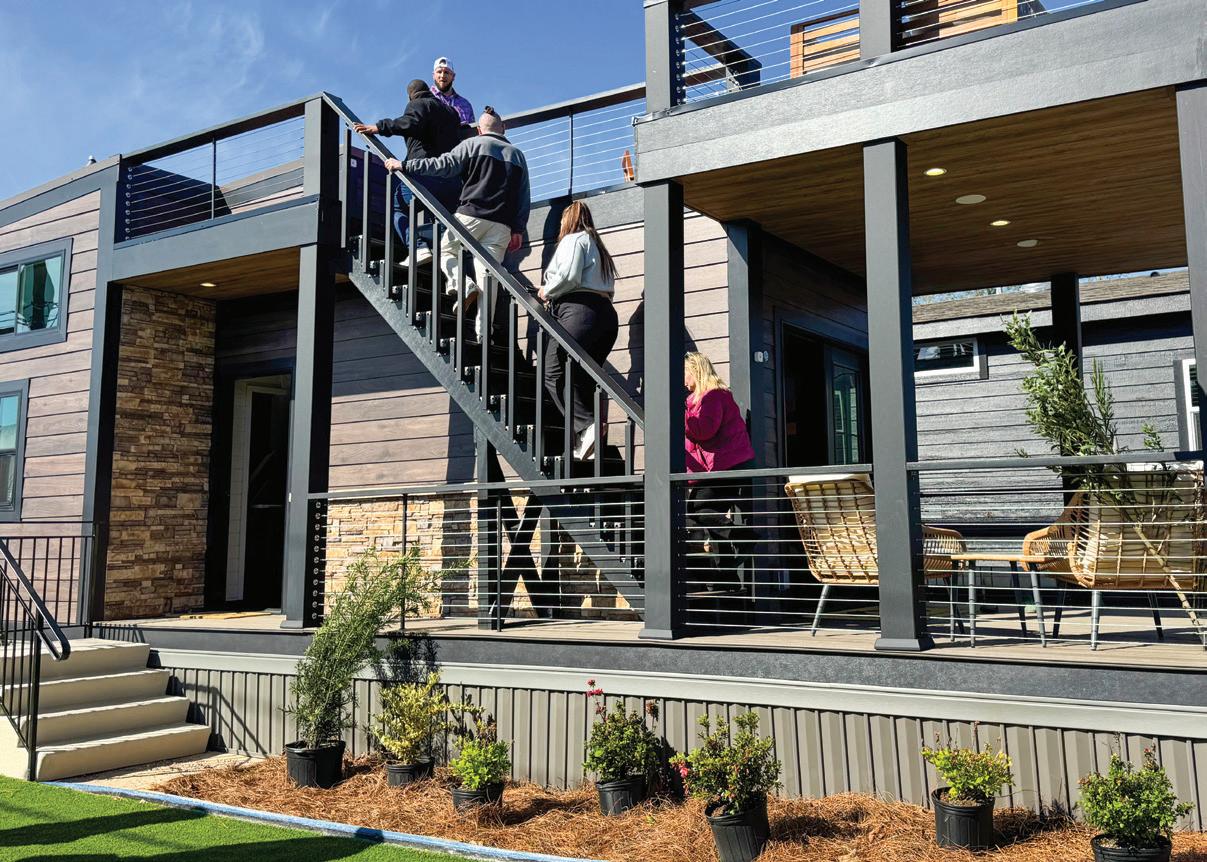
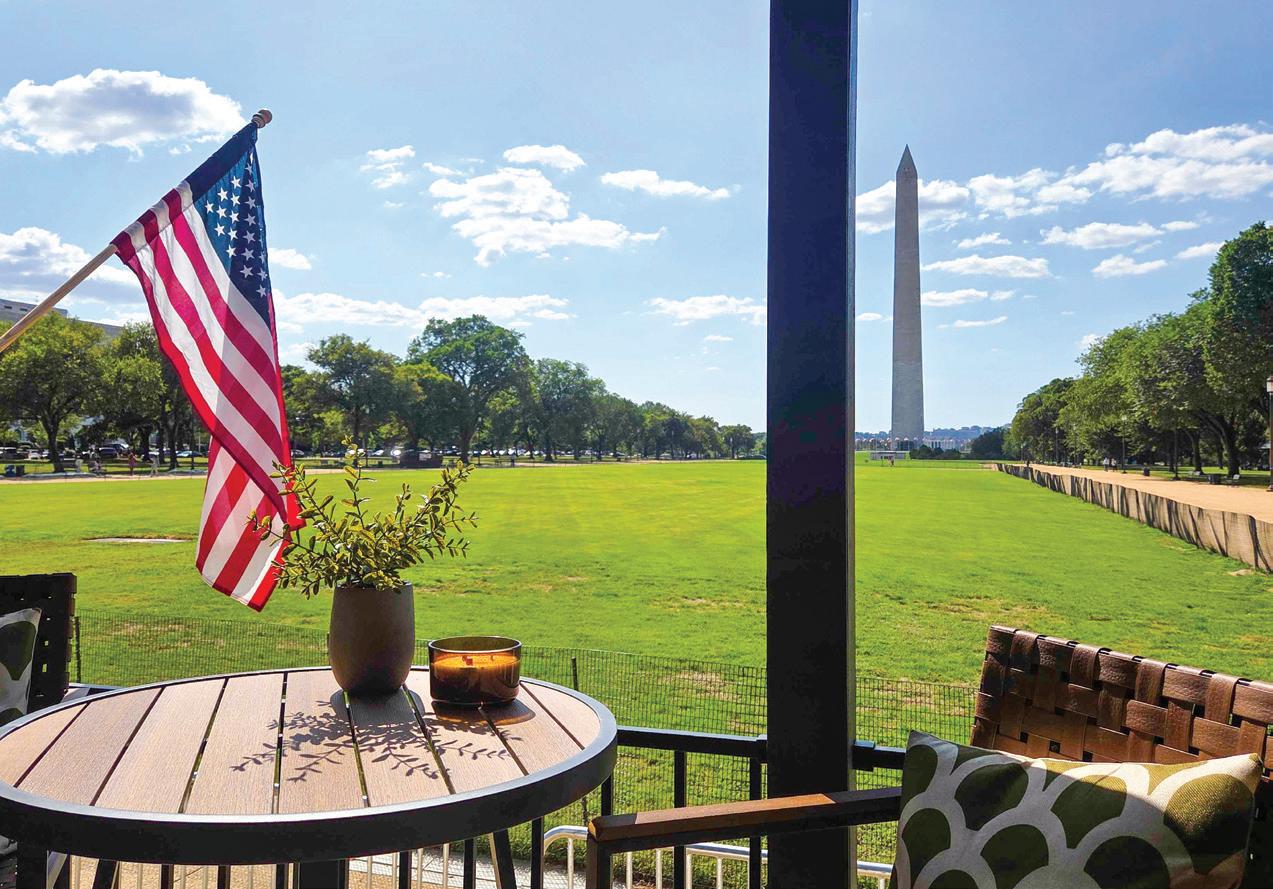
Top Right: Cavco Home Courtesy of Lisa Stewart Photography | Top Left: Courtesy of Clayton Bottom Left: Cavco Home in DC
Bottom Right: Timber Creek Home Courtesy of Lisa Stewart Photography
Have Industry News, Events, or Editorial Content You'd Like to Share? Contact our Publisher, Patrick Revere at (616) 888-6994 or patrick@mhvillage.com
MHInsider™ is published by:
2600 Five Mile Road NE Grand Rapids, MI 49525
(800) 397-2158 • www.MHVillage.com
Although we make every effort to ensure that the information in this issue was correct before publication, MHVillage,Inc., the publisher, does not assume and hereby disclaims any liability to any party for any loss, damage, or disruption caused by errors or omissions, whether such errors or omissions result from negligence, accident, or any other cause. Opinions expressed are those of the author or persons quoted and not necessarily those of MHInsider or the publisher MHVillage, Inc.
City of Philadelphia Calls Out for Manufactured Housing Expertise
A large, long-vacant parcel in the center of Philadelphia, Pa., has been designated a “manufacturing hub for housing” by city and regional stakeholders. Philadelphia Mayor Cherelle Parker said the site is part of a larger $2 billion investment in housing and workforce development. “We are all moving in a unified way to attempt to do what has never been done in the city of Philadelphia,” Parker said. “And that is to create a manufacturing hub for housing.”
Arrive Home Launches Down Payment Assistance Program for Single-Section Homes
Arrive Home, a provider of affordable housing services including down payment assistance, has expanded its program to include assistance for residents interested in single-section homes. The organization’s New Foundations DPA program connects borrowers to partner-lenders, providing 3.5 percent of the needed down payment on a home, as well as a 30-year FHA loan with a 1 percent fixed interest rate below the first mortgage. The New Foundations DPA program is not limited to first-time homebuyers and is available nationwide, with the exception of New York.
TRANSACTIONS
Manufactured Housing Supplier Extends Western Footprint
UFP Factory Built, a division of UFP Industries’ Construction segment, has acquired a Twin Falls, Idaho, facility formerly owned and occupied by Robert Weed Corporation, an RV supplier that ceased operation in late 2025. The transaction adds regional service in the West for UFP, and greater capacity in the company’s RV, cargo trailer, and manufactured housing business lines. “At UFP Factory Built we help builders and OEMs build better from the ground up,” UFP Factory Built Executive Vice President Chad Eastin said. “And we look forward to the opportunity to expand and improve our custom structural and innovative solutions to customers in the region.”
FG Communities Builds Presence in North Carolina
FG Communities, an owner and operator of manufactured housing communities, has acquired three manufactured housing communities in Morganton, N.C., the group’s seventh community in the market area. FG has developed significant scale in Western North Carolina, and this latest acquisition further strengthens its presence in a fast-growing market. “Morganton is a market we know well and believe in deeply,” FG Communities CEO Michael Anise said. “With seven communities now in our portfolio here, we have the scale to operate efficiently and serve our residents at the highest level. Western North Carolina continues to grow, and we intend to grow right along with it.” In early 2026, FG announced the purchase of a community on 14 acres in Fuquay-Varina, N.C., which is in the center of the state.
Builders FirstSource Acquires
Pleasant Valley Homes
Builders FirstSource, a supplier of building products, prefabricated components, and value-added services, has purchased Pleasant Valley Homes, a wholesale manufacturer of factory-built housing in Pine Grove, Pa. The company generates sales of 400 units per year for customers along the mid- to northeastern seaboard. “We plan to use available factory capacity to offer high-quality, semi-custom modular plans to our existing home builder customers with the potential to expand the offering to our home builder customers in other BFS markets in the future,” the company said in a statement. Pleasant Valley’s current collection of model homes includes single-level, three-bedroom, two-bathroom plans ranging from 1,500 to 1,650 square feet.
RHP Properties Completes
First Phase in Miami
RHP Properties stated in a recent news release that phaseone construction is complete at Cottage Grove Manufactured Home Community, a new all-ages community in southwest Miami. Cottage Grove’s 349 new manufactured housing sites address a critical gap in Miami-Dade County housing supply at a time when rising home prices and construction costs are �
UNLOCK THE BENEFITS OF
Why Join?
putting homeownership out of reach for many families. Cottage Grove provides convenient access to everything Miami has to offer and features brand new, modern multi-section homes in a luxury-inspired, amenity-rich setting at an affordable price point. With prices starting at $129,900, the community will offer spacious, four-bedroom single-family manufactured homes with open floor plans, multiple living areas, and kitchens equipped with stainless steel appliances and islands. Amenities include a pool with a large sun deck, a contemporary clubhouse, fitness center, yoga and lounge rooms, scenic biking and walking trails, and serene gazebos. A playground, expansive green spaces, and a gated entrance add to the community’s appeal.
Firm Capital Property Trust Gains
Interest in Canadian Portfolio
Firm Capital Property Trust has entered into a binding agreement to purchase a 50 percent interest in a 10-property, 1,649 site manufactured housing community in Alberta and Saskatchewan for a purchase price of $218 million, excluding transaction costs, plus a 50 percent interest in an additional community with 103 homesites in Alberta for $8.5 million, excluding transaction costs. The total purchase for all 11 properties is $226.5 million, excluding transaction costs, and will consist of 1,752 homesites. In addition to the properties,151 park-owned homes and 192 chattel home-only loans are being acquired.
Newmark Finances RHP Deal
Newmark Group, a commercial real estate advisor and service provider, has arranged an $830 million portfolio financing on behalf of RHP Properties and an institutional capital partner for the acquisition and refinance of a 36-asset manufactured housing portfolio. The portfolio is institutionally managed and comprises 8,340 manufactured housing pads across 36 predominantly four- to five-star, all-age communities, with residential ownership exceeding 95 percent and physical occupancy exceeding 99 percent.
PERSONNEL
Union Home Mortgage Names New Executive
Union Home Mortgage has named George Dover as its new vice president of manufactured and new construction lending. Dover has 30 years of experience in the mortgage industry, including as president and co-founder of Cascade Financial Services, where he served the industry from 1999 through 2024. At UHM, Dover will be focused on the mortgage company's �
construction-to-permanent lending and other manufactured housing products. “I’ve hit the ground running with our sales and fulfillment partners. The culture, tools, and environment at UHM are exactly what I was looking for, and I couldn't be happier to be part of this incredible organization.”
JLL Promotes MH Executive
JLL Capital Markets announced that Jack Wood has been promoted to director in its San Diego office. Wood’s promotion strengthens JLL’s debt and structured finance capabilities within its national manufactured housing platform, the company stated. With five years of experience at the firm and having closed over $1.3 billion in transactions, Wood will maintain focus on the origination and execution of debt and structured finance for manufactured housing communities throughout the United States. “We are incredibly excited for Jack to be taking this next step with our National Manufactured Housing Platform,” Aldon Cole, senior managing director and the head of the San Diego office, said. “He has been an integral part of the team since he joined, and we’re looking forward to seeing him succeed in this new role.”
INDUSTRY RECOGNITION
Virginia Leadership Centers Honor MHI VP
Laura Genovese, vice president of education and membership at the Manufactured Housing Institute, has been honored by Leadership Center of Arlington and Leadership Fairfax, in Virginia, as one of the area’s top 40 professionals under the age of 40. The Northern Virginia 40 Under 40 Program celebrates emerging leaders who demonstrate exceptional and impactful leadership in their professional and personal spheres in Northern Virginia. “In a quickly evolving world, this year’s honorees shine a light on the values of curiosity, innovation, empathy, and service. Through both their professional and personal lives, they are meeting the moment and making a positive impact in our region,” President and CEO of the Leadership Center of Arlington Lisa Fikes said.
IN MEMORIAM
Industry Mourns Longtime MH Professional
Doug Gorman, who owned Home-Mart Inc., in Tulsa, Okla., and later worked for Clayton Homes, passed away Jan. 18., following a lengthy fight against pancreatic cancer. Mr. Gorman received much-deserved praise from colleagues throughout his
decades-long career, including as a Sandy Goodman Award winner, as the winner of the 2000 Small Business Person of the Year in Tulsa, and as a 2012 inductee into the RV/MH Hall of Fame in Elkhart, Ind. He is survived by his wife Millie, whom he met while the two were working at Six Flags Over Georgia more than 57 years ago, and by his daughter, Stacie, and his son, Mitchell.
Commercial Finance Leader Passes Away
Roderick Knoll, a national leader in commercial finance and due diligence for manufactured housing community investors, passed away in February. He was 64. Mr. Knoll earned his bachelor's degree in business administration from Southern Methodist University before going into business and providing pre-construction services to developers of land-lease communities for more than 40 years. He prepared market studies, arranged construction and permanent financing, brokered land, and helped complete communities. He will be remembered for the love he shared with his family and friends and the lasting impact he had on those closest to him. His presence brought comfort, strength, and warmth to many lives.
Industry Professional Remembered for Kindness, Energy
Gordon Collins, who was an advocate for the manufactured housing industry for decades, passed away in late March and is being remembered by his colleagues for his professionalism and willingness to give. Mr. Collins began his career in 1946, working for an industry supplier, but joined the Air Force and spent four years in service, including in Korea. Following his service, he joined Vagabond Coach Co. in Michigan, where he worked in sales until he relocated to Southern California and joined Fleetwood Homes in the sales and marketing department. In 1974, he opened one of the most successful retail mobile home sales operations in San Diego County, Friendly Mobile Homes. His commitment to “service after the sale” set him apart from other retailers at that time. Mr. Collins always maintained a high level of activity with local, national, and Canadian industry associations. He received the Jack E. Wells Memorial Award in 1971 from the Trailer Coach Association, later reorganized as CMHI, and in 2008, was inducted into the RV/MH Hall of Fame in Elkhart, Indiana. Mr. Collins may have retired from active involvement in the industry in 1990, but he spent much of the remainder of his life as a traveling ambassador for RV and manufactured housing across the U.S. and Canada. MHV
THE STATE OF MANUFACTURED HOUSING
By Enon Winkler
Few sectors of real estate have undergone a perception shift as significant as manufactured housing.
For decades, manufactured housing communities operated largely under the radar of institutional investors. The asset class was often misunderstood and viewed as a niche corner of the housing market. Today, that narrative has changed dramatically.
Manufactured housing now sits at the center of one of the most pressing issues facing the United States: the growing shortage of
affordable housing. As home prices and apartment rents continue to rise across the country, manufactured housing and manufactured housing communities, in particular, have emerged as one of the few scalable solutions capable of delivering both affordability and stability.
As we move through 2026, the industry appears to be entering a new phase — one defined less by rapid acceleration
and more by maturity, discipline, and increasing recognition of the sector’s importance.
Production Still Lags Demand
Manufactured home deliveries have stabilized near the 100,000unit range annually after several volatile years.
Production slowed in 2023 as higher interest rates and tighter consumer financing weighed on demand before rebounding modestly in 2024 and leveling off through 2025. While stabilization is encouraging, the broader context highlights a much larger issue.
In the late 1990s, the industry produced more than 350,000 homes per year. Today’s output is less than one-third of that level despite a significantly larger population and a dramatically greater need for affordable housing.
The cost of new manufactured homes has also risen alongside broader construction inflation. Materials, transportation, and installation expenses have all increased. Yet even with these pressures, manufactured housing remains one of the most attainable paths to homeownership in the United States.
That affordability advantage continues to anchor the industry’s long-term demand.
Capital Markets Find New Equilibrium
Capital markets have also experienced a meaningful reset.
Between 2020 and early 2022, historically low interest rates and intense investor demand pushed pricing for manufactured housing communities to record levels. Cap rates compressed significantly as institutional capital entered the sector in search of durable yield and recession-resistant assets.
Between 2020 and early 2022, historically low interest rates and intense investor demand pushed pricing for manufactured housing communities to record levels, and cap rates compressed significantly.
Today, the market is beginning to find equilibrium. Cap rates have expanded modestly from historic lows, but the core investment thesis remains intact: manufactured housing communities continue to offer durable occupancy, predictable cash flow, and strong long-term fundamentals. In many cases,there are signs of values moving back in line with past seller expectations. �
Operational Excellence Becomes Critical
Operational performance across manufactured housing communities remains among the strongest in residential real estate. Occupancy levels remain consistently high, and resident turnover tends to be relatively low compared with other housing sectors.
However, expectations for ownership and management are evolving.
As the industry gains greater attention from policymakers and residents alike, professional management and responsible operations continue to be important. Many manufactured housing communities across the country were developed prior to 1980, making infrastructure planning and capital investment critical for long-term sustainability.
Operators are increasingly focused on infrastructure improvements, strengthening community standards, implementing technology, and filling vacant sites with new homes. Infill remains one of the most effective strategies to both increase housing supply and enhance property value.
Global Forces Still Shape the Landscape
As the industry gains greater attention from policymakers and residents alike, professional management and responsible operations continue to be important.
More importantly, energy spikes can fuel inflation, pushing Treasury yields higher and increasing borrowing costs across the housing sector, which could impact transaction activity and pricing expectations.
Palace Way Management
For manufactured housing professionals, the effects can be mixed. Higher interest rates may slow transaction activity while demand for more affordable housing options increases.
An Industry Becoming Essential
The long-term outlook for manufactured housing and the communities we operate remain highly compelling.
The United States continues to face a structural shortage of affordable housing, and few sectors are as well-positioned to address that challenge as manufactured housing. The combination of affordability, scalability, and operational resilience makes the asset class uniquely valuable within the broader housing ecosystem.
Manufactured housing communities are no longer viewed simply as an alternative housing option or a niche investment strategy. This shift is evident in the continued technological advancements in community operations.
Today, manufactured housing is emerging as an essential component of the nation’s housing infrastructure. As affordability remains one of the most pressing issues in the housing market, the role of manufactured housing will only continue to grow in importance in the years ahead. MHV
Enon Winkler is an executive managing director with Sunstone Real Estate Advisors with more than 20 years of brokerage experience and more than $3 billion in successful sales. Winkler is a seasoned investor, entrepreneur, and business leader skilled in navigating transactions ranging from straightforward to highly complex.
Empower Your Residents
With Rent Manager’s convenient features, you’ll empower your residents in a way that makes them want to stay.
Provide 24/7 access to essential tools for payment, maintenance, and communication with the rmResident mobile app.
Offer flexible options to pay rent– ePay, Cash Pay, Check Scanning, and Lockbox–that align with your renters’ preferences.
Allow residents to access documents, renew leases, and submit or track maintenance requests with the resident portal
The power is at your fingertips with Rent Manager.
To learn more, scan the QR code or visit RentManager.com
EVENTSupcoming
MHCA ANNUAL CONFERENCE AND GOLF TOURNAMENT
Wednesday, May 13 — Friday, May 15, 2026
Fort McDowell, Ariz. | WeKoPa Resort
The MHCA Annual Conference is a prime locale to meet, exhibit, and shop for the latest industry developments and trends. With awe-inspiring views and a day of great golfing, Manufactured Housing Communities of Arizona invites manufactured housing professionals for a productive three-day outing in the desert. Exhibit and sponsorship opportunities are available!
TENNESSEE HOUSING ASSOCIATION ANNUAL MEETING
Sunday, June 7 — Tuesday, June 9, 2026
Pigeon Forge, Tenn. | Dollywood’s Heartsong Lodge and Resort
Tennessee Housing Association, for its 2026 Annual Meeting, carries the theme “Key to the Dream”. The event takes place at Dollywood’s Heartsong Lodge and Resort and will include a reception dinner, general meeting, golf outing, and educational sessions. Sponsorship opportunities remain available.
FLORIDA MANUFACTURED HOUSING ASSOCIATION ANNUAL CONVENTION
Wednesday, June 10 — Friday, June 12, 2026
St. Petersburg, Fla. | Vinoy Resort and Golf Club
The FMHA Annual Convention will be held in the Tampa-St. Pete-area this year. Manufactured housing professionals get the opportunity to look ahead and explore new horizons to keep pace with the evolving manufactured housing industry in Florida. There will be an economic update, a review of recent and pending legislation, and other trending topics in Florida and from around the country. Attendance, exhibitor, and sponsorship opportunities are currently available.
MANUFACTURED HOUSING INSTITUTE OF SOUTH CAROLINA SUMMER CONVENTION
Monday, June 15 — Wednesday, June 17, 2026
Myrtle Beach, S.C. | Embassy Suites
Myrtle Beach Oceanfront Resort
MHISC returns to Myrtle Beach for its annual summer gathering. It will host a golf tournament, pickleball, committee meetings, and a state hall of fame awards ceremony and dinner. Join other manufactured housing professionals at the beach for learning and industry development. Exhibitor and sponsor opportunities remain, please contact the association for details.
Have an event or gathering you would like to have listed with MHInsider? Scan here to
MHI SHOWCASES INDUSTRY ACHIEVEMENT
Each year, during the Congress and Expo, the Manufactured Housing Institute unveils its annual award winners for industry achievement.
In 2026, MHI, the industry’s national advocate, honored 19 organizations across categories that include manufacturing and design, community ownership and operation, retail and sales, and industry services.
2026 MHI EXCELLENCE IN MANUFACTURED HOUSING AWARD WINNERS
MANUFACTURER OF THE YEAR AWARDS
VOLUME MANUFACTURER OF THE YEAR Clayton Home Building Group
SMALL VOLUME MANUFACTURER OF THE YEAR (THREE PLANTS OR LESS) Adventure Homes
RETAIL SALES CENTER OF THE YEAR AWARDS
RETAIL SALES CENTER OF THE YEAR | EAST Clayton Homes, Beaufort, SC
RETAIL SALES CENTER OF THE YEAR | WEST The Home Boys, Spokane Valley, WA
LAND-LEASE COMMUNITY AWARDS
LAND-LEASE COMMUNITY OF THE YEAR | EAST Saddle Creek by UMH Properties, Inc.
LAND-LEASE COMMUNITY OF THE YEAR | WEST Lavender Meadows MHC (55+) by Collective Communities
MANUFACTURED HOME COMMUNITY
OPERATOR OF THE YEAR Flagship Communities REIT
MANUFACTURED HOME COMMUNITY
OPERATOR OF THE YEAR UMH Properties, Inc.
SUPPLIER OF THE YEAR AWARD
SUPPLIER OF THE YEAR Blevins, Inc.
MANUFACTURED HOME DEVELOPMENT OF THE YEAR AWARD
MANUFACTURED HOME DEVELOPMENT OF THE YEAR Valley Vista Village by Homes Direct and Land Home Financial Services, Inc.
LENDER OF THE YEAR AWARDS
LENDER OF THE YEAR | FLOOR PLAN 21st Mortgage Corporation
VOLUME LENDER OF THE YEAR 21st Mortgage Corporation
LENDER OF THE YEAR | REGIONAL autoMHatic Financial
MANUFACTURED HOME COMMUNITY
LENDER/BROKER OF THE YEAR Berkadia
DESIGN AWARDS
MANUFACTURED HOME DESIGN | MULTI-SECTION
The Wildbury “Wally's House” by Adventure Homes
MANUFACTURED HOME DESIGN | SINGLE SECTION Cabana Serenity by Cavco Industries
MODULAR HOUSING DESIGN AWARD
The Luxus by Cavco Industries
MANUFACTURED HOME DESIGN | CROSSMOD Paramount 2856M32392 Belvidere by Champion Homes
INDUSTRY LEADERSHIP AWARDS
LEADERSHIP IN SUSTAINABILITY
UMH Properties, Inc.
Senate Approval of Housing Bill Positive Sign for Industry
U.S. Senator Tim Kaine, a democrat from Virginia and a former fair housing attorney, applauded the Senate vote.
By a vote of 89-10, the Senate passed H.R.6644, the 21st Century ROAD to Housing Act, after little more than two hours from the beginning of the session on March 12.
The bipartisan 21st Century ROAD to Housing Act is legislation that will build more homes, bring housing costs down, and expand access to affordable housing. The bill incorporates provisions from several pieces of legislation that Kaine had introduced, he said, including to improve transparency of mortgage loans for veteran homebuyers, create a pilot grant program to support new housing and community development activities, create a down payment assistance fund for first-time homebuyers, and end tax breaks for large institutional investors that buy single-family homes.
“As a former fair housing attorney, I’ve seen how access to safe, affordable housing affects a person’s well-being and long-term financial outlook,” Kaine said. “I’m glad the Senate passed this bipartisan legislation, which includes several provisions I championed, to help address our nation’s housing crisis. I often hear about rising housing costs from Virginians, and this legislation is a step in the right direction toward building more housing and lowering those costs. I’m also glad that it would prevent big investors with deep pockets from snapping up single-family homes they’ll never live in. I urge the House of Representatives to pass it as soon as possible.”
Among its many provisions, the 21st Century ROAD to Housing Act would:
• Boost housing supply to bring down costs by allowing Community Development Block Grant (CDBG) funding to be used to build affordable housing; reauthorize and update the HOME Investment Partnerships Program (HOME); provide federal incentives for states and localities to assist with affordable housing planning and implementation efforts; remove a requirement that manufactured housing be built on permanent steel chassis; ease financing for modular housing, manufactured housing, and affordable dwelling units; and streamline construction approval processes and environmental reviews for affordable housing developments.
• Make reforms to increase housing fairness, access, and affordability by addressing appraisal bias, preserving manufactured housing communities, improving Section 8 inspection policies to get families into housing more quickly, supporting home ownership, addressing housing needs of veterans, and expanding the availability of funds for emergency homeless shelters.
• Ban or limit large institutional investors from buying single-family homes. No votes were cast by senators Budd, Cruz, Johnson, Lee, Paul, Schatz, Scott (Florida), Tillis, Tuberville, and Young.
The bill must be considered and pass the House before going to President Trump’s desk. If the House makes substantive changes to the bill’s language, it may return to the Senate for final approval before reaching the White House.
“The housing crisis hurts New Hampshire families, stretches budgets thin, and denies people the stability that owning their own home can provide,”
Senator Maggie Hassan, a democrat from New Hampshire, said following the Senate’s strong show of bipartisan support. “This bipartisan bill takes important steps forward to build more homes that people can afford and stops big Wall Street funds from buying up people’s homes. The strong bipartisan support for this package is a sign of the urgent need to address our country’s housing crisis, and I urge my colleagues in the House to take up and pass this bill.”
The bill incorporates provisions from several pieces of legislation that Kaine had introduced, he said, including to improve transparency of mortgage loans for veteran homebuyers, create a pilot grant program to support new housing and community development activities, create a down payment assistance fund for first-time homebuyers, and end tax breaks for large institutional investors that buy single-family homes.
Senator Elizabeth Warren, a democrat from Massachusetts and the ranking member of the Senate Banking, Housing, and Urban Affairs Committee, urged action on the bill in the House.
Discover the Credit Human difference
“House Republicans should immediately take up this bill and pass it,” she said. “If they do not, they will have to explain �
Where we’re committed to: Making a complex process smooth and simple. Crafting lending programs with your needs in mind.
Improving the lives of the people we serve.
Contact us at:
to families across the country in November why they refused to lower the cost of housing.”
One of the key components of the bill to be discussed moving forward is the way in which institutional owners may be restricted from purchasing residential housing.
“It would stall new communities from being built and divert investment away from an important affordable housing option for renters and their families,” the National Apartment Association and the National Multi-Family Housing Council said in a shared statement regarding the language about institutional investors. “BTR (build-to-rent) housing opens the door to better employment and educational opportunities and is a vital part of our nation’s housing affordability solution. Fewer housing units means higher rental costs for Americans.”
Just days after the Senate vote, President Trump issued an executive order to review all federal housing programs in an effort to ease regulations and lower the cost of housing and housing finance.
At the state level, Indiana in March passed legislation that allows for a manufactured home to have a chassis or not, effective immediately. If the chassis language is signed into law at the federal level, each of the states will have to amend and approve the approach for homes built, sold, or placed within state lines.
For the latest breaking news on housing policy, please go to MHInsider.com, the leader in manufactured housing industry news. MHV
your highest utility cost. Make it your greatest value driver.
WaterScope® MHP gives ownership groups complete visibility and control over water across every property.
• Recover costs automatically. Submetering and automated billing put revenue back where it belongs.
• Catch leaks before they compound. Real-time alerts flag issues before they become expensive problems.
• Protect asset value. Lower utility costs mean stronger NOI and a more attractive property.
• Reduce operating burden. Your team spends less time chasing water data and more time running the business.
Water is now the single most expensive utility in manufactured housing. Managing it well is the fastest path to lower costs, satisfied tenants, and a high-performing asset.
our
UMH PROPERTIES, INC.
Bring your next manufactured home community project to UMH for strategic equity investment.
• $2.4 billion in total enterprise value
• 145 communities, 27,100 homesites, 12 states
• Housing approximately 23,000 families
As a publicly traded REIT (NYSE:UMH), we have been providing quality a ordable housing since 1968. Our portfolio provides high pro t margins, recession resistant qualities, reliable income streams and the potential for long-term value appreciation.
• 8,200 total acres, 4,000 acres in Marcellus and Utica Shale regions
Property featured: SEBRING SQUARE, Sebring, FL Homes for Sale and Rent. Take the Tour Today! For more information, visit www.umh.reit or contact ir@umh.com
Doors Open for Manufactured Housing in Texas
Zoning Shift is a Positive Step Toward Housing Affordability
By DJ Pendleton and Rob Ripperda
The Texas Legislature has passed the state’s most significant expansion of manufactured housing rights in decades. Senate Bill 785, which TMHA supported, takes effect Sept. 1. It will require most Texas cities with zoning regulations to permit new HUD-code manufactured homes as a by-right use in at least one residential zoning district. An estimated one-third of Texas' 1,200-plus cities need to update their zoning codes to comply with the new law.
As cities learn about the new legal mandate, some will begin to review and write new ordinances to change their zoning maps to comply with the law. Others might not become aware until the language of SB 785 is presented to them.
The passage of SB 785 was a major state-level legislative victory and finally fulfilled TMHA's key legislative priority, one it has pursued for decades. But the state-level law was just the start; the outcome depends on how cities choose to implement the law.
What Manufactured Housing Professionals Can Do
Manufactured housing professionals in Texas have a unique opportunity before September 2026 to advocate for the allowance of new manufactured homes in areas of the city where they were previously banned. But it will be on each of us, within local communities, to seek out, engage, and advocate for more manufactured housing.
TMHA has asked its members to get active, or more active, in specific ways before the September change.
Firstly, know your cities. Identify municipalities that do not have a by-right zoning district.
Check for exemptions. Does the city lack any industrial or commercial zoning? Or are all residential lots in the city subject to pre-existing deed restrictions against MH? These carve-outs are narrow, but try to verify if they apply.
Reach out to staff. Introduce yourself as a trusted resource to planning staff and council members for all things manufactured housing and offer to work with them on SB 785 compliance. Bring the map. Get a copy of the city's zoning map and flag candidate districts that make sense to be zoned by-right under the new law.
Host an open house. Invite staff and council to tour a new HUD-code home on your lot or community. SB 785's success was significantly helped by getting policymakers inside new manufactured homes.
Speak up at council and planning meetings. Short talking points at a hearing can influence a vote, but if they hear nothing from the industry, public officials may do only the minimum to meet the requirement.
Find friends. Employers, realtors, bankers, developers, and community leaders all understand the need for new attainable housing units. Ask them to join in requesting a wider expansion of property owner rights.
TMHA is interested in hearing back from members about their experiences in cities and towns across Texas. Report back and help inform other members and us on what is happening in an area where you work, live, or serve. Let us know what you're hearing in your markets, and we'll help support you. We'll collect and distribute what is and what is not working to move the ball forward in Texas for manufactured housing. MHV
LEAD WITH CONFIDENCE AS
DJ Pendleton has worked for the Texas Manufactured Housing Association for nearly 20 years. He became the executive director in 2008, the position he holds today. TMHA is an industry member trade association primarily focused on state-level legislative advocacy on behalf of the manufactured housing industry. Pendleton is licensed to practice law in Texas. His educational background includes undergraduate and master’s degrees in accounting from Texas A&M University, and a juris doctorate law degree from Baylor Law School.
Rob Ripperda is vice president of operations at the Texas Manufactured Housing Association, where he develops data tools, market analysis, and policy research focused on housing affordability and manufactured housing in Texas. A former systems and programming professional at Dell, he brings a cross-disciplinary background in technology, operations, and applied analytics to industry and policy work.
44K COMMUNITIES
4.3 Million
COMMUNITIES BY NUMBER OF HOME SITES
COMMUNITIES BY YEAR BUILT
20 Million
In 2025, the manufactured housing industry directly …
Produced 102,738 manufactured homes from 147 plants in 28 states
Created 61,389 direct jobs paying $3.3 billion in wages in factories, retailers, land preparation, utility connections, and shipping
Generated $12.7 billion in sales, which contributed $6.3 billion to GDP growth
86% own or are buying their home
Split evenly between Boomers and older vs Gen X and younger Geographic
of buyers have a favorable
buyers say?
or somewhat familiar with the
manufactured housing industry trends & statistics
Markets with Highest Rent
All Ages
Orange County, Calif.
San Luis Obispo, Calif. ............................
Sonoma County, Calif.
55+
Santa Cruz County, Calif. ......................
Sonoma County, Calif.
$2,155
$1,800
$1,681
$3,674
$2,000 Ventura County, Calif............................... $1,623
Markets with Lowest Rent
All Ages
Lynchburg, Va. MSA
Hendry/Okeechobee Counties, Fla.
$232
$339
Hidalgo County, Texas ................................$379
Topeka, Kan. MSA (5.9%) Indian River County, Fla. (5.6%)
55+
Des Moines, Iowa MSA (6.9%)
Allegan/Muskegon/ Ottawa Counties, Mich. (5.8%)
Brownsville, Texas MSA (3.4%)
1,132
1,416
Unlock potential in every property.
For 25 years, we’ve remained the only property management software partnering exclusively with manufactured housing.
Clayton Opens First New Factory in 10 Years
By Sean Vichinsky Conway, Ark., Facility
Will Produce
3,000 New Homes Annually
On March 5, Clayton Homes introduced the industry and the state of Arkansas to its first new facility in a decade, and one that takes a leap forward in technology and efficiency to help build more than 3,000 new homes each year.
Tennessee-based Clayton is a leader in building attainable single-family homes.
“The Conway home building facility represents our vision to develop housing innovations that improve lives and build a better tomorrow,” Clayton’s President of Manufacturing Colt Davis said. “The thousands of homes built here each year will help bring attainable homeownership within reach for families across the region. We are incredibly grateful for the people of Conway welcoming us and for local and state leaders supporting the development of our newest home building facility.”
“Clayton’s new home building facility is a welcome addition to Conway. We are excited to celebrate the grand opening of Clayton in Conway. This project reflects the strength of our local workforce and the continued momentum of our local economy.”
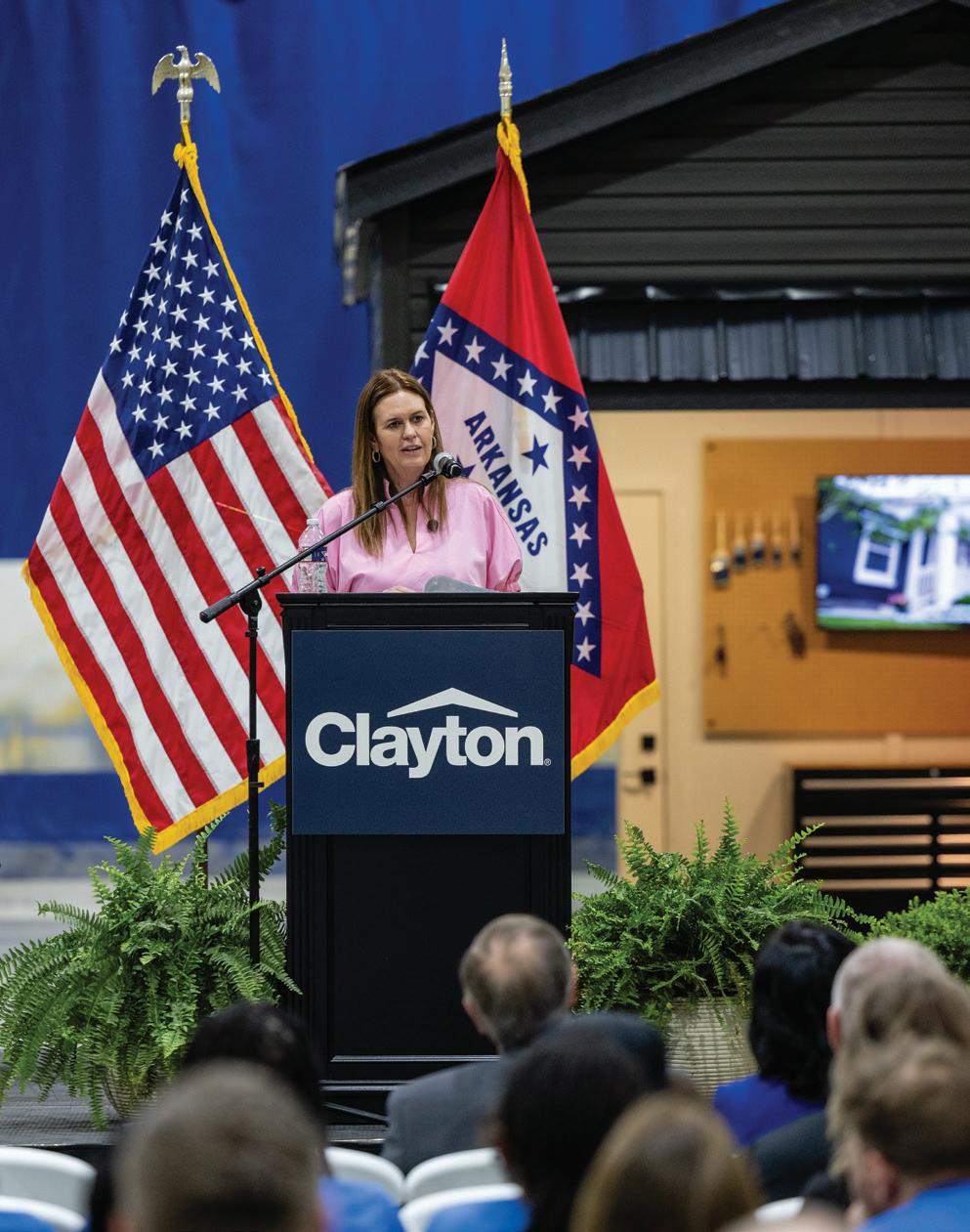
“Arkansas was recently ranked the number one state for inbound movers for the second year in a row, and companies like Clayton are ensuring that some of these new Arkansas residents not only have an affordable place to live but also a great place to work,” Arkansas Governor Sarah Huckabee Sanders said. “We are incredibly grateful that they chose Conway for their new manufacturing facility, and we are looking forward to the jobs and opportunity this will bring to Central Arkansas and beyond in the years ahead.”
Clayton invested $42 million in modernizing the facility.
— Mayor Bart Castleberry
Clint O’Neal, executive director of the Arkansas Economic Development Commission, said the factory is a welcome addition to the community.
Clayton was founded in 1956 and is the largest manufacturer in the industry. Its nationwide capabilities include the production of site-built homes, manufactured homes, tiny homes/RV code product, CrossMod® , and modular housing.
New Employment Opportunities in Arkansas
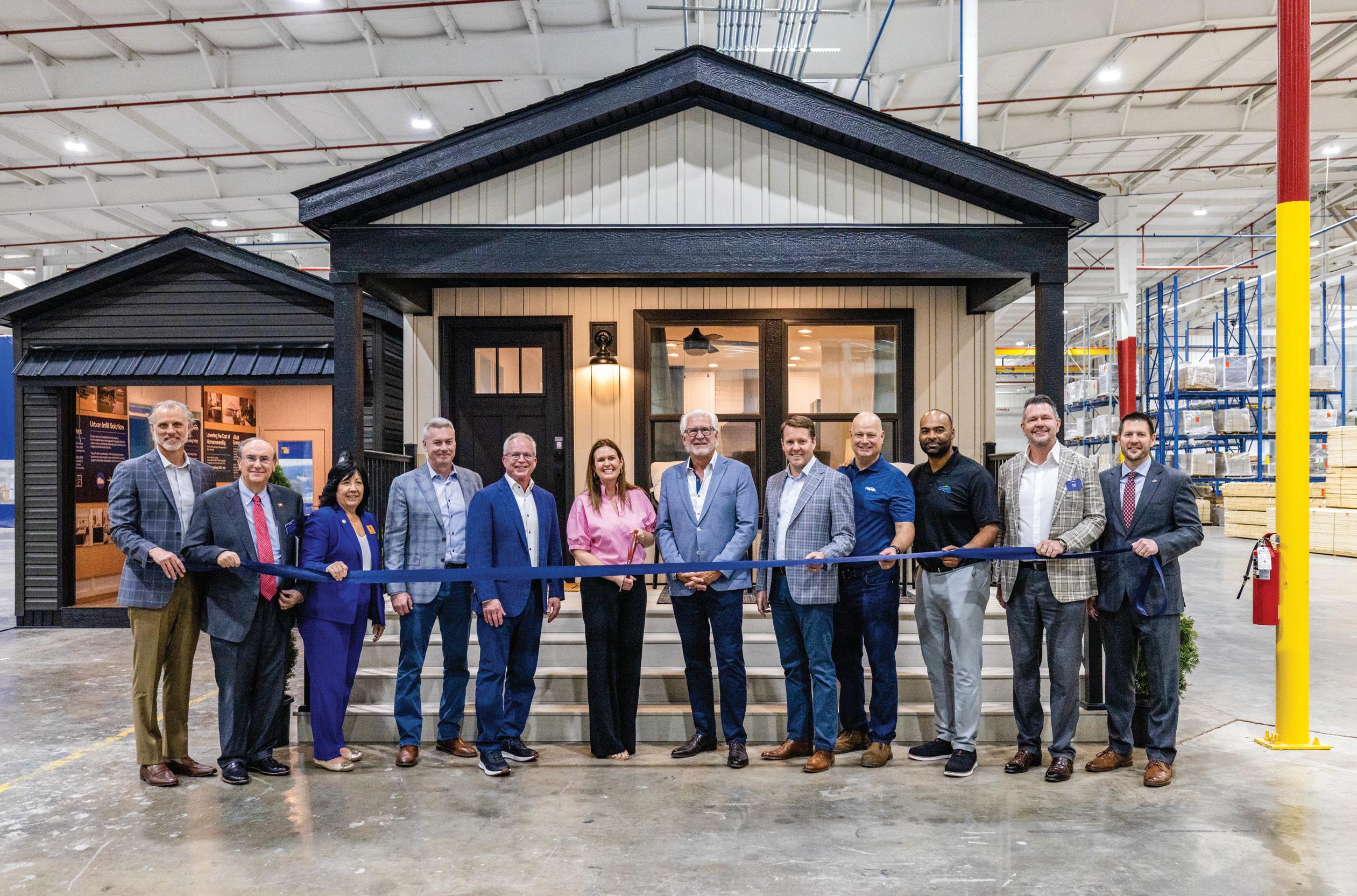
The new factory, a 220,000-square-foot facility that was purchased and modernized into a homebuilding factory by Clayton during the last two years, will employ about 250 people. Many positions have been filled, with plenty of hiring to do through the spring and into the summer when production will begin. Clayton had a ribbon-cutting for the new factory, and many state and local representatives attended.
“With the grand opening, Clayton takes an important step in addressing the nationwide housing shortage as well as creating new economic opportunities in Arkansas,” O’Neal said. “Congratulations to Clayton and the community of Conway on this milestone that will bring success for many years to come.”
Faulkner County Judge Allen Dodson said the entire region will benefit from the entry of the new employer.
“Clayton is making a significant investment in Faulkner County, and we are excited to celebrate the grand opening of the company’s new home building facility,” Dodson said. “This facility will have a major impact, creating many new jobs in our county and helping drive new growth in the region.”
Conway Area Chamber of Commerce and Conway Development Corporation President and CEO Brad Lacy said �
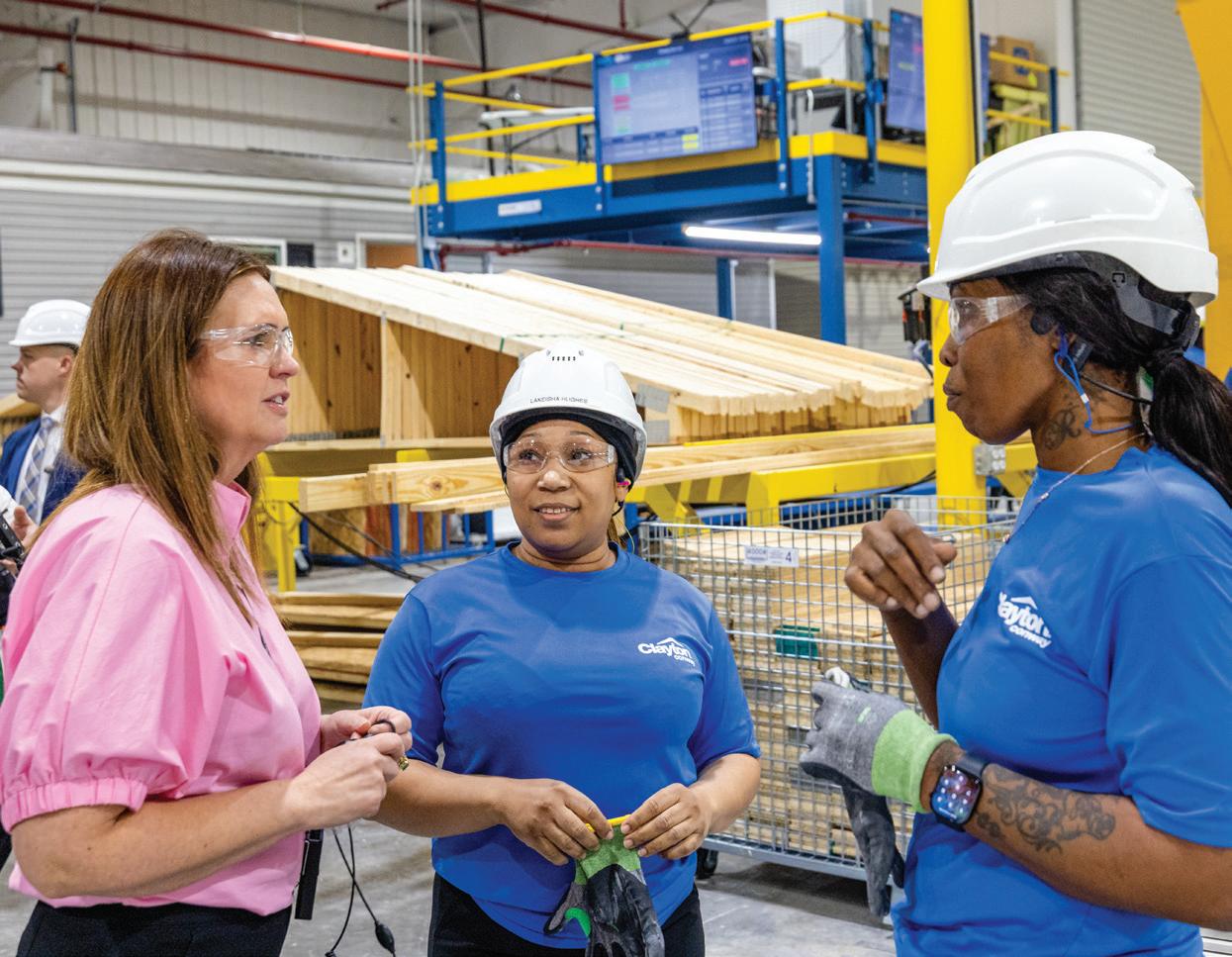
Arkansas Governor Sarah Huckabee Sanders, left, speaks with team members at a Clayton homebuilding facility recently opened in Conway, Ark. Photo courtesy of Clayton.
Clayton had been a great partner in the community since its earliest introduction and that he has a great amount of optimism about the company’s presence in Conway.
“We believed that Clayton would be a good corporate citizen,” Lacy said. “That has proven to be true, and we look forward to growing with them in Conway as a trusted community partner.”
Sean Vichinsky is an editor of MHInsider and a marketing copywriter for MHVillage.
FINANCING EXPERTS
ANTHONY DIMARCO Managing Director
GERARD D. DIMARCO JR Managing Director
PIERCE REDMOND Vice President
• Breadth of services
Ways To Think About Energy Efficiency Throughout a Manufactured Home
By Steven Lane
It’s hard to scroll through headlines these days without seeing the word AFFORDABILITY pop up at least once. While making ends meet has always been a challenge, the ability to afford a home, above the price of gas or groceries, is driving much of the economic news. Much of the dramatic rise in home prices results from a shortage of available homes – it’s the old law of supply and demand. Manufactured homes can be a huge part of the solution, providing access to affordable homes for more families. But there is a difference between being able to afford a home and being able to afford a home after you’ve moved in. Much of the ongoing cost of homeownership is tied up in utility bills, and the biggest consumption of utilities is the energy needed to keep a home comfortable. If you’re like most Americans who are just emerging from a brutal winter, your energy bills reflected the additional cost of the low temperatures outside. And before we have a chance to catch our breath in the next season, you can be sure AC units will be cranked up to account for summer heat.
With this almost year-round cost burden, owners of manufactured homes should consider a few ways to maximize energy efficiency, both for new and existing units. �
HVAC Equipment
For the past year or more, the conversation around HVAC has been around the government-mandated refrigerant transition to one with a lower Global Warming Potential, or GWP. That has overshadowed the slower transition to higher-efficiency furnaces that has been underway for some time. It’s easy to confuse the numbers 80 percent, 90 percent, or 95 percent in furnaces with environmental impact, but, in reality, these percentages refer to the estimated amount of heat generated by the unit that makes its way into the home. Put another way, 20 percent of the warmth generated by an 80 percent efficiency furnace goes up the chimney and out of the home, while only 5 percent of a 95 percent furnace does.
Heat pumps make manufactured homes more energy efficient because they move heat instead of creating it. Rather than burning fuel or using electricity to generate heat, a heat pump pulls existing warmth from the outdoor air — even in cold weather — and transfers it inside. This process allows the system to deliver two to four units of heat for every unit of electricity used, far outperforming traditional electric or gas heating. Heat pumps also provide both heating and cooling in one system, reducing equipment needs and energy waste. For manufactured homes, which benefit most from efficient, right-sized systems, heat pumps offer a proven way to lower energy bills, improve comfort, and reduce emissions without sacrificing performance.
Skirting
winter air out of a crawlspace, but can also qualify a home buyer for additional financing options through FHA. Depending on the installation method, it may create a permanent foundation per FHA standards.
Doors and Windows
You may have the common childhood memory of an adamant parent or caregiver saying, as they felt a chilly draft through an open door, “Were you born in a barn?” Of course, closing a door tightly still doesn’t make it completely weather-tight. Most of the energy loss in a home goes through doors and windows, even when they’re closed.
In colder climates, insulated skirting is a great option. Backed with solid foam, an insulated skirting kit not only keeps cold winter air out of a crawlspace, but can also qualify a home buyer for additional financing options through FHA.
If you’re considering a renovation of an existing unit, the ROI of replacing doors and windows can be significant. Look for doors that have a solid core, which provides additional insulation, and windows that are “low-E” and/or have argon gas between panes. In addition, AAMA, the American Architectural Manufacturers Association, sponsors a voluntary product testing and quality-control verification program that also complies with HUD Code.
Certain fenestration upgrades may also be eligible for government incentives through state-level weatherization programs. These programs are designed to increase energy efficiency in older homes and incentivize homeowners who invest in modernizing.
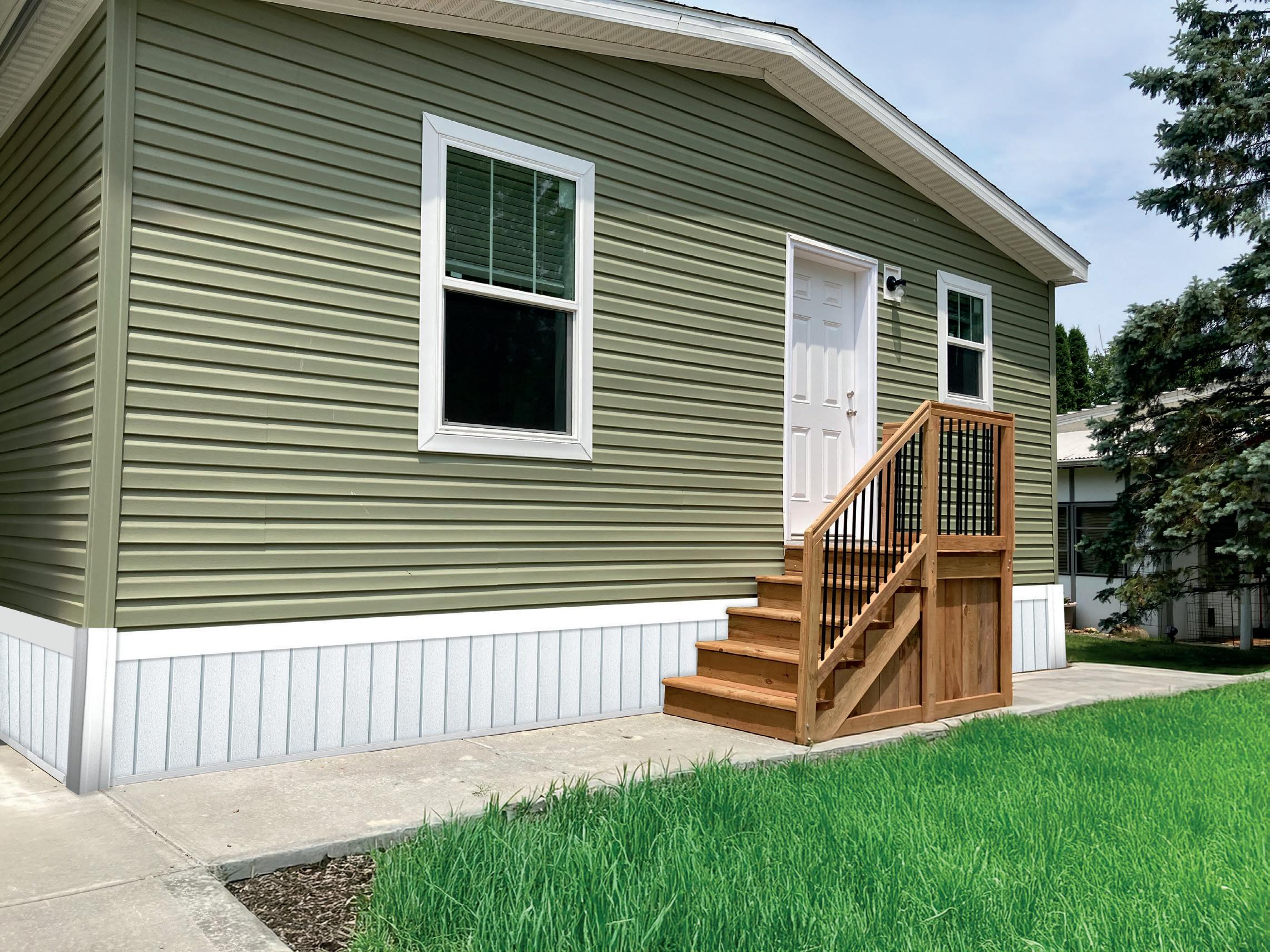
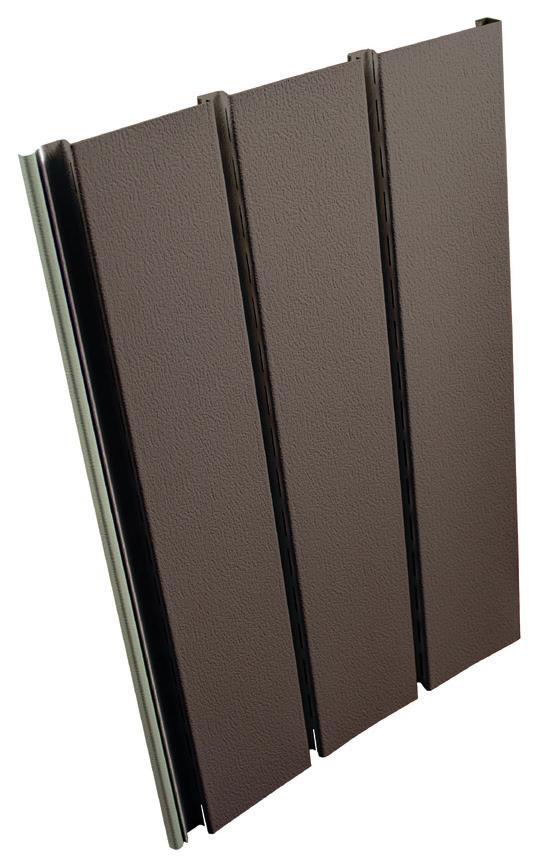
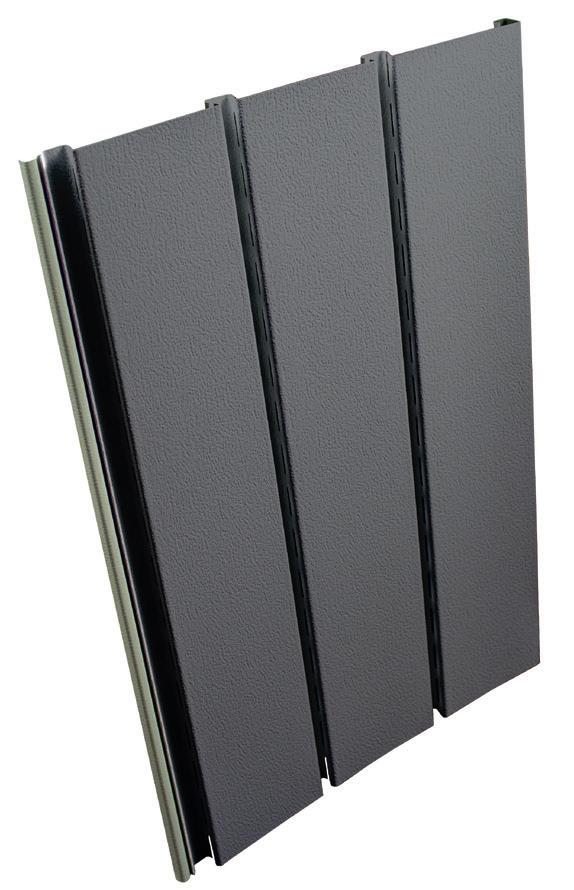
Yes, skirting is aesthetic – it completes the look of a set manufactured home with architectural finishes and an expanding array of colors. And yes, skirting also protects the underside of the home from pests. Skirting also offers important benefits to thermal comfort inside the home. Enclosing the crawlspace helps to regulate temperature and humidity on the other side of the floorboards. Depending on the local climate, the amount of ventilation included in a skirting kit, either through manual or automatic vents, or ventilated panels, allows for the right amount of airflow and keeps the home from trapping too much moisture, which, if not considered carefully, can result in dampness or even mold beneath the floorboards.
In colder climates, insulated skirting is a great option. Backed with solid foam, an insulated skirting kit not only keeps cold
Residents of a manufactured home don’t have to put on a second sweater in the winter or fan themselves with their power bill in the summer to keep their energy expenses low. There are numerous common-sense upgrades and aftermarket enhancements that can have an immediate impact on those monthly bills.
Whether you’re a community operator, new home retailer, or homeowner, it’s important to think about the lifetime cost of a product. Short-term savings can be whittled away with higher utility bills, while the investment in a more energy-efficient item may pay off in the long run. MHV
Steven Lane is the vice president of marketing for Style Crest, a nationwide network of strategically located distribution centers serving the manufactured housing industry with building products including vinyl siding and skirting, HVAC equipment specifically designed for manufactured homes, fiberglass entry steps, and fiberglass bathtubs and showers.
No One Opens More Doors to New Residents
Since 2004, manufactured housing professionals have placed their confidence in MHVillage to generate high-performing leads that consistently deliver the highest returns for their marketing budget.
New Interest in Manufactured Housing Spurs Investment in Western Markets
By Doug Ohlemeier
New community investments in the Sunbelt and Pacific Northwest shine a light on the benefits of manufactured housing.
Initiatives in Seattle, Washington, and San Antonio, Texas, involving manufactured housing are intended to improve housing affordability and quality in housing stock.
In the San Antonio area, Ascent Developer Solutions, a Southern California real estate lending firm, entered the manufactured housing market by financing the acquisition of the San Antonio location.
Real estate investment firm Ballast acquired manufactured housing communities in Lynwood, Washington, and in San Antonio.
Ascent’s Texas development, designed for 400 manufactured homes, will provide affordable homeownership opportunities within a new, high-quality community featuring premium amenities, according to a news release. Ascent plans to work with manufactured housing developers, operators, and investors to offer construction, bridge, and term financing solutions.
As manufactured homes can be constructed for about 40 percent less than standard, single-family homes, manufactured housing is the most practical solution to the nation’s affordable housing crisis, according to Gene Kim, who in October joined the Encino, California firm as executive vice president of commercial real estate strategies.
“You can buy a brand new home for a lot less, at least a third less than a site-built home,” Kim said. “Locking at new homes today, seeing what they're producing at the Claytons, the Cavcos, the Champions, the quality is very high. The quality differential between, for a starter home, especially, for working-class families, is getting smaller and smaller.”
At Serene Terrace, a community for retirement-age residents within the metropolitan Seattle area, 131 sites were nearly fully occupied when the deal was announced in late January. Ballast plans $2.5 million in capital improvements to upgrade infrastructure, improving amenities and driving lease-up activity.
Immediately north of downtown Seattle, Serene Terrace offers residents an affordable housing solution priced 57 percent �
below the cost of nearby single-family housing. The region’s manufactured housing occupancy is 99.2 percent.
Ballast’s first Texas acquisition, Higdon Oaks, is a new premier gated manufactured housing community situated on nearly
“The communities overall are not what people envision, they kind of think of the trailer parks, and that’s when the NIMBY (Not in my backyard) effect kicks in,” Kim said. “But, the quality of the communities being developed today, they almost need a new asset type name, because they’re very different from your 1960s and 1970s communities.”
100 acres in southeast San Antonio. Constituting 200 occupied sites, amenities include a clubhouse, resort-style pool, fitness center, event space, sports courts and dog park, features common with master-planned developments.
“These two deals show two different but complementary paths for the sector,” said Pace Barker, Ballast’s principal of investments. “Serene Terrace is a 55+ community in a highly supply-constrained Seattle metro, where affordability pressures are intense and vacancy is extremely limited. Higdon Oaks is a newer all-age community in San Antonio with a clear runway for lease-up and growth in a fast-expanding market. Together, they reflect what we think the future looks like: professionally operated manufactured housing communities serving different resident profiles in markets where traditional housing supply has not kept pace with demand.”
Demand continues to outpace supply in metro regions, including San Antonio. Due to population growth and changing zoning policies, Texas is one of a handful of major states to expand manufactured housing inventory during the past 20 years. While the state is second nationally for manufactured housing, the units account for only 6.2 percent of Texas’ overall housing inventory, which points to demand and growth potential, according to Ballast.
The challenge is less about whether the product works and more about whether the surrounding ecosystem, including zoning, placement, titling, mortgage access, and local approvals,
allows it to grow responsibly. If those barriers improve, manufactured housing can make a much larger contribution to easing the shortage, Barker said.
“Manufactured housing plays an essential role because it is one of the few ways to expand homeownership at a price point many households can still reach,” Barker said. “This is one of the few forms of unsubsidized homeownership that can still be delivered at scale, and the 2024 production rebound shows there is capacity to grow further. Production reached 103,314 homes last year, equal to 7 percent of total housing starts and 9.3 percent of single-family-plus-manufactured starts. We don’t see it as a silver bullet, but we do see it as one of the most practical tools available for adding attainable housing at scale.”
Ascent plans to expand its efforts nationally in secondary and tertiary markets in Texas, Florida and the Southeast, needing workforce housing, according to the release.
Manufactured housing also works well inside age-limited, retirement, lifestyle-focused, and active adult communities, Kim said.
A proponent of manufactured housing, Kim says he hopes consumers will understand that the manufactured communities can be constructed well, as many include high-end finishes and advanced construction technology.
“The communities overall are not what people envision, they kind of think of the trailer parks, and that's when the NIMBY (Not in my backyard) effect kicks in,” Kim said. “But, the quality of the communities being developed today, they almost need a new asset type name, because they’re very different from your 1960s and 1970s communities.” MHV
Doug Ohlemeier is a freelance writer based in Austin, Texas, who has written for a variety of industries including manufactured homes, real estate, agriculture, supermarket retail and lumber for more than 20 years.
How to Scale Manufactured Home Communities Without Scaling Overhead
By Wes Cannon
Manufactured housing community owners and operators are in a unique moment. Demand for affordable housing remains strong. Occupancy is steady. Well-run communities continue to produce durable, reliable cash flow.
But today, long-term success is determined by what happens after the deal closes.
Manufactured housing is operationally different from other real estate asset classes. You’re managing homes across multiple vintages. Infill timelines directly impact NOI. Contractor markets are fragmented. Capital decisions often require balancing short-term returns with long-term community health. Small execution gaps, such as deferred maintenance, inconsistent rehab quality, and delayed infill, can rather quietly compound into meaningful financial drag. Most operators don't struggle because they lack effort. They struggle because execution disciplines don't scale as fast as acquisitions.
Large institutional owners solve these challenges with layered staffing models, proprietary systems, and formal process controls. Those systems work at massive scale. However, these same systems can be expensive, slow, and unrealistic for independent and mid-sized operators.
Is there any good news? Yes. You don’t need institutional solutions to achieve institutional-level results.
What follows is a practical, right-sized execution framework designed specifically for manufactured housing portfolios. It applies the most valuable lessons from institutional platforms — without importing the overhead or rigidity often associated with larger organizations.
The goal is to create clarity, control, and predictability across CapEx, rehabs, and infill — so operators can scale confidently and protect NOI.
The Six Disciplines That Matter Most in Manufactured Housing Operations
1. Execution-Ready Scoping Anchored in Home Vintage and Community Reality
In manufactured housing, scoping isn’t just paperwork — it’s capital allocation.
A 1978 home behaves differently than a 1998 home. Neither performs like a new infill unit. When operators apply blanket rehab assumptions across all vintages, they risk overspending in some cases and under-investing in others.
Execution-ready scoping starts with asking the right questions:
• How old is the home?
• What condition is the infrastructure in?
• What rent strategy are we pursuing?
• What makes this specific community unique?
When scopes are grounded in real-world conditions instead of assumptions, budgets become tighter, timelines shrink, and change orders decrease. Precision at the front end protects NOI on the back end.
2. Standardized Scopes and Pricing with Built-In Flexibility
Standardization creates consistency. Defined scopes and clear unit pricing reduce ambiguity, make bids comparable, and allow a contractor’s performance to be measured objectively.
But standardization shouldn’t become rigidity.
Every home and community has nuances. Smart operators create consistent frameworks — but allow room to adjust based on asset condition, rent comps, and long-term hold strategy.
Standardization provides control. Flexibility protects profitability. The operators who balance both are the ones who scale without friction.
3. Documentation-Driven Accountability
In fragmented contractor markets, documentation is leverage. Clear photo evidence. Defined milestones. Structured reporting. These are simple practices — they dramatically reduce disputes and accelerate decision-making. They also tie payments directly to verified progress.
In manufactured housing, where projects span multiple communities and secondary markets, visibility matters. But visibility alone isn’t enough. Accountability must be objective and repeatable.
When documentation becomes a habit, rather than an afterthought, it protects capital, improves vendor accountability, and reduces risk across the portfolio.
4. Scalable Field Oversight Without Operational Bloat
Many manufactured housing portfolios stall — not because acquisitions slow down, but because oversight fails to scale.
Owners either spend too much time traveling between communities or add internal layers that increase �
overhead without meaningfully improving outcomes. Neither approach is sustainable.
Scalable oversight means defining clear supervision standards, consistent quality controls, and straightforward accountability without building unnecessary bureaucracy.
The goal isn’t complexity. It’s disciplined execution that scales.
5. Asset-Level KPIs That Protect and Grow NOI
Portfolio-level metrics are important, but they often hide inefficiencies at the community level.
Infill cycle time. Cost per rehab. Scope variance. Rework frequency. These asset-level metrics provide clearer insight into what’s really happening operationally.
In manufactured housing, every pad matters. Every home vintage impacts NOI differently. Operators who measure performance at the asset level improve forecasting, tighten capital deployment, and identify leakage before it compounds.
Measurement isn’t about reporting for reporting’s sake. It’s about protecting yield.
6. Systems That Preserve Institutional Memory
Manufactured housing portfolios are long-term assets. Yet renovation history often lives in email threads, text messages, or someone’s memory.
That’s a risk.
When scope history, photos, costs, and service records are captured at the home level, knowledge compounds over time. Turnover becomes easier. Underwriting improves. Capital planning gets smarter.
Institutional memory isn’t overhead, it’s an asset. And in long-duration portfolios, that asset grows more valuable every year.
Discipline Without Drag
Manufactured housing doesn’t need institutional complexity to perform at an institutional level.
It needs disciplined execution — applied consistently and scaled intelligently.
Operators who right-size their systems can grow predictably without sacrificing agility. The most successful portfolios aren’t always the largest — they’re the most disciplined.
At BuildCore, we’ve built our platform around these principles: execution-ready scoping, standardized pricing frameworks, scalable field oversight, and purpose-built systems designed specifically for residential portfolios.
Our goal isn’t to replace operator expertise. It’s to strengthen it by providing structure, visibility, and disciplined execution that allow owners to scale confidently without importing unnecessary overhead.
In a sector where small operational gaps compound quickly, disciplined execution isn’t optional. It’s the differentiator. MHV
Wes Cannon is co-founder and COO of BuildCore, a national construction platform supporting single-family, multifamily, and manufactured housing operators. With more than 20 years of experience in residential development and community-level execution, he brings practical, field-tested leadership to renovation, infill, and CapEx strategy. Cannon is passionate about helping operators scale responsibly through disciplined systems, accountability, and execution frameworks tailored to the realities of manufactured housing portfolios. He can be reached at wes@mybuildcore.com.
Work with a relationship team that knows your business
We are a Fannie Mae DUS® Lender, Freddie Mac Multifamily Optigo® Lender, and also offer balance sheet, CMBS, and life company lending programs. Our customer profile ranges from private MHC owners to institutional investors. Since 2000, the Wells Fargo Manufactured Housing team has closed more than $18 billion in financing within the MHC sector.
$10,986,000
Freddie Mac Refinance MHCs Oregon
$91,843,000
.com Tony Petosa 760-505-9001 tpetosa@wellsfargo.com
ReMo Homes First to be Cleared for Comprehensive Wildfire Recovery
Modular Builder Gets Statewide Pre-Approval in California
When wildfires swept through Southern California’s coastal area, Pacific Palisades, they left devastation in their wake. In that aftermath, area residents found that even beyond the charred landscapes and lost homes lies another crisis: a confusing and often outdated permitting process that can delay reconstruction of homes for months or even years.
ReMo Homes, a Los Angeles–based modular builder, is trying to change that equation. In January 2026, the company achieved a milestone that no other modular homebuilder had reached before: statewide pre-approval from California,
with its standardized “SupReMo” home plan now officially listed in Los Angeles County's Standard Plan Catalog for wildfire rebuilds.
“After a wildfire, permitting delays can slow recovery when families need housing most. This approval removes uncertainty at the plan-review stage and allows homeowners to move forward with greater speed and clarity,” ReMo Homes CEO Vamsi Kumar Kotla said.
Typical permitting requires extensive plan reviews, engineering consultations, and compliance checks. With SupReMo in the standard plan catalog, eligible wildfire rebuilds in unincorporated Los
Angeles County can bypass much of this process, moving from concept to construction with fewer fees, reduced delay, and more certainty.
It's a system designed not just for speed, but for dignity: homeowners can begin rebuilding sooner, getting their lives back on track while the emotional and financial wounds heal.
Born of Necessity
The company, founded by entrepreneurs who recognized the convergence of California's housing shortage and environmental pressures, has developed a patent-pending modular manufacturing
system that standardizes design and engineering across entire homes. By controlling production in a factory setting, ReMo can ensure quality, reduce waste, and dramatically cut the time between order and occupancy.
ReMo worked with Modutize, a California-based firm specializing in industrialized construction and product development, to shepherd the design through California’s building code requirements, which rank among the most stringent in the nation. They are designed to account for everything from seismic activity to wildfire exposure to energy efficiency.
The project also received support from an unexpected quarter: California's Energy Commission. The state's EPIC (Electric Program Investment Charge) program, which funds programs related to electricity, advanced technology, and energy, awarded a first-of-its-kind grant to ReMo Homes specifically to develop advanced building decarbonization technologies.
Ryan Blowers is ReMo Homes’ chief technology officer.
“This pre-approval isn't just a milestone for ReMo — it demonstrates that modular manufacturing can meet and exceed California's most stringent building standards,” Blowers said. “It validates factory-built housing as a viable, high-performance solution for California at scale.”
How Homes Will Be Implemented in FireProne Areas
ReMo Homes currently has a sixmonth waitlist. The company is working to cut that wait to approximately one month, with a target installation time of
less than one week on-site. Every month lost to a permitting process or manufacturing delays is a month for victims
“After a wildfire, permitting delays can slow recovery when families need housing most. This approval removes uncertainty at the plan-review stage and allows homeowners to move forward with greater speed and clarity,” – ReMo Homes CEO Vamsi Kumar Kotla
of the fire spent in temporary shelters, extended-stay hotels, or living with friends and family.
California's housing crisis and wildfire crisis are intertwined. As home prices
remain historically high, and as more families on average lose homes to fires, the two forces intensify the need for attainable housing for everyone in the state.
No form of housing, including modular, is able to solve the entire problem — land costs, permitting at the municipal level, and complex zoning regulations remain obstacles. But by removing one layer of friction, ReMo Homes has found a way to change the pace in the recovery process.
The next major wildfire in California is not a question of if, but when. When it comes, some families will have the chance to rebuild faster, to move into new homes built to exceed state standards and designed with climate resilience in mind. It's not a perfect solution. But in a crisis, speed and certainty are luxuries. MHV
THERE’S AN EASIER WAY TO FIND ACQUISITION OPPORTUNITIES
With detailed rent, occupancy and community attributes for nearly 200 markets nationwide, Datacomp has the information the manufactured housing industry relies on to locate and evaluate opportunities. Get the insights you need in today’s competitive market and continue to grow your portfolio with confidence.
Show-Stopping Trends Seen in Biloxi
By Suzanne Felber
Photos Courtesy Of Lisa Stewart Photography
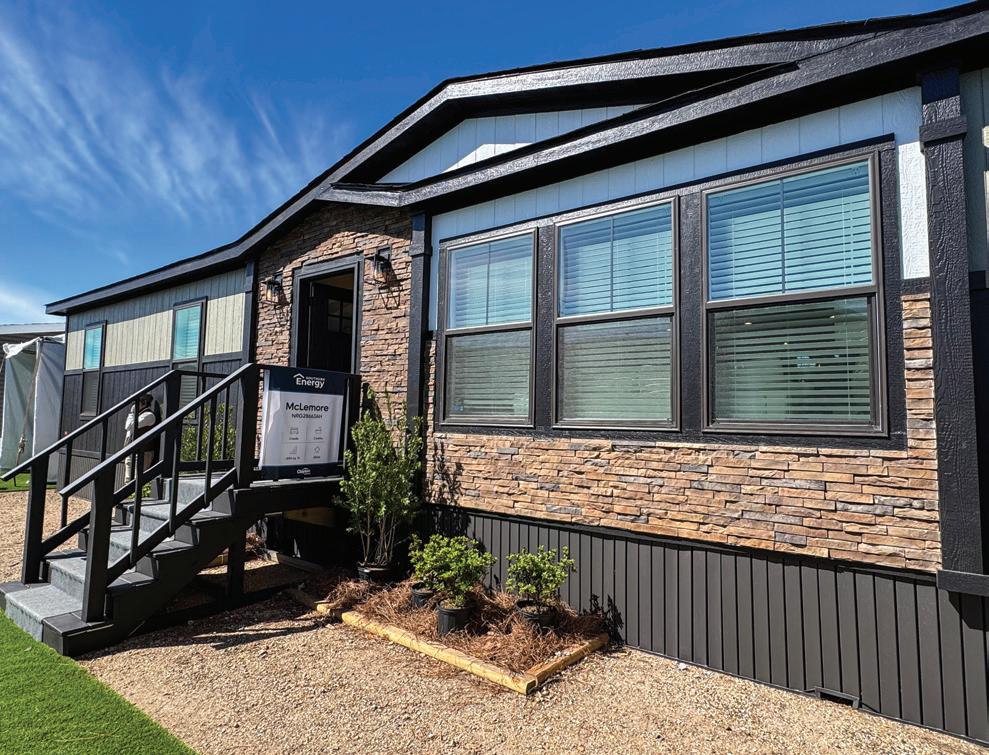
It has been a while since I have been to the Biloxi show, but I am so glad that this is the year that I headed back that way. The weather made it hard for some people to get into Biloxi, but there were still record-breaking crowds, and lots of enthusiasm for what was shown in the more than 50 homes that were available to tour.
In the January 2026 issue of MHInsider Magazine, we talked about upcoming trends we expected to see this year in manufactured housing, and it was great to see how many of these trends were represented in the homes. Expect to see more of this in the years to come.
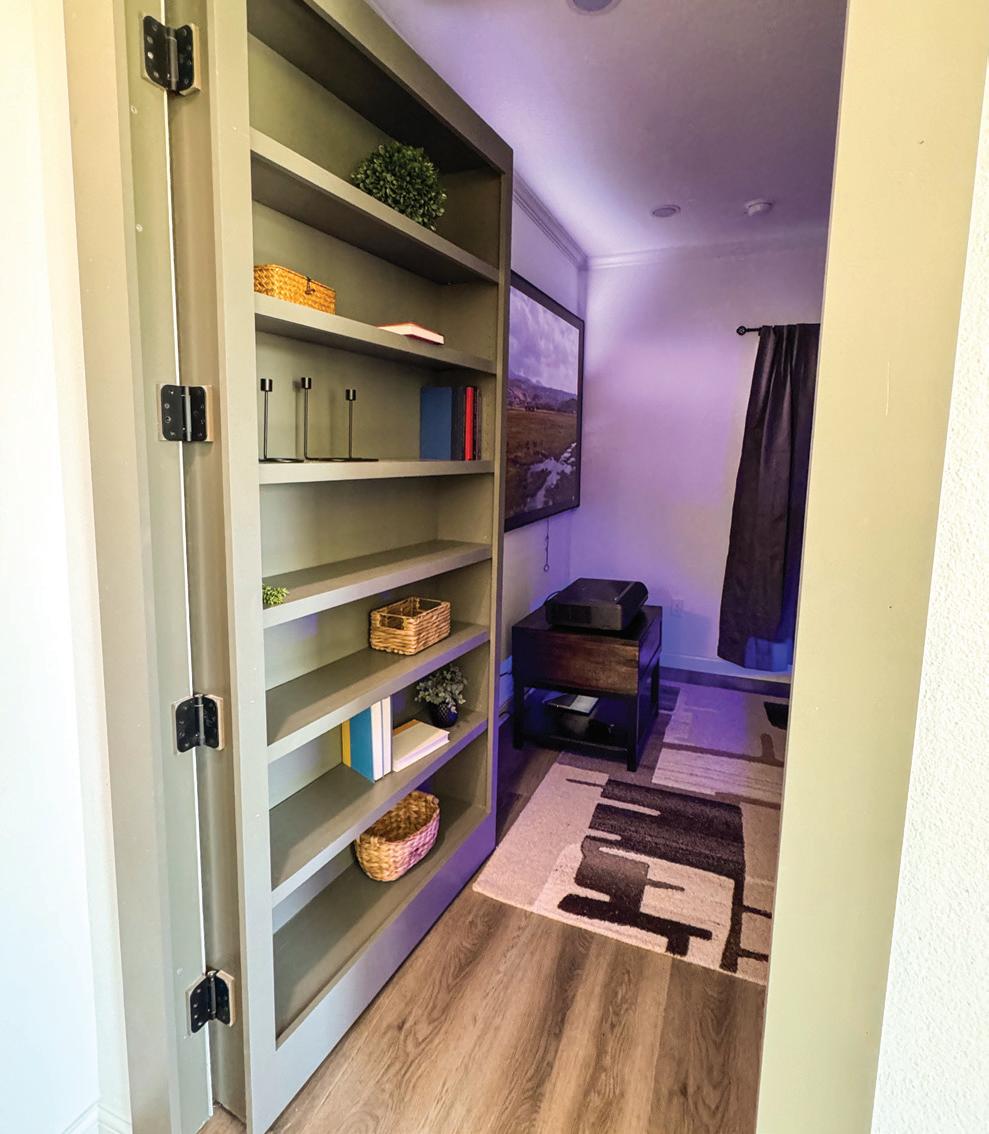
Behind Closed Doors
It was fun to see a few homes using hidden rooms behind cabinets and bookcases. A great, memorable feature, making great use of space.
Color
Color is back! There were exteriors in warm, earthy colors, beautiful mossy greens used in several homes, and the walls were shown in many of the homes.
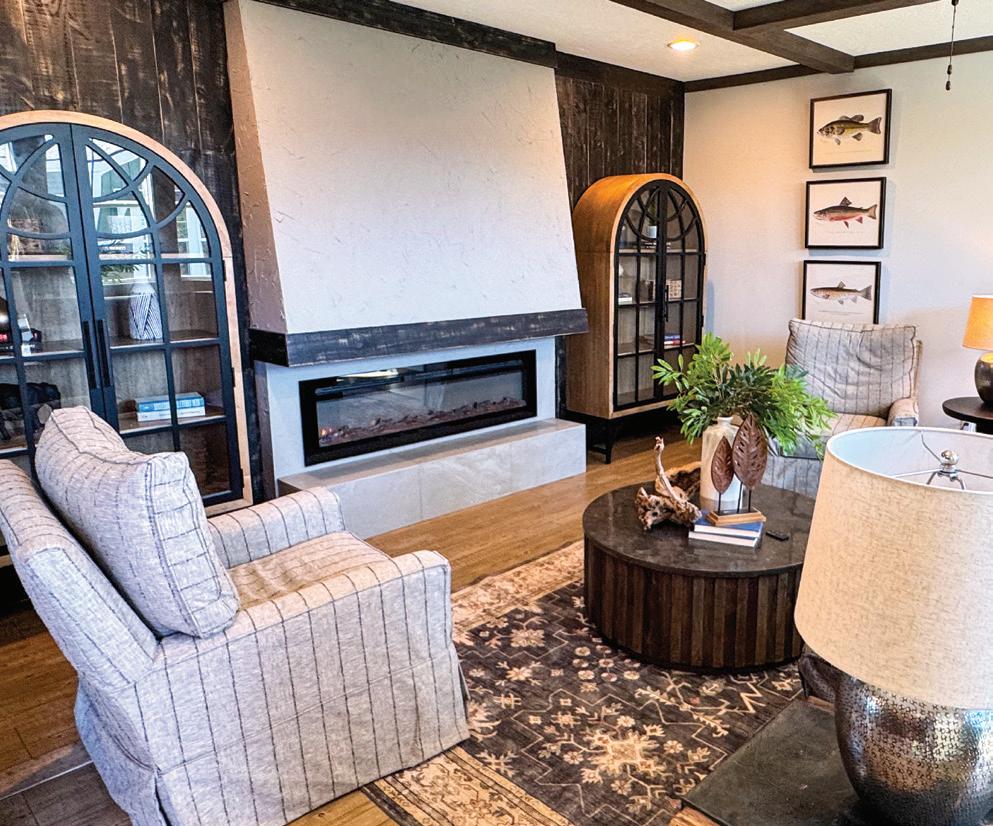
Electric Fireplaces
Even in the sunny south, electric fireplaces create a mood that appeals to everyone, with or without it being a source of heat.
Biophilic Design
Bringing the outdoors in is an important story, with windows being larger to let in more light, and more greenery being seen in the homes.
Smaller Spaces
Rooms showing function instead of just great rooms are trending, and many of the homes had “Man Caves,” attached covered patios, and butler's pantries in them.
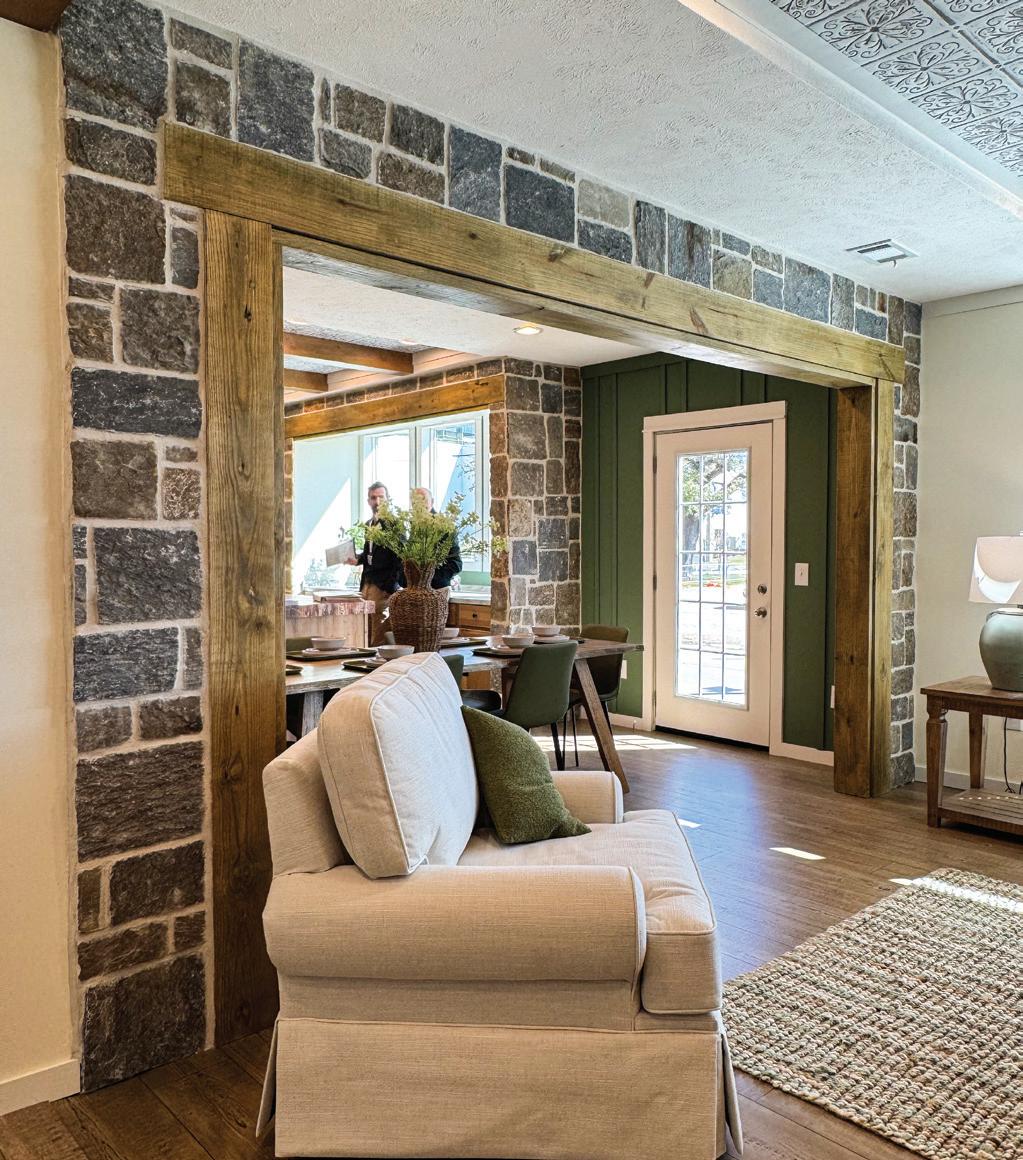
Textures
Different textures were seen throughout the show in a major way. An exposed brick look inside and out, painted tin ceilings, and stonework throughout were highlights of the show. It was great to see how elevated many of the exteriors of homes were, and they truly looked like they could fit into almost any neighborhood.
Kitchens
I think kitchens were the highlight of the show. Large open spaces with large islands, lots of storage, and upgraded appliances as we predicted, were seen throughout the show. Extras like beverage stations, wall ovens and microwaves, separate freezers, and large side-by-side refrigeration showed that the kitchen is a very important place to sellers right now.
Clayton Debuts TRU Mini™ Home Collection
Price Point, Floor Plans Designed to Expand Homeownership Opportunities
Clayton Home Building Group has introduced the Buttercup, a 408-square-foot mini-dwelling under the TRU brand.
The Buttercup’s smaller footprint and price build on TRU’s nearly 15-year legacy of attainable housing with one of the lowest home prices on the market today.
“TRU revolutionized the housing industry in 2012 with attainable pricing that has helped more than 100,000 customers achieve homeownership,” Clayton Manufacturing Senior Vice President of Operations Mike Duncan said. “Today, the need for attainable housing is greater than ever, and the TRU Mini home collection, with its lower price, expands opportunities for customers who believe homeownership is financially out of reach.”
One of several smaller home models in the TRU Mini™ collection, the Buttercup is a modern manufactured home measuring
12 feet by 36 feet with 408 square feet of efficiently designed space, including a bedroom and bathroom.
TRU Mini series homes feature many of the same finishes homeowners expect with a TRU standard-sized home: Frigidaire® appliances, DuraCraft® cabinets, 8-foot flat ceilings, modern rolled-edge countertops, and upgraded window casings.
The debut follows the fall 2025 introduction of the TRU Origin collection, a new home series featuring uniform construction specifications and consistent features across all TRU home-building facilities. Like TRU Origin, TRU Mini series homes will also feature consistent construction through all homebuilding facilities, which allows for quicker construction to meet the urgent demand for attainable housing.
The TRU Mini collection is being made available at retail partner home centers throughout the nation. MHV
The TRU Buttercup debuted at the 2026 Biloxi Manufactured Home Show as part of the TRU Mini™ series. The new housing solution sits on a 12-by-36 footprint.
MHInsider contacted state and regional association executives from across the nation to get a sense of the manufactured housing industry priorities at the state level.
Here is what they had to say,
Alabama Manufactured Housing Association
The expectation is that 2026 will be one of settling down after a somewhat chaotic 2025. Whereas last year had shipments increasing and decreasing randomly from one month to the next, we expect the economy as a whole, and the manufactured housing industry in particular, to achieve a steadier pace as consumer concerns about the economy begin to ease and the need for affordable housing remains high. As an association, we are continuing to support the industry in new and creative ways. We were a named partner at Talladega Superspeedway in April for the Automobile Racing Club of America (ARCA) race, now entitled The Manufactured Housing 200. We co-hosted The Biloxi Manufactured Housing Show in March and will cohost the Multi-State Convention in July, while also continuing work to advocate with the state and local governments to promote pro-business and pro-manufactured housing policies and
regulations. We anticipate that 2026 will be another strong year for manufactured housing in Alabama!
— AMHA Executive Director Lance Latham
Arkansas Manufactured Housing Association
The topic of housing affordability has gained considerable attention in Arkansas in recent months – from national, state, and local policymakers, housing advocates, economic developers, and the media. Two members of Arkansas’ Congressional Delegation – Rep. French Hill and Rep. Steve Womack – are leading the charge in Washington, D.C. to address the affordability crisis and encourage the production of additional housing stock. Housing affordability has been the subject of discussions with Governor Sarah Huckabee Sanders as a key component of workforce development for expanding industries in the state, like steel production and lithium extraction. The Arkansas Municipal League has focused on housing affordability as well, as cities in certain parts of the state are struggling with soaring home prices while towns in other areas with aging housing stock are losing population and job opportunities. This focus on housing affordability has resulted in renewed interest in factory-built housing, with the AMHA and its members offering readily-available, non-subsidized housing options that working Arkansas families can afford.
— AMHA Executive Director JD Harper
Florida Manufactured Housing Association
FMHA is working with the Florida Housing Finance Corporation to develop a first-of-its-kind manufactured housing pilot program in Florida. This marks a significant step for FHFC in its mission to accelerate and sustain affordable housing opportunities for Floridians with very low to moderate income. In early February, FHFC hosted its first public workshop on the topic, featuring an “MH 101” presentation from FMHA staff for more than 150 participants. The overview covered construction standards, the cost differences between manufactured and site-built homes, common myths about factory-built homes, financing options, and other key topics. To support the effort, FMHA has formed a task force that will provide recommendations and guidance to FHFC as the pilot concept is refined and moved toward implementation.
— FMHA CEO John Ricco
Ohio Manufactured Homes Association
This focus on housing affordability has resulted in renewed interest in factorybuilt housing, with the AMHA and its members offering readily-available, non-subsidized housing options that working Arkansas families can afford.
— AMHA Executive Director JD Harper
OMHA’s primary focus this legislative session is advancing long-awaited updates to the state’s abandoned manufactured home statute, recently introduced and expected to move through hearings in the coming months. The proposal reflects more than two years of collaboration among industry leaders, judges, court clerks, and public officials to address the inconsistent application of abandonment laws across municipal courts. The revisions are intended to establish uniform procedures, improve clarity for courts and local officials, and streamline the legal process while preserving existing due-process protections. These changes are especially important as communities work to modernize aging housing stock and return abandoned home sites to productive use, helping stabilize communities and expand attainable housing options.
— OMHA Assistant Director Andrea Reichman
Indiana Manufactured Housing Association
A state bill, House Enrolled Act 1001: Housing Matters, authored by State Rep. Doug Miller, a Republican from Elkhart, addresses the housing shortage in Indiana. It was signed into law on March 4 as “priority” legislation by the Indiana House Republican Caucus. Miller, a home builder, is highly supportive of Indiana’s manufactured housing industry and believes Indiana has “constrained supply far too long” through “unnecessary and problematic regulations and restrictions,” contributing to high homeownership costs. HB 1001 will loosen local zoning rules to spur housing construction to address affordable housing issues. This is the most encompassing Indiana housing reform effort in decades. It targets housing affordability by limiting local zoning regulations and streamlining approvals for new residential development. The bill prioritizes funding for small local governments.
Starting Jan. 1, 2027, local units must submit annual housing progress reports covering proposed, approved, denied, and net new residential units. Reports will include data on entitlements, permits, occupancy, processing times, and any discrepancies must be explained. Local governments must review and potentially amend zoning regulations to promote higher-density housing, including duplexes, triplexes, accessory units, and adaptive reuse.
Pennsylvania Manufactured Housing Association
PMHA is taking proactive steps to ensure policymakers better understand the value manufactured housing brings to the Commonwealth’s housing needs. The association has engaged a public relations firm to help educate policymakers and stakeholders about the critical role manufactured housing plays in expanding attainable housing and strengthening local communities. Expanding opportunities for manufactured housing —rather than imposing additional restrictions — should be part of any serious effort to address housing supply challenges.
—
PMHA
Executive Vice President Mary Gaiski
Virginia Manufactured and Modular Housing Association
The most significant development in Virginia involves bills that would place manufactured homes on parity with site built homes. Today, MH is allowed by right only in agricultural districts unless more broadly granted by the local jurisdiction. SB346 and HB655 would allow placement in all residential districts. There are no aesthetic restrictions or limitations on the size of the home. We agreed to the following: a historic district carve �
out if we cannot meet design requirements, homes built within 5 years only in these expanded zones, and requirement that the homes be classified as real property. The Senate bill which passed 38-2 in the Senate and 93-5 in the House was awaiting action by the governor. The House bill passed the House uncontested with 99 votes and passed the Senate 39-1. Since it was amended late in the process, it was set to go back before the House. Assuming signature by the governor, this will become law on July 1.
— VaMMHA Executive Director Randy Grumbine
Washington State Looks to Ascend
WMHA, which recently rebranded from Northwest Housing Association to Washington Manufactured Housing Association, is active at the state legislature, including providing testimony at a Governor’s virtual meeting regarding the potential creation in 2025 of a Washington Department of Housing as a cabinet or subcabinet agency under the Department of Commerce. WMHA is at the table to reinforce how the quality, durability, and sustainability of manufactured housing move the dial forward for state residents.
— WMHA Executive Director Lance Clark
Wisconsin Housing Alliance
Habitat for Humanity of LaCrosse is using CrossMod homes in developments across its service region and helping other Habitat regions understand the opportunity as well. Organizers believe the partnership is a first-of-its-kind in the state. Working with a non-profit provides the ability to apply for and obtain grant funding as well as donations to defray the costs of infrastructure and development, keeping the cost of the home lower.
— WHA Executive Director Amy Bliss
If there is news to share from your manufactured housing association, please contact MHInsider Publisher Patrick Revere at patrick@mhvillage.com. MHV
MANUFACTURED HOMES ARE ALL WE DO
When you need an appraisal on a new or pre-owned manufactured home, go with the time-tested experts on market-based comparable valuations since 1987.
At Datacomp, manufactured homes are our singular focus — and you won’t find more expertise, specialization, or reliability anywhere else.
The Historic Epitome of Community Relations
By George Allen, CPM Emeritus, MHM-Master
The title — “Positive Community Relations: How to Make it Happen” — of a 3 ½ by 8 ½ inch, eight-panel brochure produced by a Renaissance Committee of the Western Manufactured Housing Communities Association, in California, during the late 1990s conveyed the historic significance of this valuable work product. One must appreciate the meaning of the word “epitome” as being “A person or thing that is typical of or possesses, to a high degree, the features of a whole class; an embodiment.”
This 30-year-old brochure is the epitome of encouragement toward guidelines for cultivating and promoting good community relations in a land-lease community. And, to this end, it is recommended that readers involved in the community ownership and or operation preserve this column as a ready reference for planning corporate resident relations programs for their properties.
Who researched and prepared this comprehensive community relations tool? A WMA Renaissance Committee comprised of veteran land-lease community owners and operators that included Dick Bessire, Bill Schweinfurth and Norm McAdoo. The brochure enjoyed broad distribution at the time. From this point on, the brochure narrative is lightly edited for clarity.
The opening paragraph reads...
“Let’s admit it – it can be easy to get caught up in the hectic day-to-day duties of operating a community, no matter how large or small it is. Often, the simple gestures, which can go a long way to creating a positive relationship with your residents, get overlooked.” And then: “This brochure highlights many ways WMA members have lent a helping a hand; supported educational and social activities, and helped enhance the overall appearance and sense of pride within their individual communities. Included are ideas to fit everyone’s budget – from small, inexpensive gestures such as providing free donuts and coffee in the clubhouse once
a week, to the more elaborate deeds, such as purchasing backto-school supplies for school-age children.”
Did this encouraging challenge really work? Yes! One property portfolio owner/operator in Florida, to this day, provides free donuts and coffee in the clubhouse on one Saturday each month, and takes these refreshments, via golf cart, to the more elderly and less mobile residents
There are nine categories of community relations ideas in this brochure. The first one:
Charitable Activities To Lend A Healing Hand
Organize a committee that checks up on residents unable to get around on their own, and brings them to social events or makes sure meals are delivered to them on holidays or for community dinners, for instance. Establish a “secret angel” that allows residents to volunteer for kind, anonymous acts such as sending a birthday card or gift.
Assist people in applying for government support programs and services. Hire a “resident services advocate” to help access government programs.
Provide free Thanksgiving baskets to residents in need. Pick up day-old bread products and other foodstuffs, and make them available to residents. Contribute to the Meals on Wheels program.
Organize a volunteer day. Monthly, assemble a group of resident volunteers to help clean up homesites, wash down exteriors, and take out the trash.
Educational Activities
Distribute gift certificates to children who get good grades. Hire good students to help struggling students. Publish a quarterly newsletter containing subjects of interest to residents.
Organize seminars with topics such as computer basics, investment planning, and living wills. Sponsor a topic and speaker monthly or quarterly, and distribute door prizes to encourage participation.
Have flu shots, blood pressure testing, and other health resources available to residents at the community clubhouse.
Sponsor craft classes and maybe even hire an instructor.
Start a study group and focus on a topic. Arrange to buy study materials such as books or videos, and provide other means of encouragement.
Buy back-to-school supplies, or little backpacks for grade school kids. �
Environmental Efforts
Ask the community to volunteer to keep a portion of a nearby roadway clean of debris. Promote efforts to mulch/re-use all community-generated green waste. Work to have your community designated an Audubon Society Preservation Zone. Arrange an annual hazardous waste removal day.
Home Improvements And Incentives
Solicit or support a gift giveaway for a new home arriving in the community from an independent retailer. Provide a free washer/dryer, storage shed, or landscaping services. Also, do this for homes sold onsite.
Sponsor open houses for new homebuyers to showcase their new homes.
Provide paint to residents willing to provide labor to improve their home and/or a rental homesite.
Provide hardware store/home improvement retailer gift cards as resident incentives. Quarterly, award a $100 rent credit for best-kept homes. Institute a “Home of the Month” contest for homeowners.
Improvements To The Community
Add a playground area, dog park, or picnic area with a table and cooking facilities.
If needed, upgrade the property clubhouse’s color scheme, furniture, window coverings, and artwork. This generates enthusiasm in the community.
Ideas For Kids
Sponsor a “We Love Our Kids Day” with activities and special prizes for children. Hire a balloon artist or local petting zoo to bring out animals. Get kids involved in a bike-a-thon or walk-a-thon with financial commitments from residents, to raise funds for special off-property events like bowling or trips to an amusement park.
Sponsor a movie night at the clubhouse, for a nominal fee or for free. Children see a movie and get refreshments. Promote holidays of interest to children. Promote family living. Find or hire youth group leaders during the summer months to organize and supervise playground activities, including occasional day trips.
If appropriate and available, encourage Sunday school, scouting, and other such activities at the clubhouse.
Support local Boys and Girls Clubs, a local YMCA. Consider organizing older children into a “kids corps” where children too young for a real job can do odd jobs like picking up loose trash, cleaning the clubhouse, or checking on residents.
Recreation And Exercise Activities
If there’s a swimming pool onsite, sponsor Red Cross swimming lessons for young and old at the pool. This is also a good way to recruit and train lifeguards, as needed.
Sponsor a resident bowling team or a Little League sports team.
Sponsor and support exercise groups like, walking, Pilates, or yoga.
Social Activities
On occasion, have the property owner or manager come onsite and cook a dinner or barbecue for the residents. Make this a community covered dish project.
Fully or partially sponsor community dinners or breakfasts regularly.
Sponsor clubhouse sporting events, like a football or soccer game on television.
Sponsor holiday events like an Easter egg hunt, Halloween party, best-decorated holiday house.
Sponsor a back-to-school ice cream social.
Sponsor dances. These could vary, with appropriate instructors to teach country western line dancing as well as swing and ballroom dancing.
Organize bus trips to local events and attractions. Purchase group tickets at a discount and make them available to residents. Keep daily newspapers and periodicals available in the clubhouse. Consider having used books on hand for residents to borrow.
Miscellaneous
Provide a one-time rent credit when a resident celebrates their 100th birthday.
Provide a one-time rent credit to celebrate five-year resident anniversaries.
Provide a Welcome Packet for all new move-ins; include property newsletter, calendar of events, and a welcome letter from the property manager and resident relations committee. Also, provide food coupons and a list of local schools, hospitals, libraries, and other wider community services. MHV