THE MOBILEFIRST FUTURE OF RENT COLLECTION IN MANUFACTURED HOUSING
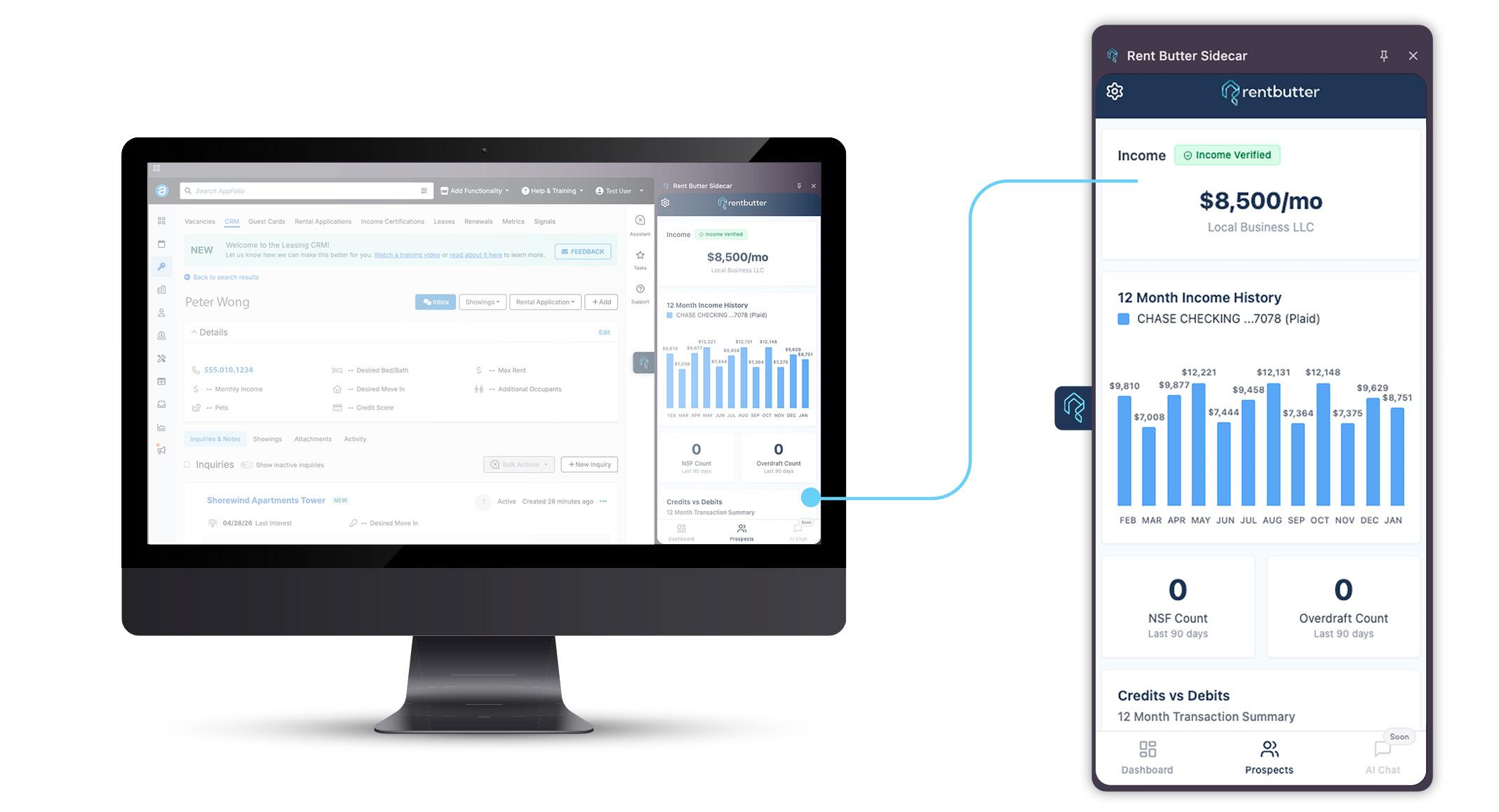
Full-power resident screening, income verification, and background checks - in a side panel alongside your property management software.
Income, identity, criminal, and credit - checked and confirmed in one panel. Real-time progress on every applicant. Know exactly where they stand. Approve or deny without switching a single tab. Under five minutes.
zoomed in view of Sidecar panel
At Champion, building award-winning homes is just the start. We support every aspect of offsite construction to provide a seamless process that can help you simplify and grow your business. From financing and construction services to transport, marketing support, and customer care, we’re your one-stop source for turnkey MH solutions.
■ Free Marketing Services from Our Experts
■ Centralized DIGS Retailer Portal to Manage Inventory, Leads & More in One Place!
■ The Setting & Finishing Services You Need
■ Quicker Buyer Move-Ins
■ One Trusted Partner for All Your Projects
■ Powered by Triad ® Financial Services
■ Competitive Programs
■ Services Retailers & Communities
Letter from the Publisher
Rally to the Cause
There has never been a more consequential moment to be part of the manufactured housing industry.
The nation continues to navigate a housing crisis that challenges states, cities, and towns across the spectrum. And the factory-built housing sector continues to step forward with the energy that has always buoyed us: ingenuity, problem-solving, and resolve. This month, we turn our full attention to the central theme of ingenuity — technologies and development strategies that reshape what is possible in manufactured housing and land-lease communities. Our readers are the professionals who lead in that transformation.
From AI-assisted community management platforms and smart home integration to digital financing tools that close the gap between manufactured housing and site-built lending, the pace of technological adoption across our industry is accelerating. This edition surveys that landscape honestly — celebrating the breakthroughs, examining the barriers, and giving voice to operators and developers who are making smart, strategic bets on the future.
We are also proud to feature an in-depth look at the conversations happening at the intersection of workforce housing demand, zoning reform, and sustainable infrastructure.
As always, thank you for reading, and thank you for your hard work and dedication to the industry and its customers.
Patrick Revere is vice president of communications at MHVillage and publisher for the MHInsider magazine and blogs. His background is in print news, language, and communication.
VOLUME 9, EDITION 4
2026 JULY AUGUST
MHInsider.com
PUBLISHER
Patrick Revere | patrick@mhvillage.com
SENIOR GRAPHIC DESIGNER
Merit Kathan merit@mhvillage.com
EDITORS
Dawn Highhouse dawn@mhvillage.com, Sean Vichinsky | sean@mhvillage.com
CONTRIBUTING EDITOR
George Allen | gfa7156@aol.com
CONTRIBUTORS
Arthur Attal Robyn Burkinshaw
Ellie Graeden | Nikki Greenberg
Jindou Lee | John Ace Underwood
COVER IMAGE
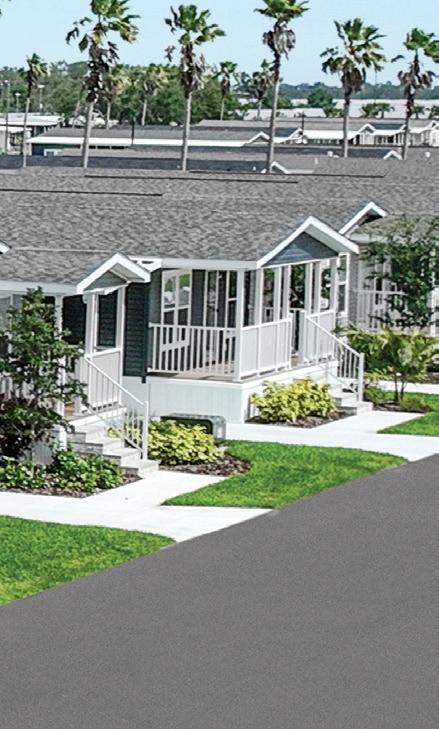
Courtesy of RHP Properties
ADVERTISING SALES (877) 406-0232
advertise@mhvillage.com
Have Industry News, Events, or Editorial Content You'd Like to Share? Contact our Publisher, Patrick Revere at (616) 888-6994 or patrick@mhvillage.com
MHInsider™ is published by:
2600 Five Mile Road NE Grand Rapids, MI 49525 (800) 397-2158 • www.MHVillage.com
Although we make every effort to ensure that the information in this issue was correct before publication, MHVillage,Inc., the publisher, does not assume and hereby disclaims any liability to any party for any loss, damage, or disruption caused by errors or omissions, whether such errors or omissions result from negligence, accident, or any other cause. Opinions expressed are those of the author or persons quoted and not necessarily those of MHInsider or the publisher MHVillage, Inc.
HUD Appoints New Members to Manufactured Housing Consensus Committee
The U.S. Department of Housing and Urban Development appointed six new members to serve on the Manufactured Housing Consensus Committee, a federal advisory committee. The appointments maintain the MHCC at 21 members, who are authorized under statute to ensure the committee can continue to play its critical role in advising HUD’s Office of Manufactured Housing Programs on the Manufactured Home Construction and Safety Standards, commonly referred to as the HUD Code. The appointees are Weatherization Field Specialist Clayton Camblin from the Kansas Housing Resource Corporation, Connect Housing Blocks CEO Brad DeHays, Berkadia Commercial Mortgage Senior Vice President Steve Ervin, Cascade Financial CEO Todd Kopstein, Virginia Center for Housing Research Associate Director Andrew McCoy, and Clayton Homes Vice President of Engineering John Weldy. “Under Secretary Turner’s leadership, the department is making good on its promise to increase the supply and affordability of manufactured homes for American homebuyers,” Federal Housing Commissioner and Assistant Secretary for Housing Frank Cassidy said. “I welcome the new members of the Manufactured Housing Consensus Committee, whose diverse perspectives will help us modernize the HUD Code and reform unnecessary barriers that have long hindered the broad production of efficient, high-quality, and affordable manufactured homes.”
Lowe's Foundation Commits $250 Million to Expand Skilled Trades Workforce
The Lowe's Foundation has committed an extra $250 million to help train and develop 250,000 skilled tradespeople by 2035, a five-fold increase from the organization's original pledge. The announcement comes as Associated Builders and Contractors estimates the construction industry needs 349,000 net new workers
to meet demand this year alone. Building on a 2023 commitment of $50 million over five years, the foundation has invested nearly $53 million in 65 nonprofits and community colleges nationwide and is on track to reach its original goal of training 50,000 tradespeople by 2027 — a full year ahead of schedule. "American prosperity is at stake, and we are partnering to solve the workforce gap with a growing force of educators, employers, and policymakers who understand local needs," said Marvin Ellison, Lowe's chairman and CEO. To reach its expanded goal, the foundation plans to broaden partnerships with nonprofits and community colleges, grow its partnership with the National Center for Construction Education and Research to enhance its CareerStarter platform, and extend training opportunities to youth, people ages 16 to 24 who are not currently in school or employed. The foundation also announced Building Back America's Trades, a new three-part documentary series through Magnolia Network available on HBO Max and discovery+.
Acton ADU Brings Backyard Homes to Los Angeles County
Recent California legislation — through AB 1332, SB 543, AB 976 — has opened the door for pre-approved ADUs, and Acton ADU, with 30-plus years in the business, is bringing its offerings to Los Angeles County. The company has launched operations across the Westside, Central LA, San Gabriel Valley, and San Fernando Valley, with plans to expand its footprint across the county as demand grows. "We've spent three and a half decades helping families turn their properties into multigenerational assets," said Stan Acton, founder of Acton ADU. “L.A. homeowners are dealing with the same pressures we've seen across California; rising costs, aging parents who need to stay close, adult children who can't afford to leave. The difference now is that the regulatory environment has finally caught up. The timing is right.” �
• MOST PRICE-CONSCIOUS HOMES
• VINYL-COVERED DRYWALL
• STEP-UP LIFESTYLE HOMES
• VINYL-COVERED DRYWALL
• HIGH VALUE HOMES
• FULL OR PARTIAL DRYWALL
• FULLY-CUSTOMIZABLE HOMES
• FULL DRYWALL THROUGHOUT
•
LP Building Solutions Launches CoastalInspired Siding Color Collection
LP Building Solutions has introduced the LP SmartSide ExpertFinish Trim & Siding Coastal Capsule, a curated sixcolor collection — including Snowscape White, Sand Dunes, Desert Stone, Quarry Gray, Summit Blue, and Rapids Blue — engineered to resist hail, moisture, and other coastal weather conditions. Available along the Mid-Atlantic and Gulf coasts from North Carolina to Texas, the brushed smooth-texture collection is backed by LP's 5/15/50-year limited warranty.
TRANSACTIONS
brightSTAR Communities Acquires Three Manufactured Housing Communities
brightSTAR Communities has acquired three manufactured housing communities — brightSTAR Bluffton, brightSTAR Somerset, and brightSTAR New Lebanon. Company officials said the acquisitions align with brightSTAR's long-term ownership strategy and commitment to affordable housing. "Everyone deserves a safe, clean, and affordable environment they can proudly call home,” brightSTAR CEO and President Brandon Schilling said. "We aren't just acquiring properties; we are making a long-term commitment to these residents."
FG Communities Acquires Three N.C. Properties
FG Communities has acquired three manufactured housing communities in North Carolina, two in Asheville and one in Durham. Nestled in the Blue Ridge Mountains, Asheville is one of the most distinctive and desirable cities in the Southeast, known for its thriving arts and music culture, culinary scene, and unmatched access to hiking, rafting, and outdoor adventure. Both communities, totaling more than 40 homesites, are just minutes from the heart of downtown Asheville, putting residents close to everything the city has to offer. “Asheville is a market we know well and believe in. The combination of strong population growth, a thriving local economy, and a chronic shortage of affordable housing makes it an ideal fit for our strategy. We are proud to expand our presence here and remain committed to providing residents with homes in a community they can be proud of,“ FG Communities CEO Michael Anise said. Durham is the home of Duke University, the Durham Bulls, and the Research Triangle Park.
PERSONNEL
JLL Capital Markets Names Director for San Diego Office
JLL Capital Markets has promoted Jack Wood to director in its San Diego office. With five years of experience at the firm and having closed over $1.3 billion in transactions, Wood will continue to focus on the origination and execution of debt and structured finance for manufactured housing communities throughout the United States. "We are incredibly excited for Jack to be taking this next step with our National Manufactured Housing Platform," said Aldon Cole, senior managing director and San Diego office head at JLL. "He has been an integral part of the team since he joined, and we're looking forward to seeing him succeed in this new role."
Property Management Professional Assumes New Role
Maria Horton, formerly with Newport Pacific, has joined the team at J&H Asset Property Management Group, in a marketing role as well as a manager for 10 properties in California. In addition to the property management responsibilities, Horton will represent the company at industry events, conferences, and meetings, extending the company’s brand beyond California into strategic markets nationwide.
INDUSTRY GIVING
Champion Homes Reaches Nearly 2 Million Trees Planted with Arbor Day Foundation
Champion Homes, in partnership with the Arbor Day Foundation, has planted two million trees since 2021, marking a milestone in the homebuilder's sustainability efforts.
The company, which plants one tree for every one used in its building process, has completed 51 reforestation projects across the United States and Canada. To mark Arbor Day in April, Champion employees joined in on a tree-planting event in Metro Detroit, where the company is headquartered. "Champion Homes is proud to help clean the air we breathe, protect water quality, and deliver lasting benefits to communities and future generations," Champion Homes President and CEO Tim Larson said. The company says its efforts have sequestered 975,000 metric tons of carbon dioxide — the equivalent of removing 210,000 cars from the road for one year — while also removing 3,800 tons of air pollutants and preventing 106 million gallons of water runoff.
IN MEMORIAM
Industry Mourns the Loss of Connecticut, N.H. Professional
Marcia L. Stemm, a manufactured housing professional in Connecticut, passed away in March from an aggressive form of cancer. A resident of Bristol and Mystic, Mrs. Stemm began her career at the age of 16 and became president of Mobilehome Parks, Inc., and Liberty Mobilehome Sales, Inc. She was appointed to the Connecticut Manufactured Mobile Home Advisory Council, the Connecticut Manufactured Housing Association, and the Massachusetts Manufactured Housing Association, and served for 29 years, holding various officer roles.
WaterScope® MHP gives ownership groups complete visibility and control over water across every property.
• Recover costs automatically. Submetering and automated billing put revenue back where it belongs.
• Catch leaks before they compound. Real-time alerts flag issues before they become expensive problems.
• Protect asset value. Lower utility costs mean stronger NOI and a more attractive property.
• Reduce operating burden. Your team spends less time chasing water data and more time running the business.
Water is now the single most expensive utility in manufactured housing. Managing it well is the fastest path to lower costs, satisfied tenants, and a high-performing asset.
Real Conversations With the Leaders Shaping Our Industry
The Future is Now: Construction Techniques That Seem Unreal
By Nikki Greenberg
Construction is changing faster than most people realize. For decades, the industry has operated in largely the same way. Labor-intensive. Sequential. Slow. But today, a convergence of robotics, materials science, and advanced manufacturing is reshaping at a fundamental level how we build.
What once felt futuristic is operational. These technologies are not decades away. They are being tested, deployed, and scaled right now. For those in manufactured housing, this is not just innovation. It is a defining moment. An opportunity to lead how homes are built, delivered, and experienced.
Build Beyond Earth: Construction on the Moon and Mars
If you want a glimpse of the future, look beyond Earth. Through the Artemis program led by NASA, the objective is not just to reach the Moon, but to stay there. That requires infrastructure, including landing pads, roads, and long-term habitats. Companies like ICON are developing advanced 3D printing systems designed to build using lunar soil. This removes the
need to transport materials from Earth. Their Olympus system uses high-powered lasers to transform regolith into construction-grade material, following a “live off the land” approach. They have already brought this concept to life on Earth. It 3D printed a full-scale simulated Martian habitat, Mars Dune Alpha, designed in collaboration with Bjarke Ingels Group at NASA’s Johnson Space Center.
Space construction demands extreme efficiency. No waste. No redundancy. Every element must perform. These constraints are accelerating innovation at a rapid pace. The lessons learned will not stay in space. They will flow back into terrestrial housing, particularly in areas where speed, cost, and resource efficiency are critical.
Growing Buildings: The Rise of Mycelium
What if buildings could be grown instead of built? Mycelium, the root structure of fungi, is emerging as one of the most compelling materials in construction. Acting as a natural binding
agent, it transforms agricultural waste such as straw or sawdust into solid building components.
The result is a material with strong thermal and acoustic performance, natural fire resistance, and minimal environmental impact. Instead of extracting and assembling, we are beginning to grow materials using biological processes.
For manufactured housing, this opens the door to scalable, low-cost, low-carbon materials that align with both affordability and sustainability goals.
Nature as Infrastructure: Moss and Living Systems
Nature is no longer something we design around. It is becoming part of the system itself.
Moss is now being used in bio-receptive concrete that allows it to grow directly on building surfaces. Unlike traditional plants, moss does not require soil or deep roots. It absorbs nutrients from the air, making it highly adaptable to vertical surfaces in urban environments.
The benefits are both practical and immediate. Air purification. Thermal insulation. Noise reduction. Minimal maintenance. For manufactured housing communities, this presents an elegant solution. It enhances livability while reducing operating costs, without introducing complexity.
Materials That Adapt: Color-Changing Facades
Materials are becoming responsive. Researchers at the University of Chicago have developed a façade material that adjusts its thermal behavior based on temperature. On hot days, it emits heat. On cold days, it retains it. The effect is similar to adjusting layers of clothing throughout the day.
Autonomous Construction: Robots That Build
Automation is no longer limited to factories. It is arriving on construction sites. �
Unlock potential in every property.
For 25 years, we’ve remained the only property management software partnering exclusively with manufactured housing.
The Hadrian X system can lay more than 1,000 bricks per hour with millimeter precision. It reads a digital model and translates it directly into physical construction.
For manufactured housing, this represents a critical shift toward industrialized construction on site. It enables consistency, reduces reliance on scarce labor, and supports scalable delivery at a time when demand continues to outpace supply.
Smart Skins: Buildings That Produce Energy
Traditionally, façades have been passive. They separated inside from outside. Today, they are becoming active systems that generate energy and optimize performance. Building-Integrated Photovoltaics embed solar technology directly into materials such as glass, cladding, and roofing. Companies like Tesla and GAF have already introduced this concept through solar roof shingles. Combined with adaptive systems that regulate light, heat, and airflow, these technologies significantly reduce reliance on mechanical systems.
For manufactured housing, this creates a new value proposition. Lower utility costs. Greater energy independence. The ability to generate and even export energy. Homes shift from being a cost to becoming a contributor.
Final Thought
The future of construction is not theoretical. It is already taking shape across job sites, factories, and even on the moon. The real question is not whether these technologies will scale. It is who will lead their adoption. Manufactured housing is uniquely positioned to do so as it already operates at the intersection of efficiency, scalability, and innovation.
As construction evolves from manual processes to intelligent systems, the leaders in this space will not just build homes. They will redefine how housing is delivered for generations to come. MHV
Nikki Greenberg is a globally recognized futurist and strategic executive advisor with over two decades of experience in real estate development, urban innovation and technology-driven transformation.
Earn your PHC® designation:
Master sales techniques and customer service
Confidently navigate the housing market
Guide clients through the
EVENTSupcoming
MULTI-STATE CONVENTION
Sunday, July 26 — Tuesday, July 28, 2026
Orange Beach, Ala. | Perdido Beach Resort
Join the Alabama, Louisiana, and Mississippi manufactured housing associations to attend banquets, educational seminars, and state-specific continuing education. Attendees can explore an upscale marina near the resort that offers deep-sea fishing, dolphin excursions, boutique shopping, a day spa, and local eateries. Of course, a round of golf is nearby at a number of signature courses. Registration, exhibit, and sponsorship opportunities are available.
RV/MH HALL OF FAME INDUCTION DINNER/CEREMONY
Monday, August 17, 2026
Elkhart, Ind. | RV/MH Hall of Fame
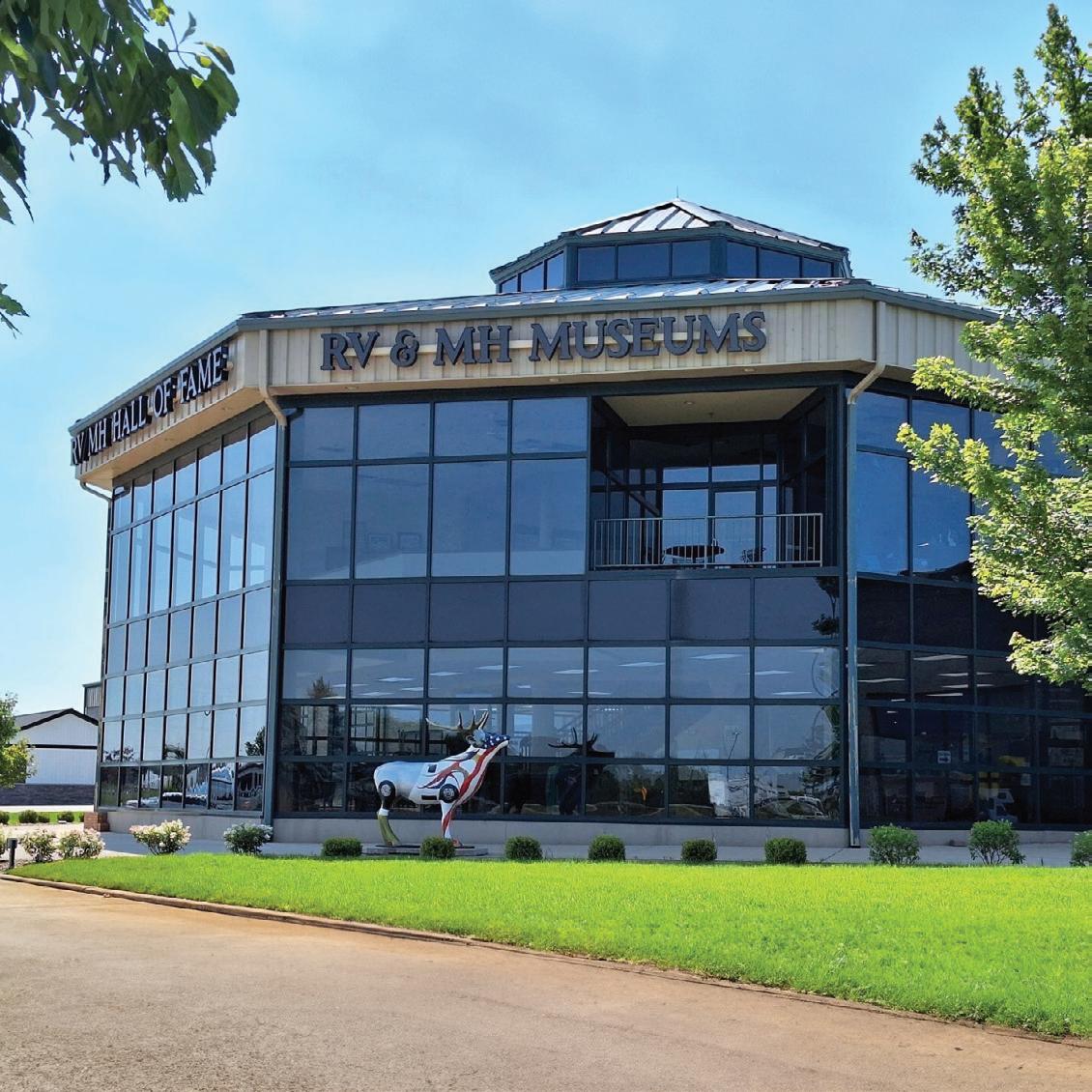
The RV/MH Hall of Fame each year invites industry professionals, family, and friends to celebrate the recent lineup of hall of fame inductees. The event starts with a cocktail mixer, followed by dinner and the induction ceremonies. The hall in Elkhart details the careers of hundreds of RV and MH professionals, including a library, event center, and museums for each of the industries.
MH FACTOURY SUMMIT
Tuesday, August 18 — Wednesday, August 19, 2026
Elkhart, Ind. | RV/MH Hall of Fame
Two full days of factory tours and learning for retailers, community owner/operators and vendors from around the nation. Attendees will have the chance to come together to learn about the latest trends in product development, home building, management, finance, and sales.
IMN MANUFACTURED HOUSING FORUM
Wednesday, Sept. 9 — Thursday, Sept. 10, 2026
Nashville, Tenn. | Hilton Downtown Manufactured Housing Forum from Information Management Network will provide exclusive educational content and industry insights, but also presents a unique opportunity for senior-level attendees to talk with owners, investors, developers, lenders, builders, and others. The program will feature discussions on all aspects of the industry including modular, pre-fab, and community operations.
ILLINOIS MANUFACTURED HOUSING ASSOCIATION CONFERENCE AND MEMBER MEETING
Thursday, September 10 — Friday, September 11, 2026
Chicago | Eaglewood Resort and Spa
Illinois members meet for three days to discuss statewide trends and initiatives. The agenda will include a look at recent activity with subject matter experts from all parts of the business, including manufacturing, lending, transport, setup, community ownership, and much more. Take the time to find what can lead to better business practices.
INNOVATIVE HOUSING SHOWCASE/ MHI ON THE HILL
Tuesday, Sept.22 — Thursday, Sept. 24, 2026
Washington, D.C. | National Mall
The U.S. Department of Housing and Urban Development each year during National Homeownership Month hosts the Innovative Housing Showcase to provide a large, public display of innovative designs, structures, and advances in housing, particularly with a mind toward energy-efficiency, durability, and availability. Homes on display at the National Mall will include manufactured homes from some of the nation’s leading builders.
SECO NATIONAL CONFERENCE OF COMMUNITY OWNERS
Tuesday, October 6 — Thursday, October 8, 2026
Alpharetta, Ga. | Avalon Hotel
From industry panels and presentations to roundtable discussions and professional exhibits, the SECO National Conference of Community Owners again seeks to improve on that fresh, compelling interaction and camaraderie. The event provides manufactured housing professionals with four days of high-level interaction, including educational seminars, panels, roundtables, fireside chats, and mini TED talks.
TEXAS MANUFACTURED HOUSING ASSOCIATION ANNUAL CONVENTION
Sunday, October 18 — Tuesday, October 20, 2026
Horseshoe Bay (Austin), Texas
Horseshoe Bay Resort
The annual meeting in Texas kicks off with a Sunday golf tournament followed by a welcome reception that evening. Monday’s agenda includes breakfast, educational sessions, lunch, and time with exhibitors. The evening features a cocktail reception and the Chairman’s Dinner as well as the PAC Casino Night event. The convention concludes Tuesday morning with a professional breakfast and the TMHA Fourth Quarter Board Meeting. Book now! Exhibitor and sponsorship opportunities remain.
MANUFACTURED HOMES ARE ALL WE DO
When you need an appraisal on a new or pre-owned manufactured home, go with the time-tested experts on market-based comparable valuations since 1987.
At Datacomp, manufactured homes are our singular focus — and you won’t find more expertise, specialization, or reliability anywhere else.
“We've had renters in our community for years who never thought they could buy. autoMHatic gives them an answer in under a minute — and suddenly half of them are picking out a home instead of writing another rent check.”
“Other lenders take three days to tell my customer no. autoMHatic gives me an answer while they're still on my lot — and they say yes to buyers other lenders won't even look at.”
"autoMHatic approves my Prime and Non-Prime buyers in under a minute — with no recourse back to me. I get a fast yes, my customer gets their home, and I'm not on the hook if something goes sideways down the road."
Want to see what we can do? Reach out to partnership@automhatic.com.
REGISTER FOR 2026 MH FACTOURY SUMMIT IN ELKHART
Two Days of Factory Tours, Educational Seminars for Manufactured Housing Professionals
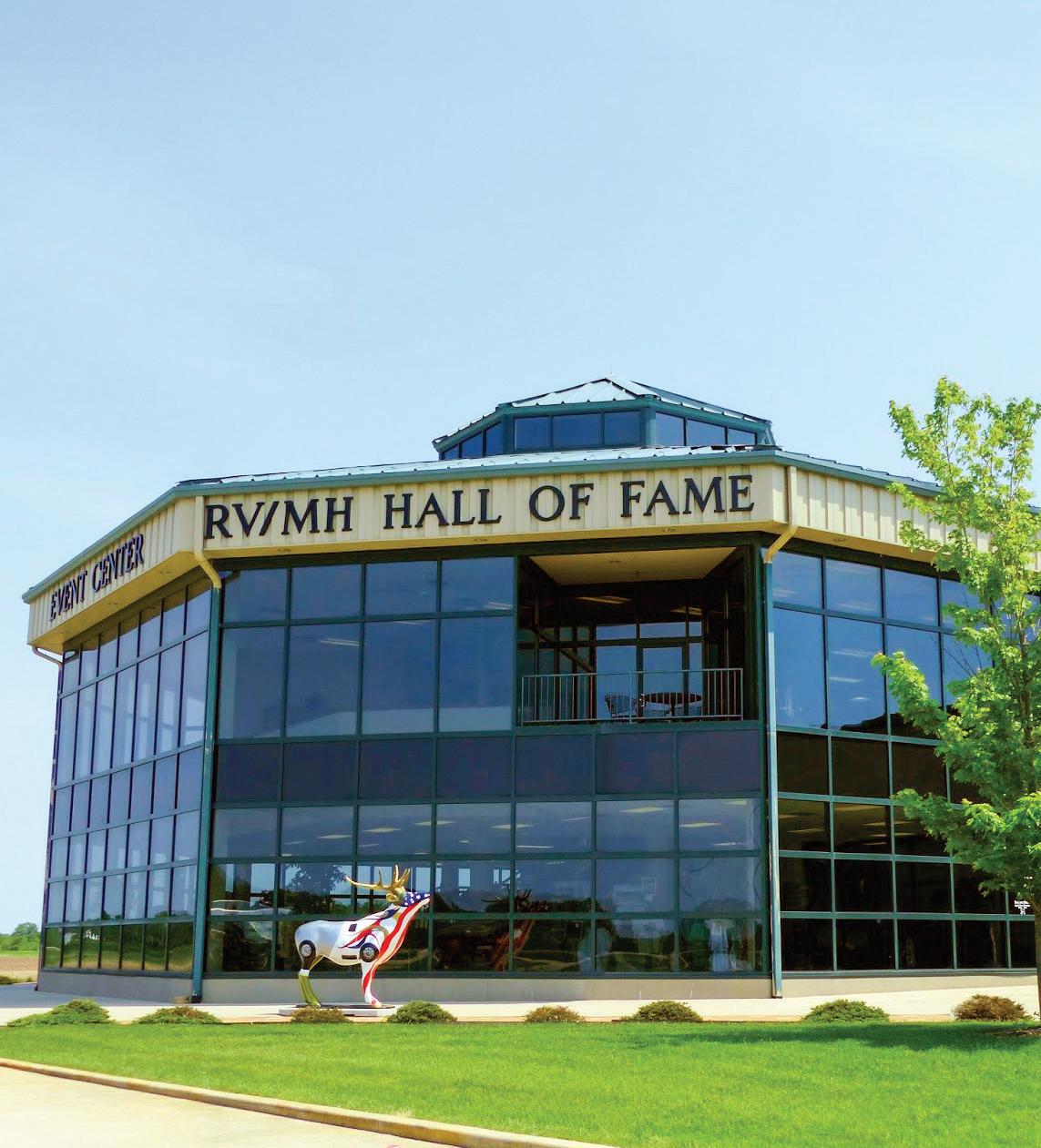
Attendee registration is open for this year’s MH FacTOURy Summit, the annual two-day event hosted at the RV/MH Hall of Fame, from Aug. 18-19, 2026.
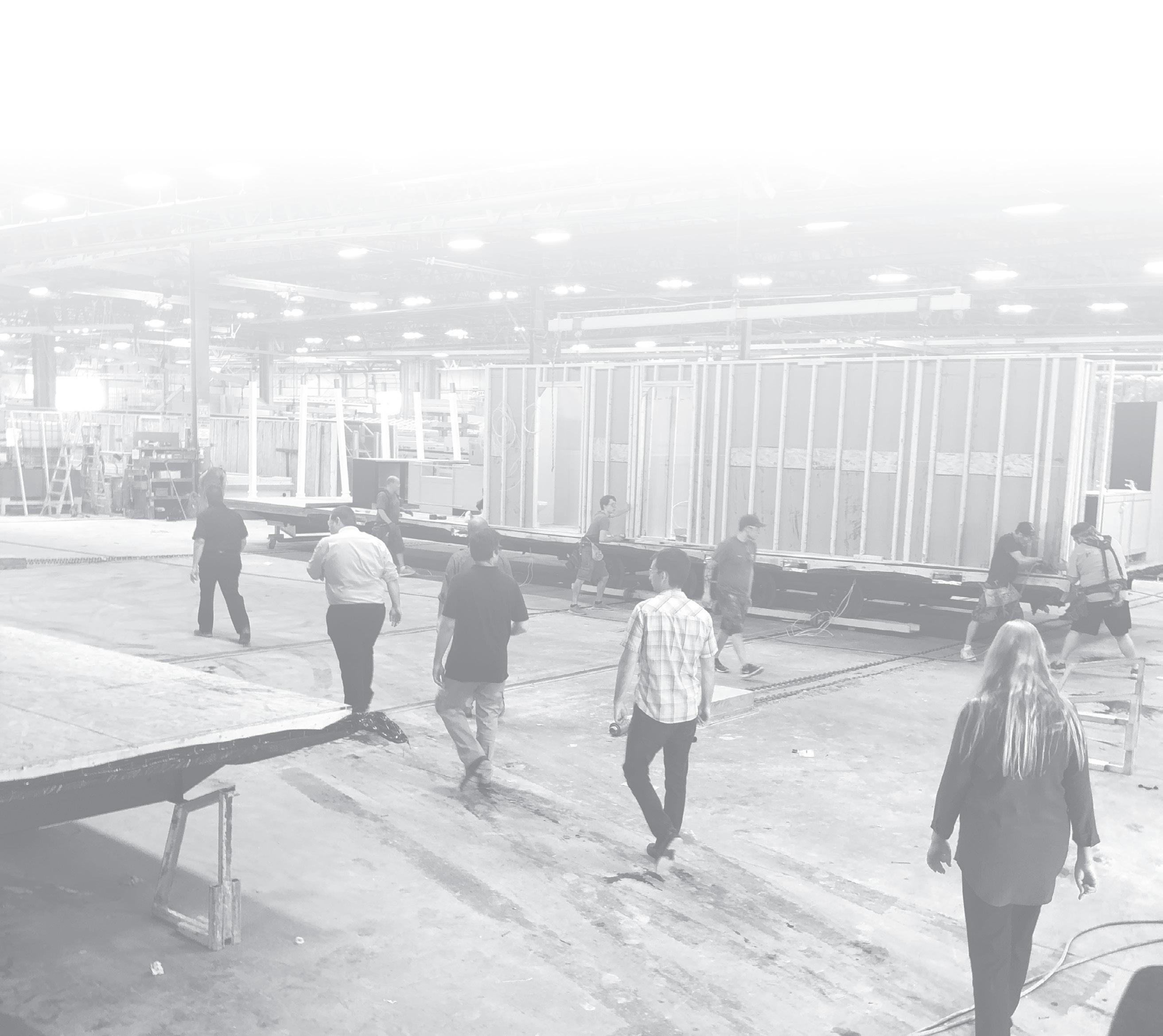
The MH FacTOURy Summit brings two days of factory tours and educational seminars to Elkhart, Ind. Industry professionals from all over the country will have the chance to tour the region’s leading manufactured home building facilities, talk with factory representatives, and preview the latest innovations.
“This is the best opportunity for industry professionals to get a firsthand look at what our manufacturing partners are up to, and meet with factory representatives directly,” Indiana Manufactured Housing Association - Recreation Vehicle Indiana Council Executive Director Ron Breymier said. “Anyone in manufactured housing who’s looking to enhance their business should attend the MH FacTOURy Summit.”
The Indiana Manufactured Housing Association-Recreation Vehicle Indiana Council is an association of individuals and firms whose purpose is to serve its members and enhance growth of industry products and services through governmental, educational and promotional programs.
Now in its fifth year at the RV/MH Hall of Fame, the MHFacTOURy Summit is geared toward manufactured housing
professionals, particularly retailers and community owners, property managers, sales personnel, marketing team members, and new employees in the industry.
The RV/MH Hall of Fame Induction Ceremony will precede the 2026 Summit on the evening of Monday, Aug. 17. The ceremony will honor 10 manufactured housing and RV veterans for their industry service and will enshrine them in the Hall of Fame.
Exhibit and Sponsorship Opportunities
Available For the 2026 MH FacTOURy
Summit
Exhibit and sponsorship opportunities have also opened for the 2026 MH FacTOURy Summit. These are effective ways to increase company exposure. Sponsors can sign up for exclusive opportunities throughout the event to boost brand visibility.
For more information regarding exhibit and sponsorship opportunities, please contact Teena Stephens at (317) 247-6258 ext. 106 or email info@imharvic.org. Visit mhfactourysummit.com to register or to learn more about the event. The MH FacTOURy Summit is an industry conference for manufactured housing professionals and is not open to the general public. MHV
ZIPPY IMPLEMENTS BLOCKCHAIN TO GROW THE MANUFACTURED HOUSING MARKET
By Patrick Revere
One Digital Lender Looks to Build the Capital Markets
America’s housing affordability crisis has many proposed solutions. Few are as ready and as scalable as manufactured housing.
Modern manufactured homes compete on design, energy efficiency, and price in ways the industry has never seen. Zippy, a digitally native lender, argues it is no longer the home that is holding the industry back.
The next hurdle is the capital market that finances manufactured homes.
Ben Halliday, Zippy’s CEO, sees blockchain as a meaningful part of the answer. It brings truth, efficiency, and transparency to a market that has historically been opaque and inefficient, he said.
Paired with the company’s broader infrastructure build, including automated underwriting, digital servicing, and standardized data systems, it is a powerful stimulant to the market potential manufactured housing has long held.
“We always thought: one day we could build an originator and a servicer, and then create a marketplace, more investors bidding to buy more loans, and the market gets to grow. We shouldn’t be 6 or 7 percent of homes if a huge portion of the country wants an affordable home.”
The Cost of an Inefficient Market
In the mortgage market, trillions of dollars of assets trade hands through standardized documentation, transparent performance data, and liquid secondary markets. Because investors can easily buy, sell, and price those assets, capital flows in from everywhere, competition intensifies, and costs compress. Borrowers benefit directly, in the form of lower rates.
Manufactured housing operates with a fraction of that infrastructure.
Loan pools are relatively difficult to compare, expensive to diligence, and slow to trade. That illiquidity means fewer investors participate, less capital competes for manufactured home loans, and the cost of that capital stays higher than it needs to be.
Higher capital costs translate directly to higher interest rates for consumers, which determines how much home a buyer can afford and ultimately limits how many homes the industry sells.
Building the Foundation
Before co-founding Zippy with Jordan Bucy, Halliday was a member of the founding team that built J.P. Morgan’s Technology and Disruptive Commerce group, where he saw
firsthand the impact of capital efficiency and innovation. He also lived the manufactured housing financing problem as a community owner, selling homes and building performing loan portfolios with no efficient way to sell them. Zippy was built from the ground up to address this, one layer at a time: digital origination with no paper, a controlled data infrastructure ensuring every loan is documented and reported in exactly the same way, and servicing built to the same standard.
“We created a control infrastructure where the loans are highly uniform, regardless of whom they’re sold to, with a rich amount of data,” Halliday said. “That took years of engineering to get right. That standardization is the source of what eventually goes onto the blockchain.”
The company’s institutional partnerships reflect the same discipline. BrandFoundry, Zippy’s first strategic investor, shaped the consumer and dealer experience. FirstBank of Tennessee established the legal, risk, and compliance foundation built to stand the rigorous test of time and institutional diligence. And most recently, Forum Markets, an equity investor and platform purpose-built to tokenize real-world credit assets. Each step is intentional. Each one is an accelerate toward a larger vision for the industry, Halliday said.
Where Blockchain Comes In: Truth Over Trust
Halliday calls the core value of blockchain “truth over trust.” As loans are originated and serviced, their characteristics and monthly performance are written to a digital ledger. Once recorded, the data cannot be changed. An investor evaluating a pool can see the full history permanently and transparently, creating an investable benchmark against which manufactured home loan performance can be measured. It also makes historical abuses in asset-backed finance, such as pledging the same collateral to multiple buyers, effectively impossible.
“While we hope investors trust us, we are also very comfortable proving it,” Halliday said.
How Tokenization Works
Once a loan pool’s data is on chain, tokenization creates a new mechanism for trading it. Ownership interests in a defined loan pool are represented as digital tokens, each corresponding to a defined economic stake. Instead of investing $50,000 in just one home loan for example, an investor can purchase 50 tokens each representing $1,000 of a $10 million pool that spreads risk and return across 200 loans, for instance, to earn a �
proportional return, and sell that interest to another qualified buyer through the platform.
“If you decide to buy, it is the press of a button,” Halliday said. “You bid. The seller accepts. Ownership transfers on the digital ledger. Because we made the transaction easy, the price is a real market price, not an illiquid one.”
This infrastructure is designed to work alongside the traditional structured finance process, not replace it. Investment banks, rating agencies, and institutional loan buyers bring discipline, scale, and credibility to the asset class. What tokenization does is drive down the cost of larger transactions already happening and extend the benefits of that rigor to smaller pool sizes that have historically been too small to justify a full structured transaction. The goal is to widen the market for everyone. Both traditional and new players benefit when the infrastructure gets better.
How the Ecosystem Works
they manage. Those pools can be tokenized in customized structures designed to meet the specific risk and return demands of their investor base, with participation shared across multiple asset managers and community partners.
“Zippy has spent years engineering the standardized origination and servicing infrastructure that makes manufactured housing investable at scale, and we’ve already put that to work, acquiring a portfolio of performing manufactured home loans onto our balance sheet as we build the first tokenized MH loan pool together.”
-Forum Markets chairman and CEO McAndrew Rudisill
For asset managers evaluating manufactured housing credit, the combined infrastructure creates a clear participation pathway into and out of the market.
A digitally enabled originator like Zippy originates and services standardized loans, with every loan documented and tracked uniformly from day one. Loan investors provide the aggregation capital that creates homeownership. As loans season, that capital builds toward a performing pool with a clear path to liquidity, managed through an integrated tokenization platform such as Forum Markets.
A New Opportunity for Community Owners
Community owners are already experienced managers of institutional capital. Historically, supporting homeownership has meant creating arrangements largely from scratch: custom smallpool mortgage contracts, lease-purchase agreements, negotiated individually with limited to no secondary market access. Tokenization creates an entirely new way to formalize and scale that expertise. By originating standardized loans through a digitally enabled originator, a community owner can build a branded loan pool reflecting their underwriting philosophy, their knowledge of their residents, and their standards for the communities
This represents an AUM expansion opportunity in a separately tradable asset class that supports community growth, creates new earnings for investors, and expands access to homeownership simultaneously.
Opening the Market to the World
A more efficient, open market also opens the door to international investment. U.S. mortgage-backed assets have long attracted significant international capital. Manufactured housing, without standardized infrastructure, has been largely inaccessible to those buyers. A transparent, tokenized, compliant platform changes that directly.
Progress and Scale
Forum Markets has already purchased a portfolio of performing manufactured home loans onto its own balance sheet, holding those loans and earning the yield as it builds and validates the tokenization platform on which those assets will trade. As Forum creates the first tokenized manufactured housing loan pool, the goal is to prove the process so that when other originators and community owners want to follow, the path is frictionless.
“We were able to watch the first loans enter the ledger,” Halliday said. “It was genuinely cool to watch history in real time.”
Forum Markets chairman and CEO McAndrew Rudisill said the investment in Zippy reflects the kind of opportunity Forum was built to pursue: real-world credit assets ready to be made more transparent, more liquid, and more accessible to global capital.
“Zippy has spent years engineering the standardized origination and servicing infrastructure that makes manufactured housing investable at scale, and we’ve already put that to work, acquiring a portfolio of performing manufactured home loans onto our balance sheet as we build the first tokenized MH loan pool together. This is a company executing on a clear vision in a market with enormous untapped demand, and we’re proud to be a strategic partner in unlocking it,” Rudisill said. MHV
This is your chance to explore the region’s top manufactured home facilities, connect directly with factory representatives, and explore the latest innovations in design, engineering, and construction. Plus, you’ll sharpen your edge with sales, marketing, and operations sessions led by some of the most respected voices in the industry. AUGUST 18 – 19
WHO SHOULD ATTEND?
• Retailers & Community Owners
• Property Managers
• Sales Personnel
• Marketing Team Members
• New Employees
WHY ATTEND?
• Stay Ahead of Your Competition
• Build a High-Performing Sales Team
• Pick Up New Marketing Tips and Tactics
• Understand the Latest Trends and Buyer Preferences
• Purchase the Right Homes for Your Buyer and Market
Streamline Communication and Eng
agement
With Rent Manager’s built-in communication tools, you’ll increase renter satisfaction and keep important information flowing between you and your residents.
Engage with quick inquiries, updates, and reminders using the system’s texting capabilities
Record and send voice messages for alerts and announcements using the Phone Broadcast
MANUFACTURED HOUSING'S AI MOMENT IS HERE
By Arthur Attal
How to Build an AI Ecosystem for Communities
The question that manufactured housing community owners and operators were asking a year ago was whether AI could actually be useful in their business. That debate is over, and the questions now are more practical: Where do I start? How do I connect AI to my existing systems? And what happens to my team?
Why Communities Need A Unique Approach
Most AI tools entering property management were designed for multifamily. That is a problem for operators, because the two asset classes operate on fundamentally different logic.
In manufactured housing, a resident is often both a leaseholder and a homeowner simultaneously. Home sales processes and land-lease dynamics require different workflows than a high-rise leasing funnel. State-level regulations on lot rent increase notices, eviction notice requirements that vary by state and can void a proceeding if the wrong period or language is used.
Retrofitting a multifamily AI tool — or for that matter any tech solution — for MH tends to reveal its gaps after go-live, when broken workflows surface in real transactions. The better
path is purpose-built tooling or platforms that have invested in integrations with the systems community operators already use. Depth of integration across the industry's leading systems, like ManageAmerica, Rent Manager, and Yardi, is a signal of how seriously a vendor has committed to the vertical.
Domos is an AI platform built specifically for manufactured housing communities, with integrations across those systems and a focus on the workflows manufactured housing operators run.
What an AI ‘Ecosystem’ Actually Means
The word "ecosystem" matters here. Most operators start their AI exploration by evaluating point solutions: one tool for sales inquiries, another for maintenance triage, a third for payment reminders. Each solves a discrete problem. The challenge is that workflows do not operate discretely.
A resident's journey from first inquiry to signed lease and to ongoing tenancy involves handoffs across multiple functions. When AI tools for each function operate in isolation, those handoffs become manual reconnection points. Data does not flow,
context gets lost, and staff end up doing the integration work that the technology was supposed to eliminate.
An AI ecosystem approach connects those workflows end-toend and ties them back to the property management system of record. AI that reads from and writes to the property management software and customer relationship management system, or CRM, goes beyond just answering questions. It takes actions, updates records, and closes loops.
One Domos customer has applied this to their home sales process. AI workers manage workflows from first inquiry through closing, without requiring a human to coordinate each stage. But the connected approach delivers something else that point solutions never could: visibility across the entire funnel.
“To me, the greatest benefit has nothing to do with time being freed up — it has everything to do with data and transparency, something this industry has always lacked. There was no true way to measure conversion data, identify breakpoints, or uncover buyer trends until AI. The speed at which we can now identify those trends and adjust means no lead is left behind,” Endeavor Communities principal partner Ryan Smith said.
What Happens to Human Teams?
When operators hear "AI workforce," the first question is usually some version of: do my people still have jobs? The concern is reasonable and the industry has not been straightforward enough about what actually changes.
The honest answer is that a capable AI should absorb work that previously required headcount. For operators looking to scale, that is often the primary value: growing a portfolio without proportionally growing the team.
Think about what onsite staff spend their time on today: logging calls, updating resident records, entering work orders, chasing data across systems. These are not judgment calls, they are data entry tasks that happen to require a human because this is how systems were built. Today, the interaction model flips: teams stop talking to software and start talking to their workers; AI workers who handle the system interactions on their behalf, faster and more consistently than any manual process. The human's job becomes doing what only humans can do: the in-person showing, the difficult resident conversation, the decision that requires reading a room, not updating a field in a property management software. �
That shift lands best when onsite staff is brought in early. They know the workflows better than anyone, which makes them essential to a successful deployment. They are also typically the most skeptical. Operators who have done this well report the same pattern: the people who pushed back hardest tend to become the strongest internal advisers and advocates once they see what changes.
“Our goal isn't to do away with employees, it's to scale. We want our teams putting their energy into the human part of the job: the in-person conversations, the relationships, the work only people can do,” Rhonda Stroud, a partner and head of property management for Bedrock Communities. “AI takes the administrative weight off their plates so they can focus on the rest. There was initial skepticism, but our onsite managers and maintenance teams are now the ones telling us how much time it gives them back.”
goal is an AI that operators can constrain and oversee. That distinction separates tools built for manufactured housing from tools that were built for something else and pointed at it.
How to Start Implementing
Operators who feel behind on AI adoption often hesitate to move, waiting for the right moment. That hesitation has a cost that compounds quietly.
Beyond compliance, operators should ask vendors direct questions before signing. What does the AI hand off, and to whom? How are errors caught? Can AI hallucinations be prevented? Is the system configurable, or does it operate as a black box?
The goal is an AI that operators can constrain and oversee.
AI systems that update continuously mean operators do not carry the maintenance burden themselves. By the time an operator finishes building an in-house solution, the underlying models, connectors, and agentic behaviors that solution was built on are already materially outdated.
The implementation path is also clearer now than it was six months ago. Early adopters absorbed the learning curve, and results are no longer limited to pilot phases.
A Practical Approach to AI
Guardrails, Limitations, and What to Watch
The strongest case for AI adoption in the industry cannot be separated from an honest accounting of its limitations.
Compliance is the most critical area. The Fair Housing Act governs how AI can communicate with prospective residents, and HUD's 2024 guidance made explicit that the Act applies to housing decisions regardless of whether a human or an algorithm makes them, including the screening of prospects and within all resident communications. Manufactured housing adds further complexity: lot rent increase notice requirements vary by state, with mandatory periods ranging from 30 days to three months and specific statutory language that differs by jurisdiction. Eviction notice rules for land-lease communities are similarly state-specific; the wrong notice period or missing required language can void the proceeding. An AI system that has not been configured with these constraints is a liability, not an asset.
Beyond compliance, operators should ask vendors direct questions before signing. What does the AI hand off, and to whom? How are errors caught? Can AI hallucinations be prevented? Is the system configurable, or does it operate as a black box? The
Before evaluating vendors, run a two-part internal audit. First, map which workflows consume the most staff time with the least variation. Repetitive, high-volume processes are the best candidates to delegate to AI workers.
Second, look at organizational structure honestly. Centralized operations tend to extract more value from AI faster. If decision-making and workflows are fragmented across sites, that structure is worth addressing before or alongside any AI deployment.
The operators getting the most out of AI are treating it as a workforce and organizational strategy, not a software purchase. Portfolios scaling without proportional headcount growth, teams focused on work that actually requires human judgment, and staff who are more effective and more satisfied in their roles. That is the outcome worth building toward. MHV
Arthur Attal is the co-founder and CEO of Domos, a provider of AI workforce for property management. While managing properties in New York, he designed his first AI agents to streamline day-to-day operations. Prior to founding Domos, he worked in finance and led several businesses at high-growth tech companies. Attal holds undergraduate and graduate degrees from Brandeis University and MIT, respectively.
The Mobile-First Future of Rent Collection in Manufactured Housing
By Robyn Burkinshaw
For years, rent collection in manufactured housing communities has largely remained the same: paper notices, manual follow-up calls, in-office payments, mailed checks, and a lot of time spent tracking down residents who often fully intend to pay but simply have not done it yet.
The problem is not always unwillingness to pay. Often, it's friction.
Consumer behavior has changed dramatically over the last decade. People order groceries from their phones, deposit checks through banking apps, split dinner bills through text messages, and expect immediate digital access to nearly every service they use. As of 2024, 98 percent of Americans own a mobile phone, and the average person checks their phone 205 times a day — which
works out to roughly once every five minutes. Yet many housing operators still rely on payment workflows built for a different era, and that disconnect is becoming harder to ignore.
Manufactured housing operators are navigating rising operational costs, lean onsite staffing, and increasing pressure to maintain occupancy and resident satisfaction. At the same time, residents expect convenience and flexibility in nearly every interaction, including how they pay rent. In 2024, more than half of Americans used digital wallets more frequently than traditional credit or debit cards. This is where mobile-first payment experiences, particularly text-to-pay, are beginning to reshape the industry.
Why Text-to-Pay Is More Than Just Another Channel
Text-to-pay is not just another payment channel. It represents a broader shift toward meeting residents where they already are: on their phones. Texting is the most frequent smartphone activity for 75 percent of consumers, outranking checking social media or email. Text messages are read almost immediately, with 97 percent of messages read within 15 minutes of delivery, while it takes
Text-to-pay is not just another payment channel. It represents a broader shift toward meeting residents where they already are: on their phones.
people an average of 90 minutes to open an email. Compared with emails, paper notices, or outbound collection calls, text communication provides a faster, more direct path to engagement.
For community operators, that matters because speed and convenience directly influence payment behavior. A resident who may ignore an email reminder or forget to mail a check often responds differently to a simple text containing a secure payment link. SMS carries a response rate of 45 percent, compared to just 6 percent for email, meaning residents are far more likely to act on a text than on any other form of outreach. Removing friction from the process increases the likelihood of immediate action. In many cases, residents can complete a payment in under a minute without needing to log into a portal, visit an office, or speak with staff.
Reducing the Manual Burden on Onsite Teams
Many manufactured housing communities still devote enormous amounts of staff time to manual payment collection activities such as printing notices, making reminder calls, tracking promises to pay, processing checks, reconciling accounts,
and repeatedly following up on past-due balances. These tasks are time-consuming and difficult to scale, especially for operators managing multiple communities or lean teams.
Text-to-pay tools help automate much of this process while improving the resident experience. Historically, collections and resident satisfaction have often felt at odds with one another. Operators had to choose between being persistent about payments and preserving positive
Better Technology Supports — Not Replaces — Community Relationships
A simple payment reminder delivered through text can feel more like customer service than collections, which is important in manufactured housing, where community trust is critical. Unlike some other forms of housing, community operators are not just managing units. They are managing neighborhoods, relationships, and resident retention over time. Technology should support those relationships, not damage them. Nearly 90 percent of people prefer texting with businesses over phone calls — a clear signal that residents are already primed to receive payment communications this way.
relationships with residents. Text-first communication changes that dynamic by making payment interactions feel more convenient and less confrontational. According to the Federal Reserve's Consumer Payments Study, more than three-quarters of consumers chose faster payment options as their preferred method in 2024, and a text with a secure payment link is about as fast as it gets.
The rise of text-to-pay does not mean removing the human element from operations. In fact, many operators are finding the opposite to be true. By reducing repetitive administrative work, onsite teams gain more time to focus on the parts of community management that actually require human interaction: helping residents, solving problems, improving operations, and strengthening the community experience.
This is especially relevant as staffing challenges continue across the �
U.S. consumers spent an average of $3,693 via mobile payments in 2024 — an 87 percent increase since 2020 — and residents' expectations for mobile convenience in every financial interaction are only moving in one direction.
housing industry. Operators are being asked to do more with fewer resources, and manual processes are becoming increasingly difficult to justify when residents already prefer digital convenience. SMS conversion rates are between 21 percent and 30 percent — roughly 10 times higher than the average email marketing conversion rate — which speaks directly to how much more effectively a text prompt moves people to take action than other outreach methods.
experience increasingly matters, and payment convenience is becoming part of that equation. Consumers who subscribe to business texts are 79 percent more likely to make a purchase, and that same impulse toward convenience and immediate engagement applies just as directly to paying rent on time.
consumers spent an average of $3,693 via mobile payments in 2024 — an 87 percent increase since 2020 — and residents' expectations for mobile convenience in every financial interaction are only moving in one direction.
Payment Experience Is Now Part of Operational Infrastructure
The communities that adapt fastest will likely gain advantages beyond faster payments alone. Convenient payment experiences can influence resident satisfaction, operational efficiency, staff workload, and even retention. In a competitive environment, the overall resident
This shift is bigger than payments. It's about how modern manufactured housing operators run their communities day-to-day. For years, many operators have focused heavily on physical improvements to communities: infrastructure, amenities, curb appeal, and maintenance. Those investments remain important, but operational infrastructure now matters too. Residents increasingly evaluate their experience not only by where they live, but by how easy it is to interact with management, communicate, and handle routine tasks.
Payment experience is becoming part of modern community operations, whether operators intentionally prioritize it or not. The manufactured housing industry has historically succeeded by adapting to changing market realities while continuing to provide affordable housing solutions at scale. Today, one of those market realities is clear: U.S.
The operators who recognize that shift early will likely spend less time chasing payments and more time focused on growing healthy, stable communities. MHV Robyn Burkinshaw is the founder and CEO of Blytz, leading the company’s vision and growth with a focus on modernizing payments and collections for today’s mobile-first world. Drawing on her background in fintech and alternative finance, Burkinshaw founded Blytz to prove that strong performance, responsible collections, and better customer experiences can coexist.
One of the Largest Property Management Software Providers Brings Yardi MH Manager
“Yardi MH Manager is a game-changer for operators looking to modernize and elevate their operations,” Yardi CEO Rob Teel said. “Built on the industry-leading Yardi Voyager® platform and AI-enabled through Yardi Virtuoso, it gives clients the confidence to scale and succeed.”
Yardi has been in the converging world of real estate and technology for a long time, including in the manufactured housing industry with its primary offerings and an adapted version for smaller operations, called Yardi Breeze Premier. After years of development, the company has released Yardi MH Manager, a new right-sized and manufactured housing-focus offering that helps meet the needs of mid- to larger-sized operators.
Built for Control in a Single Platform
Yardi built and deployed MH Manager for manufactured housing community
owners and operators who serve and manage residents, homesites, home inventory, and daily operations. It offers…
1. Management of homes and homesites
2. Acceptance of online payments, as well as other resident tools
3. Automated daily workflows
4. The use of built-in accounting designed for MH operations
5. A reduction in manual processes, elimination of disconnected systems
“MH Manager is an intuitive and powerful property management software that meets the needs of a property manager in this industry and eases the workflow of everyday operations,” Tanner Buuck, Yardi’s sales manager for manufactured
housing, said. “By combining property management, accounting, and resident services into one platform, operators can eliminate the need for multiple systems, reduce data entry errors, and gain real-time insights into operations.”
Yardi was founded in 1984 by Anant Yardi, who created the first platform Basic Property Management, on an Apple computer for his real estate properties in Santa Barbara, Calif. In the ensuing decades, Yardi expanded with its Voyager product and strategic acquisitions, and now operates 80 countries with a workforce of more than10,000 employees. MHV
New York Awards $19 Million for Factory-built Affordable Homes
New York state is directing more than $19 million toward the construction of 56 factory-built starter homes as part of Gov. Kathy Hochul's effort to expand affordable homeownership.
The funding, awarded through the second round of Hochul's MOVE-IN NY program, will create new homes in the cities of Amsterdam, Auburn, Lackawanna, and Schenectady and the town of East Hampton.
The program uses CrossMod homes, which are manufactured in factories and can be built in a fraction of the time and at nearly half the cost of standard site-built construction. State officials say the typical cost to build a small single-family home onsite in New York has climbed to more than $450,000.
The new homes are expected to be sited this summer and will be sold below the cost of construction to low- and moderate-income buyers.
Four organizations received awards: the AHA Development Corporation, $3,025,000 for 10 homes; the Capital Region Land Bank, $6,655,000 for 22 homes; the Lackawanna Housing Development Corporation, $2,420,000 for 8 homes; and the town of East Hampton, $7,040,000 for 16 homes.
The latest awards bring the total number of homes funded through MOVE-IN NY to 128. The program is backed by $50 million secured in the state's fiscal year 2025-26 budget.
Hochul has also proposed an additional $100 million in her fiscal year 2027 executive budget to further expand the program. MHV
No One Opens More Doors to New Residents
Since 2004, manufactured housing professionals have placed their confidence in MHVillage to generate high-performing leads that consistently deliver the greatest returns for their marketing budget.
FIRST NEW COMMUNITY IN DECADES
OPENS IN MIAMI
Michigan-based Operator Provides New Homes, Family Amenities
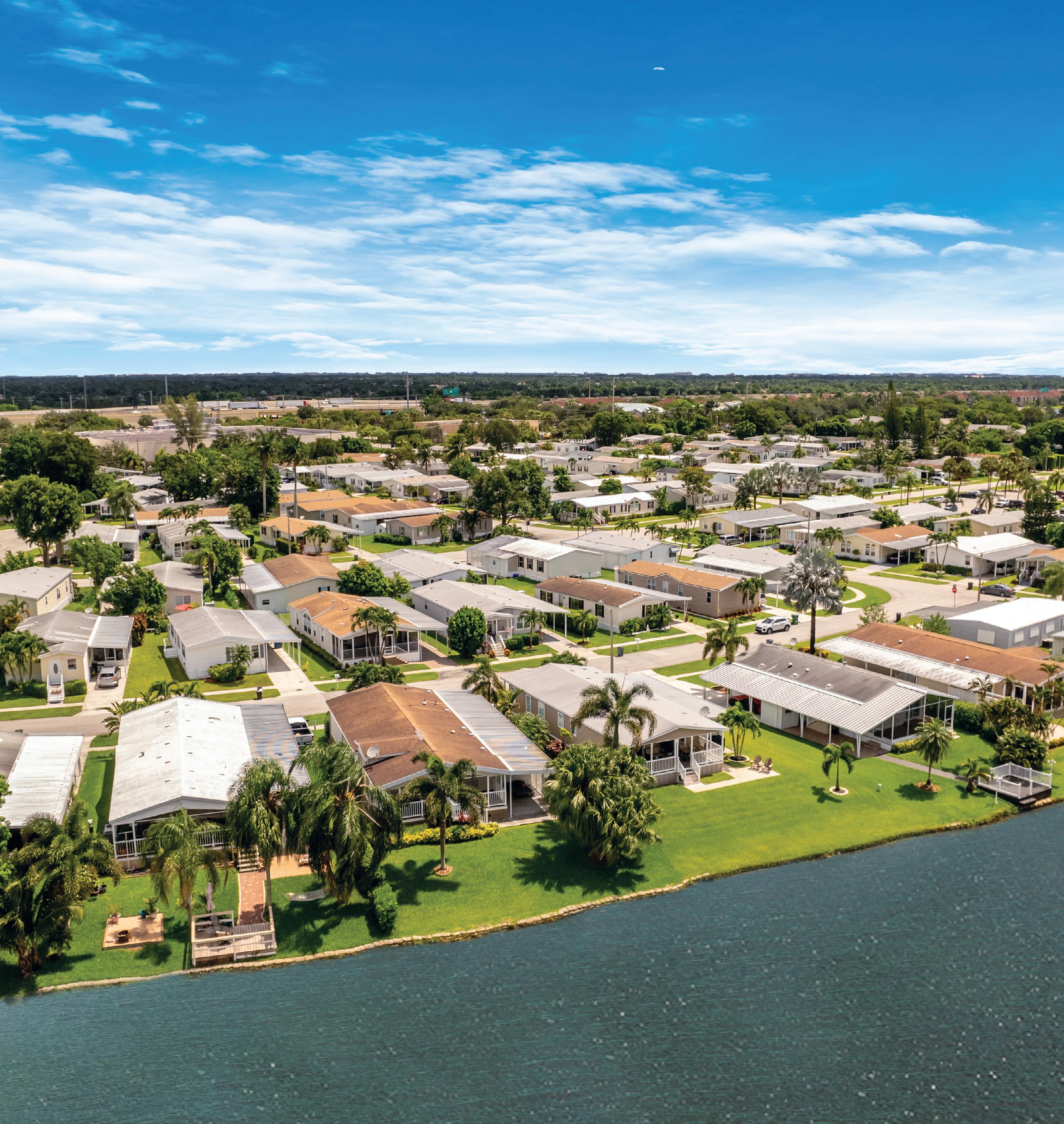
Florida has a large concentration of manufactured housing communities of all varieties, but one vital area of the state has seen no growth in new communities for many years. Miami, one of the top destinations in the Sunshine State, now has its first new community in 30 years.
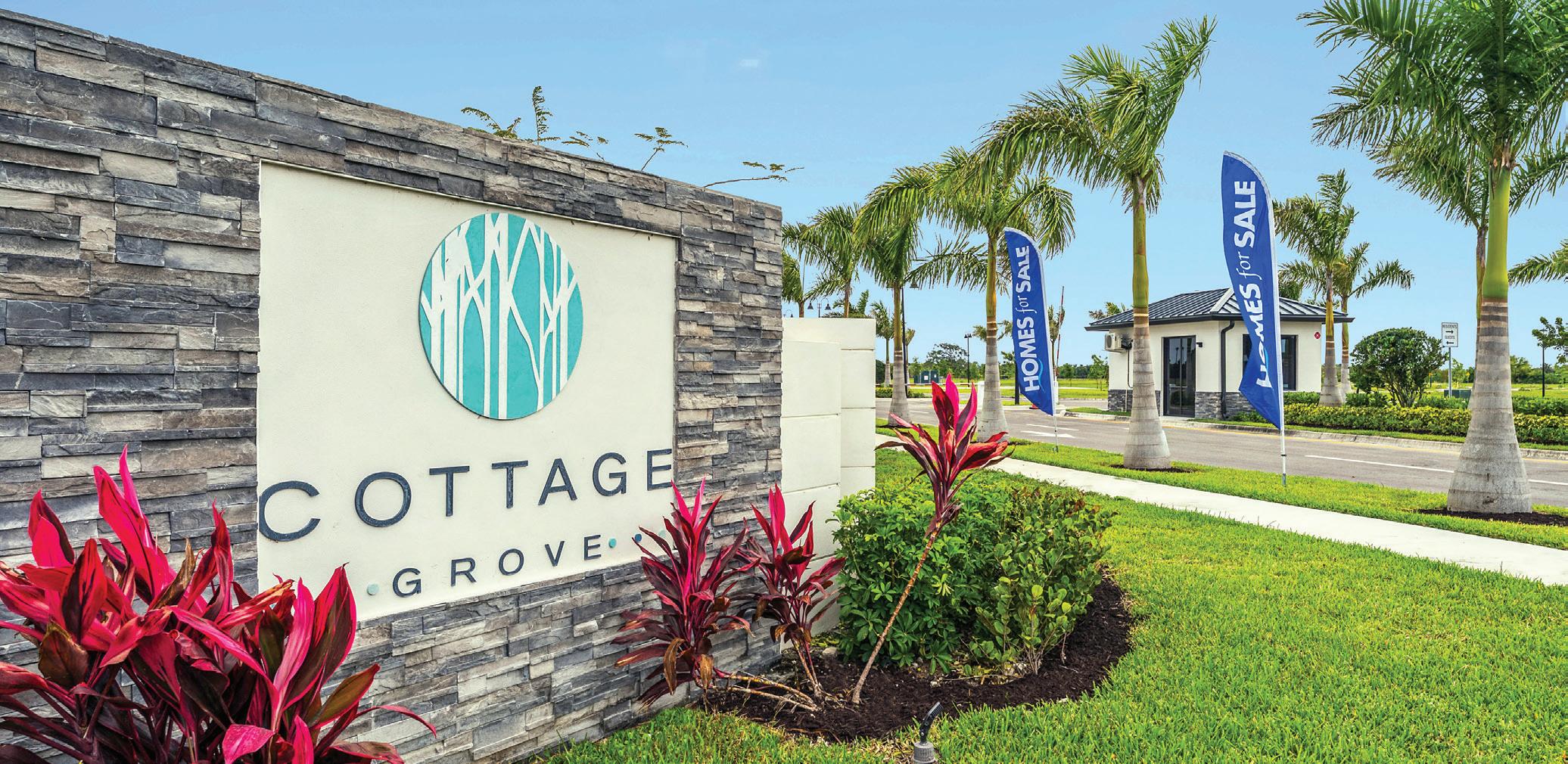
RHP Properties, based in Michigan, recently announced that the first phase of construction at Cottage Grove, a new all-ages community in southwest Miami, is complete.
"We are excited to announce our newest community, offering 5-star amenities at affordable prices for families. This new housing supply is coming at a time when it is most needed," RHP Properties CEO Ross Partrich said. "Cottage Grove provides a path to homeownership in Miami-Dade County at a price point that is otherwise difficult to achieve, while replacing capacity that has been lost to redevelopment."
Cottage Grove's 349 new manufactured housing sites address a critical gap in Miami-Dade County housing supply at a time when rising home prices and construction costs are putting homeownership out of reach for many families, and at a time when supply is shrinking due to redevelopment. In the past year, more than 1,100 manufactured housing sites have been removed or are slated for removal, and new manufactured housing has been virtually non-existent in Dade County for decades.
The community provides convenient access to everything Miami has to offer and features brand new, modern multi-section homes in a luxury-inspired, amenity-rich setting at an affordable price point. With homes starting at $129,900, the community
will offer spacious, four-bedroom single-family residences with open floor plans, multiple living areas, and kitchens equipped with stainless steel appliances and islands. There is access to two primary arterial corridors in Southwest Miami-Dade County, connecting residents to US-1 and the broader Miami metro area.
Residents will benefit from the nearby 100-acre redevelopment of Southland Mall into Southplace City Center, a mixed-use project featuring retail, medical, hospitality, and residential components, as well as the proposed southwest extension of the Dolphin Expressway, enhancing east–west connectivity to the regional expressway and Florida Turnpike system across South Miami-Dade. Additional nearby attractions include the Sports Performance Hub campus, a large-scale project incorporating athletic, medical, and hospitality uses.
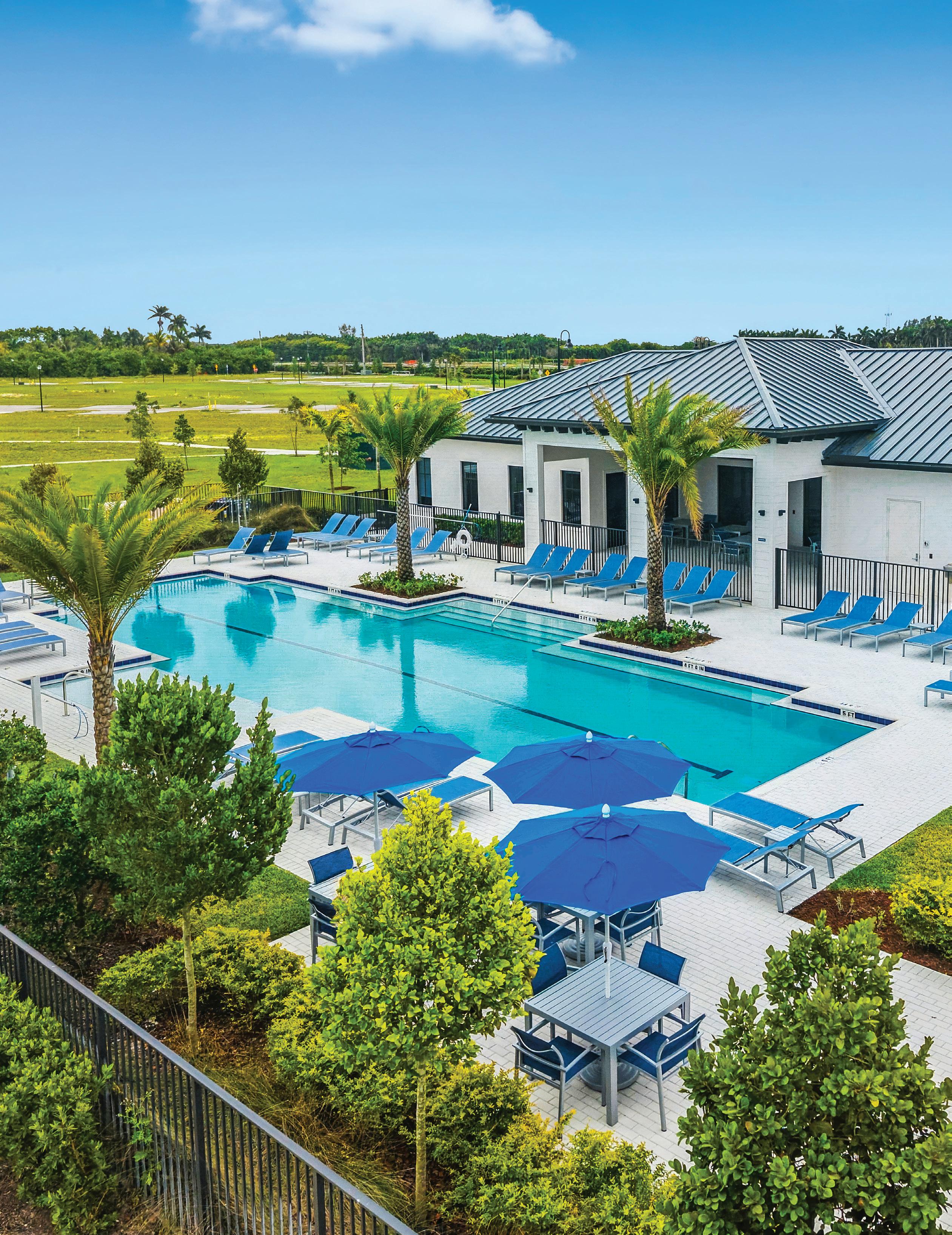
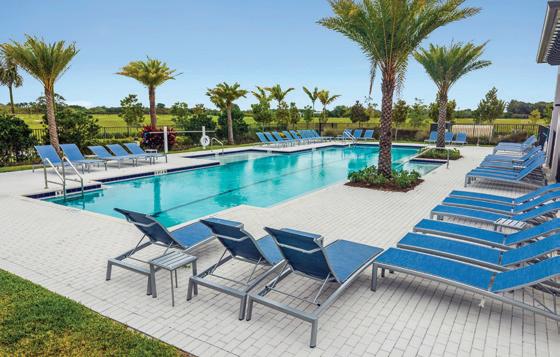
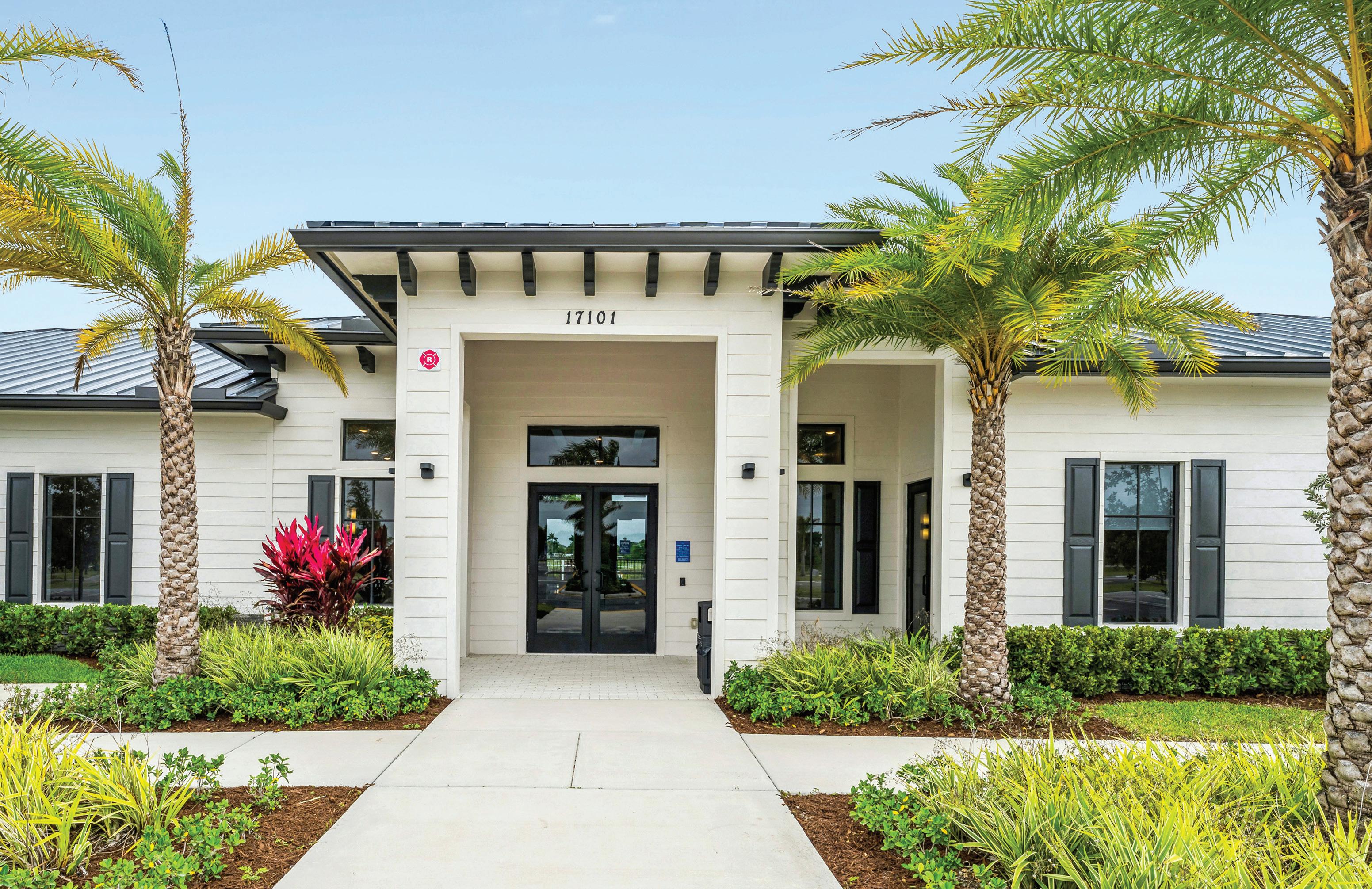
Cottage Grove is designed for an active lifestyle. It includes a large pool with a sun deck, a contemporary clubhouse, fitness center, yoga and lounge rooms, scenic biking and walking trails, and serene gazebos. The playground, expansive green spaces, and gated entrance add to the community's appeal for families.
Model homes became available for tours in the early summer, with the first home sales closing by mid-summer. MHV
Rebuilding How Homes Are Sold Online
By Sean Vichinsky
Trove is a new software company built exclusively for manufactured and modular home retailers. It ties together the three business solutions most dealers run through separate vendors — digital marketing, the customer-facing website, and the CRM — into a single connected system.
The company, founded and operated by brothers John and James Connelly, is betting on the convenience and efficiency
of selling homes online in one continuous motion — attract, educate, convert, and close. And smart technology should be doing the heavy lifting at every step.
The new software startup is using cutting-edge technology to help manufactured home dealers attract more buyers, convert more leads, and close more deals. It replaces a paperwork-heavy sales process with the kind of modern shopping experience buyers expect.
Attract: Marketing that learns about the real buyer
Trove runs Facebook, Instagram, Google, and local SEO campaigns on behalf of dealers, but the interesting piece is the feedback loop.
“When a Trove site captures a lead, it lands in the dealer's Trove CRM. When that lead closes, or doesn’t, the outcome syncs back to Facebook and Google,” Trove CEO John Connelly said. “The
“We have a property mapping tool that drops the home onto a satellite view of the buyer's actual parcel with setbacks accounted for, it also covers the everyday marketing-site essentials: a built-in blog, custom marketing pages & blog, full branding and domain control, and automatic SEO that ranks the dealer's homes for hundreds of long-tail searches.”
–Trove President James Connelly
ad networks learn what a real manufactured home buyer looks like, and next month's spend chases more of them.”
The platform also auto-syncs each dealer's inventory to Facebook Shop, and runs an SEO program built for the era of ChatGPT, because buyers increasingly ask AI assistants for recommendations before they ask Google.
Educate and convert:
A smart digital showroom
A Trove website is a full digital showroom out of the box. It catalogs and provides inventory management that is already connected to more than 150 homebuilding factories that auto-sync as offerings change. It works as a design studio that allows buyers to pick floor plans, finishes, and upgrades with live pricing and visualization.
Connelly said. “It also covers the everyday marketing-site essentials: a built-in blog, custom marketing pages and blog, full branding and domain control, and automatic SEO that ranks the dealer's homes for hundreds of long-tail searches.”
Among these capabilities, three new features stand out this year.
Smart Renderings. A typical factory photo shows whatever finishes were on the line that day. When a buyer uses Trove's Design Studio to pick cabinets, tile, countertops, and flooring, the platform generates a photorealistic, floor-plan-specific image of the home as the buyer has just designed it. Buyers fall in love with their home before they ever step on the lot. Factory order errors collapse because the dealer confirms the order against an actual image of the aligned configuration.
questions on home specifications, recommends floor plans, qualifies the lead, and books tours even at 9 p.m. on a Sunday, when no human is around. Leads stop going cold.
Close:
A CRM that already knows what the buyer wants
The last mile is where most dealers leak deals. A buyer designs their dream home at 9 p.m., fills out an inquiry, and it lands in someone's email inbox. The salesperson rebuilds the quote in a spreadsheet. Two days later, three competitors have already followed up.
“Trove's CRM helps close that gap,” John Connelly said. “We find that the added focus of a 24/7 optimized system is that we are able to capture many more leads than most websites.”
“We have a property mapping tool that drops the home onto a satellite view of the buyer's actual parcel with setbacks accounted for,” Trove President James
Smart Search. Buyers don't think in checkboxes. They think in terms of “3-bedroom under $80k with an open kitchen” or “something for a young family on a tight lot.” Trove's natural-language search reads queries the way ChatGPT taught the world to expect, and surfaces matching plans from the dealer's catalog instantly.
Smart Responses. Every Trove site comes with an AI sales assistant trained on the dealer's specific catalog. It answers
The CRM ties directly into factory cost data for every plan in the dealer's catalog. A salesperson opens a proposal, picks the home and the buyer's design studio configuration, and the underlying invoice cost is pre-populated.
Standard dealer markups can be made to apply automatically.
Site-work estimates layer on next: foundation, utilities, skirting, decks, septic, permits, all from reusable line-item templates the dealer programs once. �
Property site mapping drops in where it's relevant, so the buyer sees exactly where the home will sit.
The output is one branded, lineitemed quote with the home, finishes, smart rendering, site work, totals, and signature block.
“That process goes from ‘I want a tour’ to ‘sign here’ in a single document,” James Connelly said.
Among the other capabilities, Trove takes command of…
Automated email and SMS. Drip sequences trigger on real events that the platform detects, like if a lead viewed a catalog, saved a design, scheduled a tour, or requested a callback. Sales reps can also fire one-off texts and emails directly from the contact record, with every message logged on the timeline.
Native integrations with industry-specific lead sources. Trove plugs directly into the systems dealers already get business from, including factory pro-
grams operated by industry partners like Champion Homes. It pulls accepted leads straight into the CRM, pre-attributed and pre-routed, with no copy-pasting from one inbox to another.
A homebuyer portal that bridges shopping and ownership. Each customer gets a secure, branded portal with their assigned team member, their live
project details and quote, their tasks, their required document uploads, and a single shared message thread. It's the kind of experience people are used to from their bank, and increasingly expect from any large transaction.
Why It All Matters
The transaction for a manufactured home should be as easy or easier than most anything else purchased online. With the right technology handling the marketing, the website, and the CRM as a single system, it doesn't have to be. MHV
Sean Vichinsky is an editor of MHInsider and a marketing copywriter for MHVillage.
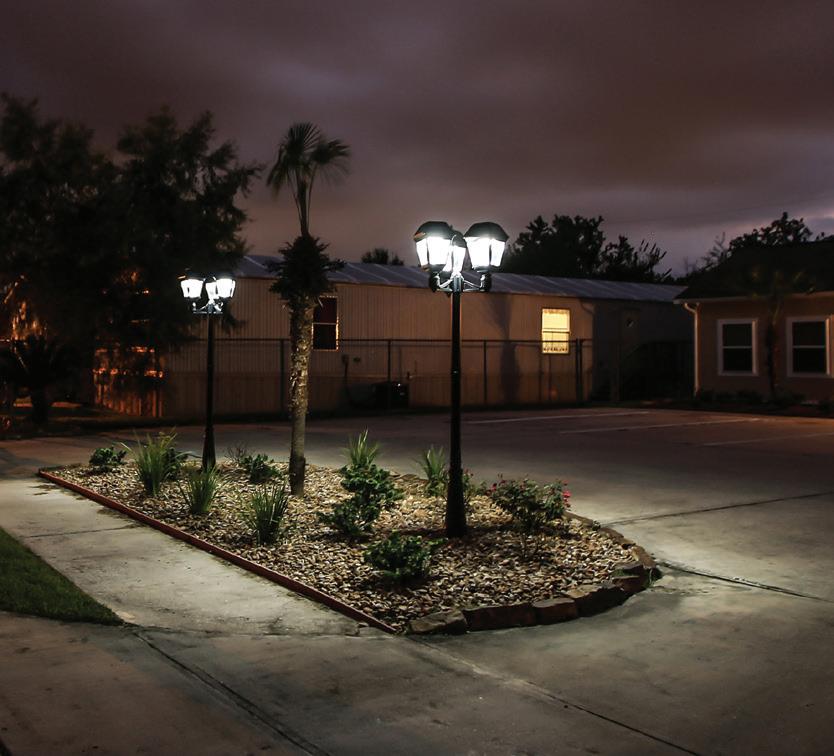
COMMERCIAL GRADE SOLAR LIGHTING With Integrated Solar Panels
UMH PROPERTIES, INC.
Bring your next manufactured home community project to UMH for strategic equity investment.
• $2.3 billion in total enterprise value
• 145 communities, 27,100 homesites, 12 states
• Housing approximately 23,000 families
As a publicly traded REIT (NYSE:UMH), we have been providing quality a ordable housing since 1968. Our portfolio provides high pro t margins, recession resistant qualities, reliable income streams and the potential for long-term value appreciation.
• 8,200 total acres, 4,000 acres in Marcellus and Utica Shale regions
Property featured: SEBRING SQUARE, Sebring, FL Homes for Sale and Rent. Take the Tour Today! For more information, visit www.umh.reit or contact ir@umh.com
Cavco Industries to Build 616,000
Square-Foot
Manufacturing Plant in El Mirage
Phoenix-based Homebuilder Aims to Expand in Southwest
Cavco Industries Inc. plans to construct a 616,000-squarefoot manufactured housing facility in El Mirage, Arizona, as demand for affordable homes continues to outpace supply across the region.
The factory-built housing producer, traded on the Nasdaq exchange under the ticker CVCO and headquartered in Phoenix, said the fully temperature-controlled facility will produce both HUD-code manufactured and modular single-family homes. The company broke ground recently and is targeting an operational date of mid-2027, pending final permitting approvals.
"The shortage of affordable housing in the United States is real, and the El Mirage project will expand Cavco's capacity to provide quality homes for deserving families in Arizona and surrounding states," said Bill Boor, Cavco's president and chief executive officer.
The facility's initial design calls for a single production line, with the option to add a second at modest additional cost. Company officials said the plant will incorporate sustainable building practices and advanced manufacturing techniques, though they declined to share specific details until key construction milestones are reached.
Jeff Chrisman, Cavco's regional vice president overseeing the project, said the El Mirage plant reflects the company's ongoing push to modernize its construction processes.
"El Mirage will represent the incorporation of these improvements and beyond, which will make us better and increase our ability to produce more homes," he said.
The announcement comes amid a prolonged national housing shortage that has driven up home prices and rents in markets across the country, with the Sun Belt particularly strained by population growth. Factory-built housing, which can be produced at lower cost than traditional site-built construction, has attracted renewed interest from policymakers and developers as a potential remedy.
Cavco is one of the largest producers of manufactured and modular homes in the United States by wholesale shipments. The company distributes its products through a network of independent and company-owned retailers nationwide and also manufactures park model RVs, vacation cabins, and factory-built commercial structures.
The new El Mirage facility will serve multiple states in the Southwest region. Additional details will be released as construction progresses, the company said. MHV
The Next Wave of Success in Factory-Built Housing
By John Ace Underwood
Why the Future Belongs to Retailers Who Reach Conventional Home Buyers Earlier
For decades, much of the factory-built housing industry has operated from a relatively straightforward business model: build a sales center, generate and pull in traffic, and sell homes to the people who show up.
For many years, that model worked reasonably well. Buyers were more familiar with manufactured housing, competition looked different, and the industry relied heavily on visibility, location, and walk-in traffic.
But today’s housing market has changed dramatically.
The reality is that many conventional single-family home buyers never seriously consider factory-built housing at all. Not because they evaluated it and rejected it. Not because they
compared it side-by-side against site-built alternatives and decided against it. In many cases, they simply never meaningfully encounter it during their home-buying journey.
That distinction matters.
Most conventional buyers begin their search online, but not with factory-built retailers. They engage with builder websites, realtors, housing portals, social media, model homes, and local developments long before they ever speak with a salesperson. Their perception of homeownership is often shaped months before a purchase decision is ever made.
And while many of those buyers may drive past a manufactured housing retail center, very few ever drive onto one.
Editor’s Note: Jon Ace Underwood is providing a series of articles to MHInsider on retail sales strategy that reaches the site-built homebuyer. This is the first in a five-part series.
“To secure their future, factory-built housing retailers do not need to become conventional single-family home builders — but they do need to start selling to conventional single-family home buyers.”
Yet many of those same buyers would likely be surprised by the quality, residential appearance, design flexibility, speed of construction, and overall value today’s factory-built homes offer.
In many ways, the industry does not have a product problem nearly as much as it has a positioning and discovery problem.
For years, factory-built housing has often been discovered almost accidentally. A family member owned one. A friend recommended one. Someone happened to drive by a retail center. A buyer stumbled across a model online while searching for something else.
Accidental Discovery is Not Long-Term Strategy
The next wave of success in factory-built housing will not come from waiting for more manufactured home buyers to walk onto a sales lot. It will come from reaching conventional single-family home buyers earlier in their decision-making process and introducing them to the value factory-built housing offers before they emotionally commit to a site-built solution.
That requires a very different way of thinking about the marketplace.
One of the industry’s biggest misconceptions is the belief that manufactured and modular housing are already fully competing against conventional site-built housing. In reality, in many markets, they are not truly competing at all because large numbers of potential buyers never seriously enter the factory-built housing conversation in the first place.
That represents both the challenge and the opportunity.
The United States continues to struggle with affordable housing shortages, rising construction costs, labor constraints, and increasing barriers to homeownership. At the same time, factory-built housing has never offered more quality, more flexibility, or stronger residential appeal than it does today.
Yet manufactured and modular housing still account for less than 10 percent of new single-family housing starts nationally.
That should not be interpreted as a lack of opportunity.
It should be interpreted as evidence that the industry has not yet fully positioned itself within the broader housing conversation.
Manufactured Housing Seen in New Light
Importantly, this change does not mean retailers need to abandon their traditional customer base or completely reinvent their businesses overnight. Nor does it mean manufactured housing retailers must become conventional home builders.
But it does mean they must begin learning how to market, position, and sell to conventional single-family home buyers who are currently shopping elsewhere.
This may prove to be one of the most important strategic shifts facing the industry over the next decade.
The retailers and community operators who grow moving forward will likely be those who become far more intentional about where buyers discover factory-built housing in the first place.
If the ideal future customer is not naturally visiting a sales center, the entire growth strategy cannot depend solely on increasing sales center traffic. �
The industry must become visible where conventional buyers are already shopping and researching. That may involve stronger relationships with realtors, partnerships with developers, better online positioning, off-site model opportunities, land/home packages, builder-style marketing, or entirely different approaches to lead generation and customer engagement.
This is not about abandoning or even a fundamental change with manufactured housing itself. It is about expanding the audience exposed to it.
Realtors and Developers
One of the most overlooked opportunities in the industry today may be relationships with realtors and developers.
Many real estate professionals still know very little about modern manufactured or modular housing. Many developers continue defaulting to conventional site-built solutions simply because factory-built options are not part of their normal conversations or planning processes.
Outdated perceptions continue to dominate much of the marketplace.
That creates tremendous opportunity for retailers willing to position themselves not simply as manufactured home retailers, but as housing solution providers participating in the broader single-family housing market.
The companies that thrive over the next decade will likely be those that stop waiting for buyers to find them and instead become active participants
in how buyers discover, evaluate, and ultimately purchase homes.
This article is intended to introduce a larger conversation about where factory-built housing retail is headed and how independent retailers, community operators, and industry professionals can better position themselves for the future.
In my series of articles, we will explore why many of the industry’s best future customers never visit a sales center, how retailers can market more effectively to conventional home buyers, why realtors may represent one of the industry’s most underutilized growth channels, and how partnerships with developers could create entirely new opportunities for factory-built housing professionals.
The future opportunity for factory-built housing may be larger than it has ever been.
But the companies that benefit most will not be the ones waiting for more traffic.
They will be the ones willing to rethink how conventional single-family home buyers discover factory-built housing altogether. MHV
John Ace Underwood is a recognized 35-plus-year veteran of the factory-built housing industry, specializing in sales leadership, organizational development, and growth strategies for retailers, communities, and manufacturers. His work focuses exclusively on helping retailers expand beyond traditional manufactured housing buyers and compete more effectively for conventional single-family home buyers.
Lending solutions for pre-owned manufactured housing
Expert loan originators and finance team
Financing for home-only or land and home
Down payments starting at $0
Financing available for closing costs
ITIN welcome
The Value of Water Data in Manufactured Home Communities
By Ellie Graeden
Investors, Owners, Property Managers Should View Water Data as a Core Asset
Prairie Village in Booneville, Iowa, is a beautiful community with 89 homes nestled amongst picturesque rocks and trees. But for site managers, there’s a catch: the rough terrain makes it hard to inspect for water leaks or even place zoned meters to track water flow.
When Suncrest Capital took over the location, they decided to make that right, installing a central smart meter to track the water flowing into the community in real time. By asking residents to halt water use, then turning on each of the park’s six water valves in sequence, managers could check which zones had leaks. Almost overnight, the team pinpointed and remediated leaks totaling more than 450,000 gallons per month, cutting water bills by about $18,000 per year.
“That’s a lot of money for one small property,” Suncrest Capital Head of Asset Management Kristen Hensley said. “We’re talking real savings.”
Suncrest has now rolled out smart meters and data tools across properties in Iowa, Missouri, Kansas, and Louisiana, boosting recapture rates by 30 percent across its portfolio. That’s a reminder that for today’s manufactured housing community owners and investors, water is now a major cost driver, even in water-rich areas — and using water data effectively is a powerful way to boost revenues, elevate property values, and unlock lasting NOI.
The Power of Water Data
Documenting water usage in MH parks — and using the information to lower monthly costs and unlock operational gains — can help to boost financial performance, while directly lifting the value of property portfolios.
Historically, many communities, property managers, and residents had to wait for a monthly or even quarterly bill to know how much water they were using. That delay makes it hard to identify and address leaks or unexpectedly high use. Especially with the aging infrastructure supporting many communities, these delays can add up to real dollars between when a pipe springs a leak and when someone finds out about it and can fix it. Cellular smart meters are now making it easier and more cost-effective to collect water data for entire campuses, specific zones, or even individual units. These meters don’t require cables, wifi, or expensive radio repeaters — and they can deliver minute-by-minute flow data reported daily that shows exactly where water is being used. It’s a huge improvement from a single read every three months!
Better yet, that data can be analyzed to offer actionable insights. AI does the heavy lifting behind the scenes, detecting “digital fingerprints” that show whether water is being used for irrigation, flowing through a shower or a toilet — or being lost to undetected leaks. For property managers, it’s as simple as logging onto a portal or setting up automated alerts. At the portfolio level, meanwhile, aggregated data helps owners and investors to benchmark performance across properties or compare
water recapture rates and other KPIs to regional averages when considering new acquisitions.
Such methods can yield startling results. At one 900-unit community in Scio Township, Michigan, switching to modern smart meters revealed that the site was using 15 percent more water than anyone had realized — a major liability that could be addressed immediately.
Five Reasons to Get Serious About Water Data
What makes accurate, up-to-date water data such a big deal for manufactured housing industry leaders? Here are five key ways it impacts the bottom line:
1. Lower water costs increase NOI. More data means more effective management — including more targeted maintenance and quicker remediation of “invisible” leaks. For instance, one park found a single hidden leak that had been driving up consumption by 691,000 gallons per month, at a cost of well over $10,000 per billing cycle.
2. Lower sewer bills. When a community documents that large leaks meant they were being charged for water that never entered the sewer system, it’s often possible to request recalculation of sewer bills or negotiate credits to offset maintenance costs.
3. No need for RUBS. Many communities use a ratio utility billing system, or RUBS, to divide up water bills — but that gives residents no incentive to reduce water use. Submeters give residents skin in the game, driving water-use reductions of 15 percent or more. At one Minnesota park, per-unit consumption quickly fell by almost 40 percent, saving 1.3 million gallons per year.
4. New operational efficiencies. Fixing leaks takes time — but with better data, managers can work smarter and free up resources for other activities. Smart meters help identify problem issues a lot more quickly and easily than property walk-arounds. Some parks use water data to track unit occupancy, helping ensure empty properties aren’t improperly used, or that units where a resident vacates without giving notice are quickly returned to the market.
5. Increased occupancy. All these factors ultimately drive increased occupancy and profitability. Studies show that prospective residents pay close attention to utility costs when viewing properties. Lower monthly costs and �
increased transparency also make for better tenant relationships, increased satisfaction, and less turnover.
Put all that together, and it’s clear that better data doesn’t just reduce water expenses — it boosts the value of the underlying property. In fact, we’ve calculated that better water data can increase a community’s total value by an average of $3,200 per homesite.
With manufactured housing communities currently selling for an average of $41,000 per homesite, that suggests many owner-investors could boost the value of their portfolio by as much as 13 percent simply by implementing data-driven water management systems. A company with a dozen 200-unit properties, for instance, could see its portfolio’s value surge by $7.7 million — boosting ROI for investors, and unlocking new financing opportunities to fund future growth.
The Future of Manufactured Housing Investment
Real estate is a numbers game, and many investors already are using AI to find better deals and maximize NOI. But AI is only
as good as the data it works on — so collecting clear, accurate, high-resolution water data is an important way to track both infrastructure quality and management performance.
Increasingly, we expect to see investors paying close attention to metrics such as water loss per square foot, off-peak water flow, and recapture rates when considering which properties to invest in and how to value them — and downvaluing properties that can’t provide transparent insights into their water management KPIs.
All this makes water data a major opportunity for both owner-investors and property managers. Documenting water usage in MH parks — and using the information to lower monthly costs and unlock operational gains — can help to boost financial performance, while directly lifting the value of property portfolios.
In the MH business, it’s time to start viewing water data as a core asset. It’s not just that well-maintained water infrastructure is valuable. It’s that the ability to measure and manage that infrastructure using high-quality data directly impacts your ability to attract and retain tenants, turn a profit, and deliver lasting ROI. MHV
Dr. Ellie Graeden is the chief data and product officer at Metron. She spearheads work in the emerging field of water intelligence, helping municipal leaders, and enterprises, and helps property owners to leverage AI and big data to drive cost-savings, conserve water, and enable smarter and more sustainable growth. She leads Metron’s expansion into the Canadian market and is launching a subsidiary based in Vancouver, B.C.
QUICK WINS:
5 Vendor Categories to Rebid
This Quarter
By Jindou Lee
Things are tight in the manufactured housing market. Rents are flattening or even dropping in many areas, while operating costs have shot up nearly 40 percent compared to pre-pandemic times. Post-pandemic acquisition activity is on the rise, and the land-lease model’s structure makes margins tighter every day. And while the sector is moving from a momand-pop structure and professionalizing fast, lean teams remain the norm, making time and resources especially precious.
This puts manufactured housing communities in a tough spot. They need quick, low-fuss ways to protect their net operating income without piling more work onto teams already stretched thin. One of the biggest expenses on their balance sheets is vendor spend, which can account for up to a quarter of total operating costs. In manufactured housing, especially, lot rent is a primary �
revenue driver, which makes cost control on the expense side a great source of leverage — a controllable area where immediate action can make a huge difference.
The Case for Rebids
So, let’s talk about rebidding vendor contracts. It’s not just a good idea; it’s pretty much essential now and for the foreseeable future. A lot of operators have legacy contracts hiding inflated pricing and vendor complacency. Looking at the numbers, competitive rebidding can uncover an average of 9 percent in verified savings. That’s real cash back into the budget. And by using a structured 7-day rebid cycle, operators can cut down sourcing hours by up to 90 percent. Suddenly, it’s easy to do quarterly reviews without breaking a sweat.
One thing to remember is that, as stressed as manufactured housing companies are about the economy, vendors are in the same boat. Back in 2020, there was such high demand for service professionals that plumbers, contractors, and other providers could charge top dollar.
But because changing vendors is such a cumbersome process, companies fell victim to entropy and simply kept these overpriced contracts, even as circumstances changed. In a buyer’s market, property companies have the upper hand when it comes to selecting vendors and getting the terms they want. Not only that, but as many companies have grown by acquiring others, they’ve inherited those communities’ vendor contracts. Many of these contracts have never been benchmarked and are just begging to be renegotiated.
Seasonal Fixes Start NOW
The big question is, what vendor categories should you focus on this quarter? There are several key areas that can deliver quick wins in the summer and fall, as well as specific places to look for savings.
● Landscaping: MHCs manage large common areas and road corridors, which can lead to scope drift. Seasonal price creep is common.
● Pest control: The line between operator and resident responsibility can blur in land-lease situations, and all vendor contracts should clearly reflect where the MHC’s responsibility lies.
● HVAC Preventive Maintenance: Communities are responsible for HVAC in clubhouses and common facilities; while individual home HVAC is typically resident-owned, it’s important to ensure vendors understand the correct scope.
● Road and Infrastructure Maintenance: Particularly vital in older communities, these services are often a perfect storm of high-spend and opacity. Be sure to expect and receive very clear terms of service.
The big question is, what vendor categories should you focus on this quarter? There are several key areas that can deliver quick wins in the summer and fall, as well as specific places to look for savings.
So why haven’t they done it? Simply put, it is a pain in the neck. Once a reliable vendor or contractor is in place, companies just “set it and forget it.” That may make life easier for property teams, but it doesn’t contribute to profitability. Is it worth needlessly spending tens of thousands of dollars just to shave a few minutes of work off your calendar?
● Utilities and Water System Servicing: Vitally important and frequently undermanaged in manufactured housing.
What Kind of Vendor Contracts Should Get Reviewed?
All of Them!
One reason MHCs keep the same contractors year-over-year is familiarity. It's easier to stick with "the devil you know" rather than searching from scratch. In many cases, trusted relationships that are working well should continue. But the only way to figure out if these relationships really make sense at a financial level is to review contracts to see if they still make sense.
Start by checking all contracts older than 24 months, all vendors who haven’t had a recent performance review, or high-spend categories with unclear scopes of work. Also, be sure to review all inherited contracts from any acquisitions. This doesn't mean those contracts are bad, but you owe it to yourself to optimize every single vendor relationship. And the likelihood is that whatever
fees were agreed to two years ago probably aren't in line with current needs and expectations.
Also consider whether vendors are still performing as they were when you first signed the contract. Do they still have the same team in place? Is the owner still the same, or have they been acquired by a bigger company? Knowing the status of any vendor’s current operations will help you make an informed decision about whether or not to continue with the current vendor or look elsewhere.
Perhaps the biggest red flag to look for is rising work orders and resident complaints. Many times this is due to personnel changes on the vendor side, such as when a trusted electrician leaves a company to be replaced by someone less skilled or less responsive. If you see a steady increase in calls for emergency repairs or to redo work that was completed by a vendor previously, chances are the current vendor has problems you need to assess, and either replace the vendor or demand a higher quality of service. This presents an ideal opportunity to open the rebid process.
The impact of rebidding can be significant when looking for verified savings, improved transparency, and better accountability from your vendors. Even if you don’t find savings right away, you’ll walk away with the confidence that you’re paying fair market rates. That peace of mind is invaluable. And your bottom line will thank you. MHV
Jindou Lee is the founder and CEO of HappyCo, the AI-led maintenance operations platform that centralizes and automates work orders, vendor management, and CapEx planning for more than 5.5 million multifamily units. He created Fixed Summit, the only conference built exclusively for multifamily maintenance professionals.
Manufactured Housing, RV Industry Historians
Four Authors Have Documented Our Respective Histories
By George Allen, CPM Emeritus, MHM-Master
During the past few years, RV and MH industry businessmen, freelance writers, and two university professors have been researching and penning the history of the RV/MH Hall of Fame in Elkhart, Indiana. As this multiyear project nears completion, it’s appropriate to share some lessons learned along the way – at least since the Hall of Fame’s founding in 1972. Industry history that occurred during previous decades is important too, and will be summarized in paragraphs near the end of this column.
So, who are the historians of the manufactured housing and recreational vehicle industries?
Allan D. Wallis (deceased, 2022) authored “Wheel Estates” via Oxford University Press in 1991; and before that, “Planning for Mobile Homes in Rapid Growth Communities” via Colorado College of Design & Planning in 1981. “Wheel Estates” describes the history of mobile homes over six decades, from 1930 through 1990.
Carlton ‘Carl’ M. Edwards (deceased, 2010) penned two works, the first published as a perfect-bound text; the second, never formally published but distributed as a spiral-bound book. The first, “Homes for Travel and Living,” in 1977, and the second was “History of the Recreation Vehicle and Manufactured Housing Heritage Foundation” in 1994. Carl Edwards was inducted into the RV/MH Hall of Fame in 1982.
Al Hesselbart, retired vice president and operations manager of the RV/MH Hall of Fame, also functioned as resident historian of this legacy organization. During that time, he became the leading authority on RV history, speaking at trade shows, rallies, and making two trips to China. He is well known for two RV-related books: “The Dumb Things Sold…Just Like That” and “RV Capital of the World, a Fun-filled Indiana History” — published the same year he was awarded the Darryl Searer Spirit Award by the hall.
And, I, George Allen, retired land lease community owner/ operator and freelance housing consultant, wrote more than a
dozen books about the MH industry and realty asset class; two with historic import: “Swan Song, A History of the Land Lease Community Real Estate Asset Class” and “Official Record of Manufactured Housing Shipments” via PMN Publishing in 2017. 25 years earlier, in 1988, there was the self-published “Mobile Home Park Management” that became “Community Management in the Manufactured Housing Industry.”
Now, what does the long and early history of manufactured housing and recreational vehicles tell us about the respective industries? The best summary I’ve found to date, on the MH side, is a multipage article, allegedly penned by Hall of Fame historian Al Hesselbart, and used in “50th anniversary yearbooks” published by several state manufactured housing trade associations at the turn of the century. Much of the RV industry history will be summarized in the RV/MH Hall of Fame History when it is published sometime during 2027.
While there’s not enough space to replicate the lengthy article titled “The History of the Manufactured Housing Industry” in this column, I will share several salient paragraphs and interesting recorded observations.
“It has been said that the roots of the manufactured housing industry can be traced back to the very early days of conquering the Wild West. Courageous pioneers would load up their most valued possessions into a covered wagon and travel bravely into the vast unknown. These cumbersome covered wagons were pulled by horse or oxen teams and served a dual purpose. The covered wagons were temporary dwellings while traveling, as well as a means of transporting personal belongings to their destination. Quite often, upon arriving at their destination, these pioneers would then use the covered wagons as temporary housing as they constructed their log homes. Thus, the concept of mobile homes had been created and would leave a mark on the world forever.”
“By the early 1920s, baggage trailers were the novelty that travelers of all types were using, and in 1921 the tent trailer was introduced. The tent trailer was made of a collapsible canvas tent mounted on small, metal, two-wheeled trailer beds. The main purpose of the tent trailer was for camping and vacation use. The only drawback to a tent trailer was that you needed to own an automobile to pull this modern convenience.” �
UNLOCK THE BENEFITS OF
Why Join?
Receive Critical Updates on Regulatory & Technical Issues
Power Up Your Professional Development
Gain Valuable Networking & Visibility
Access Specialized Resources
Unlock Exclusive Discounts
Receive Top-Notch Advocacy Support Scan to learn more about MHI.
“In 1929, Arthur G. Sherman, a manufacturer of vaccines in Detroit, is credited with being the first large-scale producer of trailer coaches in the U.S. Mr. Sherman was dissatisfied with the primitive shelter provided by a tent trailer… In early 1930, the first trailer coach was displayed at an automobile show in Detroit. Mr. Sherman thought the advertising would be good, and he wanted to see what the level of interest might be. The level of excitement for the trailer coaches was phenomenal, and the trailer on display was sold, and several other orders were taken. An industry had been born.”
“By the early 1940s, trailers were used for many different things, with the most popular stores on wheels being photo finishing studios, key duplication shops, scissors grinding, tailoring shops, shoe repair, barber shops, beauty salons, and even small restaurants. Clergymen and priests used the trailers for mobile chapels. Doctors and dentists just starting found trailers to be a cost-effective solution to opening their own offices. The U.S. Army Medical Corps developed a complex mobile hospital housed in 15 trailers. This rolling hospital included an operating room, sterilizing room, kitchen, and an electric power plant.”
Enter the 1950s
“As a result of the War, a totally new market for trailer sales had been created. This market was temporary housing, and in the early 1950s, was the biggest segment of buyers for mobile homes. This market was comprised of people who purchased mobile homes because they were unable to find other, more suitable housing at reasonable prices. Prior to World War II, this market did not even exist, but by 1950, 45 percent of the sales were for temporary housing.”
“It was in the early 60s that the mobile home industry was also moving in new directions, and the industry continued to gain support with a reputation of providing quality housing at affordable prices. The industry was beginning to struggle with some image problems, but these were quickly dispelled as new models were introduced and more and more people began achieving the ultimate dream – home ownership through the purchase of a mobile home.”
“By the 1970s, the mobile home industry was a mature and strongly entrenched industry. For the past 40 years, the industry had experienced peaks and valleys, but several opportunities had helped the industry capture a strong niche in the housing market.”
1972 proved to be a watershed year in the history of manufactured housing. For starters, “In 1972, the industry achieved
an all-time sales record, when 575,940 units were shipped. In that year, and for the preceding three, the mobile home industry produced one-third of all new single-family housing in the United States.” And, “Fortunately, the industry had adopted Mobile Home Standards (ANSI Code), and by 1973, 45 states had adopted the MHMA/ANSI code, making it virtually an industry standard. This was a boost to the image enhancement of the industry. In 1974, Congress passed the National Mobile Home Construction and Safety Standards Act. This legislation made mobile homes the only form of private single-family building subject to federal regulation. The act directed the U.S. Department of Housing and Urban Development to develop and implement standards and practices – popularly referred to as the HUD code to become effective in June of 1976.”
Back to the Hall
1972, as stated earlier, marked the founding of the RV/M Hall of Fame. The rambunctious 50-plus-year history of that legacy organization will be summarized in a future Allen Legacy column, likely soon after a detailed recitation of the RV/MH dual history is published, in printed book format, by said Hall of Fame.
If you’d like to add to this ‘history’, communicate with me via gfa7156@aol.com. MHV
George Allen is a nonfiction author, internet blogger, and magazine columnist with expertise in manufactured housing and land-lease communities. He also is a retired lieutenant colonel of U.S. Marines, with a combat tour in the Republic of Vietnam and service during Desert Storm. Read his autobiography, “FromSmittyAlpha6 to MHMaven” available via www.educatemhc.com, and also his “Chapbook of Prayer” and “Chapbook of Business Management & Wisdom” as well as other interesting titles. Allen can be reached at gfa7156@aol.com, (317) 881-3815 & GFA c/o Box # 47024, Indianapolis, IN 46247.