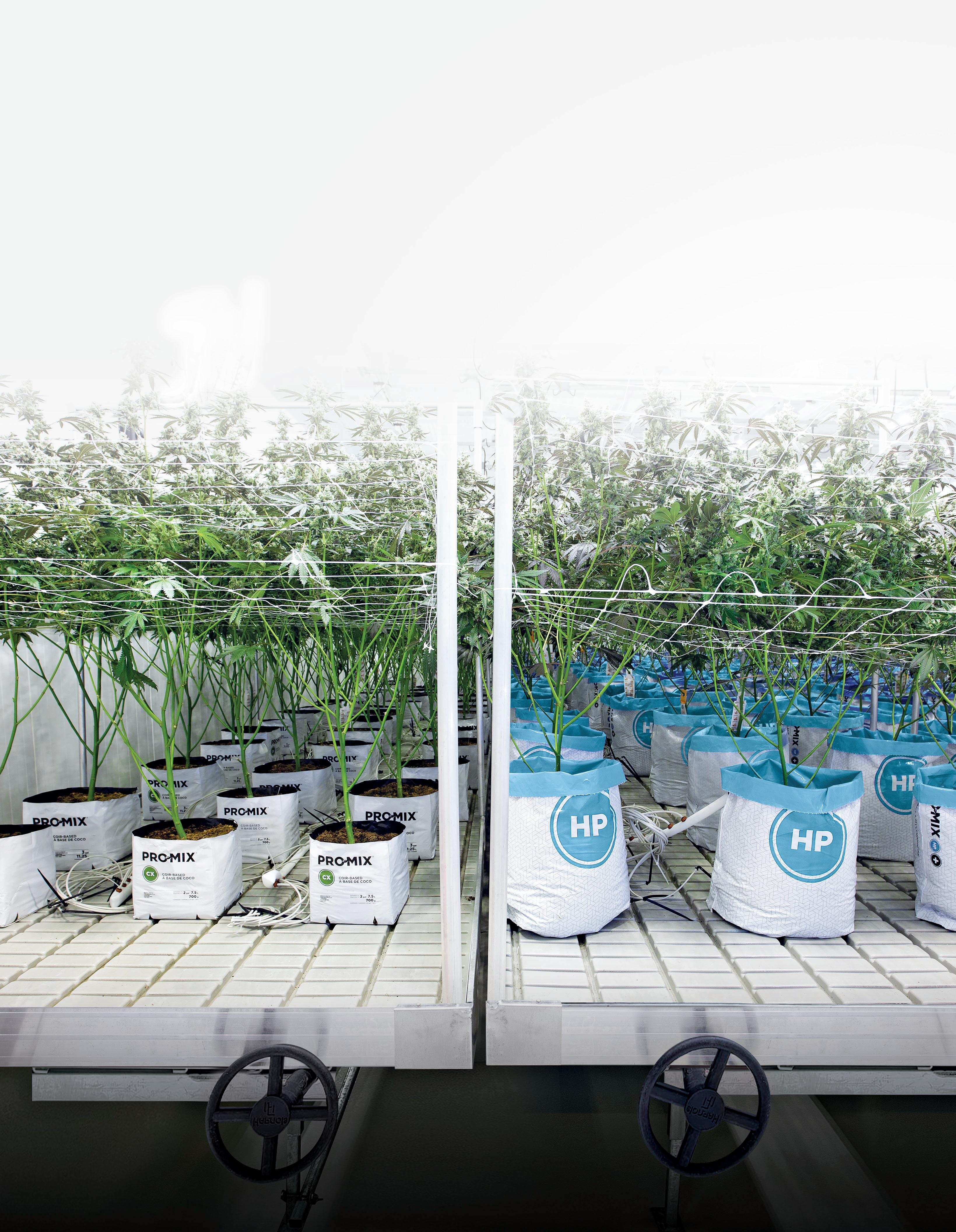
BIGMIKE’S GLOBAL PUSH TO REDEFINE HOW THE WORLD GROWS CANNABIS
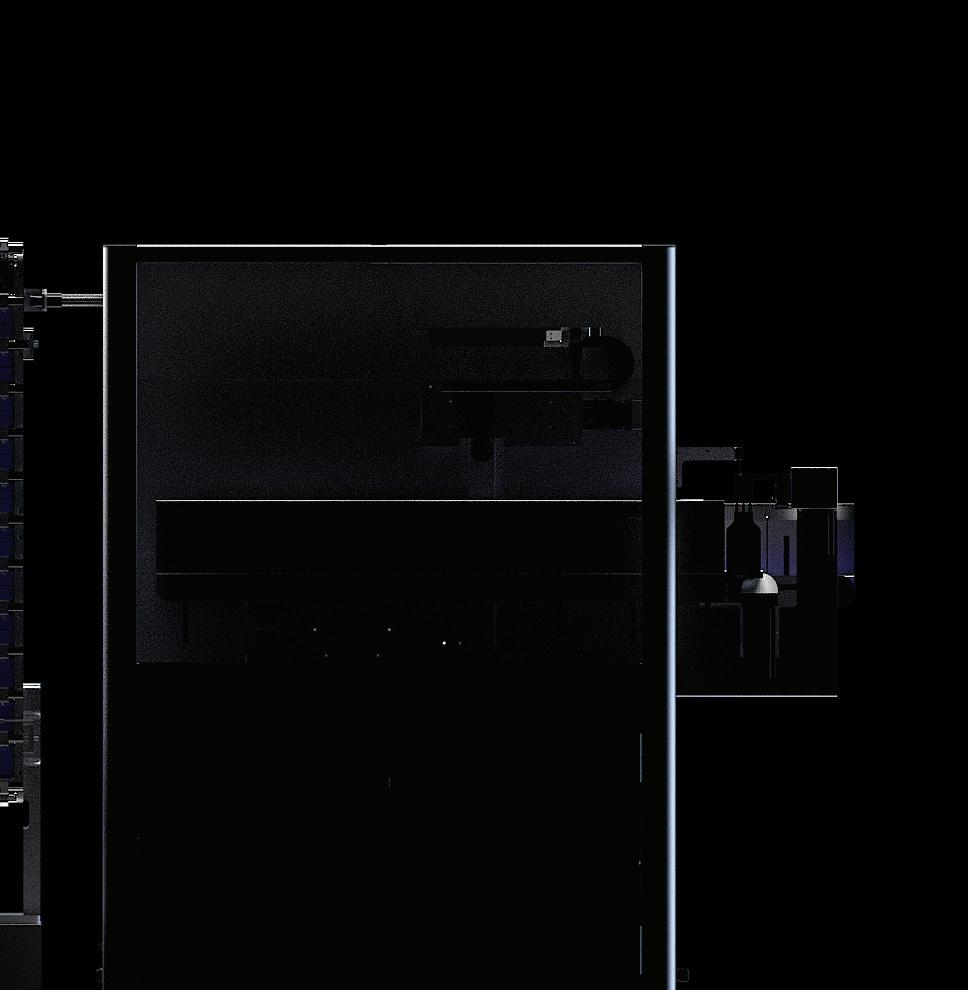
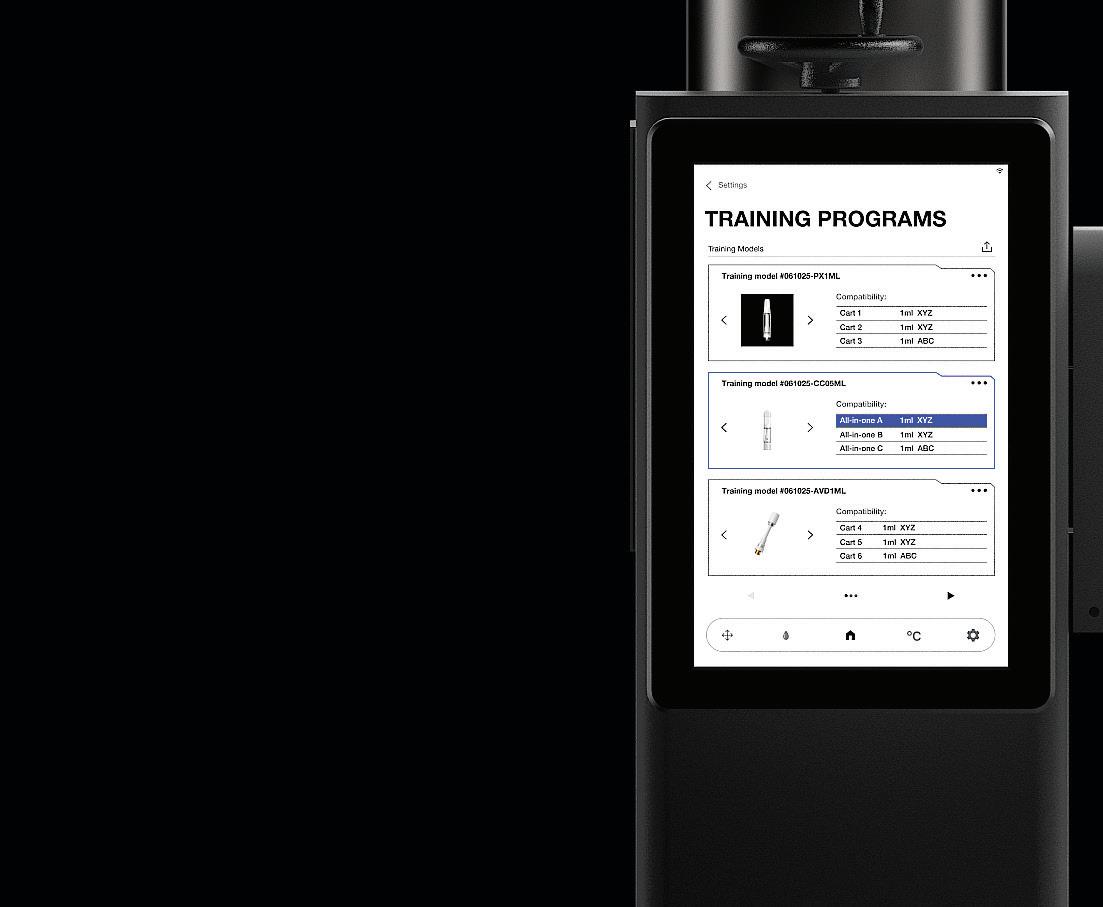
INTRODUCING THE WORLD'S FIRST MODULAR AUTOMATED VAPE CART MANUFACTURING LINE FOR ONE OPERATOR.
BOOTH #C22420
For 26 Years...
Growers who win choose Advanced.
Bigger yields. Better flavor. Stronger potency. That’s why more top cultivators trust us than any other brand in the world.
Bigger Yields Harvest More. Earn More.
Better Flavor Flavor That Commands a Premium.
Cover Story
BigMike
Once an outlaw grower, he now leads one of the industry’s most influential brands. In this exclusive conversation, he reveals the shift reshaping cultivation.
Editor’s Letter NEVER PICK A FIGHT WITH PEOPLE WHO BUY INK BY THE BARREL. “
“ —MARK TWAIN
In mg Magazine’s January 2021 issue, my editor’s letter laid out five essential tips for attracting the media’s attention. Back then, the formula was simple: Find the right editor, send a sharp pitch, attach a decent photo, and voilà—ink. Those were the days. Now my inbox looks less like a conversation and more like a digital avalanche.
Five years later, the media landscape is barely recognizable. Editors compete with algorithms, influencers, and AI “content” that should come with a snooze alarm. PR pros, meanwhile, are fighting for a shrinking slice of coverage from a shrinking number of outlets. We’re all vying for the attention of readers with too little time, money, or patience to read stories that don’t grab them by the synapses and refuse to let go.
What makes people stop scrolling? Insight. Heart. Humanity. The underdog who beats the odds, the company rewriting the rules, the product that solves a problem no one else could. In an age of outrage fatigue, stories that make readers feel something positive—hope, awe, connection—still cut through the noise.
Good pitches still matter, but so do timing, data, authenticity and, judging by what’s hot on social media, the moon phase. Somewhere along the way, “earning” media started to mean expecting it. Too many brands and agencies treat coverage like a trophy instead of what it actually is: a collaboration. Real media relations are just that: relations. When stories serve readers, editors, and brands alike, everyone wins.
Although dashboards and data now rule the marketing department, the heart of a great story hasn’t changed. It still comes down to relevance, credibility, and a spark of humanity. Editors aren’t just gatekeepers anymore; we’re guides helping audiences make sense of an increasingly loud and complex world.
This issue’s special report, “Attention Economics,” explores what that means for brands: data-driven storytelling, personalization with purpose, and authenticity that can’t be faked with a press release. Because in the end, media relations aren’t about who shouts the loudest. They’re about who tells the best story . . . and proves the story matters.
In 2025, ink comes in barrels and pixels. Either way, make sure your story makes a splash, not a stain.
Kathee Brewer Editorial Director
Green Qween, West Hollywood
photo c/o
Joe Schmelzer
Contributors
AZAM KHAN
With a background that spans mobile gaming, ad tech, and enterprise software, Distru co-founder and COO Azam Khan brings a unique commercial lens to operational challenges in emerging industries. He currently oversees investor relations, growth strategy, and key operational planning as the vertical software-as-a-service (SaaS) company scales nationally. distru.com
SHANE JOHNSON, MD
For the past four years, Dr. Shane Johnson has focused on clinical opportunities in cannabis and cannabinoid science. A graduate of Stanford University School of Medicine and a Fulbright Scholar, he serves as senior vice president and general manager at BayMedica, which specializes in producing and distributing rare cannabinoids at scale. baymedica.com
SUSAN PARENT
As a horticulture specialist with more than thirty-five years’ tenure at Premier Tech, Susan Parent specializes in plant health solutions, microbiology, and grower support. For the past fifteen years, she has helped growers improve crop quality and yield with innovative approaches to enhance plant growth and productivity. pthorticulture.com
MIKE KENNEDY
As co-founder and chief strategy officer at Green Check, Mike Kennedy focuses on building products and solutions that unlock the value of data, empowering businesses to grow and scale. Previously, he helped scale Continuity, the first SaaS-based compliance management system for community financial institutions. greencheckverified.com
BRENDAN MCKEE
An avid consumer and advocate for more than twenty years, Brendan McKee is cofounder, chief financial officer, and chief operating officer at Silver Therapeutics, which operates dispensaries in Maine, Massachusetts, and Vermont. He entered the legal market with a vertical medical license in 2017 and transitioned to adultuse sales in 2019. silver-therapeutics.com
MARIANNE CURSETJEE
At Alibi, founder Marianne Cursetjee develops business strategy, operations, commercialization, systems, and processes at scale to deliver revenue growth and positive cash flow. Her education and experience in finance and business established a solid foundation for the Oregon cultivator’s recent expansion into the New York market. alibicannabis.com
Editorial Director Kathee Brewer
Creative Director Angela Derasmo
Digital Strategist Dexter Nelson
Contributing Writers Alice Moon, Anthony Coniglio, Azam Khan, Brendan McKee, Chris Karazin, Corey Keller, Danny Reed, Darren Gleeman, Ellen Holland, Evan Senn, Jeff Adams, Justin M. Brandt Esq., Laura A. Bianchi Esq., Leah Eisenberg Esq., Marc Beginin Esq., Marianne Cursetjee, Michael Mejer, Mike Kennedy, Pam Chmiel, Rachel Gillette Esq., Rachel Permut, Richard Proud, Robert T. Hoban Esq., Ruth Rauls Esq., Shane Johnson MD, Shawna Seldon McGregor, Sue Dehnam, Susan Parent,
Taylor Engle, Tyler Jacobson, Will Read
Artists/Photographers Josh Sep, Mike Rosati, Christine Bishop, Unsplash
ADVERTISING SALES & CLIENT SERVICES
BRANDI MESTA
Senior Account Executive
Brandi@inc-media.com (424) 703-3198
BUSINESS OFFICES
Managing Member & CEO
Darren Roberts
Circulation Manager
Faith Roberts
CRM Manager
Travis Abeyta
Accounting
Brittany Gambrell
Diane Sarmiento
Subscriptions subscribe.mgmagazine.com
Back Issues store.mgmagazine.com
Mailing Address
Inc Media | mg Magazine 23055 Sherman Way, Box 5069 West Hills, CA 91308 (310) 421-1860
BRYCE MCDONALD Account Manager
Bryce@inc-media.com (559) 350-2477
POSTMASTER
Vol.11, No.11 | DECEMBER 2025 Printed in U.S.A.
mg Magazine (ISSN 2379-1659) is published monthly by Incunabulum LLC. Periodical Postage Paid at Las Vegas Post Office and additional mailing locations. POSTMASTER: Send all UAA to CFS. NON-POSTAL AND MILITARY FACILITIES corrections to: PO Box 5069, West Hills CA 91308.
While mg Magazine’s editorial team considers its sources reliable, inaccuracies may occur. Readers should independently verify all information before taking any action. Neither Incunabulum LLC nor its employees, consultants, or vendors assume responsibility for errors, omissions, or the views expressed by contributors.
All letters and other submissions to the editorial department are considered unconditionally assigned for publication and copyright purposes. Submissions may be edited, commented upon, and used in any format or medium, including print, digital, online, and promotional materials.
mg Magazine is not responsible for the content of external websites or advertisements. Opinions expressed by contributors do not necessarily reflect those of the publisher.
The Newsroom
BLUNT SMOKING JUMPS MORE THAN 20%
AUSTIN, Texas – A new analysis reveals smoking cannabis blunts surged in the United States between 2015 and 2022, rising about 21.7 percent in lifetime prevalence, with past-thirty-days use up 34.4 percent and daily use among current consumers up 24.5 percent. The study will be published in the January 2026 issue of the peerreviewed journal Addictive Behaviors
Drawing on National Survey on Drug Use and Health data from 326,087 adults and additional data from 22,294 current blunt smokers, researchers at the University of Texas, Brown University, the University of California at Los Angeles, and the University of Cincinnati determined increases were particularly strong among demographic groups that historically did not embrace cannabis: non-Hispanic whites, adults older than twenty-five years, and women.
The study also suggested health risks may be tied to blunt use—notably, the tobacco-leaf wrapper.
For cultivators, the upward trend suggests growing demand for blunt-suitable strains and the associated processing to meet the format. As more users adopt blunts—defined by the researchers as little cigar or cigarillo wrappers stuffed with cannabis—growers may want to optimize for consistency and flavor profiles.
For retailers, the format’s increased popularity signals an opportunity to tailor product portfolios and marketing by offering pre-rolled blunts, bundling accessories like cigar wrappers or flavored wraps, or targeting promotions to the demographics seeing the most growth.
The demographic shifts also highlight a need for product and communication strategies that move beyond the stereotypical younger male user.
FIRING SQUAD FOR GUMMIES
A professional athlete from Dallas could face death by firing squad or life in prison in Indonesia for possessing 132 infused gummies, which he used to treat his Crohn’s disease. Jared Shaw, 35, played for the Indonesian Basketball League prior to his arrest for intent to distribute what Indonesia classifies as an illegal narcotic.
Powered by
HERE’S YOUR SIGN
It’s a sign of the times: In October, ten Target stores in Minnesota, where the retail giant is headquartered, began test-marketing hemp-derived THC beverages. Highprofile brands on the shelves include Cann, Señorita, Wyld, and Wynk. The experiment may not last long: The farm bill pending in Congress seeks to ban intoxicating products by redefining hemp.
Must-Invest Cannabis Retail Trends for
Start planning for 2026 now to future-proof your dispensary with a strategic investment in AI. AI tackles two crucial areas: internal automation and hyper-personalization.
For operations, AI-driven tools help reduce operational ine ciencies by up to 60% and cut overall costs by as much as 40%.
is critical e ciency allows your sta to focus less on manual tasks and more on high-value customer interactions.
2026
For customers, AI delivers the personalized experience modern cannabis shoppers expect. Retailers investing in AI-driven personalization see a 5% to 15% increase in total revenue and up to 20% higher Customer Lifetime Value (CLV).
Recommendations:
Challenge your current tech providers to prioritize AI to ensure your cannabis dispensary is ahead of the curve and not left behind.
MO Supremes Limit Expungements
The Missouri Supreme Court limited the list of people eligible for expungement of past cannabis crimes when it misinterpreted a state constitutional amendment passed in 2022. Instead of the “three pounds” enshrined in the amendment, the justices ruled expungements must occur for crimes involving three ounces or less.
MI Legislature Hikes
A bill adding a 24-percent wholesale tax to Michigan’s existing 10-percent cannabis excise tax and 6-percent sales tax awaits the governor’s signature. In a show of legislative hostage-taking, the state’s Republican House Speaker threatened to shut down state government if Senators didn’t back the new levy.
VITAE GLASS DAB MODULES
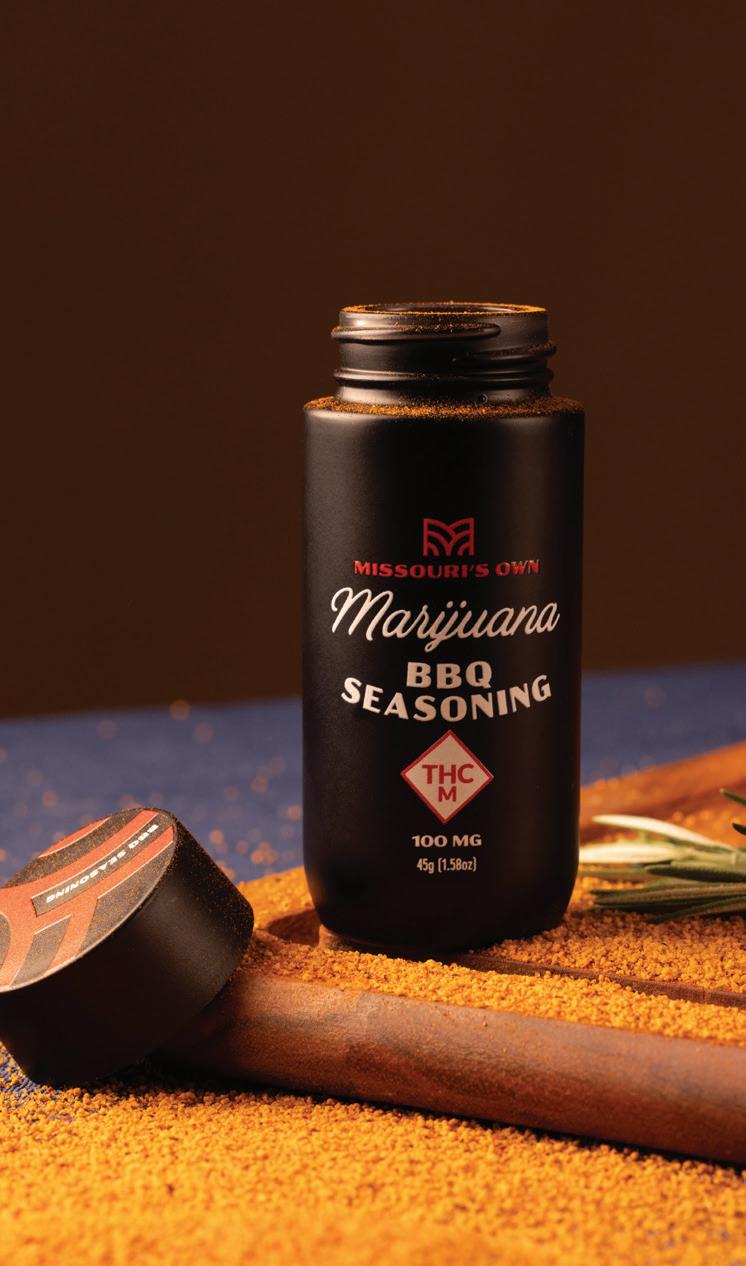
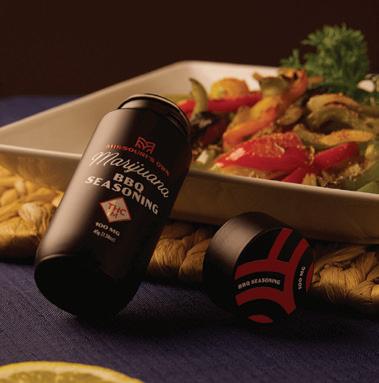
MISSOURI’S OWN BBQ SEASONING
Award-winning Missouri’s Own fired up something new for football season: infused barbecue seasoning that combines bold, smoky flavor with 100mg THC per jar. Developed in collaboration with champion pitmaster Rufus Teague, the blend of brown sugar, salt, chili pepper, paprika, onion, garlic, and celery is gluten-free and contains no GMO ingredients.
Patented modular glass system Vitae Glass added dab modules to its growing list of components. Built from 5mm thick, lab-grade borosilicate glass, the system allows users to start with the essentials—mouthpiece, base, and connector ring—then build a setup that’s uniquely theirs. The company plants a tree for every module sold.
24 STATES 15 STATES 3 STATES
Legal but restricted by age, potency, or channel.
Sold only in licensed dispensaries.
6 STATES Explicitly outlawed or effectively prohibited.
POST-HARVEST SYSTEMS BUILT AROUND YOUR WORKFLOW
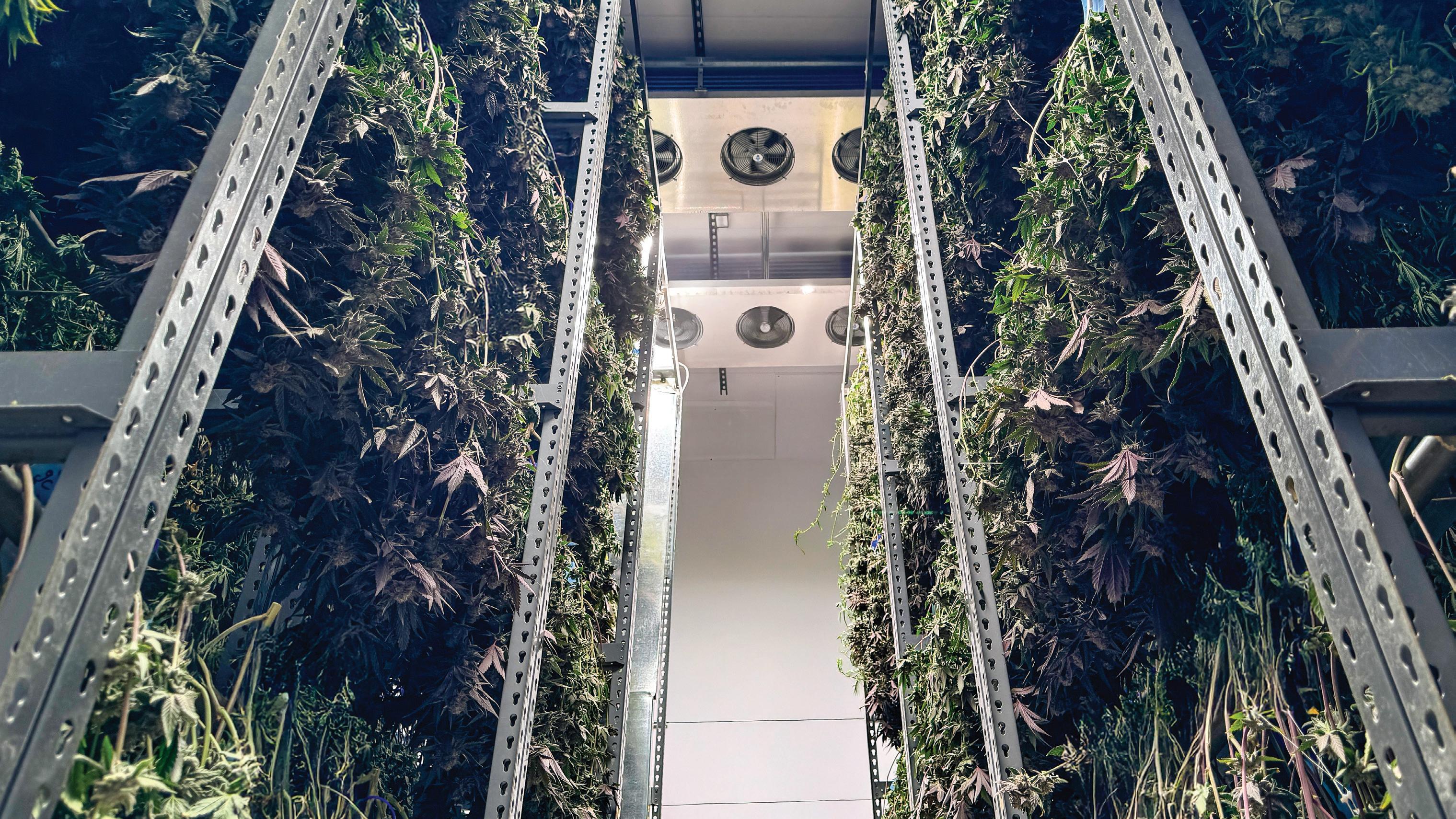
Not every facility fits a pre-built template, and that’s precisely why Cannatrol® offers custom-engineered solutions. Our patented technology delivers higher yields and effortless automation, so you retain more product weight, save time, and elevate your operation with every harvest.
802-738-0709 | cannatrols.com
FROM PLANNING TO EQUIPMENT INTEGRATION, WE DESIGN AROUND YOUR OPERATION, NOT THE OTHER WAY AROUND
OUR POST-HARVEST SYSTEMS AREN’T JUST BUILT TO SPECIFICATIONS; THEY ARE BUILT TO PERFORM.
Gatekeepers of Growth
DISPENSARIES ARE THE FRONT LINE OF EDUCATION, CONNECTION, AND SALES, MAKING THEM EVERY BRAND’S MOST IMPORTANT ALLY.
BY MARIANNE CURSETJEE
It’s not an exaggeration to say it’s harder to build a brand in cannabis than in any other industry. Unlike traditional consumer packaged goods, cannabis brands can’t build their customer base through Instagram ads or influencer affiliate links. We can’t jump on the direct-to-consumer trend, because those sales are legally off limits. And the gifting and discount rules are highly regulated and different in every state.
As the founder of a brand that’s available in both New York and Oregon, I’ve tried (and failed) at a lot of different outreach and marketing tactics. But I’ve found one thing to be true: Success hinges on creating and maintaining strong, symbiotic relationships with dispensaries.
When I launched my brand, I initially believed communitydriven brand activations, like sponsoring local events or causebased campaigns, would build traction. But without a clear connection to retail, those well-intentioned efforts flopped. We once sponsored a reggae festival here in Oregon. The event was vibrant, the demographics matched our brand, and the vibe felt right. But when we tallied results? Zero sales. Why? Because consumers had no actionable next step. They couldn’t sample or purchase the product at our booth, and no one we engaged with followed up at a dispensary days or weeks later.
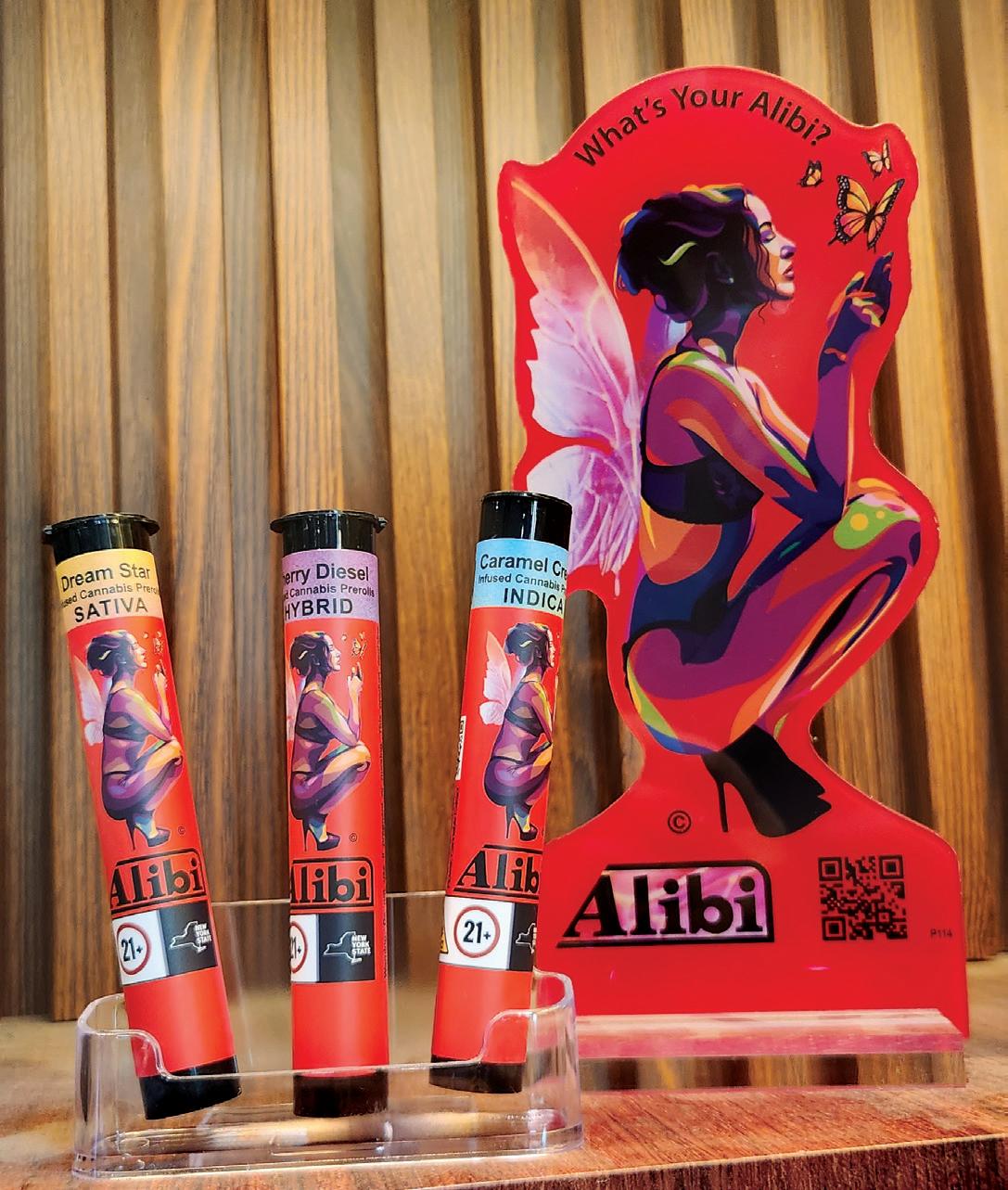
Photos: Alibi
We’ve learned if we’re not working hand-inhand with dispensaries, even the most inspired brand marketing falls flat. Dispensaries remain the only place consumers can buy cannabis products legally, so they’re also the best place for customers to learn. They are the modern gatekeepers of brand discovery and the most important partner any brand can have.
How can you start building a strong partner relationship with dispensaries?
First, identify retailers who want to engage their community, not just sell to its members. I prioritize dispensary partners that already host events or are open to creative collaborations. For example, we recently partnered with Superfly, a dispensary near Central Park, to host a yoga-in-
One example of this is an event series created and hosted by Planet Nugg called “Free to Heal.” The series offers trauma-informed tips on how legal cannabis is helping survivors, veterans, and others living with post-traumatic stress disorder to find peace, purpose, and a path forward. My brand supports and partners with the Long Island dispensary to promote the event series.
Third, brand strategy must reflect these realities. At Alibi, we designed our brand with both consumers and retailers in mind. Our packaging, merchandising displays, and messaging are built for the shelf. That’s where conversion happens. It’s not about flashy campaigns or gimmicks. It’s about clarity, quality, and connecting with the buyer where they are.
IF YOU’RE NOT WORKING CLOSELY WITH DISPENSARIES, YOU’RE WORKING IN THE DARK. "
the-park activation. Customers were invited to buy our products at the store, then attend a yoga session focused on intentional consumption. The result? Brand exposure, customer connection, and actual sales.
Contrast that with trying to sponsor a yoga class through a studio alone. Without an embedded retail component, the return on investment just isn’t there. In our industry, proximity matters. Consumers need to encounter a product and be able to purchase it almost immediately, or you risk losing them.
Second, look for partners who are open to more than just tabling. We all know what it’s like to walk into a dispensary and see a rep standing behind a folding table with a product and a smile. While that has its place, today’s consumers want experiences. They want storytelling. And they want something memorable. Co-branded events, education-driven demos, and consumption-centric gatherings (where legally allowed) offer higher value than simply handing out a sticker or postcard.
Next, build your field marketing and brand ambassador teams strategically. Relationships are everything. The firm we use has created an awesome team of brand storytellers who work with us to share our vision. They are engaged and embedded in the communities and work to share our story.
Finally, don’t view regulatory challenges as roadblocks. Instead, treat them as creative constraints. Sure, we can’t give out samples in public parks or run big-budget billboards. But those limitations force us to be more intentional. They push us to build real relationships with customers and our retail partners.
For brands hoping to make a mark, the message is simple: If you’re not working closely with dispensaries, you’re working in the dark. The brands that will survive and thrive are the ones that treat retailers not just as distribution points but as collaborators in the whole of the customer journey.
Designed for Growth
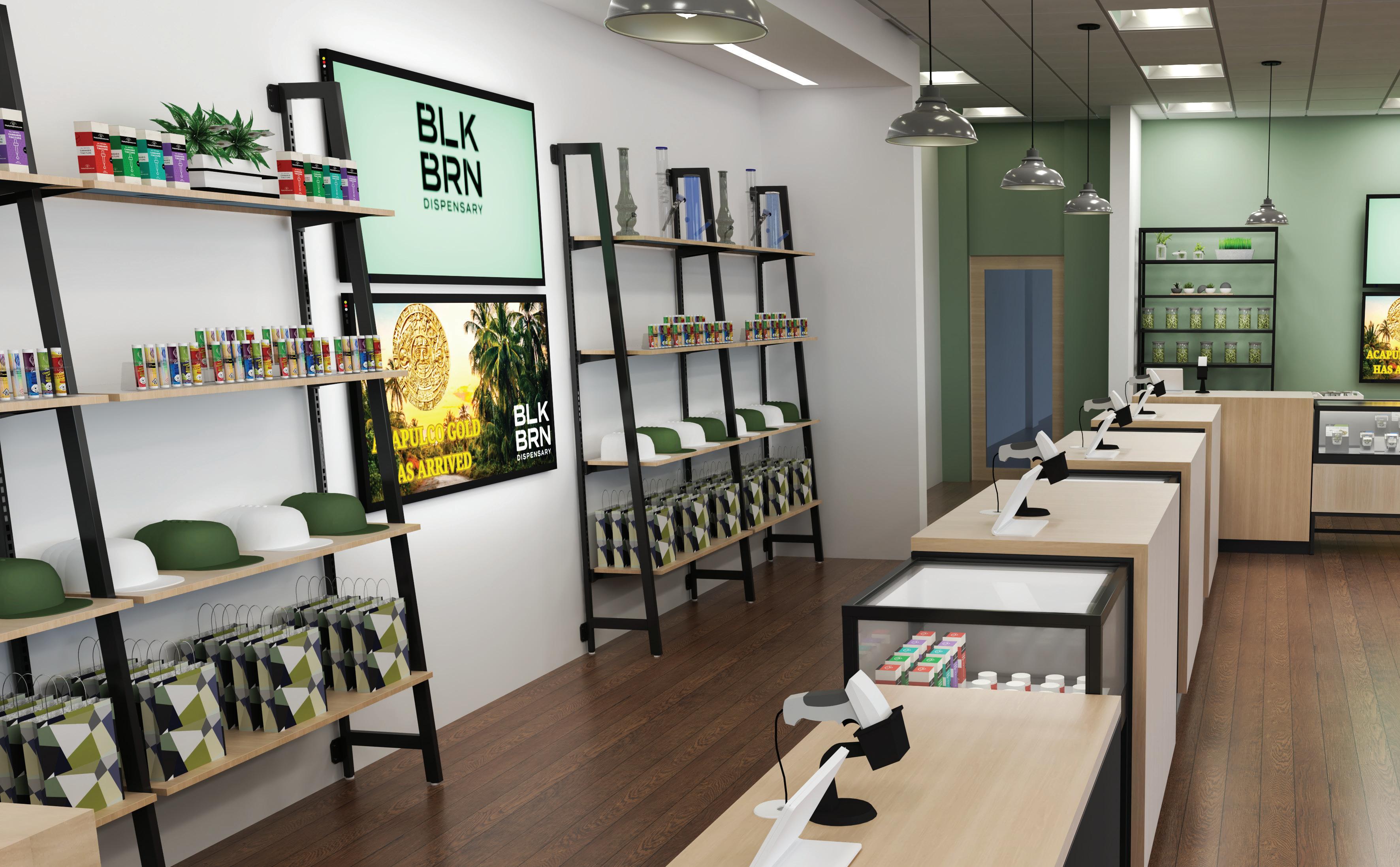
BLKBRN proves smart design can balance customer flow, brand storytelling, and future-ready flexibility.
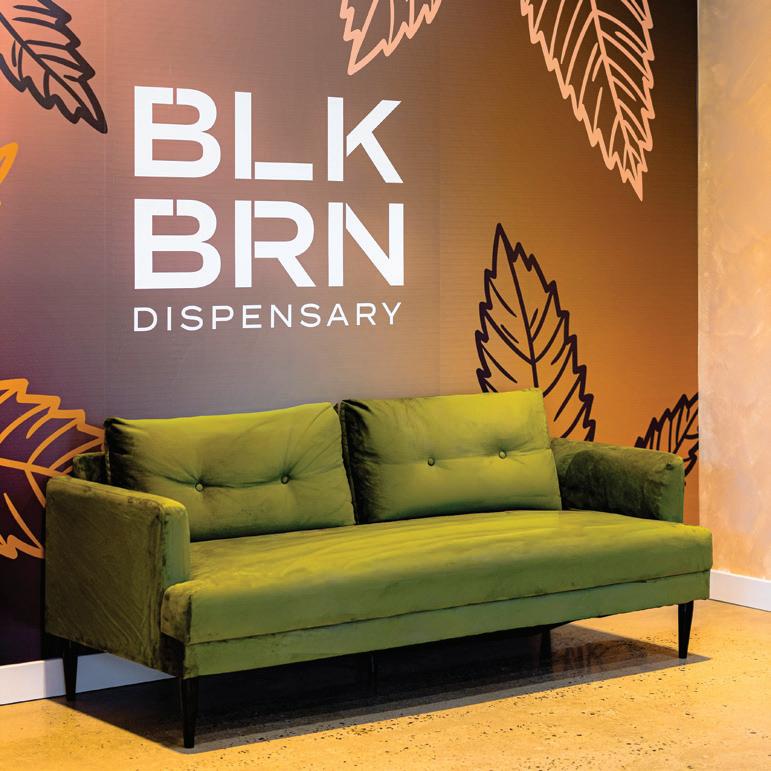
Well before BLKBRN Dispensary opened its doors in New Jersey less than six months ago, cofounder Jeff Jacobson knew how he wanted the space to feel: clean, high-contrast, and designed for connection.
“I’ve been in cannabis retail since 2017, and my background is in real estate development,” he said. “So, I’ve been comfortable working with architects and designers for years. For BLKBRN, we had the general layout already, but Display Dispensary took it to the next level.”
According to Jacobson, partnering with the fixtures-and-fabrication company was crucial in bringing his concept to life. BLKBRN needed a solution that blended efficiency with personality—not just stock fixtures dropped into a
floor plan, but an intentional customer experience that could evolve with the ever-changing market.
“They were extremely knowledgeable about our business, which made the process easy,” Jacobson said. “We combined some of their available stock units with custom pieces, colors, and finishes to hit every angle of our intended design.”
Business Development Executive Georgia Peterman said Jacobson and his team presented the Display Dispensary crew with several intriguing challenges—just the kind of job they love. “When Jeff came to us, he had a loose concept and a tight deadline,” she said. “Our design team took his floor plan and created a rendering that matched his vision while solving practical challenges like customer flow and security concerns.”
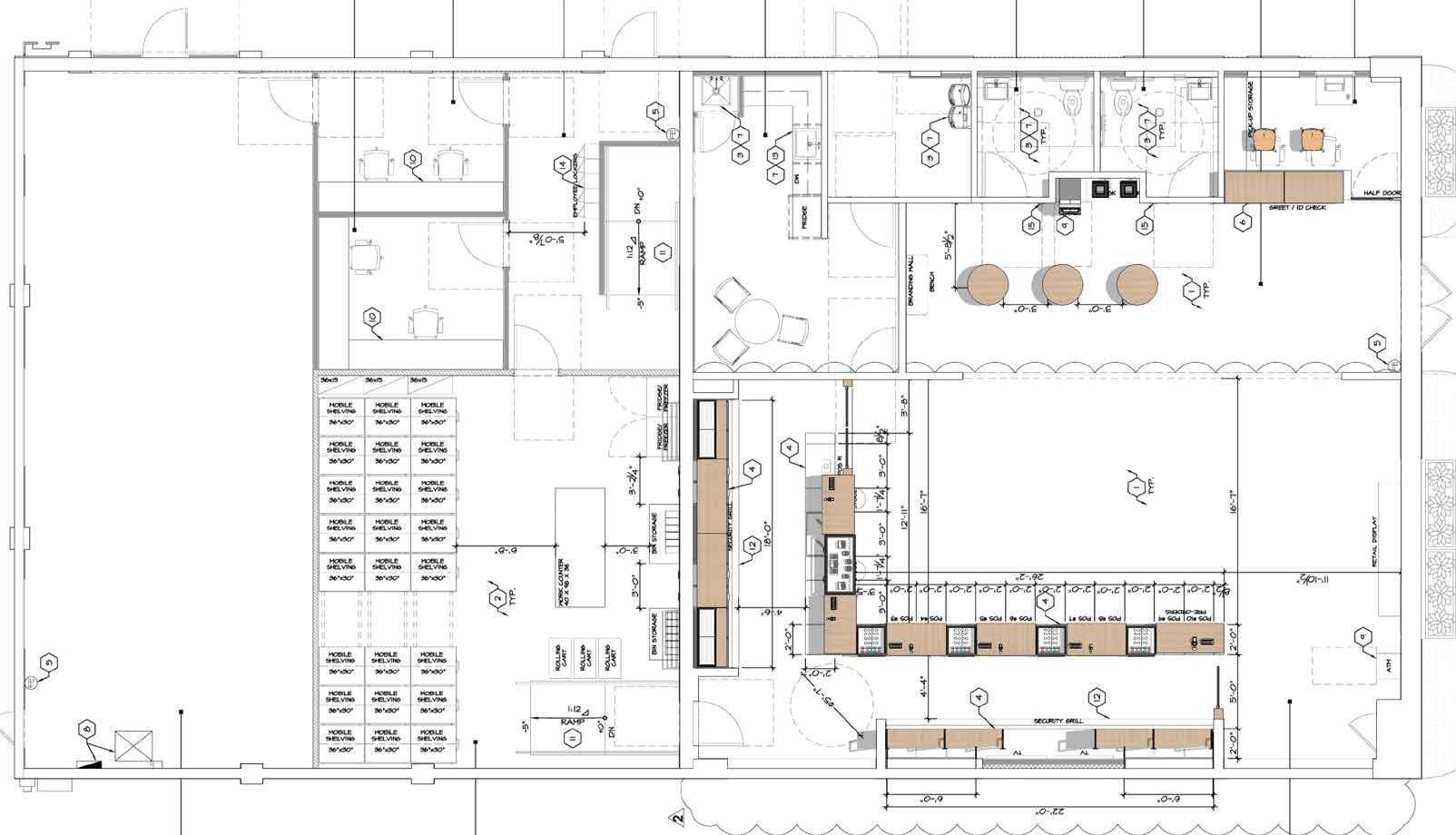
Design Exploration: Fixture Plan
The firm’s in-house design team, led by Design Director Matt Comiskey, worked closely with BLKBRN to bring the concept to life. “When dispensary owners send us their floor plans, we start by reviewing the project together and identifying which of our proven, in-stock components can be used as a foundation,” he said. “From there, we layer in custom elements like counters and cabinetry to create a look that’s unique to the client but still scalable and secure. Our scope on this project included the floor plan layout and a detailed rendering deck, which gave Jeff’s team a clear sense of how the space would function and feel.”
Once the framework was established, Comiskey handed the project to designer JoPari Dyer, who took the lead on translating the vision into a seamless customer experience. “For BLKBRN, we created a flow that feels intuitive and makes it easy for budtenders to work efficiently while customers explore the shop,” she said.
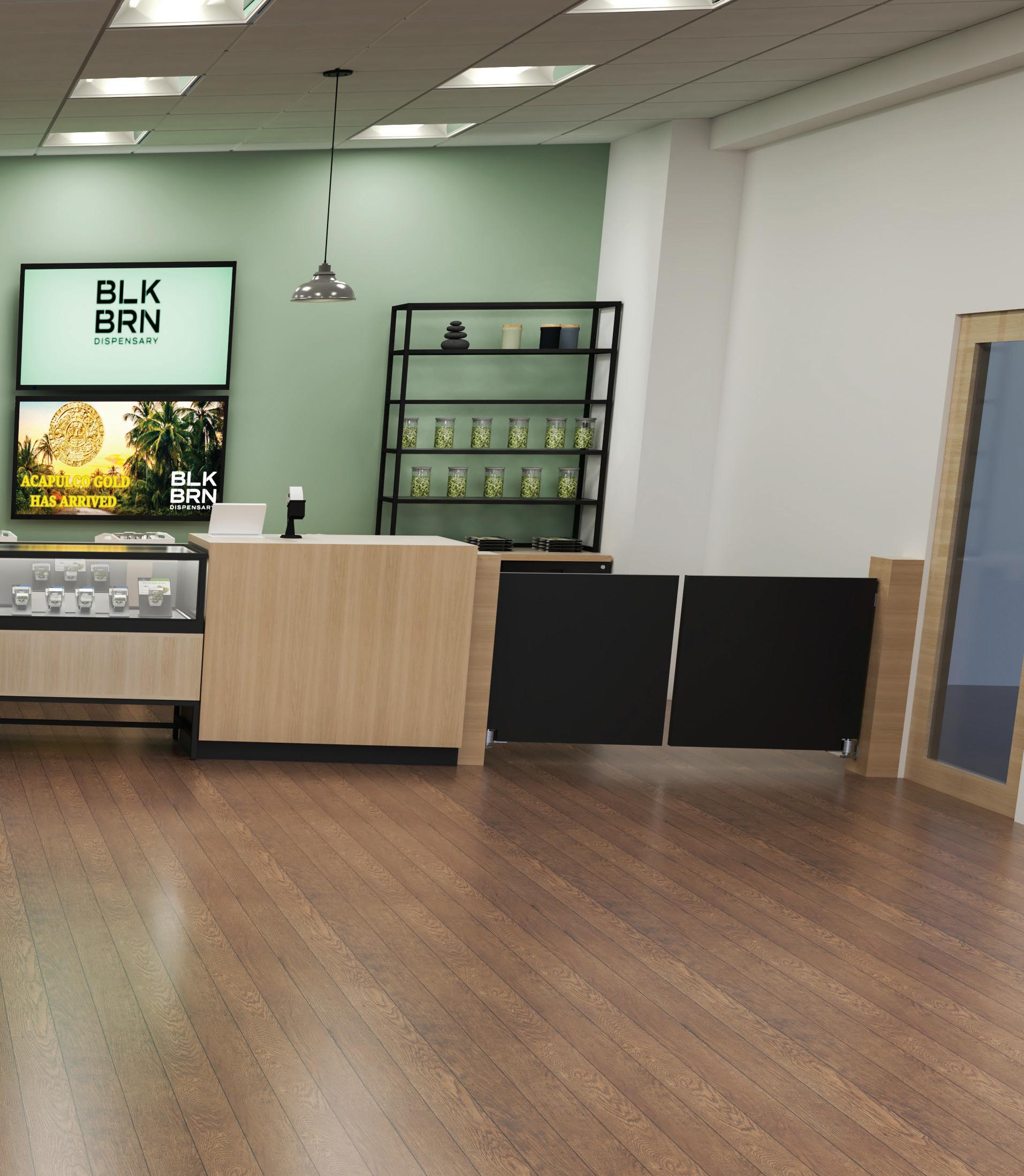
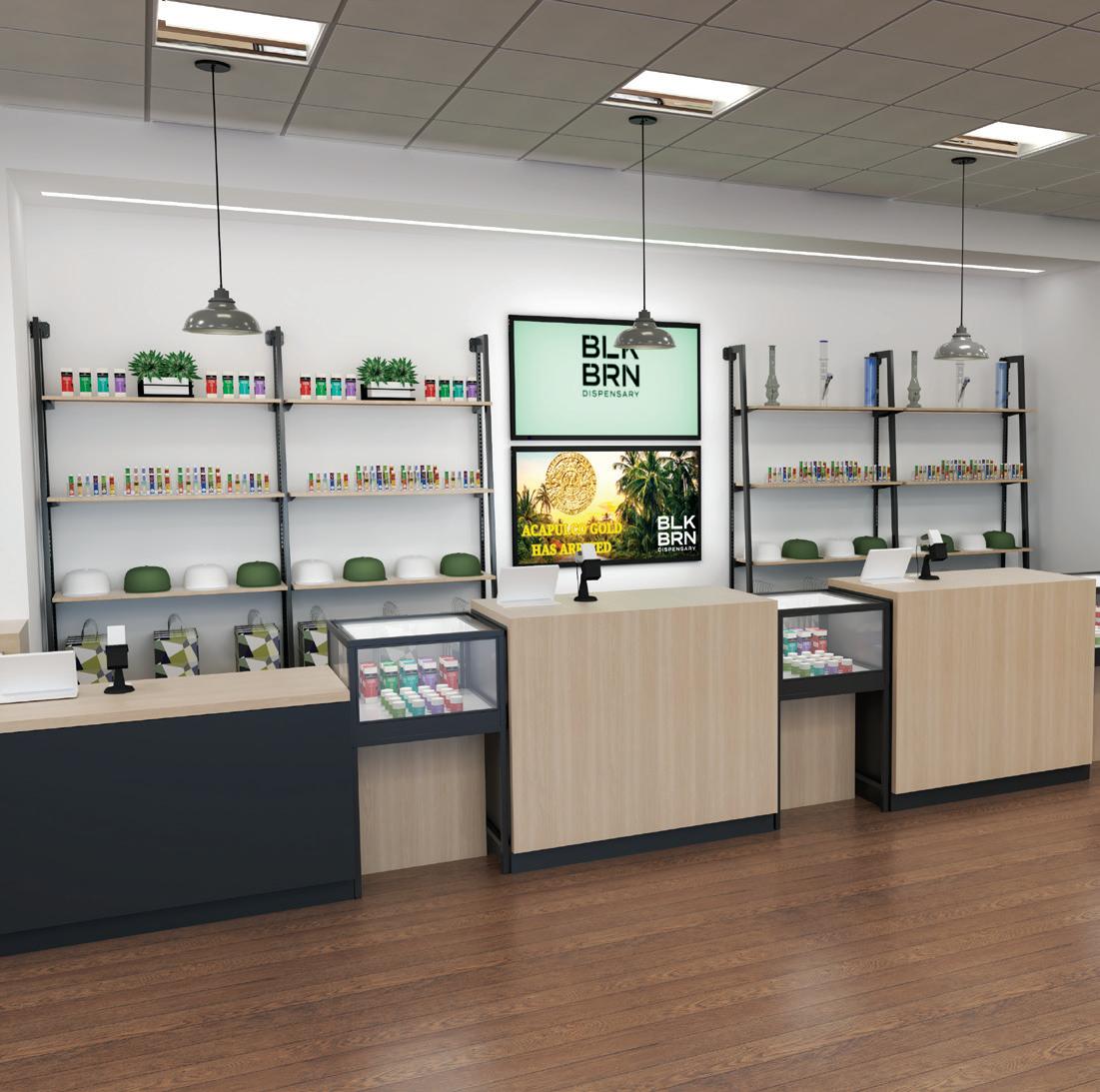
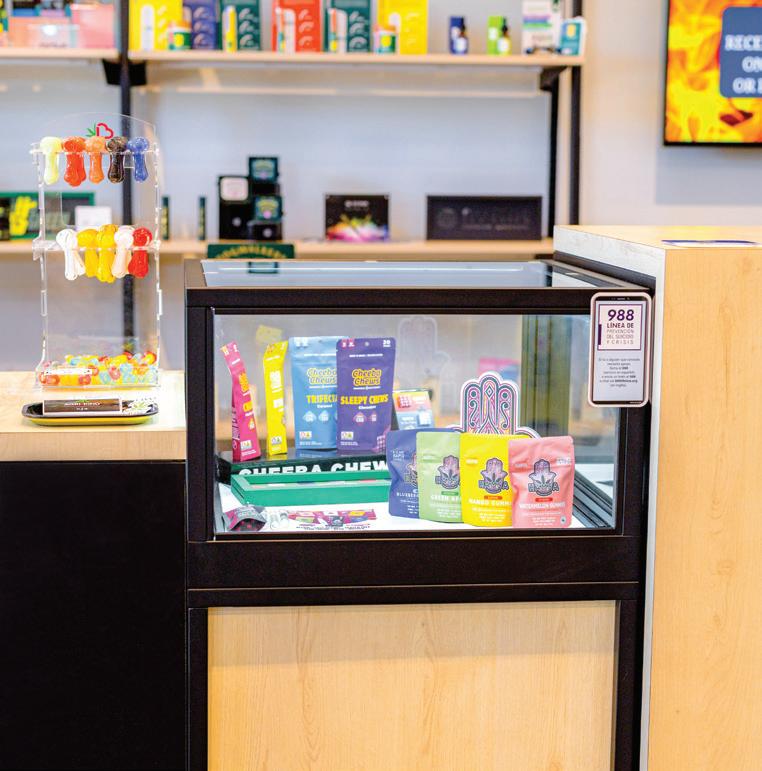
The resulting space balances aesthetics with function. Because New Jersey regulations do not allow products to be accessible to customers on the sales floor, BLKBRN operates under a fulfillment-style model with most inventory kept in the back. Lockable drawers in the floor units allow fast-moving products to be stored up front where they’re easy for staff to access. Custom cabinetry and counters give the shop a unique, elevated feel, while durable stock components ensure scalability and cost-efficiency.
Jacobson described the design with an analogy borrowed from his time working for Disney. “This landscape architect at the business used to design where sidewalks would go for commercial projects, but people would just end up walking across the grass and wearing it down,” he said. “One day, he decided he wasn’t going to put the sidewalks in first; he’d see where people tended to walk and then put them in. We applied that thinking to the dispensary. With so many market-driven changes, we wanted flexibility to adjust down the line.”
So, flexibility was built in from the start. The displays and glass showcases were designed to be refreshed frequently, keeping the environment
lively by updating featured accessories, highlighting new brands, and showcasing local partnerships. Integrated TV screens rotate menus and promotions. The reception area can accommodate a walk-up pickup window in the future to stay on-trend with a feature that has proved popular among customers who prefer to order online and grab their products on the go.
Although utility and practicality governed the design process, the centerpiece of the space is far from utilitarian: A sculptural wooden tree winds upward from the floor and wraps into the ceiling. The tree is more than décor; it’s a symbol of
BLKBRN’s roots. “Two of our founding partners went to Howard University, where there’s a famous building called the Blackburn Center,” Jacobson said. “Out front is this tree that was a real gathering place, sort of like a melting pot for the whole community. Everyone would hang out there, and we wanted to bring that same feeling here; make this a space where anyone from any walk of life can feel welcome.”
Building around the tree challenged the Display Dispensary team to engineer fixtures and create sightlines that complemented the installation without disrupting customer flow. But with
more than 100 years of retail design expertise behind them, the team had a nearly limitless well of creativity and insight to draw from as it accomplished the project’s goals on time and within budget.
For Display Dispensary, BLKBRN was an ideal project to showcase the company’s specialty: tailoring a mix of proven, in-stock solutions with custom fabrication to meet a client’s unique vision on a tight deadline.
“They came to us with a blank slate and a two-month window,” Peterman said. “We worked
hand-in-hand with their team from floor plan to final install, guiding the process, balancing the budget, and making sure everything arrived together so the store could open on time.
“We love projects like this,” she added. “They let us flex both sides of our offerings: our deep catalog of proven components and our ability to deliver custom elements quickly.”
The finished product is exactly what Jacobson envisioned: a modern-day gathering spot that nods to history while being ready for the future.
Profits in Plain Sight
MARGINS DON’T COLLAPSE BECAUSE OF STRATEGY. THEY FAIL WHEN INCOMPLETE DATA HIDES THE TRUE COST OF DOING BUSINESS.
BY AZAM KHAN
You’ve put a lot of work into your pricing, but your margins still feel . . . off.
If this sounds familiar, you’re not alone. We’ve seen this disconnect with major operators in the United States collectively carrying more than $2.8 billion in gross merchandise value.
The culprit? Setting prices based on gut feelings, competitor menus, or incomplete cost snapshots that miss other key details. This guesswork shrinks margins and stalls revenue growth.
The problem isn’t your strategy. It’s actually the data fueling it. I want to show you how to fix that.
Traditional enterprise resource management and inventory systems weren’t designed for the financial complexities of our industry. Most of them capture basic product costs but miss or poorly aggregate many profit killers, including:
• Labor that spans months for each cultivation or production cycle.
• Compliant packaging that can cost ten times more than traditional packaging.
• Mandatory testing at multiple touchpoints.
• Complex freight and logistics requirements.
• Fees for state-mandated tracking systems like BioTrack and Metrc.
• The inevitable shrinkage from regulatory holds and failed batches.
This often results in inaccurate and incomplete costs of goods sold (COGS). Incomplete or inaccurate data can make COGS virtually unusable for informing solid business decisions.
Compounding the problem is a lack of cannabis-specific integrations, which causes blind spots. Your data lives in silos (cultivation expenses in one system, processing in another, compliance in spreadsheets). So, you may think you’re profitable on a premium eighth, unaware of costs like failed testing, packaging recalls, or your team’s overtime during peak seasons.
THE MOST COMMON PRICING TRAPS
Generic tools can take you only so far. Cannabis-specific software knows what to track, when to track it, and how to keep you compliant while protecting your margins.
Simple mistakes also can affect pricing strategy. Here are some of the most common.
Going with your gut. Do you have an inner voice that whispers a price for your products? Relying on whim without considering other key figures is a recipe for disaster. Profitability needs data, not just instinct. Without a clear picture of actual costs, pricing decisions can leave money on the table or, worse, lead to loss.
Matching competitors’ prices. Keeping an eye on competitor pricing is smart, but copying it outright is dangerous. You don’t know your competitors’ true COGS. They might be cutting corners with cheap packaging, skipping compliance steps, or running unsustainable margins. Blindly matching their prices can put you in the red.
Market data has value when segmented by product type, quality, and location, but it’s just one factor. Your prices always should be grounded in your numbers, not theirs. That’s because their “profitable” pricing might be your path to ruin.
Relying on incomplete or unreliable data. Having low material costs doesn’t automatically make you profitable. If you neglect to account for all operational expenditures—
including licensing, security, banking, compliance, and marketing—in your per-unit cost calculations, your margins will be just a fantasy producing fictional profits. You must capture every operational expense for accurate pricing. Ignoring channel-specific costs. Different channels eat different margins. A $35 house-branded vape cartridge might net $30 in your dispensary, $20 after wholesale distributor cuts (typically 30–40 percent), or $18 after online marketplace fees and shipping costs. Each channel has its own cost structure: wholesale volume discounts, online payment processing fees, delivery logistics, and retail promotional expenses. Ignoring channel-specific costs can turn profitable products into margin killers. Price for your final net per channel, not some one-size-fits-all number that only works on paper.
Setting blended or average costs. Not all products cost the same to manufacture. Although all edibles fall within the same category, developing space cakes or brownies can be more expensive than producing chocolate bars, for example. Even different varieties of the same product, such as gummies, may carry varying costs per unit based on factors like flavoring ingredients. Blending or averaging
Photo: Bharath Kumar / Unsplash
costs for groups of products instead of figuring each variety individually can distort the profit per SKU, resulting in underpriced products that eat into your margin.
Misinterpreting tax data. Pricing a pre-roll pack at $40 feels great until taxes lop off $15. The real revenue isn’t the pre-tax retail price but what goes into your hands after taxes, which is just $25 in this example. The final, all-in price after taxes is the amount to consider when building solid margins.
Ignoring predictive analytics. Don’t assume last quarter’s average price is still good for today. Relying solely on historical data is hardly ever wise. The market constantly evolves; consequently, manufacturing costs can fluctuate. Pay close attention to shifts and integrate external factors like market trends and competitor entries to set prices for each new batch. Otherwise, you won’t see price compression coming until it’s too late.
Not considering inventory turnover and product life cycle. Cannabis is perishable. Flower may last twelve to eighteen months before it’s unsellable; therefore, flower can’t be priced like it’s a widget that will last forever. Should you discount aging inventory? Run promotions on slow-moving inventory? Examine the batch-tracking and expiration data from day one to identify which products need action before they expire. That $50 eighth still hanging out on the shelf isn’t just taking up display space. It’s also killing your margin.
CHANNEL COSTS AND THE SNOWBALL EFFECT
When it comes to pricing, a mistake in one channel can trigger a margin-killing snowball effect. A product is underpriced in wholesale (channel A) to stay competitive, making the SKU secretly unprofitable. To compensate, you raise direct-to-consumer prices (channel B). That makes channel B less attractive, causing sales to drop and leaving you with excess, costly inventory that eventually must be discounted or written off, creating losses. These losses increase pressure to raise prices or cut costs elsewhere, restarting the cycle.
But over-pricing can be problematic, too. If consumers consider prices too high, they’ll look for better deals from competitors or the illicit market, leaving you with unsold inventory that ties up cash and risks expiration. Plus, your brand may start looking out of touch with the market.
Worst of all, without steady sales and market share, you don’t have the fuel to scale.
Aggregate data can be misleading. One SKU may be ranking in a product category, while another may be bleeding cash. For example, edibles may seem profitable overall, but you must look deeper. Top-selling gummies may taste like profit, while stagnant chocolate bars may become bitter losses.
You can’t scale what you can’t measure, but knowing the exact cost of every SKU allows operators to price for true margins, spot and slash losers, build investor-proof financials, and outmaneuver blind competitors.
RESETTING FOR CLARITY AND GROWTH
Made every mistake in the book? No problem. You can reset. Here’s how.
Conduct a cost audit: Assess what you have and what’s missing. Don’t rely on estimates or averages but recalculate your true COGS per SKU based on real, auditable data.
Re-price strategically: If you found errors, don’t panic. Once you have your true COGS, adjust your pricing based on your target margins. Factor in all the relevant data points to make sure every product is really profitable.
Leverage technology: Use cannabis-specific software that tracks everything, integrates with your current tech stack, and provides granular analytics for a comprehensive understanding of your business and a complete approach to real-world pricing.
Regularly review costs and pricing: Your COGS aren’t static numbers. New regulations or hikes in suppliers’ rates can change them. Schedule quarterly checkups to refine how you capture data, then recalculate to determine each SKU’s actual profitability.
Start small, then scale up: Don’t try to fix everything at once. Focus on the most significant cost drivers and most impactful SKUs first, then expand your efforts when you see the impact. Sustainable scaling happens step by step, not overnight.
Pricing issues usually start with unclear data, not bad strategy. When you can see true SKU-level costs, you can ax margin-killers and set prices that stick. Tools built for cannabis operations can help pull your numbers together from harvest to sales so you can grow profitably.
BigMike
precision, and an unwavering dedication to the plant. Today, his vision for science, genetics, and global expansion is
shaping the next frontier.
By Pam Chmiel Photography by Josh Sep
From outlaw grower to global visionary, he has remained a central figure in the industry’s evolution.
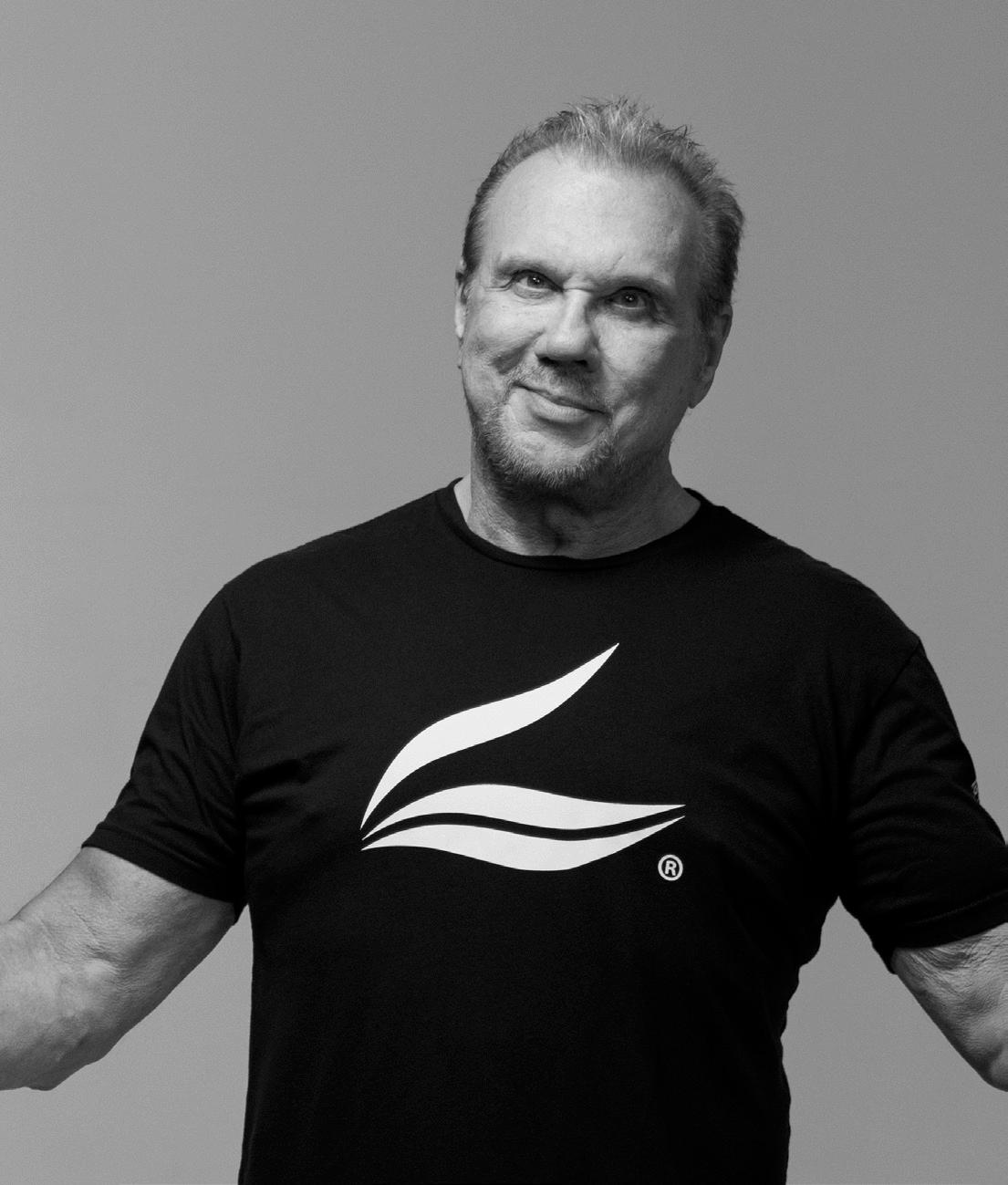
He’s called BigMike for a reason.
At 6'7" tall, Michael Straumietis towers over most people, with a big voice, a big personality, and a big ragsto-riches story to match. He founded—and twenty-six years later, still owns and operates—Advanced Nutrients, which sells cannabis-specific products in 122 countries and generates $170 million in annual revenue, making it the largest cannabis nutrients company in the world.
He’s also got a big heart. After a near-death experience in 2011, Straumietis founded the Humanity Heroes Foundation, which to date has provided more than $3 million worth of nonperishable essentials to more than 60,000 individuals and families experiencing homelessness across the United States.
A legendary outlaw grower turned legitimate businessman, mentor, and philanthropist, Straumietis is a larger-than-life icon in the industry. People literally and figuratively look up to him.
And he’s still blazing new trails. In December, Advanced Nutrients will unveil its latest proprietary blend designed especially for cannabis, a product Straumietis said enhances brix, resin, and terpenes. He’s so convinced of its positive impact on cultivation that he backs the formula with a 100-percent money-back guarantee. But the launch represents more than just another formulation debut. It’s part of a larger strategy Straumietis has been building for decades to position Advanced Nutrients for what he believes will be the industry’s most transformative period yet.
From the ground up.
Straumietis began cultivating in 1983, during a prelegalization period he calls “the Dark Ages.” Years of experimenting with commercially available fertilizers formulated for vegetables, flowers, and other crops left him increasingly frustrated with lackluster growth and disappointing yields that simply didn’t measure up to the potential he saw in his plants.
“It didn’t make sense to me,” he recalled. “Cannabis is a completely different plant. Why would it need the same nutrients as a cucumber?”
When he approached the major fertilizer companies to pitch the idea of cannabis-specific nutrients, he met blank stares and slammed doors. Even after California bucked the federal government and legalized medicinal use in 1996, stigma remained strong. No commercial brands wanted to be publicly linked to marijuana.
“A lot of people were afraid to talk about cannabis during the early days,” Straumietis said.
Instead of walking away, he dug in. He and a small team devoured plant physiology research and undertook hundreds of experiments with fellow growers. Molecule by molecule, they proved the effectiveness of entirely new nutrient formulas designed to bring out the best in a plant that had been grown in the figurative dark for centuries.
“Research has always been the backbone of Advanced Nutrients,” Straumietis said. “We knew we needed to dig into the science, so we did.”
The formulas debuted to an enthusiastic audience, and by the early 2000s, the company employed more than twenty PhD scientists dedicated to understanding the plant at the molecular level. Today, in labs spanning Europe, Colorado, and Canada, the scientific team investigates everything from basic nutrient uptake to cutting-edge genetic modification. Each new product spends roughly three years in research and development before it’s released to the public, because “consistency is everything in cultivation,” Straumietis said.
The genetics gamble.
Five years ago, Advanced Nutrients extended its quest for perfect consistency to genetics with the acquisition of biotechnology firm Tesoro Genetics. Since 2018, Tesoro has researched and developed ways to optimize crop yields, nutrient uptake, and metabolite production. Among the company’s primary focuses are gene editing and polyploidy.
Polyploidy—multiple complete sets of genetic material in a single cell—is rare and usually fatal in animals. But the genetic anomaly is a successful and not uncommon adaptation in plants, where multiplied genes can produce benefits like increased yield and larger flowers or fruit. Induced triploid genetics, wherein plants are artificially encouraged to develop three complete sets of chromosomes, have been used in commercial agriculture for decades to produce crops like seedless watermelons, grapes, and strawberries.
Researchers have studied and manipulated polyploids in food crops since the early 1900s, but scientists were not aware of its natural occurrence in cannabis until a wild tetraploid strain—a plant with four complete sets of chromosomes—was discovered in India in 2015. Triploidy in wild cannabis, where plants possess three complete chromosome sets, was documented in 2022.
Straumietis called polyploidy “a game changer hiding in plain sight.”
So far, the Tesoro division’s research has yielded what Straumietis described as extraordinary results. Triploid
cannabis plants produce much heavier yields, display richer terpene and cannabinoid profiles, and resist pollen contamination, he revealed. Growers testing the company’s triploid genetics reported yields of two pounds or more per light, indicating potential to boost bottom lines dramatically.
“It’s going to change the face of how cannabis is grown,” Straumietis said.
The team also is experimenting with tetraploids, octoploids (eight chromosome sets) and double haploids (a homozygous single set) to further push the plant’s genetic potential. Each iteration brings new insights about how cannabis can be optimized for flavor, potency, environmental resilience, and stability. The program resembles the kind of long-term scientific research and development traditional agriculture has performed for more than 100 years, and Straumietis is determined to see cannabis catch up.
He is confident the future of cannabis has never been more exciting as cultivation moves toward plants biologically engineered for performance, consistency, and quality. The transformation is not unlike the one that took place in traditional agriculture during the late twentieth century, he said.
“Ninety percent of the vegetables we eat today have been gene-edited,” he added. “You’re going to see the same thing in cannabis.”
Cannabis is a completely different plant. Why would it need the same nutrients as a cucumber? “
Global growth, rooted in heritage.
Ask Straumietis what sets Advanced Nutrients apart, and he’ll tell you it all comes down to mastering micronutrients and applying the right chelates at the right moment in a plant’s life cycle. Most fertilizer brands, he said, stop at the basics.
“Micronutrients are critical,” he explained. “A lot of companies overlook that, but micronutrients are where the magic is.”
Iron, for example, plays an unexpectedly major role in cannabis growth. It’s typically categorized as a micronutrient, but in practice, it behaves almost like a secondary macronutrient. One of Advanced Nutrients’ lead scientists, a world-renowned expert whose doctoral thesis explored iron uptake in plants, coordinates a team working to determine not just how much iron cannabis requires but also which chemical form of the element produces the most vigorous growth and potent flowers.
“We’ve spent years fine-tuning the way the plant feeds,” Straumietis said. “Once you understand what the plant needs and when when to give it what it needs, cultivation completely changes.”
Much of Straumietis’s professional life has been devoted to defining, refining, and spreading the gospel of optimal cannabis nutrition. But as legalization rapidly spreads worldwide, he spends an increasing amount of his attention on international expansion. The company now sells products in 122 countries, from established European markets to emerging opportunities in the Middle East, Central Asia, and Africa.
Recently, he attended an agricultural trade show in Dubai, where Advanced Nutrients showcased its products but kept the cannabis connection under wraps. “People knew we were cannabis people, but we didn’t advertise it,” he said. “A lot of attendees approached us about partnering to open manufacturing facilities in the Middle East. It’s going to be a very exciting opportunity to see what happens there.”
Growing in extreme desert conditions will rely primarily on greenhouses. “They can grow outdoors, but it’s tougher,” he said. “I’ve seen facilities in the desert, and they need shade cloth, swamp coolers, and similar systems. Most likely, we’ll see indoor greenhouse setups, because it’s a medical market and you want tighter control over the plants.”
Pakistan has been experimenting with hemp cultivation and is considering a medical marijuana program, and India also is showing interest in legalizing the plant.
“Some of the best hash in the world still comes from that part of the world,” Straumietis said.
He recalled a trip to Morocco’s Rif Mountains, where for centuries local families have cultivated the endangered Beldia landrace strain. “It’s sacred. It’s part of their lineage,” he said. “Unfortunately, the lines are beginning to blur since some farmers are growing Romeo next to Beldia, making the original strain washed out.”
In Straumietis’s opinion, the difference between cultivation in the United States and the rest of the world is “day and night.” In Germany, for example, producers
“ There are still people out there preserving those original genetics.
are still in an early development phase. “They’re not even making pre-rolls or gummies yet,” he said. “There’s a whole learning curve that Europe still has to go through.”
European cultivators are turning to U.S. experts to help them establish standard operating procedures and refine growing techniques. To support the emerging German market, Advanced Nutrients partnered with the European company GrowMotion to develop starter kits designed for social clubs and home growers. The collaboration brings American cultivation expertise to Europe, helping to bridge the knowledge gap.
Straumietis advises U.S. companies looking to enter Germany to understand and connect with the culture. The business landscape is very different, he said: “It’s a very communal mindset in Europe.”
Although Europe certainly contains well-run commercial facilities, many remain far from optimal. Straumietis estimated the U.S. is five to seven years ahead of the European Union in cultivation and manufacturing capabilities. “Spain, Italy, France, and Germany are the biggest markets, and that’s where commercialization is going to happen,” he said.
Despite lagging behind North America in cultivation know-how, international markets are the guardians of the industry’s, and the plant’s, history: original landrace strains, the genetic foundation of modern cannabis. “There’s always going to be a demand for landraces,” Straumietis said. “They’re the grandfathered genetics, where everything came from.”
These heritage varieties, cultivated for generations in regions like Afghanistan, Thailand, and Colombia,
possess unique cannabinoid and terpene profiles that modern hybrids struggle to replicate.
Straumietis hopes landrace strains won’t vanish as commercial breeding accelerates. He’s optimistic about global preservation efforts, pointing to pioneers like Ben Dronkers of Sensi Seeds, who built one of the most diverse genetics libraries in existence.
“There are still people out there preserving those original genetics,” he said. “And that’s a good thing, because they’re the foundation of everything we’re building today.”
As legalization spreads, overlooked corners of the world are quietly discovering the benefits of cannabis for both health and economic growth. “Kyrgyzstan is looking at medical cannabis,” Straumietis said. “Kazakhstan—we've been selling there for years. Armenia is preparing to launch its medical sector. A lot is happening. Georgia is another Eastern European region where Advanced Nutrients is sold, specifically in the Caucasus, the region formerly part of the Russian Empire.”
He predicts a new wave of cannabis production will emerge in regions with lower land and labor costs, much like the tea industry expanded in South Africa. “You’re going to see cannabis genetically modified and grown in places like South America and South Africa,” he said. “When I was in Dubai, a representative from Botswana’s government told me they’re interested in moving medical cannabis forward.”
He added advances in gene editing and agricultural efficiency could reshape global supply chains, despite regulatory and political hurdles.
The rescheduling catalyst.
Straumietis sees a global marketplace ready to take off. In this new landscape, brands born in California, the epicenter of cannabis culture in his opinion, finally can reach consumers across state lines and around the world.
He also believes federal reform is inevitable, predicting the plant’s recategorization from Schedule I to Schedule III in the U.S. could happen as early as 2026. That change—a major modification of federal narcotics law— would open doors to banking, investment capital, and expanded medical research.
“When [the plant] goes from Schedule I to Schedule III, you’re going to hear the whole world talking about it,” he said. “It will change the market overnight. The landscape of our industry will change as major players enter, creating numerous opportunities for those who wish to exit.”
He even expects a short-term “mini bubble” as capital floods the market, followed by a correction that will separate serious operators from the rest.
“After that, things will get normalized,” he said. “They’ll get consolidated or they’ll sell or they’ll go out of business, and only the strong will survive.”
For Straumietis, decades of investment in research, genetics, and global infrastructure have been building toward this moment. While others may be caught flatfooted when federal prohibition ends, Advanced Nutrients will be positioned with defensible intellectual property, established international distribution, and the scientific credibility that comes from twenty-six years of cannabis-specific research.
“We’re just at the tip of the iceberg,” he said. “The best and biggest chapter in cannabis history is still ahead.”
ATTENTION
ECONOMICS
THE RULES HAVE CHANGED, AND THE BRANDS THAT UNDERSTAND THIS WILL LEAD THE INDUSTRY’S NEXT ERA.
ith nearly half of Americans having tried cannabis and the United States market approaching $45 billion, operators face a sobering reality: Growth won’t come from novelty. Instead, it will require understanding a maturing consumer base that’s smarter, more wellness-focused, and far less forgiving of lazy
marketing.
The old strategies—high THC percentages, stoner stereotypes, and spray-and-pray public relations—no longer cut through. Today’s consumers want science-backed products that solve specific problems. They expect personalized experiences, seamless digital journeys, and authentic brand stories. Women now represent the majority of consumers. Millennials and Gen Z drive two-thirds of spending. And everyone’s attention is fracturing across platforms marketers can barely keep up with. Meanwhile, proving your marketing actually works has never been more critical . . . or more complex. Impressions and media mentions don’t pay the bills. Revenue lift, market share gains, and brand equity do.
In this special section, we explore how leading brands are rethinking their approach: tracking what truly matters, speaking to evolved consumers, and building strategies designed not for cannabis’s adolescence, but for its next era.
KCSA STRATEGIC COMMUNICATIONS
For more than five decades, KCSA Strategic Communications has shaped public perception and influenced markets. The award-winning firm specializes in public relations, investor relations, and integrated marketing. With experience in healthcare, life sciences, and emerging industries, the agency is devoted to translating complex science into accessible, actionable messaging that builds trust and drives progress.
“More than a decade ago, KCSA became the first integrated public- and investorrelations agency to carve out a dedicated cannabis practice,” said Managing Director Anne Donohoe. “People—and some clients!—thought we were nuts and we heard every bad weed joke in the book, but we saw a real professional communications gap in this burgeoning new business sector. So, the partners took a risk. Did we know what we were getting into? Absolutely not. Should we have invested in more Pepto-Bismol? Absolutely. Do we have any regrets? Nope.”
What’s the biggest misconception businesses have about public relations or marketing campaigns?
The biggest myth is that PR can deliver miracles overnight or bend the news cycle to a company’s will. Communications is a strategic discipline, just like sales or operations, and just like them it requires planning, consistency, and patience to execute effectively. The media landscape has changed dramatically, with more platforms and mediums to deliver messages than ever before. To break through, we must meet people where they are with consistent, data-driven, trusted information. The news cycle is unpredictable, and regulations shift constantly. Success comes from preparation and strategy, not quick fixes.
What makes for a strong brand story?
Authenticity. A brand story works when it’s rooted in real values and lived culture, not just logos or taglines. Too often companies copy what others are doing instead of taking the time to define their unique mission and voice. The strongest brands make sure employees understand and embody the story, because your employees are the frontline ambassadors and carry that story directly to consumers.
What’s the most overlooked opportunity brands should be paying attention to right now?
Artificial intelligence (AI) and hyper-personalization. Companies can’t afford to wait. AI is reshaping how content is discovered, and brands that aren’t thinking about how their information surfaces in these new environments will fall behind. Personalization powered by AI is moving from an experiment to an expectation, and brands that don’t adapt risk being left behind.
What’s one channel or tactic that’s delivering surprising results?
Engagement in smaller, highly trusted communities. Trade outlets, niche journalists, and key events often move the needle more than one-off mainstream hits. These audiences value authenticity and connection, and the impact they deliver in terms of brand trust and customer conversion is often greater than broad, splashy coverage.
How can companies connect PR and marketing to business outcomes?
PR builds credibility, and credibility fuels sales. We’ve seen local and national TV hits translate into immediate spikes in web traffic and measurable sales. That’s proof that earned media awareness directly drives outcomes when campaigns are done right. The best companies align PR with key performance indicators like customer acquisition cost, lifetime value, and partnership growth.
How can companies make sure their marketing stands out?
You don’t win by outspending. Companies stand out by defining a clear niche, telling an authentic story, and engaging directly with their communities. From user-generated content to microinfluencers to local activations, low-cost but high-impact tactics build credibility and trust while cutting through the noise.
What’s one piece of advice you think every business leader should know?
Don’t get rattled by the news cycle. Cannabis is still a nascent industry, and there will be ups and downs. If you have a roadmap for your company, trust the process. When trust and perception are everything, consistency and integrity are your most valuable assets. From media coverage to customer loyalty, lead with credibility and authenticity and the rest will follow.
OUR CLIENTS SAY IT BEST.
“
KCSA doesn’t just understand our vision—they embody it. From strategy to execution, their creativity, drive, and attention to detail elevate everything we do.
Gibran Washington CEO, Ethos Cannabis
KCSA has been a vital partner in launching and scaling Edibles.com, helping us craft a bold, credible voice in the. evolving hemp THC space.
“
“
KCSA is passionate about our brand and always pushing to make sure our story gets told the right way. KCSA isn’t just a PR firm, they’re part of the team.
John Mueller CEO, Greenlight
KCSA is a fully integrated strategic communications firm helping companies shape their stories through public relations, investor relations, digital and social media, and creative services.
Ready to tell your story? Let’s connect. LinkedIn: @KCSA www.kcsa.com info@kcsa.com
Thomas Winstanley EVP, General Manager of Edibles.com
Rethinking Marketing for 2026
A MATURING MARKET BRINGS NEW EXPECTATIONS.
HERE’S HOW TO EVOLVE YOUR STRATEGY FOR THE INDUSTRY’S NEXT ERA.
BY SUE DEHNAM
The cannabis industry entered a new maturity phase in 2025, with 47 percent of Americans having tried the product and the United States market reaching for a projected $45 billion. But as the market matures, consumer behavior is shifting dramatically, and operators who fail to adapt risk being left behind in an increasingly oversupplied, commoditized landscape.
We spoke with six industry experts and analyzed the latest consumer data to identify the trends that matter most for marketing and public relations strategies. Here’s what’s reshaping the cannabis market.
THE WELLNESS REVOLUTION IS REAL —AND ACCELERATING
The stereotype of cannabis as a party drug is officially dead. Today’s consumers are reaching for cannabis products the way they once reached for melatonin, ibuprofen, or a glass of wine after a stressful day. Sixtyfour percent of consumers cite relaxation as their primary motivation, according to Brightfield Group, while 30 percent now prefer cannabis over alcohol entirely.
“Consumers are leaning into cannabis for wellness,” said Anne Donohoe, managing director at KCSA Strategic
Photo:
Surfside
Communications. “Sleep, stress, and pain-management are top drivers. Interest in minor cannabinoids like CBN, CBG, and THCV is growing.”
The data bears this out: One-fifth of Dry January participants this year swapped alcohol for THC or CBD products, with Gen Z and millennials leading the charge. One in three people in those age demographics now regularly choose THC beverages at happy hours. In Canada, 70 percent of adults support federal investment in cannabis wellness research.
For marketers, this shift demands a complete messaging overhaul. “The rise of microdosing, edibles, and tinctures for specific uses means marketers should position products not just for recreation, but as a tool for achieving a specific outcome,” advised Dan Serard, senior vice president at Cannabis Creative Group.
YOUR CUSTOMER BASE HAS FUNDAMENTALLY CHANGED
If your target demographic is still young men, you’re marketing to yesterday’s consumer. Women now compose more than half of cannabis users, according to Headset, and they skew toward wellness products, with 29 percent preferring non-flower formats like topicals and edibles.
Millennials capture 46 percent of U.S. spending, while Gen Z and millennials together drive 63 percent of total sales. Middle-aged adults (35–54) increasingly identify as cannabis consumers as legalization and normalization reduce stigma. Among younger demographics, 59 percent of female consumers under age 35 report planning to increase their use of plant-based products.
“Cannabis is no longer the new kid on the block, and that means consumers are more intelligent than when the market first opened up,” Serard said. “They’re informed and have specific demands related to their individual goals. Companies should be paying attention to these new personas and tailoring their messaging accordingly.”
THE SCIENCE-CURIOUS CONSUMER HAS ARRIVED
The days of marketing based solely on THC percentage are over. Today’s educated consumers seek products engineered for specific effects rather than just maximum potency; consequently, they want to understand the full cannabinoid and terpene profile.
“Consumers are past focusing solely on THC percentage,” Serard said. “They are increasingly interested in minor cannabinoids, terpenes, and the effects they produce. Marketing needs to be more educational, detailed, and science-backed.”
This sophistication extends to sourcing and quality. According to Nielsen IQ, 40 percent of consumers opt for CBD variants, and demand is spiking for premium, terpene-rich buds from living soil versus other growing methods. Consumers are rejecting mediocre products in favor of flavorful, residue-free options that emphasize sustainability and organic sourcing.
FORMAT PREFERENCES ARE DIVERSIFYING RAPIDLY
A Statista analysis revealed that while 21 percent of consumers still prefer flower, the market is fracturing across categories. Edibles claim 16 percent of consumer preference, vapes and cartridges 15 percent, and pre-rolls 13 percent. Preroll sales jumped 12 percent this year to reach $4.1 billion, and beverage sales surged 11 percent to $54 million.
“Product preferences are shifting from smoking toward gummies, beverages, and other discreet formats,” Donohoe observed. The convenience and discretion of these formats align perfectly with wellness-focused consumption patterns. Infused beverages represent a particularly interesting opportunity, with mainstream retailers like Target now testmarketing hemp-derived THC drinks in select Minnesota stores—a significant signal of growing mainstream acceptance. As normalization continues, expect the lines between cannabis and conventional wellness products to blur further.
DIGITAL-FIRST BUYERS DEMAND SEAMLESS EXPERIENCES
Today’s cannabis consumer shops like they’re buying groceries on Amazon, not visiting a specialty store. Seventynine percent of Americans now live near dispensaries, but proximity isn’t enough. Sixty-eight percent demand clear online menus, 67 percent expect delivery options, and 75 percent want one-click reordering capabilities, according to a Sweed survey.
“Consumers are shopping digitally,” confirmed Eric Meth, chief innovation officer at Surfside. “The purchase journey now often begins online, even when the transaction ends in-store. In some markets, up to 60 percent of cannabis purchases are happening through e-commerce channels.”
The payoff for getting this right is substantial: According to Flowhub, dispensaries offering debit payment see 59 percent more transactions and generate $4,600 more in daily revenue compared to cash-only operations. Loyalty programs retain 69 percent of users, while word-of-mouth and local search-engine optimization drive 41 percent of new customer discovery.
But convenience is only part of the picture. Half of consumers feel overwhelmed by product choices, and 57
percent won’t return to a dispensary or website if they experience inconsistent recommendations. This is where personalization becomes critical.
PERSONALIZATION ISN’T OPTIONAL
Generic marketing no longer moves the needle. Nearly nine in ten consumers return to brands that offer tailored recommendations, while surveys suggest more than half of digital-native Gen Z expect dynamic, behavior-based offers. Yet only 29 percent across all demographics feel they currently receive either experience.
“Every dispensary serves a specific consumer base, whether it is neighborhood regulars or tourists,” said Shawna Seldon McGregor, founder of Maverick Public Relations. “Understanding what drives people to a store and why they purchase certain products is crucial. This is where PR comes in: How are you tracking and responding to that data?”
The stakes are high: One-third of customer churn can be traced to irrelevant outreach. Customers who feel “seen” are more likely to reward brands and retailers with loyalty. Operators who deploy artificial-intelligence-powered recommendation engines and mood-based product matching can reduce the friction. Nearly two-thirds of consumers cite post-purchase education as a key influence on loyalty, offering another opportunity for personalized, value-added engagement.
“Consumers expect brands to reflect their values, from sustainability to social impact, and they reward transparency,” McGregor said.
AUTHENTICITY AND HUMAN CONNECTION MATTER MORE THAN EVER
In an increasingly commoditized market, consumers are seeking genuine connections with the brands they support. This trend cuts against the consolidation happening among the top five brand houses, which now control 14 percent more market share than previously.
“Founder-led brands, both business-to-business and business-to-consumer, are more powerful now than they ever were in the past,” said Michael Mejer, founder and chief executive officer at Greenlane Communication. “People don’t want to buy from a company; they want to know who they’re buying from and buying into with their hard-earned money.”
This extends to how brands show up in consumers’ feeds and social channels. Micro-influencers and niche social platforms are capturing attention with organic content, while experiential marketing—virtual-reality strain tours, pop-up festivals, cannabis lounges—builds loyalty and normalizes use in social settings.
“Experience-based consumption, such as lounges, is gaining traction,” Donohoe said. “This signals that consumers are looking for cannabis to fit into lifestyle and social settings.”
THE ATTENTION LANDSCAPE IS FRAGMENTING
Traditional marketing playbooks are struggling to keep pace with rapidly evolving consumer attention patterns. The digital landscape is becoming more complex, with viable new platforms and purchasing mechanisms frequently emerging.
“Attention spans are getting shorter and more fragmented,” warned Brandon Bobart, founder of Pisgah Peaks Ventures. “People are into social shopping via TikTok Shop. OpenAI just announced Etsy and Shopify one-click purchase ability in their chat search results, which further complicates things.”
For brands operating under advertising restrictions, this fragmentation presents both challenges and opportunities. Earned media, influencer partnerships, and content marketing become even more critical when you can’t simply buy your way into consumer consciousness through traditional advertising channels.
USAGE PATTERNS SIGNAL LONG-TERM MARKET GROWTH
Normalization is reflected in consumption frequency: Daily or near-daily use has increased sevenfold since 2000, reaching 17.7 million Americans according to a Carnegie Mellon University study. Among new users, half consume five or more days per week—a rate far higher than comparable alcohol data indicates.
This isn’t just about getting high more often. Thirtynine percent of consumers share cannabis with friends and family during holidays, integrating the plant into social rituals previously dominated by alcohol. Legalization has embedded cannabis into daily routines, creating opportunities for brands that can nurture product loyalty through automated reorder flows and subscription models.
WHAT THIS MEANS FOR YOUR STRATEGY
According to analysts at IMARC Group, the global cannabis market is projected to reach $152 billion by 2033, but growth won’t be distributed evenly. Winners will be brands that:
Lead with wellness positioning and functional benefits, not just recreation or potency. Educational, science-backed marketing that helps consumers achieve specific outcomes—better sleep, reduced anxiety, enhanced focus—will resonate far more than generic “premium quality” messaging. Invest in personalization and data infrastructure. The 45 percent of consumers who say they’d shop more with personalized recommendations aren’t asking for much— but delivering on that expectation requires integrated data systems that connect online behavior, purchase history, and in-store interactions.
Build authentic, founder-forward brand identities that communicate values and create genuine connections. In a commoditized market, story and purpose differentiate as much as product quality.
Optimize for digital-first discovery and purchase journeys, even when final transactions happen in physical locations. An online presence is no longer mere marketing; it’s the primary research and consideration phase of the customer journey.
Meet consumers where their attention actually lives: micro-influencer partnerships, social commerce platforms, experiential activations, and earned media that builds credibility and trust without triggering advertising restrictions.
The cannabis industry’s adolescence is over. The brands that thrive in this mature market will be those that understand their consumers as complex, informed wellness seekers rather than onedimensional stoners and build every aspect of their marketing and PR strategies accordingly.
Top 5 Topics for Successful Press Releases
According to data from major distribution platforms, media pickup rates, and journalist feedback studies, five press release topics consistently generate the highest engagement, shares, and coverage. Here they are, in order.
Product launches and major upgrades composed 68 percent of the topperforming PRs in 2024, according to PR Newswire. Including visuals significantly enhanced pickup rate.
Funding announcements (seed, Series A–C, IPOs) earned the second-highest media pickup rate, according to Business Wire data. PRs of this type signal growth and investor interest and are especially attractive to trade journals and mainstream financial outlets.
Mergers and acquisitions get high priority at business desks and trade journals. PRs of this type rank in third place for pickup rate.
C-suite appointments and other executive moves attract interest from 62 percent of journalists because they may indicate corporate strategy shifts, according to Cision’s 2025 State of the Media report.
Milestones and awards like significant revenue gains, large user or customer increases, and industry wins are particularly good for earning social shares. Caveat: Quantifiable proof is imperative.
GREEN LANE COMMUNICATION
With more than a decade of experience in mainstream media relations, Green Lane Communication provides strategic pitching, thought-leadership development, and newsjacking, among other services. The company supports business-tobusiness and business-to-consumer organizations, helping them amplify brand awareness, build stakeholder trust, and establish lasting credibility.
“Your word is everything,” said founder and Chief Executive Officer Michael Mejer. “Every interaction with press, partners, or clients builds or breaks your reputation, and that reputation is your brand. Trust and integrity are priceless.”
What’s the biggest misconception businesses have about public relations?
One of the biggest myths is that a single press release will transform a broken business overnight. What PR actually does is take a good brand and make it great by creating the credibility you can’t buy and the influence you can’t fake.
What can companies do internally to get more out of their campaigns?
PR programs without full backing from leadership, marketing, and sales are wasted energy. If your team isn’t ready to act on media interviews or participate in conference panels, those opportunities die on the vine and your brand slowly fades from relevance in the eyes of press and industry. Dedicate resources to execute, or don’t chase the spotlight at all. You’ll do more harm than good.
What makes for a strong brand story?
A strong brand story is rooted in its truth, not a logo or some slick tagline. The best brand stories are rooted in the reason the brands exist, what they stand for, and the way they make people feel when they buy.
What’s the most overlooked opportunity brands should be paying attention to right now?
Right now, a lot of brands are chasing visibility and virality but ignoring credibility. Credibility accumulates, and the right attention follows when you stop asking “How do we get more attention?” and start asking “How do we earn more trust?”
What’s one channel or tactic that’s delivering surprising results?
In-person events. Remote work and digital engagement are convenient, but nothing replaces the energy of face-to-face connection. Whether it’s a low-key networking mixer or a curated consumer experience, events fuel existing relationships with loyalty and turn brands into communities.
What role does data play in shaping effective campaigns?
When a brand is sitting on data that reveals patterns, trends, or industry-wide insights, it’s sitting on gold. That data can help the brand make smarter decisions, shape new narratives, and unlock real value. Package it into a report, and suddenly you have an asset journalists want, positioning your brand as the expert voice on the subject. That’s a win for your brand, the press, and the industry at large.
What’s the smartest low-budget tactic you’ve seen work?
Follow the right people. Connect with editors, journalists, podcast hosts, and conference directors on social media, especially LinkedIn. It’s one of the best ways to stay on top of who’s covering what, catch commentary requests, and flag open calls for speakers. It costs nothing outside of a Wi-Fi connection and a little elbow grease.
What’s one mistake companies often make in PR?
Treating a PR firm like a vendor instead of a partner is the fastest way to tank a program from within. If a company can’t deliver commentary on deadline, honor speaking commitments, or keep their PR team updated on business developments, there’s only so much anyone can do. PR is a “help me help you” relationship. The companies that treat their PR partners like an extension of their in-house team are the ones that win big.
How can companies make sure their marketing stands out?
Bold positioning and relentless commitment to consistency cut through noise every time. If you listen closely, the market will tell you everything you need to know. It’s less about reinventing the wheel and more about listening to what the market actually needs.
PISGAH PEAKS VENTURES
Since 2020, Pisgah Peaks Ventures has helped dozens of business-to-business (B2B) operators build fractional marketing and revenue operations teams to scale efficiently. With services that include website design, pipeline growth, outsourced sales development, cold email campaigns, public relations, brandbuilding, and design, the firm helps operators avoid costly fulltime hiring, slow ramp periods, and overwhelmed internal teams that have a fixed skill set.
“We’re not here just to sell another marketing package,” said founder Brandon Bobart. “We’re here to help construct an evolving, real team of cannabis veterans who can execute a broad range of marketing and sales activities. We work in a shared project management ecosystem, attend key company meetings, and work to serve as an embedded part of your team, not just another vendor.”
What’s the biggest misconception businesses have about public relations or marketing?
A lot of owners believe every marketing activity can be attributed to a marketing lead or a sale, and the reality is the last-click attribution model is broken and causes operators to miss out on great brand-building opportunities.
What’s one simple thing companies can do internally to get more out of their marketing and PR campaigns?
Repurpose, repurpose, repurpose! Not every campaign needs to be new; often it’s about reiterating a narrative in different ways across a variety of channels.
What makes for a strong brand story?
The strongest brand stories include a solid why you do what you do and why you’re uniquely qualified to do it. Make people understand why you wake up every day and why your company does what it does.
What’s the most overlooked opportunity brands should be paying attention to right now?
Talk to five customers weekly. It sounds crazy, but when done consistently over time, it pays immense dividends.
What’s one channel or tactic that’s delivering surprising results right now?
Direct mail. I’ve found it to be effective when done in a targeted manner. For example, we took a campaign, created a crazy offer, and then retargeted the offer on Meta for some good results.
What role does data play in shaping effective campaigns?
Businesses should be able to collect zero-party data from customers to drive future content: “If you’re interested in X, you may like Y.” B2B brands can leverage contact data to build targeted omnichannel campaigns specific to their role or pain points within an organization and distribute that content across a multitude of channels.
What’s the smartest low-budget tactic you’ve seen work in marketing or PR?
LinkedIn thought leadership content is essentially free if you do it yourself. For B2B, it can really move the needle. We’re seeing cultivators and other planttouching groups benefit as well from the exposure, but beware: You won’t do this with just some ChatGPT-authored posts. You have to be real and have a unique perspective. Vanilla doesn’t sell.
What advice would you give a company choosing an outside partner for the first time?
Make sure they have opt-out clauses in case the relationship doesn’t work. Also, understand how success will be measured and the timeline to see results. Partners should use specific numbers and benchmarks instead of vague language. Ask what the potential partner will need from your team to be successful and ensure alignment.
What’s one mistake companies often make in PR or marketing?
Focusing on features, not benefits. You’ll never see Nike run an ad about the way their shirts are made or the formulation process to create long-lasting materials. For the best results, tell a story people care about and show them how your product matches the narrative.
Measuring Media ROI
TRACKING IMPRESSIONS IS EASY. PROVING MEDIA COVERAGE DRIVES REVENUE, MARKET SHARE, AND BRAND EQUITY IS THE REAL CHALLENGE— AND THE KEY TO UNLOCKING SMARTER MARKETING SPEND.
BY SUE DEHNAM
In an industry where traditional advertising remains heavily restricted, public relations and earned media have become critical growth drivers for cannabis brands. Yet many executives struggle to answer a fundamental question: Is our PR investment actually moving the needle?
Measuring impressions and counting articles is relatively easy. While those numbers may be impressive, by themselves they’re an unreliable indicator of campaign effectiveness. The challenge is proving media relations directly impact revenue, market share, and brand equity.
To do that, you must close the loop between PR and marketing activities and business outcomes.
Before launching any media campaign, define what “moving the needle” means for your specific business goals. Are you focused on revenue growth, market share expansion, reducing the cost of customer acquisition, or brand awareness? Each objective requires its own specific set of metrics.
“Pinpoint which aspects of the business need support that PR can uplift,” said Greenlane Communication founder and Chief Executive Officer Michael Mejer.
Photo: Yuri Arcurs / Envato
“Then, reverse-engineer your PR program from there. Every single interview, article, quote, speaking engagement, et cetera, needs to tie back to support real business goals and objectives.”
For instance, if your goal is revenue growth, track incremental sales lift. If you’re battling for market position, monitor share of voice (SOV) against competitors. Align every initiative with one or two core key performance indicators (KPIs). Everything else is noise that obscures real impact.
BUILD A CLOSED-LOOP TRACKING SYSTEM
Sophisticated brands use multi-touch attribution to connect media exposure directly to consumer behavior and sales.
“Data is the non-negotiable foundation of effective cannabis campaigns,” said Dan Serard, senior vicepresident for business development and marketing at Cannabis Creative Group. “[Point of Sale] data shows what is selling, helping inform which products to promote and what benefits to highlight. Audience demographics can provide insight about how to refine the tone and channels used. Real-time data on conversion rates, cost per acquisition, and click-through rates allows you to pivot spend and messaging instantly, preventing budget waste and maximizing impact.”
Effective systems integrate data across five layers. First, track media exposure through monitoring tools like
Meltwater, Cision, Muck Rack, and Brandwatch to capture impressions, reach, and outlet quality. Second, measure website traffic spikes using Google Analytics with UTM parameters specific to earned media. (UTMs, or Urchin Tracking Modules, are snippets of code attached to the end of URLs to pinpoint traffic sources.) Third, analyze on-site behavior including menu views, store locator usage, and email sign-ups. Fourth, connect to in-store and online sales data through your point-of-sale (POS) system. Finally, segment customer cohorts to compare lifetime value and retention rates of media-exposed buyers versus your baseline.
“If you want PR and marketing tied to growth, you have to engineer the attribution up front,” advised Jim Goodenough, vice-president for strategy at Surfside. “Every campaign should use UTM codes so traffic and conversions can be traced back to specific stories, influencers, or placements. Pair that with tracking pixels on landing pages and customer relationship management integration so you can see how many press-driven visitors became leads, purchases, or partners.”
The challenge is that businesses can’t control what journalists write, so direct attribution requires creative approaches. If media outlets link to your website, use UTM parameters in any URLs you provide during pitching to track referral traffic automatically in Google Analytics. Create campaign-specific landing pages with unique URLs
Marketing and public-relations professionals are embracing artificial intelligence, but only for specific tasks. 40% WRITING HEADLINES
that signal the source even without UTM tags. For owned channels like social media posts promoting the coverage, include trackable promo codes (like MYBRAND25) for customers to use at checkout. Most importantly, establish clear baselines: Track the seven days before publication so you can measure spikes in traffic, engagement, and sales that correlate directly with coverage timing.
Once your tracking infrastructure is in place, use precampaign data coupled with post-campaign analysis to isolate media impact. A successful Forbes feature, for example, might generate a 127-percent spike in website sessions, 122-percent increase in orders, and $36,000 in incremental revenue tracked through referral traffic and time-correlated sales data. Demonstrating that traffic from forbes.com doubled daily orders for a week transforms vague claims about “brand awareness” into hard numbers a chief financial officer can appreciate.
For even stronger proof, run geo-holdout tests. For example, execute a campaign in Northern California
79-percent ROI. This means every dollar invested returned $1.79, providing clear justification for continued investment.
Beyond direct sales impact, monitor SOV against competitors across news coverage, social media mentions, and search visibility. If your market share is 2 percent, you should aim for at least 2 percent SOV to maintain position and exceed it to drive growth.
Industry benchmarks suggest each 10-percent increase in SOV can correlate with approximately 0.5 percent in market-share gains. Track this quarterly, identifying which competitors are winning media attention and why.
While immediate sales lift matters, PR’s long-term value lies in building brand equity. Conduct pre-post surveys measuring aided awareness, consideration, and favorability. A modest $1,200 investment in 400 survey responses can reveal whether media coverage is fundamentally shifting brand perception and capturing value that may not immediately translate to sales but positions your company for long-term growth.
BY IMPLEMENTING CLOSED-LOOP TRACKING, CALCULATING INCREMENTAL LIFT, AND TYING COVERAGE TO REVENUE, MARKETERS CAN
PROVE WHETHER PR MOVES THE NEEDLE.
while keeping Southern California as a control group. Then, compare sales lift across both regions over the same time period. One mid-tier brand recently demonstrated a 37-percent incremental sales increase attributable solely to media coverage using this method.
“From establishing a baseline to conducting surveys, data clarifies who the audience really is and what resonates with them,” said Maverick Public Relations founder Shawna Seldon McGregor. “It should guide targeting, messaging, and measurement, so brands can pivot quickly instead of chasing the newest shiny object.”
CALCULATE TRUE MEDIA ROI
With attribution in place, calculating return on investment (ROI) becomes straightforward. Take the incremental revenue from the post-campaign period (isolating the lift attributable to media coverage), subtract campaign costs including agency fees, and divide lift by costs.
For example, an $18,000 campaign generating fourteen placements that drove 412 tracked purchases at an average basket of $78 yields $32,136 in attributed revenue—a
“Not every KPI can be revenue,” said Pisgah Peaks Ventures founder Brandon Bobart. “You also need leading indicator metrics that show directional growth and North Star metrics like topline revenue growth, pipeline size, average order value, and the like.”
Companies also may derive benefits from proprietary research like surveys, polls, and consumer contests, according to KCSA Strategic Communications Managing Director Anne Donohoe. First-party data “creates unique stories, provides credibility in a sector where reliable data is scarce, and gives journalists a reason to pay attention,” she said. “Beyond media, data builds trust with regulators, investors, and consumers by grounding campaigns in facts instead of hype.”
Media relations no longer exists in a measurement vacuum. By implementing closed-loop tracking, calculating incremental lift, and tying coverage to revenue, marketers can prove whether PR moves the needle—or whether budget should flow elsewhere. In an industry where every dollar counts, that clarity makes all the difference.
WHAT ARE MEDIA RELATIONS PROFESSIONALS PLANNING TO PITCH IN THE COMING YEAR? 1. Main headline 2. Subheadline 3. Executive quote 4. Key takeaways section Call to action Includes company logo Photos and/or video
2026 Pitch Plans
The Spin Cycle
Purpose & Repurpose
83% Repurpose for social media.
67% Used content in blogs. 44% Incorporate in e-mail marketing. 20% Created infographics. 16% Incorporated in videos.
No-Traction Topics
Corporate social responsibility without revenue impact.
Generic partnerships without exclusive deals.
Thought leadership without verifiable data.
MAVERICK PUBLIC RELATIONS
An award-winning communications agency specializing in highly regulated industries including cannabis, hemp, and psychedelics, Maverick Public Relations brings together seniorlevel communications professionals with decades of combined experience in shaping the narrative. Minority- and womanowned, Maverick employs a strategic blend of media relations, social media management, content creation, marketing support, and performance optimization to educate and engage customers, decision makers, and regulators.
“Relationships matter—with journalists, community leaders, retail partners, and especially customers,” said founder Shawna Seldon McGregor. “Every interaction is an opportunity to build credibility. A strong communications strategy is not just about visibility; it’s about building a durable bank of trust that protects your brand during challenges and accelerates it during opportunities.”
What’s the biggest misconception businesses have about public relations?
The biggest myth about PR is that it’s a quick fix. Many leaders believe a single press release or article will instantly transform sales. In reality, communications is about building credibility and trust over time. To achieve PR success, you need to be committed for at least six months. Daily news and blogs may run content five times a day, but some magazines plan to publish content three months to a year in advance. Patience and persistence are what make PR work.
What makes for a strong brand story?
Strong brand stories are rooted in authenticity, consistency, and relatability. The most compelling PR campaigns feature the voices of real people, including founders, staff, patients, and customers, who embody the company’s values and demonstrate the product’s impact in everyday life.
What’s the most overlooked opportunity brands should be paying attention to right now?
The most overlooked opportunity is optimizing thought leadership. Beyond media coverage, brands can share expert perspectives through outlets such as mg Magazine, apply for speaking roles at key conferences, and use those events strategically, from press interviews to targeted meetings with potential partners, to expand credibility and deepen connections.
What’s one channel or tactic that’s delivering surprising results?
Niche podcasts and influencer collaborations with micro-communities are delivering surprising results. Big isn’t always better: Shouting to a large audience that doesn’t
care is far less effective than being in a room with a couple dozen people who can become your strongest advocates. Smaller audiences often convert more deeply because they feel a sense of trust and shared values.
How can companies connect PR and marketing to business outcomes?
Agencies need access to analytics to see when initiatives are driving web traffic or sales. That requires trust between the client and the agency. PR is the top of the sales funnel. Companies that share data openly with their partners tend to experience the most success.
What’s the smartest low-budget tactic you’ve seen work?
Thought leadership is one of the most brilliant low-budget tactics. A wellplaced op-ed or speaking opportunity costs little but positions a company as an authority in its field. When paired with strategic conference participation, utilizing the stage and arranging one-onones to connect with media and peers, even modest investments can establish credibility, visibility, and long-term trust.
How can companies make sure their marketing stands out?
Communications today looks much different from the way it looked even five years ago, with audiences spread across platforms from YouTube and TikTok to news apps and Substack. You don’t need to be everywhere; you need to be where your customers are. If your audience follows influencers and reads trade outlets more than mainstream publications, that is where you should focus. Find your lane and own it. Brands with a distinct narrative stand out more than those that simply shout louder.
SURFSIDE
As a platform that unifies data, personalization, and media activation across onsite, offsite, and in-store channels, Surfside gives brands and retailers a single partner to build, scale, and measure end-to-end advertising programs. The full-service media and technology agency provides strategy, planning, creative production, campaign management, and measurement, all powered by proprietary technology.
“Data is the difference between guessing and growing,” said Jim Goodenough, vice-president for strategy. “Even earned media can be tied to business impact if you monitor lift in branded search, affiliate links, newsletter signups, or inquiries in the days that follow. When your campaigns are wired with attribution tools tied back to ecommerce, point of sale, and customer relationship management, you can accurately track the impact of any campaign.”
What’s the biggest misconception businesses have about public relations or marketing campaigns?
Danielle O’Boyle, vice-president for customer success: A common misconception is marketing success is defined solely by return on investment, which doesn’t capture the full picture, especially for new ventures or competitive markets. True success lies in measuring incremental impact, such as acquiring new customers, increasing purchase frequency, and building loyalty and market share.
What makes for a strong brand story?
Travis Scadron, senior vice-president for business development: Authenticity and consistency drive a brand’s story. Being able to illustrate and communicate your brand through media, press, and events all the way through your retail locations or products helps create brand recollection and trust with customers. Back up this authenticity with a quality offering, and that drives a good brand story.
What’s the most overlooked opportunity brands should be paying attention to right now?
Eric Meth, chief innovation officer: The most overlooked opportunity right now is retail media. It’s the fastest-growing channel in advertising, accounting for nearly one in five ad dollars spent. On average, retail media drives a 15- to 30-percent lift in sales, outperforming many traditional digital channels.
How can companies make sure their marketing stands out in a market crowded with competitors?
Goodenough: Standing out in a crowded market starts with knowing your consumer and tapping into personalization. When you use data to understand what your
customers actually want, you can speak to them in a way that feels specific instead of generic. Personalization makes messages harder to ignore. By using first-party data, purchase behavior, and location-based targeting, you can deliver tailored offers at the moment decisions are made and avoid generic targeting.
What’s one channel or tactic that’s delivering surprising results?
Goodenough: Connected TV (CTV) and audio are two top-of-the-funnel media channels that are historically great for driving brand awareness. We have been seeing a lot of brands and retailers utilize the channel for customer acquisition, as well, in a very performant and costefficient way.
What role does data play in shaping effective campaigns?
Goodenough: The smartest brands don’t just look at performance after the fact; they use data to shape the brief before anything launches. Audience insights from purchase behavior, loyalty programs, site traffic, and point-of-sale systems reveal who’s actually buying and how to use that information to keep and acquire more customers.
What’s the smartest low-budget tactic you’ve seen work in marketing or PR?
Goodenough: Digital is still the biggest arbitrage in marketing, because you can run thousands of targeted ads for a few dollars if you know how to segment. The costs stay low and efficiency goes up when you place media directly inside the retail environment, like menus, kiosks, and point-of-sale screens. Additionally, user-generated content is one of the cheapest forms of marketing. Consumers will film, post, and review if you give them a reason, and those assets can be turned into highly targeted social posts.
CANNABIS CREATIVE GROUP
Cannabis Creative Group is an award-winning, full-service digital marketing agency with more than a decade of experience serving the cannabis and hemp industries. The team of more than thirty marketers, designers, developers, and strategists takes a collaborative approach to the entire marketing funnel, from brand identity, packaging, and messaging to website design and development, search-engine optimization, content creation, social media strategy, email and SMS marketing, and native e-commerce solutions.
“We share one mission: to make brands unforgettable by working side by side with our clients to turn their vision into measurable success,” said Dan Serard, senior vicepresident for business development and marketing. “Our goal is to teach you along the way, because we believe there’s nothing to gain from isolating you from your own business. We bring you into the process, jargon-free and headache-free. If you want to learn, we’ll teach you. And if you’d rather be hands-off, we’ve got you covered.”
What’s the biggest misconception businesses have about public relations or marketing campaigns?
The biggest misconception we encounter is the belief that “going viral” is a strategy Many executives expect a single press release or one social media post to resolve all their sales or branding challenges instantly. The reality is effective marketing and PR require sustained, compliant, and strategic effort.
What can companies do internally to get more out of their campaigns?
To get the most out of campaigns, make sure the sales and marketing/PR teams are working in sync. Compliance is often a bottleneck. When sales knows exactly what marketing campaigns are running—and vice versa—they can use the current brand narrative, press mentions, or content in their sales pitches. Moreover, they can provide immediate feedback on what’s resonating with partners or customers, which marketing can then use to optimize the next round of content.
What’s the most overlooked opportunity brands should be paying attention to right now?
The most overlooked opportunities are optimizing for local search and Google Business Profiles (GBP). Because national digital advertising is largely restricted, the local search “map pack” and a fully optimized GBP are often the first—and best!— places consumers find a dispensary or delivery service. Dispensaries are pouring money into flashy websites but ignoring the foundational, geo-fenced marketing that actually drives foot traffic and online orders in a compliant manner
What’s one channel or tactic that’s delivering surprising results?
Compliant, highly-segmented email and SMS marketing are seeing surprising traction. While social media is a compliance minefield, direct-toconsumer communication methods are safe, compliant, and highly effective for driving immediate sales. When utilized correctly, these channels allow brands to segment audiences based on purchase history and intent, loyalty tiers, and product interest, leading to incredibly high conversion rates for promotions and new product announcements.
How can companies connect PR and marketing to business outcomes?
Data is king. Wherever possible, set up attribution models and tracking to understand which PR and marketing activities are generating business results. Ensure all marketing activities—email signups, loyalty program enrollment— feed into a robust customer relationship management system, allowing for measurement of marketing-qualified leads that convert into paying customers.
When you can accurately track results by key marketing metrics and by dollar value, whether that be return on investment or revenue-generated, you can see all the opportunities to optimize the allocation of time or money based on business outcome.
What’s one mistake companies often make in PR or marketing?
A very common mistake is prioritizing short-term sales tactics over long-term brand-building. Many companies jump from promotion to promotion, offer discount after discount, and in the process, they erode their brand value and consumer loyalty. The focus should be on establishing brand trust, which continues to pay dividends long after the latest flash sale is over.
Award-winning Cannabis Creative Group has partnered with more than 400 brands across thirty-six U.S. states and multiple countries. Every campaign is built to be as unique as the brand it represents and all are data-driven, human-first, and designed to resonate wih targeted markets.
The agency's mission is to make cannabis brands unforgettable by adapting to clients’ business goals, challenges, and growth opportunities. The team of experts shares every thought process, every decision, and every idea so clients can follow along and even jump in with ideas of their own.
CORE COMPETENCIES
website design and development, search-engine optimization, content creation, social media strategy, influencer partnerships, email and SMS marketing, native e-commerce solutions
CONTACT INFORMATION
55 Chapel St., Suite 105 Newton, MA 02458
(855) 420-1812
info@cannabiscreative.com cannabiscreative.com
MARKETING, ADVERTISING, DESIGN, PUBLIC RELATIONS, WEBSITE DEVELOPMENT, DIGITAL STRATEGY, CONTENT CREATION, THOUGHT LEADERSHIP, RETAIL MEDIA
By servings as an extension of clients’ marketing and communications teams, Green Lane Communication helps build legacies. The team orchestrates opportunities that link industry trailblazers with earned-media exposure and press engagements. The firm’s strategic approach empowers leaders not only to enhance brand recognition but also foster trust and establish credibility. Over the past decade, the agency has secured more than 12,300 placements for its clients in a wide range of prestigious B2B and B2C publications including Forbes, Rolling Stone, High Times, and mg Magazine
CORE COMPETENCIES
strategic media relations, media training, proactive pitching, thought-leadership development, speaking engagements, award submissions, newsjacking, brand amplification, content development
CLIENTS: NEWLAKE CAPITAL PARTNERS, FUNDCANNA, SAFE HARBOR FINANCIAL
ABOUT KCSA STRATEGIC COMMUNICATIONS
Under the banner “we inform, influence, and inspire,” award-winning KCSA serves healthcare, life sciences, financial services, and emerging industries. Since 1969, the integrated public- and investor-relations firm has translated complex science into accessible, actionable messaging that helps build trust and drive progress. Employing strategic thinking and meticulous program execution, the team of experienced professionals in journalism, consulting, and capital markets pushes boundaries to help clients shape public perception, influence markets, and launch cultural movements.
CORE COMPETENCIES
public relations, investor relations, social media management, digital marketing, integrated marketing
CONTACT INFORMATION
261 Madison Ave., 9th Floor New York, NY 10016 (212) 682-6300
info@kcsa.com kcsa.com
Maverick Public Relations
HQ: DENVER
FOUNDED: 2018
CLIENTS: BUD & MARY'S, DEEP ROOTS HARVEST, CANNATROL
ABOUT MAVERICK PUBLIC RELATIONS
Maverick Public Relations is a full-service communications agency specializing in media relations and strategy. Since 2018, the agency has partnered with clients in industries including cannabis, sustainable technologies, renewable energies, biotech, and agribusiness to tell their stories, introduce new products, and elevate the voices of entrepreneurs and leaders, always with the goal of ensuring clients reach the audiences that matter most to them. Clients have been featured in The Washington Post, The Wall Street Journal, Forbes, MarketWatch, The New York Times, and Newsweek, among others.
CORE COMPETENCIES
media relations, media training, events and speaking opportunities, content strategy and creation, crisis communications, social media, affiliate marketing, paid media, sponsorships
CONTACT INFORMATION (917) 971-7852
info@themaverickpr.com themaverickpr.com
Pisgah Peaks Ventures
HQ: CHARLOTTE, NORTH CAROLINA
FOUNDED: 2020
CLIENTS: SEEDTALENT, BLACK BUDDHA, VAPE-JET, HEFESTUS
ABOUT PISGAH PEAKS VENTURES
Pisgah Peaks Ventures is a holistic, agile consulting firm focused on helping businesses take a fresh look at their operations, sales, and marketing strategies and navigate their way to the top through digital marketing. The firm specializes in providing fractional teams customized to meet clients’ specific needs. PPV’s model allows clients to hire the comms, marketing, and other experts they need for one-off projects or long-term gigs and make adjustments on the fly as needs change. Clients employ the firm to guide and execute the marketing they need so they have time to focus on scaling.
Surfside’s platform unifies data, personalization, and media activation across onsite, offsite, and in-store channels, giving brands and retailers a single partner to build, scale, and measure end-to-end advertising programs. Retail media capabilities span dispensary websites and in-store screens, while omnichannel extends reach across mainstream websites, streaming platforms, social channels, and more. The agency delivers personalized solutions for independent retailers, emerging brands, vertically integrated operators, and multistate enterprises.
64 Wooster Street, Floor 2 New York, NY 10012 (917) 512-1743 hello@surfside.io surfside.io
Built on Tradition, Driven by Innovation
Hefestus blends three generations of engineering expertise with cuttingedge automation and atmosphere-control science to elevate modern cannabis production.
The phrase “family business” often brings to mind heritage, legacy, and stability, and Hefestus embodies all three. Based in Israel and serving the global cannabis market, the thirdgeneration engineering house is rooted in a tradition of agility and innovation.
This fall, the company is introducing two proprietary technologies poised to reshape how infused pre-rolls are made and kept fresh.
A patented “donut” design for cleaner draws Infusion has become a major value driver: Consumers
want concentrate-level potency with a familiar smoking experience. Brands often saturate biomass with fullspectrum distillate or inject concentrates like rosin or budder into joints, but those methods can cause clogging, uneven burn, or poor draw. Kief-coating, or “stardusting,” is typically manual and inconsistent.
Hefestus’s answer is a patented inside-out “donut” infusion method. Instead of pushing concentrate into the center of a pre-roll, the joint is engineered with a tiny airflow channel through the core. The result is consistent burn and a smoother draw without clogging, canoeing, or sacrificing smokability at higher infusion levels.
The new donut-making equipment provides a fully automated, scalable solution compatible with multiple formats including pre-rolls, blunts, and cones. Simple in concept but bold in execution, the system reflects Hefestus’s core strength: bridging high-precision engineering and cannabis manufacturing challenges.
Preserving freshness through MAP technology
Even when production is dialed in, distribution presents its own obstacles. Flower and pre-rolls are highly sensitive to oxidation, humidity, and terpene loss. In food and pharmaceutical packaging, modified atmosphere packaging (MAP) is widely used to mitigate those issues but cannabis has been slow to adopt it.
Hefestus’s MAP system flushes ambient air from packaging like tubes, jars, and multipacks and replaces it with inert gases like nitrogen, dramatically reducing oxygen and humidity. The benefits: mold prevention, terpene preservation, and maintained potency. In short, what ships out is what consumers experience after purchasing the product.
“Once flower is ground and rolled, protective packaging becomes even more critical,” said Hefestus USA Chief Executive Officer Shahar Yamay. “Proper MAP sealing helps ensure the pre-roll a customer lights is as fresh as the one that left the production line.”
The process is both elegant and robust: After a preroll is inserted into its package, the system flushes, seals, and safeguards the internal atmosphere while still allowing for labeling and visibility. It transforms packaging from a simple container into a qualitypreservation system.
Automation that keeps brands ahead
In cannabis manufacturing, automation is no longer optional. Brands relying on manual labor for filling, infusion, and sealing face higher costs, inconsistent quality, and limited scalability. With decades of automation experience across food, pharma, and consumer goods, Hefestus brings proven precision to cannabis operations.
“We stay ahead of the game, we listen to our customers, and we adjust in real time,” said Head of Business Development Tomer Oliel. “Our goal is to strengthen our customers’ success through innovation that’s practical and reliable.”
With technical rigor and real-world usability, Hefestus helps producers deliver consistency, smoother experiences, and longer shelf life—engineering progress without losing sight of its roots.
hefestus-tech.com
The family at the heart of family-owned Hefestus.
Hefstus AuraX automated pre-roll system.
Redefining the Gold Standard
CERTIFICATES OF ANALYSIS ARE A BASELINE, NOT A FINISH LINE. STRONGER PANELS, REDUNDANT TESTING, AND TRANSPARENT PRACTICES CAN ELEVATE QUALITY AND REBUILD TRUST.
BY SHANE JOHNSON, MD
Most cannabis product developers treat a certificate of analysis (COA) as the gold standard. It’s how they confirm purity, potency, and, in an ideal world, product safety. But behind the clean-looking lab report, something more complicated is unfolding.
Across the supply chain, a quiet quality crisis is brewing. Cannabinoid COAs have a history of being selectively framed or outright manipulated. Ingredients that look compliant on paper are inconsistent in practice, and product developers are paying the price in reformulations, delays, and broken consumer trust.
The deeper issues? Most COAs reveal only what the lab was told to look for, and labs have a hidden incentive to give favorable results. Even the cleanest COAs may leave out a slew of factors that can impact consistency, potency, quality, and brand credibility.
Some cannabis ingredient producers know exactly how to pass a COA without offering a clean product. By selectively testing one part of a lot, using narrow detection thresholds, or leaving entire classes of impurities untested, a supplier can stay technically compliant even if the material is flawed. This is compounded by the fact that labs that consistently report higher potencies and fewer fails for residual solvents or other contaminants will get more repeat business. Consequently, there is a built-in bias toward reporting favorable results.
Even reputable brands can be misled. If a cannabinoid extract contains residual solvents, synthesis byproducts, or unexpected isomers, but those impurities fall below the lab’s reporting limits—or aren’t tested for at all—they’ll never show up on the COA.
The result of this lack of visibility is more than just a missed data point. For brands, it’s a threat to consistency and consumer trust.
Consider Coca-Cola: The formula is designed to deliver the same taste and experience in every bottle or can someone cracks open anywhere in the world. The same expectation now exists for cannabinoid products. When ingredients vary from batch to batch—even if the test results come back clean—consistency is undermined, especially for sensory- or effects-driven products like gummies, tinctures, and topicals.
Say a hypothetical emerging wellness brand recently launched a functional gummy line using a “THCV-rich” extract. The supplier’s COA promised high purity and verified dosage. But within weeks, customer complaints start rolling in. Some consumers felt no effects at all, while others described outcomes that didn’t align with the product’s promise. After third-party analysis, the brand asks their lab to test for both delta-9 tetrahydrocannabivarin (THCV; the cannabinoid the plant makes) and delta-8 THCV (an isomer that is the signature of degradation and/or suboptimal production techniques). The tests indicate the batch contains mostly delta-8 THCV. Consequently, the brand is forced to pull product off shelves, source new inputs, rerun tests, and re-market the finished product, which costs the team weeks of time, tens of thousands of dollars, and immeasurable reputation damage.
And consumer-facing brands are not the only entities that feel the impact.
One example distributors could face is inconsistency in batch production. Say a distributor purchases a standardized
cannabitriol (CBT) isolate after a successful pilot batch was third-party verified. At first, the product works well and is sent to multiple formulator partners. But the second shipment—labeled identically as the original batch—shows obvious differences in color, solubility, and performance. Partners must pause launches, rerun tests, and delay production. The COA was the same for all shipments, but the material clearly was not.
In a fast-moving category where timing and consistency are essential, those discrepancies can destroy momentum and brand integrity.
Part of the issue is structural. The industry remains underfunded when it comes to mechanism-first research. Instead of asking how cannabinoids work—and how different inputs affect biological pathways—most companies focus on outcome-first claims that validate what’s already being sold.
“Mechanism-first research gives us a blueprint,” said Dr. Tony Ferrari, an analytical chemist with deep expertise in cannabinoid formulation. “Outcome-first research gives us a sales pitch.”
This creates a scientific blind spot that affects everything downstream, from testing standards to ingredient consistency. Without fully understanding how minor cannabinoids interact with the body or degrade during processing, we miss clues that could inform better safety protocols and formulation techniques.
In most industries, research starts in the lab, but “in cannabis, the reverse happened,” said economist Dr. Ruth Fisher. “People were using it on a massive scale, and then
the researchers came in and started looking at what was happening in the real world.”
This process reversal may be the industry’s greatest asset. By aggregating real-world data across use cases, outcomes, and product formats, we can uncover patterns and side effects we might never have detected in a traditional laboratory setup.
We can use this asset to raise the bar on cannabinoid quality. The effort will take more than more-accurate COAs. It will require:
• Broader impurity panels and updated scientific reference standards.
• Transparency from labs about what isn’t being tested.
• Redundant COAs from at least two different labs for the same batch of material (to demonstrate results are consistent).
• Ingredient partners that guarantee consistency batch to batch and ship the actual product represented on the COA.
• Open collaboration across brands, labs, and researchers to share real-world observations.
Certificates of analysis should never be the finish line. In a space as complex and rapidly evolving as cannabinoids, a COA should be the starting point, providing a baseline that invites deeper questions, better scientific research, and longterm trust-building.
Because what’s not listed on your COA could end up being what costs your brand the most.
Future-Proof Temperature Control
AS INTERNATIONAL REGULATIONS PHASE OUT SYNTHETIC REFRIGERANTS, HUBER’S TEMPERATURE-CONTROL SYSTEMS GIVE EXTRACTION FACILITIES RELIABLE, ECO-FRIENDLY SOLUTIONS.
Since its founding in 1968, Huber has been at the forefront of environmentally responsible temperature-control technology. The company began using natural refrigerants in 1976, long before sustainability became a global imperative. Now, as regulations begin to phase out synthetic refrigerants and businesses look to future-proof their investments, Huber’s natural solutions are more relevant than ever before.
“In the 1990s and 2000s synthetics became more prevalent, but with new European Union directives and ripple effects in the United States and Canada, it’s clear natural refrigerants are the future,” said Rick Sanders, sales manager for the company’s botanical extraction division. “We’re here to make sure our customers’ technology investments are protected as synthetics are phased out.”
According to Sanders, natural refrigerants like CO2 and propane not only provide long-term stability but also deliver unmatched sustainability benefits. Unlike synthetic alternatives, which tend to have a high global warming potential (GWP), natural refrigerants can achieve a GWP of near zero.
“This really helps ensure people who are sustainability-focused can implement [change] with a good conscience,” Sanders said.
Companies may not have long to shift from synthetic to natural refrigerants. Michigan already has adopted regulations modeled on environmentally responsible policies adopted by the California Air Resources Board (CARB). Canada also adopted forwardthinking environmental rules. These regions are driving both awareness and adoption in the cannabis space.
For operators, the choice of refrigerant has practical as well as environmental implications. Natural refrigerants are more cost-stable than synthetics, thereby reducing risk in a market where volatility already presents a daily economic challenge.
Huber’s temperature-control innovations are designed to meet the evolving needs of extraction and refinement facilities of all sizes. Smaller Huber units have used natural
refrigerants for years; as of January 1, 2025, so do the company’s largecapacity systems that serve both cannabis and adjacent industries like life sciences and automotive.
Beyond mere technology, Huber engages the professional community in ways that spark conversation and collaboration. At the industry trade show MJBizCon, the company annually hosts a collaborative pavilion that draws together manufacturers, extraction specialists, and innovators.
“MJBizCon is a celebration of our partners,” Sanders said. “We’re an ancillary company, and we have a wonderful relationship with our partners that we want to highlight. Our space at the show allows everyone to come together, flourish under one banner, and grow. That’s been a focal point for us.”
Looking ahead, Sanders is confident Huber’s natural-refrigerants advocacy will continue to shape the future of cannabis extraction.
“Anywhere temperature control is needed, we have a fit,” he said. “And with natural refrigerants, we’re providing solutions that are reliable and sustainable for generations to come.”
huber-usa.com
Unistat 905w dynamic temperature control system
Heavy Metals, Hidden Risks
RESEARCHERS ARE ONLY BEGINNING TO UNCOVER HOW CANNABIS AND HEMP INTERACT WITH HEAVY METALS. CAREFUL CULTIVATION PRACTICES AND STRICT TESTING PROTOCOLS HELP KEEP PRODUCTS COMPLIANT AND SAFE.
BY SUSAN PARENT
Cannabis, like well-known phytoaccumulators such as Indian mustard and willow, can take up certain heavy metals from soil and store them in roots, stems, and leaves. That’s useful for phytoremediation, but it makes rigorous input control and testing essential when the crop is destined for people or pets. Because cannabis products are inhaled or ingested, states set very low action levels for arsenic, cadmium, lead, and mercury; crops that exceed those limits cannot be sold.
Heavy metals arise from both natural and humanmade sources. Their multiple industrial, domestic, agricultural, medical, and technological applications have led to wide distribution in the environment. Not all heavy metals are hazardous; in fact, some are used as trace elements for plant nutrition. However, others like arsenic, cadmium, chromium, lead, and mercury are of public health significance. Public water supplies are routinely tested for heavy metals to evaluate potential risks for human consumption and to food products like fish.
Heavy metals in the environment can make their way into soil, fertilizers, composts, and some household products. For example, arsenic is present in agricultural
products such as insecticides, herbicides, fungicides, and algicides. Cadmium and lead have been measured in the atmosphere and rivers in the vicinity of metal smelters, raising health-safety concerns.
While many modern cultivation facilities operate indoors with controlled inputs, proximity to legacy industry or agricultural operations can introduce risk via soils, dust, or overspray. To avoid contaminating crops with heavy-metal levels higher than the allowed limits, nutrients and other inputs designed for consumable cannabis and hemp frequently are tested, leading to the discontinued use of some insecticides and fungicides. Even treating water with chemicals like peroxide can be problematic. Some operators limit use of strong oxidants in irrigation systems because, under certain conditions, oxidants can mobilize metals from scale or biofilms in pipes.
Some growing conditions can reduce heavy-metal absorption by plants. Keeping media pH near 6–7 (soil) or 5.5–6.5 (soilless) helps plant nutrition and tends to reduce the solubility of many metals, which increases in more acidic conditions.
Because of cannabis’s increasing popularity, scientists increasingly are interested in the
interactions between the plant and heavy-metal contaminants. In a bioassay published in the American Society for Horticultural Science’s HortScience scholarly journal, researchers found hemp did not significantly translocate arsenic, cadmium, or lead into aboveground tissues under most conditions. Only cadmium reached leaf tissue, and then only when concentrations in the growing media were unusually high (Meekins, Fisher, Judy, and Folta, 2025).
Growing cannabis indoors instead of in an outdoor setting allows for better control over the general environment and the inputs used, such as fertilizers and growing media. Testing both the water source entering the facility and the water being recycled helps monitor and control the introduction of heavy metals. Cleaning irrigation lines with fresh water between crop cycles is a good practice to prevent the accumulation of heavy metals and other toxins. Similarly, older equipment, such as pot-filling machines or fertilizer tanks, may have accumulated heavy metals over the years and potentially could release them due to corrosion, galvanic coupling, or pipe-scale disturbance. Corrosion and mixed-metal joins can increase metal release into water; periodic testing of process water and line cleaning helps.
Industry-wide, cultivators have implemented measures to reduce undesirable pests and create a safer environment for workers. Growers increasingly use integrated pest management to minimize pesticide application and promote good crop management with biostimulants or biofungicides. As with any other crop, regularly monitoring pH and electrical conductivity (EC) will help reduce heavy-metal bioavailability. Methods for heavy-metal analysis must be adapted to the material tested so the results reflect what is truly available to plants and false positives are avoided. Presently, several laboratory methods use procedures more appropriate for drinking water than irrigation and do not assess bioavailability. Plant-availability in media is better assessed with extractants (e.g., DTPA, Mehlich-3, CaCl2) than with total-digest values alone. Research on cannabis–metal interactions remains limited compared to staple food crops, and more research needs to be conducted for a better understanding of heavy-metal pathways as well as what triggers heavymetal release throughout production and processing. As research expands, laboratory protocols are expected to evolve, offering methods better suited to the unique components and cultivation practices of this plant.
FROM PAYROLL TO LENDING, OPERATORS ARE FORCED TO COBBLE TOGETHER FRAGMENTED SOLUTIONS.
A UNIFIED FINANCIAL SYSTEM COULD BRING ORDER AND OPPORTUNITY.
BY MIKE KENNEDY
For all its entrepreneurial momentum, the cannabis industry still faces a fundamental challenge: outdated, fragmented financial systems. While headlines often focus on access to banking (a valid and necessary topic to discuss all on its own), a deeper issue is the absence of a unified financial infrastructure tailored to the industry’s unique needs.
From payroll to lending and insurance, many cannabisrelated businesses (CRBs) still operate with siloed tools, duplicative workflows, and manual workarounds that slow growth and increase risk.
As the industry matures, so must its financial backbone. What’s needed now is not only access to banking, but also a purpose-built financial ecosystem that actually works for everyone involved.
So what should a financial infrastructure built specifically for cannabis look like?
Let’s start with one of the biggest hurdles: cost. Because cannabis businesses must meet extra compliance requirements, many financial service providers charge high fees to provide even the most basic of services. These costs add up quickly in an industry where margins are already razor thin. A purpose-built financial infrastructure should maintain lower costs by focusing on reducing the manual overhead associated with the additional compliance requirements of cannabis financial services. Through standardization and automation, technology can be used to improve the efficiency of these services, thus resulting in lower costs passed on to CRBs.
Then there’s the question of capability. Take banking for example. Even when a bank is willing to work with CRBs, the institution may not be able to provide the services operators need. For example, businesses that deal in cash require support for things like night deposits, smart safes,
Photo: Hector J. Rivas / Unsplash
and relationships with armored couriers. Banks that don't offer these services natively (or don't support things like international wires or automated clearinghouse payments), limit operators’ ability to scale. The situation also creates inefficiencies across teams and forces operators to cobble together point solutions that don’t speak to each other.
Many financial institutions also struggle to meet cannabisspecific compliance requirements. Some place a heavy burden on CRBs, requiring constant internal audits and manual submission of revenue data. Worse still, operators are often left in the lurch when a “cannabis-friendly” bank decides to pull out of the space or is shut down due to regulatory missteps.
Operators often must source each financial service, such as banking, payroll, lending, and insurance, independently. That means finding a provider, verifying the provider is willing and able to work with CRBs, and going through an individual application and/or underwriting process each time. The redundancy wastes valuable time and creates a frustrating bottleneck.
In a fragmented system, operators repeat the same steps over and over, often providing similar sets of business, financial, and legal documentation to multiple vendors. Not only is this inefficient, but it also distracts operators from focusing on what matters: serving customers and growing their business.
A modern financial infrastructure for the industry must be integrated, automated, and resilient. The goal isn’t to reinvent the wheel; instead, it’s to build a system where financial services function as seamlessly as they do in other industries.
At the heart of this infrastructure is connectivity: a centralized set of tools that allow operators to access a network of trusted financial partners across services like banking, lending, payroll, and payments. Rather than submitting the same documentation to each provider, operators should be able to complete a single onboarding process that shares relevant information securely and selectively with all service partners.
This connectivity should extend to the systems cannabis businesses already use, like point-of-sale, seed-to-sale, accounting software, et cetera, so financial data flows automatically to the institutions that need it. The best technology is invisible. It should streamline operations without requiring operators to become compliance experts or financial analysts.
Lending, payroll, and insurance are more intertwined than they appear. Each service requires similar data sets: proof of licensure, financials like balance sheets and profit-and-loss statements, operating agreements, and compliance history. Automating the collection and sharing of this information would not only save time but also reduce the risk of human error or oversight.
For example, a lender may need revenue and cash-flow projections, while a payroll provider focuses on employee headcount and geographic expansion. A financial platform that intelligently manages these data points would ensure each service provider has the insights they need without placing the burden on the operator.
As cannabis becomes more mainstream, financial technology solutions will need to move beyond access and into orchestration. This means creating intelligent systems that not only handle transactions but also anticipate the needs of CRBs—whether that’s automating tax compliance, managing cash flow, or helping underwrite a loan based on industry-specific data.
The future lies not in one-size-fits-all tools, but in industry-specific platforms that understand the nuances of the industry from local tax regimes to inventory controls and cash logistics.
A mature financial ecosystem for cannabis would mean low or no fees for basic services, fully automated compliance processes, and widespread access to capital. Operators would be able to expand, hire, and thrive without spending their days chasing down financial services.
Key policy shifts like the Secure and Fair Enforcement Regulation (SAFER) Banking Act or federal rescheduling certainly would accelerate progress. But even more important is regulatory clarity. Many financial institutions don’t avoid the industry because they’re opposed to the products. They avoid CRBs because they don’t know how to serve operators safely.
When regulators provide clear guidance, more financial institutions will enter the market with confidence, fueling competition and innovation. The result: better, more affordable, more accessible, and more connected financial services for CRBs.
The bottom line is this: Building a financial infrastructure that works for the cannabis industry is about more than banking access. It’s about designing an entire ecosystem that supports growth, reduces friction, and treats businesses like the legitimate enterprises they are.
Curating for Connection
DISPENSARIES THAT PRIORITIZE INTENTIONAL CURATION AND SIMPLE, EFFECTIVE LOYALTY PROGRAMS ARE FINDING SUCCESS BEYOND PRICE COMPETITION.
BY BRENDAN MCKEE
Oversupply, price compression, and growing competition. Sound familiar? It’s the reality many cannabis retailers face right now. But while some are caught in a race to the bottom on pricing, others are finding success through something a little more sustainable: intentional curation.
In today’s market, where dispensary density is rising and margins are tight, standing out isn’t about offering the lowest price. It’s about creating a retail experience that’s actually worth coming back for. That means building real relationships with customers, offering them products they care about, and giving them a reason to choose your store again and again.
Curation often gets misunderstood as mere shelf aesthetics or packaging choices, but it goes much deeper than that. True curation literally starts at the source. Partnering with local cultivators and processors doesn’t just support the community, although that’s a huge bonus. The practice also gives customers something they won’t find everywhere else. It’s the cannabis equivalent of ordering a sandwich named after your high-school quarterback at the local deli. There’s a story in every bite. A connection to something memorable.
Intentional curation is about being selective: knowing what your customers actually want (not just what’s trending on social media) and tailoring your menu accordingly. That means listening to budtenders, watching what’s moving (and what’s collecting dust), and being willing to change things based on real feedback.
In crowded markets, convenience alone won’t keep customers loyal. When five dispensaries operate within a tenminute radius, what really matters is how people feel when they shop. Loyalty programs are a great way to extend that feeling beyond the purchase.
And here’s the thing: Loyalty doesn’t have to be complicated. A simple structure, like giving back 5 percent in store credit, can be incredibly effective. Add in a few personal touches— birthday rewards, exclusive drops, maybe a piece of branded promotional merchandise—and you’ve got a program that actually delivers value without asking much from the customer.
Even modest perks can have a big impact. In mature markets where people are watching every dollar, a consistent reward might be the reason someone keeps returning to your shop instead of trying the one down the street.
Of course, loyalty and promotions in our industry come with their own set of challenges. Regulations are tight, and language matters. In states like Massachusetts, dispensaries can’t advertise deals or buy-one-get-one offers, and even calling something a “special” can raise red flags. That means retailers must be creative, using terms like “member pricing” or “updated menus” and making sure every claim is compliant.
But these constraints also create intriguing opportunities. Instead of blasting generic promotions, retailers are finding ways to focus on education, helping customers understand what’s new, why it matters, and how they can get the most value from their visits. The practices represent a shift from transactional to relational retail.
Loyalty programs work best when they’re shaped by feedback from both customers and staff. Budtenders have their fingers on the pulse of the markets they serve. They know which products people ask for, what perks get folks excited, and what makes someone leave the store smiling. Gathering those insights and using them to refine a program over time makes a real difference.
Recognition still matters. In an industry where many shoppers are still exploring and learning, a well-designed loyalty program boosts sales and builds trust. When people feel seen and appreciated, they’re more likely to return—and more likely to tell their friends.
At the end of the day, loyalty in cannabis retail isn’t a nice-to-have anymore. It’s a must. Retailers who really know their customers, curate with intention, and create memorable experiences are the ones who will survive the price wars and thrive in what comes next.
Sure, price matters. But thoughtful execution matters more. The retailers who focus on long-term relationships over shortterm wins? They’re the ones who’ll still be serving customers for years to come.