HOLE NOTES The Official Publication of the MGCSA V.57, #10 December 2022 2023 BOD Candidates MGCSA President Mike Sonnek Determining Irrigation Thresholds
Hole Notes (ISSN 108-27994) is digitally published monthly except bimonthly in November/December, and January/Feburary by the Minnesota Golf Course Superinendents’ Association, PO Box 2028, Maple Grove, MN 55311. Chris Aumock Publisher. Please send any address changes, articles for submission, advertising and concerns to chris@mgcsa.org.

NOTES Board Members President Mike Sonnek Vice President Matt Cavanaugh Secretary/Treasurer Mark Michalski Ex-Officio Scott Thayer Director Joe Berggren Director Eric Counselman Director Nikk Dickerson Director Geoff Jordan Director Ryan VerNess Executive Director Chris Aumock Joe Berggren jberggren@golfthewilds.com Matt
mattc@umn.edu
HOLE
Cavanaugh
Editors On the Cover: MGCSA President Mike Sonnek On this page: Mike with former Twins Managers Ron Gardenhire and Tom Kelly
By: Matt Cavanaugh Page 10-16

By: Norby Golf Course Design Page 22-25
By: Jules Driscoll Page 32-36
By: Joe Berggren Page 42-45
1
Articles
Featured
6,940 Days of Mike Sonnek
CC
Golden Valley
Renovation Moving Forward
Roll it Forward
Get to Know ‘Em: Zach Wignall
Determining Irrigation Thresholds Using Plant Available Water
Monthly Columns Northern Green Jan. 10-12 NW Outreach-Oxbow Jan. 16th WI Outreach-ECGCC
18th S Outreach-Owatonna
Shop Tours
Day on the Hill
Presidential Perspective P. 2-6 From the High Grass P. 52-54 Upcoming Events
By: Ryan Schwab, UMN Page 46-48
Jan.
Jan. 24th
Jan. 25th
Feb. 1st
Presidential Perspective
Mike Sonnek, Royal Golf Club

Cheers to the end of fall! I don’t know about you, but if you have read my previous president’s letters, you know the 2022 season was a grinder for me. My team and I were still cranking away trying to button up our winter prep on November 28th. Six inches of snow arrived the next day leading to a lunch outing to celebrate the end of the 2022 season. I keep telling myself that one of these years we’ll have a season where we simply maintain the golf course. Ahhhh, dare to dream.
Despite the recurring challenges there was plenty to enjoy this season as well. Great fun and camaraderie were the order of the day for those able to attend The Wee One at Prestwick Golf Club and The Scramble at Royal Golf Club. What a great opportunity to catch up with old friends, meet new people, and support great causes. With our
hectic in-season schedules, it’s nice to have events that bring our group together. Mother Nature was kind enough to smile on us with fantastic October weather. A huge thank you to Dave Kazmierczak and his staff at Prestwick. To pull off the presentation and playing conditions with an early October sized staff was impressive. A warm and windy day along with drought conditions made for a fun and challenging setup the following week at Royal. A big thank you to what remained of my staff for pulling it together. I also want to thank our GM Kent Blaschko along with our Pro Steve Peloquin and his team for their efforts.
2
On December 1, myself and Team Royal had the honor of hosting the past presidents for lunch. Quite a treat to catch up with those that have gone before. I enjoyed socializing and hearing their stories. In addition to the social aspects, it was great to hear their perspectives as they chimed in on current challenges facing the association and provided perspective as we make decisions to guide the association going forward. Their input is much appreciated. I am writing this letter the day after the official reintroduction of the MEGA education seminar which was also held at Royal Golf Club. This was the first time we had staged a full MEGA event since 2019. I want to thank all of those who helped to pull off a very successful reintroduction. Well done Nikk Dickerson, education chair, for putting together a great lineup of speakers. I also want to thank our staff at Royal, Events Coordinator Meredith Wieland and Chef Christian Ticarro, thank you for your part in making it a great event. I also want to thank our Executive Director
Chris Aumock for the great job his first time at the reigns. A big shout out to the team at SiteOne for sponsoring. Lastly, I want to thank all the members who were able to attend. Thank you for engaging and supporting the association. Very rewarding to again see a full room of members embracing education and having a great time socializing as well.
This wraps up my final President’s Letter as I will be handing the gavel to Matt Cavanaugh at the annual meeting at the Northern Green. It has been a pleasure to serve the association. I’m proud of the work we have done as 2022 has been a year of transition and I have great confidence in those stepping up to serve the association as well. Hope to see you at the Northern Green. Cheers!
3
TAKE PART IN THE
GOLF INDUSTRY DAY ON THE HILL
Starts at 7:30 a.m.
Wednesday, February 1, 2023
Meet at: Christ Lutheran Church 105 University Ave. W St. Paul, MN 55103
The golf industry in Minnesota has a track record to be proud of. Besides hosting numerous major golf championships including the PGA Championship, both Men’s and Women’s Opens, and the Ryder Cup, the business of golf annually generates over 2.3 billion dollars in revenue and employs 35,000 individuals in the state. Do you want to help ensure our industry remains strong and vital in the future? Attend the 2023 Golf Industry Day on the Hill!
Golf Industry Day on the Hill is your chance to tell your elected officials your story about the issues you face every day. Recently, the golf industry has been involved in conversations regarding phosphorous fertilizer, a license plate initiative, and limiting unfair taxation. We need YOU to be part of the conversation!
This day will focus on reintroducing our industry, telling the good environmental story of the golf, sharing the 2018 Minnesota Golf Association Economic Impact Study and hopefully introduce a Bill to assure responsible green industry partners have minimal access to water, to sustain the viability of their businesses in times of drought.


While on the Hill, the golf industry will also support our allied green industry’s initiatives as we have similar concerns and together our combined state economic impact doubles.
What key messages will we deliver to legislators?
•Economic Impact of Golf in Minnesota: The golf industry has a $2.3 billion annual economic impact to the state’s economy and sustains 35,000 jobs.
•Event Economic Impact: The Ryder Cup, the largest sporting event held in Minnesota, was watched by 500 million people worldwide and generated an economic impact of over $140 million dollars locally.
•Environmental Stewardship: Golf helps to create and steward 21,000 acres of pollinator habitat, wildlife corridors, native plant areas, natural water features and wetlands.
•Green Space: Green space on golf courses increases carbon sequestration, generates oxygen, provides sound abatement and solar/glare reflection as well as dust collection
•Stormwater Management: Golf courses provide for communities’ largest rain gardens, pollution abatement, ground water recharge and erosion control.
• Community Value: Golf provides a valuable safe space for groups to get together, especially important during the past few years. Golf Courses are the valuable local meeting places for outstate communities.
To register, fill out page 2 of this form.
Please reserve your spot by January 11, 2023 for the February 1st event.
Questions about the topics?
Call Chris Aumock at 651-324-8873, or e-mail chris@mgcsa.org.
Questions about registration?
Call the MNLA office at 651-633-4987.
Click the Golf Ball for Registration Form!



















Platinum Podium and
Silver
Event Sponsor Gold Tee Prize and Event Sponsors
Tee Sign Event Sponsors


2022 MEGA Seminar Royal Golf Club Thank you Annual Platinum and MEGA Sponsor: Special thanks to local distillery 11Wells Spirits, for supporting our bourbon tasting event following Wednesday’s sessions!
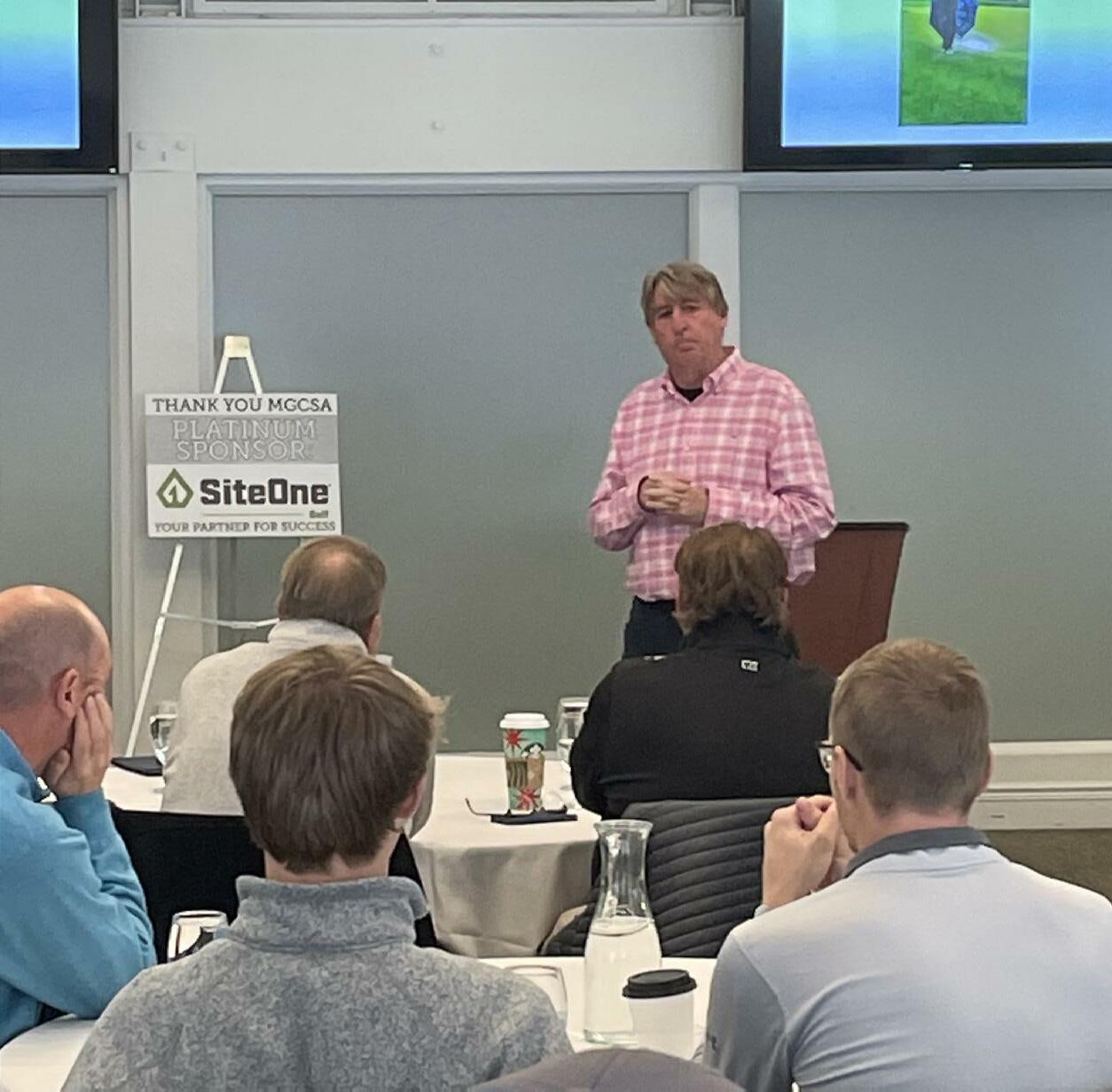
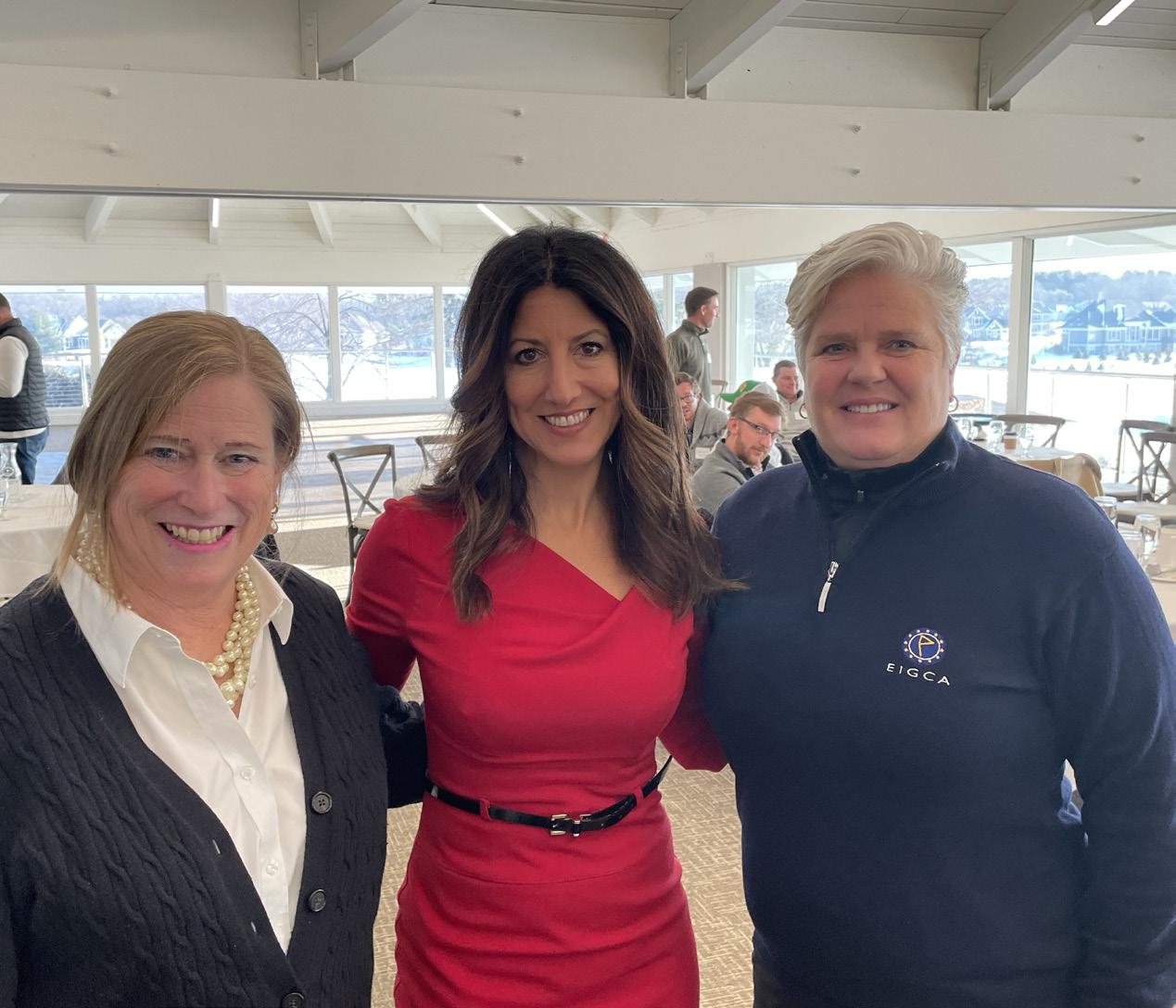
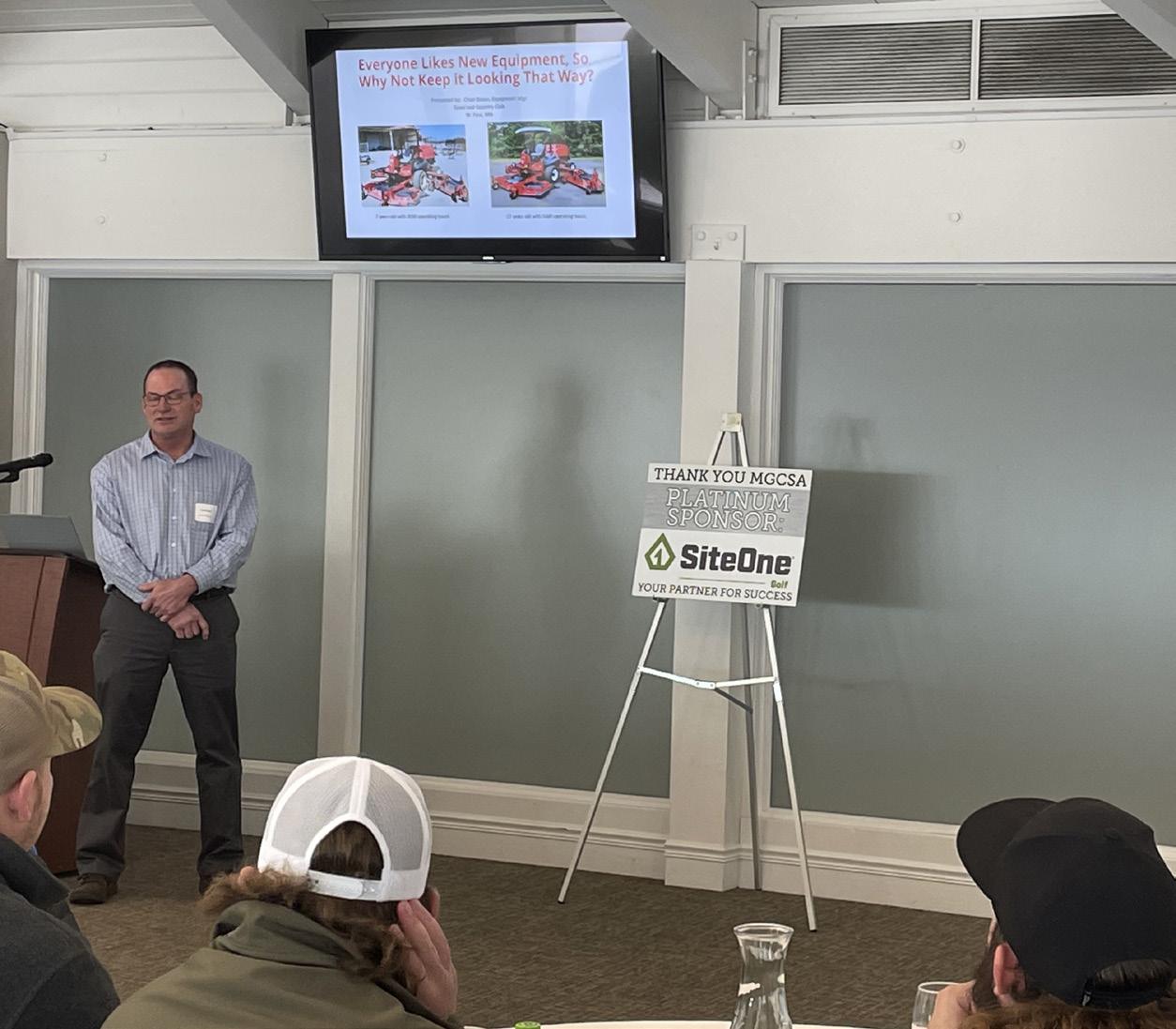
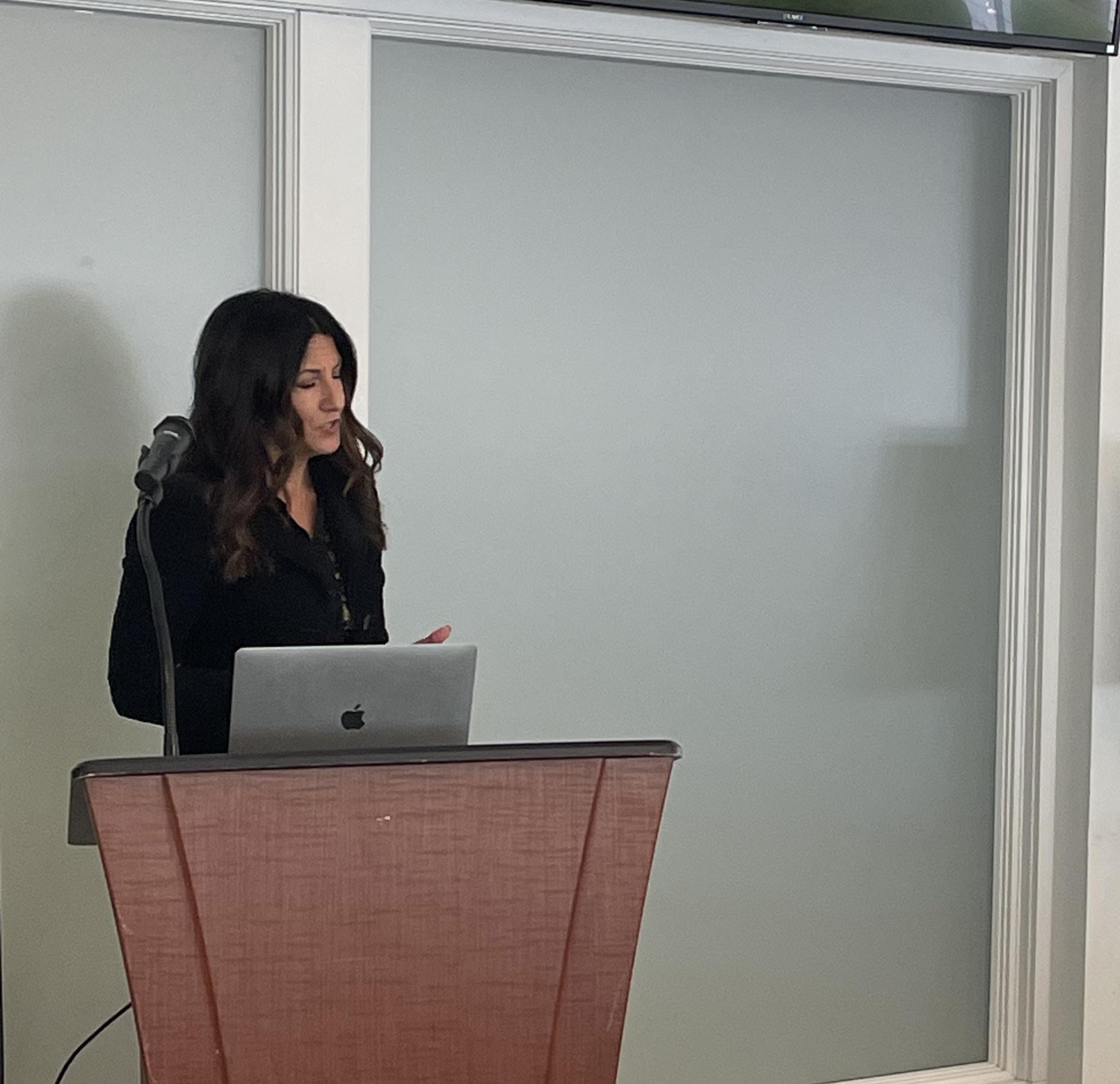
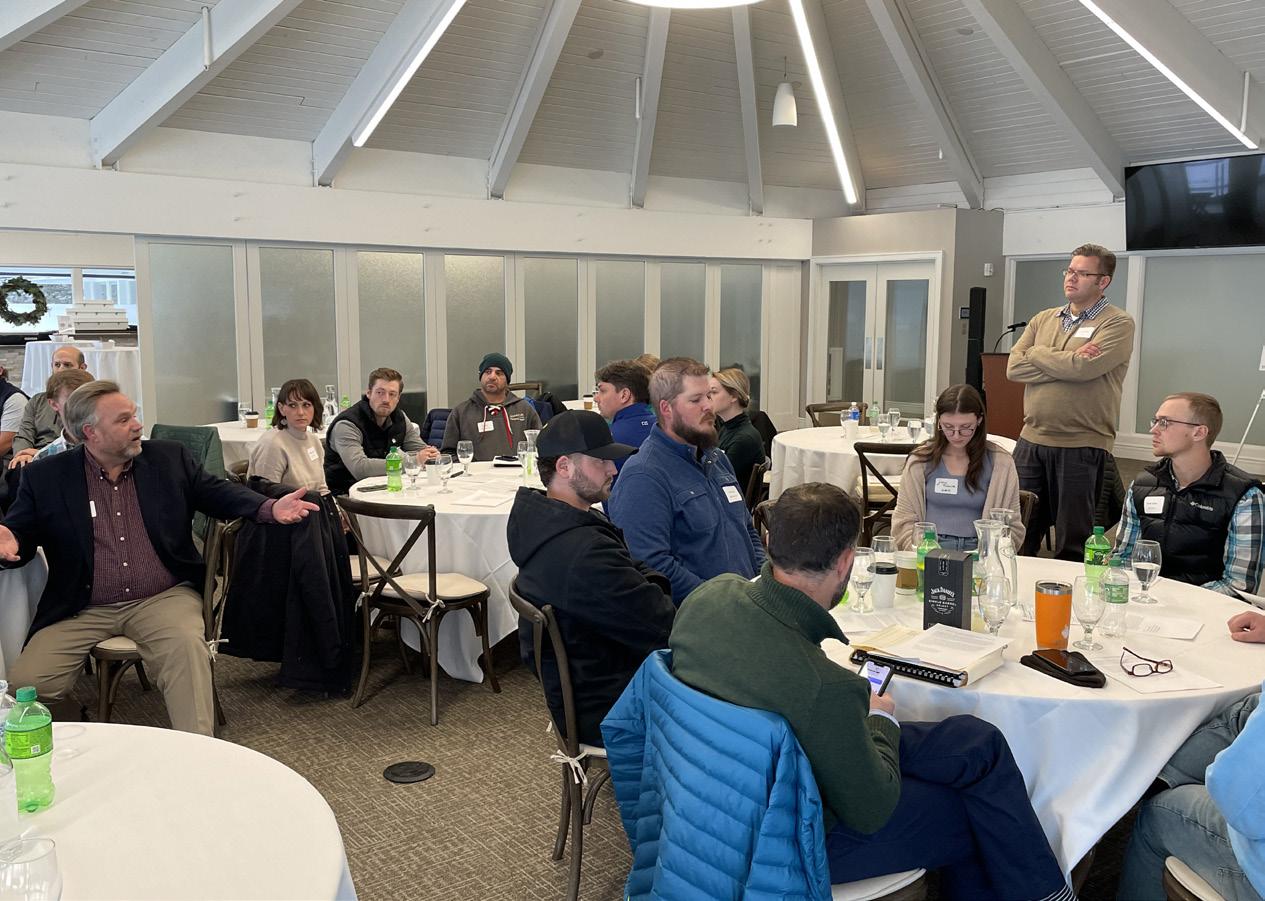
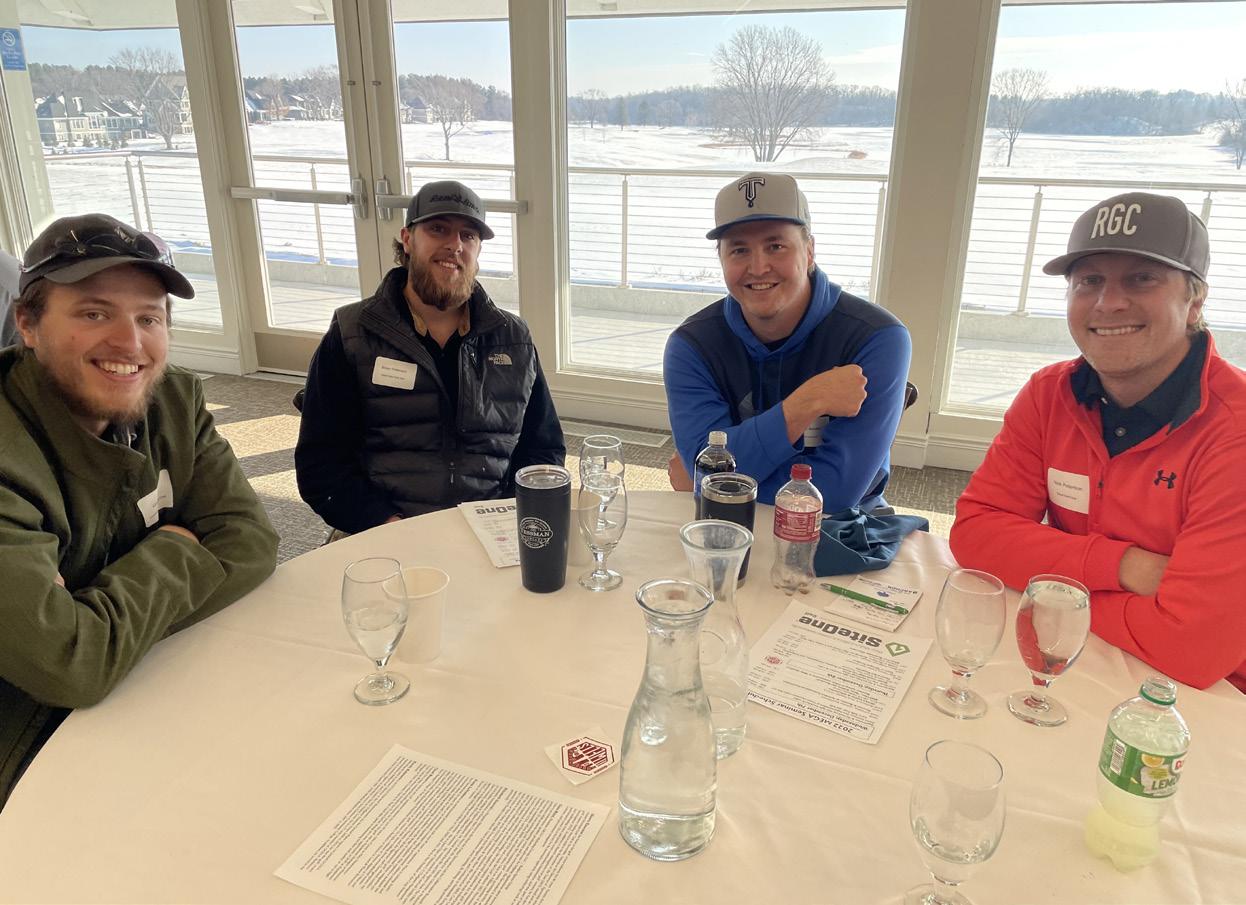
Thank you to all of our speakers and participants for helping to support the 2022 MEGA Seminar!!
6,940 Days of Mike sonnek, based on a true story...no, really
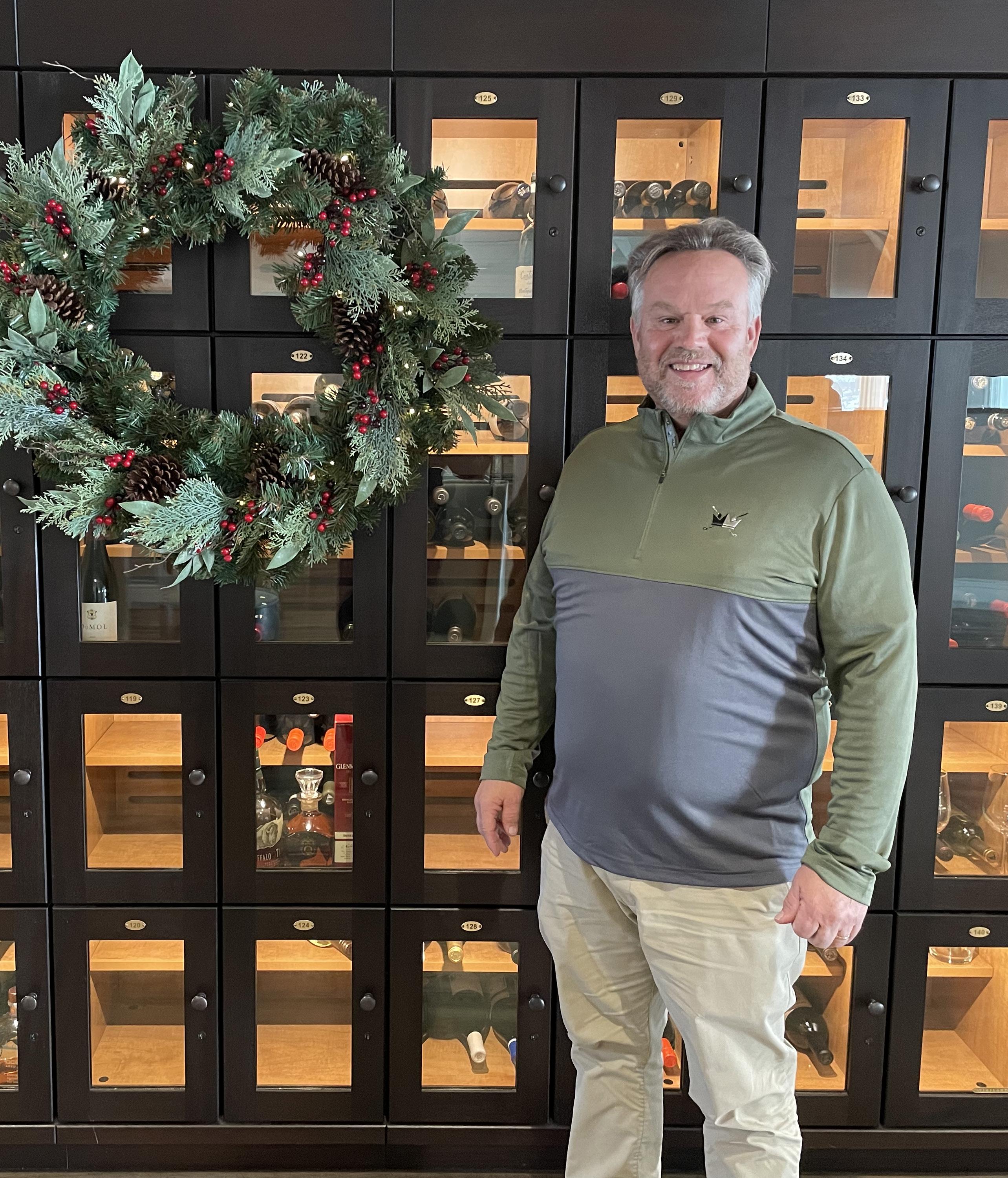 By: Matt Cavanaugh
8
Interviewed
Let’s go back in time. For some of you it may be a long time ago, but whatever point you are at in your Superintendent career, think back to day one. Think back to the plans you had for yourself. I’m assuming you all had hopes and even some had dreams. Where did you see yourself in five years…ten years… and even nineteen years from day one. Wait, nineteen years? Who the heck thinks in nineteenyear timeframes? Well, what if you were told you would
not have your first Superintendent job until nineteen years from that first day. You would have multiple opportunities for a Superintendent role, but it never seemed to pan out. Would you have continued on the path? Would you have the fortitude to get through the interviews that never resulted in the Superintendent position that you had hoped to achieve even on that first day of work on a golf course? Unless your name is Mike
Mike with wife Lynda, and triplets, Becca, Chris, and Pam.

Sonnek that answer is likely no, nope, big fat thumbs down, you don’t have the stomach for it, you are too weak minded…no. Hey, I’m just being honest.
In the May 2022 issue of Hole Notes, Mike shared the roots of his passion for golf. Spending many a summer day as a youngster at Wells Golf Club in southern Minnesota. Mike’s father even took a retirement job taking care of this small, family friendly layout. However, early on the thoughts of a career as a Golf Course Superintendents was not on the mind of Mike. “After high
9
Mike with Lee Trevino, Hole 12.

school I was a bit of a lost soul trying to figure out which direction I should proceed. I spent time in and out of a number of jobs and attempts at education. Nothing seemed to inspire me, and no real path presented itself. This went on for several years during which I enjoyed golf, when it was in my budget. I eventually came to a personal crossroads and asked myself…What do you like to do?”
At the age of 31, married for three years, and with newborn triplets at home, Mike started the turf program at the University of Minnesota without ever having
worked on a golf course before.
“My first course job was in 1996 at Minikahda under Doug Mahal. I was a grunt on the crew. I told them
I was going to school for turfgrass management and Doug and Jeff Johnson (Jeff’s first year as Assistant Superintendent) were good at getting me on all the equipment and answered any questions I had to help me learn
the business.”
With the first year under his belt Mike had a new opportunity for his second year on a golf course.
“In 1997 I worked at Minneapolis Golf Club under Dale Caldwell. Dale treated me in a very similar fashion and then some as he let me do everything. This second year really solidified my life choice on where
10
I want to spend my days and that is on the golf course. When I think back on it, I was actually able to do a lot more stuff during my second year at Minneapolis, but I also made more mistakes. That was how I learned though. I was given a few more responsibilities with some project management duties and a little crew management as
well, but I was still low on the ladder.”
Let’s be honest, Mike was still on the bottom rung. However, while working at Minneapolis, Mike had heard of this new course that was being constructed on the West side of town.

“I was hired on at Spring Hill in April of 1998 to be a part of
the construction. The timing was perfect as I had just finished up schooling that spring. They were growing in the golf course. I was thrilled that with my third year in the industry I was able to gain all that experience and those hours…an incredible amount of hours.
Tim Johnson was there from day one and I still remember my interview. Tim
11
The sod crew, Mike with former project manager Jim Felten, former assistant Brian Peterson, assistant Shane Benson, Head Pro Steve Peloquin and GM Kent Blaschko.
said, “Yeah, there might be a little overtime available.” It’s fair to say that Tim undersold that side by quite a large margin after putting in 50 hours that first week of April and it only ratcheted up from there. I quickly found out what construction life was like on the golf course and it was great. When doing a grow-in at a place, you have so much more of an attachment for it. I was
able to see where it came from. I left my blood and sweat out on that property and I could not have asked for a better mentor than Tim. Honestly, I was very fortunate to have Doug, Dale, and Tim right out of the gate with my career these first three years. Things went well that first season at Spring Hill, but at this point I was still just a crew member. However, Tim and Spring Hill were able

to keep me on through that winter. I just kept moving up a couple steps as guys moved along and I eventually became the First Assistant. It seemed as if Mike was on his way and right on track.
“Five years in I started applying for Superintendent positions, but I was not overly confident in those early interviews. The courses I was applying to
#2 at Royal Club
were very different kinds of properties…Spring Hill is such a unique property and it didn’t really seem to translate well to the courses I was interviewing for. Even if that wasn’t the case, I wasn’t getting the call backs. However, when I look back at it I was just hoping to grab the title and I wasn’t necessarily passionate about the location or the job and I think people read that.”

“I kept adding more experience and I tried to do things to present myself better during the interview process. I even went to interview training sessions, but I think it all boiled down to self-confidence and I did not have much at these interviews and it was noticed. This lack of self-confidence eventually resulted in my resume not getting picked for these Superintendent positions like they
had been in the previous few years. I had now been in one spot at Spring Hill for so long and that did not look great either.
With me starting my 19th year at Spring Hill, the Royal Golf Club position became available. I knew right away that Royal Golf Club is where I finally had the confidence that I needed. The Royal Golf Club opportunity was initially a grow-in and with all my grow-in experience
at Spring Hill I had 100% confidence and it showed in this interview. I knew the interview had gone well, but I had not heard anything. I was down at the national conference and people were telling me congrats this and congrats that and I was still in the dark. It was uncomfortable because it seemed that people knew more than I did, but eventually I got the call that I was the Superintendent of

14
Royal Golf Club.”
“I was at Spring Hill for almost 19 years…a long time and I was taken care of so well there. Tim was great with me, but a lot of it boiled down to the fact that I was comfortable where I was at. I wasn’t overly confident and I went to plenty of interviews for superintendent jobs and I didn’t do as well as I could have. However, I was never frustrated enough
to jump out of the business, because I knew I was where I should be. I was still waking up most mornings and looking forward to getting into the office and making it happen…I never lost faith that I was in the right profession and being at the Royal Golf Club makes it that much sweeter.”
“Minnesota is a great place to be a Superintendent with the recharge time. You go all out
for seven months and the other five months are all to your family and whatever else you want to do. That’s how the work life balance worked for my wife and me. I did every field trip, everything at school in the winter with the kids…I was at everything. My wife has to carry the burden in season, but I’m able to do everything in the wintertime.”
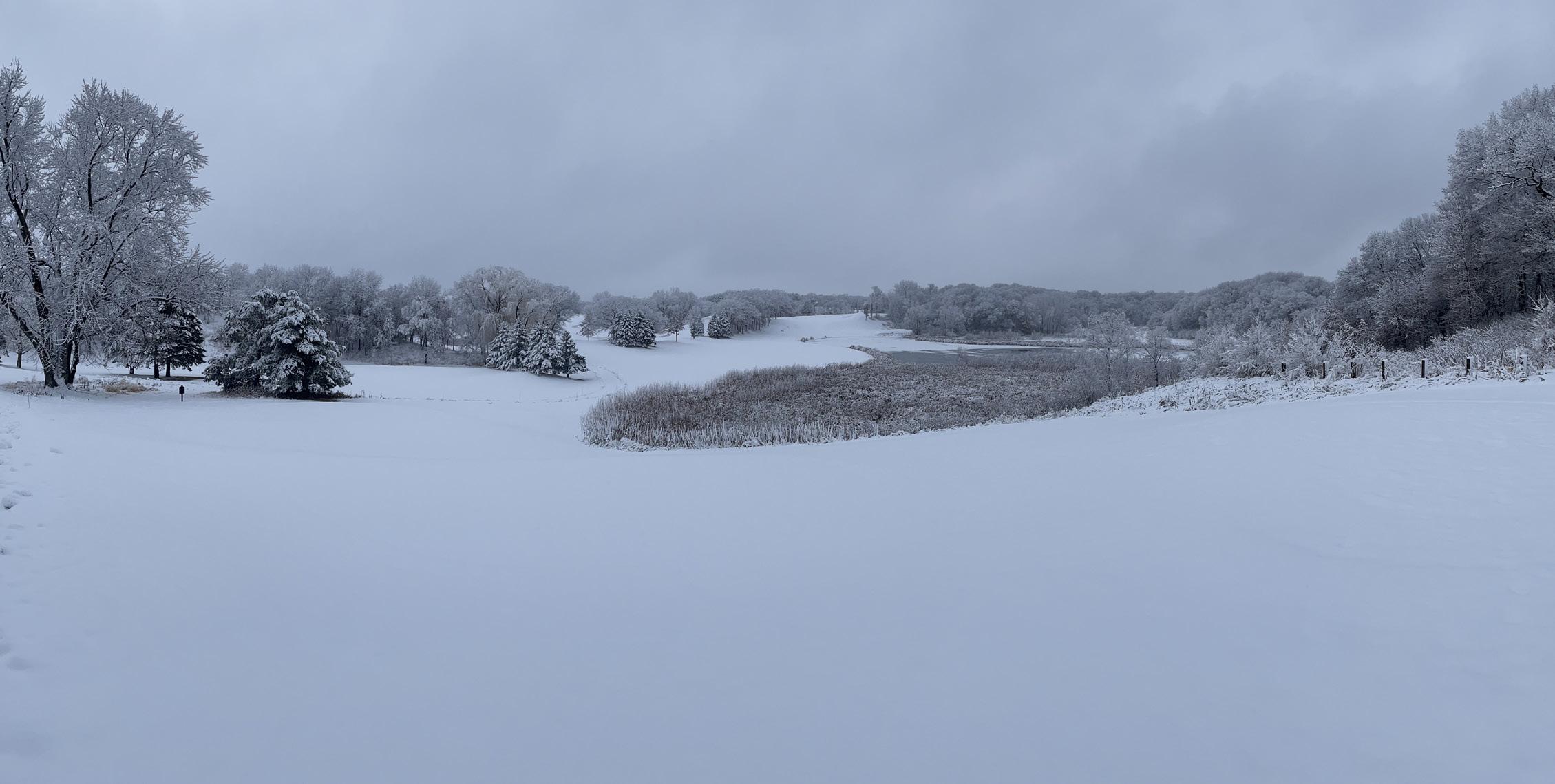
I think there is a lot to learn from #2 covered in snow, the way Mike likes to see it!
For

course in high school never had and that is a detriment to our industry. Mike’s path should be a lesson of patience to young people in the industry and also a lesson to those potentially looking for a career change. By the way, Mike…I had to wait 15 years. Dang it, I hate losing.
visit mmcjd.com
16
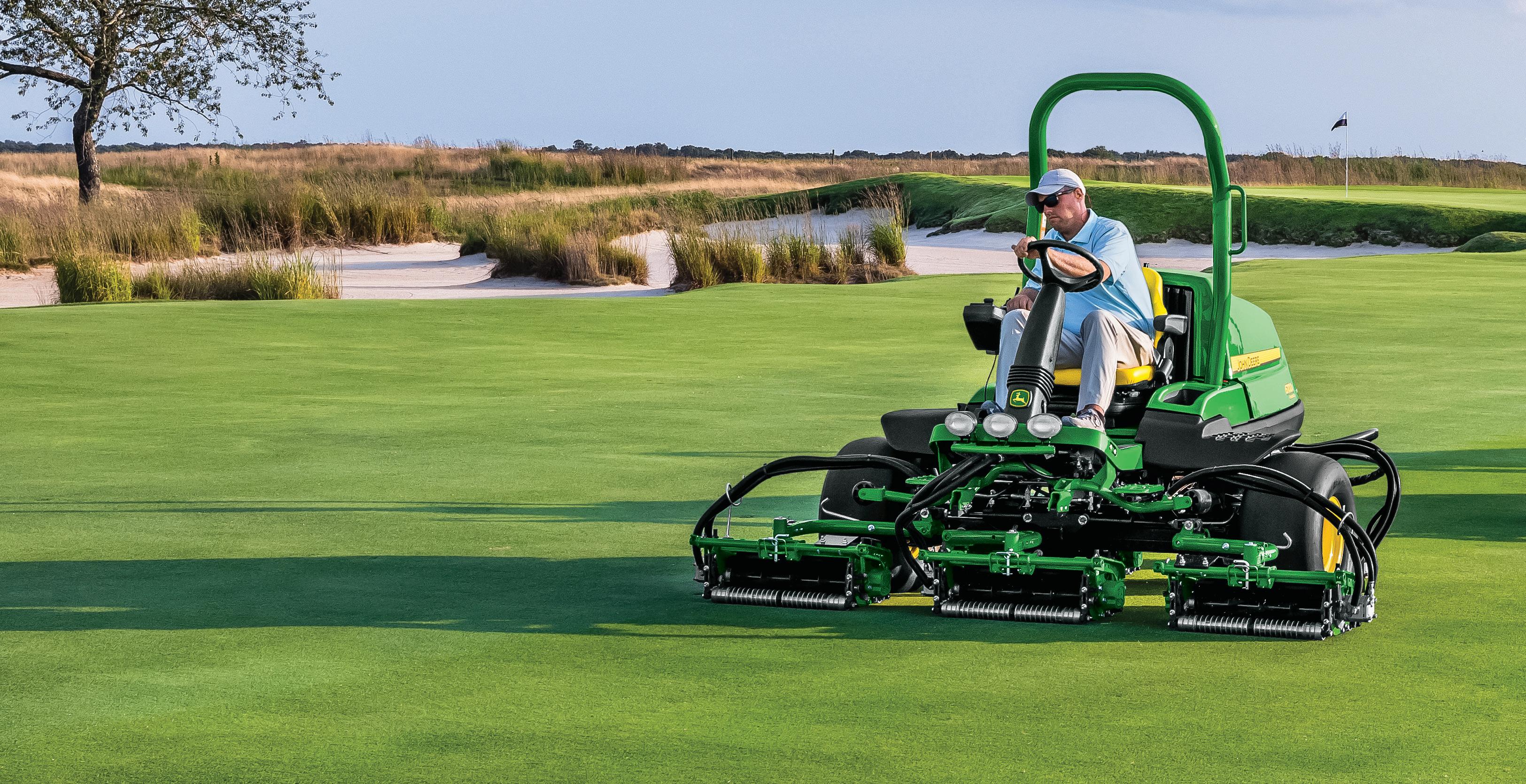
PrecisionCut™ Fairway Mower 6500A KEY FEATURES: • 24.7 hp FT4 compliant liquid-cooled diesel engine • 22" QA5 cutting units for a 100" total width of cut • 3-wheel, smooth tire configuration with standard grip all-wheel drive • Passcode-protected TechControl display
Mike's long path to a Superintendent position. Not many of us in the industry have the fortitude that Mike showed. On top of that, Mike didn’t start until he was 31. To be honest, I think that helped Mike. Many of us start in the industry as high school students. We enjoy the work and decide to make a career of it. Unfortunately, more information
many of us that start in high school seem to get burned out. Maybe you are not getting the proper pay or maybe you become impatient for the Superintendent position before you even turn 31 when Mike was just getting his start. Mike had already had a perspective outside of the industry that many of us that started on a golf to find a dealer near you.






17 Lunch Sponsored by: MGCSA Northwest Outreach Event Oxbow Country Club Monday January 16th, 2023 Host: David Wood 8:00 Welcome/MGCSA Update 8:15-9:15 UMN Update 9:15-11:00 Turf Panel Discussion 11:00 - Lunch 11:30 - Oxbow Golf Simulators & Arcade Partners in Turf: Only $15 Non-MGCSA members welcome Register online at MGCSA.org 2023 Outreach Education Sponsored by: Event Sponsors:






















































can’t help them win
but you
help
up.
You
skins
can
them clean
ParAide.com
See our ever-growing line of tools and accessories to enhance your course including Accuform™, HiO®, FusionCast® and Miltona.
Golden Valley Country Club to modernize and reinstate the GoldenAge brilliance of A.W. Tillinghast
Presented By: Norby Golf Course Design
October 31, 2022 GOLDEN VALLEY, MINNESOTA
–Golf course architect Kevin Norby, ASGCA has been engaged to complete the renovation of the historic Golden Valley Country Club in Minnesota. Golden Valley Country Club opened in 1914 as a 9-hole Thomas Bendelow course and was later expanded to 18 holes by Bendelow. In 1925, the Club hired world-renowned golf course architect A.W. Tillinghast to renovate the course.
Since that time, the course’s routing has remained intact, but some of the nuances of Tillinghast’s original design have been lost. Greens have shrunk, trees have grown and fairway
corridors have narrowed. Norby who is a member of the American Society of Golf Course Architects (ASGCA) has a deep appreciation for classic golf course design and a strong national reputation for his renovation work. He recently completed major renovations at Eau Claire Golf & Country Club (Tom Vardon, 1928) and Meadowbrook Golf Club (J. Foulis, 1926). In 2016 and again more recently in 2022, Norby was recognized by Golf Inc. for renovations at Coal Creek Golf Club in Colorado and Fox Hills Golf Club in North Dakota.
The bunker and tee renovation project at Golden Valley Country Club is intended to make the course more playable and
19
more maintainable while at the same time restoring and enhancing the Tillinghast’s vision for Golden Valley.
Norby has spent the past eighteen months working with Tillinghast historian Philip Young and golf architecture consultant Bradly Klein sorting through the details of renovating the course. According to Klein, “I am struck by the depth of the bunkers and the boldness of the mounding”. Unlike the flashed sand bunkers at Baltusrol or Winged Foot,
most of the bunkers at Golden Valley Country Club are deep grass-faced “sand pits”. Some as deep as eleven feet.
The renovation includes adjusting the location of fairway bunkers, improving the visibility of the bunkers and reinforcing Tillinghast’s “master bunker” philosophy. Norby is using a variety of resources including historical photos of the course, an aerial photograph from 1937, the 2017 course master plan and A.W. Tillinghast’s original plan

20
from 1924. According to Norby, “our goal here is to modernize the course by adding forward tees, softening slopes to increase pinnable area, reinstating lost green square footage, and renovating bunkers as Tillinghast might if he were here today. To reinforce the characteristics and subtleties that were important to him here at Golden Valley Country Club, we are relying heavily on his 1926 plan.”
to be complete in November. The work is being completed by Duininck Golf, a certified golf course contractor who has worked on numerous projects with Norby, including the recent renovation at Eau Claire Golf & Country Club in Wisconsin and Paako Ridge in New Mexico.
Please contact Kevin Norby at (612)865-3418 with questions or requests for hi-resolution photos.

21


MGCSA Eastern Outreach Event Eau Claire Golf & Country Club Wednesday, January 18th, 2023 Host: Nick Peinovich 8:00 Welcome/MGCSA Update 8:15-9:15 UMN Update 9:15-10:30 Investing in Your Irrigation System - Craig Jerome, MTI 10:30- 12:30 Turf Panel Discussion/Lunch 2023 Outreach Education Sponsored by: Only $20 Non-MGCSA members welcome. Register online at MGCSA.org Lunch Sponsored by: Event Sponsors:

2023 MGCSA Board Candidates
For President: Matt Cavanaugh
Rush Creek GC
I spent my first dozen years in the industry not being involved with the Minnesota Golf Course Superintendents Association. My initial apathy (a-pə-thē: noun: lack of interest or concern) revolved around the fact that my boss did not have much interest in the Association. At times I thought I wanted to be involved, but those thoughts never amounted to much action. In 2007 I found myself back in school with Dr. Eric Watkins conducting research on nomow, fine fescue areas. This research provided a speaking opportunity with the MGCSA at the annual Mega Seminar and additional interaction with MGCSA members at a few summer field days. However, the pull to be a part of the MGCSA continued to be absent.

Fast forward a few years and I found myself in a sales role with
PBI-Gordon. Well dang it...sales changed everything, and I found myself with a drive to be a part of the Association. However, at this point it was only out of necessity for the job. At The Northern Green in 2012 I was voted on to the MGCSA Board of Directors as an affiliate member. Well, who would have thought and what the heck did I know? I was only doing it to make myself look better to my employer. Through Association events and as a board member I started talking to more MGCSA members. I started interacting with the Association and learning from my peers.
24
It was refreshing and I always seemed to enjoy the interactions with others at MGCSA events.
Well, life changes and I moved on from sales and joined the University of Minnesota Turfgrass Team as a Research Scientist. One of my duties was to facilitate the MGCSA Member Driven Research. This only furthered my interaction with the MGCSA and I continued to learn and grow with my involvement. Through these series of job changes, involvement with the MGCSA, and subsequent learning, my career trajectory changed and I came back to Rush Creek in 2016 to continue my career as a Superintendent.
But why have I been on the Board of Directors? Why did I continue to move up the chain of command to President of the MGCSA? I’ll be honest… unlike much of what has been said before me by many past presidents, I’m not doing it to serve the members of the Association. I’m not doing it to make the industry better for you. Frankly, being involved can be a pain in the butt, it can
be frustrating, and it can be a thankless endeavor. I continue on this path to President of the MGCSA because my interaction with the individuals that choose to also be a part of the MGCSA have made me better. The choice to not be apathetic has made me a better Superintendent. It has allowed me to appreciate and enjoy my career choice more. It has allowed me to understand that growing grass for a living is just that…growing grass. For me it’s not about “What is the MGCSA doing for me?” or “I wish there were more education opportunities.” or “blah, blah, blah”. I simply choose to participate in the association because each and every time I have learned something from the other people that have also shown up. Those of you waiting for the MGCSA to come to you and make you feel better…you can pretend to keep waiting but the only thing holding you back is you. The MGCSA is here, we are eager to see you and the door is open when you decide to step off the sideline. I look forward to being there over the next year as President to start learning from you. - MC
25
For Vice President: Mark Michalski
Chisago Lakes GC
My name is Mark Michalski and I am running for Vice President of the MGCSA Board of Directors. I started working in the golf course industry when I was 16 years old in Silver Bay, MN. I didn’t know much about the MGCSA or GCSAA other than that they were organizations that the superintendent I worked for belonged to and that through the relationships built from others in those associations there was always someone to bounce ideas off of for potential issues you were having. Whether it be equipment related or turf related, or simply an idea for your course that you were considering implementing, there was someone you could call and talk that through with them.
Could you do this without being a member of an association? Sure you could, however belonging to an association gives you the opportunity to meet new
people more easily and grow your knowledge base. I don’t know about you but I learn best from others and their experiences, and association events provide an avenue to be exposed to different ideas and the opportunity for me to grow as a superintendent.
One of the things I have always found appealing about this industry was the camaraderie between fellow superintendents, as a high school student it is definitely one of the things that drew me to this profession. Playing golf with fellow
26
superintendents is one of the most enjoyable activities to me. Not only is it an opportunity to play golf but it’s also an opportunity to talk shop and bounce ideas off of one another. Just about every time I play I see or hear something that is a great idea that I bring back to my course. For me this is the same reason to be involved in the association. Selfishly it makes
For Secretary/ Treasurer: Nikk Dickerson
Owatonna CC
Qualifications, Awards and other points of interest?
I have been in the golf industry for 22 years and did a little bouncing around early on in my career. Working and attending college in Wisconsin at the beginning of my career as well as completing my internship at the Disney Properties golf courses. After college, I accepted a position at Owatonna Country Club as the Assistant, from there I ventured down to The
me a better superintendent. I learn at each board meeting. I’m stretched as a professional by those I have the privilege to serve with and their ideas.
Tournament Club of Iowa where I was the recipient of the Iowa Golf Association’s honor of 18-Hole Superintendent of the Year in 2013. In 2014 my family (wife Molly, Mack (11), Ellie (9),

27
I look forward to getting to know more of you this coming year.
Thanks much, Mark Michalski
Wally (5)) and I moved back to Minnesota when I accepted the position of Golf & Grounds Superintendent at Owatonna Country Club. In 2021 I stepped up to serve on the MGCSA Board of Directors as a Director, I’ve help with the Education Committee and the Environmental Committee. I’ve served at the GCSAA level as a Grassroots Ambassador of MN-01 to help with Government Affairs as well as volunteering on the First Green Task Group and I was chosen to be one of GCSAA’s inaugural First Green Liaison’s which is all about making your facility a Living Laboratory for school age students in your community.
Why are you running for office?
There is still work to be done! Not that there won’t always be work that needs to get done, but when I came on the Board in 2021 things where still reeling because of COVID. That has changed a bit, but the association is still working through some of the nuances coming out the other side. I wouldn’t feel right stepping away from things that I helped start or implement without seeing them through. One of the biggest
things being the hiring of Chris Aumock. I think Chris has been great for the association and will continue to move us forward in a positive direction. I am excited to work with Chris to help propel MGCSA into the future.
What are the biggest issues facing the MGCSA today?
There are many issues that the MGCSA faces today, dwindling numbers entering the workforce/ enrolling in college which just means the pool of qualified candidates is getting smaller and smaller. The ever-present threat of Government deciding to control water more stringently or ban chemistries that would make our job that much more difficult. Even member engagement at events in the past couple years seems to be getting lower and lower. None of these issues can be fixed overnight but hopefully as we have been collecting the data from the survey this past fall, we will have a road map on how the membership wants these issues to be dealt with and we will continue to strive to make the MGCSA a better association that all of its members can be proud of. - ND
28
For Director: John Cameron North
Oaks GC
Qualifications, Awards, and other points of interest?
Bachelor of Science Degree from the University of Wisconsin-River Falls 2014 11 years of Private Golf Course/ Club management experience 5 additional years Grounds/Landscape management experience

I’m running for office with the intention of helping the MGCSA remain active, exciting, and successful. I’d like to help the MGCSA expand its presence at high school career fairs to increase exposure and create opportunities for young individuals entering the professional world. I’ve heard colleagues express their time on the MGCSA Board of Directors as a rewarding, educational, and fun experience.
What are the biggest issues facing the MGCSA today?
Advocacy - Without continually advocating the “good story of golf” we are prone to be on the chopping block in regards to water usage, pesticide usage, labor shortages, etc. The MN golf industry generates 2.5 billion dollars in economic output and provides 25,000 jobs! We need to remain active in promoting the industry to our legislatures, communities, members, guests, employees, family, friends, and naysayers. Water Usage - Municipalities, golf courses, and homes within the 5-mile radius of White Bear Lake are under the MN DNR microscope. The MN DNR is
29
issuing a court order to reduce all permit holders’ water usage by 40%. This reduction will be factored by the gallons that were USED, not by the gallons that were permitted. They are also requiring that permit holders prepare a contingency plan to replace all groundwater pumping with surface water. What if this DNR court order “spilled over” the White Bear Lake area and other watershed districts started implementing the same restrictions? The MGCSA should remain proactive during these times by reaching out to local legislatures and hopefully gain strong support
For Director:
JT Hauser
Rochester Golf & CC
Qualifications, Awards and other points of interest?
I am currently working towards becoming a Certified Golf Course Superintendent. I completed the Bayer Green Start Academy in 2019.
from Golf Course Owners, Managers, Members, and Guests. Education and Career Development - Working with high schools to create an “on-the-job” training program and curriculum could serve huge benefits to our industry. This would be no different than plumbing/electrician/ trade programs that some of my friends pursued when we were that age. With hard work and determination they were able to climb their professional ladders quickly and I believe the golf industry could provide the same environment. - JC

30
Why are you running for office?
I have a desire to become more involved with the local GCSAA chapter. I would like to offer a fresh viewpoint on some of the challenges we may be facing and ensure we are doing all that we can to involve Assistant Superintendents in the MGCSA.
What are the biggest issues facing the MGCSA today?
As a relatively new member to the MGCSA it seems as there should be more participation and involvement in the local chapter from members. I come from a larger chapter in the Chicagoland area that was very involved and had high participation numbers. I hope to bring some fresh ideas to enhance the membership experience. - JH

For Director: Mitchell Linnerud Rochester Golf & CC
Qualifications, Awards and other points of interest?
4 years of experience as an assistant superintendent and I’m in the final stages of becoming a certified assistant superintendent.
Why are you running for office?
I would like to help improve our activities and events for our assistant superintendent/ student membership.
What are the biggest issues facing the MGCSA today?
Member participation in events. I think if we make some of our social events free of charge so more people would get involved. - ML
31
32 JAN. 10-12, 2023 info@NorthernGreen.org Minneapolis Convention Center www.NorthernGreen.org Jan. 10-12, 2023 651-633-4987 See you there! EXPAND KNOWLEDGE EXCHANGE IDEAS CREATE CONNECTIONS BROWSE & BUY
GOLF COURSE
MUSINGS
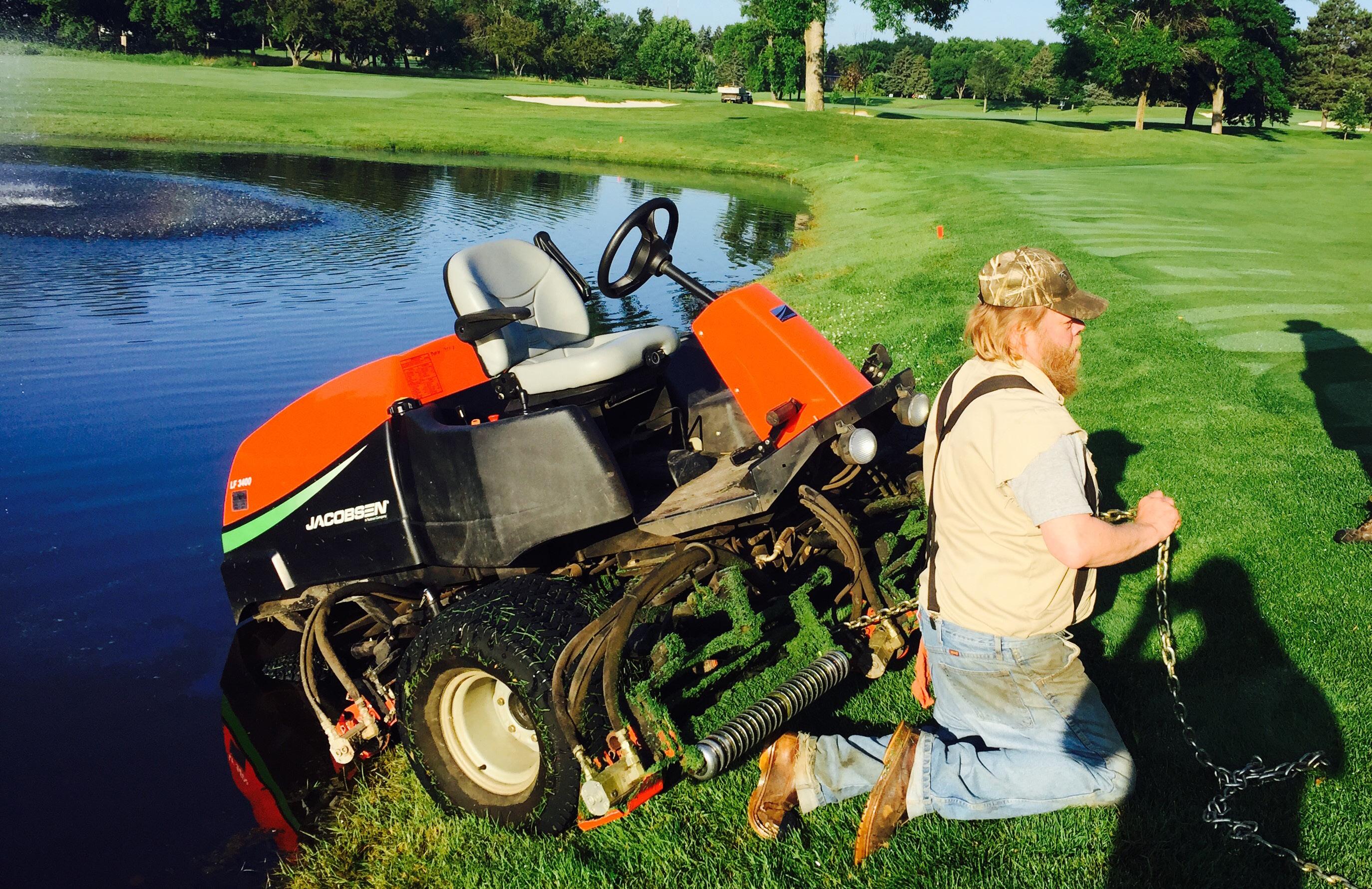
Share your strange, funny, and unique photos from your time on a golf course? Send your images to chris@mgcsa.org.
Somedays just end up like this!
33
Roll It Forward
By: Jules Driscoll
When you mention a Superintendent or Assistant’s name around the industry, most know who you are talking about, where they are currently working and where they have previously worked. Mention my name and a few of you may know of me and where I work, but that’s about it, so here is my story!
My start in the turf industry is very unconventional! I don’t have a formal turf school education, I haven’t worked at any other courses, yet I have spent the last 23 years on the grounds department at Wayzata Country Club and have loved every minute of it. My family ties to golf span back


34
over 96 years. Back in 1926, my Great-Grandpa, using his team of horses, formed the original first 3 holes of the Le Sueur Country Club. Soon after opening, he became one of the 1st members and my family has held the longest continuous membership with the club since. My late grandpa, Gerald


Distel, became a member in the 1950’s, where he was the General Manager for 8 years and held a standing tee-time every Thursday afternoon until he passed in 2012. My uncle, Bob Distel worked their grounds crew throughout high school before making turf his career and I spent many years in the clubhouse,

35
Photos provided by Jules Driscoll
starting out as a dish washer and finishing out my time there as a waitress/dining manager. I also spent a great deal of time playing the course with my parents being members for the past 47 years and every spring on my high school golf team.
Many years later we would come back together at Wayzata Country Club. My Grandpa Gerald on the grounds crew, my Uncle Bob the Superintendent and me, the office manager. After my first year of college, I was presented with a unique
opportunity that would bring me where I am today. My Uncle Bob and his wife were expecting their 3rd child and during the last 4 months of the pregnancy, my aunt was put on bedrest. I made the decision to move to Wayzata to live with them for the next year to help with caring for their 2 young children. While living on property, I also waitressed in the clubhouse, pool patio and worked the on course halfway house, which began my time with WCC.
In 1998, I was asked by my Uncle Bob if I was available to fill in for

36
his administrative assistant for 2 weeks while she took vacation. At the time I was waitressing at Sunsets Bar & Grille in Wayzata where the WCC grounds crew managers would have there after work “managers meetings”. It seems each week as they were in, I was continuously asked when I was going to quit there and come work on the grounds crew. Coincidentally enough, early that next year Bob’s administrative assistant retired and in February of 1999, I started my 23-year career.
First starting out, my time was spent mainly in the office, approving and submitting bills for payment, time-management tracking, approving timecards for payroll, personnel paperwork and assisting with budgets and so-on, until I was pulled out onto the course to help with greens covers. Soon after, then assistant Donnacha O’Connor trained me in on a triplex mower as well as a walking greens mower, where I spent the next 10 years mowing greens most mornings and switching to the office in the afternoons. Over the past

37
20
years, current Superintendent
Jesse Trcka has trained me in on many more golf course maintenance practices and has given me the opportunity at having a hand in a large aspect of daily course maintenance.
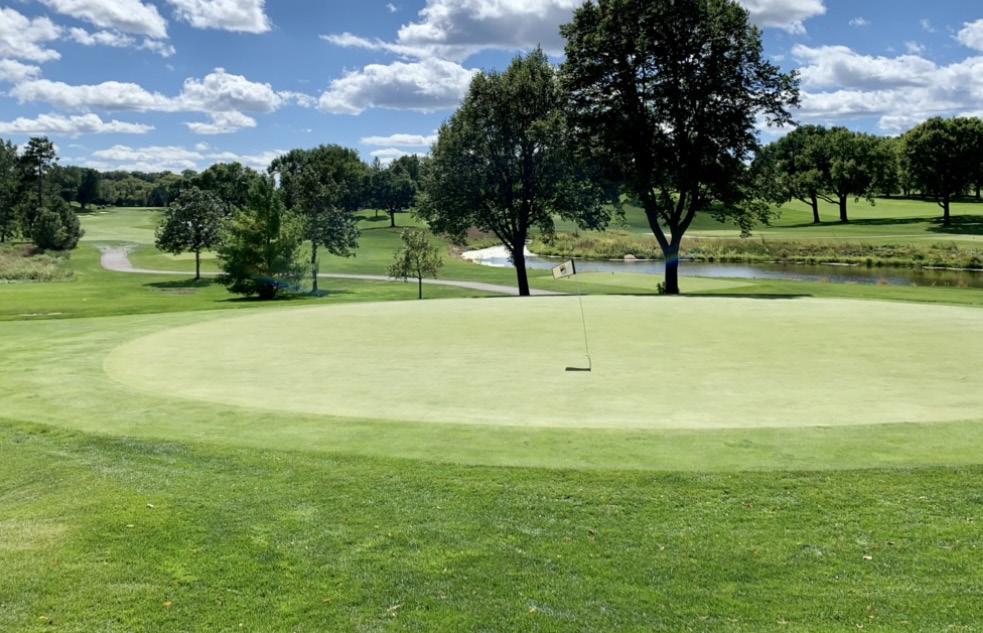
Although my time on the golf course is more limited, when a need arises, I will get pulled to help with mowing greens, fairways, tees, bunker maintenance, turbine blowing, course aeration and greens covers everything shy of mowing rough, cutting cups and spraying.
These days while still taking care of the office and administrative duties, much of my day is spent on the course along with my sidekick, 6-year-old Cavapoo Lucy. I have recently taken on the position of Clubhouse Grounds Manager, overseeing the care of all the gardens and landscaping around the property, and maintenance/repair of the irrigation in these areas.
I couldn’t do it alone though. Working alongside me I have 2 of the best gardeners, Paula Huddy and Kim Prodahl, that take care
38
of the day-to-day operations. They have been with the club for about 15 years, and without them I wouldn’t be able to do what I do daily. Though most of my time is spent on the grounds, I do seem to have my hand in all areas of the club. From the pool, trap & skeet facility, tennis facility and clubhouse, I tend to spread my time throughout these and many other areas. I am kind of known as the “go-to gal” for the club, if someone needs something, they know who to call! Thank god for Amazon!!

During the winter, I get to be more creative by designing outdoor holiday pots/front entrance décor and lending a hand with some interior
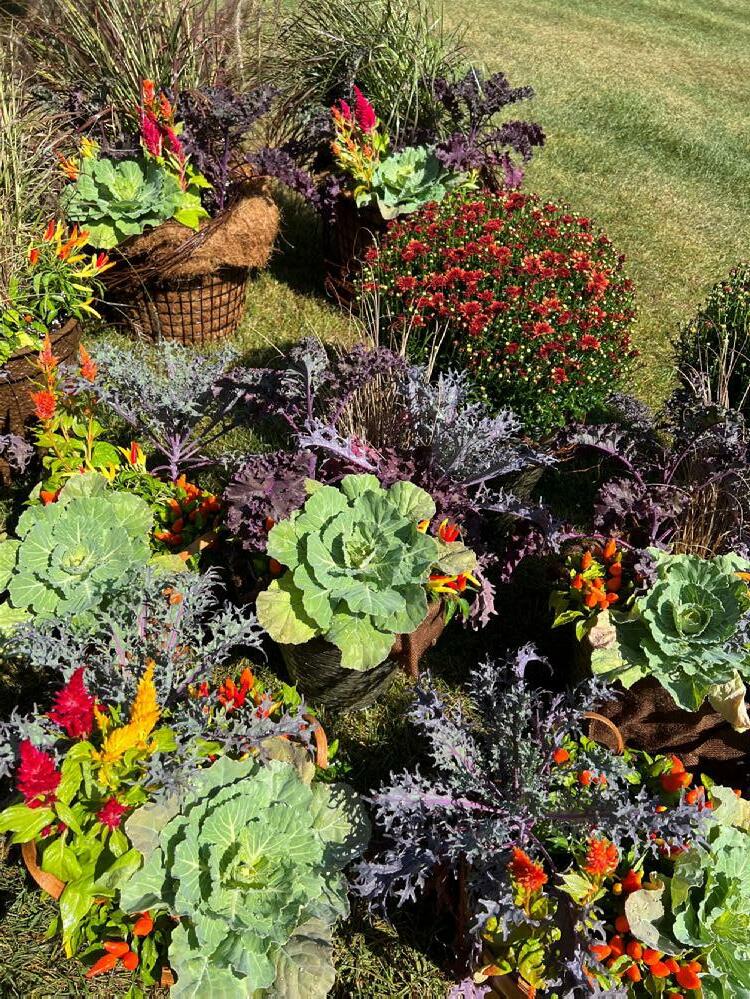

Christmas decorating. On occasion, I will put in my time snow shoveling and plowing as well, someone needs to show these guys how it’s done!!
As I write this article, I reflect on my time here at Wayzata Country Club. I have spent nearly half my life here and have seen and been a part of many changes. From a full irrigation system installation to a more recent upgrade, greens drainage installation, 2 bunker renovations, pond redesign, practice facility and short course redesign and installation, to a full clubhouse renovation and a more recent upgrade, there have been numerous changes over the years. Although it was 20 years overdue, our biggest
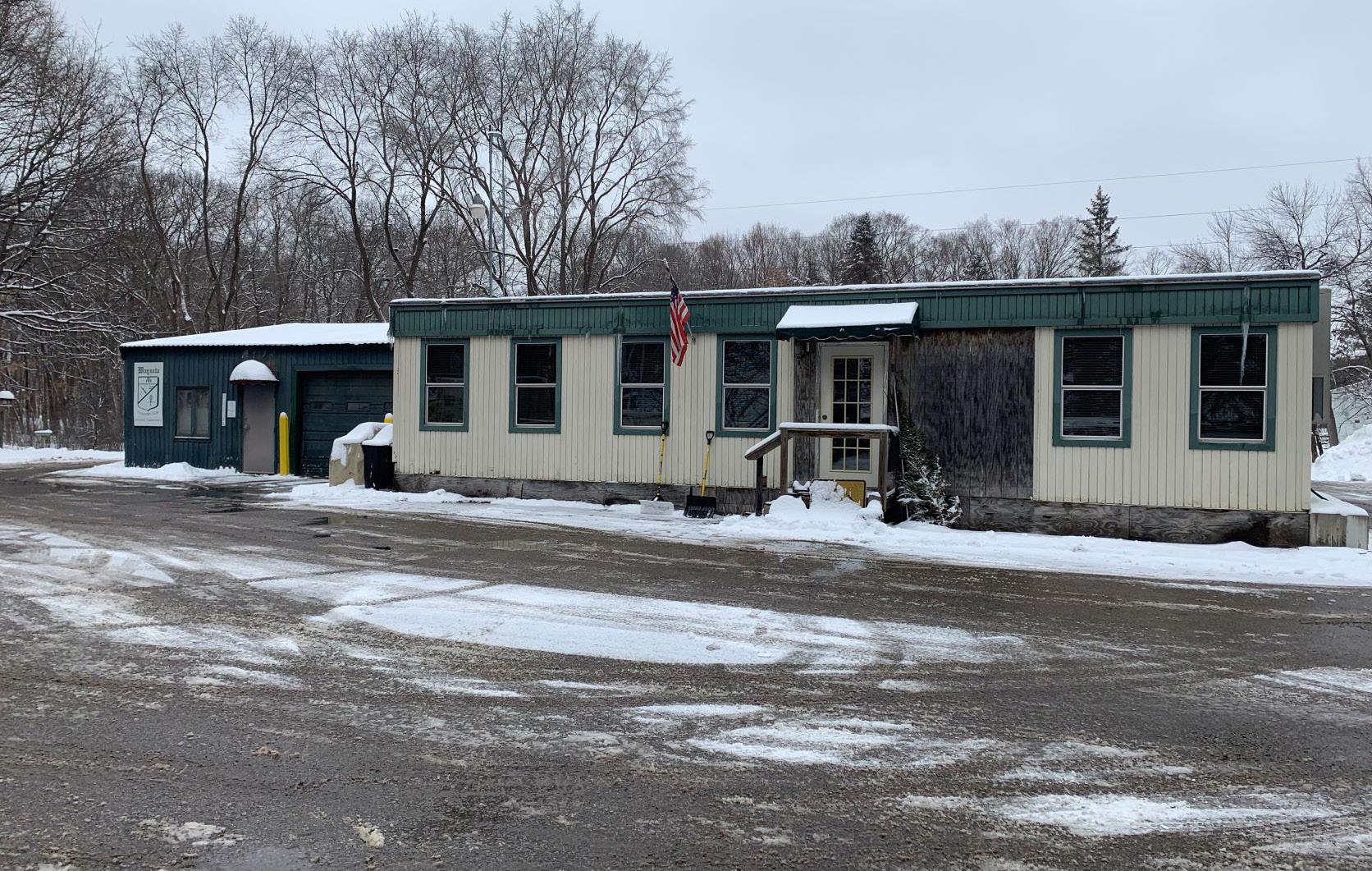
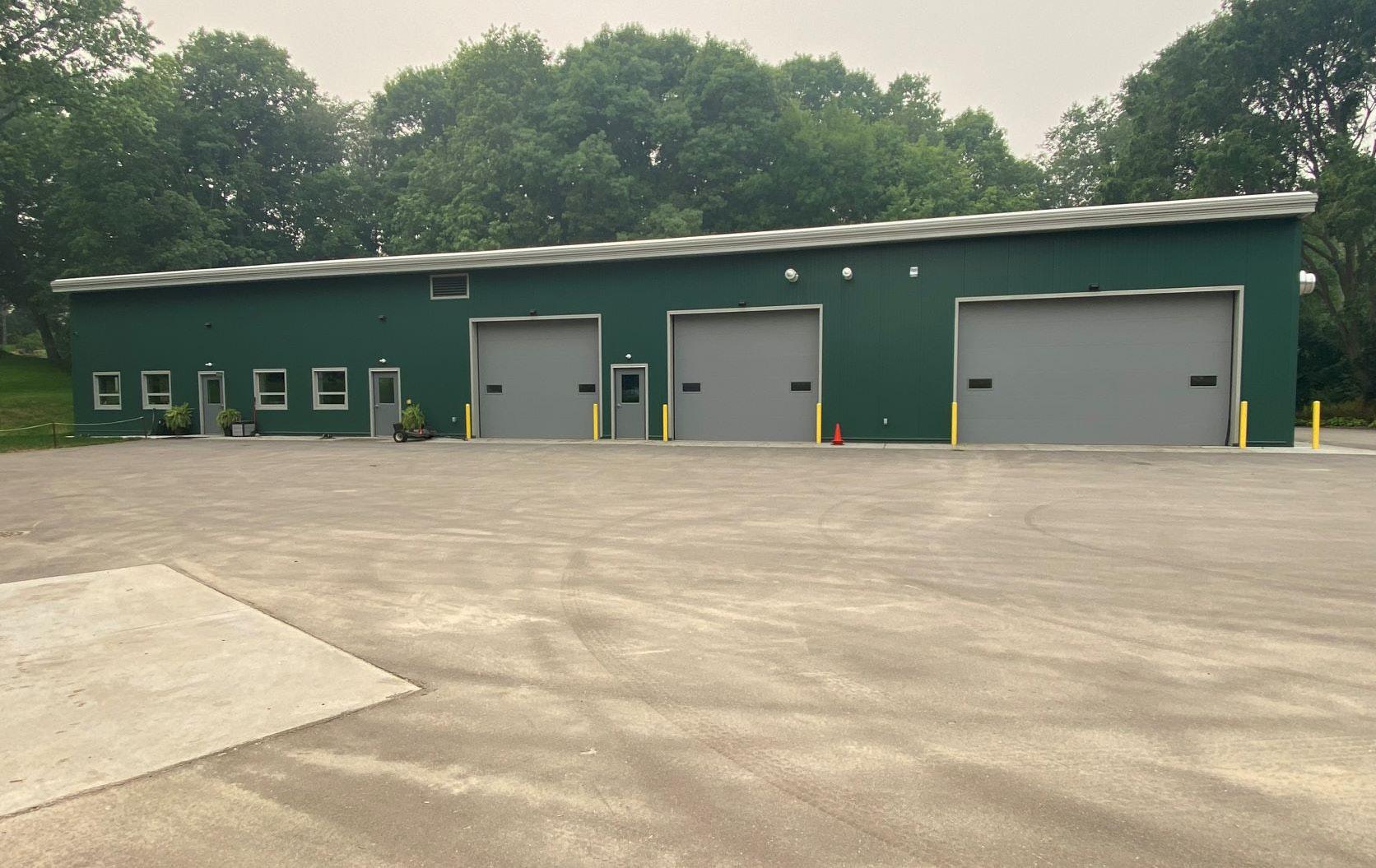
change to date however was in 2019, which brought our crowning achievement in the grounds department, our new maintenance facility.











The changes don’t stop there though, the most notable changes have been with the staff. In my 23 years I have had 6 General Managers, 2 Superintendents, many assistants and countless seasonal staff members. The most memorable have been the assistants who have come through these doors and have moved on to become Superintendents themselves. The aforementioned Donnacha O’Connor at Alexandria Golf Club, Adam Beers City of Chanhassen Parks, and Dan
Kampa at Stone Ridge Golf Club. I have developed life-long friendships with these and many more and am grateful to each of them for what they have taught me over the past 23 years. Thank you Donnacha for nominating me and for getting me out onto the course and turning me into a “Turf Geek”! Since the “Roll it Forward” articles are about getting to know our fellow colleagues, I am going to take this story full circle back to where it all started, Le Sueur Country Club. So, I am nominating Superintendent Tom Meier. Let’s hear your story, you’re up next!

40
Superior Tech Products ® 952-546-3678 Leading Edge Turfgrass Solutions www.stproots.com Golf Courses | Sport Fields | Parks stp@stproots.com * Liquid & Granular Fertilizers * Organic Fertilizers * Post Patent Pesticides * Aerification Tines & Bedknifes * Natural & Artificial Turf grooming equipment. smooth healthy consistent greens POGO
41
Wayzata Maintenenance shop upgrade

2023 MGCSA Annual Meeting
Thursday, January 12 Northern Green Expo 12:30-2:00 PM Room 101FG
Remember to attend the 2023 Annual Meeting to review the previous year, learn about changes for the upcoming season, vote for new board members, and recognize our service awards members.
Also at the 2022 Annual Meeting, the MGCSA BOD will be awarding the Distinguished Service Award (DSA) to Superintendent Mike Brower, Minnesota Valley Country Club. Mike has exemplified our profession for years and made great strides in regards to golf course environmental stewardship initiatives. Join your colleagues as we recognize Mike for all his years supporting and positively promoting Golf Course Superintendents.

Beer & Pretzel event

Wednesday, January 11th
This casual, free members only event will allow you to review your day with your peers while enjoying a beer and some snacks.
Seasons Rotunda 5:00-6:30
43


44 Get to Know Em: Zach Wignall FACILITY INFO Golf Course: Willinger’s Golf Club Public or Private: Public Number of Holes: 18 Fulltime employees: 3 Seasonal employees (not including full time): 13 Number of employees of entire facility at peak season: 20-30 Types of grass: Bentgrass/Poa Total course acreage: 263 Greens acreage: 3.21 Tee acreage: 3 Fairway acreage: 18.36 Rough acreage: Driving range acreage: 7.5 Range tee acreage: .7
45 Personal Turf Facts: How many years have you been in your current position? 4 How many years have you been in the turf industry? 15 Where else have you worked? Meadows at Mystic lake-MN, Legends Club-MN, Herndon Centennial-VA, Potomac Shores-VA, Old South CC-MD, Lake Presidential-MD, Beechtree GC-MD Turf School Attended (if any)? Rutgers 2008 Industry thoughts What is one “master plan” thing you would like to change at your golf course? Complete bunker renovation. If you would like to participate in a future Get to Know ‘Em, please reach out to Chris at chris@mgcsa.org
What concerns do you have the turf business and the future of golf? Labor, supply chain, costs, expectations, and water/chemical regulations.
What is needed to bring more young professionals into the industry? Outreach, engagement, and equal balance of salary/home life.
What piece of equipment do you want? Not a need, a want. Salsco roll and go turf roller
In terms of industry costs (equipment, pesticides, labor, etc.) are they too low, too high or just right? Way high at the moment lol.
FUN FACTS
Have you ever met a celebrity? Who? No, lol
What is your favorite vacation spot? Outer Banks, North Carolina
What is your favorite memory of starting your turf career? Jumping right into a construction/Grow in of Meadows at Mystic Lake
What is your favorite job on the golf course? Morning Meeting with the crew and then catching the sunrise.
What is your least favorite job on the golf course? If I had to pick one its pulling in the port o johns on Monday AM for service.
Have you played any famous golf courses? Which ones? No not really, but some of my favs are RTJ-VA, TPC Potomac-MD, RiverBend-MD, MN Valley-MN, WBYC-MN, Creighton Farms-MD
Who is your dream foursome? Probably just round up of some of my closest childhood friends from around the country and hit up some
46
destination golf somewhere.
2022- What a year! Would you like to comment on how it affected you, and how it has changed your management approach now? 2022 by far was the most challenging year as being a superintendent. I’ve been through many “summers of hell” in the Mid Atlantic region as an assistant, but 2022 we were in extreme drought in Northfield area. Being able to recognize that you won't always have it “dialed in”, impossible to work 24 hrs. a day, being able to learn how to turn off the switch at the end of the day and save the battle for the next day. My family helps balance out the afternoon/evening to achieve the work/life balance. A few things that also helped me through the season besides my
family were catching a round of golf with friends/co-workers at different courses, participating in the Don White match play, sunset cruise on the electric skateboard with the air pods through the neighborhood, and getting some home projects done around the new house.
A few things that got me and the staff through the season of drought: wet well pellets, xtratuf fishing boots (keeping the feet dry in the AM), TDR, water wagon, Wednesday member donated donuts, staff appreciation lunches, reaching out and touching base with other local turf industry professionals (mental checks), and taking a morning or early afternoon off when you’ve closed in on your burn out point.

47


MGCSA Southern Outreach Event Owatonna Country Club Tuesday, January 24th, 2023 Host: Nikk Dickerson 8:00 Welcome/MGCSA Update 8:15-9:15 UMN Update 9:15-10:30 Investing in Your Irrigation System - Craig Jerome, MTI 10:30-12:30 Turf Panel Discussion/Lunch Lunch Sponsored by: Only $20 Non-MGCSA members welcome. Register online at MGCSA.org 2023 Outreach Education Sponsored by: Event Sponsors:



2023 Shop Tours -West Metro Wednesday, January 25th, 2023 After lunch, stick around for a voluntary program where Brian Boll will introduce the upcoming Interlachen renovation project. The day will also feature representatives from Toro discussing shop infrastructure for equipment electrification and autonomous mower technology. $35 per person includes lunch, coffee, breakfast items. Non-MGCSA members welcome. Register online at MGCSA.org 8:00 - 9:00 Eagle Lake Golf Course - Bill Vollbrecht 9:30 - 10:30 Edina Country Club - Brandon Schindele 10:45 - 11:45 Interlachen Country Club - Brian Boll 11:45 - Lunch (Provided by ICC) 12:00 Interlachen Renovation Project Intro 12:15 Shop Infrastructure for Equipment Electrification 1:00 Autonomous Mowing Equipment (Units will be onsite) Sign up the whole crew; assistants, techs, and equipment managers, for this unique shop tour experience!!
Determining Irrigation Thresholds Using Plant Available Water
By: Ryan Schwab, Josh Friell, Eric Watkins, Gabe Olson-Jensen University of Minnesota
Irrigation practices that allow for depletion of soil water until just prior to the onset of visual wilt have historically been recommended for turfgrass soil water management because they encourage deeper rooting and greater resilience to drought stress (Espevig & Aamlid, 2012; Fu & Dernoeden, 2009; Fu, Fry, & Huang, 2007). Moreover, maintaining somewhat drier conditions is likely to produce a firmer, faster golf playing surface. Reports of water savings and improved playing conditions produced by using light and infrequent irrigation applications have drawn interest (Woods, 2013), but require further investigation. Fortunately, multiple technologies are available that enable practitioners to make data-driven irrigation decisions that can remove some of the
uncertainty associated with these approaches. Evapotranspiration (ET) is used to schedule irrigation using a water balance approach; however, it is sparsely used in the Midwest and the accuracy of ET estimates can be questionable. Conversely, in-ground soil moisture sensors (SMS) provide a real-time point measurement of available water. They may be placed in multiple representative locations across a golf course (Straw, Friell, & Horgan, 2019) and have been shown to generate significant water savings when used for irrigation scheduling and control (Serena et al., 2020).
The use of SMS is formalized in the practice of threshold-based irrigation. Threshold-based irrigation is not a new concept and has long been used in agriculture. This approach is
50
based on the idea that plant available water (PAW) is allowed to deplete to some predetermined threshold before irrigation is applied to replenish soil moisture. Upon irrigation, soil water is restored to field capacity or to some preset upper threshold. As soil dries, a lower threshold is determined as the PAW value at which measured physiological stress of a plant begins. Permanent wilting point
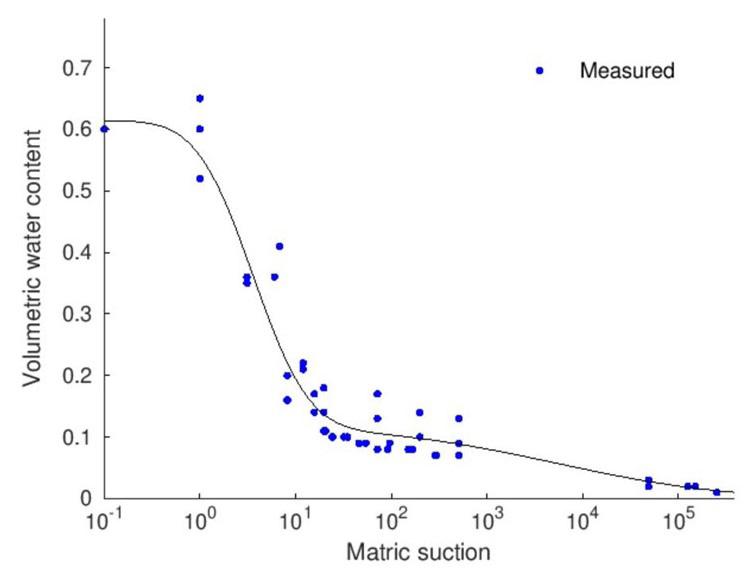
is generally the same across soil types, but the volumetric water content at which it occurs will differ based on soil type; therefore, soil water retention curves are used to determine the volumetric water content at which permanent wilt occurs for a given soil (Figure 1). This type of soil characterization is not commonly performed by soil testing laboratories, and so consulting with public or
Figure 1. An example of a soil water retention curve, in which the relationship between volumetric water content (VWC) and soil matric potential (matric suction) is modeled, enabling an estimation of VWC at different levels of plant available water.
51
private laboratories may be needed to gain this information.
Various threshold-based approaches that implement SMS technology as a means to monitor soil moisture for turfgrass irrigation scheduling have been employed and have demonstrated capacity to generate significant water savings while maintaining turfgrass quality (CardenasLailhacar & Dukes, 2010; Dyer, Bremer, Patrignani, Fry, & Hoyle,
2019; Serena et al., 2020). Many superintendents also implement this approach, informally, using portable moisture sensors and hand watering practices on golf course putting greens. A move toward threshold-based irrigation scheduling that better utilizes current and future SMS technology will greatly benefit golf turf management. However, for this to happen, additional research is needed to gain a better understanding of the range of appropriate PAW

52
Figure 2. The rainout shelter hovered over the plots during rain events while dry downs were occurring. Photo credit: Josh Friell
Figure 3. Raw images and corresponding green canopy cover and photochemical efficiency images of a creeping bentgrass core at field capacity (far left column) to near permanent wilting point (far right column) during a dry down period.


53
thresholds of turfgrasses at which irrigation should occur to achieve agronomic and playability preferences while maximizing water use efficiency.
We are currently in the middle of a two-phase, multiyear research project evaluating different responses of Kentucky bluegrass (Poa pratensis L.) and creeping bentgrass (Agrostis stolonifera L.) to varying levels plant available water at a fairway height of cut.
Phase I
The first phase of the project consisted of a drought tolerant and drought susceptible cultivar of both Kentucky bluegrass (‘Shamrock’) and creeping bentgrass (‘Penncross’). Cultivars were subjected to drought (no irrigation) or well-watered conditions (100% ET replacement 3x/wk) over a series of dry downs. Plots were maintained in our rainout shelter area, which kept rainfall from impacting our periods of drought (Figure 2). Soil moisture was closely monitored in each plot. During each dry down run, we measured a series of turfgrass responses (Table 1). This information, along with
our soil water retention curves, allowed us to observe a gradient of PAW levels and relate it to our measured responses (Figure 3).
As the plots dried down, we observed a decrease in all measured responses; however photochemical efficiency did not reach low enough levels to indicate significant turfgrass stress. This result was unexpected due to an abnormally hot and dry 2021 summer and three dry down runs over two years. We also conducted this project in a greenhouse setting using large cores sampled from the rainout shelter plots so that we could better capture PAW levels at which significant plant stress occurs.
Phase II
In this phase, we explored which PAW level would be an appropriate irrigationtriggering moisture threshold for both Kentucky bluegrass and creeping bentgrass. One cultivar of each species was maintained in an open field (no rainout shelter) and managed in a similar manner as the Phase I plots. Instead of drought and well-watered treatments, we
54
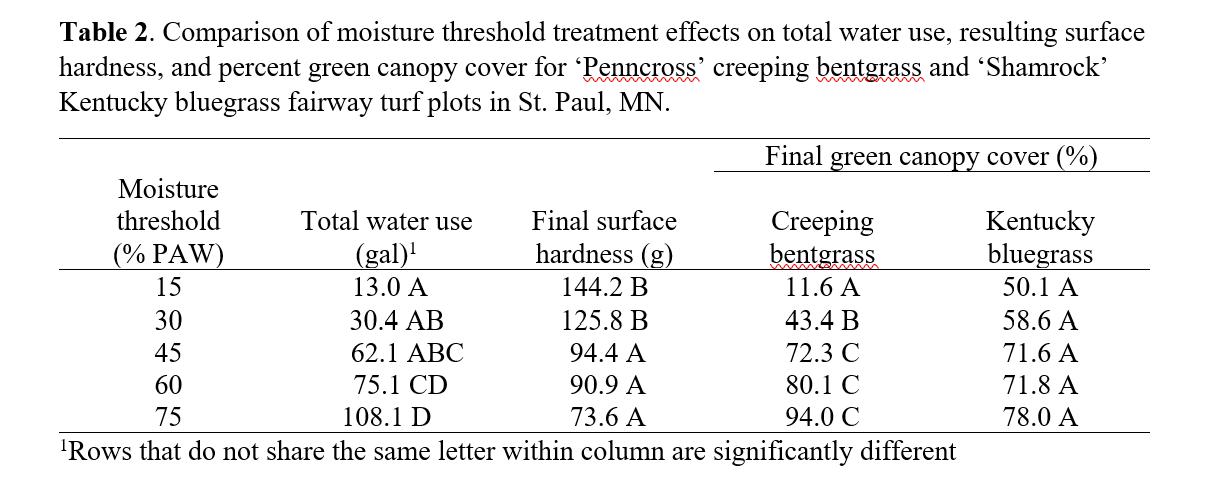
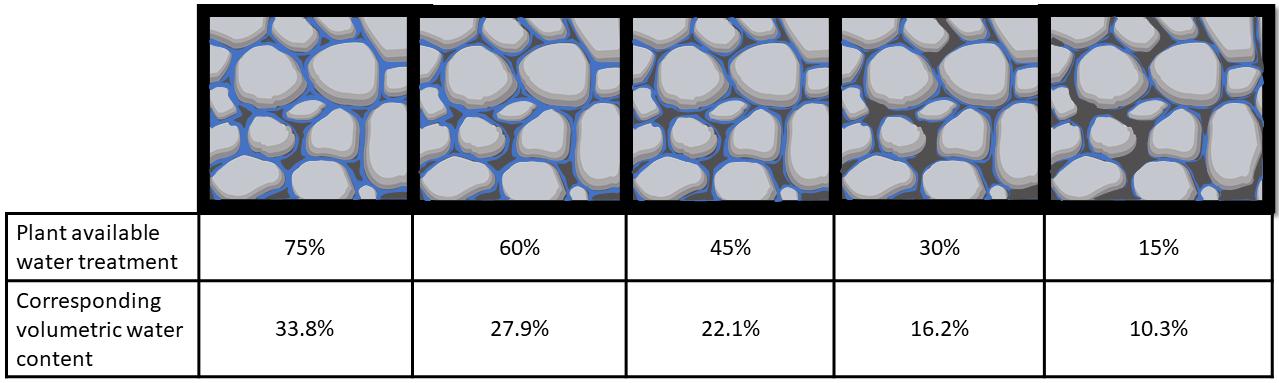
irrigated individual plots based on five PAW levels: 15, 30, 45, 60, and 75% PAW (Figure 4). Through soil characterization, we were able to determine the VWC corresponding to each PAW level. In addition to the measured turfgrass responses listed for Phase I, surface firmness was measured. Over the period of three months, moisture levels were checked daily. Once plots reached their specific PAW threshold, they underwent surface firmness and photochemical efficiency measurements, followed by 0.25-inch depth watering. After one summer of data collection, we observed
significant differences between threshold treatments for water applied, green canopy cover, and surface firmness (Table 2). Lower PAW thresholds resulted in less water use. When it came to green canopy cover, creeping bentgrass seemed to be more sensitive to different moisture thresholds than Kentucky bluegrass. Another preliminary result was that a moisture threshold of 45% PAW resulted in less water use than the 60 and 75% PAW threshold treatments but produced similar green canopy cover and surface firmness. We will spend the summer of 2023 repeating Phase II to get a
55
clearer idea of appropriate PAW thresholds for fairway turf.
Precision irrigation will continue to be a hot topic in the golf course industry. Using thresholdbased irrigation management has the potential for reducing guesswork and creating desirable playing conditions, all while conserving water. If we have a clearer idea of appropriate PAW thresholds for different turfgrass species/cultivar/systems, we may be able to use those as guidelines or starting points across numerous soil types. We would like to thank the United States Golf Association, the Minnesota Golf Course Superintendents Association,
and The Toro Company for supporting this research.
References
Cardenas-Lailhacar, B., & Dukes, M. D. (2010). Precision of soil moisture sensor irrigation controllers under field conditions. Agricultural Water Management, 97(5), 666–672. https://doi.org/10.1016/j. agwat.2009.12.009
Dyer, D. W., Bremer, D. J., Patrignani, A., Fry, J. D., & Hoyle, J. A. (2019, November 12). Integrating canopy dynamics, soil moisture, and soil physical property data to improve irrigation scheduling in turfgrasses. Presented at the ASA, CSSA and SSSA
Figure 4. Soil pore concept of the five plant available water treatments and their corresponding percent volumetric water content based on soil water retention curves of the research site.
56
International Annual Meetings (2019). Retrieved from https://scisoc. confex.com/scisoc/2019am/meetingapp.cgi/Paper/120658
Espevig, T., & Aamlid, T. S. (2012). Effects of root zone composition and irrigation regime on performance of velvet bentgrass putting greens. II. Thatch, root development and playability. Acta Agriculturae Scandinavica, Section B — Soil & Plant Science, 62(sup1), 106–112. https://doi.org/10.1080/09064710.2012.681057
Fu, J., & Dernoeden, P. H. (2009). Creeping bentgrass putting green turf responses to two summer irrigation practices: Rooting and soil temperature. Crop Science, 49(3), 1063–1070. https://doi.org/10.2135/cropsci2008.06.0312
Fu, J., Fry, J., & Huang, B. (2007). Tall fescue rooting as affected by deficit irrigation. HortScience, 42(3), 688–691. https://doi.org/10.21273/HORTSCI.42.3.688
Straw, C., Friell, J., & Horgan, B. (2019, November). Precision irrigation for golf courses using sensor and mapping technologies. Presented at the ASA, CSSA and SSSA International Annual Meetings, San Antonio, TX.
Serena, M., Velasco-Cruz, C., Friell, J., Schiavon, M., Sevostianova, E., Beck, L., … Leinauer, B. (2020). Irrigation scheduling technologies reduce water use and maintain turfgrass quality. Agronomy Journal 112(5): 3456-3469. https://doi.org/10.1002/agj2.20246
Woods, M. (2013, June 2). For irrigation, which is better? Deep and infrequent, or light and frequent? Retrieved May 29, 2020, from Viridescent—The Asian Turfgrass Center blog website: https:// www.blog.asianturfgrass.com/2013/06/deep-and-infrequentor-light-and-frequent-irrigation-which-is-better.html
Follow the UMN Turf Blog for project updates!
57
From the High Grass
By: Chris Aumock
As we head into another holiday season, and a new year for ourselves and our facilities, now is a great time to discuss some of the changes coming to the MGCSA. Over the last year, your Board of Directors (BOD) and myself have been discussing the future of our association. Through those conversations we have decided to make a few changes for the immediate future and continue to assess our overall operations.

The pillars of the MGCSA will remain similar, those being Education, Research, and Advocacy. The Member Needs Survey we asked you to complete this year reiterated the importance of these areas. Of course, not everyone has the same opinion, but overall responses indicated these are still important pillars for most of the membership. Speaking of the survey, results are being aggregated and will be shared
with the membership soon. We had 161 of you take the survey this year, which equals about 27% of the membership. Those numbers are quite impressive for a survey response, although I selfishly would have liked to see more so we could even further gauge the needs and wants of the membership!
During this first year in my tenure as your Executive Director, we have had many conversations about our reserve funds and how to use them. We are very fortunate to have the opportunity to have this conversation. The BOD has identified a few areas that we wish to utilize some of these funds, which I will briefly discuss below. Overall though, the BOD has adopted a Reserve Fund Policy to ensure proper and sustainable use of these
58
additional funds. This fund will carry a minimum threshold to maintain operation of the association if unexpected or unforeseen circumstances were to arise again. This policy is rather standard procedure for associations, and we are fortunate to be in such good standing.
How will we use the funds in the short term? The most notable use will be member event subsidies. We have heard that events are often more expensive than some deem reasonable, and as we plan and account for the costs of future events, the registration fee will be a top consideration. Some recent events have already seen a reduction in cost. One specific event that will change is the National Hospitality Night, this year at the Rosen Plaza Hotel Pool Deck in Orlando. This event will be supported by affiliate sponsorship dollars only and will no longer have an individual registration fee for any class member.
Another event that will see changes is The MGCSA Championship. In an effort to
grow this event, it will become a “prize event” in 2023. Meaning, individuals will be able to earn entry into it. The biggest inclusion in this will be Don White Match Play participants. If you register for the Don White, your two-some is automatically eligible for the Championship. There will still be an individual stroke play tournament available, but the larger Championship event will be a two-man team format. The winning teams from the summer Exposure Golf Events will also earn entry into the Championship. MGCSA will be subsidizing portions of this event to encourage further participation. As for the Don White, we hope to grow that event further and would love to get more teams engaged. Registration and information will come out early next year, so start picking your partners now and don’t miss out on this premier event!
Another area that we hope to utilize additional funding is with an updated Turf Scholarship program. In recent years, participation in the Great Lakes School of Turfgrass Science has
59
been reimbursed by the MGCSA for applicants. Our goal is to make funds more accessible to your staff members who are entering this or similar programs. Funds will be easily requested to hopefully encourage more participation. Students entering traditional degree programs for turf education will also have the opportunity to receive funding from the MGCSA. Encouraging participation in turf education is an essential objective for our future, and this BOD has begun these efforts to better support golf facilities that have staff members wanting to engage in turf education.
Aside from the financial discussion above, one other large change will be to Hole Notes. The goal is to make this a more valuable tool for all the members, by improving the quality of the publication. Over the last few years, participation with article submissions has dwindled, and it is difficult to create enough content for each issue. With that in mind, we will be reducing the number of issues from 10, to 6. It will become a bi-monthly magazine
beginning this February. I know some of you will be disappointed in that, but the reality is, it is because the membership didn’t participate enough with articles, stories, or even just pictures, and it’s difficult to sustain a certain level of quality without regular member support. So now, the goal will be to make each issue that we do produce even better. That will rely on you, and I will be more aggressive in soliciting your stories.
The effort to improve the quality also includes improving access and ways to engage. This year we will be introducing an audio format for those who want to listen on the go. To begin with, it will be audiobook/podcast type format, and we’ll see how it can adapt and progress moving forward. We have often heard that people don’t have time to sit down and read the magazine, so this is an effort to eliminate that restriction to the material. Also, this will help us test out audio formats to determine if this is a growth opportunity for the MGCSA.
Earlier in this issue, you saw the
60
BOD candidates for 2023. Thank you to all the candidates for their willingness to engage and volunteer their time. Board duty is open to all Class A, B, C, and Affiliate members. It is vital that we have individuals with different perspectives and experiences supporting our board positions, and I appreciate all of those who have, who are, and those who will serve in the coming years.
Throughout any time of change, the most important aspect of a successful association remains as being membership engagement. All our efforts to support you are in vain if you, the members, don’t participate. Our focus going forward is centered around the membership and working
to ensure there is a value and purpose to your engagement. Change will not be overnight, but we are working to reinvigorate ideas, try out news ones, and will not be afraid to cast aside those that no longer serve the needs of this association. This first year for me has been a process of experiencing our events in their current formats. Now, having gone through most of them, we are discussing their viability and potential future improvements. There has not been one event where I didn’t walk away with something that could be improved. We will continue moving forward to make these events, and this association, a more valuable experience for all our members.
61
MGCSA NEW MEMBERS - Nov./Dec. 2022 Brady Nolan Class C Spring Hill Golf Club Derek Chicos Affiilate C5 Stone/Plaisteds. Jay Gustafson Facility LongBow Golf Club Jack Johnson Affiliate Plaisteds Adam Kelvington Student Olympic Hills Golf Club Josh Eykyn Affiliate Hartman Companies Jon Trappe Educator UMN Extension Sullivan Schermerhorn Class C Interlachen Country Club