Matchmaking
Mexico’s leading B2B conference organizer uses a customized app to deliver an unparalleled experience
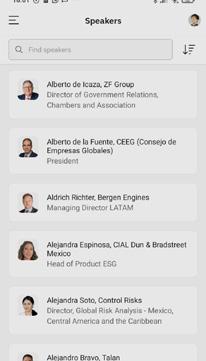
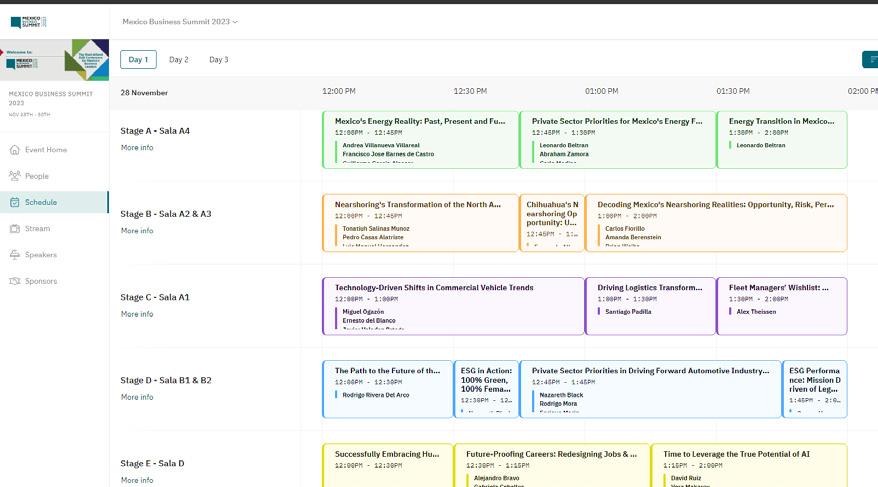
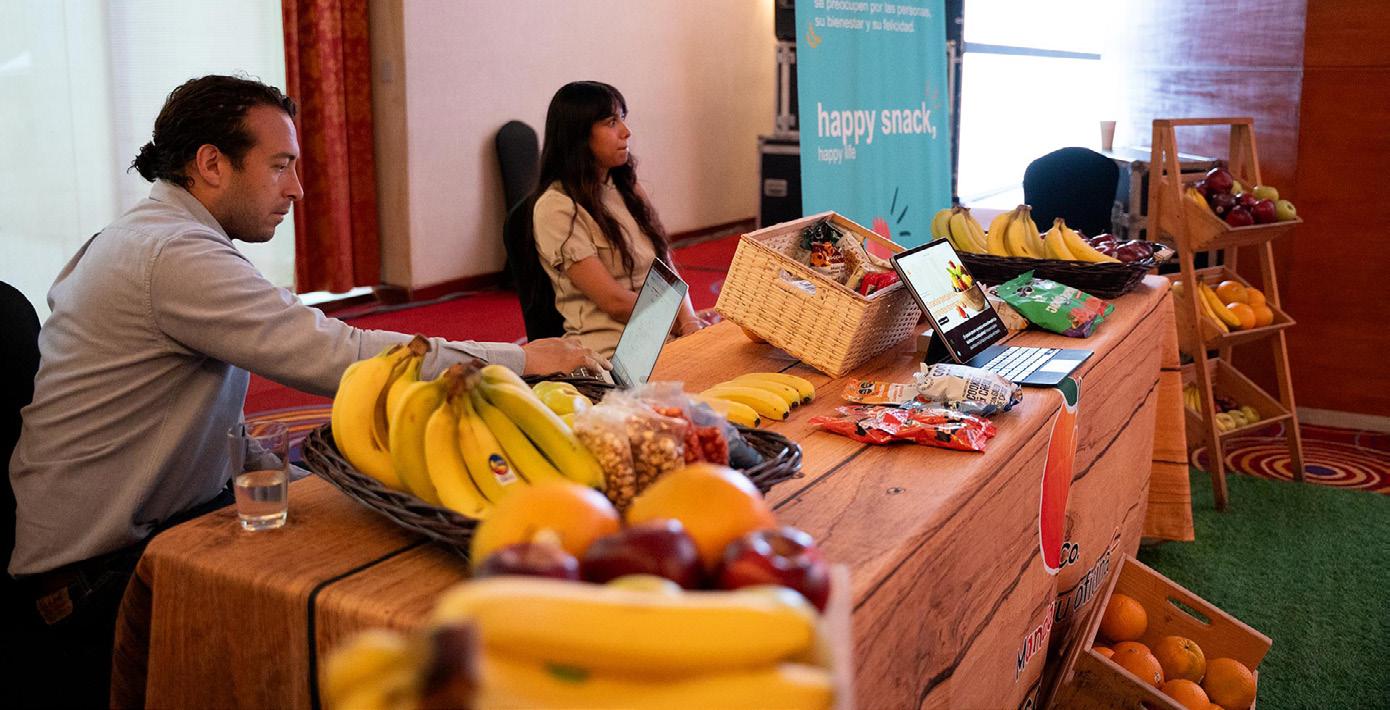
The MBE App delivered AI-powered intent-based matchmaking to Mexico Water Forum 2026 attendees
MBE App Impact
122 participants
343 matchmaking communications
85 1:1 meetings conducted Matchmaking intentions
Total 1,301 1,301 Networking
• Echeverria Asociados
• ACCIO NA ENERGÍA
• Agua Capital
• Alianza Team
• ALS Consultoría
• Ambición00
• AMHPAC
• Asociacion de Negocios e Industria Verde A.C.
• Asociación Nacional de Empresas de Agua y Saneamiento (ANEAS)
• Autodesk
• Ayesa
• B2V Media
• BANCO MONEX
• Bayer Crop Science
• B BVA México
• Becerril, Coca & Becerril
• Black & Veatch
• B N Americas
• Bray Valvulas de Mexico
• Business France
• Cámara Verde LATAM
• Camimex
• Carbonof
• Casa Llena
• CEDES Sonora
• Class
• CMM
• Cobra IH / TEDAGUA (Grupo Cobra)
• Cognitus IT Solutions
• Colegio Mexicano de Ingenieros en Irrigación (Comeii)
• Columbia University
• COMISION ESTATAL DE AGUAS Y SANEAMIENTO D E COAHUILA
• Comisión Nacional del Agua
• CONAGUA
• CONCRETOS SUSTENTABLES MEXICANOS SA DE CV
• Consejo Consultativo del Agua
• Coppel
• Corporación Hidro Industrial
• Countr y Managers
• Cox
• Daikin Latin American Division
• Driscoll's
• Dubai Chambers Mexico
• Dutch Clean Tech
• Ecolab
• Econova
• EcoVadis
• Embajada del Reino de los Paises Bajos
• Embassy of The N etherlands
• Endress+Hauser México
• ERM MEXICO
• FBV INC.
• Fiber Glass Systems - Golden Energy de Mexico
• Garrigues
• GIZ - German Technical Cooperation
• Gloria Ponce de León & Hernandez (GP&H)
• Gobierno del Estado de Veracruz
• Grupo Financiero Banorte
• GRUPO INDERS
• GRU PO MURLOTA
• Grupo Presidente
• Grupo Rotoplas
• Grupo U
• HEINEKEN MEXICO
• HERMES INFRAESTRUCTURA
• Holland House Mexico
• ICA
• IGSA
• IKEA México (IKANO Retail México)
• INSTITUTO DE DESARROLLO ACUICOLA DE BAJA CALIFORNIA
• Instituto Mexicano de Sostenibilidad e Ingeniería Ambiental
• International SOS
• Ion Specialites
• IPS
• JWA
• Kiewit
• Kilimo
• KOTRA
• KPMG
• KPMG Cárdenas Dosal, S.C.
• Lake Texcoco Ecological Park
• Latin American Green Chamber of Commerce
• MARCOL
• MexBeb
• Michelin
• Mitsui de México
• MONEX
• Mujeres WIM de México
• Myzelio
• NADER HAYAUX & GOEBEL
• Nader, Hayaux & Goebel
• NANOXPHARMA
• Nestlé
• Neuma
• NOROC S de RL
• NOTIPRESS
• Ontario Office in Mexico
• Orbia
• Organismo de Agua y Saneamiento de Toluca
• ORU - Oficina de Resiliencia Urbana
• PALO IT
• Phillip Morris
• PMI
• PONTONES & LEDESMA
• Portela
• Pura
• Québec Government Office in Mexico
• Registro Medición y Monitoreo
• Ritch Mueller
• ROCAL
• Rotoplas
• SAMSON CONTROL
• Secretaría de Economía
• Secretaria de Medio Ambiente y Recursos Naturales de Hidalgo
• Servicios Administrativos Peñoles
• Siemens Energy
• SIGEA
• SINDA
• South Pole
• Sr. Consultant Water & Land Stewardship
• Summum Projects México S.de RL de CV
• TeraBites
• Texas Europea Chamber Of Commerce
• The Coastal Trust
• Ticket for Change / Nosotrxs
• Toroto
• Tuto Power
• UG21
• UN Environment Programme
• Veolia Mexico
• Viwala
• Water Security Center - UNESCO
• WIM MEXICO
• WTS Energy México
WEDNESD AY, MAY 20
08:30 NATIONAL AGREEMENT FOR THE HUMAN RIGHT TO WATER AND SUSTAINABILITY
Speaker: Luis Huacuja, CONAGUA
09:20 PARCHED PLANET: WHY THE TIME FOR WATER ACTION IS NOW
Moderator: Enrique Lendo, UN Environment Programme
Panelists: Francisco Núñez, Ministry of Economy
Eduardo Vázquez, Agua Capital
Denis Reboul, Veolia en Mexico
Andre Driessen, Embassy of the Netherlands
10:15 REDEFINING WATER GOVERNANCE: A COLLECTIVE PATH TO RESILIENCE
Moderator: Jorge Arriaga, Water Security Center under the auspices of UNESCO
Panelists: Valeria Bustamante, Pontones & Ledesma
Irvin de la Cruz, Philip Morris Mexico
12:00 WITHOUT WATER, THERE IS NO INDUSTRY: WHY CIRCULARITY IS THE ONLY WAY
Speaker: Bernardo Villasuso, Ecolab Mexico
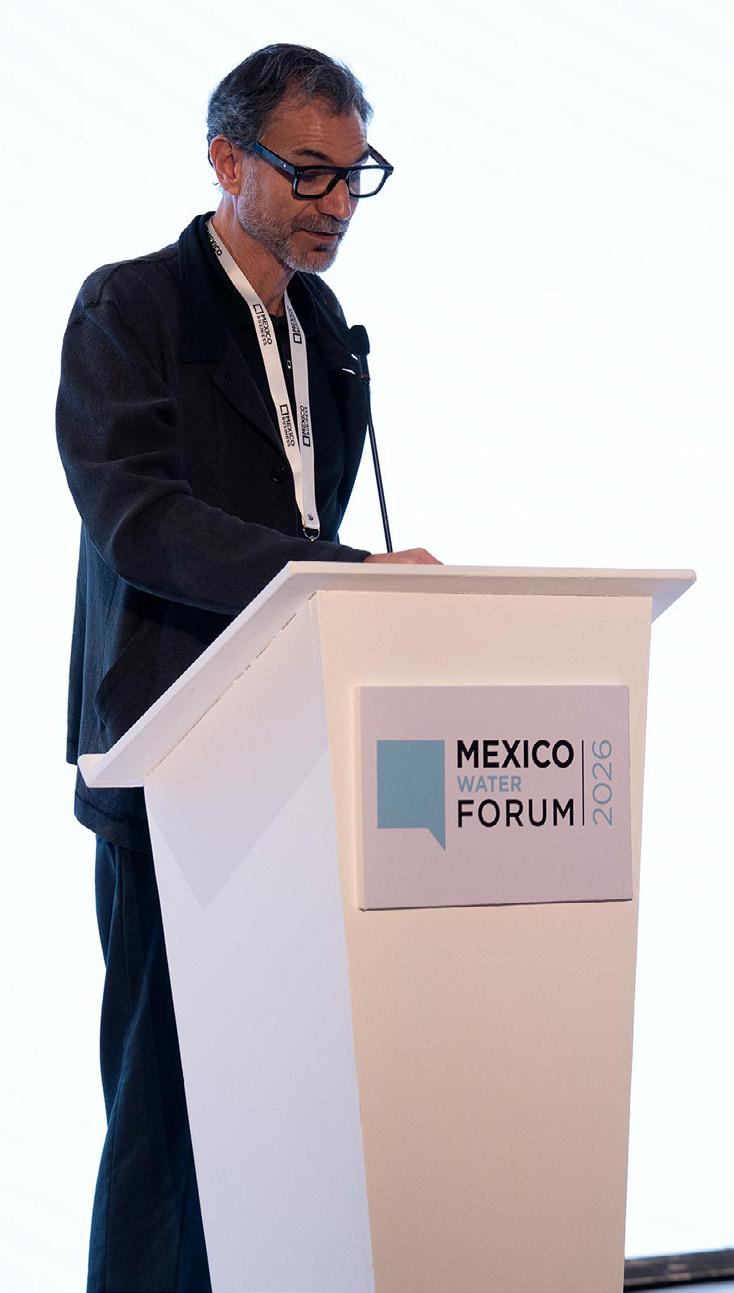
12:15 SOFT INFRASTRUCTURE: A GARDENER’S LOGIC IN THE LAKE TEXCOCO ECOLOGICAL PARK
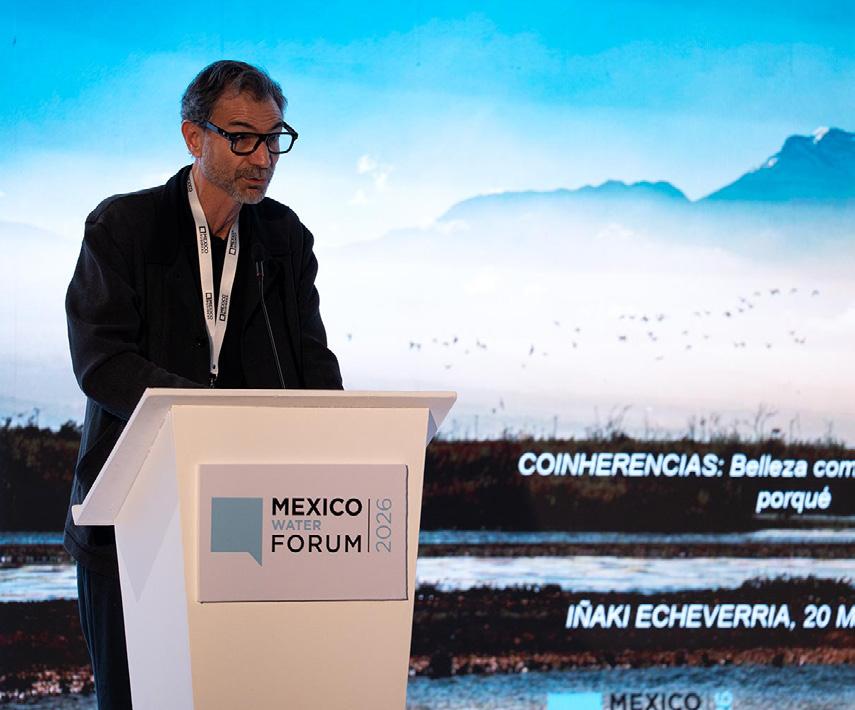
Speaker: Iñaki Echeverría, Lake Texcoco Ecological Park
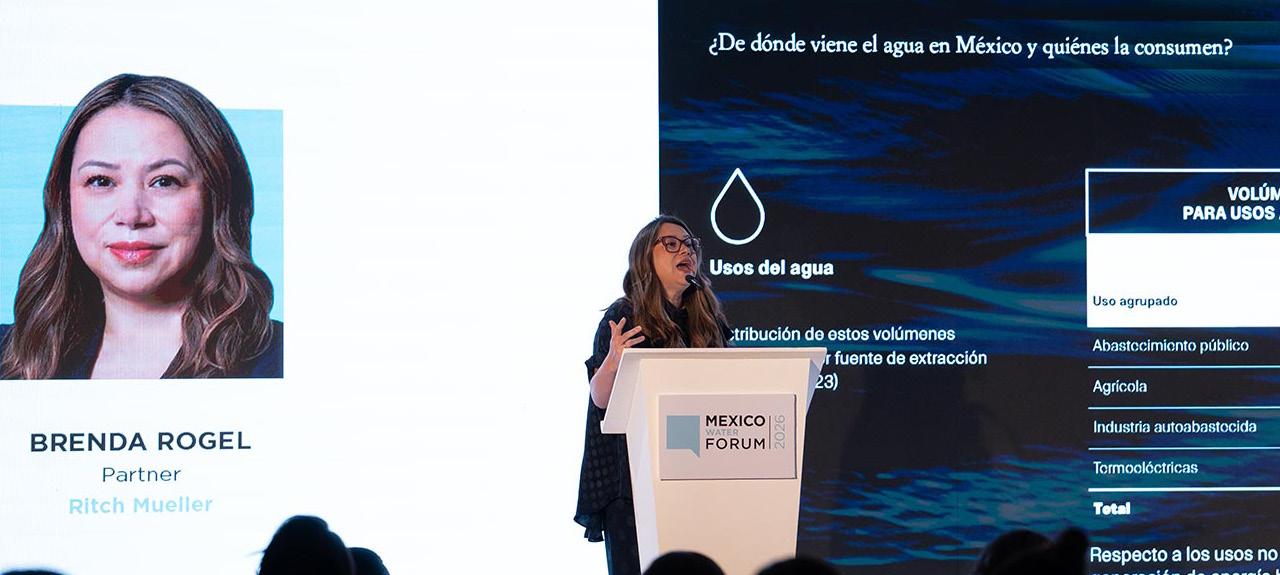
12:30 WATER CIRCULARITY IN MEXICO: THE REGULATORY TIPPING POINT
Speaker: Brenda Rogel, Ritch Mueller
12:45 BUSINESS FOR WATER: BALANCING OPPORTUNITY AND ACCOUNTABILITY
Moderator: Vicente Rodríguez, MexBeb
Panelists: Inti Pérez, HEINEKEN Mexico
Luis Hernández, Niagara Bottling
Maria Elena Giner, Black & Veatch
Juan Pablo Rodríguez, Rotoplas Servicios de Agua
Miguel Medina, Nestlé Mexico
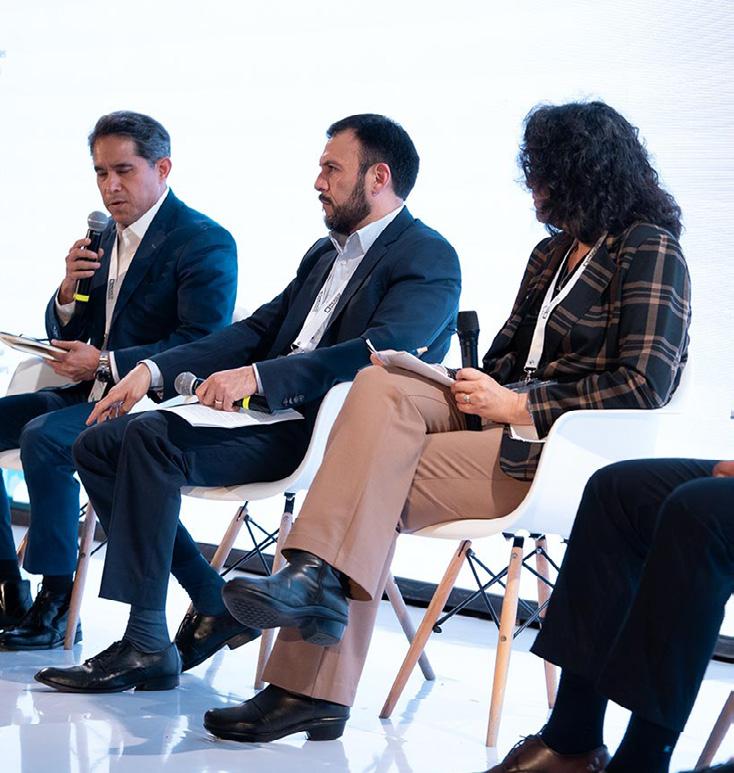
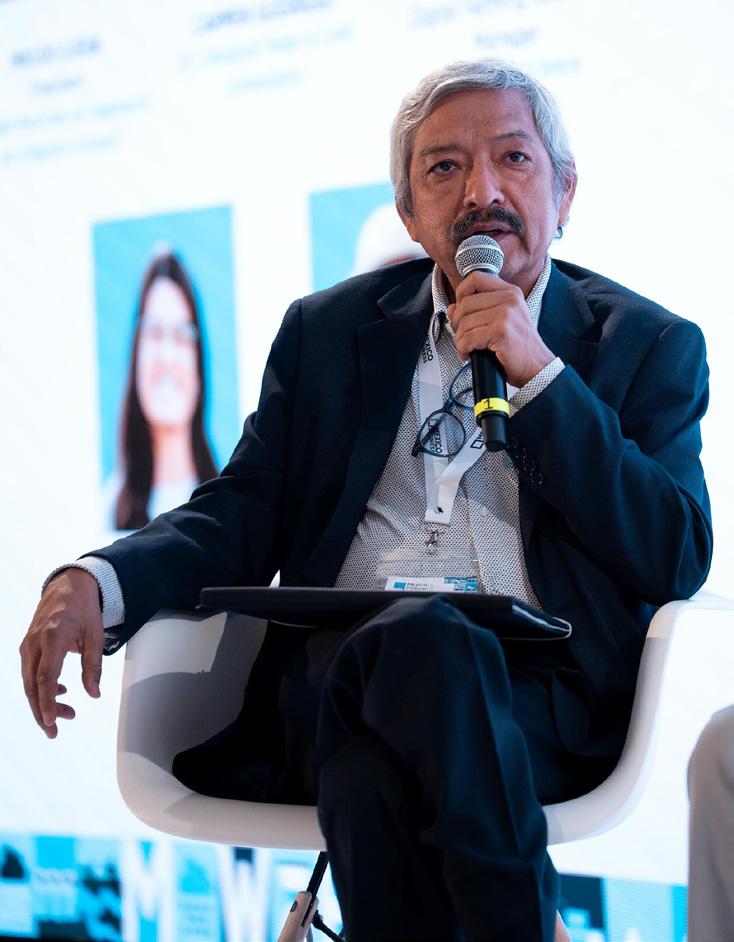
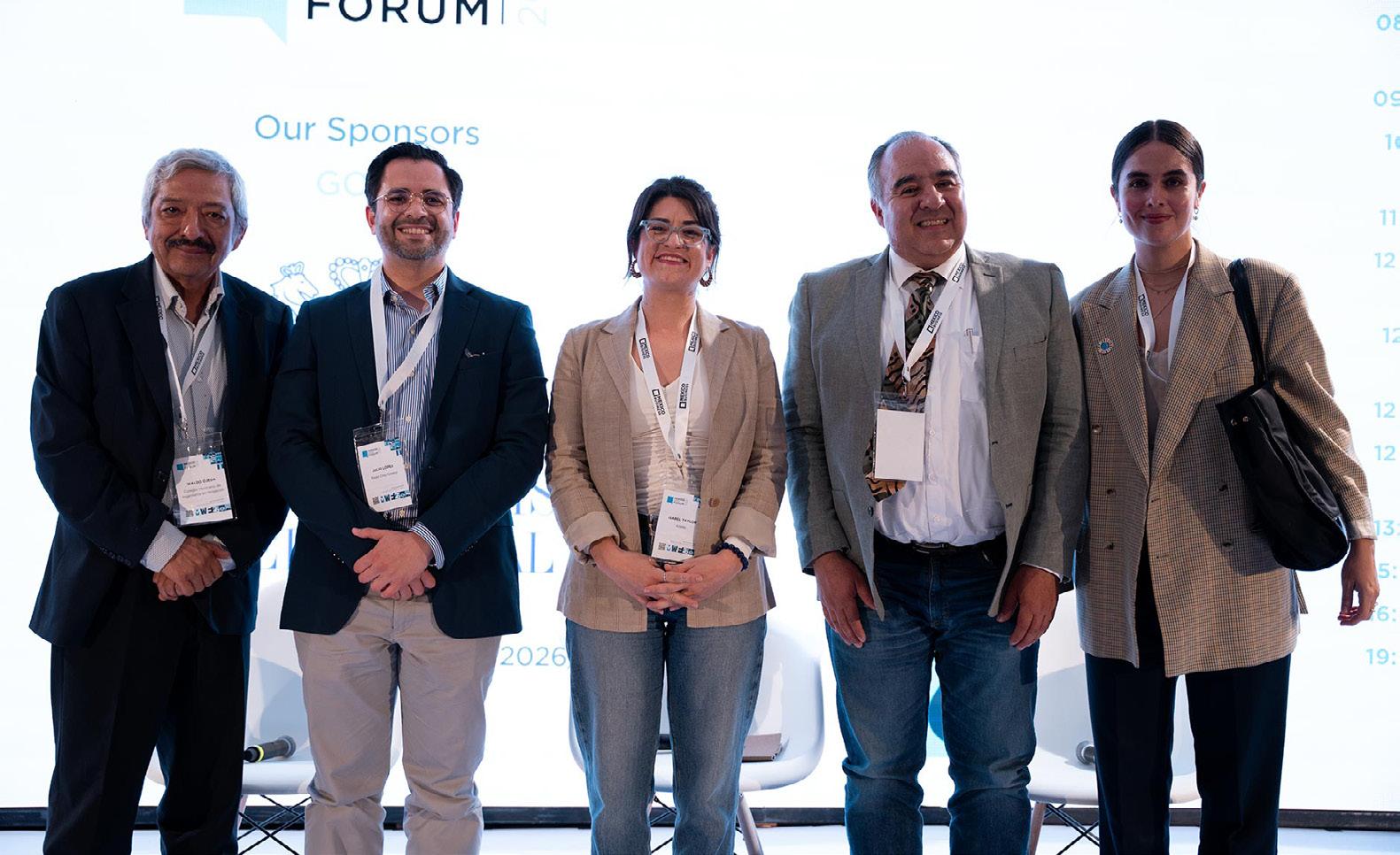
15:00 SHAPING AGRICULTURE’S FUTURE, ONE DROP AT A TIME
Moderator: Carmen Guerrero, Sr Consultant Water & Land Stewardship
Panelists: Waldo Ojeda, Colegio Mexicano de Ingenieros en Irrigación (Comeii)
Julio López, Bayer Crop Science
Esteban Macias, Grupo U
Isabel Taylor, Kilimo
NATIONAL AGREEMENT FOR THE HUMAN RIGHT TO WATER, SUSTAINABILITY
Facing a water-stressed environment and deteriorating climate conditions, CONAGUA is accelerating the execution of the National Agreement for the Human Right to Water and Sustainability. This federal strategy coordinates regulatory overhauls, infrastructure modernization, and environmental remediation projects projected through 2030 to ensure water security for the population.
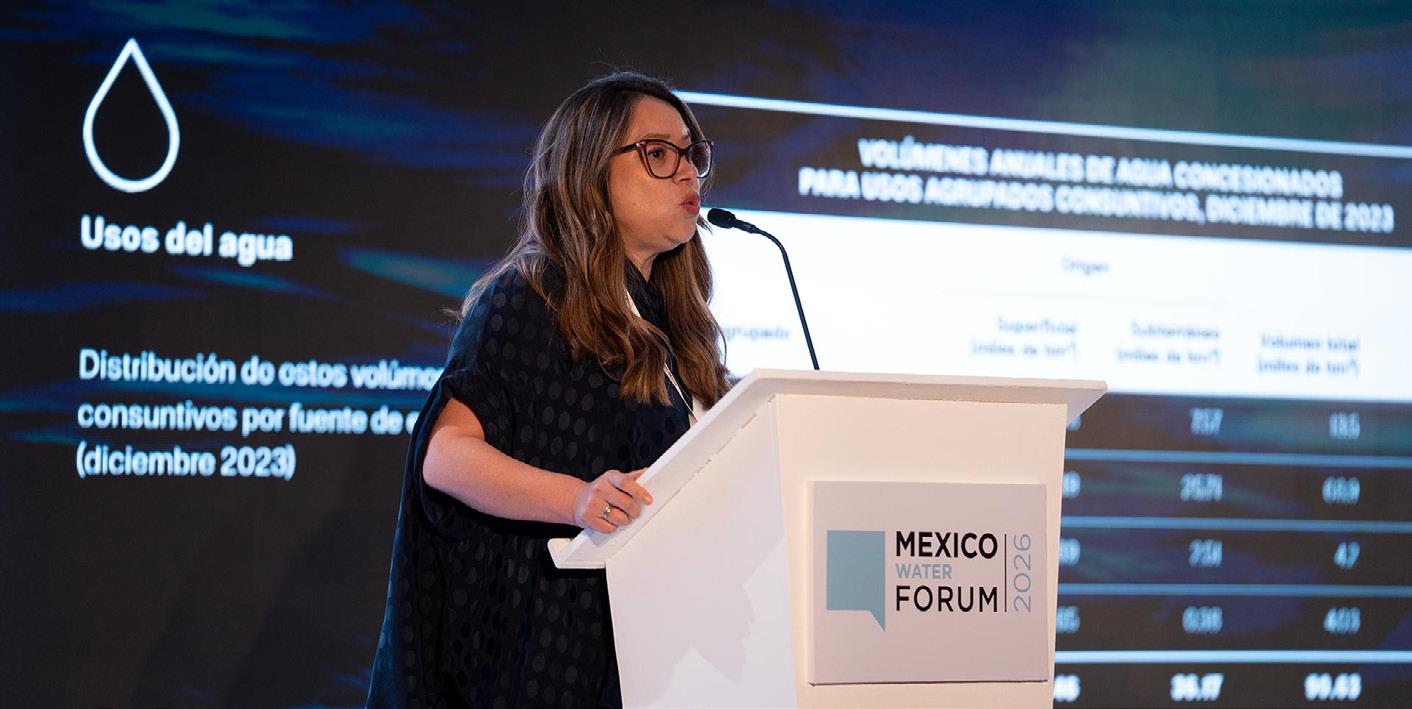
Water distribution in Mexico places the agricultural sector as the primary consumer, accounting for 76% of national extractions. Public-urban use accounts for 15%, while industrial operations and energy generation consume the remaining 9%. Luis Antonio Huacuja, Head of Office for the Coordination of the National Agreement for the Human Right to Water, CONAGUA, explained that the federal framework operates across four primary mandates: mitigating climate impact, establishing resource sovereignty, ensuring equitable water access, and enforcing transparent management.
Huacuja explained that a central component of this strategy involves restructuring water concessions to address severe administrative backlogs, which previously left 145,000 procedures stalled due to incompatible digital tracking systems and unreliable
databases. Under a national inspection initiative, regulators have conducted 3,912 audit visits, resulting in 490 closures and suspensions of unauthorized extraction sites.
To streamline administrative bottlenecks, the implementation of a Unified Digital Window has reached a 90% completion rate. This digitization process began with groundwater and surface water permits, extensions, and modifications, aiming to automate 100% of CONAGUA’s administrative workflows. “Digitalization and modernization provide public administration with better tools to create more efficient and, crucially, more transparent processes,” Huacuja stressed
Parallel to this digital transition, the federal Facilities Decree aims to regularize 63,000 water titles. This measure is designed to provide legal certainty to small and medium-sized agricultural producers, facilitating their access to public subsidies and commercial credit.
Federal tracking indicates that voluntary volume relinquishments, industrial optimization agreements, regulatory penalties, and the reorganization of concessions have successfully reclaimed 4,475 million m 3 of water. This recovered volume will be redirected to bolster public-urban supply networks, authorities say.
What Are the Main Features of the National Program for Irrigation Technification?
In the agricultural sector, the National Program for Irrigation Technification outlined an investment surpassing MX$63 billion (US$3.6 billion) between 2025 and 2030. The target is to modernize more than 200,000ha across 18 irrigation districts. Notable intervention zones include Rio Colorado, Delicias, Valle del Yaqui, Rio Fuerte, CuliacanHumaya, Alto Rio Lerma, and Bajo Rio Bravo. These infrastructure works are projected to benefit 225,000 users and recover 2,800 million m3 of water.
“Irrigation technology is one of the most critical areas because it directly impacts water efficiency. The right technology yields favorable outcomes for both people and the agrifood industry,” Huacuja said, noting that international experiences such as Spain’s and The Netherlands’ are key to gathering previous knowledge and serve as important references for how a country can achieve successful results.
For the 2026 fiscal period, the government set a budget of MX$4 billion for the ecological restoration and sanitation of the Tula, Atoyac, and Lerma-Santiago river basins. This funding is part of a broader public portfolio comprising 37 strategic infrastructure projects distributed across all 32 Mexican states, representing a total multi-year public investment of MX$186.6 million and the projected creation of more than 65,000 jobs.
Successful Public-Private Projects
The national framework also relies on public-private alignment, leveraging coinvestment models with corporations to execute environmental responsibility projects in critical watersheds. This mechanism has registered MX$21 billion in cumulative private investment. “Through technological innovation, we are seeing joint projects with companies and institutes. In fact, there has been no need to seek out companies; they are the ones reaching out to be part
of this agreement. Even the embassies of several countries have approached us,” Huacuja added.
Among the specific initiatives executed under this shared-cost architecture, the ecological restoration of the Lerma Wetlands involved a MX$5 million investment alongside Envases Universales and Pro Natura to protect the habitat of the endangered Yellowthroat bird. “Efforts in water management have a multiplier effect, benefiting not only humans but also endemic species,” he added.
Similarly, a sanitation program in Guanajuato managed in coordination with Michelin resulted in the extraction of approximately 2,000 discarded tires from riverbanks for industrial recycling. In Morelos, a partnership with Rotoplas deployed MX$1 million to install advanced irrigation systems in the community of El Naranjo.
A joint initiative with Comex directed MX$3 million toward painting 28 community murals and hosting 10 educational workshops to address sanitation challenges in the Atoyac River basin. Finally, Heineken Mexico allocated MX$16 million to a water balancing and replenishment project in the Colorado River Delta basin, focusing on community apiculture and habitat revegetation. “Concern over water issues is real and urgent; involving diverse stakeholders is vital, and that is why we see the private sector a crucial ally for the government,” Huacuja concluded.
PARCHED PLANET: WHY THE TIME FOR WATER ACT ION IS NOW
While recent tropical cyclone seasons have brought temporary, localized relief to reservoirs, long-term climate modeling indicates that structural water scarcity remains a primary risk factor for operations in Mexico. As Enrique Lendo, Coordinator of Mexico’s Projects Portfolio, UN Environment Programme, warned: “Mexico is registered as the country with the highest temperature increase over the last three decades. In some zones, we are going to experience 3-4°C more within the next 20 years. The urgency could not be greater.”
Industrial leaders and policymakers are shifting away from reactive measures toward internationally proven water-efficiency technologies and structured co-investment models to insulate critical supply chains from hydrological volatility without sacrificing productive capacity.
Projections from meteorological authorities indicate a clear trend toward regional rainfall volatility and prolonged periods of high thermal stress. Eduardo Vázquez, Executive Director, Agua Capital, framed the stakes:
“The droughts of 2023 in the north, and the water crisis in the Valley of Mexico in 2024, are alerts showing we must take different measures. We need an approach focused on adaptation, not just reacting after the damage is already done.”
Compounding these climate pressures, the federal government elevated water to the status of a national security priority through the 2024–2030 National Water Plan, derived from Plan México and the 2025–2030 National Development Plan, making access to the resource a state priority. However, the Mexican water system simultaneously faces the consequences of a decade of underinvestment that reduced the operational capacity of the national infrastructure.
A severe baseline contraction underscores this systemic underfunding: public spending through CONAGUA dropped from 0.26% of GDP in 2013 to just 0.12% by 2020, stagnating at approximately 0.1% over recent fiscal cycles, according to the Center for Research in Economics and Budgeting (CIEP). The federal administration’s current six-year capital injection of US$186.6 billion (US$10.7 billion) scales to an average annual public investment of only 0.08% of GDP. This is markedly below the 1.3% of GDP recommended by the Economic Commission for Latin America and the Caribbean (ECLAC) to ensure systemic water security.
This environmental shift directly impacts capital allocation, supply chain resilience, and facility location strategy across major
economic zones. The core challenge is geographic asymmetry; the northern, central, and northwestern regions contain the majority of Mexico’s industrial clusters and population, yet they hold only a small fraction of the country’s renewable water resources.
Data from CIEP indicates that 13.7% of the nation’s hydrological basins have reached critical availability thresholds, with states like Baja California, Chihuahua, Aguascalientes, and Zacatecas experiencing the highest levels of hydrological stress. Lendo reinforced the depth of the crisis: “70% of Mexico’s territory is already in aquifer depletion, and the country recycles only 6% of its water, and that comes almost entirely from companies. The way we are managing water in Mexico has always mattered, but today more than ever.”
Facing these changes in rainfall patterns and extreme weather, implementing robust sustainability strategies across agriculture, industry, and urban areas has become an operational necessity to ensure long-term resilience. Consequently, water availability has evolved from a basic utility consideration into a primary macroeconomic variable for nearshoring manufacturing, corporate risk management, and long-term business continuity.
Technological Paths to Industrial, Agricultural Efficiency
Addressing these hydrologic imbalances requires a comprehensive upgrade in water efficiency across the primary consumption sectors, led by agriculture, public supply, and
self-supplied industry. In the agricultural sector, which accounts for over 70% of concessioned volumes, significant quantities are lost due to obsolete distribution infrastructure and lacking technification in surface irrigation. Data from the International Fresh Produce Association (IFPA) indicates that only 30% of agricultural operations use technified irrigation systems. To safeguard supply chains and commodity output, operators must shift toward precision irrigation systems, such as automated drip and micro-sprinkler frameworks, alongside datadriven satellite imagery to monitor precise soil moisture levels.
“Mexico is registered as the country with the highest temperature increase over the last three decades. In some zones, we are going to experience 3-4°C more within the next 20 years. The urgency could not be greater.”
Enrique
Lendo
Coordinator
of Mexico’s Projects Portfolio | UN Environment Programme
Is Mexico Prepared for the Upcoming Water Challenges?
Evaluating Mexico’s readiness for its escalating hydrological constraints reveals a sharp divide between strategic policy design and physical, financial execution. On paper, the structural shift under the 2024–2030 National Water Plan establishes a clear framework by treating water access as a matter of national security and prioritizing the restoration of overexploited basins.
André Driessen, Ambassador of the Embassy of the Netherlands, pointed to an internationally tested model worth adopting: “Our new philosophy over the last 10 to 15 years has been to create space inside the country to retain water within our territory rather than letting it drain to the sea. Mexico could replicate this system, storing water during rains to have it available during drought.”
Francisco Núñez Escudero, Responsible Official for the Water Sector, Ministry of Economy, challenged a common misconception about who drives this progress: “We always say that industry and the private sector are the bad guys stealing water, but when you look at the data, the sectors doing the most for water are precisely the industries, because they operate under circular economy principles.”
For the industrial sector, particularly waterintensive manufacturing like automotive parts, electronics, and heavy industry, efficiency is moving toward zero-liquid discharge (ZLD) architectures. Companies are increasingly integrating high-recovery reverse osmosis systems, advanced evaporators, and crystallizers within their facilities to eliminate effluent discharge. Industrial operations decouple their production volumes from municipal grid dependence and stabilize operational costs when they implement these closed-loop treatment frameworks and process water reuse architectures.
However, translating intent into operational resilience faces severe bottlenecks due to constant investment deficits. Denis Reboul, CEO, Veolia México, put the infrastructure gap in stark terms: “60% of water is lost to leaks, it is a serious problem. The effort has to cover every step of the chain: recycle, reuse, but also charge appropriately and fix the leaks. A city needs good networks for drinking water, wastewater, reuse, and stormwater, and all of that requires investment.” The ongoing capital shortfall leaves municipal water boards structurally unequipped to repair rapidly deteriorating distribution grids, which currently lose a critical share of their volume to leakages before reaching domestic or industrial end-users.
The country’s immediate preparedness relies heavily on decentralized, private-sector initiatives and targeted public-private coinvestments rather than centralized public works alone. As Núñez concluded: “The key is continuous action, that is what is missing. We want to take steps, but doing something once is not enough. And we need to start by speaking the truth about where we really stand.”
REDEFINING WATER GOVERNANCE: A COLLECTIVE PATH TO RESILIENCE
When it comes to managing critical resources like water, the lack of information, low participation, scarcity of financing, and legal uncertainty turn collaborative governance processes into a titanic, if not impossible, task. However, universal access to water as a human right compels, or seeks to compel, all stakeholders—from the private sector and government to academia and civil society—to stop viewing the resource as an asset directly related to productivity.
“We
cannot leave the work only to the law; we must work with the government and companies to achieve access for communities. It is not just having access; it is considering maintenance and continuity. The Water Law contains very good intentions, but it lacks greater regulation.”
Valeria Bustamante Partner | Pontones & Ledesma
multi-faceted. “Mexico does not only face a water crisis, but many simultaneous crises. They are not just problems of availability and quality, but of governance,” Arriaga stated.
To address these overlaps, the National Water Plan is built upon five strategic points:
+ Strengthening of governance and transparency.
+ Guaranteeing the human right to water and sanitation.
+ Efficient and sustainable use of water.
+ Integral management of basins and protection of rivers.
+ Resilience in the face of climate change.
The operationalization of the 2024–2030 National Water Plan marks a fundamental shift in Mexico’s regulatory environment. This framework moves away from fragmented concession management toward a centralized model that treats water access as a matter of state sovereignty and national security. This evolving structure places public interest, ecological remediation, and strict state oversight at the center of resource management. For industrial, agricultural, and municipal sectors, navigating this transition requires understanding that the state is actively reclaiming the direct administration of hydrological resources through the newly established National Water Register for WellBeing (RENAB).
Five Pillars of Water Security
Jorge Arriaga, Executive Coordinator, Water Security Center under the auspices of UNESCO, notes that the current situation is
Arriaga emphasized that the complexity of these points necessitates a collaborative approach. “The challenges are very significant; the government cannot do it alone. When we talk about water, we are not just talking about potable water, but also sanitation and other issues,” he explained. While he acknowledges the plan’s utility, he highlighted a gap in current legislation: “The water plan does define a course, but the regulation of how we will follow that path is missing.”
Legal Certainty and the Regulatory Shift
A major regulatory hurdle under this framework involves the federal administration’s systematic review of existing concession titles to identify unutilized volumes and return them to the national availability pool. While designed to correct historical overexploitation, this policy introduces a new layer of asset vulnerability for self-supplied industries.
“Water should never have been a commodity nor treated as an asset of the industry or agents that carry out its use. Establishing access to water as a constitutional right will allow for the generation of awareness regarding the prioritization of the resource,” said Valeria Bustamante, Partner,
Pontones & Ledesma. She argues that the philosophical approach to water must change fundamentally.
Bustamante noted that the objective of recent regulatory movements is to avoid the “hoarding of what is not being used,” but cautioned that legislation alone is insufficient.
“We cannot leave the work only to the law; we must work with the government and companies to achieve access for communities. It is not just having access; it is considering maintenance and continuity. The Water Law contains very good intentions, but it lacks greater regulation.”
From a private sector perspective, Arriaga pointed out that investment depends on stability. “We need legal certainty in concessions; no company can invest in the long term if there is no legal certainty,” he said. He further noted that the financial burden of this transition is significant: “Generating cultural change costs money; it costs to install systems and also to maintain them. None of this will become a reality if the money is not adequate and sustainable.”
Corporate Ecosystems as Innovation Laboratories
To bridge the gap between public demand and industrial stability, the solution is moving toward structured water exchange frameworks. Because obtaining fresh groundwater concessions in high-stress zones is restricted, companies are increasingly funding municipal
infrastructure repairs or constructing tertiary treatment plants in exchange for legally guaranteed volumes of treated municipal effluent.
“What we want is to invert the logic, starting from prevention so that results can be seen in the basin,” said Irvin de la Cruz, Sustainability Manager, Philip Morris Mexico. He explained that the current logic is often reactive and focused on merely complying with concessions.
Philip Morris Mexico’s Guadalajara plant, for example, reduced its water consumption by 32.5% between 2019 and 2024, achieving certification under the Alliance for Water Stewardship (AWS). “We are certified through AWS to open the panorama to corporate management in water resources. AWS establishes something very simple: water is a shared resource and users belong to an interdependent system,” de la Cruz said. He added that the National Water Plan “seeks the incentive for companies to become innovation laboratories because we have the capital, the intention, and the need for continuity.”
Transparency and Digitalization
The final pillar of the updated model focuses on transparency and data centralization via RENAB and a digitized management portal at CONAGUA. This system is designed to allow regulators real-time clarity regarding actual consumption versus authorized limits.
“We need updated information to be able to perform correct administration; without it, we cannot have adequate water management,” Bustamante stated. She advocated for a functional migration to digitalization that allows for traceability and reduces paperwork. However, she noted a persistent barrier: “Companies are afraid to share information for fear that the volume of water they do not use will be taken away.”
De la Cruz argued that this transparency is actually a “win-win” scenario. “When the community has access to data, can
understand it, and can participate in its management, then it can be said that there is transparency,” he said. “If I have transparency, a legal framework, and I do not limit myself to complying for the sake of complying, then I can contribute differently to the system.”
Closing the gap in water management ultimately requires a shift in perception. As de la Cruz concluded, “Closing the gap is to stop seeing water as an element of productivity and begin perceiving it as an issue of universal access to it.”
WITHOUT WATER, THERE IS NO INDUSTRY: CIRCULARITY IS TH E ONLY WAY
The global industrial sector faces structural growth limitations driven by a widening gap between freshwater supply and demand.
According to Ecolab Mexico, although implementing water-saving architectures demands upfront capital, the long-term cost of doing nothing outweighs the necessary investment by a factor of five.
Data from the World Resources Institute indicate that global demand for clean water will exceed available supply by 56% by 2030. The rapid expansion of emerging technologies compounds this deficit. Projections show that by 2030, AI infrastructure alone will consume a volume of water equivalent to the total drinking water needs of the United States, alongside an energy demand equal to the annual consumption of India. “The advanced development of Mexico will depend directly on the availability of water and
“Circularity is not an option. It is the only way. Every circular system we implement is an operation that becomes more resilient, more profitable, and better prepared for what is ahead.
The cost of acting is a fraction of the cost of inaction. The technology exists. The success stories are proven. The only thing missing is the decision”
Bernardo Villasuso Director of the Water Treatment Division| Ecolab Mexico
energy. Therefore, the great challenge lies in increasing electricity generation capacity while simultaneously guaranteeing the supply of the water resources necessary to sustain it,” Bernardo Villasuso, Director of the Water Treatment Division, Ecolab Mexico, said.
Villasuso noted that Google alone consumed 8.1 billion gallons of water in 2024 to cool its data centers, almost double the amount from three years prior. A single data center in Iowa consumed 1 billion gallons in a year. “This is not the future. It is happening now. And every new data center competes directly with industry and communities for the same resource,” he noted.
This scarcity carries substantial macroeconomic risks, given that water and freshwater ecosystems sustain approximately 60% of global gross domestic product, representing an annual economic value of US$58 trillion. According to the Carbon Disclosure Project (CDP), the financial impact of failing to address these water risks is up to five times higher than the capital required to proactively manage them. “For Mexico to remain competitive in the global economy, it requires water and energy. The cost of inaction is five times greater than the cost of acting,” Villasuso said.
While addressing water risks carries an estimated cost of US$55 billion, the potential
financial impact of inaction reaches US$301 billion. Consequently, water management has transitioned from an operational utility consideration into a primary variable for business continuity and risk mitigation.
For Villasuso, the traditional linear industrial model, characterized by resource extraction, single-use application, and disposal, introduces significant systemic vulnerabilities. Currently, 80% of industrial wastewater worldwide is discharged into the environment without undergoing any form of treatment. Furthermore, industrial data reveals a strong operational link between water use and energy consumption, with up to 75% of industrial energy use driven directly by water processes. This interdependence means that inefficiencies in water management directly inflate energy costs and emissions profiles.
To insulate operations from these compounding resource constraints, industrial frameworks are shifting toward comprehensive circular water management. Transitioning to a closed-loop system allows industrial facilities to decrease their freshwater intake by up to 90%. This circular approach requires integrating digital monitoring technologies, specialized chemical treatments, and targeted process engineering across all stages of the industrial water cycle, including pre-treatment, cooling towers, boilers, primary production processing, and post-treatment wastewater reclamation.
The implementation of reduction strategies within individual applications, the reuse of water between different processes, and the recycling of treated effluent back into the facility allow operators to systematically decouple production volumes from municipal grid dependence.
Beyond stabilizing operational costs and safeguarding local watersheds, the economic transition toward water circularity represents a significant market in its own right, generating an estimated US$47 billion in annual economic value within the United States alone.
“Circularity is not an option. It is the only way. Every circular system we implement is an operation that becomes more resilient, more profitable, and better prepared for what is ahead. The cost of acting is a fraction of the cost of inaction. The technology exists. The success stories are proven. The only thing missing is the decision,” Villasuso concluded.
SOFT INFRASTRUCTURE:NEW LOGIC IN THE LAKE TEXCOCO ECOLO GICAL PARK
The definition of public works is experiencing a paradigm shift as climate volatility and hyper-urbanization challenge traditional grey engineering methods. Conventional infrastructure, relying on rigid concrete, heavy piping, and defensive containment, frequently faces capacity limitations when managing volatile precipitation patterns and urban runoff. Yet, beyond engineering constraints, there is a deeper failure at play.
As Iñaki Echeverría, Former Director and Chief Architect, Lake Texcoco Ecological Park, argued, “pseudo-realist discourse has reduced beauty to a luxury, a privilege reserved for the few, when in reality it is a fundamental necessity. Beauty is not the decoration at the end of a project. It is the reason the project exists at all: the why and the what for of everything we build.” Confronted by these systemic constraints,
modern urban planning is increasingly evaluating soft infrastructure, and redefining what infrastructure is allowed to mean.
Soft infrastructure is a nature-based model that utilizes natural biological and hydrological processes as mechanisms for environmental mitigation, shifting the focus from total containment to landscape-level adaptation. It is also, at its core, a shift in ambition, from infrastructure that merely functions to infrastructure that carries meaning. “Beauty is infrastructure that carries meaning; it holds the past and the future together, filled with longing and hope. It is what allows us to imagine and construct worlds that are genuinely different and genuinely better,” said Echeverría.
The operational application of this concept is being executed at the Lake Texcoco Ecological Park (PELT) in Mexico. Spanning 14,030ha of a highly complex basin, this project repurposes a territory once slated for the New Mexico City International Airport (NAICM), establishing an environmental zone that covers 11% of the Mexico City metropolitan area.
It is also something far more charged than a planning reallocation. “Lake Texcoco Ecological Park is where all of these ideas converge. At its most intimate core, it is beauty and infrastructure as a single inseparable thing: not a park, but the restitution of a destroyed ecological system,” added Echeverría.
Managing a landscape of this scale requires a departure from traditional, static master plans. It demands the adoption of a gardener’s logic, defined as a flexible, long-term stewardship strategy designed to guide and cooperate with natural environmental successions rather than trying to permanently restrict them.
Reconciling City and Basin
The core engineering challenge of the Lake Texcoco basin centers on its structural complexity, characterized by highly localized hyper-saline soils and extreme seasonal water fluctuations. Traditional civil engineering historically addressed this
dynamic by constructing extensive drainage and canal networks to rapidly pump storm runoff out of the valley, a practice that alters regional water tables and influences urban heat island effects. Soft infrastructure alters this approach, utilizing the basin’s natural capacity to retain water as a regional regulation mechanism.
The physical execution of this restoration relies on a technical process of division and saturation rather than large-scale drainage. Because the historic lakebed features extreme Solonchak salinity, the ground is naturally dry and hot, causing shallow surface water to evaporate almost immediately. To counter this, the project framework splits large, shallow bodies of water into smaller, deeper basins. Forcing deeper water levels saturates the soil and retains moisture, rebalancing the Valley of Mexico’s water system.
Over time, this continuous saturation alters the immediate climate loop, as enhanced surface humidity encourages the growth of native halophytic plants. These salt-tolerant species stabilize the soil and gradually alter the substrate’s chemical composition,
“Lake
Texcoco Ecological Park is where all of these ideas converge. At its most intimate core, it is beauty and infrastructure as a single inseparable thing: not a park, but the restitution of a destroyed ecological system”
Iñaki Echeverría Former Director & Chief Architect | Lake Texcoco Ecological Park
establishing an ecological foundation for biodiversity to return. Through this phased biological intervention, the park creates an absorbent buffer zone where lagoons naturally recharge aquifers and mitigate the urban heat island effect.
Biocultural Infrastructure and Regional Integration
Physical landscape restoration represents only one component of the soft infrastructure model, as large-scale environmental works are increasingly designed to serve as active platforms for social and recreational integration. But framing this solely as an environmental or engineering achievement
misses its most radical dimension: beauty as an act of social justice.
The eastern periphery of the Valley of Mexico has historically experienced high economic vulnerability, environmental degradation, and a lower per capita distribution of quality public space compared to other areas of the city. For generations, beauty in public infrastructure, thoughtful design, ecological richness, spaces that inspire rather than merely function, has been concentrated in wealthier districts, treating aesthetics as a reward for prosperity rather than a right of citizenship. Declared an official PNA and recognized under the international Ramsar Convention, the territory serves as a tool for environmental justice by providing high-quality infrastructure directly to marginalized municipal populations. It is, as Echeverría describes it, “a project of social justice for vulnerable communities, built on the very ground where Mexico was founded, a place that has been stripped of everything for centuries.”
This is what makes the project’s design philosophy so consequential: it refuses to separate beauty from utility, or ecology from equity.
WATER CIRCULARITY IN MEXICO: THE REGULATORY TIP PING POINT
Mexico has reached a regulatory tipping point in water management following two decades of legislative delays, enacting new laws and reforms aimed at transitioning the country toward a circular water economy. The new framework, anchored by the 2025 General Law on Circular Economy and sweeping reforms to the National Water Law, arrives as 40.3% of the national territory faces drought conditions, a critical period following a year where 88.2% of municipalities were impacted by water scarcity.
Brenda Rogel, Partner, Ritch Mueller, noted that while the legislative foundation is now in place, the transition from intent to execution remains the primary challenge. “We had waited for the water law for more than 20 years,” Rogel said.
Structural Constraints and Sectoral Usage
Current data highlights significant stress on national resources, demanding a shift in how concessions are managed. According to Rogel, more than 100 surface hydrological basins and 40% of underground sources currently have no water availability. The agricultural sector remains the primary consumer, accounting for 76% of total water use and drawing 60% of its supply from surface sources. In contrast, the industrial sector accounts for 5% of usage, relying predominantly on groundwater.
The new regulatory environment introduces a revised reassignment scheme for water concessions that centralizes control. “If I
acquire a property that has benefited from a concession, I have the right to a direct concession with the same volume and exploitation,” Rogel explained. However, the reform prohibits the direct transfer of titles between private parties. Furthermore, changes in water use, such as transitioning from agricultural to industrial, now require an ordinary reassignment process through a newly established national water conservation fund.
The Five Pillars of Water Management
To address the lack of availability, the government is prioritizing a five-pillar strategy:
1. National Water Reserve Fund: A centralized system to manage rights and availability.
2. Supply Diversification: Promoting alternative sources to reduce pressure on aquifers.
3. Official Wastewater Standards: Implementing NOM-001SEMARNAT-2021 to regulate treated and untreated reuse.
4. Water Responsibility: Developing frameworks for corporate accountability.
5. Water Footprint Monitoring: Integrating impact metrics into the General Law on Circular Economy.
Industrial Adaptation and Circularity
Modernization of wastewater treatment is a central component of this strategy. Rogel noted a significant delay in municipal treatment rates and a lack of investment to help plants meet 2021 standards. Consequently, the industrial sector is increasingly evaluating desalination and rainwater harvesting to secure supply without drawing from potable surface water.
The General Law on Circular Economy will specifically integrate water footprint metrics, recognizing that “one cubic meter does not have the same impact in different regions and contexts.” This move signals a departure from traditional compliance toward a holistic management model.
“It is no longer measured only by compliance with water extraction and discharge,” Rogel said. “We are migrating to a circular model that demands greater efficiency, sustainability, and the involvement of all actors.”
BUSINESS FOR WATER: BALANCING OPPORTUNITY AND ACCO UNTABILITY
The implementation of innovative financing mechanisms represents a potential avenue for addressing Mexico’s water infrastructure deficit. Experts point out that securing Mexico’s hydrological future requires a
commitment to fostering public-private and community collaboration.
Water scarcity is not just an environmental concern but a macroeconomic variable; data
indicates that environmental depletion and degradation cost Mexico approximately 4.1% of its GDP, with 42.9% of national economic activity currently generated in areas heavily impacted by severe drought. In this context, water scarcity acts as a negative supply shock that directly threatens total factor productivity and accelerates the depreciation of physical capital.
To insulate operations from these disruptions, structured Public-Private Partnerships (PPPs) offer a scalable pathway to channel private investment into municipal and regional water systems. An example of this model’s industrial scalability is Heineken México’s strategic framework in highly stressed northern and central basins. Rather than limiting mitigation to internal facility walls, the firm allocates capital directly to upper-watershed ecological restoration and regional soil conservation, restoring the natural recharge capacity of aquifers that supply both municipal populations and commercial operations.
“Achieving a balanced watershed in Tecate, Baja California, was made possible through a strategic partnership with the NGO Restauremos el Río Colorado. Moving forward, public sector involvement remains critical. Government collaboration allows us to align with state and municipal agendas, foster community participation, and maintain vital connectivity with the Baja California administration,” exemplified Inti Pérez, Sustainability and Responsibility Director, HEINEKEN Mexico.
Scaling these collaborative models across highly stressed industrial basins requires moving beyond fragmented, short-term agreements toward standardized legal frameworks that provide institutional investors with clear regulatory certainty, predictable long-term tariff structures, and enforceable contract protections.
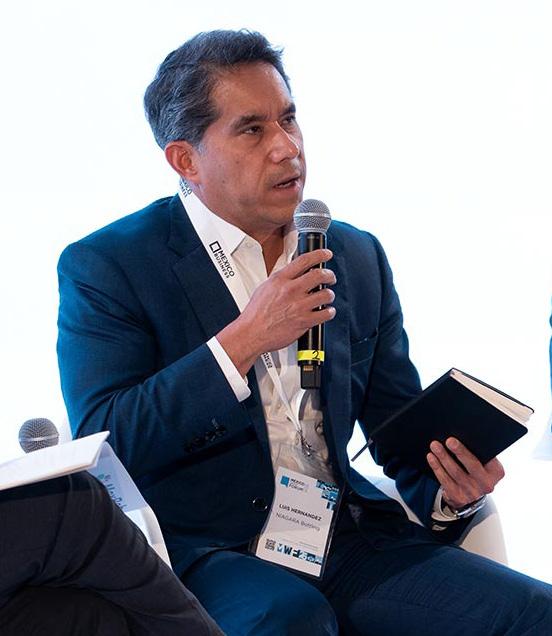
For Luis Julian Hernández, Public Affairs, ESG, and Sustainability MX Senior Director, Niagara Bottling, many companies already implement initiatives to create a positive impact within their basins, but the key is ensuring that corporate metrics evolve beyond simple operational continuity. “If we focus deeply on the health and resilience of the watersheds, we create a virtuous circle. The question for modern industry should no longer be ‘how much water do we use?’ but rather, ‘does the presence of our company improve the overall health of the basin?’ That must be our new paradigm,” he stressed.
Aligning Corporate Capital With National Water Policies
As the federal government tightens centralized control under the National Water Plan, the state’s role is evolving from a passive regulator into an active coordinator of private sector investment. This alignment is critical because global market access and incoming nearshoring investments are increasingly conditional on hydrological security. Major multinational buyers now require verifiable water-stewardship metrics
from local suppliers before integrating them into global supply chains.
To prevent capital misallocation, public policies must provide explicit guidelines that channel ESG expenditure toward high-priority regional targets. Juan Pablo Rodríguez, Business Director of Rotoplas Servicios de Agua, emphasized that successful water infrastructure cannot be driven by a single sector; instead, it requires the synchronized efforts of government, private enterprise, and civil society. He considers that when the state establishes a well-defined regulatory framework backed by a long-term vision, and the private sector deploys the necessary technical capabilities to meet those standards, it creates a repeatable model for large-scale environmental remediation.
“If we focus deeply on the health and resilience of the watersheds, we create a virtuous circle. The question for modern industry should no longer be ‘how much water do we use?’ but rather, ‘does the presence of our company improve the overall health of the basin?’ That must be our new paradigm”
Luis Hernández Public Affairs, ESG, and Sustainability MX Senior Director | Niagara Bottling
multi-jurisdictional water assets. The structural development of over US$9 billion in environmental and sanitation infrastructure, coordinated through binational institutions like the Border Environment Cooperation Commission (BECC) and the North American Development Bank (NADBank), demonstrates that private and public capital can be successfully blended when aligned with macro-level asset management plans.
According to María Elena Giner, Director of Water Resources and Community Planning, Black & Veatch, while major water projects inherently require a minimum 10-year development horizon, long-term operational continuity can be structurally insulated from changing political administrations. She highlights CONAGUA’s FONADIN program as a prime example, which successfully unlocked wastewater treatment plant development by pairing a maximum 50% public funding cap with mandatory 20-year third-party private operations contracts. “We cannot continue relying on subsidies designed solely to build infrastructure; instead, we must establish public-private funds that provide direct financial incentives for long-term operational efficiency and ongoing asset maintenance,” she added.
“Long-term projects demand high technical capacity. A prime example of this is in Puebla, where the government provided the initial vision to clean the Atoyac River, and Rotoplas acted as the technology partner, deploying advanced solutions to strictly comply with the updated NOM-001-SEMARNAT-2021 standard,” Rodríguez exemplified.
Government entities can accelerate this co-investment by creating streamlined administrative pathways and preferential permitting for firms that substitute firstuse groundwater extraction with treated municipal effluent. Furthermore, international precedents offer clear operational roadmaps for handling complex transboundary and
To scale this institutional stability across the rest of Mexico, Giner notes that the country must prioritize water portfolio diversification, mirroring frameworks like El Paso, Texas, which utilizes eight distinct water sources, while rethinking how public capital is deployed.
Some experts have proposed the establishment of specialized Water Positive Industrial Parks, which allow the public and private sectors to co-manage shared sustainability standards, ensuring that corporate capital directly supports national aquifer recovery goals while safeguarding manufacturing continuity. To make these hubs viable, operators must design them around a strict triad of technical feasibility, financial sustainability, and political alignment.
This structure is essential for fostering a reliable investment environment and,
crucially, for overcoming public skepticism surrounding private sector participation in water management. “We must be capable of managing ourselves with hard data and verifiable information to mitigate risks like negative social perception, where publicprivate initiatives are frequently misinterpreted as water privatization. If each sector plays its role rigorously and consciously, we create the technical, financial, and political triad necessary to generate a healthy investment environment,” Hernández, noted.
Incentivizing Infrastructure via Market-Based Solutions
Securing long-term capital for Mexico’s water network requires an investment architecture that prioritizes environmental and social equity through clear financial incentives. According to Giner, successfully scaling these capital programs depends on executing highly structured asset management frameworks derived from extensive transboundary governance experience. This operational approach requires operators to systematically evaluate infrastructure age, condition, and community impact before deploying capital.
Within this structured approach, private investments can be effectively mobilized through localized water credit markets, mirroring the functional logic of global carbon offsets. Under this framework, industrial corporations can directly finance the modernization of nearby agricultural irrigation grids, which currently lose up to 40% of their volume to structural leaks, in exchange for certified volumes of saved water.
According to Miguel Medina, Corporate Affairs & Creating Shared Value Manager, Nestlé Mexico, implementing this type of water management requires taking the agricultural sector into account and shifting mindsets through technical training. Medina highlights that it is vital to teach farmers how to measure the amount of water they use, creating a quantified baseline that allows them to migrate from traditional irrigation to technified systems, thereby directly impacting the volume of water within the supply chain.
This mechanism transforms water from a passive operational risk into a strategic, bankable asset. However, to guarantee long-term environmental sustainability, the financial architecture must reward ongoing operational metrics over simple physical installation. “To guarantee long-term environmental sustainability, it is not enough to simply lay down a pipeline. Public-private financing and subsidies cannot act as a mere prize for construction; they must be explicitly tied to long-term operational efficiency, ongoing asset maintenance, and volumetric recovery metrics,” Rodríguez said.
Through this strict focus on decentralized treatment, rainwater harvesting, and realtime digital management, these corporate capital allocations simultaneously eliminate regional usage conflicts, deliver tangible benefits to rural communities, and stabilize the long-term social license to operate.
Reflecting on the shared challenges and solutions discussed throughout the panel, industry leaders concluded that addressing the water crisis requires moving beyond isolated corporate initiatives toward a deeply integrated, long-term national model. “Basically, what is required is a combination of robust investment and a long-term vision. We need legal certainty, a supportive regulatory framework, and direct incentives for efficiency to continue expanding corporate water responsibility across the country,” Vicente Rodríguez Woog, Communications Director, MexBeb, concluded.