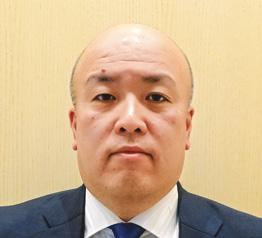
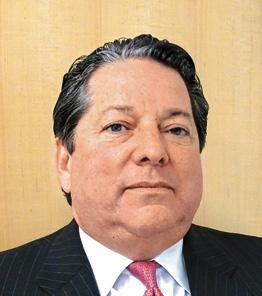
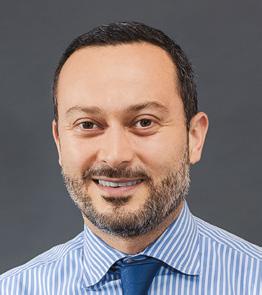
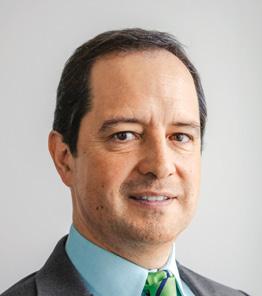
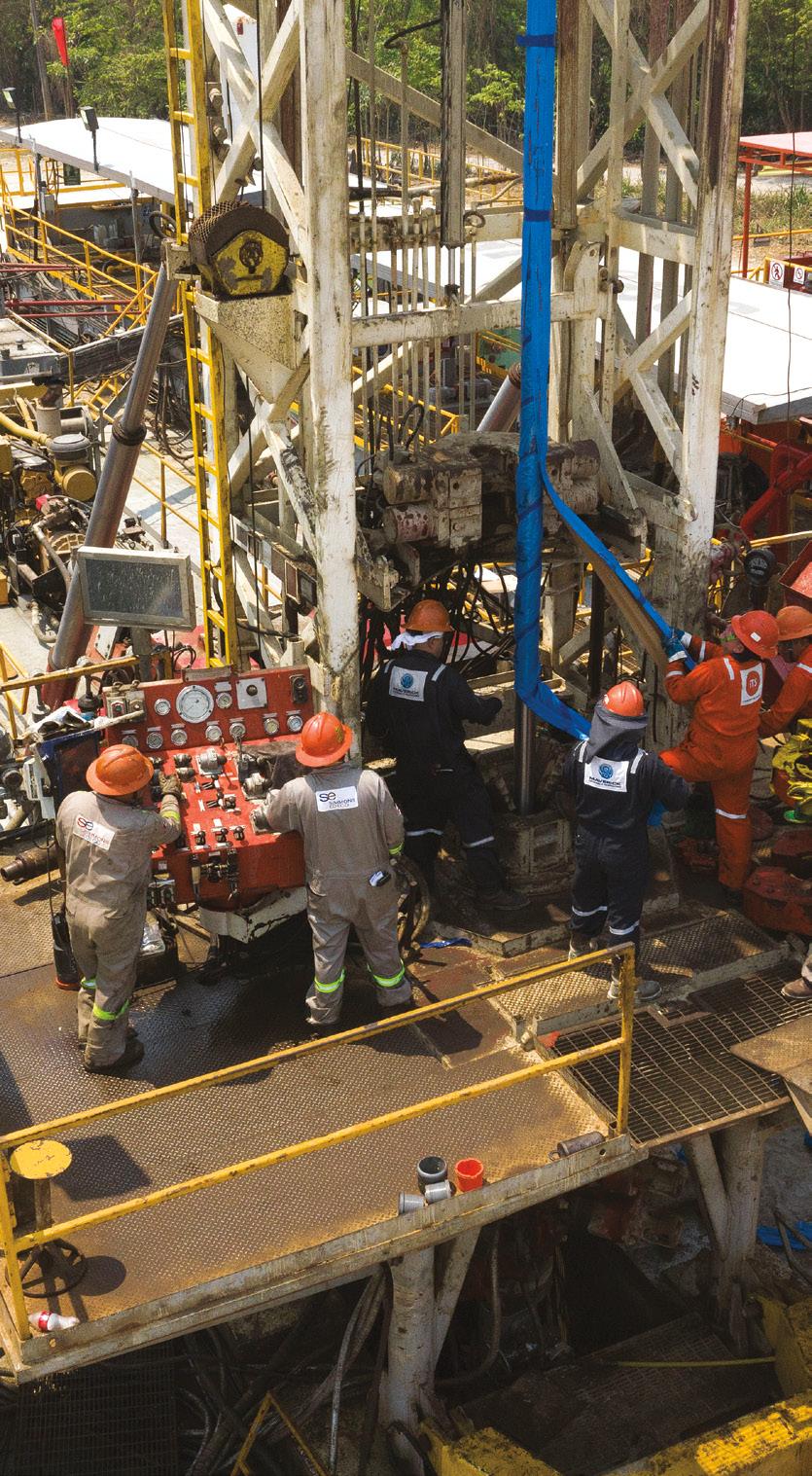
Mexico Oil & Gas Review 2019/20 is published in a very different market environment to its predecessor. Since the launch of the previous edition, a change in government has set Mexico’s oil and gas industry on a new course that is still to be wholly defined. Suspended bidding rounds and public criticism have given concern to privates while block operators have quietly pressed on. If the buzzword in 2018 was continuity, the industry’s mantra in 2019/20 is cautious optimism.
President Andrés Manual López Obrador has placed his bets firmly on the country’s oil and gas industry with the revitalization of PEMEX his principal target. From the refinancing of the NOC’s significant debt to the funding of a mega-refinery in Dos Bocas, the president is reviving the NOC to help it recover former glories. The heavy financial commitments to back the development of 23 new fields toward 2023 and further exploration to replenish falling 3P stocks into the long term has given shape to the administration’s national economic strategy.
Eyes are firmly fixed on PEMEX and its leading role in the 2.6MMb/d production target for 2024.
Since the last publication, privates have made headway in their commitments to contracts won in earlier rounds.
Onshore privates are already producing, while Eni became the first private to produce offshore since the Energy Reform began. In 2020, more companies will follow.
Further along the value chain, the construction of storage terminals, long-distance pipelines and gas stations have driven the year’s private sector construction activities, although issues including social unrest, land ownership disputes and “leonine” contracts have provided challenges.
An eventful 2019 has continued into 2020. Mexico Oil & Gas Review charts the industry’s journey from the end of 2018 into the new decade and covers all the twists along the way.
The publisher has made all reasonable efforts to provide accurate information, and the information contained in this publication is derived from sources believed to be true and accurate. However, the information in this publication should not be considered to be complete or definitive, and may contain inaccuracies or typographical errors. The publisher accepts no responsibility regarding the accuracy of information and use of such information is at your own risk. The publisher will not be liable to any party for any direct, indirect, special or other consequential damages arising out of any use of information in this publication. The publisher provides no representations or warranties, express or implied, including any implied warranties of fitness for a particular purpose, merchantability or otherwise in relation to any information provided by the publisher in this publication.
ISBN: 978-1-7328256-6-6
Vintage oil well pump jack
STATE OF THE INDUSTRY
1An era of uncertainty came for the oil and gas industry as President López Obrador began the formal implementation of his campaign promises. With the bidding rounds and farmouts suspended and numerous personnel changes at the head of PEMEX and the sector’s regulatory agencies, López Obrador quickly put his stamp on the industry. But the earlier predictions of gloom and doom also failed to come to fruition and a sense of optimism is seeping into the industry. Rather than rip up private contracts as feared, the government instead re-stated its commitment to honor those contracts after a period of review. The government’s new policy to ensure energy sovereignty also came with a lifeline for debt-riddled PEMEX.
In this opening chapter, key events, strategies and ambitions for Mexico’s energy sector are analyzed, with political leaders, regulators and industry executives offering comprehensive insights. Collectively, these viewpoints highlight where the country’s industry stands today and where it is headed.
CHAPTER 1: STATE OF THE INDUSTRY
All Energy Value Chains Converge Downstream: Rocío Nahle’s Approach
15 VIEW FROM THE TOP: Manuel Rodríguez, Energy Commission in the Chamber of Deputies
17 ANALYSIS: López Obrador: The First Year
18 VIEW FROM THE TOP: Alma América Porres, CNH
20 VIEW FROM THE TOP: Oscar Roldán, CNIH
21 VIEW FROM THE TOP: Marco Osorio, IMP
22 VIEW FROM THE TOP: Merlin Cochran, AMEXHI
23 VIEW FROM THE TOP: Antonio Juárez, AMESPAC
24 VIEW FROM THE TOP: Juan Acra, COMENER
25 VIEW FROM THE TOP: Raymundo Platas, LAOGA
26 VIEW FROM THE TOP: Rubén Cruz, KPMG Mexico
27 VIEW FROM THE TOP: Bernardo Cardona, Deloitte Consulting Mexico 28
29 VIEW FROM THE TOP: John Padilla, IPD Latin America
30 VIEW FROM THE TOP: Aldrich Richter, MAN Energy Solutions Mexico
31 VIEW FROM THE TOP: Nansen Saleri, QRI
THE YEAR IN REVIEW
Few years have been as tumultuous in the history of Mexico’s oil and gas industry as 2019. The change of administration provided both hope and uncertainty, as PEMEX was put at the center of the country’s economic growth plan while privates saw their influence reduced as farmouts and bidding rounds were suspended
The long transition period between the election of Andrés Manuel López Obrador on July 1, 2018 and his formal inauguration into the presidency on Dec. 1 2018 hung heavily over Mexico’s oil and gas industry. During his campaign, the president had promised to revise contracts signed between CNH and private companies awarded from Rounds 1.1 to Rounds 3.1, held between 2015 and 2018. In December 2018, CNH formally canceled the Rounds 3.2 and 3.3 while in June 2019, the long-awaited suspension of farmouts became official.
Outside of oil and gas, the new administration also signaled its intent to make changes to the economic direction taken by its predecessor and its willingness to halt megaprojects already in development. In October 2018, before the official start of the new government, a national referendum was held on the construction of the New International Airport for Mexico in Texcoco (NAIM), State of Mexico. Despite a low voter turnout of less than 1 percent, the decision was taken to abandon the original Texcoco airport, already well underway, in favor of expanding a military base in Santa Lucia, State of Mexico.
While these changes caused ripples of uncertainty throughout the oil and gas industry and the economy at large, private contracts were reviewed and remain untouched. Merlin Cochran, Director General at AMEXHI, an association representing most of Mexico’s largest operators, underlines the point: “In the last year, a new federal government was elected but none of the long-term contracts that our 43 members signed have
changed. These contracts last between 30 and 40 years and the government’s commitment remains exactly the same,” he says.
NEW LEADER, NEW VISION
While contracts and legal frameworks remained untouched after López Obrador came into power, the personnel directing the industry’s agencies and regulators were completely changed. Rocío Nahle García, an experienced chemical engineer who held a number of prominent positions in the oil and gas industry, including within PEMEX, was appointed to head the Ministry of Energy. Miguel Ángel Maciel Torres, a petroleum engineer with over 30 years’ public sector experience and the Vice President of New Business Development for PEP between 2016-2017, was appointed Deputy Minister of Hydrocarbons at the Ministry of Energy.
Meanwhile, Octavio Romero Oropeza, an agronomy engineer with long political experience, was appointed as PEMEX Director General. The appointment was met with mixed feelings from the industry, amid questions regarding the suitability of Oropeza’s background. The administration’s new strategy for PEMEX was crystallized when its new slogan was unveiled: Por el rescate de la Soberanía (For the Recovery of Sovereignty). The slogan placed PEMEX’s revitalization as the central lever for the propulsion of Mexico’s flagging energy sector and was subsequently marked as such in the government’s National Development Plan 2019 – 2024.
The oil and gas industry’s main regulating bodies also saw change at the top. In November 2018, Juan Carlos Zepeda
resigned as President of CNH and Héctor Acosta left his position as CNH commissioner to take a position in the state of Chihuahua government. Gaspar Franco, a commissioner that was sworn in for six years in 2016, also departed in February 2019. Alma América Porres Luna, Héctor Moreira Rodríguez, Sergio Pimentel Vargas and Néstor Martínez Romero continued in their positions as CNH Commissioners, while on Nov. 7, 2019, Rogelio Hernández Cázares was sworn in as the new CNH president. On Aug. 12, 2019, Luis Vera Morales resigned from his position as director of ASEA. In November 2019, José Ángel Carrizales, a trained chemical engineer, took over the directorship.
BIDDING ROUNDS, FARMOUTS
The government’s suspension of Rounds 3.2 and 3.3 and PEMEX farmouts set the stage for its first few months in office. While the logic of this divergent approach was questioned by the private sector, the move was seen as another step in President López Obrador’s plan to recover PEMEX’s position.
América Porres is clear that this step was supported by the industry’s regulatory body. “While future bidding rounds have been put on hold, this in no way represents a negative development from CNH’s perspective. In fact, we see it as a positive for Mexico. Unfortunately, what had become evident in the last few years was that while PEMEX’s technical, administrative and project execution capacities met general standards, its financial capacity lacked support. This unfortunately resulted in PEMEX’s struggle to meet its goals and objectives for a number of its projects, among them the Round Zero assignments,” she says. “The new policy calls for the reversal of these budgetary limitations and greater fiscal support for the NOC. The majority of the commissioners have a positive view of this policy and how it allows PEMEX to plan its working strategy.”
However, from the perspective of a competitive and globalized oil industry, these suspensions have potentially
negative consequences. As John Padilla, Managing Director of IPD Latin America, notes, Mexico “is competing for investment in the global market where other jurisdictions, like Angola or Argentina, are becoming more attractive.”
Similarly, Ruben Cruz, Head of Energy and Natural Resources at KPMG in Mexico, explains that the government’s shortterm objective to stop falling production rates must be aligned with medium and long-term goals, the grounds for which, he says, must be laid now. “It is important to note that the medium and long-term trends are much more important in this industry. We have seen this previously in Mexico, where an exclusive application of short-term measures leads to increases that cannot be sustained and are inevitably lost to another decrease,” says Cruz.
FINANCIAL CONCERNS
The financial health of PEMEX has been a constant concern over the last several years. Mexico´s Superior Audit Office (ASF) stated that during the presidency (sexenio) of Enrique Peña Nieto, PEMEX debt spiraled by 146.6 percent and led the NOC to become the world’s most-indebted oil company. As of 2019, its total debt stood at US$99.6 billion. An estimated US$44 billion of debt is due to be paid off in the next four years while rising pension payments present future fiscal challenges to overcome.
PEMEX’s heavy tax burden has restricted the NOC’s ability to invest into a variety of vital issues, including maintenance of the National Refinery System and, principally, exploration to revive flagging reserves. The deleterious significance of this was highlighted in the PEMEX Business Plan, which stated: “The high tax burden constitutes the most serious structural problem that PEMEX faces.” Fitch Ratings, one of the two global ratings agencies that downgraded PEMEX’s outlook this year, summarized the cost of the still high tax burden on the company’s ability to fund more exploration and restock the country’s 3P reserves, which fell from 25.85 billion boe
in 2017 to 25.10 billion boe in 2019. “PEMEX’s exploration and production CAPEX for 2017 and 2018’s budget of US$4.5 billion and US$4.3 billion, respectively, was not enough to replenish annual production of approximately 1 billion boe,” noted Fitch. IPD Latin America’s John Padilla echoes Fitch’s concerns on Mexico’s immediate oil and gas future: “The long-term outlook for Mexico’s oil and gas sector is extremely positive based on the major discoveries that have been made by private sector companies over the past couple of years. Nonetheless, the short to medium-term outlook, depending on policy decisions made, is rocky,” he says.
The administration sought to combat the negative consequences on both PEMEX and the Mexican economy from the perilous financial situation of the national oil company. In its 2019 PEMEX Business Plan, the NOC stated it had “executed a series of actions intended to reduce the company’s tax burden, fortify its financial position and define the projects on which the recovery of its productive capacity will be based.” As part of these measures, the administration is lowering the PEMEX tax burden from its current 65 percent to 54 percent by 2021, a saving of MX$128 billion (US$6.6 billion) for the NOC. During this time, a further MX$141 billion (US$7.3 billion) will be invested. This investment is destined for exploration activities. Other positive milestones for the company’s financial outlook announced were the refinancing of US$8 billion of the company’s debt with the assistance of 23 banks in June, and September’s US$5 billion debt repayment.
PEMEX CONTRACTS CHANGE DIRECTION
As part of the new economic and energy outlook, the government is pouring money into the development of new fields. According to Ulises Hernández Romano, Director of Resources, Reserves and Associations at PEP, these new fields will help increase the NOC’s reserves by
35 percent and address the major criticisms of analysts and financial ratings agencies. PEMEX is set to develop 23 new fields from the second half of 2019 and into 2020, which are additional to the 22 set out in the National Exploration and Production Plan. While 19 exploratory PEMEX drills were completed in 2018, 50 were intended to be drilled by the end of 2019, and a further 300 wells drilled on fields already in production, according to the PEMEX Business Plan. The new field developments will be managed through a new contracting modality, the Integrated Exploration and Extraction Service Contracts (CSIEE). This model will allow PEMEX to contract companies to drill and prepare the new fields ahead of the production phase, including essential infrastructure from service providers. The PEMEX Business Plan states that between 2020 and 2023, 40 CSIEE contracts will be assigned.
The new contracting modality appears to reduce PEMEX´s financial burden, both in terms of CAPEX and OPEX, of a field’s development, while permitting PEMEX to remain as the operator. The PEMEX Business Plan outlines the principal characteristics of CSIEEs. The first noted is that “the service provider assumes the total investment and costs of the operation during the duration of the contract,” while the second states that “PEMEX maintains the control of the operation and its position as signatory.” Under the CSIEEs, contractors will be paid by calculating a US dollar fee per unit of hydrocarbon produced.
The CSIEE model is still under public consultation and it is therefore too early to see the definite interest that major private players may have in involvement. However, operators within Mexico, including Diavaz, have expressed interest in participating in the new PEMEX projects. Yet former CNH Commissioner Gaspar Franco believes the new contract model is far from certain to be a success. “This is an available option for oil
companies that participate in the sector. However, the big companies will not want to participate in that way. This was demonstrated with the 2008 reform, in which the socalled Contratos Integrales de Exploración y Extracción were allowed: large operators did not participate.”
GREENLIGHT FOR DOS BOCAS REFINERY
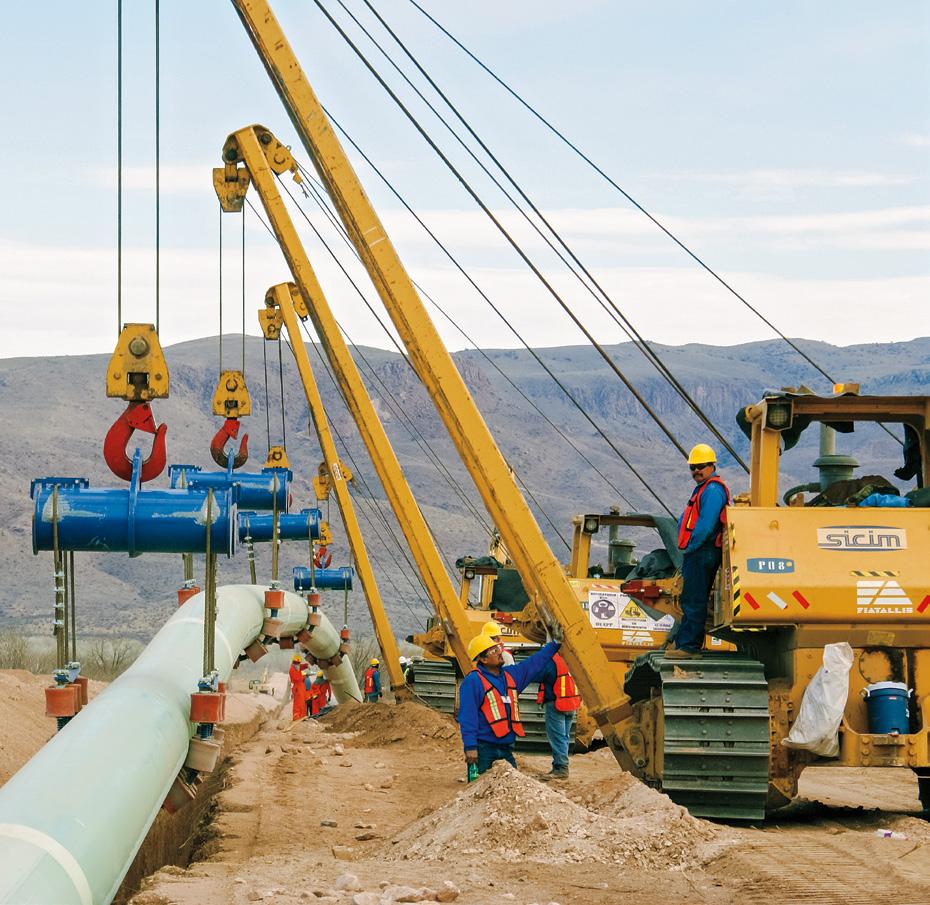
The decision to build a new refinery in Dos Bocas, Tabasco, was among the most far-reaching decisions the new administration made last year. At an expected cost of US$8 billion, it was also set to be one of the most expensive. While the project will certainly generate business along the supply chain – government approximations suggest up to 135,000 direct and indirect jobs will be created –questions were raised over the viability of meeting the three-year deadline and proposed budget for a project of this size. As of October, five of the six construction packets have been awarded: Flour Enterprises and ICA Flour (Packet 1), Samsung Engineering y Asociados Constructores DBNR (Packets 2 and 3) and KBR together with Grupo Hostotipaquillo (Packets 4 and 5). SENER will oversee project management responsibilities.
Dos Bocas is part of the National Refinery Systems’ (SNR) MX$12.5 billion (US$647 million) refurbishment plan and a means to bolster the country’s energy security by decoupling the satisfaction of its energy demands from the importation of refined products. With an improved refining capacity, Mexico will be able to reduce the import of refined fuels, which recently rose to account for 77 percent of the national fuel supply, as well as reduce the export of crude for refining in international markets. Once completed, Dos Bocas will refine solely 22°API Maya crude and have a capacity to process 340Mb/d to produce gasoline and diesel for consumption in Mexico. However, considering the shortage of crude being supplied to the National Refinery System, the decision to fund an expensive larger refining plant with money
AVERAGE OIL TRADE BALANCE (US$ billion)
that could address other underfunded areas of PEMEX has been questioned: “the Dos Bocas refinery will be part of a plan to increase national refining capacity over the 1.4MMb/d of crude that our six refineries are theoretically able to process once revamped and working at full capacity, but only 600Mb/d of crude production is available to input into this system,” says Rubén Cruz, Head of Energy and Natural Resources at KPMG in Mexico. Additionally, the work that will have to be undertaken to restructure national financial processes themselves based on the export of crude will be onerous. The shift from export to in-country refining will be complex, regardless of the increased revenue that it should deliver. “We have been an oil exporting country for a while, which finances a significant percent of our public expenses. As a result, reducing crude oil exports is not a simple matter, regardless of how much we may want to be self-sufficient in our production,” adds Cruz.
PRODUCTION PRESSES ON
From January to September 2019, crude oil production, from PEMEX and private operators averaged 1.675MMb/d while average natural gas production from PEMEX and private operators stood at 4.857Bcf/d. August and September, however, showed marked improvements on the rest of the year, driven in part by the entrance of private industry into production. Natural gas, meanwhile, showed an overall improvement on 2018’s 4.857Bcf/d average.
There is much more production to come from PEMEX. The development of at least 20 new priority fields and untapped capacity generate a strong medium and longterm outlook for the NOC once short-term difficulties are overcome. Nansen Saleri, CEO of QRI Group, describes PEMEX’s outlook as extremely positive and notes that with so few secondary recovery technologies applied to Mexican wells, there is likely more to come. “It is in
Source: PEMEX
Private players’
investment into exploration and production activities in the first half of 2019 hit US$9.63 billion
a favorable position due to its abundant resources. It has approximately 320 billion barrels,” says Saleri. “Of that, I would say that Mexico has produced less than 25 percent.”
According to AMEXHI, private players’ investment into exploration and production activities in the first half of 2019 hit US$9.63 billion, and Cochran is clear of the role that private companies will play: AMEXHI’s FiveYear Plan targets 290Mb/d production by 2024,” he says. Similarly, John Padilla believes that based on the discoveries made this year, “private sector oil production will account for over 300Mb/d by the end of President López Obrador’s term. One of the major success stories of the past 12 months was Italian company Eni’s success in the shallow water Miztón Area 1 field off the coast of Campeche. The field, won in Round 1.1 in 2015, entered production on July 2 with an initial production of 15Mb/d that is expected to become 100Mb/d by 2021. Though 2019 activity was dominated by ongoing exploration and some pre-production works, this private sector success was a welcome and positive sign. Fieldwood Energy and Petrobal announced that the Pokoch and Ichalkil wells drilled on its Block 4 will be producing 20Mb/d in 2020 with an expected peak flow of 100Mb/d and 120MMcf/d of gas. To hit this target, Fieldwood will invest some US$700 million for Block 4’s development. Clearly, the private sector is well-placed to deliver oil production for Mexico. However, not all private players saw success over the past year. October 2019 was not a good month for private interests as Hokchi Energy announced it would be returning its entire Area 2, which was the first oil contract signed by a private company in Mexico, won in Round 1.1, to the state. Hokchi discovered a noncommercial amount of gas with its Acan-1 exploratory well, while the second well Yaluk 1, reported saltwater intrusion. UK-based operator Cairn Energy, in a JV with Citla Energy and Eni on Block 9, also reported that its Alom-9 well was dry and will be abandoned.
THE ZAMA SITUATION
The Zama oil field was discovered in July 2017 by operator Talos Energy, as part of a consortium with Sierra Oil and Gas, which was subsequently acquired by Deutsche Erdoel AG ( DEA), and Premier Oil. The field in Block 7, won by the consortium in Round 1.1, was found by the
first privately-held offshore exploration well in Mexican history, the Zama-1 drilled by the Ensco 8503 semisubmersible drilling rig, at a depth of 165m in the Sureste Basin area. The Zama field was hailed by industry analysts as one of the most important shallow-water discoveries of the last 20 years and in 2018, won the “Discovery of the Year” Award from the Association of International Petroleum Negotiators. The Zama field holds an estimated 400-800MMboe and the Zama-2ST well is expected to have a peak rate of between 150Mb/d and 175Mb/d of oil equivalent. On Sept. 4, 2019, CNH approved Talos’ request for a two-year contract term extension for its production sharing contract on Block 7. On Sept. 9, 2019, CNH also granted approval to Talos’ modified Block 7 exploration plan. Both of these events were intended to grant the consortium headed by Talos time to evaluate further prospects on its block. However, at the end of September 2019, international news agency Reuters reported that according to two former energy sector officials and two PEMEX executives, PEMEX was attempting to wrestle away control of the Zama field, which holds an estimated 400-800MMboe. Reports suggested this was driven by PEMEX having rights to drill in the adjacent area and, as the reservoir extends into PEMEX-operated areas, the NOC also had a say.
In the report, Minister of Energy Nahle said of the situation, “we definitely have to hold discussions with PEMEX, with Talos — another company that is there — to see who will take charge of the operation because PEMEX is playing a big part there.” The US Department of State Bureau of Energy Resources’ Deputy Assistant Secretary Kurt Donnelly told Reforma newspaper that the suggestions were a “disturbing development.”
On Oct. 10, 2019, the Talos consortium announced it would be handing back 50 percent the 464.799km 2 Block 7 area to the state in accordance with Clause 7.1, paragraph B of the CNH-R01-L01-A7/2015 contract. While the consortium’s initial investment was estimated to be US$783 million, it will now continue its work on the smaller area with a further US$325 million for development, expected to begin before the end of 2019.
Concern over the sanctity of private contracts was increased when President López Obrador repeated the intention of his government to review all 107 exploration contracts signed since the Energy Reform by the end of the year. While this review was not yet concluded in November, the president’s rhetoric may revive the unease among private companies that was present during the new government’s transition period. If such revisions are to be done and alterations to contracts are demanded, a consequence could be a reduced desire from private
companies to invest much-needed capital into a Mexican industry that is still evolving.
UNCONVENTIONAL POSSIBILITIES
The PEMEX Business Plan states that PEMEX owns 25 billion boe in prospective resources, of which 37 percent are in unconventional plays, including shale. CNIH data published in August 2019 shows that 8,457 of the country’s onshore wells, representing 43 percent of onshore wells, have seen hydraulic fracturing at some point in their history, though only 27 of these were drilled for unconventional resources. To date, these wells have produced 1.476MMb of crude oil and 12.038MMcf of gas representing 7 percent of Mexico’s historic production.Despite the historical use in Mexico of hydraulic fracturing, commonly known as fracking, President López Obrador has repeatedly pronounced his opposition. In October 2018, the then president-elect told a press conference in San Luis Potosi that he would not allow the use of fracking in Mexico. In June 2019, the president canceled PEMEX’s authorization to use hydraulic fracturing in the Humapa field, which sits across the states of Puebla and Veracruz. However, with Mexico’s increasing importation of natural gas from fracked fields in Texas, and the likelihood of other accessible resources along the border, the argument against fracking has weakened. CNH Commissioner Moreira noted the proximity to the world’s cheapest and most developed natural gas market, saying: “There are large parts of Mexico that have the potential to hold unconventional resources, including Tamaulipas, Nuevo Leon and Coahuila. Despite being beside West Texas, the state of Chihuahua does not produce a single drop of oil or gas due to a lack of exploration.”
América Porres explains that the approximately 67 percent of Mexico’s potential resources that have yet to be exploited are “in large part composed of deepwater and unconventional resources.” However, their use must first be
negotiated. “Unconventional resources represent an everincreasing potential, as each new exploratory campaign seems to reveal higher and higher volumes of available resources in these types of plays, but the political and social tensions that surround them must be very carefully addressed.”
The government, despite its public rhetoric, appears to be taking this on board. In the 2020 Budget Proposal, over MX$10 billion (US$523 million) was requested for continued use of fracking of shale in areas including the Sabinas, Burgos and Tampico-Misantla basins, as well as 29 productive fields in Veracruz and Puebla.
Many operators are hoping to see a permanent change in the government’s approach to fracking. Among them is Renaissance Oil Corp., which operates the Amatitlán block, as well the Mundo Nuevo, Topén and Malva blocks in Chiapas. Renaissance Oil CEO Craig Steinke believes that fracking suffers from outdated views on the technology. While he accepts that fracking has in the past been a less environmentally-friendly method for hydrocarbon extraction, modern techniques have advanced tremendously. “The common criticisms are of older legacy technologies, which are being phased out. Less is known about the modern, clean techniques now used in the industry […] The advance in shale technologies over the last decade has made the fracking process far safer and cleaner,” says Steinke. The role unconventionals could play in securing Mexican energy sovereignty if permission for their extraction was granted would be huge. “The potential of unconventional sources in Mexico is world class. It is a national treasure and could become a shale play tantamount to the Permian or Eagle Ford fields,” he adds. “Unconventionals offer the quickest and most direct way to achieve the government’s goals of doubling oil production.”
ALL ENERGY VALUE CHAINS CONVERGE DOWNSTREAM: ROCÍO NAHLE’S APPROACH
Mexico’s new Minister of Energy emerges from a diverse background that combines technical, academic, industrial and political pursuits. Her first year on the job has been greatly defined by the president’s agenda, which at the same time is heavily influenced by her contributions and expertise
Characterized by its mining and tourism industries, Zacatecas does not seem like a likely place to develop an interest in the energy industry. However, it was here that Minister of Energy Rocío Nahle began her career, graduating from the state’s autonomous university in 1986 with a degree in chemical engineering with a specialty in petrochemistry. At a midyear visit to her alma mater, Nahle recalled the context that led her down this path. While she was studying, Mexico’s petrochemical industry, then enjoying a globally renowned boom, began a slide into irrelevance as PEMEX divested its downstream resources in an attempt to recover from market forces impacting its upstream assets and balance sheets. During this time, Nahle remembers that Mexico played a role in helping China develop its then nascent petrochemical sector, a memory that seemed ironic given that superpower’s current worldwide dominance in the petrochemical market. But Nahle was not interested in irony but rather in hope and ambition: she used this historical example to illustrate that Mexico can not only recover but create a new golden era for all its energy endeavors.
Nahle set out to broaden her horizons. After studying process engineering at UNAM, she moved to Veracruz, where she studied the economic viability of industrial processes before joining PEMEX at its Cangrejera, Pajaritos and Morelos petrochemical complexes. Here, Nahle developed a broad approach to the multifaceted operations of energy and production infrastructure, performing a number of duties related to administration, finances, process planning, industrial performance and quality control. Forced to reckon with the daily needs of a downstream site and its processing capabilities, Nahle became familiar with the entire path that commodities take before they reach the end user. She also witnessed these same mechanisms from the private sector’s point of view during her time working at Resistol Industries’ Coatzacoalcos sulfate plant.
This focus on processes and planning eventually sparked an interest in the politics that so markedly influence them in Mexico. At first this interest was expressed within PEMEX and the larger energy industry, where Nahle joined prominent internal associations, such as the group of PEMEX engineers known as Constitucion de 1917 and the National Committee of Energy Studies (CNEE). She became a prominent member of the academic community, publishing articles on the state of
the oil and gas industry and the viability of various refining and petrochemical projects. Through these publications, she came to be recognized as a reliable adviser for political figures and institutions. As early as 2003, she was counseling members of energy commissions in federal legislative chambers. Nahle’s opinion on the potential of planned energy and infrastructure projects was indispensable to incoming government officials who had gained seats in the 2000 federal election and were thus new to the specific functioning of Mexican industrial value chains and supply networks. She eventually moved to a more public stage when she was chosen to participate in the televised debates and discussions that took place in the Senate during the 2008 passing of Felipe Calderón’s energy reform.
While she was quick to point out that her area of expertise was petrochemical and refining activities, it was perhaps these proximities to the political process that made it clear to her that the issues she highlighted time and time again were integral to the entire Mexican energy infrastructure apparatus, and that her involvement in political activity needed to be more direct to really influence the public sector operators steering the apparatus. This led to run her first political campaign in 2012, representing the 11th District of the state of Veracruz under the flag of the MORENA coalition. She lost that election to a PRI candidate, but won when she ran for the same seat three years later.
Her trajectory has allowed Nahle to play a fundamental role advising President López Obrador on his oil and gas ambitions, given the central role that refining processes and the revamping of the entire national refining system plays in these plans. Nahle’s downstream and petrochemical experience gives her insight into the importance to Mexico’ energy processes of maintaining and expanding the availability of necessary feedstocks, commodities and resources, such as natural gas, power generation and general sources of investment. Although Nahle chooses to refrain from maintaining a public profile outside of what her public job demands of her, she likely has played a vital role in everything from finding new common operational ground and synergies between PEMEX and CFE to evaluating CNH’s upstream projections and planning for the future growth of Mexico’s midstream infrastructure.
PRODUCTION GOAL UNDERPINS INDUSTRY’S STRATEGIC ROLE
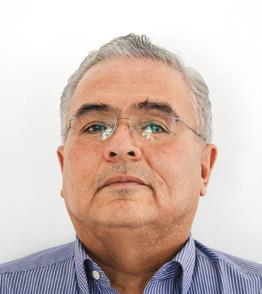
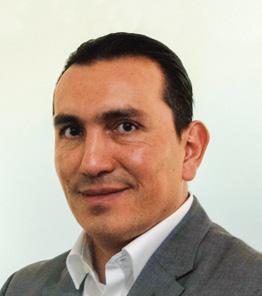
MANUEL RODRÍGUEZ
President of the Energy Commission in the Chamber of Deputies
Q: What is the role of the oil and gas sector in the National Development Plan?
A: The energy sector has to be the main engine for Mexico’s economic development. Our strategy regarding hydrocarbons is to increase oil production. In the last 10 years, production has decreased approximately 50 percent. In 2018, 1.8MMb/d were produced and our goal is to reach 2.6MMb/d in 2024. Also, we want to bolster the national refining system. It needs maintenance and must be reconfigured. But existing refineries must come together to form a single unit with the new Dos Bocas refinery. By 2024, the goal is to use only 30 percent of imported gasoline and only 7 percent of diesel. This will allow Mexico to have energy security and sovereignty.
Q: What is the relationship between MORENA’s legislative group and PEMEX?
A: It is one of total support. We have approved a reform based on the national Federal Revenue Law on Hydrocarbons, which dictates that the country’s revenue from PEMEX’s operations has to be reduced from 65 percent to 58 percent in 2020 and to 54 percent in 2021. This reduction will provide PEMEX with additional resources. Regarding PEMEX’s debt, which is around US$100 billion, the current strategy is already showing promising results. The company’s debt is clearly diminishing and will continue to do so progressively. The previous administration left the company in critical condition and it will take a major effort to put PEMEX back on its feet.
Q: What actions is the Energy Commission taking in matters related to directing investment to specific oil fields?
A: We listen to all players in the industry to understand areas of opportunity that should be addressed. Whenever the sector evolves and new technologies change the rules of the game, we have to adapt the regulations. Strategic projects such as Dos Bocas and projects awarded to companies after the enactment of the Energy Reform were reviewed to ensure that results are achieved as expected. Nonetheless, from a technical point of view, PEMEX has complete independence on what fields to exploit and what kind of financing it will use.
Q: What do you want to achieve with the construction of the Dos Bocas refinery?
A: The project is perfectly justified and viable. This is taken from the perspective that the state’s role is not to generate profits, but to provide services in strategic areas. However, it is also financially sound, because it will be self-financed and will be instrumental in achieving energy independence. Not having to spend on transporting fuels from other countries, while processing raw materials in Mexico is cheaper than elsewhere. PEMEX will be able to sell fuel at much lower prices than today. Dos Bocas will also boost the development of Mexico’s southeast region, which is in need of jobs and wealth.
Q: What talks have taken place regarding the potential restarting of the bidding rounds?
A: The rounds will be restarted. In collaboration with private companies, PEMEX will reach its production goals. In order to include private investment that is geared toward achieving production goals, the rounds must be put back in place. Oil and gas projects are considered medium and long term, so the project pipeline has to be continuously replenished. Not all projects are successful, so we must plan ahead. If a clear win-win formula is established, then there is no reason not to go forward. What will not be tolerated anymore is corruption, which is an enormous liability that is weighing on Mexico’s development.
Q: What are the main points on your agenda for 2020?
A: We are focusing our efforts on developing mechanisms that give PEMEX the highest possible level of financial health. From a technical perspective, the company is worldclass. Also, we will keep working to open new rounds and provide continuity for the next elected administration and for the next 30 years. Public policy will therefore be more intelligent and efficient and private companies can rest assured that their investments will be protected.
Manuel Rodríguez is a lawyer and politician from the state of Tabasco who has worked in the labor, fishing, environmental, cultural and energy sectors. He was elected in 2018 as one of the MORENA's federal deputies from Tabasco
LÓPEZ OBRADOR: THE FIRST YEAR
President López Obrador’s first year in power has resulted in a number of major shifts across all of Mexico’s strategic industries, but it is undoubtedly the oil and gas sector that has received the most attention, from delayed bidding rounds to a renewed emphasis on PEMEX and sovereignty
A permanent fixture of Mexican presidential politics for over a decade before his victory in 2018, President López Obrador was no stranger to the oil and gas industry when he was elected. He had publicly rejected former President Felipe Calderón’s 2008 Energy Reform and he extensively campaigned against former President Enrique Peña Nieto’s 2013 Energy Reform. Importantly, he has continuously spoken in support of public ownership of Mexico’s oil and gas resources, framing new contracting models and bidding rounds as an attempt to sabotage public ownership through the intervention of foreign private capital.
The president's closeness to the issues of the oil and gas sector can be understood in biographical terms. On one hand, as a native of Macuspana, Tabasco, it can be presumed that he witnessed the pivotal role that the oil and gas industry has played in that state’s economy, politics and society. On the other hand, as a politician who began his career in the 1970s, he had a unique first-hand experience of a tumultuous time in Mexico’s history when its national politics and public administration were greatly impacted by the combination of massive oil and gas discoveries, such as Cantarell, and the international circumstances that made these discoveries enormously profitable for the Mexican government, such as the OPEC embargo and its corresponding oil price surge.
Whatever their origin, López Obrador’s views generated uncertainty in the sector as soon as it became clear that his position at the top of the 2018 presidential election polls was decisive. However, during the campaign, he began to tone down his rhetoric, presenting a more moderate stance. For example, rumors that López Obrador wanted to cancel all licensing contracts were quickly rebuffed by his campaign with the assurance that he would respect such contracts, and that he was merely interested in revising them so as to avoid a “second Odebrecht” and more cases of corruption.
At the time, this shift in tone and priorities made a great deal of political sense. As his significant polling lead extended into election day, Lopez Obrador’s campaign promises became less focused on ideological goals and more focused on pragmatic socioeconomic objectives in order to sway major private-sector figures into supporting his agenda. It also made economic sense: the achievements of private operators in the Mexican oil and gas industry by 2018 were tangible and crucial contributions to the sector’s health.
In the case of the oil and gas sector, López Obrador’s socioeconomic pragmatism meant establishing the benchmark that has defined his policy agenda in this industry and perhaps also in a wider economic sense: getting production levels back up by centralizing PEMEX. This objective was framed by the larger purpose of achieving and supporting what he called “sovereignty,” expressed in practical terms by the self-sufficiency that ending crude and fuel imports would represent. During the campaign, López Obrador advocated the construction of the Dos Bocas refinery, both as part of a reactivation of Mexico’s refining infrastructure and also as another attempt, together with the Maya train, to bring about economic growth in the country’s southeastern states at a rate comparable with that of Mexico’s more economically developed northern states.
After López Obrador’s electoral victory and all the corresponding market reactions, 2018 ended with events that discouraged the private sector: the cancelation of the Texcoco airport and the temporary suspension of scheduled CNH bidding rounds. The latter event was misreported as the end of all bidding rounds, a notion that has now, a year later, been widely refuted by members of the president’s party and executive appointees to relevant federal institutions. While the scheduled bidding rounds did not take place, this has been interpreted by the administration as extra time to take stock of the nation’s oil and gas portfolio. Its goal is to determine the exact distribution of resource assignments between PEMEX and private operators in future bidding rounds.
The administration has also respected contracts with private operators. Previously-awarded blocks have continued their development without interference from the federal government, and have, in fact, enjoyed significant successes throughout 2019. However, López Obrador’s approach to PEMEX is also clear. This is evidenced by the streamlined contracting process for the construction of the Dos Bocas refinery, CNH’s approval of several “strategic” PEMEX field development and drilling plans, the NOC’s new business plan and the fact that the Ministry of Energy handed over its Round Zero blocks to the company. President López Obrador is taking care of PEMEX not only as the centerpiece of his vision for the Mexican oil and gas industry, but as an essential platform for his fiscal and socioeconomic development targets.
SHAPING A FUTURE FOR MEXICO’S RESOURCES
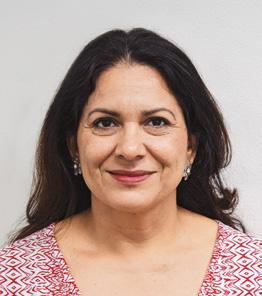
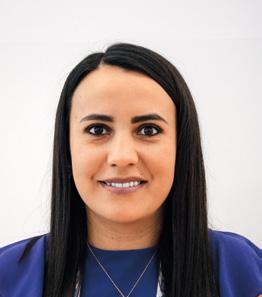
ALMA AMÉRICA PORRES
Commissioner at CNH
Q: How have the recent changes in Mexico’s government and energy policy impacted CNH?
A: We are still working in the same framework since the constitutional framework remains unchanged. The 111 hydrocarbon contracts in place represent a stable base for our operations. The new government’s energy policy is focused on strengthening PEMEX. While future bidding rounds have been put on hold, this in no way represents a negative development from CNH’s perspective. In fact, we see it as positive for Mexico because we have attempted to reach this dual model where there are operators who have won contracts through licensing rounds, and PEMEX works with entitlements. Unfortunately, what had become evident in the last few years was that while PEMEX’s technical, administrative and project execution capacities met international standards, its financial capacity lacked support resulting in PEMEX’s struggle to meet its obligations and objectives for several projects, among
them some of the Round Zero. There were external and internal factors that influenced the creation of these conditions, such as the global downturn in oil prices and PEMEX’s budget cuts in recent years. The current administration’s energy policy calls for the reversal of these budgetary limitations and greater fiscal support for the NOC. The majority of the commissioners have a favorable view of this policy and how it allows PEMEX to plan its working strategy.
We have requested that the federal administration take an integrated approach toward the management of the country’s hydrocarbon prospective resources. Mexico’s prospective hydrocarbon resources total 112.9 billion boe, of which 22-23 percent have been assigned to PEMEX. This volume will remain unchanged. Apart from PEMEX, the contracts awarded in the licensing rounds represent only 11 percent of the prospective resources. This means that
approximately 67 percent of Mexico’s total prospective resources are on standby, with nobody looking after the incorporation of reserves or their extraction. For this reason, we are calling for a more integrated approach one that is not structured around PEMEX or foreign operators, but rather one that takes a holistic view of the entirety of these prospective resources and takes the necessary actions to make them profitable for Mexico. Protecting Mexico's sovereignty and strengthening PEMEX are great ideas but in the end, an integrated vision is essential to develop Mexico's prospective resources.
Q: What has been CNH’s advice to SENER regarding the future of these prospective resources?
A: The awarding of the remaining 67 percent of these prospective resources must be put into action. This percentage is, in large part, composed of deepwater and unconventional resources. The latter represents a critical issue that needs to be resolved, where clear and effective communication by the government will play a key role. Unconventional resources represent an ever-increasing potential, as each new exploratory campaign seems to reveal greater volumes of available resources in these types of plays, but the political and social tensions that surround them must be very carefully addressed.
However, our role as technical advisers, rather than politicians, is to communicate to SENER the importance of the potential these resources represent, as well as the importance of diversifying the country’s hydrocarbons production portfolio. More diverse competition would be a contribution as well. This includes crafting a much more concrete policy for the production and processing of natural gas, which will continue to play a significant role in the country’s energy mix. Therefore, a serious evaluation of the national production strategy is necessary.
Q: To what degree has CNH’s position and authority as a regulator of PEMEX changed as a result of the new administration’s policies?
A: The technical guidelines and standards we apply to PEMEX are the same as those we apply to international operators. Everybody participates on a level playing field and we have not treated PEMEX differently when it comes to our evaluation processes. Both PEMEX and private operators have to fulfill the same requirements, but not all within the same time frames. This means that in November 2018, PEMEX expressed to us a need to accelerate some of our evaluation operations in regards to the 20 discovered fields that have been listed as crucial in order to comply with production goals and accelerate the process of transitioning those fields into early production stages. Instead of following protocol, evaluation processes that can take up to 120 days had to
take place in third of that time. Since then, our relationship with PEMEX has become closer. We have had to take a much more active role by holding frequent meetings to make sure PEMEX is delivering the required data on time and that this process runs as smoothly as possible.
Q: What is your assessment of the main challenges to reach Mexico’s production target given the lifecycle stage of the entitlements and contracts?
A: PEMEX’s portfolio is dominated by mature fields, and large operators tend to reduce investment in fields as production declines to levels that challenges profitable production. Smaller operators, however, still are very interested in these mature fields. Today, PEMEX holds 96 exploration entitlements and 16 entitlements for exploration and production that are currently in the evaluation and development stage. However, it holds 258 entitlements for production and 45 temporary entitlements for fields that have already seen steep production declines. In reality, of the 258 production entitlements, only 12 are in the beginning of the development stage as of now, 19 fields are currently producing without any decline and 13 have already been abandoned. All other production entitlements are already in decline, 214 in total. That means that PEMEX’s portfolio mostly consists of mature fields.
If we take the exploration stage in its entirety, there are an additional 111 contracts. Of which, some are moving rapidly from exploration or evaluation to development and production stages. The fields assigned in Round 1.2, such as the blocks held by Hokchi and Eni, are about to start production. This illustrates the difference between the PEMEX portfolio of largely mature fields and the private operators portfolio.
Q: What would the private companies like to see improved by the CNH?
A: Private companies are trying to cut down their timeframes toward production too. What they have asked for the most, however, is to have more licensing rounds. The companies have had a more direct interaction with the government, even with the president. This is something we do not seek to intervene in. The process has been very positive. The president has asked them to start production as soon as possible. When this becomes a reality, the government promised to put the licensing rounds back on the table.
Alma América Porres has broad experience in geophysics and the technical aspects of the oil and gas industry. She was appointed Commissioner at CNH in 2010 and is currently serving in the 2016-2022 term
OIL DATA IS THE NEW OIL
OSCAR ROLDÁN Former Director General of CNIH
Q: How have you presented the function and importance of CNIH to the federal administration?
A: Our appeal has been based on the strategic value of the data and the importance of keeping technical information outside of the national operator’s control. We welcome the government’s emphasis on strengthening PEMEX, but not by returning CNIH to PEMEX’s control. Article 32 of the Hydrocarbons Law explicitly protects national ownership of this data, which must be housed under a centralized institution that can issue clear provisions and schemes regarding who may consult it and how. This creates certainty for companies, giving them clarity on their rights and obligations regarding the use and reporting of information. We are not just talking about seismic data, which is essential, but also information like location, depth, pressure and production of wells drilled, which is what generates more data like types of fields, opportunities and even things like alignments between fields and technologies. In general, the new administration has been receptive to our arguments and our work; in particular, it has been receptive to the finalization of CNIH’s creation and integration process, which began in August 2014 and ended with the recent inauguration of our two lithoteques in Hidalgo and Yucatan, along with the coming publication of our latest information provisions from CONAMER.
Q: What role does CNIH play in consolidating recent exploration successes and the new information they are generating?
A: We worked with the new operators on their discoveries: Cholula-1 by Murphy Oil and Zama-1 by Premier, Talos and Sierra, for example. They made those discoveries using our information packages. Inputting all the new data generated by these discoveries and all the new seismic acquired in the last four years is an ongoing challenge for us. We have grown 30 percent in terms of petabytes just in the last
National Hydrocarbons Information Center (CNIH) concentrates all the geological information available regarding Mexico’s oil and gas reservoirs and processes it to build data packages it can lease to operators
three years, from 10 to almost 14 petabytes, in addition to the geophysical information we continue to receive every day. To relieve the bottlenecks that the processing of all this data creates, we work with operators to elaborate clear guidelines on how new information is delivered to us. We spend a lot of time and resources designing formats in which we deliver information packages so that operators can become familiar with them because we expect new information to be inputted into these exact same formats. This streamlines the digital processing of data.
Q: How successful have your information leasing frameworks been and how might they change along with the value of the data?
A: I would say they have been very successful. First of all, because their development process was extremely complicated. Everybody had to be satisfied with them and everybody was ready to hate them. New operators were outraged that they were going to be charged for using this information and exploration companies were outraged that they were also going to have to pay even if they were going to be generating so much data for us. The development process for these frameworks and prices was a tricky negotiation with all these parties. Additionally, the payments that came in through these frameworks accumulated into a US$350 million fund that made us fully self-sufficient and independent of the national budget. Taxpayers did not pay a single peso of our salaries, the cost of our operations or even our new building. In other words, the frameworks were successful in that, they financed our consolidation and enabled our existence as an oil and gas regulator that did not cost people anything, which is how it should be when you think about it.
Now that we have taken so much advantage of that revenue to complete our formation and establishment as an institution, we can perhaps eventually lower some of these prices to reflect the fact that a great deal of new information is being generated from new wells drilled and financed by private operators, avoiding any cost for the Mexican state. The prices must not only reflect the new value of the data but also its new origins and sources.
EFFICIENCY, REDUCED ENVIRONMENTAL IMPACT ARE TOP PRIORITIES
MARCO OSORIO Director General of IMP
Q: How would you characterize the new role IMP will play in the administration’s plans for Mexico’s oil and gas development?
A: The federal government has been very clear regarding its expectations of IMP, and these are very much aligned with what historically has been our four main functions. The first is the creation and development of new technologies. Second is the massification of those same technologies. What this means is that our technological development process cannot be merely exploratory or academic in nature, but must instead focus on technologies that can be supplied and marketed. Everything we develop needs to reach the market and be designed to solve specific industry wide problems. Our third function is to generate and support national capabilities in terms of human resources and talent. This means creating and representing internationally competitive human capital dedicated to serving the national industry’s needs and addressing specific challenges. Finally, our fourth function is to be a kind of technical consultant for the federal government. This last function has been adapted to the expectations of the new administration.
Q: What are the most important items on IMP’s agenda regarding upstream development?
A: One of our main priorities in our approach to developing technologies for the industry’s entire value chain is efficiency and reducing environmental impact. In terms of the upstream segments of that chain, this is expressed in a number of ways. One is characterization: we are looking for new ways to create precise and accurate models of Mexico’s reservoirs through the effective collection and interpretation of data. Another is the developing and testing of chemical products for higher levels of flow and production assurance. This is done as part of a wider production strategy that is also integrated with the exploration priorities that focuses on increasing recovery factors of between 50 and 70 percent. The technologies we develop toward that purpose and their development cycles all need to function economically at US$30 per barrel. This is why PEMEX has communicated its intention to increase the use of EOR, IOR and artificial lift technologies and services.
Our job is to support this increase while shortening the development cycle of these technologies as much as possible. We have grown our infrastructure to fulfill this role. A great example of this is the formerly know Center for Deepwater Technology (CTAP) in Boca Del Rio, Veracruz. CTAP started operations in 2018. It has five laboratories that are fully staffed and working on an initial project portfolio that includes testing technologies that PEMEX plans to implement as early as this year. We are working to expand the range of CTAP’s capabilities by converting it into a center where all kinds of exploration and production technologies can be developed. Therefore, we have changed its name to Center for Exploration and Production Technology (CTEP). I would also like to mention this year’s inauguration of CNH’s two lithoteques, one of which IMP is currently managing. We played a significant role in helping CNH develop its procedures for the storage, handling and analysis of these samples.
Q: What are some of the challenges for the midstream and downstream segments?
A: As extracted crude gets heavier; Mexico’s midstream and downstream infrastructure needs to be developed and optimized to process and transform it. In the midstream area, IMP is conducting research by testing the mechanical and physical aspects of our storage and transportation systems. In the downstream segment, IMP will continue to play a key role in the development cycle of the Dos Bocas refinery project. Our participation in this project is part of a wider agenda of renovation and modernization of Mexico’s entire downstream apparatus, including existing refineries and petrochemical complexes as well. We are working to make their processes more flexible and to integrate more cracking procedures into the stages. To reduce environmental impact, these stages need to be less energy intensive and more environmentally productive, which not only means reducing the sulfur content of fuels but also the content of other pollutants.
The Mexican Petroleum Institute (IMP) has 54 years of experience in generating expertise and technological capabilities for the hydrocarbons sector. Its goal is to maximize value generation in exploration, production and transformation process
COOPERATION AT THE HEART OF INDUSTRY SUCCESS
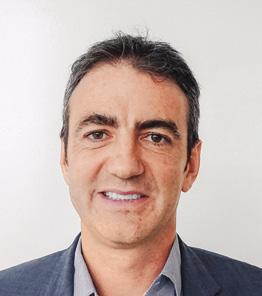
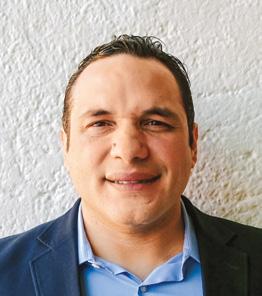
MERLIN COCHRAN Director General of AMEXHI
Q: How does AMEXHI define its role within today’s oil and gas industry?
A: AMEXHI’s role is to be the voice of the industry, particularly that of the upstream sector. Our goal is to create consensus among our members in order to voice a message, concern or opportunity to the government and society. In the last year, a new federal government was elected but none of the long-term contracts that our 43 members signed have changed. These contracts last between 30 and 40 years and the government’s commitment remains exactly the same.
AMEXHI is working along two tracts. The first is supporting the operations of our members that have already signed contracts for farmouts or blocks during the bidding rounds. A contract is only a right to begin work. We ensure that any regulatory concerns our members have are addressed and all areas of opportunity are communicated to the appropriate authorities.
The other area of focus within AMEXHI is in new opportunities for the industry. AMEXHI believes in the presence of farmouts and bidding rounds as part of Mexico’s energy strategy. Our diverse membership encompasses many different companies with distinct investment portfolios and expertise, all of which add value to Mexico. A central goal for AMEXHI is to prove our members provide this added value so that further opportunities can be opened to them.
Q: How can the federal administration ensure the private sector remains allied to its goal of energy sovereignty?
A: Private companies in Mexico are partners of the government and this partnership is accompanied by a dual obligation to deliver production. But the companies within AMEXHI, all of which want to continue to invest in the country, need to know that their partner is committed to the target. They need to know that the government is
The Mexican Association of Hydrocarbon Companies (AMEXHI) is a non-profit association. Its goal is to develop Mexico’s hydrocarbons industry to the highest international standards. The association includes 43 companies and PEMEX
as dedicated as they are. During the election campaign, the government stated it would review contracts signed with private players, which it did, and said it would let companies operate. So far, the government has kept its word on not changing these contracts. Now, the private sector must uphold its part of the bargain to move as quickly as possible to reach production and increase oil production for the benefit of the nation. Investment figures have shown that private players are doing as they said they would, and now Eni is delivering 15Mb/d. This is in addition to our members that won contracts in Round 1.3 and are already producing around 30Mb/d. This is a start.
AMEXHI’s Five-Year Plan targets 280Mb/d production by 2024. This is based on the potential we see within the industry today, from only a handful of operators within the entire 107-contract spectrum. These are the companies that won contracts during Round 1.2, 1.3 and farmouts. The companies that started later will be included in our production goal once the results of their exploration wells are known. Therefore, this target will continue to grow as more operators inject new production. However, if there are no new opportunities added to the pipeline, this production rate will eventually stall before falling in 2027.
Q: How will investment into new fields announced in PEMEX's Business Plan impact the investments of the private sector?
A: Increase in investment from the public sector will be accompanied by a year-on-year investment increase from the private sector. Between 2015 and 2018, US$8.21 billion was invested by private industry into Mexico. We estimate that US$20.57 billion will be invested by private companies up to 2024. This clearly demonstrates the commitment of private companies to Mexico. They are here for the longterm. Companies are willing to take on the financial risk, which can be large considering oil and gas is not an industry that yields success all the time. Even when companies have not been successful with their exploratory wells, they have improved the knowledge network for Mexico’s oil and gas industry.
FOREIGN INVESTMENT CAN SUPPORT SOVEREIGNTY
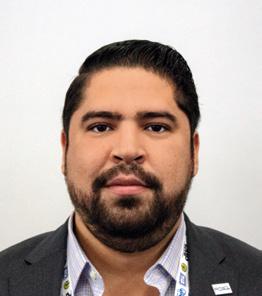
ANTONIO JUÁREZ Director General of AMESPAC
Q: To what degree would you say the AMLO administration’s goals are aligned with AMESPAC’s agenda?
A: Under the last government, the Energy Reform’s legal regime was focused on facilitating the entry of new companies into the Mexican market. Now, while the participation of these companies has not been dismissed, the focus is on PEMEX leading the change through the financing of its own exploration activities, the reactivation of its fields and the beginning of new shallow-water developments.
We interpret this not from any business plan or official statement but from the contracts that have already been handed out. This sought-after increase in production also corresponds to the other focus of this administration, which is the regeneration of the country’s capacity to use and process nationally produced crude oil through large investments into the country’s refining system. All of this is done to achieve what the administration calls “sovereignty” or energy self-reliance, which is undoubtedly a great goal that we can agree with and align ourselves with. A focus on PEMEX is something we can easily adapt to and support. It is the way our member companies worked in Mexico for decades without the Energy Reform.
We did struggle to align ourselves with the administration at the beginning because the change in personnel was quite drastic and we simply did not know anybody. However, as they have settled into their roles, we have been fortunate enough to build a great relationship with them. I believe they are closely listening to our concerns. We do consider ourselves to be aligned with this new administration as we are more than capable of supporting it and working under the contracting models that it wants us to follow. However, we do believe the administration should reconsider its position on promoting further foreign investment as a tool to achieve the sovereignty it seeks.
Q: What degree of reactivation of economic activity have you and your member companies already experienced?
A: We have already witnessed a significant increase in enthusiasm from all the relevant players in the industry’s large hubs of Tabasco and Campeche, especially after all the announcements regarding investments in PEMEX. However, this enthusiasm is going to take some time to concretely turn into material resources being invested in resuscitating these regional economies, given the significant ways in which they were affected by the past couple of difficult years, which saw the end of many companies. We have also seen a rise of activity in terms of drilling rigs in operation. We had 17 two years ago and now we are somewhere between 40 and 45. There has also been a visible increase in PEMEX’s contracting activity, along with a clear decrease in Tabasco and Campeche's unemployment numbers and a stabilization of the production decline.
We reiterate that to provide continuity to all of these positive metrics, some sort of structure to facilitate foreign investment, such as new bidding rounds, must be at least discussed and planned for as soon as possible, given the long development cycles that these structures and processes tend to have. Regardless, we do expect this reactivation to continue incrementally over the next couple of years.
Q: What would you consider an essential part of the contracting process between PEMEX and your member companies?
A: The most essential part is that the financial resources that will cover the cost of each and every contract are already assigned and put aside or otherwise guaranteed before awarding a contract. A transparent sourcing of assets for each of the new contracts would go a long way toward addressing and assuaging this uncertainty. A larger percentage of private investment can also help this process.
Mexican Association of Oilfield Service Providers (AMESPAC) creates consensus and develops proposals for its associates to improve the performance of the Mexican oil and gas sector. It has 50 national and five regional associates
COOPERATIVE PUBLICPRIVATE MODEL CAN LEAD TO GROWTH GOALS
JUAN ACRA President of COMENER
Q: What role does COMENER believe the private sector should play in the pursuit of Mexican energy sovereignty?
A: Mexico has great opportunities to use oil and gas as central motors for economic growth and social development, and this is one of the flagship ideas of the administration. At the same time, the president has set a goal of growing the economy by 4 percent by the end of his government. With these goals in mind, COMENER is clear that Mexico needs to find an effective cooperative public-private investment model, because achieving this growth will be only possible through a joint effort given the level of technology investment required. Similarly, deepwater exploration can only be carried out with the help of partners due to the financial risks that these operations entail. Today, we have the legal tools required for developing sound, shared operational contracts, whereby PEMEX can gain the support of private players and move toward higher production. This benefits both parties.
Then, COMENER’s role is to assemble the key players involved. We bring together the three levels of government (municipal, state and federal) academia and private companies. This is the motor for coordinated development, via the application of technology and international standards, to make collective intelligent decisions. We also work to build bridges between investors, community leaders and civil society in general. We believe a social development plan aligned to the growth of the oil and gas industry is essential. The country has strong energy relationship with its northern neighbor, so this is a good time to explore alternatives to be more efficient.
Q: Why did COMENER begin its Acceleration Program and why is the program necessary?
The Mexican Energy Council (COMENER) specializes in promoting infrastructure, technology and regulation projects, as well as the innovation of Mexican human capital, based on open dialogue between private, public and social sectors
A: We are sure that Mexicans have talent and innovation to contribute to the energy sector. The idea of COMENER’s Acceleration Program aims to improve the technological capacities of Mexican scientific and entrepreneurial innovators. We do this by holding a competition and selecting the most promising innovators for further support. It takes place at the University of Texas Rio Grande Valley, which has an initiative to promote technologies that are used, and could be used, by both the space exploration and oil and gas industries.
Our Acceleration Program is the first program of its type to welcome any scientist, small business or individual with an innovation or an idea for an advanced technology, who wants to take it from the concept stage to development and deliver it to market. The program helps incubate these ideas and provides guidance on how to accelerate the process. The program takes place in Houston. We decided on that city because it is the world capital of oil and gas innovation and therefore attracts the necessary operators, service providers, angel investors and venture capitalists needed to achieve a technological innovation. Additionally, companies from the entire value chain and from all over the world are located there. It is the best place to take Mexican innovation and put it in front of the global industry to open doors of opportunity. This is vital because technology can propel Mexico’s industry and deliver rewards to the country as a whole.
Q: How does COMENER rank IMP’s role in developing technologies for oil and gas in Mexico?
A: In Mexico, IMP is developing superb technologies that will introduce a wide range of benefits to the national industry and potential source of revenues for the institute. With the help of investors and partners, the technologies IMP is producing could be effectively commercialized and produce a win-win situation for all involved. Once again, this situation shows the relevance of consensus building efforts. Each sector of the value chain requires different technological innovations to resolve the different problems found on each link. Reduction of nonprogrammed downtime and costs and increased protection of the environment are areas where technologies can help.
GUARANTEEING INVESTMENT FROM THE BOTTOM UP
RAYMUNDO PLATAS
President of the LAOGA
Q: What do you consider the most historically-relevant characteristics of the Mexico oil and gas landscape?
A: The rescue of PEMEX and CFE, and the adjustment of the Energy Reform to launch it. That is the central policy that we can see defining this administration and we support it. As part of this rescue effort, what is also significantly relevant for us is the rescue of national and local content to achieve these ambitions. The conversation regarding the importance of national content has been going on for too long; now, LAOGA has been able to work with the Mexican Congress to ensure the involvement of local companies in the large projects that the new administration plans to tackle, such as the Dos Bocas refinery. National content also needs to be a priority during the contract revision process and those percentages need to be honored to the letter. Everything is taking a long time right now but we expect that by the second year of this administration things will progress faster. Either way, the industry’s core need is the large volume of investment necessary to fuel local and national economic activity. We are in contact with more than 40 pension funds and family offices around the world. They are interested in being part of these investment packages in the Mexican oil and gas market and the legal structures are there to receive this money. In general, our view of the landscape is positive.
Q: What do you expect the conditions for that investment to be?
A: The question regarding conditions is hard to define because the uncertainty inherent to the beginning of this or any new administration is causing a great deal of anxiety, resulting in noise in the market. Mexico's risk is under pressure from rating agencies, which are nervous as they watch not only the workings of the new administration but also the distance between PEMEX’s debt and its ambitions. However, this situation is also an opportunity. The truth is that many of these giant investors, such as Shell and BP, cannot afford to lose Mexico from their balance sheets and portfolios. The exact investment can be defined after this market turmoil has passed; however, it must be said that without more farmouts it will be very difficult, if not impossible, for the money to reach PEMEX.
Q: In your experience, to what degree will this investment be sourced in new or unexpected ways?
A: In terms of sourcing, something to note is that the local supply chains are used to being rescued by PEMEX. They will have to get used to a more diversified portfolio of supporters and new ways to finance the industry and its contracts. We have just signed an alliance with BIVA (Institutional Stock Exchange) to facilitate the direct financing of contracts and projects through this new stock market. That is one new way of acquiring funding. We are also looking at sovereign funds. For example, the UK has up to £5 billion (US$6.5 billion) available in this form for the Mexican oil and gas market after Brexit limited its foreign investment maneuverability, which led to these funds developing surpluses that hovered between £25 billion and £50 billion (US$32.5 billion and US$65 billion). Although this would be a good approach to the strategic diversification of investment that the new government is hoping to achieve and that we also support, we still have to go further and look beyond the Western world. We had an event with the Chinese embassy where an embassy representative said that current Chinese foreign investment is not more than US$2 billion a year.
In building all these connections, there are many opportunities for us to be a large part of the process, especially given the fact that ProMéxico no longer exists. Of course, there are many untapped national sources as well; the Mexican market for private pension funds accrues more than MX$100 billion (US$5.2 billion) every three months. That money is available. There are also national tools and structures to arrange these investments into packages that make them safer and smarter decisions, such as the FIBRA-E (Energy and Infrastructure Investment Trust). That has only been used five times so far, and one of those uses was the canceled airport, which is not a good example, so that needs to be reactivated as well.
The Latin American Oil & Gas Association (LAOGA) represents, unites and promotes business activities in the energy sector to integrate the North American block with Latin American countries
NEW VISION FOR OLD REALITIES
RUBÉN CRUZ
Head of Energy and Natural Resources at KPMG Mexico
Q: What are the most important changes in the industry's public sector framework?
A: We do not believe there have been significant changes in the regulatory paradigm of the industry, at least not yet and certainly not in a textual sense. Laws and guidelines remain unchanged, including those regulating revenue and public spending. The significant shift that we have perceived is related to personnel. The internal composition of public and regulating bodies is changing rapidly, in particular the commissioners of CNH and CRE. The perspectives of these new people are quite diverse. We do not necessarily perceive an ideological bent. In that sense, the first thing that we expect the market to experience is their corresponding learning curve as they get used to their posts.
Some of the aspects of the new administration, such as sovereignty and self-reliance, could be translated simply to reducing imports in general and also crude exports so as to process more of the nationally produced crude into fuel. However, we have yet to see any significant move in this direction because certain realities impose themselves in the process. We have been an oil exporting country for a while, which finances a significant percent of our public expenses. As a result, reducing crude oil exports is not a simple matter, regardless of how much we may want to be self-sufficient in our fuel production.
Current tax and spending laws work under the assumption that we are exporting at least 1MMb/d to international markets, with the US being one of, if not the most important. The average crude exports for the first quarter of 2019 was 1.1MMb/d, so we are even going 10 percent above the initial estimate. This means that the remaining production that could be sent to the National Refining System to be processed amounts to
KPMG is a global network of professional services firms providing audit, tax and advisory services. It operates in more than 150 countries and territories and has 200,000 people working in member firms around the world
approximately 600Mb/d, which could only account for about 25 percent of the national fuel demand. In other words, the question of self-sufficiency must be adapted to the prevailing mathematics of the matter.
Q: How can the administration reduce PEMEX’s tax burden while re-centering its public finances, support and productivity?
A: The question of the de-petrolization of Mexico’s economy and public finances, particularly its exports, is not unique to this or any other administration. It is an ongoing effort that has been mostly pushed forward through the promotion of Mexico’s manufacturing exports, which have indeed grown considerably and have taken away some degree of weight and relevance from oil exports. The main tool that we expect this administration will use to balance these objectives is actually one created by the Energy Reform, which allows the company to migrate its assets and assignments to different tax regimes.
Previously, it did this through CNH tenders, where it took an active role in choosing which company the NOC would associate itself with based merely on what was the most attractive economic offer. Now, the NOC will have more autonomy to choose its partners, which will also no longer be partners but contractors. Once the company finishes its migrations without any partners attached, it will then issue comprehensive service contracts through which it will take a more holistic approach to evaluating and choosing a contractor to develop the asset or assignment in question.
This new model will not necessitate a change in the current laws of the sector. We believe these types of processes and resulting service contracts will be the prevailing model of the industry going forward, rather than the much more specific service contracts that have been issued by the state-owned company up to this point, such as that signed with contractors to develop the chosen 20 strategic fields. It will be up to Ministry of Energy to redistribute responsibilities over the remaining assets and assignments between the company and CNH.
WORKING ACROSS VALUE CHAIN BRINGS TANGIBLE RESULTS
BERNARDO CARDONA Partner Energy and Resources Industry Leader at Deloitte Consulting Mexico
Q: Why should E&P operators invest in Mexico’s oil and gas fields?
A: This is a complex question that these companies must ask themselves on a daily basis. The answer will differ depending on their portfolio strategy and specialization, meaning that there is no single answer. The first element to consider is their international or local business development goals. International E&P operators have a specific portfolio strategy and their goal is to include assets according to that strategy, whether those are onshore, offshore, shallow, deepwater, unconventional or exploration or production assets. Mexico is in a privileged position. Through CNH’s licensing rounds, the country has been able to offer an excellent mix of these types of assets for both national and international players interested in diversifying and expanding their portfolios.
A second element to consider is risk. These assets represent large capital investments in what operators expect will be longterm businesses, so they want to protect those investments as much as possible. In terms of country risk, Mexico has a good structure, with the appropriate social, economic and political elements in place for investors to feel secure.
Finally, there is the legal framework. This is closely related to country risk as it provides investors with legal certainty, ensuring the security of their investments. The Energy Reform has been successful in providing companies with that legal certainty by ensuring transparent and open procedures. Mexico is attractive for investment, and the numbers speak for themselves. We now have 155 companies from 25 countries, of which 64 have been awarded blocks; the rounds are attracting US$161 billion in investment, which will detonate economies of scale; and the country has seen several initial success stories, such as Zama, Ixachi and Amoca.
Q: Why is it important to have a strong local value chain in Mexico capable of supporting the activities of IOCs?
A: When entering a country, operators need to know that the execution of their plans is going to lead to profitability. That is related to the capacity of local companies to provide human capital, resources and technology application; if they
cannot, then operators will have to import those specialized elements at a cost. Mexico already has a strong oil and gas industry, especially considering the excellent human capital that PEMEX or companies working in the Mexican industry have trained. This is the foundation for profitable execution. The more solidified the country’s procurement base, the more trust the country instills in potential investors and the bigger the investment opportunities that can be developed in the country, which also means that more money will stay here. But we also have to admit that most of that capacity is related to performing general services. The country requires greater capacity to perform specialized jobs. Many of those jobs are now performed by foreigners with technology brought from abroad, which in the end increases the cost of operations and decreases the attractiveness of the country. National content requirements exist to fuel the development of a stronger value chain with more specialized local players.
Q: How can Mexico strengthen its local value chain for the benefit of the oil and gas industry?
A: Oil and gas and renewable energy are industries for which technology advancements are fundamental. Mexico has been, in general, a technology adopter. This is natural, as technology advancements require strong capital investments and new technologies need to be tested under real conditions. Fortunately, the country has trained a strong workforce that applies technologies effectively but we should do more. Mexico should focus its efforts on becoming a powerhouse for technology development in specific areas that are critical for the national industry.
A big step was taken in that direction by the IMP when it created the Deepwater Technology Center, which has the potential to become a strategic hub for the development of specialized local content and technologies to better develop deepwater fields in Mexico.
Deloitte Consulting Mexico is a consultancy that provides support in the areas of human capital, strategy, operations, technology, financial advisory, auditing, assurance, risk assessment and tax
IXACHI: FIELD FOR THE FUTURE
When PEMEX announced Ixachi, it was already considered an important find. One year later, newer estimates would make it a world-class discovery. Even though production never goes as smooth as an operator might hope, Ixachi will be key to PEMEX’s future
Unlike PEMEX’s notable catch of the Quesqui field, Ixachi cannot be counted as an absolutely fresh discovery. However, there is an element of surprise associated with it: toward the end of 2018 the outlook on this particular field shifted immensely. When then-President Peña Nieto announced the discovery in the state of Veracruz, it was believed to hold a 3P reserve of around 350 million boe. At the time, this was a significant reserve surpassing all of the 23 fields PEMEX showcased recently. Furthermore, it was considered to be the biggest onshore oil discovery in 15 years.
Over the course of 2019, it did not turn out to be a complete reversal of fortune for the NOC, as evidenced by downrates from rating agencies. The NOC’s high tax burden combined with its substantial debt remained too much a burden. Despite this, the discovery was welcomed as a big success on its own accord. Currently, its reserves are estimated at 1.3 billion boe, within an area of around 50km2. This effectively made the field the most important find in the past 25 years, the fourth biggest find globally
in the last decade. Combined with the facts that the API gravity of 41.6 is on the ultra-light side and that the field is located in an area where PEMEX has plenty of knowhow and available infrastructure, the field will undoubtedly be pivotal if the production target of 2.6MMb/d is to be reached. PEMEX’s information showed that peak production is expected in 2022, with 82Mb/d and around 700Mcf/d of gas per day. However, more recent reports in the summer of 2019 suggest that due to the difficulty associated with the technical aspects of the field, this peak might be set back until 2023 or even 2024, says Pablo Medina of Welligence Energy Analytics. With an approved investment of above US$6.4 billion there are high hopes nonetheless, as the field’s massive potential are beyond doubt. Plenty of wells will be drilled within the field, of which 23 are to be completed by the end of 2020. Whether the discovery of oil in Ixachi and Quesqui, along with PEMEX’s other 21 projects will offset the steady decline of 3P reserves due to the maturing of its former star, fields such as Cantarell and Ku-Maloob-Zaap remains uncertain.
REAL-TIME RISK MONITORING TO BOOST PRODUCTION
JOHN PADILLA Managing Director of IPD Latin America
Q: What are the key services that IPD Latin America has delivered to oil players in Mexico in the last two years and what sets the company apart?
A: IPD Latin America is a boutique energy consultancy celebrating 20 years in the region. We offer strategic advisory services, syndicated research and detailed market studies. We focus on sector-related political, economic and financial analysis and specialize in government relations, legal and regulatory assessment. IPD’s senior consultants have an average of 30 years each of energy sector experience. Our long-standing, uninterrupted presence in the region allows for unparalleled local insight, context and granularity. Our clients value the objectivity and accuracy that comes with our tactical understanding of the industry and the integrity of our ethically-sourced intelligence and data.
In response to the 2013 Energy Reform, we expanded our suite of products, customizing an online upstream regulatory platform to facilitate the navigation of Mexico’s extensive and taxing regulatory framework. To help our clients maintain compliance in a fast-moving and complex regulatory environment, we teamed up with the law firm Goodrich, Riquelme y Asociados to construct this platform as part of a broader comprehensive support service. After mapping out Mexico’s entire regulatory framework as it applies to E&P contracts, we had programmers build this platform from the ground up. This bespoke management tool gives our clients a unique advantage, saving on unnecessary penalties and fines, and improving their reputation for stringent compliance.
IPD’s Key Stakeholder Map (KSM), which we refined over the past 20 years, is a second product that is proving highly valuable post-reform. The new administration has brought in numerous government officials and politicians who are not well-known to the private sector, and interaction to date has been limited. Understanding the new dynamics and individuals, as well as developing effective approaches to key officials at both a national and local level, has never been more important. Identifying alliances and conflicts can save a company valuable time. We have converted this longstanding KSM service to an online platform that offers full customization, is systematically updated, and can be accessed
via smartphone or computer. With market participants actively seeking engagement strategies with the new government and the strong possibility of more changes ahead, the KSM provides valuable insights, saves time and is a powerful tool to address the challenges companies across the board are grappling with in today’s complex energy market.
Q: How concerned is IPD Latin America about the future of Mexico’s oil and gas industry?
A: The long-term outlook for Mexico’s oil and gas sector is extremely positive based on the major discoveries that have been made by private sector companies over the past couple of years. Nonetheless, the short to medium-term outlook, depending on policy decisions made, is rocky. Oil production has fallen steadily since Cantarell peaked and no administration has properly planned for a post-Cantarell/ Ku-Maloob-Zaap world. We fundamentally believe that oil production will continue to decline in the short term, despite the government’s accelerated and mature field development plans. While modern day PEMEX was constructed to manage mega oil fields, Mexico’s future will require increased nimbleness to manage a much larger number of smaller fields.
We forecast private sector oil production to account for over 300Mb/d by the end of President López Obrador’s term based on discoveries made to date, provided that smooth permitting procedures and a healthy oil and gas ecosystem where PEMEX provides unencumbered access to its infrastructure are in place. That number could rise as more companies start their exploration drilling campaigns. A significant injection of technology, cooperation and leveraging of know-how are needed to improve Mexico’s standing. And it is important to keep in mind that the country continues to actively compete for global investment dollars, including those within the region such as the Permian (U.S.), Guyana, Argentina and deepwater Brazil.
IPD Latin America is a regionally-focused consultancy that offers tailored services to both private and public entities. The company focuses on leveraging on-the-ground insight and analysis with global perspective for actionable decision-making
SOLVING CHALLENGES THROUGH CUTTING-EDGE TECHNOLOGY
ALDRICH RICHTER
Managing Director of MAN Energy Solutions Mexico
Q: Which limitations and shortcomings must be addressed if Mexico’s National Refinery System (SNR) is to increase its production?
A: Besides building new capacity, Mexico’s SNR can benefit from the introduction of new technology to increase the efficiency and reliability of operations, while also making them more environmentally friendly. Technology is evolving at a quick pace and these advancements can bring new capabilities to refinery operators. Today’s industrial process digitalization, which dramatically increases the efficiency of operations, marks the beginning of a new industrial era. MAN Energy Solutions brings these additional capabilities to our client operations by providing them with remote monitoring and diagnostic services. Additionally, our PrimeServ (aftermarket) team offers complete solutions, like upgrades and retrofits of existing rotating machinery, to maintain peak efficiency and reliability of process equipment. PEMEX, as the SNR operator, understands the importance of critical machinery in the overall refining process. Our commitment to PEMEX and to the country is to provide the best service solutions to the installed fleet of equipment.
Q: How is the change of name from MAN Diesel & Turbo to MAN Energy Solutions reflected in the products and services the company now offers?
A: By addressing tomorrow’s challenges within the marine, energy and industrial sectors, MAN improves efficiency and performance at a systemic level and facilitates the transition to lower carbon fuels. Leading the way in advanced engineering for more than 250 years, we provide a unique portfolio of technologies for the energy industry. We wanted our name and brand to reflect a solution-based approach with our customers. From compressor train modules to turnkey power plants, we provide a blend of technology and services to address
MAN Energy Solutions employs 14,000 people at over 120 sites globally. Its leading portfolio of solutions includes compression technology, gas and steam turbines and high efficiency two and four-stroke reciprocating engines for power generation
client needs. We deliver state-of-the-art technology, including compressors, gas and steam turbines, and reciprocating engines to key players in Mexico’s energy industry. We also focus on supplying innovative solutions for efficient power generation.
MAN Energy Solutions also focuses on providing complete solutions to customers. An example of this is the work we are doing with clients in the maritime sector, where we are converting vessels' existing engines to modernize them, making them more fuel-efficient and capable of running on less polluting fuels. Our PrimeServ aftersales service is working on both two and four-stroke engines to expand dual fuel capabilities to benefit the environment and reduce operating costs.
Q: What are the unique technical capacities that MAN Energy Solutions offers to FPSO providers?
A: FPSOs are often the best solution in deepwaters far from shore for processing, storing, and offloading oil production. Only the most reliable equipment is selected to operate on FPSOs, because technical failures can lead to a loss of production that is both costly and potentially unsafe. MAN has a world-leading experience providing equipment capable of operating reliably under conditions of pitching and rolling, and can provide online monitoring and diagnostics to the shore bases that monitor operations on FPSOs.
The teams and technologies that MAN Energy Solutions employ are fully aligned with industry standards. The company carries out processes that ensure the reliability of turbomachinery and engines used on FPSOs. MAN Energy Solutions already supports PEMEX’s tanker fleet through our Engines and Marine Systems business unit, carrying out maintenance and supplying spare parts to guarantee sound operation. This relationship requires close communication between ourselves and PEMEX Logistics, while coordinating maintenance activities. Coordination is vital, so we can maintain and repair ships while they are in operation or in the dock, thereby minimizing downtime and lost revenue.
EXTREME UPSTREAM EFFICIENCY, THE NEW NORMAL
NANSEN SALERI Chairman and CEO of QRI
Q: What are the main trends driving the oil and gas market and what role will technology play in its development?
A: The new energy markets are all about clean BTUs. The usual focus on the type of BTUs, meaning whether they are coming from oil or gas, conventional or unconventional, renewable or nonrenewable, is secondary. The market is looking for the most environmentally acceptable and economically attractive models for delivering BTUs. To achieve clean BTUs, the new norm is extreme efficiency. The idea that you can be moderately efficient and play a leading role in the energy markets is a false assumption. There is no more room for moderate efficiency. This applies to NOCs, IOCs and smaller independent players because they can all gain an advantage by becoming extremely efficient and delivering clean BTUs.
AI and advanced analytics are becoming more relevant in our everyday lives. For instance, elevators and cars have become smart machines that are now automatized and include new security features. The oil and gas industry has not been a leader in the use and application of these technologies. This will change in the next five years and any company that does not integrate these types of technologies will not be relevant in the new energy markets. This transformation is happening rapidly and these technologies are disrupting the industry. The last time a change like this took place was when 3D seismic info transformed exploration and field development or when horizontal drilling changed recoveries and productivity.
Q: How has acceptance of this vision evolved over the last 12 years among your clients and other oil and gas companies?
A: Since the beginning, QRI has focused on creating value through increased production, reserves and capital efficiency but not as a consultancy. We want to introduce a metricsbased system for managing sub-surface assets. When we founded QRI 12 years ago, the computational capabilities and algorithms we have today did not exist. We created a great deal of intellectual property. Our algorithms have matured and our track record translates to over US$75 billion. There is a tidal wave approaching as the energy market grows more competitive in response to what has occurred in the Permian Basin. The Permian is a prime example of extreme efficiency that broke all the conventional paradigms of production. The
reserves associated with the Permian were nonexistent. It was people with unconventional thinking who organized an unconventional approach to unconventional resources and produced what they are now calling the Permian Event or the Permian Miracle. Today, the Permian is producing over 3.7MMb/d and will probably exceed 4MMb/d. It will ultimately hit 5MMb/d, which will have a global impact. This is an example of one platform on which extreme efficiency and extreme competitiveness are already manifesting, and from there it is cascading down to all fields of energy production worldwide.
Q: How do you measure whether or not a company is extremely efficient?
A: It starts with the cost of production and the evaluation of CAPEX and OPEX. Then you look at the growth of reserves and decline rates. But if you want to be extremely efficient, you have to compare OPEX to that of your competitors in the same basin and see if you are in the Top 10 percent or not. You cannot make the assumption that you will be in the middle, the 40 to 50 percent, which may be good enough for the company today but it is not good enough to be an influential player three years from now. The company must always aim to be in the Top 25 percent.
Applying this to PEMEX, it is in a favorable position due to its abundant resources. It has approximately 320 billion barrels, which is phenomenal, even though I am throwing Chicontepec in there, which accounts for plus or minus 60 billion barrels. Of that, I would say that Mexico has only produced less than 25 percent. That represents quite a bit of opportunity for PEMEX. When you examine the expected recovery of reservoirs, that is when you see more opportunities because they have not done many secondary recoveries to date and those are key to increasing your recoveries.
Quantum Reservoir Impact (QRI) was founded in 2007 with the objective of helping its clients to make increases in production, reserve appreciation and capital efficiency. It delivers solutions through augmented AI
Dry screw compressor
ENERGY POLICY & LEGAL FRAMEWORK
With a change of government, a corresponding change in the laws regulating Mexico’s energy sector became a possibility. However, this soon faded as it became clear the Energy Reform would remain in place. Nonetheless, the administration’s intentions became apparent when it announced that PEMEX would be the focal point of Mexico’s energy strategy. This led to CNH suspending the bidding rounds indefinitely. Instead, PEMEX is looking to tender more service contracts, aiming to reach its production goals, although there is interest in establishing new farmouts for deepwater activities.
This chapter illustrates that while Mexico’s hydrocarbons laws remain unchanged in practice, the sector is experiencing a shift in context. Featuring knowledge from key industry executives, the chapter provides insights into the current state of energy policy and the legal framework applied to the Mexican oil and gas industry.
CHAPTER 2: ENERGY POLICY & LEGAL FRAMEWORK
36 ANALYSIS: New Priorities, Same Laws
37 VIEW FROM THE TOP: David Enríquez, Goodrich, Riquelme y Asociados
49 VIEW FROM THE TOP: Octavio Lievano, Crédit Agricole
50 VIEW FROM THE TOP: Sergio Garza, Lloyd’s Register Hugo Sánchez, Lloyd’s Register
51 VIEW FROM THE TOP: Graciela Álvarez, NRGI Broker
52 VIEW FROM THE TOP: Roseanne Franco, Verisk Maplecroft
54 VIEW FROM THE TOP: Michael Günther, Marsh Energy Sebastián Aguayo, Marsh Energy
56 VIEW FROM THE TOP: Joseph Wolfe, Netherland, Sewell & Associates
57 VIEW FROM THE TOP: Fernando Flores, Frap Soluciones Integrales
58 VIEW FROM THE TOP: John McMorris, Scottish Qualifications Authority
59 VIEW FROM THE TOP: Eduardo Núñez, Núñez Rodríguez Abogados
NEW PRIORITIES, SAME LAWS
With the arrival of the President López Obrador's administration, the terms and expectations set forth by Mexico’s hydrocarbon laws remain practically unchanged. However, there is a new context in which these laws will be enforced
The possibility of permanent changes to Mexico’s energy laws sparked speculation and uncertainty across the industry that dominated President López Obrador’s transition to power and first months in office. But no change took place and the laws passed as part of the Energy Reform package have remained in place. However, the new administration’s focus has changed the institutional goals of entities both public and private, and there have been indications of a direct approach to influence and regulate the sector’s activity. Most notably, CNH suspended upcoming bidding rounds until further notice. Rather than being part of a strategy to block new operators, the suspension can be interpreted as part of the transition process. In essence, the bidding rounds needed to be suspended as the government laid out the fundamentals of PEMEX’s current and future portfolio.
That notion was clear from the start of the current administration. PEMEX is to be at the center of the government’s energy policy. This was partly reflected in PEMEX’s new slogan, “Por el rescate de la soberanía,” (For the Recovery of Sovereignty). The rhetoric brought to mind the nationalist sentiment that ties Mexico’s national identity to public ownership and administration of oil and gas resources. This was the source of much of the reigning uncertainty. López Obrador was against the enactment of the Energy Reform, believing it would violate the constitutional nature of expropriation and public ownership of resources. During the elections, López Obrador toned down his discourse by promising to respect all international and national contracts. So far, the president has kept that promise, and as a result the industry’s legal framework is considered stable. Enrique González, Founding Partner of the González Calvillo law firm, says the situation reflects more talk than action. “The largest projects are moving full speed ahead without any interruption. I suspect this is because for all the noise emanating from the administration there has been no legislative change as of yet. While we do not necessarily like the rhetoric being used, we understand that this is not a step backward.”
Despite these changes, confidence from investors has not waned. “Mexico has a very robust and solid legal framework that supports all investors in the upstream, midstream and downstream sectors,” says Eduardo Nuñez, Managing Partner at Nuñez Rodríguez & Asociados. “It also has a variety of international trade agreements that strengthen its legal framework even more.” Gonzalez echoes this optimism when
referring to his clients. “None of our clients have canceled projects or said they want to leave the country. Most, if not all our clients remain cautiously optimistic and many have expanded operations.”
While the suspension of further bidding rounds and the consolidation of PEMEX’s asset portfolio has meant that new licensing, production-sharing, profit-sharing and farmout contracts are not being offered or sought, PEMEX will be expanding the modality of service contracts that it will be tendering to make sure its goal of production growth can stimulate the national industry. The government has also expressed an interest in reinitiating farmouts for deepwater activities, as their lack of immediate profitability and greater need for investment should keep them away from PEMEX’s purview. Rubén Cruz, Lead Partner of Energy and Natural Resources at KPMG Mexico, says this will likely become the industry’s modus operandi. “We believe these types of processes and resulting service contracts will be the prevailing model of the industry going forward, rather than the much more specific service contracts that have been issued by PEMEX up to this point, such as that signed with Marinsa.” Cruz understands there are matters that remain un resolved. “Of course, it will be up to SENER to redistribute responsibilities over remaining assets and assignments between PEMEX and CNH.” This triangulation is a big part of what will become the new de facto legal framework of the industry: SENER will be in charge of establishing responsibilities and jurisdictions between PEMEX and CNH. An example of this was SENER’s re-assignation of CNH’s Round Zero blocks to PEMEX, after some were scheduled to be removed from PEMEX’s portfolio given that their minimum development goals had not been met by the impending deadline. This reassignment allowed SENER and CNH to give PEMEX more time to develop these fields without breaking their own rules or, in legal terms, giving PEMEX special treatment.
International legal issues were also resolved after the president established a deal between CFE and pipeline operators, such as Carso Energy, TC Energy, Fermaca and IEnova. After a dispute between these parties, CFE stopped operations for some of their transnational pipelines. While uncertainty will continue to exist due to geopolitical maneuvering, the existing oil and gas trade will continue to be active, backed by a sturdy infrastructure and legal framework that is necessary for investors to continue expanding their businesses.
CREATING GREATER VALUE UNDER REAL MARKET CONDITIONS
DAVID ENRÍQUEZ
Senior Partner at Goodrich, Riquelme y Asociados
Q: What still needs to be done to ensure the continuity of Energy Reform?
A: The Energy Reform has created attractive conditions for international companies to come and invest in the country. Nevertheless, this is just the first stage and we cannot state unequivocally that the Reform will continue being successful in upcoming stages.
One important parameter for keeping the framework on track is to have an effective, functional division between the policymaker ( Ministry of Energy) and the industry regulators: CNH, CRE and ASEA. Regulators must ensure that activities are performed under the best security, quality and environmental standards, while keeping industry players economically competitive. This requires an even market playing field for all participants, while also acknowledging that PEMEX and CFE have an inherent market dominance and are performing their activities under asymmetric regulation. Meanwhile, the Ministry of Energy should be in charge of outlining and defining the public policy to be followed by the country according to its best interests. If regulators were to be subordinated and sectorized under the Ministry of Energy’s mandate, they would inherently lose their technical and economic autonomy, which is vital for them to exist.
While former President Commissioner of CNH Juan Carlos Zepeda was very clear when stressing that the institutional scaffolding of the industry regulators is enshrined in the Constitution, we should keep an eye on all these institutions and make sure that they remain autonomous for the benefit of the country. Mexico has to respect the regulatory and institutional design that has been established by the Energy Reform and that follows best international practices.
Q: What are the key priorities that the Mexican government should follow to ensure that the country remains a major oil and gas hub?
A: Governments that focus on productivity and efficiency at the institutional level and that align with international best practices create the strongest and most competitive
industries. This game is not only about having a strong and profitable industry for companies; the industry should also create more jobs, higher security and better education and public health conditions for the population. This is achieved by creating the best market conditions for companies to work in the country. There are many examples, all over the world, where focusing on these measurable factors has been much more successful than focusing on political ideologies.
The Mexican government will have to prioritize projects based on ROI optimization, given its limited budget and high potential to fall deeper into debt. Concepts like national security and sovereignty are more abstract and much harder to measure than social benefits created by the revenues from a strong industry that is open to international competition.
Q: The AMLO administration has set an ambitious target to increase production to 2.6MMb/d by 2024. How realistic is that goal?
A: From the beginning, the Peña Nieto administration set high production expectations that were not achieved due to both internal and external factors. Now, the AMLO administration is following the same path by stating that in two years the country will produce over 600Mb/d extra through service contracts with PEMEX. Service contracts do not favor competition; they offer earnings based on a tariff and not on production, meaning that companies will not go beyond the basic service they are paid for to ensure production maximization. PEMEX, will have to absorb all the associated risks. This shows a lack of knowledge about the industry that sets false expectations, even with knowledge of a national reality of an almost 10 percent annual decline in oil and gas production.
Goodrich, Riquelme y Asociados advises IOCs and key players involved in exploration and production activities. Its services include representation in public procurement processes related to pipelines, LNG terminals and other downstream facilities
INFRASTRUCTURE, CONTINUITY AND INVESTMENT: CORNERSTONES OF PEMEX’S FUTURE
IRENE HERNÁNDEZ Energy Leader at PwC
Strengthening PEMEX and increasing Mexico’s oil production are among the central goals of the López Obrador administration. Providing the legal certainty that will lead to robust investment in infrastructure is key to achieving these goals, says Irene Hernández, Energy Leader at PwC. “Mexico is competing against many oil and gas countries. To gain an edge, it must provide as much stability to the market as is in its power to do. In today’s world, trust is critical.”
Hernández says there are a number of key elements on which legal certainty must be based. First, a clear policy should be put forward to enable the private participation of operators and suppliers, some of which could partner up with PEMEX. This policy must be linked to previous efforts and oriented to a holistic vision of energy supply and usage. Second, the rule of law must be enforced so as to ensure the continuity of private investment. Third, it is necessary to produce regulations guaranteeing fair play and accessible prices, based on an open market, and emphasizing transparency and efficiency. Fourth, rules and public policies need to be modernized to comply with the COP 21 Paris Agreement. Fifth, a mechanism must be devised to allow real-time access to information related to the energy balance: production, consumption, imports and exports. Finally, a serious effort is needed to progressively eradicate criminal insecurity and corruption. These improvements in the legal framework must be supported by regulating agencies that are actually independent from the government. “A crucial differentiator that will define the success of Mexico’s oil and gas industry is whether everybody plays by the same rules or not. Regulators are indispensable to this end and should not lose their autonomy,” Hernández adds.
Firms like PwC play an active role in guiding participants by providing them with a comprehensive set of tools destined to shape the sector’s future. Hernández says that for many years, PwC has worked with its clients to create a strategy for running business on a daily basis. “Our professional team in different areas, including tax and legal, advisory and assurance, works with the support of our Centers of
Excellence to make this happen. With that in mind, it is possible to deliver real value to our clients facing complex situations; for example, on tax and legal advisory related to foreign investment in Mexico, tax compliance for expats, regulatory compliance, due diligence and strategy.” PwC also provides tech-based solutions that assist its clients with cybersecurity, data analytics and robotic process automation, among many other digital trends.
If PwC could change one policy or element of the current legal framework, Hernández points to private investment. “Even with the numerous official pronouncements promoting new energy policies, President López Obrador and his collaborators have not yet changed the energy law framework; however, they have announced changes to come before 2021. We cannot make any assumptions, but it is clear that all efforts will go to strengthening PEMEX as the lever for oil and gas activity in Mexico. This raises many doubts about the role of private investment but because intensive capital is required for the development of new oil fields, private investment would be a good option for the administration.” Hernández adds that considering the present situation, “it is important to promote private investment with an adequate regulation, state of law and certainty regarding the government’s commitment.”
If the market is transparent and adequately regulated, the next step for accomplishing President López Obrador’s ambitious production goal is to make sure that the oil and gas sector has the necessary infrastructure across its entire value chain. “Mexico has to improve its infrastructure in terms of storage and distribution to truly reach the point of energy self-sufficiency. The administration must ensure that it has the right capabilities to store, refine and transport resources throughout the country,” says Hernández, who is convinced that infrastructure investment will provide the much needed long-term certainty the industry requires. “Mexico has vast untapped potential, particularly in unconventionals,” she adds. “However, the country has many viable resources due to current oil prices. For now, it would be better to focus on current projects and leave others, such as fracking, on hold.”
A
COMPETITIVE, HEALTHIER
PEMEX, NOT A CLOSED MARKET
ROGELIO LÓPEZ-VELARDE
Partner at Dentons López Velarde
Mexico has undisputedly benefited from the Energy Reform and while it is highly unlikely the reforms will be walked back, Rogelio López-Velarde, Partner at Dentons López Velarde, warns that there are ways to throw a spanner in the works. “Limiting CNH and CRE’s autonomy or implementing budgetary constraints would see the industry lose momentum and contracts,” he says. “Subordinating CNH and CRE to the Ministry of Energy would therefore mean the effective end of what the Energy Reform has achieved until now.” Continuity is necessary, but López-Velarde admits it is not easy to predict the new administration’s plans. “Almost all our clients have raised concerns regarding the lack of a longterm vision in almost all the statements made by AMLO’s team,” he says. López-Velarde also warns that a return to the old practices in Mexico’s oil and gas industry is not the way to go. “Every oil and gas project has a long-term outlook, so if the new administration changes the basics of the Energy Reform’s secondary laws, it will end up affecting these projects and jeopardize investor security.”
López-Velarde believes that continuity in CNH’s licensing rounds, for example, would enable companies to create economies of scale, which would make them more competitive.
Another important example where continuity will play a significant role is in the downstream sector. “Manipulating fuel prices by government price controls would mean fuel retail companies losing interest in the market and slowly leaving the country, therefore slowing down or even putting on permanent hold many infrastructure projects,” he says. While he recognizes that times of uncertainty are not the easiest for doing business, he says Dentons López Velarde’s global reach will give it the necessary edge in attracting clients. “Since partnering with Dentons in 2015, the London offices have offered strong and significant experience, especially in terms of English Law, which is what covers Joint Operating Agreement practices in Mexico. Combined with a local team specialized in Mexican Law, this gives us a seamless added value specifically designed for the Mexican market and our clients’ needs.” He cites this as one reason why companies
such as BHP, DEA Deutsche, Jaguar E&P, Total, Perenco, Ophir and BP have chosen Dentons López Velarde to represent them in Mexico. The firm’s services include working on the design of E&P contracts to make them more bankable and enforceable.
“On paper, PEMEX’s monopoly is over but reality shows that this business scheme still exists because the NOC is still the biggest, most important player”
Satisfied with the achievements of the Energy Reform in terms of upstream activities, López-Velarde wants to see new structural changes aimed at expanding the country’s business opportunities. This includes allowing for more competition in the midstream and downstream sectors. “On paper, PEMEX’s monopoly is over but reality shows that this business scheme still exists because the NOC is still the biggest, most important player in the Mexican oil and gas industry,” he says. López-Velarde’s wish is not that PEMEX loses strength but rather that it is allowed to compete in an open market so it can achieve higher levels of competitiveness, not only on the national but also on the international stage.
He mentions the case of Sinopec as an example of best practices for NOCs. “China’s NOC launched its IPO, while it was still under the government’s control. The fact that a share of its capital is publicly traded introduced excellence-oriented business practices into the company,” he says. “If the government’s plans are to control the market and keep PEMEX from entering into free market competition, this would handicap PEMEX’s ability to implement efficiency and institutionalism in its business practices.”
2019 A PIVOTAL YEAR FOR MEXICO
SCHREINER PARKER Latin America Vice President of Rystad Energy
Q: How can Rystad Energy’s data services help achieve López Obrador's ambitious production goals and what is a feasible production number for 2024?
A: Assuming PEMEX has no CAPEX dedicated to building the Dos Bocas refinery, we still see Mexico’s production declining by 1.4MMb/d out to 2024. Without the correct investment, the government’s target of 2.6MMb/d from today’s level of 1.8MMb/d by 2024 will not be reached. From a data perspective, the Mexican government, including CNH and PEMEX, should be looking at how to allocate capital in the most effective manner for PEMEX. That capital allocation needs to be managed correctly from an upstream perspective, as we see downstream being a significant downside risk for PEMEX. It will take everyone working together and having some incredible results in the exploration space and being able to move quickly to first oil. That will come down to regulators too, so there must be an environment where regulators work in a timely and efficiently manner to approve licenses.
Q: Which Rystad Energy products could best help PEMEX reach 1.8MMb/d?
A: Using a mixture of Rystad Energy databases and consulting would be the most effective use of our company as an information partner. Our upstream database covers 65,000 fields worldwide and offers information on reserves, production and cost of development. The ability to look at analogous developments across the world and understand how companies have allocated capital to different developments to raise production would be extremely useful. We have another database in which we cover the oil field service segment and we analyze E&P expenditure in 56 service categories. PEMEX would benefit significantly from understanding its cost structure versus other players’ cost structures related to the amount it pays for services. When there has been a long-term monopoly and long-term
Rystad Energy is an independent energy consulting services and business intelligence data firm offering global databases, strategy advisory and research products for E&P and oil service companies, investors, investment banks and governments
partnerships, efficiency in contracts can be lost. For PEMEX to be able to review those costs using empirical data from a global view would allow the company to question whether it is paying the right price for services. Rystad Energy offers consulting that delivers a bespoke perspective that employs raw data to draw up a strategy that can be used for the next several years.
Q: What does PEMEX have to deliver today to get to 2.4MMb/d or more?
A: It is more about other operators than about PEMEX. Twelve offshore exploration wells are set to be spudded in 2019. The success or failure of these wells is going to determine the attractiveness of investing in Mexico going forward. If we see some success with a less demanding regulatory environment, we could start to see a ramp-up of production by 2021 or 2022, with first oil from Amoca, which Eni had on track for 2019. Pan American is trying to bring first oil by 2020.
PEMEX needs to be very judicious in its allocation of capital and focus on its shallow-water portfolio because that is where it has done its best work. PEMEX should focus on arresting those declining outputs. Around 40 percent of Mexico’s production comes from two fields, Cantarell and Ku-Maloob-Zaap, and 60 percent of PEMEX’s production comes from just four fields. This is ominous because so much production is tied up in so few assets. Arresting that decline is, therefore, the first thing that needs to happen –whether that is through infill drilling, satellite exploration and/or application of some EOR. PEMEX is set to receive an additional boost of US$4 billion in upstream CAPEX and then US$8 billion for greenfield refinery development at Dos Bocas. We think that the US$8 billion allocated for greenfield development and refineries would be better utilized in the upstream sector of the business. Again, will that money be used correctly? Rystad Energy can consult on a PEMEX perspective about capital allocation and the most profitable investment value per dollar PEMEX can make to reach that goal. I certainly do not think we see PEMEX being able to raise production by 1MMb/d by in the next six years by itself.
THE ROAD TO INCREASING OIL PRODUCTION
JOSÉ RINKENBACH Investment Executive Director of AINDA Energía & Infraestructura
Q: Where do you see a consistent business opportunity in the Mexican oil and gas industry?
A: I believe there are many opportunities to invest with PEMEX through PPAs or farmouts. There has been some uncertainty about whether PEMEX will continue looking for farmouts. In fact, the company does not have many other options as the capital it would have to invest in E&P activities alone would be prohibitive. The NOC is investing US$7.5 billion in current operations and will need to invest four times that amount if it were to work on its own. Additionally, given oil prices, no operator will come into the country and invest to work only as a service provider. Mexico produces 1.8 MMb/d and if action is not taken, by the end of the new administration the country might be producing 500Mb/d. Nevertheless, the new administration’s objective is to produce about 2.6 MMb/d by 2024. The only way to meet big production expectations while minimizing investment is through farmouts.
Q: What measures should be taken to help boost national oil and gas production?
A: From my point of view, it is necessary to spin off PEMEX E&P and create a separate entity: PEMEX Gas. This company would act as a ring fence for the exploration and production of gas. The process to create this new entity would need to be implemented alongside appropriate public policy.
The migration of CIEPs and COPFs to PSCs and license contracts is also extremely important as the latter provide better fiscal regimes that offer between eight and 10 times more capacity to deduct expenses. At the moment, PEMEX can only deduct one eighth of its expenses in the assets where there should be a migration, so it is unprofitable to develop those fields. Additionally, migrating those contracts makes it possible to certify reserves and ask for capital to develop them. This is a major issue. In the last three years, PEMEX has not been able to invest due to its lack of liquidity and its contribution to the federal budget. Finally, the creation of an SPV to allocate some farmouts or good assets with the objective of launching an IPO would help. As a result,
the NOC could raise money to fund other projects and increase its accountability.
Q: What factors could affect the financial perspective of projects according to AINDA’s expertise?
A: In the oil and gas industry there are several topics that are absent from the conversation and could dramatically affect project finance operations. For instance, a good project for which the financing source is incompatible will not be developed. On Jan. 1, 2019 the new accountability rules for IFRS 16 came into force. This means that every balance sheet for every contract must be registered in the books. With the former legal framework, if a company had a sale and leaseback contract and the asset was sold, it could be deducted. But according to the new accountability framework, these transactions will be registered as a debt. This will create an increase in liability and in the bestcase scenario, if a company had a debt capacity of 20 percent, this means that its debt capacity would be greatly decreased.
Q: What is the main reason behind the company’s collaboration with ITAM for the Executive Program of Energy Investments?
A: We just closed the third edition of this program and are about to start the fourth. The program encompasses various topics in the Mexican energy industry, from electricity to oil and gas. Its most important achievement is that it has raised awareness of the Mexican legal and commercial frameworks related to the energy and oil and gas industries among all involved entities. Three years ago, nobody understood how to do business in these industries in Mexico. Our involvement in the program helps to provide the industry with a deeper, more specific understanding of how an open market works and how society also is reaping the benefits of having better players, regulators and policymakers.
AINDA Energía & Infraestructura is a private equity fund focused on investing in energy and infrastructure projects in Mexico. Its team consists of professionals with experience in the hydrocarbons, electricity and water industries
PROTECTING PRIVATE INDUSTRY
FRANCISCO JIMÉNEZ
Director General of Saint Joseph Estratego
Q: What lobbying and litigation model does the firm employ?
A: Saint Joseph Estratego follows three-pronged approach, integrating a combination of political lobbying, legal services and legislative proposals to represent client needs. Today, Saint Joseph Estratego is focusing on lobbying to maintain the position that the private industry was given through the Energy Reform. The laws created through the Energy Reform allowed private companies to inject their technical and financial capacities into the country’s oil and gas industry. But these laws were published before 2014 under a very different type of government to the one we have today. The current administration takes an alternative view on energy and has put the brakes on the development of the industry by suspending future bidding on blocks and canceling the scheduled PEMEX farmouts. We are concerned that the administration will restrict the role of the private industry by proposing changes to the law. We want to strengthen the private sector’s position within Mexico’s energy sector to make sure it has a say in the country’s energy industry future. To do this, we intend to have the government listen to our proposal and meet at a satisfactory middle point through a conciliatory process, begun by proposing reforms to the Senate.
The lobbying we are carrying out is based on judicial foundations, not simply communications. Lobbying has three phases: the identification of the need, the proposal for change and the communication process. We have already identified the necessity, which is supporting the private players in the energy sector.
Q: Why does Saint Joseph Estratego believe legal representation is now required by the private sector?
A: Without further licensing rounds, private players will be shut out of the development of Mexico’s energy sector and will not be able to deliver the technological and financial
Saint Joseph Estratego is a Mexico City-based law firm that offers a comprehensive list of legal services and political lobbying to private players within the country’s oil and gas sector
support necessary to achieve the goals of the government’s National Development Plan. Therefore, laws must be adapted. With PEMEX, CFE, SENER and the private sector working together, an updated legislation could be delivered to meet the needs of the country without losing sight of the state’s wishes, including reducing corruption, supporting local communities and introducing the best technology into the country. We want to make it clear to the government that the private sector supports its aims.
We are partnering with state commercial hubs and international chambers of business, uniting our strengths and ensuring the ongoing participation of private investment in Mexico’s energy sector. Because the government and institutions like CFE and CNH are unwilling to engage in debate, we intend to use our legal right and put forward our own proposal via the Mexican Chamber of Deputies, which legally must be considered.
Part of the process is setting up roundtables where we present our proposals to the Chamber of Deputies and their appointed experts. We work through a revision of the law following a methodology called Comparative Law and stake the claim of the private industry. We are doing this because we believe there must be a counterweight to the government and because we have identified risks like the cancellation of bidding rounds.
Q: Why do companies entering Mexico require specialized legal support?
A: For those companies entering Mexico, there is much to understand about working here. While in other countries there is a clear divide between the public administrative sector and the political sector, this does not exist in Mexico. For that reason, every new government that is elected can manage the administrative bodies in the way it sees fit. We understand that companies intend to grow here and so we ensure that our clients are compliant with Mexican law. Our expertise in regional and sectorial legislation provides a solid basis for companies throughout Mexico and in any part of the value chain. Our preventative measures help clients avoid legal conflict and save time and money.
ROOTING FOR AN INTERNATIONAL APPROACH
CARLOS CANALES Partner at Canales Auty
Q: Why is Canales Auty specialized exclusively in natural resources law?
A: All of our partners have devoted their entire professional careers to both the study and practice of natural resources law. In recent years, the natural resource industries have acquired a significant international dimension; requiring more and more in-depth knowledge of the applicable law and best international practices. In this context, natural resource lawyers are increasingly needed to provide invaluable orientation and counsel to foreign companies investing in natural resources projects, or domestic companies seeking to expand their presence globally. Canales Auty is a boutique law firm with an ethos in corporate, commercial, environmental and tax services, with an exclusive focus on the natural resources sector, including oil and gas, power, renewable energy, water, base metals and minerals. For the oil and gas sector, we provide support in areas that include licensing and permitting, exploration, development, production, supply and public and private capital raising.
Q: In what kinds of projects does Canales Auty provide the highest added value?
A: Due to our regional approach and specialized knowledge and expertise in the natural resources sector, we are constantly approached by governments and energy companies to advise on precedent-setting projects not only in Mexico but throughout Latin America. Thanks to our regional practice, we often provide insights on how governments and energy companies have dealt with and solved similar issues. Canales Auty has advised the energy regulators of Mexico, Dominican Republic, Belize, Peru, Bolivia and most recently Tanzania, on the drafting of oil and gas laws and regulations and model production sharing contracts and unitization agreements. For the private sector, Canales Auty’s oil and gas practice supports clients on the entire life cycle of natural resources, from licensing through the decommissioning process. Highly experienced in a broad array of oil and gas transactions and disputes, we provide practical, strategic and tactical advice. Clients benefit from our extensive local and international experience and expertise to identify and address any and all risks that may arise. Our lawyers understand how changing regulatory frameworks, fluctuating commodity prices and
unpredictable global economic trends impact our clients’ businesses.
Q: What specific projects can showcase Canales Auty’s capabilities in Latin America?
A: Canales Auty has worked on some of the most complex projects and matters in the Latin American oil and gas sector. Our oil and gas practice drafted the Dominican Republic’s first model production sharing contract for its current offshore and onshore licensing round. For Belize, Canales Auty drafted its new model production sharing contract and applicable amendments to its petroleum act and regulations. In Bolivia, Canales Auty is currently advising on the drafting of the country's new natural gas exploration and development license contract and tax incentives. Our team is currently advising the first private natural gas offshore compression facility in the Gulf of Mexico.
Q: What elements do you believe make Mexico an attractive destination for oil and gas investments?
A: Despite the recent fears of investing in the future of the Mexican energy market, many IOCs are keeping a full-glass attitude as Mexico remains a country in dire need of new investment in the oil and gas sector. Canales Auty clearly sees opportunities to add new acreage and energy infrastructure to Mexico’s oil and gas sector. Mexico’s growing demand for energy is constant and will remain so despite political turbulence. The potential of the Mexican hydrocarbons sector is so vast, that by 2050, despite its efforts to introduce more and more renewable energy, hundreds of thousands of new barrels per day will be added and hundreds of billions of dollars of investments in energy infrastructure projects will certainly add several whole percentage points to Mexico’s GDP. Further, Mexico’s unique geographical position to the US market provides an undisputable incentive for greater integration with the North American region.
Canales Auty is a law firm dedicated exclusively to natural resources in Latin America. It currently works with IOCs, NOCs, government regulators, multilateral agencies and energy funds
RESOLVING DISPUTES WITH LEGAL PRECISION
CARLOS RODRÍGUEZ Partner for Energy at Wöss & Partners
Q: Which services does Wöss & Partners provide that sets it apart from the competition?
A: We offer preventive services for companies that may want added security given the government’s remarks that energy contracts could be rescinded or revoked. Nothing has happened yet but there is a concern that contracts in areas including E&P and transport and distribution could be modified. We proactively review any amendments and try to introduce clauses or provisions that protect our clients’ investments and reduce their need to ask for legal protection from international bodies.
Our process delivers agreements within three or four months while an arbitration process may take three or four years. For example, we worked with a major energy company to issue a legal opinion that allowed our client to reach an agreement with another party and avoid an expensive arbitration process. The costs of these arbitrations do not only relate to the expense of the legal process but also the time wasted when projects are held up.
Similarly, we offer expert legal advice on local issues, like changes to tax laws in individual Mexican municipalities. Because municipalities are independent, they have the autonomy to develop certain laws that can be problematic for companies that have entered into contracts with the federal government. Some municipalities amend the tax laws every year and introduce new tax contributions without any justification. These local issues cause problems for a company’s budget because they are unforeseeable. Lawsuits are often filed as a result.
Q: How strong is the oil and gas industry’s legal framework and is it attractive to IOCs?
A: The energy industry’s legal framework is in force since 2013. It was ushered in by the Energy Reform and we
Wöss & Partners is a Mexican law firm specialized in legal arbitration and litigation services across the energy sector. Founded in 2001, the firm has become known for its pioneering expertise on energy rights
hope it will not be altered significantly. It complemented the previous 1995 and 2008 reforms well. With the new legal framework, Mexico will be able to take general legal guidelines from the new energy policy and the experience created along these 6 years of the Energy Reform in place.
The strength of the framework means there are very clear guidelines for private-public JVs. With the Energy Reform, the Foreign Investment Law was amended and changed PEMEX into a State Productive Enterprise (EPE). PEMEX is now run like a private company, with a board of directors and an ethics code, and competes against national and foreign private companies in the country. These changes have a constitutional basis so there is no legal precarity for IOCs working in Mexico. The only reason IOCs might be concerned is due to political policies, not the law.
Q: What are the firm’s hopes for the legal framework of Mexico’s oil and gas industry?
A: We hope that the framework and Energy Reform drive the development of the Mexican oil and gas industry. While Mexico was at the forefront of Latin America’s oil and gas industry in the 1980s, PEMEX shunned private investment for too long and infrastructural technology has suffered. Now, we are many years behind the rest of Latin America. At the moment, the government is using the idea of resource sovereignty as a political issue to please certain groups. The cancellation of bidding rounds in the oil and gas and energy sectors was a way to reinforce PEMEX but economic issues and the involvement of companies already invested in Mexico must be taken into account.
It is important that the Energy Reform does not go the way of the environmental reforms of the 1990s to become a watered-down version of the original idea. Mexico does not have companies to clean public drinking water, or the instruments to properly monitor corporations’ emissions, players in charge of the construction and operations of landfills. Furthermore, the state does not have the resources to do it alone. This cannot be repeated with the Energy Reform.
BUSINESS ATTRACTION AMID SHIFTING REGULATIONS
GABRIEL RUIZ Partner at Thompson & Knight
Q: How have the bidding rounds impacted Thompson & Knight’s practice?
A: Having more than 17 years of experience in the Mexican energy sector, the constitutional changes introduced by the Energy Reform opened the door for us to work with multiple consortiums and individual companies on the planning, bidding and execution phases of their activities. Currently, we represent companies like CNOOC, Fieldwood, GS Oil and Gas, Alfa, BHP and Shell in a diversity of oil and gas projects. In parallel, we are working on the Zama field unitization, the first of its kind in Mexico's history.
Q: How does your advice evolve as your clients' projects progress?
A: We usually assist our clients participating in E&P projects from the early planning stages all the way to the execution of contracts with CNH and up to their day-to-day operations. Once E&P contracts are signed, we help companies with the analysis of the different issues within the exploration phase of their contracts and with their minimum required activity and investment obligations. Our advice for companies in this phase focuses on properly documenting their initial activities, addressing issues such as liability, use of information and many others that may need to be addressed as they approach the project's development phase.
Q: How do you expect production to be managed as wells start flowing?
A: Initially, companies will be looking to enter into crude purchase and sale agreements with PEMEX to easily and quickly locate their production, as many of the blocks are close to PEMEX-owned midstream infrastructure. Eventually, it is likely that companies will be looking to export their product. Given that some of the blocks are being developed by consortia and others by individual companies, it is also likely that the production and marketing strategies will vary from block to block.
Q: What role does Thompson & Knight play in strengthening Mexico’s framework?
A: We are in constant communication with our clients to help them understand the legal framework applicable to Mexico’s
oil and gas industry. Such level of knowledge permits us to be in a position where we can help shape and improve technical regulations. There is significant room for improvement in many existing regulations because most were issued during a time when the oil and gas projects were at a very early stage. As more projects materialize, more areas of opportunity in those regulations will emerge.
Q: Are your clients concerned about the new administration’s role in the construction of legal framework?
A: Although the current administration faces a learning curve and has a different set of priorities than the previous one, the fact that it has not attempted to amend the legal framework sends a message of certainty to investors. This has resulted in an optimistic outlook because the current legal framework includes many tools that are aligned with the administration’s objectives. For instance, the legal framework in place can help achieve the objective of increasing PEMEX’s production without creating financial stress. PEMEX could continue to develop its assets using the successful Trion farmout model by working with internationally recognized oil and gas operators where the financial and technical risk is shared.
Q: How could Mexico’s oil and gas regulatory framework be improved to boost the sector’s attractiveness internationally?
A: While the laws passed in 2013 and 2014 were designed under a specific context, they were never meant to be definitive. Those laws should be dynamic and keep evolving over time, especially taking into account the ongoing E&P projects. ASEA has positively taken this approach and has begun amending some of its 2016 regulations. Another example would be amending the Hydrocarbons Law.
Thompson & Knight is a full-service law firm that provides clients with legal advice and assists them in finding business opportunities. Given its expertise, the firm is well-positioned in Mexico’s energy sector
POSITIVE SOCIAL IMPACT TAKES CENTER STAGE
SERGIO BERISTAIN
Partner at Beristain + Asociados
Q: How does Beristain view the changes impacting the oil and gas industry over the last year?
A: In many ways, we are in a different reality. Mexico has a new PEMEX, a new CFE and a new CRE. The old players within the industry are still here, but they have been joined by many fresh faces. This change offers Mexico the best chance to improve its situation and create a fair market, equal opportunities and a refined legal framework. This is our opportunity to create the best market environment that offers clearest regulation and freedom from corruption. When great changes are made, there can be short-term difficulties that are overcome with time and learning. Mexico’s oil and gas industry should have a beneficial impact on the social and economic landscape and benefit everyone, regardless of where in society they sit.
Q: What are the short-term challenges facing Mexico following recent changes?
A: The Energy Reform was an incredible success for Mexico. This was the seed for the growth of the country’s energy sector. Now, the challenge is to cement the new laws that arrived with the reform to produce clean, open projects that benefit the country as a whole. Mexico is on the right path to achieve this. The industry has several large projects, including major pipelines, power plants and micro refineries, that have positive social impact targets fully integrated. This is essential.
It is important to understand that some of the bodies involved in governing the industry, like ASEA, are still maturing and do not have the same experience and knowledge of those in other countries. But just as in previous administrations, new faces will learn and improve.
Q: What does Beristain provide private clients entering Mexico?
Beristain + Asociados is a Mexican law firm specialized in litigation, corporate law and energy. The firm places environmental and social considerations at the heart of its practices and has worked closely with PEMEX, CRE and CFE
A: Beristain helps clients tropicalize their projects. Carrying out successful energy projects in Mexico is not easy: players must follow the law, the new criteria of the administration and adapt technologies for use here. It is important that clients remember they may not have such easy access to the types of infrastructure found in the US or Europe and that Mexico requires a greater social sensitivity than many other countries. Considering this, the need for support from a law firm that understands the reality on the ground is essential for clients.
Beristain has the tools, knowledge and experience to aid clients in Mexico. We have been involved in natural gas pipeline and distribution system projects that have delivered a source of energy to over 2 million natural gas consumers. The pipeline project we are involved in Yucatan has an ambitious plan to create a social community, including hospitals and schools. Locals are involved and they expect this to be a project that delivers benefits to the area. The legal and technical points of our service are, clearly, very important. But here, the environmental and social aspect has a secondary importance that should always be considered.
Q: What elements of PPPs must be reconsidered to provide benefits to communities in Mexico?
A: It is important to understand the history of Mexico and its oil and gas industry when thinking about how PPPs can be improved. The communities and towns that worked with PEMEX in the past never received any benefits. They are underdeveloped and have many problems, including unethical land laws. Therefore, these communities act against any new projects planned in their region. This is understandable.
The new administration offers the best scenario to reverse this trend and invest in Mexico. The Energy Reform’s authorities are moving in the right direction and corruption is being tackled, where only international companies with the highest international standards of compliance and humane ideals are being allowed to invest here.
A GOOD START BUT MORE WORK TO BE DONE
ALEJANDRO LÓPEZ-VELARDE
Managing Partner at LópezVelarde, Wilson, Abogados
As one of the latest countries to open its oil and gas industry to private players, Alejandro López-Velarde, Managing Partner at LópezVelarde, Wilson, Abogados, believes that Mexico must recognize the importance of this transformation for the economic growth of both the country and PEMEX. But he cautions there must be patience. “The government needs to understand that to see results in the oil and gas industry, it is necessary to inject the required capital into the NOC. In five to 10 years, the desired results will be noticeable.”
While the industry has benefited from the changes introduced by the Energy Reform, López-Velarde believes there are still several points to be addressed for the oil and gas industry to become a fully-fledged machine capable of increasing the country’s production levels. Among the first points that should be improved, according to LópezVelarde, is PEMEX’s finances. “PEMEX needs to be strong and capable of competing on both the national and international levels. For that to happen, the NOC requires a strong and healthy budget,” he says.
López-Velarde also recognizes that allowing PEMEX to partner with private companies has been a great step forward. “There is no deepwater project in the world that is developed by only one operator. Offshore projects particularly require several companies sharing the risk and complementing their areas of expertise,” he says. “The fact that PEMEX is now allowed to enter into partnerships is extremely important and beneficial for the development of E&P activities in the country.”
Mexico’s antitrust efforts to build a stronger economy have been stepped up recently, which is why LópezVelarde also highlights the fact that even PEMEX requires a legal defense before the country’s antitrust commission COFECE. “Being a pioneer in winning cases for PEMEX before the Federal Economic Competition Commission (COFECE) gives us the tools we need to better understand the rules of the game and apply them with other clients,” he says, “We helped PEMEX to avoid paying a sanction of around US$34 million.”
The law firm has successfully represented several oil and gas companies, from small and local businesses to major players with global operations. “As a boutique law firm, we can provide personal services to our client. No matter their size, every client is managed by one of our partners who is committed to providing a personalized service that best fits the clients' needs and expectations,” López-Velarde says.
Although it has faced off against COFECE in court, LópezVelarde explains the firm is completely neutral and also works closely with the antitrust commission. “COFECE knows on which topics we support its view and on which we do not. We disagree, for example, with its opinion that Mexico’s fuel market has the proper conditions for the private sector to start working in the country,” he says. “It is not possible to have the proper conditions as long as almost all the storage, distribution and transportation infrastructure, which is small considering the size of the country, is owned and operated mostly by PEMEX.”
He also believes the Ministry of Energy still has too much influence over the industry. “If COFECE or CRE decide that a company must be sanctioned for some reason, the Ministry of Energy has the last call and can veto the regulator’s decision,” he says. Having said that, López-Velarde is confident the government is taking all the necessary steps to end PEMEX’s monopoly. “It is also placing a great deal of importance on being careful enough to avoid the creation of any kind of new monopoly from the private sector in the process,” he says.
With broad experience in the downstream sector, LópezVelarde believes the country needs to restructure the current tariffs applied to refined products to consolidate attractive business models. “While there are over 500 permits granted to private companies to import fuels, only nine are economically viable,” he says. “Those permits are for self-consumption and they are economically viable because they are not subject to the Special Tax on Production and Services (IEPS). As long as this tax remains one of the highest in the world, in terms of fuels ROIs will not be high enough for companies to launch viable businesses in the country.”
LEVERAGING LOCAL EXPERTISE FOR GROWTH
Q: How has the López Obrador administration’s arrival impacted your clients’ projects?
A: The largest projects are moving full speed ahead without any interruption. I suspect this is because despite all the noise emanating from the administration, there has been no legislative change. While we do not necessarily like the rhetoric being used, we understand that this is not a step backward. Although the cancellation of NAIM was disappointing, development in other areas continues. None of our clients has canceled projects or said they want to leave the country.
Most, if not all, of our clients remain cautiously optimistic and many have expanded operations. Gonzalez Calvillo is enjoying similar success. We are involved in four projects valued at more than US$1.5 billion each. The largest is a German petrochemical project valued at US$5 billion.
ENRIQUE GONZÁLEZ CALVILLO
Founding Partner at Gonzalez Calvillo
Q: How did you calm the concerns of your clients during the 2018’s presidential elections?
A: Our clients’ concerns were all related to the Energy Reform and whether it would be repealed. There were even concerns that the US would threaten to interrupt the delivery of natural gas to Mexico due to the strained relationship between the two countries. This was a “perfect storm” scenario.
The administration knows that the major projects in oil and gas production and those in energy are absolutely essential for Mexico. Therefore, these projects are not being touched. Some agreements are being revisited, including CFE pipeline contracts, but the government must understand that these agreements are binding, not optional. In many of these agreements, arbitration and jurisdiction takes place in New York. The delivery of oil and gas between the US and Mexico is simply not the president’s choice.
Q: What were BGBG’s standout projects of the last few years?
A: Among the many contracts in which we have been involved was the migration of several gas stations from PEMEX to private brands. International brands in the country’s retail sector are introducing a higher level of competence in retail services. The firm has worked more closely with government offices involved in legislation for this sector and has provided recommendations to CRE, SENER and PEMEX, to explain the challenges that these companies have witnessed during the migration process.
BGBG also participated in the Joint Operating Agreement (JOA) farmouts and CIEPs contract discussions that took place prior to the arrival of the new government. Although these are on hold for now, we hope that these themes are
MAURICIO CUÉLLAR
Former Partner of Energy and Infrastructure at Bello, Gallardo, Bonequi y García (BGBG Abogados)
considered again in the future. This is the first time that Mexico, via PEMEX, SENER and CNH, has been involved in implementing an Energy Reform so by sharing these best practices and participating in JOAs, BGBG was able to benefit these key players and the industry at large.
Q: How could regulatory frameworks or contracts be incentivized to meet the new administration’s aim of doubling oil production by 2024?
A: The newness of the Energy Reform means that lawmakers are still learning and streamlining regulations to make the industry more efficient. With the change in government, the challenge is to continue to implement the changes of the Reform and for authorities to continue learning at the same speed. Constitutional, legal tools and contractual models need to be implemented properly to be fully understood and then simplified so that they can be easily applied to private operators and PEMEX alike.
FINANCING PRIVATE PARTICIPATION
OCTAVIO LIEVANO
Country Head of Crédit Agricole
Q: Where along the value chain is Crédit Agricole most active?
A: While Crédit Agricole has been active across the oil and gas value chain in many areas, we have not yet ticked all the boxes in Mexico. PEMEX is an important client for us and we have deployed significant financinge to support it. We have upstream capabilities in areas like shipping finance and petrochemicals. Our prominent midstream position can be seen in our Los Ramones involvement. Midstream continues to be a very attractive play for us and we have a lot of money at stake in the country. The bank is less active in downstream but we do have expertise there and have previously considered financing downstream. We will continue to consider downstream opportunities that may arise.
Q: How do you decide on the financial tools you employ for Mexican clients?
A: We look at the needs of the client and then apply the most effective tool for that need. Crédit Agricole has provided direct syndicated loans and hedges to PEMEX and a couple of years ago we worked on a US$1 billion loan and bond with KKR for PEMEX. In 2017, the bank also placed the largest ever EM euro-denominated bond in the world for PEMEX. We also worked on the world’s first ever Ex-Im bond for a corporate, also with PEMEX. The Ex-Im bond is well-suited to investment. Much of our oil and gas financing in Mexico is provided through equity or service lending so our influence is less immediate.
Q: Has Mexico’s improved regulatory framework helped make the country more attractive?
A: Certainly. Records have been set at energy auctions and oil and gas has seen many players bidding aggressively for fields, projects and constructions. This is a testament to the attractiveness of the country’s framework and its market prospects. Ultimately, we are here to support investment and growth. Oil and gas investment can take time so we will only see the benefits of the regulation on investment in the coming years. First oil in deepwater can take seven years so we must wait and see.
Q: What does Crédit Agricole’s international experience bring to Mexican financing?
A: Many of the banks in Mexico are global, including Santander, HSBC or BBVA. Some Mexican blue chips have subsidiaries abroad so our global presence can help attract business here. While some international banks have a strong local presence and a large funding base in Mexican pesos, we tend not to work in peso-denominated financing. Instead, we look at dollar projects. We are in the Top 5 of the global project finance field and we bring this know-how when structuring these projects. We offer creative financial solutions to our clients to help them achieve their goals.
Q: How does Crédit Agricole view the PEMEX downgrades?
A: PEMEX has strong cash flow but is being taxed significantly. We think the government understands PEMEX needs some space to reinvest its cash and that it is taking the right measures. All players are watching PEMEX but we have a long-standing institutional relationship with the company and we are there to support our clients throughout business cycles and evolutions. Crédit Agricole is monitoring its progress carefully and are confident that the government will take the right steps. We are cautiously optimistic for the future.
Q: How will private investment shape oil and gas in Mexico and what part will Crédit Agricole play?
A: Mexico’s macroeconomic outlook and the country’s structural characteristics make it an interesting proposition for private investors. The midstream sector and retail market will see more private investment due to the liberalization of fuel prices at the pump. Other investment aspects are up in the air. We know that the new government has a different perspective on Mexico’s energy industry, particularly energy sovereignty. Constructing a refinery is one manifestation of this change in attitude. This means we will have to wait and see but Crédit Agricole is searching out opportunities to remain involved in Mexico’s future.
Crédit Agricole is the world’s largest cooperative financial institution. The firm has been present in Mexico since 1970, providing, among other services, investment banking, structured financing and syndicated loans for major clients including PEMEX
SERGIO GARZA Director of Business Development and Operation Coordinator for Mexico Business Assurance at Lloyd’s Register
HUGO SÁNCHEZ Business Development Manager for Latin America Energy & Drilling at Lloyd’s Register
Q: What oil and gas services does Lloyd’s Register offer in Mexico?
HS: Our services in Mexico focus on specific areas across the supply chain, including drilling, regulation, compliance, offshore and onshore. We deploy our services throughout the different phases of a project, such as design, construction and operation. Lloyd’s Register has the capabilities to work across the entire life cycle of an operation.
SG: In Mexico, we add value by bringing high-level talent and know-how to players that are still establishing themselves in the national industry. Operators come to us for drilling, planning, design and finishing of wells. We are a project management company and our experts specialize in engineering and delivery processes. With the creation of ASEA and other regulatory agencies, companies need to comply with local regulations. Our company provides legal expertise regarding Mexican laws.
Q: What role does Lloyd’s Register play in relation to ASEA, CNH or PEMEX?
SG: With regards to CNH, we offer operators the required certifications for their well designs. We provide a complete service by gathering all the necessary documents until the perforation plan is approved by ASEA. In regards to ASEA, we rely on the expertise of qualified personnel who are authorized to provide recommendations. Once a well has been identified, it must be evaluated. CNH has authorized Lloyd’s Register to provide these types of certificates. We also issue technical rulings throughout the various phases of an oil and gas project. This gives us a strong and comprehensive presence within ASEA’s regulatory system.
HS: It is also worth mentioning that the Navy has granted us the faculty to carry out statutory inspections of Mexican mobile offshore units and to grant certificates.
PROVIDING GLOBAL SOLUTIONS TO LOCAL REGULATIONS
Lloyd’s Register is one of the world’s leading providers of professional services for engineering and technology, improving safety and increasing the performance of critical infrastructure worldwide
Q: How does Lloyd’s Register streamline certification processes and guarantee delivery?
SG: Our delivery processes are divided into several stages. In each stage, we involve personnel from Mexico and from other parts of the world. The team of international experts at Lloyd’s Register can only be effective if coupled with local experts who are thoroughly-versed in local regulations. Our team in Mexico is well aware and up to date concerning the country’s legal framework.
HS: Mexico incorporates regulations for offshore wells that are based on international standards. Because we have ample international experience, we are able to quickly understand how these regulations are related to the Mexican legal framework. Companies like Shell, Chevron and Repsol and governments around the world come to us because of our proven track record of excellence.
Q: What is your assessment of the risk landscape in Mexico after the arrival of the new administration?
HS: The risk concerns of industry stakeholders stem from the current president’s policies. Despite these concerns, past contracts are considered a source of certainty and Mexico’s government is committed to honoring past contracts. Projects, meanwhile, are developing as they were planned. There are also new projects in the pipeline. As a company, we are well-established in Mexico and have had no setbacks during the current administration. Business between the government and the private sector is continuing as usual.
SG: ASEA and CNH are undergoing a restructuring. Today, we are re-connecting with government stakeholders to pursue a sustained dialogue. We provide our clients information about Mexico’s regulations, and we often need to define what they need because they are not established in the country yet. This implies a great deal of responsibility. But we are in the business of minimizing risk for our clients, so we absorb the risks involved in the process. Our goal is to provide our client with as much certainty as possible. We accomplish this by navigating the ups and downs of the economy.
PROMOTING FUNDAMENTALS OF THE HYDROCARBONS SECTOR
GRACIELA
ÁLVAREZ CEO of NRGI Broker
Q: What is your view of the new administration’s approach to the revitalization of Mexico’s hydrocarbons industry?
A: The activity in the industry is positive. The government is strengthening PEMEX with new developments, investments and contracts, and operators in the market are confident. These elements will benefit Mexico’s hydrocarbons industry and consequently all Mexicans, who will benefit through the promotion of the country’s economy.
Actions to increase production of crude oil are considered a national priority. We believe that drilling in shallow waters will deliver production quickly and help compensate for the natural production decline at the Cantarell field. Recovery of mature fields must continue because stimulating mature wells is a feasible and convenient approach to achieving an increase in production. We also support the construction of new pipelines as the most economical and efficient method for the distribution of hydrocarbons in Mexico.
We express our support to the industry through Voices of Energy. This initiative spurs professionals to advise and develop proposals for officials, regulators and legislators in Mexico’s energy industry.
Q: What was the driving force behind the seminar Fundamentals of the Hydrocarbons Sector in Mexico in the Chamber of Deputies?
A: With the arrival of a new administration, we knew it was important to bring together the public and private sectors for discussions. The energy sector is broad, but at the same time highly specialized, and experts need to share and explain their vast technical knowledge. We organized and promoted the seminar Fundamentals of the Hydrocarbons Sector in Mexico to be the vessel through which authorities belonging to the public sector, including SENER, CNH and regulators, and experts from the private sector could establish a dialogue. The public and private sectors are two sides of the same coin and only by meeting each other could they resolve any questions they may have. Attendees include President
of the Energy Commission in the Chamber of Deputies
Manuel Rodríguez González, Former Deputy Minister of Hydrocarbons at the Ministry of Energy Aldo Flores and President and General Director for BP of Mexico Angélica Ruiz, among many other representatives and lawmakers from international and national companies. It is vital that our deputies and senators understand the details of our industry.
Q: What is your personal goal for this seminar?
A: As a Mexican citizen, I believe that I have a civic and social responsibility to support the development of the sector that I am in. I wanted to contribute because the country’s oil and gas industry has endured a great deal in a short period. The Energy Reform was passed just prior to oil prices dropping due to the downturn. This was followed by the election of a new federal administration with a different oil and gas sector outlook from its predecessor.
The industry is recovering and this will create employment. However, without vast knowledge and experience, mistakes can easily be made and these could be costly in a still maturing industry. Therefore, I want to make sure that those in power receive the right advice when needed. This conviction is shared by my colleagues within the industry. Many experts have a desire to divulge their knowledge in the hope of helping the administration and the country reach its goals.
'Fundamentals of the Hydrocarbons Sector' in Mexico is there to deliver the basics of a very specialized industry to the Chamber of Deputies. For the first two sessions, we chose exploration and the upstream segment as themes. These are both vital areas considering the 2.6MMb/d production target by 2024.
NRGI Broker specializes in insurance and surety bonds for companies. Its custom-made insurance solutions deliver coverage for upstream and midstream activities, maritime assets, construction and engineering and catastrophic risks
RISK ASSESSMENT HELPS COMPANIES PUT BEST FOOT FORWARD
ROSEANNE FRANCO
Former Head of Oil and Gas Risk at Verisk Maplecroft
Q: What are Verisk Maplecroft’s main services and projects in Mexico?
A: We had been providing our services to clients for over 10 years before the oil and gas industry opened in Mexico. We cover a wide array of risk issues, from politics and economics to environmental and social, and work with all the major oil and gas companies and service providers. We support new IOCs in Mexico with human rights and environmental impact assessments, as well as logistics and infrastructure reports.
Our current projects focus mainly on environmental, sustainability, human rights, stakeholder analysis and social issues. We provide guidance, risk management and scenarios once a company is in the country, coupled with logistics and supply chain assessments. Water represents an important part of the production process in the oil and gas industry. The increase in demand for production has also elevated companies’ focus on water stewardship to better grasp the water availability at the basin level and determine how best to manage the resource.
Q: What is Verisk Maplecroft’s strategy to gather data in Mexico?
A: Verisk Maplecroft provides a robust outlook on the risk situation within the country. Our main differentiators are our data and risk analyses, which are supported by 150 risk indexes across 198 countries. We work with different sources, such as the UN, the US government, NGOs and similar organizations, to cover projects dealing with politics, economics and social concerns. Our analysis is produced by gathering our own data and by web scraping. We leverage our office in Mexico City to provide data-led analyses complemented by on-the-ground intelligence, which is further enhanced by experts in the oil and gas industry. Our work is done in-house and our personnel come from different backgrounds, including environmental science and lawyers who focus on human rights.
Q: What do you offer to companies that have not been able to resolve their issues through governmental institutions?
A: One of our value propositions is mapping key stakeholders, local communities, civil societies and indigenous populations during the early phases of a project so companies can secure social license to operate, especially since proper execution often requires the consent of all stakeholders. We also offer assistance on specific processes in Mexico to ensure they are carried out properly and with transparency. By putting checklists in place and identifying the main players, we can assess all aspects to uncover potential challenges in each case. We also help companies find potential vulnerabilities or gaps they should be mindful of because reputational risks are heightened due to social media. Companies cannot afford to make mistakes regardless of local governmental policies because they are now being judged by international best practices. In this regard, we help companies put their best foot forward.
Q: How is Mexico perceived in terms of foreign investment and as a business destination?
A: Mexico is often grouped with similar countries in the region, such as Argentina, Brazil, Colombia and Venezuela. The country is well-ranked on the strength of its institutions and is regarded as a stable destination due to the unlikely probability of a coup taking place. On a macroeconomic level, Mexico does well in relation to its peers. However, companies entering the country should diligently research their partners and suppliers since Mexico’s competitive weakness is evident in our corruption index. Firms would like to see more transparency on public procurement and consistent application of investigations into corruption. Another risk factor for Mexico is criminality, in which the country fares the lowest in the region and is in the bottom 10 out of 198 countries globally.
Q: How has the new administration affected the investment attractiveness of Mexico’s oil and gas industry?
A: The Energy Reform was in many ways an inflection point for the oil and gas industry in the Americas as a whole. Mexico offered many opportunities by liberalizing its upstream segment. The Energy Reform forced other countries to reassess their position compared to the
newly-opened Mexican market. The timing of the reform also seemed to coincide with the shift of the ideological tide in Latin America towards more market-friendly administrations. Mexico’s Round 0 and its subsequent tenders created a rippled effect on oil and gas regulations that resulted in increased receptiveness by governments to foreign investment.
The country’s situation then shifted as a result of President López Obrador’s election last year. His election was partly fueled by the failure of the Energy Reform. In particular, it appears to have failed to meet the expectations of the Mexican electorate on two fronts: the expected increase in production and the unfulfilled promise to decrease energy prices. AMLO’s new policies are focused on achieving energy sovereignty. This contrasts from the previous administration’s goal of achieving energy security from diverse sources, ultimately affecting the situation for all operators.
Q: What legislative changes could the government make to decrease the risk of investment in the country?
A: While Mexico is trying to reach a 2.6Mb/d production by 2024, this ambitious goal would require the country to maintain a viable space for IOCs. For this to happen, a regulatory environment should support the improvement of factors such as dcreasing criminality, among other issues. 1Q19 was one of the deadliest in almost 20 years and this situation makes it harder for the presidential administration to carry out its agenda.
A positive aspect is that the 107 E&P contracts reviewed by the administration are being respected as opposed to the situation of the canceled NAIM, which has created unease for other parts of the private sector. The idea of potential public consultations on contentious issues generates anxiety for the oil and gas industry.
Overall, the trend we have seen in the Americas has been favorable. Brazil, Colombia and Argentina have been streamlining regulation and reducing corporate taxation. Even though these changes have been positively received by the industry, from an operational standpoint, oil and gas companies are still struggling due to social issues. Companies need to do more to secure buy-in by local stakeholders and communities. One useful case study is the Rubiales oil field in Colombia, which ended up being a high-profile field since it managed to increase output substantially. Rising hydrocarbons production often leads to higher expectations among the local community. However, tensions and subsequent social mobilizations can arise if communities are unable to perceive any significant improvement in their local livelihoods, which was the case with Rubiales. In the case of Mexico, a jump
in output at the field level could make both PEMEX and its high-profile partners vulnerable because communities need to be engaged and registering local benefits.
Mexico had a window of opportunity to create a marketoriented policy with the rest of the region headed in the same direction. Now that Mexico is taking a step back, the country is challenged to remain competitive in oil and gas not only in the region, but globally. There has been a global uptick in licensing rounds as host governments seek investment. Standing out and attracting investment will become more difficult due to the increase in competition in the overall external environment.
Q: What is the difference in terms of risk between offshore and onshore operations?
A: The general perception is that onshore operations are riskier than offshore operations. There are several issues in different parts of Mexico. In the north, the conflict between the Zetas and other drug cartels has led to kidnapping and extorsion risks in the area, hindering businesses. Central Mexico houses a number of drug trafficking organizations that have become sophisticated and nimble, diversifying their range of illicit enrichment activities to include pipeline fuel theft. Aside from the financial loss caused by these thefts, pipeline personnel in Guanajuato, Hidalgo and Puebla are put at risk by these organizations. The latest statistics released by PEMEX have also revealed that attacks on offshore platforms experienced a 310 percent increase between 2016 and 2018. Operating offshore does not necessarily imply immunity from criminal behavior.
Q: What do you think needs to happen in Mexico for you to consider this a successful year?
A: Mexico is an important part of our strategy because our business is not limited just to the oil and gas industry. There are many similarities with the mining industry, in which we also serve, specifically regarding human rights, environmental impact and logistics. All major conglomerates present in the international supply chain are hyperaware and sensitive to the impact of subcontractors on their business. This is especially applicable to the offshore segment because companies are vulnerable along their entire supply chain due to the increasing layers of international subcontractors. We help companies put processes in place to monitor these vulnerabilities.
Verisk Maplecroft is an advisory data analytics firm working to enhance the way businesses manage risk. It works with experts from environmental, political and human rights disciplines to provide full-scope assessments to oil and gas industry players
MICHAEL GÜNTHER Senior Vice President and Executive Director, Head of Marsh JLT Industry Speciality Mexico
SEBASTIÁN AGUAYO Former Vice President of Marsh JLT Industry Speciality Mexico
Q: What specific knowledge and experience does Marsh JLT Industry Speciality Mexico bring to Mexico’s oil and gas industry?
MG: To make operations safer, Marsh has an extensive knowledge and world-leading capacities in risk analysis, consulting and management, together with international experience regarding best practices and a capacity to benchmark them according to what is being implemented in other parts of the world. We have close to 500 specialized colleagues worldwide and our international oil and gas reinsurance and insurance market totals over US$3 billion globally.
The energy practice was our first as a company 80 years ago, so we know the business really well. Having a strong presence in the country also allows us to bring the Mexican flavor to all our operations, knowing exactly what regulators in Mexico want and why they want it. Marsh also participates on a yearly basis in the Leadership Meeting at Davos, where the major economic and political leaders gather to discuss the world’s most pressing issues. Some of the main issues are related to cybersecurity and climate change. Most companies in the risk management area are not prepared to deal with those risks as they are relatively new, which is why it is necessary to create professional structures to deal with them.
Q: What main risks will be affecting the oil and gas industry on a global level, according to Marsh’s perspective?
MG: Cyber risks are already heavily threatening the energy industry, and they usually can be divided into two types. The first is related to information, meaning that when a hacker gets into a system, he might steal information about the company to use it in a way that will offer him a profit to the detriment of the company. When the stolen information is about the company’s clients, the company is still liable because it was its duty to safeguard this information. The second is related to actual physical threats to the electronic systems that operate in the industry and that may be used to cause physical damage to both the company’s operations
A RISK CULTURE THAT LOOKS BEYOND COSTS
and the people who work at the facilities and the environment. In a world where more and more systems are connected through SCADA, this threat is increasing and can jeopardize millions or even billions of dollars of a company’s operations.
Another emerging threat to consider is climate change. As climate change intensifies, extreme weather events become stronger and more frequent, which puts facilities at risk. This is clear considering the big oil and gas activity taking place in the Gulf of Mexico and the fact that over the last few years the intensity and frequency of hurricanes in that region has heavily increased.
SA: Marsh does not stop at offering solutions to its clients from insurance companies to cover upcoming threats like cybersecurity and climate change. We instead perform pre and post-analyses of events in terms of risks, considering what elements can make them into a real threat. Once that is done, we advise the client on how to prevent the event from happening and how to act in case it happens to contain the damage as much as possible.
This is a much more holistic and useful approach that is truly value-based. Simply helping clients to select the best insurance option is not what we do, as this approach only bases the decision on costs. Marsh is very aware of data trends in the industry, even more so in the oil and gas industry. We perform constant benchmarking studies that are also revised by other teams inside the company. We do this to avoid data blindness, a problem that can easily arise when managing large quantities of information and that may keep people from finding the red lights for risk.
Q: How does Marsh help its clients in Mexico to mitigate their risks?
SA: Risks are usually twofold. One side is related to technical factors. This means that to diminish risk in oil and gas operations, strong knowledge and experience in the industry from the people on the operational side is needed. The other side is related to administration, such
as the risk introduced by creating contracts for the first time in a young and inexperienced ecosystem.
MG: IOCs know how to do business. They have been doing this for a long time and are well aware of the technical risks present and to which ones they are exposed on a worldwide level. What they are worried about in Mexico is the country’s regulatory framework, and especially how it differs compared to the regulations they already know and are used to working with. Lack of familiarity with regulation can easily transform into capital losses, considering that one very small noncompliant element can stop an entire project for a long time. This problem is not only present in Mexico but as the country is just rolling out its brand-new regulation it is more evident here.
Q: What examples of regulatory risks can be easily underestimated by companies coming to Mexico?
SA: Projects for liquid fuel terminals are increasingly taking place in Mexico. The technical knowledge to build the facilities is there and is regulated with top-level standards on the international level, backed up mostly by the experience of countries with more advanced markets. On that side, the Mexican NOM is very strict in ensuring quality and safety is at the forefront of every activity. Nevertheless, on the administrative side we are seeing that there is a high risk for companies not being fully aware of the regulation’s requirements before starting construction.
Unfortunately, in that sense companies tend to be misguided and most of the time they do not know that when they own or lease a piece of land, they are completely liable for everything related to its current and future conditions. This means that if the land is polluted, they are responsible for any cleaning that has to be done, even if the pollution was already present before the acquisition. To avoid this from happening companies need to perform exhaustive environmental baseline studies before acquiring anything, but they are not aware of that because this practice is not common in other locations where they work. This very specific regulatory element in Mexico can easily increase the cost of a project, and companies should be aware beforehand.
Q: How is Marsh working to strengthen its footprint at both the global and national levels?
MG: While most of our growth is organic, Marsh has recently gone through a series of acquisitions to make the company stronger. One of the most important and recent is Jardine Lloyd Thompson, one of the most important risk assessment and brokerage companies in the world, which also has a top-level energy unit. In Mexico, Marsh also acquired Lorant Martínez Salas y Compañía, an
important local insurance broker that strengthens our presence in the country. It is an honor to now have the strengths and expertise of the acquired companies but we also have to admit that going through an acquisition process represents a challenge as different people and processes are added to ours. Fortunately, we are not new to this and are very capable of taking advantage of the best of every company to make our offers to clients stronger and diminish their risks.
Q: What would Marsh like to achieve with its clients in Mexico during the coming years?
SA: Promoting the creation of a Chief Risk Officer for one of our clients would be a major success for us, because that C-Level person would know the language we talk and how to diminish risks inside the company, bringing a whole new culture to the entire company. Mexico has a traditional insurance-purchasing culture but the focus is always on which insurance costs the least while covering the most risk. This should not be the case in the oil and gas industry. Many companies still need to evolve from being traditional insurance buyers to having a Chief Risk Officer capable of diminishing the risks inside the company and knowing how to deal with them.
MG: We want to create a risk-centered culture within our client companies. More than simply choosing insurance, we want them to be aware of the risks they are subject to and work to avoid them from happening or diminishing them as much as possible. The oil and gas industry in Mexico went through a strong slow-down in activities in the past years, and it is just starting to ramp up activities. Mexico has been, is and will remain a major oil and gas producer on a global level. As the market opened most majors stopped looking at the country as a potential opportunity and started investing in it, which is clearly seen in the number of companies that have entered and received oil and gas contracts during the licensing rounds. We see 2019 as a slow year as the public policy gets clearer, and players become more comfortable keeping up with their activities. In that sense, the activities that PEMEX performs will be critical to the development of the industry, as most service providers are still dependent on the NOC’s actions. Because of that, the culture that PEMEX brings to the table will be the one to be followed by most of the operators in the market. We hope to be able to get closer to the NOC and bring a risk culture to its very core.
Marsh Brockman and Schuh is the world’s leading company in insurance consulting and risk management. With offices in 130 countries, including Mexico, its oil and gas practice offers personalized solutions for all aspects of the industry
GUIDING A MARKET EAGER TO GROW
JOSEPH WOLFE
Vice President of Netherland,
Sewell & Associates
Q: How does Netherland, Sewell & Aassociates (NSAI) ensure it provides the highest added value to its clients in Mexico?
A: NSAI began work in Mexico in 1996 and has evaluated almost every Mexican oil and gas field. This broad experience has resulted in extensive knowledge of all the Mexican producing basins, which is a significant advantage we can offer to our clients in the country. Our main clients are PEMEX and new operators and financial institutions that are just starting their operations in Mexico under the free-market scheme.
In the US, the Securities and Exchange Commission (SEC) reviews the reserves reports of public companies and asks relevant questions to protect investors to help them make informed decisions. Our job is to prepare the operators, based on the SEC’s guidelines, to be prepared to answer questions the SEC may ask. We do the same in Mexico, following CNH’s guidelines and requirements. Our services are not at odds with regulators like SEC or CNH; on the contrary, we help our clients to comply with the regulators’ requirements.
Q: Why did NSAI decide to offer its Annual Oil & Gas Property Evaluation Seminar in Mexico for the first time in 2018?
A: We have offered our Annual Oil & Gas Property Evaluation Seminar for over 20 years in Dallas, London and Singapore, with extremely good participant feedback. We brought the seminar to Mexico City for the first time with the objective of helping operators and financial institutions doing business in the country better understand how to assess an investment in oil and gas properties. We presented the seminar in Spanish to connect with local companies and to ensure that all interested Mexicans had the opportunity to attend and benefit from the material.
Netherland, Sewell & Associates is a worldwide petroleum consultancy that provides services such as reserves reports and audits, acquisition and divestiture evaluations, simulation studies and exploration resource assessments
There is a huge financial market in Mexico eager to participate in the country’s oil and gas industry and ready to start investing. Meanwhile, there are as yet no financial mechanisms like Reserve Based Lending that facilitate the process of doing business. Many operators and financial institutions in Mexico lack experience regarding reserves evaluation, which leaves a clear gap that we can fill with our expertise.
Q: What is NSAI’s secret for success?
A: The secret to our success is that we perform our evaluations based on raw data rather than beginning with the interpretations of our clients. Why should a company choose NSAI over its competitors? Because there is a difference. Our main differentiator is that we provide technical advisory services that are focused on truly listening to the client, understanding its position, helping it figure out why the interpretation of the data is either positive or negative and recommending ways to minimize risk and reduce uncertainty. We provide these services according to the data available and based on our global experience and best practices.
Q: What would NSAI like to achieve in Mexico by the end of 2019?
A: We would love to work with every operator present in Mexico to perform field studies, acquisition assessments, unitization agreements and other technical evaluations. We also would like to help all operators report their reserves to CNH. Unfortunately, this is not feasible due to regulation that caps the number of years operators can work with companies like ours to three consecutive years. One particular area in which we can offer operators a strong added value is in evaluating unconventional resources, which are just starting to be tapped in Mexico.
For the financial sector, we want to help institutions fully understand international best practices and methodologies; should they choose to take part in financing of oil and gas projects, they can then make educated investment decisions. I believe we are the best reserves certifier in the country but I would like the Mexican industry itself to give us this recognition.
STRONGER REGULATORS, PROCESSES KEY TO GROWTH
FERNANDO FLORES
Director General of Frap Soluciones Integrales
Q: What role does Frap want to play in the industry’s development?
A: We are looking to work with the new operators and companies responsible for drilling wells in the Gulf of Mexico. Many IOCs are bringing in companies to carry out procedures such as permits and licenses. For example, Shell has an international firm that carries out these processes for it, with everything centralized in Houston. Therefore, we must compete against large firms like EY and PwC. These firms have many years of experience but what companies sometimes forget to consider is that the Energy Reform is new for everybody Frap wants to become a leader in both regulatory and environmental frameworks, while supporting the authorities to reinforce the sector. We want to position ourselves as a leading consultancy and boost the quality of the industry. We differentiate ourselves by the work we do and with our deep understanding of the sector. Frap has experience with the regulatory framework and in actually carrying out the necessary permits.
Q: What main challenges will Frap Servicios Integrales and oil and gas companies encounter during the next year?
A: In 2019, we will face similar challenges because we not only process permits but we also lobby the authorities to help move things along more quickly. The biggest worry my clients have is the lack of interest among politicians when new technologies or processes are presented to them. That could result in investment fleeing the country. The legal principal states that if it is not written in the law then it is permitted but that is not entirely true in Mexico. For instance, if I begin doing pyrolysis in Mexico, the projects will not be regulated. If I want to develop an industrial plant, I have to conduct environmental and social impact studies. The sector is worried about the empathy of the authorities.
Another challenge is the development of social and environmental studies for oil and gas operations. Oil and gas companies must conduct both these impact studies, even if their operations are offshore. ASEA does not have authority in deepwaters, the entity responsible for these
studies are SENER and SCT, which are not prepared to process them. Social impact studies must be carried out by experts that know their way around the Mexican market.
Q: What is your view of the oil and gas landscape and the federal administration’s impact on companies and regulators?
A: When the Energy Reform was implemented, approximately 200 new business units were also created. Each of these are unique in terms of regulatory framework and each have their own permits and studies that must be carried out. The Energy Reform was intended to expand the Mexican sector and remove the monopoly held by PEMEX and CFE. It brought in new competitors and now covers the entire supply chain of both the electricity and hydrocarbons sectors. PEMEX and CFE cannot be only providers and participate in more than two areas throughout the supply chain, which is what both CFE and PEMEX are currently doing.
The new administration told the country that it would stop all projects and cut down budgets and that is exactly what it is doing. The budgets of CRE, ASEA, CENACE and CNH were all cut. The budget cuts for these agencies translated to a reduction of staff, which in turn delayed even further the permits that companies were waiting for. After the Energy Reform, many companies immediately began doing the paperwork to obtain storage, commercialization and transportation permits and they should have had the plan already done. Nevertheless, CRE, CNH and ASEA were also learning along with the new reform; they allotted many permits without the specifications being met.
At the moment, many companies are approaching me to set up operations in renewable energies that are not contemplated in the Energy Reform. Other companies are approaching me to start pyrolysis operations, which is the process of converting hydrocarbon waste into gasoline or diesel.
Frap Soluciones Integrales is a consulting firm that specializes in regulation, project development, storage, distribution and management of hydrocarbons in Mexico. It provides support for the development of social and environmental studies
EDUCATIONAL EXPERIENCE TO HELP DRIVE MARKET DYNAMISM
JOHN MCMORRIS
Director of Business Development at Scottish Qualifications Authority
Q: What have been the main areas of focus in the last year for the Scottish Qualifications Authority (SQA) in Mexico?
A: In the last year, SQA has been working to accredit the IMP as an approved SQA center and deliver qualifications for workforce development. To do this, our technical experts evaluate IMP against a range of criteria, including the quality and experience of teaching staff, the quality of facilities, the institute’s ability to conduct internal assessments and its ability to have a management structure in place.
Q: What are the qualities that differentiate Scottish education providers from those of other nations?
A: Scotland has been providing oil and gas education and certification for a very long time. We have a mature technical and vocational education system in Scotland. All Scottish industries follow what is called an Integrated Qualification Framework, which ensures that learned pathways are welldefined and students receive a sound STEM education for entrance into colleges and universities. The standards are wellunderstood and there is a great deal of experience within companies that allows Scotland to provide a comprehensive educational system.
Q: How prepared is Mexico to provide training and certification that meets the high demands of IOCs?
A: The building blocks are here. The focus for regulated authorities and certification bodies must be to institute the recognized standards that are present in Mexico’s other major industries. It is important that trainers and companies developing the labor market train workers to these standards.
Q: Where in the value chain does this standardization need most work?
A: SQA is initially focusing on areas that include the processing of hydrocarbons and well operations. That said, any technical part of the profession requires that workers understand the
Scottish Qualifications Authority is a public yet independent organization. Its services range from course and center approval through customized awards, credit rating and licensing services
technical aspects of the job, possess underpinning knowledge and can demonstrate they can carry out the main functions of the job competently and safely. This is the key aspect for a regulated and technical industry like oil and gas.
When it comes to ensuring competence, it is important to see training as an investment and not focus too heavily on what the cost is. The cost of having incompetent workers offshore or carrying out technical work is far greater than the price of training.
Q: How is the role of certification and training changing as the industry becomes more influenced by technology?
A: Data will unlock many opportunities. Even maintenance regimes for a company’s asset will undoubtedly be improved via the expanded application of predictive data techniques and data mining. The maturity of this sector has changed many domains within training and certification and the industry must move with that.
But at the same time, we are seeing a definite emphasis on soft skills alongside the technical functional analysis of a job. Authorities like the SQA must prepare individuals to be more agile and creative to cope with the changes that are taking place in the job market. Training an engineer today requires teaching adaptability, as every industry is being disrupted. One industry can often learn from another’s experience, and the energy industry can look at sectors that may be further ahead to learn from their experiences.
Q: What are the advantages of national initiatives for improving industry qualifications?
A: One of the advantages of a government initiative for developing a national qualifications framework is that it brings together all the groups from the education sector and acts as an enabler for the entire process. The other important point is that within the technical standards of engineering, renewables and oil and gas, there are many transferable skills, and with a framework this transfer is more easily achieved. This must be part of a qualification’s currency. There is no reason why a Mexican graduate engineer should not be able to work in renewables or rail infrastructure.
GUIDING THE NEXT GENERATION
EDUARDO NÚÑEZ
Managing Partner at Núñez Rodríguez Abogados
Q: A few years ago, you launched the Law and Government Studies Center. How has the center evolved?
A: I have worked as a lawyer in the Mexican oil and gas industry for 25 years now. My expertise was developed by supporting national and international companies in doing business with PEMEX and other important players in the country. Due to the acquired knowledge, in 2013 I had the idea of creating the Law and Government Studies Center. The center works as a training center on legal and regulatory topics focused mostly on the oil and gas industry. However, the scope of the center is wider as it also covers topics such as power generation, anticorruption practices and compliance. For the last five years, the center has received and trained over 700 professionals, most of them employees of the major IOCs and NOCs, including PEMEX. The center has also held workshops regarding upstream midstream, downstream and retail regulations. Likewise, we developed some other courses in regard to the electricity industry and markets. One of our recent generations consisted of PEP engineers only, for them to understand the new dynamics of the Mexican oil and gas legal framework. On a general level, around sixty percent of the attendees to the Law and Government Studies Center are clients of ours, while the rest are general public interested in deepening their expertise and knowledge of the industry.
Q: How is Núñez Rodríguez Abogados (NRA) motivating the participation of more academic institutions in the oil and gas Mexican industry?
A: Apart from working in the oil and gas industry, I have been part of Anahuac University’s academic body for 23 years. I teach courses related to international and contractual law. In a common partnership, we decided to create a businessoriented initiative of strategic energy studies. This initiative will start operations in 2019 with the opening of the first Master’s degree focused on energy security, which we identified as an important topic that the new administration is trying to highlight. The four main activities that the initiative wants to develop are research and development, graduate and undergraduate programs, organization of industry conferences and consultancy services. In March 2018, we organized the first edition of the Anahuac University Energy Forum, with 500 attendees. The main topics discussed were
energy security, social and environmental responsibility and education in the energy industry.
Q: What key competitive advantages will the Anahuac University initiative offer to the next generation of Mexican energy leaders?
A: A first advantage is that it will be a multidisciplinary initiative. We need to understand that every energy sector needs support from experts with different backgrounds. If you want to develop an energy project, you need an engineer, a lawyer, a business developer, a financial consultant and a social development expert, to mention a few. The center will merge and train professionals from different backgrounds. A second advantage is that the center will introduce an international perspective of the energy industry. Mexico’s energy industry needs the expertise and involvement of not only local but international entities. A third advantage is that it will have a B2B orientation to improve our students’ entrepreneurial capabilities. And the fourth, and probably the most important advantage, is that this project will be focused on soft skills. It is important to have technical and hard skills but the center will focus mainly on developing soft skills, such as social development and respect for the environment.
Q: What are the main characteristics that define Mexico as an attractive market for foreign investment?
A: Mexico has a very robust and solid legal framework that supports all the investors in the upstream, midstream and downstream sectors. It also has international trade agreements with 46 countries that strengthen its legal framework even more. Regarding the renegotiation of NAFTA, which now is called USMCA, the treaty has a specific chapter stating that every party involved in a contract derived from the Energy Reform will fully respect Mexican constitutional law as well as every secondary law derived from the Reform.
Núñez Rodríguez Abogados is a law firm that combines solid experience and knowledge from lawyers, consultants and special advisers in the development of energy and infrastructure projects by solving complex legal problems of a diverse nature
PEMEX Tower, Mexico City
Despite internal changes since the Energy Reform designed to lower PEMEX’s challenging debt and put it on the path to profitability, President López Obrador deemed more was needed. When the administration confirmed that PEMEX would be at the heart of the government’s strategy to reach energy sovereignty, the stage was set for the NOC to reverse it fortunes. The question became how. The answer arrived in July with the unveiling of a new business plan. The PEMEX 2019-2023 Business Plan outlines 11 strategic objectives with the target to sustain the company’s current production of 1.8MMb/d and increase it to 2.6MMb/d in the coming years.
This chapter reviews the PEMEX plan, analyzing the national oil giant’s position and shining a light on the blueprint containing the 11 objectives designed to rescue the company’s fortunes. Additional attention is given to the financial aspect of the plan and how the increase in production is expected to take shape.
CHAPTER 3: PEMEX
64 ANALYSIS: The PEMEX 2023 Blueprint: an Overview
66 ANALYSIS: An Economic Symbol, but Also a Political One
68 INFOGRAPHIC: The Fields to Move Forward
70 HIGHLIGHTS: López Obrador’s PEMEX Pillars
72 PEMEX DIRECTORS
76 ANALYSIS: Exploration and Production: Returning PEMEX to Splendor
78 ANALYSIS: Financial Challenge
80 ANALYSIS: Refining: the Plan
THE PEMEX 2023 BLUEPRINT: AN OVERVIEW
The PEMEX Business Plan (2019-2023) might be considered the central document for many in Mexico’s oil and gas industry. 2019 was defined by discussions and debates surrounding its content and revelations regarding the administration’s plans for the oil and gas industry under the Fourth Transformation
The administration’s full commitment to revitalize PEMEX has been its primary goal and the dominating force in the process of shaping its oil and gas strategy. At the core of this process is the PEMEX Business Plan, which had been the source of expectations and speculations during the first few months of President López Obrador administration. The plan was published in July, generating reactions from private and public institutions in the energy, financial and industrial sectors. It details the company context both nationally and internationally and outlines its priorities, presenting 11 strategic objectives, each with its respective subcategories that seek to synthesize its goals.
The first objective deals with the fiscal areas of opportunity for PEMEX: “Strengthening the company’s financial situation.” One of the main purposes of the business plan was to address the concerns of financial institutions both national and international, particularly credit rating agencies such as Fitch, Moody’s and S&P.
PEMEX’s debt is a major concern, last reported to be a whopping US$99.6 billion, a figure the NOC has struggled with throughout the past decades due to its oversized tax burden. Modifying this fiscal situation had been discussed to no avail in many administrations.
The second objective calls for “accelerating the incorporation of reserves to ensure the sustainability of
the company.” This addresses the concern echoed by CNH commissioners and analysts that the NOC’s asset portfolio is predominantly composed of mature fields in the final stages of their productive life. This objective calls for the intensification of exploratory activities in shallow waters and onshore fields due to their shortterm potential. This initiative seeks to correct the limited investment in exploration campaigns of the last years, resulting from the downturn’s general impact on upstream investment, and seeks to incorporate new discoveries, such as Ixachi.
The second objective is tied to the third one, which is the one the government has been most vocal about: increasing hydrocarbon production levels. By the end of the presidential term in 2024, PEMEX has committed to a 2.6MMb/d production goal. According to calculations from third parties, reaching this milestone would imply the depletion of over half of PEMEX’s current 1P reserves. Included in this objective is the development of newly discovered reservoirs and the prioritization and execution of all exploratory and drilling activities necessary for the recategorization of probable and possible reserves into 1P reserves.
The fourth objective is the reconfiguration and upgrading of production facilities. This is meant to be one of the categories in which PEMEX seeks to address its aging infrastructure, particularly in flagship mature fields such as Cantarell. It
Vicente Fox
Felipe Calderón
Enrique Peña Andrés Manuel López
is also meant to address the economic need to apply new technologies and build new state-of-the-art facilities with the purpose of saving as much money as possible in the production of each barrel; CAPEX investments in renovation projects can generate these necessary OPEX savings through new efficiencies. In other words, PEMEX must implement ultraefficient best practices into its operations, especially when technologies that can reduce costs have taken precedence.
The fifth objective is worded as “increase the reliability and security of operations.” This can seem very general and perhaps even vague,but its content is defined in subcategories. One is to “give certainty to the measurement of hydrocarbons, refined oil products and petrochemicals throughout the value chain.” This refers to the lack of standardization in PEMEX’s processing and distribution infrastructure and measuring instruments throughout the value chain.
The sixth objective, promises to “provide coordination and support services in an efficient and timely manner, applying ethics, transparency and honesty.” This objective is primarily concerned with PEMEX's human resources. In a broader sense, its subcategories are the platform through which the government can relaunch PEMEX as an active player in the development of Mexico's economy.
The seventh objective calls for an increase in the production of fuel and petrochemicals. This objective is portrayed in public discourse and media coverage, especially when referring to one of PEMEX’s most ambitious projects: the construction of the new Dos Bocas refinery. While the construction of the refinery is not mentioned in the plan's subcategories, there are references that indicate that PEMEX's refining capacity is to be increased both through the completion of the new refinery by 2022 and also through the intervention and modernization of PEMEX’s six existing refineries, most of which are operating at half their capacity or less.
PEMEX's eighth objective is to “strengthen marketing and ensure the supply of petroleum products in an efficient and timely manner, while offering quality services.” The best way to understand this objective is to think of it as the development goal of a private company. What it references is PEMEX’s position within increasingly privatized national markets in a state of accelerated transition, such as the fuel retail market. This calls for the NOC to “strengthen the value proposal, customer service and the recognition of the PEMEX brand to improve its competitive position in the products and services markets.” PEMEX gas stations are no longer the only player in Mexico. Internationally-recognized IOCs such as BP, Total and Shell, each with their own added value and products, such as fuel additives, are established in the country.
The next two objectives also respond to the need to optimize internal PEMEX processes and structures, resembling those of private companies in terms of regulatory and operational efficiency, reliability, social accountability and environmental performance. The ninth objective highlights the need to “improve the management and efficiency of operational and administrative activities,” with an emphasis on “ensuring the transfer of knowledge.” The 10th objective addresses the need to increase social responsibility and decrease environmental impact.
The final objective demands that PEMEX “ensures the physical integrity of facilities and information systems.” This objective makes explicit the correlation between PEMEX’s plans and the national strategy to mitigate nationwide criminal practices such as fuel theft and the growth of an illicit fuel and crude market. It has also become particularly prescient on the cybersecurity front given the recent kidnapping of PEMEX’s computer systems by an anonymous hacker.
Vicente Fox
Felipe Calderón
Enrique Peña
AN ECONOMIC SYMBOL, BUT ALSO A POLITICAL ONE
President López Obrador’s administration sees in PEMEX the main engine of change that drives its Fourth Transformation. The country's geopolitical and economic relationships depend to a great extent on the plans that the president has for the NOC
When Enrique Peña Nieto’s administration approved the Energy Reform in 2013, Mexico broke with a tradition that had marked its economic performance during the 20 th century. Oil, a national pride for decades, ceased to be the exclusive property of the state while the doors were opened to the privatization of a strategic industrial sector for Mexico. For decades, PEMEX had been not only an economic engine but also a political symbol, as well as the country’s most important company – there were times in the 20th century when PEMEX represented 40 percent of the Ministry of Finance’s income. But the NOC was unable to meet the technological challenge posed by the country’s proven reserves. That is to say, if Mexico wanted to continue being an important oil producer, it needed the arrival of private operators, local and international, to help reverse the country’s declining trend in oil production.
The Energy Reform, postponed several times, was finally approved by the Senate on Dec. 11, 2013. Five years later, on Dec. 1, 2018, López Obrador was sworn in as the new president of Mexico, initiating a new relationship between the state, PEMEX and the citizenry that is rooted in the Energy Reform promoted in 1938 by President Lázaro Cárdenas, one of López Obrador's great political idols. It may seem like a coincidence, but December 2018 marked 80 years since President Lázaro Cárdenas promoted Mexico's first Energy Reform with the approval of the Constitution in 1927. That Constitution, in its Article 27, gave the nation “absolute property over all the riches of the subsoil.”
It precisely this article on which López Obrador based a good part of his presidential campaign. The founder of the political party MORENA, the party that took him to the Silla del Águila, showed himself, from the beginning of his campaign, to be against the reform that was passed with the approval of the country’s main political parties, repeating mantras that with the passage of time would become anchored in his political approach. “I am absolutely convinced that to privatize oil, to reform Article 27, is to betray the homeland. We have to call a spade a spade,” said López Obrador shortly after the approval of the reform; an analysis he repeated during the electoral campaign and which, according to various analysts, helped the politician reach Los Pinos.
The Fourth Transformation, a political program aimed at changing the economic and social model that had worked in Mexico for decades, could only function with PEMEX as the main axis of change. As the government of Mexico announced on its website, the Fourth Transformation established as its main objectives “to guarantee the supply of fuels and electric energy to the Mexican population with national production, through the strengthening and rescue of the productive enterprises of the state, PEMEX and CFE, so they can once again operate as levers of national development.”
Three fundamental goals arise under these approaches: the recovery of national sovereignty, ensuring energy security and the redistribution of the country’s wealth. For López Obrador, these transformations would be impossible without a reinforced and renewed PEMEX. In other words, after López Obrador’s first minute in office, it became clear that the Fourth Transformation would be impossible without PEMEX, for symbolic and for social and economic reasons. However, PEMEX was not at that time a completely healthy company. According to PEMEX, the company accumulated US$99.6 billion in debt. According to Octavio Romero, General Director of PEMEX, this economic mismatch had its origin in the fall in oil extraction that began in 2014, with the Energy Reform of Peña Nieto already approved, and in the reduction of fiscal resources for exploration carried out by the same administration, resources that were destined to seismic and drilling studies.
PEMEX, according to CNH, was experiencing its worst production crisis in 40 years at the beginning of 2019, while the success or failure of the six-year term presided over by López Obrador depended on the government’s plans for the state-owned company. The bureaucratic and political machinery of the new government then began to walk with the objective of providing the company with the necessary budget for its relaunch. Thus, part of the budget cuts and the money recovered as a consequence of the fight against corruption were transferred to PEMEX.
This was an economic impulse that, according to the rating agency Fitch, was insufficient. In addition, the government said that no new bidding rounds would be convened until the contracts signed by private operators
show results, since, according to the president, “there is no investment and they are not producing.”
Another of López Obrador’s main objectives is to achieve energy security in three years, leading to a “recovery of sovereignty,” a slogan that has accompanied the PEMEX logo since López Obrador came to power. To achieve his sovereignty goal, the president needs the six existing refineries to be capable of refining heavy crude oil, which is the most produced in the country, as well as the construction of a modern refinery in Dos Bocas, which has become the main public investment project of his administration. Dos Bocas and the other six refineries will have the task of refining the 2.6MMb/d that the federal government is planning for the year 2024. If successful, the production goal will allow the country to recover the sovereignty and energy security that López Obrador promised during his electoral campaign. “It was a good decision to build the refinery here, just as it is a good decision to invest in PEMEX,” López Obrador said in December 2019 about Dos Bocas. “We can say that oil production is no longer falling and that more is being produced,” he said.
According to the calculations of the government presided over by López Obrador, Dos Bocas will avoid the import of energy resources, which in turn will always result, according to his plans, in the political and economic independence that the new president is seeking for Mexico. In other words, López Obrador’s goal is to return to the most successful moments in the history of PEMEX, when the company contributed almost 40 percent of the resources of the Ministry of Finance, allowing the important economic development that Mexico experienced during the second half of the 20th century. The president has put all his cards on the PEMEX table and has done so with social support rarely seen in the country’s history.
Now is the time to demonstrate to international markets, rating agencies and citizens that his plans for the country are viable. Shortly after taking office, López Obrador announced that at the end of his six-year term there will be an accumulated GDP growth of 4 percent, an impossible achievement without an increase in energy generation.
After López Obrador’s first year as president, the changes implemented in PEMEX have not meant a change in the country’s economic projections, despite the advances that, according to the government, have taken place in the so-called rescue of the hydrocarbons sector. “Progress has been made in guaranteeing energy security, as a necessary condition for national sovereignty, through the sustainable use of our energy resources, an increase in the national content of hydrocarbons and electricity, and the orderly and accelerated progress of the energy transition. It is proposed to achieve self-sufficiency in fuels by 2024, through an increase in crude oil production, the rehabilitation of the six PEMEX refineries and the construction of one more in Tabasco, with a capacity of 340Mb/d, as well as the largest electricity generation,” the government published on its website.
The reality, however, is that the country closed 2019 without GDP growth, while publications such as Forbes projected a period of economic recession for 2020 in Mexico, Brazil and Argentina, the three major economies of Latin America. To these pessimistic forecasts must be added the international socio-political situation, dominated by the foreseeable exit of the UK from the EU, the open commercial war between the US and economic and military powers such as China, and the 2020 US presidential elections. All of these situations could have direct consequences on the day-today running of the current administration, especially in an industry as globalized as oil and gas.
The change of PEMEX’s slogan was both a symbolic and political act that offered more proof, if any was needed, that the national energy vision of President Andrés Manuel López Obrador would be very different to that of his predecessor. The new slogan, Por el Rescate de la Soberanía (For the Recovery of Sovereignty) referenced not only President López Obrador’s rule-defining mission to support the renaissance of the heavily indebted national oil company but also the nation’s sovereignty, waived with the signing of the Energy Reform, to the sole ownership of the resources within its territory.
PEMEX was created in 1938 by Lázaro Cárdenas and has long been a symbol of national pride to the country. Moments like the Cantarell field discovery in 1976 would place Mexico comfortably within the world’s top five oil producing nations and ensure that the NOC was a reliable source of income even during periods of economic hardship. For many years, PEMEX was not simply a productive apparatus of the state but also an emblem of prosperity and possibility. Yet poor management of the company’s finances and a failure to adequately replace reserves led to the necessary entry of private business into Mexico’s oil and gas industry in 2014.
BACK TO THE FUTURE?
PEMEX’S NEW SLOGAN
THE FIELDS TO MOVE FORWARD
PEMEX has put a plan in place to reverse years of production decline. It may be headed in the right direction after the NOC announced in October its first quarterly production increase in 14 years. Crude oil production rose to 1.694MMb/d, up 21Mb/d from 2Q19. Focusing on its shallow-water and onshore fields, PEMEX had earlier said it would develop 23 new fields, including 18 in shallow waters, to ramp up production in an effort to reach its 2.6MMb/d production goal by 2024. CNH has already approved the development plans for 15 of the announced fields. To succeed, the oil giant will need to make optimal use of its resources.
41.6 N/A
31 2039
53.4 2043
36 2029
21.9 2029
42 N/A Suuk 38.4 2039
Uchbal 22 2035
Xikin 39 N/A Mulach 27 2034
Yaxche 34 N/A
Chocol 36.8 2039
Quesqui NA N/A
Cibix 19.3 - 40.6 2033
Valeriana 48 N/A
Teekit 25 2038
26 2029
42.9 2033 Jaatsul 38 N/A
Cheek 31 N/A Esah 19 N/A
24.3 N/A
NW 22 - 33.3 2039
Onshore
Shallow water
LÓPEZ OBRADOR’S PEMEX PILLARS
President López Obrador has maintained a close relationship with Mexico’s NOC throughout his political career. While his ties to PEMEX were never direct in a personal sense, meaning he maintained no significant political relationship with the people chosen to fulfill its management positions, his base of supporters from his home state of Tabasco have shared close connections to the oil and gas giant. At the same time, he campaigned extensively to defend PEMEX from what he and his supporters perceived as an attempt to weaken it through the redistribution of powers and responsibilities enacted in President Peña Nieto’s 2013 Energy Reform. López Obrador’s support of PEMEX is based on the following four pillars.
PRODUCTION
Increasing PEMEX’s production and national production levels are two objectives that seem fused in López Obrador’s agenda. One of the main goals is to return PEMEX to a previous state of global relevance in the industry. The commercialization of a larger volume of production also plays an integral part in the administration’s plans for the financing of its general economic development agenda.
“These (23) strategic fields alone could contribute up to 1.6MMb/d to national production by 2022, which would help us meet our goal of 2.48MMb/d in yearly average production for 2024, with a final production level of 2.654MMb/d by the end of that year.” At a tour of the Ixachi field, May 21, 2019
“We do not want to overexploit our reserves. There must be replacements. We have to understand that crude is not a renewable resource and that we must ensure that future generations have access to this wealth that belongs to all Mexicans.” At the presentation of the National Refining Plan, May 26, 2019
“We will continue to support PEMEX during the first three years of our government through budget increases and tax reductions so that it may have more resources at its disposal for investment. As a result, we can expect higher returns through increased production in the last three years of our administration, which we can use to contribute to Mexico’s development. In other words, we plant the seeds for oil, so to speak. Reducing PEMEX’s
If we did not intervene with urgency, not only would oil production continue to fall, but so would the entire national economy”
Dec. 13, 2019
fiscal burden is fundamental in that process.” At the presentation of the PEMEX Business Plan, July 16, 2019
“We have now halted the decrease in oil production. We have stabilized these levels and we can now look forward to the beginning of a steady increase starting next year.” During a visit to the Xikin offshore field, Dec. 7, 2019
“If we did not intervene with urgency, not only would oil production continue to fall, but so would the entire national economy.” At a morning press conference, Dec. 13, 2019
PRIVATE OPERATORS & CONTRACTORS
The president’s rhetoric toward private operators can appear a lot more heated than his actions would suggest. After a year in government, he has made it clear that he respects the boundaries set out by bidding round contracts and that no attempt to intervene in privately managed oil and gas blocks will be attempted. However, his statements on the subject appear to sometimes carry the implication that those blocks would be better managed and in safer hands if they were under PEMEX’s jurisdiction. As the budgeting realities of the NOC continue to set in, it can be expected that this approach will continue to soften further.
“We will not cancel any document signed with private companies, both national and foreign. We instead want to motivate those who received these contracts to invest, produce and compete because they have not done so yet.” At a morning press conference, March 18, 2019
“There has been too much external contracting, which has demonstrated a lack of efficiency.” At the presentation of the National Refining Plan, May 26, 2019
“The contracts will not be canceled because we do not want to pick fights. Fortunately, those 107 contracts involve, at the most, 20 percent of all oil and gas areas in Mexico, 80 percent of which continues to belong to the nation for the benefit of all Mexicans.” At the presentation of the National Refining Plan, May 26, 2019
“We are now investing where the oil is actually located. You know what they used to do? They used to invest in the north, in deepwater, because they were not interested in production, they were interested in handing out contracts.” During a visit to the Xikin offshore field, Dec. 7, 2019
“Technocrats are very limited and, contrary to popular belief, very inefficient. They assumed that public investment in PEMEX was no longer necessary because their reform would attract an abundance of foreign and private investment, but it never arrived.” At a morning press conference, Dec. 13, 201 9
FINANCE
Hand in hand with his prioritization of PEMEX’s production goals is the president’s view on how best to handle the NOC’s financial issues. While some have criticized the López Obrador’s plans for the oil giant as being filled with unnecessary expenses that risk pushing the company’s balance sheet into an even more precarious position, he has made it clear that paying off debt step by step is rigidly calculated into his plans, while allowing a decrease in PEMEX’s tax burden is also an essential part of his strategy to give the NOC space to allow for necessary internal investment.
“Those who claim that PEMEX is doing very badly, financially speaking, are playing the game of betting on speculation. The truth is that PEMEX is heavily supported by the federal government.” At a morning press conference, March 18, 2019
“We have made the commitment to not increase public debt in real terms during our administration, and we will keep it.” At the signing of a refinancing agreement for PEMEX with HSBC, JP Morgan and Mizuho Securities, May 13, 2019
“We are convinced of the importance of rescuing PEMEX because if we rescue PEMEX and we rescue the energy sector, we will rescue Mexico. PEMEX must be the platform for national development.” At the presentation of the National Refining Plan, May 26, 2019
“This business plan demonstrates that a different management model is possible, one that is based on innovation, efficiency and, above all, the absence of corruption.” At the presentation of the PEMEX Business Plan, July 16, 2019
“Imagine the profit that the Quesqui field represents for the nation. Rockefeller used to say that oil was the greatest business in the world and that the second greatest was mismanaged oil. We are managing it correctly, so we will be able to use it to push the country forward.” During a visit to the Xikin offshore field, Dec. 7, 2019
REFINING
The Dos Bocas refinery has arguably been the flagship infrastructure project of this administration, but it is also an expression of how President López Obrador feels that Mexico should approach the larger issue of refining operations within PEMEX. To him, importing too much fuel to make up for the refining system’s shortcomings amounts to cheating PEMEX out of fulfilling what should be one of its central functions: providing a widely available engine for development through cheap and nationally produced fuel.
“It is an absurd contradiction that Mexico has not built a single new refinery in the last 40 years and that we are now buying gasoline while continuing to produce crude.”
At a morning press conference, May 9, 2019
“Dos Bocas represents a return to a time when the government could directly manage and execute public works and construction of infrastructure independently.”
At a morning press conference, May 9, 2019
“Dos Bocas will cost us US$8.5 billion over three years, no more. So, it will come online on schedule. This budget contemplates the extensive use of national content throughout the entire project.” At a morning press conference, May 9, 2019
“External companies reconfigured three of the six existing refineries, and yet the three that were not reconfigured in this manner are producing more. ... (Corruption) was a factor.” At the presentation of the National Refining Plan, May 26, 2019
“Previous strategies were based on selling raw materials, but now we want to add value to those same raw materials. This is why we chose to build this new refinery in this strategic location, because Dos Bocas is a terminal for offshore production that receives 100,000 oil barrels from shallow water wells in Tabasco and Campeche.” During a visit to the Dos Bocas construction site, Dec. 7, 2019
OCTAVIO ROMERO OROPEZA
Director General
Romero Oropeza has a strong background in politics and is a long-time political ally of President López Obrador, with both hailing from Tabasco. Born in January 1959, he graduated university as an agronomist. Romero came to prominence as a National Council Member of the PRD between 1994 and 1999, where he focused on cutting back bureaucratic expenditures. This was his first involvement in the task of tackling corruption, a platform that would continue to define his professional career. He went on to become the Tabasco State Leader of the Sol Azteca, and in 1997 was the party’s losing candidate for mayor of Centro, Tabasco. Romero later became a Federal Deputy in the LVI Legislature of the Congress of Mexico, where he showed affinity with themes related to energy. When López Obrador was elected mayor of Mexico City in 2000, he named Romero to lead the city’s administrative office. Supervising the capital’s bureaucracy and once again focusing on rooting out corruption prepared him for his current role as head of Mexico’s national oil giant. His appointment has not gone without criticism, mostly directed at his background and personal connection to López Obrador. Regardless, Romero will oversee PEMEX as it ushers in a new era, with a mandate from López Obrador to increase production and make the NOC the lever that propels Mexico’s development.
When
López Obrador was elected mayor of Mexico City, he appointed Romero to lead the city's administrative office
MIGUEL GERARDO BRECEDA LAPEYRE
Director General of PEMEX Transformación Industrial
Born in 1949, Miguel Gerardo Breceda Lapeyera is responsible for PEMEX’s combined midstream and downstream efforts as head of PEMEX Industrial Transformation. Breceda was previously a planning coordinator on several projects for the National Commission for Energy Saving (CONAE). He was also founder and coordinator of the Energy Program of the Economic Research Institute of UNAM and was an associate at the Autonomous University of Mexico City (UACM). PEMEX’s latest business plan, outlined in 2019, put a heavy focus on Breceda’s department, tasking it with augmenting production of fuel and petrochemicals and enhancing marketing and supply of petroleum products. The vital Dos Bocas project will be a crucially important challenge that needs to be brought to a successful conclusion.
JAVIER NÚÑEZ LÓPEZ
Acting Operations Director of Procurement and Supply
Javier Núñez López, born in 1965, is the Acting Operations Director at PEMEX. Overseeing procurement and supply, Núñez is in charge of procuring goods and services for the NOC. This makes him directly involved in how ethically and profitably PEMEX will be able to operate, a task that poses a significant challenge. Like others appointed in 2018, he has a background in politics and has strong ties to López Obrador’s Morena party. He started his career as the Director of Management of Xalapa, Veracruz. Later, he was named Chief of Staff of the Congress in the state of Tabasco, where he went on to become Director General of Management for the Ministry of Health.
MARCOS MANUEL HERRERÍA ALAMINA
Corporate Director of Management and Services
Marcos Manuel Herrería Alamina was appointed Corporate Director in 2018 and is in charge of the area of Management and Services. He has a strong background in administration, having worked with President López Obrador during the president's term as Mayor of Mexico City. Herrería spent most of his professional career in the Federal District. He was Director General of the city’s Ministry of Finance under Miguel Ángel Mancera of the PRD. He also served as Private Secretary of the Head Official of the Federal District Government and as Administrative Coordinator of the district’s Attorney General’s Office.
Herrería was appointed Corporate Director of Management and Services in 2018
ALBERTO VELÁZQUEZ GARCÍA
Chief Financial Officer / Corporate Director of Finance
Alberto Velázquez García has held a number of notable positions in both the private and public sectors, while also showing a fondness for academia, having taught at UNAM’s School of Economics, for instance. In the public sector, Velázquez was on the Federal Economic Competition Commission and was the Managing Director of the Ministry of Finance in Mexico City. In the private sector, he has worked as a consultant and financial adviser. He was an independent adviser focused on investment project structuring, restructuring and debt refinancing for Grupo Financiero Banorte. These themes have been marked as focal points in PEMEX’s Business Plan.
ULISES HERNÁNDEZ ROMANO
Director General of PMI Comercio Internacional
Having worked for 20 years at PEMEX, Ulises Hernández Romano is the only insider on this list. Born in 1970, he has held positions including Deputy Director of Portfolio Management and Access to New Areas at PEP as well as Associate Managing Director of Deposits Geology at PEP. He holds a degree in engineering from UNAM and a doctorate in geology from the University of Reading. As the leader of PEMEX’s international trading arm, he will play an important role in commercializing Mexican hydrocarbons internationally.
EXPLORATION AND PRODUCTION: RETURNING PEMEX TO SPLENDOR
For PEP, a mountain of challenges lies straight ahead. After a period of a slump in exploration, development and production the NOC will have to make use of its resources both old and new in order to meet the president’s 2.6
MMb/d production goal
As PEMEX roars ahead with plans to substantially boost production, the road to success will be led by the NOC's exploration and production arm, PEP. To reach the production goal, the unit is prioritizing the development of over 20 new fields. But the first small signs of a turnaround are already on record. Alberto Velázquez, PEMEX’s Chief Financial Officer, says that after 14 years of decreasing production, PEMEX achieved not only production growth in 3Q19, when production rose 1.2 percent compared to the previous quarter, but also an increase in the processing level of its refineries, which in turn resulted in greater production of high-yield refined products. The caveat: production and processing improvements followed historical lows in recent quarters.
To return to sustainable growth as outlined in the company’s new business plan, PEMEX is increasing its maintenance budget and improving production at existing wells, while optimizing the procurement of goods and services for production. “The strategy of the new business plan is yielding positive results and PEMEX is on the right path,” says Velázquez. According to the 3Q19 results announced by PEMEX, its average crude oil production (excluding production with partners) reached 1.694MMb/d during 3Q, a 1.2 percent increase compared to the 1.673MMb/d in the previous quarter. Although production in September reached 1.713MMb/d, it dropped again in October.
Acting General Director of PEP Francisco Flamenco highlights the increase in liquid hydrocarbon production by 21Mb/d as compared to the 2Q19, an increase of 1.2 percent, while the quarterly increase exceeding 1 percent had not been seen since the 3Q15. This gain in crude oil production was primarily
achieved by addressing operational challenges such as time reduction to reestablish electro-submersible centrifugal pumping failures in the marine areas, as well as investing more resources in well maintenance, workover, stimulation, cleaning and optimization.
Velázquez points out that another relevant operational achievement is the recovery in the crude oil processing levels in the National Refining System. PEMEX closed last year with a 492Mb/d processing level. “As a result of the maintenance actions and the repairs implemented this year, we ended this quarter with an average 657Mb/d processing level. This is a very significant increase,” he says. Crude oil processing levels at refineries increased by 10 percent, as compared to the previous quarter. And during 3Q19, the crude oil processing level was 62Mb/d higher than that in 2Q19 and 167Mb/d higher compared with 4Q18.
Despite PEMEX’s increase in hydrocarbon production costs, which include operation and maintenance, the exploitation strategy that focuses on shallow waters has allowed the NOC to maintain competitive production costs compared to similar companies. It is important to highlight that a decrease in investment in exploration and production in recent years has resulted in a prominent reduction in the number of wells drilled. For example, in 2012 close to 1,200 wells were drilled compared to a mere 55 in 2017 and 143 in 2018. In 2019, an upward trend began to emerge when 319 wells were drilled, according to PEMEX. To offset rising production costs, PEMEX has achieved better contractual and fiscal conditions. This
Crude
Source: PEMEX
Source: PEMEX
has in part been accomplished by the migration of the EkBalam assignment, the migration of Mision from a Contract of Public Financed Work (COPF), and the migration of SantuarioEl Golpe, Ebano and Miquetla from Integral Contracts for Exploration and Production (CIEP).
In recent years, PEMEX established three associations through farmouts: the deepwater Trion block that is in the exploration phase, as well as the Ogarrio and Cardenas-Mora onshore fields with an average crude oil production of 8.5Mb/d and 25.8Mcf/d of gas in 2018. The company also participated in bidding rounds for both deep and shallow-water blocks and was awarded 14 contracts, which are expected to represent approximate prospective resources totaling 2.4 billion boe in an area of close to 19,000km2. In August 2019, the Ministry of Energy awarded PEMEX 64 exploration and extraction allocations totaling 61,180km2
According to PEMEX’s latest business plan, the total amount of investment in production totaled MX$4.24 trillion (US$220 billion) in the period between 2000-2019. Taking this entire time frame into account, the distribution of resources invested was approximately 58 percent for shallow-water fields, 22 percent for onshore fields, 1
percent for deepwater, 10 percent was destined to the exploitation of non-associated gas, while unconventionals represented 7 percent. Notably, investment in deepwater only took place during President Enrique Peña Nieto’s administration. In numbers, this translates to a total of MX$27 billion (US$1.42 billion) for deepwater, MX$2.47 trillion (US$130 billion) for shallow water, MX$932 billion (US$45 billion) for onshore, MX$422 billion (US$22 bilion) for unassociated gas, MX$286 billion (US$15.1 billion) for unconventionals and MX$100 billion (US$5.3 billion) for pre-investment and support.
The key to increasing oil and gas production is to accelerate the development of 23 recently discovered fields. Of the new fields PEMEX is seeking to develop, 18 are in shallow waters: Jaatsul, Suuk, Teekit, Koban, Hok, Mulach, Xikin, Esah, Cheek, Cahua, Uchbal, Manik, Tlacame, Tetl, Pokche, Octli, Onel and Yaxche. Of the four onshore fields, Ixachi, Chocol, Cibix and Valeriana, only Ixachi has an approved development plan. The recently discovered Quesqui field is the last of these 23 priority development areas. Quesqui, a flagship field discovered in May 2019, is expected to contribute 69Mb/d crude oil production in 2020 and 110Mb/d the following year.
FINANCIAL CHALLENGE
Finances have become a complicated issue for PEMEX: lower oil prices, everincreasing debt and the current level of taxes proved to be challenging. By making it central to Mexico’s energy policy, President López Obrador is gifting PEMEX relief, which the NOC will need to use to overcome its challenges
Dropping production numbers have plagued PEMEX for the last 15 years, but the real shock only hit in the past half-decade as oil prices spiraled lower. The 2014 plunge in prices helped expose the many long-standing issues at the NOC. In 2017, the Peña Nieto administration oversaw the lowest annual income at PEMEX in memory. Its fiscal situation improved in 2018, although it remains far removed from the company’s most successful years. What is more, the cost to produce one barrel of oil equivalent has only risen over the years. While operation and maintenance costs have increased somewhat, the
real burden is the NOC's taxation in the form of IAEEH and DEXTH. Since the introduction of these costs in 2015, they have proven to be a financial burden.
PEMEX says it is now on track for a higher profits in 2019, although in 3Q19 global issues still posed a threat. "This quarter, the company faced one additional challenge: the drop in international oil prices. The Mexican mix price was US$11.2 per barrel below the average price for the same period last year,” says PEMEX CFO Alberto Velázquez, proving the need for the company to set its own affairs in order so that it can survive the international volatility that defines the oil and gas industry. Even without examining where PEMEX’s profit stems from, one variable stands out: higher production is crucial. Exporting crude was, in fact, PEMEX’s second largest source of income in 2018, only narrowly beaten by gasoline sales totaling MX$511.32 billion (US$26.9 billion). Diesel follows in third place at MX$234.18 billion (US$12.3 billion).
Considering sovereignty paramount, the government is emphasizing that Mexican oil should stay in the country until it is refined. The country should also reduce its reliance on imports, no matter how opportune this approach had seemed in previous years. This new notion of sovereignty changes the status quo somewhat. PEMEX’s income from exports translates directly into taxes; this has often proven to be both a stable and effortless source of income. After all, Mexico’s physical location is favorable and exporting crude directly means there are no further alterations and no further effort necessary. In the struggle to better make use of refining capacity, López Obrador has mandated that crude oil exports be decreased by 129Mb/d. To profit from exports once again, the president has argued for a further increase in production first. Velázquez expects that because this is being realized, exports should soon benefit as well. Furthermore, toward 2030, PEMEX is projecting a significant increase in production, especially after 2022 when its new fields are forecasted to start yielding their respective production peaks.
Regarding the NOC’s earnings before interest, EBITDA, Velazquez asserts the company is on an average level of efficiency and profitability within the industry. Negative fiscal balances can mostly be blamed on the tax burden the company operates under. Although PEMEX has not recorded
positive balances for over a decade, the post-2014 situation had a particularly strong impact on PEMEX. Debt had already been problematic, but in recent years it has become a major restricting force.: As of 2019, PEMEX's debt stands at US$99.6 billion and makes the NOC the most indebted oil company in the world. Credit rating agencies such as the above mentioned Fitch, Moody's and S&P see this as a major issue. Debt payments, furthermore, have pretty much doubled when comparing 2019 to 2014. With new government support and the promise to make PEMEX the backbone of the country’s energy policy once again, its numbers have already started to slide toward the positive.
Renewed government support also will be essential for PEMEX’s fortunes in the coming years. The NOC’s Business Plan states that it will need to increase CAPEX significantly to reap greater rewards. For 2020 and 2021, more than half of its CAPEX will be dependent on a reduction of the tax burden coming from the federal government. A smaller, but
nonetheless important contribution will also come from the private sector in the form of the CSIEE licensing contracts, in which private companies participate but do so under the umbrella of PEMEX.
The NOC’s financial situation has been crippling its forward momentum for years. Now, with a shift in vision and valuable crutches to lean on, PEMEX may have the tools to stand up and deliver on its ambitious goals. Although there is no not just one particular reason for the struggles PEMEX experienced, the financial part did play a major role. 3P reserves kept decreasing due to a lack of available spending in exploration, while refineries were not equipped for the heavier crude that defined the post-Cantarell production roster. Although there might not be money available to counter this before, a shift in vision by the current López Obrador administration shows new potential on the horizon which might give PEMEX the tools to stand up and deliver on its ambitious goals.
Vicente Fox
Felipe Calderón
Enrique Peña
Crude production
REFINING: THE PLAN
With a new focus on achieving energy sovereignty, PEMEX’s Industrial Transformation will need to step up and play a crucial role in the years to come, both updating the current national refining system and building the ambitious Dos Bocas project
Mexico’s success in realizing its goal of energy independence lies in the success of the National Refining Plan. Along with the rehabilitation of the country’s six refineries, a crucial element in the strategy is the construction of the new Dos Bocas refinery. President López Obrador scuttled a number of private bids to build the new, massive Dos Bocas project, citing the projected cost and longer-than-desired time frames, which stretched beyond the government’s 2022 deadline. Instead, he handed it to PEMEX and the Ministry of Energy.
In taking this action, López Obrador discarded criticisms and suggested that the original budget and time frame were possible, adding that "we are not worried" about the associated challenges. The budget, in any case, is already steep at US$8 billion. Regarding the time frame, Wood Mackenzie Manager Ixchel Castro warned that the refinery should not be hurried along because it will be operated for many decades to come. Rating agency Moody’s went one step further, arguing that the government’s decision to build the refinery itself would be a costly one, citing the lack of expertise in such projects.
Furthermore, President López Obrador has mandated PEMEX to improve its usage of refining capacity. The refining of crude has fallen far short of the National Refining System’s (SNR) capacity, running at only 40 percent in the latter half of 2019. Although this might seem low, it is a marked increase compared to 2018, where PEMEX finished the year at a 505Mb/d processing
level. By comparison, PEMEX ended 3Q19 at a 657Mb/d processing level.
A variety of factors have contributed to the refining issue. First, it has direct ties to production. Because production has been dropping for many years, there is less crude to process as a consequence. Also, a great source of PEMEX’s profit comes from exporting crude, not refined, oil to the US. Another issue is the state of the existing refineries, located in Cadereyta, Madero, Minatitlan, Salamanca, Salina Cruz and Tula. These refineries are quite old, some of them built many decades ago, and have been neglected in terms of maintenance and upkeep.
Concepción de la Garza, Director of Golfo Suplemento, which has provided maintenance for PEMEX refineries for almost two decades, calls the situation “complicated.” “Working in the refineries has been complicated over the last two years. The five refineries we are working at are operating at an average of 30 percent capacity. There is no activity at all in Madero nor Minatitlan. There is some activity in Salamanca but we are able to operate more effectively in Salina Cruz and Cadereyta," De la Garza says. A reason for having next to no output from the two lowest performing refineries was explained as stemming from operational problems upon the conclusion of the general maintenance programs. Keeping the maintenance going and pulling Madero or Minatitlan out of their current state will cost significant amounts of money for the López Obrador administration. But without enough
Proceso de Crudo
Capacidad de destilación primaria SNR CRUDE PROCESSING LEVELS (Mb/d)
oil to keep the refineries occupied, disrepair will only grow more problematic.
In December 2018, Octavio Romero Oropeza addressed the problems in The National Refining Plan, including the building and future operation of the Dos Bocas refinery, which will be located in Paraiso, Tabasco. The main goal of the plan is to achieve energy independence in Mexico, cutting out the reliance on the US for refining, among other dependencies. At the heart of the plan is increased fuel production, improvement of current refining processes and a renewal of the current refineries and associated oil production facilities.
With Dos Bocas joining the fold, the seven refineries are predicted to process quite a bit more, according to the PEMEX Business Plan: 1.163MMb/d in 2022, when Dos Bocas is expected to start restricted operations, up to around 1.470MMb/d in 2023 and onward, when all refineries should be working at their optimal capacity and benefiting from the peak production in the NOC’s newly developed fields. For 2023, the refining predictions translate into 596Mb/d in terms of gasoline, 402Mb/d of diesel, 239Mb/d of turbosine and 253Mb/d of other fuels.
The National Refining Plan includes the following steps:
• Salamanca refinery will be adapted in two stages. Its chain of processes will receive maintenance so that at the end of 2019 it is able to produce at 75 percent of its capacity.
• The renovated Minatitlan refinery requires a change of its catalytic converter and will re-instate its Mine 1 plant to increase its capacity ,which will be finished in 2020.
• Madero refinery has been marked as the most critical plant. It has been out of operation for more than a year; however, the start of a first stage of revisions was completed in early 2019 and its refining train No. 2 was projected to be back in operation in early 2020.
• Cadereyta Refinery received deep maintenance to its dynamic equipment and is to undergo further work to increase its refining capacity.
• Salina Cruz Refinery faced a number of incidents; therefore, an intense program was designed to reconstruct the crude oil reception system as well as primary plant distribution. Operations will be carried out gradually to achieve a production of up to 70 of its capacity by December 2019.
• As a part of the Tula refinery, the H-Oil plant is to be improved. Its use, the government says, is especially crucial to increase the production of gasoline.
Source: PEMEX
Source: PEMEX
Dos Bocas
Output
Gasoline Diesel
Turbosine Others
CA-KU-A1 gas compression module installation
OPERATORS & CONSORTIA 4
Private operators scored successes in 2019 that underlined the potential of Mexico’s oil and gas industry. CNH ended 2018 with 113 companies participating in the licensing rounds and 111 blocks allocated and managed by 73 operators. Quite a few operators and consortia are already working on their exploration and development plans, with some fields entering production. Highlighting the possibilities that exist for operators, Italian giant Eni became the first private operator in Mexico to bring a new discovery into production. Other success stories include Fieldwood Energy, which boosted its reserves estimate in Block 4, and Murphy Oil’s discovery in Block 5. These achievements were part of a vital story that continues to develop, with a focus on varying stages of development.
This chapter follows Mexico’s operators as they move toward or launch into production in the country, committing for the long-term. It analyzes how institutions support their efforts and how the dynamics of the blocks have taken shape.
CHAPTER 4: OPERATORS & CONSORTIA
86 ANALYSIS: Mexico Operators Enter New Phase
88 INFOGRAPHIC: Private Investment Rises as Block Winners Begin to Produce
90 VIEW FROM THE TOP: Timothy Duncan, Talos Energy
92 PROJECT SPOTLIGHT: Rift Over Reserve Rights Causes Concern
94 MAP: Licensing Rounds, Farmouts and Migrations
97 INSIGHT: Ryo Manabe, INPEX Corp.
98 VIEW FROM THE TOP: Matt McCarroll, Fieldwood Energy
99 COMPANY SPOTLIGHT: Reserves Rise Off Tabasco Coast
100 PROJECT SPOTLIGHT: Shallow Water Production Blasts Off
102 VIEW FROM THE TOP: Gabriel Gómez, Murphy Oil Corporation
103 VIEW FROM THE TOP: Luis Ramírez, Cairn Energy
104 PROJECT SPOTLIGHT: Mixed Fortunes in the Offshore Environment
106 VIEW FROM THE TOP: Sergio Limardo, Repsol Exploración México
107 VIEW FROM THE TOP: Alberto Galvis, Citla Energy
109 VIEW FROM THE TOP: Alexandro Rovirosa, Roma Energy Holdings
110 INSIGHT: Yann Kirsch, Perseus Energy
111 VIEW FROM THE TOP: Warren Levy, Jaguar E&P
112 VIEW FROM THE TOP: Rogelio Montemayor, Strata BPS
113 VIEW FROM THE TOP: Craig Steinke, Renaissance Oil Corp.
MEXICO OPERATORS ENTER NEW PHASE
Companies participating in Mexico’s oil and gas industry continue to thrive by achieving their long-term goals. A variety of factors and institutions continue to support them in this pursuit of success. However, only a minority of fields and blocks have entered the production stage
Private operators both national and foreign have become an integral part of Mexico’s oil and gas industry. In total, 113 companies that include IOCs, NOCs, independents and juniors were awarded 111 blocks that are managed by 73 operators. Currently, only a minority of fields and blocks have entered the production stage, with the remaining blocks moving toward that goal.
Average production from all contracted areas accounted for 80,981 b/d of 2019’s 1.668MMb/d production average. However, CNH’s forecast predicts that it is this source of production that will grow the most until it turns into the country’s largest, averaging 866Mb/d of the predicted 2.733MMb/d production average for 2032. Although it could be said that the biggest step taken in this direction during 2019 was the one accomplished by Eni in July when it became the first private operator in Mexico to bring a new discovery into production.
Additional reserves have been incorporated through the execution of workplans and exploratory drilling, some of which generated results that surpassed expectations. A great iteration of that was the way in which Fieldwood Energy’s estimate for reserves in Block 4 increased from 68MMb to 455MMb. Matt McCarroll, CEO of the company, says this “is a result of drilling, completing and testing on only two wells in Pokoch and Ichalkil; there will be more to come. We have both Jurassic and Cretaceous reservoirs and we think the field will be huge. The company is on schedule to hit first production in 2020 while maximum production,
which CNH estimates at 104Mb/d, should occur in 2026. At the same time, we expect gas production to hit 140MMcf/d.”
Another outstanding success story is Talos, the Houstonbased E&P operator whose 2017 discovery of the Zama field ranked amongst the world’s largest discoveries of the last 20 years. Timothy Duncan, the company’s CEO, details the company’s strategy as expressed by its 2019 drilling of three appraisal wells in Zama: “We are attempting to open up and develop an Upper Miocene play on Zama. This is the same type of geology that is resonant in the US Gulf of Mexico and offers superior rock properties on both sides of the border. These prolific rock properties, combined with the water depth and well depth we have, will ensure the smooth and more robust development and deliverability of this asset as we are able to use fixed structures, dry trees and a future platform rig.”
Amongst these 2019 success stories one can also find the case of Murphy Oil’s discovery in Block 5 through its Cholula-1 well. Gabriel Gómez, the company’s Mexico Country Manager, gets into the specifics of how this affected their strategy: “The seismic data we acquired on the block has allowed us to perform an overall assessment of the area and we have identified significant potential across multiple plays. We have identified upwards of 30 prospects and, with our Cholula-1 well proving the existence of a working hydrocarbons system, we are positive about the area’s overall potential. The drilling of the block’s Miocene amplitude play has de-risked a
Source: CNH
number of nearby prospects with similar characteristics. We will now calibrate our seismic data to further prove this play.”
The federal government has been clear in stating that it will respect and defend the contracts and contractors’ rights. The uncertainty that prevailed in the market during the transitionary period has made it clear to operators that a pathway of communication between them and the government is extremely necessary. This is where the Mexican Association of Hydrocarbon Companies (AMEXHI) plays a significant role in advocating for operators. Talos is amongst those to have served on its board, and Duncan points out the role it plays: “The post-election, pre-inauguration meeting we were able to have with the administration to talk about the private sector’s goals and the expectations of the incoming government illustrates AMEXHI’s indispensability and that it is now more important than ever.” AMEXHI believes in maintaining as essentially and pronouncedly cooperative a relationship as possible between the government and private operators. “The private sector is more than an ally to the government for its new production target,” says Merlin Cochran, Director General at AMEXHI. “Private companies in Mexico are partners of the government and this partnership is accompanied by a dual obligation to deliver production.”
Some of the awarded blocks were offered as legacy developed fields, with the infrastructure to prove it. This was the case with the onshore blocks in the Burgos basin, which became valuable as their short-term potential became evident to operators. Abraham Zepeda, Commercial Director of Grupo Hosto, which participated in a consortium as Constructora Hostotipaquillo, an entity later awarded one of the contract packages for the construction of the Dos Bocas refinery, explains: “We benefited from unproblematic production and profit from day one. You do not have to worry about business development or commercial responsibilities because you only
have one client, PEMEX, and they are roped in from the start. You arrive at a field with between 20 to 40 producing wells and you simply build a maintenance and development plan for these existing wells and for the future drilling of new ones. With a small degree of investment and maintenance, 3Mb/d wells turned into 7Mb/d wells easily.”
This is also why this particular block and field became an example of how some bidding-round awardees made the choice to rearrange their stake or ownership of a block, or sold the entire deed altogether, which is exactly what happened to Constructora Hostotipaquillo’s participation in its Burgos basin project. “Six months was all the time that passed from when we began work on a mature field in the Burgos basin to when we completely sold our participation after accepting a lucrative offer from our partners,” Zepeda says. “This was the result of a process that began when we started making offers to each other after everybody involved in the consortium realized that they each wanted total control over the block.” This creates a fascinating new dynamic for operators and potential new investors: even if bidding rounds are temporarily suspended right now, the bidding rounds that have taken place and their previously awarded blocks have already generated a marketplace of their own.
Throughout all of these processes, CNH has been a valuable asset by making its regulatory procedures agile and adaptable. Consequently, in every bidding round, CNH’s response times have shortened and its activities have been self-sufficiently funded through its data licensing fees. “The payments that came in through these information-leasing frameworks accumulated into a US$350 million fund that made us fully self-sufficient and independent from the national budget. Taxpayers did not pay a single peso of our salaries, the cost of our operations or even our new building,” says Oscar Roldan, former Director General of the CNH-affiliated National Hydrocarbons Information Center (CNIH).
PRIVATE INVESTMENT RISES AS BLOCK WINNERS BEGIN TO PRODUCE
Recent criticism of the Energy Reform has perhaps ignored the flow of investment that continues to pour into the country, approaching the US$2 billion mark, with private parties advancing in their exploration activities and national companies across the value chain being able to reestablish themselves. Production from privates has so far hit 94Mb/d
of oil and 245.4Mmcf/d, with set to climb throughout the 2020. The blocks of the nine completed bidding rounds have been accompanied by more recent migrations as PEMEX has sought to deliver economic viability to some assets. If rounds are re-opened, these figures will only rise. The next year of Mexico’s oil and gas industry is certain to be full of action.
CONTRACTS BY OPERATOR
BY COMPANY AND ORIGIN
Source:
STEADY HANDS OPEN MEXICO’S NEW OFFSHORE FRONTIER
TIMOTHY DUNCAN CEO of Talos Energy
Q: So far this year, Talos has drilled two of three appraisal wells on Zama. How are these wells faring?
A: We are attempting to open up and develop an Upper Miocene play on Zama. This is the same type of geology that is prevalent in the US Gulf of Mexico and offers superior rock properties on both sides of the border. Murphy’s announcement of its success in Block 5 also confirms our geological findings. These prolific rock properties, combined with the water depth and well depth we have, will ensure the smooth and more robust development and deliverability of this asset as we are able to use fixed structures, dry trees and a future platform rig.
Our platform in Zama will be the deepest fixed platform in Mexico’s history, even though it is located in a shallow water area. We already operate three standalone facilities in water depths over 300m in the US Gulf of Mexico; these water depths are our specialty. Many of the technologies used at these depths were developed in the US Gulf of Mexico within the last 30 years and we have employed the majority of them on our platforms.
When we performed the well test in the Zama-2ST well, we perforated two intervals with a combined rate of over 7.9 Mboe/d (90 percent oil) with a limited drawdown and without any particular completion technique, just a natural flow back. As we apply well-completion technologies, we would expect that our estimate could rise. We are comfortable with the guidance on the peak rate, which should be between 150Mb/d and 175Mb/d of oil equivalent.
Talos is in talks with midstream companies regarding the potential of installing new infrastructure around our asset. Our discovery is large enough to attract the interest of midstream groups that takes risks on infrastructure. This is exactly what we had hoped for. Any new infrastructure is broadly helpful to the reforms and other operators that may wish to access this infrastructure in the future.
Q: The Zama-2 appraisal well was finished 28 days ahead of schedule and 25 percent below budget. How was this achieved?
A: Talos partnered with our local service providers to make sure our logistics operation ran smoothly and that productive time was not wasted. But as this was only our second well, we set very conservative scheduling goals. Moving forward, we expect to move more quickly and reduce our costs as we become more assured in our operations. Our drilling should quicken pace as our team becomes better acquainted with the rock. This will result in reducing time and budget estimates to more realistic levels and they will become more difficult to beat.
Q: Talos took 714ft of whole core with a recovery rate of 98 percent at Zama-2 ST1. What is the value of the core analysis?
A: A company can never achieve better rock property measurements than with the rock in its hands. Wireline logs are helpful, but the rock itself is the best resource for understanding the properties, fluid content and behavior under different stresses and environments. With a core, tests can be conducted up and down the geological section, offering far greater insight. The data we acquired will be shared with PEMEX and will ultimately be given to the government so that the knowledge of this basin can be advanced and shared. This is Talos’ responsibility and we hope our data can help the entire country. We are intending to repeat our core recovery success when we commit our third appraisal well.
Q: What were the strategic reasons behind the crossassignment of Talos’ participating interest (PI) in Block 2 and Hokchi’s PI in Block 31?
A: When Block 2 and Block 31 went through bidding, we saw interesting prospects on both. And due to the smaller size of these blocks the ideas that both Talos and Hokchi had for development overlapped into each block acreage. The genesis for the cross assignment was to progress more quickly on both blocks by aligning rig programs and timelines. This has been carried out with our first rig program; one rig will drill two wells on each block. As a result, we only needed to tender once for all drilling rather than tendering multiple times. This saves time in exploration, appraisal and development, and with success, production can come online sooner.
Q: What have been the ongoing advantages of the TalosStone Energy merger?
A: In our first full year in operation following the merger, our pro forma adjusted EBITDA was US$585 million and our capital program was US$465 million. This freed up cash flow for the business and strengthened the balance sheet. Talos became larger and more robust than it had been alone. Despite being a larger company, Talos is still nimble compared to the major public companies. We still move in an aggressive, urgent manner, which can be seen in the way we use our appraisal program.
Q: How has Talos’ involvement in AMEXHI been helpful to maintain open communication with the new administration?
A: The post-election, pre-inauguration meeting we had with the administration to talk about the private sector’s goals and the expectations of the incoming government illustrates AMEXHI’s indispensability and that it is now more important than ever. Talos is committed to its role in AMEXHI and was honored to serve on the board. We have more full-time employees in the Mexico City office so the company can now spend more time working with similar organizations to keep the industry moving forward. With so many companies now drilling wells and trying to execute on their promises, both the private and public sectors have a shared goal of ensuring the Energy Reform adds value for the country.
Q: How is Talos set to partake in the administration’s drive toward doubling oil production by 2024?
A: Talos hopes that the administration’s goal will be achieved and we understand what the president is looking for from the private sector. President López Obrador’s statement that the private sector should spend money more quickly is entirely reasonable and Talos is following up on his request. We are dedicated to moving our operation along as fast as we can. The administration can see that the private sector has both larger NOC and IOCs, and a strong group of independents.
This will give them comfort because all types of company and all types of capital will be needed to achieve the goal of supporting the economy and growing oil production. Goal sharing is integral to this aim but the burden is on the private sector to effectively explain the chain of events that will lead us to first production. With open communication, we can ensure that the permitting process is more easily managed to save time for both parties. Talos has seen that the new administration is willing to listen and it is now the oil companies’ responsibility to do what we have promised.
The private sector as a whole must understand that governments move slowly. It is also unreasonable to expect any federal government to be outwardly commercial. Therefore, the responsibility falls to the private sector to communicate properly in the hope that the government responds. Talos has never been delayed on a permit because we had reasonable expectations of the new government. Setting realistic expectations is important; national governments naturally move slowly in comparison to small, private organizations.
Q: How has the suspension of bidding rounds and farmouts impacted Talos’ long-term strategy in Mexico?
A: The suspension of bidding rounds and farmouts has not changed Talos’ strategy; of course, we would be happy for the administration to reconsider its decision. The company is bullish on the overall potential in Mexico. That said, the lack of bid rounds puts a ceiling on Talos’ investments but it does not diminish the quality of the area we are working in and we still want to be in Mexico.
Talos Energy is a Houston-based exploration and production company focusing on deepwater activities in the US and Mexican Gulf of Mexico. The company’s 2017 Zama discovery ranked among the largest discoveries in the world in the last 20 years
ZAMA: DEBATE OVER RESERVE RIGHTS RAISES QUESTIONS
Zama’s discovery was an incredible success story for the Energy Reform. But the reservoir, expected to yield up to 800MMboe and spanning both Talos Energy and PEMEX-operated blocks, has recently become the scene of a reported disagreement due to unclear exploitation rights
FAST FACTS
Water depth (m) 165
Location Sureste Basin
Area (km2) 464.799
Expected reserves (MMboe) 400 - 800
Peak rate (MMbd) 150 - 175
Initial investment (US$) 325
Wells drilled 3
In 2017, American oil company Talos Energy made one of the most important discoveries in Mexican oil history. The Zama oil field, located in the shallow waters of the Gulf of Mexico, quickly became a symbol of the success of the Energy Reform. Politicians and oil players alike lauded the size and accessibility of the field. Indeed, Talos Energy CEO Timothy Duncan stated in June 2019 that based on the preliminary results of the company’s appraisal program and comparisons of well data to Talos’ geophysical models, the team had settled on a 400-800MMboe guidance range of gross recoverable resources. Under the Production-Sharing contract Talos holds with the Mexican government, almost 70 percent of the profits made from Zama would return to
TIMELINE OF EVENTS
July 2015 Block 7 bid
September 2015 Block 7 signing
December 2015 Presentation of exploration plan
June 2016 Approval of exploration plan
December 2016 Zama-1 well authorization request
February 2017 Authorization to drill Zama-1
July 2017 Zama discovery
2018 Awarded "Discovery of the Year"
September 2019 Two-year exploration extension granted
Source: CNH
the state. At 165m below the waves, the field is well within the company’s capabilities, already having operations in the deep (180m-915m) and ultradeep waters (over 915m) of the US Central Gulf of Mexico.
Talos is the operator on Block 7, within which most of the Zama field is located, and leads a consortium that originally consisted of the British company Premier Oil
Zama-1 Strategraphic 2017 4110 Abandoned
Zama-2 Deliminator 2019 4517 Inactive
Zama-3 Deliminator 2019 3545 Abandoned
and Mexico’s Sierra Oil & Gas, which was later acquired by Deutsche Erdoel AG ( DEA). Yet, the Zama field’s expansive size, which extends across the boundaries of the 465km 2 Block 7 and into the PEMEX-operated AE-0005-2M-Amoca-Yaxche-03 assignation, caused controversy.
In September 2018, PEMEX and Talos signed a preliminary unification agreement between Block 7 and the AmocaYaxche-03 area, one of the 42 blocks that PEMEX will develop over the next several years. However, in October 2019, media reported that PEMEX was attempting to wrestle control of Zama from Talos, claiming drilling rights over the area. During the same period, President López Obrador restated his intention to review the 107 contracts signed since the Energy Reform, leading to further speculation. The decision by Talos to hand back 50 percent of Block 7 to focus its energies on a smaller area also added fuel to the fire.
According to Reuters, if terms of the unification agreement cannot be agreed, the Ministry of Energy may choose to be the operator of the Zama field. This would be a serious blow to the progress made since the Energy Reform and would alarm the private sector, including major IOCs, who may question the sanctity of the contracts they hold.
During an investors meeting, Duncan said that his company had taken on the entire financial risk of the Zama field thus far and he would continue working on the Block 7 Development Plan as operator. He added that he respected PEMEX’s right to drill exploration wells to identify reserves within its operated areas.
PEMEX has had the Asab-1 EXP well, whose planned location is close to its border with Talos’ Block 7, authorized since February 2019. During the 71st Session of CNH, commissioners discussed the drilling of the well, remarking that drilling is unlikely to take place until February or May 2020. Commissioner Alma América Porres expressed frustration at the speed with which the drilling plans are moving and noted that the importance of the Asab-1 EXP well should make it a priority. The well will be part of PEMEX’s overarching push to revive the country’s falling oil reserves, a strategy that will require an investment that could reach US$2.5 billion by 2023.
LICENSING ROUNDS, FARMOUTS AND MIGRATIONS
LICENSING ROUNDS, FARMOUTS AND MIGRATIONS
1.1 2 Talos Energy, Sierra Oil and Gas and Premier Oil
1.1 7 Talos Energy, Sierra Oil and Gas and Premier Oil
1.2 1 Eni International
1.2 2 Pan American Energy and E&P Hidrocarburos
1.2 4 Fieldwood Energy and PetroBAL
1.3 1 Diavaz Offshore
1.3 2
Sistemas Integrales de Compresión in consortium with Nuvoil and Constructora Marusa
1.3 3 Consorcio Manufacturero Mexicano
1.3 4 Grupo Diarqco
1.3 7 Servicios de Extracción Petrolera Lifting de México
1.3 8 Construcciones y Servicios Industriales Globales
1.3 9 Compañía Petrolera Perseus
1.3 10
Ingeniería, Construcciones y Equipos Conequipos Ing in consortium with Industrial Consulting, Desarrolladora Oleum, Marat International and Constructora Tzaulan 1.3 11 Renaissance
1.3 14 Canamex Dutch in consortium with Perfolat de México and American Oil Tools 1.3 15 Renaissance Oil
1.3 16 Roma Energy Holdings in consortium with Tubular Technology and Gx Geoscience Corporation
1.3 17 Servicios de Extracción Petrolera Lifting de México
1.3 18 Strata BPS
1.3 19 Renaissance Oil
1.3 20 GS Oil & Gas
1.3 21 Strata Campos Maduros
1.3 22
Grupo R Exploración y Producción in consortium with Constructora y Arrendadora México
1.3 23 Compañía Petrolera Perseus
1.3 24 Tonalli Energía
1.3 25 Renaissance Oil
1.4 1 China Offshore Oil Corporation
1.4 2 Total and ExxonMobil
1.4 3 Chevron, PEMEX and INPEX 1.4 4 China Offshore Oil Corporation
1.4
Exploración y Extracción and Verdad Exploration 2.3 3 Newpek Exploración y Extracción and Verdad Exploration
4 Iberoamericana de Hidrocarburos and PJP4
5 Jaguar E&P
6
Kerui, Sicoval MX and Nuevas Soluciones Energéticas
Shandong Kerui, Sicoval MX and Nuevas Soluciones Energéticas
11 Shandong Kerui, Sicoval MX and Nuevas Soluciones Energéticas
PARTNERING BRINGS BOTH GROWTH, OPPORTUNITY
RYO MANABE
General Manager of INPEX Corp.
Japanese IOC INPEX and its partners PEMEX and Chevron are making progress with the blocks the consortium won in the recent bidding rounds, with plans on track to start drilling on Block 22, says Ryo Manabe, General Manager of INPEX Corp., after the group obtained approval for its exploration plans in May 2019. “Our seismic data allowed us to restructure our original plan and make some very effective cost reductions,” Manabe says about Block 22, a 2,879km2 stretch of water in the Salina Basin. “We are in close communication and are having extensive discussions with Chevon and PEMEX to decide our next steps. We also have accelerated our program. It is a very exciting time.” Once all the data has been analyzed, we will drill an exploration well in late 2020 or early 2021,” he says. Manabe adds that the consortium’s work in Block 3, a 1,687km2 area in the Perdido Basin, has also pushed ahead with subsurface evaluation. “The processing and interpretation of the collected seismic data is underway.”
The lengthy maturity process required in deepwater blocks suggests production remains years away. But this fact has
not stopped Mexico climbing the ladder within INPEX’s global portfolio. “Mexico is one of our highest priority exploration areas in our global portfolio.” Manabe believes that partnering is important in Mexico and he is aware of the vast capital required to establish a foothold in Mexico’s highly competitive but still evolving market. “In Mexico, partnering is key to participation and this is what we will continue to do in the midterm. For now, our business model is structured to make joint bids” he says. “We have built a great partnership among Chevron, PEMEX and INPEX through the activities in blocks 3 and 22,” Manabe says. “We would like to maintain our relationship for these blocks and future potential opportunities.”
Manabe offers praise for Chevron, which as the operator in both blocks holds a 33.3 percent participating interest in Block 3 and 37.5 percent of Block 22. “ Chevron is exceptionally well-managed. We openly share information at the early stages of our processes and this allows us to move forward together.”
Trion BHP Billiton
2. Ogarrio DEA Deutsche Erdoel AG
Cárdenas-Mora Cheiron Holdings
1. Campo Balam PEMEX E&P, Operadora de Campos DWF
2. Santuario-El Golpe Servicios Multiples de Burgos, PEMEX E&P
3. Misión PEMEX E&P, DS Servicios, D&S Petroleum
4. Ébano PEMEX E&P, Operadora de Campos DWF
5. Miquetla Petrofac Mexico, PEMEX E&P
BLAZING A PRODUCTION TRAIL IN SHALLOW WATERS
MATT McCARROLL CEO of Fieldwood Energy
Q: Fieldwood Energy has increased Block 4 estimated reserves from 68MMb to 455MMb. How was that achieved?
A: Fieldwood Energy had no involvement in the original estimates but, from the beginning, we believed the figures to be low. The revised 455MMb estimate includes only oil, not gas, and we believe the recoverable reserves to be much higher, around 650MMb. The estimate is a result of drilling, completing and testing on only two wells in Pokoch and Ichalkil; there will be more to come. We have both Jurassic and Cretaceous reservoirs and we think the field will be huge. The company is on schedule to hit first production in 2020 while maximum production, which CNH estimates at 104Mb/d, should occur in 2026. At the same time, we expect gas production to hit 140MMcf/d.
Fieldwood was able to increase the reserve estimates almost sevenfold because the rock properties and reservoir characteristics were better quality in the wells we drilled than those found in the initial PEMEX wells. We moved away between 4,000ft and 5000ft from PEMEX’s wells and found a thicker reservoir. Second, we did not find a water level in the Jurassic or Cretaceous reservoirs, so the extent of the area is larger than first thought. Third, on the Ichalkil field, the company found that the Jurassic reservoir extends further east than PEMEX had realized. Fourth, because we were able to conduct extensive production tests for weeks at a time, we have determined the most efficient flow rate for these wells. We now know the real deliverability in terms of production volumes. PEMEX’s drill tests had been only hours and they did not use an ESP (Electro-Submersible Pump). While overall reserve size and recoverability is important, the way those reserves are developed is the key. It is the recovery amount per well where Fieldwood and the Mexican government will profit.
Platforms on this site are due this summer and the drilling rigs are scheduled to begin drilling later this year. The large size of these fields means there will be surprises and changes, both positive and negative, as they are developed. Despite this, Fieldwood Energy is confident that the US$500 million investment to hit first production and the speed with which we are progressing makes this field very attractive.
We already have the capital in place to fund the entire development.
Q: How will Fieldwood get to first production in Pokoch and Ichalkil?
A: Phase 1 of our development plan includes installing platforms: one at Pokoch and the other at Ichalkil. The jacket will be set before other wells are drilled. Three or four additional wells are likely in Ichalkil and one or two in Pokoch during the first Phase.
The company’s plan also involves laying pipeline from our block to an unused PEMEX platform where we will transfer custody of the oil and gas from Fieldwood to PEMEX. The agreement for this transfer of custody point is being finalized and is the most efficient way to begin production quickly. We are three to four months behind on this pipeline project because the approval of the development plan was delayed. Our major contracts have been tentatively awarded for the first phase but the names of these companies will not be released until the project is finalized.
Q: How will Fieldwood guarantee the correct measurement of well production?
A: Fieldwood will install meters for the measurement at the transfer of custody point. Metering is a big issue in Mexico because it was not a common practice before; until recently there was only one operator. But our company possesses the technology to carry out metering simply and with accuracy; it is part of our everyday practice in the US.
We will have to agree with PEMEX on the meter readings at the custody transfer point and PEMEX will then have the option to transfer or buy the production. We have discussed entering into a contract with Trafigura, which is responsible for marketing the government’s production.
Q: From where will Fieldwood control operations on Block 4?
A: We have a shore facility in Ciudad del Carmen that we have leased on a long-term basis. Most of the technical work is being done in Houston. We also work closely with our partner, PetroBal, and its technical team in
Mexico City, where we also have an office for financial and government relations activities.
In Ciudad del Carmen, 25 personnel, including drilling engineers, logistics directors and safety managers, will be on site during the drilling stage.
Q: What are the next steps for Fieldwood Energy in Mexico?
A: Our Phase 2 plan is to control our volume in Ichalkil and Pokoch by building a pipeline to the Dos Bocas terminal between 2021 and 2023. But our current Mexican project is large and should rival the size of our US projects so we
expect to be kept busy for the next few years. Fieldwood has now had a footprint in Mexico for three and a half years and we have built a strong relationship with PetroBal. The company has established itself as a quality operator and would consider any production-sharing contract. If or when the bid rounds start again, we will certainly be involved.
Fieldwood Energy is an E&P company that focuses on offshore. Based in Houston, Texas, it is present in both the US and Mexico. In 2017, Fieldwood became the first US company in 75 years to drill an offshore well in Mexican territory
BLOCK 4: RESERVES RISE
The enhanced technologies and experiences that the Energy Reform has delivered were well illustrated in Block 4. Fieldwood Energy as operator, together with PetroBal, was able to dramatically increase its reserves from original estimates to deliver more good news to the industry
FAST FACTS
Fields Pokoch and Ichalkil
Resevoir rock type Jurassic and Cretaceous
Area size (km2) 57,966
Location 50km north of TabascoCampeche state border
Investment in US$ millions (over 2018 and 2019) 449.32
Fieldwood Energy and PetroBal together won the Block 4 CNH-R01-L02-A4/2015 contract in the shallow water Round 1.2. The company signed for Block 4, which is split between two fields, Pokoch and Ichalkil, on Jan. 1 2016. The partnership splits the block 50-50 with Fieldwood Energy acting as operator. In 2017, Fieldwood and Block 4 were at the center of a historic moment as Fieldwood became the first American company to drill in offshore Mexican territory in 75 years.
When the 57.966km2 block was bid, initial PEMEX estimates put reserves at 68MMb. However, since exploring the block, Fieldwood has been able to predict a dramatic increase from just two wells drilled: Pokoch-1DEL Ichalki-2DEL. With six more wells potentially to be drilled across the two sites, overall reserves could hit the 650MMb mark. “The revised 455MMb estimate includes only oil, not gas, and we believe the recoverable reserves to be much higher, around 650MMb,” explains Fieldwood Energy's CEO.
The operator’s extraction plan, which was approved in January 2019, foresees investment of US$7.582 billion across the contract of the block to 2041. This would deliver some US$1.8 billion to the Mexican government within the same timeframe.
According to Carlos Morales Gil, PetroBal CEO, Ichalkil will begin producing in 2020 with an initial production of 20Mb/d. Peak production will see Ichalkil produce 100Mb/d of crude and 120MMcf/d of gas.
AMT: SHALLOW WATER PRODUCTION BLASTS OFF
The first private offshore production since the Energy Reform came in 2019, from Italian IOC Eni on Area 1. Eni’s accomplishment, acknowledged by President López Obrador, was a symbolically important step in the progress of the liberalized market
Eni signed the CNH-R01-L02-A1/2015 Production Sharing contract for Area 1 on Nov. 30, 2015, having bid for the shallow water unit in Round 1.2 on October 2015. Area 1, a 67.2km2 unit located in the Cuencas del Sureste Basin off the coast of Tabasco, holds three fields: Amoca, Mizton, and Tecoalli (AMT). Amoca is located in Lower-Middle Pliocene formations, while Mitzon is a Middle Pliocene formation and Tecoalli is found in the Lower Pliocene.
One well had previously been drilled in each field by PEMEX – Amoca-1 in 2002, Mitzon-1 in 2008 and Tecoalli-1 in 2012 –prior to Eni’s involvement. In 2005, CNH estimated that the area held 3P reserves of 788.1MMboe. Following the drilling of the Amoca-2, Amoca-3DEL, Mitzon-2DEL, Tecoalli2DEL and Amoca-4DEL wells by Eni between January and December 2017, Eni increased that estimate to 2,100MMboe, of which 90 percent is 28 API crude.
On July 2, 2019, Eni became the first international company since the liberalization of the market to start
offshore production in Mexico when it successfully began production on the Mitzon field, located at a water depth of 34m. The Mizton 2 well offered an early production of 5,415b/d in July, which increased to 10,016b/d in October 2019. The oil is being evacuated through Eni’s Onshore Receiving Facility located in Sanchez Magallanes, State of Tabasco. This landmark moment was achieved less than a year after Eni received approval for its development plan and resulted in a meeting between Eni CEO Claudio Descalzi and President López Obrador. Production across the Mizton and Amoca fields is to begin in 2021, supported by an FPSO, which will process wet gas produced in AMT, to be stationed in Mizton. Production should hit a plateau of 100Mboe/d, while initial production on Tecoalli is set to begin in 2024.
Altogether, 32 wells will be drilled across Area 1 while four platforms and an FPSO will also be utilized during the early years of production. A 20km gas pipeline also will be required.
FAST FACTS
67.2 km2
GENERAL INFORMATION
Basin Area Depth Fields
Cuencas del Sureste Tabasco Coast Shallow Waters Mizton, Amoca, Tecoalli
STATISTICS
Wells Platforms FPSO Pipelines 32 4 1 1 (20km)
TECOALLI
DISCOVERY SETS STAGE FOR FURTHER PROJECT ADVANCES
GABRIEL GÓMEZ
Country Manager Mexico of Murphy Oil Corporation
Q: How have the consortium’s activities on Block 5 developed, following its oil and gas discovery in the Cholula-1 well?
A: Murphy is very excited about our discovery. Not only is this the company’s first exploration well in Mexico but it is also one of the first deepwater wells to be drilled by IOCs following the Energy Reform. While we are still evaluating the results, this discovery has de-risked the block and will lay the foundations for our future plans there. The seismic data we acquired has allowed us to perform an overall assessment of the block. We have identified upwards of 30 prospects and, with our Cholula-1 well proving the existence of a working hydrocarbons system, we are positive about the area’s overall potential. The drilling of the block’s Miocene amplitude play has de-risked a number of nearby prospects with similar characteristics.
Q: How has the relationship between the consortium partners evolved as developments on Block 5 have progressed?
A: We have had a good relationship with our partners. This means the consortium has a collective view on how we pursue opportunities. We are delighted that our partners are also pleased with our work and we are all happy to see that our drilling has gone smoothly, efficiently and, most importantly, safely. Toward the end of 2018, our partner Ophir announced its intent to exit Mexico as part of a strategic shift and this included selling its interest in Block 5. In May 2019, we entered an agreement whereby the remaining partners will acquire Ophir’s interest. This is evidence of our commitment to the country.
Q: How will Murphy participate in the federal administration’s production target of 2.6MMb/d by 2024?
A: Murphy intends to pursue its project in Mexico. Our own targets are in line with the increased production push
Murphy Oil Corporation is an oil and natural gas exploration and production company. Its resource base includes production from the US Gulf of Mexico, Canada and Southeast Asia
announced by the new administration. Despite having four years from the approval of our Exploration Plan in May 2018 to drill our commitment well, Murphy drilled the Cholula well within the first two years of signing the contract. We have put a great amount of effort into our Mexican block. At Murphy, we are very proud of our execution capabilities and have the track record to prove it. Therefore, we hope to reach production as quickly as possible.
Q: What challenges does Mexican infrastructure face ahead of production in the Gulf of Mexico?
A: There is a considerable infrastructure gap between the Mexican and US sections of the Gulf of Mexico. While a discovery like Cholula would be very easily put on-stream in the US Gulf through a tie-back, this is not possible on the Mexican side. Murphy will be evaluating infrastructure around its block and will consider developing a greenfield facility by itself. If we have significant reserves and production to transport, an ideal scenario would be to bring in an FPSO to deliver the product directly to the market.
Q: How has the arrival of the AMLO administration impacted Murphy’s activities in Mexico?
A: President López Obrador has stated clearly that he intends to respect contracts that have already been signed. Additionally, the president’s push for increased production has been positive for private players because it has put a focus on shortening approval periods and reducing the regulatory burden. This benefited Murphy during its preparation for the Cholula prospect as the regulatory bodies made an effort to ensure permits and approvals arrived on time. This change has also reflected in the updated exploration and development plan guidelines issued by CNH in April 2019, adding flexibility and shortening approval times for plans.
The suspension of bidding rounds and PEMEX's farmouts is unfortunate and we believe that clarity on future opportunities would be beneficial for the industry. It takes significant time and technical work to prepare for the bidding rounds so the government must consider this.
PROSPECTS MATURING IN WORLD-CLASS BLOCKS
LUIS RAMÍREZ General Manager of Cairn Energy
Q: Cairn works on Blocks 7 and 15 as an operator and on Block 9 as a partner. How are these blocks developing?
A: The last year has been eventful for Cairn Energy. A year ago, we had just been awarded Block 15 and were waiting to sign the contract while putting together the exploration plan; it was early in the process. A year on, we have an approved plan and maturing prospects on the block.
On Blocks 7 and 9, we are further ahead. Our plans were approved in 2018 and had already put together the strategy we will follow for well and prospect development. We contracted the Maersk Developer rig on Block 9 and became deeply embedded in the minute logistics of drilling our well. In both 7 and 9, we have matured our prospects and recently obtained more information through site surveys that have improved our understanding of the prospects ahead of drilling activities. Together with our partners, we expect to drill three exploration wells this year.
Q: What are the differences and similarities between the two basins in which Cairn Energy works, the Sureste and Tampico-Misantla basins?
A: The similarities between Sureste and Tampico-Misantla are greater than their differences. They are proven, prospective basins, neither of which have been exhaustively explored. Historically, Tampico-Misantla has been the more active area of production but since the Energy Reform, more significant discoveries have taken place in Sureste. There are similar challenges in both basins, including limited infrastructure. This means we will operate as if they are emerging basins, even though we know the resources are there. These blocks should certainly be considered world-class.
Q: Cairn Energy is partnered with Eni and Citla on all of its blocks. Why did Cairn Energy decide to work with these different companies?
A: Both our partners are very different and bring unique skills to the table. Eni is a huge, well-established company, whereas Citla is a new Mexico-based venture. Our relationship is productive and complimentary because it generates creative ideas and robust discussion on how to move forward. This interaction and the way our diverse consortium membership
has worked together have generated value for us all. This has been a great partnership that has proven useful in maturing Cairn Energy’s presence in country.
Q: Why did Cairn Energy choose to contract the Maersk Developer rig and what does this offer to your operations?
A: We have worked with Maersk before and know the quality the company delivers, but the main reason was the alignment of both our interests. Maersk offered us the Developer, one of their newest and most modern rigs, which won Shell’s Rig of the Year title in 2018. The Developer has been working in-region, so it comes prepared to drill in Mexico, with the correct kit already aboard. It is a robust, latest-generation rig that is ideal for our environment. Maersk was also a willing partner, helping us put together a program that worked for us. The company is eager to break into Mexico and, through our partnership, we are creating value for both companies.
Q: How will Cairn address the shortage of offshore transport in Mexico once production on its blocks begins?
A: We are keeping an eye on discussions taking place between midstream companies and other offshore operators who are further along their developments. The fact that we entered Mexico on the second wave of early arrivals gives us the space to survey the situation regarding infrastructure and pipelines. While we are confident that the technical work we have undertaken to develop our prospects will deliver superb results, we have yet to make discoveries. Therefore, we have time and there is no rush. We are engaged and we are carrying out our due diligence but we will not jump into a decision yet. The lack of infrastructure on Mexico’s side of the Gulf of Mexico does not faze us. Cairn Energy has the appetite and ability to develop infrastructure when it is not available.
Cairn Energy is a British exploration and production company that operates exploration acreage in many of the world’s major gas fields. The company is the part of the consortium that operates the shallow water Blocks 7, 9 and 15
HOKCHI: MIXED FORTUNES IN THE OFFSHORE ENVIRONMENT
Hokchi’s mixed success in Mexico demonstrated both the possibilities and risks associated with offshore oil and gas development. While work on the Hokchi field is powering ahead, the Area 2: A2 development has been a disappointment
Hokchi Energy, a subsidiary of Argentinian company Pan American Energy, won the 39.6km2 shallow water Area 2 contract in Round 1.2. The area was officially handed over to the company on Jan. 7, 2016 under a 25-year production sharing contract. Area 2 is made up of two fields – Hockhi Polygon A and Hockhi Polygon B — located some 27km northwest from the Port of Dos Bocas. It was discovered in 2009 and is reported to hold 178.1MMb crude of 3P reserves.
Prior to the Energy Reform, PEMEX had drilled the Hokchi-1 and Hockhi-101 wells in 2009 and 2011, respectively.
Hokchi began its drilling campaign on Oct. 20, 2016. The campaign took just 343 days, and was finished three months
HOKCHI WELLS
Well Status Abandonment date Operator
Hokchi-1 Abandoned indefinitely 2009 PEMEX
Hockhi-101 Abandoned indefinitely 2011 PEMEX
Hockhi-2DEL Abandoned temporarily 1/3/17 Hokchi Energy
Hockhi-3DEL Abandoned temporarily 2/25/17 Hokchi Energy
Hockhi-4DEL Abandoned temporarily 5/4/17 Hokchi Energy
Hockhi-5DEL Abandoned temporarily 7/13/19 Hokchi Energy
Hockhi-6DEL Abandoned temporarily 10/7/19 Hokchi Energy
DISTRIBUTION OF DEVELOPMENT BUDGET
46% Construction of field installations
41% Well drilling
8% General
3% Other engineering works
2% HSE
.20% Geology works
.20% Resevoir engineering
.01% Production testing
.004 Geophysical works
54% Developments
42% Production
4% Abandonment works
ahead of schedule. During this time, the company drilled five wells to depths of between 2,700m and 3,350m. In total, some 550,000 working hours were completed across the campaign.
RESERVOIRS
The Hokchi field was found to hold three identified reservoirs: R1, R2 and R3. Resevoirs R2 and R3 were ruled out of for development because of lowly petrophysical characteristics and water invasion, respectively.
In April 2018, the company’s Exploration and Extraction Plan was approved by CNH with an initial investment of US$2.5 billion.
Hokchi-3DEL
Hokchi-2DEL
Hokchi-101
Hokchi-4DEL
Hokchi-5DEL
Hokchi-6DEL
Hokchi-1
OVERALL DEVELOPMENT
PLAN BUDGET (US$2.552 billion)
DISTRIBUTION OF PRODUCTION BUDGET
35% Operation of installations
32% General
29% Well intervention
1% Other engineering
.40% Resevoir engineering
.40% Geology works
.10% Production testing
.01% Pipelines
CONTRACTUAL AREA 2: A2
Hokchi won the 194.5km2 Contractual Area 2, CNH-R01L01-A2/2015, as part of a consortium including Talos Energy and Premier Oil, one of the 14 licenses that were signed in Round 1.1. The consortium officially took control of the shallow water area, located in the Cuencas del Sureste area and 15km from the Port of Coatzacoalcos on Sept. 4, 2015. Following a rearrangement of the consortium, Premier Oil left the group while Wintershall DEA entered. Hokchi continued as operator with a 47.5 percent controlling stake while Wintershell DEA took 27.5 percent and Talos Energy kept 25 percent.While the original estimated reserves were placed at 142MMboe, accessing and producing that potential was far harder than expected.
WELL DISAPPOINTMENTS
The consortium drilled two wells. First, the Acan-1 EXP was drilled on Feb. 25, 2019 in 35m of water. The well was drilled to 885m and gas was found. The well was declared to be commercially unviable. The second well, Yaluk-1 EXP, was begun on April 20, 2019, and terminated on June 18, 2020. It was invaded by water and therefore declared unsuccessful.
Area 2, into which Hokchi invested US$52.3 million for exploration between December 2015 and August 2019, demonstrates the ambiguous nature of oil and gas exploration. Sergio Pimentel Vargas, CNH Commissioner, said: “That is exploration. In Area 7, one of the other contracts, the Zama discovery took place.” From December 2015 to August 2019, Hokchi invested US$52.3 million into exploration of Area 2.
RETURN TO THE STATE
On Oct. 2, 2019, CNH announced that due to the unsuccessful wells, Hockhi had decided not to continue its work on Area 2. The entire contractual area would be returned to the state according to Clause 7.1 of the contract. However, in accordance with Clause 7.2, Hokchi would have to fulfil obligations including its minimum work program and field abandonment procedures.
Authorities including SAT and ASEA, as well as the Technical Administrative Unit of Assignments and Contracts of CNH, will review Hokchi’s abandonment procedures to ensure that well plugging and field protection have been properly carried out.
550,000 working hours during the drilling campaign
US$52.3 million
Hokchi's investment into exploration of Area 2:A2
IN SEARCH OF THE OIL GRAIL
SERGIO LIMARDO Director General of
Repsol Exploración México
Q: When is Repsol expected to start exploratory drilling at its awarded blocks?
A: We submitted 11 proposals in Rounds 2.1, 2.4 and 3.1, of which six were winners. The six blocks that we operate are a great commitment which includes two exploratory wells each in Block 10, located in Cordilleras Mexicanas, between Tampico and Veracruz, and Block 29, located in the Salina Basin, between Veracruz and Tabasco. In the other four blocks, we will continue evaluating the geological and geophysical information, which allows us to mature the prospects that may exist in the blocks and thus make the decision of where and when to drill exploratory wells. Our forecast is to start drilling two wells in 2Q20.
We are in the exploration process, which makes it difficult to predict what will happen. If our projections are met, Mexico could become a significant subsidiary within Repsol’s global portfolio. We are in Mexico because it has an important oil tradition and proven reserves. We believe Mexico will provide Repsol with significant results.
Q: What is Repsol’s role in Mexico’s deepwaters and what are its expectations regarding the government’s deepwater production goal?
A: Deepwater blocks were awarded in Rounds 1.4 and 2.4. Of all the wells, we estimate 30 percent will be successful. Of that 30 percent only a few will reach production. We believe that the rounds are necessary to achieve the production projected by the government, since the chances of success in deepwater are limited.
Q: How have shallow-water activities advanced?
A: Block 11 in shallow waters of Round 2.1 was the first contract we won. CNH approved our exploration plan in September 2018 and we have been working on the reprocessing of seismic. The situation of Blocks 5 and 12 from Round 3.1 is similar to those we obtained in Round 2.4. Exploration plans are in the hands of CNH and are within the guidelines, so we think they should be approved in July 2019. These blocks have no obligation to drill, although we are conducting geoscience studies to evaluate them and try to establish our plans for the future.
Q: What are Repsol’s plans to attract, retain and train its workforce in Mexico?
A: Mexico has an important oil tradition, with the nuance that it has only had one operator until a few years ago. However, right now we are in the middle of exploration, which we carry out with our own people who come from different subsidiaries of the company throughout the world. This is the initial team, but Repsol’s desire is to attract local talent that adapts to Repsol’s way of working.
The blocks in which we are working are between 450m and 1,200m deep. They are located about 80km off the coast. Drilling a well in these conditions takes a lot of time, since it is necessary to take into account basic issues such as logistics, which complicate the project's development. According to our own experience, it takes between seven and eight years for a discovery in deepwaters to become operational. We are already working at our Mexican and international offices around the world to start drilling operations in March 2020. We are waiting for CNH’s approval of the deepwater blocks and are preparing all the services required by this activity, such as logistics, purchase of supplies and infrastructure construction. In addition, we are conducting geoscience work in the rest of the blocks.
Repsol is an energy company based in Madrid, Spain. It focuses on upstream and downstream activities throughout the world. It is vertically integrated and operates in all areas of the oil and gas industry
Our commitment is to bet on technology transfer through knowledge. We believe that one of the best ways to achieve this is through educational institutions that allow us to collaborate with the training of national human resources. It is vital that there are engineers who can respond to the industry’s demand for talent in the coming years. For this reason, Repsol signed a collaboration agreement with UNAM.
OPTIMISM, OPPORTUNITY FOR MEXICAN E&PS
ALBERTO GALVIS CEO of Citla Energy
Q: How is Citla Energy developing its shallow-water blocks –7, 9 and 14 – won in Round 2.1 and Block 15 won in Round 3.1?
A: We have made significant progress in maturing opportunities at our blocks. Citla has, among other things, carried out seismic reprocessing to identify prospects and make them drillable targets. These studies, which involve hundreds of people working directly and indirectly in different areas of the partnership across several countries, have confirmed our technical thesis regarding the potential existence of significant quantities of oil in a number of our known prospects. The company is now deciding where to drill the first wells from the options we have selected.
The company also has been progressing with the permitting processes making sure the decisions, actions and surveying activities we have undertaken on the blocks are clearly stated, including environmental considerations. We have also undertaken environmental and social studies to identify any potentially sensitive areas in which local communities might be affected by our operations. These have all been passed on to the authorities. Exploration plans for Block 7 and Block 9 have already been approved; we are missing only the drilling permits, which we believe will be issued soon. By the end of summer 2019, we will be ready to drill in both blocks.
The development of Block 14, also located in the Salina del Istmo, is at an earlier stage and we must first identify the prospects there. But this block already has the advantage of a previous discovery (Xulum) that was not developed due to its size and heavy oil characteristics. Citla and our partner are trying to find more prospects in this area to convert the block into a commercial development. We will make a decision whether to drill or not by the end of 2019.
On the Tampico-Misantla Block 15, Citla did not make any drilling commitments, although we see definite geological potential there. But, while surveying, we saw a number of environmentally sensitive areas, owing to its proximity to the coast, and to the fact that the areas of greater prospectivity were on the eastern side of the block, away from the coast. Therefore, Citla and its partners took the decision to relinquish the environmentally sensitive, less prospective
area, which represents almost 49 percent of its total size. We believe our decision was sound and in line with the commitment to the environment that Citla and our partners share. We are working closely with our operators and are proud to be the only Mexican company to have partnered with a major: Eni. This fact highlights the commercial and technical capacity Citla provides.
Q: How has Citla consolidated its position in Mexico following its successful bids and where has the company identified areas of growth?
A: We have plans to expand, although our current focus is on our four blocks, which cover an area of around 1,500km2. Although there is great room for development within our existing portfolio, Citla continues to look for opportunities. Although the new bids have been suspended, we predict that the market will become more dynamic this year and into 2020, with M&A activity growing as the winners and losers of Round 2 begin to act. Companies that have been successful will expand and consolidate, while those that have endured difficulties may decide to sell to avoid the next commitment wells or risk further financial investment.
Q: How will the suspension of PEMEX's farmouts impact the administration’s production target of 2.6MMb/d by the end of 2024?
A: Farmouts were a great opportunity to enhance PEMEX's production and would have brought extra hands and expertise to aid what is a difficult endeavor for just one company. Farmouts could have supported secondary recovery rates and delivered gas and water injections to increase production levels. In the two farmouts that took place, PEMEX received sizable funds and the companies involved will now invest hundreds of millions of dollars that will lead to increased production from mature fields.
Citla Energy is a fully Mexican E&P company with stakes in four shallow water blocks. The company combines local oil and gas industry expertise with financial backing for asset acquisition focused on onshore and offshore environments in Mexico
REINVIGORATING MEXICO’S MATURE FIELDS
ALEXANDRO ROVIROSA CEO of Roma Energy Holdings
Q: What is the estimated timeline for production of Roma Energy Holding’s Area 16, Paraiso field?
A: Roma Energy Holdings won the Paraiso area in Round 1.3 as part of a consortium formed by ION Geophysical, Tubular Technology and ourselves; however, we now own 100 percent of this block. Because not all secondary laws governing the development of blocks were approved prior to Round 1.3, the processing of the MIA, SASISOPA and all other paperwork could not be approved in a timely manner. Paraiso is in a sensitive area in Tabasco, located only 6km from the new Dos Bocas refinery and close to protected mangroves, so we had to comply with many regulations.
We have received these approvals and now we can move forward. Building the platform and carrying out civil works will be the next step. Early production facilities and modular systems will be constructed. The Paraiso block already has two wells that produced for PEMEX between 1969 and 1978, after which they were abandoned due to a mechanical problem. The company will target a Miocene rock layer with the first five wells that we will drill on this block. Later during our 25-year lease of the block, we will target a Cretaceous layer at a depth of 7km. These wells will be high pressure, high temperature and, considering our decision to use directional drilling to reduce potential damage to the surrounding area, will be technically challenging. The technical difficulty and cost, which may be as high as US$30 million each, means it is more prudent to wait.
Geophysical data has been collected and made actionable on the five wells we are planning. The company is holding 20 bidding processes for service contracts of various types, including drilling and rig rental, all of which we expect to have in place toward the end of 2019. Although we had an MOU in place with Halliburton to carry out the drilling, permits took longer than expected to arrive and the window to work together was lost. For Paraiso, we believe that we should begin work before the end of 2019 and that, once in operation, each well will produce around 1Mb/d.
Q: How is the company bringing positive social benefits to the local Paraiso community?
A: I was born and raised in Tabasco, so having a positive social impact on the local area is important. To this end, we have been working closely with local landowners to ensure our land-use contracts are sound. Part of our commitment is employing local people to carry out necessary civil works to prepare the worksite to the required standards and, due to the coastal location of the field, stabilize the ground for our platforms. The civil works will be extensive, including the leveling of ground and paving of new roads.
Q: How is the consortium-owned VC01 onshore block developing?
A: Roma Energy Holdings is an operator on Area 6, VC01, located in the Cordoba Basin, which we won in Round 2.3 as part of a consortium made up of Tubular Technology, Suministros Marinos e Industriales de México, Golfo Suplemento Latino and ourselves. The consortium was slowed in its plans when we tried to transfer PEMEX’s regional block. Because the permit includes other blocks that we do not control, the transfer was rejected and we were forced to start again. The consortium has completed its paperwork and is now awaiting approval from the authorities. We hope to begin production on VC01 at the start of 2020. VC01 is a large block and has three fields that PEMEX developed from the mid1960s to the 1980s. The consortium will first carry out five workovers to stimulate production of existing mature wells, as well as drilling at least one more exploration well.
Q: How has Roma Energy Holding’s relationship with PEMEX changed with the arrival of the new administration?
A: We have focused on maintaining our relationship with PEMEX following the change in administration. Like other operators, we were relieved that no contracts were altered and the administration’s changing approach to private industry is a reason for optimism. PEMEX’s decision to focus on shallow waters and onshore offers more good news.
Roma Energy Holdings is an E&P specialized company, active in both Mexico and the US. It employs over 600 personnel. The company operates two mature onshore blocks in Mexico, applying a technology-driven approach to redevelopment
BIGGER PICTURE ESSENTIAL FOR EFFECTIVE PRODUCTION
YANN KIRSCH Chief Business Development Officer of Perseus Energy
Although environmental and geological evaluations are among the priorities to bring new projects to the production phase, Yann Kirsch, Chief Business Development Officer of Perseus Energy, says it is crucial that companies arriving to Mexico’s new oil and gas landscape see the big picture. “Community engagement and social management, for instance, are two of the main priorities that are must be accomplished to operate and perform successfully.”
Kirsch says that next in the priority line is having an intelligent strategy surrounding infrastructure and partnerships. To benefit from its awarded tenders and to take advantage of potential opportunities, Perseus seeks to incorporate different variables in its strategy, and it sees alliances as key. “I believe that present and future opportunities will be derived from strategic new alliances within the industry, more specifically, companies like ourselves will be seen as a partnering option for PEMEX that will allow it to conduct additional operations,” he says.
Perseus Energy is an independent Mexican oil and gas company focused on E&P. In Round 1.3, the company won tenders in two fields in Tabasco: the Fortuna Nacional and Tajón fields. Tajón is a producing field with high exploitation potential. Extensive analysis and reinterpretation of reprocessed 3D seismic revealed potential within a highly dense system of natural fractures in the hanging wall, contiguous to the producing footwall. Tajón’s structure is considered to be analogous to several fields, including Xanab, Yaxché and other complexes nearby. Fortuna Nacional is a tertiary field within the Macuspana Basin. It is an anticlinal structure, with the presence of several faults.
Since winning the tenders, Perseus has made significant progress on its evaluation, environmental studies, social plan and geological studies. In early 2019, the company contracted two Mexican drilling companies to work on these wells. “Before contracting, we considered factors such as experience, financial stability, operational muscle and the ability to provide a financed project that would allow Perseus to benefit from initial production,” says Kirsch.
Aligning with the objectives of the government and PEMEX, in particular, is vital in today’s environment. President López Obrador has expressed that PEMEX should be a “lever for development” and PEMEX´s business plan states that its strategy is to “strengthen social responsibility based on relationships of trust in the communities where the company operates.”
Kirsch not only believes that adapting the social license into the company’s strategy is good for building relationships, it is a necessity to keep production going at optimum levels. “We strongly believe that by focusing our efforts on generating safety awareness, providing medical support, and repairing access roads and local infrastructure, the people surrounding our operations have supported us.” Perseus' community commitment includes support for universities in the state of Tabasco, creating programs and internships to increase the quality of development for students in the oil and gas industry.
Kirsch says that the existing transportation and infrastructure in Tabasco has helped give the company a competitive edge. “PEMEX has produced vast amounts of oil in the past and significant infrastructure already exists. Perseus has been producing gas and condensates redirected to PEMEX via existing infrastructure from Fortuna Nacional.”
One major advantage of using this infrastructure is cost. The Keystone XL Oil Pipeline running from Canada throughout the US had a cost of over US$3.6 million per kilometer. PwC argues that oil and gas companies need to ensure that adequate funds are available to keep infrastructure in shape and not harm their profits. While the cost of maintenance can also be high, it pales in comparison to having to invest in newer structures.
Going forward, Perseus Energy is interested in participating in potential new bidding rounds. “We strongly support and would participate if and when new bidding rounds emerge. We also intend to participate in PEMEX farmouts,” Kirsch says. The company also is investing in its future, and that of Mexico itself. “We will continue to invest to maximize production and support Mexico’s oil and gas platform.”
AVANT-GARDE OPERATOR MADE IN MEXICO
WARREN LEVY CEO of Jaguar E&P
Q: Why did Jaguar E&P (Jaguar) choose to farmout with Vista and what are the main operational capabilities that you are expecting from this association?
A: Our joint venture with Vista has been a great success. We succeeded in blending Jaguar’s experience working in Mexico with Vista's strong track record as an operator in Latin America. Working with Vista, we believe we can focus on operational excellence and cost control and also gain access to better technologies and better exploration standards. We are focused right now on meeting the commitments we made for our awarded blocks and fully realizing the potential in our operations.
Q: What type of operator would be the ideal partner for Jaguar to increase the company’s strengths?
A: We are proud of what we have accomplished as a team and we continue strengthening our capabilities. We are open to partnering with companies that share our vision and values, both in terms of quality and safety, as well as regarding our environmental and social footprint. We also look for a partner that wants to have a positive impact in Mexico and the communities where we operate.
Q: What are the main highlights from your operations across your 11 assets?
A: Our primary focus is to solidify our operations in Mexico and ramp up production on four of our 11 assets that are already operational as quickly as possible. Drilling the most valuable exploration wells within our blocks to develop future development potential is also among the priorities set for the next couple of years. Our goal is to be a sustainable growth-oriented company, responsible and prudently developing our asset base. Of course, we plan to fulfill the commitments that we acquired in Rounds 2.2 and 2.3, which means we have to drill 20-30 oil wells in the next few years. Additionally, we are focused on developing production and positive cash flow, which will help to assist with our growth. We are committed to helping Mexico meet its production goals and strengthen its energy sovereignty generating economic development for the nation and prosperity for its communities.
Q: How easy has it been for Jaguar to comply with its local content requirements?
A: We are working with a vibrant community of local providers. More than 50 percent of the supplies we use for our operations are of national origin, which is way above the local content required by law. This is the result of our commitment with the development and improvement of production chains at the local level, which we meet hiring and acquiring local products and services. When we need to supplement what is available locally with international experience for technical reasons, it is always done with an eye to eventually be able to develop the capability in Mexico.
Q: How are you navigating environmental and social impact assessments?
A: We are part of the communities where we operate and are committed to contributing to their prosperity through quality jobs, employing and training locals to be part of our operations. We use state-of-the-art technology and the highest safety and environmental standards, working with transparency and in full compliance with national, state, and local laws and regulations. Additionally, we are developing social investment strategies to ensure that our operations can also generate long-term social and economic development in the communities where we operate.
Q: How has the government’s new energy policy changed Jaguar’s plans to increase or diversify its portfolio?
A: We remain focused on our current commitments in order to meet the production goals stated at the time these contracts were adjudicated. We have a lot of work to do. We believe in Mexico and remain convinced that the government and private companies can work hand in hand to meet Mexico’s production goals.
Jaguar E&P is a Mexican oil and gas exploration and production company. It competed in Round 1 and won 11 onshore blocks in Rounds 2.2 and 2.3, becoming the company with the largest number of onshore contracts in Mexico
TAKING UP THE ONSHORE MANTLE IN MEXICO’S NORTH
ROGELIO MONTEMAYOR
Director
General
of Strata BPS
Q: How have the developments on Strata BPS’ onshore blocks 5, 18 and 20 progressed?
A: Strata BPS was awarded blocks at the end of 2015 and signed the contracts in May 2016. We started operating blocks in August 2016. Through 2016 and 2017, we worked on optimizing the fields to raise production levels and validate the data we had received, much of which was incomplete or contained errors. We began collecting the low-hanging fruit of the fields. On some wells, we only had to open a valve to gain more production. Other wells required minor intervention work and small-scale projects that offered results without large investment costs. As a result, Strata BPS became one of the few round winners to complete the Minimum Work Program.
In parallel, we have carried out our preliminary and secondary development plans approved in 1Q19. Now we are at the stage where production is our primary concern. Though the company decided to be cautious regarding investments at the beginning of the year, we appreciate that the government understands the necessity to involve private industry and the reality that everybody wins if the oil and gas market grows. If the administration is to achieve its 2.6MMb/d goal, then support from the entire industry is needed.
Q: What is the next round of development for Strata BPS’ fields?
A: Between the Peña Blanca, Carretas and San Bernardo fields, we have identified the need and potential for around 15 recompletions and 15 to 25 new wells. The next phase of development is much more expensive, with each new well expected to cost approximately US$2 million. While recompletions are cheaper, they still cost US$150,000 each. We hope to begin this next phase by 1Q20 at the latest. An ongoing project is the construction of a processing plant
Strata BPS is a Mexican company specializing in E&P in northern Mexico and Texas. It wholly owns Strata Campos Maduros, which was awarded Blocks 5, 18 and 20 covering the Peña Blanca, Carretas and San Bernardo areas in Round 1.3
to process the gas we produce in order to acquire LPG and natural gas liquids. The processing will also give us dry gas, which we can inject directly into the SISTRANGAS network, due to its proximity to our fields, and deliver it directly into the open market. We have finished the engineering work for the processing plant and expect it to cost US$4 million in total.
Q: How is the company optimizing drilling operations for profitability across its fields?
A: Deciding which wells to drill requires sound engineering consultancy. The well that produces the most may not necessarily be the well that offers the best return on investment. Drilling a well on the deepest formation and then working back up makes the most engineering sense, but the increased production a company receives from drilling so deep, with the costs this implies, may not justify going to this depth. Therefore, the recuperation and recovery factor, which CNH is focused on, is a vital consideration. CNH also understands that when a company makes decisions, it must consider the economic factor. If it does not make economic sense to recover every last drop of gas, then for the present time it can be forgone and revisited again when gas prices are higher.
Q: What are Strata BPS’ production goals across its three blocks?
A: When we first received the blocks, we had little production. We increased production to 8MMcf/d for a substantial period but have now dropped down to 6.5MMcf/d. However, with the initiatives we have carried forward, the fields should see production of up to 15MMcf/d. While we could increase production, the company believes that it makes economic sense to stick between 10 and 15MMcf/d. This will be particularly true when we have a processing plant due to the added value of the associated liquids that will be produced: when we sell in the open market there are various hedging tools we can use to our benefit and we will have access to other financing methods to increase profitability. The plant is modular, with the ability to add 4 MMcf/d modules, so we also have the option to extend it as time goes by.
CONTINUED COMMITMENT TO MEXICAN MARKET
CRAIG STEINKE CEO of Renaissance Oil Corp.
Q: Renaissance operates the Mundo Nuevo, Topen and Malva blocks, in Chiapas. How are developments on these blocks evolving?
A: General regulatory delays, which have affected all blocks from Round 1.3, have delayed drilling in the Chiapas blocks. However, Renaissance Oil is hopeful of receiving an extension from regulators that will allow us to finish our commitments in the area and drill the wells we planned. Nothing has changed regarding our optimism in terms of profitability for our work program; these are potentially very large wells in a great area and that is why Renaissance is there.
Q: How has Renaissance Oil’s relationship changed with Lukoil as operations on the Amatitlan block have continued?
A: Lukoil has been a strong, steady and professional partner for Renaissance on the Amatitlan block in Mexico. Lukoil delivers on its promises, is very transparent and has a strong commitment to Mexico with several offshore licenses. Lukoil invited Renaissance to be the operator of the Amatitlan block in January 2017. It took around six months to become fully integrated into the Special Purpose Vehicle (SPA) due to the heavy administrative work required. But once we were in, we acted quickly to implement a US$50 million work program, of which 95 percent was completed by the end of 2018. Renaissance successfully drilled and completed 17 Chicontepec wells and drilled one shale well, in just 13 months. These wells are now producing. Our work program was so extensive that it accounted for 11 percent of all wells drilled in Mexico in 2018. PEMEX was impressed by the speed and professionalism that Renaissance delivered and we are now working diligently on migrating our Amatitlan agreement into a license together with Lukoil.
Q: With the administration reconsidering its stance on unconventional resources in Mexico, how could Renaissance help develop these possibilities?
A: Renaissance hopes that the possibility of developing Mexican unconventionals can move forward. The potential of unconventional sources in Mexico is world class. It is a national treasure and could become a shale play tantamount to the Permian or Eagle Ford fields. The upper-Jurassic shale in the Tampico-Misantla Basin, we believe, is a hybrid
between these two fields. The Tampico-Misantla Basin is composed of the same rock as the Eagle Ford but is three times as thick, meaning it may well contain more oil and gas. Unconventionals offer the quickest and most direct way to achieve the government’s goals of doubling oil production.
Q: Why should unconventional resources be reconsidered by Mexico’s new government as a potential energy source and how can unconventionals be developed?
A: The advance in shale technologies over the last decade has made the fracking process far safer and cleaner. For example, while companies once used fresh water for their shale operations, formation or brackish water is now being used in its place. Brackish water may be reclaimed wastewater and is not suitable for human consumption. This is important because it illustrates that the oil and gas industry recognizes its role in the responsible use of resources and lessening the environmental impact of our activities.
The common criticisms are of older legacy technologies, which are being faded out. Less is known about the modern, clean techniques now used in the industry. Overcoming this means properly distributing knowledge about these newer, more efficient and environmentally-friendly technologies. We hope to address the political elements of this discussion and believe we can help develop unconventionals in Mexico, considering the country imports fracked gas from the US. Renaissance is committed to employing the latest clean technologies to support Mexico’s economic advancement and to help move toward Mexican energy sovereignty. Renaissance is aware that the new administration is closely analyzing migrating from licenses to service contracts and while the company understands that service contracts may work for some horizons, they will not work for ours in developing unconventionals.
Renaissance Oil Corp. leverages the technologies to improve production in mature onshore fields and develop the potential of unconventionals. It works with Lukoil in the Amatitlan block and operates the Mundo Nuevo, Topen and Malva blocks in Chiapas
GEOLOGY & GEOPHYSICS
To produce hydrocarbons, they must first be found. Geologists and geophysicists are a vital part of the upstream process, helping companies review assets and their geological potential so that investments can be allocated toward areas with the highest possibility for new discoveries. With a clear government-mandated production goal in place, the next step is to reverse the significant decrease in reserves seen since 2013. The country’s 1P reserves fell to 7.89 billion boe in 2019. 2P reserves are at 15.83 billion boe and 3P reserves stand at 25 billion boe. However, there were encouraging developments as PEMEX made flagship discoveries in 2019.
This chapter analyzes the country’s steps to improve its geological information and the role of CNIH. Leading figures from companies intimately acquainted with Mexico’s energy industry discuss better and more cost-efficient ways to enhance production from mature fields and new ways to search for further discoveries.
CHAPTER 5: GEOLOGY & GEOPHYSICS
118 ANALYSIS: Perfect Time to Re-evaluate Mexico’s Potential
121 VIEW FROM THE TOP: Faustino Monroy, AMGP
122 TECHNOLOGY SPOTLIGHT: Beicip-Franlab: Local Partner Offers Global Consultancy Services
127 VIEW FROM THE TOP: Francisco Caycedo, Cayros Group
128 INSIGHT: David Amaya, CGG
129 VIEW FROM THE TOP: Robin Ellis, Sercel Inc.
130 VIEW FROM THE TOP: Sujata Venkatraman, Dynamic Group Robert Pascoe, Dynamic Group
131 VIEW FROM THE TOP: Javier Rubio, Geoprocesados
While PEMEX and private operators take stock of their asset portfolios with an eye to the future, a prime opportunity presents itself for Mexico’s geological potential to be reexamined in light of recent discoveries and investments in exploratory activity
The downward trend in Mexico’s oil reserves that began in 2013 has continued throughout 2018 and 2019. The first decade of the 21st century was marked by a decrease that took Mexico’s 3P reserves from 56.15 billion boe in 2001 to 43.07 billion boe in 2011, with the most marked single year decrease of over 30 percent taking place in 1P reserves from 2002 (30.83 billion boe) to 2003 (20.07 billion boe). This can be mostly accounted for through the overexploitation of Cantarell combined with a lack of exploration investment. While 1P reserve depletion has proven severe in recent years, from 9.16 billion boe at the end of 2017 to 7.89 billion boe reported so far in 2019, 2P and 3P reserves have decreased by a comparatively smaller margin during the same time period, from 16.76 billion boe of 2P reserves and 25.85 billion boe of 3P reserves in 2017 to 15.83 billion boe and the aforementioned 25 billion boe, respectively, in 2019.
COMMITMENTS
The significant decrease in 1P reserves is the result of a PEMEX upstream strategy that has not prioritized investment in reserve replacement practices during these recent years. If PEMEX meets its production goals in the coming years, the company would deplete over half of its 1P reserves by 2024. Due to this looming issue, PEMEX has made extensive commitments to increase its reserve replacement and reserve incorporation rates through a combination of new exploration campaigns and increased recovery investments in its mature fields.
The slower decrease in 2P and 3P reserves shows that despite PEMEX’s lack of investment in exploration and new technological applications, significant flagship discoveries are starting to offset the decrease. In the offshore category, it contextually merits mention to note that between 2015 and 2017, the Gulf of Mexico was the most explored oil and gas region in the world, with over US$3.1 billion in investments generating a threefold increase in information stored in 2D seismic databases and a fourfold increase in 3D seismic wide azimuth (WAZ) information, according to CNH.
Onshore reserves have actually increased. 2P and 3P reserves for Mexico’s onshore fields have gone from 5.87 billion and 9.23 billion boe in 2017 to 6.12 billion and 9.91 billion boe in 2019, respectively, notably representing almost 40 percent of those years’ total reserves. This increase can be significantly attributed to the discovery of Ixachi. Replicating the success of onshore discoveries such as that in Ixachi can only happen if certain onshore exploration and data acquisition issues in Mexico are resolved. These include permit acquisitions, land ownership and community social engagement.
Robin Ellis, Vice President of Sales and Marketing for seismic acquisition technology leader Sercel Inc, says “the Mexican onshore arena is one of the most difficult regions in the world to carry out seismic surveys.” Nevertheless, Ellis says he is optimistic about the future.
“The last 18 months were quiet. But the company hopes that multiple seismic projects will launch this year and we predict the sale of spare parts will grow as mothballed crews get back into operation. Of course, all this depends on the government providing projects in a timely fashion and while those have been promised, they must come to fruition. We remain hopeful that there will be an upturn in activity as President López Obrador has suggested.”
Removing obstacles to increase onshore exploration is an example of how Mexico can take advantage of reevaluating its hydrocarbon resources. Another example, this time in shallow waters, are the discoveries found in the Zama reservoir, whose boundaries were recently successfully negotiated between private operator Talos Energy and PEMEX. This generated optimism among investors who clearly see the Campeche Basin still has more untapped potential than previously thought, as proven by all of this abundance of new exploration data from all of these sources.
Mexican law dictates that all of this geological information, regardless of whether it was generated through PEMEX’s
Source: PEMEX
investment or not, belongs to the state and must thus be centralized in the CNIH, which now houses between 11.5 and 14 petabytes of information depending on varying criteria and the large volumes of additional information that continue to come in every day, four times as much data as its analogue public institution in Norway and six times as much as Brazil.
INFORMATION
Its former Director General Oscar Roldan explains the importance of 2019 to consolidating the CNIH’s central importance thusly: “In general, the new administration has been receptive to our arguments and our work, in particular the finalization of CNIH’s creation and integration process, which began in August 2014 and ended with the recent inauguration of our two lithoteques in Hidalgo and Yucatan, along with the coming publication of our latest information provisions from CONAMER.”
The availability of this information in both digital and analog formats, in particular through the litoteques inaugurated this year which CNIH and CNH manage in collaboration with SENER, CONACYT, IMP, UNAM, and
PEMEX and CNH first heard alarm bells in early 2016, when their 2015 analysis revealed an abysmal reserve replacement rate of 10 percent, down from 67.4 percent in 2014. Amid the already notoriously decreasing levels of production and the addition of 120MMb of 1P reserves, Mexico averaged just one new barrel of oil found underground for every 10 barrels it extracted. Even worse, the 1P reserve-to-production ratio decreased 20 percent, from 10 years to eight, then its worst level in a decade. PEMEX’s diagnosis was straightforward. In addition to reserve depletion caused by revision, delimitation, unsuccessful drilling and field development activities, square kilometers of 2D seismic acquisition were reduced by 80 percent from 2014 to 2015, while square kilometers of 3D seismic acquisition decreased 72 percent during that same period. This marked the path forward. While PEMEX’s budget remained too limited to fully invest in returning to these pre-downturn levels of exploratory activity, it made sure to prioritize acquisition so as to prevent these kinds of decreases in ground covered. The results speak for themselves, and suggest a way forward for PEMEX.
RECENT HISTORY SHOWS HOW TO INCREASE RESERVE REPLACEMENT RATE
2P and 3P reserves for Mexico’s onshore fields have gone from 5.87 and 9.23 billion boe in 2017, to 6.12 and 9.91 billion boe in 2019
other state and local universities and research centers, also facilitates data reprocessing and reinterpretation, which plays an enormous role in the reappraising of Mexico’s resources.
New processing technologies such as super-highfrequency FWI (full-waveform inversion) applied with higher computing performance enabled by cloud-based platforms allows for the increasingly quicker generation of new geological and geophysical assessments. Javier Rubio, General Manager of Mexican geoscientific company Geoprocesados, is quick to confirm the large role that these activities are now playing in the industry’s exploration developments: “We have found a significant business niche in the processing and reprocessing of this new proprietary data and also of PEMEX’s old legacy data.”
Reassessments of deepwater resources are also imminent. While 1P and 2P deepwater reserves have remained static since 2017 at 63.54 and 164.74 million boe, respectively,
3P reserves have actually decreased in that same period, from 1.16 billion boe to 891.24 million boe. When these types of reserves have such uneven fluctuation, it means that geological potential continues to be measured from uneven data that could greatly benefit from a more systematic and rigorous approach. PEMEX’s business plan is very clear on placing deepwater development outside of its list of priorities.
DEVELOPMENT PLANS
CNH and SENER have stepped up to the plate in this regard through strategic actions, such as CNH’s approval of deepwater exploration plans from prominent private operators such as Eni, Total and Shell. Development plans include companies like the China National Offshore Oil Corporation (CNOOC) that will deliver significant investment to ports in the state of Tamaulipas.
“The industry must also begin to explore unknown areas, or areas that have been drilled without solid knowledge,” adds Faustino Monroy Santiago, President of the Mexican Association of Petroleum Geologists ( AMGP). “Pre-salt plays are an example of this and we must look to and learn from companies like Petrobras in Brazil that have drilled these plays with success. Geological expertise is vital in finding evidence of rock properties that give life to a hydrocarbon system. This exploration of unknown areas must also commence as soon as possible because fields can take between four and 10 years to be brought online.”
FOSTERING THE POTENTIAL OF TOMORROW’S TALENT
FAUSTINO MONROY President of AMGP
Q: What are the main interests and objectives of the AMGP?
A: The AMGP is a nonprofit organization comprised of over 1,000 professionals, split between nine delegations situated in the oil hubs of the country. Most members are geologists, geophysicists and petroleum engineers. Although we have members from other backgrounds, including biologists and chemical engineers, most of our members work or worked for PEMEX or IMP. The association has two primary objectives. The first is to diffuse technical knowledge among members to support the national and international petroleum industry. The second is to promote the spirit of scientific investigation and professional development. In this sense, we foster relationships with research centers and associations within the industry both in Mexico and internationally, including with the American Association of Petroleum Geologists and the European Association of Geoscientists and Engineers.
We have a relationship with Mexican universities, such as UNAM, IPN, Juárez Autonomous University of Tabasco and the Olmec University. The AMGP also has student chapters at UNAM and the IPN in Mexico City. As an association, we have a responsibility to look to the future generation of professionals in our industry and ensure that they understand we will support them.
Q: How can the administration best achieve its goal of increasing Mexico’s oil production to 2.6MMb/d by 2024?
A: Currently, Mexico has produced almost 60 billion boe. According to sources, including CNH, Mexico has approximately 112 billion boe in reserves, 47 percent of which is conventional resources. Mexico’s 3P reserves are around 25.5 billion boe, of which 24 percent is gas. Part of these resources cannot be accessed in these days. The exploration and production process is a long procedure, at the base of which is knowledge of geology and geophysics. Through PEMEX and other companies, members of the AMGP are working in different disciplines to increase both Mexico's reserves and oil production. They are the main professionals working also in the
evaluation of potential resources. Of course, to achieve this goal it is necessary to develop a very good national exploration strategy, a diversified portfolio and adequate investment.
Exploration is essential to the administration’s production goal: without further exploration, Mexico’s production will only decrease. Through financial investment and professional dedication, we must accelerate exploration to characterize the country’s potential oil fields and grow our reserves to exploit them.
Q: PEMEX’s portfolio consists of mature fields where reserve amounts are known and new or potential discoveries. Where should the company focus its activity?
A: The reality is that both types must be exploited. At mature fields, geophysical and geological studies, as well as petroleum engineering activities, should be carried out to increase recovery factor. Secondary recovery methods must be applied. On the other hand, using cutting-edge technology and the best international practices, we must evaluate new discoveries to certify their economic viability. If they are not viable today, they may become so at a later stage as technologies improve and become more affordable.
The industry must also begin to explore unknown areas, or areas that have been drilled without solid knowledge. Pre-salt plays are an example of this and we must look to and learn from companies like Petrobras in Brazil that have drilled these plays with success. Geological expertise is vital in finding evidence of rock properties that give life to a hydrocarbon system. This exploration of unknown areas must also commence as soon as possible because fields can be taken between four and 10 years to be brought online.
The Mexican Association of Petroleum Geologists (AMGP), founded in 1949, is a scientific and technical organization composed of oil industry professionals that promotes petroleum geology
BEICIP-FRANLAB: LOCAL PARTNER OFFERS GLOBAL CONSULTANCY SERVICES
Beicip-Franlab provides a comprehensive range of consulting and advisory services for the exploration and production phases of any oil and gas asset. With methodologies that offer tailored solutions to optimally match the objectives of its customers and their operational constraints, such as timing, budget and data availability, the company’s approach is based on the combination of technical excellence in every discipline, a superior multidisciplinary integration capability and a corporate culture that respects innovation and curiosity.
The company’s affiliation with IFP Energies Nouvelles, one of the world’s largest independent R&D centers in the oil and gas industry, has further allowed Beicip-Franlab to develop a strong sense of innovation. Beicip-Franlab’s track record attests to its capability to innovate for the benefit of its customers. The company has, for the last 15 years, pioneered methods such as quantitative petroleum system analysis and stratigraphic modeling in exploration, modeling and simulation of production from fractured reservoirs, advanced seismic characterization methods, enhanced oil recovery, uncertainty analysis in exploration and production, fast track and highadded-value methods in process-refining, among others.
RESERVOIR SIMULATION AHM & UNCERTAINTIES
The latest industrial truly multipurpose (BO, Compositional thermal, EOR, dual medium) reservoir simulator. Fully interactive, accurate physical formulation of multiphase flow (fractured reservoir, EOR). Powerful parallel computing algorithm, Versatile PVT package. Uncertainty Analysis and Fast Assisted History Match (CougarFlow). Open to industry standards.
MODELING AND PRODUCTION OPTIMIZATION OF NATURALLY AND/OR STIMULATED FRACTURED RESERVOIRS
Characterization and modeling of fractured reservoirs from geology to reservoir simulation (FracaFlow). Production Optimization of Unconventional and Tight reservoirs (TightFlow).
Source: Beicip-Franlab
The capability to solve complex problems with multidisciplinary methods is the company’s greatest asset. Its permanent staff of experienced project leaders and technology champions have a unique experience of combining multidisciplinary data sets, multidisciplinary models and implementing multidisciplinary workflows. The company also has vast experience, acquired in large part from its work in international contexts. A clear example of this interaction and expertise is the study Pore Pressure Prediction from Basin Simulation of Heat and Fluid Flow: Application to a Realistic Earth Model in the Gulf of Mexico, developed together with the Society of Exploration Geophysicists Advance Modeling. As pore pressure prediction in the Gulf of Mexico remains critical for the exploration and development of hydrocarbons resources locked in deep and variably-pressured reservoirs, the study developed a compelling and realistic earth model to understand in detail critical mechanisms that drive the pore pressure distribution in the Gulf of Mexico. The results of the modeling were successfully blind tested with the overpressure profile from a well in the Gulf of Mexico, proving outstanding calibration in similar geological settings.
SEISMIC AND GEOLOGICAL RESERVOIR CHARACTERIZATION
Acoustic and Elastic Inversion (InterWell) Multidisciplinary 10 data processing and editing tool with a wide range of functionalities for geologist, geophysists and reservoir engineers (EasyTrace).
PETROLEUM SYSTEMS ASSESSMENT & BASIN MODELING
The reference software in Basin Modeling. Best in class for thermal, pressure and multiphase oil and gas migration modeling whatever the structural geology (TemisFlow, KronosFlow).
Innovative stratigraphic modeling at basin reservoir scale (DionisosFlow).
Demonstrated effectiveness around the world.
WORKING TOWARD DATA STANDARDIZATION
ROSS PHILO President and CEO of Energistics
From exploration to production, data acquisition and processing are crucial to improving a reservoir’s performance, but data standardization is key to ensure access to the information, says Ross Philo, President and CEO of Energistics. “A good way to consider data standardization is as a lingua franca between different organizations. Operators will be able to interpret units of measures as data is presented in a very readable form. Through this industry consensus, end-users will know they are receiving the right information.”
Energistics is a global, nonprofit, industry consortium that facilitates an inclusive user community for the development, adoption and maintenance of collaborative, open dataexchange standards for the energy industry in general and specifically for oil and gas exploration and production. It has more than 110 members, including the main IOCs, regulators, service companies, software developers and system integrators. “Our role is to get these groups together to determine what kind of data they need to share and how can we standardize formats in the most efficient way,” says Philo. The organization was founded because operators were tired of working with data coming from a myriad of formats. “Energistics was established not to create a standard, but to facilitate the discussions that lead to its determination,” Philo adds.
Philo believes that standards are meant to be collaborative, highlighting fiber-optic measurements as an example. When optic fiber was first introduced, many companies integrated the technology in different ways. “Some operators asked Energistics to look at these fiber-optic measurements and its DAS acquisitions and unite service companies and operators with disparate solutions to promote data usage,” Philo says. Working with its members, Energistics developed a standard for DAS data that allows companies to share DAS data easily and consistently between all parties involved.
Standardization can also open the door to interpretation beyond the information. Philo says there is an adage in the oil industry that oil can be found where it has been discovered before. “From a data perspective, this means we must analyze data that might be 10, 20 or 30 years old,” he says. “Maybe
there is a new interpretation technique that allows operators to go back and evaluate subsurface formations and identify missed reserves.” He adds that it is difficult to read old files, especially if they are in a proprietary format of a service company than is no longer in the market. “Standards ensure the data remains accessible.”
Energistics works with three main sets of standards based on the XML language. The company’s oldest standard is WITSML, which is the industry reference for the transmission of data from rig-site to the offices of oilfield companies, integrators and operators. “This standard encompasses well construction, real-time drilling data, well location and other information that can be found in daily reports,” says Philo. PROMDL is the broadest set of standards for optimizing producing oil and gas wells with a focus on data from the reservoirwellbore boundary to the custody transfer point. “Recently, this standard has been adapted to carry additional data types, such as distributed acoustics, PVT and pressure transient analyses,” he says. On the other hand, the RESQML standard allows the transfer of really complex 3D models that describe the subsurface and cover the entire workflow from seismic interpretation through geological mapping to simulation.
The industry is strongly embracing digital transformation but Philo warns that the results will only be as good as the data that is introduced. “There is a strong desire to benefit from the data we acquire but there is a misconception that AI is somehow going to automatically correct errors in underlying data. Whether you are making a human or an AI decision, the quality of the introduced data is going to drive the quality of the outcome,” he says.
The consortium’s most recent development is Data Assurance, a program that quantifies the level of confidence in each data set. “This whole concept of Data Assurance was implemented to get ready for the automation that AI and machine learning are going to introduce to the industry. We want to be able to ingest information and process it automatically while ensuring trust in the underlying data and therefore, the output. As we move toward autonomous systems, this is going to become even more important,” Philo says.
THE DISCOVERY OF QUESQUI
Ultra-light crude, convenient onshore location, giant reserves: great characteristics for PEMEX’s new major discovery. While the numbers have not yet been confirmed by CNH and no official development plan has been submitted, the NOC expects plenty of production to come in 2020
FAST FACTS
Name Quesqui
Amount of investment
US$667 million
Estimated reserves 500 million boe
Size 34km2
State Tabasco
Location Onshore
In mid-December, Mexico announced the discovery of the country´s biggest oil discovery in three decades. The Quesqui oil field is located in the Gulf state of Tabasco. “For the rating agencies, this is good news in relation to PEMEX,” said PEMEX Director General Octavio Romero Oropeza, who added that the field is the single-most important find for the company since 1987.
The estimated 3P reserves are significant, according to PEMEX’s data: 500 million boe. Furthermore, Romero stresses that an additional 200 million boe is within reach by simply drilling another well discovered in the same area. Production is set to start in January 2020, when the adjacent Quesqui-1 DEL will be finished. As of Dec. 12, 2019, CNH had not confirmed parts of the provided information, including the API gravity of the field. Nonetheless, due to its location in the Southeast Basin, there is a potential for light crude of around 40
API. In 2020, PEMEX estimates it will see 69Mb/d from the field, which should be ramped up to 110Mb/d in 2021. “Productivity-wise, it seems to be smaller than Ixachi,” said Pablo Medina, vice president of Welligence Energy Analytics, an energy consultant. “There hasn’t been a development plan submitted for it, so it’s too early to talk about reserves based off one single well.”
If verified, PEMEX estimates it might even only spend US$6 for each barrel of oil, yielding US$50 per barrel. With an estimated investment of US$667 million, the NOC will undoubtedly attempt to make this major discovery a platform for its much-needed transformation. As President López Obrador states: “This is the new policy. To get to work where we have more certainty and experience. To produce. The new field, Quesqui, is surrounded by infrastructure that is interconnected. It will cost up to US$6 a barrel. That means more profit for PEMEX and for the country.”
With this new discovery, PEMEX's director is confident that production in the region will increase substantially. “With the new discoveries and the accelerated development of the new fields, we estimate production in the region to reach 215 to 500 thousand barrels per day by the end of this administration,” he said.
Field
Quesqui field
Quesqui evaluation area
AE-0053-3M-Mezcalapa-03
AE-0045-5M-Sweet Water-04
Source: CNH
Quesqui
EFFICIENT, ACCURATE SOLUTIONS ON THE SPOT
JULIO GÓMEZ
Vice President of Strategic Accounts at Ikon Science
Q: What added value does Ikon Science bring to the table in the upstream segment?
A: Ikon Science’s strength is helping our clients understand in the simplest terms where they should drill their next well. We offer a similar range of products and technologies as some of our competitors but our Ji-Fi (Joint Impedance and Facies Inversion) software system really sets us apart. This technology combines seismic and well data, with rock physics and other geological information to predict subsurface rock types and properties of interest. This is an interesting product because it approaches seismic inversion from a unique aspect, eliminating the need for structural background modeling to get low frequencies. In the case of Ji-Fi, the low frequency model is obtained from depth trends at the wells on a per facies basis. When I first joined the company, our rock physics services were delivered by a third-party software. Because Ikon Science had its own in-house developers, it made sense to develop our own seismic inversions. It was during this process that the limitations of traditional inversion processes were realized, and the first concepts of Ji-Fi were born.
Although Ikon Science’s traditional customer base has been in deepwater offshore, which is directly applicable to Mexico’s current oil and gas operations, there are also big benefits to the onshore unconventional market. Particularly the combination of geopressure, geomechanics, and rock physics allow the quantitative interpreter to monitor all these aspects with just one package. This might be the country’s next step.
Q: What are the main advantages for a customer implementing the Ji-Fi software?
A: A more informed solution is immediately delivered. One of the outputs is the facies volume, along with traditional impedance and density volumes, are delivered jointly. Comparing this to the traditional workflows we are able to incorporate rock physics information into the inversion process on a per facies basis. Another benefit of Ji-Fi is that it is easier to maintain an evergreen background model. For instance, if a company drills a new well and introduces it into our model, they can immediately see if the new well fits the established trends. In addition, the model can be adapted to wildcat areas because the well information that
we use does not necessarily have to be within the seismic volume being used. We are able to include information from outside volumes, for example if there is a well close to our area of interest, we can use that information to include in the background trend. We have had some clients that have used basin models to feed into our software and get background trends. I cannot think of another technology that can achieve the same results.
Q: What are the main hurdles of introducing innovative technology into the market?
A: It really depends on the consumer. For instance, when working with PEMEX, the NOC is already a large corporation with scientists who can take the time to look at any technology, understand how it works and make an informed decision. For smaller customers, the main hurdle is the fact that they do not have this team within their organization. These companies do not tend to be big software users; they are more serviceoriented because they do not have the required staff to use this technology. The early adopters of this technology were midsized companies that were mostly led by individual scientists who recognized the potential of the product.
Q: How do you expect technologies like AI and machine learning to change your business?
A: We are already present in the AI and machine learning segment, especially after acquiring Perigon Solutions, the leading company for surface wellbore data management and visualization solutions. We will use Perigon’s iPoint product, a data management system, as the basis to plug in some of the machine learning and AI add-ons. The ability to analyze large amounts of data quickly will provide significant value to the industry. Employing cloud computing also allows us near unlimited processing power. We definitely expect AI and machine learning to be added to reservoir characterization QA workflows. This will be the industry’s next step.
Ikon Science develops pioneering geo-prediction software technology and solutions to help customers unlock superior outcomes at a reduced cost and cycle time. Its technology helps achieve higher hit rates and faster production from simpler wells
CAYROS is an independent company specialized in providing consulting services and technical support to the exploration and production segments of the oil and gas industry. CAYROS believes that the best opportunity to make a positive impact and create value in the life cycle of large capital projects is in the early planning or Frontend Development stages, well before incurring capital expenses. These early stages of a project are where most value is created or lost. Poor decisions here cannot be recovered during the project’s execution. To maximize a project’s value and minimize risks during its execution, the Field Development Planning process needs to be performed optimally to avoid being overly expensive and unnecessarily time-consuming. This is where CAYROS has world-class expertise: the application of game-changing proprietary technology to ensure projects are developed efficiently.
• Timely access to technical-financial information that can be adjusted and updated interactively to facilitate strategic decision-making regarding development options.
• Quantify the impact of different deviations from the base case upon various economic indicators of the project. This enables optimized decision-making and risk mitigation throughout the entire project process.
• Significantly reduces evaluation time and cost.
Workflows manually developed on different platforms, with multiple spreadsheets and databases, can be transformed into efficient, accurate, reliable and flexible processes that allow operators to significantly reduce development time and cost.
A: Initially, there were two different companies, Cayros Solutions and Cayros Software, the former offered consultancy services and the latter provided technology development. We decided it was better to merge these two divisions and create a single company, which is how Cayros Group was born. This integration allows the divisions to have closer interactions and to learn from each other. As Cayros Solutions uses commercially available software for its consultancy services, it finds potential areas for Cayros Software to develop applications or plug-ins to improve its workflows and be more efficient. As these tools are created based on market demand, they allow Cayros Solutions to work better. In fact, everything we do is based on a market pull, instead of more traditional approaches by other companies that are technology-driven.
Q: What tool are you most excited to introduce into the Mexican market?
A: There were several challenges. For example, the constant changes in the fiscal regime that were put in place during CNH’s licensing rounds. To deal with this issue, we created a platform flexible enough to allow us to easily incorporate changes. Also, when changing information to create a proper analysis there are many internal and external factors that have to be considered. Having carried out this process on a case-by-case basis in many fields, we have the experience to implement the required changes to always find and offer the best solution. All in all, I have to say that we are going through a constant learning process, which pushes us to become a better solutions provider for the industry. We are never tired of learning and adapting these lessons and newer concepts into our technologies. At the moment, we are working with machine learning and cloud service concepts, all with the objective of doing a better job.
Q: What makes Cayros Group a unique company in the Mexican market?
A: Cayros Group bases its strengths on its people, who are world-class engineers with over 20 years of global experience in the oil and gas industry, as well as with a strong background in Mexico. Our teams have a mixture of backgrounds and knowledge that ensure the best solutions are always provided.
Cayros Group has signed several collaboration agreements with national and international companies. We are now looking to offer our solutions and experience to the operators that are venturing into the Mexican market. The response has been great, as several are interested and want to test our solutions at their fields. I am a true believer in the potential of our services and technologies and in the benefits that they can provide to the Mexican oil and gas industry. We want to become the reference company for field development planning on the national and, hopefully, international level.
Cayros Group is an independent firm specialized in services and technical support for the oil and gas exploration and production industry. It focuses on field development planning and optimization, exploration and reservoir characterization
INVESTING IN TECHNOLOGY AND HUMAN CAPITAL
DAVID AMAYA
Geomarket Director and Country Manager Mexico of CGG
After Mexico’s Energy Reform, the number of seismic companies entering the market grew rapidly and, with it, so did the level of competition. “Mexico’s offshore is completely covered now and competition onshore is also intense. Multi-client activity has become more than just seismic surveys. It´s becoming a stronger and integrated part of the business model — further leveraging our full scope to deliver the best understanding of the Earth’s subsurface. CGG will use this to its advantage to better meet its clients’ needs and grow,” David Amaya, Geomarket Director and Country Manager Mexico of CGG says.
“ Now, there are more players in the industry along with more activity and more opportunity, whereas earlier, PEMEX was the only client”
CGG’s strategy is to strengthen the leadership position of its three core businesses to ensure their future growth and to meet the exploration, development and production needs of its clients. These are geoscience, with its differentiated technology and services, multiclient, which offers the industry’s most technically advanced seismic data and geologic studies in the world’s key locations, and equipment, which with its established leadership in seismic equipment and downhole gauges, is highly valued by our clients, and based on this it has performed well through the industry’s cycles.
The licensing rounds and farmouts carried out over the last few years gave international and national players the opportunity to step up and take a shot at striking oil in the Gulf of Mexico. “Most active IOCs are large companies that have already won blocks during the rounds. However, their technical experts are not only based in Mexico but are also in their home countries,” Amaya says. “Now there are more players in the industry along with more activity
and more opportunity, whereas earlier, PEMEX was the only client.”
CGG has worked for PEMEX in the Perdido area of Mexico’s most prolific deepwater basin for a number of years and Amaya says this was one of the geoscience company’s biggest success stories. “As a result of our experience, we are now able to work for several clients, providing far more detailed images and specialized geoscience services, giving companies greater certainty on where they should drill.” During the licensing rounds, the new players awarded blocks in the Perdido basin were majors such as Shell, Qatar Petroleum, BHP Billiton, China Offshore Oil Corporation, Exxon Mobil, Chevron and Total.
Subsalt imaging of Perdido Basin remains challenging due to the presence of large, complex salt bodies and the limited penetration of diving wave energy with conventional wideazimuth acquisition. CGG´s advanced imaging algorithms and technologies and its reservoir characterization software will play a key role in the development of this basin. Computer power alone cannot bring value, it is also the experience of our interpreters coupled with our unrivaled portfolio of imaging technologies such as reflection FWI and Least-Squares Migration that is needed by PEMEX, its partners and IOC's to take better decisions that increase E&P success and reduce costs and risks.
Amaya says international companies will bring increased activity and expertise to the Mexican oil and gas sector, especially when it comes to deepwater operations. To be successful, these companies also require the expertise of Mexican companies. This is an environment where CGG can excel and the company is already seeing results from its efforts. “In 2019 we are working in Mexico on several imaging projects in key areas for PEMEX and its partners, as well as providing Seismic Reservoir Characterization technology and service that leverage Big Data based on analytics, machine learning and computing power.” Amaya also points out that “the new GeoSoftware releases are cloud-ready and offer innovative Machine Learning capabilities.”
TECHNOLOGY PROVIDES EDGE IN RACE TO MAP SUBSURFACE
ROBIN ELLIS
Vice President of Sales and Marketing at Sercel Inc.
Q: Why is Sercel the premier seismic acquisition equipment provider to the Mexican market?
A: Our technology has been used almost exclusively in the country for the last 20 years. Although the Mexican onshore arena is one of the most difficult regions in the world to carry out seismic surveys, Sercel’s products meet the challenge. Sercel’s new generation WTU wireless nodes were designed to provide the deployment flexibility needed to meet exactly this type of the challenge.
Sercel’s varied in-country experience continues to set the company apart. In the north of Mexico in 2015, our equipment was deployed on one of the largest nodal surveys ever undertaken. This involved 42,000 live channels and four fleets of vibrators operating 24 hours a day in slip-sweep mode. Despite the difficulty and the size of the project, the contractor using our equipment finished a month ahead of time.
Q: What new products will Sercel introduce to the market?
A: This year, we have launched two new Vibroseis products. One is called SmartLF and has already been extensively tested in the Middle East. The SmartLF dramatically reduces the level of vibrator signal distortion and it contributes to improve seismic imagery.
Another new product is the world’s first Vibrator AutoGuidance system. This product takes partial control of the surveying vehicle to offer improved time efficiency for highproduction Vibroseis crews. The Vibrator Auto-Guidance saves seconds on every vibration point (VP), which for a high-production crew carrying out perhaps 20,000 VPs a day offers significant time savings. The system is very cost-effective and is quickly and easily installed in existing vibrator vehicles. Sercel is the only company that offers both of these products.
We are also producing downhole seismic tools with fiberoptic technology. Fiber-optic is attractive because of its reduced cost compared to current wireline technology and because the cable’s laser optics can be configured to be the equivalent of thousands of virtual sensors
throughout a well. Our SigmaWave, Distributed Acoustic Sensing (DAS) fiber can even be deployed in the well in combination with our traditional VSP tools for calibration and comparison.
Q: Will Sercel be targeting product sales for the onshore or offshore arenas in Mexico this year?
A: Although we are focusing on onshore, our marine equipment has also been used for the most complex, multivessel, seismic acquisition projects offshore with great success. Currently, there is an over-capacity in the marine industry so while PEMEX may tender further offshore projects; existing players will likely bid with vessels that may already be equipped with Sercel systems. That said Sercel’s QuietSea PAM system would be an excellent addition to these systems and would be perfect for Mexico’s rich marine environment. It can accurately detect the presence of marine mammals close to seismic operations so that environmental regulations can always be respected. QuietSea is by far the most advanced marine mammal detection system on the market.
Our cable-based SeaRay seabed acquisition system has also provided data of unmatched quality for PEMEX in the past and the system’s broadband Electro-Mechanical Sensors (MEMS) continue to provide better signal fidelity than legacy analog sensors.
In Shallow Water or Transition Zone (TZ) surveys, sea conditions can be very challenging with high waves and strong currents. X-Tech systems are often bettersuited for these surveys because pure node-based field equipment can be easily washed away. With this in mind, we have introduced a TZ version of our 508XT system that plugs easily and seamlessly into our standard landbased system.
Sercel Inc. is a major provider of seismic acquisition equipment. The company, which is renowned for its industryleading technology, employs 1,500 personnel across its 13 office locations around the world
SUJATA VENKATRAMAN President of Dynamic Group
ROBERT PASCOE Managing Director of Dynamic Group
Q: As IOCs move closer to production, how will Dynamic Group position itself to acquire future work?
RP: Dynamic Group is predominantly focused on early-stage exploration and telling the geological story of specific regions. In Mexico, the offshore industry has moved beyond that, as most of the offshore high-potential acreage is now leased to IOCs in areas outside of Round 0. At the moment, IOCs are maturing the acreage they acquired and are putting together a portfolio of best leads before drilling tranches of deepwater prospects that will take place toward the end of 2019 and into 2020. Once these first drilling results come in, there will be surprises and companies will re-evaluate their regional models. It is at this point that Dynamic Group re-enters the picture in Mexico. We will update regional models and operators will consider farmouts and farmins, while a cycle of re-evaluations and reassignments take place. With extra data acquired through drilling, Dynamic Group can further refine and update our data models.
Q: What is the purpose of Dynamic Group’s SuperCache onshore Mexico dataset?
RP: The SuperCache Mexico was driven by clients and potential clients that saw great potential in Mexico’s onshore despite most of the IOCs and international large independents having focused investment on the offshore arena. There is already a huge oil play in Tampico-Misantla, but these areas present operational, social and environmental challenges that do not exist in the same way in offshore operations. However, non-PEMEX and foreign companies have relatively little information about these areas.
Our reconnaissance intended to find out how good the best of the CNH regional 2D data actually was. We were pleased with the results. Most of the data is good and we were able to draw together lines from many vintages, which also was our expertise on the US shelf, where we put together 40,000km
CONSTRUCTING THE MODEL OF MEXICO’S RICH GEOLOGY
Dynamic Group delivers seismic data services and geological expertise. Dynamic Group is composed of geologists and geophysicists and provides a full range of data acquisition, acquisition, processing, interpretation and advisory services
of vintage US data from across the shelf to build a basin framework. We did enough work to be encouraged that the existing 2D data onshore is sufficient to build a model to see which areas have the greatest play potential.
Q: How does Dynamic Group leverage its international experience for improved services in Mexico?
SV: Our international expertise is in early exploration and advising governments. We have carried out work in East Africa, Trinidad & Tobago and India, among other countries. Dynamic Group is proud of its ability to integrate existing data sets and focus on new ways to get the most from existing data in terms of geology and geophysical interpretation. When a market opens up like Mexico did, there is a rush to go out and acquire new data. You then have great amounts of data, but the hard work comes with the geological and geophysical work that goes into inspecting, processing and interpreting that data. Existing government datasets tend to be rich as there is an awful lot of information to play with. This usually gives us a pathway for what future data should look like.
Our team reviewed CNH’s data, looking at both onshore and offshore, and various vintages. We also looked at the well database. The CNH data is robust and is openly available but the hard work is in selecting the appropriate techniques to piece that data together and build coherent velocity models. The expertise is then in building the models themselves.
A standard model cannot be applied in Mexico because it has an extraordinarily rich and diversified geology. The standard models that were presented a few years ago in terms of the comprehension of pre-salt layer and salt formations were different from what we understand takes place in other world basins. Dynamic Group’s US Gulf of Mexico data demonstrated that, for example, the basement beneath the Perdido area is not a typical crust. We have been able to show that it is an anomalous, thicker than normal oceanic crust and probably a micro-continental slither. This has a profound effect on heat flow and offers prospectors deeper insight into geological workings. This is one way that our international experience strengthens our product offering in Mexico.
THE MEXICAN VANGUARD IN GEOPHYSICAL DATA MANAGEMENT
JAVIER RUBIO General Manager of Geoprocesados
Q: What would you consider to be the most important trends shaping the geological data market?
A: Our work with PEMEX has continued without many changes despite the many shifts in the public sector. It is obvious that PEMEX is pursuing new and different strategies in its approach to geophysical data, but our relationship with the NOC continues to be as healthy as ever. PEMEX has aggressive goals for these next few years, and we are helping it achieve those goals. Geophysical data management continues to be one of our largest areas of business in Mexico. We have been upgrading our technologies so that these services can be offered to PEMEX in a more modern way through a centralized environment where data from multiple clients and assets can be accessed in an easier and faster manner than ever before. Meanwhile, the lack of new bidding rounds has slowed down the multiclient business. As a medium-sized company, we need many new bidding rounds to maintain a healthy market for multi-client data and, consequently, to make the multiclient business division profitable.
New operators and major companies in seismic acquisition have been leading the charge in the general industry trend of investing in the generation of new data for the Gulf of Mexico. These new data generation activities are great for the industry but new bidding rounds are needed so that all this new data can be linked to operators turning it into reserves and, eventually, production. Although the multiclient data bought by these new operators usually includes the processing as part of an integrated service, we have found a significant business niche in reprocessing new proprietary data and PEMEX’s old legacy data. Recent results show that updated data makes all the difference to operators and their drilling activities. Working off data from five to eight years ago and doing so with recently-generated data can make the difference between a successful well and a failed well.
Q: What have been the chief areas of technological advancement within your data management workflows?
A: In the last couple of years, we have been aggressive in the development and acquisition of new technologies. We can divide these new technologies into two main categories depending on where they are in the exploration value chain.
The first would be seismic acquisition. We are working with what we call ultra-high-resolution seismic for shallow objectives. This new technique allows for the creation of super-high-frequency images for offshore objectives as shallow as 10 meters. This will be a game-changer in some areas. We are also introducing to Mexico, through our partners in Norway, new technologies in ocean bottom seismic that can provide full azimuth information, opening up new opportunities in new and existing Mexico fields through better reservoir characterization and better imaging. The second of these categories would be seismic processing, where we are very proud to be including really new technologies like superhigh-frequency FWI (full-waveform inversion) using a highperformance computing cloud. Access to this degree of computing power represents a big differentiator for us as a local player in the seismic processing industry. It allows us to reduce turnaround time for seismic processing drastically. A final image can take from six to eight months but in the future, that could be reduced to weeks or even days.
Q: What role do all these developments play in helping PEMEX continue its trend of exploration successes?
A: All these discoveries would not have been possible without PEMEX’s significant investments. The next step for PEMEX in general is to repeat these offshore successes in the onshore sector. New onshore seismic acquisition has not happened for too many years but a number of technologies exist that can achieve seismic acquisition in ways that can, hypothetically, circumvent these obstacles; for example, through the use of drones and remote sensing information. New onshore acquisitions could very quickly lead to similar discoveries and exploration successes, yielding many rewards with very little investment. Processing would play a key role in achieving this as well, particularly given the enormous volumes of PEMEX legacy seismic data for onshore plays.
Geoprocesados is a geoscientific company with wide experience in land and marine seismic processing, interpretation and characterization studies, as well as data handling of exploration and production information
Global drilling machine top drive
DRILLING & WELL COMPLETION
After a severe downturn sparked by the devastating collapse of oil prices in 2014, the signs of a turnaround are getting brighter for drilling and well completion activities. Drilling contracts that were on hold are now moving forward and new contracts will soon be needed. The expectation is that drilling and well completion will see significant expansion. As deepwater and ultra-deepwater exploration takes shape, operators will need the best drilling techniques, equipment and services. PEMEX is still the biggest fish in the pond, but smaller private operators also require services, adding to the renewed optimism in the sector.
In this chapter, questions are answered surrounding where drilling and completion services can add value. The chapter highlights industry frontrunners in the sector. Leaders share knowledge on how to prepare for the crucial years to come, how regulatory processes could be improved and on the new cutting-edge technologies and services propelling the sector forward.
CHAPTER 6: DRILLING & WELL COMPLETION
136 ANALYSIS: Drilling Sector Reactivated
138 VIEW FROM THE TOP: Ricardo Arce, Perforadora México
140 VIEW FROM THE TOP: Alan Quintero, Valaris Joseph Pope, Valaris
142 VIEW FROM THE TOP: Patricio Álvarez, Perforadora Central
143 VIEW FROM THE TOP: Dong Tiejun, COSL
144 VIEW FROM THE TOP: Jay Hilbert, RigNet Erik Gómez, RigNet
147 VIEW FROM THE TOP: Niels Versfeld, Simmons Edeco
148 VIEW FROM THE TOP: José Aguilar, Oceaneering
149 VIEW FROM THE TOP: Martin Kobiela, InterMoor Inc.
150 VIEW FROM THE TOP: John Lawrence, Petricore
152 TECHNOLOGY SPOTLIGHT: Dual Energy CT Scanning for Increased Insight into Rock Properties
154 VIEW FROM THE TOP: Christian Rodríguez, Core Laboratories
156 VIEW FROM THE TOP: Luis Ferrán, The Mudlogging Company
157 VIEW FROM THE TOP: Jonah Margulis, Aker Solutions
158 VIEW FROM THE TOP: Carlos Palavicini, Petrolink
159 VIEW FROM THE TOP: Julio Loreto, Weatherford
160 VIEW FROM THE TOP: Fernando Cardenal, GTM Guillermo López, GTM
161 VIEW FROM THE TOP: Patricio Orendain, Grupo Pochteca
162 VIEW FROM THE TOP: Reinaldo Maldonado, Impact Fluid Solutions
163 VIEW FROM THE TOP: Emmanuel Montaño, Consorcio EMCRO
164 INSIGHT: Ernesto Sánchez de Tagle, Control Flow
165 VIEW FROM THE TOP: Abelardo Sánchez, Tanis Technology & Services Mexico
DRILLING SECTOR REACTIVATED
When oil prices began a descent to US$25 a barrel in January 2014, triggering a deep industry-wide downturn, offshore drilling activity was perhaps the Mexican oil and gas industry’s most impacted sector. After a half decade, 2019’s reactivation of drilling operations suggests that the slump is coming to an end
Both offshore and onshore drilling economics were confounded in the last half decade by the environment created when oil prices dropped from over US$100 a barrel in January 2014 to almost US$25 a barrel in January 2016. The implications of the radically reduced pricing applied with more force to offshore markets due to their higher rig day rates and drilling expenses. Consequently, Mexico’s drilling services economy in Villahermosa and Ciudad del Carmen suffered a significant slowdown, particularly during 2017 and 2018.
Ricardo Arce, CEO of Grupo Mexico’s prominent oil and gas drilling venture, Perforadora Mexico, details this economic impact: “Peak oil prices were reached basically at the same time that the Energy Reform was launched. Since then, day rates have been dramatically reduced. For us, as it was for the rest of the industry, it was very difficult to survive during this period. The most important reason why we were able to do so was thanks to the support of our prominent parent company, Grupo Mexico, from whom we received a great deal of assistance in terms of equity. During these years, most of our units were suspended. The smart decisions we made during this time greatly helped us during our comeback in 2019. Another important factor behind our endurance during this time was that, unlike other major players in the industry, we were able to negotiate better terms for the suspensions of our contracts with PEMEX. This is a great example of one of these smart decisions: when we contemplated the approaching conclusion of a number of our contracts, we were able to negotiate with PEMEX so that these contracts would be suspended rather than just left to end or expire. As soon as the sector’s turnaround
began to be reflected in PEMEX’s activities in 2019, we were able to quickly renew the contracts. It was a lot easier to make an extension for an existing contract than to wait for a completely new contract to be drawn up, offered, negotiated and agreed upon”.
TURNAROUND
The turnaround came in 2019, as the slowdown reversed course to mark the beginning of the region’s financial recovery. Contracts that were put on hold are now taking precedence and there are new contracts being offered. Rigs, ships and crews are once again in business. “We began this new administration with our Tabasco, Chihuahua and Zacatecas rigs inactive because they were involved in suspended contracts. They have all been reactivated since then. The last one to be reactivated was the Zacatecas rig in April 2019. We have only two contracts expiring early into 2020, specifically in January, which are those tied to the Chihuahua and Zacatecas rigs. Nevertheless, we are in close conversation with PEMEX to have these contracts renewed. We proposed the Zacatecas rig for work recently tendered by PEMEX and we believe we have a good chance of being awarded this contract shortly, which would extend its work schedule by a year and a half. In general, PEMEX is experiencing high rig demand and we expect the Chihuahua rig to address this demand, thus also extending its work schedule approximately an additional year and a half,” says Arce.
STRATEGIES
Emmanuel Montaño, General Director of Consorcio EMCRO, credits López Obrador for the revival. “President López Obrador’s PEMEX strategy has already resulted in a significant increase in drilling activity, which has benefited us directly. We have ongoing contracts with oilfield services giants such as Baker Hughes and Dowell Schlumberger. This applies to both foreign and national operators; for example, Mexican drilling company Perforadora Latina received three of six jack-up rigs ordered from Singapore this year, all meant for Mexican work.” Patricio Álvarez Morphy, Vice President of flagship Mexican driller Perforadora Central, echoes Montaño. “President López Obrador wants to revamp production and the government will be injecting sufficient funds into PEMEX to help make that happen. To truly boost the industry, everything will have to originate in Mexico because the costs of importing will be way too high. It makes sense to mobilize local firms. We will be ready with two rigs: Tuxpan and Panuco. We need two to three months
per rig to get them operational and ready to compete in Clusters 3 and 4. PEMEX will also continue to rent rigs as it did before through day rates, with its staff operating the rigs and taking all of the risk.”
RISK MANAGEMENT
Morphy says a comprehensive risk management strategy is essential for PEMEX to make this reactivation sustainable. In this sense, it is possible that it might be able to view private operators as a reference. “With the Energy Reform, many blocks were awarded to experienced companies like Fieldwood and Talos Energy, which take on all the risk. They contract jack-ups but they crew, maintain and operate them. With one good well, the sky is the limit and all the risk would be rewarded.” Morphy highlights this risk is taken on by private operators under the assumption that many possible outcomes make it worthwhile: there can be enormous success like Eni has had in some of its assignments or a degree of failure like Hokchi faced in one of its blocks. They also manage this risk by increasing technological and safety standards. For example, they demand that driller rigs contain hydraulics and BOP equipment that can withstand pressures above 15,000PSI when 10,000PSI tends to be the baseline in Mexico.
EFFICIENCY
Technology and safety are important issues to consider in best risk-management strategies, and also the best way to guarantee that the industry’s reactivation is successful in the long-term by making the Mexican drilling sector adopt measures and global industry best practices for extreme efficiency. Julio Loreto, former Mexico Country Manager of oil field services firm Weatherford, details some of the ways in which his company revolutionized its internal structures and processes to adopt these measures. “We chose to look at the processes to find out how to make our procurement more efficient, how we could improve our inventory management and how we could put the right people in the right places, among many other factors. Now, 90 percent of management discussions are based on these types of questions.” Loreto, however, is quick to clarify that a big part of this efficiency is making sure that its services and technologies are particularly aligned with the specific needs of each project. “We look at what we are good at: managed pressure drilling, tubular running, drilling fluids, cementing accessories and integrated solutions, to name a few. Then we start matching opportunities. If we see a perfect match, we check the profitability of the project and go from there.”
According to figures from the Ministry of Energy’s National Energy Information System, PEMEX reported a total increase in drilling units from 39 in January 2018 to 55 in September 2019. During that same period, wells drilled per month increased from 17 to 26, while well completions rose from nine to 26, all clear indicators of positive growth.
This general upward trend in drilling activity also creates a new environment for drilling companies that is more favorable towards innovation and the researching of new business lines; companies have more additional resources available for investment that can create the integration of services and products necessary to make their operations truly ultra efficient. For national players, this can be particularly beneficial on their road towards contributing to Mexico’s growth and homegrown expertise. It can also be decisive in their competition against larger foreign entities. As Arce concludes, one of their goals for next year “is to increase the vertical integration of our services. In the past we had additional contracts covering other types of services within the drilling category, such as cementing, directional drilling and supply of drilling fluids. Of these, we currently only have active contracts for cementing services, but we want to go back to providing the full range of services for both offshore and onshore operations. Thankfully, with all of our rigs working, we can plan for a better tomorrow, rather than simply survival, which was the case in previous years.”
NEW OPPORTUNITIES FOR MEXICAN DRILLING COMPANY
RICARDO ARCE
CEO of Perforadora México
Q: What were the most important changes and developments for your fleet during 2019?
A: We have six offshore units currently working. Two of these units are big JU-2000E jackups, called Tabasco and Campeche, and are working on medium to longterm contracts. Another two are Super M2 jackups, called Chihuahua and Zacatecas, which are able to go up to almost 100m of water depth. The last two are platform rigs, called Tamaulipas and Veracruz. All of them are working with PEMEX. We have only two contracts expiring early into 2020, specifically in January, which are those tied to the Chihuahua and Zacatecas rigs. Nevertheless, we are continuing discussions with PEMEX to have these contracts renewed shortly. We proposed the Zacatecas rig for work recently tendered by PEMEX and we believe we have a good chance of being awarded this contract shortly, which would extend its work schedule by a year and a half. In general, PEMEX is experiencing high rig demand and we expect the Chihuahua rig to address this demand, thus also extending its work schedule approximately an additional year and a half. Taking this into account, hopefully we will not have any issues keeping the Chihuahua rig working.
With that being said, we must mention that PEMEX is planning to make some modifications to the contracts. We are not completely sure as to the exact nature of these modifications and to which contracts they will apply, although we are aware of some of the modifications. For example, it wants to differentiate the rig’s day rates, so that a different rate applies depending on whether the rig is working, moving or not working for reasons not related to us. That is a challenge for us because, as I have been telling PEMEX, being able to provide better rates in the second and third cases, meaning when the rig is being moved or suspended, might not be a matter
Perforadora Mexico, or PEMSA, a Grupo México company, was founded in 1959 to conduct exploratory drilling, development and other services inherent to the oil and gas industry, including the construction of oil and gas pipelines
within our control. Also, we are analyzing the relevant statistics to see how this rate differentiation could impact us, so we can decide if these provisions are something we can accept or not. This might be the only challenge we will face when it comes to successfully renewing and positioning the Chihuahua rig. Hopefully, we can be awarded the contract for the Zacatecas rig, in which case we will not have to enter into these types of discussions for that rig as well.
Q: Are new drilling contract negotiations factoring in the possibility of a performance bonus so that you can see an upside to these downsides?
A: Yes, PEMEX is planning to provide some sort of similar incentive but it is still in the planning stages when it comes to how this will work. The main problem is the large variety of very different contracts that PEMEX currently has in place. For example, our contract is under what PEMEX calls its “REMI” modality, so it only contemplates the rent of the rig. From there, it has to contemplate the hiring of all the different services, plus PEMEX is in charge of the rig’s operation, so the main challenge is for PEMEX to give an incentive of around 25 percent if we can reduce the time to perform each well. For that to be achieved, PEMEX, us and the other companies involved have to work as a team. PEMEX has to give these same incentives to the other companies as well. With this in mind, the main issue for PEMEX will be how to manage these incentive schemes internally. My suggestion to PEMEX is to move our contracts from the “REMI” modality to the “REMI-MIXTO” modality as a first step, which would put us in charge of the rig’s operation as well. That would make it is easier for us to work as a team with other companies and service providers so that all parties involved can have a good shot at the bonus. If PEMEX is kept in the middle, it will make this much more difficult. To be honest, I have yet to see that kind of modification within the contracts. It is also planning to implement a penalty, but, again, it is only now beginning to see how it will implement all of this into its contracting models. As an example, in cases in which a rig stops working because of something that
is our fault, this would result in a 25 percent reduction of our rate. This would be a huge benefit for us because usually, when our equipment stops working because of something that is our fault, PEMEX pays us zero percent of our rate. Now, it is telling me that in these cases we can expect 75 percent of our rate instead. Again, I say this as an example of the fact that it is now only beginning the process of designing these contract modifications. It is still figuring it out.
Q: What are your priorities for 2020 assuming you can secure work for all of your rigs?
A: We have two goals for next year. The first is that we really want to participate in these new integrated contracts that PEMEX will be offering. We submitted bids for all of them this year and, as I have been telling everybody internally, we were the eternal second place. We had a chance to match prices in three of these tenders, but ultimately, we were not able to do it. In another one of these cases, in which I was sure we were going to win the contract, we were pretty much disqualified due to a typo or some other sort of similar mistake that took place during the capturing of the numbers. To be honest, we are happy now that we did not win any one of these contracts because all the actual winners are currently suffering. With that being said, however, I do personally feel a chip on my shoulder over not being able to win any. What we were planning to do was to bring in new equipment from Asia, either Singapore
or China depending on the type of tender process that we participated in, and to participate together with Schlumberger in a 50-50 partnership where we provided the rigs and the cementing services and they did the rest. This strategy made us quite different from our competitors in these tenders, including the winners, because all of them were participating on their own, expecting to subcontract all the necessary services to a range of different companies, including Schlumberger and Halliburton.
This partnership provided advantages that a model based in subcontracting could not provide. We plan to participate with Schlumberger once more this coming year, but we still need to discuss this possibility with them. Given the poor results that companies have had so far working on their own under these contracts, it makes sense for us to try once more with this partnership-based strategy. The second goal for next year is to increase the vertical integration of our services. In the past we had additional contracts covering other types of services within the drilling category, such as cementing, directional drilling and supply of drilling fluids. Of these, we only have active contracts for cementing services, but we want to go back to providing the full range of services for both offshore and onshore operations. Thankfully, with all of our rigs working, we can plan for a better tomorrow, rather than simply survival, which was the case in previous years.
ALAN QUINTERO Senior Vice President of Business Development at Valaris
JOSEPH POPE Vice President of Sales and Marketing Americas at Valaris
Q: How did Ensco and Rowan use the downturn to position Valaris for a stronger future?
AQ: There was an overbuilding of rigs in 2014 that led to a challenging four or five years in the offshore drilling industry. Both legacy companies used this downturn to implement cost-control measures and improve operational efficiency. Similarly, both companies focused heavily on technology; dramatically enhancing their understanding of each other’s performance. Data streaming from our rigs has helped generate these insights and we have been able to take steps toward systematic and permanent improvements. We are well-positioned for the next upcycle.
JP: The merger decision was taken to secure the future of both legacy companies. As Valaris, we now have the most diversified fleet in the market, giving us more possibilities to win a wider range of contracts than both companies alone. We are now the world’s largest offshore drilling contractor. This was a central driver in the decision to merge and, due to added competitiveness, we expect to see more mergers take place in the industry in the near future.
Q: Where has Valaris located opportunities globally and in Mexico?
AQ: Our priorities are in Norway and in Latin America, including Mexico. We are excited by the international companies coming to explore Mexico’s ultra-deepwaters and we have shown our commitment to the country by bringing a rig over for a short-term project. We brought the Valaris Renaissance to the Gulf of Mexico to work for Total and recorded the deepest water-depth ever reached in that area. We have also signed with Petronas in Mexico and are exploring other available opportunities.
Q: What makes Valaris’ rigs ideal for working in Mexico’s ultra-deepwaters?
FLEET SIZE, CAPABILITIES THE DIFFERENCE FOR NEW COMPANY
Valaris was formed following the merger of Ensco and Rowan in April 2019. It is now the world’s largest offshore drilling contractor, bringing decades of experience to operators in waters around the globe
AQ: Valaris is a recent entrant to ultra-deepwater drilling and our deepwater assets are equipped with state-of-theart technology. Our rigs have 12,000ft true water depth capabilities, DP3, two BOPs, dual activity, an active heavy crane for subsea operations and a riser on the hull. These are features that our competitors simply do not have. Additionally, we have very highly skilled and competent personnel with significant ultra-deepwater experience.
JP: Valaris has a combined fleet of 16 drillships operating in the ultra-deepwater market. The company also has semisubmersibles that can be sent into ultra-deepwaters. Of the company’s 28 floaters, 25 are fitted for ultradeepwaters; highlighting the fact that these are all relatively young.
Q: How does Valaris ensure high health and safety standards?
AQ: Valaris uses the Perfect Day concept to make our health and safety goals practical and attainable. While total recordable incident rates and similar metrics are useful at an upper management level, these terms add little value to the crew at the rig. The Perfect Day concept is based on clear risk-reduction variables and makes our safety goals more concrete.
JP: We have high-end training centers that use simulators for well control training exercises that guarantee our staff is trained to a far higher standard than the minimum level required. A safe rig is an efficient rig and we want to make sure employees go home in the same condition they came in.
Q: What are Valaris’ policies regarding local content?
AQ: Valaris has a company-wide mandate to hire people from whichever country it is working in. This is not always an immediate possibility because we have to train our staff, but our intention is always to hire locally. Currently, as a drilling contractor, we do not have any local content requirements in Mexico, however knowing the high skill level of locals, over 25 percent of our crew members in Mexico operations are locals to other countries where we
have opportunities to bring in new ideas and experience to our management teams around the world.
JP: As a respectable international drilling contractor, we recognize our social obligation to source local content. Beyond this, however, local content strategies make us a more efficient company. Valaris’ merger opened synergy opportunities for local content across the two companies, especially in terms of labor as there is an abundance of qualified workers to work on rigs.
Q: How does Valaris’ roll out decision-making when working internationally?
AQ: Many IOCs work in a similar way. Early exploration plans take place at the company’s hub, which is often in Houston. As plans progress and procurements are made, staff moves to the country of operation. Early exploration activities usually happen at a temporary base in the country of operation and, if discoveries are made, the company begins to establish a more permanent base. Decision-making power then shifts from headquarters to local executives.
Q: What is your outlook regarding day rates in Mexico and what differentiated value do you offer clients?
AQ: Day rates have hit a low and will soon begin to rise again, which is reflected in recent contracts. Our customers are also realizing that day rates will be higher in the future. But Valaris has the ability to compete in other areas besides price. There are few rigs in the world that can reach true water depth of 12,000ft.
Another advantage is that we have infrastructure in place to read real-time data from the rig. This allows us to add a pay-per-performance dimension to our contracts for both Valaris and the client’s benefit, while associated costs are reduced. Good performance is measured through
VALARIS DS-15 RENAISSANCE, ONE OF CNOOC'S HOPES
Valaris secured a contract with the China National Offshore Oil Corporation (CNOOC offshore Mexico) for its drillship, the DS-15 Renaissance. It is a two-well contract within the Perdido Fold Belt formation in the Gulf of Mexico. The ship is currently scheduled to start in April 2020 and run for 160 days. The ship, in service since 2014, has the following characteristics:
• Length overall: 752ft
• Breadth: 118.1ft
• Depth at side: 59.6ft
• Max. drilling depth: 40,000ft
• Rated max. water depth: 12,000ft
• Accommodations: 210 persons
KPIs, including tripping speed, safety and environmental components, all of which are controlled by the drilling contractor.
Q: What are Valaris’ priorities for the future?
AQ: Our future is focused on developing our own technology and intellectual property. This is how we predict drilling contractors will differentiate its services in the future. Big Data, machine learning and artificial intelligence are all beginning to influence our sector with many contractors using these technologies for predictive maintenance. The company believes machinery automation at the rig floor combined with real-time measurements to automate drilling decisions will play an important role in remote operations. We are striving for a safer working environment for our workers and streamlined efficiency.
RIGS READY FOR DRILLING IN MEXICO’S SHALLOW WATERS
PATRICIO ÁLVAREZ
Vice President of Perforadora Central
Q: How has Perforadora Central evolved in the Mexican oil and gas market?
A: We have been drilling in shallow waters since the early 1990s. At that time, we did turnkey projects for PEMEX with just two rigs while working out of Ciudad del Carmen. In 1998, we began our first major project, which was the construction of an ultra-premium jackup rig that would work with a capacity of up to 375ft of water. Between 2000 and 2016, we engaged in building one rig every two to three years.
In 2015, the oil price crisis began and many Mexican companies suffered as a result. PEMEX began struggling greatly with its resources and its spending. It got to the point where we only had one rig working at a very low day rate. In 2014, the daily rate was US$150,000. That plummeted to just US$70,000. It was a very difficult time; nevertheless, we were able to continue negotiating with PEMEX. Gradually, we began to place our rigs in operation and now have three of our six ultra-premium jackups working. We are close to putting a fourth to work with an IOC.
Q: What has been Perforadora Central’s experience working with PEMEX and what advice does it have for other players?
A: We have been working with PEMEX for many years. You need to create a long-lasting relationship with the NOC and carefully maintain the rigs and equipment. If you can meet its requirements, you will enjoy a long, fruitful relationship with the company. Payments are on time, except in the last couple of years when the sector was in crisis and most of the contractors agreed to 180-day terms. Nevertheless, everything appears to be returning to normal.
When working with the government, companies must be flexible. To withstand such long payment terms, companies need to reduce costs, negotiate with their banks and restructure their finances. Perforadora Central was able
Perforadora Central is a 100 percent Mexican company founded in 1959. It has performed both exploratory and development oil well drilling works, mainly for PEMEX, in addition to having obtained international experience in well drilling
to do all this and adapt to the changing conditions. Companies need to be Mexican to build a strong relationship with PEMEX. It is very difficult and you need the expertise of local companies to adapt. All international companies that enter the Mexican market understand that they need the support of a local company. It is crucial to understand the language, the regulations and framework to be successful.
Q: What role does Perforadora Central want to play in boosting the country’s production in the next six years?
A: President López Obrador wants to ramp up production and the government will be injecting sufficient funds into PEMEX to help make that happen. To truly boost the industry, everything will have to originate in Mexico because the costs of importing will be too high. It makes sense to mobilize local firms. We will be ready with two rigs: Tuxpan and Panuco. We need two to three months per rig to get them operational and ready to compete in clusters 3 and 4. PEMEX will also continue to rent rigs as it did before through daily rates, with its staff operating the rigs and taking all the risk. Our model is excellent because we do not take on any risk with PEMEX subcontracting our services.
Q: What new technologies are IOCs demanding to drill in shallow waters?
A: With the Energy Reform, many blocks were awarded to large companies like Fieldwood and Talos Energy, which take on all the risk. Our main advantage is that we already have two ultra-premium rigs ready for operation in Ciudad del Carmen. Operators want hydraulics and BOP above 15,000 PSI. We only have two rigs with that capacity: the other four rigs are 10,000 PSI. We have drilled for 25 years in various areas in Mexico with 10,000 PSI and it is enough. We are certain that you do not need more than that. It is an international requirement that was introduced by operators that are starting to work in Mexico. New rigs come with at least 15,000 PSI and it is not cheap to convert the rigs to that capacity. To upgrade the four rigs, we would need to invest US$5-6 million per rig and require three to five months of work.
INNOVATIVE TECHNOLOGIES ON THE HORIZON
DONG TIEJUN Vice President of QHSE and Marketing at COSL
Q: What have been the successes and challenges of COSL in the last 12 months in Mexico?
A: One of the greatest successes of our company has been to keep up the utilization of our drilling units, despite the terrible downturn of the oil and gas industry that has been affecting us for the last four to five years. The market is recovering slowly but steadily and we expect to see a more generous market in the years to come. We need to stay focused and learn from the past. We need to improve cost control and our performance to stand out from the competition that has also learned a lesson or two during these difficult times. I would like to think that we are more resilient now than we were when we started this venture in 2006. We have projects going on with our drilling units and our well service lines, and the national market has expanded. We are confident that COSL will continue expand its client portfolio. We have found it somewhat difficult to enter the market due to the usual suppliers that have operated in Mexico for many years. However, once clients get to know our performance and service, trust increases and the client portfolio grows.
Q: Which projects is COSL working on and who are the clients?
A: We continue operating for our main client PEMEX through contracts signed a few years ago and through contract extensions. We have been fortunate to have operated in the past for some of the IOCs, such as Petrofac, Panamerican through its subsidiary Hokchi Energy and Fieldwood Energy. We remain interested in new projects with other IOCs to replicate our previous success, providing safe, reliable and cost-effective services. Additionally, we have managed to start well service operations with our cementing and wireline logging lines.
Q: How would you characterize the suitability and adaptability of COSL’s offshore services to the demands of the Mexican market in its current stage of development?
A: COSL has a slogan: always do better. I truly believe that this slogan reflects COSL Mexico’s culture in general. We are always trying to find ways to improve our performance and we can demonstrate it very clearly. Our company has
worked for PEMEX since 2006, and we continue to adapt to PEMEX’s new requirements as the NOC adapts itself to new market conditions and new country necessities. We have adapted also to the new IOCs in terms of techniques, personnel, technical requirements, additional services, additional certifications and, in general, a new interpersonal relationship. Our COSL team includes personnel with international experience who have made it easy to transition from a one-client environment to a multiclient environment.
Q: What innovative technologies is COSL bringing to its operations in Mexico?
A: COSL owns and operates a large fleet of drilling units, platform rigs, jackups and semisubmersibles. We have plans to bring the latest generation jackups and semisubmersibles to the Mexican market. Those drilling units are equipped with the latest technology in terms of automated equipment that protects our workers from injuries, along with new and proven drilling equipment. Our chemicals division has a state-of-the-art laboratory that rivals any chemical lab in Mexico, with new technologies such as expandable gas-tight slurries, gas control testing equipment in our lab, which is a full API-compliant laboratory. Our wireline division includes technology that rivals other similar companies. Our production optimization division has new products that can also benefit the Mexican market, such as rust inhibitors and scale removers.
Now more than ever PEMEX and the other IOCs need companies that are reliable, experienced and with a safe and strong performance track record. There are several companies in Mexico that deserve to be considered relevant. I believe COSL is one of them. We have enlarged the array of services that we can provide in Mexico and we believe that we stand out from our competition.
China Oilfield Services Limited (COSL) is a Chinese subsidiary of the state-owned CNOOC company. COSL has provided oilfield services to companies in the major oil-producing areas of the world since its founding in 2001
JAY HILBERT Senior Vice President of Global Sales and Marketing at RigNet
ERIK GÓMEZ Director General for Mexico and Head of Mexico and Latin America Strategy at RigNet
Q: How have industry trends influenced RigNet’s technological development?
JH: While we have been focused on remote communications for over two decades, two years ago we started a transition process to bring value to our operations. We began to expand our service portfolio through acquisitions. We started by bringing in a cybersecurity company that could guarantee protection for the increasingly larger volumes of data that our services were generating. Soon after, we bought a company that applied AI machine learning technologies to interpret this data. This was done to help companies drill more efficiently and effectively, while improving health and safety conditions at remote worksites. The truth is that rigs have been producing a lot of data for some time, but a lot of that has been wasted. Our technologies allow for that data to be captured on location and processed into real-time specifications for that particular rig’s crew and back to a realtime operations center onshore to take better advantage of the rig’s capabilities. The most important industry trend that
RigNet delivers software, optimized industry solutions and communications infrastructure. It supports businesses in their digital transformation, maximizing overall financial performance. RigNet is headquartered in Houston, Texas
AI: KEY TO DRILLING EFFICIENCY
creates demand for these services is the need to maximize efficiency and reduce costs.
Q: What roles do your technologies play in increasing efficiency in drilling operations?
JH: For drilling companies, one of the most important aspects is exponential reduction in NPT that our technologies can provide. One of the ways in which our products have reduced NPT is by preventing stuck pipe conditions. We can detect signs of upcoming obstacles in the drill bit’s way using machine learning analysis of data being collected in real time. It can suggest necessary changes in pressure, RPMs or other variables and adapt to unfavorable conditions. We believe these kinds of applications have a tremendous impact for drillers working in offshore fields. We have already seen results in the Brazilian market. For instance, Petrobras was our partner for this data interpretation and in the development of a portfolio, we began to notice the similarities between the Brazilian market and other Latin American oil and gas sectors, such Mexico's. Our Intelie Live platform can also facilitate monitoring of components to make their replacement more efficient and timely, reducing the possibility of equipment failure that generates tons of NPT and the losses that come with it. This remote monitoring can also help drillers comply with regulations. For example, after the Deepwater
Horizon incident, US regulation requires BOP performance to be observed from a remote location. Our products can provide that.
EG: PEMEX is generally interested in the impact these types of tools can have on their operational efficiency. They can reduce the cost of drilling by using our technologies to identify equipment that is bound to malfunction or needs a modification in the drilling process. We can also integrate applications of our technologies to shorten the timeframe for the planning stage of an offshore well by a factor of 10.
Q: How do you convince drillers and operators to invest in new technologies?
EG: We have to be clear in communicating the nature of the investments. There tends to be less upfront investment necessary than our potential clients expect because most of the components, such as data-capturing sensors, tend to be already present in the drilling rigs, whether jackups or semisubmersibles. These pieces of hardware are going to be coming from a large variety of suppliers that have their own conventions regarding the structures of the data they generate, assisted sometimes by the presence of brand representatives and technicians in rig crews. It is our job to aggregate and then standardize all of this data; by plugging all of these sensors into an integrated and streamlined platform that can process data they generate on an equal footing. Only through this process can real-time machine learning algorithms be used to transform data into operational efficiency. We can interface with most equipment in any rig to achieve this integration. We introduce streamlining to current and potential clients: we are not presenting new and complicated technology, but rather simplifying the technological capabilities already present in the rig, and as a result we generate savings.
JH: We integrate these digital transformation capabilities with our cybersecurity services, assuring clients that their data
will be safeguarded. It is widely known in the industry that eight out of 10 machine learning projects fail. However, we have a proven track record of cases and projects that have been successful. According to our clients, we have already saved them over US$100 million. All the new data that our applications generate gets immediately integrated into drillers’ well planning methodologies, creating a cycle where each well, whether successful or unsuccessful, contributes to the success of the next well, guaranteeing that the use of our tools will save clients a substantial amount of money.
INTEGRAL COMMUNICATION TECHNOLOGIES APPROACH
RigNet’s portfolio of integral communication technologies delivers actionable intelligence across its clients distributed assets.
• Managed Communication Services (MCS) provide fast, secure sharing of critical real-time data, voice and video to remote sites. Utilizes L-band, VSAT, LTE and fiber.
• Intelie LIVE is a real-time analytics and machine learning software platform that helps customers transform data into real-time results and monitor realtime operations in the cloud or on-premise.
• Adaptive Video Intelligence (AVI) allows video technologies to be streamed from customer remote sites with ultra-low bandwidth usage on cloud-based storage.
• Enhanced Cyber Services (ECS) improve data and system security by providing real-time threat detection, network visualization and timely mitigating response. Employs advanced AI intrusion-prevention tools to continuously monitor cyber threats and improve data and system security.
Rig in Samaria field, Tabasco, Mexico
PREPARING GROUND FOR ONSHORE DRILLING
NIELS
VERSFELD CEO of Simmons Edeco
Q: How successful were Simmons Edeco’s drilling operations in Mexico last year?
A: We completed our project on the Tecolutla Block with Tonalli Energía at the end of 2018. This was a critical well for Tonalli, so we were thrilled that the company chose to put such an important well in our hands. The drilling operations were very successful and we are now waiting to see how the well produces for the customer. Simmons Edeco also completed a well for Renaissance Oil and Lukoil located in the Amatitlan Block. As the well was highlighted by various aggregators as one of the world’s top shale exploration wells in 2018, we were extremely proud of our involvement. The results of the well will be useful for the industry in Mexico as decisions on how to move forward with the sustainable development of Mexico’s massive unconventional resources are made.
Q: How does Simmons Edeco see the future of unconventional resources evolving in Mexico?
A: Simmons Edeco supports the development of unconventionals and believes, indeed knows, that the industry, when well regulated, can develop these resources in a safe and sustainable fashion. We feel that the general population often has misinformed opinions regarding the dangers of unconventionals, especially around fracking. If the reality was better understood, unconventionals would be a more attractive proposition. As Simmons Edeco operates smaller rigs, our drilling services are more suited to the shallow end of onshore drilling and so, while unconventionals will become the driver of the industry, they will not drive the near-term results of the company.
Q: Simmons Edeco has opened a new facility in Villahermosa, Tabasco. What other plans does the company have for expansion in Mexico?
A: The potential for Simmons Edeco in Mexico is undoubtedly huge and the opening of our Villahermosa office reflects our commitment to the country. The change in political administration and its distrust of unconventionals has placed a renewed focus on Mexico’s proven conventional resources. This aligns with our company’s current assets and we intend to concentrate on the fields being developed in south Mexico
from our new Villahermosa office. We already have an office in Poza Rica that allows us to survey the central region and, if activity picks up as we hope, we may reactivate our facility further north in Reynosa.
Q: What role does local content play in the company’s planned Mexico expansion?
A: Local content is one of the largest value propositions Simmons Edeco brings. In Mexico, we have high-quality certified rigs that are operated by Mexican teams that focus intensely on QHSE and safety programs. Simmons Edeco has embedded itself into Mexican community and there is not a single Canadian expat among our crew. Our current local content rate is 93 percent, which exceeds the minimum requirement. The strong focus on local content goes through to management level and this adds value to our company through skills, experience and connections that our Mexican personnel bring.
Q: Will Simmons Edeco seek to work directly for PEMEX in the future?
A: In Mexico there is often a preference for an integrated development model so Simmons Edeco usually works for an operator that has direct contact with PEMEX. We have worked for Weatherford, Halliburton, and Schlumberger, among many other of the biggest names in the industry. We are proud to have worked with these major players and believe it speaks volumes about the quality Simmons Edeco delivers. We can work within this scheme while working in Mexico because working alongside an operator allows us build relationships with different companies across the value chain. We put a great amount of effort into building relationships throughout the industry during the quiet period because we knew opportunities would arrive soon. Both the natural resources and the need for expansion exist in Mexico. Now, that expansion is beginning to happen.
Simmons Edeco is a Canadian drilling operator that focuses on onshore drilling provision for many of the world’s major operators. The company, which is over 55 years old, has been in Mexico since 2015 and boasts a local content provision of over 90 percent
INNOVATION LEADS TO NEW PROJECTS
JOSÉ AGUILAR Managing Director of Oceaneering
Q: How does Oceaneering view the offshore market’s evolution in the last year?
A: There have been many changes since the beginning of 2018. Right now, expectations are higher and the company foresees a bright future ahead. Given the changes in the regulatory framework and the new operators entering the country, there will be a great deal of work to do in 2019. Our client list includes Pan American’s Mexican subsidiary Hockchi, Talos Energy, Total and Lukoil. In fact, Oceaneering just signed a contract with BHP to execute our first deepwater survey in the country, at the Trion field. This is a challenging project because it will be in Tampico, Tamaulipas, which does not have many infrastructure facilities and the operation must be done from very long distances. But we already have experience working in remote areas of Africa and Suriname. In this case, the conditions are better and we expect to have a very good year.
Q: How is the company adapting to the industry’s changes?
A: We are trying to be more detailed in terms of planning. Sometimes, our clients do not have detailed work plans and since there are new rules, the industry’s stakeholders are unsure about how to follow the framework. Many procedures remain unclear and this has generated an environment of uncertainty in which companies are not complying with the required permits. At the moment, industry participants are learning from the experiences of other companies. When you pioneer in any project, as we have done, these situations are expected. Before the Energy Reform, PEMEX was the main player and everyone knew how to work with this company. Today, it is a learning curve for everybody, even the government. Oceaneering also works with PEMEX, delivering services such as surveys and operations at deepwater drilling platforms.
Oceaneering is a subsea engineering company based in Houston. It provides engineering services and hardware to customers who operate in marine, space and other environments. Its solutions include subsea hardware and manned diving services
Q: What technological innovations does Oceaneering bring to the table?
A: The oil and gas industry in Mexico is becoming more accepting of innovative offshore technology. This is good for us because Oceaneering is the leader in managing ROVs. This year, we expect to attract more work in this area as the company will introduce a variety of technologies to offer a better service. We will launch a new vehicle designed in-house that can be operated without a cable, eliminating the need for a boat. This is a prototype between an AGV and a ROV, with a special underwater charging base that permits 24-hour operation. The prototype is executed by remote control, which means fewer personnel.
The average ROV requires a 12-hour charge and our goal is to increase this endurance. We are targeting all the companies operating in the deepwater segment. Some shallow-water users have also inquired about this technology. In fact, 90 percent of the companies that have drilled in deepwater used our ROV equipment. We are very excited to participate in the Trion deepwater survey with BHP, where we will be able to showcase this technology.
Q: What is Oceaneering’s main goal for 2019?
A: The company’s main objective is to work for every new operator in the country. We are working with 80 percent of the entrant operators so we are getting closer to this goal. Oceaneering builds and designs its own equipment. We own more than 300 vehicles and our fleet is twice as big as that of any other competitor in the market. Our prices are also competitive. Globally, the company is stepping into new areas, such as offshore wind farms. In Mexico, this trend is quite new and we expect to enter this market soon.
On the partnerships side, we are always looking to establish strategic alliances. Every company, no matter its size, needs support to grow. We have entered a couple of alliances in Ciudad del Carmen and are open to establishing more.
SOUND OF SUCCESSS IN SONIC QUICK-RELEASE MOORING CONNECTORS
MARTIN KOBIELA President of InterMoor Inc.
Q: Why would operators choose InterMoor for their mooring services?
A: We have a great deal of history and a very strong track record in the Gulf of Mexico that covers rig moves as well as permanent production facilities. Our solid international experience in the North Sea, the Mediterranean, the Caribbean, West Africa, Brazil and Australia also adds to our expertise. Continuously improving our services through innovative technology is a strong priority at InterMoor and our Inter-M Release is a testament to this. The Inter-M Release is an acoustic mooring connector that provides quick-disconnect capabilities for an entire rig system, saving days in time and associated costs. Rather than spending days freeing a rig, InterMoor can do it in hours. Other acoustic mooring connectors exist and were originally devised so that rigs could move away from oncoming typhoons, hurricanes or icebergs. But we have revised and significantly updated the design and the Inter-M Release is now around a quarter of the size and around a third of the weight of previous generation quick-disconnects. With this new technology, we can even make processes simpler, quicker and safer to support drilling operations.
Q: Where is InterMoor focusing its efforts in Mexico?
A: With so many companies turning to Mexico, we expect the country to be very active in the next few years. The opportunities are plentiful and PEMEX is an obvious attraction. At the moment our focus is on drilling. InterMoor is supporting one rig in Mexican waters but we expect to be supporting two by the end of 2019. We are working with Talos Energy and are lined up to also work for drilling contractor Ensco, which will be drilling on behalf of Italian operator Eni. InterMoor’s intention is to become more involved with production in the next few years, with an entrance point probably coming from Talos Energy, which is already looking at an FSO solution development in its field. We feel that with our experience in installations, moorings and risers for permanent installations, we would be a good fit there.
Q: The Inter-M Release technology is new. How do you convince clients and rig operators to employ your services?
A: The first step is to demonstrate that we have our DNV or ABS approvals and ensure the system we are putting in place is fit for the purpose. We then speak to operators and receive permission to put the system on their rig. The next step is to speak to the drilling contractor and explain the value of our technology. Both parties need to be approached when we introduce our technology. Companies understand how we can help them but the introduction of a new technology is often a race to second place: each party likes the idea but wants someone else to try it first. We worked with Talos during their first campaign, which included the successful discovery at Zama, and our flawless execution gave them the confidence to continue to use InterMoor as the company’s mooring expert. This is a huge boon to us.
InterMoor is an absolute expert in its field. Our technology has undergone years of R&D and lots of tests under operational scenarios before we went into the open sea. Our differentiator is the intelligent design of the equipment. Whereas most acoustic systems have a central unit that must send out signals to individual connectors on the mooring legs, our system’s units communicate with each other in a network. In the event of a communication issue between the rig and one of the connectors, other connectors take over to relay, ensuring the availability of the whole system and significantly reducing the likelihood of failure.
Q: How quickly can InterMoor manufacture its rig systems?
A: We can produce a batch of acoustic mooring connectors every two months. Each batch includes nine units, which is enough for one rig. The investment in each batch is substantial, with materials accounting for most of the cost.
A 6-inch solid bar must be heat-treated to reach suitable strength and grade to match the standard used for mooring chains by drilling rigs.
InterMoor Inc. offers comprehensive mooring solutions for every marine environment. As the global leader of offshore mooring systems and subsea foundations, InterMoor has offices on all five continents
VAST CORE ANALYSIS EXPERIENCE TO THE FOREFRONT
JOHN LAWRENCE CEO of Petricore
Q: How is Petricore’s client portfolio changing with the progression of the Energy Reform?
A: Petricore has worked for a long time with domestic private operators. Our clients have included Grupo Diavaz, Pegasus, Petrofac and, more recently, Grupo
R. Additionally, we have worked with international companies, including Fieldwood, Murphy, Talos, and with BHP Billiton in Trion. We have 15 active clients. We expect that number to reach 50 within the next two years. This will be challenging but exciting. The culture, ways of working and expectations placed upon Petricore are now very different. This meant we had to change the culture of our own business and make sure our workforce was able to meet this new challenge. Each new client has its own specialty and so Petricore must adapt. One of the main obstacles is the language barrier. Many of our personnel have worked with PEMEX most of their lives and do not speak English, whereas many of those representing the major international operators do not speak Spanish.
Petricore is an international company that provides quality well site and laboratory services to the oil and gas industry. The company has a long history in Mexico, having worked closely with PEMEX and CNH
Relying on translators in our highly-technical field can be risky. To solve this, we have brought in people from other parts of the world to work with offices in Houston, and are implementing language classes. We hold meetings to bring everybody together to create a culture change and integrate the new personnel with the old.
Q: What are the differences in expectations between PEMEX and private operators?
A: Petricore has worked with PEMEX for so long that we are seen as experts. As a result, PEMEX respects us a lot; we are seen as the company to turn to. The IOCs, however, do not have the same experience with Petricore. They demand a different standard, which we must meet. To meet these standards, we have improved various aspects of our operation, including moving into a new facility in Villahermosa, which is around five times the size of our previous location. This enabled us to upgrade our systems and focus on processes that deliver what the private sector needs. The move has helped increase capacity in several service lines to be able to handle different clients simultaneously, and we have four viewing rooms where we can have four different clients working with us in-house. Private operators are also keen to know how we conduct analysis and keep our equipment correctly calibrated so
that the results we attain can be relied upon. We have also improved our HSE procedures to ensure compliance with international standards.
Petricore’s in-house knowledge is immense and includes staff who have worked in the industry for decades. Additionally, our long-term relationship with CNH means we have an understanding of procedures that help our clients carry out simple jobs, like delivering samples to the CNH the way it wants them delivered. This is a small financial item but a big help to clients. We are also making changes to our workforce, focusing on becoming more inclusive and, in the last two years, we have been making an effort to increase the percentage of female staff working in our field service department. This is an area that tends to be predominantly male, although this is now changing, while our laboratories already have a good balance between male and female staff.
Q: How will Petricore meet the growing demand for its services in the next couple of years?
A: Operators that know about our services tend to come to us. The company has the unique characteristic of performing virtually all of our services in-house and in Mexico, whereas our competitors have sales offices in Mexico that generate work for their labs in Houston. Providing services locally with local knowledge delivers quicker turnaround times and increases national content for clients. This all makes us more attractive to international players. In 2019 we will be reaching the level of work activity that we had pre-crisis, in 2013. In 2020, we expect strong growth that will generate our busiest year ever.
Q: How will Petricore’s involvement in CNH Lithoteques help the company’s service provision?
A: We are planning to do multiclient biostratigraphy studies, which require samples from our wells, but the
transfer of samples from the PEMEX facilities, which Petricore was helping CNH with, has not yet finished. Petricore takes a region and carries out an overall study on all the wells within that region to create biostratigraphy sequencing correlations that can be sold as a multiclient study. Any client interested can buy the study. Typically, 10-12 clients will purchase the study together, which helps spread the cost.
The first study we carried out was in the Perdido Basin. This is a large geographical area but one that does not have as many wells. The second was from the more recent exploration area of Cuencas del Sureste, a shallow-water field in the southeast. We also offer clients the possibility of committing a specific study in a specific area for them alone, as we do for PEMEX. This includes wells that have been drilled recently, whose data are not available through CNH.
Q: How do the services that Petricore provides change during the life cycle of a clients’ development?
A: While we are focused on exploration, we also provide analysis of cores for production wells. This is about designing the production systems to define the most efficient way of producing a reservoir. This can be either when an operator puts new wells online or when old fields are developed again. Analysis can be useful late in the life of a field. Petricore works in alliance with several other companies, including GEO Solutions, GeoMark Research and MetaRock Labs, offering packages to PEMEX or operators of mature fields. Older wells tend to require more complex analysis, like flow studies at reservoir conditions, to uncover the current situation of the field and continue or increase production there. The changes the field will have gone through means the analysis done when the wells were first drilled is probably no longer valid.
DUAL
ENERGY
CT SCANNING
FOR INCREASED INSIGHT INTO ROCK PROPERTIES
As players in Mexico advance in the exploration of their blocks, the latest technologies must be employed to generate precise and exact visualizations of the subsoils below their rigs.
Core analysis has long been a vital tool to provide operators with accurate insights into the physical characteristics of the rock they are drilling. Among the many physical attributes of a rock core analysis are porosity, permeability, flow behavior and mechanical properties. Having sound information and intimate knowledge of the rock types they are working on puts operators in position to develop a financiallyefficient plan for hydrocarbon extraction. With the current industrywide focus on cost-effectiveness and ROI, core analysis is an integral part of exploration and production operations. Computed Tomography (CT) scanners are among the most comprehensive techniques for rapid core analysis. CT scanning allows for superior visualization and detailed quantitative core assessment before the core is extruded from the core barrel.
Core Laboratories, a Houston-based leader in reservoir description and production enhancement services, has gone one step further. The company’s innovative Dual Energy CT (DECT) technique offers even more rapid, nondestructive core scanning to provide information on established physical phenomena of Compton scattering and photoelectric absorption at a millimeter scale. Not only does DECT provide the density and atomic number, but also total porosity, strength profile and dynamic mechanical core properties down to a millimeter scale. This data, in combination with laboratory work, generates quantitative and qualitative millimeter-scale log descriptions of well cores, yielding critical information related to the core’s mineralogy. Core Laboratories has also developed a multidimensional cluster analysis program called Automated Sample Selection by Intelligent Statistical Technique (ASSIST) to employ DECT data to cored intervals in “petrophysical-properties” and “geo-mechanical” facies. With a parallel web-based visualization and data display dashboard, this process can be carried out on a single platform.
Digital preservation allows operators to visualize and assess cores for months and years after they have been acquired. The early-time capture of data and quick interpretation of properties via the methods of Core Laboratories makes DECT core scanning a vital part of core analysis programs for successful production operations in Mexico.
SUCCESSFUL DECISION-MAKING BASED ON TECHNOLOGY
CHRISTIAN RODRÍGUEZ
Country Manager Mexico of Core Laboratories
Q: What is the main added value that Core Laboratories offers compared to its competitors?
A: The company’s core business is its technology, which has a direct impact on a big percentage of the decisions operators make. Given the market’s downturn, these companies are willing to spend more money on innovative technologies to survive. In addition, as Core Laboratories has significant operations worldwide, we can compensate areas where activity is low with others where activity is higher. Our two main advantages are technology and being located in the major producing basins of the world. Our company operates in two business segments, reservoir description and production enhancement.
Some of the new technologies that we are introducing into the market are related to completion diagnostics, which fall under the production enhancement segment. On the reservoir description side, some new technologies have to do with digital rock characterization, which in basic terms consists of CT scanning. By scanning the core, we have been able to deliver data to our clients in a matter of hours. Before this technology was available, operators waited weeks or even months to get this type of information, which is crucial for decision-making. In fact, the company has a group that is solely dedicated to finding new ways to execute these processes as CT scanning is becoming very popular among market participants. This industry-leading technology will be available in Mexico in the coming months.
Q: What information can your clients expect to receive as a result of your services?
A: Before, operators were just stabbing in the dark or had to wait weeks or months to acquire meaningful data. CT scanning has changed the game. This does not mean that CT scanning should replace laboratory data; it is actually meant to complement it. With this instrument, we can determine all these characteristics while taking into account the fact that we still need to take real measurements to complement the CT scanning information. The software we developed internally uses more than 80 years of historical data from other fields that have similar characteristics to those our clients are working in to determine important reservoir characteristics.
Concerning how this can ultimately help production, depending on the reservoir and type of rock, the results vary but we can comfortably confirm a 5 percent production increase in many cases. Regarding unconventional shale resources, this increase could be as much as 13 percent. When we deliver routine core analysis and special core analysis, the resultant data has a direct impact on early decision-making. Our clients can also calibrate their logs and input those numbers into their petrophysical models to make important decisions about fracking, completions or reservoir quality.
Q: Is there a project that best illustrates the company’s capabilities in the production segment?
A: Enhancing Oil Recovery (EOR) is an area where PEMEX could really benefit from. For example, companies operating in the Permian Basin are taking advantage of this because this region is experiencing its fourth boom. We have helped the industry to revive formations that were abandoned or forgotten about. The NOC could benefit not only from the shales in their unconventional reservoirs but from their conventional resources too. Historically, PEMEX has not always used the technology that is available due to budgetary constraints. Now, we are seeing that it is willing to invest in areas that decades ago it would not have considered.
Things are changing and I believe we can support them to invest in these areas. The new administration has promised to inject more resources in the production segment, opening a whole realm of opportunities for PEMEX to focus on new technologies. The company has always been our biggest client and supporter in the country and we are open and hoping to continue working with it.
Q: What fields are most attractive for the company to work in?
A: Our focus should remain on PEMEX’s two main fields, as well as shallow offshore areas in the marine region located in the northeast and southwest Gulf of Mexico. PEMEX knows that the company needs to focus on these fields and we want to continue to be part of this too. In addition, with new companies coming in and JVs being created with international operators to participate in farmouts with PEMEX or some
other companies, deepwater is an area that is gaining a great deal of interest among industry participants. We are observing that some operators are focusing on deepwater production in the south side of the maritime border and will continue to receive huge focus in the next few years. In this scenario, Core Laboratories holds a significant advantage due to its long track record working with operators with activities on the US side. These companies are beginning to show interest in the Mexican side of the deepwater Gulf of Mexico. We already have a relationship with them and it is just a matter of transferring what we have already learned in those areas and applying that knowledge and experience to the other side of the border.
Q: What will be Core Laboratories' priorities for the future?
A: The company will prioritize local capabilities. My focus is on growth, in not only services offered but also adding and training technical personnel. We proactively focus on the areas where we know activities are going to be high. For instance, 20 years ago we had a laboratory in Villahermosa because a lot of activity was going on there. Then, some of the focus went to the northern region and we set up a big facility in Reynosa for some time. PEMEX decided that it was not a good financial decision to continue investing in that area and so we shifted our focus to the marine region. This is where we stand
right now and the plan is to grow this facility as it is located in Mexico’s oil and gas hub. The new administration has decided to move PEMEX headquarters to Ciudad del Carmen for this same reason. We are constantly growing to make sure we are ready to work with PEMEX and the new entrants as well.
Q: How will the Mexican and US subsidiaries work together to strengthen this goal?
A: The dynamic between Houston and Mexico within the Core Laboratories team is crucial. Mexico and the US fall into the same silo and the teams cross-train each other continually. We rely on Houston personnel to train our Mexican recruits thanks to decades of experience they have under their belts. Mexican personnel also go to Houston and train with US personnel based on the experience we have obtained in the last few decades by working with PEMEX. We are a dynamic team that is constantly being cross-trained and this makes it easier to grow our footprint in Mexico because we have the support of our northern neighbor.
Core Laboratories is the leading provider of proprietary and patented reservoir description and production enhancement services. With over 70 offices in more than 50 countries, it offers services to major national and independent oil companies
US BRANCH OPENS DOOR TO TECH PROCUREMENT
LUIS FERRÁN
Country Manager of The Mudlogging Company
Q: Given the changing technological landscape for datadriven businesses, how have you kept up to date with the changing value of data?
A: One of the most important ways in which we have assimilated the changing value of data is through the establishment of a new branch in the US with our same name, The Mudlogging Company LLC, in Houston. The purpose of this entity is to search for and procure new technologies that can then be applied to our Mexican operations. This branch also serves as an additional link between us and all the foreign operators and service providers entering the Mexican industry. We procure these technologies either through direct acquisition or through alliances and joint ventures. Either way, by opening this branch we can stay fully up-to-date with all the new innovations developed in our sector by both the private and public sectors at research centers, universities and government institutions. We can visit all the relevant events and fairs, and also stay in touch with all our current and prospective clients that work on both sides of the border. We can acquire the most important technologies before our Mexican clients even ask for them and begin building what could later more clearly become a research and development arm fully focused on the challenges of the Mexican industry.
Q: What advantages do you get from procuring new technologies through alliances and joint ventures?
A: We actually prefer this approach because we get added value from the company providing technology in the form of training and sharing of strategies for the implementation of the newly acquired technology. We then become an integral part of that foreign company’s supply chain; the fact that they know that we have decades of experience in Mexico means that we then become a part of their strategy for entering the Mexican market. These companies, particularly those that have already attempted or have an ongoing entry into the Mexican market, have struggled with bottlenecks in the
The Mudlogging Company is a Mexican service provider to the national upstream sector with over three decades of onsite experience. The company opened a branch in the US called The Mudlogging Company LLC
development of their local supply chains, preventing them from delivering promised works on time. These issues are now getting solved. My experience in the last six months in Mexico is that operators are now doing what they should have been doing two years ago in terms of supply chain development, and that is allowing them to deliver on time. This is an ideal moment to form these technological alliances with Houston because they can pre-qualify us and certify us as a reliable service provider.
Q: How does foreign technological procurement contribute to closing the confidence gap between foreign operators and Mexican service providers?
A: It plays an important role in closing this confidence or trust gap. Obviously, the existence and nature of this gap depends entirely on what exact operator we are talking about. Most operators want to deal with a supply chain that is as short and efficient as possible, which is why they often will import their own foreign suppliers that are part of supply chains that they have already tested, developed, shortened and made efficient previously. They are also familiar with these suppliers’ technological capabilities. By approaching them for technological procurement, we give them a chance to familiarize themselves with our own technological capabilities and, in the process, determine how we could fit into these preassembled supply chains.
Q: What role does foreign procurement play in applying technologies in Mexico that can have a tangible impact in productivity through risk reduction?
A: These technologies are providing increasingly more upto-date, more moment-to-moment and more comprehensive real-time data on the status of a well during drilling operations. Your drilling activities can run into the reservoir or resources that you are looking for, those you are not looking for and also formations that can prove destabilizing to the well, such as high-pressure gas zones. You can also run into a central column of materials that provides characterization data, which proves essential for the operators to determine that they are drilling in the right place. Shortening response times to, and even predicting, all of these eventualities and more has an enormous impact on risk reduction.
ENGINEERING SOLUTIONS FOR DEEPWATER
JONAH MARGULIS
Country Manager of Aker Solutions
Q: Where does Aker Solutions apply its services in the Mexican market and how does its global experience aid its operations in Mexico?
A: In Mexico, Aker Solutions focuses on the front end and early engagement with our clients. This includes concept, pre-feed and smaller feed engineering work. Most of our work in Mexico is centered on offshore with IOCs that are already in, or are moving into, the drilling phase. We are working on early concepts, screening ideas and guiding our clients toward a decision gate that allows them to make an investment decision on their blocks. For example, one of our clients, BHP, is working on the Trion field. We are discussing various concepts with them, including a number of floater projects. Also, we continue to work closely with Cotemar.
Q: How does the role of Aker Solutions change as the life cycle of a field transitions from exploration to production?
A: Aker Solutions follows our clients throughout the process of planning, into drilling and production. We are at their side for each stage of the life cycle and can further refine their processes as each stage progresses. We have worked with BP for just over two years and provided the pre-planning for the drilling that began last year. Now, we are refining their process. The selection of a floater is an integral step in the development of this project.
Q: Which technologies is Aker Solutions introducing to enhance oil recovery at Mexico’s mature fields?
A: We pride ourselves on our use of innovative techniques. Subsea boosting, pumping and gas compression are some of our core service offerings; we are market leaders in these areas. We have recently announced a major contract for a FEED study for a subsea compression station for the Janszlo field in Western Australia, with Chevron as operator. And the world’s first subsea compression station we delivered in 2015 to Equinor’s Asgard field in the North Sea has been running smoothly. Both these subsea compression trains are huge, at 11.5MW each. This is a core piece of technology that we can offer to gas fields in Mexico. Additionally, we have been working on multiphase pumping technologies that could certainly be put to use here. We are in the process of qualifying an exciting technology that will be useful for
Mexico’s deepwater areas, including the ultradeep water of the Perdido belt, where artificial lift and boosting will be necessary. Other traditional technologies, such as wateralternating gas injections, will be interesting to consider for PEMEX’s mature fields like Cantarell.
Q: How can Aker Solutions aid hydrocarbon transport on the Mexican side of the Gulf of Mexico?
A: The US side of the Gulf of Mexico has a highly developed pipeline network that makes installing a facility in deepwater a simpler undertaking. Operators can easily plug into the pre-existing pipeline network and quickly bring their product to market. But on the Mexican side, this is not the case. Therefore, in the short to medium term, we expect to see more storage and offloading in these areas, with FPSOs being the predominant method of storage and transport. This is an area in which Aker Solutions has a great deal of experience and we are talking to several operators to define their FPSO designs.
Q: What would constitute a successful 2019 for Aker Solutions?
A: On the brownfield modifications side of the company’s operation, we would like to see PEMEX commit to EOR activities to rejuvenate declining oil field production. Showing that ability to push a major project forward would be great for the Mexican industry in general. In deepwater, we hope to see the continued commitment from operators to drill wells in Mexican waters. Aker Solutions will keep working with operators to define their engineering concepts and to continue progressing toward greenfield deepwater projects. The proxy for Aker Solution’s growth is activity in the field; if wells are drilled then we are confident of growth. This is already happening – Murphy has just finished a well and Shell will be drilling this year, so we are optimistic about our business in Mexico.
Aker Solutions engineers products, systems and services for the energy industry. The company offers solutions for every stage of a project’s life cycle, from concept development to asset integrity management and decommissioning
CHANGED ROLE FOR WELLSITE TECHNOLOGY PROVIDERS
CARLOS PALAVICINI Vice President Americas of Petrolink
Q: How has Petrolink’s service provision changed considering that technology is increasingly fundamental to the oil and gas industry?
A: Since its foundation in 1990, Petrolink has provided technology and service support to its clients. Two years ago, we decided how we wanted to deliver our technology. This was based on the understanding that for some clients, the justification of paying for a service is not as simple as justifying the acquisition of technology. It was clear that many clients used our services in a user-driven sense, rather than requiring support from us, and so the company decided to apply a different strategy: to deliver data solutions and technologies to our users rather than supply a service. Petrolink customers could use our technology in a way that was unique to them; they no longer required the support of Petrolink staff. Petrolink decided to test this new approach in the Latin American market, including Mexico. This was driven by the fact that while clients in other parts of the world receive our technology predominantly as a service, our potential client portfolio in Mexico and the region was dominated by clients looking for technological solutions to operate themselves. This presented another opportunity to license our technology to vendors and service providers who, by adding our technology to their services, could expand our traditional client base.
Q: How do Petrolink’s technologies support clients?
A: At the moment, there are two main areas where Petrolink helps companies in Mexico. The oil and gas industry is one of the most expensive industries to work in, so we offer our technology to help operators keep costs under control. Our technology helps operators stick to time schedules by avoiding unexpected surprises. While this is valuable because removing further rental and other associated costs saves money, the real worth is in helping to drive wells into operation as planned or ahead of schedule, because operators lose money when a well is not producing. The second area in which
Petrolink delivers advanced well-site data management software, real-time data solutions at the well site, engineering analytics and drilling optimization services to help oil and gas operators around the world stay safe and on schedule
Petrolink helps is in the offshore arena, where most Mexican production is expected to come from. Petrolink monitors the safety of operations and delivers real-time data to personnel, helping to avoid potential accidents and therefor the cost to operators and the environment.
Q: How prepared is Mexico’s local content to deploy Petrolink’s advanced data technologies, and how do you help?
A: The Mexican oil and gas industry must acknowledge that it has both strengths and weaknesses. One area to improve is its application of technology. To close these gaps, the industry requires a collective effort led by PEMEX, government entities and private companies now working in Mexico. This includes vendors like ourselves and independent oil companies. Mexico’s open market means more competition and a higher demand for specialized resources, which fosters an industry shift toward specialization for more efficient exploitation of resources. Meeting local content requirements is vitally important. To aid our clients’ entrance into Mexico and extend our portfolio, Petrolink has signed agreements with national partnering contractors working with oil operators. This allows foreign operators to access our technology while they comply with Mexican local content requirements.
Q: How has Petrolink modified its technologies to support the administration’s 2.6MMb/d production goal for 2024?
A: Petrolink technologies can now be managed and used by any customer, not just by Petrolink staff. This empowers oil companies and service providers to make use of our technology with their own resources. We have modified our technology to be involved in the decision-making process too. Our algorithms and solutions help identify situations that are not visible to a worker monitoring a screen. Rather than relying on an employee monitoring the right data at the right moment, our algorithms continually run in the background to ensure early identification of any well-site situations that could, further down the line, become hazardous. This area is where the majority of our new data-driven solutions are oriented: helping users make decisions based not only on data they are seeing, but on the information that can be extracted from that particular data.
PLANNING THE MOST EFFICIENT ROUTE TO SUCCESS
JULIO LORETO
Former Country Manager of Weatherford
Q: What were the critical factors behind Weatherford’s turnaround in Mexico?
A: The turnaround began in September 2017, when the company decided to reduce layers of management. This also involved an optimization of the structure. We changed our company culture, a process that is still undergoing. All of this enabled us to set up a business model that took advantage of the opportunity that was put in front of us. Mexico was opened up by the Energy Reform and PEMEX is hungry to demonstrate that it can compete. Healthy competition between contractors was created and service companies like us are here to help. We can take advantage because we have the right structure, the know-how and experience drilling around 3,000 wells in Mexico.
Q: How do you manage the direction of the company to deliver success?
A: We are fostering a cultural change that focuses on efficiency and ensuring our employees make the right choices. We have asked ourselves whether we should focus on the bottom line or on all of the contributing factors that get us there. We chose to look at the processes to find out how to make our procurement more efficient, improve our inventory management and put the right people in the right places, among many other factors. Our new focus and results-driven service allows us to complete projects more quickly than other major companies, including PEMEX.
Q: What is success for Weatherford?
A: Success is being a world-class organization that functions perfectly and looks great. To me, success for Weatherford means that when clients place an order, they have the assurance that they will get what they need. Whether that is a well drilled or a completions package, we must be at a level of reliability and efficiency that leaves clients in no doubt. Financial performance and economic benefits for employees will be the consequences of getting to this point.
Q: How does Weatherford choose its opportunities?
A: We first understand our pipeline and installed capacity so that we can target contracts in the most efficient fashion. There are areas where we can compete, places we can explore,
and others that we should ignore. We look at what we are good at: Managed Pressure Drilling (MDP), Tubular Running (TRS), Drilling Fluids, Cementing Accessories and Integrated Solutions, to name few. Then we start matching opportunities. If we see a perfect match, we check the profitability of the project and go there. Our technology and experience can be the differentiators that make projects viable.
Q: What should other companies know about what Weatherford does in Mexico?
A: Anyone in the oil and gas industry knows Weatherford but they may not know we are in Mexico. We have two centers of excellence in the country, one in Villahermosa (Tabasco) and another in Poza Rica (Veracruz). The center in Poza Rica is set up in a way that allows it to control or support any inland operation. Villahermosa covers the south and offshore.
Q: What are the main changes to your drilling practices over the last five years?
A: We are much more efficient now than we were in the past. We produce more profit for the same activity because we have dramatically decreased our Nonproductive Time (NPT) rates year-on-year. When we decrease our NPT, our projects are completed more quickly but we are still paid lump sums. The greater efficiency of our drilling practices allows us to earn more.
Q: What is in store for Weatherford this year?
A: For this year we are looking to improve our standing in Mexico. The challenge we have is to continue this internal focus and build a healthy organization that can expand or contract in a flexible way, depending on the market. This year’s market, and the Energy Reform, is still evolving. We still do not know if the Reform will be a success but the healthy competition it has brought to Mexico was needed. It will drive PEMEX to improve.
Weatherford is one of the world’s largest oil field services companies and specializes in delivering innovative technologies and solutions to oil and gas producers to meet current and future energy needs
FERNANDO CARDENAL Manager Latin America Oil & Gas of GTM
GUILLERMO LÓPEZ Market Manager Oil & Gas of GTM
Q: How have you positioned yourself to take advantage of reactivated drilling activity in Mexico?
GL: We had clear plans to take advantage of the Energy Reform all the way back in 2014. The contracting process and the oil price crash meant that we really only started seeing the effect of the Energy Reform, and of all the logistical preparations that we made to reap its benefits, in late 2017. The fact that we are a global group with significant presence in several sectors allowed us to support ourselves throughout those complicated years. Since late 2017, however, we have seen steady and reliable growth in our oil and gas activities in Mexico. While we work directly with the major names in oil-field services, who know us through the work we do for them in other parts of the world, rather than as direct contractors for the new operators, the entry of the latter into the Mexican industry has greatly increased the demand for our wideranging product and service portfolio.
FC: Our close relationship with established names in oilfield services that have decades of history working in Mexico means we can get information from them on the specifics demands and characteristics of the Mexican drilling sector, which in turn meant we can apply the chemical innovations of our suppliers to the specific cases that present themselves in this context. This gives us an opportunity to sometimes be the first to bring these products to market and apply them in ways that directly optimize our clients’ processes.
Q: What are the most important ways in which your services and products create new and sought-after efficiencies in Mexican drilling operations?
GL: The number, variety and range of products is vast but there are definitive examples of solutions that address questions of drilling efficiency. Two years ago, we began
DRILLING EFFICIENCY THROUGH CHEMICAL SUPPLY
GTM is a leading provider of chemical products to a wide variety of industries across Latin America. The company delivers chemical solutions throughout the oil and gas value chain, employing applied and tailored R&D to client’s specifications
bringing well completion fluids into Mexico that have a number of crucial functions in drilling operations, such as cleaning and preparing the well for optimal productivity. The use of these products has significantly increased since then, thanks in part to the efforts we have put into organizing seminars to educate companies on the positive impact that these products can have on their bottom line. This can apply particularly to offshore drilling operations, where we also offer products like liquid viscosifiers, which play a similarly essential role in creating efficiencies by increasing the general usability of drilling fluids.
EC: Cost and time-frame reduction are key. After the oil price crash, all operators began constantly haggling and bringing prices down while looking for ways to mitigate downtime almost completely. Our ultimate goal is to improve the competitiveness of our clients’ operations through our services. We reduce operational time by offering specific types of products, logistical time by making sure those products are constantly available and regulatory-compliance time by making sure our products are of the highest quality.
GL: A significant part of our added value in terms of efficiency comes from our logistical capabilities as a distributor, where we have successfully integrated large-scale transportation with localized channels to create a significant network of storage and supply that is available to our clients 24/7. The Mexican drilling sector is characterized by its short-term needs and emergencies, which we are fully capable of addressing. Our clients base their orders on forecasts, which is why we usually manage two months of available inventory for them. Drilling operations in Mexico are unpredictable and a loss of fluid can generate lost time because more material has to be budgeted and paid for to continue the drill. Having available product at the worksite and our supply infrastructure near the worksite is an enormous advantage, especially since many of these products would need to be imported if stocks ran out, generating exponentially extensive and expensive delays for our clients.
GREASING THE GEARS OF THE OIL AND GAS INDUSTRY
PATRICIO ORENDAIN Director of Oil & Gas at Grupo Pochteca
Q: How does Grupo Pochteca offer value to its clients in Mexico?
A: One of Grupo Pochteca’s main value adds in the oil and gas sector is its high-performing products and solutions for oil field service companies. To provide even greater value, we are also moving into specialty products, distributed mainly under Petroprim brand. For instance, our R&D laboratory, located in Villahermosa, Tabasco, provides new solutions for the upstream sector. Our innovation and capacity to develop customized solutions for our clients is our differentiator. Pochteca’s logistics network is another great strength, offering incredible flexibility in the delivery and special packaging of our products if needed. Being the major chemical distribution company in Mexico means we have great reach into the geographical areas where oil and gas activity takes place, resulting in an effective and efficient 24/7 service.
Q: How do you guarantee the quality of your logistics service?
A: Pochteca uses its own transport company to guarantee punctual and cost-effective delivery. However, whenever we contract a third-party, we always use GPS tracking. Pochteca has storage facilities in several Mexican ports for sea freight, as well as rail freight facilities. This critical mass allows us to handle our costs more efficiently. Our logistics network is the reason we can be competitive and cost-effective within the oil and gas industry and others. We serve more than 20,000 customers in the main 40 industries each year.
Q: How does Pochteca bring new solutions to the oil and gas industry?
A: We are working extremely hard to develop new solutions for the industry. We have been actively working with some of our main oilfield services clients to disrupt and reinvigorate areas within oil and gas, using our experience in other industries. It has been an interesting experience to see these developments. Our clients know that Pochteca has the knowledge, reach and commitment to develop innovative and cost-effective solutions and products. At our Villahermosa lab, we also engineer solutions that improve on old technologies.
Q: How has the Energy Reform impacted Pochteca’s activity and what is your short-term outlook?
A: We know the government is going to challenge the companies that have already won fields to develop those contracts and that no new contracts will be tendered until CNH has seen production resulting from those awarded. We are still waiting to see investment to arrive from the rounds that have already been won, so we are not concerned for the short-term. The administration’s strategy is positive in that it challenges PEMEX to grow, become more efficient in the new competitive environment and improve production of its own blocks. We will see heavy investment in E&P and there will be activity on around 150 wells this year. This is a major increase on last year. Four of these are deepwater wells, one of which belongs to PEMEX. Shallow-water activity will be huge and there will be onshore activity also, so Pochteca and other upstream players will benefit.
Q: What are the advantages and disadvantages of listing on the BMV?
A: There are no real disadvantages. Being on the BMV confers good standing on Pochteca as companies must be well-managed and comply with extremely high standards to be involved. The BMV also promotes transparency in a company’s financial matters and its policies. This is positive for customers, suppliers and employees.
Q: What are Pochteca’s goals for the coming year?
A: In the coming year, our goal is to increase the number of people working in our laboratory to continue improving our innovative technologies. We will also be working to cement our place as a regional supplier. We will continue pushing our Petroprim brand in the specialty oil & gas portfolio. Expansion into two other regions of the Americas is also an ambition.
Grupo Pochteca is one of the largest distributors of chemicals and lubricants in Latin America. With a revenue of over US$340 million, Grupo Pochteca is publicly traded on the Mexican Stock Exchange (BMV)
UNCERTAINTY MITIGATION IN WELL DESIGN
REINALDO MALDONADO
Regional Manager for Latin America at Impact Fluid Solutions
Q: How did the company perform in 2018 and what is your key focus?
A: We experienced an improved market in 2018 and look forward to an active 2019. We expect significant growth in the southern region of Mexico, including land and offshore operations. PEMEX has adjusted its business model and the drilling of wells must be economically viable. Our value proposition aligns with PEMEX’s goals because we offer responsible, efficient and enhanced drilling operations, while addressing cost and time optimization.
Many things can happen when drilling 5,000m below the surface. We strive to minimize uncertainties to ensure operations run smoothly. In addition to providing solutions, we also seek to strengthen our relationship with operators by offering comprehensive technical support.
Q: Your value proposition is a tailored solution. What is the process for a chemical solution that can be placed into the ground?
A: We participate from the conceptual stage when a challenging well is being designed. A well may need several casing sections to reach a certain depth but we can minimize the number of cased sections depending on the geological characteristics of a formation. Our technology works in drilling fluid and cement spacer fluid and leads to a dramatic decrease in operational time to complete the well construction.
Q: How do you position yourself to target the operators that are working in mature fields?
A: We are confident in the value we bring to the industry. Geologically, South Texas has a similar makeup to Mexico, with only a river separating the two. We already have the knowledge and have developed solutions that have been
Impact Fluid Solutions manufactures and sells additives for oil and gas operators, fluid companies and oilfield service providers worldwide. The company offers drilling additives in various categories. It was founded in 2005 and is based in Houston
successfully applied in South Texas. We are waiting for operations to begin in the northern part of Mexico so we can implement these solutions here and introduce our efficiencies.
Q: What are the main environmental challenges Impact Fluid Solutions faces?
A: We are already working in deepwater projects in Mexico and on the country’s maritime border. Our products were designed to be used in the North Sea where environmental regulations are very strict. Our technologies have passed all toxicity tests and are approved for use in Mexico. Our differentiation as a provider of environmentally sound solutions became even more relevant when regulations were strengthened with the creation of the Energy and Environmental Security Agency (ASEA). The goal of this organization is to create safer operating conditions and environmentally-friendly processes, as well as ensure the community is taken care of. Our company is well-aligned with these goals.
Q: How long does it take Impact Fluid Solutions to introduce new products into the market?
A: The core of our company is fluid science. New fluid concepts and product development are constantly expanding at Impact. Over 25 percent of our team is comprised of scientists working on new technology. Research and development are a long-term process and depending on the technology, can take one to five years. However, we have a track record of working with operators to develop tailored solutions.
Q: What areas of growth have you identified and what products will you bring to the market in the near future?
A: Activities with a high level of uncertainty, such as deepwater exploration, are appealing markets for our value proposition. Our ultimate goal is to deliver fluid solutions that are purpose-built to solve complex wellbore challenges. However, some of the deepwater projects may start two years from now. In the short term, our main area of growth will be inland or in shallow waters in Mexico.
RECOVERING KEY EFFICIENCIES THROUGH LOCAL CONTENT FOCUS
EMMANUEL MONTAÑO Director General of Consorcio EMCRO
Q: How have success factors changed for national companies in the last two years?
A: As context, I would begin by saying that although the Energy Reform was famously passed on December 2013, we had not really visualized the complete participation or market entry of foreign companies until 2018. This pertains in particular to certain companies. What we have been dismayed to discover amid all this movement is that there is a great deal of foreign competition now entering the market. These foreign companies are offering their services at excessively high prices, which many large companies are willing to pay because of the European DNVGL-ST-E271 2.7-1 certificate. This certificate differs from the API and PEMEX NRF-261 certificates that we possess in that they call for the use of grade 50 steel for their lifting points. The success factors for companies like ours have changed in that we have had to adapt to these standards introduced by foreign companies even if these standards make no sense in the Gulf of Mexico region.
The fabrication standards of our containers are essential to keeping offshore worksites safe. This is why refocusing local content, not only in terms of products and personnel but also service providers and the standard that they abide by is so important for the industry’s growth. We can manufacture and lease these products at a standard directly comparable, if not superior, to that of our competitors.
Q: How are you aligning your strategy with these new factors?
A: First is the optimization of our manufacturing capacity. We have increased capacity 30 percent in the last one to two years, despite the fact that this time period was one of the most difficult in recent memory for the offshore sector. In a way, it was the extension and deepening of the depression that started with the downturn in the 2015-2016 period. Many national service providers disappeared in 2018 because they were unable to sustain the capital-intensive process necessary to survive such a bad year. We used this time to better our fabrication capabilities and also, starting in May 2019, to update our capabilities so that we could be able to manufacture the containers up to that DNVGL-ST-E271 2.7-1 standard. We might not agree with the setting of this
standard but we still need to maintain our market position within our sector.
Our talks with DNV GL have been extensive and meticulous. We had to go to England and work directly with foreign technicians to certify ourselves, so this all represented a significant investment for us. However, it has brought about great results: our first prototype with a patented design and structural calculation approved by DNV GL is to be presented in June and begin mass production in January 2020.
Q: How are responsibilities divided between the public and private sectors when it comes to achieving a re-centering of national content?
A: From the perspective of the private sector, we must begin by making sure our operations are aligned with these concerns. For example, we maximize our national content percentages in terms of both material and certified personnel. Unfortunately, the grade 50 steel needed for the DNV GL containers does have to be imported, along with the equipment needed for its welding, so we cannot reach 100 percent national content given these circumstances but we are definitely above 90 percent. We also need to make an active effort to present the importance of national content to the foreign operators ourselves.
From the perspective of the public sector, I would insist that the Ministry of Economy and PEMEX itself double down in their efforts to enforce the percentages agreed upon within the regulatory framework of the Energy Reform, which calls for a minimum of 25 percent of national content in all contracted work as part of the first phase of development, which stretches to 2025. After 2025, those percentages are to go up to 35 percent. I personally find that the Ministry of Economy, and to a certain extent PEMEX, need to increase its involvement in this matter.
Consorcio EMCRO is a Mexico City-based manufacturer and leaser of certified steel containers for the oil and gas industry. It also builds plants and provides related services for waste processing
INNOVATIVE INSIGHTS FOR HEIGHTENED WELL PRODUCTION
“We are the only rental/service company with its engineering package backed by an API manufacturer certification”
Ernesto Sánchez de Tagle, Director of Latin America Operations at Control Flow
The tighter budgets most oil companies were forced into as a result of the industry downturn are now staples of business, despite the steadied market. While this has caused problems for companies across the value chain, for Houston-based engineering company Control Flow, the budgetary dilemma offered a business opportunity, says Ernesto Sánchez de Tagle, Director of Latin America at Control Flow.
Sánchez de Tagle says that the combination of industrywide budget restrictions and the liberalization of the Mexican oil industry set in motion by the Energy Reform created an opening in the safety market that Control Flow was placed to take advantage of. “We saw that not all new operators entering Mexico had a couple million dollars to spare upfront to finance a new blow out preventors BOP, which is a vital safety component required by industry regulations. In response, we created a solid, customer-focused rental model for both Mexican and international operators.”
Control Flow specializes in the manufacture, rental and servicing of vital safety equipment on drilling rigs. Its pressure control group focuses on well heads, manifolds and BOPs. The company’s products, found worldwide, are concentrated on the onshore fields of central Texas, the Middle East and offshore platforms on the Mexican side of the Gulf of Mexico.
The rental model in Mexico, which began as a pilot and soon expanded, has allowed local operators to meet their safety needs without having to spend a chunk of budget. Renting also means that the equipment can be repaired or replaced should any malfunction or breakage occur.
Sánchez de Tagle explains: “Operators like our model because it helps them reduce their capital requirements in the short term. When they choose to rent, the BOP becomes a fully tax-deductible operational expense, not
just a depreciation.” The company is uniquely positioned to provide BOP rental to both the US and Mexican markets, Sánchez de Tagle adds. From its perfectly-located production plant in Houston and a service and repair center in Cunduacan, Tabasco, Control Flow can manufacture its own equipment and repair rental equipment on quick turnaround time for operators in the Mexican Gulf. “Control Flow guarantees that every rental BOP is inspected and refurbished to a like-new condition. As the manufacturer of our own BOPs, we understand their specifications like no other equipment rental company and our customers can be assured that they will work 100 percent of the time,” he says.
As drilling operations in Mexico increase and the race to first oil gets underway, Control Flow has seen another opportunity emerge. In a follow-up move to becoming one of two companies in Mexico to be given the API Q2 Standard certification (quality of service) for servicing BOP equipment, Sánchez de Tagle says Control Flow will now move into recertification and repair of compatible safety equipment of other major brands. “In Mexico, we are carrying out the inspection, maintenance and certification of customers’ BOPs. Not counting other OEMs, we are the only rental/service company with its engineering package backed by an API manufacturer certification. Our own BOPs are similar to those of the major players, so our parts are totally exchangeable with most major BOP models,” he says.
In delivering its repair work, after its rigorous inspection process, Control Flow has discovered that many of Mexico’s older BOPs no longer meet the API’s material requirements. Sánchez de Tagle says the company is not prepared to risk working with this equipment: “As we cannot be sure how much stress the BOP has been under during its years of service that may reflect on material resilience. As a result of this and an inadequate storage, maintenance and service record, extremely deteriorated equipment has come to our shop. This is dangerous and we will not gamble with the safety of personnel or assets. In these cases, we tell our clients that they should scrap this BOP because we cannot certify it.”
While around 10 percent of Mexico’s offshore platforms use Control Flow well heads, with thousands more installed at oil fields internationally, Control Flow’s BOP market share is increasing. To continue the success of its rental model, Control Flow will be focusing on greater penetration into the market to attract other major players.
ANALYZING FAILURE TO ACHIEVE SUCCESS
ABELARDO SÁNCHEZ Director General of Tanis Technology & Services Mexico
Q: Given your experience at PEMEX, what bottlenecks have you identified that your service offering addresses?
A: I can say with confidence that PEMEX’s problems are not technological. The technical expertise of its teams is up to what I can comfortably identify as a global industry standard; they are more than capable of addressing any technological challenge, in my experience. PEMEX’s issues are administrative and bureaucratic in nature. Due to its structure as a NOC, the play analysis and decision-making processes related to issues like project evaluation has a heavy political component, and lawmakers are not always possessed of the necessary technical knowledge to make these kinds of evaluations. At the same time, PEMEX does not have access to its own funds or control over its own resource allocation that it could use to evaluate its own exploration opportunities and comfortably characterize its own resources. Its revenue gets turned over to the state and its potential projects need to be weighed by our lawmakers against other projects in additional areas of strategic interest to the country.
Part of our service offering does attempt to use the management of project documentation to make the most relevant and up-to-date data available to operators ondemand throughout the life cycle of their projects, hopefully providing some of the agility that is required. We can use information technologies to model your project in term of its workflows and data flows to identify potential inefficiencies to be addressed or alleviated.
Q: What role do your well post-mortem services play in optimizing drilling activities in ways that other services cannot?
A: This service is crucial to the success of exploration and drilling operations. The drilling of a well can conclude without reaching its objective; however, that does not mean that its results are conclusive. Without a well post-mortem, your play objective was not adequately investigated by your failed well, so whatever conclusions you drew as part of your determination of the well as unsuccessful are incomplete and they are not giving you the information you need regarding the objective you are still trying to reach. Every well you drill represents a significant investment. Before you make the
decision to drill the next well in a way that will bring you closer to your objective, you need to be able to extract as much information as possible from your previous well so as to know how it affected your portfolio of opportunities and your knowledge of the reservoir, and for that you absolutely need a post-mortem. Without it, you might drill your next well wholly unprepared for the geological and technical challenges ahead, leading to repeat failure in your hunt for your objective. Mechanical incidents might prevent well completion or obstruct production testing. Root cause analysis of all of these factors as part of a well post-mortem are vital to prevent their repetition in the next well. To put it in simple terms, drilling preparation is good; drilling feedback is better.
Q: How do all these factors turn your well monitoring and post-mortem services into the optimization of your clients’ drilling standards and practices?
A: That is at the heart of our unique value proposition: the technical expertise to see our clients’ path to success in their failures, and also the ability to give them the tools and data to see it on their own as well. This integrated service begins with a general risk analysis of your project and your drilling activities. From there, we move on to analyzing all the wells you have already drilled and the problems you faced in each one. We analyze this data to build a statistical model that details which issues impacted your operations the most. This model can then be used to present a probabilistic risk analysis of the issues that could most gravely affect future wells and the exact nature of that affectation expressed in time and cost. Finally, we focus this analysis on the next well to be drilled. We tested our methodology through a technological test with PEMEX. Our model strongly disagreed with its expectations and preparations for its next well. According to our analysis of its statistical performance, the NOC could not drill that well in the time and within the budget it was expecting to drill it in.
Tanis Technology & Services is a Mexican venture focused on exploration and founded in 2014. It integrates play analysis, time and cost drilling monitoring, post-drilling results and data management into a comprehensive offering
Saipem 7000 crane vessel
FIELD DEVELOPMENT & INFRASTRUCTURE
From production to delivery, Mexico’s oil and gas industry suffers from a crucial, problem: poor infrastructure. With the government’s production target set ambitiously high, having adequate infrastructure will be paramount for success. The task at hand is not easy as the country’s pipelines and platforms were left virtually unattended for years. This is a source of concern for all parties in the industry. Much of the needed repairs and refurbishment, indeed even new infrastructure where needed, falls under the scope of PEMEX, which controls most of the infrastructure. Without the urgent investment now, the industry could face significant hurdles down the road.
In this chapter, the key requirements in terms of infrastructure and operational expertise that will be needed to consolidate strong field development are discussed. It elaborates on the specific operational and infrastructural requirements of operators and outlines the feedback provided on regulations, public policy and local content.
CHAPTER 7: FIELD DEVELOPMENT & INFRASTRUCTURE
170 ANALYSIS: Productivity Increase Creates Urgency for Renovation
172 VIEW FROM THE TOP: Rodrigo Lobo, Grupo Protexa
174 VIEW FROM THE TOP: Alfredo Carvallo, McDermott
175 VIEW FROM THE TOP: Daniel Santos, ESEASA Offshore
176 VIEW FROM THE TOP: Eurípides Romero, Inelectra Mexico
177 VIEW FROM THE TOP: Raúl González, Saipem Offshore
178 VIEW FROM THE TOP: Octavio Navarro, Heerema Marine Contractors
179 VIEW FROM THE TOP: Harold Velázquez, Boskalis Offshore Energy
180 VIEW FROM THE TOP: Salvador Portilla, ALE Heavylift
181 INSIGHT: Marco Gutiérrez, Seaway 7
182 VIEW FROM THE TOP: Brad McNeill, Frontera Offshore Jesús López, Frontera Offshore
184 VIEW FROM THE TOP: Giuliano Cacciatore, DG Impianti Industriali
185 VIEW FROM THE TOP: Bruno Picozzi, Sapura Energy
186 VIEW FROM THE TOP: Jaime Llano, Shawcor
187 VIEW FROM THE TOP: Raymundo Piñones, Maersk Supply Service
PRODUCTIVITY INCREASE CREATES URGENCY FOR RENOVATION
Mexico is facing infrastructure challenges. As the upstream oil and gas industry moves into a renewal phase there is a dire need for development, maintenance, replacement, and optimization of production infrastructure. The time frame to get this started is just around the corner
The economic impact from PEMEX’s production decline led the NOC to forego infrastructural maintenance to a certain degree. As a result, existing platforms, production pipelines, and other upstream infrastructure are often not in optimal conditions. Coupled with the limited investment in new infrastructure facilities in recent years, infrastructure investment will be crucial to meet the vastly higher production target laid out by the López Obrador administration.
The government’s goal to increase production levels means infrastructure deficiencies must be addressed, and urgently. Leaving them unattended could create obstacles down the road. PEMEX will have to guarantee much of the investment for development, especially since most of the infrastructure depends on the NOC. The operator is putting its efforts into the development of 23 strategic fields and future development of another 22 new fields.
Work plans being evaluated by CNH focus on shallow water and onshore regions. In addition to these fields, SENER’s reassignment of Round Zero blocks to PEMEX after CNH guidelines originally dictated that they be removed from the NOC’s portfolio creates an additional focal point for necessary investment.
National companies are also taking on the challenge, and they have the capabilities to compete with international entities. Perhaps the most notable example of this took place in January 2019, when PEMEX awarded a majority of what they called their “Package A” and “Package B” contracts for the construction and installation of shallow water drilling platforms to Permaducto and other companies belonging to the prominent Mexican conglomerate of Grupo Protexa. Another prominent example is the fact that PEMEX awarded Carlos Slim’s Grupo Carso, through its oil and gas subsidiary Operadora Cicsa, a contract worth over US$318 million in October 2019. The agreement covers the EPC work and delivery of two marine infrastructure units, MALOOB-E and MALOOB-I, which will be part of the infrastructure growth and development of the shallow water field that for the last decade has come to replace Cantarell in strategic importance: Ku-Maloob-Zaap.
In October 2019, McDermott delivered Abkatun-A2, the largest oil platform built in Mexico in the last 10 years. It is destined to be a part of what is also an essential shallowwater asset whose present value is outmatched only by its future potential: Abkatun- Pol-Chuc. Alfredo Carvallo, McDermott's Director General for Mexico, goes into detail regarding the company's commitment to Mexico. “ McDermott manufactured Abkatun-A2 completely in Mexico and only the concept was engineered by a group outside the country. One of the major challenges was to ensure that all packages arrived in a timely fashion so that the sequence of fabrication remained on track. When materials do not arrive on time, our building process must be rearranged and this can cause problems. The fact that McDermott has the largest welding school in Mexico, located in Altamira, meant we could control much of the process. Some 2,500 employees were involved in Abkatun-A2 alone and we far exceeded local content requirements. One of our major achievements during this build was the zero-count accident rate.”
Other infrastructure developers, such as Malaysia's Sapura Energy, share a positive outlook for the near future. “Mexico has fantastic knowledge of the shallowwater supply chain,” says Bruno Picozzi, Sapura Energy’s Area Manager for North and Central America. “There are several local building yards with capacity to cover shallow water requirements and there are several service providers that have worked on these developments for a long time. Mexico has great professionals who have been working in the industry for many, many years. It is one of the largest shallow-water oil producers in the world. The human resources basis in the sector is there.”
Despite the suspension of bidding rounds, private operators will require infrastructure projects to develop their existing fields and new discoveries. These projects are expected to take center stage throughout the end of 2019 and the entirety of 2020. For example, Eni’s landmark entry into production, the first of its kind in Mexico by a private operator, has proven the viability of growth for the industry despite the administration’s skepticism. Picozzi and Carvallo are well aware of this situation, since their activities and projects now include significant work for private operators in Mexico: McDermott worked on
platforms for Eni and BP, and Sapura has an offshore supply ship also working for Eni.
One of the valuable elements that private operators have introduced and will continue to introduce to Mexico’s infrastructure development is technological variety. Eni’s use of an FPSO and the increasing interest in drillships, subsea field development and floating productions systems will ensure that the most efficient options are being incorporated to make incoming upstream growth as cost-efficient as possible.
There is no doubt, then, that private operators will continue to be an extremely relevant part of the dialogue regarding the industry’s infrastructure projects. Carvallo says the suspension of bidding rounds will not halt activity. “If activity continues and discoveries are confirmed, then Mexico will remain an attractive market, not only offshore but also in the midstream. If there is little interference, risk to private companies remains small. The attractiveness of the market can be seen in the level of investment and the size of the development plans that have been approved.”
While the role of private operators in field development is decisive, public sector contracts will dominate the short term landscape given this administration's ongoing desire to jumpstart oil and gas activity. Although the government has an interest in promoting entrepreneurship and new
ventures through its infrastructural tendering processes, it is also true that offshore upstream infrastructure is too nationally strategic to experiment with. As a result of this, long standing experience working with PEMEX will play a key role for Mexican private players looking to secure one or more of these larger field development contracts, perhaps an even more important role than traditionally prioritized characteristics such as broadly available access to equity or financing. The aforementioned contracts awarded, through private invitation, to Grupo Protexa are a prime example of this principle. Originally founded in 1945 and involved in the oil and gas sector since 1955, Protexa has played a fundamental role in the development of the entire Mexican offshore sector; as Rodrigo Lobo, its CEO, points out: "most of the leading Mexican offshore service companies were either spinoffs from Grupo Protexa, were created by former Grupo Protexa employees, or were started in partnership with Grupo Protexa. We brought the first pipelaying vessel, the first jack-up drilling rig and the first dynamic positioning vessel to Mexico. We conducted the first offshore platform installation in Mexico and constructed the largest platforms in the country. We were the first company to build computers for use in Mexico’s oil and gas sector, which we started doing in 1974. We were also the first company in Mexico, besides Telmex, to establish our own cellular phone network in the country’s northeastern region.”
THE FUTURE OF AN INDUSTRY MAINSTAY
RODRIGO LOBO CEO of Grupo Protexa
Q: Given Grupo Protexa’s extensive history, how would you describe the state of the Mexican oil and gas industry?
A: We’re living a challenging moment due to the decrease in oil prices and the change of government; which has a different vision. Our company and the rest of the companies in the sector must tackle challenges and let the industry know that Mexican companies are capable of satisfying what the industry demands.
Q: What is Grupo Protexa’s contribution to the development of the Mexican oil and gas industry?
A: We made an arrangement with Grupo R involving the Tolteca vessel that got them started in the offshore industry. We contracted Grupo Diavaz to provide diving services and helped them to develop the necessary capabilities through the Arctic Seal vessel that enabled them to handle this contract directly. Cotemar was started by my brother in law, who worked at Grupo Protexa before spinning off. Even Arendal and CCC Fabricación y Construcciones were created by former Grupo Protexa employees who started working directly for PEMEX.
In short, most of the leading Mexican offshore service companies were either spin-offs from Grupo Protexa, were created by former Grupo Protexa employees, or were started in partnership with Grupo Protexa. The other main contribution is that we have always been a frontrunner in bringing innovations to the Mexican market. We brought the first pipelaying vessel, the first jack-up drilling rig and the first dynamic positioning vessel to Mexico. We conducted the first offshore platform installation in Mexico and constructed the largest platforms in the country.
Q: What is the secret to staying successful over so many decades while helping to set up your own competitors?
A: There are two major factors. First of all, forward thinking to anticipate the needs and exceed the expectations of our clients through innovation. We were the first one to do many things which means that we are innovative. A good example is that we were the first company to build
computers for use in Mexico’s oil and gas sector, which we started doing in 1974. We were also the first company in Mexico, besides Telmex, to establish our own cellular phone network in the country’s northeastern region.
Q: What are the most important ways in which Grupo Protexa has reacted to the decade of change in Mexico’s oil and gas industry?
A: In 1981, oil prices began a decrease that took the price per barrel from US$36 to, eventually, almost US$7. This created an enormous crisis. It is all about understanding and adapting to the market cycles. We have always managed to position the company in a way that enabled us to maintain our market position throughout these times, and we have the resilience to remain, or get back up, on our feet. We entered this last decade having just come out of one of these troublesome times, during which we had to reengineer a lot of our processes. In 2014, we began reconstituting our corporate governance, so that by 2015, when the oil price began its downward trajectory, we were in a great position thanks to the many internal controls that we had developed. This allowed us to survive very well.
It resulted in us going up while everybody was going down. During the last five years, we have been delivering our projects not just in time but ahead of time, which nobody else in this market has managed to do, at least not as far as I know. In fact, on one occasion, one PEMEX executive explained that, due to the fact that the project was delivered in advanced it generated enough extra profits for the entire cost of the contract.
Achieving this is not based on cutting corners but on investing resources in order to anticipate our clients’ needs. This includes having detailed knowledge about the supply lines available to you. If you are going to need materials that are going to need a certain amount of time to ship or procure, you need to make sure to have that supply chain ready and its timeframes taken into account by the time you are awarded the contract in question. If you start making these orders after the contract is awarded, you are going to be late. We learned that through experience.
You have to get ahead of the game and take the financial risk of betting on a contract. The worst-case scenario is that the contract is awarded to somebody else, in which case you can offer them the orders that you have already made. This also allows us to make lower bids because we have arranged for the materials needed to be already available to us. For new oil companies entering the Mexican market and looking for a good performer, our track record for the last four or five years give us an enormous advantage over other companies that have been late or have even dropped jobs and left them unfinished.
Q: How would you respond to questions regarding the financial risks you have taken in the bidding processes?
A: Throughout the last five years and two presidential administrations, we have bet on winning and being awarded these contracts. We were betting on specific and strategically chosen projects, based on the lowest prices and the best performance that we can offer. We were not free to make these bets comfortably, but instead made them based on research and the alignment of our capabilities with the clients’ needs. They were good bets but also carefully made bets, and that is why they paid off.
Q: Where do you see the strongest increase in demand coming from in the future in terms of services to PEMEX?
A: I would advise to the decision makers to look at performance. Paquete A and Paquete B that were awarded to us are being delivered ahead of time yet again. We only have to wait for the structures to be hooked up but the main job of delivering all the pipelines is done. Taking this into account, who do you give the next job to? I think there is going to be serious demand for the type of performance that we have delivered. Beyond that, we are now being approached to fulfill many more integrated contracts. We used to deliver all projects through separate contracts, but the shift towards integrated contracts is offering new opportunities.
If we continue to outperform on these integrated contracts, then we will continue to be the best choice not only for PEMEX but also for international companies entering the market. Non-PEMEX oil producers are going to be more active in their search for reliable Mexican contractors that can deliver projects matching the high international standard that they are used to, and we are going to stand out. In the end, both PEMEX and the international operators will be looking for companies that can achieve the necessary efficiency, and more, faster than the rest.
Q: To what degree is there a limit in your execution capacity regarding the work you could do for PEMEX?
A: There is always a limit but this limit depends on our managerial capabilities. Our procedures are very detailed
to ensure the successful completion of crucial tasks and be able to take on more and more responsibilities. For example, we expended the fleet we are using from three to 28 vessels and we have had no problem at all. The limit could be 35 or 60, or it could be more than 60. As long as we continue to be able to handle the work available to us, the limit remains unknown. Again, this is all achievable through good corporate governance and good procedures. That is the road to success.
Q: What are the most important questions that you are getting from new operators when introducing Grupo Protexa?
A: They will ask similar questions to those you are asking now. What are your capabilities in terms of human resources, finance and equipment or instruments such as vessels? We have to be clear with them so that we can part ways on friendly terms if our capabilities are not aligned with their needs. Our internal risk committees will not allow us to pursue projects that we cannot deliver without taking excessive risk.
As a result, our progress with the international operators has been good. We have been in contact with over 90 percent of the private operators, we have registered as a supplier and we are ready to bid for any tender that they will make available. They know that we are cost competitive; which is confirmed by the relatively limited number of nonMexican contractors participating in these tenders. The only barrier could be trust; international operators might prefer bringing in their preferred international contractors despite the enormous increase in cost that this would represent. That is fine since we respect that it is their money that is being spent at the end of the day.
Q: How would you describe your dreams and ambitions for Grupo Protexa in the future?
A: The next couple of years is too short of a timeframe to make a forecast; most of what will happen in the next couple of years has to be more or less established by now. We need to have a conversation about where we see ourselves in 10 years. In three years, I see Grupo Protexa getting involved in integrated service contracts for PEMEX which contemplate all the steps of field development. In 10 years, I want Grupo Protexa to be a fully-fledged oil company, applying the best available knowledge and technology by contributing to Mexico’s production increase in order to help both the government and PEMEX increase their returns. We see it as a win-win situation.
Grupo Protexa is a major Mexican infrastructure and engineering company that has been at the forefront of the country’s oil and gas development throughout the last seven decades
BUILDING A NEW COMPANY, EXPANDING OPPORTUNITIES
ALFREDO CARVALLO Director General Mexico of McDermott
Q: How is McDermott offering a new value proposition to the market after its 2018 merger?
A: In May 2018, McDermott announced it had combined with CB&I. We are promoting the idea of “building a new company” by rebuilding our company culture. One of our key global themes moving forward is the assimilation of the culture of both companies, choosing the best aspects of both to construct a stronger company culture for the future. This combination has also helped to extend the company’s service capabilities. While McDermott was traditionally an offshore contractor, the addition of CB&I’s onshore capabilities has allowed us to become very active in the LNG, petrochemical, refining and power sectors. McDermott also has a business called Lummus Technology, which is a global leader in licensing proprietary petrochemicals, refining, gasification and gas processing technologies, and a supplier of proprietary catalysts and related engineering processing technologies. With these additions, we plan to develop our onshore business in Mexico and grow our presence in the downstream.
Q: The Abkatun-A2 shallow water platform was the largest oil platform to be built in Mexico in the last 10 years. What were the main challenges McDermott encountered in its construction?
A: McDermott manufactured Abkatun-A2 completely in Mexico and only the concept was engineered by a group outside of the country. One of the major challenges was to ensure that all packages arrived in a timely fashion so that the sequence of fabrication remained on track. When materials do not arrive on time, our building process must be rearranged and this can cause problems. The fact that McDermott has the largest welding school in Mexico, located in Altamira, meant we could control much of the process. Some 2,500 employees were involved
McDermott is a global, integrated engineering, procurement, construction and installation (EPCI) service that operates in over 54 countries. The company employs over 32,000 workers worldwide
in Abkatun-A2 alone and we far exceeded local content requirements. One of our major achievements during this build was the zero-count accident rate.
Q: What are McDermott’s current projects in Mexico and what role does it play?
A: We are involved in the building of Topside modules for an FPSO, and a platform for Eni, jobs that require high local content percentages. This year, we are also working for BP on their CASSIA C platform in the fabrication yard in Altamira. We will fabricate CASSIA C, a gas compression platform, following BP field technologies and processes. This is the second BP platform we have built in Mexico and underlines the fact that McDermott and API Altamira can work to the highest international standards required by multinationals. This speaks highly of the quality of the personnel and infrastructure in Mexico.
This service quality is also what sets McDermott apart from competitors in Mexico. From day one, we bring our processes and securities to bear on every one of our projects. Independently of the company McDermott works with, our standards of quality and safety are carried out to the same high level. Our safety records illustrate this and are an advantage for us when it comes to attracting international players in Mexico. As we are a worldwide enterprise, one of our key differentiators is the ability to bridge solutions independently of where a company comes from.
Q: How has your relationship with PEMEX changed since the new administration took over?
A: Our PEMEX relationship remains the same. Those projects that were readied for execution have continued.
We were not invited to the closed bid for Dos Bocas, but we are hopeful that our technology could be involved in the building process there through, for example, the refining technologies that Lummus Technologies offers. McDermott is also looking at opportunities to help with the revamps of the existing refineries because there is good capacity for investment.
DIVERSIFICATION: A STRONG ASSET
DANIEL SANTOS Vice President and Commercial Director of ESEASA Offshore
Q: What prompted ESEASA to become a contractor in the offshore segment?
A: ESEASA Construcciones has operated in Mexico for over 40 years. The company has always worked in the offshore segment as a subcontractor, providing engineering services as well as machinery for the construction of marine infrastructure. In 2014, we decided to take a further step and became contractors and developers. That same year, the oil and gas industry experienced a major recession. Nevertheless, our company’s development remained constant as we evolved from being a service provider to become the contractor of choice for larger clients, including PEMEX. To construct marine platforms, we have imported cuttingedge technologies, such as robotic welding, submerged arc welding and the latest generation of pantographs.
Q: What competitive advantages set the company’s offer apart from alternatives in the market?
A: We are a one-stop-shop because all our services are available at the port facility. This includes logistics, inventory management, manufacturing of marine platforms, inland transportation, hoisting crane equipment, vessel docking and warehouse storage services. Before we started offering our integral services two years ago, the one-stop-shop concept did not exist in Mexico. The company was able to maintain its operations during the industry recession because we implemented this diversification strategy. We unload and load turbine components, over-sized equipment and offer various services so that every requirement of any vessel can be assisted by our port facility. As a result, we have been able to continue investing in our terminals and become the first player in the market to offer these types of services.
REGIONAL EXPERTISE DELIVERS FIRST-RATE EPC
EURÍPIDES ROMERO
Director General of Inelectra Mexico
Q: What are Inelectra’s main projects in Mexico?
A: Inelectra is working on four fuel storage projects and has already made proposals for at least seven more. The company is providing detailed engineering for McDermott on a project in Tuxpan. We are also working with Vopak, supplying FEED engineering right up to the point of cost estimation.
We have projects with two separate private clients on two large terminals in Tuxpan and Hidalgo that will handle 4MMb. At the moment, we are working on the design of the FEED process, including the permitting from CRE and ASEA.
Inelectra’s Manzanillo 1.4GW cogeneration power plant was contracted by CFE in consortium with Cobra. It was completed in 2010
Q: What have been the company’s landmark projects since its arrival to Mexico in 2003?
A: Inelectra provides EPC services across the energy sector. In Mexico, one of the company’s standout projects is the Manzanillo cogeneration power plant we were contracted for by CFE in consortium with Cobra and completed in 2010. This was a 1.4GW power generation plant. We signed a contract to develop the entire engineering scope. The experience the company gained from this project was enormous and allowed us to consolidate our name here as a company that can deliver quality engineering.
Q: How does Inelectra use its relationship with PEMEX and its regional knowledge to be competitive in Mexico?
Inelectra is a major Latin American engineering and construction company headquartered in Caracas. Founded in 1968, Inelectra delivers EPC and technical solutions to national and private companies across the global energy sector
A: Our work with PEMEX, which includes our EPC project for living quarters on Ku-Maloob-Zaap platforms, allows us to understand the work of the company in a way that others do not have. But the nature of the open bidding process means that much of this relationship has changed and the competition is now more equal.
As a Venezuelan company, Inelectra was able to build its reputation and to work during the expansion of the oil and gas industry, which allowed the company to gain experience working on large-scale construction projects with national and foreign companies. Due to our regional location, Inelectra can offer exceptional competitive rates to its Mexican customers. Clients want efficiency in the engineering production process and, of course, lower costs.
Q: What is the Mexican market’s impact within Inelectra’s global aims and what are the main areas of opportunity for the company?
A: Inelectra is putting Mexico at the forefront of the company’s global targets. We believe that the development stage of the Mexican market provides the company an opportunity to make strides in its growth here. The first phase of the new Dos Bocas refinery project is especially interesting.
The midstream will be Inelectra’s main focus of activity in the next few years. In other countries, we have focused primarily on EPC contracts and this will not change in Mexico; our engineering services will be the skills that we deliver to the market for the short term. We are looking for opportunities to partner with larger companies on EPC contracts in which we can participate, bringing our experience and expertise.
Q: How is Inelectra meeting the changing environmental and safety standards in Mexico?
A: Inelectra has been focused on understanding the legislation surrounding environmental and security standards in Mexico. For us, the NOM-006 legislation, which was issued in 2017 and pertains to the safety of construction sites, is particularly important.
COMPLEMENTING THE VALUE CHAIN KEY TO ULTRA-DEEPWATER PROFITS
RAÚL GONZÁLEZ
Mexico Country Manager of Saipem Offshore
Q: How has Saipem evolved in the Mexican market this year?
A: Mexico is among the markets where we are actively developing a stronger presence in the Americas region. We strategically decided to do this many years ago. To date, Saipem America in Houston has been catering to the whole offshore division for Saipem in the region; however, we have now opened a Saipem E&C Offshore company in Guyana, in collaboration with Exxon Mobil, and have the same plans for Mexico. Here, while our efforts are focused in deepwater subsea developments, in particular the Lakach project, we are also targeting other offshore SURF and T&I projects in Baja California and future projects with Dragados, for whom we are installing the CA-KU-A1 platform.
We provide services related to ultra-deepwaters, pipelines and subsea production to complement the already existing capacity with our expertise. Even though we could compete with services that are locally available, we choose to focus on complementing rather than competing. The goal is to find synergies with local strategic partners in different sectors to further develop the offshore market. If PEMEX really wants to increase its gas production, it will have to continue moving into deepwater developments. It already has with the Lakach deepwater gas field. We are here to provide support as PEMEX looks to the future.
Q: What are PEMEX's projections for deepwaters and how can Saipem be involved in them?
A: PEMEX is still involved in deepwater despite the changes at the company. The reality is that PEMEX needs gas, and it has already found significant reserves in deepwaters. It now becomes a financial exercise to make these deepwater developments economically feasible. It has become clear that gas exploration is a market that cannot be ignored, even though PEMEX is hesitant to invest in this area. My job is to tell PEMEX that we can help, that we know how to do this. Our goal is to be the main deepwater development contractor in the Gulf of Mexico. To do this, we need to help operators understand how to be efficient in terms of costs and safety in ultra-deepwaters. We just need to make them aware that deepwaters and gas are still strategic and profitable options.
Q: What are your thoughts about developing a natural gas value chain in Mexico?
A: We have held conversations with PEMEX about precisely this, mainly concerning the Lakach project, in which we are already involved. We know it is in the interest of everyone, PEMEX included, to reactivate it. We have also explored synergies between Lakach and PEMEX’s Ixachi onshore gas development project, as well as other deep sea developments, like Kunah and Piklis. These are opportunities that PEMEX has close to Lakach, which can be tied together using the existing Lakach infrastructure. This means that the next development in ultra-deepwaters will be cheaper and as a result more gas will be produced.
Q: What are Saipem’s prospects for the coming year?
A: We have many assets that could potentially play a big role in projects we are actively targeting in the Gulf of Mexico, the Sea of Cortes and the Pacific Ocean. It will all depend on the market and when each project gets sanctioned. We have deployed the S7000 in Mexico for many projects in the past. It is currently at the CaKu-A platform installation. It is one of the largest heavylift crane vessels in the world, but we also have the Constellation, the biggest rigid reeled and flexible pipelay vessel in the world with heavy lift capabilities, stationed in the Gulf of Mexico. We are now focused on ramping up the offshore division and office in Mexico. The aim is to run offshore projects from Mexico and be able to cater to the needs of operators and their contractors. As mentioned, our goal is to become the leader in the country’s ultra-deepwater and subsea sector. In the meantime, we may still offer our services on T&I and shallow water pipeline projects. We will also focus on our strategic alliances with local partners and deepen our involvement with PEMEX.
Saipem Offshore is the leader in the offshore design, construction and installation of subsea developments worldwide. Its expertise includes fixed and mobile platforms, subsea production and control systems, subsea pipelines and field monitoring
LOOKING FOR EFFICIENCY
OCTAVIO NAVARRO
Country Manager Mexico of Heerema Marine Contractors
Q: The AMLO administration is prioritizing the oil industry. What windows of opportunity has this opened for Heerema?
A: With the arrival of the new administration, new opportunities have emerged that did not exist before. Since the middle of the previous six-year period, there have been no projects for companies like Heerema, but new schemes are being generated that will have to be reviewed since we are working in a context that we are not familiar with in Mexico. Adapting to this context has not been easy. All contracts are going to be EPCI and in the specific case of Heerema, we will be subcontractors in the transportation and installation segment working mostly for Mexican companies.
Q: What is the status of the relationship between Heerema and PEMEX?
A: Heerema does not have any direct relationship with PEMEX. Our relationship with the NOC is through the consortiums in each project. When PEMEX requests the fabrication of platforms with transport and installation and also the installation of pipelines, at least three companies must join together: a fabricator, a pipeline installer and a platform transporter and installer.
Q: How is the dialogue between PEMEX and private companies conducted?
A: In the past, there was the option of delivering proposals to PEMEX and there were forums and meetings in which companies like ours could provide their opinion. With the current administration, this is not happening. I suppose this is because PEMEX is in a hurry to do things, so it does not want to waste time in discussions that may delay its plans.
Q: What changes should be implemented at PEMEX so that the company continues to improve its efficiency?
Heerema Marine Contractors is headquartered in the Netherlands. It is a leading marine contractor in the international offshore oil and gas and renewables industry. It excels at transporting, installing and removing offshore facilities
A: I believe that for PEMEX to be more efficient, projects should be separated. In other words, there should be fabrication contracts and contracts for the transport and installation of platforms. This would make it possible to have the right vessels for long-term projects with sufficient volume to pique the interest of major companies.
Q: Heerema is in several countries around the world. What can Mexico learn from other markets to boost its industry?
A: Mexico no longer needs to learn too much, especially with the focus on shallow waters. PEMEX is a company that does not learn from their lessons learned: it continues to make the same mistakes despite the passing of the years. This may be caused by the amount of structural changes that the organization has experienced.
Q: What strategies does Heerema use to attract, retain and train the best possible Mexican talent?
A: The work that Heerema is carrying out in Mexico is not on a large scale, so our vessels arrive in the country with all the necessary personnel on board. Engineering is carried out in our offices in the US and the Netherlands, while in Mexico we work hand in hand with Mexican the companies that work for the manufacturers.
Q: What is your relationship with the companies interested in working in Mexico’s as-yet untapped deepwaters?
A: Most of the companies that have interest in the Mexican oil and gas market already know us and are our customers. Heerema always adapts to its client’s needs; that is, we do not have preferences for brands or materials. Once the project is finished, our relationship with the client ends, since we are not manufacturers, but installers.
Q: What are Heerema’s near-term expectations in Mexico?
A: We are looking for work that we can do in 2020, although we do not have anything closed yet. Hopefully, the inertia initiated by PEMEX will continue in the coming years and the NOC will continue to develop new fields, but we do not really know which projects will be carried out over the next few years. Heerema has also diversified into other segments. This includes decommissioning, which is a must for Mexico.
UNIQUE MARITIME CAPABILITIES READY TO SERVE MEXICO
HAROLD VELÁZQUEZ
Area Manager of Boskalis Offshore Energy
Q: What contributions is Boskalis looking to make to Mexican offshore field development?
A: Our ambitions are considerable. Our unique and versatile range of assets and capabilities enable us to participate in all the phases of an offshore field’s life cycle. These services are performed by our subsidiary Gardline, which is a leading contractor in this category in the North Sea. We can also assist in the transportation of drilling rigs, not to mention the support our specialized assets can provide to a project’s general marine spread. We can also provide transport and installation solutions for production platforms. The scope of the projects we take on can also include general offshore infrastructural development, with activities such as shore crossings of subsea pipelines, trenching and finally rock dumping, more technically known as subsea rock installation, which is also an area in which Boskalis is a world leader.
Moreover, we are a leading contractor for decommissioning, particularly in the North Sea, and we want to offer these services here as well. Our specialized services can be combined into an integrated solution for offshore operators in Mexico. This is in addition to the synergies we create as one of Boskalis Group’s divisions, together with our dredging division and our towage and salvage Division.
Q: With these capabilities in mind, how are you planning to develop your client and project portfolio in Mexico?
A: We are constantly in contact with the large offshore EPC contractors to whom we would usually provide our services as subcontractor for their offshore infrastructure projects. Our communication with these contractors plays an important role in our efforts to identify potential projects and identify the services we can bring to the table. For PEMEX, we are looking closely at the publishing of its “packages,” which is what the NOC calls the bundled contracts of pipelines and platforms for development of its offshore fields. PEMEX has stated in its business plans and elsewhere that it has ambitious goals for developing shallow water production. Private operators like Talos, Eni, Fieldwood and Hokchi are also prominently in our radar. We actively explore where our capabilities can align with
the installation of the fixed or floating facilities and subsea pipelines these operators will need for their projects.
Our added value is offering a unique combination of people, vessels and activities for our clients. That been said, we are also looking into chartering for the IOC clients. For example, in Mexico we have a vessel working for Eni on a long-term charter. We can reflag vessels to participate and support these types of projects for our clients. Ideally, having assets available in the Gulf of Mexico gives us a competitive edge to support other projects, because mobilization expenses are already taken care of so we can offer a competitive solution.
Q: To what degree are Boskalis’ capabilities still classified as unique in the offshore services market?
A: Boskalis has many firsts in a long history of outstanding projects. Just thinking back in the last couple of years, the Aasta Hansteen SPAR transportation and topsides floatover, and the P67 FPSO transport come to mind. In the Aasta Hansteen project, in the North Sea, Boskalis transported the largest and heaviest SPAR with the heavy transport vessel BOKA Vanguard. The installation of the topsides is the largest catamaran float-over that has ever been executed, involving more than 100,000 work hours with zero lost time injuries. The BOKA Vanguard also transported the 90,000tonnes P67 FPSO from Qingdao yard in China to Rio de Janeiro in Brazil, which was record breaking in tonnage for a dry towage. This allowed Petrobras to shorten the transportation by 60 days of the 150,000 barrels of oil per day production facility, with the corresponding impact of bringing first oil forward while also having a safer transport of the FPSO. These projects showcase the diversity of marine assets and expertise of Boskalis, but most important for our clients, our commitment to execute technically safe, sound and cost-effective solutions.
Boskalis Offshore Energy was founded as a Dutch dredging company in 1910. Through growth and acquisition, it has become a reliable dredging and marine expert with a global footprint
WEIGHING IN ON PLATFORM DEVELOPMENT
SALVADOR PORTILLA
Director Mexico of ALE Heavylift
Q: What success cases illustrate ALE Heavylift’s contribution to Mexico´s oil and gas industry?
A: In 2005, we worked on a platform project that was built by Dragados Offshore. We focused on the weighing, lifting, transportation and ballasting of a platform called QA2, which weighed over 10,000 tons. We applied Heavylift’s technology using an electronic weighing system that had been previously used in Europe and the US. At the time, the execution of this 10,000tonnes project was a challenge for petroleum and construction engineers and for the heavy-lifting market. ALE provided the necessary equipment to weigh the platform and jack up to the boat using the Stand Jacks System. After being recognized for the success of this project, we began working on many medium-size projects in Mexico. Since then, all our work has been focused on the offshore market, where we specialize in the construction of platforms.
Q: How did you stay afloat during the industry’s downcycle when platform demand declined?
A: The company has a great commitment to its employees and we value the infrastructure the company has developed over the years. That gave us a reason to enter different fields, such as the mining sector, and we worked on refineries as well. We also participated in big transportation and civil engineering projects in Guadalajara. During this time, the energy market gave us the opportunity to set up turbines and generators which kept the company afloat. We have seen strong ocean infrastructure development this year with significant growth in platforms in the Tampico area.
ALE Heavylift offers specialized engineering teams, a large fleet of innovative equipment and operating centers that allow an intelligent and flexible approach to projects across a wide array of industry sectors
CAUTIOUS OPTIMISM IN THE MEXICAN OIL AND GAS MARKET
MARCO GUTIÉRREZ
Business Development Manager at Seaway 7
Sometimes a little luck can go a long way. For Seaway 7, that luck was absent during the bidding rounds, says Business Development Manager Marco Gutiérrez. Yet, he remains pragmatic in his outlook on Mexico which, he says, continues to be an interesting proposition despite his company’s run of unsuccessful bids for PEMEX and private contracts. “To bid successfully, the stars have to be aligned. We have been unlucky with our schedules since our vessels have been busy in other markets, but we are developing two tenders for the next year and we are very excited to see what happens.”
Seaway 7, which in 2017 became a subsidiary of the UKbased offshore services company, Subsea 7, was a victim of bad timing when PEMEX released its tender for the A and B marine construction packages in February 2019. Its fleet of two heavy-lift vessels could not be in the Mexican Gulf for the dates needed and opportunities were therefore lost. But Gutiérrez says that as a T&I operator, scheduling difficulties like these are part of the job and achieving a balance between confirmed contract work and future possibility is always a delicate process. “Not everything comes down to price. When we have all our vessels occupied, we cannot offer the flexibility that IOCs demand. This is one of the common problems for companies like us, Heerema and Saipem. We have to bring our vessels from as far as the North Sea, and for that, planning far in advance is required,” he says.
Despite a limited fleet, the company has the muscle when heavy lifting is required. Its two vessels, the Seaway Yudin and the Seaway Strashov, are both modern, monohull vessels that deliver efficient lifting capabilities for a wide range of T&I activity. The ships have participated in over 150 offshore installations, including module and float-over installations, and offer Mexico’s offshore operators a robust option for transport to construction. The larger ship, the Seaway Strashov, can handle lifts of up to 5,000tonnes and places the company in a strong position to handle the coming FPSO development in Mexican waters. This lifting power is what the company will leverage in future contract bids. “The Seaway Yudin provides lifting capabilities up to 2,500tonnes, while the Seaway Strashov boasts double that. This range of lifting ability and
the variety of jobs our vessels can work on is our competitive edge in Mexico,” says Gutiérrez.
Seaway 7 has worked on several Mexican projects in the past and will draw on that experience when carrying out new contracts. Between 2014 and 2015, it installed the Kab-C, Tsimin-D, KU-B topside and Kuil-B jacket for PEMEX, working under the Mexican marine construction firm Permaducto. Although the company does provide full EPCI services in the renewables market, it will continue offering T&I to larger operators in Mexico rather than being a full partner in future bids. “If you agree to bid in a partnership, the company effectively agrees to the T&Cs of the PEMEX contract, regardless of the size of the contract your company is working on. You take on that exposure to risk, and PEMEX penalties are harsh. We do not sign these contracts because we prefer to focus on T&I and only 10 percent of a contract’s final value goes toward our side. For example, if a contract is worth US$500 million, the company would be risking itself for only US$50 million and that makes no sense for us,” says Gutiérrez.
Although the risk as a bidding partner is not worthwhile for Seaway 7, Gutiérrez believes that PEMEX’s recent preference for integrated proposals works to the benefit of private operators and to the benefit of competitivity in Mexico’s oil and gas industry. “In the past, companies faced huge risks because, as PEMEX contracts were split by scope, contractors could never be in full control of the project and penalties were a constant risk. There is now more certainty and costeffectiveness. Previously, our vessels would be required to be in dock at a certain date even if there was nothing to move. An inactive vessel can cost US$500,000 a day,” says Gutiérrez.
With the dust beginning to settle from the change in federal administration, Gutiérrez is cautiously optimistic that the future of country’s oil and gas industry, and that Seaway 7 in Mexico, is on the upswing. “Mexico is our most difficult market but remains an interesting and important market for us. We are interested to see how the administration plans to increase production. The evolution of Round 3.1, which included many shallow waters, will be particularly interesting to us. We are hopeful.”
BRAD MCNEILL CEO of Frontera Offshore
JESÚS LÓPEZ Operations and Business Development of Frontera Offshore
Q: What are the most relevant elements when detailing the factors behind your project portfolio?
BM: Our development has always been tied to the Gulf of Mexico’s infrastructural development. I first came to Mexico in 1997 with Bechtel to work on the revamp of the Cantarell field. Frontera was later formed in 2001 as a consultancy for the oil and gas opportunities we identified in Mexico at the time. Of course, by the time the Energy Reform came in 2014, we had reorganized the company to prepare for the arrival of a new generation of contractors and clients whose needs would reflect different standards and requirements. They were going to be entering the Mexican oil and gas industry for the first time and we knew there would be a great demand for local partners to help them adapt to this sector’s characteristics. By early 2017, we had found the steady and successful rhythm of work that we had been looking for. Our projects and ongoing operations included activities such as pipeline stabilization and ROV services. More recently, we completed a cable lay project for Eni’s field development in Mexico as a subcontractor of Sapura Energy. While we do not subcontract directly with PEMEX, we are familiar and comfortable with its requirements and the general dictums of the national industry. I would say that, with all this in mind, we identify the great need for offshore infrastructural growth and development in Mexico as the key incentive driving our project portfolio.
EVERY CHALLENGE IS AN OPPORTUNITY
Q: What are the most important ways in which you prepare your clients and new operators for the infrastructural context in Mexico?
JL: We approach from four complementary action lines: quality, safety, compliance and technological advantage. During the project development phase, we first have to help our foreign clients understand the dynamics of Mexican law. The legal infrastructure that dictates customs and customsrelated bureaucracy, for example, is extremely complicated and yet it is essential to have a complete handle on it when working in the marine and offshore sectors. In this same vein, you have national contents, which are calculated through methods that changed in significant ways between 2010 and 2012, changed again in 2015 when SENER came out with a completely new and different calculation, and are now changing once again.
Of course, for us this is perfectly fine, because we find that there is plenty of value to be added from simply increasing our national content by hiring capable Mexican engineers and technical experts. However, this usually only represents around 30 percent of your operational expenses. A significant part of the remaining 70 percent are costs related to your vessel. This is where you find an important area of opportunity, since there is not sufficient infrastructure in Mexico for building
specialized offshore vessels, and the port infrastructure for servicing the offshore fields in the Gulf of Mexico is also limited.
There is still work to be done on the port infrastructure in the Mexican shore of the Gulf of Mexico. For example, for Mexican deepwater development, the closest available port with appropriate draft depth capacity is Tampico. Reaching the worksites from there can take up to 28 hours for an average supply vessel. Imagine you are in the middle of a drilling campaign. You load up your supply vessel with 600 m3 of drilling mud. The vessel leaves port and reaches your platform 28 hours later. That mud then needs to be unloaded from the vessel, loaded onto the platform and then down the well. This operation will probably take you two or three days, so to continue operating without interruptions, a second vessel with a second load of drilling mud needs to be leaving port before that first vessel leaves your platform to begin its return trip. The logistics for securing the continuity of operations is always challenging, and these companies need local experts like us to help navigate them. Managing these interactions is part of our scope of services. The closer alternative port would be Matamoros, but that port needs to be developed so that its draft depth capacity and quayside support can accommodate deepwater support vessels. Mexico needs to secure accessible ports for supporting the development of its offshore oil and gas projects.
Q: How do you expect these challenges and opportunities to evolve in the future?
BM: Port capacity is the biggest bottleneck to be addressed; you would need to measure necessary infrastructure to be developed in the future in terms of kilometers of docks yet to be built in order for the modernization of Mexico’s offshore infrastructure to be truly effective and successful. Thankfully, I believe there are already plenty of ongoing efforts headed in that direction.
JL: As important as it is to reverse the production decline is, the potential of the Mexican oil and gas industry is not necessarily going to be based on how much can be produced but rather how much can be stored and transported. Infrastructure development is also necessary. For instance, we just finished a project for the installation of 24km of cable in the offshore region near Tabasco for Eni. A dozen similar projects are going to be necessary in the next three years, and that is just to address the needs of new operators; in addition, PEMEX will also have to provide repairs and maintenance to around 25 percent of its 2,500km of pipelines and its 320 platforms over the next four years, and build a significant network of pipelines and platforms for developing its fields.
To meet these opportunities, Frontera Offshore has entered an exclusive collaboration with DOF Subsea for the Mexican market. The alliance is intended to leverage the local presence and track record of Frontera with the specialized vessels, engineering capabilities and subsea survey and installation experience of DOF Subsea. The Mexican offshore market is expected to see unprecedented growth over the next 5 years and Frontera-DOF intend to be the lead subsea contractor in the region. The energy reform in Mexico has now reached field development phase for some of the shallow water operators and Pemex are investing heavily to increase production. This combination, together with upcoming deep water activity, is expected to provide ample opportunity for Frontera-DOF to deliver a full range of services, all in compliance with the highest standards of quality and safety.
Frontera Offshore is an American technical and commercial offshore operator focused on the Mexican and Latin American oil and gas industry, offering subsea technologies, vessel crews, drilling services and various types of marine projects
CHANGING THE FIELD OF DEVELOPMENT CONTRACTORS
GIULIANO CACCIATORE
Mexico Director of DG Impianti Industriali
Q: What makes DG Impianti a different kind of field development contractor in the Mexican context?
A: On one hand, we are an experienced EPC contractor with more than 50 years in the market. On the other, we are a young company in Mexico, having only arrived in the national industry last year. Our global presence previous to our arrival in Mexico included similarly fascinating local markets in Europe, West Africa, North Africa, Asia and the Middle East. Since we are more of an independent name in EPC, our smaller size gives us the flexibility to adapt to all of these national realities, and to grow organically with those industries as we plan to grow with the Mexican oil and gas sector. Our entrance into the sector was also different and unique to the state of the Mexican industry post-Energy Reform because we arrived in Mexico through a contract with Eni, which was developing a field here. This has given us a unique perspective on Mexico’s national oil and gas landscape.
Q: How would you compare Mexico to the other international markets in which you have participated?
A: Mexico is internationally considered an exciting market and investment prospect because of all the major ways in which it changed so quickly after the Energy Reform. This represented an enormous opportunity for the country in general but a huge opportunity for a company like ours specifically. To these changes we can now also add the great urgency that the new administration has brought to the matters of increasing production and accelerating the development of the offshore sector. This acceleration is a defining feature of Mexico to us. Although the first of the two projects we have developed so far was technically an onshore receiving facility, it is work that would never have been available if it was not for Mexico’s offshore development enabling Eni’s success. Besides the offshore component, I would say that in terms of sector regulation
DG Impianti Industriali is an Italian engineering, project management and maintenance firm founded in the 1960s with a specialty in the petrochemical sector but that has expanded into the entire oil and gas value chain
we can compare Mexico to Italy, so we are very comfortable with the standards, expectations and regulations applied to EPC contractors like us here. Of course, when an industry changes so much in such little time as Mexico’s has, there is an inevitable process of culture clash that has to be managed. We look forward to further embracing the culture and national reality of Mexico, and to work within its limitations, possibilities and great potential.
Q: How were your capabilities aligned with the task of developing a part of Eni’s Mexico field through your construction of its onshore receiving facilities?
A: The central quality that defines us as an EPC contractor is speed and efficiency; basically, getting straight to the point and narrowing the gap between a project’s preparation and its delivery as much as possible without making sacrifices on performance and security. Eni saw unparalleled success with its Mexico operations, and for this reason it needed its infrastructure ready as quickly as possible so that produced resources could be managed as quickly as possible. We stuck to a strict time frame to guarantee the fastest recovery of its investment. We were also able to successfully and efficiently manage the interests of local communities in the Sanchez Magallanes area where the facilities were built, taking full advantage of the proximity of industry hubs such as Villahermosa and prominent ports such as Coatzacoalcos. The fact that the facility was completely new and, together with the closed system it created with the FPSO that Eni brought to Mexico for its field development purposes, did not require significant interaction with legacy infrastructure, allowed us to apply our methods completely and successfully accelerate the project’s time to market.
While our clients’ main priorities tend to be a project’s CAPEX, we were able to generate a good OPEX situation as well for this facility. We did this in part by balancing the sourcing of construction equipment and parts that would not need replacements in the short to medium term between Italian, US or international suppliers and locally-sourced components through alliances with national companies.
INVESTING FOR THE LONG HAUL
BRUNO PICOZZI
Area Manager for North and Central America at Sapura Energy
Q: How will the cancellation of auctions affect the oil and gas industry?
A: In the short and midterm it will not have an impact because the awarded acreage for infrastructure and construction will be developed over the next five to six years. However, each year without new exploration acreage will have consequences in the long term. This cancellation will cause a hiatus at some point as the lack of exploration becomes apparent in around eight to 10 years.
Q: Why did Sapura come to Mexico and what are its main activities in the country?
A: The Mexican oil and gas industry has huge potential. This is why we are here and are investing in the country. We are working with PEMEX on the Line 16 project, which is a large 30-inch pipeline from the PP-Ayatsil-B platform to E-KU-A1 platform. For Eni, we are constructing an onshore pipeline, the shore approach and the offshore line. We have just finished the installation of an offshore well head platform, jacket and deck, which is a big milestone for ourselves and our client. The company is working hard to meet our client’s safety, budgetary and scheduling goals. Sapura has also mobilized its technical team from its international operations to mix with its Mexican workforce. This is a huge project with significant challenges but we are confident.
Q: The Mexican government is pushing the role of local content in the industry. How is Mexico suited to meet this goal?
A: Mexico has fantastic knowledge of the shallow water market. It has an established supply chain. There are several local building yards with capacity to cover shallow water requirements and there are several service providers that have worked on these developments for a long time. The challenge, however, will be in deepwater. These fields will take between eight and 10 years to develop so the country must prepare both its human resources and its supply chain.
Q: How is Mexico positioned to meet the human resources the market change demands?
A: Mexico has great professionals who have been working in the industry for many, many years. It is one of the largest
shallow water oil producers in the world. The human resources basis in the sector is there. There are also many construction yards with well-trained workers. But PEMEX has been the single client for so long – for the lifetime of most of these workers – and meeting the standards of the new operators will be a challenge. There are new clients with different setup standards that need to be adapted to. Sapura has worked with many of these clients so we use our internal sources to fill the gap we have in Mexico while we train Mexican personnel at our projects abroad. In the last two years, we have sent people to Turkey, Malaysia, Brazil and other countries to get exposure to different clients, standards and projects. We like our personnel to be experienced in multiple environments. Our goal is to always have 10 to 15 percent of our Mexican workforce stationed abroad. About 70 percent of our personnel here are Mexicans. We feel this is a good percentage although our goal is to take that figure to 80 or 90 percent.
Q: What is the main challenge the company has encountered in Mexico?
A: Working onshore is challenging. There have been security issues and disagreements with unions as well as route changes. There are many uncertainties when working onshore and the experience has taught Sapura many lessons. To achieve our onshore goals, we partnered with Arendal because we need a highly-experienced local engineering contractor.
Q: What is Sapura hoping to accomplish this year?
A: We want to complete our projects safely, within budget and on schedule to achieve our clients’ goals. The company is also looking to win more jobs from both PEMEX and international operators. Our intention is to continue growing, increase our local content in Mexico and introduce our technology.
Sapura Energy is a Malaysian oil and gas service provider with a global reach. The company offers upstream services, including engineering, offshore drilling and E&P, to some of the world’s major oil companies
COMPLETE LOCAL CONTENT OFFER
JAIME LLANO
Business Development Director Mexico of Shawcor
Q: As an integrated energy services provider of coatings and connection systems, what are Shawcor’s main goals in the Mexican market?
A: We have analyzed the landscape and determined that Mexico has one of the strongest markets in the region.
Our main goal is to provide services to all the involved players. Several offshore contracts were awarded and all of these companies have four years to explore their blocks and three years to develop them. This means companies will need services at the same time, which will require process optimization and extra production capacity. We are flexible and new mobile plants could be added if necessary. We are also training staff. New technologies will be incorporated and we have developed a training program for our people. We have more than 15 Mexican engineers in that program at our global facilities, which will allow us to foster a 100 percent local content offer.
We trust in Mexico and made the decision to invest in advance to be prepared to work with all these players. We want to better position Shawcor to work with the international operators that are entering the country. We have worked with these companies around the world but now we need to focus on their needs in Mexico and extend our relationship with their local teams. At the same time, we contribute to the development of the local industry in the regions where our plants are located.
Q: What are Shawcor’s main target segments to increase its foothold in Mexico?
A: There is no doubt that the offshore market will be our main target, but we will continue supporting shallowwater projects developed by PEMEX and new IOCs. Those projects will require a lot of new infrastructure all over the Gulf of Mexico. At the same time, new deepwater developments will create fresh demand for services in
Shawcor is a leading energy services company that works for the oil and gas, petrochemical, industrial, electrical, electronic, automotive and communications industries. It offers pipe coating, integrity management, oil field and connection systems
the country. Based on that, we are increasing our incountry product portfolio for that particular market. We also invested in new facilities at our Veracruz plant from where we will be able to apply special products used in other projects around the world for our customers here.
Q: What actions has the company taken to strengthen its value proposition for offshore projects?
A: The company has prepared internally for these new challenges. In fact, we just started production at the new Veracruz facility. We made the decision to invest and offer more specialized coatings for deepwater projects. Previously, we worked with four types of insolation coatings, but at this new plant we can increase our offer by up to three more specialized coatings for deepwater applications.
Through this facility, all our services will be delivered locally. We are committed to adhering to the local content terms of the Energy Reform. We can apply offshore concrete coatings from our Coatzacoalcos plant and we have two facilities in Veracruz for deepwater and specialized coatings that can provide services for several projects simultaneously.
Q: Given the changes in Mexico’s oil and gas landscape, what will be the industry’s greatest challenge in the short term?
A: Over the last few years, production in Mexico suffered a drastic downturn as PEMEX decreased its investment in its fields and did not incorporate new reserves. At the moment, the biggest challenge in the short term is to increase oil production. Achieving this will be the greatest accomplishment of the Energy Reform because this increase in production will not be generated by PEMEX alone; it will be a joint effort with IOCs. As a result, the next decade will be interesting in terms of new infrastructure, which will gradually increase over the next five years when most of new awarded blocks will conclude the exploration period and some will continue on to development phases that will require specialized services.
THE FLEET OF THE FUTURE
RAYMUNDO PIÑONES
Managing Director of Maersk Supply Service
Q: How would you describe your involvement in Mexico’s offshore sector?
A: We have now two of our Stingray class new-build subsea support vessels (SSV) operating in Mexican waters for PEMEX as end-client. The first vessel has been in Mexico since October 2018 and the second one arrived in September 2019. Despite Maersk Group’s extensive overall presence in Mexico, Maersk Supply Service division’s office currently only has two people (plus some 50 local seafarers working on board our vessels), but our plans are to continue increasing our local footprint in line with the rest of the Maersk Supply Service regional offices, where Maersk Supply Service has a significant and long-term presence. This means that we are aiming for a larger regional office that will likely include crewing departments and a finance department with a strong focus on hiring local seafarers. Other divisions of Maersk, such as Maersk Line and Maersk Drilling are also consolidating its presence in Mexico; this last one is expanding its presence in Mexico significantly through Repsol’s contracting of the drillship Maersk Valiant, which will begin work in 1Q20.
When I started out at Maersk Line back in 2005, all functioning managers were expats; today, the organization is much larger and most of the functioning managers are Mexican nationals.
Q: What role are you playing in the Mexican oil and gas industry and what do you expect to contribute to Mexico’s offshore development?
A: PEMEX is using our vessel mostly for stimulation, as well as inspection, maintenance and repair of its offshore facilities, which the vessel can do very well due to the high capacity and technological standard of its crane. However, the sophistication of these assets goes way beyond these simple tasks. They can be used for Light Well Intervention (LWI) applications, which can include modifications to well completions. They can also be used for abandonment and decommissioning of wells, just to mention a few. These vessels can avoid the use of Mobile Offshore Drilling Units (MODU), which makes them an incredibly convenient, cheap and faster option for operators performing certain interventions offshore. In this case, we are only talking about the type of vessel exemplified by the one currently working in Mexico. Our fleet
has 44 vessels that can greatly contribute to all aspects of Mexico’s offshore development. Our vessels average less than 10 years of age. In fact, 10 out of those 44 vessels were acquired no earlier than 2017, so we are talking about a new technologically high spec fleet. The largest Anchor Handling Tug Supply (AHTS) vessel working in Mexico has a bollard pull capacity of around 150 tons. Our smallest AHTS vessel has a capacity of 180 tons and the largest one is close to 300, so we are talking about very large assets that could make offshore operations in Mexico safer and more efficient. In Mexico, local companies are identified by us more as potential customers than competition due to the differentiation in the size of our assets. Efficiency is key here. PEMEX will be looking at all of its options to make offshore development as cost-efficient as possible, and we believe our fleet can play an important role in contributing to that objective.
Q: How do you expect your offshore and field development activities to be distributed and structured in Mexico?
A: In Mexico, we will focus our efforts on offering integrated services. While our bread and butter will continue to be the chartering of our fleet, we will also continue to expand by offering integrated solutions to our clients. This means that we will take on duties such as project management and resource planning linked to larger work scopes for construction, installation, hookup and commissioning of offshore infrastructure, among others. In this area, Maersk Supply Service has already consolidated its experience by completed integrated projects in the North Sea for towing, mooring and installation of offshore facilities, and we were recently awarded a similar project in Equatorial Guinea for a large American IOC scheduled to begin soon. The structuring of our service portfolio is in line with PEMEX, considering that it wants its suppliers and service providers to assume some operational risk in their contracts.
Maersk Supply Service is a division of Maersk Group focused on the provision of offshore integrated services and on-time chartering of our fleet of specialized vessels. The company is headquartered in Copenhagen, Denmark
Ku-Maloob-Zaap facilities, Campeche basin
PRODUCTION & MATURE FIELDS
The mandate is clear: President López Obrador wants to increase oil production.
The goal set is at 2.6MMb/d, which is ambitious and will undoubtedly challenge not only PEMEX but all operators and consortia to level up their operations. Oil prices pose an obstacle that needs to be overcome with cost-efficient processes and improved working standards. Production will have to be as streamlined and efficient as possible to reap rewards. Both innovation and making smart use of new technologies will be key to reach the coveted goal. By improving the recovery rate of mature fields, making discoveries and producing at optimum efficiency levels, the government’s ambitious production goals can become a reality.
This chapter shows the current trends in production of oil and gas fields. It highlights the latest innovations and discusses, through the eyes of experts, how CNH, PEMEX and private companies alike can contribute to boost Mexico’s hydrocarbon production.
CHAPTER 8: PRODUCTION & MATURE FIELDS
192 ANALYSIS: Platforms, Tools Needed to Reach Goals
193 VIEW FROM THE TOP: Rossy Pérez, Beicip-Franlab
194 VIEW FROM THE TOP: Horacio Ferreira, Surpetrol
195 VIEW FROM THE TOP: Eduardo López, SERTECPET
196 VIEW FROM THE TOP: James Buis, Nalco Champion
198 VIEW FROM THE TOP: Carlos Alcocer ,Champion Technologies Lauro Beck, Osbog
199 VIEW FROM THE TOP: Johnny Silva, DISAN
200 VIEW FROM THE TOP: Jeimy Mathison, Kasoil Pedro González, Kasoil
201 VIEW FROM THE TOP: Concepción de la Garza, Golfo Suplemento Latino
202 VIEW FROM THE TOP: Marco Tulio Hernández, Grupo Herce Ingeniería
203 VIEW FROM THE TOP: Guillermo Barrera, Olam Energy Luis Montelongo, Olam Energy
204 INDUSTRY PERSPECTIVE: Jesús Núñez, Ikal Oil Ricardo Absalon, Riansa
205 VIEW FROM THE TOP: Betty Rodríguez, PetroleRFS
206 INDUSTRY PERSPECTIVE: Carlo Garcini, Netzsch Pumps & Systems Mexico Pedro Guzmán, Sauer Compressors
207 VIEW FROM THE TOP: Alejandro García, Heliservicio
209 VIEW FROM THE TOP: Enrique Zepeda, Transportes Aéreos Pegaso
210 VIEW FROM THE TOP: José del Carmen Rodríguez, AMAPET José Luis Rodríguez, AMAPET
211 VIEW FROM THE TOP: Luis Reyna, Júpiter Suministros y Servicios
212 VIEW FROM THE TOP: Nelson Alfonzo, Clear Solutions
213 VIEW FROM THE TOP: Manuel Garay, Power Electronics José Luis Santana, Power Electronics
214 VIEW FROM THE TOP: Marcos Alcocer, Roca Ventures
215 VIEW FROM THE TOP: Jesús De La Garza, API Tamaulipas
PLATFORMS, TOOLS NEEDED TO REACH GOALS
PEMEX has made it clear that its first priority for the future is to increase oil production during the present administration’s six-year term. Nevertheless, this expansion will prove impossible to accomplish without applying the proper platforms and tools
PEMEX's goal is to reach a production level of 2.6MMb/d by 2024, when López Obrador’s administration concludes its term. Exactly how the government came up with that figure is unclear. What is clear is the difficulty of the challenge ahead given today’s market dynamics.
According to CNH statistics, the last time Mexico produced 2.6MMb/d was in February 2010. Production levels then remained above 2.5MMb/d to March 2014. After that period, production levels never reached 2.5MMb/d again, and by July 2017 they had dropped below 2MMb/d altogether. Levels have never since reached those heights. Given the way in which this timeline aligns with the downturn in oil prices, it is fair to conclude its undeniable influence; even for PEMEX, a public institution that at least in theory give itself some breathing room from the market’s financial cycles, there is no escaping the economics of oil production. Currently, there is no prediction that indicates the oil price per barrel will reach anywhere near US$100 at any time between now and 2024. This indicates the complexity of the new administration’s goal: it is not a matter of reaching a past benchmark, but establishing a new one altogether.
Using the right tools and platforms, PEMEX must innovate and apply new technologies and methodologies to its production infrastructure and operations if it is to achieve the efficiency necessary to reach its production goals. It is not just a matter of accelerating and increasing the frequency and magnitude of discoveries. It is a matter of making each production well so profitable that it creates a positive reinforcement loop of investment and production.
ONSHORE FIELDS
Vastly increasing the role that onshore fields play in Mexico’s national production strategy would contribute to reaching the country’s production targets in the middle to long term. If Mexico is compared to the US, which boasts a successful oil and gas production story over the past 15 years, one of the main differences that stands out is that the Gulf of Mexico production, which reached an average of 1.8MMb/d in 2018, only accounted for 15 percent of the US total crude oil production in that same year. This is the opposite in Mexico, where production from shallow water fields has historically outperformed that of onshore fields
in an approximate average ratio of 4:1, despite onshore infrastructure and available geological data being much older. While the renowned richness of the Campeche Basin could be to blame, the fact alone does not explain the sheer size of this difference. Onshore production from both conventional and unconventional resources, in mature and newly discovered fields, must increase in a manner that at least represents half, rather than a quarter of offshore production, so that savings can be maximized in part to the larger number of ways in which onshore production can be optimized. PEMEX’s investments in fields such as Ixachi and Quesqui represent a promising move in this direction.
TECHNOLOGICAL DEVELOPMENTS
Technological areas that PEMEX is working on as part of its short-term production strategy include extensive EOR, IOR and artificial lift applications, particularly in mature fields where recovery rates can be greatly increased with minimal investment through the use of these technologies. Another crucial technological category that will need investment is digitalization and imaging of production flows, and in this regard one of the main technological innovators committed to assisting PEMEX reach its production goals is renowned software developer Beicip Franlab. Mexico General Manager Rossy Perez explains its strategy: “Although we are interested in applying some of the latest lessons learned internationally on PEMEX’s unconventional fields and field development, we are also focusing on using our experiences in EOR and secondary recovery techniques in the areas where they could apply to help it increase production at its flagship conventional and mature fields.” However, Pérez is also looking at PEMEX’s future production strategy. “We can simulate the conditions of the reservoir in a way that helps us formulate a proposal for the application of these recovery techniques in a manner specifically designed to fit those conditions.”
The over-stimulation of the Cantarell field in the years leading up to 2003 led to some of the highest production levels ever recorded in Mexico (over 3.4MMb/d at its peak), but also resulted in a sharp corresponding decline shortly afterwards.PEMEX and Mexico must diversify the sources and types of production to make higher production levels a long-lasting reality.
DIGITAL ESSENTIALS IN PRODUCTION STRATEGY
ROSSY PÉREZ
General Manager of Beicip-Franlab
Q: Given your extensive experience with PEMEX assets, how are you collaborating with the NOC to achieve the government’s desired production goals?
A: PEMEX continues to be our main client in Mexico. We continue to negotiate directly with the company and we are also providing it with our services as part of our active technology contract. This contract contemplates services to provide advanced consulting technical expertise in the areas of exploration and planning activities, such as subsurface studies, plus the implementation of new technologies in the service of new strategies to develop their fields. Although we are interested in applying some of the latest lessons learned internationally on PEMEX’s unconventional fields and field development, we are also focusing on using our experience with enhanced oil recovery (EOR) and secondary recovery techniques in the areas where that could apply to help the NOC increase production at its flagship conventional and mature fields. Beicip-Franlab, as a member of the EOR Alliance with IFPEN and Solvay, aims to cover the full range of services from pre-feasibility to pilot design and implementation.
We believe PEMEX is in a great position to reverse its current production decrease and we are open to helping the company achieve that. Furthermore, our work within the Mexican oil and gas industry will continue to focus on PEMEX, as well as other Mexican government dependencies with which we are negotiating collaboration agreements, such as IMP, SENER and CONACYT. Our negotiations with new operators entering the Mexican market are still preliminary and hosted by our France office.
Q: Which technologies have the best chance of boosting PEMEX’s production?
A: One of the most important components of our OpenFlow integrated suite is the PumaFlow reservoir simulator. This tool helps us to simulate production for any reservoir configuration, including black-oil, dual medium, compositional, chemical EOR, thermal and unconventional reservoirs into a single calculator and user interface. For the last 20 years, PumaFlow has been the reference simulator for fractured reservoirs and the
modeling of all exchange mechanisms between matrix and fractures, including capillarity, gravity drainage and viscous forces, diffusion and block-to-block re-imbibition.
We can simulate the conditions of the reservoir in a way that helps us formulate a proposal for the application of these recovery techniques in a manner specifically designed to fit those conditions. Our exploration software also plays a vital role among our Mexican projects. This includes tools such as TemisFlow, DionisosFlow and CougarFlow. These programs help us integrate a solution for basin modeling. They can be expressed through Cougar Flow in terms of uncertainty analysis for the fields and reservoirs. We are also significantly aided in this process by DionisosFlow’s unique stratigraphic modeling capabilities. Combining these three tools helps our team visualize the possibilities and opportunities that exploration represents in each field.
Q: What are the most outstanding applications of these technologies in your projects with PEMEX?
A: We had two projects in Ku-Maloob-Zaap, within the Ku area, that considered areas of the reservoir in which PEMEX wants to propose new well locations in order to increase its production in the areas outside the current producing wells at the Jurassic level. Another project within that asset was focused on secondary recovery at the middle Eocene level.
We are planning to also look at fracture modeling possibilities within this and other reservoirs through another of our OpenFlow tools called FracaFlow. We will be applying these and other technologies, methodologies and strategies for field development both in Ku-Maloob-Zaap and also in the larger south region assets, particularly in new development areas opened up in the region. In exploration, we are only beginning negotiations because exploration activity at PEMEX has slowed in the last few years.
Beicip-Franlab is a developer of upstream software and a provider of consultancy services for exploration and production. Its OpenFlow Suite is a package of modeling tools that supports the minimization of exploration risk and recovery optimization
DIAGNOSING THE HEALTH OF AN OIL WELL
HORACIO FERREIRA President and CEO of Surpetrol
Q: What is the correlation between PEMEX’s production needs and your service portfolio?
A: We support PEMEX in the gathering of production information with the explicit purpose of enabling more successful decision-making in the areas of well management and reservoir management, specifically with the objective of increasing productivity. Our services are essential to PEMEX’s priority to reverse its production decline as quickly as possible to achieve the goals set forth by the new administration. PEMEX is aware of this. It has significantly reversed its previous trend of limiting its investment in well management services like those we provide. This has resulted in a healthy and positive relationship between PEMEX and us and also between SENER and us. The leadership at these two institutions understands the degree to which we can support their necessary focus on mature field engineering.
Q: How do you structure your supply of multiphase meters as a technological service that boosts productivity?
Surpetrol is a global provider of well management and optimization services with over 200,000 successful well-testing operations with multiphase meters. The company offers datainterpreting expertise to lengthen the lifetime of a well
A: First, we make it clear that our commitment is to the optimization of our client’s operations, in this case PEMEX. Our ultimate goal is to add value to its production strategy. We offer options, of course; if PEMEX happens to be only looking for equipment at a certain time, we can help them identify and select the component that best fits the needs of the project or worksite in question. Given the varied types of crude and gas that are produced at PEMEX upstream worksites, and the tricky way in which they must be produced, sometimes simultaneously, multiphase meters can have any number of extremely convenient functions. However, if PEMEX decides that it needs a well management service rather than a component, we approach our duties differently. The multiphase meters are then no longer part of its CAPEX, since we assume the cost as part of our OPEX. We have applied both of these contracting modalities not only to PEMEX but also with the first private operators that entered the industry a decade ago with integrated service contracts, such as Petrofac and Grupo Diavaz. Either way, we take into account that the oil and gas industry tends to be rather conservative in its adoption of new technologies, so we are careful to introduce this as an extremely useful but also proven and mature technology. PEMEX has used it for over 12 years; we pioneered its introduction.
TECHNOLOGY, EXPERTISE REVITALIZING MATURE FIELDS
EDUARDO LÓPEZ Chairman and CEO of SERTECPET
Q: How has the Mexican oil and gas industry benefited from the solutions you provide?
A: The benefits resulting from our work are evident at the 18 wells under our responsibility. We increased production for wells that did not have any production to 10.5Mb/d. The average lifting cost with other providers was between US$18 and US$20, which we decreased to an average between US$4 and US$6. The historical production of some wells was estimated at 200b/d. The installation of our system, software evaluation and implementation of our expertise resulted in a 400-500b/d yield, duplicating production in every well. Since PEMEX has many wells with low production caused by a decrease in pressure, our technology could add value to their company by aggressively increasing production while reducing costs. Aside from paying taxes, we have also generated value in Mexico by locally hiring over 200 engineers and factories to manufacture our equipment. During the duration of our contract, we generated US$500 million for PEMEX with an investment of only US$67 million.
Q: How have environmental regulations changed your operational strategy?
A: Articulated and responsible practices extend beyond the technological and economic aspects. Working with PEMEX requires the submission of a file with an annex related to all the environmental and social responsibility implications of any project. We have received the highest scores from PEMEX in this area due to the way in which we handled this annex. SERTECPET has the most complete Integrated Quality System in the world. We are very careful with the safety and occupational health of our workers.
Q: What unique challenges have you encountered in Mexico?
A: Mexico is a market with a great deal of experience and technical talent in the oil and gas industry. Our incursion into the Mexican market was rather slow because we needed to demonstrate that our US-patented technology could make a difference. Once we achieved this, we were happy to learn that Mexico was not only open to new technology and good practices but was also looking for strategic partnerships with companies of good reputation. The Mexican market has high
standards regarding the type of technology that qualifies for its operations. We are waiting for the new administration to define where the oil and gas sector is headed and where efforts need to be focused. Mexico has a lot of opportunity and untampered potential in fields, reserves and markets.
Q: How has the change of administration changed your approach to the market?
A: We would like to meet the authorities to make a service proposal. Aside from our offer in equipment, we possess the knowledge on mature field management to maximize production.
SERTECPET has applied similar techniques to Ecuadorian fields, where we increased production from 8Mb/d to 20Mb/d. The use of geophysical studies allowed us to use water in the field as a resource for liquid injection for sweeping. This success case will help us if PEMEX decides to allow smaller service companies, like ours, to participate in the development of similar management models.
Q: If bidding rounds are restored, what alliances would SERTECPET like to create and what would be its main goals?
A: It is likely that the market will demand new investment in the future. This would lead us to seek local and international partners to strengthen our proposal. Once we demonstrate we are capable of boosting well production and operating mature fields in Mexico, we would certainly need to integrate local and foreign partners with the technology, know-how and capital for investment.
Q: What are your business expansion plans in the country?
A: We want to get engaged in field testing and production in clean energy, solar and wind power being our main focus. To do so we have a corporation in Madrid that is looking for partners. That is the future we see in Mexico.
SERTECPET is the first Ecuadorian company to offer integral energy solutions on a global scale. It conducts international research activities to propel scientific and technological developments in the industry
TAILORED SOLUTIONS FOR INCREASED PRODUCTION
JAMES BUIS District Manager at Nalco Champion
Q: What is Nalco Champion’s perspective on the changes that have taken place in Mexico following the President López Obrador's election?
A: The changes taking place in Mexico are very exciting. It is almost as though a new industry has arrived. Following the Energy Reform, many new companies with distinct ways of operating have arrived, although PEMEX still takes the lead. The previous president’s focus on attracting IOCs resulted in the underdevelopment of PEMEX. With the new administration and president, the scales have shifted and now the NOC is central to the country’s agenda. In addition, the current administration is holding IOCs to their contracts, which is accelerating development.
Q: How important is new investment to PEMEX and how can Nalco Champion help reverse production in its mature fields?
A: If PEMEX does not receive further investment then it will be challenging for them to grow. This means that great attention must be paid to the cost-effectiveness of every peso they spend. It may, therefore, make more sense for PEMEX to concentrate on the fields and wells they already have, improving production of those assets before undergoing E&P activity.
Nalco Champion can help PEMEX increase production on its mature fields, like Cantarell, where levels have been dropping fast for a substantial period of time. The initial investment that PEMEX makes should be geared toward existing assets that can be exploited more efficiently. Nalco Champion has had a continuous presence in Mexico since the 1980s, enjoying the good times and staying when times were tough. We have invested in Mexico and built our brand and we intend to be part of Mexico’s recovery.
Nalco Champion delivers chemical solutions for companies operating in the upstream and midstream sectors. The company’s services include asset inspection and integrity solutions, enhanced recovery and pipeline management across a project’s life cycle
Q: What are the differences between Nalco Champion’s footprint five years ago and today? How does this help the company meet clients’ needs?
A: Five years ago, we focused purely on PEMEX. This, of course, was due to the market at the time. While we had a large footprint five years ago, we have been able to maximize our strength and technology to improve our position in Mexico. Over the years, we have focused on building a robust infrastructure network to efficiently move our products to where they are needed. This focus enabled us to grow as our network strengthened and to take the opportunities that came our way, further enhancing the footprint of the company. Nalco Champion’s robust infrastructure now allows us to develop opportunities with incoming IOCs. We intend to continue growing with the new IOCs, working alongside them to aid their production in Mexico. Unlike some of our competitors, Nalco Champion is not starting from scratch and our capabilities and experience are clear.
Q: What are the experiences that best demonstrate Nalco Champion’s value-adding capabilities in Mexico?
A: Nalco Champion has been a reliable provider of in-field solutions for PEMEX through the years. When PEMEX has not been able to bring products or services to the field, we have stepped in to deliver the missing pieces. We proactively survey the potential for missing solutions during the company’s activities so that its fields can grow.
Our logistical abilities allow us to deliver products, services or materials to fields that PEMEX works in, and offers a flexible operation when budgets are tight. Our main differentiator is the fact that we focus on cost-effective solutions. The key performance indicators in the field, including oil quality and the pressure of lines, have been continuously outstanding for Nalco Champion and these results have led to increased visibility for us.
Q: How does Nalco Champion work with IOCs in Mexico?
A: Nalco Champion offers comprehensive services for our clients’ entire production lifestyle; as our client’s project advances, we evolve our service offering to
match every stage of production. Most IOCs present in Mexico are currently in the design and pre-feed stage of development. Once we get samples of the client’s oil and water, our team reviews them to generate results upon which we can base risk-assessment analysis. We investigate potential issues, such as flow assurance, corrosion, paraffins or asphaltenes plugging lines –anything that can reduce the performance and longevity of a facility. We possess models and various laboratory equipment to assess these risks, which we offer our clients as a package we believe fulfills their needs.
Our clients achieve the best return on their capital expenditure when we are able to create a partnership at the start of the project’s life cycle. With early entry, Nalco Champion teams can use engineering to solve problems and avoid unnecessary costs; for example, by selecting flowlines or staying away from unsuitable pressures. By recognizing and resolving problems up front, our services prevent lost productive time and shutdowns. These are specialized services we offer IOCs.
Our national coverage also enables us to deliver timely services to any area. We operate across the country, from the northern border area right down to the south marine areas, such as Ciudad del Carmen and Villahermosa. We have a total of 13 offices, laboratories and bases dotted across the country.
Q: What are Nalco Champion’s ambitions in Mexico?
A: As with any other company, expanding our market share is central to our ambitions. Becoming involved with more IOCs would pave the way for our expansion and assure our future health. We want to be involved in each cycle of an IOC’s development, adapt to their rhythm and have that reflected in our growth plan, shifting from one stage of production to the next. We intend to work with the majority of new oil companies in Mexico. The commitment of Nalco Champion to PEMEX has not faltered. We continue to see PEMEX as an important client and we hope to support it in achieving its core objective of almost doubling production.
None of this would be possible without the team that we have built here. Mexico’s rich culture is unique. Regardless of how business is carried out in other parts of the world, Mexico is different. The opportunity here is huge, as is the talent pool. Nalco Champion has used the talent here to achieve our growth. The team that has developed over the years has allowed the company to become a market leader in Mexico as our local content personnel are the reason behind our success. This team will also be the driving force for success in the future, as we work together with PEMEX to achieve goals that will develop the country as a whole.
CARLOS ALCOCER Telemetry Manager of Champion Technologies
LAURO BECK Director General of Osbog
Q: What are the main synergies between Champion Technologies and Osbog?
CA: Champion Technologies began developing its interest in telemetry as it began expanding its offering from chemical product supply to integral upstream service provider. At upstream worksites, chemical products pass through a number of instruments, such as injection pumps, pipelines and storage tanks, and our service began focusing more and more on this infrastructure, from procurement and installation to management and engineering. Here is where we identified the value of telemetry in these operations: precise measurements from all of these instruments were essential to the correct design, dispensation and use of not only the instruments themselves but the chemical products as well. The pipelines and instruments that inject flow optimizers, for example, can register a change in essential pressure. Telemetric instruments can measure this change and notify operators in time to address it promptly.
LB: Osbog protects Champion’s products by guaranteeing their effective use. Over time, our work with Champion has specialized us in wellhead telemetry and measurements, an area that presents an enormous potential for growth due to the fact that it has remained somewhat neglected.
Q: What technological processes and capabilities have enabled a smaller company like yours to build a client portfolio that includes NOCs and IOCs?
CA: For Champion Technologies, this began when we budgeted these types of technologies and realized that telemetric equipment of the type we needed was offered at very high prices and was not necessarily adapted to our particular needs. This is what led to our exploration of Osbog’s onsite tailor-made development process as an answer to our telemetry needs. Since assemblage, testing and quality control was included in the service, it inevitably resulted in making our
EFFICIENCY THROUGH A TAILORED APPROACH
Osbog and Champion Technologies, offer real-time telemetry and information management technologies, including electronic and mechanical design, manufacturing, installation and maintenance, transmission, processing and publication of data
clients’ operations more efficient by cutting down on costs significantly. We have never sold a single piece of equipment. This approach to telemetry can give us the versatility to use whatever components we need and whatever medium of data transmission might be best suited to the worksite in question, such as radio, microwave, satellite or cellular, to move and centralize information into databases that can be easily accessed by our clients.
LB: Our production and manufacturing processes are made greatly efficient by our in-house approach. We are one of the few companies in our specific sector that could be said to promote local content at a whole new level because every single step of our process is completely done by local engineers and facilities. This creates new efficiencies through processes such as the reduced turnaround time of personalized service and the lower production costs with each new generation of products that a wholly-owned and controlled design and manufacturing process can give you. After more than a decade of work, we also have installed infrastructure and personnel in the onshore and offshore regions that we work in, further reducing turnaround, maintenance and repair times.
Q: How does wellhead telemetric technology address the needs of Mexican oil and gas worksites?
CA: A significant amount of our work has been done in the Burgos onshore region, where remote wellhead monitoring plays an essential role in maintaining production continuity, given the many elements that have limited access to the wells themselves. For a significant part of the last decade, organized crime was a big obstacle. Cartels were known to occupy oil and gas land and facilities, making personnel and equipment access unsafe. Our technology enabled the monitoring of these wells nonwithstanding the issues that arose during their operation throughout these years. During the last couple of years, there has been some degree of success in clearing away these hazards but other issues take center stage and continue to create value in the market for telemetric services. These worksites are still extremely remote and the infrastructure to access them is scant and not in great condition. There is a still a great area of opportunity for Operators in terms of worksite efficiency that remote monitoring can bring to the table.
TAILORED CHEMICALS FOR SPECIAL JOBS
JOHNNY SILVA Managing Director Mexico of DISAN
Q: What role will production-enhancement chemicals play in the Mexican oil and gas industry in the coming years?
A: The US became an independent oil and gas country because of its shale oil and gas reserves and its productionenhancement techniques. Mexico should learn from its neighbor and work toward a strong shale oil and gas production industry. This is a golden opportunity for Mexico to stop the decline in production it has experienced for so long.
Q: What makes DISAN different from its competitors in the chemical's business?
A: International service companies usually deliver commoditized chemicals to their operational centers around the world. The reality is that well conditions vary greatly in such an extensive and diverse country like Mexico. Following a recipe does not provide the best results. DISAN does not take that approach. We produce tailor-made solutions for our clients. We specialize in production-enhancement chemicals for stimulation work. Mexico has many wells that must be stimulated to effectively increase production without having to make major investments that would result in a longer period of time to ramp up production to the required levels.
Q: What type of company can best benefit from using DISAN’s chemicals?
A: We are aware that our added value for the industry is in the chemicals arena and we do not get involved in any other operational factor where our added value would not be maximized. This approach is very different from that followed by the major international service providers, which prefer to get fully involved in all areas of an operation. In contrast, we prefer to work with small to medium-sized companies that are open and willing to try our specialized products and services.
Q: How does DISAN ensure long-term relationships with its clients and win-win situations?
A: We are focused on the chemicals arena, where we offer the highest added value, but we remain close to our clients to ensure that our relationships are for the long haul and that we can fully cover their needs. We value long-term relationships, which is why we are also selective with the companies we work with. Our relationships are based on trust and on doing
business in a proper way. This is why we are willing to offer tailored financial solutions to ensure that our clients’ business activities can continue uninterrupted.
Q: What products are you most excited to introduce into the Mexican market?
A: Recently, we developed a new chemical solution for acid stimulation for the Colombian market. The chemical is based on milder but more effective acids and additives than the traditional hydrochloric acid. This makes it a much more environmentally friendly product than most other options available in the market. The solution is called BIOWELL® and it has been very well-received in the Mexican market.
Q: How is DISAN reaching out to new companies entering the Mexican market?
A: We recognize that the market is opening and more players are entering the scene. DISAN is a Colombian company so we already understand the processes related to an opening market. We are working hard to get to know all players and to offer our specialized services. We know which doors to knock, which is why we do not go directly to operators because they will not understand the true advantages of our products. We remain behind the curtains and as a result we only engage in talks with the service companies that will understand the benefits of using our specialized products.
Q: What objectives has DISAN outlined for 2019?
A: We are doing the smaller jobs that our bigger competitors do not want because these jobs are not seen as attractive business opportunities for them. Nevertheless, the number of these little jobs is growing as the number of market participants increases. As a result, we expect to grow sales to the oil and gas market by more than 50 percent. This is a conservative number that can be covered with only three projects that already are in the pipeline.
DISAN is a leading provider of chemicals in Latin America. Founded in Colombia and present in Ecuador, Mexico, Peru and Venezuela, the company is a brand-agnostic provider that places special attention on effective logistics for the benefit of its clients
JEIMY MATHISON Director General of Kasoil
PEDRO GONZÁLEZ Technical Leader at Kasoil
Q: Kasoil is a Mexican exploration and oil-field services provider. How is your portfolio balanced?
PG: Recently, we diversified our client and project portfolio. Last year, 90 percent of our services were offered to PEMEX and 10 percent to other operators. Now, we are approaching a 50-50 distribution. This puts us in an interesting position within the market: we are more than ready to take advantage of a strengthened PEMEX but we are also providing more support to the ongoing work of the bidding-round winners.
Q: What is the new operators’ approach to reserve incorporation and how do you benefit?
JM: From the moment they are awarded a field, they have an investment plan that represents a contractual commitment to incorporate the indicated reserves within a set amount of time. This motivates them to integrate exploration service providers and exploratory activity into their field development plan. This is very beneficial for us because it gives us a very clear idea of how we will participate in the project. Their business plans are wellstructured to achieve the commitment they signed with Mexico in terms of reserve incorporation. Their investments, stable finances and agile processes also give us a chance to apply new technologies to reservoir characterization, identifying new geological areas of opportunity to increase production volumes.
PG: With the discovery at Zama and the drilling success at the Eni fields, new private operators in Mexico have proven they can play a key role in national reserve incorporation. Reserve increases in Mexico used to be a slow process; particularly after the downturn, exploration investment slowed significantly. This gap has been effectively filled by these new private stakeholders; as a matter of fact, reserve incorporation has accelerated as a result of their participation.
A POST-DOWNTURN SUCCESS STORY
Kasoil is a Mexican exploration service provider founded by female oil and gas workers left unemployed after the downturn created a crisis in the state of Tabasco. It also provides integrated oil-field services and talent management
JM: To be clear, PEMEX’s reserve incorporation is getting faster as well. Not only its reserve incorporation on its own, but its general transition from initial exploratory success to production. For example, the strategically important light oil Xikin field that PEMEX discovered in 2015 is one in which we have already finished the wells’ variable speed drive design, which is also comfortably within our technical capabilities. Our success in that phase has allowed us to be part of the follow-up toward production execution.
Q: How do you add value to your services in a way that allows you to compete with the oil-field services Big Four?
PG: Local companies like ours can provide the same technologies and innovative methodologies that the Big Four provide but at significantly competitive prices. We also have a more direct link with much larger volumes of national content, which not only comes with contractual advantages but also the added value of localized know-how and operational agility. All of this contributes to optimizing our cost offerings in a way that can make us a much better choice for specific projects.
JM: Our added value comes directly from our access to human resources. It also comes from our previous experiences working for the Big Four, where we would sadly witness that revenue from Mexico was leaving the country to support these corporation’s presence in other Latin American markets where they were not earning enough to have a self-sufficient business segment, like Venezuela and Colombia. By reinvesting in Mexican talent and local content, we create a manageable and sustainable corporate structure that, while smaller, can easily compete with any one of these larger companies.
Q: What role does Kasoil want to play in the growth of the oil and gas sector, both in Tabasco and nationally?
JM: We want to generate value for our current project that fits the elevated technical profile of our company. We want to continue building a highly trained team that can respond effectively to the opportunities and needs of the state’s industry. Strategically, we will sign alliances with transnational companies to participate in EPC projects.
STIMULATING PRODUCTION IN MATURE FIELDS
CONCEPCIÓN DE LA GARZA
Director of Golfo Suplemento Latino
Q: How is Area 6 won by the Golfo Suplemento Latino (GSL) consortium in Round 2.3 progressing?
A: GSL and consortium members Roma Energy, Tubular Technology, Suministros Marinos e Industriales de México received the exploration and evaluation plan from CNH but we are awaiting the MIA and SASISOPA permissions from ASEA before we can begin work. Because PEMEX already had an MIA on the Area 6, the consortium had to obtain an extension to the MIA. However, ASEA denied our request and so we were forced to start anew. We understand that ASEA is a fairly new and that delays will happen. Area 6 has 37 wells, of which five can be opened. These five need only minor work to enter production. At the moment, we have all the permissions necessary to drill three other wells: the AO exploration well and two appraisal wells, BO-Del, in Plan de Oro, and B3-Del, in Tres Higueras. We are confident that oil exists in these wells, and are simply awaiting permissions to begin. We hope that we will be able to start production toward the end of this year.
Q: GSL has provided maintenance services to five PEMEX refineries for over 18 years. What has changed in that time?
A: Working in the refineries has been complicated over the last two years. The five refineries we are working in are operating at an average of 30 percent capacity. There is no activity at all in Madero nor Minatitlan. There is some activity in Salamanca, but we are able to operate more effectively in Salina Cruz and Cadereyta. GSL has been holding meetings with the managers of each refinery to achieve an understanding of how the projects will move forward, but they are waiting for funding to arrive before decisions can be taken. Madero is particularly concerning as its infrastructure is falling apart. The refinery is like a ghost town and requires serious investment. Salina Cruz, meanwhile, is likely to be the first of the refineries to begin with maintenance work. GSL is providing services there and will participate in the tenders that will be held for maintenance of the refinery’s heaters. We are also beginning a trial period for cleaning the tanks on site. If we perform the cleaning well, we may be able to sign a direct contract with the refinery.
Q: What are the technologies that GSL can provide PEMEX and the industry at large?
A: GSL’s boiler combustion additive, our patented PEP-99 technology, eliminates contaminates like sulfuric acid from chimneys so that clean smoke is emitted into the atmosphere. This is an essential environmental aid that makes PEMEX’s refineries more environmentally friendly. We have just entered an alliance with Tundra Oil and Gas and are working alongside them on gas wells in the Burgos Basin. Tundra is applying advanced technologies to capillary tubing to maximize production while minimizing lifting costs.
Q: How is GSL improving its well stimulation chemicals and what part can they play in PEMEX’s production push?
A: Well stimulation on mature fields is GSL’s core business and the products that we provide for this offer excellent quality. In the past, our chemical products were imported but we are now producing them in Mexico with very good results. These are produced in Ebano, San Luis Potosi, the field where GSL first began operations. This is only one hour from Tampico, making it well-connected for transport throughout Mexico.
We are focused on tailoring our stimulation chemicals to a larger range of clients. We have a customizable base product but the company is aware that the demands and composition of each well are unique and a one-size-fits-all approach cannot be applied. Therefore, when designing a product for a specific well, we first go to the client’s field to take lab test samples and, depending on the properties of the oil, we design a product accordingly. The bulk of our clients are now private players rather than PEMEX. These include Diavaz, Jaguar, Grupo Cotemar, PetroSMP of Schlumberger and Petrofac. However, GSL’s short-term plans center on regaining the onshore PEMEX contracts in southeastern Mexico that we last worked on four years ago, and to help once more with national production.
Golfo Suplemento Latino is a Mexican company specializing in the operation and maintenance of wells in mature fields, with particular attention on well stimulation. It also provides maintenance and operation services to five PEMEX refineries
NEW APPROACHES TO PROCESS ENGINEERING
MARCO TULIO HERNÁNDEZ CEO of Grupo Herce Ingeniería
Q: What led to the creation of Grupo Herce Ingeniería?
A: For some time, we have been watching the changes in PEMEX’s internal politics and Mexico’s oil and gas industry. Throughout the hydrocarbons value chain, we have identified opportunity areas where consulting and engineering services were needed to provide the innovation and creative solutions necessary to adapt the industry to the new standards. Both PEMEX and private operators were struggling to redesign their engineering processes and adapt them to contemporary standards and industry circumstances. From water separation to commodity transportation and management, along with final resource quality and composition at the point-of-sale (POS), we identified inefficiencies and discrepancies that needed to be addressed for a number of reasons, among them the correct fulfillment of contractual obligations regarding the API quality of the product being output. This applies to the sweetening and dehydration processes for gas as well, perhaps even more so because the final output of dry natural gas not only enters a market for industrial players, but also for the general public. Other industries have tried to introduce their own separation processes and technologies into the oil and gas sector, but PEMEX has been unsuccessful in implementing them. Grupo Herce Ingeniería seeks to modernize and optimize these processes so the industry’s goals of efficiency and increased productivity can be achieved.
Q: In which ways have you approached these issues?
A: First at all, we must tackle the need to redesign these processes so they can adapt to newer production volumes. The separation battery sites happen to be oversized for the current decreased levels of production. Even if production is increased to the previous levels, at some point in the future, these sites will still be needing to be optimize for current production levels to avoid massive inefficiencies. PEMEX already has ongoing projects that explore new ways to increase the overall quality of the product reaching POS.
In this sense, current battery sites are also outdated and in urgent need of redesign. To account for all these factors, we have developed our own specialized software that can simulate and reproduce the operational conditions of each field and upstream asset to determine which it’s the best approach to the optimization of its processes.
One of our services which comes prominently into play here is compositional analysis, so as an engineer we can be applied as quickly as possible to oil and gas reaching POS. It is important to understand the historical context here. Recently, PEMEX only measured resources reaching POS in volumetric terms. New regulations overseen and enforced by CNH create the need for compositional analysis to accurately measure API quality, water content and sulfur content for oil, along with calorific value, nitrogen, carbon dioxide and sulfhydric acid content for gas. We use our software to simulate the ways in which quality and composition of the resources varies from its extraction point to POS, so it can trace how it behaves thermodynamically as it moves through and its influenced by existing processing instruments and technologies. Later, we use this information to design the best way to optimize these processes.
Q: How have you been working with PEMEX to implement this type of technological investment into your agenda?
Its services include installation of measurement and control systems, along with process engineering analysis and specialized technical studies
A: We have developed the APROHA system (Hydrocarbons Production Administrator) in collaboration with PEMEX. Through our software solutions were coordinated with PEMEX’s available information and internal structure to provide a tool that helps them identify the quality and nature of resources being extracted and processed. We achieve this through back allocation calculations that generate increasingly accurate results as data is added into the models of simulations. The data generated by these tools is indispensable not only for PEMEX, but also for regulators. The software is programmed to generate daily, weekly and monthly reports that are sent automatically to public institutions like CNH. These tools cannot be static. They must be updated constantly to reflect the rapidly changing operational conditions of each asset, worksite and facility. Only through this kind of monitoring and control can processes be optimized and modernized.
Grupo Herce Ingeniería is a technology firm from Tabasco.
NITROGEN: CORE OF A DIVERSIFIED PORTFOLIO
GUILLERMO BARRERA CEO of Olam Energy
Q: How has Olam Energy developed its services portfolio over the years?
GB: Our core business was the transport of liquid nitrogen. Now, we are the No. 1 company in Latin America for storing cryogenic nitrogen, closing 2018 with more than 1 million m3 of ISO tank capacity. Nitrogen is an important element in the industry. Without it, production would not be possible in many wells, forcing their closure. Currently, our products and services support equipment from the big four, including Weatherford and Schlumberger. Our company is 100 percent Mexican and we have a workforce of over 120 people. Three wells are using our nitrogen, helping them to contribute over 12Mb/d to the total national production. Olam Energy also provides nitrogen injection services and high-pressure pumping for stimulations, cleaning, acidification and cementation.
Q: What is the main added value you can bring to oil and gas players?
LM: We have a highly experienced maintenance team to support the biggest companies. Our clients hire us because they cannot find any other partner as flexible as Olam Energy in working with nitrogen injection units. Our services and products provide flexibility to our clients’ operations by reducing the installation time of permanent piping after a well is finished, so production can flow as quickly as possible. This is aligned with PEMEX’s current cost-efficiency objectives.
Our other strength is risk management and assessment. . We are now properly settled and have plans to branch out to other markets in Latin America. We also bring people with significant experience in the sector to strengthen our offering and the quality of our services, among them our Engineering Director Benito Ortiz, who was formerly the Ku-Maloob-Zaap administrator.
Q: Why did you decide to focus on mature onshore fields and platforms in the Gulf of Mexico?
GB: I have 10 years of experience in MPD and a total 20 years’ expertise in the oil and gas industry. We started collaborating in MPD with Halliburton in Mexico. Our interest is to eventually own and manage all the equipment used in drilling operations.
There are a lot of mature fields that require nitrogen. However, cryogenic nitrogen may not the best option for every well. In those cases, companies might need to use a membrane to separate nitrogen from the air to supply the well. We also participate in that process, complementing our MPD services.
Q: How do you balance your core business and your newer endeavors in terms of cash flow?
GB: Despite the uncertainty, we are sure that the industry is recovering. We do not want to stop our maintenance services and other operations in drilling since we have gained significant expertise and have used our fluids in various wells. Drilling operations represent big investments. However, we have reduced our participation in these services and returned to our core business: nitrogen injection. We are now growing again and will continue to invest. We are already participating in a well with Petrolera Cárdenas Mora and our intention is to increase our involvement in onshore fields.
Q: What are Olam Energy’s plans regarding secondary recovery?
LM: PEMEX is going to play a key role in secondary recovery due to increasing oil prices. Turnkey contracting will definitely play a big role in these processes. We are now participating with companies like Grupo Protexa and Marinsa in platform projects. Our involvement would not have been so easy if PEMEX remained the only player. We are confident in our role in this segment given our current assets.
Q: How is nitrogen injection influenced by oil prices?
GB: The geopolitical landscape is definitely having an impact in international markets and oil prices. However, this is out of our hands, so we just focus on making our operations more efficient. Similarly, in the wake of a crisis, PEMEX is more focused on profitability and not on producing at any cost.
Olam Energy is a Mexican company based in Ciudad del Carmen. Its core business is the storage and injection of nitrogen used for drilling operations. The company also provides maintenance services and is experienced in MPD
LUIS MONTELONGO CFO of Olam Energy
THE SECRET OF EXTENDING OIL PRODUCTIVITY
Q: How does Ikal Oil identify opportunities in mature oil wells?
A: Ikal Oil specializes in providing integral solutions to the value chain in the oil sector. With mature wells, our technicians conduct a productivity analysis that considers various elements from the standpoint of geology, geophysics, well repair and completion engineering. This allows you to look for areas within a particular well that will deliver the best returns. We also look for opportunities in inactive wells that have the capacity to produce oil, or those that have been classified as not capable of producing. This means that a company is paying taxes on a well that is not capable of producing and that company is not obtaining any benefits. Ikal Oil activates the wells, allowing our clients to obtain a tax value.
Q: How does Ikal Oil approach projects with PEMEX?
NÚÑEZ Director General of Ikal Oil
A: We assign a technician to interact, oversee and gather information in relation to PEMEX’s future projects. We then convert this information into proposals. As the industry develops, a lot more technology will be required. Because the majority of PEMEX’s oil fields are considered mature, there is a great need to apply the latest technologies. That is where we are placing all of our efforts.
Q: What role does your company have in introducing new technologies and the technical changes needed to succeed in the industry?
A: Technology plays a very important role for us. Every time we submit a drilling proposal, we must consider the risks. This is where technology is crucial, by establishing guidelines that will solve any situation. When you apply this technology, you are looking for efficiency and as a result you are providing better productivity and this has an immediate effect on the cost effectiveness of your operations.
Q: How has Riansa’s work with PEMEX helped it evolve over the years?
A: We have always evolved with the changes and developments at PEMEX. There are now new players in the assigned oil fields and we provide our services to them as well. We have successfully worked in many of these fields alongside PEMEX, such as the long-running Ogarrio oil field. We have worked for the past 15 years with N-SPEC Pipeline Services, one of the biggest chemical products companies in the world. We distribute its brands in Mexico. We always look for cutting-edge technologies and adapt our services to the standards of the company we work with. Riansa works with drilling platforms in the offshore segment and with stimulations and the designs of wells onshore.
Q: How do you help maintain production at maturing oil fields?
CEO of Riansa
A: We help boost a well’s returns by approximately 50 percent. A clear example is our first well, which was located in PEMEX’s southern region and was a closed well. We restored it to its original production for 300 days without the need of an intervention. This means that companies such as PEMEX can maintain their productivity for much longer than any competitor could offer.
Q: PEMEX has a portfolio with many mature wells. What opportunities do you see there?
A: There is a big area of opportunity in heavy crude oil. To work with PEMEX, new technologies need to undergo an exhaustive process of trials. The average cycle is about two years, during which we take a chance on implementing new technologies. Currently, we are in the process of concluding two trials and are about to introduce two interesting products that focus on improving the production of heavy crude oil fields. This is the future for us and for the sector:
JESÚS
RICARDO ABSALON
BEING PREPARED MEANS KNOWING WHAT YOU ARE WORKING WITH
BETTY RODRÍGUEZ Director General of PetroleRFS
Q: What opportunities and projects created the circumstances that led to the creation of the company?
A: In 2014, there was a depression in the market. This led to a need for reinvention and a search for new technologies that could add value. Our company was a product of this, forming a strategic alliance with a software manufacturer to commercialize its technology here in Mexico. The software in question is tNavigator, a simulation software for dynamic and static models of subsoil fluids. Our initial work was to promote the product and help clients see the advantages it could bring. When trying out the software, clients run several models. If they choose to acquire a license, we support them with training on the software’s usage and help them explore its possibilities to gain optimal results.
Q: What are the benefits of this software?
A: The software has been used in a variety of areas with very good results. The essence is that it simulates the movement of fluids in the subsoil environment. This gives a better understanding of a deposit and can provide a more accurate overview regarding how big the deposit is, its condition and how much might be recovered. This is essential information for companies when they plan their operations and need to know potential returns and risks.
The program has been used in areas where there was prior production and the deposit needed to be re-analyzed. However, it can also be used in the exploration of new fields. Once knowledge is gathered about the conditions, a company can choose what methods should be used for extraction; for example, the position for and number of wells that need to be drilled. Ultimately, it can contribute greatly to optimizing your spending strategy and making extraction successful.
Q: How does this software differ from others?
A: Our software can facilitate both dynamic and static characteristics and allows data from different sources of measurements, such as properties of fluids and their interactions. These measurements can be done with many devices available in the market. The combining of different types of properties allows a more integrated and thus
complete simulation. It also provides more detail and a higher resolution. The collection of data is not necessarily real time but as data is collected, it is included into the model to show how conditions are changing over time. You can also play with different variables to create different scenarios.
Q: What is an example of a successful application of the software?
A: There are different extraction operations for which it has served well. For example, one of our clients needed to analyze its water injection process, a secondary recuperation process. The software allowed the client to estimate how much water needed to be injected and what kind of infrastructure was necessary. The client ran different scenarios to determine the most suitable one for their needs.
Q: How does old data fit in the program?
A: There are standards for formatting data in this industry that are used by almost any platform for numerical simulation. This makes the process of entering data very easy. The whole process is transparent, with no need for editing to read the data. Our software uses algorithms to produce simulations. The advantage of using it for older fields is that they already have a history of measurement, giving our models more food to feed on.
Ultimately, what is most beneficial about our software is that it can combine different types of data in such a way that an understandable picture is formed. In this industry there is often a lot of data and it is hard to determine what is important for decision-making. Additionally, because of the software’s simplicity of usage, there is no need for third parties. This reduces the risk of errors being made in the transfer or interpretation of data.
Petroleum Rock and Fluids Services (PetroleRFS) offers integral consulting services in geological characterization, digital reservoir modeling, production optimization and upstream worksite analysis. It represents Rock Flow Dynamics in Mexico
PRACTICAL PUMPING SOLUTIONS FOR THE LONG HAUL
Q: What have been the critical steps in Netzsch Pumps & Systems timeline in Mexico?
A: Around five years ago, following the Energy Reform, the Netzsch Pumps & Systems division entered Mexico to sell pumping systems directly to the oil and gas industry. We always work with operators and service providers, and in Mexico, our largest clients are Schlumberger and Mexican operator Diavaz. Through these clients and others, Netzsch Pumps & Systems now has over 120 pumps in Mexican oil wells. Around 90 percent of these pumps are installed in the San Luis Potosi and Tampico areas. The company has signed a contract with another Mexican operator, Jaguar E&P, and we are also partnered with Mexican service provider Geoteco, located in Tampico.
Q: How has Netzsch shaped its service offering to supply the Mexican market?
CARLO GARCINI General Manager of Netzsch Pumps & Systems Mexico
A: We have three new technologies with our pumps, all of which are positive displacement pumps. Where centrifugal pumps are unable to function properly, we plug the gap. A well in which high-viscosity fluids are present is one such example. Therefore, mature fields are sound sources of business for Netzsch and our NEMO Progressing Cavity Pump, a positive-displacement pump with a helical pump design, is particularly useful here. Indeed, the NEMO is our most popular pump in Mexico. For this reason, PEMEX’s project to redevelop over 100 mature wells through IOR and EOR methods is particularly interesting to us. One of the main developments in Netzsch’s artificial lift NEMO range is the ESPCP pump, a progressive cavity pump driven not by a rod but by a motor which is submerged into the bottom of the well. This ESPCP pump allows for the implementation of PCP equipment in deviated or deeper wells. The NEMO Hybrid Pump, on the other hand, is suited to high-temperature extraction where steam or hot water injection is utilized.
Q: Where is Sauer seeing the most demand for its compressors?
A: We are seeing a great deal of business in several sectors of the Mexican economy. In the oil and gas industry, we see a growing demand from small and medium contractors working on the application of Enhanced Oil Recovery techniques, including the injection of nitrogen, in mature oil fields. Our products are useful in these mature wells, both onshore and offshore, because they compress the nitrogen to a higher PSI. Similarly, they are used for the collection of natural gas, which is a byproduct of oil drilling activity. Our compressors are also used as air guns for seismic acquisition by marine research institutions, operators and exploration firms in seismic acquisition. The compressors can compress air to over 5,000 PSI, which allows for deeper exploration.
PEDRO GUZMÁN Director of Operations at Sauer Compressors
Q: How does the company explain to clients that the cost of compressors is offset by their return on investment?
A: Sauer Compressors is over 125 years old, so the experience we have in manufacturing compressors is extensive. Over this time, we have found solutions and techniques to guarantee the functionality of our compressors. When we are working in fields that have explosive gases present, our compressors continue functioning without stop. Whereas clients report the stoppage of other compressors, we ensure that Sauer’s products work under all circumstances. This reduces downtime and the associated costs to the client. No other brand is able to offer this. Sauer Compressors are not cheap. But this is because they are renowned for their ability to run regardless of the environment. While companies may save 30 percent of the initial cost if they were to buy compressors elsewhere, the money lost by downtime dwarfs any saving they may initially have made.
SKY IS THE LIMIT
ALEJANDRO
GARCÍA Director of Heliservicio
Q: How has the recent activation of Mexico’s offshore sector been reflected in your operations and balance sheet?
A: The entrance of IOCs to the oil and gas industry in Mexico has opened many new opportunities for us. One example is the Shell E&P Mexico tender awarded to Heliservicio as its personnel air transportation service provider and strategic ally for crew, utilitarian air transportation and SAR operations. The Shell project is a new challenge for Heliservicio. Together with PHI Inc., our strategic and technology partner, we are part of Shell’s program to select national suppliers that comply with its safety and efficiency requirements. We have had to invest in our personnel’s technical training and preparation and we also had to invest in and modernize our fleet to meet Shell’s high standards. Having said that, we trust that once we begin operations, we will see substantial benefits in our balance sheet that will reward all of our investments and efforts.
Q: How has the role of the oil and gas sector in your overall portfolio changed in 2019?
A: Heliservicio has been operating in the air transportation industry in Mexico for the last 40 years, servicing private Mexican companies and PEMEX, our largest client. In the last 12 months, with the reactivation of E&P activity, numerous tenders have been issued and new opportunities have arisen. Heliservicio has put in a great deal of time and effort to capture new clients and offer them our exceptional track record and experience, with a priority on safe and efficient operations while deploying the modern equipment we have in place.
We are confident about the quality of our operations, and we have been creative in establishing new strategies to tackle those opportunities to win as many contracts as possible, thus increasing significantly our service portfolio.
Q: How has your recent contract with Shell E&P and your partnership with PHI Inc. changed your standing in the Mexican oil and gas industry?
A: This new project has been an amazing challenge for Heliservicio and we have gone through an extraordinary
learning path together with Shell and PHI Inc PHI is one of the biggest helicopter operators in the world and from them we have gained knowledge and experience; we appreciate their openness and willingness to participate with Heliservicio in this project and share resources. Our crews have been trained by PHI in executing high-risk operations safely. Our most experienced pilots have received in situ training for over a year to learn how to handle the new helicopters, and the type of operations required by Shell in order to meet and exceed Shell's standards for performance.
We are bringing three new helicopters to the country (3 Sykorsky S-92), which are the first of their model to ever operate in Mexico. This portfolio of options and new technology allow us the capability to offer those services to other oil and gas operators. Together with Shell, we are open to establishing a “sharing” scheme for the S-92s to lower operational costs for the companies involved. Additionally, we have built state-of-the-art facilities in Veracruz and Tampico for Shell’s air transportation.
Q: How would you describe the distribution of your operations between transportation to old and new worksites?
A: Offshore air transportation activity is facing a big challenge. Flight distances are lengthening more and more as new offshore areas are being discovered and explored in deepwaters, thus creating a need for new and more hightech aircrafts. The international players that have recently entered the oil and gas activity in Mexico are venturing into drilling in those deepwater fields, and so the distances our helicopters have to travel range from 100 to 200 miles. This opens the opportunity for companies like Heliservicio to invest in equipment, such as heavy and medium helicopters, training, safety (SMS) and to comply with all new HSE-Q certificates, SASISOPA and others if we want to remain competitive.
Heliservicio is a Mexican company founded in 1978 that manages a fleet of 26 helicopters, which have successfully completed over 150,000 flight hours over the last five years. It is one of the few key figures in offshore transportation
REACTIVATING AIR TRAFFIC TO OFFSHORE SITES
ENRIQUE ZEPEDA
Director General and CEO of Transportes Aéreos Pegaso
Q: How did your business perform in Mexico’s offshore sector during 2019?
A: We have definitely seen business grow. Our flight hours have increased, although we are still far away from the activity we experienced in 2014. We remain at 50 percent of our 2014 operational volume. However, this increase when compared to 2018 is quite substantial. Throughout this time, we have continued to stimulate growth as much as possible. We established our company’s offices within the Toluca airport in 2017 and inaugurated them a year later. Part of the industry conditions that motivated this particular investment were the reduced flight hours to offshore worksites. To compensate, we invested in a new line of business, which is executive aviation, and the building of these Toluca facilities were part of that investment. With that being said, oil and gas helicopter transportation continues to be our most active segment by a large margin. Our central hub in Toluca allows us to attract interesting additional opportunities, considering the cancelation of NAIM.
Q: What benefits have you obtained by having offices in various airports, aside from the Toluca airport?
A: We need to consider that having offices in these airports has been at a cost, especially in recent years. However, these expenses were considered from the beginning in anticipation of a higher influx of foreign oil companies and we understood that these investments were necessary. Maintaining our presence at various airports was a crucial part of that preparation, and now we are seeing results. We also made sure our pilots and crew improved their technical skills in order to compete with foreign helicopter service providers that will soon be operating in Mexico. We now are on par with the operational standards of any foreign helicopter service provider and our continued presence in airport hubs and in airports located along the Gulf of Mexico on Mexico’s coast has allowed us to reduce our response times significantly.
Q: How have you managed your approach to the new oil companies such as Fieldwood and Eni?
A: They all go through a similar process of hiring inhouse or external aviation experts and consultants that audit companies such as ours. We have successfully passed all of these audits, and as a result we have many certifications. Our fleet has remained current, with new models acquired every year, and this has helped us to meet oil companies’ standards of aircraft. Most foreign operators give Mexican service providers like us a chance to participate in their activities.
Q: To what degree do your services now compete with other offshore transportation modalities, such as FSVs and PSVs?
A: The specific characteristics of the fields we service have kept us out of competing with these types of services. We are in a category of our own. Some fields that are close enough to shore will always be reserved for sea-based transportation, but other fields are simply too far away to make this an effective or efficient option.
Operators understand that personnel who have been working in difficult waters for six or seven hours immediately prior to their arrival will be in no condition to work right away, so to the expense incurred in NPT from those six to seven hours of transportation, you have to add the additional time during which your personnel need to rest. In times of extreme efficiency, these types of operational gaps are no longer acceptable. This is why helicopters will always have a guaranteed cut of the offshore oil and gas transportation market. Aside from the fact that deepwater worksites require helicopter transportation, transporting personnel on vessels is just completely unfeasible because the distances are too long and the conditions extremely difficult. Our future competition continues to be foreign helicopter service providers.
Transportes Aéreos Pegaso has offered executive air transport services since 1981. In 1983, it won its first PEMEX contract to shuttle passengers and cargo to platforms on the Gulf of Mexico. It has completed more than 1.1 million flight operations
JOSÉ DEL CARMEN RODRÍGUEZ Director General of AMAPET
JOSÉ LUIS RODRÍGUEZ General Manager of AMAPET
Q: How have you addressed the needs of Ciudad del Carmen’s offshore sector?
JLR: The company started operations in 1998, offering mooring and anchoring services after winning the concession of 80m of waterfront and 25m of yard space at Ciudad del Carmen’s fishing port. This space is now known as the AMAPET harbor. The harbor has 5m of port draft depth, providing a significant added value for our clients and all new companies looking for a place to dock. This depth also allows us to not only accommodate a large variety of service and supply vessels, but also those that need to be loaded to their maximum capacity and that cannot be in other, more shallow parts of the port. For clients, this represents concrete savings thanks to less trips to and from their offshore facilities to satisfy their supply needs. We own all the equipment at our installations, including the cranes and other necessary technology that our clients may require. This has allowed us to become an integrated service provider and logistics partner to our clients.
JCR: Most international companies do not have or own readily available infrastructure at the Ciudad del Carmen port. This puts them at a disadvantage against national players such as Cotemar or Grupo Diavaz that do have local presence. This makes us an ideal partner for international companies like Sapura. Our 24-hour availability and our logistical capabilities allow us to address all needs and emergencies in a way that feels as if they owned those facilities. We are also competitive in terms of price thanks to our nature as a private family company.
Q: How are you taking advantage of increased activity in the Campeche Basin offshore sector?
JLR: As experts in logistics, we are currently building several strategic commercial alliances that will allow us to constantly expand our available service offering. As activity returns to
SOLUTIONS AT THE WATERFRONT
Aprovisionamientos Marítimos Petroleros (AMAPET) is a family-owned offshore service provider with its own harbor in Ciudad del Carmen. Its facilities are open to oil and gas vessels
24 hour a day, 365 days a year
the sector, new clients are coming to us with needs that we have never addressed before and we want to be the best ones for the job. For example, potential customers might need a more complete service for the supply, transportation and loading of a heavier piece of drilling equipment. Through our commercial alliances, we can provide the cranes necessary for the operation, which we might not currently own, plus land transportation to and from the harbor.
JCR: We are also expanding our service offering through companies under the AMAPET group umbrella. One of them is called Agencia Marítima Petro Offshore. This company has the API’s authorization to put up hydrocarbon containment barriers whenever diesel is being loaded or unloaded from a vessel, which is an environmental requirement. This includes on-dock loading operations, vessel-to-vessel operations at sea and on-platform operations.
Q: Being a Ciudad del Carmen offshore service provider comes with certain requirements in terms of financial structure and a relationship with PEMEX. How have you fulfilled those requirements?
JLR: Although we have not been contracted by PEMEX directly, we have definitely solved the NOC’s problems throughout the years. We have provided solutions for the company’s most prominent contractors’ operations. Just recently, we attended an emergency to repair a stuck turbine at one of PEMEX’s offshore facilities. Providers such as Marinsa and COSL, among others, operate out of our port. These companies then recommend us to other service providers and also give feedback to PEMEX regarding our performance. This has evolved into a healthy relationship, to the point where we are now a reference for the company in terms of available space whenever their own port happens to be unavailable.
JCR: PEMEX’s ports do not exactly have needs, but they do have state-sanctioned programs and vessel schedules that they have to fulfill to the letter. Since the NOC’s ports are not equipped to handle emergencies, we have become their go-to option when situations arise. By preventing delays in deliveries, companies can avoid penalizations from PEMEX.
MORE INVESTMENT NEEDED TO KEEP UP MAINTENANCE
LUIS REYNA General Manager of Júpiter Suministros y Servicios
Q: What is your experience working with PEMEX and how does being a family company benefit your business?
A: PEMEX is our principal client. Our experience was built together with the NOC and we have been able to weather the industry’s ups and downs, including the recent crisis, largely because of this ongoing relationship. Currently, our contract with PEMEX is for the maintenance of housing modules and control rooms at Cantarell and Ku-MaloobZaap. We have also worked with private sector companies but are not as strong there. As a family business, we are able to operate practically autonomously using our own equipment and logistics. Many of our people have been in the business for many years and pass on their experience to new employees.
Q: How has working almost solely with PEMEX impacted your business?
A: A factor that has certainly affected us has been payment policies. In our last contract with PEMEX, the payment was extended from the contract-specified 20 days to 90 days and then to 120 days. We had to adjust. It was the crisis, and everyone was being affected. For about two and a half years this region struggled. Fortunately, we had our contract with PEMEX and that allowed us to come trough these times, when many businesses closed or reduced the size of their operations.
Currently, our contract stipulates a payment date of 20 days, but it is still being paid after 120 days. This is the same for other service providers, suppliers and within PEMEX itself. Nonetheless, we have the financial capacity to operate without problems. Recently, we have also increased our work with private companies, such as Grupo CEMZA.
Q: What outside financial aid or loans help support your operations?
A: We use bank financing when needed. The contract with PEMEX acts as a guarantee. At the start of a contract, we consult a bank and it pays for the start of the project, providing about 30 to 40 percent of the sum of the entire contract. Once we start operating, we no longer need the financing as the contract becomes self-funding. We spend
what we earn and repay the credit before the end of the project. We always work with a national bank and have never touched any local financing options.
Q: What is your opinion on the state of the PEMEX fleet and what needs to be done to improve it?
A: Having personnel on board, we know that many are in a deteriorated state. Some are no longer producing and are abandoned. The resources being invested right now are not sufficient. PEMEX knows that stronger investments are needed to run these installations and provide good working conditions. It has a program at the moment that focuses on resolving what they call “anomalies.” Our contract covers the basic necessities to keep the installation running without complication. It does not, however, provide enough resources for complete renovation of the housing areas.
Q: What is your working relationship with CEMZA?
A: We have a commercial alliance to meet the needs of PEMEX. We certainly see business opportunities with several of the companies that are part of the group. For example, the CEMZA group company Maren is now beginning a project with two platforms for perforation, and we are looking at what we could contribute.
Q: What does the next year look like for the company?
A: We have an expansion plan in place that involves boarding and construction work. We are able to provide services at a more economical rate than our competitors, including Cotemar, Diavaz and Grupo Protexa, so we hope to compete more aggressively with them in winning contracts. With respect to PEMEX, our current project ends next year and has a total investment of US$6 million. We will work to leave those installations in good condition and deliver the best job we can.
Júpiter Suministros y Servicios has been providing services in construction and maintenance to the oil sector since 1987. Its main services are electromechanical works, civil engineering and equipment leasing
NELSON ALFONZO Latin America Manager of Clear Solutions
Q: What is Clear Solutions’ added value in the Mexican market?
A: Clear Solutions is an England-based manufacturer of chemical products that started in the mining industry. For about nine years the company focused its efforts in the mining sector and established itself in Europe and some parts of Africa. Five years ago, we migrated our attention to cater to the oil and gas sector, which is now our primary focus. Clear Solutions is a relatively small company with 21 employees, and we design and develop our own products, such as drilling fluids.
We consider sustainability our added value. We want to help companies raise the bar and meet their environmental goals. This issue is not as common in Latin America as it is in Europe. We work with drilling fluids and seek to improve sustainability and performance by reducing the environmental footprint and minimizing waste. Today, operators entering the market want companies that offer more holistic approaches and that is precisely what we can offer.
Q: How do your products help companies comply with environmental regulations in Mexico?
A: We consider regulations of key areas and adapt our products to them. For example, our products already comply with our original market located in the North Sea. Clear Solutions’ goal is to promote minimum environmental impact. One of our main products is called Pure-Bore, which can be used to drill a variety of reservoir and formations. Also, it can be used to drill near groundwater resources because it offers additional protection for water resources. Regulations do not require the enforcement of these measures yet, but within 10 years this will surely change. Our products do not use heavy metals and are nontoxic, meaning that cleaning up after operations becomes rather simple.
Clear Solutions focuses on the research and development of ecological and high-performance drilling fluid products. It also offers companies technical support to help improve their performance
Mexico might not be very open to fracking, but regardless of whether it takes on fracking or not, the country will see much more drilling in the future than it does today. We contribute to faster affected area recovery and allow for more controlled drilling than conventional technologies. We are establishing ourselves in the market and are in the process of finding clients. Our goal is to have complementary commercial partners, and we will switch up our commercial strategies depending on our businesses.
Q: How does Clear Solutions demonstrate its efficiency?
A: We are an operation-focused company, with a knowledge based on the circumstances and the state of the current fields. Our products offer performance beyond traditional technologies: we provide efficiency in the drilling process, which results in a higher Rate of Perforation, with less fluid used and smaller waste generation, leading to a smaller environmental footprint.
These related costs categories are reduced by 20-30 percent as per historical records. Our efficiency also means less waste-related transport is needed and less machinery is required. This affects operational times and schedules in a positive way and makes the drilling and intervention process more practical. Our fluids give operators a very precise tool to control, making complex procedures easier due to lesser variability and more constant performance.
Q: What are your short-term goals in the Mexican market?
A: By the end of 2019 we aim to have two applications for our product in Mexico, both offshore and on land. However, even though our product is fully developed, it always takes time for a company to run trials and follow proper adaptation processes. We think we can provide an interesting value for oil and gas operations, in both conventional and unconventional resources, including well interventions. For a smaller company like Clear Solutions, the well intervention market is rather interesting in Mexico because companies such as ours can provide more from a niche within the market.
PUMPING SYSTEMS WITH AN EXTRA KICK
MANUEL GARAY Mexico Country Manager of Power Electronics
JOSÉ LUIS SANTANA Service Director for Mexico at Power Electronics
Q: Which opportunities did Power Electronics first identify in Mexico’s oil and gas sector?
JLS: The company identified the oil and gas, mining and water management treatment as those sectors best suited to our services and, out of these, considered oil and gas as the sector that offered the strongest economic potential. As PEMEX is the largest company in the country’s oil and gas industry, we set out to work with it and its suppliers. The company then looked at the projects in which we could best support PEMEX, which resulted in our first large project with the NOC, delivering 14 XMV660 medium-voltage inverters to the pumping system in Poza Rica. Following this, we were given various contracts around Mexico, including a specific design for PEMEX for offshore Electrical Submersible Pumps (ESPs).
Q: Where along the value chain can Power Electronics provide most value?
MG: Power Electronics is focused on exploration and production, as well as recovery and secondary projects. However, we are also looking to develop our services in refining, although we have not yet moved aggressively in this direction. We are leaders of offshore pumping and secondary pumping and hope to continue our activity there. One of the major values we provide our clients is our ability to respond quickly to challenges. We put a heavy focus on problem solving to deliver the highest services and reduce both problems and costs for those we work with.
Q: What are the best examples of Power Electronics’ advanced technologies in the oil and gas industry?
JLS.: Our equipment can work with any type of background sensor or electrical motor, which is vital for ESP applications. If the sensor cannot properly perform the transfer of data, then we cannot see any parameters of operation and the ESP therefore could be stopped. Because of our products’ functionality, they can work with equipment from any brand and are assessed at the point of manufacture to guarantee this. Another benefit is the quality of our engineering in our sine wave filters that helps avoid negative consequences of energy spikes for PEMEX’s ESP systems. When PEMEX requires a lot of power, there can be spikes as a result. These spikes can be addressed in advance using our equipment.
Power Electronics designs algorithms that allow our sine wave filters to identify spikes in power and control the volts and amperes into the ESP systems to ensure the safe operation of all the systems. Our systems provide two seconds of power support, which is far beyond that of the milliseconds required by Mexican regulation. This is an essential tool because a dropoff in energy will stop the ESP.
Power Electronics also provided the inverter to work on PEMEX’s first dual pumping system for ESP systems. This was a challenging job due to various factors. The dual system was required to pump extra heavy crude, which because of its density and viscosity is more difficult to pump and demands a lot of power. The distance we had to pump was designed to work 5km and the dual pump system was 900HP, meaning it required a specified design with dimensions and superb ventilation to stay working in the e-house. Despite the project’s difficulty, it also showcased the company’s ability to work with the client and adapt our Variable Speed Drive XMV66 as needed.
Q: What are the company’s goals for the short term?
JLS: Power Electronics continues to search for projects that require the support of our powerful products. One area that we are interested in is refining, particularly in the area of petroleum coke processing. Petroleum coke is produced during refining and is required to be transported and placed in storage immediately. If the coke process is stopped, the refinery also stops. Power Electronics provided a Soft Starter with 3.8kV and 5,000HP to PEMEX’s Minatitlan refinery to ensure that the coke processing system worked safely. Soft starters of this voltage power are difficult to find in Mexico due to the complexity of engineering that they require for construction. But Power Electronics has the knowledge and experience to deliver the most helpful machinery to the country’s refinery sector.
Power Electronics is a global leader in the production and installation of variable speed drives, electronic soft starters, solar inverters and energy storage and recharge units. Their products have been adapted for a variety of industrial uses
ACHIEVING RESILIENCE THROUGH DIVERSIFICATION
MARCOS ALCOCER Vice President of Roca Ventures
Q: How did Roca Ventures enter the Mexican market?
A: Roca Ventures entered the Mexican energy market in 2014, acquiring a company specialized in performing maintenance and construction services for PEMEX. The Energy Reform had just been approved and the legal framework presented a great opportunity for us to enter the industry. The oil price crash in 2014 made us rethink our business strategy, and think strategically about introducing new revenue lines to the assets under our portfolio.
In the last couple of years, we have been analyzing the services and new segment lines within the market that we could cater to. We then began looking into offshore logistics services and noticed a gap for private operators in this particular niche. Our original plan was to continue growing with PEMEX, but private operators started their campaigns and required shore base and logistic services, so we pivoted a port concession we owned in Dos Bocas as a construction yard and started to cater to these market needs.
Q: After restructuring its assets, how did Roca Ventures change its business model to fit the new needs of the industry?
A: The port of Dos Bocas is the epicenter of most of the southern shallow and deepwater fields awarded in recent years to private operators. Considering the assets we held in this port, we undertook a competitive assessment to find what services were better suited to provide out of this location and better serve market needs. The port of Dos Bocas was originally designed to serve PEMEX’s operations off the coasts of Campeche and Tabasco. We were sitting on an asset that we had not fully taken advantage of and if PEMEX was taking advantage of this location, we figured we could do the same for the private sector. Private operators
Roca Ventures is an independent industrial and infrastructure focused private investment firm that conducts buy out, growth and venture capital investments in the midstream, marine logistics, industrial and construction sectors in Mexico
need several services close to the dock where they service their fields, like office space, a dock and pipe yard services.
As we were writing the business plan for Roca Port we visited offshore operations ports in the US, UK and Norway to understand what operating such an asset meant for private companies. We adapted some of the best practices we saw in these locations and suit them fit the Roca culture and ethos.
Q: What services will be offered at Roca Port and how will you continue to develop the remaining land available in Dos Bocas?
We offer yard space, docking positions, warehousing, office space, equipment and personnel. We have two concession areas in the port of Dos Bocas. These concessions comprise a 21ha patch of land and 1km of sea front, construction skidways able to handle 5,000 tons each and 300m of docking space.
A 4ha part of the asset is currently under development and it will include all of the mentioned services with a state-of-the-art logistics and inventory management system to better service our client’s needs. We will tailor modular shore bases for clients depending on their activities and needs within this area. Many foreign operators want all of their services integrated under one company and we aim to provide this at Roca Port.
Q: What are the main differences between Seybaplaya and Dos Bocas?
A: The proximity to the fields is one of Dos Boca’s mayor advantages. Being closer to the fields makes more sense in terms of vessel costs and rig downtime. Dos Bocas is located an hour away from Villahermosa, which is one of the most important oil and gas hubs in Mexico. There is a wider array of service providers in Villahermosa, as well as supporting transport infrastructure. In terms of location and infrastructure, Dos Bocas is the better option for clients. Seybaplaya may be a big a competitor in the near future, but there is still a great amount of infrastructure to be developed in our opinion.
CONNECTING MARKETS ACROSS THE SEA
JESÚS DE LA GARZA
Director General of API Tamaulipas
Q: What are the main port developments that have taken place at API Tamaulipas since the beginning of the year?
A: Since the beginning of 2019, the port took on a new role, transitioning from a construction phase to taking steps toward becoming fully operational. In 4Q18, the port awarded the Mexican company TMM the concession of the Offshore Supply Base Terminal. At the beginning of 2019, dredging activities were concluded reaching a draft of 9m, exceeding the required depths for most vessels related to offshore activities. At the end of 2019, we will award the signaling of the ports of navigation, looking for all the aids to navigation to be installed by the end of the calendar year.
Q: One of the goals is for the port to be operational by the beginning of 2020. What stage has this plan reached?
A: We are on track for making this a reality and the port is committed to this goal. We are working with our contractors and suppliers to have all navigation aids installed by the end of 2019. We are also in communication with all federal, state and local authorities, coordinating and finalizing every detail to be in complete compliance with them and begin operation in early 2020 as scheduled.
Q: What is the ports’ current capacity to support deep-water drilling in order to receive and service FPSOs?
A: The main reason the port was built was precisely to support deepwater drilling in the Gulf of Mexico. Once the presence of large quantities of oil and gas in the Citurón Plegado Perdido Basin was confirmed, it would only be a matter of time before the market demanded a base supply terminal to service all activities related to this industry. The objective is that the terminal currently being built by Grupo R will serve as the supply base for all drilling operations, as it will provide a wide range of services. Currently, the draught of the ports is 9m, which limits access by large FPSOs; however, short-term plans include dredging to reach 12m.
Q: What are the current and future plans to increase port draft to handle larger vessels are expected to arrive at the port?
A: With a draught of 9m, the port is in more than sufficient condition to receive vessels carrying out drilling activities
in the gulf since most of the drilling activity is still in the exploratory phase, and not in the production or extraction phases. There is no immediate need to add additional draft; however, it could occur once drilling enters the production phases. However, we have identified other non-oil and gas industries that require larger vessels and therefore a deeper draft. One of them is the automotive industry. In the neighboring states of Nuevo Leon and Coahuila, more than 20,000 vehicles are manufactured monthly and exported to over 90 countries through other ports. Once the port reaches depths of 12m, these manufacturers will look in the port of Matamoros for their logistics solutions.
Q: The main purpose for the Matamoros port is to provide the services that will support offshore developments for the next 10 years. What is the current status for these services?
A: The availability of these services is in line with the activities in the Gulf. The companies awarded the contracts for the exploration and extraction of oil and gas in the Perdido Basin are still in the process of establishment and start-up. Grupo R and TMM have submitted the final designs and have begun the initial construction of their terminal and expect to be operational in 2020. As drilling begins in the gulf, the port will be continuously evolving to meet the demands of the market, in both infrastructure and services that will be provided.
Q: What is your business cooperation status with ports in the US and how are you planning to attract Mexican ships to your port?
A: Our plan is to cooperate closely with US ports. We intend to formalize our collaborations with these ports in an effort to ensure the best and most efficient conditions. Our collaboration with other ports is not only limited to those in the US, but also to ports in other countries. We recently visited the Scottish port of Aberdeen and intend to sign an MOU with them to service deepwater drilling operations.
API Tamaulipas' primary function is to serve as hub for economic development in northeastern Mexico, by providing quality port services for the oil and gas industry as well as other cargo services
Helicopter landing on Chihuahua jack up rig
SUPPLY CHAIN & LOCAL CONTENT 9
The post-2014 downturn dealt a brutal blow to Mexico’s oil and gas supply chain.
While the headway made under the Energy Reform delivered optimism to a supply chain struggling with the slow decline of PEMEX, the change of government and subsequent suspension of bidding rounds during the last year saw ripples of doubt spread throughout the industry. However, the administration’s backing of PEMEX and the 2024 production aim of 2.6MMb/d will require a strong, efficient and productive supply chain that can support the efforts of operators, especially those in Mexico’s deep and ultra-deepwaters.
This chapter examines how local and supply chain companies are preparing to meet the demand in services brought by the production target. It analyzes which requirements and types of expertise are needed by operators to excel. Specialized services and state-of-the-art technology are discussed by those players with deep understanding of the supply chain and direct, local participation in the matter.
CHAPTER 9: SUPPLY CHAIN & LOCAL CONTENT
220 ANALYSIS: Green Shoots in the Supply Chain
222 VIEW FROM THE TOP: Luis Ocejo, Grupo TMM
223 VIEW FROM THE TOP: Priscilla Castañeda, Oceamar
224 VIEW FROM THE TOP: Alejandro García, MexMar
225 VIEW FROM THE TOP: Eric Frank, Global Maritime Andrew Peak,Global Maritime
226 VIEW FROM THE TOP: Salvador Cáceres, H&R Naviera
227 VIEW FROM THE TOP: Pavel Hernández, OH Maritime
228 VIEW FROM THE TOP: Rubén Benítez, Integra Consulting & Marine Services
228 COMPANY PROFILE: Doing the Heavy Lifting for Oil and Gas
229 VIEW FROM THE TOP: Mariano Levy, Altamarítima
230 INSIGHT: Javier Dávila, Energía Integral
231 VIEW FROM THE TOP: Ricardo Sierra, STIn Rafael Díaz, STIn
232 INDUSTRY PERSPECTIVE: Rafael Llamas, Cargotecnia Héctor García, Procarga
233 VIEW FROM THE TOP: Fernando Estrada, Crane Worldwide Logistics
234 INSIGHT: Enrique Martínez, Subsea Offshore Technology Inc.
235 VIEW FROM THE TOP: Alejandro De La Parra-Solomon, PetroM Corp. Fernando Garcilita, PetroM Corp.
236 VIEW FROM THE TOP: José Luis Jiménez, Comincar
238 INDUSTRY PERSPECTIVE: Héctor Peña, Komodato Offshore José Altonar, Altopetrum & General Oil de México
239 VIEW FROM THE TOP: Virgilio Ruiz, Grupo Hegemonía
240 VIEW FROM THE TOP: Adrian Rodríguez-Montfort, Brunel Energy
241 VIEW FROM THE TOP: Guido Van Der Zwet, iPS Powerful People
242 INSIGHT: Hugo Ruelas, Grupo Altavista
243 VIEW FROM THE TOP: Rafael Gómez, COMMOSA
244 VIEW FROM THE TOP: José Luis Valencia, GAVSA
245 VIEW FROM THE TOP: Claudia Barrera, National Energy Entrepreneurs Council
246 VIEW FROM THE TOP: Diego Bernal, NovaOil
247 INSIGHT: Adrien Caudron, ITPE
GREEN SHOOTS IN THE SUPPLY CHAIN
Mexico’s oil and gas supply chain is still finding its feet after the 2014 downturn. Optimism sprang from increased activity on awarded blocks, but uncertainty emerged during the change in government and CNH’s decision to suspend all future bidding rounds
The downturn that wreaked havoc across the global oil and gas industry did not spare Mexico. The oil-reliant towns and cities along Mexico’s Gulf Coast were heavily affected as activity decreased and companies that the country’s supply chain relied on closed. “The crisis hit the sector so bad that half the fleet was on standby and there was not enough work for more than two years. Over 30,000 people lost their jobs, who in many cases were incredibly specialized,” says Luis Ocejo, Senior Managing Director of Maritime Business at Grupo TMM.
With the prosperity of supply chain players directly linked to the activity of operators, investment made by operators is key. The industry-wide uncertainty caused by the change of administration and CNH’s decision to suspend the bidding of two rounds totaling 46 blocks, hampered supply chain growth as companies hesitated to invest in an undecided market. However, by 2Q19, with the president signaling his desire for private players to continue supporting Mexico’s oil and gas development, prospects began to look brighter. Exploration and development drilling by both PEMEX and private operators accelerated, while in July, Eni became the first IOC to start offshore production since the beginning of the Energy Reform. Most importantly for supply chain businesses, PEMEX made a watershed announcement that it would develop 23 new fields set to require 128 wells to be drilled over the next two years, a monumental increase on the 23 fields it has developed in the last decade.
To increase production and support offshore activity, maritime service providers play a central role. However, port infrastructure bottlenecks have remained a problem during the last year as bureaucratic processes continued to cause problems for maritime companies, an issue companies want addressed. Salvador Caceres, Director General of Ciudad del Carmen-based H&R Naviera, a logistics agency , explains the dangers that arduous port procedures provoke: “The principal risk is financial losses due to delays. Once a unit arrives at a port, especially from abroad, it has to go through a whole series of procedures. These involve different parties at the port, from customs agents to the harbormaster […]. The back and forth circulation of documentation to the authorities that is currently required for clearance is not optimal.”
A lack of standardization and systematization makes port and customs procedures a haphazard affair. At the heart of this issue is Mexico’s lack of digital infrastructure. Taking processes
online to deliver increased efficiency and systematization would enhance communication between authorities and quicken logistics, says Oceamar General Director Priscilla Castañeda. “The management of equipment at ports is a vital question and needs to be controlled through sound protocols that provide efficiency and security. Either the government increases its abilities or it hires the help of private agencies to do the evaluations.”
Activity off Mexico’s eastern coast means that capacity development among suppliers and service providers must be coupled with infrastructure development. The Port of Matamoros, managed by API Tamaulipas is being constructed to service the winners of deepwater blocks in the Perdido Basin during the licensing rounds. Jesús de la Garza, Director General of API Tamaulipas, notes that the port will become the first port in Mexico to support offshore activities while also supporting commercial and industrial operations within a 500km radius when it becomes operational in 2020.
NATIONALS POISED TO STRIKE
Increasing the prominence of national procurement is an important point for the new administration, which believes national companies must play a central role in the development of the country’s oil and gas industry. “Many new opportunities have emerged for local companies that survived the downturn and we are keen to take advantage of them,” says José Altonar, CEO of Altopetrum & General Oil de México.
Before the Energy Reform, PEMEX contracts supported thousands of national companies, and as a consequence, the nationalized market cultivated a single-client dependency. This resulted in widespread closures once PEMEX withdrew investment during the industry downturn. National companies are now seizing on the chance to expand their client base and balancing their security for a healthier future. Pedro González, Technical Leader at Paraiso-based Kasoil, explains the situation for the local company: “We have diversified our client and project portfolio. Last year, 90 percent of our services were offered to PEMEX and 10 percent to other operators. Now, we are approaching a 50-50 distribution. We are more than ready to take advantage of a strengthened PEMEX but we are also providing more support to the ongoing work of the licensing-round winners.”
National companies are also beginning to unify through clusters to overcome their smaller stature and compete for the
contracts at hand. By forming clusters, companies can share technologies and services, enabling an expansion of their service portfolio and obtaining work that would previously be outside their scope. José Luis Valencia, Administrative Manager at Mexican heavy-lift and transport company GAVSA, based in Villahermosa, explains the benefits a cluster offers. “We have taken the step of organizing ourselves so that we can compete against the large international companies that have monopolized the market in recent years.”
DELIVERING A QUALIFIED WORKFORCE
The development of local content able to deliver the specialized knowledge necessary for offshore exploration, field development, and early-production works was another pressing matter. The 13 percent local content requirement during exploration and 25 percent for production stages must be met. But moving out of PEMEX’s shadow and into the multiclient market brings its own challenges. According to Virgiolio Ruiz, President and Founder of Grupo Hegemonía in Ciudad del Carmen, the quality of Mexico’s local content must be improved. “Compared to other countries, Mexico lacks human capital preparation,” he says.
The connection between industry stakeholders and academia also will be essential for the improvement of industry personnel in the medium and long terms. The Instituto Tecnológico de Petróleo y Energía (ITPE), a Yucatan-based educational institution, is one of many organizations developing links between Mexico’s educational institutions and industry players. Adrien Caudron, ITPE Director General, notes that these links are becoming easier to forge and more fruitful as the market matures. “Some of the prestigious partners we are already working with are UNAM, IPN, IFP and Texas A&M University. On the business side, we work with companies like PEMEX, Shell and ABB,” Caudron says.
With the arrival of global players, international standards of project management are expected. However, Mexico currently lags far behind its regional competitors when it comes to qualified project managers in the market. “Uruguay has a population of 2.5 million and 1,000 are PMI-certified project managers. One the other hand, Mexico has between 3,0004,000 project managers for a population of 120 million,” says Rafael Diaz, Project Manager at Servicios, Technologías e Innovacíon (STin).
The recovery of Mexico’s oil and gas supply chain continues apace with many local companies who survived the downturn once again gearing up to provide services to a much-changed market. The adaption to a multiclient market will still take time, but with the diversification of services, the integration of international standards to supply chain practices and the training of Mexican talent, the foundation for industry growth is taking shape.
OPPORTUNITIES FOR INLAND SERVICE DIVERSIFICATION
LUIS OCEJO
Senior Managing Director Maritime Business of Grupo TMM and former President of CAMEINTRAM
Q: What percentage of Grupo TMM’s portfolio is represented by oil and gas services?
A: Grupo TMM has been in the market for over 60 years, although we were not always focused on the energy sector. We have learned from various experiences and have adopted a broad approach to the business segments we serve. We ventured into the Mexican energy market in 1992 with two platform supply vessels (PSVs) working with PEMEX. That year, we also entered the petrochemical transportation segment, from Houston to Mexico. The oil and gas shipping business now represents 80 percent of our activities. It has been a large jump from 10 percent to 80 percent and it plays a vital role in Grupo TMM’s income. On the port administration side, we believe there will be many changes that will boost the development of storage and inland transportation infrastructure.
Q: What are the biggest concerns for shipping and transport service companies?
A: Shipping activities took a hard hit from the 2014 crisis. The Mexican Chamber of the Maritime Transport Industry (CAMEINTRAM) has been working closely with the government to change the conditions in the sector. The crisis hit the sector so bad that half of the fleet was on standby and there was not enough work for more than two years. Over 30,000 people lost their jobs, which in many cases were incredibly specialized. Most shipping companies had to restructure their debt to make it through those years.
Q: How has Grupo TMM strengthened its financial situation and diversified its services to adapt to the changing market?
A: Grupo TMM has proved that it can be efficient and offer quality services at a competitive price. We are proving that the Mexican market is prepared to receive IOCs and that they do not need to look anywhere else for vessels. The company has
Grupo TMM provides transport and logistics services across 21 states in Mexico and owns a specialized fleet of vessels for the oil and gas sector. It has worked with PEMEX, Fieldwood Energy, Talos, Hokchi, Eni, BHP and Murphy, among others
been working arduously to strengthen its financial situation and in 2017, we successfully restructured our debt despite a difficult year. The change we made to diversify into the port business also has helped to boost the company’s results. In 2018, we almost doubled our results on a year to year basis.
Q: What port and storage infrastructure is Grupo TMM developing to serve the oil and gas sector?
A: We are investing in a terminal in Tuxpan with an initial capacity of 500,000 barrels. Apart from tanks, the terminal will also offer other port solutions. Another project is inland, close to Mexico City. We aim to develop a tank terminal that will help distribute gasoline and diesel in central Mexico.
Based on oil storage and distribution, the main facilities available belong to PEMEX. There are very few private facilities and if we do not fill this gap soon, Mexico will face many problems. Grupo TMM believes that changing the terminal approval processes is necessary and will lead to a big change in the sector. To obtain the permits for developing storage infrastructure, you must go through various authorities, which can be tedious.
Q: How is Grupo TMM working with PEMEX and what other services does it want to provide?
A: We have been successful on the shipping sector. We have four to five contracts with PEMEX and even though prices have dropped, we are happy to have our vessels at sea. We want to continue working with PEMEX but we also have set our sights on new players in the Mexican market.
Grupo TMM provides not only vessels but many other services. For example, we have ample experience in logistics and stevedoring, including the transportation of goods and fiscal warehousing, plus maintenance and repair of seagoing containers. Grupo TMM also has a shipyard in Tampico that provides maintenance solutions to the third party and our own offshore fleet. We want to optimize that space and provide a 360-degree service to oil and gas companies in Mexico.
PRIVATE AGENCIES CAN HELP WITH CUSTOMS WORK
PRISCILLA CASTAÑEDA Director General of Oceamar
Q: Oceamar was created as a new company split from Marinsa. What role are you now playing within the CEMZA group?
A: Our focus is on integrated logistics services. This means moving equipment, people, boats and platforms from one location to another. We also handle import and export procedures. Marinsa specializes in providing boarding and perforation services. In the beginning, it was challenging to start as an independent operation. We had to build an entire new structure and maintain good communication with Marinsa.
Q: What are your most important projects at the moment?
A: We are fortunate to be active in cluster one and two of PEMEX's contracts and hope to be involved in three in the near future. In cluster one, we have a working relationship with Marin and Marinsa. In cluster two, we work with Borr Drilling and Allseas. We are in all of their projects in the Gulf of Mexico. Being part of the CEMZA group has given us opportunities but to be awarded a contract means we have to bring the best service levels in terms of prices, quality and delivery times. We also have several new projects. One is developing a helicopter flight service. This will add great value to CEMZA group because we will be able to offer air transportation in addition to land and water. The company is also improving its loading and unloading of heavy equipment at the ports. We are also abiding by the authorities’ stricter enforcement of processes.
Q: How do different infrastructure and levels of service at various ports impact your service?
A: Our goal is to provide the same standard of services, no matter where the client is located. For this reason, we adapt ourselves to different port scenarios. We make sure we understand the infrastructure of the port and maintain close communication with its authorities. I think ports across the country should be administered at a similar level. This is an issue the government has to decide. It can choose to align them all to the same policies and targets. On the other hand, it seems logical that there is a greater focus right now on the ports that are more important to the oil industry, such as Dos Bocas, Carmen and Coatzacoalcos. In other ports like
Progreso, there have been initiatives for more development now that the government is making a great push in the oil industry. Right now, the priority is to increase production as quickly as possible.
Q: What bottlenecks or inefficiencies do you see in customs procedures and permissions?
A: Recent public-private investments have focused on systemizing all processes. This means streamlining things by taking them online, creating better registers and improving communications. At one point, Oceamar and several other CEMZA companies were involved in a project with TC Energía and Allseas. We needed several protocols to be handled by authorities, but they said they did not have the resources to do it and were unprepared. The management of equipment at ports is a vital question and needs to be controlled through sound protocols that provide efficiency and security. Either the government increases its abilities or it hires the help of private agencies to do the evaluations. The government wants to get to a level of production that previously took 10 years to achieve. To do this in a shorter time frame requires a greater amount of infrastructure and specialists to train people.
Q: What are your most important development goals in the Mexican oil and gas industry in the near term?
A: We have a strategic plan for 2020. Every month, we look at a variety of indicators and evaluate our progress. We will keep an eye out to see what the government does and where it is headed in regards to the renewed focus on the industry and its future. We would like to participate in all clusters. Additionally, we have also been looking at expanding our services beyond Mexico. This will depend on the reach of our logistical capabilities. We will build our operations by broadening our services with current clients, while looking for new opportunities with others.
Oceamar offers integrated logistics services in the area of import and export, port services and transport. It works with a range of international companies with a presence in the principal ports of the Gulf of Mexico
INNOVATION IN OFFSHORE MOBILITY
ALEJANDRO GARCÍA Director of MexMar
Q: What characteristics of the company’s fleet make it ideal to service Mexico’s oil and gas industry?
A: MexMar owns and operates a modern and versatile fleet comprised of 33 offshore support vessels worldwide, with the latest technologies and providing services of the highest standards to our clients. We provide our services in the Gulf of Mexico, mainly from Ciudad del Carmen, Dos Bocas and Tampico with 22 Mexican-flagged vessels.
MexMar was a pioneer in Mexico in providing services in deepwater fields and today we have the largest fleet in the area for deepwater supply. I am proud to say that some of our deepwater PSVs were recently upgraded with hybrid electric propulsion and classed with Battery Li notation, which represents savings in fuel consumption of around 30 percent. Additionally, this technology represents a significant reduction in emissions of greenhouse gases. MexMar also operates in Brazil through our subsidiary UP Offshore, which has a strong presence in the Brazilian market and a long-term relationship with Petrobras.
Q: How has your client portfolio changed over the last year and what have been the reasons for this?
A: We have been operating in Mexico since 2003. From that time we have completed over 35 long-term charter contracts with PEMEX and we still have almost half of our fleet chartered to them. However, in recent years and with the opening of the energy industry to private players, we have invested a lot of effort in developing relations with the IOCs and private companies that have ventured into the Mexican upstream market. It has definitely been an interesting challenge to reconfigure and innovate the way we operate to also be a qualified and respected service provider for international players. Although we recognize the huge potential in this segment, our intention is always to continue to foster our great and long-term relationship with PEMEX.
Mantenimiento Express Marítimo (MexMar) is a Mexican company established as a JV between Seacor Marine International and Operadora de Transportes Marítimos. MexMar focuses on the safety and efficiency of its operations
Q: How was MexMar able to stay nimble during the downturn?
A: I consider that the quality of the services we provide speaks for itself. MexMar has always been adamant in operating over and beyond industry standards and our efforts were not taken for granted. Not only do we have a great fleet, but our employees are loyal and very hard-working people who are committed to maintaining MexMar at the highest levels of quality and safety in our operations. Of course, there were concessions we had to make, such as reducing our rates, but our utilization remained very high through this period. We indeed had to restructure our business in order to incorporate optimal solutions to reduce costs, but never losing sight of our core values.
Q: Which of your business lines is seeing the most demand, and how do you expect this to change over the next two years?
A: More and more, we are seeing opportunities for larger supply vessels to operate in deepwaters and a strong preference for diesel electric, fuel-reducing type propulsion. Historically, Mexico had not had much activity in deepwater, so there was large need for bigger vessels. We believe this trend will continue through the coming years as the IOCs begin their operations in the Perdido Fold Belt and Cuenca Salina areas.
Q: How does the JV between SEACOR Marine and Operadora Transportes Marítimos strengthen the services that MexMar provides?
A: SEACOR Marine is one of the largest offshore support vessel operators globally, and they are a highly renowned company in the industry. It has been a pioneer in incorporating different technologies in offshore support services for offshore wells and windfarm facilities. Its entrepreneurial spirit permeates everything it does and is central to its drive to deliver greater efficiencies, comfort and safety. SEACOR Marine has set the level of standards under which we operate and has provided MexMar with experience and know-how. Operadora de Transportes Marítimos brings to the table all the know-how of the Mexican market. It was crucial when incorporating MexMar to establish the company in full compliance with the national legal and regulatory requirements needed to be a
legally established operator. OTM also provides the qualified Mexican personnel for the management positions in Mexico.
Q: What industry-leading technologies does the company use on its vessels?
A: Most definitely, the hybrid technology installed on our larger Platform Supply Vessels (PSVs). Hybrid marine-electric propulsion plants offer flexible usage alternatives to traditional electrical plant configurations, providing vessel operators with more options for optimizing the electrical plant configuration. They also enhance safety in emergency scenarios where all main power is lost, or in situations, such as explosive natural gas buildups, when internal combustion engines or other rotating machinery cannot be operated safely.
Q: MexMar was the first maritime company to bring PSVs to the Mexican market. How would you characterize the impact of PSVs on the company’s growth?
A: PSVs are to this day our main business, and we have been keen in investing resources to have the best fleet in the market. We will continue to expand our operations and if need be, grow our fleet. Nevertheless, MexMar is a company that is willing to take risks and innovate, so wherever we can find a good opportunity, we are always willing to explore it. Our
RE-ESTABLISHING LOCAL PRESENCE ESSENTIAL FOR OFFSHORE SUCCESS
Q: Global Maritime (GM) had a larger presence in Mexico. How are you leveraging your global experience to reestablish your involvement here?
EF: Our activity has expanded in recent months in response to an increase in inquiries for our services; mostly involving marine warranty surveying, marine advisory and dynamic positioning scopes of work. As a result, we have been sending surveyors to Mexico to carry out such services. The work was sporadic in the beginning, but it is now becoming more consistent. Instead of flying our surveyors in from Houston, we have been working with local surveyors, where possible. Our goal is to increase our presence by employing these local businesses as subcontractors until we have enough backlog, at which point we can bring them onboard with GM, full time
success in service diversification comes from finding the best partners, teaming up with them and learning from them.
Q: What infrastructural developments could Mexico’s API system make to extend its port services?
A: There is much potential in Mexico’s coastlines and ports; for example, the project for developing Matamoros as an offshore port has been ongoing now for several years and it would be a strategic port as it is the nearest shore base to the offshore oil provinces of the northern area. Today, Ciudad del Carmen, Dos Bocas, Veracruz and Tampico are the largest ports for offshore operations, and so far, the APIs have been doing a good job in determining opportunities for innovation and improvement, such as the dredging of Ciudad del Carmen to increase the draft and allow larger vessels to berth there.
Q: What role does MexMar hope to play in the revitalization of the country’s oil and gas industry?
A: MexMar has a very ambitious growth plan. We are continuously looking to diversify, innovate and grow by seeking new business opportunities. We recognize the enormous potential Mexico has and we as a company are determined to be a key driver and promoter of the development of the oil and gas industry.
ERIC FRANK Engineering Manager at Global Maritime
Q: How would emerging opportunities impact the way in which the company delivers its services?
AP: Supporting our clients in Mexico is essential. It does not make economic sense to fly in surveyors from afar, but the work is only now beginning to ramp up. If we could have a base office in Mexico, it could provide localized supply and support, reduce our costs, make our clients happier and improve the situation all around; so that is certainly something we would consider very carefully.
Global Maritime is a globally offshore operations and engineering consultancy company. The company’s status as an underwriter approved provider of Marine Warranty Surveyor Services makes it a trusted warrantor of complex offshore projects
ANDREW PEAK Engineering Manager at Global Maritime
PORT CLEARANCE PROCEDURES NEED AN UPGRADE
SALVADOR CÁCERES
Director General of H&R Naviera
Q: How are your operations spread over the different ports in the Gulf of Mexico?
A: Our main office is in Ciudad del Carmen. However, we are present in almost every important port in the Gulf. Dos Bocas and Coatzacoalcos also are two major operations for us. We also have offices in the ports of Veracruz and Tampico. Our primary task is to handle everything that is needed in the process of embarking and disembarking goods. We handle logistical operations at the port, but also transport large structures between ports. Despite being relatively small compared to our competitors, we can provide the tools to carry out what is necessary. Currently we are not performing any services in Tampico, but there are interesting potential projects to move structures with tugboats. In Coatzacoalcos, we are working with PETRONAS on a deepwater drilling project, attending to all their needs, including logistics and customs procedures. In Dos Bocas, we are providing maintenance services to PEMEX units, in addition to moving structures for other clients.
Q: What is your experience working with port authorities?
A: For the most part, we have always been treated well by the authorities and have not faced any problems. The kind of environment you operate in very much depends on the type of port. I can describe two types: a fiscal port and an offshore port. Ciudad del Carmen, Dos Bocas and Seybaplaya are considered offshore ports, while Veracruz and Coatzacoalcos are fiscal ports. The difference is that fiscal ports have a significant volume of operations that involve import and export of units.
For example, Veracruz processes large numbers of cars that arrive to or depart from the country. In the case of imports, they are loaded onto trains and delivered to the US and Canada. Coatzacoalcos processes many oil company units
H&R Naviera is a logistics agency with offices in Ciudad del Carmen. It conducts operations in the Gulf of Mexico. It specializes in providing services in customs clearance, maintenance, structures transportation, loading and offloading of units
arriving from abroad. What this means for both ports is that the customs operations tend to be slower and more complex. For us, as logistical agents to our clients, customs are vital. Everything has to be perfectly orchestrated. If goods are being imported, they need to be processed and receive proper approval. If they are already approved before arriving at the port, they need to be verified. At offshore ports, the companies in question already tend to have the necessary approvals. This makes the operations easier and faster.
Q: With respect to customs, what are the main risks?
A: The principal risk is financial losses due to delays. Once a unit arrives at a port, especially from abroad, it has to go through a whole series of procedures. These involve different parties at the port, from customs agents to the harbormaster. Apart from receiving documentation, we need to organize a payment at the local bank. At every stage, a document is provided that needs to be presented to the next party. Once the necessary procedures are fulfilled, we can start moving things.
The departure of units needs to be scheduled with the harbormasters and its timing depends on other activities going on at the harbor. The back and forth circulation of documentation to the authorities that is currently required for clearance is not optimal. For us, the principal objective is that units are not kept in the ports under any circumstances. It costs thousands of dollars to operate a boat for a client. In addition, these boats carry vital components for platforms. If an operation is stalled due to missing components, it can cost a company up to US$130,000 a day. It is important to always keep this in mind.
Q: How do you prevent delays from happening?
A: Communication is key to avoid confusion and achieve the optimal schedule. You need to be aware of who is coming and going at the port. This means our logistics department is in constant communication with the client and the harbormaster. We are practically partners. Clients are generally very demanding, which means everything needs to be prepared perfectly.
NEW MARINE VALUE CHAINS
PAVEL HERNÁNDEZ
Director General of OH Maritime
Q: How did you navigate the difficulties of Mexico’s maritime sector in 2018?
A: Our offshore fleets, like most in Mexico, were almost at a complete halt in 2018. The second half of the year was particularly tough for us. Most of the activity for service providers on the Mexican side of the Gulf of Mexico depends on PEMEX contracts and these reached an alltime low during this period, particularly in the areas of exploration surveys and construction of offshore facilities. This was partly due to public institutions and the market having to adjust during the transition period for the new administration and the uncertainty that it generated. With many of our activities on hold, we began exploring some possible collaborations with companies abroad. In 2018, we began operations in Houston with the intention of developing a clear vision through these collaborations and to survey what the market could look like in the near future. We believe these efforts have paid off as 2019 is turning out to be more resilient than 2018.
Q: What questions do these collaborators ask in regards to the future of Mexico’s oil and gas supply chains?
A: The questions I mostly get are related to politics: what this new president and his administration might be willing to do, or not, in regards to developing new supply chains. People want to know what the long-term strategy will be and what role are PEMEX and other public sector institutions playing in these development processes. I also get questions in regards to whether or not contracts that were awarded during the bidding rounds will be respected or modified. I basically answer that the country’s president cares very much about the oil and gas sector and therefore, we can expect him to take a beneficial approach to a policy that stimulates development processes. The people he is assigning key positions at relevant public institutions, such as SENER, are clearly still going through a learning curve, which presents its own series of challenges and opportunities. Most of the private operators that have CNH contracts from the bidding rounds are still going through the pre-operational phase. I tell everyone this means that we can expect industry activity to increase its degree of reactivation by the end of 2019 and throughout 2020.
Q: What are the main obstacles to the development of marine supply chains?
A: A significant obstacle to address going forward is that the communication between regulators and the private sector needs to be restored. Before the change of government, these regulators were struggling to grant licenses to import oil products like gasoline and diesel. The new administration is once again doing what it can to intervene in these processes because it wants to discourage, within the framework of the existing legislation, the establishment of privately-owned supply chains for gas and diesel. It intends to have at least some degree of participation in all the supply chains. Again, there are both opportunities and challenges here. The law allows PEMEX distributors to import their own products. PEMEX wants to make sure it can match the agreements that the private sector is making with foreign players. For example, if a company like Trafigura wants to make a deal with a medium-sized Mexican company regarding transportation price discounts, PEMEX would offer an equal or larger discount to make sure distribution is kept within its network. This model might present issues in the long-term but it is quite beneficial for local companies in the short-term.
Q: How do you stay afloat and overcome obstacles?
A: A few years ago, we were ahead of our competitors when we used the Lobos Tuxpan vessel for maritime supply, which was the first of its kind not operated by PEMEX. To use this vessel, we had to request all the necessary permits, and to our disappointment we experienced delays in obtaining these permits. As regulators, we are still figuring out what we did wrong with the permit solicitation process. We also experienced infrastructure-related issues. We wanted to close ties with PEMEX, but by using this particular infrastructure, we found that we were still tied to them. We are sure we will overcome these obstacles in the near future.
OH Maritime is an offshore business management and shipping agency. It represents foreign charterers, investors and ship owners in Mexico and is a consultancy for small, medium and large companies across a range of industries
SECURITY CERTIFICATE
CONSULTING NICHE PROVES A WINNER
RUBÉN BENÍTEZ Director General of Integra Consulting & Marine Services
Q: What are some issues you frequently encounter regarding the requirements for companies?
A: The security code is well established and companies often have all the resources to plan and carry out effective security plans. We really only encounter small issues during verification. Usually, companies are 90-95 percent compliant. This might be different for port facilities and land-based terminals because they are exposed to more land-based threats. While the sea is not without risk, it does have the
Integra Consulting & Marine Services is a Mexican company based in Ciudad del Carmen. It provides consultancy and supply services to the oil, maritime and port industries. Its goal is to facilitate new and existing business in the market
advantage of creating a natural buffer. This makes facilities on land more liable to kidnappings, piracy and assaults, which we have encountered. As an RSO, we consider it an integral part of our work to help protect against any threats.
Q: What would you consider your primary development objectives for the year?
A: We are realistic and understand that the sector will never be exactly the same as it was before but we can say it is improving. The companies that are creating economic development by need a range of drilling units, vessels and supporting services. Our goal is to improve our recognition as a familiar name in the industry, while winning new contracts. We have a diverse and dedicated team, allowing us to provide services in technical areas surrounding port issues and drilling.
DOING THE HEAVY LIFTING FOR OIL AND GAS
Maritimex began its story in 1885 in the port of Veracruz, where the company represented various shipping lines and vessels originating from Northern Europe. In the years to come, the company began to expand its offices across the Mexico and as a result established itself as Mexico’s largest shipping and port agency. Today, Maritimex operates 20 fully-owned port offices and provides national and international traders with maritime, inland and logistics services from Mexico to and from anywhere in the world.
MEXICAN BASE, GLOBAL OUTLOOK
As a member of several international associations for shipping and international trade, Maritimex is able to provide integrated logistics solutions not only in Mexico, but anywhere in the world. One of these associations is Multiport Shipping Agencies Network, which due to its presence in 104 countries provides Maritimex with the opportunity to partner and collaborate with shipping agency’s worldwide, thus offering wider and more complete logistics service packages to its clients here in Mexico.
MULTIMODAL TRANSPORT METHODS
Aside from being Mexico’s largest shipping agency, Maritimex is also able to provide clients with inland transportation via either truck or rail, throughout all of North America. The company’s multimodal and intermodal services expand its inland coverage, providing an additional transportation option for several cargo types, including dry, liquid and containerized cargo. Thanks to these transportation means, Maritimex is able to offer clients logistics services not only from port to port, but from door to door.
TECHNOLOGY AS SECURITY
Maritimex has always been committed to using the latest technology to improve the services it offers and is developing new in-house technologies to facilitate port operations as well as the administration processes. Maritimex also leverages technology to improve the safety of its services. Therefore, the company provides systematic protection via our centralized tracking system that connects with each freight carrier directly.
SAFE HANDS FOR PORT SERVICES
MARIANO LEVY General Manager of Altamarítima
Q: How has Altamarítima developed its business in Mexico?
A: Altamarítima belongs to Grupo Trafimar, a shipping group with two major areas of work: agency and mobility. Altamarítima, Tierra MarAire and Norton Lilly Shipping Mexico are focused on the agency side and collectively employ around 130 people. The company has over 35 years of experience in the Mexican market and operates out of ports in Manzanillo, Lazaro Cardenas, Progreso, Ciudad del Carmen and Tampico. We also have an office in Mexico City.
As an agent, Altamarítima’s work is more related to liner and tram services. For our liner services we operate as agents for Hyundai Merchant Marine, ZIM Lines and CMACGM, while our tram services are focused on the import of gasoline and export of crude oil. We have over 1,000 calls a year, both at the ports we work in and those we do not. When calls come into ports where our teams are not present, we utilize our network of associate companies, which for the most part are local. Altamarítima attends roughly 300 tanker vessels. One of our closest clients is PEMEX’s PMI Comercio Internacional, though not all cargo necessarily relates to oil and gas. However, through this business, we have established a working relationship with the country’s largest oil company. More recently, we have begun to look toward oil and gas. Altamarítima also has an office in Ciudad del Carmen that deals mainly with this sector of the business. Our partner company in the US, SeaHawk, also generates business in the port.
Q: How does Grupo Trafimar leverage the collective strength of its members to attract clients in-country?
A: Grupo Trafimar is related to Lilly Norton International, headquartered in the US, and our fellow group member, SeaHawk, is also a major player in the US shipping industry. Both allies offer the services of Altamarítima for the Mexican side of their business and the three companies complement each other’s services. For some clients, we may provide port services through Altamarítima while SEIS activity and customer service is provided through one of the other two companies. For example, in 2018, we worked on a major project for AllSeas in Matamoros carrying out
meet-and-greets for incoming vessels. We also have an ongoing relationship with Boskalis and are negotiating a contract to deliver agency services to the company at all Mexican ports.
Q: What services characterize Altamarítima’s role in Mexico’s oil and gas market?
A: Altamarítima does not own any assets in Mexico at the moment. This is a strategic choice that has delivered great results in the last five years. We focus on providing services, including crew change, customs and vessel meet and greets. These are the weekly services we provide to major international companies like Boskalis Offshore and Maersk. Companies like these will request a service or product and we can coordinate the shipment and arrival units directly to them. We oversee the vessel coordination and logistics. This allows these larger companies to work with a reliable partner and forgo the difficulties of setting up their own logistics services. The size of the in-country competition, with major players like Marinsa being a direct competitor, and international operators generally having worldwide contracts mean Altamarítima must appraise its approach in Mexico for the time being. The oil and gas business line is the smallest we manage so we focus on strengthening the business when opportunities arise.
Q: What are Altamarítima’s short-term goals in the oil and gas market?
A: Our purpose is to grow our presence in Mexico through the addition of clients. We have met with clients in Houston and traveled to China in November 2019. At the beginning of 2020, the company will be attending to potential clients in Europe. We expect that these meetings will be fruitful and our oil and gas activity will grow. Our focus and strategy for the short-term is to develop activity rather than invest in assets.
Altamarítima is a Grupo Trafimar company that delivers consignee, agency and port services to national and international companies. Established in 1983, Altamarítima provides representation to the Hyundai Merchant Marine line in Mexico
SOFTWARE SOLUTION FOR REGULATORY COMPLIANCE
JAVIER DÁVILA
Director General of Energía Integral
Energía Integral, a Mexican consultancy that provides services to extend the life cycle of industrial and offshore installations, has identified compliance management as the key to guaranteeing increases in efficiency against this new operational landscape. It has developed a package of software and app-based solutions that tackles the demand for effective compliance management. “We developed these compliance management software solutions to help operators fulfill their commitments according to the most recent regulations. Our objective is to facilitate our clients’ interactions with the bureaucracy and create a direct link between operators and regulators,” says Javier Dávila, Director General of Energía Integral. These solutions work by aligning a company’s internal organizational chart with the specific demands made by the laws in question. “For instance, license contracts usually have more than 40 chapters. For companies with these types of contracts, we identify the requirements outlined in the chapters and compared them to the company’s structure to assign specific responsibilities to individuals within the company,” says Dávila.
This software, called OMG APPS CC, then verifies that each requirement is met through the logging, analysis and storage of periodical entries in cloud-enabled databases. Each entry is accompanied by supportive materials to which both company
employees and regulators, such as CNH, CRE and ASEA, have remote access, simplifying communication between all parties. Suggested response times are included for every request the regulators make, along with deadline reminders to avoid fines and penalties, plus compliance supervision and statistics.
Energía Integral’s solution does not solely identify one individual or department per requirement; it finds those responsible along the entire chain, from administration to operational and regulatory verification. “The idea is to trace the route between requirements and those responsible for fulfilling them. We believe this solves significant problems and reduces the bureaucratic cost of operation, in part by linking upper management with whatever is going on at the worksite,” says Dávila. A flexible design means PEMEX could establish the mandatory use of the software as a reasonable requirement for all of its operators and service providers, Dávila adds. When asked about the impact that long-term projects currently favored by the government will have on the industry’s overall efficiency, Dávila is quick to see the bright side. “While we do feel that these large and unwieldy endeavors will uncover the many gaps yet to bridge, we are motivated by the new government’s focus on combating corruption. This will make everything overwhelmingly more efficient.”
PROJECT MANAGEMENT TO BOOST MEXICO’S ENERGY SECTOR
RICARDO SIERRA CEO of STIn
RAFAEL DÍAZ Project Manager of STIn
Q: What makes companies choose the services STIn provides?
RS: We provide project management, consulting and training services that comply with the best industry practices. In Mexico, we represent the Project Management Institute (PMI) and provide training courses to many companies. Data is another strong asset for us. The oil industry generates a massive amount of data, which we organize and transform to generate value for companies through visualizations and dashboards that allow better decision-making.
RD: Many people believe that project management is a discipline and seek project managers with expertise in specific fields. In such circumstances, finding talent in the energy or oil and gas fields can be difficult.
Q: What has been STIn’s experience working with PEMEX and what areas of opportunity has it uncovered in terms of project management?
RS: We have been working with PEMEX for the last 20 years and have developed knowledge about most activities in its supply chain. We have also started working for PEMEX’s providers. These companies build infrastructure projects like platforms and ducts. PEMEX’s expansion and production represent 80 percent of our total income and the company’s providers make up the remaining 20 percent. To get out of its current crisis, PEMEX needs consulting and advisory services and a deep culture change. However, PEMEX has few personnel for the amount of work it has.
RD: We have worked effectively with PEMEX. The problem now is that some new guidelines are intransigent, making it difficult to tell whether you, as a company, can work with PEMEX. This is causing many problems and project delays. PEMEX is hesitant to start projects because it does not know if it will be able to get external help or if it will only have internal resources at hand.
Q: What value does project management provide to the oil and gas industry?
RD: The Project Management Institute (PMI) is a worldwide project management culture. Although there are several ways of understanding project management, PMI is probably
the broadest because it considers processes while other approaches consider skills or competencies. In this case, PMI matches the process-oriented energy industries. One thing that needs to be understood is that PMI is a guide that can be molded and adapted to better suit a company’s needs; it is not a methodology as such. The challenge is that project management culture is not widespread. For instance, Uruguay has a population of 2.5 million and 1,000 are PMI-certified project managers. On the other hand, Mexico has between 3,000-4,000 project managers for a population of 120 million people. We need more people to understand how project management works and why it is useful. Many believe that experience can fill in the gaps but knowledge is also crucial. Certification costs represent an obstacle because many companies do not see the value of paying for them.
RS: PMI is a good brand that many big companies associate with project management excellence. There are other models, however. The Mexican norm for project direction will increasingly regulate more projects. Our challenge is to help clients get better results in their projects by reducing their time and cost deviations while achieving their expected results.
Q: Do you have any forecast regarding the number of people you might train in the near future?
RS: We estimate 20 percent growth in the coming years. New operators are adopting PM practices because their client, PEMEX, is requesting them. Bids have resulted in some practices that require certifications, engulfing the whole industry as a consequence. We provide a course on Project Management in which most enrollees are PEMEX suppliers.
RD: Training in project management is leaning toward virtual training. This is a great opportunity for us because it has not yet been implemented in the energy sector.
Servicios, Tecnologías e Innovación (STIn) focuses on developing its clients’ industry knowledge to enable better decision-making. It provides training and consultancy services on the best project management practices with expertise in energy industries
THE MEXICAN MULTI-INDUSTRY SUPPLIER'S PERSPECTIVE
Q: What role does the oil and gas sector play in your industry-diverse client and project portfolio?
A: First, it is important to establish a background fact: The No. 1 industry in Mexico is construction and in that industry 2018 was substantially underwhelming. One of the main ways in which you can measure this is that cement production decreased significantly throughout last year and this year and CEMEX has been quite affected by all of this. This is not helped by the fact that the infrastructure market has been pretty slow as well. Obviously, there was the very heavy hit from the airport cancelation at the end of last year, but there are other signs as well. The slowness and halted rhythm of the Mexico City-Toluca train’s construction is also a manifestation of all these trends. That project was supposed to be finished two years ago. With all this in mind, we can look at the oil and gas industry as the industry that can
RAFAEL LLAMAS Director General of Cargotecnia
close the gap created by this general slowdown. The Dos Bocas refinery is an obvious example, although projects of that size still have too many open questions in terms of financing. We have to focus our involvement in the oil and gas industry in a manner that can take advantage of both shortterm opportunities in the Gulf of Mexico and also long-term opportunities in areas such as fracking.
Q: How would you compare the oil and gas sector with other Mexican industries in terms of regulation?
A: It would depend on the industry that we are comparing it to. For example, oil and gas regulations are much more severe than those we deal with in the energy and electricity sector. We want to make it clear that, from our perspective, this makes perfect sense because of the degree of risk involved. It is not just the product itself that is more volatile and dangerous to handle, the transportation and lift methods in and of themselves are much more complex and filled with many more risk factors.
Q: What specific need does Procarga solve for its clients in the Mexican oil and gas industry?
A: Given our long track record in this industry, we have experienced both periods of prosperity and economic downturns. In 2016, the whole industry suffered from a significant decrease in activity. In 2017, there was a slight recovery and now we are identifying more opportunities for 2019-20. In the majority of cases, we seek to deliver a planned service, accompanied by a consumption program for each client. Past experience demonstrates that efficiency in supply and adapting to the suggestions and requirements of our clients are what have defined the company’s success. Because our commercial offices are located in Ciudad del Carmen, we can provide a rapid response to our customers. In addition, we have several warehouses stocked with inventory. Apart from distributing equipment, we also manufacture lifting elements, such as strobes,
GARCÍA Director General of Procarga
steel cables and flat polyester slings. Even though we work with other industries in the country, our bet in this sector is for the long run.
Q: Which products and services are in greatest demand among your clients and how do you balance price and quality?
A: The NOMs that govern oil and gas activities are based on strict international standards. Hence, we make sure our product offer and brand distributors comply with these requirements. At Ciudad del Carmen, our services are focused on exploration and production activities for deepwater operations. Product demand in this area ranges from shackles to hooks, steel cables, perforation lines, strobes and slings. We partner with companies like Crosby and WRCA, which are recognized as premium brands. In terms of pricing, it is not just about cost but durability. A disruption of operations in this industry can lead to major economic losses, so quality needs to be considered in the cost of each product.
HÉCTOR
TAILORED SERVICES FIT UNIQUE O&G CHARACTERISTICS
FERNANDO ESTRADA Director of Energy Solutions at Crane Worldwide Logistics
Q: What added value does Crane Worldwide Logistics provide Mexican companies in the oil and gas sector?
A: Crane Worldwide Logistics’ added value lies in its understanding of the market, our compliance with all regulations and our experience in handling specialized projects. We offer the greatest value to companies that are new to the Mexican market, whether they are operators or service providers.
We have tailored our services to fit the unique characteristics of oil and gas companies, although we are not limited to only working in this industry. Still, this specialization has allowed us to grow by double digits.
Q: What are the challenges in providing logistics to the oil and gas sector and what are the company solutions to solve them?
A: We have experience working with shipments around the world. One of our most challenging projects required the retrieval of accommodation vessels from Asia to Ciudad del Carmen. It was a challenging project because we had to provide solutions with limited availability of resources and efficient communication was crucial.
To ensure better service and increase the efficiency of the process, we use the C-View system that automatically provides us with feedback throughout the journey, sending early warnings on possible or actual supply chain interruptions.
This tool allows us to provide real-time tracking of shipments at all times. It is also equipped with messaging services that clients can use. Despite the advantages, it is not common in Mexico, where only about 5 percent of our clients use the tool even though we provide training and information on how to maximize its potential. This may be a cultural hurdle.
Q: What are the latest trends in terms of logistics services and does Crane Worldwide Logistics address these?
A: A current trend stems from local content requirements. International companies are forming alliances with national counterparts and creating solutions that reflect the integration of their experiences and strengths. But even when international
companies join forces with a local, they do not have all the information needed when it comes to compliance.
Companies require guidance, especially in the first stages, whether or not they have operated in Mexico before. We offer consultancy services on the new processes that they will need to follow throughout their operations in the country. Crane Worldwide Logistics focuses on providing well-rounded solutions and not just a supply chain service.
In terms of supply chain, we want to provide customs brokerage services to our clients. Foreign companies cannot be customs brokers but we are creating alliances and solutions that integrate other experienced companies to provide a better service.
We will be a facilitator of our clients’ supply chain. Our goal is to understand our customers’ unique projects to provide customized solutions and consultancy.
Q: What role does the company wish to play in the development of Mexico’s oil and gas sector?
A: We plan to continue growing with our oil and gas clients, yet we are always on the lookout for new opportunities. We believe Mexico is at an interesting moment in terms of oil and gas, and there is a great deal more to come over the next couple of years. The two or three operators doing drilling operations in deepwater Mexico are already working with us. Our objective is to consolidate our position in Mexico. We want to avoid any mistakes, which often can have a large impact in this industry. We are careful in both the operation and compliance aspects of day-to-day activities. We make sure our providers comply with all regulations as well as with QHSE and other security protocols. We go by the book.
Crane Worldwide Logistics is a company focused on becoming the industry’s premier global provider of customized transportation, freight forwarding and logistics services by delivering innovative, efficient and cost-effective solutions
ILLUMINATING THE DEPTHS FOR ENHANCED INSPECTION
ENRIQUE MARTÍNEZ Director General of Subsea Offshore Technology Inc.
PEMEX’s focus on the development of Mexico’s shallow waters created challenges for subsea technology providers, says Enrique Martínez, Director General of Subsea Offshore Technology (SOT) Inc. The emerging concentration on deepwater is changing that, and with it the fortunes of companies like SOT. “We have worked hard over the last year to realize opportunities with PEMEX and IOCs. SOT must now seize its chance,” says Martínez.
The strong currents and tempestuous seas of Mexico’s reserve-rich shallow waters render remotely operated vehicles (ROVs) inadequate for subsea inspection. The Energy Reform turned the tide, putting the spotlight on deepwater, where ROVs truly add value for oil companies.
SOT has previously worked with major companies, including PEMEX in Mexico, on Xanab-B, C and D wellhead and has inspected tankers with his partner Proceanic for Chevron, ENSCO and Transocean. With the flood of international players arriving into the Mexican market, and the understanding that capital spent on maintenance is an investment rather than expense, Martínez expects demand for SOT’s services to climb.
Deepwater operators are also mirroring the actions of their pipe-constructing counterparts on land and pushing a culture of preventative maintenance in the country.
Subsea surveillance of infrastructure is part of that drive. “International players are familiar with the subsea services we offer, but there are only three or four companies around the world that do what we do. We have already identified clients that will need our surveillance and service abilities on wells, platforms and jackups,” Martínez says.
Another factor fueling Martínez’s positivity is PEMEX’s recent favoring of integrated contracts that include subsea surveillance in shallow water drilling. “Previously, when PEMEX put out a tender, our services, including leak detection, environmental assessment and even emergency response, were not considered a priority. With integrated contracts, they are now included. This is our time to consolidate the possibilities we have in front of us,” he says.
From its base in Ciudad del Carmen, SOT is putting plans into action to support the growth of ROV technology in Mexico’s oil and gas market and to provide the necessary personnel.
“We want to train Mexican engineers and begin programs in schools to develop the incredible talent in the country. We have strong links to the Campeche state government and we hope to approach different universities, not only in Campeche but also around the country,” says Martínez.
High levels of education and training are vital for subsea surveillance, which, both in terms of engineering and operations, has come a long way since Piccard’s bathyscaphe. The laptop-sized ROVs the company provides for vessel, platform and pipeline inspection use cutting-edge technologies, including 2D-3D sonar abilities, and real-time video transmission. These operator-controlled submersibles work at depths of up to 1km and offer clients invaluable insights into conditions of integral infrastructure beneath the waves. All this technology does not come cheap but SOT’s innovative rental approach helps ensure ROVs are an affordable resource for operators. “A basic ROV costs between US$70,000 and US$200,000. SOT’s rental system can save clients around 40 percent in comparison to the traditional rental model while still including the necessary diving assistance and DP2 support vessel. We are focused on cost-effective, high-quality, safe services for our clients,” says Martínez.
SOT is partnered with an American technology provider based in Houston, which helps develop the technology and engineering behind the company’s ROVs. Manufacturing is split between the US and Mexico, although Martínez wants to change this in the midterm. “We are likely to continue designing in Houston but we want to move manufacturing to Mexico. Now that we have the know-how, we are eager to expand further into Mexico.”
SOT is a Mexican company and, as in any country, local providers are often preferred when and where available. “We are a Mexican company, owned and run, and as a local company, we provide local knowledge. For international clients in particular, this is our added value,” he says.
SPECIALIZED STORAGE, DISTRIBUTION SOLUTIONS
ALEJANDRO DE LA PARRA‑SOLOMON
Vice President of Operations and Strategy at PetroM Corp.
Q: How is the company’s marine terminal in Coatzacoalcos developing and how will it benefit Mexico’s logistics network?
FG: The Coatzacoalcos marine terminal is another distinctive PetroM Corp project where PetroM Energy acts as a key player in the engineering of a massive transport hub, warehousing facility and of the overall oil and gas infrastructure for proper distribution within the area of Veracruz. PetroM Corp is very much inclined towards micro-refinery and looks forward to provide these kinds of services at the national level and for selected clientele by 2025, highlighting the naval and military sectors as our prime clients.
The expanse of Coatzacoalcos serves as a strategic location of extreme importance for the energy sector in terms of logistics. In this sense, PetroM Corp is committed to the development of the project, taking full advantage of the fact that it is family-owned land. We put our time and effort into conscientiously conducting our activities to build the required infrastructure and to provide our services to private and government organizations that benefit from storage, transloading and transportation activities around the area. Although the current situation within the area is still volatile, we are confident that we will carry out our operations on time and be able to provide refined products effectively as the country moves toward standardization and equilibrium in the energy sector with these new dynamics.
Q: How does PetroM Corp guarantee the safe and efficient transport of fuels throughout Mexico?
FG: As with any other hazardous material, the transportation of refined products requires surgical management and handling. It is the reason that our transport units, equipment and staff members are capable of responding to the critical situations, such as oil spills or fires, taking precise precautions in every operation to maintain public safety at all times. Our operations are also kept secure with custody insurance elements that accompany the product throughout its journey, in addition to offering armored transportation units. Every PetroM Corp transport and transloading operator is continuously under observation
during service, ensuring physical and mental stability. Our experienced staff members are carefully selected prior to employment. Long-distance hydrocarbon transport is most safely achieved in Mexico by train. PetroM Corp provides air, sea, rail and road transport services, including last-mile solutions that deliver safe and efficient results. The company manages upward of 150 tankers, covering US and Mexican territory in moving product from Corpus Christi to Nuevo Laredo and then from San Luis Potosi to Tula, followed by Mexico City and the State of Mexico for last-mile operations. We keep last-mile transport service to a compact area to be efficient and avoid risking the merchandise.
Q: What are PetroM Corp’s near-term goals?
AD: As far as PetroM Energy goes, we are keen to follow our current model of storing, transporting and marketing refined products as we continue to increase our national infrastructure coverage. PetroM Corp is known to be very ambitious and that is because we have a clear vision of where we are today and know what we need to do to move to the next level. In relation to specifics for short-term or long-term goals, we have different projects underway in each division. Every project has a different time frame, which will be announced in time.
In the next two years, for example, we can expect a larger establishment and brand presence of our holding in the energy sector with PetroM Energy, in renewables with PetroM Renewable, and in next-gen pharmaceuticals, PetroM Pharma. Our more operationally-standardized divisions, such as logistics and customs with PetroM Logistics, transportation with PetroM Transport and overall international trade with PetroM Trading, will continue their solid operations, providing the excellence that distinguishes us.
PetroM Corp. is a US-Mexican company that has served the oil and gas sector for over 30 years. The company has several subdivisions, including logistics, trading, renewables and pharma
FERNANDO GARCILITA CEO of PetroM Corp.
CONTRACT LOCALLY FOR SAME QUALITY, LOWER COST
JOSÉ LUIS JIMÉNEZ Sales Manager of Comincar
Q: How did Comincar adapt its operations and structure to survive the downturn prior to the Energy Reform?
A: PEMEX has hired our company repeatedly throughout our history. These contracts usually last two to three years. During the downturn, we were still contracted by the NOC because our maintenance services were necessary for its installations and equipment even if they were not being used. At the time, PEMEX was reluctant to give out new contracts. Instead, it extended its existing contracts up to 5 years. The truth is that we would not have made it through if we had only worked with the private sector. PEMEX was and is very important to our business.
In terms of managing our own finances and assets, we were forced to be more scrupulous with our budget. We have a lot of equipment, which costs money to maintain when sitting idle. We have been fortunate that we have had contracts every year since 2006. One or two contracts a year is not enough to cover our costs, but four of five is sufficient to be secure. During the last three years of the downturn, we worked to increase the range of services we offered to increase our income. One of the new services we developed is structural welding. We trained a team of welders and created a certification for them. Another area we grew in is preventive maintenance, and that meant teaching our staff to recognize risk factors for equipment failure.
Q: What are the demand expectations for preventive maintenance in the sector?
A: This is complicated because there is no rule that establishes when equipment needs to be replaced. PEMEX has not prioritized this area very much. For us, it is a constant battle to convince clients of the need to carry out maintenance and, if necessary, acquire new tools and machinery. If equipment is going to be used for a period of seven to 15 years, it is logical that there needs to be periodical evaluations. Aside from infrastructure and equipment, there is now more focus in the industry on environmental and safety issues. Before, companies were aware of the risks but little action was taken to mitigate them. In our case, we have acquired specialized tools that are more accurate and safer. We have also invested time in training all our employees in skills such as carrying out measurements.
Q: Apart from Ciudad del Carmen, you also have an operation in Reynosa, Tamaulipas. How are your operations divided between the two cities?
A: We started in Ciudad del Carmen and opened an office in Reynosa to service the north of the country. This was 17 years ago. The truth is that we faced many obstacles operating in Reynosa, given the issue of safety and security. Generally, in term of our businesses we found it hard to
maneuver. Currently, we do not have any active projects there but we do still have our installations. All our projects are being run from our two locations: Ciudad del Carmen and our headquarters in Cardenas, Tabasco.
Q: Are clients happy for external personnel to work with their equipment?
A: There are certainly manufacturers that are afraid of training people who are not part of their company in the use of their equipment. A lot of equipment is based on older models, so they tend to be fairly easy to decipher. Sometimes, manufacturers will add certain elements like as electronic systems. If the equipment comes with clear manuals there should be no issue. Some international companies have offered training to our staff in their equipment. They even helped us develop and modify the brake system of a drawworks by replacing the conventional mechanical brake with a hydraulic disc brake system. PEMEX is generally very open to us working with its equipments, while private companies can be a bit more reluctant. Some are afraid they will not receive the guarantee on a product once it has been opened up or changed. On the other hand, it costs a lot more money for companies to fly in an employee from the manufacturer than to source someone locally to do the work.
Q: In terms of securing contracts, what is the difference between PEMEX and private companies?
A: It is harder to get contracts with private companies. Normally, they ask for our services for individual jobs. For example, when they need our laser equipment to align shafts in a motor. Private companies also are more reluctant to commit to long-term contracts. Sometimes they ask us to conduct a preventive check of their equipment. Another difference with PEMEX is that it is not easy to know what international companies are planning to do. They are less transparent when it comes to their business intentions. PEMEX contracts last years with a specific budget. We would like to get more contracts with private companies.
Q: Which goals do you hope to achieve by the end of 2019?
A: Our company worked hard to get ISO 9001:2015, ISO 14001:2015 and OHSAS 18001:2007 certifications and we plan to maintain and improve our procedures. We want to continue providing training to our staff to increase their abilities. It is important to send the message that we offer quality services at a lower cost.
Comincar is a Ciudad del Carmen-based company specializing in the maintenance and repair of industrial machinery for the petroleum industry, including drilling equipment, winches and fluid control systems
PROBLEM SOLVING AROUND EQUIPMNENT, RESOURCES
Q: What are Komodato’s advantages over its competitors and who are its key clients?
A: In our five-year existence, we have worked for Grupo México and Grupo R, as well as international companies like McDermott. In my past experience, I noticed that bureaucracy can create customer service delays, so we founded Komodato to respond efficiently and in less time to the immediate needs of our clients. We have all our equipment and teams ready to move within extraordinarily fast time frames. The equipment we provide ranges from corrosive protection equipment to diving equipment. Some of our advantages are our lower costs of operations and logistics. We mainly work for bigger companies that have direct contracts with PEMEX and are interested in their equipment maintenance. We also founded a company in the US called Komodato Offshore International, which we use to import equipment, since there are
HÉCTOR PEÑA Operations Manager of Komodato Offshore
companies that might need special products not available in Mexico. By having a company in the US, we can buy directly from manufacturers and save a lot of time by handling the transportation and importation ourselves.
Q: How do you ensure clients receive efficient maintenance solutions and other services from Komodato?
A: We have experience working for PEMEX and over the years we have identified what equipment is needed for maintenance, inspection and manufacturing. We know that we need soldering, cutting, mixing, specialized tools, generators, compressors and others. Our goal is to make sure to operate on a smooth 24/7 production timetable. This means we have to focus on maintenance as an integral structure of the platform and processes of production. We use our equipment to accomplish these tasks as we cannot rely on the platform’s equipment.
Q: How did Altopetrum deal with the industry’s downturn and what is the state of the local companies that prevailed during this time?
A: Altopetrum survived the downturn by diversifying into other segments. In Tabasco, small businesses were particularly at risk and around 30 percent of those involved in oil and gas closed their doors. Surviving was a major challenge and only through diversification was the company able to pull through. The market has recuperated somewhat and with investment to continue Altopetrum will now return to focus exclusively on energy. Around two years ago, Altopetrum made the decision to diversify its services to supply Mexico’s open oil and gas market. We expanded our portfolio of products to include solid control systems, chemical products and drilling tools for rental and sale. We also expanded our specialized consultation
ALTONAR CEO of Altopetrum & General Oil de México
teams for the oil and gas industry. In parallel, we began to offer certification training to deliver the international-quality services and guidance that the market required. In the last few months, consulting services have been the main driver of Altopetrum’s business. The repair of drilling equipment also has kept us busy.
Q: What are the challenges facing local service providers in terms of procurement and competition?
A: The local oil and gas industry is moving slowly. The main procurement obstacle is economic. Companies are waiting from 90 to 120 days to be paid for their services, which limits investment opportunities and growth. Altopetrum is a local company and therefore we know the market extremely well and that gives us an advantage. Nevertheless, until payments are expedited more efficiently, companies with larger investment resources will provide a greater contribution to the value chain, and for that reason, we see opportunities on the horizon.
JOSÉ
HUMAN CAPITAL: AN INVESTMENT NOT AN EXPENSE
VIRGILIO RUIZ President and Founder of Grupo Hegemonía
Q: What was the main driver behind the company’s creation and growth?
A: In 1984, Grupo Hegemonía started operations by providing transportation services for drilling fluid to PEMEX. The company was composed of 1,800 employees who worked on a 24-hour basis. From my perspective, competitors must not be seen as enemies and this is why I have always looked to establish strategic alliances with them. At first, the group started lending personnel to other companies in the region. The benefiting company took on the cost of paying those workers a daily wage, while we took care of the social costs like health insurance. This situation became common among the company’s competitors and resulted in the creation of the human capital business. Grupo Hegemonía started to work in the personnel services business but, as the tourism sector was enjoying a boom, we also developed a business unit that provided services for this segment, mostly on the Pacific Coast and in the Caribbean.
Industry needs have supported our growth, not only in the oil and gas sector but in other industries as well. Particularly, we started to work in the oil and gas sector when the offshore drilling took off in Mexico. Many foreign companies entered this market and we decided to focus on this clientele rather than on PEMEX. From that point, we started to qualify our personnel by acquiring the necessary certifications that these international players demand. As the provided service was outsourced, Grupo Hegemonía was in charge of all the related logistics, such as transporting personnel between their place of origin and the platform. The company also entered into the food and lodging business, where we worked with 49 platforms between 2011 and 2012. We believe the main asset of any company is its human capital and we prefer to approach this issue as an investment, rather than an expense.
Q: What is the company’s plan to increase its foothold in the country?
A: Even before the Energy Reform was established, Grupo Hegemonía started working with private players. Sixty percent of our portfolio is made up of foreign companies and 40 percent is divided between national businesses and PEMEX. We are not afraid of competition or meeting international
standards, which are the factors that push us to achieve constant improvement. Among our services, the recruitment segment is the most popular. In terms of professional training, we are partnered with Falck Safety Services. The company has 38 training centers at a global level and in Mexico, Grupo Hegemonía has held 40 percent of its operations since 2010. In fact, this company was recently acquired by the Nordic private equity fund Polaris and changed its name to RelyOn Nutec. We are optimistic that the oil and gas industry in Mexico will flourish but, in the meantime, the company is exploring other options as diversification is key in our expansion strategy. We are motivated to search for new opportunities for the company and its employees. The company has 700 people working in the personnel services segment and the goal is to double this number by the end of 2019. Our client portfolio is diverse. While some companies require only one employee, others need 800 professionals and we are prepared to work with all of them.
Q: How would you assess the human capital offer in the country?
A: Compared to other countries, Mexico lacks human capital preparation. Nevertheless, Mexicans have the ability to learn quickly and the most relevant proof is that many of them are succeeding across borders. For instance, we have known cases of Mexicans working in offshore platforms located in the North Sea, the US, Canada, Saudi Arabia and Nigeria. When the company partnered with Falck Safety Services, we learned new things in the management area and the same happens with national employees who start working with international companies. Regarding academic preparation, there is a broad array of programs at universities but recent graduates lack training. Rather than the university background, I think it is a generational issue. In addition, many public and private universities lack a long-term vision; students continue to be offered programs in obsolete professions.
Grupo Hegemonía is a Mexican company that is committed to human capital development. It works with big industry players as well as small entrepreneurs. The company’s employees have wide experience and comply with the highest quality standards
MAKING SURE THINGS HAPPEN
ADRIAN RODRÍGUEZ-MONTFORT
Country Manager Mexico of Brunel Energy
Q: What unique added value does Brunel bring to the Mexican oil and gas industry?
A: We are the only recruitment company in the market that focuses on finding very particular and highly-specialized personnel. We have worked in almost every continent with plenty of industries that require highly trained staff, such as automotive and life sciences. This allows us to bring those wide, diverse and well-rounded experiences into the oil and gas operations in Mexico.
Q: What makes Brunel’s human capital recruitment services different from those of its competitors?
A: When working with a client, we do not simply ask them for a job description and provide them with potential candidates. For example, we know that an upstream contract will go through several phases, the first usually starting with seismic interpreters and subsequent phases requiring personnel capable of performing drilling activities, then operation of the production facilities. Each of these phases has typical durations and specific human capital requirements. Knowing this and having gone through these processes several times gives us the leverage to advise the client on the best way to fill all the positions inherent to the jobs that will be created, the contractual terms and even to administrate the payrolls for each operation. For example, it is better to have a document controller or compliance officer enrolled in the company, as those are positions with greater responsibility and they take a longer time to understand while the operators of the drilling equipment can be on an external payroll due to the shorter duration of their contracts. Few agencies are capable of, or even willing to, take the time to perform these tailored solutions.
Q: How do requirements change between the different players to which Brunel offers services in the oil and gas industry?
Brunel Energy provides project-resourcing services, recruitment and mobility solutions to industries including oil and gas, automotive and engineering. It helps to find technical specialists, and craft-labor experts
A: Differences are usually quite tangible. Operators have the license for the field, which means that they have to perform administrative tasks that involve being legally compliant with regulators. They will require mostly C-level and managerial staff with plenty of experience working in Mexico who fully understand the supply chain and all of the regulation related to the life cycle of the project. Service companies are in charge of the technical operations and on-field execution of the project and work directly with the supply chain, which means they require highly-technical personnel with strong experience in using cutting-edge technologies as well as experience working in Mexico’s fields or with local procurement. Having such a strong knowledge about how requirements may differ allows us to answer the basic questions and tailor recruitment to the specifics of each client, allowing us to offer the most optimal solution.
Q: What project best showcases Brunel’s capabilities in the Mexican oil and gas industry?
A: One specific project in which we worked recently involved very specific and highly-specialized human capital requirements. Due to the operations that would take place, the personnel with the capacity and certifications to perform the job were scattered throughout Mexico. Then, after finally selecting the team to perform the job, a new hurdle appeared as all flights to Matamoros, from where the helicopter would take the team to the drilling vessel, were canceled. To solve this issue, we transported the team to Brownsville, and from there we transported them to the drilling vessel on time for them to start their activities.
Q: How would you rate the national content regulation in Mexico?
A: Regulators in Mexico did very well in understanding the success and failures of other countries and recognizing that for an industry to open and prosper it has to bring in some highly-specialized workers. It also ensures that activities that have been taking place here for a long time are sourced from inside the country. The lack of national human capital in some cases is not due to failures in the market but to the intrinsic conditions of its development that have to be recognized.
READY TO RIDE THE OPPORTUNITY WAVE
GUIDO VAN DER ZWET
General Manager Americas of iPS Powerful People
Q: What makes iPS Powerful People different from any other provider of specialized human capital in the market?
A: iPS Powerful People is a global company present in 15 countries. During its 30 years of history it has created a global database of more than 50,000 candidates, of which almost 10,000 are Mexicans. With such a wide database, we are capable of offering enough local workforce to significantly help companies comply with national content regulation, which is a hot topic at the moment. This capacity is reflected in the fact that, during the 11 years we have worked in Mexico, almost 99 percent of the payroll we have managed consists of Mexican workers, with just over 1 percent consisting of expats.
Q: How do you expect iPS Powerful People’s activities in the upstream sector to change in the short term?
A: As more operators enter the country, we have been asked to find mostly what is called white-collar workforce, meaning those who will manage teams from the office. This is natural, and as companies start their field operations, the shift will be toward acquiring more blue-collar workers who are responsible for installing and operating the required infrastructure and the services that come along with it. One specific requirement we can see coming is in terms of deepwater operations. PEMEX has very little experience in deepwaters and what experience it does have is mainly through contractors. This means that Mexico will have to bring many foreign workers into the country to lead those operations.
We can see a wave of opportunities coming. To be successful we are also investing in our own team, increasing the number of our own employees, re-opening our office in Ciudad del Carmen and even opening offices in Houston, from where most IOCs make important and strategic decisions. Our objective is to be close by and ready to serve our clients. There might be some bumps on the road, but I believe that the industry will continue growing in the coming years, and iPS Powerful People will be there to help it grow.
Q: What activities has iPS Powerful People developed in the midstream and downstream sectors?
A: In the downstream sector, and specifically for retailers, we have worked on getting companies the required
white-collar capital they need to manage their business. We do not work on massive recruitment processes, which is why we do not manage the payroll or recruitment of the people operating the gasoline stations, as that is out of our scope. We are less involved in the midstream sector because we are looking forward to increase our footprint in the other two sectors, especially due to the fact that we have more potential clients in those sectors who are asking for our services. With a presence in the Mexican oil and gas industry for 11 years, our team and wide database are ready to offer the best human capital solutions to our clients.
Q: How does iPS Powerful People ensure that its clients receive only the best human capital in the industry?
A: We always thoroughly check the documentation of each and every potential candidate, and if required we can also go very deep into the personal check by including, for example, background checks. However, this can be offered by almost any company in the business. The element in which we excel is relationships. We like to go beyond. We perform background checks with the companies they have worked with before, and having longstanding professional relationships with those companies gives us a much wider network of people who we can contact.
Q: What regulatory elements related to human capital can be improved by local authorities?
A: Mexico was lagging in terms of labor laws, but we are happy to see that the country is working to improve that. One very important element that will improve labor conditions in Mexico is the country becoming a member of the International Labor Organization (ILO). This will be especially important for offshore operations, as being part of the ILO will mean that it will also have to follow the Marine Labor Convention (MLC), which previously was not necessary for vessels in Mexico.
iPS Powerful People offers employment for multinational personnel worldwide. It supplies personnel to the international maritime and dredging industry. Over the years, iPS has expanded its expertise into other sectors, including energy
INNOVATIVE INSIGHTS FOR HEIGHTENED WELL PRODUCTION
“Rather than accumulating mountains of data, the benefit of our service is in making practical sense of that data”
Hugo Ruelas, Director of Oil and Gas Unit at Grupo Altavista
PEMEX’s production aim has opened the door for further technological involvement across the NOC’s broad portfolio of national wells. For Mexican companies delivering innovative integration solutions to the industry, opportunities are starting to bloom.
Hugo Ruelas, Director of Grupo Altavista’s Oil & Gas Unit, is clear that his company’s desire to continually improve its technological expertise is what sets it out in the Mexican market open to international competition. “We focus on innovation that delivers solutions that generate higher value for our clients. This has allowed the company to maintain a strong and competitive presence in the oil and gas industry,” says Ruelas.
Grupo Altavista already has a strong relationship with PEMEX. The company was given an EPCI contract to automize 393 PEMEX sites for the implementation of SCADA software into 47 PEMEX Refining pipeline transport systems. The project will allow PEMEX’s refining arm to gain live insight into the efficiencies of its system via realtime data visualization and storage. With the geographical diversity that pipelines of the National Refinery System must traverse, the need to remotely access key information points along the system’s length is vital to ensure constant function. The expected increase in refining volumes
The high standards that PEMEX demands mean that working alongside the company are challenging. Yet this keeps the company inspired to enhance its business performance as a whole, from technology to training, says Ruelas. “Working with PEMEX means Grupo Altavista must always push to sharpen its competitive edge through the improvement and continual focus on the technical capabilities of our personnel. As a service provider, and a private investor who shares the highest values and standards of PEMEX, Grupo Altavista strives to be innovative, making use of state-of-the-art technologies
to deliver cost-effective solutions for our clients’ most pressing needs.”
Ruelas believes that the administration’s focus on the reinvigoration of PEMEX and the national oil output will undoubtably bring benefits to different sectors across the country. As a fully-Mexican company, he believes that it is Grupo Altavista’s obligation to involve itself in this reinvigoration process. He explains: “The participation of national companies as PEMEX’s strategic associate/service providers is of vital importance to the energy industry in Mexico. This relationship results in operational efficiency and revenue maximization not only in the energy industry, but also as a pillar of technological and economic development, which generates business throughout the country. It also introduces macroeconomic benefits to Mexico and acts like a growth engine that drives other associated sectors. It is therefore vital not only for the oil and gas industry but for Mexican society at large.”
In 2010, Grupo Altavista began monitoring some 1,500 PEMEX wells in the Burgos Basin, an area that stretches across Coahuila, Nuevo Leon and Tamaulipas states in north-eastern Mexico. On more mature wells, some of which were drilled decades ago, the integral well tech provided by the company optimizes controls to aid enhanced production and recovery. “The remote monitoring and control systems that Grupo Altavista has developed for clients on the Burgos Basin offer an integral service that guarantees the highest quality of data coming from a well,” Ruelas explains. “Extracted and transmitted data is faithful to the processes and reflects the reality of the wells in real time.”
Data has recently become as valuable as black gold, it helps access and continues to grow in importance within the oil and gas industry. It is also at the heart of Grupo Altavista’s service portfolio. Ruelas notes that “Data quality is the foundation on which digital tools are based. AI, machine learning and Big Data, among others, require accurate and quality data to provide a sound service that helps to maintain base production and contributes to the optimization of productive wells.” But raw data still requires interpretation to be useful, he says. All the data in Mexico offers nothing if it cannot be utilized. “Rather than accumulating mountains of data, the benefit of our service is in making practical sense of that data. Our services give clients a better understanding of their assets so they can make smarter decisions on their investments,” says Ruelas.
TAKING ADVANTAGE OF SPACE TO CREATE COMMUNITY
RAFAEL GÓMEZ
Commercial Director of COMMOSA
Q: What are the most important industries in your client portfolio?
A: We have been in Mexico for 25 years. In the last three years, we focused on the oil and gas and energy sectors. However, when the oil and gas industry softened, we turned to the mining sector. Peñasquito was our first big project in this industry and since then, mining has been our main focus, given the volume of projects in the sector. Nevertheless, we continue to work on the energy projects that come our way. The energy industry is very structured and the procurement process is planned well in advance as the sector establishes long-term goals. Regarding our clients, we have started to work with Spanish, German and Italian companies. We are not interested in spot sales. As the oil and gas sector bounces back, driven by recent government policies, we anticipate that most of our projects will again come from that industry in the next three to four years. Our main purpose in all the industries in which we participate is to improve the living conditions of employees. These conditions have not always been optimal and this is where we can make a big difference.
Q: What added value sets COMMOSA apart from its competitors?
A: Big projects are rarely located near cities and are usually found in remote areas or close to a small town. Hotel rooms are, therefore, insufficient. If companies are looking to rent a room or a house, they face large administrative costs, and arranging the logistics can be complex. Workers not only need rooms to rest, but should be able to participate in recreational activities and have proper living areas. Dining areas, restrooms and showers are all equally important. COMMOSA creates living spaces that promote a sense of community, which is crucial to the health and happiness of employees. Distance from the jobsite must also be considered. We have a project at the moment that is around five hours from the nearest town. Security and food, among others, are difficult to obtain. Having everything available in the same place makes for a more efficient operation. We stand out from other mobile space companies by offering a wide range of products, including US or European-style accommodations, depending on our client’s preference. This is supported by the talented and experienced technicians who implement our projects
and provide maintenance. Most importantly, we have a strong production capacity. Our competition is unable to meet strong demand because most do not have factories in Mexico, and if they do, they cannot provide the larger sizes we offer our customers. In addition, our locations are privileged. Our factories in Queretaro and Monterrey allow us to reach many areas in Mexico, which allows us to operate as fast as we would like to. Although we are not in the business of renting units because we are a manufacturer, we do offer rental services through other companies. About 40 percent of our materials are imported from the US and Europe. We integrate these with locally produced materials. Having these materials on hand is crucial for business. Otherwise, delivery times become uncompetitive and clients would look elsewhere. We always meet our deadlines.
Q: What measures do you take to save energy?
A: We team up with experts who know what steps must be taken to save energy. These alliances help us adapt our products to the needs of the Mexican market. Partnering with other companies and benefiting from their know-how is essential. For instance, US units come with central AC or window AC, but finding parts for these appliances in Mexico can be challenging. Therefore, we equip our units with mini splits that can be easily found in many Mexican towns. Adapting to the Mexican market is crucial, as it is quite simply a different place than the US or Europe. European systems, for instance, are more basic from a structural point of view. The American system is more complete in the sense that the norms cover the unit as it is delivered, which includes finishes and all added components. In 2020, we will have our first prototype system powered by solar energy. Our clients will try it out and decide if it is a good fit for them. But there are other ways we can save energy. For instance, we are very careful when revising our electrical installations, detecting errors and fixing them immediately.
COMMOSA is a manufacturer of mobile, versatile and modular work spaces, ready for use in short periods of time. The company, founded in 1993, works in both remote locations and inside cities. Since its founding, it has deployed more than 22,000 units
TABASCO LOCALS KEEPING AHEAD OF COMPETITION
JOSÉ LUIS VALENCIA Administrative Manager of GAVSA
Q: What are the key characteristics that differentiate GAVSA from its competitors?
A: GAVSA employs the best people in the industry. Our staff is well treated and paid and, in return, they are committed to the company and represent us in the best possible way. We believe it is important that our employees are trained, satisfied and healthy because working in the oil and gas industry is tough. GAVSA employs around 750 employees and growing. We had employed over 1,000 prior to the slowdown. We provide our services with qualified, certified and experienced personnel in the industry. We offer our services 365 days a year, 24 hours a day plus our operating bases located on key points. Our procedures demand more work on our side but reduces the moving time as a whole and therefore cuts costs for clients. Our procedures can reduce rig moves by days, so our clients save on the rental costs of drilling equipment, which can be very expensive. Due to our quality service, we have worked with the highest standards in the industry, we will continue to work harder to meet all clients’ expectations and satisfied all the heavy lifting and transport needs. The company also has a large equipment fleet, including over 120 industrial cranes and 200 trucks with specialized mechanical lifting systems to rig down, transport and rig up drilling rigs among other heavy machinery. We work on the most difficult lifts, providing the best security and delivery times in the industry and offering our clients the best solutions for their needs.
Q: What have been the keys to GAVSA’s ongoing success, despite the unforgiving climate of the last few years?
A: GAVSA’s entry in Ciudad del Carmen enabled clients to receive services at any time. This decision was a result of working in the oil and gas industry and understanding that availability, speed and efficiency were essential to provide a high-quality service. GAVSA has the opportunity to work with the biggest names in the industry like Halliburton,
Grúas y Autotransportes Velázquez (GAVSA) is a heavy-lift, craning and transportation service provider for the Mexican oil and gas industry. It is based in Villahermosa and has a significant presence throughout the states of Veracruz and Campeche
Schlumberger, Weatherford and Baker Hughes, among others. We have become a reliable supplier and have the confidence of the largest players in the market. We have never had a dispute, nor faced a penalty with our private clients. This reflects the quality of the people who work at GAVSA. The company understands that we must keep updated in terms of training and offer a modern fleet of vehicles and equipment to keep ahead of the competition.
Q: How has GAVSA adapted its repair and maintenance services to the international market?
A: GAVSA provides maintenance, verification and certification of equipment to Mexico’s modern oil and gas industry. Each of these elements could be considered a cost, but guaranteeing these elements is far cheaper than the consequence of failure through negligence or accident. We have extensive repair yard facilities where we repair and maintain all our fleet of equipment and also clients’ heavy vehicles. All our maintenance is done according to service manual procedures, which results easier for future maintenance of all the equipment.
Q: Why has GAVSA chosen to join the Energy Cluster of Tabasco?
A: GAVSA joined the Energy Cluster of Tabasco to work alongside other local or regional companies and take advantage of our collective strengths and skills. It is a fact that within a group, business opportunities expand and more doors can be opened. This cluster is comprised of companies like ours that supply heavy equipment, as well as those that have worked on advanced studies of gas fields, and others that work on improving well flow, companies working in the construction sector and pipeline sector. The cluster can provide comprehensive and integrated solutions, can take a project from beginning to end and can access business forums and contract discussions better than each company could do it by themselves. We have taken the step of organizing ourselves so that we can compete against the large international companies that have monopolized the market in recent years. It is crucial to this cluster that only ethical companies with sound business backgrounds are allowed to enter.
UNITY A TOOL FOR LOCAL DEVELOPMENT
CLAUDIA BARRERA
President of the National Energy Entrepreneurs Council and Vice President of the Tabasco Energy Cluster
Q: What were the circumstances behind the formation of institutions such as the National Energy Entrepreneurs Council and the Tabasco Energy Cluster?
A: The Energy Reform jump-started a process that defined the direction Tabasco’s private sector would take. In earlier days, we would divide our companies by specific services offered, in part to facilitate contracting processes with PEMEX and other major entities that focused on each service individually. In contrast, the Energy Reform introduced a focus on larger and more complex integrated service contracts. For entrepreneurs, there are limits to material, financial and human resources. As these larger contracts spilled over the US$100 million threshold, it became increasingly difficult for us to make a bid and participate directly in the oil industry’s new projects. We were also limited in terms of certifications as well as technological assets. Tabasco entrepreneurs like us decided to unite and create these larger organizations where we could pool our resources and not merely be simple subcontractors of larger service providers.
In October 2017, 23 companies formed the National Energy Entrepreneurs Council. At the time, Tabasco was in an economic slump. From 2013 to 2019, my construction company went from having 400 employees down to only 20. We began organizing events and discussing scenarios that could help companies understand the global context of the industry and the standards that had to be met by our operations. We contracted a team of lawyers to assist us with legal requirements and to help us determine the best certifications, which would aid us to compete in bidding rounds for larger contracts. Together, we wanted to create an agenda that would contribute to the state’s industry development. One of our chief concerns was technological development. Considering that most technologies are imported into Mexico, that placed us at a serious operational and financial disadvantage that still needs to be solved.
Q: How do you integrate local companies into these developments?
A: The cluster is an indispensable tool. We analyzed the role that the Queretaro, Coahuila, Nuevo Leon, Campeche and Chiapas energy clusters played in promoting industrial
development in their states. All have variable energy resource potential when compared to Tabasco. We came to the conclusion that integrating our own cluster would lead to statewide success in unifying local enterprises and service providers. This has been done in Europe and they have had considerable economic growth over the last two decades. An energy cluster in Tabasco must be structured in accordance with the complexity of the energy industry in the state, in which all segments of the industry’s value chain are represented. Starting with oil and gas extraction, all the way down the line to commercialization. We can help companies identify the optimum way to offer their services within an industrial framework so they know whom to approach and what aspects of their portfolio to promote to potential clients.
Q: How can you contribute to Tabasco’s energy development?
A: We can use our social and political voice and influence to lobby public and private institutions to address three main obstacles that limit economic growth. The first challenge to solve is the issue of labor unions. The government must invest time and resources to successfully conclude negotiations with unions so that economic losses from blocked worksites can be mitigated. This is an issue that happens all over the country. The second issue we must tackle is security. This is a nationwide problem which we must address in Tabasco. We do so by establishing a clear communication with the government and by promoting local campaigns from our member companies that seek to engage with communities and deal with issues related to organized crime. The third is what I would refer to as operational culture. Companies in the private sector need support to modernize their operations and embrace management efficiency, establish quality certification control protocols and implement general risk mitigation that includes auditing. As we work to improve these challenges, we ask our regulators to make a similar effort to shorten delivery times.
The National Energy Entrepreneurs Council and the Tabasco Energy Cluster seek to promote the growth of Tabasco’s oil and gas sector so as to take full advantage of incoming investment into the industry that can raise the standards of local companies
PAVING THE WAY FOR FOREIGN TECHNOLOGIES, SERVICES
DIEGO BERNAL Director General of NovaOil
Q: What added value does NovaOil provide to the Mexican oil and gas industry in Mexico?
A: Our main added value is offering consultancy services for technologies and solutions in the oil and gas industry. Our services start from the very beginning of the process, when the client is just considering Mexico as an option to invest in. The traditional way of doing business is based on foreign companies having agents or distributors hired in Mexico to develop their business in the country. It is common to see representatives of PEMEX, the Ministry of Energy or the Mexican regulatory institutions going abroad and talking about investment opportunities that they expect in the country, but the truth is that small and middle size companies do not see that investment potential as accessible for them because they know how hard it is to develop a business unit in a foreign country.
We provide our services at a very reduced price compared to our competitors because we want to reach a wider market, especially the one that covers small and mediumsize companies. Every technology and service we introduce into the country is well thought-out in the technical, legal and economic aspects so potential clients can be sure that their businesses are safe and sound here.
Q: Why is your consultancy approach better than the traditional way of hiring?
A: We avoid following the traditional how-to-do-business scheme and instead prefer to highlight our consultancy services because we believe that the traditional approach diminishes the competitiveness that both the interested company and the middleman can reach. This is because under a representation scheme, foreign companies usually sign an exclusivity agreement and the middleman receives a certain revenue from the sales, and we have identified two scenarios that usually happen. Either activities go better than expected,
NovaOil is a Mexican company comprised by a multidisciplinary group with broad experience in the oil and gas industry. It provides integral solutions in technological management, consultancy, technical assistance and asset management
and then the middleman wants to increase its share of the revenues, which puts the company at its mercy, or activities go worse than expected and then the middleman does not have an incentive to keep working with the company, therefore strongly decreasing the possibilities of the company to consolidate its business and presence in Mexico.
Q: Why is it important to introduce new and better technologies and services into the country?
A: Introducing new technologies and solutions is not only beneficial for private companies, but also for the government, because more efficient and profitable operations mean higher production, which means higher revenues for the government and therefore the biggest benefits for the Mexican people. By introducing new technologies into the country, we are helping in the development of the Mexican oil and gas industry and bringing an additional benefit to the Mexican people. If a foreign company is successful when introducing its business into Mexico, then the company will have the possibility of opening offices and even manufacturing facilities in the country, therefore creating jobs and further developing the economic growth of the country.
Q: What would be the best project to highlight NovaOil’s capabilities?
A: In October 2018, we received, for the second year in a row, 15 Norwegian companies that wanted to pitch their technologies and services to oil and gas companies already settled in Mexico. We helped them set up meetings with operators so they could receive constructive feedback and generate interest among them. Some operators showed great interest and now are in talks to perform field tests and check how the technologies work under real conditions. This specific case was possible due to our honesty and values. We met these companies during a forum, and while pitching our services they told us that a company in Mexico asked them for money to get a meeting with PEP’s Director General. We explained them that, as PEMEX is a public institution, they should not be asked for money, and got them the meeting.
LOCAL CONTENT WITH A GLOBAL VISION
ADRIEN CAUDRON
Founder and Director General
of ITPE
More trained and specialized workers are needed to cover the increase in oil and gas and renewable energy activities in Mexico, especially given ambitious local content requirements. Education will play an even greater role going forward, says Adrien Caudron, Founder and Director General of ITPE. “ITPE was founded to train and prepare the human capital required to meet the opportunities brought by the Energy Reform and will be part of the educational basis that will strengthen the industry in Mexico,” he says.
ITPE integrates the academic and business worlds through four program pillars: bachelor and master programs, specialized training programs, R&D and consultancy services offered through its spin-off called Rise Energy. Caudron says these four pillars were created as part of a strategy to differentiate ITPE graduates from the rest of the pack. “Our study programs include cutting-edge technologies and the knowledge shaping the industry. An example is the fact that we are including data management and IT sciences courses. It is not common to find geologists with that kind of specialized knowledge in any other educational institution,” he says, adding that the four pillars offer students cross-over training. “Some students also do their professional practice at our R&D department and at Rise Energy. This gives our students the opportunity to get more real-world experience and allows the enrichment of every pillar through fresh ideas.”
Starting and developing a new concept in the education segment is not an easy task, especially considering that the concept included both public and private institutions interacting for the benefit of the industry, Caudron says. “At the beginning it was difficult to begin talks with public universities to establish positive synergies but, in the end, they saw the benefits of becoming partners of a private educational institution that is solely focused on oil and gas and renewable energy topics and that has a business vision at its core.” Having a business vision makes ITPE work at a faster peace, Caudron continues. “Our business-oriented vision fits with the needs of the industry.”
The programs offered at ITPE have evolved according to needs of the market and its players, explains Caudron.
The school now also offers online courses for greater accessibility. Representatives of PEMEX and ASEA have received specialized training programs from ITPE, and the institution has developed strong partnerships with leading players in the industry. “Some of the prestigious partners we are already working with are UNAM, IPN, IFP and Texas A&M University. On the business side, we work with companies like PEMEX, Shell and ABB,” Caudron says. Yucatan proved to be the perfect location for ITPE, as it is starting to receive calls from Central and South American companies and educational institutions eager to work with it.
Learning is not all about reading books and writing essays, it is also about applying the acquired knowledge to real-life scenarios. ITPE offers practical experience in the form of cutting-edge laboratories that were built with private and public capital and will help students remain at the forefront of the industry. “One of the pieces of equipment we are most proud of is the drilling simulator, which is capable of recreating real situations based on data gathered from E&P activities at real drilling sites. It can even recreate crisis situations for those using it to improve their responses in those situations,” says Caudron. “Two private players have already used the drilling simulator to train personnel, showing the true potential of the technology not only for educational purposes but also for the real working environment.”
Courses and trainings have allowed it to be accredited and certified as an IFP Training Center, making it the only company in Mexico capable of offering IFP training programs in the country, Caudron says. It will also open a training center in Tabasco. In an effort to keep working at the forefront of the development of human capital and innovation in Mexico, the company is now working on the development of what it calls the ITPE Talks. “This platform is an opportunity for experienced players in the industry to share their insights with members of ITPE, whether they are students or professionals,” Caudron continues. “With the ITPE Talks, we want to create a safe space where the main issues of the oil and gas and energy industries can be discussed together with new generations, therefore allowing for an exciting sharing of ideas.”
T-BOSIET safety course, Ciudad del Carmen
INDUSTRIAL SAFETY & ENVIRONMENTAL PERFORMANCE
Companies along the entire value chain kept environmental and safety standards in high regard in 2019. Meeting the enhanced regulatory demands that the arrival of the new administration introduced, players implemented improved safety training and protocols to decrease onsite accidents and unplanned downtime. But Mexico is already well-prepared and is aligning itself with international best practices to ensure the best possible safeguards for its oil and gas industry. While ASEA has worked hard to streamline administrative processes that deliver faster environmental assessments, new dynamic penalties have also entered the market.
Concerns and priorities during the coming years regarding industrial safety and environmental performance form the main point for discussion in this chapter. It assesses international best practices by key actors affiliated to both the government and the private sector, and provides insight into how policy can become preventive instead of reactive.
268 VIEW FROM THE TOP: Alejandro Esquivel, Multiservicios Petroleros
269 VIEW FROM THE TOP: César Pindado, ERM Alberto Sambartolomé, ERM
PEMEX IMPROVES SAFETY
The arrival of a new administration brought about renewed focus on the environmental concerns of Mexico’s oil and gas industry. Meanwhile, the industry’s central environmental regulator, ASEA, has continued to mature and set the rules to which companies involved in upstream activity must adhere to
Since the inception of the PEMEX Security, Health and Environmental Protection (SSPA) program in 2005, the frequency rate of PEMEX worker accidents has dropped from 1.5 to 0.29 per million man hours in 2015. As of February 2019, this incident rate had dropped to 0.24, with a 0 rating for fatalities. In this year’s PEMEX Business Plan, the PEMEX-SSPA was praised for heightening standards throughout the company via the application of measures that include weekly technical inspections, the strengthening of the emergency reaction system and the reevaluation of the PEMEX Security and Hygiene Rules 2017-2019.
Other HSSE improvements achieved by the NOC are the 46 percent reduction in injuries due to falls across the company, including a 68 percent reduction in evaluated work centers; key improvement considering accidents due to falls represented 23 percent of serious injuries between 2015 and 2017. Meanwhile PEMEX E&P’s 'Speak Up, All Safe, All Aboard' initiative has resulted in a 69 percent reduction in anticipated illnesses among offshore workers in its first year, a positive result ahead of PEMEX’s development of new offshore fields in 2020.
DYNAMIC PENALTIES
A stronger form of environmental regulation was introduced by ASEA under former Executive Director Luis Vera. Given Vera’s expertise in environmental impact, to regulation and deepened links with governmental
authorities, including SEMARNAT, the National Institute of Ecology and Climate Change (INECC) and the Mexican Center for Environmental Law (CEMDA). This year, ASEA also introduced an innovative environmental protection regulation to the industry. This regulation included “dynamic penalties,” which are based on the measurement of the operational impact of projects on the surrounding environment.
ASEA’s new system will evaluate projects on a caseby-case basis and apply sanctions that can evolve if environmental impact broadens. Vera has said that these dynamic penalties are “penalty fees that, instead of being fixed, change depending on case-specific circumstances and environmental impacts. These dynamic penalties also change with time. For instance, a US$1 million fee can become a US$10 million fee, reflecting the fact that environmental damage might be spreading as an ecosystem regenerates itself due to contamination.” These new measures ensure communities close to oil and gas assets receive the environmental protection they require if accidents damage their livelihoods and local area.
Similarly, ASEA made efforts to reduce its operational shortcomings that resulted in industry projects held up while companies went through overly-complicated permitting procedures, which in 2018 required that ASEA authorize 100 permits per project, that had previously
Start of PEMEX Security, Health and Environmental Protection initiative (PEMEX-SSPA) International Index Reference
Source: PEMEX
Inició el Sistema de gestión de Seguridad, Salud en el trabajo y Protección Ambiental (PEMEX-SSPA) Desempeño histórico
AREA AT RISK OF ENVIRONMENTAL IMPACT (hectares)
Source: PEMEX
annoyed industry players and slowed market growth. Vera says that the performance improvements of the institution are clear. “For the first time in ASEA’s relatively short history, 98 percent of our cases have been delivered on time. This means that the institution is maturing and transforming.”
Luis Vera resigned from his position in late August 2019, and as of October 2019, has yet to be replaced.
QUESTIONS OVER DOS BOCAS
The government and SENER faced questions regarding the environmental impact of Dos Bocas considering its location beside a mangrove system. The Environmental Impact Report (MIA) carried out by the IMP and published in July states that while the refinery site area is not in a protected natural area, the location does “present elements of ecological relevance like mangrove communities, bodies of water, wetlands and protected fauna species.” The report found that the refinery’s construction would have 255 separate impacts on the area, of which 56 were adverse, 34 were beneficial and 165 unqualified.
In August, ASEA gave its final authorization for the construction of Dos Bocas refinery, with conditions, after studying its likely impacts. Those conditions included maintaining the hydrological flow of the Seco River that surrounds the site and the reforestation of the Mecoacan Lagoon.
CHANGING STANDARDS
As international standards gain more ground in Mexico’s oil and gas industry, private companies are updating their regulations to be compliant with global requirements. At the end of 2018, Mexico ratified the Convention 98 of International Labor Organization, which translates into higher health and safety standards for all personnel. However, improved health and safety is not the only
benefit for operators. Roberto Alejandre, Director of Sales and Services at Dräger Safety Mexico, notes that stronger HSSE practices reduce unplanned downtime and associated costs. “Security must be perceived by operators as a central pillar in the efficiency of their processes,” he says. Many of these are aligned to the general preventative safety approach now common to the industry and which apply to the workforce. Alejandre points to drug and alcohol screening as an example of this trend. “This is an emerging area within our product development that has been proven to play a tangible role in accident prevention by significantly reducing the operation risk involved in dangerous activities.”
Yet there remains work to do before the Mexican industry pulls abreast of the standards in more consolidated markets. One specific point to be addressed, says Eckhard Hinrichsen, Country Manager Mexico of DNV GL, is to have third-party companies providing independent certification for industry regulators. “This is a very important function to ensure that oil and gas activities are performed safely and that the risk to human life and the environment is reduced as much as possible. This has been a good and proven practice for decades in most oil and gas-producing countries, such as those in Europe, Brazil and the US,” he says.
TRANSPARENCY
The industry transparency that the Energy Reform delivered has been one of its major successes. Alberto Sambartolomé, from ERM, notes that transparency must continue for the industry to keep moving forward. In this context, independent certifications are one way of doing this. “Major companies and the largest investors are only interested in working in countries where the oil and gas industry complies with the highest standards and where rules are clear. This must be continued because without the help of the private sector, the administration’s production goal will be extremely difficult to achieve,” he says.
THE IMPORTANCE OF CREATING CONFIDENCE IN THE INDUSTRY
LUIS VERA Independent Consultant
Q: How would you evaluate the general regulatory apparatus in Mexico for the oil and gas industry in matters of industrial safety and environmental performance?
A: There is quite a bit of numeric data, metrics and internal statistics available that can back up new successes in these areas. Shortly after I joined ASEA, there was a meeting that illustrated what was in store. Complaints came my way from every direction during that meeting. Major industry players being regulated by ASEA that attended the meeting said there were constant delays, a lack of personalized attention, bad customer service and overregulation. Six months later, I had a meeting with the same attendees, and their reactions concerning the issues we had six months prior were like night and day. They said their complaints had been fully and appropriately attended. They perceived a stronger working relationship and a more proactive stance in the enforcement of inspection and surveillance measures.
The different administrative units of ASEA successfully eliminated a number of inefficiencies in their internal processes by prioritizing their functions. They have won praise from other institutions, ministries, legislators’ associations and NGOs for their work in transforming ASEA into a more efficient regulator that is finally addressing these concerns. The units are also assisting new companies to comply with regulatory mandates as quickly as possible. For the first time in ASEA’s relatively short history, 98 percent of cases have been delivered on time. This means that the institution is maturing and transforming.
Q: How are ASEA’s most recent activities changing the industry’s regulatory paradigms?
A: Historically, ASEA’s main focus was on operational and industrial safety, which unfortunately minimized the environmental aspect of its responsibilities and scope. Given my background in environmental consulting for the
Luis Vera is a recognized authority in the regulatory processes governing Mexico’s energy industries through his work for Vera & Asociados. He acted as Executive Director of ASEA during the first nine months of the new presidential administration
private sector, I was surprised to see that, as regulators, they had a much closer contact with SENER and PEMEX than with SEMARNAT. I have experience in the application of environmental regulations and penalties. Therefore, I began conducting ASEA towards taking a more active role in these types of activities. I hired personnel who valued natural resources as a whole, rather than prioritizing activities from one unit such as PEMEX, to experiment with new techniques of measuring operational impact. The first project in which these methodologies were applied was Dos Bocas. By early December, I was sending inspectors on-site to file reports and sanctioning procedures.
The analysis was based on national environmental laws rather than the hydrocarbon laws derived from the Energy Reform. This analysis was later expressed in algorithms that ASEA developed to generate what was called dynamic penalties, which are penalty fees that, instead of being fixed, change depending on case-specific circumstances and environmental impacts. These dynamic penalties also change with time. For instance, a US$1 million fee can become a US$10 million fee, reflecting the fact that environmental damage might be spreading. An ecosystem may continually degenerate due to contamination until effective action to reverse the situation is taken.
Q: How has ASEA communicated its plans to regulated entities and how have they reacted?
A: Regulated entities have not contested ASEA’s open cases so far. They and their affected communities have so far accepted suggestions and determinations. What has been a success factor in this regard is the agency’s complete transparency when it comes to the process of making these calculations; in particular, how it calculates externalities on a scientific case-by-case basis that is supported and certified by the aforementioned government entities and others such as the National Commission of Protected Natural Areas (CONANP). Institutional backing and underwriting create confidence in their decisions regarding regulated entities. This is also in the interest of these institutions, as ASEA shares with them the extensive volumes of data that were generated through its inspections and analysis.
ASEA’S RENEWED VISION
President Andrés Manuel López Obrador’s election victory saw care of the environment take a more prominent position within the country’s oil and gas market. While his repeated refusal to allow fracking was perhaps the clearest example of this, he also gave more weight to the role of ASEA, the environmental agency that was founded Aug. 11, 2014, and became operational on March 2, 2015. Luis Vera, former ASEA Director, held his position from December 2018 until August 2019, but during this time shifted the aims and processes of the agency.
The new vision of ASEA is to ensure environmental integrity and safety within the hydrocarbons sector while ensuring that communities located where developments are taking place are involved and benefiting from the process.
The agency set out six principal themes that would propel it:
• More environmentally-friendly production
• Biodiversity at the core of decision-making
• Contributions to the Sustainable Development Goals
• Closing regulatory gaps in environmental protection and industrial safety aimed at regulatory improvement for the sector
• More efficient management of sector activities that translate to benefits for communities and ecosystems
• Planning, management and supervision with a territorial vision
IMPROVING PERFORMANCE
One of the criticisms of ASEA has been the length of time operators and block owners have had to wait to complete integral environmental control measures, including SASISOPA and Environmental Impact Assessments (MIA). As a response to this, ASEA is improving its accessibility with the construction of a fully-digital platform and assessing its process to quicken the pace for approvals.
The agency is also delivering practical performance developments. From the beginning of its operations in 2015 to July 2019, ASEA conducted 3,765 inspections and verifications across industry work sites, of which 2,638 were scheduled and 1,127 were unscheduled. It also delivered supervision on 21,473 occasions, 7,309 of which came in 2018 compared to 3,167 in 2016.
UNIQUE POSITIONING IN THIRD-PARTY VERIFICATION
ECKHARD HINRICHSEN
Country Manager Mexico of DNV GL
Q: How would you rate the help provided by DNV GL to help companies comply with SASISOPA and ASEA regulations?
A: It was a tough year. It did not start well but picked up in the second half of 2018, driven by SASISOPA and Probable Maximum Loss (PML) services. In 2016, insurance requirements for upstream were increased for deepwater and shallow water drilling in particular. In April of last year, midstream operators were required to undertake a PML study with the help of an agency authorized by ASEA. In 2016, we started the process to acquire authorization for upstream and were the only company in Mexico that fulfilled the technical requirements to become authorized. Business was not booming because the major IOCs are self-insured. That changed when the insurance regulations were extended to midstream. The potential market is larger and we had the authorization and the technical expertise to perform these studies.
Our focus is now on midstream and PML. We are helping operators to get SASISOPA implemented and approved by ASEA. We have worked with several operators to resolve issues with SASISOPA and ASEA. If SASISOPA is not approved on time then the final client of the operator can apply fines.
Q: What are some of the questions that the new PEMEX asset managers are asking you?
A: With regards to integrity, they want to know where to start. There was very little investment in PEMEX in the last few years due to the crisis and the focus on becoming more profitable, so maintenance budgets were curtailed heavily. Now there is a large backlog. First, there needs to be money allocated to invest smartly. The focus is on increasing production at any cost and on grabbing
DNV GL is a global quality assurance and risk management company. It provides classification, technical assurance, software and independent expert advisory services to the maritime, oil and gas, power and renewables industries
the low-hanging fruit, onshore and in shallow water. There seems to be little long-term activity to replace reserves and there is little investment in deepwater or unconventionals onshore. Shale is politically off-limits, at least for now.
There is no forum of independent third-party companies that provide certification and verification services on behalf of the regulators, mainly ASEA. This is a very important function to ensure that oil and gas activities are performed safely and that the risk to human life and the environment is reduced as much as possible. This has been a good and proven practice for decades in most oil and gas-producing countries, such as those in Europe, Brazil and the US. We have the impression that the new government is not very much in favor of certification from third parties. There is the risk that some oil companies will exploit that. It is important that ASEA and CNH are supported by experienced international third parties like ourselves because they do not have the resources to oversee compliance for all the projects that will be executed during the coming years.
Q: DNV GL is making a big push into digitalization. How does that reflect in the local market?
A: The main element of our strategy is to become more digital in all we do. We are developing services, providing platforms and training our people to lead the digital transformation. We are offering these services to our local clients and have had success with midstream companies. Most of the new operators in Mexico are headquartered abroad and strategic IT decisions are typically taken centrally.
DNV GL has an open industry platform called VERACITY. We like to see this as a marketplace that brings together different players, such as our clients, software developers and authorities. The idea is to foster the exchange of and access to data and extract value from that. All of this is done with observance of the highest security standards and our clients have full control over their data and their access. We already have more than 100,000 registered users.
DEEPWATER PICKUP HAS REACTIVATIONS ON THE HORIZON
HOMERO GUERRA Vice President of Mexico and Equatorial America at ABS
Q: What company achievements are you most proud of in the Mexican market in 2018 and what were the missed opportunities?
A: 2018 was a fairly flat year but business started picking up toward the end, especially in reactivations. ABS decided to reorganize some of its operations and create other setup services to improve client support. One of the ways we approached this from an operational perspective was to implement a hemisphere-based organizational style. Many of the administrative functions have moved to central areas, which improves efficiency. Another exciting development was the creation of a new group called ABS Advanced Solutions, which is focusing on maintenance optimization, asset integrity management, cybersecurity and advanced engineering. It will support clients with solutions that address a range of problems. Asset uptime is another topic that clients are interested in. Everybody is experiencing OPEX reduction, so the challenge is to maintain the same level of safety with reduced financing. Environmental compliance is another major issue within the marine and offshore industries.
Q: What is the main differentiating value of the company compared to its competitors?
A: One of the challenges we see is that many clients have less time. This means we must be ready to support our clients whenever necessary. Planning is critical. For our clients, the advantage of using ABS is that we have a detailed understanding of their available assets and that our relationships extend throughout the entire supply chain of the maritime industry. We are very well-prepared to help clients meet their expectations within the regulatory framework.
Q: What role will reactivation play in your business in 2019?
A: Given the federal administration’s priorities, we are expecting more investment in PEMEX in 2019, both in shallow water and deepwater. If this holds true, there should be many vessels reactivated in the Mexican market. Around 45-50 percent of the OSV market has been laid up throughout the last few years so reactivations will be a challenge for clients given the many considerations, the technology the vessel is equipped with or whether or not it is a warm stack. We know
the assets and we work across the entire supply chain so we know the equipment manufacturers and the regulatory environment as well. We are in a very strong position to advise clients on planning for reactivation success. When reactivation is more efficient the client enjoys a reduction in costs.
Q: If you were the CEO of a vessel-owning or rig-owning company, what technologies would you invest in immediately?
A: I would look into newer technologies for vessels. Hybridpower technologies would help ease pressure from fuel costs and environmental concerns. There is a strong emphasis on meeting environmental considerations in Europe and North America and this will shortly arrive to Mexico. One of ABS’ focuses is on new advisory services for hybrid electric power, including lithium ION batteries, super capacitors and fuel cells, as well as solar and wind power. Not every technology is available to all vessels but we have worked with SEACOR to turn four vessels into hybrids. The first is already completed. The vessel will be far more fuelefficient and have a positive impact on the environment and on marketability. Data-centric asset management and vessel fueling are two major trends that will have a great impact on the maritime industry.
Q: Mexico is an unlikely frontrunner in the technology development trend, but what must be done to ensure the country is not left behind?
A: An advantage that Mexico has as a result of the Energy Reform is that other players and new ideas have been welcomed. Moving into deepwater requires the use of other technologies. There will also be room for everybody because there will always be areas in which traditional vessels without technology are needed. As we move into more challenging environments like deepwater, we will need to use technology to our advantage. Companies that do not embrace this technology may be left behind.
ABS provides traditional classification services and on-theground technical services in asset performance, energy efficiency, environmental performance and life cycle management
ENGINEERING SAFETY THROUGHOUT THE VALUE CHAIN
ROBERTO VÁZQUEZ
Vice President and General Manager Mexico and Latin America of Eaton Crouse-Hinds
Safety specialists in Mexico’s oil and gas industry face unique puzzles that require local acuity to provide unique solutions, says Roberto Vázquez, Vice President and General Manager of Crouse-Hinds’s Mexico and Latin America operations. He points to differences with the US as an example: “The oil and gas industry in the US prefers iron as a metal base for their explosion-proof boxes and equipment. However, we manufacture with aluminum because PEMEX clients prefer this lightweight material.”
According to the US Energy Information Administration, while two-thirds of global oil production came from onshore fields in 2015, Mexico produced 75 percent of its production from offshore wells. Consequently, safety specifications are different, making customization a key for the Mexican oil and gas scenario. Offshore conditions also demand stronger forms of protection for safety equipment. The corrosiveness of sea salt can destroy electrical equipment, including lighting systems or power and control systems, within six months.
These installations, integral to the crew’s safety, require innovative engineering solutions to stay functional in the harsh environment. To overcome these obstacles, Crouse-Hinds, part of the US$21 billion Eaton family since being acquired in 2012, pooled its knowledge to generate enhanced protection ideas. “We worked with an American company to develop a specialized coating process that protects products completely,” he points out.
Before its acquisition by Eaton, Crouse-Hinds had already been at the forefront of industrial safety in Mexico for six decades, renowned for its exceptional safety record across industries. Without the explosive boxes, lighting systems and apparatus that the company, and others like it, manufactures at its Mexico City factory, the industry would be a far more dangerous place. “We are conscious of the vital role our products play in the safety of lives and assets. We work to keep our standards exceptionally high because we know any failing could be catastrophic. This dedication is the reason so many end-users and contractors choose our products,” Vázquez says.
These high standards have been the driving force behind Crouse-Hind’s commanding 60 percent market share in Mexico. It is a major player in safety solutions in the country and will play a significant role as the oil and gas industry expands. “Our products are in demand throughout the entire value-chain, from drilling in upstream, to midstream transportation and refinery stations, to gas stations in the downstream segment,” he explains.
As more players enter the Mexican oil and gas market, bringing with them international specifications, the demands on safety manufacturers evolves and opens opportunities. It is here that the company’s domestic edge comes into play. “We have know-how in dealing with companies along every step of the oil and gas industry; we can react quickly to demand. We have been working in Mexico for over 60 years and more than 70 percent of the products we sell are manufactured in Mexico City. We have local knowledge, a local factory and a local service. We are tailored to the Mexican market.”
Local production capacities allow the company to work closely with contractors and EPCs. In-house design and engineering during the extensive 12 to 18-month design process is the added value that Crouse-Hinds offers. “We work with our clients from the beginning of the design process; from the conceptual stage onward. This is mainly providing technical support and creating technical designs for customized products,” Vázquez says.
Despite the administration’s suspension of bidding rounds for three years, Vázquez believes that the liberalization of Mexico’s oil and gas industry has created plentiful opportunities. “There is a great deal to be excited about in the short term. All the construction that came about due to the Energy Reform is ongoing.” Similarly, the government’s proposed rehabilitation of PEMEX’s six existing refineries and the new construction at Dos Bocas are welcomed by Crouse-Hinds. Safety will be at the center of these developments. “As a business, we are looking to the future with hope and expectation,” says Vázquez. To meet these future demands, Crouse-Hinds is investing in technology and improving facilities.
SAFETY TECHNOLOGY FOR THE WHOLE VALUE CHAIN
ROBERTO ALEJANDRE Director of Sales and Services at Dräger Safety Mexico
Q: How have recent changes in the Mexican oil and gas industry created demand for new safety products and services?
A: Safety has definitely been refocused and centralized within industry operations. Companies are increasingly concerned about the certifications behind their safety products and as such, a bigger market has been created for products that can be proven to meet national and international standards. As a result, the value of our brand has improved, thanks to its reliability in this and other industries. Many products and services that were focused on a preventative approach to safety, and which perhaps were not considered so relevant before, are now becoming more important to our current and prospective clients. A good example are our drug and alcohol screening and detection systems. This is an emerging area within our product development that has been proven to play a tangible role in accident prevention by significantly reducing the operational risk involved in dangerous activities.
These types of solutions are what the industry is now demanding of us, which is intelligent and integrated systems that can be operated remotely, updated in real time and, eventually, generate data designed. These systems could also monitor the health conditions of all workers in real time.
Q: How does Dräger contribute to closing the gap between the sophistication of Mexican oil and gas safety norms and regulations and their more uneven implementation?
A: Currently, we have a close relationship with the normativity safety committees that dictate what the expectations will be when putting together safety legislation in Mexico. We also make significant investments in industry training programs. In this way, we can connect the whole process into one streamlined line of action: we play a role in defining the standards and then directly intervene with training to make sure those standards can be met by the workforce.
Q: How do you present high-end safety products and services as solutions for the upstream sector in terms of efficiency and productivity?
A: Security must be perceived by operators as a central pillar in the efficiency of their processes. Besides protecting their personnel, investing in safety must be understood as a way to ensure the continuity of our clients’ business. We generate this understanding by focusing on technological development. Instead of offering what seems like a costly safety product or service, we offer technology that can increase productivity by reducing operational costs and maximizing the output of personnel activities. For instance, now our product developments are focused on the IIoT. In the near future, we will be able to provide a platform that can reliably execute processes remotely through devices communicating with each other. This facilitates and adds accuracy to all sorts of services that usually cause significant downtime in upstream assets and worksites, such as gas detection, flame prevention and emergency response. This is all aligned with our evolution into a company that works much more as an integrated safety service provider with consultancy and advisory functions that can guarantee these kinds of operational results and can respond quickly to any unexpected situation.
Q: What do you identify as the most important areas of focus during the planning and EPC phases to guarantee the best safety conditions for the new Dos Bocas refinery?
A: A risk analysis specific to this project is essential. There will be many opportunities throughout the EPC phase to intervene and address any areas of concern that might arise. Our close relationship with the project would facilitate these interventions by establishing us as partners of all the companies involved. Our input into the project’s design is focused on enabling and optimizing safety functions crucial to these types of downstream worksites. We will remain working close to this project once the refinery is online and operational since we are recognized as a company that is involved on the whole operational life of the projects.
Dräger Safety Mexico provides products and services in the area of safety systems for upstream and downstream worksites, such as gas detection and fire-fighting equipment, under Dräger’s wider international umbrella
KEY STEPS TO GUARANTEE SAFE OFFSHORE ACCESS
ANDRÉS GARCÍA
Business Development Manager of Ampelmann
Q: What role does Mexico represent in your service offering?
A: Given the opportunities to improve safety and offshore access in the Mexican oil and gas industry, Ampelmann’s status as a global leader in improving this accessibility makes Mexico a prime target market for our service offering. We have changed the world of offshore access in terms of safety, efficiency and reliability. Thus, we believe that Mexico offers good conditions to bring Ampelmann’s added value to the local industry. At Ampelmann, our vision is to make offshore access as easy as crossing the street.
Ampelmann achieves the goal of improving offshore accessibility mainly through our flagship technologies: our fully motion-compensated gangway and crane systems. In the Mexican context, these systems would mainly compete with helicopter access and more rudimentary options like the tarzaneras or swingropes that enable vessel access, in particular to older facilities. Helicopter personnel transport companies have an established presence in most of Mexico’s offshore hubs but their elevated cost can make them economically inefficient options for constant transport; despite their high standards in regards to safety, that can definitely also be an issue. Meanwhile, baskets and swingropes are too rudimentary to provide clear safety guarantees, and can also be an inefficient and time-consuming way of getting personnel and cargo in and out of offshore facilities.
Q: What has been the extent of your involvement in Mexico’s oil and gas sector?
A: Despite our competitive advantage and Ampelmann’s extensive international presence, not to mention domination over our specifically-segmented market, we have only recently been awarded our first project in Mexico. We will manage and guarantee safe offshore accessibility for an IOC new to the Mexican industry that is executing a large installation project through the use of our A-type systems
Ampelmann is a global leader in offshore access solutions based in the Netherlands. It commercializes gangway and crane systems for moving people and cargo in and out of offshore facilities
in flotel facilities. The use of Ampelmann systems in this project completely replaced the use of swingropes and baskets, which represents an innovation within the Mexican context. This ongoing work in the Mexican oil and gas industry has so far demonstrated to Ampelmann the great working conditions and opportunities offered by what we would call its post-Energy Reform changing market, not to mention the way in which Ampelmann’s designs are tailored to Mexican conditions due to their ability to withstand the Gulf of Mexico’s changing and unpredictable weather. These great experiences and our optimism will most likely lead Ampelmann to expand its involvement in Mexico as we consolidate our business plans in preparation for new projects despite the day-to-day fluctuating conditions of an active and promising market.
Q: How can your services guarantee safe access despite difficult conditions?
A: Ampelmann provides full-service and tailored solutions for safe offshore access, for both people and cargo, which is still a major challenge in our industry. These systems have been tested through extensive use in notoriously difficult North Sea conditions, among many other major offshore regions, where they have guaranteed safe access to and exit from offshore facilities amid dangerous winds and significant wave heights reaching 4.5m. The systems are easily adaptable to any number of vessel types, making it an easy and versatile matter for operators to implement them into their project’s day-to-day movements.
Q: What are the most important advantages that your services can provide to operators?
A: We divide Ampelmann’s activities, products and contracts into two general categories. Walk to Work operations cover any transfer of personnel or cargo to and from a vessel, usually workboats. Crew Change operations cover the transferring of personnel to and from a port or any other onshore facility and offshore worksites based on a crew system line that increases safety, efficiency and workability. Compared to helicopters, baskets, surfer and swingropes, using the Ampelmann L- and S-types as part of our Crew Change modality can save up to 30 percent in logistical costs.
OPEN OPPORTUNITIES IN SAFETY, SECURITY
SARA LANDON Executive Director of INERCO Consultoría México
Q: How important is Mexico within INERCO’s global portfolio?
A: Mexico represents a great opportunity for INERCO because it is an interesting market that wants to significantly improve environmental, social, health, security and safety conditions. We have five years of experience in Mexico and around 35 years around the globe and during this time we have done business with important companies like Mapfre. This has allowed us to combine our international experience with local knowledge. We have experts from all over the world, so some parts of the company are on standby, such as energy efficiency and process optimization. For example, in Mexico we are using a very specialized engineering team focused on optimizing processes based in Europe. And also, the company is working on engineering plans for a storage terminal in Mexico, combining local experience and international knowledge.
For the future, we see Mexico as a market with one of the biggest potential developments in Latin America. The changes derived from the Energy Reform have created opportunities in the fossil fuels sector, in areas related to community management, environmental protection, process safety, prevention of occupational hazards and security. We have developed these HSSEC services in Europe over the last 35 years, using the best international practices as guidelines to create adequate and real solutions.
Q: How have you developed a competitive edge?
A: The exchange of experiences and knowledge between the different offices of INERCO through the development of joint projects and the generation of work teams with the best experts, allows us to offer Mexico a wider variety of solutions which are applicable at the local level, based on international application criteria. In this way, we can offer our innovation and forward-looking vision, with which we contribute decisively to the industry by making it safer and more efficient. And of course, being mindful of our planet. The basic principles of industrial safety and environmental protection are applicable to any sector, but the challenge is determining how to adapt them to a
particular sector with a specific situation. For example, the oil and gas sector continues to improve continuously and needs competitive solutions every day.
Q: How does INERCO rate the performance of ASEA and SENER in enforcing environmental standards?
A: From the government’s side, there are a lot of challenges regarding the Energy Reform and the legislation changes that are involved, and because of this, it is very important to implement the correct technical expertise to the legal requirements. ASEA was created recently, so it is going through a process of change and growth in all aspects, ranging from its structure to the creation, application and adaptation of the legislation. SENER is going through the same process of adaptation as well, and is redefining its responsibilities and its relationships to the other government entities. For us, ASEA and SENER are key actors with respect to environmental conditions.
Q: How do Mexico’s security risks generate challenges for environmental compliance?
A: The problems surrounding security in some parts of the country pose a challenge for the development of projects, mainly in the oil and gas sector. This is because the industry is based in areas that can be seen as vulnerable as a result of negligence from past administrations that did not comply with former agreements. Therefore, there is great need to define strategies with specialists in community management, joined by a multidisciplinary team that makes clear commitments to these communities, so that projects can operate safely in these areas. Furthermore, INERCO has a lot of experience working with big companies around the world, such as BBVA, in security assessment, so we know how to find solutions to security problems.
INERCO Consultoría México offers engineering of technologies to reduce emissions and improve efficiency. In Mexico, it delivers HSSEC consultancy, focused on safety training, safety assesment and environmental risk management
TAKING UPSTREAM TRAINING TO NEW HEIGHTS
CARSTEN RÖHL CEO of Rheinmetall Mexico
Q: What are the critical milestones in Rheinmetall’s journey into oil and gas?
A: Rheinmetall is involved in the defense and automotive industries. In the defense industry, the simulation and training area forms part of our electronic solutions division. We provide simulator training services to the aeronautical industry and to companies working in nuclear power plants. From here, the step into oil and gas plant process training was easy to make. We provide process simulator training that covers production and control programs, ensuring personnel are well-prepared. Rheinmetall began in the upstream area where oil, gas and water pumped from wells needs to be separated. These are complex processes and require serious training that is best taken through simulators that provide extremely realistic scenarios. High-fidelity simulation with real-time processing is what we offer our clients.
Q: What are the key qualities that Rheinmetall brings to the Production Process Training Center (CAPP) project?
A: Rheinmetall first entered Mexico in 2000 when the simulator for the nuclear power plant in Laguna Verde was licensed. We then became involved in the CAPP program to train offshore workers in upstream production processes. Here, we will focus on operational efficiency to avoid downtime and damage to equipment. By avoiding damage, we automatically save human lives and the environment. In this sense, the training we provide is rather operational than safety training. It has an impact on the safety of a plant. By optimizing production, we help reduce costs.
Rheinmetall was asked to guide each aspect of the CAPP project, working as an international company under commercial conditions. We oversaw the design and construction of buildings, the procurement of
Rheinmetall AG is a German group delivering solutions throughout the defense, automotive and energy industries. In Mexico, it provides simulator training and took a leading role in the development of the CAPP training center
equipment and the development of the training concept and courses. We are employing and training people, and will, once open, operate the training center for a period of 12 years. The finishing touches are now being applied to the 10,000m2 CAPP facilities, which we hope to open by mid-2020.
Despite this EPC approach not being a core business line for us, we were happy to help our client on this full turnkey project. We believe this project is a fine example of the flexibility and professional approach Rheinmetall has regarding client requests outside our normal scope of work. The additional value that we add is that we are not simply “box pushers”, we train and educate our clients on how to use the simulators we provide.
Q: How did Rheinmetall adapt its international practices to the Mexican environment?
A: We created RH Mexico Simulation and Training and incorporated it into the Rheinmetall group. Other than myself, the company has an all-Mexican staff. It is important to the company that there is an international approach to work, using the advantages of a German working culture. This means that communication is not overly hierarchical. To do this, we have had cultural workshops in regards to the differences between Mexican and German culture and how they are mutually complimentary. The culture of Rheinmetall itself, which is built on respect, trust and openness, perfectly matches the culture that we created within RH Mexico Simulation and Training.
Q: How does Rheinmetall stay on top of technological advances within simulation and how can they be adapted to Mexico?
A: It is vital that we keep our eyes open to developments within our sector. Communication is also important, and accepting innovative ideas from engineering in the field helps foster a culture of collaboration that continually improve our processes. We also have internal optimization programs established that help elaborate these innovations.
SAFETY SYSTEMS TO PROTECT PERSONNEL
ÓSCAR VALDEZ General Manager of ROS
Q: What services does ROS provide the Mexican market and what have been the company’s recent standout projects?
A: Reliable On/Offshore Solutions offers well completion services in the US, but this is not our core business in Mexico, where we are focused on hydraulics, security, safety and fire systems on both onshore and offshore platforms. We also provide telecommunications services. Rather than providing single and separate solutions, ROS delivers a full itinerary of services in a manageable, intelligent and integrated offering. One of the most important contracts we have worked on in the last year was the redevelopment of the Public Address General Alarm (PAGA) system for the Mexican market. Together with American company Federal Signal, we revamped the system to improve its wireless capabilities. This has proved a superb innovation and will be installed in the process center on PEMEX’s Abkatun development. The Abkatun-Alfa platform has twice had fires resulting in deaths, so we are delighted that our system will help ensure the safety of workers onboard. This work is due to begin in December 2019.
In our experience, around 30 percent of the injuries that result from fire onboard a platform are due to workers not knowing where the fire is happening. Unfortunately, this means that workers may run toward the area of danger, putting their lives at risk. Our system can pinpoint and announce, via the speaker system, the location of the danger, allowing the workers onboard to move away. We also are delivering an administration automation service that overcomes the problems related to delays that are frequently generated by the disconnection between a company’s operation center, for example at the drilling site, and the administration center, which is often located elsewhere. We help facilitate communication between both parties so that the process of work can be rolled out smoothly.
As part of our compliance with ISO 27001, ROS provides enhanced security measures for our data services. Our software also features open protocols, meaning
that ROS equipment can interoperate with legacy equipment or that of other operators without the need for translation between systems. Our technology partnership with Chinese tech giant Huawei means we can offer a household name that is trusted by our clients in the industry.
Q: How does ROS differentiate itself from other national companies new to the Mexican market?
A: As a Mexican company, one of our strengths is the human capital we provide. The skills of our personnel within the national market are vast and provide clear benefits to our clients. Similarly, we have a direct relationship with national manufacturers, which guarantees the best prices for the products we are designing and delivering. Our logistics network is spread across both onshore and offshore, allowing us to provide a fully-comprehensive transport system.
Q: What are the different challenges the company faces working in onshore and offshore environments?
A: Moving offshore systems onshore tends to be easier than moving onshore systems offshore. This is because an old paradigm still exists whereby the frequency used by the system’s Wi-Fi could affect the mechanisms used on process centers offshore. We have new technology that allows us to navigate between frequencies so that our systems do not impact the working processes of the platforms or centers in which they work.
Similarly, at well sites there is a common issue with dust and grime causing problems with equipment. At these sites, companies are not permitted to have 100 percent wireless communications for reasons of security. As a result, we need to also install a wired connection as a fail-safe.
Reliable On/Offshore Solutions (ROS) is a Mexican company that provides a variety of services for operators. These include well completion services and the design, fabrication and installation of fire, electronic communication and hydraulics systems
SUPPLYING SAFETY TO AN INDUSTRY ON THE UP
REBECA BARRIOS Country Manager of RelyOn Nutec
Q: What steps is RelyOn Nutec taking to enhance safety standards in the Mexican oil and gas industry?
A: Operators already know RelyOn Nutec and the quality that our brand brings to their safety operations. Therefore, they understand that investing in prevention is preferable to repair. This is not only true of the economic side but for human capital too. With the arrival of international players and the tightening of regulation that came with the sector’s reform, a company that does not have the necessary safety training standards simply does not have the chance to win business. Safety training is essential and allows companies to provide services of higher quality with more prepared personnel.
However, the culture of safety can take longer to foster and this is the road the industry in Mexico is now moving down. National companies are progressing well in this regard but there is still room for improvement. As part of our efforts to raise standards across the country, RelyOn Nutec will deliver the internationally certified WellSharp course from December 2019. This course provides essential safety training during drilling and well servicing operations and is certified by the International Well Control Forum, the global benchmark for this safety standard. We already offer this course in other countries and we believe there is now sufficient demand in Mexico.
Q: How is technology changing the means through which the company delivers its integral safety training?
A: Technology is an important tool in RelyOn Nutec’s service provision and enables us to deliver training to those who cannot come to our training center or those we are unable to reach. The company offers over 200 courses and technology is essential to offer them all. We manage a selection of software packages that allow us to communicate digitally with our clients and deliver
quality training at a distance. A good example of this is our Emergency Management training for rig workers. The client supplies us with a layout of the rig, from which we generate a digital replica.
This digital replica matches the physical rig in every way. We use this to construct various emergency situations for training the workers. They must apply for training within the digital platform to pass the course. The particular value of this course is that RelyOn Nutec tailors it entirely to the client’s situation: the rig that students train on is a recreation of their own. This gives them the most appropriate training for their real-life experience.
However, there are certain training courses that cannot be replicated at a distance and must be done on-site. One of these, which is becoming more popular as more deepwater activity takes place in Mexico, is our Helicopter Underwater Escape Training. This course provides theoretical and practical training for Helicopter Safety and Escape and requires a large pool and equipment to simulate a helicopter crashing into the sea. This must be completed at our Ciudad del Carmen base.
Q: What are RelyOn Nutec's growth expectations and where in the value chain do you expect to grow?
A: We are seeing the growth of drilling activity in the country and focusing on providing the best safety courses for the phase that the industry is in. For the past six years, we have been located in Ciudad del Carmen, in Quintana Roo, but we must expand into other areas of Mexico to grow.
We have been indirectly working with PEMEX for some time and are now interested in working directly with the company. We have vast experience in raising health and safety standards across the industry and with national and international expertise. Therefore, we want to play a central role in improving safety standards in the national oil company and doing our part for its reinvigoration. At the moment, we are in talks and will hopefully reach an agreement soon.
RelyOn Nutec is an international safety training and equipment services provider for the oil and gas, maritime, industrial and wind power sectors. The company offers over 200 courses from its Mexican headquarters in Ciudad del Carmen
SAFETY OPTIMIZATION CRUCIAL TO INDUSTRY DEVELOPMENT
ADRIAN BISIACCHI Director General of KDM Fire Systems
Q: What areas of opportunity have you identified at worksites in the Mexican oil & gas industry?
A: A prominent opportunity involves our work with marine moving assets, where we can implement safety technology specifically tailored for ships, both in a general sense, including merchant ships, as well as specifically oil and gas vessels. This is relevant for the Mexican context because most of the facilities that will be used in deepwater are going to be vessels. This includes FPSOs, FSOs and even a few floating platforms, although they will probably not be the technology of choice; if they were, PEMEX’s strategy would represent a kind of unusual blend. These kinds of choices represent specific fire safety needs. When you are offshore in a vessel, you do not typically have access to many water pumps. In fact, the available supply of water for fire suppression is limited because the amount of water that you are allowed to throw around on the ship is limited. In these cases, suppression is achieved through a technology called HI-FOG Water Mist Fire Protection. These systems use small particles of water to cool down the environment and end fires that way. It is specifically tailored for complicated environments within vessels and platforms, such as engine rooms. We have a great deal of experience in the installation and maintenance of this and other systems designed specifically for floating facilities.
Q: What is the most important challenge you tackle when adapting to the current needs of ongoing projects?
A: The biggest challenge is tailoring the cost to the environment, especially since the cost structure and complexity for a deepwater fire suppression system is completely different from that of an office building, tower or shopping mall system. In our case, having experience in all types of cost structures and projects, we have been able to create a general cost structure that can be adapted to these different projects; nevertheless, it is extremely challenging and the planning involved is complex.
Q: How are you preparing for a scenario in which stricter safety regulations clash with the goal to increase production?
A: In our experience, there is a general tendency for Mexican safety norms to become more stringent over time without necessarily being applied to all fields equally. Most of the
latest norms in terms of fire safety, explosions and spills are focused on the midstream sector rather than the upstream. For example, we do a lot of work in terminals and we have been working with newer and stricter regulations specific to these types of infrastructure. Meanwhile, in upstream fields both active and inactive, we continue to work under old PEMEX norms, many of which have not been revised or replaced. We hope that the optimized midstream safety standards start being applied to the upstream sector. Since upstream activity has been focused on drilling, not many new permanent facilities have been built by the private sector that could benchmark new safety standards. There has not been a great deal of urgency in terms of establishing new regulations. However, we expect PEMEX will change its standards as new expectations emerge. PEMEX used to work in a way that facilitated the de-prioritization of safety standards. If you are investing a lot of money to increase production, corresponding safety and security investments tend to lag by a couple of months or years. This is a problem for a number of reasons, among them is the fact that conditions change in those facilities that increase capacity.
Q: How are these scenarios affecting the issue of maintenance as a safety factor?
A: If you devote many resources to CAPEX and expanding infrastructure, there will be a corresponding decrease of OPEX and maintenance expenses. Fortunately, we are not seeing that in PEMEX operations. If you look at the basic list or set of activities that PEMEX issued in March 2019, there are about 50 items, including oil production, compression, pumping, well heads, well maintenance and other similar categories. Of those items, there are eight to 10 activities specifically related to fire and gas safety, such as rehabilitation and maintenance of suppression systems and the rehabilitation of sensors and other preventative systems. These items are proof that PEMEX will not disregard maintenance.
KDM Fire Systems is a Mexican distributor of Kidde products. It also provides consultancy, engineering, installation and maintenance services for fire prevention systems and solutions in oil and gas facilities, often working directly with PEMEX
SOCIAL COMPLIANCE ACROSS THE VALUE CHAIN
Q: How does Ramboll guide its clients to regulatory compliance in the current market?
A: Problems that the Mexican market has recently witnessed with pipeline permitting have happened because the consideration of environmental and social elements has come too late in the process. To be successful, social and environmental planning needs to be done at a very early project planning stage. These problems were exacerbated by the use of international consultants in the early planning process who did not have a solid grasp on the local social circumstances within Mexico. This is not to say methodology was flawed, but that local sensibility was missing. Ramboll advises its clients to put social and environmental considerations at the center of their planning. This can be done by putting instruments in place to assess potential concerns, maintain grievance mechanisms, and sustain close communication with the local community.
ARTURO RODRÍGUEZ Principal Consultant and Managing Director of Ramboll
Q: How do the regulatory standards of Mexico’s institutions, like ASEA, compare to those of other countries?
A: Environmental regulations in Mexico are generally very strong. Ramboll works throughout Latin America, and Mexico’s health, safety and environmental regulations are more robust than in most other countries, with the exception of Brazil. But there is still a lack of clarity in some departments, including the construction of gas stations. Prior to the Energy Reform, the jurisdiction of gas station construction fell to each state but it is now overseen at the federal level. While the sophistication and enforcement of regulations tends to be higher at the federal level, problems had previously occurred because the resources of state authorities to properly enforce legislation were often lacking. ASEA has tended to follow a voluntary self-regulation approach to the application of law, supported by third parties. This has the benefit of putting less pressure on ASEA.
Mexico is a vast nation with many distinct groups, including indigenous communities. In total, 68 separate languages are recognized by the federal government. While this diversity generates cultural richness, it can also pose issues for major construction projects, says Ernesto Monroy, Director General of Social and Environmental Impact consultancy EcoSocial Soluciones Sustentables, who adds that when a project goes awry it is almost always because of a lack of communication.
“We have seen many development projects across industries grind to a halt in Mexico. The reasons are overwhelmingly bad communication with the communities these developments will affect. Even with technically-feasible constructions, delays are likely if the social aspect has not been addressed. These delays will translate to major capital losses for the developer,” explains Monroy.
ERNESTO MONROY
Director General of EcoSocial Soluciones Sustentables
Monroy suggests that while some environmental regulation could be reinforced for improved protection, many public institutions are now far more effective than they once were. Born out of Article 19 of the Energy Reform, ASEA was founded in 2015 to supervise the activities and constructions of companies in Mexico’s newly opened oil and gas industry. The body, which works under the guidance of the Environment and Natural Resources Ministry, has provided a point of reference that was previously missing.
“With institutions like ASEA, the government is attempting to right some wrongs of the past. Previous studies were not carried out properly and these failings led to environmental damage in Mexico. Their role is relevant and vital.” EcoSocial’s services are spread throughout the onshore value chain in distinct areas of the country. From well sites to construction, the company’s expertise is called into action by clients along every link. Indeed, the company is often first approached by IOCs.
MITIGATING ENVIRONMENTAL AND INDUSTRIAL RISKS
ALEJANDRO HERNÁNDEZ Director General of CSIPA
Q: How is the company involved with PEMEX and does it prefer to work in the public or private sector?
A: We operate in both the private and public sectors. We have two active projects with PEMEX. One is Lakach, where we are involved in environmental protection and reforestation. PEMEX is planning to build a hydrocarbons storage terminal as part of its offshore operation, which aligns with our environmental management business. The other project is a contract regarding a system of platforms in shallow waters, where we perform risk analysis focused on well drilling, which is planned for 30 wells this year. In this case, we were hired along with two international companies: Inerco and DNV GL. We were chosen due to our expertise and technical capabilities. The fact that we are a Mexican company has given us an edge, since international companies are supposed to expedite contracts to a certain number of national companies. Having been selected alongside these two international companies has allowed us to better position CSIPA in the market.
We are operating in Chiapas, Tamaulipas, Campeche and Veracruz and have created strategic alliances with DNV GL. Our involvement in multiyear projects, such as when we worked in the Ku-Maloob-Zaap system along with other international companies during a five-year contract, has allowed our company to obtain a great deal of experience. We also have diversified our services, collaborated with ASEA and the private sector as well.
Q: How do you define the role ASEA is taking now?
A: The hydrocarbons sector is strategic, not only nationally but internationally. It seemed like a logical step to structure ASEA toward a security and environmental policy. There are instances where issues arise due to some companies operating in the sector but not always understanding the environmental policies the authorities have imposed. These security and environmental policies are great for Mexico and investors. After all, companies can go bankrupt if they cause a natural catastrophe or a major incident. The system that ASEA is implementing allows the sector to develop and minimize risks at
the same time. One issue earlier this year was the authorization process. Technical requirements here are rather specialized and even some experts in the sector might have difficulty guiding a company through these processes. Companies in the private sector experience a learning curve in order to execute a job successfully. Adapting to changes and circumstances will take some time, especially now that this curve has been steeper than usual. This is true not only for ASEA, but for developers as well.
Q: What role do you want to play in the development of the sector and the government’s production goals?
A: The company aims to get involved in big development projects on two fronts: in oil refining and production. In the case of refineries, we would like to help government authorities get their current requirements up to date. In the case of operations, we would like to carry out more studies. Soon, more wells will be drilled and established, so the future looks quite interesting, especially in shallow waters.
What are some of the opportunities the company is planning to take next year?
We basically have pre-established contracts with PEMEX and we are still in communication with our clients. At this time, the oil sector has to carry out the management system SASISOPA to its maximum capacity. Considering this, there are a lot of services we provide for this particular system.
How would you qualify the impact of technology and innovation in environmental risk analysis?
It is extremely necessary to apply top-notch technology in the sector because studies are better backed up when the use of technology is applied and therefore we obtain the best results.
CSIPA is a Mexican consultancy with over 15 years in operation. It delivers its services to private companies and PEMEX. It specializes in industrial, functional safety and environmental protection through diagnostics, studies, consulting and training
WATER MANAGEMENT PLAYS KEY ROLE IN SUSTAINABLE OIL PRODUCTION
ALEJANDRO ESQUIVEL Director General of Multiservicios Petroleros
Q: What is Multiservicios Petroleros’ main contribution to the oil and gas industry in Mexico?
A: We are a Mexican company with more than 30 years of experience in the water treatment segment, providing maintenance services for water generation, treatment and pumping equipment, known as dynamic equipment in the drilling segment. In the oil and gas industry, we have many projects related to water distribution processes. Our portfolio also includes projects in the pumping equipment segment and the delivery of pumps for fire protection. We work with a wide array of technologies for every application.
PEMEX is our main client but we also want to consolidate the company in the lodging industry. We have been participating in this industry for 22 years. In 2018, we delivered our osmosis system to two hotels and we started 2019 on the right foot by participating in the second stage of a project that was awarded in the Caribbean. This project consists of a water system for 15,000 hotel rooms.
Q: How can the company support AMLO’s oil production plan and what is your view of the administration’s strategy?
A: Water is essential for drilling. Although our company plays a minor role in the development of a national strategy, the fact that the federal administration is not trying to rush industry participants or change the current policy framework is a positive development. Nevertheless, a different approach is needed to have a different result and this government is adopting that strategy. We expect this administration to boost national oil production and any company that participates in this industry will see a strong benefit from that. From our side, we would like to participate in the water generation elements of the Dos Bocas refinery project.
Multiservicios Petroleros is a Mexican company with more than 33 years of experience in the oil and gas industry, providing desalination plants for offshore and onshore operations, such as platforms and mud ships
Q: How would you asses the regulatory framework to increase sustainability practices within drilling operations?
A: Rather than a change in the current regulatory framework, the greater urgency is to change existing practices. Mexican laws establish very clear parameters with which companies must comply. In terms of water sewage treatment, for many years this service was not provided correctly. For instance, PEMEX requires the use of equipment that must comply with specified technical requirements as stated in the contract agreement. In some situations, the supplied equipment has not complied with the requirements of the contract and poor results are the consequence of that failure. But there is no urgency to change these practices. Multiservicios Petroleros has complied with this framework since the first contract we were awarded and will continue to do so.
Q: What are Multiservicios Petroleros’ goals for 2019?
A: The more drilling companies that enter the market, the better it is for our business prospects. We know every company that is operating in the region and have already approached them, highlighting the quality certifications we have obtained for our processes and equipment. Last year, we changed our company’s administrative procedures and adopted a quality management system. We also delivered six osmosis plants and participated in a water sewage treatment auction for 19 plants. Those projects are not related to the oil and gas industry but are part of our diversification strategy. In oil and gas, the auction processes appear to be ramping up and this will represent work inflow in the coming months. We also have worked with PEMEX for 18 years and as long as the company keeps choosing us as a contractor, we will continue providing our services.
From the technological side, our equipment already encompasses every water-related technology so there has not been a big opportunity to introduce new products. Still, technology is constantly advancing and we will integrate these new innovations into our equipment. Our focus is to provide the best technology available at accessible costs. To stay in this business, competitiveness is key.
BROKERING RESOLUTIONS BETWEEN COMMUNITIES, CORPORATIONS
CÉSAR PINDADO Managing Partner of ERM
Q: How has the role of industry regulators changed with the arrival of a new government?
AS: There is continuity in the way processes have been managed by these public institutions throughout the change of administration. Transparency and the role of ASEA, CNH and SENER were particular success stories from the Energy Reform and have helped attract investment into Mexico.
Major companies and the largest investors are only interested in working in countries where the oil and gas industry complies with the highest standards and where rules are clear. This must be continued because without the help of the private sector, the administration’s production goal will be extremely difficult to achieve in the coming years.
CP: As a global sustainability company, Environmental Resources Management (ERM) works alongside clients in different regulatory situations but we always advise our clients to work with the highest international standards regardless of the country where they are working. This is one of ERM’s major values: showing our clients how to properly generate KPIs that can be shown to any government. Our global presence gives us the experience needed to support our clients as they enter into a new geography where novel risks and different regulatory frameworks are present.
Q: How do ERM’s services evolve as Mexico’s oil and gas industry moves from exploration toward production?
AS: ERM delivers services to its clients throughout the life cycle of their projects. We begin from the preinvestment phase, helping clients evaluate nontechnical risks associated with entering new countries, then onto permitting, operation and finally right to the abandonment of the project. We have advised our Mexican clients from exploration and are now helping as they move into production. Our teams know the life cycle of projects in the oil and gas and therefore offer expertise on industry standards and trends that few other consulting firms can match.
Q: What are the main obstacles for clients while working in the field?
AS: Our experience is that private companies are suffering from disconnection between the federal government level and the local or state governments. Energy Reform laws were made at the federal level, but problems are worked out in local circumstances, with local authorities. If there are problems at the local level, it is difficult for companies to push ahead. Their hands are often tied because they lack the legal instruments to move forward. This is an area of opportunity for legislators.
Q: How does ERM advise clients to build bridges with local communities?
AS: The idea of the good neighbor should be taken as the first step by companies hoping to build trust with communities. Companies that build connections with communities, also build protection from crime and other security issues. In Mexico, the situation can be extremely complicated, but a solid foundation of trust will help generate a good feeling toward the company. Sustainable investment programs that create opportunities for community members are one part of this. Another avenue is for operators to cooperate, both among themselves and with governments and local communities, to build regional investment programs that have a greater collective impact on the future of the areas they work in. But this kind of cooperation is not always easy.
CP: We have a social team in Mexico that is used to working on these relationships with communities. Also, in anticipation of the oil and gas industry’s production phase, we opened an office in Villahermosa to be closer to our clients and to have locals who know the area and the communities. This will help broker resolutions for any problems that arise.
Environmental Resources Management (ERM) is an international consultancy focused on environmental, social and health-risk assessments for projects in a number of industries. It is also highly experienced in advising oil and gas operators
ALBERTO SAMBARTOLOMÉ Partner at ERM
Pipeline ultrasonic in-line inspection robot
TECHNOLOGY & INNOVATION
Innovation and cutting-edge technology are a source of great opportunity in any industry. While the country has a strong tradition regarding innovation in shallow-water operations through PEMEX, there is still much to be gained from the application of advanced technologies to other sectors of the industry. One clear example is the so-far untapped potential of ultra-deepwater areas. The obstacles to overcome are Mexico’s outdated infrastructure and paper-based culture, meaning not all data is recorded correctly and handled optimally. By incorporating new technological trends and optimizing available information, operators can start to improve the efficiency, productivity and reliability of their processes.
In this chapter, specialized companies answer the question on the key issues and hurdles for which technology can provide solutions. Key trends are analyzed and new approaches to familiar issues are outlined.
277 VIEW FROM THE TOP: Mike Train, Emerson Vernon Murray, Emerson
278 VIEW FROM THE TOP: Miguel López, Rockwell Automation
279 VIEW FROM THE TOP: Guillermo Bilbao, Minsait
280 VIEW FROM THE TOP: Víctor Fuentes, Mitsubishi Electric Automation
282 VIEW FROM THE TOP: Trent Marx, Resource Energy Solutions
283 VIEW FROM THE TOP: Javier Barella, OSIsoft
284 VIEW FROM THE TOP: Juan Carlos Angarita, IMS/OHT Global
285 VIEW FROM THE TOP: Adrián Hernández, IPSOtec
286 TECHNOLOGY SPOTLIGHT: Technological Innovation Crucial for Ensuring Sustainability
288 VIEW FROM THE TOP: Fernando Cruz, Fugro Mexico
289 VIEW FROM THE TOP: Eduardo López, Anixter
290 VIEW FROM THE TOP: Horacio Delgado, Damen Shipyards Group
291 VIEW FROM THE TOP: Juan Pablo Vega, Naviera Integral
292 PROJECT SPOTLIGHT: Naviera Integral’s Leonardo: a New Standard
PAPER-BASED CULTURE HINDERS TECH ADOPTION
Subdued global oil prices make technology and innovation to improve efficiencies across the oil and gas value chain a priority for industry stakeholders. Yet, Mexico’s outmoded infrastructure and paper-based culture still provides obstacles to achieve full digitization
While global oil prices have made up ground since the dramatic price crash of 2014-2015, the benchmark WTI Crude price has hovered between US$50 and US$60 per barrel for most of 2019, barely half of its pre-crash rate. Despite last year’s period of price steadiness, continued low prices mean companies across the value chain remain cost-focused, making their operations more efficient to maximize the ROI for every dollar invested. Industry 4.0 technologies, which include IoT and machine learning, and the ongoing digitization of the industry, remain key to cutting costs and developing Mexico’s oil and gas industry.
Jesús Lamas, former General Manager for Mexico and Central America for Schlumberger, agrees that technological innovation is poised to propel the global oil and gas industry. Now is the chance for the Mexican market, still adapting to the application of game-changing tech, to make a great leap forward. “The next big opportunity for the oil and gas industry, particularly in Mexico, is the implementation of innovative technologies to reach a full digital transformation; strategic deployment of artificial intelligence, analytics, robotics and blockchain will help to increase efficiency, productivity, reliability and predictability of operations,” he says.
UPSTREAM INNOVATION
The winners of Mexico’s first nine licensing rounds committed a total of US$161 billion to their blocks, a large chunk of which was directed to the exploration and early development phases of their fields’ life cycles. Robert Pérez, President of Baker Hughes Mexico and Central America, says that technology is central to help operators in Mexico reduce the financial risk associated with these early phases: “We are collaborating with our customers in new ways to enhance their overall project economics. This includes offering new integrated products, services and digital solutions to address their toughest challenges in accessing, finding and developing energy resources.”
With production drilling now taking place in Mexican offshore waters, staying ahead can help operators avoid the high costs associated with unexpected downtime. Companies in Mexico are now using more data-driven technology to preemptively identify drilling risks and avoid financial waste. Resource Energy Solutions’ Drill AI drill bit technology is one such example. “It allows us to see ahead of the drill bit
through the analysis of measurements in areas such as bit wear predictions, analysis of stuck pipe condition and well blowout characteristics. These are just a few of the 65 data points that we collect every second at the rig in real time,” says Trent Marx, CEO Resource Energy Solutions.
MAINTENANCE COSTS
Further along the value chain, advanced technologies are delivering benefits to the midstream and refining sectors of PEMEX, a company that has traditionally been averse to investing in game-changing technologies. Guillermo Bilbao, Director Mexico for PA Consulting, explains that as technology is becoming more affordable, its value-adding uses are becoming more common-place. “Applying machine learning to maintenance allows us to predict with great accuracy when something is going to malfunction or break. That prediction is worth tens of millions of dollars in savings. We have applied these technologies previously with enormous success in the North Sea […] What is interesting is that the NOC is attracted to these technologies in part because they do not require an enormous up-front investment,” he says.
Vernon Murray, Emerson’s Latin America President, underlines the company’s view on the benefits that increased technology can bring to the oil and gas sector in Mexico. “For the last seven years we have worked with the University of Villahermosa to train our automation engineers. They can provide the skills necessary for the current market. We do not believe that automation means fewer jobs, we believe it means different jobs,” he says.
BUILDING A COMPETITIVE WORKFORCE
Cutting-edge technologies can only be handled by a highlytrained workforce. Work is required to bring local content up to the standard expected and both the public education system and private contractors must each play a part. “The Mexican oil and gas industry must acknowledge that it has both strengths and weaknesses. One area of weakness is in its application of technology. To close these gaps requires a collective effort led by PEMEX, government entities and private companies now working in the country. Mexico’s open market means more competition and a higher demand for specialized resources, which fosters an industry shift toward specialization for more efficient exploitation of resources,” says Carlos Palvicini, Vice President Americas at Petrolink.
DIGITAL TRANSFORMATION HAS PALPABLE HORIZON
JESÚS LAMAS
Former General Manager for Mexico and Central America at Schlumberger
Q: What are the main opportunities for Schlumberger with the Mexican market’s transition to multiple-client dynamic?
A: The Mexican market opening presents a unique opportunity for us to work with new customers. This evolution of the market has allowed us to capitalize on years of local experience and knowledge developed from more than 80 years of continuous presence in Mexico. Experience and best practices have enabled us to make the best decisions when it comes to the selection of services and the specific technologies to be used when facing land and offshore challenges. Schlumberger onshore integrated services for well intervention exemplify the application of this expertise. Customers are looking for innovative solutions based on a strong knowledge of the reservoirs and local execution. For the offshore environment, we are the first service company in Mexico to provide solutions for sand control issues.
Q: How does Schlumberger form alliances with local companies to provide comprehensive services to IOCs in and arriving to Mexico?
A: Schlumberger is proud to be part of the country’s oil and gas history. From the very first years in Mexico we developed a strong supply chain organization by building relationships with local suppliers. Particularly, during the last 20 years when Schlumberger opened the integrated services market, our relationship with local suppliers was taken to the next level, developing them through training and by transferring important elements of our HSE Management System. In this period, we drilled more than 3,000 wells for 25 different projects, meeting the increased scope of work using integrated services business models that would not have been possible without the help of these local partners.
Q: What are the main challenges Schlumberger has encountered in introducing new technologies and innovations in Mexico’s O&G sector?
A: The oil fields in Mexico present many technical challenges, hence this has always been fertile ground to implement new technologies. Our experience in Mexico is that as long as new technologies have a proven added value, our clients will embrace them swiftly. The next big opportunity for the oil and
gas industry, particularly in Mexico, is the implementation of innovative technologies to reach a full digital transformation; strategic deployment of artificial intelligence, analytics, robotics and blockchain will help to increase efficiency, productivity, reliability and predictability of operations.
Q: What are the challenges that IOCs are encountering in their drilling operations and how do Schlumberger’s services overcome them?
A: Our contributions have ranged from what we have done to differentiate our own multi-client library and also what we are doing for companies that have contracted our services. The first way we can help operators reduce the risk of investing in Mexico is through our multi-client library. WesternGeco has the most advanced and complete multi-client seismic data library in Mexico, allowing detailed evaluation of our own blocks or opportunities to invest in prospective partner blocks, a true advantage in the exploration phase that greatly reduces the need for highrisk, high-cost proprietary seismic acquisitions. Another way we can help these new operators is with our integrated solution portfolio that enables our clients a quick start with a limited footprint during this highly uncertain early phase. Lastly, our large footprint in Mexico where we deploy all the service business lines means that customers can obtain readily and locally all of Schlumberger’s services.
Q: What are the most emblematic projects that Schlumberger has taken on in Mexico over the last year?
A: The initial results for Round 1 blocks tendered offshore to IOCs and PEMEX have yielded extraordinary results. Schlumberger had and continues to have a strong participation in several of these operations. We are proud to have been awarded the provision of sand control products and services, as well as upper and lower completion accessories for Eni development campaign in Mexican waters.
Schlumberger is the world’s leading provider of technology for reservoir characterization, drilling, production and processing to the oil and gas industry. Schlumberger works in more than 85 countries and employs around 100,000 people
INNOVATIVE SOLUTIONS FOR A MORE EFFICIENT INDUSTRY
ROBERT PÉREZ President of Baker Hughes Mexico and Central America
Q: How has the opening of the Mexican oil and gas market helped to grow competition and boost innovation?
A: The opening of the Mexican oil and gas market has allowed oil and gas technology companies like Baker Hughes GE (BHGE) to deploy their full capabilities in terms of offering innovative solutions and technology to make customers’ operations more productive and efficient. For instance, by using cutting-edge digital technology, BHGE can help reduce downtime to improve the efficiency and productivity of our customers’ operations through data analysis that allows us to better understand and predict project requirements. We are also collaborating with our customers in new ways to enhance their overall project economics. This includes offering new integrated products, services and digital solutions to address their toughest challenges related to accessing, finding and developing energy resources.
Q: How is BHGE moving the industry forward?
A: BHGE has a unique capability as the first and only fullstream company in the world. With a range of upstream, midstream, downstream and power generation solutions, we can help Mexico develop its energy market though our range of reliable and proven technologies and services. It is the best way we can help the country move energy forward and expand locally.
Q: What are the most demanded services offered by BHGE in Mexico and what are the emblematic projects carried out by BHGE with PEMEX and other IOCs?
A: We are very well-recognized locally for our upstream capabilities in terms of well construction and reservoir analysis. PEMEX is one of our biggest customers in the region. BHGE executes and renders services in many of PEMEX’s projects across the entire Mexican territory. Our portfolio includes a range of integrated products, services and digital solutions, from field and project management, well construction and drilling, to well testing, data analysis and production
Baker Hughes, a GE company, is the world’s first and only fullstream provider of integrated oil field products, services and digital solutions. BHGE harnesses the experience of its people to enhance productivity across the oil and gas value chain
optimization. By engaging with customers like PEMEX to collaborate on better outcomes, we can provide high-quality support during all phases of its projects to improve overall productivity and project economics.
Q: How could BHGE help boost PEMEX’s productivity and efficiency through the use of technology?
A: BHGE has a broad portfolio, from upstream to downstream, along with cutting-edge capabilities that allow us to bring the full data analysis potential to our customers. This includes drilling technologies, equipment and services, monitoring and production effectiveness optimization, asset performance management and downtime prediction. The company’s wellknown aeroderivative turbines for surface equipment and LNG projects are also key capabilities we offer our customers in Mexico.
Q: How is BHGE helping its customers take full advantage of emerging opportunities?
A: Having a fullstream approach allows us to add value across the energy value chain. Increasing production in a more sustainable and cost-efficient way, reducing maintenance downtime, introducing new technological capabilities and understanding unique requirements of various project phases over the life of a field allow us to enhance overall project economics to increase the attractiveness of opportunities so more projects progress successfully.
Q: How is BHGE integrating IIoT, Big Data and Digital Twins to its solutions and how will these impact companies across the value chain?
A: BHGE’s Digital Solutions business segment marries industry-leading measurement and sensing technology with a world-class software offering to provide our customers with data analytics capabilities. For instance, by leveraging sensors, connectivity, data and analytics, we can improve the reliability, availability and safety of assets to further help minimize total cost of ownership. That is because there is a huge amount of data captured by our technology. Our value to customers is our ability to use the data we collect and apply advanced software solutions to improve customer outcomes by reducing nonproductive time.
EFFICIENCY, SAFETY WITH A TECHNOLOGICAL EDGE
Q: What trends has Emerson identified in Mexico?
VM: Emerson is seeing heavy investment in upstream. This is directed at the maintenance of offshore infrastructure with a strong emphasis on productivity and safety. Investment in infrastructure maintenance had not happened for many years. The impact of international companies through partnerships in the Gulf of Mexico is beginning to be felt and national companies are realizing that working with international companies is different to working with PEMEX. Not better or worse, but different. There is also a great deal of movement in construction and permitting in midstream. Midstream infrastructure is expanding as companies that were unable to handle hydrocarbons at their terminals prior to the Energy Reform are now becoming involved. This generates automation work for Emerson, focused on safety and supply chain integrity. We have been impressed by the administration’s decision to tackle pipeline theft and believe technology will play a central role. Downstream activity also is growing with the announcement of Dos Bocas and the renovation of existing refineries. In all, there is a great deal of optimism in the Mexican market.
Q: What can Emerson offer to the Dos Bocas refinery?
MT: Emerson’s value is in implementation. Our technology and work processes deliver faster schedules or enable co-engineering with different project partners. We are pushing for the use of new technologies to build a modern, competitive refinery.
VM: The IMP will play a large role in the construction of Dos Bocas and they appear to be very open to new technologies. PEMEX and the administration also seem willing to look at the best practices being deployed in automation to improve the functionality of the refinery.
Q: How does Emerson overcome arguments against technology use, such as jobs generation?
MT: Employing enhanced technology does not always reduce the need for personnel, it just allows those personnel to move to different jobs where they can improve their skills. Emerson now has over 20 manufacturing plants in Mexico and other companies want to enter the country to manufacture. I do
MIKE TRAIN President of Emerson
not believe technology will create a jobs issue in Mexico’s oil and gas industry; with proper infrastructure and the correct cost placements, there will be many new job opportunities.
VM: Emerson has been involved in job creation and education in Mexico for many years. For the last seven years we have worked with the University of Villahermosa to train our automation engineers. They can provide the skills necessary for the current market.
Q: How does Emerson support the digitalization of Mexico’s oil and gas industry?
MT: Any company can buy a software system, but this is only valuable if the work is improved as a result. Emerson is approaching the digitalization of the industry in a deliberate and practical manner, understanding that software is only functional if personnel understand its use. We are approaching clients to sketch out a roadmap for change within their company, advancing step by step to demonstrate the benefits. We have built a consultancy service around this. Offering products only gets the client so far. Leveraging technologies so that personnel can spend time more productively is vital.
VM: Mexico is experiencing a period of huge change. The move from a 75-year PEMEX monopoly to competition is a major exercise in change management. Infrastructure, institutions and personnel must all be guided and regulation has had to be redeveloped. This cross-level evolution can be supported by the digitalization that Emerson can help lead.
Q: How is Emerson changing the industry’s key minds to get on board with technology?
MT: To carry out change, open discussions must happen. We have to maintain dialogue, demonstrate use cases and achieve the correct pace.
Emerson is a technology and engineering company. Present in Mexico for over 67 years, Emerson works throughout the oil and gas value chain to deliver improved efficiencies and safety through the application of software and automation processes
VERNON MURRAY President of Emerson Latin America
THE RIGHT DATA, THE RIGHT MESSAGE, THE RIGHT DECISION
MIGUEL LÓPEZ Regional Director of Rockwell Automation
Q: What makes Rockwell Automation the best automation partner for oil and gas companies?
A: The success of the company is based on two elements. The first is that we focus solely on the customer. The second is that we are flexible and adapt our activities and resources to the market’s reality. We offer the best services possible to the oil and gas industry because we listen to our clients and completely understand their needs. This may sound extremely basic but in reality, there are few companies that actually do that. We know that every client is different and before venturing into any kind of diagnosis to improve our clients’ operations, it is extremely important to truly listen to their problems, challenges and concerns.
Q: How has Rockwell Automation evolved amid the cost and timeline restrictions in the international oil and gas market?
A: Customers are increasingly asking us to take care of their assets because, ultimately, we are the experts. We are a technology company and we should help oil and gas businesses focus solely on their core activities. This paradigm change is due to market conditions that require increasingly cost-efficient operations that have extended life spans. We are, therefore, evolving our business model from an immediate and capital-intensive sale of products to focusing more on long-term services and long-lasting relationships. This is achieved by shifting from a vision that was centered on capital-related activities like sale and installation of equipment to O&M services.
Q: What integrated services, such as digitalization and Industry 4.0, is Rockwell Automation introducing to the Mexican oil and gas industry?
A: We recognize that there are many players in the industry that want to digitalize their operations. While we understand this and have a strong set of solutions that offer
Rockwell Automation supplies integrated oil-field automation and SCADA solutions for process control, motor control, safety and asset management in various applications to improve operations
that service, we always try to avoid being part of trends that do not truly add value to customers and are mainly used as marketing strategies. Instead, we prefer to understand the business evolution of our clients and offer them the best solution based on those factors.
Among our solutions to connect our clients’ old assets to new equipment for increased production is The Connected Enterprise platform. This enables new technologies to be better integrated into existing facilities to digitalize operations and allow them to achieve higher efficiency, decrease risks and increase safety. Some automation companies only focus on gathering data from clients and then put it all in a database of information that the client cannot really use due to the complexity of the system. Instead, we focus our activities in a user-friendly way, using cases that are based on decision-making that benefits the company. This way of working is proving to be extremely beneficial for customers that have existing infrastructure and that want to improve operations. In the end, it is all about picking the right data to create the right message and deliver it to the right people so the right decisions can be made.
Q: How does Rockwell Automation work with partners to provide cutting-edge solutions to overcome new challenges in the industry?
A: Technologies are being merged and integrated for the benefit of industrial operational safety and efficiency. One example is that some years ago, manufacturers had their own private network. Today, increasingly global operations require an open internet network to connect facilities. At the same time, this introduces new risks like cybersecurity. Cybersecurity is extremely important to us, not just in terms of the network but also in our devices. We work with CISCO to provide our customers with greater protection. In June 2018, we announced a strategic partnership with a company called PTC. PTC is a key market leader in the area of industrial IoT. Thanks to this investment, we will be working with PTC to provide a seamless experience for our customers through virtual reality, digital twins and other state-of-the-art like big data analysis.
DETECTION, DATA AND ANALYSIS: THE ROAD TO INNOVATION
GUILLERMO BILBAO Director Mexico of Minsait
Q: What are the main differences between the projects PEMEX asked for five years ago and now?
A: Five years ago, PEMEX was renovating its internal infrastructure to fit the need of an industry being changed by the then-recent Energy Reform. A part of that was an ongoing project that we were collaborating on. This project was the transformation of their primary midstream division. Back then, this primary midstream division delivered products from PEMEX to PEMEX; it was only there to service the NOC, and as such it existed in their balance sheets as nothing more than additional costs. We helped them turn that division into a business unit that could participate in a competitive market, with its own income and its own commercial area. This involved helping them develop the infrastructural and technological elements necessary to open up the pipeline system to business. Today, the national O&G industry is more focused on increasing its production levels than on the market independence and profitability of its business units. We are helping the industry to achieve its production goals through consulting in agile production optimization, and also by achieving new efficiencies through predictive maintenance.
Q: What role does predictive maintenance play in helping PEMEX achieve its goals?
A: Applying machine learning to maintenance allows us to predict with great accuracy when something is going to malfunction. That prediction is worth tens of millions of dollars in savings. We have applied these technologies previously with enormous success in the North Sea. We are at a proof-of-concept stage in our application of these technologies in Mexico. What is interesting is that PEMEX is attracted to these technologies in part because they do not require an enormous up-front investment. The equipment itself tends to already be in place. What I mean by this is that you do not usually need to install a large number of new sensors because the sensors that are already in place are already generating all the data we need. It is merely a matter of using these sensors correctly and inputting the data they generate into the correct machine-learning algorithms to generate the predictions and thus the cost reduction that our client need. Some new sensors are
sometimes necessary to improve the quality of the data but these cases tend to be few.
Predictive maintenance through machine learning and artificial intelligence plays a huge role in the modernized operation of refineries and in preventing extremely costly equipment failures in refining systems. Obviously, PEMEX is greatly interested in that application as well, but it is the upstream applications that are proving to generate a lot of value for our clients and demonstrate to the NOC our commitment to helping it reach its production goals. Upstream downtime tends to be costly because operators are willing to do anything to exit it as quickly as possible, so difficult and pricey choices are made. If predictive maintenance allows you to schedule a repair or a replacement in a way that avoids this unexpected haste, that can translate into enormous savings as well.
Q: How have you seen PEMEX’s mindset toward new technologies change over the years?
A: I have lived through several of PEMEX’s phases in this regard. I was working with them when they were extremely cost-focused and unlikely to adopt entirely new technological paradigms. I was working with them when they were focused on generating income and they were constantly looking at new technologies. Now, I see they are not exactly back at worrying about costs but they are more interested in efficiency in a broader sense, and to that end they are interested in the search for and application of new technologies. There is a PEMEX engineering team in Villahermosa that is in charge of evaluating new technologies that we consider to be quite sophisticated. They evaluate technologies from all over the world and they are very professional, impartial and objective in these evaluations. In general, I feel like the evaluation and implementation of new technologies is a well-established procedure within PEMEX. I feel that it is very well-prepared in this regard.
Minsait provides efficient solutions for smart asset management, operational digitization and multi-channel client and platform management, to offer new products and services
NEW AUTOMATION CONCEPT AN ANSWER TO INDUSTRY 4.0
VÍCTOR FUENTES
Senior Sales and Marketing Manager of Mitsubishi Electric Automation Mexico and Latin America
Q: What new technologies or services is Mitsubishi Electric Automation introducing into the Mexican market?
A: While increasing our presence through traditional distribution channels for our products, we are pushing to popularize our e-F@ctory concept, which is Mitsubishi Electric Automation’s answer to the Industry 4.0 trend. Through e-F@ctory, our goal is to provide customers with proven and reliable solutions that can help them become more efficient in industrial processes, reduce capital investment requirements and increase the reliability of their processes.
Q: What benefits can e-F@ctory provide to the oil and gas industry?
A: The virtue of e-F@ctory is that it can measure equipment of any size so clients know exactly where they are losing energy, and therefore money. We believe that small actions can generate great changes, and while monitoring the life cycle of a motor in a facility with thousands of systems may seem like a very small action, the improvement in the overall system is huge by avoiding downtimes and losses resulting from the monitored element. While the most well-known area for the implementation of e-F@ctory is in production facilities, such as refineries, it can also be included in oil and gas production rigs or even in offshore housing units. We are already working in offshore facilities with the e-F@ctory concept by using SCADA to measure the use and control of HVAC systems in housing platforms.
Q: What specific benefits can the midstream and downstream sectors enjoy through e-F@ctory ?
A: In the downstream sector, there are many of pieces of equipment, such as coolers, heaters and compressors, that work 24 hours a day for the entire year. Since the operators of the facilities are focused on keeping the plant running, they do not pay too much attention to the energy waste
Mitsubishi Electric Automation has over 30 years in Mexico. It is a subsidiary of Japan-based industrial giant Mitsubishi Electric Corporation, which operates across several industrial markets with an automation product line
from that equipment. But even a small waste of energy can translate into major losses when a piece of equipment is running all day long.
Q: What is Mitsubishi Electric Automation’s approach to creating long-term relationships and how do these contribute to the company’s growth?
A: One of our core values is trust and based on that we create long-term relationships. The trust-based relationship goes both ways, and we only work with companies that hold the same values as us. This is because we will never jeopardize the company’s name or reputation. We have Japanese DNA and such an approach to business is in our blood. Thanks to the longterm trust we create with our customers, we have worked with many companies in Europe and the US that are just entering Mexico, which further increases our business opportunities in the country.
While our presence in the Mexican oil and gas industry is relatively new in the area of services, our products have been used in the country’s oil and gas facilities for a long time. In 2021, Mitsubishi Electric Corporation will turn 100 years old, which is a clear statement of the long-term vision that the company follows for all its activities. Our commitment to the country is not only focused on how our business benefits but also on the improvement of the entire industry.
Q: What is Mitsubishi Electric Automation’s take on cybersecurity risks?
A: Every automation provider focuses on connecting systems and automating processes but few are focusing on cyber-security issues. The more connected and automated processes are, the higher the cybersecurity risks because although a piece of equipment may be extremely safe, as soon as the data it measures or manages is on the web it is exposed to cyberattacks. We have a strong focus on R&D and ensure that our clients are always backed up by the Mitsubishi Electric Automation brand. Mitsubishi Electric has R&D facilities in the US, Japan, China and Europe and invests over US$2 billion per year so our
specialized engineers and scientists can deliver the best technologies, always emphasizing the resiliency and security of all processes.
Q: How does Mitsubishi Electric Automation help in the development of Mexican human capital?
A: Mitsubishi Electric Automation has a university support program in which it provides, free-of-charge, new equipment the universities can use in their programs. In 2017, the company invested approximately US$250,000 in the program, which not only included equipment but also advisory and training through a “train the trainer” scheme. Under that scheme, we offer free training to teachers on how to install and use the equipment, both at our facilities and at their universities.
We believe in the talent and capabilities of the Mexican workforce, which is why our efforts are focused on developing Mexican human capital to meet the challenges brought about by an ever-changing industry with increasingly complex technology systems. The trust in Mexican talent is clearly reflected in the fact that strong automotive and aerospace industries have been established in the country. This trust continues to grow with more and more companies aiming to install facilities here.
Q: How does Mitsubishi Electric Automation ensure that all of its products and services are of the highest quality?
A: We are a global partner and a local friend. Exactly the same technology and quality that we provide in Mexico is offered in every country where we are present. This is ensured by having our products manufactured only at Mitsubishi Electric factories. Other companies may outsource the manufacturing of their products and then simply stamp those products with the company name. We never do that. For Mexico, all our products are produced in Japan. There have been cases when Japanese production cannot cope with the demand, meaning we have had to import components from China, but even then, all the components are manufactured at Mitsubishi Electric factories, following the highest quality standards we demand from all our facilities.
Q: What are Mitsubishi Electric Automation’s goals for the short term?
A: Mitsubishi Electric Automation’s main objective is to increase its market share in Mexico by 10 percent by 2022. The strength of the company is clearly reflected in the fact that we are signing more and more authorized distributors on a yearly basis. The increasing number of distributors results in a direct increase in our sales, which in turn increases our market share. For the 2018 fiscal year, we are forecasting double-digit growth.
BULLISH OUTLOOK FOR DATA MANAGEMENT TECH
TRENT MARX President and CEO of Resource Energy Solutions
Q: How would you define your participation in the Mexican oil and gas industry and what role do your technologies play in that context?
A: New requirements and objectives in the industry are creating keen interest and new opportunities for our technologies and solutions. Our relationship with CNH is on pause as we wait for the necessary transition for the new government to readjust, settle down and define new roles. Despite this delay, optimism and a bullish outlook for Mexico’s oil and gas technological future remain the norm. We see great potential in the country’s local content; in fact, we just partnered with a company in Guadalajara, considered the Silicon Valley of Mexico, for a software development project. One of the best ways to explain the current and future uses of our technologies in Mexico is through the room for improvement that still exists in the digitization and digitalization of data. We make a distinction between digitization, which is the process of transitioning from analog to digital data, and digitalization, which is the transition through which all information becomes part of real-time digital workflows managed by specialized software that can make it directly available on the desktops of whomever needs it to facilitate operational decisionmaking. The use of our technologies optimizes all datarelated processes but this must happen in conjunction with larger transitions within the industry, such as the development of more formats that can optimize data entry, for example.
Q: How do your technologies impact upstream productivity?
A: We can increase productivity in a several of ways: by addressing operational risk management, promoting cost reductions, bettering throughput and creating more synergies with regulators. All of this creates new efficiencies and improvements on well data management coming from the source. We also facilitate data validation, which is necessary
Resource Energy Solutions provides cutting-edge upstream, midstream, regulatory compliance and cost management software solutions for the oil and gas industry and its regulators. Its Wellman software suite manages all well-related operations
for Big Data and AI development; without high-quality data, these paradigms lose their value. Our technologies create a platform for all of this that is moving from up-to-the-minute to up-to-the-second updates. A good example of this is our Drill AI technology, which is now patented in Mexico, the US and Canada. It allows us to see ahead of the drill bit through the analysis of measurements in areas such as bit wear predictions, analysis of stuck pipe condition and well blowout characteristics. These are just a few of the 65 data points that we collect every second at the rig in real time. This can contribute to closing Mexico’s significant drilling productivity and efficiency gap. We achieve this effect by integrating our Wellman suite with other products, such as our TORC (Total Operations Risk & Control) platform. These systems can provide automatic alerts when well testing is needed, along with integrating the well testing process with the general business processes. We enable access to daily lookbacks, NPT measuring and daily tracking of cost to the penny to make each stage of the drill efficiently feasible, considering the era of US$120 per barrel is long gone.
Although we manage great volumes of data, we create value by making the data available on everybody’s dashboard and ready for inclusion in their business analytics and reporting models. Business analytics is vital to productivity but it is reactive: it can only tell you what has already happened. This is why we must move on to AI technologies and their predictive capabilities to ensure real impact on productivity. That is how you stay ahead of the curve. This only covers drilling. There are applications for our software suites that extend into production as well, where we can work with existing and future SCADA control systems that generate tons of useful data. All of this can no longer be processed on standalone computers, which is why operators must embrace the Big Data processing enabled by the cloud. We believe they are getting there. They are certainly asking plenty of pertinent questions about cloud hosting and how it is part of our data management architecture. In general, we see opportunities to increase productivity in all stages of a well’s life cycle and operation, including stages that have not yet entered everybody’s radar.
PLACING DATA AT THE CENTER OF THE INDUSTRY
JAVIER BARELLA Regional Director, Latin America North of OSIsoft
Q: OSIsoft has a global reach, but what is the company’s focus in the Mexican market?
A: OSIsoft has contracts with every major oil and gas company around the world, including BP, Shell and Marathon Oil. While most of these contracts are based with the company’s country headquarters, they have a global reach, and therefore we also provide our data management services to these companies in Mexico. We also have a contract with PEMEX and are present across the company’s entire value chain, from upstream to downstream. Until last year, most of our work was centered on PEMEX Industrial Transformation. We helped to improve the efficiency of its refineries and the production maintenance of its critical assets. Via the organization and management of data derived from the assets, we were identifying potential threats to the smooth function of the refineries to reduce downtime. We applied machine learning models to understand when and where in those refineries PEMEX should work on preventative maintenance.
We also worked with PEMEX Logistics, optimizing the mass balance of the hydrocarbons that would be transported via its pipeline network. Anomalies, vibrations in critical assets and drops in pressure were other concerns that we would help identify via data analysis. Since the beginning of 2019, demand for OSIsoft services has come from the upstream, including real-time drilling and the monitoring of production.
Q: How can the adoption of OSIsoft’s PI System help offshore operators become more efficient?
A: OSIsoft helps operators verify their geophysical models during the drilling phase to evaluate their strategy going forward. We apply our knowledge to the analysis of real-time drilling data. This allows us to compare the operator’s model against the real situation and to review production outputs they are expecting so that decisions on the oil field can be made with the correct information. Over the course of the last two to three decades, operators have learned that the model of a reservoir is not in itself sufficient for setting a course for the long run. Exact information is required. Because oil and gas operators hire different drilling companies to carry out
services on their blocks, there can be trouble in amalgamating the information coming from these different companies. Each drilling company will use their own data systems, but no two systems are the same nor do they share the same language. By implementing our flagship software, the PI System, OSIsoft organizes and harmonizes data so that the production process from different systems can be interpreted and understood at a central point.
Within the construction of data models that the PI System carries out, there are two separate but interwoven levels. The first receives the data to be organized. The second level organizes and interprets that data, which allows the analytics to be defined. Users can then receive and read the information on their cellphones or tablets to understand what is happening with their assets.
Q: How has the adoption of technology in the oil and gas industry changed and where will the challenges come from?
A: Twenty years ago, the oil and gas industry did not have the culture it does today of protecting assets, controlling information and using data. There was minimal integration or exchange of data between the engineers at the wellhead and those at the refinery. Little attention was given to the mass balance of hydrocarbons or the way the product changes as it moves through pipelines or is otherwise transported. Today, there is an emphasis on understanding this change because it has a direct economic effect. Controlling the environment of the hydrocarbon transport to deliver the right oil blend to a refinery will maximize the economic return for the operator. Modern data management can deliver this control. However, the problem major companies like PEMEX have is the cohesion of data collected from differently-aged assets that employ different technologies.
OSIsoft is the global provider of the patented PI System, enabling companies across industries to reduce their downtime, manage assets and mitigate risks by bringing together disparate data sources to present a comprehensive picture of assets
RISK BASED ON DATA SCIENCE FUNDAMENTAL TO IMPROVE PRODUCTION
JUAN CARLOS ANGARITA CEO of IMS/OHT Global
Q: What is the main added value that data science can offer an industry like oil and gas?
A: Data science is a multidisciplinary field of knowledge that applies scientific methods and models, as well as processes, algorithms, information technologies and systems, to extract knowledge and insights from structured and unstructured data. Data science can contribute to the improvement of decision-making and risk-control effectiveness. The oil and gas industry, in all its value-chain, is constantly producing a lot of valuable data on upstream, midstream and downstream that is key for understanding the operation, asset behavior and trends, as well as issues related to risks and compliance and conformance with requirements.
Q: How receptive is the Mexican oil and gas market to risk analysis based on data science services?
A: Risks analysis capabilities, effectiveness and efficiency are data-driven and therefore depend on data availability and quality. Usually, companies, even big ones, locally and worldwide, are not aware of the relevance of data and instead they are wasting that value by ignoring their own data, left to its fate in an unsorted bunch of files of different formats and information systems. However, using a business or money-oriented approach, demonstrating that data is money, companies are open to understanding how to make the most of the data.
Q: How does enhanced data collection and analysis help clients’ make smarter, more cost-effective and less risky decisions?
A: Data science, as well as risk analysis and its industry applications, helps oil and gas companies have a better understanding of their investments and operations, benefiting from those vast and complex amounts of data they are already gathering, processing and producing
IMS/OHT Global provides specialized knowledge transfer and evaluation services focused on transforming risks, increasing performance and enabling conformance and compliance. Its core discipline is industrial and financial risk and control architectures
in their day to day activities. Enriched real data should support the risk-based decision-making process regarding actions needed to optimize and secure operations and finances.
Data analytics and visualization help organizations to understand their contexts and risks, on one hand, enhancing decisions in order to know where, how and when to put their money to work, and when not to. Also, data facilitate an adequate response for normal conditions, under high demand scenarios like a sudden fall in oil production, as well as for emergency situations like a gas leak from a facility, dealing with the high level of uncertainty in the oil and gas business. Understanding data will allow better asset management, enhancing its availability, adequacy and value generation, protecting companies from losing money.
Q: How can data science help boost production in Mexico’s mature fields?
A: A common challenge in mature fields is how to boost production performance. Historically, many techniques have been applied to understand, analyze and predict production considering different enhanced recovery alternatives and techniques, with a relative low success rate. In such a scenario, data science, as well as datadriven risk analysis of advanced oil and gas production, applied together with known analysis techniques, can enhance production in quantity and quality and revenue.
For Mexico, this is the right moment to adopt new strategies to improve production. The first step beyond project management is gathering, structuring and understanding the available data, and enriching it with complementary techniques, using both classic and modern approaches. Oil and gas assets already have a great amount of data that needs to be analyzed; in fact, some mature fields that are almost abandoned or working at minimum output, could even be brought to life by processing and interpreting available data. Finally, data science, and in general digital transformation, as per the 2017 World Economic Forum report, generated US$1.7 trillion worth of value from 2016 through to 2025.
DELIVERING A DIGITAL DIFFERENCE
ADRIÁN HERNÁNDEZ
Commercial Director of Digital Transformation at IPSOtec
Q: Which companies has IPSOtec worked with in the last year and how does it differentiate itself from the competition?
A: IPSOtec is aligned with consulting and services companies that work with oil and gas enterprises to provide direction on engineering systems for plant design and document management of engineering information. Amongst the companies we have worked with this year are the Mexican engineering firm Domótica Industrial, as well as Mexico-based construction company ICA Fluor and Jacobs Engineering from the US. We are also collaborating with Worley, Jacobs Engineering’s parent company.
Our work with them entails the implementation of a range of software systems for the development of their engineering projects. The choice of system depends on the specificity of the project. For example, the engineering plan for a refinery project is different to that of an offshore project, therefore different software is required. We are also implementing solutions for project performance, in relation to cost control activities and time management targets. IPSO delivers years of industry experience to our clients.
Q: What software does IPSOtec use and what are the reasons for this choice?
A: Approximately 80 percent of the software IPSOtec works with comes from Intergraph. However, Aveva software is more robust for upstream engineering projects. We use Bentley software programs for engineering document management, which is more specialized than common document management. Even though Bentley is a viable option, Autodesk is the top choice for Business Information Modeling (BIM) projects, which is ideal for projects within the civil engineering sphere.
Q: What are the major challenges IPSOtec identifies as obstacles for wider use of specialized software in the industry?
A: One obstacle is the occasional absence of support from top level management in companies regarding training initiatives for specialized software like BIM. There is also a
blind spot in the use of cloud systems, which are an incredible advancement in the implementation of software for business. Contemporary pay-as-you-go models are helpful to reduce budget concerns and the cloud also removes the necessity of being present on-site to use certain systems. Software as a Service (SaaS) has also come into its own with the cloud. But changing attitudes when it comes to the cloud can be difficult with technology-averse companies.
Q: What are the obstacles to sharing data information in consortiums or partnerships?
A: Companies are concerned that they may lose control over the processes and investments they have made if they share information with partner companies. Some JVs can be impeded by a lack of trust where neither partner wants to share knowledge. The standard model we have come across is for companies to work separately and to integrate their information and designs during the last stage of a project. This is particularly the case with IOCs that have recently entered the country. But this method of working can be problematic on mega projects where the financial risk of working alone requires the involvement of additional partner companies.
Q: How can Mexico’s oil and gas industry benefit from the use of digital twins?
A: Digital twins have been put to good use by PEMEX, which as an owner-operator contracts out its engineering and design work. If PEMEX is building an offshore platform, the use of a digital twin means that the logistics involved in overseeing the project no longer need to be considered and money is saved. Similarly, the slow process of transferring information between worksites is avoided. A digital twin allows for the sharing of information between stakeholders, from engineers to insurers, or with a contracted maintenance company.
IPSOtec is a company with more than 20 years of experience selecting and implementing the best information technologies in different areas: supply chain, financial self-service (bank ATMs) and automation of production processes
TECHNOLOGICAL INNOVATION CRUCIAL FOR ENSURING SUSTAINABILITY
The world is experiencing what has been identified as the Fourth Industrial Revolution. Visionary players are harnessing this transformation for sustainable development to guarantee a prosperous future. A case in point is the collection and analysis of comprehensive information about the Earth and the structures built on it. The right use of this geological data, or geo-data, can unlock precious insights for companies to design, build and operate assets in a safe, sustainable and efficient manner.
Fugro is the world’s leading geo-data specialist working to create a safe and livable world. Through integrated data acquisition, analysis and advice, Fugro generates value and reduces risks in projects. It is backed by a group of approximately 400 engineers and scientists fully dedicated to R&D worldwide and more than 57 years of experience. Fugro’s acquisition of geological data is carried out on land, in the air and at sea. The company’s state-of-the-art technology allows it to undertake research safely, efficiently and in a manner respectful to the environment. Fugro’s services are also based on digital technology, providing highly accurate 3D information on infrastructure and energy applications. These include renewable energy, enabling effective project decisionmaking. Fugro has also developed several autonomous vehicles whose highly efficient operation contributes to sustainable solutions, contributing to a lower carbon footprint.
Furthermore, Fugro has developed software applications for data analysis and interpretation. Its data integration solutions enable its clients to access large blocks of cloud-based information anywhere and at all times. This also allows Fugro to offer tools that carry out virtual simulations for both marine and land infrastructure projects with a degree of precision that generates significant savings in the design and planning stages of projects. Its technology also reduces the risk for human beings, as it enhances the possibilities for managing operations remotely. The company makes it possible for some operations be controlled from the safety and comfort of a command center, often located hundreds of kilometers away from the location where the operation is carried out.
Fugro’s technology allows its clients to carry out installation operations of monitored structures in a safe manner, backed by reliable, real-time data, which is processed with tested methodologies. This expertise not only reduces the risk of human error, but also empowers operators to plan intelligently and maximize resources, furthering environmental responsibility while simultaneously increasing efficiency.
CHANGING MARKET REQUIRES PERSONALIZED SOLUTIONS
FERNANDO CRUZ
Country Manager of Fugro Mexico
Q: What were the main challenges Fugro encountered as the Energy Reform began to take shape in Mexico?
A: One of the biggest challenges we have encountered is retaining our talent. We have been working arduously to retain our human capital as we depend heavily on their knowledge to carry out day-to-day activities in the company. Fugro’s most important asset is the knowledge of our people. It is important for us to retain our talent as the industry continues to change, especially as the market will only grow more competitive. If attracting and retaining talent in oil and gas companies is already difficult, it will only get harder. Finding specialized engineers in Mexico is onerous and on top of that, they have to be bilingual.
Another challenge we have encountered is adapting our products and solutions to the changing market. We are creating more personalized solutions to attend the unique needs of each client and operation. The Mexican market has a promising outlook, especially because there are many new clients that entered with the Energy Reform and they are far more demanding in terms of technology. International companies have much higher standards than our traditional clients. It is a good challenge and it will boost the industry. We have already spotted many incredible opportunities to expand our business and take advantage.
Q: What is Fugro’s outlook on Mexico’s oil and gas industry?
A: The US has evolved from a country with low production to a self-sufficient market. Brazil is another growing market but it is difficult to navigate. It is still led by Petrobras, which only allows marginal growth. The Mexican energy market is continuing to diversify and we can see potential in alternative energy, such as wind farms. Mexico has become a major pole of investment for Fugro and so far, it is the location where we have the strongest medium-term expansion plans. In terms of importance, the Mexican market is the most critical for Fugro.
Fugro is a world-leading service provider for the collection and interpretation of surface and sub-surface data. It offers marine asset integrity, marine and land site characterization, as well as geoconsulting services
Q: What sectors are the most active in terms of geoconsulting services?
A: Most operations in Mexico are in the exploration stage, which requires advisory services related to the sites that are being explored. Fugro has great capabilities when it comes to analyzing and providing consulting on the geological aspects of the sites to generate the best risk analysis and produce a more efficient development plan for operators. We are working closely with our clients in this phase but it is changing rapidly now that PEMEX has awarded large projects to consortiums with the ambitious target of developing infrastructure in shallow waters to ramp up production. In response, we are integrating infrastructure-related services into our exploration solutions. We expect these companies will require services related to the integrity of their assets, meaning they will need advice on planning maintenance.
Q: How receptive has the Mexican market been to the introduction of new technologies related to geological studies?
A: The mentality surrounding technology in Mexico is changing and companies are starting to understand the value of investing in it. The Energy Reform has taken off and we have seen clients become more open to using new technologies. But we have also seen clients that are not so aware of the possibilities. The technology available today can contribute a great deal to safety, sustainability and many other aspects of the oil and gas industry. Government entities are still in a learning curve and we have identified some standards that could be upgraded to better serve the industry. We are approaching ASEA and CNH to collaborate on these standards and provide feedback on how the bar could be raised. In the next 50 years, the global population is expected to grow by 2.5 billion people and most will live in cities. This will considerably increase the demand for energy. We seek to provide integrated solutions based on digitalization, providing clients with the best data to make their decisions and contribute to have a safe and livable world. Our technology provides clients with a comprehensive approach to data. We have 15 R&D centers globally with 400 professionals involved and invest a great amount of time and resources in new technology and innovative solutions.
GLOBAL SOLUTIONS FOR A NEW LEGACY
EDUARDO LÓPEZ
Regional Vice President Mexico of Anixter
Q: How is Anixter working to further strengthen its presence in the Mexican oil and gas industry?
A: The oil and gas industry in Mexico is modernizing, and Anixter has an oil and gas team of experts positioned to help our customers make updates and enhancements that will add value to their operations both now and in the future. Our specialists have experience and knowledge spanning the entire industry, including value chain, upstream, midstream and downstream segments enabling us to understand our customer’s needs and challenges and work together to find solutions that can be deployed on time and under budget to meet the changing requirements of the business.
Q: What new solution is Anixter most eager to introduce into the Mexican oil and gas industry?
A: One specific area where we see a great deal of potential is security solutions. Developing the right security solution is about understanding the products and technologies involved and how they can drive innovation, create efficiencies and transform applications. With oil and gas facilities facing both physical and cyber threats, a solid security solution is critical.
Q: Why should potential clients choose Anixter as their preferred solutions provider?
A: From our technology solutions, world-class manufacturing partners and on-staff technical experts to our full suite of services that save time, reduce costs, increase efficiency and mitigate risk, we don’t just meet customer needs, we can exceed customer expectations. Our global footprint means that our proposals are not limited to the providers we have in Mexico, and we can select from our international supplier portfolio developed over the last 60 years.
Q: What specific benefits does Anixter offer to private upstream operators?
A: Operators that were awarded blocks during CNH’s licensing rounds are just starting their activities. This is the opportune time for Anixter to work with them to maximize the efficiencies of their future operations.
Anixter is a leading global distributor of network, security, electronic and utility power solutions. The company helps build, connect, protect and power valuable assets and critical infrastructures
Etileno XXI, Coatzacoalcos
DEEP ROOTS IN MEXICAN SHIPBUILDING MARKET
HORACIO DELGADO
Commercial Manager for Mexico at Damen Shipyards Group
Q: Damen Group is present across the globe. Where does Mexico fit within the company’s global portfolio?
A: The Americas as a whole is a very important part of Damen’s business, representing 23 percent of our average turnover in the last five years and Mexico is one of the biggest economies in the region. For this reason, Damen has been involved in Mexico for over 40 years. We consider the country to be of vital importance to our business and through the relationship with our long-term clients, such as Naviera Integral, Grupo TMM, Harren & Partner, SAAM, Grupo Boluda, Reylaver, SEMAR and with our representative Fermaca Marine, we have a permanent presence here. While the downturn slowed activity in the industry, in the last couple of years we have seen demand climb once more. This signals the confidence in the market and Damen is looking to expand its presence in oil and gas. The group has been particularly active in supplying tug boats and crew transport vessels to oil and gas players in Mexico, and we have been also working together with SEMAR. We do not yet have a larger offshore vessel at work in the Mexican energy market but we expect that to change soon.
The group’s main regional repair yard is located in Curaçao and we have a smaller, new-build and repair yard in Cuba, both of which can service the Mexican market.
Q: What are the methods by which Damen achieves shortterm delivery services and cost reduction for clients?
A: Damen focuses on modular construction and standardization in the shipbuilding process. Standardization helps customers by providing proven vessels that offer the flexibility to meet a variety of demands via quick, straightforward customization. This focus and the stock we build for our high rotation vessels, like fthe tug boats, reduce delivery times further. For this reason, we can deliver many of our vessels within a couple of months instead of years. Our built stock also helps clients balance the financial investment compared to the purchase and payment of a unique vessel.
Damen Shipyards Group is the largest shipbuilding group in the Netherlands. It provides new building and repair services to clients located across the globe, with a strong focus on short delivery times and low operational costs
Q: What role does automation play in Damen’s shipbuilding process?
A: In shipbuilding, automation is used for specific tasks only. Steel plate cutting is an example. In the main, however, shipbuilding remains a labor-based industry that requires the participation of a human workforce. There can be no production lines akin to those found in the automotive industry because products are far larger and the work more intricate. Therefore, Damen Group’s average annual production is around 200 vessels from our 35 worldwide shipyards. The role of automation is more clearly seen within the operation of the vessels themselves. The company is concentrating on improving our designs for more extensive integration of smart technologies with the intention of developing a range of vessels that can be operated by just one person, but there is always a minimum safe manning requirement from the authorities. Although single-crew vessels already exist, the range of work they can carry out is limited. Dynamic Positioning (DP) is a technology that is growing in demand, with DP1 and DP2 being the most popular and the same goes for unmanned machinery spaces and remote monitoring of all vessel’s equipment and operation. At the moment, Damen Group is researching the potential of fully-automated vessels, meaning vessels without crew, which we believe will be possible and desirable in the future. Within the area of military vessels, technology is a definite focus.
Q: How is Damen Group supporting the growth of shipbuilding in Mexico?
A: Damen Group’s cooperation with SEMAR has helped build capabilities in Mexico, aiding a transfer of knowledge and technology that Damen can provide. We are building a groundbreaking vessel with SEMAR and the techniques we are using in its construction are cutting-edge. We have built 12 vessels with SEMAR and have seen the technical abilities and processes used by the Mexican workforce grow substantially to European standards from build to build. Via the Damen Technical Cooperation (DTC) concept, Damen is able to work in shipyards that are not our own. This requires that we adapt to the conditions of the new shipyard and work alongside diverse teams.
AUTOMATED FLEETS AND THE FUTURE OF OFFSHORE DEVELOPMENT
JUAN PABLO VEGA President and Director General of Naviera Integral
Q: How are you preparing for the technological and industrial trends defining your line of business?
A: A great example of the preparations we are undertaking is the new vessel that we received in May 2019 from our Dutch partners, Damen Shipyards. Before it even arrived, the vessel was already fully contracted by a foreign operator that had asked for more boats of this kind. This indicates an overall increase in demand from the new players entering the industry through the latest bidding rounds. Although we have had ships successfully working for this type of client since 2018, this was the first new vessel that we imported for the exclusive use of these operators. Despite this development, we remain a faithful service provider to PEMEX, evidenced by our morethan 32-year relationship.
We are also in talks with Damen regarding how to best optimize our acquisition strategy so that we can rapidly meet the surging demand from new operators in Mexico while remaining compliant with existing regulations. Damen has supplied us approximately 80 to 90 percent of our existing fleet and the rest of the vessels were built in American shipyards, most of them before we established this fruitful relationship. While we have a great partnership with Damen and its technological excellence, if we cannot meet the demand together, we are also considering forming other alliances to keep up with the market. Most of our clients in this sector demand the innovative and top-of-the-line Fast Supply Vessel, or FSV, with a DP2 Dynamic Positioning system and newly-certified FIFI 1 fire safety systems. The design and engineering imperatives that defined this vessel’s construction also called for clean and efficient engine rooms, which greatly facilitate its maintenance and lower its operating costs. The degree to which this vessel’s systems are digitalized represents the top-of-the-line vanguard of our industry as well.
Q: What role does automatization play in your segment?
A: There is a controversial phrase in this industry: “One vessel, one man.” Obviously, technologies with these types of targets in terms of efficient design and engineering are justifiably not well-perceived by offshore labor. Of course, what is even worse is “One vessel, no man” — the very limits of automatization. However, we cannot ignore that this represents the future of
our industry and many others. There is already an ongoing transformation in the automotive sector, and in the offshore segment, it is now technologically possible. In Rotterdam, it is already established that by the end of 2019, all vessels will have to be electric, and therefore potentially crewless, by law. On top is the fact that this port, along with Amsterdam and Antwerp, saw the first electric container barges sail off from and between their shores last year. Of course, there is a degree to which we have to separate the human impact from the enormous industrial efficiency that this ongoing development will represent. As a company focused on technological innovation, we have to admit that, when these vessels finally become available, we will be the first in line to acquire one.
Q: How does your company balance this focus on technological innovation with PEMEX’s historical contracting prioritization of low costs?
A: For one, this is a changing landscape since this is where new operators are changing the paradigm by prioritizing much more than just the lowest cost available. At the same time, we have been here and survived long before they arrived, and so we have worked through this contradiction previously. This balance is always on my mind; even now, this newly acquired vessel that I mentioned was a heavily meditated decision, given that we are talking about a market that has experienced a significant depression in the last four years as a result of the downturn. However, we have to trust in this increased activity from these new players. Many new operators recently met with President López Obrador and accorded a series of development goals for 2019 as part of the work they were already contracted to do within what was stipulated in the original tenders they were awarded during the bidding rounds. These new conditions are good indications for us to continue with our technological focus and trust that it will get us the business we need.
Naviera Integral, also known as Navinsa, is a Mexican offshore and maritime service provider based in Ciudad del Carmen. Its large and varied fleet transports both cargo and personnel between ports and offshore facilities
NAVIERA INTEGRAL’S LEONARDO: A NEW STANDARD
Naviera Integral’s LEONARDO is the first, and only, Fast Supply Vessel (FSV) in Mexico featuring DP2 and FiFi1 capabilities, and is already servicing the oil and gas industry’s private sector. The newest addition to Naviera Integral’s fleet, LEONARDO is a Damen FCS 5009 with “connected ship” technology. With a trademark design of the axe bow in a striking ocean blue color, LEONARDO comes with all the latest updates to the class. The ship enables the company to continue delivering crews and cargo to offshore installations in the Gulf of Mexico, rapidly yet comfortably and in a wide range of weather conditions.
All Naviera Integral's 38 vessels are wholly-owned and serviced in-house by certified mechanical, electrical, electronical and marine engineers
Both Naviera Integral and Damen have worked together for over two decades. LEONARDO raises the number of Damen vessels flying the Mexican Naviera Integral flag to 24. Both companies are family-owned, sharing the same values and long-term perspective. Naviera Integral, a 100 percent Mexican company, has been serving the oil and gas sector with fast-crew and platform supply vessels, oil tankers and tugboats for over 30 years. All its 38 vessels are wholly-owned and serviced in-house by certified mechanical, electrical, electronical and marine engineers. Naviera can do dry dock maintenance in its own shipyard as well, and possesses exclusive distribution rights for marine lubricants and oil filters. Another new and successful division for the company lies in the tourism sector, where it operates under the name Naveganto. Its designed-forpurpose catamaran is named Itzae. Built in Mexico, Itzae serves tourists both local and foreign in Cancun, as well as the tourism sector’s workers.
President López Obrador traveled on board the Don Benjamin, a Naviera Integral FSV, during his visit to offshore platforms in December 2019. He traveled along with PEMEX Director General Octavio Romero Oropeza and several members of the presidential cabinet. Furthermore, Naviera Integral is at the cutting edge of technological innovation, positively disrupting the marine logistics market, always in support of project efficiency and the effectiveness of operators. LEONARDO is a main contributor to the company’s development.
Pipe transfer from barge to pipe lay vessel
NATURAL GAS VALUE CHAIN
Natural gas is set to play a vital role in Mexico’s energy transition. Companies involved in the hydrocarbons value chain understand how Mexico must upgrade its natural gas sector to deliver higher sustainability measures and implement improved cost efficiencies. Mexico’s location guarantees access to the lowest natural gas price in the world and the country is extending its gas pipeline network immensely, expanding from 11,000km to 18,000km in the coming years. At the moment, cheap gas from the US mean that Mexico relies on imports, but that must change if self-sufficiency is to become a possibility. The Ministry of Energy states that until 2022, imports will grow and Mexico’s production will continue to be relatively small.
In this chapter, top actors along Mexico’s natural gas value chain share their insights into the sector’s position. It focuses on the steps the administration should take in terms of infrastructure, production, policy and imports and sets out the areas of opportunity for natural gas players.
CHAPTER 12: NATURAL GAS VALUE CHAIN
298 ANALYSIS: Natural Gas, Energy Source of Change for Mexico
300 VIEW FROM THE TOP: Héctor Moreira, CNH
302 VIEW FROM THE TOP: Luis Vázquez, Diavaz
303 VIEW FROM THE TOP: Patrice Laporte, Siemens O&G Americas
304 VIEW FROM THE TOP: Alberto Escofet, Enagás
305 VIEW FROM THE TOP: Robert Jones, TC Energía
306 VIEW FROM THE TOP: Phil Hopkins, Phil Hopkins Ltd.
307 VIEW FROM THE TOP: Jan Frowijn, ROSEN Group
308 VIEW FROM THE TOP: Donato Santomauro, Bonatti
309 VIEW FROM THE TOP: Ricardo Cardiel, Latin American Rainmakers
310 VIEW FROM THE TOP: Francisco Guajardo, DIDSA
311 VIEW FROM THE TOP: Alejandro Gutiérrez, United Pipeline de México
312 VIEW FROM THE TOP: Paolo Gaffuri, Pietro Fiorentini
313 VIEW FROM THE TOP: Vicente Tamés, Duro Felguera
314 INDUSTRY PERSPECTIVE: Joel Salinas, SCR México Fernando Gutiérrez, Siconsa
315 INSIGHT: Óscar González, NDT Global
316 VIEW FROM THE TOP: Raúl Arechiga, Constructora Arechiga
The essential need for pipeline construction became shrouded in uncertainty this year, as the new administration sought to renegotiate what it considered unfair contracts. At the same time, the role of natural gas gathered further support as a fuel to bolster Mexico’s pursuit of energy sovereignty
The new administration’s overarching aim of delivering a revitalized national energy sector able to support the energy demands of its growing population requires the support of a comprehensive natural gas pipeline network. Mexico’s recent progress made in natural gas pipeline infrastructure — from 11,347km of completed pipeline in 2012 to 15,986km in 2018 — was continued in 2019 as a further 1,224km of pipeline was finished, while another 1,679km remains under construction.
The cultural shift from reactive to preventative maintenance on the legacy pipeline infrastructure of the country remains a prominent theme within the sector. Jan Frowijn, Managing Director of Mexico and Central America for Rosen Group, whose company has been performing In-Line Inspections and integrity assessments on pipelines as part of the CENEGAS Five-Year Plan, believes this shift is taking place. “To make the transition from reactive to preventive maintenance, the first step is to work toward a risk-based integrity management plan, inspection and assessment of the state of the assets,” he says.
There is an industrywide recognition that the implementation of advanced technologies like Big Data can support the upkeep of Mexico’s pipelines. Joel Salinas, Director General of SCR Mexico, highlights the specific benefits. “The application of these new technologies means the pipeline network requires less maintenance, which is especially positive because it is difficult to conduct pipeline inspections due to increased insecurity.”
However, Frowijn believes that the uncertainty of the last year is likely to reduce the willingness of stakeholders to invest. “Although there are some project-based exceptions, the uncertainty in the market increases the likelihood of companies sticking with what they are familiar with, rather than looking for more advanced technologies. With some exceptions, the introduction of the latter tends to be perceived as an investment risk,” he says.
THE ROLE OF NATURAL GAS
According to Héctor Moreira, Commissioner of the CNH, the country’s geographical and geological good fortune has resulted in the national development of natural gas being stunted. With the administration’s pursuit of energy
sovereignty, its recent history must be reversed. “Mexico’s relationship with natural gas is characterized by its location. The availability of cheap natural gas, together with the existence of oil in Mexican territory, has offered little reason to invest in Mexico’s natural gas industry. This underinvestment has led to underdevelopment,” he says. The profitability of oil has delivered great economic benefits for the country but as production waned, little was done to build the role of natural gas. “Mexico was originally importing 20 percent of its natural gas needs. Today, it imports 70 percent: the country depends more on US natural gas than Japan, a country with no natural gas reserves. While Japan has various providers, Mexico has only one,” says Moreira.
With the national demand on natural gas set to increase 20 percent between 2017 and 2031, from 8,017MMcf/d to 9,659.9MMcf/d, production must grow in kind for Mexico to be self-sufficient. However, the opposite situation appears likely to take place. According to SENER, the importation of natural gas will grow 180 percent from 2012 to 2022, while national production will drop within the same time frame. Whereas in 2012 there were 16 interconnections for importing natural gas from the US, as of October 2019, there are now 24.
AREAS IN NEED
Following the cancellation of the Special Economic Zones (ZEE) intended to develop southeastern Mexico, the need to propel the economy of these areas remains. Meanwhile, the administration has stated its intent to equalize the disparity between accessing reliable energy resources in the north of the country and that of the less infrastructurally-developed south. Moreira believes natural gas could support both these aims. “Studies show that Mexican states with natural gas develop faster than those without. This means that states like Oaxaca and Chiapas will struggle to grow economically if the federal government cannot deliver natural gas to them,” he says.
However, the challenge of transporting fuel remains. Unyielding terrains, high CAPEX requirements and low cost-efficiency present clear obstacles to justify extensive pipeline projects. According to Alberto Escofet, Mexico Country Manager of Enagás, a good remedy is already
available. “A fantastic resource that can address these and other zones lacking attention due to factors such as geographical isolation or infrastructural marginalization is virtual pipelines.”
Virtual pipelines are already at use in Mexico in states including Quintana Roo, Yucatan and Campeche. The flexibility the system provides allows natural gas to be delivered beyond the reach of conventional pipelines and dramatically reduces the investment a conventional pipeline requires.
BRIGHT FUTURE FOR NATURAL GAS STATIONS
Mexico is at an energy crossroads. Its environmental responsibilities as part of the Paris Agreement demand that the government take steps to reduce national CO2 emissions. Yet central to the new government’s plan is the delivery of a cheap and accessible energy price for Mexicans nationwide. For some stakeholders, natural gas is the only fuel source that can attain both these aims simultaneously. Luis Echavarría, Director General at Mexican company EncoGNV, believes increasing the
number of natural gas stations, which stands at only 35 to service some 25,000 natural gas vehicles, offers Mexico the chance to reduce pollution problems while its population can access cheaper fuel. “Natural gas reduces CO2 emissions by 70 percent in comparison to diesel and is 50 percent cheaper per kilometer than traditional fuels,” he explains. However, the incongruent history of natural gas in Mexico’s separate regions poses problems for its growth. Two well-publicized natural gas disasters, the last of which occurred in 1992, color the perception of the fuel as dangerous. While Echavarría understands the position, he also believes it to be outdated. Central and southern Mexico, where natural gas use is not as widespread, have a negative perception of the fuel. In northern Mexico where natural gas infrastructure has been historically available, the perception is very different. “We need to change the public’s minds because natural gas really is an improvement. This would allow us to advance with building more stations and overcome the main obstacle that we face: the lack of national coverage. When more natural gas stations are available, the shift to natural gas will become more attractive,” says Echavarría.
FERMACA Pipeline
NATURAL GAS, A MEXICAN PRIORITY
HÉCTOR MOREIRA Commissioner at CNH
Q: How would you characterize the relationship between Mexico’s natural gas production potential and demand?
A: Mexico’s relationship with natural gas is characterized by its location. The country has great natural gas resources and so the production of natural gas should be high, but we are in close proximity to the world’s cheapest natural gas market, the US, and can buy at very cheap prices. The availability of cheap natural gas, together with the existence of oil in Mexican territory, has offered little reason to invest in Mexico’s natural gas industry across the years. This underinvestment has led to underdevelopment. This made sense in purely economic terms: the profitability of oil is higher. But this situation also made Mexico dependent on the US, and as cheap gas means cheap electricity, this dependence will only grow. Mexico was originally importing 20 percent of its natural gas needs. Today, it imports 70 percent: the country depends more on US natural gas than Japan, a country with no natural gas reserves. While Japan has various providers, Mexico has only one.
Q: How does CNH view the role of natural gas within Mexico’s energy matrix?
A: CNH is concerned about the role of natural gas within the Mexican energy matrix. In 2018, the Commission published a book titled The Natural Gas Sector: Proposals for the Development of the National Industry to explain the country’s situation and to offer ideas on how we can produce more gas. However, CNH cannot set strategies, we can only advise. Therefore, we must try to convince SENER that thinking regarding the price of gas must not be based on the US price at the point of sale. While the initial price may be cheaper, the overall difference, once the gas has been transported into Mexico, may not be great when compared to the price of Mexican gas, which can be fed into the network immediately. There are also other factors to consider. Buying gas from a Mexican company generates profits that can be taxed, in addition to the salaries of the company’s employees and the revenues of its suppliers. Local production creates additional revenue that must be considered within the price comparison. This may require that we sell gas at
slightly higher prices, but in this way, the money returns to the national economy and helps spawn new value chains to meet supply.
The petrochemical industry must also be considered. Mexico imports dry gas from the US but Veracruz produces gas containing components, including ethane, propane and butane, which can be used to supply the country’s petrochemical industry. Mexico’s petrochemical industry can only grow with the aid of the gas industry; it is a consequence of producing gas here. The financial benefits and long chain of the petrochemical industry, including job creation and tax generation, cannot be ignored. Carrying on the status quo of imports should be reassessed. We must consider the opportunity cost of not developing the petrochemical industry in Mexico.
To promote the growth of natural gas in Mexico, CNH is speaking to the Ministry of Energy and the Ministry of Economy, which are responsible for economic development, to communicate our ideas. We are also holding meetings with Congress and have just finished a natural gas training seminar for the country’s senators. Recently, PEMEX has begun prioritizing gas fields to support its overall production goal. Investment into Ixachi is one such example and shows a movement toward parity between fuel types.
Q: How can land use legislation be improved to help develop natural gas production?
A: Studies show that Mexican states with natural gas develop faster than those without, which means that states like Oaxaca and Chiapas will struggle to grow if the federal government cannot deliver natural gas to them. Mexico needs to update its legislation regarding land use. The Energy Reform entitled landowners to receive rent payments from oil and gas companies using their land. But in Mexico, these matters are complicated because there is no property census to adjudicate unquestioned land ownership. The US has a sound land ownership model with good records, even if land is owned by groups or communities rather than individuals.
We must also assess the equilibrium between indigenous rights in terms of the privileges granted to landowners by the Energy Reform. Mexico’s hydrocarbons industry says that it will respect indigenous traditions and their way of looking at property, but combining intention with the new legislation will take time. It is vital that communities in which oil and gas activity is taking place receive the benefits of those projects. The new administration is doing well in protecting the rights of communities. But in the past, sometimes promises were made to groups and never kept. This created a problem of credibility.
Q: How has the role of data acquisition expanded to benefit the Mexican gas market?
A: The acquisition of seismic data has been one of the most positive developments that the Energy Reform has brought to Mexico. More seismic data has been collected in Mexico over the last four years than had been collected in the previous 70. This is because the Energy Reform allowed private companies to start gathering information, which has delivered benefits to everybody. Companies are obliged to tell the industry that they have acquired data and are free to sell that data to companies interested in specific areas or fields. There is no exclusivity over the rights to collect data from one area and therefore multiple companies can do so. The data now available is therefore far more complete and those interested in an area’s data can view multiple sources. After eight years, this seismic data becomes public.
Q: How suitable to an expanded natural gas industry is Mexico’s gas infrastructure?
A: The infrastructure we have for the transport and processing of natural gas is already sufficient. This is because Mexico produced greater amounts in the past than it now does. The main problem we have is that the infrastructure can belong to PEMEX while the new gas belongs to private operators. Therefore, we must devise systems that allow for the use of previous infrastructure that have capacity. However, Mexico requires more natural gas storage. Under current SENER legislation, consumers are required to pay for storage. The logic is that companies construct storage capacity and then charge the consumer, not the producers, for that storage. CNH and CRE have been studying depleted fields to identify them for storage. CRE is then given responsibility for creating that storage business tendering depleted natural gas fields.
Q: How can the reintroduction of bidding rounds help Mexico achieve energy sovereignty?
A: Mexico has not seen a bidding round in 2019. We are hoping the government will decide to open other areas, especially in deepwater. Mexico has been exploring its
onshore resources for over a century and deepwater is the big chance for Mexico. Now is the time. Each previous deepwater bidding round has been very successful and clearly, considering the companies involved, from France, the UK, the Netherlands and China, Mexico is an attractive option.
CNH has everything prepared for future bidding rounds. All we need is the green light. Added to this is the fact that PEMEX has decided that deepwater is not a top priority despite having many areas available to develop. Agreements should therefore be made with private companies to explore these areas. There are many areas with potential in Mexico that could be put up for bidding, the west area of Yucatan being one example.
The way the Permian and Eagle Ford Basins were managed should be an ideal example to Mexico
Q: What role should unconventional resources play in Mexico’s energy mix?
A: CNH will soon publish a book on unconventional resources to demonstrate the research we have done around the security and environmental issues of unconventional production. We are trying to convince the government that we must open unconventional resources to the industry. There are large parts of Mexico that have the potential to hold unconventional resources, including Tamaulipas, Nuevo Leon, and Coahuila.Despite being beside West Texas, the state of Chihuahua does not produce a single drop of oil or gas due to a lack of exploration. We must make exploration in Chihuahua, which is a massive area, an attractive opportunity for companies to investigate the possibility of unconventional resources there.
The way the Permian and Eagle Ford Basins were managed should be an ideal example to Mexico, and our proximity to these areas should also be leveraged. Gas fields like McAllen, very close to Reynosa, suggest the presence of gas in Mexican territory and all the services required for developing unconventionals are there, just across the border. This makes the prospect of development simpler and therefore less expensive.
Héctor Moreira is serving a second term as CNH Commissioner. His previous experience includes stints as Deputy Minister for Strategic Planning and Technological Development at the Ministry of Energy and Deputy Minister of Hydrocarbons
TEAMWORK NEEDED TO REACH NEW GOALS
LUIS VÁZQUEZ
Chairman of the Board of Diavaz and President of AMGN
Q: What role will Grupo Diavaz and the private sector play in increasing the country’s production?
A: Currently, Mexico produces 1.7MMb/d. The goal is to bring Mexico’s production to 2.6MMb/d, representing the same production as previous years, and to produce a minimum of 2.8MMb/d in Mexico by 2024. PEMEX and the government say that by October 2019, the new fields being brought online will start to increase the production of oil.
The private sector has committed to produce 280Mb/d. President López Obrador has said that there will be no further rounds until the government sees a positive result from the previous ones. There have been 120 contracts awarded since the Energy Reform was enacted and so far, production has only increased 20Mb/d. We expect the private sector to increase production in the coming months. Only then can we discuss the possibility of launching new rounds with the government. We expect this will happen within 10 months.
Q: What is the group’s experience participating in previous PEMEX projects and what were the main characteristics PEMEX was looking for?
A: We bid for the engineering and construction of a marine infrastructure contract for PEMEX. We tendered the A and B clusters of marine infrastructure and placed second in both tenders. Unfortunately, the times stipulated to carry out the work were too tight and there was a huge LD penalty for any delays. We carried part of the LD into the price tag and that resulted in a higher cost. We placed second because our selling price was more expensive than the winning bid. Many consortiums did not meet the technical requirements and did not pass to the second phase. The bidding process was transparent and clear and gave all players a fair chance. When tendering a contract, PEMEX looks for several characteristics
among participants. First, the company needs to be Mexican or have a large amount of local content.
Q: What is the status of Diavaz’s fields and what strategies will provide the government with the desired results?
A: In our services division we are developing interconnections at a number of marine platforms and we are providing reliability and integrity maintenance to PEMEX’s Dos Bocas Terminal, which is one of the largest in the world. Approximately 1.3MMb/d go through the terminal. In our E&P division, we have four fields assigned to us and the company is producing 18Mb/d. We are second only to PEMEX in petroleum production in Mexico, followed by Petrofac and Renaissance. We operate four fields under contracts awarded by CNH: Catedral, in Chiapas; Barcordon, in Tamaulipas; Ebano, in San Luis Potosi; and Miquetla, in Veracruz. Diavaz believes that in three to four years we will be producing 50Mb/d from those fields. Another two fields, Cuervito and Fronterizo, are service contracts with PEMEX.
Q: What types of contracts are most profitable for the federal government when incorporating the private sector into E&P?
A: From 2006-2012, operations in the Ebano Field were carried out under a transactional service contract with PEMEX. From 2012-2018, PEMEX switched the contract model to an incentivized contract, which means that Diavaz will recover 75 percent of all expenses and receive US$8 per barrel. In the last stage, the contract migrated to a 30year production sharing contract with CNH in partnership with PEMEX under the scheme developed through the Energy Reform.
Diavaz is a Mexican company made up of business units focused on exploration and production, gas, marine operations and oil installations integrity. It was jointly created through strategic and commercial alliances with energy-sector leaders
We studied which of the three models was the most profitable for the government. The study proved that the last scheme developed during the Energy Reform was, by far, the most profitable as the government would receive the greatest rentability of income plus a percentage in income taxes, while taking zero risk and making no investment. In the end, this scheme is not only profitable for the government but also for the private sector. It is a win-win situation.
DELIVERING THE DIGITAL ADVANTAGE FOR PIPELINES
PATRICE LAPORTE
Vice President of Siemens O&G Americas
Q: Where in oil and gas transportation is Siemens focusing its efforts?
A: The focus for Siemens O&G is on facilitating cost-effective transport of gas as well as development of the offshore field. The pipeline network and transportation areas of energy and petrochemical generation are the two segments where Siemens is focusing on today. Questions remain regarding gas and how it can best be monetized versus other forms of energy in the country. Also, what Mexico can leverage to generate cheaper, safer and more available energy for general consumption. We are working in this area to offer technology-led solutions so that our clients receive far better solutions.
Q: What are the axes that Siemens focuses on transportation for gas?
A: In the transport of gas, we focus on achieving solutions that combine cost-effectiveness and environmental-friendliness. In Mexico’s case, the most economical way to transport gas would be to increase pipeline size. With a larger-diameter pipeline, more gas can be moved for a limited increase in CAPEX and OPEX, reducing the cost per standard cubic foot. At the moment, we are working with Fermaca, which is the first pipeline company to implement our SGT-750 turbine for the larger pipeline. Production should start in 2019.
Q: Where in the Mexican value chain will Siemens Pipeline 4.0 have the greatest impact?
A: Siemens’ Pipeline 4.0 has only one goal: making the customer more competitive, but we do not want to scare the company with technical jargon. Instead, we try to be pragmatic and tell them how we improve reliability, cut costs and reduce emissions. We ask companies to implement our technology in just one segment of their line and see if what we promised is delivered. This process is as much about changing behavior as it is about installing technology, so the need to access and exchange data is fundamental.
Q: How does the use of data change a company’s maintenance strategy and associated costs?
A: One undeniable result of digitalization is reducing the need for maintenance personnel. The offshore segment
has been in the forefront as it is still necessary a need to reduce cost to compete with the onshore segment. The need to develop and operate an offshore platform based on a single database with an associated 3D model is imperative. The goal is to control the largest number of tasks from the ground through the replication of live data (Digital Twin), thus minimizing personnel on the high seas and optimizing operations by predicting failures in the main equipment. A good example is what Siemens has done with Aker BP in the North Sea with the Ivar Assen platform. This platform is today managed from an onshore center in Norway and has enabled Aker BP to significantly improve the profitability of its operations.
Q: How does Siemens measure its success?
A: We are measured on sales. In terms of hard numbers, we hope to hit three-digit million-dollar revenue by 2020 solely by rotating equipment in the oil and gas sector. Siemens cannot focus on the hard numbers alone. The pilot tests we carry out, which will pay dividends in the future, must also be considered successes. We celebrate innovation. The mixture of long and short-term thought is integral to Siemens’ operations and has been pivotal in our 170-plus years as a company.
Q: Where is Siemens focusing for the future in Mexico?
A: Siemens is looking closely at upstream onshore gas gathering. The traditional way to extract gas has been to use high-speed reciprocating compressors driven by gas engines; however, this may not always be the most economical and environmentally friendly way to develop a field. Alternatives like motor-driven centrifugal compressors either connected to the grid or linked to a single dedicated power plant may be more profitable. Siemens can cover all of these configurations via its portfolio of turbo and reciprocating compression solutions for the oil and gas industry.
Siemens delivers high-speed rotating equipment solutions to the global oil and gas industry. Headquartered in Houston but with a presence worldwide, Siemens puts digital innovation at the heart of their operations
RECONCILING NATURAL GAS PRIORITIES
ALBERTO ESCOFET
Mexico Country Manager of Enagás
Q: What are the defining characteristics of your strategy for the Mexican market?
A: Our strategy for Mexico has been redefined to fit the entire North American region. We are approaching it as a regional strategy rather than a national one. It is clear that you cannot really separate Mexico from its geographic circumstances. This not only applies to the obvious economics of US natural gas imports in Mexico, but also to the fact that many US natural gas reservoirs extend into Mexican territory and will be a crucial part of a current and future natural gas production plan in Mexico. Thus, the development strategy for the natural gas infrastructure that we work on needs to take on an integral approach all along the value chain. A great example of this is Enagás’ partnership with Blackstone Infrastructure. The current Mexican infrastructural development agenda is aligned with our goals. We particularly welcome the ongoing policy of promoting and stimulating storage projects and general investment in storage infrastructure. With that being said, when it comes to Mexico’s gasification, everything that has already been done pales in comparison to what remains to be done. A more proactive and positive position by the most relevant players, such as CENAGAS, CFE and large industrial consumers would be welcomed. Their resources need to complement each other more effectively. This is why our overall long-term structure in Mexico is to provide integral solutions for natural gas infrastructural needs that involve bringing together all of these parties. This also reflects the fact that Mexico is by far the most important market in our international portfolio outside of Spain.
Q: What is Enagás’ perspective on the conflicting questions surrounding Mexico’s natural gas development?
A: We believe these questions are less conflictive than they seem. For example, we do not believe that developing infrastructure for natural gas imports has to happen at the expense of developing infrastructure that supports
Enagás is an international natural gas distribution and infrastructure industry leader headquartered in Spain. It began its involvement in the Mexican market in 2011 and since then it has been involved in three major infrastructure projects
national natural gas production and self-sufficiency. We understand that the economic imperative is to maximize these imports. We also believe that a country can meet its natural gas needs only through imports, provided its sources are adequately diversified. Our example is Spain, which maintains an important natural gas market despite not producing its own natural gas. However, we believe that infrastructural spending can create a balance and not necessarily favor one function over the other.
Mexico’s position as a neighbor to the US is privileged and should be taken full advantage of, but this natural balance between imports and production will still emerge as a result of simply following the market; for example, the construction of regasification plants meets the needs of both of these objectives. We believe that Mexico has enough infrastructure to attend its current needs and that its incoming growth can be designed to organically meet demand. From our perspective, the best way to do this is to balance operational storage, such as the one provided by facilities such as the Altamira and Manzanillo plants. Another important factor in this equation is the renewal of existing and aging pipelines and related infrastructure. Included in this renewal process is an integrated plan for reorienting the commodity traffic routes so that hubs can be created which make distribution more efficient.
Q: What has your experience operating three natural gas infrastructure assets in Mexico taught you about the areas of opportunity in Mexico’s natural gas development?
A: Although our future plans will continue to be focused on those three assets, we do identify areas currently unattended by the growth of Mexico’s natural gas infrastructure, such as the Yucatan and Baja California peninsulas. Virtual pipelines can address these and other zones lacking attention due to factors such as geographical isolation or infrastructural marginalization. This resource can also be used to promote the gasification of industrial clusters and the so-called special economic zones. All of this contributes to the overall process of continuing the ongoing decentralization of natural gas assets’ administration from PEMEX to a wider web of institutions.
CONNECTING REGIONS
ROBERT JONES President of TC Energía
Q: What role will Mexico play in your development strategy now that you have transformed from TransCanada Corp. to TC Energía?
A: The name change is a reflection of our growth. TC reflects our origins as TransCanada Pipelines. We have added the word Energy to our name to be more representative of our entire business, which includes pipelines, power generation and energy storage operations. The new name also has variations in Spanish, English and French, also honoring the fact that we operate in Mexico, Canada and the US, building a stronger link with our staff, clients and stakeholders across the geography where we operate.
Mexico is a key part of our investment portfolio and will remain so for the future. Our current assets provide the core platform for growing our presence organically in the country. TC Energía also provides a vital link between producers and the markets where natural gas is needed for powering industries and homes in Mexico. Currently, our Business Unit in Mexico represents about 5 percent of our corporation. We are the largest Canadian investor in the country. I am very proud that the majority of TC Energía leaders are nationals, who put every effort in delivering the energy Mexico needs, safely and reliably.
Q: How does the South Texas-Tuxpan pipeline investment illustrate the alignment of the objectives of TC Energía and the new administration?
A: The South Texas pipeline is the most critical energy infrastructure project in Mexico and probably in Latin America in recent years. From an investment perspective, it was the largest single direct foreign investment source in 2017. The project enables Mexico to increase its natural gas import capacity by 40 percent and provides CFE with access to what currently are the lowest prices for this fuel. As mentioned by CFE, South Texas will supply natural gas to more than 14 power generation plants and important industrial markets in the Gulf of Mexico and central regions in the country. Through interconnections the project has the potential to supply natural gas to the Yucatan peninsula. South Texas will deliver economic growth and prosperity by creating jobs, promoting industrial development
and providing a lower cost and more efficient fuel for environmentally friendly power generation.
Q: What would you highlight as the most prominent engineering and construction challenges in laying the South Texas-Tuxpan offshore pipeline?
A: The South Texas project is unique in so many ways from an engineering perspective. It is Mexico’s first large diameter offshore natural gas pipeline. At sea, we used specialized vessels with full-production lines to weld, test and lay the pipe on the seabed. The pipes themselves were coated with cement at a local plant to minimize buoyancy. We also constructed the largest natural gas compressor station in Mexico and the largest ever built by TC Energía for compressing natural gas from Altamira to Tuxpan, in northern Veracruz.
Q: What are the vital pipeline construction, operation and maintenance technologies that TC Energía has successfully introduced to Mexico?
A: We are very proud of our safety standards, which are at the top of the industry, and we apply them at every stage of the life of our pipelines. Our high standards have been key for successful operation not only in Mexico but across all three countries. Using cutting-edge technology, we monitor and inspect the performance of our pipelines. From a construction perspective, Mexico’s geography has pushed us to be innovative. For example, we used specially adapted helicopters or air-cranes to transport 10-ton pipe segments to mountain areas in Chihuahua; we used a gondola in steep cliff faces in the Huasteca Potosina for the Tamazunchale pipeline; and we adopted mining techniques like the raise bore for descending our pipeline inside a mountain on the border between Chihuahua and Sinaloa plus all the challenges that we successfully faced for South Texas. Constructing in these environments has been as challenging as it has been rewarding.
TC Energía, formerly TransCanada, is a leading North American energy infrastructure constructor. The company operates a natural pipeline network stretching over 91,500km and was the first private operator in Mexico to build and operate gas pipelines
PEOPLE, TECHNOLOGY: THE FUTURE OF MEXICO’S PIPELINES
PHIL HOPKINS Director of Phil Hopkins Ltd.
Q: What is the state of the Mexican and the international pipeline industry?
A: There is a certain level of bureaucracy and hierarchy that you do not find often in other countries. Nevertheless, the nature of Mexicans makes doing business relatively easy. Contracts move quickly, although discussions with agencies can take some time. In general, the industry is very competitive internationally.
Q: In what ways is the government involved in the pipeline infrastructure today?
A: A pipeline is just a pipeline; it has no inherent nationality. The key is that you continually must reinvest in your infrastructure to keep it functioning. If there is a great deal of government interference that cuts into profits, efficiency is hampered and budgets may be reduced. In my experience, pipelines differ very little around the world and are usually well looked after. In Mexico, product theft is prevalent, which is without a doubt one of the biggest issues the government is trying to deal with. The other main problem is that reinvestment in new infrastructure is difficult because it is too expensive. Mexico will need to make these pipelines last for 40 more years, even though they are already 50 years old. During reorganizations, infrastructure is often forgotten, as the focus turns more to people and management, but we must not forget the importance of infrastructure.
Pipelines resemble each other and old does not mean outdated. It may just need more investment. Good operation and maintenance are the keys to functioning pipelines. Common standards between the public and private sectors are important for safety. I believe Mexico should focus on its aging infrastructure and comply with regulations. I recommend three standards to help
Phil Hopkins Ltd. provides engineering consultancy and training to the pipeline industry. Phil Hopkins was previously Executive Director of the pipeline engineering company Penspen Limited and Managing Director of Andrew Palmer and Associates
regulations: safety culture, data management and competency of people. These directly help our future generations of workers as there is pressure to give new generations less funding and training.
Q: What policy initiatives could help improve pipeline integrity management, maintenance planning and rehabilitation?
A: It is crucial to work with these regulations. The safest pipelines are operated in countries where the regulator and pipeline operators work together. My recommendation is for the regulator to establish a common-ground relationship with operators. Regulation, operation and standardization lead to safety. The key is to combine processes and regulations with investment and financial resources. The operator invests and then goes to the regulator to get their operations checked. There is an agreement between the two because the industry sets the standards that will be followed. The process works because of this cooperation. Nonetheless, this cooperation can still improve a great deal.
Q: How can companies manage the challenge of sharing data that might be valuable commercially?
A: Safety data should be shared. The airline industry, for instance, is legally obligated to share safety data, even though it costs them money. This sharing of information does not happen in the oil and gas industry. Enforcing laws to obligate companies to share information is always the last choice, but unfortunately it works. It has reached the point that there could be a safety issue on the other side of the world, and the information is not shared, even though companies here are likely to encounter the same issue.
Q: How do you think the expansion of pipelines in Mexico will evolve in the future?
A: The existing infrastructure is probably fine; the challenge is to use it better. Gas exports would need to become more of a business as well. Furthermore, it seems like pipelines are underused. If it is only half used, it is a waste of money. As far as change in the Mexican oil and gas industry is concerned, the Energy Reform was a great idea.
INTEGRITY MANAGEMENT DRIVES SERVICE PORTFOLIOS
JAN FROWIJN Managing Director of Mexico and Central America at ROSEN Group
Q: How does ROSEN work with CENAGAS and how has CENAGAS transitioned from reactive to preventive maintenance?
A: CENAGAS made a wise decision in gathering all the information on the assets handed over by PEMEX. This effort sets a good baseline in terms of information reliability, taking maximum advantage of the systems PEMEX has developed and maintained over the years. We are now performing in-line inspections and integrity assessments to draft its maintenance plan, which is an important step forward to change from being perceived as reactionary to a proactive way of maintaining these assets. In terms of our work with CENAGAS, its contracts are typically tenderbased. Therefore, there is no extension for the scope or duration of these contracts.
Right now, we are closing two contracts that extended into this year and the next year and we are focusing on closing them with the same level of quality delivered last year. The contracts are connected to CENAGAS’ fiveyear plan, focusing on the liability of gas infrastructure development. To make the transition from reactive to preventive maintenance, the first step is to work toward a risk-based integrity management plan, inspection and assessment of the state of the assets. If you do not know the current status of the situation, it will eventually be more difficult to become proactive rather than reactionary.
Q: Do you believe companies in Mexico are adopting technology more readily than in the past?
A: I think the situation is quite the opposite. Although there are some project-based exceptions, the uncertainty in the market increases the likelihood of companies sticking with what they are familiar with, rather than looking for more advanced technologies. With some exceptions, the introduction of the latter tends to be perceived as an investment risk.
Q: What is ROSEN doing to diversify its offer in the country?
A: We are diversifying our workforce to increase business flexibility. Everything we do as a service company depends on our available technology and on how we transform that technology into a service for our clients. In the end, we are a
people-based business. Without experience and competent employees, we would not be able to translate technology into value for our customer. Uncertainty within the oil and gas sector in the country has opened the door for us to develop our people to pursue projects both inside and outside of Mexico. Aside from pipeline inspection, we are focusing on integrity management to position ourselves in the early stages of project life cycles.
Q: How has the new federal administration affected your relationship with PEMEX?
A: We are an industry stakeholder and have been in continuous communication with PEMEX. Communication was difficult at first but there seems to be willingness to partner and collaborate. After all, Pemex is an integral part of Mexico’s petrochemical industry. We are making an effort not only to sell to our customers, but also to support them through training and education, helping to develop new talent in the industry.
Q: What are the cutting-edge solutions or products that ROSEN can deliver for pipeline integrity management?
A: Experience is extremely valuable in the midstream segment in Mexico and the industry still needs to figure out how maintain the years of experience of PEMEX as an industry. The critical issue in Mexico right now is making sure that knowledge and experience are successfully transferred to the new generations of leaders, both in the management and technological fields. This also applies the other way around due to the inflow of new ideas into organizations. Technologies like artificial intelligence are valuable and useful in pipeline integrity management. Reverse mentoring can help the older generation embrace these new ideas. If Mexico wants to be recognized as a worldwide benchmark from the integrity management perspective, soft aspects of the system will become more important.
ROSEN Group provides technological solutions related to maintenance throughout the process chain. The company focuses on maximizing asset safety and reliable infrastructure operations by ensuring data quality and integrity management
COMPLETING MEXICO’S PIPELINE NETWORK
DONATO SANTOMAURO
Country Manager Mexico of Bonatti
Q: How has the company’s experience with IEnova and TransCanada helped its evolution?
A: After we arrived in Mexico, we met with IEnova, TransCanada and Fermaca to understand their working philosophy. We participated in tenders but did not win. The company then had the opportunity to work with TransCanada and our relationship worked well. We were then awarded El Oro in Mazatlan. Around the same time, we were awarded the Ramones One project. Ramones One was a tough project but we finished it on time. We completed El Oro six months ahead of schedule and delivered a superb HSE performance. Although we are a general contractor building pipelines, compressor stations and metering stations, we have the ability to adapt.
Two years ago, we began investing in refined storage terminals and are involved in the Valle de Mexico and Puebla storage terminals, which are still in the early stages of development. In January 2019, there were storage problems in Mexico so now we are following the investment of major companies that will be trying to resolve these storage issues. We will then provide these companies a solid EPC and operational service.
Q: What are Bonatti's main projects in Mexico today?
A: Bonatti’s structure is split into business units, with the largest units being pipelines and plants. The refinery storage project is under the management of the plants unit. At the same time, we are working on the Tula-Villa de Reyes pipeline and conducting studies for other pipelines, including water, gas and oil. As we move gas from the US to central Mexico, most of our work takes place in northern Mexico but we are now exploring opportunities in the south of the country in line with the government’s intention to grow Merida, Quintana Roo and other southern zones.
Bonatti is an Italian oil and gas general contractor. It provides EPC, pipeline/plants construction and O&M services. Bonatti arrived to Mexico in 2012 and has participated in the construction of several long-distance pipelines
Q: How is Bonatti working with the companies that have permits for pipeline construction?
A: The last open season was dominated by major companies because they have the money to invest. But we also approached other companies. For example, we built part of the Nueva Era Pipeline in Monterrey for Howard Energy. We know many companies are hoping to build projects so we are approaching each one, both large and small. Bonatti is a local company but it has international experience and is perfectly suited to meet their needs.
Q: What were the biggest challenges you faced during the construction of Proyecto Integral de Morelos?
A: This was one of our best projects because it gave us the chance to begin the company’s Mexicanization process. The main area of difficulty in construction was with the barrancas, in Morelos. These barrancas are canyons 40 meters deep that had to be crossed. We also had to build around Popocatepetl and Iztaccihuatl. We have dealt with these problems before; we have crossed the Alps, the Andes and deserts with our pipelines, so we were confident in our ability.
Q: How does Bonatti mitigate risks associated with construction stoppages due to land disputes or similar issues?
A: When a pipeline is stopped, we change our construction strategy. These issues are managed through our One Team approach, which allows us to communicate while constructing another part of the line. We can move our machinery to an area of the pipeline that is not being disputed if we have an order to proceed elsewhere. In case of total stoppages, we pack up our machinery and send our people home. While we try to minimize the impact of the stoppage, it still negatively affects us.
Q: What are Bonatti’s main projects at the moment?
A: Our main projects are the Tula-Villa de Reyes pipeline, for which we are building around 320km of 36in pipeline and around 120km of 24in. This line will connect the Salamanca refinery with Tula and move gas through Aguascalientes to Guadalajara. The Mexican network needs these pipelines to complete the circuit. The other projects are the two terminals in Valle de Mexico and Puebla.
THE GUIDING VESSEL THAT BRINGS PROJECTS TO PORT
RICARDO CARDIEL CEO and General Manager of Latin American Rainmakers
Q: What is Latin American Rainmakers’ most valuable contribution to Mexico’s energy transition?
A: Latin American Rainmakers has worked hard to absorb the new market’s rules and fully grasp its benefits from a business standpoint, as well as its likely impact on the country’s industrial development in the mid to long-term. The company is deeply involved in the generation and consumption ends of the energy market. On the power generation side, we identified early on that traditional project finance approaches, as existed for legacy projects under the previous regulatory framework, were no longer the best fit. Mexico’s new energy model is a costs market rather than a sale price market. This small difference is critical when structuring the financial model of a power generation project under the new regulatory framework. We are providing a steady course for power generation projects ready to reach the operational phase but that were left adrift with the regulatory shift of the Energy Reform.
We are gradually transitioning from a PPA market to a coverage contract market and we are positioned as the guiding vessel to bring Mexico’s new power generation projects to port. Full merchant projects will also become the next step to Mexico’s energy industry maturation process in the short to midterm. The increase in electricity rates we are witnessing is a reaction to market dynamics. There is an overwhelming demand for electricity supply from end users across the country and supply remains limited. Latin American Rainmakers’ primary task in this market is to advise developers looking to tackle full-merchant projects and bring them successfully to operation. On the consumption side, we are approaching potential end users to capitalize on the available options. We are assisting them in trimming down their energy consumption as a first step to then provide a tailor-made option to consume electricity at the most competitive rate available based on their specific consumption curve.
Q: What is required to see an increased number of full merchant projects?
A: Based on the results of the long-term electricity auctions and the thin margins obtained, full merchant projects are an increasingly appealing option due to their higher margins. We
believe this mounting interest will become a mainstream trend toward 2023. The supply and demand equation of Mexico’s energy market yields a supply shortage despite CFE’s close to 60GW of installed capacity. The productive enterprise of the state is facing the challenge of modernizing and injecting efficiency into its aging power generation assets. As long as supply and demand do not attain equilibrium and marginal prices reflect this imbalance, the appetite for full-merchant projects will continue to grow.
Full-merchant projects are developed without difficulty but financial institutions show a more conservative approach when it comes to financing this type of project due to their inherently high long-term risks. This translates into lower leverages, higher equity stakes from the developers’ end and robust collateral warranties. Our advice to developers is always to diversify risk and distribute the commercial aspects of a power generation project in a 60-40 scheme, with 60 percent output allocated to coverage contracts and 40 percent merchant output.
Q: What pending regulation will prove critical for the energy and oil and gas industries to reach further maturation?
A: Mexico’s energy and oil and gas regulatory authorities are overseeing a significant shift. The learning curve is not only theoretical but also empirical. Some regulatory requirements will not manifest themselves other than by the market’s experience. It is an ongoing process where portions of the regulation will be adapted to the reality observed in the market. The theoretical framework behind Mexico’s new energy model will be shaped accordingly as it gathers an identifiable operational track record. Adjustments are necessary and should be an integral part of any market’s maturation process. Quick and effective reactions from the country’s regulatory authorities will be key to managing the requirements of such dynamic markets.
Latin American Rainmakers is a socially-responsible company that offers reliable industrial systems solutions backed by 20 years of experience in supply, engineering, design, installation and maintenance of power systems
THE NEW EPC ON THE BLOCK
FRANCISCO GUAJARDO
Vice President of Grupo DIDSA
Q: What opportunities did Grupo DIDSA spot in the natural gas market after the establishment of the Energy Reform?
A: Not too many Mexican companies understood the new conditions presented by the Energy Reform. This was because many companies were working with PEMEX. Prior to the Reform, Grupo DIDSA already had a history of interaction with the private sector. When international companies entered the market, we were prepared to work with them. We had been working with Naturgy, Diavaz and Engie for many years. In the 2000s, we developed over 60 percent of the infrastructure for the wells in the Burgos Basin, in Coahuila and Tamaulipas. We realized that more companies would enter the Mexican market and that they would need to integrate great portions of local content into their operations.
Q: What is Grupo DIDSA’s strategy to increase its participation in the market through partnerships?
A: Stantec is our commercial partner in two sectors: oil and gas and water. Grupo DIDSA wants to focus on increasing its market share in two sectors in Mexico: downstream with the stations and midstream. There are not many EPC firms in Mexico, and our hope is that with Stantec, we will be able to merge all our strengths to add value to the market. We want to become a one-stop-shop for the oil and gas industry. In November 2019, we are looking to partner with Fortress, one of the largest oil and gas security companies in Mexico. Stantec and DIDSA will from a true EPC and with Fortress, we will be able to provide a complete service to our clients.
Q: What technology is Grupo DIDSA using to monitor natural gas pipelines in Mexico?
A: We are using satellite technology created by Stantec to survey our assets. The mTOOLS software facilitates
Grupo DIDSA is integrated by companies dedicated to the development of infrastructure, with broad experience in the construction, operation and maintenance of pipelines and engineering development, among other activities
the collection, storage and reporting of the current status of assets. It will raise alarms when there is any change in the project, which can be extremely helpful in regards to fuel theft or even with natural spills due to corrosion. This allows for preventive care of the assets. For example, it could help prevent a minor spill from becoming a dangerous explosion. Grupo DIDSA has been preparing itself to adapt to the new needs of the industry and has integrated technology to create new added value. We want to offer a long-term solution and service to the market.
Q: What is new in Grupo DIDSA’s business portfolio?
A: We are designing and building a network of natural gas stations for vehicles throughout Mexico. The initial consideration is for a network of 30 stations, in which we have strategic associations with the largest natural gas distributors and transport companies. Basically, the target locations to set up stations are those with access to natural gas pipelines, combined with abundant public transport.
Several key factors drive the growth of this project: natural gas usage represents savings of up to 50 percent when compared to traditional fuels for consumers and price of traditional fuels rising as subsidies are eliminated. The choice of natural gas positively impacts vehicle owners financially, whilst reducing contaminating emissions.
Q: What challenges has the group encountered when seeking to participate in new projects?
A: The development of natural gas stations is capital intensive and requires great knowledge of the sector. ASEA reduced its personnel by 50 percent and CRE has had many changes in its board of commissioners. The government is undergoing many changes and the challenge is adapting to them while still carrying out projects. Legal permitting can be a tedious task if you do not know how to present the documents or do not do so at the right time. Companies must be diligent when submitting paperwork to these agencies.
PIPELINES AND INFRASTRUCTURE GO HAND IN HAND
ALEJANDRO GUTIÉRREZ Director General of United Pipeline de México
Q: How has United Pipeline performed since the start of the present administration?
A: This is certainly a time of change which has brought unique challenges with it. Market realities are forcing the business sector and the government to adapt to each other and both sides are becoming more flexible and finding ways to work with each other. The current environment is complex, but Mexico is a country full of opportunities. The government is becoming more open to dialogue about how to incorporate opportunities with private investment and participation. Corruption has traditionally been an obstacle for the development of the oil sector and we applaud the government’s efforts to tackle this issue front and center.
Q: What sectors of the market do you think will grow the most?
A: I see a growing need for more infrastructure in Mexico and the government lacks the resources to do everything on its own. It will require a joint effort between the government and the business sector to address the various needs of the market. In terms of natural gas infrastructure, for example, the north and northwest of the country is welldeveloped while the south is in dire need of infrastructure investment. We hope that both the government and the business sector will find a way to collaborate with each other and investments will arrive. The market needs clear rules and certainty for investments to arrive and that is the government’s responsibility. The government is adopting a more flexible outlook and demonstrating a willingness to partner with the private sector. In our specific business with PEMEX, our relationship with the company is good and we will work to continue to try to bring value to the table in everything we do. With our technology, we can turn distressed assets and infrastructure to bring them back to operating conditions in a cost-effective manner. For PEMEX, effective and smart use of resources is crucial and renovating existing assets can provide substantial savings it needs now more than ever. Instead of replacing deteriorated pipelines, PEMEX can renovate assets at a fraction of the cost and time it takes to replace them. Along with other solutions, our key value proposition consists of inserting thermoplastic liners inside existing
pipelines and providing structural reinforcement without digging or replacing the existing infrastructure. Our patented approach can be applied to onshore and offshore pipeline systems.
Q: What other technologies can PEMEX consider for restoring its pipelines in the south of Mexico?
A: We are a pipeline technology-based company. Our solutions are optimal for deteriorated small and large diameter pipelines and systems that carry corrosive products. PEMEX does not need to replace existing assets that have deteriorated due to corrosion; it can protect and renovate the existing infrastructure with cost effective methods that will give new life to strategic assets. United Pipeline is a perfect fit for rehabilitating production pipelines in the upstream market where produced water has become a growing challenge and concern. As oil fields mature, PEMEX’s growing water production generates corrosion and is destroying pipeline systems that are not adequately protected. PEMEX is producing 1.7MMb/d and approximately 1.3 million barrels of sour water which will quickly destroy pipelines and production systems if these are not protected.
Q: What is your company outlook for 2020?
A: Investment has been very low for the past four years, and especially in 2019, but we expect 2020 to improve. The government’s goal to increase oil production and reverse PEMEX’s production decline will require healthy investments in new and existing facilities. Our main focus is PEMEX, where pipelines will have to be fixed for oil to reach the market. We have the capacity to undertake 300km to 400km per year, which would have a substantial impact on PEMEX’s operations. We manufacture most of our materials in Mexico where we have operated for the past 27 years leveraging local resources, suppliers and partners.
United Pipeline, a subsidiary of Aegion Corporation, protects and renovates pipeline systems. The company provides a wide range of proprietary technologies for the rehabilitation of oil, gas, water and wastewater pipelines
PROVIDING SERVICES THROUGH SUPPLY CHAIN CONTROL
PAOLO GAFFURI
Country Head of Pietro Fiorentini
Q: How do you present to your clients a portfolio refocused on services rather than products?
A: Pietro Fiorentini has had and continues to have a long operational adaptability tradition. Under the current Mexican oil and gas environment, our clients, including PEP and new operators, prefer lower CAPEX. We believe that we have a good starting point because Pietro Fiorentini is an established market leader in Mexico for multiphase metering services. Pietro Fiorentini patents, develops, manufactures and commercializes best-in-class multiphase flow meters (MPFM), controlling the entire supply chain from R&D to delivery and installation to service and operation. Pietro Fiorentini’s operational adaptability and control of the entire supply chain allows us to commercialize our best-in-class MPFMs in several ways, including direct sale, direct sale with on-the-ground operating and services agreement, or multiphase well metering services performed by our trained operators at our client’s well sites. We can offer and we guarantee a service under our total responsibility for the use of our product.
Q: What role does your Villahermosa plant play in this transition?
A: From our facility in Villahermosa, Tabasco, we operate, maintain and calibrate our own MPFMs of different sizes and configurations. Pietro Fiorentini provides multiphase well services with best-in-class equipment and personnel who are factory and field trained and have all certifications and permits required to work in onshore fields and offshore platforms. We are not expecting to invest in developing local production capabilities in Mexico but to increase the size of our technical team.
Q: How will you take advantage of the coming investments in Mexico’s downstream sector?
Pietro Fiorentini is a leader in the development and commercialization of advanced-technology products and services for oil and gas sector from the wellhead to the domestic user
A: In Mexico, we began by establishing ourselves in the upstream sector because of the opportunities we were able to take advantage of there, but Pietro Fiorentini, since its foundation in 1938, is a world leader in the development and commercialization of product and services in the midstream sector, specifically in the market for the transmission and distribution of natural gas.
Natural gas distribution is becoming more and more strategic in Mexico, given its growing use in power generation. Over the last five years, Pietro Fiorentini supplied several metering and regulation skids and gas conditioning units to several contractors in Mexico who developed major natural gas transmission pipelines and combined cycle power plants. We are well positioned to service these sectors going forward. We believe we can extend the applications of our services and technologies into the downstream sector, given their integration into one general push for infrastructural development. One of the ways in which we will do this is by promoting the role that our technologies play in the digitalization and data management development of all this infrastructure, an area in which Pietro Fiorentini is a global leader given our prominent participation in the development of European smart grids. Since we control our supply chain, we can identify the points within it in which products can be adapted to the needs of the Mexican market.
Q: What would you define as the most important factors that will help Pietro Fiorentini succeed in Mexico?
A: The most important factors that will help Pietro Fiorentini succeed in Mexico include the capability of offering bestin-class products, services and personnel, the operational adaptability, the ability of maintaining the full control of the supply chain, the clear focus on the importance of the customer centricity by offering value propositions to our clients, consistently and professionally. It is clear to us that President Andrés Manuel López Obrador intends to make PEMEX strong again by investing more funds in the company. In that sense, Pietro Fiorentini can retain its previous strategy of prioritizing this type of activity in our Mexican presence since it is aligned with these new incentives.
STORAGE SECTOR: THE PROMISED LAND
VICENTE TAMÉS
Country Manager Mexico of Duro Felguera
Q: Given your experience bidding for contracts directly with PEMEX and CFE, how will you adapt to the new landscape suggested by the 2018 election?
A: We like PEMEX and CFE’s methodology for organizing public bidding rounds. These institutions have always provided us with a project pipeline. Although the dates could be delayed, these projects would rarely be canceled. The rules regarding eligibility for participation in a round have always been clear. We have always considered these processes, requirements and penalties to be quite transparent and fair. These rounds almost always ended in effective contracting and they came with an additional advantage: CFE’s strategic standing with financial institutions allowed us to establish contracts with CFE as a financed public work (OPF) or a Productive Infrastructure Investment Projects with Deferred Registration in the Public Expenditure (PIDIREGAS) scheme, which gave us greater access to financing.
With this in mind, we like the idea that CFE and PEMEX might once again have a more centralized control over the bidding process. Our remaining doubts are shared by the entire industry as to what resources will be available to develop those projects. The prevailing notion is that these two institutions are operating beyond the limits of their debt capacities, putting into question their ability to properly finance any project under an OPF or PIDIREGAS scheme. As contractors, these schemes force us to make sure that these institutions can pay us back for the financing that we provide over the course of the project. Right now, the specifics vary depending on who is enunciating them, even among the various government representatives.
Many of them agree on the need for a stronger CFE and a stronger PEMEX, with a de-emphasized private sector. But other opinions say that the private sector is central to its plan to increase Mexico’s tax revenue and economic capacity. Then they claim that they do want to promote the growth of the private sector but the messages are not clear and the criteria become muddled. It would be great if PEMEX could find private financing between companies that do not compete with themselves, but it is complicated.
For these and other reasons, we are still waiting to see how the situation unfolds. We continue to look and present offers for new projects mainly in the storage sector, where we see the most promise. We are sending offers to everybody who requests them. We still see some of the best opportunities coming from an increase in storage capacity and refinery reconfiguration. All six refineries will be the focus of considerable investment but again, the timetable remains unclear. Everybody is talking about a new refinery but the size of the investment is very considerable and there are not yet consistent explanations on what will be the origin of the resources.
Q: What are the most important medium to short-term opportunities you have identified in the Mexican oil and gas sector?
A: Small-scale LNG is enjoying considerable success in Europe and Africa and we are hoping to replicate that success in Mexico. We are already in talks with private developers to begin exploring this option. If it does launch, it would represent a great opportunity for us but we are still waiting on things like permitting and other preliminary concerns. We are also awaiting possible projects to expand the LPG infrastructure in Mexico.
Q: What alliances are you looking to forge in the Mexican oil and gas sector to take full advantage of emerging opportunities?
A: We have strategic alliances with Mexican companies with which we have worked throughout our years of permanence in this country. This is in addition to other prestigious international companies such as Japan's IHI, with which we have a joint venture since 1975 (Felguera IHI) with which we have executed many storage projects around the world. We intend to take advantage of their experience also in Mexico.
Duro Felguera is a Spanish ESCO contractor focused on turnkey project development for the energy sectors. It has ongoing projects for the construction and operation of facilities that affect the Mexican mining, energy and oil and gas sectors
TECHNOLOGY SOLUTIONS THAT ENHANCE QUALITY
Q: How is Soluciones para el Control de Recursos (SCR) positioned in the oil and gas market?
A: SCR was born 17 years ago with a focus on water and gas management. We started with just five people and today we have 650 employees. Seventy percent of the company’s operations is focused on gas, while the remaining 30 percent is focused on water. We have three important projects with PEMEX that are still under development: a cathodic protection monitoring project, a refinery gas emissions monitoring project and a project to control explosivity levels at workplaces. We are also responsible for reviewing Naturgy’s entire country network and its emergency maintenance in Mexico City and Monterrey, in addition to the other cities where the company is present. Our interest is to continue growing in the areas where we are already strong and to venture into new ones. The arrival of the new government has opened windows of
JOEL SALINAS Director General of SCR México
opportunity for SCR because the Energy Reform has lived up to the expectations of medium-sized companies like ours.
Q: In 2010, SCR opened a unique training facility in Cadereyta, Nuevo Leon. What is its purpose and how has it evolved?
A: That training camp was created to develop the talent required by the technological innovations we work with. At Cadereyta, new workers are trained but we also develop and train current personnel to respond to real situations, such as fires, rescues or first aid. To date, we have trained more than 100 companies, including gas companies, such as Mexicana de Gas, Naturgy and TC Energía. All participating companies receive the certificate required by the Ministry of Labor to perform this work in the industry. Qualified labor in Mexico is expensive and through this training center we can reduce the cost of labor and improve the quality of service to our customers.
Q: Who are your main clients in the Mexican market and what is Siconsa’s main differentiator?
A: We are present wherever unique quality control is needed. Although the oil and gas market slowed down a bit in the last few years, our focus remains on the local market. One of our clients is Deacero, for which we provide gas pipe inspection services. Other clients, such as Techint and Ternium, also require inspection services for their gas installations. We also offer inspection services prior to the construction of the infrastructure. We use ultrasound equipment to check the integrity of the pipes, including painting or insulation maintenance.
Q: Why is it important to have certifications such as ASNT?
A: Certifications play a vital role in the sector. All our technicians and equipment must be certified. These certifications are something that our clients
FERNANDO
GUTIÉRREZ Director General of Siconsa
always ask for. For radiography, our technicians need a federal permit to carry out operations in order to handle radiation. As more IOCs enter the market, more companies are looking to certify their services too. Our certifications are issued or recognized by international entities, including ASME or API.
Q: Are Mexican pipeline operators more willing to invest in routine maintenance?
A: Mexican companies tend to not spend money unless they see there is a problem, making corrective solutions more popular than preventive. But this is changing and more companies are investing in maintenance, especially as more international companies ask for certifications. Mexican companies are starting to see the value in routine maintenance because it provides savings in the medium and long term. It is always more expensive when projects are done wrong, rather than investing at the beginning for a quality job.
PIPELINE MAINTENANCE MANAGEMENT AS SUCCESS FACTOR
ÓSCAR GONZÁLEZ CEO of NDT Global
The downturn’s impact on the Mexican oil and gas industry will continue to be felt in the years to come. One area where this impact has been particularly evident is infrastructure maintenance. “The lack of resources that resulted from the downturn led PEMEX to drastically deprioritize maintenance operations four to five years ago, leading a number of facilities to function in a state characterized by operators and service providers as abandonment,” says NDT Global CEO Óscar González. In this context, pipeline maintenance management plays a crucial role in remediating existing vulnerabilities and preventing the appearance of new ones. Technology and expertise are essential to successful solutions. NDT Global’s advanced pipeline inspection tools incorporate proprietary ultrasonic technologies, in some cases pioneered by the company. In addition to these state-of-the-art inspection technologies, González says the local accessibility of its highly regarded Mexico data center gives the company an edge in the market. The data center processes large volumes of information generated by NDT Global’s inspections.
Despite the downturn’s impact on the Mexican industry, González remains optimistic in his general survey of pipeline infrastructure. “Mexico’s pipeline infrastructure might be old, with an average pipeline age of 40 years, but outside of the issues created in the last four years with the last administration, its maintenance protocols are up-to-date.”
According to González, although the infrastructure is in need of maintenance, it is still manageable. “We are talking about 50,000km to 60,000km of pipelines that need attention. Maintenance is necessary regardless of how the issue of illegal tapping evolves but without it those problems could obviously grow,” he explains. To follow up on these needs, González says that the new administration has promised to re-establish PEMEX’s commitment to maintenance but so far funding has only been guaranteed to upstream and downstream activities directly contributing to the coveted production increase and the construction of the new refinery.
While other service providers have characterized PEMEX as adverse and close-minded to new inspection technologies, González disagrees. “The problem is not that PEMEX is averse to new technologies. The problem is that, in terms of
pipeline maintenance, PEMEX was left behind when things began slowing down four years ago. Before that, PEMEX was always asking about state-of-the-art technologies and they were quick to implement them whenever they could afford to.”
Accuracy is an essential component of pipeline inspection, and it can be provided by data-analysis technologies like 3D modeling and Finite Element Analysis. The market for these technologies was limited in Mexico due to the operational concern for accuracy, making the additional expense they represented appear unnecessary. The 0.75mm of resolution that these technologies can provide are particularly useful for offshore pipelines affected mostly by corrosion. The resolution is considered essential for optimized maintenance management. González classifies these technologies as robots and explains that they generate large volumes of data that NDT Global is uniquely capable of analyzing and processing in a way that creates the most detailed models of pipeline status and the most reliable supports for maintenance management.
Beyond safety, this accuracy also plays a role in operational efficiency. As González puts it, “the more precision you have, the less overly cautious in your repairs you have to be. When you have less information and a larger margin of error in your understanding of the pipeline’s integrity, you will make more repairs than needed and lose more money to both executing the repairs themselves and incurring in the downtime that they represent.”
Pipeline maintenance management is more effective when executed in a preventive rather than reactive fashion. NDT Global is already taking this approach in its Mexican project portfolio by working directly with contractors that are now busy with the construction of Mexico’s expanding offshore pipeline infrastructure, such as Grupo Protexa, Sapura Energy and McDermott. González is quick to point out that all this work is done with PEMEX. “PEMEX still determines the construction requirements for all these companies, which are extensive and specific given their offshore nature, and that is where we and our exclusive technological capabilities come in. We certify everything in terms of pipeline integrity inspection before these assets go online.”
MODERNIZING NATURAL GAS INFRASTRUCTURE
RAÚL ARECHIGA Director General of Constructora Arechiga
Q: How would you describe your experience regarding natural gas infrastructure in Mexico?
A: Constructora Arechiga started its infrastructure business in 1985 and shortly after, the company was awarded contracts with PEMEX to develop natural gas infrastructure. The most important project was the expansion and automation of the Muspac Separation Battery, which was a large project that required an international EPC contracting process. We also worked on the construction of the project to replace the general sour gas wellhead and the rectifier system at CPG Cactus. This project included the replacement of separators, rectifiers, measuring instruments and all the components for the gas burners. The project had an estimated budget of US$40 million at the time of completion. This project is of great importance for PEMEX, playing an active role in receiving natural gas produced in southeastern Mexico.
Q: To what extent does PEMEX prioritize the development of its natural gas fields and infrastructure?
A: Ciudad PEMEX is one of the most important natural gas producing areas in Mexico. This includes the Comalcalco fields, in Tabasco, and Agua Dulce, in Veracruz. While it continues to be prominent within strategic areas of PEMEX, development related to natural gas exploration and new reserves, in particular, has halted in recent years. But the NOC is now starting to react to these activities, due in part to the federal government’s policy to jump-start the oil and gas sector throughout the country, particularly in Tabasco and the southeastern region of Mexico. This includes the reactivation of existing petrochemical refineries and facilities in the country, as well as the construction of the new refinery in Dos Bocas, Tabasco. Overall, this will generate a great amount of industrial development, in which natural gas plays an important role. One has to remember that the 48-inch diameter pipeline Cactus-Reynosa, built four decades ago, was originally designed to transport natural gas produced in southeastern
Constructora Arechiga started its activities in 1985, although its founding members had been working with PEMEX since the 1960s. The company focuses on electromechanical construction and engineering for oil and gas infrastructure
region of Mexico to the US. This project was not completely finalized due to historical and economic reasons. However, the production of natural gas has played a fundamental role in the economic and industrial development of the northern states of Tamaulipas and Nuevo Leon. Particularly in Monterrey, as well as the Mayakan gas pipeline traveling from Ciudad PEMEX in Tabasco to Valladolid, Yucatan. Examples such as these are proof of the enormous role that natural gas plays in the country’s development, especially for generating electricity.
Q: What obstacles stop the development and modernization of natural gas infrastructure?
A: Development in this sector as well as in the construction of oil and gas infrastructure in the land-based area of the southeast region of the country has been suspended, especially in the last 10 years. This is one of the biggest obstacles to development, optimization and modernization of the oil and gas infrastructure in Mexico. This infrastructure requires a great amount of repair and maintenance work. This has created significant operational risks. However, much work has been done recently in terms of inspection, maintenance and repairs to the infrastructure. The southeastern Mexican states contain a high density of oil and gas. If an accident occurs, such as a leak, a fire or an explosion, it could have dire consequences, since much of the infrastructure is near or within densely populated areas and the loss of human life could be extremely high. It would not be a mere local incident; it would have national repercussions. In addition, there is a significant lack of information available on the exact location of many of the pipelines. Pipelines are operating in Veracruz, Tabasco and Campeche and I am convinced PEMEX has not mapped them entirely. The NOC knows where these pipelines start and where some end, but in some cases, it is not aware of their exact trajectory. Some of these pipes have gone 30 years without any preventive maintenance, and this represents an enormous risk. This is why maintenance contracts and infrastructure investment must be restarted, while continuing to develop current contracts. We have joined the Tabasco Energy Cluster in an effort to secure contracts with new operators in the industry that play an important role in land-based development.
FLEXIBILITY TO GENERATE ADDED VALUE
ROCIEL BARRERA Director General of Diablo Pipeline Solutions
The new López Obrador administration has ambitious plans for Mexico’s oil and gas industry that includes increasing national production to 2.6MMb/d. Rociel Barrera, Director General of Diablo Pipeline Solutions, says this presents an opportunity for those companies with the experience to install the supporting infrastructure. “The government’s goal is very aggressive and the infrastructure is not prepared to support it,” he says. “To manage the production increase, the entire value chain has to work together for the benefit of the industry and support the government’s plans to create a stronger country.”
The challenge is great but Barrera says Diablo Pipeline Solutions, a pipeline maintenance company with more than 25 years of experience in the Mexican market offering inspection, cleaning and repairing services, has the expertise to lend added value to the government. “At Diablo Pipeline Solutions, we are preparing for the opportunities arising in the midstream sector by being flexible in our structure and operations. We are a specialized company and are well-known in the sector,” he points out.
Capitalizing on the fact that the company has played a leading role in Mexico’s midstream sector, Barrera explains that open lines of communication are the key to creating a stronger midstream sector. “Diablo Pipeline Solutions has played a leading role in the Mexican industry for over 25 years, over which it has gotten to know all of the main players in the midstream segment, therefore allowing it to lead the agenda for the segment’s development and to face the challenges related to the infrastructure needs in the coming years,” he says. “We have had several meetings with almost all of the most important players in the Mexican oil and gas midstream segment.”
The fact that Mexico’s midstream infrastructure needs not just a rehabilitation but a full expansion to make it capable of handling the expected increase in production is recognized by most entities in the industry. “The objectives that the industry is setting for the coming years equate to the rescue of the oil and gas industry in Mexico,” Barrera says. “At Diablo Pipeline Solutions we see this as a promising future that will require our
best technologies and capabilities.” Diablo Pipeline Solutions offers a wide range of services related to the maintenance and inspection of pipelines and during the course of its operations in Mexico it has inspected over 70,000km of pipelines.
Becoming a key player in the industry requires adoption of best practices and new technologies, says Barrera. “To become one of the main maintenance and inspection service companies in the industry we have gathered some of the best technologies from all over the world and brought them to Mexico,” he says. An example is the Pipeline Cleanliness Assessment Tool (PECAT), which, after a slow start in Mexico, became very successful. “We introduced PECAT into the Mexican market two years ago,” he says. “It was not an easy technology to introduce due to its novelty but now two of the biggest pipeline operators in Mexico, IEnova and TransCanada, are including it in the specifications they require for the installation of their pipelines.”
PECAT has become essential technology for those two clients due to the fact that it can accurately measure the cleanliness of the pipe. Barrera says this is very important in Mexico as the transported gas emits powders that can get stuck and accumulate inside, therefore affecting its ability to transport the gas or even eroding the pipeline itself. “With PECAT installed in the pipeline, clients can understand what is happening inside at all times and better plan preventive maintenance operations to avoid costlier and time-consuming reactive maintenance.”
Barrera adds that technology is not enough to bring Mexican infrastructure up to the required quality and safety levels. He says culture, collaboration and the way of doing business in Mexico also must be factored into the equation. “We believe that companies can do business while also supporting the new administration in reaching its goals related to the oil and gas industry.” One of the main ways Barrera hopes to support the government is through the implementation of a preventive maintenance culture. “Companies in Mexico have worked based on a corrective maintenance culture for too long and now it is up to companies like ours to bring preventive culture to the table.”
NEW APPROACHES TO COMMUNITY ENGAGEMENT
ALFONSO CASO Director General of AOS Social
Q: How has the inclusion of social and environmental impact studies affected project development in Mexico?
A: Social variables need to be considered by companies as part of their preliminary stages of any endeavor. The social aspects involved in a project should be deemed strategic elements to ensure a successful outcome. During the life cycle of a project, social opposition could cause construction delays, legal trials and increases in costs. For example, there are several gas pipelines that cannot be finished due to unsuccessful social negotiations. Two fundamental success factors need to be considered: an early community engagement to understand community behavior and identify the critical aspects that the project will need to manage, and an adequate legal strategy. One of the main problems faced by new investments is the negotiation of the right of way, which was traditionally carried out by the government. Under the current circumstances, negotiations must be executed jointly with local authorities. In many cases, financial institutions request compliance with IFC regulations (Ecuador Principles) regarding social benefits, impacts and risks. As previously pointed out, early involvement with community leaders would facilitate the understanding of the scope of the project and possible mutual benefits.
Q: What have been some of your most informative experiences working specifically in the Mexican oil and gas sector?
A: The oil and gas industry shapes the lives of local communities either in a negative or positive way, depending on the approach and work plan the company developed. In the implementation of social management plans, we have had pleasant experiences that will increase the quality of life of the communities in the influence areas of the projects. In the north of the country, for example, we identified a community that lacked running water due to the impossibility of paying the electricity bills generated by the pumping of its well. In
AOS Social is a project consultancy that provides technical, feasible, community engagement and contract evaluation solutions,. Its area of expertise is the analysis of social risk factors that can interfere with large infrastructure projects
agreement with the community, we carried out the installation of solar panels to provide energy to the community water pump, reducing the electricity bill by 90 percent. In southern Veracruz, we implemented a program of health caravans with one of our clients, taking preventive medicine to communities that would otherwise have to walk several hours to get help. Respiratory disease rates and gastrointestinal illnesses have consistently decreased since the project’s arrival in 2015. In the south of Tabasco and north of Campeche, we started a program in two communities to dispose and manage garbage to provide a more sustainable situation for health and education practices. We also drafted the social management plans and revised the social impact studies of two round winners. Through this process we learned two lessons. The first was the importance of identifying the social liabilities of each project. Companies and private investors need to understand the behavior from the past and try to developed a new approach of community cooperation. The success of this program is based on the CSR principles that each company has established.
A main issue is that private companies cannot assume government responsibilities, which leads to the second lesson: private companies can make certain medium to long-term commitments that governments cannot due to a number of limitations, such as annually negotiated budgets. The perception of this distinction is not widespread in Mexico, so plenty of advantage can be taken from introducing communities to it. At the same time, the conditions that limit this also have to be explained, which are that companies have limited resources and cannot assume local investments that are the responsibility of the government.
Q: What would be your strategy to reactivate projects, such as pipelines, that have stalled due to social issues?
A: A number of relevant factors can be used favorably in these scenarios. One is the fact that President López Obrador is counting on social support to carry out oil and gas projects. The president himself has expressed explicit interest in finishing three specific projects: the thermoelectric plant in Morelos, the new refinery in Dos Bocas and the Mayan Train.
DRIVING MEXICO TOWARD SUSTAINABILITY
LUIS ECHAVARRÍA Director General of Enco GNV
Q: How is Enco GNV positioned in Mexico and how adequate is current infrastructure for growing the natural gas market?
A: Enco GNV has been working in Mexico for 20 years, although the company was previously known as Gazel. We have nine natural gas stations and in 2018 invested US$6.8 million to develop stations in Mexico City, State of Mexico, Puebla, Monterrey and Guadalajara. This investment covers permits and land use licenses and, by 2023, the company expects to grow sevenfold from where we are today. Given Mexico’s hesitance toward natural gas, this is no easy task but we are speaking with other companies and changing our working dynamic to achieve our goals.
Mexico’s gas station coverage is very low compared to other countries. There are about 12,500 gas stations servicing around 38.5 million vehicles, meaning that there is one station for every 3,080 vehicles. In the US, 1,500 cars are serviced per station and Colombia services 650 per station. Clearly, gas stations and the associated infrastructure are needed. Of these numbers, natural gas vehicles account for 25,000 vehicles being served by just 35 stations. Natural gas vehicles account for less than 0.01 percent of the automotive market in Mexico. We believe a target of 5 percent of the market is realistic if a favorable environment is created.
Q: What are the political and social restrictions that are hampering the development and expansion of natural gas stations in Mexico?
A: We need to change the public’s perception because natural gas really is an improvement. When more natural gas stations are available, the shift to natural gas will become more attractive.
Developing stations in Mexico City is becoming more difficult because of the city’s spontaneous and disorganized urban sprawl. This means there is nowhere left to develop and that elevated land prices mean companies are priced out. Natural gas stations are still not permitted near schools, malls or highly-populated zones, despite this being perfectly normal in other countries. In Monterrey, where people have been using gas for over 100 years, our developments are welcomed.
Q: How can the sector overcome these misconceptions and demonstrate the benefits of natural gas to the public?
A: Mexico can only achieve sustainability if it satisfies the needs of the economy, environment and society. There is a great deal of discussion about the viability of electric cars. Enco GNV does not believe electric cars are the answer because the infrastructure, as well as the cars themselves, are too expensive. Similarly, lithium batteries, which cost almost half the price of the car itself, are highly pollutant when discarded.
Natural gas reduces CO 2 emissions by 70 percent in comparison to diesel and is 50 percent cheaper per kilometer than traditional fuels. These are levers that should be used to promote natural gas as the fuel of choice for a more sustainable future. This should particularly be the case of Mexico City where pollution is getting worse.
Q: How does Enco promote the switch from traditional fuels to natural gas for vehicle users?
A: Enco GNV makes its products attractive to consumers by making costs more manageable. To reduce the financial burden on customers, we provide engine conversion kits without initial cost. Customers only begin to pay for the kit, which is valued at US$2,072, when they start filling their tank. Even when customers begin to pay for the conversion kit, they should still save around 50 percent per kilometer in comparison to traditional fuels. We also provide financing at up to 18-month terms. The benefits are clear and our studies show that a taxi driver can save approximately US$17,800 over five years by switching to natural gas. The fuel change will also help the environment and improve service. This is an incredible package for anyone but the problem lies in the lack of stations and the difficulty in gaining authorization for construction.
Enco GNV owns and operates natural gas stations in five states: Mexico City, State of Mexico, Monterrey, Puebla and Jalisco. The company also provides natural gas engine-conversion kits for vehicles
SOCIAL IMPACT STUDIES HINDER SECTOR GROWTH
ÓSCAR MENDOZA
Gas Director Mexico of GENSA
Q: What is the main issue hindering the growth of the Mexican natural gas sector?
A: The sector is contracted due to various social issues that have impacted the completion of various pipeline projects in the center of the country. One is the marine pipeline being constructed by TC Energía that was scheduled to begin operations in 2019. The Tuxpan-Tula and Villa de Reyes-Tula pipelines have not been completed due to various social issues that have arisen. These projects have more than US$4 billion invested. We expect the government to support the sector by revising permits and legalities across all levels of government, as well as with ejidos, and to allow the construction of pipelines according to the price of the project. Costs are at US$520 per lineal meter of right of way for a pipeline when it cannot be more than US$52 to ensure the viability of the project. The development of the natural gas pipeline system began to see more challenges when social and environmental studies started to play larger roles in the projects. There needs to be more awareness of the importance of developing natural gas pipelines in Mexico and the subsequent impact on communities.
Q: What opportunities have opened in terms of operation and maintenance of natural gas infrastructure in Mexico?
A: In 2018, we closed contracts in San Luis de la Paz and Imuris, Sonora, which allowed us to add 39km of pipelines under this scheme. In 2019, CENAGAS is expected to tender interconnected systems to the national pipeline system for maintenance and operation and we are looking forward to participating. One of the main CENAGAS requisites for these tenders is that the companies are registered as accredited operators by CRE. GENSA operates more than 100,000 lineal meters of pipelines in Mexico. The country's national natural gas pipeline systems stretch 14,000km. The growth of natural gas in Mexico looks positive. GENSA has already started collaborating on stations in Sinaloa and Sonora and
GENSA is a leading natural gas solutions provider that manufactures gas meter connections, risers and meter sets. It also offers maintenance, operation and construction of metering systems for natural gas
has forecasted over 1,000 stations in the next three years. In 2018, we began 40 projects and we see a future in the new Guaymas gas pipeline that will allow the creation of new pipes to better distribute natural gas. In the short term, we see problems in supplying the southeast with natural gas. GENSA has projects in the southeast, in particular in Chiapas, but because there is no natural gas in the area, we will have to postpone investment for two to three years. We are collaborating on over 120 projects in the area. GENSA also decided to start projects in the interconnections segment. We are already developing interconnections for transport pipelines. The first interconnection on which we participated was 42 4-inch interconnections in the Los Ramones pipeline for Engie. In 2019, we will also be working on pipelines in Culiacan and in Mazatlan.
Q: Why has GENSA decided to export the majority of its products to North and South America instead of keeping its production in Mexico?
A: We have a variety of pieces that are being manufactured in Mexico but of the 350,000 pieces manufactured, 50 percent is being exported to the US because there are not enough distribution network interconnections in Mexico. GENSA is exporting 250,000 pieces to the US and these are being sold through Home Depot in California. Our plan for 2019 is to expand into Texas and ultimately other states. As for our expansion into Colombia, the deficiency of natural gas in the country has pushed us to also slow down our expansion plans and instead bolster investment in Peru and Chile. We have strategic partners in Chile and in 2019 we plan to start three or four projects with them. We have over MX$300 million (US$15.8 million) invested in production plants and we are about to open a new plant in Apodaca, Nuevo Leon. This 10,000m2 plant will help detonate that industrial region by generating over 400 direct jobs through an investment of MX$250 million (US$13.2 million).
In Mexico, only 8 percent of energy consumption is natural gas. Natural gas consumption can be broken down into 90 percent consumed by CFE, 6 percent the industry and 4 percent the general population. The best option is to export our products to more mature markets.
Q: What type of coverage do your products and services have in the oil and gas sector?
A: We are providers of pipes, valves and accessories primarily made of steel. In Mexico our main markets are in the oil and gas and energy industries. We cater to clients in both the public and private sectors from various industries, such as in infrastructure operators and constructors and auto makers.
Our business covers the upstream, midstream and downstream segments, as we sell pipes for offshore and onshore use. We are working on projects in onshore and offshore distribution. In the past year, we also have provided platforms for extraction, production and compression. Among our other segment targets are pipelines, hydrocarbon storage plants and transportation.
Q: What added value do you deliver to your clients in Mexico?
A: As a company, we have almost 60 years of experience in the global sector. We have a very strong knowledge of the market and expertise in various fields. We value our customers and cater to their needs by providing them with the best quality, logistics and customer support. The company takes great care when delivering material, ensuring secure transportation through strict handling procedures in all the countries we work in. In Mexico, in particular, we can offer the product in DDP (delivered duty paid) condition. We also have strong experience with customs procedures and automatic notifications.
Although most of the materials we market in Mexico come from abroad, we also buy to a certain degree from Mexican producers of pipes, valves and accessories, which lowers costs substantially. We are consolidators of materials so that our clients can focus on their business and not have to worry about a variety of suppliers and purchase orders.
Q: What logistics challenges have you had to overcome when consolidating these types of materials in Mexico?
A: This is a global challenge for the company. We are operating in regions that have lower levels of development
than Mexico, such as Africa, the Middle East and Asia. We have been in Mexico for 23 years now and the experience has been favorable; we have developed a great deal of experience and a successful track record dealing with the country’s circumstances regarding logistics and customs.
Q: What advantages do your products offer regarding maintenance?
A: The maintenance issue is directly proportional to the quality of the product. We have a very wide range of products that cater to our client’s needs. We offer the product the client wants to purchase. In most cases, engineering is what defines quality and our products deliver the highest standards of engineering.
Q: Which projects do you think will symbolize the industry’s upturn?
A: The refinery at Dos Bocas is a strategic project for the oil and gas industry. In the energy industry, it is important to develop private sector projects, as well as power generation projects managed by CFE. These projects will make the market much more dynamic.
Q: How are you preparing to tackle the construction of Dos Bocas and other refinery projects?
A: Our goal is to participate in Dos Bocas and other projects directly and indirectly through operators or constructors. We are confident that we can work together, since we have years of experience and we are looking with confidence towards 2020. This year has been the most difficult of the last few because of the change in government and the slowdown in industrial activity. However, in the last few months we have witnessed a major recovery under way. The coming year and the year after will be very good years for the sector. As for us, we intend to keep on doing business with our Spanish, French, English and Mexican clients.
Grupo Cuñado México (CUMEX) is a supplier of pipes, valves and related accessories based in Mexico. In Mexico, its main sectors are oil and gas and energy. Its operations focus on selling as it does not manufacture materials
REFINING, STORAGE & RETAIL
One clear mandate given by President López Obrador’s government is the revitalization of Mexico’s National Refinery System, which was operating at only 30 percent of its capacity in December 2018 and is in need of serious revitalization. The President and his energy team, led by Minister of Energy Rocío Nahle, are set to invest heavily into the refinery system's modernization. Tabasco’s new refinery, Dos Bocas, is to be the initiative’s flagship project. Other points to improve upon are related to storage, infrastructure and transport, as well as combatting the country’s fuel theft problems. This issue specifically has been marked as the big challenge to overcome for the downstream sector.
The major trends dominating the refining, storage and retail sector form the basis of this chapter, as industry leaders answer questions related to changes in the industry, the economic potential of Dos Bocas and the impact of the new administration’s approach toward fuel theft.
CHAPTER 13: REFINING, STORAGE & RETAIL
326 ANALYSIS: Dos Bocas Gets the Go-ahead
329 PROJECT SPOTLIGHT: Opinion Split on Dos Bocas
330 VIEW FROM THE TOP: José Luis Uriegas, IDESA
331 VIEW FROM THE TOP: Ixchel Castro, Wood Mackenzie
332 INDUSTRY PERSPECTIVE: Roger González, MARAT Carlos Kahan, Xanik Valves
333 VIEW FROM THE TOP: Daniel Zuluaga, Summum
334
INDUSTRY PERSPECTIVE: Bruce Abbott, GenOIL Mauricio Dávila, EnerChemTek
335 INSIGHT: Óscar Scolari, Rengen Energy Solutions
336 VIEW FROM THE TOP: Cristhian Pérez, Vopak Mexico
337 VIEW FROM THE TOP: Daniel Georges Vadon, Entrepose Mexico
338 VIEW FROM THE TOP: Ricardo Diogo, Oiltanking
339 VIEW FROM THE TOP: Rubén Cortina, Tarsco Mexico
340 INDUSTRY PERSPECTIVE: Jorge Guerra, AUMA Daniel Gutiérrez, Pepperl+Fuchs Mexico
341 INDUSTRY PERSPECTIVE: Edgar Gutiérrez, Hydrocarbon Storage Terminal Pablo Álvarez, Excellence Sea and Land Logistics
342 VIEW FROM THE TOP: Roberto Díaz de León, ONEXPO
344 VIEW FROM THE TOP: Sebastián Figueroa, FullGas
345 VIEW FROM THE TOP: Raúl Silva, Petroassist
346 VIEW FROM THE TOP: Jorge Santana, Transportes JSV/Grupo Santana Vega
347 VIEW FROM THE TOP: Ángel Sánchez, BASF
348 INDUSTRY PERSPECTIVE: Alejandro Ríos, Artelia Cal y Mayor Artemio Hernández, RNB Corp.
349 VIEW FROM THE TOP: Rajan Vig, Indimex Group
DOS BOCAS GETS THE GO-AHEAD
The refining sector was dominated by two major news trends during 2018. First, the development of the president’s new refinery in Dos Bocas, Tabasco. Second, the consequences of the new administration’s approach to combating fuel theft brought Mexico’s concerning lack of storage capacity into sharp focus
In 2019, President López Obrador placed the country’s pursuit of energy sovereignty through the revitalization of the oil and gas industry at the heart of his National Development Plan. Key to this was the modernization of the failing National Refinery System (SNR), which in December 2018 was functioning at just 30 percent of its total capacity, or 492Mb/d, and the construction of the new Dos Bocas refinery. According to the president, the Dos Bocas construction will cost US$8 billion. Winners of the restricted tender for the first five construction packages were announced in July and include Flour Enterprises and ICA Flour (Packet 1), Samsung Engineering and Acociados Constructores DBNR (Packets 2 and 3) and KBR together with Grupo Hostotipaquillo (Packets 4 and 5), while the management of the construction will be overseen by the Ministry of Energy.
The refinery is set to be completed in approximately three years and is expected to produce 170Mb/d of gasoline and 120Mb/d of diesel to be transported across the country via maritime channels and pipeline networks. According to a conservative estimate proposed in the PEMEX Business Plan, the rehabilitation of the existing six refineries and the inclusion of Dos Bocas will lift the processing capabilities of the SNR to 1,021MMb/d in 2021, 1,163MMb/d in 2022, and 1,479MMb/d in 2023.
The tightening of PEMEX's budget purse strings hampered its ability to repair the refineries of the SNR in recent years, some of which are in dire need of maintenance. The figures are stark: in September 2010, the SNR produced
a collectively averaged 1.21MMb/d. By September 2019, that total had fallen to 620.3Mb/d.
One of the knock-on effects of the long-term decline in refining capacity has been the rising level of refined fuel imports arriving into Mexico, most of which have come from the US. Though the reasons for this are multiple, the arrival of international operators, including those in the retail sector, has been the most significant factor.
In May 2018, there were 11,992 gas stations in Mexico. A year and a half on, there are some 13,000 gas stations, of which over 3,600 are run by the private sector. As of August 2019, private companies were responsible for 16 percent of the gasoline imports into the country and 38 percent of diesel imported; a tripling of imports between August 2018 and 2019. But the growth of the retail sector is far from certain following a December 2019 ruling by the federal court that PEMEX would no longer be obliged to share unused pipeline and terminal capacity with private companies. This legislation, which was introduced with the Energy Reform, had fostered the a competitive environment in the retail sector Its removal will likely be felt by consumers.
PRIVATE ROLE IN REFINING
The administration’s investment into the six existing refineries of the SNR is expected to bring dividends for the country by reducing costs associated with refining crude north of the border. However, infrastructure and transportation capacities must also grow to move refined fuels throughout the country, says Ruben Cortina, Executive Director of Tarsco. This is
where the private industry can support PEMEX’s production objectives. “The government is now pushing to reactivate PEMEX’s assets, which will be useful, but these assets alone will not meet the country’s infrastructure demand. The country needs not only terminals but also marine ports, railroads, roads and pipelines to move the product,” says Cortina.
Ricardo Diogo, Director of Business Development at Oiltanking, agrees the underperformance of Mexico’s refining assets, combined with the Energy Reform, created an opportunity that private companies are keen to meet. “We see a big opportunity in introducing midstream assets and addressing the imbalance in terms of what the country produces in crude oil and respective refined products. We believe that part of the imbalance is structural and the other is contextual. The refineries are not running at optimal capacity, which creates opportunities for the midstream in the medium
term. More international and national investors will introduce tank terminals, pipelines and logistics to cope with the real needs of the fuels market,” he says.
PRIVATES TO PLUG STORAGE GAPS
The inadequacy of the country’s storage capacities was demonstrated in January and February 2019, as the government ordered the closure of pipelines in an attempt to reduce fuel theft, known locally as hauchicol. The pipe closures caused fuel shortages and urban centers were heavily affected. In Guadalajara, a reported 70 percent of gas stations were without gasoline. If the administration is to be successful in achieving energy security, it must expand PEMEX’s 30MMb storage capacity. This capacity is split between the company's 80 storage facilities and would supply just 3.4 days of national demand.
Mexico’s underwhelming national storage capacity is particularly apparent when contrasted against member nations of the International Energy Agency, which are obliged to manage a strategic petroleum stock of at least 90 days. Though PEMEX Logistics still controls 54 percent of the storage market, private sector activity is growing and will be crucial for expanding Mexico’s storage capacities to bolster its energy security.
“Infrastructure and storage is an integral part of any nation’s energy autonomy. This reduces vulnerability to shortages and unforeseen difficulties. In Mexico, with the supply problems present in 1Q19 and when Hurricane Harvey hit Texas in August 2017, the need for comprehensive storage became evident,” says Cristhian Pérez, Managing Director of Vopak Mexico. However, Pérez urges caution. “Infrastructure must be developed in the most efficient way possible because it is such a capital-intensive enterprise. Therefore, requirements must be properly analyzed to highlight deficiencies that can then be solved.”
Some private companies are already stepping into the breach to plug the storage gap. Mexico’s Hydrocarbon Storage Terminal, together with Spanish storage company CLH, are constructing a terminal in Acolman, State of Mexico, to secure the storage future of Mexico’s capital city. “With our terminal, we will supply 33 percent of Mexico City’s demand, which is around 155,000b/d. The amount of gasoline moving through our terminal would meet the needs of Guadalajara,” says former Director General Edgar Gutierrez.
FUEL THEFT IMPACTS RETAIL
Huachicol has resulted in the loss of MX$147 billion over the last three years. According to PEMEX statistics, there were 12,581 incidents of theft from pipelines, including those managed by third-party operators, in 2018 alone. The states of Puebla, Hidalgo and Guanajuato witnessed the most fuel theft, with
1,815, 1,726 and 1,547 incidents reported respectively. While pipeline closures produced supply problems, this measure and more stringent security, resulted in a 30 percent reduction in theft from PEMEX pipelines between December 2018 and September 2019.
The existence of fuel theft continues to finance organized crime in Mexico and also poses extreme risk to the public. A horrific reminder of this occurred in Tlahuelilpan, Hidalgo, in January 2019. Additionally, theft discourages the investment of financial resources into the safe and legal expansion of gas stations, an area where Mexico still lags behind. According to EncoGNV statistics, there is one gas station for every 3,080 cars in Mexico. In comparison, Colombia’s rate is 1:650, while in the US, the rate is 1:1,500. Roberto Díaz de León, National President of the gas station association ONEXPO, considers fuel theft the primary challenge to the growth of the retail sector. “It is necessary to combat huachicol because, frankly, it is our main competitor.”
“This clandestine network operates through a category of distributors and establishments known as cachimba, found on roadsides all over the country. For every gas station, there are at least four cachimbas . If there are at least 13,000 gas stations across the country, then you can see that we are talking about a serious distribution web.” If a highly-competitive retail market is to grow and gas station numbers are to climb to the expected total of 16,500 by 2024, then a solution to fuel theft must be found.
OPINION SPLIT ON DOS BOCAS
Despite disagreements on both timeline and budget, the much-discussed Dos Bocas refinery, surely a project that will define the success of the new administration, is already underway. Industry experts have questioned the necessity for a seventh refinery, while its development is welcome news to national companies
Few projects have become a catalyst for so many differing opinions as the Dos Bocas refinery in Tabasco. Since its announcement in late 2018, fierce debate has raged regarding its viability. On the executive side, the intention has been clear: SENER, PEMEX and President López Obrador deemed greenlighting the project an absolute necessity and construction started in June 2019. While ending dates are hardly ever a certainty concerning projects of this scale, PEMEX Director General Romero Oropeza says the envisaged completion in 2022 is likely.
The scope of the refinery, which will be Mexico’s seventh installation and will focus exclusively on heavier crude, makes it a flagship endeavor. Critics fear that construction costs will rise well above expectations, and even SENER’s lower estimations are around US$8 billion. The refinery space will take up 566ha, house 17 processing plants and 93 storage tanks. Production capacity is set at 340,000Mb/d.
In one regard, the project is certainly welcome: employment. The construction is creating about 120,000 jobs. Once the refinery is up and running, it will provide 1,300 direct jobs and 6,000 indirect jobs.
Minister of Energy Rocío Nahle argues that Mexico imports 80 percent of its fossil fuels and the refinery will bring much-needed balance to the sector, along with the desired augmented production. Nahle has pointed out that with the new refining capacity, PEMEX will be able to cover 70 percent of national fossil fuel consumption. This would rank the NOC as the world’s 16th-largest refining company. “Investing in our future will bring us toward a new horizon concerning fuels for Mexico,” Nahle.
Nonetheless, the project has attracted a great deal of criticism. Some experts doubt the viability of the proposed budget and the time frames, arguing that the initial budget will not suffice by a long run. That argument received a boost when the government was forced to declare void an international tender to build the refinery because the proposals from foreign companies exceeded both cost expectations and the desired execution period. Other entities, such as The Mexican Employers Federation (COPARMEX) and Mexico’s Institute of Competitiveness (IMCO) have questioned the need for the refinery, with the latter even urging the government to abandon the project entirely.
Regardless of the criticism, López Obrador is convinced that Dos Bocas will be a success. What Nahle calls balance, López Obrador ties directly to the nation’s energy sovereignty: he argues that if the nation wants to recover its energy sovereignty, the focus must be on national production as the sector works to achieve independence from foreign influence. Although it could raise complaints from the private sector, this approach will allow PEMEX to keep more cards in its own hands.
GENERAL INFORMATION
(direct)
(indirect)
(decrease of 12,000 since december 2018)
Companies invited to bid Consorcio Bechtel-Techint; Worley Parsons-Jacobs; Technip; KBR
Awarded companies Flour Enterprises & ICA Flour (Packet 1). Samsung Engineering & Acociados Constructores DBNR (Packets 2 and 3). KBR & Grupo Hostotipaquillo (Packets 4 and 5).
TAKING ON MEXICO’S UPSTREAM SECTOR
JOSÉ LUIS URIEGAS CEO of Grupo IDESA
Q: What is the status of work on Block 21 Tecolutla in the Tampico-Misantla Basin?
A: In September 2018, Grupo IDESA was already producing crude oil and gas to sell to PEMEX. It is a small field, yet it is relevant for us because we are continuously learning about upstream activities, given that Grupo IDESA has been mostly involved in downstream and midstream. In the last few months, we also started drilling an additional well, TEC-11. It is still in progress and we expect additional production in the coming months. We are excited even though there is uncertainty in the upstream segment. We feel confident because we know the country needs PEMEX, but also the private sector. The government has clearly said that it will be respecting all of the awarded contracts. That has been case for us. We are doing what we expect to do and we are learning a lot.
Q: What has been Grupo IDESA’s experience venturing into the upstream sector, as most of its activity has been in downstream and midstream?
A: It is a completely different business. You have to be patient and many things are not as easy to predict as they might be in other sectors. For instance, in the petrochemical industry, you build the project, you produce and you know exactly what the output will be. Here, you carry out geological studies with certain expectations but then you can be surprised with good or bad news. We have also learned that geological studies are extremely relevant to increase your chances of being successful. This also means that you must invest a great deal before even seeing any result. Companies also must have a close relationship with the surrounding communities, not only so they respect your business but truly support the company because you will bring value to those communities. We are showing our partners how to do business in Mexico and how to create fruitful relationships with both PEMEX and the communities in which we work.
Grupo
established business areas are petrochemistry, distribution, logistics and business applications
Q: What has the company gained from creating alliances with international players?
A: When establishing alliances, it is important to have companies that can complement each other in technical and cultural aspects. We like to create partnerships when projects are too risky or too large, so we can share the investment or the risk. But we carefully analyze each partnership because in the end, it is practically a merger. Our partners are all very different. Braskem, for instance, has great knowledge and experience in petrochemicals, and at the same time is very aggressive. The German company Evonik is strong in technology and engineering but it is not as aggressive as Braskem. Our Canadian partners, Tonalli, also have very different ways of doing things. This has been a great learning process because our culture has grown and adapted to various working styles. It has improved us drastically.
Q: Why did the company decide to develop its own IDESA Technological Development Center?
A: We created this center as a way to capture and capitalize on our different businesses. It was a great idea because we were able to see that our businesses were developing great technologies that were not being exploited. With the center, we can communicate innovations and technologies across all divisions. A company’s most important asset is its people, and they need to have the right skillsets and the vision to develop new things.
Q: What are Grupo IDESA’s main goals for the near to mid-term?
A: Fifteen years ago, we made the decision to evolve into a company that is not only present in downstream, but that also looks for opportunities in the midstream and upstream sectors. Our main investments are still in downstream but we continue to expand our activities. In the case of upstream, we will continue growing. We will also invest in our Etileno XXI project and we want to continue integrating logistics into our services, which means not only having the terminals but also the fleet to move the product from the sea to the customer’s door. We have another company called Excellence Freights that transports petrochemicals and fuel.
IDESA founded in 1956, is one of the largest corporate groups in Mexico and has an international reach. Its
PRIVATE INVESTMENT AND ITS ROLE IN MEXICO’S REFINING SECTOR
IXCHEL CASTRO Manager of Oil and Refining Markets for Latin America at Wood Mackenzie
Q: How will the construction of the Dos Bocas refinery, and the modernization of Mexico’s other six refineries, help expand gasoline productivity?
A: While the announced investments in new capacity and existing refineries would allow Mexico to increase gasoline production, this volume likely will not be enough to make a drastic change in import requirements. Given the financial challenges of pursuing different projects at the same time, we expect that the increase in utilization will be limited and the country will continue to require at least 500Mb/d in the long term, most of it likely coming from the US market.
Q: What impact will the Dos Bocas refinery have on the administration’s goal of energy autonomy?
A: A refinery with the right configuration to process heavy-sour crudes that is operated at market standards would be one step forward in the goal to achieving higher gasoline production. However, this will not be enough to reach energy autonomy and will not necessarily add value to PEMEX as a company without optimizing the complete operation. One point to highlight is that all the announced measures are focused on supply efforts to increase production, but there is less emphasis on demand-side measures that could also contribute to reducing Mexican dependency on gasoline imports.
Q: Many commentators have expressed doubt as to the budget and time frame for the Dos Bocas project. What challenges do you foresee?
A: According to similar refineries that have been built in recent years, we would expect five to six years as a reasonable period with a budget of approximately US$10 billion.
Q: How pronounced a role will private micro refineries have on future refining capacity?
A: We see the economics of micro refineries as challenging, particularly if the crude more suited to these projects, light and sweet, has to be imported. This adds costs to refineries that have shown very week margins in the past given their very simple configuration.
Q: What role do you expect private investment to play in the redevelopment of Mexico’s refining sector?
A: We would expect their participation to focus on the retail segment as has been the case until now. There is a great deal of opportunity in the midstream segment, but pipeline operations are where private investment will continue to face significant security, regulatory and financing challenges. As a result, participation in terminals, road and rail transportation are the segments where private investment could focus in the short term, taking advantage to also bring their own product into the country.
Q: How is Wood Mackenzie advising clients on investments in the Mexican refining market?
A: The questions that we receive from clients focus on two main topics: the prospects for the Dos Bocas refinery and keeping track of the private investments that have been announced but not developed yet in the market. While there is still interest from the bigger players, we have seen a slowdown in the interest of the rest of the world as the government’s policy has shifted toward a stronger PEMEX that controls all the segments of the value chain. Mexico is still an attractive market, but there is less certainty about the regulatory and policy advantages given to new players interested in coming to the market.
Q: What main challenges will Mexico’s oil and gas industry face until 2024, from both a private and public perspective?
A: One of the main challenges that I would highlight is fuel quality. Ultra-low sulfur requirements are already a global standard and Mexico remains behind the curve in terms of enforcing legislation and having the ability to produce it domestically.
Wood Mackenzie is a leading research firm and consultancy for the global energy, chemicals, metals and mining industries, providing insight, analysis and advice on assets, companies and markets
MEXICAN-MADE COMPONENTS FOR THE NATIONAL INDUSTRY
Q: Where along the oil and gas value chain does MARAT have the most presence?
A: Most of our activity is within the downstream sector, so our largest clients are from the refining and petrochemicals segments. The Mexican oil and gas sector has been rather slow lately. In the last few years, PEMEX has not tendered any large contracts. We are not an engineering services firm, we are in the market to supply industrial equipment like automated valves and instrumentation to PEMEX.
Q: How does MARAT adapt its business strategy to fit the Mexican market’s cycles?
A: Traditionally, PEMEX represented 40 percent of our business and other private companies represented the rest. We are looking to penetrate new markets that we did not have access to in the past, such as compressors and electric heaters. When activity slowed down in the oil and gas industry, we
ROGER
GONZÁLEZ
Director of MARAT
diversified into new customers and industries. We were able to maintain our position in the market because we diversified our portfolio.
Q: What are MARAT’s greatest differentiators and what projects is it looking for in the short term?
A: We have been in the Mexican market for more than 31 years and our service and quality products differentiate us from our competitors. We also have a team of technicians that provides our clients with all the necessary technical support for our products. Most of the brands that we represent have an international presence. Our compressors and electric heaters are also designed for highly dangerous operations and areas and they all comply with international standards. In the oil and gas sector, the main project will be the Dos Bocas refinery. It will be the biggest investment made in the next few years. There will also be a great deal of investment in the improvement of existing refineries. We want to work on these projects.
When PEMEX began rolling back its refinery maintenance investment, the companies reliant on supplying the system were forced into a decision: diversify or flounder. For companies like Xanik Valves, the choice was clear. “The lack of investment meant we had to change the way we sold, so we began to focus on the global market,” says the company’s CEO Carlos Kahan. “We used to sell 70 percent of our valves in Mexico and 30 percent internationally. For the last three years we, have sold 95 percent of our products internationally and only 5 percent to Mexico,” he says.
Only a handful of companies in the world manufacture the same valves. The company’s competitors are large corporations in Europe and North America, while Xanik, is family-run. However, the company’s nimble size has proved a unique selling point that Kahan has deftly capitalized on to grow the business.
“The four or five competitors we have are all large corporations, whereas Xanik Valves is not. There is no corporate process to go through so we can make our decisions quickly to reduce turnaround time,” he explains.
The Mexican manufacturer provides its specialized hydroflouric acid (HF), pressure-seal and bar stock valves at a far swifter speed than the competition. From the design concept to the delivery, Xanik can undercut its competitors’ order times by over 50 percent. The company achieves this production speed with the help of several local Mexican foundries, the furthest of which is just four hours from its headquarters. While Xanik’s team of 20 full-time product engineers handle the valve design, the foundries carry out the casting. The proximity to its partners permits a close relationship and helps the tailoring of each clients’ valve significantly quicker than communicating with a foundry half way around the world.
CARLOS KAHAN CEO of Xanik Valves
MIDSIZED TIGER PROWLS THE VALUE CHAIN
DANIEL ZULUAGA General Manager of SUMMUM
Q: What were the most significant SUMMUM achievements in 2018?
A: 1H18 was challenging as the market awaited the results of the presidential race. But in the second half of the year, projects began moving forward. Private investors started to finalize projects, so new opportunities arose. During this time, we retained our personnel and began growing again in the second half of the year. We won important projects, including the design of a storage facility and a first treatment facility for a private investor in Mexico. The facilities will be located outside of the port in Paraiso, Tabasco, and are intended for crude oil from shallow waters.
We have also been supplying engineering services for the design of onshore interconnections between oil fields for PEMEX E&P. This is required for new perforation sites. The work we do mainly takes place in Villahermosa, Tabasco, where we have an office. The original plan for 2019 was to drill about 60 new wells but that has been increased to about 130. Our role will be to provide the required engineering for the well sites to receive drilling equipment and to interconnect new wells with existing facilities. We have an extension for the PEMEX PEP contract, which is important because this is where much of the investment coming into Mexico will go.
Q: Who are your main competitors for the PEMEX tenders?
A: There are many engineering companies in Mexico but few with the foundations we have. Many Mexican companies can beat us on price but not on quality of work. We explain our position like this: SUMMUM is not a large international company nor is it a small local company. We are right in the middle. We are very competitive because we have executed world-class projects – for which we beat out larger international companies – and that has given us a high level of experience.
Q: Why do you think you were selected for projects over your competitors?
A: We worked closely with construction companies, which meant we worked with the strongest companies in Mexico. We have strong connections with construction companies
because one of the features of the Mexican market is that there are so few large EPCs. Among our successes in the past two years was to strengthen our relationships with those companies we believed would be among the competitors for major projects. Our strategy is to share risk from the bidding phase with construction companies. This way, we assure our participation in the development of engineering for the particular project in which our allied construction company gets selected.
Q: SUMMUM works in both private and public sectors and across every stream. What will SUMMUM focus on in the coming years?
A: In 2017 to mid-2018, all engineering companies were focused on the private sector. Since mid-2018, we have all been focusing on PEMEX and CFE. What can be inferred from the information we have is that the government will stop further private investment while respecting the contracts already assigned. The president wants to see results from these investments. However, private companies are still strong in the midstream, particularly in storage and distribution. The government is not going to invest in these areas so private companies will be there. For upstream and downstream we are going to strongly focus on PEMEX, and for power generation we will focus on CFE.
Q: SUMMUM has a digital solutions division. Who is this targeted to and which companies do you work with?
A: We do not yet have any projects for our digital solutions division in Mexico. We offer remote monitoring of oil fields. Unfortunately, Mexico is not yet so open to this kind of technology. This view is likely to change among private companies that won bids for mature oil fields that are functioning with 50-year old infrastructure. Private companies prefer to use cutting-edge technology to reduce personnel and employ more automation in their facilities.
SUMMUM is a midsized engineering service provider with more than 40 years offering comprehensive services in the oil and gas, energy and mining sectors. It is present in several Latin American countries
EXPERTISE IN INDUSTRY-WIDE IMPROVEMENT
Q: What is the greatest challenge PEMEX faces and how can GenOIL help?
A: A great deal of crude oil in Mexico is heavy crude, which is high in sulfur. Heavy crude sells for less than light crude. Next year, the International Maritime Organization will pass legislation to ban the burning of high sulfur fuel oil, which has been powering vessels for generations. This will be the greatest shift in the shipping industry since it switched from coal to oil. The Tula Refinery has anticipated these changes and has started the construction of a coker unit to eliminate the fuel oil and make lighter products. This legislation will not be good for PEMEX’s bottom line. The GenOIL process can solve this problem for PEMEX by upgrading the quality of the feedstock that these refineries depend on. Fuel oil production is one of the biggest challenges facing PEMEX today.
BRUCE ABBOTT President and COO of GenOIL
Q: What have been the results of the GenOIL Hydroconversion Upgrader (GHU) product application on PEMEX sour crude?
A: GenOIL recently conducted a PEMEX upgrading demonstration at the UFA Petroleum Scientific Research Institute in Bashkortostan. The demonstration proved that PEMEX crude can be made much more valuable through upgrading. We were able to upgrade the product from 10 API to 30 API and show that a large-scale project like this would dramatically increase PEMEX’s profitability. GenOIL is in discussions to develop more production in Mexico and through our partnerships we can provide a total solution to PEMEX, from upstream oil field services to upgrading. GenOIL wants to be involved in the field development and expansion from the beginning. Our GHU technology can be used in any refinery in the world and every engineer at PEMEX is fully familiar with the hydroconversion process — so it should be an easy sell.
Q: How would you describe your work developing the Etileno XXI project?
A: Historically, in North America and in the Middle East, ethane is the preferred basis for petrochemical industries, while naphtha is used in Europe and Asia. Asia and Europe depend on naphtha because the global supply chain of crude oil is many times more accessible than the global supply chain of natural gas. In terms of infrastructure, all you need is a traditional refinery to perform the necessary processing, and you are set to produce naphtha. This began to change at the beginning of 2008 when the Etileno XXI project kicked into high gear, and when US shale gas revolution took off. The price of natural gas began to fall and the lower prices for natural gas relative to oil prices began to make ethane-based development more attractive worldwide. During this time, Etileno XXI represented one of the largest petrochemical investments of its
MAURICIO DÁVILA
Co-Founder and CEO of EnerChemTek
kind in North America in decades. Since then, ethane has gained ground, even in Europe. In part, because supply lines have been widened and strengthened.
Q: How are these digital platforms structured and what is their main function?
A: The first of these two platforms focuses on training and education. We offer them through three packages. The first is a series of customized courses that we offer to companies wishing to adapt to the use of new technologies. The second package is certificate delivery. We are trying to negotiate with institutions such as the Institute of Supply Chain Management to have them qualify and expedite these certifications. The third package is what we call flexible learning pathways, which is meant to keep corporate leaders updated on relevant issues such as supply chains of natural gas or LNG. Through this platform, we share our expertise and generate important data. Our second platform falls into the category of business intelligence and data analytics.
REFINERIES TO THE RESCUE
ÓSCAR SCOLARI
Director General of Rengen Energy Solutions
The López Obrador administration’s energy policy will be marked by a strong emphasis on energy security, says Óscar Scolari, Director General of Rengen Energy Solutions. While upstream activities were reinforced during the last administration, a greater effort is needed to recover the country’s position in the downstream segment. “In the past years, the refining industry was left in total abandonment. In 2018, only 60 percent of the country’s refining capacity was used,” Scolari says.
A refinery out of operation costs the government between US$1.2 million and US$1.7 million per day. The National Refinery System (SNR) groups the Minatitlan, Salamanca, Tula, Cadereyta, Madero and Salina Cruz refineries. Dos Bocas is set to be the seventh refinery, processing 340MMb/d. “In recent meetings, PEMEX authorities have demonstrated the will to revitalize the refining capacity at the Salamanca and Tula facilities. These assets supply fuel to critical cities across the country,” he says.
That scenario represents a huge pool of business opportunities and Rengen wants to be part of it. Scolari is confident about the value that Rengen can provide to PEMEX. “Refineries work on steam, electricity and hydrogen. The lack of any of these three elements can cause an interruption in operations. We represent many equipment lines that are critical in the management of energy, heat and steam. Rengen has also worked in the processing segment and has the required experience in distillation processes. The management of equipment, such as pumps, compressors, turbines and heaters, is part of our expertise,” he says.
Apart from the repair and maintenance services the SNR demands, the Dos Bocas refinery is the flagship project of this sexennial. To date, five auction packages have been awarded to international players, including ICA Fluor, Samsung and KBR. “The last package, which includes the refinery’s storage infrastructure, is about to be published and we are very interested in participating in it. This does not only include the tanks, but other elements such as production lines, separators and firefighting equipment,” Scolari adds.
Another important element that has not been put on the table yet is the energy generation infrastructure that will power Dos Bocas. “This element cannot be found in any package and according to our sources this portion will be awarded to CFE directly,” says Scolari, adding that Rengen can also support the national power company in this assignment. In fact, the company has been active in the electricity generation segment working hand by hand with CFE in the past months. Rengen participated in the modernization of Nonoalco’s turbogas plant, which supplies back up power to 80 percent of Mexico City’s subway. In addition, after several blackouts hit Yucatan’s peninsula in 2Q19, the company offered to ensure electricity supply by providing power generation units powered by either liquid fuels or natural gas.
The Ministry of Energy has also announced that the country needs an additional capacity of 20,000MW by 2025. “To achieve this, project development must start now because the construction of generation facilities can last up to three years. In this industry, these timings translate to shortterm periods for developers,” Scolari says. In addition, CFE Director General Manuel Bartlett has announced the five electricity generation projects that have President López Obrador’s approval. The first facility to be auctioned will be a 750MW combined cycle located in Salamanca. “We are going to participate in two of these five projects,” Scolari says, adding the company hopes to win another one. Rengen is also working with the utility company through an unsolicited offer scheme.
Scolari also remains positive about the country’s outlook in the upstream segment. Sooner or later, he says, this industry needs to be developed. “The development of awarded fields must take place, either through public entities, private players or a mix of both. At Rengen, we have the required equipment to manage liquids and gases, as well as to provide the maintenance of the dynamic equipment on platforms.” The company has already approached various US companies that were awarded fields in order to participate in this segment but will await clear signals from the current administration to execute further plans.
STORAGE, DISTRIBUTION TO SUPPORT ENERGY AUTONOMY
CRISTHIAN PÉREZ
Managing Director of Vopak Mexico
Q: Which factors led to Vopak’s decision to expand its terminal operation in the port of Veracruz and how is the project coming along?
A: Vopak has been in Mexico for over 40 years. Until 2011, we worked exclusively on the storage of vegetable oils, petrochemicals and chemicals in the ports of Altamira, Veracruz and Coatzacoalcos. In 2011, we acquired a 60 percent stake in the Altamira LNG facility, with 40 percent owned by Enagas. Upon the Energy Reform, we decided to enter the fuel distribution market. We analyzed this market and the refinery and pipeline networks and made the decision in 2016 to begin our energy sector footprint in the port of Veracruz. We believed that greater infrastructure was required to meet the needs of the regional market that Veracruz serves.
Our Veracruz terminal's idle capacity offered the chance to integrate a new segment of diesel and gasoline imports to optimize our asset utilization at the port while we developed additional infrastructure to satisfy fuel imports customers demand.
Phase one of the Veracruz terminal expansion began construction in 2017. The first phase is already in operation and involved the retrofitting of existing tanks, as well as the construction of new capacity and a stateof-the-art truck loading facility and automation in order to serve the market. With this first phase, we are adding 470,000 barrels of capacity for diesel and gasoline. The second phase (498,000 barrels for diesel and gasoline) is being built and once finished in 4Q20, will be connected to all the infrastructure from Phase One. This will enable Vopak and its clients to optimize supply from ports where gasoline and diesel are imported, particularly from Koch Industries, which has already committed to a long-term contract as the off-taker for the full capacity of the newly built Veracruz storage.
Vopak is a tank storage company based in Rotterdam that handles oil, chemicals, gases and LNG among others. The company has a history spanning over 400 years and is present on six continents
Q: How are automation technologies being integrated into Vopak’s Mexican terminals?
A: We are taking advantage of existing technology that will deliver operational, environmental and financial benefits. Technology reduces human intervention and, therefore, human error. For this reason, we are trying to fully automate the critical processes at our assets. We are investing in automatic truck loading systems that allow easier loading. Our automation program includes different layers of protection to avoid errors. One layer will include the certification of all transfer points along our transportation process to track every barrel received and delivered. We will provide access to clients so that they can also trace products.
Our focus on tracking of products and availability of information is aligned with the new requirements provided by Mexican authorities that will take effect in 2020. Both the customs authorities and CRE will be implementing control systems to monitor the supply chain in an effort to reduce fuel theft and increase transparency along the value chain. Vopak is happy to see these protocols take effect because they align with the control measures we have implemented at our own storage terminals.
Q: How can infrastructure aid Mexico’s energy security and how should its construction be approached?
A: Infrastructure and storage is an integral part of any nation’s energy autonomy. This reduces vulnerability to shortages and unforeseen difficulties. In Mexico, with the supply problems present in 1Q19 and in 2017 when Hurricane Harvey hit Texas, the need for comprehensive storage became evident. We believe the country’s need for infrastructure is in line with our investment decisions, and therefore, we feel comfortable investing in fuel distribution in Mexico. Infrastructure must be developed in the most efficient way possible because it is such a capital-intensive enterprise. Therefore, requirements must be properly analyzed to highlight deficiencies that can then be solved. Efficiency plays a key role in the distribution infrastructure design process, which will result in lower final prices at gas stations.
UNDERGROUND STORAGE, A SOLUTION FOR THE MEXICAN MARKET
DANIEL GEORGES VADON Managing Director of Entrepose Mexico
Q: Why did Entrepose decide to enter Mexico and what has been the company’s standout project since its arrival?
A: The Energy Reform gave Entrepose the perfect opportunity to enter Mexico. At the same time, the need for hydrocarbons storage to stock the strategic reserves that the country lacked became clear. The market’s liberalization and its need perfectly suited Entrepose. Between 2015 and 2017, Entrepose constructed Mexico’s first underground LPG storage plant at a greenfield site in Coatzacoalcos, Veracruz for a private client. We carried out the feasibility study and the EPC contract, both of which were technically challenging due to the area’s soil and the novelty of the project in Latin America. The cavern has a volume of 300,000m3, capable of storing 2MMb of LPG. The first cavern is now completed. We are now operating the site and have a long-term contract to do so. Underground storage is an interesting option in Mexico because it is both cheap and does not require masses of land. It is also out of the way. Its popularity and applicability can be seen in Texas and depleted oil fields can be repurposed for use.
Q: How does the company benefit the Mexican industry and what are its areas of interest?
A: Entrepose Group is a member of the VINCI Group, the world’s leading integrated concession-construction group. We offer a full host of EPC services, focusing primarily on the shallow water and onshore environments within Mexico. In 2018, our global revenue was approximately US$800 million.
Entrepose’s ability to combine onshore EPC and offshore EPC to provide a single, integrated EPC service delivers a high-end quality service that is extremely competitive. This approach allows us to optimize project execution, thanks to an overall view of project management, reducing the number of interfaces. This way, clients benefit from solutions that are more flexible and straightforward.
For instance, in projects involving an offshore and onshore part, the interface between both is one of the most sensitive parts in terms of planning and companies involved in. Entrepose can coordinate both parts internally, thus optimizing cost and schedule. These are not specialties offered by most EPC companies in Mexico.
Within the Entrepose Group, we have a selection of subsidiaries that we bring together to form this streamlined, integrated contraction option. Besides Entrepose Mexico, which is primarily an EPC contractor, there is also Geostock, which operates and maintains underground storage facilities for the oil and gas industry. HDI Latam carries out horizontal directional drilling (HDD) for pipeline work and is growing rapidly in Mexico due to the country’s environmental constraints, which prohibit trenching of the shore approach. HDD enables a more environmentally-friendly way of connecting the sea line to the onshore pipeline. In 2018, HDI worked on the shore approaches on South of Texas-Tuxpan pipeline landfall project and completed several HDD jobs.
Q: What milestones mark the company’s success in the area of health and safety?
A: Safety is Entrepose’s No. 1 priority. We are proud to have achieved 3.5 million man-hours without an accident reported in Mexico. We focus heavily on HSE because we want every person on site to leave safely and because our clients demand the highest standards. In the Mexican market, where many internationals now operate, high-level HSE standards are essential. We have reduced our Total Recordable Injury Frequency Rate from 6.80 in 2012 to 2.30 in 2017, while reducing the Lost Time Injury Frequency Rate from 1.87 to 0.60 within the same time frame.
Q: Where along the value chain has Entrepose identified its business opportunities?
A: Most of the opportunities we identify as suitable for our skillset are in the upstream and midstream sectors. There is a focus on import terminals because the country is missing some import capacities and this presents opportunities to us with private clients to which we can offer the full, integrated Entrepose package. Oil field development, both onshore and offshore, is one definite area of potential.
Entrepose Group is an international contractor headquartered in France that designs, builds and operates production, transport and storage infrastructures for the oil and gas and other energy markets
ALL EYES ON CONSTRUCTION OF TUXPAN-TULA
RICARDO DIOGO
Director of Business Development at Oiltanking
Q: What projects is Oiltanking working on in Mexico?
A: Oiltanking is involved in the construction of the most important fuels import infrastructure in Mexico and its future operation, Tuxpan-Tula. Oiltanking is supervising the construction of two tank terminals, one on each end.
The Tuxpan terminal is far more difficult to construct because of the soil, and the preparation has taken more time than expected. We are supervising the construction for the owner of the asset and we will commission and start operating it in 1Q20.
Oiltanking is one of the largest independent operators of tank terminals for oils, chemicals and gases worldwide. It owns and operates 76 tank terminals in 24 countries with an overall capacity of more than 20 million cubic feet
Q: In which segments does the company see the most areas of opportunity?
A: We see a big opportunity in introducing midstream assets and addressing the imbalance in terms of what the country produces in crude oil and respective refined products. Refineries are not running at optimal capacity, which creates opportunities for midstream in the medium term, taking into consideration the implementation of the strategic stocks regulation from 2020 onwards, which will definitely demand far more available storage. More international and national investors will introduce tank terminals. At the moment, there is mostly only PEMEX infrastructure, with a few private exceptions. Companies that want to import products are still limited, because they have no storage facilities and even if they brought it in directly, there is no way to get it to customers.
PRIVATE SECTOR NEEDED TO BRIDGE MIDSTREAM STORAGE GAP
RUBÉN CORTINA
Former Executive Director of Tarsco
Mexico
Q: What are Tarsco’s main differentiators in the growing EPC market for storage terminals?
A: One of our core values is that Tarsco focuses only on the storage terminal market. We do not participate in infrastructure and other industries. We are experts in the design, engineering and procurement of terminals. We have been present in the US market for over 37 years and our human talent has more than 15 years of experience working with large companies. The biggest projects in Mexico range from US$150 million to US$180 million; our teams have the capacity and skills to handle projects that come in over US$800 million. In 2019, we want to fully develop an EPC contract. Currently, there are over 70 projects being developed and if only 10 percent of those projects were developed this year it would be a great year for the sector.
Q: What has Tarsco Mexico identified as the most challenging aspect of developing midstream infrastructure in Mexico?
A: Tarsco Mexico is a developer and not an operator of terminals in Mexico. Most developers focus on the financing aspect of the project. They work arduously to secure funds but do not place great importance on the commercial side. These companies need to close the circle of services by considering the funds, the project itself and the final user of the terminal, which in Mexico usually is not the developer.
The government is now pushing to reactivate PEMEX’s assets, which will be useful, but these assets alone will not meet the country’s infrastructure demand. The country needs not only terminals but marine ports, railroads, roads and pipelines to move the product. There are many opportunities to grow and make the business more profitable. For instance, the Dos Bocas refinery will most likely not be in service in the next four years and until then, the need for private players to supply fuel is overbearing. The private sector needs to continue pushing and be more active in preparing projects and obtaining permits much more rapidly. It needs to invest to develop better locations for terminals and to support the professionalization of the midstream sector. The cost of building the refinery has doubled and capacity has also been cut so PEMEX cannot do it alone. We are not experts in refining but we know that with US$14 billion we can go to
Texas and purchase refineries to continue providing oil to the Mexican market.
Q: What opportunities has Tarsco Mexico identified to work with PEMEX and boost Tarsco’s positioning in the market?
A: Tarsco Mexico, which is very healthy financially, wants to work more closely with PEMEX. In particular, we would like to partner with another company to work with the NOC and add the highest value possible. Our expertise is in the mechanical and piping business, and partnering with a company that already has experience working with PEMEX would help us provide an even better service.
We believe that PEMEX needs to stabilize its objectives and strategies. PEMEX will not invest and therefore needs to open opportunities to private players to get things done. The industry has changed more than we expected in the last year. This is due not only to internal decisions but to external factors, like US customs tariffs, that have reconfigured the development strategies for projects in the Mexican industry.
Q: What could the government do to help developers and EPCs fill the midstream infrastructure gap?
A: The regulators must strengthen their presence. ASEA and CRE have evaluated many projects over the years but they do not have the capacity to be more efficient because they require people with more experience. They could be a filter for the industry and an organism that promotes the industry. When it comes to tenders, processes and terms need to be clear. Some tenders have been awarded through restricted bidding and the industry requires clarity regarding the requirements necessary to receive an invitation to these bids and who has the right to participate. It is part of the new process and the country was demanding a change in terms of transparency and corruption. From my personal point of view, the change was necessary but all changes have a cost.
Tarsco Mexico is an EPC that specializes in the design, engineering and procurement of storage terminals and tanks. It is part of TF Warren Group, which has over 45 years’ experience in developing storage projects in the US, Caribbean and Mexico
ESSENTIAL ELECTRICS, SAFE AND SECURE
Q: What is AUMA’s focus in Mexico’s oil and gas industry and how does it differentiate itself from competitors?
A: AUMA’s origins are outside the oil and gas world but given the variety of electrical actuators and reducers that we manufacture, we have been able to position ourselves in this industry. However, it has been difficult to penetrate the North American region given the influence of the US oil and gas majors here. We have had greater success in South America and in other markets, such as Russia and the Middle East, where our foothold is much stronger. In Mexico, our market niche focuses on the petrochemical segment.
Q: What makes the company’s equipment the most suitable for refinery applications?
A: When developing projects as complicated as a refinery, one product can make a complete difference. For refinery process, companies need
GUERRA Director General of Mexico, Andean and Central America at AUMA
to be certain of the product’s reliability when it is working in tandem with other groups of products. In this sense, price is not the fundamental factor that defines the purchase. Our equipment is reliable and aligned to the best international practices and standards. Another important aspect is safety. Operators work under very high levels of temperature and pressure. AUMA’s actuators perform well in these conditions, providing protection for both the technology and the operator. We are in contact with the engineering firms that will develop the Dos Bocas refinery. Unfortunately, actuators are not the first element that contractors think about when designing a facility of this nature. Usually, it is a forgotten element until an automatic valve enters into the conversation. We are approaching these firms by demonstrating that our actuators have the flexibility to be integrated into various systems. If an actuator does not respond during operations, the entire refinery can shut down.
Q: What is Pepperl+Fuchs contribution to the maintenance of Mexico’s SNR?
A: The company is moving into the instrumentation department of the refineries, dealing with safety, and working with the electrical and IT departments. In the last two to three years, we chose to invest in the development of our business lines in these areas. These investments have focused on electrical protection equipment, which heightens the safety standards of electrical apparatus at the refinery site, and on improving the safety of mobile technologies, including cellphones and tablets. Our services make cellphones and tablets safer to use in the hazardous environment of a refinery, where there is always an explosion risk. Due to this risk, normal cellphones and tablets cannot be used inside refineries. To deliver this service, we acquired Ecom Instruments, a Germany company, in late 2016.
DANIEL GUTIÉRREZ
Director of Pepperl+Fuchs Mexico
Q: What are Pepperl+Fuchs’ ambitions in terms of involvement in the Dos Bocas refinery?
A: Pepperl+Fuchs’ technologies can support the EPC process and time efficiency aspects of the construction, not only in automation, but also with far-reaching IT solutions and electrics. We can approach both PEMEX and contractors to present the technologies we offer. At the moment, we are speaking with ICA Flour, Grupo HOSTO, Samsung and KBR, so we already have connections to those companies working directly with PEMEX.
Q: What are the projects the company has been involved in over the last 12 months?
A: The two main projects Pepperl+Fuchs has been involved in over the past year are PEMEX’s Cadereyta and Francisco I. Madero refineries. We are helping the NOC increase the capacity of the two refineries by heightening the reliability and security of each one.
JORGE
GROWING STORAGE FACILITIES ALONG THE VALUE CHAIN
Q: What have been the main developments in the Acolman terminal project and what will be its impact?
A: Our terminal in Acolman, State of Mexico, which we are building together with CLH, will be online in 2020. The terminal’s entire capacity will be taken by Repsol and PEMEX for the entire 12 years of its first stage, totaling some 600,000 barrels. Around 4 percent of the national demand will move through it. All the financing is already in place, with Banorte joining us. Hydrocarbon Storage Terminal and CLH hope to announce further projects in Mexico this coming year. The first phase will start operations in May or June 2020.
Q: What technologies will the terminal implement to attain enhanced efficiency and operation?
EDGAR
GUTIÉRREZ Director General of Hydrocarbon Storage Terminal
A: Potentially, the terminal could be fully automated to imitate Madrid’s 7-million-barrel terminal that ships to the airport and other locations. Drivers of oil trucks can do everything themselves – they do not need help from employees. There are many safety checks to ensure the smooth and safe passage of the oil.
Q: As one of your clients, what does PEMEX think about your new use of technology?
A: PEMEX has not shown a great deal of interest in the potential of our technology. For example, all terminals have problems with evaporation, which results in a loss of product. PEMEX has a maximum loss of 0.3 percent but using our technology, a vapor recovery unit, those losses can be reduced to between 0.10 and 0.15 percent. PEMEX decided against the investment this would require, but we invested several million dollars more for the technology because we want to make a perfect installation.
Q: Why did Grupo Idesa decide to create Excellence Sea and Land Logistics?
A: Grupo Idesa acquired the terminal in 2011. The company identified a trend in the market given PEMEX’s lack of supply of raw materials and decided to invest in a terminal that would be able to import the raw materials for the group’s petrochemical processes but also for the rest of the industry. We wanted to be a gateway for those petrochemicals that are not produced locally and need to be sourced from abroad. Since then, the terminal has been transformed into a world-class facility that can handle a variety of products. With the Energy Reform, we are now able to provide gasoline storage and distribution services. Excellence Sea and Land is the only marine storage facility that Grupo Idesa has. The group has another inland storage facility located in Tlaxcala, which is halfway to Mexico City.
PABLO ÁLVAREZ
Director General of Excellence Sea and Land Logistics
Q: How is the company adjusting its infrastructure to fit the future needs of the industry?
A: The Port of Veracruz is the oldest and most important port in Mexico and has undergone an expansion and construction of new terminals for general cargo, containers and liquids. We are expanding the terminal to double its capacity but we are still short on meeting demand. Even if all operators doubled their capacity, we still would not be able to do it. The Energy Reform now allows the import of gasoline and diesel, pushing demand even higher. We cannot build tanks at the rate the market demands and there is also not enough space to do so at some ports. We encourage the government to develop the ports and create more space for the construction of storage terminals. We hope to successfully complete the expansion of our ports in 20192020. The expansion of this terminal is Grupo Idesa’s largest project in the next two years, after our sodium cyanide plant.
IN NEW FUEL MARKET, SUPPLY SUPERSEDES PRICE
ROBERTO DÍAZ DE LEÓN
National President of ONEXPO
Q: What have you defined as your members’ key priorities for 2019 in terms of the Mexican government’s energy policy?
A: Guaranteeing supply is extremely important for us. In our interactions with all the major actors working all along the value chain of fuel commercialization, that importance has been highlighted time and time again. Up until fairly recently, our main focus was on examining the offers being made by all the different brands in the market regarding the profitability and commercial margins that we could be negotiating; we did not see supply as an urgent question to be addressed at the time. However, as a result of the government’s stated vision of confronting the huachicol issue in a timely and direct manner, which we applaud, a complex situation emerged during the first few days of 2019 that was difficult to manage by companies and businesspeople. As a result, guaranteeing supply is the most important challenge faced by the average fuel company. We are also prioritizing the future of CRE. It is important to have a regulating body that can provide certainty and a level playing field for industry participants and competitors.
Q: As an industry, what measures are being discussed to tackle the huachicol issue?
A: We agree that it is necessary to combat huachicol because, frankly, it is our main competitor. In this country there is an
illegal parallel network of fuel supply and distribution whose presence and influence are quite strong. It has been a problem for years, and service stations could have been involved. However, we do believe that the main channels through which huachicol fuel is commercialized are gas stations.
This clandestine network operates through a category of distributors and establishments known as cachimba, found on roadsides all over the country. For every gas station, there are at least four cachimbas. If there are at least 13,000 gas stations across the country, then you can see that we are talking about a serious distribution web.
In general, we are helping the government with its distribution scheme and its regulatory initiatives. We are also cooperating with the changes that it is implementing in its volumetric controls. These changes include the installation of fuel gages that measure offloading all along the value chain, which will significantly strengthen the government’s push to make fuel supply a much more transparent and traceable process, from maritime terminals and resources imported into the country by road or rail to the end consumer.
ONEXPO is respectful of all new regulatory frameworks and decrees, and we are trying to cooperate with state authorities as much as possible. As a matter of fact, we began 2019 by
placing our member companies’ entire privately-owned vehicle fleet at the government’s disposal, plus additional distribution resources that we obtained through collaboration agreements that we negotiated with CANACAR and CONATRAM. In general, we are aligned with the government.
Q: How do you expect your members to manage their supply if these events motivate them to create their own private infrastructure?
A: 25 years ago, there were 3,500 gas stations and 75 storage terminals in Mexico. Today, we have 13,000 gas stations, with the expectation that we will have 16,500 by 2024, but the same number of storage terminals. This is a big problem to which you have to add increased demand; we are talking about over 5 billion liters of fuel a month, or 172 million a day, to over 13 million customers a day. To that number of storage terminals, we can only add three private storage terminals that are now online.
Major players new to this Mexican context, like ExxonMobil and Total, decided to take a specific approach when entering the market. ExxonMobil specifically developed private infrastructure on both sides of the Mexican-American border to import their own fuel by rail. Infrastructure development in general is now focused on delivering fuel as close to the end consumer as possible. This resulted in the creation and use of transfer terminals because of the delay represented by the longer development cycle of tank-based projects. This is the basis for a new infrastructure model. Nobody in Mexico, at least for now, is having formal conversations about investing in ducts as part of this infrastructure because everybody is investing in these terminals. What this tells us is that everything is being structured in terms of the closeness of these terminals to the service stations grouped near the demand centers, with the product mainly arriving by rail, although this closeness will also enable a lot of road-based transportation. International brands are already capitalizing on the market that this creates through the booking of capacity in marine terminals, land terminals and rail transportation. This is partially due to how safe it is. In terms of efficiency, it is competitive with road transportation and can become even more efficient, creating greater value.
Q: What is ONEXPO doing to assist its members with the lengthy permitting process involved in the building of infrastructure?
A: Certainly, delays due to permitting have become a serious problem. To install a service station, we need at least a year just for permitting. The speed with which we are opening new stations might give the impression that this aspect of our business is being expedited or that it has somehow become easier, but it really has not. There is actually a large number of service stations all over the country that are finished and functional but are closed
because they did not do the permitting process properly, which is also extremely expensive.
The newest regulation also calls for the full implementation of all SASISOPA protocols prior to opening your station, which makes business even more complicated. Some service stations spend up to 40 percent of their budgets on regulatory compliance. That already takes into account that up to 30 percent of fuel prices can be attributed to taxes. This creates additional problems when it comes to arriving at a fair and also operationally viable price. Of course, the exact composition of that 40 percent depends on the geographical area and the type of fuel that you are working with. All of this tightens our commercial margins, which in general are more attractive midstream than downstream. However, we believe the authorities will slowly begin to relax this over-regulation.
Q: What impact does ONEXPO expect from the government’s plans to lower gas prices?
A: The guarantee of supply will always supersede price, which is why price is not as large an issue as you might think, especially now that the product is being de-commoditized and customers are looking at so much more than just price. This is why marketing is so important and why we are investing so many resources on training programs for our members in this area.
The major players have international experience competing in this arena but they do not have any experience with the intricacies of the Mexican market. Some of the things being offered as “features” by these companies were already guaranteed by PEMEX previously, so they have to be modified or expanded to really create added value as part of their marketing vision.
This focus on marketing will also change what used to be one of the decisive value-creating factors for gas stations: location. PEMEX’s location choices used to function based on the needs of a network but now the choice of location will begin to function based on the specific needs of several groups. These seem like overtly similar approaches but they actually imply a number of very important differences. Chief among them is the fact that location will no longer respond merely to demand. Once location, like price, becomes but one variable of both a larger marketing strategy and also a systematic question of efficiency, it starts to respond to a much more complicated series of interests and incentives.
Organización Nacional de Expendedores de Petróleo (ONEXPO) is the largest Mexican association of fuel companies, responsible for representing the industry in its interactions with the government
ROUTES FOR EXPANSION IN THE NEW FUEL MARKET
SEBASTIÁN FIGUEROA Director General of FullGas
Q: What are FullGas’ strategies to boost its market presence against larger international brands?
A: Obviously there are large and extremely strong competitors in our sector, such as international giants like BP, as well as established national players with large coverage like Oxxo. Even some large international firms, such as Chevron, Repsol and Total, are considered small players in the Mexican market but are beginning to establish a formidable presence in the country. We are aware of the competitive market and we believe the best way to compete with these players is through extreme market segmentation. Since we lack the financial resources that these giants have at hand, we rely on the customization that we can apply to our services and brand in each different market within Mexico.
Our incursions into the Central American markets have highlighted for us the enormous diversity of conditions and circumstances within Mexico, which when analyzed in those terms can be seen as five or seven countries in other parts of the world instead of only one. With this in mind, we believe that we can use our manageable size to develop strategies that increase our adaptability to each market segment.
Q: As FullGas expands its presence beyond Mexico’s southeastern region, what areas appear most attractive?
A: From 2018 to 2019, the expansion of our coverage has been ongoing and constant, having grown from 70 stations to 107. In addition to our original concentrations in the Yucatan peninsula, two Mexican market segments appear extremely attractive and profitable to us, as evidenced by the fact that we have already begun opening stations and establishing a localized presence in each one. One is the Valley of Mexico, which incorporates both Mexico City and key economically relevant blocks of the State of Mexico. We have opened 15 stations in this area but these posed a considerable challenge from a regulatory compliance and permitting standpoint. The
FullGas is a Mexican owner and operator of gas stations currently expanding its coverage throughout the country with a strong presence in Mexico’s southeast region. It offers its own product line and rewards program
other attractive market is in the northern region, where we are present in Coahuila, Baja California and Sonora, and we are in the process of entering Chihuahua. There are many opportunities for us in this region in the short to medium term. We have also invested in Guadalajara, where we own five stations, and in Guanajuato, with two stations. These serve as exploratory investments to help us observe and analyze these segments. Within the northern cluster, there are two distinct market segments, with Coahuila, Sonora, Chihuahua and Baja California representing north, northwest; and the socalled other north, represented by the northeastern markets of Monterrey, Tamaulipas and, in a way, Durango.
Q: What is FullGas’ criteria for choosing the areas or regions with the most attractive expansion opportunities?
A: Many variables are considered when developing these plans. The main factors that impact our decision are infrastructure and supply management. In our southeastern hubs, we own our storage capacity and manage that part of the value chain ourselves so that we can apply economies of scale to our purchases from PEMEX and diversify our selling strategy. This allows us to not only fulfill the demand of our own stations but also to sell to other fuel companies and stations as well. In the country’s central region, there is a much larger volume of business. A Mexico City gas station is selling up to four times the national average, which makes having a closer relationship with PEMEX essential to successfully sell those volumes.
Q: How was your storage capacity and business affected by the recent fuel shortages?
A: In our southeastern storage centers, we have direct access to a number of Gulf of Mexico resources, such as the Progreso Port. This served as a shield from the fuel shortages that affected the rest of the country at the time. In that sense, we have had great luck because we benefit from a constant flux of tankers, in which we have maintained up to five days of storage in our tanks. Of course, there are many limits to the degree to which our positive experiences can be replicated or expected in other parts of the country, even within the southeastern region. We now have a 20km pipeline connected to the Progreso Port.
NEW ARRIVAL SPELLS CHANGE FOR RETAIL SECTOR
RAÚL SILVA
Country Manager Mexico of Petroassist
Q: What were the incentives that spurred Petroassist’s arrival to Mexico?
A: Despite Petroassist’s recent arrival to Mexico, we have been selling fuel dispensers, including our P2000, P4000 and P5000 models since 2015. The Energy Reform and the arrival of the major oil companies set a clear opportunity for us. Prior to the Reform, our services were not needed in the same way as they are now. Speaking of maintenance, previously in most situations, the maintenance of the forecourt equipment was made ad hoc by an employee that worked at the gas station and that accumulated this responsibility with some other. Due to the absence of competition, there was little reason for PEMEX to be overly concerned with maintaining high standards. Although there were many different owners, they all worked under the same flag. PEMEX’s business would not be affected if a major accident occurred, and customers would not leave as all the market had the same brand. Now, with the arrival of new competitors, we are starting to see an increasingly number of gas stations being managed and maintained in a more structured way, following European and American standards.
Q: How does the retail sector’s distribution in Mexico affects the way Petroassist is investing here?
A: In Europe, five or six companies may cover 80 percent of the market, but Mexico is different. The market is granular, with many companies accounting for a small number of gas stations each. Currently, as a company, it is difficult to reach the estimated 9,000 PEMEX stations, because most of these PEMEX distributors do not value our services as they continue to allow dispatchers to carry out the maintenance of their stations. We are now increasingly investing into all areas of our operation, proving our long-term commitment with this market.
Q: What are your main contracts in Mexico and how does the company differentiate itself?
A: In Mexico, we have mainly worked with the Spanish oil company Repsol, which is also our client in Europe, and with which we have maintained a long-term partnership. We mostly sell fuel dispensers, install electrical and mechanical infrastructure, and provide multi-brand maintenance services
to all kinds of forecourt equipment. Recently, we signed a contract with Shell, and we will be working directly with Pragma Asset Management to provide preventive and corrective maintenance for their petrol stations.
In Europe, multi-brand maintenance contracts are normal. Besides Petrotec, our dispenser brand, Petroassist is also able to give service to equipment of other brands. In Mexico, maintenance providers have an entrenched culture of servicing exclusively the brands they represent. This is evidently the worst cost-effective option. We are probably one of the few, if not the only company, with more than 30 years of multi-brand maintenance experience operating in Mexico. European and American maintenance contracts have strict service level agreements, broad scopes and strict safety requirements. Our mission is to prevent as much as possible incidents, and when not possible, to solve them. For this to happen, we count with a sound operating structure, backed by robust procedures, tested and improved throughout the years. Besides dispensers, we maintain all the other forecourt equipment, including consoles, water-air dispensers, pumps, emergency buttons and vapor recovery systems.
Q: How important is cross-selling for gas station companies?
A: The market is still too young and dynamic, and every company is spending a tremendous amount of resources. The focus is in attaining the largest chunk of PEMEX’s share, because once gone, the best chance of getting new affiliates is lost. Owners of small gas station groups should be signing contracts with private companies now. The new brands are major differentiators and promote heightened sales for the gas station owner, nevertheless, in three, four years, every other gas station will be one of the majors, and the differentiation will naturally move on. After this, other services such as convenience stores, carwash or mechanic workshops will also be important for attracting costumers.
Petroassist is an international subdivision of Petrotec Group, a Portuguese product supplier and service provider to the fuel retail industry. It is also involved in the EPC process of petrol stations, fuel storage and distribution facilities
CAPACITY FOR SOLUTIONS, PERSONALIZED ATTENTION PROVE SUCCESSFUL
JORGE SANTANA
Director General
of Transportes JSV/Grupo Santana Vega
Q: How has your client portfolio evolved in recent years?
A: For more than 10 years, we have been working with PEMEX and with more than 20 clients for whom we transport hydrocarbons, liquid and solid sulfur, bulk and consolidated cargo, asphalt, fuel oil, oils and acids. Expanding our portfolio of business allies was a fundamental step forward. The company strengthened its services to cover all the needs of its customers. This set of factors led to the company being ranked today as one of Mexico’s Top 100. Our business relationship with PEMEX is very clear and transparent. We have an excellent fleet for the NOC, as for each of our users.
Q: The company increased its transport reach by 60 percent in 1Q19. What specific strategies and actions did it carry out to achieve this?
A: We made changes in our logistics strategy. Also, we greatly reinforced the training of our operators, and improved driving behaviors. This was reflected in greater efficiency per trip and higher cargo volumes, which allowed more trips per unit. Many of our routes are very long distances, of more than 2,000km per trip. This drove up the indicator of kilometers traveled by operator and unit. First among the actions that were carried out was to have eight divisions providing service day and night so that the loading and unloading processes were not interrupted. Second, ensuring that our customers could receive their products 24 hours a day. Third, having a team on the road to follow our units during their journeys and validate the correct delivery of the product. Last, reinforcing a total willingness on the part of our clients and their work teams to collaborate with us at all times.
Q: How essential are transport companies for the national oil and gas industry and what are the operational advantages that trucks provide compared to sea transport or pipelines?
A: Due to the Energy Reform in Mexico, hydrocarbon transportation services became the main factor to effectively
Transportes JSV/Grupo Santana Vega is a Tampico-based transportation company The company services many of the industry’s biggest players and focuses on moving refined products, diesel, gasoline and hazardous cargos
deliver products in every state and municipality in Mexico. As for the profitability of transport in Mexico, it is variable. There are very few companies that understand that service is not based on price, but on continuously providing added value. Other important points to consider are the available units and equipment, the truck models, the investment made in training the entire work team and the necessary infrastructure and technology. These factors are not important for most companies and that allows their prices to be as low as the service they offer. The incorporation into the market of European and American fuel distribution companies helped a great deal. Foreign companies are focused on safety and security, and that requires a lot of investment. At the beginning of 2019, there was a fuel shortage crisis in most of the states and municipalities of Mexico due to the massive theft of fuel from pipelines. The hydrocarbon transportation sector was the only sector able to solve this problem.
Q: In August 2019, Transportes JSV acquired 50 new trucks for the transport of refined goods. What were the considerations behind this purchase?
A: The most important was the financial support that Daimler Financial and all its executives provided to the company and its partners. This gave us confidence to test the new Cascadia P4, which benefited us greatly. The energy sector is in development, and a large vehicle fleet is required to meet demand. Effective operator training is also essential. To that end, we have established a university dedicated to operator training. In 2019, our vehicle fleet grew by approximately 70 percent, and we expect the same growth in 2020. We continue to invest in training and are about to open our fuel storage terminal in Cadereyta, Nuevo Leon. By 2021, we expect to have a terminal in Altamira, Tamaulipas.
Q: What are the main safety concerns that transport companies still have on the Gulf of Mexico coast?
A: The main concern is insecurity on the roads. We have developed road safety protocols. Also, our units have cameras inside the cabins and in each of the trailers. They also have sensors so that the unit cannot be dismantled and for measuring the product inside the tanks.
INNOVATIVE CHEMICALS FOR A COMPETITIVE LANDSCAPE
ÁNGEL SÁNCHEZ
Performance Chemicals Business Director of BASF for Mexico, Central America and the Caribbean
Q: How did BASF make a difference for its customers and consumers in 2018?
A: Before the Energy Reform, the availability of chemical products was the most important aspect of service for our clients in Mexico. Now, performance and added value services and products are taking center stage as differentiation comes into play. While some gas station owners are looking to attract customers by adding a grocery store to the forecourt, BASF is aiding those companies that wish to provide improved gas to customers. As consumers now have more choice at the pump, we believe the products we provide make a difference. Our technologies and chemicals offer a number of benefits that companies can pass onto their customers, including more efficient gasoline combustion.
Q: What challenges has BASF faced in Mexico following the Energy Reform and how has the company dealt with these?
A: Storage for our additives was one of the main obstacles we had to overcome following the Energy Reform. The logistics infrastructure was not as robust in Mexico as some of the other countries we operate in and the country’s geography makes some areas complicated to reach. Security on the roads and in the rail system is a continuing issue. We had to be innovative and work together with our customers to find disruptive solutions for the logistics puzzle. While the infrastructure complications mean coststo-serve are higher than we would like, our first intention was to enter into Mexico’s petrochemical market as it is one of the largest in the world. Mexico is also in the Top 10 countries globally for gasoline consumption. As part of our strategy, we built digital solutions to tackle these issues, which have positioned BASF as an innovative technology partner.
Q: How is BASF working with local logistics companies to reduce costs?
A: We have global contracts so in some cases we do not work with local companies. We often speak with our partners to see how we can reduce our costs locally. Unfortunately, we cannot control all the costs associated with the logistics network. We are trying to gain attention by pushing topics like rail and road insecurity to the
appropriate channels in the hope that investments can be made in order to improve logistics services in the country.
Q: How is Mexico positioned within BASF’s global network?
A: Mexico is an important market for additive producers due to its gasoline consumption. As the Energy Reform happened only recently, the landscape here is still shifting. But we believe Mexico offers big opportunities for growth. Storage offers huge potential for growth. This fact is reflected in the behavior of our global customers, many of whom are consulting us on best practices to enter into the Mexican gasoline retail market.
Q: How does BASF differentiate itself in a more competitive Mexican market?
A: Our competition is extremely good and, like us, it is global. We do not have local competition because the technology we use would require too much investment for a smaller company. Our R&D process is extensive; every formula we manufacture undergoes five to seven years of testing prior to going to market. In addition to state-of-the-art technology, we focus our differentiation on service and added value. Infrastructure offers us many opportunities for the future and we see Mexico as a place where we can keep growing, focusing on our strengths.
Q: What are BASF’s main goals for 2019?
A: We want to continue growing and increase our share in Mexico. At the moment, we still have a lot to do in order to reach the same presence as in the other countries we work in. We also want to raise awareness in both, the industry and the world, about how technology and chemistry have a positive impact on the planet. The chemical industry often suffers from negative misconceptions and part of BASF’s role is to demonstrate that on the contrary, chemicals can bring enormous benefits adding value to the environment, society and economy.
BASF SE is a German chemical company. The BASF Group comprises subsidiaries and JVs in more than 80 countries and operates six integrated production sites and 390 other production sites in Europe, Asia, Australia, the Americas and Africa
DEVELOPING THE GAS STATION OF THE FUTURE
Q: How did Artelia Group enter the Mexican market?
A: Artelia has more than 20 years of experience in downstream in Europe, Middle East and Asia. In 2018, we acquired a company called Auxitec, which specializes in specific types of midstream projects. These two fronts placed us on the road toward the downstream work we currently do in Mexico and midstream in the future.
Q: How would you describe the idea of the 'Gas Station of the Future' and the role it can play in Mexico?
A: Artelia Group bases its design and engineering principles on the needs of its customers. Today, rather than talk about gas stations, we talk about commercial spaces. This is where customers not only fill up their gas tanks but can enjoy a great meal, shop, visit a historical site, and take a break. This approach prompts us to consider other variables,
ALEJANDRO RÍOS
General Manager of Cal y Mayor
such as meeting the needs of potential customers, considering location and context. There are many opportunities like these in Mexico.
Q: What role does the 'Gas Station of the Future' have in promoting the use of alternative fuels such as natural gas?
A: While they can definitely play an important role, centralized regulation that can support and promote an increase in demand is necessary for Mexico to have a permanent presence in alternative fuels, such as VNG and LPG. For example, the French government gave permission to certain trucks and cargo vehicles to transport these fuels and that created enough demand for these projects to become very attractive. We have already done some benchmarking in Mexico but there has been a lack of feedback due to the lack of demand. The Mexican market still has a long way to go in regards to public policies and regulations needed to jump-start this business.
Q: What is the main added value that RNB provides to its clients?
A: We do not just sell equipment to a client. We do a complete installation of gas pumps, inventory control and leak detection. We also do both the electrical and hydraulic installations. Apart from installing physical infrastructure, we also train the personnel that will be using the equipment on a daily basis. When the gas station is in operation, we offer preventive and corrective solutions.
Q: How has the Mexican market for gas stations evolved in the last few years?
A: There are very few gas stations constructed completely by international companies. What foreign companies have done is label Mexican gas stations as their own. We can equip gas stations from scratch, and even though we do not do any civil work, we
ARTEMIO HERNÁNDEZ
Director General of RNB Corp.
do provide all the equipment and consult with the construction company doing the work. At the moment, 90 percent of the gas stations in Mexico are owned by Mexicans and the remaining 10 percent by international companies. Therefore, most of the negotiations we do are with Mexicans. But we are starting to see a change.
Q: What has RNB integrated into its equipment and service to make gas stations more efficient?
A: When it comes to digitalization of payments, our equipment is prepared for different options, but these things are not being done in Mexico yet. Direct payment at the pump, for instance, is integrated into all our equipment but is not normal in Mexico. There needs to be an agreement between the client, the banks and the gasoline stations to fully use the potential of the pumps. All our technicians are certified to carry out the specialized tasks required during the installment or maintenance of our equipment.
IMPORTING FUEL TO PROVIDE CONSUMER CHOICE
RAJAN VIG CEO and Founder of Indimex Group
Q: What opportunities did Indimex identify in Mexico prior to entering the country?
A: Mexico is sixth and ninth-largest consumer of diesel and gasoline, respectively, in the world. It has a population of over 130 million but suffers from a lack of refined products, importing over 70 percent of its refined petroleum. The US Gulf Coast produces some 65 percent of refined products in the US and is the most efficient refining hub in the world. The opportunity that Mexico provides was obvious to us. With Peña Nieto institutionalizing the Energy Reform and bringing it to fruition, the choice became simple.
Q: What is the unique business model that Indimex group employs?
A: Very few companies are commercializing products direct from the US into Mexico and developing a secondary market. Indimex offers consumers who would usually buy from PEMEX the opportunity to access fuel at a potentially cheaper cost and more efficient logistics. What makes us unique is our understanding of the US market and the representation, including an office in the north of the border. The company’s experience and network in Houston, a city essential to the refined products market of Mexico’s three main cities, is tantamount to our business model. Few companies in Mexico have this exposure to both sides of the border and what is perhaps more important, the understanding of how business is done here.
Q: Which major blends does Indimex deal in?
A: We market gasolines, including blended and standard Octane 87 and 92, which are the two main octane grades in Mexico. The company is looking at the jet fuel market because it has access to turbosina. There are four or five global majors that service airports, so the primary market is tough, but we have begun to develop relationships with the smaller and private airports for aviation gas, which is a higher octane. The company also markets kerosene, which is preferred during the winter months in the north of the US. We deal with end consumers, such as trash companies and mining companies, as well as distributors, such as those who have often worked with PEMEX in the past and are now moving into private products.
Q: What is Indimex’s hedging strategy?
A: Most products are referenced off the Platts Price Index and we have many clients who want to fix their pricing to Mexico. Indimex’s focus for the next year is developing a private market in Mexico by bringing the product in and selling from our facilities at a posted price per day.
Our hedging strategy is to hedge on behalf of our customers for FX because of the fluctuation between the peso and the dollar. We hedge against the Platts Price to fix the price of the molecule, whether diesel or gasoline. But there are different ways to hedge, including fixing a price or engaging in a spread project. The goal for Indimex is to provide our customers with consistency. Mexico faces two main challenges in pricing. One is that pricing is affected by the suspicious mixing of fuels. The second is the difficulty resulting from price gauging because of the discrepancy between the Tar price and the IEPS, which moves every week. This produces an unpredictable situation where the correlation between the IEPS and the Platts price does not always exist in practice. If Indimex can initially match the product prices of the market then we add value through an improved logistics service, the guarantee of supply and the transparency we offer.
Q: How does Indimex guarantee the security of the products it markets, given the transport concerns in parts of Mexico?
A: There are different ways of estimating risks, but they cannot be translated into a financial model because the risk varies by region. Indimex imports product into Mexico via rail and truck. Rail is safe until it reaches the transiting terminal and the “last mile,” where product is transferred onto trucks and delivered direct to the end consumer. We have never had a compromised or lost product because we associate with local trucking companies that know the routes. Understanding the lay of the land and having links to local groups is key to reducing exposure.
Indimex Group trades and markets crude and refined petroleum products from the US into Mexico. The company, which has a presence on both sides of the border, distributes its products via an extended and efficient logistics network
INDUSTRY OUTLOOK
After a tumultuous half-decade downturn started in 2014, the past year marked a return to optimism in the sector. The grim expectations that accompanied President López Obrador into office failed to materialize. Contracts are being honored and there is potential for the suspended bidding rounds to be restarted during this administration. As 2020 takes shape, the industry is looking at opportunities all along the supply chain. Operators are moving into production, EPC work is expected on the country’s heavily-burdened infrastructure, and an ambitious production target for 2024 is the beacon lighting the way forward.
The extent to which the remaining years of this presidential term will impact Mexico’s oil and gas industry and PEMEX’s shifting landscape are the key points deliberated in this chapter. It provides essential insight into how the future of the hydrocarbons industry in Mexico might take shape, highlighting the views of those who will lead the sector forward.
CHAPTER 14: INDUSTRY OUTLOOK
354 ANALYSIS: Challenges to Be Met Ahead of Production Push
356 VIEW FROM THE TOP: Héctor Rocha, EY
357 VIEW FROM THE TOP: Yisel Varela, A2E
358 VIEW FROM THE TOP: Gaspar Franco, UNAM Engineering Faculty
360 VIEW FROM THE TOP: Luis González, Drebbel
361 VIEW FROM THE TOP: Abraham Zepeda, Grupo Hosto
362 VIEW FROM THE TOP: Luis García, Gaeli Diesel
363 VIEW FROM THE TOP: Roberto Campero, Eclipse Solutions
364 VIEW FROM THE TOP: Carlos Sandoval, Arendal
365 VIEW FROM THE TOP: Edmundo Gamas, IMEXDI
366 INSIGHT: Palma Méndez, Wood Mackenzie
367 VIEW FROM THE TOP: Pablo Rabago, JET Fundación
368 VIEW FROM THE TOP: Igor Sáez de Ibarra, Grupo Ulma Maite del Barrio, Grupo Ulma
369 VIEW FROM THE TOP: Jenaro Laris, SACE SIMEST
CHALLENGES REMAIN DESPITE PRODUCTION PUSH
2018 and 2019 were the most turbulent years for Mexico’s oil and gas since the Energy Reform was signed. But clarity is emerging and 2020 will be the year the new administration’s energy approach really gets moving to reach the 2.6MMb/d production goal
The future of Mexico’s maturing oil and gas industry will depend largely on the authorities that govern it. To turn the incredible resource potential that exists deep in the subsoil of Mexican territory into a reality that improves the lives of its population will require an industrywide effort from both the private and public spheres.
Despite the entrance of private players into the country, PEMEX remains the market giant. The NOC controls 81 percent of Mexico’s 25.1 billion boe 3P reserves as of January 2019, giving it a total of 20.5 billion boe 3P reserves. This year, PEMEX laid out an ambitious plan to increase those reserves by 35 percent via the development of 23 priority fields and a further 22 fields over the coming years. The revitalization of PEMEX will therefore be central to the market’s development, generating business along the value chain and reawakening the economy’s growth.
International ratings agencies Moody’s and Fitch both dealt blows to PEMEX this year. Moody’s downgraded PEMEX’s long-term outlook to Baa3, one grade above junk status, while Fitch downgraded the company’s Issue Default Ratings to BBB-, a junk status. Both agencies also cut their expectations for Mexico’s economic outlook, which caused the peso to weaken by 1.3 percent and demonstrated the centrality of PEMEX, the world’s most indebted oil company, to the Mexican economy. While Moody’s and Fitch applauded the new administration’s plan to refinance PEMEX’s US$106 billion debt (as of September 2018), they
noted that financial support, including a capital injection of MX$25 billion (US$1.3 billion) announced in the government budget, was not enough. The budget for E&P would be insufficient to resolve Mexico’s main problem: replenishing reserves in the medium term. While PEMEX had set aside US$4.5 billion and US$4.3 billion in 2017 and 2018 for E&P, Fitch estimated that “PEMEX will require an annual CAPEX of around US$13 billion to US$18 billion to replenish reserves.”
Hector Rocha, Energy Partner at EY, believes PEMEX’s challenge is clear: cut costs while improving production. The company’s culture, developed in a monopolized market propelled by the Cantarell field and high oil prices, must be reshaped in this competitive cost-pressured market. “One of the major issues for PEMEX is its size. Because the company is so large, information is easily lost and decisions are difficult to make,” says Rocha. Technology must be utilized to reduce internal bureaucracy and deliver a more cost-efficient, faster decision-making procedure. “At PEMEX Drive 2018, the directors openly stated their belief that PEMEX has a problem with La Ruta de la Bestia (The Path of the Beast). This is the phrase given to the decision-making process at the state-owned behemoth; hundreds of approvals must be passed for any decision to come into effect. Removing this entrenched obstacle must be a priority for PEMEX,” he says.
PROCUREMENT ADJUSTMENTS
Supply chain players must also get used to the new centralization of PEMEX’s procurement procedures,
1,000 1,500 2,000 2,500 3,000 3,500
introduced by the administration in an attempt to reduce potential financial waste or contract corruption. At the same time, there is a move toward disaggregation of service providers. “There is a tremendous push for disaggregating procurement within PEMEX,” says Carlos Sandoval, Vice President of Business Development at Arendal. “There is an intention to push government procurement through the SHCP and to use a centralized system for buying everything, including PEMEX goods.”
While the approach is likely to inject more competition into the supply chain with disaggregation offering the chance for PEMEX to acquire services from specialized companies, the centralization of the process is a return to pre-Reform practices that can lead to slow decision-making processes. The potential for interrupting progress is present. “Both of these issues will be dealt with in the future but they will certainly take time to get used to. The industry will have to wait and see how strategy may need to be changed,” Sandoval says.
TECHNOLOGY TAKES TO THE FLOOR
Mexico’s oil and gas industry has traditionally lagged behind in the uptake of advanced technologies. The average annual spending on science, technology and innovation was just 0.43 percent of the country’s GDP during the six-year presidency of Enrique Peña Nieto. However, with exploration to continue this year and the country’s mature onshore fields another focus for increased production, technology is to become increasingly essential to the productivity of the market. Edmundo Gamas, Executive Director at IMEXDI, characterizes Mexico’s historical approach to technology: “Mexico tends to adopt technology rather than produce it. Even in the country’s modern industries, tropicalization of foreign technologies is the standard model,” he says.
As a historical adopter rather than producer of technology, Mexico can certainly reap the benefits of technologies already
tried and tested in other oil markets of the world. The country now has a chance to push technological development to address the needs of its own unique market. Initiatives such as Mexico Energy Council’s (COMENER) “Rocket and Rigs” competition, which supports the development of technologies that can be used by both the space exploration and oil and gas industries, is one such route. “Mexico should focus its efforts on becoming a powerhouse for technology development in specific areas that are critical for the national industry. A big step was taken in that direction by the IMP when it created the Deepwater Technology Center, which has the potential to become a strategic hub for the development of specialized local content and technologies to better develop deepwater fields in Mexico,” says Bernardo Cardona, Partner Energy and Resources Industry Leader at Deloitte Consulting Mexico.
Safety training is set to be an area in which technology use will also grow. PEMEX’s new Production Process Training Center will deliver high-fidelity training for workers in upstream production. The cutting-edge center, though not explicitly intended as a safety training center, will greatly improve standards. Carsten Röhl, CEO of Rheinmetall Mexico, explains: “We will focus on operational efficiency to avoid downtime and damage to equipment. By avoiding damage, we automatically save human lives and the environment.”
Hazardous environment training providers too are utilizing technology to deliver high-quality training courses at a distance. This reduces the costs that companies would have traditionally paid to send workers to training centers. Rebeca Barrios Morales, Country Manager of RelyOn Nutec says that digital training allows her company to expand its service portfolio. “Our client supplies us with a layout of its rig and from that, we generate a digital replica. This digital replica matches the physical rig in every way,” says Barrios.
SURVEYING THE STRENGTH OF THE MEXICAN SITUATION
HÉCTOR ROCHA Energy Partner at EY
Q: How could PEMEX improve its recently downgraded BBBcredit rating from Fitch Ratings?
A: The two elements that would improve PEMEX’s ratings are production and efficiency in oil operations. The current administration has promised PEMEX will increase its crude production by nearly 50 percent to over 2.6MMb/d by the end of the administration’s term but the company must perform this improvement while implementing cost-cutting measures. While the previous government chose to work with the private sector and received huge amounts of money via bidding rounds, the current administration believes strongly in oil sovereignty and is working in new modalities of co-investment with private players. With the suspension of bidding rounds and farmouts, the resources, skills and technologies of private companies are being spurned. Further exploration is needed to halt the production decline of Mexican oil fields, which have been dropping for decades. PEMEX has historically spent around MX$35 billion (US$1.85 billion) of its MX$150 billion (US$7.92 billion) budget on exploration but has not dramatically increased its added reserves. PEMEX needs the support of the private sector in exploration; if the company conducts the exploration alone, it will have difficulties to find the financial backing required.
Q: How should PEMEX promote efficiency at its management level?
A: One of the major issues for PEMEX is its size. Because the company is so large, information is easily lost and decisions are difficult to make. Therefore, data and its accurate collection must be put at the center of PEMEX’s operations so that decision-makers can base their decisions from one indisputable source of information. At PEMEX Drive 2018, the directors openly stated their belief that PEMEX has a problem with La Ruta de la Bestia. This is the phrase given to the decision-making process in the state-owned behemoth; hundreds of approvals must be passed for any decision to
come into effect. Removing this entrenched obstacle must be a priority for PEMEX. NOC should also be more open to engaging in short-term projects that create value for the company, without the need for large-scale investment. An example of this is a two-year digital transformation project that can be piloted in a small section of the business and, if the value is high enough, can then be rolled out across the company.
Q: Where does EY see future growth in Mexico’s oil and gas industry?
A: Following the downturn in oil prices, the industry as a whole has had to reshape itself, strengthen organizations and do more with less. Shale has provided an option for operators, meaning their investment gets repaid more quickly. Ten years ago, we realized that we can drill a shale well in two to three weeks. In comparison, an offshore well can take more than a year. From a macro perspective, shale has changed the game. The boom in shale has converted the US from a gas importer to an exporter. Both Argentina and China are developing their unconventionals. Yet Mexico, which is importing gas, will not develop its unconventional potential. This despite being across the border from the world’s largest shale discovery. Geology does not distinguish between borders. PEMEX has already explored the area and we know major shale opportunities exist in Mexico. There is an understandable concern about environmental impact but problems only occur when drilling is uncontrolled. With strong environmental regulation, environmental damage can be avoided.
Q: What are EY’s goals for the coming year?
A: Last fiscal year, EY grew around 20 percent in Mexico. For this coming year, we are forecasting a more cautious 15 percent growth increase. To achieve its goals, EY is leveraging technology to improve efficiencies and processes for its clients. The problem we are finding is that ideas of the digital transformation have become so convoluted that no one knows their true meaning. We remove jargon and communicate our message in the language of the client so that the value of technology, IoT and machine learning is clear to those on the ground.
SHELTER SUPPORTS SME ENTRY INTO ENERGY SECTOR
YISEL VARELA CEO of A2E
Q: How does Access to Energy help SMEs enter the Mexican market and what areas are they most interested in?
A: One of our goals is to encourage investment in the country, both foreign and local. There are many national SMEs in the sector that are interested in participating in different areas of the industry. For instance, we have seen a great deal of interest in renewable energy. We participate in practically all processes, such as establishing the company, legal, accounting and regulatory matters. For us, a success story is the company that we have helped from the founding until it is fully operational.
Q: How have local and international SMEs reacted to the volatility in the market in the last year?
A: Change always creates uncertainty. One example was Trump’s election victory, which generated a great deal of uncertainty, although things have finally taken their course. Within the industry, we have heard a variety of opinions, from those that see change as a window of opportunity to the most catastrophic of views regarding the future. But foreign investors remain optimistic about the Mexican market. At Access to Energy, we believe that changes provide windows of opportunity, which are already opening up to the sector.
In fact, rather than a negative impact, we have observed quite the opposite. In 2017, we were invited to a meeting in which the ministers of energy of Canada, the US and Mexico were present. At that time, there was talk of creating a northern energy block. This idea is still alive today and the outlines of a treaty are being developed. Furthermore, we have not perceived any uncertainty related to the USMCA treaty.
Q: How do you help foreign SMEs compete on equal terms with their local counterparts?
A: Competition between Mexican and foreign SMEs does not take place on equal terms. Many of the foreign companies interested in participating in the Mexican market arrive here without any knowledge of the country. What we do is create alliances between local and foreign SMEs, since the latter need a local partner to guide them as they start their activities here.
Q: How is Access to Energy adapting to the new role that PEMEX will play in this administration?
A: Our goal always is to be allies of our customers. We adapt to all changes and find the windows of opportunity in any given sector but always based on the needs of our customers, who know best the product they want to sell. We are business facilitators. We identify trends and after a thorough analysis we knock on the doors of companies that could be partners for our clients, always respecting the existing regulatory framework. In this way, doing business with PEMEX has become a window of opportunity for us and our clients.
Q: What are the main trends and areas of opportunity that you have identified?
A: Legal certainty exists and those companies that won auctions and tenders will continue to develop them. That is, the investor is protected by law. What we have identified is that PEMEX’s budget for in-house project development will increase considerably; they will need suppliers to meet their objectives. An example is the new refinery for which four companies (Bechtel-Tecnict, Worley Parsons-Jacobs, Technip and KBR) have been invited to participate in the tender. These four companies are going to need specialized suppliers and that is where we have to position ourselves to be ready when everything starts. We are the ideal ally for our clients because our services span the breadth of the industry value chain.
Q: What requests would you make of the federal government to continue promoting the Mexican oil and gas industry?
A: I would like the government to take a more positive view of private investment. Most of these companies are at the forefront of the implementation of good practices and have codes of ethics that are scrupulously applied to eliminate corruption. I also would like the government to provide more support for SMEs, which would make Mexico more competitive internationally.
Access to Energy (A2E) is a multidisciplinary corporate service shelter with the knowledge and experience to provide comprehensive tailored solutions that facilitate the opening of new businesses and operations in Mexico
IN THE HOPES OF ACHIEVING AN OPTIMAL OIL INDUSTRY
GASPAR FRANCO
University Professor at UNAM Engineering School
Q: What do you consider to be a realistic oil production target for 2024, how could this target be achieved, and what roles should PEMEX and private operators have in the process?
A: To determine realistic production goals, it is necessary to have relevant data. Information should include oil fields, deposits, wells, facilities, human resources, financial resources and technologies. Available opportunities and technical capabilities must also be clearly defined. Other elements should also be considered, such as political and social events, natural phenomena, accidents and hydrocarbon prices. All of these factors influence the assessment of the goals that should be achieved. Although it is necessary to define a production goal, we must take into account the appropriate combination and balance of the technical, economic, environmental, social and political elements.
Key variables to consider include the allocation of government financial resources to strengthen PEMEX and the creation of an investment strategy aligned with the interest of the country. Other variables include the production outlook for the 415 assignations for exploration and production of hydrocarbons given to PEMEX, as well as the 111 active contracts and corresponding fields that are at different stages of the field life cycle, meaning benefits will require time to be delivered. The reactivation of more than 450 mature fields will require studies and analyses that are necessary to implement secondary recovery and enhanced oil recovery (EOR), having a direct impact on future production levels. These fields have recovery factors that sometimes average 10 percentage points below the international average. Final variables relate to the policy framework, including reviving the tenders through CNH, reviving the process of farmouts of the assignments in which PEMEX needs to increase its capacities, and using the integrated exploration and extraction contracts (CSIEEs) in combination with previous instruments.
Considering these variables improves the chance of meeting the oil production target. Additionally, they can foster the participation of many industry players, generate jobs, give opportunities to businesses and help increase production capacity. They can also employ new technologies; help
diversify risk and reduce the uncertainty of compliance in production programs.
Q: What do you expect to be the role of deepwater, shallow water and onshore areas?
A: Due to technical challenges and the large amount of resources demanded by deepwater activities, exploration and evaluation will be crucial in the short and medium term to ensure ideal production benefits in the long term. Onshore areas will undoubtedly have more operators producing hydrocarbons in the short and medium term. The long-term outcome will depend on the technologies they are willing to implement, such as methods of secondary recovery and EOR. Shallow waters will continue to be the major production area due to the presence of different companies and their overall potential. PEMEX’s investments in 18 oil fields in shallow waters, plus the investments of four more operators, will surely make the shallow waters of the Gulf of Mexico the most important component in achieving the government’s production goals.
Q: What role should PEMEX’s flagship offshore assets play in the reversal of its production decline?
A: PEMEX’s flagship assets, such as the Akal field of the Cantarell complex, Ku-Maloob-Zaap and Xanab, should have optimal production levels. At Akal, an examination is required of its technical and economic feasibility to implement tertiary and advanced recovery processes to optimize its facilities or analyze if the project should be abandoned. Regarding KuMaloob-Zaap, it is necessary to properly steward its deposits, analyze the feasibility of implementing EOR and look for the most efficient ways to maintain production at optimum levels while maximizing its economic value. It is important to apply the variables mentioned above so that other potential oil field can be kickstarted.
Q: What can be done to strengthen CNH as the administrator of upstream contracts and what risks are associated with a weaker CNH?
A: Mexico has 111 active contracts for the exploration and production of hydrocarbons. CNH has the constitutional mandate to manage them. To strengthen the management
of contracts, it is necessary to supervise oil-related activities in a stricter manner. It is fair to say that CNH played an extraordinary role in the bidding rounds. It has improved the process of approvals of plans, wells and authorizations. The risk is that CNH stops managing the technical aspect and only focuses on administrative matters. CNH’s proficiencies should concentrate on supervision to propose better decision-making.
Q: What is your perspective on the government’s focus on service contracts rather than farmouts for PEMEX?
A: When the Energy Reform was announced, some had doubts about tenders, contract models and authorizations to handle seismic information, among other topics. Now, there is a new energy policy that includes variables that can help the country create certainty for investors regarding the proposed goals. However, not every aspect of the new policy is desirable. The administration has announced suspensions, but also the possibility of reactivating tenders in a couple of years. This will depend on the results that the 111 active contracts deliver. Therefore, there are service contracts that PEMEX now wants to use instead of migrating assignments to exploration and extraction contracts. This is an available option for oil companies that participate in the sector. However, the big companies will not want to participate under this scheme. This was demonstrated with the 2008 reform, in which the Contratos Integrales de Exploración y Extracción were allowed and in which large operators did not participate. Whether contracts are beneficial depends on the contractual area, on the technological challenges the area demands, on the capacity of the service companies and on the skills of the specialists involved. It should be clear that PEMEX would assume all the risks with the service contracts. Yet, it will be necessary to examine the contract model to ensure the conditions it proposes. The process of the tenders to assigned contracts also needs to be familiar to investors.
Q: How does the evolution of existing licensing contracts illustrate the areas of opportunity with that contracting model?
A: The largest areas of opportunity are in the capacity of all involved parties to improve their work. The tenders, contracts and, for the most part, applicable regulations are known by all. They were applicable in different aspects for the fulfillment of the clauses. There are contractual areas where the capacity of those involved has led to increased production. They have found a greater potential of hydrocarbons, reactivated the operation of closed wells, detected areas of opportunity, generated jobs and revived the economic activity of the area. All companies that have licensing contracts on land areas are growing, maturing and learning how to do a better job. Companies with deepwater licenses are in the
exploration stage. If they discover oil, they will later evaluate and subsequently start production.
Q: What upstream policy measure would you recommend to the administration?
A: I would suggest that the administration focuses on projects that will yield production in the short term, ensure higher efficiency and communicate to all stakeholders how they should meet the requirements of a strategic project.
The government should use all legal tools available to strengthen the oil and gas sector as a whole. Five-year migration plans for assignments would support midterm goals. Improving the utilization of all geological and geophysical information collected in Mexican territories thus far would allow state apparatus to identify areas with the highest potential in the country and focus resources accordingly. Defining an exploration strategy and supporting it technically and economically is essential to fulfilling the administration’s goals. A large part of this is increasing the recovery factor in Mexican deposits, which is included in the Hydrocarbons Law with accompanying technical guidelines. Improving the measurements of hydrocarbons and more closely monitoring the behavior of major fields would also help in this respect, as we know that less than 30 fields account for more than 70 percent of Mexican production.
Another measurement that could be helpful is to enforce a rule similar to the one Norway inserted into its own oil and gas market. These rules cover strategies for the production of gas within national territory and force zero burning and gas venting by operators. Norway is absolutely strict in the application of this rule and operators do whatever is necessary to comply. A similar rule here in Mexico would be welcome.
Other vital measures that will deliver benefits for the future of the industry would be to promote Mexican national content and the technological transfer. The need to develop human resources strengthen the commitment to industrial safety and environmental protection should also not be forgotten. There are other issues, including the marketing of hydrocarbons, clogging of wells, abandonment of facilities, taking advantage of the reserves of extra-heavy crude oil and gas fields, unconventional accumulation issues and finally project management and oil processes. All these suggestions should be considered within the national hydrocarbon strategy.
Gaspar Franco joined the CNH in 2010 after six years as a superintendent in PEMEX E&P. He became a CNH commissioner in 2016. Franco retired from this position in February 2019 to teach at UNAM, where he originally graduated in 1996
PARTNERING MEANS POWER FOR MARINE SERVICE PROVIDER
LUIS GONZÁLEZ
Operations Manager of
Drebbel
Q: How has the administration’s 2.6MMb/p production goal and the progress of private players impacted Drebbel’s business activity?
A: The administration’s aggressive new policy to tap the idle fields is an important development for Drebbel’s marine infrastructure goals. This decision requires the construction of new platforms and the fabrication of pipelines to complement the existing production network and properly exploit these assets. As our level of business activity is directly related to the amount of infrastructure required by our clients, the growth spurt in the need for infrastructure has given us the opportunity to increase our bandwidth and grow. Our business model has always been to group high-quality service providers together to execute the array of services that our clients’ projects’ need. Our years of experience working at the highest levels makes it easy for us to work with international players. We have been focusing on strengthening our integrated approach in these sectors further through partnerships with other leading service providers that complement our skill set and meet the new compliance and new technical PEMEX standards.
One of these partnerships is with Canyon Offshore, a subsidiary of Helix Energy, a global leader of subsea services for the last 20 years. Another key partnership is with Sulmara Subsea, a new cutting-edge player in the global survey market. Drebbel has expanded its fleet in response to the opportunity the new administration introduced and to support the trenching operations that we began over a year ago, through our partnership with Hornbeck Offshore, one of the largest marine operators and boat owners in the US Gulf. The company made a strong bet on the Mexican market and has so far flagged 15 vessels to work in Mexico. Drebbel’s portfolio has expanded in recent years to include IOCs but our main client will continue to be PEMEX. This
Drebbel is a Mexican company that delivers subsea services for the oil and gas industry. With a strong focus on construction and maintenance of subsea pipelines, the company performs layout, pipeline analysis and dredge procedures
year has seen an 800 percent increase in the demand for pipelines and platforms installation from PEMEX and we are certain this trend will continue. This news, coupled with the first IOCs having arrived to early production this year, has given the marine infrastructure industry a boost of confidence. The outlook is positive.
Q: How appropriate have PEMEX’s pipeline regulations been and what opportunities do they offer companies like Drebbel?
A: PEMEX has always emphasized safeguards and redundancies to guarantee the life of the asset for a minimum of 30 years. A 36-inch pipeline with two inches of thickness and four inches of concrete may appear excessive but ultimately, these assets are more robust than those seen in most fields around the world. This reliance on asset integrity has not been a bad bet and it has also allowed Drebbel to flourish because we work under the highest standards of quality and safety. PEMEX is also now more willing to discuss maintenance, pushing technical concerns to the forefront of the NOC’s working agenda.
Q: What are some of the technological advantages that Drebbel has introduced to the marine infrastructure sector?
A: Drebbel carried out a study that demonstrated the technological advantages that our approach delivers in our specific niche of high-temperature, high-pressure pipelines. This study illustrated that rock dumping, a method for subsea pipeline stabilization, cannot meet the 30-year lifetime that is required by regulation because the rocks wash away. We identified this and have implemented concrete mattress installation for the past three and a half years. This may not be avant-garde technology but it is practical and fulfills PEMEX’s long-term objective of safety and reliability. Drebbel has been able to identify the technical aspects that have made our projects, and therefore those of PEMEX, extremely efficient and safe. We can guarantee the integrity of assets for longer and as a result, we have a consistent track record. We have doubled down on this by increasing our bandwidth of labor, vessels and alliances, to take advantage of our recent successes and the boom in the industry.
CHALLENGING ASSUMPTIONS OF THE NATIONAL LANDSCAPE
ABRAHAM ZEPEDA
Commercial Director of Grupo Hosto
Q: What have been the key success factors of your relationship with PEMEX?
A: Consistency is one. There is a mistaken expectation that a relationship with PEMEX will have to be volatile due to the variable political nature of the NOC’s accounting. However, we have managed to keep our relationship with them stationed on a relatively even basis through a series of strategies. We have managed to successfully close the logistical and financial gaps that these processes and delays create through multiple lines of credit with very favorable conditions. PEMEX is acutely aware of the burden imposed on Mexican companies like ours by its internal requirements and its extended timelines, and it expresses this awareness by covering all your crediting needs. This year, the government made it clear that the stabilization of PEMEX’s finances is one of its main priorities. We were dragging outstanding invoices with PEMEX from last year worth US$25 million to US$30 million, and they were all covered during the first 15 days of the new government. In general, PEMEX has paid 80 percent of all bills remaining from the last administration.
Q: What would you highlight about your experiences as a block awardee that contrasts with the beliefs held by prospective bidders?
A: I would highlight the value of these blocks as simple short-term investments for companies of our size and even smaller, as opposed to the regular understanding of them as complicated long-term endeavors meant for larger companies. I can explain what I mean through the timeline of our involvement: six months was all the time that passed from when we began work on a mature field in the Burgos basin to when we completely sold our participation. This was the result of a process that began when we started making offers to each other after everybody involved in the consortium realized that they each wanted total control over the block. During those six months, we benefited from unproblematic production and profit from day one. You do not have to worry about business development or commercial responsibilities because you only have one client, PEMEX, and they are roped in from the start. You arrive at a field with between 20 to 40 producing wells and you simply build a maintenance and development plan for these existing wells and for the future
drilling of new ones. With a small degree of investment and maintenance, 3Mb/d wells turned into 7Mb/d wells easily. Also, these six months were more than enough for us to take on the learning curve involved in this type of maintenance and development planning for mature fields despite our lack of substantial previous experience in this area as most of our previous work has been focused on refinery maintenance.
Q: What would you define as the crucial yet overlooked role that local content will play in the success of the Dos Bocas refinery?
A: The first one will be the clarification of cultural misunderstandings regarding the technical and technological capabilities of Mexican suppliers and service providers. The pronounced internationalization of bidding rounds and contracting in the last few years was done under the assumption that Mexico was hopeless without foreign technology and know-how. But in some areas, such as those relevant to the building of this refinery, that is simply not the case. We have proven this to ourselves and to our clients through our work with international EPC sector leaders such as Amec Foster Wheeler, recently acquired by Wood Group Outside of some narrow gaps to be closed in the areas of modular design and construction, Mexican fabricators and workshops are more than capable of building this refinery to international standards. When it comes to the fabrication of certain components, Mexican workshops are even better than their American counterparts. To dispel this confusion, you need to hire more Mexican EPC managers who are more likely to be familiar with these capabilities and thus trust Mexican companies more. Second would be the streamlining of logistical and maintenance duties. Prioritizing Mexican fabricators and components means you do not have to worry about dealing with multiple repair kits, multiple training programs for your employees and multiple design standards, which complicate and slow down your maintenance timelines.
Grupo Hosto is a Mexican EPC contractor. It is known for its participation in bidding rounds and tenders, such as the operating consortium in a Burgos Basin block and its involvement in the development of the Dos Bocas refinery
GREAT EXPECTATIONS FOR INVESTMENTS IN CIUDAD DEL CARMEN
LUIS GARCÍA Member of the Board at
Gaeli Diesel
Q: What changes have you identified as the López Obrador government solidifies its policies?
A: We are seeing a resurgence in the industry after three and a half years of crisis, which had a major impact on Ciudad del Carmen and the region overall. The federal government has given its support to the sector and is driving a major push for investments.
This is reflected in the great quantity of contracts being offered by PEMEX with the announcement of 22 fields for exploration and production. With all this activity, we have felt a revitalization of business in all areas, especially in the transportation and distribution of combustibles. Overall, the support of the administration has made us very happy.
Q: Are these changes also reflected in investment by foreign companies?
A: Yes, particularly in the oil industry states located in the southeastern part of Mexico. This area is being converted into a positive destination for investment. At the moment, many people have their eyes set on the Mexican oil industry. This is great news for those who offer services. The most positive development for our industry is the strengthening of PEMEX.
The last government can be credited with opening the doors to the market, but it made a big mistake by allowing investment to flow away from the NOC. Of course, the laws should be maintained so that international companies can continue to invest. In general, by investing in oil exploration and production in shallow waters, and the arrival of PEMEX to the island, Ciudad del Carmen will become one of the most attractive places to invest in the country.
Q: What is your perspective on the government’s proposal for a new refinery?
Gaeli Diesel has been a main distributor of combustibles since 1939. The company is one of the largest distributors in Mexico of marine diesel with a large storage capacity. The company can distribute diesel to four boats simultaneously
A: I think the idea of strengthening our refining capacities at a national level is good. This strengthens our autonomy. We should not be dependent on others to refine our resources. However, I would rather see the current installations perform at 100 percent potential before investing in the construction of a new refinery.
I think focusing investment on exploration and production is a better idea. The best strategy would be to invest in upgrading existing refineries and focus heavily on shallow water oil production. Unlike deepwater drilling, shallow water provides short-term results, which lead to faster dividends.
Q: What specific effect has the change in economic climate had on your operations?
A: As a company that sells and distributes diesel, we are seeing a rise in sales. Every company that is involved in exploration and production needs diesel. In our real estate business, we have seen more sales of property for residential purposes.
People coming to Ciudad del Carmen need housing for their families. If a greater flow of people arrives, this will strengthen the local real estate market. Recently, the general director of PEMEX opened new offices here. We are also developing an industrial park. Many of the companies here are spread across the city. This industrial park, which is over 100Ha, will bring together all kinds of businesses offering services in the sector. These will include corporate offices, factories, warehouses and worker's accommodations.
Q: What is your plan for the short-term?
A: We are focused on expansion and growth. In the last three years, we barely stayed afloat given the economic downturn. With new government support in the sector, we have more confidence to invest. We want to remain the primary choice for maritime diesel. We have the strongest companies collaborating with us. In regards to the industrial park under development, we can start selling plots next year.
SECURITY SOLUTIONS FOR A GROWING INDUSTRY
ROBERTO CAMPERO
Managing Partner for Mexico at Eclipse Solutions
Q: What were the principal opportunities Eclipse Solutions identified in Mexico ahead of its foundation?
A: There were two main reasons that led to Eclipse Solutions being established in Mexico. On one side were the opportunities created by the Energy Reform, and also the Telecommunications Reform. On the other side was the question over security that has always been present in Mexico. With both reforms and the generation of business activity, it was clear that insecurity would persist and potentially grow. Our job was to provide a safe place for Mexican and international companies to carry out their business. We brought together personnel with a great deal of experience to provide comprehensive knowledge of international security. Our team consists of former US and Mexican military and intelligence personnel, as well as energy attorneys and oil and gas consultants. Together, the team has over 150 years of experience in the field.
Q. What security service areas does Eclipse Solutions oversee in the oil and gas industry?
A: Eclipse focuses its business lines on the side of security advisory, and risk assessment and analysis. We provide security protection services, but these are mostly contracts for short-distance transportation of VIPs. Unlike other security companies, Eclipse Solutions is a Mexican company that does not subcontract its work to others. Our risk analysis is carried out in-house with support from our American colleagues. This transnational ability is a key value we provide. Our intention is to allow companies to be unimpeded while carrying out business in Mexico.
Q: What makes Mexico’s security situation unique?
A: In Mexico, situations change rapidly. The security status of a town, city or state can alter overnight. It is important to be aware of this. The government’s approach to criminality in Mexico, which is to meet groups directly, is a positive approach but can result in larger organizations breaking into smaller factions and creating instability in terms of localized territorial control. Due to this complexity, generalizations are difficult to make and it is therefore of vital importance to have an up-to-date picture of the security situation. Every week,
Eclipse Solutions carries out risk assessments of each area in which it works to understand exactly what is happening on the ground, with our protocols changing depending on the locale.
Q: What are the problems representing the true Mexican security situation to international companies?
A: For foreign companies, there are no reliable sources from which they can glean a real understanding of the security situation in Mexico. Information in Internet and gossip do not represent the truth of Mexico and media frequently portrays a version of the country that does not exist. Clients are therefore unsure whether the information they have about Mexico is true or false. While certain areas of Mexico can present danger, the majority of the country is very safe.
Q: How do Mexican national security forces shape Eclipse Solution’s role as a security provider?
A: Mexico’s national security forces are in a stage of transition. The National Guard is just beginning to take shape and it is therefore difficult to be sure of its abilities nationally. As a security service, it is necessary that Eclipse Solutions has a strong relationship with state institutions, including the National Guard. Our federal license is a clear indication of the sound relationship we have with the state. To obtain the Federal License, which certifies that we provide the highest security services and is renewed annually, we were required to go through a number of arduous and thorough verification processes. Due to its complexity, few Mexican security companies hold this license. But we are separate from the state in that it is not our job to combat crime. Eclipse Solutions is here to protect our clients and reduce any risk to them. But if one of our clients is a victim of an assault or kidnapping attempt, the federal security forces are our first point of contact.
Eclipse Solutions is a risk management and security firm focused on the energy sector and established in 2012 by energy attorneys, consultants and retired professionals from the American military and intelligence sectors.
OPPORTUNITIES ARISE FROM CHANGING LANDSCAPE
CARLOS SANDOVAL
Vice President of Business Development at Arendal
Q: How does Arendal attract business from IOCs in Mexico?
A: Arendal’s diverse experience means we can work to international standards. This capability is proving useful because we can go to international companies and present proposals in their terms. Our contracts meet international standards and we understand what international players want because we are used to working with them. Additionally, all senior-level managers at Arendal must speak English. These company attributes make attracting and working with IOCs easier. We have people from Poland, Italy and the UK running our operations in Mexico.
Q: What differentiates Arendal from its competitors?
A: We work throughout the entire value chain. We are laying pipeline offshore for PEMEX on two important gas projects. One of the lines is finished and we will be finishing the other soon. We expect PEMEX to tender more offshore pipeline projects in the near-future so will bid on these too. We also are laying pipelines from offshore platforms to onshore for Eni. For Sapura, Eni’s main contractor, we are building the shore crossing between onshore and offshore. We are also building its onshore pipeline. Additionally, the company is constructing two terminals for different clients at two locations within Mexico, while internationally, we are building Jamaica’s first gas pipeline. We are different from other Mexican companies because we are the only one with the capabilities, reach and experience to fulfil these contracts.
Q: How has Arendal assured its position following the change in administration?
A: Arendal has been balancing its portfolio for the past few years. When PEMEX began to have problems paying a few years ago, industry players became more innovative. We went into survival mode and our hidden capacities emerged. We made a decision to diversify and began pursuing projects with different clients to produce a balanced and open portfolio.
Arendal is an engineering procurement and construction company present across the oil and gas value chain. With over 20 years of experience in Mexico, Arendal provides pipeline installation services and HDD among others
This process went faster than we expected. For Arendal, a balanced portfolio means balance in revenue. Ideally, half of our work will come from PEMEX and half from private companies. At the moment, we have one project with PEMEX and seven others with private companies. For the short-term, we want to work on projects that require serious investment and where we can add value.
Q: How is Arendal delivering integrated solutions to PEMEX?
A: For the first time in its history, PEMEX is awarding a fully-integrated upstream project; platforms to pipelines to platforms. Usually, platforms and pipelines would be assigned separately. To solve this and provide full integration, Arendal is partnering with companies that we trust. For example, we have a partnership with a platform-fabricating company. This allows us to offer PEMEX a complete, integrated package.
Q: What will PEMEX’s procurement strategy mean for Arendal?
A: There is a tremendous push for disaggregating procurement within PEMEX and moving toward decentralization, as it was in the past. Villahermosa will become the center for upstream operations while Mexico City will be the heart of PEMEX’s downstream activity. The administration has announced that PEMEX will move its headquarters to Campeche and there is an intention to push government procurement through the SHCP and to use a centralized system for buying everything, including PEMEX goods. Both of these issues will be dealt with in the future but they will certainly take time to get used to. The industry will have to wait and see how strategy may need to be changed. We are waiting to hear PEMEX’s final decision on how it will operate. Regardless of changes, PEMEX will be our main client for many years to come. We will adjust to match its needs.
Q: What is Arendal’s growth expectation for the coming year?
A: We already have 60 percent of the contracts in place to achieve our growth target this year and these contracts have opportunities for expansion. The company is in a good position for the rest of the year. We will continue the projects we already have in place and find others to fill our backlog.
EXPERT VIEWS ON VITAL LEGAL FRAMEWORKS
EDMUNDO GAMAS Executive Director of IMEXDI
Q: What is the impact of IMEXDI in the oil and gas industry?
A: IMEXDI is as a nonprofit think tank that renders services in two ways. First, we conduct studies on the macroenvironment of the infrastructure sector, and the segments within this industry, which include oil and gas. These studies are carried out for both private and public entities, and are often focused on the transformation of the legal framework that governs the industry. These studies and their results are used to drive improvement in IMEXDI’s pillars for success in the industry: generating more projects of higher quality and completing them on time and on budget. Second, we work as a project integrator, helping governmental bodies or the private sector articulate major works.
Q: How has the cancellation of NAIM impacted infrastructure plans within oil and gas?
A: The NAIM was likely Latin America’s most important infrastructure project, and was at 35 percent completion when canceled. The project was canceled despite opposition from almost every major non-governmental entity, so the effect on confidence was severe. The suspension of bidding rounds generated further concern for oil and gas players because none of the problems that had hampered projects, including permitting difficulties, insecurity and the simple life cycle of developing wells were the responsibilities of the national and international companies that had already won blocks.
Q: How can the government improve the processes that govern the rights of way in Mexico to avoid ongoing legal disputes around land use?
A: Mexico needs a much speedier legal process to manage rights of way; this a pressing issue for the oil and gas industry in Mexico. Although the country’s constitution allows expropriation so long as land is fairly paid for, governments are extremely reluctant to use this measure due to its unpopularity. Therefore, the only viable alternative is to negotiate with private parties. Under Mexico’s International Labor Organization (ILO) obligations, which mandate consultation of communities by the federal government, communities that are not on the land to be used, but could be affected by its use, can have a legal input. This is all necessary
but it makes the legal process extremely long-winded. A legal figure through which the government can mandate rights of way is sorely needed. A legal process that allows owners of land or communities to litigate for monetary settlements and other benefits should be able to take place in parallel with the development of the project, and without halting the project. But Mexico’s use of the amparo means that virtually any group can halt a project at any point. If projects and litigation can progress in parallel, then damaging suspensions can be avoided.
Q: How can the administration focus investment on innovative technologies for the benefit of the oil and gas sector?
A: Mexico tends to adopt technology rather than produce it. Even in the country’s modern industries, tropicalization of foreign technologies is the standard model. Industry 4.0 is the clearest example of this as European, Asian and North American companies, particularly in the automotive and aerospace industries, introduce product and manufacturing technologies into the country. To help Mexican technology flourish, a sustained and coherent national policy must be put in place. Assigning a fixed share of GDP to channel into developing technologies would be a good starting point. Additionally, creating focused and agile links between government, academia and industry is important. There is very little research infrastructure in Mexican universities. This needs to be addressed to develop the swell of knowledge that is present in other countries. Bodies like CONACYT play a vital role in this. Also, the IMP’s development of technology in oil and gas must not be stymied. Whereas the IMP was previously the research arm of PEMEX, it has been encouraged to speak to and learn from the major private companies. Under the new administration, this may be reversed, which will be detrimental to the revisions of Mexico’s outdated technologies.
Mexican Institute of Infrastructure Development (IMEXDI) promotes the development of Mexican infrastructure, providing consultancy and expert opinions to private and public bodies on national projects across industries, including oil and gas
HELPING MEXICO’S ENERGY INDUSTRY TO GET STRONGER
PALMA MÉNDEZ
Country Manager of Wood Mackenzie
The safe landing of investments in a country requires a proper regulatory framework that secures and encourages these investments. While the new López Obrador administration has yet to unveil its final policy framework, Palma Méndez, Country Manager of international research firm and consultancy Wood Mackenzie, says one thing is already clear. “Given that the new administration’s agenda is strongly focused on improving the country’s energy security, the policy and regulatory framework it lays out will be centered around that agenda.”
Wood Mackenzie’s goal is to help maintain the country’s allure for all companies taking part in activities across the entire oil and gas industry value chain, says Méndez. She adds that while it is true that oil and gas companies will have to adapt their business plans to the requirements and framework implemented by the new administration, Mexico remains an attractive investment.
Mexico has a privileged position both in terms of oil and gas and renewable energy sources, which will serve it well as it refocuses on energy security. It should also be good for businesses. Looking to provide greater market opportunities to potential clients in the oil and gas and electricity industries, not only on a national but also on a global level, Wood Mackenzie has created a Power & Renewables division. Wood Mackenzie Power & Renewables was created after the firm acquired MAKE, a research firm focused on wind power, and Greentech Media, an analysis group specializing in solar market intelligence. “With Wood Mackenzie’s extensive knowledge and expertise in the oil and gas industry, coupled with our strengthened capabilities in the power and renewable energy market, we are prepared to perform and offer more integrated studies for the entire energy industry, from oil and gas to electricity,” says Méndez, adding that “a higher added value is reached when a company is capable of taking into consideration, for market study purposes, the entire energy industry, as well as the present and future demand for energy at the local, national, regional and global levels.” When developing market research on supply and demand, it
is necessary to have a clear and detailed view of both elements, Méndez says. While many companies may use reports provided by agencies like CENAGAS, CRE or the Ministry of Energy to create a forecast of supply and demand, Wood Mackenzie goes one step further. “Wood Mackenzie has an extensive database of oil and gas fields on a global level with which it can predict productivity and costs together with infrastructure bottlenecks that could affect the economics of those fields. We can also analyze the development of a country’s economic sectors and regions that will affect the demand of oil, gas and electricity. That refined view into the demand and supply elements that affect the economics of our clients, together with a comprehensive understanding of how the two elements relate, is the foundation of Wood Mackenzie’s success,” she adds.
According to Méndez, all clients want to solve one question: is a project economically viable or not? Wood Mackenzie provides an integrated vision of the entire problem, providing short and clear answers to almost all the critical questions a client might have.
Among its clients are most of the major oil and gas companies and global electricity generation companies that want to understand the business potential in Mexico as well as banks and investment funds looking to enter Mexico or increase their existing portfolios in the country by supporting these industries. “ Wood Mackenzie is completely objective in all its analyses, databases, conclusions and recommendations; we always remain neutral to external factors,” she says.
The firm’s international reach is another beneficial factor. “We have strong relationships with major companies in other countries and markets that often leverage our presence in Mexico to bolster their footprint in the country.” It is also broadening its base of local clients. “Although smaller and with less experience compared to major oil and gas companies, Mexican companies are also interested in our services and in having long-term views and insights into their activities in the country.”
NONPROFIT FOCUSES ON DEVELOPING YOUNG TABASCO ENTREPRENEURS
PABLO RABAGO
Founding Member of JET Fundación
Q: What motivated the creation of JET Fundación?
A: JET started about three years ago with the idea of promoting the creation of new businesses by young people between 18 and 30 years old. In Tabasco, we had experience founding companies in the infrastructure and oil and gas sectors, so we wanted to provide orientation for young people in that direction. We were convinced that Tabasco and Mexico’s general southeast region is going through a historic moment that will define our economic development for decades to come. Incorporating the younger generation into these processes is essential to guaranteeing the longevity and positive impact of these processes.
Q: What was the development process for JET’s capabilities and programs?
A: We began by designing a document that would become a kind of training manual for young entrepreneurs. This document would become the basis for the diploma program that we developed later. We signed a formal agreement of cooperation with CMIC Tabasco (Mexican Chamber of Construction Industry Tabasco) that allowed us to build a protocol to finance JET’s activities. Basically, we were able to take a portion of what CMIC members usually set aside for the purposes of training and direct it toward our activities, provided that it was routed exclusively toward the education of young entrepreneurs and the founding of their first ventures and companies. This financing scheme allowed us to build what we call the “JET Circle,” which has four phases. The first one covers the diploma program and all preliminary training; phase two covers the founding of the students’ first company; phase three covers these companies’ first contracts and phase four covers the later conformation of these companies into their first clusters.
Phase one begins with identifying individual’s potential and talents. Given the many all-encompassing needs of the oil and gas industry, we can provide an endless list of possibilities to these young people when it comes to what their choice of company will be. Everything from catering to extremely specialized technology has a role to play. Our training and diploma program will be relevant to them no matter what because it concerns the obstacles and challenges that all
formalized and legally constitutional enterprises have to overcome in Mexico.
Once they have successfully gone through phase one and phase two, we work with the Government of Tabasco and other key players in the public and private sectors to enable the third phase so that everybody who successfully finishes the diploma program and forms their first company can be guaranteed the direct awarding of at least one contract.
Q: What contributions do you want JET to make to the development of Mexico’s oil and gas sector?
A: Our success in Tabasco could become the model we replicate in the 38 CMIC chambers nationwide, so the oil and gas sector would stand to gain a great deal from this kind of benchmarking. Through our current structure, we can provide this training and support completely free of charge to up to 40,000 young Mexicans by 2024. Speaking conservatively, if only half of those students initiate an enterprise that proves to be sustainable, we are talking about 20,000 new productive SMEs added to the national economy that all originated from a program originally based in the oil and gas sector and that are thus bound to it on some level or another. Ninety-five percent of companies in Mexico are SMEs. The country literally depends on them. We want to facilitate their creation and health by sharing all these resources with young people so that they can move past the hurdles that held us back. We want to do this in coordination with similar efforts in other institutions in the public and private sectors, not just companies and governments but also universities and youth centers.
One hundred young people have already graduated from two classes of our diploma program. We want an additional two classes to graduate by the end of 2019, so that starting in 2020 we can graduate a new class every three months.
Jóvenes Empresarios Tabasqueños (JET) is an independent and apolitical nonprofit foundation focused on promoting the development of Tabasco’s entrepreneurial youth through technical and legal training
IGOR SÁEZ DE IBARRA Director General of Mexico at Grupo Ulma
MAITE DEL BARRIO Commercial Director of Mexico at Grupo Ulma
Q: What opportunities has the company identified in Mexico’s oil and gas industry?
ISI: Ulma has a great deal of experience in the oil and gas and energy sectors, principally in Spain, where we deliver know-how and expertise to refineries and shipyards. Our presence in Latin America offered the company a solid base from which to enter Mexico. We did it 15 years ago. Our first experience in Mexico was with Techint and Ternium. We then worked on the Etileno XXI plant in Coatzacoalcos, Veracruz, between 2013 and 2014. This was a huge project that involved mainly Mexican companies. Although we are an international company, Ulma is a global reference for quality within the construction industry and we were therefore contracted to provide our services. Mexico has become even more attractive with the arrival of the new administration and the repositioning of oil and gas at the center of economic activity. To become involved, Ulma has been forming relationships with different actors, companies and organizations focused around the new Dos Bocas refinery and we are assessing the potential of other projects. The Dos Bocas refinery was a central reason behind Ulma’s decision to focus its effort in Mexico, but we are in the market for other projects and have been present in Campeche since last year. Areas including Villahermosa and Tampico are also interesting due to the activity taking place there.
Q: Where could Ulma provide the most value in the life cycle of a major project such as Dos Bocas?
ISI: We have the capacity to participate in every stage of the value chain. In a project with the magnitude of Dos Bocas, we can support construction, each operational phase and maintenance. We could provide the future repair works the refinery may need. We are positioned here in Mexico precisely to help in the different phases of the construction. This
PREPARING THE GROUND FOR FUTURE SUCCESS
Grupo Ulma is a Spanish construction conglomerate that incorporates subsidiaries with various services and lines of business in a number of sectors, such as agriculture, infrastructure, engineering, packaging, industrial processing and piping
includes the services that will be required due to the lack of infrastructure in the immediate surroundings.
MDB: Training will also be integral to those working on Dos Bocas. We can provide international-level training that is sometimes lacking at national companies in Mexico. A company of our size fosters the potential of a workforce and allows it to grow.
Q: How do the standards of quality and safety in Mexico compare against the other countries Ulma works in?
MDB: Standards must evolve and improve in Mexico but the industry has the desire to do this, which is the most important point. These improvements will play a significant part in attaining the targets that the Mexican energy industry has set itself.
ISI: It is important to understand the difference in standards between more general construction projects and industrial construction in the energy sector. Construction for the energy industry is far more demanding than other areas of construction, both in Mexico and other countries. Constructors within the energy sector must be leaders in quality, security and safety, delivering the highest standards for all performance indicators.
Q: How do Ulma’s operational processes enable the company to respond quickly to opportunities in Mexico?
MDB: Ulma is a manufacturer and all the materials we use are manufactured at our base in Madrid. For this reason, we work with advanced plans that include the time that materials will take to be manufactured and shipped. But we also have a network of partners we can rely on. The change of government has affected all industries, including oil and gas, as well as the state of Tabasco, which has made it more difficult for us to clearly define a plan on how to pursue opportunities.
ISI: Ulma can provide the best technical teams to confront these challenges and we have a solid logistics network to use in Mexico. Ulma has the ability to supply the entire country. We have a worldwide policy of maintaining a fleet able to move our materials quickly and this vastly reduces delivery times.
EXPORT-IMPORT TIES BETWEEN ITALY AND MEXICO
JENARO LARIS
Head of Office for Mexico and Latin America at SACE SIMEST
Q: How is SACE SIMEST promoting Italian products and services in Mexico?
A: As an export credit agency (ECA), our job is to financially support Italian companies that have activities in Mexico. Our contribution to those transactions is reflected on the buyer’s side. We do not necessarily offer our services to the exporter company because our main focus is concentrated on their Mexican partners. We have consolidated strategic alliances in the country that are known as the Italian system.
This structure includes SACE SIMEST, which represents Cassa Depositini e Prestini, and other bodies like the Italian Trade Agency (ITA) and the Italian Chamber of Commerce in Mexico. Since we complement each other, we have created a good synergy with all the Italian entities in Mexico. For instance, when ITA introduces Mexican importers to Italian exporters, as soon as a transaction is established we get involved on the financial side.
Q: What sectors are attractive for Italian investment and what is the role of the oil and gas industry in this landscape?
A: Our mandate is to follow the trends of the Italian industry. SACE’s portfolio should be very similar to that in Italy. At the moment, the largest participation is focused on cruise ships. For example, if an Italian cruise ship exporter sells one or two ships per year, this number represents 30 percent of our portfolio. After this, machinery is a very attractive segment. It encompasses machines that are used in the steel industry, aircraft, clothing and auto parts. The oil and gas industry is our third-ranked segment in terms of demand. Compared to other economic activities, this industry represents a huge opportunity for investment.
Q: What transaction best highlights SACE SIMEST’s efforts in the Mexican oil and gas industry?
A: Italy is very active in the oil and gas sector. Its natural markets for expansion in terms of priority are Europe, the MENA region and the Americas. Mexico has a similar corporate structure to Italy’s, not only with large
corporations, but also with middle-sized businesses. The market’s liberalization opened opportunities in every segment of the value chain. Not only are deepwater E&P activities attractive, but also refining.
There are many Italian companies interested in participating in the Dos Bocas refinery project, as well as in future editions of licensing rounds. Hence, we foresee untapped opportunities in Mexico. For instance, this year we financed PEMEX’s purchase of products and services from Italian exporters in a transaction that totaled US$334 million.
Q: How does this entity balances its export target while coping with national content requirements?
A: This is a very difficult thing to do, given that our mandate is to support transactions that are related to Italian exports. If there is a large project around a bid contract or involving project finance where only Mexican companies participate, we can promote the creation of a JV. While every ECA is regulated by the OECD, we try to enhance projects with cheaper financing. To achieve this, we need Mexican importers to be flexible enough to purchase Italian goods. We have been very successful in developing what we call a 'push strategy,' which is very different from what other ECAs do.
Normally, an ECA gets involved in a transaction when there is already a contract between an importer and an exporter. We are more proactive, and bring resources to those companies by working hand in hand with a bank. Because companies like PEMEX have specific procurement policies, we organize matchmaking events. Through this networking strategy, Italian companies can get to know the CAPEX for PEMEX’s next projects. The results have been so successful that we are trying to replicate this model with CFE.
SACE SIMEST part of the Cassa Depositini e Prestini group, is an export credit agency specialized in supporting Italian companies that want to grow globally through a synergy of integrated skills, insurance and financial services