ANTAD OUTLINES 7 STRATEGIES
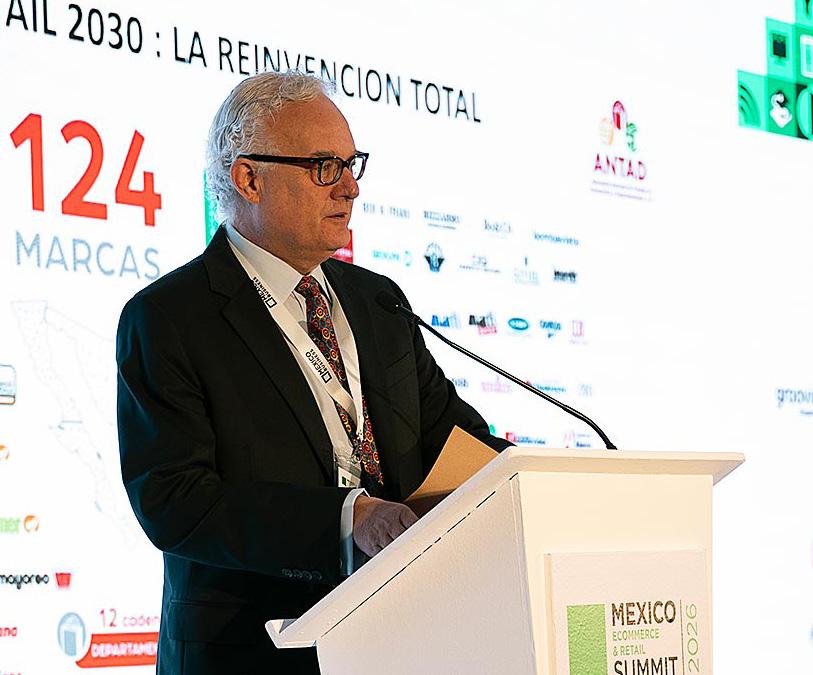
Diego Cosío, Executive President, ANTAD, presented a comprehensive roadmap for the reinvention of the commerce sector at the Mexico Ecommerce and Retail Summit 2026. The strategy calls for 124 major chains to diversify revenue models in order to maintain market resilience amid increasing macroeconomic and competitive pressures.
“Companies must move from subjective opinions to data-driven insights and strategic questioning”
Diego Cosío Executive President | ANTAD
FOR RETAIL 2030 IN MEXICO
and infrastructure to enter adjacent categories like financial services, telecommunications, and healthcare, a trend already visible among leading global retailers.
This transformation is particularly critical as Mexico’s demographic transition, including an aging population and rising middle class, generates new opportunities in the health, beauty, and cosmetics sectors.
Commerce Imperatives and Projections to 2030
The transition reflects a shift toward retailers evolving into providers of essential infrastructure that complements public services. “ANTAD’s pharmacy network already outpaces Mexico’s federal healthcare system in consultations,” says Cosío. This scale highlights the necessity for the industry to expand beyond traditional retail functions and play a more systemic role in the economy.
ANTAD identifies six forces currently driving change within the consumption industry: an increasingly complex consumer profile, a reconfigured social structure, exponential technological advancement, industry-wide disruption, mounting environmental pressures, and shifting geopolitical dynamics.
These factors require companies to move from “serve with purpose” — traditionally understood as addressing authentic customer and stakeholder needs — to a more advanced model that goes beyond transactional relationships, building intimacy, advocacy, and market share on an individualized, datadriven basis.
This evolution allows retailers to leverage strategic assets such as brand strength, data,
Cosío outlines seven principles to compete effectively in the future of retail. f irst, companies must serve with purpose by defining an authentic mission that resonates across stakeholders and aligns with longterm value creation. Second, they must embrace a “customer epiphany,” building intimacy and market share one consumer at a time. Third, retailers must excel at omnichannel 3.0 by pushing the boundaries of seamless, integrated experiences across physical and digital touchpoints.
f ourth, they must grow beyond trading to achieve resilience through revenue diversification. f ifth, organizations must “tech up” by adopting a digital-native mindset and embedding continuous testand-learn capabilities. Sixth, they should play “talent tetris” by shifting from a resignation mindset to one focused on retention, reskilling, and performance-based incentives. Seventh, they must continuously recharge by scaling operations while maintaining disciplined cost structures.
Research by Kantar indicates that 73% of Mexican consumers shop across more than six channels. This level of engagement positions Mexico as a regional leader, where the Latin American average for multichannel engagement is only 32%.
The consumer journey in Mexico involves a variety of touchpoints, including traditional stores, small grocery stores, hypermarkets,
pharmacies, convenience stores, and e-commerce platforms, underscoring the fragmentation, and opportunity, within the retail landscape.
Within the non-grocery industry, CEos have identified clear priorities to secure market position by 2030. A 2024 State of Retail survey reveals that 71% of respondents consider the creation of a true omnichannel shopping experience the primary success factor. o ther critical priorities include developing a compelling private label offering (32%), reinventing the store experience (26%), and adopting advanced analytics and AI applications (26%) to drive personalization and operational efficiency.
Cosío identifies new revenue streams that leverage existing B2C and B2B assets. In the B2C segment, retailers are tapping into discretionary spend through entertainment, food delivery, travel, and pet services. In the B2B segment, corporations are monetizing data, tech solutions, and cloud services. Media and advertising, along with financial services and payments, represent the most immediate opportunities for margin expansion and ecosystem development.
Mexico is projected to dominate growth in North America with a 10.1% increase in e-commerce sales, reaching US$63.71 billion by the end of 2025. This growth rate
is significantly higher than that of Canada (6.0%) and the US (5.0%). EMARKETER forecasts that retail e-commerce penetration in Mexico will exceed 20.8% by 2029.
Purchasing behavior is increasingly concentrated in mobile applications. As ANTAD reveals, the leading categories for mobile app purchases include clothing, shoes, and accessories (62.5%), food and beverage (58.4%), and health and personal care (57.0%). Digital buyers in Latin America utilize a multichannel research approach before finalizing purchases. Search engines (37.7%) and social media (35.4%) are the primary research tools, followed by digital marketplaces (33.9%).
In the social commerce landscape, facebook remains the platform of choice for 55.1% of social buyers in Latin America. However, TikTok has emerged as a formidable challenger with a 44.0% share. TikTok was the top social commerce platform for more than six in 10 social buyers in Brazil and Mexico, reflecting its rapid influence on purchase decisions, particularly in markets where TikTok Shop is currently available.
Leadership and the Theory U
The “Retail 2030” vision requires a shift in leadership philosophy. Cosío emphasizes the importance of Theory U, a social technology of presencing developed by otto Scharmer. The process involves suspending past patterns to listen with depth, moving from “downloading” to “sensing,” and ultimately “crystallizing” actionable new visions.
To innovate effectively, Cosío also recommends that retailers address the inhibitors identified in Cracking the Curiosity Code by Diane Hamilton. This requires identifying and eliminating internal barriers such as fear, rigid assumptions, and organizational silos that limit innovation and adaptability.
“Companies must move from subjective opinions to data-driven insights and strategic questioning,” says Cosío. “Leaders must execute, learn, and correct models in real time.”
BUILDING AN OMNICHANNEL ENGINE: CONNECTING MEDIA, DATA AND SALES
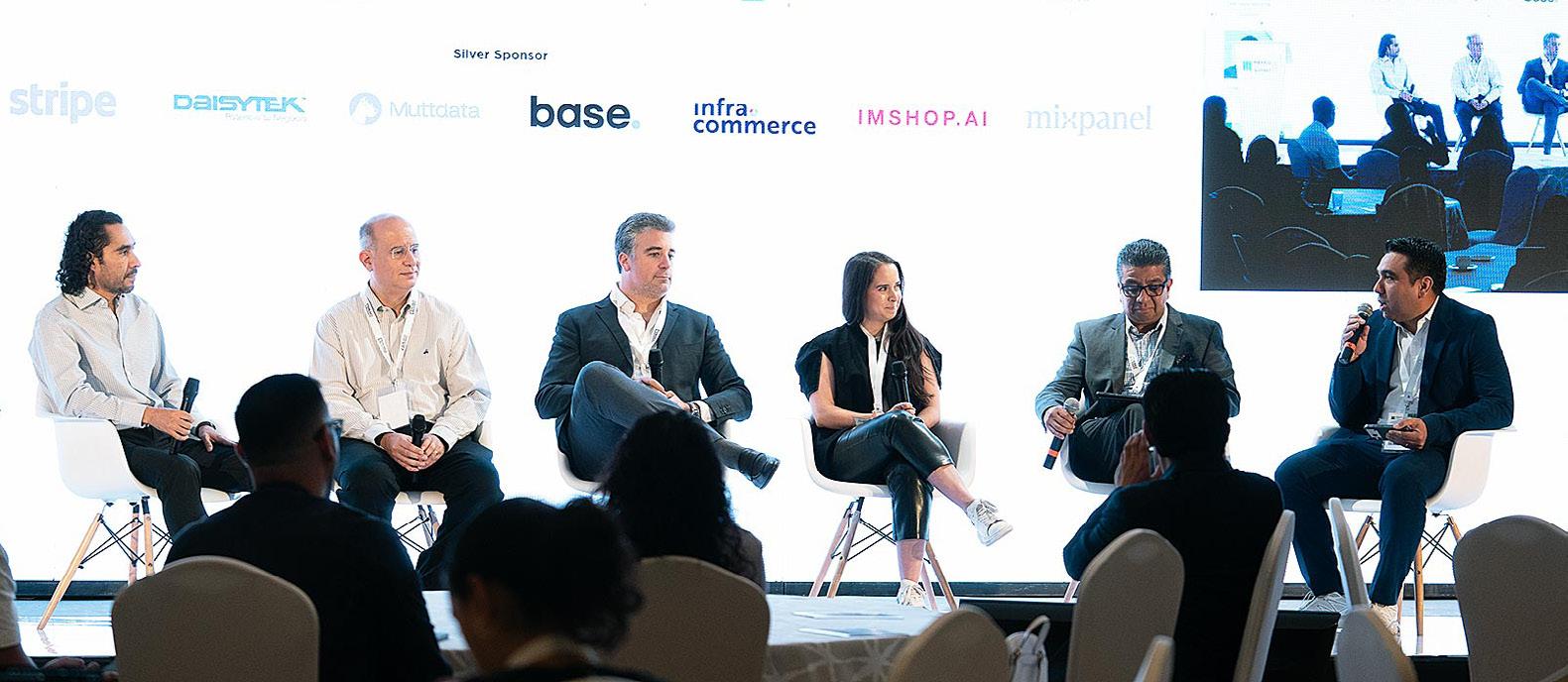
Industry leaders at “Building an omnichannel Engine: Connecting Media, Data, and Sales” converged on a clear conclusion: omnichannel success is less about deploying new technologies and more about aligning organizations, integrating data, and designing around the customer rather than the channel. The discussion underscored persistent barriers—including attribution complexity, siloed systems, and internal misalignment—while emphasizing that sustainable transformation depends on robust governance, continuous experimentation, and cross-functional coordination across media, data, and sales.
At the session, moderator Enrique Girón, Business Development Director North Latam, Infracommerce, framed the conversation around a critical execution gap: while omnichannel is widely embraced as a strategic priority, few organizations have successfully translated it into operational reality. He noted that companies often struggle to connect initiatives across departments, platforms, and touchpoints, limiting their ability to deliver consistent customer experiences.
“Many companies have not solved omnichannel operations,” Girón said, raising the central challenge: how to evolve from fragmented multichannel activity toward a fully integrated operating model. According to Girón, the primary obstacles are not technical but structural—rooted in culture, disconnected data ecosystems, and insufficient collaboration between teams responsible for revenue, marketing, and customer experience.
“The challenge is always technology, but without communication between teams, omnichannel execution does not happen”
Michelle
De la
Sota
Human Alignment
as the Core Constraint
Marco Gelosi, CEo and Partner, GAIA Design, argued that omnichannel transformation is fundamentally a people challenge. Many initiatives fail, he explained, because employees—particularly in sales—do not see how omnichannel strategies align with their incentives or day-to-day responsibilities.
“It is difficult to make most people understand omnichannel,” Gelosi said. He stressed that organizations must eliminate internal competition between channels by aligning incentives across physical retail, ecommerce, and marketing. Without this alignment, each channel optimizes independently, eroding the effectiveness of a unified customer strategy.
Gelosi emphasized that communication is critical: companies must clearly articulate how omnichannel creates value at every level of the organization. When teams understand shared goals, collaboration improves and execution becomes scalable. “The channel that suffers the most is the one that understands omnichannel the least,” he noted, pointing to training and change management as essential enablers of transformation.
Sergio Remolina, Director of Strategic Partnerships, Groovinads, outlined a structured approach to transformation: first, consolidate customer data; second, define how messaging is orchestrated across channels; and third, deploy technology capable of analyzing and activating that data holistically. He warned that many organizations overinvest in tools without integration, resulting in data fragmentation that undermines both measurement and personalization.
Ecommerce Director
for Mexico and Latin America | Salomon
“Data remains fundamental. Without knowing the customer, companies waste resources,” Remolina said, adding that first-party data strategies are becoming a
competitive differentiator in an increasingly privacy-driven environment.
Attribution and the Limits of Measurement
Girón highlighted attribution as one of the most complex—and often misunderstood— components of omnichannel strategy. He noted that no single model applies universally and that companies must adopt a test-and-learn approach aligned with their specific customer journeys and business objectives. The rise of retail media and new digital ecosystems is further complicating measurement frameworks.
“There is no unique or correct attribution model,” he said. “Each company must test multiple scenarios.” He added that misaligned expectations around KPIs frequently derail omnichannel initiatives, particularly when short-term performance metrics conflict with long-term customer value strategies.
Edgar E. Embriz, CE o Country Manager, Swatch Group Mexico, illustrated these challenges within a multi-brand portfolio spanning diverse price points and retail environments. He explained that relying on last-click attribution can significantly distort performance analysis, especially in categories where offline interaction plays a decisive role.
f or accessible brands such as Swatch, products may sell online at approximately US$80, while luxury brands like omega can
reach US$60,000. In the latter segment, nearly all customers still prefer in-store experiences, highlighting the continued dominance of physical retail in highinvolvement purchases.
“Giving attribution to a last click would be inaccurate,” Embriz said. He noted that the company continuously evaluates customer behavior and refines its models, moving toward persona-based, data-driven marketing strategies that reflect the full purchase journey.
“ o mnichannel projects fail when expectations are not aligned,” he added, underscoring the importance of shared metrics and a unified strategic framework across functions.
Designing Around the Customer
Claudio Romero, Country Manager Mexico, Twilio, emphasized that omnichannel is not simply about presence across multiple touchpoints but about orchestrating those touchpoints around a deep understanding of the customer. He identified three foundational pillars: data intelligence, communication channels, and governance.
“If you want to communicate with a user, you must know that user and understand how they consume information,” Romero said. He argued that many organizations mistakenly design systems around channels rather than users, resulting in fragmented experiences and missed opportunities for personalization and engagement.
Romero compared last-click attribution to the final assist before a goal, stressing that conversion represents only one moment in a broader journey. He also highlighted governance challenges, noting that misaligned KPIs between ecommerce and retail teams create structural inefficiencies in performance measurement and decision-making.
Bridging Strategy and Execution
Michelle De la Sota, Ecommerce Director for Mexico and Latin America, Salomon, reinforced that attribution must serve strategy—not the other way around. While last-click models remain useful for validating transactions, they must be complemented by broader analytics to capture the full complexity of the conversion funnel.
She explained that the company’s transformation began with audience identification rather than revenue targets. By integrating digital and physical data, refining segmentation, and executing targeted campaigns, the organization built dashboards that connect performance metrics across channels and enable agile decision-making.
De la Sota identified three consistent barriers: technology implementation, cross-team communication, and organizational capability building. “The challenge is always technology, but without communication between teams, omnichannel execution does not happen,” she said, reinforcing that execution depends as much on people and processes as on platforms.
from Vision to Capability
Across the panel, speakers agreed that omnichannel transformation requires more than incremental improvements. It demands a fundamental shift in how organizations operate, aligning leadership, data, technology, and incentives around a unified view of the customer.
Ultimately, omnichannel maturity is achieved through continuous iteration, integrated data ecosystems, and coordinated execution across functions. f or business leaders, the takeaway is clear: omnichannel is not a one-time initiative but a long-term capability that must be embedded across the organization to drive sustainable growth and competitive advantage.
BEYOND PAYMENTS: HOW BNPL IS CREATING NEW DEMAND IN MEXICO
Mexico’s financial ecosystem is defined by a significant paradox: a deeply rooted culture of installment-based purchasing coexisting with a widespread lack of access to formal credit. Currently, 85% of Mexicans do not have a credit card, and 49% of the adult population lacks any form of formal credit service. This exclusion leaves millions of consumers unable to fully participate in the digital economy, keeping nearly 80%
“These tools do not just help improve conversion rates; they also increase average ticket size, allowing customers to purchase more when they have flexible payment options”
Giussepe De Simone Product Manager | Aplazo
of transactions cash-based and limiting financial inclusion.
This gap also reflects changing consumer expectations. As Giussepe De Simone, Product Manager, Aplazo, explains, “BNPL offers more payment options. In Mexico, close to 85% of people do not have access to a credit card, while younger generations like millennials and Gen Z prefer fast, digital solutions. Every day you do not offer BNPL at checkout, you risk losing those customers and the opportunity they represent.”
for retailers, this creates a dual challenge. first, there is a substantial loss of potential revenue, as businesses fail to capture up to 66% of Gen Z and millennial consumers who are actively seeking alternative payment methods. Second, many retailers attempt
to address this gap by managing their own credit risk and collections—an approach that is both costly and operationally complex. As a result, the traditional credit model is reaching structural limitations, unable to meet the growing demand from an underserved yet digitally active population.
“Mexican consumers are actively looking for ways to access credit for everyday needs,” De Simone notes, emphasizing that flexible financing is no longer optional but a core expectation within the modern customer journey.
Solution: BNPL as a Strategic Demand Driver
Buy Now, Pay Later (BNPL) is not merely a substitute for existing payment methods; it is a complementary tool designed to democratize credit and accelerate the shift from cash to digital payments. By decoupling installment payments from the need for a traditional credit card, BNPL acts as a financial inclusion mechanism, serving as a bridge for the 70% of Aplazo users who lack access to other financial products.
“The BNPL model aims to remove friction for consumers who do not have traditional credit options,” De Simone explains. “It is not just about adding another payment
method; it is about increasing access, creating opportunities, and ultimately driving business impact.”
f or the B2B sector, integrating a BNPL solution such as Aplazo delivers measurable improvements across key performance indicators. These benefits extend beyond conversion alone. As De Simone highlights, “These tools do not just help improve conversion rates; they also increase average ticket size, allowing customers to purchase more when they have flexible payment options.”
+ Higher conversion rates: Businesses report up to a 30% increase as more users complete purchases.
+ Larger average ticket size: Payment flexibility drives up to a 60% increase in average transaction value.
+ Stronger customer loyalty: A 66% annual repurchase rate supports long-term engagement and lifetime value growth.
+ Risk mitigation: Merchants assume no credit risk, as BNPL providers absorb both credit and fraud exposure, improving balance sheet efficiency.
“When customers have a good experience, they come back,” De Simone adds. “BNPL helps create a seamless purchasing journey that encourages repeat usage.”
Implementation Challenges and operational Integration
Adopting a BNPL model requires overcoming specific operational challenges. While integration can be implemented quickly through platforms such as Shopify and VTEX, the primary hurdle lies in ensuring consistent “360-degree communication.” Retailers must clearly communicate the availability of flexible payment options across all customer touchpoints—from e-commerce platforms to physical stores—to maximize visibility and drive adoption rates.
“When people enter a store, we want them to have all the options they are looking
for,” De Simone notes, stressing the importance of visibility at every stage of the customer journey.
Additionally, the user experience must remain frictionless to sustain high approval rates. Solutions like Aplazo address this through decision engines that deliver approvals in under three minutes, maintaining approval rates between 80% and 90%. This speed is critical in reducing checkout abandonment and protecting conversion performance in high-intent moments.
“It is important that the user experience is simple, transparent, and easy to understand, with attractive payment offers available directly at the point of sale,” De Simone explains.
future outlook: Scaling a High-Growth opportunity
The BNPL market in Mexico is poised for rapid expansion, projected to grow from US$3.9 billion in 2025 to US$13.8 billion by 2031, representing a compound annual growth rate of 22.2%. Despite this growth, penetration remains low, with only 3% of Mexican e-commerce transactions using BNPL, compared to over 10% in more mature markets such as the UK and Australia.
“Mexico has enormous potential due to its customer base and market conditions. However, we’re only seeing a small portion of
what is possible compared to more advanced markets,” De Simone states.
As the ecosystem evolves, the distinction between online and offline commerce will continue to blur. Currently, 55% of Aplazo’s transactions already occur offline across more than 15,000 points of sale, underscoring the model’s true omnichannel scalability and relevance in a predominantly physical retail market like Mexico.
As De Simone explains, “BNPL seeks to accelerate sales while removing transaction risk for the business. It’s about clearly understanding each customer’s credit potential and adapting to the payment method that best fits their needs. omnichannel capability is essential, because we cannot control where customers choose to buy. At Aplazo, the goal is to strengthen omnichannel strategies and accompany the customer throughout their entire journey.”
for retailers, integrating BNPL is no longer an added benefit—it is becoming a strategic necessity to capture the next generation of Mexican consumers and unlock incremental demand in an underpenetrated credit market. “We aim to connect people and businesses through solutions that adapt to their needs,” De Simone concludes. “We are not just a payment method — we’re a partner that works hand in hand with merchants to understand their challenges and help them grow.”
THE END-TO-END FULFILLMENT LOOP: MASTERING LAST-MILE EFFICIENCY
Mexico’s e-commerce sector has surged, making logistics a core competitive factor as consumers demand ever-faster, more reliable deliveries. Surveys show that over 70% of shoppers abandon carts if shipping is slow or costly, placing immediate pressure on retailers to optimize performance across the value chain end-to-end.
In practice, the “last mile”—from fulfillment center to consumer—remains complex and expensive, often representing more than half of total delivery costs. Major urban
centers such as Mexico City, Guadalajara, and Monterrey are further constrained by congestion, inconsistent addressing systems, and security risks, which significantly increase operational complexity.
These structural challenges are magnified during peak events. As Santiago Saviñón, Chief Growth officer, 99minutos, explains, “El Buen fin is significantly more complex than Hot Sale. While Hot Sale is largely concentrated in e-commerce retail, Buen fin brings in every sector, creating extreme
demand volatility, limited predictability, and widespread forecasting gaps. It becomes a perfect storm.”
Rural and underserved regions add another layer of difficulty, where limited infrastructure and low population density drive up costs and extend delivery times. At the same time, rising return rates driven by omnichannel consumption patterns are creating a growing reverse logistics burden. Without efficient reintegration processes, returns tie up inventory and erode margins, putting additional pressure on profitability.
Against this backdrop, logistics leaders agree that the challenge is no longer isolated to transportation but extends across forecasting, fulfillment, and network design. “Everything starts with fulfillment, where demand originates,” notes Salvador Muñoz, Vice President of Supply Chain, The Home Depot México. “Delivery performance is ultimately a function of inventory availability, network design, and technology.”
Rethinking the Last-Mile Model
To address these pressures, companies are shifting toward more flexible, multi-model logistics networks. This includes blending owned fleets with third-party logistics providers and on-demand delivery platforms.
for Lorena Castro, Head of Sales, Uber Direct, the issue is fundamentally structural. “This is not an infrastructure problem—it is a business model challenge. Underutilized capacity is what ultimately limits scalability,” she says.
By leveraging existing networks rather than building new ones, companies can unlock efficiency gains without significant capital expenditure. “We do not build fleets; we leverage existing infrastructure from Uber Eats to democratize last-mile delivery.”
This hybrid approach is increasingly critical in a market defined by unpredictability. “E-commerce in Latin America remains inherently unpredictable, which makes agility a competitive advantage,” adds Ricardo Pérez, Supply Chain and Digital Senior Director LatAm, Sally Beauty, highlighting the importance of both forecasting and strategic partnerships.
At the same time, out-of-home delivery models such as pickup and drop-off points (PUDos) and smart lockers are gaining traction. These solutions consolidate deliveries, reduce failed attempts, and improve cost efficiency, particularly in dense urban areas. However, adoption still depends on shifting consumer behavior, as many customers continue to favor door-to-door delivery.
Technology as the Core Enabler
Across the board, technology is emerging as the central pillar of modern logistics strategies. f rom AI-driven forecasting to real-time route optimization, digital platforms are enabling companies to improve both efficiency and service levels.
“Technology is the backbone of modern logistics,” says o mar Ramírez, Senior Director of Logistics, Mercado Libre México.
“E-commerce in Latin America remains inherently unpredictable, which makes agility a competitive advantage”
Ricardo
Pérez
Peak events further expose these vulnerabilities. “A critical capability is knowing when to say no,” he adds, emphasizing the importance of setting operational limits to protect service quality.
Supply Chain and Digital Senior Director
LatAm | Sally Beauty
“ o ur systems architecture is designed to predict demand and optimize inventory allocation dynamically.” He emphasizes that the real competitive advantage lies upstream: “The real differentiator is how effectively you position inventory closer to the end customer.”
This shift toward predictive and integrated systems is helping companies manage the inherent tension between cost and service. As Saviñón notes, “Companies are expected to reduce costs while simultaneously improving service levels—an inherently conflicting mandate.”
AI is playing an increasingly important role in resolving this tension, enabling better decisionmaking and automation across operations. Muñoz points out that organizations are already scaling AI across forecasting, inventory distribution, and customer service, while Saviñón adds that companies are “leveraging AI to modernize repetitive processes and improve operational performance.”
Balancing Cost, Capacity and Customer Expectations
Despite technological progress, execution remains a delicate balancing act. Logistics leaders must continuously optimize between fixed infrastructure and flexible capacity, particularly during high-demand periods.
“Execution ultimately comes down to balance,” says Saviñón. “In logistics, there is a constant tension between fixed cost structures and variable capacity.” Mismanaging this balance can quickly lead to either margin erosion or service degradation.
At the same time, customer expectations continue to evolve. Speed remains important, but it is no longer the only priority. “Time-slot flexibility has become increasingly important, as some customers prioritize convenience over immediacy,” explains Ramírez.
Transparency is also emerging as a key differentiator. Muñoz highlights that customers are increasingly focused on reliability and communication: “Customers are asking three simple questions: Will it arrive? When? At what time?”
Reverse Logistics and Sustainability: from Cost Centers to Value Drivers
Reverse logistics is another area undergoing transformation. Traditionally seen as a cost burden, it is now being reframed as a strategic capability.
“Reverse logistics must evolve from a cost center into a trust-building capability,” says Castro. Improving returns management not only enhances customer experience but also helps recover value through resale, refurbishment, or recycling.
Sustainability is closely linked to this shift. While often perceived as a cost driver, industry leaders increasingly view it as a source of long-term efficiency. “Sustainability is cumulative: incremental improvements across the value chain ultimately drive meaningful impact,” notes Pérez.
However, implementation remains complex. As Saviñón points out, many initiatives require upfront investment and may conflict with short-term cost objectives. The key lies in identifying solutions that deliver both environmental and economic benefits, such as route optimization or packaging efficiency.
optimizing Assets and Network Design
Beyond operations, companies are also rethinking how they deploy physical assets. overinvestment in infrastructure without sufficient utilization remains a common challenge.
“our focus is on the strategic management of assets,” says fernando Zúñiga, Managing Director, Hilco Global. “A common issue we see is overinvestment in CAPEX without sufficient utilization.”
To address this, companies are exploring asset relocation and network redesign strategies
that bring inventory closer to demand centers. “The goal is to reposition infrastructure closer to the last mile and improve overall network efficiency,” he explains, pointing to regions such as Tijuana and Reynosa as opportunities for optimization.
Toward an Intelligent Logistics Ecosystem
Looking ahead, Mexico’s logistics landscape is expected to become increasingly datadriven, flexible, and integrated. Nearshoring trends and continued investment in infrastructure are positioning the country as a regional logistics hub, while advances in AI and electrification are set to further transform operations.
Yet, as industry leaders emphasize, there is no universal solution. “There is no perfect model,” concludes Ramírez, “but continuous iteration drives progress.”
Ultimately, success will depend on the ability to align technology, infrastructure, and business models around a single objective: delivering a seamless, reliable, and cost-efficient customer experience. In an increasingly competitive e-commerce environment, that reliability is quickly becoming the defining currency of trust.
DAISYTEK BOOSTS REVENUE WITH CIRCULAR TECH, TRADE-INS
Daisytek, a specialized distributor with 30 years of industry experience, is currently spearheading the adoption of circular technology models and Trade-In programs. These initiatives are designed to capture consumer attention, extend product lifecycles, and generate incremental revenue within the highly competitive mobile device market.
The strategic necessity for these solutions is rooted in the massive underutilization of global technological resources. “There are more than five billion inactive cell phones worldwide, which contrasts with the fact that more than half of users change their cell phone within a period of less than two years,” says Tomás Morán, CEo, Daisytek.
This discrepancy represents a significant financial opportunity for organizations that successfully facilitate seamless device recovery, refurbishment, and reintegration into the market.
The current electronic consumption landscape in Mexico demonstrates a consistent upward trend in average spending. Projections suggest that per-unit expenditure will reach MX$5,000 by 4Q25 (US$288), with a replacement frequency of approximately 26 months, indicating strong and sustained demand for mobile technology upgrades.
Despite this demand, the saturation of digital stimuli has fragmented brands’ ability to
capture and retain consumer attention. Morán compares the modern retail environment to a stadium where the audience’s attention is highly dispersed, requiring companies to deploy increasingly creative and data-driven engagement strategies to stand out.
Technological circularity addresses both environmental and operational challenges associated with Waste from Electrical and Electronic Equipment (WEEE). By implementing these models, Daisytek reports a reduction of 80% in WEEE generation and savings of up to 87% in raw material usage, reinforcing the sustainability value proposition.
o rganizations can realize up to 40% cost savings by reintegrating devices into the economy. f urthermore, this approach reduces carbon dioxide equivalent (Co2e) emissions by 70% and water consumption by 85% compared to the production of new devices, aligning circular strategies with ESG and cost-efficiency objectives.
The Trade-In strategy functions as a frictionless customer acquisition and loyalty mechanism. By providing instant discounts or store credit during the renewal process, companies incentivize customers to remain within their ecosystem. This model extends the customer lifecycle while facilitating cross-selling opportunities for accessories, warranties, and insurance services. Daisytek manages these programs for high-demand
product lines, including iPhone, Samsung Galaxy, and Google Pixel.
The Mobo Success Story
The effectiveness of this model is illustrated through Daisytek’s partnership with Mobo, a retail company specializing in cellular accessories with more than 200 stores across Mexico. Previously, the refurbished device category faced significant challenges, including low volume predictability and inconsistent product quality.
Mobo leveraged Daisytek as a comprehensive provider to develop a fully integrated, 360-degree business model. Daisytek ensured a stable supply of premium certified devices and implemented multi-format display solutions tailored to different store sizes and layouts.
Today, Mobo offers a wide range of premium refurbished smartphones, supported by third-party financing options that increase accessibility and broaden the addressable customer base.
Daisytek Infraestructure and Specialized Divisions
Daisytek has consolidated its market position through three specialized commercial divisions that cater to distinct segments within the electronics and lifestyle markets:
+ B2C and Marketplace: This team focuses on the purchase and sale of certified pre-owned smartphones to end users through e-commerce platforms and a proprietary mobile application. This division also integrates damage and theft insurance comparators, repair services, and device financing, enhancing the end-to-end customer value proposition.
+ Distribution and B2B: This division manages corporate projects involving the buyback of used internal devices and the sale of certified pre-owned equipment to companies. It provides specialized solutions such as Mobile
“There are more than five billion inactive cell phones worldwide, which contrasts with the fact that more than half of users change their cell phone within a period of less than two years”
Tomás Morán CEO | Daisytek
Device Management (MDM), financial leasing, and IT Asset Disposition (ITAD) recycling services, supporting enterprise-level circularity strategies.
+ Retail: The retail commercial team positions both new and pre-owned products, accessories, and technology solutions across telecommunications and retail channels. This division focuses on identifying new brands for
distribution and implementing Trade-In points at physical locations, driving instore traffic and conversion.
The company maintains a robust logistics network with presence in Mexico City, State of Mexico, Monterrey, Guadalajara, and Villahermosa. This infrastructure enables Daisytek to operate as a strategic partner capable of delivering the right product mix at the optimal moment of demand.
By leveraging data intelligence, the company identifies when a user is most likely to convert, ensuring that customers are reached with the appropriate incentive at the right time. Daisytek continues to invest in technology and digitalization tools to enhance its 360-degree service capabilities and support long-term, scalable growth within a circular economy framework.
THE BLUEPRINT FOR DATA INTEGRATION IN RETAIL
Retail and e-commerce leaders are prioritizing standardized data integration blueprints to replace fragmented legacy infrastructures. This strategic shift aligns technical investments with business outcomes to address budget constraints and operational complexity.
According to Athena Solutions, a formal strategy links technical activities to specific goals such as improving customer retention, increasing operational speed, and enabling advanced analytics capabilities. This approach prevents redundant projects, promotes reuse of components, and optimizes resource allocation during data modernization. While enthusiasm for AI is high, Anna Aguilar, Head of Sales, Adyen, warns that over 73.8% of AI projects launched this year have failed, emphasizing the need to properly structure and govern the data used to train models.
The urgency for a structured approach arises from the increasing complexity of data sources and the inability of siloed systems to support advanced analytics. Retailers often operate with disparate enterprise resource planning (ERP), warehouse management (WMS), and
customer relationship management (CRM) platforms that hinder real-time visibility. “It has much to do with things that we have forgotten over the last 30 years. Everything is still about data, and we have forgotten that to launch any project today, there must be a perfect and correct homologation of that data,” said Pável Álvarez, eComm & Retail Media Ambassador, ISDIN Mexico.
Establishing a comprehensive data integration strategy is a prerequisite for operationalizing AI. Without foundational data governance and quality standards, AI applications cannot deliver value beyond early-stage proofs of concept. furthermore, regulatory frameworks such as the General Data Protection Regulation (GDPR) and the California Consumer Privacy Act (CCPA) require robust data lineage, security, and compliance mechanisms to protect corporate reputation and financial performance.
Juan Martín Pampliega, CEo and Co-founder, Muttdata, visualizes this architecture in three layers: Data, Models, and Action. He also stresses the importance of feeding models with proprietary data. “for us, the agent is
one more person who works at the company. If this person does not have access to key information, they will not be able to make the best decisions,” he argues.
from Technical Execution to Strategic Enterprise Value
Determining the optimal starting point for integration requires assessing organizational maturity and selecting high-impact frameworks. Leaders utilize models such as customer data platforms (CDP) for marketing personalization, marketing mix modeling (MMM), and multi-touch attribution (MTA) to quantify channel effectiveness. Lifetime value (LTV) models further guide the prioritization of data streams and investment decisions.
However, the implementation of these tools must be preceded by a clear understanding of the existing data environment. Guido Gallo, E-Commerce Director, Natura & Avon, warns against rushing into advanced modeling without foundational clarity. “It has to do with visibility and standardizing the way we work with it. We do not want to amplify noise; we want to amplify the business.” He suggests
“It has much to do with things that we have forgotten over the last 30 years. Everything is still about data, and we have forgotten that to launch any project today, there must be a perfect and correct homologation of that data”
Pável Álvarez eComm & Retail Media Ambassador | ISDIN Mexico
that the failure of these models often stems from a lack of visibility and identity resolution across customer touchpoints rather than from technology limitations.
To manage these initiatives, technical leaders must structure business cases that balance immediate results with long-term infrastructure health. This process involves defining SMART goals—specific, measurable, achievable, relevant, and time-bound—as well as establishing success metrics such as data quality scores, system uptime, and direct impact on business KPIs.
Jean Cano, CMo, Tiendas 3B, emphasizes that in high-volume, low-margin environments, every data point must serve a clear efficiency purpose. “We do not prioritize data sophistication, but operational efficiency. If a piece of data does not bring efficiency, it simply does not make sense for us,” Cano explains. He notes that while advanced metrics like LTV are useful, his organization prioritizes geographic and logistical data that directly impacts store performance.
This focus on operational reality extends to AI deployment on the ground. Because physical variables—such as the presence of a local tianguis (street market) near a store—can disrupt even the most accurate digital predictions, Tiendas 3B uses a hybrid approach. “We are moving toward a hybrid model where, although AI suggests an action, individual stores have the final word,” Cano concludes. This ensures that strategy remains grounded in the specific complexities of physical retail environments.
Governance, Execution, and Business Alignment
The choice between integration methods and deployment models must align with the overall IT roadmap. Effective governance is a cornerstone of this blueprint, incorporating data stewardship and metadata management to ensure integration remains compliant, scalable, and secure throughout its lifecycle.
A chief data officer (CDo) typically oversees these efforts to ensure policies and standards are consistently applied across departments. Execution relies on a prioritized roadmap outlining project sequencing, milestones, and resource dependencies. By starting with high-impact, achievable use cases, companies build momentum and maintain executive sponsorship.
The strategy must translate high-level business goals into concrete integration requirements. for example, achieving a customer 360 view
requires identifying all customer touchpoints and defining the integration architecture needed to ensure data completeness and consistency. Ultimately, shifting from technical execution to strategic value allows retail enterprises to transform data potential into sustained performance.
o rganizations that fail to implement such blueprints remain trapped in cycles of disconnected technical initiatives that do not contribute to enterprise-wide objectives. A structured methodology ensures that every integration effort is purposeful, governed, and measurable.
As organizations move beyond foundational stability, the focus shifts toward more advanced applications. “We should not stay only in the prediction phase,” Álvarez concludes. “I visualize the future of data with AI as moving toward prescription, where models prescribe specific actions to prevent unfavorable conditions and drive the business forward.”
TRUST BY DESIGN: MEXICO’S DIGITAL ID AND DATA SECU RITY SHIFT
Mexico’s digital economy faces a turning point as companies expand financial technology, e-commerce, and datadriven services, forcing firms to invest in cybersecurity strategies. During the panel “Trust by Design: Digital ID, Security and the future of Consumer Data in Mexico” at the Mexico E-commerce & Retail Summit 2026, industry leaders discussed how
organizations must confront growing risks related to consumer data while building systems that allow innovation and trust to coexist.
Juan Martín Pampliega, CEo and Co-founder, Muttdata, argued that fintech growth has increased exposure to sensitive information such as payment data, making security
“Data clean rooms allow retailers or banks to share information in encrypted environments without transmitting personal data, which enables monetization without creating privacy risks.”
Juan Pampliega CEO and Co-Founder | Muttdata
an operational requirement rather than a technical add-on. He said organizations must recalibrate their relationship with users as technologies evolve.
“ f intech companies must adapt to new technologies and rethink how we relate to consumers. We manage sensitive data such as payments, and it must be protected,” Pampliega said. “I have seen cases where information was captured without people giving their real consent.”
Albert González, eStore operations Manager, Samsung Electronics, linked cybersecurity directly to e-commerce operations and organizational practices. “You cannot sell in e-commerce without efficient levels of information control,” González said. “How you obtain data, how you store it, and how you manage it defines the experience.”
He added that personal data regulated by law requires both internal awareness and consumer understanding. “Customers must know how personalization works and how their data is handled.”
Jesús de Ávila, CIo, Grupo Nazan, presented a practical framework based on three operational axes: governance, technical architecture, and operations. “This is not only a technology issue,” de Ávila said. “We created an interdisciplinary committee that meets monthly, built an inventory of sensitive data, and defined risk policies and contextual clauses.”
He explained that the company implemented a zero-trust architecture supported by key controls and observability systems. operational resilience has become essential for retail environments that must continue functioning
during incidents. “for this to work, culture is decisive. We run simulations and integrate security from the design stage. That allows retailers in Mexico to continue innovating.”
Cybersecurity as an Investment
Panelists emphasized that companies must move away from viewing cybersecurity as a reactive expense. De Ávila argued that security should be embedded into product development and aligned with business outcomes.
“Cybersecurity is no longer a cost. It is an investment aligned with return on investment. It moves from compliance to competitive differentiation.” Grupo Nazan has implemented real-time monitoring tools across retail operations to protect data across all channels, incorporating cybersecurity into the business case itself.
Pampliega added that many organizations underestimate the value of cybersecurity data. “Data clean rooms allow retailers or banks to share information in encrypted environments without transmitting personal data, which enables monetization without creating privacy risks.”
The panel identified reusable authentication systems and digital wallets as key developments shaping Mexico’s digital ecosystem. De Ávila noted that tokenized authentication reduces checkout friction while lowering fraud risk. “Wallets allow reusable authentication. Transactions become faster and safer.”
He added that high mobile penetration and widespread banking access position Mexico for rapid adoption. “More than 90% of people over age 12 have a mobile phone, and about 80% have some banking relationship. That places Mexico in a leading position in Latin America.”
González described wallets as tools that identify users through tokens rather than names, enabling loyalty programs and rewards systems while limiting exposure of personal identity. Pampliega concluded that implementation will require sustained commitment.
“There is a large investment ahead, not only financially but also in time and organizational priority. In three to five years, many of these
security tools will become standard. Trust grows when customers decide what data to share and receive value in return.
RETAIL SHIFTS TO AI, OPS, AND RELATIONSHI PS IN 2026
Mexico’s retail sector is moving away from “romanticism” toward a phase of greater maturity. E-commerce is no longer a peripheral growth engine; it has gained significant traction, with 2025 growth reaching 19.2% and surpassing expectations to account for 17.4% of total retail sales. However, this expansion is accompanied by mounting pressure. Customer acquisition costs (CAC) are rising sharply, with social media advertising costs increasing by an average of 15% to 20% annually.
As Juan Martín Vignart, Country Manager, Tiendanube, explains, “The era of easy growth is over. Today, brands are no longer competing just on visibility, but on efficiency and their ability to convert every interaction into value.”
for the 75.5% of entrepreneurs who identify customer conversion as their primary challenge, the traditional linear sales funnel is no longer effective. The modern consumer journey has evolved into a complex ecosystem, where purchase decisions begin across multiple touchpoints, including search engines, social media, marketplaces, physical stores, and increasingly AI agents and messaging platforms such as WhatsApp.
Vignart adds, “What we are seeing is the fragmentation of the customer journey. Brands must be present everywhere, but more importantly, they must be consistent and relevant in every channel.”
Solution: The “AI-Native” Journey and Agentic Commerce
The path forward in 2026 lies in orchestrating an omnichannel experience that shifts from simple “clicks” to meaningful “conversations.” At the center of this transformation is the rise of the “AI-native” customer. If ChatGPT were an e-commerce platform, it would already rank among the largest globally by traffic,
and 42% of consumers are already using AI assistants as personal shopping tools.
“E-commerce is no longer about transactions; it is about conversations,” says Vignart. “The brands that win are those that can engage customers in real time, understand intent, and respond instantly.”
Retailers must integrate artificial intelligence not as a standalone initiative but as a core cultural transformation. Key applications include:
+ Conversational retail: Leveraging WhatsApp and AI agents to manage the customer journey from discovery to post-purchase engagement. Currently, eight out of ten brands use WhatsApp to close transactions.
+ Agentic commerce: More than 50% of brands aim to adopt agent-driven commerce models by 2026, where AI systems manage customer relationships and data flows.
+ Hyper-personalization: Moving beyond basic identifiers to interpret context,
intent, and timing. While 83% of brands believe they deliver personalization, only 30% of consumers agree— highlighting a significant execution gap.
o n this gap, Vignart notes, “There is a disconnect between what brands think they deliver and what customers actually experience. AI can close that gap, but only if it is implemented with a clear understanding of the customer.”
Implementation Challenges: Key friction Points
Successful implementation requires addressing both technical and cultural barriers. The primary drivers of cart abandonment remain consistent: hidden costs (48%), mandatory account creation (24%), and long delivery times (22%).
“friction is the silent killer of conversion,” Vignart emphasizes. “Every extra step, every unexpected cost, every delay erodes trust and reduces the likelihood of purchase.”
Payment friction is another critical obstacle. Approximately 58% of consumers abandon purchases when their preferred payment method is unavailable. In Mexico, 49% of buyers now favor alternative payment options over traditional credit or debit cards, including bank transfers (SPEI), digital wallets, and cash payments through convenience stores such as oXXo
“ f lexibility in payments is no longer optional—it’s a baseline expectation,” he adds. “If you do not offer the right options, you are effectively turning customers away.”
Internally, the greatest challenge is cultural adaptation. While 59% of merchants cite cost as their primary concern regarding
AI adoption, the deeper issue lies in transforming organizational culture to effectively leverage these tools for productivity and growth.
“Technology is not the main barrier—mindset is,” Vignart says. “Companies that succeed are those that embrace experimentation and continuous learning.”
future outlook: Relational Growth and the Evolving Role of Physical Retail
By 2026, growth will increasingly be driven by what can be described as “irrational affinity”—an emotional connection that goes beyond satisfaction to create genuine brand preference. Direct-to-consumer (D2C) strategies will become the center of gravity, enabling companies to regain control over customer data and relationships while improving margins and long-term loyalty.
“Brands need to move from transactional relationships to emotional ones,” Vignart explains. “Loyalty today is built through relevance, trust, and consistent engagement— not just price or convenience.”
Physical stores will remain essential but will serve a redefined purpose. Rather than functioning solely as points of sale, they are evolving into hubs for service, community engagement, and logistics. Currently, 40% of Tiendanube merchants already operate hybrid models, reflecting the growing importance of seamless integration across channels to meet the expectations of the 51% of consumers who demand a consistent omnichannel experience.
“The future of retail is hybrid,” he concludes. “The winning brands will be those that can integrate digital and physical experiences into a single, cohesive journey.
DISCOVERY COMMERCE: HOW TO SCALE YOUR SALES ON T IKTOK SHOP
TikTok Shop has established itself as a primary driver of product discovery and conversion. This reflects a fundamental shift in consumer search
behavior toward integrated, entertainmentbased marketplaces that prioritize native content and real-time community engagement.
“The platform functions as an integrated marketplace where entrepreneurs and companies position themselves within the market,” says Philippe Castellví, New Business and Partnerships Lead, TikTok Shop. “Commerce within an entertainment application occurs through a strategic sequence of shortform videos, live transmissions, and profilebased sales, which eventually lead to the shop function, allowing brands to build communities and leverage cultural talent to reach targeted audiences effectively.”
The landscape of consumer search behavior is undergoing a structural shift, with TikTok emerging as a major driver of purchase intent. Research from Statista (2024) indicates that 64% of Generation Z consumers regularly use TikTok as a search tool to research products, compare prices, and verify authenticity before completing a transaction.
Castellví notes that TikTok is evolving from a social network into a sophisticated discovery and search platform. Users enter the app to get informed before buying, and retail brands that understand this shift can influence decisions much closer to the point of conversion.
This model, defined as discovery commerce, suggests that purchases stem from entertainment and spontaneous inspiration rather than a traditional search-andcompare funnel. features such as the Shop
Page and Shop Tab allow users to encounter products aligned with their interests without an active search.
Since its launch in Mexico in early 2025, TikTok Shop has recorded a 34-fold increase in average daily sales. over the same period, the number of available products expanded 15-fold, while the volume of active sellers and creators increased 23-fold. Platform data show that 83% of users in Mexico say TikTok helps them discover new topics, and 51% actively seek more information about products encountered while scrolling.
Monetization frameworks, Logistical Infraestructure, and Strategic Scalability
To scale sales effectively, enterprises must navigate evolving monetization and commission structures. on January 8, 2026, TikTok Shop adjusted its commission fees for key European markets, including Germany, Spain, france, Italy, and Ireland. The standard commission rose from 5% to 9%, bringing the platform closer to rates charged by established marketplaces such as Amazon, which typically range between 7% and 15%, depending on category.
However, TikTok Shop maintains a 7% commission for high-growth categories such as electronics, beauty, and personal care.
To encourage expansion among partners, the platform introduced incentives for new sellers. In Europe, eligible merchants pay a reduced 4% commission for the first 60 days of operation, provided they are opening their first store in the EU5 markets, offer products that are substantially different from existing listings, and publish at least five active products within 15 days. These commissions are calculated on a base consisting of net sales (price minus discounts), plus customer-paid shipping and platform-covered discounts, minus any refunds.
In Mexico, which serves as a regional test market for this model, the infrastructure supports rapid scaling. Brands such as Steren reported a 370%
sales increase during the Hot Sale campaign, while Wilson recorded a 4,000% monthly rise in gross merchandise value (GMV) by leveraging high-engagement live streaming.
“Emotional connection created by creators is a significant factor in these results,” says Castellví. “Watching a creator use, explain, and recommend a product provides a level of transparency that static images cannot achieve.”
The logistical framework in Mexico is a critical component for scaling operations. TikTok Shop has partnered with local logistics providers, including Estafeta and JT Express, to handle fulfillment. The current fee structure in the country includes a 6% platform fee and an additional 6% Shipping fee Program (SfP) charge.
To accelerate adoption and secure market share, many sellers receive shipping subsidies for up to two years. Approximately 90% of stores operating within the ecosystem in Mexico use the platform’s algorithm to
match products with creators based on demographics, gender, and age.
o perational efficiency is also reflected in customer acquisition performance. The online fashion company Privalia achieved a conversion rate among new buyers 28% higher than its average on other social platforms by shifting from promotional messaging to transparent, native content. furthermore, 98% of users acquired via TikTok completed registration and verification, while cost per install (CPI) fell 40% compared with the industry average.
To professionalize the ecosystem, the TikTok Shop Academy offers specialized training for sellers and creators. The platform has also partnered with business organizations such as C o NCANACo and AMVo to increase participation from small and medium enterprises (SMEs). Creator commissions typically range between 5% and 30%, depending on negotiated terms and product category.
GENAI AS A COMPETITIVE EDGE: THE AUTONOMOUS CUSTOM ER JOURNEY
Medium-sized retailers in Latin America are transitioning from Generative AI (GenAI) experimentation to full-scale deployment, aiming to unify sales funnels through autonomous payment agents that deliver measurable operational impact across the digital ecosystem.
The implementation of these technologies addresses the urgent need to manage unstructured data and automate critical consumer touchpoints.
“Management
and IT teams must transition toward open data architectures that enable deep analysis without compromising privacy, in line with standards such as the General Data Protection Regulation (GDPR)”
Alexandre Bartra General Manager North America | Etam
“The industry is moving toward a new sales channel in which agents that deeply understand the user manage payment credentials and purchase decisions,” says Rene Salazar, global partnerships, expansion, and incubation for Latin America, Stripe. “Agents can reason—though not think— enabling them to execute autonomous transactions through specific prompts.”
This development reshapes traditional interactions, shifting from simple query-andresponse models to end-to-end purchase journeys autonomously managed by AI.
Market Context
The sector’s technological evolution is expected to generate a total financial impact of US$9.2 trillion in retail by 2029, according to IHL Group. While GenAI represented only 9% of the sector’s total impact in 2023, it is projected to account for
78% by 2029, equivalent to approximately US$4.4 trillion.
Currently, data from IDC Europe indicates that 40% of global retailers remain in the experimentation phase, while 21% are already investing in active implementations.
In Mexico, the ecosystem faces structural challenges driven by high mobile penetration and limited access to traditional banking services, creating both constraints and opportunities for digital innovation.
GenAI supports these companies by processing unstructured data sources—such as emails, images, and social media content— to enhance customer service. organizations leverage these inputs to train models that guide users toward relevant solutions, effectively automating early-stage customer interactions and decision-making processes.
Technical Implementation and Data Interoperability
The maturation of GenAI adoption remains uneven across business segments. Currently, the most quantifiable returns on investment are concentrated in product discovery and customer service optimization.
Alejandra Soberon, country manager at Mixpanel, emphasizes the importance of eliminating data silos to unlock organizational value.
“The competitive advantage lies in understanding how customers prefer to buy and delivering exactly what they need at the moment of intent,” says Soberon. “Processes that previously took days can now be completed in seconds, allowing teams to adapt strategies in real time during highdemand events.”
To achieve this level of responsiveness, organizations are prioritizing the creation of a “single source of truth”, integrating data from CRM systems, e-commerce platforms, and behavioral analytics. This consolidation is critical for enabling AI models to deliver context-aware recommendations based on sentiment and intent analysis, ultimately reducing cart abandonment—a key performance metric in regional e-commerce.
Cybersecurity and Consumer Trust in Emerging Markets
In markets with elevated fraud risk, transparency and data protection are central to building consumer trust.
Eduardo Hamid, head of e-commerce, Samsung Electronics, highlights the increasing complexity of the consumer journey.
“Today’s customer researches extensively before making a purchase,” says Hamid. “While AI simplifies this process by addressing technical questions, seamless integration between CRM systems and customer service
channels is essential to ensure a secure and reliable experience.”
The protection of personal data remains aligned with international regulatory frameworks.
Alexandre Bartra, general manager for North America, Etam, notes that the primary barriers are organizational rather than purely technical.
He emphasizes that companies face cultural transformation challenges, often requiring extended internal “evangelization” processes. “Management and IT teams must transition toward open data architectures that enable deep analysis without compromising privacy, in line with standards such as the General Data Protection Regulation (GDPR),” he adds.
Human Capital and organizational Reskilling
The transition toward operational autonomy requires investment strategies that extend beyond technology deployment. A study by the IBM Institute for Business Value indicates that 41% of the retail workforce will require reskilling due to AI and automation.
As a result, leading organizations are shifting focus from external hiring to internal capability building, prioritizing digital skills, data governance, and phased implementation strategies.
This transformation enables retailers to scale dynamic pricing, predictive logistics, and realtime decision-making. David Jaime, regional account director for tech and durables in Latin America, NielsenIQ, notes that the success of GenAI ultimately depends on its ability to deliver measurable business outcomes.
“By optimizing these components, companies can secure a sustainable competitive advantage in an increasingly complex consumer environment,” says Jaime.
The integration of GenAI is no longer a forward-looking concept but an immediate operational imperative. Industry experts agree that retailers capable of bridging the gap between experimentation and production will be better positioned to capitalize on the accelerated growth of the digital economy in Mexico and across Latin America.
WHATSAPP, AI POWER NEXT WAVE OF DIGITAL TRAN SFORMATION
Mexican retailers are accelerating their adoption of WhatsApp Business and artificial intelligence to meet rising consumer expectations for immediacy, personalization,
and seamless service. As conversational commerce gains traction, companies are rethinking not only how they engage customers, but also how they structure operations end to end—from discovery to delivery and post-sale support.
During the panel “Conversations Toward the future: WhatsApp and AI as Tools for Digital Transformation,” industry leaders provided a pragmatic perspective on both the opportunities and execution challenges underlying this shift.
Messaging Becomes Core Infrastructure
Marcos oliveira, Head of Strategic Partnerships, Meta, framed messaging as a foundational layer of modern commerce. “Eight out of ten Mexicans communicate with businesses at
least once a week, generating a 275% return on investment for companies leveraging messaging,” he said.
This aligns with broader market trends: messaging has become the preferred communication channel for a majority of Mexican consumers, driven by speed and convenience. Platforms such as WhatsApp Business have evolved into full-service transactional environments, enabling customers to ask questions, receive recommendations, track orders, and resolve issues without leaving the conversation.
o liveira also highlighted the scale of this transformation, noting that global messaging activity reached 25 billion interactions during the 2022 fIfA World Cup—an indication of the operational intensity companies must be prepared to handle during peak events such as Hot Sale.
Bridging the Gap Between Demand and Execution
Despite strong demand, many retailers continue to face structural limitations. Juan Pablo Marugo, Business Director for LATAM, Twilio, emphasized that communication channels alone do not resolve operational bottlenecks.
“The channel can handle demand. The question is whether the infrastructure behind it supports inventory, logistics, and delivery,” he explained.
E-commerce in Mexico continues to expand at double-digit growth rates, increasing order volumes and operational complexity. However, many organizations still rely on fragmented systems or one-way communication architectures, leading to delayed updates, inefficient returns processes, and missed revenue opportunities.
Marugo highlighted a recurring gap: companies often understand customer behavior but lack the backend integration required to operationalize those insights at scale.
from Conversations to Transactions
Artificial intelligence is playing a critical role in closing this gap. Mónica orozco, Head of Sales & Customer, Auronix, described AI as a force reshaping the entire retail journey.
“AI is not transforming a single stage of retail; it is reshaping the entire user journey,” she said.
AI-powered chatbots on WhatsApp now enable real-time engagement, personalized recommendations, and automated workflows across every stage of commerce—from acquisition and order confirmation to delivery coordination and post-sale support.
“We are moving from an informational channel to a transactional one,” o rozco added, highlighting how features such as in-
chat payments, automation, and predictive analytics are transforming messaging into a direct revenue-generating channel.
Enabling Scale for SMEs
f or small and medium-sized enterprises (SMEs)—which represent approximately 80% of Mexico’s business ecosystem—these tools are particularly impactful. Vicky Moreno, Senior Manager of Customer Success, Tiendanube, emphasized the role of messaging in driving productivity and competitiveness.
“We help businesses activate channels such as WhatsApp and build strategies around them,” she said. “ for SMEs, productivity defines competitiveness. Messaging enables sales to be closed within the same conversation.”
Moreno shared an example of a retailer managing more than 5,000 monthly orders, with AI handling 85% of customer interactions. Without automation, she noted, this level of scale would be operationally unfeasible.
Building an End-to-End Conversational Ecosystem
To fully capture the value of conversational commerce, retailers are integrating WhatsApp Business APIs with AI-driven systems across the entire value chain:
Customer engagement and sales: AI chatbots deliver real-time support, personalized promotions, and guided shopping journeys that improve conversion rates.
order orchestration: Automated messaging manages confirmations, receipts, and data validation, while enabling upselling and crossselling within the same interaction.
Delivery and last-mile coordination: Real-time updates enhance transparency, reduce failed deliveries, and improve logistics efficiency.
Returns and post-sale support: AI-driven workflows streamline returns and customer service, optimizing reverse logistics through automation and predictive insights.
Companies such as Mercado Libre illustrate how these capabilities can be deployed at scale, leveraging messaging and AI to enhance both customer experience and operational performance.
Implementation Challenges
However, scaling these solutions requires overcoming several structural barriers. Data privacy and compliance remain critical, as businesses must secure user consent under Mexican regulations while adhering to platform policies.
System integration is another major challenge. Synchronizing WhatsApp interactions with CRM, ERP, and inventory systems often requires robust APIs and middleware, particularly for organizations operating on legacy infrastructure.
Measuring return on investment also remains complex. Companies must define clear KPIs—such as response times, conversion rates, and retention metrics, and develop analytics capabilities to track performance effectively.
“Eight
out of ten Mexicans communicate with businesses at least once a week, generating a 275% return on investment for companies leveraging messaging”
Marcos Oliveira Head of Strategic Partnerships | Meta
Additionally, Mexico’s diversity introduces complexity in user experience design. Supporting regional Spanish variations, colloquial expressions, and indigenous languages requires advanced natural language processing capabilities, while connectivity gaps in rural areas demand lightweight and accessible solutions.
Both orozco and Moreno emphasized the importance of an incremental, use-casedriven approach. Companies should prioritize specific applications, deploy minimum viable solutions, and iterate continuously based on
performance data rather than attempting fullscale transformation from the outset.
Conversational commerce is on track to become a defining pillar of Mexico’s digital
retail landscape. Projections suggest it could account for more than 20% of online sales in the near term, as AI capabilities continue to mature and adoption scales across sectors.
WORLD CUP 2026: PREPARING MEXICO FOR GLOBAL CONSUMERS
Mexico is preparing for a surge in global consumer activity ahead of the fIfA World Cup 2026, an event expected to host 48 national teams and more than 100 matches across three countries. Industry leaders indicate that the tournament represents both a large-scale logistics stress test and a significant commercial opportunity across payments, retail operations, mobility services, and consumer engagement.
Gonzalo Tercero, Vice President of Consumer Products and Digital Platforms, Visa Mexico, stated that the World Cup will be the largest sporting event ever held and a critical opportunity to position Mexico as a digitally connected economy capable of managing international demand.
“We will receive visitors from many countries, while millions of Mexicans will follow the event from home,” Tercero said. “The World Cup is an opportunity to showcase Mexico as a modern, connected country able to operate at this scale.” He added that Visa is working with Mexico’s Ministry of Economy to equip more
than one million businesses with payment terminals, expanding nationwide acceptance capacity. This broader terminalization will enable small and medium-sized enterprises to participate in global consumption flows.
Visa, an official payment partner of the tournament, has already implemented contactless payments across Mexico City’s Metrobús and Metro systems, allowing foreign-issued cards to be accepted seamlessly. According to Tercero, these infrastructure upgrades began months in advance to minimize transaction friction for international visitors.
Payment providers anticipate highly concentrated economic activity within a compressed timeframe. Anna Aguilar, Head of Sales, Adyen Mexico, noted that businesses must prepare for demand spikes that differ significantly from normal operating conditions.
“Many companies built their technology for stable demand,” Aguilar said. “But the World Cup could generate up to US$4 billion
in transactions within 50 days. Companies need a structural shift.” She added that foreign visitors typically spend three times more than domestic consumers, highlighting the importance of enabling seamless digital payments for global travelers.
Aguilar emphasized the need for unified commerce strategies, integrating physical stores, e-commerce platforms, and mobile applications into a single inventory and payment ecosystem. She cited data indicating that 77% of Mexican consumers expect crosschannel inventory visibility, while only 28% of companies are currently equipped to deliver it.
Mobility operators are also scaling capacity. Matías Galuccio, Head of VEM o Conduce, VEMo, said the company began preparations several months in advance by expanding electric vehicle fleets, charging infrastructure, and driver availability.
“We are scaling beyond 600 electric vehicles and 1,500 drivers,” Galuccio said. “The challenge is to grow without compromising service performance.”
The company has introduced QR codes within vehicles to capture user feedback and relies on real-time monitoring centers and operational analytics to dynamically reposition fleets during peak demand periods.
Retail and delivery platforms are shifting from predictive stocking models toward real-time demand responsiveness. Silvia Ramírez, Senior Director, Rappi Ads Mexico, emphasized that technology must enable immediate reaction to consumption surges driven by match outcomes.
“A diagnostic alone can work against you,” Ramírez said. “If you anticipate a 40% increase and overstock accordingly, you create inefficiencies. Technology must allow real-time reaction.”
She noted that consumption patterns during major sporting events shift instantly. During the Copa América final, Rappi recorded pizza orders at volumes capable of feeding a stadium multiple times, driven by live match dynamics rather than pre-planned forecasts.
“The payment is the beginning of the customer interaction, not the end,” Aguilar said, stressing the importance of maintaining customer recognition and data continuity beyond the transaction, including after the World Cup. failure to connect transactions across touchpoints results in lost commercial value and missed retention opportunities.
Galuccio added that brands must optimize for short interaction windows, particularly in mobility scenarios surrounding stadium attendance. Ride-hailing data enables companies to anticipate demand clusters and position services accordingly.
Ramírez highlighted that 66% of consumers are expected to experience the tournament from home, often sharing purchases. Real-time segmentation based on purchasing behavior will therefore be critical to adapting promotions and inventory availability during matches.
Panelists concluded that preparing for the f I fA World Cup 2026 requires crosssector coordination across payments, logistics, mobility, retail technology, and consumer analytics.
AGENT-LED COMMERCE RISES AS STRIPE DR IVES SHIFT
The rise of generative AI is redefining the foundations of digital commerce. As consumers increasingly rely on intelligent agents to discover, evaluate, and purchase products, the traditional e-commerce funnel—built around human browsing— is beginning to erode. In its place, a new paradigm is emerging: agentic commerce,
where machines act on behalf of users to complete transactions.
During Mexico E-commerce & Retail Summit 2026, Danny Smith, Agentic Commerce Solution Architecture Lead, Stripe, outlined how this shift is already reshaping consumer behavior and merchant infrastructure.