Mexico’s 2018 was marked by significant uncertainty and wariness among investors. In his third presidential campaign, Andrés Manuel López Obrador ran on an anti-corruption and socially-focused platform. He promised to cancel or revisit iconic projects and industry advances, including NAIM and the Energy Reform, which generated concern in the national and international business communities. Following a historic landslide win, López Obrador generated hope for change and opened the door for investment in new sectors. Still, uncertainty lingers and fulfilling campaign promises while maintaining macroeconomic stability will be a tough balancing act, particularly since most promises involve more public spending while reducing tax revenues.
Despite the changes, the Mexican economy remains business as usual. The agricultural, tourism, manufacturing and banking sectors, among others, have gained momentum to become world-class competitors. The renegotiation of the country’s multiple free-trade agreements, including USMCA, TPP11 and a revamped partnership with the EU, have the potential to fuel economic growth while adding a pinch of stability to a weary market. Although the global economy might decelerate, Mexico has an opportunity to reinvent itself alongside the new administration.
The challenge ahead is to implement the right strategies from a public and private sector standpoint to complete Mexico’s transformation and turn it into a true powerhouse of the 21st century.
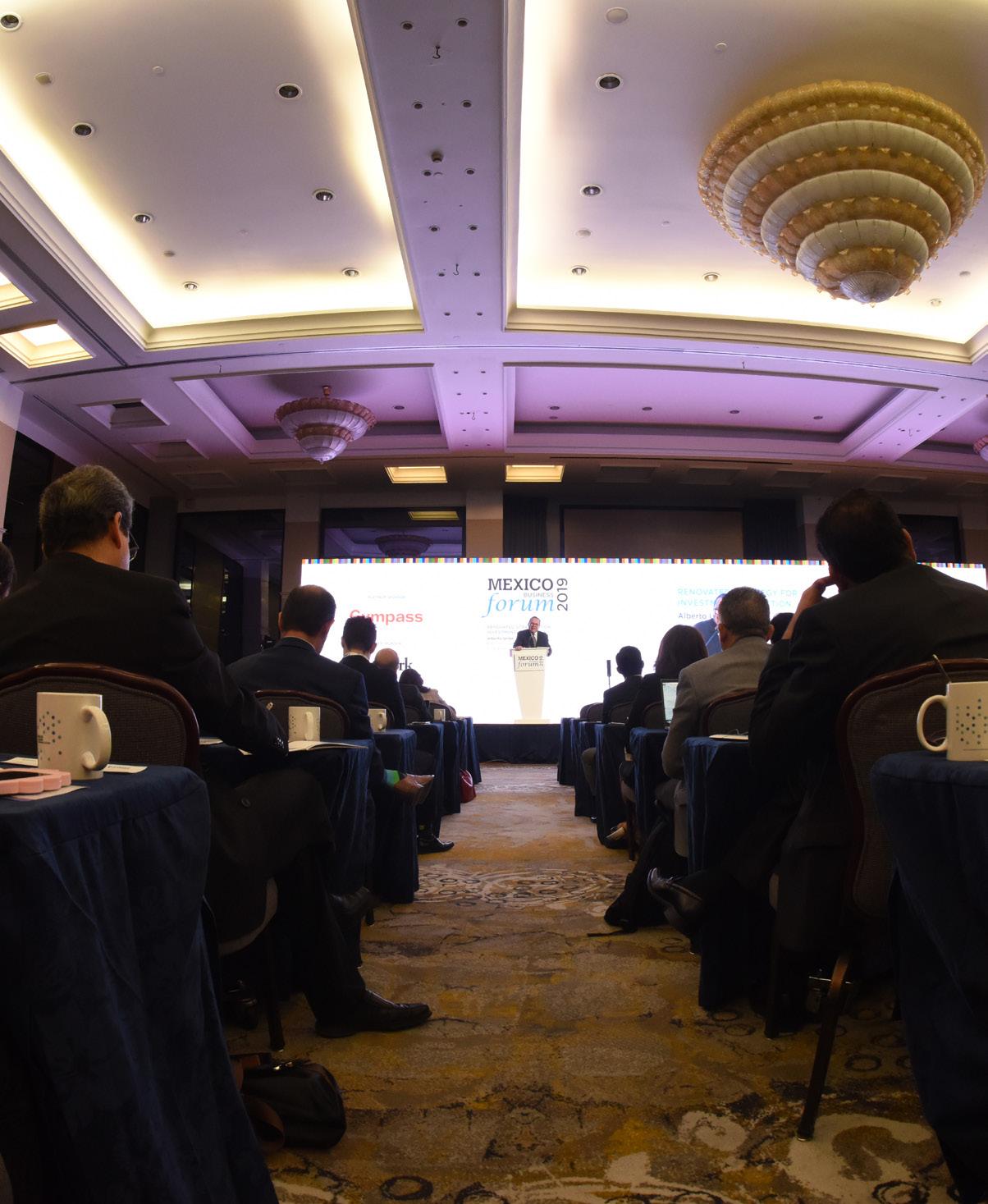
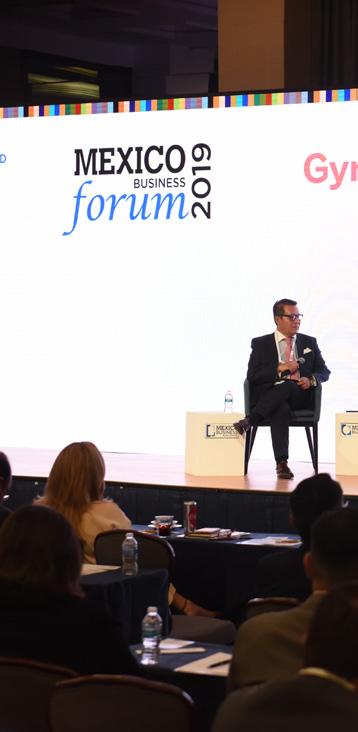
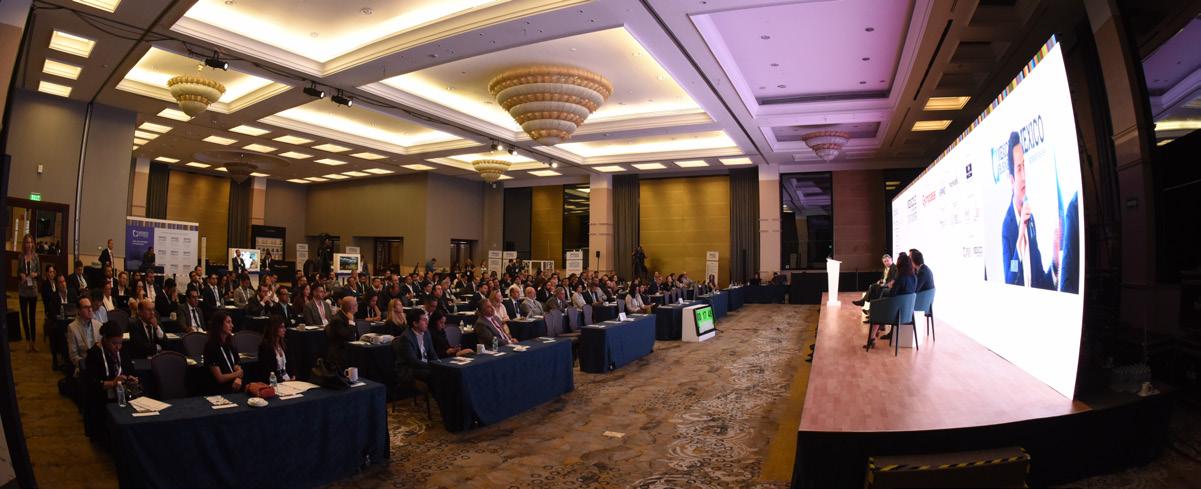
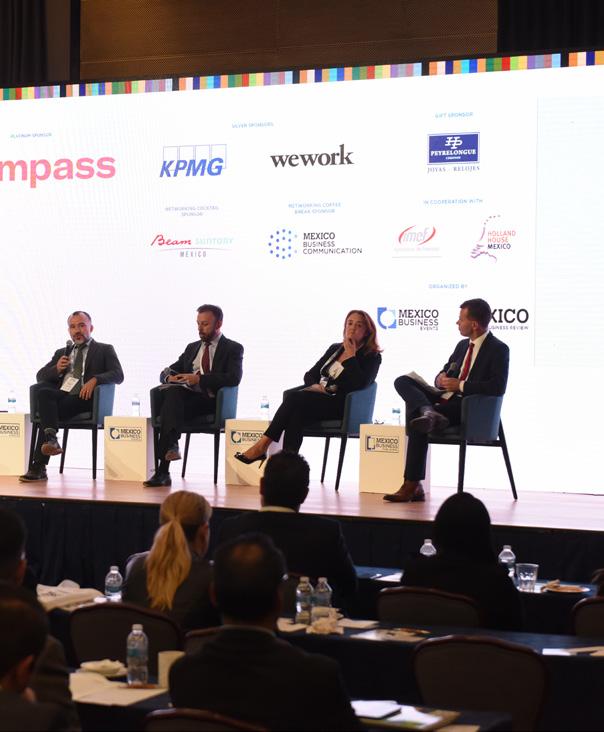
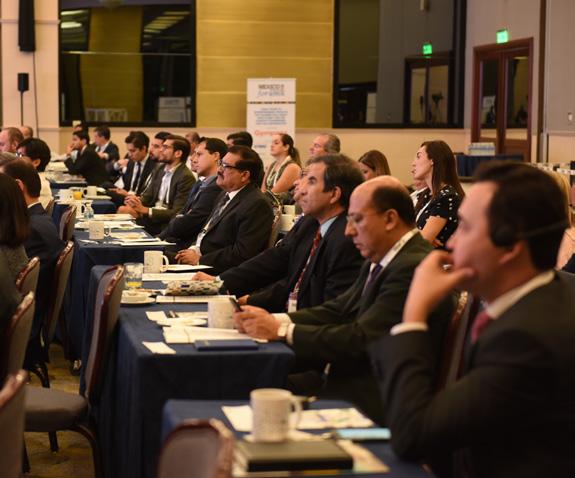
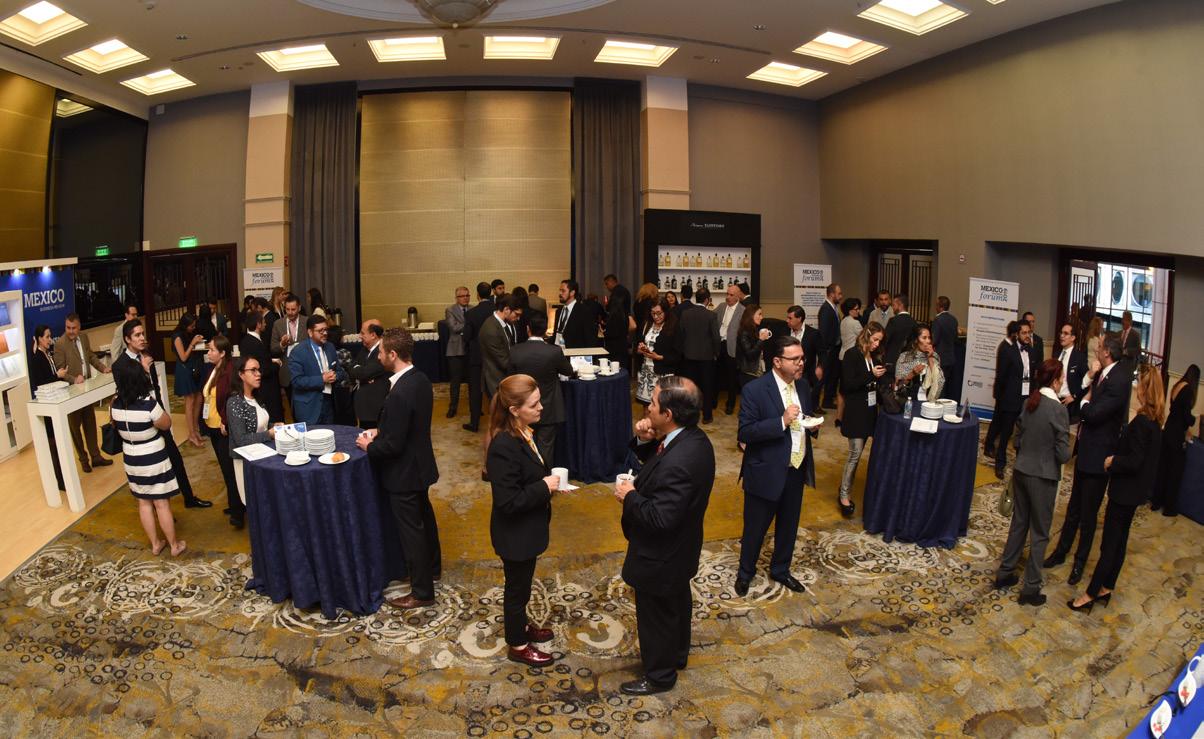
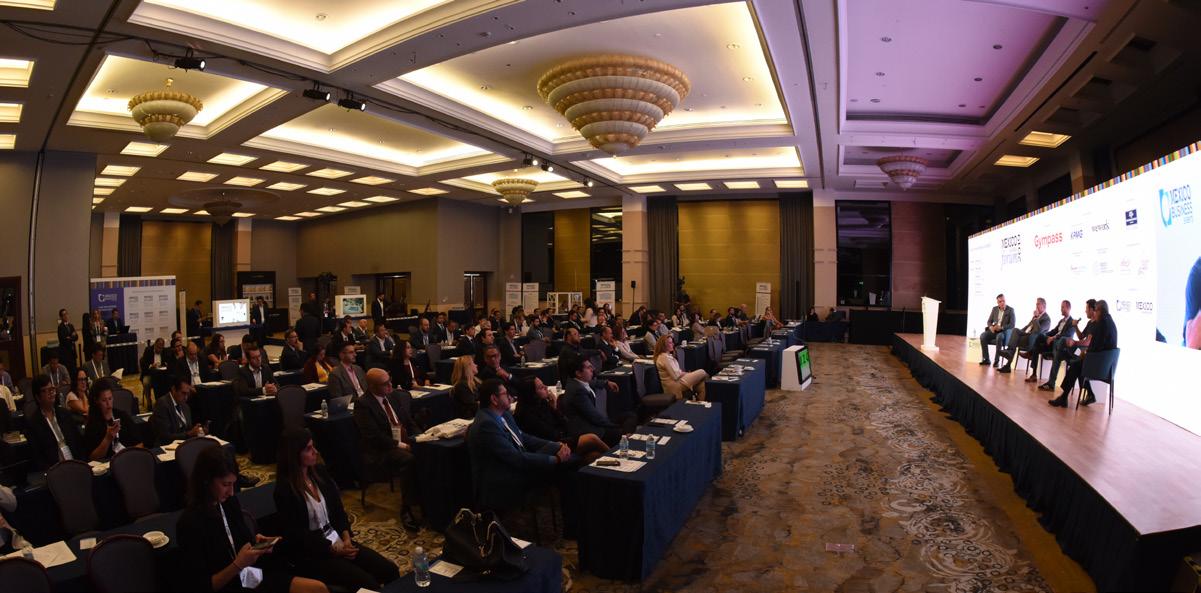
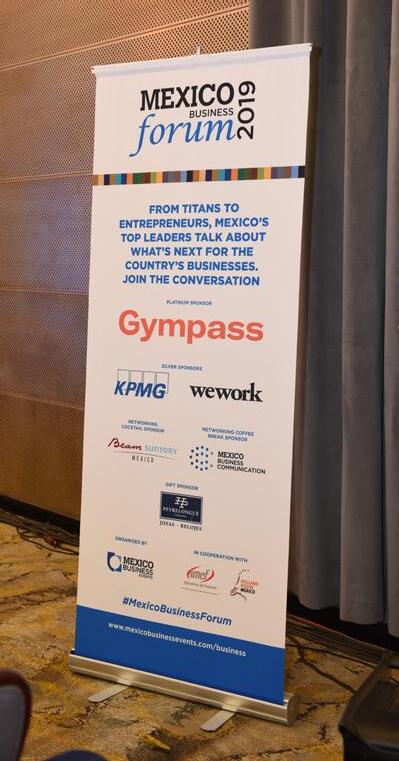
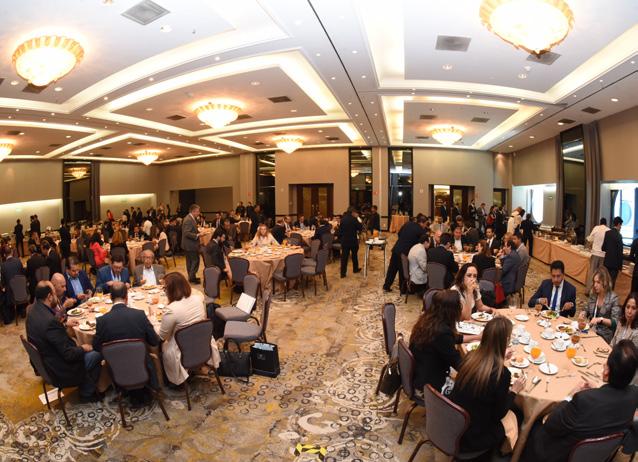
The third edition of Mexico Business Forum ventured into the strategies the federal administration will put in place to continue Mexico’s streak as a favored investment destination and the efforts to continue marketing the Mexico brand. Mexico Business Forum also provided a space for business leaders to communicate the strategies they are implementing to transform their business, implement new technologies such as AI and the challenges they are experiencing to innovate in the Mexican market.
Quick Look:
“I´ve seen that there´s always a good critical mass of attendees mainly from the corporate world who benefit from doing networking and meeting new people and companies.”
INCLUDING:
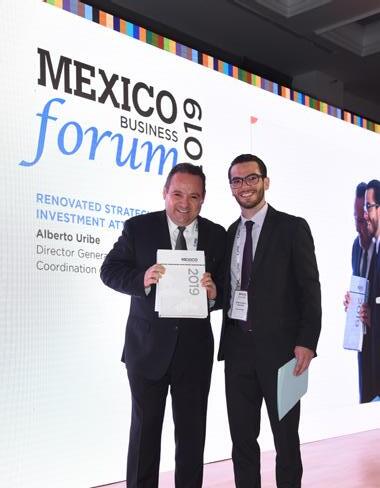
∙ Alberto Uribe, SRE
∙ Carlos Morales, Telefónica México
∙ Federico Ranero, Uber Mexico
∙ Anasofía Sánchez, Waze
∙ Argenis Bauza, KPMG
∙ Omar Galicia, Mercado Libre
∙ Roberto Martínez, OECD México
∙ Gilberto García, SE
∙ Alejandro Guzmán, State of Jalisco
TOP SPEAKERS
∙ Gabriel Casillas, Grupo Financiero Banorte
Roberto Martinez, Head of OECD México
Carlos Morales, CEO of Telefonica Movistar
COMPANY ATTENDANCE
Access To Energy
Accor Hotels
ACH Foods
Aeromexico
AFC Capital
Agile One
Ainda Consultores
Amadeus
ANAFARMEX
ANDELLAC
ANICAFE
Arbomex
Argentum Textil
Argo Solutions
Arizona Commerce Authority
Array Technologies
Assurant Mexico
Avianca
Avisong Young
AVL Ibérica
Axon Interconex
Baker & McKenzie
Banco Sabadell
Basham, Ringe y Correa
Bconnect
Becerril Coca & Becerril
BECSS
Biz Latin Hub
BL Grupo Consultor
BSCW
Bufete Piza Abogados
Business Sweden
C&A
CANCHAM / New Gold
Centigon Security Group
CETELEM
COMCE
Comercializadora de calzado M&M
Concreto Polimérico de Alta Resistencia Castor
Conekta
Danpal México
Dassault Systemes
De la Vega y Martinez Rojas
Dell Technologies
Dominion Corporate Housing
Dutch Embassy
Embajada del Uruguay en México
Embassy of the Republic of Kazakhstan
Energymex
Enestas
Escuela Bancaria y Comercial
Estado de Jalisco
Evolve Fintech
Finergreen
Flight Centre Travel Group
Fundación Dibujando Un Mañana
Gayosso
GEMINI MACHINE WORKS INC
Global Health Intelligence
Grupo Aldesa
Grupo Aries
Grupo Financiero Banorte
Gympass
HASHTAG
Helmut Fischer
Hermes Systems
Holcim México
HR Ratings
Hub Group
Idro Meccanica
IMCISS
INCUBADORA VILLAFLORES GRUPO PECUARIO
Innocentro
Inspirato
Jones Day
Kelly Services
KPMG
Latinamerican Invest
Loteria Nacional
MAG Medical Group
Marhnos
Mercado Libre
MeroMole
Miituo
Millesime
Minera del Norte
MSC Cruceros Mexico
NFS
Nike
Nordiks Global
Northgate Capital
OECD México
Ormazabal Mexico
PA Consulting
PC Fusion
Peyrelongue
Rengen
Rocket
Salles Sainz Grant Thornton
Secretaría de Economía
Secretaría de Relaciones Exteriores
Seoane Consulting Group
Single Source Tech
Sinnetic
SINTOQUIM
SÍOLTALIFE
Smart Cities Exchange
SMART SCALE
Speyside Group
SRL Soluciones
STIN
STP
Synfonel
Syngenta
TANE
TechBA Aerospace
Telefónica
Terceros AVS
The Climate Reality Project
The IBH / Clever global
Thermo Fisher Scientific
Thinkeen México
Uber
Valdes Abascal Abogados
Valid
VCS Capital
VISA
Vux Comunicación Integral
Waze
WePort Freight Forwarding
WESCO DISTRIBUTION
Wework
Wissner Bosserhoff México
XARXA
Profile of Attendance
PROGRAM
07:30 REGISTRATION
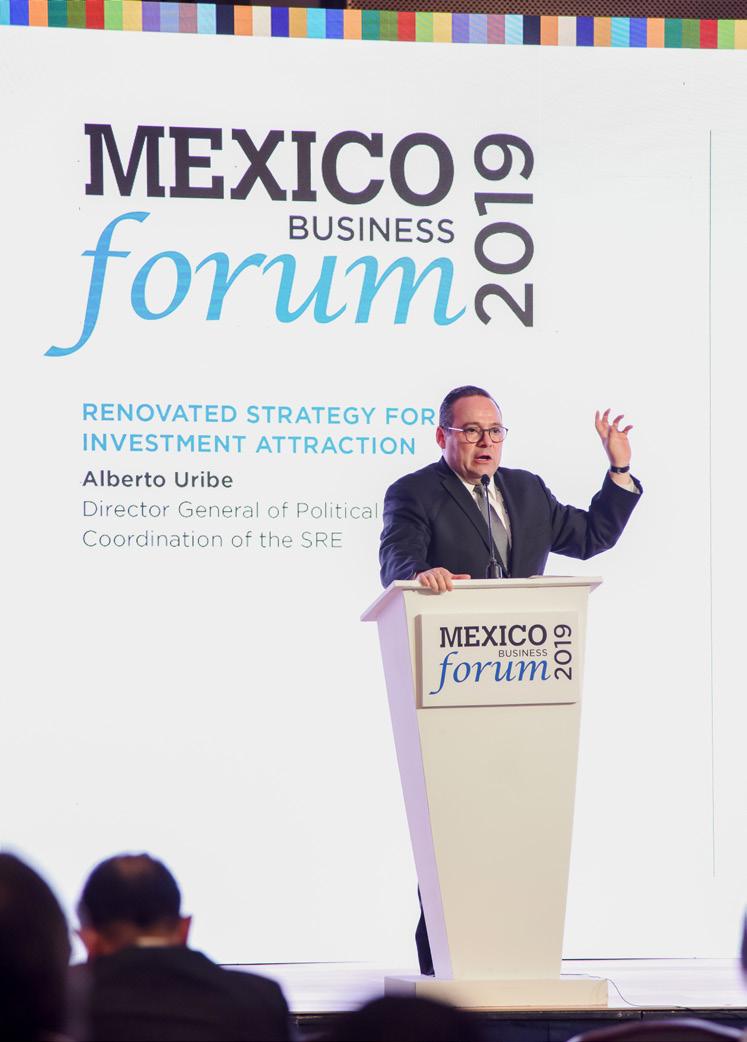
08:30 RENOVATED STRATEGY FOR INVESTMENT ATTRACTION
Speaker: Alberto Uribe, Director General of Political Coordination of the SRE
09:45 NETWORKING COFFEE BREAK
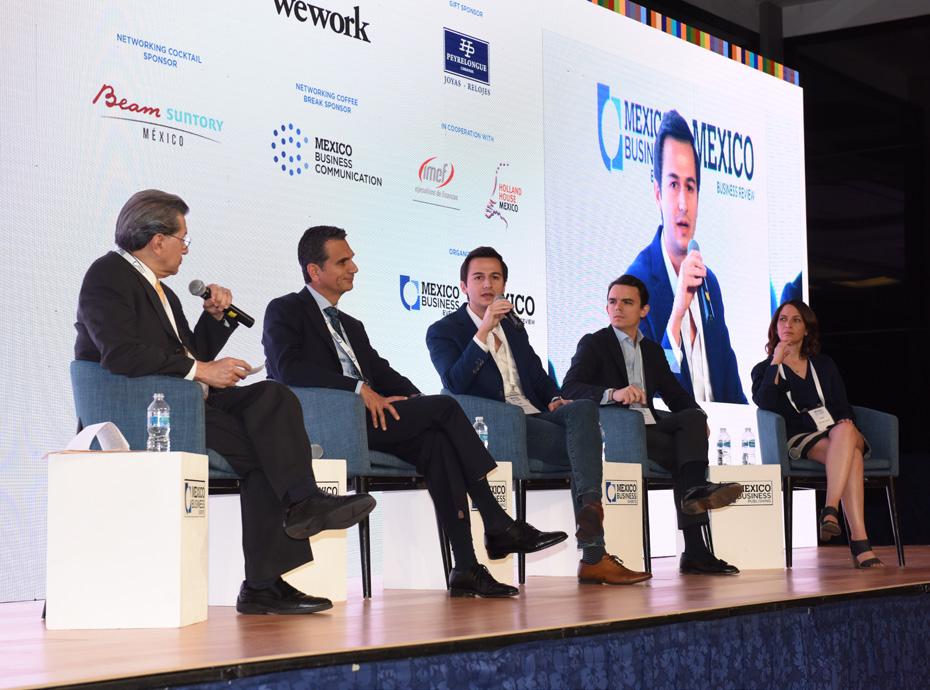
10:15 SMARTPHONES: KEY TO UNTAPPED POTENTIAL
Moderator: Alfredo Alfaro, Managing Partner of Northgate Capital
Panelists: Carlos Morales, CEO of Telefónica México
Emmanuel Got, Head of Business Development of Banco Sabadell Mexico
Federico Ranero, Country Manager of Uber Mexico
Anasofía Sánchez, Director General of Waze
11:15 NETWORKING COFFEE BREAK
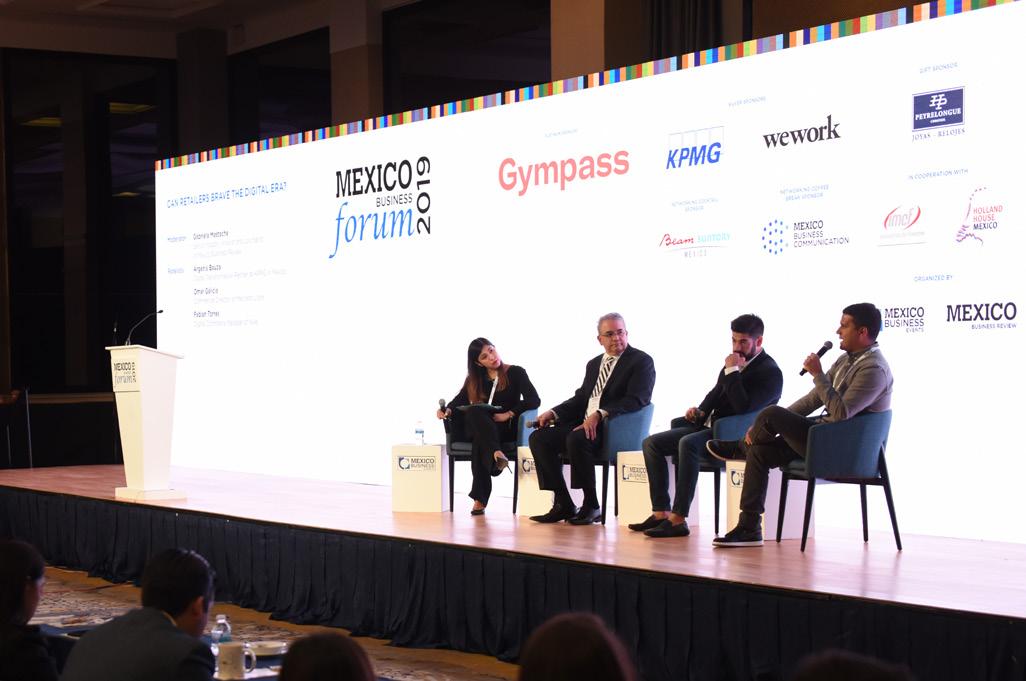
11:45 CAN RETAILERS BRAVE THE DIGITAL ERA?
Moderator: Gabriela Mastache, MBR Industry Analyst
Panelists: Argenis Bauza, Digital Transformation Partner at KPMG in Mexico
Omar Galicia, Commercial Director of Mercado Libre
Fabian Torres, Digital Commerce Manager of Nike
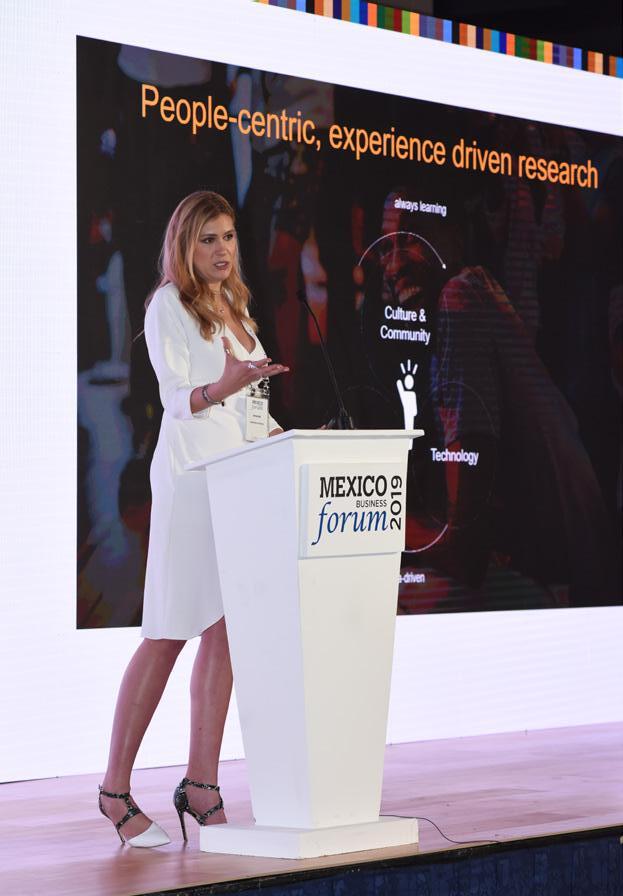
12:45 WORKPLACE REVOLUTION FOR ENHANCED PERFORMANCE
Speaker: Mariana Fresnedo, Global Events Manager at WeWork
13:15 NETWORKING LUNCH
14:45 HOW TO MAKE OR BREAK A BUSINESS?
Moderator: Roberto Corral, President of Innocentro
Panelists: Rodrigo Vargas, Founder of MeroMole
Carlos Lukac, Director General of Gayosso
Mario Rodríguez, CEO of Arbomex
Leonardo Cortina, Director General of miituo
15:30 NETWORKING COFFEE BREAK
15:45 REDISCOVERING MEXICO’S GLOBAL BRAND
Moderator: Roberto Martínez, Head of OECD México
Panelists: Gilberto García, Director General of Foreign Direct Investment of the Ministry of Economy
Paul Verhagen, SVP International Sales of Aeroméxico
Alejandro Guzmán, Strategic General Coordinator of Economic Development and Growth of the State of Jalisco
María Eugenia González O’farrill, Partner at Nordiks Global
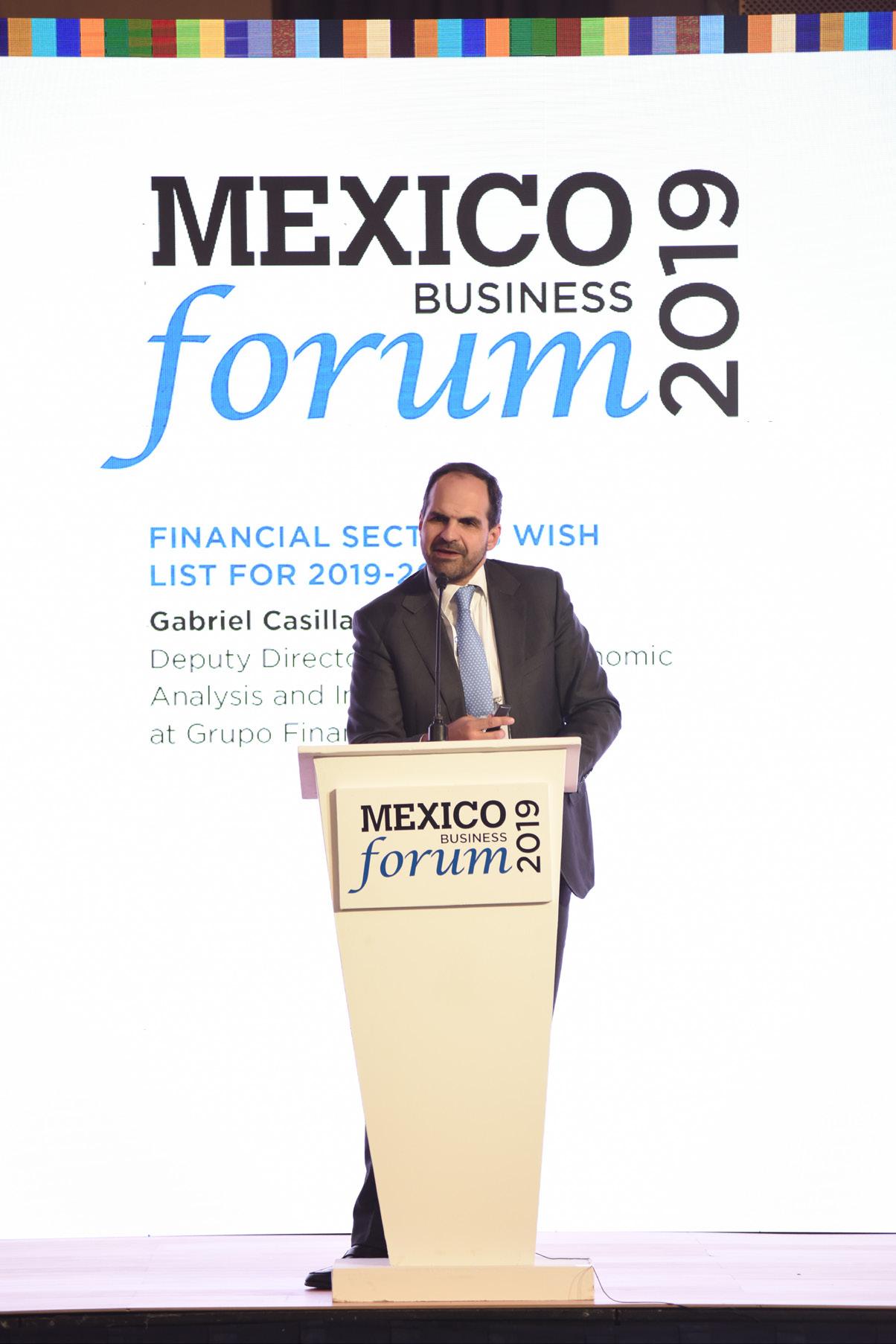
16:30 FINANCIAL SECTOR’S WISH LIST FOR 2019-2024
Speaker: Gabriel Casillas, Deputy Director General of Economic Analysis and Investor Relations at Grupo Financiero Banorte
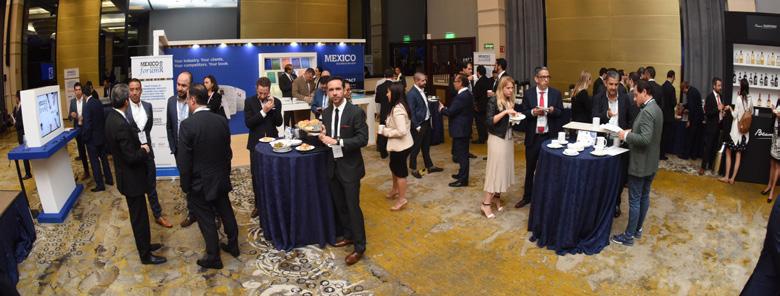
17:00 NETWORKING COCKTAIL
HIGHLIGHTS 2019
KEY SPEAKER
ALBERTO URIBE
Director General of Political Coordination at the Ministry of Foreign Affairs
Alberto Uribe joined the Ministry of Foreign Affairs in December under President López Obrador. From 2015 to 2018, he was Municipal President of Tlajomulco de Zúñiga in the state of Jalisco and from 2013 to 2014 he held the position of General Secretary of the City Hall of the same state. Uribe has two Bachelor’s degrees from the University of Guadalajara, one in law and the other in political and government studies. He holds a Master’s in constitutional law from ITESO.
RENOVATED STRATEGY FOR INVESTMENT ATTRACTION
Mexico’s centralized model has acted as a barrier for the country’s integral development. For that reason, implementing a federal model that supports the economic development of every region in Mexico will be a priority to promote economic development, stated Alberto Uribe, Director General of Political Coordination of SRE, on Wednesday at Mexico Business Forum.
“Our country’s development has not been fair or equal,” said Uribe, “and development must include everyone equally.” He explained that Mexico’s centralized model was a barrier for growth in specific regions, especially in the south. Moreover, older strategies to promote the country and attract FDI did not benefit the country equally as “ProMéxico focused its promotion strategy on only 10 states.”
For that reason, SRE is revamping Mexico’s investment strategy. To do this, Uribe pointed to the book “Why Nations Fail” from top economists Daron Acemoglu and James Robinson and stated SRE’s priority will be to analyze “why nations triumph.”
The country is already a strong, attractive investment destination. “Trade between three countries in North America grew by 258 percent between 1994 and 2018. During that time, Mexico became the US’ main commercial partner for the first time. The
trade flow between both countries is at US$1 million per minute.” Uribe also pointed to the fact that during the last 20 years, Mexico received US$530 billion in FDI, most of it headed to the manufacturing sector.
In 2018, Mexico received a total of US$31.73 billion in FDI, most of it from the US. The main sources for FDI are the US with 38.8 percent, Spain with 13.1 percent, Canada with 10 percent and Germany with 8.2 percent. Moreover, the country expects US$25.251 billion in FDI in 2019, Uribe said.
The new model will focus on strengthening all 32 states in Mexico through equal promotion. “The Ministry of Economy is developing a Global Intelligence Unit to help position Mexico. The country has 147 representatives across the globe but their objectives are unaligned.” The ministry is also developing internal promotion strategies. “On May 3, we had the first reunion with Ministers of Economic Promotion to showcase to ambassadors across the globe the strengths of every state.”
“Trade
between three countries in North America grew by 258 percent between 1994 and 2018. During that time, Mexico became the US’ main commercial partner for the first time. The trade flow between both countries is at US$1 million per minute”
Alberto
Uribe, Director General of Political Coordination at the Ministry of Foreign Affairs
The Ministry has many more projects planned, including one for June 6 and 7, which will be the first summit of city mayors from Mexico, the US and Canada with the goal of creating alliances between these cities. Uribe highlighted the importance of alliances between cities; some even surpasses the states they are part of in terms of investment, he said.
Other actions include a “recently signed collaboration agreement to help Mexican companies penetrate global supply chains, which will allow the country to ratify its position as a key strategic partner to the US.” Uribe also highlighted many infrastructure projects, including State of Mexico’s US$466 million investment in the industrial development Arco 57 and Coahuila’s “Ports to Plains,” a US$3.6 billion initiative to connect highways between Mexico, the US and Canada.
Uribe also highlighted the two major infrastructure projects proposed by the current administration for the economic development of the country: the Mayan Train and the Transístmico project. The first will link Chiapas, Tabasco, Campeche, Yucatan and Quintana Roo, which together host 6.8 million tourists per year. This project will require an investment of “up to US$1.5 billion and has attracted the interest of many companies, including Bombardier.”
The Transístmico project will be a point of access to the southeast. “It will join two oceans, supply electricity and oil and support the poorest areas of Mexico. Thus, it will be a key for the country’s economic development. This project links the isthmus with global logistic networks and will strengthen the country’s productive capacity and create jobs.” Uribe stated that the project has atracted large investors such as BlackRock and will represent an investment of US$2.15 billion.
Uribe highlighted Mexico’s many opportunities to expand and strengthen trade networks and indicated that one of SRE’s many priorities will be to diversify its trade partners with an eye toward Latin America and the Caribbean, China and Europe. The ministry’s priorities include identifying areas of opportunity to increase FDI attraction, developing investment opportunities in the energy sector and ratifying USMCA. Key to achieving these goals will be to eliminate corruption, strengthen the rule of law and reduce bureaucracy, said Uribe.
HIGHLIGHTS 2019
“Between 2019 and 2020, Mexico will grow its GDP between 1.5 and 1.8 percent.” To do so, FDI will be essential, which can only be done by developing new trade partners while strengthening relations with current allies, especially the country’s main commercial partner, the US. ”We do not need a wall; we must build a trade zone.”
KEY SPEAKER
CARLOS MORALES
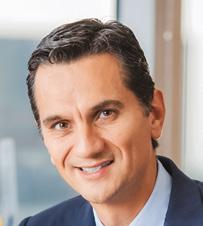
CEO of Telefónica Movistar México Carlos Morales has worked for Telefónica for 16 years in a variety of positions in Spain, Brazil and Mexico. His background includes business development, marketing, sales, operations and digital business. Prior to becoming CEO, Morales was Vice President of Operations and Consumption in Brazil and was also the Global Managing Director M2M (machine to machine), Cloud Computing & Apps. Morales holds a civil engineering degree from La Salle University, an MBA from Carnegie Mellon and an Advanced Management Program (AMP) from Harvard University.
SMARTPHONES: KEY TO UNTAPPED POTENTIAL
Smartphones gave customers access to countless digital platforms and the arrival of 5G will only increase the impact of these devices in people’s lives. According to Alfredo Alfaro, Managing Partner of Northgate Capital and moderator of the first panel of Mexico Business Forum 2019 held at the Marquis Reforma hotel in Mexico City, beyond technology, disruption will impact customers’ habits of interaction and consumption.
“We are moving from an industrial to a digital age. Networks will be essential to enable this transformation, using data as their fuel,” said Carlos Morales, CEO of Telefónica Movistar México. Some companies are already taking advantage of this transformation, updating or creating new business models to make everyday operations more efficient. The opportunities that digitalization and mobility bring are such that, according to Federico Ranero, Country Manager of Uber Mexico, the opportunity for collaboration and dependability between companies is incredible. “Companies now have the role of understanding local needs and adapting them to the existing technological offering. We are both technology developers and preachers of new ideas among our customers,” he said.
Panelists agreed that Mexico is an attractive market for digital business models in terms of smartphone penetration. Yet, there are technological, social and cultural challenges that hinder the potential growth of disruptive platforms. Among those, Ranero referred to the country’s banking penetration rate, highlighting that 56 percent of the population does not have access to a bank account, while 92 percent prefer to pay by cash. “Developing solutions to open the door to this segment of the population helps us preach about the benefits of digitalization and promote the use of digital and noncash payments,” he said.
According to Emmanuel Got, Head of Business Development at Banco Sabadell Mexico, the bank realized the opportunity that existed in the country, which was only accentuated by the rise of fintech players that he considers a force to be reckoned with. “Mexico is already the second-most important market for Sabadell behind Brazil and the future looks bright for the country,” he said. “The industry is still deciding whether fintechs are friends or foes but for us, they are strategic allies that can help innovate in such a traditional sector.”
Connectivity and telecommunications are also revolutionizing mobility and the role it plays in customers’ lives. In Mexico Automotive Review 2018, former Minister of Planning at SEMOVI Laura Ballesteros highlighted that mobility is a gateway to rights like education and quality of life and for Anasofía Sánchez, Director General of Waze in Mexico, the use of digital platforms and the incorporation of advanced technologies of Big Data and machine learning are key for platforms like Waze or Uber to help fix the mobility issues plaguing megacities like Mexico City. “At the moment, Mexico’s car occupancy rate is 1.2,” she said. “Using the data provided by our own users, we can learn how people move around and implement new solutions like carpooling to improve the country’s car occupancy rate.”
The sky is the limit when it comes to technology implementation but opportunities are grounded by the country’s current state in terms of telecommunications. Morales
said 5G is a completely different animal. Today, Mexico operates 2G, 3G and 4G networks simultaneously and Morales said that due to data density, 5G will require a 5:1 or 10:1 ratio of antennas to properly operate. “New devices such as autonomous vehicles demand extremely narrow latency rates, which is only achievable through higher data transmission,” he said. Added to that is the issue of profitability, which is limited by the competition conditions in the country and the outdated regulations in terms of spectrum use related to price. “Telecommunications prices have dropped over 50 percent in the past three years. Yet, spectrum costs are still on the rise, normally following inflation rates.”
There is still a long way to go but the country is moving forward in adapting its regulations to new market conditions. Got said one key example is the CoDi initiative the country is working to implement to transform the financial ecosystem and reduce the use of cash as a payment option. “Talking about new technologies, just for the sake of it, is irrelevant. Technology must serve the client and help make processes more efficient,” he said.
CAN RETAILERS BRAVE THE DIGITAL AREA?
The digitalization of traditional value chains in the retail segment is not only changing the way consumers interact with service providers but also how service providers structure their business, panelists at Mexico Business Forum 2019 said on Wednesday at the Hotel Marquis Reforma in Mexico City.
“In Mexico, 3 percent of retail sales are digital. In Latin America this amount averages 5 percent and in more advanced countries, it increases to 10 percent. Physical points will not disappear, they will grow together with digital platforms to complement services and offer an omnichannel strategy,” said Fabian Torres, Digital Commerce Manager of Nike, during the morning panel discussion.
According to Argenis Bauza, Digital Transformation Partner at KPMG in México, there is a general belief that e-commerce is less expensive. “Logistics prices rise and the velocity that these businesses experience in terms of demand is higher,” he suggested. Torres added that even though e-commerce platforms can decrease
HIGHLIGHTS 2019
KEY SPEAKER
ARGENIS BAUZA
Head of Supply Chain LatAm Hub, KPMG in Mexico
Argenis Bauza is a consultant with more than 20 years of experience in various leadership positions related to transformation and operations consulting and the development of projects in various Latin American countries. He focuses on employing innovative approaches to help companies complete their digital transformation to be more successful. Argenis has worked with clients in a variety of industries (manufacturing, agro-industry, services and retail, among others) on transformation projects focused on generating value.
costs like rent or payroll, there are other significant associated costs, and benefits. “The countercharges due to failed operations and delivery charges are present. By having both physical and digital platforms, you can exchange traffic between them. You can use physical points as storage and delivery facilities or like a reconnection point with your logistics companies.”
Not all companies are ready to make this digital leap, said Omar Galicia, Commercial Director of Mercado Libre. “Traffic generation investments are lower for a company that already transitioned to an e-commerce platform. The first step for any company without this kind of experience should be to enter into a marketplace as your only job is to make sure your product is available. Then, you can focus your efforts on marketing strategies on site.”
Another important element is to create a trustworthy environment for your customers to embrace these novel platforms. As Bauza said: “In Latin America, customers do not trust the delivery service.” In this sense, Torres said: “If you are promising a certain delivery time frame, you have to achieve it or do it in the average time frame of your competitors. The company’s internal logistics have to be efficient as well, as you cannot generate disgust from your client.”
Some companies are also innovating on the payment side. “Mercado Libre was born digital. There is a trend in the digital payment segment and its financial inclusion. In the next two years, there will be a revolution with tools such as wallets that will allow customers to make investments, ask for loans and make payments through QR codes. We are already working with Mercado Pago platform in this sense”.
Aligned with the payment method, security is important. “To date, there are many tools that reduce payment risk,” Torres said. “In this planification, you have to take a step ahead and explore all the available payment channels in the market. There is cash payment on delivery, or cash payment with a commercial partner. Wallets like Mercado Pago are an option too. Even if you introduce gift cards, you help mitigate the dependency on debit and credit cards, and per se fraud risks”.
WORKPLACE REVOLUTION FOR ENHANCED PERFORMANCE
As people and cultures evolve, it is necessary for workplaces to adapt to the changing needs of their employees, Mariana Fresnedo, Global Events Manager of WeWork, told Mexico Business Forum 2019 held Wednesday at Hotel Marquis Reforma in Mexico City. Through an open environment that promotes collaboration, it is possible to generate a positive workplace culture that leads to happy employees, which in turn leads to higher productivity.
“Going to work does not have to be torture, especially as we spend 36 percent of our life at our job,” said Fresnedo. While the vast majority of individuals work, data indicates they are not too happy about it. “We measured that 76 percent of all employees are actively looking for a new job and 66 percent do not feel valued at their workplace.” She also explained that 85 percent of employees do not like their workplace and about 50 percent are unhappy with their work amenities. “Most shockingly, 58 percent of employees trust a stranger more than their own boss.”
As examples of the need for evolution in many aspects of life, Fresnedo pointed to disruptors that have fundamentally changed common activities that seemed set in stone, such as Uber’s impact on transportation. “However, offices remain the same: gray and unwelcoming.” She highlights that companies need to change. “New workspace cultures must be people-centered, as workers are a company’s main assets. This will allow companies to reach new levels.”
KEY SPEAKER
Many aspects impact a employee’s happiness at work, Fresnedo said, from something as simple as giving an employee the tools to perform their work, to generating a welcoming culture. For that reason, WeWork is developing innovative workspaces that focus on flexibility, which she said is key for innovation, talent retention, productivity, flexibility and workspace community. “At WeWork we focus on more than a workspace; we focus on creating a work environment.”
Fresnedo encouraged attendees at Mexico Business Forum to closely examine their workplace culture and gave them two initiatives to measure how welcoming their workspace is. The first was an analysis of the use of space in an office and whether it allows for communication flow. The second is the use of a private office for a month at WeWork. She encouraged them to take a deep look at their culture for employee retention. “Happy millennials are 25 times likelier to remain in a company long term.”
HOW TO MAKE OR BREAK A BUSINESS?
Regardless of their focus or area of expertise, companies live under an undeniable premise: to renew or die. This is true for companies of all sizes and regardless of whether they are new to the market or have years of accumulated experience, according to four decision-makers from four Mexican companies at Mexico Business Forum at the Marquis Reforma hotel in Mexico City on Wednesday.
The four leaders shared their vision and strategies for sustained growth in a discussion led by Roberto Corral, President of the aerospace industry manufacturer Innocentro.
MARIANA FRESNEDO
Global Events Manager at WeWork Mariana Fresnedo was previously Enterprise Account Executive at WeWork before becoming Global Events Manager. Prior to WeWork, she was Wholesale Marketing Manager of Levi Strauss & Co. and Marketing Manager and Public Relations for Tissot. Her professional experience also includes being Brand Coordinator at Grupo Dicano, Consultant at Logyt and Risk Analyst at Grupo Agrifin. Fresnedo has an engineering degree from Anahuac University.
HIGHLIGHTS 2019
Carlos Lukac, Director General of the 148-year-old funerary company Gayosso, said the key to innovation in an old and traditional industry is finding added-value services that can meet clients’ needs and expectations. “We are all about breaking paradigms. Though we might be in the funerary business, we must consider ourselves part of the hospitality and real-estate sector,” he said. “In that sense, we must think as hoteliers and realters and optimize our service, occupancy rates and average ticket value.”
Mario Rodríguez, CEO of camshaft manufacturer Arbomex, agreed with Lukac in his views on the importance of innovation, saying that this is a priority that must be cultivated from within. “Innovation comes from a corporate culture. To innovate, you have to believe, then create and then grow,” he said. “Similarly, you need creativity to face any obstacles that might emerge. Creativity can drive a business and even make it disruptive.”
“Innovation comes from a corporate culture. To innovate, you have to believe, then create and then grow, similarly, you need creativity to face any obstacles that might emerge. Creativity can drive a business and even make it disruptive”
Mario Rodríguez, CEO of camshaft manufacturer Arbomex
The challenges Rodríguez mentioned, however, vary depending on the stage at which the company finds itself. For more consolidated companies, obstacles might refer to the best strategies to sustain growth; for newer players, the challenge might be to properly establish a defined value proposition to compete in the market.
Rodrigo Vargas, Founder of MeroMole, a consulting company focused on the restaurant sector, highlighted that even though his company had a unique offering, it still faced challenges related to inherent conditions in the market. “90 percent of all restaurateurs do not hire professional services to build their business. Most business owners think they can make it on their own, but the fact is that eight out of every 10 restaurants close before their five-year anniversary,” he said.
Leonardo Cortina, Director General of miituo, on the other hand, faced the challenge of entering a consolidated and traditionalist industry. As an insurance broker with a disruptive model to sell cheaper auto policies charged by kilometer, Cortina had to approach insurance companies with a strategy that could generate interest among players with greater market experience. However, there is always untapped potential to draw from, he said. “People want to take care of their investments but they do not want to contract a policy because they do not use their car often enough. Our
business proposal, therefore, tackled a market segment that insurers had not been able to properly address,” he said.
The risk in finding a proper business model might be more apparent for young companies but Corral also brought up the disruptive nature of technology and its impact on companies that have been working in an industry for years. As a consolidated company in the automotive industry and the second-largest camshaft manufacturer in the world, Arbomex is no stranger to the industry’s transformation toward electric vehicles and for Rodríguez, the best way to target this challenge is by understanding the market and the way the company can change its business to adapt to new conditions. “Electric vehicles might not represent our sudden death but they are certainly worthy of attention,” he said. By 2035, Rodríguez says Arbomex wants to remain the biggest camshaft company in the world but it has also worked to open new market niches and to adopt new materials and processes to participate in a renovated industry.
Meanwhile, Lukac highlighted the importance of the human factor in reinvigorating a business. “People are the source of all innovation and renovation,” he said. He also pointed out that before thinking about what is next for the company, its management must establish a strategic discipline vision to make sure it has already taken the most advantage from its current market. “The grass is always greener on the other side. However, we must learn to take advantage of the opportunities that other players and industries have learned to seize,” he said.
REDISCOVERING MEXICO’S GLOBAL BRAND
Given the disappearance of ProMéxico, a new strategy must rise among private and public entities to maintain Mexico’s brand attractiveness for private investment, panelists at Mexico Business Forum 2019 said on Wednesday at the Hotel Marquis Reforma in Mexico City. “Mexico’s tourism industry represents 8.7 percent of the country’s GDP. It is the country’s third-largest industry by income and generates 10 million jobs,” said María Eugenia González O’Farrill, Partner at Nordiks Global.
The new challenge, she said, relies on consolidating a new image through a common front between the involved stakeholders. In this sense, the federal government, states and municipalities need to work together and align their priorities. “First, we need to define the type of investment we want to attract. Every dollar counts but not every dollar weights the same,” added Gilberto García, Director General of Foreign Investment of the Ministry of Economy. He said there needs to be a focus on the specific value chains that will have a major impact in the country’s economy.
Alejandro Guzmán, Strategic General Coordinator of Economic Development and Growth of the State of Jalisco, said that there is potential that resources could be lost. “In our case, we have the Jalisco brand, but also the Guadalajara brand and even the Puerto Vallarta brand. If we do not define our targets, resources could get lost in this process. The state is following this strategy and after defining specific targets of investment, establishing the mechanisms to do it and with which strategic partners this will materialize is the next step,” he said. “Mexico has different tourism models such as medical, sports, adventure and
“Mexico’s tourism industry represents 8.7 percent of the country’s GDP. It is the country’s third-largest industry by income and generates 10 million jobs”
María Eugenia González O’Farrill, Partner at Nordiks Global
HIGHLIGHTS 2019
KEY SPEAKER
GILBERTO GARCÍA
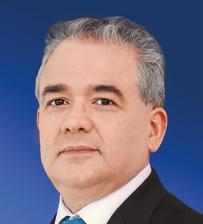
Director General of Foreign Direct Investment at the Ministry of Economy
Gilberto García has extensive experience in the public sector and academia, working in innovation, project development and the introduction of creative solutions to face the challenges of sustainable development. Previously, García was Adviser to the Director General of PEMEX. In the private sector, he worked as Director of Operations and Technology at PointVerde and Director of Energy Government Affairs and Policies for Latin America at GE. García has a degree in economics from the Autonomous University of Guadalajara and a Master’s in public policies from CIDE.
business. With this opportunity, we need to collaborate with the government, tourism promotion offices, airlines and private companies.”
On the private sector side, the country’s flagship carrier has a strategic role to play. “Mexico’s brand has a total value of US$1 billion. Our priority is to continue with its promotion. Following the past administration’s strategy, we developed an annual promotion plan together with ProMéxico and the National Council of Tourism Promotion (CPTM). During this transition phase, we will reinforce this promotion through the airline,” said Paul Verhagen, SVP International Sales of Aeroméxico
Gúzman added that the disappearance of ProMéxico had to be done gradually to allow the incoming administration to take advantage of these resources before changing strategy. “There are many embassies and consulates around the world. Nevertheless, to achieve successful results, we need qualified people who have not only the experience in managing these topics but also the availability to comply with their responsibilities and promote Mexico at the same time.”
On the other hand, García said that resources could be better used. “In this decentralized effort, we need coordination with the rest of the governmental agencies. Mexico has 46 foreign services offices; we need to focus on a strategy that is attractive for investment in terms of security, infrastructure and through the consolidation of a qualified workforce.” In the short term, the SE in coordination with the SRE is developing a Global Economic Intelligence Unit. “The idea of this unit is that it develops business intelligence and data analysis to identify competitive markets in states and municipalities. We want to link those with the private industry.”
The panelists agreed there is an urgency among both the private and public sectors to respond quickly to this shift. “It is important to put pressure on this coordination. We have been meeting with chambers such as CONCAMIN and CONCANACO, in addition to promoting alliances with other stakeholders. In this sense, the private segment is organizing more quickly,” said González O’Farrill.
FINANCIAL SECTOR’S WISH LIST FOR 2019-2024
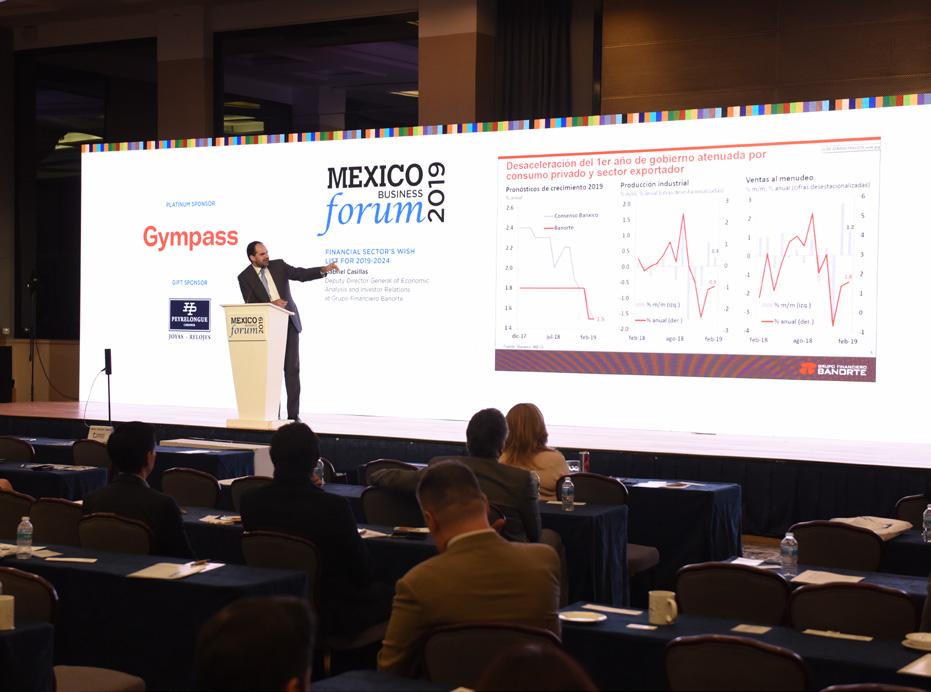
Uncertainty was the name of the game in 2018, but Gabriel Casillas, Deputy Director General of Economic Analysis and Investors Relations at Grupo Financiero Banorte, said this year is different.
“There is no uncertainty, AMLO is following his development plans to the letter,” he told the audience at on Wednesday at Mexico Business Forum held at the hotel Marquis Reforma in Mexico City.Casillas did acknowledge, however, that the new administration’s plans is having an impact on the investment climate. “The cancellation of the New International Airport of Mexico generated a reluctance to invest,” he said. “This reluctance was seen in many aspects of economy, including an increase in interest rates on government bonds.”
Other initiatives presented by members of the Morena party at the start of the administration, such as canceling mining concessions or using Banxico’s reserves for infrastructure projects, also generated anxiety among investors who believed that policy initiatives were becoming unpredictable. Casillas countered: “Before he became president, Andrés Manuel López Obrador wrote a series of books that clearly detail his policy objectives,” Casillas said. “He is prioritizing infrastructure, social projects and undoing policies from previous administrations. There is no uncertainty, the president is following the development plans he wrote about.”
While there has been much noise regarding the deceleration of Mexico’s economy after the election of President López Obrador, Casillas said this is actually a common phenomenon. “Our statistics show that the first year in every presidential administration is one of slow growth. Companies postpone investments during election periods. Thus, there is a vacuum in private investment. Moreover, public investment takes a long time to flow and when there is little public and private investment there is little growth.”
Banorte has used this information to create an estimation of Mexico’s economic growth for 2018. “We initially estimated 1.8 percent growth in GDP. However, gasoline shortages, strikes in Tamaulipas and railroad blockades in Michoacan led to production stoppages at many companies, so we reduced our forecast to 1.5 percent.” Moreover, there are many signs that the economy is on its way to recovery. “Investment in Mexico slowed down after Donald Trump became president but gained strength again after Mexico, the US and Canada agreed on the USMCA. Moreover, the trade war between China and the US helped Mexico to become the top trade partner with the US. Mexico has been the winner of this commercial war.”
There will be challenges, however. For instance, Casillas said consumer confidence is at its highest in history but as credit penetration is very low in Mexico it is not directly affecting consumption. “What is benefiting consumption is the labor reform because it has greatly strengthened formal work, which will lead to more credit and consumption.” Another hurdle is PEMEX, which is a “proverbial stone in our shoe,” he said. “The previous administration wanted PEMEX to invest in profitable projects, such as farmouts. The new administration wants to invest in less profitable areas such as a refineries.” Casillas believes that the construction of a refinery will happen and that “it is possible to make a refinery profitable if the government gives it its full support.”
Other Banorte forecasts include a dollar valued at MX$21.30 by 2020 and a 3.5 percent inflation rate for 2019. Whatever happens with the public sector, Casillas sees a positive future for Mexico’s economic growth. “Mexico’s economy is represented by 84 percent by the private sector so whatever the government does, its impact will be contained.”
KEY SPEAKER
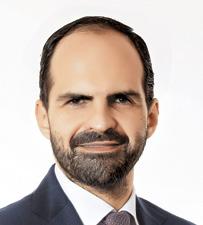
GABRIEL CASILLAS
Deputy Director General of Economic Analysis and Investor Relations at Grupo Financiero Banorte Gabriel Casillas worked at Banxico for over 10 years in the areas of Economic Research, Central Bank Operations and Risk Management. Before joining Banorte, Casillas also worked as Chief Economist for Mexico at J.P. Morgan Chase & Co. He is a member of the “Leaders of the Future” group of the IIF and President of the Committee of Economic Studies of IMEF. Casillas has a degree in economics from ITESM and a Ph.D. in economics from Texas A&M.
MEXICO CITY
MAY 6, 2020
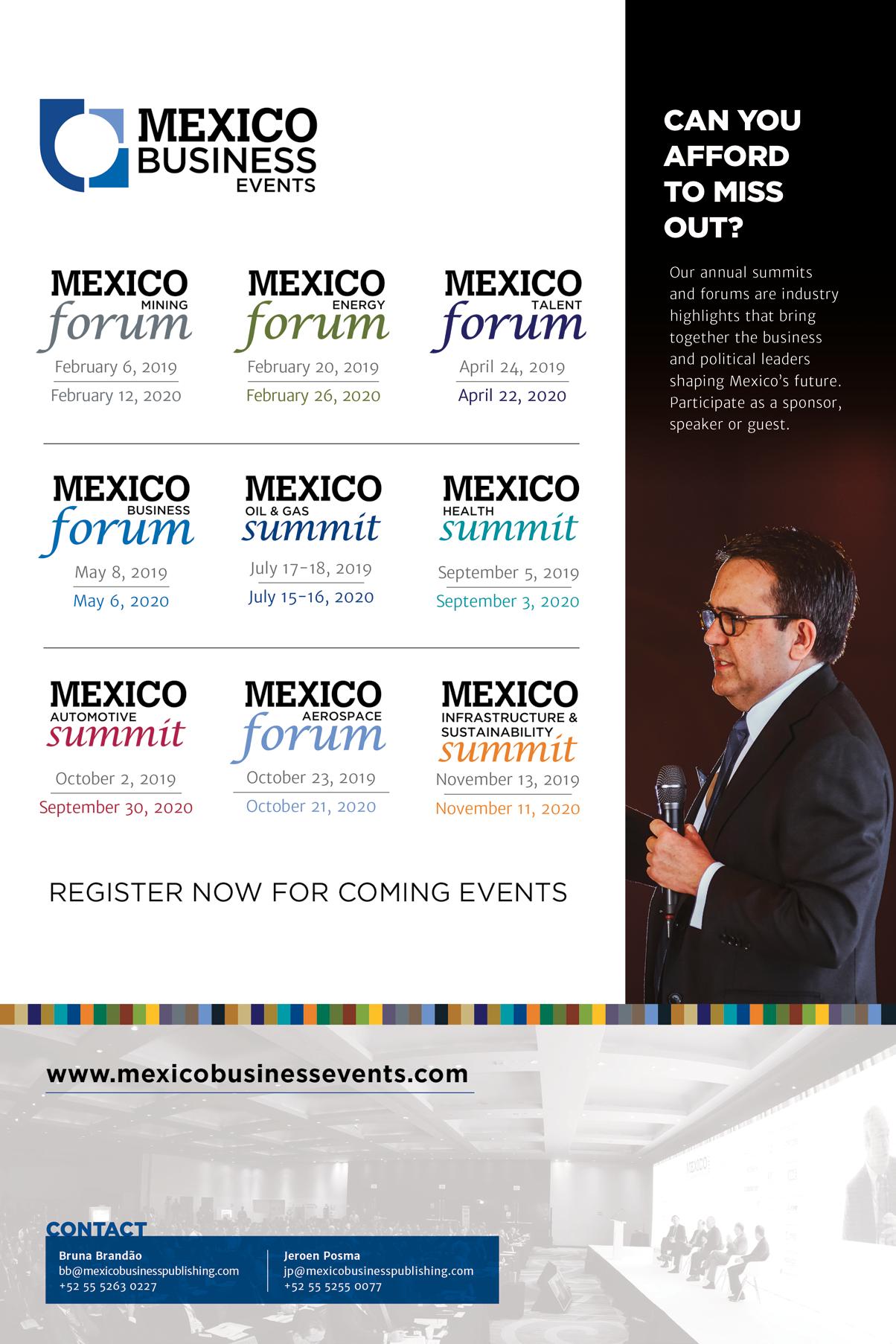
Rather than be just part of the conversation, why not lead it? At our events, sponsors are the most visible players, with a clear and engaging presence on screen, on stage and among their peers and competitors. Sponsor now to make your brand the center of attention.
www.mexicobusinessevents.com/business
Become a sponsor
Platinum Sponsor | US$21,500
Gold Sponsor | US$15,500
Silver Sponsor | US$10,500
Luncheon Sponsor | US$11,500
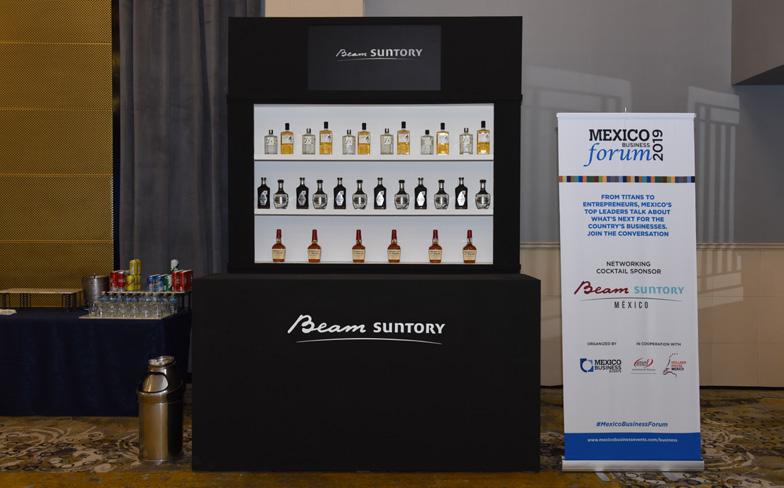
Networking Cocktail Sponsor | US$9,500
Seat Cover Sponsor | US$15,500
Coffee Break Sponsor | US$11,500
Charging Pole Sponsor | US$9,500
Speaker Room Sponsor | US$11,500
Wi-Fi Sponsor | US$9,500
Lanyard Sponsor | US$9,500
Live-Streaming Sponsor | US$5,000
Bruna Brandã0
bb@mexicobusinesspublishing.com
+52 55 5263 0227
Mariana Montes de Oca mm@mexicobusinesspublishing.com
+52 55 5263 0214
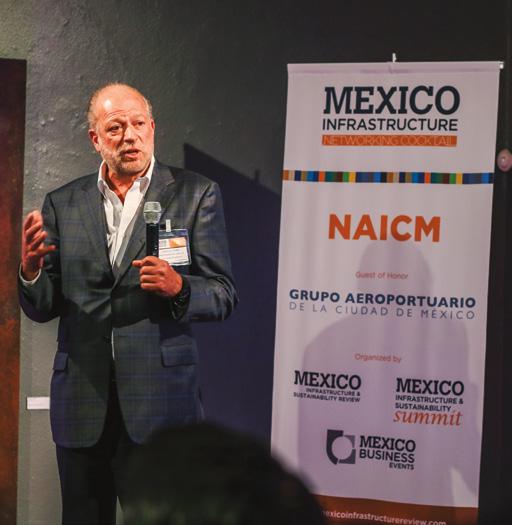
NETWORKING
MATTERS. WE DO THE WORK. YOU GET THE RECOGNITION.
Our networking events, which are exclusively available to our top clients, are a must for C-level professionals who want to expand their business, improve their contacts or simply gain insights from other key stakeholders in their industry.
Networking Breakfast
The ideal setting for a gathering of up to 25 industry executives to discuss key topics relevant to their sector while energy is high.
Networking Lunch
An intimate working lunch with up to 20 sector leaders designed around a relevant discussion topic and sure to lead to new ideas and ventures.
Networking Cocktail
A larger, evening event and the perfect opportunity to unwind over drinks and canapes. Our cocktails feature a VIP speaker invited to provide insight into a trending topic.
Exclusive, by invitation only
Network with the people and businesses that matter to you
C-level participants
Value-added opportunity to discuss trends and strategies
Speaker presentations
Topics and themes specific to your business segment
SHAPING THE CONVERSATION
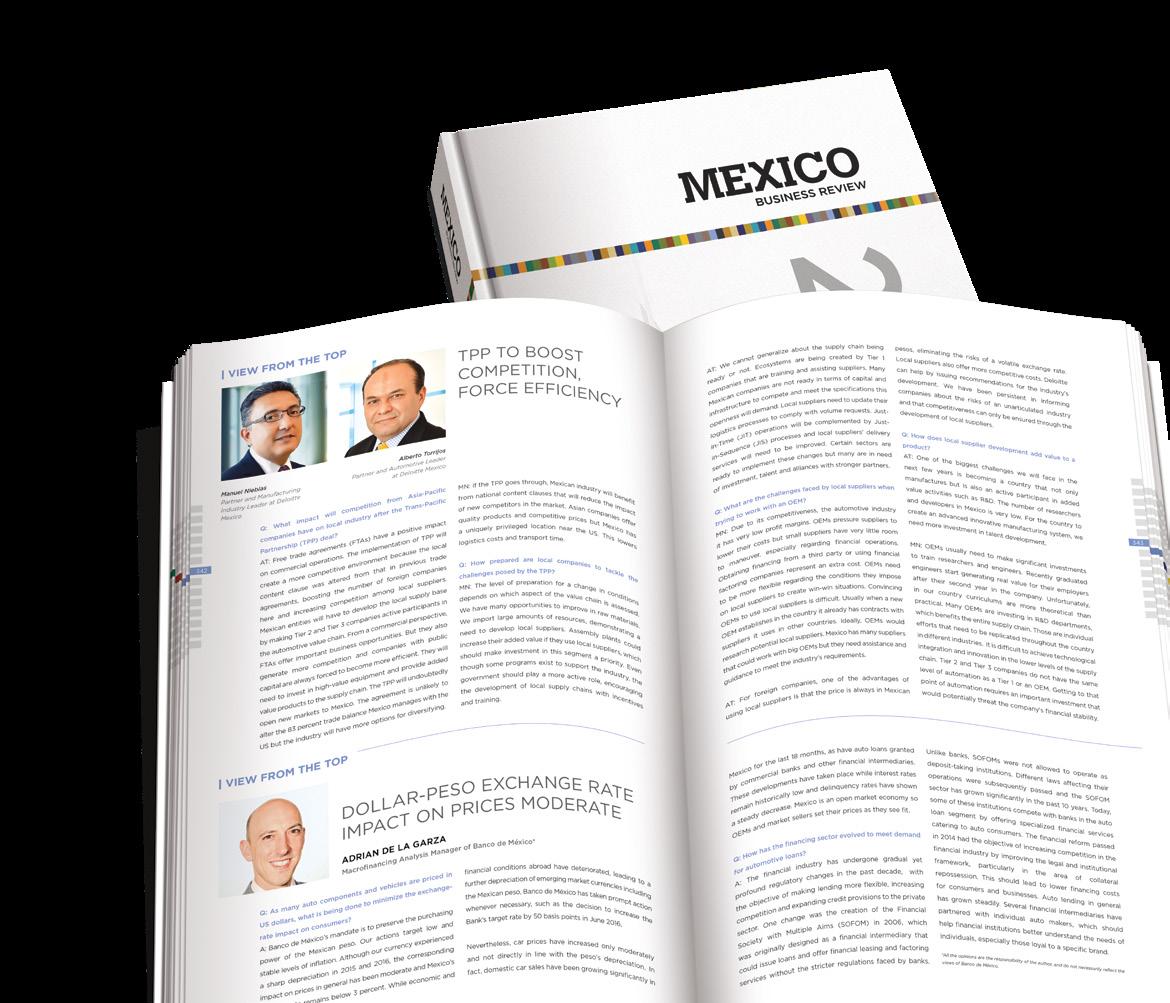
Mexico Business Review is your door into the ranks of the elite of Mexico’s key industries. Take advantage of this opportunity to get inside the minds of the leaders who are shaping Mexico’s economic future, including public sector decisionmakers, domestic and international C-level executives, top investors and the key voices across the country’s value chains. Mexico’s business community at your fingertips.
PARTICIPATE IN 2020
Interviewee Inclusion Directly highlight your company’s strategies, successful projects, industry trends and innovative technologies. Boost your company’s profile among your peers and competitors. We invite you to nominate your company for inclusion in Mexico
Article Submission
Contribute your voice and authority with a guest article. Share your insights and gain exposure among our vast readership network.
Topic Suggestion
We recognize that cooperation is a key to success. We invite industry experts to suggest
Providing unparalleled impact, Mexico Business Review is distributed to:
Federal and state governments
Primary institutional investors and funds
Presidents, CEOs and Country Managers of the leading companies across the top industries