“Once you have tasted flight, you will forever walk the earth with your eyes turned skyward, for there you have been, and there you will always long to return.”
Leonardo da Vinci
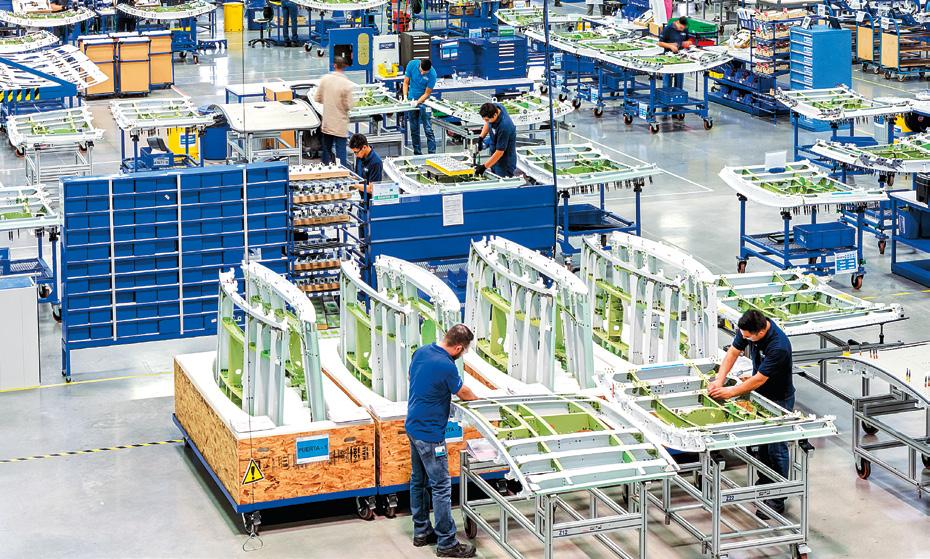
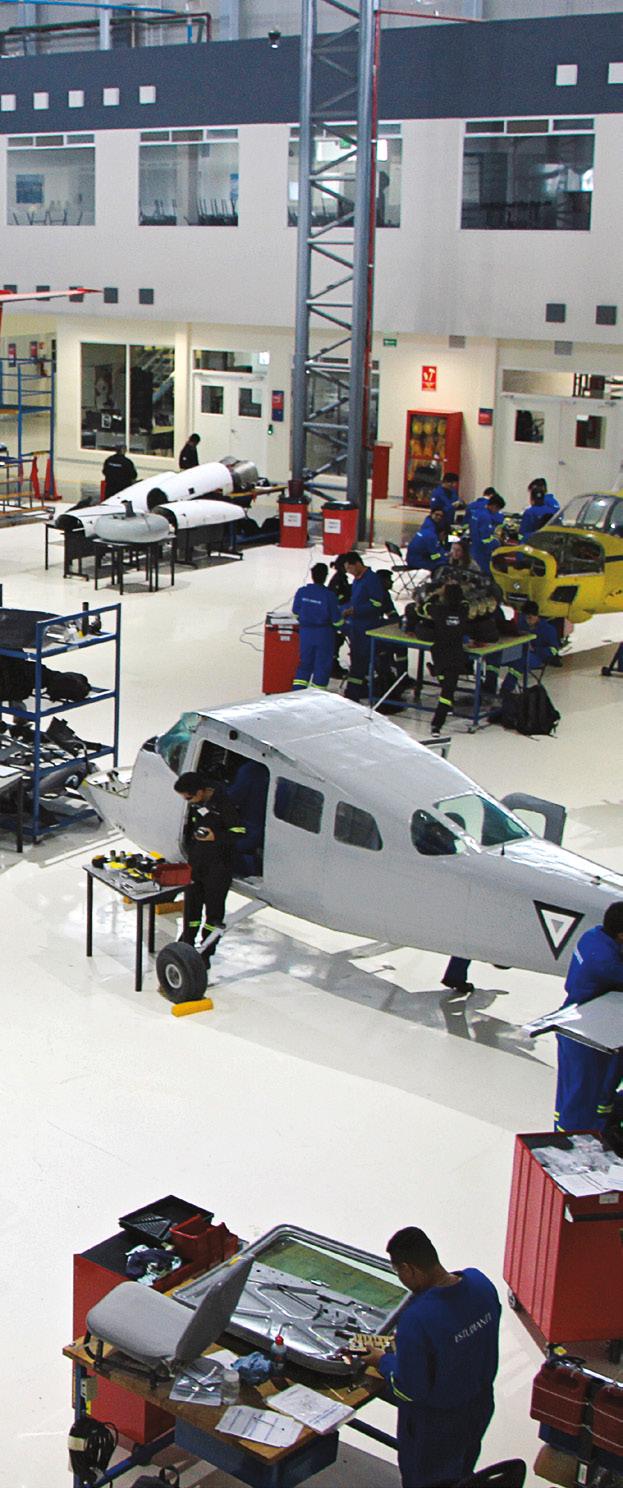
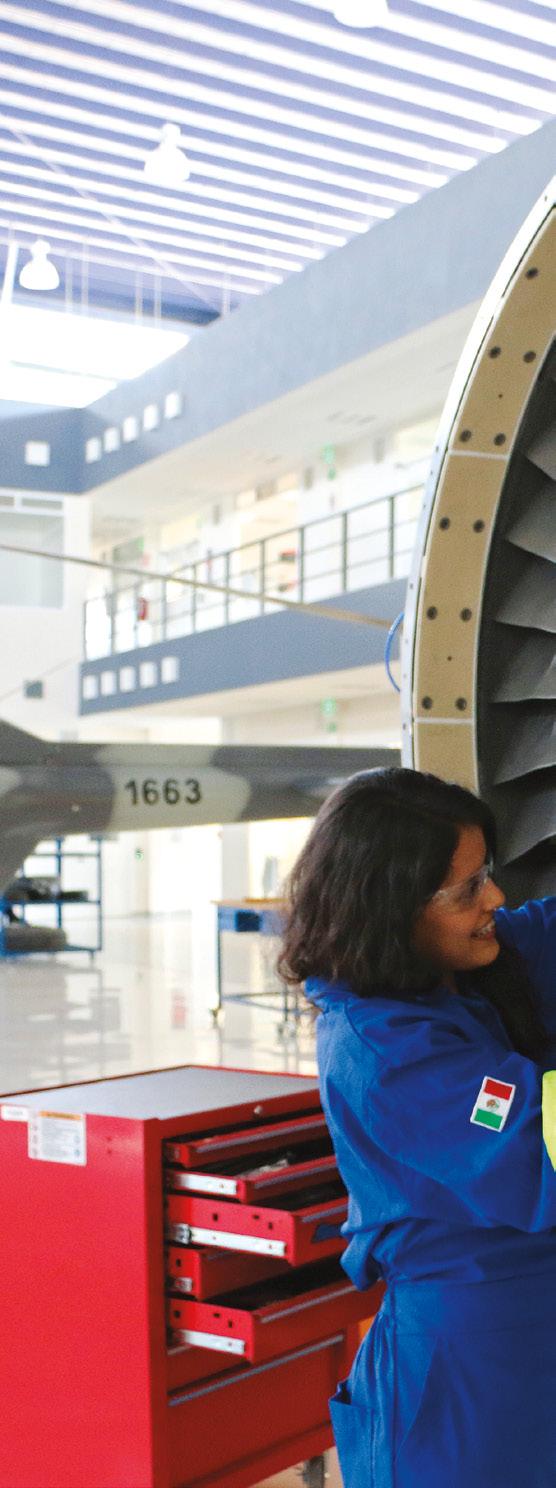
The aerospace industry is thriving in Mexico. While still small, the industry is capitalizing on a young workforce, an ideal location and a competitive labor force to penetrate the sector. Today, Mexico is ranked 14th for aerospace manufacturing in the world while it is the sixth-biggest exporter of aerospace parts to the US, the world’s largest aerospace market. With exports reaching US$7.18 billion, the country has climbed from the No. 10 supplier to the US’ aerospace sector to sixth. OEMs are finding in the country an excellent base for growth. Some that started with small manufacturing operations have widened their activities to include design and engineering.
While expectations are positive, Mexico’s aerospace industry is facing a few challenges. First, the international panorama is uncertain with many fixated on how Brexit will play out and the impact of protectionist US policies on the sector. Currency volatility is also affecting Mexican manufacturing across the board due to a strong dollar against the Mexican peso. Among the main internal challenges is the consolidation of the industry’s supply chain as the lack of ready availability of raw materials and special processes reduces the country’s competitiveness. Local authorities are taking strides to fill this gap. One solution promoted by both local clusters and FEMIA is to support SMEs and help them enter the Mexican aerospace supply chain. Another solution is to attract more foreign aerospace suppliers, which may pose its own challenges. Many real estate developers are reporting a lack of free space as companies express their interest in either coming to Mexico or expanding their operations in the country.
There are positive signs ahead for an economy that has always welcomed foreign direct investment and trade. With 46 free trade agreements, Mexico is ready to find new opportunities wherever they are.
The publisher has made all reasonable efforts to provide accurate information, and the information contained in this publication is derived from sources believed to be true and accurate. However, the information in this publication should not be considered to be complete or definitive, and may contain inaccuracies or typographical errors. The publisher accepts no responsibility regarding the accuracy of information and use of such information is at your own risk. The publisher will not be liable to any party for any direct, indirect, special or other consequential damages arising out of any use of information in this publication. The publisher provides no representations or warranties, express or implied, including any implied warranties of fitness for a particular purpose, merchantability or otherwise in relation to any information provided by the publisher in this publication.
ISBN: 978-0-9993108-3-0
STATE OF THE INDUSTRY
1The aerospace industry has taken root in Mexico and has truly begun to bloom in recent years, advancing at an accelerated pace. Mexican aerospace exports reached US$7.18 billion in 2016 and are forecast to hit US$8 billion in 2017. With its strong manufacturing base, young workforce, ideal location and expanding middle class, Mexico is reaping the benefits and solidifying its position as it looks to become a key player in the global industry by 2020. The country is the 14thranked aerospace supplier globally but a joint-initiative between ProMéxico and the industry has the sector working toward consolidation and a place in the Top 10. Industry players are confident that this will become a reality as the sector continues its growth spurt thanks to efforts from all players and a continuous supply of FDI from major international manufacturers.
This chapter provides an overview of the Mexican industry in a global context, and the main changes the sector has faced during late 2016 and first three quarters of 2017. This section includes interviews with industry regulators and policymakers, reviews regulatory changes and uncovers technological trends. The opportunities and challenges appearing in the Mexican aviation and aerospace sectors are also analyzed.
CHAPTER 1: STATE OF THE INDUSTRY
8 ANALYSIS: The Year in Review
12 INFOGRAPHIC: 2017 Sector Overview
14 ROUNDTABLE: What Are Mexico’s Capabilities for Aerospace and What Further Potential Exists?
15 VIEW FROM THE TOP: Ildefonso Guajardo, Ministry of Economy
16 VIEW FROM THE TOP: Carlos Robles, FEMIA
18 VIEW FROM THE TOP: Sergio Allard, CANAERO
20 VIEW FROM THE TOP: Francisco González, Bancomext
21 VIEW FROM THE TOP: Enrique Mondragón, CANACINTRA
22 VIEW FROM THE TOP: Miguel Peláez, DGAC
24 VIEW FROM THE TOP: Melvin Cintron, UN-ICAO
26 VIEW FROM THE TOP: Cuitláhuac Gutiérrez, IATA México
28 VIEW FROM THE TOP: Marco Antonio del Prete Tercero, SEDESU Queretaro
29 VIEW FROM THE TOP: Juan Carlos Corral, Queretaro Aerocluster
30 VIEW FROM THE TOP: Jaime Campos, Ministry of Innovation and Economic Development of Chihuahua Omar Saucedo, Ministry of Innovation and Economic Development of Chihuahua
32 VIEW FROM THE TOP: Carlo Bonfante, SEDESU Baja California
34 VIEW FROM THE TOP: Víctor Hidalgo, Aerospace Alliance of Baja California
35 INSIGHT: Tomás Sibaja, Baja Aerospace Cluster
36 VIEW FROM THE TOP: Rene Espinosa, Chihuahua Aerospace Cluster
38 RESEARCH SPOTLIGHT: CENTA
40 VIEW FROM THE TOP: Enrique Ruiz, COPRESON
42 VIEW FROM THE TOP: Carlos Ramírez, Monterrey Aerocluster Claire Barnouin, Monterrey Aerocluster
THE YEAR IN REVIEW
Slowing but stable revenues, a backlog of existing orders, rising passenger numbers and a favorable manufacturing climate are expected to overcome protectionist hurdles to keep the aviation and aerospace sectors flying for a long time to come
The aviation and aerospace industries are flying high in Mexico and globally. A need to update fleets and a record backlog of orders is keeping OEMs busy, while the advance of low-cost carriers is helping to boost passenger numbers and underpin commercial airline revenues.
The aerospace sector alone has reported years of recordbreaking growth in terms of revenue since 2012, with global revenue reaching US$709 billion in 2016. But the pace of growth has slowed, with 2017 expected to come in at 2.0 percent, down from 3.0 percent in 2016 and 3.8 percent the year before that.
AEROSPACE REVENUE GROWTH PERFORMANCE (US$ billions) AUTO PARTS PRODUCTION PER YEAR IN MEXICO
Aircraft deliveries also slowed in 2016 due to transitions to new models and supply chain problems, according to Deloitte. Yet, Deloitte expects that deliveries will reach 1,456 during 2017 with the production of 96 more aircraft, driven by strong passenger traffic and higher demand for next-generation airplanes. Both Airbus and Boeing expect deliveries to rise between 2017 and 2018, mostly for the A320neo and the 737 MAX, modern versions of their classic aircraft.
Revenue Percentage growth
Source: Deloitte and PwC. *Forecast by Deloitte.
INA
A number of factors suggest the sector is heading in the right direction. Deloitte highlights stable GDP growth globally, lower commodity prices and strong passenger travel demand as key drivers for aviation and commercial aircraft orders in the coming years. PwC points out that revenue passenger miles grew 6 percent in 2016 for a second year in a row. Furthermore, the existing backlog for major OEMs is at an alltime high with Boeing and Airbus reporting 5,659 and 6,691 units, respectively. In its 2016 annual report, Boeing stated the world will need a total of 41,030 new aircraft by 2036, worth US$6.1 trillion. However, orders have been sluggish in 2017. For the first nine months of the year, Airbus received only 319 new orders in comparison to the 556 during the same period in 2016, On the other hand, Boeing is increasing its orders, with 565 booked in first nine months of 2017 and only 409 during that same period in 2016.
On the demand side, airlines want greater fuel-efficiency, leading to a preference for single-aisle, twin-engine aircraft. Boeing’s most popular plane during the first nine months of 2017 was the twin-engine 737, with 360 orders. “We expect single-aisle aircraft will be most in demand in Latin America, such as the 737 MAX, the fastest-selling aircraft in Boeing’s aviation history,” says Donna Hrinak, Vice President of Boeing and President of Boeing Latin America. This trend is also affecting manufacturing decisions across the board. For instance, in mid-2017, Airbus decided to cut back on the production of the A380 super-jumbo jet, which uses four engines, as orders for the aircraft have been waning since it entered commercial service in 2007. In fact, to October 2017, there had been zero orders for this aircraft. On the other hand, the OEM announced plans to ramp up the production of the A320 by the first quarter of 2019. It also wants to manufacture 52 737s a month by 2018. Considering that forecasts suggest the industry will need approximately 2,000 new aircraft per year, these increases might be sustainable, especially taking into account that the current production rate is closer to 1,400 aircraft per year, according to PwC, which also says that further production increases are planned for narrow-bodies.
COST CONTROL
As players jockey for position in the industry, consolidation is becoming key. During the first half of 2017, there were 26 mergers and acquisitions totaling US$18 billion. This represents a 9 percent increase in comparison to the same period in 2016 and 14 percent higher than in 2015. About half of the deals were in the aircraft and parts category, representing 47 percent of the value of all mergers. PwC says that most of the industry deals have been local, with 85 percent of all mergers and acquisitions over the past three years taking place within country borders. The major
TOP 10 AEROSPACE AND DEFENSE DEALS BY 2Q2017
Announced Target name Target nation Acquirer name Acquirer
01/19/17 Zodiac Aerospace SA
02/24/17
DigitalGlobe Inc
06/13/17
06/28/17
Dettwiler & Associates Ltd
Heavy Industries Co Ltd
Daewoo Shipbuilding & Marine Engineering Co Ltd South Korea The ExportImport Bank of Korea {KEXIM}
04/07/2017 Soares Ltd China
01/27/17
Industry Holdings Co Ltd
Harris CorpGovernment IT Services Business United States
01/26/17 Chengdu Yaguang Electronic Co Ltd
04/06/2017
05/10/2017
China Shipbuilding Industry Group Power Co Ltd-Assets China
Hyundai Samho Heavy Industries Co Ltd
Corp
Korea IMM Private Equity Inc
03/08/2017 Sotera Defense Solutions Inc United States KEYW Corp
Source: PwC and Thomson Reuters
acquisition of 2017 has been without a doubt Safran’s purchase of Zodiac Aerospace valued at US$7.8 billion.
Despite growth, there is never-ending pursuit to keep costs down in every industry and throughout the entire supply chain. With a plethora of advantages, Mexico remains among the leading manufacturing centers worldwide. The country has cost-efficient labor, qualified human capital, numerous free trade agreements, a growing middle class and a key location as an entry point to both the US and Latin America. “Since 2004, Mexico’s aerospace sector has grown 15 percent annually,” says Carlos Robles, President of FEMIA and General Manager of Bombardier Queretaro. “In 2016, exports reached US$7.18 billion, which helped us climb from 10th place to become the sixthbiggest exporter of aerospace parts to the US, the largest aerospace market in the world.”
In the first quarter of 2017, the number of aerospace companies in Mexico totaled 312, according to the Ministry of Economy, of which 80 percent perform manufacturing, 11 percent MRO activities and the remaining 9 percent do design and engineering. Over the years, Mexico has
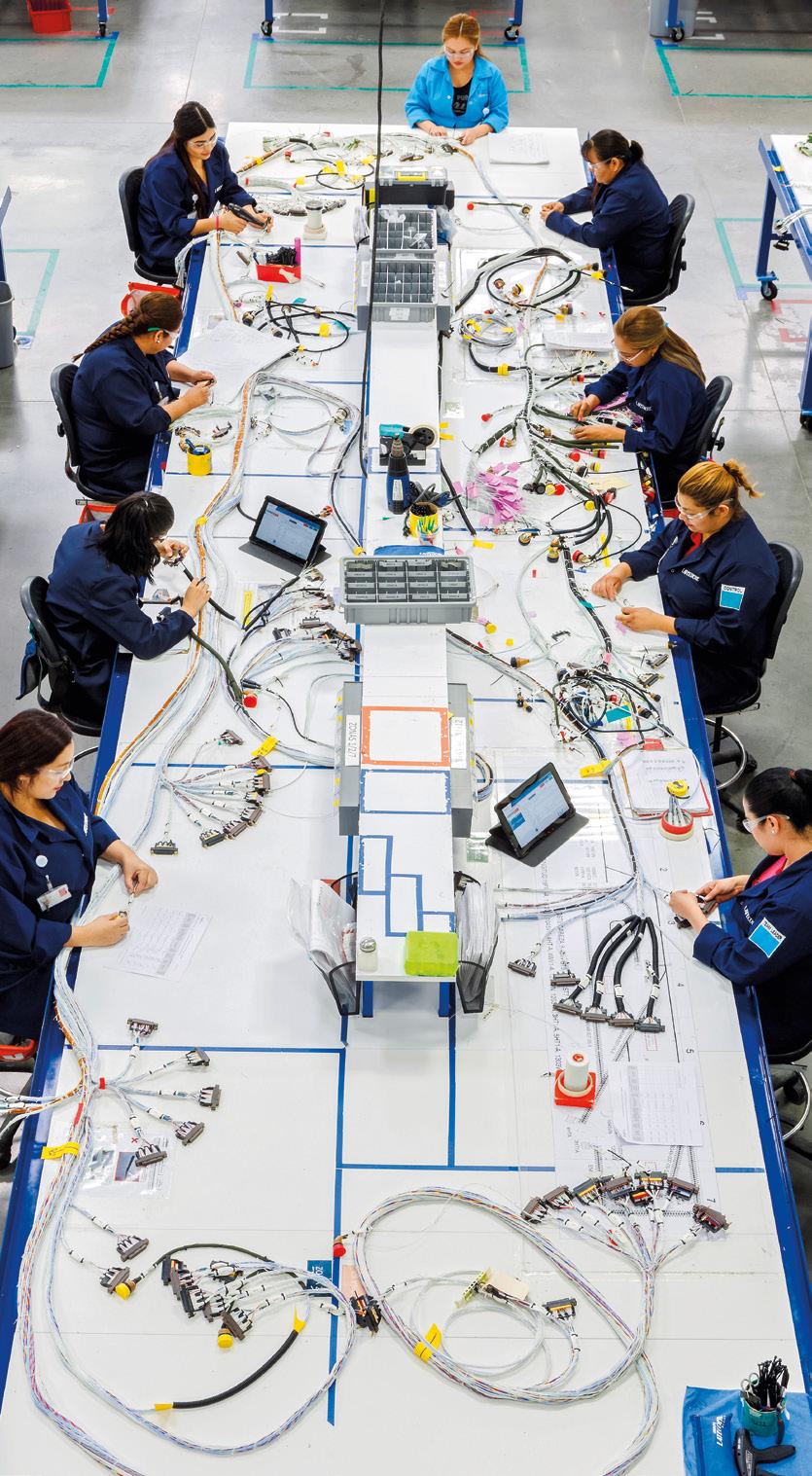
developed capabilities working with sheet metal and performing traditional assembly. The country is also strong in the manufacture of harnesses for airplanes and is developing the skills to work with composites. “Our expectation for 2017 is to reach 60,000 jobs, to have 330 industrial facilities, to surpass US$8 billion in exports and to reach a 23 percent trade surplus with the US for aerospace products. Globally, Mexico is ranked 14th for competitive manufacturing platforms and our goal is be in the Top 10 by 2020,” says Robles.
CLOUDY SKIES AHEAD?
While the skies seem mostly clear for the aerospace sector, it is undeniable that there are some clouds on the horizon, both locally and internationally. An overall climate of uncertainty is settling over the sector at a global level, brought about by questions regarding Brexit in Europe and US President Donald Trump’s protectionist policies, which could be trouble for Mexico.
When asked about the potential impact of Brexit, Loren Engel, former General Manager of GKN Composites, said it “remains to be seen it but we expect volatility over the
next couple of years as the UK and the rest of the world negotiate what the exit really means. In the short term, the uncertainty may cause distress in the British market. GKN Composites will have to wait and see how the relationship with our largest aerospace customer, Airbus, works out and how this will indirectly affect the business.”
The US administration has indicated it wants to hike the defense budget, which would have a positive influence on the aerospace sector, according to Deloitte. At the same time, the professional services company warns of the impact of rising populist sentiment in the US, which might take shape in protectionism and anti-globalization policies. While the impact of these policies is expected to be felt worldwide, Mexico, the US’ second-largest trading partner, might find itself in a precarious position.
“Tax reductions and changes suggested by President Trump could be problematic for Mexican manufacturers. A significant reduction of taxes on products manufactured in the US could counteract any benefit that Mexican companies can offer foreign investors. We still do not know what impact this will have on the Mexican aerospace sector but it is not possible to ignore that the largest company in the sector, Boeing, is based in the US,” says Francisco Bautista, Leading Partner of Aerospace Industry at EY.
A third challenge is currency volatility. Expectations for positive fiscal stimulus, cuts in corporate taxes and higher interest rates have helped strengthen the US dollar against other currencies. Emerging economies, such as Mexico, are in the crossfire. The peso-dollar exchange rate skyrocketed after the US election, from MX$18.31 on Nov. 8, 2016 to MX$20.80 three days later. The US dollar peaked at MX$21.95 in January 2017 only to gradually decrease to pre-election levels during the year. However, the sector remains dubious of the Mexican peso’s longterm stability.
Mexico’s challenges do not come only from foreign influences. The country is still pushing to consolidate its supply chain. While Mexico can boast of hosting plants for some of the largest aerospace companies in the world, including Airbus, Honeywell, Safran, Fokker, Zodiac Aerospace and GKN Aerospace, the country still lacks a base of suppliers. This generates a series of gaps in the supply chain, from raw materials to final processes, that reduce the country’s competitiveness.
The local aerospace sector is fully aware of this problem and is making a great effort to find a solution. “In December 2016, we created a commission for supplychain development. This commission will identify
the country’s capabilities and determine, alongside all industry players, what the country needs to start developing. This commission will search for companies and help them to acquire the necessary certifications to supply OEMs and Tier 1 companies,” says Robles.
Another local hurdle is the lack of sufficient human capital to address the sector’s needs. “Mexico faces a challenging situation in terms of human capital development and education. Almost 50 percent of all new graduates are not prepared to address the industry’s needs. As a result, people who know they have the right skills and training are always looking for the company that offers the best deal and the most attractive compensation plan,” says Gabriel Aparicio, Country Manager of Kelly Services.
BEST-SELLING BRANDS IN MEXICO (JANUARY-JULY) GRÁFICA DE BARRAS
MEXICAN AEROSPACE EXPORTS (US$ millions)
Source: Ministry of Economy and FEMIA. *Forecasted by FEMIA
Nonetheless, growth remains on track. FEMIA expects aerospace exports will rise 12 percent during 2017 to a total of US$8 billion. Investment also continues to pour in. FDI is up to US$33 billion to October 2017.
AVIATION’S LOW-COST ATTRACTION
Just in 2016, almost 3.7 billion passengers flew all over the world, a 6.7 percent increase over the previous year. One of the main drivers behind this growth are low-cost carriers (LLC) explains ICAO, which expects for this trend to continue. According to Deloitte, travel demand, measured in revenue passenger kilometers (RPK) has grown at an annual rate of 4.7 percent for the past 10 years, to almost double the number of passengers a decade ago.
Deloitte expects this trend to continue for the foreseeable future, with passenger traffic growing at an average annual growth rate (AAGR) of 4.8 percent for the next 20 years, while air cargo is seen growing at a 4.2 percent rate during that same period. Passenger load factor, referring to the utilization of an aircraft, rose to 80 percent in
2016 at a global level. CANAERO explains that the sector provides 9.9 million jobs around the world and by 2026 it will represent US$1 trillion.
Latin America was once behind other world regions in terms of aviation. The reason, explains Eduardo Iglesias, former Executive Director of ALTA, is that “in Latin America, aviation was historically perceived as a luxury product.” This is changing. In its 2017 Current Market Outlook, Boeing says that airline traffic, measured in RPK, is expected to grow at a 6.1 percent annual rate over the next 20 years. This effect, a result of economic reforms and a competitive landscape, puts the region well above the world’s expected growth of 4.7 percent per year.
“The region will continue to see strong passenger growth in the next decade that requires a significant influx of new ideas, out-of-the-box solutions, and investments to accommodate these additional travelers,” says Iglesias. He says that the region as a whole is undergoing a transition period caused by the introduction of LLCs into the market, which are pushing major airlines toward the creation of partnerships and alliances to optimize their profits. “Aviation follows economies of scale. An airline has fixed costs per airplane. Thus, to optimize spending we must increase the number of hours our aircraft are flying and the number of passengers and cargo per flights,” says Iglesias.
OVERCOMING HURDLES
Still, airlines in Latin America must overcome a few hurdles to continue growing. One is the lack of harmonized regulations across the region. “There are over 45 different consumer regulations in our region while the EU has a single regulation for roughly the same number of people,” says Iglesias. High airport charges add to the issue. As the increased number of competition has forced airlines to reduce their prices, airport taxes and fees across the region continue to rise. “We lower fares, they increase taxes and fees. We incorporate new technologies, increase productivity, lower fuel consumption, and lower costs, but they raise taxes and fees. We cannot go on like this forever. In some airports, passengers pay more in airport charges than for the flight itself and operating an airport cannot be riskier and more complex than running an airline,” says Iglesias.
Mexico is in a good position in terms of aviation, in comparison to Latin America. In 2016, Mexican domestic aviation grew 15.6 percent in terms of operations and 10.7 percent in terms of passengers in comparison to the previous year for a total of 82.7 million passengers, according to DGAC, and just in the first eight months of 2017 this number had already reached 61 million. Growth
has also been heavily influenced by Mexican LLCs, which are quickly overtaking the market. “Low-cost flights have grown exponentially, making it possible for many people to travel by plane and leading airlines to make important changes,” says Miguel Peláez, Director General of DGAC. Aviation represents 3 percent of Mexican GDP and generates almost 1 million jobs, according to the organization.
Led by tourism and a stable economy the aviation sector in Mexico is expected to keep growing. Which is leading local airlines to update and increase their fleets. For instance, in 2013 Viva Aerobus made the largest acquisition of airplanes in a single deal for a total of 52 A320. In the middle of 2017, it decided to acquire a new one. Expectations are high across the industry due to its growth history. “The sector has an enormous opportunity for growth and consolidation,” says Cuitláhuac Gutiérrez, Country Manager of IATA Mexico.
Airport infrastructure is another chief challenge. The WEF Global Competitiveness Index 2016-2017 ranks Mexico 61st out of 138 countries in quality airport infrastructure. An unavoidable hurdle is located in the heart of the country. Namely, the oversaturation at AICM. This airport was designed to have capacity for no more than 32 million passengers per year. In 2016, it transported 41.7 million passengers, 8.5 percent more than the previous year, and this figure is expected to keep growing as demand for flights keeps increasing.
The oversaturation causes a number of logistical problems not just for passengers and airlines operating in it. It is also a barrier for new airlines to come into Mexico City and for those already here to expand their operations. Some, such as United Airlines, have found alternatives. “Replacing smaller aircraft with bigger planes has enabled the airline to increase and even double capacity. For instance, changing from 75-seat aircraft to 146-seat planes almost doubles the number of available seats per flight,” says Rolf Meyer, Managing Director, Mexico and Latin America Sales of United Airlines.
The situation at AICM has many believing the construction of its replacement, NAICM, cannot be finished soon enough. “NAICM’s capacity will be valuable for the country as AICM is saturated and there are companies that want to fly to Mexico City but are unable to. NAICM will bring in more companies and more people, generating a trickle-down economic effect that will result in investment that benefits both Mexico City and the country. Its three air strips per terminal will enable more simultaneous take-offs and landings, permitting more flights to more destinations,” says Meyer.
2017 SECTOR OVERVIEW
The aerospace industry slowed down during 2016 but continues to perform well. Growth rates are expected to fall from 3 percent in 2016 to 2 percent in 2017, according to Deloitte. Mexico has laid the foundations for its industry to grow and consolidate the supply chain.
On the aviation side, the outlook is also positive. IATA forecasts that 2017 will be good for the sector as demand for cargo and passenger numbers grow. The organization also predicts that airlines’ profits will reach US$31.4 billion in 2017 but fuel, labor and maintenance costs will weigh. Profit margins have dipped from 4.9 percent in 2016 to 4.2 percent in 2017. Latin American airlines will hit US$800 million in profits and regional demand in the passenger sector will grow 7.5 percent.
DISTRIBUTION OF THE REGIONAL SUSTAINABLE DEVELOPMENT FUND 2
FDI FOR AEROSPACE EQUIPMENT MANUFACTURING 1999-2016
COMPANIES WITH DGAC APPROVAL TO MANUFACTURE AIRCRAFT COMPONENTS
Mazapil
Cananea
Nacozari de Garcia
48.9% Chihuahua
19.1% Queretaro
14.9% Baja California
4.3% Guanajuato 4.3% Sonora 2.1% Zacatecas 2.1% San Luis Potosi 2.1% Yucatan 2.1% Nuevo Leon
Source: CGM, Ministry of Economy 1 With figures to March of 2015
96,467 New engineering, manufacturing and construction graduates FDI for Aerospace Equipment Manufacturing in 2016 (US$
Others
25.6% Market share
37.6% Share of commercial fleet in service (2Q17)
• 5,746 employees
• 180.000 passengers moved in 2016 TAR Aerolíneas
1.4% Market share
2.8% Share of commercial fleet in service (2Q17)
• 246 employees
• 614.000 passengers moved in 2016 Aeroméxico
25.6% Market share
37.6% Share of commercial fleet in service (2Q17)
• 6,737 employees
• 11. 07 million passengers moved in 2016 Viva Aerobus
13.9% Market share
6.9% Share of commercial fleet in service (2Q17)
• 1,145 employees
• 6.02 million passengers moved in 2016
million passengers moved in 2016
• 5,445 employees
• 11.12 million passengers moved in 2016
33.1% Market share
18% Share of commercial fleet in service (2Q17)
• 4,550 employees
• 14.35 million passengers moved in 2016
WHAT ARE MEXICO’S CAPABILITIES FOR AEROSPACE AND WHAT FURTHER POTENTIAL EXISTS?
CARLOS ROBLES President of FEMIA
Mexico is the 14th-biggest aerospace supplier in the world, but the country has high ambitions. According to ProAéreo, it plans to enter the top 10 by 2020. While there are many areas that must be developed to achieve this, such as consolidating the local supply chain, the country also has many strengths that have attracted the top aerospace manufacturers in the world, such as Boeing, Airbus, Safran and Honeywell. Mexico Aviation & Aerospace Review asked industry leaders to share their views on the country’s capabilities.
Mexico has strong capabilities working with sheet metal and performing traditional assembly, especially with aluminum. We are good manufacturers of CPUs and harnesses and we are developing skills to manufacture more composite parts. Moreover, Mexico has capabilities for MRO services, with ventures from Mexicana MRO and TechOps Mexico, making the country a destination for MRO. This trend is leading other states to develop their own workshops. Our expectation for 2017 is to reach 60,000 jobs, to have 330 industrial facilities, to surpass US$8 billion in exports and to reach a 23 percent trade surplus with the US for aerospace products. Globally, Mexico is ranked 14th for competitive manufacturing platforms and our goal is to be in the top 10 by 2020.
DONNA HRINAK Vice President of Boeing and President of Boeing Latin America
The country has tremendous potential for Boeing’s three sectors: commercial aviation, supply chain, and lastly, defense, space and security. Our participation in the supply chain is of great importance to us. It represents about US$1 billion annually both in terms of direct purchases and those of our direct suppliers. Mexico is our largest supply base in Latin America. The growth of this supply base depends mostly on our suppliers’ ability to expand in the country and to develop the workforce to continue meriting support from federal and state governments. Our suppliers mostly manufacture components but we expect to move Mexico up the value chain by requesting more design and engineering-based jobs here.
EDUARDO MUÑIZ Automotive, Aerospace and Logistics Financing Director of Bancomext
The country offers many advantages to the sector, so its continued specialization and development will raise Mexico as an emerging aerospace exporter. Thanks to the automotive sector, aerospace companies were able to find potential collaborators that had already installed state-of-the-art manufacturing technology, building a strong platform on which to grow. Both sectors can coexist since they are distinct in volumes, being automotive an industry of high production volumes, while aerospace is an industry of low volumes, highly sophisticated equipment and high costs per unit. Aerospace emerged and expanded swiftly thanks to synergies with the automotive sector, which also led to the faster development of infrastructure and technical capabilities.
TRIPLE-HELIX COORDINATION ADVANCES AERO SECTOR
ILDEFONSO GUAJARDO Minister of Economy
Q: You have cited aerospace as an economic catalyst in the past. What factors have made this industry influential?
A: Over the last decade, the Mexican aerospace industry has become the third-largest FDI recipient worldwide, receiving 60 FDI projects between 2009 and 2015. Having major international companies in the field establishing design and engineering centers in Mexico, such as Bombardier, Safran Group, GE, Honeywell and Airbus Helicopters, reflects the country’s competitive manufacturing costs, which are the most competitive in the Americas, according to KPMG Competitive Alternatives 2014. It also reflects the availability of specialized human capital.
The positive performance of the Mexican aerospace industry has been the result of coordinated actions by leaders of the triple helix: industry, academia and government. ProAéreo will continue to be an important tool for guiding and promoting the aerospace industry’s
working on a 2.0 version of the program to trigger more ambitious results for the aviation and aerospace industry in Mexico. The Ministry of Economy, along with ProMéxico and local industries, is leading a strategy to reshape some of the goals of the ProAéreo 2012-2020 program to better suit the industries’ needs and performance projections. ProAéreo 2.0 will extend its roadmap until 2025.
Q: As an industry that is dependent on FDI, how do you expect currency fluctuations to affect investment decisions?
A: Currency changes mainly impact a country’s export capacity, rather than impacting its attractiveness for investors. Foreign direct investment decisions rely on a multitude of variables and they reflect a company’s expectations for growth and its long-term strategy to achieve its goals. Mexico offers favorable conditions for aerospace and aviation developments, including legal certainty and infrastructure, as well as specialized human capital.
COLLABORATION IS THE NAME OF THE GAME
CARLOS ROBLES
President of the Mexican Federation for the Aerospace Industry (FEMIA) and Vice President of Bombardier Queretaro
Q: How has Mexico’s aerospace sector grown and what are your expectations for 2017?
A: Since 2004, Mexico’s aerospace sector has grown 15 percent annually. The country began performing manufacturing exclusively and gradually entered into maintenance. Now, it is starting to develop its research capabilities. In the first quarter of 2017, the Ministry of Economy counted 312 industrial facilities for the aerospace industry, of which 80 percent are related to manufacturing, 11 to MRO activities and the remaining 9 percent to R&D, design and engineering. Engine parts designed and manufactured in Mexico are flying all over the world.
In 2016, exports reached US$7.18 billion, which helped us climb from 10th place to become the sixth biggest exporter of aerospace parts to the US, the largest aerospace market in the world. This was achieved in 10 years and our goal is to enter the top three by 2020. The sector also generates over 50,000 jobs in 19 states in Mexico.
US$7.178 billion was exported by aerospace companies in Mexico in 2016
Mexico has strong capabilities working with sheet metal and performing traditional assembly, especially with aluminum. We are good manufacturers of CPUs and harnesses and we are developing skills to manufacture more composite parts. Moreover, Mexico has capabilities for MRO services, with ventures from Mexicana MRO and TechOps Mexico, making the country a destination for MRO. This trend is leading other states to develop their own workshops.
Our expectation for 2017 is to reach 60,000 jobs, to have 330 industrial facilities, to surpass US$8 billion in exports and to reach a 23 percent trade surplus with the US for aerospace products. Globally, Mexico is ranked 14th for competitive manufacturing platforms and our goal is to be in the top 10 by 2020.
Q: What are your main goals as the new President of FEMIA?
A: The key word for Mexican aerospace is collaboration. Thus, at FEMIA our priority is to promote collaboration among all clusters in Mexico. During FAMEX we, alongside the five aero clusters, signed a memorandum to prioritize the needs of the sector using all the capacity and skills within the clusters. The Mexican aerospace sector has many strengths that we need to capitalize on to improve the industry’s image at a global level. Signing this agreement signifies the clusters’ will to act as a team in the interest of developing the country’s aerospace industry.
The second priority is to develop the supply chain. FEMIA has a division in charge of supply-chain development that is identifying the country’s existing capabilities to address existing gaps by attracting foreign investment. Furthermore, OEMs and Tier 1 companies can develop their supply chain through FEMIA. Aerospace parts volumes are low. By consolidating the volumes of different companies, we can make an attractive package for interested suppliers.
Other goals include raising our membership to 100 companies, which we achieved during FAMEX 2017. This year we are celebrating FEMIA’s 10-year anniversary and we are analyzing what is next in the federation’s future. Mexico is in a unique situation at this point. We are at the crossroads between continuing as a small industry or expanding.
Q: How will FEMIA change to address the needs of the sector?
A: The sector and all its members are growing. Safran, Bombardier and other big players are expanding their plants and diversifying their operations. Many aerospace companies began with simple processes. Now, they have diversified and created complex assembly lines with which they can export to other countries.
During the past 10 years, FEMIA has built credibility with companies and government. Given the critical volume we
have reached, Mexico is going to become a key player in the industry. We must align our strengths to attract more investment and direct it to the sector’s top needs.
Q: How is FEMIA helping national and international companies gain governmental support?
A: In the case of international companies, we request the support of the government to simplify the process of doing business in Mexico. The government has to create the appropriate conditions to capture companies interested in coming into the country and facilitate their entrance. We are also discussing agreements that the government needs to generate with aerospace authorities in other countries. We now have a good agreement with the FAA, for instance, but we lack one with Transport Canada. This means that Mexico can perform MRO operations for US companies but not for Canadian companies, so we are asking the government to foster these types of agreements with both Europe and Canada. Agreements such as BASA and the Wassenaar agreement with the US have opened doors for new industries. BASA unified safety and security standards and Wassenaar allowed local companies to manufacture for the US military. These opportunities spread across the industry to the people and the products manufactured, boosting technology and experience.
For SMEs, we ask the government to support them financially to acquire new equipment or certifications. It is hard for small companies to acquire these certifications because they are expensive and returns on investment take a long time. Now, INADEM supports small companies to acquire these certifications and re-certifications so they can become suppliers in the aerospace sector.
Q: What initiatives is FEMIA promoting to support the consolidation of the aerospace supply chain?
A: In December 2016, we created a commission for supplychain development. This commission will identify the country’s capabilities and determine, alongside all industry players, what the country needs to start developing. This commission will search for companies and help them to acquire the necessary certifications to supply OEMs and Tier 1 companies.
In five months, the commission garnered enough interest to see a potential total US$160 million investment in casting, forging, metal casting, precision machining, hydroforming, metal stamping, heat and surface treatment, composites, NDT, wire harnesses and cables. All of these are capabilities that Mexico lacks. The country has a good number of OEMs and Tier 1 companies but lacks the lower tiers of the supply chain. This program is funded by the National Committee of Productivity (Comite Nacional de Productividad) and is exceeding its targets.
One of our commissions, led by Benito Gritzewsky, aims to bring the Mexican aero clusters together to promote collaboration and generate a strategic view of what must be done in the country. The goal is also to identify each cluster’s success factors and help them communicate.
Our promotion commission also works with all industrial parks and shelters in the country to promote the establishment of new players in the Mexican aerospace sector. To do so, the commission visits all international fairs to promote the country’s capabilities in the aerospace sector in terms of human capital and facilities. Its goal is to facilitate every entity interested in opening a plant in Mexico, bringing new skills and experience into the country.
Q: What action is FEMIA taking to generate education programs that address the needs of the sector?
A: FEMIA created an education commission led by UNAQ’s Dean, Jorge Gutierrez de Velazco. We are working with the Mexican Council of Aerospace Education (COMEA) to map our strengths in education. This has presented a challenge because there are numerous universities and technical colleges in the country, such as the National College of Technical Professions (CONALEP), all of which have different education plans.
FEMIA is often approached by education centers interested in opening a new degree in aerospace engineering because many believe they can do so with only a wind tunnel and design courses. This is disconnected from Mexico’s needs, however, because the critical mass is located in manufacturing. It would be better for students to learn about current manufacturing practices, project management and specific skills related to electronics or mechanics. Our goal is to create a curriculum that fully addresses the needs of the industry; the problem is that these needs have not been fully identified. Once the local capabilities of universities are mapped, we will identify the needs of companies and merge these two lists.
An aerospace graduate must know the basics of the industry before learning the specific needs of an OEM or Tier 1. This second part of training has to be provided by the employer as processes and certifications vary from company to company. Mexico has a significant advantage in aerospace because the country produces more engineers than countries such as Germany, as we have more young people. This is both a challenge and an opportunity.
FEMIA represents the Mexican aerospace industry with the goals of promoting it internationally and attracting FDI. It represents the industry's interests and helped to create the Pro-Aéreo plan to position Mexico as the 10th aerospace supplier globally
FLYING IN INTERNATIONAL BEST PRACTICES
SERGIO ALLARD President of CANAERO
Q: What is CANAERO’s role in the Mexican aviation industry and what are the chamber’s priorities for 2017?
A: CANAERO consolidated its position as the advisory body that, alongside national and international authorities, faces the challenges that emerge from a quickly growing and dynamic global aviation industry. We prioritize the adoption of best international practices and regulations in security, operability, consumer protection and environmental practices. The chamber does this by optimizing migration, customs and security processes, promoting NAICM’s competitiveness in comparison to other airports in Latin America, modernizing Mexico’s existing airport infrastructure and raising awareness about the importance of the Mexican aviation industry and the challenges it represents.
CANAERO estimates that Mexico will see its aviation sector grow 6 percent year-over-year during the next decade
The chamber has several projects in collaboration with national authorities. These include creating a smart regulation that further opens the Mexican aviation market to private investment and establishing the Federal Civil Aviation Agency (AFAC) and the Federal Transportation Accident Investigation Agency (AFIAT). The chamber will also focus on modernizing the provisions of the Cape City Convention regarding financing conditions and aircraft leasing in Mexico, and on the adoption of best international practices for security and fatigue management among Mexican crews.
Q: What strategies is CANAERO implementing to increase efficiency in AICM?
A: CANAERO is working with the General Customs Administration (AGA) and the Tax Administration Service (SAT) to implement a revised process for international passengers’ luggage. Passengers no longer need to go through customs after picking up their registered luggage. Also, CANAERO is backing SCT and SECTUR
in the creation of automated migration kiosks that will reduce waiting times for passengers entering the country in the airports of Mexico City, Cancun and Los Cabos. We actively take part in the revision of master development plans of Mexico’s airports to incorporate best international practices into their operation and in the improvement of the country’s airport infrastructure. CANAERO also promotes the implementation of technologies that improve the travel experience of passengers in Mexico.
Q: How is CANAERO supporting the design and construction of NAICM?
A: CANAERO’s NAICM committee provides GACM recommendations for improvements in the design of the airport’s terminal building, airfield, cargo terminal, land accesses, baggage-handling system and back-up areas. The chamber has presented a plan to improve migratory and customs procedures in order to have a hub that operates under the best international practices, uses state-of-theart, world-class technology and connects Mexico and Latin America with the rest of the world.
Q: What global and local aviation trends is CANAERO seeing in the industry?
A: We estimate that air transportation in Mexico and Latin America is in a growth stage because of the maturation and segmentation of this market. This has enabled airlines to offer products that cater to the specific needs of passengers. The chamber estimated that Mexico will see its aviation sector grow 6 percent annually during the next decade. The depreciation of currencies against the dollar, the rise of fuel prices and the rise of aviation tax rates are the most pressing challenges that Latin American airlines need to tackle. Also, setbacks in the process of deregulation of the aviation market raise compliance costs for airlines and passengers.
Q: How will the aviation industry be affected by the opening of the jet-fuel market to other players?
A: Free competition can provide several potential benefits. Oil companies are interested in and working to enter the Mexican market. Their entrance will bring competitive
prices and transparency, which will result in the creation of infrastructure for hydrocarbon transportation. In the midterm, we can expect competitive fuel prices similar to those in international markets.
Q: How are Mexican airlines and airports doing compared with the rest of Latin America?
A: The domestic market has been consolidating for the past several years as Aeroméxico, Volaris and Viva Aerobus identified and segmented their products according to the demands of passengers. Alongside the modernization of the Mexican fleet, this has allowed airlines to increase their capacity and the frequency of operations. There are still challenges ahead, though. The depreciation of the peso against the dollar, high airport tariffs and overregulation damage the competitiveness of the Mexican aviation industry against other countries. These issues make it more difficult for airlines to reduce costs and to invest in technologies that help them compete against other transportation means and foreign airlines that operate under better regulatory conditions.
In terms of airport infrastructure, the construction of NAICM represents a transition for air transport in Mexico. We will be more competitive against other passenger and cargo hubs in America. To make the best out of the aviation industry in Mexico, it is necessary to develop a smart regulatory framework that raises Mexican airports’ and airlines’ competitiveness to the same level of other countries. Reinforcing the airport and air navigation infrastructure is essential to boost the capacity and safety of the industry and mitigate the high costs resulting from inefficient regulations that are then passed on to passengers and airlines.
Q: How will the new regulations on compensation for passengers who suffer delays affect airlines’ budgets and operations?
A: Passengers and their safety are the main priority for airlines. This has prompted airlines to provide protective measures that had not been previously considered in the legislation. Although the new regulation imposes challenges and restricts the contractual freedom that exists between airlines and passengers, compensation for delays will not generate increases in ticket prices. Also, with the new reforms, we will have more clarity on how to compensate our passengers while following principles of proportionality and international treaties.
Q: What policies on passenger rights is CANAERO proposing?
A: For CANAERO, policies must be based on transparency and access to information. The chamber works to ensure passengers know their rights and obligations. We proposed a new regulation on the responsibility and appropriate
treatment of disruptive passengers. There is no clear framework for handling these problems and the additional costs brought about by passengers who violate security during a flight.
Q: How does CANAERO help its members become more efficient and safe?
A: CANAERO and its members communicate and actively participate in industry committees within international aviation organizations such as ICAO, IATA, ALTA (Latin American and Caribbean Air Transport Association) and CLAC (Latin American Commission on Civil Aviation). These organizations produce recommendations and provide updated procedures to increase efficiency and security for flight operations. Also, CANAERO’s committees discuss best international practices and pursue their implementation by airlines, authorities and airports.
Q: What steps is CANAERO implementing to promote environmentally friendly practices among its members?
A: The chamber shares the objective of reducing carbon emissions from international operations to 2005 levels by 2035 with ICAO and IATA. CANAERO works with two main measures through its environmental committee. First, we work to implement emission-compensation models like the Carbon Offsetting and Reduction Scheme for International Aviation (CORSIA) using market-based measures. Second, we support the implementation of Performance-Based Navigation (PBN). CANAERO is also collaborating with SEMARNAT, DGAC and SRE to look at emission-reduction schemes for national aviation.
Q: How does CANAERO collaborate with the authorities and international aviation organizations?
A: The chamber campaigns to raise awareness among the authorities and citizens regarding the importance of aviation to the Mexican economy. We also participate in work groups with civil aviation authorities and the Mexican Congress to develop or improve regulations that liberalize the sector and advance passenger security and satisfaction. CANAERO works continuously with international civil aviation organizations to boost security and competitiveness in the Mexican aviation industry by creating proposals based on best international operational and regulatory practices. The chamber is in continuous communication with its members so that they remain updated on these practices. CANAERO also helps its members adhere to these practices by providing advisory services.
CANAERO is an autonomous institution of national and international airlines, air cargo companies, air taxis and aviation services firms, representing the interests of the aviation industry before Mexican authorities and international organizations
PROVIDING FINANCIAL
ACCESS WITH GOOD RATES, ACCESSIBLE PAYMENTS
FRANCISCO GONZÁLEZ Director General of Bancomext
Q: Part of the bank’s mandate is to help SMEs integrate into global production chains. How do you help them improve processes and comply with international standards?
A: Around 88 percent of the companies that we work with are SMEs and the only way to integrate them into the global production chain is through financial intermediaries, either leasing companies or banks. In this regard, we are boosting the financial sector as well as SMEs, providing them the ability to access financial products at good interest rates and accessible payment schedules. We want to maintain the highest possible level of competitiveness and be a benchmark.
Q: How does the bank view the frequent increases in Mexican interest rates?
A: The interesting part of Bancomext’s portfolio is that we can access external financing. In 2015, we placed debt certificates totaling US$1 billion. In 2016, we placed certificates worth US$700 million, which earned the recognition of “Deal of the Year” by the World Finance magazine. We just placed certificates in Mexico totaling MX$7 billion in three and seven-year periods.
Interest rates have risen but margins have narrowed. We operate efficiently and translate this efficiency to the client. We are enjoying better international rates and opportunities and because of this, a significant number of the rates we offer have not been affected.
Q: What opportunities does the creation of Special Economic Zones (ZEEs) offer Bancomext?
A: We see a significant degree of interest in these projects and we are leaders when it comes to the financing of industrial warehouses. We also see opportunities to support the importation of needed machinery. Since we work with export trading agencies we can provide structured support in this regard all around the world.
Bancomext is Mexico’s largest development bank. Over its 80 years, the bank has played an important role in furthering Mexico’s export activities as well as financing the development of the tourism and industrial sectors
Q: How is Bancomext collaborating with Mexican companies to reap the benefits and opportunities related to Industry 4.0 (I4.0)?
A: It is important to note that Mexico will be the first country in Latin America with the capacity to fully insert itself into the I4.0 trend. We will be the first country to have a shared network that will provide a substantial percentage of the population with access to the 4G network and with enough spectrum to allow communication in a more efficient and economical manner. The internet of Things (IoT) will allow for a more dynamic communication than what we are used to. In industries, either through Radio Frequency Identification (RFID) or through the use of specific communication tools, we will see containers located at different ports communicating, arranging to be delivered at the same time, and the buyer will be able to access all this information with just one click. We already have the hardware and the software components but this is all useless if we do not have the know-how to produce.
Q: How can Mexico become a global export hub?
A: The first step is to develop a solid foundation. A solid value chain, which is a Bancomext goal, implies that the country has solid companies exporting at a global level. If we are already managing all the metal-mechanics and electronics components, then we need to take that extra step and improve our management of materials. We also need to internationalize Mexican companies, which is something we are also working toward. When a company expands its production to other countries it needs a supplier network, so it invites its known suppliers to expand with it. It becomes a virtuous cycle of having more international trade and a greater number of Mexican companies abroad.
Q: 2017 is a year of consolidation for Bancomext. In what other sectors do you expect the bank to participate?
A: Diversification is one of the bank’s pillars, especially toward Latin America. We are also trying to expand and develop our portfolio of financial products and we want to support the development of creative industries and services, while also exploring opportunities offered by e-commerce. We are looking for ways to export Mexican machinery.
CLEAR ANSWERS, DIGITALIZATION NEEDED TO COMPETE GLOBALLY
ENRIQUE MONDRAGÓN President of Cámara Nacional de la Industria de Transformación (CANACINTRA)
Q: What must Mexico do to be more competitive at a global level?
A: To increase Mexico’s competitiveness at all levels it is necessary to develop internally, including improving regulations. CANACINTRA has promoted simple and clear answers, digitalization of paperwork and a reduction of the time it takes to obtain answers from regulators. The implementation of National Anticorruption System regulations is essential to ensure transparency in the use of public funds in the case of public institutions and private entities that participate in government bids.
Strengthening the internal production market through reindustrialization is another key element to increase national competitiveness. For CANACINTRA, industrial policy should be closely related to monetary, fiscal and economic policies that allow the generation of bridges between the industry and academia and the support of development banks.
Q: How would CANACINTRA describe Mexico’s manufacturing capabilities in comparison to the rest of the world?
A: Mexico has many advantages. At this point, North America is the most competitive region in the world due to the commercial exchange between Mexico, the US and Canada. In the case of Mexico, this translates to material and logistic capabilities to successfully enter global value chains. Thanks to the experience acquired during the last two decades, Mexico is now a leader in innovation in Latin America. Northern Mexico and El Bajio together have 389 industrial parks and over 100 clusters dedicated to many different industries, ranging from automotive to aerospace.
Through clusters, triple-helix alliances are generating good job opportunities with low turnover to attract local talent. There is also a productive chain that incorporates certified SMEs that generate intermediary and final products of excellent quality. Furthermore, Mexico has high added-value manufacturing capabilities.
Q: In which ways does CANACINTRA support the development of Mexico’s aerospace industry?
A: CANACINTRA is an important promotor of productive chains, so we connect SMEs with the supply needs of many industries established in Mexico, such as aerospace, through Integradora CANACINTRA. We have promoted the dual education model to link the needs of the industrial market with academia. We believe that human capital is the most important aspect of all industrial sectors. For that reason, CANACINTRA is betting on better preparation for young people and those who have already entered the labor market to develop the qualifications industries need.
Q: How would you describe Mexico’s contribution to the aerospace sector?
A: Triple-helix alliances have resulted in permanent and fruitful programs that spur innovation. The country has public and private institutions in which Mexican talent is constantly contributing to the development of parts and new materials, creating automated systems and measuring productivity and efficiency on production lines. Thirty-three percent of airplane turbines are designed or made in Mexico. Automotive companies can also participate in the aerospace sector. As a matter of fact, some automotive companies have already entered the aerospace industry by obtaining the necessary certifications and are able to manufacture products for major aerospace companies. However, other sectors can support the aerospace industry, such as metal-mechanics, chemical and information technologies.
Q: What technological trends has CANACINTRA recognized in the aerospace sector?
A: Through the implementation of Industry 4.0 practices, high added-value industries such as aerospace are getting increasingly closer to automation. For that reason, CANACINTRA believes that for the sector to evolve, manufacturing companies must be linked. The more competitive suppliers are, the stronger the industry is.
CANACINTRA represents the interests of Mexico’s industrial sector and promotes it internationally. The organization is the largest of its kind in Latin America in terms of infrastructure and representation
IMPROVING AIRPORTS, INCREASING FLIGHT SAFETY
MIGUEL PELÁEZ Director General for the General Direction of Civil Aviation (DGAC)
Q: How is the aviation sector growing in Mexico and what global passenger and cargo transport trends are shaping it?
A: The sector is growing at an accelerated pace. In 2016, 82.7 million passengers flew with commercial airlines, which is 46 percent more than in 2012 and reflects an average annual growth rate of 9.8 percent. From January to March 2017, commercial flights grew almost 3 percent in comparison to 2016. During this first quarter of 2017, AICM alone transported 10,364,775 passengers, which represents an increase of almost 10 percent in comparison to the previous year.
From January to March 2017, commercial flights grew almost 8% in comparison to 2016
Demand for air freight is also increasing. In that same quarter, a total of 184,022 tons of cargo were transported by air, representing a 6.7 percent increase over the same period in 2016. National freight transport rose 9.5 percent in 2017 while international cargo expanded 6 percent. Safety has also improved, by strengthening the effective verification of compliance with the standards established by DGAC.
Global and Mexican flight demand is expected to rise and, if trends continue as expected, by the end of 2017 more than 89 million passengers will travel by airplane.
Q: How has the sector changed and how does DGAC support its development?
A: Low-cost flights have grown exponentially, making it possible for many people to travel by plane and leading airlines to make important changes. Airlines are looking for ways to lower their operating costs as they move to increase efficiency. DGAC verifies that airlines take the necessary measures to ensure that optimal conditions
of aircraft and operations safety are met as operational savings are made. Despite cutting operating costs, airlines must guarantee certain services and safety to protect passengers, their belongings and third parties. We have implemented several programs to monitor the activities of concessionaires and air permit-holders with the goal of detecting and preventing unsafe actions in advance.
To permanently improve overall air safety in Mexico and prevent accidents, we have requested aviation service providers to install safety management systems (SMS). Our goal is to organize every air service provider’s checks and systems process to anticipate and address security issues before an accident happens. These systems will also help us resolve problems if an accident does happen.
We tailor the operational parameters of airports and air transport companies so they can qualify for foreign certifications, such as the State Safety Program (SSP), Runway Safety Team (RST), the International Standard for Business Aircraft Operations (IS-BAO), IATA Safety Audit for Ground Operations (ISAGO) and IATA’s Operational Safety Audit (IOSA) for global safety management.
Q: What are the main challenges that the aviation sector will face in Mexico?
A: The biggest challenge is the acquisition of ICAO’s Annex 14 certification. Of the 63 Mexican airports with international flights, 32 comply with this standard; a 51 percent compared to 2015. Mexican airports will continue undergoing this certification process over the next two years. Three of the 16 airports to be certified by the end of 2017 successfully received the certification during the first quarter of the year, so we expect that by the end of 2017, 71 percent of Mexican airports will be certified. The remaining 18 airports should be evaluated with ICAO’s standards by the end of 2018.
Q: What is the aviation industry’s contribution to Mexicans’ quality of life?
A: The industry’s growth has led to the modernization of several airlines’ fleets. Aeroméxico’s introduction of
the new generation 787-900 and 737-800, Viva Aerobus, Interjet and Volaris’ acquisitions of the A320-271neo and Aeromar’s integration of the ATR 72-212A y ATR42500(600) into its fleet all represent modernizations that improve passenger comfort and safety.
Flying is the most effective and safest form of travel so the industry can anticipate the need for more routes to meet rising demand, whether for tourism or business. Growing connectivity is reflected in the increase in passengers. Passenger numbers on domestic flights increased nearly 8 percent in 2016 and the number of international passengers grew over 10 percent.
Aerospace industry growth has boosted connectivity internally and with the rest of the world. The A380 that began operations in January 2016, for example, created direct flights between Mexico City and Paris. New international flight routes include Aeroméxico’s connections with Toronto and Vancouver and Interjet is now traveling to Dallas, Las Vegas, Lima, Chicago, Santa Clara, Orlando, and Chicago. Aeromar also has a new direct flight to Tucson from Mexico and new airlines like Alitalia and All Nippon Airlines (ANA) are linking Mexico with direct flights to Rome, Italy and Narita in Japan, respectively. These air links broaden Mexico’s options for business and pleasure travel.
Q: How instrumental has BASA been for the growth of the aerospace sector?
A: BASA has generated growth in the aeronautical industry, in sectors ranging from design to parts production. It has also facilitated the development of manufacturing hubs such as that located at Queretaro’s airport. Due to the success of this agreement, we are looking for a similar deal with European authorities to certify parts that will be exported to Europe. Mexican manufacturing is growing quickly and increasingly gaining global recognition so we are keen on obtaining quality certifications to export further and faster.
On top of developing Mexico’s production, BASA has boosted civil aviation safety. The DGAC is working with the Ministry of Foreign Affairs and the Ministry of the Interior on transport safety management to develop personnel. The goal is to improve specific regulations for civil aviation via measures including consultations, training and equipment donation for aviation security.
Q: What strategies exist to prevent flight delays and simplify processes in Mexico City’s airport?
A: The AICM is re-engineering its operations to consolidate flights, allocate slots to airlines fairly and to meet percentages stipulated by the Federal Antitrust Commission (COFECE). It is also working toward the
efficient use of slots, stipulating that airlines must apply best practices. Alongside COFECE, we have implemented programs for efficient slot allocation and to monitor compliance with IATA standards. In accordance with new amendments to the Civil Aviation Act on passenger rights, new policies have also been created to monitor compliance with the new rules protecting passengers’ rights. We will see the application of these rights in all airlines to improve passengers’ experience.
DISTRIBUTION OF THE REGIONAL SUSTAINABLE DEVELOPMENT FUND 2
PASSENGER DISTRIBUTION BY FOREIGN DESTINATIONS
68.8% US
11% Mazapil
14.7% Latin America
9% Cananea
8.5% Canada
7% Nacozari de Garcia
7.7% Europe
5% Fresnillo
0.4% Asia
4% Ocampo
Sources: DGAC
4% Caborca
2% Sierra Mojada
2% Sahuaripa
2% Morelos
2% Eduardo Neri
2% Aquila
2% Alamos
1% Chinipas
47% other
Source: CGM, Ministry of Economy 1 With figures to March of 2015
Q: How is airport construction changing to make them more sustainable?
A: NAICM, which will replace the existing airport in Mexico City, will be the first sustainable airport in the country. Its construction should address flight demand to and from Mexico and create new jobs in the aviation sector, all while meeting environmental standards. Mexico’s 2015-2018 Plan to Mitigate Greenhouse Gas Emissions in Mexican Civil Aviation (Plan de Acción de México para Reducir las Emisiones de Gases de Efecto Invernadero de la Aviación Civil Mexicana) includes strategies for infrastructure improvements in airports, building on the 97 percent of all airports that have procedures for handling, storage and final disposal of solid waste. More than 65 percent of airports that are concessions of airport groups keep inventories of direct and indirect hazardous waste management but this can be increased. The plan also encompasses objectives to improve airport facilities and services that would contribute specifically to the reduction of air pollution.
DGAC is a division of SCT that regulates all airlines, airports, private aircraft and drones. Its goal is to make aviation an efficient mobility solution that will allow better passenger and cargo transportation on a national and international level
POLITICAL, ECONOMIC DIVERSITY ARE BOTH DRIVERS, HURDLES
MELVIN CINTRON Regional Director of International Civil Aviation Organization (ICAO)
Q: What is spurring aviation growth in Mexico and Latin America and what hurdles stand in the way?
A: ICAO’s North American, Central American and Caribbean (NACC) regional office forecast in 2016 that political and economic diversity is likely to both drive and challenge the industry’s growth. Different countries and autonomous territories mean that the NACC office has to unite the 40 countries it represents, from small developing islands to the world’s most advanced and developed states. The continent works in four main languages, as well as several local dialects. To overcome the region’s differences, ICAO oversees quality in air navigation arrangements, terminal areas, area control centers and air navigation services.
Every day, 9.8 million passengers take 104,000 flights around the world, while goods worth US$18.6 billion are carried globally in air cargo. This volume of activity is projected to double over the next 20 years, and the increasing demand for flights has pushed countries to their limits with many now struggling to supply seats and cargo space. We expect globalization and worldwide purchasing power to lead to higher demand for skilled aviation personnel and to exacerbate infrastructure deficiencies. Travelers echo these concerns, but a lack of resources within ICAO’s member states and the regional office may complicate advances.
To begin combatting personnel deficits, ICAO offers courses in several training areas, delivered globally but primarily in Canada, the US, Mexico and Colombia here in the NACC region. These include educational initiatives to promote safety and sustainability in the region, such as the Safety Management Training Program, Universal Safety Oversight Audit Program, as well as three government safety inspector courses.
Q: What is the aviation sector’s greatest contribution to economic development in the region?
A: Aviation and air transport in general supported 62.7 million jobs worldwide in 2015, of which 36.6 million were catalyzed by tourism, 9.9 million were direct jobs and 11.2 million were indirect. Aviation was responsible for
3.5 percent of 2015’s global GDP, an economic impact amounting to US$2.7 trillion.
In Latin America and the Caribbean, air transport supported 5.2 million jobs and created US$167 billion in GDP. In 2015, 17 narrow body and 80 wide body aircraft were delivered to airlines in Central and South America, while in North America, 46 narrow body and 296 wide body aircraft were delivered.
Freight is mainly transported globally by ships and over land, but for products with a short shelf-life, air cargo is the only option and these tend to be high-value shipments. We expect air freight from Mexico to grow as well as passenger demand.
Q: To what extent is unifying regulation, services and processes across such a diverse region feasible and how can ICAO achieve this?
A: An important concern for ICAO is whether countries’ standards implementation can keep pace with aviation’s growth. ICAO’s Aviation System block upgrades, defined in tandem with the global community, help in this regard, but it’s also important to note that we aim for harmonization rather than homogenization to take account of the specific circumstances in each country.
The harmonization of services, airspace and procedures is one of our main goals and a key component of seamless air traffic management. In the simplest of terms, it lets our network be truly global in scope. We are continuously harmonizing aviation rules and regulations in the region, concentrating on enhancing collaboration between countries and creating regional mechanisms that are effective in smaller areas. We would like to see an exchange of inspectors between countries, as needed, and timely regulation updates to be compliant with ICAO Standards and Recommended Practices (SARP).
We launched an initiative targeting Boeing and Airbus. We hope to secure both so that European and American manufacturers are represented and able to contribute
to a harmonized regional system. If we can recognize equivalency of the FAR-145 for example, across several regions, an aircraft originating in one country could undergo maintenance in several destinations.
Q: Which programs are being developed and implemented by the organization to improve safety before, during and after flights?
A: Our No Country Left Behind strategy worked well in its initial two years in Mexico. I am personally responsible for fostering political will and assisting countries through growing pains via teleconferences with authorities and technical teams. ICAO aims to fix what is broken in the system rather than fixing an end-product created by a broken system. Having chosen Mexico as a strong-enough candidate to be the pilot country, we have since confirmed all States’ and territories’ commitments to the initiative, as well as receiving their declarations of intent.
into aircraft designs. The standard will apply to subsonic jet and turboprop airplanes that are new type designs from 2020, as well as to designs that are in-production in 2023 and need to undergo a change.
The impacts on pollution we hope to spark off will lead up to 2028. This will be the production cut-off when airplanes that do not meet the standard can no longer be manufactured or must be modified. The proposed global standard is especially stringent for larger aircraft with a maximum take-off mass of more than 60 tons. This is the type of aircraft we expect to be most affected.
Q: What does ICAO hope to achieve in 2017 on top of stricter CO2 emissions controls?
A: Three states in the NACC region registered up to 60 percent effective implementation of our regulations in 2016. We hope to increase this to above 80 percent by the end of this year.
BEST-SELLING BRANDS IN MEXICO (JANUARY-JULY) GRÁFICA DE BARRAS
GLOBAL ACCIDENT RECORDS: 2012-2016 SCHEDULED COMMERCIAL FLIGHTS
Number of fatalities Number of accidents
Source: ICAO
Statistics measuring the progress of the No Country Left Behind program are promising. In 2015, 33 percent of the member countries were reaching our target of 80 percent effective compliance and by 2016 this had moved up to 48 percent. We hope to close 2017 with 62 percent of States now at this level and 90 percent by the end of 2018.
Q: What are the reasons behind ICAO’s new regulations on aircraft CO2 emissions?
A: Our new recommended controls on CO2 are another measure of our Plan of Action on International Aviation and Climate Change, as part of a set of measures to reduce greenhouse-gas emissions cause by air transport. The 37th assembly requested ICAO to develop a worldwide aircraft emissions standard in 2010 and this was finalized in 2012. The system takes different aircraft categories into consideration, irrespective of purpose or capability. The reasons behind our recommended airplane CO2 emissions standard certification is to encourage more fuel-efficient technologies be integrated
My interests with respect to eradicating all safety concerns are aspirational, but I expect all states to comply as best as they can. Before the end of 2017, ICAO will create a regional accident and investigation group in the Caribbean and formalize the existing central American investigation group. Tremendous differences can be narrowed down if we encourage countries that are similar to sign a memorandum of understanding. This is easier and more effective than simply laying down blanket regulations across countries with distinct languages and cultures, as well as varying government budgets for safety measures.
Q: What are your projections for aerospace in the NACC region?
A: Based on ICAO’s long-term traffic forecast for passenger and cargo, we expect global passenger traffic to grow 4.6 percent annually until 2032. This tendency is also applicable to regions like Latin America and Mexico in the short term. Freight traffic is expected to grow 4.4 percent around the world in this same period but Latin America, the Caribbean and North America may grow slightly more slowly than this at 3 percent.
With all the countries uniting, we can overcome the weaknesses of each region. Aviation is a very dynamic sector and as it grows, governments need to sustainably develop safety practices to maintain or bolster our region’s low accident rate.
ICAO manages the administration and governance of the Convention on International Civil Aviation. It works with 191 States to reach consensus on policies that support a safe, sustainable and environmentally responsible civil aviation sector
INTERNATIONAL ASSOCIATION BACKS STRONG MARKET
CUITLÁHUAC GUTIÉRREZ
Country Manager of International Air Transport Association
(IATA) Mexico
Q: What is your view of the aviation industry in Mexico and the main changes in the market since 2016?
A: In Mexico, the aviation industry contributes positively to the national economy, generating more than 1 million direct and indirect jobs and contributing 3 percent to the national GDP. This represents more than US$35 billion annually and reflects the importance of aviation for Mexico.
The Mexican aviation industry has entered a consolidation stage. The variety of airline business models have found their market niches, maximizing the transport of passengers in the country. Airline offering includes legacy carriers, hybrid, low-cost and ultra-low cost, in addition to regional aviation. An important element of the positive results is the solid commitment driving the development of new routes and flows to maximize connectivity.
Additionally Mexican airlines are entering a new era through joint cooperation models such as that recently implemented between Delta Airlines and Aeroméxico. We are likely to see additional strategic alliances that will drive potential consolidations or mergers in the future.
In Mexico, the aviation industry contributes positively to the national economy, generating more than 1 million direct and indirect jobs and contributing 3 percent to the national GDP
Q: What are IATA’s expectations for the passenger and cargo market in the country during 2017?
A: The passenger market in Mexico is strong and has registered robust growth for a number of years. We expect passenger growth to reach 4 percent this year in Mexico. In terms of the freight market, we do not have specific numbers for Mexico but in the first half of 2017, airlines in Latin America saw an increase in demand of 9.8
percent. Nevertheless, volumes remain 10 percent lower than at their peak in 2014.
Q: What challenges does the aviation sector face in Mexico?
A: The sector has an enormous opportunity for growth and consolidation; the biggest challenges will come from over-onerous taxation, airport infrastructure, operating costs and a stable regulatory framework. Air transport needs smart regulation, efficient operations and technology and most importantly, the adoption of best international practices to maximize the benefits of the sector.
With hundreds of major airlines operating all over the world, airlines are used to competing among themselves by offering excellent services to a wide range of customers at attractive prices. The biggest challenge airlines face in Mexico is more related to the country’s aviation policies. Recently, we have seen a flurry of perhaps well-intentioned, yet misguided, legislation that is out of sync with global best practices and that is damaging air transport in Mexico.
Legislation mandating free checked bags, nonsequential coupon use and free ticket cancellations up to 24-hours before the flight prevent airlines from maintaining competitive prices or even being able to service some routes. Close consultation between the authorities, airlines and other key stakeholders is needed to ensure aviation policy is aligned with global best practices and does not damage Mexico’s budding, yet fragile, air transport industry.
Q: What are the most important trends you are seeing in the aviation market?
A: Airlines have made major efforts to make flying more affordable. Thus, more passengers are traveling today than 10 or 20 years ago. The average roundtrip ticket price has fallen 64 percent since 1996 and this has democratized air travel. In Latin America, air travel is accessible for more people than ever and this is one of the reasons why we expect the number of passengers to
double between 2015 and 2035. It is up to governments to ensure airports and other vital pieces of air infrastructure are in place so airlines can serve this demand.
Another trend that has transformed the industry and the passenger experience is technology. More and more aspects of the passenger journey are controlled by the passenger, from check-in to baggage tracking, in addition to other services from a smartphone. We expect technology to facilitate further improvements for passengers and usher in changes at airports as well that could speed up security processes and allow boarding with automated access gates, for example.
Q: How would you describe the current status of Mexican airlines and airports in comparison to the rest of the Americas?
A: Generally speaking, Latin American carriers are doing a superb job and the market has been supportive in terms of growth. The airlines’ corporate strategy and discipline have boosted the sector and carriers co-exist amid intense competition. The region is emerging in recent years with new models of operations, consolidations, mergers and strategic alliances. States must continue facilitating the development of the aviation industry. There is a market of more than 600 million people with an average growth per year of 8 percent so without a doubt the potential is enormous. But States must work to modernize airport infrastructure, control operating costs, adopt international best practices and apply smart regulation.
Only by adapting these policies will airlines be able to absorb this market growth. The main airports in the region must be able to handle large volumes of point-to-point and connecting passengers through efficient mechanisms that allow airlines to invest in their development with a longterm vision, respecting the airlines' financial health but also passenger rights, and in security schemes while avoiding the pitfalls of an overregulated market. Given operational, capacity and cost conditions, the region has the potential to double its aviation industry in the next 15 years.
Q: Which areas should be strengthened to support the growth of aviation in Mexico?
A: The areas that should be strengthened are overall airport infrastructure, slot regulation aligned to international best practices, technology that allows efficient processes and smart regulation. This not exclusive to Mexico or any other specific country in the region.
Q: What steps is IATA implementing to guide its airlines to adhere or subscribe to environmental practices?
A: The airline industry was the first industry to make commitments on its own to reduce carbon emissions
with a calendar for reducing our carbon footprint. Our industry has a four-pillar strategy on climate change, comprising improvements in technology, operations and infrastructure.
In addition, we have supported the implementation of the Carbon Offsetting Scheme for International Aviation (CORSIA), in which aircraft operators will be required to purchase offsets, or “emission units,” for the growth in CO2 emissions covered by the scheme.
CORSIA was adopted in 2016 during the ICAO assembly by member States. By the end of the assembly, 65 States had already volunteered to implement the scheme from its outset, covering approximately 80 percent of CO 2 growth in 2021-2035. The historic significance of this agreement cannot be overestimated. CORSIA is the first global scheme covering an entire industrial sector. The CORSIA agreement has turned years of preparation into an effective solution for airlines to manage their carbon footprint.
Q: How does IATA negotiate with local governments to promote the sector and facilitate operations?
A: To generate strong partnerships with governments is one of IATA’s top priorities. The airline industry is unique and we have found that by working closely with governments our industry is able to provide the most value. It is no surprise that where the industry is producing the most economic and social benefits — in places such as Panama and in the Gulf region in the Middle East — there is a close partnership between airlines and local authorities. When we work together our industry drives additional economic development, trade and job creation and of course more travel destinations and flight frequencies for air travelers.
Q: How does IATA determine the necessary measures to undertake for safety and environmental protection?
A: All IATA members must participate regularly in the IATA Operational and Safety Audit. The program is an internationally recognized and accepted evaluation system designed to assess the operational management and control systems of an airline. The total accident rate for IOSA carriers between 2011 and 2015 was 3.3 times lower than the rate for non-IOSA operators. As such, IOSA has become a global standard, recognized well beyond IATA membership.
IATA represents 278 airlines from 117 countries. Its mission is to represent the airline industry among decision-makers, lead it by developing global standards and help it operate safely and efficiently
WORKING TOGETHER FOR GROWTH
MARCO
ANTONIO DEL PRETE TERCERO
Minister of Sustainable Development (SEDESU) of Queretaro
Q: How has Queretaro’s manufacturing sector and aerospace in particular grown in jobs, projects and investment?
A: Queretaro’s manufacturing sector is growing quickly. We achieved and surpassed our goals in terms of employment for 2016. We expected to create a total of 30,000 new jobs across all manufacturing sectors and we closed the year with 36,000. The aerospace sector represents between 8,000 to 10,000 direct jobs in Queretaro, a large proportion of the total especially for a highly advanced industry with many automated positions.
FDI also increased in 2016, as gauged by the Ministry of Economy’s new strategy to measure foreign investment. This new scheme no longer considers existing companies’ reinvestment in Mexico, only new investments. The new methodology reports FDI in the state growing from US$2.7 million in 2015 to US$8.7 million in 2016. We have announced at least three new investments per month during 2017, representing both new plant openings and expansions. Duqueine, for example, began construction at the end of May 2017 to supply Safran’s plants in Queretaro.
The state is competing for six aerospace investment projects. In February 2017, Safran announced the construction of its sixth plant with a US$70 million investment, which will be opened around November this year. The plant is now hiring personnel to fill the 400 new jobs created. The two main aerospace investments we expect in 2017 are the opening of Safran Albany and CENTA.
Q: What is the building status of CENTA and what will the center’s capabilities be once it begins operations?
A: This project is the result of a joint effort between the federal and local governments. The building’s construction has been finalized but its equipment still needs to be bought. We expect CENTA’s official inauguration to be in
The Ministry of Sustainable Development (SEDESU) of Queretaro is a governmental organization that aims to make the state a sustainable and competitive economy through the attraction of FDI, support to local SMEs and financial training
November but the facilities are already operational. In 2015, Queretaro’s government invested MX$25 million (US$1.3 million) through CONACYT’s mixed funds (fondos mixtos) to finish the acquisition of equipment, topping up a total investment of MX$50 million (US$2.5 million). CENTA is incubating a Mexican aerospace startup called Horizontec and a local company developing an aircraft, which is in its flight-testing stage. The center will begin developing R&D projects for materials testing, aero structures and studying material-structure interactions. Once the center is officially open it will be part of Queretaro’s aero cluster and support existing companies in the state.
Q: In which projects is SEDESU supporting Queretaro’s aerospace cluster?
A: We have several collaborations alongside the Queretaro Aerocluster, including supporting Mexican startups through the certification process. We are also helping the cluster to map Queretaro’s aerospace companies with clear information on processes and materials, to be able to link companies with one another. With our support, the cluster is also developing programs for aerospace SMEs, which face significant entry barriers such as acquiring the necessary certifications to manufacture for the sector. Working alongside the cluster makes the process much more efficient.
Q: What is your long-term vision for Queretaro’s aerospace sector and what is necessary to achieve it?
A: We expect Queretaro to continue attracting large foreign companies. The environment is conducive to the growth of local startups. We are working with UNAQ so the university can accelerate growth and incubate new companies within its facilities. In 2017, Queretaro’s government invested approximately MX$100 million in equipment for UNAQ, which will increase the university’s training capabilities and promote local R&D. Queretaro’s strengths are in component manufacturing and MRO services, especially in TechOps Mexico and Safran facilities. The state and the country must focus on developing local suppliers, which has successfully been done for the automotive sector. The aerospace sector must also generate a network of specialized suppliers.
RESTRUCTURING, STRENGTHENING THE STATE’S BACKBONE
JUAN CARLOS CORRAL Director General of ITP Mexico and President of Queretaro Aerocluster
Q: What are your goals as the newly elected president of the aerocluster?
A: My first commitment is to local SMEs. The aerocluster was not created to support large companies, such as Bombardier, Safran, Aernnova or ITP. Its main objective is to support SMEs and their integration into the local supply chain. Large, foreign companies will see long-term benefits from the cluster in the shape of a consolidated supply chain. My second goal is to increase the number of members and for them to participate more actively in the cluster. Queretaro Aerocluster’s current board of directors incorporates three representatives from the industry and three from academia, research centers and the government organizations. Our goal is to duplicate these numbers to generate a larger collaboration that can deal with a growing membership.
Q: How many members does the cluster have and how do you expect to grow this number?
A: The state has approximately 80 aerospace companies, of which 50 percent are members of Queretaro Aerocluster. However, out of these 40 members only six are SMEs. Our goal is to attract more companies by showcasing the added value the cluster offers to these companies. By the end of 2017, our target is to increase our membership by 15 percent and to incorporate another 14 SMEs within the next three or four years.
Q: How important is it for the cluster to collaborate with other states?
A: We are increasing our collaboration with other clusters both within and outside of Mexico. For instance, Mexico’s five aerospace clusters signed a Memorandum of Understanding (MOU) with FEMIA during FAMEX to promote collaboration among all signatories. Queretaro Aerocluster has also signed MOUs with San Antonio’s Chamber of Commerce in Texas and with Spain’s HEGAN-Basque Aerospace Cluster. We need to improve the relationship between clusters because it makes no sense for Mexico to have an aerospace cluster for each state. Because economic resources are also limited it is necessary to create a proper investment strategy for the
industry. Queretaro Aerocluster will talk to FEMIA and the other Mexican clusters as well as local and federal entities to create a rational and integral plan for growing the sector.
Q: What initiatives is the cluster developing to support Mexican SMEs?
A: The cluster has four commissions: technology and research, employment and training, supply chain and SMEs. This last commission researches and addresses the main challenges SMEs are facing and develops support mechanisms for them. Entering the aerospace sector is hard for an SME unless it has the support of a large entity like an aerocluster. New companies often lack the necessary certifications and capabilities and knowledge of how to acquire them. We can provide guidance and help them reach larger companies.
Q: What initiatives is the cluster developing to strengthen Queretaro’s supply chain?
A: This is our main priority for 2017. At this point we are mapping the demands of the larger companies in the cluster. Once this information is compiled it will be made public to let existing and future companies know our needs, which can translate into business opportunities. This information will be useful for existing companies in Queretaro and to those in Mexico and abroad that are interested in investing or coming to Queretaro. I know of a few cases where companies opened offices in the state without performing their due diligence and suffered a lack of demand for their products and services.
Q: What other challenges are aerospace companies facing in Queretaro?
A: One problem companies face is acquiring qualified professionals. We have many universities and training centers for engineers and technicians but we require even more.
Aerocluster Queretaro is an organization that brings together the needs and capabilities of the sector with the goal to achieve the aerospace industry’s consolidation. The organization also represents the sector to governmental organizations
Jaime Campos Aerospace Industry Director at Ministry of Innovation and Economic Development of Chihuahua
Omar Saucedo Deputy Minister of Innovation and Economic Development of Chihuahua
Q: What is the Chihuahua government’s strategy for the aerospace sector?
OS: The state entered the sector by manufacturing harnesses but since then it has incorporated the production of aerostructures and complex machining, such as that performed by Honeywell. The government has a clear strategy for the industry that includes attracting companies that manufacture structural components and we want to bring more Tier 1 and 2 companies for engines, including companies involved in additive manufacturing.
We are talking with companies such as GE, Boeing, Airbus and Rolls-Royce to discern their requirements in Mexico and once these needs are identified we will focus on bringing more Tier 1 and 2 suppliers. We are targeting companies that perform special heat treatments because incorporating these services will allow the state to attract even more major companies. Chihuahua also wants to develop its capabilities for design and support services. Our priorities are to introduce additive manufacturing capabilities and to strengthen the supply chain while establishing more SMEs and providing further training. Within the Ministry of Innovation and Economic Development we have three training centers dedicated to talent development for the aerospace sector: the Support Institute for Technological Development (INADET), the Innovation and Competitiveness Institute (IIC) and the Chihuahua Work Training Institute (ICATECH).
Q: How are infrastructure projects impacting Chihuahua’s relationship with the US and the state’s efforts to attract investment?
JC: For the last 10 years, the ministry has been highly involved in developing the infrastructure adjacent to the US border to attract more manufacturers to Mexico. An agreement with Union Pacific permitted the establishment of a US$500 million intermodal ramp to Santa Teresa, New Mexico, close to the city’s airport and international park. This ramp is 11.5 miles long and almost two miles wide. During the past seven years, the impact of this ramp on imports and exports has been enormous. While the government of Santa Teresa has invested strongly in this
CHIHUAHUA LOOKS TO DEVELOP SUPPLY CHAIN, BOOST CAPABILITIES
ramp, the Mexican side in San Jeronimo has not developed as well, but this is starting to change.
The region also requires a railroad to connect both countries. Our goal is to connect the railroad that crosses downtown Juarez to the US, 5-6km south of Santa Teresa. This project is expected to be finalized within the next four to five years and will allow a 24-hour connection that will raise the efficiency and capabilities of local companies. We are meeting with US railway operators Union Pacific and Burlington Northern Santa Fe (BNSF) and with Mexico’s Ferromex to sign a memorandum of understanding and obtain a presidential permit. A common concern for longterm infrastructure projects is a lack of continuity after the 2018 Mexican presidential election but the presidential permit can ensure the project continues.
OS: Chihuahua has an old and strong relationship with the US and we have several important projects along the border, including the intermodal ramp to Santa Teresa. We also have launched several promotional campaigns that showcase the strong bonds between us.
Q: What can the local manufacturing sector expect from the renegotiation of NAFTA?
OS: : The ministry has done a number of analyses. A worstcase scenario imagines the cancellation of NAFTA but even under these circumstances the results would not be as bad as many expect them to be. If NAFTA were to be canceled, Mexican exports to the US would be levied a 4 percent tax with the exception of pickups, which would be taxed at 25 percent. However, we now know that NAFTA will not be canceled but renegotiated, which might be beneficial for Mexico. It is often said that there is a trade deficit between Mexico and the US. We expect that the renegotiation of NAFTA will allow the US government to fully understand the relationship between both countries’ manufacturing sectors and how they complement each other.
When NAFTA was designed, some important provisions were not considered, such as those related to SMEs, a key issue that should be addressed in the renegotiation.
This topic is a priority. Mexico has neglected SMEs but the country now recognizes their importance to the economy and the general population.
JC: Chihuahua’s manufacturing sector was created long before NAFTA. Even the worse-case scenario is not too black because the state’s industry is well-established and has had a close relationship with its US counterpart even before this agreement was put in place. The renegotiation of NAFTA is a good opportunity that will allow the three participating countries to establish a better regulatory system that benefits all members.
Q: What initiatives is the ministry launching to support SMEs?
OS: Unfortunately, for the past few years the government has neglected to gather the necessary data. Thus, the first step is to collect information regarding SMEs in the state. We are building a database that will allow us to understand how the local supply chain is integrated into each specific sector. For example, we are gathering local SMEs in groups and clusters. In July 2017, we supported two new clusters that integrated SMEs. The first is the Advanced Manufacturing Cluster, which incorporates new technologies, including artificial intelligence, and the second is Global Emerging Companies, which integrates SMEs that support manufacturing. Most of these companies were working by themselves without any major strategy so we are bringing them closer together. One of the challenges Chihuahua faces is the “mortality” of SMEs, a problem that we are trying to reduce.
We are also looking to create more opportunities for these companies. Of all the aerospace companies manufacturing in the state, only 3.6 percent are SMEs.
There is a significant opportunity to create more SMEs here and to do so we are working with major aerospace companies to identify gaps in their supply chains that can be addressed by local SMEs. The program Chihuahua Innova aims to generate a community of almost 500 entrepreneurs who will be trained in management. We are coordinating funding with the federal government to establish SMEs and to bring more FDI into the state that can be directed at SMEs.
Q: What are the ministry’s priorities for the aerospace sector?
OS: One of our priorities is to attract more funding so we can begin the construction of the Aerospace Design Center in Chihuahua. This is a joint initiative with Chihuahua’s IPN campus and the private sector, supported by the state government. We expect to acquire the necessary funding before the end of 2017 and to begin construction in the first months of 2018. The second priority is to continue working with SMEs to consolidate the supply chain. We will also continue investing in CENALTEC Chihuahua, a training institution oriented toward the aerospace sector. Our third priority is to offer better training programs and ensure that they add value for the existing industry and to new companies entering the state. We are already contacting companies interested in coming to Chihuahua and are trying to discern the kind of employees they will need to operate locally.
The Chihuahua State Ministry of Innovation and Economic Development generates economic development by strengthening the state’s scientific and technological capabilities. The Ministry supports SMEs through training and consulting services
Latècoére plant/ Sonora
AEROSPACE STRONGHOLD DETERMINED TO SOLIDIFY POSITION
CARLO BONFANTE
Minister of Sustainable Development (SEDESU) of Baja California
Q: What characteristics have helped position Baja California as a leader in Mexico’s aerospace industry?
A: Baja California has over 50 years of experience manufacturing parts for aircraft. The state now has 80 registered aerospace companies. It is an industry that has contributed to the development of a strong value chain in the state. Local companies are members of the aerospace cluster, which is continuously working to develop suppliers and technology with the goal of raising the capabilities of the local industry to international standards. Baja California is extremely well-positioned in this sector.
The state has many advantages due to its proximity to the sixth-biggest economy in the world, California. Both states are closely connected through an excellent logistics infrastructure comprising roads, trains, ports and airports. Baja California spearheads logistics to the western region of the US. By providing local companies sufficient access to water, energy and natural gas at competitive prices, Baja California provides an ideal platform to attract investment. For those reasons, the state has nearly double the number of companies of any other in Mexico. Additionally, Baja California is the ideal location to manufacture parts for export, while the center of the country is better located to manufacture parts for Mexico.
Over 80 percent of components manufactured in Baja California are exported to the US
During the past three years, the state has attracted US$2.5 billion per year in FDI for all economic sectors. The state also creates 50,000 new jobs per year and has the lowest unemployment rate in Mexico at 2.9 percent.
Q: How does the Ministry of Sustainable Development support companies in Baja California?
A: The ministry supports local companies by identifying the challenges they face and by working with them to develop solutions. Baja California is developing technology for major companies, including Airbus, Boeing and Gulfstream. To further support them, we are building a logistics platform that will help strengthen the state’s leading position. During this government’s term, we have focused on improving competitiveness for local companies by lowering electricity costs through the installation of private generators. These lower costs benefit all companies in Baja California. Because a lack of water is often an impediment for a company’s operations, we are also working to improve and ensure water supply for the next 50 years.
We have also strengthened the port of Ensenada and expanded El Sauzal port to develop a viable alternative for imports and exports, which reduces logistics costs for parts and equipment coming from China, Latin America and the US. The capabilities of the port of Ensenada are being increased to allow it to handle 250,000 containers, which will eliminate the need for these products to arrive at Long Beach and travel the rest of the way by road. We are also reinforcing existing railroads to facilitate the delivery of merchandise within short distances.
Q: What initiatives is the local government developing to support SMEs willing to enter the aerospace sector?
A: We have a series of support programs, including loans to establish and grow the company. We also often organize B2B meetings between SMEs and major companies. We are fully aware that certification can be an expensive challenge but it is extremely necessary for the sector. Certifications have been welcomed by the automotive industry and aerospace companies are also beginning to incorporate them. Local chambers of commerce are also playing an important role in the promotion of the local industry.
So far local businesses only represent 5 percent of total suppliers to the aerospace sector. Our goal is to raise this to 10 percent. This is not an easy task because international
companies must adhere to strict internal regulations for incorporating new suppliers. This makes entrance to the sector much harder for small companies.
Q: How is the ministry addressing the lack of available human capital that is challenging the growth of local companies?
A: Mexicali is developing a training center under the name Aerospace Training Institute (ICA), which will generate a base of qualified employees who can easily enter the area’s production lines. This will reduce the amount of training that companies themselves have to provide new employees and facilitate their entrance into the workforce.
We are helping young people to enter the labor force: 80,000 young people began working during 2016 and the employment rate is expected to continue growing. Our goal for this administration is to establish new conditions for competitiveness and to address the obstacles generated by previous administrations.
Q: How will Baja California continue to attract foreign companies?
A: Major companies are convincing their suppliers to enter the state. For instance, the arrival of Gulfstream and Honeywell led to the arrival of several of their suppliers. We work closely with these companies and incentivize their introduction to the state.
Without a doubt foreign aerospace companies will not find another state with the same privileged conditions. Baja California provides excellent logistics through trains, ports and six border crossings with the US. The state’s population also has an industrial vocation. The maquila sector began in Baja California and thanks to the many development schemes the state has introduced we have generated highly qualified talent for manufacturing. The state has challenges to overcome such as insecurity, which we are addressing. One advantage that no other state in Mexico has is that Baja California reinvests 50 percent of its budget in education, which is a clear sign the state is looking toward future economic development.
Q: What is the ministry expecting from a renegotiation of NAFTA?
A: We do not expect any change to current regulations for local content, as an increase in taxes in this area can hurt local companies. We hope that the US government realizes that it is necessary to continue with the current win-win conditions, although at this point we cannot determine whether the existing regulations will soften or harden. In a worst-case scenario, the local aerospace industry will continue growing albeit at a slower rate. In a best-case scenario, I estimate that the state can easily continue growing at a 5 percent annual rate.
The US seems to want fundamental changes to the treaty but changes of this kind can hurt all three countries. Baja California greatly depends on the US, as over 80 percent of the state’s exports are headed that way, representing US$40 billion per year. It would not be easy to find other destinations for these products because they are closely linked to the US consumer market. If the US raises import taxes over 10 or 12 percent, the local automotive industry would find it hard to compete. However, moving manufacturing from Mexico to the US would be extremely complex and would significantly hike prices for end consumers in the US.
The Ministers of Economic Development for border states have discussed strategies to manage our border policies with our current commerce practices with or without a treaty. Border states in the US are also concerned as these states receive large numbers of individuals who shop in the US. Baja California also behaves differently from the rest of the country because the impact of policies in the US hit us harder than local policies.
Baja California is home to the largest aerospace cluster in Mexico with 80 companies, including Textron Aviation, Safran Group, Zodiac Aerospace and Honeywell. The Ministry is in charge of strengthening the state's industries
Airbus A350/ Airbus
CREATING ADDED VALUE FOR BAJA CALIFORNIA
VÍCTOR
HIDALGO
President of Aerospace Alliance of Baja California
Q: What is your vision for the industry as the new President of Aerospace Alliance of Baja California?
A: The vision the board and I have is to consolidate the aerospace cluster in Baja California and to clearly define the added value we can offer to the sector. We have three main goals on which we want to focus: human capital, the supplier network and to leverage government support for the industry. Regarding human capital, we want to ensure that companies can secure the right talent from local schools and universities. Previously, we had to source talent from outside the state, particularly for design operations. Now, we are working with academic institutions in the region to make sure they align with the industry’s real demands. We are also helping companies establish strong talent-development programs and supporting them with training courses.
Development of the supplier network is a more complicated issue because of the certifications and expertise companies need to participate in the sector. Certifications take time and it is complicated to take each supplier through the entire process. We are trying to define the best way we can help the supplier base. At the same time, we are working with the state and federal governments to determine how we can help companies grow their business.
Q: In your opinion, which capabilities are missing from the state’s supply chain?
A: A big obstacle is financial access to new technology. Many SMEs do not have the resources to invest in the machining equipment necessary to participate in the production chain. Most processes do not need just one piece of equipment but an integrated manufacturing line. Modernization strategies require cash flow but without contracts, money will not come. Unfortunately, without
The Aerospace Alliance of Baja California is a nonprofit association of companies, academic institutes, universities and the state and federal governments. It focuses on the development of the aerospace industry in Baja California
the right equipment companies cannot secure contracts. This is a vicious cycle because companies are not that willing to put themselves at risk without any business secured.
Once a company manages to build its installed capacity to the right level, our goal as a cluster is to identify a larger supplier willing to give this SME a chance to prove itself. The problem is that most purchasing decisions for manufacturing activities are taken at the company’s headquarters, which limits the options for local suppliers. More companies are now willing to participate in the sector but especially in raw materials and advanced components there is still a gap to be filled.
Q: How can companies break free from this vicious cycle of lack of capital versus lack of contracts?
A: This is definitely a challenge for the entire industry, not just Baja California. Other associations like FEMIA want to promote the local supply chain with big companies established in this region, but even for these companies it is not a simple decision either. These players need to be sure they can rely on any new supplier in terms of quality and timely deliveries. Without proper capital to invest, few small companies can offer this commitment. There is no easy answer to this question and it is an issue for both governments and private players.
Q: What is the cluster’s strategy to bring companies from Baja California's cities under the same development roof?
A: Before inviting more companies into the cluster, we want to define what is the added value that we can offer to the region. Companies have different strategies and priorities but as a cluster we must present a unified front. We know what our priorities are as a cluster and now we want to specify how we are going to achieve our goals. Companies wanting to join the cluster expect something from us and as a group we want to be able to meet their expectations. Our hope is that once we have our vision clearly defined, we will not have to look for companies to join us, because these companies will come to us on their own.
SUPPORTING AN INDUSTRY WITHOUT BORDERS
TOMÁS SIBAJA Executive President of the Baja Aerospace Cluster
As the oldest aerospace region in Mexico, Baja California could expand not only as a manufacturing base but as a technology enabler. The time is now, according to Tomás Sibaja, Executive President of the Baja Aerospace Cluster.
“International companies brought their maquila operations and that is how Baja California started as a global platform,” says Sibaja. “Now, it is time to think about our own capabilities to develop a national and sovereign industry in this sector.” The problem, from Sibaja’s perspective, is that even though Mexico has had access to aerospace technology for over 50 years, the country has not grown its own industry. “Korea, Taiwan, Singapore and Hong Kong started as maquila suppliers but eventually they learned from their masters and started developing their own products.” Now even China, Sibaja continues, is producing its own aircraft.
Sibaja suggests that the timing is now to move ahead the state’s capabilities as demographics plays to Baja California’s favor. Mature economies in the aerospace sector are lacking skilled talent in proportion to the existing and future demand in the aerospace sector. “This is a generational game changer. Instead of wanting to participate in manufacturing activities, younger generations in the United States and Europe prefer the service sector, which creates a gap in the natural process of talent renewal in engineering, math and logical thinking required and demanded in the aerospace sector. There are not enough young people to engage in manufacturing at the rate that the industry demands in those countries,” he says. “In 20 years, the number of passengers will double and aircraft production is expected to increase accordingly. Without suppliers, it will be impossible for OEMs to deliver on this promise.” Mexico must take advantage and reach out as a natural ally on a number of fronts.
Of several challenges, one is at the core of the Baja California Aerospace Cluster: to invite more suppliers in the region to service this industry. The Baja California Aerospace Cluster has made support for SMEs a priority. “We are constantly looking for opportunities based on the industry’s needs.
That is how we can best support the development of Mexican companies and increase our wealth as a region.”
According to Sibaja, the Baja California aerospace cluster is the only organization of its kind in Mexico certified by INADEM, the entity in the federal government aimed at providing access to funding to support SMEs wanting to participate in the sector.
With 104 companies in the industry located in Baja California and 33,000 direct jobs created in 2016, Sibaja understands the potential the state has and the business opportunity that exists due to Baja California’s proximity to California as a natural liaison with the largest aerospace market in the world. “We do not only serve commercial aviation but also the defense business segment in the US,” he says. “Very few states in Mexico participate in this segment.” Almost 40 percent of what Baja California produces goes directly to the US Department of Defense. The cluster also services the space segment. "Several companies in the state focus on the production of micro, nano and femto components working closely with universities and research centers to develop our own propulsion systems that will catapult Mexico’s own position in the space race in specialty space niches," Sibaja explains.
Baja California is also active in the development of unmanned aerial vehicles. Sibaja says the state has maintained its leadership in the production and use of these vehicles. “We have also been actively involved in the establishment of regulations for drones, collaborating with the Federal Aviation Administration in the US, Transport Canada in Canada, and the DGAC in Mexico.”
MRO activities also present a business opportunity for the state, mainly due to the importance of the Tijuana airport. “Baja California has the largest flow of commercial, tourism and pedestrian border crossings in the world and Tijuana with the massive investment in its airport and the only one of its kind in the world, including a unique pedestrian crossing uniting two countries, will eventually reach the status of a mega aviation city, or ‘aeropolis,’ within the next 20 years.”
LARGEST STATE GAINS EVEN MORE CAPABILITIES
RENE ESPINOSA
President of Chihuahua Aerospace Cluster and Plant Manager of Metal Finishing Company (MFCO)
Q: How has Chihuahua’s aerospace industry evolved and what role is the cluster playing in its consolidation?
A: Major OEMs, including Boeing, Airbus, Bombardier and Embraer, are transferring and developing their supply chain to the state. This is impacting the region and strengthening sub-tier companies and other local suppliers. We are seeing more integration of the supply chain, not just in the city but in the region. Companies are increasingly incorporating local suppliers from Chihuahua, Queretaro, Nuevo Leon and other states. Integration is not new but it is growing fast and stronger, with major companies such as Fokker-GKN finding more local suppliers and SMEs.
Our goal as a cluster is to integrate local companies and to work along with other clusters to increase the capabilities in the country and business opportunities among the regions. Alongside FEMIA, we are performing a comprehensive analysis of the capabilities of the supply chain to understand the competences the state has and what companies from other states have to offer.
The aerospace sector is facing uncertainty due to foreign geopolitical concerns, which has prompted some companies that were considering moving into the state and Mexico to pull back. However, I foresee continuous growth in operations for companies already established here due to efforts to consolidate the local supply chain, which have resulted in new technologies and capabilities coming to the state. The state has been very successful in integrating Mexico’s supply chain due to our collaboration with other clusters.
Q: What new projects and innitiatives were launched in the state during 2017?
A: At the beginning of 2017, EZ Air, the joint venture between Embraer and Zodiac Aerospace, launched the
Chihuahua’s Aerospace Cluster has over 40 members, including five OEMs. The state receives over US$1 billion in local and foreign investment and exports over US$1.5 billion annually across all sectors
prototype for the E190-E2 interior that was presented at the Paris Le Bourget Air Show. This project brings together many players working to consolidate the supply chain for seats and interiors, including Soisa Aerospace, a local Mexican company that will provide the seats cushion and the covers.
Embraer is now manufacturing parts for its E-Jet E2 family in Chihuahua and has a few projects for 2018 as the company increases its airplane sales. Bombardier continues to expand its aerostructures supply chain and bringing more work to the state, quickly making Chihuahua its most important supplier for aerostructures in Mexico. Boeing’s supply chain is also growing with more programs for the 737 and is developing its suppliers for the 787 in which local companies are participating. Zodiac Aerospace recently celebrated its 10th anniversary; it now has nine divisions and is expanding some of its divisions. The growth of these companies impacts the entire supply chain in the state because it supports the development of local suppliers and engineers.
Q: What strategies is the cluster pursuing to support the development of local SMEs?
A: During the first half of 2017, the local government launched and initiative to accelerate potential SMEs that can be integrated in the industry. Also, a local group of SMEs was formed under the name Cluster Eje (Axis Cluster). We are working with them and after categorizing them by the products they manufacture, we have identified those that can be integrated into the local aerospace supply chain. With the support of the city and state governments and OEMs, we have identified what these SMEs need in order to manufacture for the aerospace sector. The aerospace industry has a seven to 10-year ROI cycle, which is very hard for an SME to handle. This initiative will help support them through this period. Chihuahua is successfully implementing this program and it is also planned to be replicated in Ciudad Juarez and other key cities in the state. We are complementing FEMIA’s work in compiling this database and generating a comprehensive analysis of what every company is doing.
Q: What changes in policy are required to strengthen the local supply chain?
A: Many existing economic policies across Mexico are overtly focused on foreign investment, as the country now greatly depends on FDI. While the country does need it, policies must also provide the critical support SMEs need to develop the local supply chain. Previously, cluster members used to joke that the only ones who could get governmental support were those named “Smith,” but this is changing as the government is increasingly supporting Mexican companies. The government’s role is not just to encourage foreign investment but to also support companies already established in the region to help them grow.
The state and city government has shown great support for the state’s manufacturing sector and is planning to develop comprehensive policies that will even outlast the current administration and lead future governments. This policy will provide continuity, which is important for existing companies and for future investment.
Q: How can NAFTA be modified to improve manufacturing practices in the region?
A: NAFTA should facilitate trade between border cities. For instance, Ciudad Juarez or any other border cities have many manufacturing companies and need services that cannot be found in the city or any other Mexican neighbor state but are available less than 1.5 hours across the border, and vice versa. US companies are aware that they can find a specific process at a better price across the border but they know that sending the part is too expensive and time consuming due to the complex paperwork they have to comply with. The border’s bureaucracy and costs complicates manufacturing across both countries and diminishes the border cities’ competitiveness. If we use NAFTA to support the industry on both sides of the border, we can make the Mexican and US border one of the strongest manufacturing regions in the world.
Q: What new capabilities has the state incorporated?
A: 2016 was an important year for the state. We established a core competence in the manufacture of aircraft interiors, not just seats and design but every part the passenger comes in contact with once they enter the airplane, from floors to entertainment systems. The state is also increasing its capabilities for the manufacturing of sheet-metal and assembly of aerostructures, high precision machining, and secondary processes such as steel heat treat and chemical processes. The cluster is surveying the capabilities of local SMEs and will incorporate this information into its technological road map. This map was launched in 2014 with the incorporation of the local capabilities back then, currently we are updating it and incorporating the new SMEs entering the aerospace industry.
Airplane over an airport
CENTA – RESEARCH AND INNOVATION
The National Center for Aeronautic Technologies (CENTA), to be inaugurated in November 2017, is a research center aimed at boosting training, research, innovation, technology transference and competitiveness in the aerospace sector.
Located on a 4.5ha plot inside Queretaro Aerospace Park, right next to AIQ, Bombardier, Safran, Daher and PCC Aerostructures, CENTA is in a strategic position to support the development of Queretaro’s and Mexico’s aerospace industries by providing high-level services to local companies, training graduate-level aerospace professionals and creating knowledge.
CENTA’s first stage required an initial investment of MX$120 million, including the construction and equipping of a 1,500m2 materials laboratory and a 1,200m2 office building. Its first stage will employ around 50 people, including chemical, mechanical, aeronautic, mechatronics, control, materials and systems engineers, physicists and technicians who will be trained in foreign universities at master’s and doctorate levels.
According to Felipe Rubio, Leader of the CENTA project and Deputy Director for CIDESI, “CENTA will operate as a consortium comprising eight centers with complimentary capabilities, enabling access to more than 70 collaborating laboratories all over the country.” These research centers include CIDESI, CIDETEQ, CIATEQ, COMIMSA, CIMAV and INAOE. Each of these centers specializes in an area useful to the aerospace industry, such as astrophysics, optics, electronics, material resistance and electrochemistry.
In its first stage, CENTA will offer machining, assembling, maintenance and repair processes. As it consolidates, aerostructure services for metallic materials, advanced alloys and composite materials will be offered. At a more advanced stage, it will address engine noise emissions, external and internal aerodynamics and flight sciences.
Rubio says CENTA has collaboration agreements with several Mexican universities and is looking for support in its activities with foreign research centers and R&D branches of established and to-be-established aerospace companies. It also recently started a business-incubation program that will connect research with business centers to start generating real applications as soon as possible. Once this fourth and last stage is completed, which is expected around 2026, CENTA will have another four buildings and actively employ 250 people, including 50 researchers.
GROWING INVESTMENT IN SONORA
ENRIQUE RUIZ Director General of COPRESON
Q: How have aerospace operations contributed to Sonora’s growth?
A: Sonora experienced strong economic growth of over 5 percent during 2016, which was fueled by several factors, including the aerospace industry. Even though this is a relatively new sector, it has propelled our manufacturing economy in recent years. Sonora’s aerospace strategy is focused on three main segments: engine components, aerostructures and MRO services. Our established aerospace companies continue to expand organically. Some have been the subject of mergers and acquisitions. As an example, in September 2016 in Guaymas, Cornerstone Capital Holdings acquired the blades and vanes division of Walbar Engine Components from United Technologies.
Hermosillo, as well, is seeing significant growth from aerospace. In November, an announcement was made of a US$200 million investment in the manufacturing of aeroengine components. In our opinion, this will be a paramount investment for the aerospace industry in Mexico, the likes of which have not been seen in the last decade. This project will increase the need for new suppliers in Sonora and improve the region’s technical capabilities.
Q: How has foreign direct investment benefited companies in the state?
A: We now have 65 aerospace companies in Sonora employing over 11,000 workers. These suppliers produce components and assemblies fitted on Boeing, Bombardier and Airbus aircraft and on engines from GE, Rolls-Royce, CFM or Pratt &Whitney. Suppliers most often surpass their customers’ expectations in terms of quality and delivery. For instance, in March 2017, Airbus recognized Latécoère’s Hermosillo operation for its outstanding performance in the production of harnesses for the A380, A350 and A330. Overall, OEMs recognize the world-class excellence of Sonora’s aerospace companies and consequently are increasingly bringing new business to our companies.
This flourishing business is creating new opportunities for other suppliers in the region. Figeac Aero, for example, became Latécoère’s partner in component machining and
subassemblies for the doors of the Boeing 787. Figeac Aero has gone from construction to production in a record time of seven and a half months and is now receiving new contracts beyond their initial scope of implementation. The presence of Latécoère also helped to attract Shimtech Composites, a supplier of composite components and assemblies for OEMs such as Bombardier and Boeing.
Q: What advantages can Sonora offer over other aerospace destinations?
A: Asian, Eastern European and North African countries, such as Morocco and Tunisia, are strong candidates for new aerospace projects. These regions have displayed advantages in terms of production cost, but production cost is not the only driver leading to site selection. Factors such as logistics costs and convenience, human capital and training play favorably for Sonora. We offer advantageous logistics to support the North American market, a qualified talent pool capable of adapting to new technologies, universities, research centers and training centers.
Sonora also has the advantage of a dedicated aerospace vocational training center. In support of our aerospace companies, the state commits to the training of their new employees at the Sonora Institute for Aerospace and Advanced Manufacturing (SIAAM). We are proud to say that this year we will graduate Latécoère’s 17th generation of workers on structural assembly and the sixth generation of Figeac Aero’s and OTM’s employees on CNC machining.
Another important asset in favor of the state is the integration of the supply chain. For instance, we have worked jointly with Latécoère to allow the company to source all their metallic parts locally for the manufacture of doors for the Boeing 787. This effort led to the establishment of Figeac Aero. Another example was the establishment of Ellison Surface Technologies, a provider of critical coatings in support of our aeroengine segment.
Q: What effect do you expect NAFTA talks to have on Sonora’s operations?
Companies Employees
Sources: : COPRESON and Sonora Ministry of Economy
A: All three countries are opening a discussion that has long been overdue, according to some government officials in the US. It is clear that negotiations have created uncertainty among companies. The proposed changes regarding potential border tax and tariffs have caused companies to deeply analyze their current operations and future projects. Companies with operations in the state came to the conclusion that their production in Sonora remains superior in quality and time-efficiency to the results coming from other international facilities. Despite the NAFTA talks, since the beginning of the year we have seen an appetite for growth. Rather than seeing projects stalling, we see business growing.
Companies also recognize Sonora for its increasing competitiveness in terms of location. In recent years, the state and federal governments have invested significantly to improve the state’s logistics infrastructure, investing in new roads, gas pipelines and other services.
Q: What best practices can you incorporate from international aerospace hubs?
A: We are in a constant learning process and our attendance at international events encourages us to determine how in line we are with the capabilities of other clusters in France, the UK, the US or Canada. Our foremost opportunities lie in developing human capital and SMEs in the industry. Those countries are references in these areas and we must align our infrastructure to them.
The state has set the goal of attracting strategic companies. However, we do not want to attract companies solely to justify “instant” growth, but rather are interested in developing an integrated supply chain that complies with OEM standards and needs, as this will result in substantially more benefits over the long run. By supporting Latécoère and Figeac Aero in their work on the doors for the Boeing 787, we make them more valuable suppliers to OEM, reinforcing Boeing’s appetite to source more from the state.
Q: What strategies has Sonora implemented regarding SME inclusion?
A: As we identify opportunities for more foreign Tier 1 companies to establish in the region, we anticipate an everincreasing demand for the participation of local SMEs in the industry. We are developing plans to help local SMEs grow and become strong suppliers. We are focusing on companies that offer casting, as well as special processing and nondestructive testing services. Developing SMEs in aerospace is a rigid and costly process but we expect favorable results in the medium term. We have seen local machining shops supported by the state that are now supplying large corporations in Nogales and small tooling developers that are now working with Figeac Aero.
Q: What are your growth expectations for the state and what are your priorities for 2018?
A: First, we hope to consolidate key aerospace investment projects we have in the pipeline. We also need to begin operations of our new aerospace R&D center being built at the Hermosillo Institute of Technology (ITH). The R&D laboratories are scheduled to start their first phase of operations in November 2017. Regarding our aerospace vocational training center SIAAM, we have a new training program starting and a growing demand for the established courses.
In 2018, we plan to promote Sonora differently. Three years ago, aerospace in the state was faceless, composed largely of smaller Tier 2 companies all operating independently. Today, we have six world-class companies operating in Sonora with a more integrated supply chain. We have also increased our visibility with OEMs by aligning our strategies to their requirements.
COPRESON represents the aerospace industry in Sonora, which lays claim to having the second-largest number of aerospace companies,, though there is no official cluster. in the region
Ramírez President of Monterrey Aerocluster
Claire Barnouin Executive Director of Monterrey Aerocluster
Q: What is the most important contribution that Monterrey Aerocluster makes to the aerospace industry in Mexico and Nuevo Leon?
CR: The aerospace sector in Nuevo Leon is still in an early stage and the infrastructure for this industry remains underdeveloped. But the region has a strong metalmechanic segment and these companies can adapt to supply the needs of the aeronautics sector. Monterrey Aerocluster helps its members with this process by providing training courses and helping with the preparation to acquire the certifications needed to enter the industry, since aeronautic companies require suppliers to sustain their growth programs. Monterrey Aerocluster has started integrating advanced manufacturing companies among its members. Once this process is complete, we expect to have 25 new members capable of supplying the needs of OEMs and Tier 1 and 2 suppliers interested in entering the cluster.
Between three and five years are necessary for an aeronautics project to be profitable
Q: How does Monterrey Aerocluster support its members?
CR: First, Monterrey Aerocluster trains its members in the AS 9100 quality management system and provides them with affordable courses that prepare both internal and lead auditors in this certification. Second, we often take part in national and international aerospace events as part of our promotional and networking efforts. Third, we approach local universities to support the generation of human resources who possess the skills the industry demands. Fourth, Monterrey Aerocluster collaborates with other clusters in and outside of Mexico and takes part in FEMIA’s National Suppliers Development Program to stimulate interest in the state’s aerospace industry. We expect to turn Nuevo Leon into a breeding ground for potential industry suppliers through this program as a growing number of companies consider participating in
AFFORDABLE TRAINING, CERTIFICATION HELP AMONG CLUSTER’S OFFERINGS
this sector. In 2017, Parker-Stratoflex, Parker-Chomerics, ABT Manufacturing, PS Advanced and Proquímica entered Monterrey Aerocluster. These companies either are ready to enter the aerospace sector or are interested in it.
CB: The AS 9100 certification is the ISO of the aerospace sector. This quality-management certification is part of the boarding pass to this industry. Aerospace businesses will not pay any attention to manufacturing companies that lack this certification. Once a company is certified, it is integrated into a global database called OASIS. Being part of this database is a way to put companies on the global aerospace map, so it helps companies enter the supply chain. Monterrey Aerocluster also helps its members access the Nadcap certification of special processes, such as materials testing, anodized coating, heat treatments and similar secondary manufacturing processes required to elaborate final products.
Q: How does Monterrey Aerocluster boost the development of the aerospace industry in Mexico?
CR: We focus on two main sectors: manufacturing and MRO. Monterrey Aerocluster has an ongoing training and FAA certification project for local MROs to provide maintenance to aircraft with foreign registration. These certifications could spur significant growth as they attract private aviation companies and aircraft that usually go to Texas for these services.
CB: On the other hand, Monterrey Aerocluster connects manufacturing companies through industrial tours. Aérocluster Queretaro and Chihuahua Aerospace Cluster have organized industrial tours for our members. We have done the same for companies from other regions to raise awareness about what is being done in Nuevo Leon. Monterrey Aerocluster helps Tier 2 and 3 companies enter FEMIA’s National Suppliers Development Program and provides uncertified companies — including advanced manufacturing SMEs — certification and training programs. For instance, the cluster organized the Aerospace Industrial Meeting in June 2017. Ninety people took part in this event, including several nonmember companies that possess the
Carlos
abilities demanded by the sector and are interested in entering it but which require the certification.
Q: What advantages does Nuevo Leon possess that would appeal to possible investors?
CR: Monterrey Aerocluster works closely and communicates continuously with the government and academic institutions. The state government plays a key role in attracting investment to the aeronautics sector. Aerospace is a tough industry to enter, so we focus our efforts on developing a supplier base for the sector. It would be great to have a large aerospace company in the region but it is less likely to happen if we do not work first on creating a network of potential suppliers. Nuevo Leon has a deep-rooted industrial culture in the region and is a breeding ground for skilled engineers eager to grow with the industry. Universities are doing a great job training human talent.
CB: We do not currently have a project to attract a specific OEM to Nuevo Leon. But Monterrey Aerocluster works with OEMs established in other regions and regional clusters. Our efforts are more focused on the development of local suppliers than on the attraction of foreign direct investment. No company will be interested in the region that lacks a strong supplier base. Monterrey Aerocluster’s current members are split between the manufacturing, services and MRO sectors. Of our 25 members, 12 are in manufacturing, eight in services and five in MRO.
Q: How is the cluster cooperating on projects with other aerospace players?
CR: We are interested in collaborating with FEMIA’s National Suppliers Development Program because it can help us and our members generate synergies in the short and medium terms. FEMIA has mapped the sector’s demands through this program and it looks for potential suppliers and links them to these demands. Aeronautical clusters want to leverage the growth of the aerospace industry in Mexico by supporting each region’s abilities,
connecting cluster members and cooperating in suppliers’ programs. Monterrey Aerocluster works with similar clusters in Mexico through business meetings as a way of strengthening the abilities of each region while dealing with their constraints.
Q: What does the public sector need to do to boost the growth of the aerospace sector in Nuevo Leon?
CR: It takes between three and five years for an aeronautics project to be profitable. We need state and federal support to mitigate the costs of adapting processes of metalmechanic SMEs into the aeronautics sector. These include the costs of the necessary training, certifications, the development of new products and perhaps the acquisition of technologies. If an SME lacks certifications, such as the AS9100, it will find it difficult to enter this market. If there is no mechanism to help these companies meet these initial costs, it will be difficult for them to afford the investment required for this sector.
Q: How is Monterrey Aerocluster collaborating with academic institutions?
CB: Representatives from academic institutions take part in our work committees, assemblies and board meetings. We go to promotional events together. UANL leads our human development committee. This committee’s objective is to develop a training plan that addresses the needs of companies in the sector. Monterrey Aerocluster also works closely with CONALEP and UANL’s Álvaro Obregón Technical College to strengthen the study plans for technicians who will enter the aerospace market. Technicians specialized in machines and appliances are in high demand in the aerospace industry and Monterrey Aerocluster acts as a bridge between the school and the industry.
Monterrey Aerocluster is a nonprofit organization that promotes the development of the aerospace sector in Nuevo Leon. It works to incorporate local suppliers into the national and international aerospace value chains
Airport ground staff / Heathrow / Airbus
ORIGINAL EQUIPMENT MANUFACTURERS 2
Aircraft deliveries and orders rose steadily through the years leading up to 2015. The landscape began changing in 2016, however. While deliveries rose, orders stalled and they remained low during the first nine months of 2017. Still, major aerospace OEMs have backlogs in the thousands, which will keep them busy for many years to come. Furthermore, the rise in tourism, increasing global connectivity and lower oil prices are expected to keep aviation strong and in need of more aircraft. More players are also entering the industry looking for a share of the commercial aircraft pie, some of them already very strong in other areas.
The growth, challenges and opportunities that aerospace OEMs have faced in the past year will be analyzed in this chapter, focusing mainly on new aircraft and new technologies. The chapter will prioritize OEMs operating in Mexico and the conditions they face in the country, their main achievements during the past year and their expansion plans.
CHAPTER 2: ORIGINAL EQUIPMENT MANUFACTURERS
48 ANALYSIS: Clear Skies Ahead for Top Manufacturers
50 INFOGRAPHIC: Original Equipment Manufacturers
52 VIEW FROM THE TOP: Donna Hrinak, Boeing and Boeing Latin America
54 VIEW FROM THE TOP: Rafael Alonso, Airbus Latin America and the Caribbean
56 VIEW FROM THE TOP: Carlos Robles, Bombardier Aerospace Mexico
58 AIRCRAFT SPOTLIGHT: Bombardier C Series
60 VIEW FROM THE TOP: Francisco Navarro, Airbus Helicopters
62 VIEW FROM THE TOP: Luis Azúa, Bell Helicopter
64 AIRCRAFT SPOTLIGHT: SL-230 "SCOUT"
66 INSIGHT: Ryan Ramos, HondaJet
67 INSIGHT: Raúl Fernández, Oaxaca Aerospace
CLEAR SKIES AHEAD FOR TOP MANUFACTURERS
A rise in tourism, increased global connectivity and lower oil prices have been great motivators for airline growth. While aircraft orders have been gradually decreasing, the sector remains on a strong footing for now, thanks to a solid backlog and significant growth expectations in the aviation sector
The world’s top airlines are facing a lag in orders. In the first nine months of the year, Airbus sold 319 aircraft, while Boeing received orders for 565 aircraft. This continues a trend that saw orders fell by 38 percent in 2015 only to drop again in 2016 to a total of 1,579, a 24 percent decline. But an impressive backlog is keeping manufacturers busy and expectations going forward are positive, which could help bolster Mexico’s burgeoning aerospace industry.
Airbus and Boeing are working through a backlog of 6,691 and 5,659 units, respectively. Furthermore, aircraft demand is expected to keep up. Overall, during 2016 the aerospace sector grew 3 percent in revenue and 7 percent in profits, according to PwC. In its annual report, Boeing states that 41,030 new aircraft will be introduced to the market by 2036, with a market value of US$6.1 trillion.
With its blooming aerospace industry, Mexico is in an excellent position to enter the aerospace global value chain. “For the next five years, a global supply shortage of US$50 billion is expected,” says Eugenio Marín, CEO of TechBA Madrid-Montreal & TechBA Aerospace. “Mexico is in good position to absorb 10 to 15 percent of that shortage in the next 10 years.” The country has already gained recognition for its impressive growth in the aerospace industry, ranked the 14th-largest aerospace manufacturer in the world. “In 2016, exports reached US$7.18 billion, which helped us climb from 10th place to become the sixth-biggest exporter of aerospace parts to the US, the largest aerospace market in the world. This was achieved in 10 years and our goal is to enter the top three by 2020,” says Carlos Robles, President of FEMIA and General Manager of Bombardier Queretaro.
AIRBUS BREAKING RECORDS
For the 14th year in a row Airbus broke its own deliveries record in 2016, reporting 688 deliveries to 82 clients. Of its deliveries, 545 were from the single-aisle A320 family. Furthermore, the company reported a 3 percent increase in revenue from €64.5 billion (US$75.7 billion) to €66.6 billion (US$78.1 billion). The year also brought another milestone as Airbus delivered its 10,000th aircraft, an A350 XWB.
The OEM began 2017 by hiking its average list prices by 1 percent to adapt to changes in materials costs, stating price increases reflect the value of the aircraft. The OEM may
face a challenging year due to the poor sales performance of the colossal A380 and smaller overall orders. Airbus’ 731 orders for 2016, represent a 29.4 percent reduction from 2015’s 1,036 orders and by September 2017 the company had received only 319 new orders and delivered 454 units. Airbus says it expects to close the year with 700 units sold.
Nonetheless, the OEM sees a good market in Mexico. “Mexico is our second-most important market in Latin America after Brazil and we have had a leading presence here for almost 30 years. This can be seen in the approximately 120 aircraft managed by our four clients in Mexico, which are AeroUnion, Interjet, Volaris and Viva Aerobus,” says Rafael Alonso, President of Airbus Latin America and Caribbean. By the end of 2016, Airbus aircraft represented 40.3 percent of Mexico’s commercial fleet.
DISTRIBUTION OF THE REGIONAL SUSTAINABLE DEVELOPMENT FUND 2
MEXICAN FLEET DISTRIBUTED BY AIRCRAFT
40.3% Airbus
24.4% Boeing
22.2% Embraer
6.1% Sukhoi
5.6% Atr
0.8% Cessna
0.6% Bombardier
11% Mazapil
Source: DGAC
9% Cananea
7% Nacozari de Garcia
BOEING ON TOP
5% Fresnillo
4% Ocampo
4% Caborca
2% Sierra Mojada
2% Sahuaripa
2% Morelos
2% Eduardo Neri
2% Aquila
2% Alamos
1% Chinipas
47% other
Source: CGM, Ministry of Economy 1 With figures to March of 2015
Boeing is the largest aerospace company in the world, according to PwC. It reported US$94.6 billion in revenue during 2016. While an impressive figure by any means, it stills represents a 2 percent decrease over 2015. More than two-thirds of its revenue, US$65.1 billion, was generated by the OEM’s commercial division, which toped commercial deliveries with 748 aircraft. In 2016, Boeing’s aircraft deliveries fell 1.9 percent from 762 commercial aircraft, while orders also declined, from 768 in 2015 to 668 the following year.
During the fourth quarter of 2016, Boeing delivered its 500th 787 Dreamliner to Avianca. The OEM forecasts smaller revenue for 2017, ranging between US$90.5 billion and US$92.5 billion.
It also expects to deliver between 760 and 765 commercial aircraft. During the first nine months of 2017, the company received orders for 565 aircraft and delivered 554 units.
Boeing expects Mexico and the Latin American region to play a strong role in its future. “We anticipate that Latin America will need 2,960 new aircraft by 2035. Mexico is the secondlargest market in the region, so we expect many of these aircraft to come to the country. Of those, 70 percent will be part of fleet expansions, not replacing existing airplanes. Airlines will continue expanding their fleets to potentially double in size by 2035,” says Donna Hrinak, Vice President of Boeing and President of Boeing Latin America. Boeing aircraft represented 24.4 percent of Mexico’s fleet at the end of 2016.
UPS, DOWNS AT BOMBARDIER
Extremely strong in its executive jet division with the Challenger, Global and LearJet, Bombardier appears to have started on the wrong foot with its venture into commercial aircraft. In 2004, the OEM launched a project for its first commercial airplane, dropped it two years later and relaunched it in 2008. The project ran behind schedule and incurred cost overruns calculated at US$2 billion. This caused the OEM to close 2015 with a loss of US$5.3 billion and a US$10 billion reduction in orders, leading the Canadian province of Quebec, the company’s home base, to provide a US$1 billion safety net.
The OEM subsequently launched the C Series, a family of narrow-body jets with a capacity for 110 to 135 passengers, which is its first completely new aircraft program in over 30 years. Orders have been sluggish for the C Series, comprised of the CS100 and CS300, with 123 orders for the first and 237 for the second. Bombardier’s aerospace division reported an 11 percent loss during 2016 in comparison to the previous year, while the company slashed its overall operating loss to US298 million in 2016, a 94 percent improvement over 2015’s US5.18 billion loss. However, the sky is not yet clear for the OEM. In October 2017, after a complaint from Boeing, the US government imposed a 300 percent trade duty on the C Series.
As the company continues its revival, Latin America is among the regions that could be a good bet. “In the business division, we have a strong growth forecast for Bombardier globally as we estimate that the global market will need 8,300 new business jets within the next 10 years. The outlook is also positive for our commercial division as we expect a need for 12,700 new aircraft by 2034. In Latin America, we forecast a need for 790 business jets and 1,150 commercial aircraft during the next 10 years,” says Robles. Bombardier aircraft represent 0.6 percent of Mexico’s commercial fleet, indicating significant room for growth.
EMBRAER FOCUSES REGIONALLY
Embraer, which began as a state company for the military sector, is now among the largest commercial aircraft OEMs in the world. It participates in the construction of commercial airplanes, executive jets and defense aircraft with three commercial aircraft: the ERJS, E-JETS and E-JETS E2. These are used mostly for shorter, regional flights by United Express, Delta Connection, US Airways Express, Virgin Australia and Lufthansa CityLine. In Mexico, the OEM counts Aerolitoral, TAR and Aeroméxico Connect as clients.
The E-JETS E2 completed its maiden flight in May 2016 and is now undergoing a certification process with the goal of entering commercial service during 2018 alongside the Norwegian Wideroe. Embraer finished 2016 with 108 commercial deliveries and has a backlog totaling US$19.6 billion. The company is a global leader of commercial aircraft with up to 130 seats.
WAITING IN THE WINGS
Another contestant for the regional jet market took its maiden flight in 2015. The Mitsubishi Regional Jet (MRJ), manufactured by Mitsubishi Aircraft Corporation, a joint venture between Mitsubishi Heavy Industries and Toyota Motor Corporation, has successfully flown three trial runs from Japan to the US and was expected to enter the market in 2018. However, a series of delays have pushed its launch date to 2020.
China is also looking for a share of the commercial aircraft pie. The Commercial Aircraft Corporation of China (Comac) is launching a passenger jet to reduce the country’s dependence on both Airbus and Boeing. The company produces the Comac ARJ21 Xiangfeng, which can seat up to 95 passengers. It made its first commercial flight in June 2016 and was approved for mass production in June 2017.
Source: Boeing
AIRCRAFT
ORIGINAL EQUIPMENT MANUFACTURERS
While the aerospace sector has been growing at a slower pace than in previous years in terms of aircraft orders, it is still in a very strong position. In 2015, the sector grew at a 3.8 percent rate, slowing in 2016 to 3.0 percent. Forecasts for 2017 suggest growth will come in at 2.0 percent. However, the backlog for major OEMs is at an all-time
high with Boeing and Airbus reporting 5,659 and 6,691 units, respectively. Expectations for the sector continue to be strong, led by a growing number of passengers in an increasingly interconnected world, Boeing forecasts that the world will need a total of 41,030 new aircraft by 2036, with a market value of US$6.1 trillion.
GLOBAL INDUSTRY LEADERS The
7%
4% Commonwealth
3% Africa
2%
• The sector saw US$17.1 billion in deals, up 180 percent from Q316 • Rise in military expenditures will impact growth
E*: Estimated
• Five clusters concentrate most of the companies and investments.
• Oaxaca Aerospace is developing a 100 percent Mexican aircraft.
• Bombardier’s arrival in 2007 boosted Queretaro’s aerospace cluster. The Canadian firm’s Mexican facility (inaugurated 2010) is responsible for the fabrication of Learjet 85’s major composite structures.
Long-term demand nears
2,000 aircraft per year
• Current production rate is 1,400 per year
• Industry could support an additional 40 percent growth in OEM production
• Backlog at risk from lower oil prices (closer to 20 percent of forecasted demand)
MEXICO A MAJOR CONTRIBUTOR TO ‘QUETZALCÓATL’ DEVELOPMENT
DONNA HRINAK
Vice President of Boeing and President of Boeing Latin America
Q: How do you see the aerospace sector developing in Mexico and Latin America?
A: The country has tremendous potential for Boeing’s three sectors: commercial aviation, supply chain, and lastly, defense, space and security. Our participation in the supply chain is of great importance to us. It represents about US$1 billion annually both in terms of direct purchases and those of our direct suppliers. Mexico is our largest supply base in Latin America. The 787-9 “Quetzalcoatl” for example is visibly a Mexican plane due to its patterned paintwork, but its interior is also Mexican. Its wire harnesses, landing gear and doors are made in Mexico. The 787-9 is our most modern and high-tech aircraft and Mexico is contributing in major ways to its development.
We anticipate that Latin America will need 2,960 new aircraft by 2035. Mexico is the second-largest market in the region, so we expect many of these aircraft to come to the country. Of those, 70 percent will be part of fleet expansions, not replacing existing airplanes. Airlines will continue expanding their fleets to potentially double in size by 2035.
We expect single-aisle aircraft will be most in demand in Latin America, such as the 737 MAX, the fastest-selling aircraft in Boeing’s aviation history. Aeroméxico has already ordered 60 and will begin receiving them in the first quarter of 2018. This type of aircraft will continue to grow in Latin America and we expect a total of 2,530 will be needed by 2035. Small wide bodies will also be acquired for certain flight routes, such as the 787, also flown by Aeroméxico. It is true that orders for wide bodies have dropped but the market for the single aisle has remained strong.
We have to listen closely to know what airlines want and what their passengers will pay for. There are many innovative technologies that could be used today, such as supersonic flight, but not at a price that everyone can afford. For the market to remain strong as the middleclass grows and more people fly, we have to make sure innovations match market demand. The price of fuel also
influences all airlines. We can collaborate with Mexico on the development of alternative fuels and biofuels, which is one of the reasons Aeroméxico is working with us.
Q: How do you expect Boeing’s US$1 billion yearly investment in the supply chain to grow in the next few years?
A: This depends mostly on our suppliers’ ability to expand in the country and to develop the workforce to continue meriting support from federal and state governments. Our suppliers mostly manufacture components but we expect to move Mexico up the value chain by requesting more design and engineering-based jobs here.
Q: What are the main reasons behind the increased demand in single-aisle aircraft in Mexico?
A: The country has 46 free trade agreements reflecting Mexicans’ interest in traveling. This offers the possibility of opening new routes from Mexico. A similar trend is emerging throughout Latin America. Aeroméxico opened a route from Tijuana to Shanghai that is encouraging many US citizens to cross the border into Mexico to fly from Tijuana. This direct flight is possible thanks to Aeroméxico’s 787. This Mexican airline is one of a handful of all-Boeing fleets in the region, including Copa Airlines and Gol Airlines.
Q: How will the 787-10 change the aviation market?
A: The 787 has opened 160 new routes to date. It has the size and range to be suitable to open many new routes and the 787-10 extends that range to allow the generation of more direct routes. While there are larger aircraft in the market, there may not be enough travelers to fill them. Instead of having one aircraft with 500 passengers making a single flight, it might be more convenient for passengers and airlines to fly two 250-seat aircraft twice a day. This aircraft has the capacity and the same range as larger aircraft, offering significant flexibility to open new routes.
Another characteristic of the 787 might be best understood by quoting one of our executives: “Airplanes are cool but flying sucks.” This refers to the fact that passengers can find the experience uncomfortable. As an OEM, one way
we can improve the passenger experience is varying the temperature ranges in an aircraft. The 787 incorporates our Sky Interior, which creates a more welcoming environment. The lighting can be changed depending on the time zone while larger windows let in more natural light. The aircraft is also much quieter and its humidity level is higher. This is because it is made of composites instead of aluminum and is pressurized at lower altitudes.
Q: What other initiatives is Boeing developing to improve passenger experience?
A: The best way to improve this area is by talking to passengers. We have two locations with an aircraft cabin that can simulate the conditions of a real flight, one is in Germany and the other at Brazil’s University of Sao Paulo. In Brazil, we recently asked for volunteers to test the conditions of a “flight” to measure preferences. For passengers with physical limitations, we have developed ways to make their experience smoother and easier, such as luggage storage that can be pulled down to an accessible height.
demands of the market, something graduates can learn through relationship management before rising in the ranks to manage supplier companies. The companies that successfully incorporate this ability stand out in the sector.
US$1 billion
Amount Boeing’s supply chain division buys annually from Mexico
It is amazing how passengers around the world state the same needs. The main differences between passengers can be classified by age. Millennials, for instance, want internet access so they can message fellow passengers. They are willing to pay for that but are unwilling to pay for what they do not use, including food or drinks. This is one of the reasons low-cost carriers are growing so much in Mexico and other countries in Latin America. While these carriers charge for everything, passengers who do not use most of these services and are willing to pay when they do need something.
Q: What are Boeing’s recommendations to keep the Mexican industry growing?
A: So far, we have seen an excellent partnership between the Mexican government and the industry via organizations such as ProMéxico and FEMIA. The third vertex of that triangle, academia, is just starting to come on board. We need to ensure the labor force is adequate, in quantity of people and skillset, to be able to build the aircraft and satellites of the future. Mexico produces a vast number of engineers but what the sector needs now is technicians.
Technical schools have to train their students not just on how the factory works but on relationship management because an instrumental part of the supply chain relies on good working relationships between Tier 1s and OEMs. We want partners that are willing to develop long-term partnerships and understand the changing needs and
To better understand how to work with suppliers in Mexico, I reached out to an executive in France. We consider that country to be the model on how to interact with suppliers. He said, “here in France our suppliers are French companies. In Mexico, our suppliers are French companies,” meaning that Mexican companies are not yet big players and they will not be able to start at the level of Safran and Latécoère. But they can start as Tier 2 or 3 companies and supply to Tier 1s. That is what Mexican companies should focus on. Mexican companies are very resourceful and are quick to bring new ideas to the table so the country is in a good position to enter the Top 10 in the aircraft industry, building on its competitive supply chain with innovation.
Q: What initiatives is Boeing developing to make aircraft environmentally friendly in the long term?
A: Boeing has a project called ecoDemonstrator, in which we take one of our aircraft and fill it with environmental experiments. We have run this experiment three times in the US using Boeing’s aircraft and in 2016 we ran it for the first time in Brazil, using an Embraer E-170. This was a joint project aimed at addressing the industry’s ambitious goals to reduce gas emissions. Some experiments included changing the paint of the aircraft to one that prevents ice accumulating on the surface and insects from sticking to the airplane. This reduces drag and fuel consumption. Other tested areas included controlled noise pollution, air safety and flying and landing techniques to reduce fuel consumption. The industry’s goal to reduce fuel consumption can be met partly by improving pilot training and partly by improving engines. The next ecoDemonstrator, to fly in 2018, is still under development and might happen through another partnership with Embraer.
On the commercial side, our top priority is getting the 737 MAX to our local customers, including Aeroméxico, Copa Airlines and Gol Airlines. The second will be to continue improving the added value of the supply chain.
Boeing is a multinational company and one of the largest aircraft manufacturers worldwide. The OEM manufactures the fastest-selling commercial aircraft in the world, the 737 MAX, and reported revenue of US$94.57 billion in 2016
OEM DOMINATES MEXICAN MARKET, TARGETS THE WORLD
RAFAEL ALONSO
President of Airbus Latin America and the Caribbean
Q: How is Airbus shaping aviation in Latin America?
A: Airbus has been present in Latin America for 30 years and has played a vital role in building the region’s dynamic aviation market. Airbus is proud to promote and support local aviation professionals at its training and manufacturing centers throughout Latin America. Airbus has made a longterm commitment to Mexico by employing highly trained local professionals via its Mexico Training Center and its suppliers’ manufacturing facilities, leveraging the highquality local talent and ample selections of manufacturers that Mexico has to offer.
Since 1990, Airbus has achieved more than 60 percent of net orders in the region and just in the last 10 years, we have tripled the size of our in-service fleet in Latin America and the Caribbean. To date, we have sold more than 1,000 aircraft in the region and have a backlog of more than 450 orders. In Latin America and the Caribbean today, there are over 20 operators who fly our aircraft.
Q: Over 60 percent of all commercial aircraft flying in Mexico are Airbus. What made your aircraft so attractive to the country?
A: Mexico, Airbus’ top market in the region after Brazil, is a flourishing market with significant potential, a stable government, long-term investment plans and a booming market for commercial air travel. The growth of LowCost Carriers (LCC) in Mexico has been remarkable in the past 10 years, and has catalyzed the growth of commercial aviation in the country. Interjet, Viva Aerobus and Volaris have revolutionized regional air transport and has made air travel more accessible than ever. As these airlines grew, we have been able to adapt to their growth models and fleet planning strategies at a critical time as they were absorbing much of the demand covered by Mexicana when it left the market.
Globally, the demand for single-aisle aircraft is growing and the A320 family has prevailed as Latin America’s aircraft of choice. The A320 family has been successful for our customers in Mexico particularly because of its versatility. Because it is available in three different sizes (ranging from
140 to 240 seats), it allows the airline to choose the most suitable option to complement its business model.
Also, Interjet, Viva Aerobus and Volaris have all opted for the A320neo, the newest member of the A320 family, allowing them to operate efficient, latest-generation aircraft while improving their environmental footprint. New-generation engines, Sharklet wing-tip devices and the numerous cabin innovations of the A320neo result in a 15 percent fuel-cost savings per seat compared to previous-generation aircraft.
Q: How is the demand for Airbus aircraft evolving in Latin America and Mexico and how is Airbus adapting to these market changes?
A: Latin America is one of the most exciting regions for aviation. According to Airbus’ latest Global Market Forecast (GMF), over the next 20 years, Latin America will need over 2,500 new passenger and cargo aircraft to fulfill increasing passenger demand. We estimate passenger traffic will grow at an annual rate of 4.5 percent (a rate on par with the global average) and the region’s middle class to reach 500 million people by 2035, more than twice as many as there were in 2006.
In Mexico, aviation traffic has grown nearly 60 percent since 2000, and in the next 20 years more than 600 aircraft will be needed to serve the Mexican market. One of the main drivers of this growth is tourism, which is forecast to contribute 5 percent of the country’s annual GDP growth and account for 2.6 percent of added employment between now and 2024. This economic growth presents a key opportunity for Mexico’s carriers to expand their fleets and routes, especially in the international air traffic market. There is also a growing demand for training services for over 85,000 technicians and pilots in Latin America in the next 20 years. In response, Airbus has opened training and maintenance centers in Mexico City, Campinas, Brazil, and Buenos Aires, Argentina. This also allows us to directly support our customers’ growth and productivity.
Q: Which regions in Latin America do you expect to grow the most in aviation and in aircraft demand?
A: Airbus has almost 650 aircraft in operation and nearly 500 aircraft yet to deliver, most of which will go to airlines based in Brazil, Chile, Colombia and Mexico, home to some of the largest Airbus customers in the world such as Avianca and LATAM. Mexico’s economic and traffic growth has led airlines to acquire larger, newer and more efficient aircraft, and the average fleet age has been reduced by five years in the last decade. Many of these fleets belong to LCCs launched in the last 10 years, accounting for almost 60 percent of domestic traffic in Mexico in 2014. In 2016, 94 percent of LCC traffic came from Mexican or Brazilian LCCs, but the LCC model is emerging in other key markets such as Colombia, Chile, and Peru and we are seeing rapid growth coming out of these airlines.
Q: Which aircraft are increasingly in demand in the region and how does Mexico differentiate from the rest of Latin America in this sense?
A: Our 20-year outlook for Latin America predicts a demand for over 1,900 single-aisle aircraft and 550 widebody aircraft like the A330, A350 XWB and A380, worth an estimated US$330 billion. Single aisle aircraft are leading demand, and the A320 and A320neo families have become the preferred aircraft families for the region’s carriers. We are seeing the region’s top airlines modernizing their fleets with the A320neo family, allowing them to achieve efficiency gains even in a less-than-favorable economic environment. The A320neo is the market leader in the region with nearly 400 orders and almost 70 commitments from lessors for leading airlines such as Avianca, Avianca Brasil, Azul, Interjet, JetSMART, LATAM, Sky Airline, Synergy Group, Viva Air (presiding over Viva Air Peru and Viva Colombia), Viva Aerobus and Volaris. In Mexico, Viva Aerobus, Volaris and Interjet are all relying on A320 and A320neo family aircraft for the expansion and modernization of their fleets.
However, Latin America’s long-haul route expansion is imminent, and we are already seeing airlines respond by opting for larger, longer-range and more efficient aircraft such as the A350 XWB and the A380, which both began operating in the region in 2016 with LATAM and Air France, respectively. The long-haul market space presents a solid opportunity for Latin American carriers to claim back market share as today, European and North American airlines carry the majority of long-haul traffic into and out of the region.
Similarly, the intra-regional and domestic market within Latin America holds tremendous potential given that traffic is expected to nearly triple in the next 20 years, growing at a favorable rate of 5.3 percent. Passengers in North America and Europe can count on at least one flight per day to connect them to the 20 largest cities in their regions, but in Latin America this figure is smaller. Only 43 percent of
the region’s top 20 cities are connected by one daily flight, leaving the rest of the region’s cities with less-than-weekly connections or none at all.
Q: What are your expectations for the growth of the Mexican aviation industry?
A: The future of the aviation industry in Mexico is promising. Mexico is a very important market for Airbus at both a regional and global level, which can be seen in the number of milestones we have achieved in the country in recent years. We recently opened the Airbus Mexico Training Center in Mexico City (the first such training center in the region), which offers A320 simulator training and courses to support growing customer needs for training and services regionwide. In 2016, Interjet, Viva Aerobus and Volaris (the first North American-based airline to receive it) all began operating their first A320neos, the newest and most efficient aircraft in the A320 family, the most widely sold aircraft family in aviation history.
And we cannot forget about the largest aircraft in the world, the A380, which first began operating in the region in 2016. Transporting more people on fewer flights via very large aircraft like the A380 is the solution to rising aerial congestion as, not surprisingly, by the end of 2036, Mexico City and Cancun airports will each be receiving more than 10,000 long-haul passengers on a daily basis, making them two of nine aviation megacities in Latin America.
Q: What are your expectations for the growth of Airbus in Mexico in the short to middle term?
A: Today, about 140 aircraft are in operation in Mexico through four customers: AeroUnión, Interjet, Viva Aerobus and Volaris, which represents 63 percent of the country’s commercial aircraft market in service. The growing demand for singleaisle aircraft in the country will help airlines, especially lowcost airlines, continue to grow. Travel per capita in Mexico is expected to double over the next 20 years and Mexico’s economic growth is 3.7 percent, higher than the regional and global averages. This presents a good opportunity for Mexican companies to expand their fleets and routes, especially internationally.
Mexico is a strategic business market for Airbus and an important component of our global manufacturing footprint. We expect this partnership to only become more fortuitous as the years go by. Across Airbus, we work with more than 95 Mexican companies and there are over 5,000 direct and indirect Airbus employees in Mexico via its supply chain.
Airbus is the second-largest original equipment manufacturer in the world. It designs, manufactures and sells commercial and military aircraft worldwide. The OEM manufactures the largest aircraft in the world, the A380
BUSINESS JETS LEADER SEES BIG POTENTIAL IN QUERETARO
CARLOS ROBLES
Vice President of Bombardier Aerospace Mexico and President of FEMIA
Q: What is Bombardier’s outlook for Latin America and Mexico?
A: Bombardier is divided into two large aerospace segments: commercial and business aircraft. In the business division, we have a strong growth forecast for Bombardier globally as we estimate that the global market will need 8,300 new business jets within the next 10 years. The outlook is also positive for our commercial division as we expect a need for 12,700 new aircraft by 2034. In Latin America, we forecast a need for 790 business jets and 1,150 commercial aircraft during the next 10 years.
Q: How does Bombardier’s C Series benefit the global aviation market?
A: The C Series provides significant benefits to airlines as it represents a 20 percent reduction in emissions and has the lowest fuel consumption in the 150-seat segment. It is the only aircraft originally designed for this segment, which is extremely important for Bombardier. Other manufacturers have adapted existing aircraft to address this segment, but the C Series was uniquely designed for it. The aircraft is extremely efficient and was designed with passenger’s comfort in mind. It was designed from the inside out to ensure that travelers have sufficient space. The cabin is also the quietest in its class.
movement within Latin America, so the C Series can easily become a tool that connects the region.
Mexico in particular is one of the world’s largest regions for aviation, together with the US and Canada. The need to be connected opens many opportunities for Bombardier’s aircraft. Mexico has been evolving as airlines renew their fleets. A few years ago, the country had 297 registered aircraft with an average age of 16 years. This number now has grown to 356 with an average of 9 years of age.
Q: What is behind Bombardier’s significant growth in Queretaro state?
8,300 new business jets will be necessary within the next 10 years globally
In mid-2017, the CS100 landed in London City Airport, becoming the only aircraft of this size to do so. The plane’s aerodynamics reduce drag and the aircraft generates minimal noise, both important factors when flying into an airport that is located in the middle of a city. This provides the CS100 a competitive advantage for airlines that want to fly to and from airports located in the middle of large cities, such as London and Toronto.
Q: What potential does the C Series have in Latin America and how could the C Series change this market?
A: For airliners, the C Series will be a convenient aircraft as Latin America gradually increases the number of flights in the region. We have seen significant regional passenger
A: Our employees are the main drivers behind Bombardier’s growth in Queretaro and have been among the key reasons our corporate offices are increasingly trusting in this division. Another reason for success is the blending of Bombardier’s culture with Queretaro’s, as the state prioritizes innovation. Our corporate offices are often amazed at the innovations that originate in this plant. Bombardier has an internal program called Excel Ideas, where employees propose new ways of carrying out existing processes in areas such as health and safety, quality and productivity. The plant in Queretaro is one of the largest contributors to this global program. We have strong capabilities for harnesses and a business jet unit that has been declared a center of excellence by our corporate offices.
Our facilities in Queretaro perform mostly manual assemblies so most of our innovation comes from optimizing manufacturing processes. Our main offices recognize our operations in Queretaro for the value they add while lowering costs and improving quality. In terms of innovation, we are mostly focused on training our people and we have many agreements with UNAQ to train our employees.
These facilities are an integral part of the Bombardier Aerostructures Division’s internal strategy. Our main target now is to focus on the programs we have on site, which
include aerostructures, composite manufacturing, electric harnesses, sheet metal and machining. All these units were developed a little more than 10 years ago. We are now in a stabilization period. Our goal is to increase the efficiency of these units and to become increasingly independent so that we can tackle all opportunities that come our way.
Our facilities in Queretaro manufacture components for every single model of Bombardier’s aircraft, be they electrical components, composites, aerostructures or sheet metal. Every single one of Bombardier’s aircraft has a component from Queretaro.
Q: How are these facilities shaping Queretaro’s supply chain?
A: Bombardier has the largest presence in Mexico of all OEMs. We are actively working to develop the sector alongside the local cluster, FEMIA and neighboring companies. The key word for the industry is collaboration. We have been working to develop the supply chain across the entire country and now we have 10 Mexican suppliers from Chihuahua, Sonora and Mexicali. Part of our mission when we established in the state was to develop Mexican suppliers. We are closely working with FEMIA and the local cluster to develop Tier 2 and 3 suppliers, which will help our facilities in Mexico to grow.
Queretaro has given Bombardier a lot and we aim to give back. Through our initiative Causa Queretaro every quarter we develop a new community support program. We are one of the biggest employers for aerospace in Queretaro, thus we are very committed to the health and safety of its citizens. We play an important role in FEMIA and the local cluster, and we spend significant time developing the aerospace sector and the small companies in it.
Q: What initiatives is Bombardier developing to support the incorporation of SMEs into the aerospace supply chain?
A: Aerospace is a complex industry. It takes a long time to acquire certifications and volume. This can be a chicken and egg problem because companies that do not have the necessary volumes are not cost-effective, but companies that are not cost-effective cannot reach these volumes. Major companies in Queretaro, such as ITP, Bombardier and Safran, are working together to generate work packages that have the volume local SMEs can supply.
The sky is the limit, especially in Queretaro. The market opportunities are there, given the extremely large demand for aircraft. This represents a major opportunity for local companies to improve their operations and to attract more contracts to Mexico. I believe that this is a strategically important moment for Mexico’s aerospace
In Latin America, Bombardier forecasts a need for 790 business jets in the next 10 years
sector and through collaboration and with quality products we can convince foreign companies to introduce more processes to Queretaro. The state is big enough to reach critical mass and small enough to learn and grow.
Q: How is Bombardier ensuring the acquisition of qualified human capital?
A: Across the entire country, the aerospace sector is facing a challenge in acquiring qualified employees. To address this, the industry is collaborating with other sectors to train qualified professionals. Mexico has a great demographical advantage in its young population and the country generates more engineers than Germany.
Bombardier is heavily committed to the professional growth of our employees. Once hired, we train people in the values and processes of our company and we work hard to retain them. Many of our employees develop their professional careers successfully within our company. UNAQ is a strategic partner in the training of our employees, many of whom have received certifications from the university in composites, aerostructures or electrical operations. We are looking for people who are committed and engaged to learn.
Q: How will a renegotiation of NAFTA affect Bombardier’s operations in Mexico?
A: We will comply with any changes in the law. The renegotiation is ongoing so it is not possible to estimate the long-term impact it will have. Alongside other business associations, we are making sure that our industry’s concerns are addressed. The aerospace market has changed in significant ways since NAFTA was signed, a time when there was almost no aerospace industry in Mexico. For that reason, the current agreement does not address aerospace that much.
Bombardier is a Canadian OEM that manufactures aircraft, high-speed trains and public transit. The company is a world leader in regional and business aircraft. It has 73 production and engineering sites in 29 countries and employs 66,000 people
BOMBARDIER C SERIES
A growing aviation market demands lighter and more costefficient aircraft that can carry more passengers. Optimized for the 100 to 150-seat market, Bombardier has designed its C Series to be the most efficient model in the market.
The C Series’ advanced aluminum fuselage, coupled with advanced composite empennage, rear fuselage, nacelle and wings, make it 5,400kg lighter than planes from other OEMs. The aircraft is powered by Pratt & Whitney PurePower PW1500G turbofan engines specifically designed for it, with a bypass ration of 12:1 – one of the highest in the world – and Gear System fan drive and advanced combustion technology.
The Bombardier C Series is 5,400kg lighter than similar planes from other OEMs
The aircraft exterior design was validated through testing in a wind tunnel, as well as fluid dynamics analysis using state-ofthe-art supercomputing capabilities to ensure its aerodynamic performance. The design is supported by advanced flightdeck technology, fly-by-wire controls and integrated avionics. As a result, Bombardier’s aircraft offers a 20 percent better fuel efficiency with a fuel burn of 2L per passenger per 100km and 18 percent lower costs per passenger. The C Series onboard maintenance system can also lead to 25 percent cost advantages, resulting in maintenance intervals of 850 hours for “A” checks and 8,500 hours for “C” checks.
Safety is also a priority for Bombardier’s new C Series aircraft, which is why the plane goes through virtual simulation, accelerated component testing, system-level testing and Complete Integrated Aircraft System Test Area. That allows Bombardier to guarantee 99 percent reliability at entry-intoservice and 99.5 percent reliability two years after entry-intoservice.
Regarding comfort, the C Series’ interior was also designed to ensure a spacious feel in its single-aisle configuration. Storage bins are at only 62in (1.57m) from the floor, allowing easy access to wide storage space. The 19in (0.48m) seats are the widest in a single-aisle aircraft offering more personal space to passengers and large windows are positioned high to provide more natural light and an optimal viewing angle. In addition, the crew is equipped with a Cabin Management System platform that tracks the plane’s interior environment, including entertainment and mood lighting.
HELICOPTERS SAVE LIVES, IMPROVE MOBILITY
FRANCISCO NAVARRO
Director General of Airbus Helicopters in Mexico
Q: How did Airbus Helicopters fare in Mexico and Latin America through 2016?
A: 2015 and 2016 were difficult years for all participants in the helicopter industry. In Latin America, the oil and gas crisis hit Mexico, Brazil and other nearby economies. Exchange rates between the Latin American currencies and the dollar also hindered market recovery during those years. This situation affects the commercial, governmental and military segments.
Airbus Helicopters worldwide has maintained a safe position during these shifts and we even increased our market share in civil and para-public operations. We also gained market share in the governmental and military segments. All in all, Airbus Helicopters has become stronger and more successful than other entities despite the economic climate. In 2016, Airbus Helicopters booked 388 units and delivered 418, which are slightly better figures than the previous year. In the parapublic area, we grew 47 percent and in the military market we increased our share by 15 percent.
Q: What was Airbus Helicopter’s secret to remaining competitive despite economic hurdles?
A: There were many reasons we retained competitiveness, including our diverse product portfolio. We have the widest helicopter range in the market, from the smaller H125 and H130 to the medium and heavy twins. We have been working on the renewal of all these helicopter models, including the H145 and the H135. We have also developed the H175, which was operated first in the Americas by Transportes Aéreos Pegaso and is now a reference in the sector. We expect the next H175 to come to Mexico at the beginning of 2018.
We are working to maintain our efficiency, technology and versatility standards. Our second line of action is to keep close relationships with our customers by reinforcing the H-Care concept and streamlining our component delivery and inspection times. Our E-Support is now fully operational in Mexico and Latin America.
In 2015, we launched a renovation plan based on three pillars. The first is to enhance the safety and quality of our products, the second is customer satisfaction and the last is to focus
on our products’ competitiveness. We launched several initiatives to reinforce the operational parameters of our fleet and today all these initiatives are paying off, keeping Airbus Helicopters at the head of the pack.
Q: To which market will the new H160 be addressed?
A: The new H160 will create an entirely new concept for helicopter operators. Our two prototypes accumulated over 360 flight hours by March 2017. The helicopter will be certified by 2019 and deliveries will begin in 2020. Potential clients have tested the helicopter and we received positive feedback. Many were astonished by the comfort, stability and low vibration levels.
This helicopter can enter every sector as it is well-adapted for demanding requirements. It is ideal for oil and gas operations thanks to its high performance and will be up to 20 percent more competitive in terms of fuel consumption than other alternatives for the sector. The H160 will also require less maintenance and have lower maintenance costs. It will have a capacity of 12 passengers and will be the most competitive product in the 120-nautical-mile range. Its comfortable and luxurious interior and extremely low levels of noise and vibration in the cabin also mean it is well-positioned for the civil and para-public sector. This helicopter shares avionics with the H135 and H145 and will be well-positioned for military missions, including exploration and search and rescue.
Q: Which helicopters are in highest demand in Mexico?
A: We have over 410 helicopters operating in the region with all models of the Airbus Helicopters family. The best-selling helicopters in terms of units are the single-engine models, the H125 and the H130, which represent over half of those units. More than 240 Ecureuils represent 60 percent of the fleet in Mexico, with 25 Dauphin Panthers, over 30 Super Pumas and 30 EC135s. We have high expectations for the H125, H135 and H145 families for the development of emergency medical services (EMS). Mexico has great hospitals and excellent medical service but being such a large country, it can lack the necessary infrastructure to reach remote areas. Mexico’s complex geography, which encompasses forests, mountains, deserts and jungles, means helicopters are often the best
mobility solution. Helicopters are essential tools to provide medical assistance during natural disasters and accidents, and for transporting injured people. They can also transport organs in minutes and reduce mortality during complicated cases, saving lives.
Q: How can helicopters improve mobility in large cities in Mexico?
A: Large cities, such as Mexico City, Monterrey and Guadalajara, will see an increase in the use of private and business helicopters, providing mobility to congested areas. We want to participate in the “uberization” of society and make helicopter use available to a larger number of people. This reflects a global trend. Large cities, including San Paulo and Tokyo, suffer from long commuting times within the city. At peak hours, traveling by road is slow and inefficient. Helicopters are increasingly becoming a necessary mobility tool for society.
These cities will only continue to grow as Mexico receives significant foreign investment. The growth of companies generates a mobility need so Mexico is home to a significant number of companies willing to use alternative services.
Q: What main factors will drive the growth of the helicopter services sector in Mexico?
A: The Energy Reform is attracting more companies to the country and raising competitiveness in the oil and gas industry. The reform will increase the number of helicopter trips from Ciudad del Carmen to platforms. The H160 will be ideal for these movements but we already have a series of products for this market, including the H175, H145, H155 and H130. The H175 is conducting some missions that were previously impossible, such as moving 18 passengers over 241km. This helicopter has also been conducting search and rescue operators across 519km.
These best-selling helicopters are versatile and thus can be used for a wide range of applications in any terrain, including
fire-fighting, ambulance services and police and military operations. They also have competitive operational costs and high operational availability, making them efficient tools for these missions. Their demand will remain slightly low but we are convinced that the H125 and H130 models will continue to be the best-selling helicopters in the market.
Q: What is the status of Airbus Helicopters’ plant in Queretaro and what are your plans for it?
A: Airbus Helicopters’ plant in Queretaro meets our expectations. The initial commitment for this plant totaled US$75 million dollars to employ 100 people. In 2016, the investment reached US$100 million with a workforce of 200 employees who generated over 160,000 working hours that year. This plant manufactures parts and components for the commercial aircraft A320 and A321 among others. As it is operating more quickly than initially planned, we are introducing programs to reinforce our presence in Queretaro. Our current target is to multiply our production in the country fourfold in the next five years. This plan runs parallel to other commercial opportunities.
Q: What are Airbus Helicopters’ expectations for Mexican aerospace?
A: Mexico is facing a complex situation due to the oil crisis, the dollar-peso exchange rate and the renegotiation of NAFTA but we expect to retain our market share. The country acquires approximately 15 helicopters per year and we hope to maintain this rate. Airbus Helicopters has been in Mexico for over 35 years and despite the country’s economic situation, our goal is to reinforce our local footprint. We are convinced that in the long term this part of the world will become increasingly important.
Airbus Helicopters is the largest helicopter OEM in the world and has a wide range of helicopters for different market segments. It has been in Mexico for 35 years and has a manufacturing plant in Queretaro
H175 / Airbus Helicopters
EFFICIENCY HELPS RIDE OUT DOWNTURN
LUIS AZÚA
General Manager of Bell Helicopter
Q: How has the commercial helicopter market evolved over the past year?
A: We have seen a downturn in the market for commercial helicopters in the past two years, triggered by hits to the oil and gas sector. We continue to feel this impact but challenges create a window of opportunity. This is a time to look to different markets, and explore new ideas, marketing strategies and partnerships.
Q: How is Bell Helicopter’s Chihuahua plant adapting to the market’s downturn?
A: From an operations viewpoint, we are increasing efficiency to reduce costs by investing in our people and improving our inventory management and delivery times. As a manufacturing company, the leaner the better. The downturn in production means there is inventory left over, so we must manage it effectively. More importantly, manufacturing is driven by people. We are investing in our employees so that we will be ready when the market recovers.
The company is also developing manufacturing lines for electrical harnesses for the new Bell 505 Jet Ranger X, which was certified in December 2016. This is a light, highvolume helicopter for which we counted over 400 letters of intent at the beginning of 2017. Also, we are detailing a business case that aims to establish on-site assembly of the electrical harnesses for the Bell 525 Relentless, the new Bell super-medium fly-by-wire helicopter.
countries and to continue promoting the opportunities the free trade agreement provides. What we can expect is an efficient negotiation between the three countries.
This plant manufactures exclusively for the commercial division and exports only to Canada. As an advanced technology center, our Chihuahua plant is essential to every project that involves the assembly of structural parts and electrical harnesses, placing us at the center of Bell Helicopter’s supply chain. While we do not ship a complete helicopter, we play a significant role in the assembly of cabins, which are then shipped to Mirabel, Canada. When headlines talk about NAFTA, which is seen as a main influence on Mexico-based manufacturing, the third participating country, Canada, is often overlooked.
Mexican industry must also look to other destinations such as Europe, which is already investing heavily in Mexico. We can target the Asian market and generate partnerships with them. There is significant knowledge of processes and technology in Asia that we could learn from.
400 letters of intent for the Bell 505 Jet Ranger X
Q: What are your expectations following a potential renegotiation of NAFTA?
A: While the agreement needs to be reviewed as it is over 20 years old, in my opinion it is here to stay. During this long period, the market changed considerably and new technologies have entered the picture. It is time to adapt the treaty to the current state of the industry and world commerce. I expect the renegotiation to lead to a stronger and more beneficial agreement for the three
Q: Which of Mexico’s competitive advantages should be stressed at this point?
A: Our manufacturing practices are continuously improving and generating opportunities to integrate the supply chain. This will provide numerous business and expansion prospects to foreign companies, mainly Tier 2 and 3 suppliers. It is important to communicate the strength of our manufacturing practices, as they grant foreign companies the opportunity to generate partnerships.
The Mexico aerospace sector is growing and gaining relevance as more than a low-cost country, but as a bestcost country, regardless of challenges posed by the global political climate. The country boasts several educational institutions that work closely with the industry to consider its needs when defining their syllabi. Mexico is increasingly becoming a high-technology country.
Q: How would you describe the growth of Bell Helicopter’s plant in Chihuahua during 2016?
A: 2016 was a flat year, due to a lag in commercial helicopter orders, which we are feeling to this day. Our plant has grown in different ways including safety — we have recorded two years without an injury, a significant feat for such a labor-intensive operation. We also reduced our defects-per-assembly rate by 40 percent in 2016 compared to the previous year. Our consolidated manufacturing operating system was recognized with the “2016 State of Chihuahua Award for Competitiveness” as well as the “2016 Commitment to Quality Award.”
Q: How does Bell plan to evolve in line with market trends in 2017 and beyond?
A: We are setting the bar higher and higher. We have to better last year’s results by incorporating more projects,
new technologies and processes and responding to new challenges. Our goal is to be flexible enough to support Bell Helicopter’s global operations in any way required. We must continue to improve efficiency to be the strategic choice for structural assembly and electrical harnesses.
This plan will adapt to market demands but as a strategic partner and an integral part of the supply chain, our idea is to stay in Mexico for the long term. We are seeing some signs of recovery already and once the market bounces back we will be ready.
Bell Helicopter is a division of Textron, and manufactures military rotorcraft, and provides training and support services worldwide. The Bell 47 was the first helicopter in the world rated by a civil aviation authority, becoming a civilian and military success
Bell 505 Jet Ranger X / Bell Helicopter
882kg full take-off weight of SL-230 SCOUT
SL-230 “SCOUT:” ECONOMICAL FLIGHT-BASED
MOBILITY
IBN-ND Group is the exclusive distributor in Mexico of the new Ukrainian helicopter SL-230 “SCOUT.” This aircraft has a 600km flight-range, a digital dashboard and a modern minimalist design by the famous Art Studio of Artemiy Lebedev. The studio describes the aircraft as “a light experimental helicopter,” saying the design of the SCOUT’s appearance borrows from automotive design. This makes the aircraft easier for amateur pilots to understand but also very attractive for experienced pilots, says Alex Tereshchenko, Director General of IBN-ND Group. It is able to reach the maximum speed of 209kph.
The price of helicopters varies in the market between US$300,000 and US$700,000 but IBN-ND explored the opportunity to develop a more economical solution. The SCOUT, ready to fly, can be purchased for US$220,000 and with customization, the most kitted-out SCOUT can cost US$248,000, far below the current market price for a helicopter.
Customers can choose between two types of engines: the ACE-379r and the ACE-428r, among many complementary options. Tereshchenko explains that it is optional but recommendable to get headphones for the three seats for US$2,500, which are not part of the basic package because customers sometimes already have their own accessories. IBN-ND stocks spare parts of all the components.
The helicopter is also fueled with normal gasoline, making it more accessible in price and easier to refuel. The SCOUT can use standard A-95 gasoline for its fuel tank of 120L. The company chose to adapt to gasoline due to the high price of jet fuel, especially when tank filling services are included. Benefits like this are crucial to operating costs because jet fuel is heavily dependent on the dollar exchange rate. The SCOUT is lightweight, with a full takeoff weight of 882kg, which also keeps costs low. IBN-ND Group can include removable wheel jacks to transport the SCOUT more easily to airfields.
The Russian-designed helicopter, manufactured in Ukraine, has presence in Belarus, Moldavia, Indonesia and now in Mexico. IBN-ND is evaluating certifications in Mexico to help grow the business in the national market. Tereshchenko says the company is also looking for local distributors who are intrigued by a more economical transport option. “We have several plans to enter new market opportunities here. We are looking for people interested in distribution of our helicopters so we can start selling them in Mexico.”
AUTOMOTIVE TITAN STAKES AVIATION CLAIM
“The HondaJet is ideal for the Mexican market as the airplane meets most mission requirements for Mexico ”
Ryan Ramos, Director of Sales, Latin America & Southeast USA at HondaJet
Mexico has the second-largest private aviation fleet in the world, and it keeps expanding. As private aviation users analyze the best bet for their aircraft purchases, they would do well to prepare for the long-term by choosing a modern plane, says Ryan Ramos, Director of Sales, Latin America and Southeast USA for HondaJet.
“Mexico is very well-established in the aviation sector,” says Ramos. “As the economy continues to grow, its need for aircraft will also increase. Those with aging aircraft will eventually need to be replaced and in those cases, the HondaJet would be the perfect investment in a modern aircraft that incorporates state-of-the-art technology.”
Private planes are often the ideal solution for those looking for the flexible operations that commercial aviation cannot easily provide, allowing travelers to readily access destinations not served by commercial airlines. According to DGAC, the number of private aircraft in Mexico grew by 2.9 percent in 2016 in comparison to the previous year for a total of 7,092 units.
Honda has had its eye on the aviation sector for a while. More than two decades after envisioning the creation of a jet, the company delivered the first HA-420 HondaJet in December 2015. In its typical configuration, the HondaJet can accommodate one crew member and five passengers. An alternative seating configuration offers space for one crew member and six passengers. The aircraft’s nose compartment has a baggage capacity of 0.25m3 while the aft baggage compartment has a 1.61m3 capacity, the largest in its class.
This aircraft featured state-of-the-art technologies, including Honda’s patented over-the-wing engine mount (OTWEM). According to the company, the engine’s location increases fuselage space that can be used to expand the cabin or for external cargo areas while reducing cabin noise
for a more pleasant journey. Another innovative feature is the aircraft’s natural laminar flow (NLF) wing and nose. The aerodynamic NLF design helps reduce drag, making the jet faster and more efficient. Its lightweight structure is achieved through an advanced composite fuselage, which reduces the aircraft’s weight and manufacturing complexity. The combination of the OTWEM and NLF innovations allows the HondaJet to achieve a maximum cruise speed of 422KTAS at 30,000ft. Its takeoff distance is less than 4,000ft and it has a climbing rate of 3,990ft per minute.
Globally, passengers seem to like these innovations. “Passengers are looking for comfort, technology and reach. For instance, they want to be able to reach many locations in a single day. They want their trips to be faster. Furthermore, the HondaJet has smaller operational costs than other aircraft in the same category,” says Ramos. For those reasons, he adds, “the aircraft has been very wellreceived. We have 58 aircraft operating all over the world, mainly in North America, Europe and Latin America. Our customers like the speed and comfort the aircraft offers and they are increasingly recognizing its value.”
The positive reception has made an impact. “The HondaJet was the most delivered aircraft in its category during the first half of 2017. It is a game-changer that offers features that no other aircraft in the light-jet category offers.”
The company is focusing on expanding the jet’s share of regional markets. “We are working throughout Latin America and we expect to eventually reach all countries in the region. We are working on market awareness and developing new markets,” says Ramos. This includes Mexico. “The HondaJet entered Mexico at the beginning of 2016 with three aircraft and we have received great feedback in the country.”
In Ramos’ opinion, Mexico is a sure bet for the HondaJet. “The HondaJet is ideal for the Mexican market as the airplane meets most mission requirements for Mexico. From the country’s two largest private aviation hubs in the country, Toluca and Monterrey, travelers can reach all corners of the country, which will make it very attractive for the Mexican market.” HondaJet has ambitious plans to increase its presence, not just in the region, but around the world. “We do not have a specific forecast for aircraft sales but worldwide we expect to sell between 50 to 55 new aircraft within our next fiscal year to March 31, 2018,” says Ramos.
SECOND PROTOTYPE FOR MEXICAN JET ON THE WAY
RAUL FERNÁNDEZ President of Oaxaca Aerospace
Mexican industry does not make complete airplanes, it simply supports the French, Brazilian, Canadian and US OEMs producing world-class aircraft. But these aircraft are not low-cost, so third-world markets are under-represented, says Raul Fernández, President of Oaxaca Aerospace. His company may be able to cater to countries on a budget, and realize FEMIA’s dream of a “Made in Mexico” aircraft.
The entrepreneurs behind Cinetransformer, a patented expandable trailer that transforms into a mobile cinema, were not satisfied with one invention. A family business focused on land-based solutions took to the skies with the opening of Oaxaca Aerospace, named after the state housing their Cinetransformer manufacturing. The unlikely aerospace inventors impressed the industry when they revealed their first prototype of a Mexican-made and designed trainer aircraft, the first of its kind.
Fernández led his team in creating an airplane that could be used for everything from surveillance to light-attack missions. The Pegasus 1 was created to put the engineer’s curiosity and scientific reasoning to the test. With a successful prototype in hand, Oaxaca Aerospace evolved the next version, with more G-force and better specifications and characteristics. “Our first prototype is going through testing, and our Pegasus 2 was designed to meet military standards, such as reaching 7G during flight,” says Fernández.
The second prototype was made to structurally withstand seven times the force of gravity and reach 550km/h. It will carry a twin-turbocharged engine, run with Jet A fuel, as well as a contingency turbine for emergencies. The Pegasus 2 is the model Fernández intends to market: “We will create several specs, and versions may include turboprops depending on what the client wants.”
The company did not launch into the aviation industry without forethought. General Manager Rodrigo Fernández told El Financiero that Raul Fernández, his father, is a true aviation fanatic. “He is not a pilot, he is an engineer, but he has always been involved in the aviation sector in one way or another.” The elder Fernández has communicated his vision
to the Aeronautics University of Queretaro (UNAQ) and the National Polytechnic Institute (IPN), to convince them to be on hand to support with engineering, vision and hard work.
But how can a completely Mexican company compete with major aerospace companies to penetrate the aviation market? The Pegasus is, by design, fuel efficient and cheaper than the current trainer aircrafts available, making it a prospect for the Mexican Air Force. “A standard fighter might cost US$12 million but our goal is to commercialize the Pegasus at US$2.5 million,” says Fernández. The engine also burns fuel conservatively, using approximately 53-56L/h thanks to a composite fuselage and aluminum wings. Fuel efficiency could be traded for the speed a turboprop would offer, but Oaxaca Aerospace’s original mission statement was to produce something light and affordable for governments.
Fernández’ invention and drive paid off at FAMEX 2017, when the company received a pact from the National Defense Ministry (SEDENA) to support the project. The Mexican Air Force’s Major Carlos Rodríguez signed a contract to research and develop technology in collaboration with Oaxaca Aerospace, which will probably lead to more opportunities to work with the military. .
The next markets to target will be different to those that the major aerospace companies may prioritize. “We will market the Pegasus in third-world countries,” says Fernández. “Regardless of our target market, our innovation has not strayed from FAA standards because each part has been designed from scratch specifically for our aircraft.” The fuselage, wings and powertrain are made in Mexico. But the Pegasus will need avionics to be integrated going forward, and the supply chain may include Continental for engines, Garmin’s on-board technology and MT for propellers. Fernández expects international suppliers to contribute to make the Mexican design a reality.
In five years, Fernández hopes to have several Pegasus units in the air. He will target South America and countries like Thailand first, where cheaper aircraft could fill a gap in the market.
A380/ Singapore Airshow / Airbus
DIRECT SUPPLIERS
Boeing is predicting that the world will need 41,030 new aircraft in the years preceding 2036. Aircraft demand signals an increasing need for parts, leading global aerospace suppliers to look for more efficient and competitive opportunities. Aircraft forecasts for the next two decades would require the production of 2,000 aircraft annually. Yet, the current rate of manufacturing is 1,400 units per year. The need to expand production while keeping prices low has companies looking toward developing economies to support to their existing practices. Many have chosen Mexico, due to its competitive manufacturing costs, highly qualified workforce and numerous trade pacts. The country now boasts a significant number of OEMs and Tier 1 companies spread throughout the north and center of Mexico. While these companies saw the country at first as a low-cost destination, they are increasing their investment to include design and engineering operations.
This chapter will explore the opportunities Mexico offers foreign Tier 1 suppliers and the challenges they have to face in the country. Some of these companies have been essential for the development of a strong aerospace sector, yet they face challenges to fully consolidate in the country.
CHAPTER 3: DIRECT SUPPLIERS
72 INSIGHT: Juan Carlos Corral, ITP Mexico
73 VIEW FROM THE TOP: Daniel Parfait, Safran Mexico
74 INFOGRAPHIC: The Mexican Aerospace Industry
76 INSIGHT: Issa Valenzuela, Daher Aerospace Mexico
77 INSIGHT: Hector Fuentes, GKN Aerospace
78 PLANT SPOTLIGHT: Latécoère Plant in Hermosillo
80 VIEW FROM THE TOP: Vlatko Vlatkovic, GEIQ
81 VIEW FROM THE TOP: Felipe Sandoval, Zodiac Aerospace
82 VIEW FROM THE TOP: Patrick Bernard, Latécoère
84 INSIGHT: Franklin Gaxiola, Ducommun Incorporated
85 VIEW FROM THE TOP: James Dickson, Walbar Engine Components Jesús Valencia, Walbar Engine Components
86 TECHNOLOGY SPOTLIGHT: LEAP: The Race to Efficiency
88 ROUNDTABLE: What Steps Must Be Taken to Improve the Industry's Supply Chain?
SPANISH COMPANY HELPS SHAPE QUERETARO’S AEROSPACE INDUSTRY
JUAN CARLOS CORRAL Director General of ITP Mexico and President of Queretaro Aerocluster
Many in Queretaro consider the arrival of Bombardier as the beginning of the state’s aerospace industry. In fact, a Spanish engine manufacturer predated the Canadian giant by almost a decade. Since entering the state, ITP has found in Queretaro the ideal place for growth and in turn has helped to shape the state’s aerospace sector.
“ITP’s branch in Queretaro is the second-largest after Spain,” says Juan Carlos Corral, Director General of ITP Mexico and President of Queretaro Aerocluster. The company has influenced Queretaro’s development in many ways, including in the introduction of other companies. “ITP brought Safran into the state with a joint venture to repair and overhaul the CFM56 engine. Once this project was left by ITP, Safran decided to continue manufacturing in Queretaro,” says Corral.
ITP is the ninth-largest component and engine manufacturer in the world, according to PwC. In 2016, the company reported a turnover of €780 million for 9.9 percent year-on-year growth. It also reported a 20.5 percent increase in activity in its commercial aviation division. The business outlook appears positive for the Spanish manufacturer, fueled by engine demand for civil and military aircraft. Research and Markets forecasts that this market will enjoy a 5.4 percent compound annual growth rate from 2017 to 2021.
“ITP is the first and only company in Mexico involved in the certification of an engine”
The company started as a joint venture between SENER and Rolls-Royce but now the latter is acquiring SENER’s 53 percent of ITP for €720 million. From its beginnings as an MRO, ITP’s facilities quickly expanded into three different businesses spanning over 150,000m2. At its peak, the MRO division had over 400 employees but that number has shrunk to approximately 100 amid the demise of the JT8D engine, leading ITP to plan its exit strategy from that segment. “We
expect to stop JT8D MRO operations in approximately two years,” says Corral. While its MRO operations are not what they used to be, the company’s work in the segment allowed it to “realize that Queretaro has excellent capabilities for aerospace manufacturing, thanks to its universities, training centers, airport, technology centers and other infrastructure.”
ITP’s experience as an MRO also led the company into the design and engineering segments in 2001, establishing ITP I&F (Ingeniería y Manufactura). This company now incorporates over 100 employees and has a number of achievements under its belt. “ITP is the first and only company in Mexico involved in the certification of engines: Pratt and Whitney’s PW814 and PW815,” says Corral. These two turbofan engines are used by the Gulfstream G500 and G600 twin-engine business jets, respectively. The company also manufactures inter-stage seals and other parts for the Rolls-Royce Trent 1000 used in the Boeing 787 Dreamliner, the Trent900 for Airbus A380 and other engines including the Trent 700, Trent 500 and Trent XWB. “Half of the wide body aircraft fleet flying all over the world includes parts manufactured by ITP, including parts from ITP Mexico,” says Corral. The company’s third division is ITAM (Industria de Tuberías Aeronáuticas de Mexico), which manufactures aircraft pipes and end fittings.
Overall, ITP is growing in Queretaro. “Our headcount increased by 8 percent in 2016,” says Corral. While ITP’s MRO operations (ITR) decreased in revenue, the other two companies have grown and Corral expects this trend to continue. “In Queretaro, our goal is to grow at a double-digit rate.”
This growth can be credited to investments in the aerospace sector from all players, including academia, government and industry. “The state is heavily committed to the industry’s growth, which is illustrated by the creation of CENTA, the country’s first research center exclusively for the aerospace sector,” Corral says.
Aerospace has also been good to Queretaro. Corral points out that the aerospace industry in the state is not the biggest in Mexico but it “represented 37 percent of the total aerospace exports in 2016.”
A LEAP FROM FRANCE TO QUERETARO
Q: How are low airplane orders affecting the aerospace supply chain?
A: The backlog at major OEMs is extensive and it will take many years to fill so we are not worried about a smaller number of orders. We see the opposite happening as high demand for our engines is pressuring us to increase our engine production. For that reason, by 2020 we plan to increase our global production of the LEAP engine to 2,000 per year. Increasing manufacturing by this amount is a significant challenge, as engines are sensitive products, so we must implement the highest quality and safety standards to ensure their integrity.
The true challenge is speeding up LEAP engine production to meet demand from Boeing, Airbus and Chinese companies. Even though the LEAP engine just entered service in 2016, we have over 13,000 orders. As a point of comparison, over the 40 years we produced its predecessor, the CFM56 engine, we delivered around 30,000. To speed up manufacturing we decided to continue investing in Queretaro, mainly by building a new plant that will begin manufacturing before the end of 2017. By 2021, it may be possible to produce an annual rate of over 20,000 engines blades.
Q: What recommendations would you give Mexican companies interested in developing innovative technologies?
A: Many believe that innovation starts from zero, but it requires building on decades of experience and a long time to mature. This is the reason there is so little competition in engines. The patience required is exemplified in Safran’s recent innovation award to a project that began 35 years ago. An investment in innovation is an investment in the future and the long-term plans for the company.
Some may feel that innovation in aerospace is slowing down, as the airplanes do not appear to change decade after decade. This is false. The rhythm of innovation is simply different from sector to sector. For instance, innovation in mobile devices usually takes 18 months, while for aircraft it takes 40 years. A motor lasts for 40 years. Such long periods are practically unheard of in other manufacturing sectors. While we developed the LEAP engine, we manufactured many CFM56s, which have a lifespan of 30 to 40 years. Innovation
DANIEL PARFAIT President of Safran
Mexico
requires appropriate alliances with other companies, research centers and academia. To achieve this in Mexico, we are working closely with CONACYT and CINVESTAV.
Safran is committed to innovation, as it is fundamental to our long-term strategy. Even mature companies are not immune to market changes and may be heavily hit by them, no matter the sector. Such was the case of Kodak. If a company takes a wrong turn in its long-term business strategy, it could even disappear.
Q: What are Safran Mexico’s main priorities for local growth during 2017?
A: In 2016, we announced the construction of a new plant in Queretaro that was the result of the rise in demand for LEAP engines. We expect it to begin production in 2017. We have a strong presence in Queretaro and Chihuahua, and see potential for growth in both states. In Queretaro, we are implementing innovative textile techniques to make composite parts by “knitting” them together. This permits the generation of much stronger and lighter pieces.
Over 13,000 orders for the new LEAP engine
Protectionist policies in the US will impact all economic sectors so it is necessary for the authorities to prevent these kinds of policies as much as possible. Production in our new plant will be of the utmost importance as strategic components will be manufactured there. Our goal for 2017 is to continue ramping up production to achieve our 2020 goals and Mexico is an essential part of that.
Safran is a French engine and component manufacturer and one of the top 100 aerospace companies in the world. Safran started operating in Mexico 20 years ago with a plant in Chihuahua and now has 13 plants in Queretaro and Chihuahua
THE MEXICAN AEROSPACE INDUSTRY
Decisions by OEMs ripple throughout the entire supply chain. As aircraft manufacturers continue their efforts to lower or keep down production costs, the entire supply chain finds itself in a similar position. Many suppliers have found in Mexico an excellent base of operations thanks to its ideal location, young labor force and numerous trade agreements.
Aerospace companies are spread throughout 18 states in Mexico but most companies are clustered in five: Baja California, Chihuahua, Nuevo Leon, Queretaro and Sonora. Some, such as Safran, entered the country with a modest proposal and have now greatly increased their investment and operations.
Safran
Baja California
Honeywell Aerospace Mexico
GKN Aerospace Chem-tronics
Sonora
Daher Aerospace
Mexico's largest employer in the aerospace industry with
BAE Systems Products Group
Ducommun AeroStructures
Mexico
Rolls-Royce Latécoère
Curtiss-Wright Controls Mexico
Guanajuato
GKN Driveline
GKN Freight Services
Queretaro
Grupo Safran
Snecma America Engine Services
Snecma Mexico
Rolls-Royce (former ITP Ingeneria y Fabricacion)
Aernnova Aerospace Mexico
Aernnova Componentes Mexico
Curtiss Wright Controls Mexico
Daher Aerospace
Queretaro:
Mexico
Chihuahua:
Chihuahua
Safran Engineering Services
Mexico
Honeywell Aerospace Mexico
Kaman Aerosystems
Zodiac/Air Cruisier
Zodiac/Amfuel
Zodiac/Icore International
Zodiac/IDD Aerospace
Zodiac/Weber Aircraft
Nuevo Leon
Honeywell Aerospace Mexico
San Luis Potosi
GKN Aerospace San Luis Potosi
Mexico City
Safran Mexico
GKN Driveline
RELEVANT DATES FOR SUPPLIERS
1979 GKN Aerospace started production of CVJ Systems in Celaya
2006 GKN Driveline opened a second site in Villagran, close to Celaya
2007 DGAC and FAA signed the Bilateral Aviation Safety Agreement (BASA); this means that products made in Mexico no longer have to be examined internationally before being shipped, eliminating a step in the supply chain
2008 Aernnova started operations, two industrial plants manufacture metal pieces and assemble advanced integrated structures
2017 Sener sold its 53.1 percent of Industria de Turbo Propulsores (ITP) to Rolls-Royce in a €$720 million deal
2017 Daher Aerospace inaugurated its newest logistics and industrial facility, which is dedicated to metallic aerostructures and supplies Airbus Helicopters in Queretaro
CFM56
engines
(by CFM International)
Interjet’s A320
Aeroméxico’s 737
ITP / Rolls-Royce
Rolls-Royce will open a new supply chain office in Guaymas, Sonora, which will strengthen collaboration with key suppliers in the region
Thales
Thales is the first partner for SENEAM (Mexican Air Navigation Service Provider) for Air Traffic Management solutions. It supplies the TopSky-ATC solution in all Aerial Control Centers and deploys 80 percent of civil radars in Mexico.
*Companies included in the PwC list of Top 100 industry manufacturers
A320 door production is done at Daher’s new facility in Queretaro
SaM146
engines
(by Powerjet)
Interjet’s SSJ100 aircraft
LEAP
engines
(by CFM International)
Aeroméxico’s 737 MAX
Interjet’s A320neo
GE
General Electric Infrastructure Querétaro (GEIQ) is an engineering center that develops solutions for several industries, aerospace among them
SUPPLIERS OPERATING IN MEXICO
Honeywell Aerospace
Its facilities in Chihuahua are classified by the company as “Centers of Excellence” for advanced precision mechanics.
Dassault Aero Personal, based in Toluca, became the 30th Dassault Falcon Service Center. The Dassault Falcon worldwide customer support network now includes 27 Authorized Service Centers (ASC).
Kaman Aerospace
Kaman Aerospace has in Chihuahua one facility for the manufacture of sheet metal and extrusion detail parts and subassemblies.
A GIANT LEAP FOR NOGALES’ AEROSPACE INDUSTRY
ISSA VALENZUELA
Plant Manager at Daher Aerospace Mexico
Sonora’s manufacturing capabilities are becoming increasingly sophisticated as companies such as Daher Aerospace introduce new technology and training to their plants in the state. The company’s partnership with Safran to manufacture noise-reducing shrouds for the LEAP 1B engine is the perfect example of this evolution.
“This part is more complex than anything we have manufactured so far but we are confident that the training our employees acquired in France will allow us to overcome this challenge quickly,” says Issa Valenzuela, Plant Manager at Daher Aerospace Mexico.
The CFM International LEAP 1B used by the Boeing 737 MAX was developed by Safran to address two main concerns for the aviation sector: sustainability and reducing operational costs. Ensuring both is a priority among aircraft manufacturers because airlines must keep fuel costs down and adhere to local and international environmental regulations. The engine provides a 15 percent decrease in fuel consumption and cuts CO2 emissions by 15 percent and NOx by 50 percent.
Since 2015, Daher Aerospace has collaborated with Safran for the manufacture of acoustic shrouds for the LEAP 1B to
reduce the noise produced by the engine. However, Safran is increasing its manufacturing capacity by opening a plant in Queretaro, which has led Daher to transfer the production of these parts to Nogales. “The shrouds manufactured here will be sent to Safran’s plant in Queretaro. From there, the finished engine will be sent to Boeing’s facilities in the US. Our goal is to generate an excellent supply chain and to promote collaboration within the region,” says Valenzuela.
Daher Aerospace’s plant in Nogales specializes in composites, a segment that is growing in the region but which is still far from its full potential. “Composites are relatively unknown in the area,” says Valenzuela. This was a challenge for the company when it arrived to the state but significant investment in training and the support from Daher Aerospace’s main offices have greatly improved the situation. The Nogales plant is AS9100, ISO 14001, OHSAS 18001-certified and accredited by Nadcap for the manufacture of composites (AC7118).
Valenzuela explains that the plant’s main priority for 2017 will be the technology transfer for the construction of shrouds, which should be finished this year. “We will double the production of shrouds each year for the next three years until we reach full capacity,“ says.
GLOBAL AEROSTRUCTURES SUPPLIER FINDS SUPPORT IN MEXICALI
HECTOR FUENTES
Operations Manager at GKN Aerospace
Aircraft makers target weight reduction in the same way other manufacturers target lower costs. Aerostructures giant GKN Aerospace has found a way to do both by moving part of its composites manufacturing to Mexicali, says Hector Fuentes, the company’s Operations Manager.
The facilities of the company’s GKN Composites division in Mexicali support the sister division in Alabama. “This plant helps to reduce costs by manufacturing simple parts. Mexicali is a low-cost region, which allows us to lower overall manufacturing costs. The facility also freed up space in Alabama and allowed the latter plant to accept new projects,” says Fuentes. Composites, which are made of two or more different materials in which one acts as a matrix and the other as reinforcement, permit the generation of components that are often stronger than each individual one. Moreover, composites are lighter, making them an essential tool for the aerospace sector, which is on a constant lookout for lighter materials because lighter aircraft use less fuel.
Fuentes says his goal is to expand the plant by attracting new customers. “At this point, this facility in Mexicali is still at half capacity so we are prioritizing its full occupation.”
The plant’s capabilities include metal cutting and perforating but the company aims to incorporate CNC machining and nondestructive testing (NDT), followed by assembly. “This will allow us to offer a comprehensive service which is what most of our clients are requesting,” he adds.
GKN Composites manufactures exclusively for Alabama, but as the facility incorporates more processes it plans to eventually acquire more clients. To do so, the plant must face the challenges that are hitting other companies in the state, such as talent attraction. “Mexicali has talented people but they are in high demand by local companies. We require individuals with very specific manual skills. They can almost be considered artisanal. Acquisition of human talent is not a challenge at the moment but it has been at different points in time.”
Another challenge is acquiring raw materials and special treatments in the state. “Most of our raw materials are
imported from California as I am unaware of any supplier in Mexico that produces them. However, we try to use local suppliers as much as possible. In that sense, the generation of a local supply chain would be ideal for local manufacturers,” says Fuentes. GKN Composites is constantly looking for local suppliers but another possibility is to bring their existing supplier base to Mexicali. “This could be an attractive opportunity for suppliers once they take into account the many possibilities in Baja California, Chihuahua and Queretaro.”
That would also help defer the problems it sometimes encounters at customs. “Many companies in the state find customs to be a challenge for their operations. This can be minimized with good planning and logistics, but we still have run into hurdles; for instance, one of our raw materials is a chemical that takes a significantly long time to be processed and furthermore it has to be kept refrigerated at all times, which forces us to plan ahead on its importation to ensure its integrity.”
An alternative, he explains, is the creation of a refrigeration unit not just for GKN Composites but for all companies in Mexicali that require it. “This unit would be used to hold chemicals while they are at the border, liberating significant production space, which is now occupied by a freezer inside the plant.” GKN Composites and other companies in the state are collaborating with the Ministry of Commerce to develop this unit and an analysis area for composites.
GKN Composites is also focusing on increasing its manufacturing. “We had high growth expectations for 2017 but several external situations have delayed a few projects until 2018.” To ensure continued growth, GKN works closely with Aerospace Alliance of Baja California and the Ministry of Commerce for business development among local companies. The alliance acts as a business facilitator and supports training in the state, says Fuentes, who has high expectations for the industry. “The aerospace sector is growing in Mexico as the country is doing the right things to become attractive to foreign players.”
8,000m2
LATÉCOÈRE’S PLANT IN HERMOSILLO
With the full support of the local government, Latécoère established in Hermosillo, Sonora, close to the US border but in a strategic location without too much competition for talented candidates.
The French manufacturer of doors and fuselages, which is also the second-largest European supplier of harnesses and turned 100 years old in 2017, chose this location to be closer to its clients in Charleston and Wichita. In Hermosillo, the plant has two main divisions: Aerostructures and Interconnection Systems. The plant occupies a 16,000m2 space, of which 8,000m2 constitute the Interconnection Systems division and 4,000m2 is allocated to Aerostructures. The remaining 4,000m2 are still free but the company aims to use this space to expand its production lines for the Interconnection Systems division.
Latécoère’s Aerostructures division manufactures passenger doors for the Boeing 787 and will ship its 2,000th door in November 2017. Latécoère aims to increase its production to include baggage doors for Bombardier CRJ700 and CRJ900 aircraft by the end of 2017. Expanding this division is harder than it seems. “Growth in the Aerostructures segment is more complicated. Given the length of time involved in the development of new aircraft, the related production for subcontractors will only really take off from 2025. Nevertheless, we are focused on the optimal execution of our order book,” says Patrick Bernard, General Manager at Latécoère. This division receives semi-finished parts and assembles them. When the plant began production, it took between 60 and 70 days to finish a door but those times have been gradually reduced through the implementation of lean manufacturing practices. The company’s goal for 2018 is to reduce that time to 25 days.
On the other side of the floor, the Interconnection Systems division produces a variety of complex harnesses, such as the 20VU section harnesses, complete wings, wingtips, flaps, power feeders and vertical tail plane harnesses for different Airbus aircraft, including the A320, A330 and A350. These products are shipped to France and Germany. The division’s manufacturing process is entirely different from that for Aerostructures as the production of harnesses is a manual, almost artisanal process with significant changes from product to product and aircraft to aircraft. To improve productivity and reduce costs, the company has invested in a pull system and full kitting techniques.
EXPLORING AEROSPACE FROM A TECH PERSPECTIVE
VLATKO VLATKOVIC Director of General Electric Infrastructure Queretaro (GEIQ)
Q: How much Aerospace-related research is conducted at GE Infrastructure Queretaro (GEIQ)?
A: Aerospace represents over 60 percent of the work GEIQ does in Queretaro. The center has almost 2,000 engineers and of those, 1,200 are working in aerospacerelated technologies including engine design, services and operations. We also have a division for aviation systems that includes avionics and airplane and power systems.
Q: What are Mexico’s strengths and which areas should be developed to deepen its aerospace participation?
A: The country is very strong in assembly. My colleagues from the automotive and energy industries all say that it is always faster to assemble components in Mexico. The country has world-class engineering and technology capabilities and educated, innovative people, which means that Mexico has great potential in these areas. Investing in research will provide Mexico with the opportunity to compete globally. The goal of centers like ours is to get closer to the local industry and to help the country become more active in R&D.
Q: As the largest aviation engineering center outside the US, what are your main contributions to the aerospace sector?
A: GE works globally and constantly ponders the future of many areas, including aerospace. The center in Queretaro was created in 2000, when GE decided that it would be a key element to its operations in Mexico. This center conducts research and design for aerospace, among other sectors. Mexico has a good opportunity to grow in this industry and we are investing in the sector because we see potential to develop the local supply chain.
The center focuses on heavy industries like energy, oil and gas and aviation. Another area of importance is software, which will help optimize the performance of our equipment. In Mexico and globally, it is important to look ahead and
General Electric (GE) focuses on innovation through the use of technology. The company has a series of research centers, including General Electric Infrastructure Queretaro that has been in the state for 17 years
to develop technology. GEIQ’s capabilities are on par with other centers around the world, which makes it diverse and complex. Mexico’s impact on the sector is derived from its human capital. The country has excellent people who make us competitive. Our competitors come to Mexico because they are attracted by this talent. My goals are to invest in emerging technologies like additive manufacturing and design, and to grow the capabilities we have in the state.
Q: How are you working with universities and research centers such as UNAQ, CIDETEQ or CENTA?
A: We are developing the right strategy to benefit not just Queretaro or Mexico but the entire region of Latin America. Our current projects with these schools and centers are diverse in terms of technical content and we are exploring further options for cooperation.
Q: Where does GEIQ stand in the research/academic landscape and how is the center making a difference in the sector?
A: Focusing on research and development will create new capabilities for the region and improve technology. The intellectual property generated in the region can have a lasting impact on the global aerospace sector. We are also creating jobs for suppliers, designers and many others.
Q: GEIQ has been in the state for 17 years. What are the center’s next challenges?
A: For the future, we want to grow our technology capabilities and continue innovating. We need to work intensively with the local government and universities to ensure we are making the appropriate investment in education. We need a global mindset and our vision is to become leaders in the area.
Q: What are GEIQ’s growth expectations within Queretaro’s aerospace sector in 2017?
A: We will continue to work on developing the center. GEIQ is one of GE’s four major global centers, the others being in China, India and Europe. This center connects Mexico with Latin America and expands the technical capabilities that we need to grow globally.
INTERIORS SUPPLIER FOCUSED ON TRANSFORMATION
FELIPE SANDOVAL General Manager of Zodiac Aerospace
Q: How is Zodiac Aerospace adapting to remain a competitive and innovative player in the sector?
A: Zodiac has been a worldwide aerospace leader in Mexico for more than 120 years and we are now in the midst of a transition. We are implementing a world-class operating system called Zodiac Aerospace Operating System, which is part of a larger strategy called Focus that will lead Zodiac through its transformation. The final goal is to become a more robust company with reliable products and processes.
Our human capital will be part of our transformation initiative. We are implementing a new leadership model that will help our employees understand what we want as a company and to create a shared mindset among Zodiac’s collaborators. Focus will take us to a zero-defect operation with a 100 percent on-time delivery promise.
Q: How is Safran’s recent acquisition of Zodiac impacting the transformation process?
A: Our transition began before we were acquired by Safran but the company is fully behind our commitment to change. Safran has high expectations for our new joint operations but even leaving the acquisition aside, all companies must work toward a more efficient operation. Our new joint operations with Safran will bring new opportunities for both companies. We really did not act as competitors before because we are more focused on interior components, aerosystems and seats, while Safran is oriented to landing gears, engines and other electrical systems. Now, we will complement each other’s capabilities.
Q: In terms of products, what do you see as the main opportunity for Zodiac to grow its business with OEMs?
A: Zodiac is a leader in technological transformation and we are developing new concepts within our existing core business to satisfy the demands from OEMs. We are working on more advanced and comfortable seating components, as well as innovative interior components. Our design team in Chihuahua won an innovation and design award in 2017 and we also won the Red Dot Award for a new cabin concept we created. Furthermore, we must always help our clients reduce operational costs. Fuel is the largest expense in aviation, which
means that lightweight components and new materials are among the priorities for new component development. One of our leading innovations was the Optima seat, which is a new seating design focused on comfort, space efficiency and lightweight application.
Q: How is Zodiac addressing issues related to human capital and high labor turnover?
A: All border cities are facing issues regarding human capital attraction and retention. Just like we want to make our products stand out in the market, we also want our company to be recognized by the way we treat our people and the development opportunities they might have by working with Zodiac. People are looking for a pleasant working environment in which they can grow professionally and all companies should make these factors a priority in their development strategy. We do not see a problem related to lack of talented labor since Mexico is among the leading countries in the production of engineering talent. The problem is how companies are training these people to participate in the industry and how they retain their talent.
Q: What is required for the aerospace sector to consolidate as a key participant in the country’s economy?
A: The sector has grown continuously for the past 10 years and that growth will be sustained. The country has the potential to grow tenfold but we have several challenges that need to be addressed. The first is the state of the local supply chain. We need better integration among suppliers and OEMs, but we also need to collaborate between countries to have a more efficient North American region. Our work with suppliers has been effective. We helped Soisa Aerospace develop as the first Mexican cushion supplier and our goal is to keep helping other companies grow their business within the aerospace industry. Academic programs and governmental policies must be as dynamic as the industry in its transformation.
Zodiac Aerospace is a leading supplier of interior components for helicopters and space applications, as well as commercial, regional and business aircraft. The company has 100 locations with over 35,000 employees globally
BUCKING THE LOCATION TREND PROVIDES ADVANTAGES
PATRICK BERNARD
General Manager at
Latécoère
Q: What attracted Latécoère to Hermosillo when most aerospace companies are in other parts of Sonora?
A: First, we are located close to the US border, which allows us to transport our product by land to our clients in Charleston and Wichita. Second, Hermosillo is a city with many talented candidates. Latécoère was one of the first aerospace companies to land here and being the first was a great advantage to recruit people without major problems. Third, the company was in close relationship with the government from the very beginning. Sonora’s government accompanied us from the moment we started building our facility. Thanks to the government’s help, we could start producing only three months after the building was finished.
Q: What advantages does Latécoère’s plant in Hermosillo provide the company in terms of its global strategy?
A: Our assembly plant in Hermosillo enables Latécoère to be close to its clients based in the US. This plant assembles Boeing 787 doors and Airbus harnesses. In November 2017, we will ship the 2,000th door produced in Sonora. Aircraft doors also need harnesses, so Latécoère not only wants to build these harnesses but also aims to integrate them into the structure of the doors produced here before shipping them to the final client.
The plant has two main divisions: Aerostructures and Interconnection Systems. Our Aerostructures division manufactures all passengers’ doors for the Boeing 787. The next step will be to transfer from France the baggage doors for Bombardier CRJ700 and CRJ900 aircraft. Although it is a small door, it will allow Latécoère to demonstrate to Bombardier that the Hermosillo plant is efficient. Latécoère will transfer the production line of the Bombardier’s CRJ700 and CRJ900 baggage door to Mexico by the end of 2017.
Latécoère is a 100-year-old, France-based, aircraft parts company. Its assembly plant in Sonora manufactures doors for the Boeing 787 and interconnection system harnesses for the Airbus A320, A330 and A350
The Interconnection Systems division in Hermosillo plant produces a variety of complex harnesses such as the 20VU section harnesses, complete wings, wingtips, flaps, power feeders and vertical tail plane harnesses for different Airbus aircraft such as the A320, A330 and A350. These products are shipped to France and Germany.
Q: How is Latécoère improving the landscape of the aerospace industry in Sonora?
A: The aerospace industry is not as automated as the automotive industry, so we introduced three Alema-type robots from KUKA Roboter in the production of the Boeing doors and are introducing a SPIE automated riveting machine. This is a robot equipped with a riveting machine to fasten the door’s skin to the structure.
Q: What are the main supply chain problems in the local aerospace industry?
A: In Hermosillo, for the Aerostructures division, semifinished parts arrive and we assemble the parts together. For the Interconnection Systems division, we purchase all the raw material to produce the harnesses. When we first started operations, everything was shipped from France. But most of Latécoère’s suppliers are now US-based. We want to create a dual component center in Hermosillo to develop a supplier base around Latécoère. For instance, Figeac Aero, a French supplier, recently settled in Hermosillo and is producing some parts for the Boeing 787 doors. However, it is difficult to build this supply chain in the area because there are few companies that produce pieces for the aerospace industry in Sonora and Hermosillo does not have certified companies for special processes that clients like Boeing require.
Q: What is Latécoère’s strategy to reduce costs and delivery times?
A: We have implemented lean manufacturing practices in the plant. When we began production, it took the Aerostructures division between 60 and 70 days to finish a door. Our objective for 2018 is to reduce that time to 25 days, cutting down the number of doors being processed and reducing our inventory.
Proximity to our suppliers also enables just-intime production by having them manufacture and deliver components exactly when we need them. The Interconnection side is quite different due to the completely different manufacturing process, which is manual, with significant changes of configurations between aircraft. However, we have implement a pull system and full kitting techniques to improve productivity and reduce costs.
Q: What are the key challenges when assembling new products in Hermosillo?
A: The first is focused on behavior when building your crew; behavior is the mandatory foundation to develop great employees. We prefer people with great potential to people with existing industrial skills. People are eager to learn, to do the right thing and to take challenges with pride.
The second is to train the personnel we require. Training is instrumental to get a reliable workforce that follows instructions. That definitely leads to quality work.
We have implemented several programs to prepare people to work with our products. For instance, Latécoère developed a training center alongside Sonora’s government called the Sonora Institute for Aerospace and Advanced Manufacturing (SIAAM). Also, once employees start at Latécoère, they receive one of two distinct kinds of training depending on the division in which they will be working. Training in the Aerostructures division lasts up to five months. Interconnection Systems, on the other hand, has an internal training program with special qualifications that requires one month. The employees of the Latécoère plant in Hermosillo are well qualified. To reduce turnover, we provide attractive benefits and a pleasant work environment so employees are pleased to work with us.
Q: How would you compare the aerospace industry in Sonora with the rest of Mexico?
A: Queretaro and Chihuahua have more aerospace-savvy workers. People in this area have a good education, but the industry still needs workers with a higher level of specialization useful to the industry. Latécoère has an agreement with the Hermosillo Technological Institute (ITH) to develop a career focused on aerospace technology. Also, we are starting a dual program with the university in which students will take part in an apprenticeship with us. They will receive professional training at our plant during their last semester. Students will spend 80 percent of their time here learning how to work in the aerospace industry.
We have noticed that technicians do not want to remain technicians but want to become engineers. Latécoère has started working with schools like ITH, the Technological University of Hermosillo (UTH) and local chapters of the National Technical Professional College (CONALEP) to encourage technicians to realize their dream.
Q: What are your growth expectations for the rest of 2017 and for 2018?
A: 8,000m2 of our plant are dedicated to the Interconnection Systems division and 4,000m2 are allocated to Aerostructures, but the plant has another 4,000m2 of available space. We want to make use of this space to introduce more production lines. There are many opportunities for growth in the Interconnection Systems segment.
Growth in the Aerostructures segment is more complicated. Given the length of time involved in the development of new aircraft, the related production for subcontractors will only really take off from 2025. Nevertheless, we are focused on the optimal execution of our order book.
Manufacturing activities at Latécoère / Latécoère Sonora
INNOVATION ONLY POSSIBLE WITH THE RIGHT SUPPORT
FRANKLIN GAXIOLA Plant Manager of Ducommun Incorporated
Being the first to do something can be a competitive advantage in a growing industry, but being the first does not come without a price, according to Franklin Gaxiola, Plant Manager of Ducommun Incorporated. “Being a specialized company is both a blessing and a curse,” he says. “We can offer clients what no other company can but there is not enough specialized talent to participate in our processes.”
Focused on composite and aluminum component assemblies, Ducommun is among the few companies in Sonora that can offer aerospace clients lightweight aerostructures. The problem Gaxiola has found is that the local talent lacks the necessary skills to participate in the manufacturing of these components. “We have found young talent eager to learn new things but we cannot really ask for the skills and knowledge we need because they are not out there,” he says. “We had to make one of our manufacturing lines into a training center for new recruits so they could understand the basics of production processes.”
The situation is changing, however, and Gaxiola has a positive perspective regarding talent development in Sonora. More universities are offering aerospace engineering degrees in Guaymas and Obregon supported by an educational model oriented toward aerospace technicians, which according to Pedro Mar, Rector of Guaymas Technological University (UTG) (see interview, Chapter 7), is now used by 114 schools nationwide. “Quality is now being embedded in academic programs, as well as English training, which was not common in the past,” says Gaxiola.
Having skilled talent is essential, considering that Ducommun is planning to grow its operations in Sonora. The company has tripled its production capacity to 5,570m2 and it has worked with local suppliers to ensure a seamless local operation. Although the company was not worried about its capabilities to transform sheet metal and composites into final components, its operations demanded chemical pretreatments that could not be done in-house. Instead of sending material to the US to be treated, Gaxiola found a local supplier wanting to be certified in aerospace operations and invested in its capabilities. “The biggest difference in
the industry is that now companies are talking to each other, helping other suppliers develop their capabilities to participate in the industry and finding common challenges we all face,” he says.
The company has now finished two contracts with Boeing and Embraer and is investing in its proprietary technology called Ducommun’s Foam Matrix Core System™. Aerostructures are commonly built with two plies of aluminum or composite material and a layer of a honeycomb structure in-between them. Bonding these materials is challenging for clients, which is why Ducommun modified the material of that honeycomb structure to a foam that molds between the two other plies. Instead of having a two-step bonding process, the foam needs only be injected into the component to obtain the same structural strength. “The resulting aerostructure is lighter, as well as easier and faster to manufacture,” says Gaxiola. “We have presented this new technology to our customers and we have received positive feedback."
Ducommun wants to establish its foam matrix as the company’s flagship solution. Market research company Markets and Markets expects the composite material market to represent US$115 billion by 2022, with a compound annual growth rate of 8.13 percent between 2017 and 2022, mainly driven by the aerospace and defense industries.
Gaxiola is also betting on an upgrade in Ducommun’s Mexican operations to attract more projects. Previously, Ducommun’s manufacturing process had two stages, the first in the US and the second in Mexico. All the bonding was done north of the border and the more labor-intensive assemblies were performed in Mexico. The company is building a new production line at its plant in the US and Gaxiola’s goal is to mirror that in Sonora. Ducommun is introducing automation equipment mostly to handle all its heavy tooling components and Gaxiola is planning to also automate the company’s paint shop as well. “With our new production line, we will place much more importance on adhesives. We will be able to handle the entire process in our Sonora facility,” he says. “Our goal is to finish modernizing our facilities next year.”
INDEPENDENT OPERATIONS LEAD TO FURTHER GROWTH
James Dickson Vice President of Operations at Walbar Engine Components
Walbar Engine Components
Q: What role does Guaymas play in Walbar Engine Components’ global operations?
JD: Walbar is an independent supplier of turbine components that collaborates with several aerospace companies, including Pratt & Whitney in Canada, MTU and Rolls-Royce. We are actively seeking new customers such as Honeywell, Safran and GE Aerospace. Our operations in Guaymas focus on exports to Germany, the UK, the US and Turkey. We focus on blades, vanes and segments and we have a variety of machining capabilities, from grinding to electrical discharge machining and fast-hole drilling. We also have non-aerospace operations mainly oriented toward turbocharger manufacturing through complex 5-axis machining. Regarding special processes, we can offer clients heat-treatment solutions, metallographic and X-ray analysis and coordinate-measuring machine inspection, among others.
JV: Before becoming Walbar, we operated as Goodrich. Walbar moved its operations from Phoenix to Mexico and it chose Guaymas because of its proximity to the US border and the advantages it found in the shelter services offered in this location. We only had to worry about our manufacturing operations, while the shelter took care of the building and all other operative costs.
Q: What are Walbar’s plans to offer special processes to third parties?
JD: We already provide X-ray inspection services to another company in Sonora. However, our main goal is to support our own operations in-house. Developing services for other companies would be complicated and we would not be able to satisfy the needs of our current clients, plus new ones demanding special processes.
Q: How has Sonora’s aerospace industry evolved to date and how much do you expect it to change in the future?
JD: The evolution of the local labor’ skillset and the technological integration in the state have been considerable. Academic programs are gradually catching up to the industry’s needs and that has great impact on Mexico’s capabilities in the sector. We are now
manufacturing complex engine components that would have been previously produced in the US or the UK.
JV: Walbar has worked to grow its operations in the state but to do that we need the support of a strong local supplier network. Over the past 17 years, we have seen development of other companies that can now participate in our production chain. However, especially for components that must go through special processes, it has been challenging to find suppliers that can meet our expectations.
JD: Instead of trying to bring a supplier from the US to Mexico, the industry should address the holes in the local production chain by developing local companies. Foreign companies should work together to find common deficiencies and identify local players that can potentially meet them.
Q: What makes Walbar’s operations in Guaymas more efficient than in other global locations?
JD: Our work ethic has been a crucial factor, since we always make sure all parts have zero defects right from the start. The Mexican culture has also contributed to our development and we have found a true hunger among the local talent to learn, grow professionally and to help the company grow. In other locations, workers leave the plant as soon as they can but here we have seen absolute commitment from our employees who sometimes spend over 12 hours a day at work. The quality of our components might be the same as in other locations but our people make Walbar’s operations in Mexico better.
JV: Our relationship with customers has also helped us grow consistently. We try to keep close communication with our clients so we can address their concerns effectively and maintain the highest level of quality in our products and operations.
Walbar Engine Components is a turbine-engine component manufacturer headquartered in Arizona. The company was previously owned by UTC Aerospace Systems but now works as an independent entity
Jesús Valencia Plant Manager of
13,000 Orders for LEAP engines have been placed
LEAP: THE RACE TO EFFICIENCY
The race to develop increasingly efficient and lightweight jet engines is intensifying as the pathway to greener air travel is in engine technology rather than in cleaner fuels, according to MIT Technology Review. Pursuing this goal, CFM, a 50/50 joint venture of Safran Aircraft Engines and GE, created the revolutionary Lead Edge Aviation Propulsion (LEAP) engine.
LEAP engines are designed to power single-aisle jets that need between 20,000 and 35,000lpf of thrust. The three versions of this engine are being implemented in three iconic aircraft models. LEAP-1A, the version that delivers the highest thrust, is used in the Airbus A320neo family. LEAP-1B is destined for the Boeing 737 MAX family and LEAP-1C for the Comac C919 family.
According to CFM, the LEAP engine delivers a 15 percent reduction in fuel consumption and CO 2 emissions compared to previous-generation engines, a 50 percent reduction in nitrogen oxide emissions versus ICAO CAEP/6 standards and substantial noise reduction that complies with ICAO’s Chapter 14 regulations. But this engine retains the dispatch reliability and maintenance costs of its predecessor CFM56, the best-selling engine in the history of aviation.
The cutting-edge technology implemented in LEAP engines includes an advanced compressor to deliver thermal efficiency, a new-generation combustor that burns leanly and at a low temperature and a revolutionary debris-rejection system that ensures engine durability by preventing harmful items from reaching and eroding the engine’s core. Also, the use of composite materials in its parts reduces total weight while also enhancing endurance. Queretaro is a key link in this engine’s production chain. Daher collaborates with SAFRAN in the production of acoustic shrouds for LEAP engines and LEAP’s 3D woven composite material blades are manufactured in one of SAFRAN’s local plants.
According to CFM, LEAP is the fastest-selling engine in the history of aviation. The company has received over 13,000 orders for various versions of the LEAP engines. From 2013 to August 2017, over 75 LEAP-powered aircraft entered service with 15 airlines on four continents. The LEAP-powered fleet has registered 200,000 flight hours and 100,000 flight cycles. CFM expects the transition from CFM56 to LEAP to finish by 2020 with an anticipated production rate of over 2,000 LEAP engines a year.
WHAT STEPS MUST BE TAKEN TO IMPROVE THE INDUSTRY’S SUPPLY CHAIN?
LUIS LIZCANO Director General of FEMIA
The Mexican aerospace industry has an inverted pyramid problem, meaning that while the country has managed to attract major companies, such as Airbus, Safran and Honeywell, these companies lack a Tier 2, 3 and 4 supplier base to provide them everything from raw materials to final treatments. This situation forces companies to import raw materials and to send unfinished products to other countries for treatments and bring them back to Mexico to continue the manufacturing process before they are sent to their final destination.
The consolidation of the supply chain is a priority. At this point, Mexican companies need to focus on increasing their presence and incorporation into the sector, not just at a local level but also in the US and Canada. It is common for companies to only want to enter the local supply chain but a large percentage of the sector is based north of the border. With the necessary certifications, technology and expertise, those companies could enter supply chains in other countries. Our main goal is to help the industry grow through the consolidation of its supply chain. FEMIA also promotes the sector locally and internationally and gives its members the opportunity to enter this supply chain network, which will facilitate their operations in the country. One of our main goals is to help local and foreign companies interested in entering the Mexican market to join forces and strengthen the supply chain.
CARLOS RAMÍREZ President of Monterrey Aerocluster
We must increase the added value of our companies and the best way to do so is by consolidating the supply chain with Tier 2 and 3 companies. This is a strategy we are implementing alongside the state’s government and, although it will be difficult, achieving it will permit the local aerospace industry to grow tremendously. We are not targeting OEMs, as there is not enough volume to justify the introduction of one into the state, we must concentrate on the smaller companies in the supply chain. There has been talk of assembling a complete airplane in Mexico but that will not happen until local industry expands. Although we have not had the state’s governmental support that other clusters such as Queretaro, Baja California or Chihuahua have had, Nuevo Leon’s companies have made progress independently and are convinced that the cluster association will help them to accomplish further growth.
RENE ESPINOSA President of Chihuahua Aerospace Cluster
The aerospace industry is rigid due to all the necessary certifications that require substantial investment and time. While processes may seem long and complex, some local companies, such as Soisa Aerospace, have been successful. To support these companies, we bring together different players. We have identified several continuing needs. For instance, Chihuahua still needs a local casting and forging supplier. The state has the largest high-precision machining center in Latin America in Honeywell Aerospace. It has over 1,100 CNC machines that manufacture turbine parts and blades but the company outsources all its casting and forging needs to other countries. Mexico faces an inverted pyramid, meaning that the country has a significant number of OEMs but lacks a strong supplier base. Aerospace is different as the companies capable of attracting suppliers are mainly Tier 1s. The state also needs a series of distribution centers.
The next step is to consolidate local aerospace industry. We have already attracted many companies and are now working on the development of these suppliers and new technology. Strengthening the supply chain will allow the consolidation of Mexican industry, which will in turn strengthen the country to better handle the economic changes that Mexico is facing, such as the devaluation of the peso. Under these economic conditions it is common for interest rates to rise, hurting companies and thus the economy. To consolidate the aerospace sector this year we will launch a financing program for any company that may need it. SEDESU is developing guarantee funds from the state government alongside state industrial development lender NAFIN and through the Employment Promotion Trust (FIPROE). This program will provide loans at very low rates to support innovation.
Minister of Sustainable Development (SEDESU) in Queretaro
The Mexican aerospace sector is gaining momentum. Four years ago, investments boomed but it is now slowing slightly due to the recovery of the strong automotive sector in the country. The supply base has to grow in numbers and diversify its skills as it is not practical to have thousands of companies providing one small component each. Our goal is to help suppliers integrate vertically all necessary competencies and offer more complex packages. Some companies are losing contracts because they do not have the necessary information prepared. Of Mexican exports, we estimate that between 30 to 40 percent represent those of indirect suppliers, including non-critical, small components and services such as heat and surface treatment.
EUGENIO MARÍN
CEO of TechBA Madrid-Montreal & TechBA Aerospace
The second pillar is industry collaboration to consolidate the aerospace supply chain, which is a feat urgently needed by the entire sector. Several OEMs, after entering the country, found gaps in the supply chain that diminished their competitiveness. The need to send a component outside of Mexico for certification or for treatment and bring it back can cause unforeseen costs and delays. Due to meticulous safety requirements, aerospace companies prefer to rely on functional parts and processes instead of risking changing them for newer, untested parts. Thus, enterprises take a long time to adapt to new companies’ processes. Furthermore, since the aerospace industry requires very small volumes and has extremely high-quality standards, pieces take much longer to manufacture. While initially problematic, this is good for the industry as it translates to longer contracts.
FELIPE
ALEJANDRO RUBIO
Deputy Director for the Center for Engineering and Industrial Development (CIDESI)
Developing the supply chain is both a challenge and an opportunity. We are working with SMEs in the state, in particular with engineering companies to obtain the necessary certifications. We also have studied the capabilities of local companies to introduce them to procurement officials of Tier 1 and Tier 2 entities in the state. These efforts have proven successful as SMEs have grown exponentially in personnel, equipment and clients in a short space of time. Nevertheless, we are not neglecting the introduction of foreign suppliers to Mexico. A two-pronged approach is necessary, choosing companies through constant communication with OEMs and Tier 1 and 2 companies. These enterprises are under constant pressure to optimize their costs, which is a great opportunity for the state to introduce enterprises that can meet their needs. We also have analyzed our supply chain closely and developed strategies to close any existing gaps.
RUÍZ Director General of COPRESON
MARCO ANTONIO DEL PRETE TERCERO
ENRIQUE
Harness manufacturing process/ Latécoère Sonora
INDIRECT SUPPLIERS
The aerospace industry is characterized by its strict quality standards and small volumes, demanding complex processes that in some cases can be considered almost artisanal and often require advanced technologies and significant specialization. For some, these requirements represent an attractive business opportunity. For others, they are nearly insurmountable entry barriers. The Mexican aerospace sector lacks a supplier base that can address the needs of OEMs and Tier 1 companies. This is a very large problem for companies in the country as it forces them to import raw materials and even to send unfinished parts north of the border for special treatments and then bring them back to continue manufacturing before sending them to final clients. This means that companies can take a heavy hit in terms of logistics costs, which also reduces Mexico’s competitiveness. Consolidating a supply chain that can facilitate and enhance manufacturing is a priority for the industry.
This chapter will analyze gaps in the existing supply chain and opportunities for smaller suppliers, both local and foreign. It will also focus on the hurdles they must face to incorporate into the aerospace supply chain and the effort government, third parties and regulators are making to support and facilitate their entrance.
CHAPTER 4: INDIRECT SUPPLIERS
94 INSIGHT: Edgar Escalante, AEISA
96 INSIGHT: Leonardo Romero, Helmut Fischer
97 INSIGHT: Juan Rodríguez, Exova Mexico
98 INSIGHT: Beatriz Aguilar, Axon' Interconex
99 VIEW FROM THE TOP: José Luis Figueroa, Marposs Mexico
100 INSIGHT: Thayne Hardy, Amphenol Optimize
101 INSIGHT: Victor Ruiz, 3D Systems
102 INSIGHT: Genaro Manilla, Coast Aluminum
104 INSIGHT: Rene Espinosa, MFCO
105 INSIGHT: Ángel de Lope, Kaeser Compresores de México
106 INSIGHT: Itziar Larrañaga, Aeroprocess TTT
107 INSIGHT: Javier Mesta, Soisa Aerospace
108 INSIGHT: Humberto Ramos, HT-MX
109 INSIGHT: Miguel Saldamando Rangel, Técnica Test
Miguel Saldamando Flanagan, Técnica Test
Israel Salas, Técnica Test
110 ROUNDTABLE: What Barriers Do SMEs Face and What Can Be Done to Support Them?
111 INSIGHT: Guillermo González, Platinadora Baja
112 INSIGHT: Francisco Sepúlveda, SI-EMC
113 INSIGHT: David Berruecos, Switch Luz/Electro-Mech Components
While fear seemed to permeate Mexico’s manufacturing sector as 2017 began, many remained confident of its strength. Hardy companies brought new technologies to the country, some focusing on quality testing to improve Mexico’s manufacturing prowess, but more advanced technology is still needed to comply with the industry’s strict requirements, says Edgar Escalante, General Manager of Asesoría y Equipos de Inspección (AEISA).
Demonstrating high manufacturing quality is a common goal for manufacturers planning to enter the aerospace supply chain, which is unsurprising considering the strain parts undergo during flight. Comprehensive inspections throughout the manufacturing processes are just as essential as ensuring that the part remains in perfect condition for further use after testing. This has led to significant investment from nondestructive testing (NDT) equipment manufacturers to devise better and more efficient ways to assure integrity and quality.
“Mexico has many areas that make it a strong manufacturer and those cannot be dismissed”
Modern techniques, such as X-ray computer tomography, are increasingly entering Mexican manufacturing processes in line with the aerospace industry. Escalante says that the technique was introduced to the country in 2015 as local manufacturers required it. “X-ray computed tomography is growing quickly in many manufacturing sites in Mexico thanks to its advantages for testing because it provides a comprehensive view on the inside of parts,” he says. AEISA commercializes NDT equipment and provides maintenance and repair services for the equipment. The company represents several brands in Mexico. Magnaflux and Xylon are its most relevant in terms of sales but Rohmann is gaining importance, especially in the aerospace industry.
X-ray computed tomography has a number of applications in the aerospace sector as the technique offers technicians an in-depth view of a part’s structure. The analysis is performed by directing X-rays at a sample from different directions in a 360° scan, acquiring a number of images. An algorithm is used to reconstruct these images into a 3D representation of the complete part.
Among its advantages, little sample preparation is required and in no way does it damage the part’s integrity. Parts can return to the production line and be welded, potentially allowing every single piece’s quality to be tested.
Though this technique has applications in several sectors, for aerospace it can be used to analyze composite components and cast parts, including turbine blades. With the growth of X-ray computed tomography, Xylon, a leader in this field, has an agreement with AEISA for equipment installation and maintenance. Clients buy equipment directly from manufacturers that are based internationally, but alliances with these manufacturers give clients a reliable local service provider that can support them with the installation and maintenance of the equipment. With stock and offices in Monterrey, Queretaro and Mexico City, AEISA is in a good position to quickly address clients’ needs.
AEISA aims to promote X-ray and Eddy Current technology, the latter mostly alongside Rohmann. Eddy Current’s applications in aerospace range from detecting cracks to measuring corrosion. Another project will be the introduction of NDT services, mainly for the aerospace sector. To do so, the first step will be to acquire the ISO 17025 certification, which AEISA expects to hold by mid2017, and later the NADCAP certification. The company already holds the AS 9120 certification.
AEISA operates in many different sectors, automotive being its main one. The fluctuations that these sectors face led the company to diversify. Oil and gas, for example, was among the industries that faced the greatest hurdles
in the last couple of years, but AEISA compensated for related losses with gains in other sectors for a positive end-of-year result in 2016.
The company is also optimistic about 2017 as it acquired new clients in the first months of the year but is still weathering initial concerns sparked by external factors that weighed on manufacturers. In the wake of a deteriorating US-Mexico relationship, the automotive industry, for example, faced canceled plants and investments early in 2017. “While there have been negative comments from the US, our neighbor needs to see that Mexico is not a competitor but a partner,” says Escalante. At the beginning of the year, analysts predicted that the dollar could rise to MX$25, although it never did reach that pinnacle. “But what really seems to impact Mexican companies is the feeling of uncertainty, which has led some to postpone investments. In all economic sectors, projects are being placed on hold as investors wait for clearer US policies before taking serious decisions.” The atmosphere has since settled, somewhat. “We still do not know what direction these policies will take but some data is encouraging, such as the lowering exchange rate between the peso and the dollar.”
AEISA’s move into aerospace has been gradual, representing only 10 percent of operations so far, but Escalante says the industry will gain importance in his
company’s operations. He expects operations in the sector to expand to 12 percent this year. “Customers come to AEISA for its good customer service during the installation and maintenance processes,” says Escalante. Results, he says, were slightly better in 2016 than in 2015 thanks to aerospace. During 2017, AEISA has focused on aerospace and automotive. The company expects 6-7 percent growth in revenue during 2017, highlighting customer satisfaction. It also remains open to other possibilities such as a comeback in the oil and gas sector.
Considering the characteristics of the aerospace sector, it is the least likely to be affected by foreign protectionist policies, in Escalante’s opinion, as the industry is extremely specialized and the supply chain is highly international. “The Mexican aerospace sector benefits from this. Investments come from various countries, many of which are still committed to the country and its manufacturing capacities,” says Escalante.
AEISA plans to continue growing alongside Mexican manufacturing and is not fazed by the hurdles the country is facing, some of which can even be advantageous when added to verified high-quality production. Exchange rates, for instance, have been beneficial for AEISA as many of its customers operate in dollars so a higher exchange rate motivates sales. “Mexico has many qualities that make it a strong manufacturing destination and those cannot be dismissed,” Escalante says.
INNOVATION AS A STRATEGY FOR GROWTH
LEONARDO ROMERO Director General of Helmut Fischer
On a daily basis, aircraft go from the relatively benign environmental conditions at ground level to the extremely low temperatures and pressures of midflight. Added to the constant de-pressurization and pressurization cycles, the burdens placed on any aircraft would be sufficient for parts of less-than-perfect specifications to succumb to corrosion and structural failure. In the case of aerospace alloys, an incorrect metallic distribution can be catastrophic. For that reason, all aerospace materials must adhere to strict resistance requirements and constant and reliable testing is necessary for all components.
Helmut Fischer, which specializes in coating thickness measurements, material testing and surface inspection, believes the development of new technologies can reinvigorate testing. In 2016, the company brought X-ray fluorescence and radioactive isotope probes to Mexico. In 2017, it plans to bring a new line of ultrasonic equipment to measure the thickness of materials, a portable X-ray device for spectral analysis and pulsed laser at a terahertz frequency to measure multilayers of paint. Of all these techniques, Leonardo Romero, Country Business Manager of Helmut Fischer, says the company “believes that the ultrasonic and X-ray fluorescence equipment will impact the aerospace sector the most.”
Ultrasonic equipment measures materials’ thickness up to 2in and has the advantage of not requiring the presence of metallic elements in the tested material. This characteristic makes it suitable for the analysis of composite materials that are commonly used in the aerospace sector, Romero says. X-ray fluorescence, on the other hand, is a useful technique to determine the exact composition of metallic alloys. In the aerospace industry these are often aluminum, titanium and nickel-cobalt alloys. Both techniques have the added advantage of permitting a part to be tested without dismantling it.
To address the testing needs of many sectors, the company invests in the development of innovative equipment. In 2017, Helmut Fischer performed the installation of the first iMOXS in a Mexican research center, which couples a modular
X-ray source with an electron-scanning microscope (SEM). This permits a more comprehensive sample analysis, as a traditional electron-scanning microscope only grants a view of the sample’s surface. Helmut Fischer’s technique simultaneously measures parts per million (ppm) of heavy elements from aluminum to uranium. This technology augments analysis capacity while avoiding the need to buy completely new equipment because the iMOXS can be retrofitted into existing electron-scanning microscopes.
The company’s goal is to introduce its new measurement technology to many manufacturing sectors. But since aerospace is growing more than other sectors, Helmut Fischer has incorporated new clients from the sector. These include ITP in 2016, and the company is focusing on continuing relations with Safran Messier Dowty and Airbus. “Safran Messier Dowty is using our high runners, which measure the thickness of zinc and zinc-nickel coatings,” says Romero. For environmental reasons and lower costs, zinc coatings are gradually being replaced by zinc-nickel in military and civil aircraft coatings. The company is also supporting Airbus to certify its equipment and has more projects in the pipeline for the sector. “In 2017, we expect to work with Aernnova and Honeywell Chihuahua. Both companies showed interest in our equipment.” It is also developing projects for Eaton, Amphenol Aerospace and Textron’s Hawker Beechcraft.
Romero expects the aerospace industry to continue growing even after recent hurdles are taken into account. “We feel that Queretaro’s aerospace sector has slowed down slightly since the US election in November 2016 but most players in the state are still optimistic about its future. In Queretaro, aerospace is more active than the automotive or the oil and gas sectors,” he adds. Helmut Fischer works with many different sectors so Romero says that this slowdown is an opportunity to enter new markets, such as jewelry, and to explore a return to oil and gas. In spite of the cited slowdown, in 2016 the company still secured deals in Queretaro, closing a sale with CIDETEQ for the latest generation nanoindenter that measures indentation hardness. This equipment will be the first of its kind in Latin America.
SCOTTISH POWERHOUSE SUPPORTS MONTERREY TESTING
JUAN RODRÍGUEZ
Director General of Exova
Mexico
Monterrey was the second-largest contributor to Mexican manufacturing GDP in 2016 but this cluster is mostly incubating small companies, which among aerospace businesses means no on-site testing. While large organizations can develop their own testing departments in-house, smaller manufacturers find the cost to develop entire testing labs prohibitively expensive. These companies struggle to fund certifications, which Juan Rodríguez, Director General of Exova Mexico, says are complicated to obtain for any company.
To address these companies’ needs, Exova has introduced a series of comprehensive services to the region, offering a more convenient alternative to outsourced testing. “Certifications and approvals for the aerospace sector are complex to obtain, so sometimes we are the only ones in the region to have them,” says Rodríguez.
Exova opened offices in Monterrey 11 years ago, having seen an opportunity to work with Frisa, and signed another 10-year contract with it in 2016. Exova will offer the metalworker several aerospace testing services, including mechanical, chemical, nondestructive and metallurgy testing, for a value of £28 million (US$37 million). This alliance will require Exova to make an initial investment of £1.6 million (US$2.1 million) in its offices in Monterrey. “Our offices in Monterrey have steadily grown over the past 10 years as we have excellent support from our headquarters,” says Rodríguez. “We have to increase our skills to address new needs for the local aerospace industry.” The company focuses mainly on the aerospace sector in Monterrey. “Every Exova laboratory has different capabilities,” he says. “As a group, our goal is to provide a comprehensive service through our network.”
Exova Monterrey works alongside several offices in Canada, the US and Europe. Their offices in northern Mexico support the local sector and other countries, providing services to all of Mexico and the US. This is thanks to strong customers including Bodycote, EZI Metales, Global Composites, ITP, PCC Noranco, Snecma and Wyman Gordon. Globally, the Scottish company is becoming a testing powerhouse
with 135 offices spread across 33 countries and in 2016, it reported almost 11 percent revenue growth totaling £328.6 million (US$435.2 million).
Exova Monterrey’s core business is mechanical testing followed by metallography and nondestructive testing. The company is planning to introduce two additional testing capabilities, immersion ultrasound testing and chemical tests to measure the percentage of oxygen, nitrogen and hydrogen in super alloys and titanium materials. “We are fully certified for the aerospace industry as we possess NADCAP and ISO 17025, and have certifications from several aerospace giants including Boeing, GE, Rolls-Royce, Snecma Safran and Pratt & Whitney,” says Rodríguez. Following its local success, the company is considering opening a second office in another state. A goal that it plans to crystallize in 2018. “We want to be close to our customers to obtain immediate feedback,” says Rodríguez. He is analyzing Queretaro and Guaymas, where ample potential customers have facilities.
Exova’s investments mimic its expectations for the aerospace industry. “The sector will continue growing. New engine programs which use fuel more efficiently and reduce noise are being developed and will enter the market in the coming years. Furthermore, the industry will demand the replacement of old engines,” says Rodríguez. He also has high expectations for Mexico’s industry. “Mexico does not currently assemble entire aircraft but this will develop as the country’s aerospace sector becomes fully fledged.”
High expectations imply a lot of work. “We have been busy thanks to strong local industry,” says Rodríguez. “Our work volume has risen and we are improving our internal processes to keep up.” He plans to double Exova’s capacity for mechanical testing, including stress and creep testing, and implement chemical testing by the end of 2017. “We will need to increase our workforce to include an additional shift for several of our operations and acquire new equipment,” says Rodríguez. For 2017, the company expects to grow by 20 percent, encouraged by several new investments that have been signaled by aerospace companies.
A PAUSE TO BREATHE AND RECONNECT
BEATRIZ AGUILAR
General Manager of Axon’
Interconex
Products for the aerospace sector are designed according to a key truth: keep weight and volume low, while ensuring reliability and quality. Cables are no exception to the rule.
Queretaro-based Axon’ Interconex has followed that axiom with success, introducing products for aerospace applications among others, but a general slowdown in local manufacturing has led the company to take a moment to tweak its processes.
“Our aerospace division manufactures cables for harnesses and cockpit equipment,” says Beatriz Aguilar, General Manager of Axon’ Interconex. Cables used in airplanes manage high frequencies and data rates while ensuring reliability, electromagnetic protection and resistance to low temperatures at high altitude. Above the Karman line, conditions become much harsher. This line, set at 100km above sea level, represents the boundary between the atmosphere and space, where cables for satellites and space shuttles have to tolerate even lower temperatures and higher radiation levels. “Because of these characteristics, manufacturing them involves a very artisanal process.”
“We work with Picocoax® wires, tiny cables that compromise between a very small diameter (e.g. 0.20mm) and a capacitance of 50 to 100pF/m, meaning their thickness is less than that of a human hair. Axon’ Cable, a specialist in interconnect solutions, has wide expertise in the manufacturing of coaxial cables and harnesses for applications where a large number of signals have to be transmitted with no interference.”
Axon’ Interconex supplies the automotive, electronics, aerospace and energy industries. The Queretaro division sells to different OEMs established in Mexico, local research centers and Mexican UAV manufacturers. Based on demand and a positive reception, the company is investing in Queretaro. “We have moved operations from our foreign offices into Mexico, which has allowed us to streamline our processes.” says Aguilar. Axon’ Interconex was established to serve Axon’s customers in the US and Mexico with a competitive labor rate and proven quality.
The company’s work with the aerospace industry is not limited to airplanes. “We are working with a Mexican drone manufacturer that is well-positioned due to its work with the Mexican Air Force, among other drone startups,” says Aguilar.
Axon’ Interconex is also looking beyond the skies. “We are working closely with the Mexican Space Agency (AEM) and several academic institutions to develop electronics for the space sector,” says Aguilar. Through its work with AEM, the company plans to generate regulations for harnesses and their parts. Alongside the agency, it also participated in ProMéxico’s Plan Órbita 2.0 (Orbit Plan 2.0), which aims to strengthen the Mexican space sector. The plan was developed under the triple helix collaborative model. Axon’ is participating in the tender for the construction of platforms for the new satellites required by the Mexican government and is developing another astronautics project with an academic center. “These many projects reflect a wish to diversify our services.”
Diversity is especially important now. Queretaro is facing a period of uncertainty in its manufacturing sector and orders did not grow as expected, explains Aguilar. In the meantime, Axon’ Interconex will be internally restructured to allow it to remain strong. “This period will affect costs throughout the supply chain so we had to review our processes to avoid raising our prices,” says Aguilar. She expects this internal restructuring, which includes training and process revision, will allow the company to weather the slowdown until the market bounces back. The timing, however, is opportune. “In 2017, ISO standards were updated. Slower demand will give us time to invest in renovating these processes.”
Axon’ Interconex’s goal is to continue focusing on the generation of new projects. “We are now increasing our capacities, such as moulding, overmoulding, stamping, mechatronic components, assemblies, wire pines, interconnect pin headers or nanotechnologies,” says Aguilar. The company is confident of its future and is investing in restructuring its operations. “We will focus on increasing sales by ensuring we maintain our high-quality standards.”
ITALIAN METROLOGY EXPERT ENTERS QUERETARO AEROSPACE
JOSÉ LUIS FIGUEROA Director General of Marposs Mexico
Q: What led Marposs to change its processes and enter the Mexican aerospace sector?
A: Our business model consists of manufacturing unique products to customers’ specifications. The parts that we make for Safran cannot be used by any other company in the aerospace sector. Marposs entered the aerospace industry by acquiring a tooling company in France that manufactures for Safran Group and Bombardier. Now that these two aerospace giants have opened plants in Mexico, Marposs is using the same model to continue collaborating with these companies in Mexico.
Marposs Mexico started working for the aerospace sector in late 2016 but we expect the industry to represent 8-10 percent of our profits by the end of 2017. In the next five to six years, our operations will be divided 50/50 between aerospace and the automotive sector. We now have the necessary tooling capabilities to make gauges for our clients’ metrology needs in Mexico and are well-positioned in Queretaro to provide specially designed tooling. Our future plans include an expansion into the other four Mexican aerospace clusters.
Q: What challenges did Marposs Mexico face when entering the aerospace industry?
A: Entering the aerospace sector has been challenging because the technical specifications are greatly different from automotive, which is our core business in Mexico. Our goal is to meet the quality and delivery specifications for the aerospace sector while maintaining competitive prices. As Marposs Mexico extends its business from the automotive to the aerospace industry, it is necessary for us to change the way we work. To boost our presence, we have attended several aerospace events in Mexico alongside FEMIA, including FAMEX. FEMIA has been extremely helpful, introducing us to other companies through their B2B meetings.
Q: Marposs invests 10 percent of revenue in R&D. What are the company’s most innovative products to date?
A: In 2016, Marposs invested in reinforcing its new line of optoelectronics, which is hardware that converts electric
signals into visible light or infrared radiation and vice versa. This product can be used to measure many kinds of parts. Marposs also invested in generating an in-process gauge for a grinding machine.
Following industry 4.0 practices, Marposs is creating and implementing a network that will collect data from machines related to the manufacturing process. This information can be easily communicated to managers and supervisors, analyzed and used to improve operations. This, in turn, improves output quality. Marposs’ many products to measure grinding machines’ output had to be individually connected to the machine’s CPU, but Industry 4.0 makes it possible to share all this information through the internet.
Q: How will Industry 4.0 practices benefit Mexican manufacturing and what challenges do you see preventing its implementation?
A: Industry 4.0 can help companies become more efficient and reduce their costs. Information can be processed sooner, effectively preventing mistakes. This will also save time and increase accuracy. Industry 4.0 will generate many opportunities and improve practices. Some Mexican business owners are already taking the initiative to incorporate these technologies and local branches are doing so at the request of their headquarters.
Q: In which areas must Marposs Mexico invest to develop its aerospace division?
A: Marposs Mexico is keen to grow its aerospace division and we are in a great position to do so. We will invest MX$10-15 million (US$528,000-US$792,000) in machinery for the new workshop and in hiring more employees for the aerospace division. So far, our automotive and aerospace divisions have worked together but due to growth in the latter sector it is now necessary to open another facility in Queretaro.
Marposs is a multinational company headquartered in Italy. It manufactures precision metrology equipment that can be used in different sectors, including automotive, energy, oil and gas and aerospace. It has branches in Queretaro, Saltillo and Puebla
MEXICO’S ADVANTAGES WIDEN, SUPPLY CHAIN A WEAK LINK
THAYNE HARDY
General Manager of Amphenol Optimize
Mexico is an increasingly attractive manufacturing base compared to China and other Asian nations, competing not only on costs but on skills, although the local supply chain remains a weak link, says Thayne Hardy, General Manager of Amphenol Optimize, the Mexican branch of the secondlargest interconnect and cable manufacturer in the world.
"Mexico has a clear advantage over other manufacturing countries such as China," says Hardy, because although the cost of manufacturing in either country is similar, inflation is rising faster in the Asian powerhouse, leading US manufacturers into Mexico. “From 2016, we started seeing a growing preference from US companies to manufacture in Mexico instead of China because they find this country easier to manage,” says Hardy.
Parent company Amphenol has a worldwide presence with over US$6.3 billion in sales in 2016. In Mexico, the company has operated as Amphenol Optimize for more than 32 years with the goal of becoming a vital cog in an increasingly demanding supply chain by taking advantage of the country’s manufacturing benefits. "Mexico has been good for the company. From three plants and 360 employees in the 1990s, it has grown to 5,500 employees and five plants in Hermosillo, Tijuana, Mexicali and Monterrey."
The aerospace sector represents 40 percent of Amphenol Optimize’s sales, making the industry its largest manufacturing segment. Many of its products are being sold to companies in Mexico. For instance, Safran Labinal buys many of its connectors. Amphenol Optimize’s products for aerospace include connectors, sensors, flex circuits, assemblies, and antennas. In Nogales, the company manufactures cable assemblies and PC boards for the aerospace sector. The company’s growth has led to the creation of a new sales unit, Amphenol Commercial. “We are selling more and more and our key clients are coming to Mexico, including Airbus, Boeing and their suppliers,” says Hardy.
Companies that are entering Mexico are also bringing their technologies and best practices, altering the manufacturing
environment here and improving the talent pool. “I have seen an evolution in Mexico’s manufacturing sector,” says Hardy. “When we first came into the country, we only performed assembly using imported components from all over the world. Now, we are making our own components.”
He says that several processes that were once only done in the US are now performed in Mexican maquilas, such as material planning, purchasing and customer service. The knock-on effect is also a plus for employees. “This is beneficial for Mexicans who are seeing higher salaries because they are operating CNC machinery rather than manual machinery.”
With more businesses coming to Mexico, competition is increasing, which is also putting pressure on the local supply chain. Hardy says that the the lack of local suppliers is a growing issue. “While we perform CNC machining here we still have to send products abroad for plating. It has been a struggle to get local suppliers for this process,” he says. Amphenol Optimize is now looking for certified suppliers “that are willing to undergo the most rigorous quality-control checks and that have the necessary capacity and productivity.”
As the company grows, it is also keeping an eye on potential problems caused by external factors. He is not concerned about the rift in Mexico-US relations since the inauguration of President Donald Trump, which some fear will hurt Mexico’s manufacturing sector. “Everything will work out in the end. International trade is powerful and benefits both sides of the border because it creates jobs not just in Mexico but also in the US.”
Amphenol is the second-largest connector manufacturer in the world. To become number one, the company is balancing organic growth and strategic acquisitions. “We are striving to work both organically and through strategic acquisitions,” says Hardy. Amphenol Optimize expects to grow 10 percent in 2017 and has a positive outlook for the sector as more companies come to Mexico. “Mexico is a rising force in the aerospace industry and about to reach its peak,” says Hardy.
STRETCHING THE LIMITS OF MANUFACTURING
“3D printing is the technology that will grow the most in the next 10 years”
Victor Ruiz, Director General of 3D Systems
Manufacturing companies worldwide are touting the benefits of 3D printing, also known as additive manufacturing, for product design optimization. Aerospace companies that have incorporated this technology have grown because they can create prototypes faster, shortening time to market, says Victor Ruiz, Director General of 3D Systems. But Mexican companies have lagged in incorporating this technology.
“3D printing is the technology that will grow the most in the next 10 years but Mexican companies are only recently recognizing its potential,” says Ruiz, although its penetration varies by industry. The automotive sector is incorporating additive manufacturing without fear and Ruiz’ expectations are positive for the Mexican aerospace sector, as well as the consumables, manufacturing and healthcare industries. “In the aerospace sector, most companies in Mexico are foreign so they are well-acquainted with these technologies.”
3D Systems was the first 3D printing company in the world and now sells related printers, materials and software. It also offers on-demand manufacturing for several sectors, including aerospace, automotive and healthcare, the latter for which it supplies dental implants.
The Wohlers Report 2017, by Wohlers Associates, an independent consulting firm specialized in additive manufacturing, valued the additive manufacturing sector at US$6.06 billion in 2016, with a corporate annual growth rate of 17.4 percent that same year. 3D Systems, founded by the inventor of 3D printing, Chuck Hull, has grown even faster than the industry. “The company is growing at an exponential pace following the industry’s growth,” says Ruiz. 3D Systems pegs its growth at 32 percent per year globally. Results for Mexico are even better, with 60 percent growth in 2016 compared to the previous year and a forecast of over 40 percent growth for 2017. The company has 171 offices globally.
Ruiz explains that Mexican manufacturing companies use mostly MultiJet Printing, which uses UV radiation to crosslink a photosynthetic polymer. This popular technique
is useful for most auto parts but cannot handle the heat or stretch resistant materials required by an aircraft during flight. To manufacture aircraft pieces requires the more expensive stereolithography, which uses an X-Ray to harden a photosensitive resin in layers and provides more precise and larger pieces than other techniques. “The technique used depends entirely on the final piece and the materials it will be made from,” says Ruiz. “Stereolithography is the technique most used in the aerospace sector.” Another useful technique for the sector is selective laser sintering, which uses a laser source to sinter nylon or polyamide powders.
3D printing is useful for the aerospace sector because it permits the creation of lighter pieces, which is of the utmost importance in aircraft. It also saves time on piece development but Ruiz sees potential in this technology beyond prototypes. “3D printing permits the design of parts that would not be possible by other technologies. Our company is shifting its vision from prototypes to manufacturing parts for the automotive, aerospace and healthcare sectors,” he says. “When the aerospace sector uses 3D printing to manufacture final pieces it will save time, materials and money because it does not require molds. Creating a plastic mold to manufacture only 1,000 pieces is not cost-effective.”
The main barrier for Mexican companies to incorporate 3D printing technology is cost. A MultiJet machine has a price tag between US$80,000 and US$120,000 while equipment for stereolithography ranges between US$250,000 to US$600,000 per unit. The company sells approximately 20 to 25 machines per year to manufacturing and 120 personal units per year. However, “we have decided to stop selling equipment for personal 3D printing because it is not as profitable per unit as industrial manufacturing,” Ruiz says. Additive manufacturing is expected to continue growing and as new technologies develop, it has potential to transform manufacturing practices.
3D Systems has significant room for growth in line with industry trends. But Ruiz says that 98 percent of Mexican companies are unaware of the benefits of this technology so growth will depend on overcoming resistance to change. “In 2017, we expect 3D Systems global offices to grow by 32 percent. For Mexico and Latin America, I would suggest 10 percent more as the region’s manufacturing is doing very well.”
CERTIFICATIONS, REGULATIONS AMONG SUPPLY HURDLES
GENARO MANILLA Director General of Coast Aluminum
As Baja California enjoys a period of accelerated growth, access to raw materials is becoming a crucial factor for the success of the local manufacturing industry, including the aerospace sector. Genaro Manilla, Director General of Coast Aluminum, says that among the state’s main challenges is consolidating its supply chain amid a lack of local suppliers. “Most raw materials used in the state are imported and acquiring them domestically would help local companies increase their competitiveness,” he says. “The challenge, however, is that many complex and time-consuming certifications are required to import materials to the state, especially for the aerospace sector.”
Coast Aluminum, a distributor of various aluminum alloys for the automotive, aerospace, metal mechanic, medical devices and infrastructure sectors, is among the few aluminum suppliers in Baja California, which has been instrumental to the company’s accelerated growth. Added to this advantage, the price of aluminum and aluminum alloys have been on the rise in the last few years. According to CAMIMEX’ 2017 Annual Report, the value of aluminum transactions shot up from US$244 million in 2015 to US$3.4 billion in 2016.
Since the use of lightweight materials has become the rule in several manufacturing industries as a way to reduce fuel consumption and reduce emissions, there is a market for aluminum in the aerospace industry, especially for aluminum alloys needed in aerostructures. For instance, aluminum and its alloys amount to 20 percent of a Boeing 787’s mass, while other metals including titanium and steel amount to 30 percent and composite materials to 50 percent, according to Asian Metals.
The National Chamber of the Aluminum Industry (CANALUM) underlines that aluminum is the second-most employed metal after steel and Mexico accounts for 1.6 percent of the global aluminum production. This number amounts to 1.5 million tons and a production that has grown steadily at an average rate of 13.7 percent since 2011.
These local and international trends and a strategic growth plan have provided Coast Aluminum with the opportunity to
thrive in the local market. The company’s revenue jumped 30 percent in 2016 and it expects 22 percent growth for 2017. “We have incorporated more clients, some of them for the aerospace sector. Most request AA7075, AA6061 and AA2024 aluminum alloys. We are extremely strong in the north of Mexico so we are helping existing clients to solidify in the state. We can help them to focus exclusively on manufacturing and to forget about inventory. By partnering with them we can strengthen machining operations in the state,” Manilla says. Coast Aluminum acquires its inventory from mills in South Africa and Asia and distributes it in Mexico.
ALUMINUM ALLOYS IN THE AEROSPACE INDUSTRY
Alloy (AA)
2024
2124
2324
2524
2624
5052
6061
6063
7050
7055
7068
7075
7150
7175
7255
Aerospace application
Fuselage and wing skins, cowls, structures and repair and restoration
Machined fuselage bulkheads and wing skins in high-performance military aircraft
Lower wing skins and center wing box components
Fuselage panels
Lower wing panels
Fuel Tanks
Landing Mats
Anodizing applications
Fuselage frames, bulkheads and wing skins
Upper wing structures, keel beams, longeron, seat tracks, cargo tracks, fuselage frames and fuselage stringers
Valve bodies and connecting rods
Skin sheet, structural plate components and general aluminum structures strengthening
Stiffened upper wing and horizontal stabilizer panels, extruded fuselage stringers, keel beams and seat tracks
Machined fittings
Upper wing panels
Source: Continental Steel, Arconic, Kaiser Aluminum.
The company’s growth is a reflection of the expanding industrial sector in the state, which can be a doubleedged sword. Baja California is growing very fast. In July 2017, the Minister of Economic Development of Baja California (SEDECO), Carlos Bonfante, told media that the state was the one that grew the most in number of companies during 2016. And according to the Ministry of Economy, during 1H17 the state has received a FDI influx of US$1.05 billion, 20.5 percent higher than during 1H16. The local aerospace equipment manufacturing sector received a FDI of US$16.5 million during 1H17.
The constant growth of the aerospace industry in Baja California has brought its share of problems. The state now lacks available real estate for new companies to occupy or existing businesses to expand, which is a challenge that Coast Aluminum faces. “We are trying to expand our plant but it is impossible as there is no room. Industrial real estate is scooped up as soon as it is built and most industrial parks are already full. It is extremely hard to find real estate,” Manilla says. Instead, the company is restructuring its offices in Baja California to maximize its inventory in the available space, while also taking advantage of its facilities north of the border. “We have the advantage of having a 200,000ft2 plant in Los Angeles that allows us to quickly supply to Baja California and to avoid excess inventory. We are fully aware of what local clients need so we can keep an efficient inventory and still supply them in 24 hours.”
To further address its needs, Coast Aluminum went outside Baja California and opened a second facility in Guadalajara, Jalisco additional to its locations in Tijuana, Hermosillo and Ensenada and various spots in the US.
This new facility, inaugurated in July 2017, is 65,000ft2 of area, has eight cutting machines and the capacity to store
6-7 million pounds of materials. This facility will supply all types of manufacturing companies in the Bajio region.
“One of the reasons we chose it was the central location, which also will allow us to supply Queretaro’s booming aerospace sector.” The new facility will have a stock of 5 million pounds and potentially employ 80 people by 2018.
One concern for Manilla is the potential hit to local competitiveness from the importation of illegal and poorquality materials. “Without the proper regulation the sector can become less competitive,” he says. Ironically, the problem was only exacerbated by new regulations that came into force in 2016. “New regulations on the importation of materials implemented in late 2016 are causing trouble for local companies,” Manilla says.
These new regulations have complicated manufacturing practices. For instance, aluminum is now labeled as a sensitive material so it requires a more comprehensive and time-consuming revision process at customs. As Manilla explains, companies unprepared for the new regulations are losing their IMMEX certification, which is a significant problem as it makes them unable to import raw materials and efficiently continue their manufacturing. “These regulations have created complications for local manufacturers, effectively slowing down the maquila sector. Even though the sector is still growing, the new regulations are having an impact.”
For Coast Aluminum, this problem can also be a market opportunity. “These companies often contact us to supply them but they often require rare alloys such as titanium that we do not handle because they require complex treatment.” Coast Aluminum is studying the pros and cons of importing these materials but “we cannot easily import any kind of material as it might contaminate our existing inventory.”
COATING COMPANY AIMS TO PROVIDE COVER BEYOND CHIHUAHUA
RENE ESPINOSA
President of Chihuahua Aerospace Cluster and Plant Manager of Metal Finishing Company (MFCO)
As Chihuahua continues to bolster its aerospace capabilities with the introduction of additional processes, a strong base to support the industry is more necessary than ever. These circumstances are also providing significant opportunities for suppliers to grow their own businesses, says Rene Espinosa, Plant Manager of Metal Finishing Company (MFCO) and President of Chihuahua Aerospace Cluster.
According to the Ministry of Economy, Chihuahua is the second-largest historical recipient of FDI for the aerospace sector, attracting US$604 million between 1999 and 2016. The state received US$46.8 million in FDI during 2016 alone. This growth was in part due to investments from companies already established here. “Different OEMs such as Boeing, Airbus, Bombardier and Embraer are growing and developing their supply chain in the state,” says Espinosa.
For its part, Metal Finishing Company (MFCO) has found opportunities to incorporate more programs for which the company had to strengthen its anodizing capabilities and acquire more certifications for major OEMs. “One of our goals is to continue developing our nondestructive testing (NDT) capabilities, including ultrasound inspection programs to support the inspection of composites,” says Espinosa.
The largest family-owned aerospace finishing company in North America that offers heat treatments, MFCO’s growth reflects that of the overall sector, Espinosa says. “Our three main customers grew 300 percent during the last months of 2016 and the first half of 2017, so a significant challenge was keeping up as we had to continuously hire and train people.” However, he says this process was simplified by MFCO’s well-developed training programs, which it even offers to OEMs and Tier 1 companies. MFCO is constantly working alongside Boeing, Spirit and others to develop new training programs.
The company offers heat treatments, paint applications and chemical processing, including coatings, primers, chemical conversion, anodizing and nondestructive testing (NDT). It has clients across Mexico, mainly in Chihuahua, Saltillo, Monterrey, Hermosillo and Queretaro that supply major
OEMs. MFCO prides itself on holding “more Boeing special process approvals than anyone worldwide,” says Espinosa.
MFCO’s capabilities have expanded alongside those of its clients. “MFCO is becoming one of the major coating and chemical-processing suppliers for Bombardier in Mexico so we have acquired a significant number of new parts orders,” says Espinosa. The company is working on the second package transfer from Bombardier and has two more programs lined up until the end of 2021. These projects will push forward MFCO’s growth in Chihuahua and lead to a facility expansion. “We will expand by another 12,000ft2 to include new processes for steel parts and new paint booths.”
Attracting new clients will lead to the development of more capabilities locally, says Espinosa. “In 2016, we signed a long-term agreement with Hermosillo’s Figeac-Aero to support Latécoère for the Boeing 787 program. The OEM is introducing two interesting programs, one for the cargo doors for the 737 and the other for the 787. During 2017 and 2018 we will continue focusing on NDT for steel and composites. We are strong in composites in the US and we can expand this work to Mexico.” The company is also developing capabilities for Eddy Current and fluorescent penetrant inspection for aluminum, which has allowed it to receive a higher number of testing requests from local companies. During mid-2017, MFCO acquired a new processing line for steel parts, which will include passivating, zinc nickel, magnetic particle inspection and cadmium plating, as the company’s core business is aluminum work. “This year we greatly invested in the improvement and expansion of capacity of our paint booths operations. We also increased our sales by 100 percent in 2016 and we will expand our operations another 100 percent in 2017.”
MFCO wants to acquire more chemical processing lines and paint booths and to consolidate its aluminum heat-treatment operation. “We acquired the NADCAP certification for aluminum heat treat in July 2017 and the oven is certified for Bell Helicopter and Bombardier, which is incentivizing the latter OEM to transfer more work into the state. The company expects this growth trend to continue until 2019.”
INDUSTRY 4.0 CAN CHANGE MANUFACTURING IF COMPANIES LET IT
ÁNGEL DE LOPE
General Manager of Kaeser Compresores de México
The pace of overall FDI in Mexico slowed in 2016 but Queretaro’s aerospace sector bucked the trend to post percentage growth in triple digits. It is an indication of the industry’s strength and Ángel de Lope, General Manager of Kaeser Compresores de México, says if companies want to keep up, the use of Industry 4.0 can be a powerful tool for optimization and efficiency. Unfortunately, he adds, its penetration “is still incipient.”
According to the Ministry of Economy, FDI for the aerospace sector in the state rose 171 percent in 2016, compared with the previous year, to total US$8.7 million. “FDI in Queretaro is still very strong,” says de Lope. “The manufacturing sector has grown the most in the center of Mexico, including San Luis Potosi, Guanajuato and Queretaro.” This growth has brought numerous benefits to Kaeser Compresores, the Mexican branch of a German manufacturer of industrial air compressors and vacuums used in nearly all manufacturing sectors. “Every manufacturing sector needs compressors, from textiles to aerospace, from food to automotive,” he says. This widespread use helped Kaeser Compresores’ turnover jump 24 percent in 2016.
To continue growing, the 90-year market veteran is investing heavily in technology to improve processes and reduce energy expenditures. Innovation will help keep the company ahead of its competitors, says de Lope. In 2017, “we introduced a new rotary screw blower that is 25 to 30 percent more efficient than other products. We are also introducing new compressors in the 200-250hp range that are 30 percent more energy efficient than its predecessors,” he says. De Lope adds that Kaeser Compresores’ products have several advantages, including low life-cycle costs, easy installation and superior connectivity due to their incorporation into centralized control systems, such as the company’s Sigma Air Manager (SAM) 4.0. “Our products provide more compressed air using less energy.” This is important as compressors may have the largest electrical motors in a manufacturing plant and can represent over 40 percent of the facility’s total electricity consumption. Even so, their use results in significant energy savings, which makes them increasingly attractive to manufacturers.
SAM 4.0, which uses an optimization algorithm to generate the most energy-efficient solution for every compressed-air station, arrived in Mexico in 2016. The system uses Industry 4.0 principles to monitor system performance throughout the entire use of the product. “Industry 4.0 allows our compressors to connect to each other and to share realtime data on the compressor. We can monitor a compressor’s efficiency to provide better services and maintenance, effectively improving its use.”
The main barrier to the incorporation of Industry 4.0 processes, according to de Lope, is a lack of awareness. “There is a long way to go as there are very few companies actively incorporating these practices because they are unaware of the many benefits that Industry 4.0 can bring to the sector. Only when companies see these benefits will they be interested in adopting it.”
While communicating the benefits of fully connected compressors is proving troublesome, this has not slowed Kaeser Compresores’ growth. According to de Lope, 2017 looks extremely positive. By midyear the company had grown 32 percent compared with the same period the previous year. The company also increased its staff by 25 percent. Next year, however, might be tricky. “We hope Kaeser Compresores will continue growing at the same rate as previous years during 2018 but we estimate a lower rate although still in double-digits. It will depend on the exchange rate, the economy’s behavior and the growth of our competition. The exchange rate may vary widely, depending on what the US does, but we expect the Mexican peso to depreciate slightly.”
Kaeser Compresores prides itself on its customer service and points to its 24-hour support, 365 days a year as a factor in its success. “If a machine breaks down, we can temporarily substitute it so production is not affected. The main benefits we provide customers is access to our large inventory and excellent personnel.” Kaeser Compresores is betting on a bright future for manufacturing in the region and thus for compressor sales. The company is building a new facility that will be completed by October 2017.
SPANISH COMPANY CERTIFIED TO HELP LOCAL AEROSPACE
ITZIAR LARRAÑAGA Director General of Aeroprocess TTT
The growth of Queretaro’s aerospace sector has created new needs that can be addressed by small local companies performing processes and treatments locally to reduce transportation costs and boost competitiveness. TTT Group, a Spanish company that specializes in heat treatments, is bringing these services to Queretaro under the name Aeroprocess TTT.
“Logistics used to be too expensive because there was no company here that could provide the required heat treatments. The parts had to be outsourced to the US and brought back to Mexico,” says Itziar Larrañaga, Director General of Aeroprocess TTT. “Providing this process locally saves companies a lot of money. Aeroprocess TTT has the necessary services, quality and accreditations to provide these services, she adds."
TTT Group has over 50 years of experience in heat and surface treatments. The company is a leader in Spain, Larrañaga says, and is increasing its market share in France. The group is made up of four companies, each specializing in a different process: vacuum heat treatments, cryogenic treatments, HVOF and hard chrome. The main customers for these processes are in the aerospace and automotive industries but the company also has operations in machine tools, capital goods, oil and gas, among others. In Queretaro, the company operates as Aeroprocess TTT and specializes in the aerospace and automotive industries. Aeroprocess TTT has had the AS 9100 certification for heat treatments since 2015 and in September 2016 the company acquired the Nadcap certification for the same process. Larrañaga says that the investment to improve the company’s procedures has placed it in a favorable position in the local aerospace sector.
"As Mexico becomes less reliant on the US, its manufacturing sectors are moving faster," says Larrañaga. According to El Financiero, the aerospace industry in the region has grown 17 percent on an annual basis since 2007. In 2016, Queretaro attracted 45 percent of Mexico’s total foreign direct investment for aerospace. Yet, there are still hurdles to overcome. “Since the beginning of 2017, Queretaro has faced an economic slowdown that affected our automotive
division,” says Larrañaga. In 2016, the company had no invoicing for aerospace but from the beginning of 2017 it has been incorporating aerospace customers. Now, its aerospace operations represent 15 percent of all operations. Overall, Aeroprocess TTT has grown 40 percent in Mexico.
"The aerospace sector is a long-term investment because certifications must be approved by OEMs, a process that can take a long time," says Larrañaga. TTT Group handles 23 different processes developed according to its clients’ needs and Aeroprocess TTT is planning to continue expanding, adding more certifications and installing new technologies.
“The vision of Juan Carlos Corral, president of Queretaro Aerocluster, has been excellent. We are now part of the cluster’s board for local aerospace SMEs. We work with the cluster and receive support from the government of Queretaro,” says Larrañaga. Aeroprocess TTT also belongs to Querétaro Aerosme’s S.C., a network of seven aerospace SMEs. According to ProMéxico, the network is one of 12 new business groups created as part of an International Promotion Program called Export Network Manager (REDEX). Members of REDEX come from all parts of Mexico and export worldwide. Aerosme's S.C. also works in the US and offers several services for the aerospace industry, including machining, laser cutting, heat treatments, engineering, design and composites.
Larrañaga says Queretaro will grow much more as local manufacturers push other companies to enter the state and acquire industry accreditation. However, these companies also require an investment program that will allow them to adapt their entire systems to the needs of OEMs. She compares the aerospace sector in Queretaro to that in Spain’s Basque Country, which went from zero to a steady multibillion-dollar industry in just 25 years. Larrañaga credits this growth to the trust that has developed between large companies and SMEs. “The industry is starting to trust small companies. When the latter start operations, they lack knowledge but this changes in time. We now work with big companies like Safran, ITP, Aernnova, which know we can do an excellent job.”
MEXICAN SEAT MANUFACTURER WANTS MORE LOCAL SUPPLIERS
“With the integration of Mexican companies into the supply chain, Chihuahua can become a onestop city”
Javier Mesta, COO of Soisa Aerospace
Of the raw materials used by manufacturers in Chihuahua, less than 4 percent are produced in Mexico, says Javier Mesta, COO of Soisa Aerospace. He says that needs to change. “All our fabrics come from Europe and our synthetics come from the US and Europe but we are now developing more local suppliers. We are a Mexican company and we want to add more Mexican companies to our value chain,” he says, adding that incorporating Mexican companies into the assembly line is vital because doing so will provide added value to the city’s manufacturing sector.
Soisa Aerospace was founded 11 years ago by Jesus and Javier Mesta. It entered the aerospace sector making canopies and dress covers and aims to be the preferred supplier in aircraft interiors, but Mesta says that importing materials hinders the production process. “The main problem we face is importing products because it takes a long time. For instance, a fabric request can take up to 12 weeks.” External pressures are making it even more imperative to speed up turnaround. “There is growing pressure from OEMs to shorten lead times. The products are needed more quickly.”
A 100 percent Mexican company, Soisa Aerospace entered the aerospace industry about 10 years ago. It now holds 25 percent of the seat market and sells to OEMs, such as including Embraer. Soisa Aerospace started as an assembly company that provided little added value to the sector, according to Mesta, but over time, the company developed the capabilities to produce aircraft interiors, arm rests, cushions and dress covers. Soisa Aerospace also incorporates additional features, such as foam inserts, to deliver integral products, sometimes made to order, that have gradually increased the added value it provides its customers. As a result, the company is enjoying double-digit growth each year. “We began as an assembly company; now, we are a completely integrated process company from design, engineering,
manufacturing, certifications and integration, producing fully assembled products based on an idea in the client’s mind,” says Mesta.
The one area Mesta is working to improve is the company’s use of local raw materials. The company is working closely with local suppliers to achieve that goal.
“We assemble an aluminum part that is sent to Metal Finishing Co. (MFCO) for special treatments. It is then returned to Soisa Aerospace for final processes before being delivered to its final destination,” says Mesta. This is in sharp contrast to other local companies that must send their products across the border and back, which increases logistics costs while also forcing companies to deal with customs. “With the integration of Mexican companies into the supply chain, Chihuahua can become a one-stop city. With more local companies, we have access to more processes, so the entire product can be manufactured locally.” Soisa Aerospace is working with FEMIA to search for local suppliers. “There is a lot of talent in Mexico,” says Mesta, “Soisa Aerospace is working with Chihuahua’s Aerospace Cluster to develop suppliers not only for us but for other manufacturers too.”
Soisa Aerospace prioritizes passenger comfort and works with Tier 1 seat manufacturers or directly with the OEM. In the latter case, Soisa Aerospace developed a seat cushion in Mexico alongside Embraer. This, says Mesta, was “one of the greatest achievements for the company because it was the first cushion for the aerospace industry developed in Mexico.” The cushion was developed jointly between Soisa Aerospace, La Salle University (ULSA) and CONACYT for the Embraer E2.
Soisa Aerospace is also focusing more on the laboratory tests required to acquire certifications. The company can provide certifications for flammability, endurance or comfort of the cushions that it manufactures. The most important areas for the seat sector are flammability certifications and toxicity, says Mesta.
Mesta says the entry of more companies into the aviation sector is a welcomed spur that will help Soisa Aerospace to continuously improve. “New competitors are forcing us to work harder and be more innovative and creative. There are always new people knocking on the company’s doors. It is hard to enter the aerospace sector and once in, it is necessary to build a positive reputation. Our goal is to be the best in terms of customer satisfaction."
MEXICAN COMPANY CLOSES TREATMENT GAP
HUMBERTO RAMOS CEO of HT-MX
There are few companies in Mexico capable of performing secondary treatments, which means unfinished products are sent north of the border and back again for final processes. Read between the lines and what appears is an opportunity. HT-MX, a fully Mexican SME Heat Treatment plant, is taking aim at this opportunity, says Humberto Ramos, the company’s CEO.
“HT-MX Heat treatment fills a gap in the supply chain and helps companies produce whatever they want to produce. For the past 15 years, the state of Chihuahua has been unable to provide special treatments, not machining or stamping but secondary manufacturing processes including coating, paints and heat treatments. By closing this gap in the supply chain, we enable the region to add more value to the products it manufactures. Our goal is for Chihuahua to stop relying so much on manual labor and to become more technologically oriented by offering finished products worldwide,” says Ramos.
The company is a relatively new player in the sector. It began operations five years ago when it focused mostly on the automotive industry, where higher volume orders are commonplace, says Ramos. “Once we gained experience in this sector we were able to fine-tune our projects and now we are beginning to contact aerospace companies. So far, the reception has been extremely positive. At this point, we divide our operations equally between automotive and aerospace but we expect our aerospace division to quickly surpass automotive.”
Heat treatments vary widely depending on the part, the alloy the component is made of and its final use. Yet, these treatments are extremely important and controlling the heat treatments that a part undergoes allows manufacturers to determine its hardness and other mechanical properties. HT-MX has a complete metallurgical laboratory that helps customers analyze their products and even design the heat treatment they require. “We began doing mostly stainlesssteel work for interiors but now we perform more steel work as we incorporate more customers who manufacture structural parts made of stronger alloys,” Ramos says.
The company’s most popular processes for the aerospace sector are treatment of carbon alloys, including processes such as quenching, carburizing, carbonitriding, nitriding, nitrocarburizing, annealing, normalizing and stress relief. It also performs hardness and microhardness tests among other complementary services and sees a growing demand for controlled atmosphere heat treatments. “At this point, the aerospace sector represents a huge opportunity as it involves processes that are extremely hard to do,” says Ramos. "A successful heat treatment has significant engineering behind it because the process requires precise control of time and temperatures, consideration of the part’s chemical composition and analysis of the atmospheric conditions," he adds. While challenging, the process is also extremely important because it determines the mechanical properties of parts.
While the availability of these service providers is expected to attract more manufacturers, Ramos says there remains a need for more special-processes suppliers. “When companies come to the state to evaluate a potential investment, they analyze the supplier base before making a final decision.”
In aerospace, HT-MX focuses mostly on alloy steels, emphasizing excellent delivery times, quality service and competitive prices. “Our goal for 2017 is to transform HTMX into an aerospace company. We are installing a new line of furnaces exclusively for the aerospace sector. To fully enter the industry, we are improving our lean manufacturing systems and quality system.”
HT-MX is also investing in more specialized equipment to improve its offer. “We are installing a couple of new aerospace operations including hot isostatic pressing (HIP) and Austempering.” The company will begin introducing additional furnaces and expects that these processes will allow it to continue its growth spurt. “In 2016, we increased our batch capacity by 100 percent. Our sales are expected to grow by 65 percent in comparison with 2016. We currently focus on heat treatments but we are always open to new services and processes.”
ELIMINATING POTENTIAL HUMAN ERROR A KEY DIFFERENTIATOR
Saldamando Flanagan Director General of Tecnica Test
Despite a pressing need — or opportunity — to bolster the aerospace supply chain, the lengthy timeframe to reach ROI along with stringent certifications are discouraging some new entrants, according to Miguel Saldamando Rangel, Operations Director of Técnica test.
“In aerospace, production volumes are smaller,” he says. “When companies have a return of MX$0.50 (US$0.03) per part on a 1 million-component deal it is no problem. But when processes are cut down to 4,000 pieces or less, clients do not think it is a good business.” Mexican companies realize they can get their money back faster in other industries such as automotive, with a likely ROI in five years instead of the 20 it takes in aerospace.
“That forces investors to think twice and harder before committing to any project,” says Saldamando Rangel. “As a result, we tend to work mostly with large companies that can handle slower returns.”
Técnica test has been in the market as a supplier of nondestructive testing equipment for 30 years. Located in Queretaro, the company’s main clients are part of the automotive production chain but for the past five years, it has grown its presence in the aerospace sector by focusing on one of the biggest OEMs in the country: Bombardier.
Técnica test has a direct partnership with equipment manufacturer Foerster, a German leader in nondestructive equipment based on Eddy Current testing, and Karl Deutsch, a German manufacturer of portable instruments and stationary testing systems. These two brands have helped Técnica test offer Bombardier reliable equipment for material testing and aircraft maintenance inspections.
“We are introducing new optical technologies coupled with artificial intelligence,” says Miguel Saldamando Flanagan, the company’s Director General. “We are bringing equipment from Finland that features cameras
that can detect shiny objects and identify defects that are unnoticeable to the human eye.” Técnica test expects to eliminate human error from manufacturing and testing processes and according to Saldamando Flanagan, the company’s equipment can already reduce human error by 20 percent.
However, Técnica test has found that potential clients do not always know the advantages they can get from state-of-the-art measuring equipment. “Companies are not aware that they can get hardness or defect detection data without touching the components,” says Israel Salas, Commercial Director of Técnica test. “Optical and magnetic induction solutions are ideal alternatives for noninvasive tests, which can ensure quality without compromising the parts.” Having a touch-free solution becomes even more important when considering that quality tests are now standard for all components produced and not just for sample pieces.
Saldamando Rangel expects Técnica test’s solutions to become more common in the aerospace sector. At the moment, the aerospace sector represents 10 percent of Técnica test’s operations. The company has found a place for its solutions with clients such as Bombardier and ITP that are in need of microscopes and metallographic equipment. “The first half of 2017 was slow but we expect to close the year with a similar growth rate as in 2016,” says Islas. “By the end of 2016 we grew 15 percent and we expect that due to reduced uncertainty and an improvement in the Mexican economy, 2017 and 2018 will be successful years.”
That being said, Saldamando Flanagan finds there are still opportunities for the Queretaro government to boost certification among smaller companies and promote participation in quality-driven sectors like aerospace. “Orders are fewer and returns might be slower but in the end, aerospace is a good business.”
Miguel
Miguel Saldamando Rangel Operations Director of Tecnica Test
Israel Salas Commercial Director of Técnica test
WHAT BARRIERS DO SMEs FACE AND WHAT CAN BE DONE TO SUPPORT THEM?
The aerospace industry in Mexico continues to grow at an accelerated pace, but most of that growth is from international companies establishing maquila operations in the country. When asked, these companies will note a lack of local suppliers to address their needs. Yet, SMEs are quick to point out the many difficulties in entering such a demanding sector with long ROI times. For that reason, some entities representing or supporting the sector are looking for effective ways to incorporate these companies into the aerospace value chain.
LUIS LIZCANO Director General of FEMIA
Competitiveness relies on the development of the supply chain, as well as supporting certification processes and providing workshops on compliance. This support is of the utmost importance because we had noticed that some small and midsized companies were unaware of the proper practices regarding this subject so we are working to help them improve. One of our main goals is to help local and foreign companies interested in entering the Mexican market to join forces and strengthen the supply chain with the least possible risk. FEMIA supports the development of the supply chain, as well as supporting certification processes and providing workshops on compliance. This is of the utmost importance because we noticed that some small and midsized companies were unaware of the proper practices regarding this sector so we are working to help them improve.
JERÓNIMO SÁNCHEZ Executive Director at HYRSA Aerospace
Sourcing raw materials has been particularly complicated because certifications and standards are very stringent, hindering the benefits that Queretaro enjoys in such a central location. Raw materials must also be certified and since aerospace tends to require small amounts of less common resources, the first companies in the supply chain do not consider it attractive to process expensive certifications for these quantities. Of the four or five types of aluminum that are used in the aerospace sector, each can have another three or four variations. Maintaining stocks of this type of alloy is complicated and as the industry is just starting to develop, locating providers for this material is difficult.
TOMÁS SIBAJA Executive President of Aerospace Cluster Baja California
We must prioritize the development of a national supply chain. It is important to identify successful companies that could become aerospace suppliers but have not yet dabbled in this area. These companies usually have potential to become suppliers but refrain because they are unaware of the opportunities or they think the certification processes are too long and resource consuming. For SMEs it is even more challenging because they need more support to comply with certifications on their own. As a cluster, we must help SMEs access funds from the federal government and to find the appropriate aerospace advisors to guide them according to their niche. Our mandate is to increase national content through local suppliers because it will help the overall industry in the long term.
FINISHING PROCESSES FOR COMPANIES SOUTH OF THE BORDER
GUILLERMO GONZÁLEZ
Plant Manager of Platinadora Baja
The tough requirements to enter the aerospace sector can be a barrier for Mexican companies, but there is one way to help ensure a successful incorporation into the industry’s value chain, says Guillermo González, Plant Manager of Platinadora Baja: prioritize quality.
“To position a company in the aerospace sector, follow the strictest quality requirements,” he says. “Companies must become trustworthy suppliers through the incorporation of strong quality systems and products. Ensuring quality should be a first priority for an SME, followed by competitiveness through low costs and short delivery times.” While entering the sector is not easy, it is certainly a sound bet, González adds. “Certifications and approvals of prototypes for aerospace are hard to obtain, but once acquired the sector has a great return on investment. This industry operates with long-term contracts.”
Platinadora Baja has 21 years of experience providing plating finishings to many maquila sectors. The company entered the aerospace and defense industry in 2010, performing nickel and cadmium finishing. “This allowed us to develop a process for platinated aluminum connectors. We built a pilot line with excellent results. Although the line did not have a large volume capacity, it produced outstanding, quality products,” says González. Quality alone, however, will not get the job done. “Entering the aerospace sector is only possible if a company has the capabilities to compete and supply a trustworthy product. Products have to be fully traceable, comply with our client’s specification and pass all tests. This sector also has short delivery times.”
The company took advantage of the pilot line’s success to transform it into a production line with limited capabilities, but here, too, it ran into hurdles. “The requirements (for aerospace) are even higher than the ISO system,” González says. “We realized that it would not be possible to have this line next to our other commercial lines due to potential contamination issues.” For that reason, the company decided to acquire a new site and build a new line from scratch focused on technical plating for the aerospace industry.
Even though the company launched its incursion into the sector only seven years ago, the industry now represents between 25 and 30 percent of the company’s sales, with medical devices representing between 20 and 25 percent, automotive about 5 percent and the rest commercial services. “We focused on the aerospace sector after seeing market trends that favored it,” says González. “Five years ago, we invested in this plant because we believed the constant migration of aerospace manufacturing into Mexico would make it a good investment.” The company’s strongest area for the sector is plating for connectors, a high-volume product.
Platinadora Baja works with Tier 2 and 3 companies, including TE Connectivity, ITT Cannon and Delphi Connection Systems. The presence of these kinds of service providers is of great help to multinational companies. “Our services greatly benefit local companies. Without these services, companies would be forced to send their products to Europe or the US to continue the manufacturing process. Our presence in the state allows them to reduce their logistics, importation and labor costs.” The company has ambitious growth plans including the incorporation of X-ray machines, atomic absorption equipment and current rectifiers.
As with many other companies in border states, Platinadora Baja is conscious of the possible impact from the renegotiation of NAFTA. “The entire sector is awaiting the results,” says González. However, he says that the real challenges the industry is facing are not foreign but local. “The Mexican government needs to develop policies that promote the generation of local companies and education centers that allow these businesses to reach the level of competitiveness enjoyed by foreign companies. Mexico’s internal policies should focus on the development of Mexican startups.”
González maintains a positive view for Platinadora Baja’s continued growth. “We are beginning new projects with aerospace clients that we expect will lead to an expansion in the short and middle term. It might even be possible to open new facilities.”
EMC TESTING A DIFFERENCE MAKER AS PLANES BECOME MORE AUTONOMOUS
FRANCISCO SEPÚLVEDA
Director General of SI-EMC
Airplanes are increasingly incorporating technology and reducing manual processes, to the point that many aircraft can now take off and land automatically, with the pilot acting only as a failsafe in case something goes wrong. As the aircraft becomes more autonomous by integrating electronic equipment and software, ElectroMagnetic Compatibility (EMC) compliance and testing become increasingly important to the safety of flyers, according to Francisco Sepúlveda, Director General of Sistemas e Ingenieria de EMC (SI-EMC), a specialized provider of EMC training and test solutions.
“If there is too much electromagnetic noise caused by electronic devices such as computers, radios, or smartphones inside an airplane, it can interfere with the aircraft’s equipment,” says Sepulveda. “The use of electronic equipment, software, and antennas inside the aircraft is essential and with the growing integration of these, EMC studies and testing ensure airplane equipment does not interfere with the correct functioning of each.”
"Proper EMC testing that follows aerospace standards can be the difference between life and death," says Sepúlveda.
“For safety, all electronic equipment needs to be working correctly, all the time. If not, the airplane could crash,” he says. “Many aircraft accidents due to interference from atmospheric discharge, electric transients or signal interference can be prevented if EMC design and tests are performed correctly. For that reason, strong testing is the aerospace sector’s goal to ensure the best safety and quality products.”
SI-EMC provides technical training on EMC regulations for aircraft, including Radio Technical Commission for Aeronautics (RTCA) DO-160G, which also regulates all electromagnetic emissions from antennas and electronic equipment in an aircraft. This regulation must be closely followed by manufacturers to ensure safety. The company designs and builds complete solutions for EMC tests; such as anechoic chambers, which are radio frequency (RF) shielded rooms with electromagnetic (EM) wave absorbers to get a nonreflective echo-free volume for testing aircraft components.
Among the tools SI-EMC employs in its studies are numeric simulations and modeling with FEKO, an EM simulation software, which simulates how an antenna should radiate and the direction of greatest radiation. “If the simulation is correct, it is possible to save lot of design and test time for components or electronic circuits. With a computer, it is possible to create a virtual reality that represents the fuselage, boarded antennas, circuits, their behavior and other data,” says Sepúlveda.
Working with advanced technologies requires a labor force equipped with the appropriate knowledge, and Sepúlveda says it is imperative that Mexico continue developing this talent. “Design and testing will evolve in line with the processes that are already in place to perform assembly. If the aerospace sector benefits the country’s economic and technological development, no one can stop it. For that reason, it is increasingly important to increment EMC compliance.” SI-EMC works with OEMs coming to Mexico by integrating their equipment, electronics, antennas or electric harnesses. Sepúlveda says the sector has extremely high standards, as it cannot work with cheap materials. “Everything needs to be high-quality and follow all EMC technical regulations to ensure maximum airplane safety.”
Sepúlveda sees significant potential in Mexico’s aerospace industry. “Many foreign businesses are interested in Mexico, which will lead to the development of more capabilities beyond maquilas,” he says. “These companies realize that they can also do research and development in the country. The entire design, testing and manufacturing process for an aircraft and its components can be done in Mexico.”
SI-EMC expects to grow significantly in 2017. One of its goals is for potential clients to recognize the company as a Mexican specialist fully familiar with the requirements of local and international regulations, and which can develop solutions and training for EMC applications. “Investing on training and technical knowledge locally,” Sepúlveda says, “will help companies to save money, speed up product design and compliance because there would no longer be a need to send engineers abroad for special training.”
STABILITY THE NAME OF THE GAME
DAVID BERRUECOS Plant Manager at Switch Luz/Electro-Mech Components
Stability is the name of the game in the switch segment of the aerospace industry, where volumes are low and quality is everything, says David Berruecos, Plant Manager at Switch Luz/Electro-Mech Components.
Switch Luz, the sister company in Tijuana of Electro-Mech Components, has manufactured switches for major OEMs such as Boeing and Embraer for over 20 years. Founded in 1963, the company participates in the avionics sector by manufacturing electronic equipment to be fitted in an aircraft. “Our push button switches have not changed much over the past 20 years. There are over 20,000 airplanes flying at any time so it is not feasible to change the switches in all of them as it would be prohibitively expensive. We believe that our switches will remain in use for a long time but we also have an R&D division that works closely with the sector. The aerospace industry is so closely interconnected that it is not possible to change an individual part without alerting all partners.”
That does not mean production is stagnating. In 2016, Switch Luz began distributing switches for Airbus. Although the company started with small volumes, Berruecos is certain that once the OEM sees the quality and value of Switch Luz-Electro Mech Components products, orders will increase. This new switch is already being used in the Airbus A350. “Volumes are still small because Airbus manufactures about 450 aircraft per year in different models, so not that many are required. But we consider this a good start.”
"Switch Luz manages about 670 different products, all of which are sold in small numbers," Berruecos says. “All switches are exclusively made for a specific function of the aircraft. We have the capabilities to manufacture small, medium and large volumes with the same standards of quality and delivery times.”
The aerospace sector is growing in two ways, Berruecos continues. The first relates to the increased number of aircraft orders and the second is aircraft repairs and maintenance as a result of this larger number of planes. These two areas allow Switch Luz to expand at a stable and sustainable pace. “The good thing about working for the aerospace industry
is that one can always continue growing if quality standards are met. A recall in the aerospace sector is unheard of. An aircraft might involve millions of pieces and all of them must work to perfection.”
Switch Luz has prevailed in this market not only because of its flexibility and capabilities, but also due to its ability to offer lower costs thanks to its location in Baja California. “The global aerospace sector is trying to reduce costs and under these circumstances, bringing manufacturing into Mexico is an excellent opportunity to take advantage of the lower labor costs and high technical capabilities,” says Berruecos. "All companies in the market are constantly on the lookout for competitive prices," he says, which is allowing the sector to grow in the state and the country. “Mexico’s central region is developing a strong aerospace industry supported by the federal government, but northern Mexico represents the global, strong Mexico. The latter region hosts the vast majority of exporting companies and the largest number of aerospace companies.”
For the sector to continue growing, Berruecos says the federal government should prioritize the industry in a similar way that it did the automotive sector. “The industry is still facing many challenges, including an overwhelming amount of reporting for imports and exports and finding appropriate qualified personnel. The strict regulations involved in the aerospace sector require that companies attract not only technicians but engineers, which raises salaries and overall costs. This situation is forcing companies to optimize their processes and to do more with less. Component costs are not dropping in the short term.”
While Berruecos expects that 2017 and 2018 will be years of stability for aerospace, he warns that changes are coming to the market. New players from China and Russia are entering the market and that will affect the two major OEMs. Other companies that are not specialized in aircraft are also entering the sector, such as Mitsubishi, which is producing 90-seat planes. These will be popular in Asia because they will increase connectivity within China. All players must be attentive to the changes in the market.”
Machining equipment / CIIA
SMALLER COMPANIES FACE HURDLES BREAKING INTO INDUSTRY
JESSICA MADRID Director General of Laser & Manufacturing
Even with the right certifications, it is sometimes difficult for small businesses to crack their way into the aerospace industry. A lack of effective networking and trust issues are among the hurdles these companies face, says Jessica Madrid, Director General of Laser & Manufacturing. “Maybe SMEs need more knowledge to understand designs or how to make a price projection,” she says. “These are some of the reasons why companies are still not taking their chances with us.”
As a small provider, Laser & Manufacturing knows firsthand the challenges of trying to make a name for itself in the aerospace sector. The company focuses on laser and water-jet cutting and is certified in ISO-9001 quality practices. “Our focus was automotive when we started operations in 2011. Although it was a different industry, we saw potential to grow in the aerospace sector but so far, it has been hard to enter.”
The aerospace industry represents 5 percent of Laser & Manufacturing’s operations. Madrid expects to continue growing in this sector alongside the industry’s development in the country. “The aerospace sector in Queretaro has completed its establishment phase and is now looking at growth opportunities,” she says. “There is still work to do but everything is moving along.” Leon and San Luis Potosi are two other regions where Madrid sees potential for the company although she is currently not focusing on expanding to another state. “Our clients have to take care of added logistics expenses and if we are far away from them it could impact negatively on our business.”
The company has already approached FEMIA and a group of exporting aerospace SMEs called Querétaro Aerosme’s. This group is one of the 12 groups in ProMéxico’s RedExporta plan implemented in 2016 to incentivize Mexican exports through the consolidation of exporting networks supported by foreign representation offices in countries such as the US.
At the moment, only 30 percent of Laser & Manufacturing’s production volume is destined for exports, 25 percent to
the US and 5 percent to Germany. “However, our goal is to increase this number to 50 percent,” says Madrid. “We are in a good position to target the aerospace sector and our capabilities in terms of equipment brands and systems are similar to what clients can find in the US.”
“We are making positive contributions to the country but as a business, we are not getting much in return”
Madrid also highlights the potential benefits of working with SMEs in terms of human capital. “In a big company, people can be highly skilled but if there is no one to notice their talent and show them appreciation, they can desert easily,” she says. Having a more personal approach with its employees has allowed Laser & Manufacturing to retain quality human talent that can help the company meet its clients’ demands. “Almost 70 percent of our staff are engineers.”
Along with laser and water-jet cutting, Laser & Manufacturing is exploring bending and machining applications. “We will have a bender installed by the end of 2017 and by 2018 we would like to have a new machining center and another laser-cutting machine,” Madrid says. However, even growing its installed capacity is a challenge for a small company. “We had to look for financing in the US because no local bank would trust us or our operations,” she says.
The aerospace industry is a long-term investment and sometimes SMEs cannot afford to wait years to see financial results, explains Madrid. “The aerospace sector is moving in the right way but the country still needs to improve in terms of financing. We need better incentives from the government for local companies,” she says. “We are making positive contributions to the country but as a business, we are not getting much in return.”
Person operating equipment / CIDESI
MACHINING
5Component machining is an essential process for many manufacturing industries, from medical devices to automotive parts. It is also instrumental in every step of the construction of an airplane and its parts, and is often used to manufacture tools and other supporting equipment. While machining pervades many sectors, the aerospace industry requires the use of advanced materials and more complex processes, with the highest quality standards. Computer numerical control (CNC) machining is essential for the sector as it provides capabilities that manual machining cannot.
The sector often uses special materials, including stainless steel, nickel, aluminum bronze, nickel aluminum bronze and manganese bronze, which also require the use of specialized equipment. Nonetheless, Mexican companies that are already providing this service for other industries, such as automotive or medical devices, are expanding their capabilities and venturing into the sector with mixed success.
123 VIEW FROM THE TOP: Nora Guerra, Omni-X Hugo Valdivia, Omni-X
124 INSIGHT: Jerónimo Sánchez, HYRSA Aerospace
125 INSIGHT: Javier Betancourt, Sargent Aerospace Mexico
126 INSIGHT: Roberto Amado, ISA Ingenium
127 VIEW FROM THE TOP: Benito Gritzewsky, HEMAQ
128 ROUNDTABLE: How Would You Describe the Penetration of Industry 4.0 Practices?
129 INSIGHT: Heberto Angulo, CSS Manufacturing
130 AIRCRAFT SPOTLIGHT: Boeing 767
132 INSIGHT: Blanca López, MIMSA
STRICT TOLERANCES DEMAND ADVANCED EQUIPMENT
The high-quality demands of the aerospace sector have put pressure on both suppliers and manufacturers of manufacturing and machining equipment. However, with the introduction of Industry 4.0 practices, meeting even more stringent standards is possible
The average width of a human hair is only 50 µ m, the silk thread of a spider web is between 3-8 µ m and bacteria have an average length of 1-10 µ m. Component manufacturing in the aerospace industry is so extremely precise that it must address tolerances narrower than 1 µ m. Complying with these dimensional standards is what gives aerospace companies like Bombardier the confidence to guarantee 99 percent reliability of its aircraft. Machining plays a key role in delivering complete parts that meet these strict standards.
To understand how machining operations participate in the aerospace production chain, it is necessary to first have a clear idea of what machining is. Manufacturing is constantly evolving as new materials come into play and components demand engineering of more complex geometries. Today, processes are divided between additive and subtractive manufacturing. The former refers to all processes that deliver a component through controlled material addition and is more extensively covered in chapter four, Indirect Suppliers. The latter, also known as machining, includes all activities that include material removal; the most common are turning, milling and drilling.
Sandler Research expects a 5.68% increase in CAGR in the machining sector
Turning is the process in which a rotary cylinder is shaped by a fixed tool that moves linearly over a component while it spins. Milling involves the use of a rotating tool that moves linearly over a fixed workpiece. Finally, drilling refers to the perforation of a piece with the use of a rotary spindle. Depending on the material used and the desired final geometry, calculations must be made to determine the cutting speed, or feed, and the dimensions of the tool required.
Although these processes can be done manually, the need for productivity and reliability led to automation and the now commonly used computer numerical
control (CNC) equipment. With computer-aided design (CAD) and computer-aided manufacturing (CAM) software, a component must only be outlined digitally for the equipment to translate all lines and spaces into cutting paths that result in the final piece. According to the material specified and the tools available in the manufacturing cell, the software does all the necessary calculations to determine all rotary and linear speeds for both the tool and the component. The software then transforms the production steps into commands for the CNC equipment to interpret and perform. If necessary, the equipment can automatically change tools stored in the manufacturing cell’s magazine.
The introduction of automation technology can naturally lead to greater productivity and faster production. However, that does not necessarily mean components will automatically maintain the same quality. According to Marcos Sepúlveda, Director General Mexico and Latin America of machining chuck manufacturer company SCHUNK Intec, equipment has to be optimized according to the pressing needs of the industry. “We had to evolve to offer greater cutting speeds and machining conditions had to become more efficient,” he says. “As speed increases, manufacturing tolerances are narrower. This forces companies to be more demanding when sourcing their tools.”
Just as the aerospace sector has incorporated new standards and innovated in its technology, the machining sector has made R&D a priority to comply with stringent manufacturing requirements. “The machining industry has slimmed down from transfer machines measuring 15-20m to units between 3-4m that can be easily accommodated at a maker’s facility,” says Clemente Hernández, General Manager of chuck manufacturer SMW Autoblok. “This has made tooling and part machining much more flexible.” The use of alternative materials such as aluminum and titanium has also forced the industry to optimize its processes and deliver precise and durable tooling components that can perform at the necessary speed and tolerance.
INNOVATING BEYOND HARDWARE
Hardware, however, is not the only area where machining companies are looking to innovate. The growing trends of Industry 4.0 and the Smart Factory are gradually
permeating manufacturing processes, including machining and how it can deliver better results. As with any other automated equipment, CNC manufacturing cells can deliver enormous amounts of data regarding the manufacturing process and its efficiency. The data generated is useless, however, unless it can be employed to further optimize the entire production floor.
By connecting the advantages of CNC production with the principles of connectivity and data analysis inherent in Industry 4.0, companies can detect and prevent unscheduled downtime, thus reducing costs. At the same time, maintenance operations can be scheduled around production deadlines without affecting the company’s overall output. According to PwC’s Industry 4.0: Building the Digital Enterprise research of 2016, 50 percent of 2,000 executives surveyed in 26 countries see data and analytics as a priority during the decision-making process. Furthermore, the study shows an expected cost reduction of US$9 billion or 3.7 percent by 2020 in the aerospace, defense and security industries thanks to the implementation of Industry 4.0 solutions. “The industry has reacted to client needs to make their processes more efficient,” says Sepúlveda. “Industry 4.0 makes companies work more closely with their clients to sell solutions rather than specific products.”
With a growing backlog in aircraft production – 5,744 units only at Boeing – there is a definite opportunity for more suppliers to participate in the aerospace production chain. As a result, machining companies will have a chance to grow their participation in the market. Industry and market research company Sandler Research expects the machining center market to represent over US$5 billion by 2020 with a compound annual-growth rate (CAGR) of 5.68 percent between 2016 and 2020. Market research company Technavio, on the other hand, has a more promising outlook for the machining industry. The company expects a CAGR of 6 percent between 2016 and 2020 with the Americas representing 28 percent of the global machining market. Furthermore, according to its most recent study, the automotive, aerospace and metal fabrication sectors will be among the main drivers for the industry’s growth.
CNC equipment will be essential in this development but not all companies are ready to embrace advanced machining and automation equipment. PwC’s research shows than only 33 percent of the executives surveyed are ready to embrace Industry 4.0 technology. Although that number is expected to reach 72 percent by 2020, in Mexico there is a definite lag in the implementation of advanced technology. “SMEs are practically unaware of the advantages that technology advances can offer and they do not have the necessary
resources to invest in advanced manufacturing equipment,” says Manuel Nieblas, Partner and Manufacturing Industry Leader at Deloitte Mexico. “The situation worsens when we consider there are no real incentives from the government to incorporate advanced technologies at national suppliers.”
There is a way for companies to meet their automation goals, though. Within the robotics sector, it is a common practice for smaller companies to acquire used equipment from larger suppliers. These machines may not have the latest software in the industry but they help SMEs bridge the technological gap with their potential clients.
The machining sector offers a similar alternative that allows companies to integrate new technology without having to wait for larger companies to discard their equipment. Refurbishing companies like SIMSA have specialized in retrofitting machining equipment to incorporate CNC controls and increase companies’ productivity. “A Mexicobased company that can refurbish grinding, balancing and polishing equipment to the correct machining standards is invaluable and we expect this business to double our company’s growth rate, or better,” says Ricardo Martínez, President of SIMSA, adding that equipment usually had to be sent to the US, Japan or Europe to be renovated, leading to great interest from companies looking for a local partner. “Two years after opening the plant, we reached full capacity and are already investigating an expansion.”
GLOBAL COST REDUCTIONS EXPECTED PER INDUSTRY (US$billions and percentage per year until 2020)
Source: PwC
SUPPLY CHAIN GAPS FORCE RELIANCE ON US
“Companies are spending a lot of time looking for suppliers and they can be right next to you”
Jorge Ávila, Operations Manager of Chandler Industries
Chihuahua’s strategic location facilitates business with the US and northern Mexico but the lack of aerospace suppliers can be a challenge, says Jorge Ávila, Operations Manager of Chandler Industries, which has had to turn its eye to other cities while relying on the US for specific processes.
“For instance, while we recently incorporated two more suppliers with sufficient storage capabilities in Mexico, they cannot supply our aerospace division because raw materials for the industry have higher requirements. We have started to look outside the city and we recently found a few suppliers in Tijuana but we still rely on the US for special processes,” says Ávila.
Although Chihuahua’s location close to the US border makes it easy for IMMEX-certified Chandler Industries to import raw materials from the US, the company requires a variety of processes that are not readily available in Mexico. These include anodizing, heat treatment and coating processes. While there are some companies in the state with these capabilities, they do not have the necessary certifications for the aerospace industry. Industry group FEMIA is among the entities looking at possible solutions. “FEMIA aims to understand the needs of every single facility,” says Ávila.
The association brings together all aerospace companies in Mexico to connect those looking for specific services or investment opportunities. “Companies are spending a lot of time looking for suppliers and they can be right next to you,” says Avila. He adds that governmental support for smaller companies would help address gaps in the supply chain by facilitating the acquisition of necessary certifications.
Chandler Industries, created in Montevideo, Minnesota in 1962 and acquired in 2011 by Arch Equity Partners, performs highly specific machining, manufacturing and assemblies for the aerospace, defense, industrial and medical sectors. The company has been in Chihuahua since December 2013. “It was difficult to begin working in the state with new customers and certifications. We started operations with
a single client and brought in more business over a long period of time. Now, we have several projects running at the same time and have a very aggressive plan for the future,” says Ávila. Chandler Industries launched new products in 2017, including two new families of Coupler Clamp shells, and is generating a third family of products with Eaton Aerospace, the company’s main client. The machining company also collaborates with Emerson, Parker Aerospace, Zodiac Aerospace and GE.
In the medium-term, Chandler Industries’ goal is to incorporate a few five-axis machining mill centers to support the horizontal machining equipment assimilated as part of a 2017 project. Chandler Industries has five facilities, four of which are located in Minnesota and the last in Chihuahua. The Chihuahua facility represents 5 percent of Chandler Industries’ business but aims to grow to 15 percent in the short-term. “The company has grown quickly,” Ávila says. “The only challenge is the timeconsuming validation of projects, which causes delays. At Chandler Industries, we want to be faster.”
During 2017 the company will grow 35 percent in revenue and equipment in comparison with 2016
Amid the chatter regarding the renegotiation of NAFTA, Chandler Industries remains optimistic. In fact, the company has dramatically increased its operations since the renegotiation was announced, Ávila says. “We only expect a revision of the existing agreement and nothing else. There is significant investment of US companies in Mexico and that will not change. To be honest, I do not believe that a renegotiation of NAFTA can affect operations in Mexico at this point,” says Ávila. "There are areas in which NAFTA can be rewritten to benefit the maquiladora industry."
Beyond suppliers, Chandler Industries sees no obstacles in its path. “In 2017, the company will grow 35 percent in revenue and equipment in comparison with the previous year. There is a huge opportunity in the aerospace sector as many companies need machining and several businesses in Mexico are looking for suppliers, so we have many chances to increase our number of customers and to grow our business with the ones we already have,” Ávila says.
TOOLING EXPERT LOOKS TOWARD SOUTH AMERICA
Q: How is Omni-X increasing its presence as a tooling powerhouse in Mexico?
NG: In 2016, we created two new alliances to address our clients’ requests, one with a US manufacturer of bender machines called Horn Machine Tools (HMT) and the second with a Swiss company called Wecotech, which manufactures end-forming machines. In Mexico, these alliances will allow us to respond to the rapid growth of the automotive and aerospace sectors. We are restructuring the company to better handle this expansion. In 2016, our workforce expanded by one-third so we are investing in our employees by bringing trainers from Switzerland and the US.
HV: We are also increasing our capabilities and focusing more on the customers’ needs and on our alliances with those two companies. Omni-X is in continuous development taking the best practices from our sister sites in the US and the Czech Republic to develop our own engineering, sales and machining departments.
We achieved a very solid platform in our facility in Queretaro. In the past five years, this facility was the fastest growing of our three plants in Mexico, the US and the Czech Republic.
Q: Last year you mentioned that the attraction of qualified professionals was a challenge. What is the company doing to address this?
NG: It is generally difficult for us to find qualified people for our specific sector, but during 2016 we were lucky to find employees with more qualifications for machining processes. We are finding better people, so the level of graduates in Queretaro might have improved. It is also possible that as we continue growing we attract better people.
This year we joined CANACINTRA. Among the benefits the chamber offered was the dual-training system it is developing. This program allows students at universities and technical schools to work in their field while they study. The chamber is looking for partner companies to participate in this program, Omni-X is actively engaged
with Mexican society to empower employees and consolidate a transfer of know-how.
Q: How is Omni-X managing the period of uncertainty brought about by the US presidential election?
NG: The company has been growing enormously in 2017 despite the uncertainty created at the end of 2016 in the wake of the US election result. Many of our US clients were wary of the actions their president said he would take regarding trade. Nevertheless, our European customers are strengthening their position in the region and investing more with us.
Omni-X Mexico is a mature company, so our customers feel confident in the quality of our products. Five years ago, our goal was to be known in the country, but our clients now know who we are and how we work.
HV: We do not depend on only one economic sector. Omni-X is active in aerospace, automotive and commercial appliances, so if one sector is hit we can rely on the others. One of our strengths is our customer service. Most of our competition is from the US and cannot provide customer service in Mexico. Customers know this. They are aware of the benefits we can provide.
Q: What is Omni-X’s short-term growth strategy?
NG: We expect continued double-digit growth in 2017. One of our strategic targets for 2018 is to begin expanding our presence in Latin America, especially in Argentina and Brazil where we already have a footprint but not a permanent presence. Our customers in those countries are pushing us to become more active. There are not enough tooling suppliers in Latin America so it is a good opportunity for us. For now, we are focusing on covering that market from here. We might then open an office followed by a plant.
Omni-X is a machining and tooling company founded in the Czech Republic. Its office in Queretaro was launched in 2012 to support the US market but is now focusing on Latin America. The company performs tooling for OEMs and Tier 1 and 2 suppliers
Hugo Valdivia General Manager of Omni-X
Nora Guerra President of Omni-X
WHEN GROWTH MEANS CHANGE
JERÓNIMO SÁNCHEZ Executive Director of HYRSA Aerospace
Rapid growth in air travel led to an increase in aircraft orders and created a significant backlog for major OEMs. Some companies see in this backlog a strong opportunity for individual companies and for Queretaro’s manufacturing sector, which is developing new capabilities as it gradually consolidates, says Jerónimo Sánchez, Executive Director of Hyrsa Aerospace, a fully Mexican company that manufactures fittings, bushings and connectors.
“The global aerospace sector has a significant backlog and existing manufacturers cannot keep up with aircraft demand,” says Sánchez. By the end of 2016, Airbus reported a commercial backlog of 6,874 aircraft. Boeing’s backlog hit 5,715. While orders have decreased during the past two years, the aerospace sector remains confident that this strong backlog will translate into a period of stability, leading many to see the industry as a sure business opportunity, especially in Mexico. “The aerospace sector involves longterm projects in comparison to other sectors. Some of these contracts can last between 10 and 15 years, which is beneficial for Mexican manufacturers,” says Sánchez. “Local manufacturers are producing tried and true products that already have a developed market.”
The industry’s potential has not gone unnoticed among investors. A clear example is Queretaro, which developed a booming aerospace industry in less than two decades. Sánchez credits the collaborative work of all players for this growth. “Both public and private sectors are making a great effort to strengthen the industry. The aerospace sector is also gaining importance in the state and for the past three years I have seen more interest from the government in supporting the sector.”
Growth can also mean evolution and this seems to be the case for Queretaro. “At first, Queretaro’s aerospace sector was mostly comprised of subsidiaries of major OEMs, which received significant support from a government that was focused on attracting of FDI.” Yet, Sánchez points to a small but growing number of local SMEs and the support from the local government and major companies as a sign that the sector is becoming more welcoming to Mexican businesses.
“Foreign manufacturing companies are increasingly recognizing the importance of SMEs in Queretaro’s supply chain and our collaboration with them is strengthening and leading to new projects.” The objective of this collaboration is to manufacture entire parts instead of only components, says Sánchez, adding that the state has Mexican SMEs with the certifications to manufacture components for aerospace, including parts for landing gears, fuselage and turbines. Others are also working with advanced materials for the sector including composites.
While a growing number of parts are being manufactured in Queretaro, the state is still highly reliant on imports to manufacture them. “The state now manufactures wings and fuselages but these parts can involve up to 90 percent of imported components.” Sánchez and many other members in the sector are trying to change this. “Alongside foreign companies we are pushing toward the substitution of imports for local products.”
The state is working to consolidate its supply chain. Some SMEs have been certified with the support of the Program for the Development of High Technology Industries (PRODIAT) but there is still room for improvement in the development of the supply chain and in the integration of SMEs. “Some SMEs are afraid to enter the aerospace sector due to high initial investments and long ROI times but it is a significant and profitable opportunity,” says Sánchez, emphasizing the importance of incorporating them into the supply chain. “SMEs are the basis of every manufacturing sector.”
For Sánchez, the aerospace industry was a personal challenge. Hyrsa started operations over 50 years ago in the food and beverage industry before diversifying into the aerospace sector. Hyrsa’s goal is to become a national supplier for OEMs and MROs in the short term. “We have the capabilities to continue growing. We use only 30 percent of our installed capacity for the aerospace sector and, at the rate we are growing, I expect to double our capabilities in one and a half years.” In the long term, Hyrsa aims “to become the key machining company for small parts for aerospace.”
INVESTMENT IN TECH AN INVESTMENT IN THE FUTURE
JAVIER BETANCOURT
Plant Manager of Sargent Aerospace Mexico
As Sonora’s industries adapt to the needs of an increasingly demanding manufacturing sector, local producers are investing in technology to keep up with the rapidly evolving market, says Javier Betancourt, Plant Manager of Sargent Aerospace Mexico.
“Sonora’s manufacturing environment has changed greatly during the past few years. It used to incorporate more labor-intensive processes and now includes more high-tech processes, which are more skill-intensive,” says Betancourt.
Maquiladoras have been good to Sonora and vice versa. The state’s governor, Claudia Pavlovich, says the maquila industry represents 21 percent of the state’s GDP, brings US$200 billion in FDI and generates 2.7 million direct and over 7 million indirect jobs. Foreign income entering the state’s manufacturing sector rose by 4.7 percent in 2016, the highest in the past three years. Sargent Aerospace has been among the beneficiaries of this growth. “Our plant in Guaymas is the company’s most profitable due to our careful control in terms of quality, delivery, safety and costs,” Betancourt says.
Sargent Aerospace, acquired in 2015 by RBC Bearings, is a US company that manufactures precision parts and components for aerospace engines, structural airframes and landing-gear components. Its plant in Guaymas, Sonora, has NADCAP and ISO 9001:2008 certifications and manufactures components for sealing solutions and hydraulics. “We are manufacturing large-diameter ceiling rings for engines, which control airflow. These products are often manufactured in the US or Europe by manual machining but Sargent Aerospace developed and patented an exclusive process for their manufacture,” says Betancourt. Sargent Aerospace manufactures mainly for OEMs including GE and Pratt & Whitney. The company is working with GE’s new generation of motors and developing its European market with French engine manufacturer Safran Snecma.
“2016 was a great year for Sargent Aerospace as the company grew in employees, technology and revenue. 2017 is also going great, we are on the right track.”
As the company expands, it is investing to bolster its manufacturing capabilities through the incorporation of new processes and technologies. To address the sector’s needs, it is switching to more complex machining, including 5-axis CNC, integrated either vertically or horizontally and incorporating hydraulics processes.
Like other companies in the state, and across the country, Sargent Aerospace emphasizes the need to improve the local supply chain to the point where processes can be completed domestically. “The main obstacle we are facing concerns the unavailability of special processes in the state, which forces us to send unfinished pieces to the US and Canada,” says Betancourt. He says that Mexico needs to incorporate these processes because it would help manufacturers dramatically reduce production times. “At this point we need to send these products abroad, wait two to four weeks for them to come back, receive them and continue with the manufacturing process before sending them abroad again for a final treatment,” says Betancourt. He sees an investment in treatments and other special processes for the aerospace sector in Sonora as a large business opportunity.
The problem has hounded the industry for many years. “We have a couple of suppliers in the region but they are not growing. While Mexico has aerospace hubs in Queretaro, Chihuahua and other states, I do not see anyone paying attention to special processes,” says Betancourt. He adds that the state needs a strategy for the next five to 10 years to provide foreign investors with a clear picture of the near future. “I feel that the government is prioritizing this. Mexican organizations such as FEMIA and the five aerospace clusters are also supporting the industry. Once this investment is complete we will change the world’s perspective of Mexico’s aerospace sector.”
To achieve that goal, Betancourt says key players must also collaborate in the process: “Sonora’s manufacturing companies have to work together and share their experiences in the sector, to learn from each other and simplify processes to develop the local manufacturing community.”
QUERETARO SME TARGETS STRATEGIC AEROSPACE PARTNERSHIPS
ROBERTO AMADO Project Director of ISA Ingenium
As major aerospace companies continue their expansion in Queretaro, the sector requires suppliers to support them, especially in terms of development of technology, research and development, mechanical design, automation and advanced manufacturing, says engineer Roberto Amado, CEO of ISA Ingenium. He adds that it is not just the aerospace industry that needs to see an improvement in advanced manufacturing, also automotive and other industrial sectors.
“Even though in Querétaro there are a lot of good workshops that work with excellent quality, the state’s capabilities for advanced manufacturing are still limited because the state needs more certified suppliers that use advanced equipment for manufacturing and certified processes,” says Amado. “The entire country has room for improvement in advanced manufacturing and technology development. Mexico could benefit from investing in advanced manufacturing and technology due to the automotive boom across the country.”
While many OEMs have come into the state, once they are here they often find themselves lacking the specific tooling to finish their products. Mexican companies can fill this market gap, Amado says. “Large companies need suppliers to address this market.” ISA Ingenium was created for this purpose. “Our mission is to provide industrial solutions in terms of mechanical design, engineering services, automation and the manufacture of specialized tools, such as gages, fixtures, semiautomatic workstations and special devices, designed and manufactured specifically to allow our clients to increase their competitiveness.” The company works in many different manufacturing sectors, including electric appliances and automotive. “We work to the highest quality standards to comply with our client’s requirements in terms of costs, quality and delivery times.”
ISA Ingenium develops technological, automated projects, including the conceptual design of mechanical tools and semiautomatic work stations, their manufacture, assembly and start-up. The company has capabilities to develop Finite Element Method (FEM) analysis, used to measure
stress in mechanical and structural components to predict potential breaks, and provides 3D modeling, reverse engineering and design updates of tools and semiautomatic workstations. The company uses mostly SolidWorks but also has capabilities for Solid Edge, Inventor and CATIA.
“Having a close relationship with technological partners such as Bosch, Misumi, Balluff, Festo, Datalogics, SMC and Siemens allows it to stay at the forefront of technology, integrating innovative products into its projects,” says Amado.
“We can manufacture different mechanical components that involve milling operations, turning operations, CNC operations, mechanic welded components and welded structures.”
ISA Ingenium also has capabilities for checking fixtures, retooling, vision systems, manufacturing cells, reverse engineering of parts and the mechanical design and assembly of special machinery. “Our goal is to become a strategic partner with our clients to help them design and manufacture the necessary tooling for their production."
“If needed, we can also provide engineering services as PLC programming and control systems in case a workstation requires a programmable logic controller (PLC),” says Amado. The company works mostly with Tier 1, 2 and 3 international companies.
Given its track record, ISA Ingenium says it is ready to tackle the aerospace sector but that it will take time. “We are focusing on obtaining the necessary certifications for the automotive sector. Once we have those, we will look to aerospace,” says Amado.
Entering the sector will be a gradual process. “We will need to acquire proficiency in CATIA, a more comprehensive, broad and expensive software in comparison to SolidWorks. We believe that entering the aerospace sector will be a middle-term project unless we find specific niches that we can address.”
PREPARING THE INDUSTRY FOR WHAT IS COMING
BENITO GRITZEWSKY Director General at HEMAQ
Q: As a Mexican company, what was HEMAQ’s strategy to compete with international distributors?
A: All the lines that we carry are exclusive, which is why we have over 5,800 machines installed and supported in our country. We understood the market’s demands and have been able to prepare ourselves accordingly, with the right human resources, the right quality and volume of equipment to meet orders. We have longlasting relationships with our customers and suppliers, a partnership that we value tremendously after almost 30 years since we first opened our doors.
Q: What are the main capabilities of HEMAQ’s Advanced Manufacturing Technology Centers and the country’s aerospace talent?
A: Our main capability is process development, innovation, state-of-the-art technology and detecting competitive advantages. This is why Mexico has been successful, not because of cheap labor but because its human capital is competitive and anxious to learn. Companies install manufacturing facilities in Mexico that cannot be replicated to the same standards anywhere in the world due to Mexican labor. Many multinationals know this. The Mexican workforce is eager to learn and continuously questions how to improve processes.
Years ago, one of our aerospace projects in Mexico ended up being between eight and nine times more productive than the customer’s other global facilities. The company allowed suppliers the freedom to perform differently, suited to local processes and with an open mind to implement suggestions. Investors have to trust the national talent.
Q: How have the needs of local aerospace manufacturers changed in the past year?
A: We faced serious challenges but have resolved most of them, even growing on average close to 15 percent per year over the last 14 years. Public policies must be adjusted by the federal government to allow projects to flow more efficiently. The authorities should push to make it less complicated to start a new company,
and support certifications and re-certifications, which stipulate companies meet very specific requirements to operate in the sector.
We have high expectations for the aerospace industry’s growth. The country has the required skills, we just need to provide certainty to foreign investors that when they come to Mexico their projects will succeed.
Q: To what extent does the exchange rate make Mexico more attractive for investors?
A: We are more competitive and our costs drop even more when the dollar-peso exchange rate favors the dollar. We also manufacture more efficiently than comparable countries so if we take into consideration the exchange rate, Mexico gains a lot of added value.
Aerospace is an important part of our business together with the automotive industry. Both share quality and process definition, with the main difference being the culture of quality. Automotive companies produce high volumes of a limited variety of parts, whereas aerospace sees very low volumes but a greater mix of products. This is reflected in order numbers only under 40,000 aircraft that will be required globally by airlines between 2017 and 2034. In 17 years, we may see a really big difference in the industry’s behavior and how business is distributed.
Q: What are your expectations for 2017?
A: Our expectations are enormous. The growth of FAMEX compared to the first event two years ago is impressive, more than double. Many more visitors and participants came to do business and it was evident that new countries are watching Mexico expectantly. This is why we need to be careful, especially with public policies, to welcome more potential business opportunities.
HEMAQ is a provider of integrated solutions for CNC Machine Tools since 1988. Its vision is to be the best option within the metal machining sector and its goal is to have the most impact on the technological, social and ecological aspects of the industry
HOW WOULD YOU DESCRIBE THE PENETRATION OF INDUSTRY 4.0 PRACTICES?
BENITO GRITZEWSKY Director General at HEMAQ
A new transformation promises to reshape manufacturing. Labeled Industry 4.0, or advanced manufacturing, this latest revolution is transforming systems across companies, industries and countries. It is progressing at an exponential pace and with a global scope. Advanced manufacturing consists of the implementation of new, optimized processes and practices, while reducing production costs in any sector, including aerospace.
Industry 4.0 is not exclusively limited to automation. To develop the best manufacturing process, companies have to accumulate and control an abundance of data. Any machine producing high volumes of parts must have all the information gathered about performance, efficiency, labor, tools, maintenance and statistical data calculated before it starts operating. Industry 4.0 is important and, when well implemented and integrated into processes, tremendous success is achieved. Mexico is integrating this knowledge competitively and strongly moving forward. Automotive parts that must be produced in millions per year, will greatly benefit from savings, productivity, efficiency and performance. In aerospace, the advantage of this is quality and being able to define how efficiently you will be able to manufacture this with the required quality and delivery performance.
GUNTHER BARAJAS Vice President Mexico of Dassault Systèmes
The sector is implementing Industry 4.0 practices, which simplify manufacturing and communication. It is now possible to design a part and to share the design instantly all over the world without exiting the platform. This improves offices’ communication with their manufacturing plants. Mexico is gradually turning into a critical manufacturing location, supplying the main offices of major OEMs and Tier 1 companies. The country has qualified professionals but as more of our clients establish manufacturing centers in the country, the need for local designers increases. Dassault Systèmes has a network of PLM centers in Chihuahua, Queretaro and Aguascalientes to train students to use these platforms for the aerospace industry. This network was created with the support of the Ministry of Education.
BERND NOACK General Manager of FESTO
Industry 4.0 encompasses much more than just the Internet of Things. It involves Big Data, virtual reality, cyber-security and much more. The company is designating a lot of resources to technology development. We are generating associations with institutions to develop ecosystems that foster technological improvements. Adapting to Industry 4.0 practices is not only about developing new products, but also about updating and adapting our manufacturing processes. We have just inaugurated a plant in Scharnhausen that works following Industry 4.0 practices. Software and Hardware developers are in a race to take leadership in Industry 4.0 practices. Both types of developers are trying to venture into each other’s business.
LOCAL SUPPORT FOR INTERNATIONAL PLAYERS
HEBERTO ANGULO General Manager of Pencom CSS Manufacturing
Having a partner in Mexico can help companies maintain cost-effective operations and access advantages offered by the country’s IMMEX program, says Heberto Angulo, General Manager of Pencom CSS Manufacturing. “Manufacturing costs are much more affordable in Mexico,” he says. “As part of the IMMEX program, companies can offer tax breaks and temporary imports to customers. We can offer those same benefits to our local clients as long as they are also part of the IMMEX program.”
Headquartered in California, Pencom saw an opportunity to support its clients from Mexico, offering lower production costs while maintaining key competitive advantages. According to Angulo, the company chose Sonora as its investment destination due to the area’s skilled human talent, the state’s proximity to California and all the large aerospace companies in the local market. Pencom used to buy components from a company based in Nogales called CSS. Eventually, business grew enough for Pencom to buy CSS, creating what is now Pencom CSS Manufacturing.
Even the volatility in the dollar-peso exchange rate has proven to be an advantage for Pencom as most of the company’s raw materials are imported from the US due the need for certifications. However, Pencom’s headquarters takes care of these purchases in dollars so there is no impact on the company. “The advantage is in our operations in Mexico and the costs the company has to pay in pesos. The current peso-dollar exchange rate leads to increased profits.”
The company started as a machining and welding partner for companies in the aerospace and medical devices sectors but its scope has evolved significantly due to the demands from existing and potential clients. “Since we had to send components to other companies for testing after they were welded, our CEO had the vision to introduce nondestructive tests to our portfolio and eventually anodizing,” says Angulo. The company is continuously analyzing the potential of different processes and is gradually growing its services according to the needs of the industry. “Our operations are ISO 9001:2008 certified and we are transitioning to the
ISO 9001:2015 certification. We are also in the process of revising our AS 9100 D certification.”
Pencom has three facilities in Nogales with a total working space of 85,000ft 2, including warehousing and space for chemical processes such as anodizing, passivation and chem film. All operations are ISO, AS and NADCAPcertified, in the last case for chemical processes, NDT and welding, in line with aerospace standards and, according to Angulo, the company’s nondestructive tests and welding processes will be NADCAP-certified by February 2018. “Our goal is to have all necessary processes for our operations in-house.” Only two of Pencom’s three buildings are in use at the moment but Angulo expects that new business from the US aerospace sector will shortly fill its remaining facility. “We have ambitious goals and we expect to start assembly operations at our third facility. The building is already complete and we only need to finalize all safety and legal requirements to start operating,” he says. “Our expectation is to begin mass production between 3Q18 and 4Q18 but we will most likely begin testing our operations by 4Q17.”
The Nogales operations employ 200 people but once the third building is up and running at full-tilt, Angulo expects to increase the company’s workforce by 50 percent. In terms of production, he is hoping to grow machining capabilities at least 30-40 percent. This puts Pencom in a strong position to target the growing industry, which according to Deloitte’s 2017 Global Aerospace and Defense Sector Outlook, has an all-time high backlog of 13,500 aircraft, which represents over nine years of the current global production.
Although Angulo has positive expectations for the company, he acknowledges that Pencom still needs to evolve to better cater to the industry’s requirements. “We still need to develop our administrative capabilities regarding the approval processes for production parts to be competitive enough for large clients such as Safran, Honeywell or even Boeing,” he says. Rather than being a concern, this has become a development opportunity, according to Angulo, who says Pencom’s growth strategies are allowing the company to diversify from its initial focuses.
of these models have been delivered by Boeing
BOEING 767
The Boeing 767 family is a group of twin-engine airplanes designed for medium to long-range flights. These planes have earned a reputation among airlines for being both profitable and comfortable. The main buyers of the different versions of the Boeing 767 are FedEx, UPS, American Airlines, Delta Airlines and International Lease Finance Corporation.
There are three models in the 767 family that remain in production and each caters to a specific market. Boeing 767-300ER is designed for passenger transportation, Boeing 767-300F transports cargo and Boeing 767-2C, which can be adapted to become a KC-46 military tanker.
In total, Boeing has delivered 712 C since March 1987 and its backlog amounts to 101 as of September 2017.
Boeing 767-300F has become a favorite in the mediumwide body freighter sector and the company recently delivered its 100th freighter aircraft to UPS. The craft has a payload of 52.5 tons, a total volume capacity of 438m3 and a range of 6,030km. This last aircraft constitutes over 10 percent of the operational Boeing 767s.
A Boeing 767-300F can reach a speed of Mach 0.80 and can easily reach Frankfurt and China, when departing from Dubai
These aircraft are kept busy by cargo operators around the world because of the planes’ remarkable operational efficiency, flexibility and intercontinental capability. Each airplane is used on average 10 hours a day. A Boeing 767-300F can reach a speed of Mach 0.80 and can easily reach Frankfurt am Main, Germany, and Guanzhou, China, when parting from Dubai.
The KC-46 Tanker, another plane based on the Boeing 767-2C, is the aircraft that refuels all US military aircraft midflight. It is designed to carry passengers, cargo and patients and according to Boeing, can detect, avoid, defeat and survive threats.
Boeing’s 2016 World Cargo Forecast expects that by 2035 the number of freighter aircraft in service will increase from 1,770 to 3,010. Furthermore, the growth in the medium widebody sector, where Boeing 767-300F thrives, is expected to increase from 580 to 920 aircraft in this same period.
GAINING TRUST AND LEARNING FROM THE BEST
BLANCA LOPEZ Director of MIMSA
Large companies can pick from dozens of suppliers. They do not always want the lowest price or fastest response, experience has taught them that these are not to be prioritized over quality. Multinational aircraft designers, manufacturers and sellers of aircraft chose MIMSA because the machining company’s quality won their favor, says Blanca Lopez, MIMSA’s Director General.
One large aircraft company was not interested in suppliers that only wanted to sell. The OEM wanted stability. Its team saw the machining company’s family roots and challenged it to a long-term commitment, half-sure that MIMSA would pull through. Proving them right with certifications in hand, MIMSA was awarded the aircraft manufacturer’s trust and projects. “Solid finances helped in the matter,” says Lopez.
“After four monthly or bimonthly revisions, we gained this client’s trust among many others, and learned from them during the process.”
“We grew in other sectors before entering aerospace. Working with Boeing and Safran gave us a vote of confidence among new clients”
The route that secured MIMSA’s growth in aerospace began when it obtained the key to the industry, the AS 9100 certification. After three years MIMSA is about to be recertified under the aerospace manufacturing standard. Fresh in Lopez’s mind are the steps that led to the industry’s door.
“Our aerospace operations grew between 10 and 15 percent in 2017, to represent 12 percent of our operations. This is because we took on new machining contracts and offered packages to develop parts for new airplanes,” says Lopez. When these aircraft parts are developed and handed over in November, aerospace will register an increased share in MIMSA’s operations.
Being audited by the aircraft company helped the industrial machining company enormously. Obtaining those clients was difficult but doing so made it easier to attract and close deals with new businesses. Companies face many barriers to entry in the machining industry, including audits by every client, all of whom have different needs and expectations. While the industry operates under the same AS 9100 standards, each company may have different administrative processes. “We grew in other sectors before entering aerospace. Working with companies like Boeing and Safran gave us a vote of confidence among new clients. Other companies have been more benevolent in auditing us and trust our expertise,” says Lopez.
Although the automotive industry has been the company’s star sector, food and mining have become increasingly important. Diversity provides the solid foundation to survive over the long-term. Its extensive techniques, from conventional and counterboring to milling of varying dimensions, mean MIMSA’s operations are not limited to CNC machining. The company also manages maintenance and reverse engineering, branching out into areas of expertise that will allow its business to weather slumps in each industry.
Aerospace clients using MIMSA’s CNC machining skills are primarily located in Queretaro and the US, so its northern location in Monterrey is convenient for the moment. But now that it is in a growth stage, the company could consider expanding out of the Monterrey and into other Mexican states with growing manufacturing sectors. “We have been offered the opportunity to put a small plant in Queretaro or Guanajuato, to be a part of the manufacturing boom in the central Bajio region.” Lopez is evaluating this possibility on the basis of several industry pull-factors; the company works with many different industries including automotive and agribusiness and aerospace may not prove enough to sustain MIMSA. Nuevo Leon is the priority location for the moment to stay close to many clients and will be the location of a third industrial plant next door to its current facilities.
Experience in other industries allows Lopez to offer succinct advice to budding aerospace suppliers. She describes
aerospace as more complicated to enter and to prepare quotes for projects than the automotive industry, for example.
“The largest buyers manage distinct templates and cost guides. We also have to calculate long-term costs, such as tooling wear-and-tear, and compete with a global industry.”
Buyers may request quotes from several countries. Such highcost operations may justify long-distance transport costs to achieve the right standards at a lower price. “We have to estimate costs to budget for things we would not usually consider for other industries, and offer a competitive quote knowing that aerospace projects are slow to reach fruition.”
The benefit of being certified in this demanding industry means that not only do aerospace companies trust the certifications, brands in automotive or mining perceive the company as guaranteeing precision for their operations too. Lopez adds that sticking to regulations is a necessary effort that all companies should observe if they are interested in entering aerospace. “This can require a change in mentality among employees, as safety and tidiness are vital for us to reach the level of precision our clients and certifications demand.” Lopez also prescribes patience to aerospace novices. “Certifications take a long time to obtain and negotiations and auditing processes may take four or five years until a client is guaranteed.”
Because Mexico already is proficient in the aerospace industry any exterior forces that affect the local economy are unlikely to be strong enough for local industry to crash. Aerospace manufacturers work to the long term, and order lists for aircraft are years long. These factors provide job security, making companies feel safe to project several years ahead and make investments regardless of economic fluctuations.
Neither the challenges nor the audits are over, although they should become easier with experience. Lopez expects difficult audits only if her team takes on projects for more complex
pieces. This would require more equipment but MIMSA’s current CNC machining meets its clients’ requirements.
“The aircraft manufacturer saw we managed much more complicated pieces than they required so no equipment purchases were stipulated as part of our agreement,” says Lopez. “What is complicated, is packaging and administration. The red tape takes up more of our time than manufacturing.”
Lopez says that going forward, “we could branch into fixture repair while maintaining our focus on small scale pieces.” In the short term, it plans to continue the chosen route although new clients with distinct needs can easily be accommodated.
MATERIALS USED IN THE 787 BODY (by weight)
DISTRIBUTION OF THE REGIONAL SUSTAINABLE DEVELOPMENT FUND 2
Source: Asian Metals
11% Mazapil
9% Cananea
7% Nacozari de Garcia
5% Fresnillo
4% Ocampo
4% Caborca
2% Sierra Mojada
50% Composites
20% Aluminum
15% Titanium
10% Steel
5% Other
2% Sahuaripa
2% Morelos
2% Eduardo Neri
2% Aquila
2% Alamos
1Q17 saw MIMSA grow 12 percent and Lopez expects this pace to continue throughout the year, especially considering the strength of Mexican industry. “We also decided that becoming a member of FEMIA would provide us with more direct contact with Tier 1 suppliers, further supporting our growth in the aerospace industry.”
1% Chinipas
47% other
Source: CGM, Ministry of Economy 1 With figures to March of 2015
On the brink of opening a new plant, MIMSA is training teams and preparing the infrastructure to retain its valued clients in an expanding aerospace sector.
Designing equipment / AEISA
INNOVATION & NEW TECHNOLOGIES 6
For the aerospace industry, the sky is not the limit. As the industry sets its sights high, it also invests heavily in R&D and innovative practices to increase efficiency and reduce fuel consumption, noise and air pollution through the use of new materials, engines and designs. These innovations range from extending battery life to produce a fully electric plane to creating materials that protect astronauts from gamma radiation in space. Most local innovations, however, focus on telecommunications to expand connectivity across the country. Through the Mexican Space Agency (AEM), Mexico is also promoting the space industry and the generation of launchers and rockets built with Mexican components alongside major space manufacturers. There is still much room for growth as the country has only taken baby steps in the sector, yet AEM believes that it is possible for the space industry in Mexico to develop its own capabilities.
This chapter reviews new R&D developments with a special focus on those occurring in Mexico. It will highlight emerging research areas, such as satellites and drones.
142 INFOGRAPHIC: Space Communications: The History of Mexican Satellites
144 VIEW FROM THE TOP: Rodolfo Neri
146 VIEW FROM THE TOP: Antonio Quintanilla, Thales Mexico
148 INSIGHT: Javier Martínez, InDeplo
149 VIEW FROM THE TOP: Gunther Barajas, Dassault Systèmes
151 INSIGHT: José Torres, Tata Technologies
152 INSIGHT: Sergio Mancinas, FabLab Chihuahua
153 VIEW FROM THE TOP: Oscar Lambert, Schneider Electric
154 VIEW FROM THE TOP: Bernd Noack, FESTO Mexico
155 VIEW FROM THE TOP: Gustavo Moya, Ixaya
156 VIEW FROM THE TOP: Manuel Sordo, Universal Robots
157 INSIGHT: Alejandro Athie, StarGo
158 RESEARCH SPOTLIGHT: CIDETEQ
TELECOM NEEDS, SERVICES BOOST INNOVATION
A fast-evolving and connected world needs fast-evolving technology and constant innovation to support its growth. The aerospace and aviation industries by nature must evolve, improve and connect continuously, and they have not fallen behind in Mexico
Be it telecommunication satellites, data processing solutions, bandwidth, electronics, automation software or robots, Mexican companies, research centers and government agencies are deeply involved in creating and implementing technological solutions. As Industry 4.0 practices permeate the Mexican manufacturing industry, it is becoming imperative for local companies to employ automation and Big Data processing solutions into their operations.
The aerospace industry is young yet ripe enough to fully integrate into the global value chain. Aviation in Mexico has not seen a major demand downturn since the Great Recession of 2008-2009. Both industries offer various opportunities for growth and development. As the aeronautics sector is consolidating, it is the ideal time to start focusing on manufacturing and assembly of space components, industry experts say. “This is the moment for aerospace companies to turn to Mexico and make the necessary investments that will eventually support their global plans,” says Gunther Barajas, Vice President Mexico of Dassault Systèmes.
The World Economic Forum’s 2017-2018 Global Competitiveness Report states that Mexico’s technological readiness ranks 71st of the 137 evaluated countries. The country lags in comparison with other Latin American countries such as Argentina and Brazil in this parameter. The growing need to send, analyze and process the large amounts of data that the country, its citizens and its manufacturing companies require, especially with the introduction of Industry 4.0 practices, will only place a greater importance on the development of telecommunication infrastructure to sustain the country’s development.
According to the World Bank, 88 out of every 100 people in Mexico had a mobile cellular subscription in 2016, a number that has grown exponentially since 1988, when only one in every 5,000 had one. The ability to connect rural Mexico with the country’s urban areas via microwaves did not take place until 1985, when the Morelos I satellite was placed in orbit.
The increasing importance of telecommunications and the opportunities that the 2014 Telecommunications Reform brought along have spurred a steady growth in the participation of the telecom sector in the total GDP of the
country, growing from 2.7 percent in 2011 to 3.5 percent in 2017. The number of workers in this sector grew from 226,953 to 256,628 during this period.
EYE IN THE SKY
As the trend toward smart cities and smart factories continues unabated, the future is in the growth of telecommunications that can support Internet of Things (IoT) and Industrial Internet of Things (IIoT), providing sustainable, trustworthy Industry 4.0 practices. This will require better internet infrastructure, including satellites.
Francisco Mendieta, General Director of the Mexican Space Agency (AEM), points out that the emergence of Big Data has expanded the requirements for communication and information processing and pushed countries to demand better communication systems. “Satellites can be a good solution for countries that are developing land infrastructure but need an integral, short-term solution that guarantees access to broadband, and can be deployed quickly with low risk. Emerging economies like Mexico invest in satellites for fast, economical and reliable infrastructure and telecommunications support.”
Since the first Mexican satellites were launched and the whole country was connected for the first time, the use of privately and publicly funded Mexican satellites has become commonplace. But they have failed to include any percentage of Mexican-developed technology. Rodolfo Neri Vela, a telecommunications expert and the first Mexican in space, underlines the importance that satellites have had in the process of accelerating trade and banking processes and enabling companies and government agencies to install their own networks, but points out that the lack of any Mexicanproduced component in any of the Mexican satellites has been a mistake that should not be repeated. Generating or at least assembling space technology is a crucial step, he says. “It is necessary to start thinking about the next generation of satellites and to demand that their manufacturers invest in Mexico and generate both knowledge and human resources so that at least 5 percent of the satellites’ components are made in Mexico,” says Neri.
ProMéxico’s Orbit Plan 2.0 (Plan de Órbita 2.0) outlines targets for Mexico to have a 1 percent share of the global
market by 2026, to be a global leader in the space sector in terms of market share by 2035 and for the country to have a renowned role in the development of components, products and services. However, “Mexico’s space sector is still far from reaching these goals as the budget for AEM is scarce, the training of human capital in the aerospace industry usually focuses on aeronautics and there are few projects that can attract companies to enter the space sector,” says Neri.
Mendieta, however, expects a larger participation of local technicians, operators and companies in the next bids for space vehicles and ground operations, which will likely boost the national space sector. “AEM is surveying companies with capabilities in mechanics, materials, software and orbital studies for the space sector. The tender for the [next] satellite will include Mexican companies and professionals from the beginning,” he says.
INDUSTRY 4.0
The rise of Industry 4.0 has meant delivering advanced manufacturing solutions that improve operations across several sectors, boosting efficiency and improving salaries of increasingly skilled workers across various sectors. In aerospace, where quality control and innovation are key for successful operations, small companies have a hard time accessing these solutions as the prices for necessary equipment and software are high. The goal, then, is to help SMEs access this technology and take advantage of it through different means.
FabLab Chihuahua, for instance, helps local SMEs generate high added-value products and services by offering design, product development and reverse-engineering services and granting SMEs access to state-of-the-art laboratory equipment that these small players could otherwise not employ, which helps local companies improve their manufacturing operations. On the other hand, Bernd Schreiber, General Manager of FESTO, a global pneumatic and electric automation technology producer, sees hardware and
software developers racing to be at the forefront of Industry 4.0 practices. But technology development goes hand in hand with alliances as a single company cannot develop all the required technology on its own.
“Industry 4.0 is a concept that will continue developing hand in hand with technology in the coming years. SMEs must become aware of the necessity of investing in technology (because it) … can reduce costs by 15-20 percent and in some cases, up to 30 percent,” says Schreiber.
Finally, as automation is a key part of Industry 4.0 practices, the entrance of robots to production lines in Mexico’s manufacturing sector is both a challenge and an opportunity for technology companies – a challenge because potential customers may not be able to pay the cost that robots generally entail, an opportunity because the high level of competition to enter the manufacturing sector means companies want an edge.
Manuel Sordo, South Central US/LATAM Sales Manager of Denmark-based robot builder Universal Robots, says that since acquiring these devices can be daunting for SMEs, creating maintenance-free, easy-to-repair robots and selling them at competitive prices will make these solutions more accessible to small companies and provide a return on investment in only three months. “There are thousands of companies competing at an entry level and the only way for them to participate in advanced manufacturing activities is by investing in automation,” he says.
Telecommunications is an essential part of any economy’s backbone. The challenges brought about by an increasingly interconnected manufacturing industry through Big Data are evident as they place stress on the telecom infrastructure to grow and improve to meet demand. The aerospace and aviation industries in Mexico will continue creating and implementing technological solutions to improve efficiency and better compete in the international market.
MEXSAT TO INCLUDE MEXICAN TECH, PROFESSIONALS
FRANCISCO MENDIETA General Director of the Mexican Space Agency (AEM)
Q: How does the government support the space industry to boost economic development?
A: The sector receives constant support from the federal government. The Mexsat system provides support to telecommunications across Mexico and its seas, the south of the US and part of Central America. It consists of two satellites, which are Bicentenario, for fixed service, and Morelos III, for mobile service. In 2017, a bid for a third Mexsat satellite will take place under the direction of the Deputy Minister of Communications. The new satellite will address the growing demand for good quality, rapid telecommunications at a reasonable cost, social networks and uploading and downloading data.
Smaller satellites can fully orbit the Earth once every 90 minutes and ensure greater broadband width
The emergence of Big Data has increased the requirements for communication and information processing, leading countries to require better communication systems. Industry 4.0 has connected most equipment in manufacturing plants wirelessly, sometimes through WiFi, Wimax or Bluetooth for short distances. Satellites can be a good solution for countries that are developing land infrastructure but need an integral, short-term solution that guarantees access to broadband, and which can be deployed quickly with low risk.
Emerging economies like Mexico invest in satellites for fast, economical and reliable infrastructure and telecommunications support. Most space projects have no crew and are instead used to relay information. Satellites and antennae technology have a significant number of applications, including television transmissions that track disaster areas to measure the effects of global warming. These technologies also communicate with remote areas.
While this can be done with fiber optic cables, they would take years to be installed, are prohibitively expensive and operations are complex. A satellite can provide immediate access. In areas with other communication alternatives, such as fiber optics, satellites act as support and backup.
Q: To what extent will the Mexsat satellite incorporate Mexican manufacturing?
A: The Mexican satellite industry has evolved. We expect larger participation for the newest bid from local technicians, operators and companies, both for space vehicles and ground operations. The AEM is surveying companies with capabilities in mechanics, materials, software and orbital studies for the space sector. The tender for the satellite will include Mexican companies and professionals from the beginning.
The Mexsat satellite’s complexity means it will take at least three years to manufacture. After it is built, the satellite will enter a one-year commissioning period, during which it is placed in orbit to test all its systems. After being cleared for orbit the satellite will begin normal operations.
Q: What will differentiate the new unit from existing Mexican satellites?
A: Large satellites such as Morelos III are orbiting the Earth in a fixed orbit 36,000km away, delaying communication with the planet by 250ms. Smaller satellites are 100 times closer so transmission is faster. These satellites need less power and do not need to be in a determined orbit, a significant advantage as fixed orbital positions are hotly contested among satellite operators. Smaller satellites can fully orbit the Earth once every 90 minutes and having a network of hundreds of them ensures constant communication with greater broadband width, and fewer delays due to disconnections.
The main advantage of networks of small satellites is that they are more accessible for economies like Mexico. An investment in these technologies will strengthen integration across Mexico’s territory.
Q: What are the objectives for Mexico’s space industry and how does the AEM support those?
A: The aerospace sector brought FDI into Mexico to create a strong manufacturing base. Gradually, this investment moved toward the generation of engineering and R&D operations. A similar situation is occurring in the space industry as the country now aims to design and build its own satellites instead of just buying and operating them. The long-term objective is to incorporate Mexican technology, professionals and manufacturers into every Mexican satellite. The Mexsat program will also permit faster access to the technology of small satellites, as thousands are required every year so there is significant interest from major players.
The AEM maintains close communication with major aerospace and technology clusters, including Queretaro, Chihuahua, Sonora, Baja California, Nuevo Leon and Jalisco, all of which showed significant interest in developing satellite technology. To promote the sector, we need to develop alliances with research centers, the industry and the government. There used to many reservations about entering the sector and it was believed that Mexico would produce and sell at most two satellites a year. But now, demand is in the thousands of units, creating a backlog nearly as big as that for commercial aircraft. Mexico is already strong both in aeronautics and information technology, and satellites rely on both.
Q: How is the AEM promoting Mexico’s technology development to address the needs of the space sector?
A: Our goal is to develop a network of Regional Centers of Space Development for specific R&D, such as a center we created in alliance with the Autonomous University of Zacatecas (UAZ), funded through the state government and CONACYT. These centers target development of space technology to facilitate Mexico’s introduction to Space 3.0, a trend in the sector similar to Industry 4.0. The goal is to research small, economically accessible satellites.
One of the main challenges in generating a full network is managing thousands of small satellites simultaneously, but this can be done through signal managing strategies such as Code Division Multiple Access (CDMA). The center in Zacatecas will study this technology and will be instrumental in allowing Mexican technology to position itself globally. This technology is not yet essential but will be in a few years as more satellites require broader frequency use.
We are also developing a center in the State of Mexico that will start managing service integration for satellites in 2018. When our satellite network is launched, this center will receive and process data from other satellites. We are
developing similar centers in other states, such as Yucatan where we can take advantage of the state’s strengths and focus on imaging, information networks and data storage. This center will support telecommunications as well as fishing, disaster prevention and agriculture. We are also discussing the possibility of building centers in Jalisco, Hidalgo and Baja California.
Q: What are your main objectives as the head of the Global Partnership on Space Technology Applications for Disaster Risk Reduction (GP-STAR)?
A: We are proud to be leading this UN initiative, it fits perfectly with AEM’s mission to use the strengths of the space sector to support social needs. GP-STAR is part of the UN’s Platform for Space-based Information for Disaster Management and Emergency Response (UN-SPIDER) and manages risks during natural disasters. The UN’s role in these situations is to organize many different players’ efforts to save lives. The agreement requires all countries with satellites to provide their images and connectivity to the affected country free of charge, providing a network of support to any country in the world affected by natural or man-made disasters, such as avalanches, tsunamis or volcano eruptions. Disasters are worsened by global warming, which is also documented from space and 50 percent of global warming studies are performed by satellites.
Q: What are the AEM’s main priorities for the space sector’s development?
A: Globally, the space industry represents between US$400 billion and US$500 billion but it is an extremely broad industry, so we adjusted our goals to address the country’s primary needs. The National Development Plan for the space sector focuses on three main areas: natural disaster management, telecommunications and GPS. Further on, the country could develop other areas such as solar cells as demand grows.
Our focus remains on initiatives to develop human capital through local universities and alliances with international agencies. For instance, we have programs with NASA and Japan’s government to train Mexican scientists and develop technology in Mexico. Our close relationship with foreign space agencies, including NASA and ESA, has led companies from all over the world to see Mexico as an entry point to large markets both in the US and Latin America.
The AEM represents the emerging Mexican space industry and engages heavily in sector promotion through events. The agency is a decentralized division of the Ministry of Transportation (SCT) and is funded by the federal government
SPACE COMMUNICATIONS: THE HISTORY OF MEXICAN SATELLITES
Since the space race began in 1957 when Sputnik 1 was launched, the importance of placing increasingly advanced satellites in orbit for scientific and telecommunication purposes has become increasingly apparent. In the last 32 years and surpassing several obstacles, 15 Mexican satellites have been deployed into orbit to address the country's growing connectivity needs, although only three are currently operational.
These satellites were first owned and operated by the Mexican government but the entrance of the private sector into the telecoms market has enabled companies to acquire, operate and even launch their own satellites.
Launched by NASA
Arianespace
Polyot
International Launch Services
SpaceX
Lockheed Martin Launch Services
Bands
C & Ku (Mexico Coverage)
C, L & Ku (Mexico & South US Coverage)
Non-applicable
Ku (Mexico, Central America & US)
C & Ku (Mexico, Central America & US)
C & Ku (America coverage)
L & Ku (Mexico)
Ku (Mexico, Central and South America & part of Antarctica)
Operator
SCT (Walter C Buchanan Space Command Center)
SCT (TELECOMM), later Satmex
UNAM team at Plesetsk, Russia
Satmex, later Eutelsat Americas QuetzSat
SCT (TELECOMMMexSat)
Satmex, later Eutelsat Americas Eutelsat Americas
Status
(September 2017)
Decomissioned after fuel reserves depleted
Decomissioned due to malfunction
Destroyed during launching
Inoperative due to malfunction
Operative
*Plan de órbita 2.0 is the road map created by ProMéxico, AEM and scholars from various areas to develop Mexico's aerospace industry through projects that boost innovation and competitiveness in the industry's value chain.
Sources: AEM, Boeing, Eutelsat Americas, SpaceX, Telecomm, space. skyrocket.de, UNAM, El Financiero, CONACYT, La Jornada, El Universal, International Launch Services, NASA, ProMéxico, Animal Político, El Economista, SSL, Lockheed Martin, México Aeroespacial, Sky-brokers, Arianespace, SCT
Launch date
Eutelsat 115 West B (SATMEX 7) Boeing BSS702SP
MexSat 3 (Bicentenario) Orbital Sciences CorporationGEOStar 2 (Star 2.4)
SATMEX 5 (Morelos 2R, Eutelsat 115 West A) Hughes Aircraft Co. HS-601HP Faced a malfunction in its main propulsion system in 2010 but remained operative
UNAMSAT B (UNAMSAT 2, Oscar 30) PUIDE-UNAM UNAMSAT-1 Twin of UNAMSAT-1, replaced it after its destruction
I (SATMEX 3) Hughes Aircraft Co. HS-601
Morelos I (SATMEX 1) Hughes Aircraft Co. HS-376 First Mexican satellite provided data transmission services and TV, radio and telephone signal
Morelos II (SATMEX 2)
Hughes Aircraft Co. HS-376
Rodolfo Neri Vela took part in the mission to place this satellite in orbit
Solidaridad
Mexico achieves a renowned role in the development of pieces, products and services for the space market and has a market share of 1 percent
MexSat 2 (Morelos III)
BSS-702HP-GEM
Twin of MexSat 1
Provides mobile communication and vehicle localization services and has integrated early warning systems to prevent harm during natural disasters
Mexico develops the necessary space infrastructure to increase connectivity in Latin America by 25 percent
Eutelsat 117 West B (SATMEX 9)
Boeing BSS702SP
Last satellite that belonged to Satmex
SATMEX 8
(Eutelsat 117 West A)
Space Systems / Loral (SSL) - SSL 1300E
QuetzSat 1
Space Systems
Loral (SSL) SSL 1300
Designed specifically to be used for satellite television signal, it is used by Dish México
Mexico caters to the needs of the public and private space markets and is among the three global leaders with a share of 40 percent of these markets
PLAN DE ÓRBITA 2.0*
Mexico guarantees its access to space by strengthening its ability to preserve and strengthen orbital resources and their radio spectrum and establishes two more orbital positions
Boeing finishes transfering the operation of MexSat to Mexican government
MexSat 1 (Centenario)
Boeing BSS-702HP-GEM Destroyed during launching
Creation of the Mexican Space Agency, a decentralized organism of SCT in charge of using space science and technology to promote innovation and development of Mexico's space sector
Creation of the Mexican Space Agency, an organism tasked with promoting Mexico's aerospace innovation and development
SCT is tasked with implementing a new public satellite system for national security purposes
UNAMSAT 1 (Oscar 30)
PUIDE-UNAM UNAMSAT-1
Boeing concludes acquisition of Hughes
It was intended for the study of meteorite impact trajectories in the athmosphere but failed to deploy from its rocket
Solidaridad II (SATMEX 4)
Hughes Aircraft Co. HS-601
Limited to L-band for government national security communications after 2008
SATMEX 6
(Eutelsat 113 West A)
Space Systems / Loral (SSL) SSL 1300X
Occupied the orbit of Solidaridad II after its decomission. Covers North and South America, video and data communication services
Decomission date
Creation of TELECOMM, a decentralized organism of SCT in charge of operating the Morelos Satellite System
Creation of Satmex after TELECOMM is privatized. 75 percent is owned by Principia and Loral Space & Communications and 25 percent by the Mexican federal government
BUDGET, AUTONOMY RESTRAINING MEXICO’S SPACE PROGRAM
RODOLFO NERI First Mexican Astronaut
Q: What was the value of that shuttle mission for the country?
A: Sending a Mexican to space taught us a lot. The mission required experiments designed by Mexican scientists working in Mexican institutions, but these scientists did not know what to research in space or how to perform experiments in microgravity. This opportunity was a trigger for the local scientific community to generate experiments that could be performed inside the cabin of a space shuttle. There were many challenges to design these experiments, including budget, a short time frame and meeting NASA’s requirements for energy consumption, weight, volume and safety. Our scientific community learned a lot from the experiments that were chosen and from the logistics and protocols that were developed to conduct them.
Q: How has the space industry changed since your mission?
A: Telecommunications services in Mexico have seen great change during the past 32 years and the Morelos satellites have been essential to this process as they allowed companies and government agencies to install their own satellite networks. These networks increased the speed of trade and banking processes and gave educational television a wider reach. It was a fruitful and valuable investment. But in terms of Mexico’s space industry, nothing has changed. Although there have been newer generations of satellites financed by both the public and private sectors, they have only included imported technology.
Close to 35 years ago, the country hired Hughes to build the first Mexican satellites and the country made the mistake of not including any Mexican technology due to the lack of appropriate planning. Although Mexico has a solid aeronautics industry, the country still needs to lay the foundations for a real aerospace industry. We need to be able to generate or at least assemble space technology
Rodolfo Neri Vela is the only Mexican to go to space. He flew aboard the US shuttle Atlantis STS-61-B mission in 1985. He has collaborated in the design of ESA’s International Space Station and promoted the creation of the Mexican Space Agency (AEM)
on Mexican soil just as we assemble aircraft. This should happen through the investment of companies that already have a solid presence in Mexico’s aeronautics industry.
Today, the Mexican aerospace industry is a trendy topic in the media and government, but Mexico only has an aeronautics industry and not a space sector. It is necessary for SCT and AEM to start thinking about the next generation of satellites and to demand that their manufacturers invest in Mexico and generate both knowledge and human resources so that at least 5 percent of the satellite’s components are made in Mexico. But this process must be planned years in advance as it requires building facilities and reaching agreements with these companies. This would bring Mexico national prestige, motivate younger generations, strengthen research centers and support the entry of companies that look forward to taking advantage of Mexican human resources and prevent the exodus of local talent.
Q: What are the main challenges in educating and training space professionals in Mexico?
A: The main challenge is convincing prospective students that they will find a job. If Mexico lacks an aerospace industry, aerospace engineering students will not see a future in Mexico and will emigrate for work and to continue studying. Although we feel proud that there are Mexicans working on space projects in Europe and the US, it is a mistake to allow talent to leave. We need to invest in research centers and support universities that offer aerospace programs.
Aerospace engineering programs in Mexico have existed for less than 10 years. In some states, universities that offer these programs have created hybrid academic curriculums that focus on aeronautics, with only a little taste of aerospace. There is no academic institution in Mexico City offering an undergraduate degree in aerospace engineering. IPN offers an undergraduate degree in aeronautical engineering and plans to offer a master’s degree in aerospace engineering. I have proposed the creation of an aerospace engineering career at UNAM that will hopefully start soon.
Q: What is AEM’s role in the development of space technology and training?
A: Unfortunately, AEM has no ongoing projects. The budget for this dependency is insufficient as it barely reaches about MX$100 million (US$5.5 million) per year. There was an initiative some years ago to develop a remote sensing satellite to monitor Mexico’s territory and detect wildfires. But these kinds of projects usually remain in the planning stage. For instance, the Orbit Plan developed by AEM is not much more than a document whose content nobody remembers. AEM needs a higher budget to invest in projects that can be concluded. As long as we lack a tangible project that is the responsibility of AEM and that is given the appropriate followup, Mexico will not advance in space technology. The lack of results, experience and credibility will make it difficult for foreign space agencies to sign the collaboration agreements that would allow Mexico to participate in a space mission of any kind.
Q: What does AEM need to better promote the advance of Mexico’s space industry?
A: AEM needs to be autonomous. It requires more resources to plant seed investments and it needs to work with academic institutions to lay the foundations of a real aerospace industry in Mexico. It also needs to start working with the governments of states that have consolidated aeronautic clusters to develop aerospace projects that ensure ROIs for the government. AEM needs an annual budget of at least around US$100 million to work properly, so the agency cannot really do much today. Space agencies internationally operate under much larger budgets than AEM. For instance, France assigns at least €2.3 billion a year to its space agency CNES. Spain provides around €140 million for its space projects. And Brazil’s space budget is on the order of US$100 million. When AEM was created, Congress decided it should be part of SCT because this ministry used to operate Mexico’s satellites. But the main function and mindset of SCT is not to develop technology or advance scientific research, but to build roads and bridges and assign radio frequencies. So SCT has not given AEM its due importance.
Q: How important are new players like SpaceX in the aerospace market?
A: Today, NASA counts on Russia to send its astronauts to space. But the entrance of companies like SpaceX and Boeing to the market will pull prices down and even make it more affordable for Mexicans to go into space. It was SpaceX that placed the last Mexican satellite in orbit. Elon Musk is doing admirable work. His new project to send a cargo mission to Mars is ambitious. SpaceX will provide the capsule and send payloads to Mars while NASA will support the project by granting access to the Deep Space Network in exchange for all the data gathered during these missions. But there is uncertainty on whether this project will become a reality.
SAFETY, CONNECTIVITY GO HAND IN HAND
ANTONIO QUINTANILLA President and Director General of Thales Mexico
Q: How important is connectivity for the airline industry?
A: Connectivity is all the rage in the industry. Even in the avionics sector that has traditionally been more reserved in this regard because of its critical nature, connectivity is increasingly important. Thales has been involved in the aviation connectivity business for a good number of years. Passengers are coming to expect similar levels of connectivity while on an airplane as in their homes. Not only is connectivity important for the passenger who wants be able to interact with the open world during a flight, but it becomes and operational enhancement tool for the crew to maintain connection with ground crews to streamline operations and reduce turnaround times.
This is a similar use of connectivity that is envisaged in smart cities, where governments can control energy consumption and traffic flows and monitor security through cameras. For these systems to work, governments need data that is integrated, analyzed and presented in an accessible format. In the avionics sector, pilots, crews and passengers want to be more connected as technologies evolve.
Q: How is Thales contributing to aircraft connectivity?
A: Our connected electronic flight bag (EFB) devices offer services to pilots and airline operations centers, enabling them to share information for mission planning and operations. In addition, EFBs equipped with open world technologies can offer pilots additional data and services like real-time weather monitoring during a flight. This future cockpit entails a more intuitive human-machine interface (HMI) that provides the pilot with the right information at the right time and displayed in a way that allows them to reach a decision easily. Thales is also a world leader in inflight entertainment (IFE) systems and we are deploying systems that are fully connected. Today, passengers can play games, listen to music, watch movies and live stream television as well as shop online through their IFE systems
Q: How is Thales addressing the technological development of aviation in Mexico?
A: Thales started working in Mexico in 1965 when we provided the first civil air traffic control radar to the air
traffic control authorities at Mexico’s SENEAM (Services for Navigation in Mexican Air Space). We have been the main provider of air traffic control systems to the civil aviation authorities in Mexico since then. There are four Air Traffic Control Centers (ACC) in the country and Thales has provided systems to all of them so all have a common system operating with common software. The company has also provided 21 of the 26 radars for air traffic control (ATC). These radars constitute 80 percent of the civilian radar systems in Mexico. Thales has the bulk of the navigational aids market in Latin America and is one of the main ATC systems suppliers worldwide. Today, two out of three aircraft in the world either lands or takes off with the help of a Thales system.
Q: How would you describe the level of Mexico’s connected infrastructure in comparison to the rest of the Americas?
A: Mexico is hungry for innovative technologies. As both private companies and public-sector customers are keen to adopt the latest solutions, Mexico has top-of-the-line technology implemented throughout the country and is a world leader in ATC systems. Thales’ strategy for the Americas includes providing total onboard connectivity through satellites. The company has signed an agreement with satellite operator and manufacturer SES and broadband operator Hughes to provide telecommunications coverage over the Americas via satellite. This service should start operating by the end of 2018. The company also signed an agreement with SES for the construction of the new Ka band High-Throughput Satellite (Ka-HTS) that will be launched in 2020 to provide coverage to a large part of North America, South America, the Caribbean and the Atlantic. Once this system is operative, all flights from the US to South America will have total connectivity to Europe.
Q: What is Thales Alenia Space’s value proposition in its bid to build the support satellite for Morelos III?
A: That depends on the path the client wishes to follow. SCT is looking for a leasing agreement with an operator rather than a satellite manufacturer. Thales can provide whatever capacity SCT needs, but we need to partner with a satellite operator. We can work together with any
satellite service provider to offer customers the right hardware to put in space. Thales is the number one payload manufacturer worldwide as it builds the satellites and their onboard electronics and also defines the bands in which the satellite will operate. Thales can meet any expectation for this L-band satellite by working together with the Mexican government’s operator of choice.
Q: Beyond its production of security and transportation systems, in which segments would Thales like to work?
A: Thales is interested in doing more in avionics, particularly products related to IFE systems. This is not a decision that has been taken, though. Thales is developing software and installing urban security systems in Mexico. In the security industry, Thales together with its technological partner Telmex implemented one of the largest urban security systems in the world in Mexico City. We placed 15,000 cameras around the city and built the C5 command center and five smaller command centers called C2s. We created another two mobile C2s that are used at concerts and events. In this industry, Thales is looking to offer video analytics services in Mexico City. In the transportation sector, Thales provides tolling systems for CAPUFE and concessionaries that operate highways and tolling systems, ticketing systems for several Metrobús lines and signaling and communication systems for the Mexico-Toluca train.
Q: What are Thales’ most important contributions to the aerospace industry?
A: Over 360 (ATC and ACC) Thales TopSky solutions, 7,000 navigational aids and 700 surveillance radars have been implemented worldwide and are operated by 16,000 air traffic operators. The most important airports where Thales’ systems are being used are AICM, Bangkok International Airport and Cairo International Airport. Also, Thales has been awarded the UK Ministry of Defense’s Marshall Project for a UK-side airfield air traffic management transformation project and Australia’s OneSky project for joint civil and military air traffic management.
In Latin America, the company has delivered over 170 radars, 25 ACCs and several navigational aids. Approximately 70 percent of all radars operating in Brazil were manufactured by Thales. We provide Embraer with navigation and GPS systems for their KC-390 military jet and have a significant IFE activity in Chile, especially for LATAM Airlines’ Boeing 767 aircraft. In Mexico, Thales’ systems are used to control landings and take-offs at AICM and other Mexican airports.
Q: What role will the acquisitions of Guavus and Vormetric play in Thales’ long-term strategy?
A: The acquisition of Guavus is mostly related to Big Data, data mining and artificial-intelligence solutions. The more systems evolve, the more sensory information needs to
be integrated to manage this input. Finding the relevant information that needs to be presented to the user through the exploitation and exploration of data has become an increasingly complex challenge. The acquisition of Guavus is important for us to overcome this challenge.
Implementing cybersecurity in systems is also a particularly relevant trend in the avionics segment and the acquisition of Vormetric enables Thales to improve in this segment. The consequences of someone fiddling with an airplane’s or a control center’s critical systems can be dramatic if the appropriate security measures are not in place. We are thus actively integrating cybersecurity solutions into new and some existing products as customers are more aware of the risks entailed by hackers intruding into their systems. The company is gaining more experience in data processing and cybersecurity both from its regular operations and its mergers and acquisitions.
Q: How can the avionics sector take advantage of Big Data?
A: Integrating Big Data analysis into the aircraft enables a better analysis of passenger engagement and to personalize the experience passengers have in the air. Being able to perform this analysis in real time and provide comprehensive information is helpful for the airlines to monitor passenger behavior and to win the loyalty of the users. In this sense, when NAICM is completed Thales and its solutions will be valuable.
Q: How is Thales planning to further contribute to NAICM’s development?
A: Thales wants to maintain its position as ATC systems supplier to NAICM authorities. The company will continue introducing navigational aids, NAICM’s ACC and radars. We have started working on a value proposition for NAICM regarding the airport’s security perimeter, its operational control centers, internal communications systems, biometric security systems for restricted areas, check-in kiosks for passengers and anything related to the communications systems inside NAICM’s terminal.
We are aware that NAICM is not only about air traffic control, but also about land operations. Thales wants to take part in any future train and bus line projects that go to and from the airport. There are many opportunities for the company to take part in the development of NAICM. This constitutes a key priority for the company as the call for tenders will come out at the end of 2017 and the beginning of 2018.
Thales Mexico is the Mexican subsidiary of Thales Group, a French-based electronics company that develops solutions for the aerospace, defense and ground transportation industries, including air traffic management systems
AEROSPACE, TECHNOLOGY EVOLVING TOGETHER
JAVIER MARTÍNEZ CEO of inDeplo
Cost optimization is crucial for any process, be it administration or production, and understanding how a process functions can help clients obtain better returns, says Javier Martínez, CEO of engineering-solutions integrator inDeplo. “By understanding the needs of the client and analyzing operating performance, we can transform fixed costs into variable expenses that result in lower investments,” he says.
As leader of inDeplo, Martínez is focused on helping potential clients understand how they can implement engineering and IT solutions to track and analyze information deriving from production and administrative processes. The company offers a variety of services for clients looking to optimize their operations. Through mobile and Cloud applications, inDeplo provides technologies to boost productivity while maintaining costs and resource consumption at a minimum. Its Business Process Outsourcing (BPO) solution allows the company to outsource technical and administrative staff to support the client during its optimization process. For companies wanting to build their operations using an engineering and IT approach right from the start, inDeplo provides site surveying and engineering layout services to plan the electrical and electromechanical installation for a new plant or office.
“Thanks to our solutions and tools developed in-house, we can help our clients track any key performance indicator to gain greater visibility on how their processes are evolving,” says Martínez. The company, an end-to-end telecommunications provider founded in 2011, is a partner to the four biggest companies in the telecoms sector: Nokia, CISCO, Ericsson and Huawei. Additionally, InDeplo is collaborating in “Red Compartida and working on supervising the installation of this new network, which according to the Ministry of Communications and Transportation, is the biggest telecommunications project in Mexico and probably the most challenged project in the world,” he says. With an investment of over US$7 billion, it is expected to improve coverage in regions with limited access to broadband services, to increase the competiveness in the market and finally to provide a better service to the final customer. “All companies involved in the shared-network project have a goal of reaching 92 percent of Mexico’s population in the next five years,” Martínez says.
InDeplo’s telecommunication and process optimization capabilities can be applied in a variety of industries, helping Martínez build the company’s name not only in infrastructure but in other productive sectors, including aerospace. InDeplo has built its portfolio to adapt to the needs of different industries and has established partnerships with other companies to optimize its own operations in areas that are not part of its core business. According to Martínez, logistics providers such as Estafeta and FedEx have helped inDeplo strengthen its portfolio to offer a more rounded solution to its clients. “We are not experts in logistics and we do not want to compete with these companies,” he says. “They offer us their services so we can complement our tracking and process optimization capabilities so clients can be sure their operations will be efficient and transparent.”
Although inDeplo is constantly innovating its telecommunications solutions, Martínez sees challenges for their implementation mainly related to infrastructure. “4G technology requires the installation of only one radiofrequency tower in an area of 1-3km to function properly. 5G, on the contrary, requires approximately 40 towers in a 1km2 area,” he says. “Communication cells have lower coverage and more bandwidth capacity, which means we need to install more equipment to ensure a constant signal.” The problem, however, is that although more equipment is needed, clients expect reduced costs. “InDeplo and every company in the telecommunications sector must come up with costoptimization strategies,” Martínez says. “This process must be radical; it cannot be a gradual change.”
Since launching operations six years ago, with a short internal crisis in 2014, the company has maintained steady sales growth of 10 percent year-on-year. Martínez says the projection for 2017 is the same, although the company is now setting its sights beyond the country’s borders. “We want to grow in Mexico and internationally, mainly in Latin and South America,” he says. “Companies like Nokia and Huawei have regional strategies for Mexico and Latin America, which means that we must strive to offer that same level of flexibility to support our clients.”
RESILIENCE, RESEARCH ADD TO AEROSPACE PROWESS
GUNTHER BARAJAS Vice President Mexico of Dassault Systèmes
Q: What factors have spurred Dassault Systèmes’ growth in the Mexican aerospace industry?
A: 2016 was a year of substantial growth for Dassault Systèmes as we increased our sales by over 20 percent compared to 2015. It was a year of opportunities, seeing many projects in the aerospace and oil and gas sectors come to fruition. In 2016, we focused on aerospace projects as this sector has substantial momentum. Mexico’s aerospace sector keeps growing and our software is used by most companies in this industry as a design, simulation and manufacturing tool. In 2016, we got closer to existing and potential clients to teach them how to increase efficiency in the projects they manage with our products. Our three most important projects in 2016 were with Safran, the Mexican Institute of Petroleum (IMP) and GE.
Q: What new educational initiatives is Dassault Systèmes implementing?
A: We are now developing an interesting project with one of Mexico’s largest public universities. For this project, FEMIA analyzed the profile of an aerospace student and compared that to what companies need from a graduate in this sector. We helped the university to align their programs to the industry’s needs, which can facilitate the integration of these professionals into the workforce. An aerospace graduate must be well-acquainted with additive manufacturing, compound management, advanced 3D design tools and knowledge of advanced simulation techniques, including topology, straining and fluids. We provide this university with our 3DEXPERIENCE platform for students to practice on, incorporating complete aerospace solutions.
In Mexico, Dassault Systèmes is developing strong human capital. This is an ideal time for foreign companies to come to Mexico, as the country has developed the expertise, talent and infrastructure necessary to be an attractive investment destination for the industry. We now have 18 PLM Competency Centers (CC-PLM), which are training centers developed at technical universities. The education level at these centers is so high that they even impressed our US offices, leading to students from California and Arizona receiving training in Tijuana. We expect to eventually have one in every state.
Q: How is Dassault Systèmes’ supporting the incorporation of Industry 4.0 practices in Mexico?
A: Fully incorporating Industry 4.0 practices into Mexican manufacturing is a complex process that requires much more than improving local infrastructure, but is extremely beneficial for the sector. Industry 4.0 permeates the entire design and manufacturing process. It permits the generation of comprehensive digital models that can be tested for weakness under pressure, corrosion and many other problems, to be perfected as necessary before spending on prototypes. Moreover, it allows the simulation of a part’s entire manufacturing process, to identify potential bottlenecks and complications for operators. All these processes can be done before making the physical model. If this entire process is used for a US$300 million plane, it can save at least that amount of money by removing the need to build prototypes for testing.
Through our platform, local companies can immediately contact their suppliers and clients to make modifications instantaneously. This generates a collaborative international environment with experts at all steps of the supply chain, facilitating efficient processes. Additive manufacturing involves much more than 3D printing. Its real value is applied by the designer and this is how Mexican SMEs can contribute to a global industry.
Q: Some aerospace companies cite uncertainty permeating Mexico. What is your opinion on the sector’s future?
A: I am very optimistic. Our plans for Mexico remain unaffected by external factors, in fact we expect more growth during this year than in 2016. We will focus on providing excellent services. Our division in Mexico is gaining attention globally due to our good results. Mexico is more than a growing manufacturing region as its possibility to supply added value to clients is not in doubt.
Dassault Systèmes investigates technology, research and software services and is present in 140 countries. The company’s 3DEXPERIENCE equips engineers with technology to define, communicate and predict how their designs will perform
Robot Alema / Latécoère Sonora
FROM DREAM TO FLIGHT AND BEYOND
JOSÉ TORRES Aerospace PLM Manager at Tata Technologies
The aerospace industry is emerging as a perfect example of growth, foreign investment attraction, and job creation in Mexico, despite it being a relatively young market. The country is quickly improving its aerospace manufacturing capabilities and driving success, including an average export growth of 20 percent between 2013-2015, job creation at 63,000 as of 2016 and up to US$6 billion in direct foreign investment flows in 2015 alone. With a strong presence in Mexico and access to aerospace, aviation and defense experts across the globe, Tata Technologies is among those moving the industry forward.
“Suppliers are going to have needs for software, training, process development, certification support, MRO and much, much more”
Founded in 1989, Tata Technologies is a global provider of comprehensive services for the aerospace industry. The company assists clients by focusing on five key elements of the aerospace engineering process: premarket, concept and feasibility studies; industrialization; manufacturing support; test and certification; and sales and aftermarket service. Each element includes a variety of components covering everything from concept to creation and validation.
“Since Tata Technologies joined FEMIA in 2007, we have been steadily developing relationships with key players in the aero industry and are helping them realize better products through innovative processes,” says Jose Torres, Aerospace PLM Manager at Tata Technologies. “We have been able to train a more specialized workforce that serves the aero industry in Mexico.”
While the rapid growth of Mexico’s aerospace industry has contributed to job creation and economic growth, it has simultaneously created a gap in the supply chain. As the
number of OEMs and Tier 1 suppliers has increased, the development of Tier 2 and 3 suppliers has not kept the same pace. “I believe in the coming months and years ahead, you’ll start to see more Tier 2 and 3 suppliers establish themselves in Mexico,” says Torres. “Those suppliers are going to have needs for software, training, process development, certification support, MRO and much more, and when they do, we want to help make them successful by leveraging our 28 years of expertise.”
Tata Technologies’ key areas of expertise include aero structures, aero interiors, aero systems and aftermarket services. The company provides unique access to the Tata Ecosystem wherein Tata companies have been able to achieve global quality and cost benchmarks with a strategic focus on increasing indigenous production development and transfer of technology in the aviation sector.
Tata Technologies has partnered with several leading aerospace and defense companies globally to help them foster innovation, address major business challenges and thrive in the market. “We have been able to become a true partner for our clients. We like to take the time to understand the companies’ business challenges, objectives and ultimately what they want to accomplish. This allows us to formulate a well-tailored plan that is specific to the client and gives us a clear picture of the resources and requirements we need to bring to the table,” says Torres.
In one instance, Tata Technologies saved a company 40 percent in implementation costs by providing comprehensive solutions for MRO. The client had challenges designing a maintenance fixture that would give them a reduced stripping cycle time as well as validating horizontal stripping. Tata Technologies was able to design the fixture for the new engine, complete finite element analysis to evaluate its effectiveness and provide support during the manufacturing and commissioning processes. “Our clients have a variety of needs, and we make it easier to partner with us by providing end-to-end solutions. We create longterm partnerships because our offerings are so extensive and we’re dedicated to client success,” says Torres.
EMPOWER USERS TO MAKE ALMOST ANYTHING
SERGIO MANCINAS
Director of FabLab Chihuahua
While technology seems to evolve at the speed of light to facilitate manufacturing and reduce costs and production times, state-of-the-art equipment is not always commercially viable. To equip a single workshop can require the acquisition of equipment that can push tabs upwards of hundreds of thousands of dollars.
Responding to this problem a decade ago, an MIT professor developed a concept for a small self-contained laboratory for the local community. This initiative, called Fabrication Laboratory or Fab Lab for short, quickly expanded all over the world in a network that now includes over 30 countries. Mexico has eight branches spread across its territory.
The accessible laboratories offer a do-it-yourself approach to empower individuals to “make (almost) anything,” aimed at stimulating entrepreneurship. “Our objective is to support SMEs to generate high added-value products and services using cutting-edge technology,” says Sergio Mancinas, Director of FabLab Chihuahua. This laboratory is growing quickly and making plans toward achieving selfsustainability. It now incorporates a ROMER Absolute Arm, a high-speed LVD Pullmax 520 Punch Press, a Press Brake LVD Machine and a Vertical Machine Center 3+2 Axis DMU 50 Ecoline. It also provides design and product development services, and has worked for several aerospace companies in the state, including Zodiac Aerospace, Fokker, TIGHITCO, Soisa Aerospace and Kaman Aerospace.
FabLab Chihuahua plans to continue growing alongside Chihuahua’s industry while also supporting student initiatives. Fab Labs act as an educational platform and all laboratories are connected through MIT’s network to a broad community of innovators and researchers. Individual Fab Labs support local student projects and universities. “We have an agreement with the Monterrey Institute of Technology and Higher Education (ITESM) to train their students, for whom we run workshops on manufacturing processes and new technologies,” says Mancinas.
To boost its profile in the aerospace industry, FabLab Chihuahua connected with the state’s sector cluster. “We
have a great relationship with Chihuahua’s aerospace cluster, which has allowed us to contact more local companies. We have been able to showcase our capabilities to companies with which we had no previous relationship, including Arnprior and L-3 Crestview.”
2016 was a good year for FabLab Chihuahua as the company secured one of its largest projects with TIGHITCO Aerospace to manufacture 14 stainless steel parts, which Mancinas plans to begin manufacturing in late 2017. The company has many more projects in the pipeline, among them implementing configuration management systems and other support services for TIGHITCO and other companies. Configuration management comprehensively involves steps from designing a part to the creation of a model, the specification of materials and special requirements such as finishing. FabLab Chihuahua expects this project to be a good investment that will also help local aerospace companies, big and small. “Configuration management is an extremely time-consuming process due to the analysis of large amounts of data. Major companies might not have the equipment or the time to process vast quantities of information themselves,” says Mancinas. The laboratory is also launching reverse-engineering services, analyzing finished pieces to develop optimized ways to build something similar and ideally enhance it, for aerospace and automotive companies that may not have the capacity to do this on their own.
“We have not yet broken even financially but we hope to balance our books by the end of 2017. To reach this goal we will also need to increase sales so we will focus on Chihuahua’s aerospace and automotive companies,” says Mancinas. The state is home to a total of 93 companies in the automotive, aerospace and electric-component sectors, of which 60 percent are involved in manufacturing metal. FabLab Chihuahua sees a bright future for the aerospace sector. “Mexico has great opportunities in this current economic climate as aerospace companies will increasingly look to reduce costs, encouraging more local suppliers to set up shop. Mexico will attract a larger number of companies as we have the necessary know-how to grab this opportunity.”
A SMARTER TRANSFORMATION
OSCAR LAMBERT
Vice President Mexico and Central America, Energy Business of Schneider Electric
Q: What main energy and automation trends have you observed in Mexican industry and what is Schneider Electric’s contribution?
A: Schneider Electric is seeing an increased integration of solutions that allow manufacturers to execute their sustainability strategies in Mexico. We are helping to transform facilities into smarter factories, having identified a need to develop adequate IT strategies that increase capacity for data processing, storage and communications. Increased connectivity will reduce the need for technicians to perform diagnostics and many problems will be solved remotely. Based on these trends, Schneider Electric is developing end-to-end solutions to help our customers face their challenges successfully.
Q: How can Schneider Electric help companies reach their sustainable practice goals?
A: A company with an annual energy bill in excess of US$1 billion, with several facilities and a large supply-chain footprint, can have a substantial impact on all sustainability features. We offer these companies the opportunity to save up to 30 percent on their electricity bill. Savings go beyond monetary values since they also reduce the environmental impact. Our solutions also limit blackouts, which can severely damage productivity.
We can help customers achieve most of their sustainability goals and make production eco-friendly with specific solutions, such as WAGES metering and solutions for data collection, energy and building management and renewable energy, just to name a few. Building a smart ecosystem of Schneider Electric Sustainability solutions can save companies almost a third on costs, depending on the company.
Q: What would you suggest to companies to increase energy efficiency in their manufacturing processes?
A: Connectivity has significant potential to increase efficiency in manufacturing plants with the Internet of Things. Information collected is analyzed, and the results are used for process optimization to make plants more efficient. Today, all our electrical distribution products include these features and can be used by companies in
every manufacturing sector. Manufacturers are investing in sustainability as it is closely linked to energy efficiency. Global trends push energy efficiency forward but to do so companies need to improve their IT strategy and upgrade their data center software.
Q: What new opportunities will Schneider Electric develop as a result of the Energy Reform?
A: The implementation of strategies that would reduce energy costs in the country will lead companies to be more competitive long-term. Allowing competition will generate more options for companies, lowering prices and operational costs. Mexico is in the midst of a transition toward the goal of generating 35 percent of energy through renewable sources by 2024. This initiative will also simplify certifications and improve companies brand image.
We see an interesting scenario ahead. At Schneider Electric, we see opportunities in the oil and gas sector, and the electrical distribution grid. We noted that 35 percent of pipelines are being opened to the private industry, as well as logistics and transportation. Our SCADA system already manages the current national pipeline network and has been recognized for its reliability. As the energy sector increases distribution networks with the use of renewable energies, Schneider Electric sees opportunities to continue advancing towards the transformation of the current grid into a firstclass smart grid.
Deepwater hydrocarbon exploration, drilling and extraction projects opened up investment opportunities. New players in Mexico should look for suppliers with both local and international experience, global best practices as well as excellent project administration. We can assure this with our 70 years of experience in the country and our successful global operations.
Schneider Electric is a French multinational that creates connected technology and solutions to manage energy safely and efficiently, with a proven commitment to sustainable development
UPDATE, ADAPT: THE STRATEGY FOR IMPLEMENTING INDUSTRY 4.0
BERND NOACK
General Manager of FESTO Mexico
Q: What is FESTO doing to incorporate Industry 4.0 practices into its products?
A: The concept of Industry 4.0 has not yet been fully established in the industry. It is a concept that will continue developing hand in hand with technology in the coming years. In this sense, FESTO is working intensively with research centers, universities and clients to identify the industry’s needs and to generate the adequate technologies. The implementation of Industry 4.0 requires capital and collaboration, with which FESTO can help. We want to participate in the robotics and self-diagnostic arenas, as well as technology for technical teaching and software development.
Q: How close is FESTO to meeting its goal of doubling sales by 2020?
A: We are on our way. I am convinced that the Mexican market will continue growing. An important opportunity area is to support machinery manufacturers. Unfortunately, in Mexico we import most of the machinery used in every industry. Around 80 percent of the machines used in industries such as pharma are imported. At FESTO, we believe we could have an important impact developing Mexican manufacturers and substituting imports by raising local technology standards.
Q: How difficult has it been to find qualified human capital for Industry 4.0 practices?
A: Unfortunately, Mexico suffers from a lack of qualified labor and the best solution is a dual-education system. The challenge is not for big corporations that can generate their own training centers, such as Siemens, Volkswagen or GM, but for SMEs, which cumulatively generate thousands of jobs. We can find the human capital to work with Industry 4.0 but the country is not ready to cater to its future needs. All industry players must work with universities to adapt
FESTO is a global manufacturer of pneumatic and electrical automation technology. Created in the Germany, the company has over 80 years supporting manufacturing practices in many sectors
their syllabi and study programs. It is unlikely that what students are learning today will be exactly useful in 10 years. We must adapt and generate new abilities.
In 10 years, universities will probably have evolved drastically. Some predict colleges and teachers eventually will disappear but I believe their role will only transform. We will always need a guide or a mentor to help students in the learning process but professors have stopped being students’ sole source of knowledge. Industry 4.0 topics are priorities alongside virtual and enhanced reality systems. Our manufacturing cells allow students to learn with handson experience of handling these systems.
Q: How will Festo’s new service center assist its Mexican manufacturing centers?
A: Our regional support service center in Mason, Ohio, will support our Mexican sites with a training area that implements a dual-education system, combining theory with practice. In Mexico, we work together with the German Chamber of Commerce and the Mexican Employers’ Confederation (COPARMEX) to implement this dualsystem in Mexico. We try to convince the industry that the implementation of these practices will generate the technical skills and knowledge required for the industry.
Q: How can FESTO contribute to manufacturing chain development?
A: We are working heavily on developing and strengthening our distribution channel, so that companies can offer the same service clients would get directly from us. We have limited resources so we want to focus them on clients with whom we see the most potential. FESTO works on offering solutions that generate an adequate return on investment.
SMEs must become aware of the necessity of investing in technology. Depending on the industry, technology investment can reduce costs by 15-20 percent and in some cases, up to 30 percent. This is why it is so important for SMEs to have available capital to invest in new technology to remain competitive, and why the government must offer financing schemes with competitive interest rates.
DEVELOPOING BIG DATA SOLUTIONS FOR MANUFACTURING COMPANIES
GUSTAVO MOYA CEO and Research Director of Ixaya
Q: What advantages do Ixaya’s solutions offer to clients?
A: Ixaya adds value by managing both software and hardware solutions, while linking manufacturing operations with business intelligence. Other companies focus on equipment specialized in certain activities, which means adapting to the local market may turn out to be an expensive process. In contrast, we can modify our programmable logic controllers (PLC) and equipment to operate just as the client requires, obtaining only the most relevant information regarding each process. The company has 11 years of experience working on complementary systems for manufacturing and logistics operations.
Q: How can Ixaya support its clients in business intelligence activities?
A: Many companies see business intelligence as static reports without any added value. However, the benefit of business intelligence is to mix previous data to generate new information that can help your operations. Ixaya merges all the metadata generated by ERP software and consolidates it for the final user. Big Data is an important area of opportunity for many companies that did not know how to take advantage of the information they were generating.
The future of manufacturing is for all equipment to be integrated, transferring relevant data to the rest of the supply chain. Communication between clients and suppliers allows the process to be automatically adjusted. Data collection and process integration ensure effective resource management. Technology integration is also a good strategy to prevent future problems and its constant monitoring leads to productive maintenance and an effective decision-making process.
Q: What challenges do you see in being a technology developing company in Mexico?
A: The most common barrier for software companies in Mexico is patent generation. Software cannot be patented here since the Mexican Institute for Industrial Property does not consider these products an invention. Without protection, other players can simply copy what you have
created, which evidently blocks the company’s development strategy. I am not completely against this idea because I believe technology should be access-free. Source code should be protected by copyright but not the idea in itself.
Another obstacle startups face in Mexico is getting funds and investors. When a company in the US fails to generate funding, it pivots and creates a new product from the original idea. This leads to what is now called a “unicorn” company, listed in the stock market and valued at more than US$1 billion. But launching an initial public offering in Mexico is expensive and even though there are a few financial structures like stock market promotion companies (SAPI), it is complicated for startups to participate in the Mexican stock market. Funding is more traditionally managed in this country and companies depend on the government or a bank trusting in their idea. The only other option is to get funding by selling your products but during the development phase, this is difficult. After 11 years in the market, we know it takes us around four years to start selling any new idea we generate.
Q: What are Ixaya’s investment needs and how have you promoted investment from external parties?
A: We have not requested external investment as we operate as a stock corporation with variable capital. But some of our new business lines act as an SAPI and we are analyzing the possibility of bringing in investors. We have always operated with our own capital, having initially commercialized our products to SMEs. The growth we saw in that sector allowed us to finance our entry to other markets. Our financing schemes with SMEs also gave us the experience needed to negotiate with automotive companies. These players normally ask for a 90-day interest-free loan. Since we offered our previous customers up to 60 months of credit, we shifted to this market with ease.
Ixaya is a 12-year-old company that researches and develops software solutions for many sectors, often incorporating biometric data and following Lean Six Sigma principles. The company aims to become a software leader for the aerospace sector
VERSATILE, PROGRAMMABLE AND UNIVERSAL SOLUTIONS FOR MANUFACTURING
MANUEL SORDO
General Manager LATAM of Universal Robots
Q: What strategies have led Universal Robots to stand out in the competitive robotics market?
A: Innovation has allowed Universal Robots to gather approximately 80 percent of the global market share in collaborative robots. Our goal has been to define the different aspects that make up a collaborative robot and so far, the largest names in robotics have not been able to compete with us in our specialty. The gap has narrowed over the years but we are planning a new product launch for the end of 2017 that will once again put us well ahead of the competition.
Q: What advantages can collaborative robots offer over traditional automation units?
A: If we compare traditional industrial robots from 40 years ago with the machines of today, we find few physical differences. Programming and versatility have evolved but the technology has remained practically unchanged. Advanced programming also requires a high technical aptitude, resulting in complex equipment that cannot be used by everyone. Additionally, these robots require large investments in installation of protective cages to isolate them from the rest of the production line. Robotic manufacturing cells are highly inflexible, so companies cannot easily relocate them to other production areas.
Although collaborative robots do not have the same load capacity as their industrial counterparts, their advantages are numerous. These units do not require cages or other types of protection equipment. They occupy a small area and the user can relocate them throughout the plant to complete different tasks. The robots have several sensors that detect human operators and slow the unit down if a person comes in close contact. This does not collapse the entire production line, however, as operators need only press a couple of buttons for the robot to resume its task.
Based in Denmark, Universal Robots manufactures small, collaborative robotic arms that are finding use in many economic sectors. The company has 80 percent of the global market share in collaborative robots
Q: How did Universal Robots consider the clients’ view of collaborative robots and operator safety issues during development?
A: We knew operator safety concerns would be one of our main obstacles to enter the market. Every safety standard in place was related to traditional robotic applications, so there was no precedent set for our offering. New standards had to be created and even now there are still grey areas.
When we acquire new clients, we always recommend they perform a safety analysis of their operations to determine if collaborative applications are the best way to go. We have not encountered any obstacles to companies adapting to our solutions and many have helped us promote our equipment’s advantages.
Q: How can Universal Robots compete on total cost of ownership of the equipment?
A: Our robots are designed to be maintenance-free. The equipment can run continuously for 35,000 hours and in case of any repairs, the system is based on modular architecture that allows corrections to be made in a matter of minutes. Our robots are versatile so users can relocate them to any new area they desire. Being truly universal means countless companies in the market that manufacture accessories could use them for diverse production applications. The company’s goal is to imitate a human arm’s abilities and offer our clients a high level of customization with its flexibility.
Q: What opportunities exist for Universal Robots to target growing numbers of Mexican suppliers?
A: The only way for companies to participate in advanced manufacturing is by investing in automation. Our challenge is to promote our solutions among Mexican SMEs. Unfortunately, a US$100,000 investment can be daunting, but this would buy a small traditional robot with a working space of 0.5m and the necessary infrastructure from some competitors. A Universal Robots solution with similar capabilities represents an investment of only US$25,000. This is much more accessible and companies usually see returns in just three months.
SATELLITES FOSTER GROUND CONNECTIVITY
ALEJANDRO ATHIE
Business Development Director of StarGo
Technology has the power to disrupt in the most unexpected ways. Two decades after the world was transformed by the emergence of the internet, Mexico is getting ready to enjoy the changes that national, widespread access will create. What once seemed far-fetched – connecting to the internet from the innermost locations of the country – is now a realistic goal, thanks to the magic of satellites and technology.
Alejandro Athie, Business Development Director of StarGo, Mexico, believes the key to growth lies in the heavens. His company is among those going forward with the implementation of telecommunications via satellite. “Five years ago, we had between 1,200 and 1,500 clients connected. Today, we have around 9,000 clients connected via satellite,” he says.
The hunt for experience and market share to complement its technology led StarGo to Pegaso Banda Ancha, a former division of Grupo Pegaso, in 2016. “We had the experience and the commercial reach and StarGo had the technology, so they bought us and now we are part of the StarGroup,” says Athie. “I think it is an interesting combination. StarGo has also acquired Ka band frequency, which will allow us to provide satellite internet with wider broadband and in a more economical manner.”
Satellite services are by far more expensive than those provided by traditional carriers but Athie says the implementation of the Ka spectrum prices (a frequency that allows for higher bandwith communication with reduced costs) will allow StarGo to compete to an extent with land carriers. “Our service is still more expensive than land services. However, there are higher end packages where traditional carriers have become way to expensive and relatively inefficient. We believe that the bounties of the Ka spectrum will permit us to compete in this particular segment.”
While the company has high expectations for the Ka band and its impact on market share, its successful market penetration until now is in part thanks to the telecommunications projects fostered by the current federal administration. “Five years ago, we started focusing on providing services to corporate
and governmental institutions,” says Athie. “Our participation in the Bicentennial Project allowed us to provide internet connection to 5,062 remote locations in the country.”
The Bicentennial Project is embedded in the federal government’s Mexico Connected strategy, which aims to provide universal access to broadcasting and telecommunications services. This is achieved through the implementation of broadband internet services for difficultto-reach locations. In 2011, the government connected a total of 6,960 public locations to the internet. By the end of 2015, this number had jumped to over 101,000 locations. At sites that accommodated installation, the service has worked without fail. “By contract, StarGo assures 99.5 percent of service availability,” says Athie. This means that severe climate conditions are no longer an impediment to receiving the service.
A key advantage is also network security. “When it comes to telecom services, clients must invest heavily on security equipment and to encrypt their information to protect themselves from hackers. However, when it comes to satellite services, clients do not have to make any other investment on security equipment,” says Athie. “The data combination needed to access the satellite is of great magnitude and provides every customer with an encryption process that makes additional security measures unnecessary.”
Mexico’s telecoms industry has grown by leaps and bounds and the country is overcoming its past constraints in terms of technology. “The real challenges are convincing clients to try our services, convincing them that we offer a solid technology and reaching their target price,” says Athie. StarGo is confident that its new satellite technology will allow the company to increase its market share in the next two years. “We believe our market share in the satellite internet market ranges between 25-28 percent. But the merger of StarGo and Pegaso Banda Ancha gives us the possibility to more than double our number of users,” says Athie.
“The satellite market will offer the country new opportunities. Satellites know no barriers and can cross any frontier.”
CIDETEQ
IS CERTIFIED BY BOMBARDIER FOR ITS AEROSPACE ACTIVITIES
Although companies usually prefer to send their components to countries like India, China and the US for testing, aerospace companies are finding a competitive alternative in CIDETEQ. “Sending a component all the way to India or China usually means delaying production for close to three weeks,” says Gabriel Siade, Director General of CIDETEQ. “We can provide results in about 24 hours.”
CIDETEQ has 97 certified processes that include water, food, residue, metallurgy and chemical applications. The center has AS 9100 and ISO 9001 certifications, and is also certified by Bombardier for its aerospace activities. Within this sector, CIDETEQ is already collaborating with companies such as Safran and Bombardier in the development of advanced materials and processes.
With Safran, CIDETEQ developed a traceability system for landing component manufacturing that involves not only component data but also operation parameters for all processes during the part’s treatment. CIDETEQ has even applied its knowledge in water-treatment solutions to support Safran in the making of an electro-coagulation and electrooxidation reactor for water-treatment applications.
80 percent of CIDETEQ’s graduates are employed in research centers, universities and private companies
CIDETEQ’s collaboration with Bombardier led to the formulation of a hard-anodizing process that did not require hexavalent chrome. This solution is used in bonding applications that are normally corrosion and stress points that can cause failures.
The center works with aerospace companies regardless of their position in the production chain, developing these and other surface treatment solutions including chroming, anodizing and plasma treatment through chemical vapor deposition, high-velocity oxygen fuel or high-speed thermal projection. CIDETEQ also participates in the fuel sector with biodiesel and bio jet fuel solutions, working in collaboration with other companies and R&D centers as part of a joint effort established by CONACYT.
Manufacturing harnesses / Latécoère
HUMAN CAPITAL & RESEARCH
Among the main concerns of foreign aerospace companies arriving in Mexico is the question of personnel: Will they be able to hire sufficient, qualified human capital? Several entities have made an effort to supply the appropriate talent, as demonstrated by the creation of Mexico’s first and only aeronautics university after Bombardier’s arrival to the state of Queretaro. But as the industry grows, the need for qualified technicians and engineers will only increase. This is already causing problems in areas where companies are strong but the labor force not much so. In the north of the country, local plant owners state that there is high competition for aerospace technicians and engineers leading companies to poach them from each other. Educational institutions are fully aware of this problem and are focusing on the development of human capital in larger numbers.
This chapter reviews the measures being implemented to train and educate aerospace professionals at all levels of education, from technicians to postgraduate studies. The section will also feature the efforts of Mexican research centers and the latest technologies and developments they are generating. Many research centers also provide services to the private industry and this chapter will showcase them and their potential revenue generation.
CHAPTER 7: HUMAN CAPITAL & RESEARCH
164 ANALYSIS: The Dilemma of the Poached Employee
166 VIEW FROM THE TOP: Jorge Gutiérrez, UNAQ
167 INSIGHT: Pedro Mar, UTG
168 VIEW FROM THE TOP: Aaron Olivas, CENALTEC
169 INSIGHT: Enrique Luján, INADET
170 INSIGHT: Gabriel Siade, CIDETEQ
172 ROUNDTABLE: How Would You Describe the Capabilities of Recent Graduates?
174 VIEW FROM THE TOP: Ricardo Iñurria, Out Helping
175 VIEW FROM THE TOP: Felipe Rubio, CENTA and CIDESI
176 VIEW FROM THE TOP: Gabriel Aparicio, Kelly Services
178 INSIGHT: Víctor Hernández, ASTECA
179 INSIGHT: Gregorio García, EAE
180 RESEARCH SPOTLIGHT: UNAQ
THE DILEMMA OF THE POACHED EMPLOYEE
There is a significant talent gap in the aerospace industry, as more jobs are created than can be filled by the existing talent pool. This is leading to a growing problem: poaching of valuable employees. A similar problem is affecting aviation as pilots are leaving the country in seach of better wages
As Mexico’s aerospace sector maintains its rapid pace of growth, it is becoming increasingly difficult to meet industry’s stringent talent requirements. With supply and demand out of whack, poaching among companies for top human resources is a dilemma searching for a solution.
“One of the larger problems (aerospace) companies face is acquiring qualified professionals. As a result, there is strong competition for them, with some companies poaching employees from each other and offering inflated salaries that diminish competitiveness,” says Juan Carlos Corral, Director General of ITP Mexico and President of Queretaro Aerocluster.
Rather than ease demand, the government is taking steps to promote the creation of even more jobs. Among ProAéreo’s goals is the generation of 110,000 direct aerospace jobs. The sector, which has grown 15 percent annually, employs 50,000 individuals now, according to FEMIA. This suggests the problem could get worse before it gets better.
“Mexico faces a challenging situation in terms of (aerospace) human capital development and education. Almost 50 percent of all new graduates are not prepared to address the industry’s needs. As a result, people who know they have the right skills and training are always looking for the company that offers the best deal and the most attractive compensation plan,” says Gabriel Aparicio, Country Manager of Kelly Services.
Many institutions have incorporated curricula designed exclusively for the aerospace sector, such as Nuevo Leon Autonomous University (UANL), National Polytechnic Institute (IPN), Guaymas Technological University (UTG), Chihuahua Polytechnic University (UPC), Baja California Autonomous University (UABC) and Chihuahua Technological University (UTC). However, the most prominent example of the efforts to supply qualified personnel to the aerospace sector comes in the shape of UNAQ, the only Mexican university that focuses exclusively on the aerospace industry. This university was established as part of Queretaro’s commitment to encourage the Canadian company Bombardier Aerospace to establish operations in the state, explains Jorge Gutiérrez, the university’s Rector. “UNAQ was built to create the
educational conditions that would capture the attention of important aerospace companies,” says Gutiérrez.
The greatest areas of need are those in specialized niches. “Within the aerospace sector, mechanics and electronics specializations are the most in demand, as well as professionals focused on industrial and aeronautics engineering. In this sector, quality is crucial, which means that candidates must be extremely responsible and dedicated to their job,” says Aparicio. While many universities are training the engineers of tomorrow, local aerospace companies seem more concerned with attracting — and retaining — technicians. “With more companies arriving in Mexico, demand for labor is on the rise but a lack of technicians has led companies to steal employees from each other,” says Richard Rubin, CEO and Co-owner of Javid LLC.
Training centers such as CONALEP are developing study programs to produce the technicians the industry requires. UNAQ also trains aerospace technicians. “Our goal is to develop the best workforce in Mexico, from technicians to engineers and researchers. We want to be a key player that develops competencies and supports the industry’s technological development,” says Gutiérrez. The university hosts 10 laboratories for aerodynamics, avionics, chemical treatments, electronics, material resistance, thermal machines and nondestructive testing and eight workshops for the study of engines, electricity and batteries, thermal processes and welding and metrology. By 2016, the university had trained over 7,000 technicians and generated almost 1,000 associate bachelor’s and master’s degrees.
Training the necessary personnel might be a challenge, the end result is a potential powerhouse for the Mexican economy. “During the next two decades, global demand will require over 37,000 new aircraft. Mexico has a 10-year window of opportunity to fully enter the aerospace global value chain. If we do not create a foundation to support local industry, we might miss it,” says Gutiérrez.
R&D POTENTIAL
While many companies see Mexico as a low-cost labor market, others see much more potential, for instance in
the generation of R&D. According to ProMéxico, there are 11 research centers across the country with aerospace capabilities.
Local universities and research centers are also investing in technology “Alongside SEDENA, UNAQ is developing technology for unmanned aerial vehicles (UAV) and composite-based materials to shield helicopters. UNAQ has also developed simulators for pilot training alongside the Mexican Air Force and is developing tooling and other capabilities for manufacturers of landing gears and engines. The university, with financing from the Mexican Space Agency (AEM), also participates in research of nano, micro and pico satellites, launchers and embedded systems design for navigation,” says Gutiérrez.
Research centers, such as CIDETEQ and CIDESI, are developing projects for the sector. Yet, all these efforts might not be enough, unless the private sector takes a greater role. “While some projects can take a short time, true innovation takes years and years. Furthermore, Mexico needs greater research participation from private institutions. In most developed countries, 70 percent of research is funded by private institutions and the rest by the government. In Mexico, it is the other way around,” says Gabriel Siade, Director General of CIDETEQ. While the current presidential administration mandated that 1 percent of GDP should go toward research, in 2016 the country invested only 0.57 percent.
Efforts to power Mexican aerospace R&D remain on the front burner, which can be seen in the generation of a research center focused exclusively on the aerospace industry. “Located in Queretaro, the National Center of Aeronautics Technologies (CENTA) will operate as a consortium integrated with eight centers with complementary capabilities, enabling access to more than 70 collaborating laboratories across the country and to qualified personnel and equipment for any program. CENTA began operations in July 2017 but its official inauguration will be in late November 2017, after new equipment is incorporated,” says Felipe Rubio, Leader of the CENTA project.
WHERE ARE THE PILOTS?
If the number of passengers and aircraft multiplies, the number of pilots should also increase. Boeing estimates that to keep up with the sector’s growth, a total of 617,000 commercial pilots will be needed globally from now to 2035, of which 51,000 will be needed in Latin America.
Demand for pilots is already high. Boeing explains that some regions have relied heavily on recruiting foreign
pilots. The Mexican Association of Aviation Pilots (ASPA) estimates that every year 300 pilots leave Mexico looking for better wages in Asia and the Middle East. Pilots are ready to move as they can aspire to salaries ranging from US$12,000 to US$16,000 per month outside of Mexico, while in the country the average monthly salary is MX$21,296 (US$1,149). Furthermore, the association says that Mexico does have the capabilities to train the increasing demand for pilots as the costs of training are too expensive, up to MX$1 million (US$50,000) for a twoyear program.
Mexico has hundreds of pilot schools but training is a slow process and it is not keeping up with industry demand, explains Victor Hernández, Director General and CEO of ASTECA, a Mexican school for pilots, operators and flight attendants. He further explains that while the largest school in Mexico trains about 200 students every six months, most train only four to six pilots during that period.
AUTO PARTS PRODUCTION PER YEAR IN MEXICO
Source: Boeing
Source: INA
The aviation industry is cyclical and the current growth period is expected to continue until 2020. “Pilot demand will continue until that year,” says Hernández. “Our only concern is that the rate at which they are being produced may lower standards. Approximately 30 percent of licensed pilots are rejected by airlines because they are unable to pass the recruitment tests.”
The lack of pilots will eventually become a problem, which some are already taking steps to address. For instance, UNAQ is planning to launch a Pilot College to address the demand. This comes right after the university launched a training program for flight attendants, who are also in high demand. The proposal for the Pilot College will be presented to local authorities in 2018, with a launch date of 2019.
MEXICAN AEROSPACE INDUSTRY 2.0 BEGINS
JORGE GUTIÉRREZ Rector of UNAQ
Q: What opportunities does Mexico offer the aerospace sector and what needs to be done in the short-term to develop those?
A: Mexico plays a key role in North America’s aerospace supply chain and its relevance will grow as more OEMs seek to reinforce their manufacturing in competitive countries. During the next two decades, global demand will require over 37,000 new aircraft. Mexico has a 10-year window of opportunity to fully enter the aerospace global value chain. If we do not create a foundation to support local industry we might miss it.
Q: How would you describe the evolution of Mexico’s aerospace sector?
A: During the 1920s, Mexico was able to design and build aircraft. While this capacity has been lost, the country has maintained a small, limited aerospace sector ever since. This period can be referred to as the Mexican Aerospace Industry 0.0. This lasted until the arrival of Bombardier in Queretaro in 2006, which led to drastic changes in the sector and led the Mexican government to establish public policies to encourage the industry’s growth. The introduction of this OEM can be considered the start of the Mexican Aerospace Industry 1.0. Now, we are entering the Mexican Aerospace Industry 2.0. From this point on, the goal is to generate a larger number of Mexican companies, to manufacture pieces with higher added value and to develop a strong military segment. At this point, 90 percent of aerospace companies manufacturing in Mexico are foreign.
Q: What role is UNAQ playing in the development of the local aerospace industry?
A: Our goal is to train the best workforce in Mexico, from technicians to engineers and researchers. We want to be a key player that focuses on competencies and supports the industry’s technological development. The university
UNAQ is the only specialized university for the aerospace sector in Mexico. The Queretaro state government created the university as part of its commitment to Bombardier. UNAQ educates technicians, professionals, engineers and researchers
will become a hub for industry knowledge, programs and competencies and will support high schools and research centers. To date, the university has trained over 7,000 technicians and graduated almost 1,000 associate bachelor’s and master’s degrees. Today, UNAQ has approximately 1,400 students from across Mexico and some from outside the country. We are also creating a new master’s degree in air transport industry management.
Q: What R&D projects is the university supporting?
A: Alongside SEDENA, the university is working on technology for unmanned aerial vehicles (UAV) and composite-based materials to shield helicopters. UNAQ has also developed simulators for pilot training alongside the Mexican Air Force and is focusing on tooling and other capabilities for manufacturers of landing gears and engines. With financing from the Mexican Space Agency (AEM), the university also participates in research of nano, micro and pico satellites, launchers and embedded systems design for navigation. Additionally, UNAQ supports entrepreneurs. One of our goals as an institution is to incubate startups. We provide technical assistance to several companies incubated in the university, some of which were created by graduates of our master’s program in engineering.
Q: What new programs is UNAQ developing to address the needs of the sector?
A: The growth of the aerospace sector led us to widen the number of our training programs according to the needs of the sector. Today, we are developing training programs for process and product engineering. We incorporated a master’s program that supports high-end products and processes for manufacturing and design of new components. The construction of NAICM is expected to be a significant opportunity for Mexico’s aviation sector because it will centralize many activities, including air traffic control and operations for the aviation industry. This also represents an opportunity for us and we will develop training programs for flight crews, pilots and technicians. In 2017, we will launch a training program for pilots. ICAO recently said that 1 million new pilots will be needed by 2030.
EDUCATIONAL MODEL UNDERPINS TECH SKILLS
PEDRO MAR
Rector of Guaymas Technological University (UTG)
Guaymas Technological University (UTG) not only saw a niche in the aerospace industry, it acted to fill the gap. The result is an educational model for aerospace technicians now used by 114 schools belonging to a nationwide network of technological universities.
“Sonora has eight important aerospace manufacturers that need trained professionals. We created a curriculum to train advanced technicians in aeronautics, focused on precision machining,” says Pedro Mar, UTG’s Rector. The UTG program is the result of a joint initiative between the university and Maquilas Tetakawi, a shelter for foreign businesses interested in manufacturing. The presence of sufficient human capital is vital to attracting investment to the state, especially among foreign companies that Mar says are becoming more demanding. “It is the first thing a company looks for when it considers settling in Sonora.”
The university’s collaboration with the industry works both ways. UTG trains professionals for local companies and in turn receives donations of training equipment. For instance, a local manufacturer of turbine parts recently donated a machine that will allow students to practice, Mar says. “The link with the industry is important. If manufacturers donate their unused machines, university graduates will have the requisite knowledge when they enter the workforce, allowing companies to save on training.”
Among the key in-demand skills Mar has identified in the sector is an advanced level of English proficiency. To address this issue, the university now includes the language in its aerospace program. “Only 21 colleges in the country have this bilingual model,” says Mar. Other skills required by the aerospace sector include knowledge of state-of-the-art machining processes. “The school must provide laboratories equipped with the latest technologies so students will be ready for the working world,” he says. “We do not teach with old machines; if we did that, graduates would be equipped with obsolete knowledge.”
Because the aerospace industry must always be at the forefront of technology, it makes it harder for universities to
keep up. “It is not easy to catch up with the industry because the investment in a business it is not the same. The industry is in a constant state of change and we need to catch up. That is a challenge in education but when the industry and universities are allied they can work together and avoid a lag on the educational side.”
“The school must provide the latest technology laboratories for students so they will be ready for the working world. We do not use outdated machines”
Mar says that universities need to adapt their programs to the needs of the sector, opening or closing specific curricula depending on demand. UTG has an advantage in that “UTG is a new university furnished with high-tech equipment,” he says. The university will continue to expand its facilities and to acquire new equipment. For instance, Mar says that in 2017, Sonora’s government will invest MX$19 million in various laboratory equipment, including 3D printers, electropneumatic and hydraulic equipment, programmable logic controllers (PLC), microcontrollers and production systems. To keep up with the industry’s needs the university is also preparing classes in areas that include decision-making in operations and computer design and developing exchange programs with Canada. Furthermore, the university will introduce renewable-energy practices to take advantage of Sonora’s abundant irradiance. UTG received a donation worth MX$6 million for the installation of 50 solar panels, which will allow the university to become sustainable.
By mid-2017 UTG had enrolled approximately 500 students. Mar is expecting this number to rise to 1,200 by the end of the year so UTG is investing to expand its facilities. “We can increase our capacity and support more companies. Supporting education supports Sonora’s economy,” says Mar.
COLLABORATION SPURS SPECIFIC TALENT DEVELOPMENT
AARON OLIVAS Director of CENALTEC Chihuahua Campus
Q: How does CENALTEC support the development of Chihuahua’s manufacturing capabilities?
A: CENALTEC has four divisions. The first works with manufacturers, the second with academic institutions, the third with the general public and the fourth with foundations. Approximately, 60 percent of our training programs are provided to academic institutions, 30 percent to local businesses and the remainder is available to the general public. We develop programs in partnership with local universities so that students can receive their theoretical education at their university and come to CENALTEC to learn how to use the required equipment. Many academic institutions do not have the necessary equipment so they send their students to us. The center works with Chihuahua Technological Institute (ITCh), Chihuahua Autonomous University (UACh) and Chihuahua Polytechnic University (UPTc), among many others.
CENALTEC trains students to enter the workforce so its courses are designed to be 20 percent theoretical and 80 percent practical. Our collaboration with universities results in fully rounded professionals who can easily join companies in the manufacturing sector. We also receive individual students interested in learning conventional machining and welding.
Q: How does CENALTEC’s collaboration with Chihuahua’s manufacturing companies address human capital needs?
A: It is extremely important that our instructors remain up to date on the latest technologies and processes so they can provide the training programs that companies need. The center’s close relationship with the state’s manufacturing companies allows it to fully understand their human capital requirements. We want to grow alongside these companies. Due to this collaboration, the center recognized a growing need for training in electro-mechanic maintenance and
CENALTEC was founded through a state government initiative to support the local manufacturing industry. It is part of INADET’s network and specializes in metalwork, welding, plastic injection and aircraft assemblage
lean manufacturing, for instance. Companies also require employees who can correctly interpret design blueprints, an essential skill for machining.
The center adapts its capabilities to the needs of local companies by creating training programs tailored exclusively to each specific company. For the aerospace sector, CENALTEC provides training in aerostructures assembly, welding, mechanical maintenance, CNC machining, metrology and plastics transformation, including extrusion and injection. The center also trains in design using CATIA, NX, SolidWorks, AutoCAD and Mastercam software. Course demand varies according to the industry’s needs. For instance, not too long ago aerostructures was extremely popular. In 2017, our courses covered aerostructures, dimensioning, CNC machining and automation. We also provide training in the 5S methodology (sort, set in order, shine, standardize and sustain).
Q: What are the main challenges the state is facing in terms of human capital?
A: Chihuahua’s capabilities in advanced manufacturing have progressed rapidly but to continue growing the state needs more software training, especially in LabVIEW. We are not providing training for this software but we are developing these capabilities. While there is sufficient human capital in the city, many employees are no longer willing to continue working as operators because they want skilled and betterpayed jobs. CENALTEC supports companies that require nonqualified labor by providing essential training.
Q: Which programs is CENALTEC developing alongside local aerospace companies?
A: CENALTEC Chihuahua works with Tighitco, Zodiac Aerospace and Fokker. We will soon begin working with Bombardier. The center is approaching the local aerospace cluster to become part of the decision-making process, which will give us a better idea of the training programs that are required and the kind of infrastructure we need to develop. A close relationship with the companies in the cluster will allow us to improve our training courses by directly addressing their needs.
TRAINING WHEELS FOR COMPANIES, TRAINING FOR PROFESSIONALS
ENRIQUE LUJÁN
Director
General
of the Institute for the Promotion of Technology Development (INADET)
Enrique Luján, Director General of the Institute for the Promotion of Technology Development (INADET), says the creation and consolidation of micro, small and mediumsized companies requires vision, dedicated teams and money. INADET supplies the financial training wheels. Since 2006, the institute has trained more than 65,000 people in different skills that are most urgently needed by the Mexican industry. The institute aspires to improve quality of production and quality of life for more people every year.
“We set ourselves a challenge: to reach out to 100-120 companies in the next five years, to help them economically and to provide them with a talented workforce," Luján says.
To date, the institute has ticked off 25 companies every year toward this goal, to which it offers grants and subsidies to support their survival and growth. These small companies more than survive, have flourished as the grants have allowed them to improve processes and to technically equip their facilities to the standards required by the industry.
To access the grants, micro and small companies must have spent at least a year trying on their own. Having proved their commitment to enter the industry, INADET can step in, analyze and determine the best way to allocate funds. Luján is sensitive to the needs of the industry and of individual players to make the selection process accessible. Areas identified as priorities for support include electronics, automotive and aerospace industries.
“These strong economic sectors have helped Chihuahua to reign in the aerospace sector. We generated so much expertise in technology that in 2006, the High Technology Training Center (Cenaltec) of the State of Chihuahua was established.” Subsequently, the metal mechanics industry, as well as plastics and aero structures companies, contributed to the state’s critical development.
Strategic human resources development depends on government intervention and private enterprise support. This partnership afforded Chihuahua’s aero cluster with assembly and aero structure technician and engineer training, from the basics to precision machining in plastics, composites and aluminum. INADET’s training centers,
Cenaltec Juárez and Cenaltec Chihuahua, specialize in producing qualified personnel for turbine and aero structure manufacturing. At the same time, Cenaltec Cuauhtemoc and Parral, produce an average of 15,000 qualified people per year. Demand for human resources is highest in manufacturing, mechatronics, high-precision machining and plastics injection. “The range of aircraft structures covered at our centers reaches from helicopters to large airplanes. We have been strategic partners for the public and private sectors to attract investment to the industry and provide schools with our 80 percent practical, 20 percent theory training,” says Luján.
In the struggle for survival, those who succeed do so by best adapting to their environment. This is taken to heart by INADET’s directorial team, which switches tactics when necessary to cater to changing industry demands. The ability to react to the environment is only possible through the government, academia and private-sector triple-helix. In this case, training centers, cluster representatives, companies and the manufacturing council INDEX must offer the winning elements to boost industry growth.
The Institute’s collaboration with public entities includes ProMéxico, which led to the development of the Road Map that focuses on advanced manufacturing. “I personally authorized new experts’ participation for the plan published in 2012,” says Luján, “and our enthusiasm and commitment to the industry will intensify as we face the effect of foreign forces on domestic operations.” For aerospace, a ProMéxico priority sector, Chihuahua is cited by the organization as being a high-technology state with a clear vocation for precision-machined products.
Inspired by a sound foundation of gifted team members, successful graduates and advanced equipment, Luján lingers on the idea of offering consultancy services. INADET could evolve from a training center into a talent development consultancy to promote workers’ professional growth after they leave the facilities. This would of course support technology development and Mexican aerospace industry growth.
OPPORTUNITY FOR RESEARCH CENTERS TO FILL SUPPLY GAP
GABRIEL SIADE
Director General of the Research and Development Center for Electrochemistry (CIDETEQ)
Queretaro’s aerospace sector requires a stronger supply value network to continue developing. R&D centers have a huge opportunity to help prop up the supply chain with a range of services, from training much-needed professionals to providing technological support, says Gabriel Siade, General Director of the R&D Center for Electrochemistry (CIDETEQ).
“By 2020 the global aerospace sector is expected to grow to US$300 billion,” says Siade. Sensing an opportunity, Queretaro began heavily investing in the aerospace sector over a decade ago and that investment has paid off. “For this year, Queretaro had 51 aerospace companies and five public and three private research centers,” he says. CIDETEQ complements Queretaro’s manufacturing sector by providing a series of services with capabilities unique to the institution. It trains highly qualified professionals, supports local companies by delivering water-treatment plants and collaborates with major businesses such as Safran and Bombardier on the development of their research programs.
The center works closely with most manufacturing industries in Queretaro. Starting with the metal-mechanics segment, it easily transitioned to automotive and is now turning its attention to aerospace. “The aerospace industry is the fastest-growing in Queretaro,” says Siade. The services it offers aerospace companies include chemical analysis, aluminum anodizing and corrosion and surface characterization, all in line with the sector’s strict standards. “For safety reasons, this industry is extremely stringent in terms of testing. Our tests comply with Bombardier’s and Safran’s requirements and we also provide tests to other suppliers,” says Siade. “CIDETEQ can perform unique services in Mexico. For instance, the center has equipment that can quickly go from -70°C to room temperature, which allows us to measure the behavior of parts in extreme conditions at an altitude of 10,000m.” CIDETEQ, along with six other research centers, is also part of the Center of Aeronautic Technology’s (CENTA) technological council. This project will allow optimization of resources and infrastructure for the benefit of a particular sector, in this case for aerospace.
CIDETEQ’S
RESEARCH LINES
Bioelectrochemistry
Biomimetic membranes
Specific biointeractions
Electrochemically assisted process for the removal of contaminants
Organic and inorganic anti-corrosion coatings and corrosion inhibitors
Corrosion maps
Conversion coatings
Organic and inorganic physical barriers
Electrodeposits
Electrodeposits in aqueous phase and in nonaqueous solvents
Chemical deposits of metals, alloys, semiconductos and composites
Sol-gel deposits
Adsorption process study
Design and study of additives and alloys
Alternative Energy
Physicochemical and biological technologies for soil contaminated by organic or inorganic matter
Biorremediation
Electroremediation of soil
Nanotechnology
Electrochemical sensors for pollutants and metabolites
Biofunctional materials and interphases
Nanostructured materials
Modified electrodes with nanomaterials with metallic, semiconductive and magnetic properties
Nanostructured materials with catalytic capabilities
Functionalized surfaces
Waste Treatment
Physicochemical and biological technologies for soils contaminated with organic and inorganic matter
Biorremediation
Soil electroremediation
Water Treatment
Advanced oxidation nd electrochemical processes
Adsorption and development of adsorption materials
Biorreactors
Physicochemical and biological treatments of effluents
Electrochemical purification
Source: CIDETEQ
In addition to testing and other services, CIDETEQ prioritizes education and has four post-graduate programs: two master’s and two Ph.D programs. “We have 125 students and we do not want to acquire any more until we increase our infrastructure and capabilities. Having a small number of students allows us to guarantee the high quality of their research projects,” Siade says. It has also allowed the center to maintain its high standards. In 2016, the center won five Catedras CONACYT, which are highly contested teaching positions among research centers and academic institutions in the country. Over 80 percent of CIDETEQ’s graduates are employed in research centers, universities and private companies, he adds.
CIDETEQ’s students and researchers are involved in many different projects, including material treatments to increase hardness, film deposition to change the materials’ hardness and resistance to impact, transformation of organic waste into energy and water treatment through biological means and through purification systems. Mexican research centers can support the country’s supply chain if not major OEMs, Siade says. “It would be hard for Mexican research centers to innovate in materials for major OEMs, which are backed by many scientists and years of research. Where Mexican research centers can participate is in the research and development of smaller parts, such as small systems and harnesses. The research in Mexico can help suppliers and maintenance centers.”
One of the center’s main strengths, Siade says, is the design of water-treatment plants for private companies. CIDETEQ designed such a plant for Safran Aircraft Engine Services America, which required a MX$9.9 million (US$52,000) investment. It can recover up to 95 percent of residual water. To design these plants, CIDETEQ does a comprehensive analysis of the processes and technical characteristics of each company. “The existing water-treatment plant for
Safran’s landing gears’ facility is extremely different from the one we built for Safran Aircraft Engine Services. For instance, the first is designed to recycle cadmium, an extremely expensive metal,” says Siade. The main advantages of these water-treatment plants are that they allow water to be reused within the plant or it can be safely released into the environment, unlike previous measures that required the permanent storage of residue. “For a company the size of Safran, storing these residues would cost approximately MX$5 million (US$26,000) per year. The new plant allows the possibility to entirely eliminate this cost.”
While the benefits of R&D for the development of Mexico’s manufacturing sector might seem evident, the country still has miles to go. “Major research advances come from countries where there is research continuity. Mexico’s research support programs must start over every six years because of presidential elections, which is a setback,” says Siade. CONACYT is launching a proposal to break these six-year cycles and expand them to eight years. “While some projects can take a short time, true innovation takes years and years. Furthermore, Mexico needs greater research participation from private institutions. In most developed countries, 70 percent of research is funded by private institutions and the rest by the government. In Mexico, it is the other way around.”
The current administration has mandated that 1 percent of GDP should go toward research but in 2016 the country invested only 0.57 percent.
CONACYT’s budget was also decreased by 27 percent in May 2017, which hit most projects, with the exception of scholarships and the National Researcher System (SNI). “This limited the number of projects we could initiate in 2017,” says Siade. However, the center has a strategy to turn this around. “As an R&D center, we are able to increase our service offering to the private sector and generate resources.”
HOW WOULD YOU DESCRIBE THE CAPABILITIES OF RECENT GRADUATES?
ÁNGEL DE LOPE General Manager of Kaeser Compresores de México
MELVIN CINTRON Regional Director of International Civil Aviation Organization (ICAO)
VÍCTOR HIDALGO President of Aerospace Alliance of Baja California
As the aviation and aerospace sectors keep growing, they will need more qualified employees, from technicians to pilots and flight assistants. While these professionals are in high demand, they are in short supply. Local aerospace companies complain of employee poaching by their competitors, while the Mexican Association of Aviation Pilots (ASPA) estimates that every year 300 pilots leave Mexico looking for better wages. To ensure the continuous growth of both sectors, solutions to train and retain these personnel must become a priority.
Our engineering team evaluates each client’s needs to determine the appropriate compressor and system for them. Kaeser Compresores prides itself on its customer service. Our 24-hour support, 365 days a year as an important factor in our success. If a machine breaks down, we can temporarily substitute it so production is not affected.
The main benefits we provide customers is access to our large inventory and excellent personnel. As the state continues growing, it will have to address a lack of sufficient personnel. Personnel retention as well as adjusting to new generational needs is of extreme importance as the more facilities you have the less qualified workers are available. There is a fight for good personnel. New facilities are hiring engineers at 15 percent higher salaries or more than their current employees.
We do not see enough personnel coming into the industry. Becoming a pilot or entering many technical professions is an expensive undertaking. These are mainly male-driven despite the UN’s interest in boosting the number of women in professional endeavors, but we are working to raise awareness and address these issues better in the years ahead. As part of our 60th anniversary we plan to create 60 positions by the end of 2017 for under-privileged women who demonstrate the talent to shine in aerospace. Our main aim is to promote engineering programs and technical universities to create opportunities through scholarships and grants.
We expect globalization and worldwide purchasing power to lead to higher demand for skilled aviation personnel, and to exacerbate infrastructure deficiencies.
Previously, we did not have aerospace engineering majors at universities, but now we do. Companies have been proactive in transmitting their needs to local schools and there are even corporations that have designed complete courses so universities can train their future employees. Companies pay to integrate these programs so they do not have to worry about new hires not having the proper knowledge to participate in their operations. What we are now doing as a cluster is helping companies identify the common needs of all industry players. In this way, one company does not have to pay to have skilled talent available and instead of training 10 people we can train 100. At the same time, having a common talent development strategy could help minimize talent wars in the state.
Human capital is another challenge: although we have tremendous talent in Mexico where young people of working age are abundant, we must understand the type of people we need to train to perform well in the industry. The development of local research needs to implement the correct strategies to promote aerospace skills and guide people into those degrees.
Mexico has been successful, not because cheap labor, but because its human capital is very competitive and anxious to learn. Companies install manufacturing facilities in Mexico that cannot be replicated to the same standards anywhere in the world due to Mexican labor. Many multinationals know this, Mexican workforce is interested and willing to learn, perform and continuously question how to improve processes.
BENITO GRITZEWSKY Director General at HEMAQ
In terms of volume, there is high demand for maintenance technicians and operators. We recruit engineers, accounting and HR staff, though at lower volumes. Out Helping also facilitates internships. In Queretaro, the aerospace sector is our second largest segment in terms of the number of people we recruit or outsource to clients, running in the thousands over the past 10 years.
Alongside the Cluster and UNAQ, we are creating awareness of the sector among younger people who are still three or more years away from choosing their career path. We constantly research which companies are expanding in the state and which new companies are coming. Companies are becoming increasingly aware of the importance of training, promoting and properly compensating their people to retain them.
RICARDO IÑURRIA
Regional Director Queretaro of Out Helping
The second challenge we face is ensuring we have the appropriate human capital on hand. For the Mexican aerospace sector to grow it is imperative that companies leading its growth can hire qualified employees as soon as they open facilities. We are working on developing more “soft” infrastructure for mid and long-term opportunities, namely the impending need for more human capital. It takes four and a half years to train an engineer so we need to plan in advance for human resources.
We collect information regarding the needs of our members and work together with universities and government agencies at the state and federal level so they can train quality human capital in a timely manner. One of the goals of ProAéreo 2012-2020 was to provide jobs to 120,000 individuals and reach US$12 billion in exports.
LUIS LIZCANO Director General of FEMIA
The challenge of acquiring human capital and suppliers is the first hurdle faced by aerospace companies in Mexico. One of the state’s greatest strengths is our triple helix model, targeted at providing qualified individuals for emerging aerospace companies. Through this model, we have managed to close the gap between the classroom and the facility, which was a first for education in Mexico. We had found in some cases that academic curricula did not match the needs of the industry. Local universities were generating a significant number of engineers but overlooking qualified and specialized technicians, which aerospace manufacturing companies need in high numbers. Newly arriving international entities would often need to make large investments to train the necessary personnel.
RENE ESPINOSA President of Chihuahua Aerospace Cluster
WORKING ELBOW TO ELBOW WITH MANUFACTURERS
RICARDO IÑURRIA
Regional Director Queretaro of Out Helping
Q: How does Out Helping support aerospace companies in Queretaro?
A: Out Helping has over 17 years of experience in HR and operates in many different sectors, including aerospace, automotive, IT and food and beverages. The company started long before Queretaro became an attractive FDI destination for the aerospace industry. Bombardier’s entrance to Queretaro was followed by more aerospace companies. By 2007, we had partnered with these companies and with academic institutions to create a division focused exclusively on the aerospace industry. The presence of HR companies supports existing manufacturers in the state and foreign players looking to establish their operations. We work with most of the major aerospace companies, including Bombardier, Safran, Airbus and Aernnova.
Q: Out Helping has been in Queretaro from the outset of the industry. How does it contribute to shaping the sector?
A: We work closely with the Queretaro Aerospace Cluster, participating on a commission that is addressing human talent availability in the state. Within the cluster, we work hand in hand with manufacturers, which allows us to be fully aware of their requirements. With this knowledge, we can go into the market and find qualified professionals.
Alongside the cluster and UNAQ, we are creating awareness of the sector among younger people who are still three or more years away from choosing their career path. We constantly research which companies are expanding in the state and which new companies are coming. We also pay close attention to other segments of the aerospace industry beyond manufacturing, such as MROs for which we are hiring more individuals.
Q: What differentiates an aerospace candidate from that in another sector?
Out Helping is a Mexican human resources company that specializes in the automotive and aerospace sectors. It provides custom-made solutions and has collaborated with hundreds of companies to attract and manage human talent
A: In terms of candidates with previous working experience, we look for those who have held long-term jobs because projects in the aerospace sector often last longer than in other sectors. In these cases, we differentiate between those who can make enduring commitments versus those who want immediate results. The ability to work on long-term projects is something that aerospace companies are looking for and will help employees be successful in the field. In aerospace, English as a second language is highly valuable as well.
Q: How is Queretaro’s aerospace industry evolving and what capabilities are arising in the state?
A: It started by manufacturing electrical harnesses and now produces and assembles increasingly complex aeronautical structures. For the past 10 years we have seen the introduction of many technologies to the state, such as carbon fiber. The sector’s goal has been to one day fully assemble an aircraft in the state that can take off from Queretaro International Airport. The industry is extremely dynamic. The state can attract many more segments, such as avionics, and existing areas have room to continue growing. MRO services with TechOps Mexico is a good example. Companies like ours must remain alert to the changes in the market and the areas that are growing and that will require more personnel.
Q: What advantages does membership in the American Staffing Association provide to Out Helping?
A: We have been a member of the American Staffing Association for several years. Belonging to the association allows foreign companies that are just starting to consider coming to Mexico to identify us as a reliable Mexican HR partner. While they might not know us, these companies might feel more comfortable approaching us and discussing business opportunities due to this alliance.
Q: How can companies attract and retain talent?
A: Companies are becoming increasingly aware of the importance of training, promoting and properly compensating their people to retain them. If there is a lag in one of these three areas, the organization might run into trouble. Even if the compensation is great, employees will leave if they do not feel they are growing professionally.
THE BIRTH OF AEROSPACE R&D IN MEXICO
FELIPE RUBIO
Leader of the National Center of Aeronautics Technologies (CENTA) Project and Deputy Director for the Center for Engineering and Industrial Development (CIDESI)
Q: CENTA will be the country’s first research center focused exclusively on aerospace. What will be its main capabilities and what is the role of CIDESI in its development?
A: CONACYT created a research network with 27 centers and 100 secondary venues, many of which have come into being at the behest of researchers or local governments. CIDESI, a research center that is part of the CONACYT network and is focused on composites used in the aerospace industry, conceived and incubated CENTA as a spin-off project. Located in Queretaro, CENTA will operate as a consortium integrated with eight centers with complementary capabilities, enabling access to more than 70 collaborating laboratories all over the country and to qualified personnel and equipment for any demanding program. CENTA began operations in July 2017 but its official inauguration will be in late November 2017 after new equipment is incorporated. The center needs to have the capabilities to manufacture components without the need to send them abroad for treatments and then return them to be completed, as this reduces the state’s competitiveness. This is why the center is important and will allow us to contribute to future projects.
Q: What initiatives is CENTA developing to become part of the industry supply chain?
A: Aerospace is a high-tech sector that operates at a slow pace as the development of an engine, for example, can take over 10 years. The capacity of Mexican researchers has been one of the main motivators for foreign investment for the past 30 years. Mexicans’ ability to learn new processes and to contribute to them are part of the reason why OEMs ended up establishing here. We require certifications and accreditations, which will allow us to provide direct services and contribute to the aerospace supply chain. The center will handle simulation, thermal treatments, structural tests, tomography and nondestructive analysis with new equipment that will be incorporated to our laboratories by September 2017.
Since its conception, we thought CENTA could help other states, including Nuevo Leon, Chihuahua, Sonora and Baja California, each specializing in different aircraft components.
We have a collaboration agreement with several Mexican universities and we are starting to talk with foreign schools to support our activities.
Q: How is CENTA collaborating with the government and the private sector to support technology development?
A: We recently started a high-technology businessincubation program with the objective of linking research and business centers as fast as possible. CENTA is collaborating with a company that manufactures light sports aircraft. This company has access to CONACYT’s laboratories and researchers who can help with material development processes, testing, mold design, manufacturing and everything else needed for its production process. We also help this company with the aeronautical optimization of its airplanes through models and simulation.
Q: Why is it important to promote research in the aerospace sector?
A: Research and development are inherent to the improvement of any sector and for companies to gain a relevant position in the market. Knowledge generation and application must be part of the production chain; if we only focus on technology applications, shortly it will be impossible for Mexico to compete globally. Research without practical applications will only be published in scientific articles and conferences. CONACYT states that there must be collaboration between universities and research centers with businesses to generate real applications.
Research is also fundamental to the creation of a bedrock for Industry 4.0 integration and to optimize passengers’ safety during flights. It can also result in benefit such as reduced fuel use and the overall costs of an airplane, less emissions, maintenance optimization and the extension of components’ useful lifetime.
CENTA is a research center in Queretaro focused exclusively on the aerospace sector. It offers aerospace certifications and R&D services and aims to be a link between manufacturers and suppliers
WHAT COMPANIES WANT FROM THEIR TALENT
GABRIEL APARICIO
Country Manager of Kelly Services
Q: What added value can a global company like Kelly Services provide the local market?
A: We just celebrated our 71st anniversary and we have been present in Mexico for 27 years. This has allowed us to understand Mexico’s human capital and integrate global best practices into our local operations. Our mission is to connect talent with work, and our vision is to become the best company at doing this. Kelly Services’ clients can be sure we will always work with their best interests in mind, following strategies that comply with the country’s regulations. Our service-oriented approach is a key part of our strategy that is based on the ARRIVE methodology: analyze, review, refine, introduce, validate and execute. We analyze the conditions of the company, review the company’s needs, refine the potential solution we can offer, introduce it to the client, validate and execute it. The process follows a continuous improvement and is supported by standard operating processes and quarterly revisions.
Q: What are the most pressing human capital needs for aerospace companies in Mexico?
A: Mexico’s economic growth has been supported by FDI in six main industries: electronics, plastics, chemical, oil and gas, automotive and aerospace. Thriving FDI has provoked a change in Mexico’s talent landscape, growing demand and leading companies to search for specialization. Kelly Services works across six industries: automotive, aerospace, healthcare, advanced technology, financing and oil and gas. Our responsibility is to map talent regardless of the industry in order to ensure availability to our clients. At the moment, most companies are demanding engineering directors, project directors, plant managers, quality and service managers. Human resources is also a popular area in terms of talent, as companies look for the best way to retain their people.
Within the aerospace sector, mechanics and electronics specializations are the most in demand, as well as professionals focused on industrial and aeronautics engineering. In this sector, quality is crucial, which means that candidates must be extremely responsible and dedicated to their job. English is also a must due to the
constant information and material exchange between Mexico and the US, along with strong teamwork and the ability to learn quickly. We have also found that companies look for people who can solve complex problems, have a critical mind, creativity and adaptability.
Q: What is your opinion regarding new graduates and their technical capabilities?
A: Our experience in talent sourcing helps us identify specialized talent according to what the client is looking for. However, when companies do not require such specialized people, our suggestion is to always go for new graduates, either from university or technical institutions. These people are eager to learn and participate in the industry.
Having said that, Mexico faces a challenging situation in terms of human capital development and education. Almost 50 percent of all new graduates are not prepared to address the industry’s needs. As a result, people who know they have the right skills and training are always looking for the company that offers the best deal and the most attractive compensation plan. Corporations prefer to grow talent inhouse but they are not afraid to look for capable people in other companies or even in other industries. In this environment, it is crucial for companies to know how to best retain their people.
Q: What would be Kelly Services’ advice to universities and technical schools to improve the academic preparation of Mexican talent?
A: Innovation and generation of scientific knowledge are two key economic drivers, both of which are closely linked to the quality of a country’s human talent. Mexico needs to stop being a country with access to technology and innovation, and become a region that generates knowledge and added value. The government, academia and the private sector must work together to develop highlevel researchers, scientists and engineers who also have a performance-oriented vision.
All three branches must learn to identify new types of leadership and conduct people to an environment of
innovation and knowledge generation. At the same time, the government, academia and the industry need to understand that work conditions have changed and they must embrace flexibility as a standard for the new generation of workers. Establishing training and career development plans should also be a priority for companies. Schools and universities only plant the seed for knowledge; companies are the ones that help people specialize. Right now, there is a gap between what academia can teach and the level of innovation companies manage, especially considering the growing Industry 4.0 trend. Therefore, companies must share their knowledge through professional practices and multidisciplinary training.
Q: What are your expectations for the aerospace sector in Mexico?
A: The Mexican automotive industry is currently established within a polygon delimited by Baja California Norte, Tamaulipas, Puebla and Jalisco. The aerospace sector is inside that area, clustered mainly in Baja California Norte, Chihuahua, Nuevo Leon, El Bajio and State of Mexico. The industry
has developed significantly thanks to Mexico’s privileged geographic position and we expect it to keep growing. There are over 270 companies employing more than 45,000 people. The challenge for the country is to ensure that the level of specialization the sector requires can be met with local talent.
Companies should not look for skilled people abroad. However, the only way for this not to happen is to improve the national education system. The number of engineering and science graduates must be congruent with the needs of companies. Meanwhile, academic plans must be developed in line with the industry’s requirements, not only in the main aerospace clusters but across the country. If companies need workers in Baja California, then talent should come from Baja California universities.
Kelly Services was founded in 1946. It offers flexible talent administration services to companies of all sizes across the automotive, aerospace, healthcare, advanced technology, financing and oil and gas sectors
Pilot Training / EAE School
DISRUPTING CURRENT PRACTICES TO PROVIDE BETTER EDUCATION
VÍCTOR HERNÁNDEZ Director General and CEO of ASTECA
Mexico has hundreds of pilot schools but training is a slow process and it is not keeping up with industry demand. The largest school in Mexico trains about 200 students every six months, but most train only four to six pilots during that period. “This rate is not fast enough,” says Víctor Hernández, Director General and CEO of ASTECA.
Outdated regulations that industry players have struggled to update are the main barriers to speeding up this process. Local school ASTECA decided that collaboration with the industry and its regulators was the only way to overcome these hurdles. The aviation industry is cyclical and the current growth period is expected to continue until 2020 when the market will begin to contract. “Pilot demand will continue until that year,” says Hernández. “Our only concern is that the rate at which they are being produced may lower standards.” To ensure safety, pilot recruitment standards are kept high. “Approximately 30 percent of licensed pilots are rejected by airlines because they are unable to pass the recruitment tests.”
The DGAC reported that passenger numbers in Mexico rose 11 percent in 2016. Numbers for 2017 show that this trend will continue. By February 2017, the country had registered 22.7 million air passengers, a 24 percent increase over the same period in the previous year. This rise is reflected throughout the sector. “In the short term, pilot demand will continue growing alongside aviation,” says Hernández. Mexico has about 180 aviation schools and more are created every year. Of these schools, over 100 are in Mexico City, 16 in Guadalajara and six in Monterrey. ASTECA has branches in Mexico City and Monterrey. Hernández is not focusing on quantity but on quality. “We are disruptors of the sector,” he says. “Our goal is to spearhead the industry with the latest advances. To design our courses, we participate in specialized conferences and training courses worldwide, mainly in the US, which allows us to keep up to date on the sector’s needs.”
Many countries in Latin America lack training capabilities, with the exception of Brazil, Chile and Argentina. This forces pilots from other countries to travel abroad to acquire
appropriate training. “The current perception is that the best training is provided by schools in the US but this is not the case. Mexico has great training programs,” says Hernández. The company also provides courses in Central and Latin America and is the only Mexican member of the Flight School Association of North America.
ASTECA has three business units. The first and oldest unit tailors courses for airline employees. This area generates classes for specific processes or aircraft, such as the Airbus A320. “We provide integral solutions, including several key aspects that regulators ask for and that airlines sometimes did not even know were necessary,” says Hernández. This is ASTECA’s greatest source of income. The company works with international, regional and executive airlines, including Aeroméxico, Volaris, Viva Aerobus, TAR Aerolíneas, Aerolíneas Ejecutivas and Redwings. “We have worked with every commercial airline in Mexico that has operated since 2000,” he adds.
The school has also developed courses for MRO service providers, such as Qet Tech Aerospace, HMC, Aviation Technical Services and Gol Aviation. This area has even generated training courses for SEDENA and the Mexican presidency. The second business area, developed in 2011 to address the growing demand for pilots, provides complete training programs for pilots, flight attendants and operations officials. These courses are operated independently of the airlines and can be accessed by the general public. The final unit offers courses for freelance pilots who are interested in keeping their skills up to date.
ASTECA has also introduced new concepts to Mexico, including online courses, and was the first to use the Cirrus SR20 for training. This airplane’s large cabin is similar to that of a commercial jet, which is an advantage for pilots and preferred by commercial airlines. Introducing this model has not been easy and Hernández says the government was reluctant to approve the use of new technology. “Regulatory authorities were reluctant to certify the Cirrus SR20 because there was no precedent in other schools. They called the aircraft ‘too modern.’”
DECENT WAGES TO HANG ON TO PILOTS
GREGORIO GARCÍA
Director General of Entrenamiento Aéreo Especializado (EAE)
Pilot supply must match airplane supply. The backlog in orders that all airplane manufacturers expect to operate under at least facilitates planning. Companies can see more than predictions of passenger demand, aircraft are being made to order so airlines can plot routes and services confidently in the aerospace industry.
Schools and training centers can also foresee needs for specific skillsets. As ICAO’s long-term traffic forecast for passenger and cargo expects traffic to grow 4.6 percent annually up to 2032, demand for pilots, technicians, mechanics and flight attendants will also grow. The National Polytechnic Institute (IPN) called for more aeronautical professionals in 2017, as did the Director General of Entrenamiento Aéreo Especializado (EAE), Gregorio García, who leads a discerning training center for aeronautical specialists-to-be. The center trains commercial and private pilots as well as flight attendants, operations officials and maintenance technicians.
Today, García sees countries like China happily absorbing Mexico’s “brain drain” as talent moves abroad looking for better money. The gap between study costs and salaries is broad in Mexico, as the Association of Aviator Pilots (ASPA) reports trainees may pay anything up to MX$1 million (US$50,000) to learn to fly an aircraft and if pay is better elsewhere, pilots will transfer to non-Mexican airlines. ASPA thinks the reason Mexico lacks pilots is because there is no public university to provide training, since MX$700,000MX$1 million (US$35,000-US$50,000) in just two years is beyond most young person’s spending power. It is perhaps for this reason that most of EAE’s students are either working for an airline and receiving periodic update courses, or sons and daughters of aeronautical professionals. “Our costs are still lower than any other institution, and by the end of 2017 we hope to have successfully negotiated student loans for students that cannot pay fees off the bat,” says García. Applicants only need to have completed high school to be channeled toward the banks for financial support.
The school also offers five grants per year to underprivileged youngsters. EAE’s grants are put in the hands of the
International Civil Aviation Organization (ICAO), with whom García works closely, and shares visions. ICAO can choose students with potential, who truly need the grant. These students receive the course free of charge, medical exams, licensing costs and uniform all paid for by EAE. If all 180 aviation schools in Mexico did the same the country could boost graduate numbers by 900 per year.
But free courses alone will still not be enough to fill all pilot, technician and engineer positions in the long-term. The impending global talent deficiency could be alleviated by encouraging diversity in schools. Both ICAO’s Regional Director Melvin Cintron and García agree on the benefits of shifting the male-driven profession to welcome women. “We need to get the word out that women can also be mechanics and pilots. New technology and automation minimizes the amount of lifting involved so no one is impeded from entering aeronautical jobs,” affirms García. “In the future EAE sees women as integral parts of the industry.”
The majority of EAE's students have a job within sixeight months of leaving EAE. “Companies need to closely supervise the exams they apply,” says García, diagnosing the problem of airlines rejecting graduates. Aside from being a waste of time and money for many aspiring professionals, this could worsen the brain drain. Before graduating as pilots, students are examined by three entities in Mexico: an experienced retired pilot on behalf of the General Direction of Civil Aviation (DGAC), a pilot from the Aviator Pilot College and another from the Instruction and Training Center of Civil Aviation (CIAAC), “so I cannot fathom why someone would fail a company’s entrance exams,” says García.
EAE is conscious of the need for specialized personnel in Mexico and around the world. “We are therefore doing our best to effectively train as many people as possible, to the highest standards possible.” García’s company is using television, radio and print to call for more people, especially women, to apply and enter the sector. The training center in Mexico City with the company’s three campus, the newest of which is in Monterrey, is on stand-by to prepare the aviation professionals of the future.
UNAQ: UNDERPINNIG QUERETARO’S AEROSPACE INDUSTRY
The Aeronautics University of Queretaro (UNAQ) is a public academic institution and training center focused on the formation of professionals and researchers for the blooming aeronautics sector in the state of Queretaro. It was created as part of the agreement between the state government and Bombardier Aerospace for the company to establish in the state. UNAQ is the only university in Mexico that focuses completely on aerospace studies.
The university has the installed capacity to train 1,195 students per term. UNAQ’s academic offer includes a technical degree in aeronautics manufacturing with a focus on precision machining and two others for aircraft maintenance centered on either avionics or gliders and engines. It also offers undergraduate engineering degrees in the areas of aeronautical manufacturing and mechanical design and aircraft electronics and control systems as well as graduate degrees in aerospace engineering and engineering sciences. UNAQ is strategically located inside the Queretaro Intercontinental Airport, 45km from state capital, Santiago de Queretaro. It has 11 workshops for machining, composite materials, electric assemblies, structural assemblies and other technical areas, and eight aircraft that are used as laboratories.
The Mexican-French campus for aeronautical studies — a project between UNAQ and CONALEP Aeronáutico — educates and trains technicians studying at both institutions. The program is supported by the Mexican and French governments, aeronautical companies and international aeronautical authorities. This project includes 15 laboratories related to coordinate-measuring machines, parts storage, aircraft systems, electricity and batteries, avionics, material resistance, thermic machines, engines, thermic processes and welding, penetrating liquids, chemical treatments, electronics, surface treatments, aerodynamics and metallography.
“To date, the university has trained over 7,000 technicians and almost 1,000 engineers and master’s degree holders,” according to Jorge Gutiérrez, Rector of UNAQ. Students who graduate from UNAQ usually work for local companies, such as Bombardier, Eurocopter, Aernnova, Tremec, ITP, Grupo Safran and TechOps. The university is involved in joint-aerospace projects, including a UAV and a composite materials project with SEDENA, flight simulators for pilot training with the Mexican Air Force, a femtosatellite with MxSpace through Thumbsat and research on nano, micro and picosatellites, launchers and navigation systems with AEM.
Zodiac Aerospace Manufacturing plant
INFRASTRUCTURE
Mexican manufacturing has grown steadily during the last two years and the expanding sector needs support from several entities to operate optimally. Top of the list is access to efficient and sustainable facilities, which can in turn be used as a tool to attract new companies and foreign direct investment into Mexican industries. There is no doubt that the aerospace sector, among many other manufacturing industries, is growing fast and strong in the country. But this can also pose a problem as there is a lack of available real estate to host new companies interested in coming to Mexico or for the companies already operational here to expand their facilities. Nonetheless, major real estate developers are considering the construction of more plants, especially in locations in high demand such as El Bajio and northern Mexico.
This chapter will analyze market opportunities for industrial real estate developers and their efforts to adapt to market needs. It will also focus on those, such as hangar developers, which play an essential role in the airport ecosystem responsible for ensuring that aircraft are kept safe while stored.
CHAPTER 8: INFRASTRUCTURE
186 VIEW FROM THE TOP: Alberto Chretin, Terrafina
188 VIEW FROM THE TOP: Luis Lara, American Industries
189 VIEW FROM THE TOP: Richard Rubin, Javid LLC Wendee Molina, Javid LLC
190 ROUNDTABLE: How Much of a Challenge is the Lack of Real Estate for Your Operations?
191 INSIGHT: Ossie Díaz, TACNA
192 PLANT SPOTLIGHT: Safran's SAMES REP
195 VIEW FROM THE TOP: Salvador Magaña, PARQMEX Industrial Development
196 VIEW FROM THE TOP: Claudia Ávila, AMPIP
198 PLANT SPOTLIGHT: Bombardier Queretaro Plant
FIBRAS NOW THE BACKBONE OF SUPPLY CHAIN
ALBERTO CHRETIN Director General of Terrafina
Q: What role should Fibras play in the development of more sustainable cities and industrial infrastructure in Mexico?
A: Fibras play an important role in the construction of sustainable buildings because they provide developers with more opportunities to increase their activities. Fibras close the value generation cycle of industrial infrastructure developments. Developers must invest in infrastructure, land acquisition, building construction and promotion and must also attract investment. By financing these, Fibras create investment opportunities for industrial developers and allow smaller investors to invest in real estate. Historically, real estate investment could only be transacted with extremely large sums. With the issuance of CBFIs, Fibras make real estate investment available to a wider segment of the population, giving them access to profitable, stabilized cash flows with interesting returns adjusted to risk.
Approximately
US$300 million was raised by Terrafina’s issue of capital in July 2017
The government’s goal in modifying the Mexican income tax law for the introduction of structured instruments, such as Fibras and CKDs, into the public market was to support the development of real estate. Fibras have greatly supported industrial developers by allowing them to speed up projects, especially in the industrial sector. Fibras have created an important instrument to attract investment and allow property managers and developers to continue increasing their activities and to build more. The development of sustainable portfolios will depend on how the market values them. All of Terrafina’s buildings comply with environmental regulations and some are green buildings.
Q: What types of industrial portfolios does Terrafina target and which areas do you believe have the best growth potential?
A: Terrafina is acquiring more property portfolios with a priority on location, connectivity, insured infrastructure and other characteristics that help assure their successful development, including efficiency and lower operational costs. Our occupancy rates continue to rise; from the US elections to the first quarter of 2017 we signed 25 new contracts and we keep acquiring more properties.
Approximately 57 percent of Terrafina’s properties are located in the north of Mexico, 25 percent in El Bajio and the remainder are located close to Mexico City. All of these regions have strong potential for growth in manufacturing. I do not believe that new areas will arise in the short term. Due to our profile, we are not interested in locations in the south, such as Chiapas or Guerrero, because our focus is on manufacturing for exports. About 75 percent of our lessees belong in this last sector and approximately 96 percent of our leasing contracts are valued in dollars. For that reason, we prioritize properties with stable cash flows in dollars. Terrafina operates in 32 cities across Mexico, including Chihuahua, Hermosillo, Ciudad Juarez, Reynosa, Monterrey, Saltillo, Ramos Arizpe and in the Bajio region.
Q: What role will Fibras play in the development of Mexico’s manufacturing sectors?
A: Fibras are a financing instrument for many real estate developers, many of which are investing in industrial development as they represent the closest exit to market of their investment. In Mexico, industrial developers have been instrumental for the attraction of manufacturing FDI especially in locations such as Queretaro, Sonora and Chihuahua. Developers, such as American Industries, have truly supported the development of the aerospace sector. Companies such as Fokker Beechcraft, Bell Helicopter and Textron came to Chihuahua due to the efforts of industrial developers, the role of Fibras is to support them in this process by acquiring the property, thus providing them with the cash flow necessary to build more industrial parks at a much faster pace.
Q: Considering that the vast majority of your contracts are valued in dollars, how does a fluctuating exchange rate affect Terrafina?
A: Because our assets are valued in dollars, we are protected against fluctuations in the exchange rate, which sets Terrafina apart from other Fibras. For instance, during our July 2017 capital raising, which garnered approximately US$300 million, about 40 percent of our investors were AFORES and the remainder were US institutional investors. The exchange rate does have an impact on our operations but it is positive because the competitiveness of our lessees increases if the peso weakens.
Q: There are currently 11 Fibras within the market and experts believe that there will be more than 40 by 2050. How will Terrafina differentiate itself?
A: Terrafina has one of the largest and the best industrial portfolios in Mexico because it is spread across many locations and has a diverse range of lessees from many sectors, including electronics, medical devices, logistics, automotive and aerospace.
We focus mostly on industrial real estate for maquila exports, which involves solid companies with long-term growth strategies. These companies are also influencing the sector by allying with academia to modify study programs for the aerospace industry. As a result of this collaboration, for instance, study programs place a greater emphasis on traceability in parts manufacturing, an area that is extremely relevant to the industry. These companies are also investing in certifying local companies and thus developing the industry and increasing the added value of Mexican products. For instance, one of our lessees manufactures fuselages for the Cessna 400, which is completely made of composites.
There is a strong connection between Mexican manufacturers creating a stable business environment for all manufacturing sectors, including aerospace. Terrafina works closely with property managers such as American Industries, Intermex, O’Donnell, RMC Real Estate and Amistad Real Estate, to develop solutions that meet their real estate needs.
Q: Considering that Terrafina’s lessees are mostly from exporting companies, how will the renegotiation of NAFTA impact them?
A: The export model maquilas operate under existed long before NAFTA but the agreement modified the way maquilas operate in Mexico. Maquilas used to face several restrictions in terms of location and sales in Mexico, as they were forced to import equipment and raw materials and export 100 percent of the products they manufactured. NAFTA allowed maquilas in Mexico to supply to each other and to be supplied to by Mexican companies, generating a synergy in the manufacturing sector and convenient conditions for the introduction of more foreign manufacturers.
Our lessees are lobbying in the US for an appropriate renegotiation of NAFTA but are convinced that maquila operations will continue in Mexico no matter what happens with the agreement because these practices are now an integral part of the country’s economy. Furthermore, ending these manufacturing practices would impact the US the most as over 80 percent of the components manufactured by our lessees require raw materials from the US. Limiting these companies would hurt their counterparts north of the border.
Mexico’s government is already fighting for a deal that benefits Mexican companies. The government is invested in the generation of more high-quality jobs and it acknowledges the importance of manufacturing to the development of Mexico’s economy. The areas that Mexican negotiators have targeted include telecommunications and e-commerce, while US negotiators seem more concerned with improving Mexico’s export infrastructure and the improvement of IP protections.
Q: How has Terrafina’s relationship with PGIM impacted its success in the market and what new partnerships are required to reach its goals?
A: Without a doubt, Terrafina has the best corporate governance of all Fibras thanks to having PGIM as an external adviser. In 2013, PGIM had a 19 million ft2 portfolio in two closed funds, which the company brought to Terrafina. When Terrafina was launched as an independent firm, PGIM, formerly Prudential Real Estate Investors, stayed as an external adviser for real estate, portfolio management, compliance, treasury and capital markets.
Our collaboration with PGIM has allowed us to double our portfolio in less than five years. We have distributed almost US$300 million dollars to our shareholders and also enjoyed a successful capital-raising campaign that was 2.5 times oversubscribed, meaning that while we raised US$300 million we had orders for US$750 million. Terrafina had a dividend yield of 10.3 percent during the first quarter of 2017 and 7.1 percent in the second quarter due to dilution. Our strategy is fully aligned with the interests of our investors and has allowed us to become leaders in acquisitions. We bought American Industries’ portfolio in 2013, which included 84 excellently located properties totaling 11 million ft 2 for US$600 million. We also bought 45 properties representing almost 6 million ft2, including new buildings for the automotive, medical and aerospace industries, from Intermex. This growth was due to our synergy with PGIM.
Terrafina is a real estate trust focused on industrial property development for many different manufacturing sectors. It is dedicated to the acquisition, development, lease and management of industrial real estate properties
SHELTER RESTRUCTURES AS IT AWAITS NAFTA OUTCOME
LUIS LARA Chairman of the Board and CEO for American Industries
Q: American Industries is present across Mexico. In which regions do you expect the most growth?
A: El Bajio is growing at an accelerated pace thanks to the investments made by the automotive industry five to six years ago. This trend is expected to continue regardless of what happens with NAFTA and any taxes that might be imposed as a result of the treaty’s renegotiation. The aerospace industry was enjoying rapid growth in Mexico but the uncertain environment generated by the US president has slowed the sector. Companies already operating here are in a wait-and-see mode regarding new investments as NAFTA and other agreements are renegotiated. In the meantime, they will continue operating normally.
Q: What role will shelters play in Mexico’s economic development?
A: Shelters are facilitators. We promote companies to successfully do business in Mexico by solving any problem they might face on local soil. The main challenges manufacturing companies now face is a lack of qualified employees. The manufacturing sector in Chihuahua, for instance, has grown and evolved. The state’s manufacturing capacities are excellent but the industry has slowed due to issues with the US. If this situation had not arisen local companies would have run short of qualified personnel. This is an issue that Chihuahua must address.
To help solve this problem, we are replicating a Chinese model wherein workers from states with high unemployment are relocated to regions where personnel are in demand. We have implemented a pilot project in Ciudad Juarez, relocating trained workers from southern states such as Veracruz, Hidalgo and Chiapas. Given this program, I can guarantee that all companies within American Industries’ shelter will have a sufficient number of workers. Chihuahua is in constant need of nonskilled professionals and once
American Industries is a shelter based in Chihuahua and has offices in Queretaro, Guanajuato, Nuevo Leon and Jalisco. It offers a comprehensive service, from site selection to management of personnel and operations
they are brought in and trained, the employees can choose to stay or move on because they will have the skills that are in demand. This model is beneficial for Mexico’s overall economy because we are moving potential employees from areas of high unemployment to locations that need them.
Q: What are the main areas that must be addressed to continue developing Chihuahua’s manufacturing sector?
A: Similar to the treaties concerning air travel between Mexico and the US and Canada, it is necessary to generate treaties for aerospace manufacturing. The aerospace industry must be considered a special niche in NAFTA due to the impact of this treaty on the local industry. At this point, the climate of uncertainty between Mexico and the US is impacting business growth and investment in Mexico.
Companies already operating in Mexico have encountered little to no trouble since the US election and most seem confident that problems will be solved for the best. However, industry promotors such as American Industries are concerned because President Trump’s comments have led to a reduction in potential investments. His comments have generated negative consequences for Mexico’s economy, investment and manufacturing.
Q: What initiatives is American Industries promoting to ensure growth for both Chihuahua and the rest of Mexico?
A: We are also working to improve connectivity to and from Chihuahua. Aeroméxico is reducing its flights to many cities because the airline is trying to focus on long-haul routes. However, the airline removed the Chihuahua service without prior notice, heavily impacting flyers who depended on these routes. Luckily, the aviation market is no longer a monopoly, so newer airlines are able to take these flights.
Due to the current situation with the US, many of our projects are on hold and we will use the time to restructure. We are reorganizing the company to increase efficiencies in the regions we operate. We are investing in human capital by providing our employees with management training and acquiring the necessary investment to finance more parks and industrial developments.
GO LEAN TO OPTIMIZE PRACTICES, INCREASE
COMPETITIVENESS
Q: How would you describe Javid LLC’s growth during 2016 and in which areas is the company investing to continue expanding?
RR: Javid LLC now has 26 companies in its shelter program, eight of which were incorporated during the past few years, including Dormakaba, Edwards Vacuum Pumps, Shade USA and PEI-Genesis. Our goal is to incorporate at least three more by the end of 2017 and to raise our headcount to 3,000 employees. With more companies arriving in Mexico, demand for labor is on the rise but a lack of technicians has led companies to steal employees from each other. As a result, we are investing in lean manufacturing practices.
WM: Competitive labor costs are among the key reasons companies are coming to Mexico. If businesses are forced to increase salaries to retain or attract employees, they risk losing their competitiveness. Lean manufacturing practices will increase a company’s overall efficiency without the need to hire more employees. Javid LLC is adding lean manufacturing practices, supervisor training and leadership to its administration, finance, environmental compliance and IT services.
Q: How can Mexican companies benefit from lean manufacturing?
WM: Lean manufacturing improves on-time delivery and quality, which can represent a 10 to 20 percent cost reduction during the first two years. Subsequent improvements in production lines can reduce operational costs up to 3 percent during the following two years. We are implementing these practices in some of the companies Javid LLC manages and many of these are already seeing the benefits. We are also implementing strategies to develop qualified human capital, which is the most important resource a company can have.
Q: What other projects is the company developing to support local companies and employees?
RR: We believe in the capabilities of Mexican engineers and technicians so very few of our employees are foreign. Americans have the wrong impression of Mexico. Thirty years ago, Mexico’s manufacturing sector was “plug-and-play,” now it involves design, engineering and customer service.
WM: We are investing in training alongside universities such as Tec de Monterrey. Within Javid LLC we also support community-development projects and we are committed to providing our female employees equal pay. Fifty percent of Javid LLC executives are female and almost 60 percent of our employees are women.
Q: Javid LLC shelters many US companies. How is the strained US-Mexico relationship impacting your operations?
RR: The beginning of 2017 might have been slightly slower as Mexico’s relationship with the US cooled but since then I have received many calls from companies interested in coming into the country. Mexico and the US have a strong trade relationship and negative rhetoric cannot impede that. The maquila sector is the largest industry in Mexico and many companies are choosing the country over destinations such as China, Malaysia or Singapore. We expect that Sonora’s manufacturing sector will continue to grow because Mexico is simply a better bet.
Q: What are Javid LLC’s growth expectations in the short and long terms?
RR: Continuous improvement is our long-term plan. We will never stop growing as we will never be satisfied. Without change, companies will not be around very long. We are fully aware that we have to change to meet the demands of new customers and to help them become more successful.
WM: This year we plan to expand our operations in Nogales and we are considering opening offices in other cities in Sonora, such as San Luis Rio Colorado, Agua Prieta or Hermosillo, which are locations our clients are interested in. Within the next three years we will incorporate more companies and increase our presence in Sonora through community outreach programs.
Javid LLC is a 34-year-old shelter with clients from many different industries, including aerospace, machining, harness cables, electronics, injection molding and automotive. The company is now investing in lean manufacturing
Wendee Molina Vice President of Operations for Javid LLC
Richard Rubin CEO and Co-owner of Javid LLC
HOW MUCH OF A CHALLENGE IS THE LACK OF REAL ESTATE FOR YOUR OPERATIONS?
GENARO MANILLA Director General of Coast Aluminum
OSSIE DÍAZ Operations Director of TACNA
Mexico’s aerospace sector is growing unabated as more and more companies enter the country, generating employment and introducing new technologies. It is possible, however, to have too much of a good thing. The large number of companies arriving is saturating existing industrial parks, especially at popular export areas near the border, such as Baja California, Sonora and Chihuahua. For that reason, it might be the appropriate time for a bet on more industrial real estate.
Coast Aluminum’s growth reflects that of the expanding industrial sector in the state. Baja California is growing very fast and the state now lacks available real estate for new companies or for enlarging existing businesses. We are trying to expand our plant but it is impossible as there is no room. Industrial real estate is scooped up as soon as it is built and most industrial parks are already full. It is extremely hard to find real estate. To solve this, we are restructuring our offices in Baja California to maximize inventory in the available space, while also taking advantage of its facilities north of the border. We have the advantage of having a 200,000ft2 plant in Los Angeles, which allows us to quickly supply to Baja California and to avoid excess inventory. We are fully aware of what local clients need so we can keep an efficient inventory and still supply them in 24 hours.
Companies in California are trying to compete with China so they are finding themselves needing to move their operations to a cheaper zone to remain competitive. These companies are now looking to other options to reduce their costs and coming to Mexico is a good alternative. But the state is not ready for them due to a lack of labor and industrial real estate. There is 2.3 percent vacancy for industrial buildings that is leading existing developers to invest in the construction of more industrial real estate. To address this, TACNA plans to expand its existing real estate and even to build its own industrial park. We currently own 70,000ft 2 next to our main offices and we plan to continue building industrial facilities. We lease approximately 3.1 million ft2 in many buildings spread throughout the state for 35 companies in different manufacturing sectors.
ALBERTO CHRETIN Director General of Terrafina
Terrafina is acquiring more property portfolios with a priority on location, connectivity, insured infrastructure and other characteristics that help assure their successful development, including efficiency and lower operational costs. Our occupancy rates continue to rise; from the US elections to the first quarter of 2017 we signed 25 new contracts, and we keep acquiring more properties. Approximately 57 percent of Terrafina’s properties are located in the north of Mexico, 25 percent in El Bajio and the remainder are located close to Mexico City. All of these regions have strong potential for growth in manufacturing. I do not believe that new areas will arise in the short term. About 75 percent of our lessees belong in this last sector and approximately 96 percent of our leasing contracts are valued in dollars.
OPPORTUNITIES ARE COMING. CAN BAJA CALIFORNIA SEIZE THEM?
OSSIE DÍAZ Operations Director of TACNA
Is Baja California having too much of a good thing? The state is growing at an accelerated pace, with an increasing number of companies investing in existing facilities or opening new ones, says Ossie Díaz, Operations Director of TACNA. This is posing a problem, he says, because the state cannot easily accommodate them.
Baja California is among the leading recipients of FDI in Mexico. With US$1.47 billion, it was the sixth-largest recipient of FDI in 2016, according to the Ministry of Economy, and is expected to receive US$2.7 billion in 2017, according to the Ministry of Sustainable Development of Tijuana, which says that most of this investment will be comming from expansions and new companies.
Salary increases, to be applied in California in 2018, and US federal reforms aimed at curtailing illegal immigration are among the factors forcing companies to look at relocating to the state, says Díaz. “Companies in California are trying to compete with China so they are finding themselves needing to move their operations to a cheaper zone to remain competitive,” says Díaz. “These companies are now looking to other options to reduce their costs and coming to Mexico is a good alternative.” However, he says the state is not ready for them due to a lack of labor and industrial real estate. “There is 2.3 percent vacancy for industrial buildings,” says Díaz.
TACNA has elaborated an ambitious strategy to expand its existing real estate and even to build its own industrial park. The shelter currently owns 70,000ft2 next to its main offices where it plans to continue building industrial facilities. The shelter leases approximately 3.1 million ft2 in many buildings spread throughout the state for 35 companies in different manufacturing sectors. Over the past five years, TACNA has grown more than 250 percent and by 2017 the company had over 5,000 employees. The shelter is now present in Tecate, Tijuana and Ensenada and plans to expand into Mexicali.
TACNA works with many different maquiladoras, which make everything from gun grips to sporting goods, from
medical equipment to retail products. In its industrial park, TACNA plans to incorporate all types of companies but will focus on foreign entities. The park does not yet have a specific location or launch date, but Díaz says that it will be built “sooner rather than later; maybe we will begin building in 2019.” The first challenge, he says, will be to find an appropriate land parcel on which to build the park. The company is closely working with its clients to identify and address their needs. “We are planning to build mostly 150,000ft2 buildings, which can be divided for clients that need less space.”
A lack of workforce is another hurdle that must be overcome. To address this, TACNA implemented an initiative to incorporate into the local workforce Haitians who had recently arrived to the state. Thanks to this program, area Haitians received a work visa and quickly took up employment in TACNA’s companies. “As soon as they acquire a visa we provide them a job. They are excellent workers who only want to support their families. They also have very low turnover,” Díaz says.
Additionally, the shelter supported a state program to train individuals having only a high-school education as technicians for machining or molding to support the aerospace sector. “Baja California spends 50 percent of its budget on education, which translates into generations of many technicians and engineers. The state can generate the necessary human capital and the technological capabilities to continue supporting the sector.”
One area of opportunity for TACNA as the state grows is contract manufacturing, for which there is a pressing need as many expanding companies cannot increase production in their existing facilities due to internal policies that force them to look for subcontractors. “This is an advantage for us as we are the only shelter in the state with the capabilities for contract manufacturing,” explains Díaz. TACNA has a versatile manufacturing plant which produces silicon hoses and car dashes, but the company's manufacturing services can be offered to many industries.
2,000 LEAP engine units production per year
SAFRAN SAMES REP PLANT
Safran’s new 10,000m2 SAMES Rep plant in Queretaro adds to the company’s previous six production, maintenance and engineering locations, generated throughout the company’s 21 years as part of the Mexican aerospace industry. With over 5,400 employees throughout the republic, Safran Group is the largest employer in the Mexican aerospace industry. This new plant repairs highpressure turbine rings and supports and low-pressure turbine guide vanes.
Safran is also developing another plant to enhance the ongoing production of 3D-woven composite blades for CFM’s LEAP engine. Daniel Parfait, President of Safran Mexico, says the company plans to increase its total LEAP engine production to 2,000 units a year to fulfill the orders of Boeing, Airbus and Comac. Safran produces composite 3D-woven fan blades for the LEAP engine in Queretaro and expects to produce 800 blades in 2017 and grow its production to 20,000 units by 2021. This plant is projected to generate 500 jobs in the state.
Safran is the biggest employer in the Mexican aerospace industry with almost 5,700 employees
The first Safran Group plant in Mexico is located in Chihuahua. This facility is also the largest aircraft wiring center in the world. Ninety-five percent of the wiring for the Boeing 787 Dreamliner is both designed and produced there, alongside 75 percent of the wiring for the Airbus A380. But Safran does not only focus on airplanes, the company also provides support services for a fleet of about 600 helicopter turbine engines in 15 countries in Latin America and the Caribbean.
As part of its commitment to foster collaborative research, Safran is a key partner of UNAM and UTEQ and signed a letter of intent with CONACYT to develop joint R&D projects and a collaboration agreement with CINVESTAV. The company also takes part in the Mexprotec cooperation program, which offers Mexican technicians the opportunity to earn a vocational degree at a technological institute in France, including a four-month internship at one of the Safran Group companies. Safran Group is also a founding member of the Queretaro Aerocluster as part of its drive to develop research and education initiatives for the benefit of the aerospace industry in Queretaro and Mexico.
Painting Room / Airbus
INCLUSIVE APPROACH ALLOWS SPECIFIC SUPPORT
SALVADOR MAGAÑA CEO of PARQMEX Industrial Development
Q: What proportion of your business does aerospace represent and what is your strategy to further penetrate this sector?
A: Northern Mexico and the Bajio region host important aerospace companies, especially in Queretaro and more recently Guanajuato. The industry began to take off after 2007 and after 10 years there are more than 80 companies in Mexico, representing 35 percent local capital and 65 percent foreign investment. In the last 10 years, Mexico went from 10th place to sixth in aerospace exports to the US, generating over US$7 billion in revenue, according to FEMIA.
The aerospace industry will continue to grow, given global economic expansion. We expect the aerospace industry to be an important part of our business and future growth. Therefore, we are working hard, preparing and learning more about the industry and its needs and participating in industry events.
Q: What specific services do you offer aerospace companies to support the industry’s consolidation?
A: PARQMEX is focused on customer service and quick turnaround leasing. PARQMEX takes an inclusive approach to leasing operations and works with tenants to structure attractive and competitive leases to support specific requirements.
Every time we develop an industrial cluster, we first consider logistically advantaged industrial locations that offer immediate proximity to major transportation systems and available workforce. Our customer service is another differentiator through which our development, leasing and property-management teams customize and build facilities to meet our tenants’ unique needs, time requirements and budgets. We ensure efficiency, quick answers and tenant satisfaction across everything we do. We also make sure to always incorporate environmentally friendly features into our clusters, seeking energy and water efficiency.
At PARQMEX, we have a philosophy of teamwork and open communication, looking to improve on our ideas. This is
a culture that we have seen reflected in the aerospace industry and resonates well with our own beliefs and values. We look forward to working together as a team with the presidents of the aeroclusters to support the industry’s consolidation.
Q: As the real estate sector is so dependent on domestic and foreign investment, how have your projections been affected by US politics?
A: There might be some uncertainty regarding the change in the US administration but Mexico’s supply chain is so integrated into the global market that it will remain a strong manufacturing platform. The peso’s depreciation will result in more savings for international players. This, added to commercial partnerships with more than 40 countries, only boosts the opportunities for manufacturing and logistics companies.
35:65 ratio of domestic and foreign capital investment in Mexican aerospace
When we made the decision to focus on the Bajio region, we detected enormous investments coming not only from the US but also from Europe and Asia. These companies have a long-term commitment to Mexico thanks to our free-trade agreements with many countries. Real estate is a long-term investment and we do not see the country changing its status as a manufacturer anytime soon. Mexico is stable economically and politically, allowing for free exchange of monetary resources. The country understands the need for competitiveness, and investment will come based on economic decisions.
PARQMEX is the industrial development arm of ALIGNMEX Real Estate Capital. It develops distribution warehouses and light manufacturing facilities in Mexico for lease to corporate tenants, with a focus on markets with high barriers to entry
ASSOCIATION HELPS MAKE PARKS ATTRACTIVE TO FOREIGN ENTITIES
CLAUDIA ÁVILA
Executive Director of The Mexican Association of Industrial Parks (AMPIP)
Q: What type of companies are affiliated with AMPIP and what are the benefits of being part of the association?
A: AMPIP’s members are mostly developers and suppliers. Among the developers are construction companies, such as Copachisa, Grumesa or Crocsa, and the suppliers include input producers such as CEMEX or Kingspan. AMPIP helps parks achieve certifications that make them attractive to foreign companies. AMPIP’s program to promote international best practices in industrial parks helps our members be prepared for new trends in the market. Our alliance with the Commercial Real Estate Development Association (NAIOP), an equivalent US organization, helps us be aware of future trends coming to Mexico. Companies in the US must engage in certain environmental protection practices that are not obligatory in Mexico yet, so we are preparing for the moment they become compulsory. AMPIP also encourages its members to meet the Mexican Standard for Industrial Parks, which provides evidence of compliance with general public regulations. This makes them attractive to companies because this standard is similar to that in the US.
parks. Having this certification attracts foreign companies that ask for a park’s administration to provide environmental protection evidence.
In terms of security, potential tenants look for parks with international security standards, such as the Authorized Economic Operator (AEO) Program. Led by the World Customs Organization (WCO), this certification is part of a new international trend among countries, to avoid possible terrorist and other kind of risks, along global value chains. As a part of the production chains, every industry should create its own criteria, based on the AEO basic standards. In Mexico, for instance, some automakers require suppliers to be certified under the AEO Program, so that the final car is free of safety risks and trading it can be easier. Due to this new market demand, the AMPIP, together with the Mexican Customs’ Authority, the SAT, created the AEO Program for Industrial Parks, starting in May 2016.
Q: What main challenges is the industrial real estate market facing in Mexico?
AMPIP’s industrial parks host
2,500
domestic and foreign companies which generate 1.7 million direct jobs
AMPIP created the Green Industrial Park Recognition based on PROFEPA’s National Program for Environmental Audit. This recognition works as a stepping stone to PROFEPA’s in terms of regulation compliance. It contemplates the correct management of solid waste, as well as energy and water consumption saving. AMPIP works closely with PROFEPA and with the German agency for international cooperation, GIZ, to implement environmental protection and sustainability practices and detect opportunities for sustainability within
A: Our main challenge is the ability to attract potential clients for the leasing of our industrial buildings. The industrial real estate market is directly linked to FDI inflows and demand in the US market because of the North American interdependency. Demand for our spaces is directly related to the country’s attractiveness, so geopolitical uncertainty has a huge negative impact on this market in spite of the availability of other key factors like labor and vicinity to trade routes. Investors place great importance on market certainty, especially when developing industrial parks, which entail huge, long-term and high-risk investments.
Before building an industrial park, investors perform feasibility studies that can take up to one year because of their complexity. If a development is deemed feasible, the land is acquired, the construction and environmental permits are requested, the location is urbanized and then the development is built. AMPIP represents large industrial developers targeting multinational companies that look for state-of-the-art, class A buildings. Developing these buildings poses hurdles: they are expensive to build because of the
materials they require, there is no guarantee a company will lease the building when it is finished and finding finance for these projects is difficult since commercial banks find them very risky. Developers now partner with investment funds for financing rather than looking for loans, which results in a more balanced risk allocation.
Q: What commercial models do developers use to meet demand?
A: Build-to-suit and speculative-buildings are the two main models developers use for building industrial facilities. In markets like Costa Rica or Panama the demand is less intense, so developers can build to suit the needs of the client upon arrival. In Mexico, the demand for industrial spaces is intense and competition is tougher. Therefore, developers use the speculative buildings model to offer companies a finished building upon arrival.
Q: What are the key factors that influence the size and location of an industrial park?
A: Due to economies of scale, AMPIP’s members focus on huge developments, which is more cost-effective. It is too costly for a developer to invest US$1 million in a power station, urbanization project or water management facility if they supply a single building. However, if this station supplies 20-100 buildings, the overall costs are reduced for the developer. The costs of labor and other inputs are relatively similar, whether it is a 1,000m2 or a 10,000m2 development. It just makes more sense to go big.
Building an industrial park in any random location is not feasible and several factors must be considered: proximity to trade routes, levels of urbanization, availability of skilled labor and even some amenities related to life quality for foreign investors, including bilingual schools for their children, health services and golf courses. Transportation infrastructure is important when planning an industrial park, yet this depends on the kind of transportation that tenants would prefer. Although large quantities of semi-completed goods pass through the ports, they are not processed near the ports. About 80 percent of manufactured materials in Mexico are transported through land-based logistics channels, mostly targeting the US.
Q: Why do companies look for space in industrial parks instead of leasing their own facility?
A: Industrial parks offer a series of services that mitigate their risks in spite of it being costlier. A multinational company arriving to Mexico cannot take relatively simple risks like water or power shortages or a workers’ strike. An industrial park is a neighborhood protected and serviced by the park’s central administration where tenants are not isolated. Since the park’s administration takes care of security, utilities and maintenance, tenants only have to worry about production.
Q: What role does the public sector play in the development of industrial parks in Mexico?
A: AMPIP makes alliances with state governments in order to ease the process of land acquisition and permit facilitation. Many governments are interested in having industrial parks because they attract companies that create jobs in their regions but these developments require a high level of specialization that few people have. AMPIP encourages state governments to find a partner and build these parks together. Since building such a development takes several years, project continuity between administrations is usually jeopardized. AMPIP is fostering a new model among governments. They put land in a trust and facilitate the permits while investors assume part of the risk and build the urbanization and developments. This way both companies and governments win without getting in each other’s way.
Q: What are AMPIP’s priorities in the short term?
A: We want ProMéxico to list industrial parks as one of Mexico’s attractive strengths besides competitive labor and a number of FTAs. The standard for industrial parks in Mexico is very similar to that of the US or Canada, which makes them attractive. In spite of uncertainty at the beginning of 2017, investment is still flowing in and our members are seeing their businesses grow. Some have reported breaking records.
Source: AMPIP
AMPIP, founded in 1986, represents owners, investors and managers of parks and industrial buildings to local authorities. The organization also promotes best practices in infrastructure, logistics and sustainability
BOMBARDIER QUERETARO PLANT
Installed in 2006, the Bombardier Aerospace plant in Queretaro designs, manufactures, assembles and machines aircraft components. All Bombardier Aerospace’s aircraft employ electrical components, composites, aerostructures or sheet metal made in this plant to some extent. In little more than a decade, Bombardier Aerospace has become the OEM with the largest presence in Mexico.
Bombardier Aerospace is the engine that helped the aerospace industry in Queretaro take flight. Not only did it bring along some of its aerospace industry suppliers, but the demand for Tier 2 and 3 suppliers has grown in the region. The company was also influential in the arrival of the likes of Safran, Meggitt and A.E. Petsche to Queretaro. As these companies generate demand, local companies interested in becoming their suppliers invest and acquire industry certifications. Bombardier Aerospace alone has a direct relationship with 10 local suppliers that procure a variety of products and support the company.
US$500 million has been invested in the development of the Bombardier Queretaro facilities
Bombardier Aerospace also has collaboration agreements with several regional academic institutions in Queretaro. For instance, the company collaborates in the development of study plans with UNAQ and the Technological University of San Juan del Rio and has programs for internships, thesis projects and recruitments with UVM, IPN, ITQ, UAQ and ITESM.
A total US$500 million has been invested in the construction and equipping of the productive facilities of Bombardier Aerospace in Queretaro. The four production plants total an area of 20.2ha and employ about 2,000 workers.
Bombardier works closely with FEMIA to develop a network of national suppliers throughout Mexico that will enable both Bombardier Aerospace and the industry to grow. As the global demand for business and commercial jets grows and the need to connect Mexico and Latin America via airplane increases, the sky is the limit for Queretaro’s aerospace sector.
Loading airplane
CARGO & LOGISTICS
Air cargo is an essential part of a globalized economy. As global value chains become more complex, the transportation of parts for processing across countries and continents becomes increasingly prevalent. Air cargo in Mexico rose 12 percent in 2016 and many players have great expectations for the sector as Mexico strengthens its manufacturing industry. Mexico is already ahead of the curve in comparison to the rest of Latin America thanks to its strong manufacturing capabilities, which are often dedicated to high-value products that are destined for export. As the manufacture of high added-value products, such as aerospace components and pharmaceuticals, continues unabated in Mexico, the need for air cargo will increase in turn. Many logistics operators are already developing specific products for different manufacturing industries, including aerospace, promising to deliver better and more efficient solutions to meet the specific needs of every link in the supply chain.
Local industry is generating specialized, unique logistics solutions to differentiate itself and capture a market niche. This chapter will evaluate the major trends that are defining cargo and logistics companies in the country.
CHAPTER 9: CARGO & LOGISTICS
204 ANALYSIS: Flying Ahead of the Pack
206 VIEW FROM THE TOP: Marcela Pérez, UPS
208 VIEW FROM THE TOP: Enrique Valera, DB Schenker Kaizad Dalal, DB Schenker
210 VIEW FROM THE TOP: Jorge Torres, FedEx Express México
212 VIEW FROM THE TOP: Luis Alvarado, AeroUnion
214 AIRCRAFT SPOTLIGHT: Boeing 777
216 VIEW FROM THE TOP: Alejandro Raya, DHL Supply Chain México
217 VIEW FROM THE TOP: Vitor Bocci, Kuehne+Nagel
218 VIEW FROM THE TOP: Eduardo Alba, Expeditors
219 VIEW FROM THE TOP: Erik Meade, Panalpina
220 INSIGHT: Augusto Iturralde, Amerijet Interrnational
221 VIEW FROM THE TOP: Diego Martínez, Dylo
222 VIEW FROM THE TOP: Piotr Zaleski, Hellmann Mexico Honorio Rodríguez, Hellmann Mexico
223 VIEW FROM THE TOP: José Eric Delgado, SICAMSA
FLYING AHEAD OF THE PACK
A strong number of export orders resulting from the increase in world trade and the growing popularity of e-commerce is strengthening air cargo at a global level. Mexico is ahead of the curve thanks to its growing manufacturing industry
Air cargo is becoming indispensable to modern life, if it is not already. It speeds up communications, permits the transportation of perishable goods and delicate medicines across continents and is a key solution for e-commerce, allowing these companies to offer express delivery services. As manufacturing spreads across continents through the generation of global supply chains, air transportation has also become an essential tool for the timely transportation of parts and components for everything from cellphones to airplanes themselves.
According to IATA, air cargo represents 35 percent of global trade by value, although it is only 1 percent of trade by volume. Globally, the sector has been mostly stagnant, showing only 2 percent annual growth over the five years preceding 2016. In its World Air Cargo Forecast, Boeing says an underperforming world economy had been behind the slow pace. A slowdown in any country’s economy expands into its manufacturing, which results in less trade.
But there is reason for optimism. In 2016, growth nearly doubled, according to IATA, expanding 3.8 percent in freight ton kilometers (FTKs) in comparison to the year before. Freight capacity also widened, up 5.3 percent on year. The association forecasts that air cargo will represent US$5.5 trillion in 2017.
54.9 million tons of goods were delivered via air cargo in 2016
IATA cites several factors for the upward turn, including strong export orders as world trade rises, and the growing popularity of e-commerce, which greatly depends on air cargo for fast deliveries. The latter might not seem too relevant, but it should not be underestimated as it is expected to reach US$3.5 trillion by 2019. Furthermore, the association says that high-value cargo, such as pharmaceuticals, are a significant source of income for the sector, representing US$12 billion in 2016, a figure that is expected to climb to US$16.7 billion by 2020.
In the coming years, Boeing expects that developing economies to expand faster than developed markets.
HISTORICAL GROWTH RATES AND FORECAST FOR AIR CARGO
Source: Boeing
In fact, while its growth projection from Latin America to Europe is only of 0.5 percentage points by 2035, its expectation for growth between Latin America and North America is 3.6 percentage points for that same period, the largest expected growth in percentage points worldwide.
Growth in air cargo will translate to changes in airlines’ fleets. Boeing, expects that by 2035 the worldwide freighter fleet will increase by 70 percent from the current 1,770 aircraft to 3,010. While many of these aircraft will be conversions from commercial passenger aircraft, it will also be necessary to build 930 new freighters worth US$270 billion.
MEXICO LEADS REGION
Mexico is ahead of the curve in air cargo. “Globally, air freight expanded by 1 or 2 percent in 2016 but Mexico grew by almost 12 percent,” says Vitor Bocci, Vice President of Airfreight at Kuehne+Nagel. During those six months, a total of 55,327 tons were transported in comparison to 2015’s 49,378. Kuehne+Nagel reports that the main cargo distributor during this period was Aeroméxico with a total of 19,264 tons of cargo transported between its main
11% Mazapil
9% Cananea
7% Nacozari de Garcia
5% Fresnillo
4% Ocampo
4% Caborca
2% Sierra Mojada
36.6% Aeroméxico
18.8% Estafeta
15.6% Interjet
13.8% Volaris
10.1% Mas Air
4% Aerounión
1% Aeromar
0.1% Aéreo Calafia
2% Sahuaripa
2% Morelos
2% Eduardo Neri
2% Aquila
airline and Aeroméxico Connect. Air cargo represents 9 percent of an airline’s revenue, according to IATA.
2% Alamos
1% Chinipas
47% other
Source: CGM, Ministry of Economy 1 With figures to March of 2015
Boeing, which classifies Mexico as part of Central America, says that Mexico will drive the region’s “air trade with North America with a growth of 5.3 percent per year during the next 20 years, exceeding the rates of the other Latin America subregions.”
Despite its performance, Mexico’s air cargo segment will face many of the same challenges as other commercial airlines. For instance, limited infrastructure in the country’s capital and main economic and logistics hub. AICM’s saturation represents a problem for all airlines and greatly limits the transportation of goods. “Managing time slots in AICM is very complex. Each day, the airport receives national and international flights carrying both passengers and cargo, and for cargo airlines it is difficult to compete for time slots when passengers are waiting to disembark. Operators are doing a good job in managing slots but the space is simply not enough,” says Luis Alvarado, Director General of AeroUnion. This can be troublesome if the goods are perishable and have to be dropped at neighboring airports to be later transported by road.
Source: DGAC. *Data for Aeroméxico are for both Aeroméxico and Aeroméxico Connect AVERAGE ANNUAL GROWTH (2015-2035) CARGO TRANSPORTED BY MEXICAN AIRLINES DURING THE FIRST HALF OF 2017 (tons)
In that sense, NAICM will bring about great growth opportunities both for cargo and passenger airlines. Yet, this should be a joint effort. “In terms of cargo, the government must work together with the private sector to ensure the project is a success from its design to its implementation. Today, that is not the case and I think there are still opportunities to develop Mexican airport infrastructure to the standards of similar aviation hubs in the world,” says Alvarado.
Among the reasons Mexico is ahead of the curve in air cargo is its strong manufacturing capabilities, which are often for high-value products that are destined for export.
“Most of the aerospace companies in this region are part of the IMMEX program, which means that imports and exports are crucial activities for them,” Kaizad Dalal (KD), Branch Manager Queretaro and Founder of Aerospace Division of DB Schenker Mexico.
While this has been a strong advantage so far, challenges ahead include a suddenly shaky relationship with the country’s largest export destination: the US. “NAFTA is without a doubt one of the most important free trade agreements in the world. An update is certainly in order but the conditions are tricky. The US president has openly stated that the agreement has not been favorable to the US and a negative outcome could have implications,” says Alvarado. However, this should not be a reason for fearWith 46 free trade agreements, the country could look at other export destinations. “Thanks to the uncertainty created by President Trump, many clients are now looking to diversify their operations into Asia and other regions. Once a NAFTA compromise is reached, we expect clients to grow their operations between Mexico and the US while maintaining a strong focus on other regions,” says Alvarado.
Once infrastructure challenges are addressed air cargo will be in a perfect position to take off.
ALIGNING TO TRENDS MEANS BUILDING OWN INFRASTRUCTURE
MARCELA PÉREZ Manager of Industrial Manufacturing and Aerospace at UPS
Q: What key trends in the air transportation market has UPS identified?
A: About 53 million tons of airborne cargo were carried in 2016, according to IATA, representing about 35 percent of global trade. UPS has aligned itself to the key trends in the air transportation market, which required the creation of its own infrastructure and airline division. In a continuously reconfiguring, globalized world, countries attempt to enter new markets and increase their presence in those where they already are, as goods and the way they are consumed change. UPS takes advantage of its global presence to help its clients achieve their objectives and gain international recognition.
Everybody wants deliveries made as quickly as possible in the logistics market. This has a bearing on whether a client decides to fly their goods instead of sending them by boat or by terrestrial means. Companies that position themselves in the market are those that can produce and deliver to clients the fastest. UPS helps its customers with guaranteed services that ensure a timely delivery.
the demand for airplanes also increases. For UPS, this translates into an increasing need to transport aircraft pieces and related goods.
The growing demand for cargo transportation is also due to new manufacturing models. Companies used to manufacture in one country and send finished goods to consumer countries. But today manufacturing is more complex as companies are based in one country, manufacture in a second, while goods come from a third, the assembly is done in a fourth and the target market is a fifth. This increasing complexity provides challenges for UPS, especially as most of its clients work under the just-in-time and zero-inventory schemes. UPS offers guaranteed services. Our clients can trust that they will receive their products at a specific time. There are several Key Performance Indicators (KPIs) the company follows so that every step of this process is properly structured and measured. We cannot fail to meet our delivery agreements because that would entail both operational problems and bad KPI results.
Q: How does UPS differentiate itself from other air logistics companies?
53 million tons of air cargo in 2016, representing 35 percent of global trade
Q: What are the main drivers behind the acceleration of the air cargo market?
A: The air cargo transportation sector remained stagnant for several years until late 2016 but demand is now on the rise, according to IATA. Technological advances have a significant impact on how trade is carried out. For instance, demand for national flights in countries like India and China is growing at a double-digit rate as a consequence of the increasing need to move goods much quicker. As the demand for national flights rises,
A: UPS has direct representation in over 220 countries and territories instead of virtual offices or outsourced services. Also, UPS invests US$1 billion in technology per year and has a pool of developers focused on coming up with new solutions to add value to its clients’ processes. UPS has developed digital platforms where clients can track a package, container or shipment without having to depend on less-advanced communications via email. In terms of trade documentation, UPS offers customs services alongside its shipping solutions. Having UPS do both the transportation and customs clearing both in Mexico and in the destination of the shipment is easier for clients. Also, paying attention to aerospace customers and their behavior enables us to increase our presence in the areas where we are needed.
Q: How has UPS adapted to cater to the e-commerce trend and what are its expectations for this area?
Source:DGAC
A: E-commerce is not a new thing for UPS Global. This is an advantage for UPS in México because the company can benefit from the experience and technology previously acquired or developed for other countries. The main challenge is adapting solutions to Mexico as the country has its own specific infrastructure and consumer habits. Several UPS clients that used to stick to traditional distribution channels are starting to open their own online stores. Their new B2B and B2C trade brings new challenges and opportunities for UPS. Another important challenge is that clients are rarely at home today as shifts are longer and everybody in the household works. For that reason, UPS invested in the development of a personalized system called UPS My Choice that enables recipients of packages and shipping to choose an address and delivery time to receive their goods. In terms of infrastructure, UPS announced an increase in its number of shipping centers to more than 70. These centers add up to more than 700 access points in Mexico. In addition, we recently closed an agreement with MercadoLibre that will help this e-commerce company with customer satisfaction.
Q: What technologies does UPS plan to introduce to the logistics sector?
A: We are introducing more alternative-fuel vehicles into Mexico and other countries to reduce our environmental impact. UPS is also implementing 3D printers in some of its shipping centers so clients can bring in digital storage devices and print and send their designs. Delivery drones are still in the beta phase. Several tests are being carried out in the US, specifically for humanitarian deliveries of medicine. But because there are no regulations on these devices, issues of privacy still need to be addressed.
Q: What specific services has UPS designed for aircraft parts manufacturers and maquiladoras in Mexico?
A: There are two services that have been well-received in manufacturing, specifically for industrial manufacturing and the retail, high-tech and automotive industries. First, the UPS
Worldwide Express Freight is a service for palletized cargo that crosses borders. It is a guaranteed service in which shipped pallets are treated as a regular package. UPS can offer nextday delivery for shipments between Mexico and the US and two-day delivery for shipments between Mexico and Europe and Asia. In 2016, UPS entered more areas offering import/ export services because manufacturing services require these kinds of solutions. The second service, UPS Expedited Ground Freight is a hybrid terrestrial service. All the transport operations take place on the ground but customs clearance takes place in the internal airports of each country. It is hybrid because it receives the customs treatment usually applied to aerial shipping. This mix makes the clearance process much faster than doing it through the border. Several UPS aerospace clients, particularly those based in Chihuahua, Tijuana and Monterrey, have benefited from this model because they can use the terrestrial infrastructure to move their goods faster and at a good price.
Q: How will the renegotiations of NAFTA affect air logistics companies like UPS?
A: UPS is pure commerce. We have 237 “brown tail” airplanes, 420 charters and 1,090 daily international flights. In Mexico, UPS has three brown tail airplanes flying from Monday to Friday to UPS’ global hub in Louisville, Kentucky, and charters in several Mexican airports. Our more than 25 years in the Mexican market have taught us that trade and the free exchange of goods boost economic growth. The US is our main driver as 80 percent of our goods in Mexico is destined to this market. Therefore, UPS has assigned a group of people to work directly with the Congress in Washington and other authorities to generate an agenda that benefits all parties involved.
UPS is an international logistics company with presence in over 220 countries and territories. It provides shipping and customs clearance services. UPS has been in Mexico for 25 years and has 700 shipping centers throughout the country
Enrique Valera CEO of DB Schenker Mexico
Kaizad Dalal Branch Manager Queretaro and Founder of Aerospace Division of DB Schenker Mexico
Q: What is Mexico’s role in DB Schenker’s global network and what are your expectations regarding the company’s development?
EV: We are part of the Americas region, which includes all operations from Canada to Argentina and Chile. Across the entire region, Mexico is the third-strongest participant in terms of bottom-line results, after the US and Canada.
If we analyze DB Schenker’s results on a global scale, the strongest regions are Europe and Asia. The Americas represent only 20 percent of the company’s bottom-line numbers, with Mexico contributing 5 percent. We hold 3 percent of the air freight market, between 2 and 3 percent of the sea freight market and less than 1 percent in land transportation. Five years ago, Mexico’s participation in our global operations was less than 1 percent, which shows our significant growth and the important role we play in the company’s international strategy. Furthermore, in the past three years, DB Schenker Mexico has doubled its topline results and we expect that by 2018, the country will generate approximately US$200 million in revenue.
US$200 million: DB Schenker’s expected revenue for 2018 in Mexico
Q: What changed in the last five years that allowed DB Schenker to grow from 1 percent to 5 percent participation in the company’s global operations?
EV: DB Schenker Mexico has always been a profitable organization. We focus on logistics services, mainly on air and ocean imports and exports. That being said, we are also strong contenders in contract logistics services, land transport, as well as in Air and Ocean products. Our performance for the past 20 years has been positive and stable, although our growth has been slow. We turned that around over the last five years with structural changes to our sales organization and also by opening new locations.
CENTRALIZATION DOES NOT LIMIT REGIONAL EXPANSION
This transformation also triggered a change in mindset within DB Schenker Mexico and it has led to significant growth to 700 employees from the previous 220 we had in 2014.
Our new structure has also helped us approach new clients. Within the aerospace sector, the opening of our Queretaro branch was a milestone to connect with potential collaborators, supported by the reinforcement of our operations in land transport in Mexico and the NAFTA region.
Q: What are the main strengths of DB Schenker’s operations in Queretaro and how are you supporting the local production chain?
KD: We have a dedicated team that works directly with our clients in the aerospace sector and is available 24/7 to address any concerns companies may have. We started this division in 2004 and we were among the first logistics providers to target this segment with a specialized service. After DB Schenker acquired BAX Global, we had an aircraft fleet at our disposal. We put one of these planes in Queretaro to support Bombardier’s operations, which had also just arrived to the state in 2004. This strategy has paid off and today most companies in the sector know DB Schenker and its operations. The aerospace industry has its own language and we have formed a team with experience in MRO, OEM and airline activities to understand what our customers need. This specialization is what has allowed us to grow in this market.
In addition, we have established a daily roundtrip service between QRO and MEX airport to serve our customers with a fast and competitive service.
Q: What are the company’s plans to establish another division in Sonora or Chihuahua?
KD: Our goal is to have a centralized operation for the whole country. We already have a 24/7 AOG-Desk (Aircraft on Ground) based in Queretaro with an entire team around it. We still have room for growth in our operations and to support other aerospace clusters we must first strengthen our position in the country. We also need to establish new commercial relationships with clients in the north of
International National
Source: DGAC
Mexico before thinking about opening a new branch. We already work with Zodiac and other companies based in the north but we can still manage their operations from Queretaro and through our team based in the Mexico City International Airport.
EV: Growing our client base in the north of the country is among our priorities to sustain continuous growth and for that, we will lean on our offices in the US. We have two projects currently in the pipeline. The first is with Zodiac in Tijuana and Chihuahua, and the second is with Embraer in Chihuahua. We are competing in the tenders to win these two projects and we expect the results to be announced soon.
Q: Why should an aerospace manufacturing company choose DB Schenker as its main logistics provider?
KD: The main reason is that we are the most specialized company in aerospace logistics in Mexico. We are pioneers in the sector and a benchmark in solutions for these companies. Our CEO in Germany has outlined a global strategy called Primus that states DB Schenker’s goal of becoming a leader in the logistics sector and the fastest-growing freight-forwarder by 2020. To reach that objective, everyone from our top managers to our groundfloor operators must be aligned to a performance-driven and service-oriented operation. Although there are still areas of improvement, our success shows that we are on track. Clients are always looking to team up with the best and we consider ourselves that.
Q: How will NAICM affect your operations?
EV: We must first have the certainty of the timeframe in which the project will be concluded. Today, we have offices close to Mexico City International Airport and also in the customs area to supervise our clients’ imports and exports. Whenever the airport moves, we will move.
However, we cannot plan anything without knowing what will happen with the project.
Q: What are the main challenges DB Schenker faces to continue growing?
KD: Our main challenge is understanding our clients’ needs, particularly in the north where we are looking to grow our footprint. Most of the aerospace companies in this region are part of the IMMEX program, which means that imports and exports are crucial activities for them. Most of our competitors are already targeting the region, so our job is to identify what added value we can offer to potential customers. Our sea freight services to Ensenada are a clear example of the benefits we can bring to companies. This is a service that most clients are looking for but few logistics providers offer.
We analyzed the demands from customers in Tijuana and Chihuahua, and we came up with specialized services to ship components not only to the US but to Europe as well. We also give clients more options to move their shipments through ports like Altamira, instead of using ports in the US. This made processes more efficient and reduced transport times.
Q: How much did your air freight operations grow during the first half of 2017?
EV: Compared to our 2016 results, our operations increased by 18 percent. We expect this number to be maintained till the end of 2017 but our forecast for 2018 is to grow at least 20 percent. In past years, we have been growing faster than the market and gaining market share. We expect this trend to continue for the coming years, while maintaining a stable profit margin.
Q: What are DB Schenker’s priorities for 2018?
EV: We are driven by our budgets and our previous results. Besides our 20 percent growth expectations in our bottomline numbers, we also expect a 16-17 percent increase in our top-line figures. This means that we have to be innovative and conscious about our costs and investments, enabling us to be very aggressive in the pricing structure we establish for our customers.
KD: Our human capital is also a top priority for the company. Globally, almost 40 percent of our expenses are related to training, career planning, labor turnover minimization and other similar activities. We do not own any assets, so the best resource we can offer clients is our people.
DB Schenker is the logistics and transportation branch of Deutsche Bahn. The company has air, sea and land freight operations, along with contract logistics and special operations based on the client and industry
TOO MUCH DEMAND, NOT ENOUGH AVAILABILITY
JORGE TORRES
President of FedEx Express México
Q: What are the main challenges the logistics and air cargo sectors face globally?
A: Demand for freight ton kilometer (FTK) grew 10.4 percent in the first half of 2017 in comparison to 2016, according to IATA. Furthermore, the air cargo segment presented the largest growth rate after the global financial crisis of 2008, representing almost three times the 3.9 percent the industry had grown for the past five years. In comparison, during the first half of 2017, the available freight ton kilometer (AFTK) increased by 3.6 percent when compared to the same period in 2016. Only in June 2017, cargo needs increased 11 percent while capacity grew by 5.2 percent. This growth is in line with the boost in global trade, which has resulted in exports reaching their maximum level in six years. However, we think growth might now have reached its peak.
The inventory rotation rate is no longer falling, meaning that companies no longer have an urgent need to replenish their stock, which in turn diminishes demand for air cargo. That being said, we still have an optimistic view on the industry and expectations for healthy growth in demand of 8 percent for 3Q17. Demand continues to surpass cargo capacity, which puts a strain on all airlines. North American players alone registered an annual FTK growth rate of 12.7 percent but only 3 percent in AFTK. The 9.3 percent increase registered in FTK in June boosted these results mainly because of the deceleration observed during 2016.
Logistics companies now face the challenge of meeting the market’s demands. To manage that, they need to create collaborative operative models that ease commercial fluxes among regions while meeting current expectations in terms of precision, speed and effectivity toward the client. Digitalization will be a prerequisite for success and the winning players will be the ones that know how to make the best out of all new technologies such as data analysis, process automation and the Internet of Things. According to data from DGAC, FedEx Express México manages a total of 42,543 tons in regular international cargo, which puts the company as a leader
among North American companies participating in the air cargo segment. We expect that the growth in ecommerce and the development expectations for SMEs will continue to boost our operations.
Q: What hurdles must cargo airlines in Mexico beat in terms of local infrastructure, customs and regulations?
A: Lack of infrastructure is definitely one of the main challenges for the industry. Cargo concentration has generated delays and saturation in the country’s main airports including AICM, Guadalajara and Cancun. For this reason, many companies have opted for the acquisition of a fleet with an increased cargo capacity. According to information from IATA, cargo volume is expected to reach 55.78 million tons globally by the end of 2017, growing from the 53.9 million tons registered in 2016. Only in Latin America, growth is expected to reach 4.8 percent.
Regarding customs and regulations, there are many hurdles Mexico must address. Digital customs would simplify operations following optimal security standards for efficient trade. Similarly, homologation of standards across the country’s customs agencies would offer more clarity and security to all companies. Learning to take advantage of all of Mexico’s free-trade agreements would also boost commercial activities for companies with international operations.
Q: What has been Mexico’s role in FedEx’s global strategy and what have been your main achievements in this market?
A: Mexico is a key market for FedEx both regionally and globally. So much so, that the country is now among the 10 most important countries for the company; a significant achievement considering FedEx’s participation in over 220 countries and territories. Our goal and commitment to Mexico is to keep offering solutions that contribute to its economic and competitive development.
Investment is also key in our development strategy in the country. In 2016, we inaugurated our Logistics Center, which required an investment of over US$20 million. Meanwhile, in 2017 we celebrated the start of operations in our new service
station in Morelia, Michoacan. We are constantly growing our points of shipment network and we currently have over 1,300 points throughout the country.
Q: What advantages can FedEx Express offer to the Mexican market, considering it is the biggest cargo airline in terms of tonnage?
A: We have a complete service portfolio in Mexico that combines national and international services as a logistics operator. We have over 6,000 employees throughout the country, operating in 84 service stations, a national hub, our national Logistics Center, plus 44 regional centers and 1,300 points of shipment. Our clients also enjoy the availability of 1,500 vehicles and 10 daily international flights departing from Guadalajara, Toluca, Monterrey, Queretaro and Merida. This infrastructure allows us to offer support, access, flexibility and coverage to our clients, along with the best transit, collection and delivery times.
Q: What led you to open a new service station in Morelia?
A: We want to support the growth and development of large companies and SMEs across the country. For this reason, we invest in infrastructure that helps us to be closer to our clients so they can have access to our entire solutions portfolio. The new station in Morelia will improve our transit times in shipments to Michoacan and it will allow us to handle 50 percent more cargo volume in an efficient way.
Q: What technological innovations has FedEx implemented to improve its logistics practices?
A: Data availability is one of the pillars for efficient logistics operations. FedEx connects its clients with the company’s inner systems so they can have access to information related to their shipments, estimated times of arrival and merchandise descriptions including weight and volume. Integration with our clients helps us plan weight and balance in our aircraft, prepare for customs paperwork and speed up delivery times in international shipments. Tracking is fundamental in our operation, from the moment the package is collected to its final delivery. FedEx was a pioneer in shipment tracking in the 90s. Since then, clients have been able to know the exact location of their shipment through a private data network interconnected to each one of our cargo operators.
Nowadays, FedEx’s website is a complete platform of logistics solutions that helps clients create, monitor, control and manage shipments. It includes an online database called Global Trade Manager with paperwork and documentation necessary to export and import cargo to and from 58 countries. Moreover, we implemented a virtual assistant service in 2016 to offer an enhanced experience to all our customers. This feature uses machine learning processes to guide clients through the website and help them find the right tool or piece of information to make their international logistics process easier,
check their account or simply keep track of a shipment. The company also implemented its Electronic Trade Solutions service in key Latin American markets including Mexico to help clients transfer all necessary documents for customs operations from Mexico to over 80 other countries.
Q: What strategies has FedEx implemented to increase its participation in the Mexican market?
A: Alliances and acquisitions like the one of Multipack have been fundamental in the development of FedEx’s presence in Mexico. We also have alliances with the Corporate Mexican Council for Foreign Trade, Investment and Technology (COMCE), the National Entrepreneur Institute (INADEM) and many state governments. We sign collaboration agreements with these institutions to ensure the economic development of SMEs in states like Chiapas, Michoacan and Guanajuato through preferential rates and personalized training. We have analyzed the Mexican market for 27 years with the goal of identifying the country’s main needs and logistics challenges. This has helped us strengthen our value proposition and adapt our pricing strategy in favor of our clients and their own growth plans.
FedEx Express México manages a total of 42,543 tons in regular international cargo
We want to have our clients as our main priority and that is why we recently created our Customer Experience division, currently in charge of analyzing, evaluating and caring for each and every one of our interactions with our clients. We are already reaping the benefits of this new venture and we expect to grow our market participation with more of these initiatives.
Q: What are FedEx’s growth expectations for the Mexican market in 2018?
A: Our main objective for 2018 is to keep growing hand in hand with our clients. Our latest investments will help us have a stronger presence in the market and even though there are definite areas of opportunity for the logistics sector to develop in Mexico, our operative strategy coupled with a strong and competitive portfolio will open the doors to a prosperous future for FedEx and its clients.
FedEx Express provides logistics and transportation services in more than 220 countries and territories through 375 airports. The company says it is connected to more than 99 percent of the global GDP
NEW ADMINISTRATION AND A STRONG DEVELOPMENT PLAN
LUIS ALVARADO Director General of AeroUnion
Q: What strategies are you implementing as the new Director General of AeroUnion?
A: I was appointed General Director in May 2017. The company needed a short-term strategy with operational continuity as one of the main goals. AeroUnion’s human capital, low cost and high-profit business model and the needs of our customers served as pillars as we designed the management transition strategy.
In December 2016, the company had acquired two additional A300-600 aircraft. With more airplanes on hand we developed a commercial strategy that required increasing our operations from 2016 by approximately 20 percent. The market’s response has been outstanding and our numbers have seen similar growth in revenue. We expect to end 2017 with the best results AeroUnion has ever seen and have a positive outlook for 2018.
Q: How is the company working to meet sustainable growth objectives?
A: We are transitioning from a family-owned business model to a corporate business model. My intention is to maintain AeroUnion’s core as a low-cost cargo carrier with high profitability and to strengthen our presence in our current local markets while we look to increase our fleet utilization.
We will focus on strengthening our presence where we currently operate. We will continue our strategy to increase our number of operations in those markets with the quality service we are known for. We will also look at other riskcontrolled objectives when exploring new markets.
Q: What are AeroUnion’s priorities in terms of investment in its new sustainable growth plan?
A: AeroUnion’s potential has been proven these past few months. We have increased our operations and have
AeroUnion is a Mexican cargo airline founded in 1999 with its main base in the Mexico City International Airport. The US government also granted the company permission to operate as a cargo airline between 2000 and 2001
become more profitable. However, we have seen that there are some areas we need to strengthen, or in some cases develop, for our strategy to be sustainable in 2018. The company had a good balance before the growth strategy kicked in. Now that we have seen its potential, we must regain or redefine our new operational balance to ensure sustainability.
The pillars for sustainable growth include areas like safety, security, quality, technology and people. I would like to have a special focus on technology. In the past, AeroUnion overcame a lack of technology by providing specially personalized services to our customers. As we grow, we need to find ways in which technology can help us to do more with the same, without losing our special touch with customers.
Q: What are your plans regarding fleet management and aircraft acquisition?
A: We are looking at that. We have three Airbus A300200s, two A300-600s and two B767-200s. Having three different types of aircraft entails certain challenges regarding maintenance and administration, including the crew necessary to man the plane. Our goal is to simplify our operations and reduce the diversity of our fleet. The time frame for this will depend on the availability of new aircraft in the market and the investment we are willing to make in the short and medium terms. Having two different aircrafts is surely sustainable but three is no longer feasible.
Q: How do you expect time-slot management to improve with the inauguration of NAICM?
A: Managing time slots in the Mexico City International Airport is very complex. Each day, the airport receives national and international flights carrying both passengers and cargo, and for cargo airlines it is difficult to compete for time slots when passengers are waiting to disembark. AICM authorities are doing a good job in managing slots but capacity is simply not enough. We have experienced difficulties while trying to grow our operations and it is one of the main areas of opportunity for the Mexico City airport.
With NAICM, there will be considerable development opportunities and the country should bet on a long-term strategy to grow its aviation industry. In terms of cargo, the government must work together with the private sector to ensure the project is a success from its design to its implementation. It is my personal opinion that there are still opportunities to develop Mexican airport infrastructure to the standards of aviation hubs around the world.
Q: How will the NAFTA renegotiation impact your MexicoUS operations?
A: NAFTA is without a doubt one of the most important free-trade agreements in the world. An update is certainly in order but the conditions are tricky. The US president has openly stated that the agreement has not been favorable to the US and a negative outcome could have implications on our operations, albeit not significant. We are still confident that negotiations will lead to a better trade relationship. Furthermore, thanks to the uncertainty created by President’s Trump remarks, many customers are now looking to diversify their business into nontraditional destinations in Asia and other regions. Once a NAFTA compromise is reached, we expect customers to grow their operations between Mexico and the US while maintaining a strong focus on other regions.
Q: How is AeroUnion targeting the expanding opportunities in the Asian market?
A: AeroUnion offers an excellent connection point with Asian airlines through Los Angeles and Chicago, and we have inter-airline relationships with many players and general sales agents in several countries. For the moment, our strategy will be oriented toward being a strong connection point for Asian airlines that want to target the Mexican market from the US. We will not fly to Asia directly but we want to offer a very competitive product to Asia via Los Angeles with our inter-airline partners.
Q: What new relationships is AeroUnion establishing with national and international companies?
A: We have reached an agreement with CargoLogicAir that will allow us to target the European market, a previously unexplored region for AeroUnion. Even though these flights will be operated directly by CargoLogicAir, this relationship will diversify our current operations. That being said, we will always prioritize the flights we manage directly.
We also have an alliance with Avianca, which has invested in AeroUnion. In a joint strategy since December 2016, we started flights to Miami and that has opened the Merida market to us, creating opportunities to transport fish between these two cities. Having a plane in Miami also allows us to have charter operations to Central and South America and countries such as Costa Rica, Guatemala and Colombia.
BOEING 777
According to Boeing, the cargo market is increasingly demanding larger airplanes, which will hold 65 percent of the market share as demand for cargo services continues to grow in the next 20 years. The company expects that by 2035, 3,010 freighters will be in service, which would represent an increase of 70 percent compared to the 1,770 registered in 2015.
With a range of 15,843km in its 777-200LR version and 13,649km in the 777-300ER model, the Boeing 777 family has one of the longest ranges in the industry. Similarly, the 777 has the longest range in Boeing’s freighter family, which is why it is one of the most commonly used aircraft for cargo operations. Considering a Maximum Take Off Weight of 347,810kg and payload of 102 tons, the 777 Freighter can travel nonstop from New York to Buenos Aires, a distance of over 8,527km.
The Boeing 777 Freight has a total available cargo volume of 652.7m 3
The 777 Freighter features a twin GE90-115BL configuration that delivers similar performance to aircraft with three and four engines, resulting in the lowest trip cost offered by any large freighter. The plane also features a structure of advanced alloys and composites that was 100-percent digitally designed to enhanced its aerodynamics. This results in a 16 percent reduction in carbon emissions and 16 percent more fuel efficiency when compared to the Boeing 747-400F.
The 777 Freighter has a Maximum Zero Fuel Weight of 248,110kg, fuel capacity of 181,280L and cruise speed of Mach 0.84. Its total payload accounts for 102 tons with a total available cargo volume of 652.7m3 divided among a main deck of 518.2m3 with 22 pallets of 19.5m3, four of 17.8m3 and one of 17.4m3, a forward lower hold of 70.5m3 and an afterward lower hold of 47m3. The lower holds are divided in ten 11.8m3 pallets and bulk space of 17m3. The aircraft also includes a supernumerary area with four 122cm seats with footrests and power outlets, two overhead stowage units with a total of four bins with a capacity for eight rollaboard suitcases, a bathroom similar to the one on the 777 passenger jet, a changing room and a two-bed bunk area for the crew that is completely light and noise-isolated from the seating area.
TECHNOLOGY THE BEST INVESTMENT IN LOGISTICS
ALEJANDRO RAYA
Senior Director of Operations for the Engineering, Manufacturing, Energy and Aerospace sector at DHL Supply Chain México
Q: How is DHL innovating distribution processes and what new technologies has it developed to improve logistics?
A: Mexico has great opportunities for growth as the country is at the forefront of investment. It is in a strategic location and is a pillar for logistics in Latin America. We are continuously working to provide logistics solutions that improve the supply chain in all industrial sectors. DHL has a permanent program for the development of new technologies and innovations that permit the efficient use of the supply chain in terms of security, resource optimization and aftersales. This allows us to provide quality services and close attention to our clients.
Our innovation center in Bonn, Germany, keeps us at the forefront of logistics and helps companies to achieve their objectives.
Q: How is the growth of online commerce influencing DHL’s growth and technological developments?
A: After Brazil, Mexico is the second-largest market for e-commerce in Latin America. For that reason, we have a division completely dedicated to this area called DHL eCommerce. It focuses on speeding up logistics operations in developing markets and identifying new opportunities that will allow companies to grow by basing their services on flexibility and personalization. Companies should also focus on vertical and multichannel integrations through a logistics operator that can provide technological support and can grow alongside the needs of its clients and the market.
Q: DHL has a specific solution for the aviation and aerospace sector. What are its main advantages?
A: The development of the supply chain for the aerospace sector in Mexico is of the utmost. Clients of large, multinational aerospace companies require logistics providers that can offer them a fast response, a solid
DHL Supply Chain - is a branch of Deutsche Post DHL. It provides logistics solutions supporting the supply chain in an array of. DHL Supply Chain designs logistics operations from initial consultancy services to last-mile delivery and reverse logistics
service and a guarantee regarding the efficiency of logistics operations. Operative models in the logistics sector must be flexible and scalable as they should combine standard processes, structures and functions throughout the supply chain. An efficient logistics model becomes a competitive advantage in such a complex industry.
In the case of Mexico, an emerging market, logistics has become a catalyst that supports the fast and dynamic growth of products and services from engineering and manufacturing.
Q: DHL is an innovator in the use of robots and drones for logistics, what are the benefits of these new technologies?
A: New technologies are impacting logistics practices in many sectors. With the use of new technological tools, we look for ways to optimize the use of resources and to improve the integral services we offer. From our Innovation Center, we develop solutions for the logistics industry and analyze the potential of emerging technologies, such as the use of drones, augmented reality, 3D printing and collaborative robots.
In 2016, DHL introduced a report on intelligence named Trend Radar, which proposes several solutions for the supply chain. The first is the use of augmented reality and the Internet of Things, which are two of the trends that DHL leads in terms of specific applications to support processes among the supply chain and packaging. The second is called Vision Picking, an augmented reality program that improves the process of order collection in warehouses through the use of Vuzix M100 glasses and Google glasses. The incorporation of this technology has allowed us to improve productivity by 25 percent. The third is the use of robots, such as EffiBOT, which are auxiliary tools within a warehouse, and the use of autonomous vehicles to collect packages. The final solution is the use of third-generation drones, such as Parcelcopter 3.0, designed to facilitate the delivery of packages in hard-to-access areas. Furthermore, in Mexico we have a Drone Surveillance Program that surveils the surroundings of our warehouses from the outside and supports inventory control inside.
DIGITALIZATION AT HEART OF EVOLUTION
VITOR BOCCI Vice President of Airfreight at Kuehne+Nagel
Q: What areas is Kuehne+Nagel prioritizing as it looks to the future and how will these impact customers?
A: Kuehne+Nagel has over 125 years of history and while we are proud of our past, we are aware that we have to evolve to continue growing. Therefore, the hottest topic for Kuehne+Nagel is digitalization. We are creating partnerships to develop solutions for digital applications, visibility and quotations, which will make our processes much faster. Customers can get a quote and make a booking in less than three minutes on our web solution, called KNFreightNet. Air freight is always urgent, but there are varying levels of urgency so we can use KN Express, KN Expert and KN Extend to estimate arrival times and provide the speed of service that suits clients’ needs.
Q: How important are Kuehne+Nagel’s Mexico operations to its global position?
A: Kuehne+Nagel’s Mexican offices turn 50 years old in 2017. Mexico is among our Top 10 countries for year-on-year growth. We see encouraging trends in the country even after considering the macroeconomic situation. We grew by 11.5 percent in the Mexican airfreight export market in 2016 and now we hold 9.5 percent share for Mexican exports. This market is extremely competitive. Unlike other countries where one company monopolizes the market, the top three logistic companies in Mexico have a similar market share.
Globally, air freight expanded by 1 or 2 percent in 2016 but Mexico grew by almost 14 percent, according to IATA. Last year, we moved over 40,000 tons of imports and exports in the country. Of this total, aerospace represented a single-digit share. While this may seem like a small figure, it is representative of the industry’s year-on-year growth and demand for specialized solutions. The aerospace manufacturing industry is one of Kuehne+Nagel’s key focus areas not only in Mexico but around the world.
Q: What growth strategy is Kuehne+Nagel implementing in the country?
A: Our strategy, called Mexico 2020, is to provide industry solutions to all market sectors but especially focused on industries that demand specialized solutions, such
as perishables, pharma, automotive and aerospace. We expected to transport 52,000 tons by 2020 but our most recent data shows we can expect to reach this milestone by 2018.
Q: What were the main drivers of Mexico’s accelerated growth in comparison to global trends?
A: Perishables are the main drivers for growth in air freightrelated exports. Last year, Mexico experienced a boom in avocado exports, which greatly helped the air freight market. Another area that is supporting cargo exports is the growing Mexican manufacturing sector, mainly automotive. Kuehne+Nagel is especially interested in supporting manufacturing companies in the aerospace industry, which requires a specialized service. Aerospace components cannot just be placed in an airplane for transport. They require specific processes for packaging plus land and air transportation. Furthermore, the process is different for each individual aircraft part to be shipped. To support the sector, we introduced the product Supply the Sky, which comprises a series of services for the entire supply chain including KN Engine Chain.
Q: What are Kuehne+Nagel’s expectations for the Mexican market considering the economic and political climate?
A: In the first quarter of 2017, the Mexican export market slowed in comparison to the same period in 2016. Today, market expectations are positive and we expect Kuehne+Nagel to grow at least 7 percent in 2017. We expect that the Mexican market will grow at a faster pace than the global average. The country’s aerospace sector exported US$7.5 billion in 2016 and the sector expects to export US$12 billion by 2020. Kuehne+Nagel still has room for growth in the local aerospace industry and we expect to grow our export tonnage in aerospace by 40 percent in 2017.
Kuehne+Nagel is one of the largest logistics companies in the world and the largest in air freight in Mexico. The company is over 125 years old and celebrated 50 years in Mexico in 2017
SINGLE PLATFORM ENSURES CLEAR SHIPPING STRATEGY
EDUARDO ALBA District Manager of Expeditors
Q: How much of an impact does the Mexican aerospace market have on Expeditors’ worldwide operations?
A: After 21 years in Mexico these operations have become the fastest growing of all Expeditors’ facilities around the world. The airfreight market is growing in Mexico, especially compared to the rest of Latin America. Expeditors’ market share is below 5 percent, so there are enormous opportunities for us to grow in this segment.
Our market penetration in Mexico is similar to our share in the rest of the world. Expeditors’ relationships with aerospace companies in the US are more established than those in Mexico. We are only beginning to make waves in the aerospace industry. Being a service integrator and wanting to provide flexible and varied services to our customers, we developed strong partnerships with a wide variety of companies. We have excellent relationships with airlines, trucking companies and warehouses.
Q: How do you capitalize on your global network?
A: We have a number of different solutions for all industries, but our core solutions include our single platform and business solutions department. We have a single system for all the different branches. When customers do business with us, they work with one single system no matter where they are in the world. The platform is electronically integrated, which allows us to have a wide variety of different measurement tools for customers. The single platform is reliable and provides real-time information for tracking from all branches with access.
Q: What are the main challenges you face in Mexican industry?
A: Infrastructure problems are the main challenge, especially for airfreight. The limitation of direct international flights from most Mexican cities results in expensive and time-
Expeditors offers end-to-end logistics solutions. Its 16,000 long-term industry experts support a comprehensive suite of global services, managing and tracking logistics activities at a part or vehicle identification number (VIN) level
consuming cargo changes. Old infrastructure, such as the Mexico City airport with its limited customs holding areas, also make it more difficult for companies that manage airfreight.
Q: What are the main competitive advantages you offer to clients?
A: Our main advantage is the organic growth of our systems and staff. The fact that we have not sold, bought, or merged with other companies has allowed us to have a single platform. This also ensures a clear strategy for human resources. We hire mainly from Mexican schools and almost never from the competition. The company offers an internship program, in-house training that motivates our employees, and a very low turnover rate. Our staffing strategy creates stability within the company, which is as important as client retention for a company to prosper.
Q: What solutions have you created for other manufacturing industries?
A: Although airfreight is our strongest sector, we consider ourselves to be logistics integrators. The more our business solutions department can integrate different areas for the customers, the stronger our solutions will be. We manage a lot of airfreight for the automotive industry, and we have new technological tools to help with reliable tracking.
The shipping methods that clients prefer depend on their budgets and the industry’s needs. The contract manufacturing industry produces high-value products with short shelf lives, while the healthcare industry moves expensive products that often require temperature control. Automotive has production constraints so companies need to move products quickly. All these industries need a fast airfreight service.
Q: What are your expectations for the rest of the year?
A: We have very high expectations. Our own growth in the past five to six years has been rapid, and there are still industries and markets we intend to penetrate. We expect 2017 to be a big year for Expeditors in Queretaro and we hope to gain more business in the Bajio region.
THE SECRET TO SUCCESS? A BOEING 747
ERIK MEADE
Country Managing Director Mexico of Panalpina
Q: What role does Mexico play in Panalpina’s global strategy?
A: Mexico is a main market for Panalpina in the Americas, even ahead of Canada and Brazil. Our local operation is one of the biggest in the company’s international network and Mexico is ranked among the top 10 countries in terms of importance. In the local market, IATA in Mexico positions us as the second most important company and when we add our charter operations, we come up as the biggest forwarder in terms of air freight volume in the country. We are banking on development within the aftermarket but the Tier 1 and Tier 2 segments offer the biggest growth opportunities for Panalpina.
Q: What advantages can Panalpina offer over other international players in the logistics sector?
A: Panalpina offers a service that no other logistics company can provide in the Mexican market. We control a Boeing 747-8 that travels twice a week to Mexico City after departing from Stansted, UK and passing through Luxembourg and Huntsville, Alabama. The plane has 140 tons of cargo capacity, is environmentally friendly and can be configured to accommodate our clients’ space and volume needs.
With a layover in Huntsville, we are the only company that can target the entire US Midwest. Panalpina chose to control this route and use secondary airports to offer its clients more flexibility, instead of larger cities with saturated airports. This flight is part of the Panalpina Charter Network, which offers an efficient cargo solution controlled by our customers’ needs at similar prices to what other carriers might offer.
We have the added advantage of acting as both a forwarder and carrier. Managing our own plane allows us to compete with airlines and carriers, while our remaining services match those of international logistics players. We manage 70 percent of our operational capacity as forwarders and we negotiate with the same airlines in the same way as other forwarders in the market. But we can offer our clients an additional 30 percent cargo capacity that no other
player can provide. When airports are saturated, we still offer the possibility of moving that 30 percent.
Q: What other benefits does having the Boeing 747-8 provide?
A: Companies may experience several incidents during the manufacturing process and this plane allows us to address our clients’ emergencies so they can avoid any production stops. With this aircraft, we do not have to depend on other airlines nor do we have to compete with other forwarders for cargo space. Our Boeing 747-8 has been attractive for both imports and exports. Our clients enjoy the flexibility we offer.
Q: Aside from its added value in air freight, what can Panalpina offer to clients?
A: On top of our air freight and charter services, we also offer buyer's consolidation services and maritime logistics. Our buyer's consolidation service is for companies that have a supplier network distributed across Europe and Asia. We manage shipments from different countries and consolidate them into one big shipment to avoid extra costs for the client. Panalpina also offers consolidated logistics services including warehousing, distribution, packing, order picking and an overall end-to-end logistics chain.
Q: What areas of opportunity do you see in Mexico’s logistics infrastructure?
A: A future advantage we see is the availability of a new and larger airport in Mexico City. Saturation at the current airport is a serious problem for us because the airport prioritizes passengers over cargo. The government should incentivize the construction of more airports throughout the country, mostly because the issue directly relates to Mexico’s competitiveness. The Bajio region is growing but some locations would benefit greatly from better air connectivity. This could boost supply chain development and minimize added logistics costs.
Panalpina offers logistic solutions specializing in intercontinental air and sea freight. The Panalpina Group operates a global network with some 500 offices in more than 70 countries and it works with partner companies in over 90 countries
GREAT EXPECTATIONS FOR AIR-PHARMA CERTIFICATIONS
AUGUSTO ITURRALDE
Mexico and Central America Director of Amerijet International
After a period of stagnation, the air cargo sector is poised to grow thanks to a strong global economy that is boosting international trade, according to Augusto Iturralde, Director of Mexico and Central America at Amerijet International Airlines. The cargo airline wants to take advantage of this positive trend by improving its services for pharmaceutical deliveries.
“The increasing demand in the pharmaceutical and other sectors has enabled us to focus our efforts on offering a better service in this industry,” says Iturralde. “Hence our concentration in getting the IATA CEIV Pharma certification.” According to IATA, this certification is aimed at reducing product losses due to temperature deviations during air transportation operations. Being the first allcargo airline in the US to obtain this certification, Amerijet expects to further penetrate the pharmaceutical markets in the countries where it is already present.
IATA says that high-value cargo, such as pharmaceuticals, represented US$12 billion in 2016, a number that is expected to increase to US$16.7 billion by 2020. To guarantee its share of the lucrative market, Amerijet International has recognized the need to update its processes and infrastructure in Mexico. Still, the company is outperforming itself in terms of sales in comparison to 2015. “Globally speaking, we grew 1 percent more in 2016 than in 2015.”
Amerijet International specializes in the transportation of hazardous materials, oversize cargo transportation, live animals and products for the oil, aerospace and automotive industry. The airlines’ main routes are to Central and South America and the Caribbean. Between 2016 and 2017, the company’s regularly transported freight grew from 9,396 to 9,431 tons. And in 2016, the company accumulated a total 2,844 flight hours in Mexico, according to DGAC. Amerijet International employs 750 workers in Mexico, has a fleet of six aircraft and has 90 inter-airline contracts, according to CANAERO. In Mexico, this airline operates out of AICM, Merida International Airport and Cancun International Airport and has offices in Guadalajara International Airport, Queretaro Intercontinental Airport and Monterrey International Airport.
When enumerating the key challenges to tackle in the global and Latin American cargo sectors, Iturralde identifies disruptive technologies in the form of drone deliveries and 3D printing that cuts the need to ship goods as the main issues. To counter these, “Amerijet Airlines exceeds its costumers’ expectations based on a high-quality service,” he says. On the growth of e-commerce and the ensuing need to improve service levels and increase capacity to keep up with demand, Iturralde points out that manufacturers and retailers increasingly seek to reach their consumers as quickly and cost-effectively as possible. He underlines how global supply chains now must provide end-to-end track and trace options and ensure reliable delivery times and smooth cross-border operations. “Amerijet International is now running personal shipments and other products that meet some needs of the e-commerce industry, but these kinds of services are limited because of customs regulations in some countries we operate.”
New trends are reshaping the logistics market as trade increases and e-commerce becomes more popular. Iturralde says competition with new players and other transportation is a key phenomenon to watch as freight forwarders offer more air-sea, air-road or air-rail products to ensure flexibility in price and shipment time.
Amerijet International supports the development of the manufacturing sector in Mexico by being flexible. “We are in the position to adapt our itineraries to our customers’ needs and have even changed aircraft to handle urgent operations,” says Iturralde. He says Amerijet International noticed an economic upturn between July and November that was boosted by Hanjin’s bankruptcy, but a positive global trade and advantageous economic environment have played a key role in promoting this development.”
Going forward, the company wants to develop new routes out of Mexico to airports in Queretaro, El Bajio and Monterrey. It also wants to strengthen its presence in Guadalajara, El Bajio and Campeche, says Iturralde. Amerijet International is also updating its fleet by changing two Boeing 767-200s for a couple of Boeing 767-300s.
DIVERSIFICATION KEEPS YOUNG COMPANY ON GROWTH PATH
DIEGO MARTÍNEZ
Commercial Director of Dylo
Q: What are Dylo’s competitive advantages in the logistics market?
A: Dylo is still a young company in its third year of operations, in which we grew 120 percent in revenue. We expect the same growth in 2017 after having diversified. Dylo is the exclusive Mexican representative of the Aerospace Logistics Group (ALG), which groups companies specially created to provide logistics solutions to the aerospace and aviation industry. This global network has great experience and a broad service platform for companies that require expedited services in their day to day operation.
Q: Which products and industries most require air freight from Dylo?
A: The aerospace, pharma and perishables industries regularly require air freight. We approximately 2 million kilos of perishables every six months. Because of this we have exclusive allocation programs with airlines to ensure capacity and lead time.
Q: What are your expectations for the rest of the year?
A: From December 2017, we will develop other initiatives to make us more competitive, starting with our own Food Grade Isotank fleet focused on the juice industry in Mexico. We are also opening new offices in many points of the country, including Queretaro and Tijuana, at the end of 2017.
In 2017, we expect to double our growth over 2016’s figures and 2018 will bring about more challenges as new offices open. We are launching the Cherry Project in 2017 that will focus on creating unique experiences for every individual client. We expect the project will help develop a strong committed relationship with our customers.
Dylo, is a 3-year-old, Mexican logistics company that provides specific solutions for the aerospace, automotive, oil and gas, chemicals and perishables industries, among others. The company is the only Mexican member of ALG
Piotr Zaleski President and CEO of Hellmann Mexico
Honorio Rodríguez Automotive Logistics Manager of Hellmann Mexico
Q: What drove Hellmann’s growth in 2016?
PZ: Depending on our line of business, we are growing between 10 and 15 percent year-on-year, which is above the logistics industry’s average of approximately 5 percent. Service has been a priority for Hellmann and has been the cornerstone of our growth. Unlike other companies that focus on building their commercial presence first, we seek to be as close to our clients as possible so we open offices wherever we are needed. We prefer to not offer our services when we know we cannot comply with clients’ requirements and we have found they value this honesty. There is nothing worse than failing a project and having a negative reputation preceding you.
Our staff is also a huge part of our success. Our talent turnover per year is less than 1 percent, which gives clients confidence in how things are run at our company. Companies always deal with the same person and they are certain their cases see continuity. At Hellmann, we always try to develop our own talent first, before hiring someone new to fill a high-level position.
Q: What are Hellmann’s plans to offer added value to clients?
HR: In Mexico, 40 percent of our operations are managed through sea freight, 40 percent with air freight and the remaining 20 percent is divided between road freight and intermodal services. We have enough in road, rail, sea and air transportation and we also offer sequencing and distribution solutions. Now, we are trying to bring all that knowledge to Mexico and work directly with several OEMs in the country.
PZ: Having developed our sea and air freight services, it is time to bring our warehousing and distribution operations to Mexico. Challenges regarding local infrastructure make
CLIENT PROXIMITY HELPS CREATE GROWTH
Hellmann Worldwide Logistics is a family company based in Germany, which provides air, road and sea freight, contract logistics and customs brokerage services and specialized sollutions for many sectors
these services crucial for clients to remain competitive. We are analyzing how our clients’ distribution centers are spread across the country and based on that, we are creating the best solutions for the company together with the heads of our sea and air transportation departments and Honorio Rodríguez. This helps us minimize waste in the supply chain, which is where we see the biggest opportunity in the Mexican network.
Q: What do you see as the main obstacles for Mexico to grow as a logistics hub?
PZ: Road and rail infrastructure are reaching their peak. Meanwhile, sea and air transport providers are not normally aligned to the needs of the market, causing situations of over or under-capacity that have to be addressed. Ports and customs offices are also critical factors that cannot be overlooked. Mexican ports are among the most expensive in the world. All customs offices have different points of view and bureaucracy is increasing costs radically. The only way for Mexico to compete with other logistics hubs is to integrate customs agencies into the supply chain.
Investment in logistics infrastructure and human capital development is vital for Mexico’s growth. Talent will be Mexico’s tool to compete with more advanced economies and companies can contribute by helping young people reach their full potential.
Q: How have Hellmann’s operations in Mexico impacted your client-attraction strategies?
HR: We are selective with our clients because we think we can offer a better service if we remain specialized. Many of our existing contracts have been sealed thanks to referrals from our existing network.
PZ: As a family company, we are flexible enough to transform our operations locally and globally. We react quickly, which has proven to be a clear advantage. But not all companies match Hellmann’s philosophy and just as we choose our providers, we choose which companies we can cater to. The only way to have a healthy client portfolio is to have a mixture of big, medium and small clients. Moreover,
clients that move one container per month are just as important as those moving 100 containers in that same period. Rather than just numbers, clients are faces that we recognize each day.
Q: How is Hellmann innovating in technology?
HR: Our real-time, end-to-end cargo monitoring system for sea, air and road transportation, Hellmann Smart Visibility, is gaining ground in the market thanks to its security advantages. We have also created a variation on this platform called Sky Angel, which connects cargo directly with the police force. The original platform allowed clients to know where the cargo was and how the operator was performing. This new version sends an alert to authorities, shortening the time of response in case of any eventuality and increasing the recovery rate of stolen containers.
The original Smart Visibility add-on is a growing technology advantage and we keep working to improve it. Customs cannot release the system as part of the cargo, representing
added costs for clients. This has forced us to limit this solution to the export market. With Sky Angel, however, we have had more success in national freight. The biggest security risks are in the last stretch of the cargo’s journey. We presented this product in 2017 and are gradually overcoming the fact that prevention culture is not that common in Mexico.
Q: How do you see developments in the relationship between Mexico and the US impacting logistics operations?
HR: Due to our German origins, our biggest market opportunity is in logistics operations from Europe, Asia and South America. But what we have seen from the US-Mexico relationship was more fear and uncertainty than an actual negative impact to general operations. Companies also have many markets to develop other than the US. Although the US remains one of Mexico’s biggest clients, companies are taking advantage of Mexico’s other trade relationships. The only clients that remain more cautious are those that supply predominantly to OEMs in the US.
CUSTOMIZED SOLUTIONS FOR MEXICO’S LOGISTICS CHALLENGES
JOSÉ ERIC DELGADO Director General of Sicamsa
Q: How is Sicamsa dealing with the challenges of conducting logistics operations for the pharma and health industries in Mexico?
A: The main problem is the lack of logistics regulations for the transportation of laboratory samples and other types of materials. Shippers are often unaware of the logistical complexities involved and delivery companies can be blamed for various problems. We are facing these problems through internal rules and by training our staff. The samples we transport can be essential to a patient’s health so our mission is to deliver them in the right way and as quickly as possible.
Q: How do you cover the whole country and reach your clients in 24 hours with so many logistical obstacles?
A: We have contingency plans prepared for every situation. We also have a hangar in Nuevo Laredo with four jets and two pistol-engine planes, one of which is a cargo plane, and we are introducing a seven-ton aircraft for a new project in which we guarantee our clients zero loss of products. We
not only offer services within Mexico but if a client needs to move a product to Canada or Brazil, we can do it.
Q: Given the range of services, to what extent do you incorporate client requests into your offering?
A: Due to our dedication to providing 24-hour delivery schedules, we must provide a custom-made operation for each client. This means that if one of our clients cancels the order, we cannot charge the other more or decide not to go to this location at this time, as many other logistics companies that operate with consolidated purchases must do. We adapt our infrastructure to client needs but we need a commitment in return because a fleet of reserve vehicles can become expensive.
Sicamsa is a Mexican logistics company focused on the pharmaceutical sector. The group is made up of three companies in charge of transport, logistics and storage of medical devices, drugs and biological material
VIEW FROM THE TOP
Bombardier C Series
COMMERCIAL AIRLINES
Aviation is a strong contributor to the global economy, facilitating trade across cities, countries and continents and boosting market access. Global air travel has grown an average of 5 percent annually since 1980. Mexico’s aviation industry is developing at an accelerated pace. In 2016, Mexican domestic aviation rose 15.6 percent due to a stable economy that has kept purchasing power stable. The sector is expected to continue expanding, led mainly by low-cost carriers (LLC) that are forcing the market to reshape and specialize. LLCs are making aviation more affordable for a greater number of Mexicans. Furthermore, the introduction of BASA is expected to provide opportunities to Mexican airlines to expand their operations into the US and vice versa.
Focusing exclusively on commercial airlines, this chapter will compile and analyze trends and opportunities within the Mexican aviation market. This section will explore emerging passenger and technology trends, and the efforts of many players to enhance and support air connectivity.
CHAPTER 10: COMMERCIAL AIRLINES
228 ANALYSIS: No Limit in Sight as Airline Industry Soars
230 VIEW FROM THE TOP: Eduardo Iglesias, ALTA
232 VIEW FROM THE TOP: Rodrigo Vásquez, TAR Aerolíneas
234 INFOGRAPHIC: Commercial Aviation
236 VIEW FROM THE TOP: Rolf Meyer, United Airlines
238 VIEW FROM THE TOP: Dirk van Nieuwkerk, Lufthansa
240 VIEW FROM THE TOP: Miguel Cardona, Avianca
242 VIEW FROM THE TOP: Vincent Etchebehere, Air France-KLM
244 VIEW FROM THE TOP: Mauro Arredondo, Copa Airlines
245 VIEW FROM THE TOP: Hector Iriarte, LATAM Airlines Group
246 INSIGHT: Jorge Badía, Magnicharters
247 VIEW FROM THE TOP: Miguel Lei, SITA Uriel Torres, SITA
248 INSIGHT: Rafael Briendl, KAYAK
249 INSIGHT: Octavio Hernández, Discover the World
250 INSIGHT: Carlos Olvera, QAEC
NO LIMIT IN SIGHT AS AIRLINE INDUSTRY SOARS
A significant percent of the world’s economy relies on aviation — 3.5 percent to be exact, according to IATA. The sector supports 63 million livelihoods worldwide. Globally, it has grown continuously since the 2009 financial crisis and shows no signs of stopping
Just in 2016, almost 3.7 billion passengers took to the skies, a 6.7 percent increase over the previous year. The importance of aviation in today’s world cannot be understated. “Aviation brings people together, transports vital medicines to patients in need and facilitates the exchange of experiences and ideas,” says Alexandre de Juniac, Director General and CEO of IATA.
The industry’s growth is such that companies must find ways to accommodate the increase in passengers and transported goods. “Every day, 9.8 million passengers take 104,000 flights around the world, while goods valuing US$18.6 billion are carried globally in air cargo. This volume of activity is projected to double over the next 20 years and the increasing demand for flights has pushed companies to their limits, with many now struggling to supply seats and cargo space,” says Melvin Cintron, Regional Director of ICAO.
IATA says the aviation sector reported revenues of US$705 billion for total net profits of US$34.8 billion in 2016. The association also reported that revenue passenger miles (RPM) grew by 6.3 percent in comparison to 2015, and passenger load factor reached 80.5 percent.
“Airlines have made major efforts to make flying more affordable. Thus, a much greater number of passengers are traveling today than 10 or 20 years ago. The average roundtrip ticket price has fallen 64 percent since 1996 and this has democratized air travel,” says Cuitláhuac Gutiérrez, Country Manager of IATA Mexico.
Among the main market drivers at a global level are low-cost carriers (LLC). ICAO explains that LLCs have played a major role in the expansion of aviation over the past quarter century and the organization expects these players to continue having an influential role going forward. LCCs have achieved success by identifying what prospective passengers are willing to pay for and developing different payment methods based on that. These carriers also greatly save on costs by maximizing operational efficiency, usually by utilizing a single type of aircraft, which simplifies maintenance as well as pilot and flight attendant training.
The sector is also evolving thanks to the introduction of new technologies demanded by the passengers themselves. “Passengers are expecting similar levels of connectivity while on an airplane as in their homes,” says Antonio Quintanilla, President and Director General of Thales Mexico. Passengers can now control an increasing number of details from their cellphones, from check-in to baggage tracking. “We expect technology to facilitate further improvements for passengers and to usher in changes at airports as well that could speed up security processes and allow boarding with automated access gates,” says Gutierrez. Although the sector is growing, not all regions are doing so at the same rate. IATA reports that North American airlines earned about four times more per passenger than Asia-Pacific and European airlines. Latin American and Middle East carriers barely broke even, while African carriers reported losses. However, Gutiérrez expects Latin America to keep flourishing. “In Latin America, air travel
is accessible for more people than ever and this is one of the reasons why we expect the number of passengers in the region to double between 2015 and 2035,” he says.
MEXICO FLYING HIGH
Mexico appears to be in an even better position than the rest of Latin America. According to the World Bank, the number of flights in Mexico is expanding at a much faster clip than elsewhere in the region. In 2016, Mexican domestic aviation grew 15.6 percent due to a stable economy that underpinned the purchasing power of Mexican citizens. In the previous year, Mexican domestic aviation similarly grew 15.2 percent. In that year, domestic aviation in Latin America increased just 4.8 percent.
“In Mexico, the aviation industry contributes positively to the national economy, generating more than 1 million direct and indirect jobs and contributes 2.9 percent to the national GDP. This represents more than US$35 billion annually and reflects the importance of aviation for Mexico,” says Gutierrez. In 2016, 82.7 million passengers flew on commercial airlines, 10.7 percent more than in 2015, according to DGAC. National airlines saw passenger growth of 13.4 percent to reach 53.6 million passengers, while international carriers grew 6 percent to reach 29.1 million passengers to and from Mexico.
As they were globally, LCCs were also important players locally. “Low-cost flights have grown exponentially, making it possible for many people to travel by plane and leading airlines to make significant changes,” says Miguel Peláez, Director General of DGAC. According to DGAC, LCCs Viva Aerobus and Volaris move almost 50 percent of Mexico’s passengers for local destinations. A short study by El Financiero indicates that these two airlines have the lowest ticket costs of all Mexican airlines. “The domestic market has been consolidating for the past years as airlines identified and segmented their products according to the needs of passengers,” says Sergio Allard, President of CANAERO.
“The sector has an enormous opportunity for growth and consolidation,” says Gutiérrez, who mentions that the biggest threats hovering over the market are over-onerous taxation, high operating costs and the lack of a stable regulatory framework. “Air transport needs smart regulation, efficient operations and technology and, most importantly, the adoption of best international practices to maximize the benefits of the sector,” he adds. “The biggest challenge airlines face in Mexico is the country’s aviation policies. Legislation mandating free checked bags, nonsequential coupon use and free ticket cancellations up to 24 hours before the flight prevent the airlines from maintaining competitive prices or even being able to service some routes.”
OUTSIDE INFLUENCES
Not all challenges are internal, however. The depreciation of the peso against the dollar damages the competitiveness of the Mexican aviation industry against other countries. These issues make it more difficult for airlines to reduce costs and to invest in technologies that help them compete against other transportation means and foreign airlines that operate under better regulatory conditions, explains Allard. Another challenge is the cost of jet fuel. According to IATA, Latin America pays the highest prices for jet fuel, Mexico chief among them. While the world average is US$1.408 per gallon, the region pays US$1.457. Yet, at AICM, airlines pay US$1.72 per gallon. Prices in the country have risen due to a slowdown in production at national oil giant PEMEX that has led to a spike in imports, according to El Financiero. Now, Mexico imports 45.6 percent of its jet fuel. For a Mexican airline, jet fuel represents an average of 29.1 percent of operational costs.
The accumulated challenges, however, are not enough to diminish the positives that are bolstering Mexico’s aviation sector. “Mexican airlines are entering a new era through joint cooperation models,. We are likely to see additional strategic alliances that will drive potential consolidations or mergers in the future,” says Allard.
SAFETY IS THE NO. 1 PRIORITY
EDUARDO IGLESIAS
Former Executive Director of ALTA
Q: What is ALTA’s role in the development of aviation in Latin America?
A: While airlines compete for market share, there are topics which concern them all. ALTA is a platform for all Latin American and Caribbean airlines to discuss these topics and to share processes, including safety, maintenance, credit card fraud, training and consumer regulations. We created a group that unites aircraft manufacturers, operators and regulators to address safety issues periodically.
One of the main priorities for our airlines is safety. Ten years ago, Latin America competed with Africa as one of the most unsafe regions for aviation. Following a concerted effort by local airlines, Latin America is now one of the safest regions with zero fatal accidents by our airlines over several years. The industry has grown and changed enormously, doubling in passengers and aircraft. From having the oldest fleet in the world, Latin America now has one of the most modern. This fleet renewal has also brought about maintenance process updates.
Q: How does ALTA promote the unification of regulations across Latin America?
A: One of ALTA’s priorities is to generate a single set of efficient regulations. We are incentivizing governments to analyze the entire region before making decisions and to consider ICAO’s recommendations. Sadly, many are making decisions based on local needs and interests. This generates complexity and additional costs for operators.
MRO services require several operating permits from the government where the workshop is based, the Federal Aviation Administration (FAA), the European Aviation Safety Agency (EASA) and the client airline’s home country. Service providers therefore spend a lot of time generating and submitting paperwork. In an ideal scenario, these workshops would only need permits from a single country to work legally for all airlines operating in Latin America. Large connection hubs, such as Singapore and Dubai, have followed this principle of simplification by generating clear policies for operations, crews and consumers.
Q: What measures has the Mexican government taken to encourage civil aviation and collaborate with ALTA?
A: Mexico’s regulations are evolving. State policies to promote the sector must go beyond six-year presidential periods. The country started by eliminating the visa requirement for Colombians. This led Mexico-Colombia air traffic to increase by over 40 percent. This move was later copied by the Dominican Republic as it lost its competitive advantage. Good governmental policies increase air traffic, lower fares and stimulate economic growth.
We are also working with Navigation Services for Mexican Airspace (SENEAM) to generate an appropriate air space management design that will satisfy existing and future demand. This is particularly challenging in light of the construction of a new airport in Mexico City, because its six runways will make it necessary to redesign Mexico City’s air space and that of neighboring cities.
Q: What major aviation trends stand out in Latin America?
A: Consolidation, low-cost carriers, partnerships, alliances and progress on the environmental front are all key trends in Latin American and Caribbean aviation. The consolidation of major players, the arrival and growth of low-cost airlines and the generation of international partnerships stood out in 2016 and 2017. Aviation follows economies of scale. Airlines have fixed costs per airplane so to optimize spending, we must increase the number of hours our aircraft are flying and the number of passengers and cargo per flight. The region will continue to see strong passenger growth in the next decade that requires a significant influx of new ideas, outside-the-box solutions and investments to accommodate these additional travelers.
Latin America needs to strengthen its MRO service offering. Mexicana MRO and the aerospace cluster in Queretaro in particular are strengthening Mexico’s capabilities for these services. Aeroman in El Salvador and Coopesa in Costa Rica are helping boost Latin American MRO growth. We have sufficient talent available for these service providers to expand significantly if we ensure proper training and support strategies. The training process of an aviation mechanic
can take several years but it opens doors to economic development and opportunities for all involved.
Q: How is aviation contributing to economic development in Latin America?
A: Aviation is a vital engine driving economic connectivity, growth and development in communities throughout the region. In many countries, 80 percent of tourists arrive by airplane but in Latin America, aviation was historically perceived as a luxury product. This is still true if evaluated in terms of taxes but aviation is the public transport system of the 21st century. It is the backbone of tourism and an essential tool for commerce. In 2015, the region’s air transport industry generated 800,000 direct jobs and over 5 million indirect jobs. Without aviation, many communities would be unconnected, vaccines and medicines would not reach patients and governments would not have communication with part of their population.
Q: What challenges are Latin American airlines facing?
A: The lack of harmonized regulations across the region is challenging. Latin America is home to approximately 600 million people and treating every country as an entirely separate market is costly and inefficient in such a globalized industry. The region’s consumer regulations are extremely complicated, costly, inefficient and lag behind other areas of the world. There are over 45 different consumer regulations in our region while the European Union has a single regulation for roughly the same number of people.
The aviation sector in Latin America began with small, often state-owned airlines. Many of these have merged into bigger conglomerates Unfortunately, these international companies are still operating under differing and outdated local regulations.
Airlines also face high and excessive airport charges. Airlines have lowered average fares in the region by 3040 percent, and doubled or even tripled the number of domestic and international passengers. But airport taxes and fees continue to rise. We lower fares, incorporate new technologies, increase productivity, lower fuel consumption and lower costs, but taxes and fees are raised again. This is unsustainable and in some airports, passengers pay more in airport charges than for the flight itself. This is disproportionate when operating an airport is not as risky or complex as running an airline. The net effect is decreased competitiveness.
ALTA is an association originating in Colombia that addresses common airline needs across Latin America. It has 20 full members, which are Latin American Airlines, 11 associate members and 45 affiliate members
Airshow / Dassault Aviation
CONNECTIVITY FOR THE BUSINESS TRAVELER
RODRIGO VÁSQUEZ Director General of TAR Aerolíneas
Q: What are the main challenges for TAR Aerolíneas’ growth and how is the company addressing them?
A: In 2017, TAR Aerolíneas entered its fourth year of operations. We are at the stage where we need to plan all movements well in advance. Our goal is to double our fleet, which now comprises 10 aircraft, within the next five years. One of the challenges is finding pilots to fly these new aircraft. Our pace of growth is limited by a lack of pilots. Pilots from many existing schools in the country receive a rudimentary education and lack practice in the type of cabins we use, called glass cockpits. Before flying in one, a pilot must have at least 1,500 practice flight hours but graduates from pilot schools often have much less. This makes it necessary for us to train them after we hire them.
To solve this, we are developing a training center for pilots and flight attendants in conjunction with UNAQ, called TAR Aerolíneas Training Center (CATA). In the first half of 2017 we acquired DGAC’s certification to become a training center and we are now looking for more partners to train staff who could be integrated into TAR’s crew or other airlines. The common denominator for all partners will be the use of the Embraer ERJ 145. This training center will be ready by 2018. In partnership with UNAQ and the state government, we are also planning to bring flight simulators to Queretaro for training purposes.
Q: How has TAR Aerolíneas’ strategy changed to reflect market needs and ensure continued growth?
A: In 2016, a comprehensive analysis of our flight structure showed we could improve by aligning our routes to market needs. We now know with certainty the number of flights required for specific routes, allowing us to increase scheduling efficiency. For instance, we are now flying four times a day from Queretaro to Monterrey, three times to Guadalajara and three to Toluca, among many other routes. This facilitates same-day return trips.
In 2017, we acquired international permits and specifically received FAA approval to fly to the US in April, creating an opening for us to adapt to demand in Mexico. Just
a month later, we flew our first international charter between San Diego and Queretaro.
We are also looking for new market opportunities. We work alongside the Government of Queretaro to promote the state and became an official sponsor of Queretaro’s Congress Center. This is an initiative from the state’s government to attract business events and we are aiding that effort.
Q: How has regional connectivity grown in Mexico and how will TAR Aerolíneas stand out amid increasing competition?
A: There is significant interest in Mexico for greater regional connectivity — from us, other airlines and governments — that will lead to the development of even more routes. We do not compete with national or international airlines, we complement their services. For instance, Queretaro allocates slots to Aeroméxico, Volaris, Viva Aerobus, United Airlines and American Airlines, from many national and international destinations.
We complement these airlines by transporting their passengers to locations within the Bajio region not covered by any other airline, which improves national connectivity. Eighty percent of the passengers on these routes are business travelers.
TAR AEROLÍNEAS' PASSENGERS
Source: DGAC
What differentiates TAR Aerolíneas is our aircraft. Our business model is different to airlines based in a specific location — Mexico City in most cases. The 50-seater ERJ 145 Embraer jets are best for hour-long trips so we use them to create circuits across the country. These circuits visit several cities before returning to the final airport, instead of the standard return flight airlines tend to offer. They are developed in close collaboration with Mexican airport groups and state governments that convey the region’s specific connectivity requirements. For instance, we have a base in Merida to address the needs of the Yucatan Peninsula. Even though our main offices are in Queretaro, only 25 percent of our airplane seats come to the state.
Q: What are the main conditions to consider when implementing this circuit model?
A: Flexibility is important. Mexico is an extremely large country with wide variations in geography and demography from north to south, which is reflected in demand for seats. While we have to use the same core aircraft to meet all requirements, we must tailor services to the state’s demographic characteristics. We work under a high-utilization scheme because each of our aircraft is a business in itself.
Q: How influential was TAR Aerolíneas to the growth of Queretaro’s Intercontinental Airport (AIQ)?
A: TAR accounts for approximately 28 percent of all passenger traffic at AIQ. We have been working closely with the airport to bring more opportunities to the region. We are also in close talks with the government to promote the state and in April 2017 we created a circuit from Queretaro to Chihuahua followed by Ciudad Juarez, which meets the requirements of Tier 1 automotive companies. Through these strategies, TAR has helped to create new business opportunities in the region.
Automotive companies coming to Queretaro will analyze connectivity when deciding whether to bring their business to the state so we want to offer them useful routes. Four years ago, when TAR Aerolíneas was created, we operated a single daily flight from Queretaro to Monterrey. Now there are 10 different routes every day.
The real challenge is to promote AIQ’s unique advantages. This airport has a different mission to any other in Mexico. Thanks to its central location not far from Mexico City, it is possible to make AIQ a true connectivity hub for the country. Mexico City is an international entry point into the country and a connection gateway but it is now saturated. Queretaro can become an efficient connectivity hub by allowing passengers to change flights in just 20 minutes thanks to its efficient terminal.
TAR Aerolíneas had the best on-time performance out of all Mexican airlines in 2016
We are also working with US customs to allow Mexican travelers to “cross the border” in Queretaro, filling in the necessary paperwork in the state instead of when they arrive to the US. This would make the customs process easier and faster for them.
Q: What specific products has TAR Aerolíneas created for business travelers?
A: Business travelers are mostly concerned with flight schedules and punctuality. We have developed internal processes that guarantee these two aspects. In 2016, TAR Aerolíneas had the best on-time performance of all Mexican airlines. Moreover, we offer a full flight service, which means we do not charge for extras, and we do not oversell our flights.
We also created Star Club, an added-value service program for our business travelers that offers perks such as in-flight alcoholic beverages. Our goal is to continue improving standards for business travelers.
Q: What are the next steps in TAR Aerolíneas growth strategy?
A: For the past three years, our focus was on route expansion. 2017 has been a challenging year so we are pausing to decide how to incorporate some of our new ideas.
We are focusing on compliance with national standards and looking for more business partners. We are working on increasing the standards of our operational performance to meet IATA safety requirements, especially now that we can fly international routes, which may lead to codesharing agreements. Our plan for 2017 is to increase our routes and create synergies with other airlines. In 2018, we will work with Mundo Maya in Cancun. We are looking for partners that can use seats on our flights as part of their strategy, such as hotels and business providers. Many companies in Yucatan are serving European travelers so we can complement their travel services by increasing connectivity. At TAR Aerolíneas we are mostly concerned with keeping our passengers satisfied and if we continue to do so, we will keep growing.
TAR Aerolíneas is a Mexican airline created four years ago in Queretaro. The company focuses on regional connectivity through its fleet of 10 Embraer ERJ 145 jets and offers circuit flight routes around the country
COMMERCIAL AVIATION
A rise in tourism and lower oil prices have pushed forward the growth of commercial aviation across countries and continents. Globally, the sector has been on a rise since the 2009 crisis and shows no sign of slowing down. In 2016, almost 3.7 billion passengers flew all over the world, a 6.7 percent increase over the previous year. Just in Latin America, 256 million passengers flew in the same year.
AEROSPACE INDUSTRY WORLDWIDE
178 airlines
•
•
•
•
•
•
175 airlines
• 841.8 million passengers
• 7,971 aircraft
• 10.7 million flights
• 83% seat occupancy rate
Mexico is in an even better position in terms of civil aviation. In 2016, 82.7 million passengers flew with commercial airlines, 10.7 percent more than in 2015, according to DGAC. National airlines grew by 13.4 percent to reach 53.6 million passengers in 2016. International carriers grew 6 percent, hitting 29.1 million passengers flying to and from Mexico.
EAST
59 airlines NORTH
• 1.5 billion RPK
• 7.6 million jobs
244 airlines
• 76.6 million passengers
• 1,305 aircraft
• 1.03 million flights
• 69% seat occupancy rate
• 143.4 billion RPK
• 6.8 million jobs
ASIA-PACIFIC
• 173 million passengers
• 1,210 aircraft
• 1.01 million flights
• 78% seat occupancy rate
• 555.2 billion RPK
• 2.4 million jobs
387 airlines
• 873.4 million passengers
• 6,586 aircraft
• 7.6 million flights
• 81% seat occupancy rate
• 1,682 billion RPK
• 11.9 million jobs
359 airlines
• 1.1 billion passengers
• 6,957 aircraft
• 9.9 million flights
• 78% seat occupancy rate
• 1,949 billion RPK
• 28.8 million jobs
4.3% projected global growth
GLOBAL FIGURES
• 1,402 commercial airlines
• Near 34.8 million flights
• 52,964 routes
• 26,065 commercial aircraft
Over 3.57 billion passengers
3,883 airports
In 2016, the Most Passengers Came From:
Country No. Passengers
US 27.4 million
Canada 3.2 million
Panama 1.1 million
Colombia 1.1 million
Spain 900,362
Cuba 767,197
Peru 697,876
UK 689,283
France 503,866
Costa Rica 421,725
Germany 404,446
Guatemala 396,467
Brazil 321,261
Argentina 311,592
The Netherlands 298,873
Chile 277,355
El Salvador 182,106
Japan 101,792
Italy 87,643
Ecuador 71,719
China 58,265
Belgium 51,457
Honduras 42,991
Venezuela 19,900
Puerto Rico 18,359
Belize 7,672
2,200 daily flights transport 220,000 passengers to international destinations
CANAERO REPORTED A STRONG 2016 FOR THE INDUSTRY:
New bilateral agreement (BASA) between Mexico and US
Mexican commercial airlines boosted number of aircraft to 360 Mexican airlines bought 43 new planes National fleet grew 13.6 percent
Eight airlines for national destinations
57 airlines for international destinations
82 million passengers and 873,000 tons of cargo in 2016
350 national and 450 international destinations
DISTRIBUTION OF THE REGIONAL SUSTAINABLE DEVELOPMENT FUND 2
North America: 82 destinations Europe: 27 destinations Asia: 2 destinations Latin America: 21 destinations A reduction in Mexico-US traffic has been offset by Canada and Latin America; Asia is still the golden opportunity for growth
52 airports that provided service for 800 routes The industry represented 2.9% of GDP
DISTRIBUTION OF THE REGIONAL SUSTAINABLE DEVELOPMENT FUND 2
17 million tourists arrived by plane to Mexico 2015
BUSINESS DESTINATIONS OPEN OPPORTUNITY
ROLF MEYER
Managing Director, Mexico and Latin America Sales of United Airlines
Q: How big a factor is Mexico in United Airlines’ long-term sales strategy?
A: Mexico is United Airlines’ second-biggest market in terms of operations outside the US. We operate flights to 64 destinations in Latin America and the Caribbean with an average of 1,000 flights a week. Of these, 550 are to Mexico. Mexico City is the only destination connected with all seven hubs in the US: Houston, Denver, San Francisco, Los Angeles, Chicago, Newark and New York.
United Airlines continuously analyzes its routes to determine when to increase capacity. When we notice growth in demand in a market, we either schedule more flights for this destination or use a larger aircraft. For instance, five years ago we started flying seven times a day from Monterrey to Houston. As demand grew we added five more flights for a total of 12 daily flights in this route and one in the Monterrey-Chicago route. Shortly after, we started to operate 14 weekly flights. United flew 70-seat CRJ-700 airplanes in this market but as demand grew, we replaced these aircraft with the 76-seat Embraer E-175. This measure meant an increase of almost 10 percent in the number of available seats per flight.
Q: What are the most important routes for United in Mexico?
A: Cancun is our busiest airport outside the US. During peak season, we operate up to 40 daily flights. In Mexico City, we have up to 16 flights a day and all our operations are mainline flights. In Queretaro, we fly three daily flights using 76-seat ERJ175 aircraft and in Leon we grew from a daily flight to Los Angeles and four to Houston to four flights to Houston and two to Los Angeles. Last year, United added a new flight to the Aguascalientes-Houston and San Luis Potosi-Houston routes. This was done largely to further connect the automotive industry as air traffic between Europe, Asia and the US related to this sector has grown. United Airlines used to partially operate its mainline flights using Airbus A319s, Boeing 737s and other large aircraft while operating a few flights using 76-seater regional jets. Now, all United Airlines’ flights are mainline and jets are used in other destinations.
Q: What are your growth expectations for flights between the US and Mexico in the long term?
A: The entire Latin American market continues to grow, not just Mexico. Of the 20 most important cities in Latin America, only 43 percent have a direct flight services, while 100 percent of the important European cities have these kinds of connections. The aviation industry in Latin America will grow more than in the rest of the world. The average growth of this industry in Latin America is 4.6 percent, while growth in the Mexican market is expected to be 4.7 percent. The agreement between the American and Mexican governments provides more options for flight destinations. Before this agreement existed, only two foreign airlines were allowed to fly to the same destination. Lifting this limitation will boost competition and provide customers with a greater number of options to choose from.
Q: What are United Airlines’ most important alliances and what does it look for in a partner?
A: United Airlines is a founding member of Star Alliance. But the company also has separate agreements with various airlines. We have a codeshare and frequent-flyer agreement with Aeromar that helps us take passengers to some destinations where we do not fly. Before this partnership, United Airlines had an average of 40 codeshare flights to 16 cities operated by Aeromar. Now, we have increased it to 74 codeshare flights to 20 cities. Partnering with these kinds of companies increases the number of destinations offered and the frequency of operations and makes air tariffs more competitive. Among Latin American companies, we also have codeshare and frequent-flyer program agreements with both Copa Airlines and Avianca.
We have joint ventures with Lufthansa and Air Canada. Passengers flying on any United Airlines, Air Canada or Lufthansa flight departing from any country from Canada to Panama and going to Europe, the Middle East, Africa or India can interchange flights between these three airlines at the same tariff, connect between each lines’ flights and have their luggage dispatched to their final
destination. This means a passenger flying from Mexico to Europe will find a better price connecting between these companies’ flights. United Airlines also has a joint venture with Japan’s ANA for all flights over the Pacific to Asia. This provides passengers with more options and destinations when choosing a flight.
Q: What technology and aircraft is United Airlines interested in having in its fleet?
A: We are replacing our fleet, both wide-and narrow body aircraft. We are retiring our Boeing 747s and introducing more efficient and newer planes. Also, our 50-seat planes are being replaced with new Embraer E-175s. United also has several Boeing 737-900s and has placed an order for Boeing 737-MAX, Boeing 787-10, Boeing 777-300ER and Airbus A350 aircraft. All these new planes produce less environmental and noise pollution and have a greater flight range. Although the Boeing 747 is an iconic plane, its four engines make it much more expensive to operate than newer aircraft. In terms of technology, we are innovating in many of the planes we are refurbishing by introducing slim line seats but no screens. Passengers can connect to onboard internet and access to inflight entertainment (IFE) system from their own devices. Also, all planes with 70 and more seats have satellite onboard Wi-Fi. In terms of boarding passes, United Airlines has an app in which passengers can check in and scan their boarding pass, get notifications in their email or phone in case there is a delay or a gate change, as well as track their checked luggage.
demand for certain services depends largely on the kind of passenger at hand. But all passengers regardless of the type want to reach their destination safely and to wait the minimal time possible.
Q: How is United Airlines facing the saturation of AICM and what does it expect from NAICM?
A: The number of slots at AICM is limited but United Airlines is fine with the number of slots it holds. Replacing smaller aircraft with bigger planes has enabled the airline to increase and even double capacity. For instance, changing from 75-seat aircraft to 146-seat planes almost doubles the number of available seats per flight. Also, increasing the number of operations and destinations from cities close to Mexico City, such as Puebla and Queretaro, reduces the need for customers who live there having to fly from Mexico City.
NAICM’s capacity will be valuable for the country as AICM is saturated and there are companies that want to fly to Mexico City but are unable to. NAICM will bring in more companies and more people, generating a trickle-down economic effect that will result in investment that benefits both Mexico City and the country. Its three air strips per terminal will enable more simultaneous take-offs and landings, permitting more flights to more destinations.
550
United Airlines’ flights arrive to Mexico every week
Q: What are your plans to implement the Polaris business-class service in Mexico?
A: United Airlines invested over 12,000 hours in the development of this business-class product. All the seats in this class are bed-like and have direct access to the aisle so that passengers do not have to climb over each other to reach the aisle. We are not operating this type of aircraft to Mexico, but passengers connecting from Mexico at any of our hubs and who are flying intercontinental routes will experience this product as well as the Polaris lounges where available.
Q: What are passengers looking for when choosing United Airlines?
A: First of all, our network. Most United Airlines’ passengers are business travelers as 80 percent of our routes are to the main worldwide business centers. With the on-board Satellite WIFI, business passengers appreciate being able to connect anywhere they are so they can solve problems before arriving to their destination. In other segments,
Q: What are United Airlines’ growth expectations in terms of cargo and passengers for 2017 and 2018?
A: Several industries in Mexico are growing, including automotive, technology, pharmaceutical, aeronautics and petrochemistry. Since growth is not focalized in a single industry, there are many opportunities for this to continue. United Airlines flies to all the business centers in which these industries are concentrated but we have limited cargo operations in some places because we only fly smaller aircraft to and from these destinations. As a result, we hire the services of a local company to move cargo by truck to airports where United Airlines works with larger aircraft. This enables us to boost the demand for cargo transportation by plane. In terms of passengers, United Airlines operated 1.6 million flights worldwide and transported over 143 million passengers in 2016. We expect the number of flights United Airlines operates in Mexico to grow beyond the current 550 flights a week as investments continue to arrive to Mexico.
United Airlines is a US-based airline with over 339 destinations in 50 countries that transported 143 million passengers in 2016. In Mexico, it operates 550 flights per week. It has a total operating fleet of 475 aircraft of various sizes and brands
INNOVATION, RENOVATION BEDROCK FOR GROWTH
DIRK VAN NIEUWKERK
Director General Mexico and Central America of Lufthansa
Q: What would you highlight as the main competitive advantages that have allowed Lufthansa to achieve positive results?
A: The Lufthansa Group is the leading aviation conglomerate in the world. We had a turnover of €32 billion (US$38 billion) in 2016 and combining our different airlines we currently have 674 operational aircraft that result in over 1 million flights annually. We serve 308 destinations in over 103 countries and only in 2016 we transported 110 million passengers.
Lufthansa’ strategy is based on three pillars. The first is oriented to our hub airlines: Lufthansa, SWISS and Austrian Airlines. These are our premium carriers that cater to both business and leisure travelers. Regarding point-to-point traffic, Eurowings and Germanwings offer flights within Europe as well as other long-haul options. Finally, our service-oriented line is comprised by Lufthansa Technik, Lufthansa Cargo, LSG Sky Chefs, Lufthansa Systems, Lufthansa Flight Training and Lufthansa Consulting.
In addition to our core values of safety, reliability and quality, our main competitive advantage against other airlines is our people. This is closely related to the way German companies work and how much they invest on their human capital. Lufthansa’s employees are distinguished by their attitude and high level of proficiency, and now our business approach is based fully on the customer with our Nonstop you strategy. Customization and individualization have become a key part of our business and the human factor plays a crucial role in that.
We had a very successful first half in 2017 and we had our best year ever in our Mexican operations. We have also been voted by SKYTRAX as Europe’s best airline. This market research company surveys over 18 million passengers in 116 countries. Our investments in technology, digitalization and customization have paid off and these recognitions let us know that customers appreciate our products and our strategy. Our goal now is to be recognized as a five-star airline not only in First Class but across all our services and to be a premium alternative among hub airlines.
Q: What impact will the bidding for Air Berlin have on Lufthansa’s operations?
A: This is still an ongoing negotiation. Lufthansa is bidding for part of Air Berlin and we have already leased 38 airplanes from Air Berlin to enlarge our Eurowings division. The airline business grows 5 percent on average every year. There is a need for mobility but leisure is growing significantly more than business flights. Eurowings targets leisure traffic and we had suffered some limitations in our available aircraft. With the leasing of Air Berlin’s equipment, we have managed to grow our capacity and the bidding for the airline is the next step in our strategy.
Q: How have you innovated to offer the best options to the customer?
A: Innovation is a key part of our strategy, not only regarding our fleet but also our on-board products and services. We recently introduced a new class called Premium Economy and we have invested significantly in renewing our services in all our available classes: First Class, Business, Premium Economy and Economy. This includes new upgraded seats, upgraded entertainment systems, wireless internet access and a new signature restaurant service for our Business class. New products require new processes as well but we have received positive feedback from our passengers, both private and corporate. As another example of innovation, we have stopped distributing printed newspapers and magazines. Clients can now download different titles from our e-journal platform, which helps us reduce weight and thus fuel consumption. This year we are also focusing on digitalization and between now and 2020, we will invest €500 million (US$596 million) in digitalization, customization and other innovation projects.
Q: How do these innovations impact the prices of Lufthansa flights?
A: Our investments are not directly related to an increase in fares. We live in a competitive environment and prices must be aligned with what the market expects from us. There are times when our prices can go up but that relates more to demand and how sold out our flights are. In the service industry, you need to invest and offer clients the best products, which have to be combined with profitable routes. That does not translate
to a cost-based pricing approach. The market is dynamic and we must strive to be the best airline not only in Europe but around the world.
Q: What plans does the company have to renovate its fleet?
A: We have a strong renovation plan that will be completed by 2025. We have over 180 plane orders valued at €33 billion euro at list price. In 2017 the Lufthansa Group will receive 40 new planes. Having new aircraft allows us to reduce our carbon footprint and implement more efficient processes, while offering the latest technology to our passengers. We have already received our fifth Airbus A350, SWISS is employing Bombardier C Series planes and we are getting the new Airbus A320neo.
Q: How has Lufthansa’s offering grown in number of flights and what further opportunities do you see in Mexico?
A: Lufthansa has been in Mexico for 51 years and we have grown continuously from our initial operations, when we had two weekly flights stopping in Montreal. In April 2014, we added our second flight to Munich, which now operates along our flight to Frankfurt. Outside Germany we have destinations such as Vienna and Zurich, which makes us a multihub company and allows us to offer different choices to our passengers. Our schedule is complementary and clients can arrange their flights based on their needs. The market needs that kind of mobility and there are many German companies with operations in Mexico that benefit from this offering. We think an effective connection between Mexico and Germany will be more important than ever because of the commercial relationship between both countries. Almost 80 percent of all Mexican exports go to the US, which means that some business opportunities with other countries might have been missed. Private passengers have also found a competitive and comfortable option in Lufthansa and because of that we have a very loyal customer base. Mexico is a young country with a strong cultural and historical relationship with Germany that will be beneficial for new generations.
Q: What opportunities do you expect NAICM to deliver?
A: Before setting new targets for the country we need to know when the new airport will be finalized. We understand that infrastructure projects tend to have delays even in countries like Germany. However, it is true that AICM has no more slots to offer. The infrastructure is saturated and modernizing it would require an added investment that is not likely to come once the new airport is inaugurated. However, while construction is underway, the government must ensure that the old airport keeps its service level and that there are no budget cuts that would hinder current operations. Our growth would demand more flights and larger planes but under the current circumstances, that is challenging.
110 million passengers were transported by Lufthansa in 2016
My hope is that NAICM will be a state-of-the-art facility that operates 24/7 and has shorter connecting times for passengers. The infrastructure must also be able to support larger aircraft such as the Boeing 747 and Airbus A380 airplanes, while operation is handled digitally through electronic boarding passes, immigration kiosks and all other services offered in a first-world airport. The entire project must also be cost efficient and so far, we have not seen a clear business model. Therefore, we are still waiting to have more information to plan our own operations. Our expectation is that regardless of the Mexican presidential elections in 2018, there will be continuity in this project and that the new people in charge will help us have certainty through constructive dialogue.
Q: What are your growth projections for Lufthansa’s operations in Mexico?
We have supported tourism growth to Mexico and now we have two weekly Lufthansa flights to Cancun from Germany, Eurowings has also two flights per week to Cancun and Edelweiss, a subsidiary of SWISS, has two more. Our increased capacity has not only favored European tourists but also supported the Mexican economy with more tourism cashflow. However, we have not limited our presence only to Mexico. Our different airlines have grown their footprint in the Latin American market and the Caribbean as well. These countries have shown strong signs of growth and our strategy is to take advantage of that and keep expanding our presence.
A: According to the growth forecast for Mexico’s economy of 2-2.5 percent in 2017, the aviation sector would grow by 3-5 percent, given the need for mobility not only to the US and Latin America but to Europe and Asia. We want to grow over the market and thanks to our extra flight to Munich we have increased our capacity. One day we would like to have that flight daily but the restrictions in terms of infrastructure make that impossible at the moment. In the meantime, we are planning to include one more flight to Cancun to keep supporting tourism and we expect to keep growing in the Latin America and Caribbean region. Leisure travel is growing much more than business operations in Europe and we want to participate in that development.
Deutsche Lufthansa, generally known as Lufthansa, is a German company and the biggest airline in Europe. The company serves 308 destinations in over 103 countries, transporting over 110 million passengers
COMPLEMENTARY NETWORKS FOR UNIQUE CONNECTIVITY
MIGUEL CARDONA
Commercial Director for Mexico at Avianca
Q: To what extent has the appointment of Hernán Rincón as CEO shifted Avianca’s focus?
A: Hernán Rincón, with previous experience in Microsoft, unsurprisingly brought a special interest in using technology to boost market competitiveness. Technology can simplify traveling, such that we became one of the first airlines to invest in chatbots and Rincón wants the company to become a technology company that flies. Our automatic enquiry service, a chatbot nicknamed Carla, provides customer service and information to passengers via social networks. Carla’s immediate responses to passengers’ issues has generated a solid trend of customers adopting the chatbot technology and using our Avianca app.
Avianca has become more technological as promised by Rincón when he entered the company. He aims to implement efficient processes that save time and improve Avianca’s service. Cloud computing is also helping us work internally more harmoniously in real time and connectivity is a fundamental feature of his strategy.
Q: To what regions and strategies do you contribute your success as an airline in the Americas?
A: Mexico is a key market in which Avianca has grown steadily during the last five years. We are capitalizing on this improved brand positioning. Both our operations in the capital city and Cancun look healthy but the latter is expanding following increased demand from Latin American vacationers visiting Mexico. This has led to two more carriers, Copa Airlines and Interjet, now offering the Cancun to Bogota route as well as Avianca and LATAM Airlines. Since we have acquired new corporate accounts in Mexico, we are adding services with premium feeders like the Boeing 787 Dreamliner that served on the Bogota to Mexico route throughout the third quarter of 2016. This aircraft is expected to return to the same premium route and consolidate our optimism of our development as a carrier.
Certain routes need to be consolidated such as Cancun to Lima, which started a year and a half ago. Operating four times a week year-round at load factors above 90 percent
indicates a daily flight would be well-received by the market. We can capitalize on this maturing market of visitors from Peru. Our supply will always respond to demand especially from capital cities such as Mexico City, Lima and Buenos Aires. We are also expectant of traffic increasing from Brazil following its economic recovery.
Q: How do you evaluate your growth considering results based on inbound and outbound traffic?
A: We take both inbound and outbound travel into account, to get an accurate evaluation of each market’s potential. We do not prioritize one direction but are holistic and interconnected between different airports. Avianca’s whole team works toward one goal rather than prioritizing just flights from Mexico at these headquarters. We transported 772,000 people within Latin America in 2016, representing 3 percent growth over 2015, despite new competition for our routes. Competitors entered the market connecting Lima, Cancun and Bogota but we sustained our performance, and even built on it. New market entrants, rather than taking business from us, stimulated demand and we both benefited.
Q: How will your corporate strategy further increase your business in Mexico?
A: Promoting Mexico in Colombia and vice versa stimulates a desire to travel to these locations. Increasing connectivity through our hubs also gains us access to new markets. In the second half of 2016 this meant opening unexplored routes to connect domestic markets in Mexico and Central America with South America and Europe, such as a BogotaCusco-Peru route, and a daily service started in March 2017 connecting Madrid and Bogota. A stimulus for this was the removal of the need for a visa for Colombians to travel to Spain. The new daily flight we have put in place from Mexico and Santiago de Chile to Bogota takes advantage of our connectivity in Bogota and appeals to corporate travelers.
All airlines face the bottleneck of existing facilities through the region, like AICM. We remain positive about the huge potential that the new airport will offer in 2020. This scenario is repeated in many other countries where
our service growth and that of the industry together are already stretching key airports’ capacity like Bogota or Lima. Airlines are being flexible deploying larger aircraft where it is commercially and financially viable and taking advantage of every possible opportunity for red-eye flights to keep growing.
Q: What differentiates Avianca from competitors in terms of passenger experience?
A: For both long and short-haul flights, all our Airbus jets offer personal inflight entertainment systems. Avianca is also advancing in terms of renewals, including our next flagship aircraft, the Boeing 787 Dreamliner. We have 10 units in our fleet already and expect to replace the rest to this standard in the coming years.
Aside from ease of using our service thanks to increased technology and our prices, our flexibility is not competed. Our multi-hub strategy relies on our location in El Salvador which provides this unusual connection between the Caribbean, Peru and Colombia. It also means we can offer corporate flyers the possibility of returning via different airports to better plan their business trips. Our corporate program Preferencia is a priority to promote in Mexico, which helps companies use their budgets effectively. No other carrier in the region offers connectivity from Canada to Argentina.
Though customization we offer a growing array of ancillary services to help travelers create tailored trips. Services like additional baggage, unaccompanied minors and preferred seating assignment with a fee for promotional fares have been added to our customer service list. Before the latter feature existed, our passengers had to wait until 24 hours before their flights to check in and choose seats. This new feature eases travelers’ minds on high-season flights while opening the alternative to secure coveted seats like emergency exits or the first row behind business class with more legroom.
Q: What challenges specific to the region do you face and hope to receive support to overcome?
A: One of the biggest challenges to our business model and strategy is the low-cost airlines phenomenon. These companies have become a powerful reality in the region, which we regard with respect and a highly analytical perspective to respond competitively. There are lowcost airlines in practically every market we service in the continent, including Gol Airlines and Viva Colombia. Their presence consistently pressures other airlines’ fares but we realize the phenomenon has stimulated higher demand even for full-service carriers like Avianca. The strength of these players is determined by the market’s infrastructure and economic development.
Avianca’s Cancun to Lima flight operates at 90 percent load rate
We are planning and executing initiatives to remain relevant in pricing. We have also emphasized our brand leverage and product attributes in our communications to help passengers see the differentiated value they get from flying with us. We have the fleet capacity to serve each market with the utmost flexibility. While some of our competitors offer a single high-density fleet configuration, we can change from 48-68 seats in our ATRs to our 120-198 seats Airbus family.
Mexico is one of the leading countries in regulations. We may find countries with more limited services or governmental complications, such as Venezuela, which makes operating in their countries too difficult for airlines. This damages economies as we are more than travel companies. Airlines move business travelers and tourists but our close complement is cargo. Taking advantage of carrying cargo in the bellies of our passenger planes makes our business profitable and stimulates countries’ economies. We schedule flights for Avianca Cargo and our sister company AeroUnion, the combination of which is crucial to penetrate the North American market.
Q: What other alliances are on the horizon to boost Avianca’s market participation?
A: The airline has a strong connectivity worldwide thanks to its membership in Star Alliance. The airline also holds several code-sharing agreements that provide increased options to its passengers. Outside of direct alliances with other airlines, we signed several cooperation agreements at the end of 2016 with land transportation companies. National Express, a bus company in the UK, as well as an alliance with Great Western Railway help us reach 12 destinations each by connecting our flight to London with other cities by bus or train.
As a multinational company, we are always open to exploring cooperation schemes that suit our business model and communicate Latin America’s singularity and beauty. Agreements reached through our loyalty business unit Life Miles, for example, have built a solid network of nonairline partners like banks and hotels to enable travelers to create experiences to explore Latin America.
Avianca has been the national airline and flag carrier of Colombia since 1919, making it the world’s second-oldest airline after KLM. It is headquartered in Bogota with its main hub at El Dorado International Airport
BRIDGE BETWEEN MEXICO AND EUROPE
VINCENT ETCHEBEHERE
General Manager of Air France-KLM Mexico
Q: What market strategies is Air France-KLM following to excel in Mexico?
A: The Mexican market has been displaying solid development in the past 10 years. The Air France-KLM group cannot expect to grow without considering Mexico as an important component in its investment strategy. The growing demand for intercontinental flights led us to inaugurate the Airbus A380 on the route from Mexico City to Paris. This development represents a milestone for the aviation industry in Mexico. Never before has the world’s largest aircraft been used on a route in Latin American countries. The introduction of this travel route is the culmination of combined efforts from Air France-KLM and Airbus, as well as Mexican and French authorities.
The direct route between the Mexican and French capitals has proven to be a commercial success, exceeding our expectations. Demand for routes between Mexico and Europe has enjoyed a solid expansion, showing average year-on-year growth rates of 6 percent. In April and May, Air France-KLM was responsible for almost 35 percent of the air traffic between Mexico and Europe, which is an outstanding market share for international airlines, becoming the No. 1 airline group traveling between Mexico and Europe. We are proud to say that in less than six months our market share has increased by almost 10 percentage points thanks to the commercial success of the Airbus 380. Also, we increased our seat offer by 10 percent between Mexico and Amsterdam through KLM to nine flights per week. KLM’s Mexico-Amsterdam route was one of the first to be equipped with World Business Class seats.
To date, our market share in First Class cabin to Europe exceeds 50 percent, placing Mexico among our top three most important markets for first-class ticket sales, just behind the U.S. and France. The Airbus A380 Business cabin increased ticket sales by more than 100 percent. Now that our expectations have been surpassed, we have to make this performance sustainable in the long term and we are confident that this is achievable in the Mexican market. In 2016, Air France-KLM available seat kilometres (ASK) increased globally by 3 percent and 10 percent in Mexico, showing how
strategic this market is for the group. We have doubled the capacity of our lounge in Mexico City airport, and constantly increase the quality of food, beverages and service.
Q: What advantages does the Air France and KLM merger offer to its customers?
A: Air France and KLM are two experienced airlines that constantly innovate in products and services to meet clients’ needs. The merger can only bring benefits to our customers as our route options have increased. We are now able to provide our Mexican clients with more scheduling and pricing options, as well as more travel experiences.
The combination of our customer services will probably represent the lion’s share of advantages afforded by our alliance. KLM has always stood out as an airline that constantly innovates in customer service. For instance, it provides the most answers to enquiries posed through social media. Every week, KLM receives over 100,000 messages through its social networks. To provide adequate and immediate answers to every message, 250 analysts are responsible for providing assistance over social media with a response time of less than 30 minutes. Additionally, last year KLM launched a project that involves a robot called Spencer at Schiphol airport. Spencer helps passengers find their departure gates and provides them with boarding passes. Using robotics to improve passenger experience is part of a long-term strategy to offer exceptional service.
Improving operational services is also part of our combined benefits. Punctuality and client communication add value to our product. We are proud that KLM has recently been recognized as the most punctual airline in the world. However, due to the very nature of our business, which depends on weather conditions, disruptions can happen such as cancellations and delays, even if they are very rare. To offer the best service to our customers, our Air France-KLM Connect service informs passengers of any possible disruption as well as alternative solutions. As many of our passengers have connecting flights, we do everything we can to make sure they can reach their final destination in the fastest and most comfortable way.
Q: What are the conditions in Mexico that could impact Air France-KLM operations?
A: Even though several external elements are having an impact on the Mexican economy, we do not believe our operations will be severely affected. For instance, the exchange rate between the Mexican peso and US dollar concerns us because it affects the purchasing power of our Mexican clients.
However, regardless of the currency exchange situation, flights between Mexico and Europe continue to register high demand and have not been affected. On the contrary, during the April-May period our company registered a 17 percent increase in demand for flights between Mexico and Europe.
It is important to keep in mind that for our routes to grow and become successful we need to guarantee a positive reception within the Mexican and the European markets. Depending on a single market to buy flight seats is not sustainable in the long run. Fortunately, our clients are not limited to a homogenous nationality profile. Tickets for the Cancun to Paris route are mostly bought by European citizens, bringing a high volume of tourists to Riviera Maya and contributing to the region’s economic growth. However, on flights linking Mexico City with Paris and Amsterdam enjoy more popularity among Mexican citizens. Mexicans buy more than half these seats.
While it does not necessarily affect us directly, we follow the progress of the Bilateral Aviation Safety Agreement (BASA) between Mexico and the US. As an airline group, we have a favourable position within these agreements. When the passenger flow between countries is favoured by governments, everyone benefits, particularly citizens and the aviation industry. An agreement of this nature highlights the potential the Mexican market has to continue growing.
Q: What are Air France-KLM operation plans in Mexico for 2017?
A: Our priority for 2017 is to continue the successful trend we witnessed in 2016. The acceptance of the Airbus A380 has convinced us to add our new Air France inflight cabins named BEST, on the Boeing 777 we will operate between Paris and Mexico from October 2017 to April 2018.
The Airbus A380 cabin investment at the beginning of the year reinforced our leadership in travel comfort. The La Premiere and Business cabins offer comfort and privacy for our travelers, with fully reclining seats, improving our clients’ flying experience. Boeing’s BEST cabins will not disappoint Mexican customers and will set us apart as the best in the industry in terms of comfort. These cabins will comply with a standard that we call FFF. This means full flat seats, full access with no middle-seat that can disturb aisle passengers and full privacy. We are excited to present this innovation to the Mexican market.
Our goal is to become the most customer-oriented airline. We will continue to work on passenger experience and punctuality, as well as new European routes for our Mexican customers. KLM will launch in summer 2017 seven new routes in Europe (Gdansk, Graz, Porto, Malaga, Split, Cagliari and Catania), which means more flying flexibility. We intend to become the preferred airline for intercontinental flights between Mexico and Europe. Cancun is also proving to be an increasingly popular destination, especially during the autumn and winter seasons, due to it being a destination that combines leisure and culture.
Air France-KLM is the result of a merger in 2004 between Air France and KLM, both members of the SkyTeam airline alliance. The two airlines rely on two major hubs, Amsterdam Airport Schiphol and Paris–Charles de Gaulle Airport
Air France La Première seat
REGION'S MOST PUNCTUAL AIRLINE WORKS TO CONNECT MEXICO
MAURO ARREDONDO
General Manager of
Copa Airlines
Q: What is the most important contribution Copa Airlines has made to the aviation industry in Mexico?
A: Connecting Mexico with the rest of Latin America is widely valued in the air travel market. We fly to every capital city in Latin America except Bolivia, where we fly to Santa Cruz de la Sierra. Connecting to Panama is also valued because of the country’s strategical position in the middle of the continent. Copa Airlines’ vision is to connect people from North America to South America and vice versa through Panama. Mexican clients prize Copa Airlines’ business proposal in this sense.
Q: What impact does Mexico have on Copa Airlines’ revenues?
A: Mexico is the second most-important economy in Latin America, so the country is a key market for Copa Airlines. Our presence in Mexico is not limited to Mexico City; we also offer direct flights to and from Guadalajara, Monterrey and Cancun. Having destinations in these four cities enables Copa Airlines to cater to the needs of both Mexican business and pleasure travelers who can travel straight from Monterrey or Guadalajara to Panama.
Q: How has the Mexican market evolved throughout 2016 and 2017?
A: Demand for air travel is directly linked to economic success. As GDP grows, so does demand, which favors the whole industry. We have noticed that entry constraints have relaxed and passenger exchanges between Mexico and Peru and Mexico and Colombia are on the rise. But the existing connectivity in itself boosts the demand for air travel.
Q: How is Copa Airlines growing its presence in the Mexican market?
A: Copa Airlines has enjoyed significant growth in Latin America and we have a long-term strategic plan to continue boosting capacity. In 2015, Copa Airlines placed an order for 61 Boeing 737 MAX 8 and MAX 9s and in 2017 we placed
Copa Airlines is a Panama-based carrier with destinations that reach most of the Americas through the Hub of the Americas airport in Panama. It has been recognized as the most punctual airline in Latin America and is part of the Star Alliance
another order for 15 MAX 10 airplanes. This year has seen Copa Airlines consolidate in Mexico because the country absorbed some of Copa Airlines’ previous growth. We grew from four to five frequencies to Mexico City and now operate six daily frequencies to Cancun. Internationally, Copa Airlines announced two new destinations that will be inaugurated before the end of 2017: Mendoza-Panama in November and Denver-Panama in December. We adapt to our clients’ needs and constantly receive input on passenger experience while addressing market trends to implement appropriate strategies.
Q: What are Copa Airlines’ strategies to become more attractive to Mexican customers?
A: We understand that one of the main differentiators in the airline business is service quality. Copa Airlines adds value to a passenger’s investment in a ticket through good service so passengers understand the return they receive for their investment. For instance, Copa Airlines has been recognized for the fourth consecutive year as Latin America’s most punctual airline by FlightStats and by OAG as the secondmost punctual airline worldwide. In terms of travel experience, our passengers that have connections in Panama can do so in an hour at the Hub of the Americas airport because they do not need to go through migration or customs processes and their luggage is documented from the point of departure to the destination point.
Q: What is Copa Airlines providing in terms of passenger service?
A: Our onboard service has been recognized by SKYTRAX as the best in Central America and the Caribbean. We offer complete onboard services, including courtesy meals and both alcoholic and non-alcoholic beverages. In 2015, Copa Airlines launched its ConnectMiles frequent flyer program. These miles can be accumulated and redeemed with any Star Alliance member airline. We have code-share agreements that enable members of Star Alliance to provide a seamless travel experience. Being able to organize a trip with a single itinerary, use a single ticket and check-in luggage from the point of origin to the destination are key advantages that passengers enjoy when flying with airline members of Star Alliance.
LATIN AMERICA ‘AMBASSADOR’ LAUNCHES BUSINESS MODEL
HECTOR IRIARTE
Director General Mexico, Cuba and Central America of LATAM Airlines Group
Q: How has the global aviation market changed during the past year?
A: The aviation industry is always in transformation as technologies and passenger preferences change quickly, pushing the sector to evolve. The World Economic Forum puts Latin America among the areas with the most growth potential for tourism. We have also seen trips within Latin America and to the region increase, a trend that we expect to continue through 2017. In 2016, LATAM Airlines grew by 4 percent in passengers globally and during the first half of 2017 our growth approached 6 percent. We expect to build on this and grow by 4-6 percent in passengers during 2017. The analysis of passenger travel patterns suggests that Latin America is increasingly popular, as is Mexico. About 80 percent of our ticket sales in Mexico are through travel agencies, which have reported a decrease in flights to US destinations such as New York and Las Vegas and a rise in demand for destinations such as Peru and Argentina. There is also growth potential for the region. In comparison to the rest of the world, Latin America has a low rate of passengers per capita. In Mexico, this number is 0.6. The US, by comparison, has the highest rate on the continent at 2.4.
Q: How is LATAM Airlines’ business model changing in response to market trends?
A: LATAM Airlines is different from other carriers because it is associated with the entire region, not just one country. LATAM Airlines has operations in six countries; Chile, Brazil, Peru, Argentina, Colombia and Ecuador, from where it flies to four continents. This global ambassador to Latin America also offers domestic flights within those six countries that represent 77 percent of our total passengers.
In 2017, we successfully launched a new product to meet emerging passenger needs. Customers are interested in flexible trips and access to new technologies, as well as more cost-effective options. This new sales model is exclusive to domestic flights in Chile, Brazil, Peru, Argentina, Colombia and Ecuador and includes disaggregated tariffs, allowing clients to pay for only what they need. This model is being launched gradually throughout these six countries. We started in Chile followed by Peru and expect to incorporate
the remaining four in 2017. The model will not turn LATAM Airlines into a low-cost carrier but will allow us to compete with them. On the other hand, we will maintain our existing product for international, long-haul flights, which includes a well-positioned loyalty program, a good entertainment system and excellent business-class cabins. LATAM Airlines wants to strengthen its presence in the region. LAN and TAM airlines merged operations in 2012, a significant feat as the fleet of both airlines surpassed 300 aircraft. With US$69 million in revenues, LATAM's assets went into the black in 2016.
Q: Which other alliances and routes is LATAM Airlines creating to improve connectivity?
A: As part of the One World alliance, we work with 14 airlines across the world. Growing organically globally is expensive and risky, but both expenses and risks can be lowered through alliances. We will open a new route from Lima to San Jose, Costa Rica, a destination that is growing in popularity at a global level due to its natural wonders and tourism infrastructure. Another route is Santiago-Melbourne, which will also be the longest route for LATAM Airlines. The route will use a wide-body aircraft as it involves a strong cargo component.
Q: How is LATAM Airlines strengthening its position in Mexico?
A: From Mexico, we fly to three of our main hubs, Santiago, Sao Paulo and Lima. More important than the number of flights we offer is the connectivity from those hubs, which has grown significantly. Our goal is to improve overall connectivity within and outside the region. Our search for ways to improve connectivity for travelers outside of Mexico City and Cancun led us to arrange an alliance with Interjet. This alliance will facilitate connections with Latin America.
LATAM Airlines calls itself the ambassador airline to Latin America and is headquartered both in Brazil and Chile. It is the largest airline in Latin America and the 10th-largest in the world. In Mexico, it flies to Cancun and Mexico City
GROW LOCALLY TO WEATHER FOREIGN PRESSURES
JORGE BADÍA Operations Director of Magnicharters
Mexicans welcomed the year 2017 with a rough start, which resulted in many challenges for both citizens and the economy. A weakening peso and higher gas prices put a particular pall over aviation. Magnicharters felt the heat but a renovation strategy is expected to help the local airline come out on top. Jorge Badía, the company’s Operations Director, says the new landscape will lead to growth of the local and regional markets.
“Raising ticket prices will lead to a reorganization of the market. Those who traveled internationally will travel locally, many who used to travel in business and first class will travel in economy,” says Jorge Badía, Operations Director of Magnicharters. “This reorganization will extend to national and international routes, as a strong dollar discourages Mexican passengers from traveling further afield, and will promote domestic travel to other destinations in Latin America.”
In January, the exchange rate surpassed MX$20 per dollar and gasoline prices shot up due to the removal of government subsidies in what Mexicans called the gazolinazo. The rise in fuel prices can impact airlines as jet fuel represents an average of 30 percent of operational costs. Furthermore, while Mexican airlines charge passengers in pesos all services and parts are valued in dollars. The dollar-peso exchange rate will bring about higher prices for airlines, which will eventually be reflected in the cost of tickets.
Mexican airlines face another challenge: the Bilateral Aviation Safety Agreement (BASA) between Mexico and the US. Ratified last year, this agreement was met with mixed reception by local airlines. “Opening the market up to competition is a positive sign but the US greatly surpasses Mexico in number of aircraft,” says Badía. So far, international airlines dominate the global market. According to the Ministry of Transportation (SCT), of the 39.1 million passengers that flew internationally, 27.6 million flew with an international carrier. Allowing more airlines to enter the market may make it harder for Mexican airlines to compete but, according to Badía, “the full impact of BASA has not been apparent. Some airlines are now able
to travel to destinations they could not before. But new foreign airlines will not be able to fly to Mexico City until NAICM is finished.”
Magnicharters is not deterred by these challenges. To face them, the company is fortifying its focus on local destinations and is increasingly looking toward Central and South America. The airline is developing more domestic routes and routes south of Mexico, and inaugurated a direct flight to Punta Cana in July. “The advantage of operating solely within Latin America, besides potentially lower prices, is a similar culture throughout and a shared language,” says Badía.
As the company implements its consolidation plan, it will renovate its entire fleet and reduce operational costs to boost efficiency. “Our own reorganization will comprise many steps, as we must eliminate superfluous costs and common errors. For instance, a 10-minute delay incurs extra costs from the extended use of the airport’s infrastructure and delays other flights, but the cost in public perception is even higher.” Optimizing flights is to everyone’s benefit, as a delay at Mexico City’s airport is felt by every arriving or departing flight and carried on to other airports.
The airline uses travel agents as its main sales force, a remarkable concept in an era where most companies are betting on search platforms to increase their online sales. Now, the company is analyzing its marketing strategy to increase its online presence without changing its existing alliance with travel agents. “Online sales are quickly gaining strength but in my opinion Mexicans still prefer to use travel agents,” says Badia, remarking that one-on-one interactions allow for a closer and more fulfilling relationship with clients.
While Magnicharters kept a sustained operational rhythm in 2016, they did feel the effects of a slowdown in the sector. “Although 2016 was hard, we are satisfied with our results and we hope our new route offering will lead us to growth.” For 2017, Magnicharters will continue to prioritize customer service through its vast travel agent network as it aims to increase efficiency and generate more routes and products for its passengers.
NEW TECHNOLOGY SOLUTIONS TO IMPROVE PASSENGER EXPERIENCE
Miguel Lei Legal Representative and Corporate Relations Manager for Airlines and Governments of SITA
Q: How does SITA specifically support airlines and airports?
ML: SITA works with several airlines that in total service 85 percent of Mexican passengers, including Interjet, Volaris and Viva Aerobus. In March 2016, SITA became Aeroméxico’s technology partner to deploy telecommunication services internationally. In 2016 we focused on improving Mexico’s airport telecommunications infrastructure network to better track passenger needs and to offer more cross-selling through those methods.
UT: SITA is part of the industry. The company is a member of many aviation organizations like IATA, ACI and ICAO, and is in close contact with both airports and airlines. We bring them together to create value for the industry.
Q: How do passenger demands both at airports and inflight influence operators?
UT: Passenger needs are increasingly considered in airport operations, especially Wi-Fi as many people request a constant internet connection during their time at the airport. Other needs vary widely depending on the passenger’s profile. For instance, elderly people tend to prefer interacting with a representative much more than a younger traveler. But the cross-generational trend away from passengers interacting with other humans has led to most of the process, from booking to flying, being done online. Passengers also want online connectivity during flights just as they do on land.
ML: We have noticed passengers expect a personalized service during their airport stay, which can be provided through mobile marketing. They also want more automated services and updated information about their destination and the activities they can do on arrival. We have the tools and technology to generate a larger number of services, articles and promotions to final users. Offers can even be personalized to a passenger’s personal preferences. The only obstacle we face is convincing service providers and sellers to participate in the model as different stakeholders, including airlines and retailers, compete for passengers’ attention. The challenge is to get all of them to collaborate and provide a single experience for the passenger that
matches their preferences. Passengers dislike switching between different service providers so it is of interest to provide a seamless experience.
Q: How are airlines and airports incorporating new technology into business practices to benefit passengers?
ML: Across the sector, there has been a push toward improving passenger experience across many areas. IATA passed Resolution 753, which will come into effect in 2018. This will require airports to implement better luggagetracking systems, involving closer suitcase tracking at all times to be sent to passengers’ mobile phones. For airlines, online platforms represent opportunities to bring in extra revenue, improve their operational efficiency and provide better passenger experiences. Aircraft are large data centers that generate information for several indicators. Collecting, processing and sharing this information allow airlines and passengers to make real-time decisions to anticipate disruptions, delays and damages. Years ago, pilots were limited to weather information at the time of take-off and they received no updates if the weather changed at their destination. Now, they can access this information continuously and use it to change their flight paths. This allows them to improve the flight experience and optimize fuel use.
UT: Airports are also providing more security and information services to the final user. This benefits passengers and airports are using this technology to acquire revenue through new means. One strategy is to use business intelligence to streamline passenger flow and lead travelers to areas that might interest them. Modern passengers are connected through mobile devices and motivated to publish their actions and interests. Cellphone applications can track this information and use it to lead passengers toward retail stores and other amenities of their interest.
SITA is an air transport IT and communications service provider. The company provides personalized technology solutions to airlines, airports, aircraft, ground handlers, air navigation service providers and international organizations
Uriel Torres Commercial and Corporate Relations Director for Airports in Mexico and Central America of SITA
DREAM TRIP JUST A CLICK AWAY
RAFAEL DRIENDL
Country Manager Mexico at KAYAK
Mobile devices and traveling are becoming inseparable with time. Offering or integrating into a mobile application is a must for tourism companies because users want all the information at their fingertips so they can plan their trip almost entirely online, says Rafael Driendl, Country Manager Mexico at KAYAK.
The fare aggregator and travel metasearch engine operated by the Priceline Group has carved a niche with its userfriendly mobile website and app. Users need only specify the date they would like to travel, how many persons will travel and if they need a flight, hotel or even a vehicle. “We do not focus on sales, we focus on user experience and providing quality results in a cheap and fast way,” says Driendl. “We are also proud of providing international or local airlines and online travel agencies, as well as independent or big hotel chains, the opportunity to promote their services in more than 40 locales where KAYAK is available, generating more options to the users and spreading out travel content.”
Driendl says that KAYAK’s platform in Mexico is already stacked with providers and options for customers. The company aims to provide exactly what they want quickly and without fuss. The possibility of saving up to 30 percent is the company’s value proposition. “We want more Mexicans to understand how KAYAK can help them without selling anything. We are their travel counselor. Far from overwhelming people with information, we want them to find the one that matters to them, demonstrating why it is so popular in other places in the world.”
Since airlines now use Big Data to price tickets, the agencies catering to those buying them have started using the same tools. Trillions of daily calculations help transform Big Data into tangible revenue opportunities for airlines and for companies like KAYAK to offer exactly what passengers are looking for. The Innovation Enterprise says this data helps commercial airlines improve services but travel search engines can also notify anyone that signs up when it is cheapest to fly. To encourage potential travelers to return and buy when tickets are cheapest, KAYAK allows users to save flight alerts for a specific destination or date, or go even
further with its Price Prediction Tool, which lets users know if it is the best moment to buy a ticket or to wait.
Another option for people who just want to travel on a budget but without any specific date is available through KAYAK’s Explore option, where users only choose the origin of the trip, their budget and the number of stops they are open to fly through. The website generates options around a date and compares the cheapest days to fly or make a reservation. Reviewing and checking hundreds of websites and thousands of hotels, the website accumulates the different prices so that passengers can compare options. This removes the need to visit many websites to find the best option within budget. After only two years in Mexico, KAYAK is already becoming a favorite for online trip planning because it is transparent with consumers who are tired of searching and not finding what they need, and also being misled by taxes and extras not always being included in the initial price, Driendl says.
“We offer many choices for when you want to go just to one place, so you can choose without looking at many webpages and choose the best option”
According to KAYAK’s Mobile Travel Report of 2017, the dollar’s gains on the peso affected Mexicans specifically in terms of trip destinations. Driendl says that Mexicans are traveling much more inside the country and that about 40 percent of the searches for vacations are to places like Cancun and Mexico City. For business trips, Mexico City, Monterrey, Guadalajara and Tijuana are growing, according to KAYAK. The company also noted that the average price of the most expensive domestic and international flights from Mexico cost MX$14,245 (US$754) and MX$29,722 (US$1,574), respectively.
MARKETING DREAMS, SELLING THE IMPOSSIBLE
OCTAVIO HERNÁNDEZ
General Director of Discover the World
To grow in a market, airlines build off previous experience or contract consultants to help them understand the local market. Specialists are on hand to incubate entrant companies or boost ticket sales but beforehand, they have to take the first step into the market. Airlines such as Etihad Airways, Gol Airlines, Liat, Icelandair, Singapore Airlines, Air Berlin and Air New Zealand looked to Mexico as a business opportunity to create new air routes. To be sure there was interest in traveling to Hong Kong, New Zealand or Iceland, they needed to test the water in Mexico first.
Discover the World took the reins to help both budding and established airlines enter the local market. Most of its clients are offline and until they start flying to Mexico, simply planting the idea in a traveler’s head that a certain country is a potential vacation or business destination is difficult. Discover the World’s General Director, Octavio Hernández, faces the challenge of selling tickets to places no one flies to, “selling the impossible,” in his words.
“We work in the local market to make it feasible for our clients to compete with established commercial airlines,” says Hernández. The international sales and marketing representatives of travel-related companies open up new markets that incubator companies may begin to explore subsequently, but not until after Discover the World initially broaches the topic with travelers. Investing their time, energy and money in creating interest in unexplored destinations is a unique task, “and when we accomplish that goal, usually our competitors try to follow in our footsteps,” Hernández says.
While online platforms overtake traditional travel agencies, Discover the World does not see either as competition. “We are not an airline so people often ask why they should purchase from us,” says Hernández. “Online platforms are electronic sources that help clients book a trip but they are not comparable with Discover the World. We need to fill seats but never stop looking out for everyone’s best interests.” People prefer to talk to a local representative rather than someone in an airline’s facilities abroad. Hernández’s team acts as that local representative, often working with new market entrants that have no office in Mexico. This saves travelers time and
money that could be lost through miscommunications. One of the latest locations added to the portfolio is southeastern China, home to a language that is not as widely spoken in Mexico as English, for example. Discover the World says signing with Hong Kong-based Cathey Pacific is among its latest achievements and Hernandez ticks off many major airlines among his client-base. “Another client we will take on is Gol Airlines. Philippine Airlines is renewing its contract with us to further increase its visibility in Mexico.”
To reach new customers, companies need to invest in brand recognition. The most successful promotional strategies among budding airlines is directly targeting clients, which can be expensive. A commercial space on television during prime time for one day can cost up to MX$300 million (US$16 million) but this is a sound investment say the marketing experts. Hernández’ team reaches out to final customers by marketing at soccer games and tennis matches among other important sports events. But if its experts perceive better probabilities of success with an advertisement at a supermarket, the team adjusts tactics. “We also manage social media campaigns through which one can reach hundreds of thousands of people,” he says. “Plus, we promote ourselves at corporations that do business all around the world and need to travel frequently.” Cemex, Mexichem, América Móvil and Grupo Bimbo are the largest Mexican international companies and Forbes Mexico says at least 60 percent of each company’s operations are international. The need exists for corporate travel accounts and the potential to reach new destinations is huge, assuming the transport links are created. “Our promotion focuses on telling the public that the destination our clients travel to is fantastic. Then we promote the airline with a clear message that will invite people to travel.”
By 2017, the company had accumulated 25 years refining its technique in Mexico, helping domestic and foreign carriers. Mexican airline Aeroméxico re-entered Bolivia in the first quarter of 2017 and chose Discover the World, which has 65 offices around the world, to help it re-establish a sales presence in the country. Having created interest in a client’s destination, Discover the World’s databases and PR contacts in several cities help airlines spread the word.
LEASING: THE SECRET TO SUSTAINABILITY
CARLOS OLVERA
Quality Director at Quality Aeronautical Engineering Consultants (QAEC)
The golden clients of the aviation industry are greener than they give themselves credit for. Many airlines offset their carbon footprint with environmental actions and are also in on the sharing-economy trend led by Uber, Cabify and BlaBlaCar. The most important tool in the industry, the aircraft, should not be parked for long periods, unused or undermaintained, says Carlos Olvera, Quality Director of Quality Aeronautical Engineering Consultants (QAEC).
The biggest airlines switch planes when one has higher demand than another, leasing them between themselves and ensuring that this resource is not collecting dust in storage. “We are phasing aircraft into airlines’ operations and work with financers, investors and lessors,” says Olvera. The Mexican consultancy has reached out to clients around the world. Its international operations happen in synergy with AMROS Global and in association with companies including Elix Aviation, Grupo LATAM, Air Berlin and Viva Aerobus. The company can offer quality insurance, audits and certification support. MROs most frequently are looking to be certified by FAA and EASA or South American authorities.
Just like every part of the aviation industry, leasing is subject to strict controls. Nearly new aircraft must enter and leave airlines’ fleets in adequate condition, with the correct technical records and onsite physical reviews. QAEC has mastered the communication needed to help its clients incorporate and return airplanes safely. The customers that most request these services are large airlines that want to phase aircraft in and out of operations and lessors that want to redeliver or deliver aircraft.
“We compete with freelancers but recognize that companies usually prefer the reliability that a company can offer,” says Olvera. If one consultant is sick or a job requires more than one expert, a consultancy can cater to a greater variety of needs, especially when that firm has teams that specialize in inspections, legal matters and technical records. Monitoring airworthiness also demands the highest quality inspections and maintenance, and specialization within divisions of a company can
strengthen the offering. Lone consultants would struggle to offer such a broad service, he says.
QAEC is mobile and goes to clients when needed. For longterm projects, it works in temporary facilities at the client’s site, especially phase-ins and outs at MRO workshops. “Our next trip will be to Abu Dhabi in synergy with AMROSGlobal, where Etihad Airways Engineering will receive us at their offices for the final check needed to lease two aircraft from Grupo LATAM to a new airline in Germany,” says Olvera. This type of leasing is a natural balancing act of resources ahead of expected demand fluctuations. Economic complications in Brazil have caused demand to drop but LATAM has secured many new contracts and wants to keep growing. The airline can lean on other aircraft owners to use their aircraft and profit from this.
While new planes are being manufactured to fill long order lists from the likes of Mexican airline Volaris, which is taking on several new Airbus units in 2017, and Aeroméxico, which unveiled its Quetzalcóatl Boeing Dreamliner, airlines often phase in slightly older aircraft to stay competitive. Southwest swapped out some of its oldest models in 2016 to avoid “spending lavishly” since fuel costs were low enough to make the less-efficient, older Boeing 737 jetliners viable, as Bloomberg reported. Delta also raised its hand for Gol Linhas Aereas Inteligentes’ unneeded 737s, and United Continental imported two dozen used Airbus A319s from China. The reason for replacing very old planes with younger, but not new planes is primarily that maintenance practices have improved in recent years. The 5-year-old units that QAEC is helping its star client Viva Aerobus with are cheaper than new airplanes, and Viva Aerobus may look for more support from the consultancy when it phases out the oldest units, “especially if they want to save money during phase-outs,” says Olvera. The managers and directors at Viva Aerobus have given shining evaluations of the QAEC's team for having provided solutions and simplifying processes, he adds.
Technology represents another area with which QAEC is adept. Certified Aviation Managers (CAM) evaluate
aircraft for incorporation into fleets. Their job can be timeconsuming if they need to check more than 20 boxes of records for a 5-year-old aircraft, so technology as usual simplifies laborious tasks. “New companies tend to ask us to scan records and the Boeing 737s are 30 years old so may need 150 boxes of data digitalized.” Olvera’s team not only stores this digital information but organizes it into a user-friendly library for each aircraft to prove when a unit is airworthy. Protecting these records maintains the price of the aircraft, Olvera explains. “If part of an aircraft’s records is lost, that unit’s value can be lowered by 70 percent.”
QAEC saves lessors money in other ways, on top of protecting their true value. The team ensures aircraft are returned in the same condition in which they were first rented, even after five or six years, and that lessors are protected by an aircraft retirement plan. Airlines can be sure they are taking on quality aircraft following the consultancy’s record review and physical inspections.
Olvera’s staff count sways between five and 15 consultants, depending on demand. Being a smaller team means quality is easy to control and maintain but in the case of emergencies, QAEC is as flexible as airlines are when it comes to “sharing” resources. “When Viva Aerobus was phasing out all their Boeing 737 airplanes at once, we posted 10 records specialists at its facilities between October 2015 and March 2016 to help the airline with the six planes.” This requires complete trust and transparency between QAEC and the airline, as a successful phase-in or out demands total access to databases and filing cabinets. This trust permits the consultants to work independently of the airline’s team. “If I have total access, then I have no need to bother our client’s personnel, such as engineers, technicians and managers, and
can provide them all the information necessary in advance and documents ready to sign,” says Olvera.
In any other industry, working internationally would herald complicated dealings with authorities. While the International Civil Aviation Organization (ICAO) is pushing to homogenize standards, there are universal standards in place that many airlines and MROs already observe. “Most contracts that lessors create are programmed for FAA and EASA regulations, the latter of which is slightly stricter. But in this instance, we are dealing with Brazilian registered planes, so we have to be aware of the Brazilian government’s regulations for aircraft,” says Olvera, an expert in South American, Mexican, US and European regulations after 20 years in the industry.
The company is looking for greater exposure going forward and to increase their partnerships with airlines and international companies like AMROS Global. Being flexible to travel and also bilingual helps Olvera and his associates stand out, on top of their decades of experience and contacts in the industry. Going forward, “LATAM Airlines is one of my main targets, the biggest airline in Latin America that competes with Avianca, Delta Airlines and other US companies,” he says. Olvera sees more potential with this airline than with North American companies as the latter tend to choose local suppliers and advisers.
To stay competitive, airlines must keep offering competitive prices and differentiating themselves as high service or lowcost airlines. QAEC will continue to help them to this end, keeping operative and administrative costs down. Their services will continue to adapt to changes in the industry, “solving almost all questions.”
Fisrt flight of A350-1000 / Airbus
Lufthansa first class lounge
EXECUTIVE AVIATION
Mobility conditions, security concerns and efficient time management have been factors that have boosted the development of Mexican executive aviation. The country can boast the second-largest aircraft fleet in the world, after the US.
Executive aviation is increasingly being considered a tool for corporate travelers and models of aircraft ownership are changing. While the sector has faced its own challenges due to fluctuations in the US dollar-peso exchange rate and the high cost of jet fuel, it is confident that demand will continue to be strong, especially as an increasing number of businesses realize the advantages of executive aviation and its use as a business tool. Mexico has approximately 300 private aviation companies, most of them with only a few aircraft, and the sector is expected to continue growing especially with the introduction of newer and more sophisticated aircraft, which is of the utmost importance for an industry that prides itself on its exclusivity.
Individuals, companies and governments are beginning to explore the use of executive aviation as a mobility solution and a leisure activity. Featuring the views of executive aviation companies, this section will cover the main challenges the sector faces, including rising dollar costs.
CHAPTER 11: EXECUTIVE AVIATION
256 INSIGHT: Humberto Lobo, ASESA
257 VIEW FROM THE TOP: José Zepeda, Transportes Aéreos Pegaso
258 INSIGHT: María Hinojosa, Eolo
259 INSIGHT: Manuel Girault, Universal Aviation Mexico
260 INSIGHT: Juan José Simón, SAE
261 INSIGHT: Xavier Cabello, Avianet
262 INSIGHT: Bernardo Moreno, Redwings
263 VIEW FROM THE TOP: Alexis Javkin, Aerolíneas Ejecutivas
264 VIEW FROM THE TOP: Jorge López, Aeroélica
265 INSIGHT: René Barquet, AeroRent
ENERGY REFORM HELPS LIFT HELICOPTER SEGMENT
HUMBERTO LOBO Director General of ASESA
The oil and gas sector is the main market for commercial helicopter operators, so the downturn in the fossil fuels industry has heavily hit helicopter sales. Fortunately, both sectors are expected to recover, says Humberto Lobo, Director General of Aeroservicios Especializados (ASESA), and local helicopter operators are now investing to prepare for an upturn.
But the drop in oil prices has had consequences far beyond the oil and gas sector. An often-unconsidered victim has been aviation. Operations in oil and gas represented over a fourth of all commercial operations worldwide in 2015 for AugustaWestland. At its peak, in 2013, annual helicopter sales surpassed US$6 billion, leading major manufacturers to develop and launch new models targeting this sector, such as Airbus Helicopter’s H175. The Teal Group expects sales to fall to US$4.95 billion in 2017. As the price for a barrel of oil weakened, so did all operations at oil platforms and with them the need to travel to and from platforms. “2016 was a difficult year for all helicopter operators, mainly due to the status of the offshore market,” says Lobo.
ASESA, part of Grupo Lomex, works mainly in three sectors: fossil fuels, energy and executive aviation. With bases in Mexico City, Monterrey and Carmen City, ASESA can readily access the entire country and provide services to offshore operators across the Gulf of Mexico. The company also has maintenance workshops, hangars and FBOs that provide administrative and other support services. With 40 years of experience, ASESA’s name is well-known in the sector and the company prides itself on training 95 percent of helicopter pilots in Mexico.
The helicopter rental and servicing company attributes its longevity to its customer assistance, quality and personnel.
“We work very hard to be at the forefront of our customer’s minds by providing excellent services,” says Lobo. “We always try to accommodate our client’s individual needs, recognizing every client is different.” This strategy has allowed ASESA to generate many loyal customers –returnees represent over 90 percent of its client base. The company has worked with big names such as PEMEX and
CFE. Lobo says the company focuses mostly on operations for the oil and gas sector but is diversifying into executive aviation and energy, renewing and improving its services to remain competitive. “The oil and gas sector has been facing a crisis for some time, but this forced players in the industry to re-evaluate their differentiating value propositions,” he says. “During this period ASESA’s team focused on improving itself, becoming more cost-effective, enhancing productivity by improving our processes and services.”
The Energy Reform is one reason business looks brighter for Mexican helicopter operators. “The Reform will see new players enter the sector so it is an opportunity for us to attract new clients.” Many foreign players are showing significant interest in Mexican operations, including BP, Chevron, Citla Energy, Repsol and Shell. But working with these companies will not be on autopilot. “The new players have very specific certifications and training standards, which we must meet to work with them.” ASESA has a ready fleet for both offshore missions and executive aviation for these potential clients, including Bell Helicopter’s 407, 429 and 412 models and an AgustaWestland AW139. “We have the largest helicopter fleet in Mexico, devised specifically to address the country’s needs. There is a specific helicopter for each specific mission.” The AgustaWestland is a recent acquisition, reflecting the company’s expectations for the oil and gas industry. “In 2016, we incorporated our first AW139, which has a longer range and provides unique capabilities to offshore clients.” This twin-engine helicopter has a capacity for up to 15 passengers. Leonardo-Finmeccanica, which acquired AgustaWestland in 2016, says the aircraft surpasses other intermediate twin-engine helicopters in speed, capacity and passenger cabin space. In this last area, the OEM says the helicopter’s speed and range are ideal for offshore missions.
ASESA is thus well-prepared to serve the increased number of clients arriving as a result of the Energy Reform and to offset the slowing demand in oil and gas industry. But the company is still looking to increase the number of units it can offer. “We are analyzing a fleet expansion and expect to acquire new aircraft in the next two years.”
SHUTTLING THE INDUSTRY FROM A TO B
JOSÉ ZEPEDA Operations Manager of Transportes Aéreos Pegaso
Q: What are Transportes Aéreos Pegaso’s specifics in terms of air bases, capacity and aircraft?
A: Transportes Aéreos Pegaso is a Mexican helicopter company. We recently diversified from solely operating in the oil city of Ciudad del Carmen to include Villahermosa, Dos Bocas and Matamoros. We are in a position to cover other locations in the Gulf of Mexico, which we are still analyzing, particularly in the northern portion of the Gulf. Our current northern locations supply deepwater projects while our southern locations supply both deepwater and shallow-water projects. Our southern projects require small to medium-sized helicopters, while our northern projects necessitate medium to heavy aircraft. The passenger capability of Pegaso’s fleet ranges from six to 16 passengers and our models include Airbus Helicopters EC135, EC145, EC155 and the new H175. We choose our aircraft models in line with the new rules outlined by the International Association of Oil and Gas Producers (IOGP).
Q: What kind of aircraft demand are you seeing at each location and what influences that?
A: We have eight helicopters in Ciudad del Carmen, two in Dos Bocas, two in Villahermosa and four in Matamoros. Our onshore business in Toluca has been active with corporate flights, provided by two helicopters. At the moment, our entire company fleet comprises 26 helicopters but this year we are operating only 20. Our fleet size provides an important comparative advantage because we can offer each client two aircraft, one main aircraft and a backup. Of the remaining six helicopters, some models are rotating through our maintenance cycle while others are stored at our hangars in Ciudad del Carmen. These stored aircraft help us respond quickly to unanticipated requests from our customers.
Q: What is your strategy to ensure the best pilots are flying with Transportes Aéreos Pegaso?
A: Most of our staff are ex-military or ex-marine pilots with extensive training. Some of them instruct the remaining team members on the new standards, regulations and required training, which is then incorporated into their everyday tasks. We have a training program for new pilots
with three levels of expertise, each comprised of 250 flight hours, including the operation of the newest aircraft technologies. For instance, the pilots operating the new EC175 model have a minimum of 6,000 hours of experience with our company. Pegaso also has a risk-management program to further improve the performance of our pilots.
Q: What are the main concerns from oil and gas clients and how does the company address them?
A: Those are usually related to incident or accident statistics and probability. A fundamental component for any helicopter or aviation company is its risk-mitigation strategy. Pegaso is proud to have accumulated 140,000 flight hours without incident. Our last accident was in 2003. Our success is largely due to the reliability of our Airbus fleet, with smooth motors, fast engines and an important comfort factor.
Q: What factors influence the makeup of Pegaso’s fleet?
A: We have been operating these models for a long time. When we first obtained them, we did so under a lease because we decided it was too early to integrate them into our portfolio. Today, demand is changing, the market is evolving, especially in deepwaters, and I think the new aircraft that are now being developed will eventually be in high demand. The new Airbus helicopter is the AC160, for example, which will debut in 2019. We are excited about its eventual potential but right now we feel it is too early to incorporate it into our portfolio since the aircraft is still in development. We are not opposed to the idea of integrating this model in our fleet in the coming years but it is not our primary concern at the moment. Also, integrating a new model into a fleet takes between 18 to 24 months, so any decision we make today will not come to fruition until that time. Our fleet strategy must be adapted to the evolution of the oil market and its inherent risk factors.
Transportes Aéreos Pegaso offeres executive air transport services. In 1983, it won its first PEMEX contract to shuttle passengers and cargo to platforms on the Gulf of Mexico. It has completed more than 1.1 million flight operations
FLYING IN SAFE HANDS
MARÍA HINOJOSA
Director General of Eolo
The executive aviation market in Toluca continues to grow, increasing competition and forcing businesses to adapt to an increasingly demanding clientele, says Maria Hinojosa, Director General of Mexican FBO Eolo Plus, which has launched its own training center focused on air and ground safety to meet the new challenges.
“The main challenge FBOs are facing is finding and retaining well-trained ground handling staff so they can keep providing the level of services that their high-profile clients demand,” says Hinojosa. Eolo provides charter, hangar space, rental offices, catering and fueling services at Toluca International Airport. The FBO’s training center has been in the making since 2016, says Hinojosa. “We believe in education. This is what our country needs and must be implemented right now.”
Eolo’s training program focuses on safety inside and outside the cabin, with clear adherence to Mexican and International regulation. In previous years, 100 percent of Eolo’s employee training was outsourced but now 80 percent is done inhouse, says Hinojosa. One of the company’s future goals is to provide these education services to other operators and FBOs. The company sees this as a significant market opportunity. “Travel to the US has become more expensive and sometimes more difficult. As a result, many domestic operators, and even those from South America, prefer to train their staff in Mexico,” she says.
Beyond the training center, Eolo´s services evolved and diversified in 2016 as the company bolstered its international reputation. To become more attractive and increase its national and international market, Eolo allied with Jetex, an international handler and FBO chain.
“Jetex has an excellent reputation in the sector because it seeks not just to comply with national and international regulations but to exceed in safety and quality. Working with Jetex is helping to boost Eolo’s business because it has high standards and very strict policies. Its quality is reflected in the company’s customer service,” says Hinojosa. She explains that sometimes customers are more familiar with international standards, which are more
demanding than Mexican regulations. For that reason, the partnership has provided Eolo’s customers with a sense of familiarity that has allowed the company to retain them as frequent clients.
To maintain the quality of its services, Eolo has completed a series of certifications, such as the International Standard for Business Aircraft Operations (IS-BAO), WYVERN and WINGMAN. It is working to obtain the International Standard for Business Aircraft Handling (IS-BAH).
Eolo also provides base fueling and ground handling services, which is in demand for international operations.
“With recent changes such as the Energy Reform, Mexico is gaining popularity as a business destination for many companies worldwide,” says Hinojosa.
The FBO has faced several challenges in Mexico’s current economy. The peso-dollar exchange rate has dropped around 15 percent since January 2017 although it is up in comparison to the previous year. “Under these circumstances, the most affected element of an FBO is the sale of services in advance at a fixed rate,” says Hinojosa. The company mitigates this risk by pricing all its services in dollars. “We do not give fixed rates in advance. Sometimes you can get compensated by the exchange rate but this industry normally operates in US dollars,” says Hinojosa.
Eolo is prioritizing security and good service over fleet expansion and also has high expectations for the company’s short-term growth at MMTO. Mexico is the second-biggest country for private aviation in the world after the US, according to Forbes, and 10 percent of these operations are clustered at MMTO, according to Milenio.
“2016 was a very important year for Eolo,” says Hinojosa. While the company grew thanks to its alliance with Jetex, “the main part of the success was the consolidation and restructuring of the company.” Expectations for 2017 are for 10 percent growth in revenues. The FBO also plans to improve security, compliance, profitability and service.
GETTING BIGGER, GETTING BETTER
MANUEL GIRAULT General Manager of Universal Aviation Mexico
Demand for private aviation services at Toluca International Airport (AIT) is growing and clients are asking for more and better services, according to Universal Aviation Mexico, which provides exclusive services ranging from aircraft storage to handling services and support.
“Toluca´s executive aviation sector will continue growing and improving,” says Manuel Girault, the company’s General Manager. According to Airports and Auxiliary Services (ASA), AIT was among the top 10 airports for domestic flight growth in 2016. That year, the airport handled a total of 9,066 flights according to DGAC. In just the first five months of 2017, total flights numbered 8,671, showcasing Toluca’s considerable growth. Of those flights, about 1,000 were international trips from and to the US.
Universal Aviation Mexico, created through a partnership with Avemex, is the local branch of Universal Weather and Aviation, an international FBO network that operates in 80 countries. The FBO provides services such as aircraft storage, customs and immigration coordination, fueling, transportation, catering and general flight support. “Mexico plays an important role for the company,” says Girault. In Toluca, the company has comprehensive services that include hangars, comfortable pilot and passenger dayrooms and air-traffic services such as catering and fuel. “There are only a few operations of this size in the world,” says Girault.
While its only FBO in Mexico is located at Toluca, Universal Aviation operates in more than 50 Mexican airports, servicing customers from Mexico and abroad. “Universal Aviation handles 30 percent of flights coming from the US to the city,” says Girault. “Eighty percent of our customers come from the US. They choose Universal Aviation Mexico for the quality service we offer. Our business follows procedures used all over the world to ensure safe operations. We have high standards for customer service and provide personalized treatment to every client. Our goal is to make travel easy for customers,” says Girault. He expects the number of foreign clients to increase because Mexico is a popular vacation destination for his foreign
customers. “After October, tourism from the US will begin to rise as more US citizens come to Mexico to escape winter. The high season for locations such as Los Cabos, Cancun, Puerto Vallarta and Acapulco is from November to May,” he says.
As the aviation market gets stronger, the business environment gets more difficult. “The sector needs more rules, laws and instructions. Airports and governments need to adapt to new technologies that are affecting aircraft,” says Girault. Universal Aviation adheres to international safety standards through the implementation of Safety Management Systems (SMS), which require the adaptation of existing procedures to address all security regulations.
The US Federal Aviation Administration (FAA) describes SMS as products and services that integrate modern safety risk-management practices into automated systems. The goal, according to the agency, is to emphasize safety management as a fundamental business practice. A new regulation that is expected in the near future is the mandatory implementation of Automatic Dependent SurveillanceBroadcast (ADS-B) Out equipment in all Mexican airplanes to make operations safer, says Girault. ADS-B Out-equipped aircraft transmit flight data continuously to track location and altitude. The implementation of this equipment can be accomplished by imposing flying regulations but Girault adds that these rules need to be faster and more dynamic.
One of Universal Aviation Mexico’s top goals is to maintain growth. The FBO wants develop a new, larger space to accommodate more passengers and will build a hangar to increase the company’s operational capacity. The plan calls for 5,000m2 of space with a capacity for 12 to 15 planes depending on their size. Construction will begin in October 2017 and is expected to be completed in the first quarter of 2018. The hangar will be available to both national and foreign aircraft. Universal Aviation is also targeting growth outside Toluca but this requires an analysis of existing air traffic to see which areas are the best fit for its services. The company is analyzing several locations, including Monterrey, Guadalajara, Cancun and Los Cabos.
FBO EXPANDS, RENOVATES TO BOOST CLIENT BASE
JUAN JOSÉ SIMÓN
Business Development and Innovation Manager of SAE
Location, location, location. That old real estate adage is also a key selling point when it comes to attracting and retaining clients in the private aviation segment, says Juan José Simón, Operations Manager at Servicios Aéreos Estrella (SAE).
“SAE provides a great location at Toluca International Airport (AIT). We have the largest FBO in Mexico and can accommodate up to six simultaneous dispatches for all sizes of business aircraft. Our hangar is the closest to the airport’s immigration offices and authorities, which greatly facilitate expediting incoming and outgoing international flights,” says Simón. SAE, which offers FBO, air taxi and maintenance among its services, expects to take advantage of its optimal location to attract more foreign customers. On average, the company performs 40 daily operations, although it has executed as many as 80 operations per day depending on the
season and on the client's needs. SAE’s fleet includes a Learjet 31, Learjet 60 and two Twin Commanders. Its latest acquisition, a Challenger 601, can accommodate 12 passengers. Its diverse fleet allows SAE to provide tailored air taxi services to suit the needs of a variety of client profiles. To this end, SAE invested in a new pilot zone as part of a wider renovation, which Simón expects will make the FBO more attractive to pilots. The new center will offer many amenities, including a new cafeteria, lounge, passenger area and more private offices.
With an eye to future growth, SAE is focusing on exceeding customer expectations and attracting a new portfolio of clients, both domestic and international. “Our main strategy is innovation in all the services we provide, striving for consistent customer satisfaction. We are keeping a strong eye on changing market dynamics, so we can take proactive actions.”
MONTERREY FBO FOCUSES ON PILOTS
XAVIER CABELLO Director General of Avianet
Monterrey calls itself the industrial capital of Mexico, an important business center from which high-level executives travel. Some prefer to travel by plane than driving three hours to the border and these customers expect personalized attention and around-the-clock service.
Owner-pilots flying for pleasure expect the same service as corporate passengers, however, and this is just the niche that Avianet serves with its FBO.
Avianet focuses on providing coordination services for aircraft and pilot crews rather than passengers whose needs are catered to by other companies at the airport. “Our market niche is different to others in the sector as most of our clients are owner-pilots who use the aircraft mostly for pleasure trips,” says Xavier Cabello, Director General of Avianet.
Operating out of Del Norte International Airport (ADN), the only airport dedicated exclusively to general aviation, offers advantages for private users. These include increased security and a complete service system for private aircraft, including air taxis, FBOs and MROs. The airport also constantly renovates its terminal, landing track, signage and control tower. Cabello has 45 years of experience in the sector and has seen the airport grow in both flights and hangars.
The FBO mostly works with small and medium-sized aircraft, like Pipers and Cessnas, which are popular in the region as they are small enough to land on users’ estates in the city suburbs. Clients also use them to visit cities just across the US border, including McAllen, San Antonio and Brownsville. “Our clients are partisan to the Cessna 206, a versatile airplane that adapts to their operations,” says Cabello.
The company’s clients include major corporations, such as Home Depot, Coca Cola and Johnson Controls. Avianet also works closely with International Cargo and Corporate Services (ICCS), this company has a partnership with Air Routing International, one of the largest handling companies for corporate aircraft in the world.
Due to the nature of its business, the shaky US-Mexico relationship heavily impacted Avianet. In 2017, the company got off to a slow start as many businesses were uncertain of the policies that the US would take and how those policies would affect them. “For us, the impact of President Trump taking office was noteworthy,” says Cabello. “In previous years we usually received two aircraft per week, but this year we had only received three in the first quarter of 2017. The situation began to turn around approaching the Easter break with an influx of aircraft, which we believe also marks a turnaround for the industry.”
Cabello also reports a reduction in traffic to the US border from the beginning of the year, caused by unfavorable exchange rates for those buying dollars and fear surrounding the treatment awaiting Mexican visitors to the US. ¨These claims are unfounded,¨ says Cabello. “As far as we have seen, Mexicans are not treated poorly at the US border despite news and radio reports scaring off travelers. But the effects of this perception ripple through the sector.” The exchange rate has also impacted the FBO’s maintenance center. “We imported an engine at the beginning of the year and import taxes amounted to MX$196,000. Importing the exact same engine in April saw import taxes of only MX$140,000.”
Relationships between both countries are still strong, fortunately. Cabello says investment will continue to flow into the country. In fact, many private owners are taking advantage of cross-border fluidity to streamline aircraft acquisition and handling. Many aircraft flying into ADN operate with foreign registration plates, about 50 percent of them in Cabello’s estimation. This is because Mexican aircraft operating under a US regulation fall into a regulatory loophole. “Mexican regulations are the same as those in the US but the process here is convoluted, slow and centralized in Mexico City, so it is often easier for aircraft owners to operate under US plates,” says Cabello. He believes that the situation will change. “Most Mexican aircraft owners are willing to comply with regulations and only dislike the long and complex paperwork they have to provide,” he says.
SHARING ECONOMY KNOCKS, PRIVATE AVIATION ANSWERS
BERNARDO MORENO CEO of Redwings
There is little doubt that the sharing economy has been a disruptive force across business sectors, influencing markets from cars and houses to crowdfunding. Private aviation expert Redwings believes the same principles can be applied to air travel.
“The sharing economy is growing so much that it is now knocking on our door,” says Bernardo Moreno, CEO of Redwings, which also operates an FBO and a maintenance base in Queretaro. “It has altered the way we view transportation and housing during travel. We are expanding the principles of the sharing economy into private aviation.”
The sharing economy is defined as the preference to pay for assets or services on demand instead of owning or subscribing to long-term contracts.
Redwings’ project takes the idea of fractional aircraft ownership one step further. In this model, several users share the costs of buying and operating an aircraft. Moreno’s goal is to provide on-demand flights through an app the company developed. “The private aviation market is changing,” says Moreno. “It is now taking an entirely new shape.”
Using the app, clients subscribe to a program that will allow them to book a number of seats in a private aircraft flying to a predetermined location. The program will launch with operations between Mexico City and Queretaro in July 2017. More flights will be opened depending on demand, Moreno says. “With this program, we are trying to democratize the use of private jets,” he says. “We do not know the outlook of this new market. As a company, our goal is to innovate how we market and sell our product.”
In an industry that ebbs and flows with economic fluctuations, the ability to adapt can determine winners and losers. “Aviation is a very elastic industry. Once cashflow shrinks, the first thing that managers will cut is what they perceive as a luxury, thus reducing or stopping the use of private aircraft,” says Moreno.
Since late 2016, Mexico’s economy has faced internal and external challenges that have caused a slowdown across
many sectors. “The main challenge we faced in 2016 was the peso devaluation at the end of the year, which caused a market contraction and a reduction in demand for our services,” says Moreno. While demand shrunk, the company’s responsibilities remained constant. “We have several leases valued in dollars that we had to continue paying so our operational costs rose by 35 percent for the year.”
To address this, Redwings is turning to novel ideas. Other projects it is developing along similar principles include a membership program for regional flights that will allow individuals to use business aircraft to fly as much as they want within a set of business and leisure destinations. “In this model, clients do not buy a single aircraft but access an entire fleet,” says Moreno.
The company also is strengthening other business divisions. “Considering the market’s behavior, we might increase our focus on tourism. Helitour, our tourism arm, has enjoyed significant growth because Mexicans are traveling much more within Mexico,” says Moreno. “We have been successful in promoting the brand and in increasing our market share for tourism in Mexico City.” The success of this product led Redwings to begin offering the service in Queretaro in June and the company expects to include San Miguel de Allende, Guanajuato by the end of 2017. “Helitour was born from the need to fill unoccupied helicopter seats. We have gradually increased our focus on this program and now we dedicate one helicopter exclusively to it.”
While the company has many projects in store, it is still facing challenges. “The main problem the sector is facing is ‘pirate’ aviation services,” says Moreno, referring to operators flying without the necessary certifications. “The regulatory authorities must make a stronger effort to stop this practice for public safety,” he says. “The existing regulations are good but they are not properly enforced, especially in the case of foreign aircraft.” Other challenges are political in nature. “The Mexican market will continue growing at least until the first quarter of 2018 when the country’s presidential election campaign will be in full swing,” Moreno says.
UBER FOR BUSINESSPEOPLE, A ONE-STOP SHOP FOR PRIVATE FLYERS
ALEXIS JAVKIN Director of MexJet for Aerolíneas Ejecutivas
Q: What strengths help Aerolíneas Ejecutivas compete in the executive aviation market?
A: Aerolíneas Ejecutivas is the oldest private aviation company in Mexico. We cover everything in the business aviation sector, including FBOs, MRO services, aircraft sales and management of private aircraft. These business units are autonomous and work as separate businesses, each with its own executive management that reports directly to the General Manager of Aerolíneas Ejecutivas. This helps to set clear goals and development strategies according to each business.
We also advise on taxes, financing and regulatory matters for our customers. Aerolíneas Ejecutivas has three MROs in Mexico for private aircraft, two in Monterrey and one in Toluca. MexJet, a business with 30 planes, is the thirdlargest division within Aerolíneas Ejecutivas. The company acts as an Uber for businessmen, allowing them to book a flight through an app without worrying about maintenance and other expenses. Aerolíneas Ejecutivas provides onestop, comprehensive services. Our main advantage is our experience. We are always ahead in security and certifications and we have set many industry standards.
Q: What hurdles has Aerolíneas Ejecutivas faced and what do you see as the main challenges for private aviation?
A: One of the biggest challenges is the use of N-plated aircraft. These are US airplanes that are not regulated and are not supposed to operate in Mexico because they lack local certifications. The government should put strict regulations in place for these planes but they are normally allowed to fly, creating unfair competition for all private aviation companies. Almost anyone can get a plane in the US and bring it to Mexico even if it is not registered, which is known as cabotage.
Q: How is the dollar-peso exchange rate affecting Aerolíneas Ejecutivas’ operations?
A: Fluctuations in the dollar-peso exchange rate have mirrored the uncertainty in Mexico and are expected to affect the economy for the next two years. We expect this period of instability to last until 2020. The private aviation industry
operates in US dollars. When the US dollar rose to MX$22, it affected our commercial costs. Many of our clients were concerned and reduced expenses related to business trips.
Q: How do you expect demand for Aerolíneas Ejecutivas’ services to evolve in the coming years?
A: It would be naive to think that the private airline business model will stay the same. Companies need to innovate, especially considering that customers want time flexibility, lower costs and more availability. Clients in Mexico are changing their mindset from owning a plane to renting. This can provide many benefits but we must also understand that clients are not as loyal to one company as they were before.
Furthermore, a growing number of unregistered aircraft are permeating the market. If regulators do not limit this, it will be very easy to have 4,000 private planes in Mexico but this will not generate positive competition. Clients will have two options: rent a cheap, unregistered aircraft that may not follow the safety regulations established by local authorities or rent from a serious professional company. The government needs to intervene and establish rules so all companies can compete under the same conditions.
Q: What are your expectations for the private aviation market in 2018, considering Mexico’s upcoming presidential elections?
A: We are forecasting 10 to 12 percent more flight hours than in 2017, which illustrates our positive expectations for the market and the company. We fly approximately 15,000 hours per year, so it will not be easy to fly an additional 1,500 hours, which would mean flying five more aircraft. However, our participation in the market is growing, we have more clients and we are working on better ways to take care of them. Our main goal is to grow at least 10 percent in revenue in 2017 in comparison with the previous year.
Aerolíneas Ejecutivas is a Mexican private executive aviation airline with almost 50 years in the market. Among its exclusive services, the airline has a subscription program called MexJet
PRIVATE PLANES CAN BE EFFECTIVE BUSINESS TOOLS
JORGE LÓPEZ Cofounder and Sales Director of Aeroélica
Q: How does Aeroélica convince clients of the benefits of acquiring an aircraft rather than individual flights?
A: Business aviation benefits the economy worldwide in several ways. It connects companies and individuals more efficiently, reducing travel time to areas with limited aviation infrastructure and gives businessmen more schedule flexibility. While business aircraft are described as luxury products, they provide many benefits as business tools. As an example, a stop in Mexico City is required to be able to reach many locations within the country on commercial airlines, which is inefficient and time-consuming. The flexibility acquired with a business aircraft cannot be matched by commercial aviation. This is one of the main arguments that customer’s value during the decisionmaking process.
Q: How does Aeroélica differentiate itself from other companies?
A: Aeroélica was founded with a main goal in mind: to offer an effective and dependable platform to sell, acquire or trade business aircraft. We are the Mexican TBM authorized dealer for Daher, a French company with a century of experience in aerospace innovation that manufactures the fastest and most exciting single-engine turboprop, the TBM 930.
One of our company’s most important differentiators is a personalized and customized service. We bring key topics to the table to support our customer’s decision on whether or not they should buy or sell a business aircraft. If our customer is acquiring an aircraft the main points to consider are: the aircraft’s annual utilization, most frequent routes, number of passengers on board, operating budget, acquisition budget and personal preferences. If our customer is selling an aircraft we provide real-time market insight and our sales strategy focuses on maximizing value and minimizing aircraft time
Aeroélica is both a broker for used aircraft and the exclusive representative for the TBM 930 in Mexico, which is the fastest single-engine turboprop. The company aims to be a dependable platform to buy and sell aircraft
on the market. In a few words, we offer our customers a trustworthy company.
Q: Considering the high value of these products, how challenging is it to finance their acquisition in Mexico?
A: Most transactions are often funded by a financial institution. There are not many alternatives in Mexico as aircraft are considered to be high-risk assets. The market is constantly looking for sources to fund this multimilliondollar transaction, which most of the time ends up being financed by US financial institutions due to their competitive advantages. We believe this fact represent a business opportunity for Mexican financial institutions .
Q: What new projects is Aeroélica developing and how do these benefit clients?
A: Our expansion plan will be to promote and increase the sales of the new TBM, as the aircraft has a lot of potential in our region. Sales have been increasing annually, with very positive feedback from current owners. Pre-owned aircraft sales is another priority because we aim to increase our sales at a sustainable rate without compromising our level of service. The TBM co-ownership program is being developed in Mexico by Aeroelica as one of our goals for 2017. Under the co-ownership model, a couple of users have access to a new aircraft at a fraction of the cost by making an equal investment and sharing the responsibility of owning and operating the aircraft. We are planning to continue focusing on our core line of business as TBM dealers, pre-owned aircraft sales and acquisitions and our co-ownership program as our strategy to consolidate and expand our market share.
Q: What were Aeroélica’s results for 2016 and what is your forecast for 2017?
A: 2016 was good in terms of sales as we sold two new TBM 930s and six pre-owned aircraft, very similar numbers to 2015. On the other hand, the first half of 2017 was challenging because we faced higher exchange rates and a difficult foreign political environment, which created uncertainty. In 2017, our goal is to achieve the same results as 2016.
A GOOD LANDING DESPITE THE TURBULENCE
RENÉ BARQUET
Director General and CEO of AeroRent
Despite a bumpy take-off at the beginning of the year, 2017 is shaping up as a success for the aviation sector. That is good news for Mexican executive aviation and logistic services company AeroRent, which expects a healthy landing itself after a tumultuous year.
IATA expects demand for passenger services in Latin America to grow by 7.5 percent in 2017. But variations in the aviation market and rising fuel prices have made it difficult for small companies in Mexico to harness this growth. AeroRent faced these issues at the beginning of the year. “January was hard for us,” says Rene Barquet, the company’s Director General and CEO. “We rarely have an airplane parked longer than a week, but from Jan. 1-23 all our planes remained grounded.” Lower than usual demand for that time of year was followed by a recovery, but only during July and August. The market bounced back in September. To address the issue and spur demand, AeroRent hiked its advertising outlay, followed up on clients and, on occasion, reduced its prices to motivate clients to fly, Barquet says.
AeroRent offers a variety of transportation services, including chartering, aircraft brokerage and helicopter tours, but executive transportation is its main activity. Barquet identifies government workers and company executives as the company’s most common clients. “We specialize in transporting clients to several destinations around the country in a single or a few days, which is what executive customers generally want when they are on a business trip,” says Barquet. However, the company also offers charter services for families traveling together or for groups visiting conventions or congresses. “We have experience in the charter segment and have flown for various companies,” he says. “For instance, for Corona we flew a group of VIPs to Cancun for the Corona Sunsets Festival.” He finds, however, that demand in the charter segment – especially for moving groups to conventions – has fallen a bit.
Barquet expects AeroRent to close 2017 well as the company’s situation has improved alongside overall growth in demand. There are, however, several obstacles. “Among the challenges is airlines cutting their prices at the expense of profits,” he
says. “This harms the market because nobody wins.” The main issue with this practice is that customers start asking for impossible prices and every player loses. Another market issue bearing down on airlines’ performance are increases in international fuel prices. IATA considers this is a key hurdle on a global scale that is heavily hitting local airlines. According to Barquet, “AeroRent has found it hard to compete on aircraft fuel tariffs.”
AeroRent is implementing a number of strategies to grapple with these issues and continue growing. First, Barquet says the company provides a more personal service that meets the requirements of today’s customers, who want to be treated well, have quality catering onboard and expect punctuality. Delivering these elements can help overcome pricing concerns. “We compete with a fair price and provide a better service,” he says. “This is the only way to compete without being disloyal to other players in the sector.”
Second, the company is increasing its advertising to reach potential foreign customers as a way to diversify its client base. “Executives of large companies usually are unaware that there are jets for lease,” says Barquet. “AeroRent is increasing its international advertising to reach more foreign clients because, although 40 percent of the company’s flights are international, we only have Mexican customers.”
Its third line of action is to expand into new market niches. “We are interested in entering the market of commonlyowned aircrafts,” says Barquet. “This model consists of selling memberships for a predetermined amount of flight time. Customers acquire a number of flight hours per year for five to 10 years. Companies such as Fly Across have had sensational results from this activity.”
Before AeroRent can adopt this model, Barquet says the company needs to grow, standardize and modernize its fleet, a part of which is co-owned and partially administered by other companies, although the airline has some aircrafts of its own. The company has 10 airplanes and two helicopters, including a Gulfstream III, Learjet 25, 35 and 60, Hawker 700 and 800, and a Boeing 737 that is administered by Global Air.
TechOps Mexico hangar
MRO OPERATIONS
Maintenance, Repair and Overhaul (MRO) services are essential for optimal aircraft operation, which requires vigilant and strict maintenance operations throughout the craft’s entire lifespan. As aviation continues to flourish in Latin America, so will the need for MRO services. Mexico’s central location, its established aerospace industry and young workforce puts it in a good position to widen its share of this US$68 billion market. The country is increasingly seen as a good location for MRO operations, mainly due to its proximity to the country with the largest aircraft fleet, the US. Many workshops are appearing across the Mexican map, a few of them very large, but also smaller and more specialized operations. However, this sector requires constant updating as aircraft technology continuously evolves.
This chapter will consider the current status of MRO service providers in Mexico and their efforts to capture an increasing share of the national and international markets. The main topics of discussion in this chapter are the business opportunities that MRO owners have found, their market outlook and how crossborder competition is affecting their business operations.
CHAPTER 12: MRO OPERATIONS
270 INSIGHT: Juan Simón, CIMA Aviación and SAE
271 VIEW FROM THE TOP: Marcos Rosales, Mexicana MRO Services
272 VIEW FROM THE TOP: Jess Losada, TechOps Mexico
274 INFOGRAPHIC: MRO Operations
276 INSIGHT: Ruth Gutiérrez, ASENSA Carlos Díez, ASENSA
277 INSIGHT: Roberto Corral, Innocentro
278 MRO SPOTLIGHT: SAE
280 INSIGHT: Vladimir Hernández, HTMC
281 INSIGHT: Roberto Marcos, Monterrey Jet Center
282 MRO SPOTLIGHT: TechOps Mexico
SPLITTING SERVICES TO BETTER HANDLE THE MARKET
JUAN SIMÓN Director General of CIMA Aviación and SAE
Mexico’s rapidly growing private aircraft fleet has created the need for a large number of companies to service them. Toluca-based Servicios Aereos Estrella (SAE) sees investing in MRO as a sure-fire strategy for growth in the aviation industry and investing in diversification as a safeguard to corporate survival, especially in the current economic climate.
To take full advantage of emerging opportunities, the company separated its MRO operations from its FBO and chartered flights. The former now flies under new branding, as CIMA Aviación. “MRO services in Toluca will continue to grow mainly due to the peso-dollar exchange rate,” says Juan Simón, Director General of CIMA Aviación and SAE. “Mexican aircraft owners are now thinking twice about sending their aircraft to the US for repair because the cost of labor is even more expensive once the exchange rate is accounted for. As a result, this year CIMA is seeing more customers than in the past two or three.”
Supply has risen to meet demand for service providers.
Mexico’s fleet surpassed five figures in 2016 with 10,081 registered aircraft, only 2,414 of which are for commercial operations. An ever-expanding private aircraft fleet totaled 7,092 in 2016, almost 200 more than the previous year, according to DGAC. The remaining 575 aircraft are dedicated to governmental use
Having started operations over 25 years ago as an FBO, SAE now incorporates MRO, charter and fractional aircraft ownership operations too. Simón says the company can claim the largest FBO in Toluca International Airport (AIT), a fleet of 14 charter aircraft and aircraft administration services. Its expansion in operations has been positive for the company. “2016 was a good year for SAE as a whole, though most of our profit comes from FBO operations,” says Simón. “Our FBO now operates approximately 50 aircraft and the service center receives 60 aircraft for maintenance per year.”
In a virtuous cycle, this growth has led to more investment, including the relocation of the company’s maintenance facility within AIT and expanding its FBO operations. “We
are modernizing our FBO facilities, having reorganized our charter operations, as we are becoming more selective about which aircraft we manage or operate.” The company is now building a third hangar for MRO operations, which Simón says will be the most modern in Latin America.
With growth comes a need to diversify infrastructure and employees. “We can no longer gather our MRO, FBO, charter and fractional ownership operations under the same umbrella as they all require different skills, personnel and facilities. We separated the company’s MRO services into CIMA Aviación, which began operations in June 2017.” CIMA Aviación stands for Aeronautics Engineering and Maintenance Center (Centro de Ingeniería y Mantenimiento Aeronáutico) and services Twin Commander, Piper and Bombardier aircraft, including the Challenger and Learjet. SAE’s MRO has been authorized to attend to Bombardier aircraft for the past 20 years and is part of the OEM’s Technical Council. CIMA Aviación will continue to have this participation. The MRO fully complies with DGAC, FAA, Safety Management Systems (SMS) and Bombardier safety and security manuals, says Simón, and it expects to obtain the IS-BAO certification in the last quarter of 2017. “Few companies in AIT comply with all these requirements as most have only DGAC certifications,” says Simón. “In professional installation and technicians, we have no competition.” Furthermore, the company's FAA certification allows it to work on US aircraft, and close relationships with MROs in the US, including Duncan Aviation and Dallas Airmotive.
As Mexico’s economy and number of businesses continue to grow, it is to be expected that the number of private aircraft will continue to increase. “Executive aviation helps businessmen to save time and improve their business. A private aircraft can visit four cities in one day, while it would take several in a commercial aircraft. Flying commercial implies a significant amount of time spent in airports,” says Simón. “Furthermore, Mexican highways are not entirely safe, which is motivating people to fly more.” Considering these circumstances, Simón believes that executive aviation will only continue to grow. “Year after year, MROs in Mexico become more competitive in comparison to the US.”
MRO EYES HANGAR EXPANSION, WIDE BODIES FOR GROWTH
MARCOS ROSALES Director General and CEO of Mexicana MRO Services
Q: What are Mexicana MRO’s growth projections and expansion plans for 2017?
A: Our main hangar will be expanded in the second half of 2017 to add more production lines, with the capability to serve narrow and wide-body planes. We feel secure in our growth, to the point where we have expanded our three traditional service lines of major maintenance, line maintenance and components. The company plans to begin managing structural conversions as part of our 2017-18 business plan.
Mexicana MRO will likely close 2017 with 9.5 production lines, up from an average of 6.7 in 2016. Our growth is partly a reflection of three new clients that joined our portfolio. We also began to target the European market, for which we hold the EASA certification.
Becoming the first MRO to join ALTA also helped raise our profile among new clients. The association invited us to be speakers at its event in May 2017 in Cancun. These networking opportunities increase our visibility, which supports our ongoing growth.
Q: What is Mexicana MRO doing to sustain the growth it is enjoying?
A: Growth implies more production and more training because of the additional technicians required to handle the increase in clients. We secured new certifications in 2017, for a total of 19, which should be enough for the time-being, unless we sign a new client that merits additional certifications. Some of our previous certifications that were limited to painting have been expanded to incorporate maintenance and now cover Costa Rica, El Salvador and Panama.
In terms of training, we have relationships with several schools but continue to train technicians onsite because we feel that graduates are arriving at our workshops without all the requisite qualifications. Many lack technique and practical experience because only a few schools have access to several aircraft models. Our standards stipulate that technicians should ideally have
two years of seniority to work on an aircraft. In 2016, we reinforced our classroom training capacities and increased our staff numbers, reiterating that on-the-job training for Mexicana MRO technicians should be at least 18 months.
UNAQ has also been working to improve its course content through an agreement with Mexicana MRO. Often, the university sends technicians to gain experience at our hangar and to certify them. Our focus for 2017 is to train 250-300 new technicians to service the business that we foresee for 2018.
Q: Being an MRO located in North America, how alluring is the US market?
A: We have two lessors in the US market but with competition so high, we will hold back from entering that market further. Despite increased traffic from the US, most growth is happening in Latin America. Entering the Latin American market is easier because it is covered by the same certifications. Leading global consultancy ICF has reported a trend of impressive growth in this market in the last two years and we are targeting it more directly. The company is also looking to Europe because many wide-body planes arrive to Mexico from there. For the moment, we see more potential in the wide-body market, and European carriers could represent between 10 and 15 percent of our business portfolio.
Latin America represents 90-95 percent of our operations, of which 25 percent is in Mexico. Diversification could help us achieve sustainable growth. We work with several Mexican carriers and have eight operators throughout Latin America that are regular clients. Mexicana MRO is becoming a reference point for Latin America and we are close to becoming the top company in our sector.
Mexicana MRO Services provides maintenance for several Airbus and Boeing aircraft. It offers clients an integrated maintenance service, within a total area of 1’730,139ft2 Mexicana MRO was the first MRO to join ALTA
BACKBONE OF QUERETARO MRO BUILT ON EDUCATION, SAFETY
JESS LOSADA CEO and COO of TechOps Mexico
Q: How has TechOps Mexico improved its capabilities?
A: We doubled our capacity thanks to changes to our organizational structure in 2016. We completely renovated the way we operate to increase our efficiency. TOMX in Queretaro inhabits three hangars, which can accommodate 12 aircraft simultaneously and 12 operation lines. We are the biggest player in Central America after Aeroman in El Salvador and one of the largest in Latin America. 2016 was our best year in terms of financial results. Our teams are operating at full capacity but this facility was designed to host an additional hangar. Once the fourth hangar is built, between 400 and 600 jobs will be created as part of our commitment to Queretaro. In return, the state will continue to allocate funds to education and other incentives to support human capital growth.
As we are owned by Delta Airlines and Aeroméxico we had a fixed number of projects in 2016. Having incorporated additional lines to support our existing operations, in the future we could incorporate third-party airlines. As an incubator for new ideas for Delta Airlines, we became a center of excellence for safety, which is our main priority. Our security risk decreased from 1.7 percent to 0.7 percent last year. Safety and training our people are the backbone of our operations. We have doctors and an ambulance on site 24 hours a day. Since 2015, incidents have been reduced by 60 percent and injuries by 33 percent. This has led to a reduction of our insurance premium of several million pesos, which we are reinvesting in safety certifications.
Q: What strategies did TechOps Mexico implement to mitigate problems and take advantage of operational growth?
A: We began building our facility in 2016 under the Six Sigma three-year framework. We analyzed the areas that needed improvement, doubling our workload to 12 lines. This was a challenge but allowed us to determine further areas for improvement. A comprehensive plan was developed to sustain this growth and we added 200 people to our team. Today, we are focusing on our partnership with the cluster to share best practices and incorporate the Six Sigma culture into our operations. We are also investing in Dale Carnegie training to continue generating front-line leaders.
In line with our customer focus, we are introducing the principles of KBKC for the first time in Latin America. KBKC dictates you know your customer, be proactive, keep your promises and create value. To optimize operations, we created a central “brain” to coordinate all MRO lines, which saved thousands of man-hours per month. This team is responsible for setting the strategies for every other team. We have an interior workshop and are bringing many other capabilities such as paintwork. Eventually we might even develop capabilities for low-volume, high-value manufacturing.
Q: What changes were necessary to prepare the facility to incorporate projects from other airlines?
A: We have received many enquiries from airlines from the US and Canada, which have been impressed by our capabilities. There is no other MRO like ours in Mexico, the US or in Europe. Being only 3 years old, the facility’s design is modern and environmentally conscious. Solar panels over the parking lot supply 30 percent of our electricity costs. We have water-retention systems and a reverse osmosis water-filtration system. This system recycled 264,700 liters of water in 2016, which was used to irrigate green areas.
Our growth model is different to other MROs, as we base it on our experience working with manufacturers both in aerospace and in sectors such as automotive and oil and gas. We are also deeply involved with the aerospace cluster, sharing resources and best practices with other members.
Q: What challenges will TechOps Mexico face during the construction of the new hangar and how do you plan to overcome them?
A: We could easily build the hangar in two years but it would require an increase in our workforce by 30 percent and training that number of people in such a short time is not feasible. For that reason, we are working with UNAQ and CONALEP to generate more training courses. We employ 1,710 people, of whom 800 are technicians who graduated from UNAQ and 95 from CONALEP. Our teams
plan to take on 90 interns in 2017 from local universities, including UAQ, UTEC, ITESM and UNAQ. One of the main advantages of operating in Mexico is its working-age population. Our workforce’s average age is 32 years. But what differentiates the country most is the number of educated and skilled employees per capita. World Atlas put the yearly number of engineering graduates at 113,944 at the end of 2016.
Many companies struggle to move products and components across borders due to blocks on textiles, for instance. This complicates our processes. For example, if we want to import fabrics for seatbelts we require a special clearance. If this process were streamlined it would help TechOps Mexico’ operations run more smoothly and more efficiently.
Q: How are you contributing to human resources development for the aerospace industry?
JL: A recent deal with GE Aviation will provide Six Sigma Black Belt support and Green Belt training for our technicians. In exchange, we will install GE Aviation offices in our facilities so they can have a hand in engine runs and engine operations.
One of our main tasks for 2016 was to develop our employees’ skills, so approximately 250 TechOps Mexico staff completed professional courses in avionics, mechanics or aerostructures at UNAQ. This helped many to be promoted internally, having developed a strong skills base in aircraft care. Our goal is to offer professional opportunities to all of our employees. Every employee in our facility was encouraged to sign up for the Green Belt course, not just engineers and technicians.
One of our company’s biggest cultural changes is investing in our front-line leaders, who are heading up operations.
Last year, we provided leadership courses for almost 100 supervisors, line leaders and managers to teach them crucial soft skills. Investing in our leaders has helped us transform our culture.
Q: How is the aero cluster implementing projects with local industry to train human capital?
A: The cluster is surveying all its members to identify their needs. Queretaro needs to develop a list of core competencies, including standard work, lean manufacturing and safety principles to present to the education sector. Once developed into a syllabus, UNAQ will train students accordingly for all companies in the cluster. UNAQ’s courses were initially designed for manufacturers but have been modified over the years to address emerging industry needs. A new competencies list will allow the cluster to pool funds effectively and invest more wisely in specialized training courses.
Q: What are TechOps Mexico’s long-term goals and plans to achieve them?
A: Our Queretaro facilities can receive and maintain the Boeing 717, Boeing 737, Embraer ERJ-145, Embraer E170, Embraer E190, McDonnell Douglas 88 and McDonnell Douglas 89. We are certified by the FAA and DGAC. Our center registered 1.8 million man-hours in 2016 and in 2018, our goal is to be known as a world-class organization under Six Sigma, also increasing our services for the Boeing 737. We will also generate skills to receive the 757 and begin manufacturing parts.
TechOps Mexico is an MRO service center jointly financed by Delta Airlines and Aeroméxico. TechOps is the third-largest MRO provider in the world and this facility is the largest MRO center in Latin America
Repair station / TechOps Mexico
Industry growth and updates of the global aircraft fleet will drive the commercial air transport MRO market.
New-generation aircraft, or those designed and built after 2000, are introducing better operating costs thanks to new technologies, which at the same time will require significant investment. These technologies include new construction materials, such as carbon fiber composites, hybrid alloys
and special coatings, as well as new data collection and measurement tools designed to provide advanced prognostication capabilities.
The use of composites and hybrid alloys in new-generation aircraft is impacting airframe maintenance practices and costs. Moreover, engines operating at higher temperatures and pressures lead to more expensive shop visits.
7%
EXPENDITURE BY REGION (US$ billions)
Over the full 10-year period, the global air transport MRO market will grow on average 3.8%
2017-2027 MRO MARKET FORECAST BY MRO SEGMENT US$ (billions)
2017-2027 MRO MARKET FORECAST BY AIRCRAFT CLASS US$ (billions)
Line Component Engine Airframe Turboprop
10-YEAR MRO EXPENDITURE ON NEW TECHNOLOGY FOR A350 AND 787 AIRCRAFT
Over the next decade, MRO spending on new technology for Airbus A350 and Boeing 787 aircraft will double every three years.
• MRO expenditure on widebodies will nearly double by 2025 GLOBAL LIGHT VEHICLE PRODUCTION Source: Source: CAAM, JAMA, VDA, KAMA, SIAM, AMIA,
Mexicana MRO
Specialized in three aircraft families:
Airbus A320 FAM (A318, A319, A320 & A321)
B767-200/300
B737 (B737CL & B737NG)
$US Billions 10-YEAR GLOBAL LATIN AMERICAN MRO DEMAND GROWTH
TechOps Mexico
Boeing 737
Embraer ERJ145
Embraer 170 Service for Aeroméxico aircraft:
Embraer 170
Source: Canaero, MRO Market Update & Industry Trends presentation (CCMA & Aircraft MRO Conference), Oliver Wyman Global Fleet & MRO Market Forecasts, ICF analysis MEXICO’S TOP THREE LATIN AMERICA MARKET WILL GROW
Interjet MRO Solutions
Superjet SSJ 100 Service provided for
Airbus A318, A319, A320, A321
Boeing B737-200, 300, 400, 500, 700, 800
• This regional market is expected to grow 5.1 percent annually, from US$4.5 billion to US$7.3 billion, and will reach 7 percent of the global market share.
DISTRIBUTION OF THE REGIONAL SUSTAINABLE DEVELOPMENT FUND 2
DISTRIBUTION OF THE REGIONAL SUSTAINABLE DEVELOPMENT FUND 2
Source: CGM, Ministry of Economy 1 With figures to March of 2015
Source: CGM,
Ruth Gutiérrez General Manager of ASENSA
Carlos Díez Director General of ASENSA
Keeping up with technology and electronics in the MRO market is a challenge and certifications are a must if companies want to attract and retain clients, says Ruth Gutiérrez, General Manager of Aero Servicios Especializados del Noreste (ASENSA), which has acquired the FAA 145 certification that allows shops based outside the US to fix US airplanes.
“The market slowed after the exchange rate jumped to MX$23 to the dollar at the beginning of 2017. This changed mid-year and the market grew again”
Ruth Gutierrez General Manager of ASENSA
“We need to adapt to a changing market,” adds Carlos Díez, Director General of ASENSA. The company covered the 2020 requirements for the FAA 145 in Mexico up to Jan. 1, 2020, ensuring programs, systems and methods of compliance are thoroughly reviewed and tested. The company also enjoys DGAC authorization. ASENSA’s main business is with executives living in the US and traveling to Mexico for work. For that reason, 50 percent of the airplanes Gutiérrez and Diez’s team see are registered as “Novembers,” otherwise known as aircraft registered with US plates.
The main aircraft brands ASENSA specializes in are King Air, Citation and Robinson, but the company also works with engines like Lycoming, Continental, Pratt & Whitney and Rolls-Royce. ASENSA also repairs and maintains Hartzell and McCauley propellers. Since November 2016, the company has been able to offer its services to American helicopters that arrive to Nuevo Leon. “Also, we invested in technology like Garmin’s Aspen, a datalink transponder incorporating all the electronic parts of navigation and
CHASING THE ‘NOVEMBERS’
everything in aircraft. We are one of the top five shops in Mexico, offering services for Piper, Cessna, Maule, Hawker Beechcraft and Robinson aircraft,” says Díez.
Gutiérrez says that keeping up with MRO services can be an exciting challenge because aviation is dependent on the value of the dollar, so any exchange-rate alteration affects the Mexican market. This directly hits bottom lines. “The market slowed after the exchange rate jumped to MX$23 to the dollar at the beginning of 2017. This changed midyear, the market grew and we started to see customers requesting services again.” Fortunately, the company has diverse services, including pre-purchase inspections, storage and administration for aircraft.
The company’s primary work is maintenance for corporations and aircraft owners, representing 80 percent of their business. Work can vary throughout the year, seeing peaks at times like Easter. The profile of ASENSA’s clients is varied because every company or plane owner uses transportation differently. Customers who fly frequently may visit the shop every 100 hours or less. There are many private aircraft owners in Mexico and the US, giving MROs in Nuevo Leon an excellent opportunity to grow, to bring equipment from the US and perform services.
ASENSA’s expectations for 2017 are positive. It aims to launch a marketing campaign in the US to demonstrate that the country has experts that are qualified to address any inconvenience during a trip to Mexico, and that a visit to a repair shop in Mexico is much cheaper than in the US.
The FAA 145 certification is integral to attracting more Novembers to the workshop. The idea is that anyone flying close to Monterrey, for instance Texas or the Southern US, could make stop at ASENSA and save money.
Another plan is to expand its services to other cities. Díez and Gutiérrez are considering a location in the south of Mexico as a new strategy to secure US customers on their way to South America. In the short-term, ASENSA will handle business jets as it has the personnel and infrastructure ready to implement these operations.
INTERIOR EXPERT SEES SIGNIFICANT OPPORTUNITY IN MRO MARKET
ROBERTO CORRAL Vice President and General Manager of Innocentro
With NAICM on the horizon, the aerospace industry in Mexico is expecting the MRO market to take off, says Roberto Corral, Vice President and General Manager of Innocentro, which consults, engineers and manufactures aircraft and train interiors and component. He sees MRO services as the company’s next growth opportunity, especially in Queretaro and northern Mexico.
“This project has been on the back burner since 2011. Our analysis of MRO operations at Los Angeles airports showed the market is very segmented in the region. Large aircraft, used mostly by commercial airlines, are a good business for line maintenance, which requires close collaboration with OEMs and to have their certified approval to work on their aircraft. Our goal is to become an in-shop line maintenance supplier as an addition to our current interiors business. At this point we plan to focus on all types of aircraft.”
Corral acknowledges that the road to becoming an MRO might not be an easy one. “It is difficult to invest in an MRO without assured clients, especially for line maintenance. We are in conversations with several potential customers to make alliances with MROs in the US to take advantage of their experience,” he says. “We have been studying this project for the past six years. This segment requires many certifications and trust from clients.”
The company sees the MRO market as a significant opportunity, especially in the long term. “Once NAICM is built the opportunities for MROs will skyrocket, especially since the airport will have the capacity to receive more aircraft.” The opportunity lies in the competitive offer available close to the US border and the technical and engineering talent the region has. “Unlike in other countries, most airports in Mexico do not have the capabilities to provide line maintenance.” But while the country has varied talent, it is not always of the right kind. “Countries such as the US, Germany and Singapore have the culture of working directly with MROs, but Mexico is still fairly new in such operations. MRO services require extremely skilled technicians and finding them will be a challenge in the country. It will be hard to acquire and
retain them if we do not have sufficient volume to keep them busy at all times.”
To get ahead of the game, Innocentro is investing in training. “We are collaborating with universities to ensure their curricula are up to par with the requirements of the sector. This has not been the case so far with most universities. We recently allied with UANL, which has a strong aeronautical engineering department, to develop a internship prototype to compete initially in Europe for 2018,” says Corral. Most recent graduates have little experience in aerospace, as most are trained for the metal-mechanic or the automotive industries. “The aerospace industry as a whole is facing a potential lack of talent as most engineers and experts from the baby boomer generation have retired. We are working with the aerospace clusters and FEMIA to fill the need for personnel in the sector for the next five, 10 and 20 years.”
“Once NAICM is built the opportunities for MROs will skyrocket, especially since the airport will be able to receive more aircraft and of higher capacity”
Innocentro has one facility in the US and two in Mexico and is leveraging its experience and increasing its mechanical and electrical capabilities. Interiors will continue to be the core of Innocentro’s business. The company has also won a shared Crystal Cabin Award for a trolley that is now used by Lufthansa in its Airbus fleet.
The company, which celebrated its 15-year anniversary in 2017, has enjoyed stellar growth but is being conservative in its expectations. “Innocentro will grow by 100 percent in sales in 2017.” Corral says. “Our forecast for 2018 will be more modest. We have investments in the pipeline, we are continually analyzing how the market will behave towards 2020.”
SAE – THE PLEASURE OF FLYING
Thanks to its strategic location in the Toluca International Airport (AIT) and its extensive infrastructure and fleet, Servicios Aéreos Estrella (SAE) can provide a variety of aviation services, including FBO operations, air taxi, aircraft maintenance, management and sheltering.
SAE performs over 15,000 FBO operations per year and up to six simultaneous dispatches with a clear ramp for business aircraft of all sizes. Although SAE usually performs 40 operations a day, it has the capacity to perform twice as many. SAE has renewed and expanded its ramp equipment, particularly GPUs and gear to handle aircraft weighing up to 110,000lbs. Also, having a hangar next to the airport authority, immigration and customs ramp and offices enables SAE to expedite international flight operations.
SAE’s managed fleet includes three Learjets, two Challengers, one Hawker, one Citation, two Turbo Commanders, one King Air 200 and one Augusta helicopter for its air taxi services. This gives the company flexibility to provide a broad range of missions depending on the needs of the client. SAE is authorized by DGAC and the FAA to provide maintenance to aircraft, which allows the company to service aircraft with either Mexican or American plates. SAE is the only Twin Commander authorized maintenance center in Mexico and an authorized service facility of Bombardier for the Learjet series.
SAE’s three enclosed-roof hangars can house over 50 business aircraft. These hangars extend over 8,395m2 and SAE’s storage ramp has been expanded by 4,500m to ensure it has capacity to accommodate aircraft staying overnight without affecting operations in the main ramp. As part of its ongoing renovation, SAE invested in a new dispatch facility. This new facility will include a pilot lounge with full amenities to cater to the needs of crews and will be separated from the VIP passenger area. This investment enabled SAE to remodel its original FBO building and repurpose it to serve VIP passengers.
“With an eye to future growth, SAE focuses on exceeding customer expectations and attracting a selected portfolio of clients, both domestic and international,” says Juan José Simón, Operations Manager of SAE. “We are keeping a close eye on changing market dynamics, so we can take proactive action to react and adapt and continue to serve customers.”
In the face of its 30th anniversary celebration, SAE’s most important strategy is innovating in the services it provides and striving for consistent customer satisfaction.
STRONG POTENTIAL FOR MAINTENANCE AT HOME AND ABROAD
VLADIMIR HERNÁNDEZ Director General of HTMC
Due to its central location, Toluca is often hailed as the country’s home of executive aviation. The city has been good to the sector and the sector has been good to the city. “Executive aviation has been a boon for Toluca’s entire aviation industry, including MROs,” says Vladimir Hernández, Director General of HTMC, a local workshop specializing in inspections and wheel, brake and battery assembly. It is an industry that offers great potential for maintenance companies. “While Mexico’s private fleet is extensive, the capabilities of Mexican maintenance workshops are much more limited.”
Hernández believes there are many opportunities for MRO operators in the country. Furthermore, these companies are not restricted to local operations. “A local MRO could also find an attractive market in Central America,” he says. Venezuela has the seventh-largest private aviation fleet yet internal regulations block the country from providing sufficient MRO services.
“A local MRO could also find an attractive market in Central America”
HTMC is no stranger to overlooked market niches and Hernández says that having the flexibility to move into new areas can provide dividends later on. “We noticed that few workshops in Mexico were handling brakes and wheels so we developed the skills to service them.” Since filling that market gap, HTMC has secured a handful of clients in Central America, mainly in El Salvador, and the company, which operates throughout Mexico, is looking toward Guatemala and Venezuela as potential markets. It collaborates with several airlines including Viva Aerobus, Aeroméxico and Magnicharters, private aviation companies including FlyMex and Across and other MROs such as Qet Tech and Aerovics, but the company is in a constant lookout for more business opportunities. The team works mostly with Boeing 737 and SRJ 200 on the commercial aviation side, and Learjet, Gulfstream and Hawker for executive jets.
While the potential MRO market is large, a few challenges have to be faced before it can expand. “The country has attracted interest from potential MRO investors but government regulations have been a barrier to their implementation,” says Hernández. MROs face high import costs that can push the price of a part up by 35 percent. While logistics costs in Mexico are low, customs are slow and expensive, Hernández says. “Delivery times are too long. A part might stay in customs for two or more days.”
HTMC wants to start an alliance with local manufacturers and service providers who need similar stock. Such an alliance could import in bulk at a more accessible cost. The company could alternatively ally with larger distributors. “As the only MRO in Mexico that specializes in wheels, we are trying to partner with a major wheel manufacturer to generate a comprehensive stock. This would streamline our processes.” Toluca has approximately 60 MRO workshops providing many different services, including engines, seats and accessories, and Hernández thinks it could also be beneficial for HTMC to collaborate with these companies.
Competition from dominant foreign entities remains another hurdle. To meet this challenge, Mexican MROs need more governmental support. “It is hard for smaller companies to enter the sector, as most adjudications are discussed in private by large companies, leaving local players out of negotiations.” While maintenance is more expensive north of the border, delivery times are faster, says Hernández.
Despite industry difficulties, HTMC is prevailing. “2016 was an excellent year for HTMC,” says Hernández. The company grew 27 percent and expects to increase its capacity by 20 to 25 percent in 2017. To do so the company began an expansion to accommodate its new laboratories and weighing areas. HTMC is also is preparing, restructuring and planning a system to process Flight Data Recorders (FDR) and Voyage Data Recorders (VDR), commonly known as black boxes. “There are only four airlines in Mexico capable of processing black boxes and they use this capacity entirely for their own fleet, so we can target the rest of the market in Mexico.”
AVIATION PREPARES FOR NEW AGE
ROBERTO MARCOS Vice President of Monterrey Jet Center
It stands to reason that every technological advance that improves safety should be embraced. Yet, Mexican aircraft owners are dragging their feet to equip a surveillance system that, due to its benefits, will soon become mandatory. To help them, Mexican MRO Monterrey Jet Center has incorporated capabilities to install this gamechanging system.
Radar technology has been directing air control operations at most airports since the 1950s. Over the past few years, this technology has been gradually replaced by automatic dependent surveillance-broadcast (ADS–B). The FAA indicates that this technology benefits pilots, passengers, controllers, airports and airlines by facilitating precise tracking of aircraft via satellite. Using this system, aircraft determine their own position using satellite technology and autonomously broadcast it to air traffic control and other aircraft. While this technology is already implemented in Europe, Canada and Australia, both Mexico and the US will not make it mandatory for most aircraft until 2020.
Besides its advantages for pilots, passengers and airports, ADS-B is also a good business opportunity. “As aircraft will be unable to fly without being equipped with this system, a large market for its installation will emerge,” says Roberto Marcos, Vice President of Monterrey Jet Center. The MRO, which specializes in Hawker aircraft, has almost 40 years of experience providing aircraft maintenance. While maintenance is its core, the company also provides painting services and repairs interiors. Its long experience in the market has allowed Monterrey Jet Center to identify potential opportunities, such as the installation of the ADS-B. The MRO expects the installation of this system, for which it is already certified, to boost its business.
Marcos is also making significant efforts to communicate the importance of this system to Mexican aviation companies. He organizes Amigos de la Aviación (Friends of Aviation), a 30-year old event that “aims to solve the problems general aviation and airlines are facing, especially regarding the relationship between the US and Mexico, in terms of regulations and equipment.”
US pilot owners, aware of the importance of this system and the deadline for its implementation, are actively installing it. Mexico is behaving differently. “Very few have installed the system,” he adds, “as many are waiting to install it at the last minute. This will create problems down the line because the equipment takes 15 days to install and more to gain DGAC’s authorization.” Waiting too long could effectively ground some planes.
Marcos believes that the sector is fully aware that it will need to install this system, but that one reason for postponing its installation might be the significant investment needed. “Aircraft with an old system require extensive changes to their cockpit, which can reach US$200,000,” says Marcos. “Owners of aircraft worth US$400,000 are unlikely to make this investment as they would prefer to sell it.” This situation might lead to an increase in the sale of small aircraft, but sellers might have trouble finding buyers who are willing to pay both for the aircraft and for the ADS-B installation. As the use of this system becomes more widespread, aircraft that do not include it will find their flight possibilities limited.
While attractive, the installation of the ADS-B system is not the only area that interests Monterrey Jet Center. The MRO is also analyzing other possibilities. Just in 2016 it signed a partnership with Duncan Aviation to provide maintenance for the TFE731 engine and the MRO is looking for more. “We plan to increase the number of services we provide to them,” says Marcos, “and we have similar partnerships with StandardAero, Dallas Airmotive, Garmin and JSSI and GOGO Wi-Fi system.” Marcos comments that the most common aircraft he receives are Hawker Beechcraft, followed by Embraer 500, 600 and 650. Hawker Beechcraft are the most popular aircraft landing at ADN and Marcos expects this trend to continue for the next five to six years.
During 2017, the company will focus on acquiring more tools to increase its service range, especially for Embraer aircraft. This will be a significant investment. “Tooling is expensive but there are maintenance processes that cannot be done without the right tools.” For 2017, the company expects to grow by 5 percent but believes that 2018 will be a better year.
TECHOPS MEXICO
After forming the Delta-Grupo Aeroméxico Alliance in 2011, the two companies decided to establish the second-largest aircraft maintenance operation in Latin America. Located next to the Queretaro Aerospace Park and close to the Queretaro Intercontinental Airport (AIQ), TechOps Mexico now services Delta Airlines, Aeroméxico and Aeroméxico Connect planes 365 days a year, 24 hours a day.
Delta Airlines and Aeroméxico invested US$55 million each for a total US$110 million to develop TechOps Mexico’s facility inaugurated in 2014. The maintenance, repair and overhaul center has a total area of 100,000m2. Its three hangars can accommodate 12 aircraft simultaneously and 12 continuous production lines. Furthermore, the company expects to keep growing is operations in the coming years and to build a fourth hangar. To ensure sustainable growth, Jess Losada, CEO and COO of TechOps Mexico, has introduced Six Sigma and KBKC practices in an effort to meet productivity and efficiency standards.
The center is in an ideal location to support the state’s aerospace sector and enjoys the advantage of its proximity to UNAQ to help feed its workforce. With approximately 1,700 employees, the facility operated 1.8 million manhours in 2016, all with standards that maximize employee safety, continuous improvement and innovation. The center has an aggressive training program of over 160,000 hours per year, representing more than 100 hours per employee. This career development program has helped the company achieve a turnover rate under 6 percent.
TechOps Mexico specializes in Boeing 737, 717 and 757, Embraer ERJ-145, E-170, E-190, MD-88 and MD-90. The facility’s size and capabilities would allow for an expansion. Capitalizing on its strengths, the center is targeting airlines that operate Boeing or Embraer aircraft. TechOps Mexico also wants to increase its service portfolio to include the Boeing 787 and CRJ-700 and 900.In 2016, TechOps Mexico delivered 100 A/C investing over 160,000 hours in human capital training. Thanks to this practice, the 2nd large MRO has more than enough room to continue growing.
The center was also design to be environmentally sustainable. According to the Delta-Grupo Aeroméxico Alliance, thanks to ultraviolet water purification for consumption TechOps has saved and recycled approximately 264,700 liters of water per year. The center also has 3,400 solar panels that have let to energy savings of 30 percent each year.
Guadalajara International Airport/ Guadalajara / GAP
AIRPORTS & HELIPORTS 13
Low-cost airlines and an increase in tourism are steadily lifting the number of air travelers but as more people travel by plane, airports will need to renovate and expand to address demand. Mexico has a total of 1,891 aerodromes in the country, but only 76 are officially certified by DGAC for commercial operations. Several investments have been created in past years to ensure the correct functioning and modernization of these facilities and different airport groups have committed resources to the construction, modernization and development of new airport structures. Furthermore, as traffic in major hubs grows increasingly congested, helicopters are seen as a mobility solution, which in turn requires larger, safe and reliable heliport infrastructure.
This chapter will review the status of airport and heliport infrastructure in Mexico, with a special focus on renovations and other developments during late 2016 and 2017. Analysis of Mexico’s current and future needs will take into account the accelerated growth of passenger air travel and the more measured rise of air cargo. It will also review the status of the capital city’s most ambitious project: the New International Airport of Mexico City.
CHAPTER 13: AIRPORTS & HELIPORTS
288 ANALYSIS: Demand Grows for Efficient Transport Infrastructure
290 MAP: National Airport System
292 TABLE: National Airport System
294 VIEW FROM THE TOP: Federico Patiño, GACM
296 VIEW FROM THE TOP: Adolfo Castro, ASUR
298 VIEW FROM THE TOP: Alfonso Sarabia, ASA
301 INSIGHT: Fernando Bosque, GAP
302 ROUNDTABLE: What Impact Will NAICM Have on the Country?
304 VIEW FROM THE TOP: Michael Szczechowski, World Fuel Services
305 VIEW FROM THE TOP: César Moreno, EnTEC
306 HELIPORT SPOTLIGHT: EnTEC Aerospace
308 VIEW FROM THE TOP: Yousefh Pineda, Cramex
310 VIEW FROM THE TOP: Reyes Juárez, FOA Consultores and FIDIC
311 VIEW FROM THE TOP: Alberto de la Parra, Jones Day
312 INSIGHT: Manuel Romero-Vargas, Manny Aviation Services
313 INSIGHT: Santiago Tomás, Gesab Mexico and LATAM
314 VIEW FROM THE TOP: Elbson Quadros, SITA
Alex Covarrubias, SITA
Uriel Torres, SITA
316 INSIGHT: David Magaña, SAKDA
317 VIEW FROM THE TOP: Virginia Gómez, Prior Aero
318 VIEW FROM THE TOP: Pablo Ramos, Azul PR
DEMAND GROWS FOR EFFICIENT AIRPORT INFRASTRUCTURE
AICM’s saturation shows the clash of growing demand for air transportation against the limited capacity of Mexican airports. Until NAICM is finished, maximizing airport efficiency or managing competitiveness lags are the only possible solutions
Well-designed and equipped air transportation infrastructure is key for any country’s competitiveness. In Mexico, as demand for national and international aviation services grows, so does the need to effectively build and operate the airports and heliports where aircraft can land and take off and from where passengers and cargo can be transported.
The World Economic Forum’s Global Competitiveness Report 2017–2018 ranks Mexico 61st of 138 countries in the “Quality of air transport infrastructure” parameter. But the country ranked 21st in terms of passenger capacity with 2,330.2 million available airline seat kilometers per week. Although Mexico shows competitive airline capacity, the air transportation infrastructure of the country provides areas of opportunity for the country to reach its competitive potential.
Pablo Ramos, Director of Azul PR, says the Mexican aviation industry has evolved considerably in the past 20 years. He explains that every airport operates as a private company as airport groups manage operations and generate revenue, which has made airports much more efficient. “This has also helped aviation grow in
TRANSPORTED PASSENGERS IN 2016
TRANSPORTED PASSENGERS IN 2016 126 million
32.9% Mexico City International Airport (AICM)
32.9 Mexico City International Airport (AICM)
17.0% Cancun International Airport (AIC)
9.0% Guadalajara International Airport (AIG)
17.0 Cancun International Airport (AIC) 9.0 Guadalajara International Airport (AIG)
7.3% Monterrey International Airport (AIM)
7.3 Monterrey International Airport (AIM)
5.0% Tijuana International Airport (AIT)
5.0 Tijuana International Airport (AIT)
3.2% Los Cabos International Airport (LCIA)
3.2 Los Cabos International Airport (LCIA)
3.2% Puerto Vallarta International Airport (PVIA)
22.4% Others
3.2 Puerto Vallarta International Airport (PVIA) 22.4 Others
Source: DGAC
the country; there are now more flights and more routes available, as well as more passengers per airport,” he says.
As demand in the passenger and cargo services rises, so does the number of flight operations that take place in Mexico. According to data of DGAC, the Great Recession of 2008-2009 hit the Mexican aviation market. During these years, flight operations fell by 11 percent, transported passengers by 13.5 percent and air transported cargo by 12.3 percent. Almost 10 years later, the Mexican aviation industry has not only recovered and surpassed its pre-2008 levels, but is now growing at a relatively constant pace and this requires an expansion of airport infrastructure.
IATA expects that during 2017 demand in the passenger sector in Latin America will grow 7.5 percent, above the growth in capacity in the country, 6.7 percent. This lag in capacity growth is more than evident in Mexico, particularly in AICM. Virginia Gómez, Director General of air space navigation consulting company Prior Aero, identifies the fact that AICM is no longer operationally efficient as the main challenge for the aviation industry to overcome.
AICM, the country’s busiest airport in terms of operations, passengers and cargo has been saturated since 2014. And NAICM, one of the most important projects of the current presidential administration cannot arrive soon enough to cater to Mexico’s aviation needs and turn the country into a world-class logistics hub. “NAICM is … being heavily criticized but this new location and expansion is long overdue because airlines need more slots. They are under pressure to increase the number of flights to meet demand for air travel and cargo,” says Gómez.
In terms of total number of operations in 2016, AICM is the most important airport with 23.7 percent followed by Cancun International Airport (AIC) with 9.1 percent and Guadalajara (AIG) with 8.3 percent.
In terms of total passengers transported, AICM is again the clear winner. with 32.9 percent during this period, followed by AIC with 17.0 percent and AIG with 9.0 percent. Only in terms of international passengers was
NUMBER OF OPERATIONS IN 2016
NUMBER OF FLIGHT OPERATIONS IN 2016
SATURATION PROVIDES OPPORTUNITY
There is still a long way to go before the first plane takes off from NAICM’s airstrips. Until then, the saturation of AICM has opened the door for airlines to expand into other airports and provide direct flights that eliminate the need to go through AICM.
1,894,606 in total
23.7% Mexico City International Airport (AICM)
9.1% Cancun International Airport (AIC)
8.4% Guadalajara International Airport (AIG)
6.1% Monterrey International Airport (AIM)
5.4% Toluca International Airport (AIT)
47.4% Others
Source: DGAC
AICM left behind as 518,285 more people went through AIC than through AICM.
In terms of air cargo, in 2016 AICM was the most used airport with 55.4 percent of total tons, followed by AIG with 17.3 percent and Monterrey International Airport (AIM) at 5.5 percent. More than half of the air cargo transported went through AICM.
As of August 2017, AICM continues to be the most important airport in operations, passengers and cargo. In the first eight months of 2017, 29,643,254 people and 346,112 tons of cargo passed through the airport and 300,349 flight operations were carried out. For cargo operations, AIG led with 104,785 tons, followed by AIM at 34,774 tons. In terms of flight operations and passengers, AIC is out front with 124,469 operations and 16,504,361 passengers, followed by AIG, with 110,870 operations and 8,400,149 passengers. AICM is third.
Rodrigo Vázquez, Director General of TAR Aerolíneas, a Queretaro-based commercial airline, believes that the location of the Queretaro Intercontinental Airport (AIQ) makes this airport ideal to become a true connectivity hub for the country. “Mexico City is an international entry point into the country and a connection gateway but it is now saturated. Queretaro can become an efficient connectivity hub by allowing passengers to change flights in just 20 minutes,” says Vázquez.
Meanwhile, Dirk Van Nieuwkerk, Director General Mexico and Central America of Lufthansa, says that while AICM has no more slots to offer, the Mexican government must ensure that it maintains its service level and that no budget cuts take place that could hinder airliner operations. “My hope is that NAICM will be a state-of-the-art facility with 24/7 operations and shorter connecting times for passengers,” he says.
All of Latin America has a role to play, says Cuitláhuac Gutiérrez, Country Manager of IATA Mexico. Countries in the region must work to modernize airport infrastructure to take advantage of the fast-growing regional aviation market. “Given operational, capacity and cost conditions, the region has the potential to double in the next 15 years but the areas that should be strengthened are airport infrastructure, slot regulation aligned to international best practices, technology that allows efficient processes and smart regulation,” he says.
While Mexico's airport capabilities are good enough for the existing aviation industry as the sector grows, airports will have to grow in turn to keep up.
TOTAL FLIGHT OPERATIONS, TOTAL PASSENGERS AMOUNT AND TOTAL CARGO AMOUNT (2007-2016)
FLIGHT OPERATIONS, TOTAL PASSENGERS AND TOTAL CARGO 2007-2016
MX$1.32 billion invested in 2017 to modernize and conserve airport infrastructure
67 of 137 in quality of air according to WEF's Global Competitiveness report
North Central Airport Group (OMA)
Pacific Airport Group (GAP)
Mexico City Airport Group (GACM)
Southeastern Airport Group (ASUR)
Airports and Auxiliary Services (ASA)
Chiapas Airport Group (GAC)
*Data from January-August, Source: SCT
Render of NAICM Interior
NEW AIRPORT PROGRESSING ACCORDING TO PLAN
FEDERICO PATIÑO Director General of GACM
Q: What progress has been made on NAICM’s development?
A: The project was announced in September 2014 by President Peña Nieto. Since then, GACM has hired the best team worldwide. We have the world’s best consultants, Parsons as our Project Manager, the best architect in the world, Norman Foster, in partnership with FR-EE Fernando Romero, Dutch engineering firm NACO and Arup, which is responsible for the master plan. In that regard, 2014 and 2015 were years dedicated to planning and carrying out the required tests. Several studies were carried out even before this point. An airport is a project that involves complex logistical development and demands a high level of sophistication.
We then focused on the design, always keeping various questions in mind: What sort of airport do we want, a regional or an international hub? What was the desired capacity and the expected growth? This was necessary to plan the size of the project according to passenger and airline growth trends. The project was designed to meet the country’s needs, so that it could serve as the gateway from Mexico to the world. Starting in 2016, the construction began with preliminary projects for site preparation, such as the 33km perimeter fence, access roads, construction of the on-site offices, the removal of debris, the temporary sewage and ground leveling. All those projects are now completed. In the same year, we tendered around 65 percent of the project’s value, awarding runways 2 and 3, the foundation piles and the electrical substation, among others.
In 2017, we started the construction of the terminal foundations, the control tower and runways 2, 3 and 6. The runways are being built simultaneously, starting with 2, 3 and 6 in the first phase and 1, 4 and 5 in the second. This year we started to see the project take shape in a tangible way. We have 7,000 trucks moving material every day and 40,000 people working on the project. By next year, we expect to have generated 160,000 direct and indirect jobs.
Q: What challenges has GACM faced in the initial construction phase and in the creation of the master plan for tenders and construction?
A: During 2015, we focused on the design and planning of the project. Part of this was the design of the master plan. It involved the active participation of all the parties involved in the project, and balancing their needs. We held over 230 meetings with regulatory and international agencies, national and international airlines, government agencies and service providers, to hear their needs and concerns and take them into account in the design of the master plan.
The biggest challenge for me is to prove that Mexico can carry out projects of this magnitude in a transparent and honest way. GACM endeavors to become a reference for projects of this scale. Also, we want to complete the project on time and within budget, especially given its level of complexity. This project involves a series of contingencies and uncertainties, and we constantly encounter surprises that we must solve. The possibility of making a mistake with decisions is always present, so we try to have the best counseling possible. It is also paramount to have a sense of urgency because often we do not have much time to react to certain situations.
Q: What strategies are being implemented by the different companies involved to optimize processes and the areas where cost overruns are arising?
A: Only 6 percent of the megaprojects constructed around the world are finished on time and within budget. We are one of the first projects in Mexico and the first of its kind to use BIM (Building Information Modeling). This methodology helps us use intelligent, connected workflows to help improve predictability and productivity. We also work closely with the project manager, contractors and supervision entities to develop management strategies.
NAICM is also a self-financing project. Recently, we issued Green Bonds for up to US$4 billion, which gives us a total financing of US$6 billion. The financing scheme is backed by the current airport’s excess cash flows and eventually by the new airport. Fortunately, the financing scheme is based on the TUA that is charged to most
passengers, and is charged in dollars. This protects the private financing from the peso’s devaluation and volatility in the markets.
Q: What are the expectations for NAICM for the end of 2017 and into 2018?
A: 2017 was the year for big tenders and the beginning of construction. By the end of 2017, we will have already tendered around 85 percent of the project’s value with our most important projects awarded. These include the passenger terminal building, the air traffic control tower, runways 2, 3 and 6, the electrical substation and the ground transportation center, among others. The next two years will see the development’s consolidation as we will really be constructing these projects simultaneously. We will see harmony among the people, ground and machinery. These years will be the most constructionintensive so GACM can finish the project by 2020.
GACM is the owner of AICM and the concessionaire of NAICM. Once we inaugurate NAICM we will have to close AICM, which is 770ha. After constructing NAICM, GACM will be its operator. In the meantime, we are carrying out the required tests, in collaboration with the Mexico City government, to determine what we will do with AICM’s land.
Q: What do you believe is the best future use for the AICM area?
A: I believe this land comprises a territorial reserve that is unavailable elsewhere in the State of Mexico; it is twice as big as Central Park. We cannot make a mistake, as we owe it to future generations to put the area to best use. In my personal opinion, we must consider the best practices of other countries when closing an airport and opening a new one. I find this a marvelous opportunity to build a smart
and modern city that is environmentally friendly and that is directed to the potential middle class and to younger people.
I would avoid the excessive use of cars and instead have a great number of bicycle paths. I would also like to see a lot of technology and many universities to build a city of knowledge, as well as a place in which people can live where they work and in which they will find everything they need. This would be a happy city that can regain the style of the typical Mexican neighborhood, similar to La Condesa or La Roma. With the AICM land, we have the ideal place to achieve this goal, but we must come up with something completely out of the box, involving lateral thinking instead of duplication and making more of the same. We have a great opportunity here to build a masterpiece like we expect NAICM will be, but also an extraordinarily cultural space for our citizens.
Q: How are GACM and SCT ensuring the continuity of NAICM’s development beyond the presidential elections in 2018?
A: Funding is guaranteed by the placement of Green Bonds for US$6 billion. The contracts for the tenders are signed and construction is underway and advancing very quickly. We have contractual obligations with the bondholders and the contractors working on the construction of the new airport. Canceling the project would be a waste of money and it would imply the loss of thousands of jobs, sending the wrong message to the capital markets about Mexico’s obligations.
The Mexico City International Airport is the principal connection for the country’s airport network to the rest of the world. In the last six decades, it has been repeatedly expanded, to accommodate a constantly increasing number of passengers
Render of NAICM
EXPANDING WITHIN AND BEYOND MEXICO
ADOLFO CASTRO
Director General of Grupo Aeroportuario del Sureste (ASUR)
Q: What is ASUR’s role in shaping the Mexican aviation market and how has the group contributed to the growth of civil aviation?
A: ASUR has played a pioneering role in several major areas in the Mexican aviation market. We were the first privatized airport group in Mexico, and the first airport group to be traded simultaneously on the New York Stock Exchange and the Mexico City Stock Exchange. We set new standards for safety and passenger service in our airports. Regarding the growth of civil aviation in Mexico, we worked actively to invest and create the necessary infrastructure for growth, which did not exist when we took over.
Over US$1.13 billion: ASUR’s investment in the infrastructure of AIC between 1999 and 2017
Q: How does ASUR help to monitor the safety and quality of the airlines that operate within its airports?
A: We cannot allow an airline to operate in our airports if it is not compliant with all national and international aviation safety and quality standards established by the Mexican civil aviation authorities (DGAC).
Q: How does ASUR collaborate with other airport administrators to strengthen the Mexican aviation sector?
Q: ASUR has been active in the Latin America Chapter of the Airports Council International (ACI-LAC). Our Director of Regional Airports was president of ACI-LAC between 2005 and 2008 and is a regional adviser to the organization’s World Governing Board. We have also worked with other airport groups in Mexico to bring new airlines and routes into the country, and to promote Mexico as a tourist destination in a wide range of international events.
Q: What are the main challenges that Mexican and foreign airlines are facing and how does ASUR support them?
A: One of the main challenges that all airlines face is how to limit costs. We support our airline clients by offering them the best service at the best price.
Q: What role have low-cost airlines played in ASUR’s growth and how will they contribute to ASUR’s future?
A: The emergence of low-cost airlines in the domestic market, and the subsequent bus-to-air-travel conversion, has created a lot of growth in the Mexican aviation sector, so much so that today ASUR’s biggest customer is Volaris, a low-cost airline. Internationally, we receive flights from low-cost airlines such as Southwest Airlines and Eurowings.
Q: How do you expect aviation services and operations to evolve in the near future?
A: This is an exciting time for air travel. We expect more demand, more competitive airfares and a greater range of travel options to fuel further growth in air traffic in the years to come. Improvements and innovations in aeronautical design and fuel efficiency will also create aircraft with greater ranges that allow airlines to fly directly to new destinations.
Q: What role does ASUR play in the country’s air infrastructure in Mexico and how important is a healthy sector for economic growth?
A: The unrestricted movement of people and goods obviously plays a vital role in facilitating economic development. We know that air connectivity has a direct and positive impact on the economic activity of an area, which in turn creates jobs and benefits local communities. One of ASUR’s most fundamental priorities is to ensure that all our airports are efficiently run and have wellmaintained infrastructure with sufficient capacity to handle the traffic we currently receive and any future increase in passenger and cargo traffic. For ASUR, it is also a priority to accommodate expected growth without causing operation delays or acting as a bottleneck for local economic growth.
Q: What differentiates ASUR from all other airport groups in Mexico and what has led to its success in the market?
A: What differentiates us are the services we provide to airlines and passengers, environmental and social programs and the initiatives we are involved in to promote our destinations. To simplify: our goal is to provide the best and cheapest service to airlines and passengers.
Q: ASUR bought the majority of Airplan y Aeropuertos de Oriente in Colombia, which includes 12 airports, for US$262 million. What are ASUR’s plans for this investment?
A: This acquisition will be an important strategic addition to ASUR’s portfolio that will allow us to enter the South American market and considerably extend the scope and scale of the airport services we offer. It will give us the opportunity to serve 10.4 million and 5.2 million additional passengers through Airplan and Oriente, respectively. We plan to invest in these new assets to bring them up to the high standards in terms of infrastructure and services that we have achieved at other airports in our group.
Q: Does ASUR have plans to purchase airports in other countries?
A: We look at every business opportunity on a case-bycase basis to decide whether it is good for the company, based on a strict analysis of whether or not we can create value for the airlines and the passengers given the specifics of the proposed terms of the contracts.
Q: How much has ASUR invested in improving Cancun International Airport’s (AIC) infrastructure?
A: Between 1999 and 2017, we invested over US$1.13 billion in the infrastructure of AIC alone. Some of our major projects were two completely new terminals: Terminal 3, which was inaugurated in 2007 and Terminal 4, which will open this year.
Another priority was a second parallel runway that allows simultaneous take-offs and landings, baggage-handling, security systems, new FBO installations and the tallest control tower in Latin America. Getting things built on time, on budget and to the right specifications is always a challenge, but with a lot of hard work from our local team we have managed it.
Q: How is ASUR making AIC an airport of the future by integrating new technologies?
A: The safety and security of airlines and passengers alike is of fundamental importance, so we have invested heavily in state-of-the-art baggage handling and screening systems that are probably the best in Latin America. We have also tried to streamline operations by installing the
latest self-service check-in and immigration facilities. We have also been looking into alternative sources of clean energy, to reduce our impact on the environment.
Q: How important is NAICM and what impact will it have on airports in the southern part of the country?
A: Mexico City is still the hub for most flights arriving from both domestic and international points of origin, and its airport is the tent pole that holds up the rest of the nation’s aeronautical infrastructure. The construction of NAICM is therefore of the utmost importance for the development of air traffic in Mexico. We expect that by eliminating slot constraints the new airport will allow more flights between Mexico City and other airports around the country, and will create growth in the industry at the nationwide level.
Q: What are ASUR’s long-term plans to improve connectivity within Mexico and with its neighbors?
A: We plan to continue working with and supporting new and existing airline clients to develop routes and to increase frequencies on existing routes, whenever this makes good business sense. Our route development team works constantly to identify new markets and opportunities, so far with great results, and we believe that this is the key to increasing connectivity in the long term.
Q: What new infrastructure developments is ASUR planning for its existing airports?
A: We are just coming to the end a major cycle of infrastructure investment, involving a major expansion of our airport in Veracruz, as well as Terminal 3 in Cancun and the construction of a completely new terminal building —Terminal 4— in Cancun, among other projects. Among the plans we are proposing for the next fiveyear period are: the reconstruction and reconfiguration of the terminal building at Merida Airport; the extension of Runway 12L-30R at Cancun and construction of a new parallel taxiway; and the installation of a totally new automated inspection system for arriving baggage going through customs at Cancun International Airport.
Furthermore, ASUR will invest in major extensions to the terminal buildings in Oaxaca and Villahermosa airports and also in major upgrades to the backup systems for baggage handling and inspection in eight of our nine Mexican airports.
Grupo Aeroportuario del Sureste (ASUR) is an airport group in charge of managing the airports of Cancun, Cozumel, Huatulco, Merida, Minatitlan, Oaxaca, Tapachula, Veracruz and Villahermosa
LONG-TERM COMMITMENT TO SUSTAINABILITY OF AIRPORTS
ALFONSO SARABIA
Director General of Aeropuertos
y Servicios Auxiliares (ASA)
Q: What is ASA’S role in the Mexican aviation market and how does it contribute to civil aviation growth?
A: ASA administers and operates 19 airports in the Mexican Airport System. These are located in Campeche, Ciudad del Carmen, Ciudad Obregon, Ciudad Victoria, Colima, Chetumal, Guaymas, Ixtepec, Loreto, Matamoros, Nogales, Nuevo Laredo, Poza Rica, Puebla, Puerto Escondido, Tamuin, Tepic, Tehuacan, and Uruapan. Likewise, it contributes in five airplane terminals in Cuernavaca, Palenque, Queretaro, Toluca and Tuxtla Gutierrez. During the first half of 2017, ASA’s airports reported a passenger growth of 8 percent, compared to the same period 2016.
Furthermore, ASA Airports are strategically located in Mexico. They have been essential in the management of natural phenomena that has affected airplane connectivity, allowing us to guarantee the safe and optimum transportation of goods, people and other products.
Q: What has been the influence of the dollar exchange rates, airport traffic and tourism on ASA’s operations?
A: ASA’s operations continue to grow. Since 2013, we have posted an annual growth rate of 4.4 percent, corresponding to the rise in tourism in Mexico. Currency exchange fluctuations impact airplane fuel prices, which are ruled by international standards. Conversely, the price of airport services is not affected by this factor.
Q: How does ASA monitor the safety and quality of the airlines that operate in its airports?
A: It is paramount for ASA to guarantee safety, which for us means ensuring the safety of the people and aircraft. Every terminal complies with the safety regulation of civil aviation (AVSEC), which sets the basic procedures for prevention and safety measures for passengers, crew, land staff and civil safeguards.
Q: What are the main lessons ASA has learned through its experience in the construction, expansion and rehabilitation of airports?
A: ASA has more than 50 years of experience, a trajectory that has allowed us to consolidate a group of experts in
planning, design, construction and operation of airports that comply with national and international regulations. Moreover, our experience allows us to offer consulting services in environmental permit management, analysis and technical studies for sustainable development. Also, ASA’s Unit of Verification (UVASA) evaluates the compliance with regulations regarding airport operations, with the authorization of the Mexican Entity for Accreditation (EMA).
Q: What are the most urgent airport infrastructure needs at the moment?
A: Airports follow “Master Development Plans” that help forecast their growth or capabilities. ASA updates these programs yearly and transforms them into investment and planned maintenance programs. Likewise, we implement annual actions to cover present and potential airport needs, which are often tied to the behavior and demand of passengers and freight for a given airport.
Q: What will be NAICM’s impact on ASA’s airports?
A: It varies by airport. From its construction, Puebla International Airport was planned to be mostly a cargo airport due to the Volkswagen plant and others in the region. But it has been gaining importance in passenger traffic. Given the intense promotional campaign undertaken by the government of the State of Puebla and ASA, a significant improvement in infrastructure has been made. Therefore, both passengers and airlines are confident in using the airport, which increasingly offers new routes and alternatives so passengers do not have to resort to AICM.
Airlines can also use terminals in Puebla, Cuernavaca, Queretaro and Toluca within the Metropolitan Airport System to attend to the demands of the Valley of Mexico’s metropolitan area and other nearby states. Each airport has its own market and importance, as does that in Mexico City.
In Toluca’s case, the market demand is from the west zone and its surrounding areas. Its operation allows users to do what they need to do in less time and with more ease, both for national and international flights. Queretaro is farther away from Mexico City so the airport has gained its own
market, which is performing healthily. Finally, in Cuernavaca, ASA has made significant investments to improve the infrastructure there and to promote the airport’s usage and demand, which we will continue to support through the generation of new air routes.
Q: What strategies are you implementing to foster the growth of smaller airports like those in Nogales, Tehuacán, Loreto, Nuevo Laredo and Tamuín?
A: For these airports we implement different strategies. We foster regional aviation, hold onto strategic air routes, develop new routes based on an efficient identification of the market’s needs and demands and promote the establishment of potential new routes at a national and international level. Consequently, we have created specific committees for air routes and promote interinstitutional agreements with SECTUR, CPTM and other states.
Q: Are you collaborating with the federal and local governments to strengthen these airports?
A: ASA has a clear responsibility and commitment regarding connectivity through the optimum maintenance and operation of its airport infrastructure and the permanent creation of new air routes. We have developed strong alliances with the entities with which we share common goals, such as the federal government through SECTUR and several airlines. Collaborating with other entities helps us carry the goal of connecting Mexico in an efficient way through its airspace. Likewise, the Airport Law considers the operation of consulting committees coordinated by airport managers, allowing the participation of private firms to add know-how and propose solutions, thus fostering a PPP collaboration.
Q: What are the long-term plans ASA has to improve connectivity and promote aerial services to all socioeconomic levels?
A: The Mexican development of aviation has been marked by ASA’s 50-year commitment to excellence. Accordingly, one of our most important objectives is to foster growth and enhance aerial connectivity through airports in different regions to generate business, industry and tourism bonds through a safe and high-quality service.
Aerial connectivity in Mexico is a goal of the National Development Plan that corresponds to the improvement of airport interconnection, which we are achieving through the infrastructure of the airport facilities in our network, and through the promotion of new air routes and the incorporation of new airlines.
Q: What are the main challenges that Mexican and International airlines operating in ASA’s airports face?
A: The aircraft acquisition by Mexican airlines will allow them to bid for new routes and airports, which in the end
benefits customers by providing more alternatives. Hence, the challenge will be related to operational efficiency for optimum profitability, a better service quality for the client and an expansion of the air routes with an increased connectivity and broader offer for passengers.
Q: How will ASA’s collaboration with DGAC and ICAO guarantee safe and sustainable airport operations?
A: ASA takes into account the published annexes by ICAO and DGAC to have safe airports. Regarding sustainability, we are also complying with environmental regulations, which we implement through environmental certifications in 18 of our airports. Likewise, ASA has recently supported ICAO in the second conference on aviation and alternative fuel. These efforts seek to contribute to the development of clean fuels, like biofuels.
Q: What is ASA’s role in the record sales of aviation fuel and what are the future growth expectations for this market?
A: About 30 percent of an airline’s operating costs are for buying fuel and they must have an optimal process for fuel management from beginning to end. Our main input is fuel, so we depend on PEMEX. Together, we manage the national supply chain. We also have a close relationship with airlines. ASA has a huge responsibility but we are a strong and welldeveloped organization, with a prestigious reputation in the industry. Moreover, ASA provides its air routes with daily storage, sales and supply of aircraft fuel nationwide. In 2016, we provided more than 4,000L of aircraft fuel, and for the first quarter of 2017, we experienced an 8 percent increase compared to the same period in 2016. In the wake of the Energy Reform, ASA is adapting its operations to remain competitive in terms of quality and to remain compliant with international regulations.
Q: How is ASA preparing to face the increasing demand for jet fuel?
A: We have a strong commitment to being the main jet fuel provider in Mexico. We are a solid organization that is prepared to adapt and evolve according to the new challenges arising in the industry. We guarantee all our services. Accordingly, our main strengths are: 37 certified fuel stations with ISO 9001:2008, ISO 14001:2004 and OHSAS 18001:2007, a certified quality-laboratory (ISO 17025), 300 supply vehicles, a 99.97 percent certainty level in operations that are environmentally responsible, more than 52 years of experience with ND-qualified personnel through the Trainair Plus OACI.
ASA administers and operates 19 airports in the Mexican Airport System. The company also contributes to five airplane terminals in Cuernavaca, Palenque, Queretaro, Toluca and Tuxtla Gutierrez
MEETING THE CHALLENGE OF NAICM HEAD ON
FERNANDO BOSQUE
Director General of Grupo Aeroportuario del Pacifico (GAP)
With the eagerly awaited NAICM project, there is a huge expectation that many of the major airlines will compete for slots within the megaproject. Fernando Bosque, Director General of Grupo Aeroportuario del Pacifico (GAP), welcomes the competition. “The customer’s goal is to arrive in the fastest time, at the lowest cost, with the lowest number of connections,” he says. “At GAP airports, we offer an extremely competitive service.”
GAP operates 12 airports across Mexico’s Pacific coast and central belt: Tijuana, Mexicali, Hermosillo, La Paz, Los Cabos, Los Mochis, Puerto Vallarta, Guadalajara, Manzanillo, Aguascalientes, Guanajuato and Morelia.
The group’s infrastructure greatly impacts the national aerospace market, with five of its airports ranking within the Top 10 in terms of Mexico’s highest passenger-traffic levels, representing 26 percent of the total passenger traffic in Mexico in 2016. Guadalajara is in third place with 11.4 million, Tijuana in fifth with 6.3 million, Los Cabos in sixth with 4.1 million, Puerto Vallarta is seventh with 4 million and Guanajuato ranks 10th with 1.7 million.
With more than 32 million passengers served per year overall, GAP is the country’s second-largest group after AICM in terms of passenger traffic volume. “The composition of GAP airports contributes significantly to Mexico’s civil aviation boom, in relation to the balance between national and international passengers, the characteristics of passengers by destination, cities, business or regions,” says Bosque.
Passenger growth at some of GAP’s airports has been relatively high compared to the average at national airports. Stand-outs include Guadalajara and Tijuana, with 31 percent and 28 percent growth, respectively. Los Cabos and Puerto Vallarta are not far behind, at 12 percent and 9 percent. “The group as a whole experienced growth of 26 percent in passenger volumes in 2016 compared to 2015, second only to AICM,” says Bosque.
The development of its routes in the most popular destinations like Tijuana and Guadalajara is among the reasons Bosque is not worried about the NAICM project. “Point-to-point flights
with enough demand will not be jeopardized,” he says. “For example, the Guadalajara to Los Angeles route will not be lost as it makes no sense to connect through NAICM on this route.” In fact, he believes the new airport actually represents an opportunity for operators like GAP to consolidate pointto-point routes.
Other routes, however, face some danger, particularly internationally. “Typically, to travel to Europe, many passengers connect through US airports like Dallas or Miami,” he says. “But passengers may find it is now quicker and cheaper to fly to Europe direct from AICM.” Even at home, there could be issues. “Some of GAP’s airports that are closer to Mexico City may be jeopardized,” he says. He lists Morelia, airports in the Bajio region and even Aguascalientes as possible danger zones.
But Bosque sees this as an opportunity, since it will motivate other operators to improve their offering and provide more competitive deals. “The real value is the passenger’s time, so it all depends on which airport can offer the lowest cost and the least travel time,” he says. “To protect ourselves, we remain competitive, offering low costs and shorter time frames.”
Low-cost carriers have a significant role to play in maintaining GAP’s competitiveness. These airlines provided 38 percent of all GAP seats in 2010 but in 2017 they offer 59 percent. Volaris and Viva Aerobus alone provide almost 40 percent and play a fundamental role in the development of new routes, the frequency of flights and the capacity at GAP airports. “These airlines are expected to place a great deal of orders to keep their fleets up to date in the next few years,” Bosque says. “This is not only positive for GAP but for the entire economy as it underpins growth and increases capacity for passengers.”
Bosque takes GAP’s role in the country’s economic development very seriously. “For GAP to strengthen its smaller airports like Manzanillo, Los Mochis and Morelia, we must foster industry in the regions,” he says. “It is important that we anticipate the needs of the airlines and the passengers, and in this way, we can remain in the most competitive position possible.”
WHAT IMPACT WILL NAICM HAVE ON THE COUNTRY?
Travelers flying to or out of Mexico City on any Friday night or Monday morning will immediately understand one of the airport’s main problems: oversaturation. For travelers, this translates in many hours of delays and cancellations; for airlines it translates into missed opportunities and lost potential revenue as they cannot increase the number of flights into Mexico’s main hub. For that reason, it is no surprise that many in the country are invested in the buildilng of a new airport that can solve these problems.
FEDERICO PATIÑO
Director General of Grupo Aeroportuario de la Cuidad de Mexico (GACM)
NAICM is one of the world’s most intricate infrastructure projects and when completed will become Mexico’s door to the rest of the world. According to the National Infrastructure Plan, NAICM is intended to be an international hub as well as a global logistics platform that will spark the country’s economic and social development. This international flagship also will demonstrate the country’s ability to develop immense projects in an efficient and transparent manner and will become an economic focal point, creating a balance between the west and east of the city. One of the biggest challenges we will face will be finishing both on time and on budget, which is a challenge for any megaproject. Of all of the megaprojects constructed around the world, only 6 percent are actually finished on time and on budget but we are optimistic the new airport will be one of them.
CUITLÁHUAC GUTIÉRREZ
Country Manager of International Air Transport Association (IATA) Mexico
SERGIO ALLARD
President and Director General of the National Chamber of Air Transport (CANAERO)
Mexico has a unique opportunity with the new airport to create a world-class hub airport that could easily be the best hub of the region and one of the most important in the world. Already many domestic and international airlines operate in Mexico and with greater capacity the many airlines that would like to fly to Mexico could as well. Those already operating in Mexico could increase their capacity if they want to. We have signed a collaboration agreement with SCT for different areas including the new airport where we collaborate closely with the Mexico City Airport Group providing international expertise like we do in other airport projects around the world by proposing the adoption of international standards, know-how and ensuring the aviation industry concerns or priorities are taken into consideration.
NAICM is a long-term project that we need to support. It entails investments, connectivity, more and better jobs with higher salaries. The airport will be like a small city with hotels and businesses, as well as a beautiful architectural composition. Most importantly, it will allow us to reduce layover times, increasing our competitiveness. Without this airport, aviation growth in our country would be severely limited. CANAERO’s NAICM committee provides GACM recommendations for improvements in the design of the airport’s terminal building, airfield, cargo terminal, land accesses, baggage-handling system and back-up areas. The chamber has presented a plan to improve migratory and customs procedures to have a hub that operates under the best international practices and connects Mexico with the rest of the world. In terms of airport infrastructure, the construction of NAICM represents a transition for air transport in Mexico.
NAICM will bring great benefits to Mexico because the airspace is saturated. It will eventually replace the current airport because the location of both airports makes overlapping air routes unsafe. This is a significant risk when you have two large, complex airports performing operations close to each other. Multiple studies analyzed the feasibility of having both airports and concluded that it is beneficial for the city to only have one. Our role now is to ensure the new airport complies with international standards and finds safe and secure ways to prevent oversaturation. NAICM has access to our 19 annexes, which address every part of the international standards on airports, security, safety oversight, operations and maintenance.
A significant impediment to aviation sector growth is the saturation of Mexico’s main aviation hub, AICM. Regulatory agencies are trying to increase the airport’s efficiency by delaying flights that miss their slot. While this move will feel unfair to passengers, they will be the ones to push airlines to improve their practices. NAICM is in the spotlight but there should also be investment in regional airports. The second largest airport in Mexico, Cancun International Airport (AIC), lacks key infrastructure even though it receives over 10 million passengers per year. Investment in infrastructure must increase across all Mexico’s airports, to promote connectivity across the region and facilitate travel for the increasing number of passengers.
My hope is that NAICM will be a state-of-the-art facility that operates 24/7 and has shorter connecting times for passengers. The infrastructure must also be able to support larger aircraft such as the Boeing 747 and Airbus A380 airplanes, while operation is handled digitally through electronic boarding passes, immigration kiosks and all other services offered in a first-world airport. The entire project must also be cost efficient and so far, we have not seen a clear business model. We are still waiting to have more information to plan our own operations. Our expectation is that regardless of the Mexican presidential elections, there will be continuity in this project and that the new people in charge will help us have certainty through constructive dialogue.
There is a direct link between growth in the air transport industry and enhancing economic development in a particular country. NAICM is in a unique position to become an important international hub. Its underlying design principles are oriented toward introducing flexibility to support new processes. In addition, the plan to build an “Aerotropolis” concept around NAICM will produce an important economic engine, with convention centers, hotels and other developments that will create a multimodal platform to ensure the airport is promoted as a destination not only for passengers but for the general public. Cargo is another important element to consider. This gives a perspective on how processes can trigger economic development for a country.
Thales wants to maintain its position as air traffic control (ATC) systems supplier to NAICM authorities. The company will continue introducing navigational aids, NAICM’s ACC and radars. We have started working on a value proposition for NAICM regarding the airport’s security perimeter, its operational control centers, internal communications systems, biometric security systems for restricted areas, check-in kiosks for passengers and anything related to the communications systems inside NAICM’s terminal. We are aware that NAICM is not only about air traffic control, but also about land operations. Thales wants to take part in any future train and bus line projects that go to and from the airport.
Regional Director of International Civil Aviation Organization (ICAO)
FRANCISCO BAUTISTA
Leading Partner of Aerospace Industry at EY
Director General Mexico and Central America of
Vice President Latin America & Caribbean of SITA
DIRK VAN NIEUWKERK
Lufthansa
MELVIN CINTRON
ALEX COVARRUBIAS
ANTONIO QUINTANILLA CEO of Thales Mexico
GLOBAL FUEL SUPPLIER SEES OPPORTUNITY IN AVIATION
MICHAEL SZCZECHOWSKI
Senior Vice President of Business Aviation Sales for World Fuel Services
Q: What is Mexico’s role in World Fuel Service’s global strategy and what are the company’s expectations for the Mexican market?
A: Mexico plays a very important role within World Fuel Services’ global strategy. We have had a significant presence in the Mexican aviation market for more than 20 years, a period in which we have enjoyed continuous growth, and we are now expanding into marine, natural gas and soon land fuel. Mexico is experiencing an interesting process as the opening of the energy market is transforming the sector significantly by allowing competition and private investment. This process is opening a great number of opportunities for our company in Mexico.
Q: What are the main services that World Fuel offers to business and commercial airlines in Mexico?
A: We have a significant presence within aviation in Mexico and we work very hard to make sure they get the best customer service experience they can get, from credit, local 24-hour support, trip planning, fuel cards (AVCARD® for retail purchases and the World Fuel | Colt Card for contract fuel purchases) and local invoicing that is compliant with fiscal requirements for domestic customers.
Q: What are the main trends in the Mexican aviation sector and which areas do you think offer the greatest opportunities?
A: The tourism industry continues to grow steadily at coastal destinations but we have recently seen an increase in major cities like Mexico City, Monterrey, Leon, Guadalajara, Merida, San Luis Potosi and many others due to an expanding economy and the different tourist offerings of each state. In addition, we see significant growth in the business aviation industry, which slowly will be evolving to more of a US-type model with the increase of FBOs at some important airports.
World Fuel Services provides energy, logistics and technology solutions to many markets, including aviation. In Mexico, the company operates from Toluca and recently began importing natural gas
Q: What are the main challenges the company has faced to operate in Mexico?
A: A major challenge is the new regulation for aviation fuels that is in the approval process by the Energy Regulatory Commission (CRE) and will significantly change the rules for storage, distribution, into plane service and commercialization of aviation fuels.
Q: World Fuel Services was one of the six businesses authorized by the Mexican Ministry of Energy to import gasoline. What impact will this have on your business?
A: Mexico has struggled to keep up with infrastructure growth requirements that would allow PEMEX to produce sufficient fuel to meet the country’s growing demand. The country imports almost 50 percent of the total gasoline supply and 30 percent of the jet fuel required by the aviation industry. Even though we have been in the aviation business in Mexico for over 20 years, the prospect of importing jet fuel into Mexico would allow us to offer our customers a more competitive and reliable jet fuel supply for important airport locations where there are no refineries close by.
Q: Which new services has the company incorporated in Mexico and what capabilities are unique to World Fuel Services?
A: Recently, we began selling natural gas and we have plans to begin diesel imports very soon, followed by gasoline in the next few months. The fact that we have been committed to the Mexican market for more than 20 years gives World Fuel Services a deep knowledge and understanding of airports, operations and what is required to fully comply with the country’s legal and fiscal requirements.
We continue to invest and innovate in Mexico. This year we have launched a Trip Support office in Toluca with an offering designed for Mexican operators to manage every aspect of their flight operations. This new regional office opened on July 12, 2017. Our local team of experts are Spanish-speaking and understand the challenges faced by Mexico’s operators. They also provide direct local handling and regulatory support for international operators coming to the region.
HELICOPTER DEMAND RISES, BOOSTS NEED FOR HELIPORTS
CÉSAR MORENO Director General of EnTEC
Q: How has the market for helipads grown in Mexico and what are the drivers behind it?
A: Helicopter manufacturing is expanding and it is increasingly becoming easier for transportation companies to acquire an aircraft. Interest and demand for helicopters rose in Mexico thanks to the incorporation of more safety measures, an increase in security concerns and the versatility of helicopters for many purposes, from emergency services to executive transportation. In response to this trend, infrastructure for helicopters is also growing and platform development on buildings is becoming increasingly necessary. The construction of heliports has also become simpler due to advances in construction technology and its materials, including concrete, steel, aluminum, fiberglass and wood. The challenge now is to increase safety, which depends heavily on the area in which the heliport will be located.
Heliport construction was very active in 2016. Our industry is dependent on the growth of other economic sectors, including real state and oil and gas. Heliports for marine platforms are mostly unique to that sector, which has been doing badly for the past few years. On the other hand, helipads on buildings are growing alongside Mexico City’s infrastructure, mainly for office buildings. The demand for helipads is rising in major cities, namely in Mexico City followed by Monterrey, Guadalajara, Cancun and Puebla. Other areas that are growing are those with a high concentration of hotels and hospitals.
Q: With increasing demand for helipads, have regulations for their construction become easier?
A: We are seeing more transparency from DGAC, which is becoming increasingly receptive to project proposals, revisions and comments. DGAC incorporates representatives from federal, local and municipal governments, as it addresses many different areas, from environmental and urban impact to construction permits. The regulations for all these permits have been simplified and increasingly adhere to ICAO standards. Adhering to these standards will benefit all players in the sector, including users, pilots and manufacturers. DGAC seems to be reorganizing itself and
generating response units specialized in specific sectors, giving the entire organization faster response times.
Q: In which areas does EnTEC specialize and what have been your top projects?
A: While EnTEC has participated in helipad projects for marine platforms, ships and buildings, we specialize in the latter area. One of our most remarkable projects was the helipad at the November 20th National Medical Center as it allows us to help doctors save lives. We have done projects across Mexico and in several foreign locations, including the US, Costa Rica, Chile, Panama, Nicaragua, Trinidad and Tobago, Guyana and Colombia. Our close relationship with international suppliers led to our globalization. Customers in foreign countries often request projects from our partners in the US and Europe, who contact us to perform them. In Mexico, we represent European, Canadian and US companies, such as RWDI, Tractel, Jomi, Faraone and ReachMaster.
Q: How has your business strategy evolved to adapt to projects for the middle term?
A: We are now investing more in establishing a strong online presence through social networks and our webpage. We are also investing in participation in several conventions and fairs to get closer to decision-makers. Our strategy is to remain close to current clients and to approach potential customers in a personalized manner.
We are enthusiastic about a potential participation in the NAICM terminal and control tower, which will require the use of highly advanced technology. We are already operating in Mexico’s highest towers and plan to continue doing so. We want to make EnTEC the first company that infrastructure companies building skyscrapers think of when evaluating the high safety standards required for a helipad.
EnTEC’s aerospace division specializes in the construction of public and private heliports, from their design to their construction. EnTEC built the helipad at the November 20th National Medical Center
ENTEC AEROSPACE
EnTEC has over 14 years of experience in solutions for heliports and high-access projects, high-rise cleaning services and worksite safety systems.
The company is composed of five business units: EnTEC Aerospace, Height Access, Height Services, Worksite Safety and Special Projects. EnTEC delivers integrated solutions that reduce the management burden for clients and the operational costs when carrying out several projects at the same site.
EnTEC has a 644m2 office in Iztapalapa and a 485m2 production plant where it manufactures some of the systems it sells. Its production plant is equipped with top-of-theline cutting, welding, drilling and painting machines and an electromechanical workshop that repairs and provides maintenance to all the electrical appliances of heliports, building maintenance units (BMUs), griphoists and electrical platforms. EnTEC’s executive, administrative, commercial and engineering teams are based in this location.
The company has another facility close to downtown Mexico City where construction, services and occupational safety managers are based. This facility is close to most of the current construction sites, which enables EnTEC to reach worksites on short notice and to have a secondary location for teams moving around the city. The company employs 165 people divided into two groups: workers in charge of coming up with solutions and the technical and worksite staff in charge of bringing these solutions to life. EnTEC’s crew is well-trained in working at high heights and is experienced in the execution of difficult maneuvers.
EnTEC is the only company to offer end-to-end heliport solutions, addressing everything from construction to paperwork. This cuts heliport project costs by eliminating the problems caused by poor communication between the several players involved and the lack of regulatory understanding. EnTEC advises clients on the best possible solution and maintains a neutral position on the materials and technology best suited to the needs of each client.
The company’s main objective is to help its clients meet their own goals, which means having the best resources available to create the solutions that fit their requirements. EnTEC wants its clients to have more than just a helicopter landing platform. They should have an access solution integrated into the building that caters to the specific needs of users.
EXCHANGE RATES BEHIND CHANGES IN HELIPORT SEGMENT
YOUSEFH PINEDA
Director General at
Cramex
Q: What changes in the aviation sector most affected your market participation?
A: Heliports, our primary services, saw more frequent construction during 2016. We provided quotes for 80 projects during that year in comparison to 2015’s 60 projects. Cramex did not win every single bid but we saw higher demand in the market. In January 2017 alone, 16 helipad projects in Guadalajara, Guanajuato, Monterrey and Saltillo came onto our books. We do not see an easy year ahead of us but there are strategies in place to pull through. Heliport projects can also stretch out over three to five years so we plan quite far ahead. Our project on Torre Bancomer began in 2010 and was finished in 2014 because neither the paperwork nor construction can be rushed.
The exchange rate movements were the root of most changes in the sector. We are affected by currency exchanges because the lighting equipment used at heliports is usually imported from the US or Europe. Encouragingly, foreign direct investment was notably high in 2016, as was pilot and flight attendant recruitment. More technicians and mechanics entered the sector, strengthening the industry from the bottom up. Mexican aviation is now more consolidated allowing it to sustain several hits without suffering much damage, and we also try to maintain our service costs fairly stable, regardless of exchange rate movements.
Q: Which locations demand helipad installations?
A: Growing demand for helipads is not limited to Cramex, the whole infrastructure sector is expanding, especially corporate buildings but also residential buildings. This represents economic growth which usually increases quality of life. Puebla’s structural development has boosted the city’s need for our services. The value that a heliport can add is priceless for executives, which is why 90 percent of our projects are centered on company headquarters. We also install helipads in recreational locations such as golf courses, private clubs and hospitals.
Q: What services can Cramex offer to support clients beyond construction?
A: Our architects and our civil engineering department help clients plan effective projects; their support closes our circle of integral service from aeronautics, paperwork and technical construction. We offer consultancy services, which assures safety in our clients’ plans. Cramex’s experienced team ensures construction companies are up to date on safety measures, evaluates obstacles, the shape of the planned building and the aircraft they plan to land on it. Subsequently we provide a quote and begin to stipulate the size, permits, necessary lighting and structural equipment that must be installed.
Our priority is making sure nothing is missed during construction, as correcting mistakes later can be expensive. Once a tall building is built, all work to be done involves installed cranes. If a company plans and projects a budget for everything from engineering consulting down to fire extinguishers, it saves money and stress. We also advise companies when structural analysis shows that a building is not strong enough to land a helicopter or to build the helipad. We must also consider restricted or no-fly zones and this information is not always considered or known by people that are not experts like Cramex.
Q: How will changes to heliport regulations discussed by the federal government at the beginning of 2017 affect your operations?
A: The new law is ready to roll out but is subject to government approvals. We expected these changes at the end of 2016 but have yet to see anything official. We expect it to stipulate that platforms be larger and to change standards for equipment, signs and colors of the platforms. We are not required to change existing projects or those that were started before the new law is enforced, the changes will be applied to projects launched after the new regulations are announced.
The evolving landscape provides opportunities for us to support companies through the changes. Many will take the changes into account for new projects but we also expect certain helipads to be updated to meet the new safety standards. Cramex can either advise those interested or approach previous clients to show them how they can efficiently make improvements.
Q: What new areas of opportunity is Cramex investigating within aerospace?
A: The UAV market grew 2,000 percent in 2016 in both recreational and professional use, so we hope to explore the market further. New opportunities in drones involve replacing helicopters for topography, photography, electrical line checking or mapping, for example. A UAV that can carry an adult was launched in Dubai at the beginning of 2017, managing a 20 or 30-minute flight. This could be used to rescue people from unapproachable terrain or to deliver packages, and a prototype of an ambulance drone has already been launched. This area of aviation can meet needs in different industries and provide more efficient or cheaper ways of carrying out tasks that are already performed using other modes of transport. Therefore, Cramex is beginning to offer courses for people to use drones legally and safely.
Q: At what stage of development is Cramex’s drone pilot course?
A: In January 2017, we became one of the first officially authorized schools for training pilots to use UAVs, and began offering the courses two months after. We are proud of the growth since then. Our courses focus on training people to understand how a drone’s flight can be affected by weather, communications and terrain, to name a few aspects. The courses are programmed over approximately 15 days, with 60 hours of theory and 10 hours of practice. This is almost identical to the aeronautics training that an airplane pilot would receive, but focused on a smaller-scale aircraft.
The drone-piloting courses are geared toward every single UAV user. All pilots must be trained and have a license to fly a unit, which DGAC stipulates as a necessity as well as
all drones being legally registered. This is in the interest of safety in civil aviation operations. We could also be involved in specialist niches, such as those flying a drone specifically to spread pesticides or manage cartography. Each activity requires specific equipment and software, for which we could train UAV pilots.
Small units are used to train students during classes on theory and we use a 3D Robotics Solo drone, followed by a DJI drone as students advance, because they are safe, versatile, have a camera and return autonomously to where they took off when the battery begins to run low. We believe these are the best drones among the many excellent brands now available. Before the practical part of the course, we also use simulators to teach people how to use the units.
Q: Where will your focus be in the short-term?
A: We are focusing on courses for drone pilots, flight attendants and public security agencies as these contribute to our priority area, aviation safety. We provide knowledge on how to react in the case of an accident and as global airlines expand, these divisions of our business expand with them. Our training on Safety Management Systems is also in line with protecting the safe growth of the industry. Thus far, we have offered training courses to Telmex and Bancomer, and hope these clients will inspire other companies to take an interest in safety and contact Cramex to advise them.
CRAMEX is dedicated to offering consulting and support services for heliports. The Mexican company has more than 15 years of experience and consists of a group of aeronautics engineers, architects, pilots and construction professionals
H130 Airbus Helicopters
MANAGING RISK AT NAICM
REYES JUÁREZ
Chairman and CEO of FOA Consultores and Board Member at FIDIC
Q: What role did FOA have in the building of AICM and what factors led to it being saturated?
A: According to the airport's original plan, AICM was intended to have two runways to facilitate simultaneous landings. But the lanes ended up being built too close to each other to run simultaneously. The airport’s saturation is no longer manageable because the volume of passengers is growing drastically. That is why NAICM became a priority. Lack of an appropriate airport inhibits the country’s ability to compete globally.
Q: How is FOA contributing to NAICM?
A: As part of the Project Management Office (PMO), our role, among others, is managing the project’s risk. Our ability to intervene consists of directly communicating with the executives at GACM who are responsible for providing final instructions to contractors. We also support the administration of the project through one of our engineering subsidiaries. It is a way to always have people onsite who can follow up on the details of the project. We represent local talent and help our Prime Contract, Parsons, an international firm, adapt to the context in Mexico.
Few countries have the opportunity to build an airport with such large passenger flow, both nationally and internationally. The airport will turn Mexico into an important logistics hub within the Americas.
Q: What are the main challenges you face with the new airport?
A: As part of the PMO, we face several obstacles. First, the location complicates the process and requires a thorough analysis. To achieve the construction’s approval, changes to the Law of Public Works were necessary because it was not designed to manage a project of this size and had to be adjusted to fit the needs of NAICM.
FOA Consultores is a consultancy with expertise in airports, highways, tourism development, mobility, energy and ports. The company participates in the project management group of NAICM
FOA is also considering expanding the purpose and capabilities of NAICM. Projects of this size need to go above and beyond simply serving as an airport. This project is ultimately impacting national participation, generating employment and strengthening the country’s engineering and construction companies.
Q: Why are the authorities prioritizing a balance between international and national companies for the project?
A: The project benefits from the inclusion of international firms, not because the country lacks experience but due to the international best practices they can bring to NAICM. In the end, the complexity of the project will showcase the national and global talent in the infrastructure industry. Mexican companies that are participating in NAICM can compete in the international arena more efficiently and join mega infrastructure projects around the world.
Q: What types of tools does FOA use to administrate the many and complex details of NAICM?
A: Tools used by the PMO and GACM are meant to help the project finish on time and on budget. Primavera is a powerful software that is being used in NAICM to administrate the many details of the project. ACCONEX is another software that is used to manage the number of documents the project uses.
The software helps us register changes and daily matters, from the weather to community discussions. It facilitates accountability when an issue arises. People onsite need to upload this data every single day. The registration of information is an essential part of mitigating risks and guaranteeing its punctual completion.
FOA also developed its own software, PGPI-Risk, to control and register risks that arise and to organize them according to urgency. It offers constant updates and registers relevant information. It can even identify the areas that are in charge of preventing these risks from growing into a problem. It is much cheaper to invest in well-designed plans and risk mitigation tools than cleaning up a problem after it occurs.
AIRPORT BONDS PROVIDE MARKET WITH CERTAINTY
ALBERTO DE LA PARRA Partner at Jones Day
Q: What were the most challenging elements Jones Day faced when closing the various NAICM deals?
A: Each deal was complex in its own way. For instance, with renewable-energy deals, the balance in off-taker profiles is important because the full financial risk is based on their strength. With the old self-consumption permits, PPAs were formed based on the financial strength of each of the off-takers, meaning that the banks would review the balance sheet of the off-takers and the termination rights outlined in the PPA. Since the revenues from the repayment of the financing come from the PPAs, they require strong termination rights and penalties. With the new system, we have an energy market and guidelines for compensation with a different risk factor. The most complex issue is how the banks will assess that risk. The airport bonds provide great certainty to the market due to the fact that all the revenue comes from TUA directly from the airlines into a trust, which is the source of payment of the financing. There is no way for the airport to misappropriate those funds. Terminal 2 of AICM was financed the same way and this method guarantees the financing banks are repaid.
Q: What measures can companies implement to protect their projects against changes in political administrations?
A: Investors must ensure that their concessions are respected, regardless of how elections unfold. The solid legal framework in place helps to maintain the certainty of concessions. Most companies hold international bonds or equity stakes, especially large developers. These types of deals are protected by NAFTA, among many other free trade agreements, which is why the Canadian and Mexican governments have asked that Chapters 11 and 19 of NAFTA be respected. These chapters regulate foreign investment and the arbitration and dispute resolution when investment is not respected in a country. Mexico is among the countries with the most free-trade agreements in the world and Chapters 11 and 19 form a good framework for protecting investment in concessions.
Q: What advances have there been in interconnecting NAICM to the rest of the country and how viable are these projects?
A: GACM, along with the federal and Mexico City governments, have worked arduously to create viable proposals to interconnect NAICM with the rest of the country. There are currently various projects in the pipeline including highways and metro line extensions, as well as the express train that will run from Metro Observatorio to NAICM. That is a project that will belong to the Mexico City government and not the federal government or NAICM. In the end, it will come down to the viability of the project and whether or not the costs will require government subsidies. At this point, there is no way for the government to subsidize the amount required. The Mexico-Toluca Interurban Train is a great project but requires a significant subsidy from the government.
Q: In terms of developers or the government, who has responsibility for land rights?
A: Land rights are always an issue and vary from project to project. For instance, eminent domain provided for hydrocarbon projects grants preference to the oil industry over any other activity. But acquisition of a plot of land is more an issue of negotiation with stakeholders. In transport and telecommunications projects, it is difficult because each piece of land must be negotiated separately.
Q: Why should there be more PPPs to develop infrastructure in Mexico?
A: The more we create PPP schemes and the more pension funds invest in the projects, the more guarantees the projects will have. For the private sector, access to funds is more expensive than for the government. If you want to finance a project using the private sector or PPP, that financing will be charged at the higher “private sector rate” so that the government is essentially paying more than it would for a fully-public project. But the government is now pursuing more PPPs.
Jones Day is an international law firm that served as lead counsel for NAICM’s US$2 billion green bond issuance, winning Structure Finance and Securitization of the Year by IFLR. In 2016, it was also named Best Infrastructure Law Firm in Mexico by Latin Finance
FBO CELEBRATES 20TH ANNIVERSARY WITH IS-BAH CERTIFICATION
MANUEL ROMERO-VARGAS Director General of Manny Aviation Services
With little room for error and the potential consequences of any mistake, safety is a cornerstone for any air operator. To strengthen health and safety standards, Manny Aviation Services is breaking new ground among Toluca airport operators by being the first to obtain the International Standard for Business Aircraft Handling (IS-BAH) certification.
Based on ICAO’s principles for safety management systems, IS-BAH compiles a set of industry best practices for ground handlers. The certification is granted by the International Business Aviation Council (IBAC), an organization based in Canada. The IS-BAH is exclusively given to Business Aviation Handling Agencies (BAHA) also known as FBOs. Recognition from IBAC is globally recognized.
“We worked for over two years to achieve the IS-BAH safety regulation, which we finally obtained in December 2016. This made us the first ground-support coordination company in Mexico to obtain the certification,” says Manuel Romero-Vargas, Director General of Manny Aviation Services. Manny Aviation Services is a family company in its second generation. It provides a series of services ranging from customs and immigration clearance to ground transportation, security and ground transport. “We focus mainly on ground services, including car, limousine and armored-vehicle rental, hotel booking, in-flight catering and other security operations,” he adds.
At its core, Manny Aviation Services is an expert in charter jet and helicopter arrangements and in aviation law. The company has a side business called Manny’s Catering. According to Romero-Vargas, Manny Aviation Services is the preferred service provider for some government flights to Mexico. “We have managed flights for operators from many countries, including Russia, India, Europe, Kuwait and South America,” he says.
Romero-Vargas expects that the IS-BAH certification will be instrumental in the company’s continuous improvement. “The IS-BAH will allow us to provide better services to our current clients. 2017 marks our 20th anniversary and we expect this certification to be the first step in our growth for the next
20 years.” The company’s goals for this year, which include the continued provision of good services and keeping up with international standards, might seem modest, but Manny Aviation Services has big plans. “Our long-term goal is for Manny Aviation Services to have its own FBO in Toluca and later in other locations, such as San Jose del Cabo and Puerto Vallarta. These are all significant destinations for our clients,” says Romero-Vargas.
In the short term, the company is focusing on consolidating its local operations and continuing to comply with IS-BAH standards. By the end of 2018, the company is required to reach the second stage of this certification, as IS-BAH audits are mandatory every two years. Requirements also change every six months, so the company will need to invest in staying up to date and training personnel. The company will also expand. “We are putting together a second office within Asertec’s hangar, which will incorporate dispatch services and a training room. Toluca is our base but we have teams in Los Cabos, Cancun, San Luis Potosi, Queretaro and Mexico City.”
Overall, 2016 was a good year for Manny Aviation Services. “We grew approximately 18 percent in revenue in comparison to 2015,” says Romero-Vargas. The company has a positive outlook for the future and aims to reach similar numbers in 2017. Romero-Vargas also expects this growing trend to permeate Toluca International Airport (AIT). “AIT is growing thanks to general aviation,” says Romero-Vargas, referring to executive and cargo operations. “We want to see more commercial airlines and connectivity from Toluca but it is impossible to forget the importance of general aviation to AIT’s operations.” Executive aviation is an important business development tool, explains Romero-Vargas, punning on the idiom, “no plane, no gain.”
The importance of executive aviation for Mexico’s economy is often overlooked but these travelers spend large amounts of money. Therefore, it is important for governmental organizations to support the sector and avoid corruption, says Romero-Vargas. He sees corruption as the only barrier to AIT’s growth. “The sector will continue expanding if corruption and security concerns can be addressed,” he says.
MERGING DESIGN AND CONTROL
SANTIAGO TOMÁS Director General of Gesab Mexico and LATAM
The extensive minutiae of an airport’s operations are not always obvious but they are essential to safety. At the center of it all, is the control room that manages large amounts of data and requires specialized features a normal office cannot provide. Airports are only a portion of equipmentmaker Gesab’s portfolio but it is an area the company expects to grow in Mexico.
At Gesab’s core is the design and manufacturing of technical furniture for critical environments. “From the beginning, we designed furniture for data-processing centers and later we adapted to include control centers,” says Santiago Tomás, Director of Gesab Mexico.
Gesab does not manufacture standard furniture, it only makes specialized equipment for control centers for sectors including aerospace, oil and gas, banking, government, transportation and telecommunications. These centers are used 24-7, so they must host operators at all times and accommodate large numbers of monitors that deal with vast amounts of data. “Control rooms are built with more resistant materials and meet higher requirements in material quality and resistance in comparison to a normal room,” says Tomás.
The Spanish company was founded in 1991 and has since grown at an accelerated pace. In 2000, it began opening offices in other European countries including Germany, the UK and the Netherlands, and started analyzing possibilities beyond Europe. Mexico seemed a logical choice. Gesab started its first project in Mexico in 2009 and opened offices in Mexico the following year. “Because of its size, the Mexican market is extremely attractive for Spanish companies,” says Tomás. He highlights the close connection between both countries as a key strength for Gesab’s incorporation into the Mexican market. “Mexico and Spain have a shared history, language and character. The Mexican market was greatly influenced by the US but our mentality is more European in terms of design, which is a key product differentiator,” he says. Gesab’s focus on design has impacted its competitors, Tomás adds. “We have even influenced the US market. Previously, US manufacturers
were more concerned with the durability of a product than with aesthetics.”
Because the company works on a project basis, the volume of products and the sector it caters to vary according to market fluctuations. Gesab’s 2012-2013 year was dominated by oil and gas clients and 2014-2015 by the banking sector. To date, airports represent 20 percent of its projects but Tomás expects this sector to continue growing. The company now operates in Cancun International Airport and Monterrey International Airport. One goal is to work with NAICM, which Tomás calls “the most important real-estate project in Mexico.” Monitoring centers for NAICM will be numerous and varied in their services, ranging from security to airport management, and Gesab is pitching control rooms and furniture for them.
“Because of its size, the Mexican market is extremely attractive for Spanish companies”
Gesab’s offices in Mexico now supply all of Mexico and Latin America. “It is easy to serve Colombia, Peru and Ecuador from Mexico but we also have projects in Bolivia, Panama, the Dominican Republic and Costa Rica.” The US market is handled separately from Gesab’s offices in Spain because “the Latin American and the US markets are extremely different,” says Tomás referring to the US’ preference of functionality above design.
Most of Gesab’s equipment is manufactured in Barcelona and exported all over the world. Tomás explains that the Mexican branch is increasingly turning toward Latin America, especially after the US 2016 election raised fears of a downturn in the Mexican market. Gesab has positive expectations for 2017, with several projects lined up for the year, including tenders for NAICM. The company expects to take flight in 2018 as efforts made in the past few years mature and become multipliers for growth.
ENVISIONING THE AIRPORTS OF THE FUTURE
Q: What differentiates SITA from other IT companies?
AC: SITA belongs to the airline community. This gives us a unique understanding of their business processes and how to improve efficiency. Our goal is to work with different organizations to define industry standards.
EQ: We are passionate about the industry. We work closely with airlines, airports and governments and we are helping them to improve their processes. All our efforts aim to help them be successful and to make passengers happy. What differentiates us is our extensive experience and familiarity with all players in the sector, which permits us to pinpoint their needs and create solutions for them.
UT: SITA has been in Mexico for over 50 years. We possess comprehensive knowledge of the Mexican market.
Q: How do you envision the airport of the future and what role will technology play in its development?
EQ: An airport is all about passenger experience.
SITA’s goal is to make the passenger’s trip as pleasant as possible, which involves a significant amount of technology and services. For passengers, the check-in process, baggage documentation and security checks are the most stressful. To make their journey more straightforward we have created automated services to eliminate the long periods of time spent standing. We have innovated in self-service technology for many years and are now incorporating kiosks for automated immigration, check-in and luggage drop.
There are many steps that travelers never see, such as managing many different processes simultaneously, including flight operations, catering, maintenance and clearing. This area, called airport management technologies, ensures flights take off and land on time.
A new area involves the personalized services that airports provide to passengers. Many people want to be in control of their trip using mobile technology so we
inform passengers of the status of their flight and their luggage’s location. These perks improve the passenger experience.
AC: Airport technology efficiency focuses on how passengers and luggage are managed. Using technology at the core of these processes can generate revenue for airports and reduce costs for passengers, which can in turn make airports more competitive. Since NAICM aims to become a hub for the region, it could greatly benefit from incorporating this technology to become efficient and competitive.
UT: Infrastructure contributes a significant part of any country’s GDP. This airport is going to be the secondlargest in the world. Its construction will boost the economy and being located in the middle of the Americas makes it an excellent entry point to Latin America from Europe and Asia.
Q: In which areas could SITA support NAICM’s construction?
EQ: NAICM will need to develop a comprehensive road map for its construction to become a gateway to Mexico City. We already provide services for AICM, the Cancun International Airport (AIC) and all airlines operating in Mexico so we are fully informed regarding the sector’s needs. We are preparing to participate in the airport’s technology bids because we want to bring the same improved technologies to NAICM.
UT: SITA analyzes different technologies and passenger needs to streamline trips through airport infrastructure. We are well-acquainted with the processes involved and study how to improve them for different passenger profiles. We would like to ensure that technology is in place and fully integrated. Our goal also is to have the opportunity to provide our experience in Master Systems Integration and to support operators as they move
Alex Covarrubias Vice President for Airport Business in Latin America of SITA
Elbson Quadros Vice President for Latin America of SITA
Uriel Torres Commercial and Corporate Relations Director for Airports of SITA
from the old airport to the new location. SITA is also a sustainability-focused company, so we can help the airport acquire LEED and other certifications.
AC: Technology is often installed after the construction of an airport but it should be incorporated much earlier in the process. The earlier technology is incorporated into the design the better for the airport’s long-term prospects. Having a single integrated program managing all technological aspects of construction from the start is important. Internally, we have prepared strategies to support NAICM’s construction and our team is excited to be able to participate in the tenders of this project. Airports last for decades so it is necessary to incorporate sufficient flexibility into their design to adapt to future needs.
Q: What impact will NAICM have on its neighbors and how could SITA support a streamlined incorporation of technology in the area?
UT: NAICM will impact the entire city but the area surrounding the airport will feel this impact the most. We are preparing to offer NAICM a service that can integrate all the technology needs of the airport, the surrounding area and the transport system linking the airport with all neighboring streets. We call this the “Aerotropolis.” Businesses located around the airport will provide services so we are studying how to develop IT systems to serve this part of society.
AC: Creating an Aerotropolis around the airport will increase commercial revenue both for the airport and the surrounding area, provided it caters to users’ needs. But technology changes each year so our challenge is to develop a product for the area surrounding NAICM that can sustain the evolution of technology throughout its lifetime and still be modern when the processes are operational in 2020.
EQ: Since the airport will be operational in three years, SITA is thinking ahead. Long ago, we anticipated some measures that are now essential in a modern airport, such as the kiosks we installed for automated registration. Next steps will include the introduction of technology aimed at tracking luggage and automated passenger bag drops. Another area we want to improve is documentation. Passengers have to carry an ID and boarding pass but we are working with biometrics and facial recognition to eliminate that. A fully automated airport would allow passengers to check in and drop their luggage by themselves and not worry about carrying personal documents.
Q: Which airports are incorporating this end-to-end service and how do you foresee its incorporation into NAICM?
TOP 10 MOST INNOVATIVE AIRPORTS IN THE WORLD
1 JFK International Airport. New York, New York.
2 Changi Airport. Airport Blvd, Singapore.
3 Incheon International Airport. Seoul, South Korea.
4 Helsinki Airport. Vantaa, Finland.
5 San Francisco International Airport. San Francisco, California.
6 Munich Airport. Munich, Germany.
7 Carrasco International Airport. Montevideo, Uruguay.
8 Kuala Lumpur International Airport. Selangor, Malaysia.
9 Dubai International Airport. Dubai, United Arab Emirates.
10 Heathrow Airport. London, England.
Source: Business Insider.
EQ: We have implemented end-to-end services in airports in Australia and Singapore. We believe that NAICM will need to incorporate similarly advanced technology into many different areas and now is the perfect time to develop that.
AC: NAICM’s team is incorporating recommendations from industry experts and working with the International Air Transport Association (IATA) to get input from airlines on improving passenger processing. SITA works with all Mexican airlines, mapping their needs within this collaborative environment to ensure we implement the right processes and systems. We are also working with Jet Blue and Miami International Airport to implement biometrics technology. Its installation requires a collaborative effort between airports, airlines and government entities.
For a long time, IATA has been closely advising airports about the implementation of processes and technology and SITA has held workshops with airlines for the last three years, preparing them for the introduction of technologies like self-tagging facilities. IATA recently passed resolution 753, which motivates airlines to maintain an accurate inventory of luggage and track reception and delivery for the comfort or passengers. Airlines had communicated these requirements to the government to ensure the implementation of these standards and requirements.
SITA is the world’s leading specialist in air transport communications and information technology. The company works with its air transport owners and members to provide technology solutions that make a difference at a community level
“We proposed the introduction of TETRA technology, a system used by airlines around the world”
David Magaña , Project Engineer at
Radiocomunicaciones
SAKDA
An often overlooked but instrumental part of airport and airline operations are radiocommunications. The importance of this area has led to many efforts to optimize their use but Mexico faces a hurdle to properly implement them in the shape of government regulations.
The use of radio frequencies is so common that it can be taken for granted. Radio equipment is present almost everywhere, in taxis and police cars, hospitals and construction sites, pharmacies and factories and in every single location where people need to communicate constantly. Frequencies are in such demand that these coveted communications routes can cause a problem in certain circumstances, such as operations at AICM. To address similar demand at other airports, manufacturers have invested in alternatives such as Digital Mobile Radio (DMR) and Terrestrial Trunked Radio (TETRA). Implementation of these technologies in Mexico, however, is not easy because current regulations outlaw them.
“One of the main problems radio operators are facing is the outdated regulation concerning radio frequencies,” says David Magaña, Project Engineer at Radiocomunicaciones SAKDA. “This regulation was created over 20 years ago and takes neither current sectorial needs nor technological advances into account.” It is a problem for all users, and airports and airlines are no exception. “Airlines operating in Mexico City are using analog equipment that does not have the capacity to reach the entire airport, thus they are unable to communicate across many areas and are forced to use landlines or cellphones instead.” In airports, this is more than a mere inconvenience. It may endanger operators if they find themselves unable to communicate during an emergency.
AICM has a significant communication problem due to the volume of operations. The airport has tried to generate a tender for its own communications system for the past two years. At the beginning of 2017, the airport gained authorization to use these frequencies
and is now developing conditions for a tender in which Radiocomunicaciones SAKDA will participate. “For this tender, we proposed the introduction of TETRA technology, a system commonly used by airlines and airports around the world,” says Magaña. One of the main advantages of this technology is that it permits users to use up to four lines in a single frequency, an impossibility with analog equipment. For this project, the company plans to use Hytera equipment as this manufacturer is the only one worldwide providing monitoring and administrative software alongside the equipment, according to Magaña.
TETRA technology has not been implemented anywhere in Mexico, which would make Radiocomunicaciones SAKDA pioneers if its bid is successful. The company reported last year its most popular brand for airport operations was Hytera, followed by ICOM. Radiocomunicaciones SAKDA also plans to introduce TETRA technology to NAICM.
The company is participating in a project to bring DMR technology into the Airports and Auxiliary Services (ASA) network across 22 airports. The technology will allow ASA to monitor operations and provide communication services across all its airports and fuel storage units. This initiative is also expected to be implemented during 2017. Eventually the company plans to approach other airports in Mexico to offer the technology.
The company represents Motorola, Kenwood, ICOM, Vertex and Hytera. It works with Aeroméxico, Interjet, Volaris and Aeromar and sells equipment to Mexican airports. The company endeavors to stay up-to-date with the latest technologies, even before they can be implemented. Its investment in technology has paid off. Radiocomunicaciones SAKDA is an authorized distribution center for all the brands it represents.
In Magaña’s opinion the reason behind the regulatory lag is the government’s view on the use of radio frequencies. “Mexico is the only country in Latin America without modern regulations in this area and it is not a government priority,” he says. To address the regulatory challenge, Mexican radio distributors have allied forces under the National Association of Radiocommunication Equipment Distributors (ANDEAR), which represents the sector’s interests and pushes for regulatory changes. Changing this regulation must be a priority, Magaña says. “Clear regulations will be of the utmost help to all radio frequency suppliers.”
TECHNOLOGY SOLUTIONS FOR AIRCRAFT SERVICE
VIRGINIA GÓMEZ Director General of Prior Aero
Q: What challenges are airlines and airports in Mexico facing?
A: The industry’s first challenge is related to Mexico City’s current international airport no longer being efficient in its functions. The New Mexico City International Airport (NAICM) is also being heavily criticized but this new location and expansion is long overdue because airlines need more slots. They are under pressure to increase the number of flights to meet demand for air travel and cargo. Another challenge faced by local infrastructure is that airlines need and are purchasing increasingly bigger planes. Trends to offer a greater variety of flights and to transport more passengers have rendered the current airport infrastructure impractical because it was designed for smaller airplanes.
Q: What new technologies are modern airports implementing to improve communication and safety?
A: Many routes are incorporating more technology to help airplanes land more accurately and easily. These systems also keep them clear of other objects on their route or even away from another plane on a similar flight path. Ultimately this new technology increases air space safety. Sometimes problems arise from companies thinking they only need to invest in high technology but not in training their employees. Untrained staff can be ineffective and can even damage equipment. When equipment is borrowed from US airports, challenges often arise from improper training. If it is not used correctly, even the most sophisticated equipment becomes useless.
Q: What are the main challenges when introducing new technologies to Mexican airports?
A: Economic support is as important as training because the equipment required is expensive. Forming a committee with the government and all airlines involved could be the solution, wherein experts could oversee the purchase and maintenance of the correct equipment. Prior Aero has championed a committee of this type for quite a while now. We are all involved in the process: the traveler, the airline CEO, their employees and air-traffic personnel among many others. If all the players are not on the same page and only look at what is best for them, that prevents the team effort from working correctly. All industry players need to agree on the different processes involving air-traffic safety and flight monitoring.
Q: What are the main regulatory challenges impacting your client’s operations?
A: A system called Flow Control was established in Mexican airports in 2010-2011. If all those involved in the process used it correctly, the Mexico City International Airport would be much more effective. In that area, there is still work to be done. We need to create a regulation that facilitates the participation of all airlines in scheduling flights to avoid delays through effective planning. The goal should be to make regulations together, with public and private industry participants all contributing to accomplish this. Unless we solve this soon, the problem will simply be carried over to NAICM when it begins operating.
Q: For which aerospace services is Prior Aero seeing increased demand?
A: My customers demand training. We want to involve them in Safety Management Systems (SMS), which all businesses involved in aviation must install. But this system does not always behave the way they expect it to. When this happens, clients call us for SMS support but they would benefit from taking specific courses on this system.
Q: How soon do you plan to begin offering consultancy services for drone owners?
A: The regulation CO AV-23/10 R3 has included a classification for unmanned aircraft since 2016. The SCT classifies this technology according to weight and probable usage, which is why some drones will require a special permit to be legally operated. Drones weighing more than 250g must be registered with the government and owners must know where they are allowed to fly and where not, such as private property. All drones come with an identification chip from the factory that allows aviation authorities to keep tabs on them. Prior Aero often helps people keep their permits in order and even to get a license to fly should they need one.
Prior Aero is a consultancy specializing in air space navigation. It provides services regarding the construction of airports and heliports plans and designs air routes and offers consultancy services to improve security and reduce fuel use
DO’S AND DON’TS IN THE CONSTRUCTION OF NAICM
PABLO RAMOS Director of Azul PR
Q: How has the aviation sector in Mexico evolved?
A: The aviation sector has changed considerably in the past 20 years. Previously, only one entity, ASA, regulated all airports in the federal airport system. Today, each airport operates as a private company with various airport groups in charge of managing operations and generating revenue, which has made them much more efficient than they ever were. This also helped aviation grow in the country; there are now more flights and more routes available, as well as more passengers per airport. Passenger flow is increasing at airports across the country. Even though Mexico City remains the largest terminal in the country, it is no longer the most important connection point for passengers. Cancun, Guadalajara and Monterrey are expanding their terminals so clients do not have to go through Mexico City to reach their final destination. This is not a bad thing considering that Mexico City International Airport (AICM) is already oversaturated.
90 percent: the amount of energy consumption advanced power supply systems can reduce by eliminating extra electronics
Even though the sector has grown, there are also deficiencies related to the government’s infrastructure management. The country waited too long to build a new airport in Mexico City and I fear that in its early stages, the NAICM project will be insufficient to address the needs of the Mexican public. We will have to wait approximately 10 years for more runways to open and a second terminal to be available so the airport can truly support the country’s needs and infrastructure.
Q: What role does Azul PR play in the development of airport infrastructure?
A: We began operations 20 years ago by representing the company ADB Airfield Solutions. This company was
owned by Siemens, which helped us grow considerably in the market. Even after ADB was sold to an investor group, its growth allowed us to develop our position in Mexico. Together with ADB, we offer innovative and FAA-approved lighting solutions such as proximity and precision approachpath indicators to our clients.
ADB is the company that has developed the most products in collaboration with the FAA. Although these are tested in the US and Canada first, our proximity to these countries has helped us incorporate new technologies into Mexico’s infrastructure. We have supplied and modernized almost all airports in Mexico since ASA was in charge of the country’s airport infrastructure. Once airport groups began operating, companies were more open to modernization and we were responsible for the installation of the first LED lighting in Mexico’s airports. Some companies were reluctant to include this technology at first but now almost all use LED lighting.
Q: What new technologies are you bringing to Mexico’s airports?
A: The airports most open to innovation are those located in the south and southeast of the country. This is where we have installed the first full LED runways, solar windsocks and low-consumption energy regulators or advanced powersupply systems. These last components have helped clients reduce energy consumption by 90 percent, eliminating the extra electronics needed in LED installations. Although we have received requests to install this equipment in other airports, it has been difficult to promote these components because the government has no way of testing them, which means they are not certified or regulated in the country. The government is working on regulations and we expect these to be ready in the next two years.
Q: What do you see as the main deficiencies in the development of NAICM?
A: Its location will prove a challenge in terms of accessibility and costs. There is infrastructure in place to reach the airport but it will need to be improved once it starts operating. Regarding costs, the new airport is being constructed in
what was previously the Texcoco lake. This is increasing the project’s budget substantially and once it is finished, companies might find operational problems due to the type of land. These problems might lead to the closing of runways and terminals.
The government’s rush to finish the project could also cause problems in the future. Runways alone need five to six years to be fully operational after a one to two-year period during which the land has to be prepared. Meanwhile, the government has a timeline of three to four years to complete the project.
Q: What would you recommend regarding the construction of NAICM?
A: The first thing would be to take the necessary time to build the airport. The government is taking the right steps to prepare the land but they are not planning to give it the proper time to preload and compact. Contractor integration is also crucial for the project to succeed. There are several companies involved in the construction of the runways and terminals and if they do not know what the other is doing, they might encounter problems. Every aspect of the construction is connected and any delay or malfunction will impact the development of the entire airport and its operations.
Q: What is Azul PR technology’s proposal for NAICM?
A: We want to introduce technology currently used only in European airports. With the recent merger between ADB and the Safegate Group, we created a larger portfolio with more solutions for our clients. We can now participate in the development of control towers, runways and platforms, which no other company can do. We want to integrate all these systems in NAICM, from lighting and automated docking systems to smart traffic control.
These technologies would help Mexico reach the concept of Airport Collaborative Decision Making (ACDM). By integrating all operators participating in the docking of an airplane, we can reduce the time an aircraft spends on platform by up to 30 percent and prevent the airport’s oversaturation. ACDM is already used in many cities in Europe and some airports have already made it a standard in their operations. However, for ACDM to work there needs to be collaboration between controllers, airlines and airport operating staff. Integration is complicated but not impossible and if we want flawless activities in the future, we must embrace this standard.
Azul PR is a leading company focused on lighting solutions for airport applications. The company represents the ADB Group in Mexico, which now also incorporates Safegate International Group and all its related brands
Aircraft Engine / DB Schenker
ON THE HORIZON
Though aerospace has been in Mexico for over four decades, it is just beginning to take off. Some states already have a strong industry, while others are in the nascent stage. The challenge ahead for Mexico is to join the efforts of the industry, academia and the government to successfully strengthen, consolidate and promote the sector and its capabilities beyond manufacturing. The development and complete assembly of a Mexican aircraft is still in the works and several institutions are working toward that end. It is still necessary for the sector to join forces not just to facilitate manufacturing but also to promote itself, its strengths and capabilities at a global level. Through guidance from expert consultants and the efforts of governmental agencies, the Mexican aerospace sector is closer to getting on the world map as the aerospace manufacturing hub it wants to become.
This chapter will look ahead to what the future of the aerospace industry in Mexico could hold and what is being done to ensure continued growth. With interviews from representatives of consulting agencies, government and industry representatives, and other experts, the chapter will summarize what actions must be taken to make Mexico a world-class destination for aerospace.
336 ROUNDTABLE: What Are Your Expectations for the NAFTA Talks?
338 VIEW FROM THE TOP: Alejandro Bravo, KPMG Mexico
MEXICO LIFTING NORTH AMERICAN COMPETITIVENESS
CESAR FRAGOZO Chief of the Aerospace Unit at ProMéxico
Q: How did the aerospace industry perform in 2016 and what are your expectations for 2017?
A: 2016 saw exports increase by 10 percent to US$7.2 billion and we closed the year with about 360 registered aerospace companies. We expect the sector to keep its current pace. The aerospace industry is stable because it has orders for the next five years. Demand is high as airlines must acquire new aircraft to cater to the growing number of passengers and also to renew fleets. The US, one of the world’s strongest aviation zones, is expected to maintain its fleet size but areas such as the Asia-Pacific, the former Soviet bloc and Latin America are expected to double their fleets. This also increases the need for MRO services, technicians and pilots so we can safely diagnose potential for the development of local MRO capabilities.
The coming year may be challenging for sectors like automotive, yet there are many positives, including an economic boost brought about by the Energy Reform.
Q: How sensitive is the Mexican aerospace industry to domestic and foreign economic challenges?
A: The aerospace sector will not be affected as demand for parts and components is constant and manufacturers are always on the lookout for ways to increase their competitiveness. The aerospace manufacturing chain is extremely intricate as it involves the repeated transportation of pieces across borders before final assembly. To add an import tax to this transaction would only elevate costs for the final user. Neither is moving manufacturing to other countries easy, as producers must consider the installed capacity at every location and transportation costs to and from destinations. Moving production lines from Mexico to another country would greatly increase transportation costs and reduce competitiveness. Many people think that Mexico’s economy was only impacted by the US
ProMéxico is a subdivision of the Mexican Ministry of Economy in charge of promoting trade of Mexican goods in other countries and attracting foreign direct investment and new companies to the country
president’s policies, but the peso was facing problems before the election due to internal policies. Many are confusing these two different situations and often US policies are unreasonably blamed for decreasing the value of the Mexican currency, adding to the general uncertainty. The exchange rate, however, benefits investors. Last year, Mexico broke its own record of exports to the US and companies manufacturing in Mexico and exporting are actually increasing their profits due to the exchange rate.
Foreign aerospace companies perceive Mexico’s strength in the aerospace sector. European companies are showing their commitment to Mexican manufacturing, especially those in the aerospace industry, while some US companies are cautious of the comments they make. But manufacturers will be unwilling to move out of Mexico simply because of threats, as they would have to start over and invest in infrastructure, human capital and certifications.
Q: How is ProMéxico supporting the country’s emerging space sector?
A: We are preparing for the bid of the third satellite from the MexSat system, which will be a support satellite for communications. The unit will offset national manufacturing by 10 to 15 percent and is expected to be finalized in a few years. Potential bidders include Airbus, Boeing, Safran and Lockheed Martin, which are looking for national suppliers.
This project will bring state-of-the-art technology to Mexico. The aviation sector is highly aware of safety, which has led to the creation of many certifications, including AS 9100 and NADCAP. On the other hand, safety concerns are not as prominent when dealing with satellites. In this latter case, the most prominent aspect is cost as satellites are valued at over US$1.5 billion. Certifications for satellites and their parts are issued by the manufacturers themselves, permitting a greater investment in developing materials and technologies. The incorporation of satellite manufacturing poses significant opportunities for Mexican companies. While MexSat would initially imply only a reduced number of parts, once we have developed the technology to manufacture satellites, we would be able to manufacture for other countries.
IS LEASING THE FUTURE OF AIRCRAFT?
“We are an engineering center that works with aircraft lessors and lessees on delivery and redelivery processes”
Dan Arellano, CEO of ADD Aviation Intelligence
As new car owners soon find out, buying a automobile can be a bad bet as its value wanes rapidly and it is difficult to change it for a new one. This is the same case with aircraft. And as with a car, leasing the aircraft instead of owning it is the easiest way to tackle both issues.
Airlines often lease aircraft from large financial entities, such as GE Capital Aviation Services (GECAS) and Nordic Aviation Capital (NAC), and must prepare it to comply with their leasing agreement in terms of components and maintenance upon returning the aircraft. They hire ADD Aviation Intelligence to make sure the leased aircraft complies with all regulations once it is recovered. “We are an engineering center that works with aircraft lessors and lessees on delivery and redelivery processes and design maintenance programs for aircraft and analysis for aircraft maintenance,” says Dan Arellano, CEO of ADD Aviation Intelligence.
Acquiring an aircraft entails a large investment, even for airlines. Sometimes it just makes more financial sense to lease than to buy. And, just like with that 1967 Mustang, providing an aircraft maintenance and keeping it in good shape are paramount to ensuring that value is maintained and performance remains smooth. According to Alvaro Serrano, Engineering and Operations Principal at ADD Aviation services, “An aircraft is an asset that loses value over time. Our role is to maintain the craft’s value for our customers by ensuring it is returned in good condition.”
ADD Aviation Intelligence works closely with operators to ensure compliance with all the maintenance documents that ensure the aircraft’s air worthiness and its adherence to national and international regulations, including DGAC’s.
The company works closely with the top carriers in the country, including Aeroméxico, Volaris, Viva Aerobus and Interjet, says Arellano. ADD Aviation Intelligence is delivering aircraft to Aeroméxico and preparing aircraft for delivery to Interjet in 2018 while also working with NAC
and preparing an aircraft to be returned to a lessor in India. Serrano is confident that with the exponential growth of aviation both globally and in Mexico, more companies will recognize the advantage of buying aircraft and leasing it in emerging markets such as Mexico. “Our goal is for leasing companies to continue looking to Mexico as a business opportunity,” he says.
Just as with a new car, new aircraft fully comply with the manufacturer’s guarantee conditions. But a pre-owned aircraft might have technical issues that require repairs, with fissures in the fuselage being the most common, according to Serrano. “Used aircraft also require more inspections and maintenance because there will likely be more failures,” he says, “This usually translates to more manpower, materials and a larger maintenance budget.”
The lease price of a pre-owned aircraft is lower, so the name of the game is finding a balance between price and expected maintenance costs and looking for minimal defects. “Commercial airlines’ business is not in old aircraft, which require much more maintenance that makes them less competitive.” says Serrano, “Older aircraft now are mostly used for cargo.”
Serrano finds that changes in technology also incentivize airlines to renew aircraft relatively frequently to ensure topof-the-line systems are installed in aircraft. “For instance, a 20-year-old aircraft lacks a system that automatically informs flight and ground crews of a failure while a newer plane does.”
“Our role is to maintain the craft’s value for our customers by ensuring it is returned in good condition”
Alvaro Serrano, CEO of ADD Aviation Intelligence
There are many opportunities to be taken advantage of in the leasing business model. According to Arellano, only 37 percent of aircraft is leased worldwide while the rest is owned by airlines. “But shifting toward leasing is a growing trend because of the growing desire to improve technologically,” he says. “After six to eight years, the average length of aircraft leasing agreements, airlines can return the leased aircraft and lease a different one with more modern technology.”
Manuel Nieblas Partner and Manufacturing Industry Leader at Deloitte Mexico
Alberto Torrijos Partner and Consultant at Deloitte Consulting Group
Q: How aligned is Mexico with the technological trends adopted by other industrialized hubs?
AT: Companies in Mexico are already analyzing how to implement Industry 4.0 practices into their production. Having said that, if the world is at an advanced stage in the adoption of the latest automation and optimization technologies, Mexico’s maturity level is very low in comparison.
MN: Mexico has always been regarded as a low-cost manufacturing destination. In contrast, Industry 4.0 implementations require large investments. The moment technology becomes more affordable than human labor, the industry will transform. According to the OECD, Mexico is the least prepared country in sensorization and digitalization. We can see some robotics projects and automation strategies but human labor remains the most cost-effective alternative in the country. The problem Mexico faces is that technology prices keep falling and it will not be long before they match the country’s competitive labor advantages.
Q: How ready are Mexican companies to face the technological challenges posed by leading international players?
AT: New manufacturing plants from OEMs and global Tier 1 suppliers are arriving to Mexico, all with state-of-theart production technology. However, in lower tiers there is no knowledge or strategy regarding automation and technology integration.
MN: There are massive technology gaps. SMEs are practically unaware of the advantages these advances can offer and they do not have the necessary resources to invest in advanced manufacturing equipment. The situation worsens when we consider that there are no real
TECHNOLOGY SHOULD NEVER BE LEFT BEHIND
Deloitte is one of the Big Four accounting firms in the world and headquartered in the US, it provides auditing, financial consulting and tax services. The company is also the largest professional services network
incentives from the government to incorporate advanced technology among national suppliers, while the industry is not that committed to developing the local supply chain. For many years, the driving force in the Mexican industry was to produce more with less. However, this is no longer enough, according to international standards. Companies must now learn how to add value to their operations.
AT: Mexican companies are not ready to face the technological challenges; they are more focused on surviving. If companies do not offer an added value, their products will be commoditized, which will be a huge problem in the next five years due to the extreme competition in the market and the evolution of new technologies. Small suppliers must find a way to enter the production chain or they will meet their end at the hands of larger players.
Q: What do you see as the biggest opportunities to improve optimization processes based on Industry 4.0 ideals?
AT: Plants generate huge amounts of data but it is of no use if it is not compiled and structured to offer predictive information about the site’s performance. There are many companies now offering data analysis solutions but clients must be committed to the necessary investment, not only in their products and processes but in the development of the right human capital to use these tools.
Q: What are the main areas the industry must focus on to continue its consolidation?
AT: The Mexican industry faces two pressing needs. The first is for local companies to invest in certifications and process optimization. OEMs and Tier 1s no longer focus on just-in-time processes. The goal now is just-in-sequence, which means suppliers must now become part of their clients’ production line, delivering the products the line needs in the exact moment, quality and quantity it demands. Companies that cannot meet these standards will be left out. The second priority for Mexico is to grow availability of products that are not manufactured locally.
FINANCING ECONOMIC GROWTH AND THE VALUE CHAIN
EDUARDO MUÑIZ Automotive, Aerospace and Logistics Financing Director of Bancomext
Q: How has Bancomext contributed to the growth of the aerospace manufacturing sector?
A: Bancomext’s goal is to promote Mexican economic growth and employment, financing foreign trade and attracting investment. This is of utmost importance for the aerospace industry, which has been mostly supported by foreign investment. Having seen the industry’s projected growth in Mexico, we developed a specific, dedicated financing program.
Bancomext deems the aerospace industry a priority because of its dynamism and sustained double-digit growth in Mexico since 2005. The sector is a safe bet and is receiving significant support from the Ministry of Economy and local governments hosting the five Mexican aero clusters.
Q: In what ways does Bancomext support Mexican aviation?
A: Bancomext has one of the largest financing portfolios for the commercial aviation sector in Mexico, including most commercial airlines and a few regional ones. We finance fleet acquisition, advance payments for aircraft purchases and working capital for consumables. As a foreign trade development bank, our goal is to provide a range of choices for exporting companies. While we have mostly worked with commercial airlines we can work with business aviation companies as long as they aim to improve connectivity. Furthermore, we finance MROs, including several projects being developed in the north of Mexico.
Value chain creation and development for the sector is a priority for us in both the aerospace and automotive sectors and Bancomext is willing to provide support through “ad-hoc” financial products for the industry. We are also supporting the development of a logistics platform that backs these value chains, including ports to increase load-management efficiency for products coming in or out of Mexico. This logistics platform includes industrial infrastructure and its surrounding areas, which require hotels to accommodate business travelers. For a company to be competitive, it needs good connectivity and energy infrastructure.
Q: What is behind the rapid growth of the aerospace industry and what does that mean for Mexico?
A: The country offers many advantages to the sector, so its continued specialization and development will raise Mexico as an emerging aerospace exporter. Thanks to the automotive sector, aerospace companies were able to find potential collaborators that had already installed state-ofthe-art manufacturing technology. The sectors are distinct in volumes, being automotive an industry of high volume while aerospace is an industry of low volume production, highly sophisticated and with high costs per unit, so their production can coexist. Aerospace emerged and expanded swiftly thanks to synergies with the automotive sector.
Q: How is Bancomext supporting the development of Mexico’s much-needed supply chain?
A: Bancomext allocated over MX$10 billion (US$527 million) in 2016 to the aerospace sector in four different areas: commercial aviation, manufacturing, services and supply chain. We finance the entire aerospace supply chain requirements, including facility expansions and renovations, account receivables discounting, acquisition of supplies in Mexico or abroad and working capital for production process needs.
We also have programs to finance capital expenditures to support growth and consolidation, helping direct and indirect exporters or companies with cash flows in foreign currencies. While some Mexican companies have entered the sector, the demanding certifications and high investment required mean most aerospace companies are financed by foreign capital. The bank is also financing airport renovations and expansions to ensure sound logistics for exporters. We are currently supporting between 20 and 25 companies, including airlines, suppliers and real-estate developers. We expect to allocate MX$10.5 billion (US$553 million) to the industry in 2017.
Bancomext helps small Mexican companies to sell their products internationally through a support network that provides up to US$3 million in loans. Requests over US$3 million are directly supported by Bancomext
INTERNAL POLITICS ABROAD COULD OPEN DOOR TO COMPETITORS
LUIS LIZCANO Director General of FEMIA
Q: What are the most influential trends affecting the aerospace sector?
A: Commercial aviation is being led by Boeing and Airbus, for commercial aircraft, and Bombardier and Embraer, for regional jets. These companies and their suppliers constantly work to optimize their manufacturing practices to reduce costs as the market demands, which often leads them to outsource processes and services from their home countries. There are concerns that this trend will reverse due to internal policies in certain countries but any policy that prevents companies complying with market demands will impact manufacturers’ competitiveness, creating an opportunity for OEM competitors from other countries, including China and Russia, to enter the North American market. Regardless of the policies, in the longterm the market will always correct itself.
There are two situations to consider. The first is the global market, which is growing especially for the commercial aviation segment. Globally, passengers prefer flying over other methods of transportation. This trend will continue unimpeded unless there is another global crisis. To address the needs for this large number of passengers, airlines must grow and update their fleets. Aircraft are part of a complex supply chain that incorporates companies all over the world and the market is pressuring manufacturers to reduce costs. This may lead them to best-cost countries where they can outsource quality processes and services.
The second aspect of the economy which could impact the aerospace industry is seen in specific trade scenarios, but uncertainty at this point means it is not possible to determine how the wind will blow. We are assessing different scenarios and constant analysis should help us to react and prepare for evaluated events.
FEMIA represents the Mexican aerospace industry with the goals of promoting it internationally and attracting FDI. It represents the industry's interests and helped to create the Pro-Aéreo plan to position Mexico as the 10th aerospace supplier globally
Q: How could Mexico benefit if it successfully adapts to changing policies abroad?
A: The global market for aerospace products is strong, thus many international companies have a positive outlook. Mexico has one of the most open economies in the world, counting trade agreements with 46 countries. A climate of uncertainty may cause an economic slowdown as companies become increasingly cautious to expand or invest. Many are waiting to see what happens before they commit to any changes in strategy.
DISTRIBUTION OF THE REGIONAL SUSTAINABLE DEVELOPMENT FUND 2
SIZE OF AEROSPACE COMPANIES BY HEADCOUNT
2% Sahuaripa
Source: FEMIA and Ministry of Economy
Cananea
Nacozari de Garcia
Fresnillo
Ocampo
Caborca
2% Sierra Mojada
Source: CGM, Ministry of Economy 1 With figures to March of 2015 11% Mazapil
2% Morelos
2% Eduardo Neri
2% Aquila
2% Alamos
1% Chinipas
other
Some are talking about an elimination of NAFTA but this is not a realistic scenario, while renegotiation is. The treaty is almost 20 years old, so some of its clauses need to be updated taking the three countries’ interests into account. Even if the treaty were eliminated, Mexico has many other trade partners. The reasons Mexico is attractive to the aerospace sector will not change. It is not possible to manufacture markets’ behavior as markets themselves act as equalizers. This period of uncertainty is a hiccup in an otherwise healthy sector.
Q: What actions is FEMIA taking to support the sector amid economic challenges?
A: We are now implementing a national supply chain development program and developing other strategies to support the sector, including certification and business
development programs. We are in line to reach ProAéreo’s export and industry growth goals and are already developing the next edition of the program alongside the federal government. FEMIA will continue its course to supply chain development and human resources preparation. If we continue on this road and fulfill the lacking core competencies, I am certain the sector will be successful.
Q: How is FEMIA supporting the development of the aerospace supply chain?
A: Our supply chain development program is collecting a significant amount of technical data and information about core competencies of every company in the industry. This data will facilitate the identification of sector needs and what can be done to promote and support individual companies.
We are studying the market to determine how many companies have the AS 9100 certification and estimate those to hold it at 60 to 70 percent of Mexican aerospace companies. There are also many other companies that have sufficient personnel and core competencies but have not entered the aerospace sector as they lack the certifications or equipment to do so. This study is a long-term process to create awareness, of which the first phase will be finished by September 2017.
We also support companies that are not already certified and help them connect with potential buyers, including OEMs and Tier 1s who can sponsor and advise them. Moreover, FEMIA is developing a pre-assessment program for companies that want to enter the industry that consists of a comprehensive analysis of business practices, quality and technology. This helps them determine their standing and figure out what they are missing to enter the sector. Through the identification and inclusion of more companies
Approximately 25 percent of FDI comes from Europe according to FEMIA
in an industrial park but did not know that their services complemented each other. Companies trust FEMIA to make the connections, protect their privacy and look for their best interests.
Q: How can Mexican aerospace reach new markets and which areas should the industry turn to?
329 we attract attention to the business opportunities in aerospace and strengthen the supply chain. We are also connecting companies to suppliers they did not even know existed. We had cases wherein companies were neighbors
A: The Mexican aerospace industry is still young. While a few companies have existed for over 40 years, the sector only started to take shape about 13 years ago. To convince foreign companies to invest in Mexico we are reaching out through events and investment seminars all over the world. We have to look toward the European Union and Asia. Europe is a great ally. We estimate that approximately 25 percent of FDI for the aerospace sector comes from this region and the rest comes mainly from the US and Canada. Working with Asian companies is a possibility but it is necessary to take into account the fact that business practices vary widely between countries. Japan, one of Asia’s strongest players, can take up to six years to make investment decisions while European and US countries usually make them in two years. We could also look toward Latin America, especially to Brazil which we have identified as a potential partner with growth possibilities.
NAICM TO MEET RISING DEMAND
As air cargo transportation and tourism markets grow, so do demands for flights to Mexico City. The Mexico City International Airport (AICM) was declared saturated in 2014 yet flight operations continue to increase. In terms of passengers, AICM is the busiest airport in Latin America and operates 31.3 percent above its installed capacity of 32 million passengers a year. Only in 2016, the airport had 450,000 operations that resulted in the transportation of almost 42 million passengers and 483,433 tons of cargo.
As the number of passengers and the amount of airtransported cargo continues to grow, NAICM cannot start operating soon enough. The first phase, expected to be finished by 3Q20, will have a capacity of 550,000 operations per year that will transport 50 million passengers and will have three runways. Once the second phase is finished by 2050, its yearly capacity will increase to 1 million operations, 120 million passengers and six runways, making it one of the largest airports in the world. GACM —the company in charge of building, administering, operating and exploiting NAICM— expects 160,000 jobs to be created during its construction and 450,000 once the airport reaches its full operations.
NAICM is planned to be financially self-sustainable through its mixed scheme of investments. The first phase of the project will cost MX$180 billion (US$9.46 billion), of which 58 percent of the funds, MX$104.4 billion (US$5.47 billion), will come from the Federation’s Expenditure Budget and the remaining 42 percent (US$3.97 billion) from private bank loans.
GACM receives support from key national and international aviation actors to ensure the airport meets international standards. First, CANAERO provides NAICM’s authorities with recommendations on the design of the airport and the implementation of best international practices in its operations to promote the airport’s competitiveness, according to Sergio Allard, president of CANAERO.
Second, IATA has signed an agreement with DGAC to provide technical and operational assistance for the design and construction of NAICM and the adoption of best international practices, says Cuitláhuac Gutiérrez, country manager of IATA in Mexico.
As Federico Patiño, General Director of GACM, told Mexico Infrastructure and Sustainability Review, “NAICM will be Mexico’s door to the rest of the world. It will spark the country’s economic and social development.”
HOW TO GROW IN AEROSPACE
EUGENIO MARÍN
CEO of TechBA Madrid-Montreal & TechBA Aerospace
Almost 37,000 commercial aircraft, worth about US$3.7 trillion dollars, will be necessary by 2035, according to a 2015 Boeing forecast. Whether the global aerospace industry is ready to manufacture them is another question. “For the next five years, a global supply shortage of US$50 billion is expected,” says Eugenio Marín, CEO of TechBA Madrid-Montreal & TechBA Aerospace. “Mexico is in good position to absorb 10 to 15 percent of that shortage in the next 10 years.”
“For the next five years, a global supply shortage of US$50 billion is expected. Mexico is in good position to absorb 10 to 15 percent of that shortage”
This represents a significant business opportunity for an industry that aims to export US$12 billion by 2020.
The Mexican aerospace sector has been growing at an accelerated pace for the last 13 years, led by major international aerospace companies that saw in Mexico an opportunity to manufacture the same quality at more competitive costs. “For aerospace companies that invested five years ago, it is important to start upping the pace.” To achieve this, companies need to overcome a number of challenges. TechBA’s chosen path as a business accelerator for SMEs involves facilitating their entrance to the supply chain. TechBA is currently supporting 10 SMEs through various acceleration programs, explains Marín. “We help them create a road map to enter the sector.”
One of the recurring concerns in Mexican aerospace is supply chain integration, which is complicated by the lack of a strong supply base. One solution is for international companies to bring their suppliers to Mexico. Another is to raise the level of existing suppliers in the region to the requirements of OEMs and Tier 1 and 2s. “Many of these
large OEMs are not willing to make the large investments necessary for supply chain development,” says Marín.
Initiatives like TechBA can help these suppliers improve as soon as possible. A pivotal role in the development of the supply chain falls on the shoulders of companies that support the growth and consolidation of local suppliers. TechBA was created by Mexico’s Ministry of Economy and FUMEC, a binational entity with an endowment from the US and Mexican governments.
With four offices in the US, two in Canada, one in Spain and one in Colombia, TechBA helps SMEs in many sectors, identifying value-added niches. TechBA also supports ProMéxico and FEMIA, contributing to a large study on supply chain integration and it provides feasibility studies for the Mexican Space Agency’s (AEM) technology transfer centers. AEM is creating centers across Mexico and is collaborating on a project with CONACYT to develop human resources and certification training in Sonora and Baja California.
Approximately 250 Mexican companies in the aerospace sector are working to obtain the certifications, human resources and infrastructure needed to achieve success.
“About 50 percent of the sector has been working for over 10 years and those companies are well-positioned and fully certified. The rest have joined the aerospace boom in the past five years.” Barriers along the way, such as major aerospace companies requiring suppliers to provide strong production track records, causes setbacks.
“OEMs and Tier 1s often look for companies that already have aerospace clients, complicating the entrance for newcomers. Furthermore, it takes companies four to six months to prepare for a bid.” These factors stall local SMEs and the consolidation of the supply chain. If suppliers are not ready to handle this workload, manufacturers send the work to competitive regions such as Turkey, Poland and Morocco.
SMEs that identify long-term opportunities and returns persevere but many excellent, quality companies give up.
“Many Mexican family businesses are used to one-year ROIs but this is not possible in the aerospace sector,” said Marín. TechBA inspires patience in the face of adversity for those that have real potential.
TechBA’s team also identifies companies facing slowdowns in their specialist areas, such as oil and gas, and help them migrate these capabilities to the aerospace sector. “This can take up to two years, which can seem slow for budding aerospace players but it is fast for the sector,” says Marín. Companies that can be adapted to aerospace operations include automotive, metal mechanics and suppliers of medical devices.
Another problem is that SMEs often lack the financing merited by their expertise in manufacturing. Small companies in Mexico need agile access to grants and financing to speed up their growth. “A company may be the best at producing a specific component but to grow in this industry it must diversify its scope and increase its capabilities. This will attract larger customers such as Tier 3 and 4 companies,” Marín says. Once SMEs have taken this step they can access bank loans more easily, which will in turn allow them to invest in machines, processes, insurance and personnel. “This is the only way a small aerospace company can grow, and we support them by helping them to access these channels and capital.” TechBA performs a comprehensive analysis of a company’s capabilities and processes. Once strengths and weaknesses are identified, its team generates a comprehensive business plan so SMEs can expand their operations. The company will also guide them through submittal processes for loans and insurance.
On the other end of the scale from SMEs, international players that are already established in the country have invested in consolidating the supply chain. “Large
Almost 37,000 commercial aircraft , worth about US$3.7 trillion dollars , will be necessary by 2035
companies must support the services they will need in the next five years to keep their manufacturing costs low enough to retain competitiveness,” says Marín. As companies look toward Mexico as more than an entry point to the US, but also to Canada, Latin America and even Europe, international companies must invest in developing more advanced capabilities. The next goal will be generating new intellectual property. GE Queretaro, for example, employs 2,500 engineers to develop the next aircraft engine locally. “Other companies have followed suit such as Safran and ITP, but these companies have operated in Mexico for decades. Newcomers are not doing so and it is necessary for them to bring in these complex capabilities.”
Marín points to Altaser Aerospace as one of TechBA’s greatest successes in 2016. Collaboration with this company goes back many years, to when the company expressed an interest in machining but lacked expertise in the sector, which led them to acquire a machining division from Soisa Aerospace with TechBA’s support. The relationship between both companies has been extensive. “From 2016, we have helped them in their commercial operations, financing and acquiring new contracts,” he says. Last year, Altaser started a joint venture with an English company for surface treatments. TechBA will help Altaser deliver greater added value and eventually to gain even larger contracts following the joint venture, Marín adds.
FLIGHT FORECAST: TURBULENCE AHEAD
FRANCISCO BAUTISTA
Leading Partner of Aerospace Industry at EY
With a NAFTA renegotiation discouraging investment and competitive fuel costs stinting purchases of new, efficient aircraft, Mexico remains a cost-effective and attractive place for foreign companies, says Francisco Bautista, Leading Partner of Aerospace Industry at EY, although 2017 is proving interesting for Mexico’s aerospace market.
“Mexico is a good partner for aerospace companies. I would recommend, however, that foreign investors do their due diligence before doing business here. There are opportunities, you just have to find them,” says Bautista.
EY, one of the largest auditing, tax, finance and accounting service providers in the world, has a diverse range of services for almost any economic sector. In the Mexican aerospace industry, the firm works mostly with multinational companies providing tax and fiscal services followed by auditing services. Bautista says Mexico remains attractive and EY is optimistic about aerospace despite the swirling uncertainty.
“We are developing several new projects for the sector, trying to work more closely with governments to develop programs that generate higher added value for Mexico.” The feeling of uncertainty is temporary and should not be a deterrant for companies wanting to invest in Mexico, Bautista says.
He points out, however, that several global economic factors have brought about a slowdown in the entire sector that might impact local manufacturing practices. Hits to the global oil and gas sector have also hurt the aerospace industry. “Low fuel prices make even older aircraft more cost-efficient so airlines are less likely to renew their fleets. This will last as long as fuel prices remain low,” says Bautista. The slowdown might be related to an overall climate of uncertainty, partly as a result of Brexit, explains Bautista.
The UK is the fourth-largest aerospace manufacturer in the world with an industry valued by International Trade Centre data at US$19 billion in 2015. Any economic slowdown might expand through the world’s supply chain.
Mexico’s aerospace sector has been threatened by factors closer to home but so far, their impact has been minimal.
“Our relationship with the US is not having a drastic impact
on the sector as many foreign entities are continuing their investments, they are just keeping quiet about it. Some plans have been delayed but none have been canceled,” says Bautista. Instead, fresh concerns are arising from the renegotiation of NAFTA. “I do not fear an increase in tariffs but rather, the loss of a legal framework that has protected companies doing business in the region,” says Bautista. “Tax reductions and changes suggested by US President Trump could be problematic for Mexican manufacturers. A significant reduction of taxes on products manufactured in the US could counteract any benefit that Mexican companies can offer foreign investors. We still do not know what impact this will have on the Mexican aerospace sector but it is not possible to ignore that the largest company in the sector, Boeing, is based in the US.”
While the picture might seem less than perfect, Bautista does not seem concerned with the short-term future of the sector. “The effects of these reforms will only begin to be felt by late 2018 or early 2019. I do not believe that any company currently operating in Mexico will decide to leave the country but new companies might think twice about investing here, the consequences of which will be lower FDI.”
Despite slowing orders, there is no cause for concern from manufacturers yet as the sector has a production backlog for the next nine to 10 years and orders are expected to recover. Moreover, an increasing desire to travel, especially from emerging economies, will continue to push aircraft acquisitions. “Civil aviation will continue to rise gradually, driven by developing markets including Asia, which is growing at an incredible rate, and South America, which has much unexplored potential.”
In the short term, Bautista expects the Mexican market to continue expanding. “The introduction of low-cost airlines has been beneficial to the Mexican market as competition has lowered prices, leading an increasing number of people to travel and to overall sector growth,” he says. For the past 15 years the aerospace industry has expanded in doubledigits and Bautista estimates 10 percent growth for 2017.
GENERATING SYNERGIES TO UNDERPIN GROWTH
BRIG. GEN. RODOLFO RODRÍGUEZ QUEZADA
President of FAMEX
Mexico’s thriving aerospace sector needs support from all its members if the industry is to reach its goal of positioning the country among the world’s largest aerospace players, says Brig. Gen. Rodolfo Rodríguez Quezada, President of the Mexican Aerospace Fair (FAMEX). He adds that a topnotch industry event like FAMEX, organized by SEDENA, is a key component in that strategy. “As the 14th-largest country in aerospace exports, Mexico deserves an aerospace fair that lives up to the quality of its exploits,” says Quezada.
The fair is among SEDENA’s endeavors to aid the country’s economic development, supplementing its mandate to protect Mexico and support the local population through social development programs, reforestation and providing support during natural disasters. The defense ministry also helps promote the industry at international forums, including airshows in France, Dubai and Berlin, Farnborough International Airshow and the International Air and Space Fair (FIDAE).
Mexico’s aerospace industry exported
US$7.2 billion in 2016. The country is the fifth-most attractive destination for aerospace FDI, after the US, China, the UK and France. Quezada points out that in addition to governmental support, the sector enjoys the cooperation of academia, which is aligning curricula with industry interests and allowing recent graduates to slip straight into major aerospace companies operating in Mexico, such as Safran, Honeywell, UTC and Zodiac.
FAMEX’s goal is to promote the growth of the aerospace industry by attracting foreign companies and investment. The ministry believes it is uniquely positioned to achieve this. “We have a complete understanding of Mexico’s industry and we are promoters of local aerospace,” says Rodríguez. Results speak for themselves. “After its first edition, FAMEX became the second-largest aerospace fair in Latin America in terms of attendees, conferences and exhibitors, having hosted participants from 18 countries,” he says. FAMEX 2015 represented the first occasion in which all aerospace clusters sat together with FEMIA and the event created unprecedented business opportunities. “During
these discussions, we noticed that many companies bought components from foreign suppliers. But these products are also manufactured in other Mexican aero clusters or even by companies within the same cluster,” he adds. Business meetings of this kind are FAMEX’s bread and butter. While other fairs welcome more visitors, often tourists watching the air shows, FAMEX aims to attract business leaders and decision-makers from across the sector. “In 2015, we hosted over 3,500 business meetings,” says Rodríguez. The 2017, the event saw the number of those meetings increase to 4,600.
FAMEX, held every two years, is much more than just a meeting place for the industry’s businesses. The event hosts several seminars in foreign investment and aeronautical education. FAMEX 2017, held in April, also hosted the first Mexico-Brazil Synergy Seminar. “This event marks the first encounter between the two Latin American economic powerhouses in the aerospace sector,” says Rodríguez. “It was organized to cater to Brazilian corporations’ interests in Mexico’s aerospace industry.” Brazilian OEM Embraer was born from the country’s army and eventually branched into the commercial sector. Its regional airplanes are now used by many Mexican airlines. The presence of financial institutions from both countries, such as Brazil National Bank, NAFIN and Bancomext, ensured many business opportunities for Mexican companies. Brazil and Mexico compete in several industries, including automotive and technology but both can learn from each other, Rodríguez says. “The event’s objective was to create business opportunities and to offer information on financial support that banks provide to the industry.”
FAMEX 2017 raised expectations even more than its predecessor and delivered. The event welcomed 45,000 visitors and 505 exhibitors, from the largest OEMs including Boeing, Airbus, Bombardier, Embraer, Gulfstream, MD Helicopters and Pilatus, to their suppliers. It hosted exhibitions from the US, Canada, Israel, Brazil, the UK and France, the second Foreign Investment Seminar and the second Aerospace Education Forum. The event also allowed the exchange of knowledge through 107 conferences and panels.
WHAT ARE YOUR EXPECTATIONS FOR THE NAFTA TALKS?
Mexico can pride itself on having the largest number of trade relationships in the world, with a total of 46. Yet, one of the country’s most important FTAs in terms of trade volume now hangs in the balance due to the protectionist policies pursued by the US administration. Since the largest export destination for Mexican goods is the US, changes in trade conditions brought about by a renegotiation NAFTA could have a deep impact in the Mexican economy.
ALBERTO CHRETIN Director General of Terrafina
NAFTA allowed maquilas in Mexico to supply to each other and to be supplied to by Mexican companies, generating a synergy in the manufacturing sector and convenient conditions for the introduction of more foreign manufacturers. In my opinion, it is impossible for companies operating in Mexico to move their manufacturing back to the US due to prohibitive costs. I asked some of our main lessees whether they would move their operations back to the US in the case of a negative outcome for NAFTA and everyone answered “no,” even if border adjustment taxes were implemented. While NAFTA is not a minor problem, it will not impact the sector as badly as some fear because the US government wants to increase its exports. A shaky relationship with the US, on the other hand, did impact the generation of new deals but even that impact was limited.
LUIS LARA Chairman of the Board and CEO for American Industries
The uncertainty generated during this period has scared US companies in many sectors. Our US market, which represented over 80 percent of our business, is now closed. Companies that are already working in Mexico are safe and growing, albeit slowly. New businesses, on the other hand, are reluctant to enter the state. I expect the NAFTA renegotiation to result in a win-win for all parties. It would also be beneficial to NAFTA’s three members to extend the agreement to the rest of Central America. At this point it is necessary to improve the quality of life in all regions instead of building walls among countries. Mexico is in a good position to lead Central America and increase trade across the region. This is the time to open borders.
VÍCTOR HIDALGO President of Aerospace Alliance
Our industrial centers in Ensenada, Tijuana, Tecate and Mexicali allow us to be close to the hubs in Los Angeles and San Diego. This whole region gets much attention from aerospace companies and they trust in the economic development potential of Baja California. There is currently a lot of uncertainty generated by all these conversations around the renegotiation of NAFTA, but as of today there is nothing tangible to address. As an aerospace industry, we have to be vigilant of any political or commercial changes but we need to take care of other issues that are more related to our daily operations. We need to focus on our performance and let our Federal and State authorities handle political and economic issues. We just need to make sure that the government takes into account our concerns specifically when it relates to NAFTA.
The renegotiation of NAFTA can bring many benefits to manufacturers in Mexico. In a worst-case scenario, trade will continue as it is. The reason is that the US lacks the manufacturing infrastructure to replace whatever they are manufacturing or importing from Mexico in the short term. Acquiring this infrastructure will take the US many years during which demand for these products will not diminish in any way. Furthermore, once they acquire the facilities and warehouses they will need workers to man them, which in the US come at higher costs. The best outcome for NAFTA’s renegotiation will be for all three members to share best practices because some practices in Mexico can improve manufacturing conditions north of the border and vice versa.
A worst-case scenario imagines a cancellation of NAFTA but even under these circumstances the results will not be as bad as many expect them to be. If NAFTA were to be canceled, Mexican exports to the US would be levied a 4 percent tax with the exception of pickups, which would be taxed at 25 percent. However, we now know that NAFTA will not be canceled but renegotiated which might be a beneficial for Mexico. It is often said that there is a trade deficit between Mexico and the US. We expect that the renegotiation of NAFTA will allow the US government to fully understand the relationship between both countries’ manufacturing sectors and how they complement each other.
NAFTA and other trade agreements helped Mexico position itself as a commercial powerhouse by significantly opening borders and simplifying commerce. This made the country an attractive destination for parts manufacturing. But the ease with which these can be exported limits any interest in completing the supply chain. Brazil, on the other hand, has limited trade policies and thus had to invest more heavily in the development of an entire internal supply chain for the construction of Embraer. As part of NAFTA, Mexico entered the global supply chain, allowing it to become a top aerospace parts supplier for the US but there is still room for growth.
While the agreement needs to be reviewed as it is over 20 years old, in my opinion it is here to stay. During this long period, the market changed considerably and new technologies have entered the picture. It is time to adapt the treaty to the current state of the industry and world commerce. I expect the renegotiation to lead to a stronger and more beneficial agreement for the three countries and continue promoting the opportunities the free trade agreement provides. What we can expect is an efficient negotiation between the three countries.
ÁNGEL
General Manager of Kaeser Compresores de México
Aerosapce Industry Director at the Ministry of Innovation and Economic Development of Chihuahua
Chief of the Aerospace Unit at
General Manager of Bell Helicopter
The manufacturing sector will benefit from a revision of NAFTA and an improvement of its security provisions. Any revision must ensure and enforce cargo inspections across the entire Mexico-US border to prevent the introduction of contraband. In Nogales, which has a modern customs office, cargo is inspected by US Customs and Border Protection much more quickly than at other border crossings thanks to modern technology. This allows companies in Nogales to increase their output and even save up to US$1 million a year. Other areas that need to be addressed are information and technology sharing across borders.
COO of Javid LLC
CÉSAR FRAGOZO
ProMéxico
DE LOPE
LUIS AZÚA
RICHARD RUBIN
JAIME CAMPOS
ADDED VALUE KEY TO COMPETITIVE INDUSTRY
ALEJANDRO BRAVO
Lead Partner of the Aerospace Sector for KPMG Mexico
Q: What can Mexico do to become more competitive and continue to attract more foreign direct investment?
A: The only answer is to manufacture components with added value. It is true that Mexico has experienced significant growth, namely in the manufacturing industry. Now, we have to add more engineering expertise and more technology into component production to boost supply chain growth. The products manufactured in Mexico do not necessarily require high technological value to be added; we need to change this situation and start producing more specialized components, building on our expertise in fuselages and engines, among others. The more components we produce with more added value, such as aircraft computers or aircraft, satellite and rocket circuits, the more the industry will contribute to increasing the value of Mexican exports.
Q: How can Mexican companies become more integrated into the global aerospace manufacturing chain?
A: The aerospace industry presents several entry barriers. New participants need large investments and technology, but certain elements work in our favor. During the past few years, Mexico has become well-known for its engineers and technicians. We now have a qualified workforce in several industries, including aerospace. Another advantage is our geographic location next to the US, which is the main aerospace market. So far, we have been successful and are reaping the benefits of these two elements.
To successfully enter the global production chain, Mexican companies need a high level of investment in technology and human capital. Mexican industry has done things in the right way, as a recipient of FDI and investment from Mexican companies as well. Certain Mexican companies have grown in such a manner that they are acquiring foreign companies in other parts of the world. We are on the right track, but we need to keep up the investment in and training of our human capital.
Q: Do you think it is feasible for Mexico to assemble a complete aircraft?
A: It would be very complex. Reaching a level of complete aircraft assembly does not happen overnight. In Embraer’s case, it took decades to become the OEM it is now. There are companies betting on Mexico performing the assembly of a complete aircraft at some point, but I do not see it happening in the short term.
Several companies are working toward complete aircraft assembly and the government’s 2020 plan has ambitious goals for the industry regarding exports, companies operating in the country and FDI. But I would foresee a complete assembly as more likely to happen in 10 or 15 years.
Q: Does Mexico have the sufficient talent to meet ProAéreo’s objectives?
A: We are very much in line with the plan and there are certain states that have excelled. It is something we are working on as an industry. Specialized companies, such as those located at the border with the US, are constantly training technicians, and UNAQ has become a major producer of engineers and technicians for the aerospace industry.
Although the specialization of the industry has made bringing engineers and technicians from abroad necessary, the expectation is that Mexico will be selfsufficient in terms of aeronautic specialized human capital to cover the industry’s needs with national talent. This represents job opportunities and the level of specialization required means that these jobs are well-paid. There are many incentives to achieve selfsufficiency.
Q: How will the renegotiation of NAFTA affect the Mexican aerospace industry?
A: Almost 90 percent of the products manufactured in Mexico are sent to the US but to accurately say how the renegotiation will affect the industry, we need to know exactly which parts of the treaty will change. To date, it seems that the aerospace industry is not a target in the talks.
There is a general level of uncertainty regarding Mexican exports, as most of Mexican production is sent abroad. But the aerospace industry is dynamic and we would not expect it to suffer drastically. Aerospace requirements and orders make it perfectly possible that the sector will emerge unscathed.
In terms of parity exchange between the Mexican peso and the US dollar, which has favored the dollar, this is expected to have an impact but not as significantly as on other industries. Most of the components that are produced in Mexico are exported and, at a global level, the aerospace industry is mostly priced in dollars. We could even see a scenario where dollar prices are beneficial as components priced in pesos will contribute to a final product sold in dollars.
Q: What are the aerospace industry’s expectations for 2017 and beyond?
A: The markets with the highest growth expectations are the Asia-Pacific region, led by China and India, and Latin America, led by Mexico and Brazil. Across the world and including Mexico, aircraft orders are increasing, boosting the need for more cost-efficient processes, so the industry is trying to find new ways of doing things and improving its processes. We expect the aerospace market to continue growing, in light of upcoming aircraft
fleet renovations and an increase in aircraft orders for the largest OEMs in the next 20-30 years.
The automotive industry’s future is not comparable, as needing to manufacture large volumes at pace is distinct from the aerospace industry which is slower, but more detailed. It is almost artisanal. It has taken Mexico many years to reach a solid position in the global market and the aero clusters have made significant headway toward consolidating Mexico’s reputation. Nuevo Leon in particular has opened itself to foreign investment and its characteristics, such as infrastructure and proximity to the US, could boost its growth in the future.
We expect the industry to develop at the same level it has shown in past years, and that the industry’s requirements will continue driving its growth. To continue at this pace, we need not only governmental support but also input from companies and academia. There is still much to be done to achieve ProAéreo goals and while we did not expect such uncertainty in our neighbor’s political landscape, we are on the right track.
KPMG provides audit, tax and advisory services globally and specializes in regulation compliance, international commerce and customs, and entrance to new markets or development of growth strategies
AEM Mexican Space Agency
AIC Cancun International Airport
AICM Mexico City International Airport
AIQ Queretaro Intercontinental Airport
AIT Toluca International Airport
ALTA Latin America and Caribbean Air Transport Association
ASA Airports and Auxiliary Services
ASUR Grupo Aeroportuario del Sureste
BASA Bilateral Aviation Safety Agreement
CANACINTRA National Chamber of the Transformation Industry
CANAERO National Chamber of Air Transport
CENALTEC High Technology Training Center
CENTA National Center of Aerospace Technology
CIDESI Engineering and Industrial Development Center
CIMAV Research Center for Advanced Materials
CINVESTAV Center for Research and Advanced Studies
CONACYT National Council of Science and Technology
CONALEP National Technical Professional College
COPARMEX Mexican Employer Confederation
COPRESON Sonora Council for Economic Promotion
DGAC General Direction of Civil Aviation
ESA European Space Agency
FAA Federal Aviation Administration
FAMEX Mexican Aerospace Fair
FBO Fixed Base Operator
FEMIA Mexican Federation of the Aerospace Industry
FIBRA Mexican Real Estate Investment Trust
GACM Grupo Aeroportuario de la Ciudad de México
GAP Grupo Aeroportuario del Pacífico
IATA International Air Transport Association
ICAO International Civil Aviation Organization
INADEM National Institute of Entrepreneurship
IPN National Polytechnic Institute
IS-BAO International Standard for Business Aircraft Operations
ITESM Monterrey Institute of Technology and Higher Education
MRO Maintenance, Repair and Overhaul
Nadcap (previously NADCAP, National Aerospace and Defense Contractors Accreditation Program)
NAFTA North American Free Trade Agreement
NAICM New Mexico City International Airport
NASA National Aeronautics and Space Administration