“Man must rise above the Earth, to the top of the atmosphere and beyond, for only thus will he fully understand the world in which he lives”
Socrates
Having thrived on the ground, Mexico is reaching for the skies. Exploiting a strong manufacturing base developed in tandem with the auto sector, the country is halfway to its goal of being a vital player in the aerospace industry by 2020. Several factors are working to Mexico’s advantage, including its numerous free trade agreements, quality workforce and a prime location that makes it a gateway to the US and Latin America. Although the high dollarpeso exchange rate has hobbled certain segments, it also has helped OEMs here to optimize manufacturing costs. Still, after five years of unparalleled global growth, the industry appears to be losing some of its steam. Analysts say the slowdown that marked 2016 is a sign of deceleration rather than decline and that for Mexico at least, a little bad news is good news.
Both 2014 and 2015 were record years for orders and deliveries at Airbus and Boeing, the top two OEMs, but industry insiders pin this on exchange rate fluctuations. The global aerospace industry, they say, will remain stable in the coming months. Mexico, meanwhile, can play to its strategic advantages to capitalize on international economic turbulence and attract new companies. Roughly 300 aerospace-related businesses are present in the country and that number is expected to grow. This year marks the midway point of the Pro-Aéreo 2012-2020 plan, a development program for the aerospace industry laid out by the government in collaboration with FEMIA, which the latter organization says is on track to meet its goals.
On the aviation front, new airlines have appeared in the national market and more are prepped to enter thanks to the implementation of BASA. Private aviation and aftermarket services also are thriving and many in these segments are planning expansions to capture more than just the domestic market. Mexico Aviation & Aerospace Review 2016 collects the insights of top executives and decision-makers. Featuring the opinions of those who shape the sector, this book is the go-to guide for anyone who wants to understand and contribute to the development of the industry.
The publisher has made all reasonable efforts to provide accurate information, and the information contained in this publication is derived from sources believed to be true and accurate. However, the information in this publication should not be considered to be complete or definitive, and may contain inaccuracies or typographical errors. The publisher accepts no responsibility regarding the accuracy of information and use of such information is at your own risk. The publisher will not be liable to any party for any direct, indirect, special or other consequential damages arising out of any use of information in this publication. The publisher provides no representations or warranties, express or implied, including any implied warranties of fitness for a particular purpose, merchantability or otherwise in relation to any information provided by the publisher in this publication.
ISBN: 9-780996-802666
STATE OF THE INDUSTRY
1Mexico is boosting its presence in the aerospace industry. The country’s geographic position, numerous free trade agreements, competitive workforce and a growing middle class have allowed aerospace companies to flourish, whether they are OEMs, Tier companies contributing to the supply chain or airlines. Governmental support and the participation of regulatory entities, financial institutions and academia have all helped the sector develop. Despite the progress, the industry still has room to grow. The recently signed BASA between Mexico and the US offers promising business opportunities for airlines and airports with the possibility of lower prices for consumers in both countries, creating a win-win situation. The government also has pegged aerospace as a strategic industry, creating the Pro-Aéreo 2012-2020 plan to position the country as a key player.
This chapter underlines the importance of the collaboration required between different levels of government and the private sector, prioritizing the development of local talent and suppliers. Seen through the eyes of industry leaders, the chapter offers a complete perspective that paints the big picture.
CHAPTER 1: STATE OF THE INDUSTRY
8 ANALYSIS: The Year on Review
12 VIEW FROM THE TOP: Luis Lizcano, FEMIA
14 VIEW FROM THE TOP: Brig. Gen. Rodolfo Rodríguez, FAMEX
16 VIEW FROM THE TOP: Sergio Allard, CANAERO
18 VIEW FROM THE TOP: Melvin Cintron, ICAO
20 VIEW FROM THE TOP: Gen. Julián Corona, Ministry of National Defense
21 VIEW FROM THE TOP: Miguel Peláez, DGAC
22 VIEW FROM THE TOP: Francisco Mendieta, AEM
24 AIRCRAFT SPOTLIGHT: Boeing 737 Family
26 MAP: Mexican Aerospace Industry by State
28 ANALYSIS: New Air Freedoms for Mexico and the US: BASA
30 ROUND TABLE: Talent Disparities and Industry Solutions
THE YEAR IN REVIEW
After years of record-breaking growth, the aerospace industry appears to be reaching a plateau as new aircraft orders slip in the wake of a weaker global economy. In this period of uncertainty, the sector is looking to optimize costs by outsourcing processes to emerging economies. Mexico, with its strong manufacturing base, already is reaping the benefits, solidifying its position as it looks to become a key player by 2020.
GLOBAL OVERVIEW
To understand where the industry now stands, a little history is illuminating. In the five years leading to 2016, the global aerospace sector enjoyed unprecedented growth. In 2014, both major OEMs, Airbus and Boeing, broke records for orders and deliveries, airline profits topped US$20 billion and load capacity hit a best-ever 80 percent. Expectations across the sector raced higher on the back of plunging oil prices and improved efficiency. In its report “Current Market Outlook 2015-2035,” Boeing said it expected this growth trend would continue for years to come. 2015 was another remarkable year for the multibillion-dollar industry, as it chalked up more records for revenue and deliveries. But orders lagged, which was a sign of things to come.
Globally, the aerospace and defense (A&D) sector reported revenue of US$674.4 billion in 2015. According to Deloitte, this 3.8 percent increase was mostly driven by commercial aircraft as the defense sector appeared to rebound after two years of decline. Deloitte calculates this data using a constant US dollar base. But a strong US currency is having an impact on companies outside the US. Once exchange rate fluctuations are taken into
account, European A&D shrunk 6.6 percent in 2015. According to PwC, the exchange rate brought about significant loses for Airbus, which is valued in euros. The French OEM reported a 6.2 percent increase in revenue, to €64.45 billion (US$71 billion) in 2015 from €60.7 billion (US$67 billion) the year before. When calculated in dollars, the company’s revenue fell 11 percent, to US$71.52 billion from US$80.54 billion. However, PwC says these losses are only signs of deceleration not the decline of a healthy industry. It expects the sector’s revenue to remain flat during 2016. Deloitte has a more positive outlook, forecasting 3 percent growth for this year. While the sector undoubtedly has suffered, aerospace likely will remain in stable condition through 2016, as suggested by the S&P Aerospace and Defense Select Industry Index, which saw an 8,806.14 price return at the end of September 2016, almost 1,000 points higher than at the beginning of the year.
Those numbers look good but many insiders still see the sector losing speed. Part of this is caused by shrinking orders. In 2014, 1,796 orders were placed for Airbus aircraft and 1,432 for Boeing. These numbers dropped to 1,190 and 743, respectively, in 2015. The trend appears to be continuing through this year. In the third quarter, Boeing reported 150 commercial plane orders, a 17.6 percent drop from the 182 orders during that period last year. Honeywell, which manufactures engines, parts and avionics for aircraft and helicopter OEMs, lowered its forecast for the year, citing weak demand during the first half.
While the sector may be slowing, it still has a strong pulse. Boeing expects that over the next 20 years a total 38,050 new aircraft will be needed worldwide, a list value of US$5.6 trillion. This translates to 1,900 aircraft per year, yet the current production rate is 1,400. The lag in production, alongside a need to optimize expenses, makes low-cost countries attractive for outsourcing noncore manufacturing. This is good news for emerging countries because it provides an opportunity to incorporate into global economies. The aerospace industry also is an attractive prospect for those locations looking for job creation and the transfer of advanced technologies. Mexico, with a flourishing aerospace sector already in place, is ready for the next step.
GLOBAL VALUE CHAIN
Mexico has much to offer the aerospace sector, from an ideal location close to the US to being an entry point for Latin America and with a young labor force. The country has 45
AEROSPACE EXPORTS (US$ billions)
*2016 data projected by FEMIA. Source: Ministry of Economy and FEMIA.
free trade agreements and offers competitive manufacturing, being 88 percent cheaper compared to the US, according to ProMéxico. In 2016, Mexico climbed to 51st on the global competitiveness index, its highest ranking in nine years.
There is little doubt the country is capitalizing on the aerospace industry and is increasingly becoming an attractive destination for the sector. The sector is still small, with about 300 related companies, but it is growing at an accelerated rate. “Mexican aerospace exports have grown more than 400 percent from 2004 to 2015, driven by commercial and civil aviation,” says Luis Lizcano, Director General of FEMIA. According to that organization, aerospace exports have increased about 20.6 percent annually for the past five years to US$6.6 billion in 2015. The federation expects the sector’s growth will continue and in late 2016 projected exports to represent US$7.5 billion for the year. The industry also has been a significant source of employment, providing 53,000 jobs. According to Gerardo Ruiz, Minister of Communications and Transport (SCT), Mexico is now the fourth-ranked global investment destination for aerospace manufacturing and the sixth top supplier for US aerospace.
The industry here is just getting started. While it represented only 0.66 percent of GDP in 2015, according to the Ministry of Economy, the sector is recognized as strategic due to the potential impact on the country’s economy. For that reason, the ministry alongside FEMIA created the Pro-Aéreo 2012-2020 development plan. With the ultimate goal of placing Mexico among the world’s top 10 aerospace suppliers, Pro-Aéreo is targeting five areas: promoting and developing the internal and external market, strengthening the capabilities of the national industry, training the necessary human capital, supporting technological development, developing transversal factors to support the industry, including international agreements, financing and deregulation.
The goal of these strategies is to see the country exporting over US$12 billion and employing 120,000 workers in the industry by 2020 through joint efforts among the private sector, public institutions and academia. The sector closed 2015 with 54,000 employees and US$7 billion “We are well within Pro-Aéreo’s timeframe as most objectives have been completed on time,” says FEMIA’s Lizcano.
Aerospace is present in 18 states in Mexico but most companies are concentrated in five: Baja California, Chihuahua, Nuevo Leon, Queretaro and Sonora. The industry’s growth in these states led local governments and businesses to create clusters to support, strengthen and consolidate the sector. Companies in Chihuahua, Nuevo Leon and Queretaro belong to an individual aero cluster, while Baja California has two clusters and Sonora is represented by Sonora Council for Economic Promotion (COPRESON).
BAJA CALIFORNIA
Baja California says it is home to the oldest and largest aerospace industry in Mexico. The state has 76 industry-related companies, according to the Ministry of Economy, including Zodiac Aerospace, GKN Composites, Bap Aerospace, Coast Aluminum, Chromalloy, Eaton Aerospace, Honeywell, Curtiss-Wright, TE Connectivity and UTC Aerospace Systems. Most of these are located in Tijuana, Tecate and Mexicali. The region specializes in electric components and parts manufacturing. Ardy Najafian, President of Aerospace Alliance, says the industry employs over 14,000 people.
CHIHUAHUA
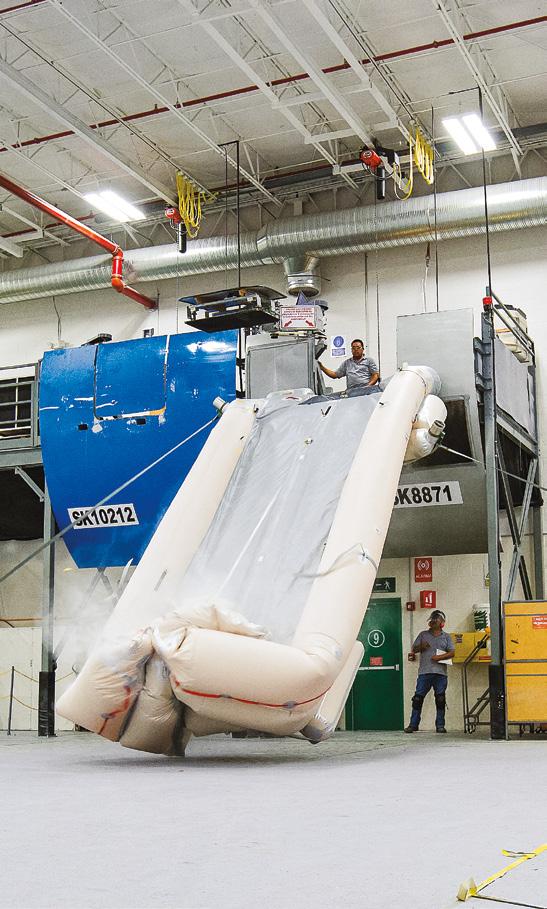
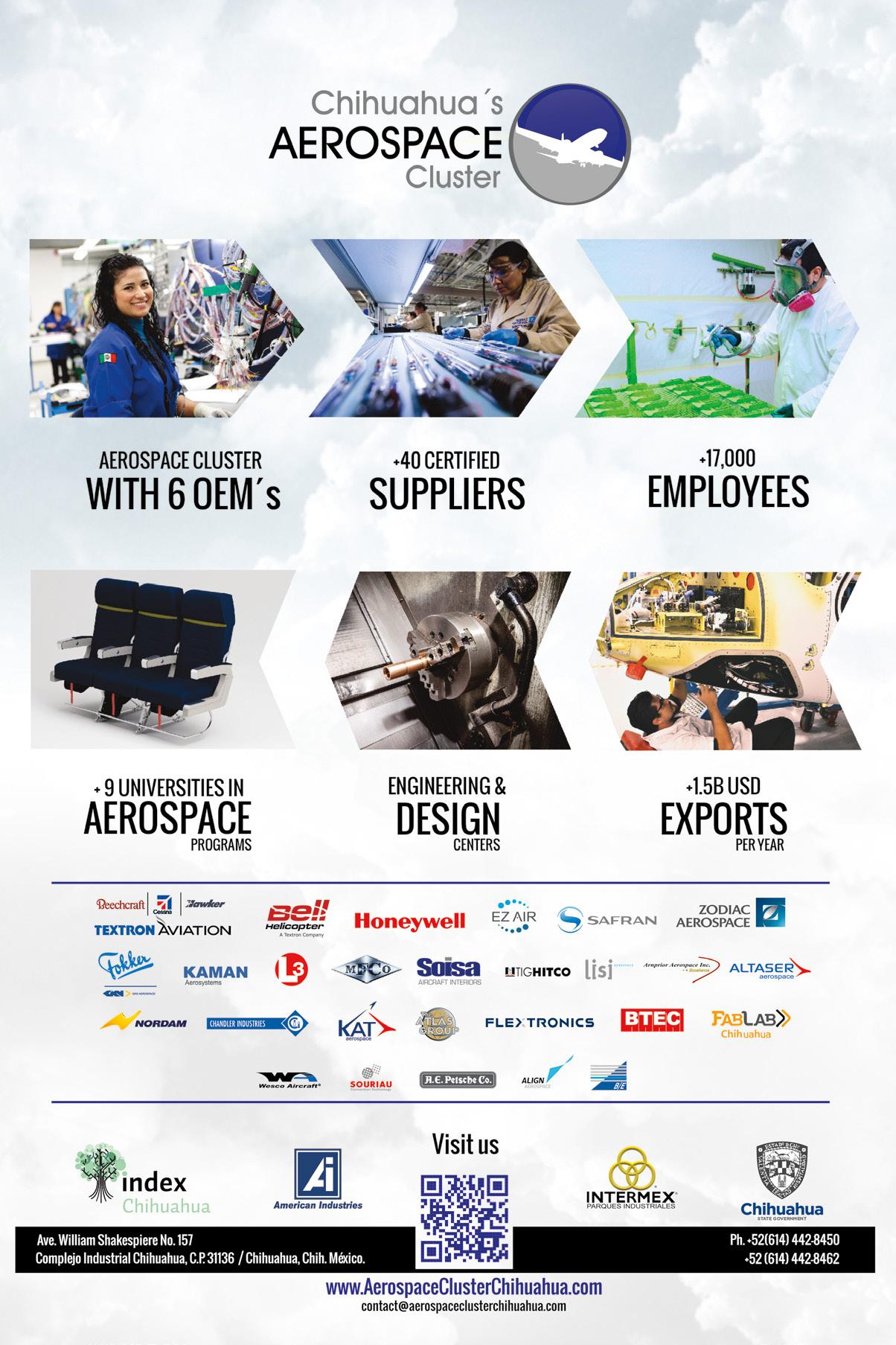
This state hosts Textron Aviation, Bell Helicopter, Honeywell, Safran, Zodiac Aerospace, Westinghouse, GKN Aerospace and over 40 specialized suppliers. The cluster says it generates over 17,000 direct jobs, over US$1 billion in local and foreign investment and more than US$1.5 billion in annual exports. Chihuahua’s cluster “has developed a wide diversity of processes in the past years, including expertise in aerostructures, sheet metal, machining and composites thanks to the companies established in the state,” says Rene Espinosa, President of Chihuahua Aerospace Cluster. The state has capabilities for high-precision machining and heat and thermal treatments and manufactures harnesses, aeroparts, aerostructures, seats and slides.
NUEVO LEON
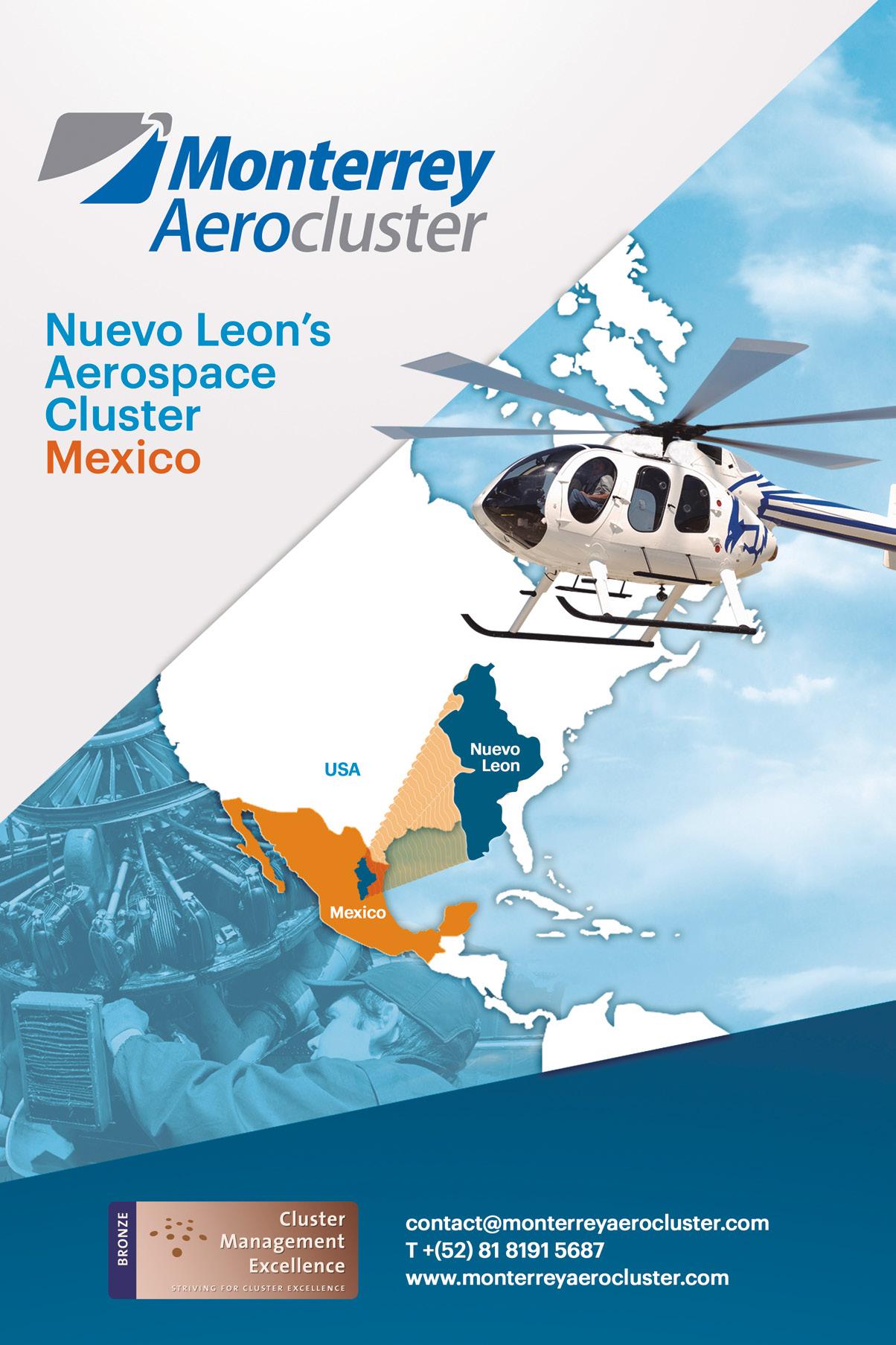
Monterrey Aerocluster is younger than the previous two and hosts 33 companies, including Exova, Noranco, Tecmaq, Viakable, USTI, AEISA, Mimsa and Frisa. “What differentiates our cluster is that 95 percent of our companies are Mexican and 80 percent of the products manufactured
AIR TRANSPORT PASSENGERS (millions)
AIR TRANSPORT PASSENGERS (MILLIONS)
World Latin America and the Caribbean
Source: Source: World Bank, 2016.
Number of Passengers (millions)
in the state are destined for exportation,” says Pauline Medori, Director General of Monterrey Aerocluster. Nuevo Leon has considerable room for growth in the segment, says Carlos Ramírez, the cluster’s President. “We are slightly behind other clusters in Mexico and growth will come with considerable effort,” he says. “At this point our goal is to attract foreign aerospace companies into the state to invest and generate the necessary infrastructure.”
The cluster’s strategy is to capitalize on Nuevo Leon’s numerous infrastructure advantages, including proximity to the US border, extensive experience with several manufacturing industries and existing suppliers.
QUERETARO
Known as the youngest and seen by some as the most dynamic aerospace cluster in Mexico, Queretaro Aerocluster was created after Bombardier’s arrival to the state in 2006, from which point the sector grew quickly.
“Queretaro now has 37 percent of Mexico’s aerospace industry and has attracted almost 50 percent of the total foreign direct investment in the sector in the last 15 years,” says Claude Gobenceaux, the cluster’s President.
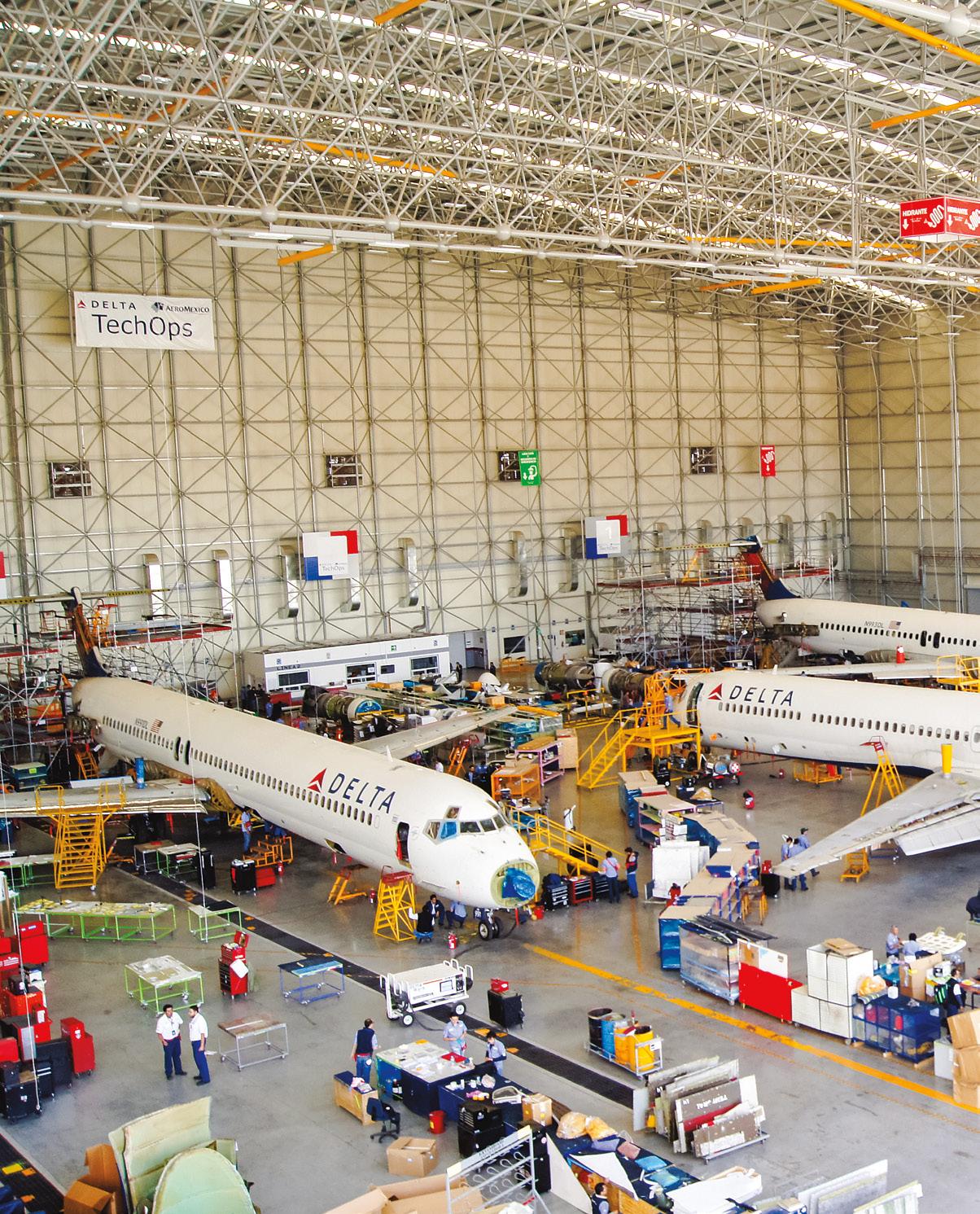
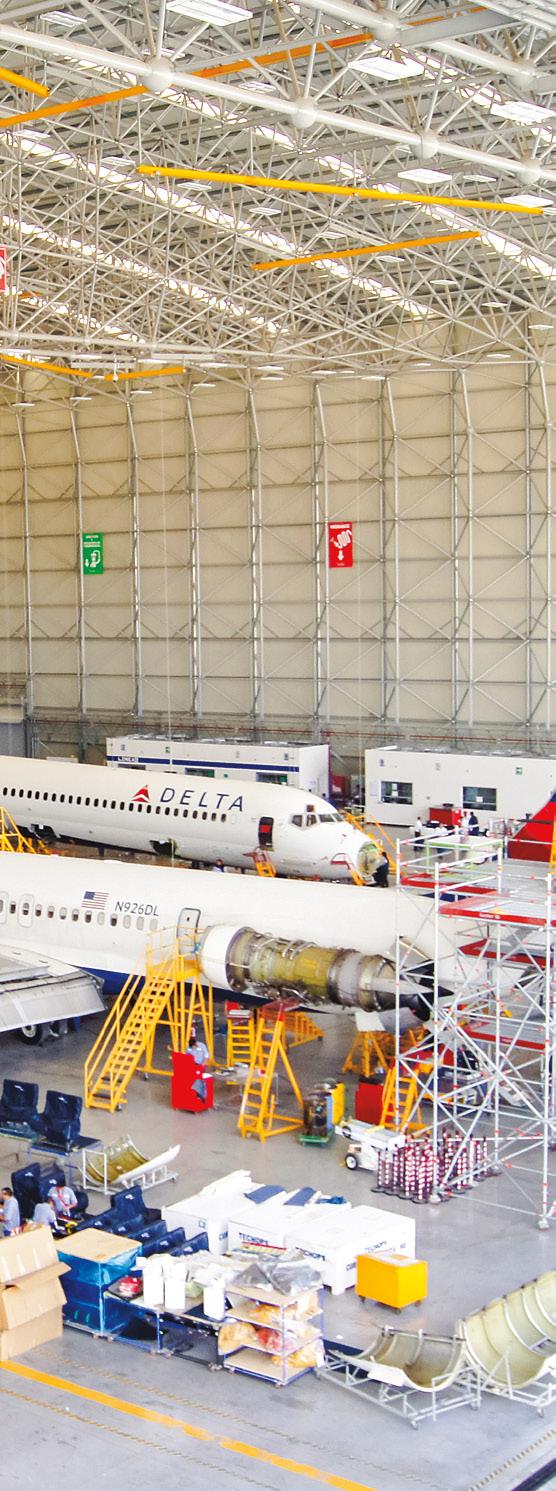
The state now hosts Aernnova, ITP, Bombardier and Airbus Helicopters, among many others, and has the only university in Mexico specialized in the aerospace industry, UNAQ, and the largest MRO center in Latin America, TechOps. Queretaro specializes in the manufacture of motor and landing-gear components.
SONORA
Unlike the previous clusters, aerospace companies in Sonora are spread throughout the state, from Ciudad Obregón to Nogales. The state also hosts the second largest number of aerospace companies in Mexico, including Rolls-Royce, Daher Aerospace, Sargent Aerospace, Bodycote and Ducommun Incorporated.
“Aerospace has allowed the introduction of the latest technologies to the state and the creation of a highly
specialized workforce,” says Enrique Ruiz, Director General of COPRESON. The state specializes in turbine components, fuselages and composites.
GROWING PAINS
While some companies such as Curtiss-Wright in Baja California and Westinghouse in Chihuahua have been in Mexico for the past 40 years, the sector is considered to be relatively young and it faces some growing pains. To consolidate it needs to close the supply chain gap. “Many companies are turning to Mexico to expand their operations but their growth is limited by the domestic availability of the required products and processes, so the country still needs to nurture more Tier 1, 2 and 3 companies,” says Federico de la Hoz, Subdirector of Promotion of the Aerospace Sector at Bancomext. The second challenge is having the appropriate human capital on hand. For the sector to grow, it is imperative that leading companies are able to acquire qualified employees.
Expectations for the sector are high. The country can benefit from this growing industry through the generation of employment and the introduction of new technologies. Some companies, including GE Aerospace, Safran and Zodiac Aerospace, see Mexico as more than a low-cost manufacturing base and have invested in design divisions for many components, from turbines to drainage systems. For many, the sector is a long-term investment. “The aerospace industry has guaranteed demand for the next 10 years, since at the current global production capacity it will take this long to fill the commercial jet purchase orders backlog held by OEMs,” says de la Hoz. “This demand also is fueled by the expected increase in air passengers worldwide.”
GLOBAL TRENDS
According to the World Bank, globally 3.44 billion people flew on an airplane in 2015. This impressive number,
AIR PASSENGERS GLOBALLY IN 2015 (millions)
Source:ICAO
almost half the world’s population, is expected to keep growing due to many factors. These include lower oil prices, high demand for passenger travel and high airplane load factors, according to IATA. Data from the World Bank show the sector has grown at an accelerated pace since the 2008 financial crisis. From 2004 to 2014 the sector’s revenue doubled, to US$746 billion from US$369 billion, according to PwC, led mostly by low-cost carriers.
Business is rarely linear, however, and IATA warns of the cyclical nature of the industry lasting eight to nine years from peak to peak. The latest low point was in 2009, leading the association to warn of a potential slowdown. This is consistent with data for recent years. In 2014, industry revenue peaked at US$758 billion. A stronger dollar lowered revenue to US$710 billion in 2015. For now, the sector appears poised for a small recovery. IATA estimates a 0.9 percent increase in revenue for a total of US$717 billion for this year. Demand for air travel is
expected to keep increasing. It gre 6.7 percent in 2015 and IATA projects a rise to 6.9 percent for 2016.
Among the many challenges are security concerns, natural events and price pressures, as tickets prices in the US and other countries have been dropping for decades, reports PwC.
Projections for Latin America as a whole are not overly positive. Brazil’s economic crisis knocked the sector for a loop. Argentina and Venezuela landed two further blows, with the latter blocking the repatriation of US$3.78 billion for foreign carriers.
The Mexican aviation sector, on the other hand, is in better condition than the region’s. At the end of September, Latin America had an average of 0.57 air trips per capita while Mexico had 0.64, according to UBS. The Mexican industry is expected to grow 4.1 percent annually until 2020, says Tony Tyler, former president of IATA. The country has hurdles to overcome, including the saturation of its main airport, AICM. In that sense, the construction of a new airport in Mexico City, NAICM, for which the first stage will be completed by 2020, is expected to underpin the sector. “Mexico is in a good position to turn into a connection center for America,” says Tyler.
Many in the sector also have positive expectations for the BASA with the US signed at the end of 2015 and ratified by the Mexican senate in June 2016. “BASA will increase flight supply and competition between airlines, which will force us to improve practices in airports, airlines, regulations and customer services,” says Sergio Allard, President and Director General of CANAERO.
Despite the rough patches in the past year, aerospace is positioned for growth. With its competitive manufacturing base and prime position as an entry point to new markets, Mexico is revving the engine and ready to take off.
STRENGTH IN NUMBERS
LUIS LIZCANO Director General of FEMIA
Q: What primary trends have you identified as drivers of growth in the aerospace sector?
A: The backlogs registered by the world’s largest aerospace OEMs show the industry’s global motor is the market. For example, Airbus and Boeing have an eight to 10-year backlog on airplanes, which is indicative of an excess demand for aircraft. The air transport sector is projected by some authorities to grow 5 percent annually over the next 20 years, thus increasing pressure on airlines and aircraft manufacturers. Mexican aerospace sector exports grew over 400 percent from 2004 to 2015, driven by commercial and civil aviation.
Despite having very few operations in the country, the defense sector could represent an interesting business opportunity in the future. Worldwide trends show the defense segment represents roughly half of the aerospace industry. In Mexico, we have not yet tackled this sector strongly, as we are still in the process of developing the necessary expertise and certifications, which are slightly stricter than those for commercial aviation.
Q: What are the sector’s main strengths?
A: Even though there have been aerospace companies in Mexico for the past 40 years (such as Curtiss-Wright in Baja California and Westinghouse in Chihuahua), the sector is relatively young. From the end of the ‘90s into the beginning of this century the local aerospace industry experienced growth led by the introduction of several OEMs into the country, such as Bombardier, Cessna, Beechcraft and Airbus Helicopters, as well as several Tier 1s.
In Mexico, 80 percent of operations are in the manufacturing sector, 11 percent are MROs and the remaining 9 percent are in engineering and design areas. Many foreign companies seem to be under the impression that Mexico is only focused on low-cost manufacturing given the fact that costs here are more competitive than elsewhere but this is not the case. The country has managed to turn this stereotype around. For example, when Safran came to Mexico it did not want
to open a center with more than 50 people because the company did not believe the country had the expertise for a larger operation. The center now has close to 500 engineers focused on design. GE also shows that Mexico is competitive with 1,800 engineers in Queretaro.
Today, about 10 percent of the aerospace companies operating in Mexico have a local design and engineering division. While some firms operate with foreign design teams, many have design operations in Mexico. For example, Dreamliner’s complete energy transmission system was designed in Chihuahua, as was 60 percent of Safran’s power system, which was then incorporated into the Airbus A380. Some companies are more concerned with interior design, many of which are based in the state of Baja California.
Q: How does FEMIA represent the aerospace industry and directly benefit companies?
A: FEMIA was founded in 2007 by a group of aerospace companies to provide representation for all companies in the sector. FEMIA incorporates most of the main companies from the 300 entities that form Mexico’s aerospace industry and in fact, in 2015, 80 percent of the US$7 billion obtained in exports was from our members.
The federation supports the Mexican aerospace industry and bases its operations on three pillars. The first is competitiveness, which relies on the development of the supply chain, as well as supporting certification processes and providing workshops on compliance. This support is of the utmost importance because we had noticed that some small and midsized companies were unaware of the proper practices regarding this subject so we are working to help them improve. The second pillar is human capital. We collect information regarding the needs of our members and work together with universities and government agencies at the state and federal level so they can train quality human capital in a timely manner. The third pillar is to promote the sector, which is done both locally and internationally. FEMIA gives its members the opportunity to enter this supply
chain network, which will facilitate their operations in the country. One of our main goals is to help local and foreign companies interested in entering the Mexican market to join forces and strengthen the supply chain with the least possible risk.
Q: What should be the top priority for the aerospace industry here?
A: The consolidation of the supply chain is a priority. At this point, Mexican companies need to focus on increasing their presence and incorporation into the sector, not just at a local level but also in the US and Canada. It is common for companies to only want to enter the local supply chain but a large percentage of the sector is based north of the border. With the necessary certifications, technology and expertise, those companies could enter supply chains in other countries. Our main goal is to help the industry grow through the consolidation of its supply chain.
The second challenge we face is ensuring we have the appropriate human capital on hand. For the Mexican aerospace sector to grow it is imperative that companies leading its growth can hire qualified employees as soon as they open facilities.
Q: What were the reasons behind FEMIA’s creation of ProAéreo alongside the government and how will it benefit the sector?
A: When ProAéreo was created the sector needed to have a growth plan for the next 10 years. This plan generated several strategies and objectives that established our road plan for these past few years and will determine
those to come. We are well within ProAéreo’s timeframe as most objectives have been completed on time. For example, one of the goals of ProAéreo 2012-2020 was to provide jobs to 120,000 individuals and we closed 2015 with 54,000 employees. ProAéreo also plans to reach US$12 billion in exports and in 2015 we achieved US$7 billion. These are clear signs the sector is moving forward according to ProAéreo’s plan.
Still, the sector is developing its infrastructure. While it already possesses “hard” infrastructure such as equipment and technology, we are working on developing more “soft” infrastructure for mid and longterm opportunities, namely the impending need for more human capital. It takes four and a half years to train an engineer so we need to plan in advance for human resources. In my opinion, authorities and companies are taking the necessary steps to achieve ProAéreo’s goal to reach US$12 billion in exports and we are on target to employ 120,000 individuals by 2020.
Q: What are FEMIA’s goals for 2016 and how does the federation plan to achieve them?
A: Our strategy for 2016 is to continue on our current path. One of our goals is to increase and consolidate our membership, another is to keep pushing the sector forward in line with ProAéreo’s objectives and finally, even though we are only halfway through this plan’s timeline, a revision to create ProAéreo 2.0 would not be amiss. It may soon be necessary to analyze and re-evaluate our achievements to date and set new objectives for the next 10-20 years.
SKILLS, COSTS PUT SECTOR IN POSITION TO GROW
BRIG. GEN. RODOLFO RODRÍGUEZ President of FAMEX
Q: How would you define Mexico’s contribution to the global aerospace industry?
A: The aviation industry has enjoyed double-digit growth for the past few years, from 70 companies in 2007 to over 300 companies in 2014. This impressive statistic is thanks to Mexico’s cost competitiveness and Mexican workers’ skills and abilities. This has allowed Mexico to become the 14th aerospace manufacturing country in the world as global exports have grown from US$3 billion six years ago to US$6.7 billion in 2014 and US$7.2 billion in 2015. This growth even surpassed the automotive industry, which grew 10.4 percent in the past year, while aerospace grew 18 percent.
Q: What are Mexico’s main advantages and which challenges must it overcome?
A: The aerospace industry’s giant, the US, produces over US$250 billion and France produces approximately US$50 billion. Given its proximity to the US and as its sixth top supplier, Mexico is in a privileged position to grow, added to the advantage of a large number of bilateral agreements with the US, including BASA and the Wassenaar Arrangement. Mexico also receives significant direct investment from France from companies such as Airbus and Safran. Collaborations of this kind have led to the development of educational institutions dedicated to the aerospace industry, such as UNAQ. These entities train the significant number of workers needed by this sector, which generates more than 45,000 high-skilled jobs.
If Mexico follows the growth expectations projected by the Ministry of Economy, the country will be home to more than 420 companies by 2020, pushing exports over US$12 billion and providing employment to more than 110,000 Mexicans.
Q: How is Mexico promoting these numerous advantages at an international level?
A: ProMéxico manages a promotional program through its offices in several countries. The Ministry of Economy also is endorsing these advantages through seminars and conferences, such as a conference that was recently organized in Malaysia. The ministry promoted several economic sectors including aerospace. However, the
Mexican aerospace industry’s strongest symbol is Mexico’s Aerospace Fair (FAMEX) organized by SEDENA. This event is an initiative from Gen. Salvador Cienfuegos Zepeda, the Minister of National Defense, in accordance with the National Development Plan implemented by President Enrique Peña Nieto. Its goal is to promote the economic growth of the country throughout all federal agencies.
Q: What are FAMEX’ goals for international promotion?
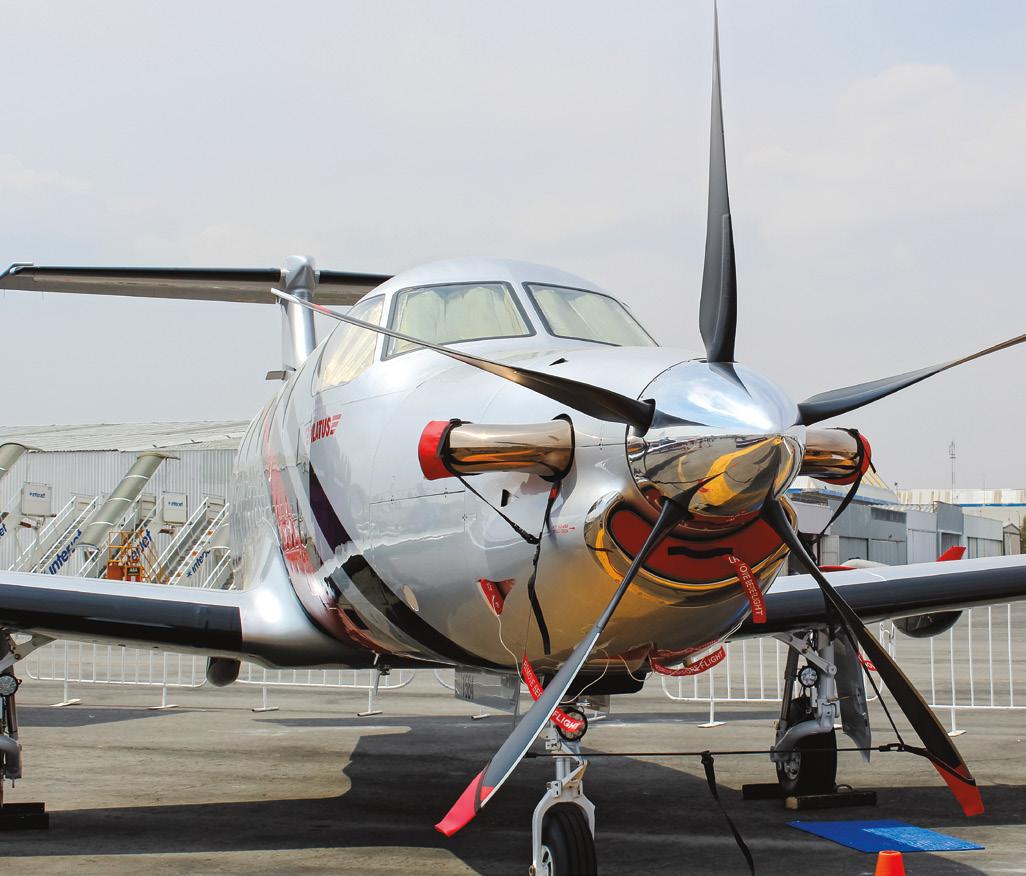
A: FAMEX’s goal is to promote the growth of the aerospace industry by attracting the main OEMs, primarily Airbus, Beechcraft, Bell Helicopters, Boeing, Bombardier, Gulfstream, MD Helicopters and Pilatus and their supply chain. By facilitating business meetings between Mexican representatives and companies throughout the supply chain, from OEMs to Tier 3 companies, the event encourages communication and saves local executives the need to travel overseas to reach the most important players in the sector. This is the first effort of its kind, as other smaller, localized efforts to generate regional events were unable to represent Mexican capabilities effectively.
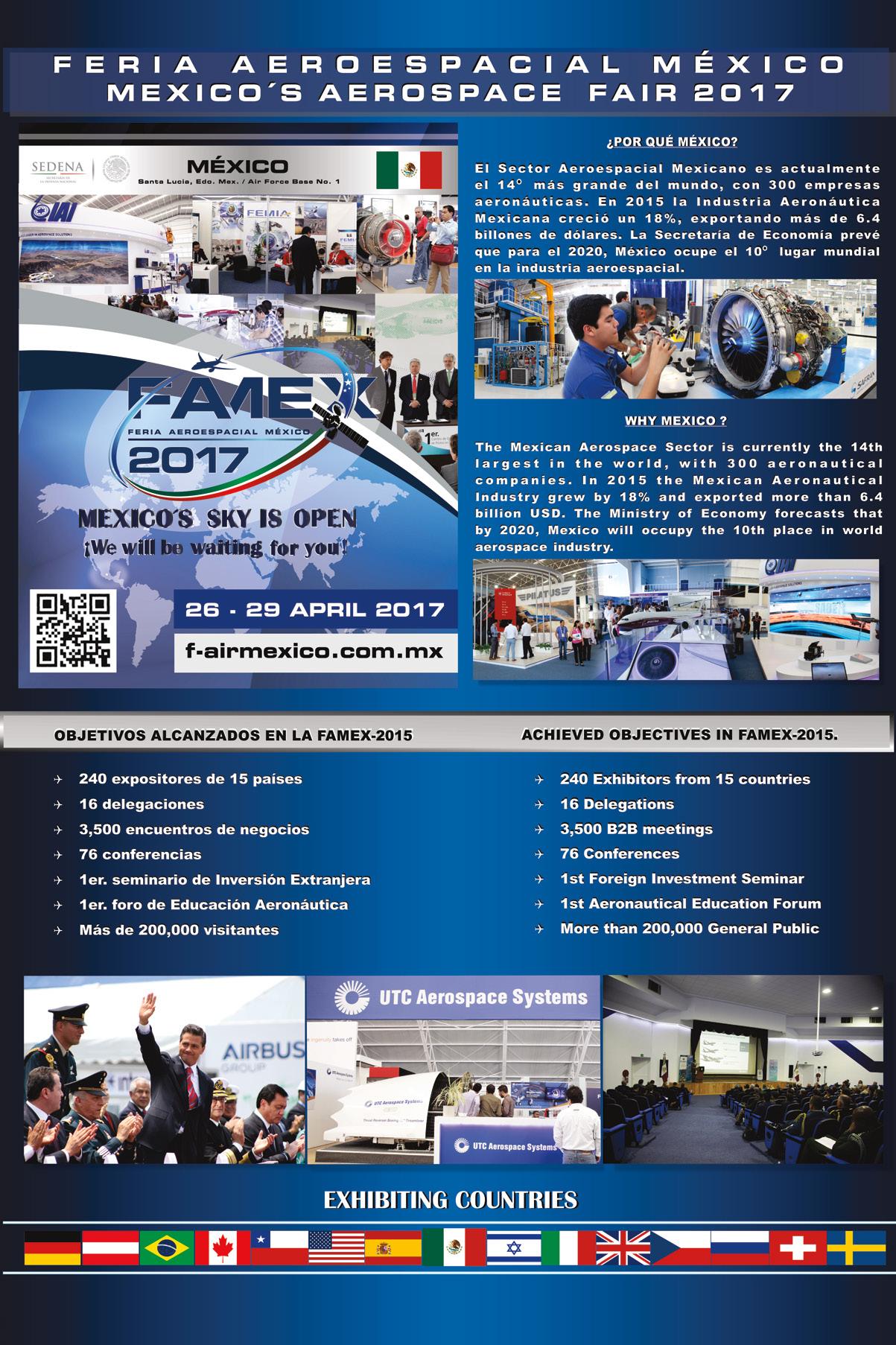
We were able to attract 240 aerospace companies to the first FAMEX with more than 3,500 scheduled B2B meetings, over 70 conferences and the first Forum for Aeronautic Education, which united all universities that have aerospace programs. FAMEX also hosted the first seminar for foreign investment in aeronautics, with participation from the Minister of Economy, the director of ProMéxico, FEMIA and several state Ministers of Economy. The event hosted Boeing’s seminar on the supply chain, with participation from 70 of their suppliers, and a similar course from Airbus. Several aerospace enterprises such as Safran, UTC Aerospace and Honeywell, used the event as a platform to announce their expansion plans.
The first FAMEX edition became the second most important aerospace event in Latin America, after the International Air and Space Fair (FIDAE). At SEDENA we are proud to serve Mexico not only through FAMEX but also through our presence at several events, including the Farnborough International Air Show, Dubai Air Show, and
the Asian Business Aviation Conference and Exhibition, to promote the event and local industry. FAMEX was hosted by Santa Lucia Military Air Force Base, the largest in the country, which has more available space for exhibitors than the Farnborough International Air Show. We are now organizing FAMEX 2017, from April 26 to 29.
Q: What have you identified as the main needs for Mexican aerospace and how are governmental institutions addressing them?
A: Both the Ministry of the Economy and ProMéxico have generated excellent programs to promote the growth of the aerospace industry. Every state government also has created a series of incentives to benefit local companies and promote the industry’s development through the introduction of more companies to each state. Safran, for instance, has over 6,000 employees in Mexico, which is the company’s second largest branch outside its home country. Mexico needs to provide these companies with human capital. To that end, we are organizing the second forum in aeronautical education at FAMEX 2017. Mexico produces about 100,000 engineers per year but we must continue to encourage talent development and that of the clusters.
The country must also prioritize the strengthening of airport infrastructure in each state, which is essential to Mexico’s connectivity. With 86 airports, Mexico has excellent aerial connectivity but many need to be upgraded to receive larger and more modern aircraft, such as the Airbus A380 and the Boeing 787. President Peña Nieto is implementing a program to update the country’s airports and is investing in the construction of a new airport in Mexico City, which will create more time slots that will help airlines to continue growing.
Q: What are your expectations for FAMEX 2017?
A: FAMEX 2015 was the most important platform for the promotion of the Mexican aerospace industry. Our goal is to increase the number of companies from 240 to over 400. Attracting such a large number of companies is ambitious because each has a set budget for events and may have to choose between FAMEX and other exhibitions. FIDAE, in comparison, received more than 500 companies to its 2015 edition but that event has 38 years of experience.
FAMEX 2017 will host the second forum for aeronautical education and over 100 conferences. Furthermore, the event will have a second seminar for foreign investment in aerospace alongside the Ministry of Economy. We are also in talks with the ministry to help SMEs finance the cost of the event. We will continue to attend other events, including the Berlin Air Show and the Farnborough International Air Show to promote the country’s strong aerospace industry all over the world.
Global exports have grown from US$3 billion six years ago to US$7.2 billion in 2015
Source: Ministry of Economy (SE), DGIPAT MEXICAN AEROSPACE EXPORTS (in billion US$)
Source: Ministry of Economy, DGIPAT
If Mexico follows the growth expectations predicted by the Ministry of Economy, the country will be home to more than 420 companies by 2020, pushing exports over US$12 billion and providing employment to over 110,000 Mexicans
SEGMENTATION OF AEROSPACE COMPANIES IN MEXICO
SEGMENTATION OF AEROSPACE COMPANIES IN MEXICO
Manufacturing
Maintenance, repair, overhaul (MRO) 10% Development and engineering
Source: MexicoNow research
Development and engineering
Maintenance, repair, overhaul (MRO)
Manufacturing
THE PASSENGER COMES FIRST
SERGIO ALLARD
President and Director General of the National Chamber of Air Transport (CANAERO)
Q: What is CANERO’s strategy for supporting the aviation industry’s growth?
A: The aviation industry is responsible for 2 percent of Mexico’s GDP. The airline industry generates 150,000 direct jobs and almost 750,000 indirect jobs. The clusters in Queretaro, Chihuahua and other states are also contributing to employment. CANERO has 73 members across different aviation sectors including commercial airlines, cargo airlines and private aviation. For the latter we have a working group of 12 members that focuses on implementing better practices. The chamber is an open body and membership is available to everyone. We hope that as our importance and relevance in the industry increases we will attract more members. By the end of 2016 we expect to have three more members who will help us make sure the industry improves through the implementation of international practices.
Throughout 2016 our strategy has revolved around four key points. The first is to increase our competitiveness and deepen alliances with US airlines. Our second goal is to support the operations of Mexico City International Airport (AICM). Although the AICM is saturated there are more than 159 working saturated airports such as JFK in New York and Heathrow in London. CANAERO’s operations and schedules committee has contributed to creating a methodology for conducting operations in the AICM. The third part of our strategy is the construction of the new airport in Mexico City, NAICM, complemented by the fourth key point, which is to improve passenger facilitation services.
NAICM is a long-term project that we need to support. It entails investments, connectivity, more and better jobs with higher salaries. The airport will be like a small city with hotels and businesses, as well as a beautiful architectural composition. Most importantly, it will allow us to reduce layover times, increasing our competitiveness. Without this airport, aviation growth in our country would be severely limited.
Q: How will BASA impact air operations in Mexican airports and how prepared is the local infrastructure to handle an increase in passenger traffic?
A: Mexican airlines successfully entered many countries before BASA was signed. Our airlines are competitive, have modern fleets and are efficient. Several routes to the US are controlled by Mexican airlines due to our great product offering and excellent service. We expect that by the end of 2016 we will have transported around 80 million passengers, almost 30 million more than in 2010. Of those, more than 42 million passengers will have traveled through the AICM. BASA, implemented in August 2016, is expected to increase flight supply and competition between airlines, which will force us to improve practices in airports, airlines, regulations and customer services. The tourism industry will be positively impacted by this. The trans-border market between Mexico and the US is the third largest in the world and by the end of 2016, 30 million passengers will have traveled between both countries.
We tend to overlook the good things about our country and our industries. There are complaints about operations within the AICM but it is at the same levels as other airports in the US and Europe. We are developing the needed infrastructure and airport groups are investing in terminals. Monterrey has a functional airport and Cancun is constructing its fourth air terminal.
Q: In what ways can CANAERO improve the Mexican aviation industry’s competitiveness?
A: We just finished an analysis on the key competitiveness factors of US aviation that need to be applied in Mexico. One of our main conclusions is that we need to improve the productivity of our pilots. Other practices include improving airport operations or materials costs. Mexican jet fuel, for example, is 7 percent more expensive than in the US. The growth of the aviation industry depends on GDP growth and infrastructure, a strong regulatory entity and improved services for passengers. In the AICM, we follow the best international practices and observe international regulations, such as transparency for the allocation of slots following IATA’s worldwide guidelines.
Developed countries transport an average of one passenger per capita per year. If we can improve the
conditions needed for the industry’s growth in five or six years we should be moving around 125 million people annually. Cargo aviation also needs to be bolstered. The federal government can implement a series of public policies to improve passenger facilitation services and cargo. Specific operations such as migration, customs and airport safety also need support. Our goal is to coordinate all these factors to improve the industry.
Q: What is the extent of the creation and adoption of a passenger culture?
A: CANAERO supports the diffusion of passenger’s rights and obligations, which are all featured on our website. People need to be more informed so we work with the federal government, the Ministry of Communications and Transport (SCT), the Ministry of Tourism (SECTUR) and the Federal Attorney’s Office of Consumers (PROFECO) to ensure every passenger is aware of this information. About 99 percent of passengers are educated on travel culture. We are seeing passengers becoming increasingly high-tech so the whole industry is investing in technology to speed up processes for our clients. All industry participants have a clear and common vision and we want to give customers better services.
Q: How has connectivity evolved in Mexico and what needs to be improved?
A: Mexico City has become a traveling hub and Monterrey is on its way. Similarly, the new Cross-Border Walkway between the Tijuana and San Diego airports offers
interesting and improved connectivity opportunities. In Mexico, we have a misguided concept of what connectivity is, which is not having direct flights between a small city and Tokyo. European and US consumers understand that the most efficient way to travel is through hubs. We need to understand this to recognize that Mexico City’s hub is well connected.
Airlines need to take advantage of BASA, find ways to operate efficiently in the AICM, support the construction of the NAICM, respect passenger rights and improve passenger services. Airlines participate in finding the best way to manage logistics of passengers, luggage and connectivity. They contribute immensely to defining the best practices for the new airport’s operation.
Q: What major trends in the aviation industry do you expect in the short term?
A: There have been important advances in aerodynamics. We have seen transformations in fleets, processes and most importantly, in safety. Airplanes have become the safest transportation method. People are traveling more comfortably with more technology and safety and at lower prices. What Boeing, Airbus and Embraer are doing today barely resembles their operations 20 years ago. Airports are placing safety and security above all and air transport is becoming accessible to broader demographics. Flight offerings are impressive and collaborations such as SkyTeam and StarAlliance allow for greater connectivity.
NO COUNTRY LEFT BEHIND
MELVIN CINTRON Regional Director of International Civil Aviation Organization (ICAO)
Q: How has ICAO helped to shape the safe and orderly growth of international civil aviation?
A: ICAO works with the Convention on International Civil Aviation’s 191 member states and industry groups to reach a consensus on global civil aviation standards and recommended practices (SARPs) and policies. Decisions must be in line with the creation of a safe, efficient, secure, economically sustainable and environmentally responsible civil aviation sector. In addition to this core activity, ICAO has several priorities and programs. The organization coordinates assistance and capacity building for states in support of numerous aviation development objectives. It produces global plans to coordinate multilateral strategic progress for safety and air navigation, monitors and reports on numerous air transport sector performance metrics and audits states’ civil aviation oversight capabilities in the areas of safety and security.
The aviation industry continues to grow and to improve connectivity, building on the economic returns it generates. Air transport in North and Central American and Caribbean regions contributed over US$150 billion dollars to the GDP of the countries on this continent in 2013 and each slice of the pie is directly tied to the success of each country’s aviation system.
Q: Besides the growth in tourism and the decline in oil prices, what is behind the exponential growth of civil aviation?
A: Connectivity and socio-economic priorities have cause the international aviation sector to double in flight and passenger volumes every 15 years since 1977. These are expected to double again in the next 15 years.
Overall air travel in the region is expected to grow from about 1.2 million flights in 2011 to reach slightly over 3.7 million in 2031, reflecting an annual growth rate of 5.9 percent. A significant factor for such encouraging statistics has been the rise of low-cost airlines, which are sound options for travelers, promote competition in the sector and increase the total volume of air travel more generally.
Q: What are the main challenges the region is facing and how does ICAO help to overcome them?
A: The North and Central American and Caribbean regions are home to some of the richest countries in the world but also smaller communities. These latter jurisdictions face major challenges in funding to construct the necessary aviation infrastructure and one of the greatest callings for ICAO is to help governmental administrations to understand the socioeconomic advantages of civil aviation because some authorities do not consider it a priority. It should be stressed, however, that every job created through aviation supports four to five subsequent jobs in different economic sectors. Therefore, we are developing a study alongside the International Air Transportation Association (IATA) to gauge the condition of aviation in every country before and after committing to its development. Our goal is to continue driving positive economic results in terms of tourism sector expansion, the opening of international markets to local businesses and producers and ultimately overall GDP growth.
Air transport plays a major role in driving sustainable economic and social development. It directly supports the employment of over 58 million people worldwide, contributes US$2.4 trillion to global GDP and transports over 3.3 billion passengers and US$5.3 trillion worth of cargo annually.
Aviation serves communities through clear cycles of investment opportunities. While infrastructure development generates initial employment and airline operations bring about new supply networks, the sector indirectly benefits from tourism and access to distant markets. As trade and tourism continue to expand, they generate larger sustainable growth. An efficient and affordable global air transportation system helps to improve standards of living, spreads social and cultural benefits, delivers better services and aid to the public and enhances access to remote and underdeveloped areas. For instance, in 2011 aviation contributed MX$50.2 billion (US$3 billion) to Mexican GDP (0.4 percent),
of which MX$23.5 billion (US$1.4 billion) was directly generated and the remainder indirectly. The aviation sector also supported 60,000 direct jobs and 98,000 indirect jobs that same year.
A main challenge involves achieving sufficient support from local government, highlighting the importance of civil aviation to other industries such as tourism, developing each country’s safety oversight capacity, strengthening navigation according to air traffic and developing a security oversight capacity. ICAO is helping member states to tackle these issues through the implementation of our No Country Left Behind program, in which ICAO plays an active leadership role in coordinating with states and aviation authorities to monitor and provide assistance through efficient communications for stakeholders. No Country Left Behind tailors each country’s priorities to their individual needs and characteristics. We generate a unique strategic plan for each country and follow and monitor its implantation through collaborations with air navigation regional groups as well as Regional Safety Oversight Organizations (RSOOs), including the Central American Intergovernmental Corporation (COCESNA)’s Central American Agency for Aeronautics Safety and the Caribbean Aviation Safety and Security Oversight System (CASSOS).
Q: How would you define Mexico’s position in civil aviation?
A: Mexico is appropriately advanced. Based on the country’s level of compliance according to the degree of implementation of SARPS, Mexico is above the global average of 62 percent. A little less than half the countries in our region are below our average compliance rate. The end goal within four years is to have no more than two countries at any point in time below the 80 percent compliance rate. To test the efficacy of the program we selected Mexico as our beta test for the No Country Left Behind program, even though it has a much higher level of compliance than other countries in the region.
Mexico has several advantages, including its central location because connectivity is of tremendous importance to this industry. Moreover, the country’s stability and commitment to aviation means that Mexico has become one of the most important destinations from the US and Canada. In Mexico, we have had the complete support of the government and are closely collaborating with the presidential administration on numerous projects, including the construction of the New International Airport of Mexico City (NAICM) to ensure that it becomes both what the local government wants it to be and what the international community needs it to be.
Q: How has ICAO supported the development of NAICM?
A: It is necessary to ensure that this new airport meets all standards and recommendations. The NAICM will bring great benefits to Mexico because the airspace is saturated. The NAICM will eventually replace the current airport because the location of both airports makes overlapping air routes unsafe. This is a significant risk when you have two large, complex airports performing operations close to each other. Multiple studies analyzed the feasibility of having both airports and concluded that it is beneficial for the city to only have one. Our role now is to ensure the new airport complies with international standards and finds safe and secure ways to prevent oversaturation. The NAICM, just like any other airport in the world, has access to our 19 annexes, which address every part of the international standards on airports, security, safety oversight, operations and maintenance. Having set the standards at ICAO, countries must decide how to meet them. But our technical committee can also send experts to assist in these processes.
In 2015 the aviation industry contributed 2 percent of Mexican GDP, substantially higher than the 0.4 percent in 2011
Q: What are ICAO’s goals for reducing CO2 emissions and noise contamination?
A: Both noise contamination and CO2 emissions are of utmost importance to us because we want to reduce aviation’s carbon footprint. One of our goals is to achieve a neutral aviation footprint by 2020. Technology is playing an important role in this by generating airplanes that pollute less and use less fuel. There is also a procedural aspect. If it is possible to reduce the flight time of a specific route without reducing security, the time a plane is not in the air contributes to improving this footprint. Consequently, one of ICAO's goals is the implementation of performance-based navigation procedures.
MILITARY EYES HOMEMADE AIRCRAFT
GEN. JULIÁN CORONA
Deputy
Director General
for the Military Aeronautic Industry of the Ministry of National Defense
Q: What is SEDENA’s view of the state of the aerospace industry and what strategies is it following to foster growth?
A: ProMéxico, FEMIA and the High Technology and Heavy Industries General Office specify that Mexico is home to 300 aerospace companies, of which 231 companies have international certifications to perform manufacturing processes for commercial and private aviation. We expect the strength that civil aviation is manifesting will be reflected in the military sector. To foster national aviation industry growth SEDENA created the Deputy Directorate General for the Military Aeronautics Industry in 2014. This division is charged with the development of aerospace projects and in the future, of the complete cycle of aircraft development, construction and maintenance.
Q: What aircraft characteristics is the air force considering for the renewal of its fleet?
A: We always consider the aircraft’s final mission when acquiring new units. There are certain characteristics that every aircraft needs to meet, including the capability to perform civilian support tasks and the necessary range to reach the whole country. Due to the diversity of Mexico’s terrain all planes must be able to land on short and unsuitable runways. Depending on the mission, they also might need armor plating. It is necessary to consider the environmental conditions of the zones they operate in so every aircraft we purchase is functional in extreme conditions and temperatures.
Q: What military aerospace projects is the Deputy Directorate developing?
A: One of our largest projects is the Azteca, which envisages manufacturing a training plane, designed and created in Mexico for military use. According to statements made by the Gen. Salvador Cienfuegos Zepeda, head of SEDENA, we expect to have an aircraft prototype and two experimental planes by 2018. Starting in 2017, we will put in a request for the Azteca 2 project that will encompass a training turboprop aircraft and the construction of a light plane with rotary wings by 2019. Once these two projects are completed, we
will go on to the third phase, called Azteca 3. This will involve the creation of a training jet aircraft in 2021. We expect the combination of these projects will lead to the development of the Olmeca project in 2035, when we expect to manufacture fighter jets.
The Azteca 1 will be used to train cadets at the military school of aviation and will substitute the aircraft we currently have medium-term, which will allow us to optimize training costs and promote technology development in Mexico. The project is in the R&D phase and is funded and directed by SEDENA. The number of planes that will be manufactured will be determined by the training needs and disposition of the military school.
We have didactic rocket models with 100 percent Mexican components. Though this project is being implemented by military engineers, we are considering joining efforts with universities and research centers such as IPN. These rockets have been subjected to several lab tests in which they have reached heights of 300m. The development of an aircraft or rocket will allow complementary growth of diverse areas and permit the strengthening of the Mexican aerospace industry.
Q: What does the Mexican Aerospace Fair (FAMEX) represent for the development of Mexican industry?
A: FAMEX is a SEDENA initiative and is intended to support the economic development of Mexico. Its first edition in 2015 attracted the presence of 240 aerospace companies from 15 different countries to a business enabling-environment, which led to 3,500 business meetings. It also was the scene of the first Foreign Investment Seminar and the first Forum for Aeronautic Education, which took a scientific and academic approach involving 23 Mexican universities. FAMEX received more than 32,000 visitors and over 200,000 on its last day, when the event was open to the public.
The next FAMEX will take place in 2017. We expect to receive up to 400 companies and to host the second edition of our investment and education forums.
MEXICAN AIR TRAVEL JUMPS BY DOUBLE DIGITS
MIGUEL PELÁEZ
Director General of General Direction for Civil Aviation (DGAC)
Q: What are DGAC’s main areas of focus when promoting the development of private aviation in the country?
A: Our number one priority is safety, followed by service quality and the correct implementation of corresponding regulations. We are in charge of monitoring safety in different areas, including airport operations, training centers, MROs and several other maintenance and manufacturing centers located at every airport in the country. Our role is to ensure that every airport complies with national and international safety, maintenance and preservation guidelines as stated by the regulatory framework.
The federal network of Mexican airports consists of 76 aerodromes administered by four airport groups, the Pacific Airport Group (GAP), North Center Airport Group (OMA), Southeast Airport Group (ASUR) and Mexico City Airport Group (GACM). Besides those, Airports and Auxiliary Services (ASA), a decentralized organism, manages 19 airports. The four airport groups have developed five-year plans with investment projects that are subject to DGAC approval. Some aerodromes do not belong to DGAC’s system. Local governments are responsible for those.
Q: How has commercial aviation and manufacturing evolved in Mexico?
A: In 2015, the number of passengers who traveled by air in Mexico increased 12.5 percent over the year before, surpassing the country’s 2 percent GDP growth. This double-digit increase is higher than the global average and was attained thanks to policies and strategies implemented by the federal government. In 2015, the country’s industrial activity registered 2.6 percent growth, while air cargo transportation more than doubled this number, showing a 6.1 percent rise in operations. Between 2013 and 2015, the 50 working Bilateral Air Service Agreements (BASA) signed by DGAC helped to inaugurate 186 international flying routes. During this administration, 23 new bilateral agreements have been negotiated, approved and signed.
The construction of the NAICM also is expected to increase the number of passengers traveling. We forecast the airport’s inaugural phase beginning October 20, 2020 will see around
50 million travelers. When the airport is completed that number will reach the 120 million passenger target, making the NAICM one of the largest airports in the world.
Q: How will airports near Mexico City be affected once NAICM is completed?
A: The metropolitan airport system functions as a relief for the AICM and we hope the system increases its support role until the NAICM is completed. Airports belonging to the metropolitan system will not disappear because of the new infrastructure. Conversely, we expect these airports to continue growing with the increased number of passengers the new airport will attract.
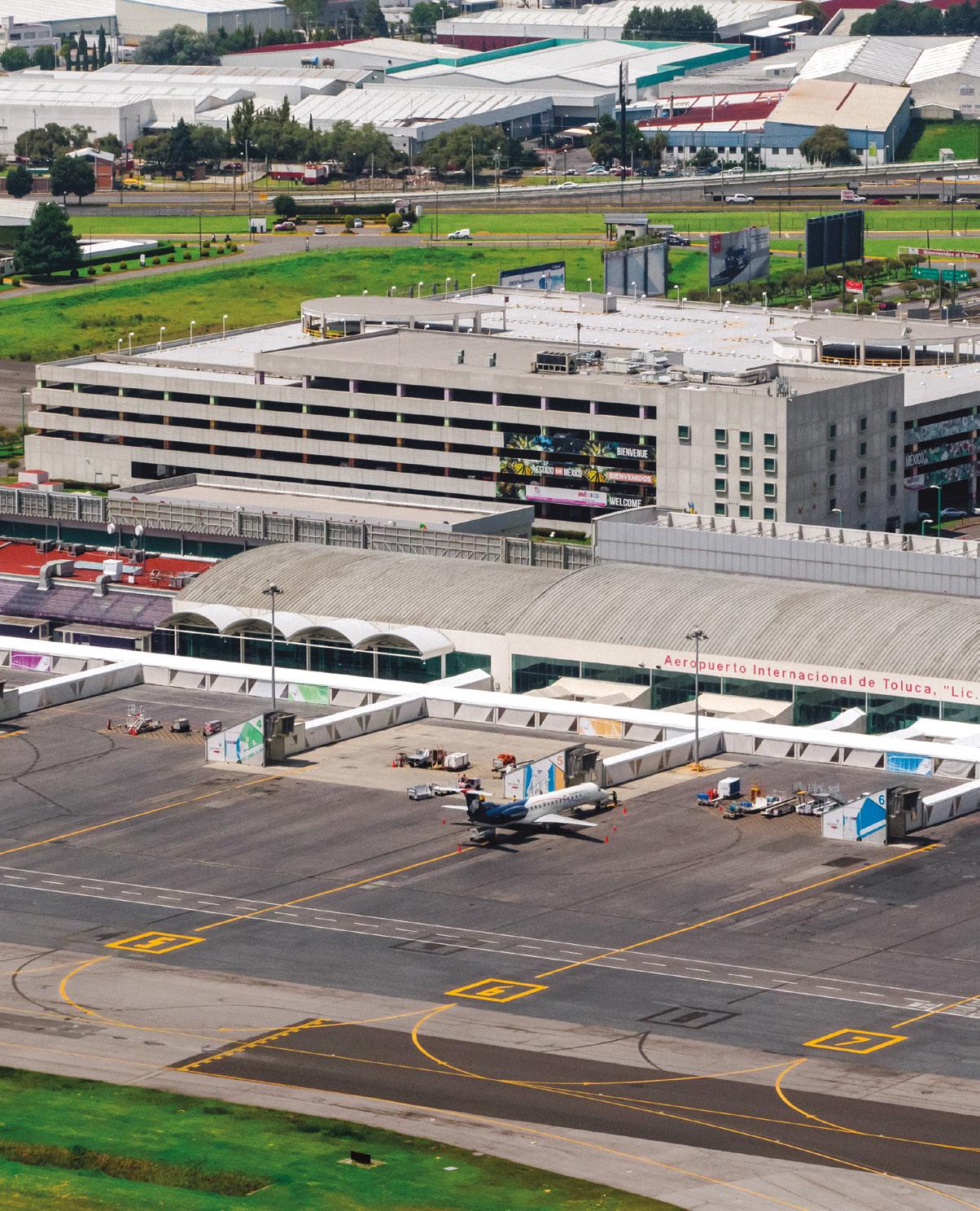
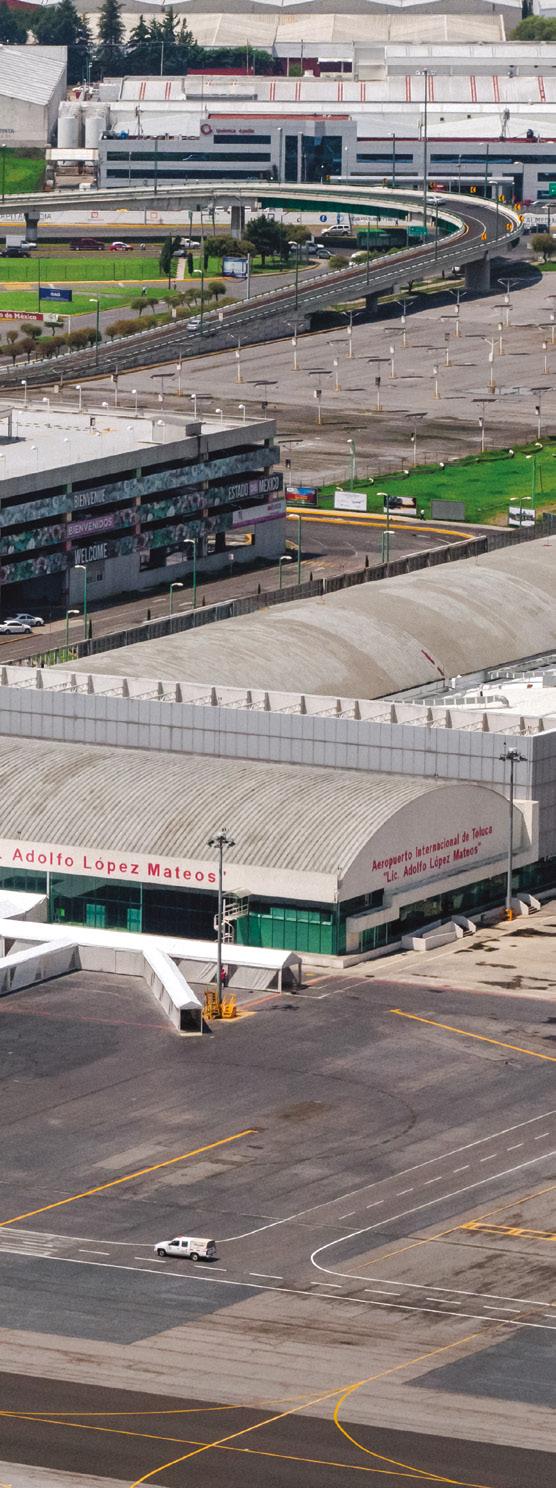
Within the metropolitan airport system, the Toluca International Airport (AIT) can easily act as a third terminal for the AICM due to its location. For people living in the western part of the city getting to Toluca is easier and faster than going to Mexico City’s airport. Toluca already functions as an extension of the country’s main air terminal and it has the infrastructure to handle excess demand. AIT’s proximity to the capital helped the airport to act as a launching platform for Interjet and Volaris, two of the country’s most successful airlines. Airports located in Toluca, Puebla and Queretaro will continue to support Mexico City’s operations whenever weather conditions hinder the AICM’s operations.
Q: What is DGAC’s perspective regarding the impact of the new BASA between the US and Mexico?
A: The signing of civil aviation agreements such as that between Mexico and the US in December 2015 will help boost operations in metropolitan airports. This agreement will increase operations with the US by allowing more flexibility. It implies a cessation of the existing restrictions regarding the number of aircraft and flights allowed in each country. The treaty offers important and attractive growth opportunities for both countries and the flexibility that will come as a result will generate new business opportunities for airlines. It also creates an opportunity to build alliances between Mexican and US airlines, which inevitably generates more benefits for end users.
LOOKING BEYOND THE HEAVENS
FRANCISCO MENDIETA
Director General of the Mexican Space Agency
(AEM)
Q: What is the state of the space sector in Mexico and how does the Mexican Space Agency (AEM) support it?
A: The aerospace sector has grown extremely quickly due to human curiosity, ingenuity and our desire to explore. Space R&D can be divided into space exploration through manned and unmanned missions, and observation of Earth through satellites. For over 30 years, Mexico has been buying and operating satellites to exploit their communications capabilities. From Morelos in the 1980s, Solidaridad in the ‘90s and the partial privatization of Satmex, the space sector is growing in Mexico, partly as an extension of the expanding aerospace sector.
AEM was created to stimulate development in the Mexican space sector. While this segment has some aspects in common with aerospace, it also deals with unique requirements such as high temperatures and vacuums. We are mostly focusing on technology because to develop a space sector we have to expand Mexico’s abilities from users to developers in a similar way to the aerospace sector. That industry is spread across 18 states, and universities in those regions have adapted their syllabi to address the sector’s needs. Aerospace provides over 40,000 jobs. The agency’s goal is for both the space and aerospace industries to represent an equal share of the market.
Q: How can the growing Mexican aerospace sector support the development of a national space industry?
A: The Mexican industry is evolving from aerospace into space. For instance, Mexico is a pioneer in satellite harnesses, which was achieved through gradual development of harness manufacturing for airplanes.
Mexico manufactures all the wiring and connectors for the Orion spacecraft, a US project intent on sending humans to Mars. We also produce avionics components for satellites, including positioning instruments and propulsion systems, tanks for cryogenic rocket fuels and rockets for small satellites. While some of these developments are intended for the defense sector, most are used in the civil market. Our expertise in the area has attracted the attention of
foreign space companies and one is interested in coming to the country. Mexico also is an attractive destination for foreign direct investment as a gate to the US market for European companies and to Latin America.
AEM is identifying and promoting several technological niches in which Mexico can add value but the country already is developing some products, mainly for satellite communications and global positioning systems. These are used by many entities, including SEDENA, PEMEX, the National Institute of Geography and Statistics (INEGI), the Ministry of the Environment and Natural Resources (SEMARNAT), the National Commission for the Knowledge and Use of Biodiversity (CONABIO) and the Ministry of Agriculture, Livestock, Rural Development, Fishing and Nourishment (SAGARPA).
Q: How interested is the private sector in developing projects and technologies for space?
A: Many private companies see the potential in this sector. BlueOrigins and SpaceX among several others in the private sector are developing new markets, including communications, while governments focus on exploration. The International Space Station is developing projects alongside the private sector, beyond communications to include meteorology and medicine.
Q: Which market niches has AEM identified that can be addressed by Mexican industry?
A: An important and urgent market need is the development of a new type of satellite. Up to a few years ago, only large multiton satellites were launched. But current trends point toward the miniaturization of satellites. These utilize technologies for cameras, processors, accelerometers and gyroscopes. A new system flies a constellation of several dozen small satellites, which resembles the performance of a large satellite. It is less expensive, lighter and easier to launch. Mexico has about 20 research centers for the development of small satellites.
OneWeb, an international project that aims to launch 800 small satellites to link all the schools in the world, is a
remarkable example of how new satellite technology can be implemented to change how we connect. OneWeb’s pilot project will be launched from Oaxaca and it will incorporate Mexican technology. We launched a tender for the platform on the ground. For the antennae, we expect to incorporate all Mexican schools in a project to develop them.
Many other companies also are developing systems to enhance communication, such as technology giants Facebook and Google, which are creating solutions to introduce free Internet around the world using satellites, balloons and drones. Mexico has several research centers with many capabilities for development, satellite study and even several SMEs producing them including a local company that is manufacturing satellite launch systems.
Q: How does AEM choose projects to support and which alliances have helped consolidate the Mexican space sector?
A: AEM supports projects developed by academia and the private industry in many areas. Now, we are evaluating the third call for research proposals from which we will choose 20 to support. We are still financing the first projects and once completed, we will call for larger projects. All members of the National Registry of Scientific and Technological Institutions and Enterprises (RENIECYT) can apply for funding.
We are creating alliances with other space agencies to educate students and develop projects, including NASA, the Italian Space Agency and the French Space Agency. Alongside the Indian Space Research Organization and the Mexican National Center for Disaster Prevention (CENAPRED), we launched a workshop on civil safety. We also have agreements with Japan, China and Argentina, as the latter is now developing its own rockets and satellites.
Q: How would you describe the Mexican authorities’ involvement in the space sector?
A: For the first time in history, the National Development Plan includes an agenda for space, focused on satellite communication and GPS. Internet is primordial to every single aspect of modern life, yet in countries where the population is as disperse as that of Mexico, Internet connection is not sufficient and access can be limited in certain areas. In this situation, satellites provide the only means to grant Internet access to over 120,000 remote, isolated towns.
Increasing Internet access is one of the most important projects for the Ministry of Telecommunication and Transportation (SCT), which is using the Mexsat system
of two satellites to improve communications. This twoway system will do more than provide information, it will collect data generated by users and facilitate several models for education, government and healthcare that are currently interactive. Satellite images can also help local emergency organizations to respond to earthquakes, hurricanes and forest fires. Furthermore, they can predict natural disasters and warn the population to prepare.
Q: How will AEM support the growth of a local space industry?
A: We are supporting the five aerospace clusters, promoting the transition from airplanes to rockets and from turbines to engines. We are developing centers exclusively for space R&D. The first is in Zacatecas focusing on space telecommunications but many others will emerge in coming years.
OneWeb’s pilot project, an international mission that aims to launch 800 small satellites to connect all schools in the world, will be launched from Oaxaca
The global space market represents US$500 billion per year, including satellites, GPS and antennae. Our goal is for Mexico to represent 1 percent of this market during the next decade. We have several advantages to do so including governmental support, strong academics and researchers in many space areas. While this market has historically been led by the US, Russia, Japan and Europe, emerging countries including Mexico, India, China and Brazil are becoming stronger.
We are focusing on the areas in which Mexico has experience such as the generation of new composites and ceramics, navigation systems, robots and avionics products produced specifically for space. These include semiconductors and other electronic components, which have to be resistant to cosmic radiation. Mexico also has many projects in astrobiology, evaluating the behavior of plants in zero gravity and the impact of cosmic rays on living things and telecommunications.
BOEING 737 FAMILY
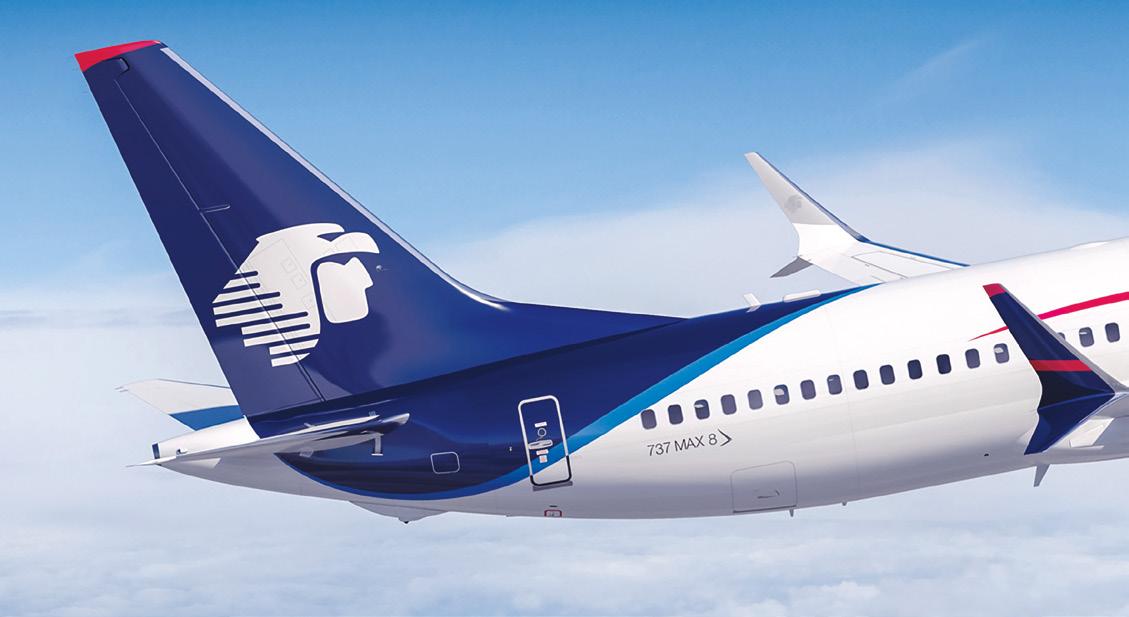
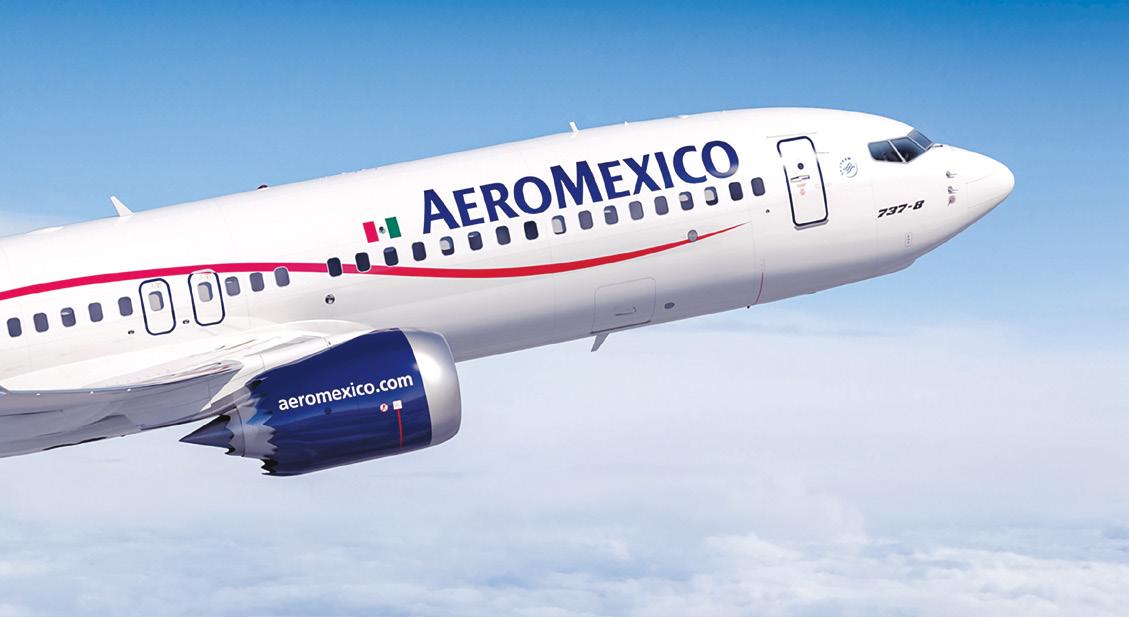
More than 40 years after making its debut, Boeing’s 737 is on the verge of welcoming new members to the family: the 737 MAX range. The new relatives are the fourth generation of Boeing’s iconic plane and consist of four models: the 737 MAX 7, 737 MAX 8, 737 MAX 9 and 737 MAX 200 promise efficiency, reliability and passenger appeal.
The 737 MAX will be the standard bearer for the singleaisle aircraft while the MAX 8 is expected to lead the market. The efficiency of the new models will reduce fuel consumption, generating savings for airlines. The 737 MAX 8, for instance, boasts a 14 percent reduction in CO2 emissions compared to its competitors.
A fleet of 100 737 MAX 8 aircraft would generate almost 350,000 fewer metric tons of CO2 emissions than a 100-aircraft fleet of today’s most efficient planes. This could save operators more than US$100 million and reduce operating prices by 8 percent per seat compared to Airbus’ A320neo, which would give the aircraft the lowest operating prices in the single-aisle segment.
Besides reducing air pollution, the new aircraft also contribute to the environment by cutting up to 40 percent of noise pollution and NOx emissions. In fact, the 737 MAX family will lower NOx by 50 percent more than the permitted limit established by the Committee on Aviation Environmental Protection (CAEP) of ICAO.
The fuel efficiency of the CFM International LEAP-1B engine included in 737 MAX models reaches an extended range of 6,510km, which is an increase of 629-1,055km over the previous 737 model, the Next-Generation. The 737 MAX also features Boeing’s Advanced Technology winglet, which helps reduce drag, particularly for longrange flights. The structural design of the newest member of the 737 family, combined with the engine’s thrust decrease and maintenance services required less frequently, are part of the advantages offered by the aircraft.
Currently, 99.7 percent of the flights featuring the NextGeneration are ready to depart within 15 minutes of the programmed time and the 737 MAX will improve on that. These new planes are expected to present 590 fewer flight delays per year, which would mean almost 65,000 fewer flight disruptions for passengers compared to the competition’s fleet. Beginning 2017, the 737 MAX family will take the single-aisle flight segment to new heights.
NEW AIR FREEDOMS FOR MEXICO AND THE US
In a year where Donald Trump’s intentions to build a wall made headlines, the US and Mexican governments have taken steps in the opposite direction. The Ministry of Communications and Transport (SCT) and the US Department of Transportation (DoT) implemented BASA, whose purpose is to increase the number of passengers traveling between the countries.
After two years of negotiations, Mexico and the US signed the Open Skies Agreement in December 2015.
By Aug. 21, 2016, the new BASA was in place, allowing commercial and cargo airlines to freely operate across the two borders. The agreement’s main objective is to expand existing air freedoms and hence the number of travelers.
BASA’s goal is to promote and facilitate binational aviation, while encouraging airlines to implement competitive costs and ensure the highest degree of safety and security. For Miguel Peláez, Director General of DGAC, the deal “offers important and attractive growth opportunities for both countries and the flexibility that will come as a result will generate new business.”
Cargo operations and charter flights will benefit by lifting all restrictions regarding the number of airlines allowed to fly any given route between paired cities. The deal also permits transport flights to third countries, making stops in Mexico or US cities first. Commercial operations will also get a boost from the deal as price restrictions are removed and alliances between airlines are permitted.
In 2015 a total of 25.2 million people traveled between Mexico and the US by air. By 2020, this number is expected to reach 37 million passengers
Both countries are obliged to maintain equal competition opportunities, without limiting traffic volume and regularity of the service offering. This means any airline can offer flights between any paired city in the country.
Flights to Panama, South America, Canada, Europe or other countries can also make stops on established destinations in Mexico or the US.
Gerardo Ruíz, head of the SCT, said at the signing the agreement contributes to Mexico’s consolidation as an added value logistics platform, with the needed mobility and connectivity infrastructure that contributes to the country’s insertion on international markets. For Ruíz, the deal reinforces the existing high-level of cooperation between Mexico and the US. Anthony Fox, his US counterpart, added it benefits both countries, airlines and passengers, while strengthening the economic and commercial relationship through touristic and business exchange.
For José Garza, CEO of Interjet, BASA allows Mexican airlines to make their way into new markets. “The Mexican aviation market is perceived to be at a disadvantage as it is smaller than that in the US. However, foreign airlines have operated in Mexico for decades and they have yet to be overtaken. BASA will be a great opportunity for Mexican airlines to reaffirm their market penetration.”
Users will experience direct benefits such as an increase in the flight offering and a decrease in ticket prices. According to DGAC, in 2015 a total of 25.2 million people traveled between Mexico and the US by air. By 2020, this number is expected to reach 37 million passengers, up 57 percent. Without BASA, the number of travelers was only expected to increase 33 percent.
Travelers are not the only ones to benefit. Industries such as tourism and manufacturing also will be enhanced. The cargo deregulations are expected to boost the manufacturing industry, allowing regional growth as the existing clusters become better connected with all aerospace hubs in Mexico. Once the construction of Mexico City’s new airport is complete, the area destined for cargo operations will increase to five times its current size.
Commercial airlines were among the most enthusiastic supporters of the agreement and Southwest Airlines was the first to take advantage. The low-cost service expects to operate flights between Los Angeles (LA)-Cancun, LA-Los Cabos and LA-Puerto Vallarta by December 2016. Delta Airlines said in a company statement the agreement “lays the foundations for the growth of the cross-border market” between the two countries.
So far, Aeroméxico and Delta Airlines seem to be ready to take the most advantage of the deal. In May 2016, the Mexican Federal Antitrust Commission (COFECE) approved Aeromexico’s and Delta’s joint venture (JV). The JV would allow both airlines to compete more effectively with other carriers in both countries, generating US$1.5 billion in earnings. Should the JV be approved by the US government at the end of 2016, the airlines would invest jointly in airport facilities, VIP lounges and waiting rooms in the US and Mexico.
Even though the private sector was among the first to applaud the agreement, unions received the news with a more cautious approach. Mario González, General Secretary for the Pilots Union (ASPA), rejected the deal during a protest in front of the media in September 2015, arguing that the survival of the Mexican aviation industry was at stake. “We barely have 350 aircraft, we cannot compete against the 7,000 units the US has. If we allow an open skies policy, the Mexican aviation industry could suffer catastrophic consequences” said González at the demonstration.
Still, at the end of 2015 ASPA endorsed the agreement. Among the reasons for a change of heart, they argued that the text was not as damaging as they had previously thought. They also asked the federal government to
protect the domestic industry and conduct annual revisions on the results of the deal.
Joint ventures between Mexican airlines and their US counterparts, such as that between Aeromexico and Delta, will become part of the scenario. “The agreement creates an opportunity for the materialization of alliances between Mexican and US airlines, which will generate more benefits for final-end users,” said Peláez. Interjet already has an agreement on shared codes with American Airlines, which could be used as the foundation for a future alliance.
According to Sergio Allard, President and Director General of CANAERO, BASA will increase flight supply and competition, which will force Mexican airlines to improve practices and customer services. DGAC data states that almost 75 percent of passengers that travel by air to the US do so using US airlines.
For Garza, being able to compete in the US market will be a long-term process. “At this point, both Mexicans and US citizens prefer US airlines, as they believe them to be safer. However, US airlines suffer from disadvantages including older fleets. We believe that once passengers try our airlines they will prefer the younger fleet and overall improved service.”
TALENT DISPARITIES AND INDUSTRY SOLUTIONS
A common factor uniting companies in all industries in all new locations is the search for the right expertise. Throughout 2016, several key players touched on the topic of human talent and training or education, which seems to be abundant in Mexico but not always where needed or to the required standards.
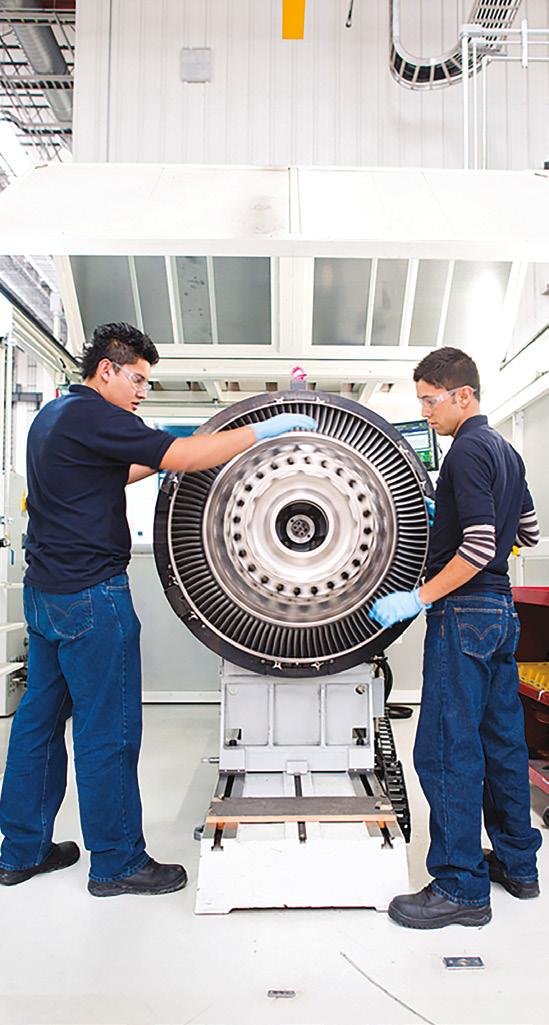
Many companies have resorted to offering courses inhouse, accepting available engineering graduates, for example, and offering them hands-on experience to obtain specialized knowledge for aerospace. Others
DANIEL PARFAIT President of Safran Mexico
Director of Chihuahua Campus
of CENALTEC
ARDY NAJAFIAN President of Aerospace Alliance
collaborate with academia in the hope their feedback will filter through to university curriculums. Some enterprises are even working directly with higher education institutes to have punctual input into course designs.
Industry players comment on the projects designed to develop future professionals for the aerospace industry, some of which receive financial support from CONACYT. Here, several aerospace executives detail their recruiting experience in Mexico and their companies’ strategies to place the right people in the right jobs.
Mexico has a promising future in aerospace as the country is now consolidating its expertise. One of Safran’s greatest contributions to the local industry, beyond generating employment and foreign investment, is education. In response to its importance, we are developing joint education programs with UNAQ, in which students learn theory at the university and get practical experience at our plants. We also can send some of them to our plants in France with support from the Mexican government. We are forging a generation that will shape the Mexican aerospace future.
CENALTEC was founded to support local manufacturing, enhancing the competitiveness of local workers through cutting-edge technology programs. Foreign companies establishing in the state reported a lack of human capital for their local operations and as more aerospace companies arrived in Chihuahua, demand for these educational services kept increasing. Honeywell, for instance, predicted demand for about 1,000 machining technicians but could only find about 50 in the state. Their team flagged the problem, and together we started developing a model to provide the technicians they needed. To date we have trained 1,3001,400 technicians. Our training courses are recognized by the European American Society of Mechanical Engineers (ASME), the local Ministry of Education (SEP), the Ministry of Labor and Social Welfare (STPS) and several academic institutions.
Aerospace Alliance collaborates closely with national and international education institutions. We have a project with universities from the US and Europe to develop nonferrous materials including titanium and composites. We have developed about eight projects and trained over 1,300 people. Generating qualified professionals, including operators, maintenance technicians and engineers in targeted areas is critical to address the existing gaps between technicians and engineers. As we come to understand local human capital demographics and join forces to complete the first state-owned Training Center for Advanced Technology (ICAT) in Mexicali and Tijuana, it is also necessary to align university programs geared toward aerospace.
ALBERTO SALOMÓN
BAPTISTE VALOIS
Group Industrial Development Manager at Zodiac Aerospace
A long history of industry in Mexico sets the foundation for aerospace companies to build on manufacturing activities that have existed since the 1970s. Such a deeply rooted industrial culture has manifested in plenty of transferable talent. However, as we developed activities here, we recognized a need to contribute to training the local talent base. Therefore, Zodiac Aerospace has collaborated with local universities to develop courses suited to our engineering needs, and to train young talent through innovative projects at our facilities. The talent pool is as important to us as the supply chain. There are many initiatives in place to strengthen local industry via Chihuahua’s Aerocluster, especially in the MRO segment.
AEROSPACE OEMS 2
With each passing year, the assembly in Mexico of a complete airplane sounds less like a dream and more like a reality. In the past decade, an important number of companies have made their way to the country. Citing Mexico’s strategic position south of the US, its record for graduating engineers, the commercial opportunities that arise from free trade agreements and the existing infrastructure, OEMs such as Bombardier, Textron, Cessna and Beechcraft have decided to establish manufacturing sites here. Though Mexico might not perform complete aircraft assemblies yet, its presence on the manufacturing chain is becoming essential in an increasingly globalized world. The establishment of OEMs in the country also has contributed to Mexico’s trade balance. In the past 10 years, the country’s aerospace exports have posted annual growth of 14.1 percent and in 2015 alone the total value of exports from this industry reached US$6.6 billion.
The government’s Pro-Aéreo 2012-2020 development plan targets US$12 billion by 2020.
With insights and analysis on OEM operations, this chapter is a go-to guide on how original equipment manufacturers work in Mexico and the world, as well as the challenges and opportunities they foresee in the coming years.
CHAPTER 2: AEROSPACE OEMS
36 ANALYSIS: Checking the OEM Pulse
38 VIEW FROM THE TOP: Van Rex Gallard, Boeing
40 VIEW FROM THE TOP: Rafael Alonso, Airbus Latin America and Caribbean
42 ANALYSIS: Airbus A380 Versus the Boeing 787 Dreamliner
44 ANALYSIS: Can Bombardier Bounce Back?
45 INSIGHT: Embraer Puts Brazil on Aviation Map
46
AIRCRAFT SPOTLIGHT: Boeing 787 Dreamliner
48 VIEW FROM THE TOP: John Ortega, Gulfstream Aerospace
49 VIEW FROM THE TOP: José Rodríguez, Fokker in Mexico
50 VIEW FROM THE TOP: Daniel Parfait, Safran Mexico
52 AIRCRAFT SPOTLIGHT: Cessna Citation Latitude
54 INSIGHT: A Tale of Two Entities
56 VIEW FROM THE TOP: Cecilio López, Honeywell Chihuahua
57 VIEW FROM THE TOP: Gunther Barajas, Dassault Systèmes
58 VIEW FROM THE TOP: Baptiste Valois, Zodiac Aerospace
60 VIEW FROM THE TOP: Juan Carlos Corral, ITP Mexico
61 VIEW FROM THE TOP: Javier Pérez, Aernnova Mexico
62 ROUND TABLE: Mexican R&D: Getting the Word Out
CHECKING THE OEM PULSE
Led by a rise in tourism, increasing global connectivity and helped by lower oil prices, the commercial aerospace sector has enjoyed steady growth over the past five years and, while it faced several difficulties in 2015, expectations are for the industry to keep expanding.
“Across the globe, the industry’s motor is the market, which is evident in the backlogs at the world’s largest aerospace OEMs,” says Luis Lizcano, Director General of FEMIA. Some outlooks project a 5 percent annual growth rate for global air transport over the next 20 years, according to Lizcano.
“The air transport sector is projected to grow 5 percent annually for the next 20 years, increasing pressure on airlines and aircraft manufacturers”
Luis Lizcano, Director General of FEMIA
The two top OEMs, Boeing and Airbus, have a nineyear backlog for airplane deliveries and demand is expected to keep pace. The growth in commercial aircraft production has translated to significant revenue increases for aerospace suppliers, according to Deloitte.
Boeing reported a revenue increase of US$1.49 billion to US$47.38 billion for the first half of 2016 over the previous year, which is a 3.2 percent gain on the previous year. That compares with a jump of 10 percent year on year, in the first half of 2015, although that figure retreated for
the full year. For its part, Airbus reported a 0.48 percent decline during the first half of 2016 to €28.76 billion.
The softer figures are not a surprise as the sector appears to be leveling out after five years of record growth. While Boeing posted positive numbers with a year on year 6 percent increase in revenue to US$96.1 billion in 2015, companies based in Mexico were hit by the strong dollar, PwC said in a report. Airbus reported an increase in revenue to €64.5 billion (US$71 billion) in 2015 from €60.7 billion (US$67 billion) but factoring in the exchange rate translates to an 11 percent loss.
Bombardier Aerospace, Dassault Aviation and Embraer also saw revenues contract in the same period, registering 6, 5 and 6 percent deficits, respectively.
The year was positive in other areas, however. Both Airbus and Boeing broke records for aircraft deliveries. Boeing delivered 762 aircraft while Airbus managed 635. Boeing also reported 768 new orders and Airbus 1,080. Those numbers were strong even if they did not reach the record-breaking levels of previous years.
Nonetheless, the industry is on solid footing. Driven by a continuous annual increase in passenger traffic and aircraft orders, the aerospace sector is undergoing its most profitable growth cycle, according to PwC.
Smaller aircraft manufacturers also faced a challenging period. Embraer, the third largest commercial aircraft manufacturer after Airbus and Boeing, reported a 6 percent drop in revenue, to US$5.9 billion in 2015 from US$6.3 billion in 2014.
Bombardier Aerospace crossed a rocky road after its bet on the C Series, a family designed for the 100 to
150-passenger segment and to compete with Airbus’ A320 and Boeing’s 737. While this series now has 365 orders, according to the airline, it is also two years behind schedule and more than US$2 billion over its projected US$3.4 billion budget. Company revenue also fell to US$11.2 billion from US$11.9 billion. These drops led the manufacturer to cut its payroll by 7,000 employees while it announced a US$1 billion bailout from its home province of Quebec, Canada in February 2016.
Textron Aviation, which sells Beechcraft, Cessna and Hawker aircraft, also saw its revenue shrink 6 percent.
that same list. Both companies faced revenue reductions but at a much smaller 1 and 2 percent, respectively.
OEM AND TIER 1 GROWTH
One way in which aerospace companies reduce operating costs is by expanding their manufacturing chains and moving specific processes to low-cost destinations. In that sense, Mexico has proven to be attractive for the aerospace industry. Most aerospace OEMs operating in the country have expanded from having only a sales office located in the country to full-blown production. Safran, for example, now has 13 manufacturing plants in Mexico.
MEXICAN COMMERCIAL FLEET BY MANUFACTURER 2015 (number of aircraft)
MEXICAN COMMERCIAL FLEET BY MANUFACTURER (NUMBER
Other major players in the aerospace sector include Safran, a turbine engineering company that ranks 11th in PwC’s Aerospace & Defense Top 100 aerospace companies for 2015, and Honeywell Aerospace, which makes engines and avionics, and holds the 13th spot on
Safran's plants are divided between Queretaro and Chihuahua and it has announced plans for two more locations in Mexico, one of which will be responsible for manufacturing the CFM LEAP engine. “The LEAP engine project will put us at the forefront of the aerospace industry for the next 20 years,” says Daniel Parfait, President of Safran Mexico.
Honeywell Chihuahua manufactures parts for turbine and auxiliary power units, mainly rotary pieces including blades, impellers, couples and gears, and some static pieces such as the gear box. “Our facilities are home to more than 1,400 machines across four plants,” said Cecilio López, Plant Director of Honeywell Chihuahua.
Textron Aviation has seven facilities in Chihuahua, employing over 1,800 workers, one making wire harnesses, one for fuselage, three for sheet metal and two for special processes.
Despite its drop in revenue, Textron alongside many companies, was attracted to Mexico by lower manufacturing costs, a large pool of potential employees, an ideal location in the NAFTA region and a strong local market.
Mexico has the largest number of aircraft in the world after the US. The market is mostly dominated by Airbus, which is preferred by low-cost airline VivaAerobus.
This company owns 14 Airbus A320, while Interjet owns 41 Airbus A320 and Volaris has 18 Airbus A319 and 38 A320 units. Aeroméxico on the other hand, the country’s largest and oldest operating airline, prefers Boeing and operates 50 Boeing 737, 4 Boeing 777 and 9 Boeing 787. It also operates a regional airline under the Aeroméxico Connect brand with a fleet composed entirely of Embraer models, 62 aircraft in total.
Other aircraft used by Mexican airlines includes Bombardier, Cessna and Sukhoi, according to DGAC.
BOEING ADAPTS TO MARKET TRENDS
VAN REX GALLARD
Vice President of Africa, Latin America and Caribbean Sales at Boeing
Q: How do trends influencing the Latin American market impact Boeing’s decisions and its attempts to improve passenger experience?
A: We have worked alongside our competition to develop jumbo airplanes, such as the 747, also known as the Queen of the Skies. Over the past 10 years, however, we realized the market was heading in a different direction. Growth was shifting from hub-to-hub destinations toward direct flights to secondary cities. This led us to mirror the trend and invest in the 787 because it is the right size for that market. The 777X, while larger than the 787, can also compete and succeed in this market because it has only two engines.
Having fewer engines represents lower operational costs. Boeing expects to introduce the 777X to the global market in 2020.
Boeing holds 50 percent of the Mexican narrow body market
Latin American airlines are looking for aircraft that can fly longer routes, for which the Boeing 787 is ideal. This aircraft has a range of 13,620km so it can fly as far as China from Mexico. It also is the most comfortable passenger airplane on the market. One of the reasons the aircraft is comfortable is the lower internal pressure as it operates at approximately 6,000ft while others tend to fly at 8,000ft. Operating at this lower altitude generates more humidity. This decreases passenger fatigue and discomfort and allows travelers to arrive at their destination feeling refreshed and less jet lagged.
For medium distances, we are introducing the 737 MAX. This is the new revamped version of the classic 737. This aircraft offers 16 percent reduction in fuel consumption, which leads to significant savings for airlines. It also is a flexible aircraft that can access destinations others cannot, which permits airlines to open new markets to places with less conventional runways.
The Boeing 737 MAX will come to Latin America in 2018 through GOL Airlines in Brazil, Copa in Panama and into Mexico that same year with Aeroméxico.
Q: What is Boeing’s sales strategy for Latin America given the economic fluctuations in the region?
A: Boeing is confident about the performance of the Latin American market. Long-term projections are positive though some short-term challenges certainly exist. We are investing time in fully understanding the region to ensure we are promoting the appropriate products for local operators to maintain a sustainable business model.
Boeing has a large number of operators in Latin America both for narrow and wide body planes, including GOL Airlines, Copa Airlines, LATAM Airlines and Aeroméxico. Our presence in the region is as long as Boeing’s history, which gives us an advantage in terms of industry knowledge and operators. We are interested in allocating our products in all countries in Latin America, from Mexico to Tierra del Fuego.
We have been participants in the Mexican industry for many years, as operators, parts manufacturers and sourcing suppliers based in Mexico. The country has many advantages beyond its ideal location close to the US. Its qualified human capital are key to aerospace developments in the country and the government is dedicated to developing the industry, without which such growth would not have been possible.
The aviation sector is highly competitive. Every airline feels the need to have better aircraft than the competition. Boeing’s aircraft provide lower operational costs and higher performance for Mexico’s airports.
Moreover, to remain competitive, Boeing places a special emphasis on customer support. We have been rewarded for this effort as it has been recognized in recent surveys that our company is the world’s best in customer service.
Q: How important is Aeroméxico for Boeing and what other segments is the company targeting?
A: Aeroméxico is our main partner in Mexico. It operates the 737, a narrow body aircraft that enjoys great market success. Other airlines have preferred to match different aircraft to their business models and once an airline chooses a specific type, it is difficult for it to deviate because that would result in significant costs. Aeroméxico made an order for 100 units in July 2012 of varying types of aircraft, including the 737 MAX, which increases fuel efficiency by 1.8 percent due to its new winglet, and the 787-8, which generates 20 percent less CO2 emissions and keeps noise levels to 85 decibels, a benchmark that is 60 percent less than Boeing’s 767 and below ICAO’s regulations.
Major low-cost airlines including Ryanair, Southwest Airlines and WestJet, are using our aircraft. These airlines represent a great business opportunity for us because we have a product designed for them. We recently launched the 737 MAX 200, which reduces the fuel-cost per seat by 20 percent and is ideal for low-cost airlines due to its size and specifications.
Q: What are the main advantages granted by new aviation technology and how are your operations changing to accommodate them?
A: Technology has brought about benefits such as improved reliability. Composite materials are reducing airplane weight while maintaining its strength and durability. Until recently, all aircraft required four engines for safety reasons. Modern aircraft only incorporate two, as new engines are more reliable than their predecessors.
Maintenance times also have been reduced, greatly improving operational costs and reducing ticket prices enough to make overseas flights accessible to a larger segment of the population. Boeing focuses heavily on reliability because that is what helps our customers successfully and safely operate and grow their businesses.
Airplanes and air travel still have limitations. The duration of a flight can be longer than desired due to air traffic control, the type of aircraft and the available time slots at the airport. In the case of aircraft, while there is sufficient technology for airplanes to fly faster, as evidenced by the Concorde, these technologies are too expensive, in spite of the fact that the ticket prices keep dropping.
The cost of fuel consumption and engine maintenance counteracts the cost saved by flying faster. The Concorde itself did not have the expected popularity, as
Mexico represents 20 percent of Boeing’s market in Latin America
it cost up to five times more than regular business class and the aviation industry is keen to increase access to all economic levels of the population.
Q: What must be done to expand the use of biofuel in aircraft?
A: One of the advantages of modern aircraft is they can use biofuel. Aeroméxico recently used it for a flight to Costa Rica from Mexico but its use remains unpopular or less common because its production is expensive. We are investing in developing better ways to manufacture biofuels, which will reduce the environmental impact of our aircraft. Boeing constantly develops new technologies in many areas, from propulsion systems to aircraft designs aimed at offering more competitive, efficient products with smaller environmental impacts.
Q: How many Boeing airplanes do you expect Mexican airlines to acquire in the short term considering existing market needs?
A: Over the next 20 years, Mexico will need to replace 60 percent of its existing aircraft. Ideally, Boeing would replace 100 percent of that number projected to be renewed.
We dominate the wide body market in Mexico and hold an approximate 70 percent share in the global market. Mexican airlines interested in operating international flights will turn toward Boeing. We expect to retain 50 percent of the Mexican narrow body market and are introducing new products and excellent services to ensure this. Boeing is the leader in aviation.
Although our competition may have more aircraft orders, we have a higher delivery rate than anyone in the market, which is what really matters.
AIRBUS SEES A380 AS INDISPENSABLE
RAFAEL ALONSO
President of Airbus Latin America and Caribbean
Q: What is Mexico’s role in Airbus’ global strategy?
A: Mexico is our second most important market in Latin America after Brazil and we have had a leading presence here for almost 30 years. This can be seen in the approximately 120 aircraft managed by our four clients in Mexico, which are AeroUnion, Interjet, Volaris and VivaAerobus. With these airlines, we hold 62 percent of the market for commercial aircraft and 61 percent of orders for this market.
To showcase Mexico’s importance regionally and globally, in September we inaugurated the first Airbus Training Center in Latin America. Also in September, Volaris became the first airline in North America to receive the Airbus A320neo, the newest and most efficient model of the A320 family, which holds the honor of being the most popular in the history of aviation. At the beginning of 2016, Air France brought the A380, the largest aircraft in the world, to Mexico, making Mexico City the only one in Latin America to receive this aircraft.
Q: What are your projections for the Mexican market?
A: We forecast significant growth for Mexico and for Latin America. According to our global market forecast, Mexico will need 600 aircraft over the next 20 years and, just as we are dominating the market now, we are certain that most of these will be Airbus planes. The growing demand for singleaisle airplanes in the country will help airlines to continue growing, alongside the fact that the air travel per capita rate is expected to double in 20 years. Mexico’s economic growth also is higher than Latin America’s average, which brings interesting opportunities for Mexican companies to expand their fleet and routes, especially internationally.
Q: How are Mexican low-cost carriers (LCC) Interjet, VivaAerobus and Volaris shaping the aviation sector?
A: LCCs have grown significantly in Mexico over the past 10 years and the model is expanding to service more of Latin America. In Mexico, LCCs have grown from 11 percent of the market in 2002 to 60 percent in 2015. One of the reasons for this was Mexicana’s bankruptcy. When this airline left the market, Interjet, VivaAerobus and Volaris quickly captured it.
LCCs have changed regional transportation by making air travel more affordable, especially when passengers require an immediate trip. Part of their business model is to move long-distance bus passengers toward LCCs and Mexico is leading this trend. By increasing the number of flights LCC model but it is now developing in other significant markets such as Chile and Colombia.
Q: What characteristics attracted unprecedented demand for the A320neo?
A: A320neo offers several advantages including 15 percent reduction per seat in fuel use in comparison to the previous generation, the A320ceo. This is thanks to the incorporation of many innovative measures such as nextgeneration engines and the use of Sharklets on the wings. These savings will continue to increase and are expected to reach 20 percent by 2020.
Another reason for the popularity of this aircraft is its adaptability to airlines’ preferences. Because it comes in three different sizes, from 140 to 240 seats, airlines can choose configurations that most adapt to their needs. Due to these advantages the Airbus A320neo has captured 30 percent of single-aisle aircraft orders globally, representing almost 4,800 orders for 87 clients since its launch in 2010. Some of the first customers for this aircraft include Lufthansa, LATAM and Volaris. We are setting our sights on Latin America for this aircraft and during September and October, Avianca Brasil, Azul, Frontier, Spirit, Volaris and VivaAerobus have started to receive them.
Q: In light of the growth of single-aisle aircraft in Latin America, how much potential does a large aircraft like the A380 have in the region?
A: While Latin America is a key player for the single-aisle market, with over 400 aircraft currently operating, the region urgently needs to develop longer routes. Nowadays, airlines from Europe and the US hold most of the long-distance market in Latin America with 83 and 75 percent, respectively. By 2034, air traffic flows between South America and Western Europe are expected to become the strongest worldwide alongside those connecting South America and
the US. For these routes we are seeing airlines use larger and more efficient aircraft with a longer range, such as the A350 XWB and the A380. These aircraft only began operating in the region in 2016 so there is room for growth. Taking into account that the aviation market doubles every 15 years, this large increase in passenger volume makes us certain the A380 will become indispensable in the future.
We expect Mexico to need nine A380 within the next 20 years due to the large passenger growth in the airports of Mexico City and Cancun. These two airports are expected to carry over 10,000 people a day in 20 years, thus large aircraft would be an ideal solution to avoid saturation. We are certain the A380 will contribute to the growth of Mexico’s air market. This January, AICM became the 50th airport in the world and the first in Latin America to offer commercial flights with the A380, thanks to Air France, which offers one daily flight to Paris.
Q: What specific advantages will the A380 bring potential users?
A: The A380 generates a significant amount of benefits besides being the largest aircraft in the world. First of all, it has the lowest fuel consumption per seat in comparison to all other aircraft in the market. For instance, with 544 seats in a four-class configuration, the A380 uses 30 percent less fuel per seat than the Boeing 747-800. Furthermore, the A380 is the most silent aircraft, producing 50 percent less noise than the Boeing 747-800, benefiting communities close to airports.
Q: Airbus expects the Mexican fleet to double by 2034. Which aircraft will be most in demand by then?
A: The A320neo has had enormous success in the region with almost 500 orders and commitments with seven clients, representing almost 70 percent of orders for singleaisle aircraft in the region. Nonetheless, Mexican airlines have little presence on routes between Mexico and the US, with only 30 percent of the market. Single-aisle aircraft can
help Mexican airlines, especially LCCs, improve their position and capitalize on routes between the two countries.
Q: Which would you identify as Airbus’ most innovative products in the last few years?
A: The A350 XWB is now the most modern aircraft in the world. Its fuselage and wings are made of lighter aerodynamic materials and the aircraft incorporates new engines that use less fuel. This state of the art technology translates into unsurpassable efficiency, 25 percent less fuel use, 25 percent lower emissions and lower maintenance costs. The first A350 XWB in Latin America was delivered to LATAM Airlines in 2015. These models can help airlines capture the long-range market.
Another of Airbus’ latest initiatives is 3-D printing. We started using this technique for the manufacture of aluminum pieces for an A350 XWB in 2014. This technique to manufacture metallic parts allowed us to improve production processes and reduce waste. In June 2016 we tested a 3-D printed unmanned aerial vehicle (UAV) named Testing High-tech Objectives in Reality (THOR).
We are also working on creating virtual reality. Through our Airbus Innovation Center in Hamburg we have incorporated videogame and cinema technology into our own systems to transform cabins' interior design, providing virtual reality environments using 3-D glasses. This technology helps engineers design parts and can be used for quality checks.
Q: How do you expect BASA to influence the aviation market in both countries?
A: The US represents two-thirds of international travel to Mexico because Mexican airlines have a weak presence in this market. In that sense, BASA can help Mexican airlines better position themselves. Greater passenger flow between both countries will boost Mexico’s economy, strengthening tourism and manufacturing. We support any initiative that promotes Mexico’s economy and the aeronautics industry.
AIRBUS A380 VERSUS THE BOEING 787 DREAMLINER
The two major aerospace OEMs are locked in a battle that each hopes will lead to domination of the skies. For every aircraft that Airbus develops there is an alternative by Boeing, and vice versa. For that reason, the Airbus A320neo is compared to the Boeing 737 Max, the Boeing 747 to the Airbus A380 and the Airbus A350 against the Boeing 787. But the most hyped battle between the two in recent years pits the 787 Dreamliner against the A380. What makes this clash different is the nature of the fight. It is not aircraft versus aircraft but market vision versus market vision.
Many have compared the two on their physical characteristics and both are undeniably impressive machines.
In the one corner stands the Boeing 787, a midsized two-engine wide body that comes in three sizes. All share a 60.17m wingspan, but vary on length and passenger capacity. The smallest, 757-8, is 56.69m long while the largest is 68.27m. The first can carry up
to 242 passengers in a two-class configuration and the latter up to 330 passengers. What is most remarkable about the Dreamliner is not its size but the technology it incorporates. It was manufactured using carbon composites, aluminum and titanium and incorporates technology that makes it the most efficient aircraft among Boeing’s current fleet for fuel use. It also leaves a 60 percent smaller noise footprint than other aircraft of the same size. The Dreamliner offers a range of 11.914.1km depending on the size of the aircraft. It comes at a listed cost of US$290 million.
In the other corner, the four engine Airbus A380 is the largest passenger airplane in the world. This doubledecker behemoth offers 50 percent more floor surface than its closest competitor and can carry 544 passengers in a four-class configuration. If furnished exclusively with only economy class seats, it can fit a whopping 853 people. This enormous aircraft has a 79.75m wingspan and an overall length of 72.72m. Being a double decker,
it also has a height of 24.09m. The Airbus A380 comes at a listed price of almost US$404 million.
From the number of engines, to wingspan and passenger numbers, these aircraft do not have much in common. In fact, the Airbus A380 can be compared more closely to the Boeing 747, which is similar in size, while the Dreamliner is more closely related to the Airbus A350 XWB, both having two-engine wide bodies that incorporate a significant percentage of composites. Yet, many have pitted the Airbus 380 and Dreamliner against each other.
This comparison is often made because both aircraft have been hailed by their manufacturers as game changers that can increase revenue by optimizing performance. For this reason, the discussion at its core is not an aircraft comparison but an effect-on-the-market assessment.
With the A380, Airbus bet the market would continue to rely on major airport hubs that would be supplemented by smaller aircraft. Such a market would require medium to small aircraft to carry passengers to and from hubs and large aircraft that would directly connect hubs. Boeing placed its wager on a different market with the Dreamliner.
A380 VS DREAMLINER: ORDERS AND DELIVERIES
A380 VS DREAMLINER: ORDERS AND DELIVERS
A380 Dreamliner
orders
deliveries
Source: Airbus and Boeing, data as of Aug. 31, 2016.
Source: Airbus and Boeing, data as of Aug. 31, 2016.
Instead of hub-to-hub trips, the target was to transport passengers to secondary cities with direct flights.
Boeing’s play seems to be paying off. While the A380 is breaking size records, the Dreamliner has been more attractive to airlines according to orders and deliveries.
The A380 has 319 orders and 194 deliveries, while the Dreamliner has 1,161 orders and 455 deliveries, including all three models, as of Aug. 31, 2016.
These acquisition patterns are just a reflection of market fluctuation and passenger preferences. As the sector keeps evolving only time will tell what new trends will arise and which business model prevails.
CAN BOMBARDIER BOUNCE BACK?
The dark clouds hovering over Canada’s Bombardier showed some signs of clearing in 2016, thanks partly to a provincial government bailout, but uncertainty remains amid the bumpy rollout of the manufacturer’s first new aircraft program in 30 years, the C Series.
Bombardier's C Series is a family of narrow body jets with a capacity for 110 to 135 passengers, depending on the aircraft. According to the manufacturer, this is its first completely new aircraft program in over 30 years. Launched to break the duopoly of Airbus and Boeing commercial aircraft, the C Series faced many problems over the years. While it was initially launched in 2004, it was dropped two years later to be relaunched in 2008. Two years behind schedule, the program incurred cost overruns calculated at US$2 billion. This situation led Bombardier to offer Airbus a majority stake in the C Series project in 2015. Airbus rejected the proposal.
The OEM closed 2015 with a loss of US$5.3 billion and a US$10 billion reduction in orders, causing the company to slash its 70,900-strong workforce by 7,000 and leading the Canadian province of Quebec, the company’s home base, to provide a US$1 billion safety net. Similar aid talks with the federal government remained deadlocked in mid-September. After the many setbacks, the C series project finally appears ready to take flight. The first CS100, the 110-seat model, entered service in mid-2016 with Swiss Global Air Lines, a subsidiary of Swiss International Air Lines. The first CS300, the 135-seat model, will be the second of this family to enter service in late 2016 when airBaltic begins flying the plane.
Orders are still a problem, however. By August 2016, there were only 123 orders for the CS100 and 235 for the CS300 and only two aircraft delivered. In comparison, by September 2016 Airbus had a total of 6,749 pending orders. In June 2016, the CS100 was certified by the FAA and the European Aviation Safety Agency (EASA).
Bombardier said in its 2016 second-quarter report that the C Series is transitioning from a development phase to a revenue-generating phase. The manufacturer also reported an 8 percent rise in revenue at its commercial aircraft division, to US$764 million from US$598 million. On April 28, Bombardier announced the successful agreement between Bombardier and Delta Airlines for the acquisition of 75 CS100 aircraft valued at US$5.6 billion, with an option for an additional 50, making Delta Airlines the largest customer for this series.
While its commercial airplanes division faces problems, Bombardier has a strong business jet area, although here, too, there are headwinds. The division produces industry
staples the Learjet, Challenger and Global. During the first quarter of 2016, Bombardier managed a book-to-bill ratio close to 1. By August 2016, the Canadian company had received 70 orders and delivered 73, of which 39 belonged to the Challenger family, 28 to the Global and six to the Learjet.
The company manufactures the Learjet 70 and 75 for the light business jet market segment. The Learjet 70 incorporates two Honeywell TFE731-40BR engines that provide takeoff thrust of 17.1kN and a 3,815km range. The Learjet 75 has a range of 3,778km and can fly at an altitude of almost 51,000ft. It has carbon brakes that allow the aircraft to use shorter runways.
The Challenger family targets the midsize business jet market and includes the 350 and the 650. Bombardier says the Challenger 350 has the lowest direct operating costs in its class. This aircraft uses two Honeywell HTF7350 engines, which give it the fastest time-to-climb in business aviation.
The Challenger 650 uses two GE CF34-3B MTO engines for a range of 7,408km with six passengers onboard. It also offers the widest and highest cabin in its class. For the large business jets segment, Bombardier has the Global family, which includes the 5000, 6000, 7000 and 8000. Global jets have the longest range among Bombardier’s aircraft and can be used for transatlantic flights.
Although the business aircraft division is Bombardier Aerospace’s most profitable, it also is facing problems. In September 2016, the manufacturer announced it would halt completion work for the Global 5000 and 6000 at some point during 2017 due to weaker than expected demand from China, Latin America and Russia. Bombardier’s business jets division reported a 3 percent loss in revenue in 2015 in comparison to the previous year.
The year 2016 also has proved challenging as the company reported a 19 percent loss in revenue in the second quarter of the year compared to the same 2015 period.
The company’s stock price has provided some respite from the gloom, although that too has been a rocky ride. Ahead of its earnings report in February, the stock tumbled to a year low of CA$0.78 in February from CA$1.34 to start the year. Since then it has climbed as high as CA$2.16 and in early October was trading around CA$1.73. Analysts polled by Reuters in early October produced a consensus hold recommendation on the stock. The manufacturer’s long-term debt load stands at around US$9 billion.
These past few years have proven tricky for the Canadian manufacturer but with the launch of the C Series and a strong business division, the company hopes to find opportunities to turn this trend around.
EMBRAER PUTS BRAZIL ON AVIATION MAP
Embraer, a former state company, has come a long way since its founding in 1969. From its beginnings as a military and industrial aircraft manufacturer, the Brazilian OEM is now among the world’s top Tier producers.
During its early years, the company grew under the sheltering arm of the Brazilian government. Financial constraints and lack of governmental investments led to Embraer’s privatization in 1994, which in turn helped the company diversify its product portfolio. The development and sales of the ERJ 145 family allowed company to stabilize its finances and become one of the most important OEMs in the world.
Federico Curado, Embraer’s President and Executive Director, credits the company’s creation to Brazil’s need to generate technology, rather than depending on other countries for it. “In Brazil we had a long-term project that dates back to WWII and involved generating knowledge in aerospace, technology and science, rather than trying to acquire technology. So the country went from books and academic knowledge and science to industrial capability.”
At the start, Embraer’s focus was military and industrial aircraft. Its first plane, the Bandeirante, a turboprop with a capacity for 21 passengers, was intended for military use. A request from the government led to the EMB 326 Xavante, a jet trainer and ground attack craft. The EMB 200 Ipanema, planned for agricultural use as a crop duster, and the EMB 400 Urupema, a glider, were among Embraer’s first models.
Today, the OEM participates in commercial aviation, executive jets, defense and agricultural aviation businesses. Its commercial aircraft are divided into three families, the ERJS, E-JETS and E-JETS E2. The ERJS can accommodate between 37 and 50 passengers, with ranges from 1,550Nm to 2,000Nm. The E-JETS family accommodates between 70 and 124 passengers for flights of 2,150Nm and 2,300Nm but is designed for longer trips with more passengers. The E-JETS 2 family is intended to replace the current E-JETS, the first deliveries of which are expected in 2018.
Embraer is the third largest OEM in the world, behind Boeing and Airbus. Embraer aircraft are preferred for regional, short flights. United Express, Delta Connection, US Airways Express, Virgin Australia and Lufthansa CityLine are among Embraer’s clients. In Mexico, Aerolitoral, TAR, and Aeroméxico Connect are fleet owners of Embraer aircraft.
The executive jets division features seven different models, designed to transport up to 19 passengers 4,600Nm. More
than 850 executive jets have been delivered to over 50 countries and the segment accounted for a quarter of Embraer’s revenues in 2015.
Industrial-use airplanes also are an integral ingredient for the manufacturer. The Ipanema aircraft, used mainly for agriculture, has been produced for over 50 years. With more than 1,300 units delivered, the Ipanema aircraft accounts for almost 60 percent of the agriculture-use aircraft in Brazil. The Ipanema is the first airplane in the world to use 100 percent ethanol as fuel. Ethanol is not only more eco-friendly than gas or oil but also reduces costs by about a third compared to gasoline.
Embraer has come a long way since it was first created by the Brazilian government in the 1960s. The company has 19,000 employees in more than 20 countries, with over 5,000 aircraft delivered globally. Brazil is the company’s main client, responsible for 21 percent of its revenues. But as a region, North America is the most significant, accounting for 48 percent of Embraer’s income. Sao Paulo, Botucatu, Gaviao Peixoto, Sorocaba, Taubate, Campinas and Belo Horizonte are all home to manufacturing sites in Brazil. Florida and Evora, Portugal host major Embraer facilities. Countries such as Mexico, France, Ireland, the UK, Netherlands, United Arab Emirates, Singapore and China also host small facilities and offices.
In 2014, Embraer delivered 208 units. In 2015, commercial aviation sales increased with 267 units ordered for the E2. The year 2015 was also successful for the 70-130-passenger aircraft. Embraer sold almost 50 percent of the planes in this segment and was responsible for 60 percent of deliveries. Unfortunately, not everything is bright for Embraer. Overall aircraft deliveries hit a ceiling in 2009 and 2010. Since then, the company has not reached the almost 250 aircraft deliveries enjoyed in those years. In 2016’s second quarter, the Brazilian company registered losses of US$99.4 million, due to fewer deliveries in the year and higher operational expenses. Curado says that the 20082009 crisis was a big blow. “We felt the impact in 2009 in terms of orders and have not yet recovered. However, we have never been afraid of investing. We have consolidated a respectable position in the marketplace.”
Embraer only exists because there is a solid foundation of knowledge: thousands of engineers and graduates over a period of 60 years. This is something unique in Brazil. It’s a model that worked: technology associated with the Brazilian spirit of entrepreneurship,” says Curado.
BOEING 787 DREAMLINER
Efficiency through technological innovation is the principle behind the Boeing 787 Dreamliner. While the OEM has a diverse range of aircraft, the Dreamliner was designed to be a game changer. According to Boeing, the airplane offers unparalleled performance by reducing operational costs and increasing revenue potential in comparison to similar aircraft. It has a faster cruising speed, increased cargo space and therefore generates more revenue, improved fuel efficiency and reduced maintenance costs. Put simply, the 787 is designed to deliver a pleasant trip. It has the largest windows of any jet, the air quality is cleaner with high humidity levels to minimize jet lag and a smoother flight thanks to technology that counters the effects of turbulence.
The Dreamliner, a lightweight, two engine wide-body, is most remarkable for the flexibility it offers airlines. As Boeing states, the 787 allows airlines to profitably open new routes according to passenger preferences. This aircraft diverts from the hub-to-hub business model and has permitted the creation of 100 nonstop routes around the world since 2011.
The Boeing 787 has a primary structure made of 50 percent composites of carbon, aluminum and titanium and is powered by two GEnx advanced dual rotor engines developed by Rolls-Royce and GE. Its raked wingtips, laminar flow nacelles and low-drag empennage contribute to lower fuel usage, the most efficient among Boeing’s current fleet and 20-25 percent below that of the model it means to replace, the 767. Boeing states that since 2011, the 787 family saved airlines almost 7 billion pounds of fuel. It reaches Mach 0.85, similar to the fastest twin-aisle airplanes in use.
Three models are available. The smallest, 757-8, has a wingspan of 60.17m and a length of 56.69m and carries up to 242 passengers in a two-class configuration. In the middle, the 787-9 has the same wingspan but almost three more meters in length with a capacity for 290 people in the same configuration. Its largest version will be available in 2018. The 787-10 shares the wingspan length of the 787-9 but measures 68.27m, providing space for 330 passengers.
Since its launch in 2004 with an order from All Nippon Airways, the Dreamliner holds the honor of being Boeing’s fastest-ever selling twin-aisle aircraft. Over 60 customers globally have bet on this airplane, including Aeroméxico, which now owns nine Dreamliner 787-8s. As of Aug. 31, 2016, 1,161 total planes have been ordered and 455 have been delivered.
MEXICO LARGEST LATAM MARKET FOR GULFSTREAM
JOHN ORTEGA
Vice President and General Manager of Gulfstream Aerospace’s Mexicali Site
Q: What makes the Mexican market attractive to Gulfstream Aerospace?
A: Even though the first Gulfstream aircraft was introduced to the world in 1958, it was not until 1974 that we delivered the first unit to Mexico. Since then, the fleet in the country and in Latin America has grown steadily, although Mexico remains the largest market in the region with more than 90 aircraft.
Mexico offers several business opportunities that make the country an attractive destination for companies. Its geographical location is probably one of the most important factors. The country is a bridge between North and Latin America and has strong commercial ties with Europe. Another important factor is economic stability.
As of 2015, Mexico had the 15th largest GDP in the world. The World Bank and the International Monetary Fund expect the same in 2016. Economic stability and growth perspectives are crucial when choosing a business destination.
We selected Baja California as our host state because of its long history in aerospace dating back almost 50 years. The supply chain proximity to California as well as the presence of a high-quality labor force in the state make Baja California the Mexican entity with the largest concentration of aerospace companies. The highways connecting Mexico to the US, major cargo seaports and railway services contribute to the state’s appeal for the aerospace industry.
Q: How has Gulfstream’s strategy changed to accommodate the evolving private jet demand?
A: The company’s main strength is its robust product portfolio. The outstanding performance of Gulfstream in the market is underpinned by superb airplanes, unparalleled customer support, compliance with our scheduled deliveries and the performance of new aircraft. We continue to see plenty of interest from customers and the company enjoys a steady pipeline for all of its largecabin and midsize aircraft. We have scheduled product deliveries of our G650 and G650ER models well into 2018.
Unfortunately, the midcabin or midsize market as a whole was especially affected by the economic instability resulting from the 2008 economic crisis. This market segment is monitored constantly, since it offers unique benefits for Gulfstream aircraft.
The G280 received a performance upgrade in the fourth quarter of 2015 thanks to a software upgrade. The aircraft’s improved software results in slower approach speeds, shorter landing distances and enhanced flight management system performance. We also have two new projects in development, the G500 and G600. The G500 will enter service in 2018 and the G600 is expected to be functioning by 2019.
Q: What is the role of Baja California’s manufacturing plant in Gulfstream Aerospace’s value chain?
A: Gulfstream Mexicali employees play a significant role in the manufacturing process for our aircraft. Mexicali’s six business units make electrical wire harnesses, sheet metal components, sub-assemblies and machined parts. Each is used in Gulfstream’s production of the models G650, G550, G450, G280 and G150. The site won the Shingo Prize for Manufacturing Excellence in 2009 for its focus on lean manufacturing and waste elimination. It has been named among the 100 Great Places to Work in Mexico for the past five years. In 2016, the facility was named the eighth best place to work, which demonstrates our commitment not only to our customers but also to our employees.
At Gulfstream Aerospace, we have implemented a continuous improvement culture in all our facilities. We encourage involvement from our employees along with the incorporation of lean tooling and new working philosophies in all the processes on site. This encompasses manufacturing, engineering, business-support activities and management. We believe that involving all our employees in our operations empowers them, since they feel free to express and submit new ideas on how to make their jobs easier and to foster a more innovative working environment. Moreover, it contributes to transforming their abilities, capabilities and knowledge.
INNOVATION FROM THOSE WHO KNOW BEST: EMPLOYEES
JOSÉ
RODRÍGUEZ Director of Operations at Fokker in Mexico
Q: What makes Fokker’s Chihuahua plant stand out and what made the state attractive to the company?
A: Fokker has existed for 100 years and is now a business unit of GKN Aerospace. On joining our Mexican operations, I set the objective of making this one of the best aerospace plants in the world by 2020. Our studies have shown that Chihuahua is abundant in human capital for the type of operations we manage, and the state’s culture favors an attitude of stability and hard work thanks to extensive experience in the industry. There is more competition for employees in Juarez because of the automotive industry’s presence, whereas there are fewer industries with which we need to compete in Chihuahua. Of the 45 aerospace plants, 43 are clustered close to the state capital.
In our Chihuahua Plant, our mentality is that offering favorable conditions to our workers ensures the best quality. This plant employs a Simple Case Initiatives plan that opens the floor to suggestions from all workers. Three hundred ideas have been implemented thus far using this initiative. This means innovation comes from those who know the processes best. Our Mexican employees are creative and have improved areas that had not evolved in decades.
To date we have focused on business jet operations. Our Mexican manufacturing is entirely for the export market. We supply Cessna, Gulfstream and Honda with components for its innovative HondaJet. The HondaJet is expected to be more efficient, to vibrate much less and the engines will be integrated into the wings, all of which are very contemporary so our team is excited to begin this project.
Q: How is the company involved in training human capital for the development of the aerospace cluster?
A: We are part of the INDEX association, where I was president until recently. INDEX is overseeing the rapid expansion of Mexican industry, which nationally is growing from small assemblies to producing entire cars, televisions and aircraft parts. Manufacturing industries must continue to unite forces to remain competitive internationally, for which we need more professionals specializing in design. I
left the legacy to the next president of INDEX to continue promoting human talent development and to increase the percentage of national raw materials. The association must identify which jobs most demand human capital and then supply the talent, depending also on which companies are considered key to the industry. As Director of Aerospace at INDEX, I ensure we work hand in hand with FEMIA to support national synergies between the Chihuahua, Baja California, Nuevo Leon, Baja California and Queretaro clusters.
Q: How is Fokker Mexico specifically contributing to the consolidation of local industry?
A: We would like the supply chain to be stronger locally. We have suppliers such as Tecmac and Aernnova in Chihuahua, Monterrey and the city of Queretaro. Our links with INDEX were partly responsible for our alliances with these companies, as well as our acquisition by GKN Aerospace that was completed in October 2015. We are open to alliances with other regions interested in using Mexican suppliers. Fokker’s personnel recognize the value of networking to create personal ties, which are proven to lead to business possibilities.
We purchase 50 percent of the parts we use in Mexico. Metal Finishing, Altaser and Tighitco are among our suppliers, not only because we feel a dedication to Mexican manufacturing but also because it optimizes our overhead costs. Integrating Fokker reflects a strategic acquisition by GKN Aerospace and for Mexico this means our different areas of expertise complement each other and create a stronger more complete offering for the aerospace industry.
Q: What are the short-term strategic goals for the company in Chihuahua?
A: Our goal is to continue our stable growth. Close collaboration within a small team generated a comfortable working environment and helped keep costs down. We hope to remain localized to keep traveling and logistics expenses to a minimum, especially as transport costs can be greater in Chihuahua than in the center of the country. This is also partly due to the sheer size of the products we manufacture.
LEAPING TO THE FOREFRONT OF THE INDUSTRY
DANIEL PARFAIT President of Safran Mexico
Q: How have Safran’s Mexico operations evolved?
A: Safran has been in Mexico for 20 years, having begun in Chihuahua until we pioneered the aerospace industry in Queretaro. The company has grown considerably in the country. Our Mexican division ranks third worldwide after France and the US and this year we inaugurated two plants in Queretaro and Chihuahua. Safran now has 12 plants in the country and the company is building a 13th, which will manufacture parts for the CFM LEAP engine developed in collaboration with GE, a relationship that dates back to the ‘70s. With GE, we also designed the CFM56, which is the top-selling engine in history and in present day aviation. Most 100-passenger airplanes with a central aisle have a CFM56 engine.
For the past 20 years, we have developed a close, trusting relationship with Mexico. In 10 years we have opened and expanded 13 plants and are investing in strategic areas in the country to meet high demand for our products. While we started in Chihuahua because of Labinal’s presence, Queretaro caught our attention when the state launched its Aerocluster and made us a competitive offer. The reception from both states has been excellent and the authorities have shown great interest, availability and willingness to work alongside us.
Q: Why did Safran bring its CFM LEAP engine manufacturing to Mexico?
A: The CFM LEAP engine reduces fuel use by 15 percent, emits 50 percent less pollution and is quieter than comparable engines. This engine was constructed using composites assembled using a knitting technique that was developed in France in the 19th century, creating a stronger and lighter engine. The demand for this engine has been unprecedented and we now have over 10,000 orders. It is the engine of choice for the Boeing 737 MAX and the Airbus A320neo.
Given this demand, we needed a third plant to supplement our existing facilities in the US and France. We opened bids to determine the location for this third plant and announced Queretaro as the winner in February 2016.
This plant will supply 100 percent of Boeing’s demand for LEAP engines and 50 percent of Airbus’s market. The Commercial Aircraft Corporation of China (Comac) also chose these engines for its new aircraft.
Q: How would you describe the company’s commitment to research and innovation?
A: Safran has the second largest number of patents in France, showcasing its commitment to innovation. We also have been recognized by Thomson-Reuters as one of the top 100 innovators in the world. Safran dedicates an unmatched 13 percent of its revenue to innovation across several areas from mathematics to supercomputers. We designed engines alongside Bull and are also researching composites and supporting the development of the National Center for Composite Materials and Aerospace Technologies in Queretaro alongside CONACYT and CINVESTAV. These are the materials of the future.
We have a drone program that in April this year beat many multinational companies to win a contract with the French army. Our technology can identify objects up to 8km away during flight. This capacity gives the drones significant civil and defense applications, from agriculture to emergency services. We have also introduced these drones to the Mexican government.
To date, Mexico lacks a development base for drones, but now is an opportune moment to grow the drone industry. They are highly sophisticated products, incorporating advanced and complex technology. It took Safran 30 years of research to achieve sufficient advances to excel in drone manufacturing. We are still in talks with the government to reach an agreement that will allow the long-term development of a Mexican drone industry.
Q: Which other innovative technologies is Safran introducing in Mexico?
A: We are leaders in many areas. One in every four helicopters in the world is fitted with our turboshafts. About 600 helicopters have our engines in Latin America. A recently incorporated, highly innovative area is our
Safran Identity & Security division, formerly known as Morpho. This division uses Safran’s capabilities in biometric identification and authentication for the production of identity cards for several purposes, including the production of passports for countries such as Chile.
The company’s technology also was used to register India’s population. At its highest the division’s technology registered 1 million people a day, granting identification to much of the population, especially those in remote rural areas. The system tracks fingerprints and retinal scans and can be used in locations that are heavily dependent on accurate and timely passenger identification, including airports.
Q: As an industry leader, how can Safran contribute to the growth and unification of the Mexican aerospace industry?
A: We are contributing through our participation with FEMIA. Mexico has a promising future in aerospace as the country is now consolidating its expertise. One of our greatest contributions to the local industry, beyond generating employment and foreign investment, is education. Safran supported the creation of the aviation campus at UNAQ, to which we donated one CFM56 and two landing gear sets for students to familiarize themselves with aerospace equipment and its maintenance. We also develop joint education programs with UNAQ, in which students learn theory at the university and get practical experience at our plants. We also send some of them to our plants in France with support from the Mexican government. We are forging a generation that will shape the Mexican aerospace future.
Mexico must develop several areas to consolidate its aerospace industry. The most important is training, which is essential for the sector. Secondly, the consolidation of the supply chain is one of the greatest challenges the country is facing. Several initiatives address this problem, the Mexican-French Strategic Council proposed the creation of an aerospace fund to facilitate the introduction of French aerospace companies to Mexico. Medium-sized companies interested in expanding abroad tend to need financial aid to weather the first few years. They also need a guaranteed manufacturing volume to ensure they will remain competitive, toward which FEMIA is making advances. Finally, the collaboration with local and federal authorities at every step of the way is crucial for continued development.
Mexico enjoys several advantages, including its location. The US and Canada are important markets for Safran and being in Mexico places us in an advantageous position. Mexico is also home to a formidable workforce. We have
4,300 employees in Chihuahua who suggested 5,000 new ideas last year to improve manufacturing processes. In this plant, more than 60 percent of the worforce are women, This plant produces between 90-95 percent of the cables for the Boeing 787 and 75 percent of those for the Airbus A380. Our Queretaro plant has won Safran’s innovation award twice, demonstrating Mexico’s gradual evolution from manufacturing to innovation.
Q: On which areas is Safran planning to focus in the near future?
A: The LEAP engine project will put us at the forefront of the aerospace industry for the following 20 years and will contribute to the development of the Mexican aerospace industry. We also have an MRO for engines and landing gear and several other projects in the pipeline. Safran prioritizes Mexico for its global growth as the company is focusing more on organic growth. Thus, while we are not disregarding the possibility of acquisitions, we are focusing on the development of our manufacturing plants.
CESSNA CITATION LATITUDE
The Cessna Citation Latitude, the newest member of Cessna’s business jet family, strives to meet the same high expectations as its siblings at Textron Aviation. Initial deliveries suggest it is on its way. During the first seven months of the jet’s commercialization, the American company delivered 23 units, with Mexico receiving its first model in June 2016.
The Citation Latitude offers a maximum range of 4,969km with two pilots and an average of four passengers. Thanks to its lightweight composite materials, the aircraft can reach a cruising speed of 826km/h. The plane also has short-runway capabilities, needing only 1,091m to take off.
Garmin G500 avionics take center stage on the Citation Latitude’s flight deck. Designed to help pilots control the navigation, traffic, surveillance and communication systems, the flight deck also features three 14-inch flight displays that can function either independently or in multifunction mode. Pilots have options for personalizing the displays and can prioritize flight data presented on screen according to their needs or preferences.
The Latitude also is equipped with LinxUs technology that performs real-time diagnostics of the aircraft’s condition. LinxUs works with the Central Diagnosis Maintenance system (CDMS) to monitor the plane at all times. For aircraft equipped with Garmin’s GSR56 connectivity tool, LinxUs Air reports flight problems via satellite and offers answers and suggestions in real time. The standard version of the Latitude offers auto throttles, flight management systems and transponders with ADS-B capability, in addition to the Synthetic Vision Technology.
Measuring 18.97m long, the aircraft houses a 6.63m by 1.96m cabin that can accommodate up to nine passengers. It has 10 windows in the cabin and a bathroom that can be customized. The cabin’s interior colors also can be personalized and its standard Wi-Fi connectivity allows passenger to stay connected throughout the flight. Passengers also can use their mobile devices to control the aircraft’s cabin features such as temperature.
The Citation Latitude has a direct operating cost of US$4.45 per mile, almost US$0.20 more than the Citation XLS but the Latitude offers more range than the XLS+. As a member of Textron Aviation, the Citation can be serviced at any Textron workshop. The Citation Latitude is Cessna’s latest submission to meet the needs of an efficient and modern aircraft fleet.
A TALE OF TWO ENTITIES
Mexico’s aviation industry is nascent but some established stories herald its potential. Call this one a tale of two entities: Chihuahua and Textron Inc.
Textron Inc., ranked 209th on Forbes Top 500 list of the largest US companies, has units in aerospace, defense, industrial, technology and finance. The multi-industry giant has entrusted Mexico, and particularly Chihuahua, with its two most profitable business units, Textron Aviation and Bell Helicopter.
The company’s location in the state allows it easy access to the company’s largest market, the US, and also to a skilled workforce. “The company chose Chihuahua based on its convenient location, time zone and most importantly, the manufacturing expertise in the state,” says Luis Azúa, General Manager of Bell Helicopter at Textron International Mexico.
Textron’s participation in the aerospace industry can be traced back to 1960 when it acquired Bell Aerospace and its largest business division, Bell Helicopter. Textron’s penetration of the sector deepened in 1992 when it acquired its Cessna subsidiary from General Dynamics Corporation. In 2013, Textron announced its decision to purchase the Beechcraft Corporation and its Hawker and Beechcraft brands, increasing its presence in the light-aircraft market. That acquisition was completed in March 2014 and the company created Textron Aviation, a business division focused entirely on its aerospace business, with two main lines: aircraft sales and aftermarket services, such as parts sales, maintenance, inspection and repair services.
“In 2015, North America alone generated 68 percent of Textron Aviation’s revenue”
Luis Azúa, General Manager of Bell Helicopter at Textron International Mexico
Textron Aviation maintains Beechcraft, Cessna and Hawker as three separate brands, accounting for more than half of all general aviation aircraft. Beechcraft commercializes six different airplane models, the King Air 250, King Air 350i, King Air 350 ER, King Air C90GTx, Baron G58 and the Bonanza G36. The unit also has two aircraft for the military, the T-6C Texan II and the AT-6 Wolverine. Except for Beechcraft’s military units, all its aircraft are versatile and can be used for several purposes such as executive aviation, aerial survey or patrolling and surveillance,
air ambulance, flight inspection, training missions and transportation of personnel and cargo.
Cessna’s models are divided into three main product lines: Citation, Turboprop and Piston. With more than 6,900 aircraft delivered, the Citation family, powered by a gas turbine engine with a ducted fan mechanism, is the largest fleet of business jets flying.
In addition to its aviation division, Textron also excels in the helicopter business with its Bell Helicopter division. These units are used for both military and commercial uses. Commercial helicopters include the 206, 407, 412, 429, 505, 525, and Huey models, all of which promise superior performance, combining a helicopter’s vertical lift with broader flying range.
Similar to other Textron divisions, Bell Helicopter has important manufacturing facilities in Chihuahua. This facility produces helicopter cabins and harnesses, while performing small assemblies for the commercial line of Bell Helicopter. The success of the unit in Chihuahua has led to the establishment of offices in Mexico City to provide customer service to clients and to act as a sales hub, not only in Mexico but also in Latin America.
Matt Hasik, Business Vice President of Bell Helicopter, says the office in Mexico City contributes to Bell’s expansion efforts within the country, “serving as one of the company’s regional sales hubs.” Located just south of the US, Mexico’s position provides enviable access to Bell’s largest market, the US and Canada. Out of Bell’s US$3.5 billion revenue in 2015, the North America region is responsible for US$2.73 billion, hence the company’s need to have key facilities located within the region.
The international component of Textron Aviation and Bell Helicopter is embedded in its business nature. Worldwide, approximately 11,700 people work for Textron Aviation and 7,050 for Bell. Between both business units, almost 264,000 aircraft have been delivered in more than 170 countries. Given its international reach, Textron Aviation has an unparalleled general aviation service network integrating 21 company-owned service centers, 60 mobile service units and more than 400 authorized independent service facilities.
Even though Textron Aviation’s reach is global, its biggest source of revenue, just like Bell’s, is located on the American continent, accounting for 80 percent of the company’s total revenue in 2015. North America alone generates 68 percent of Textron Aviation’s revenue. In this context, it is
hardly a surprise that its primary manufacturing facilities are located in North America, with manufacturing sites in Wichita and Independence in the state of Kansas and an additional plant in Columbus, Georgia. Its only primary manufacturing site outside the US is in Chihuahua.
GROWING TOGETHER
Mexico is no stranger to the aerospace industry. The expertise developed from its position as a manufacturing hub for the automotive sector was the foundation for establishing similar activities for aerospace. Of the seven aerospace OEMs with facilities in Mexico, five are located in Chihuahua. The state’s cluster, the second largest in the country and one of the most developed, features manufacturing sites and advanced engineering operations. The cluster’s triple-helix model unites the private sector, academia and R&D institutions and the three levels of government.
Textron Aviation has a total of seven manufacturing sites in the state. Plant 1 assembles wire harnesses for Cessna and Beechcraft products. One of the plant’s competitive advantages is its flexibility, allowing for the customization of products when required in less than one production shift. Plants 2 and 3 manufacture complete fuselages and wings made of composite materials, while Plant 4 is in charge of small and major sheet metal assembly for Cessna’s single engines and jets. At this location, sheet metal assembly for every part of the aircraft but wings takes place.
Plants 5a and 5b focus on manufacturing small details for the sheet metal assembly and finishing needs such as heat treatments, epoxy primer and bond primer. Plants 6 and 7 perform small and major assemblies of sheet metal for the aircraft’s nose, cabin, fuselage, aft and wings, solely for Beechcraft products.
Textron Aviation plays a significant role for the conglomerate, accounting for US$4.8 billion of the parent’s total US$13.4 billion 2015 revenues. The result represented a US$200 million increase over 2014 as higher productivity allowed more jet deliveries.
In this context, Chihuahua is key to Textron Aviation’s operations. “We have seen a high level of quality and craftsmanship from the country’s skilled workforce and have great confidence in their ability to assume additional responsibilities in the manufacturing process,” former HBC Chairman and CEO Bill Boisture told Flight Global when Hawker Beechcraft opened one of its facilities in Chihuahua in 2011.
For the past decade, Mexico has been Textron’s partner in growth. The country has seen its local industry develop while Textron has seen its business evolve. As Azúa says, the country offers more than just location. “Mexico is often considered a low-cost country but this is no longer the country’s sole advantage. Due to excellent human capital, Mexico has exceled in many manufacturing areas.”
HONEYWELL FINDS SWEET SPOT IN CHIHUAHUA
CECILIO LÓPEZ
Plant Director of Honeywell Chihuahua
Q: What is Honeywell’s strategy for Latin America and Mexico in particular?
A: Honeywell Aerospace is implementing a strategy that focuses on several high-growth regions all over the world, including Latin America, Asia and the Middle East. Of the utmost importance for Honeywell, these zones represent approximately 55 percent of corporate sales outside the US.
In Mexico, technology is constantly evolving. Thirty years ago, the country only manufactured harnesses but the introduction of the automotive industry, mainly in Chihuahua and Ciudad Juarez, has contributed to industry advances. Mexico was an appealing location for Honeywell due to the pool of potential workers, including a significant number of well-trained engineers. Chihuahua was particularly attractive thanks to its machining excellence center that guarantees a continuous supply of qualified workers in the city. Moreover, Chihuahua is close enough to the border to simplify logistics.
Our Chihuahua plant manufactures turbine and auxiliary power unit (APU) parts. We mainly produce rotary pieces, such as blades, impellers, couples and gears and some static pieces such as gearboxes. Our four plants are home to more than 1,400 machines. Two are exclusively dedicated to machining, one to chemical processes and the last is a support center that manages design and repairs. Locally, we perform diverse types of milling, turning and any kind of machining process that may be required by the industry.
Honeywell was the first company to invest in Chihuahua’s aerospace industry and helped attract more companies to the state. The growth of the aerospace sector was planned by the local government and private entities. When a new investor plans to found a company in the state, a representative from Honeywell Aerospace visits to understand our experiences in the local economy. Honeywell is happy to share best practices and strategies to develop human capital.
Q: How has Honeywell Aerospace contributed to the development of human capital?
A: Honeywell began a strong collaboration with Chihuahua’s state government. We entered the country at about the same time the Training Center for Advanced Technology (CENALTEC) was founded and began collaborating with the center to train our employees.
Subsequently, we began working with the Monterrey Institute of Technology and Higher Education (ITESM) and the Chihuahua Technological University (UTCh), La Salle University and the Chihuahua Technological Institute and we continue to collaborate with these academic entities. Through these alliances, we train their professors to teach their students before they become our employees and support them when designing the institution’s syllabi. Some of our managers and engineers teach at these institutions with the goal of raising the general education level of the state.
Q: How does your collaboration with companies in the sector help promote Mexican aerospace?
A: We have worked closely with other institutions including INDEX to attract more suppliers to the state. We collaborate to establish homogenous standards for developing employees. Furthermore, our collaboration with Zodiac Aerospace and Soisa Aerospace will benefit the entire industry. We teamed up to renew ITESM’s syllabus for their bachelor’s degrees in Mechanical Engineering and Industrial Engineering.
While Mexico qualifies as a low-cost region, our local facilities can compete with those in major economies. To advance, we need companies that can supply our operations so we can acquire more certifications for aerospace production. Entering this industry entails a certain level of risk as it demands a midterm investment to obtain the necessary certifications. Nonetheless, it has been time-tested and represents lower risks than some would believe.
Aerospace needs investors who are willing to support it for a longer period than other industries. It is in Honeywell Aerospace’s interests to develop a local supply chain to reduce production times and costs.
PLANE DESIGN FOR INDUSTRY 4.0
GUNTHER BARAJAS Vice President Mexico of Dassault Systèmes
Q: What drives changes in the aerospace industry and how is Dassault Systèmes helping shape those changes?
A: In addition to cost-savings for more efficient aircraft, changes in the aerospace industry are driven by passenger concerns and complaints in areas that range from jet lag to comfort. At Dassault Systèmes we want passengers to experience a pleasant flight from the moment they step on the airplane. Successful businesses focus on the customer experience and that principle is the core mission of our 3DEXPERIENCE platform. This comprehensive platform compiles passenger feedback information from social media and other sources and arranges the data for companies to use when designing future aircraft. Data processing can reduce the time it takes to develop an airplane and thus time to enter the market from years to months.
Q: Which segment of the aerospace supply chain can the 3DEXPERIENCE platform support?
A: Our clients range from OEMs including Airbus, Safran and Boeing, to Tier 4 companies because the platform can be used to optimize production throughout the entire supply chain. All aircraft in the world have used this software during design. What differentiates us from the competition is that our software is much more than a product lifecycle management (PLM) program. We are collaborating with Safran in areas including 3-D printing and composites design. Our software allows the company to optimize the use of materials and to incorporate the latest technologies, which translates into parts that are more solid and have better resistance to physical strains while weighing less. This reduces fuel consumption and improves performance.
Q: What do plane developers gain from using the platform?
A: The main benefit the platform provides is a reliable virtual universe of the aircraft and all the variables that affect it before it is built. This saves time and money as it removes the need to build prototypes of the entire aircraft and each individual part. Increasing window size, for example, may seem simple but it represents a structural modification to the whole aircraft because it changes the tension across the rest of the fuselage. Thus, processes of this type require in-depth research, development and parts and structure
testing. Our model creates reliable simulations to study pieces and perform tests without building a single piece. For an airline, this represents millions of dollars of savings.
Q: How are you bringing the 3DEXPERIENCE closer to budget-conscious SMEs?
A: To make this technology more accessible, we are part of the Mexico-France Council for Entrepreneurship and Innovation. The council’s goal, among other objectives, is to create a Mexican Innovation Center alongside the Ministry of Economy and the National Institute of Entrepreneurs (INADEM). The center will make this technology available to SMEs operating in several manufacturing sectors and increase their access to certifications and testing.
Q: How is Dassault helping to usher in Industry 4.0?
A: We are leaders in the global aerospace industry and in Mexico’s aerospace sector. The sector is implementing Industry 4.0 practices, which simplify manufacturing and communication. It is now possible to design a part and to share the design instantly all over the world without exiting the platform. This improves offices’ communication with their manufacturing plants. Mexico is gradually turning into a critical manufacturing location, supplying the main offices of major OEMs and Tier 1 companies. The country has qualified professionals but as more of our clients establish manufacturing centers in the country, the need for local designers increases. Dassault Systèmes has a network of PLM centers in Chihuahua, Queretaro and Aguascalientes to train students to use these platforms for the aerospace industry. This network was created with the support of the Ministry of Education.
Q: What are your growth expectations for 2016?
A: We closed the second quarter of 2016 with strong growth in Mexico, made possible by the expertise of our distribution network. This growth bolsters our certainty the country has the capacity to continue developing high added-value manufacturing. Mexico is in a good position to continue working with the rest of Latin America, acting as a logistics center for the region’s companies targeting the US and Canada, and vice versa.
CHIHUAHUA A CORNERSTONE FOR ZODIAC AEROSPACE
BAPTISTE VALOIS
Group Industrial Development Manager of Zodiac Aerospace
Q: How did Zodiac Aerospace’s business strategy balance internal growth with the main aerospace industry players?
A: Zodiac Aerospace started operating in Chihuahua in 2006 supported by American Industries, who offered us shelter services. They have been a key partner for developing our Chihuahua campus to its current five plants and 3,000 employees. Our Chihuahua site is a cornerstone of the group’s industrial capacity, directly or indirectly supplying all the big aircraft manufacturers as well as key airline customers.
The aerospace industry is unusual in that a large part of an aircraft is purchased directly by the airline from Tier 1 companies, especially the engines and the cabin equipment. The passenger experience rests heavily on the inside of an airplane, as does baggage loading, unloading and the experience of the inflight staff. Cabins have a marketable life of five to 10 years, aging much faster than the aircraft itself, which can operate perfectly for over 25 years. Therefore, Zodiac Aerospace targets this market with linefit as well as its cabin refurbishing offering.
Q: How do your Mexican operations compare to other countries with Zodiac Aerospace facilities in terms of ease-of-entry?
A: We can compare our local operations to our sister organization in Tunisia, which employs 2,500 people and was developed within the same timeframe. A long history of industry in Mexico sets the foundation for aerospace companies to build on manufacturing activities that have existed since the 1970s. Such a deeply rooted industrial culture has manifested in plenty of transferable talent. This is drastically different from our journey in Tunisia where we had to train new recruits from scratch. Our experience in Chihuahua was made even easier by the shelter services that we enjoyed for many years. Last year, we transitioned from American Industries to become an autonomous entity, Zodiac Aerospace Equipo de México, and it has allowed us to begin the recruitment process for a Mexican general manager to oversee our Chihuahua operations.
The country’s geographical location is another undeniable advantage. Bordering Texas is positive for our operations because Zodiac Aerospace has one plant in Texas and two in California that are being supplied by the Chihuahua site. Therefore, road logistics are very simple.
As we are about to celebrate our 10th anniversary in Chihuahua, we are proud of having grown from our first evacuation slide manufacturing operation. Adding product lines such as seat parts and subassemblies, interconnection harnesses and conduits, composite seat shells, cockpit lighting panels, seat actuation equipment, electric panels, lavatories, composite water and waste tanks has been part of our strategy in Mexico to develop in accordance with the market’s needs.
Q: What effect has Zodiac Aerospace’s shrinkage in global profits since mid-2015 had on its Mexican plants?
A: The effect of this drop was felt in Mexico. The group grew too fast. We need to stabilize equipment acquisition and manufacturing to meet the highest standards but our clients will always demand their orders as fast as possible. It has been comparatively easy to share resources across our operations in Mexico and to develop best practices. Our operations in Chihuahua have grown so rapidly that we can afford to focus our strategy on consolidation, lowering growth rates and perfecting our common standards. At the group level we have taken a similar stance, developing the internal structure knowing that we will inevitably need a sharing program between our various divisions. Operational excellence must be a universal language within the group to meet a further rise in demand.
Zodiac Aerospace retained clients despite excessive demand that make deadlines more difficult to meet. As an industry leader we can never shift focus off the customer and must be committed to improving our service and products according to client requests. Our operations in Chihuahua are no exception. The company’s plants act as a display window for anyone who wishes to visit Zodiac Aerospace. Any such visit is an opportunity for
us to gauge what is most important to our customers to satisfy them long term. We always strive to deliver the best product possible and on schedule.
Q: How does Zodiac Aerospace support the growth of the aerospace cluster and the industry overall?
A: Zodiac Aerospace has collaborated with local universities to develop courses that are suited to our engineering needs and to train young talent through innovative projects at our facilities. The talent pool is as important to us as the supply chain. While we prefer not to bring suppliers with us from other countries, the norms and certifications for the aerospace industry are highly complex and sometimes leave us with no other choice. The company tries to source a Mexican supply base when possible but supply chain development must be exhaustive and therefore takes a long time. Low-volume industries also struggle to attract partners that will invest long term in supplying them. There are many initiatives in place to strengthen local industry via Chihuahua’s Aerocluster, especially in the MRO segment.
Zodiac Aerospace does R&D in Mexico, especially for seating, and the company has won awards for its developments. A primary example is our engineering team developing technology for our customers to visualize seats in 3-D. Our local engineers also are working on innovations such as retractable seats to increase flexibility of cabin use and the Posture Seat, which automatically adapts to the passenger’s back position, even turning with their body as they speak to their neighbor.
New levels of cabin personalization are becoming a reality.
Zodiac Aerospace Equipo de México is investigating flexible seats that would facilitate alternative cabin space arrangements to accommodate varying numbers of passengers and luggage, for instance. Our Space-Flex Galley developed with Airbus allows airlines to adapt the amount of space they dedicate to either bathrooms or kitchen spaces.
We also investigate ways to reduce weight on board, making seat shells very light while maximizing the space for each passenger’s seat. The value of such adjustments is felt by customers worldwide, who may spend long periods of time in airplane seats. There are numerous seat formations yet to explore.
Q: What do you consider imperative to strengthen the aerospace supply chain in Chihuahua?
A: Increasing the level of technicity in our products would help boost the quality that we can offer our clients. This would include high-tech and advanced materials as well as specific processes that would require certifications
from Nadcap but the supply base is simply not ready yet. While we can develop mechanical capabilities easily, finishing treatments are more complicated to find.
Companies that are considering Mexico as a destination must make the decision as part of a global strategy, as the pull factors go beyond cheap labor. Logistics and activity maturity must be factored into the decision but if a customer asks a brand to install facilities in Mexico, we would advise this company to take the advantages of synergies with customers into account.
As Mexico’s business culture is flexible, we have been lucky enough to adapt activities or process improvements without any major hindrances. Our builtto-suit infrastructure has grown from one to five buildings covering 55,000m2. We expanded our Building 3 by over 4,600m2 in 2016 to accommodate more evacuation slides, lavatories and water and waste tank manufacturing. Our Chihuahua site is an excellent asset for the group, hence recent investments in its development.
AWARD-WINNING COMPETITIVENESS, TECHNOLOGY AND QUALITY
JUAN CARLOS CORRAL Director General of ITP Mexico
Q: What does the Mexican division represent to ITP and to the state of Queretaro?
A: Our branch in Mexico is the second largest after the one in Spain. We have 654 employees divided into three different divisions. The first and largest is ITP Ingeniería y Fabricación, which designs and manufactures engine casings and seals. The second is Industria de Tuberías Aeronáuticas México, which manufactures engine tubes, and finally our MRO. All our facilities have processes certified by Nadcap. We started with MRO services for the JT8D engine, commonly used in Boeing models 727 and 737, and the MacDonnell Douglas MD-82 and -83 models for fleets belonging to Mexicana, Aeroméxico and SAS Airlines, among others.
Q: Which companies are the targets of ITP’s main design and manufacturing capabilities?
A: Our engineering business designs parts for engine modules, namely low pressure turbines and compressors. It also designs the structures between turbines. Among our main projects is the transportation trailer used to install the Airbus A400M engine. This unit is used in France, the UK and Spain and is fully manufactured in Mexico. The main clients for our design business are Eurocopter, Hamilton Sundstrand, Honeywell, Aernnova, Alstom and Rolls-Royce. We also repair Auxiliary Power Units (APU) and test and repair components of the CFM56 engine. Our manufacturing business tends to engines such as RollsRoyce’s BR710 installed in the Gulfstream aircraft, in the Boeing 787’s Trent 1000 engine, Airbus A380’s Trent 900 engine, Airbus A330’s Trent 700 and the XWB used in the Airbus A350. We also work with Honeywell on Gulfstream’s HTF7000 and HTF7500 engines and Pratt & Whitney 814 and 815, installed in the Gulfstream G500 and G600.
Q: To what extent have your manufacturing aptitudes developed in the past few years?
A: We are planning to manufacture 230,000 rigid engine and aircraft pipes this year, to become the US' number one pipe producer. Two years ago, we manufactured 5,000 end fittings, last year we produced 61,000 and this year we will manufacture 82,000. In two years we want to reach 500,000 tubes and from 200,000 to 300,000 end fittings per year.
Thirty-nine percent of our employees are highly-qualified engineers but hiring more has not been an easy task. Mexico has an abundance of engineers with a profound knowledge of aluminum alloys structures and materials but specialists in more advanced materials, such as nickel-cobalt alloys, are rare. UNAQ has excellent facilities, but while its graduates specialize in materials for airplane structures, they have little knowledge of super alloys. We are struggling to fill these positions as few individuals are qualified in those areas and they tend to be already working for our competitors. The main problem with training professionals in super alloys is that it is a long process.
Q: How does ITP plan to fortify its MRO services in Mexico?
A: To date we only provide MRO Services for the JT8D engine in Mexico. Sadly, this engine is gradually being replaced. Thus we have reduced this branch to 103 maintenance employees and broadened our offering by generating local engineering and manufacturing divisions. We plan to work with other companies in countries operating the JTD engines until we are ready to start another program.
Q: What does th ITP's defense is division represent in Mexico?
A: ITP Mexico is not currently manufacturing products or providing any services for the defense sector but we expect this will change. For instance, the TP400 program could be the first to provide MRO services to this sector as these airplanes could be used by the Mexican Air Force, the federal police and SEMAR. The Airbus A400M is among the largest and most powerful aircraft in the world as it can transport a Boeing CH-47 Chinook helicopter and even several tanks. It can also take off from untarmacked runways and release loads at low altitudes. This plane’s propellers measure five meters, has four engines with 11,000hp each and a payload of 37 tons, making it the most powerful turboprop aircraft in the western world.
The Mexican Air Force also wants to open a base in Queretaro, which will make it a potential client Once we are fully aware of its needs we intend to develop specific programs and services that cater to it.
‘ONE-STOP SHOP’ REDUCES RISK FOR OEMS
JAVIER PÉREZ
Director General of Aernnova Mexico
Q: Having operated in Spain, Brazil and the US, what attracted Aernnova to Mexico?
A: The industry boom began with Bombardier in 2006 but Aernnova followed closely in 2007. We built plants in Queretaro after a year-long analysis, carried out when Aernnova was barely beginning to establish operations internationally. Studies showed that out of 20 countries, Mexico and China were the best options for our envisioned process of globalization. Although China was the cheapest option at that time, economic analyses showed that Mexico’s growth was more stable. Additionally, the largest aerospace customers were in the NAFTA region and would remain so for the foreseeable future so Mexico was the ideal platform to target new commercial opportunities. We have seen stable costs and salaries first-hand, alongside a reasonable 3-4 percent rate of inflation.
The ability to offer our customers an integral solution to their needs at competitive costs is vital. This means integrally managing either industrial transition projects or new product developments while minimizing risks to customers. The operations available at our site in Mexico include assembly and manufacturing, more specifically machining, sheet metal, surface treatments, supply chain management and program management.
Q: To what extent have you collaborated with local educational institutions to develop aerospace specialists?
A: We help with training programs at UNAQ, which are jointly developed with our staff. Each class includes between 20 and 30 people and those who pass the course usually secure a job at Aernnova but continue with the training process during their first two months working at our plant. We also have collaborated with other universities, including ITESM.
In contrast with other areas and sectors, in which operators and engineers may be trained by one company and contracted by another, the Queretaro Aerocluster enjoys a cordial understanding between members not to take resources from another company. This is respected unless there is previous direct communication between
the two companies’ human resources departments or if another company offers an employee a promotion. This maintains healthy competition within the cluster but we expect this will become more difficult to maintain as the sector inevitably grows in Queretaro. We protect our human capital from high turnover by offering competitive employee benefits and ensuring an enjoyable work environment.
Q: How would you evaluate the established supply chain in Queretaro?
A: When we first decided to move to Mexico, we only planned to build an assembly plant but our analysis in 2007 showed the supply chain was not sufficiently established to avoid importing the majority of components from Europe or the US. To be more competitive, we had to strategically adjust our internal capabilities to manufacture components. Our second plant was established to produce detail components based on machining, sheet metal and surface treatment technologies. Our cost-competitiveness has won the appreciation of Bell Helicopter, Textron Aviation, Bombardier and several other customers for simplifying their purchasing process. For example, the cabin and tail boom for Bell’s 505 Jet Ranger were constructed using approximately 90 percent Aernnova-produced materials. The high percentage of internally manufactured parts significantly reduced risks for Bell Helicopter.
Q: How have you contributed to the aero cluster’s growth in Queretaro?
A: Aernnova was an associate founder of the Queretaro Aerocluster and of FEMIA so one of our functions is to offer support to smaller companies by attracting important customers to Mexico. Securing aerostructure manufacturing contracts in Queretaro supports the growth of other companies that can provide peripheral technologies or products we do not manufacture. This includes pipes and tubing, harnesses and connectors. FEMIA and the numerous aero clusters in Mexico should promote suppliers of these goods to where companies such as Bombardier, ITP, Aernnova, Airbus and Safran need their services.
MEXICAN R&D: GETTING THE WORD OUT
Mexico is an ideal location to conduct research yet most foreign investors continue to view the country mainly as a manufacturing hub.
The government and local industry want to change that perception and the transformation already is underway. Companies are using Mexico’s competitive advantages to develop lighter and more resistant materials for the aerospace industry as part of additive manufacturing and composites, as well as new testing techniques to verify the quality of materials using florescent liquid, for instance. Strong government and private investment in R&D is leading the charge, although the bulk of investment comes
BAPTISTE VALOIS
Group Industrial Development Manager of Zodiac Aerospace
from the state, contrary to the balance of investment in developed countries.
University programs are training the talent of the future in collaboration with local companies through internships and other programs. Moreover, a hardworking population by many accounts means that Mexico has all the elements in place to establish a strong presence in R&D fields. Experts in the field of innovation here give their take on what the country needs to excel, and how they contribute to changing the face of Mexican manufacturing from “value-for-money industrial hub” to “leading aerospace producer.”
Zodiac Aerospace performs R&D in Mexico, especially for seating, and the company has won awards for its developments. A primary example is technology for our customers to visualize seats in 3-D that our engineering team developed. Our local engineers also are working on innovations such as retractable seats to increase cabin use flexibility and the Posture Seat, which automatically adapts to the passenger’s back position, even turning with their body as they speak to their neighbor. Zodiac Aerospace has collaborated with local universities to develop courses that are suited to our engineering needs and to train young talent through innovative projects at our facilities. The talent pool is as important to us as the supply chain. Companies that are considering Mexico as a destination must make the decision as part of a global strategy because the pull factors go beyond cheap labor.
Growth can be secured through the development of new technologies so we invest 10 percent of revenue in R&D. We are members of the National Registry of Scientific and Technological Institutions and Companies (RENIECYT). Alongside our students, we are now developing intelligent racks that can keep track of inventory and notify distribution centers when supplies are running low.
PhD students also are developing a hydrogen generator for Quasar106 to reduce fuel consumption in drones. The company is developing projects in several different areas to expand its business.
Major aerospace companies have internal design departments whose employees work full time designing aircraft and its parts. These companies cannot spare their workers for the optimization of racks, as it would not be an efficient use of their time. Therefore, Quasar106 can support their existing design teams and offer solutions for specific pieces, although we provide small and medium-sized companies with the entire design process if needed. In this way, our company supports several companies' design departments.
RAÚL EVANGELISTA Founder of Quasar106
ELOY MÁRQUEZ Founder of Quasar106
MFCO does not manage its Mexican operations as a low-cost center. Here, we develop projects that are specific to the region or inaccessible for our US offices.
The Mexican population with their impressive work ethic and cultural values of family, faith and friendship were a huge pull factor when we were evaluating which country would be ideal for our operations. Mexico held a lot of potential in innovation over the other low-cost manufacturing regions that we were evaluating, primarily thanks to the local workforce’s attitude.
Director of the Chihuahua Campus at CENALTEC
CENALTEC contributes to R&D in Mexico by developing the specialists that carry it out. By 2015, CENALTEC Chihuahua had trained 19,004 professionals, 4,204 of whom focused on the aerospace industry. Of these students, 95 percent are active in their chosen fields working for companies including Labinal, Kaman Aerospace, Zodiac Aerospace, Beechcraft, Textron International, Honeywell, Fokker, Tighitco, Arnprior Aerospace, Nordam, Manoir Aerospace and CAV Aerospace. By 2017, we want to fully familiarize ourselves with composites and start providing courses on them because a growing number of companies use these materials. Cessna and Beechcraft helped us develop structural and sheet metal assembly programs and we worked with Fokker to develop a program called Training the Trainers. We generated similar processes with many other companies and the center’s advanced technology training was certified by Bell Helicopters, Textron International, Cessna and Arnprior Aerospace.
JUAN MÉNDEZ Director General of CIMAV
CIMAV Monterrey has developed composites that are equivalent to metals like aluminum, possess the same qualities but weigh much less and have applications within both the automotive and aerospace industry. A software development project we conducted with nanomaterials has seen electronic and magnetic properties inserted into materials that could be used by aeronautics companies, showing Mexican capacity to innovate and create new technologies. This is reflected in the government’s investment in R&D. In developed countries, the public-private composition of investment in science and research is about 30 percent publicly financed and 70 percent private, whereas in Mexico, up to 75 percent of investment in science and technology is offered by the state. This shows the private sector relies too heavily on the government to fund research initiatives. Local industry must volunteer more funding toward establishing patents instead of acquiring them or paying royalties to innovating entities.
ALBERTO SALOMÓN
RENE ESPINOSA
Plant Manager of Metal Finishing Company (MFCO)
BAJA CALIFORNIA 3
Baja California is the 12th largest state in the country but it is the number one cluster for the aerospace industry. With over four decades in the sector, the state hosts approximately 80 aerospace-focused companies and accounts for US$1.8 billion of the US$6.6 billion in yearly exports. The border state has taken advantage of its geographic position, exporting almost two thirds of its aerospace production to the US. The remainder of its aerospace exports are directed to Canada, England, France and Germany. Already a magnet for aerospace companies, Baja California is aiming higher. By 2020, the state wants to be the main destination of outsourced high-value knowledge. By 2025, Baja California expects to become Latin America’s leader in outsourced high-value knowledge for fuselage systems and power plants.
Featuring interviews with the most representative companies of the state, the chapter details the inner workings of what has become a binational industry.
CHAPTER 3: BAJA CALIFORNIA
68 VIEW FROM THE TOP: Tomas Sibaja, Aerospace Cluster Baja California
69 VIEW FROM THE TOP: Ardy Najafian, Aerospace Alliance
70 INSIGHT: Baja California’s Recipe for Growth
71 VIEW FROM THE TOP: Loren Engel, GKN Composites
72 VIEW FROM THE TOP: Ossie Díaz, TACNA
73 VIEW FROM THE TOP: Cruz Maldonado, BAP Aerospace
74 AIRCRAFT SPOTLIGHT: Gulfstream G550 Jet
76 VIEW FROM THE TOP: Michael Lynch III, Techmaster
77 VIEW FROM THE TOP: Genaro Manilla, Coast Aluminum
78 VIEW FROM THE TOP: David Berruecos, Switch Luz S.A.
79 VIEW FROM THE TOP: Roberto Corral, Innocentro Aerospace
80 ROUND TABLE: Heartening Progress and Hopeful Plans
CONSIDER THE PRESENT, LOOK TO THE FUTURE
TOMAS SIBAJA
Executive President of Aerospace Cluster Baja California
Q: What are the Aerospace Cluster of Baja California’s priorities for developing the industry?
A: The state hosts business segments that have grown at their own pace: defense, commercial aviation, the space industry, drones, and MRO services. As a cluster, we must concentrate on developing human capital specifically catering to the existing and future needs of the aerospace companies within our reach. This industry in Mexico is predominantly manufacturing and assembly but we must invest in design centers to train talent in more complex and challenging projects. Although there is a need for technicians and aerospace engineers, mechanical, industrial, civil and mechatronics engineers can all contribute to the sector’s development.
The second element we must prioritize is the development of a national supply chain. It is important to identify successful companies that could become aerospace suppliers but have not yet dabbled in this area. These companies usually have potential to become suppliers but refrain because they are unaware of the opportunities or they think the certification processes are too long and resource consuming. For SMEs it is even more challenging because they need more support to comply with certifications on their own. As a cluster, we must help SMEs access funds from the federal government and to find the appropriate aerospace advisors to guide them according to their niche. Our mandate is to increase national content through local suppliers because it will help the overall industry in the long term.
Thirdly we must inform the public of our activities and the benefits and potential business opportunities the aerospace sector offers. The only way to attract new investors and suppliers to the state of Baja California is through communication and promotion of projects and business opportunities within the cluster. Baja California has been home to a prosperous aerospace industry for over 50 years but few are aware of our success.
Q: How does the Cluster collaborate with others emerging across the country?
A: The aerospace industry is present in 18 Mexican states and five entities are recognized by the Ministry of Economy as having an aerospace vocation. Our cluster assists and supports all initiatives, looking at the development of the aerospace industry across Mexico. We are working closely with several clusters to share our expertise in best business practices, hence the collaboration between Baja California and the emerging aero cluster in Guanajuato.
Rather than competing, Mexican aero clusters should complement each other’s capabilities and states must find their niche. We have a close relationship with all the existing clusters in different states such as Chihuahua, Nuevo Leon, Queretaro and Sonora with the goal of working together toward the development of the aerospace industry in Mexico.
Q: What areas of opportunity should Mexico address to consolidate the aerospace industry?
A: The industry’s main goal is to guarantee aircraft safety. This is the hardest part to understand for other industries that look to build market participation based on cost reductions, rather than excellence through safety. The aerospace industry needs an integral system that encompasses airports, certifications, MROs, infrastructure and many more elements that are part of our ecosystem. Hence, the need for constant communication between companies, the government, stakeholders and potential investors. Reliable information would allow new opportunities to emerge.
An important milestone for Mexico was the signing of BASA between the Mexican and US governments. This agreement allows Mexican aviation authorities to certify the development of new procedures, designs, modifications and revisions of products in our country before exporting them to the world. BASA is the culmination of a 10-year effort since 2006 and it has accelerated the establishment of more than 300 aerospace enterprises in Mexico today. The standardized regulatory framework in Mexico with accepted international standards will facilitate global industry growth.
ONE VOICE TO SUPPORT GROWTH
ARDY NAJAFIAN President of Aerospace Alliance
Q: What is Aerospace Alliance’s vision for the sector?
A: Aerospace Alliance’s main goal is to help maintain and support the growth of the state’s industry by creating a single voice for our members. Their needs include investment, development of qualified local human capital and suppliers. We also bring together support organizations such as industrial parks, real estate developers and shelters to help the sector generate opportunities for all players. There is important demand for airplanes as major OEMs have a backlog of more than 10 years. This demand will create work and growth opportunities for all subtier suppliers for many years. As a result, many aerospace companies are looking to Mexico.
There are many interesting projects in the country such as engine repairs, retrofits and renovating aircraft, including the Boeing 737 and Airbus A320, to reduce fuel, operating costs and emissions. A number of factors such as geopolitical changes and global green initiatives have made these projects necessary to compete and remain profitable. New technologies are being developed to minimize operating costs and maximize fuel economy. Airplanes are using intelligent systems to optimize performance and new engines can reduce fuel consumption by 30 percent. The positive environmental impact of lower CO2 and NO x emissions is invaluable.
Q: How does the alliance unite the needs of aerospace companies to promote local industry?
A: We are trying to develop a comprehensive image of the aerospace sector in the state that reflects the real needs and advantages of the region. There are 68 aerospace companies in Baja California with an estimated workforce of more than 14,000 people. We all share the same challenges in terms of acquiring qualified people and obtaining support from certified local suppliers. Our main objective is to help maintain, polish and grow the existing workforce to reduce risk for companies operating here. We also share our experience with companies interested in coming to Mexico. Our objective at Aerospace Alliance is to help companies accurately assess risk and understand the opportunities available to them in the region, as well as giving them a
chance to share and participate in the projects created by the alliance. Mexico is an ideal location for many OEMs and manufacturers, especially those from the US because it is close and operational costs are much lower.
The Aerospace Alliance of Baja California was recognized by SEDECO as the only official aerospace cluster for the state of Baja California in March 2016. It benchmarked other successful programs in Mexico and is certified by the European Secretary of Cluster Analysis (ESCA), an international third-party organization. The Aerospace Alliance began through collaboration between the industry, academia and the government to open a training center alongside the local Training Center for Work (CECATI) for GKN in 2011. The center aimed to develop advanced CNC machining and basic CNC programming capabilities. The training center attracted the attention of Honeywell, which implemented two different welding programs and UTC Aerospace introduced another for assembly. This association was the starting point for Aerospace Alliance. We later expanded by including other aerospace companies and the local support infrastructure such as industrial parks, as well as shelters, industrial promotion organizations and educational centers.
Q: What collaborations allow the alliance to support talent development in Baja California?
A: Aerospace Alliance is focusing on developing key human resources and strengthening the local supplier base. We collaborate closely with national and international education institutions, such as we have a project with universities from the US and Europe to develop non-ferrous materials, including titanium and composites. There are fantastic projects to train future professionals for the aerospace industry with partial financial support from CONACYT and since the creation of the alliance we have developed about eight projects and trained over 1,300 people.
We plan to joining forces to complete the first stateowned Training Center for Advanced Technology (ICAT) in Mexicali and Tijuana. It is also necessary to align university programs geared toward aerospace.
BAJA CALIFORNIA’S RECIPE FOR GROWTH
Baja California has a lot going for it. Location, a multitude of industries, even a connection to the US energy grid. The state is not standing on its laurels, though. With a healthy aerospace presence already in place, there is a strong belief that its mix of ingredients is the perfect recipe for growth in the sector.
Aerospace manufacturers considering Baja California as their host state will find a host of pros. These include low energy prices, a result of the state’s extensive solar, and geothermal infrastructure for energy generation, particularly in Mexicali. In addition to its own energy supply, Baja California is the only Mexican state that forms part of the US energy grid, connected to California via two lines in Tijuana and Mexicali. It also has a strong transport infrastructure, including a connection between the San Diego and Tijuana airports, the planned construction of a short-term railway that would link Tijuana to Tecate and a new airport being contemplated 20km from the port of Ensenada.
These developments could lead Baja California to become the optimal location for the manufacturing facilities of companies that export to the NAFTA region while the Ensenada airport’s goal is to become a central platform for trade with the Middle East and Asia. “The state can be more than just a logistics platform into the US,” says Carlo Bonfante, Minister of Economic Development for Baja California. “We can be the gateway to Asia as well, assuming we promote the state’s competitiveness and create the relevant logistics infrastructure.”
Easy access to the Gulf of Mexico and the Pacific Ocean is one reason the state is home to Mexico’s largest aerospace cluster, which comprises 82 companies in Mexicali and Tijuana. According to Bonafante, Baja California’s aerospace industry represents 45 percent of the state’s GDP. “We would like to consolidate the aerospace and medical devices industries here. In fact, the continued growth of these two sectors and their domination of local industry are probably unavoidable,” he says. The minister recognizes that achieving excellence across all industries is an difficult task and that specialization would better aid their growth. For this reason, Bonfante says, Mexicali’s focus is to become the top city for aerospace while Tijuana concentrates on medical devices and electronics, which at 120 companies is the largest industrial sector in the state, a fact that should help bolster its aerospace endeavors.
“I also see the aerospace industry playing a significant role in the city’s wellbeing as long as multinationals understand the benefits that working in Tijuana can bring to their operations,” says Rigel Navarro, CEO of the Economic Development Corporation for Tijuana. Cuttingedge technology is always needed within the advanced manufacturing sector to reduce costs, inventory, production and delivery time and Tijuana’s strong electronics sector facilitates this. Advanced manufacturing in the state is shifting toward prototyping, first runs and product adaptation for new launches. A large number of startups and innovative firms in California are starting to consider Mexico as a more suitable hub than China for their prototyping operations.
A third promising aerospace hub is located in Ensenada, which is placing its bet on research activities. “R&D is a priority for the city,” says Gustavo Morachis, the Economic Development Coordinator of Ensenada. “We are planning to create a technological park in Ensenada to work with the aerospace, agricultural and food industries.”
Morachis also says the state intends to work alongside Mexicali and Tecate to become a logistics hub for all products moving in and out of the region. Through its seaport, Baja California can export to Asia, the US, Central Mexico and any other coastal port in the Pacific. The main goal in Ensenada is to improve its citizens’ quality of life and the increase in activity across all economic sectors is a means to an end, says Morachis. “We are fully aligned with Baja California’s regional aerospace strategy and have strived to strictly abide by the government’s agenda. Working together with all the municipalities in the state will give us the strength to expand globally within any industry.”
TRADITIONAL COMPOSITES IN MEXICALI
LOREN ENGEL
General Manager of GKN
Composites
Q: How has GKN Composites’ 2015 acquisition of Fokker Technologies impacted the company?
A: Our two main business units, aerospace and automotive, have been successful in Mexico. In October 2015, we finalized our acquisition of Fokker, a company that manages technologies that are of interest to raw material manufacturers, specifically thermal plastics. Thanks to this acquisition, we have two aerospace plants in Mexicali, one in Chihuahua and another in San Luis Potosi. In the automotive division, our company has taken advantage of the country’s cost structure and we have our largest operations in central Mexico. The market also has the bonus of being close to other automotive manufacturers and customers in the US.
We are now in talks with the Fokker team in Chihuahua to calibrate cost structures and to find new business collaborations, although the acquisition did not change our plant or corporate division.
Q: How has Brexit changed GKN's globalization strategy?
A: It remains to be seen but we expect volatility over the next couple of years as the UK and the rest of the world negotiate what the exit really means. In the short term, the uncertainty may cause distress in the British market. GKN Composites will have to wait and see how the relationship with our largest aerospace customer, Airbus, works out and how this will indirectly affect the business. We will maintain an international focus but since most of our work in Mexico comes from the US, Brexit should not affect us drastically.
Q: Why did GKN Composites choose Mexicali for its manufacturing plant instead of another location closer to the border?
A: The collaboration here between businesses, the industry, all branches of government and the education system is impressive. It has a level of pro-business attitude that I have never witnessed in the US. The transparency makes it easy to operate in Mexicali and Baja California. GKN Composites is a traditional company that strives to manage risk by expanding in areas we understand. We chose Mexicali because another division of the company already had an
established presence in the area with a proven record of accomplishment. Mexicali also is more stable in terms of security than other locations. Expanding outside of Mexicali would depend on the particular project and we would explore other clusters where we already have a presence.
Q: To what extent has the Mexican workforce’s skillset met GKN Composites’ expectations?
A: Although we have not experienced any problems hiring engineering talent in Mexicali, our company trains our entire workforce in the specifics of our operations. GKN's processes begin when we receive raw material to cut into kits. A tool operator then treats the material and vacuum bags it before it enters an autoclave for curing. After the last step the material is stripped, trimmed, drilled, inspected and shipped back to the US. Throughout the process, the autoclave operators and the drilling and cutting machine operators require the most complex skills.
We may soon see nondestructive testing, complex material systems and machine trim and drilling in Mexico. These will require more skillsets but we are confident we can hire trained graduates from universities or technical schools. The company is considering sending more sophisticated parts to be processed in Mexicali as budget and efficiency allow.
Q: What can aerospace manufacturers learn from the automotive industry?
A: GKN Composites finds the automotive division to be ahead of the curve in lean deployment, scheduling and inventory adoption and supply chain management. Both industries are distinct in scale and volume but the aerospace industry can learn from automotive manufacturing methods. Because they manage hundreds of thousands of parts per year, the automotive sector has adopted disciplined and rigorous processes, whereas 200 parts per year is a high volume for aerospace.
Our aerospace facility also operates in a shelter and it could learn from the surrounding automotive companies about issues that are associated with being a Mexican manufacturing entity.
EXPERIENCE, KNOWLEDGE ARE DIFFERENCE MAKERS
OSSIE DÍAZ Operations Director of TACNA
Q: How deeply is the shelter involved in Tijuana’s aerospace industry?
A: We have two aerospace clients including a manufacturer of airplane valves that is targeting an 80 percent increase in personnel. Working with this company was among the more complex projects we have handled due to its need for highly qualified employees, including CNC operators and programmers. We consider their introduction to the state to be one of our greatest successes. The company’s expansion will require additional qualified labor and the development of internal programs to meet its expectations.
TACNA has over 5,000 employees and wants to become a 10,000-employee shelter in the short term
The second aerospace company is a motor manufacturer for the US Defense Department. Its introduction to the state required solid two-way communication to accomplish the transition on time and to avoid delays on purchase orders from their final customers. This transfer was a challenge logistically because it was necessary to videotape the entire process, train people accordingly and take on new staff in Tijuana. Customs presented a hurdle because it was necessary to tag every single piece of equipment and its serial number. The production line could not be closed for more than three or four days waiting for customs because that would lead to substantial financial losses. To complete this transfer, we had to divide the process into different phases. We disassembled the line a week before, placed it on a truck and sent it on a Friday. On Monday, the machinery arrived at the Tijuana plant and the production line was ready to continue operations that same week. While it took considerable effort, it was a very successful transfer thanks to TACNA’s experience in many manufacturing sectors and my own knowledge of the manufacturing environment.
Q: What impact are currency changes and local government policies having on TACNA and Tijuana's industry?
A: The impact has been overwhelmingly positive because the current dollar to peso exchange rate is beneficial for manufacturing. Strategically, we also can capitalize on our position near the US as regulatory changes will make manufacturing less competitive north of the border. Companies there will look to Mexico to find efficiencies. One of the reasons companies move from the US to Mexico is to save money on labor costs, logistics and processes.
Due to our success, we are running out of space in Tijuana. This is not just the case for our enterprise. The entire city is near capacity so we are working with different government institutions to generate strategic solutions to this problem. The local government also has made significant educational changes that give students more flexibility to combine school with work. This is an opportunity that many have gladly taken as they need not choose between building their academic resumes and economically supporting their families. The necessary skill set for these workers has changed dramatically. Years ago we were looking for regular assemblers but now companies are looking for specialists in more complex processes.
Q: How has TACNA’s recent growth shaped the shelter’s expansion plans?
A: Over the past few years, we have grown 200 percent. So far, we have 32 clients and almost 3 million ft2 in several manufacturing facilities across Tijuana, Tecate and Ensenada. While there were plans to expand to the south of Mexico, for the short term we will focus on the state of Baja California.
Q: What makes the company’s management team attractive to potential clients?
A: TACNA is a privately owned business that has simple management operations, with only four people running the shelter. Limiting the number of managers facilitates direct interactions with clients on a daily basis. If a client needs help with anything they can contact me directly. We receive 10-15 leads every month and currently have about 15 potential clients. We also provide legal advisory services to our 30-plus clients.
FINISHING TOUCHES ATTRACT ATTENTION
CRUZ MALDONADO President of BAP Aerospace
Q: What is Tijuana’s role in the overall BAP Aerospace strategy?
A: Tijuana offers many opportunities because it is strategically located in the region of Baja California, only five minutes away from the US border and we are surrounded by companies working in the same industry. The location makes BAP Aerospace de Mexico a viable and vital link in the local supply chain.
When BAP Aerospace came to Tijuana, there were no aerospace-focused metal finishers operating in the region. Established companies in the state asked us to bring our quality and expertise from our Los Angeles facility. Many of them were clients that already were sending parts to Mexico from our plant in Los Angeles, Barry Avenue Plating, which has been in business since 1947. Our passion for exceptional service and quality has been the factor that helped us thrive and expand our operations into Mexico.
Q: Who are your main customers in Tijuana and how do you attract them?
A: Most of our customers are local but we also have some in areas like Queretaro, Guadalajara, Juarez and Hermosillo. We even have a client in Canada that has been using our services for the last couple of years. The company also serves customers that are in the process of moving their operations to the Baja region. They send us parts from their US plant while their local plant acquires enough experience to begin manufacturing in the region. Our approvals include Lockheed Martin, UTAS Aerospace, Gulfstream, Eaton Aerospace, Parker Hannifin and Cessna, Cubic Defense and Encore Interiors among others.
Eaton Aerospace is one of our largest customers, both in Mexico and in the US. Six years ago they approached us and expressed their need for a company like ours that had enough expertise and prestige to help strengthen the local supply chain. Since we saw an abundance of growth opportunities in the aerospace industry, we decided to open a local plant to support that growth.
Q: What are your expectations for this year and which new processes is BAP aerospace incorporating?
A: As of mid-2016, we had grown 53 percent and we forecast a yearly growth of 134 percent by the end of 2016. We expect this increase because of the new processes that are being installed this calendar year, for which customers are already waiting. For instance, we are adding a nondestructive testing department that will initially offer fluorescent liquid penetrant inspection. Companies in the region do not have access to this service. The situation forces them to either use no-bid contracts or to pay to ship parts to the US tfor testing, bring them back to Mexico for inspection and export them to the US after completion. The lack of nondestructive testing in the region adds a large amount of unnecessary costs and time to the process, which reduces competition and makes manufacturing less attractive.
Q: What are your strongest characteristics and what is the next step to consolidate this plant?
A: Most of our clients are well acquainted with our name and our Los Angeles plant was recently recognized as one of the top metal-finishing shops in North America. Our reputation for superior quality precedes us and attracts clients. We have the advantage of having clients that are closely acquainted with the company thanks to our facilities in the US. Other local shops in the area are not as open to catering to companies in the aerospace business and so they are not as well known in the industrial community.
Our approach to quality makes us unique in the state. Even though we work for several industries, we instill in all our employees the notion of a solid standard of quality, regardless of the end user. We take great pride that we were the first company in the state to obtain the Nadcap accreditation for quality systems and chemical processing less than a year after opening. With this in mind, we continue to evaluate and plan the next stages of growth and the development of our company to accommodate the needs of the aerospace industry in the Baja region as well as the rest of Mexico.
GULFSTREAM G550 JET
After more than 10 years on the market, the G550 is still a favorite due to its efficiency and nonstop flying range. The two Rolls-Royce engines that power the craft provide it with more thrust than any other business jet. Part of the Gulfstream Aerospace business jet family, there are more than 450 planes in service.
The G550 can fly up to 12,501km at 0.885Ma. This means the aircraft can easily connect Toluca with nearly all of Europe, South America or West Africa without stopping to re-fuel.
The 43ft long cabin offers 12 possible configurations that can accommodate up to 19 passengers. Depending on the cabin’s layout, it can fit beds for seven people in addition to a private stateroom and a resting area for the crew. The aircraft also features a conference area and entertainment space. For art lovers, users have the choice of locating a full-size gallery either at the front or aft of the plane.
The standard version G550 offers a wireless network, satellite communication, an iridium phone and a multifunction printer in the same credenza as the wine cooler. To make the flight even more agreeable for passengers, the cabin has low-altitude pressurization and advanced sound suppression techniques.
In the cockpit, pilots have access to the PlaneView avionics platform developed jointly by Gulfstream and Honeywell. Four displays and advanced vision equipment such as the Gulfstream Enhanced Vision System (EVS) on standard versions carry an option for the Synthetic Vision-Primary Flight Display (SV-PFD). The EVS captures clear images of runways and surrounding terrain when pilots' vision is reduced by weather conditions, while the SV-PFD offers 3-D terrain graphics even in conditions of zero-visibility.
The deck also features the Gulfstream PlaneConnect system that automatically transmits reports of the aircraft’s condition to technicians on the ground so repair services can be ready when the aircraft lands.
Though it was introduced in 2004, the G550 is continuously upgraded. Today it features the Future Air Navigation System (FANS-1) and the Controller-Pilot Datalink Communication (CPDLC), both of which help the pilot maintain communication with air traffic controllers. The Automatic Dependent Surveillance-Broadcast (ADS-B) also is included so the aircraft’s position can be determined via satellite.
JUMP INTO AEROSPACE RAISES GAME
MICHAEL LYNCH III President of Techmaster
Q: How has the aerospace industry matured in the years Techmaster has been operating in Baja California?
A: The industry has evolved dramatically in the state. Tijuana’s focus was originally on electronics and communication equipment but now we have more manufacturing industries, assemblies and sales of mechanical equipment. Several aerospace companies are introducing their manufacturing processes to the state, reflecting the trend we have witnessed over the years.
Baja California has interesting long-term projects. Tijuana’s aerospace cluster in particular is very active and new enterprises are looking to settle in the city. These companies are also targeting Mexicali. A project has been set to assemble a complete airplane in the city. If successful, this will attract even more enterprises to the region. Techmaster has supported the development of the area’s aerospace industry with offices and laboratories in Tijuana, Mexicali, Ciudad Juarez and Monterrey. Most of our calibrating services are for our customers based in Tijuana and Mexicali.
Q: What impact has aerospace had on the company’s direction?
A: Techmaster decided to break into the industry after Eaton Aerospace switched their production from the US to the north of Mexico. We realized that if more aerospace companies were considering constructing facilities in Mexico we had a good market opportunity.
Before entering the sector, our company focused on medical calibrating services. We concluded that to be taken seriously in aerospace we needed to train our personnel, to update our equipment and to be certified to the highest quality standards including Nadcap.
Techmaster’s participation in the sector has contributed to the development of the business. Aerospace represents around 70 percent of our business in Mexicali, though in Tijuana the percentage drops to 20 percent. In Mexico overall, aerospace represents 35-40 percent of our total sales.
Calibration is our most popular service, especially in Mexicali. Our technology also is increasing our visibility. We were the first enterprise to import a laser that is used on penetrator warheads, for example. If we want to keep growing we need to identify other opportunities in the manufacturing sector.
Q: How has being in Baja California helped Techmaster’s consolidation?
A: The technical level of our workers has played an important role. Mexican workers’ skills are far superior to those available in Asian countries. We are satisfied with our operations here, evidenced by the fact our local office serves as a marker for all Techmaster branches in the US, setting quality and performance standards. Techmaster is located in a part of the world that enjoys excellent technological standards so we are primed for an upturn in economic momentum.
At first, we were concerned that Baja California’s reputation for high crime would hurt the industry, discouraging new enterprises from moving their production to the country. Fortunately, we have not heard of any enterprises suffering from security-related problems. Nonetheless, we must make an effort to improve the state’s image.
Q: What further steps need to be taken to ensure the company’s continued growth?
A: Our goal is to provide training and guidance throughout the buying process and offer services that complement each other, such as equipment sales and calibration services. Only these actions will allow us to provide better customer experiences. Importantly, we need to keep investing in training in line with company growth to ensure our employees become progressively more productive.
We also plan to expand our laboratories and offices because demand has outgrown our facilities. Techmaster provides services for many cities, hence our need to invest in labs in different areas of the country. Queretaro, a city with a growing aerospace business, is our next stop.
ALLOY SUPPLIER TARGETS MATERIALS GAP
GENARO MANILLA Director General of Coast Aluminum
Q: How is Coast Aluminum confronting the lack of local raw material providers in Mexico?
A: We decided to establish our company in Mexico to target this market gap. We want to be our clients’ partners, to allow them to focus all their attention on manufacturing their products while we focus on providing the inventory they require. By operating under this business model, we help them become more competitive and save money on the costs of importing raw materials.
We have facilities in Ensenada, Tijuana and Hermosillo. Ensenada and Tijuana’s distribution centers serve the state of Baja California using our own fleet and the Hermosillo facility caters to Sonora. We employ our own fleet in this state too, but if we need to send material to other Mexican states such as Chihuahua, Jalisco or Queretaro, we typically outsource transport services.
We have entertained the idea of establishing facilities in the central Bajio region, which has shown exponential growth during the past few years. The company could have opened five facilities this year to respond to demand but we are trying to grow sustainably. Coast Aluminum plans to open a plant in the central state of Queretaro, which is a particularly interesting market and suits our objective to continue expanding into locations close to our clients. We would like to be present in the main industrial clusters, namely the Bajio region and the states of Nuevo Leon, Jalisco and Chihuahua because proximity to the companies we work with allows us to be more competitive.
Q: How does aerospace differ from other industries?
A: Aerospace is an interesting market with long-term contracts. In other industries suppliers can face difficulties when products change due to innovation or are taken off the market altogether. The aerospace industry rarely suffers such drastic changes during the manufacturing process. The only potential risk is that aerospace companies could expand their portfolio to include more airplanes, which ultimately generates more business. This stability makes the sector attractive to Coast Aluminum. Companies need quality support, encouraging us to rise to the challenge of providing
enough raw materials as needed. The aerospace industry represents about 30 percent of our clients in Baja California.
People generally talk about the high standards required for the aerospace industry but the medical industry, which has an important presence in Baja California, also requires high standards. Aerospace demands more certification processes, however. Companies like Boeing and Airbus need to certify our providers before we can work with them. In the past, aerospace companies worked directly with suppliers to develop the correct alloys that we would then deliver. We are in the middle of the chain, transporting materials to the final client. At Coast Aluminum, about 90 percent of our materials are made in the US to the highest quality standards and certified there. The remaining 10 percent accounts for specific materials that are shipped from South Africa or Europe. Unfortunately, we do not have any Mexican providers as aluminum production consumes a lot of electricity. An interesting project in Mexicali to generate electricity did not get off the ground but this would be an area of opportunity for those interested in investing in Mexican aerospace.
Q: To what extent has FEMIA supported your growth and that of the aero cluster?
A: We have enjoyed excellent year over year growth in 2016. The entire state has benefited. FEMIA has helped us strengthen our networking with key local players, playing intermediary to link companies with solutions. Though we have not directly received government support to expand in Mexico, FEMIA refers potential clients to us when someone needs the type of material that we offer. In fact, many aerospace players help each other across processes and also share materials so the federation’s input is a valuable support for the entire industry.
Our company must continue to offer excellent customer service to the aerospace industry. The quality of our products and our service has gained us the reputation in the region as an industry standard. This will allow us to reach new businesses and strengthen relationships with our clients long term.
LOCAL MAKER SWITCHES ON NEW OPPORTUNITIES
DAVID BERRUECOS
General Manager of Switch Luz S.A.
Q: How has Switch Luz/Electro-Mech Components evolved thanks to its relationship with Boeing?
A: Our experience in aerospace dates back to the 1980s when we began manufacturing different types of switches, especially electromechanical switches. We started working with Boeing and benefited from growing and evolving alongside them, although we can manufacture switches for different applications.
We now work with Boeing, and we have projects with C&D Zodiac, among other aerospace companies, to manufacture components for Embraer, Mitsubishi Aircraft Corporation and Sukhoi aircraft to name a few. Our collaboration with Boeing opened new business opportunities and we are beginning to collaborate with an Airbus distributor, which has shown interest in performing more manufacturing operations in Mexico in the near future.
Q: How has the Boeing relationship supported the development of the company’s manufacturing competencies?
A: Our team of representatives is in direct contact with engineers from Boeing and other OEMs, for whom we manufacture custom-made switches. After so many years working with them, we have developed relationships built on trust and they continue to consider us for new projects and product improvements.
We provide top-quality products. For two years in a row, we have obtained the Performance Excellence Award, for which we had to overhaul our manufacturing process, reassess the company’s quality standards and provide new training courses to our collaborators. Switch Luz/ElectroMech Components successfully obtained the AS 9100 certification. We are audited frequently because being Boeing’s suppliers obligates us to constantly re-evaluate and improve our quality standards.
Q: How is Switch Luz managing the increasing costs of aerospace components?
A: Manufacturing products for the aerospace industry is very expensive. We have been asked by Boeing not to
increase our prices since this would inevitably impact airline prices. We have to walk a very delicate line between costs and pricing. Fortunately, we have not been affected negatively by the increase in the US dollar exchange rate since our operational costs are in the national currency and our sales prices are in US dollars. We have maintained our price competitiveness and are actually benefiting from the current exchange rate, at least in the current year. On the other hand, the cost of materials such as polycarbonates, aluminum, brass and electronic components has increased, so our overall cost is level.
Q: What is the scope of Switch Luz’ business operations in the aerospace industry?
A: Even though we participate in other industries, our main business is in the aerospace sector. Seventy-five percent of our production is for aerospace and the remaining 25 percent is dedicated to heavy machinery, medical devices, broadcasting, buses, taxis, firefighter radios and many more applications.
We design and manufacture switches with high-added value for the avionics sector and we perform a high-mix low-volume production. Switch Luz has the capacity to manufacture around 2,900 different parts, including molding, CNC machining, die stamping, conventional machining, solder and assembly operations. We have competitors in the US, Germany and Japan but they also produce different kinds of switches.
Q: To what do you attribute your growth in 2016?
A: Switch Luz is a small company, focused on human quality. We allow employees to grow intellectually and personally. We have a high employee-retention rate, which means our staff feel comfortable with us and they have developed their professional careers with us. Our team totals 46 people, whom we regularly provide with growth opportunities. We have two factors for success: our people and the experience of operating in Mexico for 50 years. This experience in different manufacturing eras allows us to keep the best practices from each generation and face the future in an integral manner.
MAKING A PLAY IN GLOBAL ARENA
ROBERTO CORRAL Vice President and General Manager of Innocentro Aerospace
Q: What steps has Innocentro Aerospace taken to grow its international operations?
A: Alongside our partners in Phoenix, we created Innocentro LLC two years ago to commercialize Mexican products internationally and we have since introduced many parts to global markets. While we have several divisions, we focus on aerospace consulting, component engineering and production of technical publications for aircraft, train and automotive components. We have offices in Canada, the US and Mexico but our offices in Mexicali offer many advantages, so we plan to include new projects here.
The company has grown through constant investment and by developing processes to improve productivity, including the installation of metrics activities and an operations system. It started as Volare Engineering in 2001 to supply the aerospace industry in Mexico and the US and was restructured to weather the 2009 crisis, a move that has been instrumental in our recovery. Today, we are selling at pre-crisis levels but operating with half the workforce due to increased productivity and the implementation of better operating systems. We also expanded in areas such as the interior of landing gear and other pieces. We have the capacity to double our production and are expanding our competencies, looking for long-term projects. To restructure, it was necessary to acquire the ISO 9001-2008, which we are upgrading to ISO 9001-2015. Innocentro Aerospace has the AS 9100 certification for aerospace and defense systems.
Q: How does Innocentro Aerospace promote itself in the international arena?
A: Our team attends major international events including the Paris Air Show, Farnborough International Air Show, the ILA Berlin Air Show and the Aircraft Interior Expo AIX in Hamburg. We also participate in national initiatives to strengthen local industry.
Q: Who are your main clients and how do your various facilities cater to their needs?
A: Our facilities in Mexicali manufacture aircraft interior components for major OEMs, Tier 1s and their suppliers and
support the aerospace industry in California. We supply Airbus in Herborn, Germany, three divisions of Zodiac Aerospace in America and we expect to begin working with a fourth division in the Czech Republic. We also work with many of Boeing’s aircraft platforms, with product design that includes insulation blankets, mechanical parts and seating structure carpentry.
We recently participated in the Crystal Cabin Awards in Hamburg, a contest organized by a German organization interested in innovating aircraft interiors, and presented a new composite cabinet concept, grabbing the attention of many potential buyers. We work with many national and international airlines, and also serve the Mexican Presidential airplane hangar.
Q: How would you describe the local and federal government’s support of the sector?
A: The local government and industry are committed to the aerospace industry’s growth. FEMIA, of which we are a founding member, signed a goodwill agreement with the Malaysian government to exchange information in the aerospace industry and their Minister of Economic Development visited to discuss an economic deal. In 2015, we took part in the Fit for Partnership program created by the German Embassy, INADEM and COPARMEX. Two months later, we signed an agreement at the German embassy in Mexico with the Mexico-Germany Businessmen Association (EMAAC), which incorporates SMEs from all economic areas in both countries. SMEs represent 83 percent of job sources for Mexicans.
While Mexico supports the aerospace global value chain, we are still far from developing a Mexican airplane. Many years ago the country implemented many regulatory policies to strengthen its manufacturing industry and international trade. While these policies made the country an attractive manufacturing center it did not succeed in generating an entire supply chain. Mexico has enough resources to promote and support the industry’s growth, integrating suppliers that meet all regulations from airworthy agencies, quality systems, industry standards and customer requirements.
HEARTENING PROGRESS AND HOPEFUL PLANS
The goal of all companies is to add the greatest amount of value possible to any given product. Most advances from Mexican industry players revolve around operations such as additive manufacturing or processes that imply strengthening pieces, moving away from the simple manufacturing in which the country has already established its prowess.
Here, forward-looking company leaders comment on plant expansions, investment in production lines and talent development to improve their products and participation
LOREN ENGEL
General Manager of GKN Composites
OSSIE DÍAZ Operations Director of TACNA
DAVID BERRUECOS
General Manager of Switch Luz S.A.
in the supply chain. Those that are growing in Mexico in electronics, metal mechanics, composites and shelter manufacturing services discuss their plans for expansion and expound on the reasons behind their success.
This diffuses any thought that the country is not ready for aerospace processes and augments the overall sentiment that local industry is fully capable of receiving further investment, diversifying into new segments with new clients and becoming an integral part of global aerospace production.
There are many opportunities here for aerospace suppliers like GKN Composites to serve aircraft manufacturers. Since coming to Mexicali, we have doubled in volume each year and this year promises to be consistent with 2015. Our plant started operations with 80,000ft2 and we only occupy half the building. We expect our operations to expand into the rest of the building by early next year, depending on which products enter our local plants. There also is the opportunity to build more facilities should demand grow enough to merit an extension.
In the past few years, we have grown 200 percent. TACNA has 32 clients and almost 3 million ft2 in several manufacturing facilities across Tijuana, Tecate and Ensenada. We also are evaluating the possibility of expanding to Rosarito and Mexicali. While there were plans to expand to the south of Mexico, for the short term we will focus on the state of Baja California. We have over 5,000 employees and want to become a 10,000-employee shelter in the short term. We plan to continue growing in the aerospace sector and will expand our presence in this industry to represent 25 percent of our total operations.
We want to expand our business with more aerospace companies such as Airbus by 2017. Until now, our growth has been intertwined with Boeing’s. This is positive since we can count on a minimum growth rate but we would like our operations to diversify within the industry. However, we need more support from the government to attract more international corporations to the country. The federal government has made several efforts to improve Mexico’s image abroad and its strategy has been somewhat successful. But if the country wants to attract more foreign direct investment and become the preferred place of operations for several large companies, it still needs to implement fiscal reforms that promote investment. The fiscal reform of 2013 reduced our competitiveness, especially because our administrative costs rose due to increased bureaucracy.
GENARO MANILLA Director General of Coast Aluminum
MICHAEL LYNCH III President of Techmaster
We have enjoyed excellent year over year growth in 2016. The entire state has benefited from similar growth. Mid-2016, we were up 30 percent compared to 2015. We increased the number of shifts to meet our orders last year and have extended working hours and invested in more storage space, more equipment and more employees. It is unclear why we are enjoying such growth but we speculate that production lines are returning from China after having left Mexico and discovering that market conditions are less stable elsewhere.
Techmaster has registered solid growth rates in the past few years. In 2015 alone, we saw a 15 percent gain in sales and we expect a double-digit increase this year. Our equipment sales have risen 20 percent compared to 2015, which shows we are on the right track. These growth rates suggest the business is solid but to keep growing we have to improve the added value of our products and services. The aerospace industry raised our game and today we work with Eaton Aerospace, Parker and Esterline among others. The aerospace sector holds us to higher standards, which has helped to improve the quality of our products.
CHIHUAHUA
Chihuahua’s name has become synonymous with advanced manufacturing. The joint efforts between private companies, academia and government, best known as the triple helix model, have paid off, boosting Chihuahua’s capabilities and reputation. Today, the state’s five OEMs and 37 certified suppliers manufacture aerostructures, harnesses, turbines, seats, slides and rafts, aero parts and sheet metal, composites, interiors and high-precision machining. The aircraft parts manufactured in Chihuahua are incorporated into aircraft belonging to 12 OEMs and used by more than 60 airlines. Quality manufacturing has become one of the state’s distinctive traits, which would not be possible without the Chihuahua’s true talent, its human capital. Around 3,900 engineers and 1,500 technicians graduate every year from its 59 universities and 65 technical schools.
This chapter provides insight on the industry in Mexico’s largest state. With interviews from government representatives, OEMs and suppliers, Chihuahua’s strengths and business possibilities are on full display.
CHAPTER 4: CHIHUAHUA
86 VIEW FROM THE TOP: Xavier Hurtado, Ministry of Economy of Chihuahua
88 VIEW FROM THE TOP: Rene Espinosa, Chihuahua Aerospace Cluster
90 VIEW FROM THE TOP: Aldo Plata, Kaman Aerospace
91 ROUND TABLE: Weak Links in the Supply Chain
92 VIEW FROM THE TOP: Álvaro Aguilar, L-3 Crestview Aerospace Chihuahua Operations
93 VIEW FROM THE TOP: Rene Espinosa, MFCO
94 VIEW FROM THE TOP: Nicolas Maillard, Lisi Aerospace
95 VIEW FROM THE TOP: Ramón González, Chandler Industries
96 VIEW FROM THE TOP: Alberto Salomón, CENALTEC
97 VIEW FROM THE TOP: Juan Méndez, CIMAV
98 VIEW FROM THE TOP: Sergio Mancinas, FabLab
99 VIEW FROM THE TOP: José León, Quasar106 Eloy Marquez, Quasar106 Raúl Evangelista, Quasar106
100 PLANT SPOTLIGHT: Zodiac Aerospace Chihuahua
TAILORING CHIHUAHUA TO THE AEROSPACE INDUSTRY
XAVIER HURTADO
Promotion Director of the Ministry of Economy of Chihuahua
Q: What government plans are in place to contribute to the development of the aerospace industry?
A: Most aerospace companies have very long decision processes, thus we are reviewing these long-term plans to understand their status and to follow up. At the same time, we are planning to bring Tier 3 and 4 companies to support OEMs in the region. We have recognized the need for certain highly specific processes, including machining, plastic injection, composites, forging and casting, all of which must be certified by each individual OEM. This is a challenge for the industry because OEMs need these suppliers so that the whole region can continue growing. The focus on attracting OEMs to the state must now shift toward suppliers.
We have already introduced a few companies that perform specific processes, such as metal finishing and heat and surface treatments. This allows local aerospace companies to avoid having to send components outside Mexico to acquire these processes and bring them back afterward for final treatments. This back and forth increases a piece’s overall price and reduces the region’s competitiveness. It would be ideal to establish new companies that can introduce several processes at a time.
Q: How do you identify and convince these companies to come to Chihuahua?
A: We attract companies with a partner strategy. As part of the government, we can facilitate a supplier’s establishment in the state but we cannot choose companies for the industry. Therefore, we talk to Tier 1 companies and OEMs to identify the suppliers they need. To convince these companies we have a series of promotional materials to show the advantages the state can offer. Most importantly, we simplify all the processes involved with entering the country because we fully understand what these companies are looking for. We usually invite them to visit for a few days and introduce them to our educational institutions and procurement professionals and show them how we can simplify the internationalization process throughout their journey.
Some of the state’s advantages are the close integration between all members of the industry, its specialized labor force and its privileged location. We are closely collaborating with the aerospace cluster and academia through a triple helix model, which has been well received by the industry as it shows a unified front. The aerospace industry requires a highly specialized skillset that is difficult to find anywhere outside the state. Chihuahua also has a high-tech training center, CENALTEC, that tailors educational programs to address the aerospace industry’s needs.
The state also is in a privileged location near the border as most aerospace parks in Mexico are being built to support companies in the US. We can provide interested companies with a competitive infrastructure and fiscal incentives based on the amount of investment that a company is willing to make and the labor they would hire locally. We can often offer tax exemptions on payroll, council tax or construction permits. However, most Mexican states offer similar incentives, so the deciding factor for an interested company is the established industry awaiting them in the region.
Q: How are you balancing competition and collaboration with other clusters in Mexico?
A: From the outside, it may look like we are competing with other clusters but this is not the case. Each state has distinctive strengths and we can complement each other. Under FEMIA, Mexico will be able to compete as a single cluster with the rest of the world, instead of dividing efforts across different state clusters. This means that members of different clusters can embark on commercial missions together and suggest a location according to a company’s plans or even suggest several locations if the potential company has clients in two or three different states.
Q: How problematic has it been for foreign companies to adapt their manufacturing processes to Mexico?
A: I do not think it is troublesome. Foreigners may have the impression that the process is very complicated if
they are unaware of the state’s strengths. Once these companies become aware of Chihuahua’s capabilities they may even change their plans to include more processes. Some companies have said that certain processes achieve better quality standards in Mexico than in the US. This is because many processes have been performed in the US for a long time and as they are transferred to Mexico, companies can optimize them with newer practices and technologies.
Q: What strategies has the government implemented to support the aerospace industry’s development?
A: The aerospace industry is important to the state, although in labor force it is, by nature, a small sector in comparison to other manufacturing industries. To be specific, the aerospace industry employs 10 percent of the automotive industry’s workforce in Chihuahua.
All the members of the aerospace industry have asked ourselves what we have to do to fully assemble an aircraft in the state. We performed an analysis of the state’s capabilities to develop a road map to reach that point. This plan went beyond suppliers and processes to contemplate the labor force’s necessary skillset. Local companies informed us of their status, medium-term plans and what obstacles they have identified that impede them achieving these goals. We took that information to the Ministry of Education (SEP), which integrated the program Rutas (Routes). While we already worked with universities and technical institutes, through Rutas we developed different technical programs for high schools based on the information acquired from the industry. The first generation of these students, who specialize in quality and maintenance, will graduate this year.
To date, we have several educational institutions with specific programs for the aerospace industry. This is the
first time that academia and the industry are working together to achieve this and now other regions are interested in emulating the model. To implement this project, we have collaborated closely with many companies including Safran and Zodiac, and other institutions such as the French Embassy. Safran, for instance, has made an important investment toward the creation of laboratories for these purposes in the Technological University of Chihuahua (UTCh). We are still working with human resource representatives to attain an updated picture of the industry’s needs and align them to the curriculum. Thus far, having created a database of all the graduates in the state, companies can easily access the information to identify potential employees.
Q: What is Chihuahua’s plan to grow and consolidate aerospace in the state?
A: To attract more suppliers to the state, we are focusing on suppliers of larger pieces. We have to identify them, convince them that Chihuahua is the place to be and team them with partners that possess the correct certifications. We are targeting both Mexican companies that are interested in developing an aerospace division and foreign companies interested in entering the Mexican supply chain. Integrating a company into the aerospace industry is a steep learning curve but there are several success stories of Mexican companies that developed an aerospace division, such as Soisa Aerospace and Altaser Aerospace.
While many companies focus on the state’s abilities to machine components, Chihuahua also has a strong design division. For instance, Safran employs 300 engineers in designing for their local and international operations and Zodiac, Honeywell and Textron have design divisions in Mexico. This area is still growing in Mexico and many companies are now using CATIA software, which often surprises foreign visitors.
MORE TO OFFER THAN JUST GREAT LOCATION
RENE ESPINOSA President of Chihuahua Aerospace Cluster
Q: Which primary characteristics differentiate the Chihuahua Aerospace Cluster from other aerospace hubs in Mexico?
A: We complement the Mexican aerospace industry with diverse expertise. Manufacturing operations in the state started over 50 years ago in Ciudad Juarez, followed by Chihuahua City 10 years later. Chihuahua became the first state to house a company that manufactured wire harnesses for the aerospace industry. This company was later acquired by Safran Labinal, which led to its exponential growth and it now supplies over 40 percent of worldwide demand for aerospace wire harnesses.
Chihuahua Aerospace Cluster has developed a wide range of processes in the past years, including expertise in aerostructures, sheet metal, machining and composites thanks to the companies established in the state, including Textron Aviation, Honeywell, Bell Helicopter and others. Over 70 percent of the sheet metal structural parts that Bombardier buys in Mexico come from the aero cluster in Chihuahua. Zodiac Aerospace started operations in Mexico with two plants and now runs nine diverse business units in five plants, plus a joint venture with Embraer, called EZ Air. The state also supplies to Airbus, Boeing, HondaJet and Bell Helicopter, among many others.
The state’s location is frequently mentioned as a strategic advantage but this blanket statement does not show the entire picture. Companies have to analyze what they need from the region as a whole. Chihuahua has many different services that cater to the needs of companies interested in entering the country. The state has a strong vocation and tradition in manufacturing and experience in engineering and design, sheet metal, machining, aerostructures, processing and heat treatment, interiors, evacuation systems, wire harnesses and other components. It is important for all companies in the cluster to show their abilities so that newcomers can analyze whether local industry suits their needs.
Q: How does the cluster appeal for governmental and private sector support?
A: The aerospace industry in Chihuahua has attracted over US$1 billion in foreign direct investment over its history and in 2015, it exported over US$1.5 billion. The cluster is now comprised of 45 companies, five of which are OEMs, and has implemented a strong triple helix model. We worked closely with the government, including the Ministries of Economy and Education, to develop a comprehensive technological road map in 2013, plotting the cluster’s abilities to set up a growth plan. We will implement this up until 2023. This map will show us what we still need to acquire and which companies we must incorporate into the cluster to consolidate the industry in the state.
The country’s northwest region is growing the fastest in aerospace but it faces challenges, such as the mountain range that separates us from Sonora and the difficult transport links with this state. Customs and logistics have presented a problem because companies find highway tolls and import and export taxes to be prohibitively expensive. Nonetheless, all local operations in the aerospace industry are expanding and attracting the attention of aerospace giants such as Boeing. The state can provide a wide set of services, products and solutions for the entire industry. For instance, Textron Aviation is manufacturing a plane here exclusively using composites.
Q: How is the cluster attracting OEMs such as Boeing?
A: We have a strong promotional division through companies such as American Industries and INTERMEX, which has been one of the largest motors for the industry for the past five years. All the companies in the state also are committed to its promotion, approaching it as a team effort. Companies in the state are integrated and possess complementary capabilities so new projects imply participation from several industry players.
While attracting other companies is important for us, it is a higher priority to take care of companies that are already located in the state. A greater success than simply attracting many new businesses would be for every single company that enters the state to stay long term and grow sustainably.
Q: What are the greatest challenges aerospace companies face in the state?
A: The challenge of acquiring human capital and suppliers is the first hurdle faced by aerospace companies in Mexico. One of the state’s greatest strengths is our triple helix model, targeted at providing qualified individuals for emerging aerospace companies. Through this model, we have managed to close the gap between the classroom and the facility, which was a first for education in Mexico. We had found in some cases that academic curricula did not match the needs of the industry. Local universities were generating a significant number of engineers but overlooking qualified and specialized technicians, which aerospace manufacturing companies need in high numbers. Newly arriving international entities would often need to make large investments to train the necessary personnel. To address this problem, we joined an alliance called Rutas, established by a youth organization and an employer’s association. The goal of this alliance is to develop training programs. We helped modify the first 270 hours of course time to satisfy a series of industry needs, including quality systems, maintenance and assembly. The goal is to modify 720 hours out of the entire program.
The second significant problem for the industry is the consolidation of its supply chain. The aerospace industry is rigid due to all the necessary certifications that require substantial investment and time. While processes may seem long and complex, some local companies, such as Soisa Aerospace, have been successful. To support these companies, we bring together different players. -in December 2015, for example, we held a workshop with TechBa in which we connected startups with companies that have been successful in the state to promote and share best practices and policies.
We have identified several continuing needs. For instance, Chihuahua still needs a local casting and forging supplier. The state has the largest high-precision machining center in Latin America in Honeywell Aerospace. It has over 1,100 CNC machines that manufacture turbine parts and blades but the company outsources all its casting and forging needs to other countries. Mexico faces an inverted pyramid, meaning that the country has a significant number of OEMs but lacks a strong supplier base. In other economic sectors, such as the automotive industry, once an OEM is established suppliers flock to the surrounding area. Aerospace is different as the companies capable of attracting suppliers are mainly Tier 1s. The state also needs a series of distribution centers for all tooling and machining companies here.
Q: How is the cluster actively contributing to improve its talent offering?
A: The state has a training center for machining and every other process that a company may consider necessary, called CENALTEC. This center has trained people for all local companies, including Fokker GKN, mainly on aerostructures, welding and high-precision machining. CENALTEC saves companies time and money to acquire qualified technicians. Chihuahua also has respected universities that train engineers. La Salle University, for example, has an engineering design program, which caught Safran’s attention. While other states may have created entirely new universities to train engineers and technicians, with admirable success, we decided it would be more efficient to build on our existing university network.
The aerospace industry in Chihuahua has attracted over US$1 billion in foreign direct investment over its history and in 2015 exported over US$1.5 billion
Q: What specific steps is the cluster taking to consolidate the local aerospace industry?
A: The cluster is committed to the construction of an MRO at the Roberto Fierro Airport, which will locate all the necessary processes, technologies and experience in the region. Another goal is to continue strengthening our highprecision machining operations. There are several projects in the state that show off our machining capabilities but we need to expand this area through the development and attraction of more machining workshops. We must also focus more on composites, which is the next challenge that the Mexican industry must overcome. Some companies have developed expertise in this area but tend to use it exclusively for internal operations. It is necessary to develop a strong supply network for these materials. Finally, we must develop avionics. The state is home to important electronic and telecommunications companies and it is one of the strongest regions in the country housing companies that could participate in this niche. It would be beneficial for the state to start using these entities to develop avionics and other telecommunications products needed in the aerospace industry.
WILL HELICOPTERS BE ASSEMBLED IN CHIHUAHUA?
ALDO PLATA
Plant
Manager
at Kaman Aerospace
Q: How has Kaman Chihuahua evolved to meet the requirements of aerospace companies in Mexico?
A: We opened Kaman Chihuahua because the industry needed it. OEMs want to work with local suppliers as often as possible so when enterprises such as Bombardier, Cessna and Beechcraft started moving their operations to the country we identified an important business opportunity. Beechcraft was our first client and after working with Bombardier we started to expand our client base. Having decided it would be best to move production of all sheet metal to Chihuahua, all Kaman divisions now purchase sheet metal from Kaman Aerospace.
Q: What manufacturing services do you offer your OEM clients in the aerospace industry?
A: We work directly with Bombardier, Boeing, Triumph and Mitsubishi. An exciting project we are working on involves an internal transference of Kaman operations from the US for Sikorsky, which would be our first military product.
Sikorsky presents a challenge since we are the first company to manage military products in the sheet metal industry. Working with military products implies the company’s security levels must increase by 200 percent. Security not only implies more guards but training people in new processes and securing a supply chain that complies with specific military requirements. We had to build a special, isolated engineering area with controlled access. In addition, we have had to obtain Export Administration Regulations certifications, which have almost the same requirements as the ITAR certification.
Q: What activities from Kaman Integrated Structures and Metallics’ operations are being diverted to Chihuahua?
A: Kaman has been operating in Chihuahua for only five years but in a short period of time we have managed to increase the plant’s capacities. Besides sheet metal, we work on machined parts, extrusion and sub-assemblies. We grow according to our clients’ needs. For instance, for Sikorsky we will manufacture fuselage parts. Our headquarters in Jacksonville manufactures the Sikorsky
parts, so it is an internal client transfer. Kaman is in the process of manufacturing a helicopter. Since we also act as an OEM, we are our own customers. The parts we manufacture for our clients are sent to Jacksonville, where a large-scale assembly takes place, after which the structure is sent to the client. However, our helicopter is being sent to Connecticut after Jacksonville, where the final assembly takes place and flight tests are performed.
In the long term, we hope to manage final assemblies in Chihuahua. However, the city needs to make adjustments in preparation. Obtaining certifications from the US government will become necessary in the near future, as well as encouraging local supply chain growth because almost 90 percent of the materials we use are imported.
Q: What new technologies and processes is the industry implementing to increase its competitiveness?
A: We constantly upgrade our equipment to the newest technologies and we are committed to the constant training of our employees. Staff members are grouped in work cells to specialize in selected processes. These work cells have increased our productivity and have upgraded our product quality. Our improved productivity is boosting our presence in the whole Kaman Group. We represent 25 percent of Kaman Integrated Structures and Metallics’ operations. This year we can manufacture 3,500 different parts but we expect to make 5,500 different parts by next year. Most of our production is for export as our only local client is Bombardier Queretaro, for whom we manufacture around 13,000 pieces per month.
Q: What strategy is Kaman Aerospace implementing in its plant in Chihuahua?
A: In 2016 we expanded our plant from 35,000ft2 to 60,000 ft2. Our goal is for this plant to work at full capacity and to make further inroads into the assembly arena. New products resulting from our Mitsubishi contract and the adoption of Boeing’s assemblies will move us from low-complexity to medium-complexity assemblies, building up to more complex processes. A second plant in Chihuahua is also in our long-term plans.
WEAK LINKS IN THE SUPPLY CHAIN
After talent procurement, “the second most significant problem for the industry is the consolidation of its supply chain,” says Rene Espinosa Terrazas, President of Chihuahua’s Aerospace Cluster.
Companies evaluate the possibility of entering a new country based on available resources as well as potential profitability. Any hassle that can be avoided for the investor is a bonus, explaining why many companies enter new locations with their entourage in tow. Importing suppliers from a company’s home country is costly and time-consuming, however. To open doors to
CECILIO LÓPEZ
Plant Director of Honeywell Chihuahua
ÁLVARO AGUILAR
General Manager of L-3 Crestview Aerospace Chihuahua Operations
NICOLAS MAILLARD
Plant Manager of Lisi Aerospace
new investors and ultimately consolidate its position in global industry, Mexico’s need to strengthen its supplier base is emerging, including raw material and material treatment suppliers. This will permit greater inclusion of Mexican products in final products and boost innovation and industry growth,
Several industry representatives highlight this and here, key players at varying levels of the supply chain discuss the challenges faced by manufacturers in Mexico and possible strategies that could help suppliers strengthen the weakest links in the supply chain.
The consolidation of the supply chain has been a significant challenge due to the nature of the products we manufacture. We require exotic metals and super alloys that are not manufactured in Mexico. Our main operations in the state are in forged metals and castings materials that have largely had to be imported. This has meant that we are not growing as fast as we would like, due to difficulties in sourcing materials. There are plenty of opportunities for interested suppliers to grow alongside us. While a large company such as Honeywell can attract a supplier to the cluster alone, a smaller company may be unable to do so with the small potential volume they would manage. Several small companies may rally together to attract larger enterprises through FEMIA.
We import such large quantities of raw materials from abroad that we are heavily dependent on customs lead times. Aluminum, titanium and aerospace-rated steel are simply not available in Mexico, and they are integral to aerospace operations.
Tier 1 companies, like L-3 Crestview, are not yet performing such advanced manufacturing in Mexico and it is unlikely that suppliers will begin preparing for such until an OEM requests they begin using composite technology. Machining and bonding for composites would be the next logical innovation to introduce. These types of materials offer distinct advantages in terms of reducing weight in aircraft.
Airbus recently opened a plant in the US, which can use the existing supply chain in Europe. However, to reduce production costs the company will need to generate a local supply chain in North America. Boeing is in a similar situation and the company has a strong supply chain in the US, where production costs are two to three times higher than in Mexico. Thus we are seeing an increasing number of requests from the US. Our expertise and certifications are compatible with those in the US but aerospace companies are facing a lack of raw material suppliers in Mexico. The local supply chain lacks heat and coating treatment providers with necessary certifications such as Nadcap.
PUNCTUAL DELIVERY WITH ZERO DEFECTS
ÁLVARO AGUILAR
General Manager of L-3 Crestview Aerospace Chihuahua Operations
Q: To what extent has L-3 Crestview penetrated the Mexican aerospace industry since starting here in 2014?
A: Despite being such new arrivals in the area, we still managed to land an unexpected contract during this time with an important Tier 1 client. Separately, when L-3 Crestview began operations and started researching new clients, we closed a deal early on with Lee Aerospace.
Lee Aerospace also verified our site was up to standard and acknowledged our expertise before concluding that the quality we manage was second only to the competitive prices we could offer. This is thanks to our location, expertise and the support from our main plant in Florida. Our enterprise closed 2015 with a small production quantity for the aerospace industry but that production was approved with zero defects and delivered on time.
L-3 is well known in the US and we had 25 visitors to our site in Mexico – in some cases they came to audit our installations. The AS 90100 certification was awarded to the company just six weeks after request. A handful of customers have shown interest and we have three confirmed clients for whom we have begun production, through one of which we indirectly supply Boeing.
Q: What are L-3 Crestview’s manufacturing capabilities?
A: We offer sheet metal operations, namely CNC machining parts, and routing, cutting and forming sheet metal for aircraft structures. We are not always made aware of what the piece is for but we know they can be used for fuselages, interior parts, wings, cockpits and structural parts. The newest planes are being made in composite metals but there is still plenty of demand for aluminum and other metal forming for parts.
There are no more than 10 aerospace aluminum mill companies in the world. Those that are closer to the end user tend to secure contracts with OEMs very easily. Careful planning and preparation help us avoid logistics hurdles and delays when moving items across the border. Overall, our competitiveness is evident, even for the cost of parts that need to be machined several times and with
different equipment. For these reasons, even clients based in Canada consider our products to be better value than those they can obtain from other regions.
Q: What areas does Chihuahua need to develop to consolidate its role in the domestic industry?
A: The primary goal should be to facilitate raw material availability in Mexico because we import such large quantities from abroad that we are heavily dependent on customs lead times. Fortunately, customs processes and temporary imports of raw materials run like clockwork so we are subject to few delays. Punctuality, added to our engineers’ experience, guarantees quality and has defined much of our success. The next step for L-3 Crestview will be manufacturing with composite materials but for the moment only Cessna, Honeywell and other OEMs have set up plants to produce technology for aluminum, titanium and aerospace-rated steel.
Q: What do you foresee in the short-term future of L-3 Crestview in Mexico?
A: Machining and bonding for composites would be the next logical innovation to introduce. These types of materials offer distinct advantages in terms of reducing weight in aircraft. Having already made an important investment in machinery and been rewarded with orders from important aerospace companies, our confidence in the local industry has been boosted enough to plan future innovations here.
Consolidation of the plant will be finalized after just two years of operating, toward the end of 2016. Such an impressive feat is the result of working with important clients and that has helped us to build a self-sustainable site. We hope that this plant with continue to attract attention from other divisions of L-3. While we were expected to sit on the baseline for growth and learning, we have surprised our branches outside of Mexico with our innovations. Now, Chihuahua is perceived as much more than just a low-cost operations site. Its growth will contribute greatly to that of the global brand. Therefore, possibilities are on the horizon for this site and for local Mexican talent to develop entire aerostructures.
A FAMILY AFFAIR IN CHIHUAHUA
RENE ESPINOSA Plant Manager of Metal Finishing Company (MFCO)
Q: What drove MFCO’s decision to establish in Mexico?
A: MFCO’s interest in Mexico began in 2005 after Beechcraft started operations in the state. The Babst family, MFCO’s founders and owners, analyzed the possibility of expanding operations into Mexico. During the deliberation process, we were in close collaboration with Beechcraft in Wichita, Kansas to ensure the decision also suited its interests.
MFCO is the largest family owned aerospace finishing company in North America that offers heat treatments. When we established operations in Mexico, the company focused on paint applications and chemical processing. This included coatings, primers, chemical conversion, anodizing and nondestructive testing (NDT). We now have clients all over Mexico, mainly in the city of Chihuahua, Saltillo, Monterrey and Queretaro that supply major OEMs. This is MFCO’s fifth facility, after its three sites in Wichita and one in Wellington, Kansas, and that is part of the reason MFCO holds more Boeing special process approvals than anyone worldwide.
Q: What advantages did Chihuahua offer for the company’s first international facility?
A: At the time, many OEMs were looking for manufacturing alternatives outside the US and Mexico sharing a border made it the logical location. Other advantages included the manufacturing and engineering vocation in the Chihuahua area and the presence of companies that provide softlanding services to foreign companies. All human capital was acquired locally thanks to the experienced labor force in other industries. While the aerospace industry is very distinct, this accumulated expertise is invaluable.
Q: What cabilities and advantages are unique to MFCO?
A: The key to success as an aerospace supplier is the number of OEMs and Tier 1 companies that have certified the company and MFCO excels in this particular area. We are a strategic partner for OEMs such as Beechcraft, Bell Helicopter, Cessna, Boeing, Honda Jet and Bombardier because they understand the key to growing their supplier base in Mexico is to link the diverse certifications in different finishing and coating procedures in one evaluation. We
collaborate to help them obtain their certifications in advance, for whichever product they want to bring to Mexico. Our growth is linked to strategic relationships with OEMs but MFCO has several other advantages, including the size of its tanks and infrastructural capacity.
The company has found new projects to develop in the country. We are collaborating with Boeing, Beechcraft, Bell Helicopter, Bombardier, Cessna, Mitsubishi, HondaJet, Zodiac, Embraer and UTC. MFCO’s reputation precedes it worldwide and our important participation in the local aerospace cluster and in global summits helps us generate new partnerships. At this point, we also are beginning to cultivate relationships with companies in other states.
Q: What new processes will help MFCO grow its business?
A: We have several business units that manage heat treatments, NDT, steel, aluminum and composites. We have developed new NDT instructions alongside Boeing and our engineering division is working closely with OEMs to understand their steel chemical processing needs to build on our strengths in aluminum processing. We are also developing shot peen capabilities, which is an easy process because each shot peen operation and machine must be designed for each specific project. These processes will open the door to future projects.
Q: What are your strategies for expansion and to weather increasing competition in the state?
A: MFCO is looking for solid business opportunities to expand our operations to other areas in the country, potentially in Queretaro. MFCO is now exclusively focusing on the country because we want to consolidate our operations here before expanding to other areas. We certify close to 3,000 pieces a day, from small pieces to large parts for wings, in a single shift operating at 70 percent capacity. Our goal is to satiate this facility.
We have learned from the aerospace industry that competition is good and could benefit the region. Therefore, we hope to create a strong network with other companies and bring new projects to Mexico.
PLANT ACQUISITIONS EYED FOR GROWTH
NICOLAS MAILLARD
Plant Manager of Lisi Aerospace
Q: What are Lisi Aerospace’s expectations for its Chihuahua plant and the industry?
A: Lisi Aerospace, a world-renowned business that specializes in fasteners for the automotive and aerospace industries, has been undergoing a diversification process for the past five to six years involving our transition from fasteners to structural components. The company’s goal is to grow through the acquisition of plants dedicated to component manufacturing, followed by commercial growth to increase our market. This plant is part of that diversification strategy and manufactures exclusively structural component pieces, mainly for Airbus and Boeing braking systems. Our branch in Chihuahua has grown 25 percent every year on average since 2010 and operates with the same quality and safety standards as our plants in France.
Global industry will require approximately 3,500 aircraft in the next 20 years
While this plant is still small in terms of production, Mexico is gaining importance in the global aerospace market as OEMs, such as Airbus, Boeing and Safran have shown interest in manufacturing in the country. Therefore, having a fully installed plant in the area before these companies arrive is advantageous, establishing our position ahead of other suppliers. Our number of clients and production capacity will continue to increase because the global industry will require about 3,500 aircraft in the next 20 years. We are confident that up to 30 percent of the pieces for those aircraft will be manufactured in Mexico by that time. Lisi Aerospace’s operations are prepped to support Airbus and other OEMs, which will increasingly use suppliers from Mexico and Canada.
Q: What needs to be done to close the supply chain gap?
A: We manufacture torque tubes, which handle the airplane’s braking energy. This piece is critical to the aircraft because it would be unable to brake without it. We forge these parts in France and some of their components are machined here
in Chihuahua. But these pieces require a heat treatment that is unavailable in Mexico, forcing us to send the pieces to be treated in the US and then to import them back into Mexico. It would be ideal to have a local company with this expertise.
One of the reasons we are here is the support we received from Chihuahua’s government and it is necessary to maintain these state initiatives to continue attracting companies and investment. In my opinion, the government has to invest for another five to 10 years to strengthen the local supply chain. Lisi Aerospace is part of the local aerospace cluster, which has greatly supported the company by training personnel and could train even more professionals by collaborating with the government. To reach our 5 percent growth target we need operators, technicians and industrial developers, without whom our growth would be hindered.
Half of Chihuahua’s population is under 25 years of age, meaning that we will not be short of human capital in the next 10 years. In contrast, our plant in France is facing difficulties hiring personnel because the cost of labor is too high for basic production.
Q: What new technologies does Lisi Aerospace plan to introduce to its local facilities?
A: Our core competency is machining steel, titanium and aluminum. We will expand in this area and continue developing machining processes. Though we do not plan to introduce new technologies, we want to develop new manufacturing processes and increase the types of pieces manufactured in Chihuahua, possibly delving into motor parts.
One of our competitive advantages is that we are using pieces forged in France that already hold the necessary certifications and are trusted by clients, while we also have the benefits of low-cost local production. Lisi Aerospace plans to develop new products with new clients. We are now working almost entirely for Safran and would like to expand our customer base. At the beginning, we struggled to convince clients in France that Chihuahua had the suitable skills to supply them but now this is clear to them.
MACHINING COMPANY DIVERSIFIES AND GROWS
RAMÓN GONZÁLEZ General Manager of Chandler Industries
Q: What is Chandler Industries’ value proposition for the aerospace industry?
A: Chandler Industries consists of six different facilities manufacturing and developing parts for the aerospace, defense, medical and industrial markets. We operate under ISO 9001, ISO 13485 and AS 9100 regulations and specialize in machining and sheet metal. Chandler Industries has grown quickly, to US$64 million in 2014 from US$12 million in sales in 2009. The oil crisis of 2015 impacted our strategy so we are diversifying our business into aerospace. Our core competencies are precision machining, namely milling, turning, electrical discharge machining and precision sheet metal fabrication, which encompasses laser cutting, complex forming and Nadcap welding, as well as other integrated services, specifically heat treatment and nondestructive testing.
Chandler Industries works with Boeing, Honeywell, Eaton, Parker, Raytheon, Ducommun Incorporated, United Technologies, ITT Exelis, Bae Systems, Lockheed Martin and the US military for the aerospace industry. Our strategies include creating a facility-based customer service to establish lasting relationships with our clients. The company’s competitive advantages include our complete inventory, which we call our supermarket. This allows us to supply parts in only 24 hours. We are invested in implementing lean manufacturing and have skilled and prepared operators.
Q: What are the highlights of Chandler Industries’ new plant in Chihuahua?
A: This plant focuses on machining for the industrial and aerospace markets and began production in 2014 with 14 employees in an area of 31,000ft2. The plant is still growing and we expect to double our staff in a few months. In November 2015, the International Body Certification successfully audited us, registering Chandler Industries in the OASIS database, which includes all AS 9100 certified suppliers for easy access by OEMs. Our local capabilities include nine CNC multi-axis Vertical Machining Centers (VMC) and seven CNC Lathes with live tooling but we will soon receive three more lathes and will continue to adapt
our machinery to our clients’ needs. We work with steel, aluminum, stainless steel, brass, nickel, titanium and super alloys, with tolerances of 0.0002in. Stainless steel dominates our operations but we want to focus on aluminum, which is a more solicited material in the aerospace industry. The plant can manufacture parts from scratch. Current clients for this plant include Zodiac Aerospace, Honeywell and Rosemount. Our facilities have a lot of room for expansion, 84 percent of the current floor space to be exact, and we will continue to expand at our clients’ request.
Q: How has Chandler Aerospace Chihuahua managed to grow so quickly in so little time despite expected hurdles?
A: One of the reasons we opened this plant in Chihuahua was the support of one of our main clients at the time, Emerson. However, due to problems faced by the oil and gas industry the predicted projects were reduced to 40 percent of the original plan. To be successful in the state we had to take advantage of our industrial expertise and invest in areas that were strongest locally, such as aerospace.
To enter the aerospace industry, we had to create a quality system. Starting with a single machining cell, new contracts led us to incorporate two more cells to develop 150 parts in-house, 99 percent of which were immediately approved by clients. We ended 2015 with three cells and a lathing process but by mid-2016 we will have expanded to 10 manufacturing cells. We hope to start 2017 with two more to fill 60 percent of our building’s capacity and close the year at 100 percent capacity.
Q: What strategies are you implementing to expand your operations in the state?
A: We are turbine suppliers for Zodiac Aerospace, Honeywell, Parker Aerospace and Emmerson. To develop our client base we are collaborating with the local cluster and participating in B2B events in Mexico City, Ciudad Juarez and Queretaro. We have encountered few problems acquiring raw materials for the industrial market but this is not the case for the aerospace industry, as the materials have to be certified. For that reason, we are importing all materials for aerospace production.
COMPANIES TO PUBLIC SECTOR: TRAIN PROFESSIONALS
ALBERTO SALOMÓN
Director of the Chihuahua Campus at the Center for Advanced Technology Training (CENALTEC)
Q: How has CENALTEC developed its training services since its creation?
A: CENALTEC was founded as an initiative by Chihuahua’s government to support the local manufacturing industry by enhancing the competitiveness of local workers through cutting-edge technology programs. At the time of its creation, foreign companies establishing in the state reported a lack of human capital for their local operations and requested the help of the government and educational institutions to help prepare more technicians and operators. The center’s first campus began operating in Ciudad Juarez in 2000 and a second opened in Chihuahua in 2006.
As more aerospace companies started arriving in Chihuahua, demand for these educational services kept increasing. Honeywell, for instance, predicted demand for about 1,000 machining technicians but could only recruit about 50 in the state. They flagged the problem and together we started developing a model to provide them with the technicians they needed. To date we have trained between 1,300 and 1,400 technicians.
Cessna and Beechcraft helped us develop structural and sheet metal assembly programs and we worked with Fokker to develop a program called Training the Trainers. Fokker brought three highly experienced technicians to train our instructors for four months and we trained 150 of their technicians. Once satisfied with the result, Fokker certified our operations and we continue training their personnel to this day. We developed similar processes with many other companies and have been certified by Bell Helicopters, Textron International, Cessna and Arnprior Aerospace. Our training courses are also certified by Eindhoven Regional Opleidinge Centrum (ROC), Kenteq and NIMS and are recognized by the European American Society of Mechanical Engineers (ASME), the local Ministry of Education (SEP), the Ministry of Labor and Social Welfare (STPS) and several academic institutions.
Q: How does CENALTEC support the development of the local aerospace industry?
A: CENALTEC is a pioneer in the training of highly skilled professionals because its structure grants it the flexibility to adapt programs rapidly to specific needs, allowing graduates to adapt to any workforce with ease. Companies actively participate in content definition, length of the training courses and evaluation systems according to their needs. This reduces recruitment costs and eliminates the need for training abroad. Clients can even choose to have the training on-site with their own equipment.
CENALTEC trained 4,204 aerospace professionals by 2014, 95 percent of whom are active for companies including Labinal, Kaman Aerospace, Zodiac Aerospace, Beechcraft, Textron International, Honeywell and Fokker. We have trained teachers for the ITESM, Tec Milenio University, Chihuahua Technological University (UTCh), Chihuahua Technological Institute and Chihuahua Autonomous University, and technical colleges across the country.
Q: What training courses are most in demand in the aerospace industry?
A: The industry needs expertise in aerostructures, sheet metal assembly, lean manufacturing, design software, structural assembly and machining. English language and a comprehensive knowledge of quality standards, certifications and aeronautics also are essential for industry participants. CENALTEC’s current courses cover electrical wiring, sheet metal assembly, fuselage parts, airborne electrical systems, NDT, Autocad, Catia V5, Mastercam, Nx, Solidworks, maintenance, CNC machining, mechatronics, plastic injection molding, plastic extrusion and welding, among many others.
Our programs are convenient for the industry because they are much shorter than those of conventional educational institutions and our curricula can be adapted to any company’s schedule without needing approval from the federal government, a process that can take up to one year. All our programs are financed by interested parties but we can offer these companies very competitive costs as those are also subsidized by the federal and state government.
CHANGE IN RESEARCH MENTALITY MUST BE INTERNAL
JUAN MÉNDEZ Director General of CIMAV
Q: How has CIMAV contributed to the development of the domestic aerospace industry?
A: CIMAV is a public research center operating under CONACYT’s umbrella. The center focuses on advanced materials. These include polymers, nanoparticles and composite materials with a wide range of applications in several industries, including aerospace. The center researches material science, the physics of materials, metallurgy and corrosion. We can also provide diverse particle characterization and electron microscope services. Our scientists run institutional projects, financed by entities such as CONACYT, the European Union and the US Air Force. Thanks to these projects, CIMAV has developed composites that are equivalent to metals like aluminum, possess the same qualities but weigh much less and have applications within both the automotive and aerospace industry. A software development project into nanomaterials has seen electronic and magnetic properties inserted into materials that could be used by aeronautics companies.
Moreover, CONACYT’s Program to Stimulate Innovation (PEI) manages MX$4 billion (US$235 million). CIMAV’s researchers can tap those funds to acquire equipment and paid personnel. CIMAV has the second largest number of grants contracted from this program. PEI grants awarded to our center totaled 177 in the last six years, catering to various industries. About 40 were targeted at aerospace.
Our ongoing relationship with the University of Toulouse in France supports the Mexican cluster and we provide emerging industry experience for PhD students. The industry in France is more advanced than in Mexico, which has primarily developed aerostructures, but we can learn from this partnership to move beyond creating an airplane’s shell. Divided into sections by cost, 40 percent of an airplane is its avionics and electronics, the motors account for 30 percent and the remaining percentage is the fuselage, generating the smallest amount of added value. Mexico’s research funding is well below the OECD’s recommended minimum of 1 percent of GDP reinvested in R&D and its spending of only 0.5 percent of GDP places
Mexico in last place in science and technology investment. If we hope to compete with Toulouse and produce advances such as those generated by Embraer, we must at least double investment and branch into areas that generate more value.
In Mexico, the private sector relies too heavily on the government to fund research initiatives. Local culture does not lend to Mexican companies creating their own research centers but we must transform this way of thinking. As we show companies how they can benefit from investing in research, the mentality will shift to focus on its long-term value. Foreign direct investment will not fill this gap so the change must be internal and state motivated.
Q: How does CIMAV ensure its study plans prepare students to cater to industry needs?
A: We offer five postgraduate programs. Students can study material science, energy and the environment and nanomaterials. Our curriculums are created according to international tendencies. We are in the process of requesting a national laboratory to research metamaterials, which are invisible, undetectable materials. This is the latest technology and nobody in Mexico is working on research of this type but moving toward these trends is necessary to keep up with international competition. We can look to universities such as Stanford, Yale and MIT as inspiration for how to lead sector development.
Q: In what ways does the center guarantee the quality of its services to local industry?
A: We manage three main sustainable activities. Our fundamental research, training of graduates with MScs and PhDs in specialized activities and our support of the industry have led us to obtain ISO and Mexican Accreditation Entity (EMA) certifications in 80 percent of our centers. We also were awarded an extended version of the Nadcap certification. Centers are generally certified for 12 months, but our impeccable facilities provided the assurance needed to secure an 18-month credential. Having seen a rise in requests since January 2016, we are acquiring more equipment to satisfy demand.
DESIGN LAB TO DEVELOP METAL-MECHANICS SOLUTIONS
SERGIO MANCINAS Director of FabLab
Q: What is FabLab’s goal for working in the aerospace industry?
A: FabLab is an advanced manufacturing laboratory created through a Department of Economic Development initiative. The industry realized it needed a center that could provide high-tech machinery that was unavailable to SMEs. The department saw great potential for local manufacturing in Chihuahua and applied for and received MX$15 million (US$882,000) from the EU to create this laboratory, which started operations in 2014. FabLab’s objective is to support SMEs to generate high added-value products and services using state of the art technology, supporting the different sectors of the metal-mechanics industry.
Due to the extensive growth of the aerospace industry in the state, from this year we are focusing on the sector, which now represents 60-70 percent of our clients. Our goal is to be essential to the development of the state, generating products under an open manufacturing plan. Today, we design and manufacture tools, prototypes and the first samples of pieces. We are manufacturing production pieces for some of our clients but we only have the installed capacity for low volumes of pieces. This laboratory is part of MIT’s FabLab network, a web of laboratories operating worldwide for the creation of prototypes.
Q: What are FabLab’s capabilities and who are the lab’s main aerospace clients?
A: Our equipment includes a ROMER Absolute Arm, which is a portable measuring arm that permits 3-D visualization and modeling, point cloud inspection and reverse engineering, allowing us to provide a comprehensive range of metrology services. We also have a high-speed LVD Pullmax 520 press that can cut aluminum, steel and stainless steel sheets up to 6mm thick at a velocity of 128m/ min. This unit manages a series of complex operations. The lab also has an LVD Bending Machine, which has a laser that automatically corrects angle and calculates spin and the necessary pressure to bend any material. Finally, we have a vertically integrated machining center, the DMU 50 Ecoline, which machines five faces of a piece without moving it.
We offer engineering, design and product development services, digitalization of files in 2-D and 3-D, specialized technical assistance and design support during product configuration changes. We have designed several tools for the aerospace industry including high-precision tools used to attach an airplane’s tail. These pieces are installed with a laser tracker and therefore must be extremely precise. Our clients range from small companies to large companies such as Zodiac Aerospace, Fokker, TIGHITCO, Soisa and Kaman Aerospace. FabLab also is developing a new project with Lisi Aerospace for torsion tubes.
Q: What are the main problems aerospace companies face and how have you helped to solve them?
A: A significant problem faced by companies transferring to the aerospace industry from other areas is to acquire the necessary certifications, which requires several tool upgrades and comprehensive documentation. We also faced a similar problem and now we are supporting companies to generate this documentation as well as providing them with alternative solutions. Our experience in the aerospace industry allows us to identify client needs and even to solve problems they did not know they had. Our clients can be confident that products will be manufactured perfectly to their specifications.
Q: How do you plan to consolidate FabLab in Chihuahua?
A: Our goal is to increase our number of projects and revenue until FabLab becomes self-sustainable. We are planning to acquire the AS 9100 certification during 2017, which will allow us to provide full manufacturing services to the aerospace industry. To position the company we plan to be present as FabLab at the IMEX event, then to continue supporting SMEs with new part development. Finally, we plan to strengthen our links to academia and organizations including the National Chamber of the Transformation Industry (CANACINTRA) and the aerospace clusters. We plan to acquire more machinery, including a laser to work with sheet metal. Later, we want to acquire routers that can cut composites and eventually include Swiss-type lathes, lathes with live tooling and CNC machining centers with five to seven axes.
TAILORED ENGINEERING SOLUTIONS
Q: How does Quasar106’s value proposition complement Chihuahua’s aerospace industry?
JL: Quasar106 was created to develop tailored solutions and to optimize the equipment that manufacturers were already using. Many companies were adapting existing equipment to their needs but store-bought equipment often lacks essential characteristics. We can work with a wide range of materials to provide precise solutions.
RE: The aerospace industry requires extremely specialized products and materials. We built our own workshop because we realized we could manufacture 80 percent of our best-selling products by ourselves, which allowed us to optimize costs. Aerospace companies frequently employ milling and machining experts but are often unable to provide personalized solutions because of the time and focus it requires. Local shops seek serial manufacturing contracts instead of work that requires personalized attention, making it harder for companies that use advanced manufacturing techniques to find partners. As Quasar106 has all these processes and advanced knowledge in materials, engineering and design, we can bridge this gap.
Q: How has Quasar106 tackled the reluctance of companies to incorporate new suppliers?
JL: It has been hard to approach new companies but our former clients’ recommendations have allowed us to expand. We believe our competitive advantage is our specialization in the aerospace industry, which was a happy accident because the industry happened to be in need of our help at the time we began targeting them. Design and formal documentation of tailored solutions is vastly needed in all levels of aircraft production and we are here to help.
Q: What is the company’s share of the market?
EM: At this point it represents 70 percent of our market. Our goal is to be the middle ground between the high-cost state of the art technology of foreign aerospace companies
and the lower-cost outdated processes of smaller Mexican companies. We provide quality at reasonable prices and keep strict documentation of processes to ensure accountability and transparency. Our design process gives clients an idea of the final product to reduce manufacturing errors.
When foreign aerospace companies bring their manufacturing to Mexico, they bring their most important equipment but they often forget minor support pieces such as racks, conveyors and workstations, so they buy them locally from major retailers. These products are not tailored to their needs and more often than not reduce efficiency and thus competitiveness because most local manufacturers lack a design department. Our digital design process enables us to provide perfect finished products the first time, while other suppliers may have to return several times to make adjustments, resulting in lost time for the final client. This process is complex as our racks can have upward of 50 parts and all of them fit to specification.
Q: What steps is Quasar106 taking to consolidate while remaining competitive?
JL: Having begun as a design center, we had not invested greatly in manufacturing. However, we are entering partnerships to begin manufacturing different pieces. We are undergoing the ISO 9100 certification process, which we expect to complete by mid-2017. To optimize our internal processes, we are developing internal Enterprise Resource Planning (ERP) software and implementing quality standards that have to be in place for at least a year for to get the ISO 9100. Our next step is to be ISO 9100 and 14000 certified and to acquire the Nadcap certification that will allow us to manufacture aircraft parts.
RE: We plan to expand our personnel and equipment, acquiring CNC machines and a 3-D printer, while increasing our capacity to work with metals that are more specific to the aerospace industry, such as titanium. Our goal is to eventually manufacture aerospace parts as a Tier 3.
José León (JL), Eloy Marquez (EM) and Raúl Evangelista (RE), Founders of Quasar106
ZODIAC AEROSPACE CHIHUAHUA
Zodiac Aerospace has worked in the aeronautics business for over 100 years but the group took until 2006 to establish operations in Mexico. In only 10 years, Zodiac’s operations in the state of Chihuahua have climbed from one to five plants and infrastructure now covers 55,000m2. In the same period, Zodiac has become embedded in the heart of Chihuahua’s aerospace manufacturing.
Chihuahua’s site began its operations producing different evacuation systems such as slides. Eventually, the facilities expanded and other group activities were incorporated. In 2015, the corporation Zodiac Aerospace Equipo de Mexico was created and as of today it runs nine different business units.
The Evacuation Systems’ unit comprises the production of several inflatable safety products such as evacuation slides, life rafts, life vests and flotation equipment for helicopters. Zodiac’s Interconnect business unit is in charge of designing and manufacturing components used for protecting and managing wires, either for static or dynamic applications.
Zodiac’s water & waste aero system also has operations in the state and is responsible for manufacturing cabin systems and equipment such as toilets, airstairs and vacuum waste integration systems. Its lighting solutions target the production of technologies for deck light plates and control panels, among other components. The aero electric unit manufactures flight deck equipment and power distribution systems. The seats, seat shells and actuation system divisions can also be found in the Chihuahua site. The inflight innovations business unit focuses on generating entertainment inflight solutions through the RAVE SDU touch-screen.
Zodiac’s operations in the state are not limited to manufacturing. The company has collaborated with local universities that develop courses to suit the engineering needs of the aerospace industry. The company also carries out R&D activities in Mexico, particularly for its seats unit.
Zodiac’s facilities in Chihuahua employ nearly 3,000 people in three of the company’s most profitable business areas. The latest 4,600m2 expansion opened in August 2016 and demonstrates that Chihuahua has become a cornerstone to the group’s industrial capacity.
NUEVO LEON 5
Nuevo Leon’s strong manufacturing capabilities and knowledge industry are reflected in its economic performance. The state generates 8 percent of Mexico’s GDP and is responsible for 11 percent of all Mexican manufactured products. Though it is fifth in the national aerospace industry, the state is expected to climb the rankings sooner rather than later. One of Nuevo Leon’s particularities is that most aerospace companies here are funded with Mexican capital. To promote the growth of the industry, its aerospace cluster has developed a strategy that aims to integrate local suppliers into the sector. The 6,000 engineers that graduate every year from the state’s universities and education centers will help Nuevo Leon accomplish its goals of becoming the most important hub in Latin America for civil aviation MROs and the most important R&D center in the country for advanced manufacturing and design by 2020.
The perspective of Mexican companies established in Nuevo Leon regarding the challenges they face and the opportunities the state offers is the prime focus of this chapter. Growth expectations and the possibility of making Nuevo Leon the most important aerospace hub in the country are discussed.
CHAPTER 05: NUEVO LEON
106 VIEW FROM THE TOP: Pauline Medori, Monterrey Aerocluster Carlos Ramírez, Monterrey Aerocluster
108 VIEW FROM THE TOP: Samuel Peña, State of Nuevo Leon
109 VIEW FROM THE TOP: Carlos Ramírez, TECMAQ
110 VIEW FROM THE TOP: Alejandro Silva, Renishaw Mexico
112 VIEW FROM THE TOP: Fernando Ramos, Exova de México
114 VIEW FROM THE TOP: Edgar Escalante, AEISA
115 AIRPORT PROFILE: ADN
116 VIEW FROM THE TOP: Xavier Cabello, Avianet
117 VIEW FROM THE TOP: José Carrera, Aerovitro
118 VIEW FROM THE TOP: Everaldo López, Mimsa
119 VIEW FROM THE TOP: Kees Bleijenberg, Full Service NDT
120 VIEW FROM THE TOP: Diego Martínez, Dylo
121 VIEW FROM THE TOP: Eduardo Álvarez, Avihel
122 RESEARCH SPOTLIGHT: CIIIA
124 ROUND TABLE: Time to Nurture Nuevo Leon’s High Potential
Pauline Medori Former Director General of Monterrey Aerocluster
Carlos Ramírez President of Monterrey Aerocluster
Q: What do you consider to be the role and strengths of the Monterrey Aerocluster?
CR: Nuevo Leon has strong manufacturing capabilities, technical support and qualified human capital. Our goal is to attract foreign aerospace companies into the state to invest and generate the necessary infrastructure. We do this by promoting the state’s numerous infrastructural advantages, including proximity to the border, existing infrastructure, extensive experience with several manufacturing industries and numerous suppliers. The cluster itself is unable to sign contracts with new companies but it can facilitate this process through business-to-business meetings. Alongside the state government and academia, we are creating initiatives to attract aerospace companies to the state. Locating and introducing new companies into the state, either as manufacturers or as commercial offices, is one of our main activities as a cluster. Nuevo Leon has not yet reached its peak in the Mexican aerospace sector. We are slightly behind other clusters in Mexico and growth will come with considerable effort.
PM: What differentiates our cluster is that 95 percent of our companies are Mexican and 80 percent of the products manufactured in Nevo Leon are destined for exportation. Another of our greatest strengths lies in our support companies. HEMAQ provides machine tools and two testing laboratories, Metalinspec Laboratorios and Exova are essential parts of the supply chain. In other regions, when an OEM or a Tier 1 enters the state, companies lower down the supply chain follow it. But in Nuevo Leon these support companies are ready and waiting for OEMs.
Q: How is the cluster encouraging the industry's development?
CR: We must increase the added value of our companies and the best way to do so is by consolidating the supply chain. with Tier 2 and 3 companies. This is a strategy we are implementing alongside the state’s government and, although it will be difficult, achieving it will permit the local aerospace industry to grow tremendously.
BOLSTERING SUPPLY CHAIN A TOP PRIORITY
We are not targeting OEMs, as there is not enough volume to justify the introduction of one into the state, we must concentrate on the smaller companies in the supply chain. There has been talk of assembling a complete airplane in Mexico but that will not happen until local industry expands. Although we have not had the state’s governmental support that other clusters such as Queretaro, Baja California or Chihuahua have had, Nuevo Leon’s companies have made progress independently and are convinced that the cluster association will help them to accomplish further growth.
PM: Besides the supply chain, the cluster and its academic institutions developed a strategic map for the next five years that aims to strengthen commercial linkage, increase promotion and positioning and generate qualified human resources. The plan will help the standing of four existing sectors, seamless forged rings, assembly, machining and MRO services. So far five local MRO workshops are certified by the FAA, one of which is providing maintenance to United Airlines’ fleet and it previously did the same for American Airlines. In the past we had the vision of becoming the largest aerospace cluster in Latin America but for now we will concentrate on generating a strategic market for these four areas.
Q: What is the cluster proposing to encourage the growth of the local industry?
CR: We must be on the same wavelength as the state’s government to create value that will bring foreign companies to the state. We are aware of the main challenges of the sector, especially financial limitations, and we need the support of the state’s government to develop the aerospace supply chain and to improve quality systems.
PM: The cluster operated four projects with Nuevo Leon’s government to develop local suppliers, train human capital and to help 45 companies acquire certifications. Before the cluster was established, the state government created the Citizen Council for the Aerospace Industry in Nuevo Leon that met every three months from 2003 onward to develop a regional strategy for the sector. The
council incorporated representatives from companies, universities, technical schools and the local government and became the Aerospace Cluster of Nuevo Leon in 2009. As the base of our cluster, our advantage over other states is that this council brings much more experience than many of the other cluster associations.
Q: How are you approaching other clusters to promote collaboration and the growth of the sector?
CR: Determining the largest cluster in the country is we must ascertain whether importance depends on companies, employees, revenue, members, sales or production numbers. But clusters are not taking the added value that each company provides to the supply chain into consideration. Aerospace clusters in other countries have a complete supply chain established near each OEM but this is not yet the case for Mexico. OEMs established in Mexico acquire most raw materials, components and services from abroad.
PM: Some experts are discussing the advantages of making Mexico one large cluster, instead of having several clusters in different states. Toward that goal we began a collaborative project with Chihuahua in which we will merge our strengths to balance our deficiencies. Chihuahua does not have the laboratories and services that we have in Nuevo Leon but Chihuahua has more 100 percent aerospace-focused companies in its cluster.
Q: To what extent would you consider it beneficial to fuse this cluster with others near the border?
CR: It is important not to dismiss the strengths and capabilities that each cluster possesses individually. Each cluster should utilize its own strengths to face market challenges.
PM: Coahuila, which is very close to Nuevo Leon, does not have a cluster but its few aerospace companies are incorporated into ours. We do not see much competition between clusters as the aerospace sector is still very young. Now, it is fundamental for the clusters to collaborate to achieve further development and healthy competition.
Q: In what ways do universities collaborate to strengthen human capital in the state?
PM: To cite successful projects, a diploma on composite materials that we designed with the Autonomous University of Nuevo Leon (UANL) has received considerable interest and investment, as composites are of the utmost importance for this industry. UANL also has generated a program alongside Airbus to train pilots, mechanics and crew in light of the fact that VivaAerobus acquired more than 58 Airbus A320neos three years ago. This new training center is already open in the Research and Innovation Center in Aeronautics Engineering of the UANL and will feature a new flight simulator that is expected to arrive in 2016. While the state is in fifth place in employment for aerospace industries, Nuevo Leon is in third place for R&D.
STATE GROWS THROUGH NATIONAL ENTERPRISES
SAMUEL PEÑA
Deputy Minister of Investment and Industrial Promotion in the State
of Nuevo Leon
Q: How is Nuevo Leon supporting Mexican companies in the aerospace industry?
A: Unlike other states, the growth that Nuevo Leon is experiencing is thanks to the presence of national companies, rather than foreign ones. Almost 90 percent of the enterprises that participate in the aerospace cluster are funded by Mexican capital. This particular characteristic differentiates our operations from other states, where local companies are competing directly with global corporations.
The companies located in the state are expanding rapidly but their growth cannot be compared to that of global enterprises. The state needs to work with local corporations, to get them in shape to compete with any company in the world. The state government works closely with Nuevo Leon’s aerospace cluster, promoting its activities and business opportunities.
Q: What strategies are in place to promote the state’s aerospace sector?
A: The government made a mixture of federal and state funds available to companies. Although the amount has increased, the process for obtaining the funds can be complex for SMEs. As a state, we can support the development of this unique sector but the federal government needs to become more involved in promoting the industry, by adjusting regulations for example. The requirements for entering the industry can be overwhelming. The DGAC and the Ministry of Communications and Transport need to promote the BASA agreement and encourage business opportunities.
Unfortunately, Nuevo Leon has few foreign aerospace corporations, making it harder for us to attract new companies. However, we are working with other clusters, performing feasibility studies and working on the promotion of the state. Nuevo Leon is fifth in Mexico for number of companies and jobs generated in the aerospace sector but we have set more ambitious targets. To boost the state’s image among global aerospace industry players we made an appearance at the Farnborough International Air Show. Many new aerospace companies are interested in
our country so our presence at global events provides the stage to put our state’s competitive advantages on display.
Q: Which areas should Nuevo Leon prioritize to strengthen the industry?
A: Training human capital is one of our priorities. Nuevo Leon provides the best possible education to its population. While the state works with technical schools and universities to make sure our human capital is practically trained, we need to find more working opportunities. Private companies play an important role in training employees. For example, when Monterrey Jet Center had difficulties finding specialized mechanics for their planes, they implemented an agreement with Alvaro Obregon Technical School to ensure the students there were being taught the skills needed to work in the aerospace industry. Textron performed a similar exercise with a training program targeting the development of national enterprises, for which it chose companies in Nuevo Leon, believing the state had the most potential.
Local companies must keep working to obtain certifications such as the AS 9000, and AS 9100. The cluster also needs to continue generating cohesive promotional efforts. With 14 manufacturing enterprises, seven MROs and five suppliers, it has managed to promote the industry as a whole.
Q: What are the next steps the government needs to take to support the industry’s consolidation?
A: In Nuevo Leon the aerospace industry has not even started to display the potential it could achieve. The government can help by standardizing and providing certifications to the aerospace industry, helping local enterprises get accreditations for the sector.
Attracting new enterprises also is a priority. Having an OEM in the state aids in this process and our MRO industry has succeeded due to national demand. The state lacks neither human capital nor infrastructure and anything the industry might need we can produce. Our work simply needs to focus on making it easier for entrepreneurs and businesses to invest in Nuevo Leon.
SUCCESSFUL ALLIANCES HELP BUILD TRUST
CARLOS RAMÍREZ Director General of TECMAQ
Q: How did the company consolidate its expertise in the aerospace sector while operating across a number of industries?
A: TECMAQ has focused its efforts on providing CNC machining parts for 16 years. We did not begin targeting a specific market but a need for specific machining parts. In the milling and turning area we have grown from only four machines to a total of 80 machines.
Our entrance into the aerospace segment happened in 2005 when we were invited to participate in a project with Honeywell and the state government. We became suppliers for Honeywell and subsequently held a 3 percent share in the aerospace segment, which also led to the state government inviting us to take part in the oil and gas industry. We have gained machining expertise in the last 12 years that can be applied to the aerospace industry and we retain capabilities in aluminum structures.
We have adapted because in contrast to oil and gas, aerospace requires longer turnaround times between the quotation and the purchase order and between a part approval and a production approval. Our decision to remain in this segment hinged on the value that Tecmaq can add to the material, which is about 25 percent of the final price.
The Fokker deal to supply parts for the HondaJet was another opportunity for us. The project in which we would eventually make over 80 different parts for the HondaJet, was launched in December 2014 and challenged us to develop the complete supplier base for the US, Sonora and Chihuahua as well as the HondaJet project. To enter the aerospace sector we have made a heavy investment in equipment, which shows we are serious about the expansion of our operations in this industry.
Q: What targeted strategies is TECMAQ's team implementing to boost the company's growth in the aerospace market?
A: In the past we have achieved up to 100 percent growth per year, dropping no lower than 20 percent year-on-year
growth. However, 2015 was an exception. The oil and gas industry affects the entire market and TECMAQ saw a 25 percent reduction in sales. Nevertheless, with 80 machines, we have the resources to grow. We are simply looking for partners to supply.
TECMAQ expects to reach 22-25 percent production for the aerospace industry in five years. The Fokker project will allow us to grow up to 9 percent by the end of 2016, putting us on track to reach our goals five years from now.
We began production for Fokker in mid-2016 after getting everything in place but new processes are always difficult to integrate. The other companies in the cluster do not specialize in machining parts and products and the development of these parts pushed us to install the required equipment and to develop new areas of expertise. Ideally, we always plan to have a smoothly operating assembly line ready for when we start production, as was the case for the Fokker project. We can then offer the same services to other companies.
Q: What are your expansion ambitions, for example into other materials?
A: In the future we will consider producing highertolerance parts but that will require more specialized equipment and expertise. Subsequently, should an existing client or supplier require us to diversify into different materials, we could expand the business. While our main focus is on the Fokker project, we are also talking to MD Helicopters with a view to working with Tier 1 and 2 companies in the US. We also are in discussions with Frisa, which is considering creating higher quality machining operations following requests from its clients.
To attract more customers in the wake of the Fokker project, the Mexican supply chain needs to grow from hardware through to raw material. We are still an infant supply base but, fortunately, the aerospace sector is not expected to fluctuate as much as the oil and gas industry. Indicators point toward the consistent growth.
METROLOGY EXPERTS TAKE ON ADDITIVE MANUFACTURING
ALEJANDRO SILVA Director General of Renishaw Mexico
Q: What are Renishaw’s top priorities for the aerospace division?
A: Renishaw can provide unique services in industrial metrology such as Revo, a 5-axis measurement system that can measure an infinite number of points and is 10 times faster than any other system on the market. This translates to an increased throughput in terms of measurement, a reduced operations cycle and essentially results in the analysis of more parts.
We are also active in additive manufacturing, an exciting area for the aerospace industry. Additive manufacturing is beneficial for this industry as it generates pieces with the same structure as other types of manufacturing practices but it can eliminate unnecessary weight. The ultimate goal is to reduce a piece’s weight while keeping the same resistance and even increasing strength by reinforcing essential areas. Additive manufacturing also provides unique manufacturing capacities because some parts cannot be made with machining.
Renishaw and many other companies are producing a large number of prototypes using additive manufacturing and developing testing. Even Tier 1s and aerospace giants such as Airbus and Boeing are betting on additive manufacturing and they have generated many R&D initiatives. For instance, the Airbus A350X is an experimental aircraft being developed with many different materials, some of which are made with additive manufacturing. Reducing the weight of parts will increase fuel efficiency, aerodynamics and cost effectiveness, which provide advantages for airlines and passengers as well as the defense sector.
Q: How is additive manufacturing being used in production processes at the moment?
A: Renishaw offers design freedom to allow companies to develop their own weight reduction strategies. Reducing weight is ultimately more cost efficient and greener for the aerospace industry but at this point the technology is more expensive than other alternatives. 3-D printing has not yet reached a point where its use is convenient
for every project but it does complement traditional manufacturing.
For some operations, additive manufacturing is much more expensive than conventional processes and, depending on the material used and the process, 3-D printing can increase prices two to fourfold.
Many companies are investing considerably in R&D and some manufacturers are joining forces with technology giants, such as Apple and Google, to develop a new 3-D printing program that will even provide color. 3-D printing has existed for over 20 years but it is only beginning to gain ground in the manufacturing industry. Today, 3-D printing still requires a certain level of programing knowledge but it will eventually be simplified, perhaps in the next 10 to 20 years.
Q: What role would Renishaw like to play in bringing 3-D printing into the mainstream?
A: Renishaw is generating several additive manufacturing solution centers around the world. We plan to eventually have offices in Asia-Pacific and the Americas, including Chicago, Dallas and Canada in the short term and hopefully a new branch in Mexico in the future. Our goal is to develop solutions to bring 3-D printing closer to our clients by generating friendly and easy-to-use methods.
New technologies are being developed with different materials. For instance Renishaw has developed 3-D printing processes with stainless steel, cobbled chrome, titanium and aluminum, among others. We must fully understand our customers’ operations to help them improve their parts through metrology or design. Our objective is to generate and localize production centers to bring these new technologies into each region.
At Expo Manufactura 2016, the annual manufacturing exposition, I presented the Renishaw AM250 and the recently launched RenAM 500M. The latter is a 3-D printing machine designed for the manufacturing industry that automatically recycles unused powder as many times as possible. It also is much faster than its predecessors,
presents a lower initial cost and is useful for both R&D and manufacturing.
Q: How are the automotive and aerospace industries pushing additive manufacturing?
A: Both sectors are heavily investing in additive manufacturing. General Electric in the aerospace industry stands out for its investments and BMW in automotive. The latter’s ultimate goal is to make components lighter specifically for electric cars, a trend that is pushing the industry to become more energy efficient. Additive manufacturing will allow companies to create lighter and stronger automotive parts but it is still in a development stage because new powders, materials and processes have to be developed to make this industry cost efficient.
At this point, our strategy is to bring our clients closer to additive manufacturing. We cannot take over the design and manufacturing of their products because the aerospace industry is strictly regulated and held to highquality standards. Our test products are highly accurate and our additive manufacturing allows us to further improve accuracy but our core business remains our metrology area, in which we are the industry standard. In fact, our clients refer to their probes as “the Renishaw” even when they are not from our brand.
Q: What new technologies is Renishaw introducing to the market?
A: At this point R&D and additive manufacturing are driving the industry but industrial metrology has always been the pillar of Renishaw. We are a worldwide reference especially in probe heads, engaging systems and calibration systems for quality assurance. These will be our drivers for success in 2016. For the aerospace industry we are actively promoting Revo and our specialized software, which can scan blades 10 times faster than any other machine in the
world without compromising accuracy. Another product gaining momentum is the equator system, which many companies have next to their production lines to increase their throughput.
We also offer a new spring system, which consists of a scanning system inside the machine tool to scan blades and rings at high velocities. These tools will be useful for the emerging MRO industry in Mexico, which we believe will continue growing in several locations, including Queretaro, Tijuana and Mexicali. These areas are expected to generate 12,000 jobs and over US$12 billio inn the next few years.
Q: What are Renishaw’s short-term objectives for growth in Mexico?
A: We have invested considerably in local infrastructure and we will begin to collaborate with local academia and research centers to generate our solution centers. We are investing to increase our presence and expect to expand our market in 2016.
We hope that by the end of the year, or the beginning of 2017, we can move into our new facilities in Nuevo Leon, which will provide full on-site subsidiary support for our entire Central American market. These facilities will introduce our full production capabilities in additive manufacturing to Monterrey and allow us to display our entire product line in industrial metrology, medical, mining, marine and scientific research. This location will concentrate on offering our broad range of solutions to our customers in the automotive and aerospace sectors.
We are also planning to increase our Mexican workforce by 35 percent in comparison to our number of personnel in 2015. This exemplifies the UK’s involvement in strengthening the Mexican aerospace market, which is by far one of our largest markets in Latin America.
WIDE NETWORK HELPS GROW TESTING NICHE
FERNANDO RAMOS General Manager of Exova de México
Q: How did Exova start working with Boeing?
A: While testing the FPI Hamilton for Noranco, the company asked what we would need to do to obtain Boeing’s approval. Noranco was eager to begin testing Boeing parts in Monterrey to avoid the costs incurred from sending them to Chihuahua. We had to work closely with Noranco and with Boeing for the certification because we are fairly independent from our US counterparts. Exova’s offices in the Chihuahua location receive support from 100 laboratories in the US but in Monterrey we are much more isolated.
Boeing audited our processes and personnel and in December 2015 it approved our facilities for mechanical and nondestructive testing (NDT). This approval helped us gain another contract with Noranco for Boeing and opened doors to more clients such as Senior Aerospace, which is based in Saltillo. We are the only company in Mexico that has Boeing’s approval. Anyone in the supply chain that is interested in securing sales to the OEM needs to look into working with us.
Exova has grown 15-20 percent per year since 2011
Q: What is the scope of Exova’s testing abilities for Mexican manufacturers?
A: Several laboratories can perform mechanical testing and alternative labs can manage NDT. Exova can offer both as well as metallurgic testing, which makes testing much simpler for our clients. We also have the advantage of having a network of laboratories in the US, Canada and in Europe, making chemical and composite tests
available to clients even if we do not have the facilities in Mexico. We have several locations in the US and Canada that we can offer as part of our network and can guarantee a very fast turnaround despite transportation times for items to locations outside of Mexico.
Our costs are more competitive than those of our competitors and we are global experts. The company’s excellent technicians and knowledge can satisfy specific customer requests.
Q: What proportion of your business and forecasted growth is represented by mechanical, NDT and metallurgic testing?
A: To date, the ratio is 60:30:10 of mechanical, nondestructive and metallurgic testing. NDT is expanding at an unprecedented rate, as one of our customers requires a growing number of parts to be tested. In this area, we are actually taking business from our competitor.
Another company based in Monterrey was sending parts to our laboratories while their partner in Houston had been sending parts to be tested in Pennsylvania. We pointed out that we could test those parts here in Mexico and it would be more cost-effective for them to send all their materials to our Monterrey facilities, which they started doing.
We have the strongest competitive positioning in NDT and have expanded our abilities in that area, especially to process more efficiently. Exova is confident it will gain ashare in all these segments. As the aerospace industry expands, our growth is inevitable.
Q: What should potential clients know about Exova’s value proposition?
A: The most important aspect of our value proposition is being positioned as a top international company in Mexico, which can serve clients effectively, backed up by our global technical support network. Our only disadvantage compared to anyone located in Queretaro,
Baja California or Sonora is distance. For this reason, we are considering opening new offices in Queretaro or Chihuahua to offer face-to-face services. Being able to offer quotes in person via direct communications with our laboratories here would be advantageous.
Q: How does the company measure client satisfaction?
A: Aerospace is a particularly important industry and Exova is interesting because it has grown between 15-20 percent every year since I entered the company in 2011. We have not only increased sales, we have reinvested profits in equipment and in training human capital. Our staff now totals 40 people in Monterrey and every aspect of our company has grown. Our quality metrics show that even bottlenecks that existed when I joined the company have improved considerably.
Client satisfaction can be measured by on-time deliveries, which have stayed at 95 percent for the last two years, and by complaints, which have also remained low. To gauge customer satisfaction, we also measure our share of a client’s products that are sent for testing. While previously we would receive 70 percent of a client’s total parts, we now receive 92 percent.
We have very few competitors and benefit from a longterm exclusivity contract with one client. About 80 percent of our business is tied to two main clients, so we are very dependent on their longevity and growth in the market. We would like to attract existing companies in Mexico to work with us to diversify our client base and safeguard our company's development.
Q: What are the company’s main goals for Monterrey and its focus on aerospace?
A: The strategy for 2016 is to grow within the aerospace industry so we can offer services to more Mexican companies that require testing approvals in the clusters in Queretaro, Chihuahua and Sonora, as well as the five aerospace companies we serve in Monterrey. In 2017, we plan to branch out into different industries such as automotive and pharmaceuticals.
In the past, we were so focused on satisfying our clients that we did not consider developing a sales department. This changed due to market demand and now we have plenty of personnel and equipment. At the beginning of 2016 we hired two new people, including a new business development strategist. They help spread the word about our company and competencies. We have given them the target of doubling Exova’s sales and attracting new clients. This year specifically we hope to grow 20 percent. We also need to make additional investments to continue expanding the company.
MONTERREY SUPPLIER BRINGS NDT TO MEXICO
EDGAR ESCALANTE General Manager of AEISA
Q: What led AEISA into the aerospace industry from its traditional market?
A: We were drawn to the industry because of the sector’s exponential growth and the stability generated by longterm projects. The area represents 5-10 percent of our market and we expect this proportion to continue growing. AEISA began catering to the oil and gas sector and gradually entered others including aerospace. We started operations in Monterrey and Nuevo Leon and afterward expanded our main offices to Mexico City, Queretaro and the Bajio region. Our offices in Monterrey supply our clients in the north, from Chihuahua to Sonora. To cater to the aerospace industry we opened offices first in Guaymas, then in Sonora and Chihuahua and this expansion won us clients such as Frisa. We plan to open another office in Queretaro, a flourishing state.
We have the advantage of representing renowned international brands and catering to a highly specialized market niche, nondestructive testing (NDT). Our main clients are Tier 1 component manufacturers. We work with OEMs including Eurocopter, Honeywell, Safran and their suppliers. AEISA caters to airlines, particularly Delta Airlines, Aeroméxico and their MROs, which include TechOps and Mexicana MRO. We also work with private aviation airlines that outsource NDT.
Q: What support has AEISA received from FEMIA and the Nuevo Leon Aerocluster?
A: FEMIA and the clusters supported our entrance into the industry by providing information through their networking sessions, putting us in touch with several manufacturers and helping us to identify potential areas for growth. The associations also have encouraged local manufacturers to expand their operations nationally and internationally. As our clients grow, we grow.
Mexico’s aerospace industry has thrived in the last few years thanks to joint efforts from the industry, the cluster and FEMIA. While aerospace companies operated in the country before 2000, the sector only took to the skies in the last decade. Foreign manufacturers once had the
impression that Mexico only had low-skill manufacturing abilities but having detected the country’s potential for advanced manufacturing, several companies now are investing in training programs here.
Q: Which new areas does AEISA plan to develop?
A: Our niche is NDT for component manufacturers, which requires special Nadcap certified processes. Today many of these tests are performed north of the border, which causes logistical difficulties for any company that depends on them. Introducing these special processes to Mexico solves this problem, presenting an excellent opportunity for AEISA. We commercialize NDT equipment and provide maintenance and repair services for all the equipment we sell. The company plans to begin testing services and we are analyzing the market to determine which are most in demand. As we work with MROs, the only priorities are the DGAC and FAA certifications.
Our second middle-term plan for aerospace is to open a new office, for which we are evaluating Mexicali, the Bajio and Tijuana. We have few clients in the latter city as it is in direct competition with companies based in San Diego. To become key players in that market, we need to have presence in the state.
We also will focus on obtaining the AS 9100 certification. We were the first fully Mexican company to obtain the AS 9120, which certifies us as suppliers for the aerospace industry but we will need to upgrade to AS 9100.
Q: What are Monterrey’s advantages and disadvantages as a center for aerospace?
A: Monterrey entered the aerospace industry much later but it has many advantages, including its location, qualified human capital and strong supply chain.
Disadvantages primarily arise from it being a very expensive location. While Monterrey has several advantages, it does not yet house any OEMs because real estate is less competitive than those built in other Mexican locations.
ADN: EXECUTIVE CLASS
Twenty kilometers north of Monterrey sits Del Norte International Airport (ADN). No commercial flights are regularly scheduled and few pleasure travelers make their way to Mexico via this gateway. It is exclusively used for executive and corporate aviation. It also is the second busiest private airport in Mexico. Only Toluca, which supports Mexico City International Airport, gets more executive traffic.
ADN is run by OMA, a group that operates and administrates international airports in 13 cities in central and northern Mexico. The airport has two runways measuring 5,049ft and 6,260ft and a 260,000ft2 ramp for takeoff and landing. Runways 2, 11 and 20 have Precision Approach Path Indicator (PAPI) lights and Runway 20 has Runway End Identifier Lights (REIL) to guide pilots into ADN. Military personnel, certified security guards, closed-circuit cameras and access control ensure the safety of passengers and personnel.
The airport’s six anchored FBOs, Aero Corporation Azor, Avianet, Aerolíneas Ejecutivas, Asertec, Jetmach and Transpaís Aero, have the rights to perform services at the airport ranging from aircraft rental, aircraft maintenance, flight instruction, fueling and hangar storage. Along with five ground trucks, ADN has a three-
day fuel truck for jet fuel and a two-day fuel truck for AvGas. Single-point refueling also is available.
The airport strives to maintain good relations with authorities so that trips through customs and immigration are as smooth as possible. It has a customs area run by the Ministry of Finance and immigration area run by the federal government. Navigation Services for Mexican Aerospace (SENEAM) and Dispatch have offices within the airport to allow the drawing of flight plans. Also within the airport is the Center for Research and Innovation in Aeronautics (CIIIA), part of the Autonomous University of Nuevo Leon. CIIIA undertakes research and development for the aerospace industry, such that proximity to the airport is fitting and useful for its students and research.
DGAC, a department of the Ministry of Communications and Transport, has an office at ADN. This is particularly convenient for enterprises requiring paperwork to be completed on site and for undergoing civil aviation processes. DGAC is responsible for ensuring aviation contributes to sustained and sustainable growth, job creation and wellbeing in Mexico. For this reason, ADN counts its presence at the airport as a competitive advantage over other private aviation locations.
CREATING NETWORKS TO GROW ALONGSIDE ADN
XAVIER CABELLO Director General of Avianet
Q: How has executive aviation in Monterrey helped the growth of Del Norte International Airport (ADN)?
A: ADN has grown enormously thanks to a cultural shift toward corporate air travel instead of trips for pleasure. Executive aviation users, including corporations and private owners, once prefered to own their aircraft but the costs involved were too high to be a convenient solution. The model of joint ownership has become increasingly popular among private aviation companies and has many benefits, including reducing operational costs. Small aircraft are a tool for corporate travelers as they allow individuals to make four or five trips a day, which is not possible with commercial aircraft. This is common among business owners with companies spread over a large distance or across the border.
The airport is different from every other in Mexico as it is the only exclusive one for private aviation and has many advantages for private users, including increased security. Both the local police and a Mexican army base are located next door. ADN underwent a comprehensive renovation, which included its terminal, landing track, signaling and the control tower. It now offers a significant number of advantages, including the existence of DGAC’s regional offices at the airport. About three years ago, the airport’s permit was renewed for another 50 years.
Q: How does the profile of users influence ADN's operations?
A: ADN does not handle commercial aircraft unless weather conditions make International Mariano Escobedo Airport unavailable. It focuses exclusively on private aviation. About 80 percent of the aircraft in ADN belong to private owners and the other 20 percent to a private aviation company, which generates 80 percent of the overall income.
Because of this focus ADN does not have seasons with higher occupancy unlike other airports. Its occupancy is higher during specific events related to business or leisure. Monterrey is characterized by its many business events, which bring thousands upon thousands of executives from various industries. The airport is used for many international trips, mainly expats living in the US who visit their companies in the city. Monterrey is
highly business-oriented, which is visible in the traffic flow being highest midweek.
Q: How is Avianet positioning itself among the many private aviation companies in ADN?
A: Avianet provides personalized attention because our customers are observant and notice the small details about the aircraft and the services we provide. We do not invest much in promotion because the sector operates by word-of-mouth. Once we gain their trust, clients often prefer to remain in the same FBO.
All companies working out of ADN operate as a community wherein all members work together. For instance, there is no single MRO that provides all the necessary services so we work with all the MROs at the airport. Our collaboration extends to many different areas, most significantly with training. These programs are usually too expensive for a single company but costs can be distributed among the members of the airport community through a third party such as Avianet. Although initiatives like this have not worked with the local aerospace cluster, they are successful when implemented among our members. The aviation industry involves many brands and DGAC demands our personnel be trained in every single one, making costs prohibitive at times.
Q: What are the main challenges Nuevo Leon is facing and how are they influencing growth expectations?
A: Nuevo Leon is facing a period of safety concerns. While the situation improved slightly a few years ago, it is worsening again. Even so, many foreign companies are still betting on the state, such as Johnson Controls and Home Depot, which often visit Nuevo Leon. We also are receiving a significant amount of traffic from Central and South America because companies still see potential in the state. The state will increasingly become safer thanks to the many companies that are keen to invest in Nuevo Leon. Monterrey, as an industrial hub, is significant for the economic development of Mexico. Between 14,000 and 15,000 trucks travel daily to and from the border via Laredo, which is the largest entry point for merchandise to Mexico.
GLASS LEADER DIVERSIFIES INTO MRO SERVICES
JOSÉ CARRERA Director General of Aerovitro
Q: How has Aerovitro evolved to adapt to the changing business climate over the past years?
A: Vitro was founded in 1909 but Aerovitro did not officially come into being until 1990. Still, our relationship with the aviation industry stretches back to 1966, the first time an airplane was registered under the company’s name. Recently economic conditions affected our operations so we realized that we could offer more benefits if we specialized in maintenance, leading to the decision to drop our air taxi services. Investing in training and installations to become an MRO became our priority.
Our MRO services began because we perceived numerous enterprises in the state in need of a reliable workshop that could provide maintenance for their airplanes. It was an opportunity for us to work toward becoming certified by the DGAC and by the FAA. Since receiving these certifications, our abilities have increased. Today, we are an authorized service facility for Bombardier, a service center for Daher and Quest Aircraft and a Honeywell warranty service center. We represent Rockwell Collins for installations and modifications and Artex as a programming and battery replacement center. We have been growing every year as we gradually become more specialized through certifications.
Q: How has Aerovitro diversified its services offering?
A: Aerovitro offers several services to different clients, all of whom are extremely important to us. However, our alliance with Bombardier is the biggest business contract we manage and it is definitely our biggest client. We provide maintenance services for their Learjet and Challenger units.
The rest of our business is diversified through different areas of expertise. In avionics, we mostly work with Honeywell and Collins, whereas our maintenance services for Daher and Quest are focused on their turboprops. The OEMs that work with us like the fact that most of our suppliers are their own manufacturers, ensuring the quality of all the parts we use. OEMs and influential companies make up an important part of our business but we also provide services for smaller enterprises.
Our diverse clientele is a product of our competitiveness. All our prices are in Mexican pesos rather than US dollars, which makes the current exchange rate a positive for our business and our clients. We provide quality services with honest and transparent practices and fair prices.
Q: What are the advantages of being established in Monterrey rather than in Toluca?
A: Monterrey is the third biggest city in the country and the Del Norte International Airport (ADN) has the second most executive aviation activity. Monterrey always has been characterized by its industrial profile, being the first place companies think about when they think of industry in Mexico. The biggest educational centers in the country also are in Monterrey. Therefore, the combination of its industrial profile with an excellent educational offering makes Monterrey the best option for doing business.
Promoting Monterrey’s image as a center for executive aviation is crucial. The security-related issues we have faced in the past have not constrained our growth but it is necessary to improve the city’s image in media. The aero cluster is a good first step for promoting our image and several OEMs working in the state are helping us to boost Monterrey’s industrial reputation.
Q: What are Aerovitro’s short-term expectations considering the rapid growth of the industry in the city?
A: Our plans include opening our brand to the international market as our next step and we are focusing on attracting clients from the southern US, Central and South America. Promotion is a short-term goal but in the future we would like to jump into commercial aviation in collaboration with OEMs.
Expanding our clientele is our goal although we are not yet diversifying our business to the rest of the country. Executive aviation will continue growing and consolidating and as key players in the segment we will help this continue, focusing on innovating within the Nuevo Leon cluster. Monterrey’s workforce is honest and hardworking and that will ensure this industry thrives.
MACHINING ITS WAY INTO AEROSPACE
EVERALDO LÓPEZ Director of Operations at Mimsa
Q: What prompted Mimsa to enter the aerospace sector?
A: Mimsa testing the water in the aerospace industry was made possible by the company’s versatility, evident in our inclusion of machining and CNC services, inverse engineering, repairs and maintenance services and welding machinery. We are a 100 percent Mexican company focused on supplying manufactured goods to the industrial sector. The aerospace industry is unique in that it never stops growing regardless of economic conditions. This is particularly interesting because the industrial sector is usually the most affected when economic crises hit or the exchange rate is unstable. But whenever the economy is struggling, all industries reduce their production except aerospace, which runs projects at all times and always needs suppliers.
At Mimsa, we are not completely focused on aerospace, we work with diverse industries. Many companies produce and manufacture parts for aircraft. We decided to focus on the less limited segment of machining aircraft parts and tools for production, such as aerospace fixture manufacture, with stainless steel and thermic treatment or aerospace mold manufacturing for helixes. We started working with aerospace clients in 2012 and obtained our first certification in 2014. This certification allows us to participate in manufacturing processes and we are confident that in the future we will also be part of the design process, especially since many of our clients have already asked us for product designs.
Q: What strategy is the company following to increase its presence in the industry?
A: Aerospace represents 2 percent of our sales with regards to the parts we manufacture directly for aircraft. Machine manufacturing for aerospace companies increases this percentage but we have to work on getting more clients. We work with Safran, Snecma and Boeing.
For Snecma, we manufacture machines but we are hopeful it will contract us for the production of specific parts in the near future. We want to ensure we comply with the industry’s requirements before expanding. The company
has just obtained an additional certificate for handling 3-D aerospace designs and we are developing an internal quality system to act as a standard for all our production.
To work in aerospace we must maintain certain standards and meet several requirements. Developing a strong presence in the business takes many years and we are willing to work hard to make Mimsa a household name among aerospace companies. As part of our long-term plan, we would like to split Mimsa in two and have a specialized division for aerospace.
Q: What challenges have you faced entering the industry?
A: The nature of the industry exponentially increases the challenges we have to overcome to succeed. Among the obstacles is locating skilled personnel as well as the necessary equipment and software. Having experienced workers is necessary so we can complement their skills with our knowledge. The aerospace sector is in constant growth and it always needs investment. Participating in the industry would be much easier if we had support and funding from the government to participate in more complex projects.
There are many positive aspects to balance the challenges.
In Queretaro, there is plenty of collaboration between private companies and academia. We received support from the aerospace cluster, for example. When we were first trying to enter the industry we approached them and asked for recommendations. The cluster’s support was vital to our breaking into the industry.
Q: What is the next step you need to take to consolidate in aerospace?
A: We want our aerospace business to take shape so we need to continue learning from what we are doing. Investing in new technology is a priority, especially in more CNC machinery. Mimsa has many things to offer the sector. We are used to meeting urgent delivery times demanded by the industrial sector and we are confident we can thrive in a demanding sector such as aerospace. As a Mexican enterprise, funded with Mexican capital, we are determined to play a leading role in the aerospace sector in Mexico.
FAA CERTIFICATION EXPECTED TO BOOST OPERATIONS
KEES BLEIJENBERG
Director General of Full Service NDT
Q: What segment of the market does Full Service NDT target?
A: Full Service NDT started with a different focus and only began working on aerospace projects seven years ago. We detected that markets such as Mexico and the US were in need of our services, so we concluded it was important to obtain DGAC’s certification. In the past, we used to perform sporadic inspections on airplanes but only on behalf of a workshop. After we obtained our certification as an aeronautics workshop, we began various inspections for all aircraft.
Our services are targeted at aircraft that are already flying, not at the assembly stage. The X-ray service is the most requested, for which we receive a request almost every day. Our inspection methods for nondestructive testing (NDT), which include industrial ultrasound, inspections with magnetic particles and borescope inspections, are performed by specialists. These professionals are trained for over two years according to NAS410 standards and are qualified to make critical decisions regarding the aircraft.
Full Service NDT works primarily with MROs, Monterrey Jet Center being one of our largest partners. We have an agreement with the FAA and with Monterrey Jet Center that allows us to perform inspections on aircraft from the US. Our other clients include Asertec, Aerovitro, Hawker Beechcraft Services and Volaris.
Q: How does Full Service NDT expect to increase its market share?
A: We expect the FAA certification, which we should acquire in 2017, to boost our aerospace operations. At Full Service NDT, we believe that rather than trying to extend our business’ scope to OEMs directly, participating in the US private aviation market will expand our operations. To our knowledge, no other company in Mexico specializes solely in nondestructive testing with the FAA certification.
We are also working toward opening a second office in Toluca but this will be linked to our obtaining the FAA certification. This new office represents an important
investment for the company since we have to provide the infrastructure as well as train the new additions to our workforce. We are working toward recruiting a fully trained staff and keeping turnover low. A specific goal is to double our existing operations in Toluca.
The company also is investing in new technologies. Our X-ray operations will get an upgrade because we are acquiring digital equipment. We also are developing a new service not yet on the market related to ultrasound phasedarray technologies. The combination of our workforce with our state of the art technology makes us the best in the market. We try to offer the most competitive prices possible and the latest technologies.
Q: Has your location limited the company’s reach?
A: Full Service NDT is based in Monterrey and this location has not limited our reach. We serve clients throughout the whole country. Our core business is private aviation, though we have worked sporadically with Aeroméxico. Major airlines such as Aeroméxico and Interjet perform their own nondestructive tests but we sometimes work with them to relieve backlogs.
The aerospace industry carries weight in our business as it represents around 25 percent of our total operations. The oil industry accounts for another 25 percent and automotive for almost 15 percent. The remaining 35 percent is dotted across general industrial processes.
Q: What developments have sculpted the state of the aerospace industry in Nuevo Leon?
A: The development of the aerospace industry has been rather slow. Full Service NDT is part of the aerospace cluster in Nuevo Leon. Although the cluster is very active, its member companies have to be even more dynamic. Human capital in the state is well prepared but not quite enough to meet our level of expertise. While technical schools are preparing students, we still have to provide extra training to our employees, especially regarding language skills. Our staff must understand English and the specialized industry terms we use.
LOCAL LOGISTICS READY TO BREAK THROUGH
DIEGO MARTÍNEZ
Commercial Director of Dylo
Q: From a logistics point of view, what are Nuevo Leon’s main infrastructure needs and capabilities?
A: Nuevo Leon has sound road infrastructure but air transportation is hampered by the limited number of international flights out of Monterrey International Airport and airlines here generally use smaller aircraft that do not have enough cargo space. The airport lacks the capacity to support large aircraft. This limits our ability to transport pieces over 250kg, forcing us to transport those by road to Mexico City. Another alternative is for companies to transport their products by road to a port or to a different airport.
This is not the case in other cities. Guadalajara has grown considerably due to the food and electronics industries. These sectors contributed to the growth of the city’s airport and its international aerial connectivity. Monterrey’s infrastructure has resulted in local companies traveling to Houston to transport goods on larger aircraft, especially in the case of the oil and gas industry.
Several companies are unaware of this possibility. Greater communication regarding the area’s infrastructural options would greatly benefit local manufacturing companies by generating a more effective supply chain.
Q: What are Dylo’s main strengths and challenges as a local logistics business?
A: We realize that each industry has unique demands and most companies already have well-defined routes and processes. The aerospace sector requires lean delivery times in comparison to other sectors. Dylo is in an excellent position to support the industry because we are the only Mexican member of the Aerospace Logistics Group, an international association whose goal is to address the sector’s needs.
Dylo’s goal is to consolidate by focusing on three areas. The first is human capital because our employees are our most valuable asset. The second area of opportunity is our finances, which can be improved with more discipline. The third step is to generate different platforms in various industries. Many logistics companies use a single model
for all companies but creating a specific platform for each individual sector makes a significant difference.
Our main strengths are in sea and aerial transportation, while our largest challenge is acquiring human capital and financing as we grow. We also need to increase our presence in Mexico where there is a great deal of competition.
Q: Why are Third Party Logistics (3PL) not more popular in Mexico?
A: 3PL is less popular because most foreign companies that enter Mexico already have well-developed logistics plans. Even those that do not operate their own logistics have strict guidelines that force them to use a predefined company. Many of these companies do not realize that international logistics companies are unaware of the local economic environment, legislation and processes to which they need to adapt. Large logistics and transportation companies may work smoothly in other economies but can end up being unprepared for Mexico. It can lead to subpar services that may impede the growth of the companies for whom they work. Local companies are better acquainted with Mexico and its characteristics.
Q: How can Dylo and other companies take advantage of their regional knowledge to increase their client base?
A: Local logistics companies can provide the same coverage as international businesses at similar prices. We adapt efficiently to the needs of foreign firms yet we are often overshadowed by big names. The problem can be solved by approaching companies directly.
Not having offices in their countries can complicate the process because foreign companies are often unwilling to switch from their established providers. It is difficult to create new relationships with clients because they have many companies to choose from and we are not well known yet. To attract potential clients, the most effective strategy is to offer a cost-savings solution. We must to understand the company, its processes and sector to ensure satisfaction. In some cases, alliances can be created with foreign transportation companies, which is beneficial for both parties.
FAMILY COMPANY ADDRESSES HELICOPTER MARKET NICHE
EDUARDO ÁLVAREZ Operations Manager of Avihel
Q: What market opportunity attracted Avihel to the Monterrey aero cluster?
A: Avihel grew alongside private aviation in Monterrey. When the company was created, there were few helicopters in the city but the private aviation sector has grown enormously. We work with both the public and the private sector, having expanded significantly over the past two decades. My father started this business from his experiences with Protexa, which is now part of Grupo Lomex. Shortly after Protexa moved its helicopter maintenance operations to Ciudad del Carmen, there was an opportunity to continue providing these services in Monterrey. We began working exclusively for one Bell Helicopter model and now we work with five models and three Airbus Helicopters models.
Q: What marketing techniques figure in Avihel’s clientgrowth strategy?
A: Clients in Monterrey are hard to reach through social media and magazines so recommendations mostly come through word-of-mouth. This, of course, takes more time because it is necessary to build a good reputation first. While we have clients located across the entire northern region of Mexico, we have offices only in Monterrey. This has not been a problem as clients can bring their helicopter here or we can travel depending on the service.
Working in Monterrey has many advantages, including proximity to the US, allowing us to import parts faster. Customs can sometimes be a problem as their processes often take several days, during which time an aircraft is grounded. The federal government, meanwhile, supports aerospace manufacturing, mostly for small parts, but there is no support for aviation. For all Mexican workshops and maintenance service providers, it would be greatly beneficial for the DGAC to streamline their processes to reduce wait times and the significant costs that ensue.
Q: How does the exchange rate impact Avihel’s business?
A: A more expensive dollar forces our clients to space out maintenance services and to limit their flight hours, which reduces the number of repairs and check-ups they need. To deal with the reduced volume, we are increasing our
workshop’s capacities to service a greater number of aircraft models and creating alliances to increase our market share.
Q: What new business areas is Avihel developing?
A: We are developing an avionics workshop and incorporating new aircraft models. As we invest in increasing our capabilities for turboprops, we plan to keep a similar focus on rotorcraft and jets as the market for both is growing steadily. We also will increasingly focus on leasing helicopters. We are renting a single helicopter from a sister firm, with plans to continue expanding this area. Avihel wants to develop a small helicopter fleet to take advantage of our maintenance abilities. Helicopter leasing is not common in Monterrey but because the city has some security concerns, some individuals are turning toward helicopters as a safe alternative for medium distances. We also are seeing significant interest from the mining and crop-dusting industries. Helicopters are versatile and it is possible to adapt ours for almost any mission.
Tourism is strong in Mexico so we analyzed the possibility of leasing the helicopter in Quintana Roo, but the saline environment close to the sea results in a significant rise in maintenance costs to repair corrosion. It was better for us to keep it in the north though we are still evaluating this move.
Q: What are your plans regarding certification and how can that help your growth?
A: We are certified by DGAC and plan to obtain FAA certification to attract a larger number of US companies. The FAA certification will strengthen our abilities and market. In Monterrey there is only one other workshop certified by the FAA so we are certain that obtaining it will improve our profile among potential clients.
Private aviation has grown considerably in Monterrey and Del Norte International Airport (ADN) has now become one of the most important airports in Mexico for executive travel. The city receives many business travelers from international destinations in North and South America. Nuevo Leon has the strongest industry in the country and as long as it keeps growing so will private aviation.
CIIIA
The Autonomous University of Nuevo Leon (UANL) is contributing to the development of the aerospace industry in Mexico. Its Research and Innovation Center for Aeronautics Engineering (CIIIA) is a state of the art facility that contributes to the training of aeronautic engineers.
CIIIA has 15 laboratories that excel in aerospace tests, structural dynamics and aerodynamics. In addition to the laboratories, the center also has a hangar, a wind tunnel and three rooms destined for product lifecycle management (PLM) of aeronautics design activities.
The center works hand in hand with the UANL’s students, professors and researchers from the Mechanics and Electric Engineering Faculty. Every year, professionals in aeronautics engineering and aeronautics maintenance technicians among others graduate from the faculty. A Masters in Aeronautics Engineering also is offered. This program has been included in CONACYT’S list of quality degrees, which means that students in the program receive full scholarships for tuition and living expenses.
With the help of Airbus, CIIIA also established a Center for the Development of Human Resources for Aeronautics Maintenance. The center began in a small area of 130m2 but the rapid growth and demand for its services led to the construction of a second facility. This facility will house two flight simulators, each valued at MX$150 million, the first of which is expected to arrive before the end of 2016. The simulators will contribute to the training of pilots and flight crew. The Airbus training center for pilots is located in Florida but with the new simulators Latin American pilots will no longer have to travel to Florida.
CIIIA also develops research projects for aerospace companies. Projects are submitted to a competition and CONACYT chooses the winners. CIIIA assists with project presentation to any company that wants to participate.
CONACYT funds 80 percent of a project’s costs, up to a maximum US$1.8 million. CIIIA participates in every phase of the development, design, planning, analysis and testing.
Located within Del Norte Airport, CIIIA is the first of its kind in Mexico and the third center with these characteristics in Latin America, just behind the Research Center of the Chilean air force and Brazil’s Technological Aeronautics Institute. CIIIA also has collaboration agreements with the National Institute of Applied Sciences in Paris and Lyon and the Technical University of Munich.
TIME TO NURTURE NUEVO LEON’S HIGH POTENTIAL
While Nuevo Leon is officially established as an aerospace cluster, it is still lacking certain attributes that could push it to compete with other regions leading the global and Mexican aerospace industry, such as Queretaro, the rising star.
Monterrey, the capital of Nuevo Leon, has two international airports. The Del Norte International Airport (ADN) caters to the private aviation sector and the Monterrey International Airport (AIM) tends to the
JOSÉ CARRERA
Director General of Aerovitro
EVERALDO LÓPEZ Director of Operations of Mimsa
KEES BLEIJENBERG
General Manager of Full Service NDT
civil aviation needs of the city. With ADN positioned as the second busiest private aviation airport in Mexico and AIM as the fourth busiest general airport, both the city and the region have a lot of potential that could be used more efficiently to accelerate growth.
Industry leaders located in Nuevo Leon's aero cluster detail the advantages and disadvantages of operating in the state and what should be put in place to see the location excel and reach its potential.
ADN has a cooperative working plan that focuses on promoting Monterrey’s image as a center for executive aviation. The Aerocluster of Nuevo Leon, of which we are founding members, carries similar responsibilities to support the growth of executive aviation in the state. However, there have been some complaints from people in the industry regarding the state government’s efforts to attract new enterprises. Opinion is divided as to whether the cluster has let important business opportunities slip, which is intensified by the popular opinion that the government could potentially attract several new OEMs. Promoting Monterrey’s image as a center for executive aviation is crucial.
An additional challenge that needs immediate attention from the authorities is the lack of governmental support for the industry. We know the authorities have tried to get involved in promoting Mexican industry but the aerospace sector is in constant growth and it always needs investment. Mexico has the workforce and the infrastructure to succeed so the state should be seizing every opportunity as it arises. Participating in the industry would be much easier if we had support and funding from the government. This would allow us to participate in more complex projects that would increase our presence in the industry. Among the obstacles we have faced is locating skilled personnel as well as the necessary equipment and software. Even though this industry does not require an excessive number of personnel, it does require expertise.
The development of the aerospace industry has been rather slow. Many factors influence industry development, especially political factors. Security problems in the area have affected how we conduct our operations and logistics, especially our costs. However, we are confident that the Mexican market offers important business opportunities and we are glad to be part of it. The industry needs more participants to avoid becoming static. Mexico is a large market with big opportunities and at Full Service NDT we are confident the industry will keep growing. Human capital in the state is well prepared but not quite enough to meet our level of expertise. While technical schools are training students, we still have to provide extra guidance to our employees on arrival, especially regarding language skills.
EDUARDO ÁLVAREZ
Operations Manager of Avihel
Working in Monterrey has many advantages, including proximity to the US, allowing us to import parts faster. Customs can sometimes be a problem as their processes often take several days, during which time an aircraft is grounded. While the center of Mexico is an attractive region, competition from consolidated companies is fierce. Moreover, clients in Monterrey are hard to reach through social media and magazines so recommendations mostly come through word-of-mouth. This, of course, takes more time because it is necessary to build a good reputation first.
A more expensive dollar forces our clients to space out maintenance services and to limit their flight hours, which reduces the number of repairs and check-ups needed. To deal with the reduced volume, we are increasing our workshop’s capacities to include a greater number of aircraft models.
EDGAR
ESCALANTE General Manager of AEISA
Monterrey entered the aerospace industry much later but it has many advantages, including its location, qualified human capital and strong supply chain. Disadvantages primarily arise from it being an expensive location. Queretaro similarly entered the sector relatively recently but it grew due to the industrial park constructed near the airport and Bombardier, attracting more companies to the state and leading to the creation of the Queretaro Aeronautics University. While Monterrey has several advantages for suppliers interested in establishing operations in Mexico, it does not yet house any OEMs because real estate is less competitive on price than other Mexican locations.
QUERETARO
Centrally located, the state of Queretaro was one of the last to welcome the aerospace industry to its territory. However, the state’s delay should not be misconstrued as a lack of enthusiasm. Quite the opposite, in fact. Over the last 15 years Queretaro has attracted almost 50 percent of the foreign direct investment targeting the aerospace industry in the country, more than any other state. Queretaro’s success is the result of close cooperation between the government and private sector, which also has resulted in the foundation of several educational and research centers such as the Aeronautical University of Queretaro, Mexico’s only university entirely focused on aerospace. The combination of government support, the cluster’s promotional efforts and academic involvement has led to the establishment of companies with certifications such as AS 9001, ISO9100, ISO14001 and Nadcap.
This chapter includes industry insight from academic institutions, research centers, government representatives and suppliers. Reflections on the state’s performance and growth possibilities also are included.
CHAPTER 6: QUERETARO
130 VIEW FROM THE TOP: Marco Del Prete Tercero, SEDESU
132 VIEW FROM THE TOP: Claude Gobenceaux, Queretaro Aerocluster
137 VIEW FROM THE TOP: Leonardo Romero, Helmut Fischer
138 VIEW FROM THE TOP: Angel de Lope, Kaeser Compresores de México
139 VIEW FROM THE TOP: Itziar Larrañaga, Aeroprocess TTT
140 VIEW FROM THE TOP: Hernán Rodríguez, AAMEC
141 VIEW FROM THE TOP: Beatriz Aguilar, Axon’ Interconex
142 VIEW FROM THE TOP: Felipe Alejandro Rubio, CIDESI & CENTA
143 VIEW FROM THE TOP: Jesús González, CIDESI
144 VIEW FROM THE TOP: Luis Trápaga, CIATEQ
145 INSIGHT: Testing a Local Option
146 MRO SPOTLIGHT: TechOps Queretaro
148 VIEW FROM THE TOP: Alexandr Slouka, Omni-X Nora Guerra, Omni-X
149 VIEW FROM THE TOP: Jerónimo Sánchez, HYRSA Aerospace
150 VIEW FROM THE TOP: Pablo Calzada, Gonzalez Aerospace
151 VIEW FROM THE TOP: René Trulin, Rymsa
152 VIEW FROM THE TOP: Tudor Pietraru, Aeroconsulteck Mexico
153 VIEW FROM THE TOP: Guillermo Bonilla, Tecnum
NURTURING AEROSPACE INDUSTRY’S GROWTH
MARCO DEL PRETE TERCERO Minister of Sustainable Development (SEDESU) in Queretaro
Q: How did Queretaro translate its knowledge of the automotive industry into the development of an aerospace sector?
A: The aerospace industry took notice of our deep involvement with the automotive sector, which requires a large quantity of precision-made pieces. In 2006, Bombardier searched for a location in which to manufacture parts and chose Mexico. Several states started a friendly competition to secure this company for their local manufacturing suppliers but Queretaro was chosen for reasons including its international airport, which had enough space to host an assembly plant.
The government also invested in the state’s education system, creating UNAQ, and spearheading the training of all new technicians that would be needed by budding aerospace industry players. Bombardier began by manufacturing harnesses and gradually transferred several of their suppliers to the state, Aernnova and Safran among them. Safran now has five plants in Queretaro and is developing a sixth. The turbine blades it is manufacturing for Boeing engines using carbon fiber will revolutionize the industry due to the material’s strength and light weight.
Once the state provided the appropriate conditions for Bombardier’s establishment and UNAQ started delivering its courses, we developed a triple helix model for the development of the aerospace industry. Queretaro is now home to about 80 aerospace entities, ranging from OEMs and Tier 1 companies to research centers. An increasing number of universities are offering aerospace programs and this year we will inaugurate the National Center for Aeronautics Technology (CENTA), a project that will require an initial MX$110 million (US$6.4 million) investment. This center will provide material and structure testing, product development and aerospace research, fostering the development of innovative technologies in the state.
Q: What steps is Queretaro taking to support companies that design and develop new technologies?
A: This year Queretaro is among the states that received the largest number of funds from CONACYT’s Innovation Stimuli Program, which is a clear sign of the state’s
commitment to innovation. The state has 47 research centers and 623 researchers in the National Researchers Network (SNI). Our ultimate goal is to stop importing technology and to design it locally. Queretaro’s companies and industry do not want to remain a manufacturing hub, they hope to advance to added value activities and higher levels of technological development.
Q: How do the automotive and the aerospace industries complement each other?
A: These industries are different but highly complementary. Automotive is volume oriented while aerospace is market oriented, a difference that allows them to coexist perfectly. Queretaro has evolved through many industries, starting in food production and evolving into biotechnology, however all industries in the state, including home appliances, auto parts and software, keep growing. Queretaro’s greatest advantage is that it has many different economic areas and if any was to slow down the state or a company could switch its focus.
Q: How is SEDESU helping the development of Queretaro’s supply chain and identifying other problems to tackle?
A: One of SEDESU’s main programs for 2016 is the creation of a shelter to support local suppliers throughout the development process, from incubation to construction or acquisition of infrastructure, so they can approach potential clients. We also are implementing training programs for many areas such as certification, which is among the main barriers for companies interested in entering the aerospace industry. Many companies need certifications to acquire clients. Alongside Queretaro Aerocluster, we are working to facilitate this process by training these companies in the certification process.
Among other areas we plan to develop are the acquisition of the newest technologies and the generation of training programs that teach technicians to use emerging technologies. The aerospace industry requires specific welding processes that are not generally used by other industries. Queretaro produces 3,500 engineers every year, which gives the state a competitive advantage, but
several processes need specialized technicians. SEDESU is developing education programs for these together with the state’s Ministry of Education.
Q: What strategies is SEDESU implementing to attract foreign aerospace companies?
A: Queretaro is becoming a magnet for foreign companies in many sectors thanks to the local government’s efforts, including enforcing safety, increasing competitiveness by granting companies specific spheres of responsibility and generating training programs for their workers. Many foreign companies have bet on the local industry by investing resources in Queretaro.
To attract investment, SEDESU visits foreign aerospace and automotive companies to promote the state. However, our best promoters are the companies that are already incorporated and operating in the state. For instance, Safran’s announcement of the construction of a sixth plant in Queretaro speaks highly of the state’s infrastructure and human capital. Many other companies also are increasing their operations in the state and building more manufacturing plants.
Q: How is Queretaro balancing competition and cooperation with clusters in other states?
A: Recognizing that every cluster has its own individual strengths means that together we can promote the growth of the aerospace industry in Mexico as a whole because all the foreign investment that these clusters can capture is beneficial for Mexico. Cooperation from all the states is necessary to form a large, single cluster that unites the country. This would grant greater access to new technologies and processes, training programs and plans to attract companies. The industry is more interested in cooperation and healthy competition because what is good for every other state is good for Queretaro.
Q: What strategy does the local government need to implement to strengthen the sector?
A: The next step is to consolidate local aerospace industry. We have already attracted many companies and are now working on the development of these suppliers and new technology. Strengthening the supply chain will allow the consolidation of Mexican industry, which will in turn strengthen the country to better handle the economic changes that Mexico is facing, such as the devaluation of the peso. Under these economic conditions it is common for interest rates to rise, hurting companies and thus the economy. To consolidate the aerospace sector, and every other sector, this year we will launch a financing program for any company that may need it. We managed a different financial project alongside the Commission for Economic Promotion of Business in the Industrial, Commercial and Service Sectors of Queretaro (COFESIAQ), which was instrumental in the exponential growth of the aerospace industry. SEDESU is developing guarantee funds from the state government alongside state industrial development lender NAFIN and through the Employment Promotion Trust (FIPROE). This program will provide loans at very low rates to support innovation.
Q: What is your long-term vision for the aerospace industry and what steps is the state planning to implement in the short term to achieve it?
A: In the short term, our goal is to develop the supply chain by increasing the number of Mexican certified suppliers for this industry. In the middle term, our goal is for these suppliers to sell to all of Mexico and to other countries so that, in the long term, the aerospace industry is consolidated in the state and can continue leading the industry. Queretaro as a state receives the largest amount of foreign direct investment in Mexico and is fifth worldwide in global aerospace investment. Maintaining this position will be a challenge. Our ultimate goal is to fully develop and fly an aircraft.
YOUNGEST AEROSPACE CLUSTER SEES GROWTH SPURT
CLAUDE GOBENCEAUX
President of the Queretaro Aerocluster, Civil Association (ACQ, A.C.)
Q: What does the Queretaro Aerocluster represent for the Mexican aerospace sector?
A: Queretaro’s Aerocluster is the youngest in Mexico and probably the most dynamic. Since 2006, it has grown from one aerospace company with 400 employees to 8,000 individuals employed by the 80 companies and institutions located in the state. Queretaro accounts for 37 percent of Mexico’s aerospace industry and attracted almost 50 percent of total foreign direct investment over the last 15 years.
General Electric, ITP, Safran and Bombardier have been present in the region since the beginning of the aerospace boom. These companies created engineering departments and several decided to develop local design. Today, Mexican companies are progressively entering the sector. The consolidation of Queretaro’s industry was essentially due to the creation of fully dedicated aerospace parks to support OEMs operating locally.
Q: The local industry is young, having developed over the past nine years. What is behind the cluster’s growth during this time?
A: Among the main factors is the state’s effort to provide a high quality of life and optimum safety for both its population and migrant workers. Queretaro has provided solid infrastructure, housing, quality schools and universities, industrial parks, airports and hospitals. The Queretaro state government and the federal authorities highlighted the importance of quality education, which led to the creation of UNAQ, the Aeronautics Franco Mexican Campus, CONALEP’s Aeronautics Campus and the Monterrey Institute of Technology (ITESM).
Alongside FEMIA, we analyzed the possibilities for increasing local R&D operations, which resulted in the creation of a National Center for Aeronautics Technologies (CENTA), to open in 2016. Parallel to academic development, several OEMs expanded operations in the state including Bombardier, Safran, General Electric and Airbus Helicopters. Aerospace companies that entered Queretaro were interested in creating first-class facilities in Mexico to supply their
clients in the US, Canada and Latin America. While clusters closer to the US border seemed the obvious choices, these companies decided distance was not an issue and that Queretaro offered better conditions than other states. Proximity to Mexico City provides advantages such as ease of access to the international airport and the availability of qualified technicians and engineers.
Q: In which specific ways is the Aerocluster supporting the growth of the local aerospace industry?
A: The cluster is undertaking several initiatives to strengthen and consolidate the local industry including a support project for the AS 9100 certification. The supply chain is weak across the country as Mexico’s OEM and Tier 1 representation is not backed by Tier 2 and 3 suppliers. Both state and federal governments are involved in developing it through the incorporation of foreign companies and the inclusion of local Tier 2 and 3 companies.
The Aerocluster works with other clusters in sectors outside aerospace, such as IT and automotive companies that share logistics interests to generate solutions that support the aerospace industry.
Q: Which specialties are most in demand by the aerospace industry and how does the cluster help develop qualified professionals?
A: The aerospace sector needs highly knowledgeable individuals, technicians and engineers. There are approximately 40 million people within a 300km radius of Queretaro, facilitating recruitment of qualified teams. Nonetheless, the cluster continues to collaborate with universities to promote the creation of aerospace programs. CEOs from Queretaro’s aerospace sector also participate in Consulting Councils for ITESM and UNAQ. This allows the industry to communicate with universities about workforce requirements and to help them adapt training to its needs. This contributed to the cluster’s primary strategy of holding a monthly meeting with all members to discuss issues affecting the sector and the provision of potential solutions.
Q: How can Queretaro consolidate its aerospace industry in the near future?
A: To consolidate the supply chain, we collectively need to increase the presence of Tier 2 and 3 companies. Two years ago, we presented a study entitled “Mexican Aerospace Supply Chain Development,” in which many OEMs, Tier 1 companies and SMEs participated. This project compiled all the necessary measures for the consolidation of the Mexican supply chain. Consequently, our recommendations have been revised by the Ministry of Economy through an Aerospace Productivity Committee. We are implementing several of these proposals in our Queretaro cluster with the help of the authorities. This two-pronged approach will take a few more years to bear fruit but will benefit the entire industry in the long term.
Q: To what extent are you collaborating with other clusters?
A: We are collaborating with all parties interested in becoming cluster members or who are newcomers to Queretaro, as well as those arriving to other clusters in Mexico. Queretaro and the aero cluster states are crucial to FEMIA’s organization and actions, as we need every aero cluster to join forces to promote the Mexican aerospace industry. The more regional success stories emerge the more we will grow as an aerospace hub and vice versa. Due to geographic considerations, it can be easier for clusters in the northern states of Mexico to collaborate but it is important for the future of the industry for all to work together. Therefore, the cluster has been acting locally and federally as we have an active interest in contributing to global growth in aerospace.
In 2012 and 2013, all aerospace companies in the country expressed an interest in defining the scope of CENTA. In 2014, several OEMs and Tier 1 companies also participated in a study on the development of the Mexican supply chain. In many cases, foreign headquarters also expressed their interest. This proves the buy-in for the development of Mexican aerospace operations, especially among companies that want to target the NAFTA region or who have clients in North America. To continue research on a regular basis and to improve its depth and quality we require leaders with extensive knowledge and expertise in the sector to collaborate.
Queretaro’s aero cluster is unique due to the collaboration between the state and federal public institutions, the cluster’s members and direct communication with other clusters. This collaboration has been challenging to achieve and it requires continuous work but it is essential. Global project opportunities must be tackled immediately as they arise, given they are scarce. Therefore, as a country we must work toward a common goal of collaboration and mutual support.
RESEARCHERS PER CAPITA
1. CDMX
2. Morelos
3. Baja California
4. Queretaro
5. Colima
Source: National System of Researchers (SNI)
In 2016, Queretaro was among the states that received the largest amount of funds from CONACYT’s Innovation Stimuli Program Queretaro produces 3,500 engineers every year.
• 47 research centers
• 50 percent of the total foreign direct investment in Mexican aerospace went to Queretaro.
• Since 2006, Queretaro has grown from one aerospace company with 400 employees to 8,000 individuals employed by the 80 companies and institutions located in the state.
SPANISH INFLUENCE COLORS
QUERETARO’S
AEROSPACE
When asked about Queretaro’s aerospace industry, many will point to Bombardier’s arrival in 2006 as the true start of its involvement in the aerospace value chain. In fact, the real beginning happened almost a decade earlier when a Spanish titan arrived on Mexico’s shores. Some of its compatriots would soon follow.
ITP, which studies, designs and manufactures engines and provides maintenance services for most motor manufacturers globally, heralded a new era for the state when it acquired Industria de Turbo Reactores (ITR) in 1998 as part of a three-way partnership with Mexicana and Aeroméxico, later becoming sole owner. “We were the first aeronautical company in Queretaro,” says Juan Corral, Director General of ITP México. “Now, ITP’s Mexico branch is the second largest after Spain.”
“We were the first aeronautical company to enter Queretaro's cluster. Now, ITP’s Mexico branch is the second largest after Spain”
Juan Corral, Director General of ITP México
The company is one of the top 100 aerospace firms in the world, according to PwC. It saw Queretaro as a suitable location to provide MRO services for the Pratt & Whitney JT8D engine, commonly used in Boeing 727s and 737s. Introduced in 1964, 14,750 JT8D engines were in planes all over the world at one time but they are gradually being replaced. Today, only 2,400 are in use. This has led ITP to reduce its MRO activities and to diversify its services toward developing local engineering and manufacturing for the Rolls-Royce Trent and BR700 and the Honeywell HTF 7000, among several other engines.
“We are planning to manufacture 230,000 rigid engine and aircraft pipes this year, to move from one of the top producers for pipes in America to number one in the world,” says Corral.
After Bombardier’s entrance to the newly forming manufacturing hub, Queretaro’s latent potential awoke and many more aerospace companies gravitated to the state, leading to the creation of the Queretaro
Aerocluster, which is the youngest aerospace cluster in the country. In 2015, the local aerospace sector employed 8,000 of the 48,000 total jobseekers in Mexico.
Queretaro also accounts for 37 percent of the domestic aerospace industry and has attracted almost 50 percent of the total foreign direct investment targeting the industry in the last 15 years.
At the end of 2015, the aerospace segment in Queretaro was comprised of 80 companies and institutions, including technical and engineering universities and research centers, Of these educational and R&D facilities, 39 are members of the aero cluster. “Queretaro Aerocluster is the youngest in Mexico but probably the most dynamic,” says Claude Gobenceaux, the cluster’s President.
The state of Queretaro also is building a new facility, the National Center for Aeronautics Technology (CENTA), that will exclusively focus on the aerospace industry. CENTA will employ specialized aeronautics engineers, chemists, physicians, mechanics and mathematicians to generate investigations and solutions for the global aerospace industry, and training talent for local manufacturers in the process.
Aernnova is another of the Spanish companies that saw potential in the state. Javier Pérez, Director General at Aernnova, says the company chose Queretaro after a year-long analysis when it was just beginning to expand internationally. “Studies showed that, out of 20 countries, Mexico and China were the best options for our envisioned process of internationalization,” says the Director General.
The company was attracted to the state’s competitive prices, proximity to existing and potential clients and shared time zones with the US. The move to Mexico rather than a non-Spanish-speaking country facilitated the move for both entities. Expatriated employees must be taken into account to ensure a smooth entrance to the new host country, as low turnover has proven to be integral to most industries.
In 2008, Aernnova inaugurated two plants. One location manufactures metallic components for OEMs and Tier 1 companies. It now employs approximately 200 people and covers 15,000m2. The second plant assembles aeronautics structures such as wings, empennages
and fuselages. It has 500 employees and measures 16,000m2. Pérez says that the company’s offices in Queretaro have allowed Aernnova to secure contracts with new clients. Aernnova currently manufactures for Beechcraft, Bombardier and Bell Helicopter, among others. These plants have incorporated the innovative technologies and all certifications required by its clients to its operations in Mexico to ensure the high standards required in aerospace manufacturing are met.
“Studies showed that, out of 20 countries, Mexico and China were the best options for our envisioned process of internationalization”
Javier Pérez, Director General at Aernnova
While the two companies manufacture for different segments, they share a similar vision for the state’s industry and what it needs to do to achieve it. “Our analysis in 2007 showed there was not a sufficiently established supply chain to begin operations without importing the majority of the components from Europe or the US,” says Pérez.
ITP faced a similar situation to Aernnova in terms of the local supply chain, amid a lack of suppliers for thermal and surface treatments specific to the aerospace industry. This forced local aerospace companies to perform these specialized treatments in the US. Transporting goods across the border causes delays and extra costs, greatly reducing competitiveness.
The lack of specific treatments available in Mexico's industrial clusters is a countrywide problem that some companies, like fellow Spanish firm Aeroprocess TTT, see as an opportunity. The company is an international specialist in heat treatments for the automotive, oil and gas and aerospace industries. Albeit small, as part of the TTT Group, the company's knowledge of machine tools means it can offer Mexican manufacturers carbonitriding and induction tempering, shot peening and grinding, vacuum tempering, nitriding, HVOF and quenching.
But one company cannot bridge the wide supply chain chasm and the state’s booming industry will need much more support in the coming years.
Many entities in the Queretaro Aerocluster are joining forces to close the treatments gap. “Both the state and the federal governments are involved in developing the supply chain through the incorporation of foreign medium-sized companies and the inclusion of local Tier 2 and 3 companies, which are essential for the existing companies in the cluster,” says Gobenceaux. The government's involvement is crucial as process standards must be certified to be able to supply the sector's original equipment manufacturers. These certifications can be the main barrier to entry to small to medium enterprises interested in fulfilling the sector's treatments needs.
As the Queretaro aero cluster keeps growing, local industry will inevitably see more investment from foreign and domestic sources, and will also gain from the experienced input of companies like ITP and Aernnova. For these Spanish businesses among many others, the time is now to take advantage of opportunities to strengthen the supply chain, the aerospace industry and the state.
THE RIGHT MEASURE FOR MEXICO
LEONARDO ROMERO Director General of Helmut Fischer
Q: What does the aerospace industry represent for the company and its product portfolio?
A: The aerospace industry is our second largest client after the automotive industry, which represents approximately 50 percent of our activity while the aerospace sector represents about 25 percent. Our main clients are Tier 2 and 3 companies that require coating processes or coating thickness measurements. We do sell directly to OEMs and Tier 1 companies but primarily products for quality control. Our products range from simple tools that clients point and use to complex equipment so our customers can make quick decisions and adjust their processes from a computer terminal. We provide software and hardware support and advisory services to ensure customers acquire the equipment that best fits their needs.
We offer a wide variety of measurement probes. On top of standard solutions, we offer tools that measure small corners or vertices where normal equipment does not fit. Some of our probes measure small cavities that are unreachable with any other tool. We have also generated unique measurement methods, including a radioactive probe that uses beta-dispersion with radioactive isotopes. This is a nondestructive, rapid method to measure very large pieces, such as highly valuable aluminum-silver alloys that cannot be broken down. We are the only company using this method, instead of X-rays for instance.
Q: What hurdles did you face when entering the state?
A: We found that many local companies had no experience with our products and therefore preferred to buy from our competition with whom they were familiar. Many of our competitors are present in the region and their products are well integrated into the country, especially those from well-positioned US and UK companies. Therefore, we have leaned on Helmut Fischer’s long tradition in Europe to work with several European companies.
Q: What are the company’s plans for Mexico as an entry point to Latin America?
A: We are planning to expand and certify our local application laboratory with the Mexican Certification
Entity (EMA) and eventually under the Nadcap. This is the cornerstone of our medium-term business strategy in Mexico. All our manufacturing is performed in Germany and the US but we have applications laboratories in Maichingen, Germany, in Connecticut, Mexico and Hong Kong. There is high demand in the Asian market for our products because they have broad use in the electronics sector, mainly for the measurement of microscopic materials. In Mexico, last year we received significant requests from electronics companies like Skyworks and Flextronics.
Our offices in Mexico supply the entire country and Central America, primarily Costa Rica, while South America is supplied by offices in Brazil and Colombia. The offices in Queretaro distribute across the country but we plan to open a new office in Monterrey this year for the northern region.
Q: What innovations is Helmut Fischer introducing to the country and how are you promoting them?
A: We are beginning to offer new technologies that are unheard of in Mexico. For instance, we have equipment with X-Ray fluorescence and radioactive isotope probes. We also use nanoindenter technology, a measurement technique at a nanometric scale for non-destructive testing. Helmut Fischer also provides seminars, such as a one-day workshop we manage in CFATA for students and industry representatives, where we connected with Alaxia, a supplier for Boeing. We have noticed that the industry is much more receptive to the latest technologies when introduced through an academic institution. This has led us to organize more seminars of this kind, beginning with one on X-Ray fluorescence.
Q: What is the company’s plan to consolidate its presence?
A: Last year we doubled our sales from 2014 so we have great expectations for 2016 but face difficulties brought about by the devaluation of the Mexican peso, in which some clients manage their budgets. Certifying our applications laboratory is a priority because certifying products are at our offices in Germany is time-consuming. The industry is demanding specialized, certified metrology and calibration so this area has significant long-term potential.
OPTIMIZATION, CONTROL AND EFFICIENCY THROUGH SAM 4.0
ANGEL DE LOPE
General Manager of Kaeser Compresores de México
Q: How does Kaeser Compresores complement Queretaro’s manufacturing industry?
A: Our engineering team evaluates each client’s needs to determine the appropriate compressor and system for them. Besides compressors, we also offer compressed air by the cubic meter. For this, we install the infrastructure according to required flow and air quality for a determined time and sell them as much as needed at fixed prices. This removes the complications of acquiring equipment, its maintenance, initial investment costs, the need for CAPEX and the depreciation of such for the client. This system is controlled through the Sigma Air Manager 4.0 (SAM 4.0), which allows us to monitor system performance throughout the entire project.
Mexico’s economy is facing a low point, leading us to diversify into areas that are receiving investment, namely automotive and aerospace. We inaugurated a Mexican aerospace division two years ago after analyzing the state’s industrial development, which had incorporated many companies including the two aerospace giants, Bombardier and Safran. The timing was perfect to become involved in the aerospace industry as a member of FEMIA and to participate in the Mexican Aerospace Fair, FAMEX, in 2015.
Q: What are the company’s strategies to gain market share in this space?
A: Kaeser Compresores is the only privately owned major compressed air company in the world so we do not worry about pleasing investors or sacrificing quality for profit. Having built an overall market share of over 47 percent in Mexico, according to the Mexican Association of Machinery Distributors (AMDM), we are now working with several companies such as Bombardier, Safran and Airbus Helicopters. Kaeser Compresores also installed all the piping for UNAQ’s testing laboratories. But we mostly manage contracts with MROs, such as pneumatic audits performed on Mexicana MRO’s air compressors for repairs and painting. We could potentially supply every aerospace company because all businesses use compressed air either to support the process or as part of the product itself. In the aerospace sector, our products are used in pneumatic tools in MRO
workshops and for painting. Industries are turning toward compressed air as it costs less and does not require highly specialized staff like electrical systems. It will take a long time to find a friendlier energy source than compressed air.
Q: What competitive advantages does Kaeser Compresores offer clients over the competition?
A: In simple terms, our products provide more compressed air using less energy. Sometimes, compressors have the largest electrical motors in the plant and can represent about 40 percent or more of its total electricity consumption. Therefore, electricity savings in compressors are crucial to the competitiveness of manufacturing plants.
While our equipment is more expensive than that of the competition, the cost of any equipment over 10 years can be divided into 15 percent initial investment, 15 percent spent on maintenance over that time period, and 70 percent on power consumption. Our products provide much higher energy efficiency than competitor’s units so clients can recover their initial investment quickly. Sometimes it may be more cost effective to replace an older compressor for a newer version as maintenance costs increase and functionality decreases, especially if technological advances provide large energy savings.
Q: What new technologies is Kaeser Compresores introducing to Mexico?
A: This year we launched the newest generation of the SAM 4.0 in Mexico, the master controller of the compressed air station. SAM 4.0 implements an optimization algorithm instead of a control algorithm, which incorporates the most energy-efficient solution into every compressed air station. Simulations calculate the impact of possible control strategies, selected based on objective criteria like electrical power consumption, demand for heat recovery and the cost of maintenance, among others.
A large percentage of our yearly turnover is reinvested in innovation. About 10 years ago, we introduced the innovative oil-free air compressor now used by Safran for example.
FINAL LINK IN SUPPLY CHAIN ENTERS QUERETARO
ITZIAR LARRAÑAGA Director General of Aeroprocess TTT
Q: What led Aeroprocess TTT to enter the manufacturing chain in Mexico?
A: Aeroprocess TTT’s entrance into Mexico, specifically Queretaro, was based on the state’s proximity to our customers. We focus on engine and landing gear treatments and although the Chihuahua cluster has a strong supply base for engine production, the majority of our clients also have facilities in Queretaro. We are the last link in the supply chain for aeronautic parts production.
Demand is already high and we regularly receive requests for our services. We are a small team of five people and expect to grow to up to 20 in the next five years but we do not need large teams to manage our processes. Automatization has allowed us to hire very specialized crews and avoid increasing operational costs.
Q: What added value do you TTT offer clients in Mexico?
A: We were awarded the AS 9100 certification in 2015, with which we hope to gain contracts with OEMs based in Mexico and expand our treatments beyond testing. Two furnaces are already installed in our Queretaro facilities representing a €2 million (US$2.2 million) investment. Another will arrive shortly as we expand the laboratory’s equipment.
There are very few companies that manage special processes for aeronautics in Mexico and even fewer in Queretaro. Heat treatment adds flexibility, strength and resistance to parts and requires precision to guarantee the quality of aircraft pieces. Our heat and superficial treatment operations dominate the local market because we are specialists in these processes. Before our arrival heat treatment had to be carried out in the US, implying elevated transportation costs significantly. There are similar companies in Chihuahua and Sonora but the logistics to reach those states is not as straightforward.
Q: What challenges have you overcome in terms of logistics and infrastructure?
A: We have taken advantage of the existing infrastructure but there is a need for greater development. A direct link to Mexico City and the capital’s airport would benefit the
cluster as a whole. If we could travel and transport goods more easily between states and specifically aero clusters, we would see a significant improvement in the industry.
Q: How does Grupo TTT, Aeroprocess TTT’s parent company, support and influence your company’s expansion plans?
A: The group as a whole manages 23 different technologies, all of which are approved and certified by NADCAP for the aeronautics sector. In Mexico, we started with heat treatments but we manage other processes at different locations such as cryogenic treatments, carburizing, carbonitriding, shot peening, chroming and high-velocity oxygen fuel (HVOF) spraying. We grow according to market needs, so we have to consider what is lacking in the market before we decide to either add more technologies or introduce something completely new. Globally we employ 170 people and the group registers turnover of €20 million (US$22.3 million) per year.
ITP was a client of ours in Spain and we continue to work with them here. Eaton is also supporting our company because they share our need to develop the supply chain in Mexico, to meet their forging and machining needs.
Q: What alliances are you planning with local entities to boost technological development?
A: Our Mexican plant supports innovations coming from our headquarters in Spain and we hope to create local alliances with universities to generate new ideas for engines and landing gears. Every piece requires a special process and we rely heavily on our technology centers to develop new technologies and applications. The advantage of being part of a group means that we can adapt either here or at our headquarters to offer a variety of treatments.
We believe that Aeroprocess TTT could attract other companies to the area. In light of our experience and the trust awarded to us by our clients, we are confident we will continue to grow. Following the new NADCAP certification to our product portfolio, growth should be even easier to achieve.
MORE PUBLIC DEBT FINANCE NECESSARY FOR SMES
HERNÁN RODRÍGUEZ Director General of AAMEC
Q: How would you define AAMEC’s reception among the local aerospace industry?
A: As a Tier 3 company, our clients have been very satisfied with AAMEC’s products and aftersales. Most of our clients were obtained through word of mouth and networking connections. We are now changing our strategy to improve our webpage and promote our newly implemented ISO certification. Thus far, the AS 9100 has not been indispensable to our operations but we plan to acquire it and our ISO certification will act as a platform to obtain others.
Our goal is to continue growing at a rate of two new clients per year. We have grown much faster than expected and today we are working with aerospace giants such as Safran and Aernnova. Our growth alongside them has been exponential and we are now expanding our operations to include more local cluster members.
Q: How could external entities encourage AAMEC’s growth?
A: Funding has represented quite a challenge. As a private capital venture, the acquisition of machinery has created debt. The processes we perform require extremely expensive tools and machines. I have asked for external funding from the Ministry of Finance and Public Credit (SHCP) and the Ministry of Economy but it has not materialized. The Ministry of Economy has recommended we apply for the Entrepreneurship Institute INADEM’s funds, which are extremely competitive and difficult for small companies to access. With support from these institutions, we could consolidate our operations much sooner. In my opinion, public financial entities should simplify their processes and make funds more accessible to small companies. Mexican SMEs represent a significant economic force for employment creation, and all our personnel come from local schools, such as UNAQ. We generate approximately US$70,000 per month in revenue yet we are still too small to access larger programs. .
Q: What products does AAMEC manufacture for the aerospace industry?
A: We make special tools that aid turbine assembly as well as those for the manufacturing of wings and stabilizers.
So far we have not manufactured pieces that go directly into airplanes but we plan to do so next year. We are interested in manufacturing mechanized components and we are looking for partners to develop projects of this type, such as Eurocopter and PCC Aerostructures.
The main advantages we offer these companies include our expertise and profound knowledge of the aerospace sector, its norms, regulations and certifications. Most local companies began operations through the automotive industry but we started the company fully focused on the aerospace sector and then branched into automotive, which now represents 20 percent of our production.
Q: From your experience in automotive and aerospace, what are the greatest similarities and differences between the two sectors?
A: While the automotive sector represents much larger volumes, margins are greater for the aerospace industry. The culture in both industries is also distinct as automotive requires short production times and aerospace runs for far longer. The assembly of a single plane can take up to two months. These longer periods in aircraft part production allows us to implement better and more structured plans for manufacturing.
The aerospace industry also has stricter controls for raw materials, which have to be tracked at all times. On the other hand, the automotive industry requires more quality documentation for all processes as the assembly line operates continuously and should not be stopped.
Q: What are AAMEC’s growth plans for the short term?
A: AAMEC is focusing on the aerospace sector but we will follow market trends and our clients’ needs. During 2016 and 2017, we will take on two more aerospace clients and implement new processes. We will also add one CoordinateMeasuring Machine (CMM) to our dimensional metrology laboratory to make computerized measurements. This will avoid the need to subcontract these services and reduce our costs. We will also buy a simultaneous 5-axis machine. With these acquisitions, we expect our workforce to grow by 25 percent.
SPACE AGENCY, ACADEMIA TIES TO AID EXPANSION
BEATRIZ AGUILAR
General Manager at Axon’ Interconex
Q: Why did Axon’ move to Queretaro and specifically into the aerospace industry?
A: Axon Cable was founded in France 50 years ago, and our family-run company began operations as Axon’ Interconex in Queretaro 10 years ago. The state offers proximity to Mexico City and a suitable climate for electronics manufacturing. Queretaro’s capital has a dry climate, is safe and clean, making it an easy decision for our Mexican subsidiary.
At the beginning, we focused solely on flat cables for automotive and electronics and eventually moved toward a distribution strategy. Three years ago, however, we started selling flat cables to automotive suppliers, Continental and Kostal. Later we began creating mechatronic connections for SUVs. Having seen the potential in Mexico, we pushed to attain the AS certification in the hope of attracting more aeronautics business. Today, we supply Bombardier, Airbus Group, Hydra Technologies, Quetzal Aerospace and the Nuclear Sciences and Engineering faculties of the National Autonomous University of Mexico (UNAM).
Q: How is Axon’ involved in supply chain development to promote Mexico as an aerospace hub?
A: We are members of FEMIA and the cluster but the aerospace industry only represents 1 percent of our business. To expand this, we are participating with the Mexican Space Agency (AEM). We foresee greater collaboration with academia and eventually hope to participate in the first satellite built in Mexico.
Axon’ also is working with UNAM’s Institute of Nuclear Sciences and its engineering faculty on aerospace projects. Furthermore, we are in collaboration with the Japanese Aerospace Agency and a Russian university on a satellite they are engineering. We also have ventured into the drone segment, providing cable and Micro-D connectors to UAV manufacturers.
Q: What challenges has the company had to overcome during its time manufacturing in Queretaro?
A: We have been fortunate to receive support from the state to attain certifications, though not always punctually. The government’s accounting years are skewed, which means we have received requirements for certifications six months after beginning the process. OEMs work much faster than the government and these time lags cause us to miss opportunities to participate in certain projects. Logistically, we have not run into problems. One container per month is sufficient to transport our products to our main client in the US. Because our product is small and lightweight, we can fly the rest of our supplies out of the country without relying on the road network.
Supply chain challenges have arisen before we reach the point of transporting products, however. We have specifically struggled to locate nearby partners to provide packaging services. Our clients often request packaging without staples or adhesives and that are decomposable to promote green industry. This is still lacking in Mexico and is a key part of the supply chain that must be consolidated. Concerning human capital, the technicians that are graduating from UNAQ are excellent in technical operations but require management skills and foreign languages to be more competitive.
Q: Where is the company’s focus in R&D and new products?
A: Axon’ Interconex relies on alliances in the US and our headquarters for our R&D operations. The area we would most expect to move into in Mexico would be design but this is unlikely in the near future. Mexico does not yet have the quantity of specialized engineers to justify our bringing design operations to the country.
We just began implementing injection moulding in Mexico. Therefore, we hope to attract stamping, pinning and similar companies to the cluster to build more connectors. For the moment, Mexico is our primary workshop for large projects. We export 98 percent of our production to the US. Although we sell to Mexican suppliers the final product is part of the US supply chain. We take care of the quality of our product to retain clients and this has the secondary effect of improving the image of Mexican industry.
NEW CENTER TO BRING MULTIDISCIPLINARY APPROACH TO RESEARCH
FELIPE ALEJANDRO RUBIO
Deputy Director for the Center for Engineering and Industrial Development (CIDESI); Leader of the National Center of Aeronautics Technologies (CENTA) Project
Q: What led to the creation of CENTA and how does the center support the aerospace industry?
A: CENTA was generated alongside FEMIA, which required a center with a wide range of faculties including metallurgy, physicochemical tests, mechanical, environmental and nondestructive testing to address the needs of its members. The objective behind the center’s creation was to complement the local aerospace supply chain with applied research, product development and innovation. CENTA stands out as the only research center in the state servicing the aerospace industry with a multidisciplinary approach. CENTA will employ aeronautics engineers, chemists, physicians, mechanics and mathematicians, among other specialists, all of whom will focus on generating operations and solutions for the aerospace industry.
CIDESI was entrusted with CENTA’s development by CONACYT because CIDESI had eight years of preliminary research into composites and the characterization and validation of raw materials, finished products and processes for the aerospace industry. Through collaboration with FEMIA and CIDESI, we generated a detailed technological plan to address the industry’s needs, which will be implemented over 12 years in three stages. We expect the center’s first stage will be finished by the end of 2016.
Q: What forms the foundation of CENTA’s development?
A: There are three pillars to CENTA’s development. The first principle dictates the center must develop at a national level and while it will initially focus on Queretaro’s market, we are working with companies from other states. The center helped the development of a multi disciplinary approach. Being present in all aerospace related zones such as the states of Nuevo Leon, Chihuahua, Sonora and Baja California. Our goal is the integration of national capabilities.
The second pillar is industry collaboration to consolidate the aerospace supply chain, which is a feat urgently needed by the entire sector. Several OEMs, after entering the country, found gaps in the supply chain that diminish their competitiveness. The need to send a component outside of Mexico for certification or for treatment and
bring it back can cause unforeseen costs and delays. Due to meticulous safety requirements, aerospace companies prefer to rely on functional parts and processes instead of risking changing them for newer, untested parts. Thus, enterprises take a long time to adapt to new companies' processes. Furthermore, since the aerospace industry requires very small volumes and has extremely high-quality standards, pieces take much longer to manufacture. While initially problematic, this is good for the industry as it translates to longer contracts.
The third pillar will be to support the certification of emerging aerospace companies. Aeronautics regulators do not have laboratories so all certifications in Mexico have to be performed with foreign representatives from OEMs, implying greater costs and potential delays. We want to be a technological wing that can support both the aerospace sector and any other company that may require access to highly advanced technologies and equipment.
Q: Besides finalizing construction, what steps are necessary to begin research?
A: Among our first steps will be the integration of a solid group of researchers and students and the expansion of our research areas to offer graduate programs. We are working alongside the industry to develop and repair composites, which is a complex and delicate process, and developing resins with ceramics and metal matrixes. Composites are occupying a central role in the industry. For instance, the Boeing 787 is made with composites.
We are nearing the end of the construction period and expect the laboratories to be operational soon. Once finished and fully equipped, CENTA will be the center with the widest and most varied composites equipment in Mexico. We will begin operations with research on highly advanced materials, safeguarding the design quality to be used in our plants. Secondly, we hope to begin designing for manufacturing. I believe the center can make a significant contribution to the aeronautical industry, offering simulation processes that reduce time spent on expensive physical experiments.
CHAMPIONING THE PUSH TOWARD INDUSTRY 4.0
JESÚS
GONZÁLEZ Director General of CIDESI
Q: What are CIDESI’s principal objectives?
A: One sole objective is to support industry growth. We must continue to work on projects that increase global competitiveness for companies operating in Mexico, ultimately to convince these same corporations to bring their R&D operations to our country. In the long term we would like to be an integral part of product development. We know we have the resources and expertise to participate but the national industry as a whole must work to generate trust in local operations.
Q: How is CIDESI developing materials and technology for the aerospace industry?
A: We have been acquiring equipment to create an attractive offering for potential clients, including coatings for materials varying from plastics to turbine blades. We also are contracting specialists to form a new department for aerospace coatings and additive manufacturing, for which we have two production lines. The first is the diffusion of molecular atoms to generate characteristics that resist carburizing, oxidation and nitration. The second area is coating applications to both upper and lower surfaces. The preparation of materials for this process is equally important to ensure they do not deform when applying the coating. CIDESI must offer high-quality treatment from start to finish. Additive technologies offer flexibility in manufacturing to create parts that would be extremely complicated to produce, known as hybrid manufacturing. This involves machines that can consecutively perform both processes on the same part and we are beginning to use the first machine of this type in the hope of expanding our hybrid manufacturing in the near future.
Q: To what extent have CIDESI and public and private institutions collaborated in the last year?
A: CIDESI is pushing to be in contact with large companies such as Mabe, which has an R&D center in Queretaro. We have jointly planned strategies with private companies to understand our clients’ objectives and to collaborate in defining new technologies that will influence local industry. Mabe, specifically, has directed MX$6 million (US$353,000) toward a clean room that could define the positive impact
of microelectromechanical systems (MEM) sensors on household electrical products. Grupo Carso also uses our services, with whom we are in contact constantly regarding innovations as we share long-term goals.
Last year we contracted the necessary human talent to manufacture MEMs here in CIDESI. We will be producing these instruments by the end of 2016. MEMs can be used in numerous sectors including the automotive, aeronautics, manufacturing and energy sectors. We expect Honeywell to be the first to develop this type of specialized technology, while our vocation is supporting manufacturing evolution toward Industry 4.0.
Mexican institutions are training people through specialized courses and we are excited to see new experts who will graduate with specializations in connectivity, Big Data and high-tech electronics. Nanotechnology is also becoming increasingly available as a university course and it will soon be possible for young people to study intelligent manufacturing.
Q: How is CIDESI tackling the influx of aerospace companies?
A: About 10 percent of CIDESI’s efforts are targeted at the aerospace industry. We have been incubating the National Center for Aeronautics Technology (CENTA) and as soon as it is up and running, we will begin to expand the area and contract more personnel. CENTA will firstly focus on metrology for aeronautics applications and the majority of the equipment acquired is destined for this use. Many research centers, such as the Research Center of Advanced Materials (CIMAV), CIDESI, the Center of Advanced Technology (CIATEQ) and the Research and Development Center of Electrochemistry (CIDETEQ) in Queretaro, are involved in aerospace activities. CENTA will be responsible for taking over and coordinating those departments. Despite not being operational yet, the center has already secured several clients. Leading a team of about eight people, the director of CENTA has overseen an investment of MX$80 million (US$4.7 million) in equipment and MX$120 million (US$7 million) for the construction of the center.
FOSTERING MEXICAN R&D
LUIS TRÁPAGA
Director
General
of the Advanced Technology Center (CIATEQ)
Q: How do CIATEQ's capabilities complement local centers and universities that cater to the aerospace industry?
A: One of CIATEQ’s primary functions is to aid other CONACYT centers and local universities in the development of additive manufacturing solutions of metal and polymeric materials for aerospace projects. We manage important technology advances that help develop the national aeronautics industry, particularly prototypes of new products and turbine component repairs. CIATEQ can also manufacture large pieces that require high precision. We also work on the design and manufacturing of machinery to meet the specific needs of our aerospace clients.
CIATEQ hosts R&D operations to develop metal alloys through Direct Melting Laser Sintering processes for additive manufacturing. Several repair processes for components used in the aerospace industry rely on the use of this technology. The center also manufactures functional coating using a thermal spraying method. We have developed a joint investigation project with the Center for Engineering and Industrial Development (CIDESI) and CINVESTAV Queretaro for the development of thermal barriers and hard coating used on turbines.
Q: How does CIATEQ contribute to the implementation of materials testing and R&D activities?
A: We are deeply involved in the materials testing field. CIATEQ is equipped with a mechanical trial lab, with two testing and sensing MTS servo-hydraulic machines for high and low-temperature fatigue tests. Our equipment allows the execution of tests at temperatures of up to 1,200°C and classification of the mechanical properties of several materials used in the aerospace industry such as Inconel, titanium, stainless steel, several alloys and carbon fiber.
For manufacturing, we engage in extractive processes using numerical control machinery of three and five axes. This machinery is used for high-precision manufacturing of large components. For prototype manufacturing, the center has equipment designed for polymer additive manufacturing through fused deposition modeling, laser sintering and photo-polymerization processes. Such
technologies can be used to manufacture new models for existing products that reduce weight and new functionalities for existing aerospace components.
We also have a one of a kind 3-D printing system that works through metal laser sintering. It manufactures pieces and components in several metals and alloys such as stainless steel, tool steel, aluminum and titanium. We hope that in the future, this system will allow us to manufacture prototypes and to repair propulsion system components.
Q: How do you contribute to the development of human capital specializing in the aerospace industry?
A: CIATEQ offers three different Master’s degrees and one PhD program, all of which are certified by CONACYT’s National Quality Graduate Program. Our graduate programs are characterized by a strong link with industry. Since students work at a company related to aerospace they then usually develop their dissertation trying to solve a real-life problem they encountered during their previous jobs, which contributes to local R&D.
In 2012, CIATEQ worked alongside CIDESI and the Center of Research and Technologic Development in Electrochemistry (CIDETEQ) to strengthen Mexican aerospace SMEs. The project integrated 22 companies to the aerospace supply chain through the AS 9100C certification, encouraging participation from local companies. In this context, CIATEQ opened a high-temperature mechanical testing laboratory for alloys used in aerospace.
CIATEQ also played an important role in the creation and consolidation of the National Laboratory on Thermal Spray and PVD (CENAPROT). Thermal projection allows for metallic, ceramic or compound materials to be added to a component that permits the modification of its superficial properties. The modification increases the material’s resistance to erosion and corrosion and reduces its thermal connectivity. This process is used to manufacture aircraft components, particularly for propulsion and landing, and the laboratory’s capabilities increase the usable lifespan of components.
TESTING A LOCAL OPTION
Companies in the Mexican aerospace industry tend to send their equipment to India, China and the US to be tested, which can delay production for up to three weeks. The Electrochemistry Innovation and Technology Development Center (CIDETEQ) wants to provide a local option to the sector. Its goal is to offer the same testing to aerospace companies in Mexico and the southern US with results returned in about 24 hours.
Besides strengthening its individual position as a research center CIDETEQ also wants to foster an environment of innovation through healthy competition and collaboration with other institutions. The center is part of a six-member R&D group that will focus on technology transfer, so discussion and work on the most relevant topics in the industry is encouraged. A research leader in electrochemistry, material science and characterization, water testing and fault analysis, CIDETEQ is expanding its services to support the manufacturing industry. CIDETEQ’s facilities have the necessary equipment to carry out accelerated corrosion and weathering tests, which help clients to determine if certain materials are fit for a specific purpose. The center has the necessary
machinery to test almost all components, from tiny screws to large suspension parts but it concentrates mostly on developing coating solutions. Its coatings testing generates resistance to corrosive environments, and involves a comprehensive process encompassing coating formulation and engineering deposition systems for industrial applications.
CIDETEQ is investigating coating developments based on nanostructured materials. Having recently patented coating based on silver nanoparticles, the center is innovating in the decontamination of components, specifically for handrail applications. But these nanostructured projects are in the research phase, unlike its technological developments. The center has developed photovoltaic systems with an electrochemical approach for environmental applications and invested in biofuel applications, investigating biodiesel and bio jet fuel. Its residue exploitation and the speed up of its catalytic processes project is beyond the research phase and clear application goals have been set for the medium to long term. Thanks to a CONACYT initiative, CIDETEQ participates in the biodiesel and the bio jet fuel cluster alongside companies and R&D centers, including CIATEQ.
TECHOPS QUERETARO
Along the Queretaro-Tequisquiapan highway, in a strategic position close to Queretaro Intercontinental Airport (AIQ) and UNAQ, sits the largest MRO center in Latin America. TechOps’ facility is an impressive sight, even from the road. It spans 100,000m2, and holds up to nine aircraft at a time. The center incorporates cutting-edge technology and the highest quality standards to ensure safety. An array of solar panels produce 30 percent of the facility's electricity, while water is collected and recycled.
The facility was inaugurated in 2014 after a US$110 million investment equally divided between its two current users, Aeroméxico and Delta Airlines, and backed by Queretaro’s government. The center is in an ideal location to support the state’s blooming aerospace sector and enjoys the advantage of its proximity to UNAQ to help feed its workforce. With approximately 1,600 employees, the facility operates 160,000 man hours per month, all with standards that maximize employee safety. “Our strict safety standards have allowed us to reduce on-site accidents from five per month to only one in several months,” says Rick Uber, General Manager Base Maintenance of TechOps.
While TechOps can service any aircraft, this facility specializes in Boeing 737 and 717, Embraer ERJ-145, E-170 and E-190 and Michael Douglas MD-80 and MD-90, to support the fleets of Aeroméxico and Delta Airlines. This year TechOps Mexico signed a licensing agreement with EmpowerMX to use its FleetCycle software, which is designed to enhance aircraft maintenance operations. The software “has improved our processes and it will put us in an excellent standing to reach the top market position,” Uber says.
The size and capabilities of this facility would allow for an expansion. Capitalizing on its strengths, the center is targeting airlines that operate Boeing or Embraer aircraft, including regional TAR Aerolíneas and the Brazilian GOL Airlines. TechOps Mexico also wants to increase its service portfolio to include the Boeing 757 and CRJ-700 and 900. Uber projects an increase in processes of 10 to 12 percent for 2016, requiring 130 more qualified workers. This year the facility also acquired the AS 9100 certification and plans to incorporate tooling and training.
TechOps services 50 to 60 airplanes every year. Storing aircraft takes a considerable amount of space leading TechOps to redesign its practices to increase capacity. Thanks to this practice, the large MRO has more than enough room to continue growing.
Alexandr Slouka CEO of Omni-X
Nora Guerra President of Omni-X
Q: How has Omni-X's experience in Mexico influenced its growth plans?
NG: We are worldwide leaders in bending tools due to our quality products, which are designed to provide the tight tolerance that the aerospace industry needs. We also have an engineering division, which has designed bending tools specifically for this industry.
In 2012, we opened our facility in Queretaro because we were supplying this important market through the US and realized that we could not provide the same quality customer service from afar. Having analyzed the Mexican market we concluded that it was large enough to justify opening an office here, from which we are overseeing our market in all Latin America. Omni-X’s offices in Queretaro are small but growing, and as we continue to do so it will become necessary to open new facilities in Brazil and Argentina.
Q: As a young company, how is Omni-X competing with more established companies?
NG: We are the first company of our kind to take the risk and establish operations in Mexico. So far we have perceived a local workshops as competition, which are extremely common in Mexico. These workshops do not generally have the necessary expertise or the qualifications and so customers sometimes return their products for further improvements. Our prices are higher but so are our quality standards, so we save clients potential complications.
AS: It is common for OEMs to bring a small part of their operations into the country but they do not necessarily bring their employees, relying instead on the Mexican workforce. Sadly, local companies do not always know how to operate their machines or to manufacture their products. Omni-X can promise added value tied to a comprehensive knowledge of the machinery, their processes and their requirements, such that we can provide the local workforce with the correct training for our equipment.
Q: What are the greatest challenges of manufacturing you face in Queretaro?
DEVELOP LOCAL TALENT FOR ADDED VALUE
NG: Our main challenge has been the acquisition of qualified and knowledgeable individuals. We have noticed that Mexicans are hardworking and motivated but lacking the necessary skills for this industry. Therefore, we are contacting academic institutions such as the National College of Professional Technical Education (CONALEP) to communicate the specific skills we need from potential employees. In Queretaro, we had to create internal training processes to provide our employees with the necessary skills, which we had not needed at our other two facilities, as entry-level professionals in those countries had been better prepared.
AS: The Czech Republic, for instance, has excellent machining engineering and technical programs. The US’ engineering capabilities are not as strong but Mexico is much farther behind both countries. To improve the quality of professionals here we needed to invest in new machinery for the technical schools we work with. Schools in Mexico still teach machining with manual equipment, which is no longer the industry standard for Omni-X or many other companies. Today we use CNC machines. This downside is offset by Mexican students who are highly motivated to learn. We often send them to the US or Czech Republic for training or we bring technicians here to train our employees in Queretaro.
Q: Which companies are your main clients here and what are your priorities going forward?
AS: Omni-X is managing R&D operations with a few OEMs but our main clients are Tier 1 and 2 suppliers. On occasion, we work directly with Boeing, Bombardier or Embraer. While Embraer performs most of its production by itself, Airbus and Boeing do rely on other companies for much of their manufacturing. From Mexico, we export mostly to Brazil and Argentina, although we do receive sporadic operations requests for Colombia. Nonetheless, at this point we are concentrating on the Mexican market, which is why only 5-10 percent of our products are exports. We still have a lot of room for growth and many areas could be improved in our local operations. However, we are confident because our two local markets, namely automotive and aerospace, are growing rapidly.
ADAPTING ON THE GO
JERÓNIMO SÁNCHEZ Executive Director at HYRSA Aerospace
Q: What encouraged HYRSA American Steel Crowners to inaugurate an aerospace division?
A: HYRSA has been operating for 50 years, building on our initial experience in the food and beverage industry. In 2008, we realized the aerospace industry required similar levels of tolerance and volume as the food industry and began our first branch of HYRSA Aerospace to supply ITR, which is now called ITP. This branch produces fittings, air and fuel tubing and connectors for turbines. We depended entirely on HYRSA American Steel Crowners until the aerospace division was founded in 2013 as an independent company. Subsequently, we began managing government-led projects and entered certification processes with their support.
Aerospace is a highly competitive industry and requires investments over six to seven years to secure success, with little return generated during that period. While automotive models may change every five years, aircraft design only changes every 25 to 35 years and the lifespan of units can be extended further thanks to a welldeveloped aftermarket. As the aerospace industry moves more slowly than automotive manufacturing, we compete for 10-year contracts, which require greater spending from the beginning of the projects.
Q: What allows HYRSA to stand out amid such fierce competition in the Queretaro Aerocluster?
A: Our first competitive advantage is our employees’ expertise. Their numerous skills mean that one person can design and interpret blueprints as well as create prototypes. All but 20 percent of our workforce was trained internally through HYRSA’s food and beverage operations and 80 percent of our staff can manage software on our machines. This allows us to make adjustments on the go and switch between manufacturing one part to another very swiftly, which is extremely attractive for an industry that handles low production volumes.
Q: How has HYRSA’s latest plant helped spur business in Queretaro?
A: HYRSA only supplies one aerospace company based in Queretaro: ITP Group. About 50 percent of our production
is exported and the other 50 percent remains in the state of Queretaro. Because our product line is targeted at small parts, we are refocusing our operations on fittings and bushings as they have similar characteristics to our current production in terms of size, material and tolerance. We deliberately maintain a narrow specialization, and target the turbine market very specifically.
Q: What challenges have you faced in the state in terms of obtaining raw materials?
A: Sourcing raw materials has been particularly complicated because certifications and standards are very stringent, hindering the benefits that Queretaro enjoys in such a central location. Raw materials must also be certified and since aerospace tends to require small amounts of less common resources, the first companies in the supply chain do not consider it attractive to process expensive certifications for these quantities. Of the four or five types of aluminum that are used in the aerospace sector, each can have another three or four variations. Maintaining stocks of this type of alloy is complicated and as the industry is just starting to develop, locating providers for this material is difficult. As a result, we use three suppliers in Mexico, all of which have large warehouses in the US and a small local warehouse or sales point.
Q: How will HYRSA continue growing in the coming years?
A: We plan to open a technology development center for turnkey plant projects, specifically aimed at helping a client who requires this type of manufacturing. This center should reduce our project completion times, which stand at one every three weeks. Through collaboration with UNAQ and the Autonomous University of Queretaro (UAQ) we hope to enter new markets as well as lower our project completion times to just three days. Those of us that manage small enterprises hold these projects close to our hearts because if we can generate a solid supply chain here in Mexico, OEMs will no longer need to import materials or semi-finished parts. The commitment of companies in the cluster should push us toward technological improvements to develop complex aerospace parts and eventually an entire aircraft in Mexico.
RAW MATERIALS A HURDLE IN AEROSPACE
PABLO CALZADA
Business Development Director of Gonzalez Aerospace
Q: What is Gonzalez Aerospace’s main competitive advantage?
A: Gonzalez Aerospace has many different services, all of which are AWS and ISO certified. Some worth highlighting are laser tracker measurements and machining, design and fabrication services. A key characteristic of Gonzalez Aerospace, which sets us apart from the competition, is the constant training our employees receive so we can continue to be the best option in the market. Laser tracking measurement is one of our main strengths. While many companies perform these measurements, most only provide an informed report of necessary repairs, Gonzalez Aerospace is able to perform these repairs on instruction.
Q: In which ways does your design division represent a competitive advantage?
A: Our design division uses CATIA V5, Solidworks, BobCAD, AutoCad and MasterCAM licenses. Most aerospace companies have their own design divisions and only require these specific services when they have a demand spike. For instance, three years ago we developed a project with a customer who required five CATIA designers. However, the project started with only two, then reduced to one before eventually cancelling the project entirely. For that reason, we decided to develop our own design division.
As part of our service, we have developed a unique and registered project management software internally, which gives access to a design from any location worldwide. Aerospace projects are collaborative projects from all over the world and managers at different locations often require real-time access to the fabrication progress. This software allows instant access from all over the world to up to date information and operates alongside a different project called Four Clicks. This service grants simple access to the specifics of the most complex projects with a maximum of four clicks and has been extremely well received by clients.
Q: What are the greatest challenges of machining and manufacturing aerospace components in Mexico?
A: Our production in Mexico is divided into 90 percent aerospace and 10 percent automotive. One of the greatest
challenges in aerospace is acquiring raw materials. While it is simple to find the most frequently used materials for machining, aerospace requires significantly more complex alloys. Local companies have to pay freight costs to import these materials, transport them and then again to export the final product. Competitors in the US and Canada are much closer to suppliers and thus save considerably on transportation.
Some companies become interested in Mexico as a lowcost manufacturing country but the cost of machining one part is the same here as in Canada or any other country because the cost of the equipment is almost equal in any country. For large numbers of pieces requiring extensive welding, cutting and tooling, Mexico is more cost-effective. This is not the case for tools and pieces that require low labor and a lot of standard components as their manufacturing costs are similar to those in the US and Canada due to the costs of importing raw materials.
Q: What is Gonzalez Aerospace’s next step to consolidate itself here?
A: We will strengthen our Aerospace division with new machining services, including new CNC machining centers and a boring mill. We are strengthening our internal processes to continue providing high-quality products and services. Our goal is to continue developing and offering fully comprehensive and integrated services. Every single step of our process is closely monitored and documented, allowing us to be aware of everything that happens to any given product. At this point we are competing for a large tender which will allow Gonzalez Aerospace to grow in many areas, including personnel.
This year we are expanding our Mexican operations as we are going to target the automotive industry more. This does not mean that we will be putting aerospace aside, but that we are interested in capitalizing on our 40 years of experience in the automotive sector which is extremely strong in Mexico. Furthermore, we already possess the appropriate technology and expertise to tackle it.
OIL AND GAS EXPERT BRANCHES OUT
RENÉ TRULIN Operations Vice President of Rymsa
Q: How has Rymsa adapted its experience in the oil and gas sector to the aerospace industry?
A: Operating in the oil and gas industry allowed us to weather fluctuations in the local economy without restraining growth. The oil and gas industry has contributed to our success but we are constantly diversifying. We have had our sights set on the aerospace industry for the past two years. In that time, we started implementing internal processes to comply with aerospace industry requirements and the AS 9100C certification, which is in progress. The correlation between the oil and gas and aerospace industries is not instantly clear but both sectors are similar. Some oil and gas areas have significant need for advanced technologies and have strict safety requirements due to the elevated risk associated with certain operations, which is comparable to the aerospace industry. Machining is another similar area between the sectors. Both industries require several different types of machining from simple units to the utterly complex, especially for deep-sea exploration and drilling in oil and gas. The materials used for these processes are extremely complex to machine and their tolerance requirements have become stricter, resembling the aerospace sector which also requires highly advanced materials and very low tolerances to create safe, quality pieces.
Q: How has diversification helped resolve the problematic acquisition of raw materials?
A: Most of our oil and gas clients are located in the US and are obliged to acquire raw materials only from their approved list of suppliers, which also are outside Mexico. This forced us to develop an internal infrastructure for imports, exports and certifications. By the time we branched into the aerospace industry we already had a series of certified suppliers and the internal certification processes to import raw materials. We have been unable to find the appropriate raw materials for the aerospace industry in Mexico but fortunately, nearly all our suppliers in the US have the appropriate materials. We manufacture parts to repair landing gears. Since we do not yet possess the AS 9100C certification, we are only manufacturing for Safran’s MRO but we will begin manufacturing for
original equipment manufacturers this year. Our teams are speaking to several potential clients with whom we hope to work once we have the certification.
Q: What impact did RYMSA’s transition to aerospace have in terms of human capital?
A: Six years ago we implemented a training program for our technicians. We hired operators with a minimum level of knowledge and provided them with two or three months of theoretical training and another three months of practical training. Five to six months later we had our own fully trained team of operators. The creation of UNAQ made acquiring qualified employees much easier for us, as technicians were better prepared to join our company. Still, I believe UNAQ could work even more closely with SMEs because it is now set up to provide professionals to OEMs. It would be greatly beneficial for the sector if UNAQ developed technicians according to the needs of smaller companies.
Operators hired with minimum knowledge receive two or three months of theoretical training and three months of practical training
Q: How are you approaching national and international aerospace companies to establish working relationships?
A: ProMéxico was developing a program for Queretaro’s aerospace SMEs to facilitate their export procedures. Under this program, several SMEs would be brought together to approach well-established aerospace companies as a group with a clear solution to their supply chain gaps. This program started with ProMéxico but was put on standby so the companies involved decided to continue on our own. We are now 10 strong and cover several different areas of the supply chain, including machining and thermal coating. We are banding together to increase our negotiating power with the government, the cluster and OEMs.
START SMALL, GROW SLOWLY AND SUSTAINABLY
TUDOR PIETRARU President of Aeroconsulteck Mexico
Q: What advice does Aeroconsulteck give small companies that have received certification?
A: Aeroconsulteck Mexico was founded in 2001 with the goal of developing the Mexican aerospace industry, with a particular focus on SMEs. Our goal was to import aerospace expertise from Canada and the US and to transfer knowledge and industry experience to local companies. These smaller enterprises were intended to become suppliers that would support OEMs and Tier 1 businesses operating in Mexico, especially in Queretaro.
Aeroconsulteck Mexico is a member of FEMIA and of the Queretaro Aerocluster. We won a public bid to guide 25 SMEs through the AS 9100C certification, which is vital for companies interested in supplying aerospace manufacturers. We were pleased that 18 SMEs completed the certification successfully, including Elastómeros de Querétaro, Laser Manufacturing, Global Composites and Frol. Aeroconsulteck conveyed its vision to these companies to think and dream big to develop the Mexican aerospace industry. We advise aspiring companies to start small, to grow slowly and sustainably and to take advantage of opportunities. Aerospace companies’ entering the industry must have a long-term vision to survive because profit margins take longer to develop than in other industries and they likely will not see a return on their investment until after about three years of operation. Mexican SMEs must be prepared for that.
Q: What would help the local aerospace industry compete at a global level?
A: International companies are operating in highly specialized aerospace segments in Mexico but few Mexican entities are competing in the market. OEMs and Tier 1s, including Boeing, Bombardier, Safran and Airbus Helicopters among others, are mainly using Mexican resources for what they consider labor-intensive operations. If we do not consolidate the supply chain as a country, competition from foreign suppliers entering the local clusters may undermine Mexico’s chances to grow in aerospace.
To remain competitive, the government created CENTA as part of CIDESI to be purely dedicated to the aerospace
industry. When it is up and running, CENTA will perform design and research operations for aeronautical components, material testing and certification as well as Non-Destructive Testing (NDT) and human capital training. The center was constructed in Queretaro’s aerospace industrial park so it could work with the Aerocluster there as well as FEMIA to harmonize their efforts toward the same goals. To offer the workforce the best programs, CENTA has also established connections with renowned universities in Europe. Aeroconsulteck Mexico has created a detailed longterm plan to meet the goals set out in ProAéreo for 2020, including industry integration. The plan includes a resultsoriented program that would incubate aerospace companies with existing AS 9100C certified SMEs, which are already capable and willing to enter the industry. CENTA, in line with the Aerocluster, FEMIA and the government, may develop a shelter program to help local and foreign OEMs and Tier 1s to continue developing locally, by ensuring all the necessary conditions for their consolidation. Finally, CENTA would lead the Aerospace Training Center and take advantage of Mexican and foreign universities. Specializing and increasing the skill sets of professional graduates in Mexico would help companies to compete in the global market.
Q: How can Aeroconsulteck support the local sector’s future growth and improve visibility for smaller industry players?
A: Aeroconsulteck is researching 10 SMEs with varied manufacturing capabilities that could form part of the state’s supply chain, generating parts and components for Bombardier Aerospace and PPC, initially. If we can extend local company’s participation and diversify their areas of expertise, Mexican industry will benefit from reduced manufacturing costs. Processing parts locally would also drop logistics costs and therefore attract more investment.
Aeroconsulteck will provide support and training to SMEs to create business plans and for new certifications, as well as manufacturing methods and any specific training that customer specifications may stipulate. We hope that our alliance with CENTA, the Aerocluster and FEMIA will help us develop a reliable supply chain in Queretaro.
RIGHT NICHE KEY TO MARKET PENETRATION
GUILLERMO BONILLA Director General of Tecnum
Q: What makes Tecnum stand out among machining companies in Queretaro?
A: Tecnum was created to develop machining solutions for metal-mechanics companies. It now has its own park with seven machining centers able to manufacture pieces up to 15m long, which is an unusual feat for a small company. Our machines have flexible cells, which are essential for the low volumes and great variety of pieces required by many industries, including aerospace. Our machines work with titanium superalloys, which are harder and more heat resistant than the alloys normally required for this sector.
Few machining companies in Queretaro, or even in Mexico, possess machines, with the necessary technology to develop added-value pieces such as landing gear and components for small and medium motors. We have machined prototype landing gear for the Airbus A380 using these materials.
Q: How did Tecnum use its experience in diesel motors and other sectors to penetrate the aerospace industry?
A: The aerospace industry was not a challenge for us in terms of technology and machining since its components have similar quality requirements to our other divisions. The main barrier to entry was the selection of the appropriate market niche based on our strengths and infrastructure. It was of the utmost importance for us to understand the bidding process for the aerospace industry because it differs from others sectors. This is due to the smaller number of pieces ordered at a time, which raises nonrecurring costs. These expenses can be very high as they represent the development of unique pieces for each specific client. Therefore, it is better for clients and suppliers to share risks. Mexican companies are often unaware of these processes or are unwilling to take them on because they do not consider them cost effective for their business model. In these circumstances, support from the government would be beneficial to help SMEs develop an aerospace business.
Q: What challenges did you face moving into the sector?
A: For Tecnum, acquiring instrumentation, including engineering and holding and measuring instruments,
for the industry was rather simple. The development of appropriate processes for these new pieces was more difficult.
So far, we have not needed to hire any new specialized technicians but this may be necessary should our aerospace projects continue to grow. Entering the aerospace sector is not easy. It was much easier and faster for Tecnum to incorporate into other economic sectors such as the railway segment and became one of the leading industry players. For the aerospace sector, the conditions are distinct, as prices, timelines and conditions may be decided by other companies.
Q: What does the aerospace industry need for companies to consolidate in Mexico?
A: The local industry must generate a more integrated supply chain to be more than a manufacturing site. The government should identify small and medium companies, which have already developed the necessary processes, technology and infrastructure to enter the aerospace industry and support their development. The government should also take inventory of the well-established manufacturing plants in Mexico and invite international companies to collaborate with them through the creation of joint ventures, strategic alliances and even mergers.
It is unlikely that a Mexican company with high value metal-mechanic operations could enter the aerospace sector on its own, as it needs the support of suppliers with the necessary technological and commercial experience. This support would make it possible to avoid greenfield projects and to adapt existing companies instead. Any international company interested in investing in Mexico will have to dedicate a lot of time and resources to build a plant and hire personnel but it can save on both accounts by allying with an existing company in Mexico. This permits foreign companies to quickly adapt and respond to changes in the local market. There is a lot of work to be done by authorities to strengthen Mexican metalmechanic companies to integrate and assimilate into the aerospace supply chain.
SONORA
Sonora’s involvement in the aerospace industry has come a long way, from manufacturing switches and harnesses to excelling in aerostructure assembly, machining, metalworking, tooling and composite materials, many of which are only performed in the northern state. Though the state excels in several aerospacerelated activities, it specializes in the manufacture of blades and turbine and engine components. With over 50 aerospace companies, Sonora exports most of its production to the US. Adding to its strength are the over 29,000 students enrolled in an engineering major -- a potential workforce that will be invaluable to the state’s vision of becoming the leading turbine manufacturer in Mexico in the coming years.
This chapter ventures into the activities performed by the companies located in Sonora, their close relationship with the US and the role the state has in the global production chain of international companies.
CHAPTER 7: SONORA
158 VIEW FROM THE TOP: Enrique Ruíz, COPRESON
160 VIEW FROM THE TOP: Pascal Neau, Daher Aerospace Mexico
161 VIEW FROM THE TOP: María Elena Rigoli, Collectron International Management and Sonitronies
162 VIEW FROM THE TOP: Roberto Klosek, Javid LLC Richard Rubin, Javid LLC
164 VIEW FROM THE TOP: Armando Lee Quiroga, Offshore Group
165 VIEW FROM THE TOP: Javier Betancourt, Sargent Aerospace Mexico
166 MRO SPOTLIGHT: Qet Tech
168 VIEW FROM THE TOP: Franklin Gaxiola, Ducommun Incorporated
169 VIEW FROM THE TOP: Arnoldo Francis, TE Connectivity
170 INSIGHT: Gregory Jones, Trelleborg Sealing Solutions Aerospace Hub in the Americas
171 VIEW FROM THE TOP: Pedro Mar, UTG
172 ROUND TABLE: Options for Perfecting Production
A TWO-PRONGED APPROACH TO GROWTH
ENRIQUE RUÍZ Director General of COPRESON
Q: Considering the state’s involvement in several economic sectors, how much of a priority is the aerospace industry?
A: The aerospace industry is a strategic sector and a priority for Sonora. Our state is home to the second largest aerospace cluster in Mexico with more than 60 aerospace companies that generate over 10,000 direct jobs. The aerospace sector is responsible for the introduction of the latest technologies and the creation of a highly specialized workforce. This industry is creating long-term employment opportunities for young people and contributing to the economic stability of the state since aerospace contracts tend to last for 10 or more years.
The aerospace sector also is putting Sonora on the map through events such as Engine Forum Sonora, which attracted over 150 top industry executives to its first edition in 2013. Some of these executives had never visited Mexico and now they know the country's capabilities through Sonora's events. The aerospace industry is not as mature in Sonora as in other states but it has a lot of potential.
Over 60 aerospace companies generate over 10,000 direct jobs
Sonora also is creating alliances with foreign states such as Arizona, which has aerospace expertise and a supply chain that complements ours. Arizona is manufacturing many parts for Asian and European companies so an alliance with the state can greatly reduce the distance these pieces have to travel and time lags as a result are shorter. We are not yet ready to compete with clusters the size of Arizona but we are perfectly capable of complementing their activities.
Q: What is Sonora doing to attract new investment to the industry?
A: The state has developed long-term strategies to attract new investments, to consolidate and seek opportunities for growth with established companies and to develop a strong base of local suppliers. This strategy is built on the foundation of a complete training offer for existing and potential segments, namely engine components, aerostructures and MRO service providers.
Q: How does Sonora’s value proposition differentiate its supply chain and level of government support from other aerospace hubs in Mexico?
A: Sonora is taking an integrated supply chain approach. In the engine components segment, the state offers a unique integrated supply chain that goes from castings to coatings companies. The state's authorities closely collaborate with local engine OEMs to identify gaps in their supply chain and enhance their competitiveness globally. This region has a different array of Tier 1 and 2 companies participating in various programs and, unlike other states, Sonora has not centralized all its skills in a single city but has spread them across several locations, including Nogales, Hermosillo, Guaymas, Empalme and Ciudad Obregon.
Our training school, the Sonora Institute for Aerospace & Advanced Manufacturing (SIAAM), is offering programs such as aerostructure assembly, CNC Machining and wire harness assembly, among many others. SIAAM will soon offer courses on composite materials and sheet metal. We also are working closely with local universities, including the Monterrey Institute of Technology and Higher Education (ITESM), Hermosillo Technological University (UTH), Guaymas Technological University (UTG) and Hermosillo Technological Institute (ITH). Our goal is to help these academic institutions create programs focused on aerospace. A further example of innovation in ITH is a project that recently received a MX$50 million (US$3 million) investment to create the Regional Center for Innovation and Design of Engine Components, in an effort to increase local manufacturing capabilities.
Q: How does having production spread across different cities rather than concentrated in one central location change the way the state operates?
A: We see this as an opportunity because it allows local companies to thrive unimpeded and reduces competition for human capital. It also offers foreign companies the opportunity to choose the location that best suits their needs and the aspirations for their workforce.
Companies consider a series of requirements before choosing a location, including distance to client facilities, to their suppliers or the border, as well as availability of potential employees, logistics and connectivity. Carlisle, Amphenol, Daher, B/E Aerospace and Curtiss Wright chose Nogales. TE Connectivity, Bosch, Latécoère and Figeac Aero chose the state’s capital, Hermosillo, which started attracting industry later than other cities but is growing quickly. Rolls Royce, UTC Aerospace Systems and Chromalloy have their operations in Guaymas, and Radiall and Qet Tech Aerospace chose Obregon. We promote all cities equally and guide companies to the best location for them. In many cases, new companies follow their clients into a specific city even if they are already operating in a different location in Sonora.
Q: To what extent is Sonora struggling in the face of a weak supply chain, a common problem among aerospace companies?
A: Developing the supply chain is both a challenge and an opportunity. We are working with SMEs in the state, in particular with engineering companies to obtain the necessary certifications. We also have studied the capabilities of local companies to introduce them to procurement officials of Tier 1 and Tier 2 entities in the state. These efforts have proven successful as SMEs have grown exponentially in personnel, equipment and clients in a short space of time.
So far, we have connected 12 entities with major aerospace companies after seeing the potential for long-term collaboration between them. This is beneficial both for SMEs and for Tier 1 and 2 companies, as the latter can avoid the complications of transporting products or raw materials from their home offices.
Nevertheless, we are not neglecting the introduction of foreign suppliers to Mexico. A two-pronged approach is necessary, choosing companies through constant communication with OEMs and Tier 1 and 2 companies. These enterprises are under constant pressure to optimize their costs, which is a great opportunity for the state to introduce enterprises that can meet their needs. We also have analyzed our supply chain closely and developed strategies to close any existing gaps.
Q: What strategies are the authorities in Sonora implementing to promote the state internationally as an aerospace hub?
A: World class operations running in our state include Rolls Royce, UTC Aerospace Systems, Chromalloy, BE Aerospace, Latécoère, Figeac Aero, TE Connectivity and Radiall. These are our most important assets to promote Sonora as a successful aerospace hub. SIAAM and local universities generate our labor force and are vital to our promotion efforts. Additionally, elite service providers, such as shelters, logistics companies and local suppliers, are an essential complement to attract foreign direct investment for aerospace.
To promote the state internationally, we attend industryspecific events, such as the Farnborough International Airshow and the Paris Air Show. We also visit MRO operations in other countries and pay close attention to follow-ups.
Sonora is home to Mexico’s 2nd largest aerospace cluster
We are investing locally and support the Engine Forum Sonora among many other meetings. For the past four years, we have developed strong partnerships with BCI. This company is responsible for the B2B meetings at the Paris Air Show and many other events and is now supporting events in Sonora. Our alliance with BCI will allow us to promote Engine Forum Sonora globally and attract executives from aerospace companies across the world.
Q; How do you expect the state's industry to develop to support the country's aerospace operations and represent Mexico internationally?
A: Many foreign companies are already aware of Sonora’s specialties but our goal is to be their first consideration when evaluating the possibility of expanding internationally. Mexico still is not a top manufacturer but the country’s advantages, such as its strategic location, have delivered consistent double-digit growth. Our long-term goal is to consolidate Sonora’s skills and become leaders in engine component manufacturing. We also hope to reinforce our aerostructure capabilities to consolidate the MRO in Ciudad Obregon.
NOGALES FOOTPRINT POINTS TO LATAM EXPANSION
PASCAL NEAU CEO of Daher Aerospace Mexico
Q: What role does Daher Aerospace’s Sonora plant play in the company’s global business strategy?
A: Our plant in Sonora plays a strategic role for Daher Aerospace because it is the company’s manufacturing bridge to the US market. We rely heavily on this site to supply parts for manufacturers in North America. As a French aerospace, defense and nuclear company, all product development happens in France but our Mexican team can improve process quality and production in each manufacturing center.
This plant supports our goal to expand our business into Latin America. When we started operations in 2007, we employed and trained 25 Mexicans in our plants for two months. We shipped our first parts, started our IT system and received our AS 9100 certification in 2008. In 2011, we invested in our own 5-axis CNC machine. Aside from sales, we do everything on site completely autonomously.
Our main challenge when opening this plant was transferring knowledge to Mexico for the classification and production of the engine parts. We invest to maintain low employee turnover and avoid having to unnecessarily train new employees. Our training process includes a two-month intensive course followed by a test. By the third month, our employees are considered qualified for our processes. In eight years, we have trained great aerospace engineers in Mexico. Support could come from France if we ever needed it but this has not been necessary for the past five years.
Q: What main resources characterize Daher Aerospace’s production in Nogales?
A: Our 6,300m2 facility in Nogales was designed specifically for the production of composites. The plant can handle future extensions as it could potentially accommodate 150 projects. One hundred employees produce simple composite parts for companies in North America, such as Bombardier. This plant has local training, production, manufacturing and tooling capabilities and we have digitalized all information. This increases communication, productivity and transparency at the site.
To manufacture a product, the production process is examined first, then materials pass through the cutting machines and everything is laid out for parts to be mounted. The parts may be machined again, before passing through the finishing production line and being shipped. Our next step for 2017 will be to integrate new production processes alongside our partners, which include Boeing.
Q: How does Daher Aerospace ensure its supply chain meets the plant’s resource needs?
A: Daher Aerospace has complete control over management of its supply chain. Products are received in our French logistics hub, where all suppliers in Europe ship their parts. Once products arrive, they are recorded in the system so that we know exactly what is in stock. We record their destination site and how many of each part is being shipped. Once they arrive, the records are updated. We maintain the same control over the supply chain with our suppliers to measure exactly what is in each supplier’s facility, in stock or in transit.
Q: Following this plant’s successful reception in Nogales, what is the next step for Daher Aerospace to build on its presence in the state?
A: The plant in Nogales has met very high rates of satisfaction within the industry. We were the second composite company in the Mexican industry to receive a NADCAP certification, which is re-evaluated every two years. We also have the ISO14001 and OHSAS 18001 certifications. In terms of customer satisfaction, we achieved 100 percent on-time delivery and 763ppm accuracy last year. Our main goal is to ship quality products on time directly to our US customers.
We have finished the development of the first step of this plant but launching the next step depends on customer demand increasing. We have enough free space and resources to continue growing and once we obtain more accreditations, such as Boeing’s, we expect to secure more contracts. This will justify a further expansion to use this unoccupied capacity.
SHELTER FROM THE REGULATORY STORM
MARÍA ELENA RIGOLI President and CEO of Collectron International Management and Sonitronies
Q: How is Collectron working to strengthen the aerospace sector in the state?
A: We want to strengthen the aerospace supply chain in Sonora. In 2016, we will incorporate four more companies into Mexico, two of which are aerospace industry. We plan to continue putting our clients first. It is important for us to help them weather uncertainties in the Mexican market that arose from changes in regulations since 2014.
Q: What impact has Collectron had on the overall manufacturing landscape?
A: The original shelter plan program, now used by many companies across Mexico, was created by Collectron in Nogales, Sonora. Foreign companies were wary of entering the country, unsure how to integrate, and this model simplifies their entrance because a foreign company represents them here. Their legal presence in the country is under the shelter’s name. The state was home to some of the first IMMEX manufacturing companies in Mexico.
Collectron operates in Nogales, Hermosillo, Ciudad Obregon, Agua Prieta and Santa Ana in Sonora, and in San Luis Potosi and Queretaro. We have helped over 260 companies to enter the country and today we represent 30 businesses in these seven cities. Our client portfolio includes mostly Fortune 500 and Fortune 200 companies in addition to privately owned firms. We often attend events to increase our presence and to contact large companies. Our marketing department is in charge of identifying potential businesses that complement industry gaps and have the necessary infrastructure to expand their operations into Mexico. Our goal is to find companies that will support existing industry by generating an integrated supply chain, one of the larger areas of opportunity in Mexico.
Our greatest strength is our highly informed professionals who are experts in global markets. Collectron has kept up to date with changes in all economic sectors to support our client companies. We also offer competitive costs and stable structures. All our skills have been developed through many years of work and our more than 48 years of experience in the industry.
Q: How essential have shelters such as Collectron been to the development of Sonora’s economy?
A: Shelters have been of the utmost importance for the development of the local manufacturing industry, leading to the state’s economic growth. In comparison to other border states, Sonora has fewer companies but the efforts of many players have helped us become one of the most competitive states across many industries.
We are sheltering aerospace companies such as B/E Aerospace, which grew from 50 employees to 1,100 under our program. This is much greater growth than other companies that entered Nogales at the same time, such as Figeac Aero and Radiall. We help our clients to find technicians by visiting schools to recruit and train them before they start working.
Our main competitive advantage is attention to detail in all services, from training to logistics. Companies can trust our reliability and efficiency and they know they can contact us directly whenever they run into a problem.
Q: How are shelters shifting the negative perception of Mexico in terms of security and skills?
A: Mexico’s expertise has changed considerably in many areas in the past few years. One of the most important improvements is human capital, with 90,000 engineers graduating every year. Nonetheless, the country severely lacks qualified technicians. Thus, we have invested in training. Competition for qualified technicians between the main manufacturing centers in the state has led some businesses to choose smaller, less industrialized cities, to avoid competition for labor. The greatest strength of the state has been its human capital, so our government must increase its efforts to train technicians to retain this reputation.
The state also is becoming much safer. We analyze security conditions for companies in states close to the US border and have seen the crime rate fall significantly in the past few years.
Roberto Klosek President and Co-owner of Javid LLC
Richard Rubin (RR) CEO and Co-owner of Javid LLC
Q: As the oldest shelter in Sonora, how did Javid LLC develop the skills required to support the state’s manufacturing industry?
RK: As a subcontractor, I had to develop, build and test products so I became acquainted with the intricacies of the manufacturing process. One of my clients, a CNC machining company, asked me to sublet a space for them. This agreement eventually expanded into management, logistics and several other services and laid the foundations for Javid LLC. I eventually convinced my clients that a shelter company would provide significant economic advantages and allow them to concentrate on timely production and shipping. Today, this relationship benefits us both, shelter and client.
RR: Subcontract manufacturing is always increasing and Javid LLC’s goal was to help companies transition from subcontract manufacturers to direct manufacturers. This brought about a set of new challenges, including logistics, transportation, acquiring personnel, customs, environmental compliance and permits.
By the end of 2016, Javid LLC will have over 3,000 employees
Foreign companies were uninformed about regulations, laws and processes in Mexico so we had to become experts in these areas to support them. We focused on making companies entering our shelter feel comfortable. We developed a whole range of services to support their administrative offices so they could concentrate on production and quality.
Q: How has your shelter evolved to reflect the global market's needs?
OLDEST SHELTER ADAPTS TO LATEST NEEDS
RR: The shelter model has changed considerably over the years. The model began catering to companies looking for cheap labor in Mexico and that brought all their management from the US. Nowadays, few foreigners manage corporations here because Mexico is producing a greater number of engineers and managers. Thus, management chains generally consist of bilingual and highly qualified Mexican professionals. This attracts foreign firms, such that even companies that had left for China have returned to Mexico.
The country enjoys shared time zones and no currency problems which attracts foreign direct investment. Interest from foreign companies has translated into many benefits for local industry, which have filtered through to the entire Mexican economy. The country has the lowest rate of unemployment seen in many years. Qualified labor has helped the development of a local aerospace industry, including several ITAR-certified companies such as Semco Instruments and Aeronamic Aircraft Subsystems.
Javid LLC can centralize these services in a single office, reducing the need for multiple administrative personnel in many different companies. Javid LLC’s strategy is to generate long-term customers so we adapt to their needs in terms of pricing, services and quality. By the end of 2016, Javid LLC will have over 3,000 employees under its belt to keep up with our accelerated growth. We signed contracts with six companies in 2015, and one direct aerospace employee may translate to up to six indirect employees in other sectors, from transportation to food.
Q: What are the greatest challenges that foreign companies report having faced when they enter the Mexican manufacturing industry?
RR: CNC machining was recently integrated into the state so companies had to spend a lot of time training their employees. To solve this problem, we have created partnerships with universities in Sonora and donated US$10,000 to the creation of training programs across many industries.
RK: The state had to overcome its negative image due to misinformation regarding Sonora. There was a time when companies did not want to use the Made in Mexico branding on their products. However, this has changed considerably and Javid LLC is trying to connect with directors, inviting them to visit the company's plants to see our advanced technologies and highly qualified staff. They are often astounded when they see our plants' quality because they are sometimes even better equipped than those in the US. Once they see our facilities, they understand that Mexico is not a secondrate manufacturing country.
Q: How are Javid LLC and other shelters helping to promote Sonora’s talents outside of Mexico?
RR: Sonora is known for its manufacturing capabilities. Foreign companies considering Nogales will find us first, if they prefer Guaymas they navigate toward Tetakawi and if they choose Hermosillo they will consider different choices as there are many small clusters in the city. We believe that Hermosillo has plenty of potential for us and we are analyzing the possibility of opening another office in the city. We also are evaluating opening another office in a different state to support our clients.
RK: Shelters in Sonora have good working relationships. We collaborate closely and even refer companies interested in locations in which we are not present to other shelters and these shelters recommend us to their clients.
Q: How would you describe the help offered by federal and state governments to companies entering local industry?
RK: We have received significant support from the government but it can vary depending on the administration. Our current governor has supported the aerospace industry and has many plans to help develop the sector, and especially to curb corruption.
RR: The government must continue backing universities because the country needs a large number of quality engineers, programmers and technicians. The government must promote the consolidation of the supply chain by helping companies enter the country and allowing foreign investment. These measures will encourage the economic development of Mexico and boost the quality of life of its people.
Q: What role does Javid LLC play in the operations of the companies it shelters?
RK: We take a hands-on approach in their daily operations. For instance, our customers do not handle finance matters in Mexico so any fine they may incur
comes directly to us. Therefore, we have a say in topics such as human resources.
What distinguishes us is that our customers know the exact cost per hour of operations because Javid LLC wants to keep costs as competitive as possible. We also provide quarterly reports with a cost breakdown of expenses for purchases, transportation and customs, among many others.
RR: In Nogales, we represent 24 companies that fill 1.5 million ft2 and employ almost 3,000 employees. We are facing an important period of growth and for the rest of 2016 we will focus on assimilating six more companies, two of which are billion-dollar businesses. By 2017, we expect to have 30 companies and we hope to continue growing at this rate.
CREATING CLOSE, COLLABORATIVE COMMUNITIES
ARMANDO LEE QUIROGA Director General of The Offshore Group
Q: What impact is the weaker economy having on Sonora’s manufacturing?
A: The current economic climate has struck companies in several areas, leading to reduced production and profits. Our 2016 goal is to protect and promote local companies. We are Sonora’s largest employer with 13,500 employees and we still are growing, having increased our workforce by 600 people. We expect to grow by 5-6 percent next year to finish 2017 with 14,000 employees. Having received many inquiries from international companies our goal is to bring them to Empalme to see the city’s expertise in person.
Q: How does The Offshore Group attract companies to the aerospace industry and what support does it provide?
A: Our business development department specializes in attracting talent from all over the world through trade shows and networking. This team identifies potential companies that could integrate into the supply chain and caters to our existing clients’ suggestions. The Offshore Group has become a large and essential source of information for investors. Having identified that aerospace companies needed Tier 3 and 4 companies to support them to avoid sending their products to the US for final treatments, we incorporated several companies to the country. Bodycote, for instance, manages heat treatments and Incertec offers anodizing processes and plating. Ellison Surface Technologies provides high-velocity oxygen fuel and plasma spray.
The Offshore Group works to simplify the entry of companies into Mexico. We offer much more than a facility, we provide a series of manufacturing communities with a number of benefits and unique characteristics, from sports centers to nurseries. Our communities allow companies to connect and create partnerships. We also introduce economies of scale to these communities, which increases our client’s competitiveness. For instance, they can reduce transportation costs by paying only for the space they need in a truck instead of leasing an entire unit, which would be mostly empty. As we manage extremely large volumes, there will always be trucks available for transportation.
Finally, we are working closely with local universities and training centers to communicate the industry’s needs as well as generating several projects with CONALEP and Hermosillo Technological Institute (ITH). Williams International, for example, entrusted ITH students to come up with a solution for reducing the volume of a small airplane’s engine by 20 percent.
Q: What does Sonora offer foreign aerospace companies that they will not find in any other location in Mexico?
A: The state offers advantages such as its strategic location but other states also share this advantage. Sonora’s distinguishing factors are its workforce, its highway and airport infrastructure and suppliers. These characteristics make Empalme as competitive as any larger location in Mexico and companies are choosing it even over major manufacturing hubs. Sadly, many are unaware of these advantages. We consider the state a best-kept secret. We want to communicate Sonora’s potential worldwide. To do so we need support from the federal and state government.
We are not limiting our efforts to Sonora and are turning to Queretaro, Tijuana and every area with potential. The current presidential administration has implemented an initiative called Special Economic Zones (ZEEs) to identify underdeveloped areas in Mexico and offer preferential conditions regarding infrastructure and regulations to promote development. We support development in these areas and hope the government will facilitate this process.
Q: How has The Offshore Group supported the consolidation of aerospace manufacturing in Sonora?
A: We have 18 clients from the aerospace industry that have brought a series of processes and expertise to the state, from harnesses to aerostructures. The Offshore Group turned 30 in 2016 and we feel that all the projects we have backed contributed a unique aspect to the state’s aerospace sector. As international companies enter Mexico to manufacture, we simplify their processes by handling legislative processes, payroll and dealing with governmental offices. This led to the creation of our motto “You manufacture … we do the rest.”
AEROSPACE SUPPLIER CONSOLIDATES IN GUAYMAS
JAVIER BETANCOURT
Plant Manager of Sargent Aerospace Mexico
Q: How has Sargent Aerospace grown since coming to Guaymas 12 years ago?
A: Our team has grown from four employees to 200 and we plan to employ 350 staff members in the near future. In response to the growth of our local operations, we plan to double our local production.
Sargent Aerospace now has five facilities, each of which supports a different aerospace division, from aero structures to propulsion systems. The goal of all our facilities is to provide focused solutions to specific problems in the industry. The facility in Guaymas supports ceiling solutions and hydraulics. A significant number of our customers for these products are located in northern California and Arizona. Moreover, the environmental conditions of the region are ideal. This strategic location close to the border enjoys little competition for labor while transportation of raw materials and finished products is simple from Sonora. Should we ever run into problems at the border, other routes via Monterrey or by air freight are available, although this has not been necessary thanks to our comprehensive planning and stock.
Sargent Aerospace was acquired by RBC Bearings in April 2015. This acquisition has meant more exposure and greater resources for our local operations to invest. RBC Bearings has greatly supported our aerospace operations, such that our main clients now include Airbus, Boeing, McDonnell Douglas and Bombardier.
Q: What challenges did the company face when beginning to manufacture in Sonora?
A: Finding professionals with the correct manufacturing and engineering background was the first hurdle. It was also difficult to find personnel for managerial positions who were familiar with the processes we employ so we concluded we needed to develop our teams. However, professional development is a time-consuming operation. A mechanical engineer takes three to four years to train, for example. As a solution, we generated joint ventures with several schools in the area and created a program called Manufacturing, Engineering and Training (MET).
Our training programs are tailored to the specific needs of the aerospace industry. The education these students receive in our facilities has been so valuable that other RBC bearing facilities outside Mexico push to acquire this talent.
Q: What have been the main benefits of working under The Offshore Group’s shelter model?
A: The Offshore Group is in charge of human capital management and this has benefited our turnover, reducing it to less than 1 percent per year. This admirable turnover is important to us because our processes require highly trained and experienced individuals. Our relationship with The Offshore Group dates back to its collaboration with Sargent Aerospace’s previous owner, Dover. The Offshore Group has also played a significant role in the development of logistics solutions to import raw materials and to export finished products north of the border.
Q: What are your next steps to ensure growth continuity?
A: Sargent Aerospace is fully consolidated and our operations are financially sound. We are planning to double our sales and will soon produce two more products locally. These plans will be finished in 2018. The next step is to develop a supply chain for our special processes, including chemical and heat treatments. This is a significant challenge because there are no local suppliers so we still have to undertake these processes in the US. While some suppliers are starting to operate in Queretaro, they do not comply with all our certifications. Chihuahua and Monterrey also are starting to develop these processes but suppliers do not yet comply with all our requirements. This is a big opportunity for Mexico because it would remove the need to ship parts outside the country for treatment only to bring them back for further processing.
Another solution would be to bring our existing suppliers to Guaymas, which would cut our production cycle by more than 70 percent. We are designing joint ventures with existing suppliers to convince them to introduce operations in Mexico in collaboration with Sargent Aerospace and other manufacturers in the area. We hope to close these negotiations in the next two to four years.
QET TECH
Located in Sonora and Queretaro, Qet Tech Aerospace has been providing quality technical services for aircraft since 2008. The company’s focus on customer service has allowed them to become, in only eight years, one of the country’s most important MROs.
According to Julio Alvarez, Director General of Qet Tech Aerospace, the company’s goal is to be the first place companies turn to for major maintenance operations. “Pushing to offer quality service with competitive prices embodies our growth strategy. If customers leave satisfied they are more likely to return. If they do not come back, the service we provided did not meet their expectations or our prices were not competitive.”
Besides major repairs and start-up support, the company also offers a wide array of services such as aircraft inspections for new, used or modified units, as well as inspections for clients that are interested in purchasing an aircraft and when clients return a leased unit.
Other services include aircraft recycling, administration of aircraft warranties, borescope inspections on all engine models and fleet planning services such as tools and consumable material planning. Qet Tech’s technical expertise is complemented by administrative and less technical services. Among these is the company’s verification unit, which assists customers in preparing for DGAC’s audits. Qet Tech also develops training programs and offers digitalized and indexed aircraft archives.
Though Qet Tech can easily service any aircraft, the company specializes in technical services for Bombardier, GECAS, CIT Group, First Greenwich Kahala, Aero Maintenance Group and AWAS. The expertise developed in the past eight years allowed the company to sign a three-year maintenance contract with TAR. The deal permitted Qet Tech to open line stations in all the airports to which TAR flies.
With two sites, 230 employees and 12 service stations throughout the country, Qet Tec tends to commercial and cargo aircraft. “We have been developing all the stations needed to provide full maintenance services to any type of aircraft,” says Alvarez. Its site in the city of Obregon is the company’s largest. It measures 5,500m2 and can fit up to six aircraft at a time. Having broad enough facilities to accommodate large aircraft is part of the plan. “Our goal is to provide services for bigger airplanes such as Boeing or Airbus.”
DEMYSTIFY AEROSPACE TO UNLEASH POTENTIAL
FRANKLIN GAXIOLA Plant Manager of Ducommun Incorporated
Q: What factors brought Ducommun to Guaymas?
A: When the Boeing 737 program started, we secured a contract with the OEM to build spoilers at Ducommun’s facility in California. In 2005, it became necessary to reduce our manufacturing overhead and become more competitive. Ducommun chose to build in Guaymas because of the convenient location, similar time zone to our Californian offices, availability of bilingual staff and, most importantly, Sonora’s industrial environment. Ducommun is certified to FAA standards.
The 737 program evolved well and we managed to reduce costs more than anticipated, to speed up production and improve performance. This convinced Boeing to award us another contract. For the past six years, we have achieved 100 percent punctual deliveries, never missing a single distribution deadline. We produce fin tips for the 777 program and perform composite carbon fiber work for the Embraer Legacy 450 and 500. These are the three major programs in Guaymas. We also do some CNC machining for Boeing, such as titanium sheet-metal work. Our teams work with titanium, composites and other advanced materials and handle transit for our clients. Crossing the US border happens seamlessly for Ducommun because our records are clean.
Q: What are the main advantages of working under a shelter program?
A: Working with a shelter allows us to avoid red tape or dealing with any of the three levels of government, taxation or regulations. Procurement is also easier because we have more purchasing power from a united front than buying as a single company. Being in a shelter program reduces risk and simplifies the process of traveling to another country to conduct business. We have an agreement with fellow sheltered companies not to hire the competition’s employees, leading to a more stable workforce environment. This is important, as it would otherwise be necessary to invest a large amount of money and time, anywhere from three to eight months, to train and develop the specific skill sets that are not readily available locally.
Q: What new processes or technologies is Ducommun planning to bring to Mexico?
A: Ducommun holds the intellectual property patent for a technology called Foam Matrix. We are building parts for a large client using this technology, which can be considered resin transfer molding with a twist. The company also plans to invest over US$10 million in an automated production line. This will push us toward developing bigger and better technical capacities that will put us on the map as the supplier of choice for flight control services.
People believe succeeding in aerospace is near impossible but it is not drastically different to other industries. For Mexico to become a stronger industry partner, we must demystify this belief. We can do much more in Mexico than simply manufacturing if we teach the right skill sets at all levels of education. The aerospace industry is not beyond the country's grasp and we would love to see Mexican entities building a complete aircraft from start to finish.
Q: What are Ducommun’s local plant expansion plans?
A: Ducommun has several manufacturing sites, all located in the US except for one in Thailand and one in Mexico. We are a public company with sales slightly under US$800 million a year and we plan to grow to US$1 billion in sales. Ducommun’s goal is to bring in new businesses to secure advanced manufacturing companies as clients, especially direct suppliers to OEMs. A good portion of this expansion will be for our Mexico facility. The Thailand operation satisfies the needs of that local area but the Mexican site complements US operations.
This plant is in a consolidation phase. We are downsizing certain areas to become smarter and more effective by focusing on improving every area related to costs and efficiency. That includes reducing the amount of square footage and manpower needed. We are rearranging all the company’s operations and in the last 18 months we have achieved a 30 percent headcount reduction, which will put us in a more competitive position. As for 2017, we hope to be reaping the benefits of the consolidation and improvement processes carried out in 2016.
SUPPLY CHAIN IS BIGGEST HURDLE
ARNOLDO FRANCIS
General Manager of
TE Connectivity
Q: Why did TE Connectivity bring its aerospace division to Hermosillo?
A: As a corporation present in the main global economic centers, namely Asia, Europe and the Americas, we have undergone many changes. Several restructuring processes grouped our manufacturing in distinct plants. Our aerospace segment has been independent for the past 10 years and while we started small, we have doubled those operations every five years. The aerospace sector is growing globally and TE Connectivity chose to expand this division in Hermosillo taking our experience and capabilities in many other sectors into account. TE Connectivity has been present in Hermosillo for over 30 years where, as technology evolved, the city gained a more significant role as a technology center. Other advantages included proximity to the US, Sonora’s stability, security and local human capital. The city has grown considerably in the past few years but it remains small enough to permit simple logistics.
Q: How has growth in the Mexican aerospace segment impacted TE Connectivity’s operations?
A: Hermosillo is home to four divisions of TE Connectivity: automotive, communications, industrial and aerospace. We have three other divisions in Empalme, Sonora, two in Ciudad Juarez in Chihuahua and two in Tijuana, Baja California. Our 11 plants in Sonora individually report to headquarters but our processes are often linked as we share suppliers. TE Connectivity manages an entire industrial park in Hermosillo for several divisions and as we continue growing, we may need to acquire one or two more parks.
When our aerospace plant was created, it covered only 25,000ft2 and employed eight operators and four administrative personnel. Once the aerospace industry really took hold in the state investment grew. TE Connectivity invested US$30 million to install state of the art equipment. This plant represents the largest capital spending our main offices have made in Mexico for highly sophisticated processes. We often measure our employee’s engagement in the company because their commitment is the basis for our growth.
TE Connectivity also employs innovative measures, spearheading new connectivity solutions. Accordingly, our investment in R&D is significant. We have grown both organically and through mergers and acquisitions and our goal is to become global leaders. Creating close relationships with our suppliers allows us to handle drastic peaks in demand. Representatives who visit our offices in Mexico have been pleasantly surprised by our excellent operational conditions.
Q: In what ways have you adapted your operations to clients' requests and the characteristics of Sonora?
A: As our name suggests we mostly focus on connectors but we also manufacture switches, optic fiber and cables. Our core processes to create these components are CNC machining, molding and assembly. We had to develop the latter production line ourselves, having struggled to locate nearby suppliers that could sufficiently specialized in our needs.
Boeing is one of our main clients and many of our processes are being adapted to their requirements. Boeing representatives visit us at least once a year. Another client is Labinal, to whom we sell products that are ultimately distributed to Boeing. Other destinations for our products include the offices of Honeywell, GE, Lockheed Martin, Carlisle and Nordstrom Grumman. Our production is diverse as we manufacture for a variety of aircraft models.
TE Connectivity’s manufacturing is used both in civil aviation and in the defense sector and even in satellites.
Q: What measures is TE Connectivity implementing to increase competitiveness?
A: As we grow, it is necessary to create a strong network to address our clients’ needs. We have implemented the Extraordinary Customer Experience initiative, designed to tackle fluctuating timelines and shifting requirements. For instance, one of our clients miscalculated the time for which they would need a piece by two months, forcing us to speed up production to deliver the piece in only two weeks. This gave us significant recognition and helped us consolidate that company as a permanent client.
DIVERSITY HELPS SEAL GLOBAL REPUTATION
GREGORY JONES
General Manager for the Trelleborg Sealing Solutions Aerospace Hub in the Americas
After more than 100 years in the market, the Trelleborg Group has made its way into a range of industries and Trelleborg Sealing Solutions for aerospace has become a household name in global manufacturing centers. Certified by OEMs, the sealing company designs innovative solutions for every part of the aircraft that has a critical function. Almost every aircraft contains a Trelleborg product.
Bombardier, Embraer, Boeing, Airbus, Cessna, Honeywell, GE Aviation and Dassault Aviation are among the industry names that have given Trelleborg their stamp of approval.
As a supplier for major air framers and their Tier 1 and Tier 2 accounts, the Swedish company maintains an open channel of communications with its clients to address product, quality, engineering support and manufacturing needs. Having succeeded in creating a global production platform, Gregory Jones, General Manager for Trelleborg Sealing Solutions for the Aerospace Hub in the Americas, says, “we have a local presence with an unprecedented global reach.
“We are positioned to be a trend-setter and to find new solutions whether it be with product, materials or service, so that our customers can also be leaders in the industry,” says Jones. The company has been part of the aerospace industry for over 60 years. Its offering is divided into two areas, aircraft application and ground support equipment. Aircraft benefit from the company’s sealing solutions, engineered coated fabrics, fire resistant coatings and thermal insulation materials for the interior. Ground support equipment includes aviation fueling hoses, tow trucks and flooring for airport terminals.
Trelleborg has responded to the industry’s consolidation with the development of more than 2,000 proprietary materials and patented product designs. The company sharpened its commitment to the aerospace market by forming its Global Marketing Aerospace Group. “This group allows us to narrow our focus on this specialized industry with a dedicated sales and technical team,” Jones says.
Airframes, engines, flight controls, landing gear, wheels and brakes require the company’s critical applications. Trelleborg
also has created sub-specializations that encompass airframe solutions, engine systems, hydraulics and actuation systems. The company designs products according to each client's specific material and chemical compatibility needs, instead of one size fits all solutions. Trelleborg was the first company to use polytetrafluoroethylene (PTFE) in aerospace sealing and while others now use this polymer, Trelleborg remains at the forefront of the technology.
Aerospace contributed 6 percent of Trelleborg’s overall net sales in 2015, up 1 percent from 2014, but 15 percent of its sealing solutions division in 2015, also an increase of 1 percent. The international nature of the aerospace industry was crucial to achieve Trelleborg's “15 by 15” target of reducing at least 15 percent relative to sales of their direct and indirect CO2 emissions at the end of 2015. The company’s strategy was successful as it registered a 20 percent reduction of CO2 pollution from their 2008base year. For the period 2016-2020, the Trelleborg Group is targeting a 20 percent decrease.
The company has eight R&D locations, including the US, Germany and Italy. The company’s HA Traub Technical Center in Indiana in July 2016 unveiled the Primary Flight Control Seal Test Bench. This equipment has multimillion cycletesting capabilities that shorten the time needed to test aerospace seals. “The Primary Flight Control Seal Test Bench is the only system available in the world that tests either rod or piston hydraulic seals under extreme environmental and motion conditions combined with a multimillion cycle capability,” says Jones in a company statement.
To ensure continued growth, Trelleborg Sealing Solutions will concentrate on global initiatives, boosted by acquisitions in Asia, Eastern Europe, North and South America. Mexico also continues to play an important role. Trelleborg has had an active presence in Mexico for several years, with manufacturing sites and sales offices in Baja California, Sonora and the State of Mexico among others. “Aerospace is a global industry and as our customers expand and place manufacturing or offices in Mexico, we are prepared to support their requirements,” Jones says.
UNIVERSITY ADDRESSES EMERGING NEEDS
PEDRO MAR
Rector of Guaymas Technological University (UTG)
Q: How are UTG's courses and graduates contributing to the local economy?
A: UTG was the first university created to support the manufacturing of Maquilas Tetakawi, a shelter in the northwest of Mexico, which has more than 19 aerospace companies and many more dedicated to the automotive and telecommunications industries. It employs at least 13,500 individuals but a few years ago, it identified a need to generate a steady source of qualified human capital for the companies it was bringing to Mexico. In 2012 the university was created with two programs, one for aeronautics and the other for industrial processes.
UTG specializes in precision machining and metrology, which are in high demand by the aerospace industry among several other sectors. These trained professionals support the improvement of their companies' quality processes and products of their companies. The university has had a positive influence on the sector and has helped our students and graduates to improve their quality of life and those of their families.
Q: As UTG’s Rector, how are you shaping the university, taking into account the industry's needs?
A: I have implemented new processes addressing specific industries and opening doors to further collaborations. For instance, our partnership with Kuka Aerospace will certify students to operate and repair robots. Similar partnerships with Festo and Siemens, companies that are relevant to the aerospace and automotive industries, have also been implemented.
I promote programs and handle scientific communication, foreign scholarships and funding for science and technology for the Regional Consultancy Councils for Science and Technology, a CONACYT organization. This council is composed of 10 representatives from universities located in the state of Sonora, 15 mayors from local districts and five industry coordinators. Its goal is to strengthen the triple helix model by bringing government, academia and companies together to bolster industry growth.
Q: How has the university responded to the emerging needs of the aerospace sector?
A: Companies in the state need experts in precision machining, which we are reinforcing through our BSc in Aeronautics Manufacturing. We are developing a MX$30 million laboratory alongside Emco, which will use a 5-axis CNC machine. This will be the first of its kind in Sonora and students can be certified to use this model. We are also implementing a product lifecycle management (PLM) process in the aerospace industry and discussing other certifications alongside Dassault Systèmes. These would encompass the design of airplane parts using CATIA.
Specialization is of the utmost importance and we want our students to be perceived as experts in the newest technologies, from CNC machining to robotics. Ideally, we want our students to have a diverse range of skills. To this end, the university has created a Project Management program for students who did not previously finish a degree before entering the workforce. We also are implementing the Bilingual International Sustainable Model, which is only available in 16 universities in Mexico. UTG is the second university in Sonora to use the model.
Q: What more can UTG do to become a pillar for growth in the industry?
A: The aerospace industry is essential to the region because it attracts companies from other areas, such as manufacturing, hotels and tourism. As the industry grows, we will analyze its needs and develop programs accordingly. At this point, our focus is to consolidate the four programs already in place and to complete the construction of our facilities. With Festo, we also are building the Center for Innovation and Manufacturing for the Aerospace Industry (CIMIA), which will cater to 1,200 students.
The university has 346 students but our facilities have the capacity for 900 so I plan to double our enrollment for the 2016 fall semester. We also are finishing our laboratories, which will incorporate the certification programs for Kuka Aerospace, Festo and Siemens.
OPTIONS FOR PERFECTING PRODUCTION
Sonora is home to the country’s second biggest aerospace cluster, with over 60 companies that generate over 10,000 direct jobs, according to COPRESON.
Government and association efforts have supported attempts by businesses to complete the supply chain while the state also shares similar opportunities to improve with other aero clusters in Mexico. Sonora benefits from its proximity to the US and this attracts companies with operations that the North American
region. The state's history also reassures potential investors of the existing expertise and infrastructure awaiting their arrival to the state.
Here, leading players from the industry discuss their concerns and what they see as the key issues facing the sector, along with the emerging opportunities for the state and the country as a whole to expand its presence in the aerospace industry, as well as to improve its reception of incoming companies.
In Mexico, the supply chain has posed a challenge for Daher Aerospace. While local industry is improving, it is still difficult to find suppliers in Mexico. For that reason, we opened our plant in Nogales to be close to the US supply chain. For the parts that we do not produce in Nogales, approximately 70 percent are purchased here in Mexico but only 5 percent of raw materials are bought locally.
We would like to help develop the supply chain in Mexico, especially for engine parts to strengthen local industry and make it more efficient.
To pull companies toward the state, national and international market and economic conditions must favor their entrance. Companies in Mexico are facing numerous changes to fiscal regulations. These, while necessary, were not properly implemented and placed a significant burden on businesses that have used specific processes for decades and are now forced to overhaul these processes rapidly.
Moreover, the country severely lacks qualified technicians. This is the case in Sonora where new companies need a large number of personnel. It is necessary to fully understand the companies that are coming to Mexico, their processes and needs to properly support them. For instance, we have identified a need for more experts in mechatronics.
LEE QUIROGA
Director General of the Offshore Group
Through our experience in the state, we identified that aerospace companies needed Tier 3 and 4 companies to support them because businesses higher up the supply chain had to send their products to the US for final treatments. To address this issue, we have incorporated several companies to the country. For instance, Bodycote in Empalme, Sonora manages heat treatments and Incertec offers anodizing processes and plating. In Guaymas, Ellison Surface Technologies provides two processes that are unique in Mexico, namely high-velocity oxygen fuel and plasma spray.
The state still has a lot of room for growth and several areas must be addressed to advance. Some notable areas of opportunity are secondary treatments, such as anodizing.
ARMANDO
PASCAL NEAU CEO of Daher Aerospace Mexico
MARIA ELENA RIGOLI President and CEO of Collectron International Management and Sonitronies
FRANKLIN GAXIOLA Plant Manager of Ducommun Incorporated
ARNOLDO FRANCIS General Manager of TE Connectivity
Our technologies are developed in the US for about a year and then transferred to Mexico. We have tried to develop here before but there is just not enough expertise yet in Mexico to operate full aerospace engineering programs. Local engineers need to be familiar with technical engineering materials and CATIA software. They must also have a strong background in aerospace to make the development phase a reality.
Without a doubt, the supply chain presents the greatest hurdle. It is hard to find appropriate aerospace suppliers in Mexico in spite of a surfeit of suppliers for our other divisions.
Local companies prefer to manage large volumes and aerospace manages low numbers of highly specialized parts. Even with established TE Connectivity dealers, we have to compete for suppliers with other divisions that manage larger volumes. It is of the utmost importance to build the local supplier base for the aerospace.
EMERGING AEROSPACE HUBS
The aerospace industry has become widespread in Mexico but the development of the industry has not been uniform. Though states such as Baja California, Chihuahua, Nuevo Leon, Queretaro and Sonora have a well-developed and established industry, others are on their way to becoming proper hubs. In total, there are 18 states that host at least one aerospace company. Though the development of the industry in places like Jalisco, State of Mexico, Coahuila, Tamaulipas and Mexico City is not at the same level of other hubs, it will not be long until they achieve greater relevance.
This chapter provides a deep dive into the companies located in Mexico’s emerging aerospace hubs and the projects they are developing. The chapter also includes reflections from industry leaders on the challenges companies face, how they are responding and how the development of their states is different from that of other centers.
CHAPTER 8: EMERGING AEROSPACE HUBS
178 ANALYSIS: Potential Hubs on the Rise
180 VIEW FROM THE TOP: José Torres, Tata Technologies
181 VIEW FROM THE TOP: Rodolfo Martínez, Indumet
182 AIRPORT SPOTLIGHT: AIT
184 VIEW FROM THE TOP: José Mustre, CINVESTAV
185 UNIVERSITY PROFILE: Forging Talent
186 VIEW FROM THE TOP: Adonai García, Mirka
187 VIEW FROM THE TOP: Soledad Garrido, SENER in Mexico
188 VIEW FROM THE TOP: José Osorno, DECSEF
189 VIEW FROM THE TOP: Eugenio Marín, TechBA Madrid-Montreal & TechBA Aerospace
190 VIEW FROM THE TOP: Raúl Fernández, Oaxaca Aerospace
192 VIEW FROM THE TOP: David Magaña, Radiocomunicaciones SAKDA
193 INSIGHT: Rudolf Hess, R.H. Shipping
194 ROUND TABLE: Need-to-knows for SMEs
POTENTIAL HUBS ON THE RISE
Most of Mexico’s aerospace sector is clustered in five states but the industry also is growing, albeit more slowly, in other regions. Unsurprisingly, the areas of greatest attraction are often those states that already have a strong manufacturing side on which aerospace companies can capitalize in terms of infrastructure, people, processes or logistics.
Businesses in the industry can often take advantage of the existing buildings and local talent that exist thanks to the automotive, oil and gas, electronics and technology sectors. Rymsa, which has experience in the appliances, automotive and oil and gas industries, is using these experiences to branch into aerospace. “The correlation between the oil and gas and aerospace industries is not instantly clear but both sectors are similar,” says René Trulin, Operations Vice President of Rymsa. “Some oil and gas areas have significant need for advanced technologies and have strict safety requirements due to the elevated risk associated with certain operations, which is comparable to the aerospace industry.”
Federico de la Hoz, Subdirector of Promotion of the Aerospace Sector at Bancomext, also points out that aerospace companies entering the country can piggyback their auto counterparts. “While these two industries differ in volumes and standards, they share processes, plant layouts, problem solving skills and sustainability practices.”
AEROSPACE COMPANIES IN MEXICO BY STATE IN 2015
The existing infrastructure and manufacturing capabilities of some states are leading aerospace firms to regions where there is no specific aero cluster to support them, yet this has not been an impediment to their growth.
JALISCO
Jalisco is best known as the birthplace of tequila but it is also gaining recognition in different manufacturing sectors including IT, telecommunications and automotive. The state is rapidly gaining international recognition as an attractive destination for foreign direct investment (FDI) and received the second largest amount of FDI during the first quarter of 2016, totaling MX$1.45 billion, according to the Ministry of Economy.
Jalisco has a booming technology sector and is the proud owner of the largest technological cluster in Mexico, according to UNAM, and in Latin America, according to Aristóteles Sandoval, the Governor of Jalisco.
The state shares sixth place in quantity of aerospace companies with the State of Mexico and also has a blooming space sector. In late 2016, the state hosted the 67th edition of the International Astronautics Congress alongside the Mexican Space Agency (AEM), bringing together members of major global aerospace agencies including NASA and the European Space Agency (ESA). Jalisco hosts 12 aerospace companies including TATA Technologies, Hydra Technologies, Mercury Aircraft de Mexico and AVNTK.
STATE OF MEXICO
The State of Mexico can be an attractive destination for all manufacturing sectors. It holds third place for state investment in manufacturing after Coahuila, another nonofficial hub, and Queretaro, the rising star, according to León Sametz Ramba, President of Index Metropolitana.
23.6%
13.6%
11.6%
10.6%
4%
3.6%
Data Source: FEMIA and ProMéxico
However, the state appears to struggling to attract new investment to the manufacturing sector, Sametz says. While in 2014 the state was the second largest recipient of FDI with MX$3.19 billion, in 2015 that dropped to MX$2.67 billion. During the first quarter of 2016 it received only MX$699 million, placing it fourth, according to data from the Ministry of Economy.
The State of Mexico is well known for its auto sector, having the country’s largest number of automotive companies, 236 in 2015, according to INEGI. Some manufacturers in the state are branching into the aerospace industry, including Indumet, which specializes
in CNC machining and now counts aerospace giants Bombardier, ITP, Aernnova and Bell Helicopter among its clients. Besides these two companies, the state also counts on Raytheon Aircraft Services México, Dupart and Aerovics for aerospace operations.
NORTHERN STATES: COAHUILA AND TAMAULIPAS
Similarly to Baja California, Sonora, Chihuahua and Nuevo Leon, northern states Tamaulipas and Coahuila can capitalize on their closeness to the US to strengthen their manufacturing sector. Furthermore, the volatility of the peso-dollar exchange rate is actually strengthening the manufacturing industry near the border, says Julio César Almazán, President of Tamaulipas Federation of Commerce Chambers, Services and Tourism (Fecanaco).
These two states are below Baja California and Chihuahua but above Sonora in terms of FDI and manufacturing companies.
Tamaulipas received MX$173.2 million in FDI in the first quarter of 2016 and in June 2016 held 6.6 percent of manufacturing facilities in Mexico, according to INEGI. In 2015, FEMIA counted 11 companies with aerospace activities in Tamaulipas, including Chromalloy, Eaton Controls, Corning Cable Systems and Cinch Connectors de Mexico. Coahuila is below Tamaulipas in FDI during that same period with MX$121.9 million but above in manufacturing companies with 7.2 percent of the country’s total.
In June 2016, Coahuila was in fourth place for manufacturing companies and personnel, according to Manufacturing, Maquila and Export Industries (IMMEX). Coahuila also places second in state manufacturing investment, at 35.2 percent, according to Index Metropolitana. The state had seven companies with aerospace activities in 2015, including Exova, Senior Aerospace Ketema, GSC International and Howmet de Mexico.
MEXICO CITY
Mexico’s capital also is its major economic center and leads the country in several areas. The city is in first place in employment generation, creating 71,771 new jobs in the first half of 2016 according to the Ministry of Employment and Social Prevision (STPS), and in FDI attraction, receiving MX$2.18 billion in the first quarter of 2016, according to the Ministry of Economy.
Historically, Mexico City has been a strong attractor of FDI reaching an accumulated MX$95.4 billion between 1999 and 2016, which more than doubles the FDI of the first runner up, Nuevo Leon with MX$41.87 billion. However, Mexico City is not known for its manufacturing
“Emerging aerospace hubs are being built on existing infrastructure and capabilities, with companies that have been operating in Mexico for years”
Benito Gritzewsky, Former President of FEMIA
capabilities. In fact, according to data from INEGI, the number of manufacturing companies in the capital city has decreased annually from 2007 while the city grows as a business center. For that reason, Mexico City is home to mostly commercial offices for international companies including Airbus Helicopters, Safran, SENER, TATA Technologies and Mirka. But it also hosts other services providers, including MROs such as Mexicana MRO and Servicio Técnico Aéreo de Mexico, and even technology developers like DECSEF, a front-end software designer for defense aviation.
“Emerging aerospace hubs are being built on existing infrastructure and capabilities, with companies that have been operating in Mexico for years,” says Benito Gritzewsky, the former President of FEMIA. “This makes it much easier to obtain certifications that are qualitycontrol oriented and explains why aerospace companies are flourishing in several states in Mexico.”
FOREIGN DIRECT INVESTMENT BY STATE (Jan-Mar 2016)
FOREIGN DIRECT INVESTMENT BY STATE (FIRST TRIMESTER 2016
27.6% Mexico City 14.5% Jalisco 9.9% Nuevo Leon 8.9% State of Mexico 6.1% Baja California 4.5% Guanajuato
4.4% Chihuahua
3.5% Veracruz
Data Source: Ministry of Economy
Querétaro Puebla
2.9% Puebla 2.3% Queretaro
Veracruz
Estado de México
Nuevo León
Jalisco
2.2% Tamaulipas
Ciudad de México
Chihuahua
1.5% Coahuila
Guanajuato
1.2% San Luis Potosi
Baja California
1.1% Sonora
Source: Ministr y of Economy.
1.1% Morelos
8.3% others
SHIFTING WITH THE TIMES
JOSÉ TORRES
Aerospace Manager of Tata Technologies
Q: How has Tata Technologies adapted to the changing landscape for aerospace in Mexico?
A: Tata Technologies came to Mexico by acquiring INCAT in 2005 and operated largely as an off-the-shelf broker for CATIA software, which proved to be a very productive business. However, the company was forced to change in response to the market. Most, if not all, aerospace OEMs today are direct accounts, meaning they purchase software directly from the developer, so we shifted our primary focus from products to services. While we continue to sell software, we also provide training, support, consulting and implementation services focused on product lifecycle management.
Through our global engineering centers, we have thousands of engineers available for onsite, nearshore or offshore projects. As Tata Technologies grew in Mexico, it had the vision to branch into the aerospace sector even before the industry boomed. Support from Tata Technologies’ large network of experts in England and the US has been critical in establishing our proficiency in aerospace. Now, the aerospace sector represents 40 percent of our business here. We have offices in Jalisco, Nuevo Leon and Mexico City, which can provide services to the Queretaro cluster due to its proximity.
Q: To what extent was the company able to transfer its main products, services and expertise in other industries to the aerospace sector?
A: We are still selling CATIA and we provide training for a variety of software products. While an OEM may acquire their software directly, they still need to train their users locally to use it, which is where we can help. By providing training for the platform itself and on-the-job training, we enable our clients to get the most out of the software and develop better products.
In other parts of the world, Tata Technologies provides a diverse range of products and services for multiple industries. However, it has not been possible to apply this expertise, not even from automotive applications, to the aerospace industry. While automotive is a high-volume
and low-density industry, aerospace is low-volume and high-density. Quality standards are much more stringent in the aerospace industry and safety regulations are considerably stricter. This is becoming a problem for the aerospace industry because the emerging opinion globally is that if regulations become harsher they will impact the sector’s profitability.
Q: What is the company’s main focus for expanding its market share?
A: Our focus continues to shift toward becoming a more service-oriented company, which is happening across Tata Technologies at a global level. Mexico’s branch was more product-oriented so the change has not been easy. We would like to augment our services with digital manufacturing capabilities and expand our computeraided design (CAD) and computer-aided manufacturing (CAM) offerings.
We are trying to create a small aerospace design center in Mexico. Tata Technologies has generated strong aerospace R&D globally, though not in Mexico. To start R&D operations in the country we would need to create a partnership with an OEM or large supplier willing to introduce that segment of their production to Mexico. An ideal project would be to design a stabilizer or landing gear for an OEM developing aircraft in Mexico.
Q: What is your outlook for Tata Technologies in Mexico?
A: Even though the Mexican branch represents less than 1 percent of global sales and employs seven engineers, the company considers Mexico a strategic launch pad for entering the Latin American market and is pushing for a more proactive approach to the aerospace sector. We are implementing several small projects while continuing to pursue larger ones that will allow us to expand our workforce and operations and open a design center.
Locally, Tata Technologies has grown in the past few years and our goal is to continue expanding at an exponential rate. Our estimate for growth as we close 2016 is a conservative 10 percent but we want to be much more aggressive.
SLOW START LEADS TO FAST GROWTH
RODOLFO MARTÍNEZ Director General of Indumet
Q: How did Indumet’s business model evolve to overcome challenges in the aerospace sector?
A: Our first aerospace client was ITP. Working with them was challenging at first but after successfully providing them with complex machining that other companies were unable to supply, we decided to work with the aerospace industry, although it was not easy to enter the sector. We had to develop extremely intricate components and now we manufacture pieces that no other company in Mexico can produce.
Our growth in the aerospace sector started slowly. After an important investment in a metrology laboratory with controlled temperature capabilities we acquired the AS 9100 certification. Now, all the components we manufacture are certified by Indumet. Logistics represented another barrier at the time because we did not have the appropriate measures in place to export, making it necessary to develop a network of distributors. We can now export and have clients in the US. In 2015 Indumet grew by 40 percent and we expect similar growth this year.
Q: How big a market is aerospace for Indumet?
A: Indumet’s market is 30 percent aerospace, 30 percent energy and the rest is metal-mechanics. The company started in the metal-mechanic sector and then implemented a slow transition toward the aerospace industry. Our aerospace clients include ITP, Bombardier, Aernnova and Bell Helicopters. We work mainly with foreign suppliers and import a large amount of raw materials.
Similar to ITP, when we started with Bombardier, it wanted a specific piece and the company had been unable to find any manufacturer in Mexico able to provide it. This piece attaches the tail of an airplane and every aircraft requires only two but they must be made specifically for every single aircraft. Bombardier also required them to be produced within 24 hours of a request being placed. We were the only company with the expertise to manufacture this piece, marking the beginning of our collaboration with Bombardier. Indumet was the first fully Mexican
Bombardier supplier and the first aerospace company in the State of Mexico. Now, we produce two of these pieces every week for the company under lean manufacturing practices that produce no swarf.
Q: How can the company capitalize on its strengths to continue growing?
A: Indumet can manufacture almost anything. Some companies are experts in one specific piece and cannot make changes to their manufacturing process. Our greatest strengths are our versatility, our ability to work with a diverse number of different metals and to develop complex machining processes quickly.
We are trying to work with Bombardier on bigger problems but the OEM tends to prefer large suppliers and we are a small company. To increase our capabilities, Indumet opened a manufacturing plant in Queretaro in 2014. This plant is already operating and uses advanced technologies. We plan to introduce state-of-the-art machines, including 4 and 5-Axis CNC machines, and Mastercam and TIA software. This plant also will place us closer to Bombardier and Siemens, two of our largest clients. However, the plant is on leased property so we are looking to buy land to construct a new plant in the state. Indumet is a family company and has grown faster than we expected. We are too big for our current locations and even expect to surpass the capacity of our plant in Queretaro in less than three years.
Q: What is Indumet’s next step to consolidate its position as a leader in machining?
A: We are implementing a new project with Eaton, which will require the introduction of even more advanced technologies. Eaton uses mainly foreign manufacturers but the company plans to bring production to Mexico. We are an attractive partner for Eaton because we have the machines, expertise, certifications and the funds to invest in this project. Indumet can manufacture prototypes and pieces in a short time. We were able to manufacture the pieces that Eaton wanted for our first meeting, which impressed the company.
TOLUCA INTERNATIONAL AIRPORT (AIT)
AIT has lost ground over the years to its cousin in Mexico City for overall traffic but in one area it is number one. Private aviation is a cornerstone for AIT, making it the top provider for executive flights in the country.
For business travelers wary of the overcrowded conditions at Mexico City International Airport (AICM), AIT has become a comfortable alternative. Steady growth in the private aviation segment now sees the airport handling over 60,000 operations per year across cargo, commercial and private aviation. With a 28,000m2 passenger terminal, the airport can provide services for up to 7 million passengers annually while the runway has the capacity to manage up to 180,000 yearly operations.
The 30-year-old 500ha airport has the country’s longest runway at a length of 4.2km. It can receive aircraft with wide fuselages such as the Airbus 340 and the Boeing 747. AIT’s infrastructure and its 25-minute accessibility from Mexico City’s Santa Fe neighborhood also make the airport a key gateway in the country’s domestic flight network.
AIT has 16 business and tourism destinations, including Cancun, Puerto Vallarta, Veracruz, Huatulco, Zihuatanejo, Monterrey, Tuxtla Gutierrez, Oaxaca, Colima and Los Mochis. The airport’s role in easing the congestion from AICM has led to a passenger influx of about 8.7 million people in the past six years, though the airport has space to expand operations and cater to many more per year. It also has seen the growth of medium-sized airlines such as Transportes Aéreos Regionales (TAR) and acts as an alternative airport for Iberia and Lufthansa’s operations.
Cargo aviation is another import aspect of the airport’s operations. AIT hosts FedEx' top shipping center in Latin America Annually, FedEx ships more than 26,000 tons of cargo, surpassing US$1.5 billion in operations.
AIT’s operations are certified by the ICAO and the DGAC. It is the only airport in Mexico that has a Category III Instrument Landing System, meaning the airport has the necessary electronic equipment to function in minimum visibility conditions.
In 2009, the Latin American and Caribbean Air Transport Association (ALTA) awarded AIT the Rolim Adolfo Amaro Prize for its operational efficiency. It was the first Mexican airport to receive this acknowledgement.
ALLIANCES, STUDENTS HELP SHAPE FUTURE INDUSTRY
JOSÉ MUSTRE Director General of CINVESTAV
Q: How have alliances helped to structure CINVESTAV’s focus in the aerospace industry?
A: Our Queretaro campus is dedicated to materials science, with specific research into aerospace materials. Through our collaboration with CIDESI, we are tackling specific problems regarding the deposition of thin film to increase strength and flexibility. Intense knowledge and expertise exchanges have generated enough confidence in our center that we have secured projects financed by the US Air Force. Studies commissioned by the Air Force are not solely focused on aerospace, however. Our Irapuato Campus works on the genomics of microorganisms and plants, working with bacteria that can survive temperatures above 80°C and high-pressure atmospheres. This was commissioned and financed by the US Air Force.
NASA is also contributing to our Center. Our Monterrey Campus is working on research for its operations. Understanding microbial behavior in low or zero gravity environments, supported by NASA’s financing, is part of how Mexican R&D can shape the aerospace industry of the future. Furthermore, through an alliance with the Mexican Space Agency (AEM), our information technology department presented a White Paper on satellites last year.
CINVESTAV signed an agreement with France’s Safran Group to do research in areas of interest to them. This offers students an opportunity to work on projects that generate truly transferable skills. They have launched projects involving drones, for instance, inspired by the research we promote at CINVESTAV.
Q: What applications do you envisage for the results from your drone projects?
A: Several entities have shown interest in this project such as the Mexican Navy, which is keen to use drones to comb risk areas, to survey poppy fields for example, or to view conflict zones from above before sending troops in to control a situation. Primarily, drones must be lightweight and have long battery lives so that a soldier or officer can fly it quickly to a zone and send images
of what is happening back to a base. We have begun developing this project in France but not yet in Mexico.
Q: What does the Aerospace sector represent for CINVESTAV and its future growth?
A: The aerospace industry is one of the most important in which to be involved. One of our principal missions is human capital development. Through our ongoing academic relationship with French entities, we expect more growth in this area.
Our laboratory in Queretaro is focused on composite materials for aerospace coatings including isolating ceramics or extremely thin metal alloys. to achieve better aerodynamics, heat resistance or weight savings. Our centers can offer high-tech lab equipment that is useful to aerospace companies for occasional processes but not economically viable for them to own. Offering our services in these cases broadens our involvement in the industry by helping at crucial moments as well as conducting research into new strategic fields. Our most important goal is to open innovative projects in areas that are not traditionally tackled at an industrial level.
Q: How are your students contributing to R&D efforts for the aerospace sector?
A: CINVESTAV does research in all fields of natural sciences and education at 10 campuses across the country. For three years, we have offered a Master’s degree in autonomous vehicles and CONACYT has approved our doctoral program in this area. We hope to develop several students’ theses. One example is a drone that navigates using air thermals, allowing it to remain airborne much longer than average. Other students have gone as far as to research the viability of engineering a convertible aircraft. One of our Master’s degree students looked into the creation of an aircraft that would fly like a bird, moving its wings. Unfortunately, maintaining a certain altitude has been challenging for the unit when faced with cross-currents and other external conditions. Continued R&D efforts are the only way to achieve world-class developments.
After successfully wooing Bombardier Aerospace in 2005, Queretaro’s government created the Aeronautics University of Queretaro (UNAQ) in 2007 to focus on aeronautics and attract more foreign aerospace companies. The institute would provide them with a pool of local talent trained in activities needed at every step of the supply chain, ranging from basic manufacturing to research skills.
Strategically located inside Queretaro's airport, UNAQ is 45km away from the city of Queretaro. The university has a warehouse that occupies an area of 18,500m2 to accommodate 11 workshops, their machinery, composite materials, electric assemblies and structural assemblies. Eight aircraft are used as teaching laboratories and an additional aircraft is kept as a museum. The two academic buildings with a total 45 classrooms can accommodate 1,195 students.
When first created, UNAQ only offered basic courses on technical skills. As the industry developed, the university also expanded its educational offering to provide a series of graduate and undergraduate programs specializing in aerospace. As part of its Higher Technical University degree, it offers courses on aeronautic maintenance, teaching avionics, glider and engine and precision machining. Its engineering programs focus on aeronautic manufacturing, aeronautic electronic systems and aeronautic mechanical design. Master degrees also are available in Aeronautic Engineering and Aerospace Engineering.
In 2008, an agreement between the Mexican and French presidents resulted in the creation of the FrenchMexican campus for aeronautical studies. The agreement was signed in 2010 between representatives from the
FORGING TALENT
Ministry of Education (SEP), the French Ministry of National Education, the Ministry of Communication and Transport (SCT), the National Institute of Professional Technical Education (CONALEP), Safran Group and Airbus Helicopters.
The French-Mexican campus aims to provide technical training on the aeronautics industry with financial, technical and teaching support from the French and Mexican governments and companies. The FrenchMexican campus provides the level of technical skills to comply with civil aviation international organizations.
The institution was instrumental in pushing Queretaro rapidly from an aspiring aerospace hub to one of the largest clusters in Mexico
The compound of the French-Mexican campus is located on a 4,600m2 area and hosts 10 different laboratories for avionics, material resistance, thermal machines, chemical treatments, aerodynamics, electronics and nondestructive testing. Eight workshops where engines, electricity and batteries, thermal processes and welding and metrology are studied also are housed next door to the campus’ two warehouses.
UNAQ is a one of a kind institution that contributes to the growth of the aerospace industry by providing one of the most important components of its success: human talent.
LEADER IN ABRASIVES EXPLORES MEXICAN AEROSPACE INDUSTRY
ADONAI GARCÍA
Territory Manager of Mirka
Q: How has Mirka’s integration in the Mexican market targeted the aerospace sector?
A: When we entered the Mexican market, our core business was directly with OEMs, Tier 1 and Tier 2 companies. The OEM market accounts for 55 percent of our sales, the Automotive Refinishing Trade (ART) segment is responsible for 15 percent and the rest is divided among other industries including the aerospace sector. Aerospace can be even more demanding than the automotive industry. We began by collaborating with UNAQ alongside several companies that offer complementary services and products, offering training courses on refinishing an airplane.
Q: How important is the sector expected to be for Mirka’s operations and how are you attracting clients?
A: The aerospace industry is part of our development strategy for Mexico. The country’s aeronautics industry now employs over 45,000 people and every day more companies establish plants and operations. We have negotiated with several MROs and work with Mexicana MRO. The maintenance and repair company did not opt for our solutions until we showed them the benefits our dust-free technology could offer in terms of space and efficiency, which eventually convinced them. Similarly, we approached Zodiac Aerospace, a worldwide enterprise that specializes in airplane interiors normally made with composite materials. Composites produce very fine dust after the sanding process, which can be harmful to workers. This was the driving factor for them to take note of our technology, to provide better working conditions for its employees.
Q: What makes Mirka’s dust-free technology different from conventional sanding?
A: Our technology was developed in Finland, based on a net abrasive called Abranet. While most abrasives have a paper or plastic base, Abranet’s construction consists of a dense network of polyamide fabric threads onto which the abrasive grit is bonded. Because almost 50 percent of its surface is empty space, it was a challenge to ensure the product was truly effective. Having extracted the dust through the net, we also prevented the abrasive from decomposing due to the residue left after sanding. The combination of this net
abrasive and our dust-extraction equipment makes the sanding process almost 100 percent dust-free.
While various dust elimination systems were already available, they lacked efficiency and struggled to penetrate the market. Several clients made enormous investments in dust extraction systems that remained unused and were pleased when we brought our products. Of course, we do not solely sell abrasives. We want to understand our customers’ needs to offer a long-term solution.
Q: What benefits did the Optimized Surface Preparation System (OSPS) bring to the ART segment?
A: Mirka and its subsidiaries developed a process that could improve refinishing times and resource efficiency. No standard exists for refinishing activities and knowledge is passed from worker to worker, so a system for small and medium repairs that was easy to follow was revolutionary. Instead of specifying the grain size of each abrasive, we branded them with numbers to follow a certain process.
The abrasives are modified at each step to offer the best material-removing conditions and ensure the quality of any refinishing service. Our system reduced refinishing times by about 30 percent. Some companies focus on the cost of the abrasive and look for the cheapest products in the market. Since abrasives represent less than 1 percent of the total cost of the refinishing process, we strive to improve efficiency instead of simply lowering prices. OSPS is popular in Europe and the US and is gradually gaining traction in the Mexican market.
Q: How does Mirka promote its solutions to newcomers?
A: Mirka employs a combination of different strategies, the most important of which is demonstrating our product to potential clients so they identify us as possible partners. When we started this marketing strategy, most companies thought our products did not work because there was no dust after the sanding process. We had to illustrate the process to convince them that it offered added value to their operations. Once we won over some clients, others began to show interest and to recognize us as a quality alternative.
SATELLITE A WINDOW OF OPPORTUNITY
SOLEDAD GARRIDO
Aerospace Business Development Manager at SENER in Mexico
Q: How difficult has it been to enter the aerospace sector?
A: SENER has four business units: aerospace; marine; infrastructure and transport; and power, oil and gas. The company has participated in important projects such as the construction of the electric train connecting Mexico City and Toluca and several combined cycle plants, including in Agua Prieta, Sonora. Our success in the latter two divisions encouraged SENER to take advantage of its existing infrastructure to develop the aerospace and marine units. Unfortunately, those markets are poles apart from our other specialties, which have grown enormously thanks to public investment in airports, highways, ports, hospitals and power plants. There also are fewer marine and aerospace projects because they are more selective. We are carefully analyzing the sectors and once we have concrete projects we will develop industrial plans to cater to them.
Q: What are the main areas of interest for the company’s aerospace division?
A: Our aerospace division focuses on space, defense, aeronautics and aircraft. SENER has a very strong team that works closely with aircraft manufacturers, delving into several niche markets to develop unique products, such as turnkey projects for complex tools and automated manufacturing lines. These are used to manufacture parts and assemble aircrafts, such as the B787, A350XWB, A330, A400M and Embraer’s KC-390. We also developed the Muscle Atrophy Research and Exercise System (MARES), which is the only physical training unit for astronauts on the International Space Station that simultaneously monitors the effects caused by microgravity on human muscles. Since our projects are one of a kind, they require time and research to develop the necessary technologies. Fortunately, the company is heavily committed to innovation, into which we yearly invest 10 percent of our revenue.
In Mexico, we are targeting two major areas, namely space and defense. SENER is part of the permanent council to the Mexican Space Agency (AEM) and we want to be involved in the new Mexican communications satellite project, whose goal is to replace the Centenario satellite that was destroyed in a failed launch. Projects of this type
have allowed the aerospace industry to grow in many European countries and the communications satellite will open a window of opportunity for Mexican industry to be responsible for developing part of the unit.
Q: What contributions can SENER make to the country’s air defenses?
A: SENER has a reputation as a leader for the development of missile components in Europe, mainly for control and actuation subsystems. The company has many defense capabilities available to the Mexican armed forces. In the last five years we have obtained expertise in upgrading helicopters, including a program to extend the operational life of the Spanish Navy’s 45-year-old AB-212 helicopters. The goal of this program is to keep the helicopters operational for at least 15 more years. We redesigned and replaced the electrical system and developed a complete cockpit solution with ultramodern avionics and equipment. The program included some additional mission systems such as surveillance radar, an EO/IR sensor, missile warnings, armor and weaponry and a tactical computer, allowing the helicopter to operate in low and medium-threat scenarios.
We now offer similar modernization solutions for helicopters in other countries, mainly in Latin America. Here in Mexico, we have presented proposals for the Mexican air force’s Bell 212 and UH-60L. Providing older helicopters with new-generation equipment can extend their operational life by over 15 years at a significantly lower cost than acquiring new assets.
Q: What are SENER’s plans to consolidate the company’s aerospace division in Mexico?
A: At SENER, we generate strategic plans that span three years. For 2017-2019 we will have to adapt to the many changes that have impacted the Mexican economy, such as oil and dollar prices, and to a changing political landscape as a result of the next presidential election. SENER is a strong company that will excel in Mexico if we correctly determine which opportunities are feasible and dedicate attention and resources efficiently according to the country’s needs.
EXPERIENCE COUNTS FOR DEFENSE AND SECURITY
JOSÉ OSORNO Planning and Project Director of DECSEF
Q: How have you attracted partners and clients such as SEDENA and SEMAR after only four years in the market?
A: Experience is vital at DECSEF, so we hire retired military personnel who are knowledgeable in satellite communications, avionics, aircraft maintenance, air traffic control, radar and electronics. They design original systems, adapt defense technology to Mexican needs and train new civilian generations. Some believe that innovative work of this type is not performed in Mexico but we are proof that innovation is happening. We must communicate this to encourage the investment and demand for services that will push us to keep improving. Regardless of the company’s age, the shareholders and engineers who make up DECSEF have more than 20 years of experience working with systems used in the defense market. We started in consulting and integration services and now produce software.
Q: What security issues are the most pressing for Mexico and the aerospace market?
A: Security intricacies in Mexico are different to those of other countries so it is necessary to develop specific solutions. The local aerospace market has several important issues to address. These include lowering production costs and increasing the quality of aircraft component installation and maintenance. It is also important to adapt technology to specific security issues for Mexico because companies do not normally make large investments in security or defense nor do they develop complex systems for software or hardware.
Technological innovation is an important security issue and we can contribute by integrating and modifying technology items on request. We have been working with SEDENA, SEMAR and the federal police on 20-25 joint projects. These have involved highly educated personnel from several universities, including UNAM and IPN, and have been financially supported by CONACYT.
Q: What specific products have you developed for the civil aviation sector?
A: We are developing software to manage 3-D information for airports because the majority of information including
routes and air traffic management is three-dimensional. The goal is to support air controller training through a 3-D system. This technology was developed using Belgian company Luciad’s base software and integrating our knowledge and standards with an eye on minimizing costs. Luciad helped considerably by supporting our business model, allowing us to develop aerospace products for different markets.
We hope to finish this particular product by the end of 2016 to permit training and testing at aviation academies without risk. We also produce software systems that collect aircraft information such as flight time, speed and real time location and visualize it on a 3-D platform. This modern and dynamic system must be designed so that it is easily understood by a novice pilot or air controller and it must be available at an affordable cost. In May 2016, we had a major event for the Ministries of Agriculture (SAGARPA) and Education (SEP), alongside the Federal Electricity Commission (CFE) and PEMEX to display our systems.
Q: How does DECSEF attract its clients and what companies are you working with?
A: Our strategy is to participate in fairs and geospatial events. We are participating in forums related to different sectors such as agroindustry, private aviation, education, oil, energy and disaster relief, particularly in cases where geospatial information is involved. Thanks to FAMEX 2015, for instance, Luciad signed large projects for DECSEF. We also have approached some companies that are working with drones to map areas and generate valuable geospatial information, including Hydra Technologies, a drone manufacturer from Guadalajara, Jalisco, to design the drone’s control system, communication and transmission.
By the end of 2017, we plan to be developing equipment to diagnose and repair electronic avionics systems. Our experience in the last three years has led us to consolidate our company, so we want to start jumping from software to the aerospace computer field.
SUPPLY CHAIN GAP AN ONGOING CHALLENGE
EUGENIO MARÍN CEO of TechBA Madrid-Montreal & TechBA Aerospace
Q: As the aerospace sector has grown in Mexico, what new challenges have developed?
A: Aerospace manufacturing evolved quickly here. International investment started 10 years ago and accelerated this growth. Talented professionals in the automotive and other metal-mechanical industries paved the way for future leaders of aerospace in Mexico. But the Mexican industry is facing gaps in the supply chain, which we are trying to fill by providing necessary services,including addressing technical needs and assisting companies with contract negotiations.
Q: How does TechBA assist aerospace companies with the time-consuming certification process?
A: TechBA’s job is to assist companies through the process to help them obtain contracts. Interested partners must be solid manufacturing or engineering companies that are experienced in the type of services they are submitting for approval. We help them to understand the market, management, cost structures, technical skills and any other component needed to comply with certification. We also help to promote their brand to all aerospace industries around the world.
When a Tier 1 or 2 company considers our client’s proposal, they check for potential financial difficulties and may demand that proposals be prepared with proper insurance. If these instructions are followed correctly, manufacturing companies have a chance to secure contracts in the aerospace industry.
Q: What are TechBA’s strategies to attract new clients?
A: Many potential clients come directly to us for assistance as our 10 years of experience precede us. Our consultants from our Montreal, Madrid and Seattle offices also hold workshops for potential clients in different states. These workshops help companies understand the market, educate them about their potential and the need to have a persistent and strategic mindset in the aerospace industry.
Q: What main challenges do SMEs face to secure aerospace funding from federal and local entities?
A: It is important for our clients to understand that the aerospace industry takes a long time to see results. For example, an established company in a closely related industry takes at least three years to build a business and action plan to migrate to aerospace. They must invest in certifications, new equipment and professionals. Their marketing efforts backed up with technical and business viability will eventually secure a contract.
There is significant government funding available to these companies but the biggest challenge that businesses face in obtaining this cash flow is their lack of focused knowledge about their contracts and particular growth strategy. TechBA helps companies find the funds to acquire consulting, technical support and equipment. Once it is clear what our clients are looking for, TechBA runs an assessment and develops an action plan to help them demonstrate their expertise with a prepared, comprehensive business plan.
Q: How can TechBA support the growth of Mexican clusters and SMEs?
A: We will continue to focus on small and mediumsized enterprises, although the company is developing a program in Baja California’s cluster for OEMs and Tier 1 businesses to provide services to their ecosystems. We would like to raise the cluster’s standards by certifying its activities and thereby supporting its growth. This support model will be replicated with other aerospace clusters in Mexico and abroad. Instead of focusing on each company as a single case, we are beginning to close the gap in the supply chain by providing direct services to all companies. For example, we are developing a service to assist in contract negotiations, which is a key aspect of our acceleration processes.
TechBA also is trying to work more closely with associations, international entities and aerospace clusters to help Mexican companies find foreign partners in the industry. We do this by helping companies find and prepare their niche in the sector and then putting them in contact with potential clients.
FIRST MEXICAN AIRPLANE MAY COME FROM OAXACA
RAÚL FERNÁNDEZ President of Oaxaca Aerospace
Q: What led a cinema company to become an aerospace firm intent on building an airplane?
A: Our family was successful in the cinema business, and our entrepreneurial experience led us to want to create something innovative, touching on the idea of building an airplane. Our trailers plant had been operating since 1977 in Oaxaca and we were able to turn our hangar into a workshop for our aircraft, Pegasus. We knew we could produce something similar to other airplane brands but wanted to create a truly outstanding product. We are now in discussions with Safran and Continental, among others.
The Pegasus was designed to be a lower-cost airplane that would be more affordable for governments and the defense sector. A standard fighter might cost US$12 million but our
goal is to commercialize the Pegasus at approximately US$2.5 million. There are plenty of countries in Latin America and worldwide that could use a more reasonably priced aircraft, especially for surveillance. The Pegasus has vertical visibility of 300° and horizontal visibility of 240°.
Mexico has not yet constructed a complete aircraft but we hope to be the first to do so and are well on our way toward achieving this goal.
Q: Aside from being the first airplane created in Mexico, what makes Pegasus unique?
A: The principal problem with most aircraft is that their shape generates drag. The Pegasus is unique because its shape funnels air from the front of the plane into the motor. The
aerodynamic duct along the top of the fuselage reduces air resistance while recycling this air to propel the airplane. This design was my creation and I recruited the best aeronautical engineers in the country to develop the aircraft.
We are in the eighth stage of the process, posterior to the take-off stage. This stage is expected to be completed by the fourth quarter of 2016, once we have finished our analysis of the propulsion system. To date the motor produces 400hp but it will be unusually cheap to run, using only 56L/h. To meet future certificates from the FAA, the Pegasus is designed to support 7G, or seven times the weight of the aircraft. Oaxaca Aerospace is working to ensure the unit complies with all FAA and DGAC regulations before we reach the ninth stage of the prototype.
We have leaned heavily on our trailer production site to help with the engineering and production of this unit. That plant has machining and cutting capabilities but we also invested close to US$6.5 million in the Pegasus project from our own company’s pockets and have the support of CONACYT.
Q: What is the missing element that is preventing Pegasus from being operational?
A: The aircraft can already take off but we cannot test it yet because we have to stick to the protocol DGAC has approved. Because Oaxaca International Airport is
operational at all times, we also have to wait for an opening to use the runway. We are putting safety and quality before punctuality but having full time access to a runway would drastically accelerate the process. We are investigating Merida and Queretaro as options, we need a 3.5km long runway to begin practicing takeoffs and landings.
Q: How does Oaxaca Aerospace plan to commercialize the aircraft once it is launched?
A: Some companies in the US sell small units as experimental or amateur-built aircraft, which do not require certifications. But if our clients plan to use the unit to transport people or for nonsport-related activities, we need to ensure that our aircraft is authorized. Our plane will be faster and safer than the majority of aircraft in this segment and it could be used to perform missions that are assigned to fighter airplanes by the armed forces. Fighter planes have not changed drastically in several decades but the Pegasus is designed to be different. Because our product is built to high-quality standards, it could enter several sector niches.
The Mexican market may be a long way behind achieving what Boeing and Airbus have built but Embraer has done wonders in a short period so we know it is possible. Today, we are pleased to have identified a market for the Pegasus and we are excited to see our plane in the air very soon.
COMMUNICATING THE IMPORTANCE OF TECHNOLOGY
DAVID MAGAÑA
Director General of Radiocomunicaciones SAKDA
Q: What does Radiocomunicaciones SAKDA offer the Mexican aerospace sector?
A: The aerospace industry represents an important challenge for us because its technology evolves every day. Our managers travel constantly to the US, China and Germany to be up-to-date on the latest innovations. Having begun almost three decades ago in the area of communication systems with commercial, marine and radio navigation broadband connections, the company consolidated its commercial broadband operations as Radiocomunicaciones SAKDA 14 years ago. Today we work with six divisions of Aeroméxico, with Interjet, Volaris and Aeromar. We also manage several direct sales or projects for companies within AICM, including Passenger Movers de México and many private security companies.
Q: On what criteria does the company base its selection of business partners?
A: We choose our partners based on their brand’s presence in the market. Motorola, Kenwood, Icom, Vertex and Hytera are the largest players here and Icom is the most dominant brand in the aerospace sector for ground-air communications. This company is the only one managing the radio navigation band which spans 118MHz to 134MHz. All the equipment may seem similar but each is designed for a different band segment and can be programmed to the user’s preferences. When an airplane is approaching its destination, it communicates with the airport to request updates from the control tower regarding air traffic in the area. We provide the equipment for this communication but our primary contact with airlines is when they require maintenance assistance for their radio equipment.
Q: What new technologies are you developing for the Mexican aerospace industry?
A: We are introducing an auxiliary services trunked radio system, which acts as a central node for airport infrastructure to communicate via 100 different sites on demand and should allow airlines to rent communication infrastructure from the airport. These airlines can use the same system, facilitating communication between airlines and airports. The NAICM’s developers want to homogenize technology
by using only this system. We are working with AICM’s current administration to ensure it is in the new airport.
Q: What problems do aviation companies face in Mexico?
A: Clients have entirely different needs but AICM’s oversaturation is a common problem for airlines. This is caused in part by the introduction of low-cost airlines and the low-cost services by the main Mexican airlines, such as Aeroméxico. These companies have greatly reduced the cost of flying, making it more accessible to a larger number of individuals. While beneficial, this is causing problems because radio frequencies have also become increasingly saturated. As the number of airlines and flights rises so do their needs for radios, which has increased a hundredfold.
A similar problem occurred in the US when technologies evolved toward digitalization from 2002 and US authorities decided to eliminate analog devices by 2011. The introduction of repetition systems, which increase a radio’s reach from 2km to 50km, went a long way toward solving the problem. But Mexican legislation does not allow the introduction of new radio communications systems. Therefore, we went from providing service for 10 radios to 500 using the exact same frequency range. The industry must enter the digital age but a change in legislation is necessary.
Q: What hurdles must the company tackle to continue its success in this market?
A: We are already very large in the radio communications sector as every single airport in Mexico has equipment installed by Radiocomunicaciones SAKDA. We are the third largest distributor of Hytera in Mexico, among the top five for Icom and in the top 10 for Kenwood. The company is heavily dependent on support from manufacturers, few of which provide maintenance services in Mexico. This makes it harder for us to introduce new brands. We must reach a middle ground wherein we represent them in Mexico while they provide support centers for their products. All our sales are managed through distributors but we are negotiating directly with manufacturers to eliminate intermediaries both for the brands we manage and for potential brands that we may introduce in the future.
CARGO SOLUTIONS FOR EVERY INDUSTRY
RUDOLF HESS
Director General of R.H.
Shipping
Globalization and free trade agreements have allowed the global cargo business to grow. Catering to the need for transport services in industries such as automotive, energy and oil and gas, the shipping and air freight firm RH Shipping is among the companies that have benefited from the open landscape.
Mexico’s prime location next to the US has encouraged the growth of air freight services, particularly for industries managing perishable goods. In the context of constant competition between cargo companies and couriers, the only way to stand out is to have a developed and extended network of distribution centers in the US and Mexico, says Rudolf Hess, the company’s Director General. “Our footprint consists of seven Centers of Excellence in Mexico and one in the US, with specialized staff to execute the services offered to our customers in the aerospace industry.”
During its 20-year experience in logistics and transportation, RH Shipping has developed a series of airfreight solutions for import and export operations in the country. In addition to traditional air cargo services, the company portfolio’s includes air transport for dangerous, oversized and perishable cargo, door-to-door services, chartering and hand-carry services and express services.
The company’s offering is designed to cater to the needs of a number of industries. For aerospace, RH Shipping has developed a 24/7 customer attention service as well as a tracking tool customers can use to follow up on their packages. “In the aerospace industry, goods commonly cross the border two or three times during the production process,” says Hess. “To support these processes, we have established an extensive carrier network to ensure the cargo will travel safely and arrive on time.”
Transport services for dangerous and oversized packages were planned for the energy and oil and gas sectors but can be used by any business managing large delicate cargos. The freight company has an office in customs at AICM as well as a warehouse in the airport in case any of
its clients might need the company’s services. For oil and gas deliveries, it has developed alliances with steamship lines for a complete array of offerings.
In the pharmaceutical and chemical industry, RH Shipping combines its expertise of freight with technology. The company offers Envirotainers, which are container solutions for pharma products, particularly for those that need to be in a controlled environment.
As a IATA cargo agent, RH Shipping has access to more than 250 member airlines, giving the freight company a global reach. “Over the last four years, we have developed our domestic and international network by partnering with suppliers and agents around the world,” says Hess, discussing the global scope of the company.
The global reach of IATA’s accreditation allows R.H. Shipping to work around the world, from Houston in the US to Katmandu in Nepal. It has specialized personnel in customs to provide support and make sure every transport process is conducted smoothly.
To provide certainty to every client, RH Shipping provides insurance for products that are being transported. In case of accident, troubleshooting, theft, or weather conditions RH Shipping guarantees that the cargo sent will be backed up if needed.
RH Shipping could not be considered a transports and logistics leader if it had not incorporated informatics into its services. In addition to tracking, the company integrated a Transport Management System, which concentrates all the data regarding the shipping such as transportation costs, expected time of delivery, route and probable stops. This platform can generate reports and alerts depending on the client’s needs.
Hess sees the aerospace industry growing 15 to 20 percent in 2016 compared to 2015, boosted by the entry of more companies to Chihuahua and the Bajio area. “We are ready to grow together with the aerospace industry,” he says.
NEED-TO-KNOWS FOR SMES
Small to medium-sized enterprises (SMEs) face more obstacles than large companies in any sector. Economies of scale and established branding cannot be relied upon to secure success as an initiating company in a new industry. Moreover, companies with experience in other industries cannot simply hop from similar manufacturing operations as easily as into other sectors because aerospace expertise is less common and quality standards are highly demanding.
Fortunately, the Ministry of Economy has various incentive programs for companies to secure certifications such as Nadcap and AS 9100 certifications. These are required to
CARLOS RAMÍREZ Director General of TECMAQ
CÉSAR FRAGOZO Sectorial Director of ProMéxico
PAULINE MEDORI
Former
Director General of Monterrey Aerocluster
obtain contracts with OEMs. Funds for consulting, technical support and equipment can be a barrier to entry, especially as the costs of these are particularly elevated in the aerospace industry.
Certain companies and associations are communicating ways to enter the segment and offering support to those that want to make the leap. These entities help SMEs obtain the appropriate funding and certifications. They also help new companies secure contracts and manage their expectations of return on investment, in the hopes of consolidating the supply chain and increasing aerospace's contribution to GDP.
The country must promote its quality supply chain. Tecmaq’s goal is to be a reliable supplier, above all, and we are confident that small to medium-sized companies will follow in our footsteps to strengthen Mexican manufacturing. Although we do not offer the cheapest product in the region, we can guarantee the best price-quality relationship. Tecmaq has held the AS 9100 certification for over eight years now and official certifications coupled with our successful alliances with companies such as Honeywell and Fokker build trust in Tecmaq, as well as in the Mexican industry as a whole. These certifications are a must for smaller or new companies to gain the trust of OEMs.
SMEs must be aware of the importance of certifications for the aerospace industry. These processes can be extremely complex, especially for metal machining, forcing local companies to send their products north of the border for specific processes only to later bring them back to finish them. ProMéxico, among other organizations such as Bancomext, supports these companies through the certification process. We are also working with state governments to create awareness of existing subsidies and facilitate provisions for companies. Alternatively, SMEs may choose to be guided by experts that may identify specific issues and help them work with the government. To obtain proper certifications companies can approach ProMéxico and we can help them determine which is appropriate for their plans. We can also put them in touch with the government to receive incentives.
We collaborated with the state and federal governments to position local companies. The cluster operated four projects with Nuevo Leon’s government to develop local suppliers, train human capital and to help companies acquire certifications. This represented an investment of MX$5 million (US$278,000) to help 45 companies.
Before the cluster was established, the state government also created the Citizen Council for the Aerospace Industry in Nuevo Leon that met every three months from 2003 onward to develop a regional strategy for the sector. This helped the supply chain’s creation.
EUGENIO MARÍN CEO TechBA Madrid-Montreal & TechBA Aerospace
Having focused on working with SMEs for nine years, we will continue in this direction. We would like to raise the cluster’s standards by certifying its activities, supporting its growth. We are closing the connection gap in the supply chain by providing direct services to all companies. For example, we are developing a service to assist in contract negotiation, which is a key aspect of our acceleration processes.
SMEs must understand that the aerospace industry is unlike any other and that it takes a long time to see results. They must invest in certifications, new equipment and professionals to eventually secure a contract. There is significant government funding available to these companies but the biggest challenge that companies face in obtaining these funds is their lack of focused knowledge for their contracts and particular growth strategy.
COMMERCIAL, CARGO & LOGISTICS
The aerospace industry involves more than just manufacturing activities. Mexico’s aviation and trade agreements and the population’s purchasing power have allowed the successful development of commercial, cargo and logistics airlines. Competition in these sectors is stronger than ever. Mexican commercial airlines have grown and matured and successfully compete internationally. The challenge ahead of them is to navigate the conditions in their own country once BASA’s resulting competition makes its way to the Mexican market. Cargo and logistics airlines also face the same challenge, namely to succeed in an increasingly competitive market. Mexico’s economic growth, combined with sensible market strategies should provide enough business opportunities for the existing players but also for new competitors.
Featuring interviews, analysis and insights from sector leaders, this chapter illustrates passenger trends, opportunities within the Mexican market and cargo operations.
CHAPTER 9: COMMERCIAL, CARGO & LOGISTICS
200 ANALYSIS: Aviation in Mexico Tops LatAm’s Growth
202 VIEW FROM THE TOP: José Garza, Interjet
204 VIEW FROM THE TOP: Miguel Cardona, Avianca
206 VIEW FROM THE TOP: Vincent Etchebehere, Air France-KLM Mexico
208 INSIGHT: Mauro Arredondo, Copa Airlines
209 VIEW FROM THE TOP: Hector Iriarte, LATAM Airlines Group
210 VIEW FROM THE TOP: Rodrigo Vásquez, TAR Aerolíneas
212 VIEW FROM THE TOP: Jorge Badia, Magnicharters
213 VIEW FROM THE TOP: Octavio Hernández, Discover the World
214 VIEW FROM THE TOP: Francisco Ceballos, Despegar.com
215 VIEW FROM THE TOP: Rafael Driendl, Kayak
216 AIRCRAFT SPOTLIGHT: Airbus A380
218 VIEW FROM THE TOP: Rafael Figueroa, Aeroméxico Cargo
220 VIEW FROM THE TOP: Agustín Picado, UPS Mexico
223 VIEW FROM THE TOP: Vitor Bocci, Kuehne+Nagel
224 VIEW FROM THE TOP: Francisco Pertierra, AeroUnion
225 VIEW FROM THE TOP: Eduardo Alba, Expeditors
226 AIRLINE SPOTLIGHT: LATAM Airlines
AVIATION IN MEXICO TOPS LATAM’S GROWTH
Aviation is a strong contributor to the global economy, facilitating trade across cities, countries and continents and increasing market access. Globally, commercial airlines have been growing at an accelerated rate after a short drop due to the 2008 financial crisis. While the speed of expansion is slowing, expectations for the industry are positive.
Boeing says air travel growth has been a steady 5 percent on average since 1980. Between 2014 and 2015 revenue passenger kilometers (RPK), the number of revenuepaying passengers in a craft per distance traveled, rose 6.5 percent. Through the first eight months of 2016, the sector expanded at a slower pace. In February RPK rose 8.6 percent globally in comparison to the same month in 2015. By July, RPK had slowed to a 6.4 percent clip while August saw it shrink to 4.6 percent, according to IATA.
It was a similar story for the rate of available seats and occupancy. Available seat kilometers (ASK), calculated by multiplying the total seats available in an aircraft by the number of kilometers flown, globally climbed 5.6 percent between 2014 and 2015. This number is used to measure the total capacity of an airline. In February 2016 ASK grew 9.6 percent in comparison to that month in 2015 but by August this number had decreased to 5.8 percent. Passenger load factor (PLF), a number used to calculate the number of airplane seats occupied by paying passengers, showed a subtle decline of 0.9 percent in August 2016.
Aviation in Latin America, however, is surpassing the growth of the overall industry. In August 2016 RPK in the region expanded 6.7 percent, although available seats rose 1.7 percent and PLF was up 1.1 percent during the month, according to IATA.
BUMPY RIDE
For many airlines, the route through the Mexican market has been a bumpy ride. As El Financiero reports, between 1995 and 2015 about 20 airlines were created and almost 20 airlines disappeared. Of the airlines that weathered this period, most are growing or are at least stable. This also signaled the end of the oldest airline in Mexico, Mexicana de Aviación. This giant’s bankruptcy had deep effects on the industry as it freed highly contested slots in AICM, which were quickly taken up by Volaris, Interjet and VivaAerobus. While none of these airlines were operational before 2005, by August 2016 they held 63.1 percent of the national market between them.
Overall, the aviation sector in Mexico is growing. CANAERO reports that during the first quarter of 2016 the number of passengers transported by air carriers rose 12.6 percent in comparison to the previous year. The chamber expects 2016 to end with 80 million passengers, up from 72 million in 2015, 41 million of whom flew with a Mexican airline.
Grupo Aeroméxico, which includes Aeroméxico and Aeroméxico Connect, reported year over year ASK and RPK growth of 3.8 and 3.6 respectively during the second quarter of 2016. During that same period, Interjet reported an increase of 12.1 and 8.3 percent in those two indicators. Volaris, which measures assigned seats per mile (ASM) and revenue passenger miles (RPM), reported 19.4 and 24 percent rises, respectively. VivaAerobus reported the largest ASK ad RPK increases during the second quarter of 2016, 34.4 and 35.6 percent.
In terms of occupancy, Mexican airlines’ PLF varies widely from one to another. Magnicharters and Aeroméxico reported 82 and 79.1 in 2015, above Latin America’s average
AIR PASSENGERS WORLDWIDE (millions)
AIR PASSENGERS WORLDWIDE 1,500 2,000 2,500 3,000 3,500
Source: World Bank, 2016
of 78.8 according to IATA. Volaris, VivaAerobus, Interjet and Aero Calafia were slightly below the region’s average with reported 77.9, 77.8, 72.5 and 74 percent. TAR Aerolíneas and Aeromar lag well behind at 41.3 and 40.4 percent each. The international market is dominated by foreign airlines. While Aeroméxico holds the largest share among the country’s airlines, with 16.2 percent, Volaris and Interjet’s participation is in the single digits, at 7.1 and 4.8 percent.
CARGO AND LOGISTICS
Air cargo is an essential part of a globalized economy. As global value chains become more complex, the transportation of parts for processing across countries and continents becomes increasingly prevalent. If a product is urgently needed or perishable, air cargo can be the fastest and most efficient alternative, especially when it is time or temperature-sensitive and has high value. Forecasts for the sector are mostly positive. Globally, IATA projects that air cargo will continue to expand at an annual clip of 4.1 percent until 2018, led mainly by emerging economies in the Middle East and Africa. Boeing forecasts a 4.7 percent year on year growth until 2033, led by Asia.
Domestically, air cargo has seen more timid gains over the past few years. The sector enjoyed steady growth until 2008 but regressed in the wake of the global financial crisis. The years 2008 and 2009 each saw transported tons reduce 10 percent from previous years. In 2010, the sector speedily recovered to pre-crisis levels but has flourished little since. According to DGAC, 2015 saw a total of 695,052 tons transported by air, a 6 percent upswing from 2014. Due to the close relationship between air cargo and trade, the prolonged period of limited growth can be related to a weak economy, both in the case of Mexico and its major trade destinations, and slow trade gains.
Mexico has to tackle infrastructure issues. As Francisco Pertierra, the Director General of AeroUnion says, smaller airports “do not have the necessary infrastructure to
DOMESTIC MARKET PARTICIPATION (Jan-Aug 2016)
load and unload large cargo airplanes.” This forces cargo companies to either use smaller aircraft or to move loading equipment to the final destination, increasing costs. Another hurdle is the saturation of AICM. Because a significant amount of cargo stops at Mexico City, the lack of slots poses a logistics problem. “In that sense, the NAICM will be beneficial since it would allow us to perform more flights,” said Pertierra.
Both commercial and cargo aviation are facing hurdles brought about by market slowdowns but the drop in oil prices has been beneficial for the sector as fuel eats up a big portion of costs. Jet fuel represented 35 percent of total costs for Aeroméxico in the first nine months of 2014. During that same period in 2015 the percentage dropped to 25 percent, as the price of oil plummeted.
Another positive is the implementation of the MexicoUS BASA, which is expected to “offer important and attractive growth opportunities for both countries,” according to Miguel Peláez, Director General of DGAC. “The flexibility that will come as a result will generate new business opportunities for airlines.”
Source: DGAC
Grupo Aeroméxico
Data Source: DGAC.
AIRLINE GOES AGAINST THE FLOW, WINS CUSTOMERS
JOSÉ GARZA CEO of Interjet
Q: As a relatively young airline, what strategy did Interjet employ to become one of the largest in Mexico?
A: For many businesses, including ours, going against the flow of the sector is actually a good market strategy. Interjet’s goal was take the opposite path from other airlines and transform the aviation industry. This led to the creation of Interjet’s hybrid model, which has been part of our DNA since the beginning. Many airlines are sacrificing customer service for profit. We maintain high-quality standards alongside affordable prices. This strategy allows frequent travelers to compare our services against those of other airlines and, more often than not, they return to Interjet.
The percentage of the population that travels by air has increased to near 20 percent from 2.5-3 percent in 2005
We also implemented changes to improve overall passenger experience. For instance, we decided to remove first class and replace it with benefits for every single passenger on board in terms of comfort, space and luggage. These changes have been well received by passengers, from executives to families. Interjet’s goal is to provide the most pleasant experience possible, adapting to changes in air travel. This is evident in our renovation of areas such as commercialization and product presentation. We wanted to create a product that suited the vast majority of potential customers across every socioeconomic sector. This has led us to generate a broad range of services that exclude superfluous luxuries.
Interjet enjoys the added advantage of a solid brand name, which was chosen to give the company a neutral, international image. It is helping us to open the international
market. As part of the Global Reservation Systems (GBS) network, we have allied with Iberia, American Airlines, LATAM Airlines and British Airways, among others.
Q: To what extent do low-cost airlines represent disquieting competition for Interjet?
A: All airlines have to cover basic costs to operate. The minimum price per passenger is calculated by the number of seats multiplied by the expected occupancy. The average fare a low-cost airline receives from a passenger is usually much higher than the price they advertise. There are many misconceptions regarding the true fares that low-cost airlines offer because the advertised prices are often not final. Hidden charges for luggage, meals and many other services are added afterward. This model is only beneficial for those who do not require any additional services. The high price of extras compensates for passengers who do not pay for them. On occasion low-cost airlines even cut maintenance costs to generate revenue, putting the consumer at risk.
Mexico does not have a strong flight culture because its citizens do not travel often and as a result many travelers are unaware of the final price having factored in all those services. Often, travelers are dissatisfied with the services and fares they pay to low-cost airlines and we are certain these customers will return to us.
Q: What main changes have you perceived in the Mexican aviation sector?
A: When Interjet started, the local aviation market was immature, a trend that continues to this day because aviation companies have not fully penetrated the Mexican market. In 2005, Mexican airlines transported well over 20 million passengers. That same year, 2.5-3 percent of the population traveled by air but we are now much closer to 20 percent. This is the result of higher purchasing power and lower ticket fares. Mexico is far from reaching its full potential and we expect this percentage to continue rising. In comparison, Brazil, Argentina, Chile, Colombia and Peru have a much higher rate of flights per capita.
Q: What are the major trends in the aviation market and how is Interjet adapting its strategy to address those?
A: Mexico has interesting demographics, which result in unusual market trends. The country has a very young population, with more than half its citizens under 25 years old. This population segment’s behavior is drastically different to that of other generations. For instance, millennials do not get married and join incomes as early and they are more likely to wait to have a family, they have more spending money that can be used for travel. The country also has a growing number of people over 65 who are retired and keen to travel. These individuals enjoy advantageous fares because they can travel outside of peak summer and winter periods. A common problem during vacation periods is that airplanes travel to tourist locations at full capacity only to return empty. To address this, we offer better prices to returning passengers and retirees often have no problem taking advantage of these less popular dates.
Technology also is making a significant amount of information available to everyone, facilitating informed decisions. This is completely changing the face of travel. From the beginning, Interjet bet on digital platforms even though the sector at the time was dominated by travel agencies.
Q: What can Mexican airlines do to strengthen their position in the international market after the implementation of BASA?
A: The Mexican aviation market is perceived to be at a disadvantage because it is smaller than the US market. However, foreign airlines have operated in Mexico for decades and they have yet to overtake the market. BASA
is a great opportunity for Mexico’s airlines to reaffirm their market penetration because it opens up extensive opportunities.
Competing in the US market will be a long-term process for all Mexican airlines. At this point, both Mexican and US citizens prefer US airlines because they believe them to be safer. But US airlines suffer from several disadvantages, including having older fleets. We believe that once passengers try our airlines they will prefer the newer fleet. The authorities and airlines must create awareness that our airlines are as good or even better than foreign brands. In the meantime, local airlines can generate code-sharing agreements with American counterparts, using their own fleet to shuttle passengers under a US airline’s full endorsement. We have been implementing this strategy for flights connecting the two North American countries with great results, particularly for the route linking Los Angeles with Cancun.
Q: What are Interjet’s growth projections for the short and midterm?
A: Interjet is experiencing double-digit growth. In 2015, we grew 12 percent and we expect similar numbers for this year. However, such a high growth rate cannot be sustained forever so our long-term expectation is around 6 percent. This would still allow us to double our numbers in 10 years. We believe the market is king and that market forces will push the best company to the top. Because some airlines penny-pinch on passenger comfort, travelers who have used Interjet will become loyal to our brand. In the aviation business as with any other, customer loyalty is essential for long-term sustainable growth.
OLDEST AIRLINE IN LATIN AMERICA LOOKS FORWARD
MIGUEL CARDONA
Commercial Director of Avianca
Q: What is Avianca’s target market and how are you capturing it?
A: Our goal is to be a full-service carrier, focused on serving Latin American customers. Our target market is corporate travelers who need a wide range of schedules to choose from. We offer reliability by incorporating the latest technology in our airplanes and additional perks such as a frequent flier program, complementary services to customize each experience, such as extra baggage, escorts for unaccompanied minors and transportation of sports equipment, among others to come. We also offer an exclusive plan of discounts and elite benefits to enterprises that commit to work with us over time. With this full-service package plus technology and connectivity, we can provide a high-value product to the corporate market.
For the Central American market, we are competing with Aeroméxico, Copa Airlines and LATAM Airlines. For that reason, it is important for Avianca to have a solid presence here in Mexico.
According to Mexican aviation authorities, Avianca moved approximately 750,000 passengers in 2015. Our goal is to increase that number this year by boosting connectivity from Mexico City and Cancun to the rest of Latin America. We offer attractive services from Mexico to our hubs in San Salvador, Bogota and Lima. So far, we have six flights daily from Mexico City, three to our largest hub in Bogota, two to San Salvador and one to Lima. This same plan operates from Cancun but on a smaller scale. This way we offer diverse destinations to our passengers, while supplying a superior product.
Q: The company moved to renew its fleet several years ago. How is that process going?
Avianca moved approximately 750,000 passengers in Mexico during 2015
We also cover the tourist market with key destinations such as San Jose in Costa Rica, Havana, Aruba, Curacao among many beaches in the Caribbean. To address these needs, we have a program called Avianca Tours, a successful product that was originally launched in Colombia and more recently was adapted successfully in Central America. We expect this distinctive feature of Avianca’s service to be implemented in Mexico in the near future.
Our strategy is to focus on improving connectivity throughout the continent, from Toronto to Buenos Aires, and to take advantage of our European gateways in Madrid, London and Barcelona. As the largest market in the Central and Caribbean region, Mexico is paramount for Avianca as it connects North and South America.
A: Avianca’s future is based on the fundamental pillar of technology, not only to offer good passenger experience but to optimize performance, fuel efficiency and to have secure and reliable operations. We are in the top 10 for airlines with the youngest fleets worldwide. Avianca committed to acquire over 100 airplanes several years ago to completely renew our fleet and we have received several aircraft per year since then. We also want to simplify our fleet because 15 years ago Avianca had more than six types of aircraft. This complicated maintenance and the acquisition of spare parts, resulting in higher costs. We now have three types according to the route. We use Airbus to cover short, medium and even long distances occasionally, Boeing and Airbus for transatlantic routes and turboprop aircraft for short-distance regional flights.
Our goal is to optimize our fleet to increase profitability while maintaining superior quality service for our customers. This vision is complemented by having the best talent in the region managing all customer interactions.
Q: Who is Avianca’s strategic partner for fleet renewal and which key features define this partnership?
A: Our strategic partner in this renewal is Airbus, which supplies most of our aircraft. The OEM offers a large range of airplanes for different purposes, from the Airbus A319 with 120 seats, to the Airbus A321 with 200 seats. A highly important aspect of this partnership is delivery schedule flexibility. To adapt our strategy to the uncertain market conditions regarding currency exchange and oil prices, Avianca decided to defer deliveries of some planes by several years. This decision allows us to manage our financial needs better while overall market conditions improve in Latin America. In this context, Avianca will receive four or five aircraft per year instead of an average of 10.
It is also important for us to forge stronger commercial associations, such as our membership with Star Alliance. We are a key player in this group of leading airlines worldwide that offers a seamless travel experience to the customer. The alliance covers over 1,000 destinations, supplementing our 105 destinations.
Q: What impact has the Internet had on the travel experience, especially in Mexico?
A: Mexican clients are using online travel agency platforms, such as Despegar.com, more frequently than other Latin American customers. About 60 percent of travelers in Mexico purchase their tickets through traditional travel agents, a number that has been steadily decreasing as online platforms grow in popularity among leisure travelers. For traditional travel agencies to remain solid contenders in the market, they need to continue offering extra benefits and managerial support, especially to corporate travelers who operate with limited travel budgets.
We must be more competitive in many aspects besides our prices. To ensure competitiveness, we work proactively to have a relevant presence with online travel agencies in the markets we serve. We constantly monitor and work with these sites to make sure we are
a top choice for our destinations. The company also manages its own website with good promotions and easy accessibility for Internet users.
Q: How is Avianca dealing with economic challenges to ensure growth?
A: The airline business is both demanding and fragile. Any change in the exchange rate seriously affects revenue and demand, particularly Mexican subsidiary businesses from the US and in the leisure travel segment. Security issues also have dramatically slowed the Mexican travel sector. To face these challenges, Avianca observes the market closely and adapts to new trends. This year we have seen solid performance in some of our key markets as air traffic in Mexico and Colombia continues to grow. We expect more traffic between Mexico and Peru as a competitor has helped to create more demand.
We will create the Avianca of the future in Mexico by redesigning our relationship with travel agencies to stimulate the market with new incentives. The company also is working to target new customers, such as university students and the visiting friends and relatives segment. We have a distinctive combination of attractive fares and a world-class experience with the Boeing 787. With this next-generation aircraft, our goal is to offer a better flight experience with the flexibility of smooth transit in Bogota to reach key destinations like Buenos Aires, Santiago de Chile and our European gateways.
We have committed to being a carrier that not only takes passengers from one point to another but that ensures the high standards that travelers expect. We need to be efficient to achieve sustainability and viability for the future but we cannot sacrifice our relationship with the customer to maximize this efficiency. Instead, we push to find efficiencies in areas concerning internal processes and responsiveness to the markets.
COLLABORATION LEADS TO MILESTONE
VINCENT ETCHEBEHERE General Manager of Air France-KLM Mexico
Q: What market strategies is Air France-KLM following to excel in Mexico?
A: The Mexican market has shown solid development during the last 10 years. Mexico has been a strategic market for Air France-KLM and the group has been strongly investing here. The growing demand for intercontinental flights led us to inaugurate the Airbus A380 on the route between Mexico and Paris. This was a milestone for the aviation industry in Latin America because it was the first time the world’s largest aircraft had been used on a route to the region. The introduction of this airplane is the highest point of a collaboration between Air France-KLM, Airbus, AICM and Mexican and French authorities.
for a 10 percent increase in our seat offer between Mexico and Amsterdam, for up to nine flights per week. This was one of the first routes to be equipped with the renewed World Business Class cabin.
Our market share for Air France’s first-class cabin, named La Première, to Europe exceeds 50 percent. This places Mexico among our most important markets for first-class tickets. The Airbus A380 business cabin increased its ticket sales by more than 100 percent. In the first half of 2016, Air France-KLM’s North America available seat kilometer (ASK) grew 3 percent while in Mexico it rose 10 percent.
Q: What advantages does the Air France-KLM Group offer its customers?
In less than six months Air France-KLM’s market share has increased by almost 10 percent thanks to the Airbus 380’s commercial success
The direct route between the Mexican and French capitals has proven to be a commercial success. Demand for routes between Mexico and Europe is growing, with an average year on year increase of 6 percent. In April and May 2016, Air France-KLM was responsible for almost 35 percent of the air traffic between Mexico and Europe, an outstanding market share for an international airline that makes us the number one airline group flying from Mexico to Europe. In less than six months our share has increased by almost 10 percent thanks to the commercial success of the Airbus A380. Furthermore, a KLM flight accounted
A: Our route options have increased and here in Mexico we can provide our customers with more scheduling and pricing options. KLM has always stood out as an airline that constantly innovates in customer service. KLM provides the most answers to enquiries posted on social media even though the airline receives over 100,000 messages through its social networks weekly. Last year, KLM launched a project involving a robot called Spencer in Schiphol airport in Amsterdam. Spencer helps passengers find their departure gates by scanning boarding passes. Using robotics to improve passenger experience is part of a long-term strategy to offer exceptional service.
Improving operational services is also part of our combined benefits. Punctuality and client communication add value to our product and KLM has been recognized as the most punctual airline in the world. Due to the nature of our business, which depends on weather conditions, disruptions from cancellations and delays can happen.
Our Air France-KLM Connect service keeps passengers informed and offers alternative solutions.
Q: What Mexican market conditions could impact operations?
A: Although several external elements are affecting the Mexican economy, we are not concerned they will impact
our operations. We are closely following the exchange rate between the Mexican peso and US dollar as we are aware that it may affect the purchasing power of our Mexican clients.
Regardless of the currency exchange, flights between Mexico and Europe continue to register high demand. During the April-May period our company registered a 17 percent increase in traffic between Mexico and Europe. Our clients are not a homogenous nationality profile. For instance, tickets for the Cancun-Paris route are mostly bought by European citizens while the main buyers for flights between Mexico City and Paris or Amsterdam are Mexican citizens.
Q: What are Air France-KLM’s operational plans in Mexico for 2017?
A: Our priority for 2017 is to continue the success of 2016. The acceptance of the Airbus A380 has convinced us to
add our brand new cabins, named BEST, to the Boeing 777-300 that will operate between Mexico and Paris from October 2016 to April 2017. We are very excited to offer this new product which is highly appreciated by our customers on routes that are already equipped. The €1 billion (US$1.1 million) dedicated to BEST cabins makes them the biggest Air France investment. The BEST product will set us apart in the industry in terms of comfort as they were developed around the concept of 3 F’s, meaning “full flat, “full access” and “full privacy.”
Our goal is to become the most customer-oriented airline in Mexico. We will continue to work on passenger experience and punctuality, as well as new European routes for our Mexican customers. KLM launched eight new flying routes to Europe in the summer of 2016 to Inverness, Southampton, Ibiza, Alicante, Valencia, Dresden, Genoa and Rennes. We intend to become the preferred airline for intercontinental flights between Mexico and Europe.
CONNECTING THE WORLD ON TIME
Copa Airlines has a mission. It wants to connect the world through Panama’s Hub of the Americas, and to do it on time. The airline, already recognized for its punctuality and modern fleet, considers Mexico to be central to its strategy.
Targeting Mexico is an opportunity that needs to be seized, says Mauro Arredondo, General Manager of Copa Airlines. “The increasing global importance of the country and its geographically diversified touristdestinations made it a high-priority market that needed to be attended,” he says, adding that the relationship is mutually beneficial.
A key to its success and increasingly wide reach is the Star Alliance network. Copa’s membership in the alliance of 28 airlines gives it access to 1,330 airports in 192 countries, with a scope of 18,500 flights daily. It covers almost the entire world, falling just short of the UN’s 206 listed countries. Rapid growth for the five founding members in 1997 to 28 in less than 20 years is proof of the program’s success and acceptance, says Arredondo. Through the Star Alliance, Copa Airlines can offer flights to almost the entire world. The airline operates directly to 77 different destinations in 31 countries with the help of its subsidiary Copa Airlines Colombia.
Copa’s quality service helped win the airline FlightStats’ recognition as the most punctual operator in Latin America for the third consecutive year, as well as the Official Airline Guide’s acknowledgement as the secondmost punctual airline in the world, both in 2015.
By the 2nd half of 2018, Copa will be the first airline in Latin America to operate
The commitment displayed by Copa to its customers, collaborators and the environment has earned it several awards. In July 2016, the airline took three Skytrax awards: Best Regional Airline in Central America/Caribbean, Best Airline Staff in Central America/Caribbean and Best Airline in Central America/Caribbean. In August 2016 Copa was recognized by the company CFM International as the airline with the most reliable flying engines on the continent.
Copa Airlines’ passenger experience is not solely reliant on its punctuality, says Arredondo. “It is a combination of the airline’s commitment to its collaborators and passengers to always offer a world-class product, regardless of the flight destination,” he says. Among the amenities offered by Copa is an inflight service that includes complimentary food and beverages, a three-language entertainment system and bilingual or trilingual flight attendants.
Customer loyalty is rewarded through membership to the Connect Miles program, allowing users to accumulate corresponding miles from their flights either with Copa Airlines or with other members of the Star Alliance program. It also grants access to VIP departure lounges in the Copa Club sites in Tocumen, Santo Domingo, Guatemala, San Jose and Medellin, as well as access to the same VIP lounges of associated airlines.
Arredondo points out that customer service is only one facet of the airlines success, complemented by one of the most modern fleets in Latin America. Its fleet of 100 aircraft consists of 14 Boeing 737-700, 63 Boeing Next Generation 737-800 and 23 Embraer 190 AR. In 2015, the company announced the decision to purchase 61 new 737 MAX 8 and 9 from Boeing. The acquisition has a total value of US$6.6 billion and deliveries will begin in 2018. Some of the aircraft are destined to replace older planes, while others will be expansions to Copa’s fleet. Copa will be the first airline in the region to operate the Boeing 737 MAX 9.
Copa was also the first Latin American airline to incorporate winglets on its planes. In 2014, the airline began the installation of the Split Scimitar winglet on 18 of its Boeing 737-800 planes. These particular winglets have a curved fin shape that increases fuel efficiency even more than a traditional winglet and will reduce fuel use by 1.7 percent. The airline expects that by 2018 a total of 55 aircraft will be equipped with the Split Scimitar.
Throughout the years, Copa Airlines has confirmed its commitment to clients, its employees and the world over and over again, according to Arredondo. The airline operates directly to 77 different destinations in 31 countries with the help of its subsidiary Copa Airlines Colombia. Increasing operations throughout the continent and the inclusion of new destinations add to the company’s goal of connecting countries through the Hub of the Americas.
LATAM DIVERSIFIES, ADAPTS TO ECONOMIC FLUX
HECTOR IRIARTE
Director General Mexico, Cuba and Central America of LATAM Airlines Group
Q: How is LATAM Airlines balancing the various economic fluctuations in Latin America?
A: As an ambassador airline to Latin America we operate with seven subsidiaries performing domestic flights in Argentina, Brazil, Chile, Ecuador, Colombia, Peru and Paraguay. From those locations, we also travel to Europe, Oceania and the US. Our strategy for the region has diversified to take into account economic fluctuations. Five years ago, Brazil was the strongest emerging economy in Latin America but it is now facing a complex period. We trust it is working to turn this around but this year we reduced the number of flights to the country. The Rio Olympics, however, were advantageous. We transported about 25 percent of passengers traveling to the Olympics, 30 percent of Olympic athletes and 15 percent of the world’s athletic federations, including all the Mexican athletes. Operating in such a large region allows us to diversify and to move and adapt our network to areas that are growing. For instance, Mexican travelers see Brazil as a business destination so we have not seen a reduction of Mexican flights to Brazil. Other countries in Latin America are growing, such as Chile, Colombia and Peru.
Q: Which new routes will start operating and how is the airline planning to grow in Mexico?
A: We grew significantly in 2015 in terms of destinations. Our network is based in four hubs: Sao Paulo, Brasilia, Santiago and Lima. The latter destination is important for Mexico and is showing promising growth. Most remarkably, we are introducing our first flight to Africa through a route from Sao Paulo to Johannesburg.
In Mexico, we operate from Mexico City and Cancun and new destinations include daily flights from Cancun to Bogota and Sao Paolo. We will focus on strengthening our operations to Cancun by introducing a more efficient fleet with higher capacity. Along that line of thought, we are now flying the Boeing 787 Dreamliner daily from Mexico City to Santiago and we expect to do this route next year with the 787-900, which can hold 300 passengers.
LATAM is the leading airline in Latin America and wants to represent Latin America as a whole including all its cultures, traditions and destinations. The region is a popular destination with travelers from all over the world. Mexico has a strong economy and has been growing significantly over the past few years so it is in a good position to take an increasing role in our network. We will grow in Mexico with our existing network and our One World Alliance partners. Now that we have alliances with Interjet and American Airlines, we can connect passengers from Latin America to many destinations in the US through Mexico.
Q: What is LATAM’s strategy to expand its reach beyond the Americas?
A: We are implementing an integral plan to expand our global reach. Our goal is to create a network that connects and promotes all of Latin America. Such a network can grow organically, by gradually opening more routes, or through alliances. LATAM Airlines Group shareholders have voted in favor of a US$613.2 million capital increase, paving the way for Qatar Airways to acquire 10 percent of the company’s stock. This acquisition validates our hard work and will strengthen our projects for the short, middle and long term. Having Qatar as an ally is an honor for us and creates the potential to widen our destinations in Asia and the Middle East.
Q: What characteristics define LATAM Airlines Group’s fleet?
A: Our fleet is always undergoing renovations so we can offer faster, safer and more environmentally friendly flights. LATAM’s fleet is 7 years old, making it one of youngest in the region. We operate a variety of Airbus and Boeing wide and narrow body aircraft. Our business model mixes cargo and passengers so it has to accommodate both efficiently. Distances in South America are long enough to require a fleet of large aircraft. Ours includes the Boeing 787, 767 and 787-900. We are the first airline in America to fly the Airbus A380, of which we have three and expect to receive six more this year. LATAM also plans to incorporate the Airbus A320neo.
YOUNG AIRLINE GROWS WITH REGIONAL CONNECTIVITY
RODRIGO VÁSQUEZ Director General at TAR Aerolíneas
Q: What are the biggest challenges TAR faces with its operations in Mexico?
A: Mexican civil aviation law does not distinguish between different types of airlines. All airlines, from the largest carriers such as Aeroméxico to smaller companies operate under a federal concession that contains the exact same terms. This makes it proportionally much more expensive to be a regional airline.
We have asked for some kind of recognition of the distinction because the regional aviation industry has different requirements to legacy aviation. For example, Unique Airport Tariffs (TUA) do not distinguish between route lengths, making TUAs a restriction to cheaper tickets. We have discussed these problems with DGAC and, while they do recognize these issues, they cannot easily differentiate between the two route lengths to date. Although it might take some time for this system to change, we are sure that it will in the future.
Q: How is the evolution of the Mexican aviation sector influencing the company’s business strategy?
A: Mexico is going through an important stage of development that affects the whole country and that has created new opportunities for the aviation industry. Originally, all legacy carriers in Mexico were founded to cater to Mexico City. TAR, on the other hand, was conceived to draw on opportunities in regional connectivity. We do not impose a specific model on our clients. Instead, we visit each region to ascertain the type of aviation product they need.
The company has divided the country into six strategic regions and keeps the characteristics of each in mind for all routes. We target market niches, including fishermen who go on seasonal leave and retired travelers.
Q: Considering the many locations in which TAR operates, how much of a challenge does local airport infrastructure present?
A: Mexico has fantastic infrastructure for aviation, taking Queretaro Intercontinental Airport (AIQ) as a
sound example. There are other solid structures such as the Cuernavaca, Palenque and Chichen Itza airports that are not used for commercial aviation. Those airports need a commercial airline to set up operations because many are a good match for TAR and represent opportunities. Since we fly smaller jets, we do not deal with the same problems that larger aircraft may encounter with airport operations.
TAR does not fly to Mexico City’s airport because it is not part of our strategy. We are trying to define opportunities outside the capital, which is the only airport in Mexico that receives complaints in terms of slots. We do not experience any landing or takeoff slot problems in the airports we fly into. There is much untapped potential in almost all the regions in the country for low-density international operations.
Q: How can regional airlines like TAR Aerolíneas help spur economic development in lesser known regions of Mexico?
A: Since we have a low-density target, it is easier for us to set up flights that larger carriers cannot manage as easily. There is a huge opportunity for TAR to meet the needs of some of the newly developed zones in Mexico, such as connecting the popular manufacturing locations in the Bajio region with northern cities. We are analyzing the strategic component that companies in this location require from the aviation industry and uniting forces with local governments and entrepreneurs to create a plan to cater to this segment.
Local governments and airport groups play an essential role in developing a unified strategy to generate flights to previously overlooked destinations. Authorities must support commercial airlines to strengthen connectivity. This will provide more options for travellers.
To increase our presence, we are taking advantage of technology and we began operating a web-based reservation system as a ticketless company. TAR connects with its customers through technology.
Q: Why does TAR prefer Embraer aircraft over other units to form its fleet?
A: We chose our aircraft after a comprehensive analysis of our target market, for which we implemented an origin-destination and multi-segment structure. Each aircraft makes around eight landings per day, so they have eight daily segments. Embraer aircraft were designed to match this specific type of operation. We transport 50,000 passengers per month but this figure is growing. We plan to increase to 80,000 passengers a month over the next 12 months. In 2017, our target is to fly over 1 million passengers a year.
TAR is a focused project and if we stick to the concept, we will remain in very good shape. Despite the many distractions that exist, we have the conditions to continue down this road. This type of aviation has a lot of potential and that should protect the project.
Q: As a relatively young airline, how does the company balance competition and collaboration with major commercial airlines?
A: Commercial airlines do not pose any competition to our operations because they have different strategies, airplanes and business visions. Therefore, they target different customer segments. We see ourselves as a complement to these legacy carriers and there are significant opportunities for everyone. We plan on collaborating with larger carriers, both local and international, because locating a distribution platform here in Mexico could be beneficial to every player in the industry.
Taking advantage of our strengths in Mexico, we are analyzing the development of an international market, first to the US. We have just received our international certificate from the FAA. TAR operates similarly to a franchise so we would like to look into the possibility of establishing operations in the Latin American market where a need for this type of airline exists. Mexico has been successful in exporting aviation services to the world so we can certainly be successful if we comply with US regulations, which would allow us to compete almost anywhere.
Q: How has your Star Club been received and how has it been growing?
A: We are always looking for ways to add value to our services. Star Club grants our frequent customers specific advantages, such as getting on or off the plane before anyone else. In this type of aviation, we know our customers by name, which creates plenty of opportunities to offer added value in terms of service. Star Club was a great idea that has been very well
TAR transports 50,000 passengers per month but plans an increase to 80,000 passengers a month in 2017
received. In the future, we want to complement our services with value from other service providers, such as hotels, car companies and so forth.
Q: What are TAR’s next steps to consolidate in terms of growth and expansion?
A: TAR serves 29 national destinations with 10 aircraft. In the short-term, we plan to expand the fleet by 15 or 20 aircraft to cater to existing demand more effectively. In the final quarter of 2016, we will launch our Imagine World operations, which will be strictly focused on business flows arising from this region. The model is focused on business but also targets tourism, which requires good connectivity with North and Central America as well as Europe. The latter destination will operate through the Caribbean.
We want to continue growing, specifically with our Embraer 45 aircraft, and then establish our international operations, which kicked off in summer 2016 with a route from Queretaro to San Antonio. The company will continue strengthening its international presence by increasing its number of aircraft operated to include 90-seater and 70-seater Embraer. These will be used to create direct connections from Mexico to some destinations in the US.
Our internationalization strategy will be defined in 2017. It is a major step forward for us that poses a lot of challenges. The most critical factor in an aviation company is security so we are moving toward getting the AIOSA certification from AIATA, which ensures that TAR complies with all international regulations, processes and certifications.
We also plan to start an MRO near Queretaro’s airport. We want to differentiate our brand through our close contact with customers. We do not treat them as numbers, we treat them as people with specific needs that we need to meet and the company is very focused on providing a high-quality service to all passengers that travel with TAR Aerolíneas.
FROM MEXICO TO THE AMERICAS
JORGE BADIA Deputy Director General of Magnicharters
Q: How does Magnicharters differ from low-cost airlines in the tourist segment?
A: Low-cost airlines are growing as an attractive choice for passengers interested only in transportation from A to B. Our model is vastly different because we focus on the tourism market niche overlooked by other airlines, instead of targeting corporate travel. Catering to the tourism niche means we must offer much more than an airline ticket. We offer comprehensive services for trips including transportation, hotel and tours. Our objective is to provide excellent customer service at all times from the moment the ticket is sold, at the airport reception, during the flight, the reception at the hotel, tours provided and during return journeys. To ensure we adhere to our promised quality standards, we handle all customer service at the airport and hotel and stay in direct contact with passengers at all times. An interest in strengthening our service chain led to our focus on touristic routes, including Mexico City to Merida, Cancun, Acapulco, Huatulco and Zihuatanejo. Our main hubs are Mexico City, Monterrey and Guadalajara.
Q: How does Magnicharters plan to renew and expand its existing fleet?
A: We have 11 Boeing 737 aircraft: two 737-200s, eight 737300s and one 737-500. We are replacing the 737-200 for the 737-300, which employ midlevel technology and is still being used by many airlines in the US. The company is implementing a five-year plan to modernize our entire fleet, probably with 737-700 or 737-800 models. This will require several training courses for our personnel from maintenance workers to flight attendants. Once this renovation is implemented, we will analyze whether to expand to the US and to Central and South America using the same tourismfocused business model. We will also expand our fleet to 20 aircraft within the next five to 10 years. The new, modern fleet will allow us to reach greater distances and optimize airplane use as modern aircraft require less maintenance. While this is a large investment, it is necessary to remain competitive, especially after the implementation of BASA.
When we acquired our aircraft, Airbus’ fleet was young and untested in the country. We leaned toward Boeing
aircraft, which was an established brand among Mexican airlines. Changing to Airbus at this point is not a feasible strategy because it would involve extremely high training expenses as well as new tools and storage.
Q: What are Magnicharters’ plans for growth and new areas of expansion?
A: Magnicharters is three companies in one: an airline, a shipping enterprise and a charter company. Commercial aviation accounts for 95 percent of our revenue and 5 percent from charter services. We have not taken advantage of our potential as a shipping company but we hold all the necessary permits and that is something we will implement in the future. We are commercializing chartered services for large groups, which is economically more feasible for them. The company performs its own maintenance services and having these in-house increases our competitiveness.
The company plans to continue offering competitive prices. Due to low oil prices and a more expensive dollar, the Mexican economy is facing one of its most difficult periods. We expect this trend to turn around and that individuals will increasingly travel for pleasure. Mexico has faced many crises but always recovers. As an airline we are betting on the country’s recovery as the foundation on which to expand. We also will focus on widening our international reach. We have some partners in South and Central America with whom we will need to increase exchanges once we expand to these regions. In the US, we would like to generate new partnerships with hotel chains.
Magnicharters is the second oldest airline in Mexico. Having begun with two pilots, five flight attendants and three mechanics, we now have over 1,100 employees. We also are the only airline in Mexico to have recovered after an operations suspension, thanks to our excellent workforce and administration. We are capitalizing on our experience to continue growing. The company is part of the committee for the construction of the New International Airport of Mexico City (NAICM) and we have already negotiated several adjustments with the developers, including larger waiting rooms and hangars close to the landing tracks.
DISCOVERING, UNLOCKING OVERLOOKED MARKETS
OCTAVIO HERNÁNDEZ Director General of Discover the World
Q: How does Discover the World help airlines overcome the most common challenges on entering a new market?
A: Airlines face challenges ranging from regulations to public perception. The highest hurdle is finding representatives in the country capable of handling these processes on their behalf. Airlines can struggle to adapt their product to the local market so Discover the World has been in charge of generating new markets for foreign airlines in various countries since 1981. To enter a new market, airlines have to invest in market research and marketing. We simplify this process by offering them a comprehensive solution before they even touchdown in the country. This business model is convenient for airlines as they only pay us per ticket sold. Discover the World supports airlines through regulation and approvals processes, helping them penetrate new markets.
Once the market is strong enough, airlines begin flying into the country and often prefer to continue working with us. Some success stories include America West Airlines and Air Berlin. This latter airline had a sound reputation in Europe and came to Mexico as a charter airline for European passengers. After Air Berlin acquired Etihad Airways its business model for Mexico changed to that of a regular airline but most of its return flights did not have enough occupancy to remain competitive. In this case, we strengthened their Mexican market reach by creating an interest to visit these countries among the local population.
Q: What changes have you perceived in the global and Mexican aviation market?
A: Mexican travelers represent a small percentage of the population but they are a proportion of a large number. IATA travel agencies sold US$2.1 billion dollars in Mexico. That shows higher dollar prices are not significantly impacting the aviation industry, which is prepared for these fluctuations. We expect BASA between Mexico and the US to generate many opportunities for all airlines operating in Mexico.
Modern technology, is making the world smaller, simplifying processes related to flying. Decades ago, travelers would spend a longer time evaluating before acquiring a ticket.
Now they have all the necessary information available at a click. The Internet has increased passenger access to aviation service providers and gives users information to make informed decisions with alternative payment methods, which changed the operating model for airlines.
Q: What are the main advantages that Discover the World can offer airlines?
A: We have a strong administrative and legal team able to capitalize on opportunities in areas previously not considered. Airlines interested in entering the country can contact us for support but we also approach airlines to illustrate the potential market they would have in the country. We have a team that searches for clients at many international events. We represent airlines worldwide, including Air New Zealand, Etihad Airways, GOOL, Icelandair and Singapore Airlines. The market will continue growing organically but we help it grow even faster. Arab airlines represent a market niche that is growing significantly and has potential to grow in Mexico but remains unknown in the country. We capitalize on overlooked areas to support the growth of an airline.
Q: How would you describe your growth in Mexico for 2016, in spite of low periods?
A: In terms of revenue by the middle of 2016, our Mexican offices were 11.5 percent from reaching the total growth the company obtained in 2015 and we will have incorporated four more airlines by Jan. 1, 2017. Mexico has many opportunities for growth in aerial travel because the country is positioned as the strongest emerging market in Latin America, evidenced by our company’s growth. Low periods do not impact us heavily because we adapt to the fact that what some entities consider a low season is high season for another. For instance, December is perceived as a good month but the preceding and following months less so. While an airline may face a stronger season during one period, another airline in a different location may find the opposite phenomena at the same time. It is feasible for us to shift our focus between airlines depending on the time of the year. We also promote corporate travel during low seasons to counteract low tourist travel trends.
CONNECTING MANY SERVICES, OFFERING MANY OPTIONS
FRANCISCO CEBALLOS
Mexico Country Manager at Despegar.com
Q: How is Despegar.com capitalizing on Mexico’s growth in air passengers?
A: Mexico ranks third in importance among the 21 countries in which Despegar.com operates, after Brazil and Argentina. We are betting on a combination of a wide touristic offer, competitive prices, financing opportunities and the technology that backs our platform to keep our position as industry leaders and to help us increase our client base. One of the main advantages of the tourism sector is that it can be automated easily. We believe our online sales strategy will allow us to maintain our double-digit growth for the next few years. Despegar.com will capture the natural increase of the tourism industry and attract clients from less efficient sales channels.
Q: What are the main advantages that Despegar.com offers over its competitors?
A: As the largest travel agency in Latin America, we are in an advantageous position to create agreements with various suppliers. Through these agreements, we can offer quality products all over the world. Our strategy focuses on variety and price. We are trying to reduce the steps to acquire a product, both on our webpage and through our app. Mexico has the largest number of sales through mobile devices in Latin America. Twenty-three percent of our sales were performed through tablets and cellphones. This high percentage can be explained by the ease of use of the platforms and the offers we make available.
Q: Which alliances were necessary to support your operations?
A: We have connected 200,000 hotels at a global level but our agreements extend beyond hotels and flights, including arrangements with several banks to offer interest-free credit. We are pioneering an e-wallet application alongside Bancomer, which will generate a temporary credit card number while an online sale is performed to ensure a simple and safe process. The company also is developing a co-marketing strategy to allow customers to pay with points. Banks are essential for the industry and associating with a financial product allows us to increase sales without sacrificing our profit margin.
We have alliances with promotors at international destinations, such as Visit Las Vegas and Visit Orlando, and national entities in Riviera Nayarit and Cancun. In Mexico, destinations such as Las Vegas and Orlando are extremely popular so we want to continue developing alliances of this kind. We also have smaller partnerships with technology developers, including Oracle, to develop automated service and operations solutions.
Q: How can Despegar.com shield itself from local and global economic fluctuations?
A: As a company, it is necessary for us to diversify our product and distribution because that allows the company as a whole to continue growing even if some areas shrink. We are working closely with the promotional councils of the destinations we work with to find ways to support them. In most cases, these efforts crystallize in alliances with the destinations, permitting us to offer additional discounts to visitors. Our ultimate goal is to provide customers with the best possible available offer.
In Mexico, we are in an excellent position due to varied and high quality local destinations. We have seen migration toward domestic destinations that pushes their growth. This is the case for Cancun, which has high occupancy rates and is growing as a tourist destination. Local alliances help us to weather global economic instability. It is always possible to use exchange rates to manage this risk through financial instruments. An IPO is a priority for us but not a necessity as we have solid financial and market positions. We will become public when necessary according to our strategy.
Q: What are Despegar.com’s short-term goals?
A: In 2017 we will focus on three areas. The first will be cellphone technology to increase our number of users. The second is product personalization. We want all our services to target individual users directly and according to their preferences. The third is the generation of dynamic packages to include airplane tickets, hotel reservations, car rentals and tickets to local shows with flexible dates. All this will be backed by technology that automates processes to generate savings while increasing sales.
ARMING TRAVELERS WITH DIGITAL TOOLS
RAFAEL DRIENDL
Country Manager Mexico at
Kayak
Q: What was Kayak’s strategy to penetrate the Mexican market?
A: Kayak is focusing on Mexico since the country is a first-class business center. Mexicans consider traveling important but they had few options to search for ways to do so. They were already using the US version of Kayak’s platform so it made sense to create a Mexican version. After the acquisition of Kayak by The Priceline Group, the internationalization strategy took shape. Mexicans now have the necessary tools that allow them to look for international trips from the comfort of their own homes, with a greater range of options than a travel agency.
It was important for Kayak to establish a strong presence considering the potential and reach of Mexican companies, such as Aeroméxico. Our strategy was to enter Mexico with a large investment and local alliances. For a time, these alliances were negotiated from abroad but Kayak understood the importance of adapting to local culture to create stronger bonds. Our core business is to index travel partners. These include airlines, travel agencies, hotel chains, car dealers and tour providers.
Q: How is Kayak working with other online travel platforms?
A: Rather than competing we work closely with other online platforms in the US, Europe, Brazil and Mexico. Despegar. com is one of our largest partners. This relationship allows clients to compare different platforms and grants them access to lesser-known international platforms. Travel agencies are our partners and they chose to include their services on Kayak’s platform. They often offer packages that include return flights with the same airline. At Kayak, we can offer the return flight with a different airline, which may represent lower costs for the user.
Q: How does Kayak plan to overcome Mexico’s less commonplace Internet use?
A: Mexico is among the Latin American countries with the greatest access to smartphones so Kayak is betting on its mobile platform. If we were to launch the company today, it would be a fully smartphone-based company. About 40
percent of accesses to our page are from a smartphone in Mexico, a model that we have monetized perfectly. We expect this percentage to keep increasing. The only problem we have encountered in Mexico is connection speed.
Q: What are the main trends you have perceived in the Mexican market?
A: Twenty years ago, traveling for Mexicans was superfluous but the panorama has changed. Travel has become a real possibility for many citizens. Mexicans mostly search national beach destinations. The most popular city in Mexico is Cancun both for domestic and Latin American tourists. It is even more popular than Rio de Janeiro was during the Olympics. Cancun also is one of the most popular searches from the US. The top 10 most popular destinations in Latin America include four Mexican cities, making the country a world-class destination. There has been a significant shift in Mexican travel patterns, with an increasing number of national flights.
Q: Which new programs is Kayak incorporating to its platform?
A: We have many programs in beta version. Our app will provide real-time information on the status of flights and reservations without the need to access an email account. We also have a beta platform that allows clients to interact with Kayak by voice. The Priceline Group recently acquired OpenTable, which may one day permit the introduction of restaurants to the platform. US users can book flights from their Facebook account and this feature may be introduced to Mexico in the future. We cannot promote a single hotel or airline but we can provide a compilation of data to help users decide.
Q: What are Kayak’s main goals for 2016?
A: Kayak is now the largest metasearch engine in the world. Our goal is to be at the forefront of Mexicans travelers’ minds and develop the necessary tools to support them in anything they need. For this year, our goal is to incorporate more local brands to our platform, reflecting Mexican user preferences. We plan to grow through events and promotional campaigns.
AIRBUS A380
The Airbus A380, the longest passenger airplane in the world, provides a one-of-a-kind traveling experience for passengers, whether they fly economy or premier class. Within its 72.72m overall length the aircraft can accommodate 544 passengers in four different classes. Its main deck is 6.5m wide and its upper deck 5.8m wide, stretching the space per passenger.
The A380 has a four-class standard layout with 18in-wide seats in economy class. The premium economy section has additional space to accommodate the growing demand for this particular traveling-class. Even though its business class full-flat beds are distinguishable features, the firstclass cabin interiors have truly unique characteristics that stand out from every angle. First-class interiors accommodate private suites and social areas, designed to make flights as comfortable as possible. Air France flies the A380 daily between Mexico City and France.
Innovation and improvement is not exclusive to the passenger experience. The A380 has reduced fuel consumption and noise levels, emitting 75g of CO2 per passenger kilometer and lower NOx emissions. The use of advanced aluminum alloys and glass fiber increases the aircraft’s efficiency and makes it 15 tons lighter than an entirely metal airplane of the same dimensions.
The airplane’s efficiency lowers operating costs, offering 15 percent cheaper direct operating costs per passenger than its competitors. When used on high-demand routes, it can increase an airline’s profitability by up to 65 percent. The A380’s 60 percent larger capacity per slot in comparison to the Boeing 747-8, its closest competitor, allows airlines to replace multiple flights with smaller aircraft in a single plane.
The A380 also features Airbus’ brake-to-vacate technology that allows pilots to approach and land more effectively, reducing runway occupancy time by almost 30 percent. Additionally, the aircraft’s two engines make landing and departure quieter, contributing to the reduction of noise.
The cockpit’s design includes the latest technologies displayed across eight interactive screens that can be controlled with a track-ball cursor. It also features a heads-up display that increases pilots’ situational awareness every step of the way. Even though the A380’s cockpit features the latest technology, it shares common characteristics with the rest of the Airbus aircraft family, reducing the training needed for the crew when they fly different Airbus airplanes.
LEADING AIRLINE EXPANDS ITS CARGO OPERATIONS
RAFAEL FIGUEROA Director General of Aeroméxico Cargo
Q: How does Aeroméxico Cargo contribute to the growth of the country’s economy?
A: Aeroméxico Cargo plays an essential role in the entire supply chain. In the domestic market, one of every two kilos of cargo is transported by Aeroméxico. We strengthen Mexico’s exports market and support international commerce by transporting one of every five kilos of imports and exports. Aeroméxico Cargo is the main exporter of Mexican perishables, technology and fashion and we support local industries including automotive, aerospace and pharmaceuticals. No other airline or consolidator moves as much cargo as Grupo Aeroméxico. Our business model uses mostly the cargo belly of our passenger airplanes but we have one specific aircraft for cargo.
Q: What challenges does the air cargo industry face and how does the company overcome those?
A: The global air cargo market has grown for the past two years as the amount of shipped merchandise has increased.
To handle this growth most airlines are increasing their capacity, which has caused a reduction in transport rates. Much of our operational costs are dollar based and the increasing value of this currency is posing a challenge. We used to capitalize on lower jet fuel prices but the dollar has been reducing these gains. These costs have increased for pure freighter flights. Thus, while we expect to transport a growing amount of merchandise, revenue will be impacted and we have to increase efficiency and productivity to reduce operational costs and remain competitive. However, Grupo Aeroméxico is receiving 10 more widebodied Boeing 787-9, greatly increasing our capacity and market penetration.
Another significant part of our strategy is to improve our load factor because all unused space in the cargo hold is waste. In 2013, our load factor was 54 percent but we have improved it to 67 percent and expect it to continue rising. Our fleet has one of the highest load factors
globally, even though we have a significant number of narrow body aircraft.
Q: How is Aeroméxico Cargo addressing specific needs for different manufacturing industries?
A: We direct our logistic solutions to different markets and we have strong alliances with many members of the production sector. Aeroméxico Cargo works with the aerospace industry because it also requires specific solutions, such as the delivery of landing gear from Mexico to Europe. We are working with clients at five aerospace clusters and we expect to continue offering a solid product to this buoyant industry.
Q: How is Aeroméxico Cargo identifying and addressing client concerns to improve its services?
A: Aeroméxico Cargo prides itself on providing the best customer service in Mexico. Three years ago, we developed a methodology to measure client satisfaction and performance on our operational key performance indicators (KPI). Our timely deliveries were at 88 percent, a significant number considering the amount of cargo we manage, but this number has grown to 95 percent and we have the most punctual delivery in the market.
To increase our profitability, we are investing in improving our systems and training our human capital to empower our team and provide the best service. Standardizing customer service protocols is a complex process as it involves over 1,000 direct employees and almost 2,000 indirect employees. Aeroméxico Cargo has grown more
Aeroméxico Cargo has grown more than 100 percent in three years
than 100 percent in three years. This was achieved by the continuous improvement of our market share and better and more reliable planes including the Boeing 787-8.
Q: What alliances were necessary to consolidate the company’s global presence?
A: We have partnerships with almost all airlines in the world. For instance, if we want to move an object from Tuxtla Gutierrez in Chiapas, to Lyon in France, we fly it first to Mexico City and from there to Paris, where we have an agreement with Air France to continue the dispatch to Lyon. Alliances of this kind allow us to connect with areas to which we do not have direct flights. We have other allies that transport merchandise by land from the airport to its final destination.
Our existing alliances with UPS, FedEx and some pharmaceutical companies are one of our greatest strengths and we expect this collaboration to keep growing. Our challenge is to create different alliances that address different market niches, such as our recent partnership with Lumen to cater to customers who want to mail documents. They can conveniently print, sign and mail them from a single location. We also are targeting high value niches, such as the cold chain and the pharmaceutical industry.
IMPROVING LOGISTICS EVERY STEP OF THE WAY
AGUSTÍN PICADO
Country Manager at UPS Mexico
Q: In what ways do UPS’ services as a logistics provider facilitate local manufacturing?
A: We have a comprehensive solutions portfolio that includes air, ground and ocean transportation for packages of all sizes and weights. In Mexico, we are emphasizing the optimization of cross-border solutions as 76 percent of national exports go to the US. Our UPS Exports in Mexico: Challenges and Opportunities study of Mexican exporters found that half of the surveyed decision-makers were using one logistics provider and the other half used two, three or more. Among the first group, 95 percent reported satisfaction with the service, while only 55 percent of those that use two or more logistics providers were satisfied. This indicates that involving a larger number of transport companies increases complexity in the supply chain, hence the possibility of discontent with the services.
Ground cargo to the US represents US$20 billion. Beyond ground, air and maritime cargo, UPS offers warehousing, after sale, redistribution and inventory management. We have aerospace facilities to increase speed, flexibility and efficiency to meet the needs of the sector. Likewise, UPS has distribution centers specialized in other industries such as automotive and pharmaceutical.
Q: What are the main challenges Mexican makers face when exporting?
A: Mexico has improved its road infrastructure but there are still some obstacles on major highways. One of the challenges for Mexican exports via road and air is the efficiency of customs procedures. This is one of the most difficult areas for the logistics industry because truckloads repeatedly may have to wait weeks at the border before they can cross. Along with other logistics companies, we are approaching government officials to help them understand the needs of our industry and to promote streamlined processes, which would facilitate the movement of aerospace exports and imports.
Customs would benefit from establishing preclearance processes to expedite the transport of products. Another solution would be to incorporate new technologies
such as Target Search, which allows the organization of companies under certain criteria. UPS has developed several technologies to streamline these procedures, which are already in use in many countries.
Q: What solutions is UPS developing for manufacturers and how are they being developed?
A: Last year we surveyed over 470 decision-makers from the aerospace, technology and automotive industries who ranked speed and reliability of deliveries as their main concerns, followed by product integrity and efficiency in customs procedures. Our portfolio of solutions is aligned to solve these challenges. Clients are often unaware they are using incorrect logistics solutions and they incur costs as a result. Recently we spoke with an aerospace company in Queretaro that thought they were using the incorrect logistics solution. By optimizing its processes, the company reduced its costs by 15 percent annually. We have helped many clients find the appropriate logistics solutions to their needs. In addition, by choosing UPS as their only customs agent, companies can reduce waiting times and third-party participation.
Since the process at the border can be long and complex, most export companies prefer to make a single trip. Therefore, they often need to consolidate several suppliers. When more than one supplier is used, customer satisfaction can be impaired. UPS offers diverse guaranteed services to avoid this need for several providers.
When it comes to the aircraft manufacturing industry, a missing part can stop a production line, causing immense financial strain. The local aerospace industry requires fast and specialized solutions to ensure that essential pieces arrive on time and UPS can provide them. When exporting, it is necessary to analyze both the size of the package and its urgency. Transportation time can range from a day to a week depending on these factors. Some clients prefer to spend up to US$80,000 in charter flights to send a set of pieces in a day and avoid production loses. However, they could shift to UPS Worldwide Express Freight, which provides this overnight service at a fraction of the cost.
This service is growing strongly, as emergencies are common in a sector without a consolidated supply chain.
Q: What were the main advantages of UPS’ acquisition of the company Coyote Logistics?
A: Coyote Logistics is driven by technology and not based on assets. With its acquisition, UPS coordinates the transport of goods across the border. Many major and medium suppliers send their loads to Mexico or the US and return with an empty truck. Coyote Logistics has a database to identify the origin and destination of trucks. With this information, it can connect clients without a truck fleet interested in transporting their products. This creates extra profit for truck owners who would have made the trip either way. Coyote Logistics used to operate mostly in the US but after its acquisition, we are building a Mexican client database. This will bring immeasurable
benefits to transportation companies and their clients. For UPS, it will also reduce the need for extra trucks during peak season, before Christmas, for example.
Q: What are the company’s plans to grow alongside local aerospace companies?
A: The structure of the aerospace industry is comprised of a few OEMs supported by Tier 1s that are in turn supported by Tier 2s and so forth. While Tier 1 and 2 companies generally have a global presence, Tiers 3 to 5 can be of any size, even SMEs. We hope to improve the way products are transported. Carriers sometimes wait up to a week for a truck to be full before crossing the border, upping inventory costs, which are not usually considered. UPS uses a method of Supply Chain Mapping to optimize the logistics procedures of companies to reduce expenses and position their products anywhere in the world.
GLOBAL EXPERIENCE TO SUPPORT LOCAL GROWTH
VITOR BOCCI Vice President of Airfreight at Kuehne+Nagel
Q: What is Kuehne+Nagel’s national strategy for the Mexican aerospace market?
A: The aerospace market is very attractive and the need for specialized logistics solutions will become more pressing when considering the market’s expected doubledigit growth. Globally, we are placing great importance on the aerospace sector and on being recognized as a specialized logistics supplier that understands the vertical needs of several industries.
One of Kuehne+Nagel’s specialized products for the aerospace industry is KNEngineChain, a product designed for turbine transportation and engines, which is now available in Mexico after an extensive internal certification process. We also are implementing specialized services in this area for Mexico to deliver differentiated value along the entire aerospace supply chain, from MRO services to Aircraft on Ground operations. An optimal combination of sea freight, airfreight, warehousing and trucking will be vital to develop a competitive strategy for the aerospace sector.
Kuehne+Nagel’s core differentiator is the consolidation of different commodities from various industry verticals, converting them into the best possible service and cost conditions. Globally, more than 70 percent of air cargo is consolidated but the combination with different products can be a plus for some industry verticals. In Mexico, we are targeting markets such as automotive, pharmaceuticals, perishables and obviously aerospace.
Q: What is the company’s sector penetration?
A: In Mexico, aerospace is not our most representative vertical in terms of cargo tonnage but it is attractive due to interest in this area from the country and also in the US. As US production keeps growing so will ours. Some Mexican aerospace clusters have ambitious plans for the construction of an airplane in Mexico, which would be a great opportunity for us. The aerospace industry frequently requires specialized logistics products because aircraft parts often require urgent delivery to avoid the expensive costs of having an airplane out of operations. Aerospace represents only 1 percent of our total airfreight business
composition, transporting almost 500 tons of cargo. This is obviously well below the industry's potential. We expect our aerospace revenue to grow 30 percent this year.
We are making a significant investment to develop our aerospace participation by training and certifying our personnel. Through events, cross-selling among other worldwide Kuehne-Nagel offices and customer visits, we continuously communicate what Kuehne+Nagel can do for the sector, the shelters and for the aerospace clusters.
Q: Why is connecting the clusters important and how will the company achieve that?
A: The lack of connection between Mexican aerospace clusters translates to significant costs and logistics inefficiencies for customers. By connecting the clusters, we can generate a better and more cost-effective solution for all involved parties. Queretaro is definitely a focus for us so we have placed a key account manager for the aerospace industry in the state but the US-Mexico border area is also a key in our strategic plan.
Aerospace customers usually demand special services such as next-day deliveries, expedited solutions and 24hour customer service. These are common in the industry but not always cost effective, leading local clients to rely on expensive courier services to handle simple logistics requirements. Again, we see the US-Mexico border as the center of many logistics opportunities so the company will open in 2017 a new office in Chihuahua with a complete commercial and customer service structure to deliver all local market logistics requirements and connect Chihuahua’s cluster to the rest of our network.
Q: How can Kuehne+Nagel help its clients to optimize their logistics and save costs?
A: We can connect Mexican companies through our gateways in Mexico, such as Mexico City and Guadalajara, as well as through US cities such as Los Angeles, Dallas and Houston. Kuehne+Nagel is always developing services and routes to increase logistics alternatives for the Mexican aerospace market.
FORMER CHARTER SERVICE TAKES CARGO HOLD
FRANCISCO PERTIERRA Director General of AeroUnion
Q: What is the extent of AeroUnion services in Mexico?
A: After more than 20 years in the industry, we are leaders in the cargo business. Unlike our competitors that use passenger planes for their cargo operations, we have six cargo airplanes for imports and exports. Our main service is international air cargo transport. Our flight routes to Central and South America primarily end in Guatemala, San José, Managua, Panama, Bogota, Quito and Lima. To the US, we usually fly to Los Angeles, San Francisco and Chicago, although Detroit also is a popular destination for automotive industry content.
AeroUnion started as a charter service company for other cargo airlines. Since we were operating flights for other airlines and knew which destinations most needed our services we decided to initiate our own operations. That led to the route between Mexico City and Los Angeles. It was a heavily neglected route, so we decided to take the step toward operating it on our own. At first we only operated routes we knew to be profitable but our business has evolved and now we design our flights to meet industry needs. For instance, the Bajio region needed flights to Asia so we used our interlineal tariff agreement with 14 Asian airlines to move products between companies in the Bajio and Asia.
We still provide charter services but that only represents 20 percent of our annual income. Our retail operations with large cargo operators in the country account for the remaining 80 percent. All the economic sectors of the industry benefit from AeroUnion’s services, including the perishable food products sector and the high-technology industry. We transport equipment for Sony, Samsung, LG and Apple among others.
Q: How do infrastructure challenges impact the company’s operations?
A: The lack of infrastructure is an impediment. We sometimes cannot help customers because there is no infrastructure in their local airports to load and unload the airplanes. This forces us to move our own equipment to the site, increasing the cost of our services. Even though there
is cargo infrastructure for smaller airplanes, the structure needed for our Airbus 300 and Boeing 767-200 models is almost non-existent. For instance, we had to invest almost US$500,000 in the Bajio region to perform the loading and unloading operations required. As of today, only Merida, Cancun, Mexico City, Queretaro, El Bajio, Tijuana and Toluca airports have the necessary loading bays.
Q: How could the federal government contribute to improving cargo operations in the country?
A: For AeroUnion’s operations, the federal government could support us by completing the construction of the NAICM on time. AICM is our operating base, which means that almost 95 percent of our flights depart from and arrive to Mexico City. Having our base in AICM is somewhat problematic. Since we perform nonregular flights, we are required to operate during the least saturated hours. This means flying between 11pm and 6am giving us a total of seven hours to operate. This is not always enough to make roundtrips and that leads to inefficiencies and reduces our competitiveness. In that sense, NAICM will be a plus because we will be able to perform more flights.
Q: What are AeroUnion’s growth expectations for 2016?
A: We expect that by the end of 2016 we will have grown 2-3 percent. Among the reasons for this small percentage is the US dollar exchange rate. Our export operations benefit from the current price of the dollar but imports are suffering, which reduces our growth. Even though low jet-fuel prices have allowed us to improve our tariffs, this does not compensate for our lower rate-related income. As a countermeasure, we are prioritizing cost savings and controlling expenses while optimizing our resources.
The company has healthy finances and we are confident that the period of turbulence will not last any longer than six or eight months. We expect that by 2017 we can start fleet renovations and the company plans to have at least two more fuel-efficient Airbus 330-200 to move almost 70 tons of cargo.
DIFFERENT SOLUTIONS, A SINGLE CORE
EDUARDO ALBA District Manager of Expeditors
Q: What is Expeditors doing to establish a deeper presence in Mexico’s aerospace industry?
A: Expeditors’ relationships with aerospace companies in the US are more established than those in Mexico. We are only beginning to make waves in this industry. One of the reasons for opening the office in Queretaro was to create a closer relationship with these businesses. As a service integrator, we want to provide flexible and varied services to our customers. For this need to develop strong partnerships with a wide variety of companies. We have excellent relationships with all the airlines, trucking companies and warehouses and have developed solid partnerships with companies not related to airfreight.
Our Mexican operations are the fastest growing of all Expeditors’ facilities around the world. The airfreight market is increasing in Mexico at a quicker rate than the rest of Latin America. Our market penetration here is similar to our market share in the rest of the world and the company is growing because we can offer integrated solutions to clients and promise excellent customer service. Expeditors is a company that organically grows based on opportunities and we have a strong sales presence that is based on expert knowledge and experience. While the company’s market share in the country is below 5 percent, there are enormous opportunities for us to grow.
Q: How does Expeditors capitalize on its global network for its operations in Mexico?
A: We have a number of solutions for all industries but at the core is our single platform and business solutions department implemented across all branches. When customers do business with us, they work with one single system no matter where they are in the world. The platform is electronically integrated, giving us a wide variety of customer data. It is reliable and gives real time information for tracking.
Q: What strengths are fueling Expeditors growth and how does this apply to Mexico?
A: Our main strength is our organic growth with our systems and staff. The fact that we have not sold, bought or merged with other companies has allowed us to have a single
platform. This ensures a clear strategy for human resources. We hire mainly from Mexican schools. The company has an internship program, in-house training that motivates our employees and a very low turnover rate. Our staff’s low turnover creates stability within the company, which is as important as client retention to a company’s prosperity.
Q: What are the main challenges you face here and how do those impact your operations?
A: Infrastructure presents the main challenge, especially for airfreight, which has been developing at the pace of the country’s growth. The inadequate number of direct international flights from most Mexican cities results in expensive and time-consuming cargo changes. Old infrastructure, such as AICM with its limited customs holding areas, also make it more difficult for companies that manage airfreight.
Q: What specific solutions have you created for manufacturing industries?
A: Although airfreight is our strongest sector, we consider ourselves logistics integrators. The more our business solutions department can integrate different areas for customers, the stronger our offering will be. We have a department that integrates end-to-end solutions for automotive customers and we manage a large number of airfreight operations for this sector because we have new technological tools to help them with reliable tracking. We are working closely with automotive companies because this industry will always require airfreight services. They must react quickly to changes and orders to keep production going. In addition to vehicle manufacturers, Tier 2 and Tier 3 companies also require airfreight solutions.
Q: What are your expectations for 2017?
A: We have very high expectations for next year. Our customers’ growth has not slowed and this is encouraging for our business. Our own growth in the past five to six years has been rapid and there are still some industries and markets we intend to penetrate. We expect 2017 to be a big year for Expeditors in Queretaro and we hope to gain more business in the Bajio region.
LATAM AIRLINES
With 130 years in the aviation industry between them, in 2010 LAN and TAM airlines publicly declared their intention to marry both companies into one single holding: LATAM Airlines Group. The merger was formalized in 2012 and the group unveiled a new brand image in 2016.
The merger between the Chilean LAN and the Brazilian TAM created one of the largest airline groups in the world. LATAM Airlines employs more than 40,000 people, has an aircraft fleet of 328 units and offers flights to 136 cities in 24 different countries, in addition to its cargo services to 140 different destinations in 29 countries. In Mexico, LATAM operates from Mexico City and Cancun.
All the companies that were part of the LAN Airlines Group and its subsidiaries in Peru, Argentina, Colombia and Ecuador are now under the LATAM umbrella, along with TAM Airlines, TAM Air Transports of Mercosur, TAM Airlines Paraguay and cargo companies LAN Cargo, LAN Cargo Colombia, ABSA Cargo Airline and MasAir, now part of LATAM Cargo.
In Latin America, the airline is responsible for moving twothirds of all passengers. It is one of the top three airline groups in the world. The marriage also has a financial benefit: a 5 percent expected reduction in operating costs in 2018.
The strategy followed by LATAM is based on network leadership, brand leadership and customer experience, cost competitiveness and organizational strength. LATAM is the only airline in the world with seven subsidiaries in addition to its international operations: Argentina, Brazil, Chile, Paraguay, Colombia, Ecuador and Peru. Its main hubs are located in Santiago, Lima, Sao Paulo and Bogota. Lima is especially important for connections with Mexico and flights between both locations are growing promisingly.
Environmental concerns are important for the group. For example, the paint used on its airplanes is 25 percent lighter than conventional paint, which will help reduce each craft’s weight by 20kg on average. This weight reduction is expected to reduce CO2 pollution by 3,900 tons every year.
The group’s extended presence in South America, its diversified revenue base, a low-cost business model for domestic operations, its modern fleet and loyalty programs are among the company’s strengths. In May 2016, the first planes with LATAM’s new branding took off. The airline expects to have around 50 airplanes branded by the end of 2016, with the entire fleet sporting the new look by 2018.
EXECUTIVE TRAVEL
Years ago, few would have imagined that Mexico was about to become the world’s second largest market for private aviation. Mobility conditions, security worries and efficient time management all have been factors to boost the development of executive aviation. In the past few years, the country has witnessed an increase in the number of private aircraft, including helicopters. According to DGAC data, Mexico has 6,893 aircraft that are used for executive purposes alone, which is 4,000 more than those that function commercially. The development of private aviation also has bolstered other sectors such as airports used exclusively for the sector, MROs and FBOs. In addition to the traditional model of owning or renting private jets, new and innovative business opportunities are popping up. Cabifly, for example, is exploring the possibility of bringing the use of private aircraft to ordinary citizens.
This chapter features the views of executive aviation companies and the advantages and growth opportunities they expect from the Mexican market.
CHAPTER 10: EXECUTIVE TRAVEL
232 ANALYSIS: Private Aviation Flying High
234 VIEW FROM THE TOP: Jorge López, Aeroélica
235 VIEW FROM THE TOP: Agustín Lanzagorta, Avemex
236 VIEW FROM THE TOP: Emma Cruz, ICCS
237 VIEW FROM THE TOP: Ricardo Weder, Cabifly LATAM
238 VIEW FROM THE TOP: Gilberto Ramírez, Jetpro
239 VIEW FROM THE TOP: María Hinojosa, Eolo
240 FBO SPOTLIGHT: Eolo
242 VIEW FROM THE TOP: Andrés Arboleda, Privé Jets and Go2Jets
243 VIEW FROM THE TOP: René Garza, Jet Mach
244 INSIGHT: Alexis Javkin, Aerolíneas Ejecutivas
245 VIEW FROM THE TOP: Samuel Garcia, HondaJet Eduardo Vega, HondaJet
246 VIEW FROM THE TOP: René Marcos, ExecuJet
247 VIEW FROM THE TOP: Luis Rayet, Rajet Air Services
248 AIRCRAFT SPOTLIGHT: Aeroélica's TBM 930
250 ROUND TABLE: World Economic Influences on Private Aviation
PRIVATE AVIATION FLYING HIGH
As commercial flights become more accessible to the average traveler, airports are becoming more saturated. Those who want to avoid delays, to swiftly move through immigration and to get from point A to point B as quickly as possible are increasingly turning to private aviation. The segment is on the rise and Mexico is among the industry’s leaders.
While it comes at high prices, from US$3,000 to US$10,000 depending on the aircraft size and company, private aviation is a more efficient way to travel than its commercial counterpart, especially in terms of time but also in price if flying with a group, says Humberto Lobo, Director General of Grupo Lomex. “Infrastructure and security issues and the commercial sector’s lack of aerial connectivity make the segment attractive,” he adds.
The US, which has the largest fleet in the world, counted 6,871 commercial aircraft in 2015 while aircraft for private use numbered 203,880, according to the Federal Aviation Administration (FAA).
Mexico has the second highest number of airplanes globally. Discounting the 563 aircraft that are exclusively for governmental use, the country has 9,188 registered aircraft of which 2,295 were for commercial purposes and 6,893
were for private use, according to 2015 data from DGAC. The latter number includes both aircraft used by airlines catering to private aviation and those for personal use.
Xavier Caballo, Director General of Avianet, says executive aviation is increasingly being considered a tool for corporate travelers and that models of aircraft ownership are changing. “Many years ago, executive aviation users including corporations and private owners preferred to own their aircraft but the costs involved were too high for this to be convenient.” This led to the increased popularity of other business models including joint ownership, which reduces operational costs while maintaining the aircraft’s availability, and sub-leasing, where owners leave their craft in the hands of a company that manages it and leases it to third parties.
THE BIG ONES
Some of the country’s 360 operational airports host private aviation services but two locations stand out. The first is Toluca International Airport (AIT), which is the largest private aviation hub in Mexico. Due to its location 45 minutes away from Mexico City’s central business district, the airport has become an attractive center for executive flight. The airport’s growth in this segment can be traced to a presidential decree in 1994 that prohibited
private aviation at AICM, forcing those airlines to move. By 2015, AIT was hosting 80,000 executive aviation operations a year, translating to 90 percent of the volume of the airport’s activity. There is no slowdown in sight. “Private aviation is expected to grow by about 3.5 percent on annual basis,” says Lorenzo Ochoa, former CEO of OHL Toluca and current CFO of AIT.
The second main hub is Del Norte International Airport (ADN). Located north of Monterrey, Nuevo Leon, this airport has the distinction of being the only airport in Mexico used exclusively for executive aviation and thus offers many
advantages. “ADN does not depend on any airport operator group so we do not have to pay the 15 or 20 percent fee on total billing that MROs in other airports pay,” says Carlos Díez, Director General of ASENSA.
While the private aviation industry is growing here, it also is vulnerable to economic trends such as the dollar price. “We have seen that when the dollar increases, clients fly less and any modification or plans they had to replace aircraft parts are delayed,” says Díez. To overcome these hurdles, some are relying on good service and client trust while others are diversifying and looking at new technologies.
Source: DGAC 2015
Commercial (XA) Private (XB) Official (XC)
PLATFORM MAXIMIZES SALES, TRADE POTENTIAL
JORGE LÓPEZ
Cofounder and Sales Director of Aeroélica
Q: What are Aeroélica’s capabilities and main strengths to support the sale of business aircraft?
A: Aeroélica was founded in March 2015 with the goal to offer an effective and dependable platform to sell, acquire or trade business aircraft. We provide expertise in business and pilotowned aircraft sales and acquisitions and we are authorized distributors of the fastest single engine turboprop, the TBM 930. In this aircraft, I found all the key ingredients to create a successful company. As brokers and advisers, we must have the knowledge and capability to coordinate all processes of aircraft sales and acquisitions, including pre-buy, export, import, registry, customs and airworthiness.
Q: What are the TBM 930’s competitive advantages?
A: The TBM 930 offers owners and pilots the advantages of climbing and cruising like typical light jets with the economy and flexibility of a single-engine turboprop. It has a maximum cruising speed of 330 knots, making it the world’s fastest certified, pressurized single-engine turboprop. The TBM has a unique ability to take off and land in hot and high and short runways and still fly more than 1,350 nautical miles with maximum useful load. It achieves unrivaled quality through a mix of 31,000ft with a 19-minute climb rate, over 320 knots of cruise speed and an average fuel consumption of only 60 gallons per hour. This pilot-friendly aircraft offers an integrated Garmin 3000 avionics suite, the first ever touchscreen-controlled all-glass flight deck with high-resolution displays. A new E-copilot system has been incorporated to ease the pilot’s workload and to increase safety features such as Angle of Attack (AOA), Under Speed Protection (USP), Enhanced Stability Protection (ESP) and Emergency Descent Mode (EDM) on the autopilot.
The TBM rounds up with a sporty, sleek and aerodynamic exterior including the most powerful PT6A engine available today, flat-rated at 850 shaft horsepower, a five-blade Hartzell propeller and new winglets. Daher is currently manufacturing the TBM 900 and TBM 930. Their main difference is the Garmin 1000 keyboard and the brand new Garmin 3000 touchscreen avionics suite. The TBM worldwide total fleet will reach 800 units in 2016 with more than 1,365,000 operating flight hours.
Q: How have global and local economic fluctuations impacted Aeroélica’s market strategy?
A: Business aviation benefits the worldwide economy by efficiently connecting companies and individuals and providing jobs for thousands around the world. In Mexico, it further supports businessmen by reducing travel time to areas with limited aviation infrastructure. The business aviation industry has undergone several economic fluctuations. After October 2008, aircraft sales decreased worldwide, aircraft offer increased substantially and used aircraft prices started to plunge. The dynamics in the industry changed drastically as some brokers and dealers went bankrupt and new companies emerged. Now, Mexicans who already own an aircraft are benefiting from low jet-fuel prices but the increase in the exchange rate has slowed domestic aircraft sales. Aeroélica has focused its market strategy on promoting the sale of more efficient and modern business aircraft.
We try to educate our customers to focus primarily on operating costs and resale value. In the long run, when our customers choose a newer, more fuel efficient and lower operating cost alternative within his budget the buyer’s expectations are met or even exceeded. Mexico has the second largest business jet fleet in the world after the US but the percentage of aircraft older than 30 years is considerably high. This means there is an opportunity to renew and decrease the age of the Mexican business aircraft fleet. Aeroélica’s goal is to be part of this transition.
Q: What are Aeroélica’s plans for 2016 to consolidate its market participation?
A: Our plan is to continue promoting and increasing sales of the new TBM. The aircraft has a lot of potential in our region and sales have been increasing annually with positive feedback from owners. Pre-owned aircraft sales also are a priority. We are closing the year with almost 10 aircraft sold and we intend to keep increasing our sales at a sustainable level without compromising service. We also are considering developing the TBM fractional program in Mexico as one of our goals during 2017.
MONTERREY OR GUADALAJARA MAY SUIT LONG-TERM PLAN
AGUSTÍN LANZAGORTA Director General of Avemex
Q: How did the joint venture with Universal Weather and Aviation help Avemex as an FBO?
A: Our joint venture with Universal Weather and Aviation was instrumental to our growth due to the enormous traffic they generate as one of the largest aviation companies in the world. This joint venture grants us access to many airports and even access to credit, fuel and other services and has allowed us to become leaders in the Mexican market. The partnership has been beneficial for both companies.
Alongside Universal Weather and Aviation we provide services to a large number of aircraft, not only in Toluca but in every airport in Mexico. Our FBO area is growing and while our offices are in Toluca, we have representatives in all major airports in Mexico, including in Los Cabos, Cancun and Monterrey, but we also can work directly with clients in smaller airports. Another strong area is aircraft sales, both new and used, and for 25 years we have represented Cessna, which is now part of Textron. We also have a strong maintenance area that operates exclusively with Cessna aircraft.
Q: How is your business divided between FBOs, MRO and aircraft sales?
A: It varies year to year because when aircraft sales accelerate they overtake any other operation. The sale of aircraft fluctuates substantially, as one year we may sell 10 airplanes and only two the next year. An ideal business opportunity for us is a client that buys an aircraft and uses our MRO for maintenance and our FBO to provide charter services. All our business areas operate independently of each other but they are all linked, for instance aircraft sales are negotiated alongside MRO or charter services. By increasing our service offering we convince clients that we are the best option. All three of our divisions have grown steadily alongside executive aviation in Mexico.
To date, we administer 27 aircraft and about 22 of those belong to private owners and are operated by Avemex. Companies that own a private airplane and want to use it as an aerial taxi lease it to us and we provide all the necessary
services to use it, including pilots and certifications. We operate mostly with hourly packages purchased by major companies, as our target market is enterprises interested in using the benefits of private aviation to its fullest, not casual users. This year we will focus on consolidating our existing capabilities. Taking our long-term strategy into account, it might be beneficial to open new offices in Monterrey or Guadalajara. We are evaluating many possibilities for growth with local and foreign companies.
Q: What unique advantages does Avemex offer to clients interested in subletting their aircraft?
A: One of our greatest advantages is the company’s prestige. Avemex has operated for many years and is well known by clients and regulatory authorities. As representatives of Cessna, our maintenance is held to the highest quality standards and we are certified by FAA and DGAC. Our fleet is new and our pilots are trained in flight safety. Our reputation as a trustworthy company allows our clients to see us as the safest option, if not the least expensive option. Companies that do not operate with the necessary certifications do not represent competition for us. We want to provide our clients with a safe and quality service even if this causes a rise in prices.
Q: To what extent do economic conditions influence Avemex’ operations?
A: The global economic crisis also influenced our FBOs and MRO because individuals are flying less all over the world and the number of flight hours has decreased across borders. In response, we are modifying our services and prioritizing those that see higher demand. Our FBO and charter services, for example, are prospering in Mexico because airplane owners are less willing to sell their aircraft. We have analyzed the possibility of creating alliances similar to those in the US to provide these services but these business models cannot be easily applied in Mexico as the majority of such operations are clustered in Guadalajara, Monterrey and Mexico City, while in the US these operations are spread all over the country. This system is not functional for Mexico as it would require many ferry flights to the country’s main airports.
LARGEST FBO NETWORK LOOKS TO EXPAND
EMMA CRUZ CEO of International Cargo and Corporate Services (ICCS)
Q: In what main areas does ICCS support its clients?
A: We directly address the needs of pilots, passengers and aircraft when they fly to Mexico and Latin America. We handle all necessary paperwork and the payment of airport fees to save pilots the need to do so, and work to ensure that time spent in immigration, customs and health is as efficient as possible.
We know that safety, reliability, efficiency, privacy and comfort are crucial for private aviation customers. The firm is building areas expressly for officials to check passengers and crew within our facilities in Acapulco, Monterrey, Cuernavaca and Chihuahua. Our main advantage is our knowledge and experience in the Latin American market. Most of our passengers visit many different destinations in Mexico, Central and South America and we can offer a uniform service in all locations. ICCS owns and operates the number one network of FBOs and offices in Mexico and provides integrated ground support to any aircraft type.
While we travel to many aviation conferences, forums and events to promote our services, most of our clients are acquired through word of mouth, which is a sign of our excellent and personalized service. Internationally, our expansion strategy focuses on differentiating ourselves from the competition and promoting the Mexican brand.
Q: How did ICCS adapt its strategy to market trends in Mexico?
A: FBOs cater to the needs of executive passengers. We are the largest FBO network in Mexico with nine locations to date. Through contracts with all Mexican airport groups, we can work in all Mexican airports.
FBOs are a relatively new concept in Mexico. As executive aviation grew in the country, FBOs also started growing. ICCS has been and will continue to be part of this development. We began over 20 years ago providing services to Jugos del Valle. Once these services were developed, the company decided to expand operations to cargo airplanes and to incorporate ambulance and corporate services, becoming International Corporate and Cargo Services.
Q: What alliances have helped ICCS expand its international network?
A: Our clients’ needs led us to create alliances with Latin American FBOs. We have traveled to Colombia, Costa Rica and Belize among others to discuss potential partnerships or acquisitions. Most of our international clients are corporate travelers so we are targeting areas with a strong manufacturing industry. FBOs provide the added advantage of allowing travelers to have meetings at our facilities before flying to the next location, avoiding the need to travel through city traffic and the security concerns this implies.
Q: What trends are influencing ICCS’ business strategy?
A: The cargo market has contracted because manufacturers use logistics companies and commercial airlines to lower transportation costs. Executive aviation keeps growing, driven by security concerns and the intrinsic problems associated with commercial aviation. Furthermore, the large number of flights to Mexico City International Airport exceeds the airport’s capacity, leading to delays and cancellations that push business travelers away from commercial aviation. A lack of aerial connectivity in Mexico forces many travelers to stop at major hubs before reaching their final destination.
The executive aviation industry is constantly changing as it responds to market trends and economic fluctuations. This is the case for both the business and tourism segments. High-dollar prices increase our competitiveness as the US and Canada represent 70 percent of our clients. Still, our Mexican client base keeps growing and we are interested in expanding our FBO network to locations like Zihuatanejo, San Luis Potosi, Hermosillo and several more.
We now work with over 10,000 aircraft per year and provide around 3,000 services per month. Our growth for the past few years has ranged from 10 to 15 percent annually and by the end of 2016, we predict additional growth as a result of the completion of our new projects in Acapulco, Monterrey and Chihuahua.
SHARING ECONOMY TAKES FLIGHT
RICARDO WEDER CEO of Cabifly LATAM
Q: How does Cabify apply its sharing model to private aviation?
A: All areas of Cabify are part of a sharing economy, which for Cabifly involves extensive collaboration with aircraft owners. Just like our automotive fleet, our airplanes are part of this sharing economy and belong to private aviation companies. Through collaboration with these businesses we can increase the volume of services they provide to compensate the aircrafts’ downtime, making their services more efficient to maximize profit.
Our fleet includes the Hawker 800, Gulfstream III and IV, Learjets 31 and 35, the Agusta 109 and both the Bell 206 and the 407. This fleet was chosen after a thorough market analysis. Cabifly manages a diverse range of services, from single trips to rentals for longer periods of time. Lastminute helicopter trips are common while airplane services are planned much further in advance. Our most popular helicopter route is Mexico City to Toluca’s International Airport. Working with aircraft rather than cars requires us to follow much stricter safety, maintenance and quality regulations. For that reason, we only work with companies that have a commercial pilot license.
Q: What market opportunity in Mexico pushed the company to develop its Cabifly division?
A: We are developing solutions to link all our mobility options and aviation was the logical next step after private vehicles. Customers often require armored cars, helicopters or jets.
During the development of Cabifly we noticed two distinctive market segments: private users and corporate clients. The first consists of individuals who are interested in experiencing a private flight for tourism or a special occasion, in enjoying a helicopter ride as a first-time experience, and tourists who want to see Mexico City from above. Corporate clients are executives who use these services for work and range from political leaders to celebrities. Among our corporate clients we noticed a need for greater mobility services than cars can provide, especially between states. However, the idea to promote aerial tourism was developed following our own analysis,
as we believe iconic 15-minute flights for tourists over Mexico City have great potential. We launched these aerial tourism services during 2016 in Mexico City, Monterrey, Queretaro, Toluca and Puebla and will introduce it to six more cities throughout the year. After this service is completely established in Mexico we will expand to other countries in Latin America.
Q: How do you expect demand for Cabifly’s services to evolve over the next few years?
A: The corporate market for private aviation grew throughout 2015 and will continue growing as prices become more accessible. The 2009 global financial turmoil sparked a cultural change in that it was considered negative for executives to use private jets when their companies were facing a crisis. At the time many companies owned airplanes, shared the ownership of an aircraft or hired a determinate number of flight hours. However, it does not make sense for companies to acquire something they underuse. We provide a more flexible solution.
Similarly, we believe the private helicopter experience has not been well implemented. While some companies do sell experiences, their core business is not to sell flights. Effective implementation of this concept would involve working with a high volume of clients, by ensuring full capacity is reached reducing operational costs so prices become more accessible.
Response to Cabifly has been extremely positive, especially from corporate clients. These travelers prefer our services because it is simpler for them to work with a single provider for all their transportation needs. Cabifly’s expansion has been slower than that of Cabify. Fortunately, this allows us to adapt to the needs of our clients as we develop our business model. Mexico is becoming a manufacturing hub for the aerospace industry, which also is helping Cabifly to become more competitive. Improving mobility is extremely important because one of the largest influences on an individual’s quality of life is their daily commute. The introduction of Cabifly broadens Cabify’s services and further increases the mobility options we can offer.
FLIGHT ADMIN TAKES TIME, SKILLED PERSONNEL
GILBERTO RAMÍREZ Director General of Jetpro
Q: What is Jetpro’s value proposition to Mexican clients?
A: Jetpro was founded in 1999, building on my previous experience as a pilot and in the aerospace industry through jobs with service providers. We began by providing administration and crew services for a single airship and sublet some services from other companies to complement our own, gradually developing a client base. Today, we administer aerial taxis, offer counseling to companies interested in renting their aircraft and provide support for the sale and acquisition of airplanes. We help our clients find the aircraft that best suits their needs because they may under or overestimate each unit’s capabilities.
We work closely with DGAC and other international regulators. Our main strength is regulations management but we also provide crews, maintenance and ground-handling, encompassing every service that an airplane needs to fly.
Q: What are the most complex tasks for aircraft administrators?
A: One of the more complex areas of airplane operations is dealing with DGAC. This organization has been updating its processes to adhere to international regulations, which has increased its complexity and bureaucracy. Our administrators visit its offices daily to acquire permits and update operations and maintenance manuals. The DGAC is aware of the problem and is working to simplify its procedures, including the possibility of submitting documentation online. There is room for improvement. The whole operation would be more efficient if the number of different departments involved in every procedure were reduced.
We complete all the paperwork for our clients but we do ask them to comply with certain basic requirements to prove to DGAC that the aircraft is safe and that its owner is reliable.
Q: What trends are prevalent in the private aviation market?
A: Private aviation reflects the state of the economy. When there is a recession, private owners sell their aircraft and when the economy is booming, they acquire more. Local manufacturing also has reduced aircraft prices. Private
aviation will continue growing and become accessible to a larger segment of the population. MRO providers and schools are expanding under the DGAC’s watchful gaze, improving the sector’s competitiveness.
Q: What does Jetpro consider when looking for new commercial partners?
A: While several of our clients recommend us, we have to be careful when contacting new clients because we only work with those who are committed to keeping all permits up to date. This rule protects our clients and our fleet's image.
Our services are similar to other companies’ offerings but we prefer to work through mutually beneficial alliances. There is little direct competition in the state as each company has clear and defined strengths that differentiate it. Therefore, we form alliances with these companies to offer a broader range of services. We have partnerships with Redwings among other aerial taxi companies.
Q: What services does Jetpro offer that differentiates the company from its competition?
A: We adapt our services to our clients’ needs. Some prefer to use their own crew, in which case we only provide ground handling, while others want the complete package. Many clients ask us to sublet their airplanes when they are not using them but others prefer them to be available at all times and only use our services to manage them on the ground.
Our fleet consists of eight airplanes and we manage another eight for third parties. This fleet is stored in different hangars from those of Avemex, Eolo and SAE. We are Safety Management System (SMS) and IS-BAO certified and were exempted from DGAC’s Technical and Administrative Verification for the past three years, a yearly revision by the organization applied to all aerial taxis.
Jetpro has 17 pilots, seven of whom are employed full-time. All our pilots practice at least once a year in a simulator, which is a DGAC and insurance companies’ requisite. We have created alliances with Aeropersonal and Redwings and work with SAE which supports our maintenance services.
ELITE SERVICES FOR AN ELITE CIENTELE
MARÍA HINOJOSA Director General of Eolo
Q: What is Eolo’s target market and how does Toluca’s airport serve that goal?
A: Eolo targets clients who want luxury, exceptional service while traveling. These travelers seek to travel efficiently, with minimum time and effort. Our clients’ time is worth more than the cost of flying privately so our corporation strives to offer an exclusive service, providing anything a client needs.
We encourage Toluca International Airport (AIT) authorities to continue promoting general aviation in Mexico and ensure that regulations and fees reflect their interest in supporting Mexico’s growth. In spite of capacity at Toluca exceeding the number of aircraft, Eolo focuses on securing high-profile clients, rather than simply signing contracts to increase customer numbers. Our challenge is obtaining quality clients rather than quantity as many firms try to do. Offering personalized luxury management to a select few allows us to retain clients long-term.
Q: How do the company’s periphery services complement its FBO and air taxi operations?
A: Our core services include hangar space, ground handling, fueling, trip support and an in-house training center. We strive to offer all manner of extra amenities, including an art gallery. We also have a talented chef. In our pursuit to attend to our clients’ every need, Eolo has a fully equipped gym with showers and locker rooms. Frequent flyers may often be private individuals but the importance of operators must not be overlooked. Pilots also are our clients and we offer them the same A-Z services under one roof.
For clients who need to do business or hold meetings on our premises, our facilities have mobile offices equipped with smart boards and video conference apparatus. Our offering even stretches to long-term rental opportunities for companies that use our hangar but office spaces can also be reserved at short notice.
Q: What methods does Eolo use to contact new clients and broaden its customer base?
A: We aspire to an elite client base, such that we solely promote Eolo’s services to members as a type of club.
We do background checks on prospective clients, which guarantees the safety of all Eolo’s high-profile flyers.
Our service-focused profile led Jetex Flight Support to choose Eolo as its Mexican business partner. Co-branding with a leading international company encouraged us to maintain our quality standards. This joint venture also was a nod to the trustworthiness of our company. We have always been transparent in our operations and the joint venture demonstrated that our ethics and principles matched those of Jetex. This alliance provides us with global exposure and projects a positive image of Mexico to international investors. We also expect to take on Jetex’ clients, which will increase our operations volume.
Q: What challenges has Eolo faced?
A: Operationally, the DGAC demands processes be certified, so we have focused all our efforts implementing the Safety Management System as well as being IS-BAO and Wyvern Wingman certified.
The greatest test of our abilities has been modernizing local aviation. The limited number of industry players has led to flaws in the industry. Our input has injected youth and energy into the sector, which implies innovation and long-term vision. The co-branding alliance with Jetex is part of this vision. We maintain extraordinary levels of service without losing focus on our roots in Mexico. Demand for executive aviation exceeds supply, such that all Mexican companies have a window of opportunity to pursue different market segments. Eolo targets an elite clientele but we are keen to see the whole industry excel.
Q: How is the company innovating in the aviation industry?
A: Eolo’s goal is to raise the bar for service personnel. We could not locate any aviation school that trains hangar staff to the standards we expect. When we saw that our professionals were not taking full advantage of training courses it motivated us to launch a training center to raise awareness about how important education is when talking about aviation. There is a possibility we will open the school to external students in 2017.
EOLO
As airports become more and more saturated by tourists taking advantage of increasingly accessible flights, businesses increasingly are turning to private aviation to shuttle busy executives across the country. Eolo is among the companies that are helping to serve this demanding segment, providing services with the aim of ensuring a smooth experience.
Located in Toluca, the Mexican heart of private aviation, Eolo is driven to meet the growing needs of executive travel. The company’s goal is to provide aircraft groundhandling services held to the strictest and highest quality standards, while delivering personalized services to passengers and crewmembers inside Eolo’s luxurious FBO.
Eolo’s FBO offers aeronautics services such as fueling, ramp services, including guidance for aircraft into and out of Eolo’s hangar, water cartage and luggage handling, among others. It also provides counseling regarding maintenance services with highly trained and experienced personnel. The FBO service is complemented by two closed hangars that accommodate aircraft parking and maintenance services. Aircraft cleaning, storage and overnight parking with permanent security personnel on site is available. Eolo also operates its own fuel truck as part of its strategy to make traveling as smooth as possible for its customers.
For air charter services, Eolo has a fleet of three models: a Challenger plane that can accommodate up to 12 people, a Hawker 800 with capacity for eight people and a Learjet for eight passengers and a pilot. Two helicopter models, an Agusta Koala and Agusta Grand, make up Eolo’s fleet. Every aircraft features the AvTrak maintenance system.
Eolo’s quality service helped lead the company to an alliance with Jetex, a flight support business based in Dubai that offers services such as ground handling, aircraft fueling, concierge services, a weather briefing for pilots and trip planning, among others. The alliance gives Eolo expert input on FBO updates and serves Jetex’ purposes of expanding its business operations in Latin America.
The alliance also adds an international component to Eolo that will aid the company in becoming an FBO for global operators and international operations. The co-branding of Eolo’s FBO with Jetex also increases the international exposure of the Mexican company, helping to increase its volume of operations and the country’s recognition as a high-quality center for private aviation.
FLYING ‘TRAVEL AGENCY’ READY AROUND THE CLOCK
ANDRÉS ARBOLEDA
Co-Founder and Director General of Privé Jets and
Go2Jets
Q: Which markets does Privé Jets expect to target?
A: Our excellent customer service positions the company as an elite brand in both our private aviation and private yacht services. We like to be considered a travel agency with round-the-clock availability. From a marketing standpoint, we do not limit our sales to Mexico where our operations are established. We can still offer our services to foreign markets, maximizing the vehicle’s usage even when abroad. Therefore, we must have logistics plans that are focused on optimizing vehicle airtime.
In October 2015, I co-founded the first alliance for private jet charters, Go2Jets, which ensures aircraft availability is never an issue. We have a fleet of nine units, which we expect to increase to 12 units by the end of 2016. They will service the US, Mexico, Colombia, Argentina, the Caribbean and probably Peru. Privé Jets and Go2Jets play two different roles for us. Privé Jets secures any type of plane needed for a customer’s flight schedule while Go2Jets makes sure that top-notch aircraft always are available. We are responsible for offering units that meet the highest industry standards. Although Go2Jets began operations in Mexico, it is now Miami based. Its success has led to a significant increase in sales for its partners, such as Redwings’ 60 percent rise in international flights.
Customers often ask for the provision of three main elements: US$100 million liability insurance, Wyvern Wingman and the IS-BAO audits. Unfortunately, Mexican service providers do not cover all three, meaning the market must resort to foreign solutions. We look forward to helping the Latin American market overcome this shortcoming.
Q: How do Go2Jets’ and Privé Jets work together?
A: The two companies address different market areas. Go2Jets works exclusively with Redwings in Mexico but Privé Jets works with 60 percent of Mexico’s private jet enterprises. The latter has fewer restrictions and those customers do not demand US$100 million in insurance or double audits. Privé Jets does have stricter requirements for its partners than those that can be met by most of
Mexico’s enterprises, limiting our participation to a little over half of the total supply. We are very cautious when choosing destinations and partners, keeping the safety of each track and airport in mind.
The private jet market is narrow in Mexico and new clients rarely come into play. The whole market demand comes from 200 families and around 1,000 companies. Although those numbers are subpar compared to the US or Europe, Mexico remains by far the leading private aviation market in Latin America, followed by Brazil.
Q: How does Privé Jets plant to build on the steps already taken?
A: We have not yet been successful enough in improving the image of Latin American companies. We believe that Go2Jets will contribute to changing this perception and expect that by 2017 between two and three more companies will be added to our offering. We want to market Go2Jets in a more direct manner here in Mexico. Privé Jets is stable, supported by its solid track record and customer base but it also needs to change subtly from within. We want to improve our internal structure by further supporting our providers and training them to higher standards.
Q: What makes Privé Jet’s services unique?
A: We are the only company in the world that covers the yacht, private aviation and travel agency experiences. One phone call gives clients access to a broad range of services of the highest quality. Our employees are required to travel around the world for at least four weeks every year. In return, they have a real understanding of the hotel and tour promotions and can offer personal experience as a basis to comprehend our clients’ needs.
Privé Jets also supplies vehicles for war zones, humanitarian aid and air ambulance services. We were one of the few companies that aided the Cabo San Lucas community during its last hurricane, rescuing people and taking them out of harm’s way. After Haiti’s devastating earthquake, Privé Jets supported the cause with three to four daily trips. In fact, we were the first charter flight to reach the area.
RENEWED STRATEGY FOCUSES SOLELY ON CLIENTS
RENÉ GARZA
President and Director of Jet Mach
Q: What prompted Jet Mach’s shift in focus after working specifically with Bombardier products?
A: Jet Mach was founded to commercialize executive aircraft in Mexico and developed different divisions over the years. For almost 11 years, our only focus was the sale of Bombardier aircraft from the Learjet, Challenger and Global families, of which we sold a total of 45 new aircraft to Mexican corporations and private end users. Due to market shifts and the development of new technology, the company decided to focus entirely on clients and to developing mechanisms to support them during the sale and acquisition of aircraft. This meant broadening the number of brands we handled to include Falcon, Hawker and Citation among others. We also branched into helicopters through a commercial alliance with Airbus Helicopters. Jet Mach also developed a strategic alliance with Dassault Falcon.
Q: What are the main objectives of your partnership with Dassault Falcon?
A: Our goal is to help them develop a larger client base in Mexico. The target market for this type of aircraft is large corporations that use it to transport upper management. We focus on operators who are not historically Dassault Falcon clients. Large aircraft like these have a smaller target audience but Mexico is a strong and growing market for Dassault Falcon. The company is one of the three main players in Mexico for large jets. Jet Mach’s main strength is it specialization in selling new, big, business aircraft that have a price tag to match their size.
Q: How are partnerships expanding Jet Mach's business?
A: In 2011, we renovated our hangar and began a partnership with Aerovitro to improve our services. The renovation allowed us to include aircraft storage and now we also offer airplane administration services and subleases. We have a solid commercial partnership with Aerovitro because we complement each other. Our administration services are rather new in Monterrey and as we grow in this market, we will look to expand to Toluca.
This year we started a strategic alliance with VIP Empresarial to introduce aircraft operations and charter
flights. By the end of 2016, we plan to double the number of aircraft we manage and to continue aircraft sales at the same rate as previous years.
Q: What is the general profile of private aviation users in Monterrey and what are they looking for?
A: Private aviation users in Monterrey are corporations and highly qualified individuals who want a safe, efficient and transparent service. We have three different kinds of clients. The first are those who own aircraft and contact us to manage the asset for them. The second are clients who bought a percentage of an aircraft as part of a group. Finally, there are clients who do not own an aircraft and want to purchase hourly sublease packages. Our aircraft administration program helps us manage the needs of these types of clients. So far we have five aircraft under this model.
There are two different types of travelers, pleasure and business, and this also is the case for executive aviation. Recently the percentage of pleasure travelers has risen, which may be problematic. Business travelers often return within the same day, leaving aircraft available for further trips. Pleasure travelers, on the other hand, often leave the aircraft grounded for the duration of the trip, at a significant cost to the aircraft provider. Pleasure trips also usually carry more people and luggage, demanding larger aircraft.
Q: What are your expectations for the Mexican market?
A: The corporate market will continue growing at a similar rate but the change we expect is for the full-time use of aircraft. As users look to fly more efficiently, fractional ownership and charter services are growing. Private aircraft fly an average of 300 hours per year in Mexico, while the average for the US is close to 400 hours. To optimize aircraft use in Mexico, it is necessary to increase the number of flight hours.
Our value proposition focuses on traditional users to help them make optimal use of their aircraft while upholding the highest quality standards for safety and maintenance. This translates to shared aircraft and commercial agreements among companies to use aircraft while owners are not.
SAFETY FIRST FOR EXECUTIVE AVIATION
In a world where lost time means lost opportunities, private aviation has become a necessity for businessmen rather than a luxury. This is Aerolíneas Ejecutivas’ working premise. For over 47 years, the company has endeavored to meet executive mobility needs. “Business aviation allows executives to visit several cities in a single day and during their flights they can work or relax and be ready for the next stop,” says Alexis Javkin, Director of MexJet at Aerolíneas Ejecutivas.
Aerolíneas Ejecutivas’ fleet has been tailored to suit the demands of executive aviation users. The Hawker 400 XPs, Learjet 45s and 75s, Premier 1As, Hawker 800s and the soon to be incorporated Challenger 605s are intended to meet client needs. Whether they require six or 12-seater planes, Aerolíneas Ejecutivas is committed to finding the aircraft that best matches the customer’s specifications.
Though Aerolíneas Ejecutivas’ investment in technology and safety measures has resulted in an extensive fleet that provides its clients with a wider range of aircraft and services, one model is preferred by almost everyone: the Learjet75. The unit’s compliance with requirements for flights to Mexico and the US have made it the most commonly requested aircraft by Aerolíneas Ejecutivas’ customers. In addition to the company’s traditional aircraft lease services, an important part of Aerolíneas Ejecutivas’ business includes sales of new and used planes and helicopters. The company has positioned itself as the most important broker in Latin America with a sales department that handles the aerospace industry’s top brands, including Bombardier, Beechcraft, HondaJet and AgustaWestland.
The company developed the MexJet program so that Aerolíneas Ejecutivas could offer its services and the benefits of plane ownership at a much more competitive cost. By effectively managing aircraft and customers, the program generated 10 percent growth in flight hours for the company in 2014, an increase that saw it reach about 15,000 hours of flight in 2015. MexJet is expected to help boost hours every year going forward. The program also allows for personalization of services. It manages almost 30 airplanes.
To provide personalized services, Aerolíneas Ejecutivas has developed strategic alliances with airports across the country. Part of its strategy is to have its fleet located as close as possible to its main client bases. “Toluca’s airport is only 20 minutes from Santa Fe, so if the client is on an extremely tight schedule we can provide them with a helicopter to reach the airport in five minutes. These services allow us to greatly reduce total travel time,” adds Javkin.
Not being restricted to specific flight times is an additional competitive advantage because it permits the company’s clients to design their flights entirely by themselves, including destinations, stops and route.
ARRAY OF OFFERINGS
Continuing its wide array of offerings, Aerolíneas Ejecutivas also provides MRO services. Thanks to a partnership with Beechcraft, it worked as an authorized MRO for the OEM’s units during 2015. The year also heralded the creation of Ale Service Centers , a number of workshops based in ADN, AIT and AICM. The centers allow Aerolíneas Ejecutivas to provide certified MRO services to Beechcraft, Learjet, Challenger and AgustaWestland and will soon include the HondaJet.
The company’s main focus on comfort and safety for its clients has led it to pursue the strictest certifications. “The ARGUS, IS-BAO and Wyvern monitoring of our operations reflects our investment in safety,” says Javkin. In addition to the prior, Aerolíneas Ejecutivas has been the only non-US member of the National Aircraft Resale Association (NARA) for five years. Members of this association undergo specific training and certifications, invest heavily in safety and implement specific ethical codes. This reflects Aerolíneas Ejecutivas’ commitment to safety.
Emphasis on generating quality service for its clients has led the company to grow and order new aircraft. “We placed orders for six new Learjets, two Challenger 605s and three HondaJets at the beginning of 2016. Our fleet’s average age is four years, which will be even lower after the arrival of the Learjet 75,” says Javkin. The arrival of new aircraft will permit Aerolíneas Ejecutivas to attain 10-15 percent annual growth. “External factors have also influenced our growth. While the current exchange rate with the dollar has not favored us, low oil prices are good for our business, especially as jet fuel prices have dropped prices are good for our business,” says Javkin. The downside is that as a business matures its growth peaks are smaller. But for Javkin, limited road infrastructure and the time consumed using commercial aviation will continue to boost demand for private flights.
Executive aviation has grown over the past 10 years as new companies have emerged in the market thanks to the country’s positive culture toward the sector. Aerolíneas Ejecutivas still considers itself a market leader. “Aerolíneas Ejecutivas launched business aviation in Mexico and we are by far the largest provider of these services in the country. Our goal is to spearhead the industry,” says Javkin.
BLUE-SKY THINKING LEADS HONDA TO JET
Q: As a successfully established automotive company entering the aerospace industry, how does Honda plan to disrupt the existing market?
SG: Honda is a mobility company and regularly invests in the development of future technologies and innovations. The HondaJet is an example of our blue-sky thinking, resulting in an advanced light jet developed from a clean sheet design. The jet incorporates advanced technologies, including an over-the-wing engine mount configuration, natural laminar flow wings and nose and a composite fuselage. These innovations combine to make the HondaJet the fastest, highest flying, most spacious and fuel-efficient jet in its class. It also features a highly customized avionics suite, the Garmin G3000.
Q: What alliances allow Honda to operate globally in the aviation market?
SG: To support our customers, Honda Aircraft Company established a worldwide dealer network in 11 territories in North America, South America and Europe. Each dealer is prepared to provide unsurpassed sales, service and support for the unit. In Mexico, Aerolíneas Ejecutivas runs a HondaJet repair station, which is DGAC and FAA part 145 certified. This business unit effectively supports our aircraft sales business. Honda Aircraft Company identified Aerolineas Ejecutivas as a pioneer of Mexico’s business aviation market, operating over 60 HondaJets. After the aircraft was certified by DGAC in March 2016, Aerolíneas Ejecutivas received the first HondaJet in service in Mexico.
EV: Aerolíneas Ejecutivas meets all potential clients and helps them understand the benefits of using certain units. Mexican operators are cautious and want to see and fly the aircraft before they make a decision. Our market is no longer solely smaller airplane owners looking to upgrade to a jet. Operators of larger business aircraft are now looking for lower operating cost options and efficiency has become an important factor.
Q: What spurs clients to choose HondaJet over other aircraft?
SG: The HondaJet has been popular among our clients, their excitement when they see or fly it speaks volumes. They appreciate the clean design of the cabin and cockpit and the low noise levels. Our jet appeals to those who value having their own aircraft rather than having to spend time at the security checkpoints of commercial airports. Instead of being salespeople, we strive to become our clients’ strategic advisors, providing clear and simple facts for them to weigh against their priorities.
EV: Clients flying single turboprops and smaller entrylevel light jets are often interested in our product. Buyers consist mainly of entrepreneurs and SMEs that need efficient transportation to destinations not served by commercial aviation. Twin turboprop owners also show interest because the HondaJet can fly above bad weather, saving time at a lower operating cost.
We are witnessing exciting times for aviation in Mexico. As the middle class expands its purchasing power, we will see more people looking for different transportation options and I trust business aviation, particularly the light jet segment, will greatly benefit from this.
Eduardo Vega Sales Manager at HondaJet
Samuel Garcia Sales Director at HondaJet
A FOCUS ON PRIVATE OWNERS
RENÉ MARCOS
General Manager of ExecuJet
Q: What impact has Luxaviation’s acquisition of ExecuJet had on the company?
A: ExecuJet offers a broad range of services that are adaptable to the Mexican market. We have offices in Toluca and Monterrey, the latter location being our strongest. To strengthen our smaller presence in Toluca we will continue to invest in the area.
Last year, Luxaviation acquired ExecuJet, which kept its original name to retain the benefits of its global brand recognition. ExecuJet’s goal is to provide excellent service, taking advantage of the economies of scale resulting from the acquisition by Luxaviation that nearly doubled our fleet to over 250 aircraft. We are now the second largest executive aviation company worldwide. The acquisition allowed us to offer better insurance policies and lower fuel prices. It also granted clients access to a global network of services with guaranteed quality and full client support. ExecuJet has experience in executive aviation and can provide comprehensive services to our clients. We handle all documentation and paperwork here and anywhere in the world. Our clients only have to make one call to us.
Q: What are the main distinctions between clients and operations in Toluca and Monterrey?
A: Our client profiles in the two cities are slightly different. Toluca caters toward corporate and governmental clients while Monterrey receives more tourists as well as corporate clients because the city has prominent industries and hosts the headquarters of many international corporations.
Proximity to the US also changes our operations in certain ways. In Monterrey, for example, we can operate with smaller aircraft than Toluca. There is almost no difference between a jet and a turboprop for short distances but for flights longer than two hours, larger aircraft become a necessity. In Monterrey, most of our clients fly within the two-hour limit for which a turboprop is appropriate. Several clients there also have rural properties and they want smaller aircraft that can be stored at these locations. Our services are not dependent in any way on the client’s location or their aircraft preferences. The only aspect that
varies is their needs. Our location at Del Norte International Airport (ADN) is one of our strongest competitive advantages as we are the closest to the apron, which reduces our response time and facilitates operations.
Q: How do the company’s services differ between its global and local markets?
A: Our Mexico operations are slightly different from those at ExecuJet’s main offices but we operate under the same umbrella. Standards for branches are equal across the board. Locally we provide FBO services, aircraft storage and MRO services but we are focusing more on aircraft administration for private owners. In these cases, we handle maintenance, regulations and pilot training, among other services. We also sublease the airplane while ensuring it, or a similar unit, is available in case the client needs it and we manage aircraft from Toluca, Queretaro or even outside of Mexico.
Our hangar is the largest at ADN. It is divided in two: one area is for airplane storage and the other is for FBO services. We separated our offices to increase privacy and security, which are important concerns for our clients. Our services are safe and extremely discreet as we treat our client’s information with the utmost confidentiality. Our infrastructure is large enough to allow growth and to receive more clients.
Q: How is ExecuJet adapting to current economic challenges and what role have these played in your expansion plans?
A: Mexico is undergoing several economic challenges, such as the fluctuating value of the dollar. We are thoroughly analyzing both the global and local economic environments to adapt our services to any economic trend. We also keep a close relationship with each individual client to ease any concerns and to create specific solutions for them. The company worked considerably on expansion in the first half of 2016, mainly for our FBO. Now that the work is finished, we are promoting the competitive advantages we gained. For the rest of 2016, we hope to reap the fruits of our labor.
BROAD AIRCRAFT RANGE GIVES FLEXIBILITY, VARIETY
LUIS RAYET CEO of Rajet Air Services
Q: How did Rajet evolve from a cargo carrier to executive aviation?
A: Rajet divides its business between Aerotaxi and FBO and aerial taxi services. The two business areas complement each other but are entirely separate. Rajet has adapted to the times. We began as a cargo airline when the automotive industry was at its highest point in the state of Coahuila. The sector was expanding due to the arrival of General Motors, Chrysler and their suppliers but no companies in the area catered to their specific needs. We saw an opportunity and created the first FBO in Saltillo to service their fleet.
Afterward, we incorporated emergency services and consolidated Rajet as an executive aviation airline with the clear objective of maintaining the highest standards of safety and punctuality across all operations. Executive aviation is by nature a much more demanding sector as each individual’s specific requirements can vary so it requires a high degree of involvement to retain clients. This made it unreasonable for us to continue offering our cargo and emergency services.
Q: Why did Rajet choose Saltillo International and Del Norte International airports for its FBOs?
A: Our goal is to provide a comprehensive service and flexible options for clients. Each airport complements our services at the other location. In light of our success operating in Saltillo we opened a second FBO at Del Norte, despite the short distance between the two airports. This second FBO allows us to service Monterrey’s industry without neglecting our clients in Saltillo. We pride ourselves on the quality of our hangars at every location we set our sights on.
While we receive a significant number of passengers from the west of Monterrey, some individuals have the misconception that Saltillo is much farther away. Journeys from the west of Monterrey are almost equidistant to both airports. Saltillo International Airport functions as a complement to airports in Monterrey and if they are closed for bad weather or any other reason a private airplane can
easily use the alternative airport and vice versa. These two airports are at very different altitudes so it is rare for them to be closed simultaneously. The proximity of the two is an important advantage for us because it allows us the flexibility to provide a wider range of services.
Saltillo International Airport also is unique in its offerings, such as service for all commercial, cargo and executive airlines 24 hours a day, 365 days a year. Its consolidation was made possible by joint efforts from all members of its local ecosystem, including Airport Estate Services (SEA), the local government and the companies operating in it. Through this collaboration, the airport has evolved its services, support equipment and processes, encompassing the renovation of control towers, airways, platforms, terminals and other buildings.
Q: How important is the DGAC to the aviation industry and how can it improve?
A: The DGAC recognizes the importance of private aviation for the economic development of the country and its policies have permitted the diversification of services and airlines in Mexico. The DGAC has been involved in the regulations of aviation activities and has shown significant support for the industry as a whole. But the association is understaffed. Mexico has the second largest number of aircraft in the world after the US but this is not reflected in staff numbers at the DGAC. The entity lacks the necessary personnel to optimize its processes.
Q: What are Rajet’s plans for growth in the short term?
A: Our growth plan includes the continued acquisition of aircraft based on our clients’ needs. Rajet’s diverse fleet ranges from turboprops to transatlantic airplanes because every mission requires a different type of airplane. Turboprops are suited to short distances, light jets are best for medium distances and heavy jets for long distances. This broad range of aircraft allows us to cater to many different clients and further diversifying would broaden our reach. We are also studying the possibility of opening two more offices in strategic parts of the country, taking Chihuahua and Guadalajara into consideration.
AEROÉLICA'S TBM 930
Daher’s experience as a systems and aircraft manufacturer is on full display with the TBM 930, a descendant of the 2014 TBM 900. Featuring the most advanced avionics, the aircraft has an enhanced interface, while offering comfort and an array of amenities to passengers.
The Pratt & Whitney Canada PT6A engine powers the TBM 930 and its easy maintenance, efficiency and low operational costs are selling points for Aeroélica, which commercializes the unit in Mexico. The engine’s presence in more than 100 aircraft models is illustrative of the PT6A’s reliability. The PT6A-66D, the version of the engine used in the TBM 930, has a thermodynamic rating of 1,825hp, making the aircraft the world’s fastest certified single-engine turboprop.
The TBM 930 has a maximum range of 1,730NM at a speed of 380mph. The engine flaunts its power at takeoff. When departing from sea level at its maximum weight capacity, the TBM 930 can climb up to 31,000ft in 18 minutes.
The aircraft also has short field capacities, meaning that it can easily and safely depart or land on short and unpaved surfaces of less than 1,500ft. The five-blade composite propeller enhances the TBM 930 take-off distance while reducing the takeoff sound level to 76.4 decibels, meeting international noise standards.
Navigation provider Garmin supplies the TBM with the new G3000 digital avionics deck, a three-display, glass touchscreen – a first for light turboprop aircraft. The G3000 also comes with the GTC 580 controller, which allows the pilot to access systems and sensors and accommodates a menu structure suited to the pilot’s needs to monitor the intercom system, transponder codes, electronic checklist entries, flight plan entry, mapping, traffic and weather.
Garmin is also onboard with its Synthetic Vision Technology (SVT) that enhances situational awareness. SVT offers 3-D topography and realistic images of ground and water features, as well as obstacles and traffic.
The 10.7m-long aircraft can accommodate up to six passengers, with the possibility of having just four seats to add up to 230kg of baggage capacity. For passenger comfort, the aircraft features 14/24 Volt and USB charging sockets, iPod linkup and SiriusXM satellite music and radio. A partnership with Scheme Designers allows TBM owners to personalize their aircraft with unique seat leather and external paint patterns and colors.
WORLD ECONOMIC INFLUENCES ON PRIVATE AVIATION
The private aviation market is subject to regulation changes and is as equally influenced by international economic factors as commercial and cargo aviation. Executive travelers’ habits can be even more price-elastic than large companies, such that these global changes are often reflected almost immediately. The dollar to peso exchange rate is a common topic among leaders of private aviation companies, as well as changes to the price of oil. The Energy Reform has opened several opportunities, including a change that would allow
DOLLAR EXCHANGE RATE (MX$)
Source: Bloomberg
Source: Bloomberg
AGUSTÍN
LANZAGORTA Director General of Avemex
ANDRÉS ARBOLEDA Co-Founder and Director General of Privé Jets and Go2Jets
FBOs to sell jet fuel. Current regulations only allow Airports and Auxiliary Services (ASA) to do this, according to Luis Rayet, CEO of Rajet Air Services. Moreover, regulations and permits unsurprisingly limit certain operations but several companies are collaborating to help passengers overcome obstacles to travel and to simplify these operations. Here, leaders of some of the companies helping in this aspect highlight the primary ways in which global economic conditions affect private flights among Mexican clients.
CRUDE OIL PRICE PER BARREL (US$)
Source: Nasdaq
Source: Nasdaq CRUDE OIL PRICE PER BARREL IN US
The rise of the price of the dollar has had a small impact on business as Mexican companies that operate in pesos may think twice before acquiring an airplane. Clients who use private aviation services operate in dollars, as the aircraft and all related services, excluding jet fuel, are valued in this currency. While our personnel is Mexican, they are trained abroad, so international economic changes even affect our staff acquisition and their professional training.
The global economic crisis has influenced our FBOs and MRO because individuals are flying less all over the world and the number of flight hours has reduced across borders.
Latin American private jet users often own their personal aircraft or they know someone who does. But these private units are not always up to par, nor are the pilot’s skills. Piracy has become our greatest competitor in Latin America although Mexico’s and Brazil’s governments are now taking matters into their own hands. Charter aircraft must be certified with an XA registration number and Mexico is one of the few countries that can recognize a unit’s legality using its license plates. Still, Mexico’s regulations must be stricter, considering the large number of aircraft in the territory. Though costs are greater for companies that respect regulations, legality across all enterprises helps the industry as a whole. There is a clear interest from the European and Middle Eastern markets for our services, reflecting global trust in Mexican aviation, but our internal structure is not yet ready for that.
GILBERTO RAMÍREZ Director General of Jetpro
Private aviation reflects the state of the economy. When it is in recession, private owners sell their aircraft and when the economy is booming, they acquire more. We have identified certain trends by country that also affect our operations. Brazil has a strong private aviation industry but their approval processes are too slow, which makes traveling to the country harder. Permits to enter Brazil have to be submitted a week in advance, much longer than the time required to enter Mexico, making the South American giant one of the most complex countries to fly into. Mexico, on the other hand, has recently strengthened its entrance policies for flights from Latin America. Flights from those locations have to make a mandatory stop in Cozumel or Tapachula. The only way to avoid this stopover is by acquiring a Safe Flight certification and by certifying all the passengers and crew members. We ensure that all our passengers have this paperwork to simplify their trips.
HELICOPTERS
Mexico is home to the manufacturing activities of OEMs such as Airbus Helicopters and Bell Helicopter. While the weaker peso against the US dollar has created difficult conditions for several economic sectors, the helicopter segment has in fact benefited. Taking advantage of the country’s lower costs resulting from the exchange rate, companies are increasing their manufacturing operations in Mexico. Though the constraints impeding the oil and gas sector hit the industry, there is optimism regarding Mexico’s role in helicopter manufacturing. The challenge ahead for most OEMs is keeping their production and unit orders stable, regardless of international conditions.
Views and insights regarding the performance of the helicopter sector in Mexico are featured in this chapter. In addition, it offers a perspective on the business opportunities that are arising across the country.
258 VIEW FROM THE TOP: Francisco Navarro, Airbus Helicopters in Mexico
260 VIEW FROM THE TOP: Luis Azúa, Bell Helicopter at Textron International Mexico
261 VIEW FROM THE TOP: Humberto Lobo, Grupo Lomex
262 VIEW FROM THE TOP: Alexander Mikheev, Russian Helicopters
264 AIRCRAFT SPOTLIGHT: Bell 429
266 VIEW FROM THE TOP: Enrique Zepeda, Transportes Aéreos Pegaso
268 VIEW FROM THE TOP: Paul Herzberg, PEMSCO Helicopters
269 INSIGHT: Spinning Business Opportunities
270 INSIGHT: César Moreno, ENTEC
271 VIEW FROM THE TOP: Yousefh Pineda, Cramex
272 ROUND TABLE: Flying into New Opportunities
274 AIRCRAFT SPOTLIGHT: Airbus H175
OIL PRICE PLUNGE KNOCKS HELICOPTER MARKET
While part of the aerospace industry, helicopters operate in an entirely different fashion from aircraft and have a separate market and manufacturing chain. The global civil helicopter segment is valued at US$7.88 billion, according to Visiongain, and dominated by Airbus Helicopters. Although the OEM held 45 percent of the market in 2015, 1 percentage point up from the previous year, it faced a 16 percent reduction in deliveries to 395 from 471 between 2014 and 2015, the 2014 figure itself was a decline from 2013’s 497. Bell Helicopter, a subsidiary of Textron, is the second largest player with a 19.5 percent share. The company delivered 175 aircraft — 52 Bell 429s, 12 Bell 412s, 99 Bell 407s and 12 Bell 206L4s — in 2015, most of which went to North America. The same year, Bell Helicopters broke its own orders record for a single client with the newly launched Bell 407GXP, of which the buyer requested 200. The Italy’s Leonardo-Finmeccanica, which absorbed AgustaWestland on Dec. 31, 2015, ranks third at 18.5 percent. In fourth, with 9 percent of the market, is Sikorsky Aircraft, which was bought by Lockheed Martin in 2015 from United Technologies Corporation (UTC). Russian Helicopters stands fifth, followed by a series of smaller makers.
The existing helicopter market is dominated by the light single category, referring to helicopters with a single motor and capacity for one to five passengers. This segment represents 62 percent of sales, according to IBA Group. The light twin model, which has two motors but is otherwise similar to its single-engine cousin, holds a 17 percent share. Medium models, with a capacity of seven to nine passengers, and heavy helicopters, which can carry over 15 passengers, follow with 13 and 5 percent, respectively. In the middle of those weights is an emerging category, the “super-medium.” These models, of which the Airbus H175 and AgustaWestland AW189 stand out, are designed to meet the needs of the oil and gas industry. They mix the range and capacity of heavy helicopters — 19 passengers for the H175 and 16 for the AW189, for example — with a lower weight and thus have reduced fuel use and a smaller carbon footprint, says Aviation Week. Both the AW189 and the H175 were introduced to the market in 2014. By June 2016, 30 AW189 had been delivered, with 150 orders pending. Orders for the H175 exceeded 100 by mid-2016. The first H175 delivered to the Americas belongs to Mexico’s Transportes Aereos Pegaso and arrived on Aug. 29, 2016.
OIL TROUBLE
Heavily dependent on the oil and gas industry, the helicopter market has faced headwinds since last year when the price
HELICOPTER WORLDWIDE MARKET SHARE 2015
HELICOPTER WORLDWIDE MARKET SHARE 2015
45% Airbus Helicopters
Others
19.5 % Bell Helicopters
18.5% Finmeccanica Helicopters
Russian Helicopters
Sikorsky
Source: Airbus Helicopters.
Source: Airbus Helicopters
Finmeccanica Helicopters
Sikorsky
Bell Helicopters
Airbus Helicopters
COMMERCIAL HELICOPTER DELIVERIES BY USE 2015
COMMERCIAL HELICOPTER DELIVERIES BY USE
Source: IBA Group
Source: Airbus Helicopters
Source:
Source: IBA Group
of oil went into a prolonged tailspin. From its heady days above the US$100 mark in 2014, the price of a barrel of crude now rests in the US$50 range. The knock-on effect has been explicit. The oil and gas industry is a main market for commercial helicopters, representing 26 percent, according to AgustaWestland. They are used to transport workers to and from oil platforms, a process that would be too time consuming in a boat, and to monitor remote locations. When exploration and monitoring is reduced, so is helicopter use and as the O&G industry fell back, helicopters sales took the hit. Manufacturers also suffered as deliveries dropped. In the first quarter of 2014, when oil prices were over US$100, 580 helicopters were delivered. The following year, when oil prices fluctuated between US$50 and US$60, only 448 were delivered, according to Flight Global. This year, Honeywell decreased its projection for total helicopter deliveries between 2016-20 by 400 helicopters.
MEXICAN MANUFACTURERS
The difficulties in the sector have helped make Mexico a more attractive location as manufacturers look to save on costs. Airbus Helicopters invested US$100 million to build a 12,000m2 plant in Queretaro. A prime location, quality human capital and a number of manufacturers already
operating in the state factored into the decision, says Francisco Navarro, Director General of Airbus Helicopters in Mexico. The location holds potential for the company.
“Our plant in Queretaro is still growing and can increase its capacity by four or five times,” says Navarro.
In Chihuahua, Bell Helicopter makes cabins and harnesses and does subassemblies for the Bell 206L, 407, 412, and 429 and cabins for the Bell 407 and 429. Luis Azúa, General Manager of Bell Helicopter at Textron International Mexico, says the company chose the city thanks to its convenient location, the time zone and the manufacturing expertise in the state acquired from the automotive industry. While Bell Helicopter is strong in both civil and military aircraft, this plant only manufactures for civilian purposes. In October 2015, Textron opened its first administrative office in Mexico City from which Bell Helicopter will support clients in the region.
Mexico’s increasing expertise in the aerospace sector alongside its lower operating costs, mean it continues to be a cost-saving alternative for manufacturing companies across the world, despite the headwinds the industry is facing.
A HELICOPTER FOR EVERY MISSION
FRANCISCO NAVARRO
Director General of Airbus Helicopters in Mexico
Q: What strategic role does Mexico play in Airbus Helicopters’ growth?
A: Airbus Helicopters is a world leader, offering the widest range of helicopters to suit all missions. Our company’s inservice fleet includes close to 12,000 helicopters operating across five continents and yet, it is extremely important for us to be close to our customers. Airbus Helicopters has offices in 21 countries and Mexico is a strategic country for both our commercial and industrial activities. From our Mexican offices we cover 24 countries in Central America, the Caribbean, and the northern part of South America, including Colombia, Venezuela, and Ecuador. In this region, Mexico is our most important country by volume of units and the number of operations in every sector. These 24 countries now operate 450 Airbus Helicopters, of which approximately 40 percent are flying in Mexico.
to extend our footprint in the country by investing in the aeronautical manufacturing industry in Queretaro, where we produce high-technology aircraft components.
Q: What are the main characteristics of your helicopters and which MRO services are you developing to support them?
A: For a long time, we have been implementing a longterm strategy focused on not just being the largest but also the best helicopter provider in terms of quality, safety, client support and aftersales support. We have light single helicopters such as the popular H130 and H125, a family that has logged more than 5 million flight hours worldwide. Light twins like the H135 and the H145 are especially appreciated for emergency medical and police missions, the H175 is setting the standard for the super twins of high performance, comfort and cost effectiveness and the H225 in the heavy category is a global reference for offshore oil and gas as well as search and rescue missions.
180 Airbus helicopters are owned in Mexico
During Airbus Helicopters’ 35 years in Mexico we have focused on consolidating the company and increasing our activities. We now have over 300 employees in the country, 180 are based in Mexico City and 140 in our manufacturing plant in Queretaro. Our MRO in Mexico City provides much more than sales. It also offers maintenance, spare parts distribution and technical assistance. This 10,000m2 workshop provides much more than MRO services.
We modify helicopters before they start operating and install specific requirements such as Bambi Buckets for firefighting. Three years ago, seeking more opportunities to further develop our global supply chain, we decided
All our models also are available for military customers. In 2015, civil aviation, namely private operators, accounted for half of Airbus Helicopters’ market. The other half was in the military sector, primarily governmental emergency services and search and rescue operations. The number of helicopters in the civil sector is larger than that in the defense sector but defense helicopters tend to be much larger and require more load capacity, thus in volume both sectors are roughly equal.
Concerning services, in 2015 we launched the HCare, a service support platform that offers our clients a quick response focused on helicopter operators’ needs. Operators have access through this platform to our technical support, including spare parts and technical publications. As part of HCare we now offer a three-year guarantee and 2,000 flight hours, another unique offering from Airbus Helicopters. The company also launched the web portal Keycopter to provide 24-hour access to all technical documentation that operators and technicians may need for aircraft maintenance.
Q: Which companies represent Airbus Helicopter's primary market in Mexico?
A: All our operators are important whether they have one helicopter or 10. One of our key operators, Transportes Aereos Pegaso, handles a variety of operations across the oil and gas and transportation industries with a fleet of over 30 Airbus helicopters, including the H130, H145 and H135 and will soon be the first operator in Latin America to incorporate the H175.
We work with several governmental organisms such as SEMAR, which uses three H225Ms and four Panthers, and they recently signed a contract for 10 more Panther helicopters which will we start to deliver this year. The Mexican air force operates 11 models of the H225M and we also are working with the General Coordination of Presidential Aerial Transport, which operates an important fleet of Super Puma and H225. Up to 180 Airbus helicopters are owned in Mexico by approximately 100 operators. Helicopters are a great solution to mobility problems, especially for corporate travel, in areas such as Mexico City with excessive traffic and difficult transportation.
Q: Why did Airbus Helicopters choose Queretaro as a manufacturing site instead of a larger cluster?
A: The state is in a strategic location, close to Mexico City and other critical locations. One of the many lures was Queretaro’s broad range of talented human capital. While technicians to engineers are present in other areas in the country, the proximity to UNAQ assured us there would be a continuous supply of qualified professionals. Moreover, the aerospace sector is growing rapidly in Queretaro due to the presence of many manufacturers and its administration is highly invested in the aerospace sector, so they are greatly involved in attracting and supporting new companies in the state. We have maintained close relationships with both administrations and are highly satisfied with their work.
In less than a year, we built 12,000m2 thanks to the company’s investment of US$100 million to produce components and parts for our helicopters, as well as for the Airbus A320 and A321. Depending on market trends, our plant in Queretaro could still increase its capacity by four or five times.
Q: What strategies has Airbus Helicopters implemented to support its suppliers, given the weak supply chain?
A: Queretaro, just like the other main clusters in the country, is home to a list of strong Tier 1 companies. However, it is true the network of Tier 2 and 3 companies is still lacking. OEMs entering the country, such as Airbus Helicopters, need immediate access to strong suppliers so we have been forced to use foreign companies to begin operations. Local supply is growing but it needs the support of the government, which should either promote
259 Mexico to foreign companies or provide the conditions for the creation of local Tier 2 and 3 companies.
Q: What are Airbus Helicopter’s principal strategies for growth and innovation?
A: During 2015, we launched new helicopters such as the H175, of which approximately 100 helicopters have been sold to date. This year we began to commercialize the H160, a bi-turbine, medium-load helicopter in the US. Another recent development is the line manufacturing of emergency and loading doors for the Airbus A320 family, which is the most popular single-aisle aircraft worldwide. Demand is so great for this plane that we have orders for the next 10 years. Thus, our manufacturing processes have to be fast enough to supply all the parts for these airplanes.
Airbus predicts that over the next 20 years the demand for aircraft will exceed 30,000 units, an opinion shared by other OEMs and business analysts. For Airbus Helicopters, this means that our presence in Queretaro will provide work for the next few decades, even considering fluctuations in the economy and in the sector. Our plant in Queretaro is now offering certified products with high added value that will undoubtedly prevail over time.
Our goal is to reinforce our transformation plan in 2016, including quality and safety, client satisfaction, quality of services and cost policies. 2015 was a difficult year worldwide and Mexico has been overwhelmed as changes in oil prices have complicated the situation. In our opinion, structural measures introduced by the presidential administration will ameliorate these problems, as they will encourage competition and prove beneficial for the economy and thus, for Airbus Helicopters. 2016 and 2017 will be years of transition and evolution and we expect the economic situation to stabilize.
LOW COST NO LONGER MEXICO’S SOLE ADVANTAGE
LUIS AZÚA General Manager of Bell Helicopter at Textron International Mexico
Q: What role does Mexico’s market play in Bell Helicopter’s global strategy?
A: Mexico is a vital asset for the Latin American region. Its Mexico City office, opened in 2015, serves as one of the company’s regional sales hubs. Although demand around the world has decreased significantly due to a variety of factors, including oil and commodity prices, political changes and currency fluctuations, we continue to see interest in our products across various market segments. Our clients include HeliServicio, ASESA, Grupo Condores and SEDENA, with whom Bell Helicopter has enjoyed a close relationship for the past 50 years. We also have a strong potential market in private aviation, especially in Mexico City as the capital is plagued by traffic problems, and helicopters offer an alternative.
Our commitment to sustainability led us to acquire the LEED Silver Certification for our plant, the third building in Mexico to obtain this certification. Our commitment is to our employees’ safety and our goal is to have zero accidents. To accommodate our operations, we are working with INTERMEX under the shelter program.
Q: Why did Bell Helicopter bring manufacturing to its plant in Chihuahua?
A: Bell Helicopter has been in Mexico for over 65 years and the company chose Chihuahua based on its convenient location and the time zone but most importantly because of the state’s manufacturing expertise. Mexico is a strong market for us. In light of growth in our commercial department, the company realized that manufacturing helicopter parts in the country would be beneficial. In Chihuahua, we manufacture cabins and harnesses and perform small assemblies for several Bell Helicopter aircraft.
Our manufacturing focuses exclusively on commercial helicopters in Chihuahua but our commercial aircraft also are used in military and paramilitary operations. We recently delivered 15 Bell 407 helicopters to the Mexican air force. We also have two maintenance centers in Mexico City for testing and the repair of helicopter parts.
Q: How will Bell Helicopter continue expanding its operations here?
A: As this plant has been very successful, it is often considered for expansion by our headquarters. We do not have any concrete plans to date but we are studying various solutions that will lead to local growth. Market analysis will indicate which new products and processes will be beneficial to our operations in Chihuahua and we likely will increase harness production for the models we are manufacturing and incorporate production for other models.
Q: In what ways is the company helping to shape the local aerospace sector?
A: Bell Helicopter is contributing to the aerospace industry in Mexico by implementing the newest manufacturing techniques, such as lean manufacturing, and many other lessons from the automotive industry, such as Kanban and automation. Lean manufacturing processes like these have allowed us to optimize our plant’s processes and we have been recognized for our practices, on-time delivery and our low inventories.
While all research and development is performed in our US and Canadian offices, several Mexican engineers are optimizing processes for our plants. In fact, our engineers have improved assembly instructions for all components of the Bell 525.
Q: How would you describe the education level of Chihuahua’s university graduates?
A: Graduates are very qualified as local institutions have committed to adapting their syllabi to industry needs. We collaborate with the local cluster to communicate what companies require of their personnel but the continuous improvement of education here is evident in their level of expertise after graduating. Bell Helicopter contributes with an internship program to support education, which now has 10 students. Several interns even join the company long term on completion of this course. Many of our 300 employees were permanently contracted following a similar program.
AN EFFECTIVE, TIME-SAVING AND COST-EFFECTIVE SOLUTION
HUMBERTO LOBO
Director General of Grupo Lomex
Q: What does private aviation represent for Mexico and how does it support the country’s economic development?
A: Private aviation is a driver for economic development, investment and management. Airports are crucial transport links in every city and in Monterrey they push forward economic development through transportation of raw materials, merchandize and individuals. Railroads, ports and highways are also essential but airports permit greater connectivity.
Mexico is now second in the world for private airplanes, after the US. Monterrey is also in a privileged position as the state has unique advantages thanks to Del Norte International Airport, which provides a reliable center for private aviation away from commercial aircraft. This airport concentrates on training schools, MROs, charter companies and private planes and has greater freedom to operate than a regular airport.
As general aviation provides limited direct economic impact, this area has often been overlooked by government figures and private entities. Airports often charge per passenger so they prefer the much larger aircraft that commercial airlines use. Mexico has a smaller number of airports per capita than neighboring countries because aviation is underappreciated but the quality of those is high and they are equipped with the latest technologies.
Q: Private aviation can be a controversial topic. What needs to be done to improve this negative image?
A: Private aviation is a vastly more efficient way to travel than commercial aviation, especially in terms of time. Its negative perception comes from some considering it wasteful. Mexico is a very large country that is still facing infrastructure and security problems, making longdistance transportation difficult. In these cases, private aviation is an effective, timesaving and cost-effective solution. The country also lacks aerial connectivity, forcing passengers to travel via Mexico City for connecting flights to their final destination. Aviation supports many other areas and private planes also can aid firefighting and emergency services.
To change this negative image, private aviation users must use these services responsibly. It also is necessary to create awareness among the general population of the impact private aviation has on technological development. Many of the technologies found in commercial airplanes were first used in cargo and executive aviation, such as composites. Private aviation also is a source of employment and brings indirect economic growth to entire cities. The industry has not properly communicated these many advantages so we should encourage companies to do so.
Q: How does Grupo Lomex’s value proposition for the private aviation market complement other sectors?
A: All our companies are founded on the pillar of safety, our number one priority. Our second priority is to provide excellent service and to adapt our services to our clients’ needs. Trained pilots ensure this service so we only hire experts with many flight hours of experience and invest in their training. We also handle our aircraft’s maintenance. We want Grupo Lomex to be the reference point for private aviation in Mexico, a market that will continue to grow. Grupo Lomex offers integral services, ranging from emergency transportation to support for the oil and gas industry.
Q: How were Grupo Lomex’s private aviation companies and their services developed?
A: Grupo Lomex incorporates four different aviation companies, which handle helicopters from Heliamérica and ASESA and jets for Transpaís Aereo and JetLife. ASESA is over 40 years old and Transpaís Aereo is reaching the same milestone. During that time we have paid close attention to the market’s needs to develop our services such as JetLife, which was created to offer safe, fast and reliable transportation to those who value time over money.
We provide maintenance services in several strategic locations in Mexico, including Mexico City, Monterrey and Campeche. Our workshops support Bell Helicopters and AgustaWestland and we represent Pratt & Whitney. We have a base in Monterrey and another in Toluca for jets, from which we can fly internationally. Our fleet is comprised of Embraer and Cirrus, among other aircraft.
RUSSIAN HELICOPTERS DOMINATES REGIONAL FLEET
ALEXANDER MIKHEEV Director General of Russian Helicopters
Q: How important is Latin America to Russian Helicopters’ global operations?
A: Latin America, including Mexico, is a valued market for Russian Helicopters and the region has a long history operating several types of Russian-made commercial and military aircraft. Russian Helicopters mostly supplies medium and heavy duty helicopters to Latin American countries. Mexico specifically purchased a significant number of Mi-8/17 series helicopters in the 1990s and today the Mexican army uses a fleet of more than 50 Mi-8/17 series helicopters as well as the heavy military transport Mi-26. These helicopters play an important role in combatting illegal armed groups in the region. Today, Russian Helicopters dominates the commercial class with a maximum takeoff weight of between 10 and 20 tons, and holds a 77 percent share of the regional helicopter fleet in this sector. The company also dominates 47 percent of the military helicopter fleet in Latin America.
Q: How is the company’s sales dynamic formulated between its Russian and foreign markets?
A: In 2014, Russian Helicopters had a 14 percent share of global sales and accounted for between 230 and 280 helicopters sent to various destinations per year. Today, there are over 8,500 Russian-made helicopters operating worldwide. At the end of 2015, a total of more than 2,500 Mi-8/17 series helicopters were in operation, making it the second most popular military helicopter in the world, representing a 13 percent share of the global fleet. Orders reflect this. At the beginning of 2015 over 500 helicopters had been ordered by both existing and new clients. To meet this demand we intend to maintain our manufacturing and sales levels at over 230 units per year in the short term. These figures show a positive trend in recent years, as the volume of deliveries exceeds the volume of units withdrawn from operations.
In the last three to five years, deliveries to Russian and to foreign markets were equally balanced and we intend to maintain this proportion, which is ideal for risk mitigation as well as budget balancing. We are proud that Russian Helicopters contributed to Russia being ranked second
globally for the number of military aircrafts and helicopters manufactured, accounting for almost 3,550 units, or 7 percent of the global fleet.
Q: Which models have the greatest potential for growth?
A: Regarding the military segment, Russian Helicopters’ Mi-28, Ka-52, and Mi-35M helicopters are very competitive in the world market. Through supply agreements for these three models, Russian Helicopters held approximately 35 percent of the global market for military helicopters at the end of 2014. The Mi-28NE Night Hunter is a modern attack helicopter designed to carry out search and destroy operations against tanks, armored and unarmored vehicles and enemy personnel, as well as low-speed airborne targets. It also meets the latest international standards for combat helicopters. The Ka-52 Alligator is a reconnaissance and combat helicopter designed to engage with tanks, armored and unarmored ground targets, as well as other helicopters. This unit can provide cover fire for troop landings, fly routine patrols and escort military convoys while offering a high degree of protection to its crew and advanced automated systems for ease of piloting. The multirole Mi-35M attack helicopter is a comprehensive modernization of the Mi-24. It offers guided and unguided weapons and is equipped with a modern navigation and electronic display system as well as powerful engines. The helicopter is recognized for its first-rate performance at high temperatures and over mountainous terrain. The Night Hunter, Alligator and Mi-35M can all operate night and day and in adverse weather conditions.
The helicopters based on the Mi-8 have the most potential to grow in the future. This includes the Mi-171, the newest medium-sized multirole helicopter that combines the unique operating experience of the Mi-8/17 helicopters with the latest technology. This model also offers the highest levels of reliability, safety and comfort and provides broad opportunities for business. In the heavy helicopter segment, the Mi-26T2 series offers the biggest load-lifting capacity in the world. It combines all the best features of the Mi-26 with the most cutting-edge onboard radar system, communications and navigation systems
and avionics. This model is capable of transporting up to 20 tons of cargo internally or sling loaded and is used for various tasks such as transportation, medical evacuations and firefighting.
The multifunctional Ka-32A11VS is the leader in its class, intended for cargo transportation, medical evacuations, patrolling, complex firefighting and search and rescue operations. The Ka-32A11BC can lift up to five tons of slingloaded cargo and operates efficiently in built-up urban areas, as well as mountainous and forested regions. It can also land on small vessels, marine platforms and other hard to access sites. Finally, the light multipurpose Ansat helicopter boasts the largest cabin in its class and can be rapidly reconfigured. Quick release equipment allows the Ansat to be adapted to a wide range of tasks.
Q: How has the company tackled the increasing demand for energy-efficient helicopters?
A: Our new Mi-38 is an excellent example of efficiency. It not only exceeds other helicopters of that class in terms of cargo and passenger capacity, it can compete with small aircraft on some regional routes. The helicopter is extremely energy efficient and does not require large helipads or expensive airport equipment. The Mi-38 is a new generation of helicopter that combines innovative technology with progressive design and its onboard equipment has integrated architecture. The Mi-38
complies with international aircraft standards FAR-29, CS29 and AM-29.
Q: How does Russian Helicopters compete with other helicopter manufacturers?
A: While many companies in the US and Europe invest heavily in the development of new technology and products, this carries certain risks. Many modern helicopters have become so sophisticated and high-tech they are virtually impossible to operate and service in the field, which results in certain competitive advantages for Russian Helicopters’ products. While they are equipped with up-to-date avionics, navigation and communications systems, they are easy to operate, which has made them competitive aircraft. In the coming years we plan to begin production of the Mi-38, Mi-171A2 and Ka-62 helicopters that will compete both in Russian and global markets.
Without a prompt, modern servicing system, survival in the industry would be impossible. Achieving efficient aftersales services for all our customers is a primary objective for Russian Helicopters. The company is systematically improving its global service network to match the highest international standards. This implies actively working to organize aftersales in several countries on every continent. We manage a large service center for Russian Helicopters in Mexico and are considering the possibility of further developments in the region.
BELL 429
The innovation and unique design features that have always characterized Bell are present in the Bell 429. Tailored for the corporate and VIP market, the Bell 429 merges technological features with sleek and modern exteriors and interiors that can be customized to passenger tastes and needs.
Twin engines give the 429 a range of over 400 nautical miles and a speed of 155 knots. The high One Engine Inoperative (OEI)-rated transmission allows for Category A operations, meaning that each 429 engine works separately from its “twin,” ensuring the aircraft continues to work if one of the engines fails during takeoff or landing. The 4-axis autopilot allows the aircraft to perform steep approaches of up to 9 degrees.
The helicopter features the BasiX Pro Integrated Avionics System, which can have up to three multifunction displays and an electronic data recorder that facilitates postflight analysis. The helicopter’s specialized software also performs self-diagnostics and monitoring of the aircraft’s performance.
The Bell 429 is certified for single and dual pilot instrument flight rules operations, which means it can fly in conditions where visual references cannot be trusted due to weather conditions and flight deck instruments must be depended on to fly the aircraft. Its top-notch performance has made the 429 a police department favorite, particularly for border protection, search and rescue, natural disaster relief missions and road traffic monitoring.
While the 429 was designed for the executive market, it can easily serve many other purposes. The Bell’s MSG3 technology protects the airframe and components from sea spray and salty air, so it is suitable for traveling offshore. Its interiors can also be customized to work as an ambulance or for special missions. The spacious cabin, the largest in its class, can easily sit the pilot and seven passengers comfortably.
As an industry leader, Bell Helicopter has proven experience manufacturing and commercializing aircraft for both civilian and military purposes, as well as manned and unmanned vertical-lift aircraft. Its experience translates into complete trust in the quality of the products from clients. In June 2009, one month before it was certified by the FAA, the Bell 429 had already received 301 orders.
RIGGED FOR POWER, RANGE
ENRIQUE ZEPEDA
Executive Director and CEO of Transportes Aéreos Pegaso
Q: What are the main performance parameters you take into account when choosing a helicopter?
A: The most important parameter is performance because we operate in high-altitude conditions. Eighty percent of Mexican terrain has high-altitude conditions so we need helicopters with a lot of power. Our operations have changed. Oilrigs are getting farther from shore and our helicopters need more range to comply with their functions. Helicopters need more power to carry more fuel farther, which led us to acquire the Airbus H175.
Throughout our history, we have been faithful clients of Airbus Helicopters. We have had a good working relationship with them and they have helped us to grow. However, there are several helicopter models and brands that could be used for transportation services for the oil industry. Most companies use Agusta, Airbus, Super Puma and Sikorsky aircraft. It usually depends on the mission they want the helicopter to complete.
Q: What characteristics does the H175 have that make it suited to the oil industry?
A: Our H175 is the first helicopter of this model on the entire continent and the fifth in operation in the world. It has top-notch technology that sets it apart from all other helicopters, with systems that are unique. It is reliable with a good range, power and capacity and the price is fair when you consider everything the helicopter has to offer.
The H175 was designed with a different philosophy. Airbus Helicopters wanted to create a very special aircraft so the development phases of components were strict. The avionics system it installed has an autopilot and a 4-axis control system. Normally, autopilots work with a threeaxis system. The fourth axis permits the helicopter to hover using the autopilot. All the maps are connected so the flight can be programmed by route or destination and the helicopter will automatically fly there, reach the exact destination and hover over it. Technically, pilots do not have to do much since it can also land automatically if you have the exact coordinates of the landing strip but in
our case our pilots do land the aircraft. The H175 also has automatic approaches to rigs, even in bad weather when visibility is diminished.
The range delivered by the H175 also is outstanding. We have flown up to 235NM on a roundtrip carrying three passengers, for a total of over 400NM at a maximum speed of 160kts. The H175 complies with the strictest quality standards and is powered to perform Category 1 takeoffs, which means that if during takeoff an engine fails the helicopter keeps climbing, rather than just maintaining altitude at the same level. With one H175 in Tampico and another in Ciudad del Carmen, we can cover the entire Gulf of Mexico.
Q: What made Transportes Aéreos Pegaso choose the H175 over other models?
A: We were one of the initial companies to order this model six years ago when it was first announced. Even though this particular helicopter model was not needed at the time, we knew someday the Mexican market would be in need of its performance standard. Today, delivery time for the H175 is 18 months.
We only have one H175, which is used by WesternGeco, but we expect the second unit to be delivered in November 2017. Clients are very happy with this aircraft, since the broader range allows them to fly to their vessels without having to move the ships closer to the shore, saving money. Even though the H175 is more expensive than other aircraft in the fleet, the cost per seat does not increase much. Taking 16 passengers on the H175 costs almost the same as taking 12 passengers on the H155.
Besides performance, the H175 complies with new regulations that will be put in place in the coming years and which will demand higher certification standards than those used by European Aviation Safety Agency (EASA). They have been applied in the North Sea since 2015.
Q: What competitive advantages does Airbus Helicopters offer when compared to other helicopters?
A: Deciding which helicopter offers the most competitive advantages depends on the use. From our perspective, Airbus works because of its philosophy of offering excellent engineering and work quality with components that last longer in terms of flying hours. They are well made and well designed and the price reflects this.
In the case of Bell Helicopter, the components are more economical but you have to change them every 1,200 flying-hours. In the case of our helicopters we replace components after 3,700 flying-hours. Buyers have to analyze every type of helicopter in detail, according to the mission intended. Costs are almost always comparable long-term.
Q: How do you address your maintenance needs with so many bases?
A: We have bases in many cities, like Dos Bocas and Matamoros. For heavy maintenance tasks we fly our helicopters to Ciudad del Carmen. In Dos Bocas and Villahermosa, we provide light maintenance services, while medium maintenance services are done in Matamoros. Regardless of the services offered at each location, all our bases have mechanics at all times. Helicopters cannot fly without correct maintenance, which is at least 1.3 hours of maintenance applied per flight hour.
Q: In what ways will Mexico’s reforms change the transportation market for oil in the country?
A: Helicopter transportation services by foreign companies will not appear in the near future. The governmental reforms offered the possibility to extract oil but the aviation segment is not open to everyone. Coasting is still not permitted by law, so the only possibility for foreign companies to enter the helicopter transportation market
Q: How is Transportes Aéreos Pegaso’s planning to maintain or diversify its client portfolio?
A: Unfortunately, we do not know what will happen to our business with PEMEX, which is leading us to diversify and rely more on the private sector. PEMEX used to be responsible for 60 percent of our business operations, but now 30 percent of our operations are for the private sector, 40 percent for the Federal Electricity Commission (CFE) and the remaining 30 percent is with PEMEX. We expect to grow our business with private companies rather than with PEMEX. The results of Round 1.4 for deep-water drilling will bring new business but that will not materialize until 2018.
267 for the oil industry is to buy an existing company or to initiate a joint venture.
We are diversifying and will start building a facility in Toluca. The company has three Lear Jets and we want to increase our presence in the executive aviation sector. Even though it is a market with many competitors we believe there is enough demand to make it a profitable business. We plan to have the facility ready by the end of 2017 and once it is operational Transportes Aéreos Pegaso will move its offices there.
We expect this to help us diversify our client portfolio. In five years we expect our clients to be 50 or 60 percent from the private sector, mainly for offshore operations. The company is planning to maintain its current operations with CFE. We would like them to be around 25 percent of our business, and the remaining percentage will be with PEMEX. Also maintaining our business with TransCanada is important for us. We are the only Mexican company that passed all the certifications they asked for.
HEAVY LIFTING DONE RIGHT
PAUL HERZBERG CEO of PEMSCO Helicopters
Q: How has the Mexican helicopter sector evolved and what challenges remain?
A: It used to be difficult to import helicopters into Mexico because an aero taxi certification was required. These are expensive and not particularly useful internationally. Fortunately, the framework was modified and new regulations allow us to operate with permits and now helicopters can enter the country with just an FAA license.
Mexico is rapidly growing but despite economic advances, corruption keeps complicating operations. Many companies choose acceptance and complacency but PEMSCO Helicopters refuses to take on any underthe-table activities to secure contracts. We are the only company in the region that specializes in this kind of business so there is nothing that would force us to consider partaking in corrupt activities.
The company was created seven years ago to build better operating conditions in Mexico, especially in customer service. Mexican regulations impeded me from owning the company outright so I had to find a partner. Eventually we grew out of Chihuahua and carried out several projects all over the country.
Q: What are PEMSCO Helicopter’s main capabilities and how are they developed?
A: PEMSCO specializes in longline specialty work where a helicopter needs to move like a crane. This can include erecting poles for electricity lines, putting air conditioners on rooftops or pouring cement for powerline towers or dams. We are now moving drills for mining applications.
The company leases helicopters from various companies in the US since each contract requires different types and sizes. I have considerable experience as a helicopter pilot and all the necessary qualifications, including a US pilot’s license and an instructor’s certificate. This has allowed us to secure contracts easily with the public and private sectors. When operations are slow in Mexico, I return to the US to dedicate myself to forest fire-fighting efforts,
building up even more experience. I am becoming more interested in managing the company than flying myself so PEMSCO is looking for other pilots and maintenance staff to work on the operations side. We even have two expert attorneys in aviation in Queretaro, which is quite rare. We hired them when the Treasury seized a Bell Helicopter in Queretaro. They spent five years working to return it to the US company.
Q: Which helicopters does PEMSCO prefer and why?
A: PEMSCO mostly uses Hueys, which can pick up 4,000lb of cement. We also used an S-61A capable of carrying up to 10,000lb to move air conditioners on the new Chrysler buildings in Saltillo. The company also has taken on contracts that required a sky crane. This unit picks up 25,000lb. The type of helicopter we use must be suited to each project.
Q: How does PEMSCO see itself growing and which areas are most attractive?
A: We are willing to work in all sectors of the industry. We spent a long time contacting potential clients but we have seen a vast turnaround and now companies are beginning to call us instead. PEMSCO Helicopters got off the ground slowly, until companies were aware of our services and comfortable with the idea of working with non-Mexican partners. But today, our reputation precedes us and is based on working with US standards. Our clients include the National Forestry Commission (CONAFOR), which we often help to put out forest fires. We also have a returning Columbian client that recently called us for a new project and has recommended us directly to other companies.
The company’s plan is to leave Chihuahua and set up in Queretaro so we can collaborate on more projects in Mexico City and Guadalajara. We are close to celebrating our 10-year anniversary and we expect to keep working according to our strict quality standards. Our service is unique. There is hardly anyone in Mexico with the same skills and we want to offer the best possible quality of service to customers.
SPINNING BUSINESS OPPORTUNITIES
Private aviation companies are usually characterized by the exclusivity of their services and Redwings is no exception. It also offers a twist. While both planes and helicopters are an integral part the sector’s offerings, Redwings has found a way to rethink a helicopter's use, uncovering new business opportunities in the process.
“Part of Redwings’ business is focused on taking advantage of the tourism industry in Mexico,” says Bernardo Moreno, CEO at Redwings. With that in mind, Redwings became the first company to develop a tourism product based on using helicopters in Mexico City. The service is called Helitour. In December 2015, Helitour de México was awarded with the prestigious Silver Pochteca prize, a recognition established by Mexico City’s Tourism Ministry to encourage the creation of successful tourism projects with a positive economic, social, environmental or cultural impact. The committee that awarded Helitour for touristic innovation consists of the presidents of several chambers and associations of tourism companies.
When Helitour started operating in 2014 it only offered flights in Mexico City. The product’s success led the company to offer new destinations. Today, Helitour offers its original flight, a night-tour over the capital, and a premium tour that includes the capital and Teotihuacan’s archeological zone. It also has seasonal offerings, such as a tour to Puebla’s 100 Mexican Wines Festival. Its new offering over Queretaro adds to the company’s alliance with La Redonda Vineyard in the state. “At some point we will fly throughout the country,” says Moreno. “Mexico has several destinations that could benefit from our helicopter tours. Los Cabos, Tuxtla or Sierra Gorda have much to offer.”
Quality and safety come first for every trip. All Helitour and Redwings aircraft have IS-BAO and Wyvern certifications, ensuring that they comply with international standards.
Helitours is not the only touristic product Redwings has developed. In March 2015 Turibus presented TuriSky, a helicopter service operated by Redwings. The trip features iconic sites in Mexico City such as Chapultepec’s Castle, the Revolution Monument, Paseo de la Reforma and the World Trade Center, among others.
After 10 years in the market, Redwings has acquired a fleet of 12 airplanes. But the dalliance into helicopters began with the company’s first Bell. Today, their commitment to the brand has resulted in a team of four helicopters, featuring the 407 and the 206-B3 models. The Bell 407
“At some point we will fly throughout the country. Mexico has several destinations that could benefit from our helicopter tours”
Bernardo Moreno, CEO at Redwings
can carry up to six passengers and has a reach of 300 nautical miles flying at 246km/h. The Bell 206-B3 flies at a speed of 207km/h and has a reach of 250 nautical miles carrying up to four passengers.
Following Redwings' traditional business model, the helicopters’ interiors are fitted to the client’s requests. “Every aircraft is adapted to meet our clients’ needs and wishes,” says Moreno. This is Redwings’ distinctive element, making their clients feel like they own the aircraft while actually renting it. “Our core business is not transportation but high-quality service,” continues Moreno.
For companies like Redwings, the aviation industry is inevitably intertwined with local and global economic development and dependent on other industries. Conversely, a healthy economy needs commercial, executive and cargo aviation to function, underpinning tourism aviation. To ensure efficiency in resource use, specific transport solutions must adapt to the country’s characteristics. The appearance of new economic centers such as the Queretaro-Leon corridor offers niche opportunities for new aviation services, particularly for the use of helicopters. “This is faster than using private jet services. A helicopter can reach Leon in just 30 minutes from Queretaro,” says Moreno.
Moreno says the touristic aspect does not contradict the company’s business strategy to offer exclusive services. On the contrary, it complements Redwings’ operations, he says. “Our Helitour addition has given us the massappeal component our other services lack.”
Redwings quality offering does not end with customers and its helicopter services. It also encompasses the employees of the private aviation enterprise. “Becoming certified as Great Place to Work in Mexico is part of our future plans,” says the CEO.
CARVING A HELIPORT NICHE
CÉSAR MORENO Director General of ENTEC
As the country’s aerospace sector takes on greater importance, maintenance and repair firm ENTEC is solidifying its place in one segment: heliports.
“Companies need to adapt to the country’s quickly changing landscape so, in that sense, ENTEC strives to position itself as a leader in Mexico’s care and maintenance services,” says César Moreno, Director General of ENTEC.
Though there are several companies in the country that are in the business of building heliports, few offer integral services like ENTEC. Its five business units, aerospace, height access, height services, worksite safety and special projects work in unison. The aerospace division is a growing segment for the business. “Aerospace is our company’s most active area. In second place is our height-access equipment and services that focus on exterior maintenance,” Moreno says.
In Mexico there are a total of 398 heliports of which only 122 have authorization from DGAC
ENTEC’s offering includes technical design that considers existing facilities. This phase includes the definition of construction needs, as well as an aeronautics, operational and structural feasibility studies.
The second stage develops research for the desired helicopter routes, focused on defining operational characteristics, factoring in the helicopter that is going to be used and the location’s conditions. The research follows the technical requirements of DGAC’s National Fire Protection Association (NFPA), ICAO and the FAA.
The normativity for heliports encompasses usage as well. The DGAC’s operational authorizations range between 30 days and 30 years. In Mexico, only 122 of a total 398 heliports are authorized by DGAC. In the capital, there are 162 heliports but only 70 of these have the necessary permits to operate.
The company’s expertise working at heights in industrial environments is put to good use during the construction stage. ENTEC’s height access business and worksite safety services ensure the construction is performed under the strictest safety measures for workers and pedestrians. The company also offers all the necessary the public to ensure the heliport’s functioning after construction.
Even though the construction phase is one of the most visible parts of the project, aftersales services ensure the heliports correct operation once the construction and design phases have ended. ENTEC performs maintenance and updates and can even take charge of everyday technical aspects such as turning on lights and hospitality services for users.
Moreno says many new buildings and helipads age quicker than they should because of a lack of upkeep.
“At ENTEC, we think that maintenance should be seen as part of a service that end users deserve and not as an expense. Our business revolves around safety and we collaborate with companies that have very high-safety standards,” says the Director General.
ENTEC’s heliport construction techniques include the use of concrete, steel and aluminum. Though the use of aluminum might seem controversial, the material’s lightness as well as its resistance to corrosion make it a sound alternative to steel. Heliports made with aluminum can be constructed in a different location and transported to their permanent site, which make it a perfect fit for buildings that are adding helipads postconstruction rather than in during planning phase as infrastructure companies tend to recommend.
SAFETY AND FUNCTIONALITY FOR EVERY HELIPORT
YOUSEFH PINEDA Director General of Cramex
Q: What is Cramex's role in the construction of heliports?
A: Cramex builds heliports that fully adhere to Mexican safety and functionality standards. Our team is comprised of aeronautical engineers, pilots, civil engineers and architects. We are not real estate developers so we have created several alliances, as the construction of heliports is extremely complex. Our partners include architects and civil engineers, and we have worked for real estate developers such as Inmobiliaria Brom, ICA, Tradeco and Prodemex. We also have alliances with designers and lighting companies such as Filotek. Developers often consult us before starting a project in which we are experts and we reach out to them for their construction support. Cramex has worked on major projects such as Plaza Carso and Torre Bancomer, designing their heliports. Most of our clients request turnkey projects for which we must analyze the type of aircraft to be used. A helicopter’s size and weight will determine the platform’s dimensions. We offer clients different heliport configurations and they make the final decision. Besides heliports, we manage aeronautical training programs and air taxi management services.
Q: How does Cramex ensure companies comply with Mexican safety regulations?
A: Mexican lawmakers are keen to maintain and improve security for helicopter passengers and people on the ground. Cramex goes far beyond the minimum safety regulations imposed by the DGAC, following international guidelines as established by ICAO. If a heliport has to have a width of 21m by law, we build it to 23m to provide a larger safety margin. We also install more fire prevention systems than those stipulated by authorities to ensure the highest safety standards.
Q: How has the market for heliports grown in recent years?
A: The construction of heliports has grown impressively in major cities, driven by corporate passengers concerned with saving time and for safety. This increased the need for heliports in corporate and apartment buildings. About 150 heliports are located in Mexico City. Vast new constructions in Reforma, Santa Fe and the south of the city have led to the proliferation of corporate buildings, elevating demand
for helicopter transport and consequently helipads. Monterrey has 25 heliports while Guadalajara and Puebla have between 15 and 20 each. There is a large difference between heliports in the capital and other cities because the latter may have many unauthorized or unregistered heliports. Of all heliports in Mexico, about 60 percent comply with all regulations.
Q: How does Cramex encourage heliports to be authorized by the DGAC?
A: Many have an expired permit because heliport owners have either been unwilling to renew it or have been unable to comply with the changing regulations, regarding platform dimensions, firefighting equipment, lighting and legal documentation required by the DGAC. Complying with these new regulations represents too large an investment for heliport owners to renew their permits. If heliports are working under a trust that becomes another issue because the DGAC does not regulate this type of operation. While we support and guide existing heliports in acquiring certifications, they rarely have the resources to invest in improving. Therefore, we recommend real estate developers build a heliport from the very beginning.
Working with the DGAC can be bureaucratic and complex. One of the reasons for this is the organization's lack of personnel. The DGAC has enhanced its installations considerably but there is room for improvement, such as updating technology regulations.
Q: What are Cramex’ key areas for growth going forward?
A: Our growth was positive through the first half of 2016. We built heliports for Torre Bancomer in Reforma and its Data Center in Atizapan. While we plan to continue expanding our heliport division building on this success, we will also advance our aeronautical training programs. Cramex is developing a course for drone pilots with the DGAC’s authorization. Drones, in all shapes and sizes, are common yet their regulations are underdeveloped so they may pose a danger to airplanes. Cramex will continue to expand its air taxi division, which caters to clients such as Coca Cola, Telmex, Hospital Angeles, Milenio Diario and Multimedios.
FLYING INTO NEW OPPORTUNITIES
From delivering spare parts to amplifying the tourism experience, helicopter companies around the world are investigating opportunities outside their traditional space.
Amidst dense traffic conditions, the industry that caters to companies that rely on the use of helicopters in large cities is flourishing, particularly to ferry executives to airports and private jet installations. Moreover, helicopters are employed as solutions to companies on tight schedules, delivering pieces to prevent manufacturing operations
MORENO CEO at Redwings
LA GARZA Director General of Grupo Lomex
from stalling as parts are delivered by road. Enterprises also are becoming more creative with their offerings to include broader demographics in their clientelle and secure new market segments.
Here, tourism, emergency and rescue services and occasional messenger services are among the topics addressed by companies exploring new market niches for private travel that cannot be fulfilled by the existing small aircraft offering.
Healthy economies tend to house Just-In-Time production plants that sometimes depend on urgent air deliveries to keep functioning, for which helicopters are increasingly considered a suitable mode of transport. The Mexican tourism industry also depends heavily on aviation. Huatulco provides an example of untapped tourism potential because no flights directly connect with the city. Redwings became the first enterprise to develop a product based on the use of helicopters for tourism. Since then we have developed a product called Helitour that flies in Mexico City and we are in the process of building a heliport in Teotihuacan. The country has several destinations that could benefit from helicopter tours, including Los Cabos, Tuxtla or Sierra Gorda.
Grupo Lomex’ services range from emergency transportation to support for the oil and gas industry through ASESA’s services for PEMEX. Our helicopter services simplify clients’ processes, for instance it may be more cost effective to use a helicopter to bring a spare part to a plant than for a manufacturing company to stop production while the team waits for it to arrive by truck. This use of helicopters can save time and make production more efficient. Heliamerica, from Peru, allows Grupo Lomex to handle its helicopters. This group supports companies in a range of industries beyond the popular executive uses of private aviation, branching into mining, oil and gas, energy and electricity sectors with helicopter leasing for their specific operations.
In the last five years, SENER has obtained expertise in upgrading and updating helicopters. This MRO knowledge was put into practice through a program to extend the operational life of the Spanish Navy’s 45-year-old AB-212 helicopters. The goal of the program was to extend operational life by at least 15 years. We have redesigned and replaced the electrical system in the AB-212s and developed a complete cockpit solution with ultramodern avionics and equipment. SENER now is offering similar modernization solutions for helicopters in other countries, mainly in the Latin America region. Providing aged helicopters with new generation equipment and extending their operational life at a lower cost than acquiring new assets is a good solution for countries dealing with tight budgets. Here in Mexico, our personnel have presented proposals for the Mexican air force’s Bell 212 and UH-60L.
SOLEDAD GARRIDO
Responsible of Aerospace at SENER in México
BERNARDO
HUMBERTO LOBO DE
EDUARDO ÁLVAREZ Operations Manager of Avihel
YOUSEFH PINEDA Director General of Cramex
Our company will increasingly focus on leasing helicopters. We want to develop a small helicopter fleet to take advantage of our maintenance capabilities in Mexico. Helicopter leasing is not common in Monterrey but it is popular among individuals who want to visit their houses outside the city. Some individuals turn to helicopters as a safe travel alternative to driving for medium distances. We are also seeing significant interest from the mining and crop-dusting industries. Helicopters are versatile and can be adapted to almost any kind of mission. Moreover, tourism is always a strong area in Mexico and we are considering the possibility of leasing in Quintana Roo.
The time helicopters save have made them popular among business travelers, leading to growth in the number of executive aviation companies in Mexico. The areas that are growing the most are Mexico City and the State of Mexico. In Mexico City, the neighborhoods that are seeing the greatest new constructions are Reforma, Santa Fe and the south of the city due to the proliferation of corporate buildings. Saturated zones elevate demand for helicopter transport and consequently helipads especially on corporate buildings. To ensure helipads comply with regulations, companies would greatly benefit from incorporating experts like Cramex in departments dedicated to aviation and development. This is an area of opportunity for cities and private aviation companies in Mexico.
AIRBUS H175
Unmissable flying across the skies, the Airbus Helicopter model H175 is a civil craft previously known as the EC175. This 7-ton class helicopter is Airbus’ new medium-sized rotorcraft, with enhanced flight safety and simplified maintenance. Measuring 18.06m X 2.85m and 2.30m high, it can be used for offshore, VIP and public service transport.
The aircraft has a time-to-climb record of 6,000m in six minutes and 54 seconds and can climb 3,000m in three minutes and 10 seconds. It has a recommended cruise speed of 150kts and a faster cruise speed of 160kts. The unit’s hover out of ground effect (HOGE) can perform with a maximum 47.5-ton take-off weight at 5,800ft in ISA +20°C conditions and includes heli-deck performance at its maximum take-off weight in the same conditions. This helicopter prides itself on its large window space and low sound and vibration levels. It can carry out Performance Class 1 take-offs and landings at MTOW in ISA +20°C conditions from a 70ft-high platform.
The Airbus Helicopter H175 incorporates a Helionix avionics suite and integrated 4-axis. The Human Machine Interface decreases the pilot’s workload and improves flight envelope protection and system redundancy. It has a hands-off one engine failure management mode and a Rig n’ Fly mode for approaching rigs. It also has a TCASII for automatic collision avoidance. In addition, the emergency floatation system is certified at Sea State 6 conditions.
In an oil and gas configuration, the aircraft can transport 16 passengers and fly 140 nautical miles, or almost 200 nautical miles with only 12 passengers. From 2016 onward, the Airbus Helicopter H175 has had a maximum takeoff load of 7,800. This version incorporates all safety recommendations of the International Association of Oil and Gas Producers (IOGP).
In search and rescue mode, the H175 can last six hours with its standard two-ton capacity fuel tank. The cabin is almost four meters long, boarded by sliding doors on either side. It can perform a HOGE at ISA +20°C up to 5,800ft. It has a high-power margin in One Engine Inoperative (OEI) conditions. This enables the craft to maintain hover height and a climb rate of over 500ft per minute at sea level.
The aircraft also comes in the H175 VIP and the H175 Executive versions. The VIP has three styles and can carry six to eight passengers. The Executive can accommodate up to 12 passengers.
AIRPORTS & INFRASTRUCTURE 12
With a total of 1,891 aerodromes in the country, including airports and heliports, it is no surprise the aviation industry is growing. Several investments have been made in past years to ensure the correct functioning and modernization of these facilities, such as with Toluca’s International Airport. Different airport groups such as OMA or GACM have committed a large amount of resources to the construction, modernization and development of new airport structures. The problems with the infrastructure of existing airports have necessitated new projects, in particular Mexico City’s new airport, NAICM, and the expansion of Cancun’s airport. For the economy to fully develop, it needs the appropriate infrastructure to conduct operations.
This chapter focuses on the country’s current and future infrastructure needs. It also features the perspective of different sector players on one of Mexico’s most ambitious projects: NAICM.
CHAPTER 12: AIRPORTS & INFRASTRUCTURE
280 ANALYSIS: In the Year 2050…
282 VIEW FROM THE TOP: Héctor Espinosa, AIT
284 VIEW FROM THE TOP: Federico Patiño, GACM
286 MAP: Federal Airport System
290 VIEW FROM THE TOP: Lorenzo Ochoa, OHL Toluca
292 ANALYSIS: High Standards Lead to Award Recognition
293 VIEW FROM THE TOP: Francisco Estrada, Parque Aeroespacial Querétaro
294 VIEW FROM THE TOP: Manuel Romero-Vargas, Manny Aviation Services
295 VIEW FROM THE TOP: Manuel Girault, Universal Aviation Mexico
296 VIEW FROM THE TOP: Virginia Gómez, Prior Aero
298 VIEW FROM THE TOP: Alex Covarrubias, SITA
300 VIEW FROM THE TOP: Manuel Barreiro, Advance Real Estate
301 VIEW FROM THE TOP: Luis Lara, American Industries
302 VIEW FROM THE TOP: Claudia Ávila, AMPIP
303 VIEW FROM THE TOP: Oscar Peralta Navarrete, GMI
304 INSIGHT: Alicia Silva, Revitaliza Consultores
305 INSIGHT: Regulate Drones Reasonably
IN THE YEAR 2050…
Low-cost airlines and an increase in tourism are steadily lifting the number of air operations in the country but as more people travel, airports will need to renovate and expand to address demand. To solve the problem, the plan is to go big. The construction of NAICM to replace the capital city’s international airport is expected to be one of the country’s most challenging infrastructure developments ever.
“Multiple studies have analyzed the feasibility of having both airports and concluded that it is beneficial for the city to only have one”
Melvin Cintrón, Regional Director of ICAO
The CIA Factbook notes that Mexico has the third largest number of airports in the world, after the US and Brazil. Numbers, though, can be deceiving. The 1,414 airports reported by DGAC in 2015 may look impressive on paper but not all are operational or available to most aircraft because many are only dirt runways. Only 360 of those airports are certified by DGAC and many of those are unused. In fact, the federal network of Mexican airports shows only 76 are officially registered. According to the Global Competitiveness Index 2016-2017, Mexico ranks 61st out of 138 countries in quality airport infrastructure. Of all
PASSENGER GROWTH IN AICM
TOP 10 AIRPORTS IN MEXICO BY PASSENGERS/YR
OTHERS
VILLAHERMOSA
TUXTLA GUTIERREZ
HERMOSILLO
CULIACÁN
MERIDA
TIJUANA
31.9% Mexico City
10.1% Monterrey
9.3% Cancun
9.1% Guadalajara
7.4% Tijuana
2.0% Merida
Source: DGAC
flights in Mexico, 76 percent are concentrated in only 10 airports, says DGAC.
Most airports in the country are managed by private operators through concessions. Grupo Aeroportuario del Sureste (ASUR) operates nine: Cancun, Cozumel, Huatulco, Merida, Minatitlan, Oaxaca, Tapachula, Veracruz and Villahermosa. Grupo Aeroportuario del Pacìfico (GAP) operates 12: Aguascalientes, Guadalajara, Hermosillo, La Paz, Leon, Los Cabos, Los Mochis, Manzanillo, Mexicalli, Morelia, Puerto Vallarta and Tijuana. Grupo Aeroportuario Centro Norte (OMA) operates 13: Acapulco, Chihuahua, Ciudad Juarez, Culiacan, Durango, Ixtapa-Zihuatanejo, Mazatlan, Monterrey, Raynosa, San Luis Potosi, Tampico, Torreon and Zacatecas.
ASA, a decentralized organism belonging to the federal government, operates 18: Campeche, Chetumal, Ciudad del Carmen, Ciudad Obregon, Ciudad Victoria, Colima, Guaymas, Loreto, Matamoros, Nogales, Nuevo Laredo, Poza Rica, Puebla, Puerto Escondido, Tamuin, Tehuacan, Tepic and Uruapan. ASA also is on the boards of Toluca International Airport (AIT), Queretaro International Airport (AIQ) and Chiapas International Airport (AIC), among others.
Other airports in this network are operated as private entities. GACM administers AICM and is leading the construction of the new airport, NAICM. Air traffic has enjoyed steady gains over the past six years. Since 2010, all airport groups have registered increased flows but none more than AICM. Last year closed with a best-ever 113.62 million total passengers passing through Mexico’s airports and 2016 looks like another record-breaking year.
As of August 2016, almost 84 million travelers had flown to or from a Mexican airport, 10.4 percent more than during those same period in 2015, according to data from DGAC. “A significant factor for such encouraging statistics has been the rise of low-cost airlines, which are sound options for travelers, promote competition in the sector and increase the total volume of air travel more generally,” says Melvin Cintrón, Regional Director of International Civil Aviation Organization (ICAO).
1.9% Culiacan
1.6% Hermosillo
GUADALAJARA CANCUN
1.4% Tuxtla Gutierrez
MONTERREY
1.4% Villahermosa 23.9% Others
MEXICO CITY
A flat growth rate among ASA’s airports have led to a push to privatize them. Enrique de la Madrid, the country’s Minister of Tourism, in September this year expressed support for the injection of private capital into ASA’s airports to improve services and attract tourists. As of October 2016, this project remains under initial review.
THE FUTURE
The numbers clearly illustrate the country's need for NAICM in Mexico City. AICM on its own has seen the most passenger traffic growth. In 2015, around 38 million people used the airport, making it the 45th busiest in the world, according to Airports Council International. In the first eight months of 2016 what were already high-traffic levels had already climbed 6.8 percent in comparison to the same period in 2015.
For the past 20 years, the capital city's airport has faced saturation. Among the many problems that have resulted are flight delays and rerouting, loss of competitiveness for smaller airlines and lower service quality. There is also a common misconception of what causes an airport to become saturated. It is not the number of passengers. “AICM has the capacity to serve more than 44 million passengers, but in actuality it is currently handling around 38 million,” says Federico Patiño, Director General of GACM. Patiño explains that many of AICM’s existing problems come from its high number of operations and low occupation rates. In
comparison, “London's Gatwick Airport only has one runway, yet it has more than 405 million passengers. We have two but only 38 million passengers, all because of the size of the aircraft.”
The issue is being addressed through two different initiatives. In the short term, airports in Cuernavaca, Puebla, Queretaro and Toluca, all relatively close to Mexico City, are supporting AICM’s operations. This metropolitan airport system (SMA) aims to reduce AICM’s overcapacity. “AIT can easily act as a third terminal for AICM,” says Miguel Peláez, Director General of DGAC, because the airport is only a few kilometers away from Mexico City and for “people living in the western part of the city, getting to Toluca is easier and faster than going to Mexico City’s airport.” Toluca's airport also has the scope to handle 8 million passengers a year and the necessary infrastructure for most commercial airplanes.
The long-term solution is to replace the current airport with a much larger, more efficient model. NAICM will accommodate 52 million passengers after the first stage is completed in 2020. By 2050, it will have the capacity for 120 million passengers, six runways and three terminals, representing a MX$180 billion investment.
The existing airport cannot coexist with the new one as the distance between both causes air routes to overlap, making them unsafe. “There is a significant risk when you have two large, complex airports performing operations close to each other,” says Cintron. “Multiple studies have analyzed the feasibility of having both airports and concluded that it is beneficial for the city to only have one.”
NAICM, adds Patiño, will become Mexico’s door to the world. “This project will become one of the world’s most intricate infrastructure developments.”
MORE FLIGHTS, DESTINATIONS AMONG KEYS FOR AIT
HÉCTOR ESPINOSA
Director General of Toluca International Airport (AIT)
Q: What are the main advantages that AIT offers and how does the airport plan to use them to increase its competitiveness?
A: AIT has among the largest volume of private aviation in Mexico and Latin America, including commercial, cargo and executive aviation. One of the airport’s greatest advantages is its runway measuring 4.2km, which makes it the largest in the country. The airport has the capacity for 36 operations per hour and can receive up to 8 million passengers a year. It has the necessary infrastructure to host any kind of commercial airplane.
The airport also has unique stockholders in OHL, the State of Mexico government and the Airports and Auxiliary Services (ASA) representing the federal government. This association operates under the name Administradora Mexiquense del Aeropuerto Internacional de Toluca (AMAIT). The collaboration with OHL has been fruitful as this consolidated company is committed to the airport’s growth. Within our model, the federal and state governments hold 51 percent of the airport while OHL holds the remaining shares.
In 2015, we had four international routes. The goal is to bring back more flights and to expand our destinations. We recently had a visit from Egypt’s ambassador who manages several interesting projects, including direct passenger and cargo flights to Cairo.
Q: What led to AIT’s loss of passenger traffic and how is the airport turning this around?
A: AIT has faced many fluctuations over its more than 30 years of history. The airport enjoyed its strongest period in 2008 when it reached 4 million passengers, influenced mainly by the birth of low-cost airlines Interjet and Volaris. The 2008 crisis heavily impacted several economic sectors in Europe and the US, effects that eventually reached Mexico’s aeronautics sector and led to Mexicana’s bankruptcy. After the airline closed down it released all its landing and takeoff slots in AICM, which the previously mentioned low-cost airlines took on, leading to a reduction in AIT’s operations and passengers. From 2008, passenger
flow has been gradually decreasing. Last year we had around 900,000 passengers but during the vacation seasons at Easter and Christmas passenger numbers rose considerably. The expectation for 2016 is that passenger traffic will remain steady, near to 1 million passengers.
Our greatest challenges are to increase connectivity within the State of Mexico and to attract the largest possible number of commercial airlines, as the airport is already strong in private aviation. AIT is consolidated and well positioned. We only need to promote its image. Passenger flow may even increase due to the inclusion of airlines such as TAR Aerolíneas, the fourth most important airline in AIT after Interjet, Volaris and Aeroméxico. TAR has grown soundly and we expect to grow alongside it.
Q: What is AIT doing to attract more airlines to its facilities?
A: To attract airlines we have to communicate that the airport is a fast, efficient, safe and comfortable alternative to AICM, which is oversaturated. We are offering incentives via airport tariffs and promotional materials to national and international companies to attract them to AIT. Our proximity to Mexico City is an advantage, as we are just 40km away from the capital and 25 minutes away from Santa Fe, a strong economic center. Due to this location AIT is often the airport of choice for the international flights of specific events. For instance, we received US President Barack Obama in 2014 and we will receive the NFL’s Oakland Raiders and Houston Texans this year.
AIT has significant potential in the metropolitan zone of Toluca and neighboring areas. The State of Mexico has strong industry and it is close to several states that are home to formidable manufacturing sectors. Furthermore, many infrastructure projects will improve connectivity to the state and the airport, including the Toluca to Naucalpan and Toluca to Ixtapan de la Sal highways and the new section of the highway connecting Toluca with La Marquesa. These projects will increase road safety and facilitate access to the airport both from within the state and from Mexico City. The Interurban Train linking Santa
Fe with Toluca, to be inaugurated in 2017, will also facilitate passenger access to the airport.
Q: Toluca is Mexico’s strongest city for general aviation. What does this sector represent for the airport’s operations?
A: The airport has about 200 daily operations. Of those, 85 percent are for private aviation and the rest are commercial flights. It hosts 45 private airlines. The private aviation sector is a strong driver of the airport’s economy and offers several advantages to this sector. For operations to run efficiently, the AIT depends on the services and support of federal authorities, customs and the Ministry of Sanitation, Safety and Agriculture (SENASICA), among other authorities located inside the airport.
AIT
has
the
largest runway in Mexico with a length of 4.2km
AIT houses FedEx facilities, one of the largest cargo airlines in the world. This company moves 99 percent of cargo in the airport, 94 percent for international destinations, representing US$1.5 billion per year. The company is now developing an expansion project. AIT is planning for the construction of a cargo terminal, which will eventually permit the transportation of 1,300 tons per year and support the development of local industry.
The state has an unmatched manufacturing industry. With a share of 13.4 percent, the state is the top manufacturer in Mexico and the second largest contributor to GDP, representing 9.3 percent. It also is well connected with 828.5km of highways. For these reasons, the state is in a perfect location to become a hub for cargo and commercial aviation.
Q: What other projects is AIT developing to become an attractive destination for commercial and executive aviation?
A: Alongside the federal government, our goal is to have the airport approved for preclearance operations, which will streamline customs procedures by permitting foreign flights to enter as domestic and to perform all necessary authorizations locally. We are well aware that many of the airport’s flights are from the US and this authorization will increase the airport’s competitiveness for international executive and commercial flights. This preclearance authorization is a medium-term plan as approval usually takes between 12 to 36 months. But depending on the conditions of the airport, approval could take up to 10 years. If successfully introduced, AIT will become one of the first airports in Mexico to implement this procedure.
We also have a short-term project to modernize the airport’s facade and to renew the tunnels with modern jetways. These projects will improve AIT’s image and make it more attractive to national and international airlines.
Capacity
for 36 operations per hour
Capacity for 8 million passengers a year
AIT plans the construction of a cargo terminal, which will eventually permit the transportation of 1,300 tons per year
Toluca
AIT
MEXICO’S DOOR TO THE WORLD
FEDERICO PATIÑO Director General of Grupo Aeroportuario de la Cuidad de Mexico (GACM)
Q: What are the expectations for the NAICM?
A: The NAICM is one of the world’s most intricate infrastructure projects and when completed will become Mexico’s door to the rest of the world. According to the National Infrastructure Plan, NAICM is intended to be an international hub as well as a global logistics platform that will spark the country’s economic and social development.
This international flagship also will demonstrate the country’s ability to develop immense projects in an efficient and transparent manner and will become an economic focal point, creating a balance between the west and east of the city.
Q: What are the main projects associated with the construction?
A: The plan integrates three large projects into one. The first project will be the construction of the airport, the second will give the current airport a new life and the third project will be creating efficient mobility to and from the area. The current airport AICM cannot coexist with the new one due to their 10km proximity to one another. As soon as the new airport begins operations, AICM will be forced to cease operations. This will create an opportunity to recycle 750Ha of land, equivalent to twice the size of New York’s Central Park. The third project involves creating an efficient transport system that will connect the entire city, as well as other states, to the NAICM. This mobility plan will include an immense amount of communication lines, metros and buses.
Q: How is this mega project being financed?
A: According to the World Economic Forum, Mexico occupies 49th place for airport infrastructure and the 55th spot in competitiveness, which is due to the saturation of the AICM. Over the last 40 years, the AICM has grown at an average rate of 5.7 percent, two times the average economic growth of Mexico.
The NAICM will cost about US$13 billion dollars and the AICM’s airport usage fees (TUA) were raised in January
2014 to help finance the project. Since this, demand has increased by 9 percent, showing this market is completely inelastic.
Q: How will GACM ensure that NAICM follows the established timeline and does not go over budget?
A: One of the biggest challenges we will face will be finishing both on time and on budget, which is a challenge for any megaproject. Of all of the megaprojects constructed around the world, only 6 percent are actually finished on time and on budget but we are optimistic the new airport will be one of them. We have experienced setbacks in some of the project phases but thanks to close collaboration between Parsons International, the technical advisor of GACM and the engineers, we have identified several fast tracks that will allow us to mitigate any future delays. By carefully monitoring processes, we will meet all our objectives on schedule.
This project is valued in dollars and the current exchange rate benefits the project. Around 30 percent to 40 percent of the total cost is vulnerable to exchange rates because they are construed by machinery, materials and other commodity imports.
Q: What percentage of the airport will contain national content?
A: GACM developed 21 large project packages, and a number of accompanying smaller packages. We ensured we created tenders in which only national companies could participate besides the international tenders in which anybody could participate. In June, we announced these packages and due dates to the market so they could begin to make arrangements and look for partners. Mexican companies have developed strong bonds with European, Asian and Latin American countries, so the Mexican labor force will be carrying out the construction. In some cases, a foreign company will take over when no Mexican firm offers the service, such as luggage supplier systems.
The terminal building, the most emblematic part of the airport, will be constructed by international and national
partnerships. Around 80 percent of the tenders will include national companies and the remaining will be international. The amount of money invested in the terminal building and airstrips represent about 70 percent of the project. In monetary terms, there is more international presence but not in number of tenders.
Q: What impact will this project have on the economic development of the city?
A: The project is expected to create more than 70,000 direct jobs. The current Mexico City airport is responsible for the greatest number of jobs in the metropolitan area. The first stage of the new airport will have three runways and manage about 68 million passengers. When completed, it will have the capacity to handle more than 125 million passengers. The main advantage of the location is that the neighboring areas require urgent job generation. GACM is already training the 1,200 people who have started the initial work for the project. These people are moving the existing wildlife to conservation centers and wildlife reserves.
We are working with many governmental entities, such as the Ministry of Agrarian, Territorial and Urban Development (SEDATU), which supports us in adapting the most sustainable techniques for the terrain. We want to create a completely different city by changing the work culture and habits of its citizens. The masterplan of the airport is
tied to the development of the surrounding communities and citizens, to encourage Mexico’s social development.
Q: How will GACM connect the airport with the rest of the city and improve mobility to other states?
A: An urban mobility program is being elaborated alongside the airport’s design, which will integrate three different modes of transportation. Around 10 percent of existing airport’s passengers use the subway as well as 90 percent of its employees. We have not been able to encourage more passengers to use this mode of transport.
Based on airports from other countries such as the JFK International Airport, we could create an air train to transport passengers from the Jamaica neighborhood in Mexico City to the airport. In this transportation plan, lines 4 and 6 of Mexico's Bus Rapid Transit will be extended as well as the green metro line. This plan contains 12 mobility projects that will extend the reach of existing transportation infrastructure and optimize transport times to and from the airport. Transparency is a priority for this project and when it is transferred to another administration, the same transparency will have to be maintained until the project is finalized and throughout all of its years of operation. Combining all of these elements including working as a team and ensuring transparency throughout the entire process we will see the first flight take off from the NAICM on October 2020.
TOLUCA PLANS A NAICM STRATEGY
LORENZO OCHOA Former CEO of OHL Toluca
Q: What is OHL’s involvement with the administration of AIT?
A: OHL Mexico’s core experience is in toll road infrastructure but the company saw this project as an extremely interesting opportunity due to the saturation of AICM. Within this structure we are not in control of the airport’s operations but we are active participants through daily discussions with the other two stake holders, the State of Mexico Government and the Airports and Auxiliary Services (ASA), and the Toluca International Airport State of Mexico Administrator (AMAIT) administration. This public-private association has been highly successful even during the airport’s lean times because each partner is fully aware of the needs of the other two and all parties work to achieve our common interests.
As a private party, OHL complements the administrator’s efforts in processes such as financial analysis and the development of the airport's commercial strategy.
Q: How is OHL supporting the development and growth of the airport?
A: Toluca’s airport is in direct competition with AICM, a unique situation as most cities in Mexico have a single airport within proximity. Since AICM is the largest airport in the country, transporting almost 40 million passengers, Toluca must generate a series of processes to become more attractive to airlines and passengers, such as incentives for airlines based on operating volume and route development.
We have to work closely with airlines to address their growth strategies. Airlines work with high volumes but low margins, which means that it is only possible for them to increase profits by using economies of scale and increasing operators' efficiency.
Airlines may prefer AICM due to its high passenger volume, which puts Toluca at a disadvantage. AIT has had to become much more efficient and cost-effective for airlines. The first step for our company was to thoroughly
analyze and understand each airline’s business model, be it a legacy airline or a low-cost carrier.
Q: How do the main airlines and private aviation companies contribute to AIT?
A: AIT has four main commercial airlines in operation: Interjet, Aeroméxico, TAR Aerolíneas and Volaris. In terms of volume, the largest airling is Interjet, which transported 60 percent of the almost 800,000 passengers that used AIT in 2015. The second is Aeroméxico, working in the AIT through its Aeroméxico Connect division. TAR is in third place operating a unique regional airline business model with a 50-passenger fleet of Embraer's ERJ 145 aircraft. Volaris is also a key player in Toluca’s commercial offer.
The airport also has a substantial number of private aviation operations that moved from the AICM in 1994. These operations are overseen by the General Aviation Operator (OAG), which is in charge of the hangers and FBOs for these airlines, while we support them during takeoff, landing and other platform services.
By number of operations, the Toluca airport is stronger in private aviation. This sector represents about 80,000 operations a year or 90 percent of the total volume of operations. We foresee even greater executive travel operations because private aviation is expected to grow by about 3.5 percent on an annual basis.
Q: In which ways will the new airport to be constructed in Mexico City impact AIT's operations?
A: The number of passengers using the airport in Toluca has gone through many variations over time. It grew from a small base of 100,000 commercial passengers in 2005 to over 4 million in 2008. Mexicana’s bankruptcy dealt a heavy blow to AIT as it freed up close to 30 percent of the highly valuable time slots at AICM. Many of the companies that were working in AIT at the time Mexicana closed moved back to AICM and we returned to 1 million passengers. Our passenger traffic has remained around that number ever since.
Airlines’ growth will be tempered at the AICM in the near future, but they will certainly continue to grow in Monterrey, Guadalajara, Tijuana and many other cities, particularly for passengers needing connecting flights. For passengers departing or arriving in Mexico City as their final destination, airports close to AICM such as Toluca, Queretaro, Cuernavaca and Puebla, will start receiving airlines and passengers who could not enter the capital’s airport. Toluca’s proximity to the capital city and having superior connectivity puts us in a great position to attract these airlines and passengers.
Following the construction of NAICM we predict a similar situation to what arose after Mexicana’s bankruptcy. We expect to continue growing steadily until the NAICM is completed, following which we will begin to shrink as operations move back to Mexico City. By that time we expect to have developed a volume of operations that is large enough to be attractive on its own.
We have seen that the west side of Mexico City, particularly around Santa Fe, is growing as a business hub and Toluca has become very attractive to this location. AIT is easier to access than to cross the entire city to reach either the existing or new airport to the east of the city.
Q: What competitive advantages does AIT possess to compete against AICM and NAICM in the future?
A: Since 2006 the AIT has invested over MX$4 billion in infrastructure, including a passenger terminal of 28,000m2 that can serve to up to 7 million passengers annually, a runway that can manage up to 180,000 annual operations and a four-level parking lot with 2,000 spaces. Additionally, we plan to invest in passenger jet ways and in a new VIP lounge to provide an even better experience for our passengers.
Toluca also has much more competitive Airport Usage Tariffs (TUAs) than Mexico City. Our TUA is about 50 percent cheaper than the AICM. This makes us much more cost competitive, especially for low-cost airlines, which normally have high utilization rates.
At this point our aerial connectivity is somewhat limited. In the past, we had considered it necessary to cover a large number of destinations but we may be unable to follow this strategy, because we recognise that we must adapt to the changing needs of airlines. Many are starting to increase the number of international flights from Guadalajara and Monterrey among others and our goal is to increase our flights to those cities.
OHL must make flights more attractive from Toluca, including those that involve a stop at another hub. We
AIT’s
main commercial airlines transported 800,000 passengers in 2015
291 expect to increase the number of national destinations to medium-sized cities offered from Toluca alongside TAR Aerolíneas. We started working with TAR for connections with Guadalajara and expanded our destinations to include Tuxtla, Oaxaca, Huatulco, Culiacan and Veracruz.
Q: What are the next steps for the airport to consolidate its position in the market?
A: AMAIT’s concession grant will last until 2055 and we are certain the investment we have made thus far will yield excellent results. The airport and the city will continue to grow, thanks to the Mexico-Toluca highway expansion that was finished in July 2016. There is also a new highway connecting Naucalpan and Toluca, which will increase connections with the city from several areas with high demand for air transportation. The construction of the Mexico-Toluca train will contribute and will be supported by very efficient coach routes from the capital city.
Our main challenge is to make sure that all the airlines have AIT at the very forefront of their mind. We must convince them that Toluca is their best option to grow in the center of the country. Many airlines are focusing on maximizing their time slots in Mexico City by using larger aircraft for those slots. We must make airlines aware of the possibility of creating a second hub in Toluca to utilize the smaller aircraft they already own and operate.
Nonetheless, to measure our growth we are much more interested in the number of seats than the number of flights because some airlines may use smaller airplanes at AIT, especially considering its penetration in the executive aviation sector. Our market revolves around two and three-hour flights, primarily domestic flights within Mexico, to the US and to certain destinations in Central America.
HIGH STANDARDS LEAD TO AWARD RECOGNITION
North Central Airport Group (OMA) is not the biggest in Mexico but its high-quality standards and commitment to infrastructure investment have won it accolades and put it on a solid footing to grab a bigger share of the country’s growing passenger market.
The Mexican airport operator stands out in the sector, having won several awards for its standard of service and quality. Earlier in 2016, its airport in Culiacan was recognized as the best regional airport in Latin America and the Caribbean for 2015 in the category of airports with up to 2 million annual passengers, as selected by the Airports Council International (ACI). It also is one of five Mexican corporations on the exclusive Dow Jones Sustainability Index for Emerging Markets, a recognition awarded based on economic, environmental, social and corporate governance, according to Nasdaq.
OMA oversees 13 airports: Monterrey, Acapulco, Mazatlan, Zihuatanejo, Culiacan, Chihuahua, Tampico, Torreon, San Luis Potosi, Zacatecas, Ciudad Juarez, Reynosa and Durango. OMA is the third largest airport group in Mexico, following Pacific Airport Group (GAP) and Southwest Airport Group (ASUR), which reported 18.52 million and 16.94 million, respectively, during that same period. Trailing behind is Airports and Auxiliary services with 3 million. All four are enjoying sustainable growth in passengers and revenue.
2016 with an 8 percent passenger growth for the year, according to Carlos González, Director of Analysis and Market Strategy at Monex.
Budget
MX$7.03 billion 2014-2018
Between 2010 and 2016, OMA’s number of national passengers grew about 68 percent while international passengers increased 26 percent. Together, passenger traffic grew an estimated 62 percent in this same sixyear period. The airport group is expected to finish
OMA PASSENGER TRAFFIC BETWEEN 2010-2016 (millions)
OMA PASSENGER TRAFFIC BETWEEN 2010-2016 (MILLIONS)
total national passenger* total international passenger*
TOTAL INTERNATIONAL PASSENGERS
*Includes passengers from three types of aviation (commercial, nonregular commercial and general) excludes passengers in transit
TOTAL NATIONAL PASSENGERS
Source: OMA
This year started more slowly compared to 2015. During the first half of 2016 passenger traffic for OMA grew 9.2 percent compared to 2015’s first half. Revenue rose 15.5 percent during that same period the year before.
To stay competitive, OMA is investing through the Master Development Program (Programa Maestro de Desarrollo) for 2016-2019, an infrastructure investment and tariff program that must be approved by the government for each airport every five years. The program will inject a total of MX$4.44 billion (US$261 million) across its 13 airports. Monterrey will receive the largest slice of the pie, about a third of the budget, or MX$1.26 billon (US$74 million).
The group stated in its 2015 annual report that Monterrey International Airport is OMA’s leading airport. With a total 8.46 million passengers in 2015, the airport also is the fourth largest in Mexico, after Mexico City, Cancun and Guadalajara.
Other leading airport groups also have declared investment plans for the coming years. For example, GAP boosted its 2015-2019 budget 60 percent from its previous plan to a total of MX$5.48 billion (US$322 million), according to an official company statement. ASUR has increased its budget 40 percent with a 20142018 MX$7.03 billion (US$413 million) plan.
SUPPORTING QUERETARO FROM THE GROUND UP
FRANCISCO ESTRADA
Director General of Parque Aeroespacial Querétaro
Q: What made Parque Aeroespacial Querétaro attractive to companies in the industry?
A: The park was created to support the arrival of Bombardier, whose goal was the eventual creation of an aerospace cluster to which the company could transfer several laborintensive operations to make its manufacturing more costeffective. It chose Queretaro as the best option because of the creation of UNAQ, accessibility to the landing strip at Queretaro’s Intercontinental Airport (AIQ) and sufficient land inside the airport for the construction of an industrial park to support the industry. This would also permit the generation of a local supply chain for the OEM. The park was well received by many other aerospace companies because it portrayed a comprehensive vision for the industry, allowing many suppliers to engage in synergies.
Our first task was to understand the supply chain to develop a product that was fully adapted to Bombardier’s needs as well as Queretaro’s unique geographical and climatological conditions. All our processes were handled with complete transparency so our clients knew how every cent of their money was spent, which helped us gain their trust. They also were able to supervise the process to ensure the infrastructure suited their needs.
Q: How did the park overcome the unique circumstances of developing inside an airport?
A: For the park’s construction, the state needed a real estate developer with extensive experience in the sector. In 2007, Vesta successfully tendered for the construction of the aerospace park against 22 national and international developers. The basis for this tender followed an innovative regulation. Because the park would be built inside the airport, the companies could not own the land so it became necessary to generate new plans to guarantee the developers a return on investment. We had to develop an economic model that showed clients the benefits of belonging to the park despite not being landowners. We proved that long-term it was more efficient for them to lease because they could invest in their own processes instead of acquiring land. Vesta was chosen for three different reasons. First, it offered competitive rates which
would provide better leasing prices for the aerospace park’s users. Second, the company had acquired a comprehensive knowledge of the needs of the aerospace industry by visiting several international locations, including those belonging to Bombardier, Safran and Airbus. Finally, an alliance with GE Capital’s real estate division and another with GE Capital Aviation Services (GECAS) allowed Vesta to understand the needs of this industry.
Q: What are the park’s main advantages and what challenges is it facing?
A: The park has steadily grown since 2007 due to a combination of excellent infrastructure, qualified professionals, competitive labor costs in the state and the benefits of producing in pesos and selling in euros or dollars. Other advantages include the proximity to Queretaro’s International Airport (AIQ) and the leasing processes that lower land use costs. Electricity is also subsidized by the state government, reducing costs to about US$100 per kVA. All of these measures have made the park extremely attractive to investors.
The park covers about 150,000m2, but it could still incorporate 250,000-300,000m2 of industrial buildings. Of the available space, 60-70 percent is reserved for Bombardier but the current infrastructure perfectly meets the needs of the industry. The only potential problem is saturation because the park’s business model has been so successful it is now close to capacity. At the time we believed that a 90Ha project was overly ambitious yet nine years later we realize that it should have been two or three times larger. We are researching solutions, including expanding the park or creating an alternative location to complement it.
Parque Aeroespacial Querétaro has proved to be a successful model, creating a platform for the development of the aerospace industry. We are grateful as our clients have behaved as much more than just leasers, together we have become an integrated society through process sharing, mutual interests and goals, which has led to the development of the ideal infrastructure for this industry.
EVOLVE TO SATISFY AN EVER-CHANGING INDUSTRY
MANUEL ROMERO-VARGAS Director General of Manny Aviation Services
Q: What is Manny Aviation Services’ client base and why did the company choose to locate in Toluca?
A: In 1997, my father broke away from Universal Weather and Aviation to start his own company, Manny Aviation Services, which is now dedicated to providing groundhandling services to foreign private aviation companies. Manny Aviation Services began with only three employees but today we have 45. About 95 percent of our clients are from the US. We chose Toluca as our base because it is clearly the biggest hub for private aviation in Mexico and one of the most important centers in Latin America.
Q: How has Manny Aviation Services evolved to adapt to economic changes in recent years?
A: Manny Aviation Services is always evolving. About 20 years ago, we understood the company had to be proactive rather than reactive because operators are significantly more demanding. The sector also is growing. We saw an increase in operations in 2016. The company has identified demand for 24/7 services, for which we had to hire more personnel and make more efficient use of our technology. For this, we designed and developed the Handling Trip Sheet system, to reduce our response time and make management more efficient, and we are developing a Safety Management System, a manual for operational safety. Having such a system in place gives us an advantage and facilitates our work with operators. Manny Aviation also is in the process of being certified by the International Standard for Business Aircraft Handling (IS-BAH) and we hope to complete this process by the beginning of 2017. No other operator in Mexico has this certification.
Manny Aviation Services will turn 20 years old in 2017 and we plan to celebrate by continuing our hard work.
Our goal for next year is to be the first Mexican operator to hold the IS-BAH certification. This certificate is only the first step because after two years, a second, much more comprehensive audit of all processes will be required by the International Business Aviation Council (IBAC). Another important goal for Manny Aviation is to become a full service FBO in the future.
Q: What aircraft does the company work with and how does it attract new clients?
A: We can work with any type of aircraft for a variety of services, be it private flights, charter operators, or diplomatic flights. Manny Aviation Services is the preferred service provider for some government flights to Mexico. We also have managed flights from operators in other countries, including Russia, India, Europe, Kuwait and South America. We reach new customers through international events and magazines that target operators, such as Professional Pilot. We also rely on word of mouth because satisfied clients often recommend us.
Q: As a Business Aviation Service Provider, how would you describe your relationship with DGAC?
A: DGAC has been streamlining its administrative procedures but there is still a lot of work to do. The authority must acknowledge the importance of all areas of aviation in Mexico, including general aviation.
The government also has to invest in training and compensate its inspectors and administrators appropriately to reduce corruption in airports, a problem that affects the entire sector. Mexican airport administrators are often unaware of current regulations and even ask for unnecessary paperwork. Manny Aviation Services and many other service providers have been working with Miguel Peláez, DGAC’s new Director, to address this problem.
Q: What other services has Manny Aviation Services generated for the aviation industry?
A: We run a catering business called Manny’s Catering, a 13-year-old company created by my father and myself. Catering for aviation companies is much more complex than for other industries. There are strict norms for temperatures, handling, raw materials, plating and it requires very delicate handling. Few companies provide this type of service and this opened doors to several prominent companies. Operators expect a high level of product quality as well as presentation and we provide both highly trained staff and the freshest ingredients.
STRESS-FREE SUPPORT
MANUEL GIRAULT
General Manager
at Universal Aviation Mexico
Q: How is Universal Weather and Aviation adapting its business model to Mexico?
A: Universal Weather and Aviation works with large European, Asian and American companies, facilitating the flight plans of executive aviation companies. It offers services ranging from scheduling, weather forecast, fuel provision, organizing the aircraft’s reception at its destination, landing permits, customs and immigrations processes, crew transportation and catering. In Mexico, we have operated under an extremely successful joint venture with Avemex since 2002. Universal Aviation Mexico tends to the needs of the global brand’s clients in Mexico. Our headquarters are in Toluca but we have operations in all international airports in Mexico, including Los Cabos, Puerto Vallarta, Cancun, Monterrey, Mexico City, Cozumel and Tapachula, Chiapas.
Q: How does Universal Aviation Mexico support private aviation clients traveling to and from Mexico?
A: Permits for private aviation and chartered flights vary and are difficult to obtain without support. As soon as we are notified that a flight is arriving, we ready the immigration and customs administration. Our agents are bilingual, as 90 percent of our clients are foreign, and can organize hotels, activities in Mexico and transport to and from the destination for the client and the cabin crew. We have alliances with hotels and golf courses to offer discounts to air travelers. Our goal is to make our clients’ journeys as stress-free and enjoyable as possible on arrival in Mexico.
When a flight leaves Mexico, we do the same in reverse. We collect and transport the crew and often the passengers to the aircraft, manage leaving permits and handle the catering for their trip. This allows executive aviation users to avoid queuing at airports and any problem that might arise because of delays. Between 80 and 85 percent of our clients are recommended by our headquarters in Houston, and the rest are direct returning clients.
Universal Aviation Mexico has another line of business that offers services to domestic customers, helping them to expedite many of the security checks that international flyers
are subject to as standard. We offer aircraft storage, airport lounge services and transportation to their final destination.
Q: What factors influence Universal Weather and Aviation’s growth in Mexico?
A: We have grown about 7 or 8 percent internationally every year in the last decade. But the last two years have seen this growth plateau due to slower global markets. Our growth is dependent on Mexico’s economy. When the country prospers more people want to visit. The low price of turbosine has helped keep our clients’ operational costs down, increasing the attractiveness of flying in general.
Executive aviation represents an important proportion of AIT's business. While these operations have dropped in general, Universal Aviation Mexico has weathered the decrease. Our team has developed a strong relationship with the airport’s authorities over 20 years and we have renewed our contract for another 13 years. For this reason, we have happily invested approximately US$1.8 million in infrastructure, such as the renovation of the passenger lounge. Our company also has acquired more hangars over the years and we now have four. We can receive up to 60 aircrafts at a time, many of which are stored in our facilities or undergoing maintenance.
Q: To what extent do you expect NAICM to affect your future operations?
A: Though it is not official, the possibility of a corporate hangar has been touched upon by the NAICM. We think this should be a given for the new airport, as it opens opportunities to attend to clients traveling to Europe. This would catalyze expansion for companies like ours. Nonetheless, we are very happy operating in Toluca and we have not suffered as expected after moving from Mexico City. We are focusing on this emerging aerospace hub and we plan to construct a new hangar at AIT. Though we have personnel at all the airports, we are evaluating which other airport would justify installing FBO infrastructure. We primarily want to continue increasing the quality of our support, to distinguish our company as the market leaders in customer service.
Q: Which specific market needs shaped Prior Aero’s value proposition?
A: Prior Aero was launched to take advantage of my 28 years of experience in air traffic control. The company is the first aeronautics consultancy firm created to strengthen the sector and offers support in many areas, including air navigation, safety, efficient flight route planning, fuel efficiency, aeronautical studies and accident investigations. We ensure our employees can problem solve in highly complex situations, generating solutions within the frame of safety. Our target is to have a 100 percent success rate and so far we have triumphed in every case.
Prior Aero has differentiated itself through aeronautics studies that also contribute to the energy industry. We help with the licensing processes that civil aviation authorities require to authorize construction work in the vicinity of aerodromes. Obstacle limitation surfaces normally extend beyond an aerodrome’s boundaries and we ensure all parties respect inherent procedures.
Q: How does Prior Aero’s windfarm division complement its regulation services for private aviation companies?
A: Our wind farms are directed at the vibrant sector of renewable energy. They benefit the executive aviation sector by maintaining safe air-traffic conditions. We ensure that wind and photovoltaic farms do not infringe on an aerodrome’s obstacle limitation surfaces, both in terms of the height of the turbines and reflections from solar panels. This allows us to protect airways and secure healthy development in both industries.
Prior Aero’s clients are among the main actors in the aviation industry, including the Mexican air force, the School of Mexican Aviation Pilots ( Colegio de Pilotos Aviadores de Mexico ), executive airlines and independent clients. Whereas in the renewable energy industry, our top clients are Enel Green Power from Italy, Invenergy from the US, SYNERGION, which is a company with roots in Mexico and the Czech Republic, and GEMEX, a Mexican-Spanish venture. Our most requested services are air space studies, shielding studies, safety
management systems, stabilized approaches and training courses in aeronautics language.
Q: What exclusive benefits do your clients enjoy through their association with Prior Aero?
A: The majority of our customers are foreign companies that require a very specialized service. As companies enter the Mexican industry, they search for a support network that can advise them on local operations and managing the Mexican legal system. These entities may require technical support that does not differ greatly from the needs of our national clients. The paperwork can be complicated for new incoming companies that have no experience in the industry, which can result in a loss of time and money. Ultimately, both Mexican and international companies look for quality services that will protect their large investments.
While uniting consulting services with technical, judicial and governmental expertise, we rely on our three decades of collaboration with institutions in each of these areas to offer the best service possible to clients. Our operations are centered on a very strict method of deep analysis of local and international norms, especially those of ICAO.
Q: What must national airlines do to achieve international standards?
A: All companies in Mexico push to improve and maintain the internal quality of services to reach international standards. The most common challenge faced by our clients is the BASA between Mexico and the US, which amplifies open competition. There are significant opportunities for those who can create alliances to compete with the largest
Prior Aero aims to have a 100 percent success rate and has triumphed in every case to date
international operators. However, it remains important to grow within the country, for example, rediscovering destinations that other carriers have neglected.
The aerospace industry needs efficient flight plans and to properly balance passenger and cargo transportation to save on fuel. This will lead to more competitive prices. Aircrafts must also become more economical to justify reaching new, less popular, destinations. Furthermore, aircraft with greater passenger capacity would reduce saturation of airports and air traffic controls, especially for airports with complicated slot allocations.
Q: What are your forecasts for Prior Aero in the Mexican aerospace market?
A: Two important alliances are in the pipeline for Prior Aero that will increase our international presence and shift our growth toward Latin America. We forecast our operations will rise by at least 30 percent. This will be achieved partly thanks to new services that we are integrating into our business model. These services touch on environmental impact studies and administrating drone licenses for filming, patrolling and recreational purposes.
Our growth has been encouragingly consistent through our expansion into Latin America. We hope to extend our foreign and local investments to contract a larger number of employees to support this growth.
TECHNOLOGY PLAYS STRATEGIC ROLE IN AIRPORTS
ALEX COVARRUBIAS
Vice President Latin America & Caribbean of SITA
Q: How do different regions compare when adopting new technologies and their implementation?
A: SITA’s mission is to serve the air transport industry. In that context, several years ago we created an initiative called Intelligent Airport, focused on three main pillars. One is mobility and the way it is impacting how airlines and airports support passengers, baggage and cargo processing. The second is self-service to streamline passenger and baggage processing. The third is collaboration among the various stakeholders involved in the airport ecosystem, enabling airports and airlines to automate regular operations and to manage disruptions effectively by performing predictive analysis.
Now we are implementing this vision and seeing its impact firsthand. In Europe, for example, adoption of new technology has been historically more rapid, especially for introducing efficiencies and mitigating labor costs. In Latin America and the Caribbean, the adoption curve is different, as the objective is to rationalize the introduction of new technology according to the particular context of each individual airport. Given passenger growth in Latin America during the last decade there have been unique opportunities to modernize the airport infrastructure associated with new terminal expansions. Mexico is an example of the pressures and opportunities created by industry growth.
SITA has been working with major airlines in the country for many years, introducing new technologies as they are released. The new Terminal 4 in Cancun is being built with a vision of being the “terminal of the future” with a complete set of state of the art technologies. Mexico has become an early adopter of new technology, and the design of the new airport for the capital, NAICM, promises to be a cornerstone of this vision, with its goal to be the most technically advanced airport in the region.
Q: How does the aviation industry influence economic development?
A: There is a direct link between growth in the air transport industry and enhancing economic development in
a particular country. NAICM is in a unique position to become an important international hub. Its underlying design principles are oriented toward introducing flexibility to support new processes. In addition, the plan to build an “Aerotropolis” concept around NAICM will produce an important economic engine, with convention centers, hotels and other developments that will create a multimodal platform to ensure the airport is promoted as a destination not only for passengers but for the general public. Cargo is another important element to consider. This gives a perspective on how processes can trigger economic development for a country.
Q: In what ways can SITA help to streamline passenger processing?
A: One of our solutions is the incorporation of biometrics into self-service and the creation of a single passenger token to simplify the flow of passengers at every step of the journey, called SmartPath. By introducing these technologies, queue times and end-to-end processing can be reduced substantially. We are confident that NAICM will include these technologies as part of its design. Our role has been to work with the airlines operating in Mexico, as well as the supporting organizations like the Airports Council International (ACI) and CANAERO and the associated entities involved in the design and construction process, to ensure best practices are incorporated early enough so that the airport opens in 2020 as a “future-proof” airport.
Q: How is SITA ensuring that sensitive information is protected from hackers and malware?
A: Our owners, the Air Transport Industry, have given SITA a mandate to develop innovative solutions that address community needs. These needs directly relate to physical and cybersecurity.
In regards to physical security and secure operations, we have leveraged our technology, capabilities, experience and our understanding of the air transport ecosystem at the airport together with our customers and industry partners to provide an Airport Control Center (AOCC) solution.
This solution integrates airport operational processes with technology, across multiple stakeholders, to safely improve airport and airline performance, reduce costs and delays and improve the passenger experience.
Regarding cybersecurity, we have taken a leadership role in the industry to create a working group called the Aviation Cybersecurity Group. The group is made up of the leading players in the air transport industry. We also participate in different working groups with organizations such as IATA and ACI to make sure we introduce the appropriate standards to cover cybersecurity in the industry.
Q: What innovative technologies are you introducing to airports?
A: We operate in over 1,000 airports around the world. We have several success stories that demonstrate why we are industry leaders in Latin America and in particular in Mexico for the last several decades. It is critical that airports recognize the strategic role of technology in airport development and their associated airport master plans.
As the industry evolves, the need for integration is paramount. The way of consuming technology at an airport is changing substantially. Technology has become a strategic component of an airport master plan because it generates operational efficiencies that are directly related to the airport’s bottom line, optimizing assets and reducing the need for investment. Airports also are better understanding how technology can be used to generate revenues, using common infrastructure to generate efficiencies, and increasingly commercializing the airport environment. Providing more personalization for customers allows airlines to capitalize on their investment by creating the right marketing platforms. When adding to this the idea of the “Aerotropolis,” airports can then serve this ecosystem and create revenue from it, reducing aeronautical fees and becoming more competitive.
In terms of “greenfield” airports, like the one in Mexico City, we have participated in a great number of projects globally, delivering new terminals and new airports managed under our Master Systems Integration (MSI) methodology, which consisted of the core airport management system combined with a variety of other passenger and baggage solutions. Our Airport MSI solution incorporates a full range of airport technology and the program management capability to deliver an end-to-end integrated solution. Through Airport MSI, SITA brings together all the technology suppliers into a single program of works that integrates into, and informs, the airport’s master building plan. This is one of
the key success factors to delivering airport construction projects on time and on budget.
Q: What specific systems will you put in place in the NAICM to ensure it is more efficient than AICM?
A: When examining business processes, there still are significant areas of improvement to be introduced into the new airport. Common use infrastructure is key to ensuring an efficient use of resources benefiting both airports and airlines by introducing efficiencies and reducing costs. Improvements must also be made in terms of passenger flow and baggage processing. In terms of ongoing operations, effectively managing airport resources and the airport capacity to react real-time to disruptions is imperative. The introduction of Business Intelligence, Collaborative Decision Making (ACDM), an effective and integrated Airport Management System (AODB/ AMS), and a centralized, secure and integrated Airport Operational Control Center (AOCC) are imperative.
It is extremely important that GACM chooses the right technology partner to lead the way on this journey, not just during the design and implementation of the new airport but also during the ongoing operations including its continuous improvement.
Q: What kind of partnerships need to be created for the project to be successful?
A: There are different layers of partnerships. When examining the key success factors of a project of this magnitude, collaboration is extremely important. I was pleased to see the new airport has taken that message to heart and has been working closely with national and international airlines and other relevant stakeholders to ensure all input and requirements have been taken into consideration. In addition, effective communication with the relevant government organizations is important, given that changes in public policy are required to streamline the passenger and baggage processes.
Mexico was one of the first countries in the region to privatize airport concessions and operators like ASUR, GAP and OMA have been very successful. NAICM must decide to what extent it wants to involve private partnerships to leverage expertise in some areas. In regards to technology, SITA is working to be the partner of choice to GACM. Our sole objective is to harness the power of technology to simplify air travel and to provide benefits to all the stakeholders involved in this process along the way. We are passionate about the challenges and opportunities of new airport design and the underlying impact of the introduction of new technology in the industry. The success of NAICM is extremely important to SITA.
IDENTIFYING CLIENT NEEDS BEFORE THEY DO
MANUEL BARREIRO Partner at Advance Real Estate
Q: What are Advance Real Estate’s competitive advantages and how does it support its clients?
A: Advance Real Estate is an industrial development firm based in Queretaro, which offers two main products. Firstly, we offer industrial parks and buildings primarily for aerospace, automotive and logistics companies. Our second area covers business parks, which are essentially smaller scale industrial parks designed to improve the quality and working environment of smaller Mexican companies. SMEs represent about 70 percent of manufacturing in Mexico, yet are often ignored by larger industry players. These parks have led some large automotive companies to certify SMEs in our business units so they can become their suppliers.
We mostly operate in the center of the country, in a triangle between Puebla, Guadalajara and Monterrey that covers Mexico City, the State of Mexico, Queretaro, Guanajuato, Irapuato, Leon, Aguascalientes and San Luis Potosi.
Our main competitive advantage is that we are local developers with 15 years of experience in the area and are therefore fully aware of the sector’s operations, such that we sometimes know our clients’ needs long before they do. We have both the funds and the capacity to develop industrial infrastructure, which differentiates us from other developers. Our association with Equity International has allowed us to secure capital and our clients feel confident working with such a strong, transparent institution.
Q: How are you targeting growing demand in the sector?
A: Our parks can adapt to meet demand, such that while automotive clients dominate our clientele, aerospace is catching up. Part of our strategy to target this sector is to develop aerospace parks next to airports, exemplified by our parks in Queretaro, Guanajuato and Guadalajara, neighboring their respective airports.
The aerospace sector has grown exponentially over the past 10 years, especially in Queretaro. Today, our clients are much more capable of identifying their own needs and instructing us on how to address them based on location, budget and the local economic and regulatory climate.
Aerospace clients have very specific requirements, such as similar specifications to those of their plants in Europe or the US, so they generally prefer our build-to-suit options.
Q: What hurdles is the company helping its clients to overcome?
A: The most problematic area is a lack of infrastructure, especially in terms of power supply. Limited electricity infrastructure, high overheads and an unclear regulatory structure for the free power market create barriers to entry to the Mexican industry. The Energy Reform has promised to improve this situation but a degree of uncertainty remains as to how this will evolve. As well as investing in the development of the entire electric infrastructure in our parks, we support local educational institutions and also offer training programs through alliances with technical universities. Advance Real Estate also manages a social program to support education in local communities, through which college graduates enroll in a teaching program to provide better education for secondary and high-school students in rural areas. This encourages companies to remain in our parks where they can attract the professionals they will need.
Q: Where is Advance Real Estate focusing its development of new parks?
A: This year we are focusing on starting operations in three parks in Queretaro, another in Guadalajara, one in Irapuato and we are consolidating our park in Puerto Interior next to the International Bajio Airport and our new park, Celaya III. Our new industrial park next to the airport in Queretaro started operations in mid-2016 and will eventually incorporate up to 150,000m2 of industrial buildings, mostly for the aerospace and logistics industries. .
Finding land with the necessary services and permits is difficult and even more so at good prices. However, our list of international clients and cutting-edge operational parks has helped us to persuade land sellers and to convince local authorities that these long-term investments boost the local economy and generate employment. Advance Real Estate is growing extremely fast and in the next five years, our goal is to own 750,000m2 of gross leasable land.
MRO EYED AS LAUNCHPAD TO GLOBAL MARKET
LUIS LARA Chairman of the Board & CEO at American Industries
Q: What led American Industries to the aerospace industry and the state of Chihuahua?
A: Our aerospace operations in Chihuahua began sheltering General Dynamics, a harness manufacturing company that would later become Aerotec. Shortly after its incorporation to the state, the company decided to outsource its cable manufacturing, which we bought and managed after a complete analysis of the complexities of the project. At the time, we manufactured harnesses for many big players, including General Electric and General Motors. Some companies may consider shared manufacturing a luxury but competitiveness can be enhanced using labor specialization to lower operational costs.
Afterward, we began similar projects with various OEMs. We worked with Bombardier’s civil aviation division until demand for airplanes dropped. Subsequently, we approached Airbus, which opened a global tender for a project with long-term growth. These negotiations also led us to collaborate with Safran, because a condition of the tender was that manufacturing be performed in Mexico. Safran’s operations in the country have been greatly successful, growing from a staff of 500 to 4,000 to date, with the highest operations by volume of all its plants in the world.
Q: What are the company’s plans within Chihuahua’s aerospace industry?
A: Our plans include the construction of a world-class MRO that would strengthen the cluster by providing services to international airlines. To perform C and D maintenance, component disassembly is necessary to diagnose the condition of parts and with what level of urgency they must be replaced. If a replacement is necessary, the new part has to be acquired in less than 48 hours for the plane to be operational in less than three weeks. All local companies involved in this process must be certified to manufacture the necessary parts or have them easily accessible in storage. Managing such a large structure, chain of suppliers and a range of capabilities is much more complicated than opening a new manufacturing plant. However, having an MRO will give us similar capabilities to an assembly plant. To build this
MRO we are collaborating with many different companies including Oliver Wyman, Boeing and L-3 Crestview.
Q: What exterior factors have most significantly influenced the Mexican aerospace industry?
A: During the ‘80s, the automotive industry catalyzed the development of local manufacturing industries in the north and central Mexico, which led to the diversification of the country into aerospace. However, the industries are very distinct. Automotive companies must operate with 85 percent use of personnel effective hours to be competitive while the aerospace industry can manage at 40 percent, as the latter operates longer time frames. Nonetheless, it may be beneficial to increase this percentage to 50 percent.
Many global aerospace companies have seen a reduction in their productivity due to their adherence to old outdated practices. For example, 20 to 25 years ago, Boeing dominated 90 percent of the global commercial airplane market but today possesses only 45 percent. Even after this loss, Boeing is only beginning to change its strategies. Now that we have established a relationship with the OEM, we have suggested they move the manufacturing of old models, which represents 60 percent of their manufacturing hours, to low-cost areas such as Mexico to obtain 40 percent cost savings. While top management is willing to move, the company has run into reluctance to change. Such a move would allow it to reduce its overall costs by 15 percent and greatly increase its competitiveness.
Mexico is an ideal location for businesses interested in reducing costs through outsourcing while maintaining quality standards. To do so they need to train or acquire qualified personnel locally and American Industries supports companies through these administrative processes. The Mexican government could introduce incentives for these companies and facilitate local business expansions into the aerospace industry. We supported Hawker Beechcraft through a similar process, leading us to develop a close relationship with the company, which is still appreciative of support received during this difficult time.
BANDING TOGETHER TO FACE CONSTRUCTION HURDLES
CLAUDIA AVILA Executive Director of the Mexican Association of Industrial Parks (AMPIP)
Q: Why are industrial parks an important element for increasing the appetite of foreign investors?
A: Mexico must use industrial parks as a tool to attract foreign direct investment into Mexican industries. According to experts, the element companies consider the most when selecting a market to enter is its size and Mexico has a clear competitive advantage. Not only does Mexico have an extensive list of free trade agreements and a geographical position that enables it to easily trade with NAFTA countries, it has a growing, talented workforce of young engineers that can support industries such as automotive and aerospace.
The success of an industrial park is measured through its occupancy rates and since the country has become a part of the regional production chains of these industries, these rates have remained high. These industries require spaces that facilitate their Just-In-Time and Just-InSequence processes, keep their suppliers close by to save on inventory costs and incorporate increased accuracy in terms of timing delivery of the products to the end user. Most people picture the aerospace industry in Queretaro, when in reality it began in the northern region of Mexico, in Baja California and Chihuahua. The industry was already installed and meeting the demands of the US market.
Q: Which sectors will see an increasing demand for industrial spaces in the upcoming years?
A: The Mexican manufacturing industry has grown steadily during the last two years. A vast majority of foreign companies are expecting to export to the US by using Mexico as a logistics platform. There is a strong correlation between the Mexican production market and the market demand in the US, which has led to a small but tenacious increase in the demand for industrial space. The main drivers for the development of industrial spaces are of course the automotive and aerospace suppliers. Distribution and logistics centers require far more sophisticated buildings and services, such as taller roofs, access to more trade routes and security systems, especially with the e-commerce trend swaying the market. E-commerce demands higher process efficiency, which
pushes industrial parks to adapt to those specific needs and create more advanced structures.
Q: How can quality standards for industrial parks help bolster the growth of the sector?
A: Industrial developers have united through AMPIP to create a standard that clearly defines what an industrial park is and what it consists of. In most countries, an industrial park is also equivalent to a free trade zone, yet in Mexico the majority of the industrial spaces do not have any tax incentives or customs facilitators. They are considered to be just another real estate project. A committee was created in 1999, that established a standard for industrial parks, including the usage and acquisition of the land, regulation compliance, feasibility of utilities, internal administration and by-laws.
Q: How can industrial park developers meet the needs of the country’s 4.2 million SMEs?
A: The majority of the private companies located in Mexico are SMEs and the industrial parks that form part of AMPIP cater to the needs of medium and large companies. For a developer to create an industrial park, it needs an immense amount of initial investment to acquire land, gather permits, urbanize the area and construct a Class A building. This process can go on for more than two years, in which developers do not have an income and at the same time still pay taxes, which is why many developers are unwilling to construct for SMEs.
Industrial parks have an intricate financial structure, in which the participation of investors has been crucial to the growth of the sector but they require reliable tenants that can guarantee the payment of the lease for many years, and small companies are not always able to give investors this guarantee. This may be the largest factor that steers developers away from creating parks for SMEs. The National Entrepreneur Institution (INADEM) has always shown interest in developing programs to foster the development of spaces for SMEs but the support the government has offered may not been enough. Maybe a program of guarantees would help to encourage the development of industrial parks designed for SMEs.
PRECAST UNITS REVOLUTIONIZE HANGARS
OSCAR PERALTA NAVARRETE
President of Grupo GMI
Q: What are Grupo GMI’s main products for aviation?
A: Grupo GMI has created two divisions for the industry. The first, ATS, handles the construction of hangars for lease in Queretaro. The demand for these hangars has been extremely high as aircraft owners request safe and comfortable storage systems. Our second aviation division is the construction of maintenance hangars, which are much more advanced in terms of technology and have all the necessary capabilities to provide MRO services, including special electric and fire systems that can identify the exact location of a fire to extinguish it in seconds.
Airplane hangars require several specific services for aircraft storage and maintenance, such as fire systems and either automatic hangar doors or light, easy to open manual hangar doors. Manual doors are common in Mexico and if they get stuck, they require heavy equipment to open and close them. Our manual doors, on the other hand, can be opened one-handed. GMI’s hangars do not require welding at any point, permitting the construction of precast units in very short times, and allowing easy transportation to their final destination.
Q: What innovative projects is Grupo GMI developing for the aviation industry?
A: We recently finished two projects in Monterrey, one for Beechcraft and another for Aerolíneas Ejecutivas, and we plan to develop a third hangar with the latter company. We are also developing projects in Cancun, Colombia and Panama. In El Salvador we constructed a maintenance hangar for Aeroman, one of the largest MROs in Latin America that services all of Volaris’ fleet. We used our experience in the construction of this hangar to win a tender with Avianca for the construction of a maintenance center in Medellin, Colombia, which was opened this year. The hangar was constructed in only one and a half years and is the widest open hangar space in Latin America when measuring its ground coverage without structural support columns. All of the materials for this hangar were manufactured in Mexico and transported to Medellin in containers. Avianca was extremely satisfied with this hangar so now we are developing a second one for it.
Q: What are the main advantages of these hangars over the competition?
A: The design process usually takes between three and four months because the hangars have to be planned for projected airplane acquisitions over the next 10 years. The hangars are designed alongside international advisers with many years of experience in the industry to optimize the capabilities of every hangar. We also can adapt designs from parent companies and implement them in Mexico. Once the project is conceived and designed its implementation takes only six months, half the time our competition takes. Another advantage is that our panels are finished at the manufacturing plant and only need assembling at the final destination. There is no need for specialized labor at the final destination, foundations are much lighter and the hangars require no maintenance for 10 years, not even painting.
Our hangars are unique in that they can be disassembled and moved wherever the company needs them, allowing for 70 percent of the structure to be recycled. This is an advantage as most MROs construct hangars on leased terrain, which is granted to them for a specific time period, after which they may have to move to a different location.
Q: What are your projections both for Grupo GMI and the aerospace industry in the next few years?
A: This is highly dependent on the sociopolitical environment. However, if we continue on this same path I am certain we will see enormous growth. In the next five years, I hope to see Grupo GMI as leaders in the construction of hangars in all of Latin America. The aviation industry is very well connected, such that thanks to our work with TechOps and Aeroméxico we were selected to implement a new project in the Philippines. We manufacture 65 percent of all hangars in our plant in Queretaro and the quality of our products speaks for itself.
Aviation is one of the fastest growing business areas worldwide and the number of existing aircraft is expected to double in the next 12 years. Maintenance centers also will have to double, especially since low oil prices are allowing airlines and private parties to renew their fleets.
AIRPORTS COMMIT TO SUSTAINABILITY
ALICIA SILVA Founder and Director General of Revitaliza Consultores
The airport industry in Mexico is demonstrating a commitment to the future. NAICM and the new terminal at Cancun International Airport (AIC) will sport green credentials through their hard work to acquire certifications such as LEED.
International certifications can help advance sustainability because they promote the creation of inclusive and wellplanned structures such as airports, says Alicia Silva, Founder and Director General of Revitaliza Consultores, a consultancy specializing in LEED certification and energy efficiency in buildings. It is involved with the construction of Terminal 4 at Cancun’s airport, as well as facilities for Avianca in Medellin, Colombia and the upcoming aerospace laboratory at Chihuahua Autonomous University (UACh).
“Trying to become certified makes companies go into every detail of a project from the beginning and reduces the number of changes during the construction process,” says Silva. “Mistakes during the construction of an airport generate the biggest costs in infrastructure while sustainable construction also requires an integrated and preventative design.”
It also encourages all participants to come together at the start, providing the potential to avoid future problems such as community protests or blockades.
Among the challenges firms like Revitaliza Consultores face is the permissive culture prevalent in Mexico. Silva cites the example of lead-based paint. Mexican companies still use the product because regulations that prohibit it are taken too lightly, she says. This paint was banned in Europe in 1954 and in 1974 in the US. The product is also banned in Mexico but the regulations are not strongly enforced. “People do not understand that we need to get rid of heavy metals that damage our health and which can cause cancer,” says Silva.
“Many manufacturers will reconsider the materials they use after seeing why sustainability and safety are such important global trends.”
Institutions also are realizing that trying to modify or lower international standards has a negative impact on Mexico’s development, according to Silva. “Overcoming the public’s ignorance regarding the overall picture of sustainability and its benefits is a challenge.”
Many companies believe that sustainability can inflate their construction budget up to 30 percent but Revitaliza Consultores tries to show these businesses that it does not necessarily have to be this way. “In our experience sustainability may initially cost 5 to 6 percent more but it brings an abundance of added value to construction projects,” Silva says. “The additional investment can be recovered in less than five years.” It is easier to persuade companies to invest in sustainability when the numbers are explained in terms of economic benefits.
In the airport sector, Mexico has several advantages, including its central location as connectivity is of tremendous importance to this industry. “Moreover, the stability of the country and its commitment to aviation means that Mexico has become one of the most important destinations for air travel from the US and Canada,” says Silva. Traffic from the US to Mexico City accounted for over 7.012 million passengers in 2015, according to the US National Travel & Tourism Office, up 10.3 percent from the year before.
Silva sees the airport industry as a leader that is setting an example in the sustainability realm. “NAICM is the most important infrastructure project of the upcoming decade. We competed against national and international companies from Germany and the US to be part of the project.”
According to Obras magazine, NAICM is expected to be the most sustainable airport in the world under its platinum LEED certification. Revitaliza Consultores works to assure that the engineering of the project maintains high standards, that the staff is well trained and understands how to install equipment and manage the operating process. “These projects are complex and holding them to a high standard makes them easier to manage.”
REGULATE DRONES REASONABLY
Look up on any given day and flying across the sky might be an unmanned aircraft, flitting here and there. Drones are an increasingly ubiquitous technology for both business and pleasure. While their utility is recognized and attracting investment, companies and enthusiasts alike are discovering there is fine line between commercial and personal use and potential for UAVs to compromise security and privacy.
Airports are a singular point of focus due to the potential damage a drone could cause if it were to fly into an airplane’s turbine. To avoid cases of drones falling from the sky, flying into dangerous zones or crashing into infrastructure, players on all sides advocate the introduction of legislation.
“If the government approaches the regulation of drones the wrong way, they could either block the growth of the industry or encourage it to go wild,” says Sebastián Zepeda, President of Delair-Tech Mexico. “At the moment, there is little regulation not only in Mexico but all over the world.” Finding the middle ground between strict legislation and flexibility is crucial. A total ban could push people to fly drones illegally and lenient regulations could put security in jeopardy.
Internationally, the US fell behind in drone development because it pushed too hard early on and blocked the technology as it struggled to formulate appropriate legislation. Zepeda says Europe and Asia were left to grab the reins of leadership. Those regions are crafting new rules, which some companies are already using as a guideline.
Amazon, for one, is launching Prime Air, a delivery system that uses small drones to get packages to customers in under 30 minutes. The company declares on its website that it supports, “the pragmatic, flexible, risk-based approach to drone regulation that has been pursued by European authorities, in particular the European Aviation Safety Agency (EASA).” Similarly, Zepeda recommends the Mexican government look at international best practices to figure out the most efficient way to regulate the market and learn from the mistakes of other countries. “Proper regulation will foster the growth of the market and ensure the safe integration of drones into Mexican airspace,” says Zepeda.
THE RIGHT DRONE
There are two main types of drones in the industry, fixedwing and rotary-wing. “Rotary-wing drones are a small and popular type that take off and land vertically,” Zepeda says. “They can manage stationary flight that allows them to hover extremely close to objects.” On the other hand, fixed-wing drones are similar to airplanes because they
take-off and land horizontally. They fly faster and for longer distances. While neither is more useful than the other, their application differs greatly, Zepeda says. “A company that wants to closely oversee a certain structure at a short distance should opt for a rotary wing drone while a long distance mission such as a topographical survey would benefit the most from a fixed-wing drone.”
Delair-Tech particularly specializes in fixed-wing drones. “From a technical point of view, missions that require fixedwing drones are the most difficult,” Zepeda says. “They require BVLOS capabilities [flying beyond the pilot’s line of sight], robust avionics, long-range communications systems and resistance to harsh weather conditions. Being able to perform this type of mission is precisely our expertise.”
Drones are valuable management tools for the planning, execution and follow-up of such projects because they can rapidly provide quantitative, cost-efficient and reliable information. “It can give decision-makers both perspective of the current project status overall, regardless of its geographical spread, as well as detailed data on the blocking points to which they need to zoom in,” says Zepeda. Drones allow these projects to retrieve a clear image of terrain and structures.
The most versatile sensing technology the company uses is photogrammetry, in which it mounts a highdefinition camera on the drone to capture geo-referenced, overlapping pictures of the area of interest. Images and information captured by drones can be used to create photographic 2-D scaled maps or 3-D models that are scaled and geo-referenced. “We are the technological leaders of the civil drone industry,” says Zepeda. “We can safely navigate the longest distances, fly in the most challenging environments and have the most sophisticated and precise remote sensing devises.”
Delair-Tech developed the first drone to be certified by a national civil aviation authority to operate beyond the pilot’s line of sight. “We also have the first and only fixedwing civil drone that is capable of carrying high-frequency LiDAR sensors.” The company focuses on big mining companies, railroad operators, oil and gas operators, the Ministry of Communication and Transportation (SCT), PEMEX, the Federal Electricity Commission (CFE) and the National Water Commission (CONAGUA).
Appropriate regulations and user guidelines are needed to draw limits and avoid potential setbacks as the technology becomes commonplace.
MRO & AFTERMARKET
An aircraft’s life cycle could not be maintained without MROs and aftermarket services. The critical functioning of an aircraft requires vigilant and strict maintenance operations. DGAC is one of the world’s most exacting aviation regulators and that in itself creates business opportunities for MROs, which help sure standards are maintained. OEMs also are in the country as commercial airlines expand their fleets and more private aircraft take to the skies. The implementation of BASA will heighten aviation competition in Mexico, which inevitably will further drive demand for these services. The rising need for certifications and FAA approvals is increasing the competition between Mexican and US MROs, creating a binational industry.
The main topics discussed in this chapter are the business opportunities that MRO owners have found, their market outlook and how cross-border competition is affecting their business operations.
CHAPTER 13: MRO & AFTERMARKET
310 ANALYSIS: Pop The Hood
312 VIEW FROM THE TOP: Rick Uber, TechOps
314 VIEW FROM THE TOP: Marcos Rosales, Mexicana MRO Services
315 INSIGHT: A Pro Aerospace Initiative
316 VIEW FROM THE TOP: Julio Álvarez, Qet Tech Aerospace
318 VIEW FROM THE TOP: Roberto Marcos, Monterrey Jet Center
319 VIEW FROM THE TOP: Rodolfo Rodríguez, Duncan Aviation Chris Gress, Duncan Aviation
321 VIEW FROM THE TOP: Juan José Simón, SAE
322 MRO SPOTLIGHT: Mexicana MRO
324 VIEW FROM THE TOP: Vladimir Hernández, HTMC
325 VIEW FROM THE TOP: Ruth Gutiérrez, ASENSA Carlos Díez, ASENSA
POP THE HOOD
Just like a car mechanic, an MRO is essential to the function and life cycle of an aircraft. It provides all the services necessary to ensure a craft’s air-worthiness, reliability and safety in accordance with authorized specifications. Commercial airlines can provide MRO services to their own aircraft but it is also common for them to outsource that work.
Aircraft maintenance can be classified as unscheduled, which is not planned but called on when a component fails, or scheduled. This latter maintenance can itself be divided by the type of tests it requires and how often they are necessary. Transit maintenance is the most common and involves a superficial inspection of an aircraft after each stop to search for easily detected damage and deterioration. Next are type A checks, which are completed every two months or 400 to 600 flight hours and involve a more comprehensive observation and often service or replacement of damaged or corroded components. Type B revisions are performed every six to eight months and necessitate a more detailed revision than the A check. Type C checks are carried out every 20 to 24 months or 4,000 flight hours and involve a comprehensive revision of most of an aircraft’s individual parts. Finally, D maintenance is performed about every six years or 25,000 flight hours. This last revision is the most comprehensive and includes the A, B and C revisions plus a complete structural check. It may take over 20 days during which the aircraft cannot be used.
The most common services requested from an MRO are for engines, representing 40 percent of demand, followed by components, line, airframe and modifications, according to ICF International in 2015.
The market for MRO services can be attractive as these operations usually represent from 12 to 15 percent of an
airline’s operating costs, according to IATA. Globally, the air transport MRO market for civil aircraft was valued at US$63.4 billion in 2015, according to ICF International, and employs 350,000 people worldwide, according to Oliver Wyman. For 2016, Oliver Wyman estimates the market will be worth US$68 billion and will continue growing at a 4 percent annual rate to represent US$100 billion by 2026.
Most of these services are clustered in North America, Asia Pacific and Europe but as the aviation industry keeps growing in other regions, new service providers will gradually enter the market, especially in emerging areas. Latin America is lagging behind with only 6 percent of the industry in 2015, valued at US$3.6 billion but that is expected to almost double by 2025 to US$6.3 billion, according to an IFC International forecast.
In Latin America, MRO growth is driven by narrow-body aircraft, such as the Airbus A320, which represents more than half of the aircraft in the region. Next is the wide body, the Boeing 777 for instance, with a fourth of the market, followed by turboprops and regional jets.
Demand for MRO services focuses on engines followed by components, line, airframe and modifications, according to IFC International. MRO demand by component is expected to retain these proportions for the next nine years.
The sector will continue to grow globally as Boeing projects a need for 38,050 new aircraft by 2034, of which 3,020 will be destined for Latin America. According to the aerospace giant, this will translate into a fleet of 43,560 aircraft globally. Of the expected new aircraft, 21,960 will be bought in direct response to growth and 16,090 will replace old airplanes. The remaining 5,510 will consist of existing aircraft retained by airlines.
MRO DEMAND BY SEGMENT
GLOBAL MRO DEMAND BY REGION
GLOBAL MRO DEMAND BY REGION Source:
Source:
MRO DEMAND BY SEGMENT
GLOBAL
GLOBAL
In Mexico, DGAC serves as the regulatory authority but MRO service providers often receive aircraft from the US, leading them to acquire certifications as MROs from the FAA. The Mexican market for MRO services has been mostly overlooked and the country has only three large MRO centers: Mexicana MRO, TechOps and Qet Tech Aerospace and a few smaller workshops.
Inaugurated in 2014 by Aeroméxico and Delta Air Lines and representing a US$55 million investment for both airlines, TechOps’ Queretaro facilities are the largest in Latin America. The center “specializes in the Boeing 737 and 717, Embraer ERJ-145, E-170 and E-190 and the McDonnell Douglas MD80 and MD-90,” says Rick Uber, General Manager Base Maintenance of TechOps. The center is working only with Boeing and Embraer but is open to further collaborations.
Located next to AICM, Mexicana MRO was created to look after Mexicana’s fleet and worked independently after the airline’s bankruptcy. The center is certified by DGAC, FAA, the European Aviation Safety Agency (EASA), the US Department of Transportation (DoT) and the Civil Aeronautic Institute of Cuba (IACC). Mexicana MRO specializes in line maintenance. “In the area of major maintenance, Mexicana MRO does not have any competition at AICM,” says Marcos Rosales, Director General and CEO of Mexicana MRO Services. “Some major airlines have their own maintenance hangars but we are the primary service providers for all other airplanes that come to the airport.”
Qet Tech Aerospace operates with the vision of becoming the “go to” destination for commercial aircraft. The center is located in Sonora, a location chosen due to its advantages for MRO service providers. “Obregon is close to the US border and has an adequate climate for airplane maintenance,” says Julio Alvarez, Director General of Qet Tech Aerospace. “Furthermore, if we need a spare part it is easier to get it directly from Arizona.” The center specializes in commercial aircraft but has been shifting its focus toward small regional airlines. “Through years of experience, we have noticed that Mexico lacks infrastructure for small airplanes. Traditionally, the local aviation industry has been dominated by MROs for big commercial airlines, neglecting to service smaller airplanes,” Alvarez says.
Others are seeing the potential the MRO service market has to offer. American Industries, a shelter and real estate company, is planning the construction of an MRO in Chihuahua that would strengthen the local cluster and gain support from it to provide services to international airlines. This center is in the planning stage and being operated in collaboration with Oliver Wyman, Boeing and L-3 Crestview. “Mexico can act as a platform for the global aerospace industry through this MRO, which we plan to make available
to service the entire North America region,” says Luis Lara, Chairman of the Board and CEO at American Industries.
Mexico has a growing aviation industry and most local airlines are increasing their fleets. Volaris, for instance, has ordered 30 Airbus A320neo and 44 A320, VivaAerobus 40 A320neo and Interjet 40 A320neo and 10 A321neo. Aeroméxico has an order in for 60 Boeing 777 MAX. These growing fleets will only increase the need for MRO services, making it an attractive market for investors in the coming years.
LATIN AMERICA COMMERCIAL FLEET BY AIRCRAFT TYPE
LATIN AMERICA COMMERCIAL FLEET BY AIRCRAFT TYPE
51% Narrowbody
25% Widebody
16% Turboprop
8% Regional Jet
Source: ICF International 2015
REGIONAL JET
TURBOPROP WIDEBODY NARROWBODY
LATIN AMERICA MRO DEMAND BY SEGMENT IN 2015
Source: ICF International 2015
LATIN AMERICA MRO PREDICTED DEMAND BY SEGMENT FOR 2025 MODIFICATIONS
Source: ICF International 2015
36% Engines 25% Components 20% Line 13% Airframe 6% Modifications
LATIN AMERICA MRO PREDICTED DEMAND BY SEGMENT FOR 2025
AIRFRAME LINE COMPONENTS ENGINES
LATIN AMERICA MRO DEMAND BY SEGMENT IN 2015
Source: ICF International 2015
Source: ICF International 2015
MODIFICATIONS
AIRFRAME COMPONENTS ENGINES
40% Engines
24% Components 17% Line 12% Airframe 7% Modifications
AIRPLANE ‘HOSPITAL’ ANCHORS FOCUS ON SAFETY AND QUALITY
RICK UBER
General Manager Base Maintenance of TechOps
Q: How do TechOps’ facilities in Queretaro compare to those in the US and what are the branch’s greatest advantages?
A: Our facilities can compete with all others thanks to our great employees, most of whom possess a four-year degree and are fully qualified to work in the aerospace industry. Queretaro has greatly benefited from its young and intelligent workforce and TechOps has enjoyed the advantage of having committed employees who are constantly on the lookout for ways to improve themselves and their work.
TechOps specializes in the Boeing 737 and 717, Embraer ERJ-145 , E-170 and E-190 , and the McDonnell Douglas MD-80 and MD-90
Our employees usually have five years of experience and being young means they are adaptable to the newest technologies. Some of our employees are trained at UNAQ, with which we have a partnership to develop human capital. This university has state of the art facilities and technologies to train professionals in the aviation and aerospace industry. To date, of our approximately 1,600 employees, about 400 are from Guadalajara and many more from Mexico City, San Antonio, Texas, and El Salvador. We are steadily increasing our human capital. In 2015 we added 130 employees and we plan to contract 130 more this year.
Q: What partnerships has TechOps developed to complement its services?
A: One of my first actions directing TechOps was to create a series of local partnerships. At that time, we had to send a large number of products back and forth to the US for different processes and treatments. This is not convenient for many internal reasons and is not beneficial for the local economy either. For that reason, we developed partnerships for heat treatments and plating, among many other processes.
TechOps also is investing in technology. For instance, we have joined forces with EmpowerMX, which manufactures software that provides instant access to comprehensive information of all current processes. It also permits us to track airplanes and the labor hours invested in each unit. Before implementing the software, our Queretaro facility was using an accounting program that was not designed for aircraft management and therefore was significantly harder to use. While other airlines and MROs use this software, including Delta Airlines, we are the largest MRO using it and Queretaro is the first TechOps facility to implement it. This system has improved our processes and will put us in an excellent standing to reach the top market position, as it provides much more information than the competition can.
Q: What are TechOps expansion plans for the short term?
A: This year we have scheduled a 10 to 12 percent increase in processes. We have had six lines with Delta Airlines for a couple of months but next year we will operate with them for almost the whole year. We plan to continue growing 10 percent per year having acquired the AS 9100 certification. So far, it is not within our goals to open new hangars. We are making the most of our existing infrastructure by taking advantage of the quality and safety policies we implemented in 2015. This will allow us to store a larger number of our airplanes in the existing hangars. At the beginning of 2016, we only had three planes and we now have six in the same space. Storing aircraft takes a considerable amount of space and organization thus we are redesigning our practices to increase capacity. We service 50 to 60 airplanes a year.
We work with Delta Airlines and Aeroméxico but we are obtaining certifications for others such GOL Airlines from Brazil, which operates several Boeing 737. We also are evaluating other regional airlines, such as TAR Aerolíneas. Approval processes are time consuming because facilities have to be inspected so we are starting with small local airlines before incorporating larger ones. We are capable of servicing any airline in America but our Queretaro hangar specializes in the Boeing 737 and
717, Embraer ERJ-145, E-170 and E-190 and the McDonell Douglas MD-80 and MD-90. We plan to expand our aptitudes to Boeing 757 and CRJ-700 and 900, for which we need to incorporate tooling and training. We are not operating with Airbus because our workforce is much more specialized in Boeing and Embraer. As our employees are experts in Boeing products, it is easier and faster to adapt to other Boeing aircraft than to switch to a different brand. It is more important to stabilize our operations and grow with our existing skills. The market for the Boeing 737 and the McDonell Douglas MD-80 and MD-90 is also strong but if these aircraft are replaced in the next five to 10 years by Airbus, we will follow the market.
Q: Which would you identify as the greatest hurdles to doing business in Mexico?
A: I cannot praise our local employees enough, who are of diverse ages and are 18 percent female, while in the US the female staff only represents about 5 percent. Employing diverse work groups is beneficial for us as it generates a broader range of ideas and faster, better solutions to any problem. Our greatest advantage is our people and we have a great relationship with the labor union because we work together toward the same goals.
On the other hand, we face difficulties involving the textile law, which complicates fabric imports and exports. If we replace the carpet for an airplane we have to send the
discarded carpet out of the country. While laws like that are needed to protect local industry, it is also necessary to develop alternatives to facilitate operations for companies in the state. Customs also can pose a problem because the regulations change frequently. Due to the international nature of the aviation industry, customs must be as supportive and clear as possible. The local government has been especially helpful but we need to continue working to improve processes.
Q: What does Mexico need to do to become an international player in the industry?
A: Mexico needs to promote its industry more because the world is still unaware of what the country has to offer. The public perspective of the country’s skillset and available resources leaves our clients astounded when they visit for the first time. Mexico’s specialties have been overshadowed by an image of insecurity.
TechOps came to Queretaro in part thanks to the effort of the local government to attract new companies. The state provides numerous advantages and allowed us to implement new initiatives. For instance, our plant is powered 30 percent by solar energy, which has allowed us to keep this cost constant while our growth has doubled. We also capture and recycle rainwater to wash our airplanes and we reuse it seven times before discarding it. TechOps works hard to ensure we do not contribute to the deterioration of the local environment.
FROM SURVIVAL TO STABILITY, THEN GROWTH
MARCOS ROSALES
Director General and CEO of Mexicana MRO Services
Q: How did Mexicana MRO overcome Mexicana de Aviación's bankruptcy?
A: Mexicana MRO was created in 1987 to provide maintenance services to Mexicana’s fleet. It became an independent company in 2007. While Mexicana MRO worked mainly with the airline’s fleet, it gradually started to incorporate new clients. Throughout 2010, the workshop ran at minimum capacity and the MRO suffered many economic and operational difficulties. That year, the airline filed for bankruptcy and underwent a bailout that ultimately failed. By August 2010, Mexicana had stopped operating as an airline but our external clients gave our workshop the opportunity to continue running our MRO operations. In 2014, highly unfavorable economic, financial and operational conditions pushed us to rapidly identify cost-saving areas. Although client retention was not very high in 2014, this started to change by 2015 and we closed the year with 95 percent client retention.
Q: What new services is Mexicana MRO planning to introduce to its offering?
A: We are maintenance service providers for airplanes, mostly performed at our overhaul workshop. Our service portfolio includes maintenance, repair and back shop component repair services directed mainly at Airbus’ A320, A318, A319, A321 and A330 and Boeing’s 727, 737, 757 and 767. Over the years, we have developed capabilities to service the Fokker 100 as well and are now working to incorporate other fleets. In September 2016, we inaugurated the second Airbus Virtual Training Room for A320 in Latin America, which will also provide training for the A320neo and the A330. Afterward, we will start a similar project for the Boeing 787, a state of the art aircraft built with composite materials.
The growth of the aviation industry in Latin America has reinforced our own. Locally, we have cultivated partnerships with VivaAerobus, Volaris, Aeroméxico and the Federal Police, which are now our main clients in Mexico. Our largest market outside of Mexico is South America, representing 40 percent of our clients. We also have clients in North America, many of which are leasing
entities, as well as in Europe and in South Africa. We are negotiating several contracts to increase our involvement with airlines to expand our 6.5 production lines to 8.5 during 2016.
Q: What is your current position in Mexico and what is your strategy to reach new clients?
A: Mexicana MRO is the largest MRO in Mexico and is in the Top 5 for Latin America. We also possess the largest number of certifications in this area, allowing us to provide services to 16 different countries. The three main certifications we hold are from the DGAC in Mexico, the FAA and the EASA.
Mexicana MRO’s competitive advantage is the reputation we have acquired over the years, consolidating our technical capacity, skills, certifications and quick response time. Our turnaround time is very competitive because clients compare our prices to MROs based in the US that focus on materials and components, while we focus on the sale of technical hours and labor. Another competitive advantage is having two platforms, giving us the flexibility to handle a large number of planes at once and to provide overnight and line maintenance at short notice. While some major airlines have their own hangars we are the primary service providers for all other airplanes that arrive at AICM.
Q: How will NAICM impact Mexicana MRO and how is the company preparing for it?
A: We will move operations to the new airport as soon as possible. Our goal is to increase Mexicana MRO’s assets in AICM as much as possible before putting it up for sale as a business unit. The strategic growth plan developed for the period up to 2018 will be presented to the new buyers of the business unit after which we will open facilities in NAICM.
For Mexicana MRO, 2014 was a survival test, 2015 a year of stability and 2016 is the year for reinforcement and growth. Mexicana MRO is a completely separate entity from Mexicana airlines, so while the airline’s bankruptcy affected us considerably, we are working to solve these problems and expand our client portfolio.
A PRO AEROSPACE INITIATIVE
The aerospace sector is becoming a catalyst for the Mexican economy, boosted by the Pro-Aéreo 2012-2020 program. According to ProMéxico data, more than 300 companies employing over 45,000 people, provide services or manufacture products for the aerospace industry here.
Through ProMéxico, the federal government has established its main objective: “To develop of a high added value, national aerospace ecosystem that can be competitively integrated into international aerospace and defense industries.” Pro-Aéreo has four objectives. The first and most notable is to place Mexico within the top 10 countries that sell products for the aerospace industry. The program’s second objective is more precise, to export US$12 billion dollars of aerospace products, almost US$6 billion dollars more than in 2015. By 2020, employment provided by the aerospace industry is expected to more than double to 110,000 direct jobs in the industry. Pro-Aéreo expects that at least 30 percent of the total number of jobs will be in engineering areas, rather than manufacturing. The fourth objective is for components in aerospace manufacturing to be at least 50 percent Mexican.
According to the Clean Water Consultancy, there are still opportunities that Mexican companies could seize to
increase the country’s participation in the industry and contribute to attaining Pro-Aéreo’s goals. OEMs’ growing need for lighter, cost-efficient and eco-friendly materials will increase demand for composites such as carbon or glass fiber. Global demand for composite materials is expected to increase 7 percent annually until 2019. Manufacturing of open rotor and geared Turbofan engines also offers business openings. Open rotor engines will reduce fuel consumption by almost 26 percent compared to traditional engines. Geared turbofan engines reduce noise pollution by almost 50 percent compared to other engines, also improving fuel efficiency and reducing emissions.
The third niche discerned by Clean Water is a long-term opportunity rather than a target for the 2020 program: the development of alternative fuels to reduce oil dependency. Even though the use of biofuels will be widespread at some point, investment and R&D are needed to reach popular use.
Should Pro-Aéreo meet its expectations, by 2021 aerospace exports would register 14 percent annual growth, increasing the sector’s contribution to GDP by 0.68 percent. In the worst-case scenario, exports would only increase 9 percent and contribution to the country’s GDP would increase 0.18 percent.
EXPANSION ON THE HORIZON
JULIO ÁLVAREZ
Director General of Qet Tech Aerospace
Q: What strategies helped Qet Tech Aerospace become one of the most important MROs in the country?
A: Satisfied customers are the company’s priority. If customers leave satisfied they are more likely to return and recommend our MRO services. If they do not come back, then the service we provided did not meet their expectations or our prices were not competitive. Pushing to offer quality service with competitive prices and keeping customers satisfied with our offering embodies our growth strategy.
Our workforce has grown threefold from when we originally started. At its two sites in Queretaro and Obregon, 230 people work for Qet Tech Aerospace. The company does not have financial liabilities nor union problems and our financial structure is solid. The combination of these characteristics has allowed us to maintain a healthy growth rate.
Q: What is the main focus of Qet Tech’s business?
A: Commercial aviation tops the list. Lately, we have been focusing on small regional airlines. Mexico lacks
infrastructure for small airplanes. Traditionally, the local aviation industry has been dominated by the MROs of big commercial airlines at the expense of smaller carriers. In Qet Tech, we noticed this was a niche market we could fill so we began working with TAR. Learning to understand their needs helped us grow together over the past years.
Big airlines are increasing their market presence by covering routes to neglected small cities with medium-sized planes. Qet Tech can cover the necessities of this type of aircraft but in the long-term, our goal is to provide services for bigger airplanes such as Boeing or Airbus. In the city of Obregon, our hangar measures 5,500m2, which can fit five or six planes at the same time. We have been developing all the service stations that are needed to provide full maintenance operations to any type of aircraft. The company also is investing in overnight stations for airplanes.
Q: Which services does the Mexican aviation market most require at the moment?
A: Several operators take their airplanes to MROs in the US. We need to convince them that Mexican companies have the capabilities to provide excellent services. Qet Tech not only wants to convince Mexican operators to keep their aircraft in the country but also to attract US aircraft.
We already have the required DGAC certifications and the company is filing for all the stipulated FAA certifications to service US airplanes. If we obtain these certifications then we can capture a bigger market share. Starting with national airlines, we will convince them by providing quality services, delivering on time and offering competitive costs.
Q: Why did Qet Tech select Sonora for its base of operations?
A: The state of Sonora believed in our project from the beginning and the cluster offered us advantages that no other aerospace cluster offered. Ciudad Obregon was particularly promising. The city is close to the US border and has an adequate climate for airplane maintenance. Furthermore, if we need a spare part it is easier to get it directly from Arizona. Parts enter Mexico via Nogales within the same day of order and exporting goods is equally punctual.
However, we want Qet Tech to expand to other parts of the country. Tijuana and Guadalajara are particularly attractive for us. Guadalajara is about to become the biggest hub for one of our clients so we need to position a service station in Jalisco. A similar possibility is on the horizon in Tijuana, where one of our clients’ biggest hubs is located. Volaris has important hubs in both cities, which means that
demand for our services is certain even beyond Sonora and Queretaro.
Q: What are the company’s plans and expectations for growth?
A: Eight years ago when Qet Tech started, our main challenge was complying with all governmental requirements to offer a legal MRO service. When we secured major contracts, we started offering small services such as nondestructive tests, borescopes and services for DGAC audits.
We gradually began increasing our capacities until we achieved our current status. Today, Obregon is our main repair center and our Queretaro base allows us to support 12 service stations throughout the country. To grow beyond this, we are focusing on the regional market until we can also provide services for Boeing and Airbus aircrafts. We also will open a hangar in Queretaro to cater to clients in the Bajio region. Our future plans include branching into the aircraft recycling industry.
Q: What projections for the coming years do you perceive in the local industry?
A: Mexico offers important growth opportunities and the current exchange rate of the Mexican peso to the US dollar has not impacted our volume operations, in fact it has benefited us. Qet Tech is growing hand in hand with its clients. We have 50 percent projected growth with TAR airplanes and expect to grow 30 percent in our cargo business. In maintenance services for enterprises such as Volaris we are expecting to grow more than 100 percent.
TIME TO BUILD A MEXICAN AIRPLANE
ROBERTO MARCOS Vice President of Monterrey Jet Center
Q: How is Monterrey Jet Center capitalizing on its strengths to overcome the main challenges it faces?
A: Dollar prices are impacting the entire aviation sector. The industry operates in dollars which makes costs higher for Mexican clients. Furthermore, all aircraft parts have to be imported and their prices have risen. Because prices are higher, the investment for maintenance is greater than what clients contemplated at the beginning of the year. While this situation may represent a problem for others, Monterrey Jet Center’s more than 38 years of experience is helping us to stay at the forefront of the aviation sector in Monterrey. Even with the problems impacting the aviation sector, we have grown enormously thanks to our safety and quality practices. For the past 10 years our growth has tripled for many reasons. FAA certification is one reason that, alongside good service and competitive prices, attracted many clients from the US, which now represents up to 50 percent of our portfolio.
We only have offices in Monterrey but we receive clients from all over Mexico. Between 30 and 40 percent of our customers are from Toluca. We have clients from Chihuahua, Veracruz, Merida and Oaxaca, all of which were acquired through recommendations.
Q: In which aircraft does Monterrey Jet Center specialize in and how have your services adapted?
A: We specialize in maintaining and repairing Hawker aircraft, which represents 80 percent of our services. The market in Monterrey for this aircraft is smaller than in Toluca but it is still relevant. We have an alliance with Embraer, of which we are an authorized service center. We secured this relationship because we used to perform maintenance and on-call services for Delta Airlines, Continental Airlines, United Airlines and American Eagle in 29 Mexican airports, giving us considerable experience with this aircraft. We represent several US suppliers, including two large engine overhaul workshops and Garmin, and we are working with ProJets, a US aircraft retailer. We have also increased the scope of our services to include paint and interiors services to be a one-stop MRO workshop.
Q: What areas does the Mexican aerospace industry need to tackle to consolidate the local industry?
A: It is necessary for the local industry to begin building fully Mexican airplanes using local engineers, parts and labor. To do so, it is only necessary to invest as the country already has a large number of qualified and experienced professionals. While many universities in Mexico are graduating a large number of engineers, sadly the industry is not consolidated enough to absorb them and several leave the country. To consolidate Mexican industry, the private sector needs economic support from the government because initial investment in aerospace is extremely high. The government needs to increase its support of local companies.
Q: What are the main trends impacting the Mexican aviation market?
A: The aviation industry has grown exponentially over the past 15 years. Local commercial airlines have renewed their aircraft giving Mexico one of the youngest fleets in the world. Furthermore, executive aviation has grown enormously due to policies brought about after 9/11. The resulting increase in security brought longer waits at airports, pushing many toward the faster private aviation sector. Executive airlines are increasingly incorporating modern aircraft, becoming much more attractive for potential users. Globalization also has helped this sector as it increases the need to travel long distances.
Q: What other initiatives is Monterrey Jet Center implementing to support the growth of the private aviation industry?
A: We have collaborated with UANL to develop its aerospace program, which is necessary to supply human capital to aerospace companies entering Monterrey. Not long ago, companies interested in Monterrey faced the problem of acquiring human capital and eventually left for other states that could provide these professionals. The state now has to invest in attracting a larger number of aerospace companies, from manufacturing enterprises to MROs. Monterrey could capitalize on its considerable advantage of now possessing a larger number of skilled workers than anywhere else in Mexico.
FAMILY OWNED MRO EXPANDS REACH
Rodolfo Rodríguez Regional Manager of Mexico at Duncan Aviation
Q: What characteristics did Duncan Aviation identify that made Mexico an attractive destination?
RR: Duncan Aviation has been family owned for three generations and is celebrating its 60th anniversary this year.
Robert Duncan, the former company president and now Chairman Emeritus, travels to Mexico regularly. The Duncan family realized that as well as being an attractive vacation destination, Mexico has plenty of business potential so the company decided to expand its reach by opening an office here. Duncan Aviation has 27 facilities in the US and offices in Amsterdam, New Zealand, Mexico and Brazil, with the last two taking care of our Latin American business. Our main Mexican clients are based in Monterrey and Toluca but we have identified that the Guadalajara and the Yucatan region have potential for our services.
CG: The senior team identified potential in Mexico because many aircraft for which we have repair capabilities and stock parts are operating in Mexico. Our years of experience in these models made it very practical to enter the local aerospace market. Furthermore, several of the Learjet and Hawker aircraft that have been purchased secondhand from the US are now operating in Mexico. Such a large and expanding secondhand fleet merits attention from MRO companies such as Duncan Aviation.
Q: How does the company plan to continue expanding in the Mexican aerospace industry?
RR: Our technicians and mechanics travel to our customers to service aircraft and quickly have them in optimum condition. However, an opportunity exists to speed up our service by having the equipment that our technicians need on hand when they arrive with our Mexican clients. Therefore, to supplement our office, we will station some tooling and parts in Mexico for maintenance operations. This will allow us to respond more quickly because transporting tools between countries can delay our response to requests.
CG: Our tip to tail services include engine services, airframe services, paint, interior and repair maintenance either by shipping new parts directly to our customer’s hangars or sending pieces to the US for repair when
appropriate. Having tooling here in Mexico will be a litmus test for the company, which could lead us to establish a bigger presence in the country.
Q: How are you reaching out to private aviation companies to increase your client base?
RR: Of the more than 300 companies based in Mexico, we have contacted more than half of that list of companies. Of those 150 companies, approximately 50 percent have already requested quotes. However, as this list of companies is growing rapidly in Toluca, we have to work very hard to keep up to date with all the new entrants. This must happen alongside our philosophy of retaining our existing customer base.
Q: What specific needs can your services cater to that your competitors cannot yet offer?
CG: Duncan Aviation has very specific knowledge of the aircraft and avionics used in Mexico. Our technical representatives, some of whom have been working with us for 25 or even 35 years, understand these aircraft and work closely with the manufacturers. They can often fix squawks that no one else has been able to resolve. Moreover, the same level of quality and experience exists in our avionics workshop and our accessories workshop so we offer both services and long-lasting relationships. Our testing equipment can also detect potential issues in units that have not received maintenance in decades, allowing us to find and fix the units before any problems occur.
RR: With some older aircraft, our technical data and previous experiences in servicing them are very handy. We have strong relationships with the major engine manufacturers, such as General Electric, Honeywell, Pratt & Whitney and Rolls-Royce. Honeywell has approved Duncan Aviation to perform major periodic inspections at our workshop. Pratt & Whitney also has a workshop within our facilities, and has certified our company to carry out certain operations on their engines. We recognize that being responsive is crucial in this market and as we gain more experience in the country, we will evaluate adding another facility in Mexico.
Chris Gress Component Solutions Sales Manager at Duncan Aviation
CLOCKWORK OPERATIONS FOR A DYNAMIC INDUSTRY
JUAN JOSÉ SIMÓN Director General of Servicios Aéreos Estrella (SAE)
Q: What differentiates SAE from other companies operating in Toluca International Airport (AIT)?
A: SAE has a 25-year history of providing services for the private aviation industry. We began our operations as the first FBO at AIT then decided that to offer a more comprehensive service we had to begin maintenance operations. Through our MRO, we complement our FBO services and hangars for aircraft storage. Our air taxi services began with only one aircraft and we now have 14 units. SAE also offers aircraft administration services linked to the air taxi operations. We manage our clients’ aircraft on request and add them to our air taxi catalog.
SAE has the biggest FBO at the airport, with the greatest number of hangars and ramps. During the past five years, we managed around 15,000 operations per year on average, making the FBO the core of our business.
We occupy a strategic position in the airport next to governmental offices, which makes it easier for our international passengers to go through customs. The company is performing a gradual renovation of our facilities, balancing our investments. By upgrading our current facilities, we will increase our infrastructure and then work on the update of the passenger facilities.
Q: In which ways is the local aeronautics industry changing at AIT?
A: We have seen the aeronautics industry grow and we believe that the supply of FBO services exceeds demand. We have collaboration agreements with other FBOs but we do not wish to establish facilities elsewhere. The aviation industry is dynamic and therefore is constantly changing. The company has considered joining efforts with FBOs in the US but their business model is different from that used in Mexico. Unlike the US, we do not receive revenues from the sale of jet fuel. Nonetheless, we are open to alliances and co-investment projects with other FBOs.
Q: How do you balance the acquisition of new airplanes with the cost management you are performing?
A: Planes are bought either by our clients or by our investors. Once the plane has been acquired, we administer the aircraft. The company has no input in the decision to acquire a new plane and the operator chooses the model of the aircraft they buy. Our investors are working on buying a HondaJet, which we expect to arrive in the second quarter of 2017.
Most aircraft we manage in Mexico are worth about US$6 million to US$7 million. The bigger the airplane, the more expensive it becomes to operate and maintain. Our most requested planes transport eight passengers.
Q: What are your growth expectations for the rest of 2016 and the near future?
A: We do not wish to expand our operations. The FBO service offering in Toluca has surpassed existing demand. In the last five years, four new FBOs entered the state, absorbing an important share of demand. This makes us more cautious regarding growth expectations. SAE is focusing on improving its current facilities, having made an important investment in a 4,000m2 platform, and relocating its offices inside the airport. Once the FBO and MRO renovation is finalized, a new hangar for our newest platform will be built.
During the past five years, the company managed on average approximately 15,000 operations per year
Next year we will focus entirely on our clients. The FBO update will be inaugurated in 2017, with several meeting rooms designed to provide more comfort. We want to consolidate our client base and create customer loyalty. Therefore, we need to meet them to understand and suggest how we can help them. The company is renovating its work culture, to be more effective and to let our clients know that at SAE, our operations run like clockwork.
MEXICANA MRO
With an emphasis on aircraft care rather than maintenance, Mexicana MRO offers essential services that follow the “One Stop Shop” concept, providing all the required services in one place.
Its 8593m2 main hangar can hold up to six narrow body aircraft or four narrow body and one wide body aircraft, allowing for simultaneous maintenance operations. The MRO also has a 1,568m2 illuminated platform with a 40-position capacity, equipped with external electrical installations and a jet blast deflector.
The comprehensive line of services offered by Mexicana MRO is divided into three categories: line maintenance, major maintenance and paint shop. Mexicana MRO’s paint shop can perform full aircraft pre-paint configurations, polishing, finishing and detailing the exterior, interior painting and logo and design. The paint shop is environmentally friendly, with a downdraft air system that controls temperature and humidity.
The operational flexibility that characterizes Mexicana MRO is evident in its ability to offer maintenance services to any aircraft. It provides services to four aircraft OEMs: Airbus, Bombardier, Boeing and Fokker. In addition to the usual MRO services, for the Fokker 100, A320, B727, B737, B757 and B767, the company has workshops for repairs as well as testing components, including avionics, seats and interiors, sheet metal, wheel and brakes, and aircraft weight and balance analysis, among others.
Human talent is a key to Mexicana MRO’s functions, which is why the company hires qualified personnel with an average of 15 years of experience. All staff receive frequent technical training to offer services that exceed industry standards.
Mexicana MRO also has the highest aeronautic and ecologic certifications in the industry. It has been accredited by the US Department of Transportation, the FAA, the European Aviation Safety Agency (EASA), the Mexican, Chile, Ecuador and Bolivia’s DGACs, the Cuban Institute for Civil Aeronautics (IACC), and Argentina’s and Brazil’s National Administrations of Civil Aviation (ANAC).
Throughout the years, Mexicana MRO has proven to be one of the most comprehensive, flexible and marketoriented MROs in the country, offering services to every major aircraft.
WHEELING INTO NICHE MARKET
VLADIMIR HERNÁNDEZ Director General of HTMC
Q: What is HTMC’s core operation and how is the company pursuing growth?
A: HTMC specializes in special inspections and the assembly and disassembly of wheels, brakes and batteries. We offer a high-quality internationally competitive service. HTMC was created to address an overlooked market area. We noticed there were opportunities for brakes and wheels of which there are not many workshops in Mexico. There are only two maintenance centers in this market niche. Large airlines have their own maintenance so they are not our target market. We see potential growth with airlines such as VivaAerobus, which used to outsource these services to the US.
Many MROs focus on one type of airline but our niche is necessary for all airlines and it is possible to combine our services and even to transfer some practices from one sector to another. For instance, we apply the quality strategies for service and maintenance for the small aircraft used by executive aviation to the larger commercial airplanes. While commercial airlines require our services every three months, executive airlines require them every six. But the longer period between servicing means executive airlines require more comprehensive maintenance.
Q: Who are HTMC’s main clients and which areas present the most potential?
A: We have a broad client portfolio both in Toluca and Mexico City, with clients including executive airlines like Flymex and Eolo to commercial airlines such as VivaAerobus, TAR Aerolíneas and Magnicharters. We even work with cargo airlines such as MCS. To provide these services we work with MROs such as Qet Tech Aerospace and Magnicharters. At this point we are not interested in foreign airlines because they have strict processes that are determined by their main offices. We see a much higher potential in Mexican airlines.
Q: How essential is this area for the life of an airplane and how are you planning to capitalize on it?
A: The importance of wheels is often overlooked but they are essential to the airplane and require significant care and attention. The life of a wheel is determined by its materials and varies greatly by type of airplane and use. The A320, for
instance, uses Michelin tires that last 35 to 45 percent longer than average wheels, such as Goodyear, but with daily pressurization they could last up to two months. Tire brands are in charge of sales, we handle assembly and subassembly.
We also repair wheels. This process is held to strict quality standards to ensure they are as safe as new ones. Sometimes wheels are changed ahead of time but it is possible to continue using them after a comprehensive inspection and certification. Through careful planning, we can offer up to 30 percent lower prices for maintenance services. We focus on nondestructive testing (NDT) and assembly and disassembly. Our priority is to be the first workshop in Mexico to be FAA certified for NDT.
Q: AIT is strong in private aviation. What does the city need to consolidate this sector?
A: It is necessary for the authorities to grant more space, because the area is nearing saturation, and to simplify paperwork and processes. Sadly, several executive airlines are changing their license plates to a US registration because this process, while more restrictive, is much faster. To prevent this situation, it is necessary for local authorities to streamline their processes. Another challenge local MROs face is the costs of importing parts, and it would be beneficial for authorities to ease trade. Mexico is very competitive due to its high-quality efficient and inexpensive labor but there are still several areas to tackle.
Q: Besides Toluca, what other locations in Mexico are attractive to HTMC?
A: We are working exclusively in Toluca but we plan to expand to Cancun because the city receives a large number of foreign flights but it does not yet have a local maintenance center. The city is also a strategic point to enter the southeast region of Mexico and to eventually expand to Central America. We also are analyzing other cities, such as Obregon. These expansions would be implemented alongside a partner. For Obregon it would be Qet Tech Aerospace. We are certified by DGAC and we plan to obtain FAA certification shortly, which will facilitate the creation of our own MRO.
FAA RECOGNITION LIKELY A BOON
Ruth Gutiérrez General Manager of ASENSA
Carlos Díez Director General of ASENSA
Q: How is Monterrey consolidating as the country’s center of private aviation and what role is ASENSA playing?
RG: The city’s competitiveness and ready access to airplane parts is its primary characteristic and attracts people from all over Mexico. From our side, the company’s accessible prices are complemented by our quality maintenance services. The Del Norte International Airport (ADN) also offers its customers accessibility and quality customer service. ADN is a private airport so it operates independently from OMA or ASA. ADN is becoming one of the most important airports for executive aviation following a substantial growth in the number of hangars since 2008.
Q: What role is competition playing in shaping ASENSA’s outlook?
CD: Competition has meant that companies must stand out with quality service and personalized attention. ASENSA is one of the few avionics workshops in the country and an authorized maintenance and distribution center for Garmin, Genesys and Aspen Avionics among others.
RG: Our main business is airplane maintenance, especially MRO services for private and executive airplanes. Training our employees is crucial for this area because despite managing a small number of airplanes we are one of the few enterprises that work by the book. We are strict because we know the risks of an imperfect plane in the air. We recently acquired the FAA Repair Station certification, for which we changed our manuals and procedures to adapt to FAA standards. This certification will allow us to offer maintenance services to American airplanes.
Q: What are the main challenges that private aviation is facing at the moment?
CD: One major challenge is the expensive dollar. When the dollar rises clients fly less and any modification or plans they had to replace aircraft parts are delayed. Unfortunately, private aviation in Mexico is still more expensive than in the US. Another difficulty that private aviation faces is the regulatory system. ADN does not
depend on any airport operator group and therefore we do not have to pay the 15 to 20 percent fee on total billing that MROs in other airports pay. This fee, paid to the host airport, contributes to an increase in aviation prices and hurts the industry. To counteract this cost many airlines try to make up for the expenses generated by airports and the government by reducing their maintenance budget.
RG: The existing regulations in Mexico have also led to people buying fewer airplanes with Mexican registration. This is due to maintenance tending to be more expensive. In the US, certain inspections are recommended while in Mexico, they are mandatory and the DGAC can apply fines if regulations are not observed. For instance, plane manufacturers in the US recommend owners change the engine every 12 years, whereas this is obligatory in Mexico. The aviation rules we abide by are very general and primarily designed for large commercial airlines, making aviation expensive for small airplanes, something we have discussed with the Mexican Aircraft Owners and Pilots Federation (FEMPPA).
Q: What are ASENSA’s expectations for its operations in Mexico?
RG: We have many clients based in the center of the country. Flying to Monterrey for maintenance can be expensive so they tend to do so only for their annual servicing. Adding locations will definitely be part of our expansion plan.
CD: We have planned an expansion in the long term to meet Mexico’s need for quality workshops and to focus on our MRO becoming one of the best in Mexico, building on ASENSA’s existing national recognition. We also hope to end the year with the FAA certification to fly and provide maintenance to American planes, which will be an excellent opportunity. An advertising campaign to be launched in cities in the south of the US will attract new customers because our services match the quality of services in the US. Our goal is to show Mexican pilots that Monterrey can offer even better services than those they receive in the US.
MEXICO’S AEROSPACE FUTURE
Though the aerospace industry has been in Mexico for over four decades, it is just beginning to take off. There are states that have already developed strong industries while others are in the nascent stage. Unlike clusters in other industries or countries, Mexican aerospace clusters work together toward one common goal: boosting the aerospace industry in Mexico. Regardless of the clusters’ efforts, the challenge ahead for Mexico is to cultivate effective R&D operations rather than just manufacturing. The development and complete assembly of a Mexican aircraft is still in the works and there are several institutions in the country working toward that end. The consolidation of a national industry has to rest on three axes: the government and its financial institutions, academia and private companies.
This final chapter looks ahead to what the future of the aerospace industry in Mexico could hold. With interviews from representatives of financial institutions, educational centers, the military and technology companies, the chapter examines what actions must be taken to make Mexico a world-class aerospace country.
CHAPTER 14: MEXICO’S AEROSPACE FUTURE
330 VIEW FROM THE TOP: Benito Gritzewsky, FEMIA
332 VIEW FROM THE TOP: Federico de la Hoz, Bancomext
334 VIEW FROM THE TOP: César Fragozo, ProMéxico
336 INSIGHT: Juan Manuel Kuri, Siemens PLM Software
337 VIEW FROM THE TOP: Alejandro Preinfalk, Siemens
338 VIEW FROM THE TOP: Jorge Gutiérrez, UNAQ
340 VIEW FROM THE TOP: Angélica Raya, IPN
342 ROUND TABLE: Cluster Competition Versus Collaboration
344 AIRCRAFT SPOTLIGHT: HA-420 HondaJet
346 VIEW FROM THE TOP: José Sierra, EMTEFA
348 ROUND TABLE: Defense Emerges from Under the Radar
BIG EXPECTATIONS, BIG PLANS
BENITO GRITZEWSKY Former President of FEMIA
Q: In what ways has FEMIA contributed to growth in the aerospace sector?
A: FEMIA is actively demonstrating how competitive the aerospace industry is in Mexico. Four years ago, an independent firm investigated events up to 20 years prior to 2012 and concluded that Mexico was the world’s number one destination for aerospace manufacturing investment. We would have liked to share this information more widely but we are even more proud that the country now is blossoming in engineering and design activities.
Mexico is not a low-cost country. OEMs are identifying us as a “best cost” country. Flattering characteristics cited are productivity, learning capacity and the disposition of our human capital. Our enviable location in the NAFTA region also positions us next to the most important market on the globe and allows local industry to operate in US dollars.
We focus on the needs of our members while promoting foreign direct investment in Mexico and sharing the success stories of companies from our sector. Foreign members have stated that their Mexican projects have grown much faster than estimated, spurring fasterthan-expected investment to take advantage of such a competitive and productive environment.
We work closely with the federal government through ProMéxico, the National Productivity Committee (CNP) and the Minister of the Economy to invite and attract investment, building on the success we have seen in the past 12 years. We will continue to achieve solid success in the aerospace industry by taking advantage of Mexico’s advanced manufacturing capabilities.
Q: Which specialties do you perceive in each aero cluster and how are you uniting the different regions?
A: FEMIA’s focus is national. Our goal is to create a world class manufacturing hub that includes collaboration between different states. Each cluster has its own strength and all are enjoying tremendous double-digit growth. Our average growth in the past 12 years has been 16 percent per year thanks to the country’s competitiveness and collaboration among the clusters.
While it is natural to compete and be proud of each region’s successes, achievements and resources, we decided to integrate an internal promotion commission within FEMIA. This team is made up of members from across the country who are presenting a united and coordinated front. Our focus is on finding common ground to operate as one team. Mexico is more likely to expand its population’s capabilities and attract investment through collaboration than competition.
Q: What main areas should the aero clusters address to consolidate?
Q: To what extent has Pro-Aéreo’s success led FEMIA to update its expectations for the industry?
A: We are on track with Pro-Aéreo’s targets but we still have important areas of opportunity on which to focus to surpass expectations, including special processes, coatings, heat treatments, a qualified labor force and supplying special alloys. We look forward to the integration of local suppliers to comply with rapidly increasing demand.
A: The clusters always need regular communication between the presidents and cluster participants to take advantage of their specialties. Some clusters are member financed and others are government funded, which causes each cluster to act differently. FEMIA’s goal is to support clusters in whichever way they choose to operate and we have seen them opening up to connecting with other clusters as well as with foreign companies. There is no one single recipe for success, although we have identified that the maturity and integration of a cluster contributes to its accomplishments. The clusters that are most integrated in terms of number of companies are the
ones that can attract big projects. When an important aerospace company builds a manufacturing site, that company’s suppliers follow it to the cluster or it develops local suppliers. It also is important for a cluster to create strong links between the industry and local academia.
An important percentage of the most popular jet engine in history is being built in Queretaro. The new LEAP engine is making a statement in the industry with over 11,000 units already sold before its production is even normalized. Having thousands of planes using engines heavily manufactured in Mexico makes us very proud.
Q: In what way do you expect emerging hubs, such as Jalisco and Tamaulipas, to complement the industry?
A: As a country, we have ample experience and expertise in advanced manufacturing. Emerging aerospace hubs are being built on existing infrastructure and capabilities, with companies that have been operating in Mexico for years. This makes it much easier to obtain certifications that are quality-control oriented and explains why aerospace companies are flourishing in several states in Mexico. Oaxaca, Guanajuato, Yucatan and Zacatecas are destinations for qualified advanced manufacturing. Some companies are even taking advantage of the privacy of these locations as well as their proximity to the US to build classified sections in their facilities. These hubs are likely to remain small unless an OEM establishes facilities nearby or their educational institutions focus heavily on aerospace training in those particular areas.
Q: Does FEMIA believe Mexico has the ability to expand its military aircraft production?
A: In the last few years, Mexico has signed international treaties, one of which is critical to the defense and military sector because of its export controls focus, the Wassenaar Arrangement. Now that we are members
of that treaty, more opportunities will open up. Having access to the technology that is being used to make defense components will strengthen our aerospace manufacturing as a whole and provide the possibility of increasing our production for exports.
Our defense activities are moving forward, though not as swiftly as those of civil or commercial aviation. The country’s manufacturing activities for space and satellites also are discrete but there are potential projects for astronautics in Mexico. Several companies have approached industry players and we hope to make more information public about the growth of that segment in the near future.
Q: What are FEMIA’s main short-term plans for the promotion of the industry?
A: FEMIA has a busy agenda for 2016, with presence at eight international events in critical locations for the global industry. We are anticipating the next edition of Mexico’s Aerospace Fair (FAMEX) in 2017 because it is a global platform for our sector. Mexico has shown its productivity, efficiency and competitiveness in such a way that international companies believe that having operations in our clusters is a way to gain additional competitive advantages.
Q: What are your projections for Mexico’s participation in the global market?
A: Global OEMs are forecasting around 38,000 commercial aircraft will be built by 2032, representing US$5.6 trillion in aircraft production. In light of this opportunity, FEMIA has high expectations of the ProAéreo program up to 2020 but our job is to identify the gaps in the market that may impede our participation in the production of those units. Our goal is to reach US$12 billion in exports by the end of 2020.
DEVELOPMENT BANK WORKS FOR CONSOLIDATION
FEDERICO DE LA HOZ
Subdirector of Promotion of the Aerospace Sector at Bancomext
Q: Where does Mexico stand in the global aerospace industry and what is its growth potential?
A: The global aerospace and aviation industries are valued at over US$1.64 trillion. Of this total, aviation including airlines and airports represents US$860 billion. Suppliers and OEMs represent US$680 billion and MROs represent roughly US$100 billion. The Mexico aerospace industry only exported US$6.4 billion in 2014 [US$6.69 billion in 2015 with expectations for US$7.5 billion for 2016, according to FEMIA] but has excellent potential to increase manufacturing, since it offers advantageous costs over countries with comparable characteristics. Several foreign companies operating in Mexico, generally from North America and Europe, already are taking advantage of this. For instance, GE Aerospace is employing Mexican engineers to design turbines and engine parts in Queretaro and Zodiac is designing water supply and drainage systems in Chihuahua. In some ways, aerospace manufacturing can be considered an artisanal skill because it operates low volumes but requires highly specialized individuals to achieve the high-quality standards required. Composites, for instance, are a new high-tech trend that requires specialized manual labor.
The aerospace industry has guaranteed demand for the next 10 years because at the current global production capacity it will take this long to fill the backlog of commercial jet purchase orders held by OEMs. An expected increase in air passenger numbers worldwide also is fueling this demand. The global industry is scrambling to increase its production capacity and to speed up aircraft delivery times.
Many companies are turning to Mexico to expand their operations but their growth is limited by the domestic availability of key products and processes required in the supply chain. The country still needs to nurture more Tier 1, 2 and 3 companies. If Mexico can consolidate its aerospace sector, it will operate as an important participant in the global aerospace supply chain.
Q: What principal advantages would allow national industry to compete in the global market?
A: Mexico possesses a number of competitive advantages. Its foundation is the presence of a strong national automotive industry, which is well established and supports the aerospace industry’s development. While these two industries differ in volumes and standards, they share processes, plant layouts, problem-solving skills and sustainability practices.
Mexico’s admirable machine overhauling processes and the workforce’s skill in fixing, improving and modernizing old machinery is often overlooked as a competitive advantage. Highly qualified professionals trained locally can renovate or upgrade these machines at reduced prices, a valuable skill because aerospace companies often keep old equipment for long periods of time because of its high value. The renovation of their is equipment a fantastic opportunity for both the country and these companies that do not want to waste salvable machines. The aerospace industry also is stable as companies undergo fewer mergers than many other sectors and operate under long-term supply contracts. This is beneficial both for suppliers and for banks. They can be confident that cash flow will be stable for several years.
Q: How does Bancomext support the aerospace sector?
A: Because global aerospace companies operating in Mexico are usually financed through their main offices, it has not been easy for a Mexican bank to offer services to these entities. However, Mexico needs to attract more business from these companies and from new entrants to the country’s aerospace sector because we can play an important role in financing these projects and their suppliers. Most of these multinational companies are facing gaps in the market when expanding their manufacturing operations to Mexico because the existing supply cannot always cater to their very specific requirements. The aerospace sector is highly regulated and requires participating companies to hold many certifications, such that new processes and parts manufactured in the country often have to be re-certified. This is an expensive and most importantly, a time-consuming process. For that reason, OEMs and Tier 1s prefer to bring their existing
suppliers with them to new locations. In Mexico this includes companies from North America and Europe.
Manufacturing here is less expensive for the aerospace industry, representing US$84.3 of any product that costs US$100 in the US, according to the KPMG Economic Intelligence Unit. This was calculated with data from before the electricity price reduction of 2015, which would further lower overheads.
Q: How can Bancomext contribute to the consolidation of the sector in Mexico?
A: Our conviction that the sector has plenty of growth potential has led us to develop strategies to support it. Bancomext is designing specific solutions to provide financing to foreign aerospace companies entering the domestic market. We also are working in collaboration with real estate developers to offer financing for these companies. In September 2015, Airbus opened its first plant in Alabama, which we believe will benefit the Mexican industry as cost comparisons may lead direct suppliers to this plant to open offices in Mexico rather than in the US.
Bancomext manages two different support plans. One is targeted at companies with financial requirements of over US$3 million, which operate directly under a sectorial focus, and the second is aimed at companies looking for financial support under US$3 million, which we operate through financial intermediaries. We collaborate with around 51 intermediary financial institutions to finance such a large number of companies.
Q: Which special initiatives is Bancomext managing to boost domestic aviation?
A: The bank is actively financing the Mexican aviation industry and works with all major Mexican aviation airlines and some regional ones. This industry is growing fast as the number of air passengers is increasing at a rate close to 5 percent per annum, translating into opportunities for fleet expansion as well as renovation when appropriate. We also are exploring financing private aviation airlines on a case by case basis.
MRO service providers have high potential in Mexico but to date most MROs operating locally only manage basic operations. The country has the capacity to develop more complex MRO services because the primary component of any maintenance company is its highly qualified team and in Mexico, this skilled labor is considerably less expensive than in the US, our nearest competitor. Delta TechOps exemplifies the supply of well-established MROs in Mexico, providing services for Delta Airlines and AeroMéxico but with the potential to expand its services to a broader array of airline fleets.
Q: What are the main changes Bancomext hopes to see in the aerospace industry?
A: Bancomext has found it difficult to participate in transactions with OEMs and Tier 1s but we also are exploring structures involving Export Credit Agencies (ECAs) from their countries of origin as a way to propose competitive financial structures. The Mexican aerospace industry is only 16 years old so it still has a lot of room for growth. Fortunately, aerospace companies’ plans are by nature long-term and Mexico is certainly well positioned to play a vital role in these developments. It is crucial for the country to develop solutions for the next 15-20 years to generate stable industry growth for all those involved.
PROMOTING MEXICO AT HOME AND ABROAD
CÉSAR FRAGOZO Chief of the Aerospace Unit at ProMéxico
Q: What opportunities does aerospace bring and how is ProMéxico supporting its development?
A: The aerospace sector generates great possibilities for Mexico and the country can use its strong experience in the automotive industry to capitalize on these new opportunities. The local aerospace industry has benefited from the existing infrastructure and human capital.
ProMéxico is working closely with the Ministry of Economy to implement the Pro-Aéreo program through three ventures. The first is to bring anchor companies to Mexico, namely OEMs and Tier 1 businesses that will interest aerospace suppliers. The second venture aims to attract suppliers that can cater to companies already operating in Mexico and the third is to establish MROs. These efforts are undertaken both locally and internationally.
Globally, ProMéxico promotes Mexico’s different industries to investors and within our borders we help strengthen companies already established here, such as UTC, Honeywell, Safran and Bombardier.
Mexico has over 330 aerospace entities, 72 percent are dedicated to manufacturing
Q: What allowed Mexico to enter the aerospace global value chain and differentiate itself from other countries in Latin America?
A: NAFTA and other trade agreements helped Mexico position itself as a commercial powerhouse by significantly opening borders and simplifying commerce. This made the country an attractive destination for parts manufacturing. But the ease with which these can be exported limits any interest in completing the supply chain. Brazil, on the other hand, has limited
trade policies and thus had to invest more heavily in the development of an entire internal supply chain for the construction of Embraer. As part of NAFTA, Mexico entered the global supply chain, allowing it to become a top aerospace parts supplier for the US but there is still room for growth.
Q: How feasible is it to increase exports to other locations apart from the US?
A: This issue is not exclusive for the aerospace sector. It will be beneficial for the country to diversify its exports in every economic area. According to global trends, the US will continue to grow its aerospace industry as the country has the largest fleet in the world and a large number of aircraft will have to be replaced.
Asia is increasingly becoming a major player as aircraft demand in the region will only keep rising. For that reason, it would be convenient for Mexico to capitalize on its aerospace industry. The country must create more alliances with companies all over the world, especially with Asia. We are already working with Asian investors such as Singapore Technologies, which is interested in developing MROs in Mexico.
Q: How aware is the foreign community of Mexico’s aerospace capabilities and how is ProMéxico promoting them?
A: Being present at aerospace events has helped enormously to promote Mexico’s aerospace competencies at a global level. Our objective is to make all industries in the world aware of Mexico’s capabilities. These events also are helping state governments reach multinational companies to propose collaborations. We are planning to attend several aerospace events, Mexican and otherwise, in 2017 including Mexican Aerospace Fair (FAMEX), Aviation Week MRO Latin America and the International Paris Air Show.
There is an increasing awareness of Mexico’s capabilities in foreign countries. For instance, recently we had a conversation with a foreign representative who
showed interest in opening an MRO in Mexico, noting that is where the company best workers come from.
The biggest challenge for operating an MRO is hiring qualified professionals and Mexico can train enough of them to service the industry properly.
Mexico may still have an undeserved negative image but foreign companies are well aware of the country’s potential, capabilities and positive business environment. The country is at its highest competitive point. For the aerospace industry, this translated to exports of US$6.6 billion dollars in 2015.
We are the safest country for investment in Latin America and the country increasingly is attracting potential investors. In light of Brazil’s political instability, many investors are turning to Mexico as the base for NAFTA and an entry point for many other potential
markets. Mexico is becoming the first destination for foreign manufacturers in Latin America.
Q: How important is the aerospace industry for Mexico in comparison to other economic sectors?
A:. The aerospace industry grew fivefold between 2005 and 2014. While it is not as large as the automotive sector, it has significant potential for growth due to the number of aircraft that will be needed in the coming years. Mexico is well on its way to cover Pro-Aéreo’s goals, as the country has over 330 aerospace companies, of which 72 percent are dedicated to manufacturing, 10 percent to maintenance services and the rest to other services. It also has significant potential to develop other areas of expertise, such as MROs, thanks to its closeness to the US. Mexico has room for several more MROs as existing workshops are either saturated or belong to an airline and only provide maintenance to that fleet.
GET SMART: THE 4.0 REVOLUTION
JUAN MANUEL KURI Vice President and Country Manager Mesoamerica of Siemens PLM Software
It sounds simple: incorporate new digital platforms into manufacturing processes and improve efficiency. Sometimes it is the simple things that have the greatest effect. Those closest to manufacturing say a revolution is unfolding and it is called Industry 4.0.
The latest trend in factories and plants incorporates automated processes and “smart” systems connected via the Internet. Through constant, automated monitoring, companies receive large amounts of real-time data, giving them the potential to obtain comprehensive knowledge of processes, real-time requirements and consumer needs. PwC says Industry 4.0 encompasses four main characteristics. The first is vertical networks of production systems, logistics, production, marketing and services through smart systems. The second is horizontal integration through the creation of global value-creation networks. Through-engineering across the value chain is the third characteristic followed by acceleration through exponential technologies.
Automation, one of the pillars of Industry 4.0, is permeating many manufacturing systems. “Initially, only design processes were virtual but migrating all that knowledge to the production level will result in intelligent manufacturing sites,” says Juan Manuel Kuri, Vice President and Country Manager Mesoamerica of Siemens Industry Software. Virtualization and predictability are now the bases for all engineering and manufacturing operations, he says. This trend is growing in Mexico, mainly driven by the booming automotive industry.
Previously, companies preferred to hire more people instead of investing in automation solutions that could benefit the company in the long-term. Nevertheless, technology adoption has improved in the country and younger generations have made this process even easier. “Between 2000 and 2010, many Mexican companies realized the only way to compete with their Asian counterparts was to either lower the base salary or invest in automation,” says Kuri.
While Industry 4.0 was brought to Mexico by the automotive sector, it can be used — and in other countries it is used — by many more industries. The growing aerospace sector
could greatly benefit from this latest trend because the industry is somewhat similar to its automotive cousin.
Kuri says that as leaders in automated solutions, Siemens has much to offer all manufacturing sectors. The company’s Manufacturing Execution Systems (MES) gathers large quantities of information from the production floor and presents it in a Big Data solution, permitting an easier and more efficient virtualization of the entire manufacturing process. “Siemens is the leading company offering these solutions and the standard provider in 65 percent of the industry,” says Kuri.
The technology allows an OEM to keep in touch with all suppliers, regardless of their position in the supply chain or their location. Communication through all steps of the manufacturing process eliminates production delays by allowing all members to synchronize their processes. Furthermore, automation can greatly benefit SMEs, an area Siemens has both recognized and targeted. “Siemens has recognized the importance of the SME segment in Mexico and we have adapted our solutions to the needs of this particular sector,” Kuri says.
There are still challenges to overcome. “The biggest area of opportunity we detect in Mexico is telecomms infrastructure and Internet bandwidth, which is still insufficient to support major Internet of Things developments,” says Kuri. The available infrastructure in the country has limited the services developers can bring to their clients. Even so, Siemens sees potential in the country. “Mexico has amazing opportunities in the manufacturing sector. New investments are continuing throughout the supply chain and several reforms are boosting the growth of the country,” says Kuri.
Industry 4.0 will continue to penetrate manufacturing at a global level. Kuri says Siemens PLM is concentrating on developing better solutions with a strategy based on digitalization, data collection and the Internet of Things. The company will work with Mexican businesses to help them “understand how they can take advantage of those circumstances and make the right investment in technology.”
GUIDING MEXICO'S JUMP INTO INDUSTRY 4.0
ALEJANDRO PREINFALK
Country Division Lead of Digital Factory & Process Industries and Drives at Siemens
Q: What role has Siemens played in the development of the Mexican manufacturing industry?
A: Siemens has over 6,000 employees, nine manufacturing sites in Monterrey, Guadalajara, Queretaro and Ciudad Juarez primarily and has played a major role in Mexico by helping the country with technology in different sectors like industry, infrastructure, healthcare and power generation. We have worked successfully with private and public companies.
Siemens plays on a global stage, just as Mexico does thanks to the many free trade agreements it holds. Our company manages centers around the world in which we design solutions to analyze data and create tailored offerings for companies. We juggle our technological, human capital and engineering platforms to bring the best value to our customers and to ensure that all data is used optimally with what we call “smart data.”
Q: What are the main services that Siemens offers?
A: From power generation and distribution solutions to automation, we can design future-proof manufacturing suited to many industries. For example, we can help industrial customers to measure gas and steam consumption within their plants. We make sure that energy is used as intelligently as possible during the manufacturing process. All industries are looking to save resources while covering demand. Technology and data can make huge changes when they are put together.
Our advanced automation simulators can show even the system’s programmable logic controllers (PLC), down to the welding cells and the robotics and the conveyor movements. This allows us to give an extremely realistic representation of how a line could be improved.
Q: How can Siemens differentiate itself from other network system providers?
A: Our main differentiator is the digitalization concept we apply. We begin at the first stage of CAD simulators, ensuring the development of a concept’s strengths and characteristics from the start. Beginning the process much earlier than any other vendor and being present in the
design process has allowed us to better analyze how the product could be manufactured efficiently. The evidence of how much we believe in our product is that we use it in our main automation factory in Amberg, Germany, which allows us to produce 1 million PLCs a month and more than 1,000 different versions of each PLC. Every product that we manufacture is autonomous enough to tell the machine what needs to be done, allowing us to reach a quality standard of 99.99 percent perfection, while also offering great flexibility to companies that run on tight deadlines.
Q: What would you highlight as the company’s primary success during its involvement in Industry 4.0?
A: We serve all the major players in the industry but not only OEMs. Tier 1 and Tier 2 companies offer the greatest opportunity for us to add value because integrating these players’ concepts into the same database makes the whole chain much more reliable. This is the main concept of Industry 4.0, upgrading from the automated islands of Industry 3.0 which lacked this network interconnection.
Q: What projects are you developing and how will these impact the mobility sector?
A: For future innovations, Siemens is betting on software and digitalization, including smart data and life-cycle management. In the mobility segment, sensors in vehicles can analyze data within the unit to schedule the most efficient and appropriate maintenance for the vehicle. For example, the high-speed train linking Madrid and Barcelona offers a full ticket refund to passengers if the train is delayed by more than 15 minutes and this has only happened once in 10 years thanks to intelligent big data analytics. Siemens’ key driver is using digitalization to optimize technological advances to be more competitive.
The three trends we focus on as a company are digitalization, automation and electrification. Mexico is an exciting market in which to participate, especially following the Energy Reform, and it is the manufacturing hub for the Americas. Moreover, we believe that Siemens is the right partner to improve the industry’s structure. Mexico can jump into new technology and into Industry 4.0 without a doubt.
EDUCATION UNDERPINS DEVELOPMENT
JORGE GUTIÉRREZ
University Rector of UNAQ
Q: How has the university contributed to the consolidation of the aerospace industry in Queretaro?
A: UNAQ was established as part of the government’s commitment to encourage the Canadian company Bombardier Aerospace to establish operations in the state. The government assumed two levels of commitment, to establish an intensive training program for the first technicians who make electrical harnesses and aero structures and to create an institution that could guide the entire industrial sector’s development. UNAQ was built to create the educational conditions that would capture the attention of important aerospace companies.
The value proposal also involved establishing an intensive training program. I was entrusted with the responsibility of forming an instructive project that would attract Bombardier. We began analyzing the evolution of other aerospace manufacturing clusters. Studies of several cities, Wichita and Seattle in the US, Toulouse in France and Montreal, Canada indicated the defining characteristics of successful clusters, which contributed to UNAQ’s development. We designed and built a faux-factory, which is part of the university, to attend the formative needs of the students.
We work alongside the Mexican air force to develop better technicians. As a result, UNAQ can educate technicians, professionals, engineers, researchers and lead all aerospace activities. This is a feature that no other state in Mexico can boast. For this reason, the university actively participates in diverse forums and we have a permanent seat at the Mexican Aerospace Federation. We also educate researchers and develop new technology as well. The university welcomes other aerospace companies that want to join us in these projects so that our efforts reach far beyond Queretaro.
Q: What competitive advantages have made Queretaro stand out as an aerospace hub?
A: When Bombardier came to the country, the state devised an attractive value proposal for the OEM. Proximity to Mexico City topped the state’s list of benefits. Besides an educational institute, the Mexican government created an industrial hub inside the Queretaro International Airport
property to meet the required conditions of aerospace manufacturers, complemented by access to the airport’s runway. Queretaro’s industry is not as exhaustive as Baja California or Sonora but it has strategic companies that make more pieces with added value, which was the university’s goal.
Regarding the country’s exports, 37 percent is produced in Queretaro, with only 18 percent of the workforce. Our goal is to be a national and international reference for the impact that our production and top-class facilities have on our graduates. The credibility we generate for our country has led us to develop university courses, technical training and research expertise and even to develop technology. The state has managed to attract other important companies such as Airbus.
Q: What direct support do you offer to aerospace companies investing in Mexico?
A: The intention of our educational programs is to offer quality that helps attract investment. Any aerospace business that is new to the state passes through UNAQ because we support the rapid establishment of manufacturing or maintenance activities. TechOps, among many manufacturing companies based in Queretaro, has benefited from this helping hand. We support a company through the whole process, from location to training programs, until they are fully productive. This reassures companies they will be competitive and see a return on their investment within a specific period of time.
UNAQ is a public entity that offers several options for technical studies. Our offer of more than 150 courses for aerospace manufacturing and maintenance guarantees talented human capital in the state. The university degrees available are vocational, for advanced technicians in aeronautical maintenancem aerospace mechanics and design. Both programs are officially recognized by FEMIA.
Q: Which skillsets have you identified to be the most relevant to companies in the industry?
A: Every company has specific requirements but the most basic skills are technical abilities. Fluency in English is
necessary to understand manuals and to contact foreign suppliers. Upper managers are more likely to need these language skills, along with leadership training. All our graduates must master teamwork and the ability to work with people from all over the world.
To become competitive globally, graduates need technical skills in engineering. This led us to establish our Master’s degree program. Queretaro’s interesting ecosystem, including an international airport and satellite industrial parks, demanded a specialized university to train staff for incoming companies. The National Center for Aeronautics Technology caters to testing needs, certification processes, design requests and engineering, among others. This has made the aero cluster one of the most competitive in the country and helped Queretaro attract almost 50 percent of all foreign investment in recent years.
Q: How are you promoting the university to become a global reference?
A: UNAQ has been working to become a reference for 10 years, since we made our first institutional development plan. By the year 2020, we see the university as an international reference. To meet this goal, we have developed relations with French, Spanish, Canadian and US institutions in every academic, engineering and MSc program we manage. We also have diplomatic relations with Quebec in Canada and some US states, as well as private and public institutions in France.
We enabled and developed the Mexican-French campus for aeronautical studies. This project was formalized by former Presidents Calderón and Sarkozy and ratified by President Hollande and President Peña Nieto. This binational project covers aerospace training and has the recognition of the French Ministry of Education, the Mexican Ministry of Education (SEP), the Government of Queretaro, Safran, Airbus, DGAC and EASA. The project is unique in Latin America. This institution has the characteristics and capacities of an EASA PART 147 laboratory to develop highlevel maintenance expertise. Thanks to the agreements signed by Calderón and Sarkozy, Mexico and France manage more than 110 deals not only in the aerospace sector but also between tourism and biotechnological companies.
Q: What are the university’s plans for the aero cluster?
A: To consolidate our work in research, applied investigation skills will demand special capacities inside our institution. We must work on this offering of technology solutions to attract companies that bring added value to Mexico and to produce entrepreneurs. Next, UNAQ wants to develop partnerships with institutions in the UK, US and Canada, countries that could accelerate the development of our sector. We will continue talks with the Ministry of Economy and the Ministry of Education, requesting more resources or funds to be assigned only to aeronautical projects. Working alongside the IPN or UNAM, educational institutions must shift their views from regional to national to consolidate the work we have carried out in the last decade.
INCUBATING AEROSPACE TALENT
ANGÉLICA RAYA
Director of the Interdisciplinary Professional Unit of Engineering, Campus Guanajuato (UPIIG) at IPN
Q: How does IPN identify and address the specific needs of the local industry?
A: Through state-led commissions, including the State Commission for Higher Education Planning (COEPES), IPN has gained understanding of the industry’s requirements. The institute also is part of the Subcommittee on Workforce Training, through which we are informed of the market’s labor demands and react accordingly, molding our curriculum to provide students with the ideal skillset. However, our response time is not as efficient as it could be for such fast-paced industries. Restructuring study programs takes up to four years, while they are revised every five years. In response, IPN changed its approach to focus on teaching practices and methods imparted by its teacher council. In the summer of 2016, IPN will implement a 20:80 scheme, wherein 20 percent of a professor’s training will be in-house and the remaining will be conducted in other enterprises with real-life industry problems, as well as with the National Training Institute. This will allow professors to design their individual courses distinctively, rather than wait for the curriculum to change. We will continue to reinforce the talent pool in Guanajuato, as that human talent is responsible for the state’s development.
Q: What academic areas have been most popular for the aerospace industry?
A: Our aerospace specialization programs have not gone through major changes. They still focus on design and construction for the most part. Most changes occur once students enter the professional market. They can either opt to further expand their professional preparation with a Master’s degree or with on-the-job training. IPN holds regular meetings with former students to pinpoint areas of opportunity for our courses. In addition, IPN’s Technical Unit for Development and Business Competitiveness (UPDCE) increases its students’ overall understanding and professional development. In 2016, students will showcase about 20 projects to UPDCE, all of which could later be developed into fully operational companies.
Guanajuato’s aerospace industry can reach similar investment levels to those seen in the automotive industry.
From a logistics standpoint, Guanajuato could begin to lead the race over Queretaro. However, maintaining the current communication channels and developing a proficient workforce is fundamental to attracting comparable foreign investment.
Q: How is IPN supporting the economic development of the region?
A: IPN supports the government by showcasing its facilities and academic programs to the general public and prospective investors. Quality human capital is essential and a lack of employees can push companies to other locations. Due to the government of Guanajuato’s concerns, the Ministry of Economic Development established a Labor Subcommittee, which analyzes wages and tracks job openings. By assessing the positions with the highest offerings, it pinpoints the professional skills required to fill them. As a result, the state’s government established the Borderless Training program, granting working scholarships to students looking for professional experience. Students with specific skillsets are summoned by local businessmen for further evaluation and those who are selected can either work in a Mexican plant or relocate to the company’s country of origin for an entire semester. In addition, IPN is implementing an academic mobility program, which allows students to travel around the world and experience the latest technological advancements first hand.
Q: What are the main areas students need to develop for their professional development in the current economic environment?
A: Although the industry demands advanced technical skills, soft-skills are equally important in students’ professional development. As defined by the Research Center for Civil Associations Development (CIDAC) in its National Survey of Professional Skills, these include leadership, conflict management, team work, empathy and communication skills, among others. By soliciting the opinion of Mexico’s business community, CIDAC came to the realization that these characteristics were lacking in the profiles of Mexican students.
Nowadays, securing a job is not enough. To retain it, a professional must adapt to the company’s philosophy in extremely dynamic circumstances. IPN is developing its students with the professional flexibility and technical knowledge the industry demands. The school’s model encourages autonomous learning, one of its most challenging goals since 2003.
Q: To what extent did IPN adapt its academic curriculum to the requirements of companies in Guanajuato Inland Port?
A: We concentrated on programs that are offered nationwide by IPN. The institute imported our Ticoman campus’ academic program for aerospace. Our Professional Interdisciplinary Biotechnology (UPIBI) unit served as a foundation for our biotechnology and pharmaceutical study plans. IPN’s aerospace students are known for their entrepreneurial talent and constantly entering different contests, such as the SAE Aero Design. Given our students’ success, we have received a number of donations to expand our aerospace capabilities. Consequently, IPN is negotiating with the government of Guanajuato to establish its own in-house hangar.
Q: What areas of opportunity will allow IPN to grow and support local industry?
A: Since 2008 a total of 262 aerospace graduates have walked our halls and close to 50 percent successfully obtained a diploma, which is not necessarily the ideal percentage and we hope to improve this success rate. Of IPN Guanajuato Inland Port’s 1,949 enrollments, 402 are engaged in the aerospace industry, which is 20.6 percent of our total student population. Of our total population, 594 students, or 30.4 percent, are involved in automotive industry studies. Biotechnology and industrial engineering courses account for 438 and 336 students, respectively. Increasing the number of female students in aerospace studies is crucial. They only represent 5 percent of students enrolled.
Creating online programs is of the essence for students who wish to study while working. These courses must cover written and oral communication skills, as well as our classroom courses across all specializations and in multiple languages, to develop the best human capital for the state.
IPN will implement the 20:80 schemes, wherein professors are trained 20 percent in-house, and the remaining 80 percent is conducted in enterprises with real life industry problems
CLUSTER COMPETITION VERSUS COLLABORATION
While collaboration is not a foreign concept in Mexican industry, the aerospace sector is beginning to witness the coming together of nontraditional partners to support the sector’s growth, such as alliances within aero clusters and the heavy involvement of governmental ministries in the budding industry.
Although companies tend to collect in groups to facilitate logistics or to enjoy preferential quality of life in certain locations, Mexico’s aero clusters recognize the need to collaborate with clusters all over the country
TOMAS SIBAJA Executive President of Aerospace Cluster Baja California
MARCO DEL PRETE Secretary of Sustainable Development (SEDESU)
JOSÉ LUIS RODRÍGUEZ Director of Operations at Fokker in Mexico
to compete on an international level. The target has changed from becoming the biggest and best state in aerospace, to becoming the best country in aerospace participation.
The country’s competitive advantages are evident but as a fledgling industry competing with more mature aerospace locations, the government and private entities have recognized the need to join forces to compete as a nation. Here, aerospace leaders compare the tendencies toward collaboration and healthy competition.
In our vision, Mexican states should not compete with each other. Rather than competing, it should be a matter of complementing each other’s capabilities. Our objective is to encourage states to find their niche. We have a very close relationship with all the existing clusters in different states such as Chihuahua, Nuevo Leon, Queretaro and Sonora, working together toward the development of the aerospace industry in Mexico. We worked with the emerging Guanajuato Aerocluster to refocus the the state’s leather industry expertise toward manufacturing parts and components for airplane interiors. We have also worked closely with Zacatecas, providing advice regarding assertive aerospace promotion. We also are Guadalajara’s ally in their quest to find a niche in electronics and avionics.
Every cluster has its own individual strengths and if all the aerospace entities in Mexico band together, we can promote the growth of the country as a whole. All the foreign investment that aerospace clusters can capture is beneficial for Mexico.
Cooperation from all states also is necessary to form a large, single cluster that unites the country to compete with clusters in other countries. Collaboration would grant greater access to new technologies and processes, training programs and plans to attract companies. The state is more interested in cooperation and healthy competition because what is good for every other state is good for Queretaro.
INDEX, the Exportation Manufacturing and Maquila Industry in Mexico, works closely with FEMIA to support national synergies between the clusters located in Chihuahua, Baja California, Nuevo Leon, Mexicali and Queretaro.
We launched a plan in 2016 to remove regionalization and promote the unity of the aerospace clusters. Key influencers include the Ministry of Education, the Ministry of the Economy, FEMIA and strategic directors in private aerospace companies. While FEMIA can promote cluster collaboration, it needs a catalyst to reach this objective, creating the need for INDEX’s 24 offices across Mexico.
CARLOS RAMÍREZ President of Monterrey Aerocluster
PAULINE MEDORI
Former Director General of Monterrey Aerocluster
Sadly, I have perceived a lack of integration within the different clusters as there seems to be competition for the top spot. According to FEMIA, it is necessary for all clusters to concentrate on the consolidation of the supply chain to compete with other countries that have a complete supply chain established near each OEM. So far, OEMs established in Mexico acquire most raw materials, components and services from abroad.
We have the capacity to generate R&D when strong companies come to the state. Our goal is to attract more business from the center of Mexico but to do so, we are competing with the emerging clusters in Toluca and Queretaro.
Some experts are discussing the advantages of making Mexico one large cluster, instead of having several clusters in different states. We are beginning a collaborative project with Chihuahua in which we will merge our strengths to balance our deficiencies. For instance, Chihuahua does not have the laboratories and services that we have in Nuevo Leon but Chihuahua has more 100-percent aerospace companies in its cluster. Coahuila, which is very close to Nuevo Leon, does not have an aerospace cluster but its few aerospace companies are already incorporated into ours.
It is fundamental for the clusters to collaborate to achieve further development and healthy competition among the clusters.
HA-420 HONDAJET
Honda, known for its cars and motorcycles, has had its eye on the sky for a while. More than four decades after envisioning the creation of a jet and almost 10 years since it was first released for sale, the Japanese company delivered the first HA-420 HondaJet in December 2015.
Featuring state of the art technologies, the HA-420 is a revolutionary light jet equipped with several innovations, including Honda’s patented over-the-wing engine mount (OTWEM). The engine’s location increases fuselage space that can be used to expand the cabin or for external cargo areas. It also reduces cabin noise for a more pleasant journey.
Another innovative feature is the aircraft’s natural laminar flow (NLF) wing and nose. The aerodynamic NLF design helps reduce drag, making the jet faster and more efficient. To achieve this NLF characteristic, the HondaJet has integral, machined panels that reduce the number of parts required for the wing’s assembly. By employing the NLF method on the aircraft’s nose, the fuselage drag can be reduced by up to 10 percent when compared to a turbulent-flow nose.
The jet’s lightweight structure is achieved through an advanced composite fuselage structure, formed through a combination of honeycomb-sandwich and stiffenedpanel structures. This reduces the aircraft’s weight and manufacturing complexity. HondaJet’s combination of over-the-wing engine mount and natural laminar flow innovations allows the aircraft to achieve a maximum cruise speed of 420KTAS at 30,000ft. Its takeoff distance is less than 4,000ft and it has a climbing rate of 3,990ft per minute.
The plane’s spacious cockpit was developed in partnership with Garmin, the most customized and automated avionics cabin in its category, with enhanced visibility from three 14-inch landscape displays and touch-screen controllers.
At 12.99m long, the plane in its typical configuration can accommodate one crewmember and five passengers. The alternative seating configuration offers space for one crew member and six passengers. The aircraft’s nose compartment has a baggage capacity of 0.25m3 while the aft baggage compartment has a 1.61m3 capacity.
HondaJet’s performance is in line with Honda’s Blue Skies for Our Children commitment. In addition to a reduction in fuel use, the aircraft also cuts noise emissions. Forty years ago Honda looked up and saw possibility. The HondaJet delivers on that vision.
AIR FORCE BACKBONE SUPPORTS THE FUTURE
AIR FORCE COLONEL JOSÉ SIERRA
Director of Military School for the Air Force’s Specialized Troops (EMTEFA)
Q: What is EMTEFA’s role in air force operations and the education system?
A: The school is the backbone of the air force. It trains the workforce for all aircraft, including specialists in weaponry, aviation electronics, aviation maintenance and aircraft equipment suppliers. The school’s graduates comply with all security and maintenance requirements for the operation of an aircraft. Our goal is to provide military training based on discipline and strong morals because our ultimate objective is to generate wellrounded individuals who can support Mexico’s growth. Military education in Mexico centers on three axes; military, academic and ethical. We offer an integral education by tackling all three areas.
We receive students from several units of the army, air force and navy and even have exchange programs with Ecuador. All our graduates obtain the rank of deputy sergeant, after which they are integrated into operational units where they take charge of an aircraft for a year, following which they should have gained enough experience to become sergeants.
Q: How has EMTEFA’s educational model evolved to incorporate new technologies?
A: The military education system has undergone a transition toward 10 core competencies. This was a slow but comprehensive process implemented with the full support of Minister of Defense General Salvador Cienfuegos, aimed at elevating graduates’ expertise. A revamp of the system and investments in technology and infrastructure were necessary to support our students’ growth. These included an auditorium renovation, equipment upgrades and the acquisition of a virtual shooting simulator. Communication technology is changing educational models in both the civil and the military sectors.
The current administration’s six-year plan includes the acquisition of a wind tunnel and a test bank with a miniturbine for our aircraft maintenance workshop. Our Master Plan 2016 assigned a large amount of resources to acquire the necessary training tools and equipment for our students. These new acquisitions were received in August 2016 and we are developing budget procurements for 2017. Equipment acquisition is
a continuous process and in 2018 we will also invest in a storage warehouse.
Q: What collaborations does the school manage with Mexican universities?
A: There have been pushes to educate and train professors, for which we have several partnerships with Mexican universities, including Valle de Mexico University (UVM), UNAM and UNAQ. This latter center is the best aeronautics university in Mexico and possibly in Latin America. We have a close relationship with this university, which has trained several of our professors and their specialists have visited us on occasion to address issues at our workshops. Our collaborations with these universities offer students a comprehensive education. Our goal is to make these technologies and information available to all students and teachers, taking full advantage of the newest technologies.
Q: What are the main advantages of military training over civil training for the aviation sector?
A: Military training schools have a significantly larger volume of aircraft and machinery than other schools. This allows our students to gain first-hand knowledge to support and man aircraft on their own under any conditions. It is common for private companies to want to “steal” our graduates, as personnel with these qualifications are extremely valuable. Some former students have found prestigious positions in maintenance departments at national and international airlines.
We have one Lockheed C-130 Hercules and three Beechcraft Bonanzas among several others. While these aircraft are not brand new, they are functional and every year our students take them apart, put them back together
Mexico is investing strongly in aircraft for military operations and acquiring
150 different aircraft
and operate them. Our students also learn about GE turbines and several types of helicopters including Black Hawk and Bell.
Q: What is the school’s perception of the aerospace industry’s potential?
A: Thanks to efforts by the Minister of Defense, the country is acquiring 150 different aircraft for military operations. The aerospace industry has strong potential in the country, which is reflected in the investment from many global companies, including OEMs such as Airbus, as well as the government. Eventually all aerospace manufacturers will open offices in Mexico.
The sector is strong in many areas of the country, mostly in the five clusters but also in smaller concentrations in other states including Zacatecas and Puebla. Mexico has a significant position as an aerospace manufacturer and it will eventually reach the top 10 in the world. The country is setting high goals and eventually it may be possible to construct a fully Mexican airplane. This growth will only be accomplished with strong support from the government but collaborations between the public and private sector will be beneficial to both. On the other hand, it also will be necessary for the private sector to invest more in technology in Mexico because many foreign companies only produce simple parts in the country.
DEFENSE EMERGES FROM UNDER THE RADAR
In spite of military and defense currently representing a small piece of Mexican manufacturing operations, existing industry sets the foundation for potential developments in the near future.
The sector already has proved its prowess in obtaining certifications and working to high aerospace standards. Companies such as Daher and L-3 Crestview already have facilities in Mexico, though not targeted at
General of FEMIA
BRIG. GEN. RODOLFO RODRIGUEZ President of FAMEX
military products. New players are stepping onto the field, suggesting innovative aircraft solutions and the education system continues to train military capabilities, including MRO skills.
Here, industry leaders evaluate what is holding the country back from becoming as much a defense aerospace manufacturing center as commercial producer and who is most contributing to changing this trend.
The defense sector has very few operations in Mexico but it could represent an interesting business opportunity in the future. This is in direct contrast to worldwide trends. The defense segment represents roughly half of the aerospace industry in other manufacturing and purchasing countries.
In Mexico, we have not yet taken on the sector because we still are in the process of developing the necessary expertise and certifications to operate to the highest standards throughout the manufacturing chain. These are slightly stricter than those for commercial aviation.
Mexico is privileged to have a modern military fleet thanks to the administration’s commitment to the sector. This administration has acquired many new aircraft, including transport and training aircraft such as CASA C-295, Boeing 737-800, T-6 Texan II and Grob 120TP. It has also invested in helicopters including UH-60 Blackhawks, Bell 407 and Bell 412. Other aircraft and helicopters that have been upgraded include the MI-17 and the C-130 Hercules. Before acquiring new aircraft we must analyze the potential uses, from moving large numbers of individuals to performing rescue operations or reconnaissance.
SEDENA has complete confidence in the industry and supported us when we had just 10 months to organize the first FAMEX last year. Through FAMEX, SEDENA will support the Mexican aerospace sector, which will in turn support Mexico’s economic development.
Executive President of Aerospace
The defense sector was the first to start operations in Baja California in the aerospace sector in 1966. It was directed at supporting defense projects in the US and involved projects of national security that necessarily had a low profile.
All defense companies have contracts with the US Department of Defense through a Manufacturing License Agreement granted by the US State Department. Baja California became attractive for this particular industry segment because the seventh biggest military defense fleet in the world is located in San Diego. US entrepreneurs began introducing low-risk investment and low-complexity manufacturing processes until gradually realizing that the Mexican industry could manage more complex projects in our sector.
LUIS LIZCANO Director
TOMAS SIBAJA
Cluster Baja California
RAÚL FERNÁNDEZ President of Oaxaca Aerospace
The Pegasus was designed to be affordable for governments and the defense sector to acquire. A standard fighter might cost US$12 million but our goal is to commercialize the Pegasus at about US$2.5 million. There are plenty of countries in Latin America and worldwide that could use a more reasonably priced aircraft for surveillance. The Pegasus has vertical visibility of 300° and horizontal visibility of 240°. It could easily be armed with weaponry to broaden its usage.
Current fighter plane designs have not changed drastically in several decades but our plane will be faster and safer than the majority of aircraft in this segment and it could be used to perform missions that are assigned to fighter airplanes by the armed forces. Our product could reach several market niches but until we expand production, our main target would be the defense sector.
AAMEC 140
Administradora Mexiquense del Aeropuerto Internacional de Toluca 282