
by Granny Anarchy
The ‘70s were a tumultuous, tempestuous time in music and culture. External crises and changing social mores were reflected in glam rock, new wave, punk, post-punk and other genres. Significant acts and venues were born and died.
But by the early to mid‘80s, some hardcore bands had taken the rawness of punk, added metal elements, and were even further influenced by indie musicians with unique sound structures (Pixies) or noise elements (Sonic Youth.) The time had come for a new "Verse Chorus Verse."
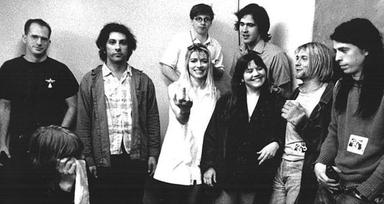
As a member of Generation X, I lived through the change and believe I remember it accurately. The end of the ‘70s and early ’80s were fairly bland. Disco seemed lush and escapist but lacked much substance. Pop was mellow and smooth. Rock was bombastic, and even harder rock seemed cliched or recycled. That left punk or new wave, which got progressively more packaged, palatable, shiny and sanitized in a faintly alarming push for futurism.
There was a Cold War threatening nuclear annihilation if our nation offended what was then the USSR.
Germany was still divided by a wall. We'd not yet seen the full benefits of anti-pollution legislation or anti-smoking campaigns (most of us were still smoking indoors in restaurants, malls and bars – it was an ashy, butty, smelly world). We had a plethora of issues - such as AIDS, homophobia, and systemic violence and oppression (for instance, the MOVE bombing occurred in 1985) - which had kept many people closeted, cowed and chained in poor or actively harmful circumstances.
So when sax-y, bright, big-haired pop songs danced over the zeitgeist in teal, neon and hypercolor, we craved alternative voices. And that's largely what we called them. Sometimes we referred to "college rock," because college radio stations played the things we wanted to hear. Remember, readers - this was before the internet and before people had computers in their homes or phones in their pockets. We had the radio. Some of us didn't even have cable television. If we did, we probably watched MTV every Sunday night for 120 Minutes - a two-hour block of videos featuring fresh new music from the likes of 39 Steps, Blancmange, Camper Van Beethoven, The Dead Milkmen, Fuzzbox, and REM (they were newer then!)
By 1991, Michael Jackson, Whitney Houston, Mariah Carey, Paula Abdul, and Bryan Adams WERE EVERYWHERE. When they weren't, it was Enya and Kenny G. Pat Robertson and the 700 Club were gaining traction with the Christian Coalition, saying things like "You say you're supposed to be nice to the Episcopalians and the Presbyterians and the Methodists ... I don't have to be nice to the spirit of the Antichrist." The US had stormed the desert in the first Gulf War and its police officers had beaten Rodney King.
Anita Hill spoke up about sexual harassment, and Clarence Thomas was promoted to the highest judgeship in the nation. Reality was biting, and the mainstream soundtrack (which felt vast and immersive before everyone had instant access to alternative products, information, and community bubbles) felt like national Prozac.
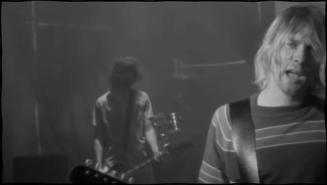
But on Sept. 30, 1991, 120 Minutes played a video of som Scooby Doo urchin in a stripe shirt with stringy hair and a left-handed guitar. What the fuzznugget was he singing? I couldn’t understand half of it. Were those anarchy cheerleaders? What in all infernal regions was that sepia-toned stuff? OMGILOVEDITIWASHOOKED!
I, although I loved music, was a relatively suburban person raised as a middle-class WASP (White Anglo-Saxon Protestant.) I didn’t always know how to access all of the cutting edges, especially if they were dirty. I’d never heard anything like “Smells Like Teen Spirit,” although I already liked Jane's Addiction and had been listening to The Pixies. My musical pedigree was a long love affair with The Cure, owning every Depeche Mode album to date, and a solid appreciation for The Smiths. I was obsessed with Nine Inch Nails and attended Skinny Puppy shows. I played The Sex Pistols and the soundtrack to “Pump Up the Volume.” I was versed in and diversified in everything from Agent Orange to Bauhaus (Peter Murphy was revered) to The Cult to Dinosaur Jr to Fishbone to Nitzer Ebb to the Replacements to the Sugarcubes...but I'd never encountered anything like Nirvana.
Of course, this trio (which had been through several lineup changes) had been making noise well before before achieving MTV airtime. They had a good team and great instincts. Nirvana didn’t stay an alternative, underground voice for long. “Smells Like Teen Spirit” was #6 on Billboard’s Hot 10 and “Nevermind” was the #1 album by January 11, 1992. Everyone wanted more grunge.
I loved Nirvana, and I liked adjacent bands (Soundgarden, Alice in Chains), but I really didn’t care for others. I couldn’t get into Pearl Jam, and anything else that rode on grunge’s tattered coattails drove me bonkers – unless you counted femalefronted groups like Babes in Toyland, L7, and yes, Hole.
The grunge look was featured in haute couture in a predictably sad and cruel capitalistic co-opting of what had been creative thrift store, utilitarian poverty clothing choices. Prior to grunge, one had usually dressed up to go out. Suddenly people were paying for jeans with premade rips and stains; that relaxed, comfortable, casual style has lasted to the present day.
“Heroin chic” was the look to aspire to for women (and some men) – pale skin, stringy hair, dark undereyes, and above all, an extreme thinness. Women later worked for decades to reclaim body image acceptance and positive health messaging for all body shapes and types, but with the advent of GLP-1 drugs and skinny influencers, the pendulum seems to be swinging back again.
Seattle was the hip place to be; Grunge helped Starbucks to become global, and tech companies like Microsoft, Manley & Associates (later EA Seattle), Expedia, and Amazon grew into tech movers and shakers.
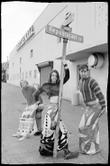
During the brief, hectic heyday of grunge, girls came to the front. Not only was Kurt Cobain walking the sometimes-skirted walk, but his friend Kathleen Hanna had started Bikini Kill and was shouting that phrase to create female-centered mosh pits. Strong women such as Courtney Love (love her or hate her) were prominent and proliferating. “Sassy” magazine ran from 1988-1996 and the riot grrl scene drew attention using zines.
But by 1994, it was over. Not only was grunge music oversaturating the market, but many of its artists were either suffering from substance abuse or their lives had already ended.
I saw Nirvana at the State Fairgrounds in Oklahoma City on December 8, 1993. Shonen Knife and The Breeders opened. Security made us sit on the large, open concrete floor of the Travel and Transportation building before the set. We cynically complained. Both opening bands were engaging, and we had hopes for a great show. It wasn’t so. The sound was okay for a crappy concert venue, but there was little energy and fire from Nirvana. Maybe Kurt’s stomach hurt. His stomach troubles – as well as the rest of his life – were well-documented, as were his substance abuse issues and custody battle for daughter Frances, based on allegations that he and Courtney were druggedly unfit parents. People that didn’t even enjoy Nirvana knew that Kurt Cobain was depressed. And yet he could still spin things and surprise us.
I remember where I was on April 4, 1994. My spouse and I were walking in Heritage Park Mall, where he worked at the time. An employee ran up, breathless and wide-eyed. “Did you hear?” We waved it off. We’d heard the same a month prior. Rome. Kurt had overdosed and survived. Surely this was just a mistake. He’d be fine. It was fine.
It wasn’t fine.
We spent the evening in front of the stereo listening to Nirvana. And the rest of the decade seemed to get worse.
Oh, sure, we got Britpop, “The Crow,” brief swing revival… but Kurt – although he had been an unwilling champion – had spoken out about LGBTQ issues and women’s rights. With his voice gone, his antagonizing questions about morality, God, freedom and creativity and his dissatisfaction with the status quo, it seemed that some spaces, thinned, shrank or dried up. They got smaller and less inviting, less accessible.
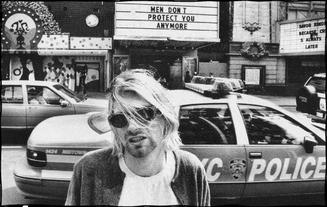
Everything got darker. Because some of the dissonant grunge tone carried on and a less soul-searching, less sensitive nu-metal reared up, yet we were still dealing with loss. Andrew Wood died in 1990, and Stefanie Sargent of 7 Year B***h died in ‘92. Mia Zapata of The Gits was murdered in 1993. Kristen Pfaff overdosed in ’94, Layne Staley in ‘02, Mike Starr in 2011, and Scott Weiland in 2015. Chris Cornell died of suicide in 2017. Grunge, once a frenetic expression of Gen-X energy and resistance, kept taking life from us.
Some musicians (cough Robert Plant cough) said about the grunge movement, “What happened in America in 1991 is that you finally got your own Punk” (Nah, brah, I’d argue that we actually started that one for ya – CBGB predates the Pistols BUT I DIGRESS.)
Although grunge will always be linked with "The Seattle Sound," proto-grunge may have started as early as or earlier than Flipper (San Francisco 1979,) The Melvins (Montesano 1983,) The Wipers (Portland 1977,) and Black Flag (Hermosa Beach 1978.)
Black Flag's 1984 album “My War” was a departure for the band and the hardcore scene in general.
The second side of the album slowed down the punk pace, blending it with a Black Sabbath-esque sludge that was very polarizing at the time, but which inspired and influenced bands such as Green River, The Melvins, Mudhoney, and Nirvana. (I had three Black Flag albums - “Damaged,” “My War,” and “Slip It In.” “My War” was definitely my least favorite, and I rarely played the second side. However, I did like punk elements and what would eventually become shoegaze (noise and industrial music), so I was into a lot of what would become grunge-adjacent and influential acts.)
Sub Pop records is synonymous with grunge. Founded by Bruce Pavitt and Jonathan Poneman in ‘86, Sub Pop signed grunge and other alternative bands such as (but not limited to) Babes in Toyland, Beach House, Deerhunter, Fleet Foxes, Fugazi, Hole, Modest Mouse, Mudhoney, Nirvana, Screaming Trees, SleaterKinney, Sonic Youth, Soundgarden, Sunny Day Real Estate, The White Stripes, The Wipers, Tacocat, TAD, and The Vaselines.
In addition, Green River, Malfunkshun, and Mother Love Bone were two Seattle bands which helped shape the scene and the sound. Green River formed in ‘84 with Mark Arm, Jeff Ament, Steve Turner, and Alex Vincent, who would later be members of Mother Love Bone, Mudhoney, Pearl Jam, and Temple of the Dog. Their sound is often described as diverse, with blues, classic rock, and punk elements. Malfunkshun combined KISS's theatricality with grotty distortion. Mother Love Bone fused glam metal with a cheekier attitude and poppier sound, and was poised to break big before the untimely death of front man Andrew Wood.
Music may have been greatly different had Andrew Wood survived, and if Kurt Cobain lived to speak on as he and his generation aged. Grunge, though it lasted for a very brief moment in time, was a huge cultural shift that propelled multiple societal changes, though not all of them lasted. I wonder – will we ever see another explosion like it? -Granny Anarchy
89thStreet
8911NWesternAve(OKC) 89thstreetokc.com
BeerCityMusicHall 1141NW2nd(OKC) beercitymusichall.com
BlueDoor
2805NMcKinleyAve(OKC) bluedoorokc.com
BlueNote
2408NRobinsonAve(OKC) okcbluenote.com
Bookish
1005NW36thSt(OKC) shop-bookish.com
Criterion
500EastSheridanAve(OKC) criterionokc.com
Core4Brewing 7NLeeAve(OKC) core4brewing.com
DiamondBallroom
8001SEasternAve(OKC) diamondballroom.com
FactoryObscura 25NW9thSt(OKC) factoryobscura.com
GrandRoyale 1749NW16thSt (OKC) instagram.com/grandroyaleokc
JonesAssembly 901WSheridanAve(OKC) thejonesassembly.com
MyceliumGallery 2816 N Pennsylvania Ave (OKC) myceliumgallery.com
OKCider
705W.SheridanAve(OKC) okciderco.com
Opolis 113NCrawfordAve(Norman) opolis.org
ThePetShop 1529LinwoodBlvd(OKC) thepetshopokc.com
Ponyboy 423NW23rdSt(OKC) ponyboyokc.com
ResonantHead 400SW25thSt,SuiteA(OKC) resonanthead.com
Resonator 325EMainSt(Norman) resonator.space
TheSanctuary 1012NIndianaAve(OKC) facebook.com/thesanctuaryok
51stStreetSpeakeasy 1114NW51stStreet(OKC) 51stspeakeasy.com
TowerTheatre 425NW23rdSt(OKC) towertheatreokc.com
TheVenue 1103NorthVilla(OKC) thevenueokc.com
ZooAmp 2101NE50thSt(OKC) okczooamp.com
Celtic Jam at the Patriarch Funk at the Blue Note
Blues at the Speakeasy
Bluegrass at the Patriarch Jazz at the Speakeasy
MONDAY
TUESDAY
WEDNESDAY
Experimental Night at Opolis - every 4th Wednesday
Wasted Hours: A Singer-Songwriter Showcase at Grand Royale
Open Mic night at Factory Obscura - 1st
Bluegrass at the Speakeasy
THURSDAY
Song Swap at the Blue Note (usually 1st Thursdays)
Live Music at Johnnie’s on Britton
Open Mic Night at Core4 Brewing
Open Mic Night at Bookish
DJ nights at Ponyboy
Live Music at Johnnie’s on Britton
Celtic Jam at the Banjo Museum - 4th
DJ nights at Ponyboy
Live Music at Johnnie’s on Britton
Celtic music at Full Circle Bookstore
FRIDAY
SATURDAY
Songwriter Sessions - 3rd Sundays at Core4 Brewing
Tea & Zines at Floating Bookshop
SUNDAY
by Coconut Telegraph
Recentlyatanestatesale,Ifoundabeautifulpairofbeat-upoldspeakers. Ipaid$6apieceforthem,loadedthemupinmybeat-upoldtruck,anddrove home.UpongettinghomeIhoppedonaFacebookgroupIoccasionallyvisit: “BudgetAudiophile”toaskifIdidanygood.
Tomakealongstoryshort:Idid.Thesewereapairof1974OriginalLarge Advents,otherwiseknownasOLAs.Designedbythelegendarysound engineerHenryKloss,thesewereoncethebudgetpathtohigh-qualitysound.
AquicksearchoneBaywilltellyoutheyareprettyrare,whichisabummer becauseapparentlythey’reamazingwhenyoustackoneupsidedownontop oftheother.HopefullyonedayIwillfindout.
Thesespeakers,thoughamazing,wereinneedofsomeTLC.Thefirstobvious flawbeingthefoamaroundthesubwoofershadallbutdisintegratedover their52yearsofexistence.SoIlookedintorefoaming,orderedakitfroma littlecompanyinFloridacalledSimplySpeakers,watcheda13-minutevideo about50times,andexecutedaperfectrefoam...twice.Thetrickwastonot makeamessoftheglueandensurepropervoicecoilalignment.OnceI startedtalkingaboutrepairsonanotherFacebookgroup,Istartedgetting questionsaboutrecappingthecrossovers.Essentiallytakingouttheold capacitorsandputtinginsomefreshonestobrightenupthesound. Apparentlythisisa“mightaswell”situationsinceI’vealreadygottenthem takenapart.SoIplantolearnhowtosolderandgetafteritlateron.Afterthat comesthedampeningmaterial.IfoundaYouTubevideowhereaguyused sheep’swool.Interestinglyenough,Ifoundsomeonanestatesaleonline auction.
Ioftenthinkaboutthehealingpowerofagoodhobby.ToquoteHankHillof KingoftheHill:“Whywouldanyonedodrugswhentheycouldmowalawn?” There’snotahighcomparabletothewayIfeltlookingdownatthosefreshly refoamedspeakerswhilethegluedried.Ioftenhearthatthereisnothingto doinOklahomaexceptgoouttothebarsormaybegotoagoodrestaurant. Tosomeextentthey’reright,butIoftenwonderwhythesepeoplehaven’t consideredtakingupahobby.Turnthatunusedguestroomintoaworkshop orcarveoutsomespaceinthegarageandhavesomegood,cleanfun,andif youhappentoseeapairofOriginalLargeAdventSpeakersoutinthewild, pleaseputthemonthecoconuttelegraphandI’llbethereassoonasIcan.

I was a child in the 1970s. I still enjoy various space and horror films, “Battle of the Planets”/”Gatchaman” anime, “Close Encounters” (1977) and “The Monster at the End of This Book” (1971). I also adore “Sesame Street” (I look up the Martians/YipYips periodically) and can still sing the 1978 “Godzilla” cartoon theme and COUNTLESS commercials! - Granny Anarchy

Anything Muppets-related will always bring me comfort. - Zoe
“Schoolhouse Rock.” ALWAYS. -la pêche punkette
To keep it simple, STAR WARS! And let’s be real, podracing in The Phantom Menace is the peak. I still lock in every time since I was three. One of my first faves, and I don’t think it’s going anywhere. I am excited for the new podracing game coming out too!! I killed on the 64 version hahaha. - Primal Opossum
I’ve been rewatching a lot of stuff I used to love as a kid – there’s definitely a mix of both treasures and trash. Perpetual favorites include Don Bluth animated flicks & “Gullah Gullah Island.” P.S. Did you know all of “Wishbone” is on Youtube Right now? - Jackalope
Got a question? >>> Oklahoma.UMA@gmail.com