Packaging Needs in 2026
Introduction
In today’s rapidly evolving packaging landscape, choosing the right components is just as important as selecting the product itself. Closures often overlooked play a critical role in ensuring product safety, usability, and brand perception As industries move toward smarter, more sustainable packaging in 2026, businesses must be more strategic than ever in selecting their partners.
This blog is intended to provide general guidance based on current industry trends and best practices The final choice of suppliers should always align with your specific business requirements, regulatory considerations, and operational goals.
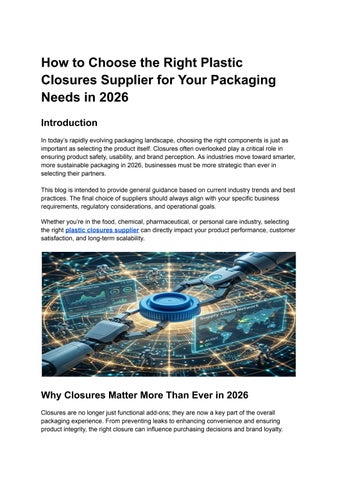
Whether you’re in the food, chemical, pharmaceutical, or personal care industry, selecting the right plastic closures supplier can directly impact your product performance, customer s ti f ti d l t l bilit

Why Closures Matter More Than Ever in 2026
Closures are no longer just functional add-ons; they are now a key part of the overall packaging experience. From preventing leaks to enhancing convenience and ensuring product integrity, the right closure can influence purchasing decisions and brand loyalty
In 2026, factors like sustainability, precision engineering, and compatibility with automated filling lines are shaping the way businesses evaluate suppliers. This makes it essential to look beyond pricing and focus on long-term value.
Key Factors to Consider When Choosing a Supplier
1. Product Quality and Consistency
The first and most critical factor is the quality of closures Even a minor defect can lead to leakage, contamination, or product recalls-resulting in financial and reputational damage
A reliable supplier should:
● Follow strict quality control standards
● Offer uniformity across batches
● Provide certifications and compliance documentation
Consistency is particularly important for industries dealing with liquids, chemicals, or sensitive formulations.
2. Range of Products and Customization
Every product has unique packaging needs. A supplier with a diverse portfolio can offer solutions tailored to different applications
Look for:
● Various closure types (screw caps, flip tops, dispensing caps)
● Material options suited for different industries
● Customization capabilities for size, color, and branding
A versatile plastic closures supplier will be able to adapt to your evolving product requirements without requiring you to switch vendors frequently
3. Industry Experience and Expertise
Experience plays a major role in understanding complex packaging challenges. Suppliers with a strong industry background are better equipped to recommend suitable solutions and troubleshoot issues proactively
Consider:
● Years in the business
● Industries served
● Technical knowledge and consultation support
An experienced supplier often acts as a strategic partner rather than just a vendor
4. Supply Chain Reliability
Inconsistent supply can disrupt production schedules and lead to costly delays With global supply chains becoming more dynamic, reliability is a key differentiator
Evaluate:
● Manufacturing capabilities
● Inventory management systems
● Delivery timelines and logistics network
Suppliers with a global presence or multiple sourcing hubs can offer better flexibility and risk mitigation
5. Compliance and Sustainability Standards
Sustainability is no longer optional, it's a necessity In 2026, businesses are expected to align with environmental regulations and consumer expectations
Choose suppliers who:
● Offer recyclable or eco-friendly materials
● Comply with international safety standards
● Follow ethical manufacturing practices
This not only ensures compliance but also strengthens your brand’s environmental positioning.
6. Compatibility with Your Packaging System
Closures must seamlessly integrate with your existing packaging setup, including bottles, containers, and filling lines
Check for:
● Fit and sealing compatibility
● Performance under different conditions (temperature, pressure)
● Ease of use for end consumers
Testing samples before finalizing a supplier is highly recommended to avoid operational issues later.
7. Cost vs Value
While pricing is an important factor, it should not be the sole decision driver. Low-cost options may compromise quality, leading to higher long-term costs
Instead, focus on:
● Total cost of ownership
● Product durability and performance
● Supplier reliability
The right plastic closures supplier will offer a balance of cost efficiency and long-term value
Emerging Trends to Watch in 2026
To stay ahead in the market, it’s important to align with emerging trends:
● Smart closures: Integration of QR codes and tracking features
● Tamper evident designs: Increasing demand for safety and transparency
● Lightweight materials: Reducing shipping costs and environmental impact
● User-friendly designs: Enhancing convenience and accessibility
Suppliers who are investing in innovation can help future-proof your packaging strategy
Common Mistakes to Avoid
When selecting a supplier, businesses often make avoidable mistakes such as:
● Prioritizing price over quality
● Ignoring long-term scalability
● Overlooking compliance requirements
● Failing to test samples before bulk orders
Avoiding these pitfalls can save time, money, and operational challenges in the long run
1. What should I look for in a plastic closure supplier?
You should evaluate quality standards, product range, customization capabilities, supply chain reliability, and compliance with industry regulations A supplier that offers both consistency and flexibility is ideal
2. Why is closure compatibility important in packaging?
Compatibility ensures that the closure fits perfectly with your container, preventing leaks, contamination, and usability issues It also helps maintain product integrity during transportation and storage
3. Are sustainable closures available in 2026?
Yes, many suppliers now offer recyclable, lightweight, and eco-friendly closure options to meet growing environmental regulations and consumer demand for sustainable packaging.
4. How can I test a supplier before committing?
Request product samples, evaluate performance under real conditions, and review certifications It’s also helpful to assess their responsiveness and technical support during the trial phase
5. Is it better to choose a local or global supplier?
Both have advantages Local suppliers may offer faster delivery, while global suppliers often provide cost efficiency and a wider product range. The best choice depends on your operational needs.
Conclusion
Choosing the right closure partner is not just a procurement decision-it’s a strategic move that influences your product’s success in the market From ensuring safety and durability to enhancing user experience, the right supplier plays a vital role in your packaging ecosystem
As businesses navigate the complexities of 2026, working with a partner who understands both technical requirements and market dynamics can make all the difference A company that combines experience, global sourcing capabilities, and a commitment to quality like Metro International LLC can help streamline your packaging processes while supporting long-term growth