Metabolic Strategies to Combine Strength Training and Medical Weight Loss
Successfully

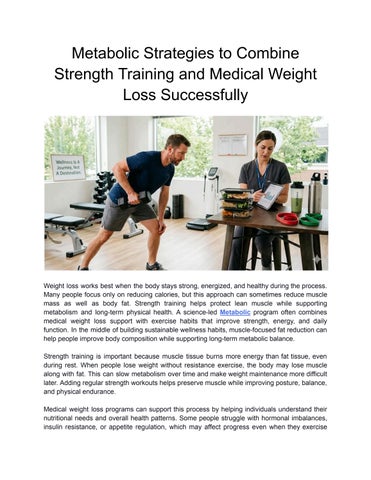
Weight loss works best when the body stays strong, energized, and healthy during the process. Many people focus only on reducing calories, but this approach can sometimes reduce muscle mass as well as body fat Strength training helps protect lean muscle while supporting metabolism and long-term physical health. A science-led Metabolic program often combines medical weight loss support with exercise habits that improve strength, energy, and daily function In the middle of building sustainable wellness habits, muscle-focused fat reduction can help people improve body composition while supporting long-term metabolic balance.
Strength training is important because muscle tissue burns more energy than fat tissue, even during rest When people lose weight without resistance exercise, the body may lose muscle along with fat This can slow metabolism over time and make weight maintenance more difficult later. Adding regular strength workouts helps preserve muscle while improving posture, balance, and physical endurance
Medical weight loss programs can support this process by helping individuals understand their nutritional needs and overall health patterns Some people struggle with hormonal imbalances, insulin resistance, or appetite regulation, which may affect progress even when they exercise
consistently Physician-guided care can help identify these factors while creating realistic strategies that match a person’s lifestyle and fitness level.
Strength training does not require complicated gym routines. Simple exercises such as squats, resistance-band movements, push-ups, and light dumbbell workouts can yield excellent results when performed consistently Many beginners benefit from starting with two or three weekly sessions focused on proper form and gradual progress. Over time, stronger muscles can improve daily movement and support healthier metabolic function
Protein intake also becomes more important when combining exercise with weight management Protein supports muscle recovery and helps maintain fullness between meals Balanced nutrition paired with strength training often helps reduce cravings while supporting steady energy levels throughout the day. Hydration matters as well because muscles recover more effectively when the body stays properly hydrated
Recovery is another key part of success Some people believe harder workouts always produce faster results, but the body also needs rest to repair muscle tissue and restore energy Poor recovery may increase fatigue and reduce workout performance over time. Sleep quality, stress management, and consistent routines all play important roles in helping the body respond positively to both exercise and medical weight loss strategies
Cardio exercise can still be helpful, but strength training often creates longer-lasting benefits for body composition Walking, cycling, or light aerobic activity paired with resistance training may improve heart health while supporting fat reduction The goal is not to exercise excessively but to create a balanced plan that feels sustainable over time.
Tracking progress beyond the scale can also improve motivation. Strength gains, improved endurance, better sleep, and increased daily energy often appear before major changes in body weight Focusing solely on scale numbers may overlook important improvements occurring within the body. Many people feel more confident and physically capable after building strength, even during gradual weight loss
Healthy routines become easier to maintain when they fit naturally into daily life. Short workouts, meal planning, hydration, and recovery habits often create stronger long-term results than extreme programs that are difficult to continue. Strength-based metabolic wellness can support healthier aging, improved mobility, and more consistent energy over time. Combining resistance training with medically supervised weight loss may help individuals create sustainable progress while protecting both physical health and metabolic function.