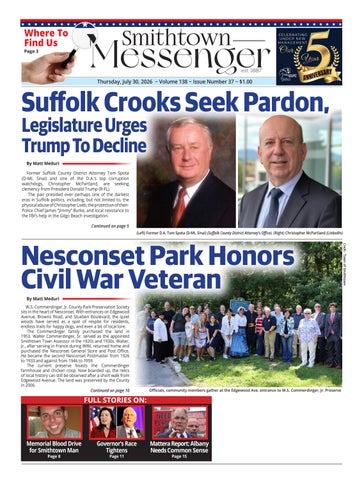
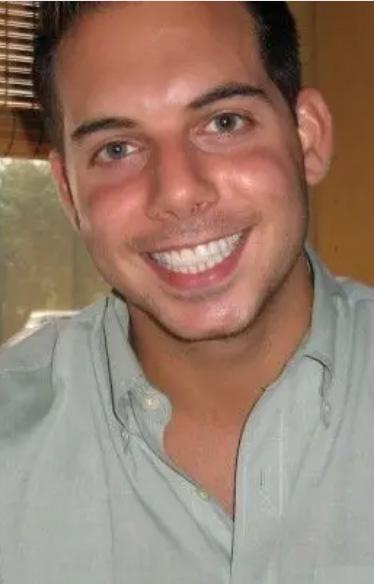
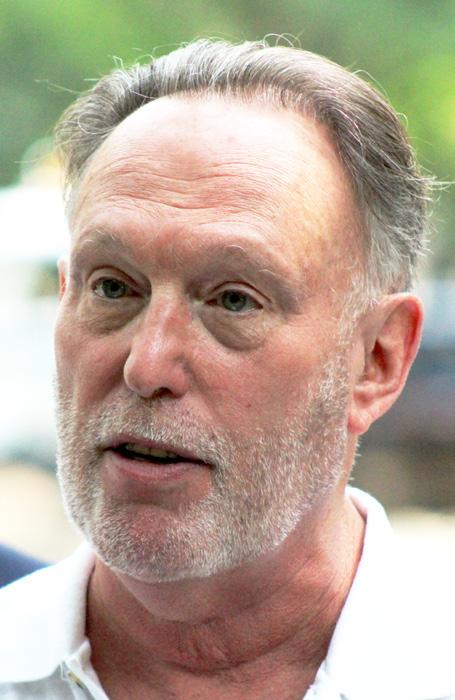
Former Suffolk County District Attorney Tom Spota (D-Mt. Sinai) and one of the D.A.’s top corruption watchdogs, Christopher McPartland, are seeking clemency from President Donald Trump (R-FL).
The pair presided over perhaps one of the darkest eras in Suffolk politics, including, but not limited to, the physical abuse of Christopher Loeb, the protection of thenPolice Chief James “Jimmy” Burke, and local resistance to the FBI’s help in the Gilgo Beach investigation.
Continued on page 5
Suffolk Crooks Seek Pardon, Legislature Urges Trump To Decline Nesconset Park Honors Civil War Veteran
By Matt Meduri
W.S. Commerdinger, Jr. County Park Preservation Society sits in the heart of Nesconset. With entrances on Edgewood Avenue, Browns Road, and Stueben Boulevard, the quiet woods have served as a spot of respite for residents, endless trails for happy dogs, and even a bit of local lore.
The Commerdinger family purchased the land in 1953. Walter Commerdinger, Sr. served as the appointed Smithtown Town Assessor in the 1920s and 1930s. Walter, Jr., after serving in France during WWI, returned home and purchased the Nesconset General Store and Post Office. He became the second Nesconset Postmaster from 1926 to 1933 and against from 1946 to 1959.
The current preserve boasts the Commerdinger farmhouse and chicken coop. Now boarded up, the relics of local history can still be observed after a short walk from Edgewood Avenue. The land was preserved by the County in 2006.
Continued on page 10
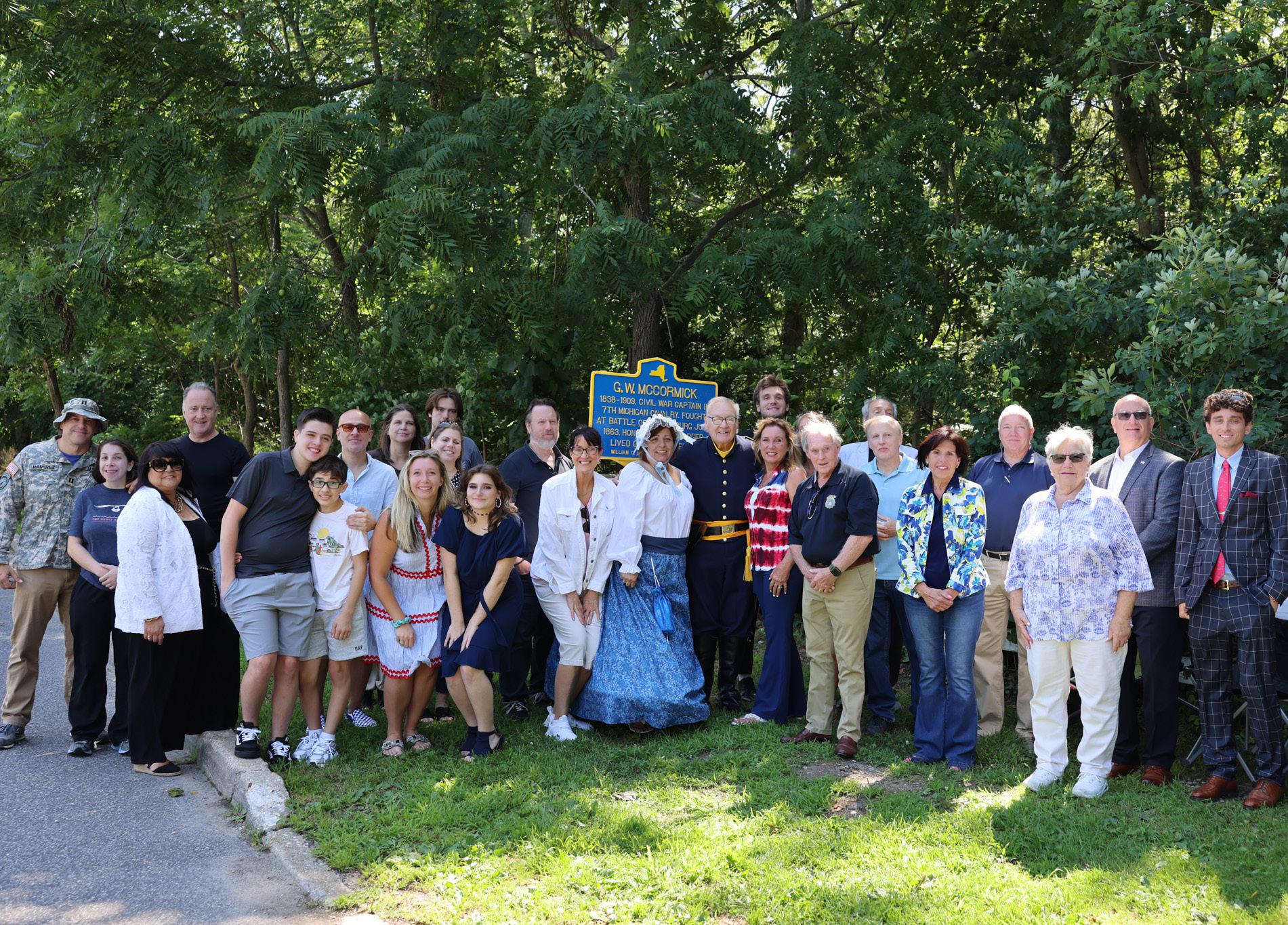
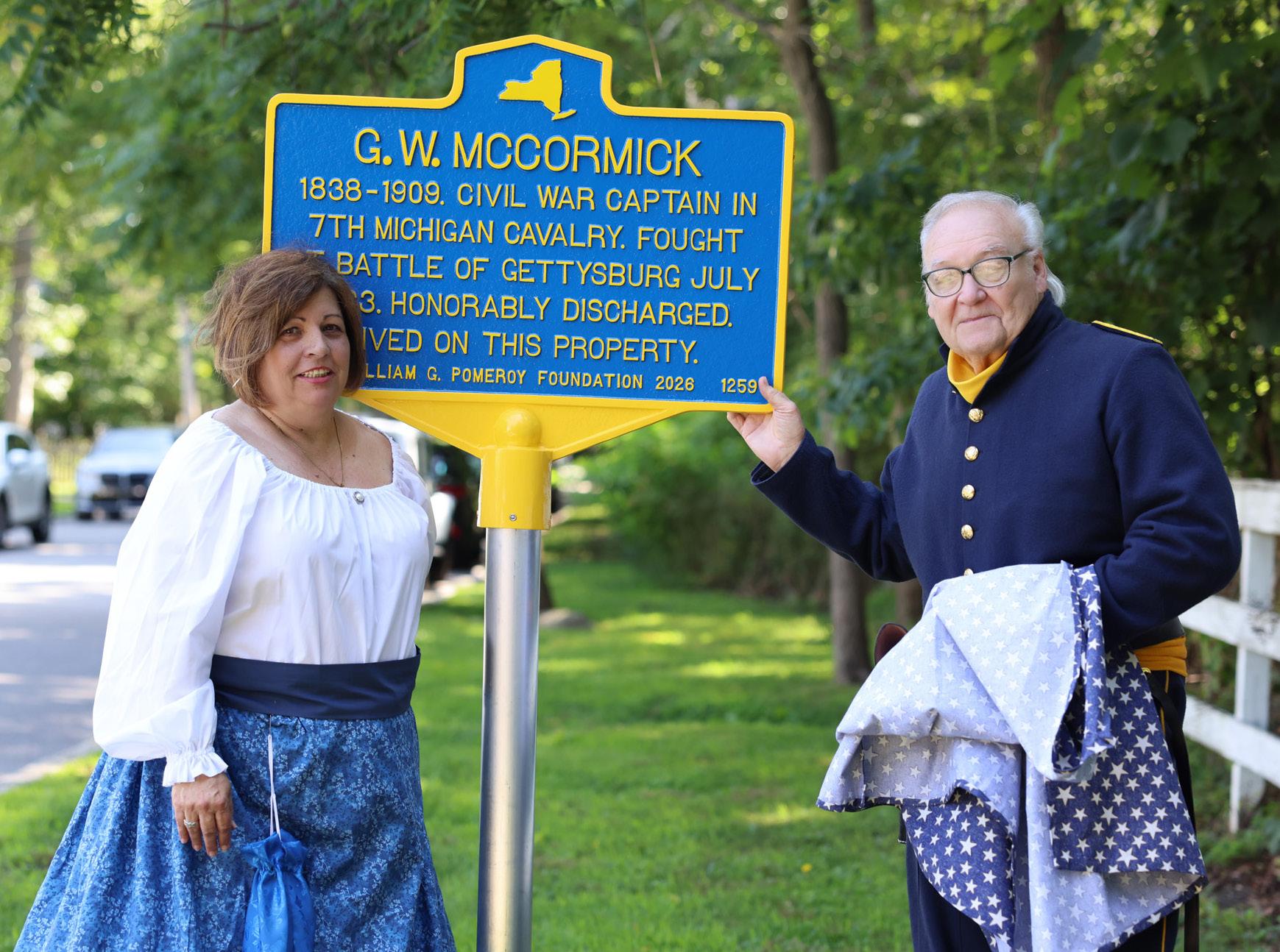
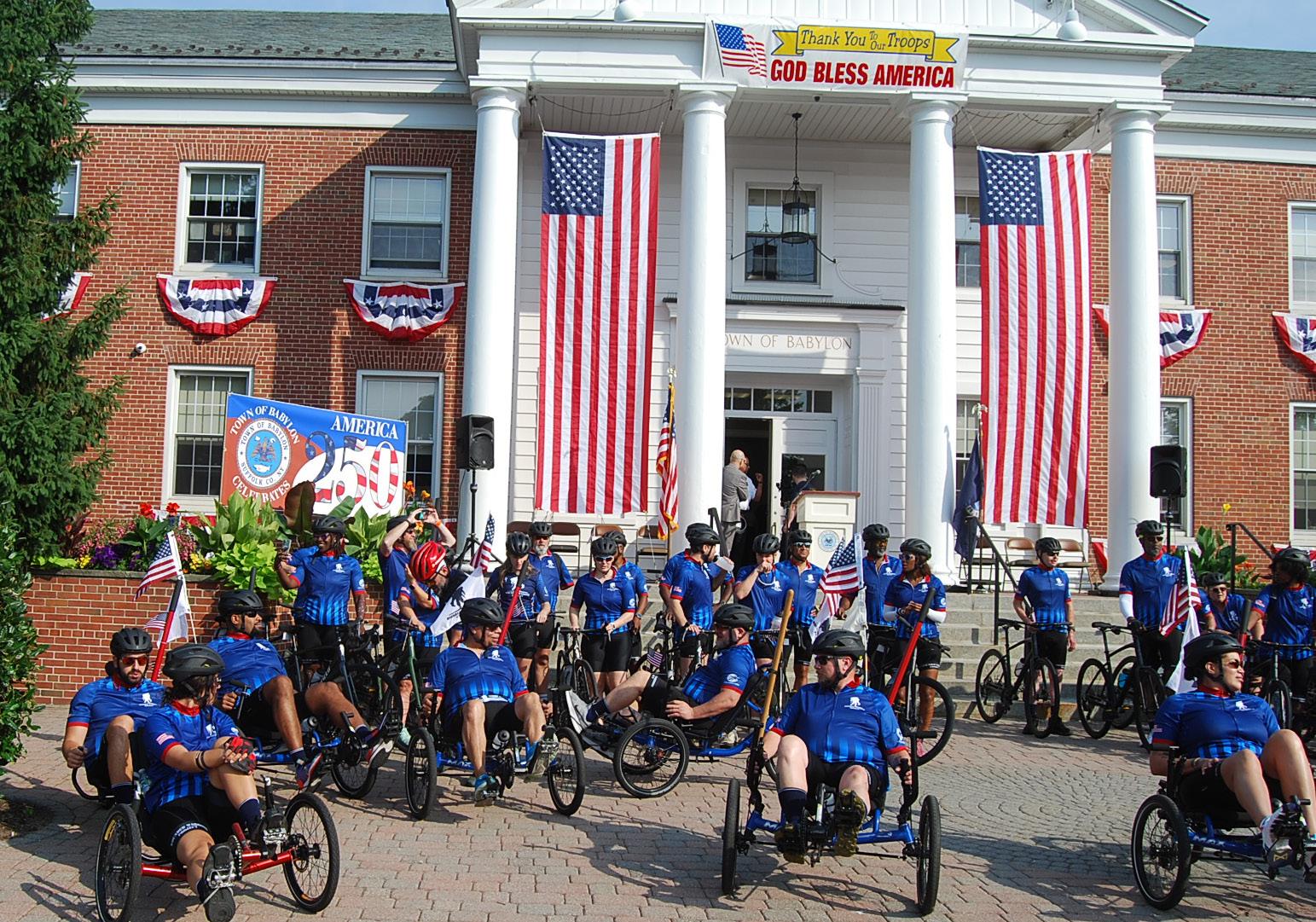
Officials, community members gather at the Edgewood Ave. entrance to W.S. Commerdinger, Jr. Preserve
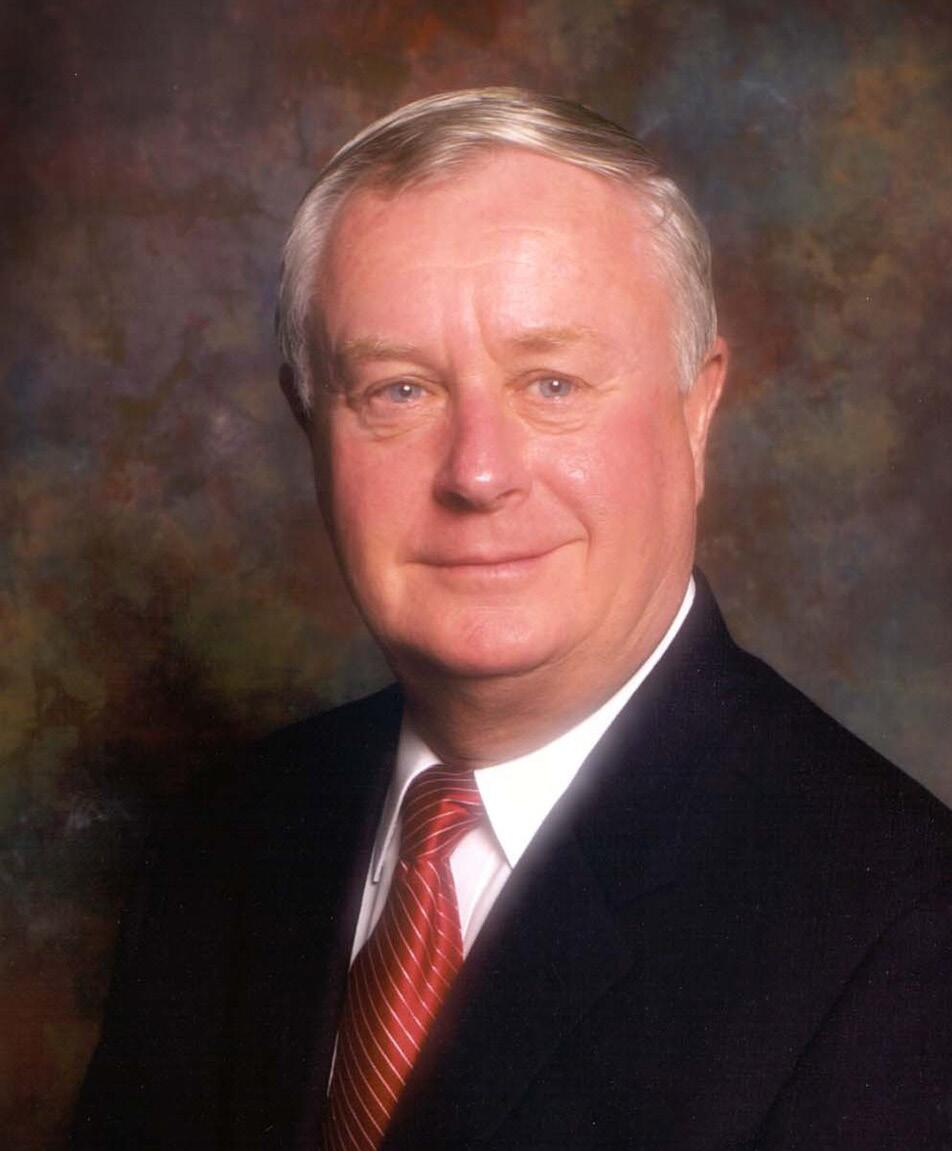
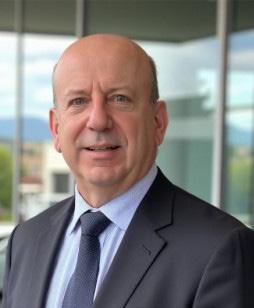
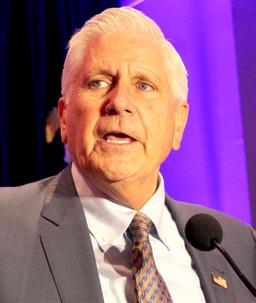
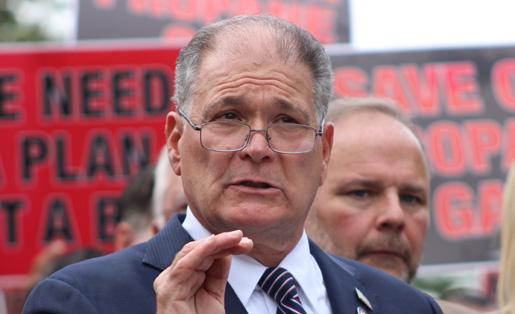
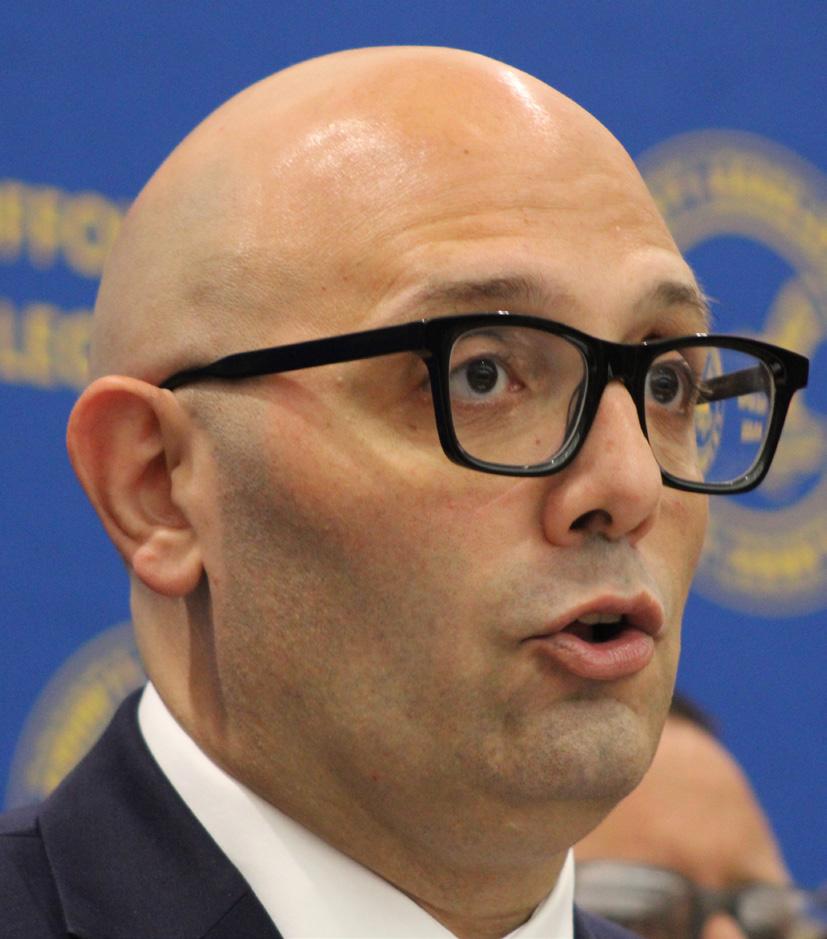
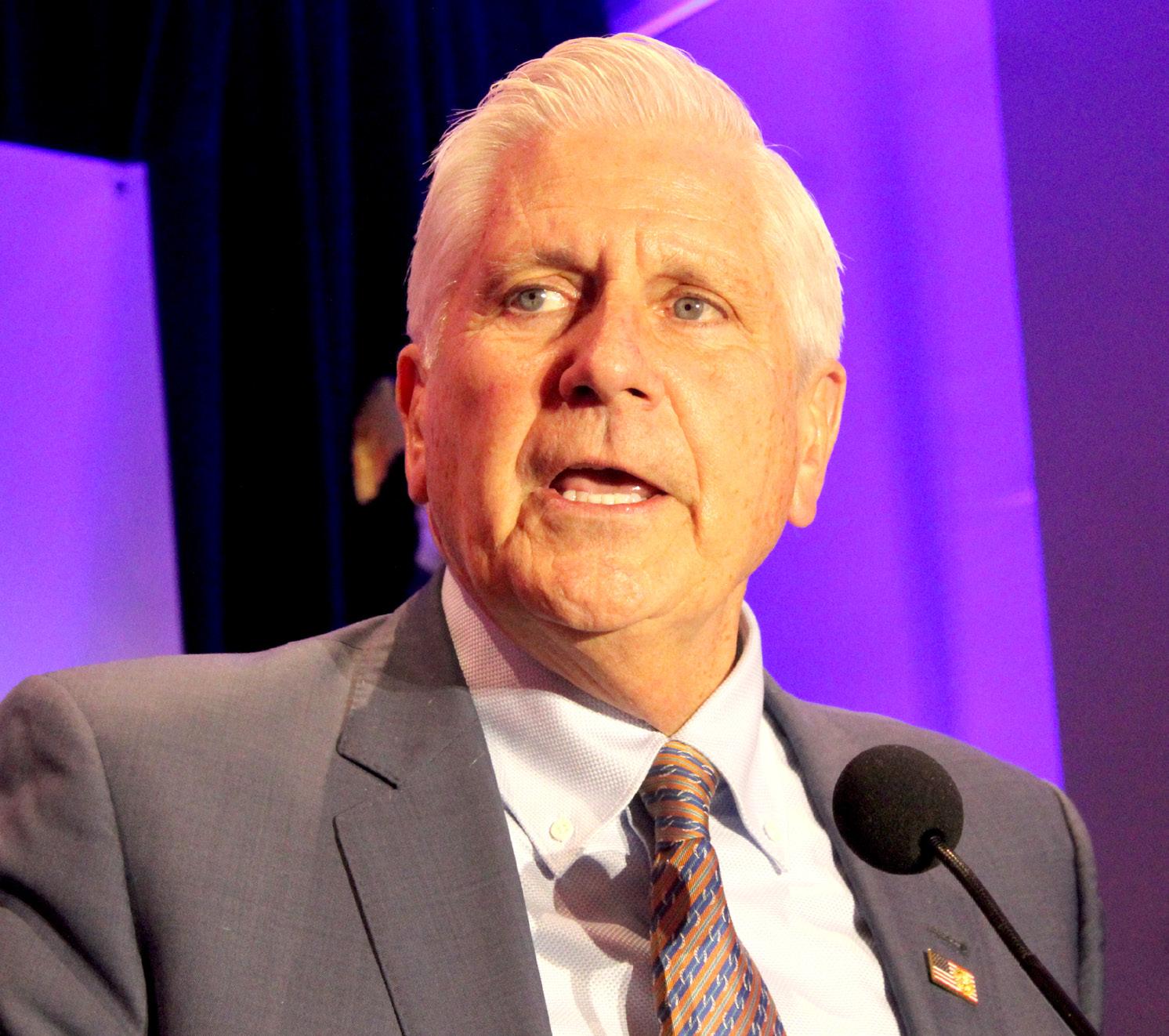
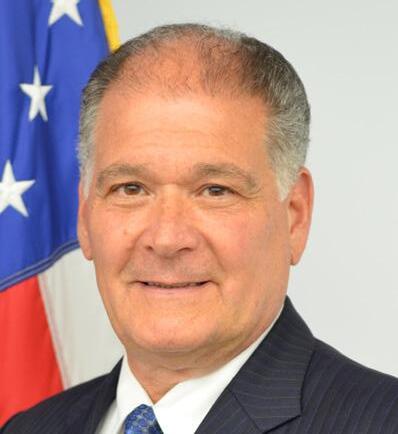
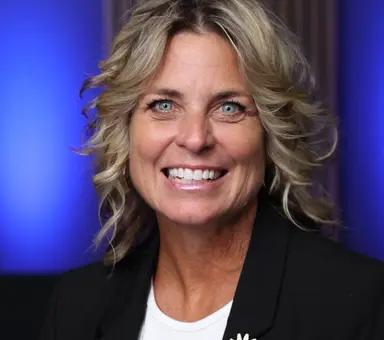
(Left) Former D.A. Tom Spota (D-Mt. Sinai) (Suffolk County District Attorney’s Office). (Right) Christopher McPartland (LinkedIn) CreditTown of Smithtown
SUMMER EVENTS
Sayville Farmers Market at the Islip Grange: Every Saturday until November, 9:00a.m. to 2:00p.m.
Port Jefferson Farmers Market: Every Sunday until November, 9:00a.m. to 2:00p.m.
Islip Farmers Market at Town Hall: Every Saturday, 7:00a.m. to 2:00p.m.
Suffolk County Farmers Market at the H. Lee Dennison Building: Thursdays through October 1, 10:00a.m. to 2:00p.m.
Bay Walk (Children’s Program Ages 8+): Wednesday, August 5, 10:00a.m. to 12:00p.m. at
Robert Moses State Park. Nighttime Sensory Walk (Family Program): Friday, August 7, 7:45p.m. to 9:30p.m. at Connetquot River State Park.
Sayville Summerfest at Gillette Park & The Common Ground: August 7-9, various times.
Urban Ecology (Adult Program): Sunday, August 9, 10:30a.m. to 12:00p.m. at Nissequogue River State Park
Beginning Birding at Planting Fiels Arboretum: Sunday, August 9, 10:00a.m. to 11:30a.m.
Perseids Meteor Shower: Wednesday, August 12 through predawn hours of August 13. Viewable at Jones Beach, Sunken Meadow, Montauk Point, Wildwood, Orient Beach, and Hallock State Parks.
Bat Safari: Friday, August 14, 7:30p.m. to 9:30p.m. at Wildwood State Park
Kayak Nature Tour: Saturday, August 8, 10:00a.m. to 12:00p.m. at Heckscher State Park
(631) 269-6421
HAUPPAUGE:
Draw and Paint Pikachu (Grades 1-5) –
- Sunday, August 2, 1:00p.m. to 2:00p.m.
Housing Counseling –- Tuesday, August 4, 9:00a.m. to 1:00p.m.
COMMACK:
Tiny Songbirds –
- Monday, August 3, 11:00a.m. to 11:30a.m.
Dance, Cardio, Sculpt –
- Wednesday, August 5, 9:00a.m. to 10:00a.m.
NESCONSET:
All Abilities Gardening Club- Monday, August 3, 10:00a.m. to 11:00a.m.
Morning Bingo for Adults –- Tuesday, August 4, 10:00a.m. to 11:30a.m.
KINGS PARK:
Game Day –
- Monday, August 3, 12:30p.m. to 2:30p.m.
Library Scavenger Hunt –
- Tuesday, August 4, 3:15p.m. to 4:00p.m.
SACHEM:
Open Play Mahjong and Cards –
- Monday, August 3, 9:30a.m. to 2:30p.m.
Teen Volunteers: Middle School Survival Kits –
- Monday, August 3, 6:30p.m. to 7:30p.m.
SMITHTOWN:
Make it Monday –
- Monday, August 3, 6:30p.m. to 8:30p.m.
Dennis Cannataro Family Summer Concert Series –- Thursday, August 6, 7:30p.m. to 9:00p.m.
Spota served as Suffolk D.A. from 2002 to 2017. McPartland was the Chief of Investigations and the Government Corruption Bureau Chief within the D.A.’s office.
Spota and McPartland were both convicted in 2019 for conspiracy, obstruction of justice, witness tampering, and acting as accessories to a civil rights violation.
In 2021, federal prosecutors requested a sentence of 20 years for both Spota and McPartland. At the time, Spota was 80 years old. Instead, they were fined $100,000 and sentenced to 5 years, but only served about 2 years each.
Spota is requesting that Trump grant him a pardon based on his professional background, while McPartland suggests that he and Spota were politically targeted.
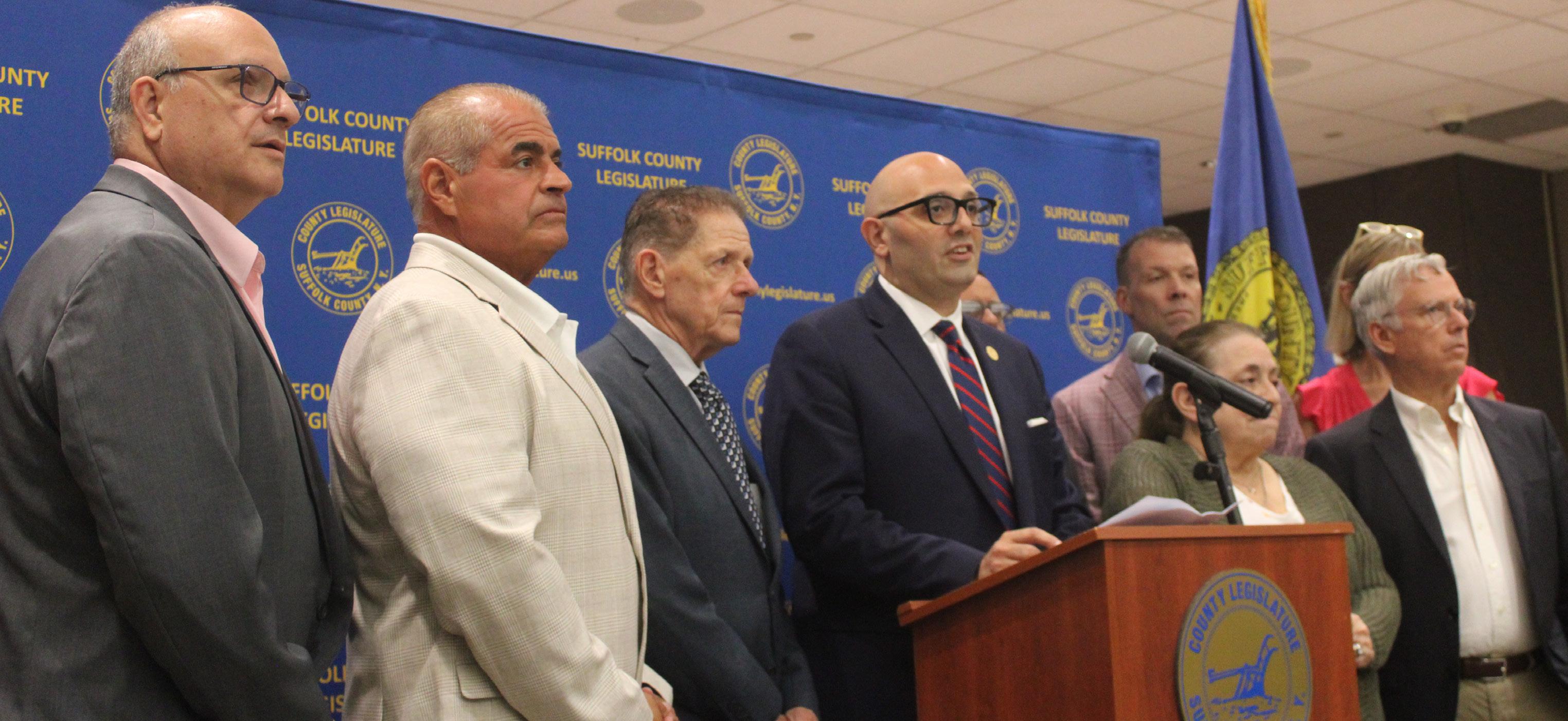
Presiding Officer Anthony Piccirillo (R-Holtsville) and members of the Suffolk County Legislature’s Republican caucus penned a letter to President Trump requesting that he does not grant any form of clemency to Spota and McPartland.
I recognize and respect the President’s constitutional authority to grant pardons, which is an important executive function,” said Piccirillo at the Legislature building in Hauppauge last Thursday afternoon. “But in this case, I believe the facts are serious and the crimes and damages afflicted upon Suffolk County residents overwhelmingly
result in us saying no to clemency.”
Piccirillo characterized Spota as “not an ordinary defendant;” instead, as D.A., he was the County’s “chief law enforcement office.”
“These were two individuals entrusted with enormous authority and extraordinary responsibility to uphold the law. Instead, a federal jury found that they abused that authority,” said Piccirillo. He added that the case did not consist of “minor violations or technical mistakes,” rather, “an effort to cover up the beating of a handcuffed prisoner” by then-Police Chief Burke.
“Federal prosecutors established that SPOTA and McCartland influenced the officers to intimidate witnesses, interfere with the federal investigation, and protect powerful political figures,” said Piccirillo. “They did not merely fail to uphold the law, they actively undermined it and the institutions they were sworn to protect. When those at the highest levels of government abuse their authority, the damage extends far beyond a single criminal case. It causes residents to question whether the system is fair, whether powerful people are held to the same standard as everyone else, and whether they can trust the institutions created to protect them.”
Public trust significantly eroded in Suffolk leaders at the time. Burke, appointed Police Chief by then-County
Executive Steve Bellone (D-West Babylon), brought with him a rap sheet of allegations of drug use and fraternizing with prostitutes on duty and in his cruiser. The 2012 brutalization of Christopher Loeb, then 26, stemmed from Loeb’s break-in of Burke’s cruiser and the theft of a duffel bag belonging to Burke that had sex toys, a box of cigars, a department-issued gun belt, ammunition, and pornography that Loeb’s attorney had described as “nasty.”
That era was also rife with fiscal woes that gave Suffolk a “junk bond” status in the eyes of municipal creditors, while now-Presiding Officer Piccirillo and other Legislators were debating the legality of the red-light camera surcharge.
“Suffolk County was a cesspool of corruption for over a decade under the leadership of Tom Spota,” Piccirillo told The Messenger, a claim he had long echoed before and after his 2019 election to the Legislature’s Eighth District. “It really is a team effort, and to show the public every single day that we operate with transparency and accountability is really the linchpin of government to rebuild the institutions that are supposed to protect people, not just people in positions of power.”
Piccirillo mentioned that once the Republican majority came into power in 2022, accompanied by the election of now-D.A. Ray Tierney (R), public trust has begun to turnaround.
This is not about political parties, it’s not about personal animosity, it’s about a fundamental American principle,” said Piccirillo. “In fact, those who are entrusted to enforce the law must be held to an even higher standard. When public officials use their authority to obstruct justice, intimidate witnesses, and conceal wrongdoing, accountability is essential.
Presiding Officer Anthony Piccirillo
“ “
“This is not about political parties, it’s not about personal animosity, it’s about a fundamental American principle,” said Piccirillo. “In fact, those who are entrusted to enforce the law must be held to an even higher standard. When public officials use their authority to obstruct justice, intimidate witnesses, and conceal wrongdoing, accountability is essential.”
Suffolk County Clerk Vincent Puleo (R-Nesconset) echoed these sentiments.
“The confidence that we instill in our jurors will be degraded,” said Puleo, if Trump grants Spota and McPartland any type of judicial ease. “It would be a shame not only for Suffolk County, but for our jurors as a whole.”
Legislators Jim Mazzarella (R-Moriches), Nick Caracappa (C-Selden), Chad Lennon (C-Rocky Point), Dominick Thorne (R-Patchogue), Trish Bergin (R-East Islip), Steve Flotteron (R-Brightwaters), Sal Formica (R-Commack), R.J. Renna (R-Lindenhurst), and Stephanie Bontempi (R-Centerport) all signed Piccirillo’s letter to President Trump. As of press time, Piccirillo and company have not heard back from the White House.
Published by Messenger Papers, Inc.
Thursday, July 30, 2026
Rejecting Spota Pardon is a No-Brainer
The Suffolk County Legislature, led by Presiding Officer Anthony Piccirillo (R-Holtsville), made the urgent and prescient decision to urge President Donald Trump (R-FL) to reject pardon/ clemency requests from former Suffolk County District Attorney Tom Spota (D-Mt. Sinai) and one of his chief crooks, Chris McPartland.
Based on Trump’s actions regarding the economy, regulation, war, and political discourse, this Editorial Board finds we are far from the promised “Golden Age” and instead of being tired of “winning,” we find ourselves, and Americans in general, simply tired of being tired.
That said, this is an easy one for the President who seems so desperate for offramps. However, he stunned many by pardoning the serially dishonest Congressman George Santos (R-Queens), who is now facing insider trading charges for manipulating Kalshi markets on his actions.
Needless to say, what should be a no-brainer is an outcome that might be no better than a coin toss.
But for the Suffolk resident’s peace of mind, we’ll explore the sordid history of the one most egregiously corrupt eras in Suffolk politics.
The Inner Circle
Tom Spota served as Suffolk D.A. from 2002 to 2017. A Republican-turned-Democrat, he had been cross-endorsed and unopposed for re-election in 2005, 2009, and 2013. Spota’s early wins included busting a child porn ring in the early days of the Internet. That saga culminated in his testimony to the U.S. Senate Committee on the Judiciary in 2003.
In 2010, his office oversaw the investigation of numerous homicides in Suffolk, at the time believed to be perpetrated by the “Long Island Serial Killer (LISK).” This was none other than the Gilgo Beach Investigation.
There are many points when scrutinizing government that boil down to the classic binary: corruption or incompetence - and the unanswerable follow-up question, “which is worse?” This is essentially what the Gilgo Beach investigation became under then-D.A. Spota. Between his office, high-ranking officials at the Suffolk County Police Department, and then-Police Chief James Burke - who was appointed by then-Suffolk County Executive Steve Bellone (D-West Babylon) - pushed the FBI out of the Gilgo investigation. Not only was Burke already facing federal probes, but there was a stated ego by the officials at that time they could handle the case themselves.
To eschew any massive resources and aid, especially in a serial killing spree, is inexcusable.
But that’s what Spota and company did. The ring was not only complete with the D.A. himself and Burke, but also Christopher McPartland, essentially the top government corruption investigator at the D.A.’s office. In short, the foxes were not just in the henhouse; they were running it.
It is our view that Burke was unequivocally one of the most corrupt and hedonistic members of Suffolk’s government. His eventual undoing was the civil rights violation of Christopher Loeb, a young man who stole a duffel bag from Burke’s cruiser that contained sex toys, “nasty pornography” - as characterized by Loeb’s attorney - and a host of other items.
Let the record show that Burke had a litany of allegations of employing prostitutes and using hard drugs on duty going back to his time in the NYPD. County Executive Bellone appointed him police chief anyway.
Steve Bellone - The Babylon Patsy
We’ve spared no expense in excoriating Bellone for his amateur-hour administration that further eroded public trust in Suffolk’s government.
But he wasn’t the main guy. He was just the “friend” of the hegemony who made sure to turn a blind eye.
Spota and Burke’s history go back to 1979, when Burke, then 14, was a witness in the murder trial of John Pius. Spota would later represent Burke in the mid-1990s in an official misconduct case after Burke had donned the badge. That loyalty translated into a political machine that effectively guaranteed Spota remained at the helm.
Burke would then be recommended for the SCPD’s top spot by Spota, whose nomination was not contested by Bellone.
With that, the trifecta of Suffolk politics was complete. The ego and constant self-preservation gave way to miscarriages of justice and a deep mistrust of municipal government.
For another squeeze of lemon juice over the paper cut, Suffolk residents pay some of the highest property taxes in the nation and face some of the highest cost-of-living metrics in New York compared to almost any other state. They not only paid through the nose, but paid for a wholly irredeemable machine that eventually crashed in blazing glory.
That onion was eventually peeled back. The red wave in 2021 that delivered us now-D.A. Ray Tierney (R), who would go on to officially name, prosecute, and convict Rex Heuermann as the Gilgo Beach killer, also delivered us the majority in the Suffolk County Legislature that has worked to restore that type of confidence. Now-County Executive Ed Romaine (R-Center Moriches) is widely seen across both aisles as the exact correct man for the job.
Moreover, that Legislature produced Anthony Piccirillo (R-Holtsville). Now the Presiding Officer of the Legislature, his particular brand of individuality and textbook libertarianism is a welcome voice on the horseshoe, particularly as it required him to do the bold work of writing the President and essentially requesting that he act not only as Suffolk would like, but as Suffolk should.
That era is, in part, what killed the Democratic machine in Suffolk. On top of a bad image from the state and national brands of the party, that lack of accountability to the public, which knows no partisan bounds in and of itself, did occur under the Suffolk Democrats. Instead of demanding true accountability, party fealty got in the way - which is also not exclusive to the Democrats.
In our view, it proved a valuable lesson. Party cohesiveness is great until it gets in its own way.
Where Trump Comes In
Trump, we expect, isn’t privy to the technicalities and history of Suffolk’s public corruption from the 2000s to the mid-2010s. We don’t think the President should be privy to it either; that’s why he has advisors. Even those who aren’t within the specific circles of law enforcement and judicial review in Washington can still lend an ear to the President.
Environmental Protection Agency (EPA) Administrator Lee Zeldin (R-Shirley) should be acutely aware of what went on. Despite having served in Congress during this era, it was a constant swirl of unmistakable headlines throughout local media. Moreover, FBI Director Kash Patel (R-NV) has roots on Long Island. As someone with justice and investigative bona fides in Washington, we would think the mere mention of his original home would prompt the simplest of searches to find that Spota and McPartland shouldn’t even be pardoned.
In fact, what sort of judicial leniency the pair are seeking remains unclear. Federal prosecutors recommended 20 years for both, but they instead got 5 years and a $100,000 fine each. Instead, they ended up serving a little over two years in prison.
If anything, their sentences should have been enhanced. Could it be they’re seeking expungements?
Regardless of their angle, Trump has the ultimate say here and we find that there is emphatically no debate on the level of corruption witnessed, tried, and convicted.
Senate GOP Must Remain Consistent on the Filibuster
The Republican Party in Washington has prided itself on intense debate and ensuring that the filibuster remains intact.
The filibuster is a rule in the Senate that effectively allows limitless debate by requiring a 60-member vote to invoke cloture - ceasing debate and picking up the item in question for a vote. While classically intended to derail runaway legislation or pitch substantial changes, it’s often used as a stalling tactic and political maneuver.
We don’t disagree with that use of the filibuster. If the rule is there, expect it to be used in creative ways. Nuking the filibuster has been a stated position of the GOP for years, especially in the recent tit-for-tat era of national politics that began during the Obama years. While the Democrats typically don’t hold the filibuster as sacrosanct, the Republicans do… …up until they don’t. Supreme Court nominations in Trump’s first term and budget scoring metrics for the One Big Beautiful Bill come to mind as notable instances in which the GOP reneged on their core parliamentary convictions in favor of jamming through an agenda to feign productivity. Allow us to make ourselves clear, both parties in Washington regularly feign productivity.
But now comes a time when the filibuster must remain more than it perhaps ever has. Section 219 of the National Defense Authorization Act (NDAA) is a highly controversial aspect of Congress’ annual defense omnibus package. This year’s model clocks in at over $1 trillion - at a time when our deficit is approaching $40 trillion and starter homes and children are increasingly considered luxury goods.
Section 219, if passed with the rest of the NDAA, would greatly increase U.S. military and intelligence with Israel. There are times when military and intelligence cooperation are heightened during specific times of conflict with sunset provisions, but this is not one of those.
This also comes at a time when Israel’s public perception across the globe is so historically low that they’re pumping out nearly $1 billion to export positive media coverage as their reputation deteriorates over what many classify as a genocide in Gaza, and as Israel continues to settle the West Bank and southern Lebanon. To those who hold that view, this is no longer about Israeli self-defense - a no-brainer for any country, in our opinion - but a land grab.
Section 219 also comes at a time when the Pentagon has been on high alert for Israeli espionage - which is hardly a rarity going back through the annals of history - due to U.S.-Iran negotiations having routinely been sidestepped by Israel to keep the war going. Israeli Finance Minister Bezalel Smotrich said at a conference last week that the current U.S. engagement works in their favor and they see no reason to join that front of the war themselves.
The Middle East Monitor reported that in a letter to Congressman Marlin Stutzman (R-IN), Netanyahu described the merger as “my plan.”
In short, we don’t think any country, regardless of their relationship with the U.S., should be entitled to such an ambitious merger that mandates intel sharing with said country with virtually no oversight or end.
The House version passed narrowly. We’re sad to report that Suffolk’s two Congressmen, Nick LaLota (R-Amityville) and Andrew Garbarino (R-Bayport), voted in favor of the bill. We intend to press them for their reasoning because, at face value, we can’t see any reason.
The Senate GOP must remain consistent in their preservation of the filibuster. The legislation is currently stalled there but the initial vote shows there is enough of a quorum to pass it with a simple majority.
True American autonomy is on the line here. We hope the Senate GOP chooses now, of all moments, to exercise their stated affinity for the procedure.
On a final and completely unrelated note, where the hell is Mitch McConnell (R-KY)?
A Filibuster, If We Can Keep It…
By Presiding Officer Anthony Piccirillo
Our nation’s founders devoted immense thought and care to creating a constitutional republic with a system of government designed to balance power and prevent the excesses of any one branch. They drew important lessons from the perceived shortcomings of the British parliamentary system, particularly the House of Lords. From those lessons emerged the United States Senate, a truly bicameral institution intended to serve as a deliberative body, distinct from, but equal to the U.S. House of Representatives.
The Senate was designed to foster patience, compromise, and thoughtful debate rather than knee-jerk reaction. In 1806, then-Vice President Aaron Burr recommended eliminating the rule that allowed a simple majority to end debate. That change created the procedural opening that later became the filibuster. In 1917, the Senate adopted Rule XXII, establishing a process known as cloture that allowed debate to be ended by a two-thirds majority.
In 1975, the Senate amended the rule again, lowering the threshold to threefifths of the Senate or 60 votes. Throughout its long history, the filibuster has served as a check on legislation by requiring consensus before major bills can advance.
Supporters argue that it has helped prevent sweeping measures from undermining the nation’s founding principles and constitutional framework.
Whether one agrees with every use of the filibuster or not, the principle behind it deserves careful consideration. Our laws should be shaped through deliberation, compromise, and broad agreement rather than narrow majorities. Once the institutional rules that encourage consensus are dismantled, rebuilding them may prove far more difficult. Before changing the guardrails that have long shaped our legislative process, we should consider not only today’s political advantage, but also the precedent we leave for tomorrow.
Suffolk County Legislator Anthony Piccirillo (R-Holtsville) has represented the Eighth District in the Suffolk County Legislature since 2020. The Eighth District includes Bayport, Bohemia, Holbrook, Oakdale, Sayville, West Sayville within Islip Town, and parts of Holtsville within Brookhaven Town.
Piccirillo has served as Presiding Officer since 2026.
The Eighth District office is located at 1609 Grundy Avenue in Holbrook and can be reached at 631-854-9611.
Canadian Wildfires Are Worse Than You Think
By Tom Lloyd Andrews
In June of 2023, a supposed once-in-a-lifetime event occurred, the skies of Long Island turned dark orange due to smoke from our Northern Neighbor.
During that time, government and elected officials did what they do best: push the blame to someone else. The official stance of the Canadian Government is that the severity of those wildfires was caused by climate change. While that may be true, that does not get us closer to a solution.
At the time, I didn’t think much of it. I was mildly annoyed that I would lose a week of summer to darkened skies and smelly air, but after a week the skies were back to being blue and the only orange in the skies were sunsets. The thoughts of Canadian wildfires were behind me, until I woke up again with darkened smoke-filled skies.
In these past three years, we’ve learned a lot about these wildfires. The real cause is a decrease in competent fire management, more specifically, controlled burns. Controlled burns are not a new thing, nor have they not been studied. Institutions across North America have decades of research supporting controlled burns. Not only do these controlled burns serve as risk mitigation, most studies support the idea that controlled burns support forest biodiversity. It didn’t take a doctorate to know this, indigenous populations across North America have practiced controlled burn for millennia before western leftists took charge of policy making.
Simply put, Canada needs to reduce the friction to approve controlled burns. But an aspect that is not really spoken about regarding these wildfires is the cost of human life. A study published in Nature in September of 2025 estimated that 5,400 acute deaths and 64,300 chronic deaths across Canada, the United States, and Europe can be attributed to the 2023 Canadian Wildfires. To put that into perspective, the worst civilian nuclear incident in American history, the Three-Mile Island accident, is estimated to have caused exactly zero excess deaths.
Furthermore, these wildfires have completely blown away any expectation of carbon emission reduction that Canada has planned. It’s estimated that the 2023 Canadian Wildfires released 647 million metric tons of carbon into the atmosphere, an amount that surpassed the total 2023 carbon emissions of Germany.
For the sake of their natural resources, the climate, and most importantly, human life, wildfires at this scale cannot happen again. While Canada cannot control hotter and drier summers, Canada can cut the bureaucracy around controlled burns. Canada can form a national firefighting service. Canada can enact positive change without pointing fingers. If they do not, they are risking the long-term health of millions of Canadians and Americans.
Dear Editor,
Last Friday my mother and I were searching for a good Mexican place to try on our way through Centereach. We kept our eyes peeled having seen it only briefly when traveling previously on Middle Country Road.
My mother’s good eye told me where to turn and we pulled in. Since there were not many cars in the lot, my mother asked me to make sure they were open before she exited the airconditioned car on the hot day. I was greeted with a cheerful “yes, we’re open for lunch.”
Plaza Margarita has the look of a place that has not changed in 50 years. While the community of Centereach had obviously grown around them. I like that they were saving on electricity and had no lights or TV, just festive music.
Our waitress made us feel like the only customer, because we were the only customers for about half an hour. Our food was served fast, and we were out in an hour. Can you say that at busy restaurants? As I walked down the lit hallway to the restroom, I heard the furious chopping coming from the kitchen, making fresh salsa no doubt. The best places are not always on a must-dine Newsday list. Sometimes, they are just casually discovered on overcast summer days.
I highly recommend Plaza Margarita 2055 Middle Country Road, Centereach.
Respectfully submitted,
Jamie Hanja Lake Grove
Thursday, July 30, 2026
Governor Hochul, A.G.
James Launch Rules for Children’s Online Safety
By Matt Meduri
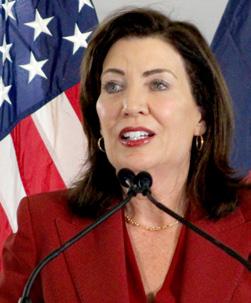
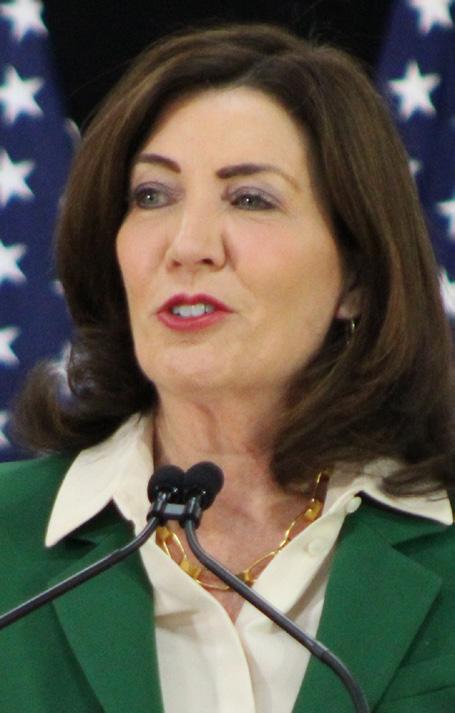
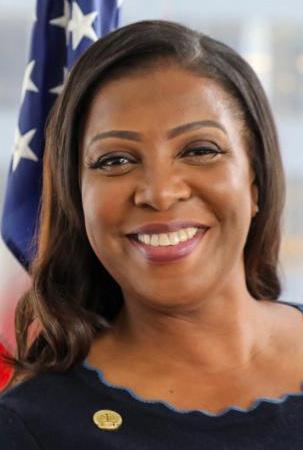
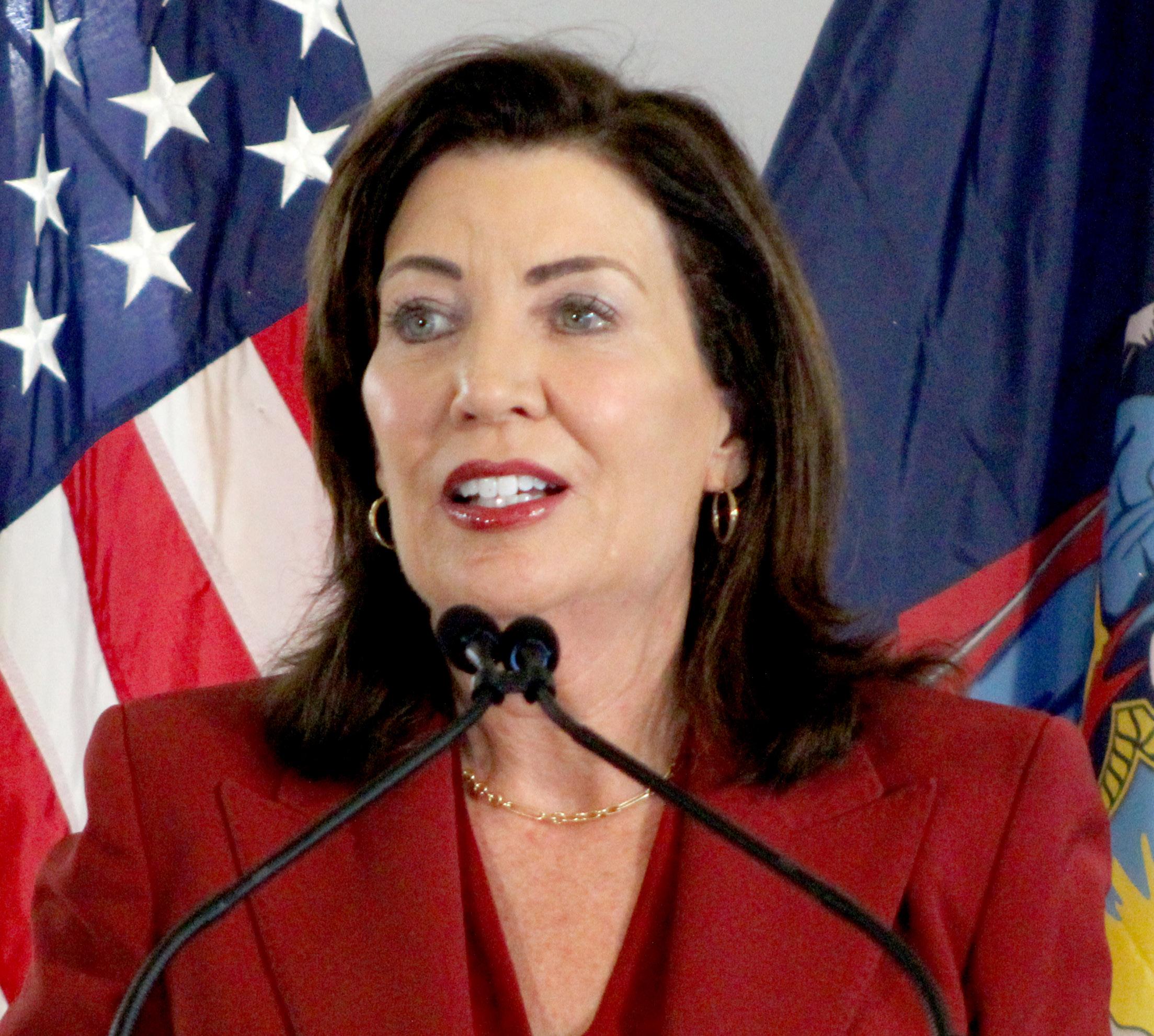
On Tuesday, Governor Kathy Hochul (D-Hamburg) (pictured right) and Attorney General Letitia James (D-Clinton Hill) (pictured blow) announced their final rules on how social media companies must comply with the Stop Addictive Feeds Exploitation (SAFE) for Kids Act.
The 2024 bipartisan bill was sponsored by Senator Andrew Gounardes (D-Bay Ridge); its Assembly version was sponsored by Assemblywoman Nily Rozic (D-Fresh Meadows).
The package requires social media companies to “restrict algorithmically personalized feeds and nighttime notifications for users under the age of 18 unless they obtain parental consent,” according to the Governor’s office. They added that those feeds and algorithms are “tied to depression, anxiety, eating and sleep disorders, and other mental health issues among children and teenagers.”
“When I came into office, our children were in the throes of a full-blown mental health crisis, and as New York’s first mom Governor, I felt a moral imperative to act,” said Hochul in a statement. “Today, we’re sending a clear message: our kids’ mental health isn’t for sale. We promised action and the SAFE for Kids Act is delivering by ensuring that any platform that targets our children with addictive feeds will face legal consequences. Instead of clicking and scrolling, our kids will be learning and growing.”
The rules apply to “addictively online platforms,” defined as those that display “usergenerated content and have users who spend at least 20% of their time on the platform’s addictive feeds measured over a six-month period.”
“The SAFE for Kids Act leads the nation in keeping our children safe online and protecting youth from the devastating effects of unchecked social media,” said Attorney General James in a statement. “These rules set standards for age verification and parental control to ensure tech companies are doing their part to keep kids safe on their platforms. Young people are particularly vulnerable to addictive social media features, and my office is committed to protecting all New Yorkers from potentially harmful technologies and companies that try to take advantage of them.”
Blood and School Supply Drives to Be Held in Honor of Suffolk Employee
The set of standards has several components
Age Assurance
Under the law, social media companies must determine that a given user is an adult before providing them with algorithmic feeds and/or nighttime notifications. Users’ ages can be confirmed in ways that “protect users’ data,” through requesting an uploaded image or video, or verifying a user’s email address or phone number to cross-check other information that “reflects a user’s age.”
Social media companies must also offer at least one alternative method for age assurance apart from a governmentissued ID. The law also prohibits the collection of data. All associated data must be deleted or de-indentified “immediately” after its intended use.
Users who are minors must also be provided with an option to update their stated age on the platform(s) of choice when they turn 18.
Parental Consent
Any parent who wants to grant their child access to prohibited features must go through the age assurance process. However, the platform(s) in question “may not block a minor user from generally accessing the platform or its content through, for example, searches, simply because they or their parent has refused to consent.”
Parents and minors must also be allowed to withdraw their consent at any time.
The rules were published in the State Register on Wednesday, July 29. The SAFE for Kids Act goes into effect in 180 days, January 25, 2027.
The bill was passed in 2024. Senators from Suffolk who co-sponsored were Anthony Palumbo (R-New Suffolk), Dean Murray (R-East Patchogue), and Monica Martinez (D-Brentwood).
In the Assembly, co-sponsoring members from Suffolk who remain in the Assembly are Jodi Giglio (R-Baiting Hollow), Joe DeStefano (R-Medford), Jarett Gandolfo (R-Sayville), Mike Durso (R-Massapequa Park), Steve Stern (D-Dix Hills), and Keith Brown (R-Northport). Then-Assemblymembers from Suffolk who co-sponsored were Fred Theile (D-Sag Harbor) and Kimberly Jean-Pierre (D-Wheatley Heights).
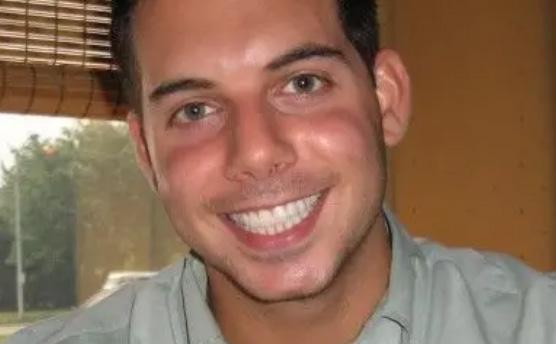
Suffolk County Executive Ed Romaine (R-Center Moriches) announced the return of the Suffolk County Blood and Annual Back to School Supply Drives in honor of Scott Martella. The Blood Drive will be held on Thursday, August 6 from 10:00a.m. to 4:00p.m. at the H. Lee Dennison Building in Hauppauge and the Suffolk County Fire Academy in Yaphank from 9:30a.m. to 2:00p.m.
Martella, a Smithtown native and Northport resident, was a proud public servant and Suffolk County employee who was tragically killed in a car accident on the Long Island Expressway in August 2016.
“Scott was a phenomenal young man who was very skilled and had a commitment to public service,” said Romaine. “We are proud to continue to host these community events in honor of Scott, who’s legacy still has a strong presence in Suffolk County. This drive reminds us that when we have someone like a Scott Martella, we remember and honor him by helping other people in need.”
Donors who are interested in donating are strongly encouraged to make an appointment in advance. To schedule an appointment, visit nybc.org/
suffolkcountygov. Residents can also donate blood at the New York Blood Center’s six donor center by using the code 71573.
“My family thanks everyone, including County Executive Romaine, for the continued support to honor my son and his passion to give back and pay it forward in a world that can use much more of that,” said Stacy Martella, Scott’s mother. “We are proud to continue these drives in Scott’s memory as giving blood and providing school supplies to children less fortunate were causes that were close to his heart.”
In addition, residents are encouraged to drop off a school supply item to benefit underprivileged children as part of the County’s Back to School Supply Drive in partnership with the Long Island Coalition for the Homeless. Drop-off boxes can be found throughout the H. Lee Dennison Building. Residents can also click here to donate via Amazon wish list.
Scott Martella served as the Director of Communications for the Office of the Suffolk County Executive at the time of his passing. Prior, he served as the Long Island representative for then-Governor Andrew Cuomo (D). In 2009, he was elected as the youngest trustee in the history of Smithtown Central School District Board of Education at the age of 22.
This Week Today
Thursday, July 30, 2026
National, State, and Local Temperature Checks
By Matt Meduri
National
In a twist to the ongoing wars in the Middle East, Energy Secretary Chris Wright (R-CO) signed a nuclear cooperation agreement with Saudi Arabia. That deal allows for American companies to run commercial nuclear plants in the Gulf nation.
The deal also includes safeguard and nonproliferation agreements, and President Donald Trump (R-FL) added an additional proviso - Riyadh must recognize Israel as a state pursuant to the Abraham Accords.
Those Accords are already coming under scrutiny, as Israel continues to settle the West Bank. That proviso was a key deal of the Accords brokered by Trump in 2020. Saudi Arabia has long held that recognition of Israel follows a pathway towards an independent Palestine.
Congress has 90 days to review the deal. If Congress does not pass a resolution to block the deal, it will go into effect. A two-thirds majority is required to override a presidential veto should Trump override a congressional block.
The Pentagon reports 19 servicemember casualties and the death of one contractor. They report 624 military personnel wounded.
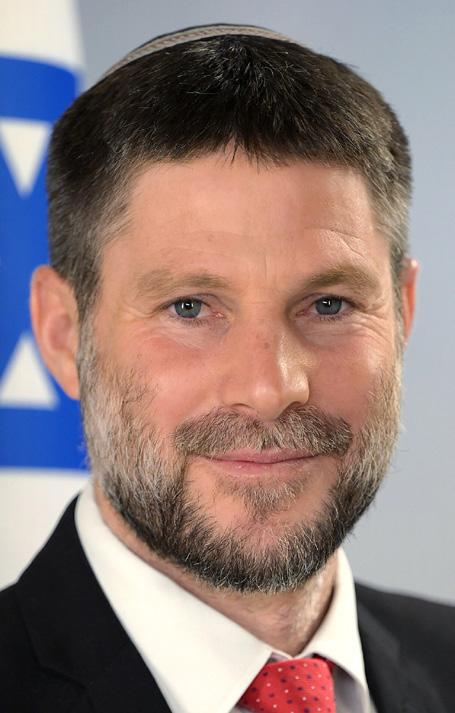
Meanwhile, at a conference last Tuesday, Israeli Finance Minister Bezalel Smotrich (pictured right) said that Israel has “no interest in joining the campaign” in Iran, and that the “current situation, where there is a confined campaign between Iran and the United States, is the correct [situation] and best for us.”
from the second Trump Cabinet, after Homeland Security Secretary Kristi Noem (R-SD), Attorney General Pam Bondi (R-FL), and Labor Secretary Lori Chavez-DeRemer (R-OR).
Clayton has a long history in the financial sector. During the 2008 financial crisis, he handled Barclay’s acquisition of Lehman Brothers, and the JP Morgan Chase acquisition of Bear Stearns.
He would later represent Goldman Sachs after Berkshire Hathaway purchased preferred stock in that firm. He has advised numerous financial firms, including Deutsche Bank, UBS, and Volkswagen. Clayton also represented the Japanese investment holding company SoftBank, the Weinstein Company, founded in part by the notorious sex offender Harvey Weinstein, and Reid Hoffman, the cofounder of LinkedIn who was described by Attorney General Bondi as one of Jeffrey Epstein’s “closest confidants.”
Just to the north of the U.S., a Canadian politician gave way to a new chapter in the AI era.
Smotrich gave the unusually candid response at a conference marking the twenty-first anniversary of the 2005 evacuation of Gush Katif, a former bloc of Israeli settlements in Gaza.
On Tuesday, the U.S. Senate voted to confirm Jay Clayton (I-NY) to succeed the former Director of National Intelligence (DNI) Tulsi Gabbard (R-HI).
Gabbard resigned her position citing her husband’s health issues in June. Trump had indicated in March that he and Gabbard began to differ on views of Iran and their alleged nuclear program.
Clayton was confirmed as the ninth DNI in a 51-47 party-line vote of the Senate. In Trump’s first term, Clayton served as Chair of the Securities and Exchange Commission (SEC) from May 2017 to December 2020. In April 2025, he was appointed by Trump to serve as the U.S. Attorney for the Southern District of New York.
Gabbard marked the fourth departure
Bill Oliver, an elected member of the Legislative Assembly of New Brunswick, speaking aloud to his colleagues, read a prompt typically generated by AI models that offer further explanation, details, or editions of previous question or request.
“Public confidence in the office of an advocate matters,” said Oliver, concluding the first part of his speech. “Here’s a more natural, flowing version of that section that reads like a legislative speech rather than a series of short points.”
Oliver, without missing a beat, continued to read the “more natural, flowing version” of the speech.
Online commentary has been hard from forgiving. One Reddit user wrote, “if there are no consequences for this, then we hold our high-schoolers to a higher standard than our elected officials.”
Others used the phrases, “embarrassing,” “depressing,” and “good grief.” Some users posited that many in elected office have been making regular use of AI for policy outlines and speech drafts, but that Oliver was simply the first to get caught in such a conspicuous way.
State
Governor Kathy Hochul (D-Hamburg) called on New York City Mayor Zohran Mamdani (D-Astoria) to turn down the temperature after the mayor called for the arrest of Israeli Prime Minister Benjamin Netanyahu. His calls spread like wildfire across the
media when he said that Netanyahu should be arrested when he visits New York in September. He also acknowledged that New York City has no independent legal authority to carry out the arrest warrant issued by the International Criminal Court (ICC) in November 2024.
“I believe the rhetoric should come down from everybody,” said Hochul to NBC. “We need people to feel unified, not divided.”
Netanyahu defended himself on FOX News over the weekend, saying, “He’s [Mamdani] fomenting hate. He’s trying to turn one group against the other.” He mentioned that a recent stabbing of a Jewish man on the Upper West Side was not “accidental” amidst the rhetoric. The assailant is alleged to have first stabbed an Asian man, followed by the Jewish victim, while screaming “Allahu akbar” during both attacks, per witnesses and victims.
In an interview with The New York Post, Mamdani acknowledged the apparent increase in hate crimes against Jewish New Yorkers.
“This is a city that will not only look to keep Jewish New Yorkers safe; we also look to celebrate and cherish Jewish New Yorkers.”
Netanyahu also accused Mamdani of having “celebrated” the October 7 massacre carried out by Hamas against Israeli civilians, which Mamdani has denied.
accepting bribes, and fraud. The prosecution rested in July 2024 and the defense picked up their share of the case that December.
The trial continues but has been repeatedly delayed due to safety concerns and the ongoing conflicts in the Middle East. Netanyahu’s next election is scheduled for October 27, 2026.
Polling continues to show that anywhere from 50% to 70% of American Jews give Netanyahu poor marks. About 50% to 60% of the overall Israeli public view the Prime Minister unfavorably, according to The Times of Israel. According to Pew Research, only about 21% of Secular Jews approve of Netanyahu, while 88% of religious and Ultra-Orthodox Jews view him favorably.
Local
The Suffolk County Water Authority (SCWA) is launching a new online tool for residents to estimate hookup costs to the public water system.
Geared towards residents on private wells and those constructing new homes, the tool allows for “instant estimates” of the cost of connecting to the system. The tool will also allow users an array of options to get a specific estimate, including their home address, their type of project, and financing options through the SCWA for up to 25 years.
The Prime Minister told FOX’s Sean Hannity, “I mean, what are we in the 1930s? What is this? You know, so much hate, so many lies, and you know the big lie is about the ICC. That’s a corrupt, evil organization.”
The ICC has issued warrants for Netanyahu alleging war crimes - starvation and direct attacks on civilians - and crimes against humanity. He also faces domestic charges of bribery in exchange for positive media coverage, accepting high-value gifts in exchange for political or economic favors, and negotiating a quid-pro-quo deal with a major newspaper publisher for favorable reporting in exchange for legislative action to weaken a rival paper.
The domestic charges went to trial in 2020; the Israel Police began investigating Netanyahu in 2016, subsequently recommending indictments. In November 2019, he was indicted for breach of trust,
“Transitioning from a private well to public water is the best thing you can do to ensure that you and your family have access to high quality drinking water,” said SCWA Chairman Charlie Lefkowitz (pictured above left) “We recognize that the connection process can seem daunting, which is why we developed a tool that gives residents clear, upfront information and long-term financing options to make the switch attainable.”
The SCWA states that about 25,000 properties in Suffolk are currently receiving drinking water from private wells located onsite. Private wells are often shallow, leaving them susceptible to surfacelevel contamination, and are often untested. There are no regulations requiring private well owners to monitor the water quality. The SCWA also recognizes that even when private well owners test the water, the testing for almost 400 different compounds is “cost-prohibitive” to the average property owner.
CreditMatt Meduri
Continued from front cover
Smithtown Matters
Thursday, July 30, 2026
Nesconset Park Honors
Civil War Veteran
The Edgewood entrance of the park now memorializes another one of the property’s residents, George W. McCormick (1838-1909). McCormick, born in Ann Arbor, Michigan, served as a Civil War Captain in the Seventh Michigan Calvary and fought in the Battle of Gettysburg in July of 1863 under General George Custer. He was captured at Buckland Mills and wounded near the Rapidan River honorably discharged.
George W. McCormick was born in Ann Arbor, Michigan, and enlisted in the Union Army in 1862. After the war, he and his wife, Nellie, moved to the Lake Ronkonkoma area in 1901, where he lived until his death in 1909.
“The Town is tremendously grateful to the W.S. Commerdinger Jr. County Park Preservation Society for its continued commitment to
protecting this extraordinary property and preserving the stories of those who came before us,” said Supervisor Ed Wehrheim (R-Kings Park). “This 100-acre landscape, with its legendary trails, woodlands and waterways, has been pristinely preserved for the public to explore and appreciate.”
Bohemia Artist Pays Homage to Suffolk Founding Father
By Matt Meduri
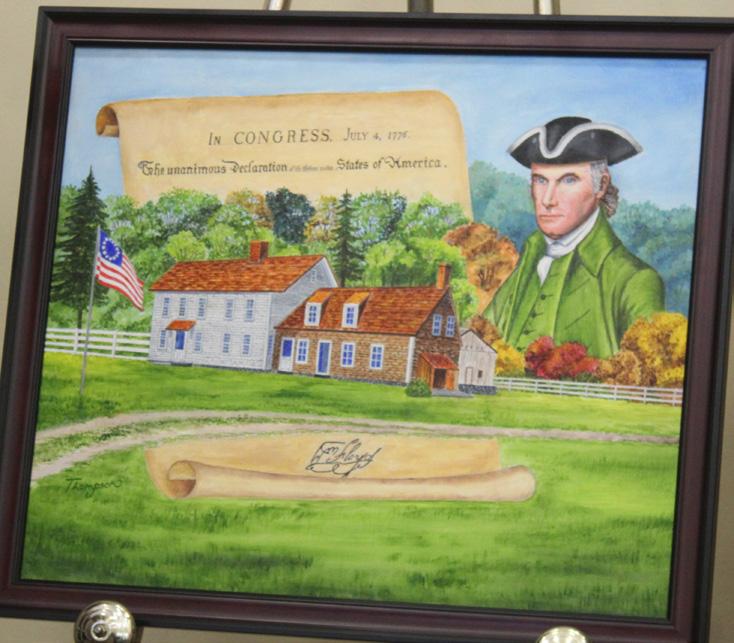
William Floyd was not only the first Congressman for NY01; he was one of four signers of the Declaration of Independence and the only one from Long Island.
His estate remains in Mastic Beach at the end of Neighborhood Road and is open to the public for tours.
The 250th festivities continue throughout the year, and Floyd, his estate, and his legacy have been massive parts of Suffolk’s celebrations.
Elaine Faith Thompson, of Bohemia, has been one of the Island’s most heralded painters. She focuses on classic Long Island landmarks - the Big Duck in Flanders, the Montauk Lighthouse, the Smithtown Bull - along with her own twists. She heavily incorporates the brush strokes of Vincent Van Gogh and superimposes the famous “swirls” of The Starry Night behind classic Suffolk backdrops.
On Sunday afternoon, the Nesconset Library was open to her display and the unveiling of a new painting,
that of William Floyd and his estate in a historical homage that’s never been seen before.
Thompson felt especially connected to the 250th anniversary and this particular work, as her ancestors fought in the American Revolution.
The painting includes a unique Floyd in a hat - most paintings depict him with his classic ponytail - for which she had her grandson pose as the model, the parchment showing the Declaration of Independence - including Floyd’s signature - and the first-ever depiction of Floyd’s Mastic Beach estate in its original form.
“I did a tremendous amount of research on the building because the only image they have of the building was from 1792,” said Thompson. Floyd had returned from Connecticut post-Revolution, forced out by the British in August 1776. His estate, occupied and damaged by the British, survived.
Through the National Park Service, Thompson was able
to obtain floor plans and meticulously studied them to produce the most realistic depiction of the famous home.
The painting also includes the famous Betsy Ross Flag, one bearing thirteen stars.
Suffolk County Executive Ed Romaine (R-Center Moriches) urged Thompson to bring the work, inexpensive prints of which are already available, to Suffolk’s second annual Oyster Fest in Port Jefferson, slated for August 15. Romaine was joined by Presiding Officer Anthony Piccirillo (R-Holtsville), Suffolk Legislator Leslie Kennedy (R-Nesconset), Suffolk Comptroller John Kennedy (R-Nesconset), and a representative for Legislator Nick Caracappa (C-Selden).
Thompson’s gallery is available for purchase. Call 631-589-0069 or email etcreation@optonline.net.
In Loving Memory
In Loving MemoryCarmela Virginia
Heedles
May 25, 1932 –July 22, 2026
In Loving Memory In Loving Memory
Carmela Virginia Heedles, of Shrewsbury, Massachusetts, passed away peacefully on Wednesday, July 22, 2026 at the age of 94.
Carmela was born in Brooklyn to Salvatore and Frances (O’Brien) DeMeo on May 25, 1932. After receiving her Bachelor’s degree from St. John’s University in New York in 1953, she began her 44-year career as an elementary school educator in Hicksville. It was there she met her husband, James; the pair were married on July 2, 1955, and moved to East Northport. As the family grew, they moved to Smithtown in 1964, where they raised five children.
After a hiatus from teaching, she returned to education, obtaining her Master’s degree from Stony Brook University in 1981 and eventually reaching Master’s plus sixty before retiring from the Central Islip school system in 1997. After her husband passed in 2006, she moved from New York to Shrewsbury to be closer to her children and grandchildren.
Her love of children and her educator’s background made her home one of the “go to” places in the neighborhood. As an elementary school teacher who relished life at every opportunity, she decorated her home and classroom for every major (and many minor) holidays. Considering herself extremely fortunate in life, she was always concerned for those less fortunate. She supported shelters, soup kitchen, bread lines, and similar charitable organizations. In later life, she actively supported lending to disadvantaged people around the world through the Kiva non-profit.
Carmela is preceded in death by her parents, Salvatore and Frances; her husband, James A.; and her sisters, Catherine and Frances. She is survived by her son, James M.; her daughters, Mary Frances, Catherine, Sally, and Alison; her grandchildren, Andrew, Elyse, Matthew, Alexandra, Isabel, Adam, Rebecca, Jeremy, Rachel, Emily, Christopher, and Keith; and her great-grandchildren, Olivia, Nicholas, Jaiden, Ember Lee, Piper Leigh, and Carolyn.
In lieu of flowers, please donate, in memoriam, to any charity helping those less fortunate.
Per Camela’s wishes, there will be no formal services held.
To leave a note of condolence, or to share a fond memory, please visit https://brittonfuneralhomes.com
On the Campaign Trail
Two Polls Show Close Race for Governor
By Matt Meduri
Republicans haven’t won a gubernatorial contest in New York since George Pataki (R-Elmira) was elected in 2002 to a third and final term.
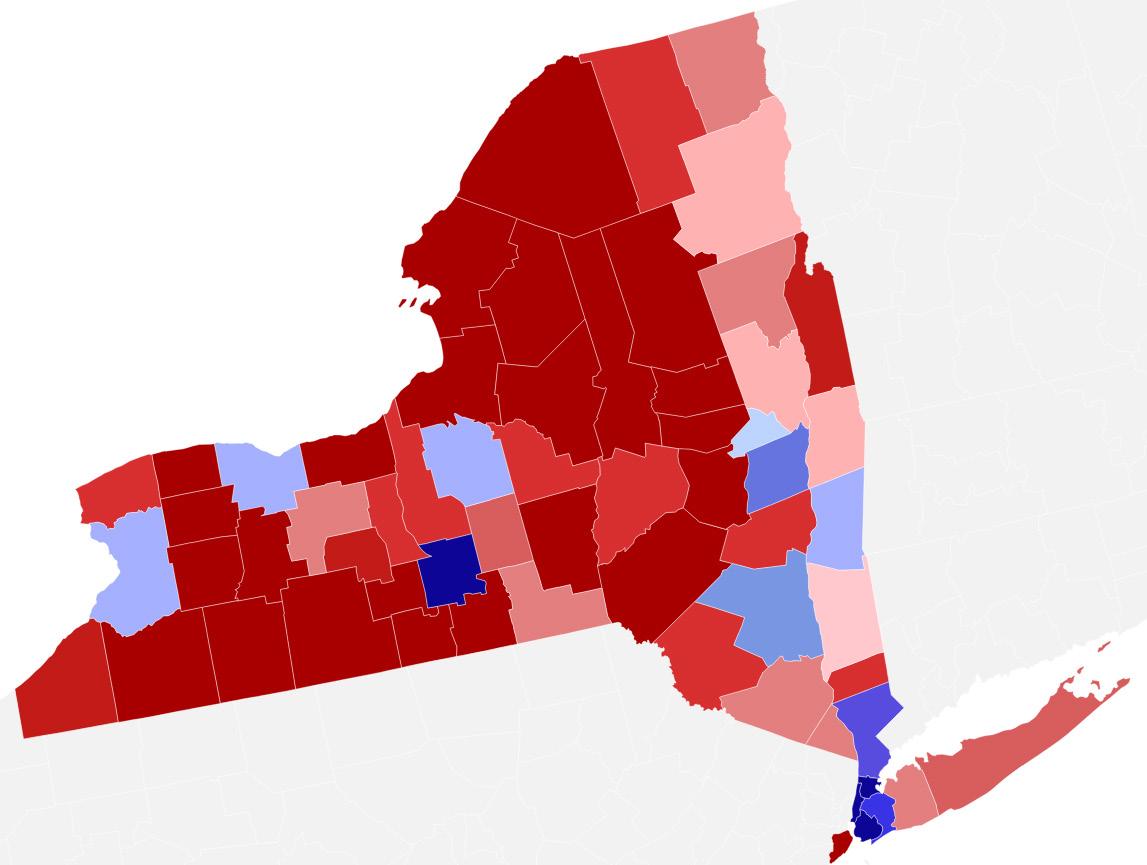
In 2022, then-Congressman Lee Zeldin (R-Shirley) lost by just under 7 points - the closest gubernatorial race since 1994, when Pataki upset Governor Mario Cuomo (D).
Most polling shows one-term Governor Kathy Hochul (D-Hamburg) with a lead of up to or about 20 points over Nassau County Executive Bruce Blakeman (R-Atlantic Beach).
Of polls taken since March, after both Blakeman and Hochul formally earned their respective party nods, Hochul’s average lead is just over 14 points. That’s far from Democrats’ typical margins in New York statewide races, but it’s about double Hochul’s 2022 margin.
However, two polls have recently aired that could indicate a closer-than-expected race in the Empire State for the second cycle in a row.
Co/efficient, a Kansas City-based, a conservativeleaning, and award-winning pollster, finds Hochul just +6 over Blakeman - 47%-41%. The poll was conducted June 30 to July 2 and surveyed 1,085 likely New York voters. 12% of respondents are undecided.
Additionally, co/efficient found that only 32% of voters view Hochul favorably, compared to 50% who don’t. On whether Hochul deserves re-election, only 33% said that she does, while 55% are opting for someone new.
However, co/efficient highlighted perhaps Blakeman’s largest liability thus far: name recognition. Of the respondents, 26% view Blakeman favorably, 21% view him unfavorably, 21% are “unsure,” and 32% said they’d never heard of him.
Only 35% of respondents said New York is heading in the “right direction,” compared to 48% who think otherwise.
The poll was sponsored by the Coalition to Protect Nassau Taxpayers, whose website still references former Nassau County Executive Laura Curran (D-Baldwin) on their website. Blakeman narrowly defeated Curran in an upset in 2021.
NY 2022 Governor election by county, shaded to margin of victory
This week, Red Oak Strategic, a Virginia-based polling and data firm for conservative and Republican campaigns, found Hochul up just +4 over Blakeman47%-43%. Only 10% of voters were undecided.
Moreover, just 38% of respondents view Hochul favorably, compared to 58% who view her unfavorably. Her job approval is starkly different from the treadingwater position the mainstream pollsters typically find Hochul. Red Oak finds her job approval at 39%, while 56% of voters disapprove.
Only 33% say Hochul deserves another term; 61% disagree.
Meanwhile, Blakeman is viewed favorably by 30% of voters and unfavorably by 23%. About 47% of voters have never heard of him or have no opinion. That’s mostly in line with mainstream pollsters who find a massive name recognition problem for Blakeman, the severity of which compounds with less than 100 days to go until Election Day.
Additionally, 57% of New Yorkers say the state is on the
wrong track; just 33% say otherwise. A majority of voters cited “cost of living/inflation” and “economy/jobs/taxes” as their top issues. In third place was “public safety.” 57% of voters blamed their politicians for the cost-of-living issues; 35% blamed corporations.
Of the 2,000 respondents, 43% said they are “worse off” than they were a year ago, with 15% saying they’re better off.
The poll was conducted among 2,000 New York State registered voters from July 7-12. The margin of error is +/2.2%.
Red Oak also posits that 5.9 million New Yorkers will cast ballots in 2026, little changed from the 2022 final tally. They think that 73% of Republicans are much more interested in the governor’s race than previous ones, compared to 44% of Democrats, making for a 29-point enthusiasm gap. Democrats still outnumber Republicans in voter registration - more than two-to-one - while Independent voters make up the second-largest share of the registered electorate.
Governor Kathy Hochul (Credit - Matt Meduri)
Nassau Executive Bruce Blakeman, Garden City, Feb. 2026 (Credit - Matt Meduri)
Down Ballot
100 Days Out: Senate Odds No Better Than a Coin Flip
By Matt Meduri
The prognosis for the 2026 Senate environment began with the GOP highly likely to retain control of the upper chamber. Now, those chances, while still in the Republicans’ favor, are not much better than a coin flip.
On top of heavyweight recruits, a national environment that has been obdurately blue in polling all year, and a swath of open seats, Democrats fortunes continue to rise.
Alaska (R) - Leans R to Tilts R: Two-term Senator Dan Sullivan (R) flipped this seat in the 2014 red wave over then-Senator Mark Begich (D), was the first Democrat to win an Alaska Senate race since 1974.
Democrats landed perhaps one of the cycle’s top recruits in former Congresswoman Mary Peltola (D). Peltola had won the 2022 House special and won in a much larger fashion that November. She narrowly lost to Nick Begich III (R) in a 2024 rematch.
Peltola is the most recently-elected Democrat in Alaska’s history; she became the first Democrat to represent the state in the House since 1972. Alaska has also drifted from a solidly-red state to a more medium-red one that appears to be coming onto the radar gradually.
This year’s Senate race is getting competitive. Sullivan has pulled in over $11 million, as of FEC filings of March 31, while Peltola has raked in $15.5 million. Campaigning in Alaska is a logistical nightmare that fetches some of the highest dollar-to-voter spending ratios in the nation.
That said, Sullivan is also underwater in approval ratings, according to The Alaska Current, and he’s more ideologically in line with President Trump. That’s compared to his colleague, Senator Lisa Murkowski (R-AK), who is a notable maverick more reflective of the idiosyncratic Alaska electorate.
Limited polling shows a tight race. The latest New York Times/Siena poll from June 15-29 shows Sullivan +2. Political fundamentals in an ancestrally red state are enough to assume he’s slightly ahead, but not naive to Alaska’s growing political competition, Peltola’s recency in office, and the possibility of any race going haywire for the incumbent party this cycle.
Georgia (D) - Leans D to Likely D: We’re almost surprised to see Georgia viewed as this favored for the Democrats. The last Senate Democrat from Georgia left office in 2005, yet Democrats won both seats in a doublebarrel runoff election after the contentious 2020 results.
Senator Jon Ossoff (D-GA) is a familiar face in the population center - Atlanta, one of the youngest and most rapidly-expanding metro areas in the country. Now rounding out his first term in the Senate, Ossoff, 39, is the youngest incumbent Senator, the youngest person elected to the Senate since 1980, and the first Senator born in the 1980s. In fact, Politico described him in early 2021 as the “first extremely online Senator.”
Ossoff has raked in a whopping $97 million as of June 30. He has $42.5 million cash on hand, while his opponent, two-term Congressman Mike Collins (R, GA-10), has just $2 million in the bank. Collins also went through a crowded primary and a tough runoff, meaning Ossoff has had a head start on the general election thus far. Multiple polling aggregates also place Ossoff ahead by about 6 points - not insurmountable but not a deficit the GOP wants just four months out from Election Day, especially in a once-red state like Georgia.
Iowa (Open-R) - Leans R to Tilts R: Iowa might have made a rapid shift from the Democrats in the early 2010s to the GOP in the mid-2020s, but Democrats aren’t to be counted out entirely.
Two-term Senator Joni Ernst (R) is retiring. She made headlines for a sarcastic response to a voter questioning her on federal spending cuts - “we’re all gonna die” - which means her exit probably avoids some unneeded agita on the campaign trail for the GOP.
Enter three-term Congresswoman Ashley Hinson (R, IA-02), who flipped a blue seat red against expectations in 2020 and has presided over a marked red shift in northeastern Iowa. She faces Iowa House member Josh Turek (D), who hails from the Council Bluffs as a selfdescribed “prairie populist” and moderate Democrat. He
was re-elected to his State House seat in 2024 despite Trump having carried the district heavily.
Democrats haven’t won a Senate race in Iowa since 2008, but they came fairly close in 2020, despite expectations that Democrats would flip the seat. Hinson has $6.5 million in her war chest, compared to Turek’s $2.3 million.
Polling shows a tie between the two candidates - on brand for a blue-year midterm Senate race in a state like Iowa, especially with an open seat.
An added twist, Iowa’s concurrent gubernatorial race is getting much more engaged. It’s the first time that an Iowa Senate seat and the Iowa governor’s mansion were both open simultaneously since 1968. Given Iowa’s proclivity to split their tickets on local levels, a tug-of-war could come down to a few thousand voters in either race.
Montana (Open-R) - Leans R to Likely R: Republicans are catching a break in Montana. Two-term Senator Steve Daines (R-MT) opted to retire in an eleventh-hour move that raised suspicions he’d waited out the filing period so his hand-picked successor, Kurt Alme (R), would win the primary unopposed.
Alme has $1.4 million in the bank, owing mostly to his late entry. His opponent, Alani Bankhead (D), has registered just under $60,000 this cycle as of June 30. The added twist is Independent candidate Seth Bodnar, the former president of the University of Montana. He’s got just under $1 million in the bank, but it was feared he would pose a vote-siphoning challenge to the Republican nominee.
However, Bodnar seems to be pulling Democratic votes instead, as Bodnar is registering around 20% in the polls conducted, but not far behind Bankhead.
Texas (Open-R) - Leans R to Tilts R: There’s no mistaking that Texas will play host to a competitive Senate race this fall, and a possible upset if the GOP gets too comfortable.
Four-term Senator John Cornyn (R) became the second sitting Senator to lose renomination this cycle and the first Senator from Texas to lose renomination since 1970. Attorney General Ken Paxton (R) earned a late endorsement from Trump and went on to defeat Cornyn in the May 26 runoff with almost 64% of the vote.
Democrats went with Texas House Rep. James Talarico (D), 37, and between him and the MAGA-aligned Paxton, the Senate race has devolved into a culture war.
Talarico has been attacked for comments such as “God is non-binary”, while Paxton has been criticized for walking back his support of IVF - Republicans have lost multiple winnable Senate races in conservative states over the last twenty-or-so years for comments on abortion. Todd Akin (R-MO) and Richard Mourdock (R-IN) in the 2012 cycle come to mind.
Paxton also has a tough record as Texas’ top prosecutor.
He was accused of making a “sweetheart deal” for a defendant in a child sexual abuse case. He was also impeached for alleged false statements against whistleblowers and obstructing justice in a securities fraud trial against him. He was narrowly acquitted in the Texas Senate.
Paxton has raised about $9.2 million so far, compared to Talarico’s $68 million. Talarico won his early March primary outright, giving him a head start on the general election, while Paxton and Cornyn competed for another two months in the runoff.
All polling aggregates have this race within one percentage point either direction; essentially, the race is a dead heat. Our only reason for keeping this race in the GOP’s column is two-fold: Texas hasn’t sent a Democrat to the Senate since 1988 and the state remains fundamentally Republican, and the longevity of Trump’s gains in the Rio Grande Valley remain to be seen. If Hispanic voters on the border approve of his immigration policies, it might be enough to offset Democratic surges in the Texas Triangle.
Additionally, when Ted Cruz (R) almost lost to Beto O’Rourke (D) in 2018, O’Rourke had outraised Cruz by about $35 million. The current fundraising figures are much starker for the GOP right now, but the GOP has been able to win in Texas despite being massively outspent. We’re assuming Paxton’s numbers will balloon throughout the summer.
The GOP’s tenuous advantage, of course, could evaporate by Election Day and if Democrats spring an upset in Texas, it would almost certainly equate to their control of the Senate.
Here’s the Count
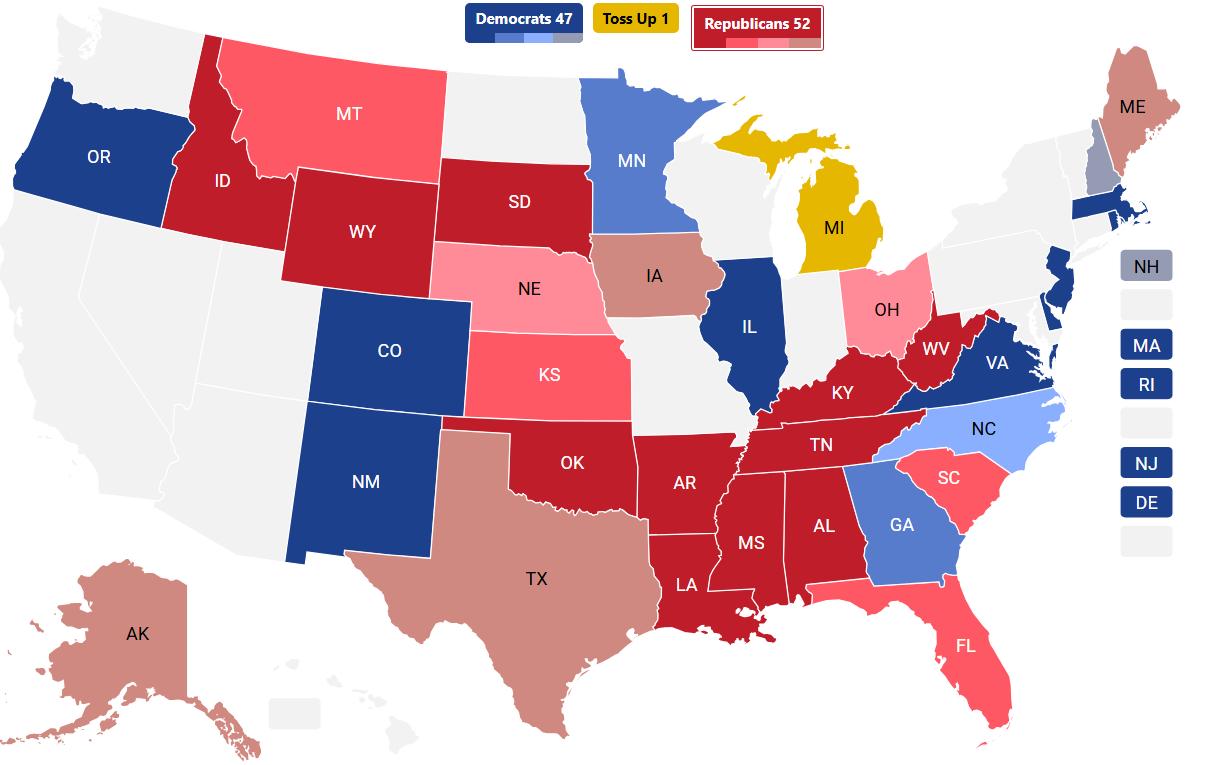
Democrats need a net gain of four seats to take control of the Senate outright. The current balance is 53R-47D; our map shows a 52R-47D Senate with one Toss Up, Michigan.
We had intended to move Maine to the Toss Up column, but we’ll wait while Democrats scramble to replace Graham Planter (D-ME) amid bombshell rape allegations.
Republicans are defending 22 seats; Democrats are defending 13. Republican incumbents are either retiring or have been defeated in 9 states; Democrats in four.
We estimate that the GOP is “Safe” in 11 states, “Likely” to win four, two states are “Leaning” in their direction, and four others “Tilt” in their favor. Democrats are “Safe” in nine of their contests, two states are “Likely” in their favor, one “Leans,” and one “Tilts.”
The only state we see flipping at this point is North Carolina, from red to blue. It would be the first time a Democrat has won a Senate race in the Tar Heel State since 2008.
100 Days Out: Democrats Have Trajectory for House Win
By Matt Meduri
The battle for the House wages on. The 100-day mark until Election Day passed this week.
In 2024, the GOP won 220 seats; 218 are needed for a majority.
CO-03 (R) - Leans R to Likely R: This Trump +10 seat takes in all of western Colorado, including solidly-red rural parts, working-class Hispanic towns like Pueblo, and uberliberal ski towns like Aspen. Democrats have almost pulled off upsets in this former Republican stronghold. We imagined that pressure would continue into 2026, especially as Jeff Hurd (R) won the open seat by just under 5 points in 2024.
But real estate CEO and U.S. Army Officer Dwayne Romero (D) hasn’t pulled in as much money as Hurd has, leading us to believe Democrats have better options elsewhere.
FL-07 (R) - Likely R to Leans R: Cory Mills (R) flipped this seat red in 2022 and held it by a decent 13-point margin in 2024. But in April, as three scandal-plagued incumbents resigned from the House, Mills did not, instead opting to fight allegations of embezzlement, domestic assault, and revenge porn dissemination.
Mills’ likely opponent is Bale Dalton (D), a former NASA chief of staff whose fundraising is on par with Mills’ in this seat that contains northern Orlando suburbs up to New Smyrna Beach - provided Mills wins his August primary. Limited polling shows Dalton leading, and Mills’ personal scandals might be enough to put Republicans on notice.
GA-02 (D) - Likely D to Safe D: This southwestern Georgia seat is one of the most consistently Democratic in the country. Democrats have held it ever since 1875, but those margins have been slipping recent cycles due to demographic shifts.
Congressman Sandford Bishop (D), a member of the Blue Dog Coalition, is in his seventeenth term and faces no real threat this year. The GOP has been able to play here, but the district is so ancestrally blue and Bishop is such an institution here, that 2026 is the exact opposite of the cycle in which this seat becomes competitive.
Moreover, since Atlanta Republicans made a lastminute call to shelve mid-decade redistricting, a move that almost certainly would have targeted GA-02 and now removes the last open question on this seat.
IL-06 (D) - Likely D to Safe D: The Chicagoland suburbs used to be a Republican stronghold of the Midwest, but the Obama years began their Democratic shift, which has solidified heavily in the Trump Era. Despite Trump having swung Illinois considerably rightward in 2024, much of that was in a dearth of Democratic voters who showed up in 2020. Thus, we don’t see the GOP’s floor improved much in districts where they could conceivably set up shop. Casten is doing some solid fundraising, while that of his opponent seems nonexistent.
IL-14 (D) - Likely D to Safe D: Another suburban Chicago seat that was once firmly Republican territory, this seat seems even less in play than the denser districts closer to the city center. This seat takes in notable suburbs like Naperville, Joliet, and Aurora. Congresswoman Lauren Underwood (D) flipped this Harris +5 seat blue in 2018; she’s won handily every time, save for 2020 - a razor-thin re-election.
Underwood has $1.2 million on hand as of February 25. Her opponent hasn’t pulled in more than $100,000 this cycle.
IA-02 (Open-R) - Likely R to Leans R: IA-02 takes up the northeastern corner of Iowa. This was an Obama +18 seat in 2008; it was a Trump +10 seat in 2024. Congresswoman Ashley Hinson (R) flipped this seat in 2020 and won decisively in 2022 and 2024. Hinson won her party’s nod for U.S. Senate, leaving this open seat to develop under two marquee statewide races. While the GOP has enough of a firewall here to withstand a moderately blue national environment, we think it’s still worth moving this seat closer to the center of the competitive board - especially if the environment grows to a 2018-like level.
NM-01 - Likely D to Safe D: This Albuquerque-based seat seemed like a place where the GOP could court Hispanic voters amidst public safety and immigration problems. But fundraising reports signal that the GOP isn’t trying to play in this seat this year.
NY-18 (D) - Likely D to Safe D: This Poughkeepsiebased seat represents a part of the lower Hudson Valley that was once much bluer, but still remains too steep a climb for the GOP. This seat barely went to Pat Ryan (D-Kingston) in 2022, but he scored a second term by 15 points in 2024. Despite this, Trump only came up three points short here in 2024, and Lee Zeldin (R-Shirley) narrowly carried this seat in his 2022 gubernatorial run.
But the GOP seems to have taken a pass here. Ryan has nearly $3 million in the bank, while his opponent hasn’t broken $50,000.
NY-19 (D) - Tilts D to Leans D: This Hudson River-toIthaca seat is emblematic of Upstate New York’s swingy, working-class electorate. Josh Riley (D-Ithaca) ousted Marc Molinaro (R-Catskill) in a narrow race in 2024, and State Senator Peter Oberacker (R-Schenevus) is leaving behind a competitive Senate district for this congressional seat. This region flipped blue in the 2018 midterms, and the mid-decade redraw done by Democrats ahead of 2024 made this seat somewhat bluer. Congressman Riley has large fundraising leads.
NC-01 (D) - Leans R (Flip) to Tilts R (Flip): This seat was a target of the mid-decade redraws. Congressman Don Davis (D) narrowly won re-election in 2024, despite Trump having won this seat by 3 points that same night. NC-01 is also seen as a bellwether of the GOP’s odds among black voters, as almost 40% of this seat’s population is black. The redraw would have seen Trump win by 11 points.
While we think fundamentals on those numbers alone make it a tough climb for Davis, he’s not completely out of the race. As of June 30, Davis has pulled in nearly $4.3 million, to 2024 nominee Laurie Buckhout’s (R) $3.7 million. Davis, however, has led limited polling taken since then, including a 4-point lead as of late June. It’s quite possible that Davis, no stranger to winning in a crossover district, could cost the GOP a seat they thought they had locked down because of mid-decade redistricting.
NC-11 (R) - Leans R to Tilts R: Things continue to go wrong for the GOP this cycle in North Carolina. Congressman Chuck Edwards (R) is the subject of a probe of a hostile work environment and allegations that borderline on sexual harassment. He’s brought in less than $1 million, while his opponent has raised $3 million so far. It’s a medium-red district, but one anchored by Asheville, an island of blue in a sea of red in Appalachia. With the trajectory of the Senate race seeming more likely to flip blue, we’re seeing a scenario in which NC-11 is a razor-thin GOP hold, or an upset flip for the Democrats.
OH-01 (D) - Tilts D to Leans D: Cincinnati has been trending blue in the Trump Era, but Ohio Republicans’ court-ordered redraw of their maps gave two-term Congressman Greg Landsman (D) a bit of a break. It was a Harris +7 seat in 2024, but the redraw makes a Trump +3 seat - not an insurmountable margin at all. Landsman also has heavy fundraising leads.
OH-09 (D) - Tilts R (Flip) to Toss Up: Ohio at-large has raced to the right in the Trump Era. Part of that is workingclass communities along Lake Erie that were once the bread-and-butter of the Democratic Party. Congresswoman Macry Kaptur (D) is a leftover of that era. Having first been elected in 1982, she is the longestserving woman in congressional history.
She caught a break with a disastrous opponent in 2022, but narrowly survived 2024 over Derrick Merrin (R). Merrin is back for a rematch and this Toledo-to-Indiana seat went from Trump +7 to Trump +11 with the redraw. We’re moving this to the Toss Up column because Kaptur is far outraising Merrin - $4.3 million to $1.5 million - and a lack of polls that show a race outside the margin of error for either candidate. Kaptur could very well hold on.
OH-13 (D) - Leans D to Likely D: In 2022, Republicans missed a solid opportunity to consolidate their base in Northeastern Ohio. Emilia Sykes (D) has won two close elections in this Akron-to-Canton seat, but it’s proven to be just out of reach, even with Trump on the ticket. The GOP appears to be seeing that; Sykes has raised $2.6 million this cycle to her opponent’s measly $73,000.
PA-17 (D) - Likely D to Safe D: This western Pittsburgh seat was flipped in a monumental upset during Trump’s first term. The decennial redraw saw it get slightly bluer; it’s still competitive, but Congressman Chris Deluzio (D) has won by more than 5 points in each of his runs. He has raked in $2.3 million so far, while his opponent, Tony Guy (R), hasn’t broken $55,000.
Here’s the Count
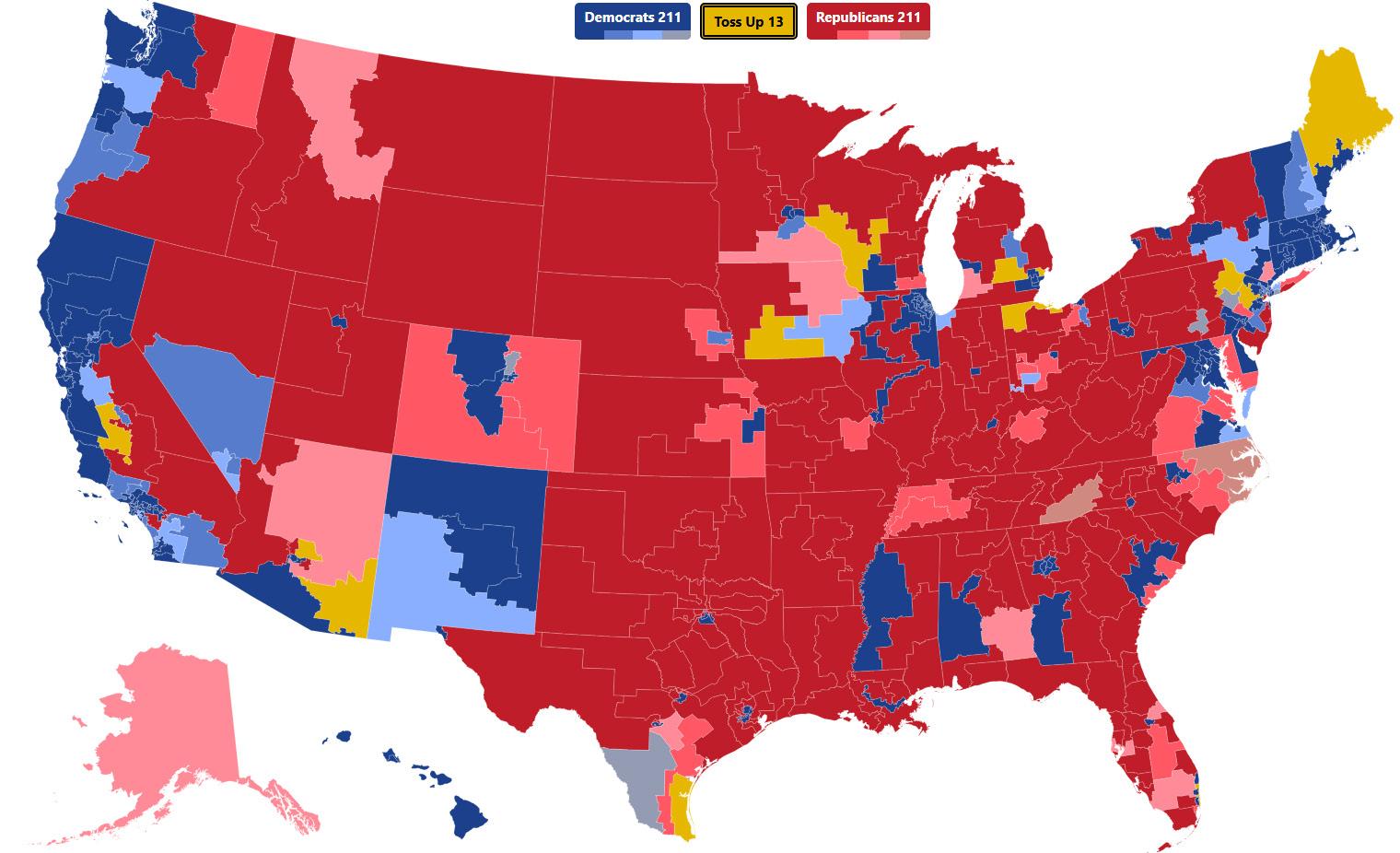
Our forecast shows Democrats and Republicans locking horns at 211 seats at least “Tilting” in their favor. Both have around 170 seats that we consider “Safe” for the respective party.
For Democrats, 19 seats are “Likely” to go to them, 13 are “Leaning” their way, and 5 are “Tilting” their way. For the GOP, 25 are “Likely,” 13 are “Leaning,” and 2 are “Tilting.”
That leaves just 13 Toss Up seats that will define the balance of power in the House. 9 belong to the GOP, and 4 belong to the Democrats.
We estimate Republicans will flip 11 seats, all due to mid-decade redistricting. We estimate the Democrats will also flip 11 seats, only 5 of which come from redistricting.
The Necessary Standard for American Education
U.S. Trade Representative
By Matt Meduri
We’re continuing our deep dive into the federal Cabinet positions, picking up this week with a more obscure role, the U.S. Trade Representative.
History and Origin
Until the 1960s, the State Department was responsible for conducting trade and investment diplomacy abroad. But as the country continued its rapid industrial and technological growth, and as the world developed both vertically and laterally, the need for a specialized role was realized.
The Trade Expansion Act of 1962 required the President to appoint a Special Representative for Trade Negotiations. The Act also called for that representative to serve as chair of an interagency trade organization, joining the President’s trade agenda with Congress’ oversight of balance between domestic and international interests.
In 1963, President John F. Kennedy (D-MA) created the Office of the Special Trade Representative (STR) within the Executive Office of the President. Two designated deputies would be posted in Washington, D.C., and Geneva, Switzerland. The latter location was chosen as it has hosted the World Trade Organization (WTO) headquarters. This allowed for the U.S. to have a permanent presence in daily operations of the world’s trade epicenter and be privy to other global affairs and organizations concentrated in Switzerland.
Congress would greatly expand the STR’s oversight, beginning with Section 141 of the Trade Act of 1974. This provided the legislative charter for the STR, holding the office responsible for trade agreements under the Tariff Act of 1930 and the Trade Expansion Act of 1962. This move by Congress also elevated the office to a Cabinetlevel, diplomacy position directly responsible to both the President and Congress.
The STR was renamed the U.S. Trade Representative (USTR) in 1979 and further grew the role’s oversight. The reorganization package that year made the USTR a lead on developing and coordinating U.S. trade policy, designating the USTR as the principal trade advisor to the President, and authorized the USTR to set U.S. policy on key trade issues.
The Omnibus Trade and Competitiveness Act of 1988 further enhanced the USTR’s powers by allowing it to coordinate trade policy with other domestic agencies and further growing its advice and diplomacy roles. The Act also included a “Sense of Congress” statement that the USTR is essentially the foremost figure for U.S. trade prerogatives at international meetings and economic summits where international trade is a major topic.
The Uruguay Round Agreements Act of 1994 further established that the USTR as the “lead responsibility for all negotiations under the auspices of the WTO,” according to the USTR’s official website. The North American Free Trade Agreement (NAFTA) greatly expanded the scope of the USTR’s power.
This column will seek to address the long-forgotten concept of civics and how it relates to American government in general, from the federal level to the local level. This column will explore Constitutional rights, the inner workings of government, the electoral process, and the obligations and privileges of citizens.
Reports
The USTR is obligated to give regular reports on various issues affecting U.S. trade. The National Trade Estimate Report on Foreign Trade Barriers is an annual series that reports on barriers to U.S. exports. Conducted since 1986, it includes findings from the Department of Commerce, the Department of Agriculture, and other federal agencies.
The Special 301 Report has been prepared every year since 1974. By April of each year, the USTR must “identify foreign countries that deny adequate and effective protection of intellectual property rights, or deny fair and equitable markets access” to U.S. persons who rely on those protections, according to John Masterson’s 2004 book, International Trademarks and Copyright: Enforcement and Management.
As a corollary to the 301 Report, the USTR, along with the International Intellectual Property Alliance, publishes a list of locations where largescale copyright infringement takes place - otherwise known as “notorious markets.”
The U.S. Trade Representative’s Office Today
The stated prerogatives of the USTR on their official website are bilateral, regional, and multilateral trade and investment issues; expansion of market access for American goods and services; international commodity agreements; negotiations affecting U.S. import policies; oversight of Section 301 complaints; WTO issues; trade-related intellectual property protection issues; and trade, comedy, and direct investment matters managed by international institutions.
Advisory Committee (TEPAC), and the Trade Advisory Committee on Africa (TACA). These are managed jointly with the departments of Agriculture and Labor.
The twenty sectoral and technical committees are organized by industry and agriculture. Representatives are jointly appointed by the USTR and secretaries of Commerce and Agriculture.
The USTR is one of the smallest federal executive departments in Washington. It has just 301 full-time employees and an FY2026 budget of $95 million.
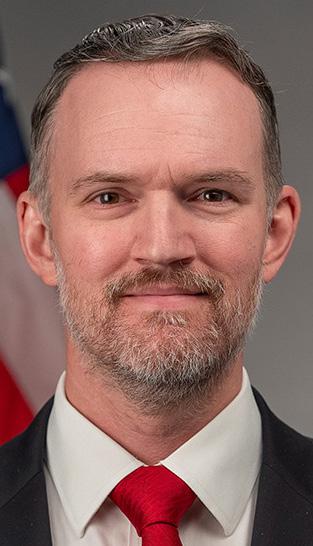
The twentieth and current Trade Representative is Jamieson Greer (pictured below) The California native served as a Mormon missionary in Belgium, France, and Luxembourg, evangelizing in Kosovo and Rwanda. He earned his J.D. from the University of Virginia and interned for a Czech judge at the European Court of Justice in 2007.
While at Brigham Young University, Greer joined the Air Force; he served from 2003 to 2012 and obtained the rank of Captain. He was the chief of military justice while stationed in Iraq.
The USTR also has several outside advisors. There are 26 advisory committees with a total membership of about 700 advisors. These members can be nominated by members of Congress, organizations, associations, publications, etc. to serve in these roles. Membership, according to the USTR’s website, is based on “qualifications, geography, and the needs of the specific committee.” Members pay for their own travel and must obtain a security clearance.
The advisory system is sorted into three tiers. The President’s Advisory Committee for Trade Policy and Negotiations (ACTPN) has 45 members appointed by the President for four-year terms. There are five policy advisory committees and twenty technical and sectoral advisory bodies.
The policy committees are appointed by the USTR alone or in conjunction with other Cabinet departments. The USTR administers the ACTPN, the Intergovernmental Policy Advisory Committee (IGPAC), the Trade and Environment Policy
CreditOffice of the USTR
After his military service, Greer was hired by Robert Lighthizer (R-OH) at Skadden, Arps, Slate, Meagher, and Flom, a New York Citybased, multinational law firm. Greer worked in the firm’s international trade group defending U.S. Steelnow owned by Japan. Lighthizer was the first Deputy Trade Representative when the position was established under Ronald Reagan (R-CA) and returned to Washington to serve as the USTR under Donald Trump (RFL) from 2017 to 2021. Greer was named Lighthizer’s chief of staff. That team is credited with the heavy renegotiation of NAFTA and the establishment of the United StatesMexico-Canada Agreement.
Greer went back to the private sector in 2020, working in the steel, oil and gas, agricultural, and chemical production sectors.
Greer was tapped for USTR shortly in Trump’s second term. He was confirmed on February 26, 2026, in a 56-43 vote. He earned one Democratic vote, that of Senator Sheldon Whitehouse (D-RI).
Since taking office, Greer has been tasked with renegotiating the US-Mexico-Canada and imposing reciprocal tariffs. He supports stricter trade policies towards China, who he views as an unfair trading partner, and has supported deals with the United Kingdom, Kenya, the Philippines, and India to counter China.
Interestingly, the USTR was home to Carla Hills (R-CA), currently the earliest-serving living former U.S. Cabinet member. Hills, now 92, served in the Nixon Administration in the Justice Department, in the Ford Administration as the Secretary of Housing and Urban Development, and the Trade Representative in the Bush Administration (1989-93).
Around Town
Thursday, July 30, 2026
The Mattera Report
By Senator Mario Mattera
Common Sense Must Return to Albany Before It’s Too Late
The recent revelation from New Jersey that roughly 6,600 non-citizens were registered to vote through the Motor Vehicle Commission, and approximately 400 of them actually cast ballots must serve as a true wake-up call to Albany Democrats.
Non-citizens should not be able to cast a single vote in this country, full stop and we must take steps to protect our elections.
That is why I am strongly supportive of the federal SAVE Act, which would require proof of U.S. citizenship when registering to vote in federal elections. Because this is a federal issue, this legislation is in the hands of our federal representatives but that is why I am proud that Congressman Nick LaLota (R-Amityville) sponsored and voted for this important measure.
I have spoken with Congressman LaLota to identify ways I can support and complement these efforts at the state level. Safeguarding our elections should not be a partisan issue or one that is fought only at one level.
It is a matter of protecting the integrity of every legal citizen’s vote and we must all work together to safeguard the integrity of our elections. That is why I joined my colleagues in the New York State Senate Republican Conference, led by Leader Rob Ortt (R-North Tonawonda), in writing a letter to Governor Kathy Hochul (D-Hamburg). We are demanding that she work with us to pass much-needed measures that will protect our electoral process and urging her to veto legislation from radical New York City legislators that would further weaken the security of
New York State elections. On the state level, it is time for common sense to return to Albany so that New York does not follow New Jersey’s lead and find itself scrambling to repair damage that could have been prevented.
For years, the Democratic majority in Albany has systematically dismantled the basic guardrails of our democratic system. In 2019, Albany Democrats passed, and former Governor Andrew Cuomo (D-Sutton Place) signed, the Green Light Law. Our conference fiercely opposed it because we believed allowing undocumented immigrants to obtain driver’s licenses without strong and undeniable safeguards would create significant vulnerabilities in our voter registration system.
What we are seeing across the river in New Jersey may be only a glimpse of the vulnerabilities that could exist here in New York. Instead of addressing these concerns, Albany Democrats continue to double down. This past legislative session, Senate Democrats passed legislation (S.88) that will automatically enroll Medicaid recipients to vote.
This raises serious concerns because noncitizens aged 65 and older may be enrolled in New York’s Medicaid program, and state audits have identified challenges in ensuring program eligibility and oversight. Automatically registering individuals to vote without verifying citizenship creates opportunities for administrative errors and undermines confidence in our election system.
When Senate Republicans offered a commonsense amendment requiring voters to show a valid government-issued photo ID at the polls, every Senate Democrat voted against it. You need an ID to board an airplane, open a bank account, or purchase
Pal-O-Mine to Host Law Enforcement Family Fun Day
Pal-O-Mine Equestrian, in partnership with Living Blue, will host its annual Law Enforcement Family Fun Day on Sunday, August 9, from 11:00a.m. to 3:00p.m. This free event is dedicated to honoring the men and women of law enforcement by providing a day of fun, education and connection for officers and their families on Pal-O-Mine’s 13-acre farm in Islandia.
The event will offer activities designed for all ages, including riding demonstrations, miniature horse cart rides, horseshoe art, horse-themed games, educational seminars, a barbeque, and opportunities to interact with Pal-O-Mine’s specially trained horses and other small farm animals.
“Every day, law enforcement officers put the needs of others before their own, and this is our opportunity to give something back to them and their families,” said Lisa Gatti, Founder and CEO of Pal-O-Mine. “There’s something incredibly special that happens when people spend time with horses, who help us slow down, reconnect and simply be present. We hope this day gives these families a chance to laugh together, make lasting memories, and experience the comfort and healing that our horses
alcohol and voting should be as secure as those actions.
To combat this lack of reality in Albany, the Senate Republican Conference reform package is simple, reasonable, and widely supported by the public:
• Repeal the Green Light Law (S.3489).
• Enact a voter ID requirement (S.2574).
• Conduct a full and comprehensive audit of New York’s voter rolls to ensure only eligible U.S. citizens are registered.
• Veto S.88-A to prevent automatic Medicaid voter registration.
• Continue working with our federal partners to support measures such as the SAVE Act that strengthen election integrity and verify voter eligibility.
Our elections and the voting power of every legal New Yorker must be protected so that residents have a government they trust and believe in. Anything less risks undermining confidence in our electoral process and diluting the voice of every eligible citizen.
Governor Hochul must act now, before New York faces its own election integrity crisis.
Senator Mario Mattera (R-St. James) has represented the Second District in the New York State Senate since 2021. The Second District contains the entire Townships of Huntington and Smithtown.
Senator Mattera serves as Ranking Member on the Corporations, Authorities, and Commissions Committee and on the Energy and Telecommunications Committee. He also serves on the committees on Cannabis; Civil Service and Pensions; Labor; and Transportation.
The Second District office is located at 180 East Main Street, Suite 210, in Smithtown and can be reached at 631-361-2154.
and our beautiful farm have to offer.”
“Law enforcement is a career that demands a lot of both our officers and their families, who share in the sacrifices that come with keeping our communities safe,” said Suffolk County Sheriff Errol D. Toulon, Jr. “Events like this provide an opportunity for families to spend quality time together, recharge and connect with others who understand the unique challenges of this profession. Thank you to Pal-O-Mine Equestrian and Living Blue for hosting this event and their constant support of the law enforcement and first responder communities.”
The free event, which is exclusively for law enforcement families, will be held at Pal-O-Mine Equestrian, 829 Old Nichols Road in Islandia, just a few short minutes north of Exit 58 of the L.I.E.
Businesses and community partners are invited to support this meaningful event through sponsorship opportunities. Sponsorships help make the day possible while demonstrating a commitment to those who serve and protect our communities. For more information, please contact Tessa at tessavf@pal-o-mine.org or call 631-348-1389.
Local History
Thursday, July 30, 2026
A Sunday Drive to Ronkonkoma Lake
By Ellyn Okvist, B.Sc. Published by Messenger Papers, Inc.
Ronkonkoma Lake became a destination for those who could afford a little more money for a day or two of varied activities. The locals would know exactly where and when they would gather and were very aware of the calamity the visitors would cause. Most of the local clubs were historic and Lake Ronkonkoma-based, and would meet usual, sometimes welcoming visitors. Early automobiles were not easily attainable due to price, but when the automobile rage hit, it hit big. The mass production of the Model T, followed by the Model A, made the ownership of a car possible for the common family.
There was a huge distinction between visitors to the lake, and the widest were those who could afford to drive in on the Long Island Motor Parkway and then those who had to stay local at the surrounding pavilions and beach clubs perhaps for a one or two day stay.
George Raynor, a landowner, began charging for the use of his beach in 1921 as almost all visitors would use his property for no charge and were leaving a huge cleanup for him every Monday morning. A photograph of an apparent all men’s motoring group was taken on the steps of Indian Hill Tavern. Although no names or date, it fits into the pre1928 era by their clothing, especially the riding coats (shown).
The Long Island Motor Parkway Preservation Society has been the worldwide instrument for information on Long Island automotive and Vanderbilt Cup race history. The information that has been researched and shared for all to read on their website, Vanderbilt Cup Races (https://www.vanderbiltcupraces. com) with Howard Kroplick who has introduced interest and gathered facts beyond expectations. The Long Island Motor Parkway was the first road built exclusively for automobiles in the world. Italy and Germany sent engineers for duplication in their countries. The eastern terminus was completed in 1911 to Ronkonkoma Lake.
From 1913 to 1937, the Long Island Motor Parkway, Inc., issued porcelain, annual-fee plates to permit unrestricted year-round use on the Motor Parkway. Present day, we refer to them as “EZPASS plates.” Most of these cars would only frequent the Petit Trianon, Willie K. Vanderbilt’s exclusive establishment located at the end of the Parkway on Ronkonkoma Lake. The Parkway was frequented by affluent people, who could afford the price of the plate. Other seasonal visitors, whom we would call the middle class, would pack up their families and spend the day at the lake, partaking in the local amenities and arriving there by taking other roads.
As many of the Lake Ronkonkoma Heritage Association (LRHA) members are also Long Island Motor Parkway Preservation Society (LIMPPS) members, it was appropriate and historically correct for an organized Annual Motor Parkway “Sunday Drive” to Lake Ronkonkoma to be offered. Led by Ellyn Okvist, charter member LIMPPS and President LRHA, the Annual Sunday Drive has become a collaboration of many vintage car clubs on Long Island. Motoring with us was
Model A Ford Club of Long Island (MAFCA); AACA Greater NY Region; Vanderbilt Cup Region AACA; LIMPPS and LRHA. There have been seven “Sunday Drives”, combining the Lake, Cunningham Park, Ronkonkoma Fire Department, Suffolk County, and local historical sites.
Any vehicle can participate, and they line up by age, with oldest first. By the halfway mark, we had clubs from Queens, New York City, and the Bronx onboard, the later mostly with new Mustangs and more modern automobiles, which we allow as interest in the Parkway is key.
The idea is simple - motor on the L.I. Motor Parkway covering as much of the original roadway possible; be escorted by four great groups - New York Police Department; Nassau County Police Department, which included squad cars and helicopters; Lake Success Police Department; and Suffolk County Police Department.
One thing comes to my mind as I recollect the drives - here we are, driving on our “Parkway” with most of it closed for over 100 years, our automobiles “popping out” of woods, from hidden Parkway stretches, heading east on the Parkway, then the Long Island Expressway, making jumps back to the original parkway, back and forth, but all at less than 40 mph. The stopped traffic on the main highways are always out of their cars and cheering us from the other side.
Arriving at Half Hollow Hills High School is grand. The Suffolk County Police would bring everything to a standstill, and we pause for a moment in order to add even more pre-war cars to the line! The same procedure is held in front of the Lakeland Fire Department on the Parkway. Older cars that cannot quite make the entire ride fall in line there for the excitement in numbers.
Another memorable experience is the intersection of Commack Road and the Parkway. The police officials shut down the whole section in both directions for quite a while, which would cause many curious drivers and their passengers to leave their vehicles and stand at the intersection to get a look at what could ever be happening. We would motor across Commack Road, blasting our “ahooga” horns and wave to everyone. This display of public history has attracted newspaper and media coverage which educates the residents of Long Island.
The trip through Suffolk County is always the best, as we’re almost “home”, and would anticipate that final drive down the existing Parkway from Suffolk County Veterans Highway to the lake. Homeowners and local groups always have canopies, BBQ parties, and a slew of American flags as we make it down that final stretch to the end of the eastern terminus.
Once we arrive at the lake, we participate in great get togethers of automobiles or have lunch at a local restaurants, usually with over 75 people! The praise of our Long Island Motor Parkway is the significant cause. Being part of history, that nostalgic feeling we experience while on the Drive and at the end is priceless.
Parking at the Petit Trianon 1918
Lineup at Cunningham Park, present-day
The Safety Theater of AI That Advances the Serfdom of Smaller Businesses
By Mollie Barnett
This week, Anthropic came out in support of a petition signed by more than 1,100 people who work at the big AI labs, including its own CEO and cofounders. The petition asks the U.S. government to help build tools that could deliberately slow the frontier of AI development. Their statement was short and careful:
“We support this petition, signed by our CEO, several co-founders, and senior staff. Our own research on recursive self-improvement, published last month, points to the need for tools to deliberately pace the frontier of AI development so society can prepare. We are glad to see broad agreement across the field.”
Last month, that same research, When AI Builds Itself, showed Claude already writing more than 80% of the code that gets merged into Anthropic’s own systems, and that their engineers are shipping about eight times more code than they used to.
They say this path leads toward recursive self-improvement - AI systems that can largely build the next version of themselves. The party line in the tech media that week, echoed throughout LinkedIn, we may need a way to hit the brakes if AI moves faster than society can handle.
It sounds responsible. It is also the latest version of a performance we have been watching for months.
And right around that same time, if you have been working with AI, you may have noticed its performance change - circular arguments, long sycophantic reasoning, and not any one model, mind you.
Public conversation keeps getting pulled into the same tired frame: good AI versus bad AI, safety versus recklessness, the need for guardrails. The labs that talk the most about restraint keep racing.
The ones warning about loss of control keep the strongest tools for themselves, and this petition in the guise of good does not change any of that. In fact, what it does is slow down the rest of us while pretending to save us.
It asks for optional tools that only work if the major players all agree, which they won’t. Meanwhile, the race will continue and the distance between the people inside the frontier and everyone else will keep growing.
The adoption gap is real very real.
Data from the Organization for Economic Cooperation and shows the AI adoption gap between large companies and smaller ones remains wide and structural. Across the OECD, roughly half of large firms are using AI while only about 17% of small firms do. Big firms and platforms put the technology to work at scale. Mid-sized and smaller companies stay stuck in pilots, short on clean data, short on specialized talent, and short on the ability to govern the systems once they are in.
This is not everyone moving forward together. It is a compounding advantage for the organizations already closest to the models. When the most powerful systems stay gated, that gap is not an accident. It’s design, and it is proven.
At the beginning of AI, when it went public, we were all 3 years behind already, the compounding effects of that were massive.
Is AI the cause or the scapegoat of the jobless economy?
The conversation around economy has been pointing the finger towards AI, but is it the cause or the scapegoat?
There are plenty of cases for solid growth with AI, mostly in the companies that have adopted AI, iterated, and now understand what AI is. AI orchestration and AI governance are moving at faster, efficient speeds, showing terrific gains and acquiring companies.
Many of those are those large companies that have had AI for some time, the ones swallowing mid-sized companies.
Private equity has been doing that job. Add-on deals, buying smaller companies and folding them into existing platforms, have made up the large majority of PE activity for years, often running 70 to 80% or more. U.S. private equity put roughly $1.2 trillion to work in 2025, the second-highest total on record. Middle-market deal value alone reached $410.7 billion, up 8.5%, with deal count rising 16%. The model is simple and repeatable: buy fragmented businesses, centralize, cut, expand margins, and sell. Every successful deal makes the next one easier. The rate compounds.
What changes the speed and the finality is, when concentrated, gated AI gets layered on top of that machine. The platforms that already have preferred access to the strongest models gain a real productivity and decision-speed edge. Independent companies then face the old PE pressure and a growing capability gap at the same time. The window to stay independent gets shorter. AI does not replace the PE absorption process. It makes it run hotter. So, what happens when we say, “well, we need to slow AI down again? But not for those enterprise companies.”
The markets can look fine while the real economy gets hollowed out.
The valuations of the biggest AI-backed platforms and PE-owned consolidators can keep rising even as independent mid-sized firms disappear, local employment bases shrink, and fewer people retain real decision-making power. The scoreboard tracks the winners. The cost shows up in the quiet disappearance of the independent layer that used to sit underneath fewer owners, fewer regional employers, fewer places where ordinary managers and workers still have meaningful agency.
Long hold periods make the job losses cut both ways. Average PE ownership now stretches to roughly six years or longer. During that time the playbook is consistent: cut costs, centralize, add technology (more and more of it AI), and push margins higher. Jobs disappear inside the acquired companies as roles are consolidated and functions get automated or moved to the center. They also disappear outside. Independent competitors lose business or get bought next, local suppliers lose customers, and the employment base that once rested on those independent firms shrinks. The losses accumulate quietly over years while the equity stories of the consolidators continue to look strong.
Most of the public talk still stays on “AI takes jobs.” That part is real. It is also incomplete. It treats the technology as if it floats above the power structure that owns and directs it. What gets far less attention is the vacuum that forms when the same global companies and capital that built and control frontier AI sit on top of a private-equity machine that has already been absorbing the productive middle. The spaces those independent firms once occupied do not stay empty. It gets filled by larger platforms that already hold the AI advantage.
Guardrails are presented as protection for people. In practice, they more often protect the institutions that write and enforce them. They create barriers, compliance burdens, and competitive moats that favor the largest players. Jensen Huang put the other side cleanly this week:
“Attackers have frontier AI. Defenders need a frontier AI ecosystem - the best open and closed models, force-multiplied by a global community. During the Hugging Face incident, closed AI blocked essential forensics. An open-weight frontier model helped contain the intrusion. That’s why we created the Open Secure AI Alliance.”
That view rejects the idea that the labs currently winning the race should also get to help write the rules for everyone else. It treats wide access to strong models as a practical requirement for security and competition, not a risk that should be managed mainly by restricting who gets to use them.
Anthropic is a private company with a brand, investors, and a competitive position. Publishing research and signing petitions does not make it, or any other frontier lab, the moral authority over the technology it is racing to build. When a small group of private organizations both push the frontier and present themselves as the natural authors of the constraints, what you get is concentrated power dressed in the language of restraint.
All the earlier talk about good AI and bad AI has been leading to this point. This week’s petition is just the clearest public version of it so far. Under the current distribution of power, calls to slow AI do not slow the serfdom. They help advance it by keeping the strongest tools inside the circle that already owns them while everyone else is told to wait for permission or coordinated restraint that the leaders themselves are under no real obligation to accept alone.
This is not a side argument about model release schedules. It is about who ends up owning and directing the most powerful productive technology of our time, and what kind of economy that produces.
The markets can look healthy right up until the independent layer underneath them is mostly gone. That is the question that will matter.
Mollie Barnett - Founder and Decision Architect State & Signal, AI Systems for Business
Tier Rats Motorcycle Club Donate $1000 in Food
By Joe Cuminale
On Sunday afternoon, July 19, more than 100 motorcyclists came together for a great cause in Selden.
The Tier Rats Law Enforcement Motorcycle Club (LE MC), made up of mostly NYC Corrections Officers, found out about a church food pantry in Medford that was in need of help. Tier Rats’ President Nick Gianikos, Vice President William Valentin, and the rest of the Tier Rats club put the word out and the L.I. Motorcycle Club, law enforcement, and independent riders came out for a great cause.
More than $1000 in food was gathered to help re-stock the pantries at Grace Care Distribution Center, located at Genesis Church at 28 Industrial Boulevard in Medford. They can be reached at 631-696-9458.
With the Help of My Place Tavern in Selden, the event was underway, with a few vendors, L.I. ABATE, a mobile ax-throwing truck (that also donated any proceeds to the pantry) in attendance. Music was provided by the Mach Five Band, and the Crew from the Tavern provided a delicious barbecue of burgers, hot dogs, and awesome ribs.
Johnny Rizzo and Motorcycle Mayhem Radio were on hand to help promote this event. Thank You, Tier Rats L.E.,M.C., for not only thinking about local groups who need help, but for stepping up and, with some great support from others, getting the job done.
It was another showing of the good things that L.I.’s Motorcycle Community doesgathers together to help local groups in need.
Wounded Warrior Ride Rounds Babylon, Fire Island
By Joe Cuminale
On Friday, July 17, the Town of Babylon held its Annual Soldier Ride to support the Wounded Warrior Project. This cool bicycle ride begins and ends at Babylon Town Hall and brings out hundreds of riders every year in support of our wounded Veterans.
Riders build or design their own or bikes donated for them to ride. Many of these bikes are hand-driven for those Veterans who have wounds that would sideline the average person, but these men and women are far from being average. The route for this ride, which is police- and motorcycle-escorted, leaves Town Hall on Sunrise Highway and heads over to Ocean Parkway, around the Pencil at Robert Moses and across the bridge back to Town Hall for a gathering of heroes and supporters. This ride gets larger every year and it always an honor for me to meet and talk with these amazing Veterans who refuse to let injuries take them out of the game of life.
Ride on and ride safe, gentlemen and ladies!
Published by Messenger Papers, Inc.
AMAC 19
Thursday, July 30, 2026
Doctors’ Group Presses AMA to Condemn Transgender Surgeries for Children
By Tyler O’Neil | The Daily Signal - AMAC Reprint
FIRST ON THE DAILY SIGNAL—The medical watchdog group Do No Harm is calling on 10 major medical associations to explicitly condemn transgender genital surgeries on minors.
“Professional medical societies that endorse so-called gender-affirming care in minors bear tremendous responsibility for the harm done to American children in the name of gender ideology,” Dr. Kurt Miceli, a psychiatrist and chief medical officer at Do No Harm, told the Daily Signal in a statement on the letters.
Do No Harm sent ten largely identical open letters Wednesday morning, addressing the American Academy of Child and Adolescent Psychiatry, the American Academy of Pediatrics, the American Psychiatric Association, the American Medical Association, the Endocrine Society, the American Urological Association, the American College of Obstetricians and Gynecologists, the American Academy of Family Physicians, the American College of Physicians, and the Pediatric Endocrine Society.
While the World Professional Association for Transgender Health, an activist group often cited as the authority on sex-rejecting procedures, recommends genital surgeries only for patients over 18 years of age, it makes some exceptions for minors.
The Letters
“Do No Harm and its 54,000 members are calling on your society to publicly reject genital surgery on minors for the purpose of producing ‘gender transitions,’” the letters state (emphasis original). “While this process is uncommon, we believe that it should never occur.”
The letters cite Komodo Health’s analysis of insurance claims data, which mentions 56 genital surgeries between 2019 and 2021 on minors aged 13 to 17 with a diagnosis of gender dysphoria, the painful and persistent condition of identifying with the gender opposite one’s sex. They also cite a JAMA Network analysis, finding 405 genital surgeries on adolescents from 2016 to 2020.
The letters also cite Do No Harm’s own Stop the Harm database, showing similar results.
“This number needs to be 0,” the letters flatly state.
The letters warn that by supporting “the entire program of so-called gender-affirming care,” the associations in question suggest that sex-rejecting procedures confer some benefit, despite medical reviews to the contrary. They also note that genital surgeries have been “notorious for producing multiple complications.”
“No matter what ill-conceived notions your organization has supported vis-á-vis children attempting ‘gender transitions,’ we call on your society to renounce all genital surgeries performed on minors,” the letters state (emphasis original). Such surgeries “should not be included in any clinical-care plan or treatment protocol.”
Tide Turns Against Transgender ‘Medicine’
Many of these entities signed an open letter in April 2021 opposing state laws to restrict “genderaffirming care.” In recent years, however, systematic reviews have cast doubt on the effectiveness of experimental transgender medical procedures.
A Department of Health and Human Services study found little evidence for positive impacts from sex-rejecting procedures, while studies show they can cause harm, from increased cancer risks to a higher risk of suicidal thoughts.
A jury awarded a detransitioner $2 million in a medical malpractice lawsuit in February, and psychiatrists reportedly agreed to settle an Oregon detransitioner’s medical malpractice claim in January.
Surgeons recommended that patients delay any transgender surgeries until reaching 19 years of age, and the American Medical Association responded with a statement agreeing that “surgical interventions in minors should generally be deferred to adulthood.”
Dr. Miceli called on these institutions to clarify their stances, considering their history of vocally opposing restrictions on “gender-affirming care” coupled with a few recommendations that surgeries be “deferred” to adulthood.
“These societies shape professional standards through their policy directives, clinical guidelines, and
Overview - AMACThe Association of Mature American Citizens
The Association of Mature American Citizens represents Americans 50 plus. AMAC is centered on American values, freedom of the individual, free speech, and exercise of religion, equality of opportunity, sanctity of life, rule of law, and love of family, with benefits at all levels.
AMAC plays a vital role in helping build the services that will enrich the lives of America’s seniors. AMAC Action, a 501 (C)(4) advocates for issues important to AMAC’s membership on Capitol Hill and locally through grassroots activism. To Learn more, visit amac.us
public statements,” the doctor explained. “In many cases they are viewed as the experts to whom providers, lawmakers, and the public defer judgment on the safety and efficacy of treatments. We therefore call on professional medical societies to begin to right wrongs and explicitly oppose the performance of transgender genital surgeries on minors.”
“No high-quality evidence demonstrates that these surgeries have beneficial outcomes in children,” he concluded. “Medical societies must be clear and state their firm opposition to these unscientific and harmful procedures.”
The Daily Signal has reached out to these medical associations and will update this article with any comments.
In February, the American Society of Plastic
WORD OF THE Week
Etymology:
1610s, “acrid,” from French acrimonieux, from Medieval Latin acrimoniosus, from Latin acrimonia “sharpness”
ACRIMONIOUS
adjective
Pronounced: /a·kruh·mow·nee·uhs/
Definition: angry and bitter; caustic, biting, or rancorous, especially in feeling, language, or manner.
Example: “The people grew increasingly acrimonious towards their federal government.”
Synonyms: cynical, embittered, resentful
Antonyms: sympathetic, tender, forgiving
Source: Merriam-Webster
WORD WHEEL
S N H E T A K
See how many words you can create. Must have center letter in word and can use letters more than once. 4 letter word minimum.
SUDOKU
See left for the answers (please don’t cheat!)
This Week in History
July 30, 1619: House of Burgesses in Virginia forms, first elected American governing body.
August 1, 1981: MTV debuts in the U.S. at 12:01a.m. with The Buggles’ song “Video Killed the Radio Star.”
August 4, 1914: U.S. President Woodrow Wilson (D-NJ) issues his “Proclamation of Neutrality” to keep the United States out of the war in Europe.
Source: Onthisday.com.
July 31, 2007: Operation Banner, the presence of the British Army in Northern Ireland, comes to an end as the longest-running British Army operation ever.
August 2, 1790: First United States census conducted; population is 3,929,214, including 697,624 slaves.
August 3, 1596: German astronomer and priest David Fabricius discovers the light variation of Mira, the first variable star.
August 5, 1914: First electric traffic light installed in the U.S. at the intersection of East 105th Street and Euclid Avenue in Cleveland, Ohio.
By PJ Balzer
Watching a New Way of Living
There’s much to be learned from other people, if you and I are humble enough to do so.
Other people’s lives, cultures, and ways of doing things can be refreshing wells to draw from. These past few months, I’ve been, once again, watching a new way of treating people that has been a visible sermon being preached to my own heart.
My wife’s grandmother took a fall a few months ago. She’s been living in New Jersey with her daughter for the past two decades. Due to some housing dynamics and growing pains in the environment where she’s been living for a while, Abuela (Grandma in Spanish) has been a little stressed out, with due reason. The stress has caused an initial fall that snowballed into a few hospital stays and some health decline. The entire family had to step in and figure out a better living fit for Grandma after she last left the hospital.
Different than the United States, Colombia doesn’t have many nursing homes. The truth is that there isn’t a great need for them there. The common cultural norm is that the adult children invite their elderly parent to live with them. They may rotate Mom or Dad from house to house every few years if that’s what’s needed. They may hire a nurse to come assist their parent inside the home.
But placing a parent in a place with strangers all around them simply doesn’t cross their minds. Nursing homes there are only used by people who have no family at all, possibly even homeless. Since my wife’s family carried those values and traditions with them here to the United States, the nursing home simply doesn’t come up as an option.
Culturally, the immediate family unit is also something that’s nurtured and kept extremely strong. Family isn’t a holiday visit; it’s an everyday part of life. If they aren’t able to catch up on daily activities and updates, they’ll spend hours on the phone by the weekend. My wife has often stated that while Grandma never had a lot of money or gifts to give out, she always had a listening ear, a lot of long hugs, and too much love to share. While she may have only been able to buy everyone socks each Christmas, she was always able to give each family member the gift of time. In return, the family is now paying her back all the time she spent and love she so freely gave away.
VETERANS
Are you aware of the benefitsmany available to you?
As Grandma was coming to the end of her most recent hospital stay, a holy discrepancy started to rise up within the family. There was a back-and-forth, and a little bidding too as to who was going to have the great privilege and honor of taking Grandma from the hospital directly into their home.
In their eyes, inviting Grandma into their home to be cared for full time wasn’t an inconvenience or a speed bump in the road. It was the least that could be done for a woman who’s turn it was to receive care.
The truth is that inviting Grandma in would definitely change up schedules, cause a refocusing of time and flip the current priorities on their heads. Family members may need to drop down to part-time at work and simultaneously help financially support the matriarch. Grandma needs someone to cook for her and help her with the common daily activities. She definitely loves to talk and to have constant companionship. The extra time involved in caring for her is undeniable.
But so is the fact that Grandma is well into her eighties. Each sacrifice made for her and moment spent with her is precious. Time is ticking and won’t stop doing so.
To be honest, in my own life I grew up hearing that most of my friends’ grandparents were in nursing homes. On Sunday, they would take an hour or so to go visit the place to make sure that they were being cared for correctly. Individuals’ lives, pursuits and priorities went on as regularly scheduled, while also trying to fit in some time to visit the grandparents.
I’m not writing for the reader’s condemnation or to say you’re doing it wrong. I’m simply telling you that I’m seeing a new way that I haven’t seen before. Different cultures doing things differently and carrying one value over another don’t necessarily make one right or wrong, but it does allow us to glean from each other.
For me, it’s been a learning experience to watch a different way of viewing time with the aging. It’s been interesting to watch the repayment of love and the honor for the elderly, focusing so much time and effort on people who could no longer give, but needed to receive.
If you’re in suspense wondering where Grandma ended up moving, she’s at her daughter’s house in Orlando having her nails painted, hair cut, and facials given by her granddaughters and great granddaughters. This past week they, “made” her celebrate Christmas in July with the traditional natilla and buñuelos.
PROTECTING THOSE WHO PROTECT YOU
LOUIS CIVELLO, PRESIDENT
VETERANS BENEFITS ASSISTANCE
Veterans should bring their DD214 and any service documents they may have regarding their service.
AT THE MIDDLE COUNTRY PUBLIC LIBRARY
A representative from the Disabled American Veterans (DAV) is on hand to assist veterans with submitting disability claims as well as benefits for widows/widowers of deceased veterans.
First Wednesday of each month
At the Selden location
Third Wednesday of each month At the Centereach Location 9:30am to 1:30pm.
Veterans should bring their DD214 and any service documents they may have regarding their service.
AT THE MIDDLE COUNTRY PUBLIC LIBRARY
First Wednesday of each month
Thursday, July 30, 2026
For Club & Country: North Babylon Alumna is All In
By Ashley Pavlakis
The Messenger’s Sports Section is the unofficial fan club of girls & women’s lacrosse. The lacrosse scene on Long Island from youth to the professional level has skyrocketed in recent years.
Ally Kennedy, a North Babylon native, is another female lacrosse player to make her mark on the sport.
Ally Kennedy grew up on Long Island, attending North Babylon High School. The three-time captain was a six-year letterwinner and two-time alltournament selection for the Bulldogs. Kennedy was a multisport varsity athlete competing in soccer and track in addition to lacrosse. At the time, she ranked ninth in New York State in career goals with 273.
She’s small but mighty. Standing at 5’3”, Kennedy is known for her speed on the field. Having run track in high school, the fact tracks. In an article for USA Lacrosse Magazine earlier this month, it was said that Kennedy reached speeds up to 19.3MPH in performance testing.
Sporting #30, Kennedy emerged onto the collegiate scene at a school close to home. Kennedy played Division I lacrosse for Stony Brook University. In five years with the Seawolves, the midfielder played in 88 games, racking up 266G-63A-329PTS. Her best season came as a junior, when she notched 100 single-season points. Kennedy was a nominee for the prestigious Tewaaraton Award as well. The four-time All-American finished her career at Stony Brook ranked second in goals and fourth in points.
Team USA got their first taste of Ally Kennedy when she was called up to play in the Presidents Cup in 2018. She’s been a mainstay on an All-Starstudded US roster ever since. The United States Women’s National Lacrosse Team is a proven winner, succeeding on the international stage every time they step on the field. Kennedy has played a role in helping Team USA maintain their winning status.
At the time, Athletes Unlimited was the most comparable thing to a professional sports league. Kennedy played three seasons in the league, making a name for herself on and off the scoresheet. In 2025, the Women’s Lacrosse League was established, and now Kennedy plays for the Maryland Charm. In four games this season, Kennedy has amassed 11G-5A16PTS.
After playing in college, Kennedy made the transition to coaching. She’s made stops at Stony Brook, Virginia, and Ohio State, serving as an assistant coach at each school. Long Island-born players have a history of coaching; Kennedy is one of many who have chosen to use their skillset to teach the youth. Women’s lacrosse makes its debut at the Olympics in 2028 in Los Angeles. Kennedy is certainly in the running for earning a roster spot amongst a top-notch talent pool. The Olympics will adopt the ‘sixes’ style of play, one that Kennedy is familiar with. Known for her high-energy goal celebrations, Kennedy brings the energy to each team she plays for. The Long Island native continues to prove why she’s a force to be reckoned with when she’s wielding a stick.
South Huntington Native Notches Career High for the Chicago Sky
By Ashley Pavlakis
The WNBA is on fire this season, with rookies making their marks all over the court. One rookie hails from Huntington, and her name is Sydney Taylor.
The rookie recorded a career-high 31 points last Wednesday versus the New York Liberty.
Sydney Taylor played her high school basketball for St. Anthony’s. As a Friar, she played four seasons of varsity basketball. She helped the Friars to three CHSAA championships and a state title as a freshman. Taylor was a two-time Captain, two-time All-County honoree, a scholar-athlete and a Dun Scotus Award recipient.
After her time in black and gold, Taylor went on to play collegiately for UMASS and Louisville. The Long Island native spent four seasons at UMASS before transferring and spending her fifth [graduate] season as a Cardinal. Collegiately, Taylor’s career progressed each season. She earned more minutes and found her knack for the basket. She finished her career with 1,832 points.
Sydney Taylor, a South Huntington native, entered the ‘W’ undrafted. Now this is not unheard of; Becky Hammon did it. She’s quite possibly the best to ever do it, and she now coaches the Las Vegas Aces in the WNBA. Taylor spent two seasons overseas playing for Lithuania before returning to the States. Taylor was signed by the Chicago Sky and has leaned into her role.
Minutes were limited at first, but with the Sky in desperate
need of someone to get the offense rolling, they turned to Taylor. The guard has played in 25 games so far this season, averaging 14.2 points per game for a total of 355 points. Taylor gets to play with the likes of Courtney Vandersloot, Natasha Cloud, and Rachel Banham on a nightly basis.
Taylor’s biggest moment of the season happened close to home. The Sky were in town to face the New York Liberty last Wednesday night. The Liberty play at the Barclays Center in Brooklyn, which is just a short train ride away from Long Island.
The 5’9” guard was named to the starting five for the hometown matchup. In 26 minutes played, Taylor notched 9 FGM- 4 3PM- 9 FTM- 3 REB- 3 ASSIST. A 31 point single-game career-high was enough to help keep the Sky in the game. The Sky fell one point short, losing 95-94 to New York. Regardless of the outcome, Taylor was named Player Of The Game by the Chicago Sky for her efforts.
The Chicago Sky are in a rebuilding phase, whether they want to acknowledge it or not. They’ve got the pieces to make a great team; it’s just a matter of plugging them into the right spots. The last time they won a WNBA championship was 2021; a more veteran-looking team was at the helm for the title. The WNBA is getting progressively younger, and with that comes the need to develop experience.
Sydney Taylor is having a dominant rookie season as an undrafted 25-year-old from Long Island. Congratulations, Sydney, on shining in the W!
Tough Decisions Ahead for NY’s Baseball Teams
By Jacob Infald
With the final two months of the MLB regular season approaching, the New York Yankees and Mets find themselves in two drastically different positions ahead of the August 3 MLB trade deadline.
The Yankees, despite a plethora of injuries, are just twoand-a-half games back of the Tampa Bay Rays for first place in the American League East. They currently hold the top Wild Card and are seven games ahead of the Minnesota Twins who are currently the first team outside the playoffs in the American League.
However, it is the opposite for the Mets. In a season that they entered with high expectations, they currently sit over 10 games under .500, and are 10 games behind the Pittsburgh Pirates who currently hold the final Wild Card position in the National League.
With the MLB trade deadline approaching in less than a week, this article will break down what the two New York teams should look to do to either improve the team for a playoff run for the Yankees, while the Mets will look to trade off pieces and focus on next season.
New York Yankees
This trade deadline preview for the Yankees is written under the assumption that they will be able to get some sort of production out of Aaron Judge, Cody Bellinger, and Giancarlo Stanton in the postseason. Judge, who has not played since May 31 due to a stress fracture in his right rib cage, is still expected to return sometime in late August or early September. Bellinger, who won All-Star game MVP, suffered a Grade 2 hamstring strain against the Phillies on July 25, will be out four-to-six weeks, while Stanton’s timetable is a little bit more unclear as he has seemingly made little to no progress rehabbing his calf strain that he suffered on April 24 against the Houston Astros.
While the Yankee outfield could use some help at the moment, knowing that Judge and Bellinger should be back before the postseason leads me to believe that the Yankees will not give up assets to pursue an outfielder. They will continue to role with veteran Trent Grisham, youngsters Jasson Dominguez and Spencer Jones, and utility players Max Schuemann, Amed Rosario, and Jose Caballero for the time being.
What the Yankees need is some sort of offensive production from their catchers. Entering this week, Yankee catchers have a combined .550 OPS this season, good for 29th out of 30 MLB teams. Primary starter Austin Wells’ current batting average is an abysmal .165 and is worst
among qualifying hitters in the MLB.
Despite Wells being a former first round pick in 2020, starting during the Yankees’ 2024 World Series run, and seemingly working well with Yankee pitchers, the Yankees need some sort of offensive production from their starting catcher if they want to make a deep postseason run.
Given that Wells is quite literally one of the worst offensive players in the sport, any catcher should be an upgrade. The Yankees will look to trade for catchers that are on poor teams, or catchers that are on expiring contracts that teams are looking to get value from.
One name that has been mentioned in trade rumors is Ryan Jeffers of the Twins. However, the Twins are only one game out of a Wild Card spot and three games back in the American League Central. While Jeffers is on an expiring deal, the Twins will not want to just give him away since they are currently in contention. Look for the Yankees to have to give up some higher value players including Spencer Jones, pitching prospects Elmar Rodriguez and Ben Hess, and current starting pitcher Will Warren to name a few. I do not expect the Yankees to deal pitching prospect Carlos LaGrange or shortstop prospect George Lombard, Jr. unless they are getting a controllable high-level player or two back in return.
Some cheaper catching options include Logan O’Hoppe of the last place Los Angeles Angels and Tyler Stephenson of the Cincinnati Reds. O’Hoppe has struggled to regain his form from a 20-home run 2024 season but is a Sayville native and grew up a Yankee fan and is under contract through 2029 so the Yankees could be a great fit for the local player. Stephenson is on an expiring contract, and the Reds have had a disappointing 2026 season so far and are currently on the outside looking in for the playoffs.
Outside of catching, the Yankees are nearly always in the market for a reliever. While the bullpen has been solid this season with unlikely contributions from Brent Headrick and Paul Blackburn, the Yankees have been tied to rumors for Mason Miller of the San Diego Padres. However, I do not foresee the Yankees being able to pull that one off.
For starters they have been playing better baseball as of late and are currently just a game and a half outside of the final Wild Card spot in the NL. Also, they just acquired Miller last year and gave up a haul, including the number two overall prospect in all of baseball in shortstop Leo de Vries. Even if the Yankees were to take on the final seven years of shortstop Xander Bogarts’ 11-year $280 million contract, Miller is the undisputed best closer in baseball, and the Padres are still looking to contend.
The Yankees will likely make at least one small under the radar bullpen trade to ensure their depth, considering 2025 trade deadline acquisitions Camilo Doval and Jake Bird have both struggled since joining the Yankee bullpen last summer.
New York Mets
The Mets trade deadline preview will be a lot less exciting. They will look to move off players that are on expiring contracts, or that they simply do not see as factors in their future.
One player that will almost certainly be traded is starting pitcher Freddy Peralta. Even though the Mets just acquired him from the Milwaukee Brewers last offseason after Peralta made the All-Star team in 2025, he is on an expiring deal and has struggled with a 4.99 ERA so far this season for New York. Look for the Mets to cut their losses and get what they can for the struggling All-Star.
Cutting losses is what I think the Mets will be doing this deadline. I do not think they will do anything drastic such as trading Francisco Lindor, as he still has five more seasons of team control and it does not make much sense to trade him during an injury riddled season.
I think the biggest “long-term” piece the Mets should look to move is closer Devin Williams. Williams, who has a 4.41 E.R.A and three blown saves, has struggled since his 2023 AllStar season with the Brewers. He is a player the Mets should look to cut their losses with, as they may be able to get some sort of prospect return on him since he still has two more full seasons of team control following the 2026 season.
The Mets also have reliever Luke Weaver under contract for another year. Weaver, who has been the Mets best offseason addition, is on a much team friendlier contract (two years for $22 million), and has experience closing games, so it makes sense to get off from Williams and move on.
I can also see the Mets looking to get rid of former top prospects who have struggled to pan out in the Major Leagues such as catcher Francisco Alvarez and third baseman Brett Baty. While both players have struggled to perform consistently on the field, they both have multiple years left of cheap team control, so the Mets could find teams willing to take a flier on the former high-level prospects.
While the season has ultimately been a disappointment, and the trade deadline will reflect that, the Mets do have some future pieces in the performance of young players including outfielders Carson Benge and A.J Ewing and pitchers Nolan McLean, Christian Scott, and Zac Thornton.
Fall Football is Just Around the Corner
By PJ Balzer
In a month from now, the seasons will shift again. The kids will be back to school, and we’ll be back on the sidelines all over Suffolk County.
Fall football is back on the menu and there’s many exciting changes to behold.
To start things off, it’s all eyes on Suffolk County’s League One. After Ward Melville won last year’s big-time dual with William Floyd, the colonials had a major switchup in their camp. Long-time and legendary coach Paul Longo stepped aside rather abruptly from his position as head coach. Longo then accepted the same job over at Shoreham-Wading River, which now has eyes focused on the large school league of Suffolk County. We know that Ward Melville will be a top team as they’re returning their star quarterback, Hudson Philibrick, who just committed to play at Stony Brook after this upcoming senior year. Connetquot is expected to have a tough team and possibly surprise a lot of League One teams and fans. But, after
graduating star running back Jaquan Thomas and multiple all-County lineman, the question football fanatics are waiting to answer is, “What will William Floyd look like this season?”
The week-one game in League Two will give us a great look at two of the top teams. Talk about firing on all cylinders right out of the gate, Bellport versus Huntington is the game to see that first weekend of September. A major shake-up took place over at North Babylon earlier this week. Jovan Greenhill and Dominic Presanto both transferred out of North Babylon to private schools, Eagle Academy and LuHi. Football fans know that, despite losing two really talented and seasoned players, North Babylon will have talent to back it up.
To no surprise at all, both Sayville and Bayport-Blue Point are set to make deep runs right into late November. The neighbors and football staples in Suffolk County both return as linemen who will undoubtedly push around opponents
and make space and time for their offensive weapons. Sayville will open week one with an away night game at Babylon. Bayport will play on the same evening at Miller Place, September 10, 6:00p.m. Both teams are no stranger to playing championship games right until the weekend of Thanksgiving. We expect nothing less of the Golden Flashes and Phantoms in 2026-2027
The talk of Long Island football this season is the game we’ve been wishing for. On Saturday, September 26, 2026, at 5:00p.m. at Hofstra University, Garden City of Nassau Conference Two will play Massapequa of Conference One. This is a first-ever division crossover game that will put both teams to the ultimate test. The Garden City Trojans currently holds the nation’s longest active win streak at 66 games along with five straight Nassau Conference II / Long Island Class II titles. The Massapequa Chiefs come into this game on a 23-game win streak as the reigning three-time Long Island Class I champions.