


By Matt Meduri
The first Long Island Rail Road (LIRR) strike since 1994 has been resolved, at least for now.
The strike began at 12:01a.m. on Saturday when workers of five unions that service the LIRR walked out. The unions involved consist of the Brotherhood of Railroad Signalmen, the International Association of Machinists and Aerospace Workers, the International Brotherhood of Electrical Workers, and the Transportation Communications Union.
“We want a fair and equitable contract that keeps us above the cost of living and the rate of inflation so our members can live comfortably on Long Island,” Jim Sokolowski, Assistant General Chair for the Brotherhood of Railroad Signalmen, told The Messenger outside the Ronkonkoma LIRR Station on Monday afternoon.



Continued on page 4
By Madison Warren
The Town of Islip helped welcome a new Safe Boat at a Boater Safety Press Conference this week, while also emphasizing the importance of boat safety this summer, as Memorial Day weekend kicks off the season in just a few days.
Islip Town Supervisor Angie Carpenter (R-West Islip) was joined by members of the Islip Town Council, Town of Islip Public Safety Commissioner Tony Prudenti, Town of Islip Marine Bureau, Town of Islip Parks and DPW Commissioner Tom Owens, and other community members who helped make this happen.
Carpenter noted that while the Town’s bays and ocean are some of Long Island’s greatest attractions, “our breathtaking bays and ocean can be as unforgiving as they are inviting,” stressing the importance of responsible boating practices heading into the summer.
on page 10



Smithtown Spring Craft Fair at Smithtown Village Historical Society Grounds
May 23, 10:00 AM to 5:00 PM
Korea Festa 2026 at Mahanaim Huntington
May 23, 12:30 PM to 7:00 PM
Splish Splash Park Season Opening 2026
May 23-25, 10:00 AM
Country Nights at Station Yards, Ronkonkoma
May 27, 5:00 PM to 7:30 PM
Beyond Pain: Alternative Therapies Workshop at Pure Life Wellness Commack
May 28, 6:30 PM to 7:30 PM
Goat Yoga at Smithtown Historical Society
May 29, 5:30PM-6:30 PM and 6:45PM-7:45 PM

Pickles & Paws at Southaven County Park Yaphank
May 30, 11:00 AM to 5:00 PM
Paint and Praise Workshop at My Town’s Cafe East Islip
May 31, 5:00 PM to 7:30 PM
Mosaic Street Painting Festival in Riverhead
May 31, 12:00 PM to 5:00 PM
Summer 2026 Truck Fest at The Maples in Manorville
June 7-9, 9:00 AM to 3:00 PM
Butterfly and Bird Festival at Sweetbriar Nature Center
June 13, 11:00 AM to 4:00 PM
Father’s Day Festival at Harbes Family Farm & Vineyard June 20-21, Times may vary

269-6421
Conveniently
Conveniently








BAY SHORE
AMVETS Post • Boulton Center • Leggio’s Deli
EAST ISLIP
American Legion Post • Harry’s Bagel
Mister Softee Ice Cream • Pat’s Market
American Legion Post Bagels & More • Oconee Diner
The New Idle Hour Deli 50% Cards Store (Wendy’s Shopping Center)
RONKONKOMA
718 Slice Pizzeria – (719 Hawkins Ave) Airport Diner • AMVETS Post 48 • B&B Bagels
B.L.D.’s Restaurant • American Legion Post Ronkonkoma Train Station
SAYVILLE
Sayville LIRR Train Station
Sayville American Legion Post • Stop & Shop
WEST ISLIP
Best Farms Market
Higbie Bagels • West Islip Bagels West Islip Community Center West Islip LIRR Train Station
WEST SAYVILLE
LI Maritime Museum

CENTRAL ISLIP:
Book Bingo - June 3, 12:00 PM to 12:45 PM
ISLIP:
Blindfolded Cookie Competition - June 11, 6:00 PM to 7:00 PM
Nesting Birds of Long Island - June 8, 7:00 PM to 8:30 PM
WEST ISLIP:
Seashell Charm Holders - June 10, 5:30 PM to 6:30 PM
CONNETQUOT:
Book Discussion: Yellowface by R.F. Kuang - May 27, 2:30 Pm to 3:30 PM
SAYVILLE:
Blooming Babies
- June 3, 10:15 AM to 10:45 AM
BAYPORT:
Lo-Fi Chill and Study Sesh - June 9, 3:00 PM to 6:00 PM
BRENTWOOD:
Cookies & Coloring - June 1, 3:00 PM to 5:00 PM





Continued from front cover
Some 3,500 members who were on strike - the largest such LIRR strike since 1987 - were demanding a raise above the 3% offered by the Metropolitan Transit Authority (MTA). They were also seeking three years of retroactive raises, while the MTA countered with a lump-sum payment without a raise for a fourth year.

Negotiations were further stymied by what Sokolowski characterized as the “lies” told by MTA Chair Janno Lieber and Governor Kathy Hochul (D-Hamburg).
“At the last minute, when we thought we had a deal, they [Lieber and Hochul] tried to have us sell out our future employees,” said Sokolowski, of Holbrook. “Right now, we pay 3% into health and welfare. They want new employees to pay 10%. It’s not fair and was never talked about during the negotiations.”
Sokolowski added that the unions he represents were not offered what other groups were offered, as alleged by transit officials.
Service resumed on Tuesday, but details on the deal that have not yet been ratified by union members remain scarce. What we’ve learned so far is that a wage increase for the current year and a retroactive raise for the past three years are on the table, as well as a 4.5% increase for 2026. Those increases would not result in higher fares or State taxes. Hochul shifted that blame onto the union workers themselves.
“The LIRR is more stable now than it has been for generations. The decision by some unions to strike over demands that would threaten that progress is reckless,” said Hochul in a statement. “These unions represent the highest paid workers of any railroad in the nation, yet they are demanding contracts that could raise fares as
much as 8%, pit workers against one another, and risk tax hikes for Long Islanders. This is unacceptable. My priority is protecting affordability for riders and ensuring fairness across the workforce.”
Sokolowski, however, disagrees.
“I put this [strike] all on Kathy Hochul. She knew this was coming for three years and did nothing about it.”
On picket lines, every main hub and station that provided interim bus services saw furious union workers.
The Main Headquarters, Penn Station, and Grand Central-Madison were also demonstration sites.
Nassau County Executive Bruce Blakeman (R-Atlantic Beach), who is running for governor, said that the strike “did not have to happen.”
“Kathy Hochul had months to work with union leaders and reach a fair deal. Instead, Hochul treated the workers like they were disposable,” wrote Blakeman on X on Monday afternoon. “She brought in out-of-state workers to cross picket lines during a nurses’ strike. She sent the National Guard to break a corrections officers’ strike. When I’m Governor, labor will finally have an ally in the Governor’s mansion.”
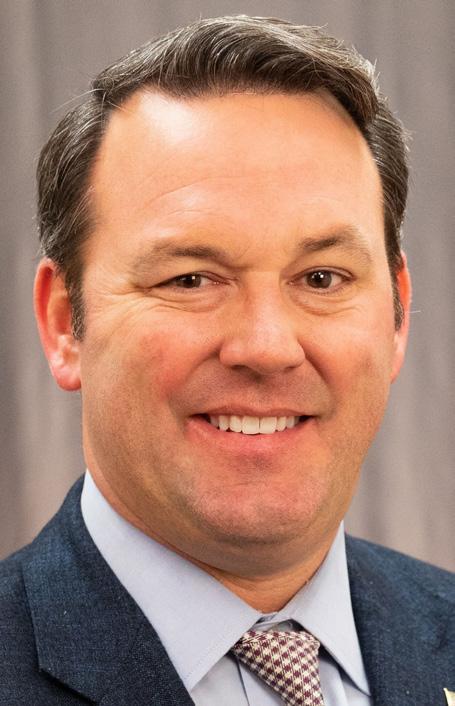
Sokolowski said that he is appreciative of Blakeman’s support (pictured right).
Riders who hold monthly tickets will see a 13% refund for the disrupted days of service.




Published
May 21, 2026
By Julia Katz
The fatal stabbing of CVS employee Edeedson Cline Jr. on Christmas Day in Lindenhurst has sparked ongoing debate in the Suffolk County Legislature.
While working on December 25, 2025, Cline, 23, was stabbed and later pronounced dead at the hospital. These events have led to public scrutiny of procedures for the surrender and use of surveillance footage in felony investigations.
At their last General Meeting, Suffolk Legislators debated I.R.1393, which would require certain businesses to provide surveillance footage to law enforcement within 24 hours of a request related to a felony investigation. Noncompliance could result in financial penalties. The proposed legislation applies to public-facing businesses with surveillance systems and at least 10 employees.

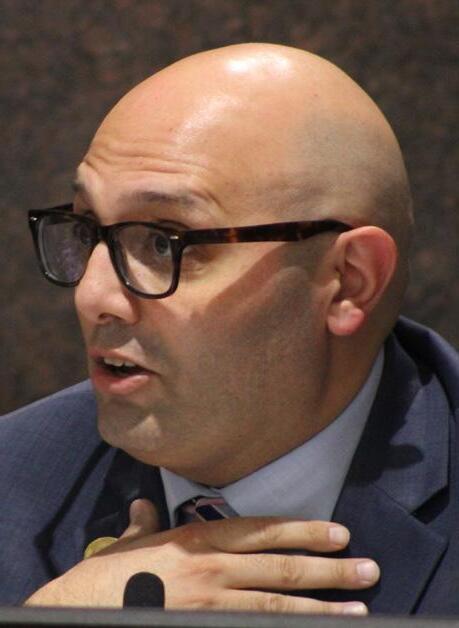
The bill is sponsored by Minority Leader Jason Richberg (D-West Babylon) (pictured right). He and other supporters argued that quicker access to surveillance footage would allow law enforcement to respond more effectively to violent incidents and emergencies. Addressing the use of surveillance footage as evidence, Richberg stated, “If we can get it sooner, that is best. Twenty-four hours is enough time to complete whatever process and procedures are necessary, including corporate or counsel review. We need to make sure that we are all working together. It’s important that the details contained in the evidence are available to investigators.”
Ken-Patrick Johnson, a local business owner and ambassador for the Suffolk County Police Commissioner’s Office, exclaimed, “We have a young man dead because a maniac went in there and did that to him…anything that can give law enforcement more tools to keep us safe and get violent perpetrators off the street, I’m in full defense of that.”
In an exchange with the Legislators, it was suggested that most business owners would voluntarily cooperate with police following a violent crime. When questioned by Presiding Officer Anthony Picirillo (R-Holtsville), if something happened at his establishment, “would you ensure that the information was handed over if necessary? Johnson replied, “Absolutely.”
The bill has also faced criticism from other lawmakers and constitutional advocates who argue it raises Fourth Amendment concerns regarding warrantless searches and seizures.
“The Fourth Amendment is part of the Constitution, and this bill totally violates it,” Piccirillo (pictured right) told The Messenger . “It will not see the light of day as far as I’m concerned.”
At the General Body Meeting, Anthony Cacciato, New York State Chair for Young Americans for Liberty, also opposed the legislation. He maintained that the bill would create “a mechanism for law enforcement to conduct a warrantless seizure” by requiring businesses to provide footage without a court order or warrant.
Cacciato cited legal precedent, including City of Los Angeles v. Patel, asserting that businesses should have the opportunity for judicial review before facing penalties for noncompliance with government record requests. Concerns, defending existing warrant and subpoena procedures as sufficient tools for investigations.
“Our system is a bill of process…due process is an integral part of the legal system, and that takes time.” He also cautioned against allowing emotional responses to tragedies to weaken constitutional protections, reasoning, “If we allow knee-jerk reactions to undermine your constitutional rights and due process, it hurts every resident.”
Legislator Piccirillo closed his remarks by referencing a well-known warning from Benjamin Franklin on the balance between liberty and security: “Those who would give up essential liberty deserve neither liberty nor safety.”
At several points during the legislative discussion, legislators debated whether amendments requiring subpoenas, warrants, or judicial oversight could address contestants’ concerns.
Legislator Richberg ultimately requested that the bill be recessed to “make some amendments to the bill,” explaining that legislators were “still in communication with some folks about some of the things they’d like to see.” Richberg emphasized that he remains open to feedback as discussions surrounding the proposal continue, particularly from small business owners who may be impacted by the legislation.
“Reach out to our office,” Richberg said. “We can sit down and have a conversation and see what we can do to help address any of your concerns.”
By Matt Meduri
As Suffolk residents are ready to hit the beaches, the pools, and the marinas, officials are taking no chances in the department of advice.
“As we prepare for Memorial Day weekend and the unofficial start to summer, today’s event is about sharing a simple but critical message: water safety saves lives,” said Babylon Town Councilman Terence McSweeney (D-Babylon). “Drowning is one of the leading causes of accidental death for young children; these tragedies are 100% preventable.”
McSweeney, joined by Deputy Town Supervisor Antonio Martinez (D-Wheatley Heights) recommended “constant, undistracted supervision” whenever children are near water, along with “swimming lessons, properly-fitted life jackets, and CPR training.”
Additionally, bay constables across Suffolk are at the ready to pull over boaters to combat impaired boating.

For Suffolk County Executive Ed Romaine (R-Center Moriches), water safety begins at home.
“A few years ago, I put a pool in for my grandchildren and I made a rule: no one goes in the pool alone,” said Romaine, flanked by officials at Tanner Park in Copiague on Monday afternoon, adding that water safety doesn’t just apply to children. For those in need of swimming lessons, Romaine recommended reaching out to the Town, the County, or even the American Red Cross to find proper instruction.
Suffolk County Legislators Tom Donnelly (D-Deer Park), R.J. Renna (R-Lindenhurst), and Jason Richberg (D-West Babylon) all carried their own personal anecdotes.
Legislator Renna, who has two young children who have taken swimming lessons, said that pool fencing, if feasible, and a gate/door alarm are a start.
“It’s never safe to assume that somebody else is watching your children in the water,” said Renna, adding that the same precautions taken at home should be taken at a public beach.
“We live on Long Island, one of the most beautiful places in the world, and it’s all about keeping our families safe so that we can enjoy the environment and the world around us,” said Legislator Donnelly, highlighting the importance of the “collaboration” between medical partners and government.
Legislator Richberg stressed that all precautions can go out the window when personal responsibility is eschewed.
“We can have all the lifeguards, all the police, all the public safety folks, all the parks employees, but you as a parent, you as an adult, you in the area are the best first responders,” said Richberg.
Suffolk County Health Commissioner Dr. Gregson Pigott said that he’s seen recordings
of adults calling 911, but not jumping in the water to save a child for lack of swimming prowess.
“It’s very important for adults to learn how to swim and how to administer CPR,” said Pigott.
Dr. Cornelia Muntean, Director of the Pediatric Emergency Department for Good Samaritan University Hospital in West Islip, went farther than “constant supervision.” She recommended a “dedicated water watcher,” an adult who is “responsible for only watching the children in the water at all times.”
“Phones down, eyes up,” said Muntean. “Drowning is fast and silent and only takes a few seconds.” She stressed a fence with a child-proof lock enclosing the pool, toys and items attractive to children being removed from the pool deck, and U.S. Coast Guard-certified life vests only for those who don’t know how to swim.
“If you’re at the beach, watch for signs, swim only in designated areas that have lifeguards.” Additionally, Muntean reminded residents of sudden drop-offs, rip currents, and water conditions.
“Reapply SPF and drink water, even if you’re not thirsty,” said Muntean. “CPR saves lives before EMS arrives. We all enjoy summer, but we all need to be responsible for the safety of our children and our families.”

The drawbridge that serves as the gateway to Suffolk’s most-visited County Park threw County Executive Ed Romaine (R-Center Moriches) and County officials a much-unneeded curveball just before the holidays.
A State inspection found that the bridge’s structural integrity was on the ropes, forcing the County to reduce traffic to one lane. This proved to be a workable solution for the winter months, when Smith Point County Park is a ghost town.
But Romaine and company knew that it was more than just a capital projectand a costly one at that - a race was afoot.
That race was to get the bridge operational for two-lane traffic before Memorial Day weekend, the unofficial kickoff of summer. Thousands of cars make the trek over the Narrow Bay to Smith Point per day during peak hours. Under no circumstance could that bridge remain on a one-lane traffic pattern heading into the warm season. Queues would last for hours, congesting the park roads and William Floyd Parkway into Mastic Beach, and others, we imagine, wouldn’t even bother trying to access the true gem that is Smith Point.
We applaud Romaine and company for prioritizing this issue and fulfilling the promises made in November.
We’ll also take a moment to shed light on Romaine’s ability to execute orderly and correctly and how the leadership of his predecessor, Steve Bellone (D-West Babylon) pales in comparison.
In 2015, then-Executive Bellone announced a plan to replace the current drawbridge, which was built in the 1950s. That consisted of a 55-foot-high fixed
bridge that would include dedicated pedestrian and bicycle lanes. Those aspects remain in the current plans for the new bridge the County is hoping to have online within the next two years, give or take.
Bellone secured local and federal money to cover the cost and even hosted informational update seminars around the Tri-Hamlet Peninsula to gain residents’ perspectives.
However, it’s fairly obvious that none of that came to fruition. Bellone left office in 2024 after serving the maximum allowed twelve years in Hauppauge. Moreover, while the goals were praiseworthy, attention wasn’t given to the infrastructure at hand.
With the severity of the current bridge’s state, it should have been readily apparent to the Bellone Administration that they were putting the cart before the horse. Had they been able to realize those plans before the current bridge needed a serious facelift, it would have been water under the bridge - no pun intended.
But instead, all Suffolk residents got were flashy plans and the illusion of transparency, all while the supports of the bridge were weathering away after decades of saltwater exposure and near-constant traffic for about half the year.
We don’t intend to harp on the failures of the Bellone Administration, but we believe it’s worth pointing out, as memories appear shorter and shorter as the days go by and political polarization has all reason locked in a perpetual vicegrip.
In short, Bellone was an “ideas guy.” Romaine is a “doer.”
Keep that in mind as Romaine rounds out his third year in office
This week’s primaries in Louisiana and Kentucky mean that the Republican Party nationally is now on notice to find a platform and rally around it.
Easier said than done, we suppose…
Congressman Thomas Massie (R-KY) lost his primary to an obscure, Trumpbacked candidate on Tuesday night. Already one of the most-watched races of the 2026 cycle, the primary culminated on Tuesday night with Massie falling after more than a decade of service in the U.S. House.
Massie has never been one to flirt with the political left, but he’s been willing to buck his party when appropriate - a lost art nowadays. While a maverick to some degree, Massie has always been a fiscal stalwart and an enemy of the warhawk wing of the party - the same wing that essentially fueled Trump’s 2016 campaign, and the same wing he now seems hell-bent on appeasing.
Massie’s populist overtones, however, weren’t enough to save his seat. Going against the monstrous spending package of the Big Beautiful Bill, the Iran War, and forcing the vote on the Epstein Files, Massie had done more than enough to earn Trump’s umbrage.
In Louisiana, another semi-maverick Senator, Bill Cassidy (R-LA), came in a distant third over the weekend. However, Cassidy wasn’t as much of an outspoken populist as Massie was. Rather, he seemed tuned out to Trump after voting to convict him in his January 6 impeachment trial.
Both tell the same story: the GOP continues to be controlled by Donald Trump and the money that flows in from associated coffers and donors.
But Massie’s primary is the bigger wedge that we think will determine the GOP’s identity crisis in the post-Trump era.
Both parties have identity problems coming up. Democrats need to learn to not be so insufferable on the most menial, culture war issues, while Republicans need to buck the very establishment wing of the federal government that Trump initially swore to oppose by “draining the swamp.” Democrats also need a verifiable leader, particularly one from the political center, a figurehead they currently lack. In fact, 2028 presidential primary polls show former Vice President Kamala Harris (D-CA), Governor Gavin Newsom (D-CA), and Congresswoman Alexandria Ocasio-Cortez (D-Parkchester) as the ostensible frontrunners.
If Democrats double down, they might blow a winnable election in 2028.
While the GOP doesn’t suffer from lack of a figurehead, they seem to be suffering from a complete surrender to Trump by any means necessary. Anyone who doesn’t toe the party line can’t be trusted, even though intra-party dissension is what drives ideas and people back to the ideological middle, for the most part.
Tuesday’s primary, we think, was the first turning point in a GOP after Trump. The question is, how will party bosses and the at-large electorate react when more Massie-like figures inevitably attempt to seek power?
The first LIRR strike in over thirty years was resolved quickly, but Nassau County Executive Bruce Blakeman (R-Atlantic Beach), who is running for governor, might have an opening in the uphill battle for the mayor’s mansion this November - at least on Long Island.
Long Island is already favorable territory to the GOP. Lee Zeldin (R-Shirley) trounced Governor Kathy Hochul (D-Hamburg) in 2022 by more than 150,000 votes, and President Donald Trump (R-FL) won Suffolk by his biggest margin of his three runs and painted Nassau red for the first time in a presidential race since 1988. Moreover, 2024 was the first time since that year that a Democrat lost the entire state outside of New York City.
Blakeman, the twice-elected head of Nassau, already has his work cut out for him in holding the 30% line in the city, while making up significant ground Upstate, where Hochul currently has slim leads. Long Island is more or less a foregone conclusion for practically any Republican statewide right now, but the LIRR strike might be able to ward off any inroads the Governor could make here
as she campaigns for a second term.
While the blame has been shifted to Hochul, to the MTA, to Trump and his prerogatives in Washington, and even the unions themselves, at least some of the political fallout will invariably fall on Hochul. Other analysts say that the quick resolution with some wins for the unions could actually improve Hochul’s image for getting to the table so quickly.
We think there’s elements of truth to both schools of thought, but the overarching theme that Blakeman should take up is that Hochul, from Buffalo, can’t exactly relate to the working-class needs of Long Islanders. While some unfamiliar with the territory might brush off the strike - who still rides trains anymore? - it bears repeating that the LIRR is the busiest commuter rail in all of North America.
What is certain, we think, is that it will be a campaign issue this fall. If suburban voters continue to blame Hochul for their problems, whether she deserves it or not, the strike will likely be somewhere near the top of that list.
By Anthony Cacciato
Last Tuesday, the most expensive congressional primary in history came to a close, with over $32 million spent to unseat incumbent Congressman Thomas Massie (R-KY). Ed Gallrein (R-KY), a previously unknown and still opaque candidate supported by President Donald Trump (R-FL), has become the Republican nominee in the district, with no clear policy beyond blind support for the President.
At a time where the national party has continued to go astray from its core principles of limited government, free markets, and responsible foreign policy, voters were duped into rejecting one of the few men who still held true to those values.
Massie represented one of the few instances in the modern GOP where an elected representative held true to the values that our party purports to stand for. Despite Republican wins at the federal level, we have consistently seen Congress buck the values that it claims to stand for by continuing to expand our national debt, stand by during an unauthorized and unwanted foreign conflict, and ending reckless doling out of foreign aid.
Massie understands that as Republicans, we are charged with holding ourselves accountable to those values, especially under immense pressure. In his 14 years as a member of Congress, his libertarian positioning made him the rare and necessary voice to stand up when it was necessary, be it pushing back against reckless spending during COVID or demanding transparency and accountability from our government.
It is a bitter irony that his replacement in Congress, Ed Gallrein, will blindly buck principle when he is told. It is yet another sign of a failure on the part of Congress to take on its constitutional duty to be a check on the executive and govern based on constitutional principles, not executive or party dictates. Thomas Massie’s loss in this primary is a loss not only for Republicans, but for America.
Beyond its significance as one of the most expensive and important primaries of all time, it is also notable for the stark generational contrast which was displayed during the race. In the lead up to primary day, Massie showed a commanding lead with young voters between 18 and 29 and also holding majority support with voters under 65. On the contrary, voters over 65 broke heavily for Gallrein.
Ultimately, it was clear both at the polls and in the results on May 19 that Boomers came out in droves against insufficient youth turnout, handing the election to Gallrein.
The results of this election spell out a clear message: when young people fail to show up, older voters dictate the terms of politics, and young people will be faced with the consequences of those policies.
Young people, not Boomers, face the consequences of reckless spending which runs up the national debt, leaving us to foot the bill when our nation defaults.
Young people, not Boomers, face the consequences of reflexive opposition to building more housing, causing home ownership to become a distant hope for young Americans. If young Americans choose to stay on the sidelines due to apathy or cynicism, we will continue to give way to policies and politicians which actively work against our interest.
In his concession speech, Massie said, “we have the younger demographic…we started out as an election, and it turned into a movement.”
Thomas Massie, much like Ron Paul (R-TX) before him, ignited and mobilized a generation of young Americans passionate about returning to our principles as a nation and holding our elected officials accountable. As young Republicans, it is now contingent upon us to take that movement and actively work to shape our party going forward. We are the generation which will hold the party to account on issues like fiscal restraint, limited government, and putting America first.
At our nation’s 250th Anniversary, it is more important than ever to rededicate ourselves to this cause. Our nation’s future depends on it.
Anthony Cacciato serves as New York State Chair for Young Americans for Liberty, an organization dedicated to defending individual liberties and economic freedom. He is a proud Huntington resident and Carnegie Mellon University alumni.

By Zilvinas Silenas | The Empire Center
As voters across New York headed to the polls to decide their local school budgets, the big question – why New York schools deliver poor results despite spending the most in the nation – was barely on anyone’s mind.
New York’s fourth-grade and eighth-grade students score below the U.S. average in mathematics, and only about average in reading. In Grade 4, New York is outshined by Mississippi and Florida in reading and Texas and Massachusetts in mathematics.
At the same time, New York is planning to spend $37,033 per student in the 2026–27 school year. That represents a 4.9% increase over the current year—well above inflation, and nearly double the U.S. average, which was $17,619 in 2024.
This pattern isn’t new. But the scale is becoming harder to ignore.
Across the state, most districts plan to increase total spending, yet only roughly a quarter expect student enrollment to grow. In fact, statewide enrollment is projected to fall by more than 1% next year.
At the same time, we have significantly more teachers than other states. Based on Federal data, New York has 11.7 students per teacher, while the U.S. average is 15.4. For comparison, private universities have 11.3 students for each faculty member.
One would think that having more teachers to teach fewer students would allow teachers to pay more attention to each student. Yet, New York performs worse than Florida (18.3 students per teacher), Texas (14.8 students per teacher), or Mississippi (13 students per teacher).
New York also pays teachers more, with average full-time pay reaching nearly $100,000. Half of the full-time educators earned more than $90,000, and in some school districts, the average pay exceeds $120,000 – meaning some people make even more. Finally, some superintendents manage to take home $370,000 for managing a school district of 2800 students.
Consequently, what New York spends on K-12 schools – $90 billion – is enough to run a state or country; the total budget of Ukraine, a country fighting a full-scale war, is $113 billion.
Even the district with the lowest spending at $24,000 exceed what most U.S. states spend per student. More than half of the New York school districts will spend over $37,000 – easily outspending every other state and country. Finally, 67 districts plan to exceed $50,000 per student – basically, a private-boarding-school-in-Europe type of money.
New York has built an education system that spends at elite levels, staffs at near private-college ratios, and pays accordingly—yet delivers results that are, at best, middling.
Small or rural school districts get into even more ridiculous numbers. Newcomb (Adirondacks) will spend $176,358, followed by Fire Island at $147,860, Bridgehampton at $129,062, and Whitesville in western New York at $110,335. At these prices, tuition at Harvard, one of the most expensive universities in the country at $59,000 is a bargain.
If New York outshone every state in education, we could have a deep discussion about how much education we can afford. Unfortunately, that is not the case. Right now, New York’s K-12 system produces mediocre results at exorbitant prices, and, unless something changes, it is only going to get worse.
New York is losing people, including school-aged children, but no one wants to reduce spending on education. If politicians keep reducing class sizes – as they have been until now – that means even more teachers and more dollars to educate a single student.
At the same time, New York’s education bureaucrats are planning to reduce standardized testing, which would further obscure how New York’s K-12 system is performing. Less standardized testing, less meaningful comparisons, less accountability.
Given New York’s financial resources, we should have the best education system in the world. Sadly, we lead the world in spending, not achievement. Until something changes, New York’s students will continue being robbed of opportunities their parents and taxpayers paid for.
Zilvinas Silenas is the President/CEO of The Empire Center. He previously served as the President of the Foundation for Economic Education from 2019 to 2023 and the President of the Lithuanian Free Market Institute from 2012 to 2019.




Recognized among the nation’s best with a CMS 5-Star rating and an “A” grade from The Leapfrog Hospital Safety Group.
At St. Catherine of Siena Hospital, our commitment has always been clear: putting patients first in everything we do. That means expanded surgical technologies for improved patient outcomes, award-winning St. Francis Heart Center cardiac care, a dedicated high-tech spine center, and an enhanced emergency room— ensuring our community has access to the care they deserve. Because purpose-driven care leads to better outcomes.

Learn more at chsli.org/ st-catherine-siena-hospital
By Matt Meduri
Tuesday night saw two Trump foes defeated in their primaries.
The most pressing of the two was in KY-04, a congressional district taking in northern Kentucky from Louisville, to the Cincinnati suburbs, and the far eastern border. Congressman Thomas Massie (R) (pictured below right) has held the seat since 2012.
However, Massie has earned the ire of President Donald Trump (R-FL) like no other Republican in the country, perhaps. He’s been a stalwart against U.S. military action abroad since Trump returned to Washington and the fiscal conservative was one of the chief opponents to the Big Beautiful Bill last year. Prominently, he and Congressman Ro Khanna (D, CA-17) spearheaded the Epstein Files Transparency Act, which forced the Department of Justice to release its unredacted files.
Trump quickly led the charge against Massie in his primary. The district is split between four media markets in three different states, making it pricey as is, but this primary set a record as the most expensive House primary in history. A combined $35 million was spent on this race.
receivers advance to the general election for a runoff. In January 2024, Governor Jeff Landry (R-LA) had signed a bill to eliminate this system in favor of partisan primaries. Saturday’s primaries were the first partisan ones in the state since the top-two system was implemented in 1978.
That change, some say, helped Cassidy’s defeat, as moderates and even Democrats could have backed him in the blanket primary, at the potential risk of not having a Democrat make the top-two. In a head-tohead contest, Democrats have virtually no path victory in deep-red Louisiana.
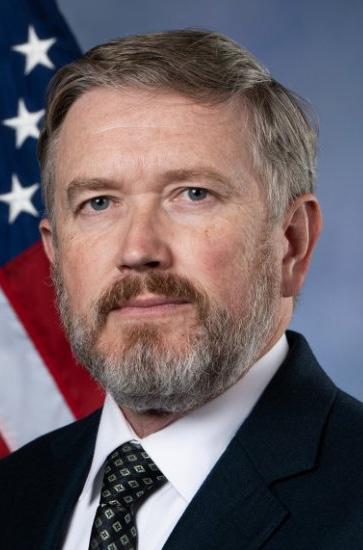
Massie, lately the hero of the populists disaffected by Trump’s job performance, fell to Trump-endorsed retired Navy SEAL Ed Gallrein (R-KY). With more than 95% of the votes in, Gallrein leads Massie 54.8%45.2% - a 9-point margin.
The race has been observed by many as the paramount showdown between the two diverging wings of “MAGA” in the Republican Party.
That energy continued to the Deep South over the weekend.
Senator Bill Cassidy (R-LA) was denied the nomination for a third term in Louisiana. Cassidy drew ire for Trump for being one of seven Republicans to vote to convict him after January 6. Cassidy has also more recently broken from conservative positions on healthcare reform and was one of nineteen Republicans who voted in favor of the Infrastructure Investments and Jobs Act of 2021.
Since early 2021, Cassidy had been targeted by the pro-Trump wing of the party, which galvanized two challengers in this weekend’s primary, but not before the State of Louisiana made a critical legal change to ensure Cassidy’s defeat.
Louisiana is known for its top-two primary. Similar to what Democrats are trying to change in California at present, the Pelican State welcomes all candidates, regardless of party, to appear on the primary ballot. If no candidate notches a majority of the vote, the top-two vote-
The runoff for the Republican nomination is now between Congresswoman Julia Letlow (R, LA-05) and Louisiana Treasurer and former Trump-era federal official John Fleming (R). Letlow earned Trump’s endorsement when she made a last-minute announcement earlier this year and led the four-candidate field with almost 45% of the vote as of early Sunday morning. Fleming earned 28% to Cassidy’s 25%. Cassidy only carried the parishes - countyequivalents in Louisianaof New Orleans and Baton Rouge. Letlow dominated the state’s geographical map in the contest.
As a result, Cassidy is the first incumbent Senator to lose renomination since Luther Strange (R-AL) did so in the 2017 special election in Alabama, and the first in a regular primary since Richard Lugar (R-IN) in 2012.
Additionally, he is the first incumbent Senator to place third or worse in a primary since Maurice Murphy (RNH) in 1962, and the first to do so after previously having won at least one full term since Hattie Caraway (D-AR) in 1944.
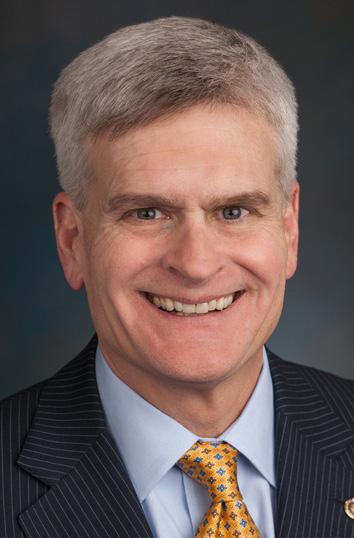
Cassidy (pictured right) was elected in the red wave of 2014, when he defeated three-term Senator Mary Landrieu (D-LA), a scion of a notable Louisiana political dynasty.
Several other states held primaries on Tuesday night. In Alabama, former Senator Doug Jones (D), who won the aforementioned 2017 special Senate race, is the party’s nominee for Governor against the man who defeated him, Senator Tommy Tuberville (R). Alabama has not elected a Democratic governor since 1998.
Governor Burt Jones (R) (pictured below right), who Trump endorsed, advances to a runoff with billionaire Rick Jackson (R).
Democrats are hoping they haven’t dashed their prospects of winning the Georgia governor’s race for the first time since 1998, as former Atlanta Mayor Keisha Lance Bottoms (D) appears to have won the primary outright. She presided over a tumultuous period in the state’s largest city.
Despite seeing low approval ratings in Portland, one-term Governor Tina Kotek (D-OR) easily defeated a field of eight other candidates to earn her party’s nomination. 2022 nominee Christine Drazan (R-OR) defeated a field of fourteen candidates in an attempt to be Oregon’s first Republican governor since 1982.
Last year’s State budget was approved in early May, the latest budget in fifteen years.
This year’s budget is seeing the negotiations head into Memorial Day weekend, as State Legislators are not resuming talks before the week is out.
Marquee races this cycle will take place in Georgia, both the Senate seat and the governorship. Governor Brian Kemp (R) is term-limited and Senator Jon Ossoff (D) is running for a second full term. Former Georgia Lieutenant Governor Brad Raffensperger (R), a Trump enemy, failed to advance to the runoff. Instead, the incumbent Lieutenant
celebrations are a success.”
PSE&G recommends staying at least 200 feet away from power lines or other electrical equipment and to never touch a power line. Do not attempt to retrieve a balloon, kite, drone, or any object caught in power lines. Instead, report it to 800-490-0075 for a specialized crew to remove the object.
For drones, PSE&G says to fly at or below 400 feet and to not operate them during dark, stormy, or windy conditions.
For balloons and kites, Long Island’s utility provider says to not fly them during electrical storms and to never cross a street while flying or holding them. Kites and Mylar balloons should also be kept away from overhead power lines and never “purposely released into the air.” All helium balloons should be secured with weights, and should be punctured in several places before being discarded.
The thirteenth extender has been passed, the financial effects of which remain until Wednesday. Tier 6 pension negotiations continue in earnest, however. Deputy Senate Majority Leader Mike Gianaris (D-Astoria) told Spectrum News 1 that mechanical aspects of the budgetary process are at odds with Governor Kathy Hochul’s (D-Hamburg) proposals. Hochul remains steadfast in lowering car insurance rates and scaling back deadlines for New York’s landmark climate and energy legislation.
The latest a State budget has been approved was on August 3, 2004.
PSE&G Long Island is reminding customers to take caution of electrical wires and equipment as summer kicks into gear.
“While we all want to impress friends and family with memorable events, a drone, kite, or metallic foil balloon coming into contact with a power line or other electrical equipment could lead to power outages, fire and, possibly, injuries,” said Michael Sullivan, PSEG Long Island’s vice president of Electric Operations, in a statement. “Please understand the risks and take steps to ensure your recreational activities and
Also accompanying the warm weather are grants that residents can obtain to reduce stormwater runoff and nitrogen pollution in local waterways. The annual Long Island Garden Rewards Program, now in its fourth year, is providing up to $500 in reimbursements for “implementing green infrastructure projects” in personal yards.
Excess nitrogen in surface water from stormwater runoff can lead to “low oxygen conditions, fish kills, harmful algal blooms, and degraded wetland and marine habitats,” according to the Long Island Regional Planning Council. Nitrogen can also contaminate groundwater, which is Long Island’s solesource aquifer.
Rain barrels can reduce stormwater runoff and put that rainwater to use in yards and gardens, which can help conserve water consumption. Barrels must hold a minimum of 50 gallons and must have mosquito netting or screening. Residents can claim up to $125 per eligible barrel, $500 maximum.
Native plantings are also recommended, as they can reduce water and fertilizer usage and tend to be more resilient to local weather. Native plants must be on the program’s eligible list for reimbursement.
Rain gardens can collect rainwater from roofs, driveways, and other surfaces. These gardens can filter the water before it reaches local waterways, which can help mitigate flooding caused by runoff. To be eligible, rain gardens must be at least 20 square feet and use native plants from the program’s list. Applications opened on May 18 and can be accessed at https://neiwpcc.org/ long-island-garden-rewards-program/.
Thursday, May 21, 2026
Continued from front cover
She also highlighted the leading causes of boating accidents, including operator inexperience, dangerous conditions, and passengers unexpectedly ending up in the water, while emphasizing that nearly half of boating fatalities could have been prevented by simply wearing a life jacket. The Town also announced an upcoming boating safety course to help residents meet New York State certification requirements and unveiled the new safe boat that will assist Public Safety officials in protecting residents on the bay.
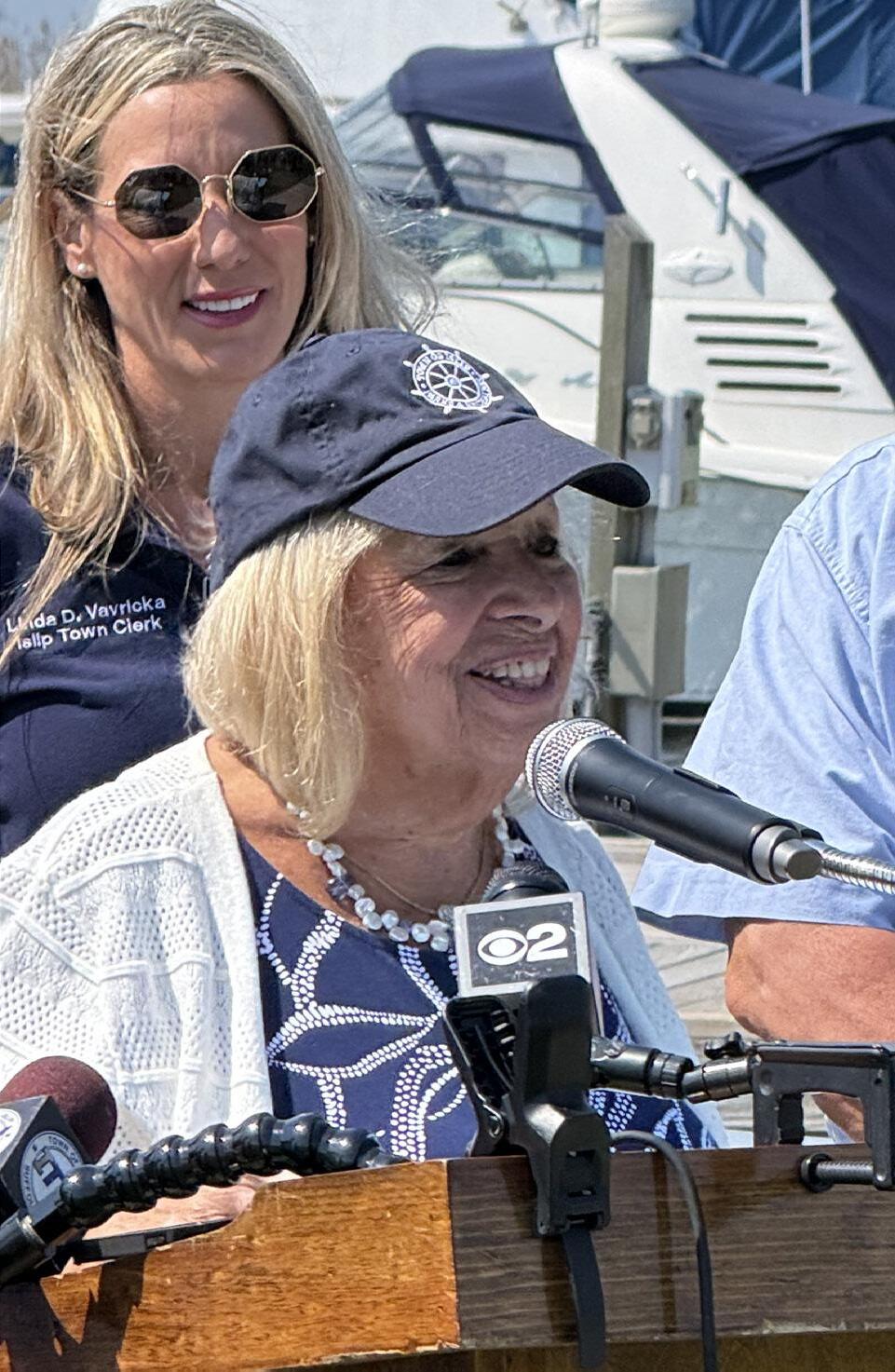
“On the water, your life jacket is your seat belt, and in an emergency, it will save your life,” Carpenter said (pictured right). “The Town is absolutely committed to ensuring everyone enjoys our waterways safely, and saving lives is worth whatever it takes.”
Director of Operations at Fire Island Ferries, Dave Anderson, emphasized the importance of boating responsibly ahead of the busy summer season, noting that ferry crews navigate the Great South Bay daily while dealing with constantly changing conditions and heavy recreational traffic.
Anderson explained that ferry captains regularly encounter obstacles ranging from weather conditions and motorboats to kayakers, paddleboarders, jet skis, and other personal watercraft, requiring crews to remain alert at all times to avoid accidents on the water. He praised the professionalism and training of the ferry captains, noting that they transport thousands of passengers safely each day while sharing the waterways with countless recreational boaters.
Tony Prudenti thanked the Town Board and local boating safety partners for their continued support during the Town’s annual boater safety kickoff event, emphasizing the importance of collaboration between the Town, Suffolk County Police Marine Bureau, and the U.S. Coast Guard in protecting residents on local waterways.
Prudenti also highlighted the Town’s newest addition to its Public Safety fleet, describing the newly unveiled vessel as the first of its kind for the Town and a major investment in public safety.
vessel, helping first responders better assist boaters across Islip’s waterways. He noted that the Town had not added a brand-new vessel to its fleet in more than 18 years and called the purchase a significant step forward for marine safety operations ahead of the busy summer boating season.
“We’re out there to help,” Prudenti said. “When you see us on the water, wave us down if you need assistance or an inspection done. We look forward to a great boating season and doing our part to keep everyone safe.”
Tony Prudenti explained that the Town’s newly unveiled marine unit is replacing an aging safe boat that
approximately $800,000, is designed as a multi-purpose rescue, EMS, fire suppression, and patrol boat capable of carrying 8 to 10 people in emergency situations. According to Prudenti, the vessel brings a wide range of advanced safety and rescue capabilities that will greatly improve the Town’s ability to respond to waterborne emergencies.
Among the boat’s most notable features is an onboard fire suppression system that allows responders to draw water directly from the bay and operate the fire hose either from the deck or remotely from inside the vessel. Prudenti noted the system would have been especially useful during the recent fire in Ocean Beach. The boat is also equipped with “skyhook” technology, which keeps the vessel locked into position despite currents or wind, allowing responders to remain stable while fighting fires or conducting rescues.
In addition, the boat’s bow lowers directly into the water, making it easier to safely load injured patients or longboards onto the vessel during medical emergencies.
Prudenti also highlighted the boat’s ability to operate in the shallow waters of the Great South Bay, including areas surrounding oyster farm lease sites. Rather than relying on traditional engine trimming systems, the vessel’s engines lift vertically on specialized plates, allowing it to safely navigate shallower areas while maintaining maneuverability.
“They thought of everything,” Prudenti said while discussing the vessel’s technology. “The technology today is amazing.”
As the new vessel was blessed and christened surrounded by Town officials, first responders, and community members, the event served as a strong reminder of just how important boating safety is across the Town of Islip’s waterways. With summer approaching and thousands expected to head out onto the bays and ocean in the coming months, officials emphasized that preparation, responsibility, and proper safety precautions can make all the difference on the water.
The unveiling of the Town’s new state-of-the-art marine vessel further showcased Islip’s continued









By Matt Meduri
Note: For clarity and brevity, please acknowledge the legend for interpreting the results.
H.S. / M.S. = High School / Middle School (respectively)
BoE = Board of Education
CSD / UFSD = Central School District / Union Free School District (respectively) Vote totals are shown in parentheses after a candidate’s name. An asterisk (*) denotes an incumbent BoE trustee.
Bayport-Blue Point School District
Budget (FAILED 679-568): $88,387,020, a 2.75% tax levy increase that would have exceeded the tax cap. The budget failed as 60% was required to pass.
BoE Winners: Michael Miller* (957) and Jessica Pignataro* (908) were re-elected unopposed.
Communities: Bayport, Blue Point, parts of North Patchogue
Bay Shore UFSD
Budget (PASSED 528-152): $211,651,256 a 4.7% hike with a 1.5% tax levy increase. Includes actual increases in teachers’ salaries depending on seniority.
BoE Winner: Louis R. Bettinelli* and Guy Leggio* were re-elected unopposed.
Communities: Bay Shore, Brightwaters, West Bay Shore
Brentwood UFSD
Budget (PASSED 602-212): $727,096,955, a 5.6% increase that remains within the cap. Investments include new football and softball fields, technology investments, college readiness plans, and a variety of programs.
Proposition Two (PASSED 620-192): Provides busing for Freshman Campus students living within the Child Safety Zone - bounded by Pine Aire Drive and Third Avenue, Stein Driver, Cecil Avenue, and Inchcape Road. Annual estimated cost is $120,519. Transportation will begin next school year.
Proposition Three (PASSED 596-210): Authorizes busing for eligible Zone students attending Brentwood High School.
BoE Winners: Brandon Garcia* (802) defeated Carlos Gomez (128) and Thomas Wilson (119). Eileen Harman* (633) defeated Dawn Forde (176).
Communities: Baywood, Brentwood, North Bay Shore
Central Islip UFSD
Budget (PASSED 690-240): $301,498,985, a 5.05% increase. Accompanied by a $5,250,000 transfer to capital funds for classroom air conditioning at Cordello, Morrow, Mulvey, and O’Neill elementary schools, upgrades for the front entrance and auditorium at the high school, gym floor upgrades at Reed Middle School, interior and exterior upgrades for Alfano, Cordello, Morrow, Mulligan, Mulvey, and O’Neill elementary schools, and softball field irrigation.
BoE Winners: Michele Harriott* (512) was re-elected. Leida Morales (565) and Jeffrey Rosado (484) won open seats by defeating Ralph Delgado, Jr. (475), Mark Hunter (239), and Jessica Banda (170).
Communities: Central Islip, most of Islandia Connetquot CSD


Budget (PASSED 1,465-982): $230,328,468, a 0.55% increase, within the tax cap.
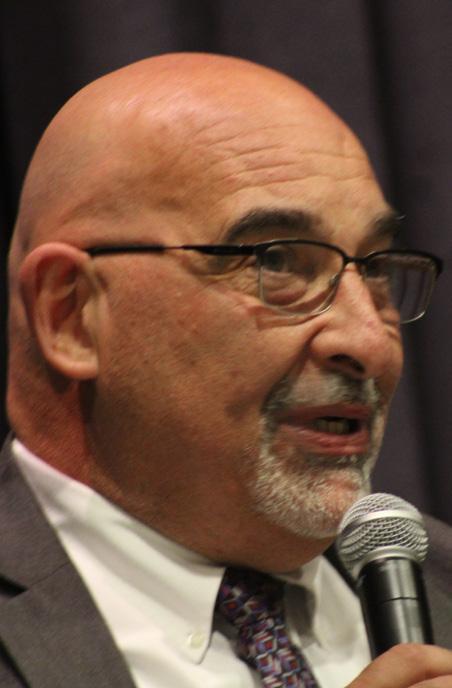
BoE Winners: Jacquelyn DiLorenzo (pictured left) (1,076) was re-elected. Edwary Barry (pictured middle) (959) defeated Vice President April Iannitelli*(pictured right) (804) and newcomer Jennie Keddy (487). Jaclyn Napolitano-Furno (861) lost her bid to return to the board after her 2025 defeat.
Communities: Oakdale, Ronkonkoma, most of Bohemia, parts of Islandia East Islip UFSD
Budget (PASSED 741-368): $132,460,346, a 2.41% increase that complies with the tax cap. Implements K-2 LEGO Club, Grades 3-5 Math Olympiad, Mock Trial, and grows home economics programs. Includes an outdoor learning space at the high school, educational trips to Spain and Puerto Rico, introduces AI literacy, installation of an LED sign at Timber Point Elementary, replaces ground vehicles for lawn maintenance and snow removal, and continues asphalt and athletic surface maintenance.
Proposition Two (PASSED 743-352): Capital Reserve expenditure of $1.4 million for power generators at the high school and Timber Point Elementary, as well as HVAC, cafeteria, refrigeration, and IT infrastructure.
Proposition Three (PASSED 789-304): Capital Reserve transfer of no more than $1.8 million to renovate the Connetquot Elementary School kitchen and serving line. That is to be subject to a future community vote.
BoE Winners: Jessica Ciampi* (765) and Christopher Zachry* (743) were re-elected unopposed.
Communities: East Islip, Great River, Islip Terrace, North Great River Fire Island School District
Budget (PASSED 34-3): $6,840,129, a 1.66% increase with a 1.37% tax levy increase. Includes raises for teachers of 1.5%, steps vary by contract.
BoE WInners: Judi Phelan* (34) and Marisa Wyckoff* (31) were re-elected unopposed.
Communities: Atlantique, Corneille Estates, Dunewood, Fair Harbor, Kismet, Ocean Beach, Point O’Woods, Saltaire.
Hauppauge UFSD
Budget (PASSED 431-235): $142,359,029, up 2.87% from last year that carries a 3.72% tax levy increase, within the cap. 2% step increase for teachers.
Proposition Two (PASSED 442-216): Establishes a new Capital Reserve fund for up to $20 million for renovations, asbestos treatment, and tech upgrades.
Proposition Three (PASSED 481-179): Withdraws up to $740,485 from an Reserve II for HVAC repairs, roof replacement, and other repairs.
Proposition Four (PASSED 448-209): Spends up to $5,255,448 from Reserve I to renovate bathrooms and locker rooms at the high school gym.
BoE Winners: Dr. Lawrence Crafa* (477) and James Kiley* (465) were re-elected unopposed.
Communities: Most of Hauppauge, parts of Smithtown hamlet and Village of Islandia. Islip UFSD
Budget (FAILED 859-369): $$106,244,004, a 3.71% increase with a 2.85% tax levy increase. Would have included a contractual salary increase of 1.25% for teachers, reduced nine staff positions including four teachers through attrition, and eliminated one teacher position and three teaching assistant positions. The budget needed 60% to pierce the tax cap.
BoE Winners: Laura Rogacki* and Hilary Crowe Breig* were re-elected unopposed. Sachem CSD
Budget (PASSED 1,633-824): $387,971,218, a 1.83% increase with a 2.10% tax levy hike. Includes a 2% raise for teachers.
Proposition Two (PASSED 1,375-1,219): Approves $45,000 for the Lake Ronkonkoma Historical Society’s upkeep of its museum on Hawkins Avenue and the Fitz-Greene Hallock Homestead on Pond Road and their continuation of student programs.
BoE Winners: Vice President Rob Scavo* and Matt Baumann* were re-elected, while Paul Sapienza was elected to the open seat of Stephanie Volpe, who did not run for reelection.
Communities: Holbrook, Holtsville, Farmingville, parts of Lake Grove, Lake Ronkonkoma, Ronkonkoma, Nesconset, Bohemia, and Bayport.
Sayville UFSD
Budget (PASSED 1,226-465): $107,721,878, a 1.94% increase with a 2.79% tax levy increase. Includes 2% actual and step increases for teachers, a new elementary literacy program for Pre-K through fifth grade, new Chromebooks for grades 5-9, adds three middle school sports teams.
Proposition Two (PASSED 1,356-331): Library Budget
Proposition Three (PASSED 1,367-203): Sayville Historical Society
Proposition Four (PASSED 1,211-462): Approves $1.1 million for districtwide capital projects: $450,000 for high school auditorium sound and lighting upgrades, $325,000 to relocate the high school weight room to a fitness center, $125,000 for math classroom whiteboard upgrades at the middle school and high school, and $200,000 for districtwide security camera additions and upgrades.
BoE Winners: Thomas Cooley* was re-elected unopposed. Kyle Valentine (1,032) defeated Jason Rowland (549) for an open seat with the term starting immediately.
Communities: Sayville, West Sayville, parts of Oakdale West Islip UFSD
Budget (PASSED 1,165-313): $144,810,058, a 2.38% increase that carries a $2.5 tax levy increase. Includes actual salary increases for teachers, cuts twelve full-time teaching positions - nine through attrition and three through layoffs. One full-time administrative position with cut via layoff. Cut also through attrition are three full-time clerical, maintenance, and custodial positions.
Proposition Two (PASSED 1,205-260): Approves $1.88 million in capital reserves for security improvements: magnetic door holders at the high school, electronic locks and card access readers for classrooms and bathrooms and Beach Street and Udall Road middle schools, and fire alarm replacements at two elementary schools.
BoE Winners: Quinn Bedell* (1,149) and Vice President Anthony Tussie* (1,097) were re-elected unopposed.
Sayville Public Schools recently hosted its annual All-District Art Show, welcoming families, friends, staff members, and community residents to celebrate the creativity and accomplishments of student-artists from across the district. Held at Sayville High School, the event featured an impressive display of artwork spanning a variety of mediums and grade levels.
The exhibit filled the main floor with student artwork, while senior showcases on the second floor gave graduating artists the opportunity to sit alongside their collections and discuss their artistic experiences and inspirations with guests. Throughout the day, students and their families explored the gallery-style displays and celebrated the artistic achievements of Sayville’s young creators.
Award-winning artwork was recognized with ribbons, while juried senior winners received monetary awards, and People’s Choice winners earned artthemed prizes.
“This event is always a wonderful celebration of the incredible creativity and talent of our students,” Superintendent of Schools Dr. Marc Ferris said. “The All-District Art Show reflects the dedication of our student-artists and teachers, while also highlighting the importance of the arts throughout our schools.”
Studio in Art Winners: Sydney Meyerhoefer, Molly Garafola, Emma Williams, Kirin Coleman, Asher McLaughlan, Griffin Shivers, and Sunday Shaw.
Juried Senior Winners: Kevin Mulligan — Drawing, Reese Walters — Photography, Annabella Hart — Senior Fine Art, Grace McAuliff — 3D, and Alexandra Menechino — Fashion
Juried Grades 9-11 Winners: Cassidy Halloran — Drawing, Kayla Berman — Photography, Emily Haszto — Painting, Haley Sartain — Digital/Mixed Media, Isabella Czajkowski — 3D, and Jaelyn Scuderi-Wilson — Fashion.

People’s Choice Award Winners (Underclass): Caleigh Pfaff — Drawing, Lia Spikoski — Digital Art, Brooke Alcantara — Painting, Thomas Huhn — Photography, Molly Moynihan — Ceramics, and Olivia Bucello — Fashion.
People’s Choice Award Winners (Seniors): Kaelin Frawley — Drawing, Ava Oliverio — Overall Senior Artwork, Saeeda Mokarram — Photography, Paige Manning — Ceramics, and Ella Trama — Fashion
For more information on the Sayville Union Free School District, visit the district’s website at sayvilleschools.org. Happenings in the district can also be found on the district’s Facebook page at https://www.facebook.com/saydistrictpr. #CaringAndLearning

East Islip High School recognized the top 10 highest ranking academic seniors of the Class of 2026 on the morning of May 18 at a joyous bagel breakfast celebration with administrators and school counselors.
The top 10 include valedictorian Liam Eichler (who will attend Carnegie Mellon University, majoring in architecture and business) and salutatorian Angel Mai (Stony Brook University, pre-nursing), as well as Aadil Ali (Baruch College, accounting), Keira Bloch (University at Albany, public health), Sophia Chillemi (Molly University, nursing),
Angelina Codispoti (Stony Brook University, psychology), Jason Engel (Georgia Institute of Technology, business administration), Viki Li (Stony Brook University/Georgia Institute of Technology, chemical engineering), Olivia Primiano (Stony Brook University, French education and linguistics), and Cailyn Talt (Seton Hall University, biology).
“All of your hard work has paid off, as you represent the top of your class,” Principal Anthony Montemarano told the seniors.
“Congratulations and keep up the good work.”

Pine Park Elementary students traded their classrooms for sunshine, games and plenty of laughter during the school’s annual Field Day celebration May 19. Wearing matching “Pine Park Rocks” shirts, students rotated through obstacle courses, basketball activities and outdoor challenges designed to encourage teamwork, movement and school spirit.
From relay races to dribbling drills, the day was filled with energy as students cheered one another on and enjoyed time together outdoors. Staff members and families joined in to help make the event a memorable end-of-year tradition for the Pine Park school community.

By Matt Meduri
We’re taking a look at a somewhat underappreciated aspect of American elections, sore losers laws. All but two states have some form on the books, and we just saw a creative use of party primaries to force a more competitive Senate race this cycle.
These laws prevent a candidate who is defeated in a party primary from running as an independent or write-in candidate, or one with the nomination from another party. This is intended to preserve the primary process and ensure that a candidate cannot circumvent the choice of a party and/or a party’s voters.
The history of these laws, interestingly, don’t hinge on a sole event or problematic candidate. Rather, it was a product of one of the crucial points in the United States’ metamorphosis.
The first sore loser law was enacted by Mississippi in 1906. The turn of the century was embedded directly in the Progressive Era, a time where citizens demanded better representation, a stronger voice in government and the workplace, and a master plan for a future gripped by the Industrial Revolution. On top of other civil reforms, direct party primaries as we mostly know them today were a byproduct of the time.
Party primaries then were run entirely through party conventions that were often controlled by the party bosses. In addition to political corruption rampant at the time, the closed conventions were seen as an anointment of a preferred candidate, rather than the people deciding who should be their party’s standardbearer in any given contest.
Mississippi’s 1906 statute was the first such law on the books in the country. It was crafted by State Senator Edmund Favor Noel (D), who would later serve as Governor. Party bosses feared that if a losing primary candidate ran another general election campaign, it could lead to vote-splitting between the begrudged candidate and the party’s formal nominee. Moreover, they foresaw spoiler candidacies driven by personal grudges.
Mississippi, however, had another motive with these laws. From the end of Reconstruction to the 1950s, it was perhaps the most solidly Democratic state in the country. The era of Jim Crow saw black and poor white voters disenfranchised as it was, but party leaders sought continual political dominance. Democratic nominations were tantamount to victory in Mississippi at the time, as the average level of support for a Republican presidential nominee in Mississippi was about 11% from 1900 to 1960.
The second state to adopt sore loser laws was New Jersey in 1915. This had more of a center around a single issue, the presidential election of 1912. Former President Theodore Roosevelt (R-NY) had pledged not to run for re-election that year and left the reins to William Howard Taft (R-OH). Roosevelt’s outrage at some of Taft’s policies caused Roosevelt to run a thirdparty campaign - the Progressive “Bull Moose” ticket. That split the national vote between Taft and Roosevelt, handing the election to Woodrow Wilson (D-NJ).
New Jersey strengthened these laws in 1921 by banning fusion voting, a system in which multiple parties nominate one candidate. Today, only Connecticut and New York allow full fusion voting. They’re also the only two states to not have any sore loser laws on the books.
Several more states would sign their own laws heading into the 1960s - Southern states where Democratic bosses sought to retain their ironclad grips on the political machines and others where party primaries had been implemented during the Progressive Era, but whose electoral systems still needed further organization.
The 1970s was the busiest decade for these laws, with 15 states putting laws on the books. The 1980s was second-busiest with 9 states. This is due to two factors: party primaries had been organized by almost all states at this point, effectively giving us the primary system we know today, and a Supreme Court ruling that allowed California’s laws, adopted in 1917, to stand.
Since then, only a few states remained without sore loser laws. Iowa became the most recent state to adopt, doing so in 2021.
Party interest in these laws hasn’t been binary over the years.

This column will seek to address the long-forgotten concept of civics and how it relates to American government in general, from the federal level to the local level. This column will explore Constitutional rights, the inner workings of government, the electoral process, and the obligations and privileges of citizens.
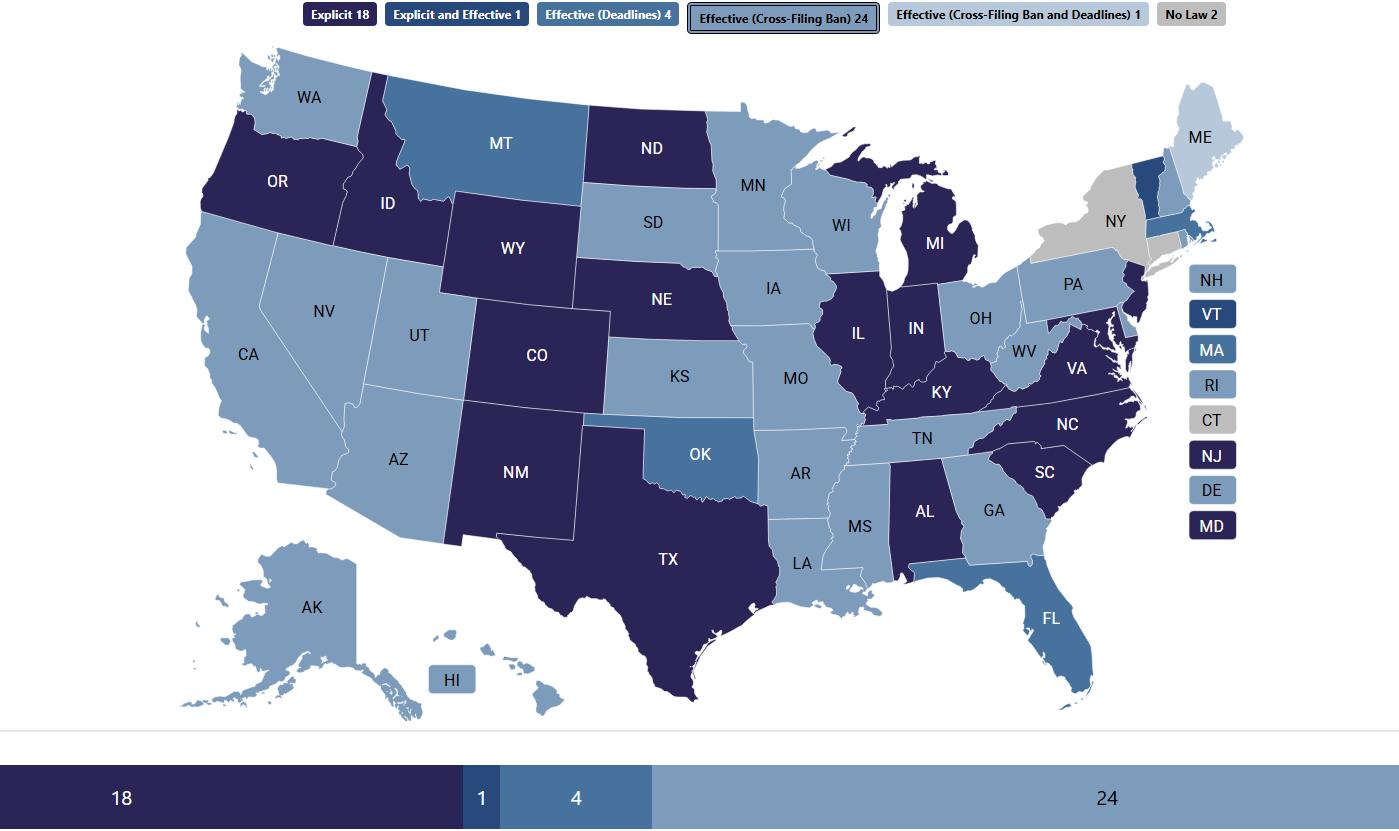
When each state’s law was passed, 17 were controlled by Democrats - about half of which were Old South states - 9 were controlled by Republicans, and 21 saw shared power between the parties.
Sore loser laws are fairly straightforward, although there are different variations. About one-third of the states have laws that are “explicit” in banning defeated primary candidates from running in the general election, while more than half have laws that are “effective” in that goal.
Cross-Filing Ban: 24 states have these laws on the books, which are “effective” sore loser laws that prohibit candidates from filing in multiple elections or as members of multiple parties. Some states’ laws prevent a candidate from trying to gain ballot access by simultaneously petitioning and through party nomination.
Filing Deadlines: Also “effective,” these preclude primary candidates from obtaining general election ballot access by making primary candidates file early - often months before the primary - and making Independent or nonpartisan candidates file later paperwork. Independent candidates must be disaffiliated from a party before the primary.
Party primaries often occur after Independent filing deadlines have passed. Only four states have these laws, Florida, Massachusetts, Montana, and Oklahoma. For example, nonpartisan candidates in Florida must have been unaffiliated 365 days before the primary. In Oklahoma, a party candidate must have been registered to that party for six months before the filing period, which is often several months ahead of the primary itself.
Deadlines and Cross-Filing Ban: This hybrid approach makes it even more ironclad. Maine is the only state to utilize both types of laws simultaneously.
Explicit: Used by 18 states, these laws directly preclude a defeated primary candidate from appearing on the general election ballot as a nominee of any other party.
Explicit and Effective: The most surefire method, we assume. Vermont is the only state that has both explicit and effective sore loser laws.
No Laws: New York and Connecticut are the only two states without these laws.
Pros and Cons
Those in support say that it prevents intra-party feuds and allows the voters to coalesce around one candidate and not split
the votes in a general election. They also say that it prevents voter confusion at the ballot box; one party, one candidate. Additionally, some believe these laws increase competition and the need to engage in a primary contest.
The biggest argument against them, we find, is that they increase political polarization and allow the two parties to maintain their monopoly on U.S. politics. Mostly observed in U.S. House races, opponents argue that the laws allow for the farthest wings of the party a heightened platform and moderates only have minimal chances to break through. Low voter turnout in primaries also contributes, as only a small, or even activist, base can choose the party’s nominee.
Noah Heftman, Editor-in-Chief of The New Trier Political Journal, cites the 2016 GOP Primary as an example. Donald Trump (R-NY) won the nomination with less than a majority of the vote and has “numerous times taken actions which go against the views of most Republicans.” Heftman adds that sore loser laws “must be repealed to prevent extremist politicians from taking control of their party upon winning only a primary election with a minority of the vote.”
Heftman also opines that primary losers, who might better represent the general electorate, have no recourse.
In 2006, Senator Joe Lieberman (D-CT) lost his Democratic primary but won as an Independent.
In 2012, Gary Johnson (L-NM) was running in the presidential race as a Libertarian after withdrawing from the Republican primaries. He was three minutes late to withdraw in Michigan and remained on the ballot. He was then denied ballot access as a Libertarian there.
In 2025, former Governor Andrew Cuomo (D-Sutton Place) lost the Democratic Primary for New York City Mayor to thenAssemblyman Zohran Mamdani (D-Astoria). He continued his campaign as an Independent, where he was defeated by Mamdani again.
Just last week, Nebraska Democrats creatively used this system to block a little-known candidate from receiving the nomination. Democrats are backing Independent Dan Osborn. He delivered a closer-than-expected margin in 2024, so Democrats endorsed him and refused to put up a candidate so as to not split the vote. Cindy Burbank (D) won last week’s primary, with her only pledge being to drop out if Nebraska Democrats voted for her. Burbank won with 90% of the vote, which denied pro-life pastor William Forbes (D) from being the party’s nominee and saved their competitive race from a vote-splitting environment.
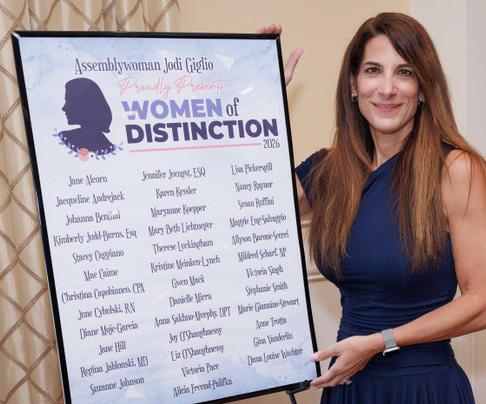
New York State Assemblywoman Jodi Giglio (R-Baiting Hollow) recently honored Stacey Ann Caggiano, director of the Suffolk County Office of Women’s Services, as a Woman of Distinction during the 2nd Assembly District Women of Distinction event held on May 16.
Caggiano was recognized for her years of advocacy and leadership supporting women and families throughout Suffolk County. Through her role with the Office of Women’s Services, she oversees programs focused on domestic violence prevention, maternal wellness, mental health support, anti-human trafficking efforts, crisis intervention, and family resource coordination.
“The Second Assembly District Women of Distinction event was truly inspiring,” Giglio said. “I was honored to recognize so many remarkable women whose dedication, leadership, and compassion strengthen our communities every day.”
Giglio also highlighted the importance of Caggiano’s office in connecting women across the region with critical services and resources, noting her ongoing advocacy for women’s health and wellness.
Caggiano began her career in her mid-20s working
at Nassau County Medical Center in the Child and Adolescent Psychiatric Ward, where she collaborated with courts, social services, and law enforcement during a growing gang crisis impacting Long Island youth. She later worked for NYS BOCES in Suffolk County, assisting children with behavioral and learning disabilities.
One of the most significant resources overseen through her office is the Suffolk County Women’s Helpline, which helps connect women and families with emergency assistance, counseling, shelters, healthcare services, legal advocacy, and mental health support.
Under Caggiano’s leadership, the office has strengthened partnerships with law enforcement agencies, healthcare providers, nonprofit organizations, victim advocates, and local governments to expand support systems throughout Suffolk County. The office has also become increasingly involved in discussions surrounding maternal wellness, women’s health equity, mental health awareness, and the long-term effects trauma can have on families and children.
“Public service is about creating real pathways to help people,” Caggiano said. “This award belongs to every

Islip Town Supervisor Angie Carpenter (R-West Islip) and Councilman Jorge Guadron (D-Central Islip) were pleased to recognize Town of Islip Department of Environmental Control (DEC) Commissioner Martin “Marty” Bellew as he was honored with the “Municipal Leaders for the Environment” award at the Herald Sustainability Awards of Long Island powered by Reworld.
As Commissioner of DEC Marty has overseen numerous complex projects and programs including the construction of the Town’s Animal Shelter, expansion of the Town’s Bay Bottom Lease program, and has helped secure a $10 million grant from New York State for a new shellfish hatchery
which will help improve the water quality of the Great South Bay.
Marty brings a wealth of knowledge to his role as Commissioner of DEC for the Town of Islip with a Bachelor of Science Degree in Chemical Engineering and past career highlights including Director of Bureau of Waste Disposal, Waste Disposal Engineering and the Bureau of Recycling for the New York City Department of Sanitation, Deputy Commissioner of Public Works, and later Commissioner of Parks, Recreation, and Conservation for the City of Yonkers. In his time with NYC, Marty, an icon in the industry, managed all material generated by the cleanup of the 9/11 terrorist attack at the World Trade Center.
woman who trusted our office during a difficult moment and every professional, advocate, and partner who works every day to make these services stronger.”
Giglio said Caggiano represents the true purpose behind the Women of Distinction Award.
“Stacey Ann Caggiano has shown extraordinary leadership, compassion, and commitment to women and families throughout Suffolk County,” Giglio said. “She represents the very best of public service and community advocacy.”
The Women of Distinction event recognizes women making meaningful impacts across several categories, including business, education, healthcare, government, volunteerism, humanitarian work, military affairs, and community service. Honorees are selected through a nomination and review process focused on individuals demonstrating exceptional dedication and selflessness.
“The Second Assembly District is made stronger by talented, intelligent, and caring women who continue to lead, serve, and make a difference,” Giglio added.
While much of the work done through the Office of Women’s Services happens quietly and behind the scenes, the impact continues to be felt by countless women and families across Suffolk County.
Born in Brooklyn, Caggiano moved to Long Island with her family at age 5. She has been married for 30 years to attorney Greg Caggiano, founding partner of Miller & Caggiano, LLP, and together they have two daughters, Jessica and Hannah.

“Marty is a huge asset to our Town and is so truly deserving of the recognition he has received. Our Town was enormously lucky to find such an incredibly experienced, educated, and competent Commissioner to handle our Department of DEC. He is truly irreplaceable,” stated Supervisor Carpenter.



Sponsored by Legislator Leslie Kennedy
Ronkonkoma Street Fair
Sunday, May 24th
10:00am-4:00pm
Bus Mobile
Located in between Flanagan’s Pub & Bustos Martial Arts

Sign up at nybc.org/sponsor and use code #62130


By Mollie Barnett
When Andrej Karpathy (pictured right) joined Anthropic this week, most people in tech treated it like another AI talent headline. It is not.
Karpathy is one of the most respected minds in artificial intelligence. Founding member of OpenAI. Former head of AI vision at Tesla. Stanford educator. Builder of nanoGPT and micrograd. One of the clearest AI educators alive.
He could have gone almost anywhere.
Meta. xAI. Google DeepMind. OpenAI. His own venture, full time. He chose Anthropic.
That matters because the AI industry is no longer just competing on model capability. It is competing on trust, control, infrastructure, and moral legitimacy.
And that shift does not stop at Silicon Valley. It reaches Long Island businesses too.
The major AI players are beginning to separate into distinct philosophies. OpenAI increasingly behaves like a massive commercial platform: distribution first, ecosystem scale close behind.
Google DeepMind remains tied to one of the most powerful centralized information systems in the world: search, productivity software, cloud infrastructure, chips, and data.
Anthropic has positioned itself around safety, interpretability, and responsible scaling.
Musk’s xAI frames itself around transparency, anti-censorship, and resistance to centralized narrative control.
These are not just brand differences. They are different theories of power.
Who should build AI?
Who should govern it?
Who should own the infrastructure?
Who should control the information layer?
Who gets access?
Who gets priced out?
That is the real split emerging underneath the product launches. There is also a question forming around OpenAI that deserves more attention.
As OpenAI deepens its alignment with federal contracts and defense infrastructure, the category itself starts to divide structurally. If one major model becomes deeply embedded in government and military operations, then every other model becomes an alternative by definition.
That has consequences for public trust, procurement, business adoption, and what “independent AI” even means.
These are not abstract questions. They are arriving quickly.
Now zoom out further.
Google has more AI infrastructure than almost anyone in this race: DeepMind, Gemini, search, Workspace, Cloud, YouTube, Android, and the chips that power its models while much of the market remains dependent on Nvidia.
Blackstone just announced a major joint venture with Google to build and operate AI data centers using Google’s own chips. Berkshire Hathaway also sharply increased its Alphabet position in Q1 2026.
Whether coincidence or convergence, the signal is hard to ignore.
Google is not just competing for AI market share. It may be positioning around the infrastructure layer that other markets eventually depend on. That matters because the future of AI will not be decided only by which chatbot feels smartest.
It will be decided by who owns the compute, who controls the distribution, who sets the defaults, who captures the data, and who becomes too embedded to avoid.
And then there is China.
DeepSeek exploded into public attention by offering powerful AI at little

or no cost. Kimi and other Chinese AI systems are also gaining serious enterprise and consumer traction.
The function is real. The price is low. But nothing is free.
When powerful AI tools are free, the strategic question is not just, “Does this work?”
It is: Where does the data go? Who can access it? What legal regime governs it? What happens when millions of users and businesses trade cost savings for dependency?
This is where American AI has a serious vulnerability. If U.S. AI remains priced primarily for enterprise buyers while Chinese AI remains free or nearly free, many small businesses, independent workers, students, and local organizations will make a rational choice.
They will use the free tool, not because they are naïve, because payroll is due. Rent is due, margins are thin, and access matters.
That is how America could lose the data race without losing the technology race. We could build the most capable, most safety-conscious, most values-aligned AI systems in the world — and still price our own people out of using them.
That is not just a market problem. It is a sovereignty problem, and it is why local businesses need to start thinking differently about AI adoption.
Most companies are still using AI as a tool: a faster way to write, summarize, automate, or finish tasks they were already doing. That is useful, but it is not the real leverage. The bigger opportunity is orchestration.
Automation replaces a task. Orchestration rewires how intelligence moves through an organization. It changes how decisions get made, how workflows connect, how knowledge compounds, how teams coordinate, and how leaders see around corners.
That is where the tenfold returns begin.
The practical response is not panic. It is fluency. Business leaders do not need to become machine learning engineers, but they do need enough AI literacy to understand what they are adopting, what they are exposing, what they are depending on, and where leverage actually lives.
AI adoption is becoming a sovereignty decision, not only for nations, for companies, for communities, for schools, for local economies, for Long Island businesses deciding which systems will shape how they work, compete, and grow.
The businesses that learn orchestration now will move faster, decide better, and outcompete organizations ten times their size still running on legacy logic.
The ones that do not may not disappear overnight. They may simply wake up one day operating inside someone else’s platform, someone else’s defaults, and someone else’s economic model.
That is the shift. AI is no longer just a productivity tool.
It is becoming infrastructure, and infrastructure always becomes power.
Thursday, May 21, 2026
By Cindi Sansone-Braff
The houselights dim. A solitary streetlamp illuminates the set. Two rival teenage gangs battling for control of Manhattan’s Upper West Side storm the stage, snapping their fingers and swaggering. A simmering “Sneaker Ballet” unfolds. Guttural sounds and a few choice words fill the air.
This well-calculated call to arms makes it clear that the percolating tension between the Jets and the Sharks is about to go nuclear. From this ominous opening to the heartrending finale, The Gateway’s spectacular “West Side Story” held last Saturday’s opening night audience spellbound.
Conceived, directed, and choreographed by the visionary Jerome Robbins, this 1957 Broadway musical, a reimagining of Shakespeare’s tragic love story, “Romeo and Juliet,” features music by Leonard Bernstein, lyrics by Stephen Sondheim (in his Broadway debut), and a book by Arthur Laurents. A cultural phenomenon, “West Side Story” has seen five Broadway revivals and is frequently staged in regional, community, high school, and university theaters around the globe. This artistically innovative musical also spawned two highly successful films, the iconic 1961 version directed by Robert Wise and Jerome Robbins, which won 10 Academy Awards, and a 2021 version directed by the legendary Steven Spielberg.
Thanks to The Gateway’s talented Director and Choreographer, Vincent Ortega, and Associate Director and Choreographer, Ashley Klinger, this unforgettable production brings Robbins’ Tony Award-winning Broadway choreography to Long Island. Watching this energetic, eclectic blend of rigorous athletic jumps, jazz, ballet, and Latin-inspired movement (including salsa, mambo, cha-cha, and AfroCuban) was worth the price of admission.
Jackson Hurt and Sabina Collazo were ideally cast as the star-crossed lovers Tony and Maria. Tony is an ambitious former leader of the Jets from a white, working-class background, and Maria is a recent Puerto Rican immigrant eager to start anew in America. In their balcony duet, “Tonight,” Collazo’s soaring soprano filled the theater. Their palatable onstage chemistry made “One Hand, One Heart” a captivating duet. Hurt showcased a commanding tenor in “Something’s Coming” and delivered a stirring rendition of the operatic “Maria.”

brother. Franco Bianchi was believable as Chino, Bernardo’s friend and Maria’s intended suitor, whose jealous rage led to tragic consequences. Megan Elyse Fulmer delivered a standout performance as Anita, Bernardo’s spirited girlfriend and Maria’s confidante. Fulmer’s precise choreography and stellar vocals made the satirical, Latin-infused dance song “America” a real showstopper! One of the most poignant scenes in the show occurred during the emotionally charged

duet “A Boy Like That/I Have a Love,” where Anita and Maria reach a deep understanding that, in matters of the heart, there is no right or wrong.
choreography blending mambo, jazz, ballet, high jumps, and powerful kicks, featured the full company. To be cast as a gang member of the Jets or Sharks, or one of their Girls, a performer must be a triple threat, able to act, dance, and sing. This production features a cast that mastered that Herculean task! The Jets include PJ Palmer (Action), Jack Mintz (A-Rab), Keaton Bartz (Baby John), Jack David Mullen (Big Deal), and Gabriel Hobbs (Diesel). The Jets Girls include Olivia Schuh (Velma), Angelina Didea (Minnie and Margarita), Abigail Graham (Anybodys), Alysia Vastardis (Graziella), and Keegan Lavery (Pauline). The Sharks include Curtis J. Faulkner (Pepe), Rodolfo Santamarina (Indio), Bryan Ernesto Menjivar (Juanito), and Brandon Moreno (Toro). The Shark Girls include Samara DeCastro (Rosalia), Lily Mendoza (Estrella), Alexis Papaleo (Francisca), and Manuela “Mango” Agudelo (Consuelo). Amid the

chaos and collision-course choreography, Tony and Maria find each other, and the scene takes on a dreamlike, slow-motion atmosphere as fate strikes and love takes flight.
A big round of applause goes to DeCastro for her moving performance of the hauntingly beautiful ballad “Somewhere.” Another standout number, “Gee, Officer Krupke,” provided muchneeded comic relief. Action and The Jets demonstrated their strong physicalcomedy skills throughout that hilarious scene, which was made even funnier by a set featuring a broken-down wooden fence defaced with graffiti and a colorful array of laundry hanging on a clothesline.
Bill Carmichael as Doc, Jesse Swimm as Lieutenant Schrank, Manny Erias as Officer Krupke, and Dustin Lawson as Glad Hand all gave outstanding performances. Lawson also worked a bit of magic backstage with his 1950s-style wigs, hair, and makeup designs.
Content Advisory: This show may not be suitable for all ages. While there is no official rating system for live theatre, please use your judgment based on age, maturity level, and subject matter.
The Gateway’s raw, kinetic, musically intoxicating production of “West Side Story” left me breathless and begging for more! The show runs now through May 31, 2026. For tickets, contact the Box Office at (631) 286-1133 or buy online at https://TheGateway.org/.
Cindi Sansone-Braff is an awardwinning playwright. She holds a BFA in Theatre from the University of Connecticut and is a member of the Dramatists Guild. She is the author of “Grant Me a Higher Love,” “Why Good People Can’t Leave Bad Relationships,” and “Confessions of a Reluctant Long Island Psychic.” Her full-length Music Drama, “Beethoven, The Man, The Myth, The Music,” is published by Next Stage Press. She is a proud finalist in the 2026 Press Club of Long Island Media Awards for outstanding journalism in entertainment.
Carlos Jimenez gave a memorable performance as Bernardo, a proud Puerto Rican immigrant, impassioned leader of the Sharks, and Maria’s overprotective
Ashton Lambert commanded the stage as Riff, Tony’s best friend and the die-hard leader of the Jets, hellbent on defeating the Sharks. Jimenez and Lambert are two powerhouse performers, and their showstopping dance moves and combat skills mesmerized the audience in the violently tragic “Rumble” scene that closed Act I with a bang.
“Dance at the Gym,” a big production number with frenetic, breathtaking

Published by Messenger Papers, Inc.
By Adam Johnston | AMAC Contributor
Acting ICE Director Todd Lyons recently announced that federal investigators had identified more than 10,000 foreign students linked to suspicious companies in a fraud scheme involving the 25 largest employers in the federal Optional Practical Training (OPT) program.
First created under the Bush administration, OPT was designed with a simple purpose: allowing foreign students on F-1 student visas to gain up to 12 months of hands-on work experience in their field before returning home. The program was expected to serve only a few thousand students a year.
Instead, OPT – and particularly its STEM extension which stretches that window from one to three years – has metastasized into something unimaginable to the program’s creators. It is now a massive, unregulated backdoor to the American labor market that bypasses H-1B caps entirely and operates with minimal oversight, undercutting American wages and stealing opportunities from native-born workers.
What Lyons reported is not an isolated scandal. It is yet another window into the sprawling criminal abuse of the immigration system that stretches from the OPT program’s ghost worksites all the way to the H-1B visa lottery, which corporations have spent decades exploiting to suppress wages and push qualified American workers to the sidelines.
Together, programs like OPT and H-1B are not “supplementing” the American workforce, but rather deliberately replacing it.
The H-1B Myth: “Best and Brightest” or Cheap Labor Pipeline?
The H-1B visa program has long been sold to the American public as a tool for attracting exceptional foreign talent – the rare specialists no domestic candidate could match. The corresponding salaries paid to H-1B candidates supposedly reflect that premium.
However, in fields dominated by H-1B workers, which include IT, engineering, accounting, and back-office whitecollar roles, wages have remained stagnant or failed to keep pace with inflation, a result that defies basic market logic if a genuine labor shortage existed or if these positions required top global talent.
A true labor shortage would drive wages up sharply as employers competed for talent. Instead, the H-1B program functions as a cost-saving pressure valve, allowing corporations to bypass the domestic labor market entirely, importing cheaper foreign alternatives to American talent.
Additionally, the lottery system that governed H-1B selection for years has been systematically exploited. Employers, particularly outsourcing firms and staffing agencies, flooded the registration pool with large volumes of low-skilled, low-wage foreigners, overwhelming the system and crowding out genuinely high-value American candidates.
As U.S. Citizenship and Immigration Services itself acknowledged when it moved to reform the process, the old lottery was “exploited and abused by U.S. employers who were primarily seeking to import foreign workers at lower wages than they would pay American workers.”
Because H-1B status ties a worker’s visa to a specific employer, the arrangement also creates a form of indentured servitude, as H-1B recipients cannot easily walk away, demand a raise, or organize.
Thankfully, new reforms taking shape in 2025 and 2026 are a step in the right direction.
A wage-based selection system replacing the pure lottery, a $100,000 fee on petitions for workers based outside the U.S., and a proposed nearly 33 percent increase in prevailing wage thresholds all work to better align the program with its original purpose.
While these new rules are welcome, they will be treated as temporary obstacles to overcome without aggressive enforcement. Determined fraudsters have a strong incentive to circumvent any rules and restrictions.
The Citizen Penalty: Who Actually Pays
It is important to be clear about who bears the cost of this fraud. Because it is not the corporations that have used H-1B and OPT as wage-suppression tools.
Instead, it is the American computer science graduate who sent out dozens of résumés only to be passed over by a firm running a foreign-worker pipeline. It is the mid-career American engineers who watched their industry’s wages stagnate for a decade.
It is also the young American family that scrimped and saved for a down payment, only to find themselves outbid in the housing market by a guest worker with access to FHA financing and state homebuyer grants – all subsidized, in
effect, by the taxpayers the foreigners were competing against.
Taxpayer-Funded Homeownership for Temporary Visa Holders
The housing dimension of this story is perhaps the most direct illustration of how federal immigration policy was turned against the very citizens it was supposed to serve.
During the Biden administration, H-1B visa holders who are, by definition, temporary, non-permanent residents, were eligible for FHA-insured mortgages with down payments as low as 3.5 percent – a story that should have been a national outrage but which was met with barely a shrug from the corporate media.
Overview - AMACThe Association of Mature American Citizens
The Association of Mature American Citizens represents Americans 50 plus. AMAC is centered on American values, freedom of the individual, free speech, and exercise of religion, equality of opportunity, sanctity of life, rule of law, and love of family, with benefits at all levels.
AMAC plays a vital role in helping build the services that will enrich the lives of America’s seniors. AMAC Action, a 501 (C)(4) advocates for issues important to AMAC’s membership on Capitol Hill and locally through grassroots activism. To Learn more, visit amac.us
In practice, that 3.5-percent floor often went to zero. And since the Federal Housing Administration does not track the citizenship or residency status on loan applications, we have no idea how many non-citizens currently hold federally insured mortgages.
In short, American tax dollars were used to fund down-payment grants for non-U.S. citizens, allowing them to close on homes at peak 2022–2024 pricing while the American family next door was scraping together whatever they could for their down payment.
It was, in the words of one housing market analyst who tracked the practice closely, the return of NINJA loans — “No Income, No Job, No Assets” — that precipitated the 2008 housing collapse. Only this time, the scam was extended to non-citizens on temporary visas.
Continued on page 21











verb
Etymology:
Unclear, likely mid-14th century, originated from the Old French amonester (urge, warn) and the Latin admonere (“bring to mind, remind, warn”), formed by ad- (“to”) + monere (“to warn, advise”)
Pronounced: /uhd·maa·nuhsh/
Definition: to express warning or disapproval to (someone) about a fault or oversight especially in a gentle but serious way.
Example: “He was quick to admonish his staff and only did so when absolutely necessary.”
Synonyms: reprimand, chide, criticize
Antonyms: applaud, approve, endorse
Source: Merriam-Webster


S O L V E R H
See how many words you can create. Must have center letter in word and can use letters more than once. 4 letter word minimum.


See left for the answers (please don’t cheat!)
May 21, 1832: First U.S. Democratic National Convention is held in Baltimore.

May 24, 1595: Nomenclator of Leiden University Library appears, the first printed catalog of an institutional library.


May 25, 2001: 32-year-old Erik Weihenmayer, of Boulder, Colorado, becomes the first blind person to reach the summit of Mount Everest.

May 27, 1930: The 1,046-foot Chrysler Building in NYC, the tallest man-made structure at the time, opens to the public.
May 23, 1934: American outlaws Bonnie Parker and Clyde Barrow are killed by police in an ambush near Sailes, Louisiana.

Source: Onthisday.com.

May 22, 1900: American inventor Edwin S. Votey receives a patent for the pneumatic piano player.
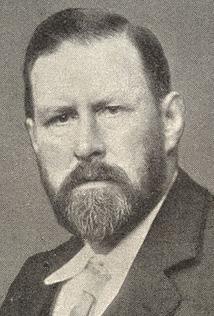
May 26, 1897: “Dracula” by Irish author Bram Stoker is published by Archibald Constable and Company in London.
By PJ Balzer
I love a beautiful autumn scene more than anyone. I personally count the days down until autumn, which perfectly morphs into the Christmas season. Those few peak weeks full of unmatched beauty, picturesque calendarworthy scenes that literally change by the day. Those days and scenes, not by coincidence, roll into a season of colorful lights that light up our dark winter evenings.
A few years back, an acquaintance of mine sold his family’s house and headed to the Deep South. His wife documented on social media their move and journey down. His family expressed that they were finally through with the hustle, bustle, traffic, foreclosed and boarded-up homes, and dilapidated buildings. They were set on exchanging “eye sores”, the constant sounds of sirens, loud summer evenings, and transient neighbors for acres of farmland. They let their viewers know several times. “We’re heading down to God’s country.”
They purposely took their time driving down since it was during the autumn season. They stopped often to take in the scenery, visited monuments, popular parks, and ate at little country kitchens along the way. They took plenty of photos, slept in beautiful places, and breathed in the fresh mountain air. Their pickup truck and camper behind it got plenty of usage. Again, the whole journey down there was documented to us as this being God’s country. I ended up hearing the term so many times during their move. That I started to ask myself, “Where is God’s Country”?
Almost parallel to their journey, my wife and I took our own, but in the opposite direction. My sister and her husband received Yankees tickets that they weren’t able to use due to conflict of schedule. The tickets were for a late September, early afternoon game in the good, old Bronx, the borough whose name alone demands some reverence. We gladly received the tickets and took our own journey down the Cross Bronx Expressway.
Instead of parking inside the stadium, we decided to park about six blocks away. Stadium parking now costs as much as the tickets themselves. My father-in-law worked for many years as a porter in a building not too far from the stadium, so my wife is a little familiar. I personally have always believed that you can’t get the full New York baseball experience without experiencing what’s happening right outside the stadium. When we attend Mets games, we always park in Corona and walk ten or more blocks to Citi Field as well.
There was no fall foliage on our journey through the Bronx. No open country roads, color-filled valleys, or mountains in view. The yearly calendars wouldn’t choose our journey for their September, October, or November backdrops.
There were though children playing together in the open fire hydrants. The sweltering concrete blocks were full of laughter, families sitting outside together, and enjoying the final days of the warm weather. Salsa music was playing from the fourth-floor window as a father and daughter danced and laughed together on the street corner. It was obvious to an onlooker that the entire neighborhood knew each other. They were probably quick to help each other as well. Four or five guys were huddled over another one’s car only to work on getting it running. The same group of guys helped me to find a spot on their block to parallel park and beat the stadium fees.
When I drove home later that afternoon, I felt like I had received the answer to my heart’s question without looking too hard. I had also taken a much shorter journey to “God’s Country.” While God has created the beautiful scenery that many chase after each autumn, His highest and most prized, loved creation is a human. Wherever human beings are and especially children.
That is indeed God’s Country.

According to John Burns Research & Consulting, non-permanent residents, including H-1B holders, accounted for roughly four percent of FHA loan volume nationally in 2024, with significantly higher concentrations in parts of Florida and Texas where H-1B workers are known to cluster.
In specific new construction markets, the share was almost certainly higher, distorting the very programs meant to make homeownership accessible to American citizens of modest means.
In May 2025, the Trump administration issued HUD Mortgagee Letter 2025-09, restricting FHA loan eligibility to U.S. citizens and lawful permanent residents, ending the practice for H-1B and other temporary visa holders.
As a result of these restrictions, the share of FHA loans going to non-permanent residents dropped from six percent in April 2025 to nearly zero by July.
In markets like Celina, Texas, where new construction had been fueled in part by this zero-down pipeline, home prices began softening almost immediately after the program was shut down.
The episode illustrates how interconnected these policy failures are. H-1B visa programs suppress wages in the industries where these workers are concentrated. Those same workers — often earning less than genuine market rates but still more than entry-level American workers displaced by the program — then compete in the housing market for the same starter homes. And until May 2025, they competed with a government-backed financing advantage that American citizens did not have.
The American worker was squeezed from both ends: losing ground in the job market and then losing ground in the housing market, in part because of programs their own tax dollars were funding.
When a government makes it systematically easier for a temporary visa holder to secure a federally backed mortgage than for a nativeborn citizen to compete in his own job market, it has abandoned its primary obligation.
Acting ICE Director Lyons said it plainly: “This fraud is not victimless. It is a blatant attack on the goodwill of the American people.”
He is right, and the goodwill he describes is
not inexhaustible. Unfortunately, far too many involved in these scams see American generosity as a weakness to be exploited.
Restoring the Priority of the American Worker
The reforms championed by the Trump administration are a good start, but Congress must go further. The OPT program, which lacks the explicit congressional authorization that underpins the H-1B program, is long overdue for a fundamental reckoning.
At minimum, any reform to OPT should require mandatory worksite verification, strict employer accountability, and immediate termination of status for those caught in fraudulent arrangements. Congress should also simply end the STEM OPT extension outright given all the abuse it has seen.
Regarding the H-1B program, Congress must close the staffing-firm loopholes that allowed outsourcing companies to become the program’s dominant users, which is a far cry from the “specialty occupation” standard the law envisions.
Any employers found to have systematically displaced American workers through the program should face stiff penalties that change corporate behavior, not fines absorbed as the cost of doing business. Federal housing and lending programs also must be reviewed to ensure that taxpayer-backed subsidies serve only American citizens who have a permanent stake in this nation’s future.
Most critically, the government must follow through on the prosecutions it has promised.
The ghost-worksite networks, visa fixers, and shell-company employers exposed in the OPT investigation did not build themselves overnight. Any state that does not comply with the White House’s anti-fraud effort should have its federal health funding turned off, as JD Vance recently threatened to do.
Deterrence requires the kind of consequences that make the next wouldbe corporate fraudster or corrupt state administrator think twice about acquiring cheap labor at the expense of the American worker to the detriment of the American family.
Thursday, May 21, 2026

By Ashley Pavlakis
The Raiders came marching into battle on the diamond in 2026. The girls’ varsity softball team at Patchogue-Medford High School played a great regular season. Playoffs are up next, with Half Hollow Hills or Ward Melville being the opponent of the third seed, Pat-Med Raiders.
The Patchogue-Medford girls varsity softball team is a member of the New York State Public High School Athletic Association (NYSPHSAA) and competes in League I. The Raiders are led by fourth-year head coach, alumna, Alexa D’Onofrio. The skipper grew up on Long Island playing softball and made stops around Suffolk County before landing at her alma mater. She’s joined in the dugout by assistant coach Nico Siracusano.

“It feels great. I have a lot of pride in being from the program and being able to return there now to coach all these years later,” D’Onofrio told The Messenger. “I think it’s a great community to be a part of. I just feel really grateful to be given that opportunity a few years ago. I was an assistant coach at several programs and was kind of always waiting for the job to open up, and when it finally did, I was very excited to get it.”
The last time a league title was claimed by Pat-Med was in 2006. 20 years is a fairly long time. D’Onofrio would know; she was on the team that won it. The Raiders came close in the last three seasons, finishing in the top three. As we know, to come that close is not close enough. Winning it this season wasn’t a question.
Now, twenty years later, the Patchogue-Medford Raiders are Co-League I champions.
“We told them there’s still lots to be proud of, even though we’re sharing the title. It’s something that we haven’t been able to do in twenty years - celebrate that and still have the girls be proud of the work that they’ve done, even if we do have to share it.”
The Raiders finished the 2026 regular season with a 16-4-0 record. In 20 games, the Raiders only lost four times. Interestingly, each loss came with the opponent scoring four runs. Other than those ‘Ls’, Pat-Med put up a quality season, outscoring its opponents 163 to 51. Their highest scoring game was a 23-2 win over Middle Country.
“We weren’t sure what to expect because we had five starters graduate last year. We had the entire outfield graduate, so we had a lot of roles to fill. This year, I would say we kind of
changed things up where we didn’t rely on power on offense at bat, but more of a mix of power and small ball to try to move runs across. We have speed and some other factors that we didn’t really rely on or utilize in the past. We definitely used more of a combination of allaround types of offensive strategy.”
First baseman Junior Ahria Treschl and pitcher Sophomore Arianna KellyWeihberg were named to
Newsday’s Top 100 softball players list prior to the season. Kelly-Weihberg was awarded League I Pitcher of the Year in 2025, winning 13 games and recording 100 strikeouts
“Having her [Kelly-Weihberg] return and trying to build off that has been really big. We have a young team, a lot of juniors, one senior. They’re a motivated group who’s been trying to win the league and just place higher and just keep improving from year to year.”
Ahria Treschl has put her name in the record books for Pat-Med this season. She’s now the single-season record holder for doubles, recording 12 in 2026.
The Raiders have one senior on the squad, and her name is Alley Reynolds. The second baseman will graduate next month before heading off to college in the fall, where she’ll continue her athletic and academic career at SUNY Cobleskill. Reynolds has played varsity softball at Pat-Med for two years. The Senior Captain is a multisport athlete, competing in basketball and cross-country as well. She’s seen as a leader, no matter what sport she’s playing, getting the ‘C’ in all three varsity sports. Last but not least, Reynolds is a four-time scholar athlete.
Speaking of seniors, the Raiders have a strong alumni support group that has been making their way back to their old stomping grounds this season. The alumni have served as a motivation factor for the 2026 Raiders.
D’Onofrio stressed the importance of coming out of the gate strong. In doing so, take it one step at a time and execute the fundamentals the right way. The Raiders received their playoff t-shirts earlier this week, and their motto is “Set The Tone”.
“We always say, one pitch at a time, one inning at a time, one game at a time, and that’s really the mindset for playoffs.”
By Ashley Pavlakis
The Arrows are right on target this season at Sachem North High School. The varsity lacrosse team put up a strong 2026 season as they gear up for the playoffs. With Bay Shore being their playoff opponent on Friday, they’ll look to make a run at County Title.
The Sachem North varsity lacrosse team is a member of the New York State Public High School Athletic Association (NYSPHSAA) and competes in Division I. The boys are led by fifth-year head coach Anthony Muratore. He’s been coaching in the district for 22 years but made the jump to varsity in 2021. He’s joined by assistant coaches Zach Dellacave, Derek Dale, Chris Siragusa, and Jay Mauro.

“What went well is that we had a lot of guys back. We had a lot of guys who were young playing for us, and they matured and got older, and they just kept working at it. This is kind of like their time to shine now that they’re finally upperclassmen as opposed to freshmen playing on varsity,” said Muratore.
This season, the Arrows finished the regular season with a 13-3-0 record, which is second-best in their division. Sachem North’s three losses came against Wantagh, Northport, and Ward Melville. Two are division opponents, while Wantagh is a Nassau opponent. Goals came in mass quantities as they scored 221 goals while only giving up 113.
John Calabria leads the way for the Arrows, notching 49 goals, 44 assists, for 93
points. This stat puts him third in the Section XI standings in points. Stephen Castellano is 30th in points with 53 goals, 10 assists, for 63 points. Tanner Brady is the faceoff king for the Arrows, winning 111 faceoffs this season.
“We’re just trying to stay healthy right now. We have a long week to practice and to see who we play after Tuesday’s game. We played both of these teams [Huntington & Bay Shore] during the season,” Muratore told The Messenger. “They obviously got better, and so did we, hopefully. Any given day in Stuff County lacrosse, anyone can beat anybody. We have to be sure we’re prepared, we have to be sure we get a good week for practice. But it’s nice to have the bypass to get our guys healthy. Hopefully, we can make a run at this thing.”
Ten seniors will graduate this spring before heading off to college. They are Patrick Gandley (SUNY Delhi), Henry Sarro (LIU), John Giraulo (Endicott), Danny Collins, Stephen Castellano (Eastern Connecticut State U), Eddie Looft (West Conn), Frank Zigon (West Conn), John Licata (LIU), Tanner Brady (West Conn), and Paul Spevak.
“We just have to take one game at a time and don’t look past anybody, get out of each game healthy. We’re down one of our midfielders right now, but hopefully we can get him back. It would be big for us. The biggest thing is just to focus on one game at a time and not overlook anybody. Our goal is to make it into a Suffolk County Championship,” said Muratore.


By PJ Balzer
West Islip and East Islip have been on an inevitable collision course all season.
East Islip came into the season the defending Class AA Suffolk champs. Neighboring West Islip a team hungry to carry the trophy heading home. This is what everyone was waiting for and what it all came down to. A threegame series to determine the League IV Champion. The Lions took the first game and needed one of the last two games to carry the league title home.

The West Islip Lions finished the job. They took down rival East Islip by a score of 7-2 and clinched the Suffolk League IV regular season championship, a title the Lions haven’t held since 2019.
East and West put their very best arms on the mound for this one. Conor Kenefick, of West Islip, was handed the ball as was Lucas Patton, of East Islip. Both pitchers are highly ranked and college committed.
Kenefick not only pitched a great and complete game but also hit
extremely well. The senior hit 4-4 at the plate including two RBI and a run scored. Kenefick is now 5-1 with 2 saves on the mound this season. He carries a 0.86 ERA, with an equally impressive .508 batting average.
West Islip took an early 1-0 lead and then extended it 3-0 during the bottom of the second. Will Delanoy slammed a one run homer and Kenefick followed suit with a single that drove in two runs.
The Redmen starting pitcher Patton also contributed from the opposite side of the plate. He hit a single down the right field line to bring in two runners and cut West Islip’s lead to 3-2.
West Islip answered back with three-run rally in the fifth inning. was
By PJ Balzer
The Center Moriches boys’ varsity baseball team are on a mission this year, something they have labeled as “The Quest.”
That quest is to win a Long Island class B championship and then a New York State championship, something the Red Devils haven’t accomplished since 2022 and 2019, respectively.
able to breathe a bit after a three-run fifth inning stretched their lead to 6-2. Ryan Gaffney, a junior, also contributed
for West Islip with an RBI groundout to push their lead to bring in a run. Finishing the game by score of 7-2. Kenefick was just a dominant force on the mound, as he retired the side for 4 innings consecutively. He also recorded 13 straight outs that ld the defending champions East Islip back and gave his team a league title.
By Jacob Infald
For nearly the last three decades, Suffolk County residents flocked to Fairfield Properties Ballpark in Central Islip each summer to watch the Long Island Ducks, an independent professional baseball team in the Atlantic League owned by Frank Boulton.
Boulton, a lifelong Long Island resident who graduated from Bay Shore High School in 1969, founded both the Atlantic League and the Ducks in 1998 and provides Long Island baseball fans with a family-friendly and affordable product to enjoy.
On Wednesday morning, the Atlantic League announced that the championship trophy will be renamed the Frank Boulton Trophy, honoring Boulton for the legacy he continues to build in professional baseball.

League history with 723 games.



The boys in red and white, behind Coach Gibson, have had an outstanding season so far. Center Moriches recently finished league play with a record of 16-2 and overall 17-3. Their league play ended with three convincing wins over Mattituck and then a post-season scrimmage win over Pierson.
But the journey continues and the road ahead always gets a little more narrow at this point. Center Moriches begins playoffs this week as their first test will be again Port Jefferson. Center Moriches will have home field advantage for the first round.
Center Moriches clenched a League 7 title and now have their eye on the next leg of the quest. A win over a tough Port Jefferson team would place them a step closer at a shot for the Suffolk class B title.
The Long Island Ducks are in the midst of their twenty-sixth season of Atlantic League Baseball, they sit 13-12 in the 10 team standings so far in the 2026 season. The Ducks have won four Atlantic League Championships and are the all-time league leader in wins. Furthermore, Boulton has ensured a product that is enjoyable for all types of fans, frequently providing firework nights and fun activities on the field in between innings led by their infamous mascot, QuackerJack.
The league is also expecting their 50 millionth all-time visitor this season.
Boulton’s have paid off, as the Ducks are the all-time attendance leader in Atlantic League history, and have led all MLB Partner Leagues in total attendance for five consecutive seasons. The Ducks also have the most sellouts in Atlantic
Boulton and the Ducks have continued to prioritize both winning baseball and a highquality fan experience this season when they signed Trevor Bauer, a former MLB Cy Young award winner and ten-year MLB veteran. In four starts this season Bauer has posted a 2.73 earned run average, and 56 strikeouts. Bauer also fired the third no-hitter in Duck’s franchise history on April 26 in their 13-0 victory over the Lancaster Stormers.
In addition to Bauer’s talent on the mound, Boulton and the Ducks ensure that Bauer, who is also popular amongst fans on social media, sporting over 800,000 followers on Instagram and one million subscribers on his YouTube channel, is available to fans. The Ducks have Bauer mic’d up for all his starts and Bauer will sign autographs in the outfield before many of the Duck’s home games.
With Bauer’s presence leading to two sellout crowds during his two home starts this season, it is only a matter of time before Boulton finds another star or idea that will add to the already highly successful product of the Long Island Ducks.