


By Matt Meduri
It’s been thirty years since Trans World Airlines (TWA) Flight 800 fell into the Atlantic Ocean off the coast of East Moriches. To date, it’s the third-deadliest aviation accident in U.S. history.
On July 17, 1996, Flight 800 departed from John F. Kennedy International Airport at 8:19p.m. en route to Rome, Italy, with a stop in Paris, France. At 8:31p.m., the Boeing 747 exploded and fell into the ocean waters.
All 230 souls on board, 212 passengers and 18 crew members, were killed.
Continued on page 5


By Matt Meduri
Long Island MacArthur Airport (ISP) is not only a fan-favorite regional airport to many Long Islanders, but it’s also an economic hub in the heart of Suffolk County.
The current terminal operates just off Veterans Memorial Highway (NY-454), just a few miles south of the Ronkonkoma LIRR station. Six commercial airlines serve the airport; new routes continue to be unveiled.
Continued on page 10





Sayville Farmers Market at the Islip Grange: Every Saturday until November, 9:00a.m. to 2:00p.m.
Port Jefferson Farmers Market: Every Sunday until November, 9:00a.m. to 2:00p.m.
Islip Farmers Market at Town Hall: Every Saturday, 7:00a.m. to 2:00p.m.
Suffolk County Farmers Market at the H. Lee Dennison Building: Thursdays through October 1, 10:00a.m. to 2:00p.m.
Great South Bay Music Festival at Shorefront Park: July 23-26, various times.
Sayville Summerfest at Gillette Park & The Common Ground: August 7-9, various times.
Summer Lantern Walk at Heckscher State Park: Friday, July 24, 7:45p.m. to 9:30p.m.
Beginning Birding at Planting Fiels Arboretum: Sunday, August 9, 10:00a.m. to 11:30a.m.
Perseids Meteor Shower: Wednesday, August 12 through predawn hours of August 13. Viewable at Jones Beach, Sunken Meadow, Montauk Point, Wildwood, Orient Beach, and Hallock State Parks.
Bat Safari: Friday, August 14, 7:30p.m. to 9:30p.m. at Wildwood State Park
Kayak Nature Tour: Saturday, August 8, 10:00a.m. to 12:00p.m. at Heckscher State Park
Welcome Back Osprey: Sunday, July 26, 10:30a.m. to 12:00p.m. at Sunken Meadow State Park

(631) 269-6421








AMVETS Post • Boulton Center • Leggio’s Deli
Peter Pan Diner
American Legion Post • Harry’s Bagel
Mister Softee Ice Cream • Pat’s Market
American Legion Post Bagels & More • Oconee Diner
The New Idle Hour Deli
50% Cards Store (Wendy’s Shopping Center)
718 Slice Pizzeria – (719 Hawkins Ave) Airport Diner • AMVETS Post 48 • B&B Bagels
B.L.D.’s Restaurant • American Legion Post Ronkonkoma Train Station
SAYVILLE
Sayville American Legion Post • Stop & Shop
WEST ISLIP
Best Farms Market
Higbie Bagels • West Islip Bagels West Islip Community Center
WEST SAYVILLE
LI Maritime Museum
Michael Murphy Museum

HAUPPAUGE:
Exercise with Jodi -
- Saturday, July 25, 9:15a.m. to 10:15a.m. (bring light weights and water)
Tots Night Out -
- Wednesday, July 29, 6:30p.m. to 7:15p.m. (ages 18 months to 5 years)
CENTRAL ISLIP:
Candy Wars –Monday, July 27, 6:00p.m. to 7:00p.m.
Reptile Touch Tank (Ages 3-12 with adult) -
- Tuesday, July 28, 6:15p.m. to 6:30p.m.
EAST ISLIP:
Pilates – -
- Monday, July 27, 1:00p.m. to 2:00p.m.
Senior Fitness -
- Tuesday, July 28, 2:30p.m. to 3:30p.m.
WEST ISLIP:
Intermediate Microsoft Excel -
- Saturday, July 25, 10:00a.m. to 12:00p.m.
Chess Club -
- Monday, July 27, 6:00p.m. to 7:00p.m.
CONNETQUOT:
Pokémon Club –
- Friday, July 24 (Grades K-2), 5:30p.m. to 6:30p.m.
Morning Meditation -
- Tuesday, July 28, 9:30a.m. to 10:15a.m.
BRENTWOOD:
Board Gaming –
- Saturday, July 25, 11:00a.m. to 4:00p.m.
Anime Night for Adults -
- Monday, July 27, 6:00p.m. to 8:30p.m.
SACHEM:
Edison Bot Coding: Song and Dance (Teens) –
- Tuesday, July 28, 6:30p.m. to 7:30p.m.
Italian Language & Culture –
- Wednesday, July 29, 12:00p.m. to 1:00p.m.









Continued from front cover

Some mourners even came from around the country and from around the world to read the names of their loved ones lost that day. In the crowd also were some of the responders to the scene on the evening of the disaster.
Suffolk County Executive Ed Romaine (R-Center Moriches) opened remarks by comparing Friday evening’s conditions as “so similar” to the conditions of the fateful night three decades ago.
“Not a lot of wind, not a high temperature, a calm ocean, a calm sky - and yet, a tragedy that is unimaginable,” said Romaine. He memorialized the travelers, an East Moriches couple setting out on their honeymoon, and a class of high school students from Pennsylvania who were all lost that night.
Suffolk County Legislator Jim Mazzarella (R-Moriches) said that the South Shore communities have a “deep connection” to the sea, so much so that many of those communities share the grief of those who lost loved ones in Flight 800.
“The sea reminds us that we are small. It demonstrates both the beauty and the danger of nature,” said Mazzarella. “Our emotional bond to the sea is infinite. You and your loved ones are now part of us and who we are as a community in that same infinite way.”
Mazzarella also ensured the County’s commitment to maintaining the memorial park at Smith Point Beach.
John Seaman (pictured below) served as the Commissioner of Suffolk County Fire, Rescue, and Emergency Services (FRES) at the time. He
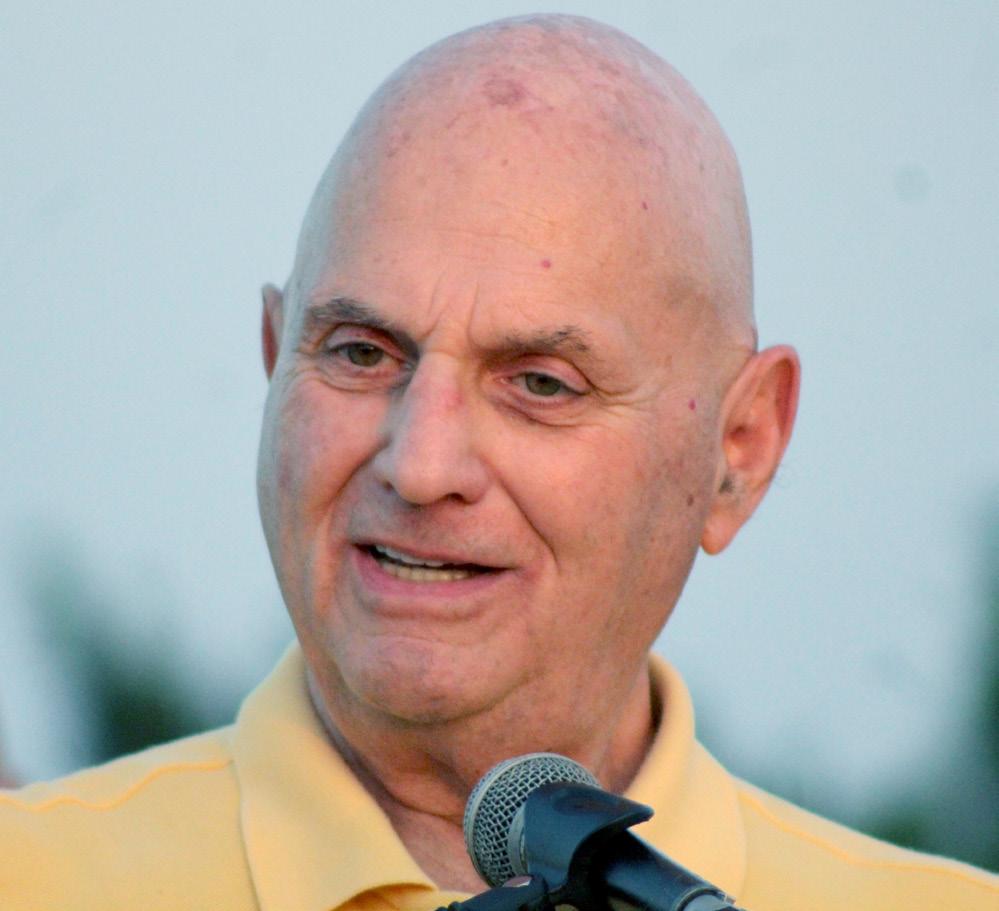
recounted from that night that neither Suffolk nor its affiliated agencies had “ever handled an incident” like that before. He said that in a room of about 100 people, along with then-County Executive Bob Gaffney (R-Miller Place), they had no other choice
but to move forward and take protocol from other air disasters that have occurred on or around Long Island.
“Our agencies came together not for a day, not two days, but close to a year to support the rescue and recovery operations and to support the families,” said Seaman.
Speakers noted that onlookers that night described the scene as “sudden fireball,” and noted the explosion of “controversial origin.”
All 230 names were read aloud, some by surviving family members. Carnations were then scattered along the beach, as a wreath was lit and cast to sea in honor of those lost - a departure from the typical traditions every July 17.
The official reason for the explosion was flammable fuel vapors that had ignited, likely due to a short circuit, in the fuel tank. An autopsy of the aircraft found problems with the wiring. The last audio recordings from the flight deck show the captain’s remarks about “crazy” readings from the fuel quantity indication system (FQIS).
Despite the tragedy, it did spur new requirements for aircraft to prevent such explosions.
However, the “controversial” origins come from witness accounts of a “streak of light,” what some perceived to be a missile that took down Flight 800. Other accounts from radar analysts show that unexplained debris flying away from the aircraft implied an external explosion. At the same time, U.S. Navy ships were operating nearby, leading some to believe it was a missile test gone awry that necessitated a government cover-up.

Regardless of the true story, Long Island continues to remember Flight 800 each year. The memorial is located just east of the main pavilion at Smith Point County Park. On July 17, all flags were flown at half-mast - those flags representing the fourteen nations who lost citizens that night: the U.S., France, Argentina, Italy, Germany, Sweden, the United Kingdom, Spain, Israel, Norway, Cote d’Ivoire, Portugal, Belgium, and Algeria.
Published by Messenger Papers, Inc.
Thursday, July 23, 2026
New York wrapped up their budget last month, but given the extended festivities around the 250th anniversary of U.S. independence, we held off on publishing our thoughts, as well as those we collected from various legislators.
Spoiler alert: we’re not impressed. In fact, we’re puzzled as to what Albany does all day and why they left a crucial component of our representation for the very end of the session as summer was kicking off.
Albany suffers from a lot of problems, including “broken clock” syndrome - but that ends up being a positive rather than a negative.
For one, the delays on several green energy mandates are a welcome initiative. Benefit of the doubt entails that these are well-intentioned goals, but we wonder if Governor Kathy Hochul (D-Hamburg) was backed into a corner with the possibility of a competitive general election this fall.
First up is the electric school bus mandate. This would have required school districts to start purchasing these buses next year; it’s now pushed back to 2030. This came with a litany of problems: costs imposed on school districts to fund charging stations and associated infrastructure (which could easily pass into the millions), logistical problems with routing due to rural districts’ buses unable to complete a route on a single charge, and the even worse battery quality come winter time.
Moreover, school districts found out that in some cases, keeping the bus moving or keeping the heat on were mutually exclusive - a non-negotiable for school transportation.
Other climate initiatives were also pushed back, mainly from the Climate Leadership and Community Protection Act (CLCPA). Chief among those was the mandate to achieve significant emissions reductions by 2030. That’s been replaced with a mandate of 60% reduction in total pollution by 2040. We think that’s a much more realistic timeline, so long as the technology and markets are there to accompany it.
The State, however, left its target of 85% reduction in greenhouse gases by 2050. We think the same along that line as the previous timeline adjustment.
The State also changed its calculation of greenhouse gas emissions. Instead of indexing for carbon dioxide emissions over 20 years, that impact should now be measured over a 100-year time frame.
That makes us pause: how many more of the “calculations” can be shifted to fit timelines, and just how many of those “calculations” are in line with Democratic dogma that climate change is an “existential threat”?
The 100-foot rule was also delayed until April 10, 2027. Originally slated to take effect this April, the 100-foot rule would have forced ratepayers to foot the bill on the first 100 feet of gas pipeline for their property. We think this should have pushed back even farther. New York State has plenty of natural gas as is and it’s known that it pollutes less than other fossil fuels. New York should be pragmatic: keep the natural gas until greener pastures emerge. Making ratepayers foot the bill in what essentially boils down to a science experiment was never the pragmatic move.
Nonetheless, the mandate was pushed back. We’ll take the wins where we can get them - we see so few in New York these days.
We also find it odd that many Democrats’ stated reasons for exorbitant utility rates in the Empire State is, “it’s Donald Trump’s fault.” While we could not be more disappointed with the Trump Administration these days, the core promise of scaling down the federal government isn’t to blame for bad budgeting and poor long-term planning. New York’s residential electricity prices have been above the national average for decades. According to the Empire Center, New York’s utility rates are 56% higher than the national average.
If those figures began before Trump ever came down that escalator, how can it possibly be his fault in 2024?
The Bad
We’ll start with the Tier 5 and 6 revisions. While not a “bad” addition at face value, many legislators on both sides had to grin and bear this one. They needed to balance unsustainable overtime costs with exceptional burnout and lack of incentives for people to enter the public sector. In reality, municipal employees are needed and some, especially Corrections Officers, should be rewarded handsomely for their decades of work.
But it effectively comes down to a Band-Aid solution. The rates of employer contributions were scaled down and graduated between four tiers, the mandatory age for pension collection decreased from 63 to 58, and the cap on pensionable overtime rose from $22,500 to $30,000. These aren’t earth-shattering changes, but just enough to keep the State humming along for another few years until the next crisis hits.
Our view: New York needs some serious DOGE treatments. Sure, some bureaucracy is needed and those employees should be paid a fair wage, but we’re not exactly sold that so many departments, agencies, and bureaus of the State are wholly necessary, especially when our elected legislature should probably be handling more of that business anyway.
Moving on to the objectively bad tenets of this bill, Medicaid spending remains out of control and simply unconscionable when the place settings of the table are addressed.
New York spends far more than any other state on Medicaid costs, and New York covers just about everything. What’s more, out-of-staters can hop the border to New York to take
up what Senator Dean Murray (R-East Patchogue) calls the “Cadillac” of Medicaid programs. This is a really easy solution: simply tighten up the list considerably and place penalties on bookkeepers who greatly surpass the federally mandated 4.5% error rate. New York’s error rate is around 15% - far more than a rounding error or a short drawer. For us, this comes down to the classic binary: incompetence or corruption?
All on the taxpayers’ dime, no less…
The worst of this year’s budget is that criminal justice reforms were hardly discussed, as opposed to it being the lynchpin issue of other years in which Hochul attempted to stare down the progressive Democrats and was forced to relent. Instead, Hochul and company decided to bolster the disastrous sanctuary policies of the state.
We don’t understand the purpose of sanctuary policies in the first place. Why would any jurisdiction offer asylum to those who commit crimes? Their latest stance is scare-mongering with ICE, but this problem started before Donald Trump returned to Washington. In fact, a Democratic president caused the migrant crisis that later swamped New York and other blue states and cities. Once again, not Trump’s fault.
Democrats simply chose not to enforce the laws of this state. We suppose if we here at The Messenger started stealing bread as a “crime of passion,” we could probably successfully lobby New York to set up a “sanctuary” zone somewhere in Suffolk to shield us from prosecution. Some elected Democrats, we think, genuinely believe in the savior complex they’ve concocted for themselves. Don’t American citizens deserve amnesty too?
All facetious points aside, where exactly does the legal “sanctuary” end? Moreover, Democrats only added fuel to the national fire by disallowing local law enforcement from cooperating with federal authorities, a practice that’s worked out well here in bipartisan Suffolk with D.A. Tierney (R) and Sheriff Toulon (D) at the helm.
Our view: Albany Democrats are treating illegal immigrants like pawns for political gain. Instead of closing serious holes in our criminal justice system this year, they decided to widen the gaps into chasms with their budget this year.
For another “ugly” aspect, Hochul had no problem bailing out blue cities with Democratic mayors, notably New York City to the tune of nearly $30 billion. We believe there’s a political deal there somewhere, wherein Mayor Zohran Mamdani (D-Astoria) could have put up a serious challenger to Hochul in the primary, just as his base continues to oust House Democrats in the Big Apple.
Even if that’s just a theory and nothing more, why is bad budgeting rewarded with bailouts? Didn’t Democrats march on Wall Street in 2008 over that same ideology? If it was wrong then, it’s certainly wrong now.
And if Albany is intent on handing out free money, Suffolk couldn’t get a chunk of that change? Wouldn’t Hochul want to come to a crucial battleground delivering goodies when it beehoves her to campaign for the largest suburban county in the nation?
Two more initiatives were slipped in at the last minute after the budget was passed. First, Democrats decided that democracy isn’t that important after all and voted for the first measure to disband the Independent Redistricting Commission (IRC) for congressional lines. If passed again in 2027, it would go to the voters next November.
Two catches: for one, Albany gets to write the proposition itself - ballot propositions are notorious for being ambiguous or counterintuitive - and for another, it will be in the first odd-year election held since Albany decided to merge odd-year local races with even-year state and national races. There’s no telling what the turnout could be, but all they’d need is a good chunk of New York City to decide for the rest of us.
Keep in mind that NYC is regularly spared redistricting woes. The City can be drawn as fairly or as unfairly as possible and Democrats there wouldn’t be remotely endangered. Long Island and Upstate, however, would very likely see their seats be gerrymandered.
We stood against the mid-decade redistricting war that Trump started last August from the very minute he launched it. Governor Hochul is no different than many Democrats in the national eye: Trump is the worst person to have ever existed, yet they have no problem stooping to his level time and time again.
Moreover, that won’t even be ready in time for 2026, but if it passes in 2027, our congressional lines could be horribly gerrymandered in time for 2028.
Finally, Democrats passed a less effective bill but one of confusing necessities. It’s a measure to replace gendered language in State family and domestic relations law to genderneutral language, ie. “mother” and “father” for “gestating parent” and “non-gestating parent”, respectively.
This accomplishes nothing but caters to a progressive base who makes social issues their priority. In fact, some contractors with the State could even be barred from such business if they don’t play by the new rules.
We think it’s dehumanizing and doesn’t apply to most people. If Democrats are concerned with the language affecting a small amount of population who are adoptive or in vitro parents, then maybe, as the self-proclaimed “language” experts they are, could have come up with something less insulting.
By Mike Simonelli
While Suffolk County Legislator Samuel Gonzalez (D-Brentwood) is not as vitriolic as the dozens of more prominent Democrats labeling Immigration and Customs Enforcement (ICE) as “modern-day Gestapo” or “masked thugs”, his July 14, 2026, public statement follows the same pattern as those calling to abolish the federal agency. Describing them as “unarmed and vulnerable people”, he cites reports indicating “52 people have died while in ICE custody or under its supervision during the first 500 days of the current federal administration,” highlights their marginalized group “immigration status,” and calls for investigations, accountability, and justice.
Just as the facts showed allegations of racism against police involved in deadly force incidents were completely unfounded and minimized the violent criminality, underlying medical conditions, or illegal substance abuse of the suspects involved (Alton Sterling and Philando Castile were both reaching for guns), the same holds for incidents involving ICE.
Among those who died in ICE custody or under its supervision are detainees who died “from heart-related issues”; drug addicts who “suffered organ failures”; and by suicide. 52 people from such high-risk populations as third-world countries rife with disease, drugs, and the mentally ill amount to .01% of the 473,677 detainees held by ICE from January 2025 to April 2026. For comparison, with a death rate of 903 people per 100,000 in 2024 according to the CDC, 4,290 people among a cross-section of 475,000 Americans are expected to die each year. That’s a mortality rate ninety times greater than the migrants detained by ICE.
As for those dying “at the hands of ICE”, Lorenzo Salgado Araujo, Silverio Villegas-Gonzalez, and Renee Nicole Good were neither unarmed nor vulnerable. They refused to comply with the lawful orders of ICE officers, weaponized their vehicles, and ran over those officers or rammed their vehicles. Those officers suffered severe back injuries, lacerations, and internal bleeding after being struck or dragged. Good was a fair, blonde, American, which shows officers react to the deadly threat they face, not race or immigration status.
Thanks to Democrats educating illegals on how to “openly defy ICE” and putting a bullseye on their backs, during President Trump’s (R-FL) first year back in office, such vehicular attacks exploded 3,200%, from 2 to 66; and assaults against ICE officers rose 1,347%, increasing from 19 to 275. Despite the increasing violence against them, ICE officers continue cleaning up the mess created by Democrats’ open-borders, pro-illegal alien policies.
This is something Legislator Gonzalez is intimately familiar with, as the district he’s lived in for the past 20 years (and which I patrolled for 10) gained national prominence as an MS13 stronghold in 2016 with the murders of 16-year-old Kayla Cuevas and 15-year-old Nisa Mickens. At that time, MS-13 was responsible for nine murders in Brentwood and 30 across
Long Island since 2010. Brentwood became ground zero for MS-13 due to the thousands of unaccompanied minors from Central America placed there after hundreds of thousands flooded America due to the actions and inactions of President Obama (D-IL) and Democrats.
During a 2017 speech in Brentwood, President Trump vowed to “destroy the vile criminal cartel MS-13”, and by 2019, that gang was rendered “inoperable in Suffolk County.” Thanks to the subsequent coordinated efforts of the Suffolk County Police, prosecutors, and federal agencies, when Gonzalez became a legislator in 2019, he inherited a district safe from MS-13. While MS-13 can no longer terrorize Latino communities across Long Island, four years of Joe Biden’s (D-DE) open borders policies allowed millions of illegals into America, free to terrorize communities across the country.
Where are the public statements about “protecting life and respecting the dignity of every person” from Democrats like Gonzalez when illegals rape, kill, and murder American citizens as well as those in their own immigrant communities? Americans like 22-year-old University of Georgia Nursing student Laken Riley who was murdered in February 2024 by a Venezuelan illegal alien while she was out for a jog; Pennsylvania State Trooper Michael Pahira who was run over in July 2026 by an illegal alien from Haiti that was granted a CDL from Democrat’s sanctuary state Massachusetts; or the vulnerable American female Uber passenger in Miami raped by an illegal alien from Cuba in June 2026?
In the past year, ICE has tracked down and arrested 11 illegals convicted of sex crimes in Suffolk County, many of whom targeted children. How many public statements has Legislator Gonzalez made calling for “full accountability” on the Democratic policies that brought those predators here?
Just as every officer who breaks the law should be held accountable, so should every public official whose policies have led to Americans being victimized by illegal migrants.
Sadly, those “unarmed and vulnerable” victims’ lives don’t seem to matter because they don’t fit the anti-law and order, pro-criminal, and chaos narrative of the Democrat Party.
Democrats’ anti-ICE crusade is Black Lives Matter (BLM) 2.0. Same old misleading use of statistics, portraying criminals as innocent victims, demonizing law enforcement, and accusations of racism.
The only differences are that, rather than attacking local police, federal officers are in their crosshairs. And instead of black people, they are crying racism against illegal immigrants.
Mike Simonelli is a retired Suffolk County Police Officer, U.S. Army Combat Veteran, and author of Justified Deadly Force and the Myth of Systemic Racism.
By Commissioner Lou Zara
The Hauppauge Fire District supports County Executive Edward Romaine’s (R-Center Moriches) call for the operator of the East Hampton Battery Energy Storage System (BESS) facility to cease operations following recent allegations of groundwater contamination (Newsday, July 21, 2026). However, we believe that this action alone does not go far enough.
For more than a year, the Hauppauge Fire District has warned about the risks associated with siting utility-scale lithium battery energy storage systems near residential neighborhoods, schools, major transportation corridors, and environmentally sensitive areas. Our focus has been on preventing Key Capture Energy and LIPA from constructing a proposed 79-megawatt lithium BESS facility at 220 Rabro Drive in Hauppauge.
Recent allegations involving PFAS contamination of Long Island’s drinking water following the May 2023 fire at the East Hampton BESS facility, operated by NextEra and National Grid, reinforce the concerns we have consistently raised. We specifically point to the lawsuit recently filed by the Suffolk County Water Authority, which alleges that groundwater contamination resulted from firefighting runoff associated with that incident.
If these allegations prove to be true, they demonstrate that the potential consequences of a lithium battery fire extend far beyond the immediate emergency response. They raise serious questions about the long-term impacts on our environment, our drinking water, and public health.
We therefore urge County Executive Romaine to
take the next logical step by advocating for a ban on the construction of additional lithium BESS facilities on Long Island.
The proposed facility at 220 Rabro Drive is located only 32 feet above Long Island’s solesource drinking water aquifer and just thousands of feet from the headwaters of the Nissequogue River. A significant fire at this location could have devastating environmental consequences not only for the Hauppauge community but for Long Island as a whole.
The Hauppauge Fire District maintains that utility-scale lithium BESS facilities, when located in environmentally sensitive or densely populated areas, present an unacceptable risk to public health, public safety, and critical natural resources.
We also call upon the Town of Islip to act decisively. Despite repeated requests from the Hauppauge Fire District to adopt zoning protections addressing these facilities, the Town has declined to take meaningful action. We urge the Town Board to put the safety of its residents first by prohibiting the siting of utility-scale lithium battery energy storage systems within the Town of Islip.
The protection of our drinking water, our communities, and future generations must take precedence over corporate interests. Once groundwater is contaminated, the damage may last for decades. Preventing that risk is far less costly than attempting to remedy it after the fact.
Louis A. Zara is a Commissioner of the Hauppauge Fire Department and Chairman of the Board of Hauppauge Fire District.
Editor’s Note: This letter was sent to us on December 8, 2023, by Larry Penner, a Tri-State transportation guru and prolific letter writer. He passed in January 2025. We’re including it to pay homage to Mr. Penner in light of the new Yaphank-BNL Station that was unveiled this week.
Dear Editor,
Here is how to pay for a new Yaphank LIRR Station. This would assist in the shortage of parking and overcrowding at the Ronkonkoma LIRR Station. Since its creation in 1964, the Urban Mass Transit Administration (known as the Federal Transit Administration since 1991) has provided billions to pay for many of these capital improvements such as stations and electrification extensions along with fleet, elevators, escalators, signals, interlockings, track, power, yards, and shops. It also includes more stations reaching compliance with the Americans with Disabilities (ADA) Act.
The LIRR share of annual FTA grants to the MTA averages 15%. In 2023, this represented $270 million of $1.8 billion in federal funding. Construction of a new station accompanied by expanding parking and extension of electrification beyond Ronkonkoma to Yaphank are worthy investments to consider. They could provide alternatives to the Ronkonkoma Station which pre-COVID-19 was operating at capacity. It would also complement Ronkonkoma branch increased service as a result of opening of East Side Access to Grand Central Madison.
Sincerely,
Larry Penner Great Neck
By Matt Meduri
Published by Messenger Papers, Inc.
Thursday, July 23, 2026
The $270 billion New York State Budget was approved last month. With the 250th celebrations dominating headlines and schedules over the last few weeks, The Messenger can publish its collection of comments from several state legislators on the budget.
In a “good, bad, and ugly” style of commentary, the legislators made their cases known.
For Senator Dean Murray (R-East Patchogue) (pictured right), the “good” aspects were “more funding for schools” than was initially proposed, which lowers property tax burdens, as well funds for “clean water” and associated infrastructure.
Defining negotiations this year were reforms of Tier 5 and Tier 6, municipal pension plans that have been castigated as a Band-Aid approach to a much bigger employment and affordability problem.
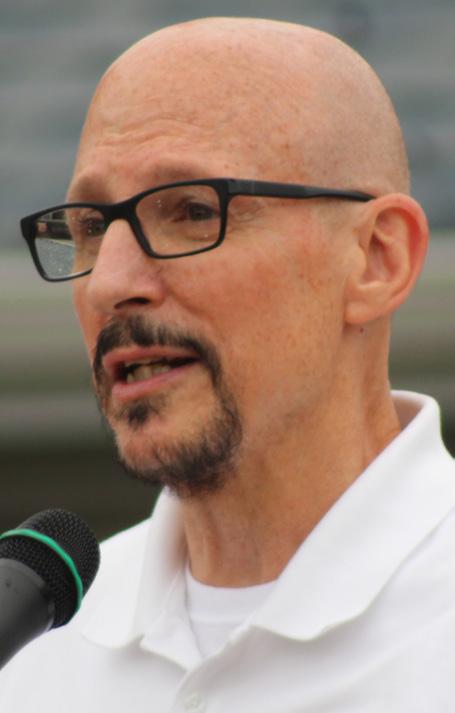
“The budget hawks claimed we can’t afford it. My argument was we couldn’t afford not to do it,” Murray told The Messenger, adding that Tier 6 “went too far” when it was passed, causing a “recruitment and retention problem.” He said that from his time in the private sector, he would host “large, multicompany” job fairs, and that most people who wanted a higher salary and weren’t concerned with long-term benefits remained in the private sector, while those who were willing to take a pay cut for future stability went into the public sector.
“Tiers 5 and 6 pretty much swung the pendulum all the way into the private sector, because benefits and retirement they were getting fell very close to what they would get in the public sector. That wasn’t the draw any more,” said Murray. Employment shortages hurt the State particularly with its Corrections Officers (CO) staff.
“We can’t shut down a prison because we don’t have enough CO’s. Those CO’s have to work double, triple shifts. We end up paying massive amounts of overtime. Fixing Tier 6 wouldn’t make overtime go away; overtime is necessary and sometimes strategically financially. It was ending the cycle of burnout.”
Changes include a pension-collecting age from 63 under Tier 6 to 58 after 30 years vested. The amount of pensionable overtime was raised from $22,500 to $30,000, and the gradient of employer contributions was smoother out over four levels.
Another “good” aspect of the budget, in Murray’s view, was the rollback of mandates of the Climate Leadership and Community Protection Act (CLCPA), New York’s landmark net-zero climate bill.
“The big one was the electric school bus mandate. It got pushed back another 5 years. They were supposed to start purchasing them next year, then they expected full implementation by 2030. We wanted it to be longer, but anything at this point is a relief because the districts were getting nervous.”
Murray said the mandate wasn’t just cost-prohibitive to the district, but some districts couldn’t do their routes on one full charge, especially in the winter when the batteries drain faster. In Upstate districts, it was either keeping the bus running or keeping the heat on. Millions more would have been required for charging infrastructure for each district.
“They [Democrats] begrudgingly admitted we were right. We dragged them kicking and screaming to push the mandate back. My guess is we will be back at the table in a couple years and likely pushing it back again.”
Of the one-time, $1 billion energy rebate to taxpayers, amounting to $200 per ratepayer, Murray says it “should have been more” and Democratic policies are driving the rates up.
“They blame Donald Trump, but my question is: if it’s really Donald Trump’s fault that our utility rates are so high, why are New York’s utility rates 70% higher than the national average?”
The 100-foot rule, which would have put natural gas hookup costs on homeowners, was also eliminated.
Assemblyman Jarett Gandolfo (R-Sayville) said that the “good” aspects of the bill were clean water and environmental protection funding, money for local roads to recover quicker from winter storms, and overhauls for the Fire Island Inlet Bridge. Assemblywoman Rebecca Kassay (D-Port Jefferson) gave a metered approach on the budget negotiations.
“I’d bet that there isn’t a single legislator who supports everything in any State budget. Every one of the ten budget bills contained a mix of funding allocations and legislation that I supported along with other aspects that I would not have personally chosen to include, but governing is about compromise,” Kassay told The Messenger.
A “good” aspect for her was $20 million in the Resiliency Fund for Suffolk County, which includes $6.5 million to restore Stony Brook’s Mill Pond Dam.
But the overall budget did little address spending costs, in Senator Murray’s eyes, especially when it comes to Medicaid.
“New York spends more on Medicaid than any other state - hands down. Total project spending for FY2027 is $134.8 billion, more than the entire state of Florida. We offer the ‘Cadillac’ of Medicaid services. We take people from other states. Sex change operations? We pay for them.”
Murray said that per-resident spending on Medicaid has ballooned to roughly $5000.
He also criticized ten cities that got massive bailouts. New York City received $28 billion in total direct aid, but “Governor Kathy Hochul (D-Hamburg) threw in another $695 million.” Buffalo received $55 million, Yonkers and Albany each got $40 million, Rochester and Syracuse each got $20 million, Mt. Vernon received $10 million, and Auburn received $2 million.
“All blue cities with a Democratic mayor. No bailouts for Long Island, though,” said Murray. He added that the “stated reason” is, “it’s Donald Trump’s fault.”
The other issue is the error rate. Under federal law, states can only be off by 4.5%. New York’s error rate, according to the Senator, is 14.5%.
“The federal government told us they’re not throwing money at it. They said to clean it up - no illegal immigrants, no out-of-state visits.” Murray said that some of the federal government could have given states and municipalities a bit more time, but that he overall agrees with their mandates, including food stamps recipients to log 20 hours of work or volunteer hours per week to remain eligible.
Assemblyman Gandolfo said that he disagrees with the tax hike on second homes.
“If you’re not a rich person with a second property, you might not care now, but eventually, these Democratic Socialist types, when they run out of money, will start looking down the line more. Suddenly, they’ll want to tax upper- and middle-class residents more. I’m not thrilled with the direction where that rhetoric is going.”
Assemblywoman Kassay (pictured below) lamented that the CLCPA negotiations could have been amended through a better process, including “bipartisan hearings” and community input to develop a “realistic timeline that works throughout the state.

CreditMatt Meduri
“Consistency, predictability, and wide-spread buyin are key to a successful energy plan that delivers both affordability and reliability.”
She also said she was “disappointed” to see that the Assembly’s proposal for a “two-year moratorium on utility tax rates” did not make it into the final cut.
Of the “ugly” aspects, Murray said that the sanctuary policies, notably the prevention of local law enforcement from cooperating with federal agencies, takes the cake.
“Allowing them to work together, whether formally or informally, is how you form relationships. That’s how Suffolk D.A. Ray Tierney (R) got the guy who raped a fiveyear-old child - only because he has the relationship with ICE. Had that not happened, that guy would be long gone. Our bail laws would not allow us to hold him.”
Gandolfo agreed that the expansion of sanctuary policies is a large negative, saying, “it specifically protects criminals.”
The Messenger asked these representatives on two more items that, while they were not part of the budget, they were passed around the same time at the very end of the legislative session.
The first was an amendment to scrap the Independent Redistricting Commission (IRC) as New York’s way of joining the mid-decade redistricting “arms race.” The measure must pass again in next year’s session before it is placed in front of voters as a ballot proposition. Albany is preferring to move this along the 2027 local ballot in time for the 2028 elections. It would give the State Legislature the power to redraw the congressional lines to affect the balance of power in the House of Representatives.
“Voters have said several times that they don’t want politics in redistricting. Now, if they [Albany Democrats] don’t like an election result, they can change the lines,” said Murray. “How does that give voters any consistency?”
Moreover, the Legislature would also have the power to word the proposition exactly as it would appear to voters, provided it passes next year.
“Not the local Board of Elections, not the Suffolk County Legislature? It’s disgusting.”
Murray posits that since Democrats are pushing the measure for the 2027 elections, it will sail through with a much lower turnout. In 2024, Albany moved to merge odd-year elections, often local races, into even-year elections, those with presidential and midterm contests.
“Then, they’ll claim it was ‘the people’ who wanted it. But the voters already decided on the formation of the IRC in 2014.”
Assemblywoman Kassay did not comment on her sentiments on the matter, but instead said that “constitutional amendments are ultimately in the hands of our neighbors in the form of ballot measures, and in 2027, voters will decide whether or not mid-decade redistricting occurs in New York State.”
One of the last moves by the Legislature this year was to replace gendered parental terms - “mother” and “father” - with gender-neutral terms - “gestating parent” and “non-gestating parent” - in State family and domestic relations laws.
“This is just another effort by the far-left to undercut family values. How did we get by all these years without these terms?” asked Murray. He added that contracts with the State that do include the gendered terms would “not be considered.”
Gandolfo called the measure “creepy.”
Kassay said it was a “technical legalese bill that delivers clarity in family court and legal documentation, like cases that involve surrogacy for women who wish to be mothers but are not the ones carrying the child.” She voted for the bill because it “supports New York mothers and fathers navigating the complicated world of contracts and court filings.”
Thursday, July 23, 2026
By Matt Meduri
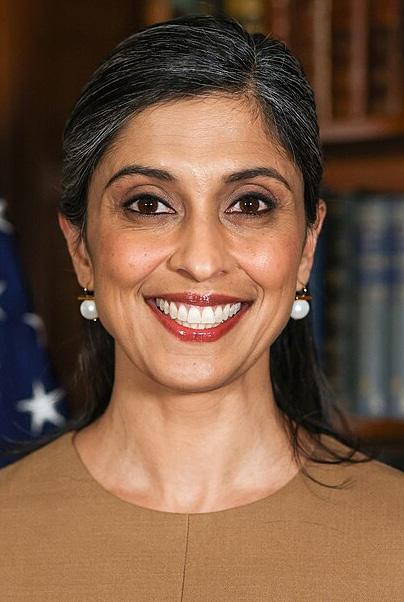
The Vice President’s family added their fourth child on Sunday.
Second Lady Usha Vance (R-OH) (pictured right) gave birth to their son, Alec Neel Vance, on July 19. He is the first child born to a sitting vice president since Ellen Maria Colfax (R-IN) gave birth to her only child in 1870. She was married to then-Vice President Schuyler Colfax (R-IN) who served in the Grant Administration.
Newly-appointed Senator Darline Graham Nordone (R-SC), the successive incumbent and sister of the late Senator Lindsey Graham (R), will run for a full term in November’s election.
Her appointment last week came as a surprise, on top of the late Graham’s sudden passing on July 11. Nordone was not on any shortlist for replacement until President Donald Trump (R-FL) notably suggested her as a replacement to Governor Henry McMaster (R-SC).
Senator Nordone announced her intention to run for the seat to Sean Hannity on FOX News on Monday afternoon. Her appointment by Governor McMaster allows her to hold the seat to serve the remainder of her late brother’s term, which expires in January. This seat was already up for re-election this November, meaning she will have to clear an August 11 special primary.
Candidates include Congressman Russell Fry (R, SC-07), Congressman Ralph Norman (R, SC-05) - who ran and lost in the gubernatorial primary this year - and Mark Lynch, an appliance repair executive who earned second place behind the late Graham in the June primary. He took nearly 30% of the vote in a field of six candidates.
Whoever wins the Republican primary is likely to win in November, given South Carolina’s red-state status. However, it’s more of a “high floor-low ceiling” state, wherein Democrats consistently lose but rarely get blown out of the water. It’s a medium-red counterpart of its Deep South neighbors that are significantly redder. This race’s special nature could see a fairly competitive race develop. Graham won by just 10 points in 2020.
Nordone is the first woman to represent South Carolina in the U.S. Senate. No Democrat has won a Senate race in the Palmetto State since 1998.
Questions mount of the true impact of the Iran War on American soldiers, as President Trump continues to seek an offramp.
The Pentagon has been slow to release official numbers. Reportedly, 17 U.S. service members have been killed since the conflict began in late February. Iran’s latest strikes in Jordan have also left another service
member missing in action. However, the Pentagon did not immediately report on details of the strike. They did disclose U.S. retaliation against Iran’s attacks on commercial ships in the Strait of Hormuz.
The adjusted report shows that over 420 service members have been wounded in the conflict since it began. That number rose dramatically after the strikes on the Muwaffaq Salti Air Base killed two service members.
The Kuwaiti military is simultaneously intercepting “hostile” missiles and drones from Iran. Qatar has said that the attacks are a “blatant violation” of Kuwait’s sovereignty.
The U.S. has denied Iranian claims that it struck civilian infrastructure in the latest tit-for-tat blows. As peace talks have deteriorated, Iran says the U.S. took out six bridges and Iranshahr Airport, a public, regional airport, in strikes over the weekend. A railway station was also hit. 7 casualties are reported.
Strikes were also reported on a bottled water facility and a hospital
The U.S. has said that they “carried out strikes exclusively on military targets, including military logistics infrastructure. U.S. Central Command (Centcom) has not provided a list of targets, but the strikes were meant to “degrade Iranian military capabilities.”
In war, striking civilian infrastructure - hospitals, power stations, mass transitare considered war crimes, unless they are used to house military operations.
In April, Trump had said that striking such infrastructure could be used as a tool to get Iran to negotiate.
Iran has struck U.S. military bases and maritime units in Bahrain, Oman, Qatar, and the United Arab Emirates (UAE). Both nations’ blockades of the Strait of Hormuz are back in place.
The FY2027 National Defense Authorization Act (NDAA) is currently stalled in the Senate. In addition to funding the country’s yearly defense budget, this particular bill is also tied to the Safeguard American Voter Eligibility (SAVE) Act and Section 219. The latter proposal would merge the Pentagon and American intelligence with Israel.
The $1.1 trillion bill was prevented from coming to the floor in a 50-46 vote. The bill requires at least 60 votes to bypass the filibuster. All 50 votes in favor were cast by Republican Senators; all against were cast by Democrats. Senators John Fetterman (D-PA), Mitch McConnell (R-KY), Alex Padilla (D-CA), and Jim Justice (R-WV) did not vote.
In addition the stalling of the NDAA, an amendment to the National Security, Department of State, and Related Programs Appropriations Act to cut $3.3 billion in funding to Israel failed by a wide
margin, but generated a record-level of support for breaking fiscal ties with the Middle Eastern nation.
The amendment was proposed by Congressman Thomas Massie (R, KY04), who lost his May primary to Ed Gallrein (R), a former Navy SEAL Officer whose obscurity still persists today. The primary was the most expensive in history, galvanizing $35 million in combined spending. Pro-Israel groups spent at least $9 million to unseat Massie.
Massie’s amendment failed in a 104-314 vote. 14 Republicans and 19 Democrats did not vote for various reasons. Massie was the only Republican to vote in favor of the amendment. 103 Democrats sided with Massie, while 98 sided with the other 215 Republicans and one Independent.
Arizona voters hit the polls on Tuesday to nominate candidates for the general election. The Trumpendorsed Congressman Andy Biggs (R, AZ-05) defeated Congressman Dave Schweikert (R, AZ-01), both of whom represent suburban Phoenix seats. AZ-05 is much redder than AZ-01; Schweikert barely won re-election in 2022 and won another narrow contest in 2024. He leaves behind an open seat that could define control of the U.S. House.
Biggs will take on one-term Governor Katie Hobbs (D-AZ), who won by a razorthin margin in 2022, the first Democrat to be elected governor of Arizona since 2006. Hobbs has pulled in $10 million as of June 30, while Biggs has raised about $3.2 million. Hobbs has aggregate leads of 5-7 points over Biggs. The governor’s race in Arizona is considered one of the marquee races of the midterms, but Hobbs might be in better shape than previously expected.
The Trump-endorsed Jay Feely (R) earned the GOP nod for AZ-01, but Schweikert’s 2024 opponent, Amish Shah (D), currently leads the fourcandidate field with 40.5% of the vote as of press time.
Wildfires continue to burn across Canada with most of the fires considered “out of control” by the Canadian Interagency Forest Fire Commission.
The fires that brought haze and smoke to Long Island last week have mostly been contained in southern Ontario and Quebec, although fires continue to burn across the Canadian Prairies and the Arctic territories. Most communities under evacuation orders are smaller in population; they are primarily in Ontario and British Columbia.
The fires have even spread to some of the most remote regions of Canada, including Yellowknife, the capital of the Northwest Territories. Projected rainfall continues to be limited for the affected areas, except for localized
thunderstorms.
The grand total area of fires this year is just over 3 million hectares, cruising past averages over the last 25 years. The 5-year average is 4.4 million hectares.
Last week, Governor Kathy Hochul (D-Hamburg) signed an executive order that places a one-year moratorium on all data centers greater than 50 megawatts from being built in the state.
For scale, 50 megawatts of power is enough to power 25,000 to 50,000 homes, depending on the day and demand.
This week, she’s taking it a step further by seeking bans on tax breaks for large data centers, including those approved by local industrial development agencies (IDAs).
Hochul told The Investigative Post that she doesn’t want to “tie the hands of local IDAs” but does want to block those IDAs from issuing abatements on property, sales, and mortgage taxes for large-scale data centers.
Hochul is also calling for the State Department of Public Service (DPS) to require data centers to either “pay more for their energy or supply their own,” according to a release from the governor’s office.
The Governor is also championing the AI Deceptive Practices Act, which “enhances protections against unauthorized use of likeness/voice and the unauthorized dissemination of intimate images.”
Finally, Hochul is creating a “first-ofits-kind” Office of Digital Innovation, Governance, Integrity, and Trust (DIGIT). It will serve as a “central, authoritative body for digital safety and technological governance, devising new approaches and ensuring consistent enforcement to keep New Yorkers safe online while protecting New York’s position as a state that values and invests in cuttingedge innovation.”
Suffolk County Police Commissioner Kevin Catalina swore in the latest class of Suffolk County Police recruits during a ceremony in Brentwood on July 20 at 8:30a.m.
The class includes 75 Suffolk P.D. recruits, eight of whom are fluent Spanish speakers. More than one-third of the class has prior law enforcement experience.
The class also includes 22 recruits from outside agencies: 13 from the Suffolk County Sheriff’s Office, 3 from East Hampton Town Police, 2 each from the Amityville Village Police and Southampton Town Police, and 1 each from Long Beach Police and the Village of Freeport.
Continued from front cover
Local interest and funds have poured into the area. The County is currently working with the MacArthur Business Alliance (MBA) on an economic impact statement of the area surrounding the airport, and Governor Kathy Hochul (D-Hamburg) visited ISP with a $150 million check for infrastructure improvements. There’s also hope to bring Amtrak to the Ronkonkoma LIRR station.
Last year, the Town issued a request for quotation (RFQ) in search of private investors for a new terminal and a direct connection to the Ronkonoma station. The developer in question had two options for the terminal: building a new one on the property adjacent to the train station or revamp the existing terminal. Either way, a train-to-terminal connection was required.
This week, Islip Town Supervisor Angie Carpenter (R-West Islip) announced the New York City-based developer RXR as their investor. More specifically, Fly Long Island [LI] is a joint venture of RXR and Avports. RXR is known as a major real estate developer with a $16 billion-plus portfolio. They’ve completed office-to-residential conversions on Park Avenue, Broadway, and in Times Square.
RXR is the largest commercial property owner on Long Island and is headquartered in Uniondale. They’ve completed transit-oriented developments in Huntington Station and Hempstead, of note. Avports is one of the longest-established airport management and operations companies. Their roots go back to the infrastructure division of the now-defunct Pan American World Airways. Notable projects include a $250 million expansion project of Tweed New Haven Airport in Connecticut, a terminal revamps in the U.S. Virgin Islands, and work at airports in Albany, Detroit, Teterboro, and Westchester County.
However, Town Council members remain skeptical of the project.
Councilmembers John Lorenzo (C-West Sayville) (pictured top right), Mike McElwee (R-West Islip), and DawnMarie Kuhn (R-Bohemia) voted on Tuesday against a $250,000 move that would have funded “outside legal counsel, project management, and financial consultation and airport planning,” according to the agenda. A vote of the majority of the five-member board is required before RXR is officially hired.
Moreover, Suffolk County Executive Ed Romaine (R-Center Moriches) recently released a request for proposals (RFP) for the Ronkonkoma Hub.
Supervisor Carpenter (pictured right), long a proponent of constructing a north terminal, said in a statement that the $250,000 is a “critical first step, not a final decision.”
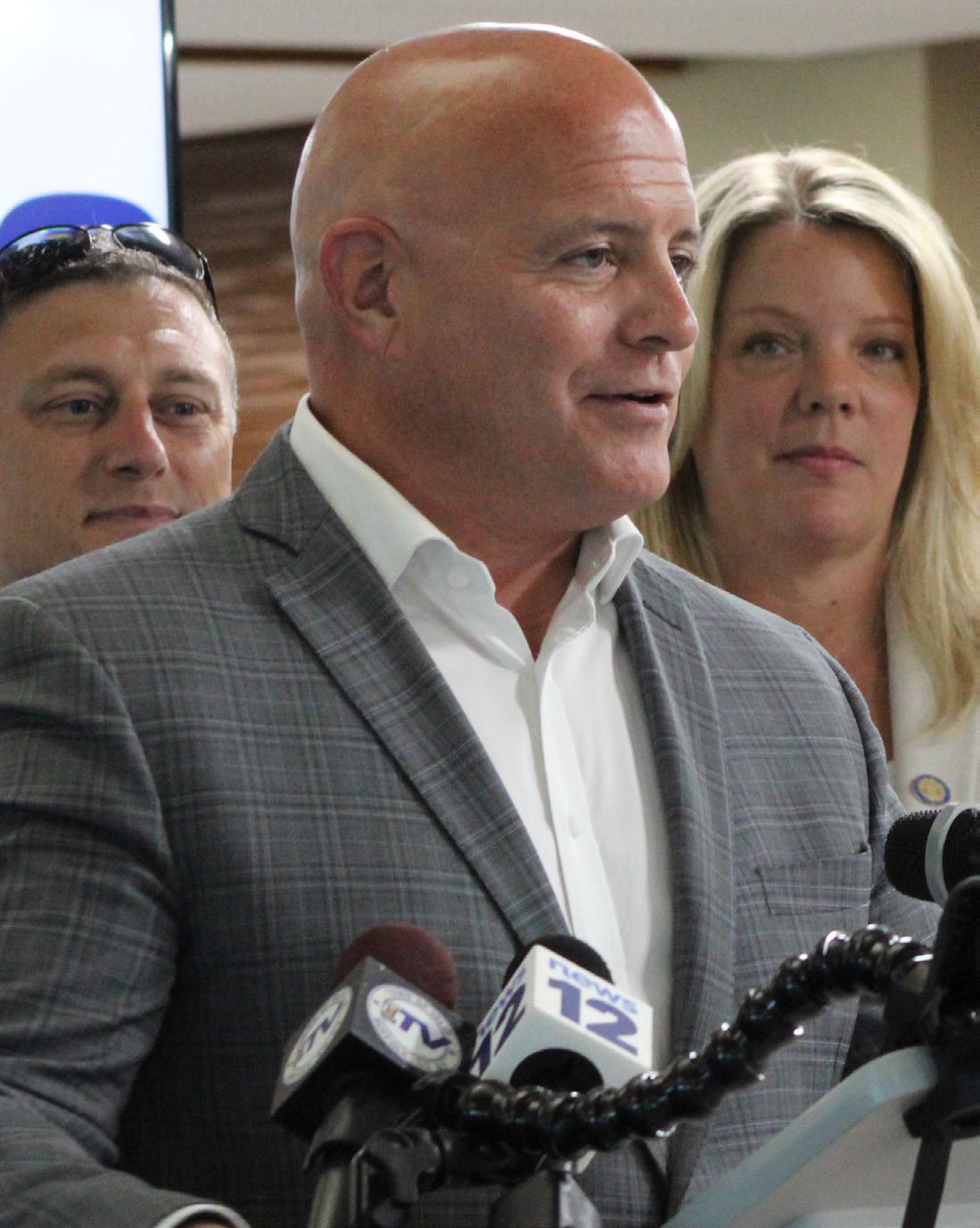

“Before we can determine whether a new north terminal at ISP is the right move for our residents, we need real data on cost, feasibility, and long-term impact,” said Carpenter. “Pulling this funding now would mean walking away from that groundwork just as we have engaged a reputable, experienced developer in RXR to help us evaluate the opportunity and the County has indicated its commitment by issuing an RFP on the adjacent land.”
Carpenter added that “exploring this possibility is not the same as committing to it.”
“But we owe it to the taxpayers of Islip to do our due diligence with the professionals, attorneys, and our proposer before closing any doors. I’m asking my colleagues on the Town Board to keep this funding in place so we can continue this process responsibly and transparently.”
A Town of Islip spokesperson added in a written statement, “Fly L.I. Partners has been recommended as the preferred proposer to the Town Board for their action. The Town Board is going through their due diligence process, and the Town will provide updates as warranted.”
Councilman Lorenzo, however, calls for a “wait-
and-see” approach.
“We need to talk about economic development on the south side,” Lorenzo told The Messenger on Tuesday. “If we had some potential massive developers there, we could talk about a north terminal move. But just to move the terminal by itself is something that’s mystifying to me. The current terminal is great as is, and we can make it so much better. We can connect it to the train station now.”
Lorenzo says that a new north terminal would fly in the face of copious funds poured into the existing terminal, especially since one of the sectors isn’t currently operational. That part of ISP has been suggested as a possible customs area to broaden horizons for international flights.
“I’m never a ‘no’; I just don’t see any reason.”
Lorenzo has represented the Town’s Fourth Council District since his appointment to the seat in 2023. He won a full, four-year term that November. His district includes the airport.
“We don’t know what the RFP that the County put out on July 3 will produce,” said Lorenzo, adding that it doesn’t “make sense” to spend the $250,000 just yet. That RFP isn’t due until the end of September. Lorenzo hailed the progress of the area around the train station, such as revamps of the station proper, the Station Yards complex across the street, and more development coming into the Ronkonkoma-Bohemia area. He suggests attracting a major manufacturer or a science component will help attract off-island tourism and provide jobs to Suffolk’s young professionals. He supported the controversial Midway Crossing project pitched in 2022, but a scaled-down version, which could include a convention center, is what he recommends to secure more substantive economic development.
“We need the next Grumman here. People outside of New York would want to fly in here with a convention center, hotel, health sciences, or manufacturing hub. The cart is way before the horse.”
Lorenzo added that on top of wanting to attract jobs for young professionals to stay in Suffolk, including his own family, the Vets Highway corridor is a “mess” that might not be completely improvable based on how it was “originally structured.” He also cited the economic impact statement jointly produced by the County and the MBA that isn’t published.
Airport economics play a role as well, Lorenzo says, as the cost per-planement is so cheap at ISP, that the very existence of the current terminal keeps the airlines here.
“If we move that terminal, it will increase the cost. The carriers will just turn more flights out of JFK or LaGuardia. They won’t come here.”
Lorenzo continues to advocate for buses to run up Ocean Avenue to Smithtown Avenue to the Ronkonkoma station for a de facto rail-to-terminal connection. He says that dissenters don’t feel such a move would be “cost-effective.” He says County buses could be filled with local advertisers to help subsidize the transit, and potentially engage new travelers to Long Island.
“This is generational; we’re not putting a Dunkin’ Donuts on the corner. I just don’t see the reason until we can actually make sense of it.”
Thursday, July 23, 2026
By Matt Meduri
The gubernatorial races in all fifty states exist in their own political ecosystem. No state is truly off the table for one party or the other.
Every midterm cycle, thirty-six states host contests for governors. This year, 16 seats are open. All but three are term limited.
Republicans currently govern 26 states, compared to 24 for Democrats. While there is no prize for controlling a majority of governorships, both parties see it as a reflection of their state brands and a possible roadmap for other statewide electoral fortunes. The pendulum has been hovering over the 25-25 mark, although the GOP has remained in control of a majority of the nation’s governorships since 2010. Before the 2018 midterms, Republicans governed 33 states.
Alaska (Open-R) - Leans R to Tilts R: Two-term Governor Mike Dunleavy (R-AK) won a narrow contest in 2018, succeeding one-term Independent Governor Bill Walker and giving Republicans the only flip of the night. In 2022, Dunleavy barely clinched a majority of the vote in a three-way race that saw Walker attempt to return after suspending his 2018 campaign.
A large field of 11 Republicans are running in the August 18 nonpartisan blanket primary, along with 2 Democrats, and 3 Independents - including the aforementioned Walker. Republicans have a splintered field that’s seen about $2.5 million in collective fundraising. Both Democrats have together brought in a little more than $500,000, a drop in the bucket when it comes to Alaska’s complicated campaigning logistics.
Democrats last won a gubernatorial race in the Last Frontier in 1998, although Alaska remains a politically idiosyncratic state. Ruggedly libertarian, socially liberal, and a state with complicated industries and ways of life, the two parties currently hold a power sharing agreement in Juneau due to inter-party coalitions.
Another problem for Republicans, Governor Dunleavy is ranked as the least popular governor in the country. Democrats also scored a recruit in Tom Begich (D), a former State Senator who is a member of a notable Alaskan political dynasty. The concurrently competitive Senate race, we think, makes for mobility on the gubernatorial ticket.
Illinois (D) - Leans D to Likely D: We predicted in 2024 that Illinois would move sharply to the right despite not being on the political radar at all that year. We had initially assumed that the state would continue to drift right in a political vacuum similar to the one in which New York finds itself.
However, for two-term Governor J.B. Pritzker (D-IL), he seems poised to win a third term. The Hyatt Hotel heir, Pritzker is regularly seen as a 2028 presidential contender, or at the very least, a party bankroller, courtesy of his $3.7 billion net worth.
He faces former State Senator Darren Bailey (R), who ran against Pritzker in 2022 and held him to a 12-point marginrelatively thin for Illinois. We expect much of the urban trust in the country to continue to fracture, but we’re not seeing obvious signs out of the Prairie State. On fundamentals, Illinois doesn’t seem like the place that will garner much attention from the national parties this cycle.
Interestingly, Pritzker is also on track to become the first Democratic governor in the state’s history to serve two, full, four-year terms. Every other Democratic governor elected to a second term has either resigned, died, or been impeached and removed before finishing their second term.
Republicans last won a gubernatorial race in Illinois in 2014.
Iowa (Open-R) - Leans R to Toss Up: Iowa hasn’t elected a Democratic governor since 2006, but the open seat left by Governor Kim Reynolds (R) is generating quite a race.
Iowa is generally seen as the harbinger of political moods among evangelical voters, farmers, and smaller college towns. Since the GOP has enjoyed dominance there since the mid2010s, some assume the party is insulated from a blue wave in Iowa. Trump won here by 13 points in 2024, the largest margin for any presidential candidate in the Hawkeye State since 1972.
But Trump’s coveted endorsement powers didn’t work in this race. Three-term Congressman Randy Feenstra (R, IA-04) lost the primary despite receiving Trump’s blessing. Instead,

Zach Lann (R), a farmer and businessman, earned the nod. Lann has faced accusations of spending more time in Wichita, Kansas, as The Des Moines Register found he had moved back to Iowa to vote in the 2024 election. He’s been found to have commuted frequently between the states, leading his opponent, State Auditor Rob Sand (D), to brand him as a carpetbagger.
Sand is a formidable opponent. He’s the only statewide elected Democrat at a time when the GOP dominates Iowa up and down the ballot. He ousted a two-term Republican in 2018 and in 2022, was narrowly reelected by a margin of 3,000 votes out of nearly 2.2 million cast.
Sand is a proven overperformer and might just close the deal on retail politics, especially if Iowans agree with his characterization of Lann’s time in Wichita. Sand leads Lann by decisive margins in the three polls released in June.
Maine (Open-D) - Leans D to Likely D: Maine is in the eye of the hurricane this year with the Senate race and one House seat, but the gubernatorial race is appearing to be much more lackluster.
The 2022 gubernatorial election saw Governor Janet Mills (D-ME) win a second term over controversial former Governor Paul LePage (R), who is running for House in ME-02 and is the state’s last Republican governor. He won a second term in 2014.
Maine is also one of the nation’s most politically idiosyncratic states that typically sees three-way runs for offices and a more natural path for Independent candidates. This year, three candidates are up, but former State House Speaker Hannah Pingree (D), we think, is obdurately favored. The daughter of a long-time Congresswoman from the blue base of the state, Pingree faces former Assistant U.S. Secretary of State Bobby Charles (R), and Independent State Senator Rick Bennett, a former Republican.
We don’t think the vote-splitting with Bennett in the race will make any material difference, but we wouldn’t be surprised to see it siphon votes away from Charles. Bennett is bringing in decent money, but Pingree leads the field by decisive margins in limited polling.
Michigan (Open-D) - Toss Up to Tilts D: Michigan is a state that, in even a moderately blue year, Democrats should be able to retain, despite the state’s proclivity for electing governors of both parties on a rotating, eight-year basis since the 1980s.
Both major parties’ fields are large and uncertain, but have brought in tens of millions in combined spending. The real curveball here was that of former Detroit Mayor Mike Duggan, a Democrat-turned-Independent whose candidacy threatened Democrats’ chances in the state’s urban center.
Duggan suspended his campaign, but Libertarian candidate Anthony Hudson has raised $5 million in his own right. With added attention on the high-stakes Senate race, we think Michigan is a jump ball, but Democrats have a narrow

edge in retaining the governor’s seat, especially with Duggan out of the picture.
New York (D) - Leans D to Likely D: We’ve long stated that New York is an emerging battleground, but this year will certainly be difficult for the GOP.
The GOP is going with Nassau County Executive Bruce Blakeman (R-Atlantic Beach). Governor Kathy Hochul (D-Hamburg) is running for her second full term. She sees oscillating job approval numbers, and while there’s certainly room for improvement, Hochul isn’t in a disastrous position. Moreover, most polls see her comfortably ahead of Blakeman, despite oscillations being found there too.
Hochul has a monstrous war chest on standby, and we think the national environment will see Blakeman and company face headwinds. However, many counted Zeldin in out in the summer of 2022. There are chances this race could materialize, but Democratic urgency around New York City primaries might mean a Mamdani machine is currently being constructed. Such a machine might insulate Hochul, who heavily bailed out the Big Apple in this year’s budget negotiations.
Oregon (D) - Leans D to Tilts D: We’re making a bold shift on the race in Oregon. While we think one-term Governor Tina Kotek (D) is favored for re-election, we wouldn’t be surprised to see this race develop.
No Republican has been elected governor of Oregon since 1982, making it one of the longest such droughts in the country. Despite this, all but one race since then have been decided by single-digit margins. In 2022, Kotek was elected over Christine Drazan (R), a former Oregon House Minority Leader when Kotek was the House Speaker, by just 3 points. That race had Democrat-turned-Independent Betsy Johnson collect 8% of the vote as an Independent, although polls suggested Drazan would stand to benefit from the votesplitting.
This time, however, it’s just a Kotek-Drazan rematch, and Kotek is one of the most unpopular governors in the country. While she handily won her primary in May, she attracted nine Democratic opponents. It’s also symbolic, as Drazan and Kotek were simultaneous party leaders in Salem who had several high-profile face-offs.
This is the first rematch in an Oregon governor’s race since 1978 - ironically, the election that produced the last Republican governor of the Beaver State, Victor Atiyeh (R).
Here’s the Count
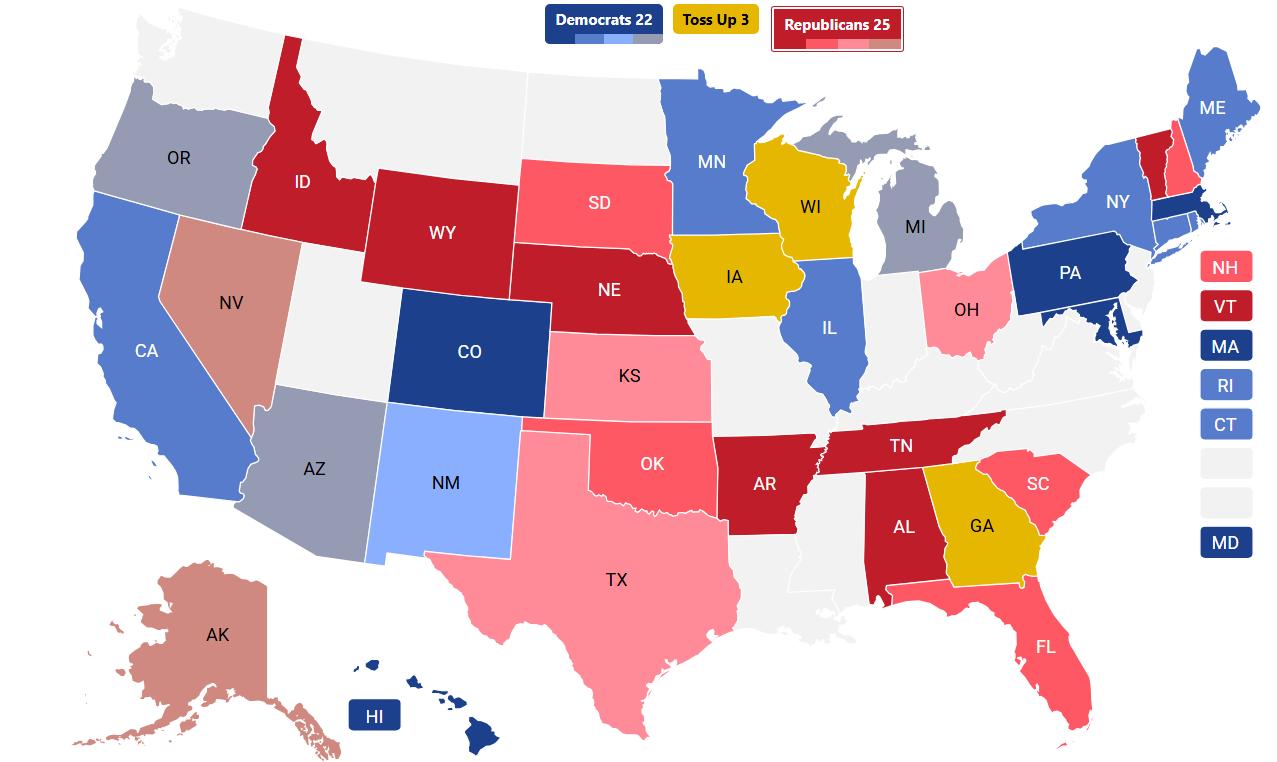
Republicans are “Safe” in 7 states, “Likely” to win 5, with 3 states “Leaning” their way, and 2 states “tilting.”
Democrats are “Safe” in 5 states, “Likely” to win 7, with 1 state “Leaning” in their favor, and 3 states “tilting.”
That leaves three Toss Ups: Georgia, Iowa, and Wisconsin. All three are open seats in states Trump carried in 2024.
By Matt Meduri
In 2020, Assemblyman Jarett Gandolfo (R-Sayville) won the open seat for the State Assembly’s Seventh District, which includes the southern half of the Town of Islip, the Village of Patchogue, and Fire Island proper. He succeeded then-Assemblyman Andrew Garbarino (R-Bayport), who was elected to represent NY-02 in Congress that year.
Gandolfo, now 36, was elected when he was just 30, making him one of the youngest members of the Assembly. He defeated Francis Genco (D-East Islip) in his first win in 2020. He clinched re-election over Douglas Pearsall (D-Bayport) in 2022 and trounced Garett Petersen (D-East Islip) in 2024. In all three of his Assembly wins, he took at least 60% of the vote each time.
Now, Gandolfo is the nominee for the Eighth Senate District, currently held by three-term Senator Alexis Weik (R-Sayville), who is retiring. The Eighth District covers much of the territory of Gandolfo’s current Assembly seat, but it sheds its small share of Brookhaven in favor of more of Islip, the southern half of Babylon, and a piece of Oyster Bay.
With two young children, Gandolfo has a unique profile in Assembly as young Long Islanders and Americans alike continue to navigate an increasingly expensive and complicated world.
“It just seems like no matter how much money you’re making, it’s never enough,” Gandolfo told The Messenger on Tuesday evening. “We haven’t fully recovered from inflation, and between child care and housing costs, it’s tough to make ends meet each month.”
Gandolfo said that any young family is “pulled in a million different directions,” and bringing that perspective to the Senate, he said, can be “valuable.”
If elected to the Senate, he would be one of the

youngest members of Albany’s upper chamber.
So far, Gandolfo says “reception has been great” at community events, including a well-attended campaign kickoff last month. “People have been very supportive,” including in the parts of Babylon and Nassau County, communities in which Gandolfo is introducing himself for the first time.
The biggest issues Gandolfo seeks to ameliorate are tax relief and local infrastructure. He regularly advocates for tax breaks for families with young children and/or families with childcare expenses. He’s also been a fierce opponent of New York’s sanctuary laws; he’s sponsored several iterations of reforms over the years.
“We can do a lot more at offsetting these costs via tax credits,” said Gandolfo.
Utility rates in New York are higher than the national
average, much of which Gandolfo says are “driven by some of the renewable energy mandates.”
“In this year’s budget, we put the brakes on the Climate Leadership and Community Protection Act (CLCPA), which was needed and what the Republicans have been calling for for years,” said Gandolfo of the state’s landmark net-zero climate mandates. “We’ve made some headway on energy rebates.”
Gandolfo says that some of his “wins” for the district over the last six years include the on-campus mental health clinic for Bayport-Blue Point, pedestrian safety and streetscape improvements in downtown Sayville, and “small, quality-of-life projects, which make a big difference in day-to-day lives.”
He continues to push for wastewater solutions for his district’s downtowns, notably Sayville. He says he’s had conversations with Presiding Officer and Suffolk Legislator Anthony Piccirillo (R-Holtsville) about “new commercial septic technology,” wherein businesses could effectively pool their resources into one commercial system to alleviate flow issues typically felt by restaurants and other high-traffic businesses.
“Sewers are an economic driver, they protect the aquifer, and clean up the Great South Bay - a win on all fronts.”
The toughest part of Gandolfo’s job, arguably, is balancing being a father to two young children. He calls his wife an “absolute superhero” when he’s not home. “I’ve been in elected office since before we had our first child; it’s all our family knows. Once January comes, they realize I’ll be spending a few nights a week away from home, but it’s always a warm welcome when I come home. It’s kind of a silver lining.”
Gandolfo faces Patricia Kopp (D-Oakdale) in November.
Pal-O-Mine Equestrian, an Islandia-based nonprofit therapeutic equine center, has been awarded a national grant by the Alzheimer’s Foundation of America (AFA) to support its 2Gether Program, which uses horsebased therapeutic and educational programs to help Long Islanders living with Alzheimer’s disease and their caregivers.
Pal-O-Mine uses horses and equine-assisted activities to support Long Islanders with physical, cognitive, emotional, and developmental challenges. 2Gether provides a welcoming space where caregivers and their loved ones with Alzheimer’s can connect and enjoy meaningful experiences together by immersing themselves in a calming, natural environment. Held on Pal-O-Mine’s 13-acre farm, program participants enjoy hands-on experiences such as interacting with horses, therapeutic horticulture, music and other outdoor activities.
What makes 2Gether unique is that caregivers and their loved ones participate side by side. These handson experiences stimulate the senses, encourage gentle physical movement and support cognitive engagement in a calm, supportive setting. The program aims to reduce feelings of anxiety and isolation, strengthen caregiver-participant connection and provide meaningful respite.
“Thanks to the Alzheimer’s Foundation of America’s support, we were able to create a truly unique experience where individuals living with Alzheimer’s and their caregivers could reconnect through nature,

the calming presence of our horses, and meaningful shared activities in our garden and around our farm,” said Lisa Gatti, Founder and CEO of Pal-OMine Equestrian. “Time and again, we witnessed the remarkable ability of horses to spark smiles, awaken memories and create moments of connection that reminded families that even in the face of Alzheimer’s, there is still joy, dignity and hope.”
The $6,000 AFA grant will be used to help Pal-OMine fund and expand this program
“Through this unique and valuable program, PalO-Mine Equestrian is providing cognitive stimulation, social engagement, and meaningful experiences for Long Islanders living with Alzheimer’s and their caregivers,” said Charles J. Fuschillo, Jr., AFA’s president
and chief executive officer. “AFA is pleased to help support this program and Pal-O-Mine Equestrian’s important work through this grant.”
Additional information about Pal-O-Mine Equestrian’s 2Gether Program is available on the organization’s website, www.pal-o-mine.org or by calling them at 631-348-1389.
AFA is able to provide vital services, like this grant, through the generosity of individual contributions, sponsorships and fundraising activities. To help support these initiatives or learn more about Alzheimer’s disease and resources available to help families affected by it, visit www.alzfdn.org.

Thursday, July 23, 2026
There are currently several available openings in the Connetquot Central School District’s 2026-2027 Universal PreKindergarten program. The available spots are within the program’s 9:50a.m. to 2:50p.m. timeslot at the Idle Hour Elementary School location in Oakdale.
To be eligible, your child must turn 4 years old on or before December 1, 2026. Applications are available on the district’s website, https://ccsdli.org/universal-pre-k.
All completed forms and required
documentation must be submitted to and approved by Central Registration via email at UPKapplication@ccsdli.org; faxed to 631-244-2294 or mailed to Central Registration, which is located at John Pearl Elementary School, 1070 Smithtown Avenue, Bohemia, NY 11716.
This program is funded by a New York State grant and there is no cost to the applicant. Parents must provide transportation to and from the program.


Bayport-Blue Point School District’s future kindergartners are hard at work getting ready for the first day of school with the district’s summer Kindergarten Readiness program.
During one session, students practiced scissor safety and cutting straight and curved lines before creating a fun project featuring the letters of their names. Then, after discussing the letter of the day, “D,” they enjoyed reading “If You Give a Dog a Donut” and wrapped up the lesson by adding the correct number of colorful “sprinkles” to their very own paper donuts.
With every activity, Bayport-Blue Point’s youngest learners are building the confidence and skills they’ll need for a successful start to kindergarten this fall.


During the second week of the West Islip Union Free School District’s Summer Investigations program at Paul J. Bellew Elementary School, students embarked on an exciting journey through space with a weeklong theme centered on space and innovation.
Across all academic areas, students explored astronomy, engineering and space exploration through hands-on lessons designed to spark curiosity and creativity. In the library media center, students learned about constellations and created replicas of Orion’s Belt using chalk, stars and stencils. They also designed their own Big Dipper constellation projectors, allowing them to continue exploring the night sky at home.

English language arts lessons focused on researching the planets and taking a virtual trip to NASA’s International Space Station, helping students build their research and informational reading skills while learning about life in space. In the STEM lab, students discovered what it takes to be an astronaut as they listened to the book “Edward Built a Rocketship” by Michael Rack. Inspired by the book, they engineered and launched their own paper rockets using pipettes, testing how far their creations could soar while exploring basic engineering and physics concepts. The week concluded with an outdoor space-themed obstacle course, giving students an energetic and engaging way to celebrate everything they had learned.
By Matt Meduri
Since we’re getting well into campaign season, we figured we’d take this moment to look back through American electoral history to explain a phenomenon we see more and more nowadays, political droughts.
These types of droughts occur when one political party continually loses one election after the other in a particular constituency.
Political droughts aren’t exclusive to the current political era, or any era, for that matter.
Since the birth of the current two-party system in 1856, when Republicans entered the scene, some of the most severe political droughts were experienced by the GOP in the Deep South. While the Union North controlled the South during the Reconstruction period, Democratic dominance quickly returned after the 1876 election.
Mississippi is one of the best examples, we think. Democrats had a stranglehold on the state legislature, the governor’s mansion, both U.S. Senate seats, the entire U.S. House delegation, and each presidential election for close to a century. From the end of Reconstruction in 1876 until the 1980s, the GOP was effectively shut out of the Magnolia State.
From 1876 to 1960, Mississippi backed the Democratic nominee in every election - except for 1948, when they went for South Carolina Senator and notable segregationist Strom Thurmond. In 1964, they opted for Senator Barry Goldwater (R-AZ) but then backed Jimmy Carter (D-GA) in 1976. Since 1980, Mississippi has stayed with the Republican Party.
But Democrats remained a dominant force in the South up until the early-to-mid 2010s. In fact, Republicans only took control of Jackson in 2011, the first time the GOP would control the state legislature since the end of Reconstruction.
No Republican was elected governor of Mississippi until Kirk Fordice (R) won in 1991, making him the first GOP governor of that state since 1873.
At home in New York, we don’t have to look far to find a political drought. Republicans haven’t won the State Assembly since 1974. New York City constitutes a large share of the 150-member chamber, indicating it will probably be quite a while until Republicans can vie for control of that chamber again.
But Democrats were also experiencing their own drought in the state as well. Until 2019, Democrats were effectively locked out of the State Senate. From 1860 to 2009, Democrats only controlled the State Senate for about twenty years collectively. Their 43-seat majority from 2021 to 2022 was the largest such quorum of Senate Democrats ever in New York’s history.
No stranger to droughts is the Electoral College map. Since 1964, the District of Columbia has backed every Democratic nominee by large margins. Since 1968, Republicans have won Alaska, Idaho, Kansas, Nebraska (at-large), North Dakota, Oklahoma, South Dakota, Utah, and Wyoming in every election. Notably, Indiana and Virginia were in this category until Barack Obama (D-IL) ended those droughts in 2008.
Democrats have won Minnesota in every presidential race since 1976 - the longest such streak for the Democratic Party on the presidential level.
The “blue wall” as we know it today began its “construction” in 1988, when New York, among a few other deep-blue states today, started backing the Democrats in every election.
Donald Trump ended three droughts in 2016: Michigan and Pennsylvania, which had not gone for a Republican since 1988, and Wisconsin, since 1984. He came just under 6 points away from adding to that tally with New Jersey in 2024.
In 2020, Joe Biden (D-DE) added two droughts of his party’s own: Georgia, having not backed a Democrat since Bill Clinton (D-AR) in 1992, and Arizona, Clinton in 1996.
Senate Droughts
The longest drought for any party in any state’s U.S. Senate races belongs to the Democrats in Kansas. The last Democrat to win a Senate

This column will seek to address the long-forgotten concept of civics and how it relates to American government in general, from the federal level to the local level. This column will explore Constitutional rights, the inner workings of government, the electoral process, and the obligations and privileges of citizens.
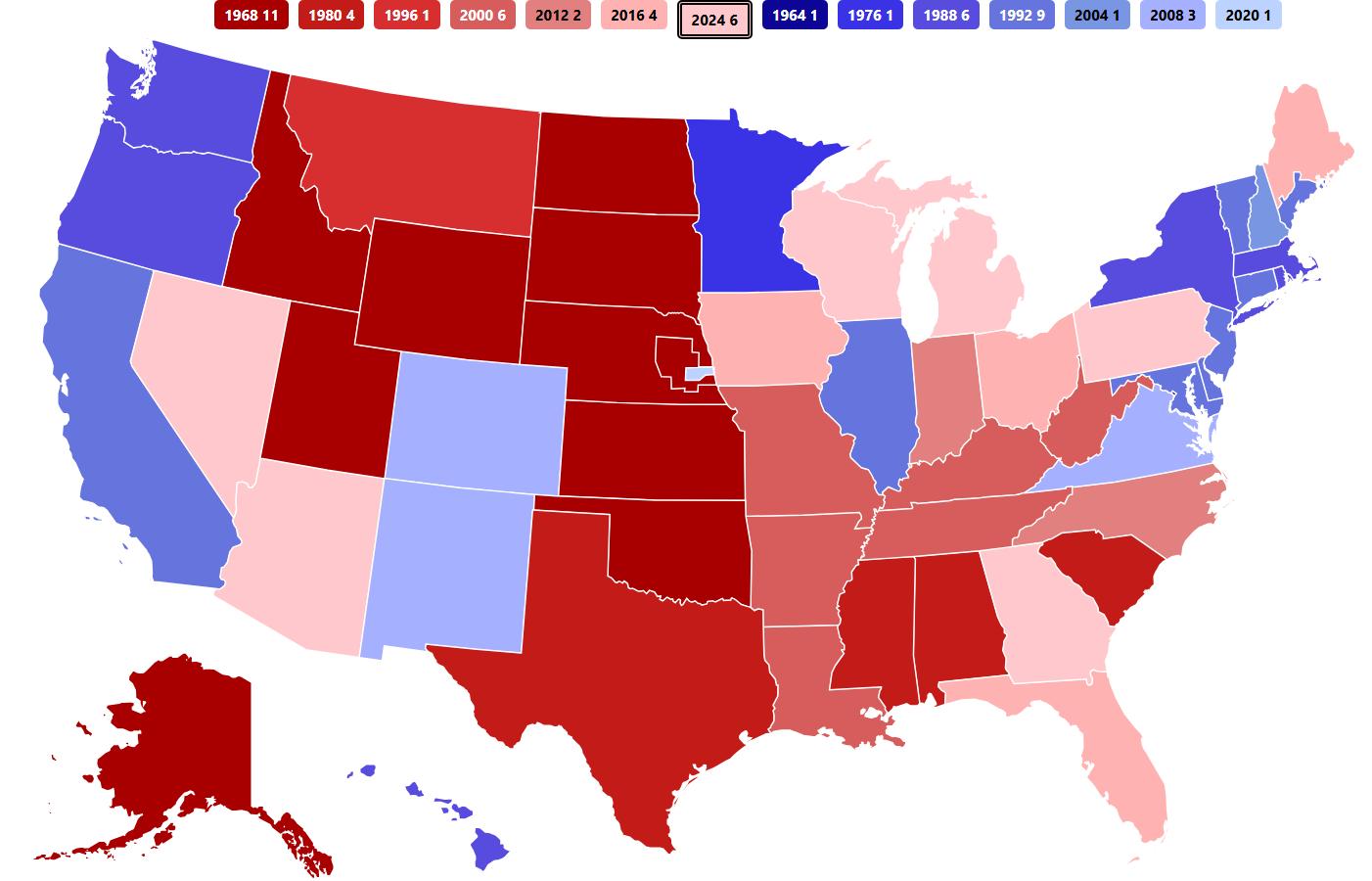
race in the Sunflower State was George McGill (D) (pictured right), when he was re-elected in 1932. He is just one of three Democrats to represent Kansas in the Senate; the other two were appointed by the state legislature before Senators became electable by the people.
Interestingly, Kansas is tied with Vermont for two states where Democrats have never held both Senate seats simultaneously. Vermont has had Senator Bernie Sanders, an Independent, representing them since 2007.
For Republicans, their longest drought is in Hawaii, where they haven’t won since 1970. Hiram Fong (R) is the only Republican to have ever represented Hawaii in the Senate.
Democrats haven’t won Senate races in Idaho, Utah, and Wyoming since the 1970s, and the GOP hasn’t won Senate contests in New Jersey since the 1970s, and Maryland, Connecticut, and California since the 1980s.
Gubernatorial Droughts

States by years that start their voting streaks on the presidential level
The longest drought on this map is South Dakota, where Democrats haven’t won a race since 1974. For Republicans, their longest drought is in Washington, where they’ve been shut out of Olympia since 1980.
The fifth-longest Republican drought is New York. George Pataki (R-Elmira) was elected for a third and final term in 2002. Lee Zeldin’s (R-Shirley) 2022 run was the closest governors’ race in New York since 1994, when Pataki was first elected.
This year’s gubernatorial contests might present openings for streaks to be broken. In Oregon, where no Republican has won since 1982, Governor Tina Kotek (D) is on the ropes in a high-stakes rematch as she polls as one of the most unpopular governors in the country.
In South Dakota, the open seat currently favors the GOP heavily, but the same was said in 2018. That year, then-Congresswoman and now-disgraced former DHS Secretary Kirsti Noem (R) won the seat, but only by 3 points after the polls tightened surprisingly in the eleventh hour. It ended up being the closest gubernatorial election in South Dakota history.
CreditHarris & Ewing,
Library of Congress
The droughts get even more severe when we go to the state houses. First, Republicans have never held a majority in the Hawaii State House since it was formed in 1959. Their longest drought ever is in Maryland, where they’ve been a minority in the State House since 1917. Rhode Island takes second (1938), followed by Massachusetts (1952), and California (1968).
For Democrats, they’ve been shut out of the South Dakota House since 1934, followed by Idaho (1958), Arizona (1964) - although that chamber is teetering on the brink of flipping - Wyoming (1964), and Utah (1974).
As far as State Senates go, Republicans have been shut out of the Maryland Senate since 1899. They’ve only held the majority once in Hawaii’s Senate - 1959 to 1962. Meanwhile, Democrats have been shut out of Wyoming’s Senate since 1938although they shared power in a split Senate from 1975-76 - but the record goes to Kansas, yet again. Democrats haven’t controlled the State Senate since 1916.
On a national level, the aforementioned wins of Donald Trump in the Rust Belt were clear drought-breakers. He came just about 1 point away from winning Minnesota, which hasn’t backed a Republican since 1972.
In 2016, Trump carried Elliott County, Kentucky, making him the first Republican to do so since Ulysses S. Grant (R-OH) in 1872.
In 2024, Trump won several counties in southern Texas. One of them, Starr County, had not backed a Republican presidential nominee since William McKinley (R-OH) won it in 1896.
In 2016, then-Governor Maggie Hassan (D) narrowly flipped New Hampshire’s Senate seat that year. It not only marked the first Democrats held both of the Granite State’s Senate seats simultaneously since 1979, but also the first time Democrats had complete control of the state’s congressional delegation - both Senate seats and all House seats combined - since 1854. Interestingly, the only president ever to have hailed from New Hampshire, Franklin Pierce (D), was president in 1854.
In 2018, then-Congressman Kevin Cramer (R) flipped the Senate seat in North Dakota, marking the first time the party had held both seats at once since 1960. That year also saw Republicans flip a Senate seat in Florida - the first time the GOP has held both Sunshine State seats since 1875.
In 2020, when Mark Kelly (D) flipped the Senate seat in Arizona, it marked the first time that Democrats had controlled both seats simultaneously since 1953. The same feat was repeated by John Fetterman (D) in Pennsylvania in 2022; it was the first time Democrats had held both Senate seats there since 1947.
In 2022, Mary Peltola (D) won a special election to the U.S. House in Alaska, making her the first Democrat to represent the Last Frontier since 1972. She is running for Senate this year and might make for the first Democrat to do so since 2008.
Published by Messenger Papers, Inc.
Suffolk County District Attorney Ray Tierney (R) announced on Tuesday that Matthew Smith, 21, of Hauppauge, was sentenced to 7-and-one-third to 22 years in prison after he pleaded guilty in June to Aggravated Vehicular Homicide and other related charges, for driving while intoxicated, running a red light, and crashing into a vehicle being driven by Patricia Espinosa, a Nassau County Police Officer on her way to work, as well as seriously injuring Smith’s passenger.
“No sentence can restore what was taken from Officer Espinosa’s loved ones, but today this defendant begins paying the price for his conduct,” said Tierney. “He was intoxicated, speeding, and lawless behind the wheel of a 5,000-pound pickup truck, and a police officer on her way to serve her community paid with her life. This office will continue to pursue accountability for impaired drivers who
destroy lives on our roads.”
According to court documents and the defendant’s admissions during his guilty plea allocution, on January 31, 2026, at approximately 6:07a.m., Smith and his passenger left Jake’s 58 Casino Hotel in Smith’s Chevrolet Silverado pickup truck. Prior to arriving at the casino, Smith was in Patchogue drinking alcohol.
While driving, Smith drove through a red light at approximately 70 mph and struck Officer Espinosa’s vehicle, while she was driving to work. The posted speed limit on that road is 30 mph.
Espinosa was transported to Stony Brook University Hospital where she was pronounced dead. Smith’s passenger was also transported to Stony Brook University Hospital where he was treated for serious injuries, including pelvic and spinal fractures, and a severe head laceration.

A chemical test of Smith’s blood revealed that his blood alcohol concentration (BAC) was .20, more than twice the legal limit. A bottle of Bacardi rum and a shot glass were also found inside Smith’s vehicle.
On June 11, 2026, Smith pleaded guilty to the following charges before Supreme Court Justice Timothy P. Mazzei: Two counts of Aggravated Vehicular Homicide, Class B felonies; one count of Vehicular Manslaughter in the First Degree, a Class C felony; one count of Manslaughter in the Second Degree, a Class C felony; two counts of Aggravated Vehicular Assault, Class C felonies; two counts of Assault in the Second Degree, Class D violent felonies; one count of Vehicular Manslaughter in the Second Degree, a Class D felony; one count of Vehicular Assault in the First Degree, a Class D felony; one count

of Vehicular Assault in the Second Degree, a Class E felony; one count of Aggravated Driving While Intoxicated, an Unclassified misdemeanor; two counts of Driving While Intoxicated, Unclassified misdemeanors; one count of Reckless Endangerment in the Second Degree, a Class A misdemeanor; one count of Reckless Driving, an Unclassified misdemeanor; and multiple traffic infractions.
On July 20, 2026, Smith was sentenced and forfeited his Silverado truck as part of the plea. He was represented by Anthony LaPinta, Esq.
Legislator Steven J. Flotteron (R-Brightwaters) recognized the 2026 Suffolk County Woman Veteran of Distinction for the 11th Legislative District, Ms. Donna Zephrine, United States Army.
Donna Zephrine was born in Harlem and grew up in Bay Shore. She graduated from Columbia University School of Social Work in 2017 and currently works for the New York State Office of Mental Health at Pilgrim Psychiatric Center Outpatient Intensive Case Management as a Bridger.
She is a combat Veteran who completed two tours in Iraq. She was stationed at Hunter Army Airfield Savannah Georgia, Third Infantry Division, as a mechanic from 2002 to 2006. Since returning home, she enjoys sharing her
experiences and storytelling through writing.
Her stories have been published in publications such as The New York Times, Writers Guild Initiative, Qutub Minar Review, and Advocate and participated in various Veteran writing workshops throughout NYC.
Recently, she was featured in USA Warrior stories, took part in Warrior Chorus which encourages self-expression. She seeks new experiences to learn such as Toast Masters, which focuses on public speaking. She is involved in many Veteran organizations such as Veterans of Foreign Wars, Wounded Warrior Project, Team Red White and Blue, Team Rubicon, Project9line, Achilles International and Convene Communities. She also serves as an advisory board member for Heroes to Heroes.
On Sunday, July 19, 2026, Suffolk County Deputy Sheriffs arrested Carlos Moncada Padilla, 44, of Holbrook, for Driving While Intoxicated under Leandra’s Law after allegedly operating a vehicle while intoxicated with a 7-month-old child inside.
At approximately 10:45 p.m., Deputy Sheriffs observed a 2013 Dodge Ram traveling westbound on the Long Island Expressway near Exit 65 in Patchogue. The vehicle repeatedly failed to maintain its lane, crossing over the lane markings several times. During the traffic stop, deputies observed that Moncada Padilla had slurred speech, bloodshot eyes, unsteady movements, and a strong odor of an alcoholic beverage emanating from his breath. When asked how much he had consumed, he reportedly stated, “Two beers.”
Deputies also observed five open glass bottles of Modelo beer inside the vehicle. A 7-month-old child was found in the front passenger seat of the vehicle. The child was not properly secured in an age-appropriate child safety seat as required by law. Moncada
Padilla was arrested and transported to the Suffolk County Sheriff’s Office Headquarters in Riverhead for processing. He was charged with Driving While Intoxicated under Leandra’s Law, among other related offenses.
“Suffolk County Deputy Sheriffs are patrolling our roadways every day to help keep the public safe. This arrest not only removed an impaired driver from our roads but also may have prevented a tragedy involving a young child. I commend our deputies for their vigilance and commitment to protecting the residents of Suffolk County,” said Sheriff Errol D. Toulon, Jr. (D)
Leandra’s Law, also known as the Child Passenger Protection Act, makes it a felony in New York State to operate a motor vehicle while intoxicated with a passenger age 15 or younger. The law is named in memory of 11-year-old Leandra Rosado, who was killed in a 2009 crash on the Henry Hudson Parkway involving an allegedly intoxicated driver.
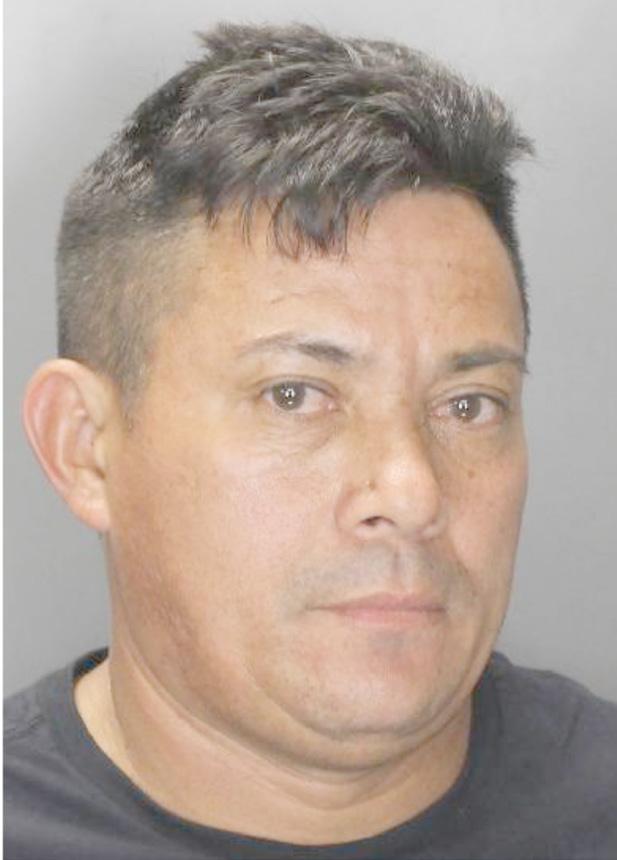
Published by Messenger Papers, Inc.
Thursday, July 23, 2026

By Ellyn Okvist, B.Sc.
By definition, a legend is a story coming down from the past, best regarded as historical although not verifiable, or a person or thing that inspires legends.
Lake Ronkonkoma has many legends, but unfortunately not one of them is true. It may be fun to discuss or profit from these so-called “legends,” but they’re absolutely not true.
Since the 1600’s, the Native Americans have observed the white man’s “legends;” however, they had the real and sensible answers to the stories. This is true of the popular “seven-year water table rising and falling.” The following may help us understand the cycle and put things into perspective.
Weather and drainage can cause a sudden or gradual overflow in rivers and streams and cause immense damage, such as the recent Smithtown Library and Stony Brook Grist Mill. Lake Ronkonkoma has never seen this type of flood damage, as it has the geography to level itself due to many scientific and geological assets. We do have of the water “mysteriously” rising from nine feet to thirteen feet and overflowing its banks. Just how mysterious are these records, who recorded them, or are they perhaps just a way to explain a natural force of nature?


The white man followed the experience of the overflow and recorded it to repeat itself every seven years. Claims that the Native Americans believed this to be the work of their Manitos, requiring various sacrifices made to him, have been denied for centuries by the Native Americans as they do not recognize the reasoning. In 1924, a local photographer, Hal B. Fullerton, of Medford, did a study of the lake and reported the following.
“Mr. Fullerton was not ready to subscribe to the old theories nor ready to believe the lake was bottomless. Its rise and fall for a series of years was noted carefully. The rise found to occur frequently when the island had a dry season or rather when there was a slight deviation below the normal rainfall of fifty inches which the island usually enjoys. The biggest rise carried the water across the highway on the south and well up on a stone wall. This high watermark was chiseled in the stone and remains today.”
Anyone interested in locating the chisel mark?
In 1886, Ronkonkoma Lake had a sandy beach from 100 to 150 feet in width. In 1890, not a trace of sand was visible. The boat houses, bathing pavilions, and other structures were washed away. Big gullies were dug in the roadway, and the oldest inhabitant told of his childhood habitat no longer present. Trees which stood on higher ground were either submerged, dying from too much water, or uprooted and thrown into the lake with other washout. The swamp to the north was a sheet of water where boats could sail with ease. Dr. James
Cattnach lost 60 feet of waterfront on the west side (Islip) and never saw it restored. Proof of the ordeal was in the big trees. Some of them took 50 years to grow and now lay in destruction. Many explanations were formed due to this event.
In 1969-1970, the lake was so low that locals began to wonder if all the new housing developments were causing the problem. Additional reasons were told of extra rainfall in New England, which sent the water underground beneath the Long Island Sound until it rose in Ronkonkoma Lake.
Higher ground is at the Cenacle, the larger pond known as Mooney Pond, adjacent to the Sandy Garth House has always sustained its water level through the ups and downs over hundreds of years. The land surrounding Mooney Pond is 161 feet above sea level. The well located at Gatelot Avenue School, is 130 feet; Newtons Pond at Portion Road/Old Portion Road is 59 feet; and Ronkonkoma Lake across from St. Mary’s Church is 69 feet. Heavy rains and catastrophic events have always flowed to the lower elevations.
“Scientists were unable to account for the vagaries of the freak Lake known as Ronkonkoma, not far from New York City, a body of water seemingly without either source of supply or outlet, rising during droughts and abounding in weird Indian legends.”
In 1926 it attracted countrywide scientific attention. Why should it rise and fall? Labeling odd and unusual behavior, the legends were formed. Rather than get to the bottom of the question, crazy stories were invented.
We will discuss the Bowen Well at Gatelot Avenue School. This is a confirmed Native American location. The well has never run dry in its known existence. During severe droughts, the white man up to only 100 years ago, depended on the well for fresh water. Wagons would line up for the opportunity to fill only two barrels in one day. The strict distribution of the water worked well for the community. The exact reason for the state to fill in the fresh water well with concrete is still a mystery. Our concerns for the future of the well pending possible sale of Gatelot by the Sachem School District has been discussed with the local Native American tribes, who will come forward if the sale seems to be materializing. There was a large stone at the well, which was in the borrowed care of the museum. It was kept in the fireplace in the building. When the new leader was adopted, her orders to the curator was, “get rid of the rock”. It was placed outside of the museum, and its whereabouts are unknown. If anyone has a lead on its location, please let us know. It rightfully belongs to the local tribes.
By Mollie Barnett

This fall, a robot named Sally starts teaching class at a high school two hundred miles from here. She has silicone skin, long brown hair, and a moving face. She cost the Salamanca City Central School District $57,590 — a discount off the $95,000 list price (New York Focus, July 2026).
You don’t run a school, but if you’re running a Long Island business right now, you’re making the same decision Salamanca just made, just smaller: how much AI do you let into the room, and how fast?
Here’s what happened, and what it should teach you.
Salamanca is a small district on Seneca Nation territory in western New York. Ground News reported that most of its students, 79%, come from low-income families. The district bought Sally from a company called Realbotix to help teach coding, robotics, and AI classes to juniors and seniors starting this September.
Realbotix’s CEO, Andrew Kiguel, called it a landmark moment for AI in education (New York Focus, July 2026).
Here’s the problem. Realbotix is a branch of the parent firm RealDoll, the biggest name in realistic sex dolls and companion robots as reported by the Daily Caller. Sally, the same silicone-skinned robot now headed into an 11th-grade classroom, comes from a long line of sexy sisters. The company says the education side is now a separate team, working toward full separation from RealDoll. Critics aren’t convinced the separation is clean enough, and the backlash online has been loud.
In my opinion, this is a bad rollout. At a time when AI in the classroom is a hotly debated topic, both sorely needed and poorly understood, adopted in an AI-powered sister-of-a-sex-bot and deployed in an under-resourced school is just the wrong thing to further put the US behind in teaching our future the correct way to work with AI.
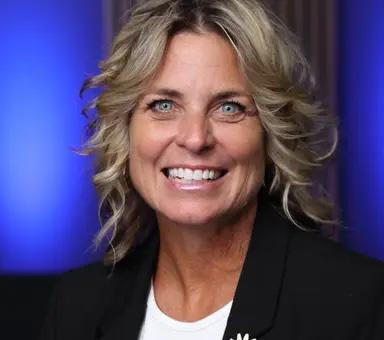
AI-powered tutoring, and learning for all students, not just under resourced, but disabled, ESL, children with unique learning abilities— has real merit. But launching it in a lifelike humanoid body, built by a company best known for adult products, guarantees the story becomes about something else entirely. That’s a self-inflicted wound.
You’re not deploying a classroom robot, but you’re probably deciding right now whether to bring an AI tool into your business — for scheduling, for customer service, for writing, for bookkeeping. The mistake Salamanca made is one small business owners make too: choosing the flashiest tool instead of the one that solves your problem.
A chatbot with a human face doesn’t do more work than a chatbot without one. A “smart” tool with a viral launch isn’t smarter than a quiet one that just works. The spectacle and the substance are two different questions, and mixing them up costs you either money, trust, or both.
Before You Adopt Any AI Tool businesses need to first ask, what problem are we implementing AI solving for? Is there a better way?
The rollout generated a week of bad headlines, because the guardrails weren’t the story, the deployment tactic was. How far will it set AI back? Was there a better way?
One bad launch doesn’t mean AI in the classroom — or AI in your business — is a bad idea. Done well, these tools genuinely help. Adaptive software can break a task into smaller steps, catch mistakes early, and free up time for the work that actually needs humans.
That’s true in a classroom, and it’s true behind your counter or your desk. Pick the tool that solves your problem, not the one that gets the most attention. Sally is a lesson in what happens when a business — or a school district — gets that order backwards.
By Nancy Val | Long Island Locavore
Nothing says summer quite like watermelon.
Whether it’s sliced into wedges at a backyard barbecue, packed in a cooler for a day at the beach, or transformed into a refreshing salad, watermelon has earned its place as the unofficial fruit of summer. Sweet, juicy, and incredibly refreshing, it arrives just as the temperatures climb and our craving for fresh seasonal produce reaches its peak.
Most of us picture watermelon with its familiar bright red flesh, but today’s shoppers may be surprised to discover that watermelon comes in a rainbow of summer colors. Red, yellow, and even, orange-fleshed varieties are making appearances at farm stands and farmers markets across the country, each offering its own unique flavor profile.
Red watermelon remains the classic favorite. Its vibrant color comes from lycopene, the same antioxidant found in tomatoes. Red varieties tend to deliver the flavor many of us grew up with - sweet, juicy, and unmistakably summer.
Yellow watermelon often catches shoppers off guard. From the outside it looks nearly identical to its red counterpart, but one slice reveals sunny yellow flesh. Many people describe yellow watermelon as slightly sweeter, with subtle notes of honey and apricot. Its cheerful color makes it a standout addition to fruit platters and summer gatherings.
Orange watermelon is the rarest of the trio. With a rich sunset-colored interior, orange varieties offer a sweeter, almost tropical flavor that some compare to cantaloupe or mango. When served alongside red and yellow watermelon, the colorful display is guaranteed to start conversations around the table.
Beyond their beautiful colors, all watermelons share something important: they are incredibly refreshing. Made up of more than 90% water, watermelon is nature’s answer to a hot July afternoon. It also provides vitamins A and C, along with beneficial antioxidants.
Selecting a ripe watermelon remains one of summer’s great traditions. Look for a melon that feels heavy for its size and has a creamy yellow field spot where it rested on the ground while ripening. A dull rind rather than a shiny one is often another sign that the fruit was harvested at peak maturity.
As we celebrate the height of summer on Long Island, watermelon reminds us to slow down and savor the season. From beach picnics and family barbecues to farmers markets and farm stands, few foods capture the spirit of July quite like this colorful summer favorite.
This year, if you spot a yellow or orange watermelon alongside the traditional red, take one home. You may discover a new favorite and add a little extra sunshine to your summer table.


Watermelon-Feta Summer Skewers
A colorful appetizer that captures the sweet, salty, and refreshing flavors of summer.
Ingredients:
• 2 cups red watermelon, cut into 1-inch cubes
• 2 cups yellow watermelon, cut into 1-inch cubes
• 2 cups orange watermelon, cut into 1-inch cubes
• 8 ounces feta cheese, cut into 1-inch cubes
• Fresh mint leaves
• Zest of 1 lemon
• Himalayan pink salt
• 18–24 appetizer skewers or sturdy toothpicks
Directions:


1. Thread a cube of watermelon onto each skewer.
2. Add a mint leaf and a cube of feta.



A naturally hydrating mocktail packed with electrolytes and summer flavor.
Ingredients (4 Servings):

3. Repeat, alternating colors of watermelon for a vibrant presentation.
4. Arrange on a serving platter.
5. Sprinkle with lemon zest and a light dusting of Himalayan pink salt.
6. Serve chilled.
Locavore Tip: Prepare the skewers up to 2 hours in advance and refrigerate. Add the lemon zest and salt just before serving.

• 4 cups seedless watermelon, cubed
• 1 cup coconut water
• Juice of 1 lemon
• One-half cucumber, sliced
• 8–10 fresh mint leaves
• Pinch of Himalayan pink salt
• Ice
Directions:

1. Blend watermelon until smooth.
2. Strain if desired for a smoother texture.
3. In a pitcher, combine watermelon juice, coconut water, lemon juice, cucumber slices, mint leaves, and a pinch of Himalayan salt.
4. Stir well and refrigerate for 30 minutes to allow the flavors to mingle.
5. Fill chilled glasses with ice and pour over the cooler.
6. Garnish with a watermelon wedge, cucumber slice, and fresh mint sprig.
Why It’s Nature’s Gatorade:
Watermelon provides hydration and potassium, coconut water contributes natural electrolytes, lemon adds vitamin C, and a pinch of salt helps replenish minerals lost during a hot summer day.
Created by
Nancy Vallarella,
who brings farm-fresh recipes and local food knowledge to Long Island through farmers’ markets, demos, and more.
For more recipes or to connect: DM @lilocavore495 on Instagram or email lilocavore495@gmail.com

Thursday, July 23, 2026
By Herald Boas | AMAC Contributor
The various intervals of so-called ceasefire in the Iran conflict were always a charade which served short-term interests, initially of both the Iranian regime and the United States. But the deaths of three U.S. troops over the weekend during an Iranian attack on an American base in Jordan were the final proof that this status quo is now untenable.
resume negotiations. But they do not seem to realize that this gambit will no longer work, especially now that at least three U.S. soldiers have just been killed by Iranian missiles and drones, with dozens more wounded.
Overview - AMAC -
The Association of Mature American Citizens
The Association of Mature American Citizens represents Americans 50 plus. AMAC is centered on American values, freedom of the individual, free speech, and exercise of religion, equality of opportunity, sanctity of life, rule of law, and love of family, with benefits at all levels.
Only this outcome can avoid an even greater tragic humanitarian disaster for the long-suffering Iranian people. Published by Messenger Papers, Inc.
The bad guy in this conflict, the Islamic Republic of Iran, has realized the ceasefire intervals work against its interests and mostly serve the interests of President Trump and the U.S. military. The Iranian regime has accordingly resorted to constantly breaking the terms of the ceasefire memorandum of understanding, thus shattering any illusion of serious negotiations and ending this stop-and-go period of fragile ceasefires.
The divided and unclear power structure of the totalitarian Islamic Republic regime was forced into a lose-lose predicament by the ceasefires. With no U.S. air attacks when a ceasefire was in place, the factions within the regime went to war with each other. When the air attacks resumed, the factions united, but their ability to defend themselves and retaliate had been reduced to a minimum because their air force, navy, and air defense systems had been destroyed. All they had left were drones and missiles, and only a few launchers to fire them at their enemies.
Despite their tremendous military and infrastructure losses, the Islamic Republic had three cards to play: huge revenues from their oil and gas resources sold abroad; the ability to block maritime traffic through the Strait of Hormuz; and their security forces, which controlled virtually all the guns inside Iran and could enforce a certain level of police control over the population.
At this point, the U.S. has cut off the regime’s oil and gas revenues by stopping shipping to and from Iranian ports. The U.S. has also frozen Iranian funds deposited abroad and tried to send in arms to the local resistance via the Iraqi Kurds. The first two strategies worked almost immediately, but the arms shipments via the Iraqi Kurds were not delivered inside Iran.
As domestic economic conditions deteriorate further, and the general population cannot obtain even basic necessities like water, food, and utilities, a “Petrograd 1917” situation could soon develop, sending masses into the streets, even without the go-ahead signal from Crown Prince Reza Pahlavi or President Trump. (In March 1917, a similar situation in the Russian city of Petrograd – now St. Petersburg – with the population plagued by food shortages during World War I led to the Tsar’s abdication and set the stage for the October uprising that brought the Bolsheviks to power.)
Such desperation has already begun to occur now as many Iranians, facing starvation, no medicine or health care, and other extreme deprivations, are taking to the streets of Tehran and other major cities.
The U.S. Central Command forces have pounded IRGC infrastructure heavily for more than nine days. It also is possible that U.S. forces might occupy the islands in the area of the Strait of Hormuz to enable non-Iranian shipping through the strait while maintaining the blockade of all regime commerce through that vital waterway.
The Iranian Revolutionary Guard Corps (IRGC) response has been to send some missiles and drones — and threats — toward Kuwait, Jordan, and Bahrain, while carefully avoiding Israel and the United Arab Emirates (whose immense retaliation capability the IRGC rightfully fears).
As heavy U.S. air attacks, going into their tenth day, take their toll on the regime, Iranian leaders have predictably reached out via third countries to
This attack was a red line for President Trump, who now appears ready to bring about the “final battle” against the IRGC and the Islamic Republic’s 45 years of terror and tyranny. The rapidly approaching U.S. midterm elections only heighten the urgency of bringing about this outcome, as President Trump wants a swift and decisive victory to boost Republicans’ electoral
AMAC plays a vital role in helping build the services that will enrich the lives of America’s seniors. AMAC Action, a 501 (C)(4) advocates for issues important to AMAC’s membership on Capitol Hill and locally through grassroots activism. To Learn more, visit amac.us JUL 9 –
prospects and bring down gas prices before November.
The current intense U.S. air bombing is seen by many observers as the final weakening of the resources of the regime before setting loose the Crown Prince’s Immortal Guard and other local resistance forces in Iran to finish the job on the ground. Recent reports of widespread sabotage across Iran, and increased reports of defections of IRGC and Iranian Army officers and soldiers, support the contention of this fast-approaching final battle.


23





Etymology:
c.1600 English, from Latin lugubris, “mournful” or “pertaining to grief.”
adjective
Pronounced: /luh·goo·bree·uhs/
Definition: excessively mournful or gloomy
Example: “The haze from the wildfires made a contentious meeting even more lugubrious.”
Synonyms: morose, dismal, lachrymose
Antonyms: cheerful, lighthearted, joyful
Source: Merriam-Webster



See left for the answers (please don’t cheat!)
July 24, 1824:
Harrisburg, Pennsylvania, newspaper publishes results of the first public opinion poll, showing a clear lead for Andrew Jackson (D-TN).

July 27, 1982:
Alan Menken and Howard Ashman’s musical “Little Shop of Horrors” opens Off-Broadway at the Orpheum Theatre in New York City.
See how many words you can create.
Must have center letter in word and can use letters more than once. 4 letter word minimum.

July 29, 2015:
Zion Harvey becomes the first pediatric patient to receive a double hand transplant at Children’s Hospital of Philadelphia.

July 28, 1932:
“White Zombie,” the first feature-length zombie film, directed by Victor Halperin and starring Bela Lugosi, is released in the U.S.
July 26, 1903:
Horatio Nelson Jackson, Sewall K. Crocker, and a bulldog named Bud complete the first automobile trip across the U.S., traveling from San Francisco to New York in a two-cylinder Winton in 63 days, 12 hours, and 30 minutes.




July 23, 1777: King Louis XVI of France (above) and his Foreign Minister clandestinely agree to supply the United States with munitions during the American Revolution.

July 25, 1908: Ajinomoto Co., founded by Kikunae Ikeda of Tokyo Imperial University, discovers that a key ingredient in kombu soup stock is monosodium glutamate (MSG) and patents a process for manufacturing it.
Source: Onthisday.com.
By PJ Balzer
This past weekend, the Long Island soccer community lost a true legend, a person who, for decades, poured out his heart, life, and love to the young men in his own community.
The longtime Brentwood varsity soccer coach Ron Eden passed away just a handful of weeks before a brand-new soccer season is set to begin. Coach Eden will certainly be missed by the Brentwood community and far beyond.
Almost a year ago to the very date of his departure, I had an opportunity to sit with Coach Eden inside a Starbucks in Bay Shore. I set out to write a story on the long-standing success of Brentwood soccer. I wanted to know what makes this program tick like a clock that’s working perfectly. I thought to myself, “who better to interview for the story than the head honcho?”
We had a great conversation. Coach Eden was very happy to share his knowledge and to talk about “his kids.” He loved the community he grew up in from one corner to far corner. He loved talking about Brentwood soccer - past, present and future. I left the two-hour conversation loving Brentwood a little more, even though it’s not necessarily my own community. The way he spoke about his community and players was contagious.
When I wrote the article, I had it in my heart to focus on not only the soccer program, but also Coach Eden. I wanted to, as the saying goes, “give him some flowers” of honor and respect. His genuine interview really moved my heart in a way that only a few others have. I made sure to include a few paragraphs about Coach Eden specifically so people would see how special of a man he was. I wrote it hoping that the article would cause his community to also share their own words of gratitude and honor with him as they read it.
Unknowingly to me, I ended up having one of the last full interviews with Coach Eden. As I pondered on that interview this week, I was also reminded of my past interviews with Coach Darrell Sumpter, of Mastic Beach, and also Coach Adrian Gilmore, of Shoreham-Wading River - both coaches who I also sat to interview and also experienced extremely untimely deaths around a year after.
Is this some sort of strange phenomenon, or is God trying to relay a deeper message here?
People aren’t able to see the beautiful flowers that others send to their


With all of that said, I’m really grateful to have had the opportunity to sit with and write about these three special people. I believe that God knew that their time on Earth was nearing its end and He wanted them to feel appreciated by those they had given their time, talent, and hearts to helping. Sometimes, a simple story about a coach, community member, or person marked by selfless service can begin a snowball of comments and appreciation towards the receiver. Sometimes, it allows things to be expressed that otherwise wouldn’t.
If you have a special person or people who have been a conduit of change in your life and surroundings, make sure that their “flowers” of honor and appreciation arrive while they can still smell them. The flowers on top of their casket will only be seen by those who are still here.
Make sure that the person you love and honor gets to see them first.
Are you aware of the benefitsmany available to you?
LOUIS CIVELLO, PRESIDENT
Veterans should bring their DD214 and any service documents they may have regarding their service.
AT THE MIDDLE COUNTRY PUBLIC LIBRARY

A representative from the Disabled American Veterans (DAV) is on hand to assist veterans with submitting disability claims as well as benefits for widows/widowers of deceased veterans.
First Wednesday of each month At the Selden location
Third Wednesday of each month At the Centereach Location 9:30am to 1:30pm.
Veterans should bring their DD214 and any service documents they may have regarding their service.

First Wednesday of each month


Thursday, July 23, 2026
By Ashley Pavlakis
You have to be playing a sport for a while to become the all-time leader in points in a professional sport league. Wayne Gretzky is the NHL’s, LeBron James is the NBA’s, Diana Taurasi is the WNBA’s. Now, Rob Pannell is the newest leader in the Premier Lacrosse League (PLL).
Rob Pannell is a Long Island native who grew up in Smithtown. Pannell graduated from Smithtown West in 2008, where he spent three years playing varsity lacrosse for the Bulls. As a senior, he set a school record for points in a single season, notching 130. Pannell was a multisport athlete, competing in basketball, football, and golf during his high school athletic career.
Smithtown West continues to honor Pannell’s legacy each season when they pick a player to wear number 3. The jersey will go to a player who best exemplifies Pannell’s strong work ethic. He’s lovingly referred to as “RP3”.
The 5’9” scorer went on to play Division II lacrosse at Cornell University. As a freshman, he was awarded Rookie of the Year honors for his outstanding performance. Pannell played five seasons for the Big Red and made it to the semifinals of the 2013 NCAA tournament before falling to Duke. Pannell ended his collegiate career at Cornell with 354 career points. The Smithtown graduate racked up a list of accolades, including the coveted Tewaaraton Award.
Pannell was inducted into the Suffolk County Sports Hall of Fame in 2015. So far in his professional career, Pannell is a 12-time All-Star, 2-time Offensive Player of the Year, MVP ‘18, and a
2015 PLL champion.

In 2013, Pannell was drafted first overall to the New York Lizards in the Major League Lacrosse Collegiate Draft. Pannell played seven seasons for New York before making a stop in California to play for the Redwoods, and eventually landing in Maryland. 12 seasons of professional lacrosse is a long time, plenty of time to rack up the points, one might say.
RP3 plays the position of attack, which puts him closest to the net. This scenario seems perfect for someone who’s good at scoring.
Over the weekend, the Maryland Whipsnakes took on the California Redwoods in week nine of the PLL season. The Whipsnakes put on a dominant performance, thrashing the Redwoods 20-7. Going into the match, Pannell was three points away from tying Paul Rabil. The Whipsnakes won the game 207, Pannell scored five goals and one assist. Point number 658 was a goal that went five-hole past the goalie for the record. 660 points later, Pannell sits atop the throne.
“I’m just glad it’s over, honestly,” Pannell told ESPN reporter Dana Boyle.
Rob Pannell, RP3, All-Time Points Leaderwhichever you prefer to call him, he’s a Long Island native above all else. Pannell’s path to the pros stemmed from playing varsity lacrosse in Suffolk County; his first professional team was the Lizards (Hempstead, NY). Long Island played a role in his career.
Congratulations on a tremendous accomplishment, Rob!


By Ashley Pavlakis
Imagine getting to play Major League Baseball with Mike Trout? West Islip Native, Logan O’Hoppe lives that reality as a starting catcher for the Los Angeles Angels.
O’Hoppe grew up on Long Island and attended St. John the Baptist High School. The catcher spent three seasons behind the plate for St. John’s, helping them to a league championship for the first time since 2014. O’Hoppe was recognized for an award comparable to the MLB’s “Gold Glove Award” for his defensive abilities at the plate. The final stat line for O’Hoppe’s varsity athletic career was: batting .434, 5 home runs, and 43 RBIs.
Originally, O’Hoppe committed to East Coastal Carolina for college, but opted to forgo collegiate ball in favor of going pro. The catcher was drafted in 2018 by the Philadelphia Phillies in the 23rd round at 677th overall. O’Hoppe spent the first few seasons playing for different minor league organizations. Though he did not see any action with the Phillies, his time in the major leagues would come.
On August 2, 2022, Logan O’Hoppe was traded to the Los Angeles Angels in exchange for outfielder Brandon Marsh. The move
helped O’Hoppe’s ranking in the MLB pipeline, promoting him to 67th. The West Islip native was promoted to the Angels taxi squad on September 27, 2022, giving him the opportunity to play in five games that season. He batted .286 with two RBIs.
The following season was the official start of Logan O’Hoppe’s MLB career. In March, he was announced as the Angels’ Opening Day starting catcher. Opening day in baseball is basically a national holiday, and the honor is special. As a rookie, O’Hoppe batted .236 with 14 home runs and 29 RBIs in 51 games played.
The first big moment of O’Hoppe’s career came in a matchup against a perennial powerhouse, the Houston Astros. O’Hoppe went on to record five hits and three runs, with the last run being his first major league walk-off home run. The homer completed the 9-7 comeback win over the Astros.
O’Hoppe’s MLB career is still young, but he’s quickly made a name for himself with his defensive tactics as a catcher behind the plate. In 381 games so far with 1315 at bats, he’s recorded 143 runs, 301 hits, 57 home runs, and 153 RBIs. O’Hoppe’s career batting average is .229.
In 2025, O’Hoppe was nominated for the prestigious Roberto Clemente Award. The award is an individual honor that strives to recognize an MLB player who best exemplifies the characteristics of someone with strong character, community involvement, philanthropy, and positive contributions on and off the field.
O’Hoppe’s mother, Angela, wrote a children’s book about Logan titled “If You Choose to Believe Them,” which illustrates her son’s path to the MLB.
Many young boys dream of playing in the MLB; few get to make that a reality. Logan O’Hoppe capitalized on his opportunities and has made the most of them. In a time when we get to witness some of the best players in the world play the sport, O’Hoppe gets to play with and against them on the field.


By PJ Balzer
Coach Ron Eden was much more than a soccer coach. He was a mentor, a father figure, a leader and a man who deeply cared for his community. This past weekend, Coach Eden passed away at 73 years old with family by his side.
Ron Eden grew up in the Brentwood community. He played soccer in Brentwood and was a part of their first Suffolk County Championship teams in 1969 and 1970. His junior year, he attempted to quit the team due to personal struggles at home. His mother was a single parent, and he felt it would help her if he worked after school and contributed to the household.
But Ron was ashamed to hand his uniform in because he knew Coach Lown would be disappointed. He attempted to quietly hand it off to another player and leave under the radar, before being confronted by Coach Lown. Eden did continue to play going forward, having an extremely successful high school career and went on to play at the pro and national levels.
After the sudden and unexpected passing of former coach and mentor Ray Perez, Eden was tapped to get into the driver’s seat in Brentwood. For several decades, Ron Eden sat at the helm of
the ship of the Brentwood boys’ varsity soccer program. He was used to shape the soccer program at Brentwood into one of the best in the state. Brentwood has also been consistently ranked in the top 20 soccer teams in the nation. Coach Eden believed strongly and put into practice the development of strong youth programs that trickled up to the junior varsity and varsity level.
While Coach Eden had himself been highly decorated with honors like National Coach of the Year and inducted into the Suffolk County Hall of Fame as both a coach and a player, he constantly rolled the praise towards his players.
“They are the ones who get out on that field and get it done, fighting, battling, and winning. My kids are just incredible, and I couldn’t be any prouder of each one of them.”
Despite the great success on the field, some of his proudest moments with and of his players were off of the soccer field. His relationship with his players didn’t stop after the last whistle blew on the field during their senior season. Coach Eden did his best to follow the kids into their future, keeping in touch, and being a part of their lives. He’s seen former players get married, have families of their

own, and has even coached some of their children as well. One of his former players recently planned a surprise 70th birthday party for his former coach. Coach Eden walked into a room full of family, friends, and hundreds of his former players.
He had also witnessed former players lose their lives at an early age and has had to help their families navigate that side of life off of the field.
He’s been a part of helping to rally their community to give former players a burial of dignity for families who just didn’t have the means.
Eden believed that this is all part of being a true community that cares for each other.
Social media and other news outlets have been full of stories and words of honor for such an impactful man. Coaches who played against him for years shared what a knowledgeable man and fierce competitor he was. While also always a man who displayed great sportsman ship, despite leading Brentwood to five State Championships and dozens of Long Island, Suffolk County, and League One titles. Ron Eden’s greatest accomplishments were the thousands of young lives he impacted with a soccer ball.
Well done, Coach.