

State GOP Unveils Public Transit Safety Wishlist
By Matt Meduri
Mass transit has been part of the overall crime conversation in New York over the last several years.
While some statistics show that subway crime in New York City is trending downward - the MTA reported last summer an 9.3% drop in felony assaults and a 16.7% drop in robberies compared to 2024 - the U.S. Department of Transportation recorded a 21% in violent index crimes (murder, rape, robbery, assault) between 2019 and 2024. The same study found that felonious assaults increased 53% during that period.
Continued on page 5

Port Jefferson Native Brian Fitzpatrick Gets MLB Call-Up
Story on Page 23
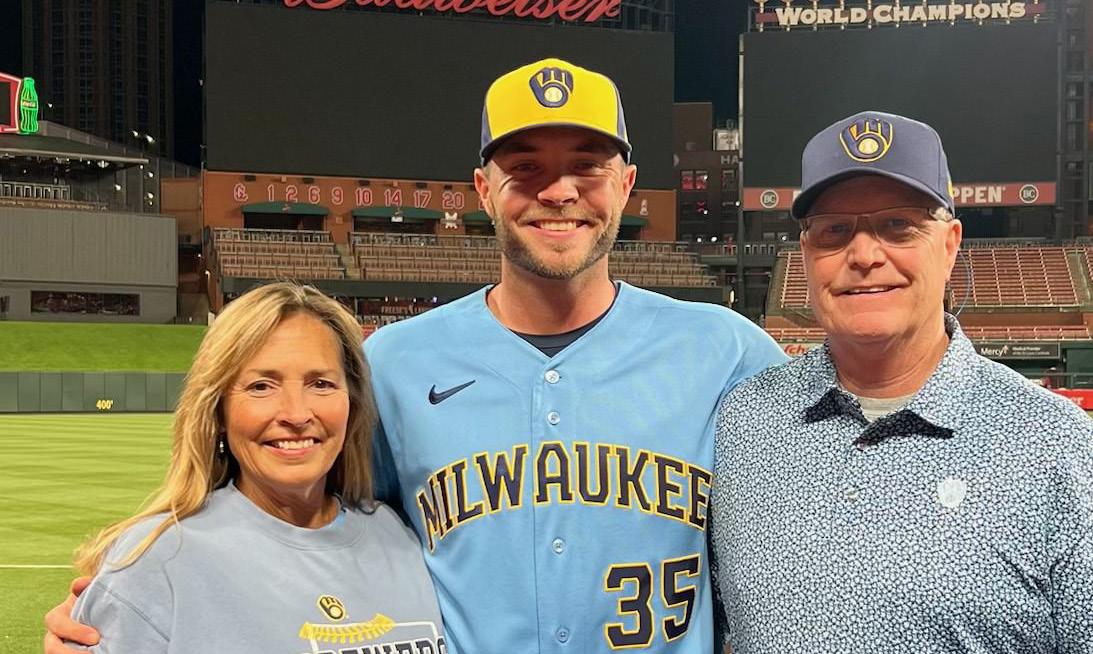


Fitzpatrick, middle, with his parents in St. Louis (Credit - Fitzpatrick family)
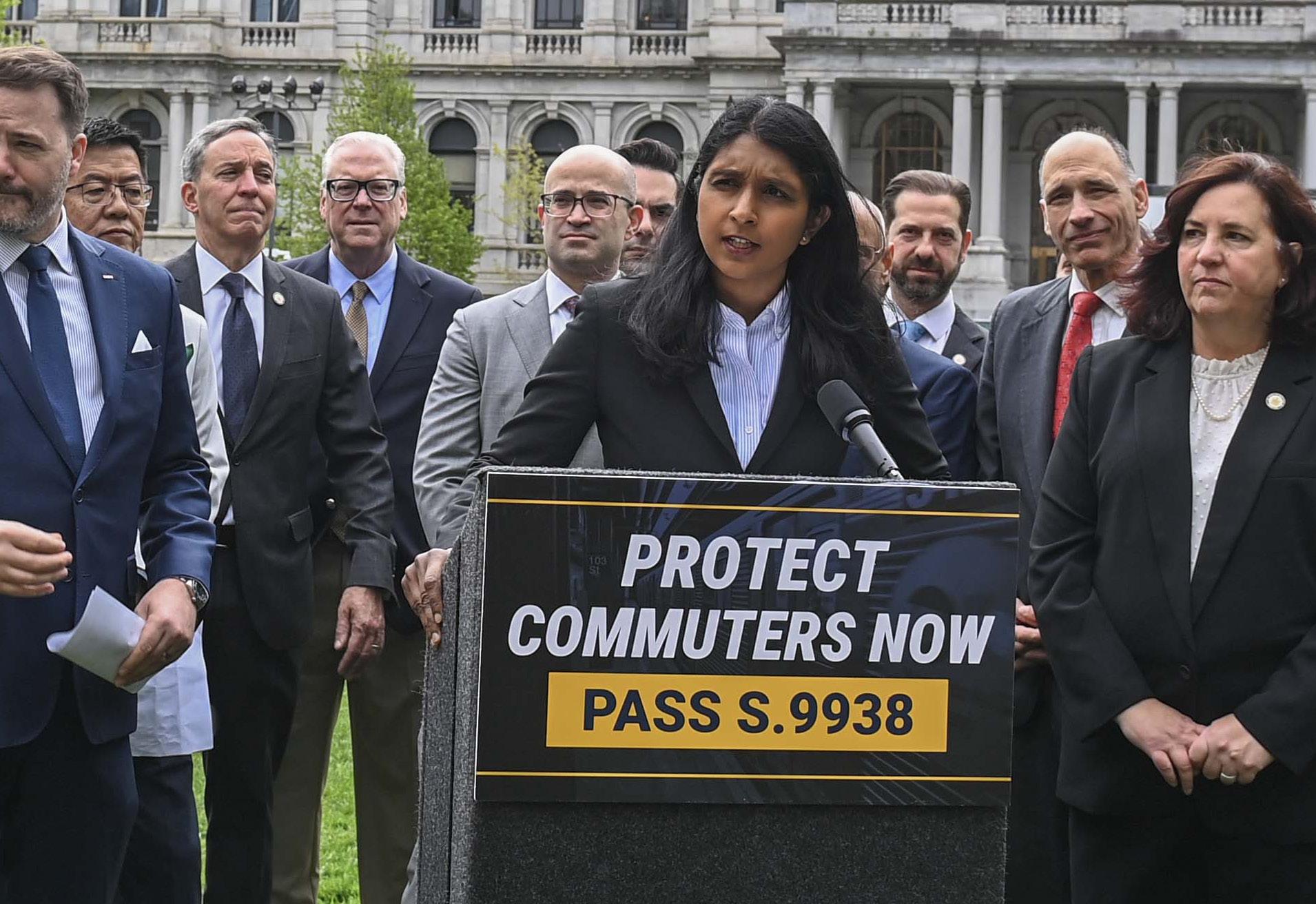
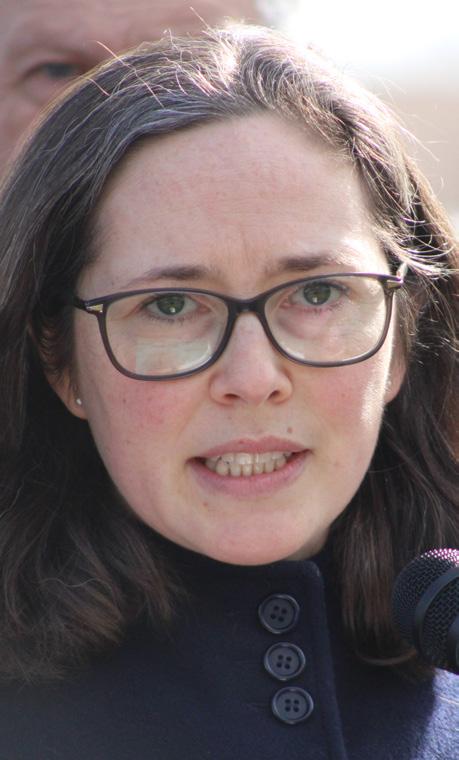
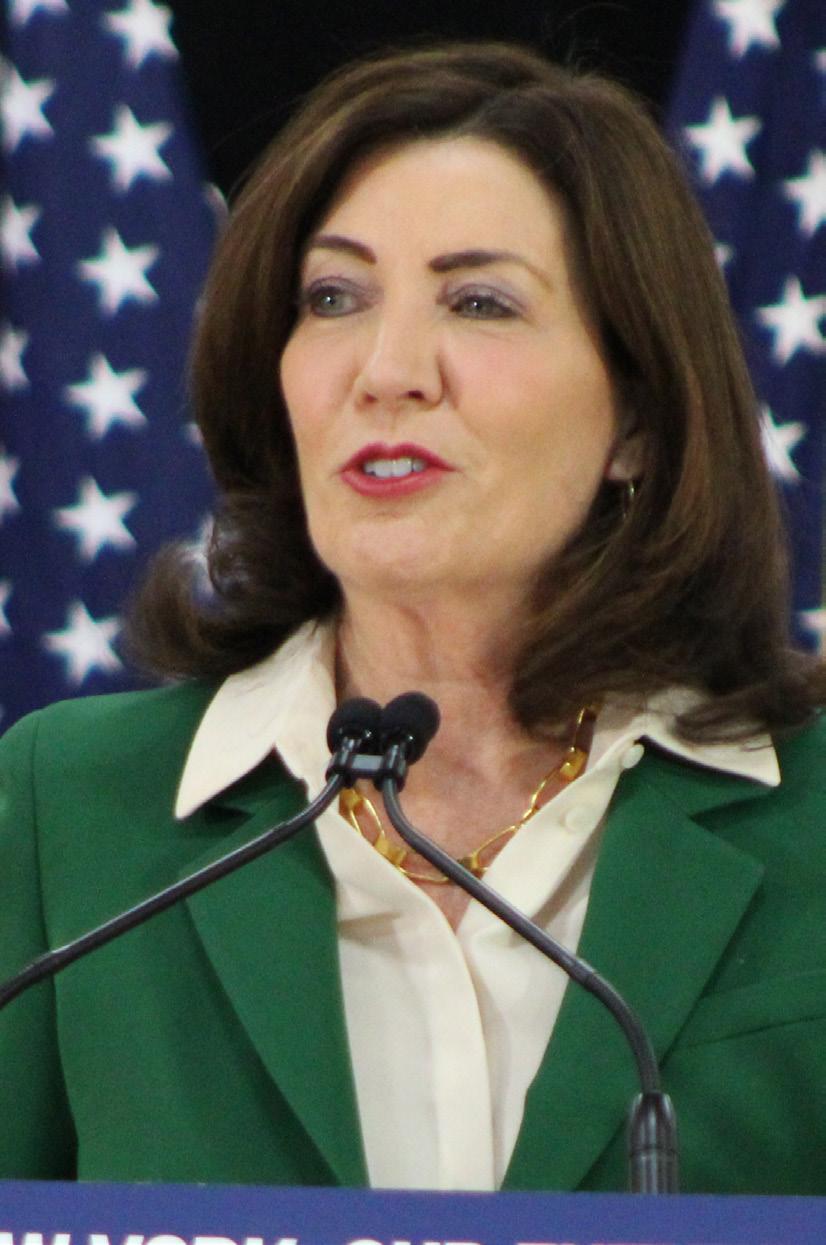
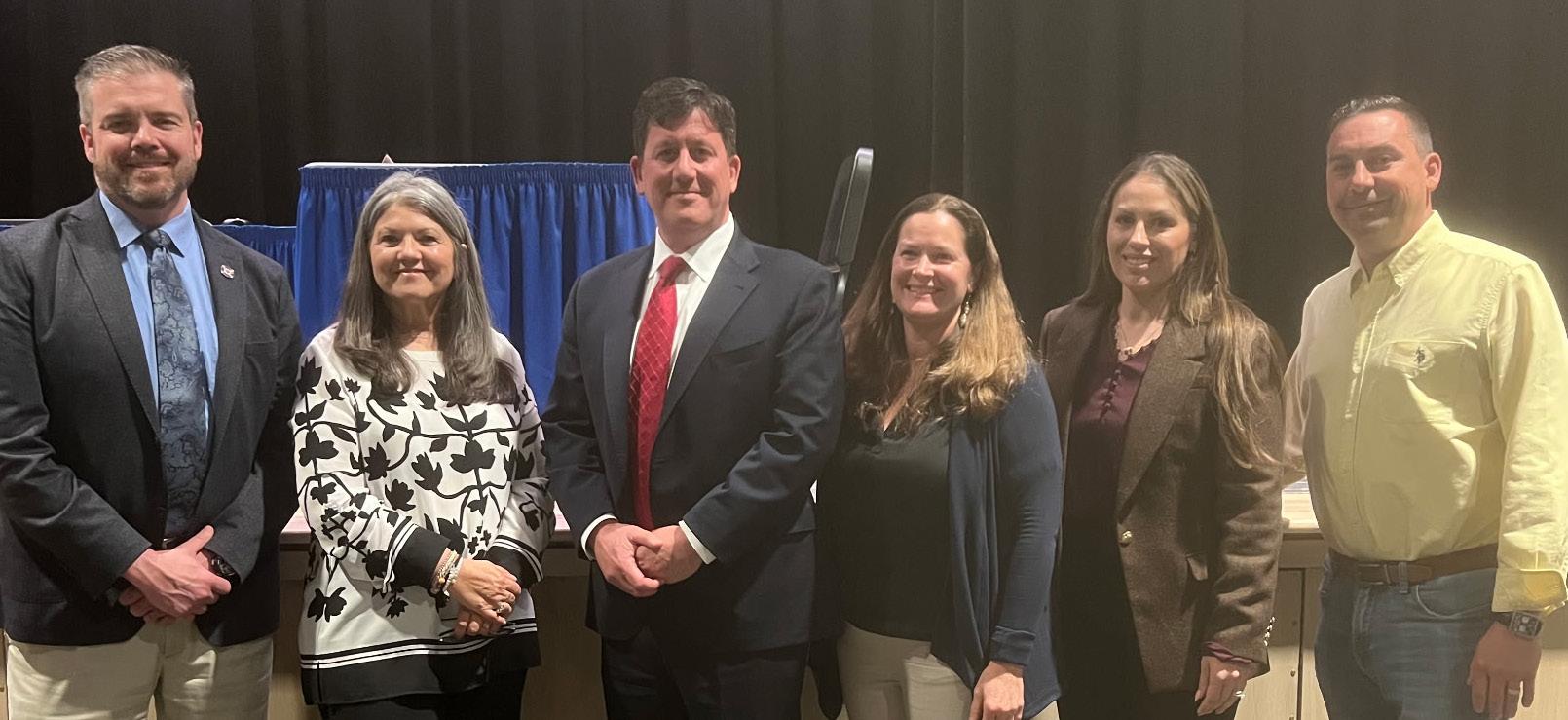
Candidate Saritha Komatireddy (center) joins GOP Senators in Albany
(CreditOffice of Assemblyman Jarett Gandolfo)
SPRING EVENTS
Passport through Parks: Heckscher, Family Program
May 9, 10:00 AM
Bald Hill Fair at Catholic Health Amphitheater at Bald Hill Farmingville
May 7-17, times may vary
Northport Craft and Gift Fair at Northport High School
May 9, 10:00 AM to 4:00 PM
Bonus Stage: Video Game Tournament at Retro Island, Islip Terrace
May 9, 12:00 PM to 7:00 PM
Mama Bear Run 5K at The Bridges Academy, West Islip
May 9, 8:30 AM to 12:00 PM
Terrapin Station Yards, Ronkonkoma
May 13, 5:00 PM to 7:30 PM

Rooted: A Local Spring Festival at Downtown Wading River
May 16, 10:00 AM to 5:00 PM
Spring Farm Festival at Smithtown Historical Society
May 16, 12:00 PM to 4:00 PM
Sounds of Silence 5K Run/ Walk and 10K Run at Walker Beach, Brightwaters
May 16, 8:00 AM to 12:00 PM
Nesconset Spring Fling, Music Fest, and Food Truck Rodeo at Nesconset Gazebo Park
May 17, 10:00 AM to 5:00 PM
Pickles & Paws at Southaven County Park, Yaphank
May 30, 11:00 AM to 5:00 PM
Summer 2026 Truck Fest at The Maples in Manorville
June 7-9, 9:00 AM to 3:00 PM

269-6421
Conveniently





BELLPORT
Cafe Castello • South Country Deli
CENTEREACH
Centereach Deli
CENTER MORICHES
King Kullen
EASTPORT
King Kullen
EAST SETAUKET
Bagel Express • Se-port Deli
RONKONKOMA
718 Slice Pizzeria – (719 Hawkins Ave) Ronkonkoma Train Station
LAKE GROVE
Lake Grove Diner • Lake Grove Village Hall
MILLER PLACE
Better on a Bagel • Bigger Bagel and Deli
Miller Place Bagel & Deli • Playa Bowls Town & Country Market
MT. SINAI
Bagels Your Way • Northside Deli
PATCHOGUE
California Diner • King Kullen • Shop Rite
PORT JEFFERSON STATION
Bagel Deli Gourmet
Toast Coffee House • Wunderbar Deli
ROCKY POINT
Fresh & Hot Bagels
Rocky Point Cardsmart (Kohl’s Plaza)
SELDEN
Cella Bagels
SHIRLEY
Laundry King • Stop & Shop
STONY BROOK
Long Island Bagel Cafe • Strathmore Bagels
NORTH SHORE:
Social Justice Family Storytime
May 9, 10:30 AM
LONGWOOD:
Diamond Art Journals
May 7, 7:00 PM to 8:00 PM
PORT JEFFERSON:
Sunday Crafternoon
May 17, 2:00 PM to 4:00 PM
THREE VILLAGE:
Trivia and Snacks
May 15, 6:00 PM to 7:00 PM
CENTER MORICHES:
Evening Improv for Fun
May 21, 6:00 PM to 7:30 PM
RIVERHEAD:
Mother’s Day Flowers
May 8, 2:45 PM to 3:45 PM





Over 675 Long Island Wine & Liquor Stores at Risk from Wine in Grocery Stores Legislation
Vision Long Island and the affiliated Long Island Main Street Alliance, nonprofit organizations both focused on the economic development, preservation and advocacy for small businesses across 45 downtowns across Nassau and Suffolk Counties, are aggressively opposing legislative efforts that would allow big box and grocery stores to sell wine in New York State.
In a letter to Governor Kathy Hochul (D-Hamburg) and the State Legislature, the groups strongly argue against legislation that they say, “will divert sales away from community-based businesses, putting many at risk of closure, layoffs, and reduced inventory. The impact would ripple through neighborhoods, harming workers, local wineries, and Main Street economies.”
On Long Island, there are over 675 small business wine and liquor stores and in New York as a whole, there are over 3,300 stores, each employing an average of 10 workers, with another 5,000 unionized sales, warehouse, and delivery workers servicing these stores. These mostly family-owned businesses are legally limited to selling just wine and spirits and solely rely on these sales to cover rent and employee wages.
“It is sad to see some elected leaders in Albany embrace the blueprint designed by billionaire supermarket chain owners to take total control over Long Island’s small business retail landscape, at a steep cost: the inevitable demise of local shopkeepers in once vibrant downtowns,” said Michael Correra, executive director of the Metropolitan Package Store Association, representing over 3,300 small, independent wine and liquor stores across New York State. “These local store owners are the fabric of the towns and villages that make Long Island so special and we urge New Yorkers to reach out to the governor and their local legislators to say No to wine in grocery stores.”
“Liquor stores are more than retailers, they support our local Main Street economies, generate foot traffic for nearby businesses, and provide consumer education about local wines and spirits,” said Eric Alexander, Director of Vision Long Island and the Founder of the Long Island Main Street Alliance. “Most importantly, they serve as vital stewards of New York’s renowned wine economy, promoting local wineries and preserving regional products.”
In the letter, Vision Long Island joins with the presidents of 13 United Food and Commercial Workers (UFCW) union locals, who recently appealed to the governor stating that wine in grocery stores “will enable anti-union operators to leverage their market power against union employers in the liquor space and erode the standard of living for thousands of union families.”
An analysis by the nonprofit Consumer Reports found that many large grocery chains are price gauging consumers, by regularly overcharging for basic staples like meat and produce, with Amazon-owned Whole Foods found to be the most expensive grocery store in the United States. If these chains are suddenly granted the capacity to sell wine, consumers will simply shift their purchases of wine from liquor stores to grocery stores, enabling large grocery chains to have a stranglehold on sales and distribution, profiting further at the expense of union workers and local wine and liquor store owners.
“Look no further than local hardware stores and neighborhood bookstores that have been made obsolete by similar chain store giants,” said Correra. “If wine in grocery stores legislation is passed, local wine & spirits stores on Long Island and the entire state will wither on the vine and die, irreparably harming communities as these business are forced to close up for good.”



The Moloney Family
State GOP Unveils Public Transit Safety Wishlist
In December 2024, Governor Kathy Hochul (D-Hamburg) was skewered for a social media post advertising the safety of the subways, just hours after Debrina Kawam, 57, was set on fire and killed by an illegal immigrant.
In March, a Honduran national with four prior deportations and fifteen prior arrests was charged with second-degree murder after pushing two people onto subway tracks at a Lenox Hill subway station, which killed 83-year-old Air Force Veteran Richard Williams.
The Republican caucus of the New York State Legislature is incorporating the “Ride Safe, Ride Secure” legislative package to their ongoing campaign for strengthened criminal justice laws in the state.
The package includes seven bills, some of which have been introduced in prior sessions, that aim to be several pieces of the puzzle in New York’s crime woes.
The first is a bill to enhance assault crimes that occur on public transit or transit systems. A.11053, sponsored by Assemblyman Michael Tannousis (R-Great Kills), would also restore judges’ bail prerogatives on these charges.
The second bill, A.11222, sponsored by Assemblyman Lester Chang (R-Bensonhurst), would impose prison sentences for certain crimes committed while using public transit. It would enhance penalties for assault, weapons offenses, sex offenses, arson, robbery, and drug sales, among others, and would create the offense of Reckless Endangerment on Public Transportation, a Class A-1 felony.
Assemblyman Jarett Gandolfo (R-Sayville), who represents Patchogue and most of the Town of Islip, brings to the table the third bill, A.2261, which would prohibit the governor from preventing state and local law enforcement from cooperating with federal immigration enforcement. Gandolfo has earned co-sponsors in fellow Suffolk delegates, Assemblymen Mike Fitzpatrick (RSt. James) and Mike Durso (R-Massapequa Park). Senator Steve Rhoads (R-Bellmore) is carrying the Senate version of the bill, S.2241.
Gandolfo is also bringing back one of his 2024 proposals, “Laken’s Law,” a bill to require the State to notify federal immigration enforcement upon the arrest, conviction, or release of a non-citizen. Fellow Suffolk Assemblymembers Durso, Joe DeStefano (R-Medford), Keith Brown (R-Northport), and Jodi Giglio (R-Baiting Hollow) have co-signed this proposal.
Assemblyman Patrick Chludzinski (R-Cheektowaga) has put forward A.5801, a bill to prevent local governments from interfering with federal law enforcement’s work at municipal or county jails in furtherance of their duties. It would also mandate that local governments comply with federal detainer requests.
From Suffolk, Senator Dean Murray (R-East Patchogue) is carrying the Senate version, S.3649, along with Senators Mario Mattera (R-St. James) and Alexis Weik (R-Sayville).
Conservative lawmakers are also requesting that Raise the Age reforms are passed in Assemblyman Will Barclay’s (R-North Tonawanda) bill, A.4705. The bill would require violent felony offenses committed by 16and 17-year-olds to be tried in Youth Part Criminal Court. Raise the Age, passed in 2017, increased the age of criminal responsibility from 16 to 17. Currently, minors are treated in Family Court or special youth parts.
to the bill’s official summary. A maximum of $100,000,000 would be appropriated to the Public Transportation Safety Grant Fund from the State Treasury. This law was proposed by Assemblyman Michael Reilly (R-Eltingville).
Through this grant, local law enforcement could access funds for equipment like subway platform barriers, and counties could disburse funds to municipal law enforcement’s use at any public transit facility.
The “Expand the Transit Ban” statute, A.11063, is proposed by Assemblyman Michael Novakhov (R-Manhattan Beach), and it would prohibit those convicted of sexual or violent rider-on-rider crimes from using all public transportation across the state.
On top of new laws, the group of legislators is also seeking to establish a public transportation safety grant program and fund for the purposes of “enhancing safety infrastructure at public transit facilities throughout the state,” according
A.11054, sponsored by Assemblyman Alec Brook-Krasny (R-Coney Island), would allow public transit agencies or law enforcement to hire “transit security marshalls,” and grant peace officer status to those marshalls, pursuant to typical fitness standards. Retired law enforcement could also serve in these positions “without being subject to existing earnings limitations.”
Finally, the “Penny for a Hero Good Samaritan Act” would shield from legal consequences individuals who intervene in emergencies to save lives. The bill is crafted in memory of Daniel Penny, a Marine Corps Veteran who in 2023 put Jordan Neely in a chokehold after Neely boarded a subway car in the East Village and began threatening passengers. Neely had fortytwo prior convictions before then.
The case generated significant controversy, which ended in a deadlocked jury on Penny’s charges. He was later acquitted of criminally negligent homicide.
The bill, sponsored by Assemblyman Ari Brown (R-Cedarhurst), would classify “reasonable intervention” as what is necessary to “maintain order” and allows deadly force “only when such a person reasonably believes that reasonable
intervention is necessary to prevent death or serious physical injury.” $500,000 would also be spent on public service announcements and community-based training programs aimed at informing the public the “responsibilities on being a Good Samaritan.”
From Suffolk, Assemblymembers Giglio, Fitzpatrick, DeStefano, and Brown have all co-sponsored.
“New Yorkers deserve to feel safe every time they step onto a train or bus,” said Assemblyman Gandolfo in a statement. “This package of legislation is about restoring that sense of security, cracking down on violent crime in our transit systems and making it clear that lawlessness will not be tolerated.”
Assembly Minority Leader Ed Ra (R-Franklin Square) said that “several shocking” recent attacks fly in the face of Democrats’ push to increase mass transit ridership.
“That effort will never succeed if the system continues to be plagued by crime,” said Ra in a statement. “If we fail to take decisive action in the face of what’s happening, it’s not only disappointing, but also negligent…Assembly and Senate Republicans have introduced solutions. Democrats need to find the courage to act.”
Attorney General candidate Saritha Komatireddy (R-Brooklyn) joined lawmakers in their push for the reforms.
“Every day these bills sit idle is another day New Yorkers are left unprotected on their way to work, school, and home,” said Komatireddy in a statement. “Transit crime is not just a New York City issue — it affects communities across our state, from regional rail lines to bus systems that families rely on every day. We have a real opportunity right now to act. Albany should take it.”
Komatireddy is vying against two-term Attorney General Letitia James (D-Clinton Hill) in November. She is a former federal prosecutor who also served as Chief of Staff to the Drug Enforcement Agency.
State GOP Unveils Public Transit Safety Wishlist
By Matt Meduri
In a world continually grasped by betting, particularly with the advent of mobile phone apps and sites like Kalshi, regulation is inevitable.
Assemblywoman Rebecca Kassay (D-Port Jefferson) is sponsoring a bill that would require mobile sports betting apps to send users a monthly summary of their activity to show how much money has been deposited, withdrawn, won, or lost. The bill would also require the apps to provide information on gambling addiction resources.
“Think of it like calorie counts on fast-food menus: no one likes to see them, but they’re there to help consumers make better choices both in the moment and in the long-run,” Kassay told The Messenger. “This legislation helps to combat problem gambling by making app users more aware of how much time and money they’re spending on a gambling habit. App users may think they’re just placing a bet here and there, but the sum of their bets and losses can often be surprising and sobering. By seeing a clear summary of information about their gambling activity each month, they can more easily spot unhealthy patterns and find support or limit their gambling.”
The bill, A.10329, passed the Assembly unanimously with bipartisan support in March. It’s one of six bills to rein in the gambling problem.
Kassay is also sponsoring A.10526, which would prohibit mobile sports wagering operators or platform providers from “permitting, accepting, or facilitating placement of a sports wager through a mobile application from any individual on a New York
college campus.”
“While this doesn’t protect all New Yorkers whom gambling platforms work to entice onto their apps, it aims to be part of a package of bills that reduce risk of gambling addiction amongst young people. These bills are stand-alone bills, not part of the state budget,” said Kassay.
Kassay says that the overhauls also come at a time of an “affordability crisis.” She says that the State must do what they can to “prevent New Yorkers from succumbing to gambling addiction, risking (and most often, losing) the money they need to keep a roof over their heads and food on the table.”
“The consequences of problem gambling go well beyond bank balances: instances of domestic violence and child abuse are significantly higher in a household with a problem gambler,” said Kassay. “On a local level, I am working to include gambling addiction resources and professionals at local substance addiction and mental health treatment centers, as this would not only increase accessibility for someone seeking help, but also reflect the data supporting the treatment of co-occurring addictions and mental health issues.”
Anyone who might be experiencing problem gambling can contact New York’s 24/7 HOPEline to talk to someone by calling 1-877-846-7369 (HOPENY) or texting 467369 (HOPENY) to get help.
Thursday, May 7, 2026
No Excuse for Ignoring the Grumman-Calverton Site
Long Island remembers the scandal at Bethpage when Grumman left. As kids tried out a new playground, they found barrels of waste buried beneath what was supposed to be a community recreation center.
Years later, the site in Calverton remains an environmental nightmare.
Local officials have done their part. The Suffolk County Water Authority (SCWA) has connected more homes along River Road near Peconic Lake to sewers, while Suffolk County Executive Ed Romaine (R-Center Moriches) has called for remediation of the site multiple times upon taking office in 2024.
Now, it’s time for the federal government to kick in their share of the work. The Navy and the Environmental Protection Agency (EPA) must take action, as testing has shown the Peconic River sitting at uncomfortable levels of toxicity. Fish caught in the Peconic Lake can’t be
eaten, while the river feeds into the Peconic Bay that abuts the two forks.
While EPA Administrator Lee Zeldin (R-Shirley) remains in his role, there have been rumblings that he’s teed up to replace Attorney General Pam Bondi (R-FL). It seems that the Trump Administration is keeping Zeldin in his current role, but it’s also apparent that Zeldin is clearly equipped for other roles.
That said, the iron has never been hotter to clean up the former Grumman site in Calverton. Should Zeldin be called up for another role, Long Island loses a home-grown hold in the very department that could facilitate this cleanup. Zeldin has a shot to be the hometown hero and deliver a significant win for the East End.
The residents, local officials, and environmental groups must continue their advocacy and attention to this issue. If there’s any squeaky wheel in need of oil, it’s, once again, courtesy of Grumman.
Are People Spending Money Wisely? Don’t Bet On It.
Gambling is an age-old vice, but one that has grown new tentacles in the modern era.
What used to be confined to betting parlors, horse tracks, and casinos is now seemingly omnipresent. On top of that, it’s more accessible than ever. The ease of use, sleek app designs, and creative ways to finance the game makes it seem like a harmless pastime rather than a destructive habit.
Casual gambling is one thing; problem gamblers often know they have a problem. The bigger issue is now combating the advertising that is taking young people by storm. Apps allow users to gamble anywhere, anytime, and some even accept credit cards as a form of payment.
According to the Federal Reserve Bank of New York, 2026 is bringing record levels of national credit card debt - a staggering $1.28 trillion. The average American carries around $6,500 in credit card debt.
What is our society saying when we not only allow, but somewhat encourage, users to utilize the plastic for taking risks on sports teams or horses, when the plastic should be used for life events and emergencies. Forget if the users get airline miles or cash-back points; it’s now an issue of making rent or taking scores.
Moreover, we’re also seeing a troubling rise in just what people are wagering. Online sites like PredictIt, Kalshi, Polymarket, and the like allow users to bet on election outcomes and world events. In fact, some are even betting on the deaths of officials, when ceasefires will be implemented, and who will control the Strait of Hormuz for how long.
Instead of touchdowns and clydesdales, people are betting on human lives and how the single-largest disruption to the global oil market in
recorded history will play out. What does that say about us as a society?
Moreover, Polymarket is facing scrutiny for insider trading allegations regarding the Iran War. NPR reports that $100 million in wagers were placed on these markets in early April, and newly created accounts placed “perfectly timed” bets just hours or even minutes before major developments in the war.
It seems that Washington insiders can’t help themselves from insider stock trading, but are now making millions on outcomes to which they are privy.
We don’t take umbrage with gambling as an occasional event; everything in moderation. Again, problem gamblers know they have a problem, and unless they try to regulate themselves, they continue to be their own worst enemies.
But the gambling scourge has been taken to new heights. New York State Legislators, including Assemblywoman Rebecca Kassay (D-Port Jefferson), have had laws passed to require these betting platforms to provide monetary updates to users. We appreciate the attention to this matter and we hope these laws bring positive results. However, human behavior simply can’t be legislated, no matter how valiant the effort.
This is a soul problem and one that continues to be promulgated when the state of the world is continually shaky, bureaucrats serve themselves instead of the people, and the flies in peoples’ wallets multiply.
At that point, we can see why many are willing to double down and bet on the deaths of people they’ve never met, so long as they can make their car payment. It’s a sad commentary that only reminds us of the dystopian nature of an increasingly online world.
All Politics is, and Always Has Been, Local
It’s that time of year again and we at The Messenger are not resting on our laurels in urging the community to hit the polls on Tuesday, May 19, when school districts across Suffolk will be putting budgets and propositions on the ballot, while Board of Education (BOE) candidates will be running to administer those funds.
It’s been said ad nauseum, at least in this paper, but it bears repeating: 70% of your property tax bill goes to the school district. Elected officials at every other level of government can talk about holding the line on taxes and retaining affordability, whatever of it is left, and while we appreciate their efforts, the true onus falls on the school districts.
Suffolk has over 300 public schools serving over 222,000 K-12 students, according to Niche. The average district size rests anywhere between 2,500 and 5,000 students.
Yet, these elections easily see the lowest turnout. Only a few thousand, or even a few hundred, residents turn out to decide the trustees, budget, and other propositions for districts of tens of thousands of people.
“This is the most important election of our lifetime” was said about the 2000, 2004, 2008, 2012, 2016, 2020, and 2024 presidential elections. If they’re all the “most important,” then none of them are.
Truly, the most important elections are on the local end, and school district votes are the top of that chart, we think.
That said, we implore our readers to hit the polls and study these budgets. The newsletters can easily be found on any district website.
Treat these school board elections - be it Smithtown, Connetquot, or Middle Country - as the “most important” elections in your life… …because they actually are.
Who Do Legislators Work for When They Don’t Get Paid?
By Assemblyman Doug Smith
As a member of the New York State Assembly, let me say something that some people in Albany are uncomfortable saying publicly: withholding legislators’ paychecks during budget negotiations is bad public policy and weakens the independence of the Legislature.
And no, this is not about politicians wanting sympathy.
I believe in accountability. If elected officials are not doing their jobs, the public has every right to be frustrated, but New Yorkers also deserve honesty about how government actually works, and right now there is a serious structural problem built into New York’s budget process that almost nobody wants to discuss openly.
We are currently negotiating a state budget approaching $270 billion that impacts nearly 20 million New Yorkers. These are not casual conversations. These negotiations determine school aid, healthcare funding, public safety priorities, taxes, transportation, environmental policy, and countless other issues that directly affect families across this state.
At the same time, the Legislature continues passing short-term budget extenders to keep government operating while negotiations continue. State employees are working. Services continue uninterrupted. The government remains open, yet individual legislators stop receiving paychecks indefinitely.
The Governor continues receiving a paycheck, government continues functioning, but rank-and-file legislators are expected to continue negotiating one of the largest budgets in America without compensation for an unknown period of time.
That is an imbalance, and it matters.
Now personally, I am fine. I could hold out for quite a while without receiving a paycheck. I was fortunate growing up to have parents who taught me fiscal responsibility, discipline, and the importance of planning ahead. My mother especially drilled those lessons into me from a young age. Frankly, the country would probably benefit from having her as Treasury Secretary.
But this issue is bigger than me. The problem is what this system does institutionally to the Legislature over time.
New York already has one of the strongest executive budget systems in the country. Unlike the federal government, where spending bills originate in Congress, the Governor in New York possesses enormous leverage throughout the budget process from the very beginning.
Then we add another layer: legislators’ paychecks are withheld indefinitely during negotiations. That creates pressure - real pressure.
Not every legislator is in the same financial position. Some members are raising children. Some are paying mortgages, rent, student loans, childcare costs, or supporting aging parents. Some do not come from wealth and do not have large outside assets to fall back on. Beginning
Stop Lewdness at Public Beaches
Dear Editor,
in 2027, outside earned income for legislators will also be capped, making many members even more financially dependent on their legislative salary.
This is not about corruption. It is not about claiming legislators are “for sale.” I reject that kind of cynical nonsense. But anyone who understands human nature understands this: financial pressure changes negotiating environments.
The danger is not necessarily some dramatic act of wrongdoing. The danger is more subtle. It is the possibility that legislators begin feeling pressure to simply get to a deal, any deal, because the financial uncertainty drags on week after week
That is not how a co-equal branch of government should function.
The representatives of the people should never be placed in a position where their personal financial endurance becomes part of negotiations involving a $270 billion state budget. A legislator’s ability to fight for their district should not depend on whether they can personally afford to go months without income. And if we are not careful, this system will eventually reshape who is willing or able to serve in public office. Over time, it favors independently wealthy individuals or those financially insulated enough to absorb prolonged periods without compensation.
That is unhealthy for representative government.
New York should want teachers, small business owners, working parents, veterans, younger professionals, and middle-class individuals serving in the Legislature. Public service should not slowly become something only financially secure people can realistically afford to do. Ironically, a policy originally intended to increase accountability may actually weaken thoughtful negotiation and increase pressure to accept unfinished or imperfect agreements simply to end the uncertainty.
I believe legislators should be accountable, absolutely. But I also believe New Yorkers deserve a Legislature capable of negotiating independently, thoughtfully, and aggressively on behalf of their communities without artificial financial pressure hanging over individual members during one of the most important constitutional responsibilities entrusted to state government.
That is not weakness. That is protecting the integrity and independence of the people’s branch of government.
Assemblyman Doug Smith (R-Holbrook) has represented the Fifth District in the New York State Assembly since 2018. The Fifth District is split between the Towns of Brookhaven and Islip, containing the communities of Lake Grove, Holbrook, and parts of Bohemia, Centereach, Coram, Farmingville, Holbrook, Holtsville, Islandia, Lake Ronkonkoma, Medford, North Patchogue, Ronkonkoma, and Selden.
Letters to the Editor
Rahm Emanuel Really Wants to be President
Dear Editor,
As a citizen, father, and pastor, I have a serious concern that our communities are being exposed to an indecent and unhealthy environment by the allowance of certain bathing attire in our beaches and parks which allows for the public display of rear nudity.
Besides the breach of decency and morality, this behavior is also against the laws of NYS, which prohibit the public display of rear nudity under the “Public Lewdness” and/or “Exposure of a Person” statutes. Additionally, by not enforcing these decency laws in our public beaches and parks, we feed into the sexually immoral climate of our culture which continues to hurt lives by contributing to our pornographic culture of sexual promiscuity, sexual abuse, human trafficking, prostitution, child pornography, degradation of women, rape, and unwanted pregnancies.
Isn’t it time we enforce the NYS law or create local ordinances that will prohibit those individuals who want to display their buttocks to the full view of the tax-paying public which includes minors and children? As James Q. Wilson points out in his book, “Thinking About Crime,” the minor violations of decency and order in a society often lead to greater violations and crimes if left unchecked. This was proven by a peer-reviewed study led by him and other criminologists concerning the “brokenwindow” effect of neighborhood degradation.
Therefore, a small problem like this can lead to far bigger problems. After all, if human sexuality is not sacred, then the life that is created by it, is not sacred!
Bruce Bennett
Pastor, Word of Truth Church Centereach
The former Obama White House Chief of Staff has been making the rounds in Washington and everywhere else he can possibly go to make his case for President. Bill Maher even chided him for not being subtle about it. I have seen him make his case mostly on the Opinion pages of The Wall Street Journal. As he knows, the readers are an educated bunch who appreciate thoughtful commentary.
If any of you are old enough to remember his Chief of Staff days, you cannot miss the potty mouth language he used when dealing with the press. After leaving Washington, he went home to run for mayor of Chicago and the voters chose him. Next, he asked President Biden for a political appointment, and he became Ambassador to Japan. From Chicago to Japan – okay, that was a leap. So, for his service to the Obama administration, he left with a nice door prize. Now he is revved up to lead our nation to greatness as only he thinks he can. One question, why are you elevating this guy, Rupert Murdoch? Do you hate us that much?
Respectfully submitted,
Jamie Hanja Lake Grove
Fixing Federal Dysfunction
Dear Editor,
There are many things that need fixing, but two of them are critical. Fixing these two makes fixing the others more possible (easier). We need a stronger role for the American people and a reduction in the influence of money in politics.
When citizens participate more actively through voting, public forums, community engagement, and by communicating regularly with representatives, government becomes more responsive and accountable. Greater civic involvement helps ensure that public policy reflects the broad public interest rather than special interests.
Equally important is the elimination of the current method of campaign financing, which gives disproportionate influence to wealthy donors and special interests. Replacing private funding with a transparent public financing system (which is working in several European countries) would allow candidates to compete based on ideas and qualifications, not fundraising. This encourages a wider range of candidates to run for office and help restore confidence that elected officials serve the public rather than financial backers.
Together, increased citizen participation and public campaign financing would strengthen democratic legitimacy, improve accountability, and help the federal government function effectively. A healthier democracy depends on a system where voices matter more than dollars and where public service is guided by the needs of the people.
Sincerely,
Charlie Gueli
Laurel
By Matt Meduri
On The Campaign Trail
Hochul’s Ratings Hit Year-Lowest, Retains Lead Over Blakeman
The Siena College released their latest monthly poll on Tuesday and it shows a divergence in New Yorker’s moods towards the Governor just six months until Election Day.
Governor Kathy Hochul’s favorability rating is now underwater at 41%-46% (-5), her lowest such rating since June 2025. That is a downturn from last month’s 45%-42% (+3) rating.
Her job approval rating also took a hit, but remains above water at 48%-44% (+4), compared to a much healthier 52%-40% (+12) rating in March.
However, her lead over Nassau County Executive Bruce Blakeman (R-Atlantic Beach), the presumptive Republican nominee for governor, grew slightly compared to March. Hochul now leads Blakeman 49%-33% (+16), up from 47%-34% (+13) in March. That’s still lower than her margins exceeding twenty points, as tracked by the College late last year.

say it’s too much. Independents remain divided on this topic as well: 29% say spending is just right, 27% say too much, and 25% say not enough.
Right Track, Wrong Track
Part of the issue is Blakeman’s name recognition, and Siena College pollster Steve Greenberg says that 64% of voters remain unfamiliar with him or have no opinion about him.
“Is it the late state budget? Is it something the Governor has said or done? Hard to say, but either way, Hochul heads into a campaign – with an election 26 weeks from today – with her lowest favorability and job approval ratings in about a year,” said Greenberg in a statement.
“Both Hochul’s favorability and approval ratings fell the most in the last month with independents, men and voters from New York City. While she continues to be in positive territory on both measures in New York City, she has fallen even deeper underwater with independents.”
Moreover, Greenberg adds that partisan lanes remain intact, as three-quarters of Democrats intend to back Hochul, while threequarters of Republicans are supporting Blakeman. The Nassau Executive retains a +2 lead among Independents, down from +7 last month, and still a better picture for him than Hochul’s +5 lead in the winter.
Dollars and Cents
The FY2026 budget is about $260 billion, the largest on record. Yet, the Siena College found that 36% of voters say the State doesn’t spend enough money, compared to 29% who think the appropriate amount is spent, and 22% who say the State spends too much.
Two-thirds of New Yorkers say that the budget doesn’t spend enough on “education, healthcare, roads, and mass transit,” according to Greenberg. About half of Democrats say that the State doesn’t spend enough, while just 12%
Independents also remain divided on the right track/wrong track analysis. Democrats by a 61%-22% (+39) margin say that New York’s best days are “ahead of us,” while Republicans by a 32%-45% (-13) margin say that the best days are “behind us.”
“A majority of New York City voters and a plurality of upstaters say our best days are to come, while downstate suburbanites are evenly divided,” said Greenberg.
Overall, voters to the tune of a 49%-32% (+17) margin remain optimistic for New York’s future, with 7% going so far as to say that the state’s best days are “taking place now.”
Of seven issues posed to voters, Democrats believe the state is on the right track in five of them. Republicans and Independents believe the state is on the wrong track in all of them.
By large margins, Democrats think the state is correctly handling “quality” K-12 Education, safeguarding the environment, improving the State’s transit infrastructure, and “affordable, quality” healthcare access. By a 51%-40% (+11) margin, Democrats think New York is on the right track in terms of reducing crime.
However, Democrats agree with Republicans and Independents that the state is on the wrong track when it comes to creating more affordable housing and addressing the cost of living. 59% of Democrats, 79% of Republicans, and 71% of Independents all say that the State is on the wrong track in terms of addressing the cost of living, making up for 67% of total New York voters.
On creating more affordable housing, a small plurality of Democrats, 47%, along with 69% of Republicans and 64% of Independents, say the State is on the wrong track, accounting for 57% of total respondents.
Overall, voters remain split on improving transit infrastructure (42%-42%) and voters narrowly believe the State is adequately safeguarding the environment (43%-40%).
National Moods
President Donald Trump (R-FL) is facing his toughest numbers yet since returning to Washington last year. In a state where about 43% of voters backed him, Trump now sees a 33%-64% (-31) favorability rating, down slightly from March, and his job approval rating is 34%-64% (-30), also down compared to March. Greenberg notes that Republicans are the main culprit for the downturn in the numbers. Trump’s favorability stands at 65%-27% (+38), compared to March’s 78%-18% (+60), a 22-point slide. His job approval also took a large hit among GOP voters, sitting at 71%-27% (+44) compared to March’s 84%-15% (+69).
The lowest net-favorability ratings in New York during Trump’s second term are complemented by the “highwater mark for voters who strongly disapprove of the job he’s doing, 55%, and the low water mark for those who strongly approve of the job he’s doing, 19%,” according to Greenberg.
Of seven national issues, Democrats overwhelmingly think the nation is on the wrong track in all of them. Republicans largely disagree on five, are split on how Artificial Intelligence (AI) is being integrated into daily lives (38%-36%, right track), and agree with Democrats that the U.S. is headed on the wrong track in tackling affordability (58%-36%, wrong track).
Independents think the nation is headed on the wrong track in six areas, but by a +2 margin (46%-44%) think the nation is on the right track in enforcing immigration policy.
Odds and Ends
Voters give the State Assembly a 33%-36% (-3) rating, down from 41%-32% (+9) in January. The State Senate’s favorability rating is also down, sitting at 35%-39% (-4) compared to January’s 43%-37% (+6) rating.
New York City Mayor Zohran Mamdani (D-Astoria) remains favorable among statewide voters at 43%-40% (+3), down from stronger ratings in the winter. Mamdani boasts a 56%34% (+22) favorability rating among NYC voters, notably larger than Hochul’s.
Senate Minority Leader Chuck Schumer’s (D-Park Slope) favorability rating is 33%-52% (-19), down from a -10 rating in March.
The Siena College’s poll was conducted April 27-30 among 806 registered New York voters and has a margin of error of +/- 4.2%.
Credit: Matt Meduri
This Week Today
Thursday, May 7, 2026
National, State, and Local Temperature Checks
By Matt Meduri
National
The Supreme Court brought the gavel down on a major decision this week.
In the highly-anticipated case of Louisiana V. Callais, the nation’s highest court in a 6-3 ruling struck down Louisiana’s congressional map as an unconstitutional racial gerrymander.
The case started in 2022, when Louisiana’s Republican-led state legislature passed a House map that preserved the 5R-1D delegation. However, a group of black voters, who make up one-third of the state’s population, took the map to court, alleging it violated Section 2 of the Voting Rights Act (VRA), which prohibits discrimination in voting and mapmaking.
This forced Louisiana to draw another map with a second black-majority district, allowing Democrats to flip LA-06, a tortuous district that begins in Baton Rouge in the southeastern part of the state and stretches all the way to the northwestern corner to take in Shreveport.
This then prompted the lawsuit that landed this week’s presumably final opinion from the Supreme Court. A group of “nonAfrican American” voters contended that the 2024 map violated the Constitution’s equal protection clause by sorting voters based on race. Judges in federal district court agreed and barred the 2024 map from future usage, but the Supreme Court paused that ruling to take up arguments.
Litigation began in March 2025, and much emphasis has been on the ramifications on redistricting for this year. Justice Samuel Alito argued that a “litigant can easily exploit Section 2 for partisan purposes by ‘repackag[ing] a partisan-gerrymandering claim as a racial-gerrymandering claim.’”
The map in Louisiana now hangs in the balance for a redraw, and much discourse has surrounded other Southern states taking the precedent set to redraw their maps as well. This leaves on the line about a dozen Democratic seats that could be dismantled across the region, potentially in time for the 2026 midterms. Tennessee and Alabama have already called for special legislative sessions to redraw their maps based on the Callais decision.
In that vein, Governor Ron DeSantis (R-FL) signed into law Florida’s new map that seeks to unseat four Democratic incumbents. Florida state statute on partisan gerrymandering puts the map at odds with the courts.
The Senate campaign trail got a major shakeup this week, as Governor Janet Mills (D-ME) dropped her campaign for U.S. Senate in a must-win contest for both parties in Maine.
The Senate race in Maine is shaping up to be one of the most consequential in the balance of power in the Senate, as Republicans’ virtual guarantee of retaining control at the start of the cycle has devolved into a toss-up as Democrats continue to land heavyweight recruits across the country.
Maine’s independent political nature makes it a mixed bag, one in which the Senate’s most notable maverick Susan Collins (R-ME) has logged five terms. Collins, despite trailing in the polls and fundraising in 2020, notched a decisive re-election win despite her state going to Joe Biden (D-DE) by a similar margin.
But Collins’ electability even in a political island like Maine in a year like 2026 is going through its perhaps toughest test yet. Mills, the two-term governor who flipped the state blue in 2018, has been seen as the more establishment candidate in the race for the Democratic nomination. Despite being the choice for national Democrats, Mills has trailed behind her Democratic opponent in progressive oyster farmer Graham Platner (D-ME). Her decision to drop out came around a lack of financial resources. Mills had just over $1 million on hand at the end of the first quarter, compared to Platner’s $2.7 million.
Senate Minority Leader Chuck Schumer (D-Park Slope) is vicariously handed a defeat, as he had recruited Mills to run for the seat. However, he and Democratic Senatorial Campaign Committee Chair Senator Kirsten Gillibrand (D-Albany) released a statement saying this will work with Platner, now the presumptive Democratic nominee, to defeat Collins, who has “never been more vulnerable.”
Platner now ascends to a position of national recognition after being one the more obscure political outsiders this cycle. His progressive score card has been scrutinized, however, of offensive social media comments endorsing political violence and disparaging police, which he says no longer represent him.
bailout negotiations with the Trump Administration failed. The final nail in the coffin for the already struggling business model was the spike in jet fuel prices as a consequence of the Iran War.
Frontier Airlines looked to acquire Spirit in 2022, but was outbid by JetBlue. That merger was blocked by the Biden Administration in January 2024, leading Spirit to file for Chapter 11 bankruptcy in November 2024, and again in early 2025.
Finally, the Iran War continues to rage, as the U.S. announced on Sunday they would launch Operation Project Freedom to guide ships out of the dual blockade of the Strait of Hormuz. Iran has launched retaliatory strikes against the United Arab Emirates (UAE), with the UAE claiming to have intercepted missiles and drone attacks from the east. Iran has blamed the attacks on the “product of the U.S. military’s adventurism.”
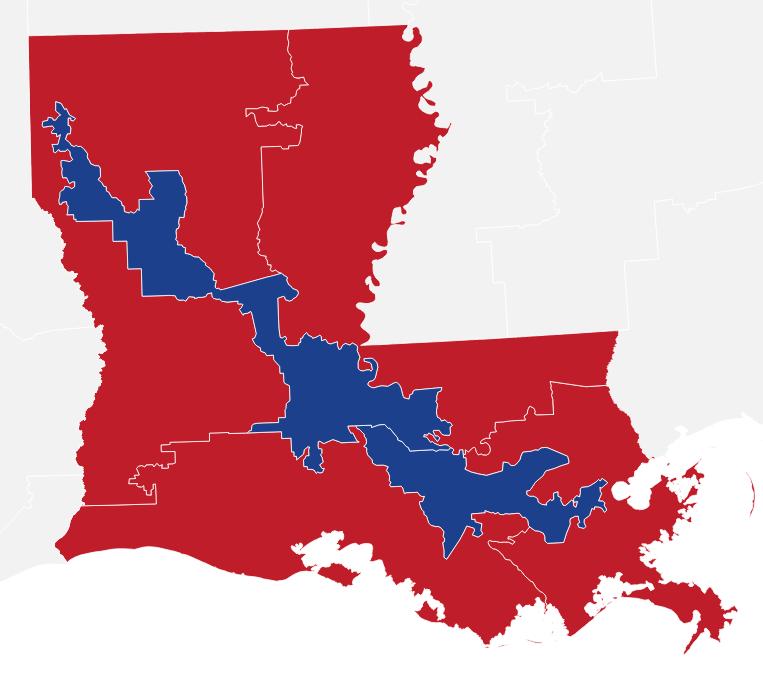
Louisiana’s congressional map that was struck down by SCOTUS
earlier this year.
Wilson is a prominent political activist who had the backing of many establishment Democrats, namely City Council Speaker Julie Menin (D-Yorkville), Congressman Jerry Nadler (D-Upper West Side), and Manhattan Borough President Brad Holyman-Sigal (D-Greenwich Village). He also received support from outside groups, including Greg Goldner, a Cuomo ally who managed Cuomo’s mayoral campaign last year against Mamdani.
Boylan, a member of the Democratic Socialists of America, had the backing of Mayor Zohran Mamdani (D-Astoria), who has been increasingly at odds with Speaker Menin. He recently issued his first veto of his tenure, one that blocked a bill that would have required the NYPD to publicize plans to deploy security perimeters around educational facilities during protests. Mamdani vetoed it on the basis that it could be applied to protestors demonstrating against “fossil fuels, Palestinian rights, or ICE.”
That tension is likely to continue, as both candidates gear up for a June primary to earn the nod for a full-term election in November. Tuesday’s special only covers the remainder of the term that expires in December.
Wilson also continues a decades-long tradition in this district, which is generally regarded as the LGBTQ hub of New York City. It has been represented by a gay person consistently since 1991.
Local
On Wednesday, May 13, the Suffolk County Department of Labor is hosting a youth job fair hosting more than fifty employers. The event will be held from 5:00p.m. to 8:00p.m. at 370 Vanderbilt Motor Parkway in Hauppauge.
State
The final Real Clear Politics polling average of the Democratic Primary in Maine had Platner leading Mills by twenty-two points. In hypothetical matchups, Platner has an average lead of 7.6% over Collins, while Collins was narrowly favored of Mills.
This makes for perhaps one of the most major developments on the campaign trail for the Senate this fall.
Republicans got a minor win in an otherwise successful year for Democrats in special elections on Saturday. The GOP defended their own turf in a State Senate election in Texas. The 2022 margin was 70%-30% for the GOP, but they earned 75% in the weekend special out of almost 35,000 ballots cast. The district spans exurban Houston to take in The Woodlands, Oak Island, and Port Arthur.
Spirit Airlines is no more, as the ultra low-cost carrier ceased operations after
A high-profile proxy war comes to a head this week in a special election for the New York City’s Third Council District. Carl Wilson (D-Hell’s Kitchen) led a field of four candidates in last Tuesday’s ranked-choice primary with 43.3%. His major opposition was Lindsey Boylan (D-Chelsea), a former aide to Governor Andrew Cuomo (D-Sutton Place) who was the first to accuse him of sexual harassment and a hostile work environment, kicking off a process that led to Cuomo’s resignation in August 2021. Boylan took 25.8% of the vote, about 14,000 ballots cast, in last Tuesday’s primary and conceded the race anticipating that Wilson would receive a majority of the vote.
Tuesday’s special election was promulgated by the resignation of Erik Bottcher (D-Chelsea), who resigned after winning a special State Senate election
The job fair is targeted to youth ages 14 and up who are looking to enter the workforce. Employers will also be on the hunt for full-time positions, so parents are encouraged to bring their résumés as well. Interested job seekers are also encouraged to reach out to the County Department of Labor for résumé assistance to obtain business attire through Career Couture if needed.
“Suffolk County is committed to helping our residents who are seeking employment, including those who are seeking their first jobs or preapprenticeship programs,” said Suffolk County Executive Ed Romaine (R-Center Moriches). “Through the youth week job fair, we are connecting motivated individuals to all types of employers for opportunities.”
Employers participating include Camps ‘R’ Us, Local 138, NYS Department of Civil Service, SCOPE Education Services, Scott’s Point, YMCA, the Rinx, the NYPD Recruitment Section, and more.
Learn more at suffolkcountyny.gov/ departments/labor.
Murray’s Message

Crime Victims’ Rights Must Be Strengthened
Across New York, we have made a clear commitment on paper: crime victims have rights. Those rights are codified in law, reinforced in policy, and frequently cited in debates about justice and fairness.
But laws written in statute books do not always translate into meaningful experiences for the people they are meant to protect. That is why, alongside my Senate colleagues Rob Rolison (R-Poughkeepsie) and Patrick Gallivan (R-Elma), I hosted a series of statewide Crime Victims Roundtables to listen directly to survivors and assess how our laws and policies function not in theory, but in practice.
What we heard was sobering, consistent, and impossible to ignore.
Participants from every corner of the state shared deeply personal experiences navigating a system that too often leaves them feeling like an afterthought. While New York has taken steps to enshrine victims’ rights, the implementation, enforcement, coordination, and communication of those rights remain uneven at best, and at times, wholly inadequate.
One of the most pressing concerns raised was the failure of timely and reliable notification. Victims described not being informed about arrests, arraignments, plea agreements, sentencing decisions, or even the release of offenders. These are not minor administrative oversights; they are moments that carry profound implications for a victim’s safety, emotional well-being, and ability to participate meaningfully in the justice process.
Equally troubling were accounts of orders of protection being inconsistently issued, enforced, or communicated. For many victims, these orders are a critical line of defense. When they are not handled with consistency and clarity, that line becomes dangerously thin.
Another recurring theme was the disconnect between policymaking and real-world impact. Victims emphasized that lawmakers often underestimate how changes to criminal procedure, pretrial release conditions, sentencing, and discovery law reforms directly affect their safety and access to justice. These policies are not abstract legal frameworks; they shape whether victims feel protected, informed, and heard.
We also heard about significant gaps in access to trauma-informed, survivor-centered services. Local service providers, who are often the first and most consistent point of contact for victims, are operating with limited and unstable resources. These organizations are doing extraordinary work under difficult circumstances, but they cannot meet the full scope of need without stronger, more reliable support.
Compounding these challenges is a lack of coordination across the systems that victims navigate. Law enforcement, courts, hospitals, corrections, and service providers often operate in isolation, leading to breakdowns of communication and continuity of care. For victims, this can mean repeating their story multiple times, facing conflicting information, or falling through the cracks entirely.
These roundtables made one thing abundantly clear: while our intentions as policymakers may be strong, our system is not consistently delivering for the people it is meant to serve.
But listening is only the first step. Acting on what we heard is what truly matters.
In response to these findings, we have developed a comprehensive legislative package aimed at strengthening victims’ rights, improving public safety, and enhancing accountability within the criminal justice system. This framework reflects the lived experiences shared during our roundtables and represents a balanced, common-sense approach to reform.
Among the proposals is the creation of a statewide Crime Victims Advocate, an independent voice dedicated to ensuring that victims’ rights are upheld and that their concerns are addressed consistently across New York. We are also advancing legislation to address ‘Raise the Age’, ensuring that policies intended to reform the system do not inadvertently compromise victims’ safety.
Our package includes ‘Sarah’s Law’, which addresses the abatement ab initio doctrine, helping to ensure that justice is not erased in the event of a defendant’s death before an appeal is completed. We are calling on the Division of Criminal Justice Services to produce annual reports on violent crime fatalities, bringing greater transparency and data-driven insight into public safety needs.
We are also working to clarify the legal definition of strangulation; an often misunderstood but highly dangerous form of violence, and to undertake a comprehensive review and strengthening of the Sex Offender Registration Act through the Sex Offender Registration Modernization and Victim Safety.
In addition to these new proposals, we are continuing to advance legislation previously introduced to address ongoing challenges. This includes repealing problematic portions of the current discovery law that have created significant obstacles for prosecutors and, in turn, impacted victims. We are advocating for the ability of courts to conduct pretrial threat assessments under the PROTECT Act, giving judges greater discretion in determining release conditions based on risk.
We are pushing forward with ‘Nick’s Law’ to increase penalties for fatal hit-and-run incidents, as well as ‘Pete’s Law’, which would eliminate the statute of limitations, for such crimes and ensuring that justice is not constrained by arbitrary timelines. Other measures aim to protect victims’ privacy by allowing courts to withhold sensitive information in cases involving criminal street gangs or enterprises.
Taken together, these proposals are designed to address the systemic gaps identified through our roundtables. They seek to ensure that victims receive timely notification, have meaningful opportunities to participate in the justice process, and can rely on a system that prioritizes safety and dignity.
Importantly, this legislative framework does not come at the expense of due process. Protecting victims and upholding constitutional rights are not mutually
exclusive goals. In fact, a fair and accountable system demands both.
The voices we heard during these roundtables were powerful reminders that behind every policy debate are real people. Individuals whose lives have been irrevocably changed by crime. Their willingness to share their experiences, often at great personal cost, is an act of courage that demands more than acknowledgment. It demands action.
Encouragingly, it is clear that this message is beginning to resonate in Albany. Governor Kathy Hochul (D-Hamburg) recently announced an additional $23 million investment to combat domestic violence and expand services for survivors, with almost $2.3 million directed specifically to Suffolk County. This commitment represents a meaningful step forward towards addressing the gaps identified at our roundtables, particularly the urgent need for stronger, more stable support systems and continuity in agency collaboration for survivors. While there is still much work to be done, this investment signals growing recognition that supporting victims must remain a central priority in our public safety efforts.
As lawmakers, we have a responsibility to ensure that victims are not left to navigate a fragmented system alone. We must build a more coordinated, transparent, and responsive framework; one that recognizes victims not as bystanders, but as central participants in the pursuit of justice.
These roundtables and the legislative package they inspired represent a critical step forward. They are grounded in lived experience, informed by practical challenges, and guided by a commitment to fairness and accountability.
New York can and must do better. Victims deserve a system that works for them, not just in principle, but in practice. We must stand with and support victims at every stage of the process. They should never feel forgotten!
Senator Dean Murray (R-East Patchogue) has represented the Third District in the New York State Senate since 2023 after having represented the Third Assembly District from 2010 to 2013 and again from 2015 to 2018.
The Third District contains Bellport, Blue Point, Brookhaven hamlet, Center Moriches, East Moriches, East Patchogue, Farmingville, Gordon Heights, Lake Grove, Manorville, Mastic, Mastic Beach, Medford, Moriches, North Bellport, North Patchogue, Patchogue, Shirley, South Haven, Upton, and Yaphank, as well as parts of Calverton, Centereach, Coram, Eastport, Holbrook, Holtsville, Lake Ronkonkoma, Middle Island, Ridge, Selden. The district also contains a small portion of Holbrook within the Town of Islip.
Senator Murray serves as Ranking Member on the committees on Commerce, Economic Development, and Small Business; Libraries; and Social Services. He also serves on the committees on Budget and Revenue; Codes; and Higher Education.
The Third District office is located at 90-B West Main Street in Patchogue and can be reached at 631-360-3356.
Spring Cleaning: Florida Redraw Cuts Dems’ Edge
By Matt Meduri
Just two weeks ago we changed our forecast to model the Virginia gerrymander that put Democrats at 220 seats nationally, two more than the majority-making 218.
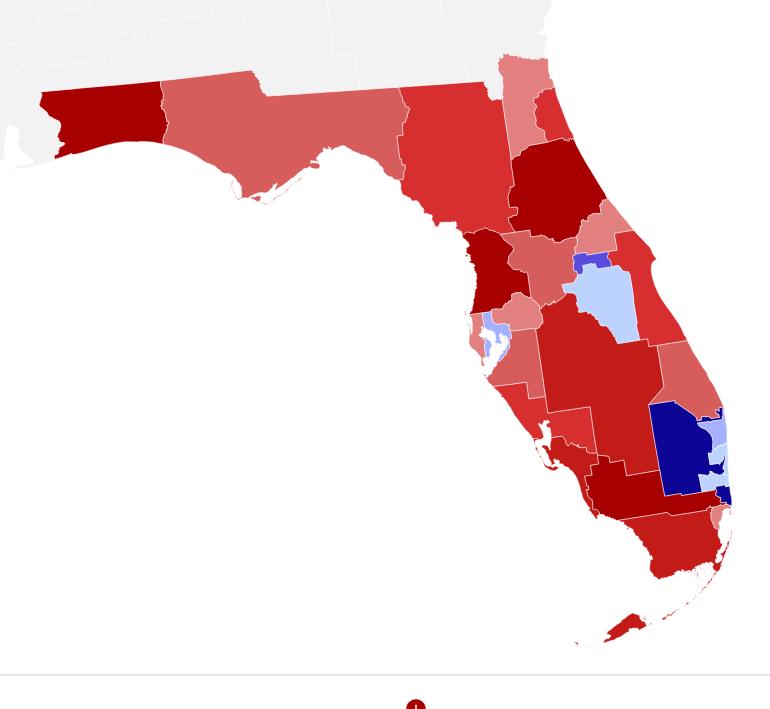
But Republicans, after months of speculation about their redistricting plans, fired back that likely eliminates three Democratic incumbents and possibly a fourth. Both Florida’s and Virginia’s maps are facing legal scrutiny, but as it is in many cases, these maps might just stand in time for the midterms.
Meanwhile, we’re shifting some “benefit of the doubt” seats as Republicans seem to be taking a pass on some of these seats, which is expected at this point in the environment.
What Did Florida Change?
Florida shuffled their seats in such a way that re-election for Democratic incumbents in this environment is nearly impossible, but at the cost of some of their own previously safe seats now vulnerable in a Democratic wave environment. This sort of backfiring gerrymander is cynically called a “dummymander.” Nevada Democrats were issued this epithet in 2021 when they distributed the liberal clout of Las Vegas to two swing districts, putting their entire delegation on the line. However, all incumbents survived in 2022 and 2024. Will the same be said for Florida Republicans?
At this point in time, they probably won’t get the full blast of a spirited campaign since Democrats are on the precipice of flipping the House through “usual suspect” swing districts. They don’t need to reach across the table for the main course through these watered-down Florida seats.
But in a 2018-like blue wave, the GOP in Tallahassee might have shot themselves in the foot.
For now, we’ll shift our ratings in the Florida districts that were most affected by the mid-decade redraw.
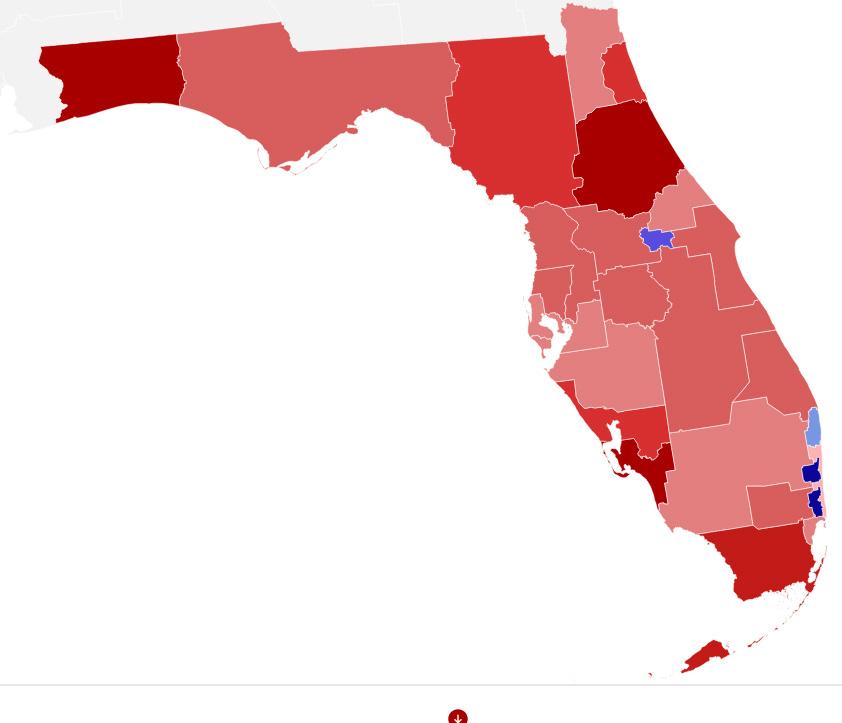
FL-09 (Soto) - Likely D to Likely R (Flip): This suburban Orlando seat went from Harris +3 to Trump +18, the most brutal redraw of the bunch in a part of the state where Democrats were already treading water after years-long dominance. If five-term Congressman Darren Soto (D) passes on re-election, this seat might be completely DOA for Democrats.
FL-13 (Luna) - Leans R to Likely R: Two-term Congresswoman Anna Paulina Luna got a slight increase in this Pinellas Peninsula-based seat, but it still remains on the edge of our competitive radar. Of a six-person field looking to take on Luna, the top fundraiser has $500,000 in the bank. Luna has $1.3 million.
FL-14 (Castor) - Safe D to Leans R (Flip): Ten-term Congresswoman Kathy Castor (D) will be in the fight of her
political life this fall if she opts for re-election. This Tampa Bay seat was Harris +7 - already a downgrade for Democrats - to a Trump +10 district. It now stretches to take in more of suburban Hillsborough County, one of the nation’s prime swing counties. It’s possible that Democrats could claw this seat back, even in this environment, as this configuration would have almost gone blue in the 2018 midterms.
FL-22 (Frankel) - Safe D to Leans R (Flip): Congresswoman Lois Frankel (D) has represented the West Palm Beach area since 2013, but this Harris +5 seat is now a Trump +10.5 seat. We expect more of a challenge here than in Tampa at present, mostly due to Frankel’s $1.1 million war chest. But she still has to contend with this small, densely populated district being converted into a sprawling seat that stretches from the Atlantic Ocean to the Gulf of America.
FL-23 (Moskowitz) - Likely D to Safe D: Two-term Congressman Jared Moskowitz (D) is, in our eyes, safe from electoral despair this fall, as his Harris +3 seat is now a Harris +14 seat. In a strong Republican environment, this could be at the edge of the table, but we don’t think it’s at the forefront of either party’s minds this year.
FL-25 (Wasserman Schultz) - Safe D to Toss Up: Congresswoman Debbie Wasserman Schultz (D) has represented this Hollywood-based seat since 2005. It went from a more compact seat to one that picks and chooses constituencies up the coast towards Fort Lauderdale. The Harris +5 seat is now Trump +9, a disadvantage for Democrats, but not an overwhelming one. As South Florida Latino voters seem to have second thoughts on the GOP, this seat is worth watching.
Spring Cleaning
Some seats are off the board entirely, it seems, so we will be gradually updating our forecast to reflect that.
IL-14 (Underwood) - Likely D to Safe D: While this traditionally competitive seat that runs from the Chicago suburbs of Joliet and Aurora inland only went to Harris by 4 points, Republicans seem to have taken a pass. Four-term Congresswoman Lauren Underwood (D) has $1.1 million cash on hand, while nominee James Marter (R) has just over $30,000.
IL-17 (Sorensen) - Likely D to Safe D: The meteorologyto-politics pipeline ran strong for weatherman Eric Sorensen (D) in 2022, allowing him to hold a classically blue district that’s been red-trending in the Trump Era. A Harris +4 seat in 2024, GOP fundraising indicates this seat won’t be engaged in the autumn.
NJ-05 (Gottheimer) - Likely D to Safe D: Five-term
Congressman Josh Gottheimer (D) has this Bergen Countybased seat locked down. While an ancestrally Republican part of North Jersey, the Trump Era hasn’t been the best for GOP aspects here. With cash on hand being virtually nonexistent for the GOP, we bet this seat stays in Democratic hands.
NY-04 (Gillen) Toss Up to Tilts D: Anthony D’Esposito (R-Island Park) had flipped this seat red in 2022, only to lose it to Laura Gillen (D-Rockville Center), making this southern Nassau County seat one of three in New York that flipped blue in 2024. Republicans took their time finding the right opponent, and they went with Hempstead Receiver of Taxes Jeanine Driscoll (R-Bellerose). Since the campaign is just coming online and Gillen has almost $2.2 million in the bank, we’re inclined to believe the winds might be blowing ever so slightly in her favor. The only catch is she’s got four Democrats running against her, and many are expecting tailwinds in Nassau with Bruce Blakeman (R-Atlantic Beach) heading the ticket.
OR-05 (Bynum) Leans D to Likely D: Freshman Congresswoman Janelle Bynum (D) flipped this Oregon seat blue in 2024. The district runs from the Portland suburbs to the tourist town of Bend. A Harris +8 seat in 2024, its House races are usually more competitive, but Bynum sits atop a $2.3 million war chest, while her opponent Patti Adair (R) hasn’t raised more than $300,000.
OR-06 (Salinas) Likely D to Safe D: This suburban Portland-to-Salem seat was created after the 2020 Census and narrowly went to Andrea Salinas (D). This was a Harris +12 seat in 2024, but like OR-05, House races here have been more competitive. However, Salinas has almost $600,000 cash on hand, while her opponent, David Russ (R), has just $146. According to the FEC, Russ raised $0 but spent $14,123.
WA-08 (Schrier) Likely D to Safe D: The suburbs immediately east of Seattle were once the most Republican turf in Washington State. Now, they’re inescapably trending blue. Kim Schrier (D) flipped this seat in 2018, and she’s won comfortably since then. Schrier has a whopping $3.3 million in the bank, while her nearest fundraiser sits at $83,000 cash on hand.
Here’s the Count
We estimate that Democrats sit at 217 seats at least tilting in their favor, just one short of a majority. Republicans remain at 208 seats, as our spring cleaning negates their gains from the Florida gerrymander.
10 Toss Up seats remain, 8 of which belong to the GOP, and 2 to the Democrats.
We estimate Democrats will flip 14 seats based on the map, and Republicans will flip 10 seats.
Thursday, May 7, 2026
School Highlights 12 Vandermeulen High School Science Teachers Participate in BNL Program
Science teachers Amanda Perovich and Gregory Gorniok of Earl L. Vandermeulen High School recently participated in the “Exploring LaboratoryBased Field Trips” program at Brookhaven National Laboratory (BNL) recently.
This engaging and interactive event was designed for educators and school administrators to explore New York State Next Generation Science Standards (NYSSLS)-aligned programming and curriculum-based activities. The Exploration Labs highlighted real-world scientific research conducted at BNL and demonstrated meaningful connections between classroom instruction and current scientific advancements. The program focused on opportunities for students in grades 5 through 12 and included an exclusive introduction to two newly developed educational programs.
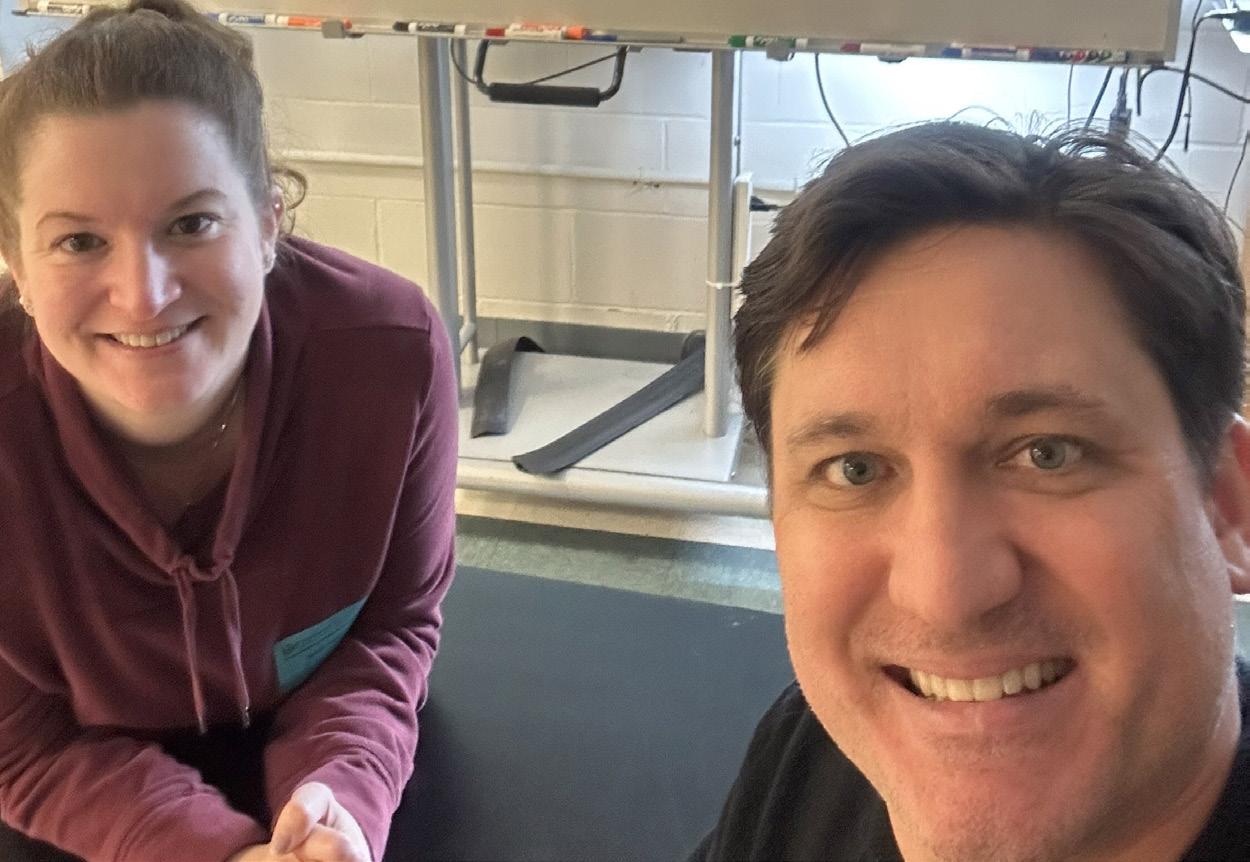
Through hands-on experiences and collaborative discussions, participants gained valuable insight into how BNL integrates cutting-edge research into accessible learning opportunities for students, both through on-site field trips and outreach initiatives to school districts.
“It was a really great day to learn all the current and amazing research being done at the BNL and how they are working hard to bring it into K-12 classrooms either by visiting the BNL lab or as an outreach to our district,” said Ms. Perovich.
“The new programs are now aligned to the new science standards and are appealing ways to have students really engage and connect with science in the real world and with real work being done by our local BNL scientists,” added Mr. Gorniok.
The experience underscores Earl L. Vandermeulen High School’s ongoing commitment to providing students with enriching, real-world learning opportunities that foster curiosity and deepen understanding of science beyond the classroom.
For more information regarding the Port Jefferson School District and its students’ many achievements, please visit the District’s website at https://www. portjeffschools.org and follow its Facebook page: https://www.facebook.com/ PortJeffSchools.
Miller Place Announces Dr. Marc Ferris as New Superintendent of Schools
At a Board of Education meeting held on April 29, 2026, the Miller Place Union Free School District Board of Education formally announced its appointment of Dr. Marc Ferris as the District’s next Superintendent of Schools. He will serve as Deputy Superintendent starting August 1 for a one-month transition period and will become the permanent Superintendent on September 1 upon the retirement of current Superintendent, Dr. Seth Lipshie.
“I am grateful and excited for the opportunity to serve the students, staff, and families of the Miller Place community,” said Dr. Ferris. “I look forward to working under Mr. Lipshie’s stewardship to continue advancing the District’s Strategic Plan, ensuring all schools remain on track to meet their goals and objectives while supporting a smooth and seamless transition.”
School before moving into administration at North Shore Middle School in Glen Head, where he served as assistant principal and later principal. During his tenure, the school was nationally recognized as a School to Watch in 2015, and he was named Middle School Principal of the Year by the Council for Administrators and Supervisors in 2016. He went on to serve as Assistant Superintendent for Instruction in the Wantagh School District from 2016 to 2022, overseeing all aspects of curriculum and instruction before assuming the role of Sayville School District Superintendent, where he served for 4 years.
Dr. Ferris brings more than two decades of educational leadership experience. He earned his Doctorate from Hofstra University in 2010, focusing on the development of caring learning communities and their impact on student achievement and social-emotional well-being. He later served as an adjunct professor at Hofstra, preparing future school leaders, and holds two master’s degrees from New York University.
Dr. Ferris began his career as a social studies teacher at H. Frank Carey High
Bayport-Blue Point High School celebrated the grand opening of its new brick-and-mortar school store, Phantom Outfitters, with a ribboncutting ceremony on April 28.
The student-run store offers a unique, fully customizable shopping experience, featuring more than 50 student-designed prints that can be mixed, matched and placed on items to create one-of-a-kind pieces.
Designed, produced and operated entirely by students with staff oversight, Phantom Outfitters showcases products created inhouse. Students lead every aspect of the business, from taking customer orders and managing inventory to manufacturing and sales, gaining valuable real-world
“We are proud to welcome Dr. Ferris to the Miller Place school community,” said Lisa Reitan, Miller Place Board of Education President. “His depth of experience, student-centered leadership, and commitment to fostering strong, supportive school communities align with the values of our District. We are confident he will build upon our strong foundation, continue advancing our Strategic Plan, and lead Miller Place with integrity and vision.”
For more information about the Miller Place School District, please visit the District’s website at www.millerplace.k12.ny.us. To read more about the great things happening in Miller Place schools, visit www.millerplaceinthemedia.com and ‘like’ our Facebook page.
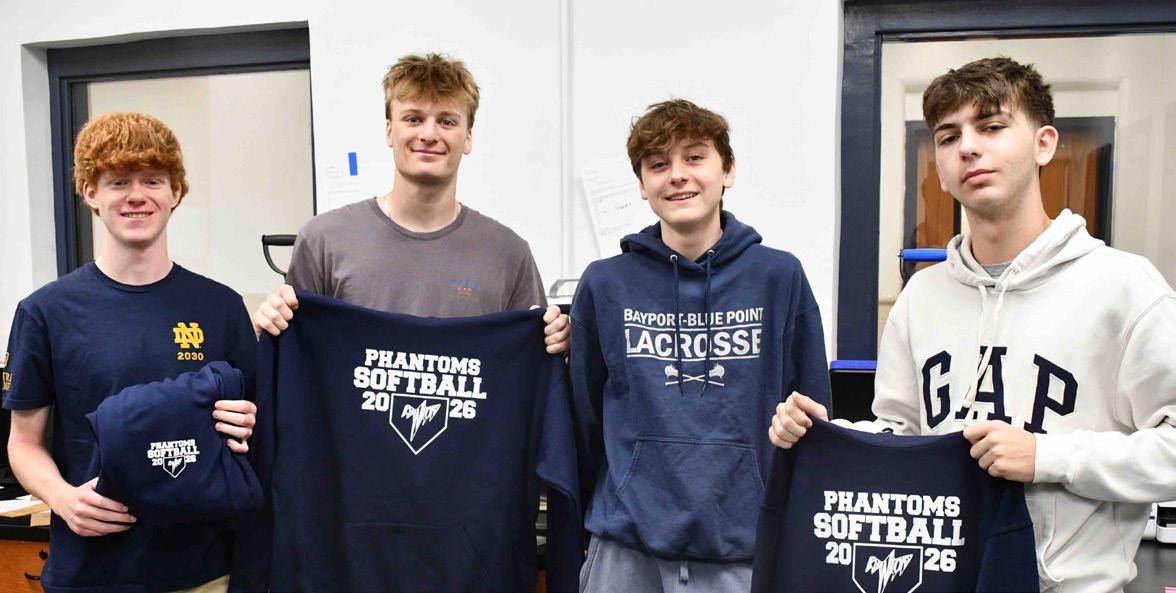
experience in entrepreneurship.
Items including spirit wear and wood-etched Long Island signs are produced by students in the school’s STEM lab based on customer requests. The store has also partnered with the popular clothing brand Comfrt to offer a range of trendy apparel options.
Before opening its physical storefront, the Phantom Outfitters team built a strong following through its successful online store, hosting fundraisers for sports teams and other school groups. The store’s opening marked the culmination of years of planning and collaboration, resulting in a retail experience unlike any other on Long Island and beyond.
Brookhaven Matters
Progress Update on the Smith Point Bridge
By Madison Warren
The Smith Point Bridge, the only roadway connecting Mastic Beach and the mainland to Smith Point on Fire Island, is one step closer to returning to normal traffic patterns as Suffolk County officials continue both short-term repairs and long-term plans for a brand-new bridge.
At the end of 2025, Suffolk County Executive Ed Romaine (R-Center Moriches) announced that a routine inspection conducted by the New York State Department of Transportation (DOT) resulted in an emergency three-ton weight restriction being placed on the bridge due to structural concerns. The restriction was later increased to fifteen tons after Suffolk County implemented a temporary one-lane traffic pattern and installed traffic signals to safely maintain access to Smith Point County Park.
At the time, County officials explained that portions of the bridge’s pre-stressed cables inside the reinforced concrete beams had become exposed and weakened over time, prompting emergency repair work and renewed urgency surrounding long-discussed replacement plans.
Now, Suffolk County Legislator Jim Mazzarella (R-Moriches) confirmed that the New York State DOT has officially approved the repair plans currently underway on the existing bridge. According to Mazzarella, repair work began several weeks ago and includes installing steel reinforcements to restore the bridge to normal two-way vehicular traffic.
“Construction of the new bridge is expected to break ground this summer, but no date is available as yet,” Mazzarella told The Messenger
Mazzarella noted that the repairs to the current bridge and the construction of the future replacement bridge are being treated as two entirely separate projects. While repairs

continue on the current structure to safely carry traffic through the busy summer months, plans are also moving forward for the long-awaited new bridge.
Once construction begins, the project is expected to take approximately 30 months to complete. After traffic is officially shifted onto the new bridge, demolition of the existing bridge will begin, a process expected to take an additional year.
The upcoming bridge replacement project is expected to cost between $135 million and $150 million. Funding for the project will be split between the federal government and Suffolk County, with the federal government covering 80% of the cost and Suffolk County funding the remaining 20%.
In 2025, Romaine stressed the importance of addressing
aging infrastructure before conditions worsen, calling the Smith Point Bridge one of Suffolk County’s most critical transportation links due to the heavy traffic heading into Smith Point County Park, especially during the summer season.
With repair work continuing and plans for the new bridge finally moving forward, County officials remain focused on ensuring safe and reliable access to Smith Point County Park ahead of the busy summer season. For the thousands of residents and visitors who travel across the bridge each year, the project marks a major step toward improving one of Suffolk County’s most heavily traveled coastal connections for generations to come.
Council District Four Residents Attend Open House
By Matt Meduri
The Town of Brookhaven is continuing its series of openhouse meetings for each of the six Council Districts to galvanize residents about what they would like to see in their communities.
The meetings are a part of a larger initiative to update Brookhaven’s Comprehensive Land Use Plan, the guiding force for development, funding, and priorities that will define the Town’s landscape for future generations.
Last week, residents of the Fourth Council District descended on Town Hall in Farmingville to make their opinions known. MJ Engineering, Architecture, Landscape Architecture, and Land Surveying, P.C., is the consultant for the overall project.
The Fourth Council District includes Bellport, Brookhaven hamlet, Gordon Heights, Middle Island, and North Bellport, as well as parts of Coram, Farmingville, Holtsville, Medford, Ridge, and Shirley. Councilman Michael Loguercio (R-Ridge) has represented the district since 2016.
District Four has a population of 80,865 residents, a median age of 42.9, and a homeownership rate of 69.5%, according to the U.S. Census Bureau’s American Community Survey (2019-2023) estimate. The district accounts for about 16.6% of the Town’s population and about 28.3% of the land area.
It has an older median age than the Town (41.2) and homeownership is lower than that of the Town (82.5%). The average household size is 2.78, just below the Town’s 2.88 and the County’s 2.95, but above the State’s 2.45. Renters make up 24.6% of the district.
In terms of income, the Fourth District has a median household income of $112,761, slightly less than the Town’s $121,638 and the County’s $129,959, but above the State’s $85,744.
For education, 33.1% of the Fourth Council District’s population holds a Bachelor’s Degree or higher, compared to 36% of the Town, 39.9% of the County, and 37.5% of the State. Common themes that The Messenger has observed from our coverage of the Sixth and Second Council District meetings is that residents insist on preserving open space

and limiting the number of apartment complexes. They favor single-family homes and more affordable solutions for younger people.
As we’ve seen at other meetings, residents appear divided on energy solutions. Some are opposing the controversial Battery and Energy Storage System (BESS) Facilities, while others welcome them, along with solar, wind, and other forms of renewable energy.
For the vision of the district, residents hope that vacant buildings are utilized over new construction, and some fear that a “quiet community is slipping away to commercial traffic.” They also hold dear local farms and natural recreation of the district.
“More adult centers and car-free downtowns” are also on the wish list, as are connected bike trails and more dogfriendly amenities.
One resident is calling on the Town to “save” the Middle Island dog park, while older residents without children are hoping for property tax breaks. Middle Island also received some attention from residents, as some are wary of the “environmental impact” of development in the hamlet.
Residents hope for a “cleaner, zero-waste plan” that
includes the closure of the controversial Landfill that is “making residents sick.”
Others lament the destruction of woodland areas that now lead to wildlife intersecting with residential areas, as well as warehouses that residents view as unused eyesores.
District Four residents also hope to see more “nonalcoholic” nightlife, “environmentally conscious” development, and “walkable” commercial spaces.
“We want to do more than just go to a bar or restaurant and drink,” one Shirley resident told The Messenger
Residents described the Smith Haven Mall, a “clean, maintained, and safe” neighborhood, and good beaches, schools, and parks as some of the many assets of living in Brookhaven.
“Too much industry, drugs, and illegal housing,” read another sticky note on the many boards provided to residents. Others are concerned of speeding, sometimes 80mph, on Hospital Road and Bellport Avenue.
These open-house meetings are the jumping-off point for the Town and consultants to deliver on these requests and concerns. Learn more and get involved at planbrookhaven.com.
The Necessary Standard for American Education
The Department of Transportation
By Matt Meduri
We’re continuing our mini-series on the federal executive departments, picking up this week where we left off with the Department of Transportation (DOT).
History and Origin
The DOT came into fruition during the administration of President Lyndon B. Johnson (D-TX). In 1965, the Federal Aviation Agency (FAA) urged Johnson to create a Cabinet-level department to merge the jobs of the FAA and the Undersecretary of Commerce for Transportation. This was due to the fact that the Federal Highway Administration and the Federal Transit Administration provided considerable funding for state and local projects, but they lacked the oversight of construction and operation. Article I, Section 8, Clause 3 of the Constitution, also known as the Commerce Clause, broadly defines “commerce” to include navigation and reinforces the federal oversight of railroads and aviation.
In October 1966, Congress authorized a new Department of Transportation at Johnson’s urging, and effective April 1, 1967, the DOT was able to use federal funds more effectively to support the nation’s transportation network.
The creation of the DOT allowed for over thirty agencies to be merged into the new Cabinet department. The Federal Highway Administration brought with it the Bureau of Public Roads, created in 1918, later transferred to the Department of Commerce in 1949; the Bureau of Motor Carrier Safety, created in 1913; and the National Highway Safety Bureau, an amalgamation of two separate entities within the Commerce Department.
The Urban Mass Transportation Administration landed at DOT after existing under the Department of Housing and Urban Development for a short time.
The Federal Railroad Administration was created with the DOT Act and brought in from Commerce the Alaska Railroad, originally from the Department of the Interior, the Bureau of Railroad Safety and Service of the Interstate Commerce Commissions, and the Office of High Speed Ground Transportation.
The National Highway Traffic Safety Administration was also created from two entities within Commerce. The U.S. Coast Guard also found a temporary home in DOT, coming over the Treasury Department.
Alan S. Boyd (D-FL) served as the first Secretary of Transportation under President Johnson. He had served as Under Secretary of Commerce for Transportation under Johnson and was part of the committee that lobbied the president to create the department. Boyd received early scrutiny from labor unions for advocating for tighter restrictions and his denouncement of featherbedding by railroad workers.
According to the University of Virginia’s Miller Center, Boyd prioritized “airport modernization, air traffic control requirements, and auto safety standards for driver education and alcoholism.” He also helped acquire funds for the Highway Beautification Program, an initiative of First Lady Lady Bird Johnson. The Miller Center also cites his “inability to revitalize passenger rail service” as one of his biggest failures.
When Richard Nixon (R-CA) took office in 1969, Boyd became the president of the Illinois Central Railroad, which led to conflict-of-interest allegations against Boyd when the DOT had given the railroad over $25 million in aid. Boyd was cleared of wrongdoing and would later serve as president of Amtrak until June 1982.
The DOT Today
The DOT’s FY2026 budget request topped out at $147.1 billion, an increase of $27 billion or 6% from
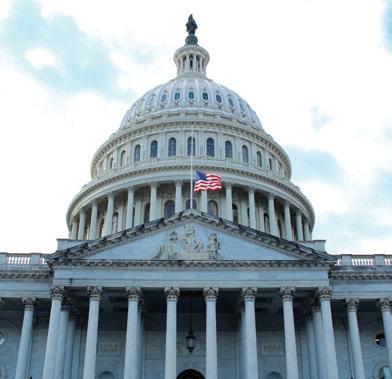
This column will seek to address the long-forgotten concept of civics and how it relates to American government in general, from the federal level to the local level. This column will explore Constitutional rights, the inner workings of government, the electoral process, and the obligations and privileges of citizens.
FY2025. The budget brought total staffing up to about 55,000, of which the FAA has the lion’s share at over 45,000. In total, the DOT accounts for about 2.5% of the overall federal civilian workforce, according to USAFacts.org. It also called for a $22 billion hike to the FAA for air traffic controllers. The Federal Highway Administration is the most expensive agency of the department, with this year’s budget clocking in at $64.3 billion.
The twentieth and current Secretary of Transportation is Sean Duffy (R-WI) (pictured right), a lawyer who would gain national recognition as a professional lumberjack athlete, appearing on television in that capacity. He would begin his legal career in Ashland County, Wisconsin, and serve as district attorney upon his election to the U.S. House in 2010. He represented WI-07 until 2019 and would host “The Bottom Line” on FOX Business starting in 2023.
During his tenure as Secretary, Duffy has objected to New York City’s congestion pricing, even threatening to revoke the program’s federal approval. He also threatened to withhold federal funding from the MTA over subway crime and he did cut funding for the Texas Central Railway and the California High-Speed Rail. Under Duffy, the federal government has taken the reins on the $7 billion Penn Station reconstruction project. The initiative pushed the MTA out and instead has the Federal Railroad Administration and Amtrak, the latter being the owner of the station, running the public-private partnership.
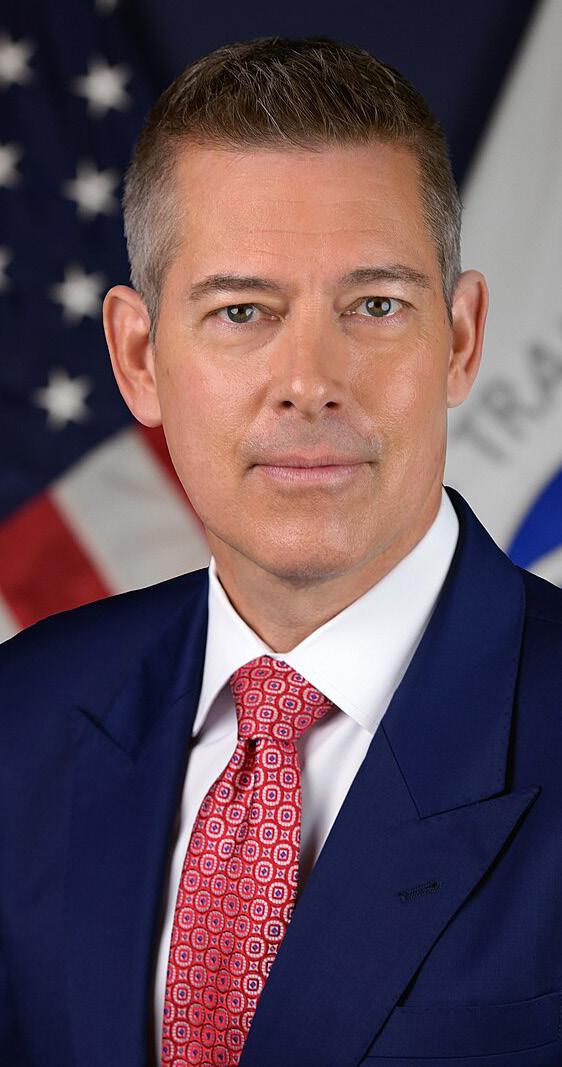
Federal Highway Administration (FHWA): This agency “coordinates highway transportation programs” in concert with states and partners to “enhance the country’s safety, economic vitality, quality of life, and the environment.” The Federal-Aid Highway Program provides federal funds to states to construct and improve the National Highway System, as well as urban and rural roads and bridges. The FHWA also provides access to and within national forests, national parks, Indian reservations, and other public lands.
Pipeline and Hazardous Materials Safety Administration (PHMSA): This agency oversees the “safety of more than 800,000 daily shipments of hazardous materials in the U.S.,”accounting for 64% of the nation’s energy that is transported by pipelines. They work to eliminate “transportationrelated deaths and injuries in hazardous materials and pipeline transportation” and actions that harm the natural environment.
Federal Motor Carrier Safety Administration: Created in 2000, this bureau serves to prevent commercial motor vehicle-related accidents and deaths. They enforce safety regulations, “targeting high-risk carriers and commercial motor vehicle drivers,” as well as improve technologies and operating standards.
He also pushed back on Elon Musk’s prerogative at the Department of Government Efficiency to fire air traffic controllers and moved to revert corporate average fuel economy (CAFE) standards set by the Biden Administration. Duffy is also intent on directing federal assistance to high-birthrate areas.
Duffy also briefly served as Acting Director of the National Aeronautics and Space Administration (NASA) from July to December 2025 until the appointment of Jared Isaacman (R-NJ).
Bureaus and Agencies
National Highway Traffic Safety Administration (NHTSA): According to the DOT’s website, they are “responsible for reducing deaths, injuries, and economic losses resulting from motor vehicle crashes.” The agency sets and enforces “safety performance standards for motor vehicles and equipment,” and “conduct[s] effective local highway safety programs.” They also advocate for fuel economy standards, safety belt usage, air bags, child safety, anti-theft regulations, and customer information. They investigate odometer fraud and safety defects in motor vehicles.
Federal Aviation Administration (FAA): This branch oversees civil aviation safety. They issue and enforce regulations and standards related to the “manufacture, operation, certification, and maintenance of aircraft.” The FAA rates and certifies the airmen and the airports that serve carriers. The FAA also operates a network of airport towers, air route traffic control centers, and flight service stations, all to develop air traffic rules, allocate airspace, and secures air traffic to meet national defense requirements. The FAA also regulates commercial space transportation and licenses those facilities and launches.
Federal Railroad Administration (FRA): This bureau prompts “safe and environmentally sound rail transportation” by inspecting railroad compliance to federal standards, including track maintenance and operating practices. The FRA also researches and develops projects that support its safety mission to “enhance the railroad system as a national transportation resource.” They also run public education campaigns on highway-rail grade crossing safety and the dangers of trespassing on rail property. Federal Transit Administration (FTA): This branch helps “plan, build, and operate” transit systems with “convenience, cost, and accessibility” at the forefront. They acknowledge buses and rail as the most common types of mass transit, but also look at ferries, trolleys, inclined railways, subways, and “people movers.” They also maintain leadership of “advanced local transit systems” and assist in the “development of local and regional traffic reduction.”
The National Transit Library is run by the FTA, a document center for those “interested in transit and transit-related topics.”
Great Lakes St. Lawrence Seaway Development Corporation (GLS): Runs a “safe, reliable, and efficient waterway” for commercial and noncommercial vessels between the Great Lakes and the Atlantic Ocean. Jointly with Canada, it inspects vessels, controls traffic, and aids in navigation.
Maritime Administration (MARD): prompts the “development and maintenance of an adequate, wellbalanced, United States merchant marine” to support, protect, and develop the U.S. maritime industry. Its prerogatives are ensuring that the nation “enjoys adequate shipbuilding and repair service, efficient ports, effective intermodal water and land transportation systems, and reserve capacity shipping in time of national emergency.”
The U.S. Merchant Marine Academy is one of Long Island’s gems. Located in Kings Point, the USMMA is set to receive about $200 million in federal funding this year.
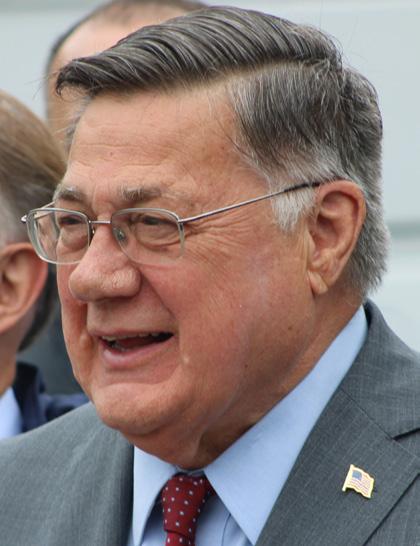
No More Delays at the Grumman-Navy Site in Calverton
By Suffolk County Executive Ed Romaine
The former Grumman-Navy site in Calverton is rife with pollution left over from its industrial past. Unlike some forms of pollution, the chemicals present do not break down for generations and are linked to various cancers and organ maladies.
These forever chemicals (PFAS and 1,4-dioxane), found in plumes stemming from the site, now stretch out far from their origins, and every moment we delay allows them to inch further into our groundwater, contaminating drinking wells and surface water.
For thirty years, the Navy has delayed cleanup efforts. Even as Bethpage and other former Navy sites attracted national headlines, the Navy refuses to seriously acknowledge the problem in Calverton.
Well, Bethpage shows us we have options.
The health and well-being of Suffolk residents is not negotiable. I intend to pursue all avenues to ensure that the United States Navy takes accountability for the condition of the Grumman-run site and the neighboring contaminated land.
Forever chemicals can be mitigated to safe levels. It is a costly process that first involves knowing the full scope of the problem, which is impossible to grasp without full cooperation from all parties involved. The United States Navy delayed releasing its latest fish sampling data for one year.
The specific site is also a deep recharge area, meaning contaminants have a chance to penetrate the ground deeply as well as laterally. Current test wells have PFAS numbers well in excess of the state level of 10 parts per trillion – some wells have reached thousands of parts per trillion. One test well also found 1,4-dioxane at 10 times the state drinking water standard, with contamination entering the Peconic River.
The data collected by our well drilling and sampling teams paints a far worse picture than any data the Navy has publicly released to date.
Fishing in neighboring Swan Pond is already prohibited due to PFAS found in the water and fish, an escalation from previous warnings. Since 2023, Peconic Lake’s fish
advisory of “do not eat more than 1 meal/month of Yellow Perch” has been in effect due to elevated PFAS concentrations. Without swift action to clean up contaminated source areas and the toxic groundwater plumes, more prohibitions may be put in place along the Peconic River to protect residents’ health.
Other East End residents now fear for the mutually shared Peconic Bay and what inaction could mean for their health. These fears are substantiated by Suffolk County Department of Health Services (SCDHS) tests from 2026 showing surface water PFAS concentrations in the Peconic River are substantially higher than samples collected in 2024, with PFNA up to 19 times higher, PFOS up to 25 times higher, and PFOA exhibiting up to 5 times higher concentrations than those observed by the SCDHS two years earlier.
I urge the Navy to take accountability and begin moving forward with remediation, as was done with Bethpage.
In the meantime, residents are urged to contact U.S. Rep. Nick LaLota as well as U.S. Senators Chuck Schumer and Kirsten Gillibrand to formally make their interest in remediation known.
If you need your private well tested, please contact the Suffolk County Health Department at (631) 852-5810. More information on the Private Well Water Testing Program can be found at https://www.suffolkcountyny.gov/Departments/HealthServices/Environmental-Quality/WaterResources/Private-Well-Wate r-TestingProgram.
Ed Romaine (R-Center Moriches) has served as the ninth County Executive of Suffolk County since 2024. He served as a Suffolk County Legislator representing the North Fork and eastern Brookhaven from 1986 to 1989, and again from 2006 to 2012, Suffolk County Clerk from 1989 to 2006, and Brookhaven Town Supervisor from 2012 to 2024.
The Suffolk County Executive’s office can be reached at 631-853-4000, or visit suffolkcountyny.gov/contact for more resources.

Senator Murray Recognizes High School Photo Contest Finalists at Floyd Estate
On Saturday, May 2, 2026, State Senator Dean Murray (R-East Patchogue) proudly recognized the finalists of his high school photo contest “Liberty Through The Lens” at the William Floyd Estate.
This contest invited students to capture what freedom means to them in celebration of America’s 250th anniversary of the signing of the Declaration of Independence. The contest showcased the creativity, talent, and thoughtful perspectives of young people across the Third Senate District, highlighting the many ways liberty is experienced and expressed in everyday life. Senator Murray commended the finalists for their inspiring work and for helping to commemorate this historic milestone through the art of storytelling.

Thursday, May 7, 2026


7 Marathons in 7 Days
By Joe Cuminale
I would like to introduce you to an amazing woman that I had the honor of meeting during a Long Island Veteran’s Event known as 7 Marathons in 7 Days.
About six years ago, when I first became a photographer for Rolling Thunder NY6 Chapter, a Veterans’ advocacy group active here on Long Island, Eva Casale, was a runner in a Veteran’s Event ten years ago and after the race, she met Gold Star Families/Blue Star Families and Veterans of all ages who either ran or attended the event. Eva soon realized, from speaking with these families and Veterans, that more help was needed for Veterans and their families who sometimes get lost in Bureaucratic Shuffles.
This year marks the tenth anniversary of TEAM EVA’s (which stands for Every Veteran Appreciated) 7 Marathons in 7 Days, which raises funds and awareness. In the ten years that

this event has been happening, TEAM EVA Runners have logged over 1,800 miles, raising funds, and awareness, about many issues confronting Veterans and their families. This year’s runners will log 184 miles. Beginning in Huntington on Sunday, April 26, this year’s run visited the Northport-Long Island National Cemetery, Eisenhower Park, Shelter Island, Sag Harbor, Calverton, Westhampton, Brookhaven, Patchogue, Medford, Oyster Bay, Bayville, and concluded in Ms. Casale’s Hometown of Glen Cove.
One of my favorite parts of this run series is that in each town, village, and city that hosts the runners, TEAM EVA is joined by local runners of all ages, including school track teams and coaches. This year marks 1-Woman/1Team/1-Decade mission honoring Veterans.
At the end of this year’s run, the runners visited 400 Points of Honor


and placed 400 flowers, wreaths, and flags. Thank you, Eva Casale/TEAM EVA crew, runners, support vehicle drivers, motorcycle escorts, and ALL Involved. I was glad to be out there at different spots along the way with my camera. I look forward to another ten years!
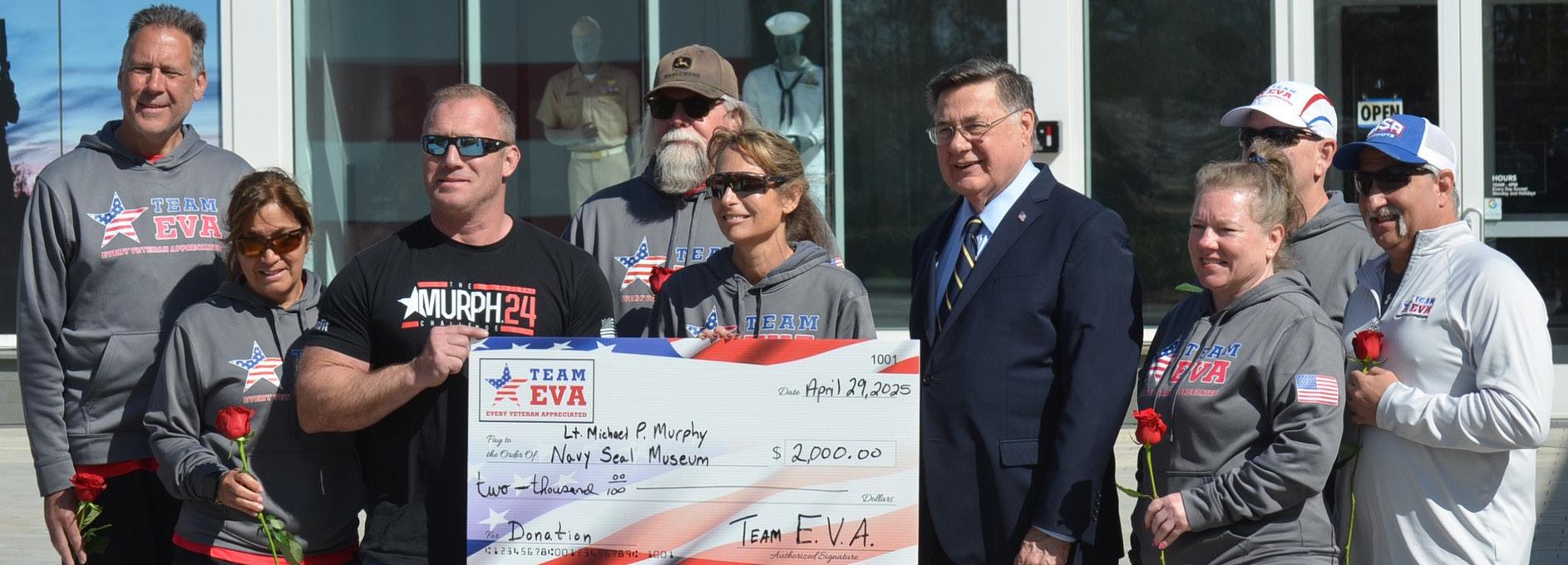
WTC Remnant Tours Long Island
By Joe Cuminale
It has been 25 years since the tragic events of Tuesday, September 11, 2001, and in my opinion, too many Americans have forgotten about what happened on that day.
The Tunnel To Towers Foundation was founded to honor FDNY Firefighter Stephen Tiller, who perished that day while helping others. To mark the 25th Anniversary, the Tunnel To Towers Foundation will be traveling across America with a steel beam recovered from the rubble to honor, remember, and to teach those who were too young to understand what was happening.
On Monday morning, May 4, 2026, the Steel was escorted to, in my opinion, the perfect Long Island location, the Lt. Michael P. Murphy Navy Seal Museum located in West Sayville. Lt.
Murphy was awarded the Congressional Medal of Honor for his heroic actions during Operation Red Wing in Afghanistan. As the event began, family and friends took their seats to hear the story of this amazing transcontinental tour of a true artifact of one of America’s darkest days in her history.
I was able to speak with many of those transporting the beam, from the founder of Tunnel to Towers Foundation, Mr. Frank Siller, to the gentlemen driving the truck and all those who are making this event happen all across this great country of ours. The sight of this beam up close brought many of those in attendance, including myself, to tears. Many FDNY members who were there on that fateful day, and in the days, weeks, and months
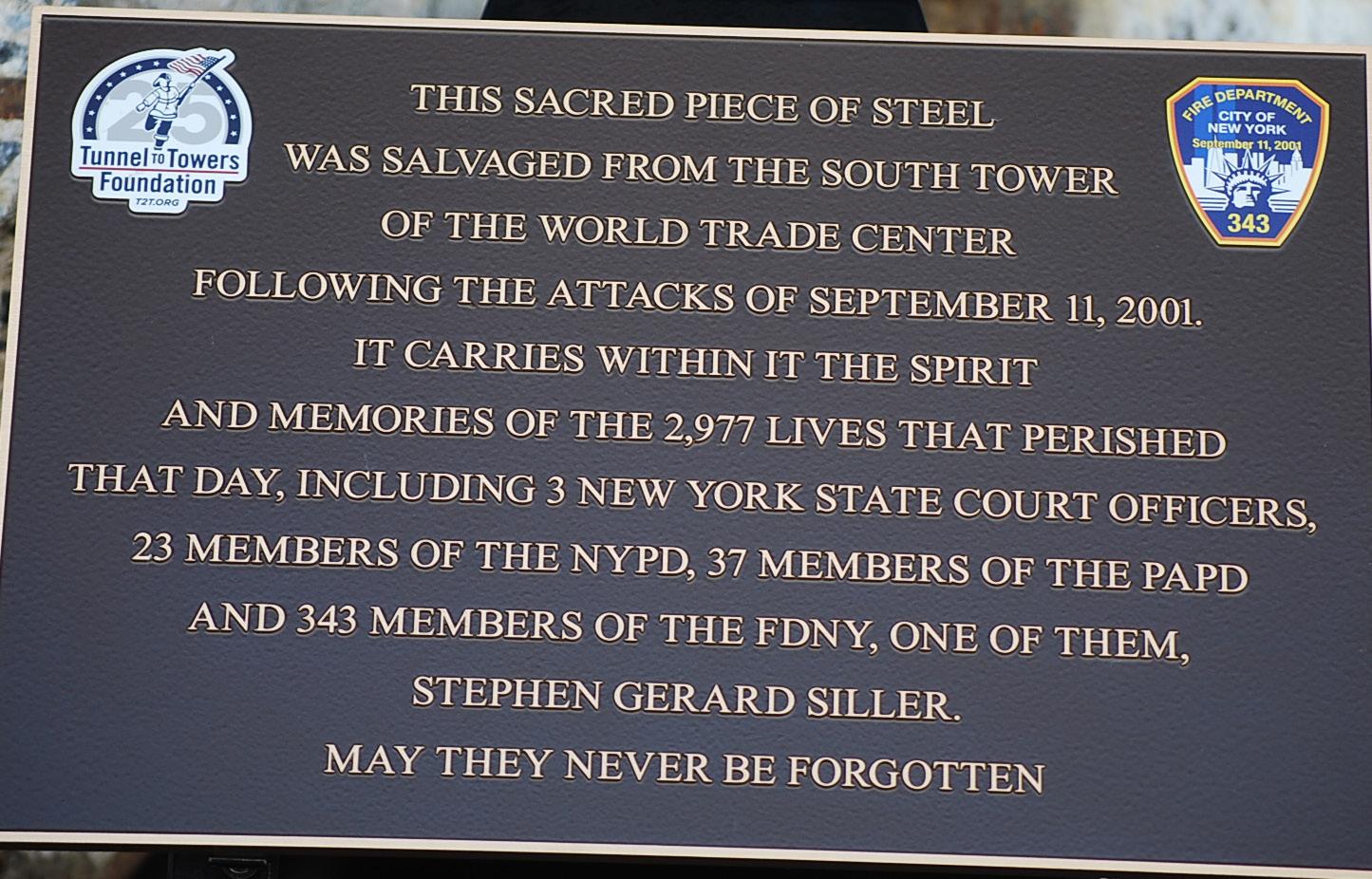

afterward were in attendance and shared their stories with me and I shared some of mine from that day with them.

Thank You Mr. Siller for choosing Long Island as one of the early stops on this tour. Thank You to Mr. Daniel Murphy (Michael’s father) and all the museum staff for their hospitality and many stories as well. Thank You to the Tunnel To Towers Foundation for all that you do for our Veterans, first responders, and their families. Please continue to “Do Good” ,as your slogan says.
NEVER FORGET Tuesday, September 11, 2001, and please educate the next generation about the tragic events of that day, not just in New York, but also at the Pentagon and about the heroic actions of passengers that fought back on the aircraft that went down in Shanksville, Pennsylvania. Never forget 9/11/2001.
AI Is Infrastructure Now. That Changes the Question.
By Mollie Barnett
Most people still think of AI as a tool: something you open on your phone to draft an email, summarize a meeting, or generate an image.
Helpful. Optional. Easy to ignore.
That is no longer the full picture.
AI is being embedded into the systems that shape everyday life: defense, banking, cybersecurity, energy, supply chains, law, insurance, healthcare, and business operations. That is a different category than a chatbot.
It means the better question is no longer simply: Should we use AI?
The better question is: What kind of system is AI becoming part of — and who knows how to operate inside it?
The Infrastructure Signal
This week’s AI news may sound like a story about court testimony, contracts, and government agreements. It is bigger than that.
The U.S. Department of Defense reached agreements with seven major technology companies to make their AI capabilities available inside classified military systems. The Associated Press reported that the companies were Google, Microsoft, Amazon Web Services, Nvidia, OpenAI, Reflection, and SpaceX.
The Pentagon has described some of these tools as helping to “augment warfighter decision-making in complex operational environments.” Military personnel use them through a platform called GenAI.mil.
AI’s connection to military research is not new. The field has long been shaped by government and defense funding, including major DARPA-backed research. The point is not that AI has suddenly entered military life. The point is that AI is moving from research, tools, and pilots into classified operational infrastructure.
That matters because infrastructure changes behavior.
When something becomes infrastructure, it stops being optional in the ordinary sense. You may not personally choose every system you interact with, but those systems still shape what gets approved, denied, prioritized, routed, flagged, accelerated, or blocked.
The second signal came from xAI, Elon Musk’s AI company.
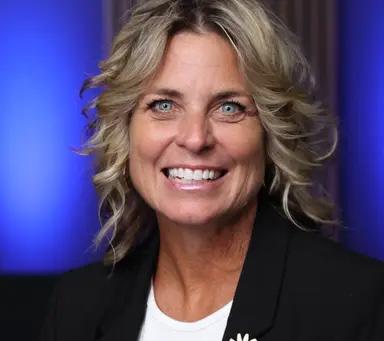

During court testimony, Musk acknowledged that xAI had partly used OpenAI’s models to train its own systems through a technique called distillation. The Verge, Wired, and TechCrunch reported that when asked whether xAI had done this with OpenAI, Musk answered, “Partly,” and added that “generally all the AI companies” use the practice.
Distillation means training one AI model to learn from another model’s outputs or behavior. It is not theft of source code. It is subtler than that — and in some ways more important — because capability can move through training behavior, not just copied software.
In other words, the technology does not stay neatly inside one company, one product, or one box.
Together, these stories point to the same shift: AI is entering critical systems, while the capabilities behind those systems are becoming harder to own, trace, or control.
Access Is Becoming Strategy
Claude, Anthropic’s AI assistant, is noticeably absent from the Defense Department’s agreements.
According to reporting on the dispute, Anthropic was designated a supply-chain risk after resisting Pentagon terms that conflicted with its stated limits on uses such as mass domestic surveillance and fully autonomous weapons systems.
This is not a story about which AI model is better.
It is a structural signal.
As AI moves into classified and critical systems, access depends not only on capability, but on whether a provider’s rules align with the institution using it. The fight is not just over who builds the strongest model. It is over who gets into the room, under what conditions, and with what limits.
That same pattern will show up outside defense.
In banking, AI may help flag transactions, assess credit risk, or review documents. In utilities, AI may help forecast demand, detect faults, or optimize how electricity moves through the grid. In supply chains, AI helps predict demand, route shipments, and
manage inventory. In law, insurance, finance, and healthcare, adoption is slower because mistakes carry real consequences: lost money, compromised rights, denied coverage, or failed treatment.
The common issue is not whether AI is useful.
It is whether people understand where it is operating, what it is optimizing for, and who remains accountable when it shapes a decision.
The AI Economy of Work
This is where the workplace story begins.
The public tends to judge AI by whether it writes a decent paragraph. The more important shift is happening in professional work: cybersecurity, finance, research, logistics, customer service, operations, and legal analysis.
In those environments, value does not come from simply opening an AI tool. It comes from knowing how to use AI toward a real outcome.
That means asking sharper questions, giving better context, checking the work, connecting outputs across tools, and knowing when a human decision is still required.
That is orchestration.
And orchestration is becoming part of the economy of work.
A person who can orchestrate AI well can produce better analysis, faster research, clearer communication, stronger customer follow-up, and cleaner operational decisions.
A business that can orchestrate AI across its processes can move faster than one that treats AI like a novelty, a shortcut, or a fancy autocomplete machine.
This is not just a productivity story. It is a resource story.
Tokens Are Becoming a Measure of Work
Every AI task consumes tokens.
Tokens are the units AI systems use to process prompts, documents, messages, context, and outputs. If you ask a vague question, upload messy information, repeat yourself, or keep regenerating answers because the first result was unusable, you burn more tokens.
That means you burn more capacity.
Sometimes that capacity shows up as money. Sometimes it shows up as usage limits. Sometimes it shows up as time, attention, or operational drag.
This is why being good at AI will matter.
The person who can give the system clean instructions, useful context, and good judgment gets more usable output with less waste. The person who cannot will spend more tokens to get weaker results.
In practical terms, AI skill affects how much useful work you can get from the same tool.
Better orchestration means fewer retries, fewer dead ends, cleaner outputs, faster decisions, and less wasted capacity. It means having more left at the end of the day: more time, more attention, more budget, and yes, more tokens.
This is where AI literacy becomes economic currency.
Not because everyone needs to become a programmer. They do not.
But because people and businesses need to understand how to operate inside systems where intelligence has a cost, context has a cost, and poor instructions create waste.
This Is Where the System Is Going
The next stage of AI will not only be about which model is smartest.
It will be about who can use AI systems well enough to create value without burning unnecessary time, money, attention, or trust. That matters for small businesses. It matters for workers. It matters for communities. And it matters for regulated industries where the cost of being wrong is not just inconvenience, but real harm.
Businesses should be asking:
• Where is AI already helping us?
• Where is it making recommendations we have not examined?
• What information are we putting into it?
• Who checks the result before it goes out?
• How much waste are we creating because we do not know how to use it well?
• What happens if the system is wrong? Those questions are not technical. They are practical.
AI is not just changing how people work. It is changing how decisions get made inside
systems most people cannot see.
The real AI decision is no longer just whether to use the tools.
It is whether we understand the systems those tools are becoming — and whether we know how to operate inside them before they start operating around us.
& Shakers
Published
Advantage Title Names Christopher Nuzzi President & CEO
Advantage Title, a full-service title insurance agency and partner agency of Acrisure, is pleased to announce the appointment of Christopher Nuzzi as President and Chief Executive Officer, bringing extensive leadership experience and a proven track record in complex real estate transactions.
Under his leadership, the company will continue to strengthen its position as a leader in title insurance services for purchasers, developers, investors, lenders, and REITs, with a particular focus on the dynamic real estate markets across New York State. Nuzzi’s strategic vision and industry relationships are expected to further enhance the company’s ability to deliver sophisticated solutions for large-scale and highly structured transactions and expand its longstanding presence and trusted partnerships within New York’s commercial and residential real estate community.
In his position, Chris oversees the company’s strategic direction, daily operations, budgeting, and marketing and sales initiatives. After more than 12 years with the company, he and the team at Advantage remain committed to servicing the high-end residential and commercial title insurance clients while further expanding Advantage Title’s reach and reputation.
With nearly four decades of experience in the industry, Advantage Title brings deep expertise to every transaction. Nuzzi’s local insight is supported by Advantage Title’s team of in-house counsel, whose extensive knowledge and strong underwriting relationships help guide clients through even the most complex transactions. This has set up the company for success in facilitating transactions across Long Island’s communities and throughout New York City and Westchester. The firm is particularly well-versed in handling complex real estate matters across Long Island’s North and South Forks, from large estates and family compounds to farmland, vineyards and commercial properties.
Chris first joined Advantage Title in March 2014 and previously served as Executive Vice President and Regional Director of the East End. During that time, he was involved
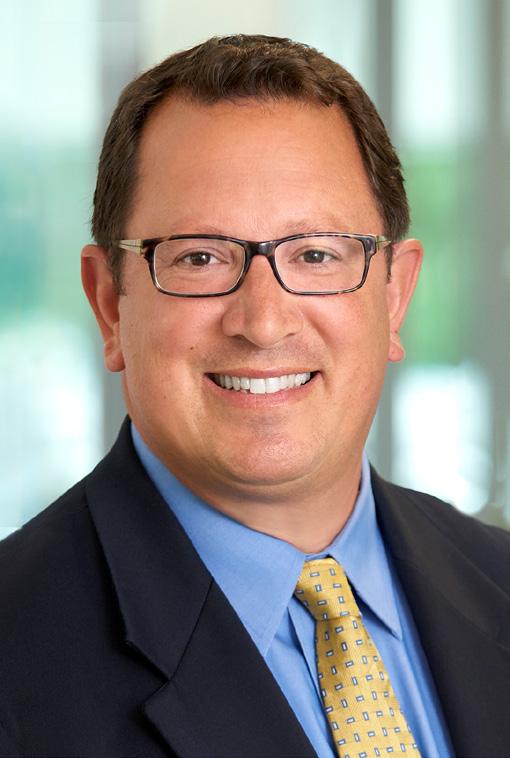
in all aspects of real estate transactions involving permitting and zoning regulations as well as title insurance matters across downstate New York. He worked closely with attorneys, real estate brokers, buyers, sellers, and municipal agencies, building a reputation as a trusted resource for navigating the complexities of commercial and residential real estate.
Prior to joining Advantage, Chris served as a regional representative for a title agency with offices on eastern Long Island and New York. In that role, he focused on business development and marketing while coordinating with underwriters and working alongside real estate professionals on residential and commercial transactions from contract through closing.
In addition to his professional experience, Chris has an extensive background in public service. He served as a Town of Southampton Councilperson from January 2006 through December 2013, where he was one of five elected Town Board members responsible for administrative, fiscal, and policy oversight of a town government with an operating budget exceeding $80 million. He also worked in the Suffolk County Executive’s office and as a Deputy Chief of Staff in the Town of Brookhaven, where he gained valuable experience in land use practices and the laws governing planning, building, housing, environmental protection, waste management, and transportation.
“Founder and former President and CEO Joseph Willen built Advantage Title on trust, precision, and an unwavering commitment to our clients. As I step into the role of CEO and President, my focus is on honoring that foundation while expanding our vision. We are investing in people, technology, and partnerships that will allow us to scale our capabilities and deliver even greater value to the attorneys, lenders, developers, and property owners we serve,” said Nuzzi. “Our goal is not simply growth for growth’s sake, but thoughtful, strategic expansion that positions Advantage Title as a leader in both commercial and residential title insurance.”

Published by Messenger Papers, Inc.
Thursday, May 7, 2026
Trump Expands Access to Retirement Savings for American Workers
By Alan Jamison | AMAC Contributor
Thanks to a new executive order from President Donald Trump, millions of American workers could have greater access to retirement savings that empower them to thrive as they age – and some could even receive matching contributions from the federal government.
Currently, about 54 million Americans don’t have access to an employer-based retirement plan like a 401(k), which often includes an employer match on contributions. Trump’s order aims to change that by instructing Treasury Secretary Scott Bessent to create a new website called TrumpIRA. gov which will “allow workers to filter and compare IRAs based on cost, quality, and investment options.”
The website is set to be operational by January 1, 2027, with a goal to “connect American workers who do not have access to employer-sponsored retirement plans with high-quality, low-cost IRAs offered by private-sector financial institutions.”
Trump’s order comes at a critical time as some workers who do not have access to employersponsored retirement accounts will be able to receive $1,000 per year in matching funds from the federal government beginning next year through a program known as “Saver’s Match.”
Americans are eligible for the full $1,000 Saver’s Match if they make less than $20,500 per year as an individual or less than $41,000 per year as a couple. Smaller matches are available to workers making up to $35,500 as an individual or $71,000 as a couple.
The $1,000 match was made possible through the SECURE 2.0 Act, which Congress passed in 2022, and former President Joe Biden signed into law. Trump’s executive order ensures that as many Americans as possible have access to those matching funds by creating the website to expand awareness and increase the number of workers enrolled in eligible accounts.
The White House explained that the new website will “maximize public awareness of the Saver’s Match, ensuring that it reaches its full potential and boosting participation, particularly among workers who historically had no clear path to retirement savings and wealth building.”
The president explained why the executive order is so important during the signing ceremony.
“The great thing for millions of Americans who lack employer-sponsored plans, this will be really revolutionary because they’ll be covered,” Trump said. “Nobody thought that was possible. For example, if a 25-year-old who is eligible for a Saver’s Match program invests just $165 a month under the matching federal contributions, they will have an estimated $465,000 in their account by the time they’re 65 years old. In other words, they’ll be rich. And there’s something awfully nice about that.”
The order also directs the Treasury Department and the Internal Revenue Service to issue guidance clarifying “the tax treatment of contributions made by philanthropic and charitable tax-exempt organizations to IRAs on behalf of eligible workers.”
Bessent is likewise directed to “prepare legislative recommendations to codify and build upon the TrumpIRA.gov framework.” While Trump’s order is a momentous step forward, some retirement advocates are pushing for a larger
federal match and automatic enrollment for workers.
Still, the order is yet another promise kept for the President. Trump pledged to give “oftenforgotten American workers — great people, the people that built our country — access to the same type of retirement plan offered to every federal worker” during his State of the Union Address in February. The new program marks a major step toward fulfilling that commitment.
Overview - AMACThe
The Association of Mature American Citizens represents Americans 50 plus. AMAC is centered on American values, freedom of the individual, free speech, and exercise of religion, equality of opportunity, sanctity of life, rule of law, and love of family, with benefits at all levels.
AMAC
a
in
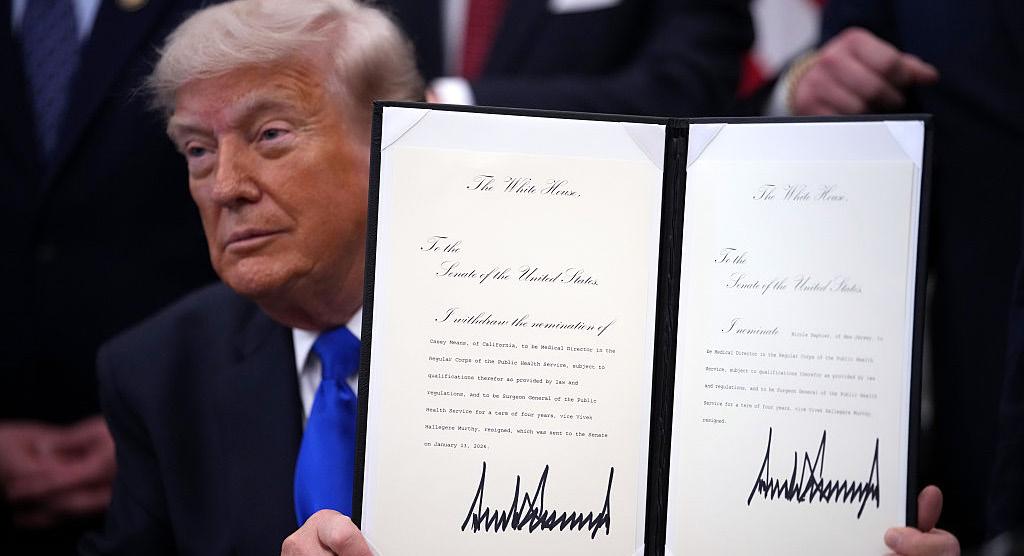








adjective
WORD OF THE Week INTRINSIC
Etymology:
late 15th-century Middle French intrinsèque and Medieval Latin intrinsecus (“inwardly,” “on the inside”); combines Latin intra (“within”) + secus (“alongside” or “following”).
Pronounced: /in·trin·suhk/ Definition: belonging to or part of the real nature of something or someone
Example: “Her intrinsic musical skill made her a prodigy at school.”
Synonyms: inherent, essential, fundamental
Antonyms: acquired, extraneous, incidental
Source: Oxford Languages


O L I N T S U
See how many words you can create. Must have center letter in word and can use letters more than once. 4 letter word minimum.

SUDOKU

See left for the answers (please don’t cheat!)
This Week in History

May 13, 2004: The final episode of “Frasier” on NBC is watched by 33 million people.

May 10, 1801:
First Barbary War: The Barbary pirates of Tripoli declare war on the U.S. (first U.S. foreign war).

May 12, 1888: Crouching start first used in track and field by Charles Sherrill of Yale.
May 8, 1980: World Health Organization announces smallpox has been eradicated.
May 9, 1958:

“Vertigo”, American film noir psychological thriller directed by Alfred Hitchcock, starring Jimmy Stewart and Kim Novak, is released. May 7, 1912: Columbia University approves plans to award the Pulitzer Prize in several categories, after establishment by Joseph Pulitzer.




May 11, 1969:
British comedy troupe Monty Python forms, made up of Graham Chapman, John Cleese, Terry Gilliam, Eric Idle, Terry Jones, and Michael Palin.
By PJ Balzer
In a few short weeks, the high school spring sports season will come to an end. As a matter of fact, the school year will follow right behind. Players will turn in their jerseys, unlace their cleats, some for the last time ever. Some tears are usually a part of this ending as well.
I’ve always looked at the sports season or a high school sports career as a journey you take with classmates traveling a similar road. As the season begins, you’re battling it out for a spot on the team and then a starting spot on the field or court. You’re forced to compete against one another before you compete against any outsiders. Eventually, the spots are established, leaders rise to the top, and alphas and betas are sorted out.
Now, it’s time to do the same against other teams, but this competing amongst one another has formed some muchneeded fight in you for your teammates.
The Value of a Season

As you begin the journey of the season, you can expect the unexpected. There will be wins, losses, victories, defeats, injuries, and detours. You’re going to be a different person by the time the final whistle blows, and you turn in your jersey. You’ll be challenged and changed. You’ll have to learn how to win together and lose too. Character and grit will be your only choice by being pushed beyond your own limitations. You’ll have to back up and fight for teammates who you may like and those you may not. You’re a part of a team now and your cause is bigger than just yourself.
There will be team dinners, bus rides, and plenty of voices raised. You’ll be forced to learn discipline and how to receive correction. People may quit along the journey, and it’ll be up to you to either encourage them or let them go. During this season, you will spend more time with your team than your own family - late nights, early mornings, and weekends too.
There are so many valuable life lessons to be learned along the ride, if you’re humble enough to learn, of course. These are lessons that you will carry with you for the remainder of your life - teamwork, hard work, perseverance, and coming to the rescue or aid of a teammate on the field; how to cheer on someone whose spot or spotlight you may wish you had. You’ll make a few friends that you also may have for the rest of your life. The value of a sports season is nearly infinite.
I personally always encourage people to get their children involved in sports and start them young if possible. Many of my own most precious memories as a kid were made on a field or court. Many of my best friends in school were also made playing a sport. It can be baseball, basketball, soccer, or football. It can be lacrosse, track, golf, or badminton. The sport you choose isn’t necessarily the important part as much as being a part of a team is.
If you’re a young person currently playing a sport and traveling the journey of this season. Enjoy and cherish every moment, bus ride, and laugh shared with friends.
There will come a time in your life when you wish you could go back and wear that jersey just one more time.
PROTECTING THOSE WHO PROTECT YOU
LOUIS CIVELLO, PRESIDENT


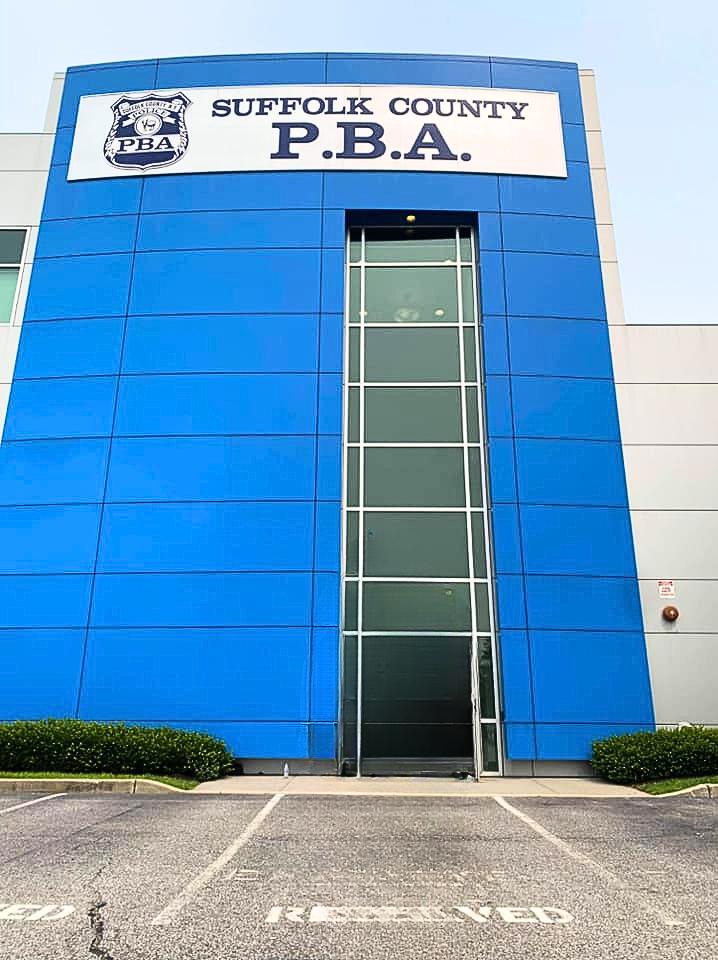
Thursday, May 7, 2026
Ducks Host
Frank Boulton Appreciation Night
The Long Island Ducks hosted “Frank Boulton Appreciation Night” at Fairfield Properties Ballpark on Saturday before a sellout crowd of 6,146.
The night featured a pregame ceremony honoring Boulton, who created the Atlantic League of Professional Baseball 28 years ago and founded the Long Island Ducks in 2000. The ceremony featured remarks from several distinguished guests, including Atlantic League President Rick White, REV Entertainment President Sean Decker, Ducks President/ Chief Business Officer Michael Pfaff, and Ex-Wife of Bud Harrelson, representing the Harrelson family, Kim Battaglia. White announced during the ceremony that the Atlantic League Championship Trophy will be officially known as the Frank Boulton Championship Trophy from this point forward. He also presented Boulton with a custom portrait on behalf of the league. Decker presented Boulton with a check for a donation in the amount of $10,000 to be presented to The Boulton Center for the Performing Arts in Bay Shore. Pfaff presented Boulton with a gold ring in recognition of Boulton’s previous induction into the Suffolk Sports Hall of Fame.
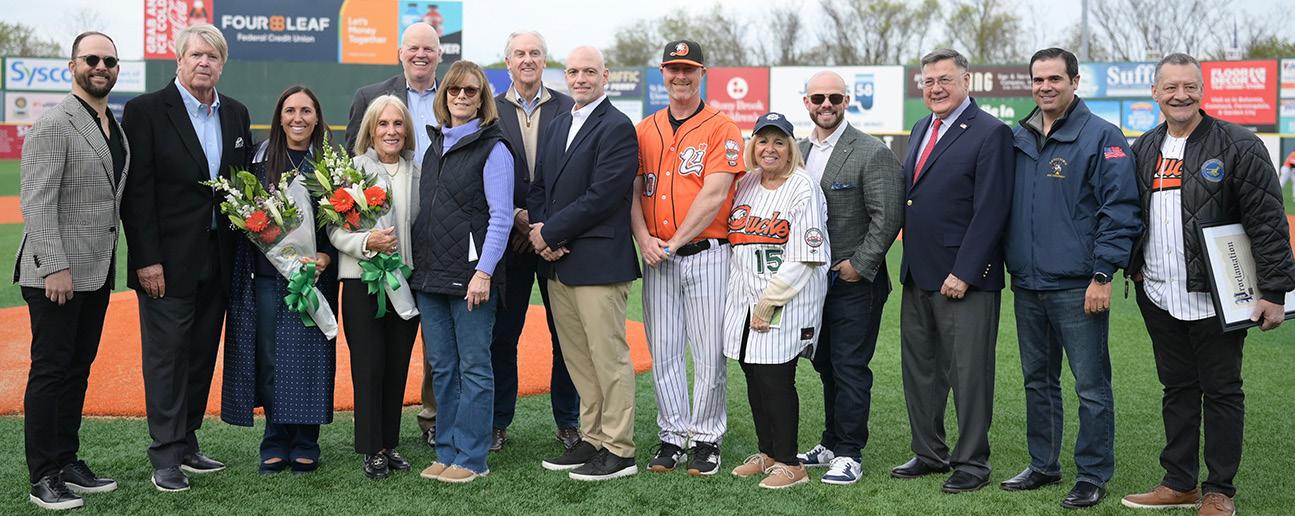
Boulton, accompanied by his wife, Karen, daughter, Morgan, and son-in-law, Matt, spoke to the crowd as well and received a loud ovation at the conclusion of the ceremony. Elected officials in attendance presented Boulton with several proclamations in recognition of Frank Boulton Appreciation Night. Officials included Suffolk County Executive Ed Romaine (R-Center Moriches), Islip Town Supervisor Angie Carpenter (R-West Islip), and Suffolk County Legislator Sam Gonzalez (D-Brentwood).
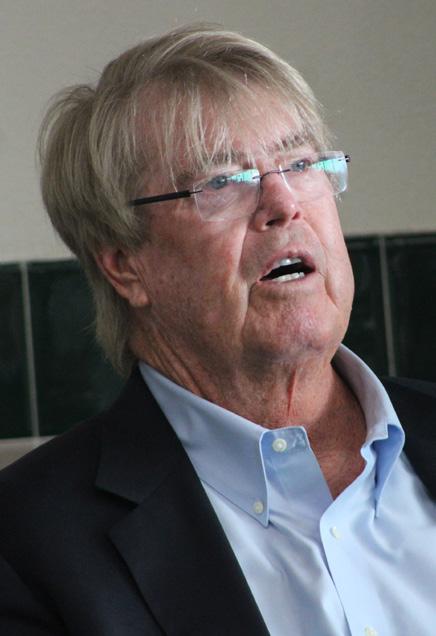
Boulton (pictured inset) transitioned ownership of the Ducks to REV Entertainment in January of
2026. In addition to founding the Ducks and serving as the team’s CEO and Owner, he also founded the Atlantic League of Professional Baseball and served as its chairman from the league’s inaugural season in 1998 through January 2026, when he transitioned league leadership to new chairman, Bill Shipley. Over its 27-year history, the Atlantic League has sent more than 1,450 players to MLB organizations and has drawn over 49 million fans. The Ducks have welcomed over 9.5 million fans, hosted 723 sold-out crowds, and won over 1,800 games under Boulton’s ownership, all of which are Atlantic League records, while also winning four league championships.
That night, the Long Island Ducks defeated the Lexington Legends 6-1 on in the fifth game of a six-game series before the past-capacity crowd.
10-year Major League veteran Trevor Bauer (2-1) was the story on the mound once again for the Ducks. The right-hander struck out a season-high 10 batters in six innings of one-run ball. He gave up just six hits, five of which were singles, and did not walk a batter. The 2020 National League Cy Young Award winner finished the night with a season-high 101 pitches, 69 of which were strikes.
The Long Island Ducks are entering their 26th season of play in the Atlantic League of Professional Baseball and play their home games at Fairfield Properties Ballpark in Central Islip. They are the all-time leader in wins and attendance in Atlantic League history, have led all MLB Partner Leagues in total attendance for five consecutive seasons, and have sold out a record 723 games all-time. For further information, visit LIDucks.com or call 631-940-DUCK (3825).
Eastport-South Manor Baseball: The Sharks are In The Water
By Ashley Pavlakis
It’s great to see Section XI baseball teams doing well this season! Can’t say the same for some of the professional baseball teams in New York…
Alas, the Sharks at EastportSouth Manor (ESM) are putting on a clinic this season.
The Eastport-South Manor varsity baseball team is a member of the New York State Public High School Athletic Association (NYSPHSAA) and competes in League V. The Sharks are led by 12th-year head coach Jim McGowan. He’s joined in the dugout by John McCaffrey and Taylor Foran. ESM boasts a 15-1-0 record with seven games remaining in the regular season.
output this season came in a 17-7 win over East Hampton.
“I think our lineup, one through nine. Everybody from top to bottom, they battle, they grind out at-bats. We have guys who get on base, and we run a lot. I don’t think there’s an easy out in our lineup, which makes us difficult to face,” said McGowan.
we were 22-0 before we lost in the winner’s bracket final to East Islip. This year we’re 15-1. We’ve done a lot of winning in the last two years, so to win the big one would be the ultimate. League titles are great, but the goal right now is to go get a County Championship. It’s going to be very, very difficult. There’s a lot of good teams in our classification. We have our work cut out for us; it would mean a lot because a lot of these kids have played together since they were eight or nine years old. It would be special for them.”
The ESM Sharks have a rich program history. To start, their trophy case looks like this: 19-time League Champions, 11-time Suffolk County Champions, 5-time Long Island Champions, and 1986 New York State Champions. Do I say more? The Sharks are proven winners on the diamond.
“Our pitching has been outstanding. We know our three starters are getting deep into the games. Our relievers are coming in and throwing strikes and getting easy outs. So, our pitching has been the key so far. We consistently hold our opponent down, they don’t score a lot of runs against us, and that’s been a good thing,” said McGowan.
Through 16 games, the Sharks have outscored their opponents 131 to 33. They’ve limited their opponents to single-digit scoring and posted four shutouts. Their highest
Leading the way for the Sharks this season is Senior Brady McGowan, Senior Logan Walsh, and Junior Thomas Gargiulo. All three were chosen as Captains for the 2026 season.
Prior to the season, Newsday named their Top-100 baseball players and the Sharks saw Thomas Gargiulo, Logan Walsh, and Brady McGowan make the list.
Gabe Sikora, a pitcher for the Sharks, is tied for first place in the Section XI standings for wins with five. Memphis Lanier is in the top-10 with four wins as well as top-25 in strikeouts with 24, and Brennan Morrison rounds on the pack with three wins.
Mason Gatchalian, a junior, has a team high batting average at .387 with two homeruns and 11 RBIs.
To win another title “would be big,” Coach McGowan told The Messenger “Last year, we were coming off a historic season for us;
They run the bases now, but they’ll walk the stage this spring. ESM will graduate seven seniors in 2026. Brady McGowan (Marist), Logan Walsh (Felician), Matt Beardsley (Farmingdale), Nick Calcaterra (Dominican U), Jordan Goldhammer, Ryan Cole, and Brennan Morrison (St. Joseph’s).
“The mindset is kind of what we’ve been doing. Anytime you can pitch and be effective on the mound, you’re always gonna have a chance to win. Because we’re going to face a lot of great pitching in the playoffs, the runs will probably be at a premium. So, if we can keep pitching the way we have, we should have a shot in every game that we play. That would be the key, not to change things suddenly because we’re in the playoffs and try to do things that we’re not capable of doing, or things that we don’t typically do. We try to play the same consistent brand of baseball that we have all season long, that would be the formula.”
CreditLong Island Ducks
Credit - Matt Meduri
Credit - Eastport-South Manor Central School District
By Ashley Pavlakis
The MLB is one Long Island native stronger this season as one of Port Jefferson’s own gets his first major league call up.
Brian Fitzpatrick, a 2022 draft pick, was promoted to the big leagues and pitched 3.2 innings for the Milwaukee Brewers.
Brian Fitzpatrick grew up on Long Island, playing his high school baseball at St. Anthony’s. The former Friar and two-time letterwinner eventually went on to play Division I baseball for Rutgers University. During his time as a scarlet knight, he appeared in 23 games with 7 wins, three losses, an ERA of 5.24, and threw 59 strikeouts.
“Since he was a little boy, he loved it. I remember when he was little, he always wanted to have a catch,” John Fitzpatrick, Brian’s father, told The Messenger. “One time, I told my wife, ‘I’m not going to tell him we’ve had enough and see how long it goes’. We had a catch for an hour and fifteen minutes. I thought, ‘Wow, he really loves this.’ He still does to this day. Everywhere he’s played, the coaches have always told me how much he loves the game and what a good teammate he is.”
The left-handed pitcher stands tall at 6’7”, making him a towering force on the mound. In 2022, Fitzpatrick heard
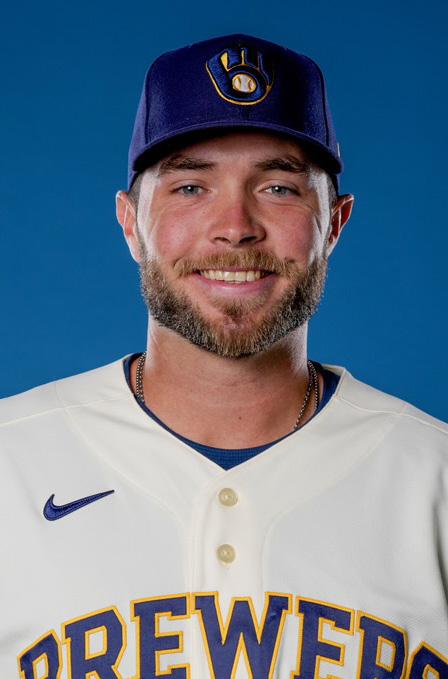
his name get called at the MLB Draft in the tenth round, where he was selected 312th overall by the Milwaukee Brewers.
According to his father, he grew up as a New York Mets fan. Needless to say, his allegiance has since changed to his new team.
“When he was little, he was really good. He always threw the ball harder than you’d think a little kid could throw the ball,” said Fitzpatrick. “When he was 11, one of his coaches said ‘What are your plans for him? This kid is really, really good’. All his sisters played D1 Sports. They all love sports, and I think it helps. I want them to play sports because you have to deal with a team, coaches you like, and coaches you don’t like. It kind of sets you up well for work and career.”
Getting drafted is one thing, but the road to the big leagues is another. Fitzpatrick spent time in the minor leagues for various teams: the Arizona Complex Brewers, the Carolina Mudcats, the Wisconsin Timber Rattlers, the Nashville Sounds, and the Biloxi Shuckers. The stops made around the minors helped his growth and development as a young pitcher. The Brewers converted Fitzpatrick from a starter to a bullpen player.
“The way he’s cool and calm on the mound, no matter what the heck’s going
on. He’s worked on his pitching all through the minor leagues and from college on. Watching him develop his cutter, curveball, and then the two types of fastballs he throws, it’s pretty cool to see the science of it,” said Fitzpatrick.
At 25 years old, the left-handed reliever received his first professional call up to the Brewers on April 29 versus the Arizona Diamondbacks. The lefty pitched 1.1 innings when he entered the game in the seventh inning to replace DL Hall. Fitzpatrick pitched 3.2 innings over the last three games, recording two strikeouts. The promotion to the 40 man roster has served as a small sample size of what’s ahead.
“It’s wild, we were all cheering. It’s just been an unbelievable ride watching him; it was a lot of fun. The Brewers took really nice care of us; we had good seats. The Brewers gave him the laminated scorecard signed by Pat Murphy, the first out and first strikeout balls in nice glass boxes and gave him his jersey with the debut emblem and his hat,” an emotional
Floyd Baseball Clenches Playoff Spot
By PJ Balzer
Sometimes, a team heats up at just the right moment in the season. That’s undoubtedly been the case for William Floyd boys’ varsity baseball team this season.
This past week, they grabbed a convincing win over Central Islip to secure their spot in the Section XI Class AAA playoff bracket. This is the third consecutive year in which the Colonials will be playing in the playoffs.
Last week was when Floyd officially caught fire though. In a three-game set, the Colonials swept Riverhead in another convincing fashion, holding the Blue Waves scoreless in all three games. Floyd called up freshman pitcher Evan Hoyle for his first ever varsity game and playoff appearance. The ninth grader certainly didn’t disappoint. Hoyle held Riverhead scoreless in 5 innings, even pitching in and out of
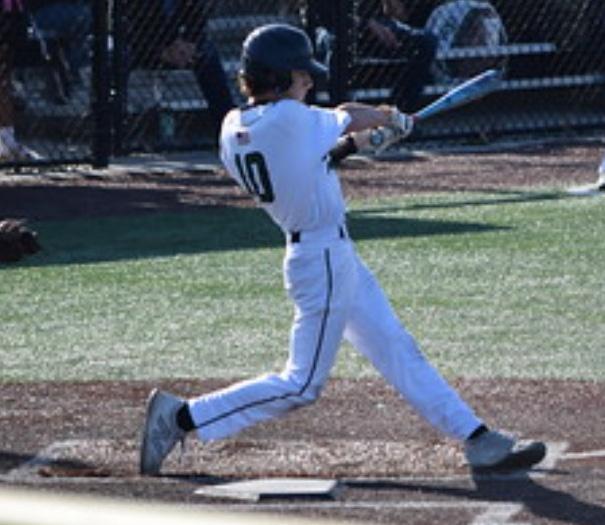
trouble a few times to secure a 3-0 win.
Senior Pitcher CJ Burkhardt also produced a tremendous, 10-strikeout game in this three-game series as Floyd bats came up big to add runs to the scoreboard.
The Colonials improve their record to 10-6 and sit in second place in League One. They finish off league play this week and head into the playoffs with much momentum behind them.
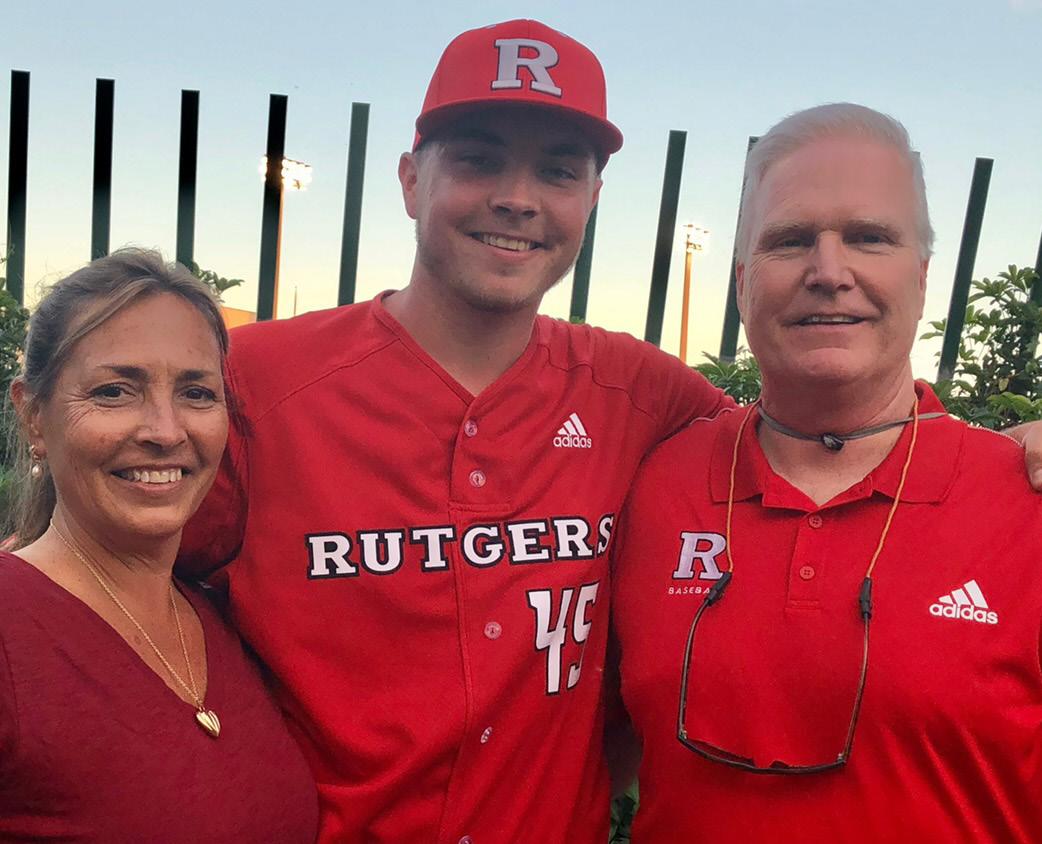
Fitzpatrick told The Messenger, mid-transit to St. Louis to see his son play. John Fitzpatrick (pictured above) enjoyed the little trip down memory lane, getting to reminisce about his son’s baseball career over the years.
“I thank the good Lord he’s a Brewer because they seem to do everything right in how they develop guys. He [Brian] respects everything about the Brewers and the players there. They have a good process and a phenomenal culture, it’s amazing to see,” said Fitzpatrick.
Port Jeff. Native Brian Fitzpatrick Gets MLB Call-Up League 2 Top Teams Face Off
By PJ Balzer
Sometimes, the entire season can be pivoted in one series. That’s true for this week’s League 2 varsity boys baseball matchup between Connetquot and Commack. Both teams currently sit at the top of their League and are hashing it out for the top spot and playoff seed.
In Game 1 of a three-game series, Commack defeated Connetquot by a score of 4-2 this Monday. With this win, the Cougars clinch a playoff berth and move to within one game of first place, where Connetquot currently sits. Commack also added to their eight-straight-game winning streak and improves to 10-3 in league play.
With their sights on pulling closer to a league title against rival Connetquot, Sam Kay, a junior pitcher, hurled a gem for Commack. Kay allowed only one run over six innings and sat down five batters to earn the win on the mound. Starting for Commack was senior right-hander DJ Filippone, who is committed to play baseball next year at Mercy University. He pitched six innings while fighting his way out of some tough spots in the process. Filippone gave up four runs and picked up one in the loss column as Kay outdueled him for the second place Cougars.
Connetquot will have to defend their first place stay as these two top teams will play two more games this week.
CreditMilwaukee Brewers
Middle Country Library
Supported by Legislator Leslie Kennedy and Legislator Nick Caracappa
Tuesday, May 26th
1:00pm-7:00pm Community Room
575 Middle Country Road, Selden


Sign up at nybc.org/sponsor and use code # 19932
Any further questions contact Jim Ward at 631
