


By KOLLEEN TAYLOR
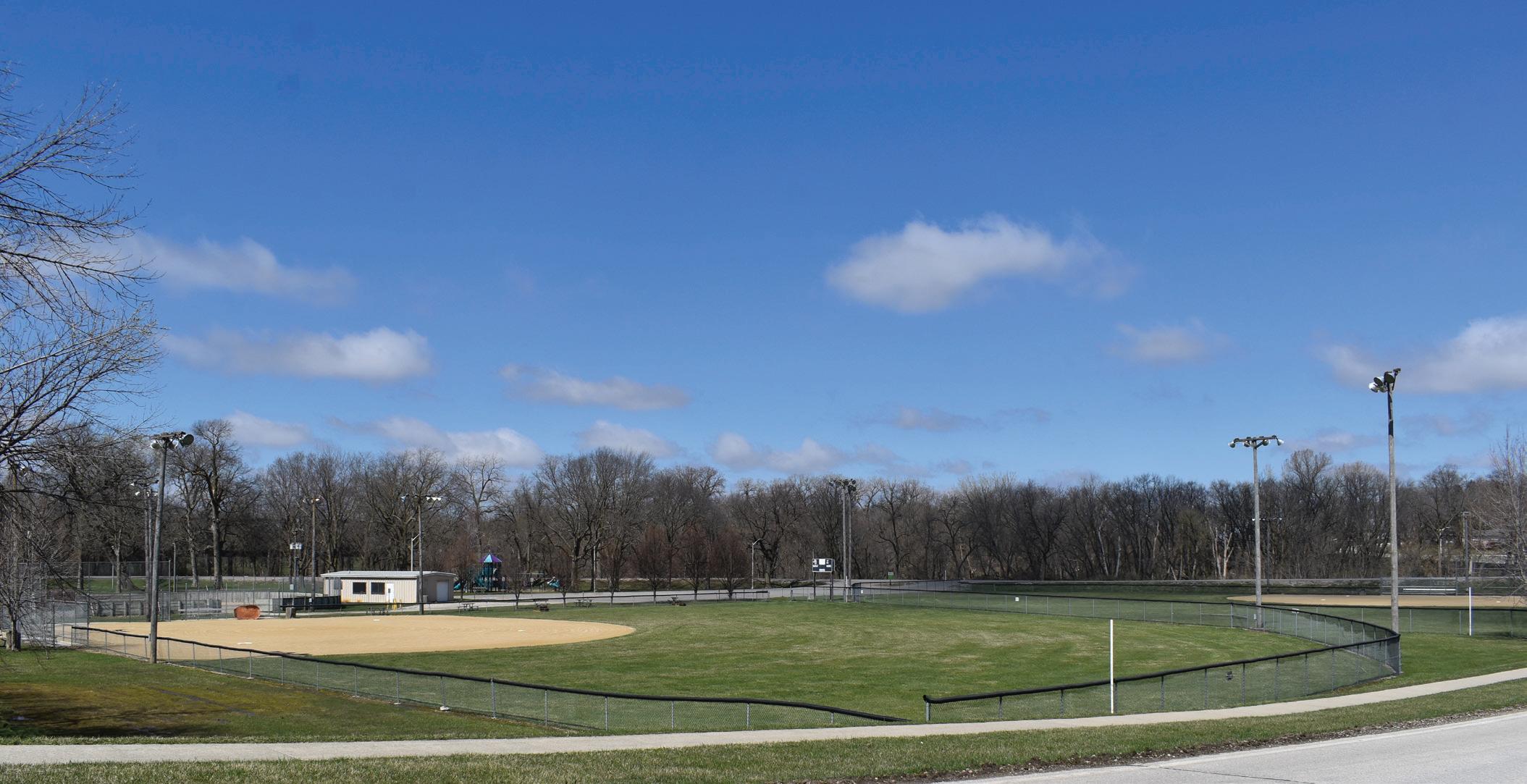
The Nokomis Park is home to two ball diamonds, located on the north central side of Webster City off of Des Moines street.
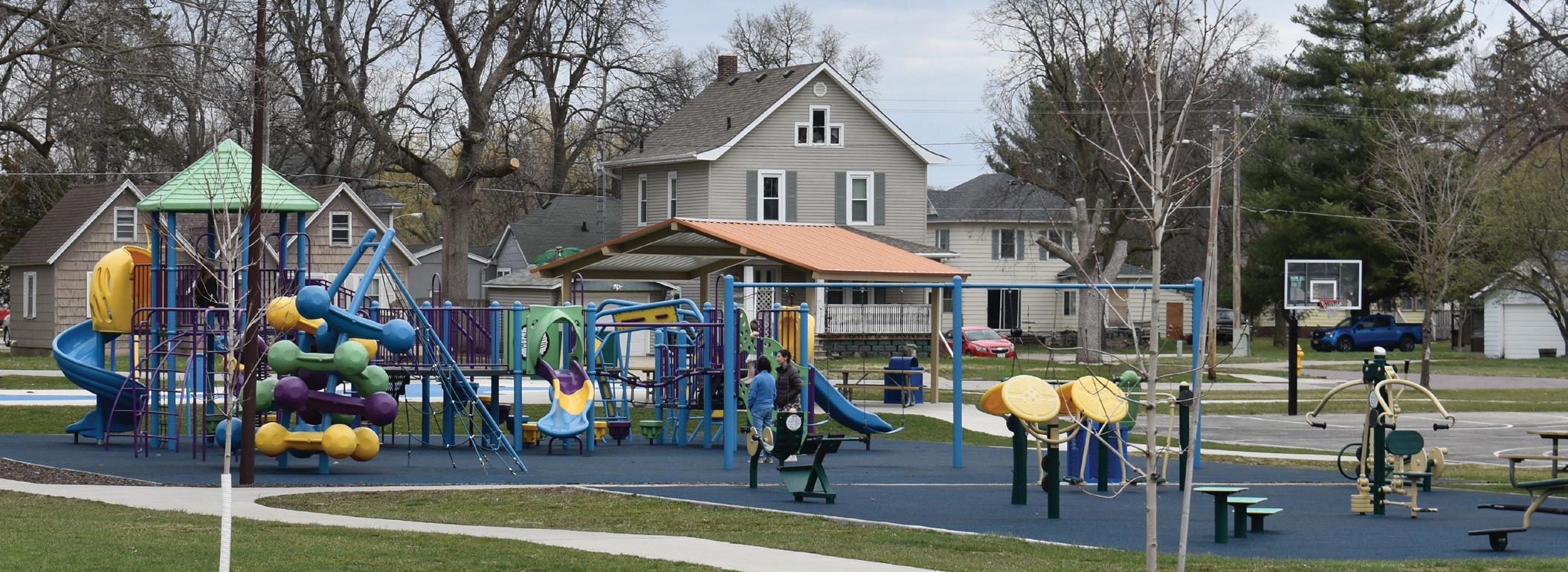
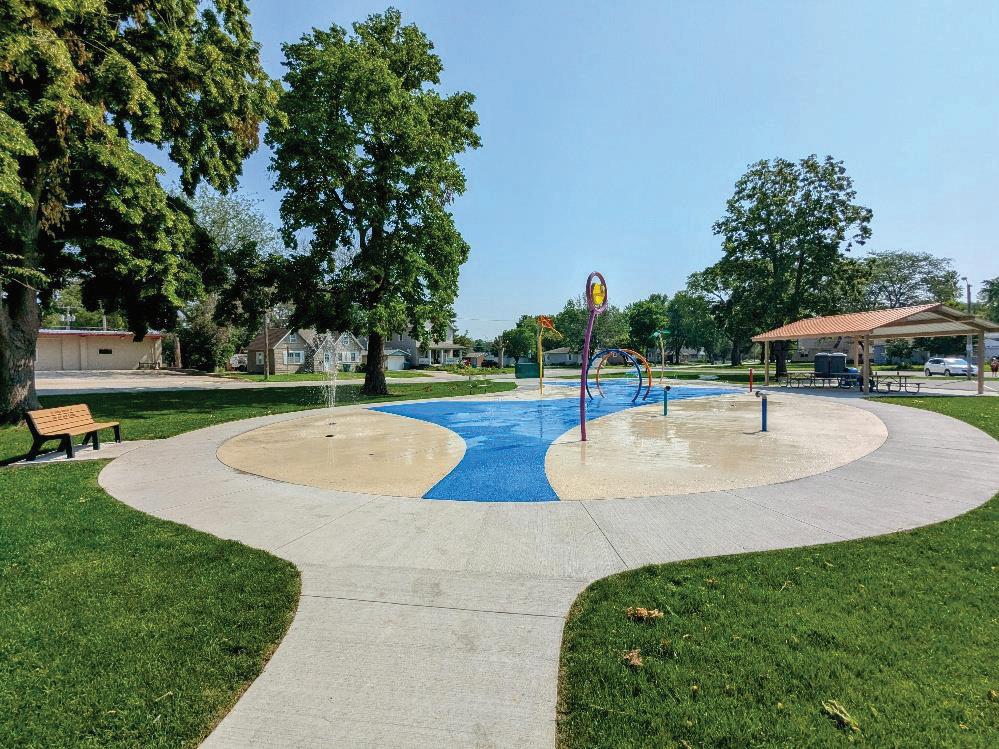
East Twin park is home to one of Webster City’s newest park attractions, the Splash Pad. But also located in East Twin is the skateboarding ramps, and tennis/pickleball court.
Spring officially began on March 20 this year, but with the major weather fluctuations, it hardly seems like it. But the season is upon us and it is time for all of us to spruce up our yards and gardens, clean up after the winter season and make plans to spend time out in the sun.
It’s a task that is overwhelming home owners, who are responsible for just one yard. For the City Parks department, with ten parks to manage, it’s a huge process.
The Webster City park system is managed by Breann Lesher, who is the Recreation and Public Grounds director for Webster City. A native of Webster City, she has been working for the city since 2018. She took over as the director in 2023, but has grown up playing and working in the parks throughout the city. Her responsibilities include the city parks in addition to her other duties.
“The city parks are open officially from April 15 to October 15 and are open from 7:00 a.m. and close at 10 p.m.” said Lesher, “We are on schedule. Our crews are out there now working, picking up sticks and cleaning up.”
There are some policies and guidelines for use at each of the parks, which have not changed in recent years according to Lesher. One issue involves pets; animals cannot run at large within the corporate limits of city, so that doesn’t preclude any animal from using the parks, but they need to be on a leash in open areas. Sketchley Park, which is a dog park surrounded by fences on East Second Street has been modified to encourage dog owners to exercise their pets there. Dog owners are encouraged to be responsible when walking their dogs.
“We have different stations along our trails and Graceland (cemetery) for dog waste stations.: said Lesher, “We don’t have a whole lot of problems in that area.”
Some of Webster City’s parks have shelters available for organizations and individuals to use. Those with shelters include West Twin, Kendall Young and Brewer Creek parks. Three of the shelters at Kendall Young are available to rent, while West Twin has two shelters and Brewer Creek has one.
According to Lesher, scheduling a shelter is done through the Fuller Hall Recreation Center at 515832-9193 and speak to someone at the front desk to check the availability of the six park shelters that are available to rent.
“Individuals can bring alcohol into the park shelters,” she said,” but if they choose to have a keg they have to have fill out a form at Fuller Hall.”
She said if something is carried in, to also carry it out. Keeping the parks clean is challenging as it seems to be windier all the time. While the staff is cleaning up the twigs and limbs, they also collect other items blown into the parks.
“People are not necessarily littering,” she said, “It’s just the wind is so strong, it gets blown everywhere.”
Keeping the parks within the city is a continual battle, and they appreciate additional help.
“Our staff does this every day,” she continued, “But we do have different service groups who contact us for clean-up areas. We give them different locations, and then when they finish they bring the trash to us and we dispose of it.”
Often on Earth Day, which is April 22, groups try to help by volunteering to clean up an area in the city. The Parks and Recreation don’t have a specific community clean-up project planned, however, they accept donations of trees or money for trees to help replace trees they have had to remove due to disease or age.
“We do have a youth activity planned at Fuller Hall that day,” she said.
One of the ways the community can help the parks department is donations of trees or money to purchase trees.
“Whenever people want to donate money or actual trees, we would plant the trees, and take care of them, providing the watering and mulching and care as they grow.” said Lesher, “We do that with our staff.”
Lesher said they don’t remove trees unless they are diseased or dying.
“We haven’t really been removing any ash trees, we only remove them when they die out.” she explained, “But at Kendall Young Park we’ve had to remove a lot of oak trees due to disease.”
Some of the other guidelines established for the city parks are for safety and to keep the trails and other property well maintained.
The City of Webster City has an ordinance for use of the recreational trails. This defines trail use for foot traffic, bicycling, cross-country skiing and rollerblading. Other special usage would need a permit. Motorized vehicles, including ATVs and snowmobiles are not allowed on the trails, except in an emergency or as authorized.
Motorized wheelchairs and similar devices for individuals with disabilities are permitted.
Horses are not allowed on the trails, nor are dogs unless they are under control and on a leash of six feet or less in length. Any person having control of a dog is responsible for picking up and disposing of any feces from the dog. This is not an exclusive rule for the trails, however, as owners are to keep their animals leashed and waste removed and disposed of properly anywhere on all public property.
The amenities at each of the parks are varied. Here is a summary of those amenities.
· Brewer
This park includes a shelter house, 18-hole disc golf course, native prairie area, outdoor fire pit and patio and a two-mile looped trail. In the winter, it serves as the main sledding area (Hospital Hill) for the community.
· Kendall Young Park | 600 Kendall Young Road
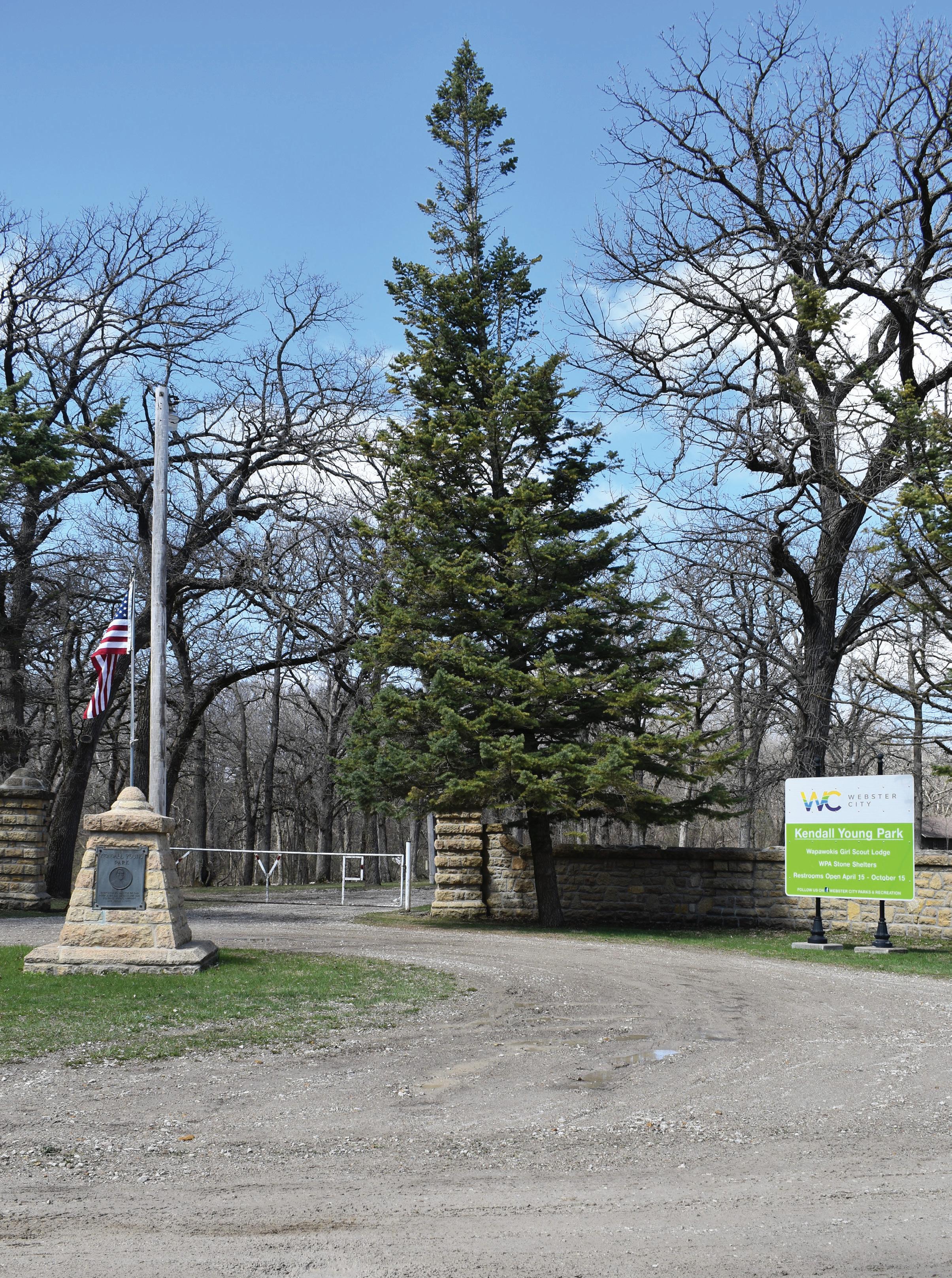
Kendall Young Park is a beautiful scenic area located one mile north of Webster City. The park has four shelter houses, six picnic areas, two horseshoe pits, a sand volleyball court, playground equipment, and a fishing area along White Fox Creek. It is also home to the Girl Scout Lodge.
· Lions Stafford Park | 1312 Lynx Avenue
This a neighborhood park that has a playground area, basketball court and picnic area.
· Nokomis Park/Middleton Sports Complex | 700 East Street
This sports complex has two baseball/softball fields, Carl Rhoer Ice Skating/Hockey Rink during the winter months, and two sand volleyball courts during the summer months; playground area, and canoe access to the Boone River. Also, the Boone River Walking Trail begins at Nokomis park. This year, due to the warm winter temperatures, the skating rink, which also provides skates to use free of charge, has been unable to open.
· Riverside Park | 130 First Street
Located just off East Second Street, this park is the main canoe access area for the Boone River. This also has a wetland area for stormwater runoff, in addition to another access to the Boone River Walking Trail. Note: The campground previously at this location is permanently closed.
· East Twin Park | 1100 Superior Street
East Twin Park offers a playground area, outdoor fitness equipment, basketball court, skate park and BMX Bicycle Dirt Track, mini pitch soccer system, pickleball court, and outdoor water fill station.
· West Twin Park | 1101 Superior Street
West Twin Park has an open shelter and enclosed shelter house that can be rented. The open shelter is known as the band shelter. Other features of the park include several picnic tables, and a modern playground area. This is also where the outdoor sculpture park is featured. Arts R Alive in Webster
City, a local 501(c)3 nonprofit, organizes the artwork and selection process. Sculptures selected in 2023 were submitted by artists from Iowa, South Dakota, Indiana and Nebraska.
· Wehrheim Park | 2301 North
This is a neighborhood park that has an open shelter, modern playground equipment, a basketball court and an open space play area.
· Sketchley
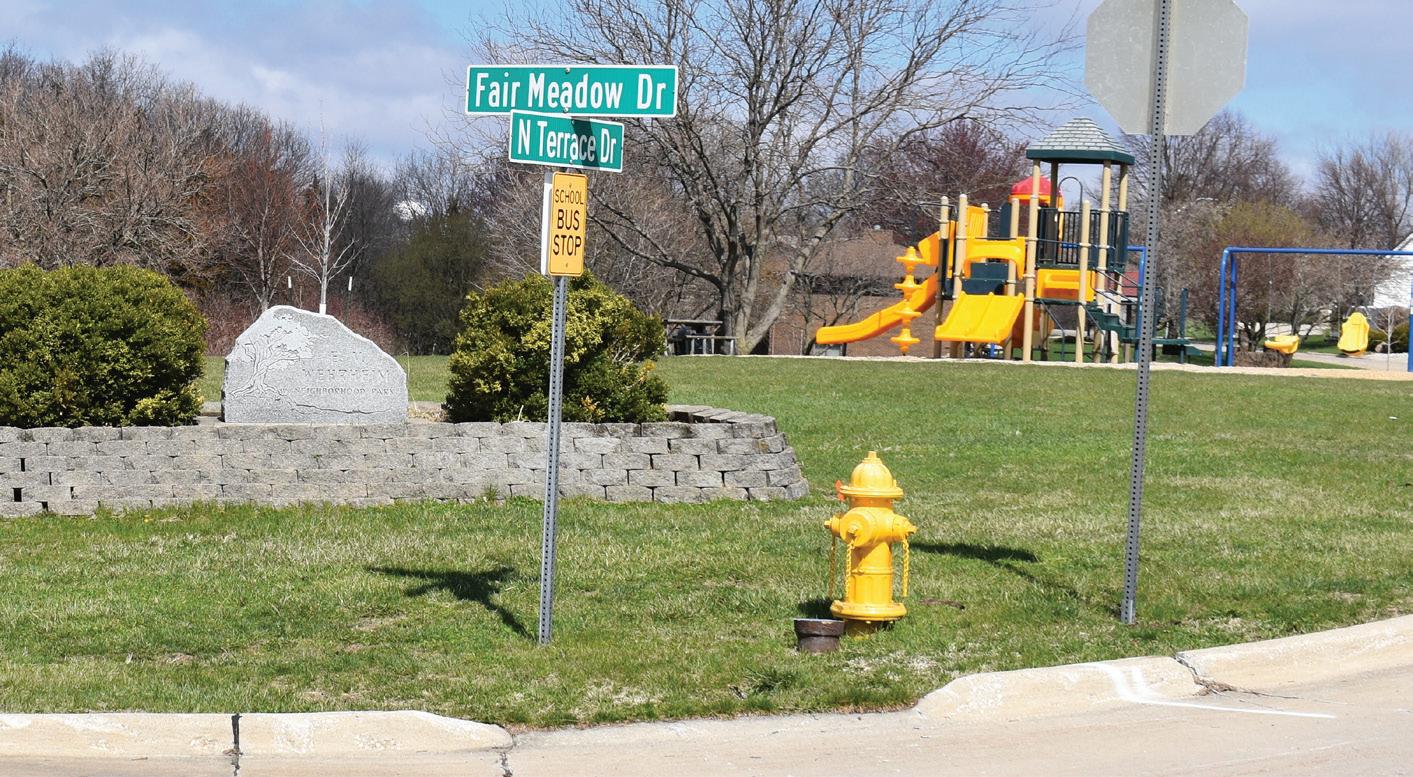
This is a dog park with a dog run and a small agility course all in a fenced area of the park.
The Wilson Brewer Historic Park complex is the site of the founding of Webster City, which was originally called Newcastle. It is located at the intersection of Superior and Ohio streets, less than a mile north of U.S. Highway 20.
This park has seen a lot of recent work in restoring the buildings, including painting. The work on the structures and museum has been led by the Wilson Brewer Park and Depot Foundation, a commission that has been appointed by both the City of Webster City and Hamilton County.
This complex began when the family of Wilson Brewer decided to make a donation of nine acres in 1932 to the City of Webster City in exchange for the promise to forever preserve the land, its buildings and any subsequent additions in the name of the Wilson Brewer Park. It has been more than 90 years since the City accepted the Brewer family proposal.
The first buildings on this site included two log cabins which were fashioned by the late Frank Bonebright, the grandson of Wilson Brewer. Those two cabins were moved and restored several years ago.
In 1971, the largest addition to the complex was added. The Illinois Central railroad depot is easily viewed today along Superior Street, just north of the Iowa Specialty Clinic. This was saved from demolition after the railroad closed the depot, later offering it to anyone who would move it. Local organizations worked together to raise the money to successfully move and renovate it. It was moved in two pieces to where it has remained since 1971, but it was not open to public as a museum until 1976.
The Harmony Center School, a one-room school
house, was moved shortly after the museum opened from its original home in Webster Township, south of Webster City in 1977.
Hamilton County’s first courthouse was moved to the Brewer park complex in 1985. The courthouse is currently undergoing some renovations, under the direction of the Wilson Brewer Historic Park Foundation board.
Just a decade later, the Mulberry Center Church, which was originally located north and east of Webster City in the Stonega area, was moved to the park after its Methodist congregation merged with Grace United Methodist in 1995. Last fall, the entrances were redesigned to make the church fully accessible for wheelchairs with ramps made of concrete added.
The most recent addition was an Illinois Central Caboose which was moved onto the property in March 2020. Fundraising has generated most of the funds needed to renovate the caboose. This work will be done over the next few months.
Wilson Brewer Historic Park is open from May 1 to November 1 with the following hours: Friday and Saturdays 1 - 4 p.m.
by Lori Berglund
I have started and stopped several books in my quest to find just the right one to review this month. I wanted something on the lighter side, something with a little history as we prepare to celebrate our nation’s 250th birthday, and something perhaps with a road trip.

Similar to the National Parks Passport program, the Presidential Libraries have a passport of their own so that visitors can log the different libraries they have visited.
I might have been asking for too much. As I searched, my thoughts kept returning to a young retired couple I met years ago while on assignment at the Mamie Doud Eisenhower Birthplace in Boone. Their hobby, they told me, was visiting presidential sites. When the map on their smart phone spotlighted Mamie’s birthplace, they decided to veer off their planned route and visit the small museum to this Iowa-born first lady.
Now, I might be a nerd — and please don’t ask anyone from the WCHS Class of 1980 about that — but I thought to myself, “I want to do that someday. I want to leisurely drive the countryside and learn more about our shared history as a nation.”
That’s the book I wanted to review. But I just might have to write it myself some day… when I’m a ‘young retiree.’ In the meantime, let’s preview what that journey might look like.
The first question I had was simple: How many presidential libraries are there anyway? That’s not really an easy question to answer, because official Presidential Libraries are different than museums and Presidential Centers.
Officially, there are just 16 Presidential Libraries, according to the National Archives. Every president since Iowa’s own Herbert Hoover has one. However, at this time, three of these are still ‘virtual-only libraries. Donald Trump and Joseph Biden are expected to build official, brick and mortar libraries. But Barack Obama is building a Presidential Center in Chicago. He has entrusted his official papers to the National Archives in Maryland. It’s a nuanced difference that will matter mostly to researchers and historians.
Texas has the most, with three presidential libraries. California comes in second with two presidential libraries. Since I know that my readers are intelligent, well-read citizens, and since you only have to go as far back as Hoover to figure it out, I will let you do so yourself.
Franklin D. Roosevelt opened his library while he was still president. FDR and his mother personally donated the building and the land for his library in Hyde Park, N.Y. It opened on June 30, 1941. FDR was nearing the end of his second term and would be elected two more times, and he saw the need to preserve his presidential records for the American public.
A prolific stamp collector, FDR was known for his cluttered desk. After FDR’s sudden death, Harry Truman touched not one thing on FDR’s desk. It was documented — knick-knack by knick-knack — and recreated just as he left it at his library. I hope I get to see it in person someday.
Closer to home, we have three presidential libraries within a day’s driving distance. Iowa’s own presidential library, honoring Herbert Hoover is located in West Branch. God Bless my 4-H leaders who bravely took a rowdy group of young girls to see it back in the mid 1970s.
The Hoover Library is currently closed for renovations, but is expected to reopen again this summer. Check online for updates, as all the presidential libraries all have great websites where you can learn much more.
Just a few hours south, the Harry S. Truman
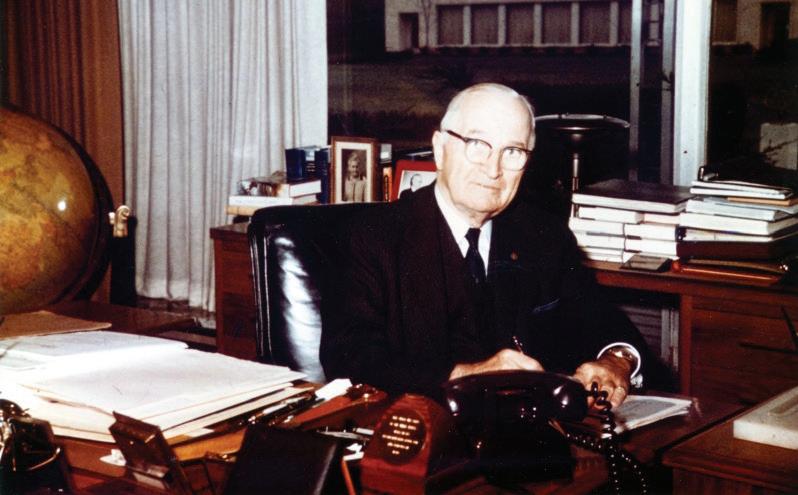
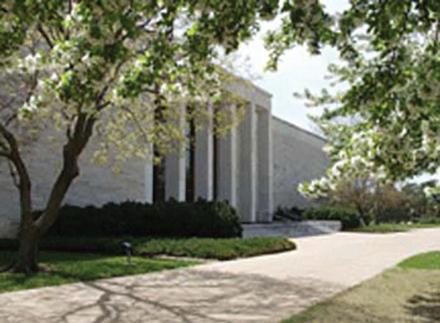
Library is in Independence, Mo., and is set to welcome an outstanding exhibit for the nation’s birthday. “America 250: The Story of US: Opening the Vault” will be at the Truman Library from April 20 through May 24.
This travelling exhibit is bringing an incredible collection of historic documents that are almost never seen outside of the National Archives in Washington, D.C. This is really a unique and wonderful opportunity for the rest of us in ‘flyover’ to see a small portion of the documents that shaped our history.
Let me mention just a few of the highlights of this collection:
• The 1783 Treaty of Paris, which ended the Revolutionary War
• The 1820 Missouri Comprise
• The 1857 Dred Scott decision
• The 1896 Plessy v Ferguson decision.
• The 1954 Brown v. Board of Education decision
One of the fascinating things about the exhibit is that it allows us to see how sometimes we got it wrong (Plessy), and then discover how we eventually got it right (Brown).
For history buffs, I will mention that if you venture to Independence, you may also want to visit the World War I Museum in Kansas City.
Now, if you happen to miss the exhibit at Truman’s Library, never fear, it moves to the Dwight D. Eisenhower Presidential Library from June 2 through July 5. That’s only a few more hours west in Abilene, KS. Eisenhower knew the meaning of strength and humility and practiced both, and I believe that is reflected in the life story of his library. Good lessons to be learned, perhaps.
Veterans, take proof of service, as Ike makes sure you are admitted free. Both the Truman and Eisenhower libraries receive wonderful reviews as places rich in history and welcoming to people of all ages.
Now, also on my bucket list when I reach the ‘young retiree’ stage is an unofficial Presidential Library. Abraham Lincoln served long before the creation of National Libraries, but his home in Springfield, Ill., has taken care of that for him.
The Abraham Lincoln Presidential Library and Museum may not fall under the guidelines of the National Archives, but it stands as a fitting tribute to the man who saved us as a nation. The library has a wonderful website where you can learn much more. Lincoln’s Tomb is another moving site to visit in Springfield.
On a happier note, Springfield is a Route 66 town, so it’s just brimming with fun and history. It’s a natural road trip.
So, that is the book I will be writing when I am a ‘young retiree.’ Hmmm… could be a ways off. In the meantime, I am open to road trip invitations.
(OK, OK, if you must know: Texas hosts Presidential Libraries for Lyndon B. Johnson, George H.W. Bush and George W. Bush. California hosts libraries for Richard Nixon and Ronald Reagan.)



During the St. Thomas Aquinas DARE program, one of the assignments for the students are to write about what they have learned. The following are the top 3 essays submitted from the 18 students who are in the 5th and 6th grades at the Catholic school.
Finley Williams won recognition for having the best essay.
From Finley Williams
Over the past few weeks my class has done a program called D.A.R.E. We have learned about drugs, alcohol, peer pressure, and how to resist them. Before this program I knew that drugs and alcohol were pretty bad, but I didn’t know how much I needed to know about them to be able to stay safe. Now I feel like I can use this information that DARE has taught me to stay safe. Let me tell you about some of the stuff I learned in DARE.
In DARE we have learned about a lot of new words and what they mean or what they are. But one of the main things we learned was to use the Dare Decision Making Model. It can also be abbreviated into DDMM. The model also uses the acronym DARE. D define, A assess, R respond, E evaluate, you can use this to help you make responsible and structured decisions.
In addition to the DDMM method we also learned about tobacco. Did you know that around 480,000 people die from tobacco every year in the U.S.!
That’s why it’s important to know about the health effects of tobacco. For instance when using tobacco, the nicotine in cigarettes and chewing tobacco can reduce the amount of blood flow to the brain which is really bad for your health. Smoking can also cause cancer, heart disease, and upper respiratory problems as well.
I wouldn’t have learned all of this and more if it wasn’t for the D.A.R.E. program so I think DARE is a perfect way for 5th and 6th graders to learn about peer pressure, drugs, and how to resist them. I have learned a lot about how to stay safe and I want to thank my DARE officer, Steve Thumma. He has helped so much with understanding it and making it fun rather than just another subject. I hope that you have learned something new while reading my DARE essay.

From Liana Veldhuizen
If one of your friends comes up to you and asks for you to have a cigarette, do you know how to resist it? D.A.R.E. has taught us how to resist and make good choices. D.A.R.E. is something that will always pop into my brain when I’m in a bad situation.
One of the very first things we learned in D.A.R.E. is the DDMM, which is the decision making model. The decision making model is a step-by-step process that can help you make good decisions and the best out of situations. The first stage of the decision making model process is to Define the situation, what is the problem or challenge in your position? The second stage is to Assess what your choices are. The third stage is to Respond. In this stage, use the information and facts that you have gathered to make the best decision. The last stage is to Evaluate, do you think you make the right choice in this situation? You can see that all of the first letters of these stages spell out D.A.R.E.
We all know cigarettes are bad for you, but most people don’t know how bad cigarettes are, not only for yourself, but also for our world. Around 4.5 trillion cigarette butts are littered into the environment every single year. This makes cigarettes the most common form of plastic litter in the world. A single cigarette can pollute 3.7 liters of water, this is the water that animals live in! More than 480,000 Americans die from smoking or tobacco related causes each year. Smoking can cause heart disease, upper respiratory problems, lung cancer and many more things. Just think, do I want any of those things to happen to me?
D.A.R.E. has taught us how to handle and resist peer pressure. Peer pressure can make you do things that you wouldn’t usually do. When under peer pressure, you can walk away, change the subject, say no to the person and give an excuse, or go be with friends who don’t do drugs and who you trust.
There are various communication styles that we learned about in D.A.R.E.. The three communication styles that we learned were, demanding, unsure, and confident. When you’re confident, you are speaking up in a nice and clear voice and making eye contact. When you’re unsure, you might mumble or be talking really quietly, you also might be avoiding eye contact and stuttering. When you’re demanding, you might be yelling or talking in a really loud voice, you also might not be using the best words and hurting other people’s feelings.
As I’ve said before, D.A.R.E. has taught us how to make good choices. A good choice is a choice that makes you feel good on the inside, it’s almost like taking a brick off of your chest. If you make a bad decision, it may lead to consequences,k such as getting grounded, getting your phone taken away, or hanging out with the wrong people. Make sure you think before you make a big decision. Define the problem, challenge or opportunity, Assess what your choices are, Respond with the facts and information you gathered to make the best decision and Evaluate your choice, did you make the right decision? Always think of D.A.R.E. and the decision making model before making a big decision.
Overall we can see how much we have learned in D.A.R.E. class. Thank you to our D.A.R.E.officer, Steve for making D.A.R.E.class a class I would look forward to. Because of D.A.R.E. I know that making the right choice today means a happier and healthier tomorrow.




cont. on page 22





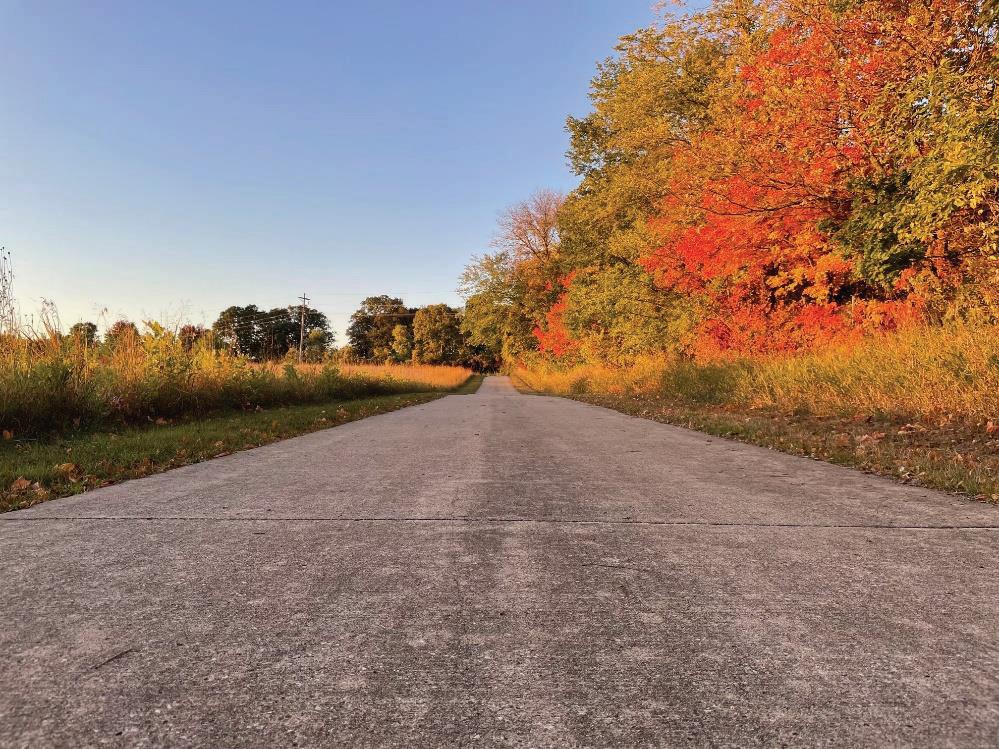
The Recreation and Public Grounds Department in Webster City offers a wide range of opportunities and amenities designed to enhance quality of life and encourage community connection. Spread throughout the community, residents and visitors can enjoy two recreational trail systems, 11 outdoor parks, an outdoor swimming pool, and a full-service recreation center. Together, these spaces create a well-rounded system that supports everything from active lifestyles to quiet moments in nature.
A key component of this system is its scenic and accessible trail network. The Boone River Trail is a picturesque 5.7-mile paved route that stretches alongside the Boone River from Nokomis Park to Briggs Woods Park. Along the way, users can take in beautiful river views, travel through wooded areas, and access canoe landings, making it ideal for walking, running, biking, and even paddling adventures. Closer to the heart of the community, the Brewer Creek Trail offers a two-mile loop that winds through Brewer Creek Park, follows the creek, and continues around Graceland Cemetery. This shorter, peaceful route is a favorite for those seeking a relaxing outdoor experience while still enjoying scenic views and opportunities for wildlife observation. Highly popular for biking, walking, and running, it serves as an everyday escape for many residents. Together, these trails enhance quality of life, encourage outdoor recreation, and connect residents to Webster City’s unique natural landscapes.
horseshoe pits, a sand volleyball court, and the scenic White Fox Creek winding through the grounds.
Additional parks throughout the community offer diverse recreational opportunities for all ages. Lions Stafford Park features ADA-accessible playground equipment, while Nokomis Park is a hub for athletics and outdoor activity. This park includes baseball and softball diamonds, sand volleyball courts, modern
Across the park system, each location brings its own unique features and experiences. Brewer Creek Park stands out with its enclosed rental shelter, outdoor firepit area, 18-hole disc golf course, and natural prairie landscape. The park also provides direct access to the Brewer Creek Trail and transforms into a popular winter destination with sledding on “Hospital Hill.” Kendall Young Park serves as a central gathering space with four shelters, three available for rent, along with seasonal restrooms, the Girl Scout Lodge,
rentable shelters, playground equipment, and Art in the Park features, creating a space that blends creativity with outdoor fun. East Twin Park offers an even broader range of amenities, including a splash pad, skate park, outdoor fitness area, basketball and pickleball courts, a mini pitch, and updated playground equipment. Looking ahead, the addition of a new restroom and shelter area in 2026 will further enhance the park’s accessibility and usability.
Other neighborhood parks contribute to the system’s variety and charm. Wehrheim Park provides an open shelter, playground equipment, a basketball court, and ample green space for unstructured play. Sketchley Park offers a dog park along with additional open space, making it a favorite for pet owners. Riverside Park highlights Webster City’s connection to the Boone River, featuring canoe access, entry to the Boone River walking trail, and the Water Maze which is an educational wetlands area designed to demonstrate stormwater management in an engaging, natural setting.
Rounding out the system is Wilson Brewer Historic Park, where recreation meets history. Visitors can explore a network of trails while experiencing preserved landmarks such as the Illinois Central Depot, the first Hamilton County Courthouse, Mulberry Center Church, Harmony Center School, the Jameson Log Cabin, and the Wilson Brewer/Jackson Groves Log Cabin and Burial Mound. An Illinois Central caboose adds to the park’s historic charm, offering a unique glimpse into the area’s past.
Together, these parks, trails, and facilities reflect Webster City’s commitment to providing meaningful recreational opportunities while preserving natural beauty and local heritage. Whether gathering with friends and family, staying active, or exploring the community’s history, there is truly something for everyone to enjoy. All parks are open to the public from April 15th through October 15th. Rental of park shelters may be made by contacting Fuller Hall Recreation Center at (515) 832-9193.
The Fuller Hall Recreation Center is open to the public year-round. It provides an indoor gymnasium, racquetball courts (2), 25-meter indoor swimming pool (closed during summer months), cardio room and weight room. The center also provides a game room and a tv lounge.
Fuller Hall Summer hours are as follows:
Beginning Monday, June 1st
Monday-Friday: 6:00am-9:00pm
Saturday: 7:00am-9:00pm
Sunday: 1:00pm-9:00pm
Spring/Summer Youth Recreational Activities:
Youth Baseball (3-year-old preschool – 3rd grade) Begins Monday, May 4th
Youth Softball (3-year-old preschool – 3rd grade) Begins Monday, May 4th
Youth Tennis (finishing 2nd – 8th grades) Begins June 15th – June 26th
Youth Strength & Conditioning (finishing 6th & 7th grades) Begins June 2nd
Youth Golf
Begins June 2nd
Aquatots (Outdoor Pool) (6 months – 2 years old) Begins June 8th – 26th from 5:00pm-5:30pm
Preschool Aquatics (Outdoor Pool) (3- & 4-year-olds) July 13th – 17th
American Red Cross Swimming Lessons (Outdoor Pool) (Levels 1-6) – June 8th – 19th
Summer Adult Recreational Activities:
Adult Coed Sand Volleyball
Adult Coed Slow Pitch Softball
AquaZumba (Outdoor Pool) – Monday, Tuesday, Thursday

























Hamburgers are a staple of summer menus in millions of homes. Whether you’re hosting friends on Memorial Day weekend or simply looking for a hearty midweek meal, burgers and summertime cooking go hand in hand.
Hamburgers are a straightforward dish that are often prepared on a grill. But burgers also can be prepared on a stovetop, which can add a new flavor profile to this beloved summertime staple. Those looking to do just that can try this recipe for “Beef Burgers With Onions, Spinach, Ketchup, and Blue Cheese” from Lines+Angles.
For the sauce:
1 tablespoon olive oil
1 small red onion, peeled and finely diced
1 to 2 cloves garlic, peeled and finely diced
1 tablespoon honey
1 tablespoon brown sugar
8 ounces tomato puree
31⁄2 tablespoons tomato passata
1 tablespoon Worcestershire sauce
1 tablespoon apple cider vinegar
1 tablespoon whiskey
1⁄2 teaspoon salt or to taste
1⁄8 teaspoon freshly ground black pepper or taste
1⁄2 teaspoon paprika, or to taste
1⁄4 teaspoon chili powder, or to taste
For the burgers:
11⁄4 pound ground beef
1 onion, peeled and finely diced
1 tablespoon mustard
1 tablespoon Worcestershire sauce
1 tablespoon chilli sauce
1 tablespoon vegetable oil
4 ounces Stilton cheese, sliced
4 sesame seed burger buns
2 to 3 handfuls baby spinach
6 tablespoons crispy onions
Makes 4 Servings
For the sauce: Heat the oil in a pan and lightly sauté the diced onion and garlic. Stir in the honey and sugar and simmer briefly. Mix in the tomato puree, passata, Worcestershire sauce, vinegar, and whiskey. Simmer until thickened. Season the sauce with salt, pepper, paprika, and chilli powder to taste.
For the burgers: Place the beef in a bowl, add the onions, salt, pepper, mustard, Worcestershire sauce, and chili sauce, and mix well. Shape into 4 burgers.
Preheat a griddle pan. Lightly oil the pan and grill the burgers for 8 to 10 minutes, turning once. During the last minute of cooking, top the burgers with cheese and allow to melt. Remove the burgers from the pan and set aside. Halve the burger buns horizontally and toast in the pan, cut-side down, for 1 minute, then remove.
Layer the bottom half of each bun with spinach and sprinkle with crispy onions. Place the burgers on top, drizzle with tomato sauce and cover with the top bun halves. Fix with a skewer if desired and serve with the remaining sauce separately.
Look at these photos and see if you can identify these local landmarks.
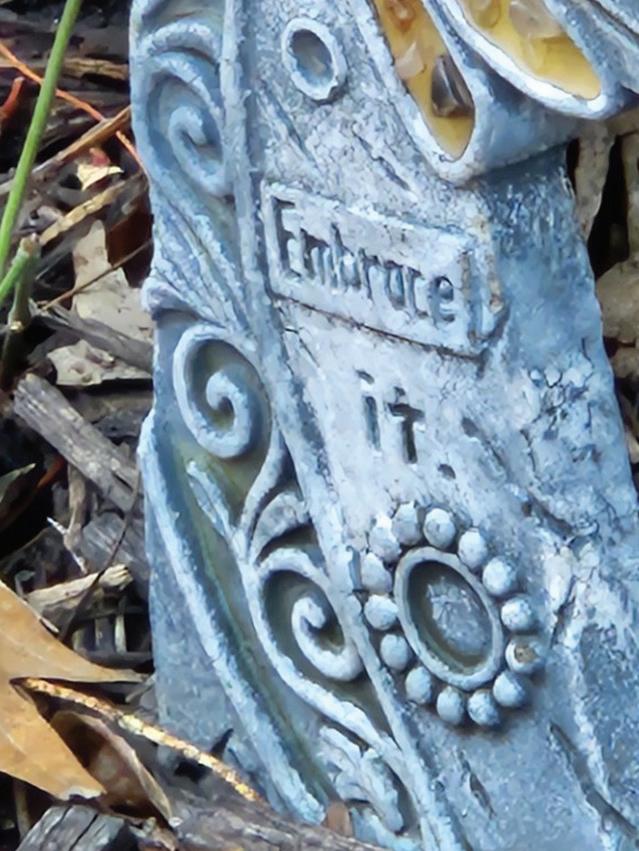
#1: American Legion Building: 726 Second Street
#2: Pocket park across from Daily Freeman Journal, next to The Elks
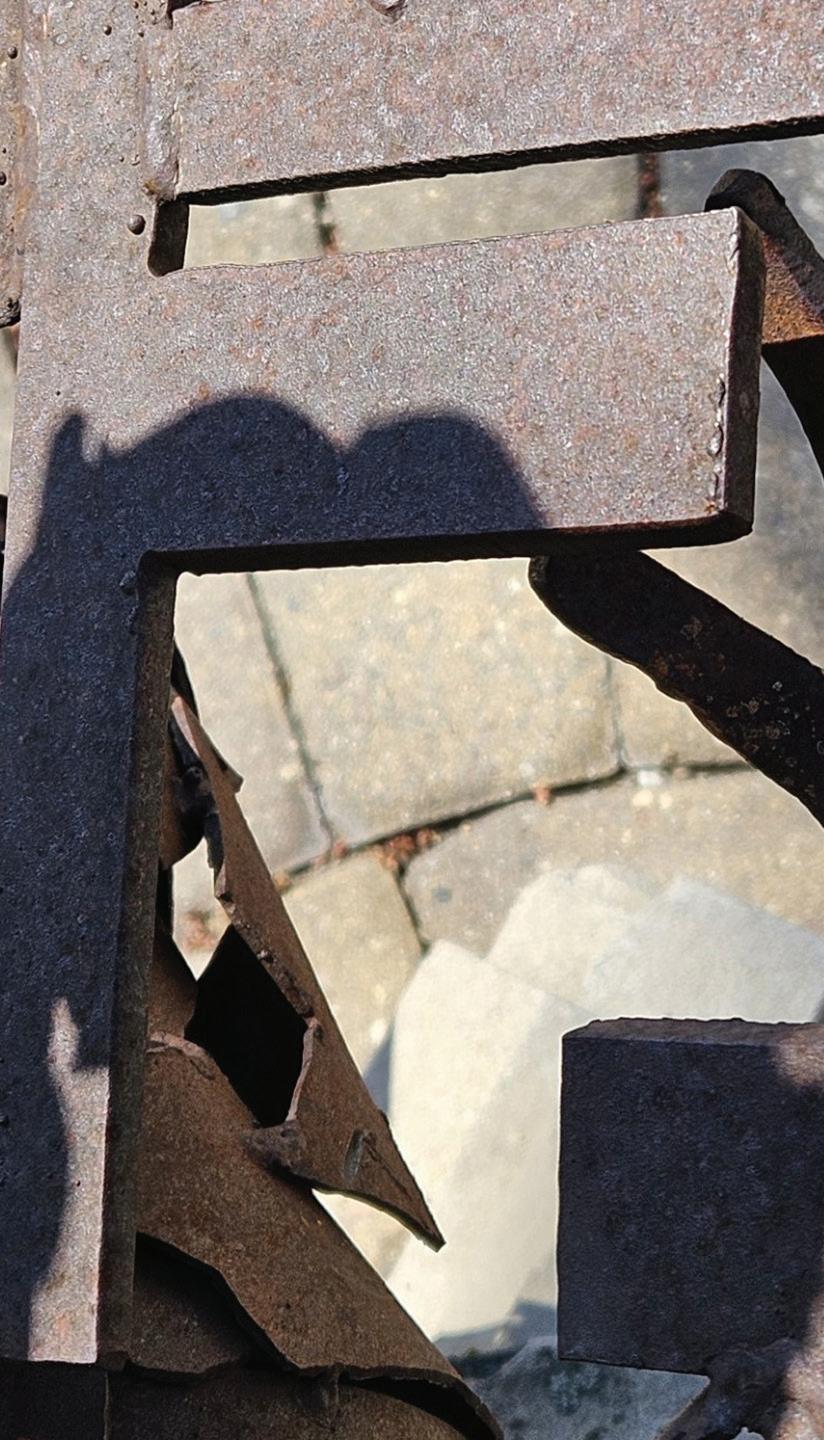

Submit your entry
Please include the name of the building icon on which the Landmark is located, your name & phone number. Submit your entry ktaylor@freemanjournal.net or deliver to The Daily Freeman-Journal at 720 Second St., Webster City, IA
Correct answers will be entered into a drawing for




























































































by Jim Miller
Dear Savvy Senior ,
What are the absolute lowest-cost smartphone plans for seniors who mainly talk and text but need a little cellular data for email and occasional use? I’m currently paying $40 a month and hoping to cut that down.
You’re asking a smart question. Many seniors pay far more for smartphone service than they actually use. If most of your phone activity is calls, texts, email, and light web browsing, there’s usually no need to spend $40 or more a month. The good news: plenty of low-cost carriers now cater to light users who want reliable service without the extra cost.
The cheapest plans today mostly come from mobile virtual network operators (MVNOs) – smaller carriers that lease coverage from major networks like T-Mobile, Verizon, and AT&T. Because they don’t run their own towers, MVNOs can offer basic service for a fraction of the cost of major carriers, while still providing nationwide coverage. Here are some of the best options available now.
According to Consumer Reports, Mint Mobile is a top value among low-cost smartphone plans. For $15 per month, you get unlimited talk and text plus 5 gigabytes (GB) of data. The catch: you pay for a full year upfront – $180 plus taxes – but for seniors comfortable paying annually, it’s a smart way to lock in savings. Mint runs on T-Mobile’s network and works with most unlocked phones.
If you want a similar plan without the upfront commitment, T-Mobile Connect is worth a look. For about $15 per month, you get the same 5 GB of data and unlimited talk and text, with no contract and the flexibility to switch plans month to month. It’s an easy, low-commitment option on the same reliable T-Mobile network.
For seniors who barely use their phone, Ultra Mobile’s PayGo plan is the absolute cheapest option right now. At just $3 per month plus fees, it includes 100 minutes, 100 texts, and 100 MB of data, with extra usage costing only a few cents per minute, text, or MB. It’s ideal for anyone who mainly needs a phone for emergencies, and it also runs on T-Mobile’s reliable network.
Tello is another flexible option, with plans starting at $8 per month for 300 minutes, unlimited texts, and 2 GB of data. You can easily add more minutes or data in small, inexpensive increments, making it ideal for seniors who want control over their costs.
Finally, US Mobile offers a plan starting at $10 per month (paid annually) for unlimited talk and text plus 4 GB of data. Simple, affordable, and straightforward, it’s a solid choice for seniors who want coverage without extra bells and whistles.
If your budget is especially tight, be sure to check into the federal Lifeline Assistance Program. Lifeline provides a $9.25 monthly discount on phone or internet service.
You may qualify if you receive benefits such as Medicaid, SNAP (food stamps), Supplemental Security Income (SSI), public housing assistance, or Veterans Pension. You may also qualify based on income alone if your household income is below 135 percent of the federal poverty level – currently $21,546 for one person or $29,214 for two.
To learn more or apply, visit lifelinesupport.org. If approved, you can choose from participating providers in your area, and in some cases even apply the discount to service you already have, if your provider participates.
Before switching plans, make sure your phone is unlocked and compatible with the new carrier’s network. A quick compatibility check on the provider’s website can help ensure a smooth transition and keep your savings on track.
Jim Miller is a contributor to the NBC Today show and author of “The Savvy Senior” book.









cont. from page 11
From Gracyn Woodward
In D.A.R.E. we learned about two D.A.R.E.s. I’ll tell you about both. #1 is the name of our class. (Drug Abuse Resistance Education) #2 is part of the DDMM. (Define Assess Respond Evaluate)
Did you know that in D.A.R.E. you learn how to make safe and responsible choices? When Officer Thumma comes to our school he tells us how to have fun while being safe from drugs and alcohol. If we listen, pay attention and think of ways something is bad, we will never have problems with drugs, tobacco or alcohol. To help introduce you, let me tell you five fun facts about alcohol/drugs and the side affects.
1. There are more than 200 harmful chemicals in cigarettes and cigarette smoke
2. Nicotine in cigarettes and chewing tobacco reduces the amount of blood that flows through our bodies which interferes with the way our brains in our bodies work
3. Chewing tobacco can cause mouth cancer, tooth loss, oral cancer, heart disease, nicotine addiction.
4. Smoking is the leading preventable cause of death in this country, more than 480,000 Americans die from tobacco related causes each year and almost 45,000 feathers per year can be attributed to second hand smoke.
5. Smoking can cause yellow teeth, bad breath, dry skin, wrinkles, 12 different types of cancers, diabetes and heart disease.
We use the DDMM (D.A.R.E. Decision Making model) to make responsible choices. When you use the DDMM you define, assess, respond and evaluate. Define means stating your problem. Assess means thinking about your choices to fix the problem. Respond means picking one of the choices from Assess. Last but not least, Evaluate means to think over the choice and make sure you picked the right one.

In D.A.R.E. I’ve learned about the 5 W’s. I’ve even interviewed my mom when she lost her sweater in the park on her walk by using the 5 W’s. Who, =What, When, Where and Why.
Example -Michael was being bullied
WHO - Michael
WHAT - Pushing, name calling and mean texts
WHEN - Recess
WHERE - School and around town
WHY - Repeated behavior
CONCLUSION: Michael has a school bully who repeatedly calls him names, pushes him and texts mean things at recess and around town.
A peer is someone who is your own age. Pressure is when someone stresses you. So peer pressure is when someone your own age pressures you or gives you stress. Peer pressure can be hard to control, but there are multiple ways you can calm it. Here are three ways I control peer pressure. Walking away and taking a big breath, saying “No” setting, and strong boundaries.
I think the three most important words in the glossary of our D.A.R.E. books are confident, nonverbal communication and pressure. Confident means to be brave and take risks, but most importantly to be firm and have structure. If you are using nonverbal communication, you’re listening and understanding what someone is saying to you. Pressure is when someone pushes you to do something I don’t mean they physically touch you, but they give you stress.
In my opinion I think D.A.R.E. has helped me resist peer pressure, avoid drugs, and help make safe and responsible choices, I appreciate the chance to have fun and make sure I’m safe from drugs and drug users. Thank you to the St. Thomas Aquinas staff for organizing this class and to the Webster City police officers especially Officer Steve Thumma.