



June 28th, 2026

Larry Mitchell
the musical man of Fort Dodge


















2D Larry MitcheLL
Fort DoDge
3D Joe hora
Fort DoDge
4D Vickie ZiMMer Fort DoDge
5D Dennis anD tracy goDwin Fort DoDge
6D sarah rustVoLD Fort DoDge
7D karLa BaccaM-Bohn Manson

June 28th, 2026
Larry Mitchell
the musical man of Fort Dodge
2D Larry MitcheLL
Fort DoDge
3D Joe hora
Fort DoDge
4D Vickie ZiMMer Fort DoDge
5D Dennis anD tracy goDwin Fort DoDge
6D sarah rustVoLD Fort DoDge
7D karLa BaccaM-Bohn Manson
8D DeB Foster rockweLL city
10D Justin waLLace anD Zach waLLace Fort DoDge
11D Joan ascherL Fort DoDge
12D Margaret JunkMan Fort DoDge
14D PauL BLooMquist Dayton
16D sonJa Lee Bock Fort DoDge
18D Denis schuLte Fort DoDge
20D eric gerDes Pocahontas/PoMeroy
21D anthony wuBBen eagLe groVe
22D anDrea kuhn gowrie
24D teaM 4 hunger huMBoLDt
25D nicoLe BaLk Fort DoDge

26D staci LairD Fort DoDge
29D BarB crooks Fort DoDge
31D Jake Van Diest weBster city
Larry Mitchell, of Fort Dodge, brought musicals to the community — either through Fort Dodge Senior High or Comedia Musica Players — for nearly four full decades.
SEE STORY, PAGE 2D



By BILL SHEA bshea@messengernews.net
When Larry Mitchell first went to college, he envisioned himself becoming a veterinarian.
But he soon found himself spending more time in the music room than he did in any laboratory. That led to a career change that would bring years of enjoyment to Fort Dodge audiences.
Between 1967 and 1997, Mitchell directed 31 of the spring musicals performed every year by Fort Dodge Senior High School students.
The first musical he conducted was 1967’s “Where’s Charlie” with Scott Griffith in the lead role.
He concluded his high school career in 1997 with “Naughty Marietta,” an operetta written by Victor Herbert.
“The melodies are just wonderful,” he said of that show.
While he retired from the school district, he kept directing shows for Comedia Musica Players, a Fort Dodge musical theater group he established in 1968. In 2006, he directed his last show with that group. Entitled “Cardiff,” it was about the Cardiff Giant sculpted from Fort Dodge gypsum and the focal point of one the best-known hoaxes of the early 20th century.
Based on his long experience with shows, Mitchell wrote a book for fellow directors called “A Practical Handbook for Musical Theatre.” He said the first edition was a pamphlet. The most recent edition is big enough to be a doorstop.
He said casting is the biggest challenge for musical theater directors.
“You have to know your cast,” he said. “You have to know who you’re dealing with.”
Mitchell has sat through countless auditions, listening to singers try out for different parts in musicals. Sometimes he was surprised by the level of talent he heard at those auditions.
“I would find a student with a wonderful voice and think, ‘Holy cow, where’d they come from?’” he said.
He recalled that many times
Mitchell brought musicals to FD community for years

LARRY MITCHELL, who directed 31 of the annual musicals performed by Fort Dodge Senior High School students, received a choral director’s highest honor in 2021 — the Robert M. McCowen Memorial Award.
students would thank him for giving them a part in a show.
“I always told them, ‘You won it. I didn’t give you a thing,’” he said.
Mitchell went to Iowa State University in Ames for veterinary school. As an extracurricular activity, he sang in the choir directed by Robert McCowen. That director also recruited him to sing in the choir at a local Presbyterian church.
After two years at Iowa State, Mitchell realized that music, not veterinary medicine, was his calling.
“Where’s Charlie,” which is a comedy.
A long string of musicals, most of which were performed in the gym of the old South Junior High/Fair Oaks Middle School, followed.
Mitchell said one of the most memorable ones was the 1970 show “Hello Dolly,” starring Donna Johnson.
“She was wonderful,” he said.
He said the costumes were rented from Brooks-Van Horn Costume Co. in New York City. When they were received, a tag with the words “Miss Channing” was found in a dress, he said. Carol Channing was the star of the original Broadway production of “Hello Dolly.”
Locally, “Hello Dolly” was so popular that an extra performance was added, according to Mitchell. The show ran on Thursday, Friday, Saturday and Monday, he said.
Another musical hit was “Funny Girl,” performed in 1977.
“That was a huge success for us,” he said.
The 1986 performance of “Seven Brides for Seven Brothers” was also a memorable one for Mitchell.
“We had a great senior class,” he said. “We were just loaded.” Mitchell also had some memorable times directing choirs.
In 1973, he directed a 200-member chorus in Los Angeles, California.
So he transferred to Iowa State Teachers College, today’s University of Northern Iowa, to become a music teacher.
After graduating, he taught music for grades 8 through 12 at Orange Township School District south of Waterloo.
“I’ve only applied for two jobs — that one and Fort Dodge,” he said.
After being hired by the Fort Dodge Community School District, he arrived in the summer of 1966.
The next spring he directed
The following year, he directed the Fort Dodge Senior High School Choir in a Des Moines show in which the group performed “Death’s Dance.” Mitchell said that is a “really difficult piece” that involves singing, speaking and dancing.
In 1976, he directed the Iowa All State Summer Chorus at the University of Iowa.
His favorite Comedia Musica shows included “Man of La Mancha,” "Phantom" and “Evita.”
In 2021, the Iowa Choral Directors Association recognized Mitchell by presenting him with its highest honor, an award named for the man who set him on the path to a career in music: the Robert M. McCowen Memorial Award.
By DANA BECKER dbecker@messengernews.net
For Joe Hora, there was never a second thought about where he would raise his familiy.
Hora, a Fort Dodge Senior High graduate, could have gone to any number of places or communities after completing his studies at Iowa State University.
But he didn’t.
“(My wife) Meg and I both grew up in Webster County, and Fort Dodge always felt like home to us,” Hora said. “Our biggest goal was to raise our kids in a community that supports them and helps them thrive. Fort Dodge has been a wonderful place to do that, and it’s a place we’re proud to call home.”
That decision also meant being close to relatives who remain in the area.
“Family, without a doubt (is what makes Fort Dodge feel like home),” he said. “Being close to both sides of our family is incredibly important to us, and we feel very fortunate to live just minutes away from so many loved ones.
“We also appreciate the strong community of young professionals who are raising families, just like we are.”
Gregg and Liddy Hora, Joe’s parents, have “always been deeply involved in the Fort Dodge community,” which made it something he wanted to continue on as an adult.
“Over the years, they’ve made a meaningful impact and truly helped make the town a better place,” Hora said. “They continue to stay engaged
and support efforts that contribute to the community’s growth and overall success.”
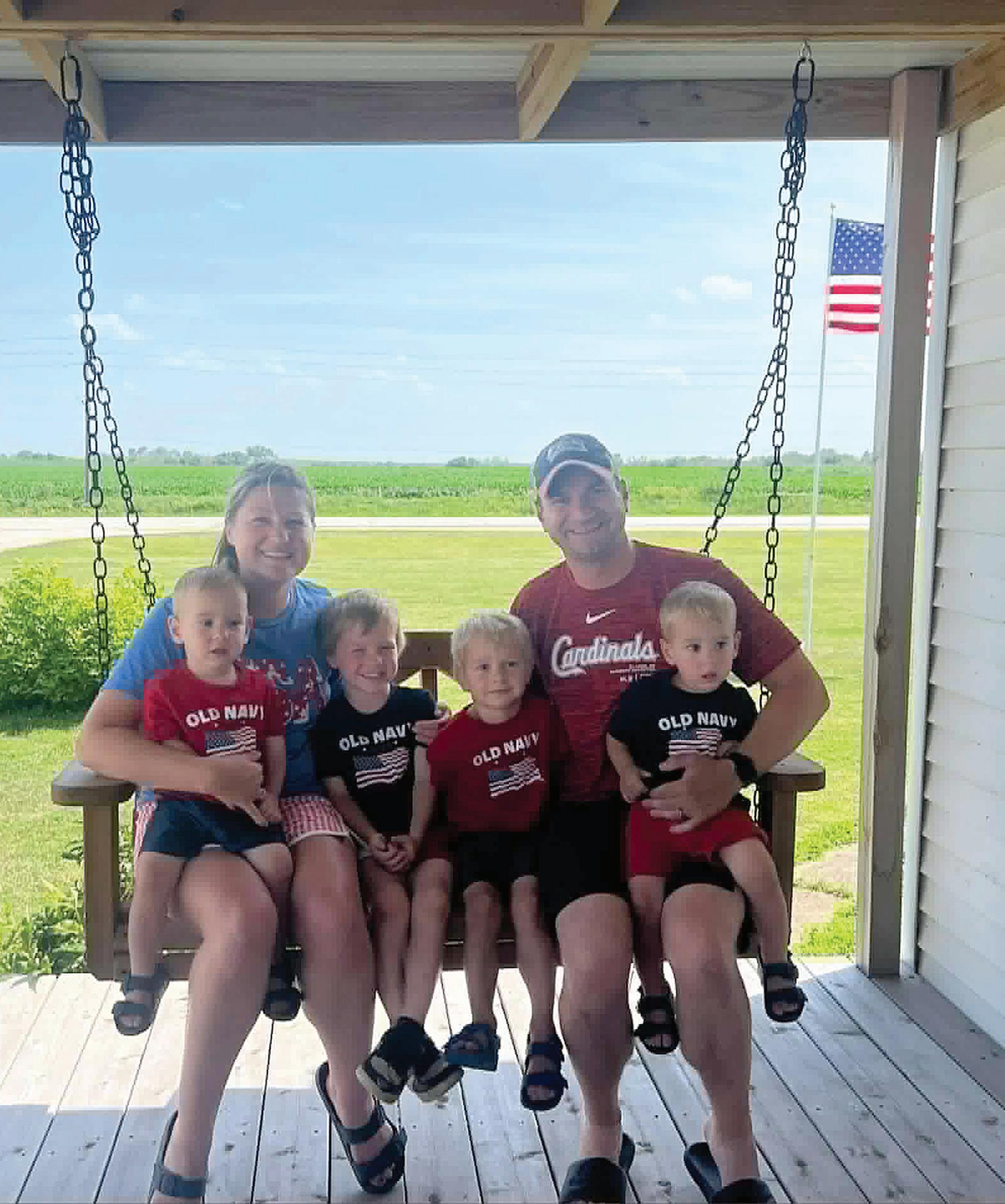
Joe and Meg Hora do that by being actively involved through Holy Trinity Catholic Church, as Meg also volunteers with St. Edmond Parochial School while Joe serves on the Webster County Farm Bureau Board. They also support other local nonprofits and community-based organizations throughout Fort Dodge.
Hora currently leads the Channel Seed business across the Midwest with Bayer Crop Science. Meg Hora worked in the Fort Dodge Community School District for nearly a decade before transitioning to stay at home and care for their four children.
“I’ve had a great experience with the company for over a decade and truly enjoy working in the agricultural industry,” Hora said. “Partnering with farmers and others across agriculture continues to be very rewarding for me.”
As for the future, Hora would like to see Fort Dodge remain focused on investing within.
“Fort Dodge has made strong investments in schools, amenities and resources for the next generation, and it’s exciting to see that progress,” he said. “I’m confident the community’s leaders will continue to build on that momentum.
“We feel very blessed by what Fort Dodge offers today and optimistic about what’s ahead.”











By ERIC PRATT epratt@messengernews.net
Vickie Zimmer had been a nurse for most of her professional career when she discovered a fulfilling life completely outside of her comfort zone.
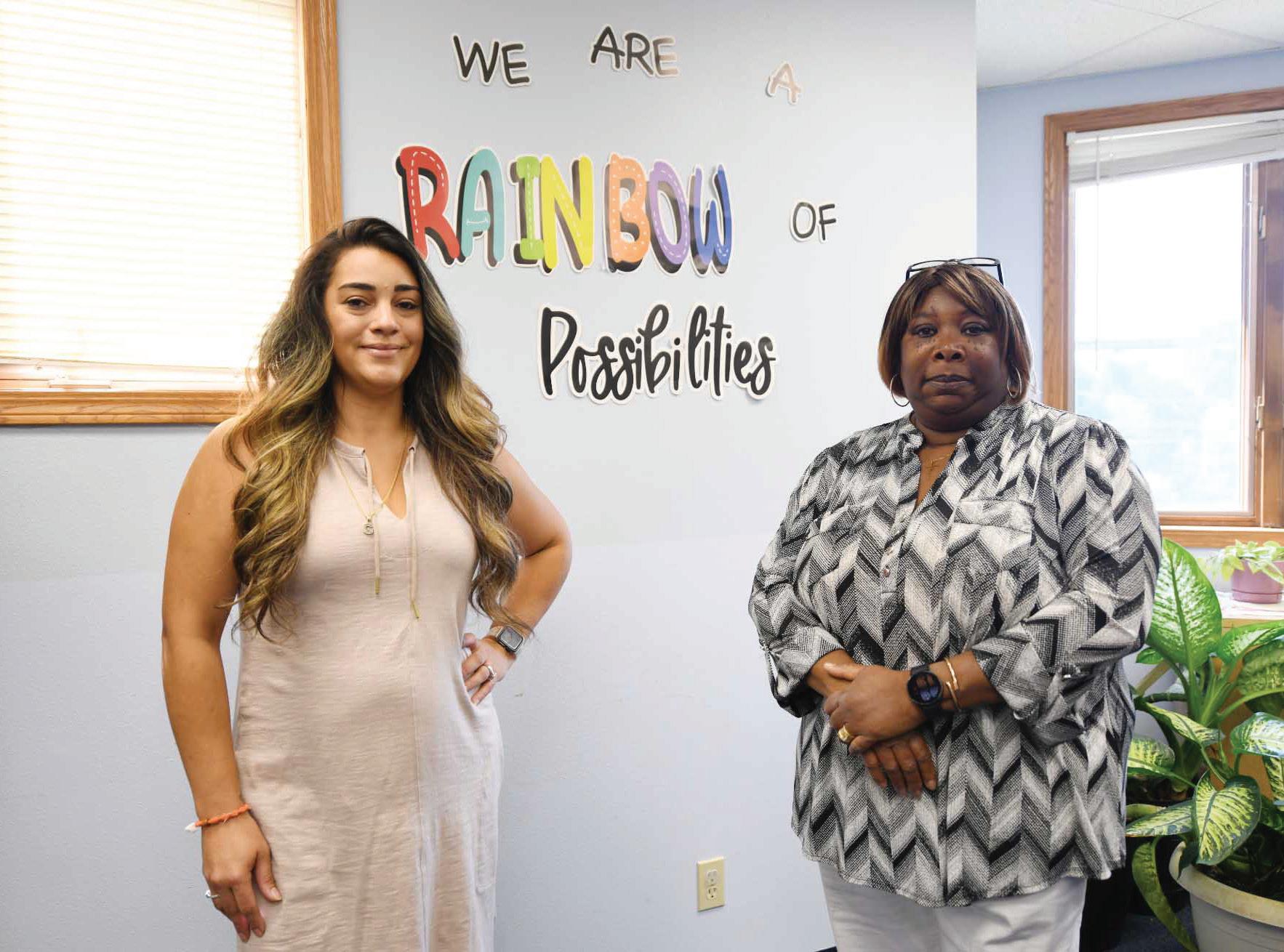
What began as a fill-in favor for a relative slowly but surely evolved into a new path for Zimmer, who today serves as the director of the Calvary Family Center in the Pleasant Valley neighborhood.
In 2021, the woman affectionately known as “Nana” or “Miss Vickie” offered to lend a helping hand to a cousin who was running the daycare across from — and owned by — Calvary Memorial Church in Fort Dodge. At first, Zimmer served strictly as a volunteer.
“I had been a very dedicated nurse for a long time,” the 61-year-old Zimmer said. “But I was getting older and it was getting to be a little too much. That’s when this opportunity came around.
“It was truly God’s will for me to get involved, because child care was not my field (of expertise) back then.”
Zimmer spent about a year assisting at the facility, which serves between 30 and 40 kids who vary in age from 2 months to 12 years old. The director position window then opened for Zimmer to consider.
At first, she was hesitant.
“They asked me about it, and I said no thank you. Then I said no again,” Zimmer laughed. “I love kids, but I had been working with elderly people for most of my career up until that point.
“A lot was going on with my nursing situation at the time. God removed me from that and placed me in this
'Miss Vickie' heads local daycare after a long career serving others in nursing field
"We
may not be perceived as one of the ‘elite’ daycares in Fort Dodge ... But we are absolutely one of the best. We do the job right and we care about our kids, from the time they are babies through when they start to walk and talk and eventually go to school."
— Vickie Zimmer Director, Calvary Family Center
to the kids in public — these days especially.
one physically, mentally and emotionally. It’s become a passion, and I haven’t looked back since.”
Today, Calvary Family Center is truly a family affair. All nine staff members are related, and all nine have obtained their Child Development Associate (CDA) certification — a nationally-recognized credential for early childhood educators working with children up to age 5. In order to attain a CDA, a person must complete at least 120 hours of early childhood education training, 480 more hours of relevant work experience, put together a complete portfolio of qualifications, and pass an
exam.
“We take a great deal of pride in all of our staff members being qualified, educated, trained properly and CDA certified,” Zimmer said. “We sometimes have to fight certain stigmas and stereotypes given where we are located (1318 10th Ave. S.W.); it’s a challenge because we may not be perceived as one of the ‘elite’ daycares in Fort Dodge, and we are a nonprofit organization. But we are absolutely one of the best. We do the job right and we care about our kids, from the time they are babies through when they start to walk and talk and eventually go to school.
“I’m a strong competitor. If others can do it, so can we. We have an awesome place. People notice it immediately when they visit. We strive to be number one and work very hard to back that up and prove it to our families and the community.”
In her spare time, Zimmer is known around the neighborhood for her culinary skills.
“I do a lot of cooking for the community,” said Zimmer, who remains a licensed and registered nurse. “A lot of fundraisers for church and repasts for funerals. Different dinners throughout the year. Whatever we can to help.” Zimmer is a welcome sight
“They see you out and around and just light up,” Zimmer said. “Whether they’re still at your daycare, moved on to a different one or have gotten older, you hear a “Nana!” or “Miss Vickie!” and it makes your day. They don’t forget you. And that affection and love is inspiring.
“We have more of a ministry than a daycare, and we teach the importance of respect. We have our ups and downs and good days and bad, of course, but I’m winning. I could probably retire soon, but I could also do this until I’m 80. We have a terrific team in place. It’s running smoothly and we work well together. This maybe wasn’t what I had planned or expected. But I am certainly blessed.”
By LORI BERGLUND DOLLIVER PARK —
They just may have the best backyard in Webster County.
Dennis and Tracy Godwin have been making their second home at Dolliver Memorial State Park for six years now. Birds serenade them from sunrise to sunset. Plentiful shade and a cool breeze invite them out to visit with the neighbors, who come and go every week.
The Godwins are full-time campground hosts at Dolliver Memorial State Park. They move in with their long, fifthwheel camper each year about April 1 and stay until the air turns cold in November, when they return to their Rockwell City home.
As volunteers, they welcome campers and serve as friendly neighbors when other campers need a little information or a helping hand.
“I like meeting the different people,” Tracy Godwin said. “You would be amazed at the different places people come from and camp here. We’ve had people from Zimbabwe, Turkey, Germany, China, Japan, Laos.”
They even get campers from Iowa, including many from right here in Webster County who come to take advantage of all that Dolliver Memorial State Park has to offer.
As seasoned campers,
the Godwins appreciate the natural beauty that surrounds visitors to the campground and park at large. For Dennis Godwin, his favorite time is early in the morning, when most campers are still sound asleep in bed.
“I get up very early, about 3:00 in the morning,” Dennis Godwin said. “I enjoy it when it’s quiet. I like the solitude, the quiet. All you got is nature out here. I do a lot of reading in the morning, too. I read the Bible.”
There are no interruptions in this peaceful place, especially before the sun comes over the horizon. And the natural landscape lends itself to quiet contemplation.
By about 8 a.m., both Godwins can usually be found outside preparing breakfast on a flat-top grill. There’s something about bacon, fresh eggs, and pancakes cooked up outside that fills the morning air with a delicious scent and fuels the body for whatever may come their way during the day.
As campground hosts, their job is to keep the campground looking its best for the guests.
“We clean the bathrooms, clean the grounds, and greet people,” Tracy Godwin said. “We answer questions, if they need to know where to pick up a few groceries, or if they want to know about fishing, or just general information for
visitors.”
They even field a few unlikely questions, as happened on a recent night when a park visitor had a question about a raccoon. As needed, they can also refer visitors to the full-time park staff for in-depth assistance.
Campground hosts have become increasingly popular at campgrounds, freeing up time for the full-time staff, and assuring that someone is always on hand at the park to help with basic issues that may arise.
The Godwins see all types of campers and mobile homes drive into the park. There are fancy models with multiple slides, tent campers, and even some who sleep in their car. From Minnesota, they’ve seen campers bring down their winter ice-fishing houses and use them as a camper. They can be simple sheds or on the luxurious side, but it’s all the same at the campground.
Both Godwins are now retired. He was a prison guard and EMT, while she worked retail most of her life. They enjoy being able to spend their retirement years in a role that is of service to the public, and allows them the freedom to enjoy their own passion for the great outdoors.
See GODWIN, Page 9D

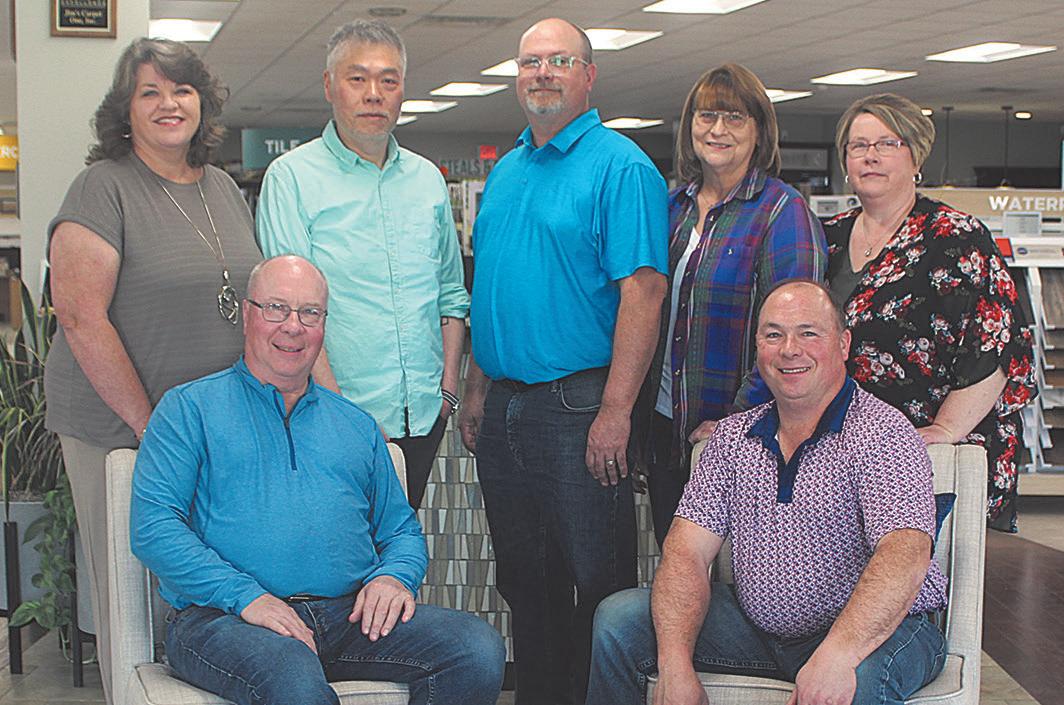
State Park home for more than half the year as they serve as campground hosts at the popular state park in southeast Webster County.







By KELLI BLOOMQUIST
When Sarah Rustvold walks through the terminal at Fort Dodge Regional Airport, she’s not just overseeing flights and future growth, she’s helping shape the future of the community that shaped her.
Nearly one year into her role as director, the Fort Dodge native has guided the airport through a period of continued progress, culminating in the recent announcement of new air service connecting Fort Dodge directly to Denver, one of the nation’s busiest transportation hubs.
For Rustvold, the milestone represents more than an expanded flight schedule. Born and raised in Fort Dodge, she understands firsthand the importance of strong connections for local families, businesses and economic development.
“I’m humbled and grateful for this opportunity,” said Rustvold. “I’ve worked here and alongside Rhonda (Chambers), the previous director, for nearly a decade and she did such a great job of preparing me for everything I do today. As I’m experiencing and learning more about the airport, I’m also learning more about the community, and that’s really exciting to me.”
As she approaches her first anniversary as airport director, Rustvold is focused on building upon the airport’s momentum, strengthening regional connectivity and ensuring the airport remains a gateway for growth in north central Iowa.
“I’m excited about the future of the airport and the future of Fort Dodge,” said Rustvold. “I think the city, the county, and everybody collaboratively, the Growth Alliance, everyone works really well together, and it’s been fun to be a part of the conversations about how we can all grow and strengthen our communities.”

Under Rustvold’s leadership, Fort Dodge is flying to new heights
As Rustvold settles into the leadership role, one of the airport’s most significant recent accomplishments has been the launch of nonstop service to Denver. The route provides travelers with direct access to one of the country’s largest airline hubs, creating easier connections for business travelers, vacationers and families throughout north central Iowa.
For Rustvold, the new service is more than a convenience for passengers. It represents years of collaboration among airport staff, local leaders and regional partners working with Sky West to strengthen Fort Dodge’s transportation infrastructure and economic competitiveness.
“We heard from the community, leaders, businesses, so many that everyone really liked the Denver flight,” said Rustvold. “Sky West finally gave that route a chance and we got that route back as an option in Fort Dodge, and people are really using it a lot, so we’re thankful for that.”
Rustvold will celebrate one year as director of Fort Dodge Regional Airport on Aug. 1, though she has been with the airport for a decade. She said the excitement surrounding transportation in Fort Dodge isn’t just on that new route out west.
“My goal is to see continual growth every year,” said Rustvold. “We have the master plan for the airport coming up and that’s our 10- to 15-year plan and includes all of the projects and plans that we have for the airport and for state and federal grants. It’s a perfect transition point, and I’m really excited to see the development and talk to everybody about what their vision is for the next 10 to 15 years. I’m excited about what that roadmap looks like, not just for the airport, but for Fort Dodge too.”

-Submitted photo
SARAH RUSTVOLD, of Fort Dodge, has served as airport director for the past year, stepping into the role held by longtime former director, Rhonda Chambers. Rustvold said one of her goals is to see continual growth every year.

By DEANNA MEYER dmeyer@messengernews.net
MANSON — Caring for one’s dog just got a little bit easier in Manson, thanks to the inspired idea of Karla Baccam-Bohn.
Six dog waste stations were installed around town on May 15 — one at each of the city’s parks, as well as one near the Manson Area Community Center.
But the idea for these stations began long before one ever appeared.
Baccam-Bohn, the owner of A Dog’s Tail in Manson, said she had seen dog waste stations at other places, including at Las Vegas airports. She thought they were a good idea, and initially, just installed one at the end of her driveway.
Then someone noticed and mentioned that some pet owners aren’t good at picking up their dog poop while out on walks.
“I thought it would be really cool to have these (waste stations) around town,” said Baccam-Bohn.
So she took her idea to the Manson City Council, where the idea was well-received.
Initially, she was going to purchase the stations herself, until someone recommended enlisting the help of Brian Nelson’s ag construction class at Manson Northwest Webster High School. Four of those students — Wyatt Coughron, Christopher Collins, Parker Ollinger and John Hyink — helped bring the project to fruition by building the dog waste receptacles with materials Baccam-Bohn purchased. Ag instructor Doug Gaul also assisted with the project.
Now the handy blue stations are strategically located around town at the Gazebo Park, Mendenhall Park, Veterans Memorial Park, Watertower Park, and the city pool park, as well as near a walking path by the Manson Area Community Center.
Each station has trash bags for dog waste and a receptacle to put them in.
















She said the Manson Lions Club has volunteered to help with replenishing the bag supplies, while Baccam-Bohn has taken on the job of regularly collecting the waste bags from each station.
“If anybody really wants to,” she said, “they could adopt a station.”
So far, she said the ones that get used the most are near the MACC and Gazebo Park.
Baccam-Bohn, who said she grew up in various towns around Iowa, said she enjoys giving back. After living in Las Vegas for six years, she returned to put down roots in Manson in 2015. She and her husband, Joe, have a blended family that includes five children: Brooke, Schuyler, Caitlyn, Joey and Jasper, as well as two dogs and two cats. All of their children are grown except for Jasper, who is in fifth grade at MNW Elementary.
It’s only natural that Baccam-Bohn would care about the community’s pets, as she has several years’ experience working with animals. She began grooming dogs in 2004, and later worked as a bather and completed PetSmart’s grooming school.
As word spread, she began grooming dogs for family and friends.
In 2022, Baccam-Bohn opened A Dog’s Tail, a dog-grooming business that she runs from her home in Manson. Within six months of opening, she had a full schedule and is currently unable to take on more clients. The majority of her work is with doodles, which are poodle mixes, and shi-tzus.
But Baccam-Bohn loves to give back to humans as well.
Though she is no longer a member of the Manson Wa Tan Ye Club, she still helps with their annual hoagie sale and craft show. She also has several hobbies, including making miniature
See BACCAM-BOHN, Page 9D














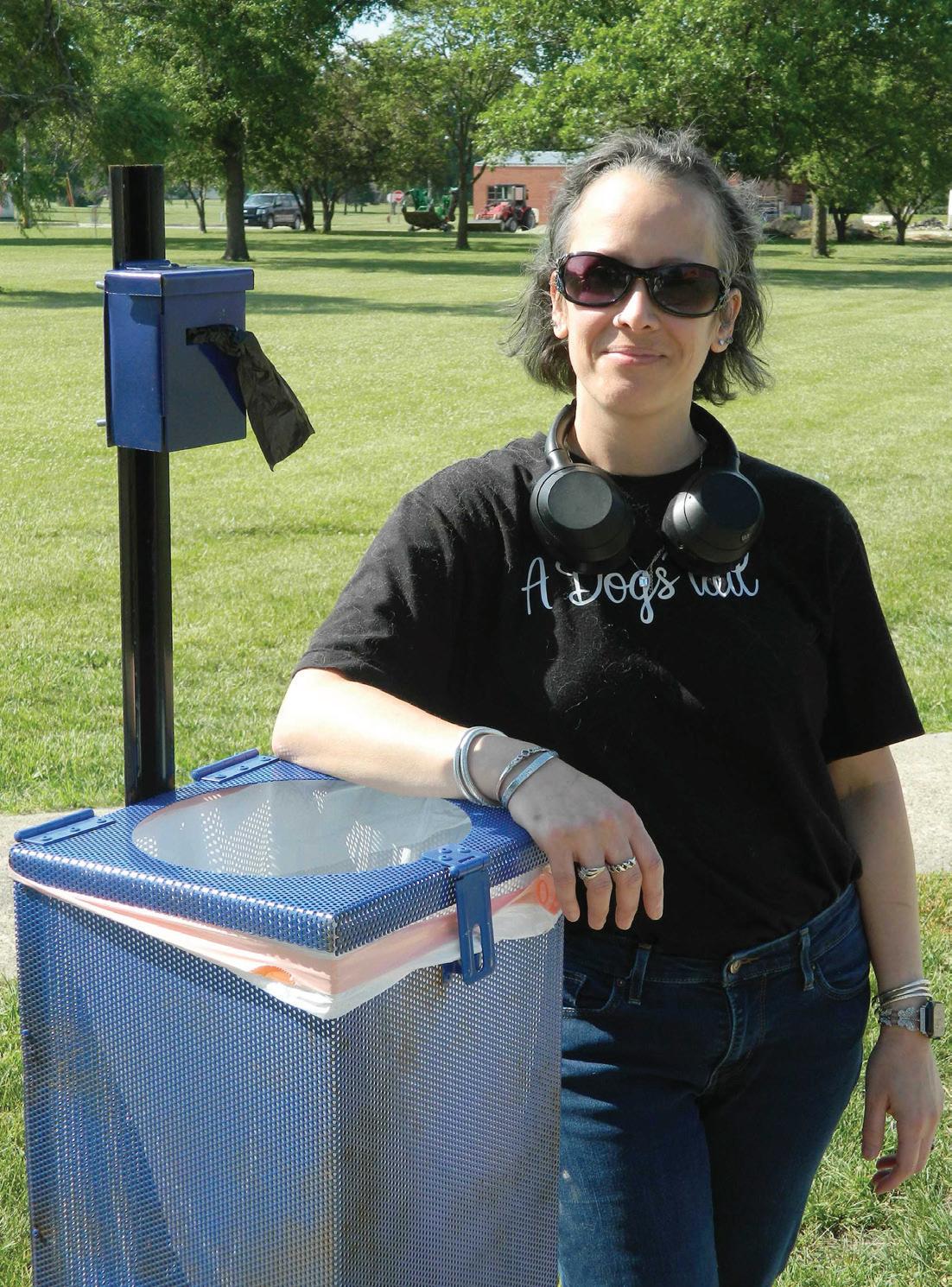
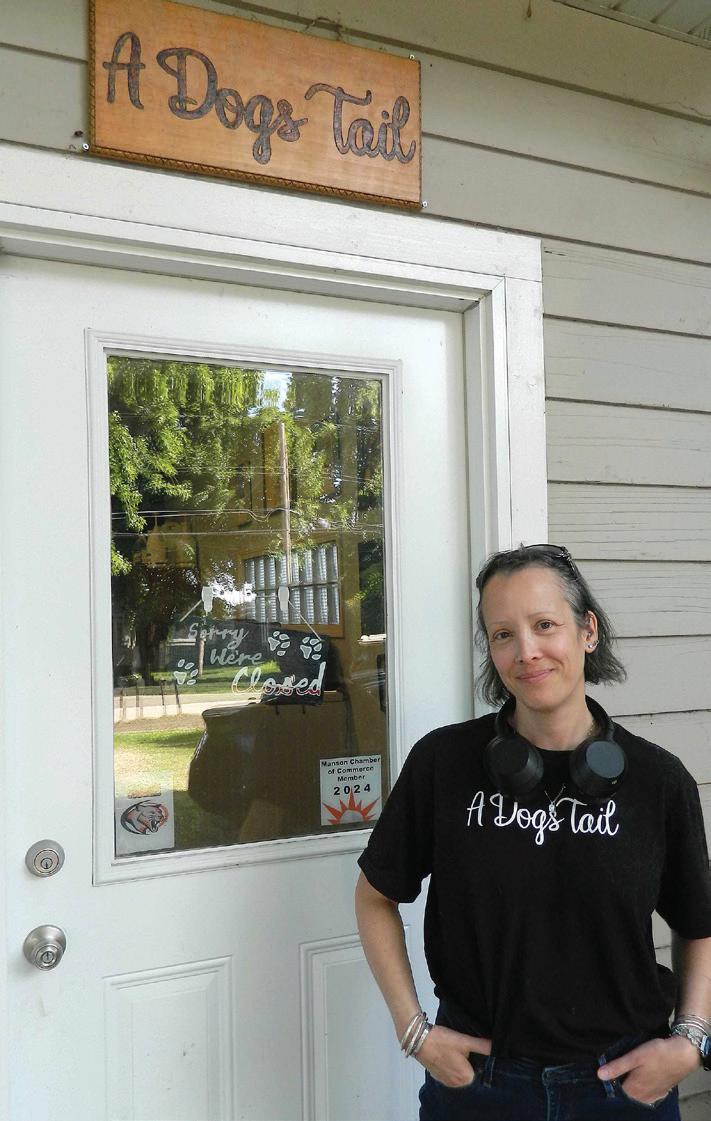
KARLA BACCAM-BOHN, of Manson, stands next to one of the six dog waste stations that have been placed around Manson for pet owners to use while walking their dogs. Baccam-Bohn, who owns A Dog’s Tail, worked with the city and Manson Northwest Webster’s ag construction class to bring her idea to fruition.



By ERIC PRATT epratt@messengernews.net
ROCKWELL CITY — Most people retire to relax, move someplace warm or focus more on themselves.
Deb Foster had other plans in mind from the start.
Foster and her husband, Paul, sold Parkside Flowers and Gifts in 2022 after over 46 successful years of ownership. The transition away from full-time work didn’t slow Foster down at all — and didn’t soften her passion for making Rockwell City a better, more beautiful place to live.
If anything, the extra free time has enhanced Foster’s involvement and investment in the community she has called home for nearly five decades.
“We had no interest in going anywhere. This is right where we want to be,” Foster said. “(Being retired) may allow us to occasionally go on a short vacation rather than being at the flower shop six days a week. But for the most part, it’s given me the freedom to volunteer as much as possible around town with a lot of different things.
“I like to keep busy.”
Foster is known for lending a helping hand or a caring smile to anyone in need. The 1972 Sac City graduate is a new member of the Rockwell City Rotary Club, as well as the local chamber and development organization and the revitalization committee.
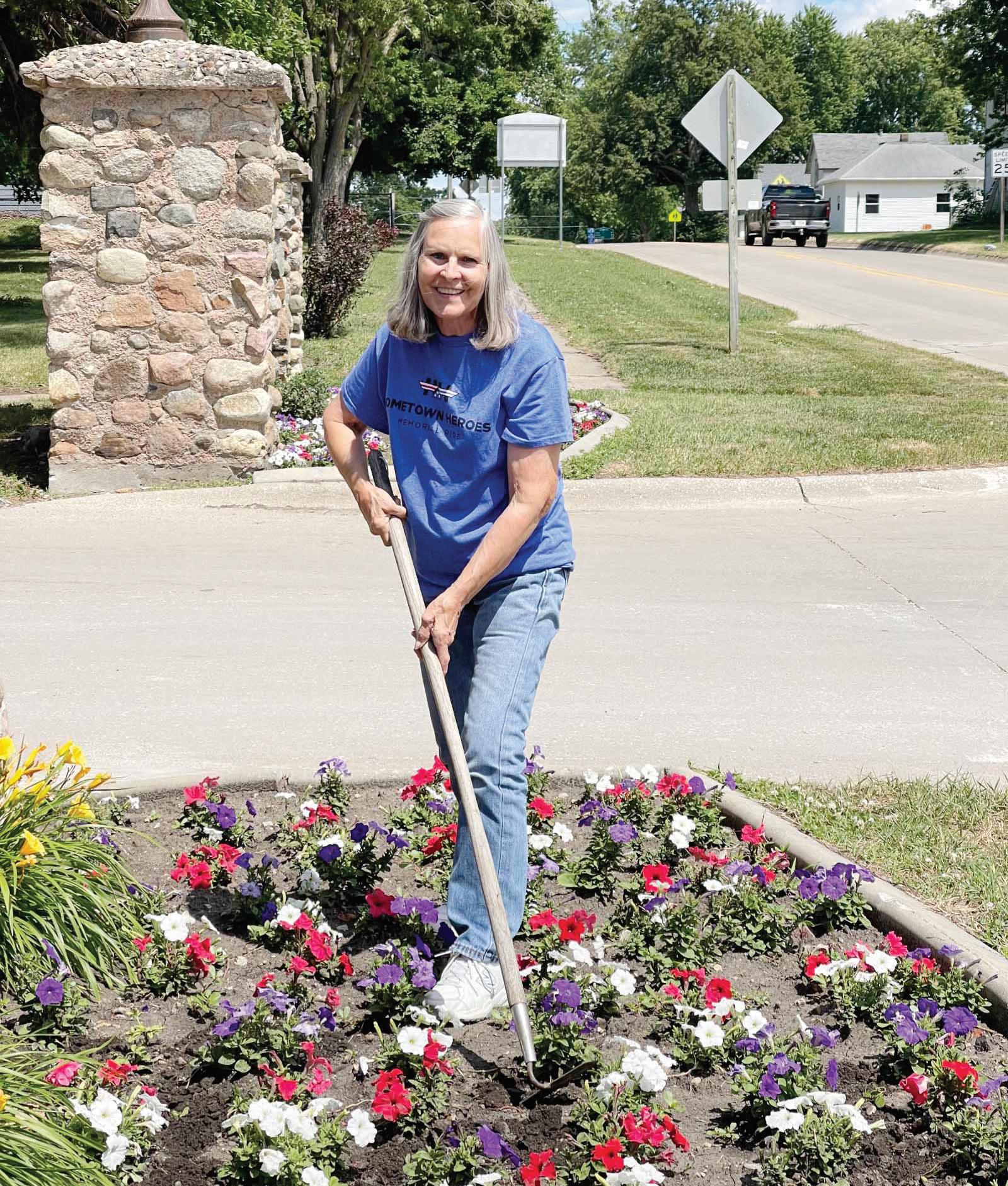
If the popular Kids Kingdom playground area needs flowers planted, watered or equipment painted, Foster is there. After all, she serves as the “keeper of the
kingdom,” and was a part of the group that got it built 20 years ago.
When Rockwell City has its “Festival of Trees and Community Celebration” every December, Foster is first in line spreading holiday spirit. She has also embraced her role as a mentor to kids in the South Central Calhoun Community School District at the elementary and middle school levels.
“Rockwell City still has so much to offer,” Foster said. “I know in some ways, small towns aren’t what they used to be. At the same time, though, they are still — at their core — what they’ve stood for all along.
“I just love it here. It’s where we raised our family, and it’s given us and blessed us with so much. I want to do everything I can to keep making it better.”
Deb and Paul Foster moved to Rockwell City in 1976. From the time Paul was in middle school growing up in Lake View, he knew he wanted to own a flower shop. Deb was a greenhorn in the business at first.
“Paul trained and taught me after we first bought the shop in Rockwell City,” Foster said. “We became very involved in the community because of it. There’s a strong, close relationship between a town and its (flower business).”
Foster learned about the ins and outs of planting, growing and gardening not just from her husband, but while observing others as they embraced the role of community caretaker.
See FOSTER, Page 9D
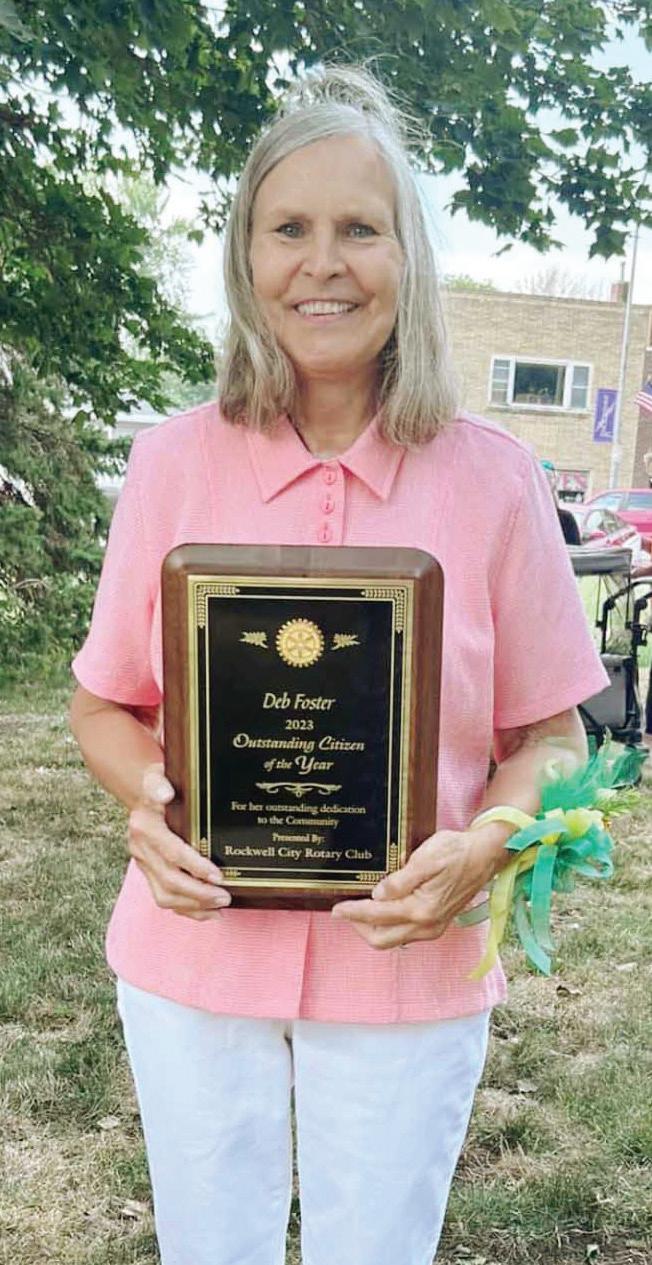
DEB FOSTER, of Rockwell City, was named the 2023 Outstanding Citizen of the Year in the community. Foster and her husband, Paul, owned Parkside Flowers and Gifts in Rockwell City for over 46 years until their retirement in 2022.

“Earl Huegerich was our city park guy for years,” Foster said. “He was the sweetest man. He always took time to plant and maintain the flowers, and the girls from Parkside would help him.
“When he passed away (in 2016), I wanted to kind of fill his role, so to speak, in memory of him. So I took it upon myself to take care of the flowers there, and I’ve been doing it ever since in his honor.”
Foster was named the Rockwell City Rotary’s Outstanding Citizen of the Year in 2023. She was honored during the town’s annual “Sweet Corn Daze” event two summers ago.
“I was very proud of that; it meant a lot,” Foster said. “I’ve put a lot of hard work
and effort into volunteering through the years, but of course you don’t do it for the awards or recognition. You do it because it makes you feel good and it helps make your community a better place.”
Rockwell City will be celebrating its sesquicentennial July 31Aug. 2 this year. Foster and other Rotary Club members, workers and volunteers will be doing a lot of the planning and organizing to recognize an Iowa community now 150 years strong — not just because of what it offers, but the citizens who help it thrive today.
“I’m a big believer that if you’re nice to people,” Foster said, “they’ll be nice to you.”



-Submitted photo
DEB FOSTER, of Rockwell City, was named the community’s Outstanding Citizen of the Year in 2023.
Continued from Page 7D
doll house items with her 3D printer — one of which she donated to the Manson Public Library and can be found between the books on one of the book shelves.
In the meantime, Baccam-Bohn just enjoys doing random acts of kindness for others — most of which are anonymous.
When she cooks or bakes, she often does so in “big amounts” so she can share it with others. Or one might be the unexpected recipient of a “pay-it-forward” meal at a local restaurant, thanks to her generosity.
Why does she do it?
“It’s kind of a selfish thing, because it makes me feel good,” said Baccam-Bohn. “I’ve always tried to be that way, but I think I’ve done it more as I’ve gotten older.”
-Messenger photo by Deanna Meyer
KARLA BACCAM-BOHN stands outside her dog grooming business, A Dog's Tail, in Manson.
Discover our exquisite floral creations




• Elegant Bouquets
• Artistic Centerpieces
• Flowering Plants
• Gifts & Keepsakes
Enjoy the convenience of safe & secure online ordering 24 hours a day through our website. Some day delivery available in Rockwell City.
Continued from Page 5D
While her husband loves the solitude, Tracy Godwin is happiest when the campground is bursting with people. On a recent June weekend, the entire campground was reserved for people attending a wedding in the nearby stone shelter.
But she also finds pleasure in quiet walks to the Indian mounds, or simply watching wildlife who call Dolliver Park home. This spring, the





couple kept a distant eye on a mother goose who had chosen to raise her little flock in a nearby tree, rather than nesting on the ground.
“We had a goose that came up and had her babies in a tree this year,” Tracy Godwin said, noting that it worked out well for the young family. “They’re still down there and will come up here every so often to check things out.”
Married 31 years, the






couple share four children, 13 grandchildren and two great-grandchildren. Dolliver Memorial State Park is a great place to welcome their own family and teach the younger generations the wonders of time spent outdoors — away from ever-prevalent screens in today’s world.
“They really enjoy coming out here,” Tracy Godwin said. “It’s a good experience for them.”
By CHRIS JOHNSON cjohnson@messengernews.net
Justin and Zach Wallace grew up in the dirt.
Not playing in it, but riding it.
The brothers were on motorcycles before they knew how to ride.
“I was two and a half years old when I got on a PW50,” Justin said. “I was out there riding with training wheels on.
“I always heard stories of me when I was younger at the old ‘Racing Unlimited’ about me falling asleep on my dirt bike.”
Justin Wallace always had dreams of becoming a professional.
“I dealt with a lot of injuries with my feet, ankles and the list goes on,” he said. “I raced heavily until 2019 when my mom passed away.
“I would ride around Iowa in the A class, and outside of Iowa as well, but I needed to think of a use for my skills where I could generate money.”
For Zach, something stuck with him during his formative years as well.
“I started racing on the farm a little bit. At the time, it was the District 22 races in Iowa and the South Dakota series,” he said. “It was definitely everybody’s goal at the age to become a pro rider, but other things pull you another direction. Sometimes, you lose (the all-in) excitement for it. But it’s also a lot more than the average hobby.”
Today, that passion and love for motocross has grown into a labor of love for the duo. The 33-year-old Zach and his wife, Tiffany, have four sons: Wyatt, 9; Weston, 6; and twins Wrett and Wren, 4.

Love for motocross has helped Wallace brothers bring local dirt track to life

JUSTIN WALLACE, left, and Zach Wallace (right holding trophy) have had a lifelong passion for motorcycles and motocross.
“Wyatt and Weston love riding,” Zach Wallace said. “We just went and picked up a bike for the twins. They’ve been itching to get on one.”
Justin, 26, has partnered with Zach to enhance the racing experience in Fort Dodge. The siblings — along with
a strong crew of helpers and workers — have kept dirt bike racing at the forefront of a town that has already produced professional riders like Chad Pederson, Justin Brayton, Gavin Faith, Teddy Maier and current pro Izaih Clark.
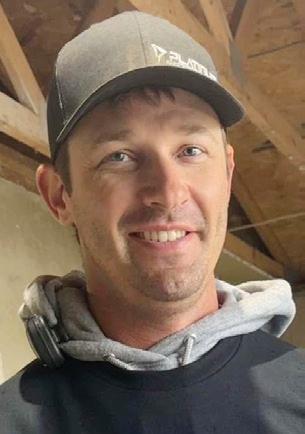

Justin Wallace, along with Matt Grall, helped promote races at the Webster County Fairgrounds during fair week. Justin Wallace then came up with a bigger plan and went to big brother to get the ball rolling.
“Once I dipped my foot into promoting with Matt, I always thought it would be the best opportunity for me to follow that path,” he said. “After the fair, we went to Sports Park Raceway. Then we wanted more.”
At Sports Park Raceway, the brothers constructed a motocross track in the center of the dirt oval. The hard part, at first, was figuring out an annual setup.
“The old president of the Iowa Moto Series loved what we did and asked what we thought about putting a motocross track together and becoming a part of the series,” Justin Wallace said. “I knew I could do it. Once we got Sports Park Raceway on board, we were ready to go.”
With owner Jeff Frevert, the Sports Park Raceway project came to fruition. Justin handled promotion. Zach — more of the quiet, hands-on-type —
See WALLACE, Page 13D


By CHRIS JOHNSON cjohnson@messengernews.net
Ever since she was little, Joan Ascherl knew exactly what she wanted to be as an adult.
When school ended for the summer, Ascherl would set up her own little classroom and the neighborhood kids would begin “summer school” with their friend as their teacher.
“I wanted to be a teacher since the first grade,” Ascherl said, “and then I had some wonderful teachers through the years.”
There were a lot of influences for Ascherl, but one was the guiding force to her becoming a teacher — and eventually a colleague as well.
“Kathleen Schreier, who was the vocal director at Iowa Central and St. Edmond, was someone who had a big influence on me,” Ascherl said. “I looked up to her, and later in life, was able to bounce ideas off of her.
“We turned to each other for advice, and it showed that age doesn’t matter anymore when it comes to friendship. She was a big role model for me.”
Ascherl knew being behind the desk and sharing knowledge with students was the path for her.
“I had a natural sense of music,” Ascherl said. “I was able to play by ear and got into lessons. I listened to classical music and my dad was a pianist. We played for fun.
“Before long, I put two and two together and knew I wanted to become a music teacher.”
For the past four decades, Ascherl has taught choir. She has put together over 40 musicals during that time. Ascherl has been the choir teacher and musical director at the middle school level since
Ascherl has spent 40 years building a passion for the arts in students
parts, and that excitement feeds them.
“Like with band and orchestra, I have the kids for all three years and I get to see the growth. It’s pretty incredible to watch them gain the experiences and life skills, like public speaking.”
Getting the students to break down the walls and commit wasn’t always easy.
the fall of 1999.
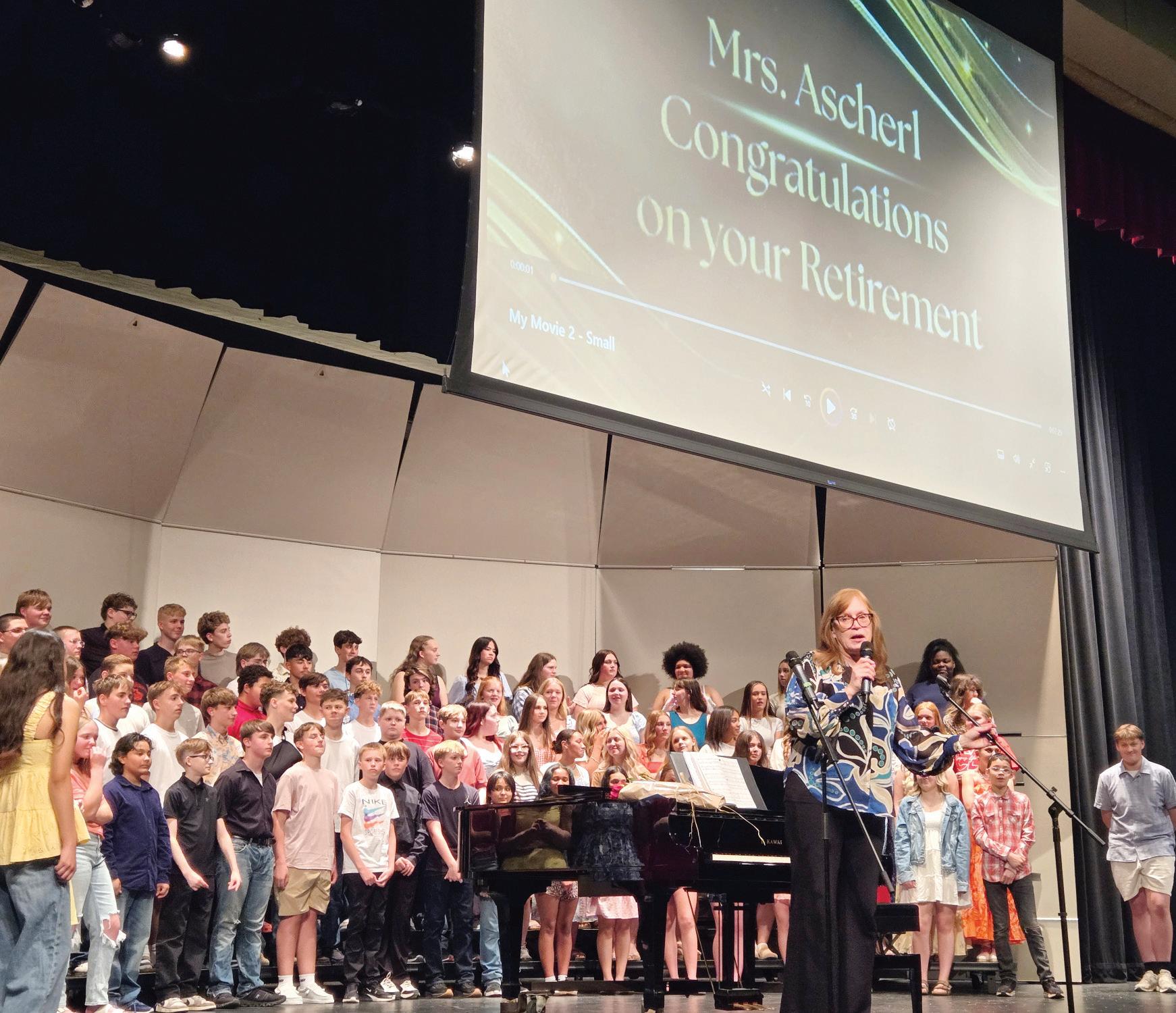
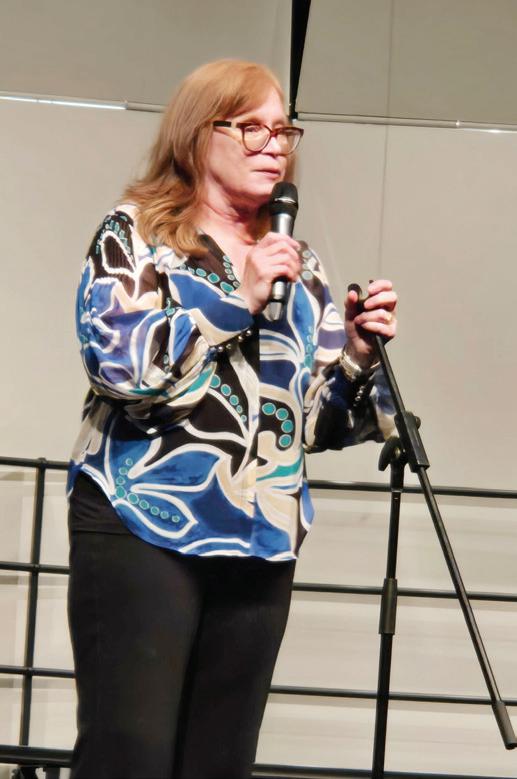
After reaching the 40year mark, Ascherl decided to retire from the Fort Dodge Community School District. Her final day was earlier this month.
Ascherl, who was born in Mason City but has been a resident of Fort Dodge since the age of 2, has enjoyed her time with the students.
“I always hoped I would get to year 40, and I was thinking about (retiring) last year,”
Ascherl said. “I wasn’t quite ready to be done (in 2025),
and just thought I would give it another year. There were a lot of factors involved in my decision, and it wasn’t easy. I knew it wouldn’t be.
“I wanted to leave energized and on a high note. I’m just as enthused with teaching as I was when I began. I just didn’t want to stick around too long.”
The toughest part for Ascherl will be time away from the children at Fort Dodge Middle School.
“I’m going to miss the kids tremendously,” Ascherl said. “I feel like I’ve helped give
them the groundwork to be successful in past musicals moving forward.”
Working with kids was a joy for Ascherl; she was able to see some students go from shy and scared on stage to bold and more confident.
“During the ‘tween’ years, most middle school kids lack self confidence. Once they finish a musical, they’re so proud of themselves for what they accomplished. They often surpass their goals,” Ascherl said. “They go from wanting little parts to wanting bigger
“Sometimes it’s tough to get students to commit, because they put up natural walls for themselves. I help tear them down,” Ascherl said. “They are afraid to fall flat on stage, but I try to explain to them and let them know they will keep living their lives. The most critical people are in the dark in the audience. Most would never put themselves in this position.
“Being on the stage has a huge impact on their future.”
The final show for Ascherl was this year’s group of 100 students performing “The Wizard of Oz” — a production Ascherl has done numerous times. The path down the yellow brick road is noted as one of Ascherl’s favorites, along with “Finding Nemo” and “Frozen.” She also
By DANA BECKER dbecker@messengernews.net
Margaret Junkman didn’t initially plan on spending four-plus decades as the first teacher to nurture the minds of children in schools.
She actually intended to enter a different field entirely when she first enrolled at Iowa State University.
“Truthfully, I started college with a desire to go into journalism,” Junkman said. “When I got to ISU, that major was not as appealing as I had hoped. So my advisor suggested I take an ‘Intro to Ed’ course.
“When I did that, I realized what my calling really was. I have come to realize that this is the profession God chose for me, and I am so thankful He did.”
But did she ever envision spending the next 42 years in roughly the same position at the same school?
“Not really,” Junkman said. “My original plan was to give back 12 years to the school system that gave me so much. However, after only one year, I knew I had found my home and my family at St. Edmond.”
Junkman announced her retirement following the 2025-26 school year, ending an incredible career that saw her teach preschool, transitional kindergarten and kindergarten — all at St. Edmond Catholic School.
A Fort Dodge native and St. Edmond grad, Junkman was hired as a student teacher to work at HeadStart under the “great” Bonnie Calvert followed by a stint at Corpus Christi kindergarten with the “equally great” Lois Schreck.
“During this time, I was approached by Father Gerald Hartz and asked if I would be willing to start a preschool program for the Catholic schools,” she said. “I excitedly — and quite naively — agreed to do it.”
Because of a crunch in room space, Junkman’s class was placed in the high school building. It would remain there until 2000, shifting into the new building two years later.
Junkman also served outside the classroom.
“During my time at St. Edmond I served on many committees for the school and with the parish,” she said. “It has been very rewarding working
Junkman reflects on four decades of teaching
-Submitted photo
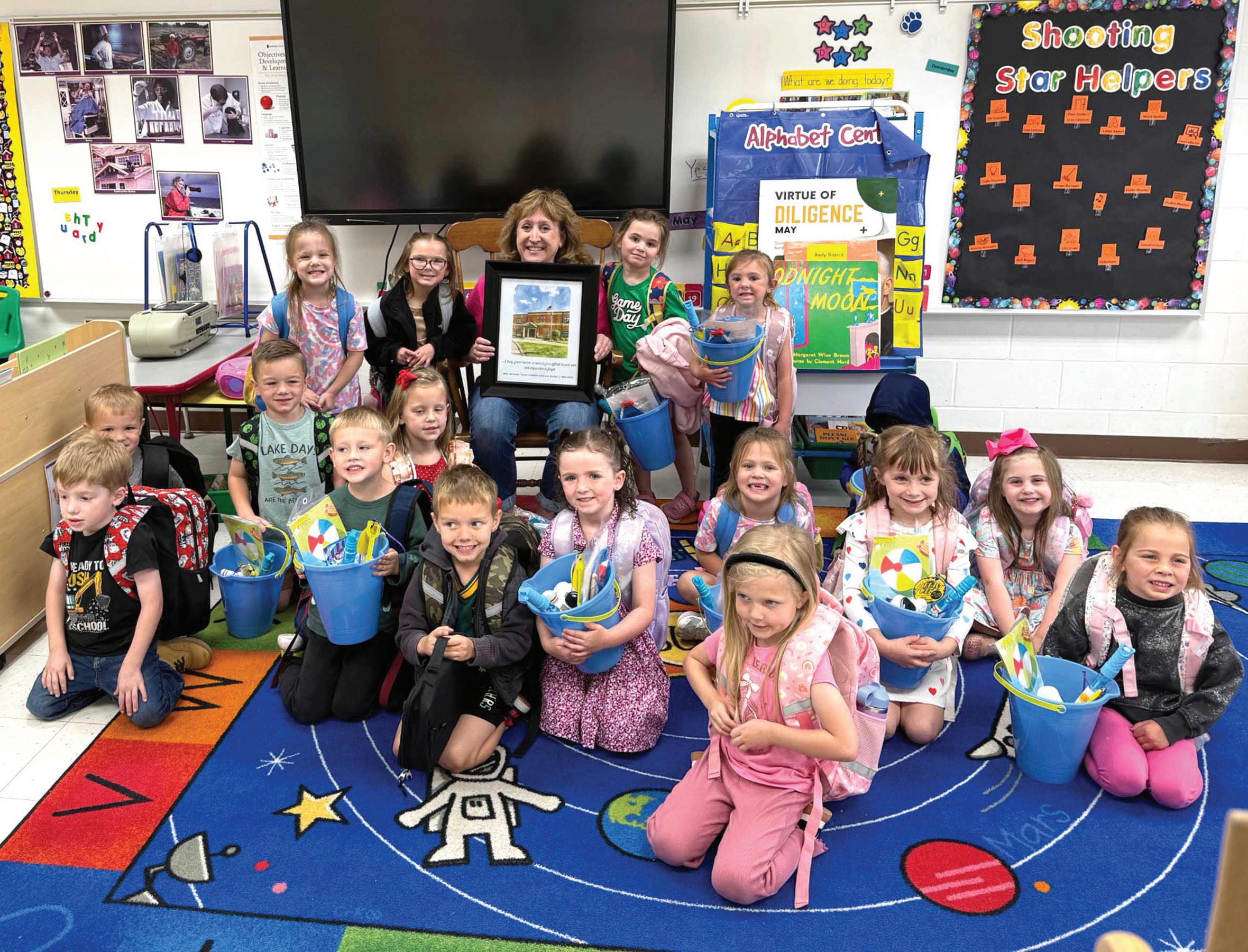
MARGARET JUNKMAN sits with one of her final preschool classes at St. Edmond Catholic School this past year. Junkman retired after 42 years teaching.
toward common goals and meeting other people with like values. I would have to say of all the ‘extracurricular’ responsibilities I have had over the years, my favorite has to be greeting at the beginning of each day.
“I took that role very seriously, and I honestly loved it. I have acquired many silly hats, headbands and glasses that I would don each morning with a smile and a personal ‘Hello’ to make our Gaels — both big and small — feel welcomed and loved. That is one part of the day I will definitely miss during retirement.”
She also wanted to help lay the foundation for a successful school day,
year and future for the students.
“I feel that the first few years of school set the tone for all others,” Junkman said. “If children feel loved, safe and valued, they want to come to school. I have always tried to make learning not only developmentally appropriate but fun, which makes preschoolers especially excited about learning and coming to school.
“I also feel that I have laid the foundation for their faith development, whether Catholic or not, through not only direct instruction but also through the way I live my life and model for them.”
Junkman and her late husband,
Rick, had two children who both went through the St. Edmond school system, much like she did with her six siblings.
During her teaching career, Junkman shared her enjoyment with both of her children: Haley, a 2012 St. Edmond graduate, and Cain, who graduated three years later.
“Having taught this long, I have learned that there is no greater honor than a student who grows up and is excited to enroll their own precious child in my class,” she said.
Junkman plans to remain active in retirement, working with both the school and Holy Trinity Parish in volunteer roles.

Continued from Page 10D
got to work in the trenches.
“We just started digging into it,” Justin Wallace said. “It was long days and nights and a lot of work.”
Zach, who owns Platinum Construction, enjoyed the building process.
“I’m a little bit more quiet than Justin,” Zach admitted. “I love to get things done and work first. “I’ll talk later,” he added with a laugh.
Sports Park Raceway allowed the freedom to create something permanent.
“Having to constantly handle the buildup and tear-down kind of got old,” he said. “Sports Park Raceway was the perfect opportunity.
“We’ve done a lot of work on the track and making sure it’s right. We focus on keeping it fun and safe.”
The collective behind-the-scenes work — beyond just the Wallace brothers — is what has made this vision a reality.
“Honestly, if it wasn’t for my wife, this wouldn’t be possible,” Zach Wallace said. “She does the stuff that no one ever really sees. She gets the real things done.”
The Wallaces also embraced the importance of carrying on a community legacy with the sport. Growing up, there wasn’t a primary track in town. Instead,
Continued from Page 11D
enjoyed “Annie.”
“The reason I like those first three is they have so many character roles,” said Ascherl, who is a fan of all musicals.
“They also give the kids the ability to reach outside of their comfort zone and just have fun.”
The support and help from the community, district and parents has helped make the shows possible.
“The biggest thing is, I’ve had extremely phenomenal parents that have helped me a lot,” Ascherl said. “They have been a big help, as well as my husband Mike, who has primarily (assisted) with the sets. The FDSH Booster Club, which helped absorb (some of the expenses) for us a few years back, has been big as well.
“Families like the Casciatos, Sandahls, DeJongs, Shelleys, Harrisons and Pratts have played huge roles for a number of years with whatever I’ve needed, as well as so many others.”
Ascherl has had a lifelong passion for music, and she hopes the community and
they ran their bikes through the woods — on natural terrain — while also building their own.
“These days, guys are leaving and going to other places to train and ride,” Zach Wallace said. “So why not have a place here in Fort Dodge to compete?”
Sports Park Raceway has already hosted a Spring Moto and Iowa Moto race, which was on Father’s Day.
“Everything is so expensive, so we try to do what we can,” Justin Wallace said. “The Father’s Day moto, we gave away a dirtbike.
“We are still learning and we run into obstacles at times, but we are able to finetune things to make them better.”
The Wallace brothers share a passion both for their sport and the Fort Dodge community.
“We are rich in history with racing here, and just want to help any way we can,” they both agreed. “There are so many people who put in the time and effort that have helped build and maintain the track, and people who are in the trenches during race weeks.
“It’s a collective effort.”
school district continues to keep the love of the arts flowing.
“It’s important that our community emphasizes and supports the arts,” Ascherl said. “In a bigger picture, this is reaching so many people. My dad was a choir teacher and played college football. He hurt his knee and had to stop playing football, but he could still sing because it was something he’d been doing his whole life.
“Music has a far-reaching impact and helps build self-confidence.”
As Ascherl closes the curtain on her career, she wants to be remembered for her love for the students.
“I want to thank the Fort Dodge Community School District,” Ascherl said. “I never wanted this to be about me. I wanted to just quietly ride my horse off into the sunset.
“I wanted to celebrate the kids and pick them up and make sure they were always trying their best. Just keep swimming … just keep swimming.”
By HANS MADSEN editor@messengernews.net
DAYTON — Sharp-eyed listeners at a recent Karl L. King Municipal Band concert might have noticed something on Paul Bloomquist’s hip as he took his turn directing the second half of the program.
It’s not his cell phone.
“I always have my holstered pliers,” Bloomquist said. “I have dress pliers. The work ones are six inches, the dress ones are eight inches.”
Bloomquist’s official vocational title at Iowa Central Community College is “director of instrumental activities,” which he said has a simpler meaning.
“I’m a band director,” he said.
Before joining Iowa Central in 2000, he had teaching positions in Thornton, Lake Mills and Manson. He’s a graduate of Simpson College with a degree in music education.
His teaching philosophy?
“I like creating that environment for the students to find success and help them become better humans.”
Much of his life has music in it. He plays with the group Jive For Five, takes his turn in the Comedia Musica pit where he usually plays tuba, and breaks out the trombone with the Bad to the Bone Brass Quartet. In addition to playing in the King Band, he also announces each number, giving the background to each song during the summer concert series.
One of his proudest achievements is the Honor Flight Band. The group plays for the veterans as they get off the plane at the Fort Dodge Regional Airport on their return from their trip to Washington, D.C.
Bloomquist teaches, performs and serves around

“We started it in 2009 with the very first Honor Flight; we utilized Iowa Central students.” He said.
He got to go on the Brushy Creek Area Honor Flight in 2017 as a guardian.
“The next year we opened it up to anyone with a horn,” he said. “I’m always nervous. You don’t know who’s going to show up. We chose music that’s not super hard. Many of the band members are former,
current and future students.”
PAUL BLOOMQUIST, of Dayton, warms up on his trombone before a recent gig with Bad To The Bone Brass Quartet at the Blanden Art Festival.
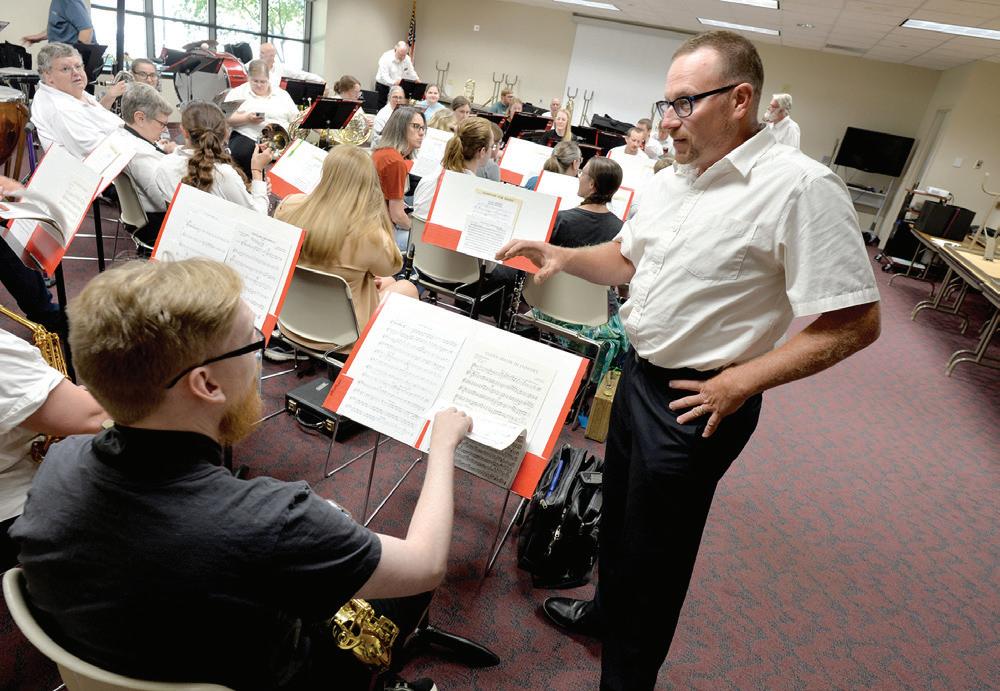
LEFT: Paul Bloomquist, of Dayton, stops to chat with members of the Karl L. King Municipal Band during a quick rehearsal before a recent performance in Fort Dodge.
He’s quick to credit the players.
“It’s the people,” he said. “I’m just in a position where I can help. I like to keep the ‘community’ in college. You have to get off the campus to make that work.”
He has no plans to stop.
“There will be a band as long as the Brushy Creek Honor Flight is going,” he said.
Bloomquist also serves the
He’s also hands on.
“If it needs to be done, you can complain or do it,” he said.
He also uses his talents as a member of the Peterson Post of the Sons of the American Legion.
“I play taps for veterans funerals,” he said.
He serves as the treasurer of the Southeast Valley Fine Arts Boosters.
“We promote all aspects of the arts at Southeast Valley School,” he said.
In another role, Bloomquist serves by working part-time at Oak Park Golf and Recreation. He works on the course, mowing, trimming, keeping the sand traps in shape — and did we mention mowing?
That’s his meditation time.
“If I was independently wealthy, I’d mow that grass for free,” he said. “I take a lot of pride in it.”
Bloomquist lives on the family farm southeast of Dayton where he frequently gets to use those holstered pliers. There’s a little livestock and a big garden.
“I still use all the buildings,” he said. “I still see their value.”
He recommends that others get involved.
Dayton community in several ways, including serving on the cemetery board.
“I was asked to join the board about 15 years ago,” he said.
He’s now chairman.
“We show pride in our rodeo; we show pride in our community,” he said. “When we needed rock on a road or a tree trimmed, they stepped up. We try to be the best stewards of it for this generation.”
“It’s an investment of time. You’ll meet new people, you’ll feel good,” he said. “Just do it. Others have done it too. They did it; you can too.”
It’s about always thinking of ways to serve, sometimes in seemingly small ways.
“Do the extra 15 seconds,” he said. “Pick up a piece of garbage, hold a door for someone. It just takes a little thing. Don’t take the easy way.”
And never leave home without your pliers.

By DAVID DRISSEL
Sonja Lee Bock knows first-hand the true meaning of “family.”
As a newborn infant, she was abruptly removed from her Native American mother in South Dakota and adopted by a white family. It took several decades for her to finally meet her birth parents and discover her ancestral roots.
Bock is now a proud 60-year-old mother and grandmother. She was separated from her own biological parents because of family problems, coupled with an unresponsive adoption system and related government policies that historically discriminated against Native Americans.
In many respects, her life has come full circle. She was a nontraditional (older) student at Iowa Central Community College in Fort Dodge over two decades ago, but recently completed her first semester as a fulltime professor at the same institution.
Hired to instruct sociology courses for Iowa Central, Bock is currently writing a book about her cultural heritage and life growing up as a Native American child in a white adoptive family.
At the time of her birth in the 1960s, approximately 25% to 35% of Native children were routinely removed from their biological families — either involuntarily or under direct pressure from government offices and adoption agencies.
“Native children were being adopted away at a high rate at that time, and there was no attempt to keep them with other family members,” Bock said. “It was a major issue that led to the Indian Child Welfare Act of 1978, later renamed the Native American Child Protection Act (NACPA).”
The NACPA is a federal law that governs the removal and out-ofhome placement of Native American children. It was passed to end discriminatory practices that unduly separated Native children from their families. The law is designed to protect the best interests of Native children.
However, Bock was not covered under this law since her adoption occurred before its passage. She was
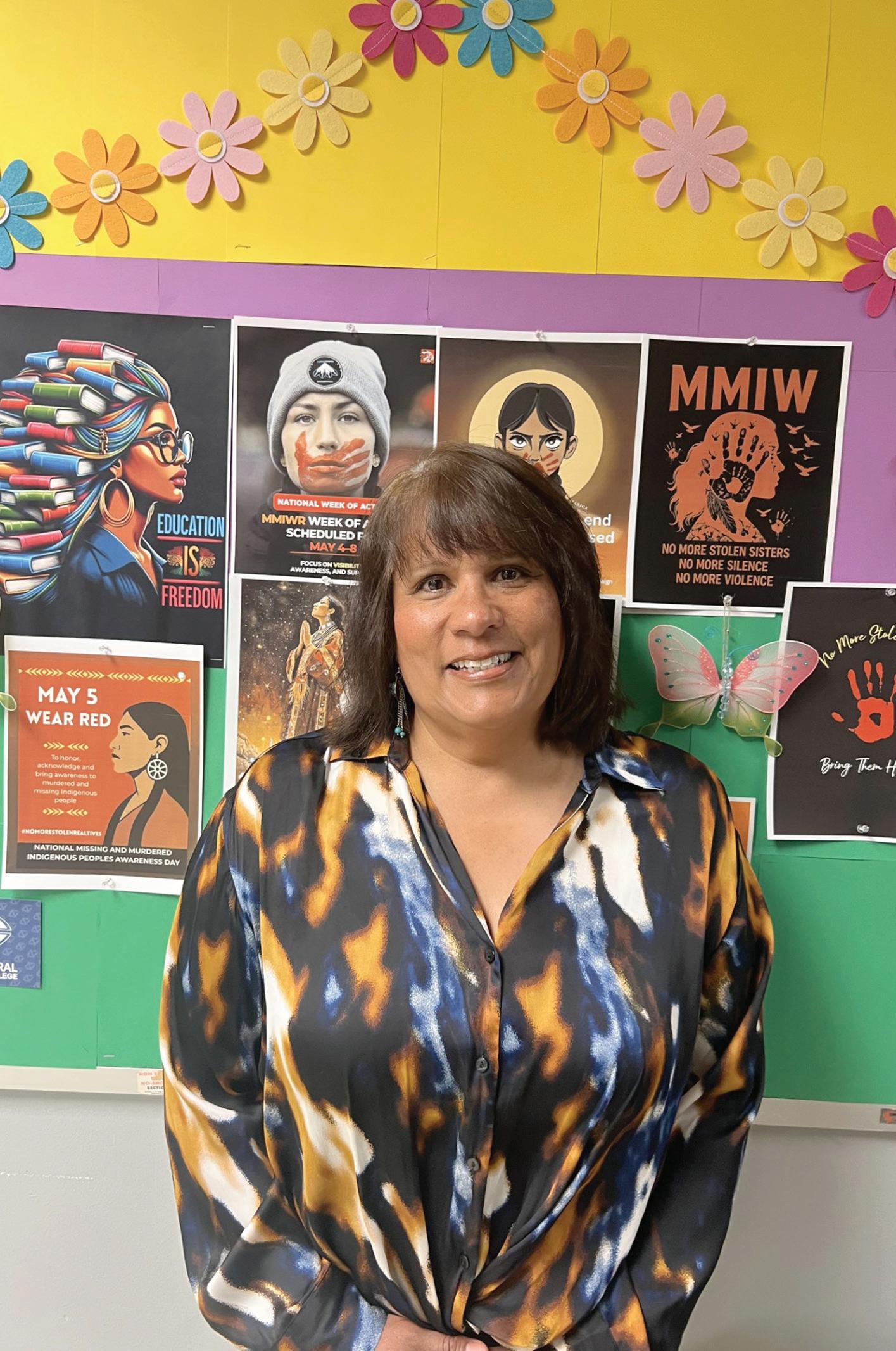
-Submited photo
SONJA LEE BOCK joined the Iowa Central Community College staff in January of this year. Bock, a former nontraditional student at the college, said she wanted to pay it forward and make sure everyone has a chance at a positive college experience.
town that included a large number of Native Americans. Flanders is known for having the largest Native American boarding school in the nation.
“I later found out that my greatgrandfather went to school there at one point,” Bock said.
Bock explained that her birth mother was a Lakota Sioux and her biological father was an African-American from Harlem, N.Y. — though both of her parents also had some European lineage.
She identifies as a member of the Rosebud Sioux tribe in South Dakota.
“In some respects, it was nice for me as a mixed child, growing up in Flanders, because I was always raised around my Native American culture,” Bock recalled. “There were pow-wows there. I could hear the drummers practicing in the summer, drumming and singing.
“Even though I wasn't in a Native family, I was close to my culture.”
However, she faced some challenges due to her ethnicity and local prejudices.
“I was raised in a town where there were a lot of Natives, and white people would be very racist against the Natives,” Bock said. “But because they knew I was adopted and that my dad was a cop, it wasn't that bad for me.”
As she grew older, she began to feel incomplete — not knowing hardly anything about her birth parents or ancestry.
“I had first started looking for my parents when I turned 18,” Bock said. “But I didn't know how to do it.”
After graduating from high school in Flanders, Bock briefly attended the University of South Dakota. She dropped out of college and moved to Fort Dodge with her domestic partner in 1988.
While he worked as laboratory technician, Bock was employed by a telemarketing firm, APAC.
only four days old when adopted by a white family in Flanders, South Dakota.
“My birth father tried to get me
back, but he was denied by the system,” Bock said.
Even though she was separated from her birth parents, she was raised in a
“It was really a struggle moving away from all of my family and friends. After a few years, my relationship ended and I was a single mom,” Bock
See BOCK, Page 19D

By LORI BERGLUND
It is a promise that lasts a lifetime.
“Every one of the service organizations related to the military has this as part of their promise to the veterans — that we will support them as they get older,” said Denis Schulte, U.S. Army veteran and active member of both the American Legion and VFW in Fort Dodge.
In fact, at any time of life that a veteran finds him or herself in need, these groups spring into action to fulfill that lifelong promise to be of service to those who have served.
“We’ve had that as our mission forever, and most VFW and Legion posts do similar things, because one of the tenets of the service is to support soldiers after they get out of the military,” he added.
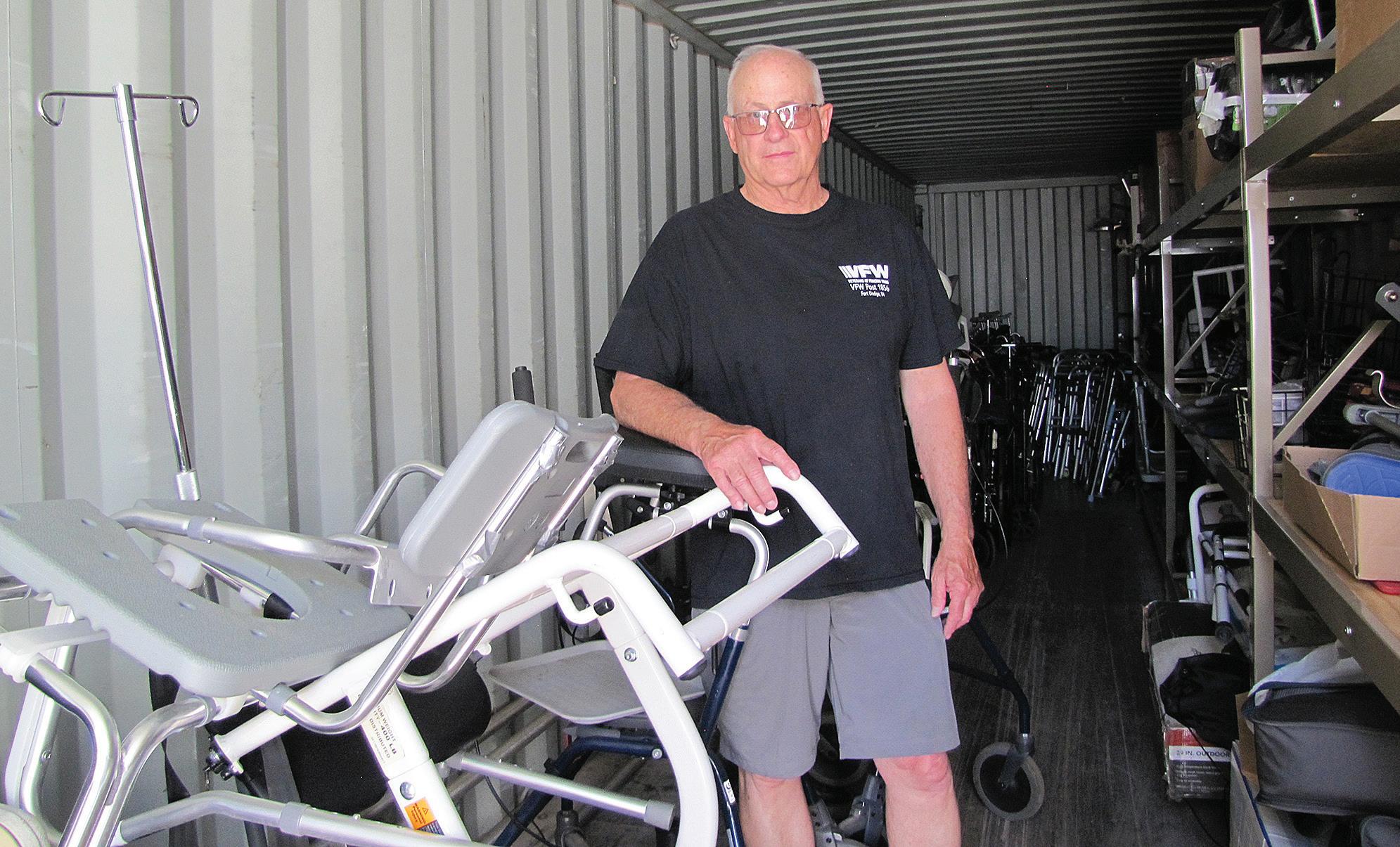
In Fort Dodge, a Lending Closet is just one of the ways that the VFW serves veterans, as well as the community at large. From hospital beds to incontinent supplies, walkers, wheelchairs, and even ice machines that may be prescribed after certain surgeries or ailments — all are available free of charge for those in need. Those are just a few of the types of items; there are many, many more.
“At first, we just had a back room with supplies, and then it got to be so much that we put in a 40-foot container, and it’s just about full,” Schulte said.
Most items are returned when no longer needed, and with donations from others, the supply is so great that the group is able to lend out supplies to veterans and nonveterans alike. It’s a reflection of the fact that veterans served the entire nation, and continue to serve all those in need.
“We don’t just give to
Schulte aids veterans, those in need, through Lending
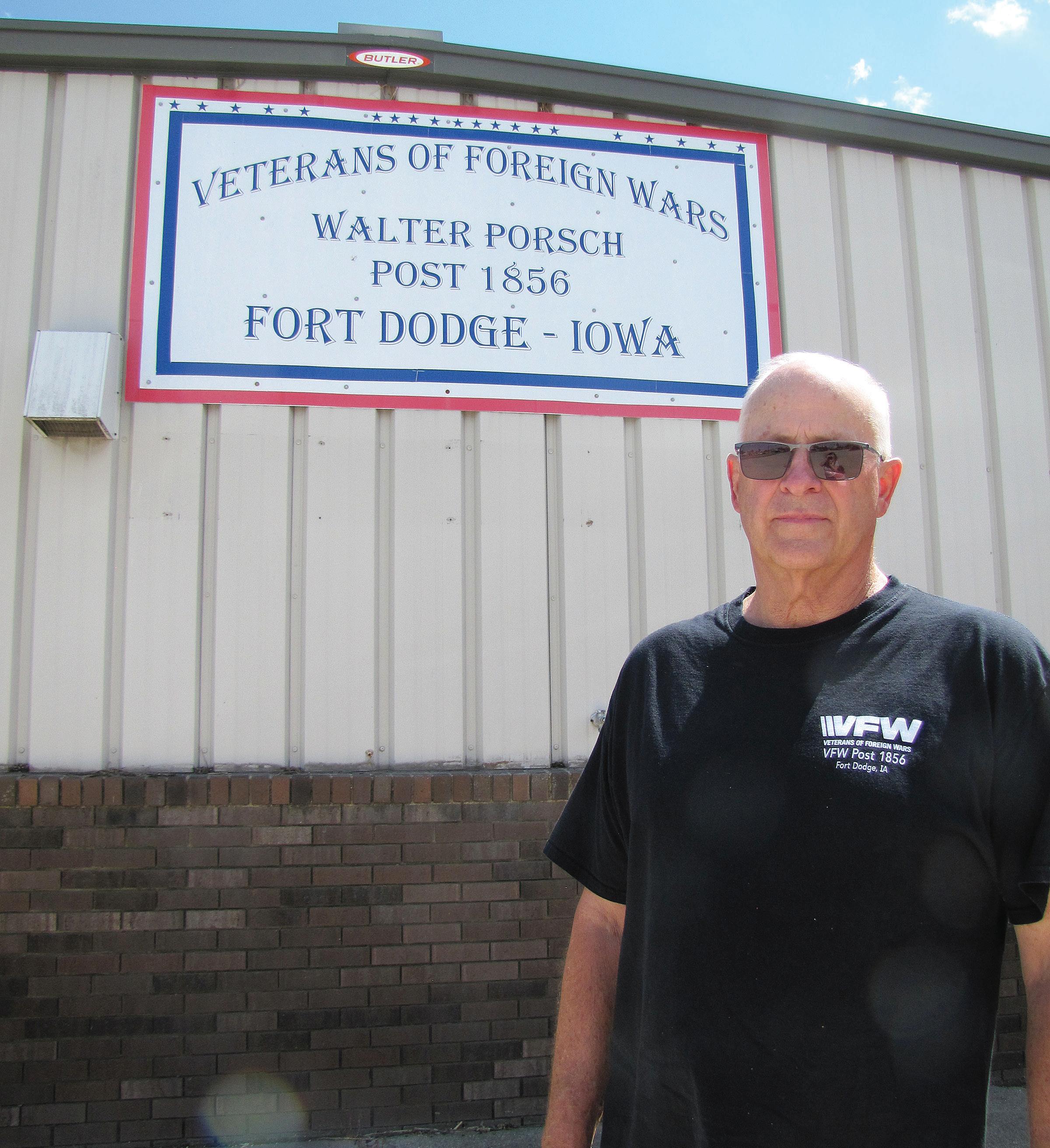
end of his service. The span of his career is considerable, joining during the difficult post-Vietnam years, and serving in Iraq at a time when patriotism soared after Sept. 11, 2001. He retired from the reserve in 2007.
Schulte would encourage others to consider service to the nation.
“I would tell people to do it,” Schulte said. “You become more mature. You figure out where you’re going in life, because most people are young and really don’t know what they want to do. It gives you lots of skills that you use later in life: discipline, education.”
Schulte noted that the military is requiring recruits with more and more education, but he hopes that it won’t exclude those who may not have that education. The military has traditionally been a way to advance one’s self in life, and Schulte hopes that continues to be true for future generations.
As a culture of service wanes, one has to ask who will step forward to serve?
It leaves him wondering, who will sell the poppies, who will stand at attention at a veteran’s grave, or present a folded flag to his family.
veterans — we used to — now if anyone in the community comes in, we’ll try to help them,” Schulte said. “We have so much stuff and the number of veterans is getting less and less.”
In 1980, an estimated 18 percent of Americans had served in the military at some point in their life. Today, that
number is down to about 6 percent. In 1980, even for those who had not served themselves, they could often point to a father or grandfather who had. That familial connection with military service is also waning — and it leaves Schulte wondering about the future.
“We have about 225
members, and about 20 or 30 come to meetings every month,” he noted.
For Schulte, a Breda native who enlisted in 1976, the Army was good for both his personal and professional life. After leaving active duty in 1981, the G.I. Bill helped him finish his degree at Iowa State University. But it wasn’t the
“We provide the honor guard service for funerals,” Schulte said. “Our honor squad, back when the World War II generation was passing away, might do 100 funerals a year. Now we have one every two weeks or so. The guys who shoot the rifles are almost too old to shoot the rifles. We need the younger members to take over these posts.”
Poppies, which appear every Memorial Day, are a tribute to the World War I
recalled. “I was lucky to have some good jobs over the years, but I finally decided to go back to school when APAC shut down.”
That is what first brought Bock to Iowa Central as a nontraditional (older) student in 1999.
“I remember being so scared the first day of class that I actually turned around and was going to leave,” Bock remembered, “but I went to class and then I was hooked.”
Bock credits a former Iowa Central professor, Derek Barry, with inspiring her to major in sociology.
“That was the first time in my life that I've ever had a teacher of color,” Bock said.
Soon after giving birth to her youngest daughter when she was 33 years of age, Bock decided to search for her birth parents.
In the past, she had tried to find them, but had been unsuccessful.
“This time it was different because I had the internet to help me,” Bock said. “Just months before returning to college, I was able to find my birth mother and my birth father. They were in totally different parts of the country.
“Thanks to the internet and access to tax records and other public information, I was able to find my father in Washington, D.C. It was easier to find my mother since she had never left Rapid City.”
Bock said she was almost out of hope, frustrated with her online search, when she stumbled across the phone number of her mom’s brother online, who was able to connect them.
She recalled the first time that she talked to her mother on the phone.
“As soon as I heard her voice, I knew that she wanted to be found,” Bock said. “My mom was waiting for me to find her. She’s like, ‘What took you so long to find me?’”
A few months later, Bock traveled to Rapid City to meet her biological mother and birth family — including several of her “new” brothers and sisters. She was accompanied by her adoptive parents and two daughters.
Soon afterward, Bock conversed with her father on the phone for the first time.
“He said to me, ‘I thought you
Continued from Page 18D
era poem, “In Flanders Fields,” by John McCrae.
In Fort Dodge, it’s the many small donations from poppy sales, as well as private donations throughout the year, that provide emergency relief to veterans in need. Unlike the lending closet, the emergency relief fund is solely for veterans and is always confidential.
“We have veterans who come in and are down on their luck,” Schulte said. “They need $100 or $150. If they can
“My goal was always to teach at a community college. I had been a successful non-traditional student as a single mom. It was life-changing. So it was important to me to pay it forward and make sure everyone has a chance.”
Sonja Lee Bock Sociology professor at Iowa Central
would never find me.’ But he wanted to be found,” she said. “And then I learned that he tried to find me for seven years after the adoption, but the state of South Dakota had given him the runaround.”
Bock flew to Washington, D.C. a few years later to meet her biological father for the first time. However, both of her birth parents died a relatively short time after she met them.
“I had about five years with my mom before she passed and seven years with my father before he died,” she said. “I’m close to relatives on both sides of the family.
show us they are a veteran in need, we give them a check. We don’t give them a lot, but we give them enough to get where they are going, help with a car repair, or just as needed.”
That commitment to helping other veterans is a form of camaraderie that exists few other places besides the military.
For Schulte, like so many veterans, being of service has been a way of life and its own reward.
-Messenger photo by Lori Berglund
DENIS SCHULTE stands inside the Lending Closet at the Fort Dodge VFW Post. The Lending Closet is a community service that provides medical supplies to veterans and non-veterans alike.
“I love my brothers and sisters from my mom. I was my father’s only child.”
Soon after finding her biological parents, Bock graduated from Iowa Central and next completed a bachelor of arts degree in sociology at Buena Vista University. For several years afterward, she worked with K-12 students who had behavioral issues. She was tasked with various types of counseling, including residential home visits and day treatment.
After leaving that position, she completed a master’s degree in sociology from the University of Northern Iowa in 2013.
She next worked as an adjunct instructor for various colleges and universities.
Bock began teaching fulltime for Iowa Central in January 2026.
“My goal was always to teach at a community college,” Bock said. “I had been a successful non-traditional student as a single mom. It was life-changing. So it was important to me to pay it forward and make sure everyone has a chance to have a positive college experience.
“I’m so glad that I have that opportunity at Iowa Central. Everything has come fullcircle.”
Bock credits her biological parents for encouraging her to research her ancestral roots, which will be included in her forthcoming book.
“Both of my birth parents had me researching our family tree,” Bock said. “I have done a lot of research work over the last 27 years on both sides of the family.
“I’ve been sifting through DNA records, oral histories, and endless documents to put these stories together.”
By DEANNA MEYER dmeyer@messengernews.net
POCAHONTAS — For Eric Gerdes, Pocahontas has opened up a world of opportunities, all of which have led to a job doing what he loves — telling stories.
Through his storytelling ability, the 2022 Pocahontas Area graduate has found multiple ways to give back to the community while also promoting the area.
Though he grew up and still lives on the family farm west of Pomeroy, his Pocahontas involvement began as a student attending Pocahontas Area. After graduation, he earned his associate of arts degree at Iowa Central, then transferred to Iowa State University where he majored in communication studies with a minor in journalism.
“I liked telling stories, so I thought journalism was a good path,” Gerdes said.
His first opportunity came in 2023. That year, the executive director of the Pocahontas Chamber of Commerce, who had previously coached him in mock trial during high school, asked if he would like to do an internship for college credit.
“I think he kind of recognized some of my talents there,” said Gerdes. “He’d seen some of my videography and editing work.”
So he spent that summer creating commercials promoting local businesses. He was also in charge of booking artists for and promoting Art in the Park, a weekly summer event where local performers are invited to share their talent with the community. He also helped promote the town’s annual festival, Heritage Days.
That opportunity led to other organizations noticing his work.
In the summer of 2024, Gerdes was asked to intern for Pocahontas County Economic Development, doing similar work.
Apparently, he did a good job, as both the
“A big theme from the documentary was pride. A lot of people are proud to live here. They all talked about how our Main Street is thriving.”
— Eric Gerdes Digital editor/sales Pocahontas Record-Democrat
Chamber and Economic Development asked him to return in the summer of 2025 for dual internships.
“It’s the kind of work I like doing,” said Gerdes. “I like promoting local businesses, getting the word out there.”
On top of that, he is employed at the Rialto Theatre.
Last year, Gerdes’ internships led to a unique opportunity to showcase Pocahontas.
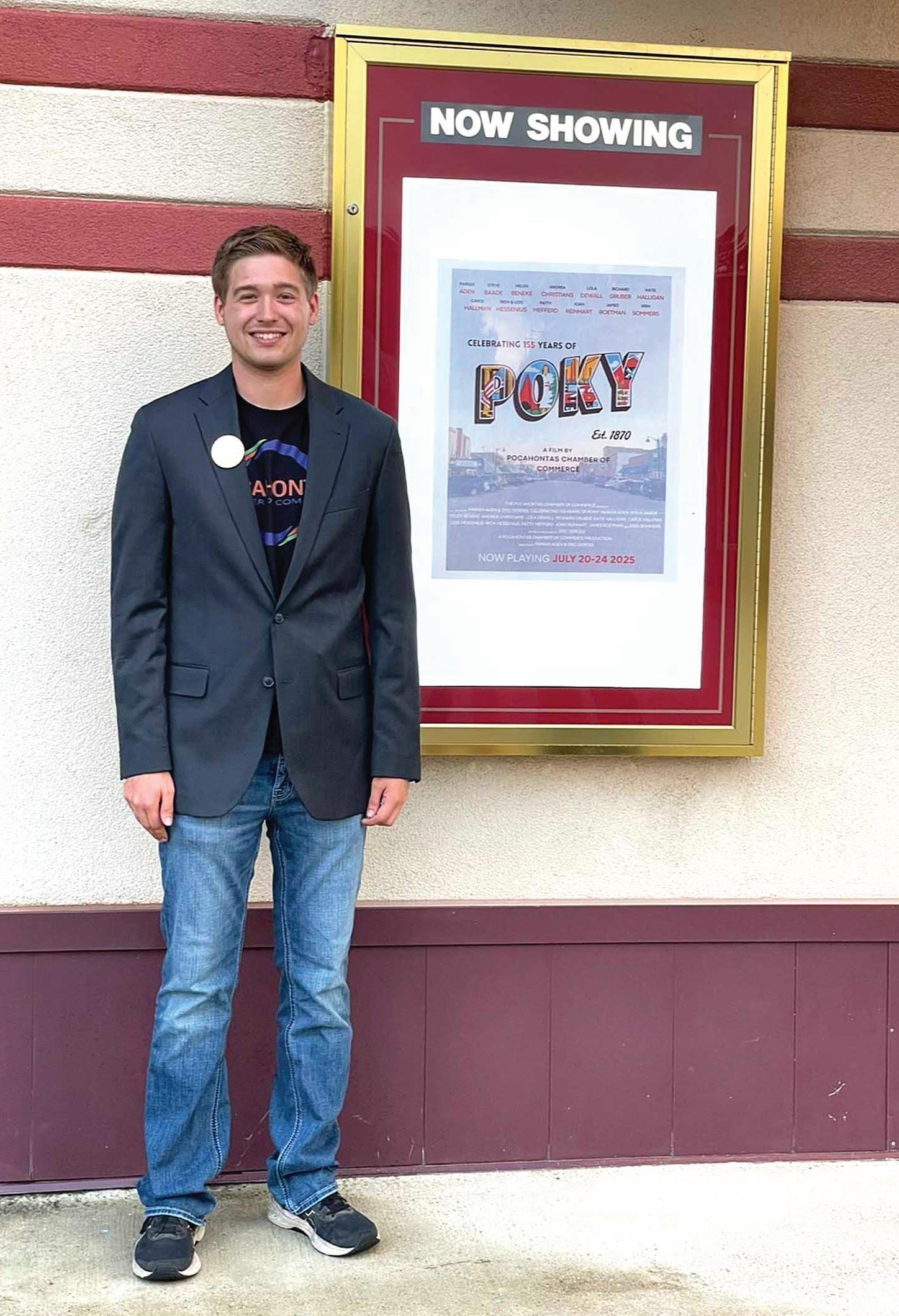
In honor of the town’s sesquicentennial, Chamber director, Parker Aden, asked Gerdes to create an updated version of a 1992 video on the history of Pocahontas’ Main Street.
“We interviewed several community members, and they told us their personal stories and shared memories about their time in Pocahontas,” he said, including past happenings, traditions and celebrations.
Among those interviewed were the mayor, high school principal, hospital CEO and other longtime community members, including one who had been in the 1992 video.
See GERDES, Page 23D
Gerdes helps share community’s story, creates documentary for town’s 155th
-Submitted photo
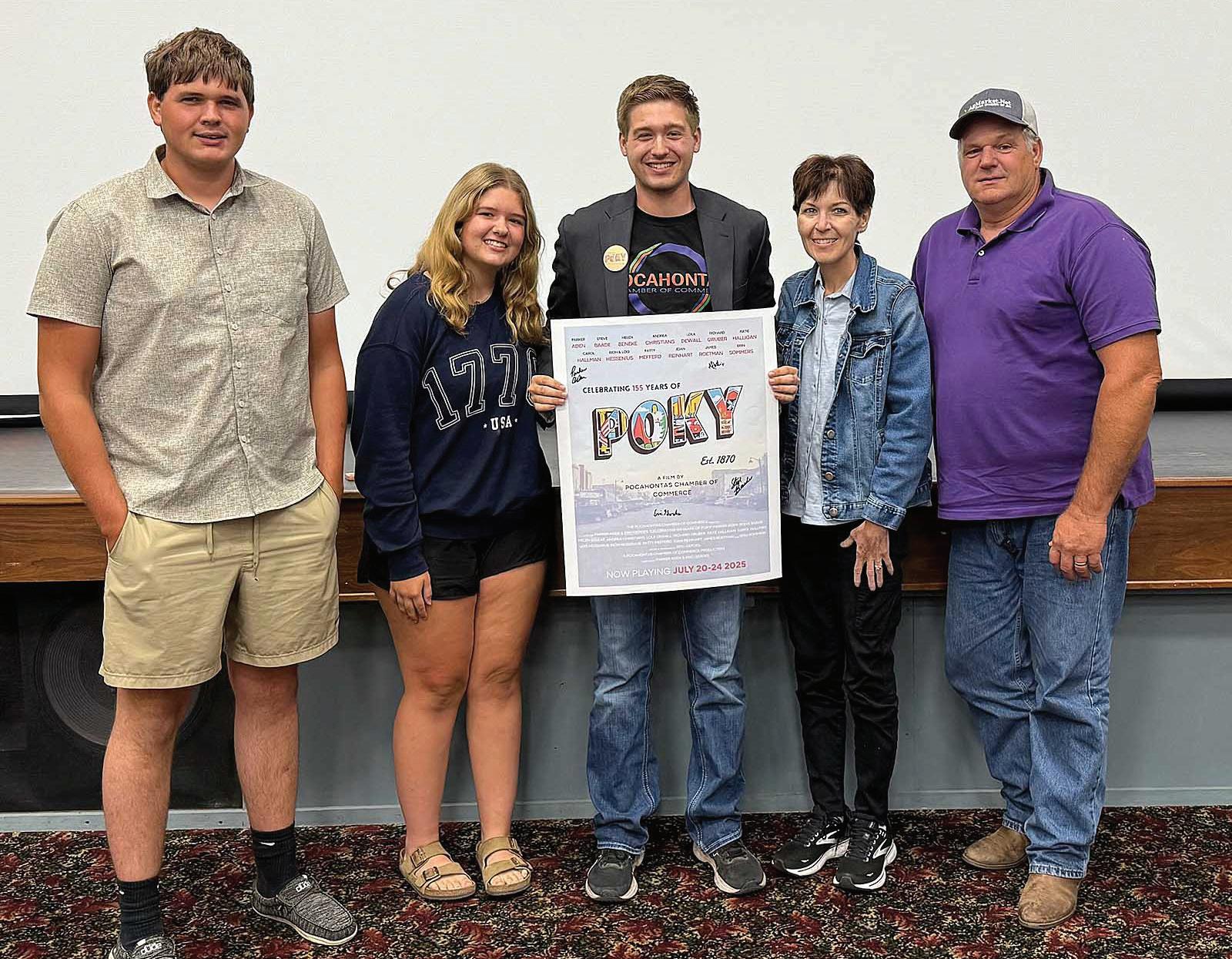
ERIC GERDES, of Pomeroy, stands next to the poster promoting the documentary he created for the town’s 155th birthday celebration in 2025. This picture was taken at the documentary’s premiere showing last year.



By KOLLEEN TAYLOR
EAGLE
GROVE —
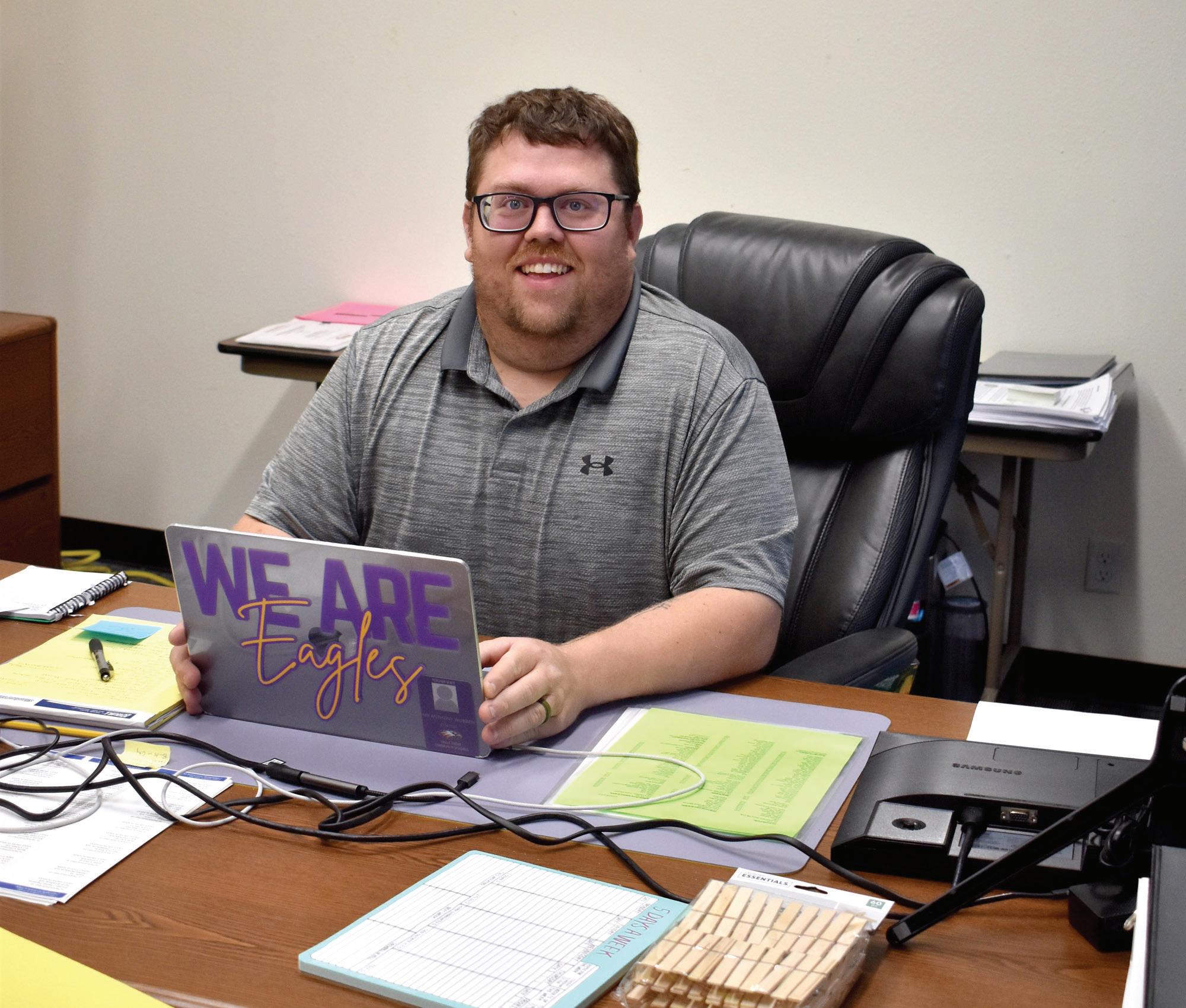
Anthony Wubben, of Eagle Grove, makes it his business to open doors.
His doors are located at the Eagle Grove High School, and they open to future success for the students attending high school there.
Wubben, who has been working as the student success specialist, has worked for four years at the Eagle Grove High School. His job focuses on the future of the students, and his enthusiasm is contagious.
“After COVID, there was zero knowledge about career preparation,” he said. “We are now intentionally adding bite-sized information for the students and parents to prepare for going to college, going to trade school or going to work.”
This includes looking at the course work offered at the schools and identifying what skills are needed to succeed with their plan. A program he has started is called the “Senior Sunrise Series,” which encourages the seniors in high school to come to school early, between 7:30 a.m. and 7:55 a.m. to develop a post-high school plan.
I want them to fill out an application, and we work intentionally beside them,” he said.
Then they recognize the students for doing that, whether it’s a job application or a college application.
This next year they are expanding the program.
“We started the college and career preparedness program at the middle school level this past year,” he said. “It used to be only high school.”
Wubben insists that he can’t do enough to get students to take the first initial steps to getting into the workforce.
“It’s going to help students in the long run. They need to know what they need to take for classes in high school,” he said. “By the time they are in eighth grade, they will know what they need to take for their career path. It can open doors.”
Wubben knows that Eagle Grove isn’t the only school working on programs like this.
Working with these students, they look at the classes they need to take moving forward through their high school years.

“A big thing is to meet the


working with the students. You’ve got to truly see others, instead of just checking the box that this was done.”
One step of their process is an application week.
“I want kids to go apply somewhere for something.

“I take a lot of pride that we had three students get their AA before they got their high school diploma,” he grinned, “We have seven high school teachers teaching college level classes.”
Wubben spends time
See WUBBEN, Page 30D

By KELLI BLOOMQUIST
GOWRIE — For Andrea Kuhn, every footstep on Gowrie's Freedom Trail carries the weight of a 20-year promise — one made quietly to herself, and to family members she wished could have walked it.
Kuhn, a former paraeducator and 50-year Gowrie resident, spearheaded the effort to bring 1.75 miles of trail into the community, driven by a desire to honor family members whose illnesses kept them from enjoying the outdoors. One year after the Freedom Trail’s ribbon cutting, Kuhn said seeing residents use the trail every day makes the decades of work worth it.
“It feels so gratifying to see people using and enjoying the trail,” said Kuhn. “I’m very passionate about it. My father-in-law had died of ALS and my mother-in-law died of severe rheumatoid arthritis. My sister was diagnosed with inclusion body myositis which is a rare disease and is similar to ALS. She lived 20 years with it, and I was inspired by her to do this. Also, my sister-in-law had rheumatoid arthritis, and my brother had advanced Parkinson's. He died the day after the dedication of the trail. I did it to honor them.”
The trail, which begins at Laurel Park, was dedicated in early June last year, and is part of an $11 million Webster County quality-oflife project, which includes trails in Badger and Dayton, and the Matt Cosgrove River’s Edge Discovery Center in Fort Dodge.
“Doesn’t it just look great?” asked Kuhn at the 2025 dedication.
According to Kuhn, more than $160,000 in donations were made to the trail fund by local Gowrie residents.
“People here locally are always willing to help,” said Kuhn. “That’s one thing that I love about Gowrie. If you need something, there’s always someone willing to step in and help out.”
It’s been just one year since the opening of Gowrie’s Freedom Trail,
Kuhn turns 20-year dream into Gowrie’s Freedom Trail
and Kuhn said she’s not done yet. She hopes to put a plaque near the railroad marker at the northwest corner of the trail to honor those, like her family members, who would have loved the trail but are unable to use it.
Kuhn said donations can still be made to the trail fund through the City of Gowrie.
“Whether someone wants to plant a tree or donate to extend the trail, the fund remains open,” said Kuhn.
“I love seeing so many people use and enjoy the trail and to continue keeping it up. This trail means so much to me, and I’m glad that it means so much to our community too.”
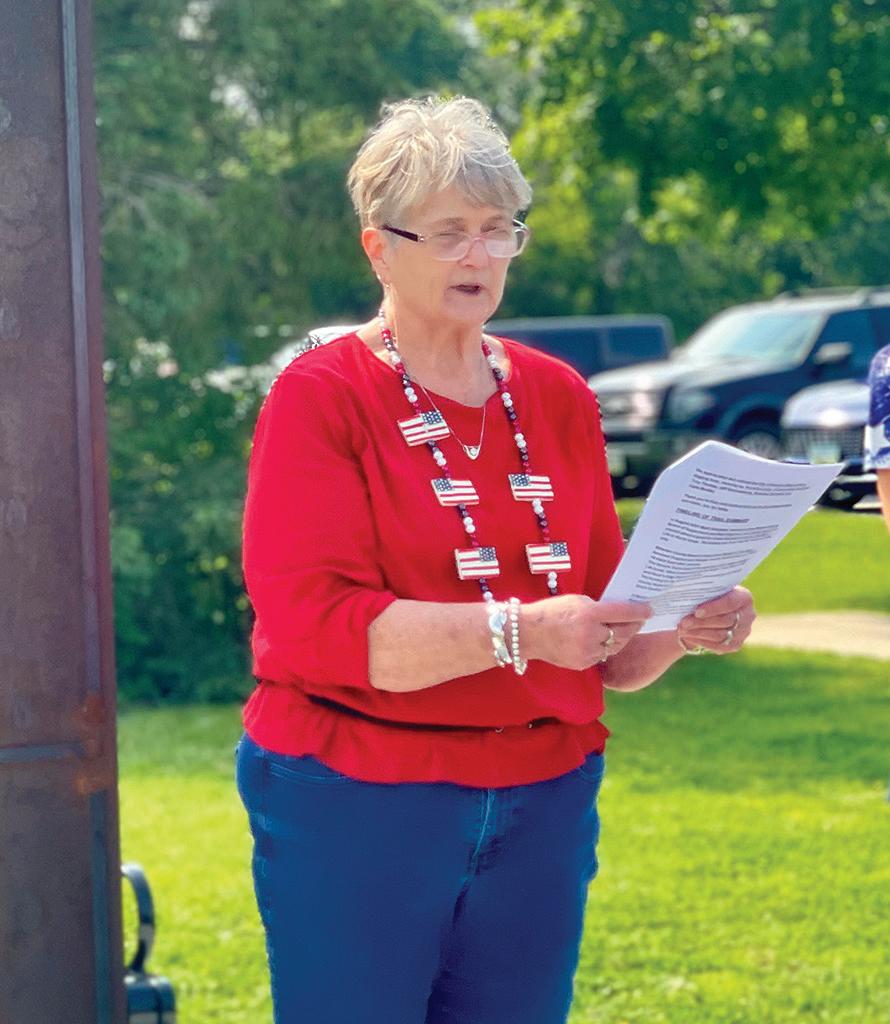
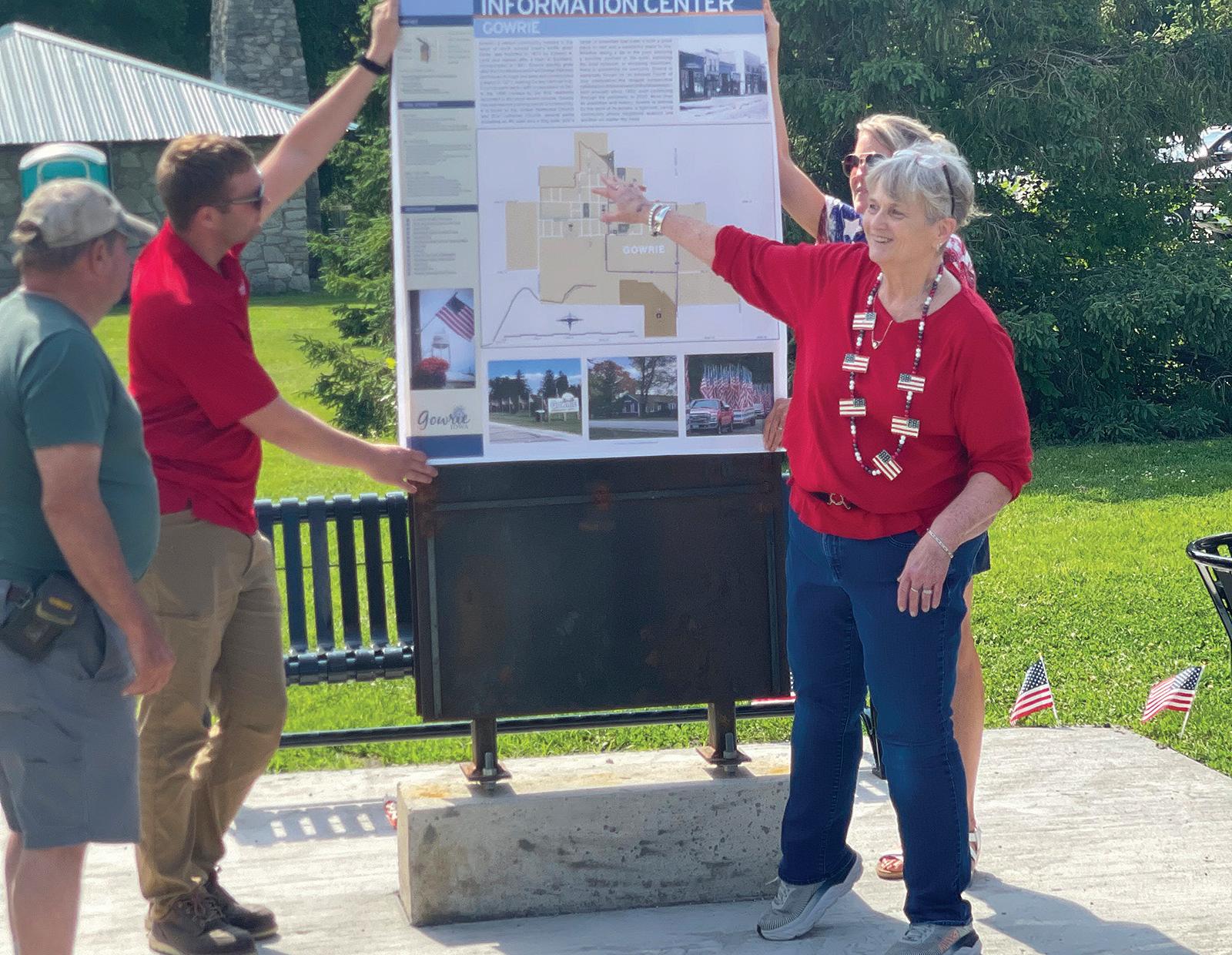
ABOVE: Andrea Kuhn points to a map near the Gowrie Freedom Trail.
LEFT: Andrea Kuhn speaks at the dedication of Gowrie’s Freedom Trail in June 2025. The 1.75 mile trail through the community was a 20-year project that Kuhn spearheaded to honor family members.
“They had unique stories and perspectives of growing up and living and working in Pocahontas,” Gerdes said. “I put together hours of video footage, as well as historical photos, and kind of turned that into a cohesive story.”
And he did it all in just two weeks.
“It was definitely the most ambitious project I’ve ever worked on,” he said.
But Gerdes was pleased with the result.
“I was really happy with how it turned out,” he said. “I learned so much about Pocahontas that I did not know before.”
One of the standout stories came from 1995 — the year the Disney movie “Pocahontas” came out. That year, town residents successfully reached out to Disney to have the movie’s Iowa premiere held at the Rialto Theatre’s grand reopening.
“Disney came down here. The governor (Terry Branstad) was here; some of the actors from the movie showed up,” said Gerdes. “It was pretty neat. I had no idea that had happened before.”
Other interview subjects talked about “scooping the loop” and eating at former restaurants from years past.
The Chamber director — who also happens to manage the local theater — wanted the historic hour-long documentary to be viewed at the Rialto during the town’s sesquicentennial, which was celebrated on Pocahontas’ 155th birthday, thanks to a fiveyear delay due to COVID.
The reception was positive.
At the first viewing, 200 people showed up. Then the theater played the documentary four more nights to give others a chance to see it.
“A big theme from the documentary was pride,” said Gerdes. “A lot of people are proud to live here. They all talked about how our Main Street is thriving.”
Other products of his dual

internships were creating a business bingo card to encourage people to shop local, promoting the life-size kaleidoscopes on display around the county, and creating promotional videos for each town in Pocahontas County.
“I did my best to showcase the best in each community,” Gerdes said. “Those are still
being shared.”
In November, community business owners voted to have Gerdes serve a three-year term on the Chamber board. Next year, he will serve as president.
As a board member, he helps plan Heritage Days and works with the Hometown Pride Club, which is responsible for many
“Whatever I do, I just want to continue telling stories, promoting communities. That’s kind of my thing.”
— Eric Gerdes Digital editor/sales
Pocahontas
Record-Democrat
in Pocahontas,” Gerdes said. “I like to give back to the community that gave me everything.”
In that time, he has worked to develop a weekly podcast, which was the brainchild of reporter Erin Sommers.
“It’s a new way for people to engage with our news and local history. I’m trying to get younger people to pay attention to the paper,” he said. “The podcast promotes the paper and the paper promotes the podcast.”
-Submitted photos
ABOVE: Eric Gerdes is pictured with his family at the documentary's premiere.
From left are his brother Luke Gerdes, sister Natalie Gerdes, Eric Gerdes, mother Mishelle Gerdes, and father Steve Gerdes.
LEFT: Eric Gerdes represented the Pocahontas Chamber of Commerce as in an intern in a parade in summer 2023.
A big segment on the podcast, called “Echos,” features a discussion that attempts to relate a past news story to the current day.
“We might pick up a story that occurred 100 years ago, and we might read it and discuss it on the podcast,” Gerdes said.
The local community recognized Gerdes’ ongoing efforts earlier this year, when he received the Pocahontas County Economic Development Young Professional of the Year Award.
beautification projects around the community.
All of these opportunities prepared Gerdes for his current job at the Pocahontas RecordDemocrat, where he has served as the digital editor and ad salesperson since January.
“I wouldn’t have been hired at the paper if not for my internships
At 22, Gerdes isn’t sure what the future holds, but for now, he plans to continue working in Pocahontas. He is especially thankful to Aden at the Chamber and MaryJo Litwiller, director of Economic Development, for giving him the opportunity to make a difference in the community.
“Whatever I do, I just want to continue telling stories, promoting communities,” he said. “That’s kind of my thing.”
By BRET HAYWORTH
HUMBOLDT — Back in 2011 when the Humboldt Team 4 Hungry organization was launched, there was a rough hope to package 40,000 meals in one weekend to be spread out to families.
Then many people helped exceed that goal, with 52,000 meals packaged.
Alan Goche, of Humboldt, who that first year was among the core people creating the group and fundraising from businesses and others, said “about 250 people showed up, oh my gosh.”
But still, he said, “We didn’t even know if it would go past the first year.”
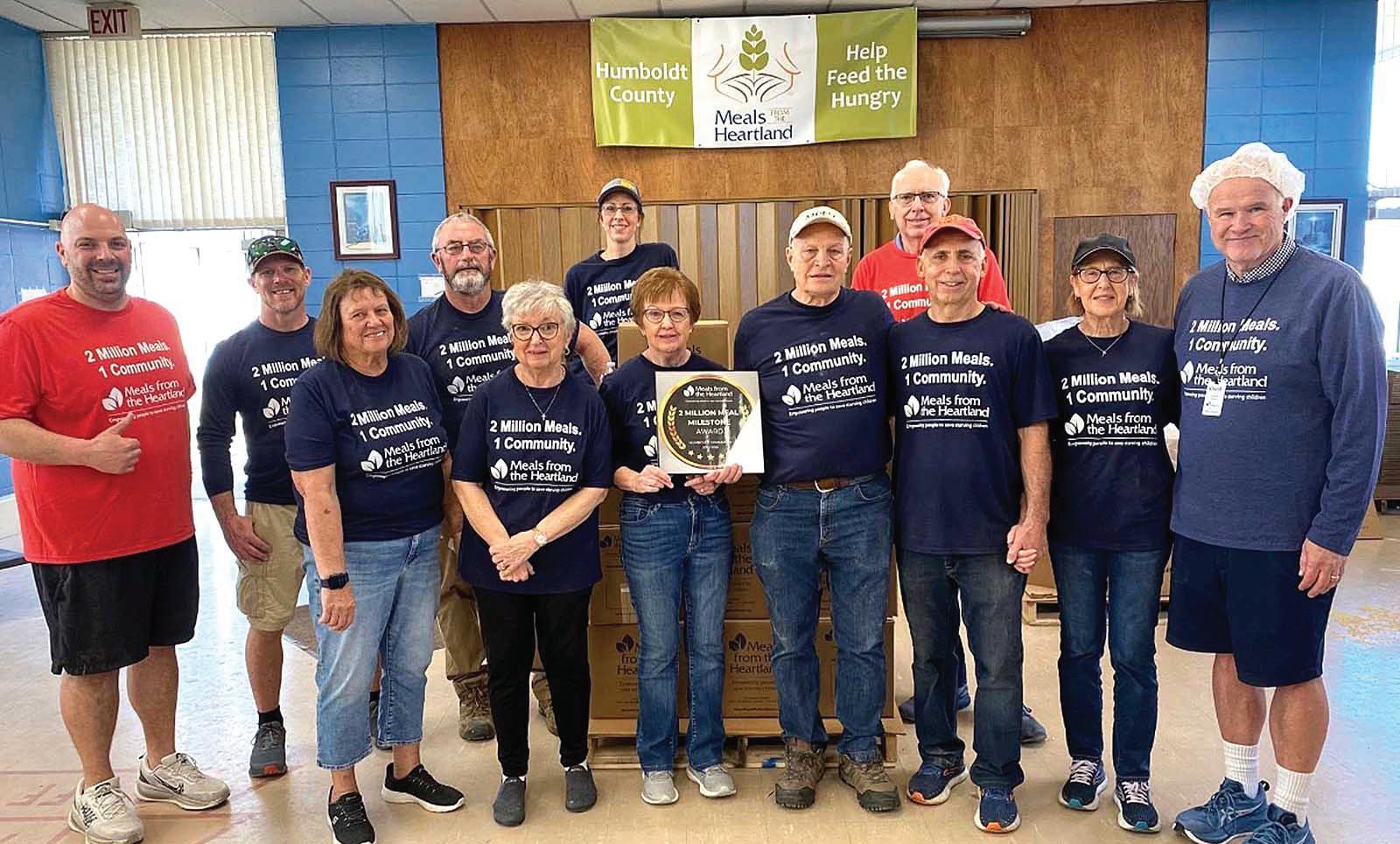
Well, in March 2026, the Humboldt Team 4 Hungry group, affiliated with the Meals from the Heartland group in Des Moines, had a notable milestone, with 2 million meals packaged. That number could have been even higher, had the group not taken off the years of 2020 and 2021 due to the coronavirus pandemic.
“The county of Humboldt is incredibly involved and very caring,” Goche said. “I feel incredibly indebted to all those who help. There are so many people who help in so many ways. I would love to go out and thank them all personally.”
One weekend per year in March, the volunteers converge on a Friday and Saturday to assemble meals of prepackaged pasta and other types of food.
By Sunday, those meals on scads of pallets are on the way to Des Moines to Meals From The Heartland for transport internationally, although many stay to serve Humboldt County residents, including meals given to several food pantries.
Goche and the Rev. Katie
-Submitted photos
PICTURED AT A RECENT PACKING EVENT, from left to right, are: Georgie Filber with Meals from the Heartland, Matt Powers, Rose Zeman, Jim Gronbach, Margaret Tellier, Cassie Smith (in back), Jan Goche, Allen Goche, Dave Bradley, board member at Meals for the Heartland; John Hartford, Denise Hartford and Chuck Current, CEO of Meals for the Heartland in Des Moines. BELOW: The Humboldt community turned out in force to help with a packing event earlier this year.
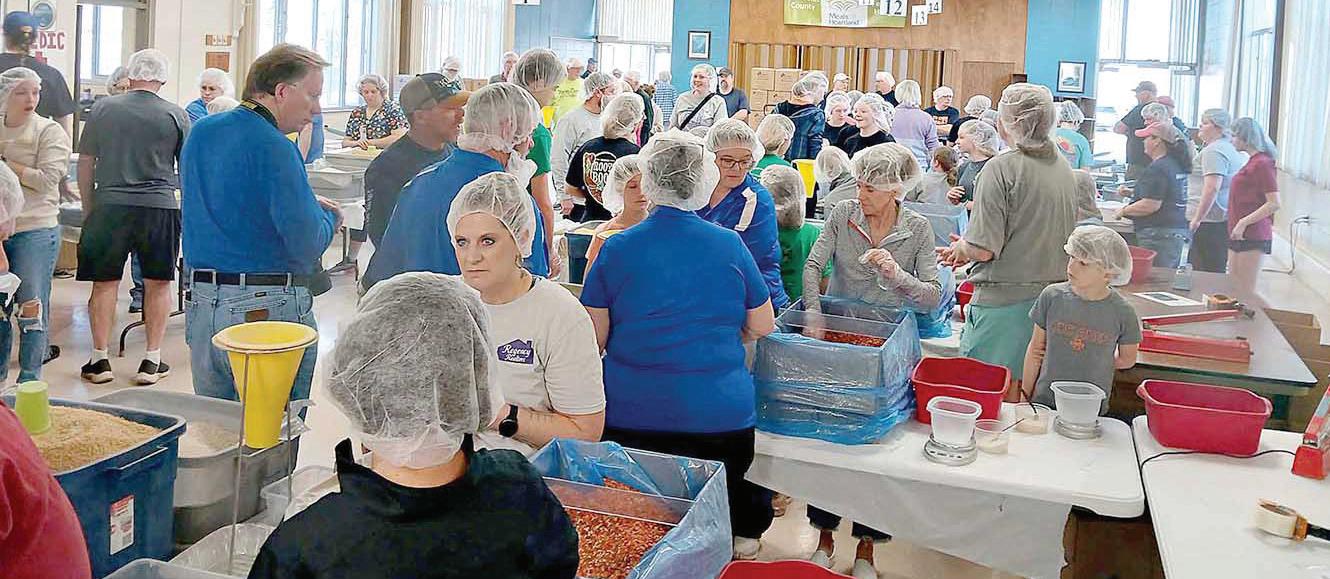
Russell, of Our Saviour's Lutheran Church, both said many people overlook the reality that many residents in north central Iowa struggle with hunger and food insecurity. Goche noted that Humboldt may seem fairly affluent, but his recent job
driving vans for the Mid-Iowa Development Association Council of Governments helped him see that is not universally so.
Russell said “the hunger ministry is at least three-fold” with Team 4 Hungry: the people who package the meals
get the joy of helping others, those who receive the food have their lives improved, and the third element provides advocacy to the issue of food insecurity.
She cited “a reciprocity that you don’t expect beforehand, not realizing what we (the volunteers) get.”
Team 4 Hungry was founded by some key people like Goche, his wife Jan, and the Rev. Gene Broughton, a former pastor at Our Saviour's Lutheran Church. There was a big push by the Humboldt Ministerial Association to move the group onto firm ground.
“They started inviting other pastors to lift up lay folk to join the team, to build this thing together,” Russell said.
That involved initially using Our Saviour’s as the place to package food.
Russell said the endeavor really took off after the first few years due to “an absolutely amazing connection,” when students from the Humboldt Middle School began packaging. St. Mary Catholic Middle School now also provides lots of labor from energetic young people.
There are 16 people who now provide leadership and planning for the activities of Team 4 Hungry. Goche said he is proud they are diversely drawn from county churches.
Russell proudly pointed to some key statistics from the 2026 Humboldt Team 4 Hungry report.
This March, 878 volunteers took part and 162,000 meals were packaged, which will provide three daily meals for 623 children for an entire year.
Thinking back to the start in 2011, Goche said, “I never envisioned we could hit 2 million meals.”
Russell said Humboldt Team 4 Hungry assembles the most meals of any chapters in Iowa feeding into Meals from the Heartland.
“We are a small part when you look at (food insecurity) worldwide,” she said. “But it has a huge impact locally.”
By JOHN McBRIDE
When students from Fort Dodge Senior High School or St. Edmond Catholic School have questions about their future, they have a resource in Danielle Balk.
Balk is a college and career transition counselor (CCTC) at Iowa Central Community College. She’s been in that position for about four years and works with other CCTCs who spend their time at the 19 high schools in Iowa Central’s service area.
“As CCTCs, we assist students with college course enrollment, monitor academic progress, and provide orientation and support for students taking college-level, dual enrollment courses,” she said. “We also guide students through career exploration, transfer planning, college visits, and selecting pathways that align with their interests and goals. In addition, we help students and families complete financial aid forms, scholarship and college applications, resumes, and job applications.”
Balk and the other CCTCs provide information to high school students through presentations, guest speakers, career events, job shadows, and mock interviews. They connect students with real-world experiences and valuable resources to help them successfully transition from high school to college, careers, and beyond.
She is part of the High School Partnerships team alongside Tim Christensen, dean of high school partnerships; Sara Scharf, director of high school partnerships; and fellow CCTCs Abby Underberg, Megan Kruse, Emily Holtapp and Jared Benson.
“Together, we cover the 19 high schools in our service area to support high school students as they explore, plan, and prepare for life after high school,” Balk said. “We work closely with counseling offices, families, instructors, and community partners to help students navigate college, career, and workforce opportunities
while building confidence in their future plans.”
Balk graduated from Dallas Center-Grimes High School and earned her bachelor’s degree in social work, before continuing her education at Drake University and earning her master’s degree in school counseling.
She started working at a local daycare when she was 16, and continued working there on and off until beginning her school counseling career at Southeast Valley High School. Along the way, she also worked for Four Oaks in a mental health and suspension/expulsion classroom and later worked as a paraeducator for Dallas CenterGrimes Community School District while attending graduate school.
After spending six years as a high school counselor in Gowrie, she said she realized she especially enjoyed helping students with college and career planning. That passion led her to apply for her current role at Iowa Central.
“One thing I love most about my job is seeing students succeed,” she said. “Success looks different for every student, and being able to celebrate both the big and small victories with them is incredibly rewarding. Watching the smile on a student’s face when they achieve a goal they have worked hard for reminds me why I do this work.
Knowing that we have made a positive difference and helped impact their future is one of the most meaningful parts of being a college and career transition counselor.”
This year, she had the opportunity to watch 12 students from Fort Dodge — two from Senior High and 10 from St. Edmond — earn a credential and participate in Iowa Central’s graduation ceremony.
“I was so proud of their hard work, dedication, and everything they accomplished. Watching them walk across the Iowa Central stage was incredibly special,” Balk said.
See BALK, Page 32D
Balk helps students find their way in
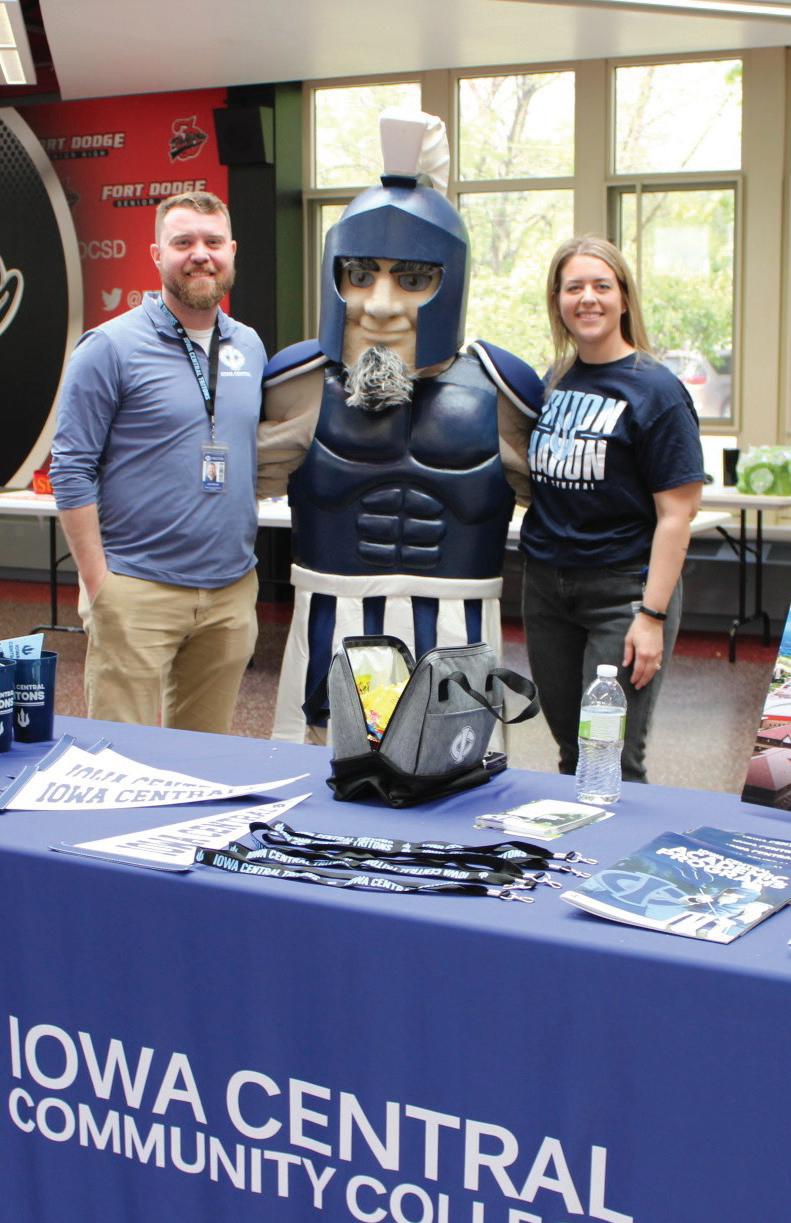
-Submitted
By JOHN McBRIDE
From growing up with a father who was a long-time teacher to her own years in the classroom and now her current role as principal at Fort Dodge Senior High School, education has always been important to Staci Laird.
Now she’s hoping to educate others on something even more personal to her: ovarian cancer.
In the fall of 2023, Laird was diagnosed with the disease. She had surgery to remove the tumor in October of that year, then started chemotherapy in November and continued with that until March.
“When you’re in the mix of it all and you’re fighting cancer, you don’t have a lot of time to reflect and think about the situation. Then you get to the back side of it and everything’s done, and you get the at least temporary clean bill of health and you start to process it all,” said Laird. “And one of the things that just kept smacking me over and over was, ’I’m a very educated person. I have a cancer history on both sides of my family. Yet ovarian cancer was not on my radar.’”
She added there’s a reason for that.
“People don’t know a lot about it,” Laird said. “We’ve made huge strides in diagnosing and treating breast cancer and cervical cancer and prostate cancer. They’ve developed screeners to detect things early, but that hasn’t happened with ovarian cancer.
“It’s called the silent killer. That’s the nickname for it.”
Laird said most women don’t develop any symptoms until they’re already in Stage 3 or even 4. Someone may have it for an extended period of time and not know it. She
FDSH principal uses her cancer battle to educate others
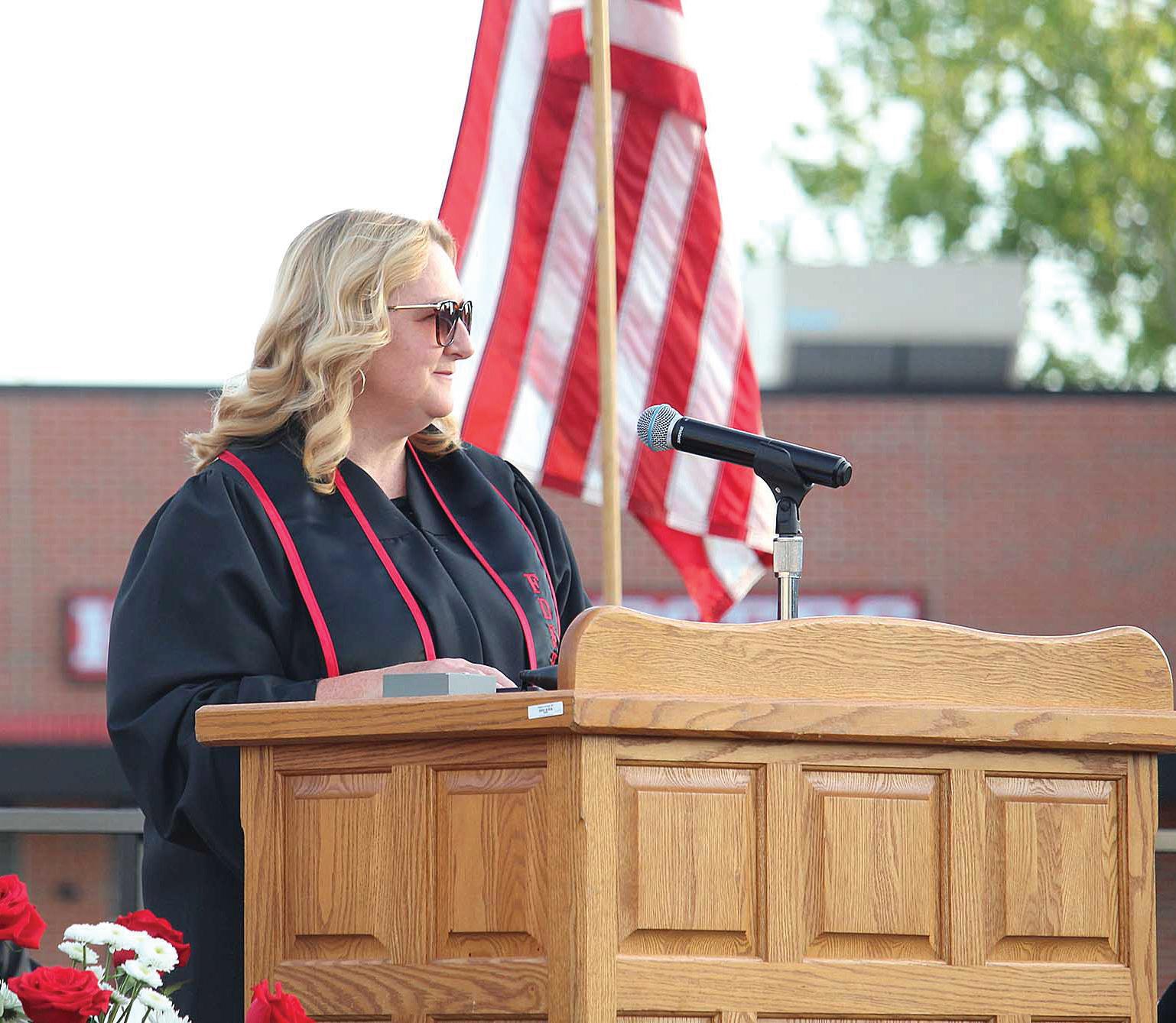
also noted the symptoms are not atypical, so people tend to write it off as the warning signs arise.
“It was normal for me — like I had night sweats. I had nausea. I might have acid reflux or fatigue,” said Laird.
“I was one of the rare ones who got it before I was 51 years old. So when I started missing periods — having
like two months with nothing and then a super heavy one — I thought I’m going through perimenopause, right?
“I just assumed the fatigue, the stomach issues, the digestive stuff, the night sweats, the irregular periods … ’oh, I’m entering perimenopause. I’m 51. So I ignored it for a while. Nothing really got my attention until
I started having a pain in my lower left abdomen, and it kept getting worse.”
Laird said she was on a family trip when she started to think something was out of the ordinary. Her father had recently gone through bladder cancer, so that was the first idea that crossed her mind.
See LAIRD, Page 27D
-Photo
STACI LAIRD, Fort Dodge Senior High principal, addresses the Class of 2026 at commencement in May. Laird just completed her seventh year as principal at the high school.
“We were on a trip for our anniversary and I kept saying to my husband, Jason, that something is really wrong with me,” she said. “I just started listing off all the things that had been happening. I lost weight, but I wasn’t doing anything to try and lose weight. I dropped like 10 pounds in a month and actually said to him, ’I think I have bladder cancer because my dad had it a few years back.’”
The combination of symptoms finally prompted Laird to see a doctor. It was just seven and a half weeks from her first appointment to her surgery. She had 10 appointments in the meantime, including pelvic exams, internal ultrasounds, blood tests, a mammogram and a colonoscopy, because the Des Moines oncologist wanted to see if cancer was discovered anywhere else.
They also wanted to know where it originated. Yet they still told her it might not be cancer.
“It was a long process,” she said. “But thinking back on it after the fact, I’m like, ’this is crazy.’ Like I didn’t know what was happening to me. I could have written off these symptoms and ignored them even longer.”
Laird admitted she’s a private person and likes to keep things to herself. She didn’t really post much on social media about her journey. When the following September came around, though, she decided it was time to speak out.
“September is Ovarian Cancer Awareness Month and I thought, ’I need to speak up. I need to say something.’”
Laird put out a series of posts with informational graphics about symptoms, signs and other facts related to ovarian cancer. To get people’s attention, she decided to post a picture of herself going through the process of treatment — even though it was hard.
“I posted a picture of myself.
No eyebrows, no eyelashes, and I thought this is hands-down the most uncomfortable thing I’ve ever done in my life,” Laird said. “It just took me so long to hit that post button.”
Laird said it took everything in her not to delete the post at first, but it quickly started to garner attention. That was her hope.
“That was the beginning of my advocacy. I just said, ’Let’s make this public and let other people see it,’” she said.
She tagged the Ovarian Cancer Research Alliance and the National Ovarian Cancer Coalition. Laird began getting messages on Facebook from people who asked about her journey, her symptoms and everything she went through.
“Then we got involved in a walk in Des Moines for the National Ovarian Cancer Coalition and raised some money for that,” Laird said. “I went and walked with my family, and that was empowering. But it was through that and joining that group on Facebook that I found the Ovarian Cancer Research Alliance (ORCA), which is a national organization and is the largest funder of ovarian cancer research in the nation.
“They have a program called the ’Advocate Leader Program.’ You could be a survivor or you could have lost someone or be a caretaker, or you can work in the medical profession, and so it was just this process where I had to fill out an online application as to why I wanted to do this.”
Laird interviewed for the program and was accepted. She is only the second person in Iowa to be a part of it.
In her role with the Advocate Leader Program, Laird gets legislative alerts and then reaches out to legislators to explain why they should support certain bills. Members are encouraged to do things like get proclamations done locally and statewide for Ovarian Cancer Awareness Month.

STACI LAIRD, right, and Bridget Toomey both attend the Ovarian Cancer Research Alliance Advocacy Day on March 17 in Washington, D.C. The two Iowans met with members of Congress and their offices during the two-day event.
Laird also went to Washington, D.C. in March and attended what OCRA calls advocacy day. It’s a whirlwind process with more than 100 other people getting a crash course in OCRA’s legislative priorities.
“We do this really intensive day, and then the next day, they have appointments set up for us already on the Hill,” said
I’m a teacher. I will always be a teacher, and this is an opportunity for me to use those skills to bring awareness to an issue. People need to be more aware.”
Recently, Laird applied for a “survivors teaching students” program, where ovarian cancer survivors speak to doctors, nurses and physician assistants in training about what to look for with their patients.
“If you have a patient that says this, this or this, you need to consider (ovarian cancer) as a possibility, because it can be (a huge sign) with ovarian cancer,” she said. “It’s often undiagnosed or misdiagnosed, and so it takes too long.
“I was so lucky.”
Laird just got done with the training for the survivors teaching students. Now she’s waiting to begin meeting with those entering the medical field.
“That feels very comfortable,” she said. “You know, it’s teaching. It’s what I do.”
As of her last appointment, Laird was cancer free — a big step for survivors.
“I have like a 98 percent chance now of never having it again,” Laird said. “It’s been a roller coaster. And I felt like I needed to speak up.”
Laird. “We met with senators and Congress people. We met with Mariannette Miller-Meeks and Charles Grassley, and we met with representatives from Randy Feenstra and Joni Ernst’s offices. We pitched, ’Here is what you need to know about ovarian cancer.
“We did a lot of educating that day. That’s why this feels like the right move for me.
Laird just completed her seventh year as head principal at FDSH. She is the first female to be a full-time head principal in the school’s history. Only one other female has served as principal, but it was in an interim role.
Laird also steered the school through the COVID pandemic and shut down in her first year at the helm, and will now oversee the major structural improvements scheduled for the building, which will be at least a three-year process.







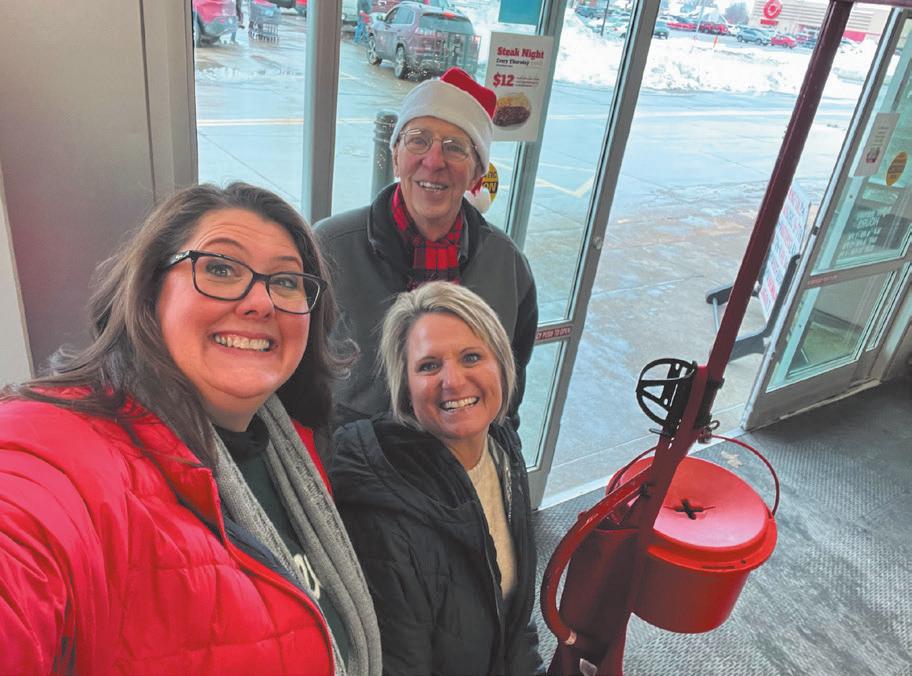













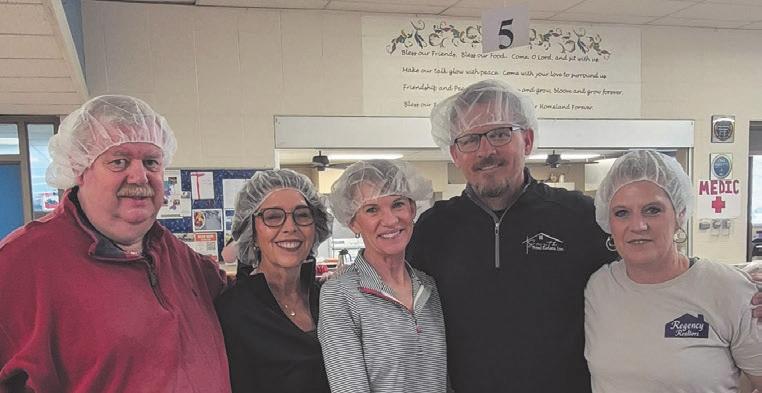

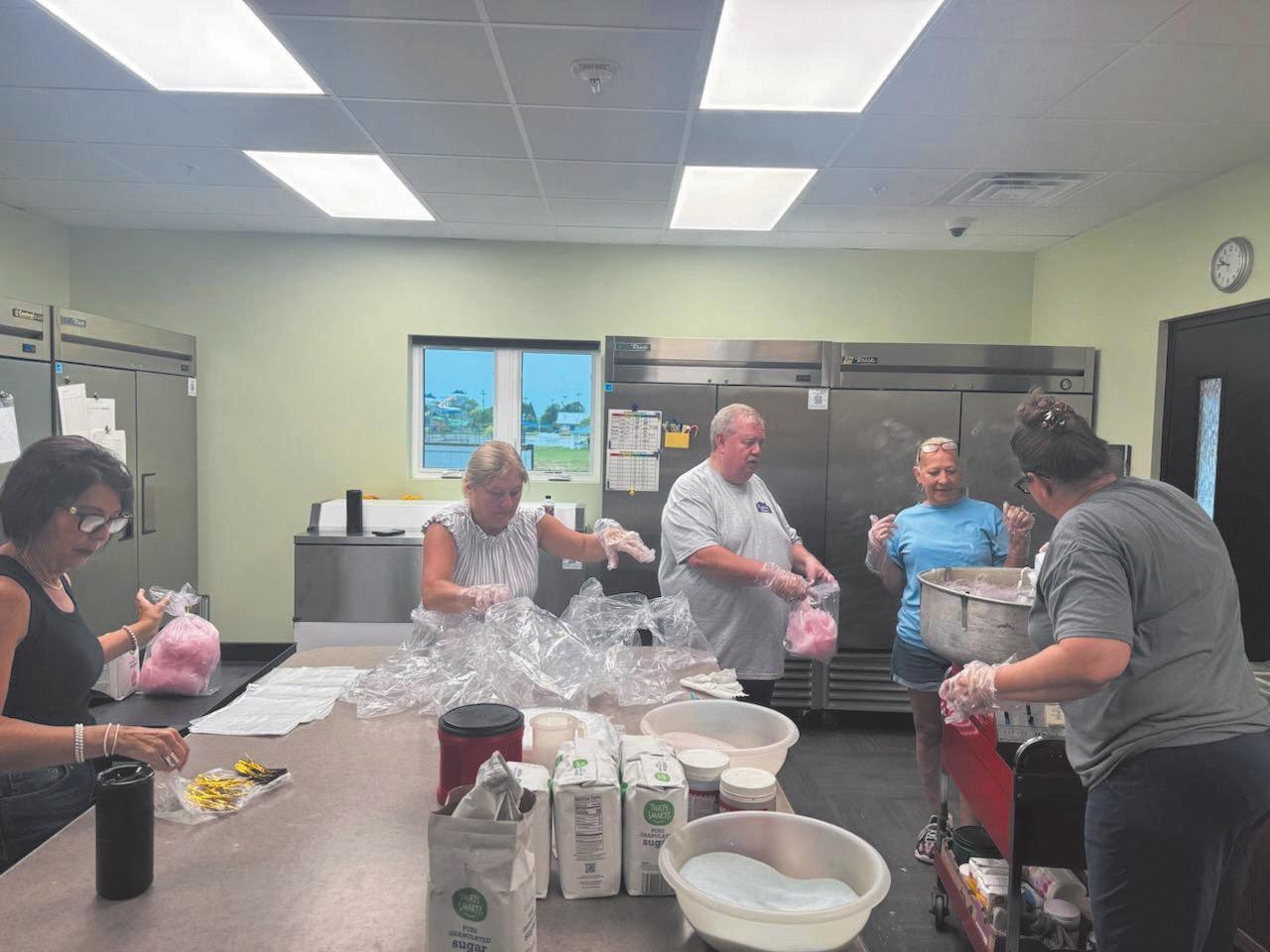


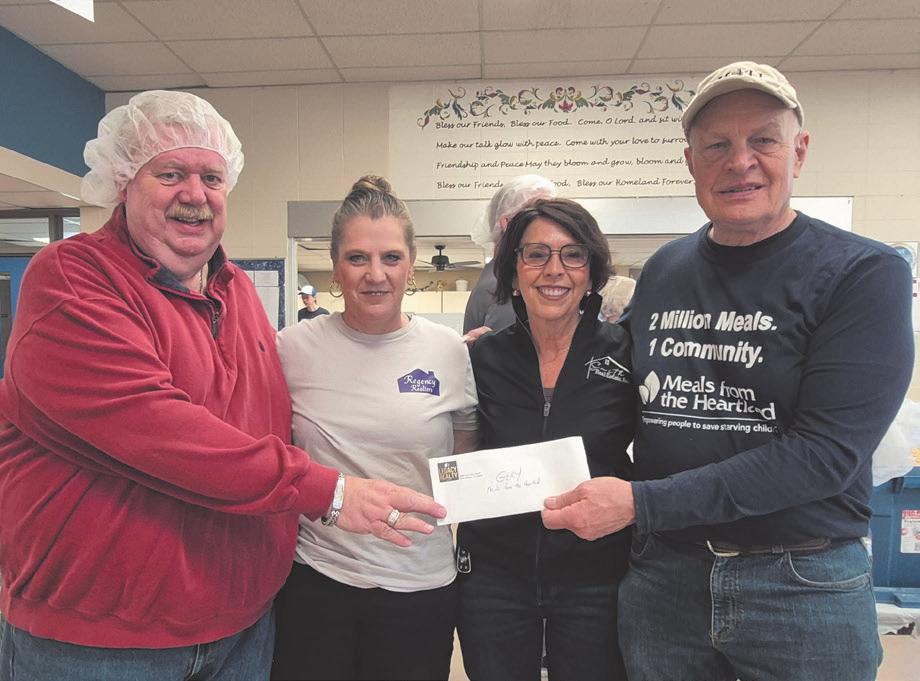









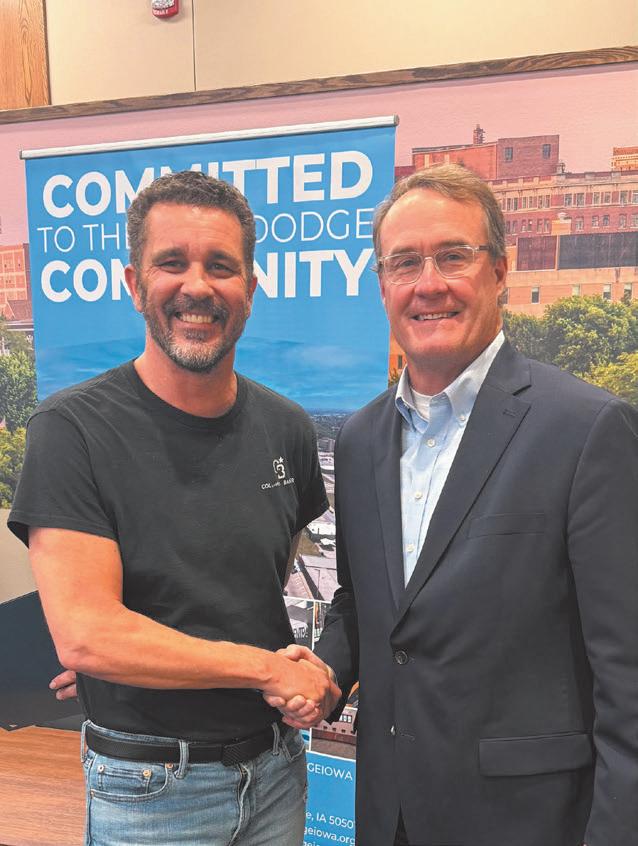



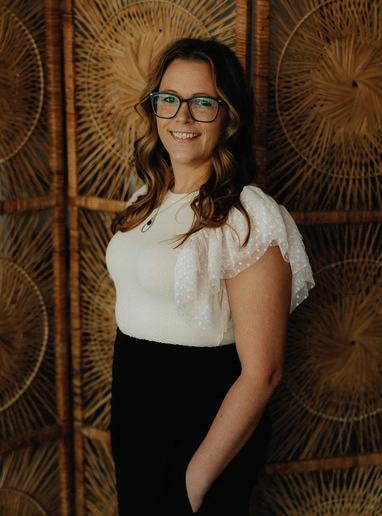
By CHRIS JOHNSON cjohnson@messengernews.net
A change in career paths put Barb Crooks exactly where she wanted to be.
After 20 years working at the Fort Dodge Correctional Facility, Crooks decided it was time for something different.
For the past three and a half years, Crooks has been the juvenile court liaison as part of the support staff at Fort Dodge Senior High.
“When I left the prison, the school happened to have an opening, so I applied for it,” Crooks said. “I felt if I got into the school system, I could work with youth and encourage them to get their education and also focus on their future — whether that would be attending college after high school or going into the workforce.
“I wanted to make sure they realized they were capable of being successful. Too many times you hear others putting youth down and telling them they won’t be anything or aren’t smart enough. If we let them know they can put their mind to it and believe in themselves, they can become anything they want to be.”
Working with high school kids gives Crooks the chance to help them if they are struggling.
“Our youth are our future,” she said. “I would see kids in the prison and help them there, but I felt if I could help them before they got to that point, that would be even more beneficial.
“So many children struggle if they don’t have a good family or come from a bad background. By talking to them and being a face, it gives them reassurance to overcome obstacles by trying to be a
Crooks encourages FDSH students to stay on right path
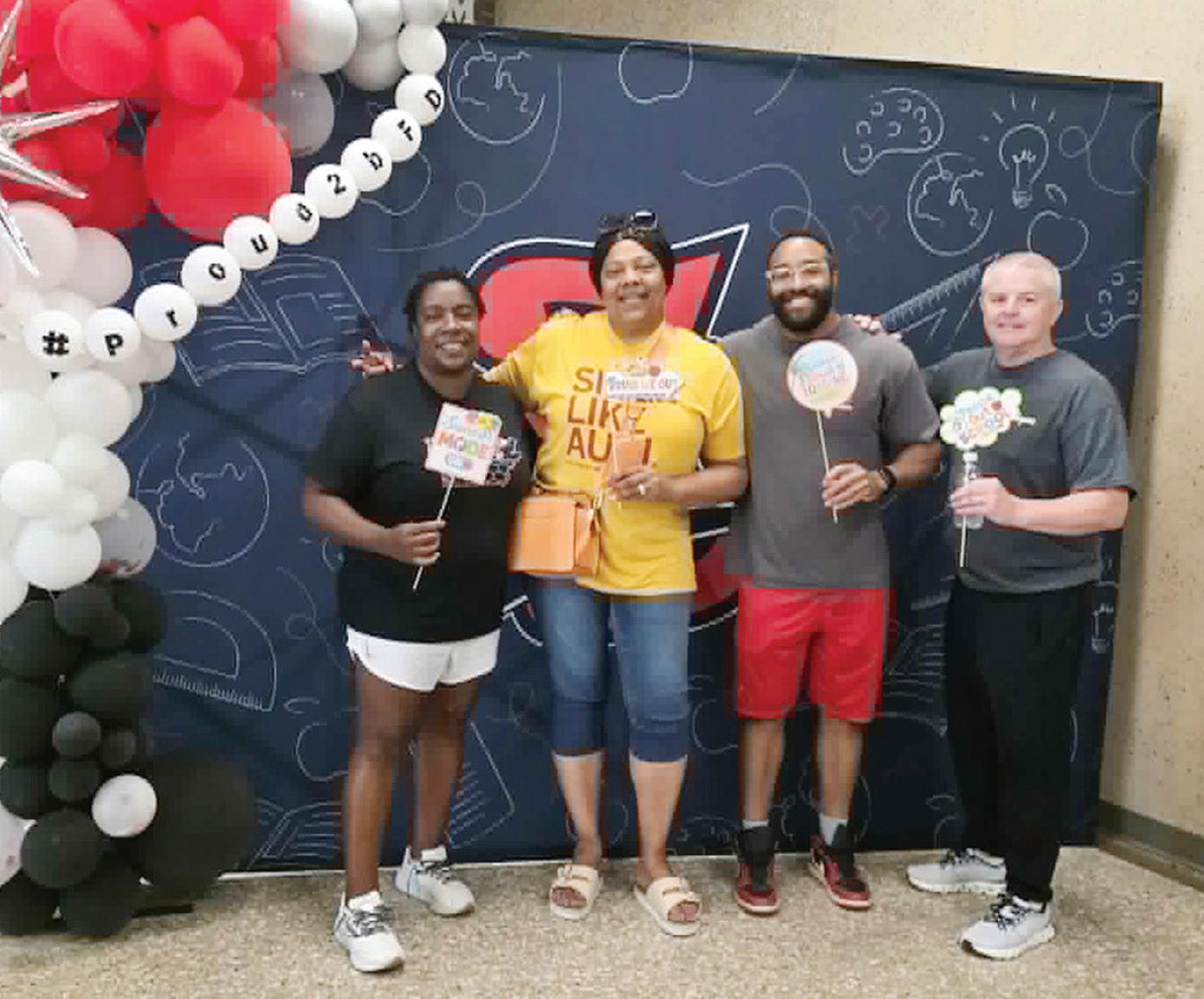
-Submitted photo
“Being able to go back and work at the place where I graduated and once was a basketball player — trying to do positive things to help the youth succeed — is an
honor and a blessing.”
—
Barb Crooks Juvenile court liaison
“We want to be there so they have someone to talk to as well.”
Being someone that a student can come to if they have a problem or issue is a role Crooks embraces.
“It’s also about building relationships,” Crooks said. “It can be a rough transition for some, but building relationships with the youth and seeing the progress they make in order to help them is a critical component to all of this.
positive influence on them.”
Crooks, a 1989 Fort Dodge Senior High graduate, came back home to FDSH after attending both Iowa Central Community College and Drake University.
“‘Once a Dodger, always a Dodger’ is so true,” Crooks said. “Being able to go back and work at the place where I graduated and once was a basketball player — trying to do positive things to help the youth succeed — is an honor and a blessing.”
Crooks’ job as a juvenile court liaison is to help any
kid at FDSH who is on probation, and serve as the middle person between the district and juvenile courts. She checks in with grades and attendance, and makes sure they’re not getting in trouble.
As part of the support staff, Crooks will help remove a student that is not acting appropriately and serves as a support person for the classroom.
Crooks is part of the FDSH staff with G Myers, Corey Moody and Sergio Dismute.
“They are great team players. It doesn’t get any
better than them,” Crooks said. “We work well together.
“I can count on them.
Senior High is lucky to have such a great team that has great relationships with the students.”
But Crooks’ job isn’t all about dealing with trouble spots.
“There is a disciplinary part with pros and cons,” Crooks said. “But we also want to have a positive outcome with the students and help them look at the brighter side when it comes to homework and assignments.
“Helping support them and leading them in the right direction is very important.” Crooks lends a hand without judgment or finality. Every student is a work in progress.
“We don’t know what goes on behind closed doors,” Crooks said. “We want to have a mindset that transitions from a negative into a positive one.
“We don’t know what their home life is like, and we have to approach it that way. You may be the only person to say a positive thing to them that day.”
working with teachers in addition to students. He also is the advisor for the Eagle Grove Student Council and prom.
“A lot of my day consists of mental health support. I build all the schedules for the staff and the students, even help align their schedules, navigate them to their college options, and help them get dollars for scholars.”
Wubben said the Eagle Grove schools actively promote literacy. When they graduate, students who are proficient in several languages have a seal of biliteracy on their diplomas.
“Students have to have so much proficiency in many different areas. They have to take tests in four different areas to get the seal,” he said. “This was our second year doing this, and we plan to grow this every year. That seal goes on their diploma, setting them apart and making them more marketable.”
When not involved with the school, Wubben takes on other roles in the community
“I’m also a volunteer firefighter, and I volunteer as an EMT for the ambulance department.”
His enthusiasm for the community and the schools is evident in all he does. This past year he had some help, which was fully utilized.
“I’ve been blessed with an intern,” he said. “I’ve had students job shadow before, but now I have someone who is working on a par with me.”
Jeannie Johnston from Thor is that intern, and she is getting her master’s in social work from Dordt University. Part of her graduation requirement is an internship that she began in January. This will be completed in August.
For jumping into the community so completely, one would think Wubben was a native, but he’s not; he grew up in Buffalo Center.
“I’m a transplant. My wife was born in Eagle Grove,” he said. “My wife was part of the interviewing team to bring me to Eagle Grove.”
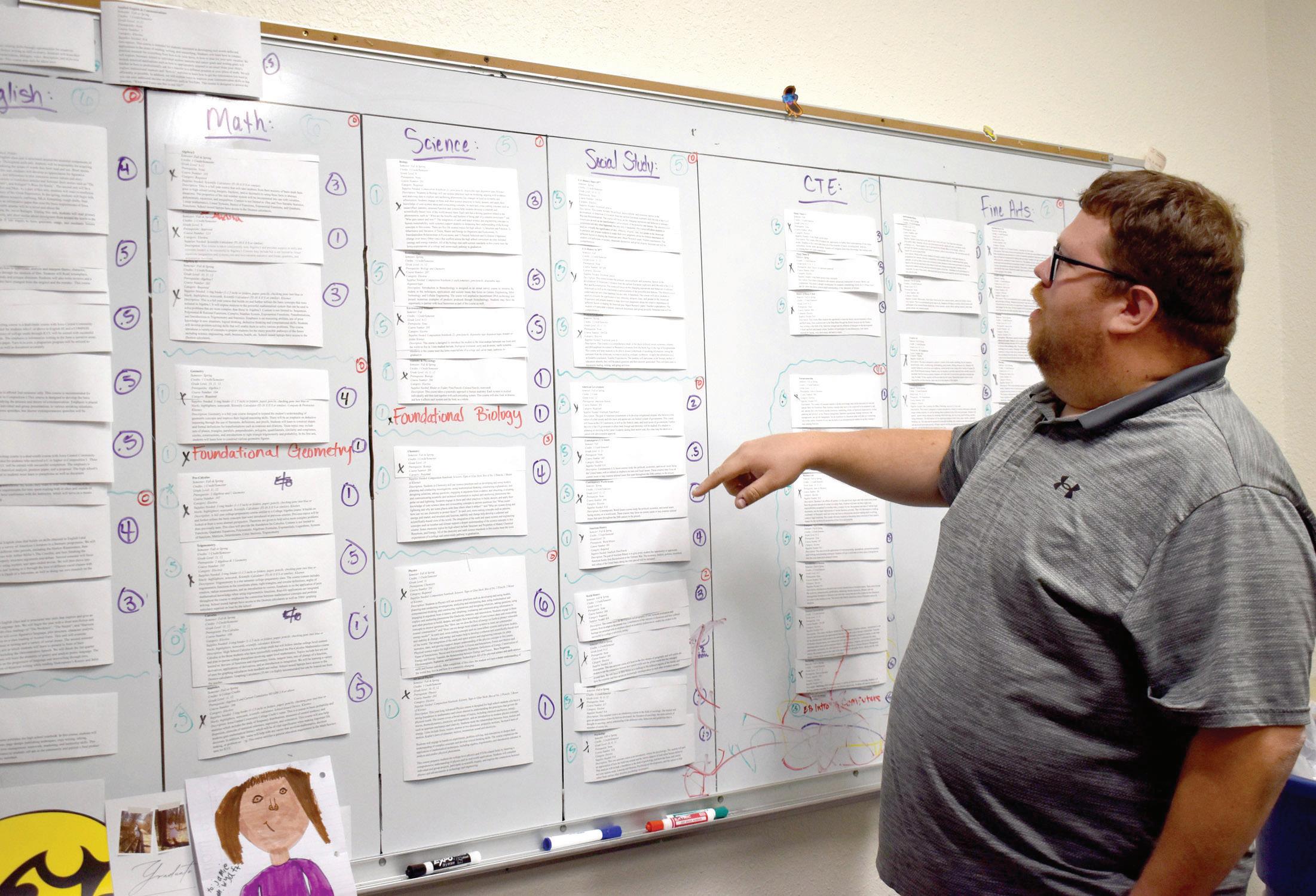
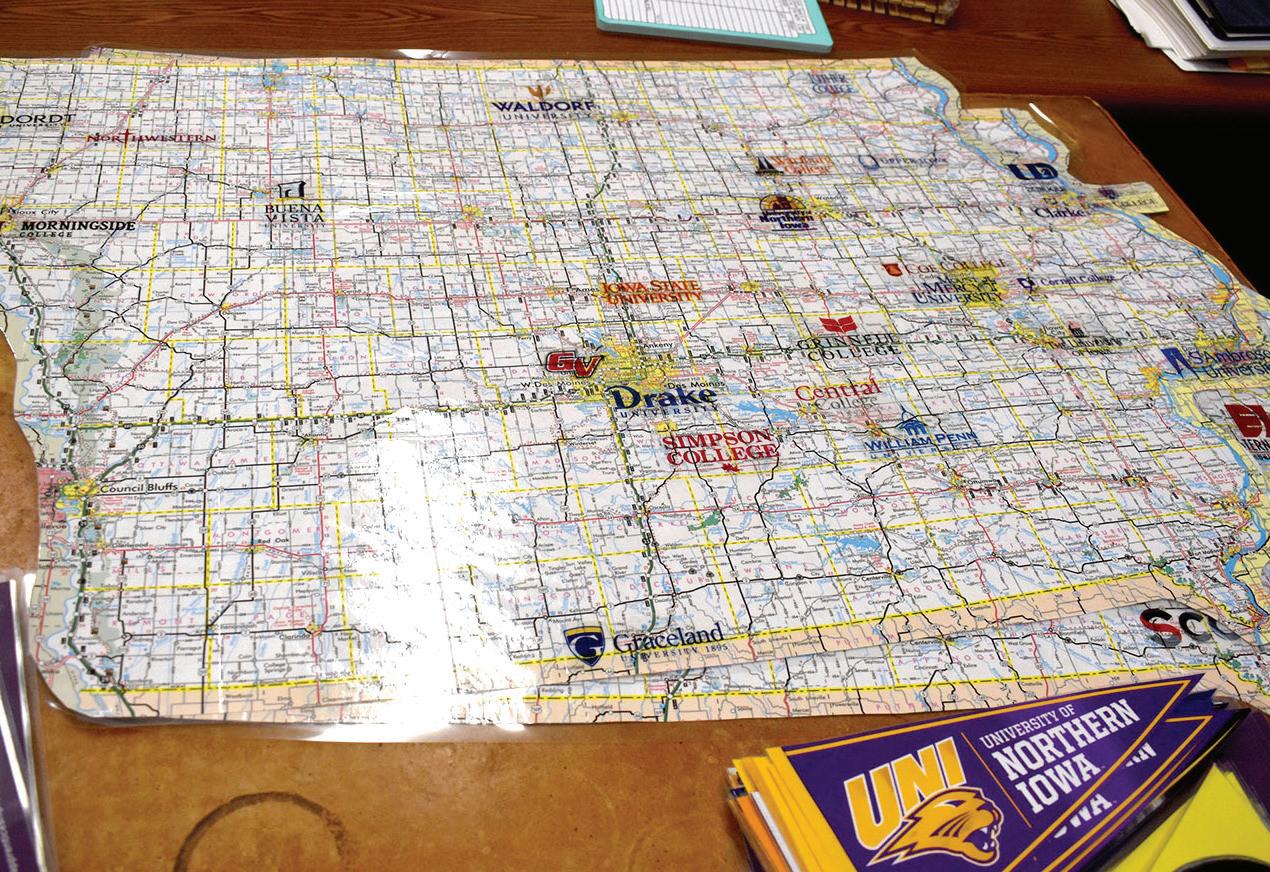
His future wife was working for Mozaic out of Clarion, and after accepting the job, it took a few months before they started dating. Wubben worked for Mozaic for about a year, before taking a job with Van Diest Medical Center in Webster City. He started as a hospital social worker, and was finishing classes to get his master’s degree in social work from St. Ambrose University in Davenport. He then transitioned from hospital social work to mental health therapy while at the hospital. The job at Eagle Grove schools came
open in 2023, and since they lived in Eagle Grove, he took that as a great opportunity for their growing family.
Wubben and his wife, the former
Anthony Wubben, student success specialist at Eagle Grove High School, examines the list of classes that are being considered for the fall classes at Eagle Grove High School. His charting system includes classes that have been considered, new classes and standard classes that are offered at the school.
LEFT: This map shows where the different colleges are located throughout the state of Iowa.
Kailee Russell, now have three children and have lived in Eagle Grove for nearly 10 years. Their children are Keegan, 7; Rhett, 5; and Berkley, 3. Even though the school year is over, if you want to find him, it’s likely he’ll be at the school.
And his door is always open.
By KOLLEEN TAYLOR
WEBSTER CITY — Jake Van Diest has a name that is pretty familiar in central Iowa. He is now the third generation of the Van Diest family stepping into a leadership role.
Started by his grandfather in the fall of 1956, Van Diest is now the president of the Van Diest Supply Company—VDSC.
The business began with Bob and Mary Van Diest as a sideline to the grain and livestock farming operation. They worked out of their home. The business that didn’t hire a full-time employee until 1966 now has about 600 employees companywide, with about 350 to 400 in the Webster City area.
His grandparents and his father John are still very much a part of the company, but Jake Van Diest has been learning about the business ever since he started working there about 14 years ago.""
A Webster City High School graduate from the class of 2008, Van Diest attended Iowa State University majoring in finance and economics, then completed his MBA. His family has encouraged him along the way, but he admits he didn’t always plan to stay in the family business.
But then he did.
His experience includes the Iowa State University Finance Department & Professional Development and First State Bank, but then he came

Van Diest at the helm of family business
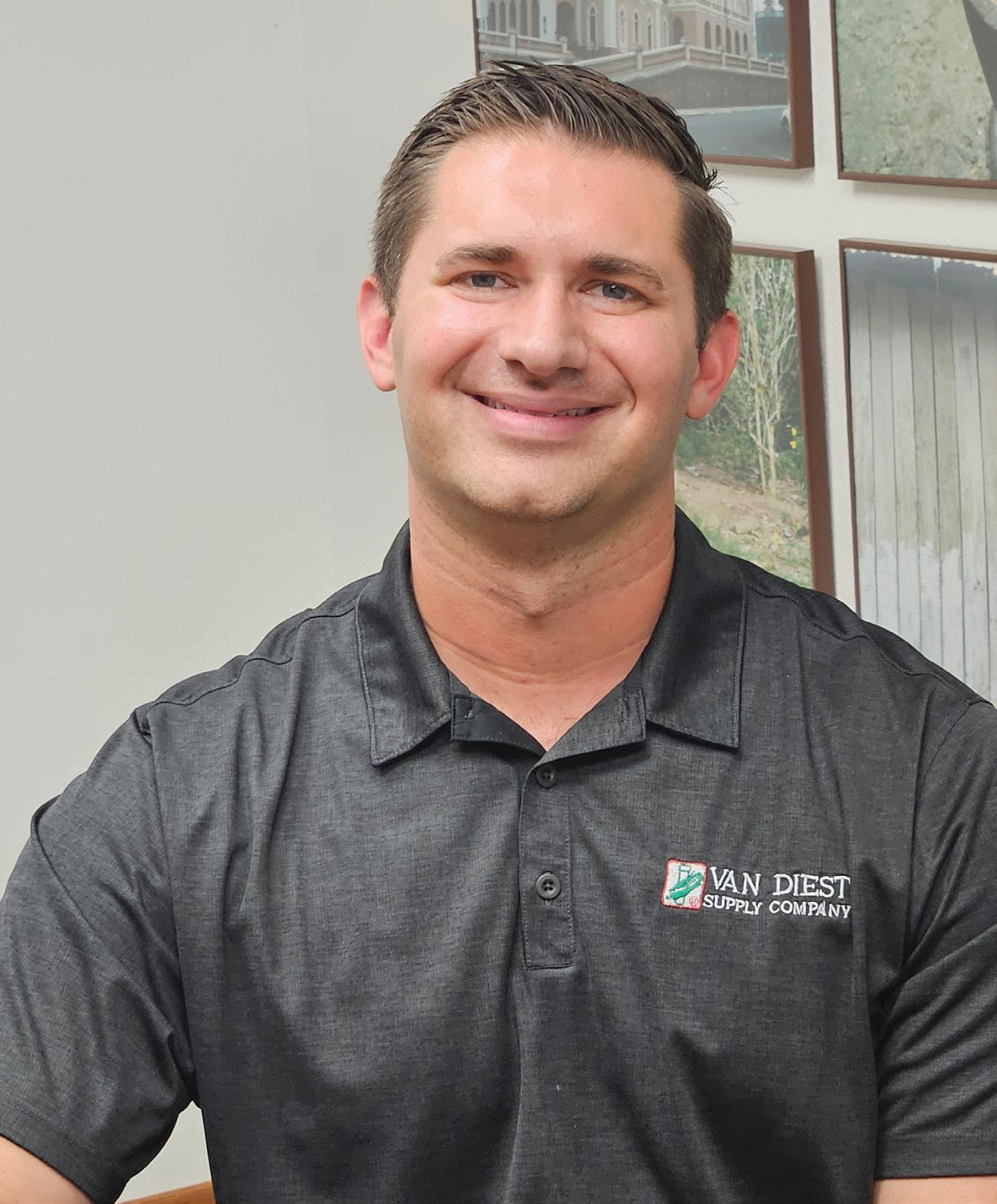





“We’ve got a tremendous number of long-term people. Over 200 have over 10 years with the company.”
— Jake Van Diest President, Van Diest Supply Company
back to VDSC.
He began working in the marketing department as a marketing specialist in 2014. Then he started taking a few responsibilities off of his grandfather, and about 10 or 11 years ago he took over the reins as company president.
He has certainly done the right thing. It’s not only good for the Van Diest Supply Company, but it’s good for Webster City, as he’s taken an active role in the community.
Lately he’s become actively involved with the Hamilton County Growth Partnership — HCGP, and has spent a lot of time looking at the issues and services that impact the









Each year Balk and the team set both team and individual goals focused on increasing student success and expanding opportunities for the students they serve.
“Personally, I strive to support more students in reaching their future goals through career exploration events, guest speakers, and individual student meetings,” she said. “I also work toward increasing the FAFSA completion rate at both schools.”
She added that having seniors complete the Free Application for Federal Student Aid (FAFSA) is an important indicator that students are taking the next steps toward continuing their education after high school.
The school counselors, TRIO staff, Iowa Central’s financial aid office, and Balk collaborate to host multiple FAFSA completion events for students and families throughout the year to help make college more accessible and achievable.
“One thing I love most about my job is seeing students succeed. Success looks different for every student, and being able to celebrate both the big and small victories with them is incredibly rewarding.“
— Danielle Balk College and career transition counselor at Iowa Central Community College
“A big part of our job is checking grades, meeting with students who may be struggling, and helping them come up with a plan to get back on track,” she said. “We also try to keep students thinking about their future goals, even when life gets busy and stressful.”
Continued from Page 31D
community and their employees.
“If you are going to live in a community, you need to be aware of what is happening in it,” he said. “I don’t want to be one of those people who sit back.”
Ottie Maxey, the executive director of the HCGP, approached him and asked him to get involved. And so he has.
“Our biggest problem is that there is a need for more housing,” he said. When they hire someone, he wants them to live in Webster City.
“It is more the cost of owning a home (property taxes) people will struggle with as opposed to the cost to renovate the high school. We need to lower our overall property tax liability to create room to also do the high school renovation,” he said.
“I’ve been around here a lot,” he continued. “The high school is in desperate need of renovation.”
It’s a balancing act, and they want to keep the people they have. Taking care of employees, he said, means taking care of the community they live in.
“We’ve got a tremendous number of
“Another challenge is simply not having enough time in the day,” she added. “There are always more students we would like to meet with and more activities or opportunities we would love to plan. Sometimes time gets away from
“If you are going to live in a community, you need to be aware of what is happening in it. I don’t want to be one of those people who sit back.”
— Jake Van Diest President, Van Diest Supply Company
long-term people,” he said, “Over 200 have over 10 years with the company.”
But they still have to hire, and he’s frustrated when the people he hires can’t find a home here that meets their needs.
“We’ve got to retain people, and having houses here is part of this.”
He has also been watching what is happening in the downtown area of Webster City.
“You can’t just tear down,” he said. “It seems there is a group that is really invested and I’m excited to see what is going to happen.”
“We know it’s benefitting the families
us, but it also gives us ideas and goals to work toward in the future.”
Balk’s husband, Gary, is a science teacher at Southeast Valley High School. He also teaches some social studies electives. He coaches football, wrestling, and track, too.
The couple received their foster care license in December 2025 and got their first placement in March 2026.
“We currently have a 2-year-old foster child and it’s been such a fun experience,” she said. “Challenging at times, but we have a very happy, smart kid that loves our two dogs, the park and learning new things.”
In her free time, Balk loves spending time with family and friends, reading for her book club and watching a good Netflix show. She also enjoys a good farmers market and traveling. This summer, she is headed to Nashville, Florida and Houston.
who work here,” he said.
The Van Diest family has been generous in their philanthropy, giving time and money to a variety of projects.
Van Diest is putting in his time and talents to contribute to the many efforts in the community.
“We’ve got to keep people here,” he said. “The younger generations are getting more involved,” he continued. “We really need that.”
Van Diest has a very positive attitude about the future of Webster City.
“This is a great place to raise a family,” he said. “There are very nice people, there are parks and trails. You
can get anywhere from here.”
“I chose to move back here,” he said. And move back he did, and he is making sure he has a community for his family.
He and his wife, Emily, have 3 children under the age of six years. They are enrolled in Pleasantview and Asbury Preschool. Emily Van Diest is an event planner. They are already getting involved with the many activities that are here for their children to do.
So what is he most passionate about?
“Spending time with family and learning things,” he said. “The true vacations we haven’t done a lot.”
He finds time for a little golf, some ISU games, but said it’s mostly family stuff.
Family. A family business, a family man, who is trying to take care of their family of employees.
He’s taking the leadership role very seriously, and that type of energy and drive is what will take him far.
As long as it’s Webster City, he’ll be happy with that.





Did you know GreenState is consistently ranked in the top 5% nationally for returning profits with better rates & lower fees? That means one of the top financial institutions in the country, is here in Fort Dodge.