Israel & Morality Prophets Suggesting Idolatry?

Maimonides teaches 13 Fundamentals we must know to inherit the afterlife. Study & share them, page 5.



Just click any icon in



Maimonides teaches 13 Fundamentals we must know to inherit the afterlife. Study & share them, page 5.
Just click any icon in


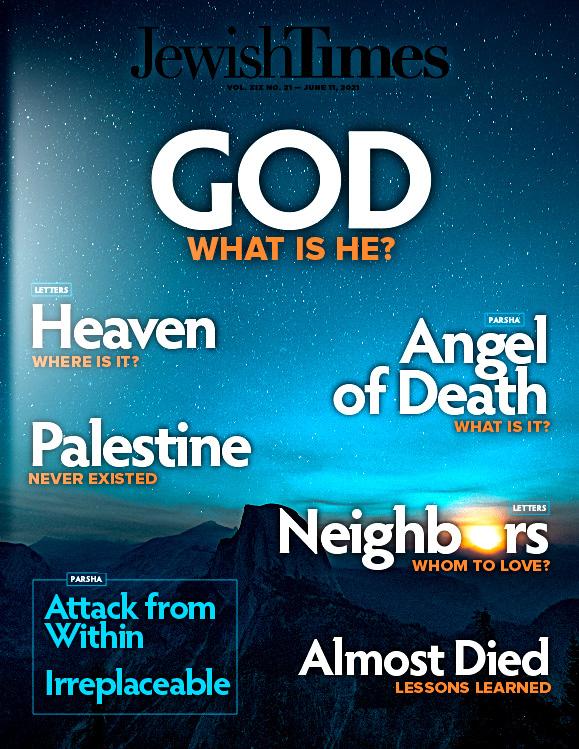
RABBI MOSHE BEN-CHAIM How can a prophet suggest this?
RABBI MOSHE BEN-CHAIM One principle, many vital ideas
RABBI MOSHE BEN-CHAIM Why no Shehechyanu for Sefira?
RABBI REUVEN MANN Israel’s intolerance of immorality
MR. HILL: Ibn Ezra said that people should obey the halacha, Jewish law, even if they do not understand it. Why? How can we obey what we do not comprehend?
RABBI: Man can perform a mitzva without knowing its purpose. Making action contingent on understanding is a corruption of mind, as if to say God has no purpose for this law. “Naaseh vNishma” perfectly depicts how an intelligent man acts: he knows God’s laws are not purposeless, so he ful lls his obligations to God, and then studies until he understands.


Elijah approached all the people and said, “How long will you keep hopping between two opinions? If the Hashem is God, then follow Hashem; and if Baal, follow Baal!” But the people answered him not a word (Kings I, 18:21). (CONT. ON NEXT PAGE)
“Then fire from God descended and consumed the burnt o ering, the wood, the stones, and the earth; and it licked up the water that was in the trench” (Kings I, 18:38).
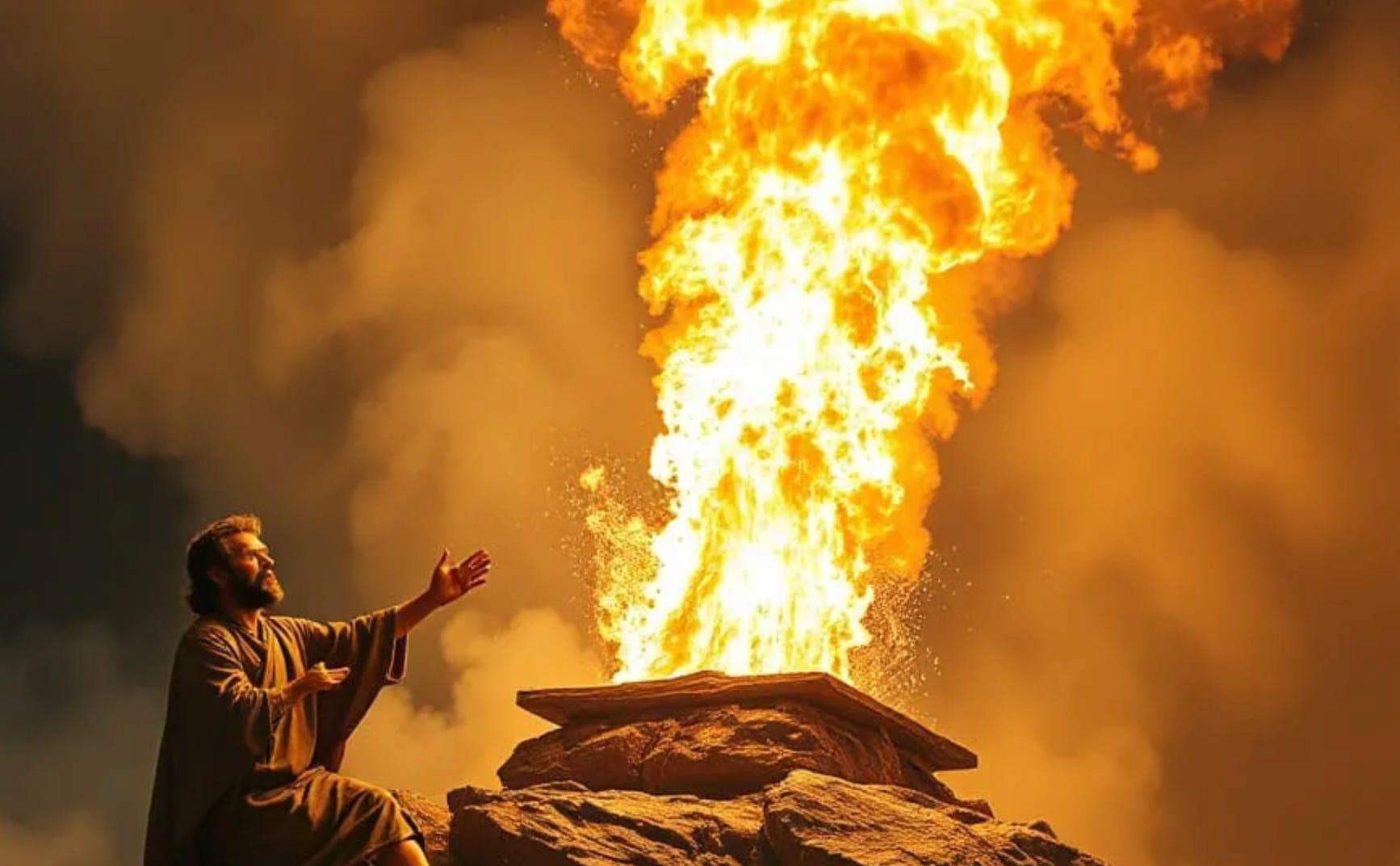
Elijah says it’s better to follow Baal alone, than following Baal and God together. How could he suggest to violate the worst sin of idolatry by following Baal?
The people's inability to respond expressed their incapacitated minds. And this is precisely Elijah's message. Because when people can accept God and an idol, it displays their absence of critical thinking. It's like saying that one equals two. But if the people would at least make a decision, using critical thinking and accept even an idol instead of both God and an idol, then at least their minds are engaged and there's something to work with to correct their path. But if a person cannot distinguish between reality namely God, and between fantasy, meaning an idol, then there is no mind to work with. In this sense Elijah was correct to tell the people at least to use some critical thinking, even if it means accepting Baal because then they were subject to correction. ■


To believe in the existence of the Creator, and this Creator is perfect in all manner of existence. He is the cause of all existence. He causes them to exist and they exist only because of Him. And if you could contemplate a case, such that He was not to exist…then all things would cease to exist and there would remain nothing. And if you were to contemplate a case, such that all things would cease to exist aside from the Creator, His existence would not cease. And He would lose nothing; and oneness and kingship is His alone.
Translated by Marc Mermelstein
Hashem of strength is His name because He is su cient with His own existence, and su cient [is] just Him alone, and needs no other. And the existences of the angels, and the celestial bodies, and all that is in them and that which is below them…all need Him for their existence. And this is the first pillar and is attested to by the verse, “I am Hashem your God.” Elaboration on this principle
Meaning to say to accept that this is the quintessential idea of Oneness. It is not like the oneness of a pair (i.e. pair of shoes - one group) and not one like a species. And not like man that has many individual (members) nor like a body that divides into many di erent parts until no end (every part being divisible). Rather, God is one and there is no other oneness like His. This is the second principle and is taught in what it says, “Hear Israel, Hashem is Our God, Hashem is one.”
This is to accept that this Oneness that we have mentioned above (Principle II) is not a body and has no strength in the body, and has no shape or image or relationship to a body or parts thereof. This is why the Sages of blessed memory said with regards to heaven there is no sitting, nor standing, no awakeness, nor tiredness. This is all to say that He does not partake of any physical actions or qualities. And if He were to be a body then He would be like any other body and would not be God. And all that is written in the holy books regarding descriptions of God, they are all anthropomorphic. Thus said our great Rabbis of blessed memory, “The Torah speaketh in man’s language” (i.e. using human terms to o er some understanding). And the Rabbis have already spoken at length on this issue. This is the third pillar and is attested to by the verse, “For you saw no image” meaning that you did not see an image or any form when you stood at Sinai because as we have just said, He has no body, nor power of the body.
This is that God existed prior to everything, and exists after everything. This is proved many times throughout scripture and is attested to by the verse, “Meuna Elokei kedem.”
V. That God, blessed be He is worthy that we serve Him, to glorify Him, to make known His greatness, and to do His commands
But not to do this to those that are below Him in the creation. Not to the angels or to the stars or the planets or anything else, for they are all created things in nature and in their functioning, there is no choice or judgment except by God Himself. Also it is not fitting to serve them as intermediaries to God. Only to God should you incline your thoughts and your actions. This is the fifth principle and it warns against idolatry and most of the Torah speaks out against this.
And this is that it is known to man that this (prophet) is a type of man who are created
beings of great stature and perfection of the character traits. Who have tremendous knowledge until a di erent intelligence attaches to them when the intelligence of the person clings to the intelligence of God and it rests upon him. And these are the prophets; and this is prophecy; and the idea of it. The explanation of it is very long and the intention is not to bring a sign for every fundamental and to explain it all, encompassing of all knowledge (i.e. God’s knowledge) but it is mentioned to us in a story form and all of the Torah attests to this.
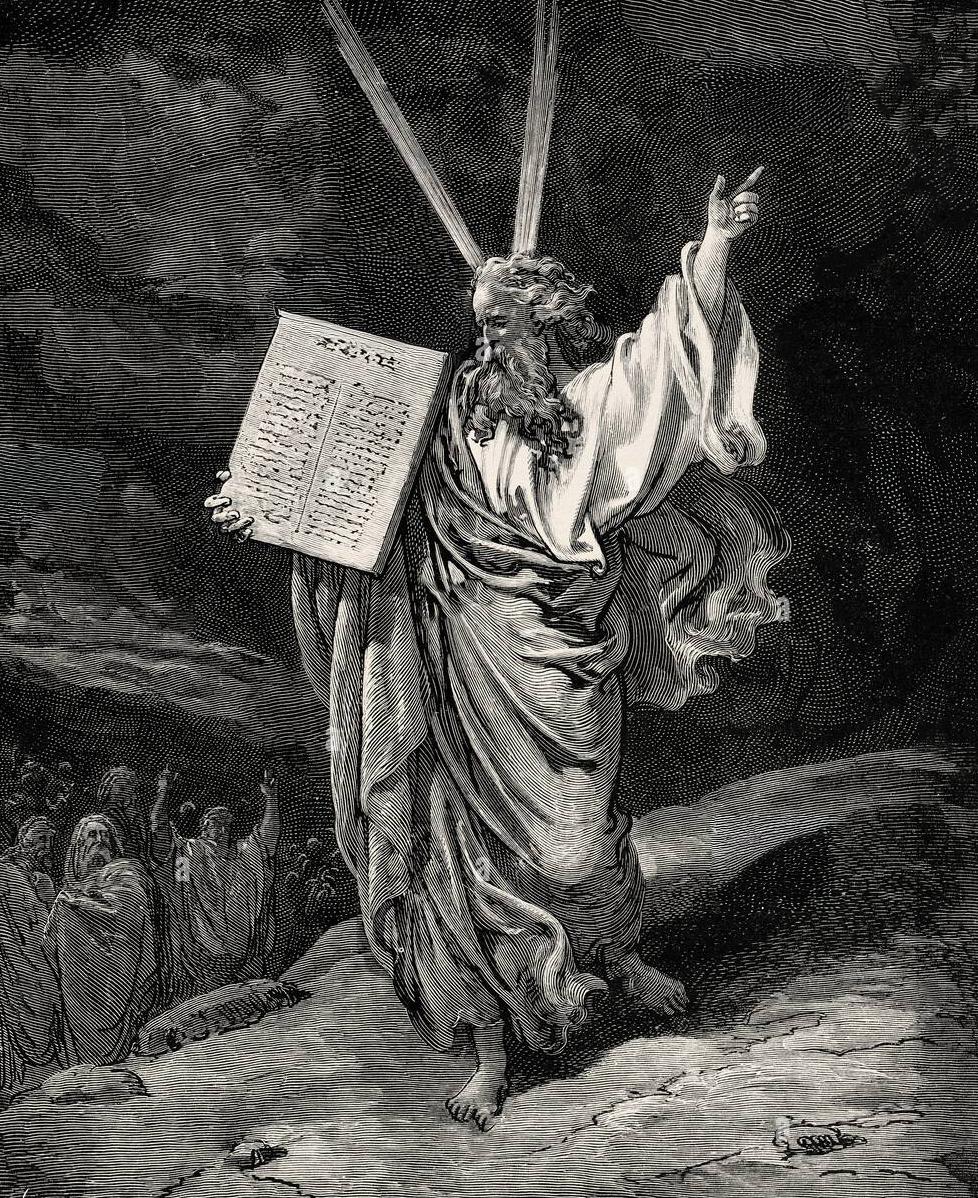
And this is that we accept that he was the father of all prophets that were before him and that will be after him. He was on a qualitatively di erent level than any other, and he is chosen from all other people before and after him of any that have any knowledge of God; for his was the greatest. And he, peace be upon him, rose to the levels of the angels. He was granted all areas of knowledge and prophecy and his physical attributes did not diminish. His knowledge was di erent and it is through this di erence that it is ascribed to him that he spoke to God without any intermediary or angel. My intention was to explain this puzzling concept and to open up the sealed areas in the Torah regarding the verses of “face to face” and other similar references, but its length would be tremendous and it would require numerous proofs from the Torah and other sources and encompass many areas. Even to write it the briefest of briefest it would require 100 pages, so I will save it and write it in another book. I will now return to the intent of this seventh fundamental that the prophecy of Moses our teacher, peace be upon him, was di erent from all others in 4 ways:
1) Regarding all other prophets, God spoke to them through intermediaries. Regarding Moses, it was without one, as it says, “face to face I spoke to him”.
2) Regarding all other prophets, prophecy came to them at night while they were asleep in a dream as it says, “in a dream of the night” and other such references; or in the day but only after a deep sleep-like state came over them, and all their senses were shut o except their thoughts. Not so by Moses. Moses would receive a prophecy any time when he would stand between the two figures [fixed] on the ark, as God attests to it, “and I will make it known to you there” and “not so my servant Moses. Face to face I speak to him.”
3) When a prophet would receive prophecy he would not be able to stand the intense e ect and he would shake and not be able to stand, as
it relates regarding Daniel in his encounter with the angel Gabriel. Regarding Moses, he did not su er from this. As it says, “Face to face do I speak to him as a person speaks to his friend”. And even though this is the greatest connection to God, still, he did not su er.
4) All other prophets could not receive prophecy at their will, [but] only when God desired to tell them. Some would go days or months without prophecy. Even if they wanted or needed something, sometimes it would be days or months or years or even never that they would be told [a prophecy]. Some would have people play music to put them in a good mood such as Elisha. But Moses, peace be upon him, received prophecy whenever he wanted, as it says, “Stand here and listen to what God will tell you what to do” and “God said to Moses tell Aaron your brother that he can’t come to the holy of holies at any time [he wants]”. Our rabbis said, “Aaron was prohibited to come whenever he wanted, but not Moses.
And this is that you believe that all of this Torah that was given by Moses our teacher, peace be upon him, that it is all from the mouth of God. Meaning that it was received by him entirely from God. And it is not known how Moses received it except by Moses himself, peace be upon him, that it came to him. That he was like a stenographer that you read to him and he writes all that is told to him: all the events and dates, the stories, and all the commandments. There is no di erence between “And the sons of Cham were Kush, and Mitzraim, and his wife was Mehatbe’el” and “Timnah was his concubine” and “I am Hashem your God” and “Hear Israel [Hashem your God, Hashem is one]” for it was all given by God. And it is all Hashem’s perfect Torah; pure, holy, and true. And he who says that these verses or stories, Moses made them up, he is a denier of our sages and prophets worse than all other types of deniers [form of heretic] for he thinks that what is in the Torah is from man’s flawed heart and the questions and statements and the dates and stories are of no value for they are from Moses Rabbeinu, peace be upon him. And this area is that he believes the Torah is not from heaven. And on this our sages of blessed memory said, “he who believes that the Torah is from heaven except this verse that God did not say it but rather Moses himself did [he is a denier of all the Torah].” And this that God spoke this and that, each and every statement in the Torah, is from God and it is full of wisdom (each statement) and benefit to those who understand them. And its depth of knowledge is greater than all of the land and wider than all the seas and a person
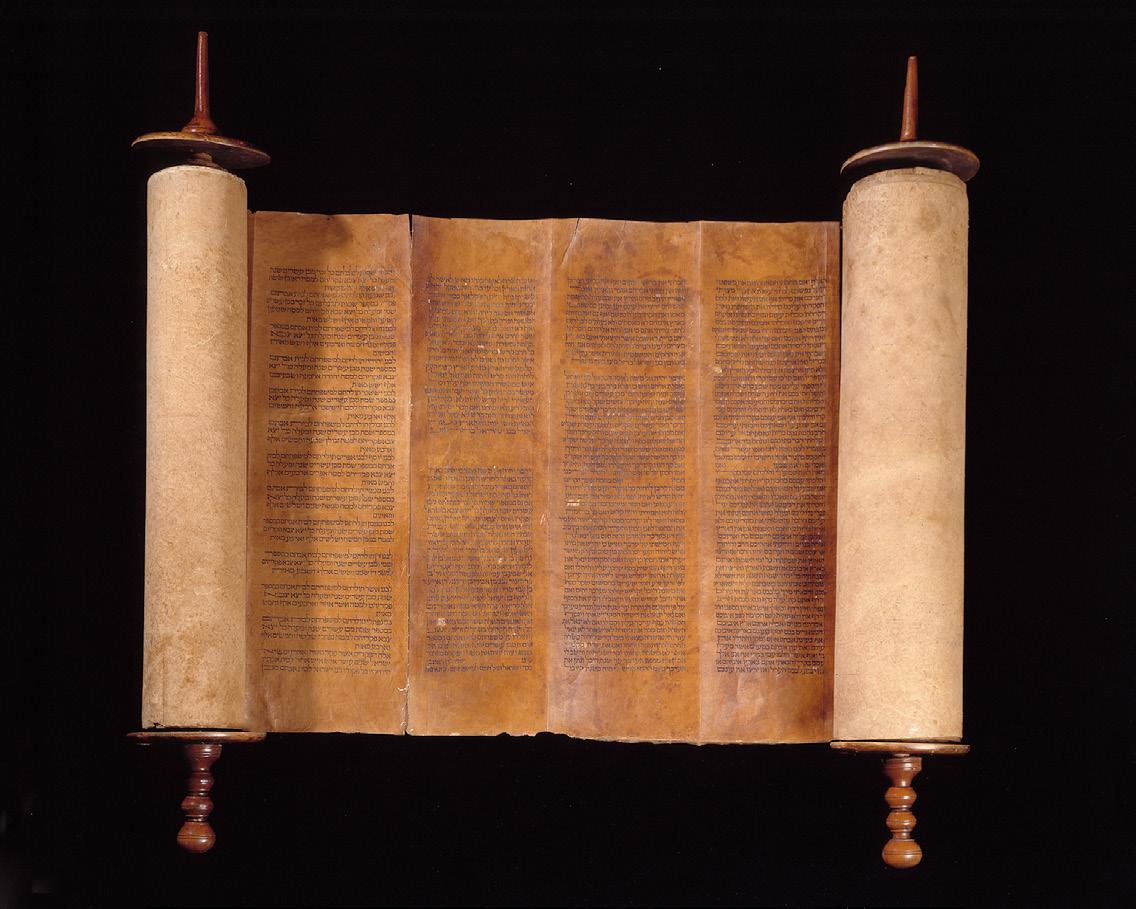
can only go in the path of David, the anointed of the God of Jacob who prayed and said “Open my eyes so that I may glance upon the wonders of Your Torah” (Psalms 119). And similarly the explanation of the Torah was also received from God and this is what we use today to know the appearance and structure of the sukka and the lulav and the shofar, tzitzis, tefillin and their usage. And all this God said to Moses and Moses told to us. And he is trustworthy in his role as the messenger and the verse that teaches of this fundamental is what is written (Numbers 16) “And Moses said, with this shall you know that Hashem sent me to do all these actions (wonders) for they are not from my heart.”
And this is that the Torah is from God and is not lacking. That to it you can’t add or take away from. Not from the written Torah or from the oral Torah, as it says, “Do not add to it and do not take away from it.” (Deut 13:1). And we already explained what needs to be explained about this fundamental at the beginning of this essay.
X. That God knows man’s actions and does not remove His eye from them
His knowledge is not like someone who says God abandoned the land but rather like it says (Jer. 32) “Great in council and mighty in deed, Your eyes are cognizant to all the ways of mankind.” “And God saw for the evil of man on the land had grown greatly.” (Gen. 6) And it says, “The disgust of Sodom and Amorrah is great” and this demonstrates the 10th principle.
Principle XI. That God gives reward to he who does the commandments of the Torah and punishes those that transgress its admonishments and warnings
And the great reward is the life of the world to come and the punishment is the cutting o of the soul [in the world to come]. And we already said regarding this topic what these are. And the verse that attests to this principle is (Exodus 32) “And now if You would but forgive their sins - and if not erase me from this book that You have written.” And God answered him, “He who sinned against Me I will erase
from My book.” This is a proof that God knows the sinner and the fulfiller in order to mete out reward to one and punishment to the other.
And this is to believe that in truth that he will come and that you should be waiting for him even though he delays in coming. And you should not calculate times for him to come, or to look in the verses of Tanach to see when he should come. The sages say: The wisdom of those who calculate times [of his coming] is small and that you should believe that he will be greater and more honored than all of the kings of Israel since the beginning of time as it is prophesied by all the prophets from Moses our teacher, peace be upon him, until Malachi, peace be upon him. And he who doubts or diminishes the greatness of the Messiah is a denier in all the Torah for it testifies to the Messiah explicitly in the portion of Bilam and the portion of “You are gathered (towards the end of Deut)”. And part of this principle that there is no king of Israel except from the house of David and from the seed of Solomon alone. And anyone who disputes this regarding this family is a denier of the name of God and in all the words of the prophets.
And we have already explained it And when the person will believe all these fundamentals and his faith will be clear in them he enters into the nation of Israel and it is a mitzva to love him and to have mercy on him and to act to him according to all the ways in which God commanded us regarding loving your neighbor. And even if he did all of the
sins in the Torah due to desire of the emotions, and from his physical aspect’s conquering him, he will be punished for his sins, but he still has a share in the world to come and is among the sinners of Israel. However if he rejects one of these fundamentals he leaves the nation and is a denier of the fundamentals and is called a heretic, a denier, etc., and it is a mitzva to hate him and to destroy him (financially - not physically to kill him. And not to steal either). And regarding him it is said (Psalms 139) “Behold will not the enemy of God be my enemy?”
I have expounded at length many things and I have left the topic of my composition but I have done it for I saw a need in the dealings of the fundamentals of faith and I have gathered together many di erent and spread out areas Therefore know them and succeed in understanding them and review them many times and know them very well [i.e. not just memorization but to understand fully and to be able to support them and know their proofs]. Therefore if after one or ten times you think you have understood them, God knows that you are just involved in falsehood. Therefore do not read them quickly because I have not written them as it suddenly entered into my mind. But rather, after a deep and careful study of the whole area and after I have seen many clear and true ideas and I have seen what is proper to believe of them [as the fundamentals] and I have brought proofs and logical demonstrations for each and every one of them. May it be God’s will that I have been correct that He helped me through this area on the good path and now I will return to my explanation of this chapter [in the Talmud]. ■
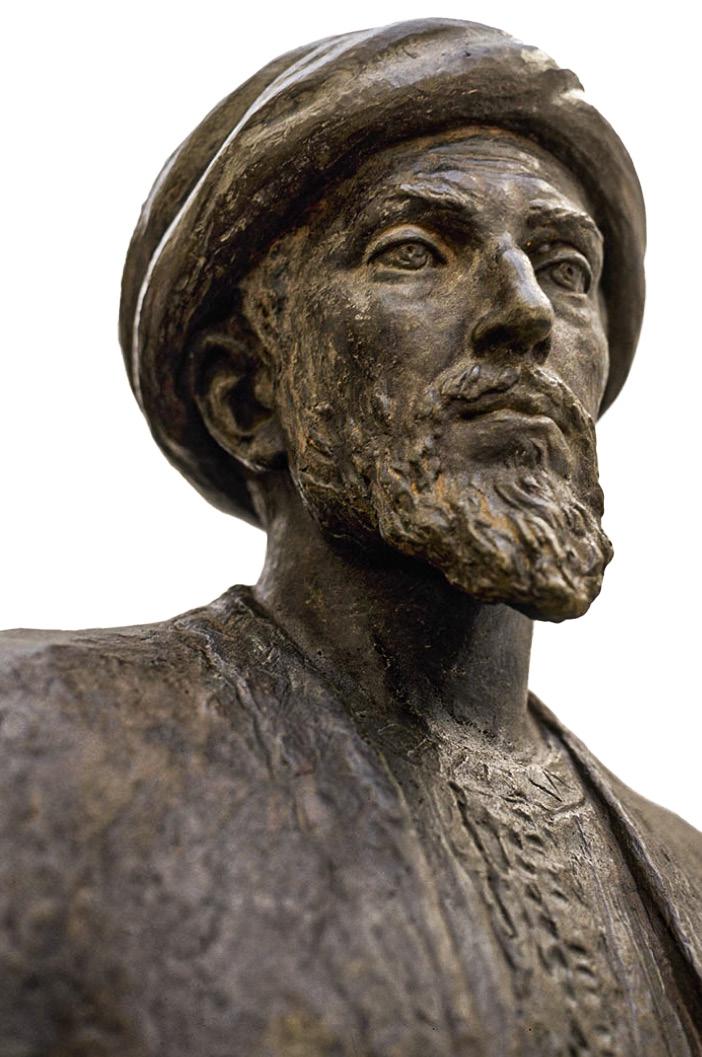
LANCE: Greetings to you. I have a question regarding Maimonides and his 13 principles. Basically, my question boils down to this: What is the first principle?
Some sources—such as the Jewish Virtual Library—seem to indicate the first principle is nothing more than “God exists.” Admittedly, this does seem to be pretty primary in the structure of monotheistic faith, so it is an apt first principle.
However, other sources—such as Chabad—appear to posit something more along the lines of “God is the Creator” or “God is the (First) cause of existence.”
Your own website seems to concur with this interpretation of the first axiom of Maimonides.
Maybe I’m making a fuss about nothing; but to me, “God exists” and “God is the Creator” are two very distinct assertions. Moreover, the di erences between one online source and another in portraying the first principle of Maimonides makes the matter quite confusing to me. Therefore, I’d appreciate your own clarification in this matter.
Thank you.
Sincerely, Lance
RABBI: Lance, thank you for raising this important question. As you are questioning Maimonides’ formulation, the answer will lie in his words:
To believe in the existence of the Creator, and this Creator is perfect in all manner of existence. He is the cause of all existence. He causes them to exist and they exist only because of
Him. And if you could contemplate a case, such that He was not to exist…then all things would cease to exist and there would remain nothing. And if you were to contemplate a case, such that all things would cease to exist aside from the Creator, His existence would not cease. And He would lose nothing; and oneness and kingship is His alone. Hashem of strength is His name because He is su cient with His own existence, and su cient [is] just Him alone, and needs no other. And the existences of the angels, and the celestial bodies, and all that is in them and that which is below them…all need Him for their existence. And this is the first pillar and is attested to by the verse, “I am Hashem your God.”
We see, neither suggestion “God exists” or “God is the Creator” accurately represents Maimonides’ precise formulation. For there is much more Maimonides includes in his words…
1)
We must first “believe in the existence of the Creator”
That is, we must first realize:
A) the universe in fact owes its existence to an ultimate “Cause.”
B) This further means this cause is a single cause. C) Additionally, we must not subscribe to the alternate view of an eternal universe.
2)
“The Creator is perfect in all manner of existence”
What does this mean? This means we must recognize that as the Creator, God has a certain

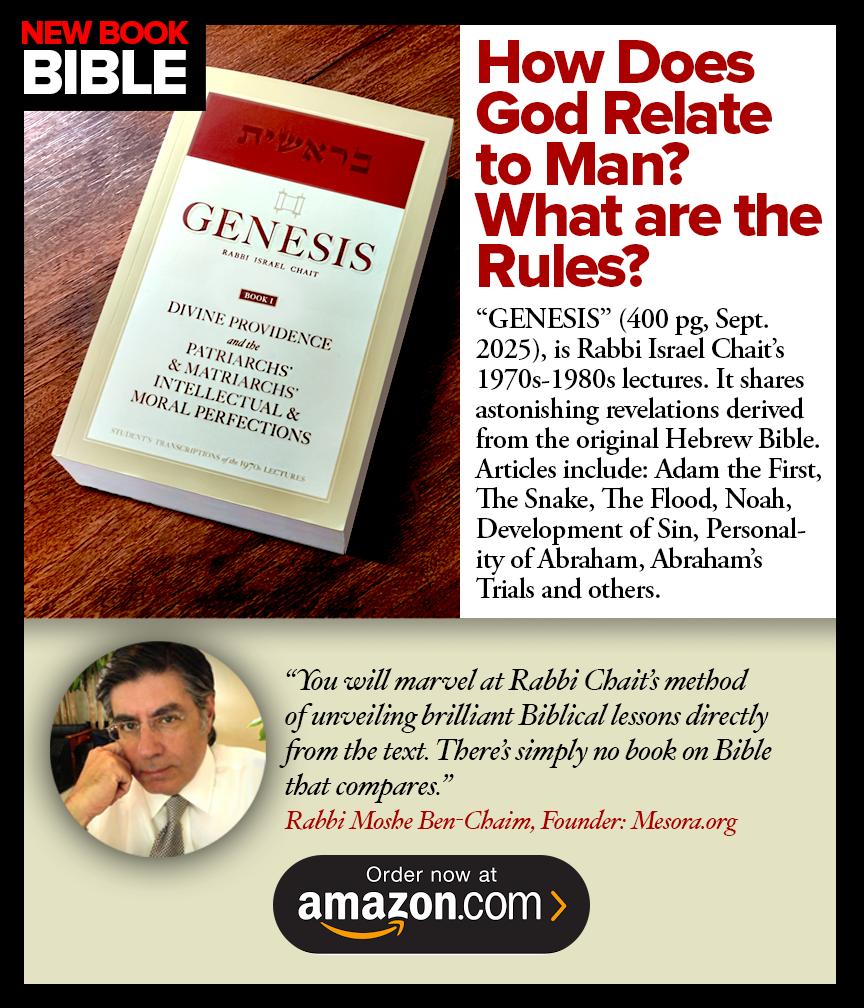
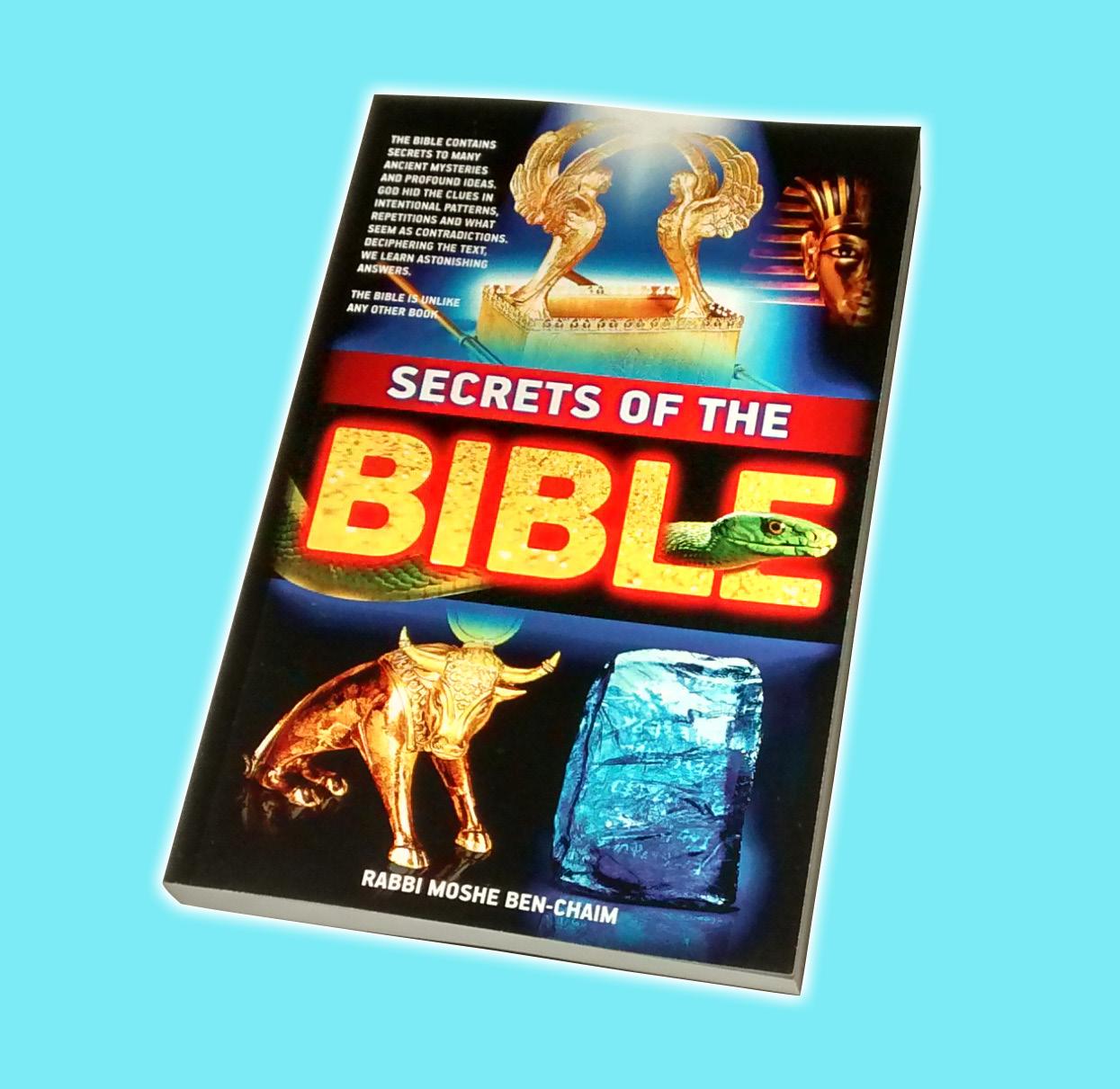
All books depict history, facts, theories, fiction or poetry. No book is coded with hidden messages beyond the words or patterns revealing marvels. But the Bible (Torah) was written by God, and is “coded.” The order of verses, use of certain phrases, apparent contradictions and other Biblical patterns are pur poseful clues to God’s wisdom.
This book unveils those patterns and shares the hidden messages.



“type” of existence. When the term “existence” is applied to both the universe and God, typically, one understands the existence of both as equal. Maimonides’ second point is to distinguish between God’s existence, and the existence of all other things. All other things exist only accidentally. Meaning, of their own ‘nature’ (which too is not due to their own doing) all else has “dependent” existence. All else but God, was ‘given’ existence, and at one point in history, did not exist. This means that the universe’s existence is not mandatory or absolute: it cannot exist on its own…it requires God’s will to exist. In contrast, God’ existence is not dependent. His very nature is to exist, whereas all created things by definition do not have existence as part of their nature.
3) Due to this distinguishing quality, Maimonides states “and oneness and kingship are His”
But can there be a king without subjects? This means that man—the only intelligent creature on earth—must view God as king. The knowledge of God’s unique nature to (eternally) exist, and that He is the Creator (2 complementary truths) must generate in man a respect for God, as the king.
4) “Hashem of strength is His name”
Here, Maimonides says God has a name. A “name” by definition, is that which distinguishes one being from another. When applied to God, Maimonides means to teach that God’s uniqueness is “known,” it is famous. As in, “he made a name for himself.” Maimonides teaches an idea similar to that of Rav Hai Gaon, who said the first of the Ten Commandments—“I am God”—is in fact not a command. Rav Hai Gaon said that God’s existence is so obvious, it would belittle the honor due to God, had there been a “command” to know Him. God intentionally designed the universe precisely to reflect His existence and wisdom, so that mankind would stand in awe of God and all His marvels, and enjoy a life pursuing sciences, truths, and morality, to better understand the Creator. Thus, the overwhelmingly apparent wisdom reflected in the universe makes God’s existence undeniable. A command to know God would thereby belittle the obvious nature of His existence.
5) “because He is su cient with His own existence”
We must not assume creation was made due to anything lacking in God, as if He has a motive, or a need, or loneliness. For motive, need and loneliness are all human
traits. And, as God created humans, He is not governed by human traits.
6) “And the existences of the angels, and the celestial bodies, and all that is in them and that which is below them, all need Him for their existence”
Finally, Maimonides teaches that although the earthly creations may not be on par with God’s existence, man might falsely equate higher beings’ existences to God’s existence. Therefore, Maimonides dispels this fallacy as his final lesson of his First Principle.
What is Maimonides’ First Principle?
To realize the Creator.
To know He is one.
To reject the eternity of the universe.
To distinguish His existence from all else, knowing that He exist by His very nature, and all else has dependent existence.
That honor is due to God.
That His existence is obvious.
Not to project human motive onto God for creating the universe.
That He is elevated over all else, including the heavens and angels.
Thank you for your question, as you have enabled me to better understand this principle. ■

The Shehechyanu blessing is said on annual mitzvos: Shofar, Succos, Lulav, Channuka, Megilla, Pesach and Shavuos. But the questionable exception is Sefiras HaOmer, over which we do not recite Shehechyanu.
The reason is based on the essence of the blessing: “God sustained us to reach this time.” Meaning, “this time” refers to a day of divine providence: something miraculous occurred. But Sefira has no event, no providence, it has no unique quality as nothing occurred in this time. What is its significance? Not itself, but another day: Shavuos. We count 49 days in anticipation of receiving Torah. As Sefira is of no significance in itself, and it focuses on something other than itself, there is nothing in this mitzvah of Sefiras HaOmer for which to bless God. We cannot bless God for arriving at a time-bound mitzvah, where that mitzvah focuses on another day. We cannot say we are happy to have reached “this time,” when this time is insignificant in itself. ■
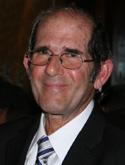
Rabbi Reuven Mann, ZT”L
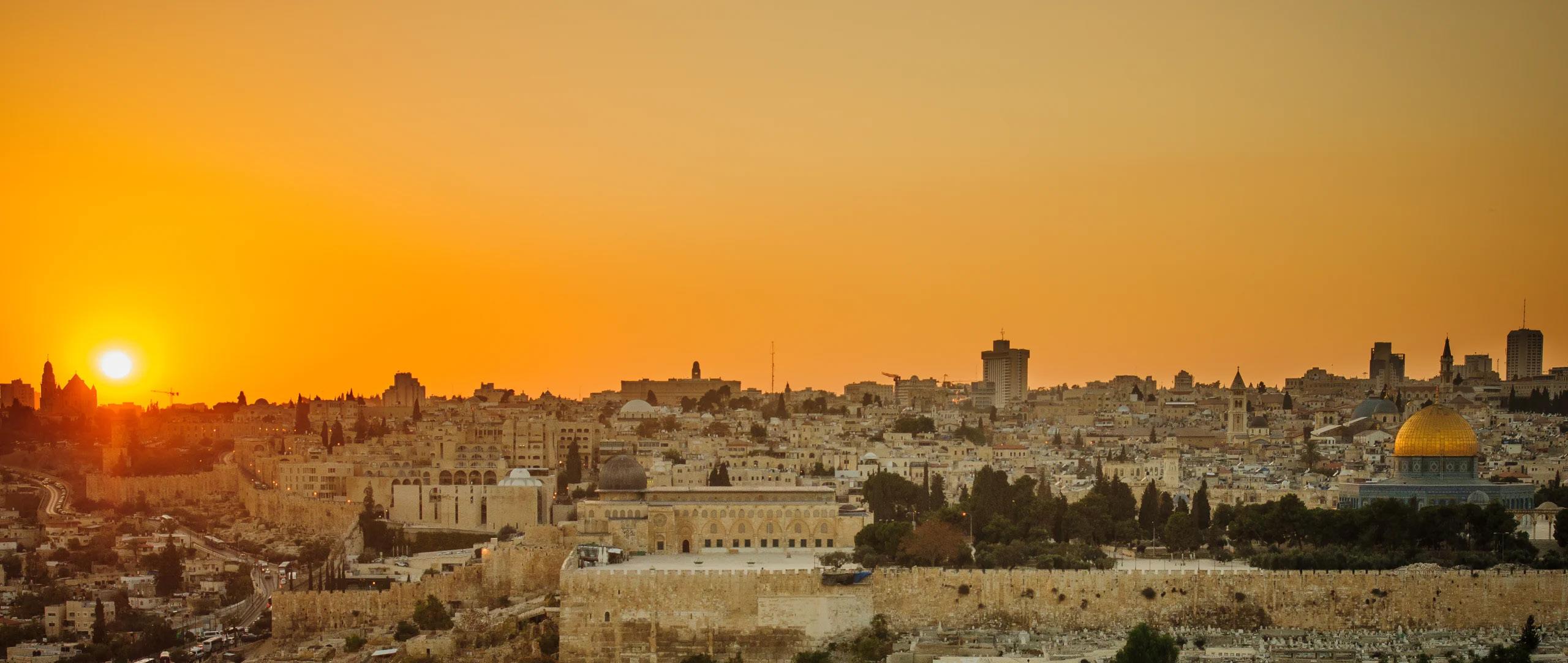
This week’s Torah reading, BeHar-BeChukotai, concludes the Book of VaYikra. Both portions highlight di erent dimensions of the sanctity of Eretz Yisrael (Land of Israel), each from a di erent angle. In the seventh year, known as Shemitah, the Jewish people in Israel renounce their ownership rights to the land, which must remain fallow.
By observing this “Sabbath of the land,” we attest to Creation. Everything belongs to G-d, and we are but strangers and sojourners to whom He has entrusted His property on the condition that we put it to good use and, especially, that we share the bounty with those who are less fortunate.
The land of Israel is unique. Its holiness expresses itself in revulsion against immoral behavior. It will not countenance our misdeeds and indecencies. In commanding us to refrain from forbidden sexual practices, the Torah warns that the land will not tolerate it, but will “vomit” us out.
The use of this term is very deliberate. Rabbi Yosef Dov Soloveitchik explained that it is as though the land has a delicate personality that has no “stomach” for morally corrupt behaviors. This thought should give us pause. Staunch supporters of Eretz Yisrael are proud of its military and scientific accomplishments. We must be equally invested in its great spiritual attributes. Visitors to Israel should not regard it as just

another vacation spot, but be cognizant that it is the land G-d chose as His “dwelling place.” We should feel that we have a “closer” relationship to Hashem when we stroll through the streets of Eretz Yisrael and the holy city of Yerushalayim (Jerusalem), and this should inspire us to a higher level of behavior.
Diaspora Jews are rightfully concerned about the existential dangers Israel faces from her many enemies. This includes the grave nuclear threat posed by Iran. Our Parsha instructs us that there is a spiritual dimension to Israel’s security. BeChukotai spells out the “blessings and curses” that will ensue from our observance or Heaven forbid,
rejection of G-d’s Torah. The chief reward for faithfulness to His commandments is that:
“I will give peace in the land, and you shall lie down, and no one will make you afraid; I will remove evil animals out of the land, and the sword shall not pass through your land.”
(VaYikra 26:6)
Jews who truly care about Israel’s welfare should take these verses to heart. We need to recognize and a rm that allegiance to the Torah’s ethical and moral ideals is every bit as important as political and military calculations.
Many commentators have noted that the rewards and punishments mentioned in our
Parsha are exclusively concerned with everyday physical matters such as health, prosperity, and security. Why, they ask, is the Torah so preoccupied with mundane material benefits, to the utter exclusion of anything else? Isn’t there great emotional satisfaction to be obtained in Divine service? Why is no mention made of the spiritual rewards reaped by the righteous?
The Rambam (Maimonides) addresses this issue in Hilchot Teshuva 8:2. He says that the “ultimate” reward for proper Torah observance is eternal life in Olam HaBa (World to Come). The bliss our souls experience in this state is so profound that it is beyond our ability to contemplate. Thus, the physical rewards do not constitute ends in themselves; they are intended to provide the
freedom and opportunity we need so we can devote more time and energy to study and good deeds. We thus elevate ourselves to a higher level, which is the true objective of all of Hashem’s blessings. Reward and punishment are a vital part of the Divine covenant. Even the most religiously refined person needs incentives to keep him engaged in the proper course of action. G-d generously assists all who seek to know Him and serve Him, Jew and Gentile alike. He provides them with all they need to have the best life in this world and to inherit the World to Come.
May we all be worthy to achieve the great blessings of our holy Torah.
Shabbat Shalom.■
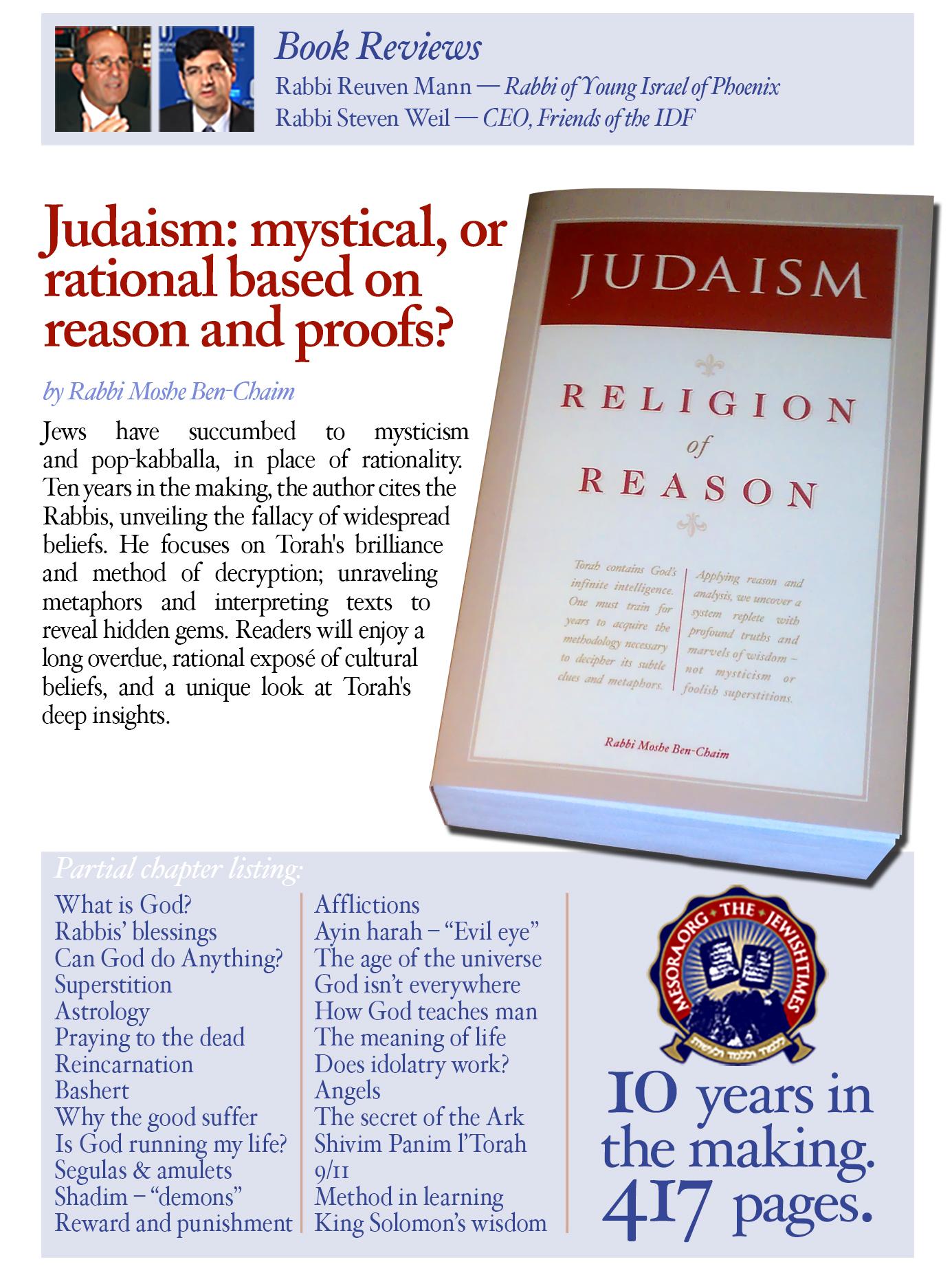
Is Judaism mystical, or is it rational, based on reason and proofs?