| Please send letters and questions to: Comment@Mesora.org |
3 Mitzvah
RABBI MOSHE BEN-CHAIM The purpose of mitzvah
5 Religions
RABBI MOSHE BEN-CHAIM Jeremiah’s prophetic critique of all religions other than Torah Judaism
7 Gaza
EDITORIAL
Response to critics’ of Israel’s attack on Hamas
8 Mamdani
MANSOOR HUSSAIN LAGHARI
Skipping Israel’s parade: The wrong message
9 The Greatest Mitzvah
RABBI ISRAEL CHAIT
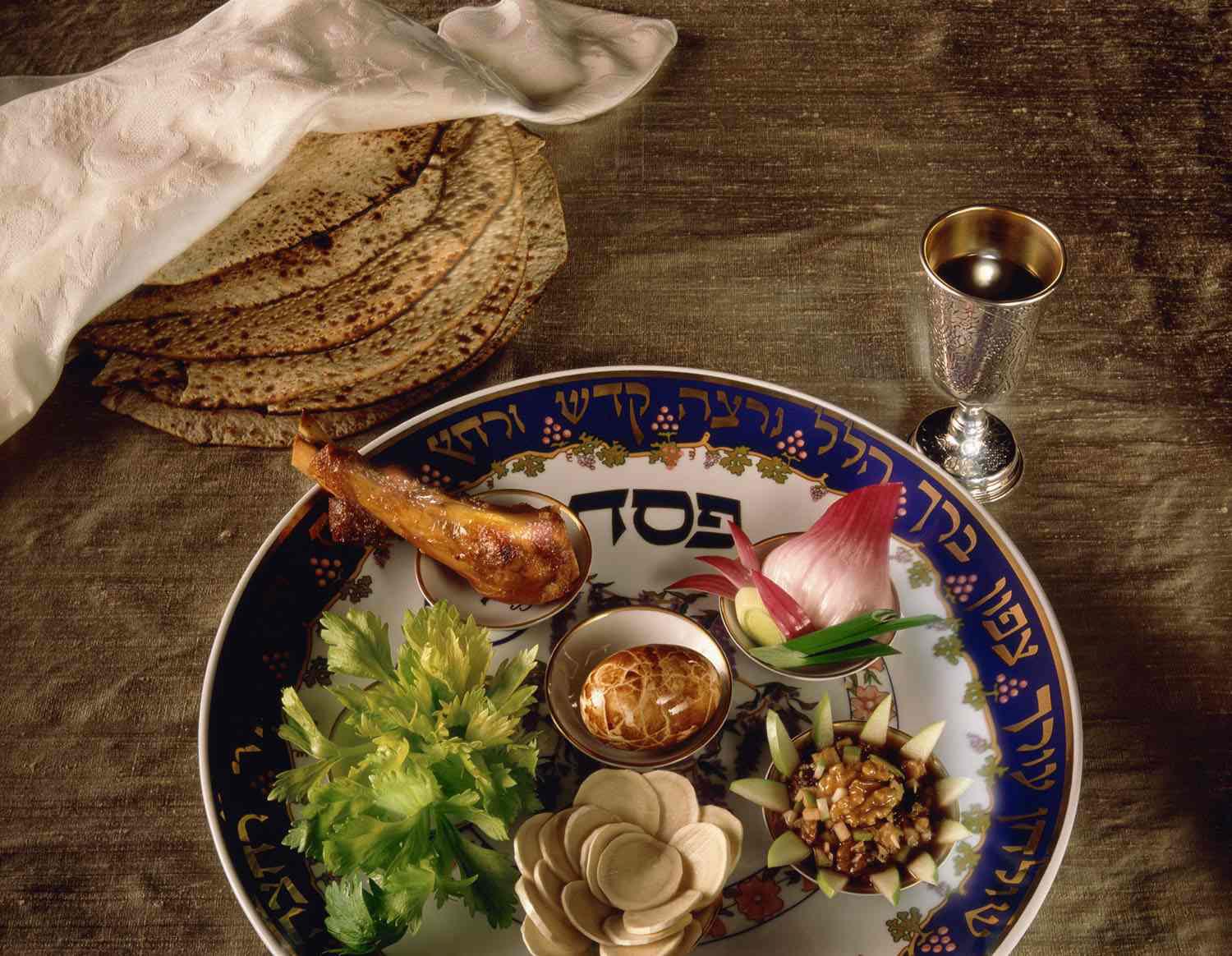
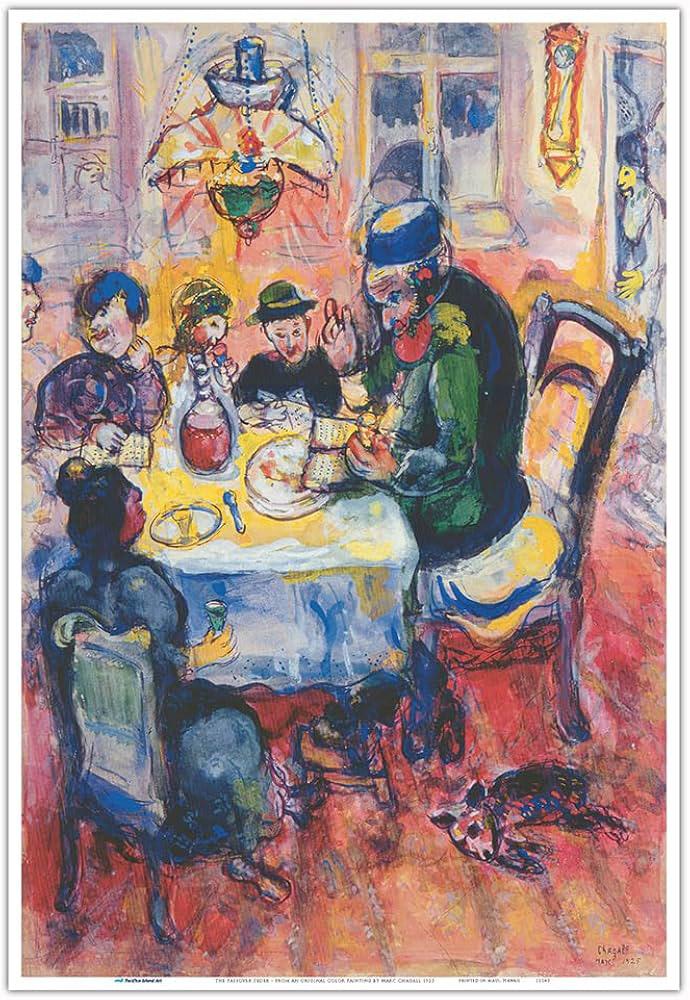
The significance of Passover
11 God’s Traits
RABBI MOSHE BEN-CHAIM
The purpose of “Measure for Measure” punishments
MITZVAH
RABBI MOSHE BEN-CHAIM
| MITZVAH: IDEAS INFLUENCED BY RABBI CHAIT |
The purpose of a mitzvah is not to benefit our temporary bodies. It’s not the performance that is most vital. Mitzvah exists to teach concepts, to grasp God’s intended perfection of our eternal souls: our ideas and convictions. However, the mitzvah’s performance is required because that is the barometer of conviction and this is the goal of Torah and life: for man to arrive at conviction in truths, which means to see reality so clearly, that we act on it. If one says charity is important but never gives charity, he does not truly value charity. For when a person values something, he expresses it in action. That is how we are designed. If you don’t know the purpose of a mitzvah, it has little use, although you still must perform it. But when you understand the purpose of a mitzvah like charity, then your mind develops more, and benefits from the agreement with that value, even if you have not yet performed it. You soul has become more perfected. But if you fail to fulfill the mitzvah, then you lack conviction with the mitzvah’s value. Wearing tefillin has little benefit if one does not know its purpose. But when realizing tefillin were commanded immediately after the end of the 10th plague, when God displayed His unparalleled control over all existence, we then understand the meaning of those Torah sections tefillin contains, a rming God as the sole creator and power, and that our minds and emotions (head and heart) are in unison in this belief. Then we no longer wear mysterious black boxes, but we embrace the Torah sections contained inside, sections recalling God’s unparal-
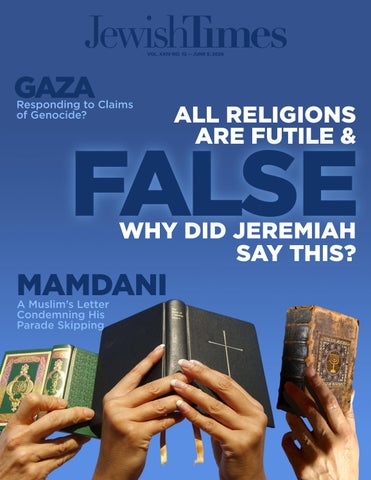
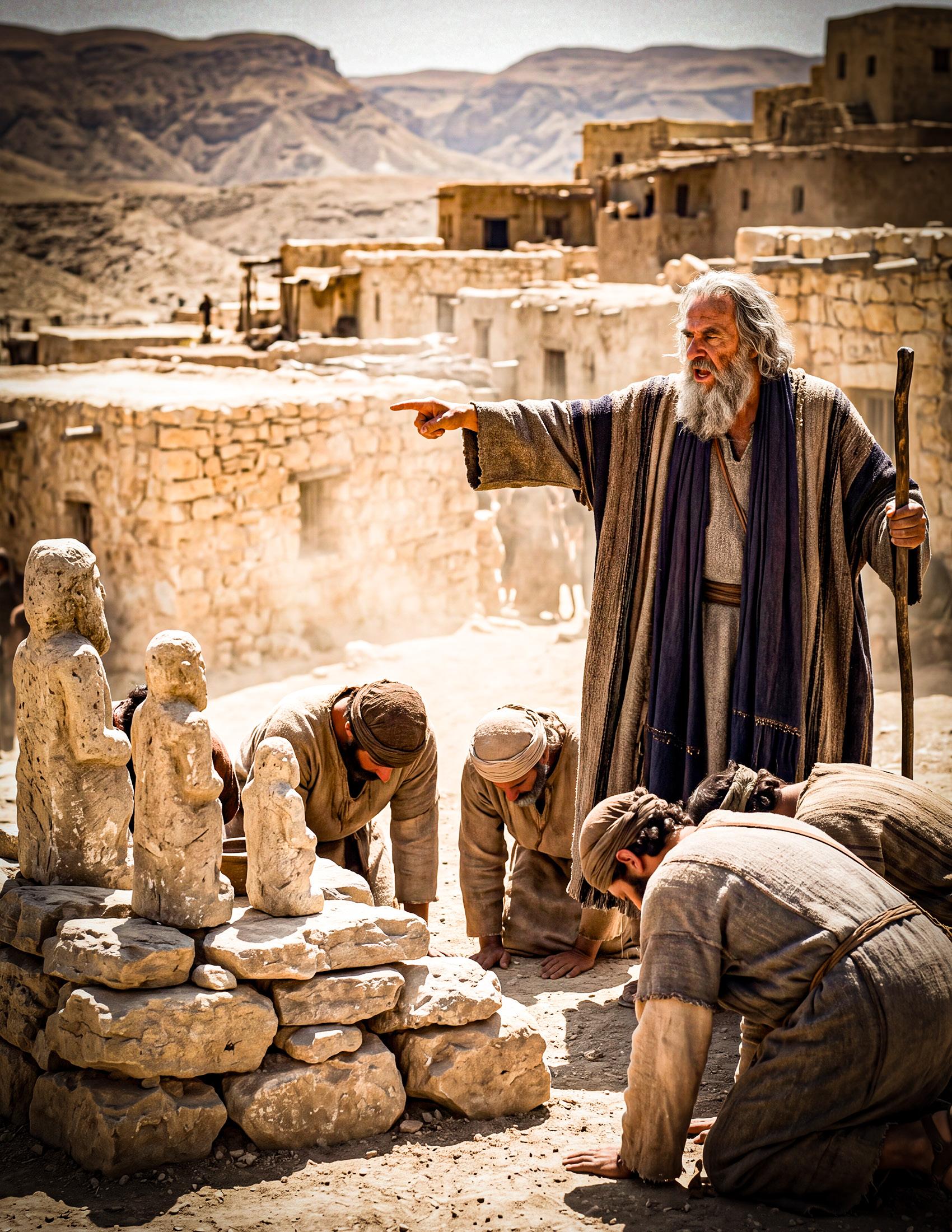
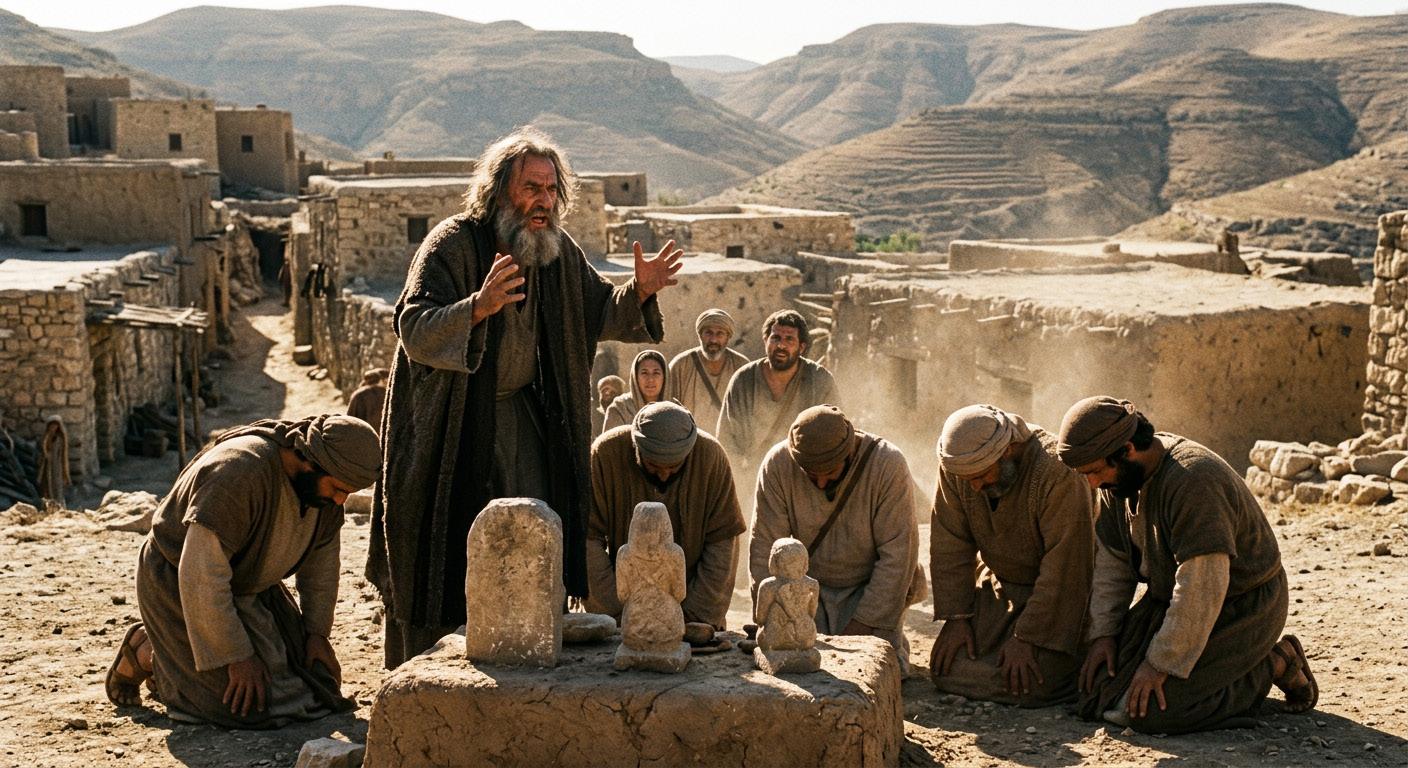
ALL RELIGIONS ARE FUTILE & FALSE WHY DID JEREMIAH SAY THIS?
RABBI MOSHE BEN-CHAIM
The prophet Jeremiah (chap. 16) teaches that the world will eventually recognize the fallacy of idolatry and all religions, except Torah Judaism. No doubt, this realization is primarily due to the failure of false gods and religions to answer man’s prayers, and certainly the failure to perform miracles like the Jewish God and His prophets did throughout the Bible. No other god showed signs of life, control of nature, or performed miracles in front of mass witnesses. No other “prophet” did either, including Jesus and Mohammed. Yes, other religions make claims and have many followers…but without mass witnesses, their claims and followers o er no proof of divine origin.
Jeremiah speaks:
To You (God) nations shall come from the ends of the earth and say, “Our ancestors bequeathed to us utter delusions, things that are futile and worthless.”
King David epitomized the fallacy of idols:
Their images are silver and gold, the work of the hands of man. They have a mouth, but do not speak. They have eyes, but do not see. They have ears, but do not hear. They have a nose, but do not smell. Their hands [are fashioned], but they do not feel; they have feet, but they do not walk. They make no sound with their throats. Like them are their makers be, [and] all who trust in them. (Psalms 115)
Idols are lifeless. But as they have followers, their followers too must have no senses as they ignore the inanimate natures of their idols! For they expect a response from wood, stone and dead flesh, as those who pray to Jesus and the Rebbe. In life they were weak mortals, and in death they are mere dust.
God though Jeremiah’s prophecy continues His rebuke:
Can a man make a god, but they are non-gods!
This is the ultimate refutation of idols, as a true god needs nothing. Yet, idols need man to create them! We see here that God’s arguments are absolute, conclusive and not subject to refute. God’s words comply with objective reality: how the world operates. While false religions are conjured out of fantasy with no basis in reason or evidence.
The guilt of Judah is inscribed with an iron pen, engraved with an adamant point on the tablet of their hearts and on the horns of their altars.
Idolatry became so believed, so integral to man’s emotions. To what degree?
As their memories of their children, so was their memories of their alters and idolatrous trees.
Rashi comments:
Like the remembrance of their children, so was their remembrance of their [idolatrous] altars, like a man who longs for his son.
Love of a child is unconditional and intense. This was the same intense love the Jews had towards idols. How did idolatry become so precious and how does it parallel love of a child?
Man remained infantile, dependent like an infant, living solely in his fantasies. Just as an insecure, fearful infant depends on his parent, those corrupt Jews’ insecurities crippled them into depending on their handmade idols, like a parent from whom the worshippers sought unconditional care.
God clarifies this was the case:
Thus said God: “Cursed is the man who trusts in mortals, who makes mere flesh his strength, and turns his thoughts from God.”
Trust in idols is a projection of trust in the parent, in flesh.
God then describes the mentality of the idolater:
He shall be like a bush in the desert, who does not sense the coming of good. He is set in the scorched places of the wilderness, in a barren land without inhabitant.
Why does the idolater not “sense the coming of good?” This is due to his mindset. An infantile mind can’t think past the present. Emotions attach to the present, seeking instant gratification.
Blessed is the man who trusts in God,
whose trust is God alone. He shall be like a tree planted by waters, sending forth its roots by a stream. Its does not sense the coming of heat, its leaves are ever fresh; it has no care in a year of drought, it does not cease to yield fruit.
In contrast, a wise person knows God created all. He knows God works with reward and punishment. Negative circumstances do not alarm him. As King David said, “God is the lot of my portion; You are my cup, You support my lot” (Psalms 16:5). “A thousand may fall at your left side, ten thousand at your right, but it [harm] shall not reach you” (Psalms 91:7).
Most devious is the heart; it is perverse—who can fathom it?
The rabbis comment that people wish to gain peer approval, going through the motions of righteous people, but internally they don’t agree with their lips. Such people fear man more than God and merely act righteous to gain approval. God responds to such fakers:
I God probe the heart, search the mind—to repay each person according to their own ways with the proper fruit of their deeds.
God responds that He is eternal:
God’s throne of glory is exalted from of old.
What is this message? He who is eternal, preceded all else. By definition, this means He created all else. And this in turn means all else requires God to exist, all else is dependent, and not worthy of any praise, meaning idols are futile. Again, the conclusive irrefutable response to those believing in anything but God alone. ■
A Response to LinkedIn Critics
Genocide?
Jewishtimes Editorial
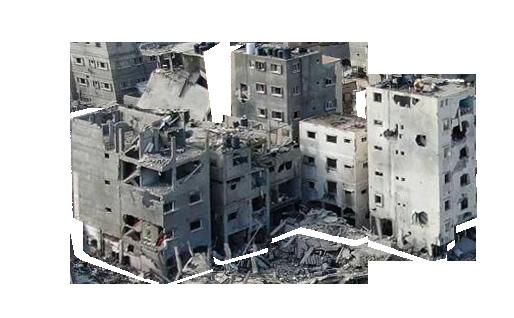
Genocide does not wait for a just cause, so why didn't Israel attack Hamas until October 7th? Israel had no choice but to hunt down and kill those who burnt alive their children and murdered their civilians. Those of you who condemn Israel for this have distorted minds. Not to go after Hamas meant another October 7th. But Israel was careful not to act like Hamas and hide behind children; Israel took the greatest measures—risking its own—to save Gaza’s children and all citizens. Israel dropped a barrage of leaflets and made phone calls to Gaza residents to leave Gaza before they searched for Hamas’ butchers hiding in hospitals and elementary schools, and in 400 miles of underground tunnels. If your children were burnt alive, you too would want to stop the murderers.
To protect its own citizens, Israel had no choice but to search and destroy every square inch where Hamas was hiding, but they were careful to warn the Gazans to leave before they targeted Hamas. Israelis cherish all life, certainly innocent infants. While Hamas burns babies alive.
Israel’s care are published facts, not opinions.
Condemnation of Israel clearly unveils anti-Semitism, a careless failure to research facts, and a desire to distort known truths. ■
Published photos document IDF soldiers providing water for Palestinians, and the charred remains of Hamas’ victims and butchered infants. Just who is performing genocide?
Open Letter to Zohran Mamdani
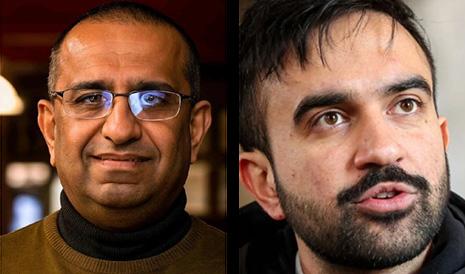
Mansoor Hussain Laghari, Founder Muslim & Jewish Youth
Mr. Mamdani,
As a Muslim, I am ashamed of your decision to skip the Israel Day Parade. Attending would not have meant endorsing every policy of the Israeli government. Just as attending an American parade does not mean supporting every decision made in Washington. What you missed was an opportunity to stand with New York's Jewish community at a time when many feel isolated, targeted, and afraid.
I was there. Along with other Muslims. We marched beside Jewish families, Holocaust survivors, veterans, children, and community leaders.
The message was simple:
The Jewish people have a right to exist, a right to safety, and a right to a homeland. That should not be controversial. Leadership means showing up for everyone, including Jews. Especially when antisemitism is rising across America. As Muslims, we understand prejudice. That is exactly why we should stand against antisemitism with the same
moral clarity we expect others to show against anti Muslim hatred.
The Israel Day Parade was not a celebration of war. It was a celebration of Jewish identity, Jewish survival, and the enduring connection of the Jewish people to their ancestral homeland. You had an opportunity to send a message of unity. Instead, your absence sent a different message.
New Yorkers noticed.
The Jewish community noticed. And many Muslims who believe in coexistence noticed as well.
History remembers those who build bridges. It also remembers those who walk away from them.
This post does not promote hate; it is meant to inform and encourage respectful discussion. We stand against antisemitism in all forms. ■
One might think that this verse implies that anyone who converts to Judaism must immediately bring the Passover offering (Ibid.)
One might think that if somebody converts in August, he must bring a Passover sacrifice at that moment. But Passover is not until next spring! How do we understand the Paschal Lamb in the summer?
Rabbi Israel Chait
Written by a student
Rabbi Israel Chait responded. He first proved that Passover is not integrally a “calendar” event, as those who were not able to bring the Passover sacrifice, Torah says they would bring it a month later (Ibid. 9:11). Rabbi Chait stated that the Paschal Lamb is a “mitzvah par excellence.” He cited the verse “withdraw and take” (Exod. 12:21) and Rashi’s comments (Exod. 12:6):
“Withdraw” your hands from idols and “take” unto yourselves a lamb of a divine command (Mechilta d'Rabbi Yishmael 12:2:1).
Here we find Rabbi Chait’s meaning of the Paschal Lamb being a “mitzvah par excellence.” The general purpose of
mitzvah is to redirect man away from fallacy towards truth. For example, the prohibition to steal redirects man from wrong ego feelings of deserving, towards recognizing others as equals. Lulav, tzedaka, tithes, Shmitta, Jubilee and freeing slaves redirect man from wrong feelings of ownership, towards recognizing God as the sole owner of everything. But some mitzvahs are greater than others: Tefillin redirects man away from the fantasy of many powers, towards recognizing the single God, who displayed His exclusive and unopposed control over the heavens and Earth throughout the 10 Plagues. After the last plague—firstborn deaths—tefillin was commanded (Exod. 13:9) which contains written accounts of Passover’s events and commands, acceptance of God alone, and the rejection of idolatry as God’s plagues exposed Egypt’s gods as lies.
Rabbi Pinchas Rosenthal cited support for Paschal Lamb’s great importance:
If one acknowledges idolatry, it is as if he denies the entire Torah; and if one denies idolatry, it is as if he acknowledges the entire Torah (Sifrei Deut 54:4)
The Paschal Lamb (and circumcision) were the conditions for Israel's redemption from Egypt’s idolatrous culture. Those Jews were required to kill the Egyptian lamb god to demonstrate agreement with the most fundamental principle: God alone created and runs the universe; the lamb god is fallacy. Some commands focus on one point, whereas the fulfilling the Paschal Lamb command is akin to fulfilling the entire Torah; it is a “mitzvah par excellence.”
Rabbi Chait explained that “On account of this God took me out of Egypt” (Exod. 13:89) refers to the Paschal Lamb, as Rashi states. Meaning, the Paschal Lamb alone earned the Jews redemption. It is a “mitzvah par excellence.”
Passover and circumcision were required for the Jews to be redeemed from Egypt. They are the only positive commands for which failure to fulfill results in excision of one’s soul (karase). What severity do these two commands share? Rabbi Chait explained that circumcision targets the control over the instinctual drives, while the Paschal Lamb targets the recognition of fundamental truths. These two commands address man's two parts: his instincts and his intellect. Only the person controlling both parts of his nature is worthy of redemption.
One converting from idolatrous religion to Judaism—to knowledge—parallels the Egyptian Jews who converted and accepted God by rejecting Egypt’s lamb god as mere food. We might think that like the Egyptian Jews, the convert too must immediately bring the Paschal Lamb. But Torah says, “There shall be one law for you, for the convert and born Jew.” Therefore the convert cannot bring the sacrifice, except on the same date as the nation; Torah adherents require unified national practice. But the convert must immediately be circumcised because this is not a national matter like the Paschal Lamb, but an individual’s flaw that undermines a primary goal of Judaism, and like Abraham, must be remedied immediately upon following God. ■
God’s Traits: Measure for Measure
Rabbi Moshe Ben-Chaim
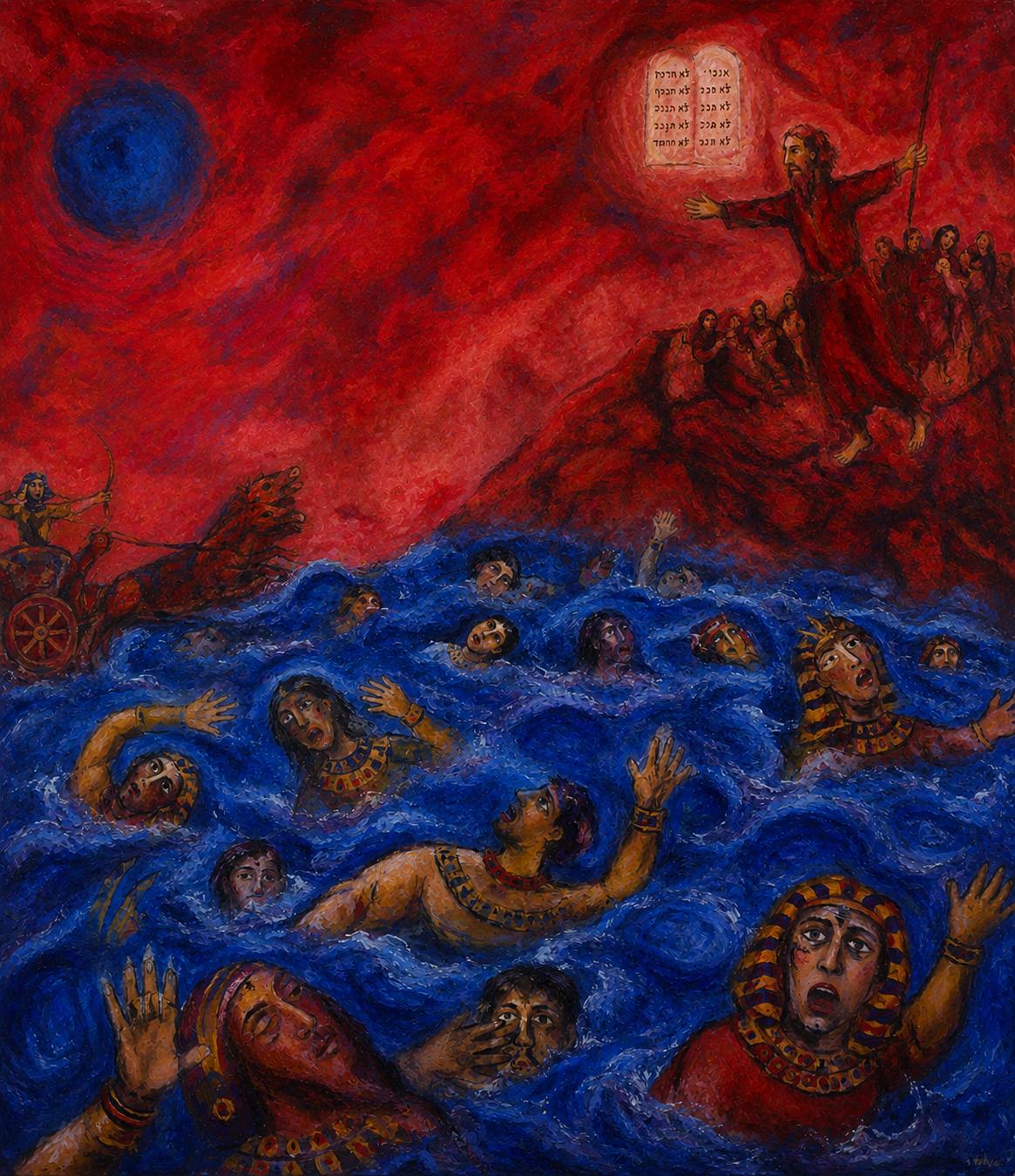
This means that God will judge the person in the person's own terms. For example, the Egyptians had drowned the Hebrew infants, and they met their own fate at the Red Sea when they were drowned. The reason for this parallel is not poetic, but to alert the sinner and others to the source of his crime, which is used in his punishment. Yisro said,
Now I know that God is greater than all gods, through His punishment that matches their crimes (Exod. 18:11).
Rashi comments:
By that very thing with which the Egyptians thought to judge Israel, were they themselves judged: they had thought to destroy them by water and they were themselves destroyed by water.
Rav Huna had 400 barrels of wine that spoiled and turned to vinegar (Brachos 5b). When his friends ad vied that God does not punish without cause, and that he should look into his ways, he discovered that he had withheld the vines from his tenant farmers. His friends advised this was an error. When Rav Huna repented, God returns his loss and reverted the vinegar back into wine, others say the value of vinegar rose in value to that of the value of wine. Either way, God returned his loss when he repented.
These two cases are a sampling of all others where God intends to help the person correct themselves by pointing them to the area of their flaw. The punishments were meted out in the very area of the sin, water for the Egyptians, and wine for Rav Huna. And when one repents, there is no longer any purpose to his loss or punishment, so God returns his loss. ■
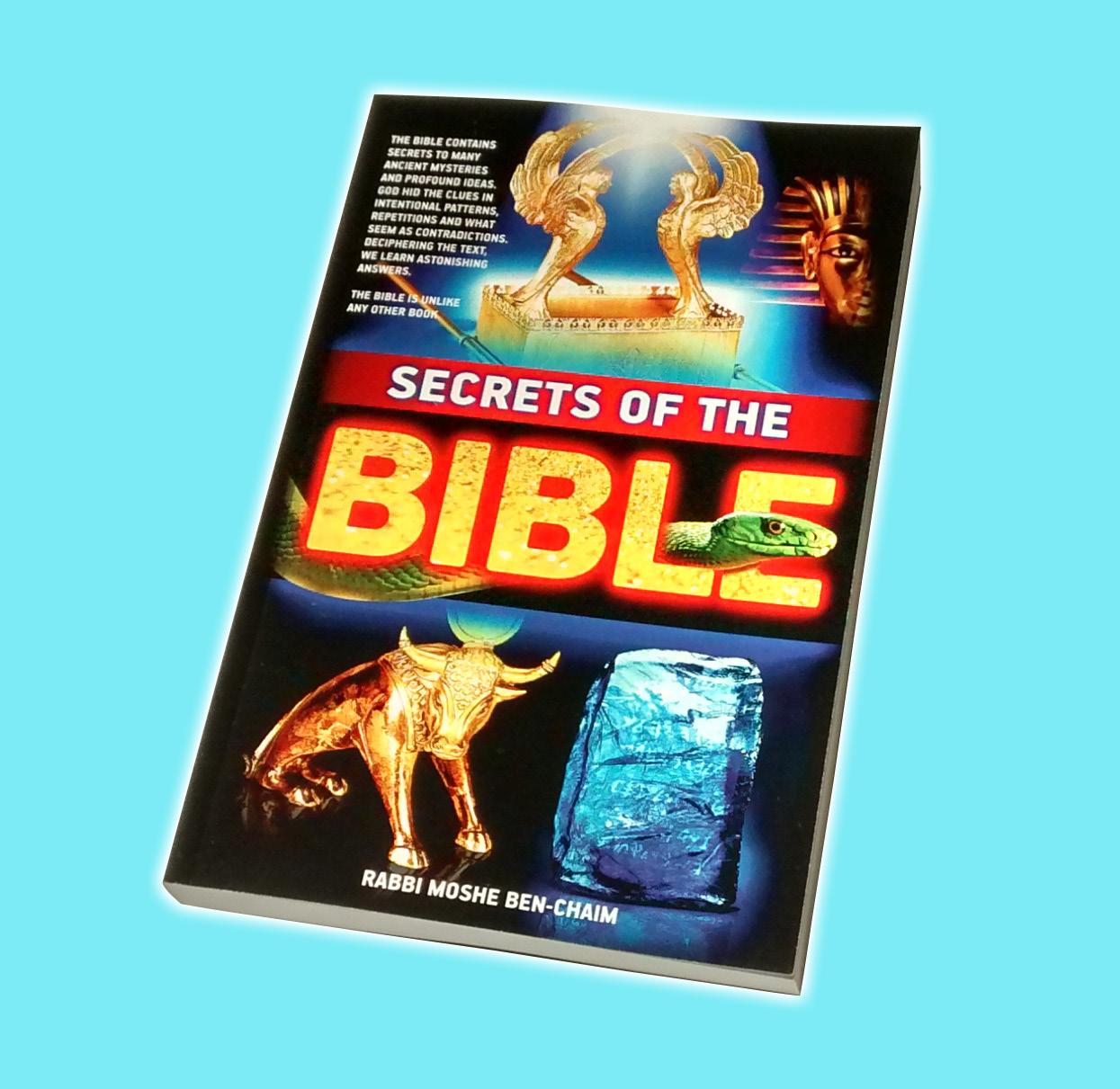
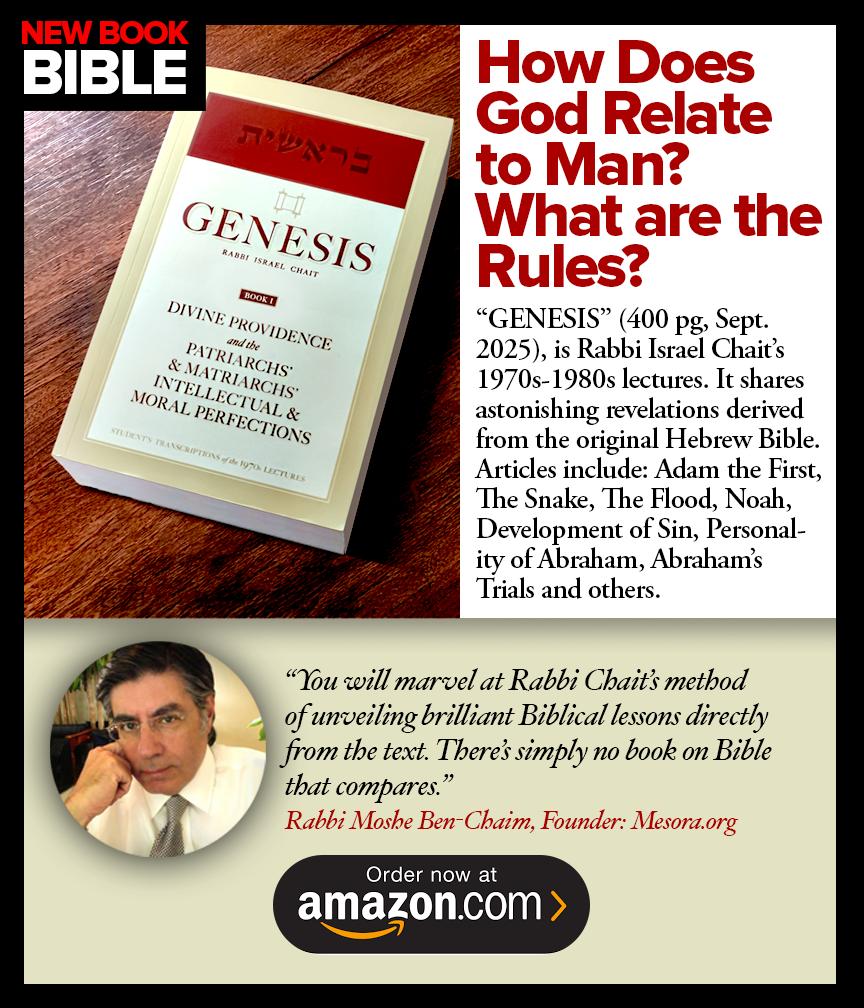
CLUES IN THE TEXT REVEAL MYSTERIES
All books depict history, facts, theories, fiction or poetry. No book is coded with hidden messages beyond the words or patterns revealing marvels. But the Bible (Torah) was written by God, and is “coded.” The order of verses, use of certain phrases, apparent contradictions and other Biblical patterns are pur poseful clues to God’s wisdom.
This book unveils those patterns and shares the hidden messages.
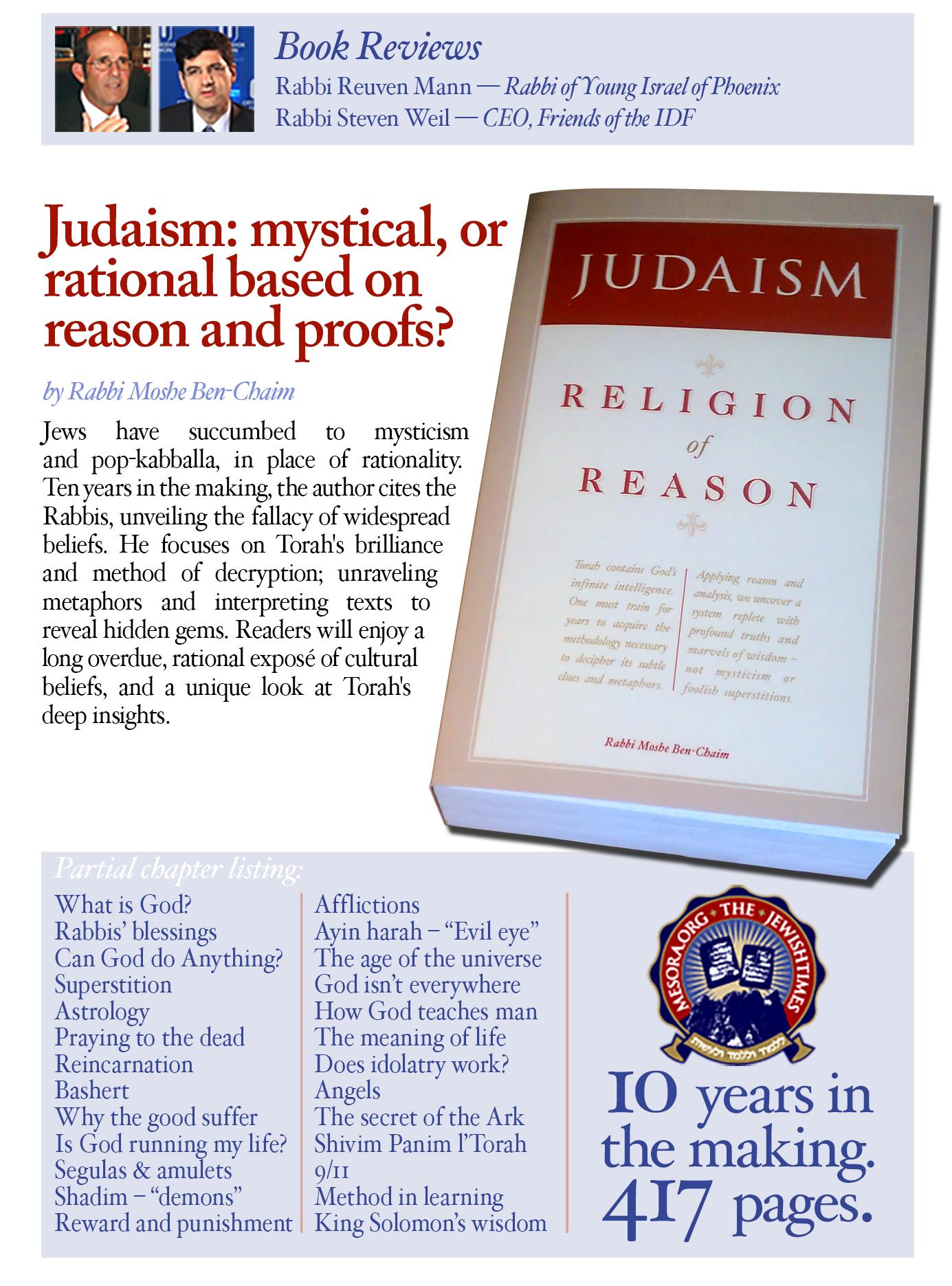
Is Judaism mystical, or is it rational, based on reason and proofs?