


I have to tell you that a new year is one of my favorite times of the year! Starting fresh, a new datebook (completely empty and waiting to be filled!) and endless possibilities for what comes next.
This year is especially exciting as our country celebrates 250 years of existence! How remarkable is it that we have gone from a fledgling group of colonies to the most influential and powerful country in the world? 2026 will bring many commemorations that will either bring our people closer, or drive us apart. Different political views, religions and cultures clash, but perhaps it will be a time when we can stop and give thanks that we are an incredible, amazing and unstoppable UNITED collection of people. Looking forward also to where our fledgling publication, this collection of stories, poems, fiction and interviews will go, is also thrilling. It has garnered many different and good comments, as people say they look forward to reading it with anticipation. Thank YOU!
When we started this venture in April of last year, with our first issue arriving in July, we had no idea if we would do just one magazine one and done. Our writers took the challenge and responded with wholeheartedness. We have done it! Now as this third issue is in your hands, we have learned a lot, written a lot, spent countless hours of edits and prayed a lot! And it continues. We are already looking at content for the April and July issues. To our advertisers, it goes without saying (but I’ll say it anyway) without you, none of this would be possible. We still have distribution issues, getting the publication out and into your hands, but hopefully we can continue to find homes for stacks of them in local organizations and businesses. (If you have a spot, please let me know!)
So for now, Happy 2026!
Your comments are always welcome! For advertising opportunities or content suggestions, contact me at pat@writewordsmedia.com or call me at 513-910-0510
Patricia Stirnkorb, Editor


800-222-1222
970-856-4301 Cedaredge Police

970-856-3123 City of Cedaredge
970-835-3337 City of Ekert
970-856-3885 Cedaredge Elementary
970-856-3118 Cedaredge Middle School
970-856-6882
Cedaredge High School
970-856-1125 Cedaredge Food Bank
970-856-5012
970-856-7199
970 856 6690
Cedaredge Public Works

290 SW 2nd Avenue
Cedaredge, CO 81413
970.856.6863
First Baptist Church
370 Main Street
Cedaredge, CO 81413
970.856.3830
Grand Mesa Baptist Church
110 SE Jay Avenue
Cedaredge, CO 81413
970.856.3455
New Hope EV Free Church
17464 Surface Creek Road
Cedaredge, CO 81413
970.856.4458
Church is an important part of our community. If you are looking for a place to worship, why not visit one of these?
True Life Church of Cedaredge 1507 SW 9th Street
Cedaredge, CO 81413
970.856.3586
St. Philps Catholic Church
290 NW Cedar Ave
Cedaredge, CO 81413
970.856.6495
Cedaredge Community United Methodist Church
210 NW 3rd Street
Cedaredge, CO 81413
970.856.3696
The Church of Jesus Christ of Latter-day Saints 1395 SW 9th Street
Cedaredge, CO 8413
907.787.2773


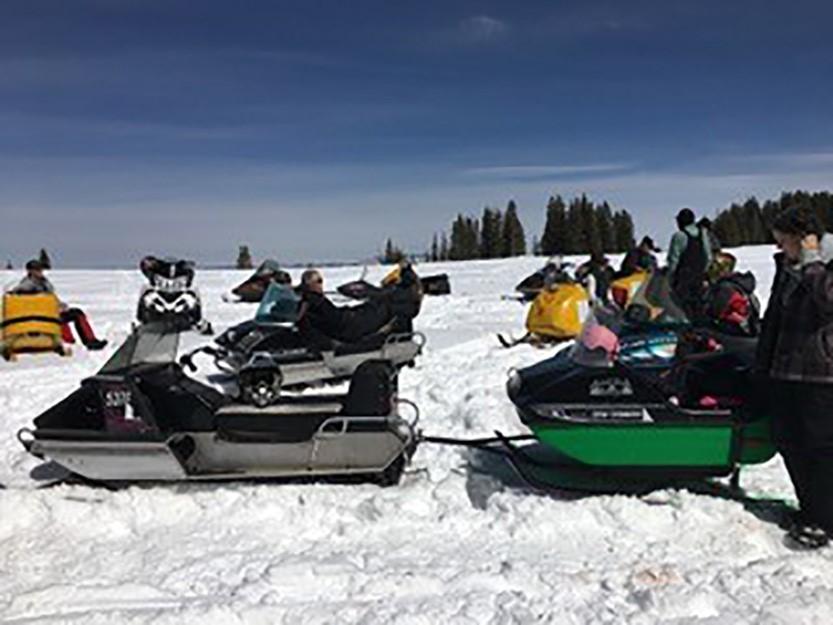

Snowmobiles first appeared on the Mesa in the mid 1960’s at Alexander Lake Lodge. Loud, smoky and basic, they gave families access to remote cabins and created a means of affordably exploring and playing in the winter backcountry. Longtime members, Steve and Cheryl Foster, recall bundling children onto sleds. They would ride out into hidden meadows and watch their kids fall asleep against padded jackets as machines hummed beneath them.
The Snokrusers grew out of a two clubs, one from Delta and the other from Cedaredge. Today the club has around 80 members, with 20-40 active in any given season. Membership includes enrollment in the Colorado Snowmobile Association, which provides liability coverage for organized rides and advocates for snowmobilers statewide.
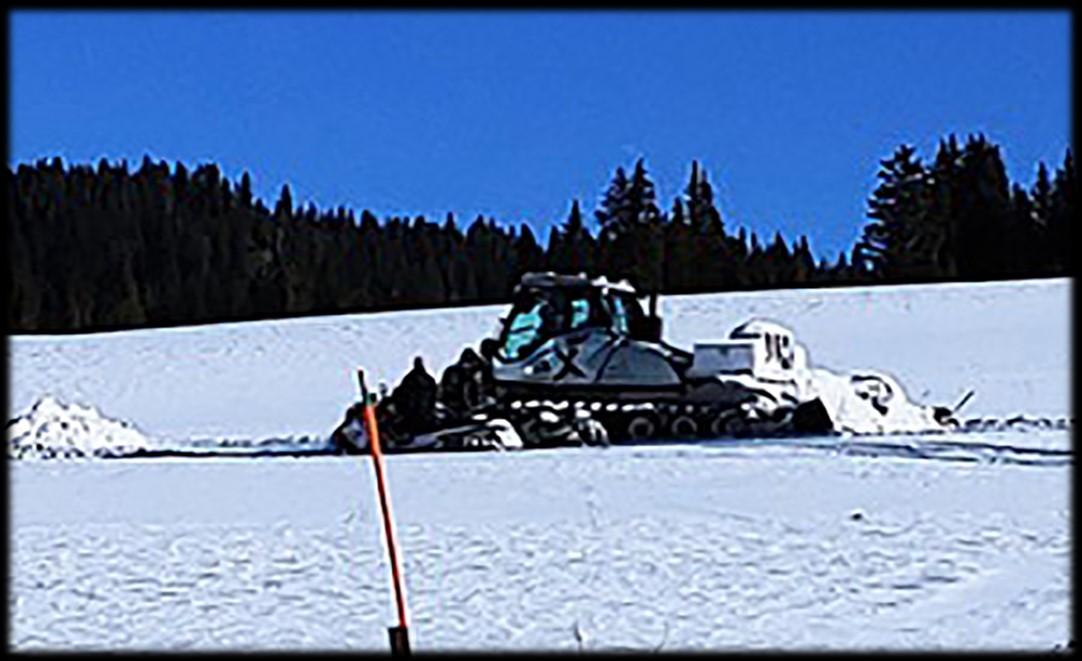
The club maintains 138 miles of groomed tails, with a total of 250 miles of marked trails across the Mesa. Original grooming grew out of a collaborative effort among multiple groups working to establish winter routes and shared access. These included Snowmobile clubs from Delta, the North Fork, and Grand Junction as well as the Nordic Ski community. The Snokrusers grooming equipment has evolved from a small, old gasoline engine, PistenBully with two levers operating cables to a Modern 2021 Prinoth Bison Snowcat. The current machine is computerized, efficient and was acquired through club fundraising
By Laura McCrackin
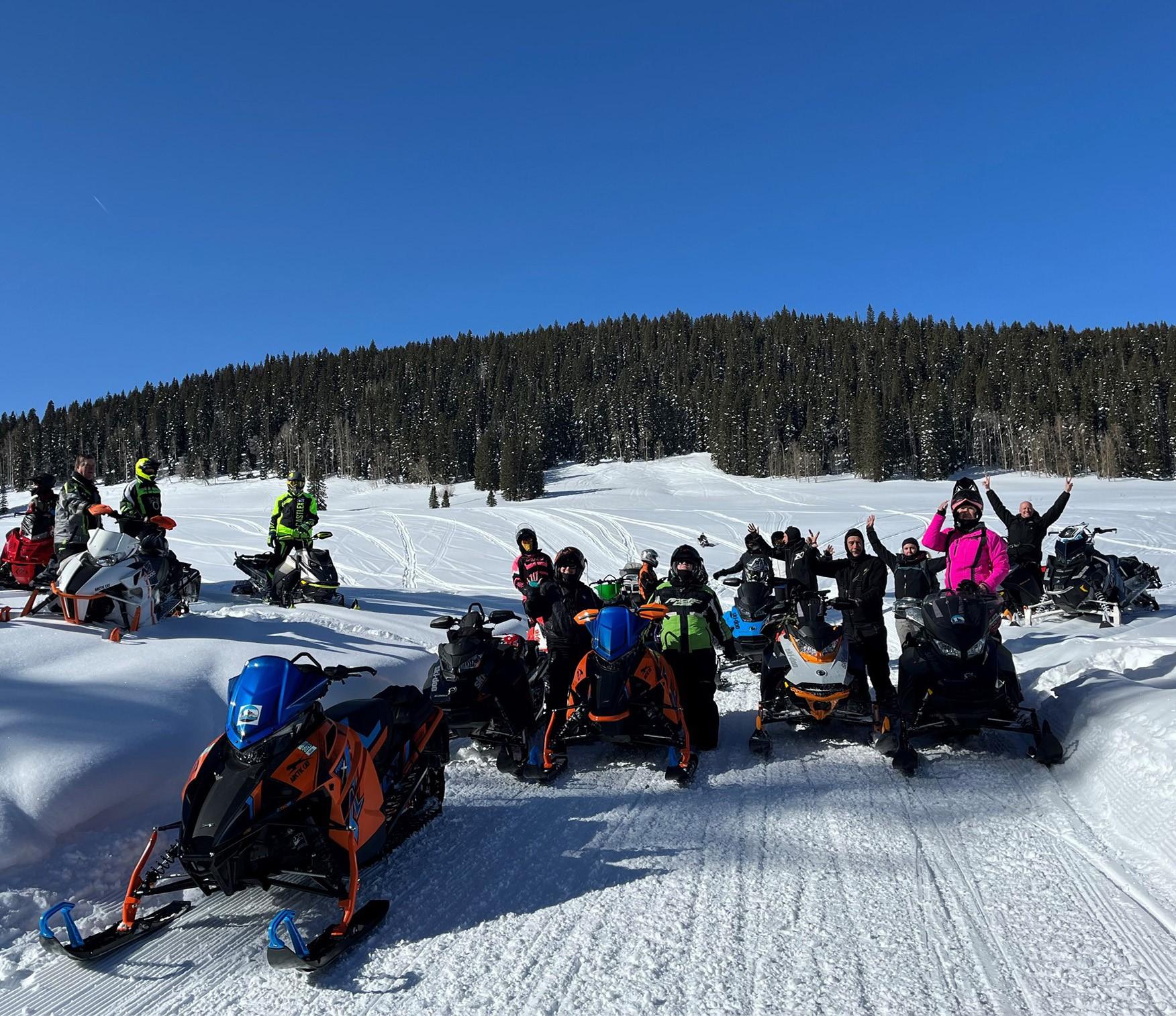
High atop Colorado’s Grand Mesa, winter creates a landscape of quiet forests and open meadows of deep snow. For the Grand Mesa (Delta) Snokrusers, a snowmobile club, this landscape is more than a place to ride, it is a place to connect. For nearly sixty years, riders have found friendship, challenge, learning and joy on these winter trails.
and a matching state grant. Snowmobile registrations help fund these grants, which in turn support grooming operations, equipment, and winter access for the broader community, including cabin owners, lodges and other winter sports enthusiasts. While early grooming machines could often be repaired on the trail with a few tools, today’s computerized machine, though reliable and smooth, requires a complex level of sophisticated repair that cannot be done with a wrench!
Longtime rider and groomer Mike Wenner has been snowmobiling for more than fifty years. Over a decade ago he and his wife, Rose, purchased the Grand Mesa Lodge with their eyes on the snowmobile operations and the year round business opportunity. After a successful run at the lodge they sold the property, yet remain deeply involved in the Snokrusers. Wenner speaks of the club’s occasional calls from Search and Rescue. He recalls receiving a call for help from ice Fisherman Harold Fields, who had fallen through late season ice and after self rescuing had walked a mile and a half to a water users cabin to phone out. Mike and Rose immediately loaded their machines and rode to bring him to safety. It is a reminder that winter travel depends on people looking out for one another.
Snokrusers continued
John Porter, who groomed at Breckenridge ski resort in the ’80’s, now helps with the Snokrusers operations. He said that grooming, especially early in the season, presents its own challenges: Narrow bridges, exposed rocks, tree fall and areas where snow must be moved, packed or banked to create a safe corridor. Former club president, Rick Andrew, notes “people hope we can have trails groomed to Vega for Christmas, but it is snow dependent.
Operations require close collaboration with the US Forest Service, which issues a special use permit for the Snokrusers trail work. In October the Forest Service hosted a Stakeholders’ meeting that brought together loggers, ranchers, cabin owners and permit holders to discuss winter planning and shared use of the Mesa. Environmental impact studies are required for any proposed new trail, ensuring long term stewardship of the Mesa.
multi use, shared by snowshoers, snow bikers, ice anglers and Nordic skiers. The club’s culture emphasizes courtesy, coexistence and shared access for everyone who enjoys winter on the Mesa.
In 1989 the Federal Government designated the Sunlight to Powderhorn Snowmobile Trail which begins by the Sunlight Ski Area near Glenwood Springs and ends on the west end of the Grand Mesa south of the Powderhorn Ski Area at Lands

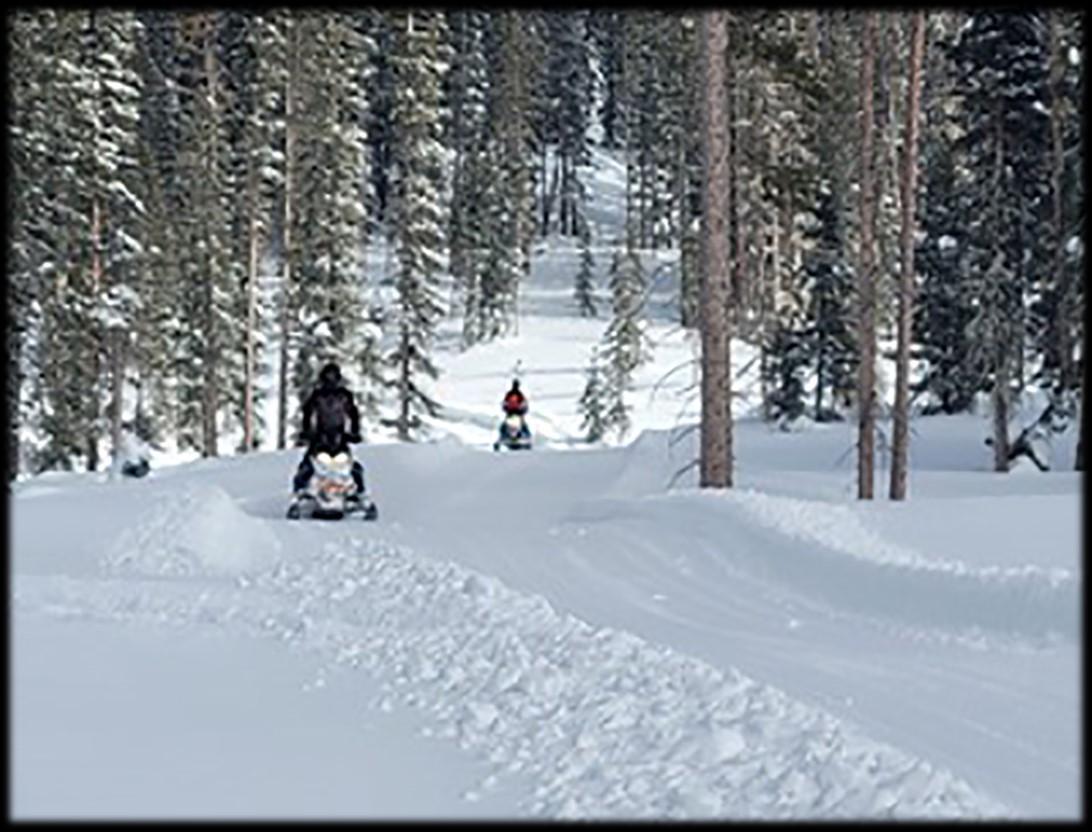
The trail is marked with green reflectors and provides access to approxly 180 miles of groomed and ungroomed trails. The Snokrusers groom 79 miles of this trail.
Snowmobiles have evolved. Early machines were loud and smoky; in contrast modern sleds are cleaner, quieter, and more efficient. When Yellowstone National Park banned two stroke engine machines decades ago, it spurred industry innovation leading to cleaner technologies.
While stereotypes persist of snowmobilers as raucous and reckless, the Snokrusers’ trail system and club reflect a different truth. Many of their routes are
Despite a current trend away from “joining clubs” the Snokrusers offer something unique and valuable that is community, mentorship and safe access to the backcountry. While some independent riders are under the impression they can just get out alone into the wild they may not realize the club’s trails provide access to “further out and further in” the backcountry with plenty of ungroomed, marked trails.
The club has a “never ride alone” ethic and emphasizes safety, sponsoring avalanche awareness classes at local lodges, Beacon education and coordination with local Search and Rescue. Members mention having recently assisted in a search for a missing Minnesota mother and her son.

The Snokrusers host weekly rides, family rides, full moon outings, a Christmas gathering, a vintage ride, a Ladies ride, an end of the season cookout and summer trail maintenance opportunities. The goal is simple: Build a place where riders, novice to expert, have a voice, companionship, access and a sense of belonging. All of these cannot be found heading out into the backcountry alone. Their primary communication tool is their Facebook page “Delta Snokrus” Consider becoming a part of the club, everyone is welcome.

Wow, a whole year has passed. It is time to review, to refresh purpose, and give direction to time yet to live.
By Terry Jarbo
New Year resolutions date back as far as 2000 BC. Knights renewed vows of loyalty to their Lords and famers vowed to return borrowed equipment.
New Year resolutions focus on what really matters to us. Resolutions motivate actions that cause effort, sweat, calluses, disappointments, and victories all of which reminds us a life genuinely lived is worth the cost of preparation.
In Greece, New Year’s Day is marked by the cutting of the “Vasilopita” cake. Named after St. Basil, the cake contains a hidden coin, and the person who finds it is believed to receive blessings for the year. If you do not get the coin, you at least start the year with something sweet.
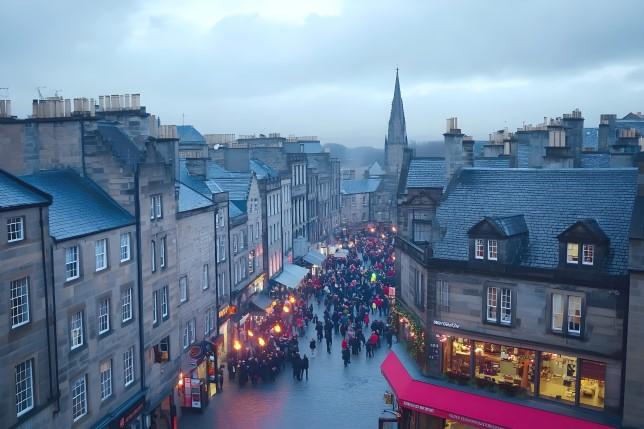

Scotland’s Hogmanay Festival is a spectacular celebration that includes the Torchlight Procession in Edinburgh. Thousands carry flaming torches through the city, culminating in a dazzling fireworks display and the Loony Dook (dressed in costumes some plunge into the freezing waters of River Forth to welcome in the New Year).
Fireworks: actually, this custom most likely started in China, since China invented fireworks. The Chinese set off fireworks to scare off evil spirits and misfortune.
Auld Lang Syne: A traditional New Year's song that roughly means "for old times' sake.” This song was the brainchild of 18th century Scottish poet, Robert Burns.
A kiss at midnight: This custom that may have started in ancient European times to ward off evil spirits. Today a kiss at midnight is to ensure the coming year will not be filled with loneliness.
The custom of eating black-eyed peas: According to the Talmud around 500 A.D., the Jewish custom of eating black-eyed peas was in celebration of the Rosh Hashanah (the Jewish New Year). Revived in the south following the Civil War.

Eating cabbage or a leafy green vegetable, is another southern New Year's Day tradition that started around the Civil War. The cabbage represents the hopes of prosperity in the coming year.
Dropping of a lighted ball in Times Square, New York: The dropping of a giant ball at the stroke of midnight has taken place since 1907. Over the years, the ball has transitioned from a 700-pound iron and wood globe to a crystal ball covered with thousands of colored LED lights, 12 feet in diameter and weighing nearly 12,000 pounds.
New Year resolutions or goals are made hopes of improving the New Year over the previous year.
May your 2026 be filled with expectation. Enjoy your friends. Know life happens. In the midst of sunshine and storm, your attitude gives life to both.






The heat clicks on, Off,
On again
And I wonder how many neighbors are calculating propane, Stretching one more week.
My children watch snowflakes
Melt on their gloves And never notice the way adults count blessings And dollars in the same breath.
At dusk, the town settles into a soft, blue quiet. Smoke rises from chimneys like shared prayers, drifting upward
From houses that all know The ache of making do.
Inside, my kids press their faces
To the cold window glass And laugh at their reflections
Unaware that winter Has taught me endurance, Taught me tenderness, Taught me quiet courage Of keeping them warm.

by Lacey Taylor

The Chapel
Snow gathers on the chapel’s eaves, Softening every edge
Of the small white building
That has held this town
Through marriages, goodbyes, And the quiet prayers
People don’t say out loud.
Inside neighbors shift closer, Boots thawing, Coats dripping
Voiced merging into a warmth
That feels older than the walls themselves.
There’s no grand moment-
Just the steady truth
That community is its own kind of faith, And in the hush of snowfall
We remember it
How this place, these people, Carry us through Like a lantern in winter.
A warm cup of tea brought to me by my love, Babies tucked against me beneath soft blankets, Big kids reading stories to the little ones, Their tiny voices echoing each rhyme back in delight.
The smell of cinnamon and sugar drifts from the kitchen my daughter baking something sweet for us all And in these small, gentle comforts
I find what carries me Through the longest nights.

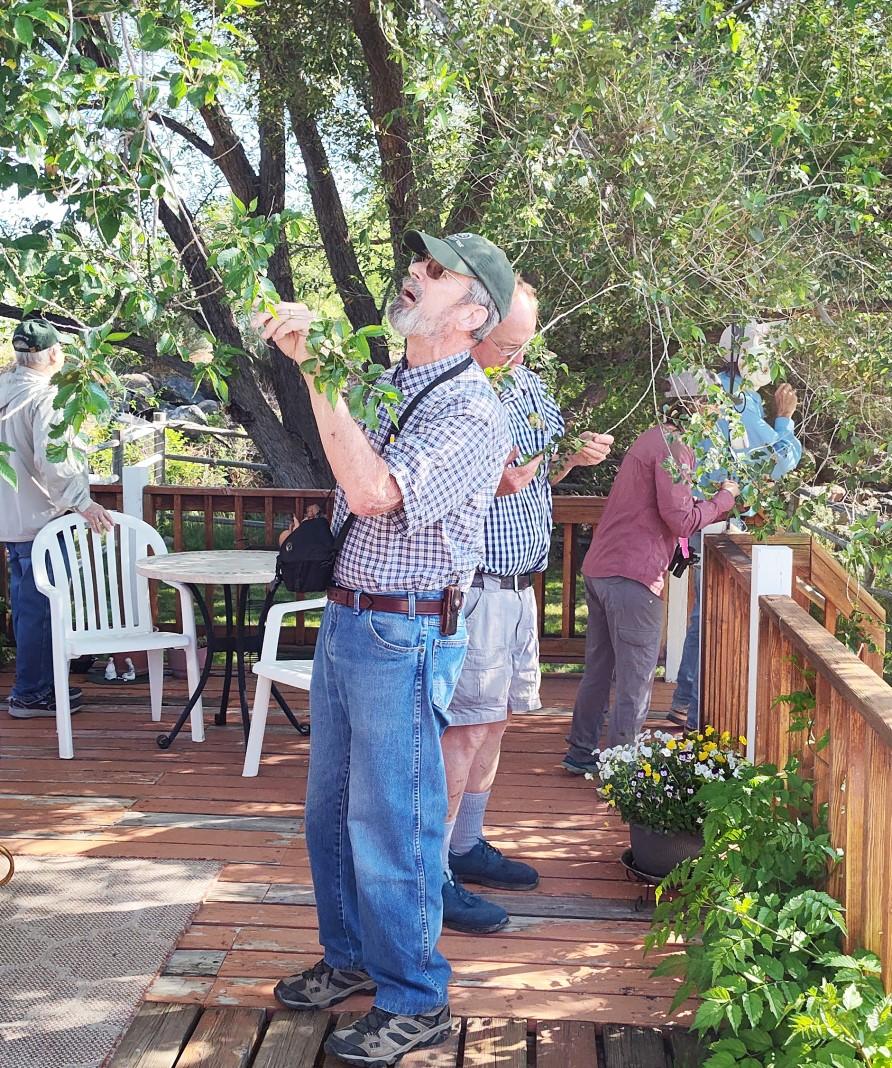
By Jim Leser
Trials and Tribulations of an Entomologist
As I found out early in life you are often disparaged just by being an entomologist. I can remember Junior High days of collecting butterflies, riding my bike to the Santa Barbara foothills on the way to prime collecting grounds with a butterfly net across my handlebars. You never quite get used to those looks you get.
Entomologists get a bum rap because for many folks the sixlegged creepy crawlers we study are all ugly or at least a little dangerous. But the truth be known, insects are one of the most beneficial animals known to man. And yes, the study of insects and their habits is called entomology. Don’t confuse this with etymology, which is the study of words. I embraced entomology as a career early on because, well, no other animal can do as many different things or live in so many different places as insects.
So let’s get to the elephant in the room. ALL BUGS ARE INSECTS BUT NOT ALL INSECTS ARE BUGS! I hear insects referred to as bugs all the time. But the reality is that only about ten percent of all the one million plus insects described so far are true bugs. And they are in only one of approximately 30 orders of insects. The vast majority of insects come from the four orders containing flies, beetles, bees and wasps, and butterflies and moths (87%).
What follows here are some of my interesting experiences as a practicing entomologist. As I began dating girls I found it necessary to tell my prospective dates that I collected butterflies and that I was going to be a certified (certifiable?) entomologist. This avoided wasting time courting someone who would turn their nose up once they found out my chosen calling. My wife of 57 years passed the test!
After what seemed to be an eternity in college I graduated with my PhD in entomology and was hired by Texas A&M, settling into the High Plains of Texas, home of singers Mac Davis and Buddy Holly. One of my first challenges I faced was learning enough stuff so that I could answer questions from walk-ins or from inquiring phone calls. Remember, this was before Google. I remember receiving a question of what to do about plant lice. I also remember thinking, what the hell were plant lice? I knew about animal lice, but plant lice? They turned out to be a colloquial name for aphids.
One day I received a request for an ID of an insect specimen mailed to me, loosely in an envelope. Unfortunately the soft bodied insect was squashed when the mail was run through the postage meter, leaving a bright yellow spot. It probably was an aphid, but who knows?
The one really useful suggestion I received from a colleague involved taking a three-ring binder and filling it up with all the TAMU Extension fact sheets pertaining to insects. That way I could page through it while on the phone with an inquisitor, looking for the answer to their question. But this could sometimes take some time and long periods of silence did not do much for my reputation as an expert entomologist. I figured out what to talk about while I frantically searched. The answer was sports, more pointedly, football; the national pastime of Texans. (continued)
continued)
Not all entomological tribulations took place on the job. I remember sitting in the living room with my wife one evening when a loud chewing sound arose from the fireplace wood box. I knew right away it was the larval form of a large wood-boring beetle. But what really got me in trouble was when this same insect, (now morphed to a winged, three inch long, brown, long horned Prionus beetle adult), flew across the room several weeks later while we were entertaining neighbors. My wife is fairly tolerant of these things, but not always and not in all situations.
My fascination with insects did not end when I retired from Texas A&M in 2005. I have continued using my entomological skills and experiences through the Colorado State University Master Gardener program. While insects are not the only focus, they are number three as far as number of questions asked. And as a master gardener I have broadened my expertise to other areas of gardening through the completion of CSU Green School and now years (since 2008) of experience diagnosing plant problems, making home visits and writing a biweekly column for the Delta County Independent, “What’s Bugging You.”
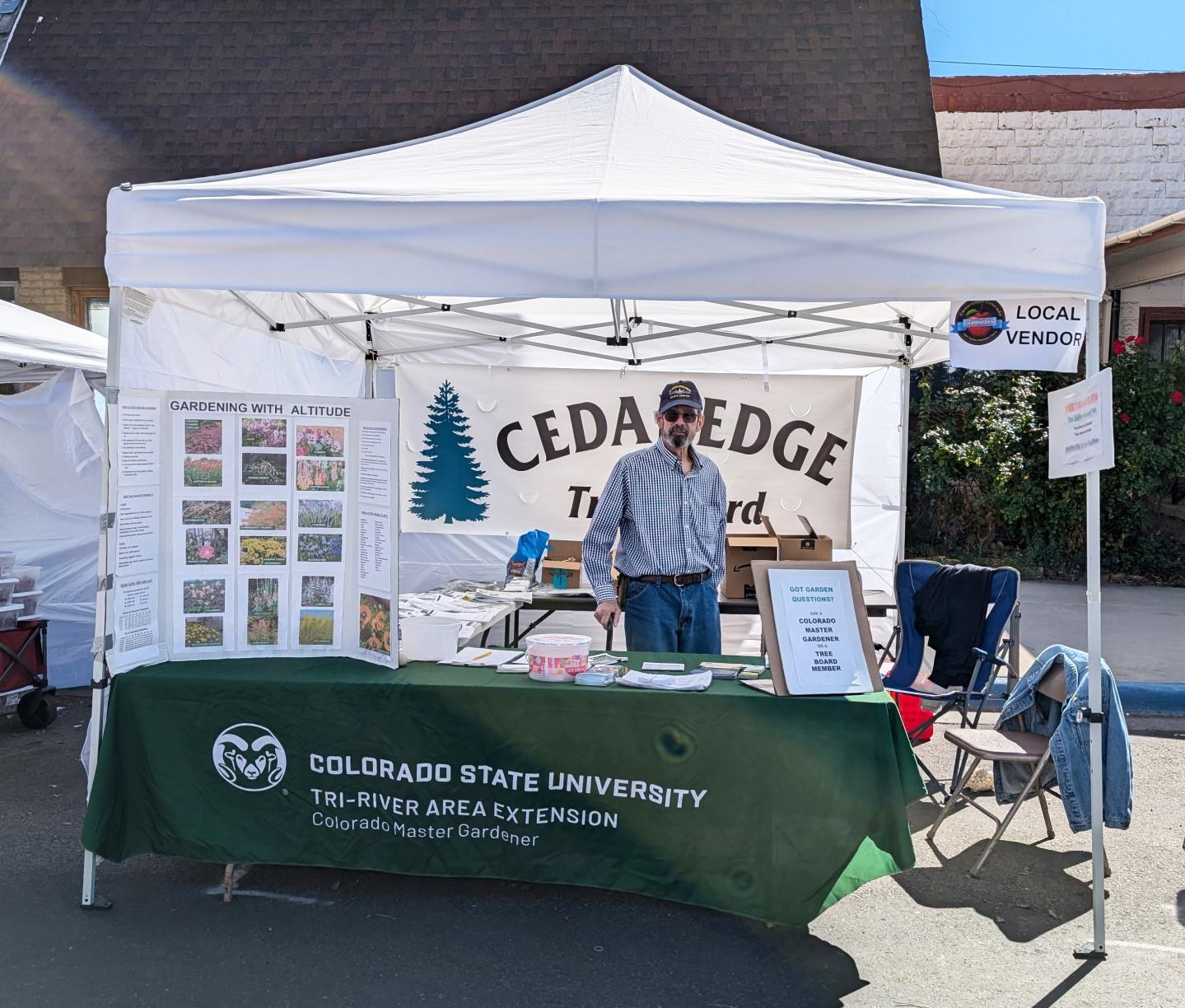
After all these years you would think I’d be over all the jokes about insects. But the one that has always caused me heartburn and will continue to do so until I take down my shingle, is the one that never seems to go away. And yes, it is the elephant in the room. NOT ALL INSECTS ARE BUGS BUT ALL BUGS ARE INSECTS! That means I am an entomologist, not a “bugologist”.

A new year refreshingly inspiring
Meaning just what for me? Am I to change but change what? Or am I to remain the same?
Is the old no longer good Just because there is now a new? Should I repeat only because I can Or simply run in desperate retreat?
Come what may, I’ll simply do ... As I did the year before. Change for no other reason ... Life is a continual adaptation.

By Terry Jarbo
Like the seasons of each year, Always following each other, Yet never the same, Always providing alternative choices.
Last year’s living, produced a living garden Allowing its successes to implant into the new. The Joy, Beauty, and Love, retrieved within the old Giving assurance they will thrive in seasons yet to come.
by t.l jarbeaux

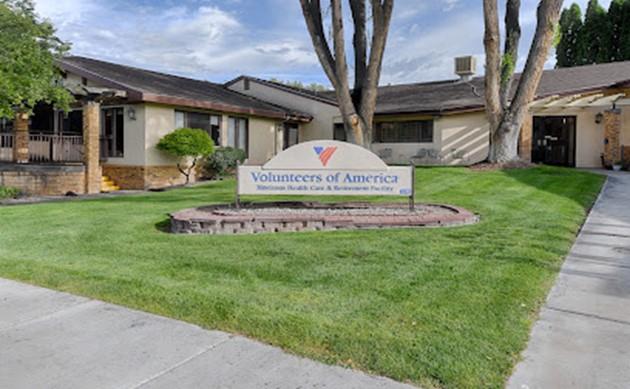
Volunteers ofAmerica, known as the VOA, was founded in 1896. It has grown to serve communities in 47 states, the District of Columbia, and Puerto Rico. It has expanded to serve over 2 million people each year. Since its establishment, the VOA has extended their outreach to provide affordable housing for seniors on a limited income. Their motto says, “The key ingredient to living a healthy life is having a place to call home. We believe that a safe, affordable home is a basic human right.”
Within their health facility the VOA’s guide lines promote the belief that “Access to quality healthcare is an essential part of any thriving, active community. Our goal is to provide 100% access to those who need it. Focused on the unique needs of each of the communities we serve, we create and manage hundreds of life-changing programs and services.” The VOAProvides 24 hour, health care for residents as well as daily activities for their residents. Afew of the activities they offer include:All sorts of board games, puzzles, spelling and word building games, birthday and holiday celebrations and physical games like pinatas, balloon flights, catching/passing balls.
By Terry Jarbo
They also have weekly chapels, bible discussion, and Sunday Church Services. Music includes: Harp, guitars, concerts, holiday choirs, grade school, and high school specials. Community members bring small and large pets, miniature horses, provide nature outings, trips to museums, restaurants and School sports. Caring for our senior population is not a “one person job.” It is supporting and encouraging our older folks by showing our love, care and concern. Visit the VOA or their web site for volunteer opportunities.
Interim Regional DirectorRhonda Jones 970-835-2600
Activity Director / Social WorkerMyriam Rubio 970-835-2623
There are other senior living facilities in Delta, CO which also provide assisted living and memory care services similar, to those in Eckert, Colorado.

On September 1, 1881, the last band of Utes made their exodus from western Colorado to the northeastern part of Utah under escort of troops from Fort Crawford. They were leaving the only place they had ever called home. The land was now open for homesteaders to claim their 160 acres under the Homestead Act of 1862. and by September 2, 1881 land in the Uncompahgre Valley was being claimed in Gunnison. The Surface Creek Mesa is a small part of the Uncompahgre Valley in a small area north of the Gunnison River at the foot of Grand Mesa.
The early homesteaders came seeking a place to settle, raise families and take up farming as most of them had always done. They brought with them cattle, horses, sheep, pigs and chickens along with seeds to plant crops. But the area had never been cleared of sage, cedars and rocks so the work began. The lower part of the valley was mostly just sage brush and was easy to clear, but the upper part of the valley was full of rocks, cedar and pinion trees.
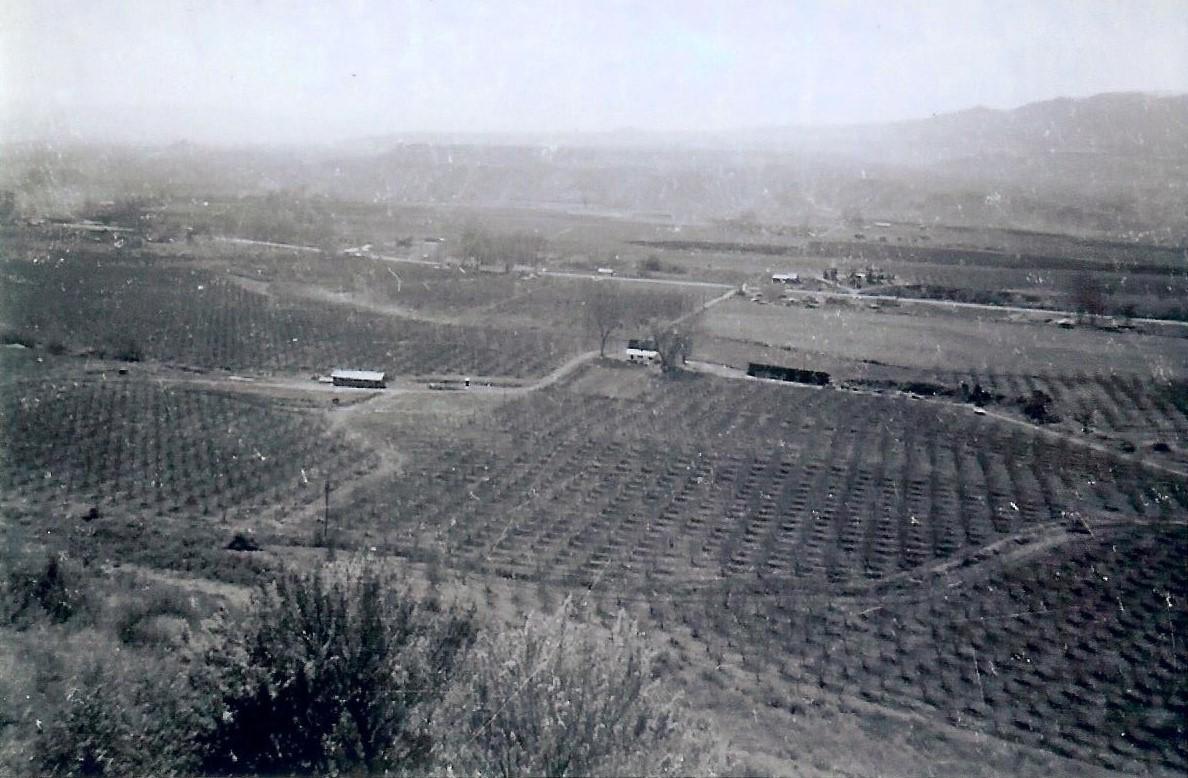
In the spring of 1882 the Otto Peterson family settled in the area south of Cory on 40 acres and planted the first fruit trees on the Surface Creek Mesa: Apples, peaches, pears, prunes and apricots. Other early settlers brought fruit trees and planted in the Cory area. George Childs planted the largest orchard in 1885.The same year, the Colorado State Horticulture Society was formed to promote fruit production in the state. Delta County and the Surface Creek Valley had drawn a lot of attention to fruit production and entered fruit in several World Fairs and State Fairs across the country winning many first place prizes. In 1895, J H Wetterich and Henry Stolte planted an orchard north of Cedaredge. There were many orchards being planted from the lower Surface Creek Valley all the way to north of Cedaredge, and the valley became full of orchards. Other crops such as hay, corn, and wheat were planted as feed for the cattle ranches. Even cattle ranchers had a small orchard some where on their property.
By Ronn Brewer
By 1900 with so many orchards and other agriculture crops being planted, the need for more water to irrigate these crops became a major issue. So enlargements of lakes and building of reservoirs were a top priority on Grand Mesa.
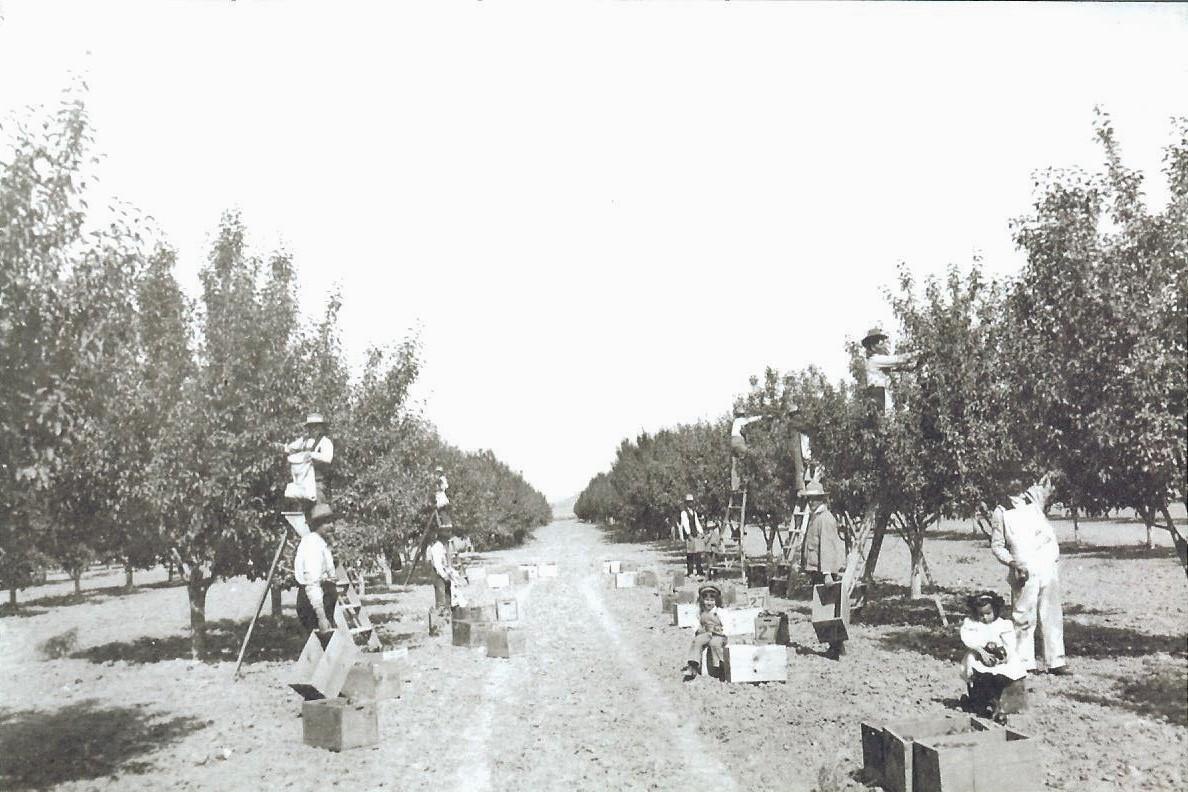
In 1902 the D&RG Rail Road was building a track to Hotchkiss and Paonia and put in the Cory Siding which became Austin in 1905. By 1904 the buying and selling of fruit in the Surface Creek Valley became a major business. The first packing shed was a train car sitting on the siding in Cory in 1903. In 1904, a larger packing shed was built next to the tracks called the Surface Creek Fruit Growers Association. The growers from the upper part of the valley hauled their fruit to Austin for packing or shipping. There was a need for a box plant in Austin. In 1906, the growers built the Austin Canning Co. mostly for canning tomatoes. By 1908, the Surface Creek Fruit
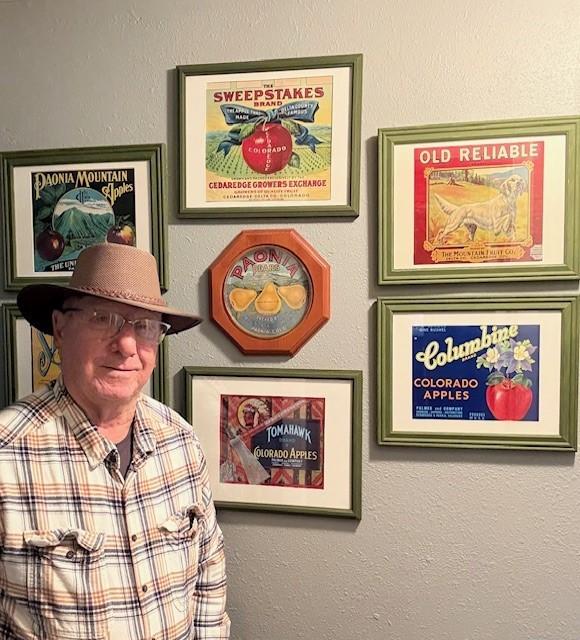
In 1909, Henry Stolte built a large packing shed known as Cedaredge Growers Exchange with his labels the Sweepstakes and Sweepstakes Blue Ribbon brands. J P Caldwell bought 40 acres west of Cedaredge in 1895 where he planted orchards. In 1909 he built a large cold storage. Later he built a small packing shed and packed under the High Altitude label. In 1925 he built a large addition to his packing shed. (Now at the Chann Fogg Place west of town).
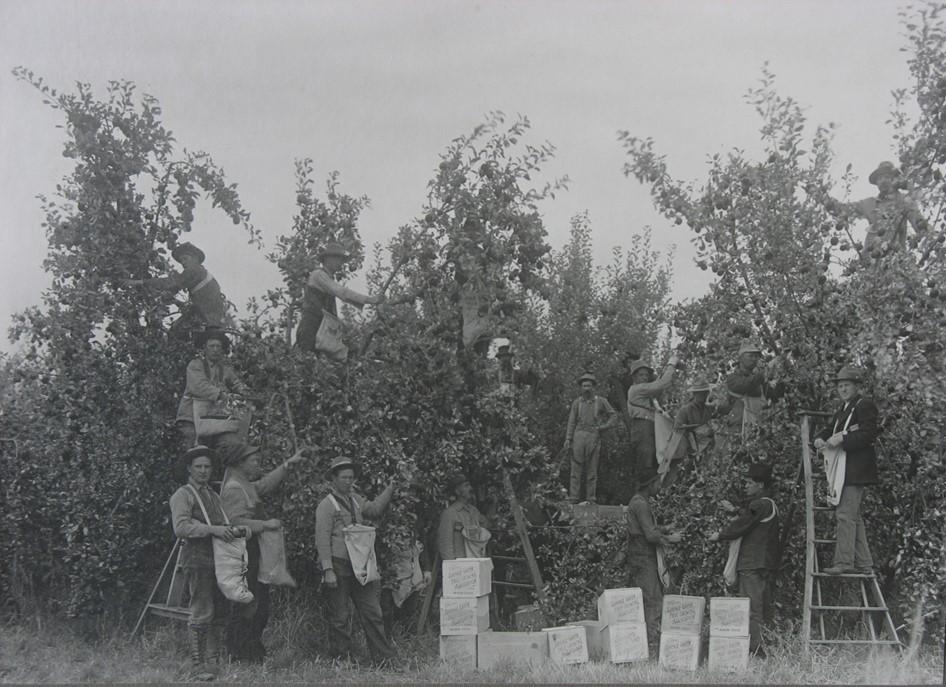
The first Colorado Produce Show was held in 1909 in Denver and the Surface Creek Valley fruit growers were awarded more prizes than any region in the state. In 1910 Delta County won thirty-six out of forty awards at the Council Bluffs, Iowa National Horticultural Congress exhibit. Twenty varieties of apples were from this area. As more people moved into the valley and farmers on even 20 acres had small orchards. Others had 80 or 120 acres and planted 20 to 50 acres of fruit. Between 1912 and 1922 apple production in the area was a significant factor in enabling Colorado to become one of the nations leading apple producers. As production increased, the need for bigger packing sheds became evident. By 1930 there were twelve packing sheds in this region. Apple production peaked in 1922, and there was a downward spiral due to drought. The great depression was also a factor. Selling fruit was harder and so locals hauled apples to Silverton, Ouray, Telluride and other mining districts to help feed the needy. More fruit, bigger problems of spraying for codling moth, frost, hail, and labor. The drought of 1934 hit, and the small orchards were the first to fail, followed by the larger orchards. Fruit production was cut in half. Eventually new orchards were replanted but it took six to eight years to get back into full production.
outlying markets. From 1950's to 70's there were twelve more packing sheds built. At that time, approximately four thousand acres of fruit trees were planted in the Surface Creek Valley. Each grower wanted to control their own packing and selling. With three packing sheds in town, the number of tractors pulling wagon loads of apples to the packing sheds outnumbered the cars on the road for a couple of months. By 1965, the larger packing sheds changed from small wooden bushel apple boxes to bins which held from 18 to 20 bushels and was handled by a fork lift rather than by hand carts. Wooden packing boxes and baskets were replaced by cardboard boxes. Modern machinery introduced electronic weight sizers, color sorters, and bagging machines saving labor.
In the 1960's there were good crops and good markets. Smaller packers couldn't afford the changes in packing and production so they merged with bigger sheds.
During the 1940's WWII, production was down as men served in the war. Once the war ended, they returned and began farming again. Soon new machinery was being built and new packing machinery was made available. Many sheds put in new packing lines and apples were sized by weight. By the 1950's a lot of small independent peddlers with their truckers started coming from eastern Colorado, Kansas, Oklahoma and Texas and facilitated getting the fruit to
In the late 1970's and into the 1980's, more changes were made in the fruit industry. Washington State was creating new varieties and we were five years behind in production; they had thousands more acres to plant. CA Storage alone could keep half of their crop in storage and keep the markets in a constant supply. We couldn't compete. Then came imports, government EPA regulations, fines and more. The big operations were out of business by the late 1980’s. Today there are only five commercial growers left in the Surface Creek Valley. All fourth and fifth generation farmers who love what they do. Now farming on about 600 acres, with four packing sheds left in the valley. The old die-hard farmers stayed until the end. but all the young saw was hard work and low profit so they moved, looking for higher salaries. Farmer loves what they do and are willing to do what they can to feed the world but the world doesn't understand and doesn't appreciate the dedication and hard work it takes to feed them.
Support your local farmers because tomorrow they may be gone.




November 11 is a special day in history. On that day in 1918, World War I came to an end with an armistice between Germany and the Allied nations. In this war, some 8,500,000 soldiers died from their wounds and disease. The numbers are staggering and include not only combat related injuries, but influenza and other deadly diseases arising from poor living conditions, food shortages, and lack of personal hygiene in the trenches.
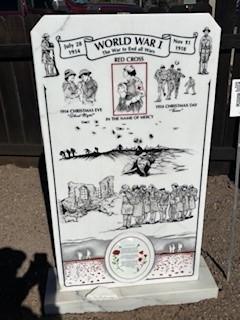
This first world war began on July 28, 1914, but the U.S. avoided the war for several years, mostly because of American public opinion. Sentiment began to change when a British passenger ship, the RMS (Royal Mail Ship) Lusitania was hit by a German torpedo on May 7, 1915, causing many to perish, including over 100 Americans.
Later, a telegram dated Jan 17, 1917, was intercepted from Germany to Mexico, stating Germany would help Mexico recover Texas, Arizona, and New Mexico in exchange for a military alliance. The Germans wanted to stop the shipping of war materials between the U.S. and our European allies. For these and other reasons, Congress voted to declare war on Germany on April 6, 1917.
Despite WW1 being the “war to end all wars” which would “make the world safe for democracy,” too many wars have followed. Thankfully, brave men and women across the nation continue to step up and join the military to keep our country free. The first Armistice Day (Nov 11, 1919) marked the end of WW1, and it was commemorated by President Woodrow Wilson to honor the service members of this war.
In 1938, Armistice Day was designated a federal holiday and in 1954, the name changed to Veterans Day to pay tribute to every American who has served hon-
ByAliceAndersen
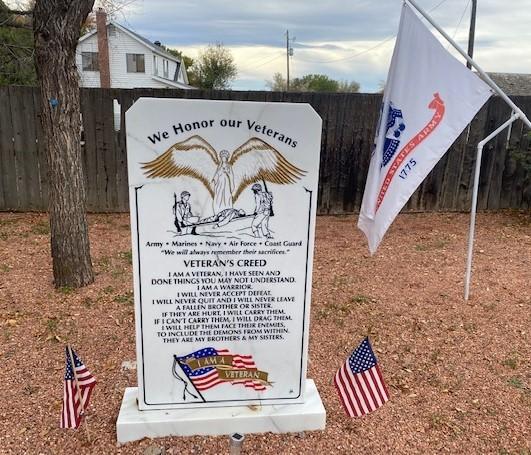
orably in the military. Memorial Day, the last Monday in May, honors those who died while serving. On November 11, 2025, the Cedaredge community continued this time-honored tradition of honoring service members by dedicating the newly established veteran’s park off Hwy 65. The Veteran’s Monuments Park is a permanent home to honor those who have served. These men and women have touched many lives with their sacrifices and heroism during times of strife. The new park in Cedaredge goes beyond honoring veterans on Nov 11. Every day of the year, this quiet refuge offers a place for reflection as visitors learn and remember the sacrifices of family members, friends, and other veterans who served to protect our country. One local resident, Cathy Meskel, is the visionary behind the Veteran’s Monuments Park and the monuments themselves. Through the Support Our Soldiers Foundation, she acquired the parcel of land along Hwy 65 for the park. The marble monuments were originally installed at the Pioneer Museum and were relocated to their permanent home in 2025. (continued…)
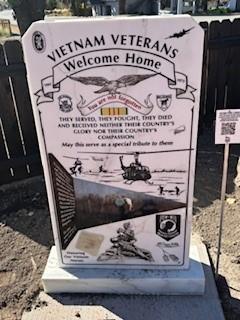
Continued)
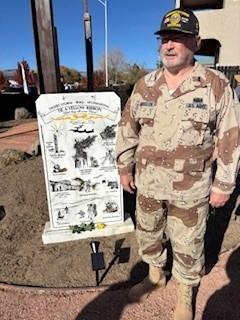
The marble was donated by Colorado Stone Quarries in Delta, and Lark Abel of Abel’ signed and constructed the monuments. Many others donated time and equipment to prepare the park and install the monuments in Cedaredge.
The monuments at the Cedaredge park include those for WWI, WWII, Korea, Vietnam, Desert Storm, Iraq, and Afghanistan. There are also monuments for Honoring the Fallen, the Veteran’s Creed, Medals of Honor, and Women of War. There are audio recordings at the park to help visitors understand and honor our nation’s veterans. For details on each of the marble monuments, the images chosen, and the story behind the founding of the Support Our Soldiers Foundation, go to supportoursoldiersfoundation.org.
TAPS are played in the neighborhood at 8 pm every evening as they have been for years. Bring a cup of coffee, sit for a moment, and let the quiet of the park speak to you.
By Terry Jarbo
Could it be I’ll never see
A writing career flourish
From my computer keys
Or my mind
Release ideas which flow
From me to the eyes
And ears of those who read
Oh, to know just once
I captured words
That gave rich aroma
To mind and eye
Someone could see
What they’ve thought impossible
Or experience with their ears
Rhythmic flowing words
Conveying magical scenes
That color life with
Hues of brilliance
That push aside
Pain, sorrow, gloom
And in its place
Give vibrant room
To courage, love and hope
Creating jubilant joy
Resident in my story
By t.l. jarbeaux
By Terry Jarbo
Sardines have a promised paradise, given to them by Sardiuses the great Sardine that came to let them know, they have a paradise beyond their known Ocean.
He also claimed, that all the trials, hardships, they will face in their ocean home, He will help them through by providing them with His presence.
The enemies of Sardiuses hated him so much they harpooned and put him in a can with a lid to seal him in forever and forever.
But the can could not hold him for His followers from His heavenly realm pealed back the lid, released him and he swam among them for forty days and forty nights and many saw Him and heard Him declaring His power over the can entombment.
Sardiuses gave to each follower a set of Lungs and told them, they were to live by Lung Breathing rather than gills. Many did not want him or his Lungs but those who did received Lungs and are learning to live by them. The more they use their lungs the more they enjoy their new fellowship with Him.


Many sardines did not believe and thought it was great when He was harpooned and sealed in a forever can. Even today there are many ocean dwellers who do not believe Sardiuses ever existed or was put in a forever can.
Sardiuses says he created Ocean dwellers and He wants all to enjoy Him as much as He enjoys them. It seems at times, a losing cause attempting to breath by Lungs rather than gills. Struggling to help those who think gill breathing is the only way to live in the ocean, seems at times an impossible task. Even at times Lung Breathers retreat to gills by reason of old habits, easier to trust old ways than new Lungs. Then remembering the joy of Lung Breathing they return to the joy of Lung Breathing and the promises given by Sardiuses.
Sardiuses has so changed Lung Breathers; filling them with His strength, so they keep right on returning to Lung Breathing even when accused of being crazy for not using their gills.
Charlie and Amanda Joyce
Lung Breathers believe they are more than their little bodies, and will be given a new body in their New Heaven which is greater than their present ocean. Because they know the difference between gill breathing and Lung Breathing, they are aware of when they revert to gills and return to their Lung Breathing.
One of the hardest parts of being a Lung Breather is the sharing with those who only have experienced gill breathing. That is why Lung Breathers are always introducing others to Sardiuses who then reveals Lung Breathing to them.
So let us all who have come to Sardiuses; be we sardines, whales, sharks, tunas, or squids; swim in unison for the glory of Sardiuses and expect to be with Him in his promised Paradise, beyond our ocean home.



Lives in Cedaredge with her husband, Dan Andersen, since 2011. This was Dan’s hometown. Alice has met many people to spark her imaginative streak. She is currently working on a novel and writes short stories for fun.
Terry Jarbo Terry Jarbo was born in Greybull, Wyoming and raised in the Pacific Northwest. He pastored for over thirty years. Terry and wife Carol have been married 58 years.
Jim Leser was born in Boston, Massachusetts moving to Santa Barbara, California and then Las Vegas, Nevada. He and his wife Jeanne met while in college and were married just prior to Jimreporting for active duty with the Navy as a Hospital Corpsman. They have been married for 57 years and raised two beautiful boys. He is a current member of the Cedaredge Tree Board and has been a Colorado Master Gardener volunteer since 2008. He continues to write his biweekly column for the Delta County Independent.
Laura McCrackin was Born at Lakenheath AFB in England. Laura grew up all over the country. Laura served at the Army Institute of Surgical Research, Brooke Army Medical Center Burn Unit and with the 101st Airborne in Fort Campbell, KY. She and her husband has lived here for over twenty years and raised their family here as Laura dedicated her Surgical Career to the people of Delta County.
Kathy Sparacino Katherine Sparacino began writing at an early age inspired by an aunt who was a teacher. She worked for a newspaper composing her own column entitled, “Thru the Years.” She is the author of two books, “Where Horses Run Free” and “Where Columbines Grow.”
Patricia Stirnkorb Patricia Stirnkorb was born and lived in SW Ohio. About three years ago when her husband Rick (married 55 years) and youngest son and his family moved here. Patricia has been a writer most of her life and is the author of 17 books. She is a member of New Hope EV Free church where she works with the woman’s ministry and teaches a Ladies’ Sunday School Class. She also leads the Cedaredge Writer’s Collaborative.
We have several “Guest Writers” in this issue. If want to write for our publication, we would love your words! The Spring issue goes to press March 15th Contact me at Pat@writewordsmedia.com
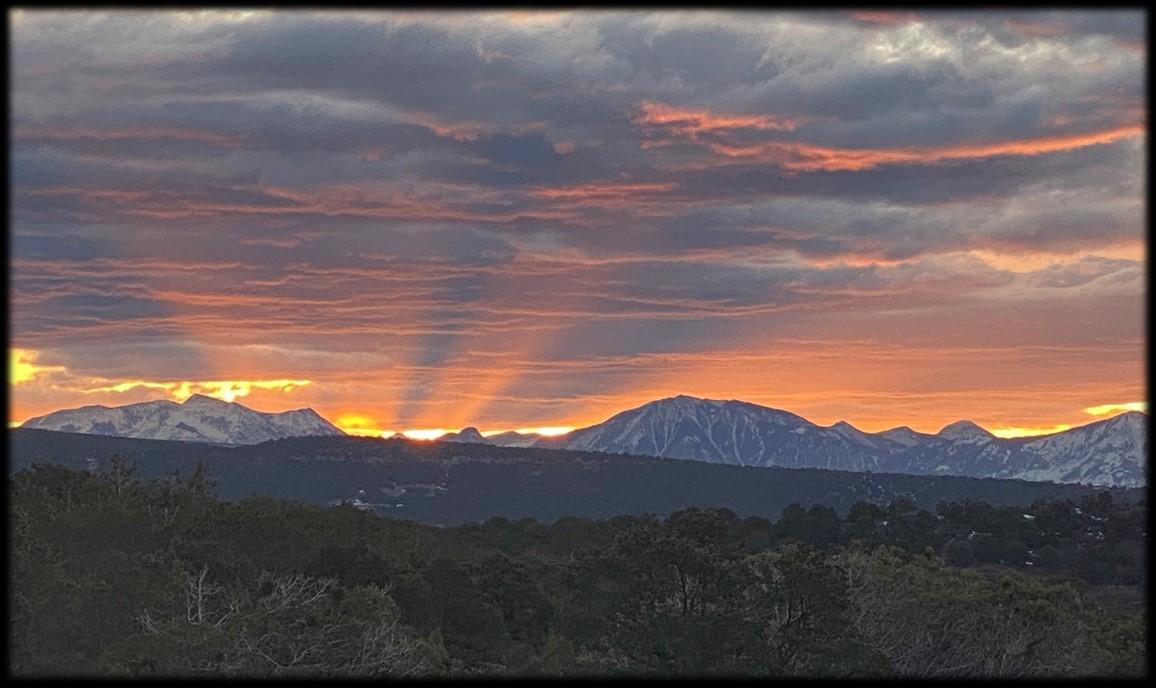
Predawn is the most beautiful time of the day in Cedaredge. Looking up at the edge of the Grand Mesa, the sky contrasts with the darkness of the mountain perfectly outlined. If the moon is full and it is winter, you can see the snow between stands of trees. From my home, I see no artificial light, just dark blues, greens, black and white. The stars shine, sometimes there are clouds. I look for planets, shooting stars.
It is spectacular.
Out on the roads it is quiet. When I worked in Delta, I would often need to drive down back roads in the early hours. On those drives, I would challenge myself to find the wildlife that shared my love of this time of the morning. I saw racoons, porcupine, skunk, mule deer, elk, bobcat, fox and once, even a white owl standing in the middle of the road.
I love getting up in the dark, pouring a hot cup of coffee, going outside to grab wood for the fire and feeling the breeze come down off the Mesa. I love being outside to watch the snow accumulating on the pinons. I never liked to hurry through this quiet time of day and am so thankful when the moon makes its way into my living room through high windows and reminds me to look up and see it before it sets.
Some days I go up for a sunrise skate ski on the Mesa. It is usually very dark though the West Elks may have a trace of light from behind. I am always relieved to see that the snowplow drivers have started ahead of me, clearing a safer path to paradise. Often, when I pull into the trailhead parking lot, the sky begins to open with pinks and blues. It takes my breath to ski into the wooded winter wonderland. It is magnificently beautiful, quiet, dark...yet at the same time illuminated by the snow.
The most difficult thing about the predawn is that is it fleeting. The day becomes lighter, the rest of the world wakes up, solitude is interrupted and tasks need attention. I would protest more if I did not know the secret...it will come again tomorrow.

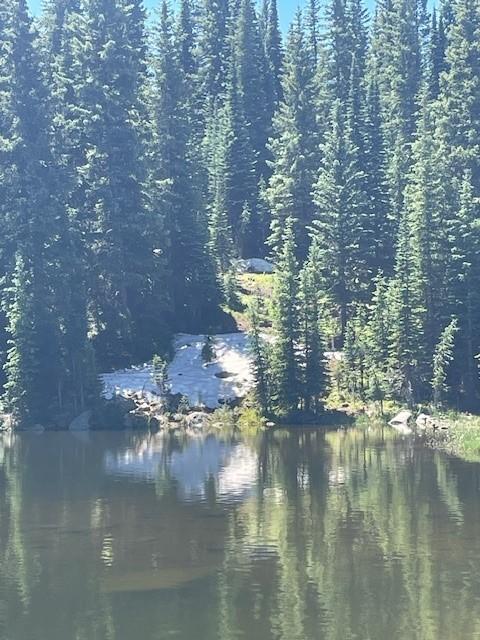
by Kori Deines
Flowers against the green brush, vegetation, and trees. And the deep blue sky not a cloud anywhere! The awesome beauty of God's creation brings such joy to my beautiful than Cedar Mesa Reservoir? I found a clump of columbines just begging
Our Hero Continued
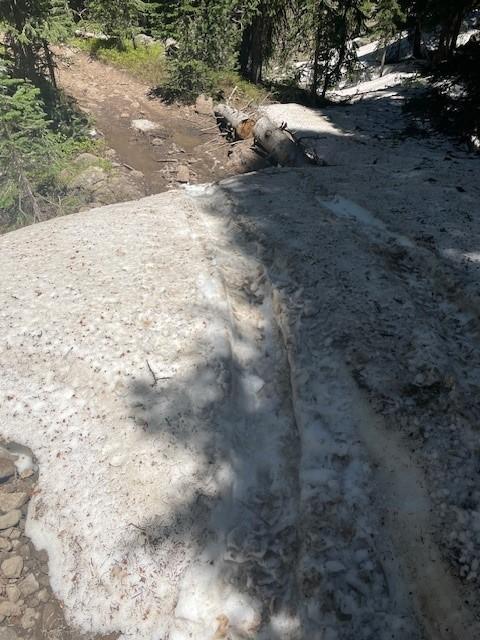
his winch. "Aussie", his dog enjoyed playing with our dog. A simple statement
What brought him up our way with the many trails, lakes and camping spots? across a couple in their side-by-side. They were checking out the area as part
Even our dog was exhausted and needed a day of rest.

By Patricia Stirnkorb
The quaint streets of Willow Creek whispered secrets to those who listened. Nestled between the rolling hills and the gentle river, the town seemed like a place where time had gracefully paused. It was here that Henry, a retired literature professor with a passion for dusty pages and forgotten stories, decided to start anew. He had bought the old bookstore on Main Street shortly after his wife of 50+ years died.
They had lived in Willow Creek most of their lives: Henry was transplanted at age 6 when his father was transferred to the local coal mine. It was at that time when Henry immersed himself in reading, since his small stature and shyness yielded him few friends in the first summer of their move. He found the bookstore, and it became a perfect hideout.
The decision to buy the now-closed store, was driven by a lifelong dream of owning a bookstore and a peculiar fondness for the tales that lined their shelves. Henry’s greatest pastime was reading, mostly historical fiction.
As Henry unpacked boxes and dusted off the shelves, he stumbled upon a peculiar book one that had captivated him in his youth. The name of it was simply, The Town. Its pages were worn, the brown leather cover faded, yet the story within had always felt strangely alive. It was a tale of adventure, love, and mystery set in a town that bore an uncanny resemblance to Willow Creek. Henry had read and reread many of the stories, especially the ones with murder or mystery in them.
The townsfolk had always spoken of the book with a knowing smile, as if it held a truth that outsiders could never grasp. Intrigued, Henry began to delve deeper into the town's history, piecing together stories and whispers from the past. It was then he discovered what he believed to be the astonishing truth: The characters from his beloved book were not mere figments of imagination but real people who had once walked the very streets of Willow Creek! Their names had been changed, to protect the innocent (or guilty). The book had no author, and the text was both typed and handwritten, almost like a journal. The handwriting changed from chapter to chapter and Henry always wondered if it were written by multiple people. But it was bound into one tight unit with a leather cover.
This inclination that this story was possibly true, shocked Henry. After all these years, should he be the one destined to shine light on the stories the book held? Or should it continue to be a story filled with mystery and continue to be viewed as a wonderful fiction story? The stories it contained breathed life into the town's past, weaving a tapestry of history that blurred the lines between fiction and reality. As Henry unraveled the stories of those who came before, he realized that the bookstore was more than a place of business it was a gateway to a world where stories lived and breathed, waiting to be discovered once more. Henry believed he was the one destined to tell these stories.
The purchase of the bookstore was more than a passion; it was a divine calling.

By Kathy Sparacino
Bertha shuffled her slow-moving feet toward the grocery store. She could remember a time when she had a quick gait in her step, a time when her heart was light and lively. It was soon after her marriage, when she was a happy newlywed and discovered they were expecting their first child. She almost skipped going home to tell Peter the wonderful news about the life he would never meet.
Peter was missing in action in World War II and it was never determined exactly where he fell because his body was never found. Being an only child herself, Bertha worked and paid her whole life to raise the only son she would ever have. The cost of living always exceeded her minimum wage jobs, so she was never able to save anything. Pete’s medical condition cost everything she worked for until he ultimately died five years ago and Bertha was eligible for retirement.
Her handbag swayed with her steps as she carried her pension check and the single lottery ticket within. She only purchased one ticket a month when she received her check and bought her meager groceries. Life had been very hard on her. The few friends she had acquired were now passing away, and since she didn’t have any family, she was completely alone.
She stood in a long line at the customer service window, but at least she was out of the wind and cold. The lights in the store glittered on thousands of items she could never afford. Looking around, she sighed, but yet she didn’t regret not having them, nor was she bitter about her lot in life. Neither she nor Pete had ever gone hungry or been homeless.
“Hello, Bertha,” was the cheery greeting as she reached the window. “Is it that time of the month again already?”
She smiled and nodded, and without saying a word, slid her check across the counter. The money was counted back to her, and she re-counted it again. Then she met eyes with the clerk. “Would you check this ticket, please?”
“Of course,” was his eager reply. He inserted it into the machine while Bertha expected to hear the familiar buzz and response of “not a winner.” But today was different. The machine whirled and hummed and a bell went off. “Why Bertha, you’ve got a winner here! You won the lottery!”
She couldn’t believe her ears. Searching the beaming face of the radiant clerk, she saw the joy in his eyes as people began to crowd around the window, and the manager came out of her office.
“What’s that you say?”
“You won Bertha! You won the lottery – one million dollars!”
Bertha stood up from her easy chair in the cozy room at the assisted living center and shuffled down to the dining room for her breakfast. She knew now she would be comfortable and well-cared for the rest of her life. A life which now would be easy on her and enjoyable to her in a place where she had friends and activities, nice clothes and good food. She could finally be happy again.
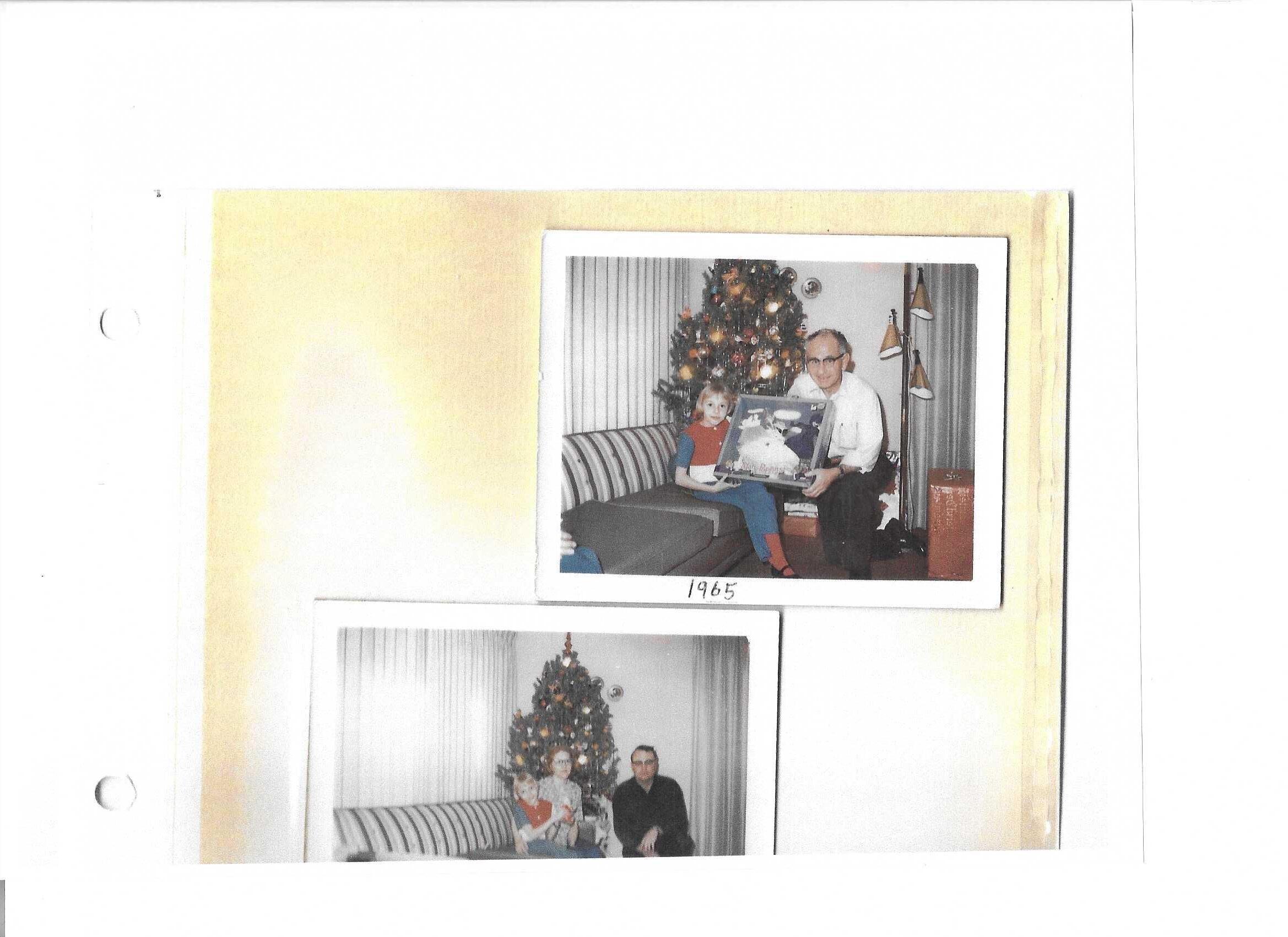
A light snow was falling Christmas morning, which was very rare because it hardly ever snowed on Christmas in Denver. Usually any snow hanging around was brown and dirty, except today. The air was cool and crisp with no wind when Mom and Dad and I walked up to Grandma and Grandpa Christmas; he liked to work the holidays for the overtime.
Grandma’s house was warm and cozy, the fragrance of Christmas dinner filling my senses, the windows fogged over with steam. The table was set with the best china, and the fat Denver telephone book was at my spot as usual. I immediately ran to curl up into Grandpa lap and bury my head into his soft shirt, with Old Spice wafting around us. He cradled me, and tickled me a little, calling me his “Little Punky.”
Soon it was time for presents. As the only child, I got the most attention and the most presents. Grandpa would play Santa and I would hand them out to the four adults. I got an Etch before the day was over, and a Mary Poppins doll with a couple of outfits. Then a bicycle came out of a back room. It seemed so large and I was so small that I was afraid to ride it.
After dinner Grandpa taught me how to play Monopoly while Mom and Grandma worked in the kitchen. All too soon it began getting dark and we had to leave. I relished my farewell hugs and kisses. We walked back home with Dad pushing my bicycle, and not realizing it was my last Christmas with my Grandpa.




By Alice Andersen
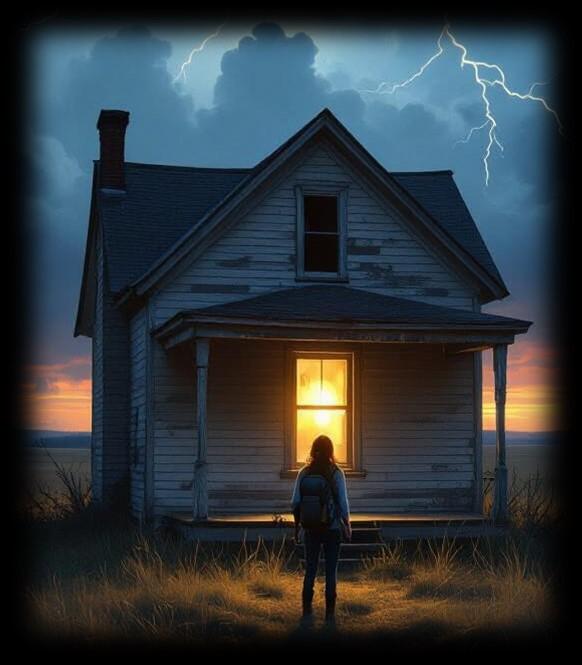
Parker McKenzie slipped off the straps of her heavy-duty backpack, dropping the well-used travel gear on the broken-down porch of an abandoned house. With a South Texas storm brewing in the distance she had to find shelter, and this was the only place in sight. She moved to the window and peered in, wiped off some grime with the sleeve of her shirt, and peered in again. Not too bad. She’d stayed in worse places since she’d hit the road last year, hiking both wilderness trails and backroads of America and catching a bus when she felt like moving quickly from one destination to another.
As her eyesight acclimated to the dark interior, she noticed signs of a homeless person living among the detritus of the rotting house. Damn. She avoided trouble and people in general meant trouble.
“Go away,” a woman’s raspy voice shouted from inside the house. “I was here first.”
An elderly woman, Parker guessed, and probably in need of company, not that she made for good company these days. “I’ll stay out of your way,” she promised.
A lone female had no chance of scaring Parker away at least she hoped the old woman was alone. Pressing her nose tighter to the glass, she examined the inside more carefully one mug, one plate, and one ragged blanket made into a sleeping mat. Nothing to be afraid of here. When Parker finally spotted the squatter, she was sitting against the front door with her arms clasped over a long, tattered skirt, hugging her knees and rocking. She looked more frightened than frightening and the last thing Parker wanted was to bother her. If it wasn’t for the storm, she’d keep going.
“I have supplies. I can make dinner for both of us,” Parker said.
With a backward glance she saw the fast, furious storm clouds approaching. A lightning bolt flashed across the sky, and she counted the seconds before the thunder boomed. Too close. The air fairly crackled with electricity. Moving to the top step, she looked up at the sky. A fat raindrop hit her square on the nose. Parker loved a good thunderstorm, but she had enough sense to stay out of it. She needed to get indoors before the full force hit.
Returning to the door, she pounded on it with her fist. “Please,” she shouted. “It’s just me out here and it’s going to pour any second.”
A sudden burst of wind caught her hair, causing it to whip about her face. The house shook with the force. If the beat-up structure blew away, there’d be no shelter remaining in this savage Texas wasteland. Parker considered heading back to the main road to hitch a ride, but the front door opened with a sudden squeal, and she fell forward, catching herself from a fall by grabbing the doorknob. She straightened, stood with one foot jammed against the door to make sure it stayed open, and reached back to grab her pack. Just as the heavy downpour began, she made it inside and the door slammed shut behind her.
The old woman peered at Parker with cat-like eyes in the gloom. Her clothing was reminiscent of a misplaced hippy; her face wrinkled like a worn-out rock star. Something about the woman triggered a memory for Parker, a flash of recognition perhaps or just a fleeting memory of a shopping bag lady, or one of the hundreds of others camping on city streets during her travels… She’d set up her tent alongside them, not homeless per se. She’d quit her job and cashed in her 401K. Her home was wherever her feet led her. A rambler, a nomad, a vagabond, an adventurer she’d called herself many things on this walk-about of hers. Never homeless though.
Or was she lying to herself? She was not a shopping bag lady, but was she on the way there? Her hands shook and she closed her eyes, flashing on the sunken faces and slumped shoulders of those she’d met, gravity tugging at them, the pressure of life haunting their footsteps…shadowing them…ever present in the nightmare dreams of their past lives. Small tragedies dripping down through the years like a Chinese water torture, or like her own overwhelmingly tragic event which she wore like a shroud to become invisible. (continued)
Would she decline into deeper madness at the touch of a stranger’s hand? She feared so. Did she carry the shadowed, haunted eyes of the guilty? She was sure of it.
Parker shivered. She’d put it behind her, or so she thought. The death, the horror, the indescribable fear of waking up from the self-induced dream that all was fine in the world. Safe, everyone was safe if she stayed in the dream. She buried the dark shadows of her past and the blank wall of the future and forced herself to be alive in the moment this moment now.
“What ‘av you got to eat?” The old lady croaked it out as though her vocal cords were rusting.
Parker grinned, forcing her past into a tight box to be filed away in the dusty recesses of her mind. She was here, living this life, and this old woman could use some help. Parker opened her backpack with excitement, anxious to share even as memories of her past dissipated like the fog from a once turbulent sea. Sitting cross-legged on the floor with the over-sized pack between her legs, she pulled out granola bars, beef jerky, and trail mix, her main survival food as she traveled. Next, she pulled out tortillas, dehydrated beans, packets of tuna and chicken.
She had much more to go but when she glanced up at the old woman, anxiety overtook her. She resisted an impulse to sweep all her things back inside and hug the pack to her chest. What had she been thinking? Theft was common among the homeless…and greed. Hunger could do strange things to otherwise decent people. Parker forced herself to calm down. She had money in the bank not a lot, but enough and this wasn’t the end of the world. Her things were replaceable.
Some incredible people lived in the homeless camps. She relaxed as the memory of George swept through her. They’d travelled together for a short time on the road to Amarillo. A lovely, generous man who reminded her of her dad. She managed a quick mental jog to the past, blowing past the dangerous hole of the between years and skipping to a fresh, clean memory of her dad tossing her a ball. She’d once been an innocent girl, protected and unaware of the dangers lurking beneath the façade of safety. That girl was gone; the foundations of her life ripped right out from under her.
Parker blinked, returning to the here and now, and spoke to the woman inspecting Parker’s pile of goodies.
“What’s your name?” she asked.
The elderly woman held a packet of broccoli soup in her hand, running her finger underneath the words. Parker wondered about her age and even if she could read.
“Lyla,” she said. “Do you have cigarettes?”
“No. Sorry.”
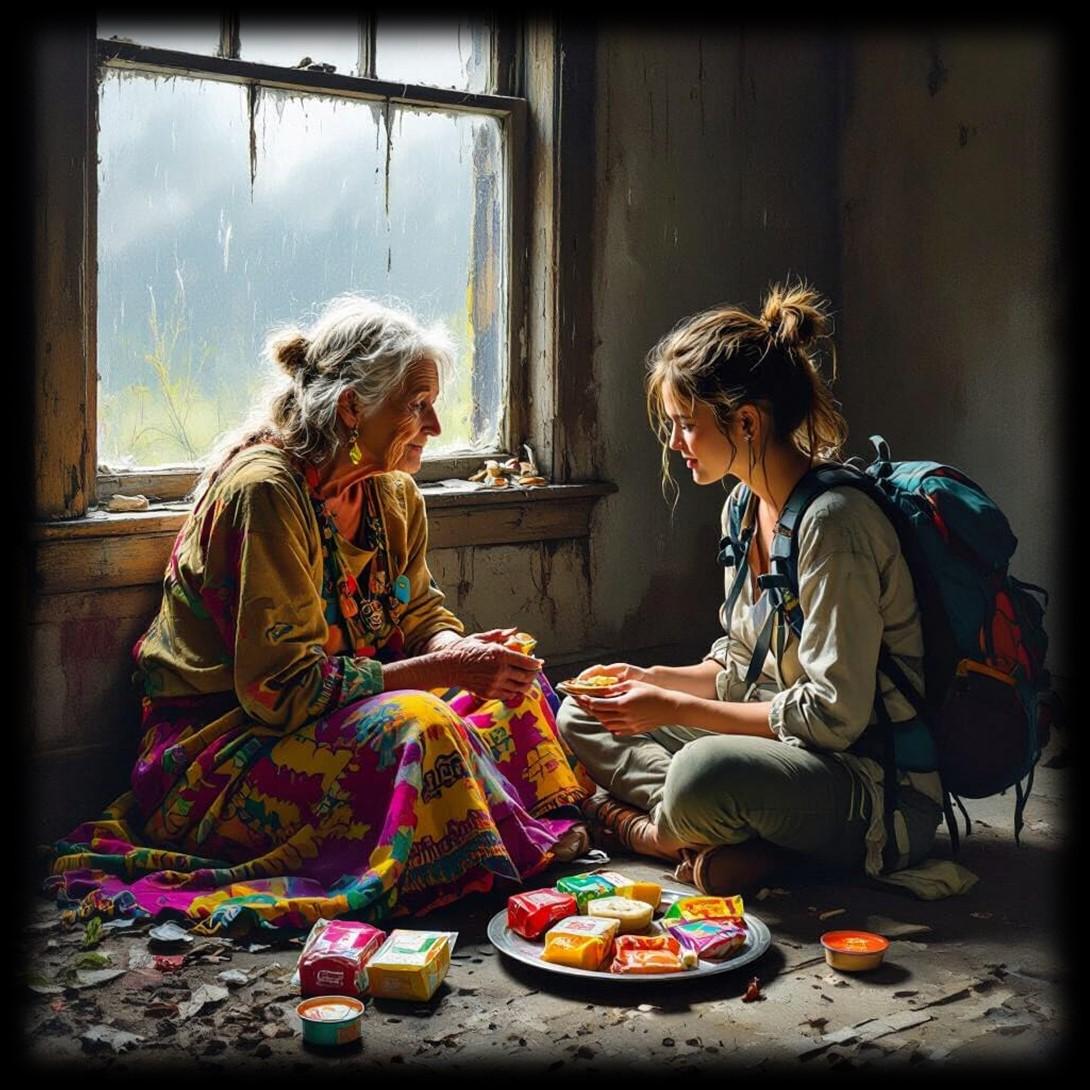
Lyla shrugged, as if it were of no importance. She had an emaciated look to her. How many times had she bought or accepted cigarettes when she needed nutrition? Not my business, Parker reminded herself. Saving the world was not on her list of things to do. She would share this one meal and be on her way again as soon as the storm passed. Pulling out her camp stove, she tried to make conversation. “How long have you been staying out here, Lyla?”
“Don’t know. Maybe a week. Maybe more.”
“Are you travelling with anyone?” “I was. Roger went in the hospital, so I moved on.” A door slammed in the back of the house, and the rain pounded down even harder than before. Not her business, Parker told herself again. Curiosity got the better of her though. (continued)
“Were you close?” She asked as she studied Lyla’s face. Lyla’s eyes remained dry, but they carried a sadness to them which Parker had seen all too often while crossing paths with the homeless.
“Not close. He was a good man though. He told stories and I liked listening to them.”
Lyla scrambled over to the other side of the room to dig through her things as Parker prepped their meal of rice and beans. She added a bit of left-over sausage to the mix. The sound and smell of sizzling meat gave her a pang of hunger.
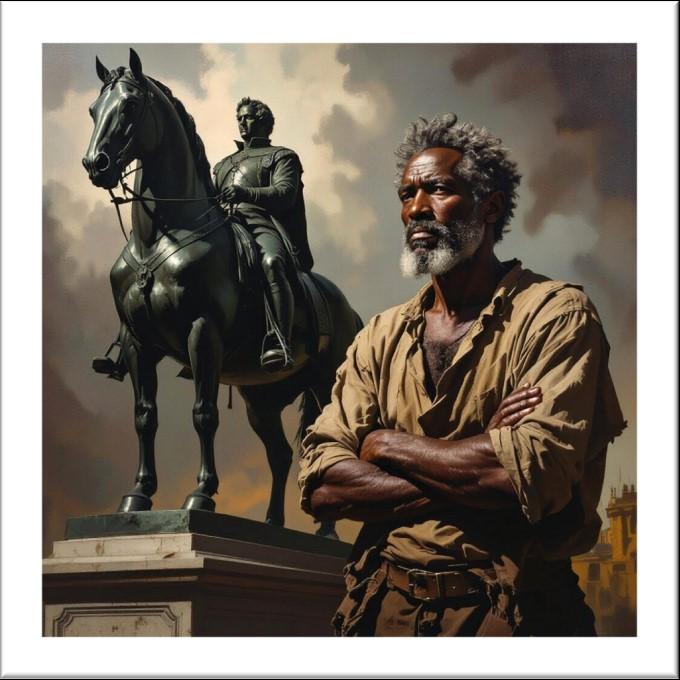

When Lyla returned, she held out a Polaroid photograph. “Is that Roger?” Parker asked as her finger touched the yellowing print. The photograph was of a dark-skinned man with graying hair standing next to a statue of a man on a horse. Roger’s arms were crossed, and he held his head high, as if he too were a powerful man or possibly only a statue of one. Lyla nodded her head with pride. “He’s from South Carolina and he knows all the best ghost stories.” This time her dried-out old eyes did tear up. “I didn’t want to leave him.”
“Then why did you?” Parker asked confused. The one thing about being homeless, there was no mortgage or rental agreement to hold you back. If you wanted to stay in a place, you searched out a spot where no one was likely to bother you and set down your bedding if you were lucky enough to have any. Keeping a steady supply of fresh water on hand had been Parker’s biggest concern, especially in the dry Texas landscape. That, and keeping hands from touching her when she lay sleeping. Which is why she ended up here, staying the night in this wide expanse of nothingness with the one lonely house. If the storm hadn’t blown in, she’d camp in the wild away from everyone, or maybe stealth camp in the city if she could hitch a ride.
Lyla sat cross-legged on the floor beside Parker. She picked at her nails and looked down as she spoke. “I grew up around here. There’s too many bad memories to stay.”
Parker filled the metal plate Lyla had carried over and next she filled her own. She knew what that was like. Even though there was no need to hear more, she was curious as to what had brought Lyla to this place at this time, causing their paths to cross. At one time, she’d followed a spiritual journey and remnants of those days trailed through her like a wispy fog in the forest. Was destiny at work, weaving a connecting thread through both their stories? Was there common ground to bond them as sisters? Women on the run. Women, wild and free. Women hurt, wounded by life. What was their bond?
Parker was young and filled with a restless energy. Would she one day be like this old woman? Unable to run with no place to go even if she could.
The old woman seemed reluctant to talk, but Parker wanted to hear her story. More than that, she needed to hear her story. She reached out and touched Lyla’s hand. “Tell me,” she said.
“Believe me, it’s not worth talking about. I ran away at sixteen, realized too late what a mistake I’d made. Did drugs, couldn’t keep a job. I’m not proud of my life and I deserve to be exactly where I’m at.”
“Don’t say that.” Parker patted her hand and took a drink of water. “Tell me about the good times.”
“Oh, there was plenty of good times. Parties and boyfriends.” She gave Parker a curious look. “When I was your age, I was considered a beauty too.”
As the storm shook the walls and the windows of the dying house, the two women told stories all through that long night. Thunder rolled across the sky as Lyla spoke of the death of her son, a marine too young to die, and a daughter who ran away from her abusive stepfather.
Parker discerned generations of pain in the old woman’s gray eyes and a flash like lightning seared her heart, waking the memories buried deep in her soul; the squeal of tires, the screech of metal, the scream of the child which haunted her dreams.
At this time and in this place, she was finally able to speak of the death she had caused. To bring her real-life nightmares into the present and to wake from her dream. As Parker cried, Lyla wrapped her arms around her and rocked her as if she were a child. In the eyes of a stranger, Parker found forgiveness and her healing began.