Regional Council: Representative actions against councils
In this article, Simon Rickit and Caitlin Greene discuss a recent High Court decision and dives into what this means for councils around New Zealand
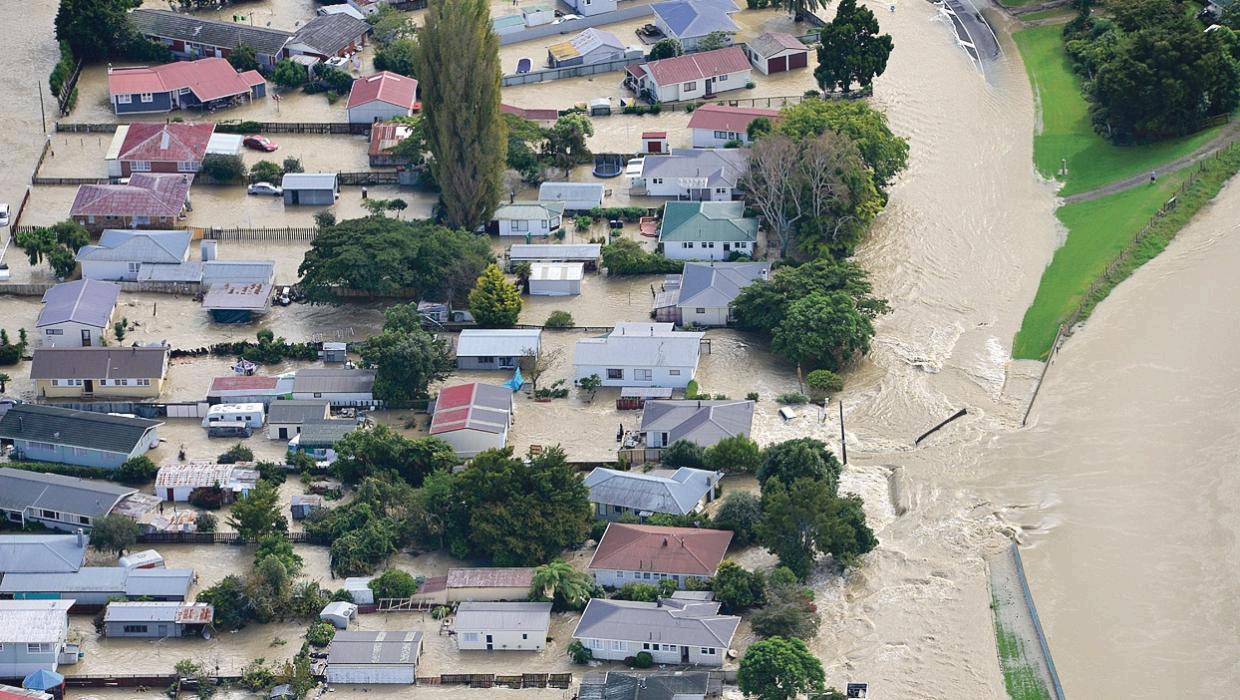
McConnachie v Bay of Plenty Regional Council [2026] NZHC 836 (McConnachie) is a timely High Court decision of particular relevance to councils and their advisers, as it addresses the growing use of representative (or “class”) actions in negligence claims arising from large-scale natural events.
The key reason was practical rather than principled A separate insurer-led proceeding was already underway, involving many of the same losses and claimants Because insurers had compensated many property owners, they held subrogated recovery rights - meaning they could pursue recovery from the Council themselves.
The Court concluded that allowing a second representative proceeding to run in parallel would likely increase complexity rather than reduce it. In particular, it was concerned about: duplicated evidence and expert work; inconsistent findings across proceedings; additional delay and cost; and the procedural difficulty of managing overlapping insured and uninsured claims
In the Court’s view, the insurer-led proceeding was likely to resolve the issues more efficiently through a conventional multiparty process, as opposed to a representative action
PRACTICAL RATHER THAN DEFENSIVE APPROACH
There is some limited commentary emerging from the McConnachie decision, which has framed the case as a broad reflection of courts’ reluctance to engage in representative negligence claims against councils For example, the decision has been interpreted as suggesting that negligence claims against councils are not easily suited to representative treatment because they are highly fact specific, which complicates the “common interest” test
We understand that principle, but did not read the decision as going that far It is possible that considerations of that nature sat somewhere in the Court’s thinking; but there is another reading of the judgment that appears more obvious to us - that is, that the outcome was driven by the practical circumstances of the litigation rather than any broader principle about local authority liability
In reasoning its decision to decline to permit the representative action, the Court repeatedly returned to issues such as the parallel insurer-led proceeding, overlapping claims, procedural inefficiencies, and the risk of duplicated evidence and inconsistent outcome.
In other words, the representative application appears to have failed largely because the Court considered that it would not improve the management of this litigation.
Certainly, the decision highlights difficulties in bringing largescale negligence claims where losses, insurance arrangements and causation issues differ significantly between claimants. However, the judgment does not appear to us to establish any new principle that negligence claims against councils should be treated differently or subjected to a heightened threshold Nor does it suggest that representative proceedings against local authorities are inappropriate as a category
That distinction matters for the sector For councils, it means caution should be exercised before treating McConnachie as bringing a broad reduction in litigation risk We do not think the judgment goes far enough to support a conclusion that councils can be materially less concerned about negligence exposure arising from infrastructure management, hazard mitigation, or resilience planning decisions
Rather, the decision in McConnachie serves more as a reminder of how complex disaster-related litigation might be managed when multiple claimant groups and insurers are involved
WIDER IMPLICATIONS FOR COUNCILS
The decision in McConnachie nevertheless reinforces several broader trends relevant to local government
First, climate resilience and flood infrastructure are increasingly becoming areas of litigation risk. Stopbanks, stormwater systems and hazard management decisions are likely to face growing scrutiny as severe weather events become more frequent and more costly
Secondly, the procedural aspects of these cases are becoming almost as significant as the liability issues
Councils responding to major events may face overlapping claims from insurers, residents, businesses and representative groups, all with different interests and legal strategies
Thirdly, the decision again demonstrates the importance having strong systems in place for managing and overseeing infrastructure assets While the Court has not yet decided liability, the claims focus largely on practical operational issues such as inspections, maintenance and monitoring of infrastructure These are likely to continue being key areas of focus in future disaster-related litigation
McConnachie reflects the courts’ continuing effort to define the boundaries of local authority exposure in the context of increasingly complex climate and infrastructure risks
The judgment is now under appeal, and the Court of Appeal’s approach to representative proceedings in large-scale public infrastructure claims will be closely watched across the sector
GET IN TOUCH
For more information on what this means for your council, reach out to Simon Rickit or Caitlin Greene
RMA enforcement round-up
In this article, Brandon Watts reviews the leading RMA enforcement decisions from the past 12 months.
Our round-up includes the heavy penalties imposed in Rawhiti Environmental Park Ltd and Skyline Enterprises Ltd; significant discounts in Daiken New Zealand Ltd; clarification of inspection powers and cautioning requirements in Knights; and further evolution of the case law regarding enforcement orders in Chen, Woodlett Investments Ltd and Southpark Agri Development Ltd.
SENTENCING
The Court handed Rawhiti Environmental Park Ltd (REPL) one of the largest fines in the history of the RMA. REPL operated a piggery in Te Aroha, which had been the subject of numerous abatement notices and an interim enforcement order in relation to the discharges of pig effluent from its inadequate storage ponds. REPL was sentenced for multiple discharge offences and failure to comply with the interim enforcement order The offending had significant adverse effects on water quality, aquatic life, and downstream users The Court set the starting point for REPL’s fine at $575,000. The end point sentence of $437,000 was arrived at by applying a 20% discount for REPL’s guilty plea and a 4% discount for REPL’s restorative justice engagement and remorse An enforcement order was also made via sentencing, guarding against any future discharges ([2025] NZEnvC 373) The decision sets a new benchmark for major protracted discharge offences
The starting point fines were set at $200,000 for Skyline, $220,000 for Naylor Love and $88,000 for Wilson, plus an enforcement order and reparation to an affected resident Notably, the enforcement order required the defendants to contribute $200,700 to QLDC’s costs in relation to its response to the debris flow event The potential for enforcement orders to recoup such costs under is s 314(1)(d) is sometimes overlooked
Skyline Enterprises Ltd (Skyline), its contractor Naylor Love Central Otago Ltd (Naylor Love) and subcontractor Wilson Contactors (2003) Ltd (Wilson) were sentenced for their respective parts in a debris flow from their work site atop Ben Lomond Reserve A large, precariously located earthworks stockpile mobilised during heavy rain, resulting in the declaration of a state of emergency and the evacuation of 41 residents from Reavers Lane and significant property and environmental damage A debris fence subsequently had to be installed (at the defendants’ cost) to protect residents while the remaining stockpile was removed The Court determined that Skyline and Naylor Love were highly careless, with Naylor Love's conduct bordering on recklessness, while Wilson was found to be very careless but less culpable due to its subordinate role.
While the two sentences above are notable for the significant penalties imposed, the sentence imposed on Daiken New Zealand Ltd (Daiken) is notable for the opposite reason. The offending consisted of a discharge to land where it may enter water from Daiken’s MDF plant at Sefton The discharge occurred following installation of new equipment, and a judgement call was made to run two new pumps overnight without first installing the bracing that had been judged necessary when installing another such pump earlier Without the bracing, the new pump outlets failed and resulted in a discharge that caused significant ecological harm, including a severe drop in dissolved oxygen levels that would have caused the death of aquatic fauna The event coincided with whitebaiting season and impacted on a range of river users and mahinga kai While the prosecution sought a starting point of $160,000 and the defence suggested $130,000 if its submissions in favour of conviction and discharge were rejected, the Court set a significantly lower starting point of $80,000. Mitigating factors included that the offending was due to a temporary lapse of judgement by a very experienced employee, the proactive steps taken by Daiken and their engagement in restorative justice with mana whenua. The starting point was discounted 25% for guilty plea, 12 5% for Daiken’s prior good record and 15% for remorse and engagement in restorative justice, notably commenced prior to the prosecution That would have reduced the fine to $38,400. However, taking into account Daiken’s commitment to approximately $50,000 work through the restorative justice process, the Court further reduced the fine
to $12,000. It appears that Daiken’s engagement in restorative justice may have been double-counted by being factored into both the starting point and the discount
INSPECTIONS PROCESSES AND POWERS
Mr Knights’ company owned an industrial building in Manurewa. After Fire and Emergency New Zealand (FENZ) received a complaint about fire safety alleging that numerous people resided in the building, a joint inspection was carried out by Auckland Council, FENZ and MBIE (tenancy services) The inspection revealed that the building had been filled with prefabricated cabins, providing rental accommodation for migrant tradesmen. Fire safety was inadequate, and substantial modifications had been made to the building without the necessary Building Act approvals Mr Knights was subsequently prosecuted by the Council for breaching the RMA by operating a boarding house without resource consent and for Building Act offences This case is of note due to the issues raised in a pretrial hearing about the admissibility of the evidence from the multiagency inspection, resulting in rulings on a wide range of procedural matters relating to inspections. One issue was whether the Council officer could rely on his power under the Building Act to enter and inspect a boarding house, when he had reason to suspect breaches not only of the Building Act, but also of the RMA (under the RMA he would have needed either a search warrant or the occupants’ consent to enter) The Court ruled that the officer’s RMA powers were supplementary to his Building Act powers, and did not qualify how he exercised the latter. The pretrial decision also addressed the question of whether the Council officer was obliged to caution Mr Knights before conducting the inspection The Court ruled that the Council officer was not obliged to caution Mr Knights: the obligation under s 23 of the New Zealand Bill of Rights Act 1990 did not arise because Mr Knights was not arrested or detained, and the Practice Note on Police Questioning does not apply to a council officer The pretrial decision also contains a useful discussion of when the specific “consent search” procedures in the Search and Surveillance Act 2012 apply, and what constitutes consent to enter someone’s home Ultimately the majority of the evidence from the inspection was ruled admissible, after which Mr Knights pleaded guilty and was sentenced to a fine of $54,000
ENFORCEMENT ORDERS
This case is notable for its unusual approach to a common problem. The Waitakere Ranges Protection Society Inc and Auckland Council applied for enforcement orders to remedy unconsented earthworks and vegetation removal in Swanson Ordinarily the remedial works would require resource consent before being undertaken However, the applicants and the Court considered that it was desirable for the remedial work to be undertaken without the inevitable delays associated with the resource consent process. The Court acknowledged that an enforcement order is not a deemed resource consent or a proxy for one, but nevertheless held that “the Court has a discretion as
to the form of Orders, and whether or not they refer to the need for a resource consent to be obtained” The Court held that various factors could influence such a determination, and in this case the need for remedial work to be undertaken before the situation worsened was determinative Enforcement orders were made, directing the respondent to undertake works without waiting to obtain resource consent first While we welcome the pragmatism of this approach, we note that it relies on the council exercising its prosecutorial discretion to forbear from charging the respondents, and in some circumstances could open the door for the respondents subvert the resource consent process Councils will need to guard against this approach benefitting those who would “seek forgiveness instead of permission”, accepting the risk of enforcement orders in return for avoiding the time and fees associated with applying for resource consents. In our opinion, Councils should be seeking to recoup their costs for reviewing such enforcement orders under s 314(1) (d), just as they would have recouped their costs for reviewing a resource consent application.
This case relates to enforcement orders in the wake of extensive damage from slash from the Samnic Forest in Tolaga Bay A wide range of arguments were advanced on behalf of the respondents Samnic Forest Management Ltd (Samnic) and Woodlett Investments Ltd (Woodlett) argued extensively about which party had agreed to be responsible for which aspects of the forestry operation. In response, the Court rejected the need for it to determine which party had accepted responsibility to do what, stating “contractual relationships cannot override or supplant statutory responsibilities The law is clear All those who use land must act in accordance with the requirements of the RMA A landowner cannot avoid responsibility for compliance by contracting with another to undertake an activity They and the person undertaking the activity are responsible for what occurs on the land.” Samnic also argued with the enforcement order being made against its directors, relying on the Court's rationale for dismissing charges against directors in Worksafe’s prosecution of the White Island/Whakaari directors (Worksafe New Zealand v Buttle [2023] NZDC 18939): in that case the Court held that the culpability of individual directors could not simply be imputed from their company’s culpability, as it was possible that a minority director who wanted to do the right thing could have been outvoted (and there was no evidence to the contrary) The Environment Court dismissed that argument, distinguishing the statutory, legal and factual contexts
D & T MacDonald Ltd (D&T) held a resource consent enabling it to gradually fill and level a site on the outskirts of Hamilton, which D&T leased from its owner The owner then sold the land to Southpark Agri Development Ltd (Southpark). At the time of purchase Southpark was aware that there were outstanding compliance issues as a result of D&T’s activities under its resource consent Initially allowed D&T to continue placing cleanfill on the site. However, following a dispute between Southpark and D&T, Southpark applied for enforcement orders to compel D&T to remove excess fill from the site, finish the site to the approved level and install hardstand as per the resource
consent D&T argued that as Southpark had purchased the site knowing it had outstanding compliance issues, and had permitted further filling afterwards “it would be an injustice to make orders where the Applicant has created this commercial quagmire for itself”, having bought the land “as is, where is” However, the Court’s response was that D&T had the benefit of the filling activity for 30 years, and it was not proper that D&T obtain the benefit of its resource consent without satisfying the burden of the consent by rehabilitating the land The Court ruled that D&T’s responsibility could not be absolved by Southpark’s purchase of the site or Southpark’s prior knowledge. The Court also rejected D&T’s argument that lagging compliance efforts by Waikato Regional Council and Waipa District Council over the history of the activity should weigh against enforcement orders being made now, stating “we emphasise that a consent holder cannot escape their liability to comply with consent conditions because of a regulator's failure to promptly enforce compliance” The Court reiterated that where non-compliance has been established, it would only be in rare or exceptional cases that the Court would exercise it discretion against making an enforcement order, and concluded this was not such a case Enforcement orders were issued
Queenstown Lakes District Council v Hensman, holding that s 128(1)(c) conferred a discretionary power, not a statutory duty enforceable against the Council, and an enforcement order was not the correct procedure where the council’s function required an evaluative exercise
GET IN TOUCH
Our team is at the cutting edge of local government enforcement, leveraging both our understating of the sector and our experience as Auckland’s Crown prosecutors. We regularly advise and represent councils enforcing the full range of local government requirements, spanning the RMA, the Building Act, dog control, the Food Act, bylaws, encroachments and more If you would like to discuss any enforcement questions, please contact David Collins, Nathan Speir or Brandon Watts
The Environment Court struck out an application for enforcement orders on the basis that it had no jurisdiction to enforce consent notices, or the underlying subdivision consent conditions. The Court relied on the High Court’s decision in Speargrass Holdings Ltd v Queenstown Lakes District Council that a consent notice is the only mechanism for enforcing ongoing compliance with subdivision consent conditions, as the underlying subdivision consent is “effectively dead” and falls away In a related decision the Environment Court declined to make declarations about compliance with the consent notices, again for want of jurisdiction
Continuing a recent trend of parties trying to use enforcement orders to compel councils to use their RMA powers in certain ways, NZ Total Partnership Holding Ltd attempted to compel Auckland Council to exercise its power to review a resource consent under s 128 The Court applied the reasoning from
Natural hazard notices Guidance for councils
Wade Morris and Frankie Pepperell discuss the outcome of a recent case relating to the natural hazard provisions of the Building Act
At its core, this case tackles a question many BCAs grapple with in practice: When is it appropriate to impose a s 72 hazard notice, and when is it enough to proceed under s 49? The Court’s answer reinforces a more balanced, risk based approach to assessing natural hazards.
BACKGROUND
The case arose from a dispute between Tauranga City Council (TCC) and property owners following the issue of a building consent subject to a s 72 natural hazard notice. The owners applied for building consent for renovations to a residential property that was a flood risk
TCC was satisfied that the building work itself was protected from inundation by flooding (meaning this was not an issue in dispute); but the land remained subject to the natural hazard On that basis, TCC issued consent under s 72, requiring a notification on the property’s title under s 73.
Homeowners will generally want to avoid s 73 notices on their property’s title given it can depress the value of the property, impact insurance, and buyer demand. Accordingly, the owners challenged that decision through an MBIE determination, which found in their favour MBIE determined that although the land was subject to inundation, no damage to the land arising from the natural hazard has been identified (referring to s 392(3)) and therefore, demonstration of adequate provision was not required
In MBIE’s view, section 71(2)(a) should instead read as requiring adequate provision only to protect the building work, or other property – not to the land itself – and the consent should have been issued under s 49 (without a s 72 notice)
MBIE’s decision found the prospect of damage to the land to be the threshold for triggering the ‘adequate provision’ test Effectively writing in a requirement for “damage” in section 71, where it is otherwise, not mentioned in the section. TCC appealed
THE COURT’S FINDINGS
The central issue for the Court was: Does a BCA need evidence of damage from a natural hazard before requiring “adequate provision” under s 71?
Damage is not required under s 71
The Court rejected MBIE’s reasoning that “Protection” assumes the hazard will cause damage, and without damage there is nothing to protect against The Court held this was incorrect
Section 71 is concerned with whether land is “subject or likely to be subject to” a natural hazard It is not limited to hazards that cause damage
The Court emphasised inundation (including ponding, overland flow, etc ) may occur without causing damage – but still falls within the statutory definition of a natural hazard
Section 329 does not inform s 71
The MBIE determination relied on s 392(3) (civil immunity provision) to suggest damage was required. The Court rejected this entirely, s 392 deals with civil liability, and it has no role in interpreting s 71
The correct approach under s 71
The Court confirmed the two-stage test is as follows:
1) Is the land subject (or likely to be subject) to a natural hazard? If yes,
2) Has adequate provision been made to protect the land (or building/work)?
The Court stressed that this is a two-stage assessment, and both limbs must be properly considered
The error in the determination was stopping at the “no damage” conclusion instead of assessing adequate provision
“Adequate provision” is a practical, fact-based judgment
Relying on Logan v Auckland City Council, the Court confirmed that adequate provision does not equal elimination of all risk It requires a commonsense, proportionate assessment, examining the: level of risk duration/frequency consequences practicality of mitigation
As a result, the Court found that the flooding depth was limited (100–300mm) Inundation was short-lived, and low impact Soils were free draining, and stormwater design addressed site drainage.
The Court accepted any inundation would be minimal and of limited consequence The Court concluded that adequate provision had been made, therefore s 71 did not apply and consent should have been issued under s 49 (no s 72 notice)
WHAT THIS MEANS FOR LOCAL AUTHORITIES
For councils, the key takeaway is that damage is not the threshold under s 71. The focus is not on whether a hazard will cause damage, but whether the land is subject to a hazard in the first place, and then whether the risk arising from that hazard has been adequately managed Treating “no damage” as the end of the inquiry will expose decisions to challenge.
Just as importantly, the decision reinforces the need to work through the statutory test in the right order Once a hazard is identified, the next step is to assess adequate provision. That second step cannot be skipped or collapsed into the first In practice, this means BCAs need to be clear in their reasoning about why the proposed design either does or does not sufficiently address the risk posed by the hazard.
The Court has also emphasised that “adequate provision” is a practical, evaluative judgment – not a technical absolute Councils are not required to eliminate all risk and shouldn’t approach the assessment as if they are Instead, the exercise is one of fact and degree, grounded in common sense: how likely is the hazard, how severe are its effects, and is it reasonable to expect further mitigation? This provides helpful support for a balanced, proportionate approach to consenting
At the same time, the decision is a reminder that s 72 notices carry real consequences. They affect property values, insurance, and future marketability (plus Council liability) For that reason, they should not be treated as a default or “safe” option where there is uncertainty If a notice is imposed, councils should be ready to clearly explain why adequate provision has not been met
Finally, the case underlines the importance of clear, well reasoned decision making. Where councils engage properly with both limbs of the test and articulate their reasoning, they are far better positioned to defend their decisions – whether they result in a s 72 notice or not
This decision is a useful reminder that the natural hazards regime is about managing risk, not proving damage; and making balanced, evidence-based judgments, not defaulting to precaution.
Practical reminders:
Do not treat lack of damage as determinative. Keep hazard assessment and adequate provision analysis separate
Apply a commonsense, risk-based approach
Record reasoning clearly (especially where s 72 is used). Be mindful of the significant consequences of s 72 notices
GET IN TOUCH
If you have any questions relating to this article, please contact Nathan Speir, Wade Morris or Frankie Pepperell
Meet the team: Caitlin Greene
Each month we’ll spotlight a member of the Meredith Connell team, so you can get to know the people behind our Local Government practice
This month, we introduce Caitlin Greene, a Solicitor in the Local Government team.
Caitlin came to law the way the best lawyers often do, drawn equally by the analytical and the human She wanted to understand how legal frameworks operate in practice, and how structured thinking can help people navigate complex, high-stakes situations That instinct hasn't changed; it's just found a natural home in local government.
At MC, Caitlin advises local authority clients across a range of matters including civil litigation, regulatory compliance and environmental projects. It's work with a clear public dimension, which suits her well. At university, the subjects that stuck with her most were the ones that sat at the intersection of law and policy - Criminal Law for the way it holds personal human stories alongside the broader structures of the justice system, and Climate Change Law for what it reveals about the role of law in addressing complex, systemic challenges. Both speak to what draws her to local government work: law with a clear public purpose
Before joining MC, Caitlin clerked for a barrister specialising in relationship property, trust and estate litigation She explains that experience put her in close contact with clients navigating some of the most emotionally difficult circumstances a person can face Helping to translate overwhelming personal situations into something structured and workable within the legal process gave her an early and formative lesson in what careful, client-focused legal work really means
Caitlin holds an LLB and BCom from the University of Auckland
Outside of work, she can usually be found exploring local beaches, trying out new restaurants, or spending time with friends and family.
GET IN TOUCH
Caitlin is based in our Auckland office. For any questions, please don't hesitate to reach out to Caitlin Greene