USDA to reopen Mexico feeder cattle trade August 24
By: Agronews
USDA said late Friday it will begin a phased reopening of southern cattle ports on Aug. 24, restoring feeder cattle trade from Mexico under new disease safeguards. August 24 reopening is the first step, Douglas, Arizona first will be the initial port to open, and every animal entering from Mexico will face full USDA inspection to check for New World Screwworm. The move follows more than a year of concern about the pest and a border closure meant to keep it out of the United States.
Cattle must first come from approved, low-risk regions of Sonora or Chihuahua and be held in pre-export inspection facilities, or PIFs. USDA said each animal will be screened for screwworm and other parasites and treated by a Mexican veterinarian with products such as ivermectin. The cattle then must stay in certified Mexican PIFs

for three to five days before moving, and any animal with a visible open wound will be barred from export.
Eligible cattle will then move to USDA-authorized inspection facilities, or AIFs, at the port of entry, where USDA veterinarians will give each animal a physical exam before release. At the export pens, cattle will also pass through a 30-foot pesticidefilled dip to knock down external parasites, including any possible NWS. USDA said its joint action plan with Mexico also focuses on more sterile fly production, stronger border protection, wildlife management, eradication efforts in Mexico and food safety.
U.S. Secretary of Agriculture Brooke Rollins said the closure of the southern ports over the past year was a tough but necessary action to slow the spread of NWS in Mexico and protect the U.S. livestock industry. She said Sonora




and Chihuahua have a strong animal-health infrastructure built on years of diseasecontrol work. USDA also said the two states are the lowestrisk Mexican states because their inspection programs are strong and they sit far from southern Mexico, where most cases are concentrated.
The closest active NWS case to the Douglas port is about 325 miles away and was detected July 22, 2026. USDA said Douglas was chosen first because it borders Sonora, and the agency will watch how the first phase works before considering Santa Teresa and Columbus, New Mexico, for live cattle, bison and horses. The timeline can be adjusted if Mexico misses milestones or if new information raises the risk level.
Alvaro Bustillos, a Mexican cattle trader and chairman of
the Chihuahua Cattlemen's Association, said the border reopening makes economic sense for producers in both countries. He said the trade relationship supports U.S. feedlots, processors, rural communities and consumers while helping North America's beef sector stay competitive, and he said the long suspension has disrupted the value chain on both sides of the border. He added that he wants a gradual, carefully managed reopening, not an unconditional one.
Industry reaction
Texas & Southwestern Cattle Raisers Association president Stephen Diebe said members need commerce
See 'Cattle Trade' Page 4


Building Connections Across Merced County
Creating relationships is a large goal for this organization. This can be found in the connection to our ag community, our younger generations and those outside of agriculture. Mid-July we held another round of our Member Mixers with this event being hosted at Una Mas in Downtown Merced. If you haven’t had a chance to check them out and enjoy craft beer, give them a shot. They have a large selection, ensuring that all guests can find at least one they can enjoy.
We never know what to expect with these mixers, however they always bring a nice surprise. Happy to see that current members, potential members and directors all had a chance to relax and enjoy themselves. Our team is planning the next event with details being released as soon as it is scheduled.
This month also took us to a few meetings with the City of Atwater, allowing
our organization to engage on the General Plan. The City, like many of our jurisdictions, is working on updating their documents. These plans work to make determinations on how best the jurisdiction should grow and in the way that it should be accomplished. This includes how various areas should be zoned, where annexations could occur, etc. These meetings have allowed us to better understand what is needed for the City to prosper and provide for their residents, provide input as to where we feel changes should be made and come to a better understanding for all parties. Our group walked away feeling that the meeting was well worth the time and wanting to progress further in the process.
In the following weeks, watch for more on HighSpeed Rail as they are in the planning phases of a townhall meeting for impacted community members. The station location is still being
debated, but the Authority would much prefer it to be outside of Downtown Merced due to costs. I have encouraged the Authority to provide information to the public on where the station would be located, the footprint associated with it,
if the rail would still have the same path, etc. We will be sure to share the details of the meeting when we have those. Wishing you all the best for the rest of the month. Please reach out if there are any questions or issues that arise.

Hello to all of our friends and supporters of Farm Bureau. It has been a wild start to July, with temperatures reaching the century mark, a little rain in the area, World cup soccer, and even Taylor and Travis getting married. Oh, and we can’t forget about keeping the crops and livestock going during the heat of summer. For some of you, harvest has started and others it’s coming soon. We are starting to hire our seasonal employees for the almond harvest season, and I was looking at the amount of paperwork that we need to provide to our employees to make sure that we are providing all of the required notifications and mandates from legislation and labor laws during the employee onboarding process. I would love to invite any of our state legislators and regulators to sit through our employee orientation to see how difficult and time-consuming they have made the hiring process. I can see many of you out there shaking your head in agreement, but I ask, when does the madness stop? That is one of the reasons that we are losing businesses and people to other states. It is just much easier to operate outside of California.
Many of us have grown up here in California, and I would argue that in the 1960s,1970s (I am showing my age here), into the 1980s,
and 1990s as well there was no better place to grow up than here in California. The weather, the booming economy, an abundance of water to grow our crops, all made it a great place to grow and raise a family. As I reminisce about the good old days it amazes me just how far we come and, in some respects, fallen. I know that I am preaching to the choir, but I encourage you to challenge your family, friends, and neighbors to remember these kinds of issues as they vote in the November general election.
On June 28, 2026, MCFB had the pleasure of hosting a group of young farmers from the state of Ohio. They were very enthusiastic and experienced firsthand the diversity in California farming. I had the pleasure of hosting the group at one of our almond farms and sharing the life cycle of an almond tree. I wanted to thank Board Member Eric Harcksen for bringing some of his almond harvesting equipment to our site and sharing with the group how we harvest almonds. They asked great questions and it was fun to hear what’s on their minds and see the excitement that comes from the group about our crops and farming practices.
At our June Board Meeting we said goodbye to Lorraine Passadori as she retired from the Farm Bureau after more than 40 years of service to our organization. I want to thank the board members, past presidents, and past executive directors who came to the dinner to help see Lorraine off into her retirement. We heard some amazing and funny stories about Lorraine and the dinner and evening turned out perfect. I really want to thank our staff for organizing the event, and the boardroom looked fantastic.
As I was listening to the various speakers I couldn’t help but be amazed by the wisdom and knowledge about agriculture that was in our presence that night. It was one of the better events I have attended at MCFB. I mentioned last month, but as a reminder we will have no Board Meeting in the in July. We voted in June to go dark for the month of July, so board members enjoy your month off. We will have candidates coming in August looking for our endorsement. I wish all of you a healthy and happy month of July.

Cattle Trade
continued from page 1
but also need assurance that every reasonable safeguard is in place to reduce New World Screwworm risk. NCBA CEO Colin Woodall said the whole-of-government response has put the industry in a strong position to safely and gradually reopen the southern border to cattle shipments. Both groups said the move could help normalize business for cattle operations in border states and the Southern Plains.
R-CALF USA opposed the phased reopening and said the border should remain closed until NWS is completely wiped out in Mexico. CEO Bill Bullard said keeping the border open would encourage northward movement of cattle from southern Mexico, where the pest is endemic, to the United States. Daniel Manzaneras, who manages the border crossing facility at Santa Teresa, said he hopes Rollins keeps her word and expects cattle movement north could begin around Sept. 24.
ATV safety












Public review begins for long-sought New Melones water contract
By: Alex MacLean, The Union Democrat
Aproposal to secure a new long-term water source for Tuolumne County has reached a major milestone after more than a decade of work.
On Wednesday, the U.S. Bureau of Reclamation opened a 60-day public comment period on a draft contract that would allow Tuolumne Utilities District to receive up to 6,000 acrefeet of Central Valley Project water annually from New Melones Reservoir, if the agreement is ultimately approved.
The proposed contract would provide up to 2,500 acre-feet of water from the reservoir per year to TUD and allow the district to subcontract up to 3,500 acre-feet to the Chicken Ranch Rancheria of Me-Wuk Indians of California, who initiated the process at the height of the historic fiveyear drought from 2012 to 2016.
While additional approvals and infrastructure work would still be required before much of that water could be delivered, TUD and tribal officials said the proposed agreement represents a major step toward improving the long-term security of the area’s water supply.
“It's pretty well documented that TUD and Tuolumne County do not possess any meaningful water rights,” District General Manager Don Perkins said in a phone interview Wednesday. “This is just one avenue of attempting to bolster the available water
supply to TUD and the county.”
About 95% of TUD’s water supply comes from the South Fork Stanislaus River through a decades-old agreement with Pacific Gas and Electric Co. That water is conveyed through PG&E’s Main Tuolumne Canal before entering TUD’s system of treatment plants, openair ditches, pipelines and reservoirs.
The district’s system that more than 40,000 Tuolumne County residents rely upon for drinking water and agricultural uses was originally developed by miners during the Gold Rush and has exposed its vulnerability in recent years.
In February, more than 200 trees toppled by an intense winter storm crushed portions of PG&E’S Main Tuolumne Canal and effectively cut off the county from its primary water source for more than two weeks, forcing TUD to scramble for emergency water supplies and urge water conservation from customers.
District officials also noted at the time that the outage highlighted the risks of relying so heavily on a single conveyance system.
The district has also been pursuing several major projects aimed at improving the reliability of its water system, including the at least $45.6 million Sierra Pines Regional Water Treatment Facility that recently started construction near Twain Harte, which will consolidate six aging treatment plants while adding a 25-acrefoot raw water reservoir to provide emergency backup in the event of future Main
Tuolumne Canal failures.
Perkis said securing access to New Melones water is another piece of the longterm strategy for improving the resilience of the area’s water system, especially in light of droughts and other natural disasters that are expected to increase in frequency and intensity due to climate change.
While this is not the first attempt by TUD or its predecessor agencies at getting access to water from New Melones, it marks the furthest that any has gotten since the reservoir was completed in the 1970s.
“The overarching deal here is it’s been an endeavor for decades and decades,” he said. “We’re finally able to get us across the finish line now.”
For the Chicken Ranch Tribe, the idea of securing a contract for water out of New Melones grew from concerns during the historic statewide drought more than a decade ago.
Stephanie Suess, the tribe’s retired community development and resources director who has worked on the project since about 2013 and continues assisting the tribe, said repeated threats of running out of water during that five-year drought made tribal leaders interested in searching for a reliable longterm supply.
“They’re looking out seven generations,” Suess said. “How do they ensure they have a long-term water supply? Drought or no drought?
Suess said the tribe’s interest also extends beyond supplying its existing casino
resort and tribal government facilities.
The tribe has spent years exploring agricultural and agritourism opportunities on tribal lands it has reacquired near Jamestown, including regenerative farming projects — such as Suchumumu Tribal Farm — that are already providing produce to restaurants at Chicken Ranch Casino Resort.
A dependable long-term water supply would support future agricultural uses while helping advance the tribe’s ultimate goal of controlling its own destiny without solely relying on TUD’s system, Suess said.
“When they got their land back as a Tillie Hardwick tribe (in the 1980s), they had one well and 3 acres,” Suess said. “They’re looking at longevity.”
Suess said the tribe originally sought Central Valley Project water directly, but learned that TUD is the only entity still able to hold such a contract based on federal law passed when the reservoir was completed decades ago.
The tribe agreed to help fund the environmental review and consultant work associated with the project. Previous public records showed Chicken Ranch covered about $108,000 of those costs, while TUD spent about $78,000.
Although the draft contract would mark a significant milestone if approved, Suess emphasized that it’s not the final step for the tribe.
Suess said the agreement would establish the legal
Atwater FFA Students Gain Leadership Experience in Washington, D.C.
By: Atwater FFA, Press Release
Members of the Atwater High School FFA program recently traveled to Washington, D.C., where they explored the nation’s history, strengthened their leadership skills and participated in activities surrounding America’s 250th anniversary.
The 2026 California FFA State Champion Vegetable Crops Judging Team earned a leadership experience trip to Washington, D.C., in recognition of its state championship. Team members Ailene Magana, Mailene Magana, Elina Burroughs and Maria Avalos each experienced the East Coast for the first time while visiting many of the nation’s most significant historic and cultural landmarks.
With assistance from Congressman Adam Gray’s office, Atwater FFA organized several special tours and educational experiences. The students visited the U.S. Capitol, FBI Headquarters, Washington Monument, United States Holocaust Memorial Museum, Bureau of Engraving and Printing, National Archives and several Smithsonian museums.
The experience allowed the team members to celebrate their accomplishment while learning more about American government, history, culture and public service.
“This was a tremendous experience—one we will
never forget,” said Atwater High School graduate and team member Mailene Magana.
Atwater High School senior Gannon Gossman also traveled to Washington, D.C., where he joined thousands of FFA members from throughout the country for the National FFA Organization’s Washington Leadership Conference.
The Washington Leadership Conference, commonly known as WLC, is a premier leadership experience that challenges students to become changemakers in their schools and communities while introducing them to the history and significance of the nation’s capital.
The conference came at a particularly meaningful time as the United States celebrated the 250th anniversary of the signing of the Declaration of Independence and reflected on the principles established during the nation’s founding.
Throughout the conference, participants explored the principles of leadership, encouragement, advocacy and service. Students examined their personal values, learned how local service can create a broader impact and worked with fellow FFA members from across the country.
Conference activities included leadership workshops, visits to Capitol Hill and tours of national monuments, museums and Arlington National Cemetery. Participants also reflected on how they could use their individual skills and interests
to address needs within their communities.
A central component of WLC is the development of a “Living to Serve Plan.” Each participant leaves the conference with a servicebased project that can be implemented after returning home. The experience encourages FFA members to move beyond simply learning about leadership and begin putting leadership into action.
The Washington, D.C., experiences were made possible in part through the generosity of individuals and organizations that contributed toward the students’ travel expenses.
“We received tremendous support from our community through donations that helped cover the costs associated with this trip and these experiences,” said Atwater High School FFA advisor Jose Vargas. “We are extremely grateful to everyone who invested in these students. This opportunity provided lessons, memories and experiences that will have a lasting
positive influence on their lives.”
The trip reflected Atwater FFA’s continued commitment to providing students with opportunities that extend beyond the classroom. Through competitive events, leadership conferences, educational travel and community service, students develop confidence, broaden their perspectives and gain skills they can use throughout their education, careers and lives.
The National FFA Organization is a schoolbased youth leadership development organization with more than 1,042,245 student members participating in 9,407 local FFA chapters throughout all 50 states, Puerto Rico and the U.S. Virgin Islands.
The FFA mission is to make a positive difference in the lives of students by developing their potential for premier leadership, personal growth and career success through agricultural education.
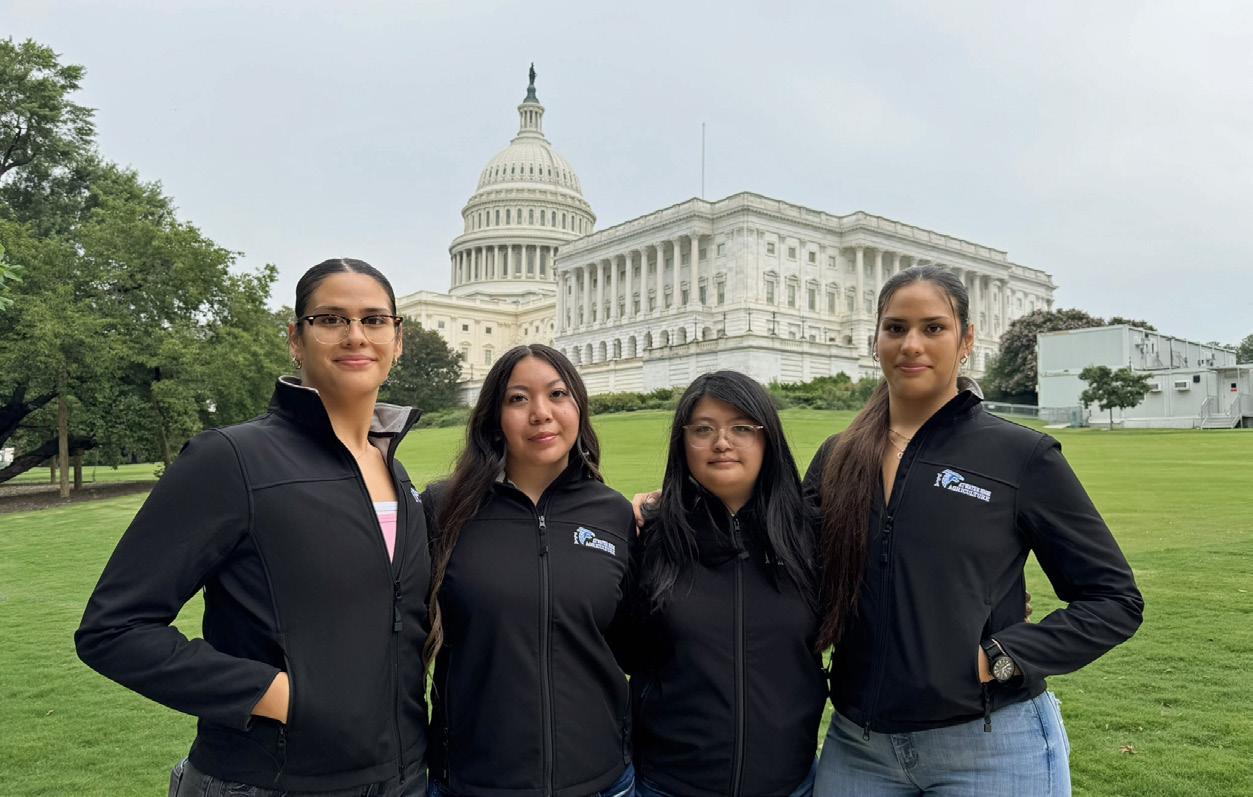
Atwater FFA's Ailene Magana, Maria Avalos, Elina Burroughs, and Mailene Magna of the 2026 FFA State Champion Vegetable Team gather in front of the US Capitol prior to their VIP tour arranged by Congressman Adam Gray.

Merced County Young Farmers & Ranchers Update
Merced County
Young Farmers & Ranchers has continued to stay busy with a variety of community service projects, networking opportunities, and leadership events. Since our last update, our members have remained active both locally and across the state, and we are excited to keep the momentum going. Since our last newsletter, we have wrapped up several successful events, including our combines tour and social with Fresno-Madera YF&R and another collaborative tour and social with Stanislaus YF&R at Dust Bowl Brewing in Turlock. These events provided members with opportunities to network with fellow agriculturalists from neighboring counties while building new connections and strengthening our YF&R network. We also concluded our canned food drive competition in partnership with the Merced-Mariposa FFA Section, continuing our commitment to giving back to our local community.
Community service continues to be a cornerstone of Merced YF&R. In partnership with the Merced County Farm Bureau, our members purchased two market hogs at the Merced County Spring Fair Junior Livestock Auction and two more at the Merced County
Fair Junior Livestock
Auction. All four hogs will be donated to the Merced Rescue Mission, helping provide meals for individuals and families in need throughout our community. We are proud to work alongside the Merced County Farm Bureau to support local youth livestock exhibitors while giving back to an organization that serves so many families in Merced County.
On June 19, members gathered for our Tri-Tipery Social, which was another well-attended evening of networking and fellowship. Events like these provide a fun opportunity for members to connect with fellow agriculturalists, strengthen friendships, and welcome prospective members in a relaxed setting.
Merced YF&R also continues to stay engaged at the state level. Four of our members will be attending the California Young Farmers & Ranchers Summer Leaders Meeting in Napa on July 2425, where they will participate in leadership development, committee
meetings, and networking with YF&R members from across California.
Looking ahead, we have several exciting opportunities planned. Join us for a social at Vista Ranch in Merced on July 30, followed by a pool party on September 12. These events are a great way to connect with fellow members, meet new people, and learn more about what Merced County YF&R has to offer.
Merced County YF&R looks forward to another busy season of service, leadership, and fellowship. If you're interested in getting involved or learning more about our organization, we'd love to have you join us! Follow us on Instagram @merced_ yfr to stay up to date on upcoming events, and come out to one of our socials to meet our members and see what YF&R is all about.

Water Contract
continued from page 5
authority to receive the water on paper, but the tribe would still need to construct the infrastructure and complete the necessary environmental review and engineering associated with that in order to be capable of pumping water from the reservoir to tribal lands.
According to Suess, the cost of that infrastructure was estimated at roughly $66 million before COVID-19 and could now approach $100 million.
“It would be a secure water supply forever,” Suess said. “What is that worth?”
Meanwhile, TUD already has infrastructure in place to begin drawing water from the reservoir if needed.
The district owns a pump system installed in the reservoir more than 30 years ago by the Canadianbased Sonora Mining Corp., which was used in 2014 during the drought to pump water purchased for $200 per acre-foot in a deal brokered by Chicken Ranch with the Oakdale and South San Joaquin irrigation districts.
Though the cost of the water under the current proposed agreement was unclear as of Thursday, with the Bureau of Reclamation not responding to a request for a copy of the draft contract, previous cost estimates in 2021 were about $45 to $70 per acre-foot, as well as $193 per acre-foot for electricity costs to pump the water out of the reservoir.
Perkins described the potential cost added to ratepayers bills for the New Melones water as “nominal” and said it would likely be used primarily as
an emergency backup and drought-resiliency water source. The 2,500 acre-feet available per year through the contract is roughly onesixth of the district’s annual demand of about 16,000 acre-feet.
“Once it's all signed and approved, it's available,” Perkins said. “
Now, when will TUD put it to use? I don't know. It could be immediately. I mean, I don't foresee it, but it's there if and when we need it.”
California Goat Grazing Companies Warn Wage Law Could Force Closures
By: Roxanne Elias, ABC 10
California goat grazing companies say an upcoming change in state law could force them out of business by requiring goat herders to be paid on a 24-hour-a-day, seven-day-aweek hourly basis.
Industry representatives said the change, set to take effect next month unless lawmakers act, would amount to about $240,000 a year for each goat herder. They said they cannot afford those wages and are asking the Legislature to amend the law.
Tim Arrowsmith, owner of Western Grazers, said his company owns about 5,000 goats that clear vegetation to help prevent wildfires in California.
"We cover between 4,000 and 5,000 acres a year of veg management," Arrowsmith said. "We're probably, as an industry, there's only a handful of us — 10, 15 of us, 20 that have goats, maybe. We're probably covering, I don't know, 40,000 to 50,000
acres a year in California of fire fuels abatement."
Arrowsmith said he is fighting to keep both his goats and the herders who care for them. He said the proposed pay requirement would be impossible for his business to meet.
"This is life-changing for these guys," Arrowsmith said. "To lose this job is life changing. There's no jobs in Peru."
The California Wool Growers Association said goat grazing companies have been put in a difficult position because they cannot afford the wages required under the law.
"We want legislation passed that allows parity of wages between goat herders and sheep herders," said Andree Soares, a board director with the California Wool Growers Association. "We want goat herders to be paid the same amount as sheep herders. That formula is in the labor code in California right now. It exists right now."
Soares said paying goat herders under the same formula as sheep herders would amount to about $60,000 a year. She also said a study requested by the Legislature found the work performed by goat and sheep herders is the same, but that
to her knowledge, no action has been taken based on the findings.
"We're working with lobbyists trying to gain the support of county boards of supervisors who have
See 'Goat Grazing' Page 10

July has been a slower month in the office, but it has been a much-needed opportunity to pause, reflect, and redesign our programs. Much of my time has been spent evaluating how we can continue to grow CultivatED, one of our educational programs, to better serve students while strengthening their understanding of where their food comes from.
As a staff, we took a close look at the feedback and reactions we received during the program’s pilot year. While the program was successful in many ways, we also encountered challenges that made us return to the drawing board and redesign the experience with students at the center of every decision.
After careful consideration, we have decided to focus our classroom presentations exclusively on TK - 4th grade students. We believe this change will allow us to deliver curriculum that is more hands-on, ageappropriate, and aligned with students’ interests and learning styles. At the same time, we recognize the importance of creating future opportunities for 5th and 6th grade students and hope to reach those age groups down the road.
This adjustment will also allow our staff to be more effective in classroom management and create an environment where students stay engaged, entertained,
and safe throughout each presentation.
As we prepare for the upcoming school year, we are excited to introduce two new sets of curriculum designed specifically for 1st/2nd and 3rd/4th grade classrooms. These new lessons will help ensure that returning students are presented with fresh, engaging material. We have consistently observed that when students actively participate in lessons, their engagement increases, their connection to the message strengthens, and their ability to retain information improves.
Registration for the new school year will open on August 6 and remain open through mid-September.If you know any TK–4th grade educators in the county, we
encourage you to invite them to participate and follow our social media to stay updated.
Beyond CultivatED, I have also been focusing on growing our membership and strengthening connections with current and past members. Our Membership Committee has implemented new outreach strategies, including personal letters directly from board members. So far, we are thrilled to welcome and welcome back 6 members to our membership in July.
On July 17, we hosted a Members Mixer at Una Más Taproom in downtown Merced. Since we do not require RSVPs, attendance is always a bit of a mystery. Before each mixer, I set an attendance goal, and this time my goal was 25 participants.
I am happy to report that we exceeded that number.
Even more exciting than meeting our goal was welcoming many new faces. Several attendees joined us after seeing our posts on social media and simply wanted to learn more about Farm Bureau and what we do. It was encouraging to see people from across the agricultural community come together to network and share some laughter.
As summer begins to wind down, I am looking forward to getting back into the rhythm of our programs and activities. I am grateful to be part of such a supportive team as we work together to advocate for and educate others about one of the most essential industries in our world, agriculture.





Goat Grazing continued from page 8
goat grazing for fire fuels reduction going on in their districts, any other public agencies to try to get them to reach out to legislators and
say, hey. This is ridiculous. We need this tool to fight fires," Soares said.
Arrowsmith said if the law is not changed, many companies would likely sell their goats.
"We will most likely
sell these goats to market, and you know what happens when they go to market, they don't all go to retirement land — they go to the slaughterhouses," Arrowsmith said. "And the prices will crash because
everyone will be doing it at the same time."
The Legislature has until Aug. 31 to make changes to the law. As of Monday, no lawmakers had responded to ABC10's requests for comment.
Local educator Jaime Farao inducted into CATA Hall of Fame
By: Zachery Ramos, Westside Connect
Jaime Farao, a longtime agricultural educator whose work influenced students and teachers across California, has been inducted into the California Agricultural Teachers’ Association Hall of Fame.
The honor recognizes Farao’s 29-year career marked by program growth, student achievement and a deep commitment to agricultural education. He became known for building strong programs, mentoring future educators and helping students succeed through hands-on learning.
At Gustine High School, Farao helped shape an
agriculture program noted for student involvement and achievement. His impact later extended to Merced College, where he strengthened the Animal Science program by developing new courses and an instructional farm that provided students with real-world experience. He expanded opportunities through livestock and dairy judging and helped reestablish the Merced College Livestock and Dairy Judging Field Day contests, creating valuable learning experiences for students statewide.
Beyond the classroom, Farao served as president of the Merced-Mariposa Section of CATA and contributed to collegiate animal science
curriculum development. He remained active in conferences, workshops and professional development, sharing his expertise with fellow educators.
Colleagues say Farao was equally respected for the time he invested in mentoring others. He served as a master teacher for student teachers and guided many educators throughout his career, known for his collaborative approach and willingness to support those around him.
His teaching philosophy centered on learning by doing, giving students authentic agricultural experiences that prepared them for success. Under his guidance, students earned state championships
and numerous Career Development Event and Leadership Development Event honors.
CATA Executive Director Matt Patton said Farao’s career exemplifies service, leadership and lasting impact, noting that he strengthened programs, mentored future educators and created opportunities that changed students’ lives.
Through the programs he built, the students he inspired and the educators he mentored, Farao leaves a legacy that will continue shaping agricultural education in California for years to come.
California can’t replant its forests fast enough to keep up with wildfires
By: Rachel Becker, Cal Matters
Awindowless warehouse on the outskirts of Davis shelters pieces of California’s forests.
Icy air swirls and fogs around 42,000 pounds of seeds — the past and the future of these trees, frozen in cardboard boxes. It smells like the woods on a snowy
day.
“This is like the mothership of forestry in California right here,” said Stewart McMorrow, staff chief for wildfire resilience at Cal Fire, standing outside the heavy metal door of the state seed bank at Cal Fire’s Lewis A. Moran Reforestation Center in Davis.
Private landowners especially rely on these seeds — some now more
than a half-century old — to reforest property destroyed by wildfire.
At the pace California is burning, it’s nowhere near enough.
Climate change and more than a century of overzealous fire suppression are now fueling wildfires so severe that they’re wiping out the very forests that need fire to thrive — leaving iconic landscapes at risk of
turning into brush and scrub, permanently.
Over the past quarter century, high-severity wildfires have burned 2.3 million acres of California’s forestland so completely that the trees are unlikely to return on their own — according to a working draft of the state’s new reforestation strategy obtained by CalMatters.
See 'Replacing Forests' Page 11
Replacing Forests
continued from page 10
California is counting on these forests to store carbon, protect water supplies, clean the air, and shelter wildlife. By 2071, one recent analysis reports, half of California’s forest area could be gone.
“Reforestation,” said Malcolm North, a scientist with the U.S. Forest Service Pacific Southwest Research Station, “is pretty damn important.”
Yet to replant even a quarter of the privately owned forestlands in the state, California would need to increase seed bank capacity by roughly 300%, according to Cal Fire — which means more seeds, more people, more space. And that wouldn’t solve the problem on federal land, which accounts for more than half the forests in the state and most of the lands that need replanting.
CalMatters reviewed a working draft of California’s reforestation strategy; the USDA California Climate Hub is developing it with state and federal agencies, the conservation non-profit American Forests, and the Governor’s Wildfire and Forest Resilience Task Force.
But both Sacramento and Washington have spent decades letting the money and staff needed to grow back California’s forests wither.
“We need to focus on reforestation as an emergency, as a state,” McMorrow said. “We are slowly losing our forestland, and we’re not catching up.”
Bleeding the federal workforce.
Timber harvests once paid for much of the U.S. Forest Service’s efforts to replant trees.
But as new laws tightened
endangered species and other public lands protections, logging in national forests declined. Severe wildfires also increased.
The combination devoured the Forest Service’s resources, and people: from 1998 to 2015, non-fire staff tasked with managing National Forest System lands decreased by 39%, according to a 2015 report.
With ever-increasing demands, a 2022 Forest Service document warned, there is a “critical need” to increase the number of staff “substantially dedicated” to reforestation.
Congress and the Biden Administration unstoppered additional money for a reforestation trust fund in 2021, a move championed by the conservation non-profit American Forests. Just a few years later, the Forest Service reported that it had replanted roughly 285,000 acres nationwide — the highest yearly total in more than a quarter century.
But the need still dwarfs action, and federally-directed work is lengthy and intense. Crews must clear dead and dying trees quickly to reduce the danger to people and the chance of reburns, a Forest Service spokesperson said. Finding seeds and growing seedlings can take a year or two, even before planting.
A dirt road crosses a hillside of dead, burned trees.
Someone's hands weed around a baby pine tree in a greenhouse.
The federal government’s capacity to replant forests eroded away over time, and it will take time to rebuild it, said Solomon Dobrowski, a professor of landscape ecology at the University of Montana. Dobrowski’s research found that the reforestation gap spans
millions of acres across the West and is likely to double or even triple in the coming decades.
“You don’t turn that ship around on a dime,” Dobrowski said.
Instead, the Trump administration cut the Forest Service significantly. The agency lost 20% of its staff last year.
“It just makes me cry at night … it’s basically a child swinging a wrecking ball,” said Hugh Safford, a forest and fire ecologist with the UC Davis Environmental Science and Policy Department and a former regional ecologist for the Forest Service. “Morale is down, capacity already was really minimal.”
And California keeps burning.
A widening gap
The loss of forests “is one of the least-known impacts of climate change and megafires,” said wildfire task force director Patrick Wright.
The draft strategy for California obtained by CalMatters comes with no dedicated funding. The goal, Wright said, is to put every agency and organization trying to replant California’s scorched forests on the same page.
The strategy calls for streamlining planning, prioritizing projects tackling critical human safety concerns and ecosystem issues like water supply, and increasing the supply of seeds, seedlings and workers.
It urges land managers to avoid adding more fuel to the fires, and recommends replanting at lower densities and with more natural spacing instead of the classic, closely-packed “pines in lines” grid. Scientists have linked high-density plantings to high-severity fires.
The most startling pieces, though, come from the draft
See 'Replacing Forests' Page 12

Replacing Forest
continued from page 11
strategy’s look at the current landscape. California would need to scale up reforestation by 35% annually to meet the state’s existing post-fire replanting goals, which start at 280,000 acres per year in 2030. The increase would take “significant funds,” the report said, because reforestation can cost up to $6,400 an acre.
But the current pace is lagging. Statewide, land managers have replanted roughly 254,000 acres of severely burned forest since 2020 — or around 16% of the area stripped of forest cover by high severity fires between 2020 and 2024 alone. The number is just 8% on federal lands, outside of wilderness areas.
Safford said the numbers are actually even more dire: Factoring in both wilderness areas and excluding forests likely to regrow on their own, his recent study reports that the U.S. Forest Service replanted just 1.2% of the agency’s California lands that wildfire denuded between 2016 and 2023.
It wasn’t always like this, said Safford. The Forest Service’s replanting efforts mostly kept pace with wildfires until around 2006.
“And then,” Safford said, “it just falls to shit.”
‘Nowhere near prepared’
For all the vitriol between Gov. Gavin Newsom and President Donald Trump over the care and raking of California’s forests, state and federal money — and people — often intersect on the landscape.
On California’s end, Cal Fire funds and conducts research, and provides grants for forest restoration on
private, state and even federal land. Cal Fire also runs the reforestation center in Davis, where flats of glossy young conifers are gently misted with water in the summer heat.
McMorrow — tall and crisp in his navy Cal Fire uniform — can’t help but dig his hands into the dirt to pull out weeds tangling with the seedlings.
One of the most challenging chokepoints, McMorrow said, is finding the right seeds to grow these seedlings — getting climbers to the right spot, at the right time, to pluck ripe cones from the treetops.
“Believe me, I do it,” said McMorrow, who created a tree-climbing program at Cal Fire. “We are trying to meet the demand that’s in front of us, and it’s crushing.”
Yet the money for Cal Fire’s efforts — cobbled together from the state budget, federal grants and other one-time funds — represents a relatively small and ever-changing fraction of Cal Fire’s multibillion-dollar budget.
The nursery in Davis shut down in the early 2000s, a casualty of across-the-board state budget cuts. Though the seed bank freezer stayed on, the reforestation center didn’t fully reopen until after the Legislature in 2017 tapped a 2012 fee on wood products to bring it back online.
Scaling up and upgrading the facility now carries an estimated $26.2 million price tag; this
year’s state budget included about $1.2 million to fund preliminary planning.
Meanwhile, other funding is on the line. California’s climate regulators — chaired by Newsom appointee Lauren Sanchez — voted in May to overhaul a key climate program in ways that could substantially reduce, or even eliminate, up to $200 million a year for wildfire resilience. Grants for reforestation are among the many competing priorities for this funding.
While the Proposition 4 climate bond includes $1.5 billion for wildfire and forest resilience, state leaders are spending down the bond quickly.
“The truth of the matter is that California is probably, infrastructurally speaking, in a better place than any other western state,” Safford said.
“What that tells you is how piss-poor the capacity is in general in the Western U.S., because California is nowhere near prepared for the scale of this.”
Cone hunting
On the banks of Jenkinson Lake in the Sierra Nevada foothills, Stella Krone and Elyse Wohlenberg wrestled with a slingshot that towered over the two of them. It took their combined strength to slot the bungee into position, then Wohlenberg stepped back.
“All clear?” Krone asked, kneeling in a clearing and pointing the slingshot at a Douglas fir 50 yards away. “Firing!”
Krone, Wohlenberg, and dozens of other hard-hatted people were there, crunching over conifer needles, for Cone Camp — a training program led by American Forests with support from Cal Fire and the Forest Service.
The campers — some forestry professionals, some interested laypeople — peeled off with oversized slingshots and souped-up potato guns to learn how to knock cones loose from tree branches. That’s how they check the cones for ripeness and viability, before sending someone up the tree to collect them for a seed bank.
The problem was, there were hardly any. Last year’s dry cones rattled to the forest floor as Krone and another camper jiggled the rope they’d shot into the canopy.
“So far, not a great cone year,” said Leana Weissberg, American Forests’ California director.
In the clearing, the instructor asked whether the group was ready to try again.
“Let’s go,” Krone said. “We’re cone hunters for a reason.”


Expaning His Horizons: Next Gen Agribusiness Conference Experience
By: Cassandra Valdez, Merced County Farm Bureau
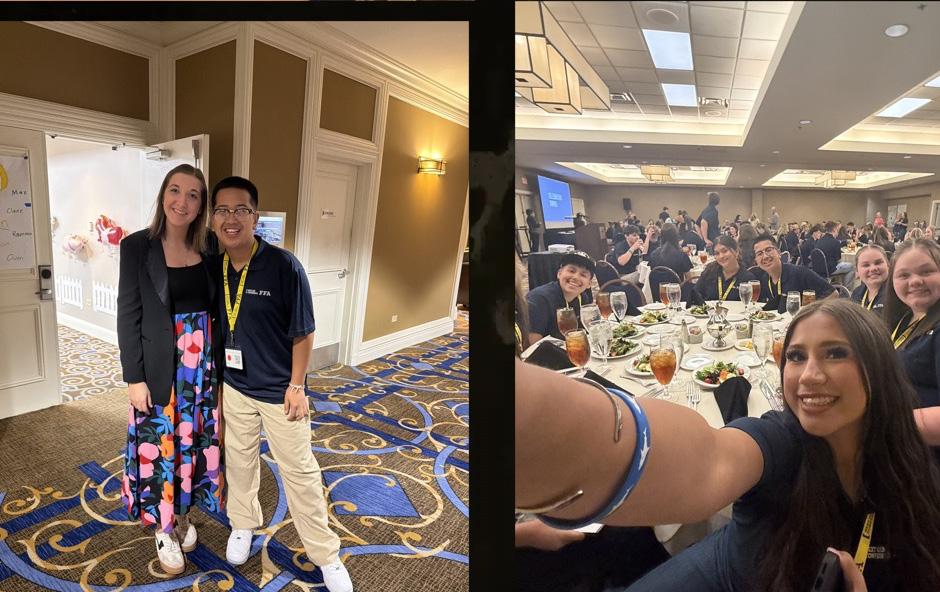
El Capitan High School student, Khyle Aphay, was chosen among 75 students nationwide to attend National FFA Next Gen Agribusiness Systems Conference in Chicago, Ill. Khyle currently serves as the El Capitan FFA Reporter staying active throughout the year in his chapter.
While in Chicago, Khyle toured the Chicago High School for Agriculture Sciences, visited Invenergy learning about renewable energy, and engaged with industry leaders across the agribusiness sector. He also participated in workshops, networking sessions, and
discussions with students from across the country, which gave him a broader perspective on the many opportunities in agriculture. This experience deepened his knowledge of agriculture, while showing how diverse and innovative the industry truly is.
Beyond the educational experience, one of the greatest things he brought home was lifelong friendships. Khyle connected with students from states including Ohio, Washington, North Carolina, Kansas, Idaho, Iowa, Wisconsin, South Dakota, Missouri, and many others. Even today, they still keep in touch despite being thousands of miles apart, supporting one another and sharing their FFA
Free Cover Crop Seed!
experiences from across the country.
Khyle is proud to have represented El Capitan Merced FFA, the MercedMariposa Section, and California in this experience,
along with Adalid Martinez Lopez from Firebaugh FFA. Khyle states, “I definitely brought back new ideas and inspiration to benefit our local agricultural community."

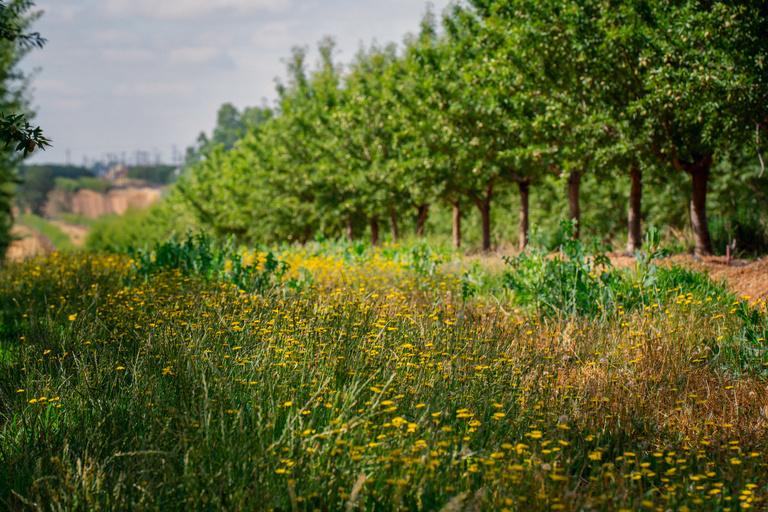
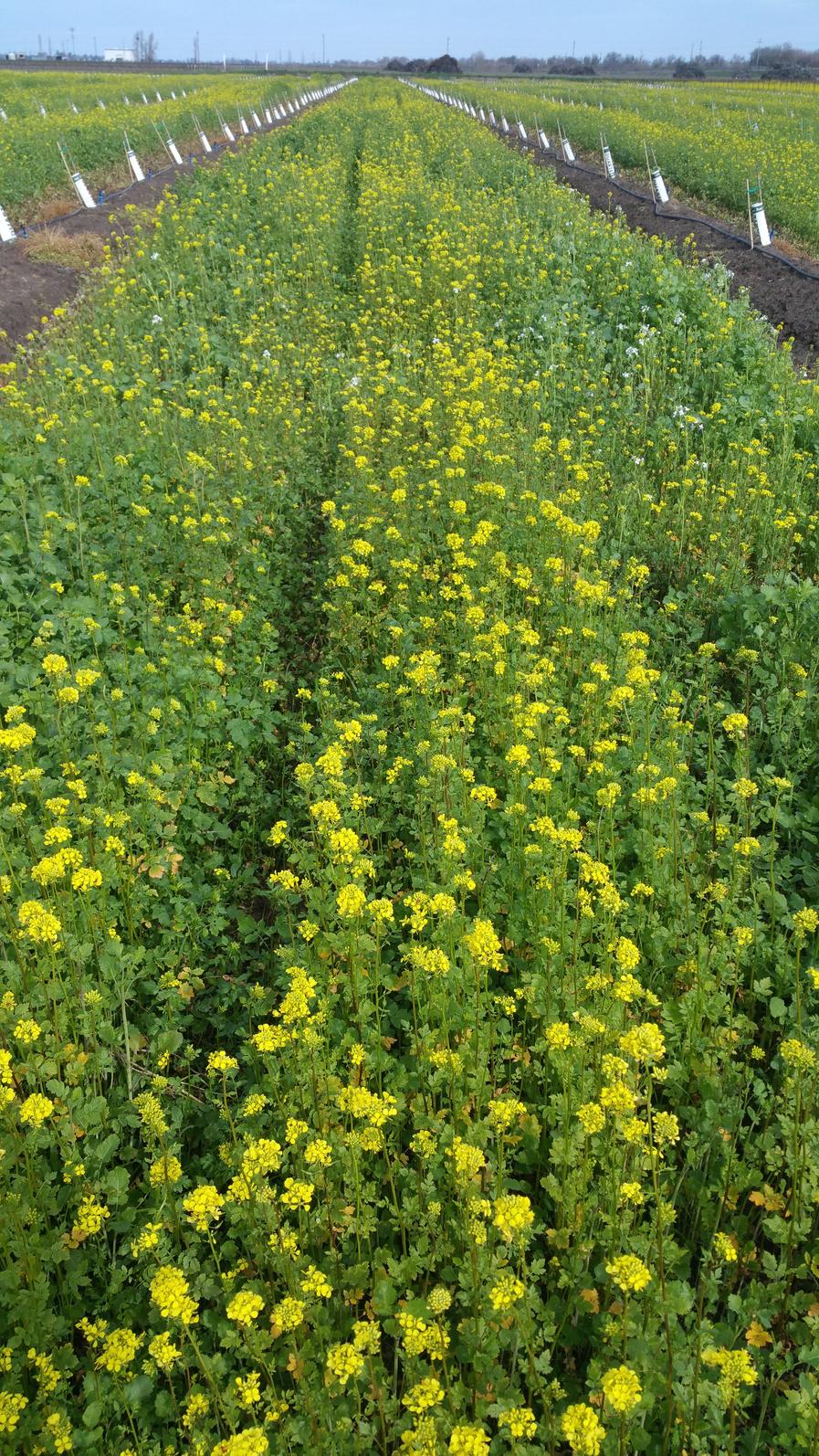
Project Apis m 's Seeds for Bees program -supported by the Almond Board of California - is now open. Growers can receive $2,500 in free seed for first-year participants and $1,500 in free seed for second-year participants. Cover crops and resident vegetation can provide enhanced agronomic and ecosystem benefits to California almond orchards.
170,000+ acres of almond orchards are recognized bee-friendly, representing 86% of all bee-friendly
Potential Cover Crop Benefits:
The application period for the 2026 Seeds for Bees program will be open from April 1 to August 31, 2026. Scan the QR code and apply today!







Left: Khyle Aphay pictured with National FFA Facilitator and staff Lindsay Augustine in Chicago. Right: Khyle pictured fellow confernce attendess as they share a meal in the conference room.
Congressman Valadao Reintroduces Legislation to Combat Invasive Pest Targeting Central Valley Growers
By: Paige Ash, Press Releases
Today, Congressman David Valadao (CA22) reintroduced the Spotted Wing Abatement Trust (SWAT) Act alongside Congresswoman Andrea Salinas (OR-06). This bipartisan bill would help combat the spread of spotted wing drosophila (SWD), an invasive pest threatening stone fruit producers in the Central Valley and across the western United States, by strengthening the U.S. Department of Agriculture's (USDA) efforts to contain its spread and advance research into effective control and management strategies.
Senators Gary Peters (D-MI), Susan Collins (RME), Jon Ossoff (D-GA), and Jeff Merkley (D-OR) reintroduced the companion bill in the Senate.
“Central Valley specialty crop growers work tirelessly to put food on tables across America, but invasive pests like the spotted wing drosophila (SWD) continue to make that job harder and more expensive,” said Congressman Valadao.
“SWD spreads quickly and infests healthy fruit before harvest, leaving growers with significant crop losses and higher production costs. By investing in research and innovative pest management strategies, the bipartisan SWAT Act will help our producers stay ahead of this growing threat and protect one of the Central Valley’s most important industries.”
“You won’t find better fruits and vegetables than the ones that grow in Oregon,” said Rep. Salinas. “Our specialty crop growers produce everything from blueberries to wine grapes,
and those crops support family farms, local jobs, and communities across the Willamette Valley. Spotted wing drosophila can spread quickly and destroy an entire crop, turning healthy fruit into an unusable product. The SWAT Act will direct $6.5 million to APHIS for the research and control tools growers need to fight this invasive pest, protect their livelihoods, and keep highquality Oregon fruit on store shelves.”
Background:
The spotted wing drosophila (SWD) is an invasive pest native to East Asia that infests soft-skinned fruit crops, including peaches, plums, apricots, cherries, berries, and other specialty crops. Since it was first detected in the United States in 2008, SWD has spread throughout the West Coast, including
California’s Central Valley, posing a growing threat to growers. Nationally, the pest is responsible for more than $700 million in annual economic losses. Because fruit buyers maintain a zerotolerance policy for SWD, the discovery of a single larva can result in an entire shipment being rejected. As a result, growers must invest heavily in intensive pest management programs to protect their crops and meet market standards. The Spotted Wing Abatement Trust (SWAT) Act would establish a dedicated fund within the U.S. Department of Agriculture’s (USDA) Animal and Plant Health Inspection Service (APHIS) to support research, develop innovative control strategies, and strengthen efforts to reduce SWD populations across the United States.
California House Republicans Ask Trump Administration to Block State’s New Tax
By: Matthew Miranda, Sacramento Bee
California House Republicans are asking the Trump administration to prevent Democratic state leaders from implementing a new tax on health insurers.
Six House members, including Reps. Kevin Kiley, I-Rocklin, and James Gallagher, R-Yuba City,
sent a letter Friday to U.S. Department of Health and Human Services Secretary
Robert F. Kennedy, Jr. and Centers for Medicare and Medicaid Services
Administrator Dr. Mehmet Oz to ask that the federal government deny approval of the state’s managed care organization tax.
Gov. Gavin Newsom, after approval from the Democratic supermajority
in the Legislature, signed the tax into law last month, though it requires federal approval. Democrats have argued tax on managed care organizations — the insurers responsible for most commercial health plans — is necessary to help steady the finances of the Medi-Cal program and will reduce the potential for future budget cuts.
“Californians are already
shouldered with the highest cost of living in the United States,” the California House Republicans said in the letter. “This proposal will only make things worse.”
State leaders have previously told The Sacramento Bee that the tax is a result of a Republican-led federal rule change. Under the new rules, California had
See 'New Tax' Page 15
New Tax
continued from page 14
to either levy a higher tax on commercial plans or end the taxes on the state plans and lose federal funding.
The new tax is estimated to lead to an annual $400 increase for a family of four. Friday’s request follows a letter sent to HHS earlier this month from more than a dozen Assembly Republicans.
California Department
of Finance spokesperson
HD Palmer said in a written statement Monday said the tax allows “the state to continue to support the MediCal program and maintain targeted rate increases for Medi-Cal providers.”
“It was crafted to comply with the federal law changes that Congress passed and the president signed last year — which is why we anticipate and expect that it will meet with their approval,” Palmer
said in a statement.
Money generated from the increase will help pay for Medi-Cal, the state’s version of Medicaid, which has become more expensive in recent years due to eligibility expansion. The state is also generally facing looming budget deficits in the coming years due to high spending.
Kiley, in a written statement, called the proposed tax increase “unacceptable.” He,
Gallagher, and Reps. Vince Fong, Ken Calvert, Young Kim and Jay Obernolte signed Friday’s letter.
“Policymakers on both sides of the aisle, at both the state and federal level, need to be focused on making healthcare more affordable,” Kiley said.
HHS did not immediately respond to a request for comment.
Judge Rules CA Dairies Under Quarantine During Bird Flu Outbreak Should Stay Secret
By: Robert Rodriguez, Fresno Bee
ASacramento County Superior Court judge has ruled against an effort by legal advocates to force the state Department of Food and Agriculture to disclose the names and locations of farms quarantined during the bird flu crisis. The advocates, lead by the California Rural Legal Assistance, argued that it is in the public’s interest to know the names and locations of dairies under quarantine during the outbreak of the bird flu in 2024-25.
More than 750 California dairies were temporarily quarantined during the rapidly spreading outbreak as access to the dairies was severely restricted and biosecurity measures were ramped up. Statewide, dairy farmers reported about a 10% decline in milk production during that period. Lawyers with CRLA said they were pushing for greater transparency so they could track what various government agencies were doing to battle the virus
and protect the public health, including that of dairy workers. “Nonprofit organizations could use the location information to assist dairy workers in protecting themselves, veterinarians could better protect animals and researchers could focus on public health,” according to court documents submitted by CRLA. David Cremins, an Equal Justice Works Fellow with CRLA, said Friday that the court’s ruling undermines the transparency guarantees of the Public Records Act and the California Constitution by depriving agricultural workers and the broader public of information critical to protecting public health.
“We are considering our options to assure the primacy of occupational health and workers’ rights over industry interests,” Cremins wrote in an email. .
Judge Shelleyanne W.L. Chang acknowledges in her July 22 ruling that there is a public interest in knowing and understanding what the government is doing to
protect the public during a statewide highly pathogenic avian influenza outbreak. She also recognizes the interest in “certain watchdog groups reviewing the actions of governmental entities in responding to an HPAI outbreak.” “However, the Court finds that the public interest in maintaining the confidentiality of quarantined dairy locations during an HPAI outbreak is overwhelmingly significant and clearly outweighs the public’s interest in disclosure,” she wrote. She agreed with Department of Food and Agriculture officials who said maintaining confidentiality with dairy operators was key to getting

their cooperation, especially in reporting symptoms of sick cows. “Loss of this trust would likely have a chilling effect, wherein producers would either delay reporting or not report clinical signs of disease,” wrote Amanda Murray, California’s acting state veterinarian and branch chief of Animal Health and Food Safety Services.
Murray said that without trust, some dairy operators might have culled the animals themselves or disposed of them, potentially spreading the disease unintentionally.
Anja Raudabaugh, chief executive officer of Western United Dairies in Turlock,
Bird Flu
continued from page 15
praised the judge’s decision. “It’s an important victory because farmers across the nation, not just in California, need to be able to trust health officials so that they actually can protect public health,” Raudabaugh said. “And the whole world is reeling
a bit following COVID, and so making sure that farmers have a very secure and confidential process to report animal diseases up through the proper chain is really what actually protects our workers.” Michael Payne, a veterinarian and outreach coordinator at the Western Institute of Food Safety and Security, said
in an email that preventing onlookers from coming onto a quarantined dairy is an important part of maintaining biosecurity. “Any activity which hampers biosecurity practices like vehicle parking and tire disinfection, visitor sign-in and travel history, protective clothing, anything that interferes with those precautionary
efforts increases the risk of disease transmission,” Paine said. “Each unannounced and uncoordinated visit to a farm during a disease outbreak, regardless of the visitor’s intent, is the kind of uncontrolled movement between farms that biosecurity protocols are meant to prevent.”

Help is needed from County Farm Bureaus in sharing this important information for specialty crop groups.
We ask that County Farm Bureaus consider sharing this email directly with your ag members to ensure those who are eligible for assistance are aware of the application deadline before the August 7 deadline.
Assistance for Specialty Crop Farmers - Application
Deadline August 7
Producers who reported their 2025 crop acreage report by April 24, 2026, for eligible specialty crops have until August 7, 2026 to submit their pre-filled
Assistance for Specialty Crop Farmers (ASCF) funding application.
As of July 20, 2026, approximately $400 million of the $1.6 billion made available for the program has been allocated with less than 50% of eligible producers in California having completed applications. Additionally, there are several commodities with
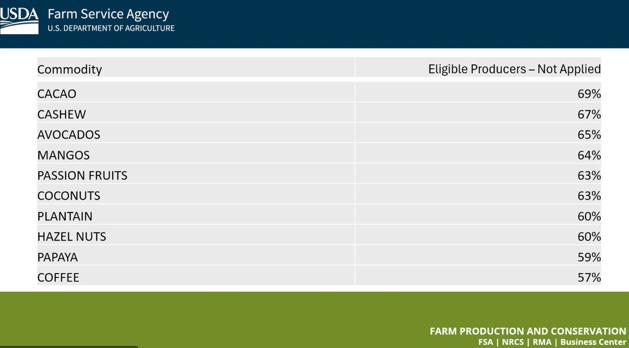
particularly high rates of nonapplication.
We urge members who filed acreage reports and are eligible for ASCF funding to complete their application as soon as possible and
before the August 7, 2026 deadline. For more program information, visit the USDA ASCF program website here:https://www.fsa.usda. gov/resources/programs/ assistance-specialty-cropfarmers-ascf-program
California Scientists Find Early Warning Sign of Irreversible Groundwater Damage
By: Robert Rodriguez, Fresno Bee
Some farming towns in California’s Central Valley have sunk by more than 11 feet in recent years because of groundwater pumping, the extraction of water from
underground aquifers using wells and electric pumps for drinking, farming and industry.
While some land subsidence is temporary, excessive pumping can cause aquifers to permanently collapse, reducing storage capacity and damaging
homes, roads, bridges and canals.
New research from UCLA and Caltech has outlined a way to detect when temporary land subsidence becomes permanent and irreversible.
The research, published this week in Proceedings
of the National Academy of Sciences, uses satellite imagery to identify the “abrupt transition to irreversible damage.” Researchers hope this will give decision makers new tools to keep an eye on water
See 'Warning Sign' Page 17
Warnign Sign
continued from page 16
resources.
“If you start seeing that the ground is subsiding this fast, like we’re seeing, we’re hoping this is really an early warning signal that, okay, something is wrong, we need to stop pumping groundwater right now,” said Stacy Larochelle, an assistant professor at UCLA.
Larochelle and co-authors found that parts of the Sacramento Valley, which has a centurylong history of
groundwater exploitation to sustain the region’s intensive agricultural economy, underwent an abrupt and widespread change around 2021, indicating a shift to rapid, permanent subsidence.
Essentially, researchers saw if ground movement, as detected by satellites, linked up with water levels in wells, which indicated temporary sinking. If the ground didn’t bounce back when water levels did, the sink was permanent. Larochelle’s hope is that one day this monitoring can be done by
satellites alone.
“We think this is the first time that we’re really able to image this transition with such high- quality data,” Larochelle said.
Roland Bürgmann, a UC Berkeley geophysicist who was not involved in the research, said the research clearly showed how permanent damage was done to the Sacramento Valley water system by overuse during the recent drought.
“This could and should have been avoided by proper monitoring and water
management,” Bürgmann said. “Every water district in the world should probably be using the kind of satellite imaging data and analysis the authors relied on, so they can recognize when their valuable water storage systems are in danger of such irreversible loss of storage capacity.”
The U.S Geological Survey’s California Water Center estimates 15% of the Central Valley’s groundwater storage capacity has been permanently lost because of subsidence.
California Has A Water Storage Problem. A Los Banos Project Hopes To Change That.
By: Madison Macay, Fox 26 News
More than 60 years after President John F. Kennedy dedicated the San Luis Reservoir, California is rewriting the playbook on water storage.
In 1962, Kennedy stood in the San Joaquin Valley and celebrated what was then one of the state's largest water investments.
Since then, California's population has more than doubled, while many argue investments in water storage have not kept up.
Now, officials say the newly completed first phase of the Los Banos Creek Detention Dam project is an example of how existing infrastructure can help capture more water during wet years and make it available when drought returns.
Originally built for flood protection, the Los Banos Creek Detention Dam is now
being operated to serve a second purpose: storing water for agriculture.
"It was built for flood control. It wasn't built for anything else," said Chris White, general manager of Central California Irrigation District. "There's a lot of storage capacity within the reservoir that's not being utilized."
Instead of constructing a new reservoir, water managers modified the existing dam to retain additional water during wetter years. That water can later be released to irrigation districts, reducing pressure on groundwater supplies during dry periods.
Being able to store water during these times of plenty and then saving it for times when we're in a drought period does take a load off of the groundwater White said.
Supporters say the project represents a practical way to expand California's water supply without building an
entirely new reservoir.
Congressman Adam Gray said California has underinvested in water infrastructure for decades.
"We've not made the adequate investments over the last 50 years in our water infrastructure here in California," Gray said.
Gray also pointed to the project's lengthy timeline, noting discussions began in 2012 before construction was completed in 2026.
"It took the bulk, the great majority, way too long to do paperwork and clear legal hurdles instead of just getting these projects up and running," Gray said.
While the project is designed to improve water reliability, supporters say its impact extends well beyond agriculture.
"If you eat, we need California agriculture to thrive," Gray said.
Firebaugh farmer Joe Del Bosque says his farm is expected to benefit from the additional stored water
through his local irrigation district. While he doesn't see the project as a complete solution to California's water challenges, he believes it is an important step.
"It'll help make a difference for us, for California cities and farms, and even for the environment," Del Bosque explained. "California needs to continue to look for more potential projects."
The first phase of the Los Banos Creek Detention Dam project adds about 8,000 acre-feet of additional storage. A second phase, expected to begin later this summer, would add another 14,000 acre-feet, bringing the total to roughly 22,000 acrefeet of new water storage.
Supporters hope the project can serve as a model for similar upgrades across California as the state continues balancing population growth, recurring droughts and increasing pressure on its water system.
The California Glassy-Winged Sharpshooter a Mighty Tiny Insect
The glassy-winged sharpshooter (Homalodisca vitripennis) is one of the most destructive invasive agricultural pests in California. Although only about half an inch long, this leafhopper has had an enormous impact on the state's vineyards, orchards, nurseries, and ornamental plant industry. Its ability to spread the deadly bacterium Xylella fastidiosa has made it a top priority for California agriculture.
These destructive insects are native to the southeastern United States and northeastern Mexico, the glassy-winged sharpshooter was first detected in California in 1994, although experts believe it likely arrived several years earlier through the movement of ornamental nursery plants. Unlike California's native sharpshooters, this invasive species feeds on hundreds of different plant species and can fly long distances, allowing it to spread diseases much more efficiently.
The insect itself causes little direct damage while feeding on plant sap. The real threat comes from the bacterium it carries, Xylella fastidiosa. As the sharpshooter feeds, it can transfer the bacterium from
infected plants to healthy ones.
In grapevines, the bacterium causes Pierce's disease, a fatal infection that blocks the plant's waterconducting tissues. Infected vines gradually develop scorched leaves, shriveled fruit, and eventually die, often within one to five years. The bacterium also affects almonds, citrus, oleanders, and many ornamental plants.
California experienced the seriousness of this pest in 1999 when an outbreak of Pierce's disease devastated vineyards in Temecula, Riverside County. More than 300 acres of grapevines became infected and had to be removed, costing growers millions of dollars and demonstrating the devastating potential of the glassywinged sharpshooter. That outbreak led to the creation of statewide monitoring, inspection, and research programs that continue today.
Agricultural commissioners across the state have been working tirelessly to combat these pests. Their efforts include inspection of nursery stock before shipment, quarantines in infested areas, biological control using tiny parasitic wasps that attack sharpshooter eggs, ongoing scientific research to improve
detection, management, and disease resistance, and public education encouraging residents to report suspected infestations.
The glassy-winged sharpshooter remains a concern today. In 2026, California agricultural officials issued consumer alerts after shipments of nursery plants sold through retail stores were found carrying sharpshooter egg
masses. Officials urged customers not to move affected plants and to contact their local agricultural commissioner for inspection, demonstrating that preventing new introductions remains essential.
If you suspect an infestation, or have any questions, please contact the Mariposa Agricultural Commissioner’s office at (209) 966-2075.