September/October 2026 Vol 71 IAPHworldports.org No 5
Providing thought leadership on the role of ports in a connected world
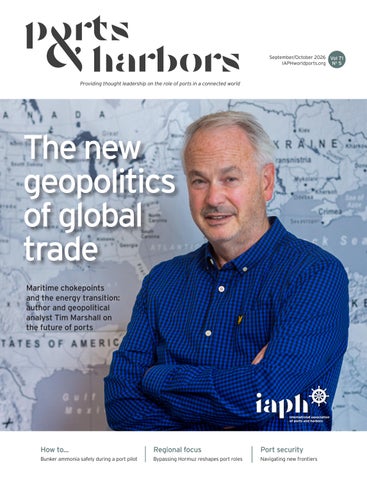
The new geopolitics of global trade Maritime chokepoints and the energy transition: author and geopolitical analyst Tim Marshall on the future of ports
How to...
Regional focus
Port security
Bunker ammonia safely during a port pilot
Bypassing Hormuz reshapes port roles
Navigating new frontiers
The short sea shipping & sustainable logistics network Gold Sponsor
Silver Sponsors
BOOK NOW Badge sponsor:
PDA sponsor:
Coastlink is a neutral pan-European network dedicated to the promotion of short sea shipping and intermodal transport networks. GREENPORT
Lanyard sponsor:
Supported by:
Coffee break sponsor:
Learn from and network with international attendees representing shipping lines, ports, logistics companies, terminal operators, cargo handlers, and freight organisations.
Media supporters:
INSIGHT FOR PORT EXECUTIVES
MARITIMEJOURNAL COMMERCIAL MARINE BUSINESS
For more information on attending, sponsoring or speaking contact the events team: visit: coastlink.co.uk contact: +44 1329 825335 or email: info@coastlink.co.uk
#Coastlink
1 Vol 71 ǀ No 5 ǀ 2026
CONTENTS 12
2 Editor’s Comment & Contributors Transforming challenges into opportunities in rapidly changing times
4 In Conversation with Tim Marshall Tim Marshall, author of Prisoners of Geography, and keynote speaker at #IAPH2026, talks to Patrick Verhoeven
8 Perspective: biosecurity The transformative roles of ports within biosecurity
11 Wake-Up Call Why ports must protect themselves against GNSS interference
20
12 New Frontiers of Port Security How to overcome the increasingly complex risks that ports are facing
16 Interview: Grace Rawnsley Director of sustainability, Port of London Authority
18 Lookout: Battery Power The world’s largest all-electric ship has been delivered
20 Regional Focus: Strait of Hormuz Routes that bypass the Strait of Hormuz: challenges and opportunities
26
24 Nine To Five Chiara Saragani, PhD student in Digitalization and Logistics at CENIT Barcelona, Port of Barcelona
26 Carrier Port Investments The impact of growing shipping line investments in ports
30 Perspective: Port Resilience Turning resilience into a market advantage
32 How To... Bunker ammonia safely during a port pilot
34 View from Astern: London
30
National Maritime Museum: lessons learned from London’s port history
38 IAPH Info The latest news from your association
40 The Review Developing Ports as Business Ecosystems, 2nd edition (2026)
EDITOR’S COMMENT Providing thought leadership on the role of ports in a connected world EDITORIAL & CONTENT Editor: Rebecca Moore rebecca.moore@iaphworldports.org Features Editor: Felicity Landon Publisher Dr. Masahiko Furuichi IAPH Secretary General info@iaphworldports.org Dr. Patrick Verhoeven IAPH Managing Director patrick.verhoeven@iaphworldports.org Regular Correspondents: AJ Keyes, Mike Mundy, Vladislav Vorotnikov Production David Blake, Paul Dunnington production@mercatormedia.com
REBECCA MOORE Editor
SALES & MARKETING t +44 1329 825335 f +44 1329 550192 Marketing marketing@mercatormedia.com Chief Executive: Andrew Webster awebster@mercatormedia.com Ports & Harbors magazine is produced and edited bi-monthly by Mercator Media Limited, Spinnaker House, Waterside Gardens, Fareham, Hants PO16 8SD UK t +44 1329 825335 f +44 1329 550192 info@mercatormedia.com www.mercatormedia.com Subscriptions INTERNATIONAL ASSOCIATION OF PORTS AND HARBORS IAPH members enjoy a free subscription to P&H. If your organisation is not a member and you would like a paying subscription to the magazine, please contact the IAPH for more information at: 7th Floor, South Tower, New Pier Takeshiba 1-16-1 Kaigan, Minato-ku Tokyo 105-0022, Japan T: +81 (0) 3-5403-2770 F: +81 (0) 3-5403-7651 E: ph@iaphworldports.org W: www.iaphworldports.org ©Mercator Media Limited 2026. ISSN 1740-2638 (print) ISSN 2633-4232 (online). Ports & Harbor is a trade mark of Mercator Media Ltd. All rights reserved. No part of this magazine can be reproduced without the written consent of Mercator Media Ltd. Registered in England Company Number 2427909. Registered office: c/o Spinnaker House, Waterside Gardens, Fareham, Hampshire, PO16 8SD, UK.
The changing face of port leadership he port sector is experiencing a historic turning point. Amid operational challenges, technological advancements, sustainability goals, and geopolitical tensions, the future demands resilience. Guided by the #IAPH2026 conference (London, 3-6 November) theme, ‘Port leadership for a brave new world’, the latest edition of P&H reveals how port leaders are transforming these pressures into opportunities for innovation. A key focus is the transition to carbon neutrality. In an exclusive interview, analyst and author Tim Marshall explains the impact of this shift on trade and international security: “The
T
CONTRIBUTORS
JEAN-PAUL RODRIGUE Professor and author Jean-Paul Rodrigue is a professor at the department of maritime business administration, Texas A&M University. He has published extensively on topics including maritime transport systems and logistics. His book The Geography of Transport Systems, is now in its sixth edition and his co-authored textbook, Port Economics, Management and Policy, was published in 2022, with the second edition released in 2026. ■
3
importance of ports is expanding. They intersect trade, energy, technology, and military power.” Marshall also points to the crisis in the Strait of Hormuz as a catalyst for new routes and pipelines – a topic explored in depth in our Regional Focus feature, which examines how the search for logistical alternatives will not only create new port hubs but also elevate the importance of existing ones. The conversation around maritime sustainability is often focused on alternative fuels. While these are undeniably central, this issue’s interview with Grace Rawnsley, Port of London Authority’s (PLA) director of sustainability and net zero transition, underscores how a modern port’s mandate should expand beyond a low-carbon checklist. Rawnsley notes that the PLA (#IAPH2026 headline sponsor) embeds “sustainability into every aspect of how we manage and develop the tidal Thames”. This means treating biodiversity, water quality, and climate resilience not as secondary compliance hurdles, but as foundational pillars that coexist with and actively support commercial growth and trade. These factors are evident in the PLA’s recent battle against ‘Wet Wipe Island’. In a massive mechanical operation, the authority cleared 114 tonnes of sewage-derived wet wipes embedded along the foreshore of the River Thames. What makes this project an example of modern port leadership is the accountability the PLA demonstrated. The pollution did not originate from port operations, yet the PLA stepped into a leadership role. By rallying multiple stakeholders together, the PLA proves that ports are well positioned to act as regional anchors, and act as custodians of eco systems.
Modern ports no longer face environmental, market, and trade disruptions – they are now on the front lines of an increasingly volatile security landscape. While the industry’s traditional focus centred on physical threats, the rapid escalation of digital and cyber vulnerabilities has redefined the parameters of port defence. This evolution took centre stage in the recent IAPH webinar, New Frontiers of Port Security. As reported in this issue, the session provided actionable blueprints for resilience, from dissecting the new US cybersecurity – mandates – which offer an adaptable framework for international ports – to sharing concrete case studies of terminals successfully mitigating dual physical and digital risks. Security remains a defining thread throughout this edition. In Wake-Up Call, the Royal Institute of Navigation (RIN) issues an urgent appeal for ports to develop robust strategies against growing GNSS interference. In our Perspective feature (port resilience), the conversation shifts from passive defence to strategic advantage. Leveraging specific metrics allows ports to quantify potential losses and calculate payback periods, turning risk management into a tool for commercial strength. We hope these insights help ports and harbours navigate the complex waters ahead. This special conference edition of P&H mirrors #IAPH2026’s ‘Port leadership for a brave new world’ vision, highlighting how ports are no longer just leaders in cargo and logistics, but crucial players in wider ecosystems, energy, and global security. ■
PETER ALKEMA Port of Amsterdam harbourmaster division strategy lead
FRANCOISE VAN DEN BRINK Port of Rotterdam strategic lead energy transition
Peter Alkema is responsible for strategy in the Port of Amsterdam harbour master division and is lead for innovation and development initiatives focused on sustainability, port call optimization, autonomous shipping and port resilience. He currently serves as chair of the IAPH Clean Marine Fuels Working Group and is a member of the Green Award Board of Experts. ■
Françoise van den Brink is strategic lead energy transition at the Port of Rotterdam, Division Harbour Master. In this role, she provides strategic direction for the transition towards a low-carbon energy system. She led the Port of Rotterdam’s ammonia bunkering pilot under the MAGPIE programme and chairs the IAPH Working Group on the Port Readiness Level for Marine Fuels assessment tool. ■
4 IN CONVERSATION WITH TIM MARSHALL
The new geopolitics of
global trade
Ahead of the IAPH World Ports Conference in London, where he will deliver the lead keynote, best-selling author and geopolitical analyst Tim Marshall spoke with IAPH managing director Patrick Verhoeven about the growing importance of seaports, the vulnerabilities exposed by maritime chokepoints and how the energy transition could reshape global trade and security. REBECCA MOORE
Patrick Verhoeven (PV): IAPH was founded in the post-war era. Our original slogan was: “World peace through world trade, world trade through world ports.” In your book Prisoners of Geography you refer frequently to the strategic importance of ports. How would you describe their role today? Tim Marshall (TM): The rationale is still the same. Most goods move by water and leave and arrive through ports. The post-war era created globalisation. Obviously, globalisation has at least plateaued, but I don’t think we are de-globalising. Global trade is still happening; we see it everywhere. Some of the tariffs and tariff wars are complicating matters, and the concept of free trade is taking a little bit of a battering. Reshoring obviously has an effect. But overall, I doubt that the volume of trade going through ports is dramatically lower. There are geopolitical implications for individual countries and blocs, but politics is not going to stop the world trading with each other.
Q
PV: Another theme in your book is the dual use of ports. While it is not new for ports to be both commercially and strategically important for military purposes, would you say that this seems to be coming increasingly to the forefront? TM: Dual-use ports have always existed. The British coaling stations, for example, were there to support trade and the British Empire, but they were also there for the Royal Navy to enforce Pax Britannica. Today, when you build a port, you might want to incorporate the potential for military use into the design. You can build it so that it can accommodate
military vessels, or so that it can be quickly repurposed for military purposes. It is clear that the Chinese, for example, are doing this. There is also another dimension. When a country decides that it wants access to a particular port, it may choose one partly because of its potential dual use. Souda Bay in Greece is a good example. The Americans absolutely need access to Souda Bay. It is the only location in the region where their supercarriers can actually berth. Potentially, I would now say, there is a third dimension. It is not proven, but you cannot rule out the possibility that technology installed in ports could be used for espionage. You could imagine a situation in which crane technology was compromised and could be used to monitor what is entering and leaving a country. So ports have always been important. What changes is why they are important. PV: A recurring theme in your book is the importance of maritime chokepoints. What does the recent conflict around the Strait of Hormuz tell us about the future of these strategic waterways? TM: One of the things the Iranian crisis has done is raise public awareness of chokepoints. It has also made us think about the ramifications. Take the Strait of Malacca. If it were closed, the economic impact on the world could be comparable to the closure of Hormuz. China has understood this for decades. Its Belt and Road strategy includes routes designed, among other things, to reduce its dependence on Malacca. These projects have multiple motivations, but one of them is effectively insurance against the possibility that Malacca could be closed. Interestingly, the Americans have
5
6
‘‘
also been looking at this. They have opened negotiations with Indonesia concerning overflight rights. There are many reasons for that, but one strategic implication is that such access could make it easier to operate around the Strait of Malacca if needed. These are acute and unlikely scenarios. But they are scenarios nonetheless.
The strategic importance of ports is not disappearing. If anything, it is expanding
PV: The freedom of navigation through these waterways is based on international agreements, particularly the UN Convention on the Law of the Sea, or UNCLOS. How do you see the future of these treaties and the role of the United Nations? TM: UNCLOS is a fantastic piece of legislation. I hope that, as an aside, it could eventually provide a model for a similar international treaty governing space, because that is becoming an urgent necessity. But international law has been weakened quite significantly in this century. The UN Security Council, I would argue, is almost defunct. The United Nations itself is not defunct; it has many exceptionally important bodies. But its role as an enforcer of international law has diminished. The outcome of the current crisis in the Persian Gulf could be particularly important. If, at the end of it, either the Americans or the Iranians start charging tariffs or tolls for
passage through Hormuz, that could create a dangerous precedent. If that happens, the door is open for similar measures elsewhere. A significant foundation of the international order would have been weakened. That would be negative for the global economy, free trade and, fundamentally, the way we conduct international relations.
TIM MARSHALL, geopolitical analyst
PV: You write about the rise of blue-water navies. Does that create a responsibility for those nations to act as a guardian of free navigation? TM: The important thing about a blue-water navy is that it creates requirements. A global blue-water navy needs places Pictured: Tim Marshall pictured with Patrick Verhoeven at their recent interview Photos: Susanne Hakuba
7
‘‘
to stop, refuel, replenish and maintain and develop those industries, the Even as the world its vessels. That requires diplomatic potential is real. moves towards a and often economic leverage to secure lower-carbon energy access. The Chinese base in Djibouti is PV: We are seeing new oil and gas a good example. Once you have those discoveries in Africa and South system, the geography facilities, you are no longer simply a America. How does that fit into the of energy remains bystander in events in faraway places. changing geopolitical landscape? critically important Your presence becomes part of your TM: Africa will remain important for oil, foreign policy. There is another and some countries will become more PATRICK VERHOEVEN, MD, IAPH emerging issue: the Northern Sea important. Libya, Angola and Nigeria are Route. Parts of the Northern Sea Route run through Russia’s likely to be producing oil well beyond 2030. There are also exclusive economic zone and, depending on the route, new discoveries or potential discoveries for offshore through waters whose status is contested. As the route Namibia and Angola. And Guyana is becoming an important becomes more important, Russia could choose to test the oil producer in Latin America. Brazil is already a major limits of freedom of navigation and the definition of producer. The geopolitical consequence is that countries international trade routes. That is another reason why looking for alternatives to Gulf oil may increasingly turn to what happens in the Persian Gulf is so important. The these producers. They are looking for certainty and security principles established there could have consequences much – certainty that the oil can leave the country and security further afield. that the port or tanker is not going to be hit by a drone attack. That makes the security of the export infrastructure PV: In the Africa chapter of Prisoners of Geography, you increasingly important. highlight the enormous potential of solar, hydro and wind power. Could Africa become a major energy power PV: Therefore, the energy transition may actually create in the future? new strategic roles for ports, both for renewable energy TM: The key word is potential. There is enormous potential, and for hydrocarbons? particularly for solar power, and in some places for TM: Absolutely. And the consequences of the Hormuz crisis hydroelectricity. But potential is not the same as something illustrate this very clearly. Countries are investing in alternative actually happening. Take the Sahel. Think about the amount pipelines and export routes because they want insurance of solar power that could be generated there. But given the against disruption. There are also discussions around political instability across the region, it is difficult to imagine rebuilding older infrastructure. These pipelines ultimately have massive solar farms being built and connected by long to terminate somewhere, and very often that means a port. transmission lines to major population centres. PV: So even as the world moves towards a lower-carbon PV: What would be required to turn that potential into energy system, the geography of energy remains critically reality? important. TM: Investment and political stability. And the two are TM: Yes. The energy transition changes the geography; it obviously related. Very unstable places tend to receive less doesn’t eliminate it. The places where resources are located still investment. The Sahel is an obvious example. There is matter. The infrastructure needed to move those resources still abundant sunshine, but civil wars and political instability matters. Ports still matter. Pipelines matter. Chokepoints make large-scale investment much more difficult. I still stand matter. And security matters. That is why the strategic by the word potential, however. Look at countries with importance of ports is not disappearing. If anything, it is significant hydroelectric potential. Ethiopia is already expanding. They sit at the intersection of trade, energy, developing that potential through the Grand Ethiopian technology and military power. The world may be changing the Renaissance Dam. Uganda also has considerable commodities it moves, the routes it uses and the technologies hydroelectric potential. If countries can access investment it relies on. But it is still a world in which geography matters. ■
8
PERSPECTIVE BIOSECURITY
The new frontline of biosecurity on-indigenous marine species (NIMS) are arriving in our ports and harbours at an accelerating rate, driven by a changing climate, habitat degradation and rising global trade. This can cause irreparable damage to the delicate balance of marine ecosystems if left unchecked. One such example of an invasive species being monitored is Didemnum vexillum, commonly known as the Japanese sea squirt, or more popularly named ‘sea vomit’. It is classified as an invasive species in Norwegian ports, with a very high ecological risk. Originally endemic to Japan, it has spread extensively worldwide via international sea travel. Its rapid growth and ability to form dense mats can suffocate native ecosystems, alter habitat structure, and interfere with aquaculture operations. The ecological and economic impacts of D. vexillum can be considerable. Ship hull biofouling is now the primary
N
vector for introducing invasive species, replacing ballast water as the main cause ever since the International Maritime Organization’s Ballast Water Management Convention (BWM) regulations came into force in 2022 to regulate the treatment of ballast water on ships. Recent studies in New Zealand have indicated that up to 87% of non-native marine species arrive via biofouling. Challenging position This puts ports and harbours in a challenging position as traditionally hull cleaning at dockside has been discouraged or outright banned due to the risk of releasing chemicals from anti-fouling paints and biological debris Pictured: ECOsubsea collected biological material from ships’ hulls to analyse what international vessels are bringing into national ports Photo: ECOsubsea
into local waters. However, ignoring the problem doesn’t keep the invasive species away; it just gives vessels less access to solutions to stop their hulls becoming a risk in future and increasing the likelihood of introducing invasive species. On a more positive note, hull-cleaning techniques have improved with some companies, like ECOsubsea, using underwater remote robotic technology that captures all the hull debris and wash-water in a closed loop system. This got me thinking about how we could collect this biological material removed from ships’ hulls and analyse it to take a snapshot of what these international vessels were bringing into our national ports and harbours. Surprising results After performing some initial tests using environmental DNA (eDNA) samples, we took our findings to the Institute of
9
ABOUT THE AUTHOR ABIGAIL ROBINSON has a background in ecology, specialising in biodiversity management. She spent six years in New Zealand’s government biosecurity department, and helped shape the country’s biofouling regulations. She now drives sustainable innovation in the shipping industry as ECOsubsea’s chief sustainability officer
Marine Research (IMR) and Norwegian Institute for Nature Research (NINA) who felt the results were compelling enough to obtain government funding to perform a more wide-ranging study. This used a laboratory analysis method called meta-barcoding, which produced some surprising results. In total, researchers analysed eDNA from the waste and wash water we collected from five oil service vessels, four coastal express ships, one cargo ship, and one cruise ship calling at the Norwegian ports of Tananger and Bergen. The analysis detected 19 alien species and crucially eight of these were identified as ‘doorknocker species’, which are highly invasive organisms. These alien organisms were detected mainly on vessels trading internationally but fortunately were not found in Norwegian port control water samples. This indicates that while they are not yet established in Norway, there is a high risk of them doing so if the problem remains unchecked. The highest concentration was found on a single international cruise ship, which carried 11 alien species, eight of which were exclusive to that vessel. Interestingly, the research also revealed that early-stage, thinner
biofouling actually contained more alien species than thicker, older growth, underscoring the necessity of early and routine hull maintenance.
‘‘
Ports and harbours can be transformed from passive entry points into active biosecurity detection infrastructures The detection of door-knocker species primarily on vessels engaged in international traffic, and their absence in local control samples, highlights the potential use of this method as an early warning tool for new marine introductions. Active detection This study proves that ports and harbours can be transformed from passive entry points into active biosecurity detection infrastructures without disrupting commercial operations. Using the methods employed in the study will help them secure their territorial waters against invasive species and protect the delicate ecosystem from serious damage, which
can result in negative impacts on local marine biodiversity, alter ecosystem functioning, eradicate native species altogether, damage or reduce the function of infrastructure, and disrupt food chains. Indeed, some national regulatory bodies (in New Zealand, Australia, California and Brazil) are already regulating biofouling. Elsewhere, Norway is in the process of developing national requirements and the IMO is investigating a global regulatory solution, so just like with the BWM regulations, the hull biofouling loop could be closed soon. To keep ahead of the curve, national administrations, global ports and environmental stakeholders can integrate hull-cleaning capture technology into routine maritime monitoring straightaway to significantly protect the biodiversity, natural ecosystems, and coastal economies from the ever-increasing threat of invasive marine life. Port and harbour findings could also feed into wider global geographical biodiversity studies, championed by the United Nations and European Union, on the efforts to improve heavily degraded habitats on both land and sea. ■
10 SPONSORED CONTENT PORT ESBJERG
From regional gateway to global hub How Port Esbjerg can deploy its regional strengths within global networks and be an increasingly important node in the future global supply chain ort Esbjerg is transforming into a cornerstone of Europe’s energy transition and aspiring to become a gateway for global logistics. Building on its twenty-year legacy as a primary North Sea offshore wind base, the port is strongly positioned to help drive the European energy transition. Port Esbjerg CEO Dennis Pedersen explains that, “Half of the offshore wind farms in Europe come from our quayside. We can change our infrastructure for each project, and we have a local supply chain that includes 60 specialised companies. We have had this supply chain for two decades and this keeps us relevant and competitive. Our projects span Belgium, Dutch, German and United Kingdom projects. There is a lack of ports involved in the offshore wind sector in the North Sea and we feel we have a responsibility to keep catering for this segment.”
P
Entering the CCS value chain The port is expanding its role across the wider green-energy value chain. It has built Europe’s first CO2 terminal, which opened in September 2026. This terminal is poised to play a significant role in supporting the emerging Carbon Capture and Storage (CCS) value chain. Pedersen says, “There are large opportunities in the reservoirs of the Danish sector of the North Sea. By entering the CO2 segment, we can help the German industry cut costs: they transport the CO2 to us, and we transfer it to North Sea reservoirs capable of storing 22 billion tonnes.” The terminal will be able to handle half a million tonnes in its first phase, moving up to a capacity of three million tonnes until finally reaching over 20 million tonnes a year. A global gateway Port Esbjerg is also planning to transform itself from a regional gateway to a global logistics hub. This includes plans for a future container terminal that will strengthen Esbjerg’s role as a transshipment hub connecting global shipping networks with Northern European markets. Pedersen says, “Components moving from China and Southeast Asia to Europe is a rising trend. If this continues, the large ports are going to need more capacity.” A strong solution would be, he says, to build up a hub-andspoke system whereby the larger ports would use ports
such as Esbjerg for transhipment purposes; “To be competitive they need to work with small ports like ourselves to increase their network, otherwise they become inefficient and face higher costs.” Port partnerships A major strength of the port is the global network of port partnerships that it has built up, spanning ports across Europe, China, Korea, Japan and India. Pedersen sums up a three-tiered approach: “Some ports we learn from, some we work with and some we share knowledge.” The port created the Offshore Wind Alliance to collaborate with others involved in this sector. By expanding its international logistics, energy transition and strategic partnership initiatives, Port Esbjerg proves how regional ports can drive global impact.
Pictured: Port Esbjerg CEO Dennis Pedersen: “To be competitive larger ports need to work with small ports like ourselves” Photo: Port Esbjerg
11
IVANA-MARIA CARIONNI-BURNETT, chair of the Maritime Navigation Group at the Royal Institute of Navigation (RIN)
Wake-up call Why ports must build resilience and security strategies to protect against GNSS interference
he Royal Institute of Navigation recently investigated the impact of GNSS interference on maritime operations and its report, published in January, highlights areas of significant concern around maritime safety. The Impacts of GNSS Interference on Maritime Safety report finds the issue of GNSS interference does not simply affect how a ship navigates safely from one port to another but can cause system failures throughout the vessel. As such, GNSS interference should not be considered as a navigation problem, but as a cybersecurity risk, and one which is just as capable of impacting port-wide systems as it can a ship. But let’s stay focused on ships a moment because the report also found, much like in the aviation industry, when a vessel leaves an area of GNSS interference, it might still be impacted long after returning to safe waters. When a GNSS receiver is spoofed to an inaccurate position and/or time, this signal might also include false ephemeral data which can get stored within the receiver’s memory for later use. This means a vessel may arrive at your port or harbour still experiencing problems with their GNSS receivers, making it harder for them to navigate. If this problem also manifests itself through their AIS transmissions, it could cause confusion to surrounding vessels, and port authorities may find it difficult to accurately track them without additional means such as by radar, visually and voice reporting via radio. Furthermore, pilots boarding these vessels may be unable to use their equipment where it requires an
T
accurate GNSS receiver output, such as AIS. Instead, they may need to rely on radar alone in head-up mode, using a speed-through-the-water log and the magnetic compass. In order to prevent erroneous ephemeral data remaining stored within a GNSS receiver, it is recommended that the equipment is put through a power cycle: turned off and turned on again. Sadly, multi-frequency GNSS receivers are no longer a viable solution as many jamming and spoofing transmitters can now do so on multiple frequencies. While many ports and harbours have the luxury of watching these issues unfold elsewhere in the world, GNSS interference is becoming more widespread and this year we have also seen it used as a defensive tactic by some states. What does this mean for your port or harbour? Developing strategies around resilience and security before you experience GNSS interference is crucial in order to maintain smooth and safe operations when, not if, your port is impacted. Key to this is understanding which of your systems requires a PNT (position, navigation and timing) solution and where it gets that data from. A connectivity diagram is the recommended way of understanding how GNSS receivers feed into your systems so that you can see where any vulnerabilities may lie. With that knowledge, you are well on your way to developing the strategies and policies needed to maintain safe operations – be that new equipment, redundant systems, extra manpower or even the time of day you operate. ■
12
13
FEATURE NEW FRONTIERS OF PORT SECURITY
An evolving threat landscape Why port security has never been more complex, how to reduce threat exposure and the role of the ISPS Code REBECCA MOORE ow can ports work with governments in building resilience against both organised and cybercrime, and how does the ISPS Code fit into a fastevolving security landscape? These were the issues delved into by IAPH’s New Frontiers of Port Security webinar held in early September, which saw IAPH managing director Patrick Verhoeven joined by the Federal Government of Belgium national drug commissioner Ine Van Wymersch, chief of the Office of Maritime Cybersecurity for the United States Coast Guard Nick Parnham, and Port of Narvik maritime director Øistein Kaarbo. Explaining how organised criminal activity is evolving, and the steps needed to overcome it, Van Wymersch said: “Drug crime is very complex. If we want to defeat these organisations, we need to take into account a lot of measures from lots of different departments… the holistic approach should become something very tangible and used by government institutions and by the private sector. An important innovation is a disruptive approach. We are trying to develop a common narrative, whereby our democratic societies become unattractive to criminal associations.” Singling out the situation in Belgium, she explained that synthetic drugs are being produced in the country, as well as being imported. “We see that any kind of transport, whether shipping or aviation, they use everything that can bring money or people to where they should be,” she added. Van Wymersch explained that criminals make use of fast boats for drop-offs from larger container ships on high seas, that will then take the drugs to coastal lines. Or criminals will use semi submarines which “are very difficult to see and detect”. Meanwhile Van Wymersch added that the number of drugs placed by criminals in one container is lower than previously. “They are spreading the risk because they know we are more and more aware of what they are doing,” she explained. Inland ports, alongside coastal hubs, are also at risk, she said, while air and road transport are impacted by criminal organisations.
H
Port staff vulnerabilities The employee role is central when it comes to cracking down on crime, with the vulnerability of people working in ports being a large risk factor. Pictured: Threats that ports face include GNSS jamming and spoofing, AIS integrity and unidentified drone activity Photo: ID 328359442 Dreamstime.com
14 “The technology is helping us, but even then, vulnerability will stay with people in our ports. That is why we are launching campaigns to raise the resilience of everyone working in ports,” said Van Wymersch. While potential criminal records of port employees are important, other vulnerabilities including loneliness or financial issues are “alarm signals that should be taken seriously”, as they are possible motivations to say yes to organised crime. Van Wymersch warned that HR resources should be aware of such things to take the right measures. She sums up: “This is about personal development, resilience and the ability to say no and have exit strategies if there is a victim of intimidation, without risk of being kicked out of the company.” US cybercrime crackdown Over in the US, the US Coast Guard launched the Office of Maritime Cybersecurity Policy in September 2025 in an effort to boost maritime cyber security. A new cyber security mandate came into effect in July 2025 that establishes cyber security baselines for Maritime Transportation System-regulated entities in the US. “These cyber security baselines really help with critical defence and supply chains,” commented the USCG’s Nick Parnham. He explained that the mandate requirements include account security measures, personnel training, system maintenance, and dealing with supply chain risks. “Applicable companies have had six months to put training in place. We are now verifying how the training is done and keeping records of it. By July of next year, they will be required to come up with a designated cyber security plan put in by a cyber security officer,” he said.
The ISPS Code did its job, but now we are in new times
Kaarbo explained that the port also uses infrastructure as a security measure. This has involved adding new port capacity, with road and rail links enabling more than one entry and exit point to the port. The port also has its own power and fuel resources, as well as spares and trained staff so that it can run degraded for days.
A port’s perspective Meanwhile, Port of Narvik maritime director Øistein Kaarbo provided a port perspective. Narvik Port in northern Norway, is a multipurpose port, meaning that security management is complex. It is a growing hub for cruise ships and provides both supply and security functions at the same time. It is Europe’s largest iron ore export port, and also deals with the supply of food and consumer goods for Northern Norway, Kaarbo highlighted the hybrid threats that the port faces, including from the sky (GNSS jamming and spoofing, AIS integrity and unidentified drone activity), network systems, on the quayside and beneath the waves (including subsea power and data cables). The port has put systems in place to protect allied reception and onward movement, and civil security supply for the region. These strategies include having one management system that embraces the ISPS Code, national security law and digital security, rather than having separate systems, to enable a ‘one-risk picture’.
ISPS discussion In light of new and evolving port security concerns, the US has launched a discussion in the IMO about whether the ISPS Code is still fit for purpose. A discussion at IMO is due to take place in December this year. Parnham commented, “We have tried to do this in parallel with efforts that have gone on within IMO… most recently there is the proposal for a non-mandatory cyber code and that is the path that the US supports and would love to continue to support.” He added, “That is not to say that the ISPS Code is not a good tool, but I think after all the discussions among the member states that was proposed [cyber code] is the best path forward.” Asked about her take on this and whether the ISPS Code is still fit for purpose, Van Wymersch said: “Everything depends on the implementation of the ISPS standards. If they are implemented well, it is a good shield against a lot of criminal activities…. The ISPS Code needs to be integrated into a multi-disciplinary plan on keeping infrastructure safe.”
‘‘
15
‘‘
Vulnerabilities including loneliness or financial issues are alarm signals that should be taken seriously Kaarbo added: “the ISPS Code did its job, but now we are in new times. It is good for threats that align with defence but what about the satellite, the jamming and so on? So, I think we need to build on that and take other factors into account as well.” The IAPH has recently launched an internal survey to ask members about the validity of the ISPS code, in order to prepare a submission in time for the IMO debate in December. New chair of the IAPH Risk & Resilience Technical Committee Peter Van Parys comments, “One of our traditional focuses [including with the ISPS] has been on the physical risks for ports, but this has expanded because of all kinds of other risks. I think that any regulation, including the ISPS code, should be very much risk-based, and flexible in a changing world and together with that, internationally aligned.” He highlights the importance of ensuring that regulation should not become an element of commercial competition. “It must always be from a level playing field. You can’t go
beyond that. At IAPH we must guard this and ensure we are working for the global community.” The IAPH Risk and Resilience Technical Committee is partnering with the IMO on the evaluation of the ISPS Code, acting as a bridge in terms of representation and knowledge, between the ports and IMO. The Committee core team recently had a meeting with IMO, with a large part of that looking at how the ISPS Code can be improved. Van Parys says that the committee will reach out to ports for views on the ISPS, identify any gaps and ask how they think it should be changed. The aim is to find a common viewpoint from ports, which will then be fed back to the IMO. Van Parys comments: “There are different points of view concerning the ISPS from certain states, so we want to develop a broadly supported port perspective, thus ensuring that it does not become an element of creating competition between the ports.” He sums up: “The ISPS Code is certainly an instrument that deserves continuous attention; it is very useful for ports to have such an instrument and therefore be able to reach higher levels of security.” ■ https://www.youtube.com/watch?v=BC4dh5Ddh3Q Pictured: Port of Narvik’s hybrid threats include: in the sea, on the network and quayside, and beneath the waves Photo: Kalle Punsvik
16
17 INTERVIEW GRACE RAWNSLEY
orts are facing considerable challenges when it comes to the energy transition, and Grace Rawnsley is well placed to face these in her role as Port of London Authority (PLA) director of sustainability. An ecologist by training, Rawnsley said that what first sparked her interest in sustainability was “a recognition that environmental protection on its own is rarely enough”. “Lasting environmental outcomes come from changing systems, behaviours and decision-making… Success ultimately depends on bringing people with you and creating the conditions for change,” she says. “In many ways, that’s how I see my role today. Sustainability is often described as an environmental agenda, but in reality, it’s a change agenda, and that’s what I find most exciting,” she expands. In her role as PLA’s first director of sustainability, appointed in 2023, Rawnsley sees an opportunity to “embed sustainability into every aspect of how we manage and develop the tidal Thames”. “My ambition is to demonstrate that ports and waterways can support growth, trade and transport while also improving biodiversity, water quality and climate resilience,” she explains. PLA’s energy transition focus is on enabling the technologies, infrastructure and partnerships that will support the next generation of vessel operations on the Thames. Rawnsley adds, “That includes supporting the uptake of alternative fuels, exploring opportunities for shore power where appropriate, decarbonising our own operations and helping vessel operators understand and adopt new technologies.” Rawnsley emphasises that the Thames is at the heart of PLA’s wider sustainability priorities, encompassing biodiversity, water quality and climate resilience. “One area where we are particularly proud to be demonstrating leadership is through our work on Biodiversity Net Gain (BNG) [an approach to land management that aims to leave the natural environment in a better state
P
Grace Rawnsley, Port of London Authority director of sustainability, explains how she is shaping the management of the River Thames, and why ports are a crucial link connecting industries for the energy transition than before]. The PLA became the first UK port to register a Biodiversity Net Gain site and has established the UK’s first intertidal habitat bank. This is a significant milestone, not only for the Thames but for the wider ports sector, because it demonstrates how ports can play an active role in nature recovery while continuing to support economic development and infrastructure investment,” she says. Water quality is another key focus. One example that captured public attention was PLA’s work supporting the clean-up of the so-called “wet wipe island” in west London, where years of sewage-related pollution had led to the accumulation of large volumes of plastic-containing wet wipes along the foreshore. “While the clean-up itself was important, it also helped shine a light on the wider issues affecting urban rivers and highlighted the value of collaboration between ports, regulators, environmental groups and utilities in tackling them,” Rawnsley says. Climate resilience is equally important. “Ports need to be thinking not only about how they reduce emissions, but also about how they adapt to a changing climate and build resilience into long-term planning and operations,” she says. “For me, that’s where sustainability becomes especially interesting. It brings together climate, nature, operational resilience and economic prosperity into a single strategic challenge.” She singles out the Electric Thames initiative, which is bringing together maritime partners to accelerate the transition to electric and hybrid vessels on the river, as being a good example of this. “The Thames is particularly well suited to electrification, especially for many passenger and service vessel operations that follow regular routes and return to base frequently,” she
points out. Through this work, the initiative is helping to identify the infrastructure, charging requirements and operational models needed to support wider deployment. London presents both opportunities and challenges in this regard. Rawnsley points out that the Thames benefits from a dense concentration of operators, customers, infrastructure and innovation partners, making it an “ideal environment” to test new approaches. At the same time, space is at a premium. “Much of the river frontage is already heavily used, and finding suitable locations for new energy infrastructure can be challenging. We also operate within a complex planning environment involving multiple local authorities, regulators, landowners, terminal operators and commercial interests,” she says. Delivering new infrastructure therefore requires careful coordination and a shared understanding of longterm priorities. Moving on to the wider topic of the main challenges for ports globally within the energy transition, she says, “We know where we need to get to, but there is still considerable uncertainty about exactly how we get there.” While the traditional view is that ports need to decide which fuel will win and then build the infrastructure to support it, the reality, says Rawnsley, is “much more complex”. “Ports are having to make investment decisions today about assets that may last 30, 40 or even 50 years, while uncertainty remains around future fuels, vessel technologies, energy systems, regulation and market demand. “Ports have always been places of connection and exchange,” she observes. “I believe their greatest value will be their ability to connect systems, industries and stakeholders together.” ■
18
19 LOOKOUT BATTERY POWER
Electrifying the industry he world’s largest electric-powered ship, delivered this year, is expected to help both drive the development of battery power within the shipping industry and shore-power in ports. China Zorrilla is an all-electric powered ferry ordered by Argentina-headquartered ferry operator Buquebus and built by Australian shipyard Incat Tasmania. The 130-metre-long ship, the largest that Incat Tasmania has built to date, was loaded onto the heavy-lift ship Black Marlin at the end of July 2026 for its journey to Argentina. When it enters service between Argentina and Uruguay, it will operate entirely on battery-electric power, carrying up to 2,100 passengers and 225 vehicles across the River Plate. Incat founder and chairman Robert Clifford tells P&H, “Hull 096 [China Zorrilla] has shown that battery-electric technology can now be applied to large, high-speed ships at a scale that simply hasn’t been done before.” But he warns that “building the ship is only one part of the equation”. “For electric ferries to reach their full potential, ports need the charging infrastructure and grid capacity to support them, and projects like this will help drive that development. We’ve always said you need to start with the route and then design the right ship and infrastructure around it. The delivery of Hull 096 proves what is possible today, and I think we’ll look back on this vessel as an important step in the transition towards much greater electrification of the world’s ferry fleet,” he says. Incat is also spearheading the development of batterypowered ferries with its construction of a trio of 129-metre ferries for Molslinjen as part of the world’s largest electrification project at sea. Once delivered, the vessels will be the largest electric ferries operating in Europe. The vessel programme forms part of Molslinjen’s decarbonisation strategy and will operate on Denmark’s Kattegat routes, delivering high-speed, high-capacity, low-emission transport. Class society Bureau Veritas published a whitepaper, Maritime battery systems and onshore power supply, in April 2026, which cited that there were 252 fully electric and 1,105 hybrid-battery powered vessels in service. While on the global orderbook, there are 59 fully electric and 453 hybrid powered vessels, with onshore power supply provided by 50+ ports. ■
T
Pictured: Incat Tasmania has completed the construction of the world’s largest battery-powered ship Photo: Incat Tasmania
20
REGIONAL FOCUS STRAIT OF HORMUZ
Bypass surgery X trade for global Shipping lines can use four major alternative routes to bypass the Strait of Hormuz. We examine how these routes have the potential to reshape regional port roles, supply chains, and cargo flows JEAN-PAUL RODRIGUE ompared with other strategic maritime chokepoints, the Strait of Hormuz is highly specialized, as it is a critical oil route through which more than 20 million barrels of oil transit per day, representing about 38% of the global crude oil trade. The onset of the Hormuz crisis in March 2026 was akin to a cardiac event, disrupting the global maritime circulation system. This system has already been impaired since 2023 by the Red Sea crisis, which prompted many shipping lines to divert their Suez routes around the Cape of Good Hope. The principle of freedom of navigation, which has governed transit through most chokepoints, is being called into question. The onset of the Hormuz crisis has led shippers and supply chain managers to scramble to find alternative routes and sources of supply outside the region; the equivalent of a bypass surgery. Full substitution is possible, but not in the short term, as it will require developing and expanding substantial overland capacity
C
Pictured: Some major carriers are replacing deep-sea Persian Gulf services with UAE landbridge routes, a shift that could see Jebel Ali devolve into a feeder to other Persian Gulf ports Photo: DP World
21
22 across four major alternative routes. These act in combination but fragment the traffic that should use a single transit point, creating less efficient alternatives. Traffic that was consolidated is being atomized, which will likely change the cargo handled by several ports in the region, as well as their functions and orientations. The UAE alternative Since the UAE has maritime access to both sides of the Strait of Hormuz, there are two main overland alternatives (see map A). The first is the Abu Dhabi Crude Oil Pipeline (ADCOP) (A1). This pipeline, completed in 2012, spans around 400km between Habshan and Fujairah, the UAE’s main oil export port in the Gulf of Oman. The pipeline is estimated to have a capacity of 1.5-1.8 million barrels per day (mbd), but figures of 2 mbd or higher were reported at the onset of the Hormuz crisis. This capacity could support between half and two-thirds of the UAE’s oil exports and is expected to double to 4 mbd by 2027. ADCOP represents the most cost-effective and viable alternative to bypass the Strait of Hormuz, but it can cover at most 20% of the capacity handled before the Hormuz crisis.
‘‘
The onset of the Hormuz crisis in March 2026 was akin to a cardiac event, disrupting the global maritime circulation system The second option is the Fujairah Landbridge (A2). The port of Fujairah has had limited container activity because Jebel Ali was designated the UAE’s major container logistics centre. While operations have ramped up since the Hormuz crisis, this landbridge can currently transfer only about 0.2 million TEUs per year. However, significant investments are expected, giving the port the possibility to become the main gateway to Dubai and the UAE, representing a significant shift of container port activity from the Persian Gulf to the Gulf of Oman. The third option is the Emirati Canal/Strait of Hormuz Bypass Canal (A3). This canal remains a very low-probability option because it would require massive investment and engineering. The Saudi Arabia overland alternative The Saudi Arabia alternative involves pipelines and routes primarily across central Saudi Arabia, connecting the Persian Gulf to the Red Sea (see map B). The East-West Crude Oil Pipeline (Abqaiq-Yanbu Pipeline) (B1) is the longest pipeline in the region. It offers a high-capacity alternative to bypass the Strait of Hormuz by routing oil and gas flows through the Arabian Peninsula. With a capacity of about 5 mbd, it represents a strategic investment to bring Saudi oil to the port of Yanbu on the Red Sea. Its primary source is the Ghawar oil field in eastern Saudi Arabia, the world’s largest oil field. At the onset of the Hormuz crisis, its capacity was increased to 7 mbd, representing 35% of the volume handled through the strait. It is expected that this capacity will remain fully utilised
and will warrant further expansion. The second alternative is the Saudi Arabian Landbridge (B2). The Hormuz crisis affected container operations at major ports, including Jebel Ali and Dammam. The loss of connectivity at the Port of Dammam has had a substantial impact on the commercial activities of the Saudi economy, as it is the closest major container port to Riyadh, the kingdom’s main political and economic centre. The Hormuz crisis has forced a cargo shift to the ports of the Red Sea, resulting in longer overland drayage. Since the Red Sea crisis in late 2023, the port of Jeddah has experienced a drop in traffic, with about one million TEUs shifting to Dammam in 2024 and 2025. Then, the pendulum swung with the Hormuz crisis, as traffic shifted back to Jeddah and King Abdullah. Several major shipping lines are now offering landbridge services using Jeddah to reach the west coast of the Persian Gulf, including Kuwait, Qatar, and the UAE. It is estimated that this landbridge can transfer approximately three million TEUs in both directions per year, but this is tying up substantial truck and chassis assets and has added notable additional costs. A future option will be the Saudi Rail Landbridge, which is a 1,000-kilometer infrastructure project under development. This will create a rail freight connection between Jeddah and the Port of Dammam. The Oman alternative The Oman alternative involves a series of land connections through Oman, primarily with the UAE (see map C). The UAE Landbridge (C1) bypasses the Hormuz by connecting Dubai (Jebel Ali) and Abu Dhabi to the Gulf of Oman with Khor Fakkan and Sohar. Main container shipping lines, operating deepsea services, have cancelled their services to the Persian Gulf and replaced several of them with UAE landbridge connections. In the current context, Dubai (Jebel Ali) is losing its hub function, devolving into a feeder to other Persian Gulf ports. The second alternative is the UAE/Oman Landbridge (C2). This connects Dubai to the major transshipment hub of Salalah (3.1 million TEUs in 2025) by truck in about 24-36 hours, providing an additional alternative to the UAE Landbridge. This could carry about 0.5 to 1 million TEUs per year but represents an uncompetitive alternative to the UAE Landbridge. Meanwhile, the proposed Gulf Super Express Pipeline (C3) is a major project that would link southern Iraq, Kuwait, and the UAE, and end in Oman. It is framed as a 10 mbd project with two ports in Oman, involving a 5 mbd bypass to Duqm, which would require construction of a VLCC loading facility, and a 2 mbd bypass to Salalah. This would represent a systematic interconnection among Western Persian Gulf oil and gas exporters through avoiding the Strait of Hormuz but would require coordination that was judged unlikely before the Hormuz crisis. The Mediterranean alternative This bypass alternative mainly services Iraq and Kuwait with long detours through Jordan and Turkey (see map D). Before the Hormuz crisis, Iraq was shipping 95% of its exports
23
Photo: Maps: Jean-Paul Rodrigue
Alternative oil and container routes to the Strait of Hormuz. Note: paths have been simplified
through the Strait, underlining that it is among the most disrupted economies. The Kirkuk–Ceyhan Oil Pipeline (D1) has been operational since the 1970s but is subject to fluctuations driven by geopolitical events and relations among Iraq, Turkey, and Kurdistan. It can handle 250,000 bd as an outlet for Iraqi oil exports, with expansion plans to 700,000 bd. The proposed Basra-Aqaba Pipeline (D2) would end at the Jordanian port of Aqaba, with an expected capacity of 1 mbd. These two alternatives could allow Iraq to export 50% of its oil production through the Mediterranean, considerably reducing its dependency on the Strait of Hormuz. Taken together, the current alternatives can transit an equivalent of 9 mbd from the Persian Gulf region, leaving a shortfall of about 11 mbd. The shadow fleet transfers from the Persian Gulf to the Strait of Oman are estimated at 2 mbd, bringing the total alternative figures to around 11 mbd. The landbridges can also transfer 8.5 million TEUs per year, a significant shortfall relative to the 30 million TEUs handled by Persian Gulf container ports before the Hormuz Crisis, including 15.5 million TEUs at
Jebel Ali alone. The current maritime shipping system has been designed to take advantage of economies of scale, since Persian Gulf ports can handle VLCCs, and key hubs such as Jebel Ali can handle the largest container ships of 24,000 TEUs. The Strait of Hormuz and the Red Sea have become supply chain bottlenecks for global shipping, which can reduce their importance as suppliers consider alternatives, even if those alternatives are more expensive. The loss of Dubai as a major transshipment hub, along with the general loss of capacity and connectivity, seriously impairs opportunities for regional economic development. The dynamism of Dubai and Abu Dhabi was driven by easy access to global trade via shipping and air transport networks that served as intermediaries. However, the role that has made the UAE a global transshipment hub with associated connectivity and trade benefits has been strategically compromised to the point that significant changes in the regional container port geography are expected. ■ The information in this article is based on the situation as of 2 September 2026.
8:00
9:00
11:00
ABOUT THE AUTHOR
7:00
24
I will eat my breakfast while I read through the news or look through journals and newsletters that I subscribe to. As well as being aware of what is going on in the world, reading about new port-related solutions and technologies is helpful for my job. I plan the tasks that I’ll do in the day ahead. I like to be organised because I am juggling my PHD studies with collaboration in different port digitalisation projects.
I try and optimise my morning as best as possible as these are my most productive hours. I am usually writing papers or reviewing them, and I am involved in the creation of AI models that we can use in port to predict information. I start by going through my emails and then write and review papers.
As part of my studies, I completed a fourmonth research exchange at Singapore’s A*STAR Institute of High Performance Computing last year, where I worked on Agentic AI methods and vessel service time estimation. Since returning, I have continued collaborating with the institute on the development and validation of these models, using Singapore and Barcelona as the main case studies.
CHIARA SARAGANI is completing her PhD research at the Center for Innovation in Transport (CENITCIMNE) in collaboration with the Port of Barcelona, where she specializes in the digitalisation of ports. She graduated from the University of Bologna with both a bachelor’s and master’s degree in industrial engineering
Nine to five No two days are ever the same for Chiara Saragani as she combines her PhD with working at the Port of Barcelona’s Innovation Department. Her days revolve around studying and developing AI models that ports can use in future to improve their logistics operations.
I like to start the day with an hour’s work out at the gym. After waking at around six, I’ll cycle 10 minutes to the port. It means that I start the day feeling more productive.
14:00
15:00
We are a young group in my department, and as well as being colleagues, we are friends, so we like to eat our lunch together. I’m Italian so I often like pasta for lunch. I’ve been in Barcelona for four years, when I moved here to study for my PHD. Before that I studied in Bologna. I love Barcelona and while I miss my family, they are only one and a half hours away by flight.
Our port is a highly collaborative environment. I regularly interact with colleagues from different departments to gain a deeper understanding of how things work. I visit other departments to discuss their activities and learn more about the environment in which we operate. These interactions are often valuable for obtaining information and data that can support the development of our models.
I also co-operate externally. As the Port of Barcelona chairs the IAPH Technical Committee on Data Collaboration, I collaborate closely with its chair and Port of Barcelona director of institutional relations Ingrid Boqué, contributing to discussions and the development of the workplan on digital twin initiatives. I also participate in the IAPH Data Exchange Working Group.
Once a week I try to do something that is very different from my job. At the moment, I am taking singing classes. At other times I do crochet or painting. I love to do an artistic activity. I also play beach volleyball, so twice a week I go to play with friends on the beach.
20:00
13:00
I work on another AI model which is based on using cameras to count the number of people entering a specific area of the port, to be able to predict the number of people who will be in the area. We will be publishing a paper on this.
17:00
12:00
25
I am home for dinner at 8pm. I have two roommates, one of whom is also doing a PhD so it’s good to chat about our days. Often, we will eat together and then watch a film and relax.
If you are interested in being featured in this column in a future edition of Ports & Harbors please email: editor@ports-and-harbors.com
26
27
FEATURE CARRIER PORT INVESTMENTS
Ocean carriers expand port power As shipping lines take a growing role within terminal ownership, how might global supply chains, port routing and independent terminal competition be re-shaped? REBECCA MOORE cean carriers are ramping up port investments this year, creating both new risks and opportunities for terminals and supply chains. Hanseatic Global Terminals (HGT) – an independent entity within the Hapag-Lloyd Group – has announced an intended acquisition of a 20% stake in Eurogate Container Terminal Hamburg. It is also planning to boost its stake in the TC3 container terminal at the Tanger Med Port from 10% to 20%. And in August, Hapag-Lloyd announced that it had signed an agreement with APM Terminals to acquire a 25% stake in Rotterdam-based APM Terminals Maasvlakte II B.V. Meanwhile, in June, Terminal Investment Limited (TiL), the terminal operating arm of MSC Group, agreed to invest $1.397 billion in a 49% stake at India’s Adani Vizhinjam Port. In the same month, Oman’s Asyad Group and CMA CGM Group inked a $400 million framework agreement to develop and operate a new multipurpose logistics terminal at the Sohar Port and Freezone. Ocean Network Express has also expanded its port network by acquiring stakes in Asian container terminals, including a 30% agreement for the Hutchison Laemchabang Terminal in Thailand, announced in March, 2026. While it is a long-term trend, it has recently been brought to the fore due to the change in carrier co-operations, according to Xeneta chief analyst Peter Sand, who tells P&H, “With the introduction of [the Maersk and Hapag-Lloyd alliance] Gemini Cooperation, the integration of ocean freight services to include terminal handling has been brought to the main stage.” He says that another reason is because of congestion, extended dwell time and other terminal/port related challenges that have “been bad since Covid”.
O
Aggressive growth Drewry’s Global Container Terminal Operators Annual Review & Forecast 2026/2027 underscores the aggressive year-on-year growth trajectory of hybrid operators, including CMA CGM, MSC Group, APM Terminals and HGT. Indeed, MSC Group has scooped fifth spot in Drewry’s global terminal operators’ equity-based throughput league table for 2025. The group achieved an equity adjusted throughput of 51.1 million TEU in 2025, and saw its volumes jump by 14.8% year-on-year. Pictured: Hapag-Lloyd Group’s Hanseatic Global Terminals plans to acquire a 20% stake in Eurogate Container Terminal Hamburg Photo: Hapag-Lloyd
28 Terminal portfolios for major carriers 2025 Total volumes* (mteu)
Total volumes as % share of global market**
Equity-adjusted volumes (mteu)
Equity-adjusted volumes as % share of global market
Maersk
113.0
11.4%
59.3
6.0%
China Cosco Shipping
116.6
11.7%
58.2
5.9%
MSC Group
79.5
8.0%
51.1
5.1%
CMA CGM
47.7
4.8%
15.6
1.6%
Evergreen
12.7
1.3%
8.2
0.8%
*Figures exclude terminals where shareholding is 10% or less, stevedoring operations at common user terminals, barge/river terminals and terminals operated under management contracts. **Due to shareholding structures at the terminal level there is a degree of double counting included within the market share based on total throughput Source: Drewry Maritime Research
Eleanor Hadland, author of the report and Drewry’s senior analyst for ports and terminals, tells P&H: “Carrier-controlled terminal groups have massively expanded their terminal portfolios in recent years, securing capacity in key gateway markets to support their service networks. Notably, while major carriers such as MSC and CMA CGM have used mergers and acquisitions to rapidly grow their terminal network over the past few years, as we look forward, we can see that greenfield projects will make a significant contribution to carrier-controlled capacity in the next five years, especially in high-growth markets including Morocco, Egypt and Vietnam.” According to Drewry, greenfield projects account for 23% of the projected net increase in global terminal operator portfolio capacity. MSC Group and CMA CGM are projected to add over eight million TEU by 2030. Providing a shipper perspective, category manager of overseas logistics at chemicals and plastics manufacturer Solvay Alessandro Menezes tells P&H, “I believe that beyond securing capacity and improving network reliability, these investments strengthen carriers’ influence across the end-toend supply chain and may further reduce the distinction between ocean transportation and terminal operations.” There are several potentially important implications for carrier port network design and independent terminal operators. Menezes comments: “On the carrier side, greater terminal ownership could certainly become another factor influencing port rotations and network decisions. Carriers will naturally have an incentive to maximise utilisation of terminal assets in which they have made significant longterm investments.” But he would not expect terminal ownership alone to determine which ports a carrier serves. Opportunities and challenges Menezes singles out a mix of advantages and potential challenges: “From a shipper perspective, the concern is therefore less that carriers will suddenly stop serving certain ports and more that, over time, we could see additional concentration of services around gateways where carriers have stronger strategic interests. That could improve
operational coordination and potentially schedule reliability at those locations, but it could also reduce routing optionality.” Meanwhile, container volumes may shift between ports, as Sand points out: “Acquisitions may shift some volumes/ containers between ports, as a major carrier and/or an alliance will choose to shift volume to a port/terminals they own and operate, and they deem essential for the optimal operation of their networks.” Nevertheless, he adds that on the other hand, Hapag-Lloyd buying a stake in an APMT facility “doesn’t change much commercially”. The ownership of port assets should, he says, provide an attractive edge to carriers offering. “It improves KPIs that shippers appreciate: predictability, reliability, less delays, fewer excuses, and improved flow of cargo.” Independent terminal impact As well as impacting on the supply chain, there could be some potential implications for smaller, independent terminal operators, too. Menezes believes that the environment for such operators could become more challenging. “Carrier-affiliated terminals have the advantage of potentially having a substantial base volume connected to their parent carrier or strategic partners, whereas an independent operator has to compete for that volume without the same built-in cargo base.” That said, he highlights how these terminals’ independence can also be a competitive advantage. “A strong common-user terminal that can work effectively with multiple carriers may provide shippers and carriers with neutrality, flexibility and alternative capacity,” Menezes says. “Independent operators can also differentiate through productivity, customer service, specialised cargo capabilities and responsiveness. In some markets, those characteristics could become even more valuable as the industry becomes increasingly vertically integrated.” Hadland emphasises that the market remains large enough to accommodate both carrier-owned and independent terminal operators. “Analysis of recent concession awards shows that independent operators retain the upper-hand when bidding for terminals in the small- to medium-size range and for multipurpose terminals,” she points out. ■
29 SPONSORED CONTENT
Inside the new ESI OceanScore has been appointed the Environmental Ship Index (ESI) administrator. Its managing director Ralf Garrn explains its updated methodology, and what this means for ports hat impact does the fragmented market for emissions tracking solutions have on ports, and what needs to be done to combat this? R: Ports are confronted with a patchwork of emissions tools. One model only looks at GHG, another at air pollution, another deploys AIS data. This means that the same ship can appear green in one system and average in another. For ports this is a real problem as they are expected to justify incentives, infrastructure investments and clean air policies with hard numbers. Yet the underlying data is not always comparable or auditable, so it becomes hard to convince ports, regulators and local communities that a discount scheme is delivering the impact they are looking for. To combat this, we need two things: first, a common standardised reference on data and methodology, reusing regulatory datasets like IMO DCS, EU MRV and FuelEU rather than reinventing the wheel, and applying transparent, science‑based formulas on top. Second, there are also integrated tools like ESI, so that when the port grants an incentive, these tools allow it to see the impact on its emissions inventory. Furthermore, OceanScore’s PortView measures the emissions of every vessel in the port at every minute.
W
Q: IAPH is launching an updated ESI methodology. What are the major changes and why? R: ESI commenced in 2011, but the shipping industry and environmental measures have evolved since then, and there are major changes especially on the technical side. There is a new greenhouse gas element, revised SOx regulation, new NOx baselines and the development of onshore power supply (OPS). The updated ESI reflects the industry changes. It allows ESI to differentiate between fossil fuels, biofuels and e-fuels, and supports innovation like OPS. In the past, if a ship deployed something but didn’t use it, it still got rewarded. But now, operations matter and not simply that something is installed – ships can earn extra points by implementing and using technologies. In terms of innovation, fuel cells, batteries, and carbon capture all get rewarded with points, enabling discounts in ports. Finally with the original ESI there was a burden on companies entering data, as they had to do this every six months. But with ESI 2.0, they only need do this once a year and it is aligned with the shipping company annual reporting cycle on MARPOL, DCS, MRV and FuelEU. This represents a big difference with new versus the old methodology.
Q: How will the new methodology help ports? R: For ports, the benefits are threefold. ESI 2.0 gives them a more accurate view of which ships are really going beyond regulation on NOx, SOx, GHGs and innovation. It aligns closely with International Requirements such as EU and IMO requirements, which improves credibility when explaining incentive schemes to boards, regulators and local communities. And it comes with better analytics, so ports can see how their fleet is evolving and whether incentives are working. Q: How is OceanScore collaborating with ports? R: We have discussions with every ESI port. Using OceanScore’s emissions intelligence platform PortView, we help ports analyse vessel activity and emissions across all port areas and link that insight to their ESI incentive schemes. Ports can see, for example, whether encouraging OPS or low- sulphur fuels through ESI is actually reducing NOx, SOx and GHG emissions at specific terminals, and they can use that evidence in their clean air strategies and ESG reporting.
Pictured: Ralf Garrn (OceanScore): ESI 2.0 gives ports a more accurate view of which ships are really going beyond regulation on NOx, SOx, GHGs and innovation Photo: OceanScore
30 IN COURT SANCTIONS
PERSPECTIVE PORT RESILIENCE
Turning resilience into advantage storm surge floods a critical substation. An access road is cut. Within hours, terminal throughput slows, vessels queue offshore, and delays ripple into supply chains. That moment, when a port “blinks”, is what resilience is really about: keeping critical and essential services running and preserving the confidence of the people who must decide, fast, where to act and how. The numbers behind that moment are increasingly concrete. Natural hazards, principally hurricanes, typhoons, flooding and droughts, are already estimated to cost the world’s port infrastructure close to US$7.6 billion a year in expected losses. Adapting global port infrastructure to these risks through 2050 is projected to require between US$223 billion and US$768 billion, with digital and operational resilience tools expected to account for around 10-15% of that spend. This is happening against a backdrop of continued growth in the sector itself:
A
the global ports market is on a trajectory from roughly US$170 billion in 2025 (estimated annual size of the global port infrastructure market) to close to US$290 billion by 2035, carrying more than 13 billion tonnes of seaborne trade each year. Resilience, in other words, is no longer a niche engineering concern. It is becoming a distinct and growing category of infrastructure investment in its own right. The structural reason is straightforward: energy, transport, logistics and digital systems inside a port are tightly interconnected, so one weak link – a substation, a yard, a single access route – rarely fails in isolation. Yet resilience is assessed through static hazard maps or one-off consultancy studies. These are useful as diagnostics, but hard to compare across assets, hard to update as conditions change, and disconnected Pictured: The Port Resilience Platform forecasts which interventions will maximise reductions in port downtime and losses Photo: RINA
from the language boards, insurers and financiers actually use: namely euros, downtime days and return on investment. Increasingly, resilience is also becoming part of the broader regulatory and sustainability agenda facing ports worldwide. Bridging the gap This is the gap RINA set out to replace with its new Port Resilience Platform, and it is worth explaining concretely what it does and how it works, rather than simply what it promises. The platform starts by building a digital, map-based representation of the port itself: terminals, quays, cranes, power substations, warehouses, access roads and rail links are plotted on a satellite basemap alongside their operational role and criticality. Hazard layers relevant to the maritime and coastal context, principally coastal flooding, storm surge and sea-level rise, together with wind and heat where relevant, are then overlaid on that same
31
ABOUT THE AUTHORS NICOLA BATTUELLO is asset port development executive vice president at RINA, driving innovation initiatives, research activities, and strategic projects across multiple sectors.
map. For every asset, the platform combines exposure, physical vulnerability and operational dependency to generate a set of KPIs designed to be read by an engineer and an executive alike. These KPIs include a Resilience Score from A to F, expected annual loss in monetary terms, projected downtime in days and percentage throughput impact, damage severity as a share of asset value, and the payback period (ROI of Resilience) of candidate mitigation measures. To illustrate how this looks in practice: an assessment of a single mid-sized container terminal might show a Resilience Score of B, a medium-to-high risk rating, potential damage of around €20 million (12% of asset value) under a design storm-surge scenario, 30 days of downtime (15% throughput loss), and an expected annual loss of roughly €3.5 million a year. The platform would then test a defined set of mitigation options, such as elevating electrical systems, adding redundant power feeds or introducing nature-based coastal protection, and recalculate the same KPIs under each option, typically showing a payback period in the fiveto-ten-year range. This ‘as-is’ vs ‘to-be’ comparison is the core mechanism: it lets a port authority or terminal operator
see, before committing capital, which intervention moves the needle most on downtime and loss, and by how much. Underneath these figures sits a structured engineering methodology rather than a generic risk score. RINA’s approach assesses each asset against four established resilience dimensions – robustness, redundancy, rapidity and resourcefulness – drawing on a multidisciplinary team of civil, structural and hydraulic engineers, geologists and risk analysts who have long supported infrastructure owners in planning, design and operations. The platform is, in effect, that engineering discipline made repeatable and scalable. The same logic applies whether the asset under review is a single crane, an entire terminal, or a port-wide portfolio. Practical benefits For port authorities and terminal operators, the practical benefits follow directly from this design. Capital planning becomes evidence-based rather than intuition-led, since competing mitigation projects can be ranked by avoiding loss and payback period on a common basis. Conversations with insurers, lenders and regulators are grounded in quantified, comparable
CLEMENTE FUGGINI is senior asset development manager at RINA, focusing on resilience, digitalization, and innovative port solutions.
metrics rather than descriptive risk narratives. And because the underlying methodology and KPI set stay consistent across assets and, potentially, across sister ports in a wider network, resilience becomes something that can be benchmarked and tracked over time, not just assessed once and filed away. A port does not fail only when infrastructure breaks. It fails when decisionmakers cannot see where to act, cannot justify the investment, and cannot connect resilience to their broader compliance, decarbonization and performance objectives. Treated as a decision tool rather than a compliance exercise, resilience data becomes a source of confidence, and of genuine competitive advantage, for the port that has it. The practical question worth asking is: where would our own port or terminal stand today on that A-to-F scale, and what would it take to move up it? ■
32 ABOUT THE AUTHORS
No 1
Anchor your approach in existing, validated (safety) frameworks and processes
Do not start from a blank page. The IAPH Port Readiness Levels for Marine Fuels (PRL-MF – https://fuelreadyports.org) gives ports a structured route from first orientation to full-scale operation, covering governance, safety, infrastructure and market readiness. The Port of Rotterdam used this as a tool for the correct steps, knowledge and interaction with the right stakeholders, to prepare for the pilot. Based on the PRL, a port can finetune for its local situation.
PETER ALKEMA is Port of Amsterdam harbourmaster division strategy lead and chair of the IAPH Clean Marine Fuels Working Group.
FRANCOISE VAN DEN BRINK is Port of Rotterdam strategic lead energy transition and led the Port of Rotterdam’s ammonia bunkering pilot under the MAGPIE programme. She chairs the IAPH Working Group on the Port Readiness Level for the Marine Fuels assessment tool.
How to
...bunker ammonia safely during a port pilot
The ports of Amsterdam and Rotterdam have cooperated to highlight 10 lessons for a first ammonia pilot, after Rotterdam successfully performed such a demonstration in port
No 2
Use the IAPH Ports Safety Management framework for system and operational safety
The IAPH Clean Marine Fuels (CMF) Port Safety Framework (www.iaphworldports.org/products/) gives ports a ready-made toolbox for organizing safety at the port-vessel interface, split into two layers that reinforce each other. System safety is arranged up front: bunker facility operators are licensed through the CMF Audit Tool, which checks a supplier’s safety management system against eight harmonized criteria before a permit is granted, while terminals prepare their readiness with the Clean Marine Fuels Ready Terminal Tool. This covers risk assessments, safety management system procedures, incident response and training across four operational levels, from lay-by berth to simultaneous operations. The CMF framework toolbox supported the Port of Rotterdam’s 11-component safety approach to safe bunkering preparation.
No 3
Coordination and dealing with the unknown
Ammonia bunkering vessels are not yet available – and yet the Port of Rotterdam wanted to show that a vessel-to-vessel bunkering could take place safely. In the absence of a bunker vessel, an ammonia cargo vessel was deployed to simulate the bunker transfer, and an ammonia carrier to simulate a vessel sailing on ammonia. As there are currently no ammonia bunker vessels, we might see many non-dedicated vessels being used to do the bunkering in the first decade. It is crucial to ensure that these vessels comply with the required equipment and preparation to perform a safe bunkering.
No 4
Start preparation and communication early
Run a structured communication programme, reaching companies and residents. Define an operational project group to prepare, including all operational aspects such as vessel availability, compatibility requirements and safety requirements (for example, purging). it is important to aim for transparent communication.
33 No 5
Base fuel-state choices and control zones on quantitative risk assessment, not assumption
The fuel state permit has a direct, measurable effect on the size of the safety zone you will need to manage. Amsterdam’s risk study report (visit https://tinyurl.com/altfuelbunkering) and Rotterdam’s report show materially smaller safety distances and gas-dispersion contours for refrigerated ammonia at –33°C than for pressurised ammonia. A port therefore should require ‘best available technology’ (cold ammonia) for its pilot, even though no certified cold-ammonia inland bunker barges are available yet and pressurized transport dominates hinterland transfers today.
No 6
Secure governance before starting
A very important topic for governance is to make clear when decisions need to be taken and by whom. Ammonia bunkering will rarely fit neatly inside existing port bylaws, so identify the regulatory gaps early. You may need several separate exemptions based on supporting risk assessment and a Joint Plan of Bunker Operations. Build your governance roadmap, communication plan and stakeholder-management plan in that order and clarify data and decision ownership up front. Ambiguity about who may authorise a change mid-operation is where delays and disputes start.
No 7
Verify the right equipment and its availability
To ensure a safe bunkering, have the right equipment (which must be correctly certified for ammonia), at the right moment, in the right place. Also build a hard gate into your safety management system: every hose, coupling, drip tray and detection device must be suitable for ammonia (and if relevant certified) and fitting within the required setup, checked before it is brought aboard and rechecked immediately before transfer. Particular attention should be paid to any equipment adapted from LNG or LPG service.
No 8
Design for containment, not just detection
A safety case built around gas detection and exclusion zones is incomplete without a plan for what happens to a spill once it occurs. Rotterdam developed a specific ammonia incident response plan with the relevant authorities. The preparation was based on a gas dispersion study and a site visit to make sure that all possible preparation was made and agreed should a leak occur. Ammonia bunker vessels must be fitted with a containment or treatment system for ammonia release. They must also get explicit guidance from the ammonia industry on emergency-response equipment for liquid ammonia releases, before a vessel is approved for bunkering.
No 9 Treat purging and disconnection as a distinct, high-risk phase in its own right Clearing a transfer line of ammonia before disconnection is technically demanding and easy to underestimate. Rotterdam has chosen a future bunkering requirement of maximum 25 ppm when disconnecting, in line with SGMF Industry guidance, as this is considered a safe standard for the port. The 25 ppm is a very low level and takes time. The gases from the purging need to be contained until the level of 25 ppm is reached.
No 10 Train for in-port bunkering specifically, not just for carrying ammonia The moment that Port of Rotterdam decided to carry out an ammonia pilot, it started thinking about how to train its people. Although the port already has experience with ammonia, bunkering involves operational challenges that differ from simply handling it as cargo. The port looked at the different scenarios that it would need to train its workers in, that were specific to the port. Experienced ammonia-tanker crews are not automatically ready for ship-to-ship bunkering inside a busy port. It is recommended to use competent, external supervision wherever a non-dedicated bunker vessel is used.
34 VIEW FROM ASTERN LONDON IN COURT SANCTIONS
London’s port: lessons from the past London’s National Maritime Museum demonstrates how the city’s historic port legacy continues to influence modern shipping and logistics hile geopolitical shifts, the energy transition, and technological innovation shape the modern maritime landscape, navigating such complexities is a centuriesold tradition for London’s port and shipping sector. As London hosts the IAPH World Ports Conference this year, it seems fitting to ask the city’s National Maritime Museum what the modern shipping industry can learn from the capital’s historic port. Royal Museums Greenwich maritime London and merchant marine curator Hannah Stockton explains that London’s history as a port extends back to Roman times. It served as an army supply port in the early 40s AD, before being destroyed by Boudica in the 60s. It was rebuilt in the following decades and expanded in the two centuries afterwards into a commercial port. Stockton has worked at the museum for over eight years and completed her PhD there on the history of maritime London and the River Thames. While she currently covers the wide-ranging issues around maritime London and the merchant navy, she used to be based at Cutty Sark.
W
The legacy of Cutty Sark Stockton singles out the world’s last surviving tea clipper, permanently docked as a maritime visitor attraction in Greenwich, as a good example of the global trade shift experienced in the late 1800s. Built in 1869, Cutty Sark was constructed as a tea clipper cargo ship to serve the rapidly expanding tea trade. Speed was a focus for it. But the vessel was forced to adapt almost immediately, as the opening of the Suez Canal coincided with its launch week. Because the canal restricted passage to steamships, the tea trade soon bypassed sailing ships like the Cutty Sark. “At that time, it was an advantage to have a sailing ship as it was flexible and shifted easily into different trades. Cutty Sark worked in the tramp trades and ended up in the wool trade,” says Stockton. Pictured: The Thames at Wapping, John Hood, 1768 Photo: National Maritime Museum, London
35
36
“I think this is an interesting point that speaks to the energy transition as well. We think of these historical changes as linear, but we can see in our own world today that it isn’t linear – new technology can be invented but we don’t drop everything we used to do immediately. By the time that Cutty Sark was built in 1869, steam ships had been around for 70 years, and hybrid vessels were common. Steam ships with sails and masts were built well into the early 20th century.” John Willis, owner of Cutty Sark, ensured his fleet of ships had sails and even converted steam ships. “This shows that while the technology was there, it takes time for changes to happen. Coal was very expensive, and there were still sailing ships in the 1940s, and Thames barges moved by sailing power, in the 1960s,” says Stockton.
Pictured above: The Opening of the St. Katherine Docks in 1828, Edward Duncan and John William Huggins Pictured below: Topographic model of Pool of London c.1780 Photos: National Maritime Museum, London
Other technological changes that Cutty Sark highlights are that the ship’s structure includes a metal skeleton to maximise space inside. It also had patented brass externally to prevent drag. “Switching to metal was a really big factor in making bigger ships. When they were made from wood, they were limited by the length of trees. Twentieth century ships became progressively more massive, and the speed of this became a problem for ports,” says Stockton.
37
Enter London’s docks and the PLA Expanding infrastructure to accommodate larger vessels and increased cargo volumes is a common modern challenge, though historical approaches to these demands varied. In the 1800s, enclosed wet docks were created in London as the volume of trade increased five-fold between 1600 and 1700, quickly outgrowing the ‘legal quays’, in front of the Tower of London, where all taxable goods landed. West India Docks, the first walled dock structure in London, opened in 1802. Other docks followed including East India Docks, St Katharine Docks, Millwall, Surrey Docks, and Tilbury. Stockton explains that these docks were all separate, private entities as there was no central control. “They massively increased space, responding to the challenge posed by Liverpool docks, and did lots of modernisation but it wasn’t coordinated and there was too much competition between them, causing rates to drop,” Stockton says. Therefore, in 1900, a commission was established to see why London docks were losing work, especially to other docks like Liverpool. Out of that, a bill was passed in 1908, and the Port of London Authority (PLA) was created. Singling out the importance of the PLA, Stockton explains that it coordinated dock investments, prevented competition and fostered a more strategic approach. She points out that the PLA also provided a centralized river regulator. This was crucial because the Thames was crowded with ships following conflicting navigation rules, creating highly dangerous conditions.
port of London in 1750. There is also a model of the Northfleet Hope Container Terminal which opened in 1978 at Port of Tilbury on the River Thames. “These models show London with no docks, right through to one of the first purpose-built container terminals,” says Stockton. The museum is also proud to host a model of one of the first container ships in the world, Container Venturer, built in 1958. This forms a contrast to the 1:150 scale model of the 23, 964 TEU HMM Algeciras that set world records for its capacity when launched in 2020. Stockton highlights the contrast between one of the largest container ships in the world, versus Container Venturer with its 16 containers. “There is only 60 years between these ships. Our models show how rapidly technology changes have happened within the ship sector,” says Stockton. This substantial growth in vessel size can be traced through the museum’s collections, which includes over 3,500 ship models. The museum has also recently started an oral history collection, including an interview with someone who used to sail on the Thames barges. “We gained his perspective on a clear moment of change, as he describes how he lost his work because Ipswich moved to containerisation and dock workers were no longer needed in the same way,” says Stockton. The collection also includes interviews with the last people who trained on sailing ships, as well as interviews with some of the first female officers in the merchant navy. “Our interviews are brought up to the 21st century as we want to make contemporary shipping and its workers more visible,” says Stockton. By preserving the historic sites of Greenwich – including the National Maritime Museum, the Royal Observatory, Cutty Sark, and the Queen’s House – the institution’s work and collections highlight how maritime history is not just about the past but shapes the world of today. ■ On Day 4 of the IAPH World Ports Conference 2026 (Friday 6 November) a group of delegates will have the chance to enjoy a unique cultural tour of the National Maritime Museum courtesy of Royal Museums Greenwich, before exploring Cutty Sark. To learn more, register today at: www.worldportsconference.com/
A journey through time The museum’s collection is excellent at highlighting the changes experienced over time. One example is a model of the
Pictured right top: Cutty Sark highlights the global trade shift experienced in the late 1800s Pictured above: Model of Container Venturer (1958), the world’s first container ship Pictured left: Topographic model of Northfleet Hope Container Terminal, c.1979, one of the first purpose-built container terminals All Photos: National Maritime Museum, London
38
Chair, IAPH Risk & Resilience TC
PETER VAN PARYS
Q&A
Peter Van Parys’ priorities include sharing and strengthening knowledge between ports globally as he takes on his new role of chair of the IAPH Risk & Resilience Technical Committee Q: How has your career background given you an insight into the challenges ports face within risk and resilience? A: The first 15 years of my career were within the civil engineering area, and for the last 20 years I have worked within the ports sector. My current role is chief operating officer at North Sea Port. Within my engineering role, there was a balance between building, growth and maintenance, and being reliable but aware of circumstances changing. This is a definition of resilience. Risk and resilience are core focuses of North Sea Port, especially as the port spans both the Belgium and the Netherlands borders, making challenges more complex. Resilience is not only about preparing for disruptions but also about enabling ports to successfully navigate the energy transition and climate adaptation challenges while remaining competitive and reliable. Q: What are the major challenges for ports when it comes to the risk landscape? A: Times are changing very rapidly. Traditionally, ports have focused on safety and physical security but
Welcome to New members We are pleased to welcome as new members of the association: Regular Members TasPorts Australia Telephone: 61 (03) 6380 3008 allan.gray@tasports.com.au www.tasports.com.au Representative: Capt.Allan Gray, CEO Administración General de Puertos S.A.U. Argentina mesadeentradas@anpyn.gob.ar www.argentina.gobar/ economia/ administracion-general-de-puertos-sau Representative: Nuevo Subsecretario, Executive Director
nowadays there are cyber- and climate-related risks and all kinds of supply chain disruptions, and the energy transition. This all makes the port ecosystems more complex, interconnected and interdependent from each other. I think that is the major challenge. We need to keep this overview and provide a holistic approach. Q: What will be your main focuses in your role as chair? A: My priorities include sharing and strengthening knowledge between ports globally and building on the work delivered by the previous chair, Niels Vanlaer. I want to not only share knowledge but also support ports with the challenges that they face. By sharing knowledge and providing support, we can leverage the strength of the ports, and provide them with a framework, such as the IAPH Risk and Resilience Guidelines for Ports. The guidelines are a living document, and as such, I will be looking at them, identifying risks and actualising them. We have to keep the guidelines relevant and practical for member ports and ask member ports how they feel about them; can we make some things better and make them more concrete. Q: How will the committee help ports strengthen their resilience and meet risks? A: Providing a holistic approach, is key to helping ports worldwide. I do think that ports are now more aware of risks and we need to consolidate that awareness into action. For that, the committee can share tools and collaborate and in doing so, leverage knowledge globally.
Ports Victoria Australia Telephone: 61-3-5255-3500 nick.ellul@ports.vic.gov.au www.ports.vic.gov.au/ Representative: Nicholas Ellul, COO
Cook Islands Ports Authority Cook Islands Telephone: 682 21 920 E-mail: marina.rima@cookislands.gov.ck www.ports.gov.ck/ Representative: Okesene Moananu, CEO
Port of Narvik Norway Telephone: 47 916 39 906 bek@narvikhavn.no www.narvikhavn.no/en/ Representative: Børge Edvardsen Klingan, Port Director, CEO
Associate Members
Flinders Port Holdings Pty Limited Australia Telephone: 61 (0)8 8447 0611 Stewart.Lammin@fphgroup.com.au www.flindersportholdings.com.au/ Representative: Stewart Lammin, CEO
e1 Marine, LLC U.S.A Telephone: 1 541 977 1982 AEidsmoe@e1Marine.com www.e1Marine.com Representative: Alexander J Yard, Strategic Advisor Logistics and Supply Chain MultiTech R&D Centre China Telephone: (852) 3973 6200 info@lscm.hk , www.lscm.hk/en/ Representative: Wong Kwong Yeung, Simon, CEO
IAPH INFO
39
Rio announced as #IAPH2027 venue APH is delighted to announce that the 2027 edition of the World Ports Conference (#IAPH2027) will be held in Rio de Janeiro, Brazil, 9-11 November. With the support of host sponsor and IAPH member Porto do Açu, the conference will be held in South America for the first time in its venerable 75-year history. #IAPH2027 will convene senior port professionals from across the world in Rio – a vibrant global city framed by a lush natural landscape – for three days of high-level dialogue across the maritime supply chain, from shipowners and cargo owners, to regulators and providers of state-of-theart technology. IAPH managing director Patrick Verhoeven commented: “We are
I
delighted to bring the World Ports Conference to Rio de Janeiro and to South America for the first time. This reflects the increasing importance of both the region’s thriving port sector and the sustained leadership role played by our host sponsor, Porto do Açu, in advancing the causes of decarbonisation and digitalisation.” Host sponsor Porto do Açu is the largest deep-water and private industrial port complex in Latin America. In operation since 2014, it has 30 companies installed and 11 private terminals. The port’s future industrialisation includes expanding mining and oil and gas activities, advancing with renewable energy projects and accelerating low-carbon industrialisation.
The South American debut of the World Ports Conference represents another landmark in IAPH’s deepening engagement with the South and Central American port sector, which includes the appointment of Guimara Tuñón Guerra as development director for the region, the renewal via an MoU of historic close ties with Inter-American Committee on Ports of the Organization of the American States (OAS-CIP), the holding of a joint forum for Latin American ports in Montevideo, Uruguay, and the translation of many of IAPH’s industry-leading publications and tools into Spanish. Further announcements about #IAPH2027 will be made at the Association’s upcoming conference in London, United Kingdom. ■
40
BOOK AUTHOR Dr. PETER W. DE LANGEN is the owner and principal consultant of Ports & Logistics Advisory (PLA) and part-time professor at Copenhagen Business School. He is co-director of the knowledge dissemination platform www.porteconomics.eu
THE REVIEW
2nd Edition – Developing Ports as Business Ecosystems Port Development, Management and Policy for a Better Ports Industry REBECCA MOORE
✭✭✭✭✭ he second edition of Developing Ports as Business Ecosystems offers sharp, timely analysis for maritime and port industry professionals, reframing modern ports not as isolated hubs, but as dynamic business ecosystems. Published in May 2026, this book outlines how a fast-evolving energy market and the shift toward green energy are reshaping port development. It provides a comprehensive examination of port management, development, and policies, offering deeper analysis, compared to the 2020 first edition, of the changing maritime landscape and the emerging opportunities for commercial growth. As each chapter unfolds, the reader gains a detailed picture of the port as a self-sustaining ecosystem. The introduction instantly captures attention as author Peter W. de Langen addresses how ports are often overlooked but in fact
T
are critical nodes in global value chains. The introductory chapters address the traditional view of ports as mere transport hubs, before shifting toward modern trends and a new perspective on governance — specifically presenting a model for independent, state-owned port development companies. Later chapters tackle the major challenges of port infrastructure, offering actionable insights and solutions. A stand-out feature of this book is the concluding paragraphs in the final five chapters, which summarise the best practices discussed. These summaries serve as a blueprint designed to help readers put best practices into action to create a better, more efficient ports industry. Strengths of this work include how it dives into governance models and public financing choices and effectively
connects global trends to business opportunities. By analysing ports as interactive networks rather than simple cargo points, the author successfully addresses major disruptions caused by the shifting energy sector. de Langen explains that the book is the result of a lifelong passion for ports, sparked by his grandfather and father, who both had a vivid interest in ports. More than 25 years after he started working in the ports sector, he says evocatively that the “fire is still burning”. This passion can be seen throughout the book. De Langen has woven in insights from his involvement in developing ports, port strategies and port reform processes. The aim of the book is to provide a better conceptual understanding of the port industry, and de Langen’s own personal experiences and insights really help to achieve this. ■
9 – 11 November 2027 Rio de Janeiro | Brazil
Host sponsor
SAVE THE DATE IAPH has developed into a global alliance, representing 216 ports and 186 port-related businesses across 100 countries. Member ports together, handle well over one third of the world’s sea-borne trade and over 60% of the world container traffic. #IAPH2027 will bring together stakeholders from the global maritime supply chain including port authorities, policy makers, ship and cargo owners and service providers, delivering an international platform for networking, innovation and debate.
For information on attending/sponsoring contact the events team: visit: worldportsconference.com contact: +44 1329 825335 or email: wpc@mercatormedia.com
#IAPH2027
Reach the decision-makers in the ports & terminals industry
Connecting brands with the Ports & Terminals Industry
WEB TRAFFIC
37,500
AVERAGE MONTHLY PAGE VIEWS
EMAIL AUDIENCE
10,700
AVERAGE OPEN RATE: 25% AVERAGE CLICK RATE: 3.5%
SOCIAL MEDIA
29,009 ACROSS ALL PLATFORMS
Portsmouth
270 ATTENDEES
Port Strategy is the leading information source for the port executives in the port management industry. It is also the official partner to Coastlink, the short sea shipping conference and the GreenPort Congress, addressing environmental challenges in ports. Audience: Senior port executives from port authorities, terminal operators and equipment suppliers
Sponsored Content
Podcasts
Let’s build your marketing campaign Request your media kit today and discuss your campaign with our team: T (+44) 1329 825 335 E: sales@portstrategy.com
Webinars
Magazines & Special Reports
Social Media