




Reduced handling costs, shor ter turnaround times, reliability and flexibility: Nemag grabs give dry bulk terminals throughout the world that competitive edge they need in today’s demanding market.
Driven to achieve the best performance, we closely listen to our clients’ needs. For almost a hundred years, Nemag’s innovative grabs make it possible to realize the highest productivity at the lowest costs.
Explore our comprehensive range of high-quality grabs and discover the power of great bulk handling.
From coal and iron ore to wheat, scrap metals, minerals and clinker: Nemag has the optimal solution for every dry bulk flow!
Contact us find out how we can take your bulk handling to the next level



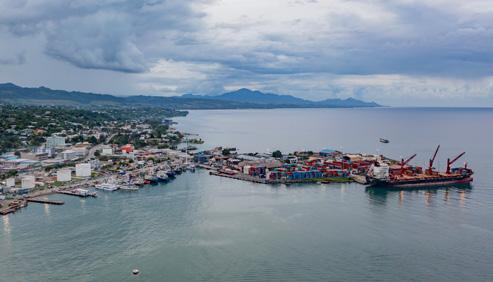
Providing thought leadership on the role of ports in a connected world
EDITORIAL & CONTENT
Editor: Martin Clark editor@ports-and-harbors.com
Features Editor: Felicity Landon
Publisher
Dr. Masahiko Furuichi
IAPH Secretary General info@iaphworldports.org
Dr. Patrick Verhoeven
IAPH Managing Director patrick.verhoeven@iaphworldports.org
Regular Correspondents: AJ Keyes, Mike Mundy, Vladislav Vorotnikov
Production
David Blake, Paul Dunnington production@mercatormedia.com
SALES & MARKETING
t +44 1329 825335 f +44 1329 550192 Marketing marketing@mercatormedia.com
Chief Executive: Andrew Webster awebster@mercatormedia.com
Ports & Harbor magazine is produced and edited bi-monthly by Mercator Media Limited, Spinnaker House, Waterside Gardens, Fareham, Hants PO16 8SD UK t +44 1329 825335 f +44 1329 550192 info@mercatormedia.com www.mercatormedia.com
Subscriptions
INTERNATIONAL ASSOCIATION OF PORTS AND HARBORS
IAPH members enjoy a free subscription to P&H. If your organisation is not a member and you would like a paying subscription to the magazine, please contact the IAPH for more information at: 7th Floor, South Tower, New Pier Takeshiba 1-16-1 Kaigan, Minato-ku Tokyo 105-0022, Japan
T: +81 (0) 3-5403-2770
F: +81 (0) 3-5403-7651
E: ph@iaphworldports.org
W: www.iaphworldports.org
©Mercator Media Limited 2026. ISSN 1740-2638 (print) ISSN 2633-4232 (online).
Ports & Harbor is a trade mark of Mercator Media Ltd. All rights reserved. No part of this magazine can be reproduced without the written consent of Mercator Media Ltd. Registered in England Company Number 2427909. Registered office: c/o Spinnaker House, Waterside Gardens, Fareham, Hampshire, PO16 8SD, UK.

EDITOR’S COMMENT

MARTIN CLARK Editor
eopolitical instability and major global events continue to characterise the year, with profound impacts on shipping and trade. The conflict in Iran, which has widened across the Middle East, has severely hampered traffic through the narrow Strait of Hormuz, a vital artery for the world’s energy supply, causing a spike in oil and gas prices, with knock-on effects for transport, logistics and other interconnected sectors. The volatility has further raised concerns about long-term energy security, forcing businesses to reassess risk strategies and contingency plans. The tragedy unfolding in the Gulf has also cost the lives of a number of seafarers, prompting renewed calls from maritime organisations and governments for improved safety measures and stronger protections for crews. It is a sentiment

PATRICK WILSON
Head of special risks, Marine GB, WTW
Patrick Wilson joined Willis Marine in 2025 having spent 13 years in the industry. Leading a team of marine risk specialists he specialises in structuring large global programmes, negotiating bespoke policy solutions and developing innovative insurance solutions in response to evolving risks facing the marine sector. ■
echoed by IAPH, which also expressed its concern for the port industry and its workers, and has taken steps to support members during this period.
While the situation in the Middle East remains fluid, it is a stark reminder of the non-negotiable requirement for business resilience in the face of great change and challenge in 2026, both in the ports sector and across the maritime world. The sharp rise in fuel prices and disruption to key shipping lanes highlights, once again, the vulnerabilities in the global supply chain. The current wave of instability has resulted in a general backdrop of higher operational costs and greater volatility across freight, energy and commodity markets, a reminder of the need for diversified sourcing, flexible routing and robust risk management strategies.
These are all topics that will be under the microscope at the #IAPH2026 World Ports Conference in London this November. The theme of the conference – port leadership for a brave new world – will allow industry professionals to explore the growing impact of geopolitical risk on maritime trade, the necessity of proactive scenario planning and the critical importance of international collaboration to maintain supply chain stability and foster sustainable growth.
In this uncertain environment, ports must remain resilient and adaptable: enduring qualities that can offer some crumbs of comfort and guidance during such a period of volatility. Strengthening collaboration across the maritime industry to navigate change and support long-term development is another priority, a point highlighted in this issue by the newly-elected president of the UK Chamber of Shipping, Karrie Trauth. This includes the need to present a unified

MIKE MUNDY Editor & independent analyst
Mike Mundy is a well-known commentator and independent analyst of the global maritime sector. He has edited a number of prestigious publications, including Port Strategy, and worked in a high-level consultancy capacity with leading port sector businesses. ■
industry voice across both ports and shipping for effective communication with government and other parties.
This level of calm cooperation, amid the chaotic events of the Middle East and global equities markets, will be essential if the maritime sector is to deliver on other priorities, including the long-term push toward decarbonisation of the industry. Again, this edition addresses this complex area from a number of different angles, including the emergence of on-board carbon capture systems and Morocco’s preparations for the hydrogen era, as well as the climate-related challenges facing small island ports. New Zealand’s Port of Lyttelton also illustrates what success can look like in areas such as biodiversity, with many of its pioneering projects now listed on the World Ports Sustainability Program database.
As events continue to play out in the Middle East, the challenges come thick and fast for port operators across the globe. In Europe, that includes a new reform strategy, which addresses critical areas ranging from port security through to advancing the energy transition. The package of measures together set out a road map for the comprehensive reform of the European Union’s maritime sector.
After the events of recent weeks and months it seems reasonable to assume that energy security will return as a policy priority for governments around the world. How this will impact long-term planning in alternative energy or clean marine fuels remains to be seen, another important question for port leaders to ponder. But they do not need to do this alone. Greater collaboration and knowledge sharing, through IAPH, means the industry can still move forward together, regardless of prevailing conditions. ■ Get in touch: editor@ports-and-harbors.com

CHITRAL JAYAWARNA Chief manager (logistics),
SLPA
Chitral Jayawarna is chief manager (logistics) at Sri Lanka Ports Authority and previously held roles within marketing and business development and communications and public relations. He is also a PhD candidate at the Management and Science University, Malaysia. ■

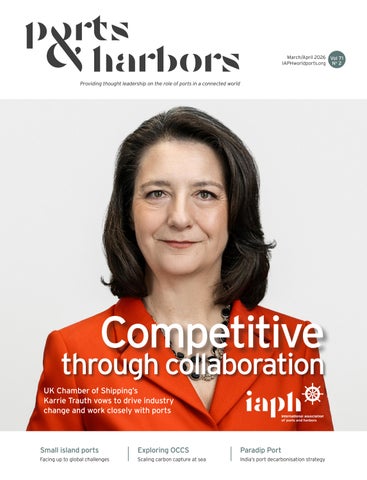
Karrie Trauth, the newly elected president of the UK Chamber of Shipping, spoke to Patrick Verhoeven about some of the challenges and opportunities facing the industry, highlighting the importance of collaboration between ports and shipping to drive meaningful change

QKarrie (K), what are your first priories in your new role?
K: My priority is straightforward: strengthening the UK’s competitiveness as a shipping nation. I’m building on a strong foundation, and I’m grateful to JB Rae Smith for his leadership as the outgoing president and the focus now has to be growth and influence. The UK currently ranks fifth in the world in terms of competitiveness, according to a 2025 UK Chamber study, which tells us we’re strong but we have room to grow. If we want more shipping business in the UK, we have to make it easier and more attractive to operate here. That means policy, incentives and a clear signal from government that shipping matters. None of this happens alone, shipping and ports don’t win in isolation. If we want real leverage with government and investors, we have to act like a single ecosystem and speak with one voice.
Patrick (P), how do you see this collaboration evolving?
P: Karrie and I have already worked together under the umbrella of the International Chamber of Shipping (ICS), of which the UK Chamber is a member, in the Clean Energy Marine (CEM) hubs strategy. Now, with the upcoming 2026 IAPH World Ports Conference, we’d like a more direct partnership with the UK Chamber. London was chosen for this year’s conference precisely because of its strong maritime services sector, in areas such as risk, security, legal services and finance, not just shipping, so we’re all part of that same ecosystem.
Q: How will this help drive your work in key areas like decarbonising?
K: Decarbonising shipping is not just about what happens alongside the jetty, it’s fundamentally about decarbonising the global energy system. That’s why this can’t sit only with the Department for Transport. It cuts across Whitehall, particularly energy policy. Through the CEM-Hubs initiative, for example, we’re often talking directly to energy ministers, alongside transport ministers. Cold ironing is a very practical example of how this plays out. Once cruise and container ships can plug in across Europe, they will expect the same when they come to the UK. So, the UK government needs to be paying close attention.
P: Some of the areas IAPH works in align so well with the UK Chamber’s agenda. One of the easiest ways we can reduce carbon emissions is by cold ironing and shore power availability. But when we look to the UK, that's a difficult thing to do, so this is a key area where ports and shipping need a shared voice to get the attention of government. There’s a difference here with continental Europe, where EU funding is available for onshore power supply (OPS), and there is a 2030 deadline for container and cruise vessels to have it. The UK model is much more of a private sector-driven business. It’s the same with fuel bunkering, where ships need to know what will be available, and that it’s safe. Here, we’ve done work with our Clean Marine Fuels working group to develop a Port Readiness Tool, a self-assessment tool for a port to see how

ready it is to provide alternative fuels – eventually it should become a tool available for shipping as well, so vessels can see what is available at each port.
Q: What other work are you doing in and around decarbonisation and clean energy?
K: Here at the UK Chamber, we already have strong expertise in decarbonisation. Our Safety & Environment Committee has the highest active participation of UK Chamber Committees, and the UK Chamber team advises members as regulation evolves. We also work with the ICS, our voice to the International Maritime Organisation (IMO), to share our members’ views and concerns. In fact, we are very proud to have led the way on decarbonisation, publicly calling for the global shipping industry to reach net zero by 2050, ahead of the UK and IMO commitments, so it has actually been a consistent thread here at the UK Chamber for many years now. What there will be now is a doubling down on this. We hope to continue working with the ports industry to help drive this agenda. We are also continuing to champion energy efficient and abatement technologies, and we’re starting conversations with the UK government and providing evidence around the shipping leg of carbon capture and storage (CCS).
Decarbonisation has been a consistent thread here at the UK Chamber of Shipping for many years now
KARRIE
TRAUTH, president, UK Chamber of Shipping
P: This is also something we’re looking into at IAPH, because ports will be an integral part of this process. Not all ports are convinced so far that onboard CCS is necessarily a good thing, but it’s a dialogue we need to have with the UK Chamber and also ICS in a broader context. Ultimately, it’s not dissimilar to the availability of future fuels for shipping – they will need to be in the port as part of the energy system, even as temporary storage locations, to then be sent for offshore sequestration. There are some ports that already have their own CCS projects, but onboard CCS is definitely coming up as a major topic for us as well.

Q: What is the state of digitalisation in the UK shipping industry?
London was chosen for this year’s conference because of its strong maritime sector
‘‘ PATRICK VERHOEVEN, MD, IAPH
K: On digitalisation, there’s a lot of talk about a digital ‘single window’, but in practice it’s still far from a reality. We’ve been advocating on this issue for a long time, again within the IMO, and the World Bank, and we provide guidance to members on this and what we can do jointly to promote it. It’s in the interest of everyone, especially the crew on board, but we need to ensure they are not overburdened by the administrative workload or having to key in the same things multiple times. Again, when you think about it in terms of decarbonisation, the simplest way forward is just operating more efficiently, so anything that enables vessels to better optimise their route, for instance, that’s a big gain, both to ship operators and to ports. The frustration for operators is that nothing new needs to be invented. The standards exist. What’s missing is coordination, trust and the discipline to implement what we already agree on.
P: It’s true, there are still not many ports applying it either, because it’s complex, though there are a few leading the work in this area. Nothing needs to be invented, it just needs to be implemented. There’s no need for new standards here, or even new technology, but people need to have trust in working with each other and exchanging this data, and in a timely manner; then it becomes real. In fact, we have just presented a new paper on port call optimisation (PCO) to the IMO based on the experiences of various ports, and in collaboration with the International Harbour Masters Association.
K: Together with that, we also need to think about cyber security. While embracing digital is seen as a positive step forward, we need to make sure our systems are secure. Cyber is probably the number one risk today both for ports and shipping. As we digitise more, the consequences of getting this wrong get bigger. This is an area that we will explore at our Shipping UK Conference – looking at the intersect of risk, technology and regulation will define the maritime landscape from a security, sustainability and commercial perspective.
P: This will also be one of the major themes at our conference in November, which will address issues like how ports can keep up with the pace of technological change, from automation to AI, and stay secure in the face of an array of evolving threats, both digital and physical, especially in light of these heightened geopolitical tensions.
Q: What work is the UK doing to champion recruitment in the seafaring industry?
K: Shipping is vital to the UK economy and creates around 728,000 jobs, directly and indirectly. The UK also has one of the best education systems for seafarers, something that we have been successfully exporting for many years. Through the Merchant Navy Training Board, we’ve also been running a national awareness campaign to bring attention to the shipping industry, both the jobs available at sea and onshore. Last year, we reached over 20 million people across the UK to raise awareness, and we plan to continue doing so to inspire the next generation of seafarers. What’s often missed is how broad modern maritime careers have become, from green engineering and cyber security to offshore energy. Shipping is already part of those growth sectors, whether people realise it or not. So, as a nation, we’re already looking to put more young people into STEM [science, technology, engineering, mathematics] careers, and many of those could find fulfilling careers to support shipping and ports.
Q: What else would you like to achieve during your time as president?
K: I’m only the second woman to be named president of the UK Chamber of Shipping in its near 150-year history, which is both humbling and motivating. What I can say is that this has been the most amazing career for me and if I can use the platform that comes with this role to widen the pipeline into shipping for women and men then that’s time well spent. I’d certainly like to use my role to inspire more girls to dream of things that they weren’t aware of before, so there will be more outreach in that regard. I think there’s a real opportunity here to do just that, not only because this is a growing industry but also because this country depends so much on shipping, and its ports, of course. ■
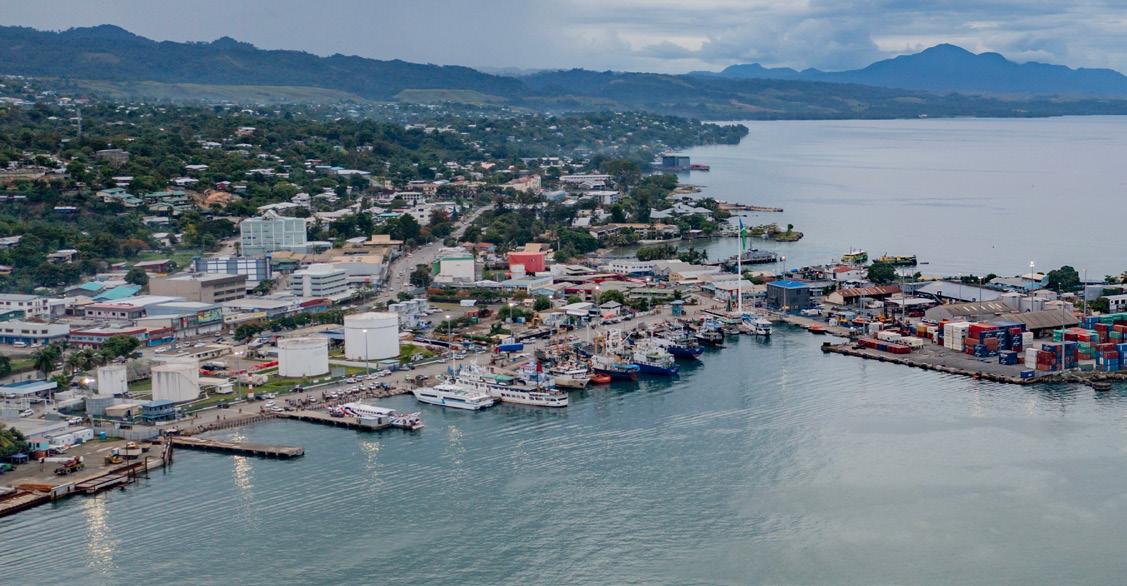
Right across the Pacific Ocean (excluding Australia and New Zealand) lie some of the world’s smallest and most geographically dispersed nations. These include the Melanesian countries of Papua New Guinea, Solomon Islands, Vanuatu and Fiji; the Polynesian states of Samoa and Tonga; and the Micronesian nations of Kiribati and Nauru.
While culturally diverse, these island states share a common economic and infrastructural reality: their ports and harbours are lifelines. In small island developing states (SIDS), ports are not merely gateways for trade, they are arteries for survival, connecting isolated populations to global markets, critical supplies and development opportunities. Yet, despite their strategic importance, ports and harbours in these nations face persistent challenges.
The defining feature of Pacific island states is geographic isolation. Vast distances separate them from major
global markets in Asia, Europe and the Americas. This isolation translates into high shipping costs, limited competition among service providers and low cargo volumes that reduce economies of scale.
The cost of importing goods is significantly higher than in larger economies, contributing to elevated living costs and reduced export competitiveness.
The challenge is compounded by internal fragmentation. Many of these countries are archipelagic, with populations spread across multiple islands. Inter-island shipping services are often irregular, making domestic connectivity difficult to sustain.
Maintaining numerous small ports and wharves across dispersed islands stretches limited financial and technical resources. Ensuring reliable and safe operations requires careful planning and disciplined financial management.
Climate change vulnerability
Pacific island states also sit along the so-called ‘Ring of Fire’, making them vulnerable to earthquakes, volcanic activity and tsunamis. Cyclones and extreme weather events are frequent and increasingly intense. A single natural disaster can devastate port infrastructure and disrupt supply chains with severe consequences for national economies.
Climate change presents an enduring threat. Rising sea levels, coastal erosion and saltwater intrusion directly affect port infrastructure, much of which is located near sea level. Adaptation measures — such as raising wharf levels, reinforcing sea walls or upgrading drainage systems — are capital-intensive and technically demanding. For small economies with limited fiscal space, funding such upgrades places additional pressure on budgets.
Health crises, including pandemics, further highlight the vulnerability of isolated island states. Border closures or
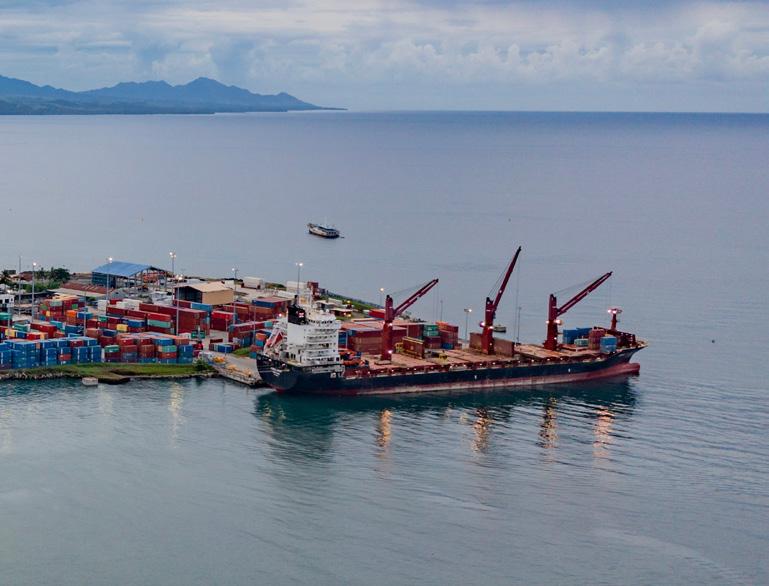
shipping disruptions can quickly affect essential supplies, while limited healthcare capacity increases response costs. Geographic remoteness often means they are among the last to receive external assistance, prolonging impacts.
Although geographically remote, these island states are integrated into the global economy and highly exposed to international financial crises, trade disruptions and geopolitical tensions. Changes in freight rates, fuel prices, tariffs or economic downturns in major economies can have amplified effects.
When developed economies ‘sneeze’, these small island states ‘catch a cold’. Reduced global demand impacts export revenues, while higher shipping and insurance costs inflate import bills. For ports that rely heavily on trade volumes for revenue, economic shocks quickly translate into financial strain.
Against this backdrop, sustainability has emerged as both a responsibility and an opportunity. Ports in small island states are adopting green initiatives, recognising their role in environmental stewardship and community wellbeing.
The Solomon Islands Ports Authority (SIPA), for example, has aligned operations with sustainability principles. Measures such as banning smoking and betel nut chewing within port premises, installing energy-efficient LED lighting and integrating solar energy systems at offices and staff residences demonstrate a commitment to reducing environmental impact while improving efficiency.
These initiatives have been recognised globally for three consecutive years, positioning SIPA as a regional leader in sustainable port management.
Community projects, including a Peace Park and the construction of the highest flagpole at a Pacific island port, reinforce the role of ports as civic spaces. The development of the largest domestic terminal among small Pacific island states further illustrates the drive to modernise responsibly.
The Solomon Islands shares many structural challenges common to small island states, yet offers an example of institutional resilience.
Established in June 1956 as a state-owned enterprise, SIPA has remained under government ownership despite periodic calls for privatisation.
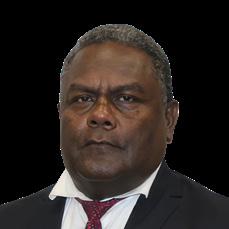
MOSES VIRIVOLOMO is the chairman of Solomon Islands Ports Authority. A civil engineer by profession, he worked for the Solomon Islands Government for 38 years including 30 years at the Ministry of Infrastructure Development and eight years with the Ministry of Communication and Aviation.
As a public entity, it prioritises national interest and citizen welfare over purely profit-driven objectives.
Today, it is self-sustaining and continues investing in infrastructure at its two principal ports, Honiara and Noro. The Authority finances medium-sized capital projects internally and has begun leveraging credit facilities to redevelop key berths. Investments include domestic wharves, passenger terminals and climate adaptation infrastructure such as sea walls.
Looking ahead, SIPA has launched its Port Master Plan 2024–2039, outlining a vision for modernisation and expansion. A review of the SIPA Act is underway to enable partnerships, including Public-Private Partnerships, to diversify revenue streams and strengthen its ability to service credit obligations.
In the Pacific, ports are more than infrastructure: they are lifelines, economic engines and symbols of sovereignty. Despite formidable challenges, small island states are demonstrating that with strategic planning, responsible governance and sustainable innovation, they can remain competitive and connected to the global community. ■
FEATURE OCCS
Thanks to a series of pilot projects, momentum is building behind onboard carbon capture and storage (OCCS), but a complete port ecosystem is still a long way off
As the maritime sector intensifies its search for viable decarbonisation pathways, onboard carbon capture and storage (OCCS) is drawing great interest, though the industry remains cautious for now.
Yet, as Koh Eng Kiong, director, projects at the Global Centre for Maritime Decarbonisation (GCMD), makes clear, the industry’s central challenge is no longer technical feasibility alone — it is scale, credibility and integration across borders.
“We are seeing OCCS shift from a niche concept towards a more credible decarbonisation option, supported by clearer policy signals and early demonstrations,” he says. “But the industry is still cautious: end-to-end logistics, accounting recognition and commercial viability are not yet certain for broad adoption.”
Recent regulatory developments have strengthened confidence. At the International Maritime Organisation’s Marine Environment Protection Committee (MEPC 83), a formal work plan was approved to develop an OCCS regulatory framework by 2028. In parallel, a working group from the Joint Group of Experts on the Scientific Aspects of Marine Environmental Protection (GESAMP) is advancing lifecycle assessment (LCA) guidelines that include OCCS considerations.
This progress matters, according to Koh: “This is an important signal to shipowners who are likely to consider OCCS when they can see how OCCS might be recognised and accounted for from a regulatory compliance standpoint.”
Clarity on Measurement, Reporting and Verification (MRV), lifecycle emissions accounting and regulatory recognition will send important signals, among many other factors, that will ultimately determine whether shipowners treat OCCS as a compliance tool or merely a marginal experiment.
Technological maturity is also advancing. More providers are piloting and operationalising systems at sea, across both short- and deep-sea segments. Crucially, the industry is now demonstrating not only onboard capture, but also the full
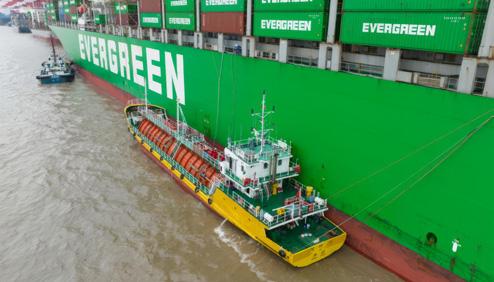
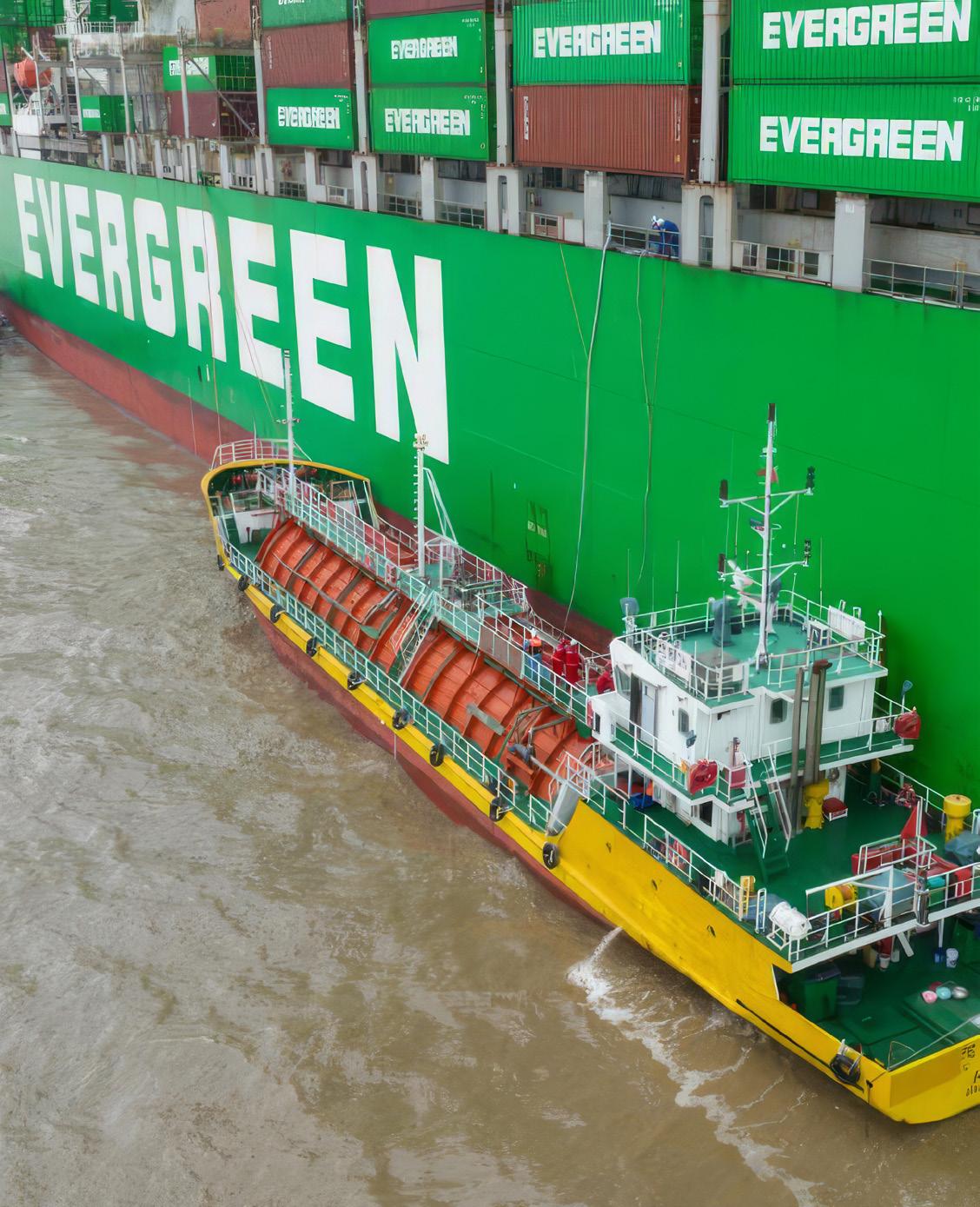
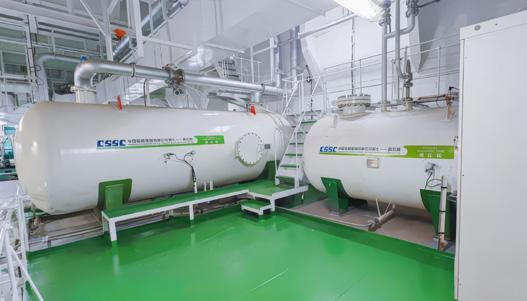
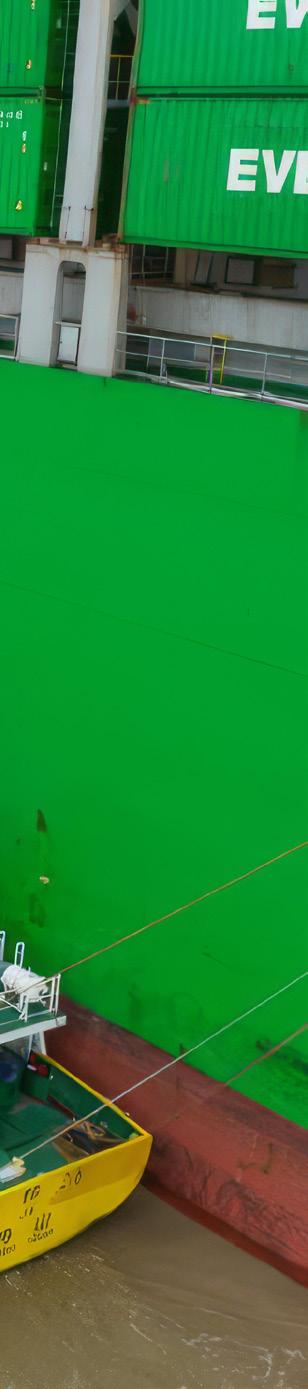
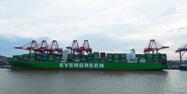
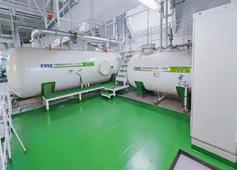
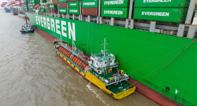
Pictured: Ever Top moored at berth with the LCO2 carrier, Dejin26, for the STS transfer of onboard captured CO2. Inset: SMDERI-QET’s OCCS system Photos: SMDERI-QET
post-capture carbon value chain. Again, this is hugely significant.
A prominent example is GCMD’s own Project CAPTURED. This initiative demonstrated an end-to-end pathway: CO₂ captured onboard, stored as liquefied CO₂ (LCO₂) in Type C tanks, transferred via ship-to-ship offloading and transported onward to a final user — with emissions savings independently verified.
“While we've learned a lot from operationalising this pilot with our partners, its execution also revealed additional technical and operational gaps that need to be closed for OCCS to scale meaningfully such as the importance of reducing energy penalty through waste heat recovery," Koh notes.
In a separate techno-economic analysis conducted by GCMD on the retrofit of an OCCS system on a medium-range (MR) tanker, other gaps that need to be addressed include shrinking system footprint through compact design and shortening shipyard installation times through modularised units to limit commercial downtime.
The infrastructure question
“Beyond onboard technology and IMO-level accounting, the biggest challenges are end-to-end value-chain readiness, certainty of final disposition and economic viability,” says Koh.
OCCS delivers climate benefit only if captured CO₂ reaches certified permanent storage or at-scale durable utilisation, he notes. Storage availability remains uneven, often dependent on cross-border carbon capture, utilisation and storage (CCUS) arrangements that lack alignment on captured CO₂ specifications, accounting standards, permitting and liability frameworks.
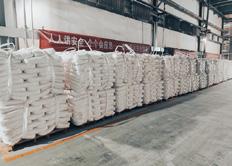
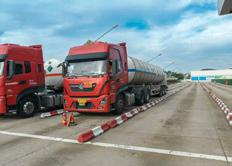
Utilisation pathways, while promising, present their own logistical complexities. Project CAPTURED demonstrated a full ‘ship-to-end-use’ chain: 25.4 tonnes of onboard-captured LCO₂ were transferred from a container vessel to an LCO₂ carrier, then moved via ship-to-truck and overland more than 2,200km to an industrial site, where the CO₂ was used as a feedstock to produce precipitated calcium carbonate and post-carbonated slag.
The demonstration proved feasibility. However, it also highlighted that utilisation demand can become constrained by logistics due to end-users being located far from ports. This underscores a clear preference for siting CO₂ end-users closer to port infrastructure where possible to enable efficient and scalable deployment.
“Furthermore, in many markets, utilisation capacity will first be directed towards domestic captured CO₂ streams,” Koh notes. Onboard captured CO₂ becomes viable only where ports have surplus utilisation capacity or deliberately position CO₂ reception and processing as a service for international shipping. Until then, shipowners face uncertainty over reliable offtake.
Meanwhile, port infrastructure will expand only where a bankable business case exists — offloading facilities, intermediate storage and onward transport systems are all capital-intensive. “Scaling requires

















infrastructure and commercial pull, not one-off mobilisation,” adds Koh.


However, OCCS does not advance in isolation. Shipowners considering retrofits must weigh it against other decarbonisation options, including energy-efficiency measures, biofuels, and emerging zero- and near-zerocarbon fuels. While OCCS can complement some of these measures, its bankability is ultimately determined from the shipowner’s perspective, based on capital constraints, operating and fuel costs, cargo-space penalties, the availability of port infrastructure, downstream pathways for CO₂ offloading and permanent storage or utilisation and consistent regulatory recognition within carbon accounting frameworks. “In short, the question is no longer ‘can OCCS work?’ but rather, ‘can we scale OCCS efficiently, safely, and credibly across jurisdictions?’” reasons Koh.
A large part of the answer lies beyond the vessel itself and will heavily depend on ports. With many ports positioning themselves as multi-product energy and carbon hubs, OCCS fits naturally into that evolution. But actual roles may vary considerably. Some ports may specialise as alternative fuel
In short, the question is no longer can OCCS work, but rather, can we scale OCCS?


■ Seabound, a UK-based leader in marine carbon capture, completes its first full-scale carbon capture systems, which are set to be deployed aboard UBC Cork, a 5,700 GT cement-carrying vessel, following comprehensive landbased testing.
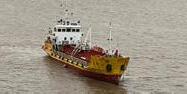
■ The first OCCS for a newbuild vessel in China was officially delivered aboard the 82,000 DWT bulk carrier, Shandong Xinsheng, operated by Shandong Shipping Corporation, provided by Shanghai Qiyao Environmental Technology (SMDERI-QET).





■ Solvang ASA’s 2019-built ethylene carrier Clipper Eris is the world's first ship to be retrofitted with a full-scale, operational on-board CCS system developed by Wärtsilä. The system, launched in early 2025, uses amine technology to capture over 70% of CO2 emissions from exhaust gases.




hubs; others as carbon logistics nodes providing CO₂ reception, intermediate storage and onward transport. A smaller number, typically those near industrial clusters or geological storage basins, may support utilisation or sequestration pathways directly.
For captured CO₂, ports can enable adoption in three ways:
1. Provide reliable CO₂ reception/ offloading services (including safe handling procedures and temporary storage), so shipowners can treat CO₂ offloading as a routine port service, much like waste reception or bunkering.
2. Connect ships to the wider CCUS network (aggregation + onward transport to end-use/storage). In GCMD's concept study to offload onboard captured CO₂, it concludes that intermediate LCO₂ receiving vessel modalities are among the most promising for scale, precisely because they support aggregation and onward movement for sequestration or synthetic fuel pathways.
3. Drive interoperability across ports by standardising storage conditions/specifications (pressure/temperature/ impurities) and requirements for port reception facilities, and by establishing standards for MRV.
“OCCS creates demand for new port services,” says Koh. If captured volumes reach critical mass, ports with mature safety systems, hazardous cargo experience and strong industrial partnerships will be best placed to selectively integrate CO₂ handling — beginning with containerised pilot solutions and progressing to intermediate LCO₂ receiving vessels as volumes grow.
■ Damen Shipyards, together with partners including Atal Solutions, completes the retrofit of four bulk carriers for BAM Shipping, including onboard carbon capture systems, among other technologies designed to lower the vessels’ fuel consumption and emissions.
A recently signed memorandum of understanding (MoU) between GCMD and IAPH provides a platform to further accelerate work in this field, according to Koh. “OCCS can be a practical area for collaboration under the MOU, as ports are key nodes to enable the development of the full OCCS value chain” he says.
Through engagement with IAPH members, GCMD hopes to support port-side carbon value chains — including CO₂ reception, interim storage, safe handling procedures and connections to certified storage or credible utilisation.
Equally important is interoperability. The MoU creates an opportunity to align approaches to CO₂ classification — waste versus feedstock — harmonise safety and operational standards, and encourage common technical specifications and MRV practices.
Without such alignment, OCCS-enabled vessels risk facing bespoke arrangements at each designated CO₂ discharging port.
The trajectory is clear: OCCS is technically feasible, operationally demonstrated and increasingly supported by regulatory intent. The remaining challenge is systemic integration — across ports, jurisdictions and value chains.
The question is no longer whether exhaust carbon dioxide can be captured at sea, but whether the industry will build the institutional and commercial architecture to make it happen at scale. ■





As the global community confronts the twin challenges of climate change and sustainable growth, India’s maritime sector stands at a decisive crossroads.
Ports, as engines of economic activity, must now lead the transition toward environmentally responsible infrastructure. Paradip Port Authority (PPA) presents a compelling wake-up call by demonstrating that operational excellence and environmental stewardship can advance in unison.
Paradip Port has firmly emerged as India’s leading major port, handling over 150 million metric tonnes of cargo during 2024-25: the highest among all major ports in the country. With an existing and planned capacity of 300 million metric tonnes, the port qualifies as a true mega port, supporting the nation’s industrial growth and trade aspirations. More than 80% of its berths are fully mechanised, ensuring enhanced productivity, reduced vessel turnaround time and improved environmental performance. Significantly, Paradip Port handles more than two-thirds of India’s total coastal cargo, reinforcing its strategic role in strengthening coastal shipping and domestic logistics.
by March 2026, with further 10 MW solar installations planned to meet 60% of electricity needs through renewables and the balance through green power procured via open access.
Alongside green fuels, the port is accelerating decarbonisation through electrification and technology-led efficiency. Electrification of cargo- handling equipment is underway; about 30 km of rail electrification has been completed, with the objective of electrifying the entire network and progressively phasing out diesel locomotives.

SHRI
P.L. HARANADH Chairman, Paradip Port Authority
Shore-to-ship power has commenced at coastal coal berths and will be extended to all berths by 2030. The port is also planning to procure two tugs under India's Green Tug Transition Programme (GTTP). AI-enabled yard tracking has been planned to reduce congestion.
Efficiency moves
Paradip Port’s green transition: from high-throughput gateway to sustainable maritime hub
With its strong linkage to the mineral hinterlands of Odisha, Jharkhand and Chhattisgarh, the port handles high volumes of coal and iron ore, alongside imports such as crude oil, fertilisers and raw materials – making environmental responsibility and ESG performance central to sustaining global competitiveness as India progresses toward its national target of being net zero by 2070.
A major pillar of the port’s transformation is its entry into the green hydrogen and ammonia ecosystem. During India Maritime Week 2025, the port signed MoUs worth over 1.5 trillion with leading developers and is planning a dedicated 4 MTPA green hydrogen/ammonia export terminal with ancillary facilities to support nearby production units and enable its exports. The port also plans a 1 MW green hydrogen plant to fuel green-hydrogen buses for cleaner internal mobility by March 2027.
Renewable energy and resource efficiency form another core track. A 10 MW solar power project has been awarded and is targeted for completion
To curb dust from dry bulk handling, Paradip aims for 100% mechanisation by 2030 from the current level of 80%. 11 of 15 dry-bulk berths are mechanised, with the remaining four to be mechanised in phases by 2030. Over 90% of cargo is routed through rail, conveyors and pipelines.
Air-quality controls include perimeter net barriers, dry-fog dust suppression systems at rail reception stations, sprinkler systems at cargo yards, mist cannons, mechanised sweeping and truck tyre-wash facilities.
The port has scaled up afforestation, planting about 5 lakh trees over the past four and half years and targeting one million trees by August 2026, to shape an “urban forest” environment.
Paradip Port is adopting a Zero Liquid Discharge approach through its 6.5 MLD sewage treatment plants, under which the township’s entire sewage is treated and recycled for use in gardening and dustsuppression measures.
These initiatives align with the Maritime Amrit Kaal Vision 2047, positioning Paradip as a clean-energy and sustainable-technology hub and a leading port driving a cleaner maritime future while balancing growth with environmental responsibility. ■

Like many other nations, the UK serves a number of satellite islands via maritime links. The Isle of Man – located in the middle of the northern Irish Sea roughly equidistant between England, Scotland, Wales and Northern Ireland, with a population of around 80,000 – provides an interesting case study of how maritime services and related port development are implemented against a background of ongoing and emerging new challenges.
Indeed, few ferry operators carry the weight of history and public expectation quite like the Isle of Man Steam Packet Company. Approaching its bicentenary in 2030, the business is not only the oldest continuously operating ferry company in the world, but also a lifeline for islanders.
At the helm is managing director Brian Thomson, whose technical background and leadership over the past five years have coincided with a period of renewal and forward planning. “It’s a huge challenge when you understand how important the ferry link is to the island and its people,” he says. That sense of responsibility underpins both day-to-day operations and long-term strategy, as well as connections with some of the region’s major ports, including Liverpool and Dublin.
The fleet itself reflects a balance between legacy assets and modern investment. Its line-up includes the flagship Manxman, former flagship Ben-my-Chree, high-speed catamaran Manannan and cargo-only vessel MV Arrow. Together, they support a mixed passenger/freight model that shifts throughout the day, with freight dominating overnight sailings and passenger volumes peaking in daylight hours. In the summer, that includes a spike in traffic from the Isle of Man TT Races, one of the world’s most famous motorcycling events.
Recent investment in the Manxman, a diesel-electric hybrid, signals a commitment to modernisation. However, Thomson is candid about the realities of deploying emerging technologies. While hybrid systems
The Isle of Man Steam Packet Company is the world’s oldest continuously operating passenger shipping firm, founded in 1830. P&H talks to Brian Thomson, managing director, about the delicate balance of legacy and innovation
promise potential efficiency gains, operational challenges, particularly around battery performance, highlight the complexities of transitioning away from traditional fuels. “In theory, hybrid systems are amazing, but in practice some things often don’t work as they should,” he says, underscoring the importance of measured adoption.
Yet decarbonisation remains firmly on the agenda, albeit through a pragmatic lens. The company is exploring future vessel designs –including a new build timed with the bicentennial – with hybrid propulsion as a minimum standard, while also monitoring developments in alternative fuels and electrification. Shore power is another area of interest. Though current infrastructure constraints pose practical challenges, Thomson sees clear long-term potential in helping to cut emissions, citing progress in places like Oslo and across Scandinavia, as well as Liverpool, closer to home.
Operationally, the business is in a strong position, he adds, underpinned by core values. “Our priority is running a good service. We are the island’s lifeline, and for tourists, so we have a big responsibility to the people of this island and we have to navigate all the challenges that come with that – like the weather, for example!”
The Steam Packet is also expanding connectivity, with new and more regular services to Northern Ireland and the Republic of Ireland, which will strengthen links for residents and visitors, while tapping into previously underserved demand. Port relationships are central to delivering this extended service, according to Thomson. Close coordination with Douglas Harbour, owned by the Isle of Man government’s Department of Infrastructure, is a daily necessity, while key UK and Irish gateways, such as
Liverpool, Heysham, Larne and Dublin, require equally strong collaboration.
The development of smart port infrastructure at Heysham is of particular interest, with the potential to enhance efficiency through improved cargo handling and space utilisation. “The interface between ports and the ship is hugely important,” Thomson says. “If you can organise that space effectively, it makes a world of difference to operators.” However, he also cautions that technology must be implemented collaboratively. Systems that fail to account for operator needs risk undermining their intended benefits, reinforcing the case for closer partnerships between port authorities and ferry companies.
Looking ahead to the 200-year milestone, planning is in its early stages, he adds. As a publicly-owned yet commercially-operated entity, the company is mindful of striking the right tone – celebrations must reflect both its heritage and accountability to the island community, many of whom have personal connections to the business through generations of employment.
Again, many of the values that have built this enduring success will stand it in good stead for the future, a lesson that may benefit others across the maritime chain. As the Isle of Man Steam Packet Company charts its course toward 2030, its strategy is clear: preserve the values that have sustained it for two centuries, while embracing innovation with discipline and purpose. Thomson cites “our traditions, our focus on customer service, and being a ‘very local’ company,” as key differentiators in a fast-changing world.
For port industry professionals, it offers a compelling case study in balancing infrastructure, technology and community in a uniquely demanding operating environment. ■
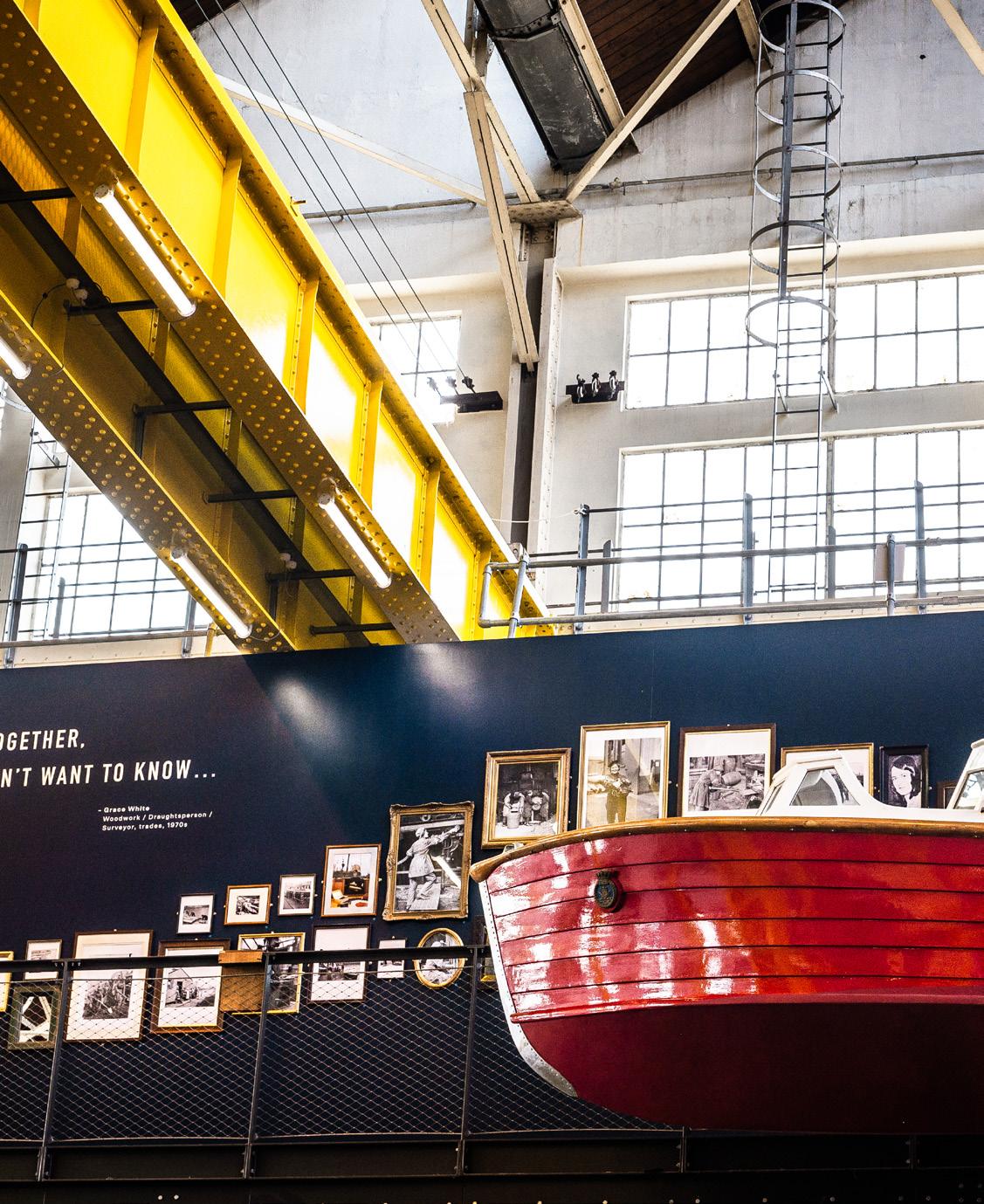
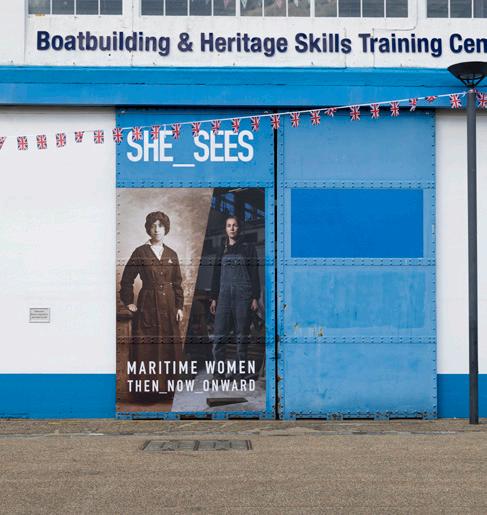
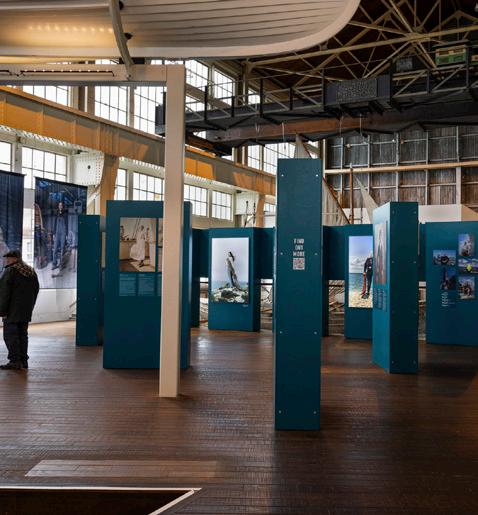
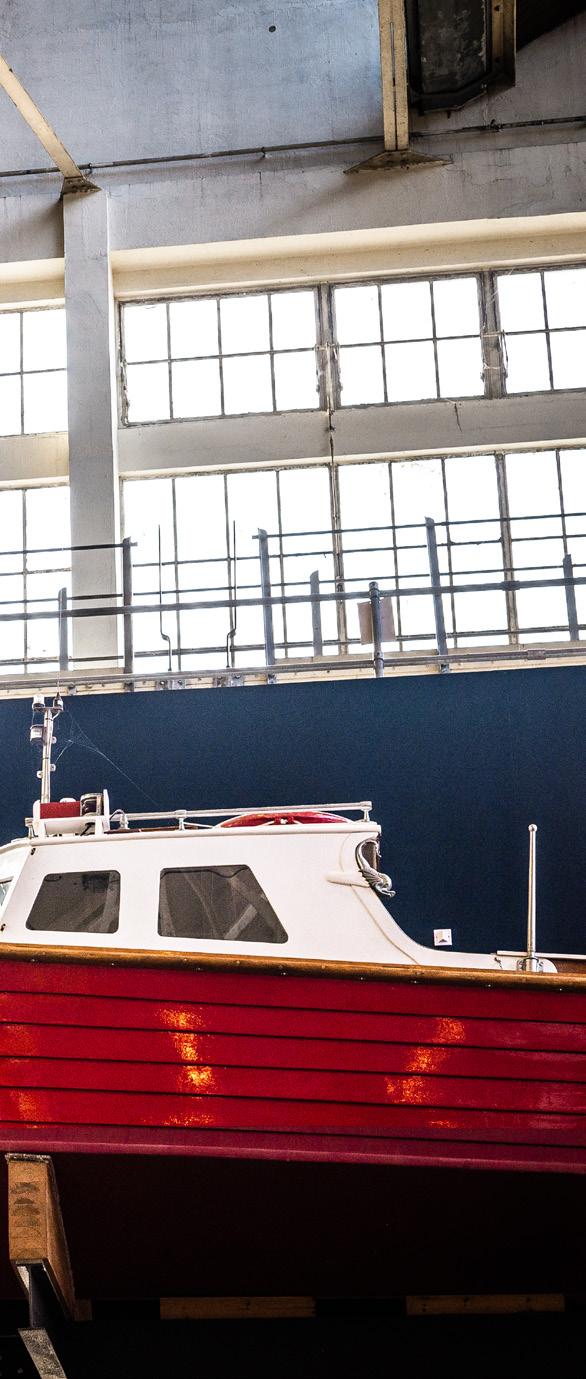
Illuminating women’s stories in maritime history, the SHE_SEES exhibition at Portsmouth Historic Quarter provided a compelling showcase of contemporary female voices and overlooked historical narratives.
The images here showed how the award-winning exhibition, held last year, brought together striking visual art, personal narratives and historical insight to mark the contributions of women at sea across the generations.
A collaboration between Lloyd’s Register and Lloyd’s Register Foundation, Portsmouth Historic Quarter, the University of Portsmouth and the Portsmouth Royal Dockyard Historical Trust, SHE_SEES marked the conclusion of the first year of the Rewriting Women into Maritime History initiative — a project dedicated to raising the visibility and recognition of women’s roles in maritime industries past and present.
It brought together a vital body of work that challenged traditional perspectives and celebrated the contributions of women right across the maritime world.
Portrait photographer Emilie Sandy, commissioned by Lloyd’s Register Foundation, led the creative direction of the project’s first phase, capturing intimate and powerful portraits of 23 women working within diverse maritime roles across the UK.
Each portrait reflected the subject’s own connection to the environment, offering visitors a richly layered view of both personal experience and broader cultural significance.
Beyond showcasing beautiful and thought-provoking work, SHE_SEES actively addressed ongoing gender imbalance in maritime sectors.
More than a visual experience, it was an invitation to rethink how maritime history was told and who was seen within it.
The exhibition won the Personality of the Year award at the Seahorse Journalism Awards in London in December.
According to research, women made up only a minority of the global maritime workforce, and even fewer in seafaring roles in 2024 (the IMO-WISTA Women in Maritime Survey 2024 suggested that only 1% of the maritime workforce was female).
By sharing real stories of contemporary professionals alongside historical context, the exhibition aimed to inspire new generations to explore maritime careers while honouring those whose contributions had previously been overlooked. ■
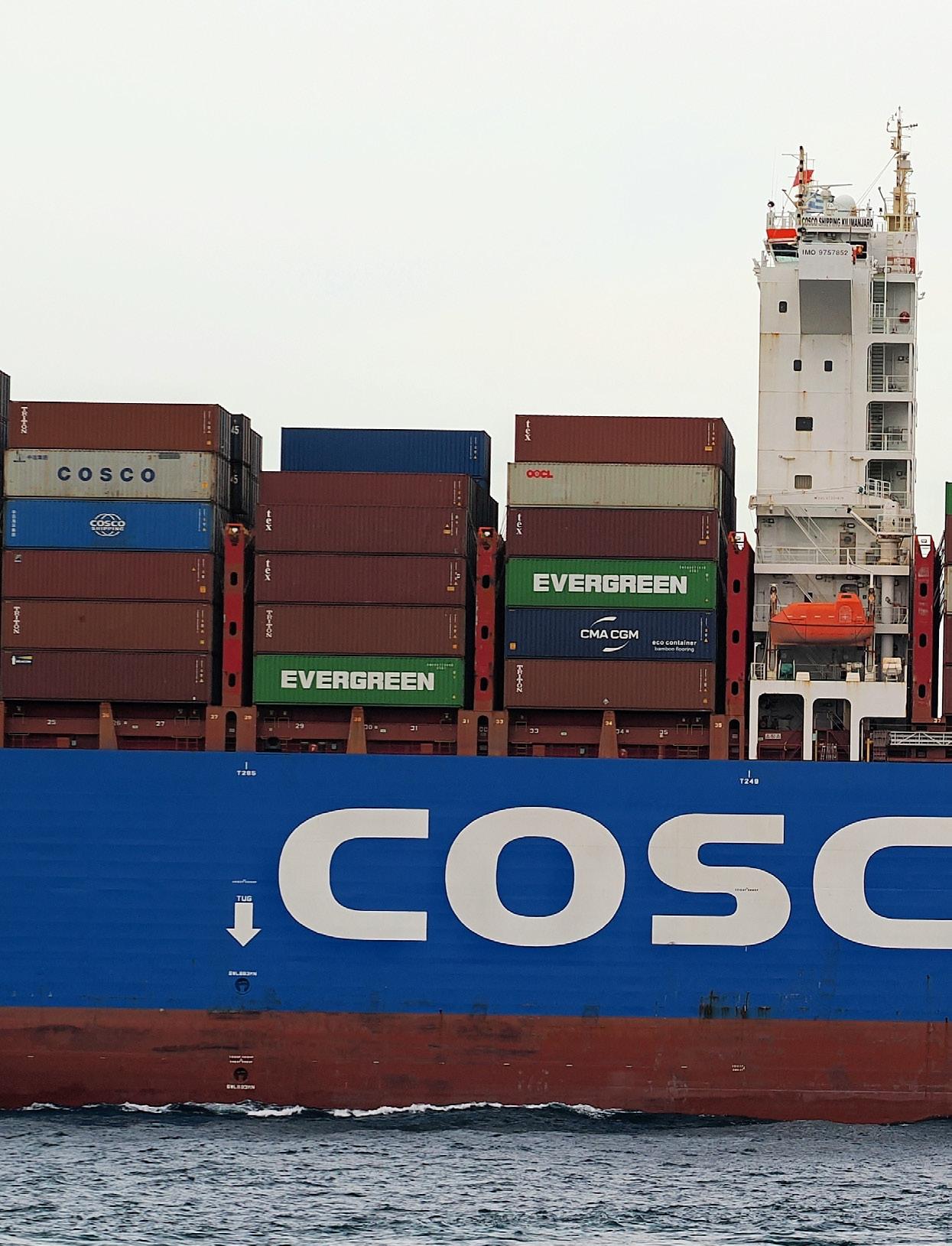
The European Commission has set out key objectives for the EU ports and maritime industrial sector in two comprehensive reform packages
MIKE MUNDY
The much-anticipated new EU Ports Strategy was formally launched in early March together with the EU Industrial Maritime Strategy. Together, these two new policy initiatives effectively set out a road map for the comprehensive reform of the EU’s maritime sector.
The Ports Strategy is wide-ranging and sets out major goals across five key areas as highlighted below:
Building competitiveness, innovation & digitalisation
It is in this context that the Commission intends to develop criteria and guidance on foreign ownership and control, with the emphasis on ports identified as strategic infrastructure. The background to this is, of course, the USA-triggered objective of reducing China’s influence over port activities globally. The policy does
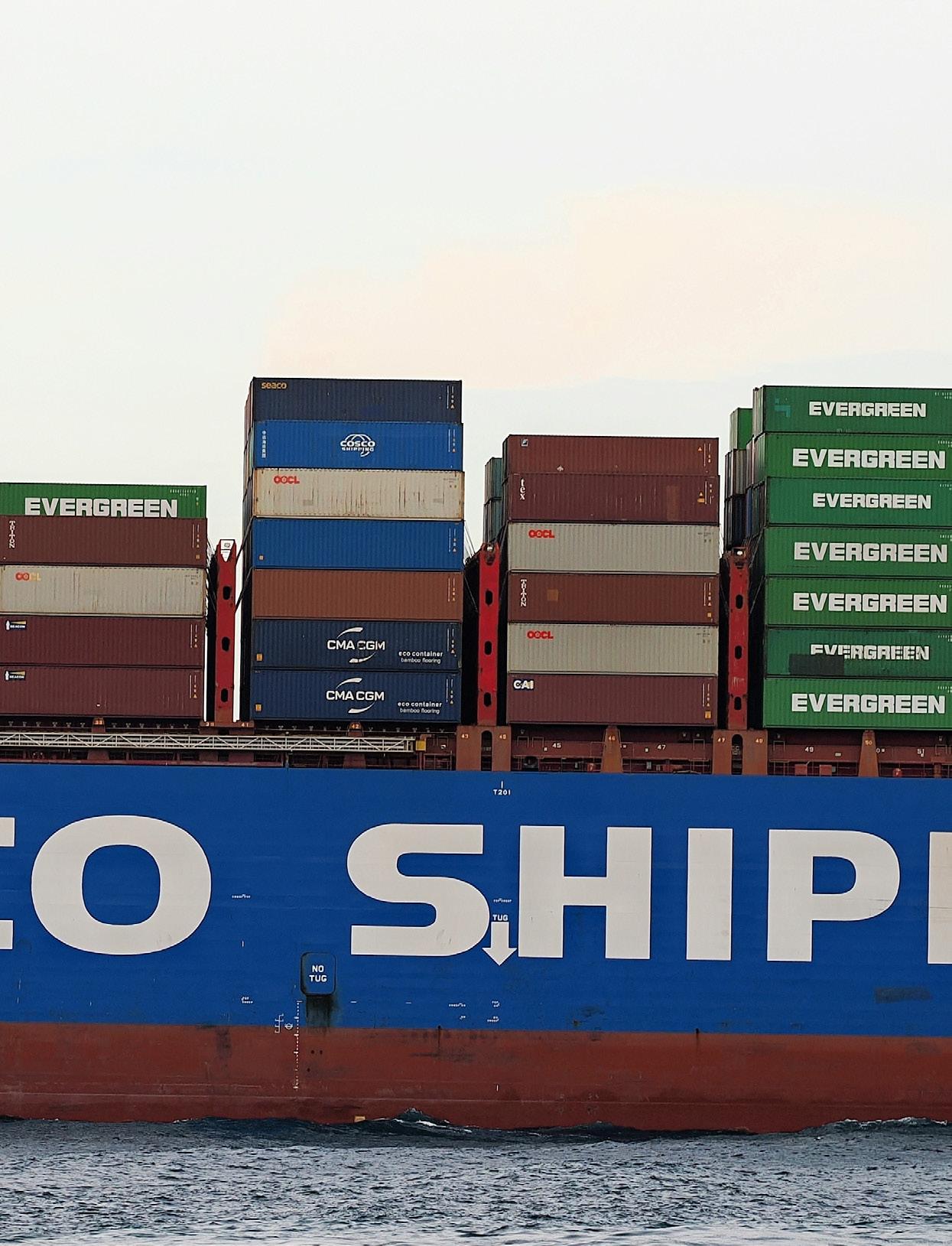
not specifically name China but the reality is that China, through privately-owned Hutchison Ports and state-owned COSCO and China Merchants Ports, has investments in around 30 EU ports.
The Commission will create guidelines to assist member states in assessing foreign direct investment (FDI) in ports via what it describes as “thresholds and criteria for foreign influence” through decision-making powers and operational control. Essentially, it will encourage national governments to conduct a “thorough assessment” of maritime infrastructure to reduce FDI risks and ensure they can gain temporary control of ports for reasons of national security.
“Foreign ownership and control of ports can pose security risks, particularly where state-backed actors are involved,” declared Apostolos
Tzitzikostas, transport commissioner, when unveiling the new port strategy on March 4.
it was leaked that there would be a 40% cap on FDI but it seems the Commission decided to take a more lenient position. No doubt the guidelines the Commission says it will develop to help member states manage FDI will be awaited with great interest.
This is another interesting area of challenge tackled by the Commission, which details its goals as:
● Accelerating permit-granting and providing faster assessment for strategic energy and environmental port projects.
● Implementing the forthcoming Electrification Action Plan to support port electrification, grid access and the deployment of clean energy
Also launched at the same time as the Port Reform Strategy were proposals for the EU’s much-awaited Industrial Accelerator Act (IAA). Within specified emerging industrial sectors — for example electric vehicles and battery technologies — this act introduces a new set of conditions for foreign investments. It applies to FDI projects (including cross-border mergers and acquisitions, as well as greenfield or brownfield projects) involving investments of €100m or more in the specified ‘emerging strategic manufacturing sectors’ provided that the investor originates from a country that meets the global capacity threshold — that is, where the host country holds more than 40% of global manufacturing capacity. In this regard, approval will be required from a National Investment Authority which, practically speaking, means satisfying four of six conditions.
Handle 74% of external trade
3.4 billion tonnes annually 395 million passengers annually 423,000 direct jobs
Source: European Commission
● Promoting partnerships for energy cooperation in and around port areas to ensure the sustainable use of energy, including hydrogen.
It will certainly be interesting in this context to see how theory goes into practice. There is without doubt a need for the faster facilitation of environmental approvals for port and strategic energy projects. But this is not the only roadblock — across all three goals the requirement for funding raises its head, with many projects only viable with public sector support and/or on a cost-benefit basis. The fourth area of EU port reform, discussed below — Access to Finance and Investments — will hopefully draw the curtain back on how meaningful and timely funding might be secured.
Protecting and securing ports
One of these conditions seems to have a particular relevance to the ports sector – namely that foreign investors do not acquire more than 49%. It poses the question: will this be one of the thresholds that the Commission helps member states establish in conjunction with FDI in ports? It seems likely it will.
Interestingly, prior to the launch of the IAA and its provisions
In this third area of reform the Commission identifies these priorities:
● Strengthening port security by updating and revising existing guidance, including regarding emerging threats, and by promoting a level playing field for port security.
● Fighting drug trafficking, the Commission will establish frameworks for third-country port assessments and for
Launched alongside the EU Ports Strategy was the EU Industrial Maritime Strategy — effectively doubling down on the intention to introduce a maritime sector-wide reform package.
The Commission states: “The EU Industrial Maritime Strategy will strengthen Europe's maritime leadership by a number of actions including launching an EU Industrial Maritime Value Chains Alliance. It is aimed at advancing high-tech shipbuilding, offshore wind support vessels, underwater drones, and cutting-edge port equipment."
The Commission further states that: “The Strategy will leverage public demand and funding to promote private investment in innovation and digitalisation of the EU
shipbuilding, as well as the renewal and decarbonisation of the shipping fleet, including through the inclusion of targeted non-price criteria in the upcoming review of the public procurement directives.”
The EU Maritime Strategy aims to build the competitiveness of EU shipyards and equipment manufacturers, reinforced through strengthened export financing and targeted trade policies. This includes a military dimension and as the Commission underlines “measures to enhance skills, training, and quality employment across the maritime sector, including re-skilling shipbuilding workers and seafarers to adopt new technologies and green operational practices.”

background checks for port workers. The strategy will aim to improve alignment of customs controls across EU ports together with better security protocols worldwide.
● The Commission will establish a forum for member states’ cybersecurity and port authorities to exchange best practices, and an EU-wide security risk assessment will be carried out to identify the most pressing cybersecurity risks and appropriate measures to mitigate them.
All these measures appear highly worthwhile, and in a time of increasing volatility, this would appear to be an ideal moment to address them.
The focus on drug trafficking is particularly relevant given the mid-2025 joint report by the European Union Drugs Agency (EUDA) and the World Customs Organisation, which warns that the recent surge reflects not only higher volumes but also increasing vulnerabilities in supply chains. In the period January 2019 to June 2024, more than 1,826 tonnes of illicit drugs were seized either in, or en route to, ports – 68% were intercepted at the ports themselves.
In the above regard, the Commission notes that it will build on existing EU funding instruments including the Connecting Europe Facility, Cohesion Policy funds and InvestEU. It states that it will: “support ports with clear and targeted funding principles aimed at improving the coordination and efficiency of EU financing.” Additionally, the Commission sets out its
intention to facilitate access to advisory services and de-risking tools with particular attention to the needs of small and medium sized ports.
Small and medium-sized ports come in for special attention again under this area of focus, with specific initiatives referenced in conjunction with innovation, clean energy, security and connectivity.
Generally, there is also the intention by the Commission to support the development of a skilled next-generation workforce across all blue economy sectors through actions under the Blue Generational Renewal Strategy.
The Commission will also prepare guidance on the application of maritime safety legislation for port workers onboard ships, as well as on the safe handling of alternative fuels in ports.
Overall, the Commission describes its new EU Port Strategy as a clear framework for the future development of European ports. It states: “The EU Ports Strategy brings together existing and new initiatives, simplified procedures, provides guidance on implementing current legislation and offers recommendations to member states and stakeholders.” ■
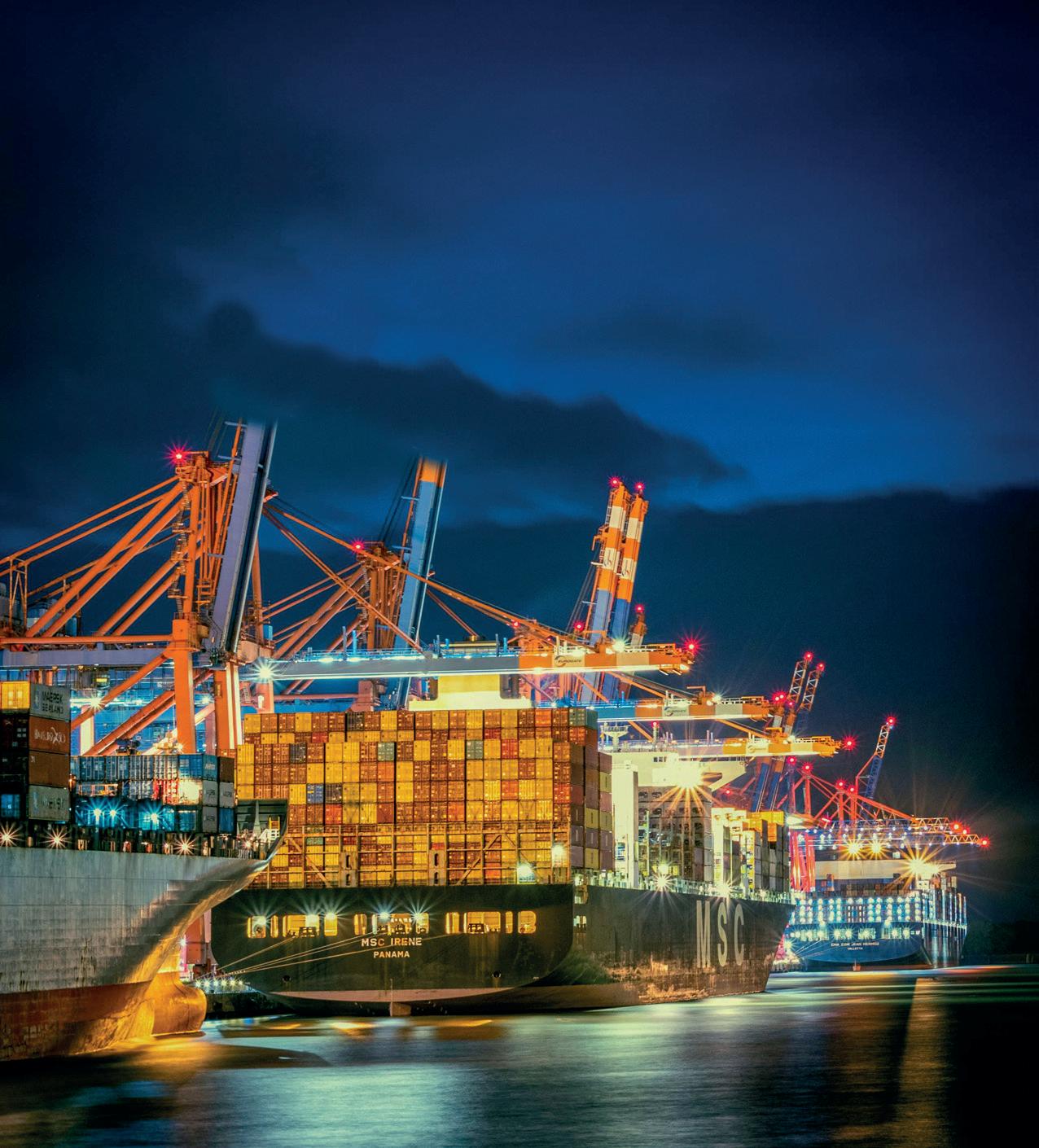
APRIL 1
10:00 CEST / 17:00 JST
Universal datasets and cyber-resilient standards: a blueprint for efficient, secure ports
MAY 6
17:00 CEST / 08:00 PDT
Turning the volume down: the benefits of underwater noise reduction
JUNE 24
10:00 CEST / 17:00 JST
Ports and cities: thriving connections in a fragmenting world
SEPTEMBER 9
17:00 CEST / 08:00 PDT
New frontiers of port security: in the sky, on the network, beneath the waves
OCTOBER 7
17:00 CEST / 08:00 PDT
The outlook for IMO MEPC 85: what should ports expect?
Our well-established IAPH-Mercator webinar series is back in the lead up to the World Ports Conference, taking place 3-6 November in London, United Kingdom. Open to members and non-members, register now to learn about key matters and challenges arising in the ports industry.
Ports appear, by their nature, to be fixed in time and place, but they too feel the impact of changes taking place in global supply chains. Ports are at the sharp end of geopolitical risk and, unlike shipping lines or manufacturers, they cannot move to lower-cost, more benign locations.
Nonetheless, ports are adapting. Changes to the global trade environment are prompting port operators and their customers to adjust their strategies to reflect the changing outlook. Investors continue to see opportunity in this asset class, while at a macro level, ports are considering their role in the decarbonisation of shipping and the wider global economy.
Among the most visible changes taking place is the trend among large shipping lines to pursue a model of direct investment in terminal infrastructure. While some carriers have long pursued an integrated strategy, more container and cruise lines are acting to take closer control of shoreside facilities to optimise handling of cargo and passengers.
As well as economics and the pursuit of efficiency, these changes are driven by geopolitics; a clear example is the TiL-BlackRock consortium's acquisition of a share in Hutchison Ports' international assets. Though driven more by politics than economics, it nonetheless demonstrates the appetite that private investors hold for strategic long-term opportunities.
Less visible, though just as impactful, cyber risk remains on the agenda for ports since their position as global and regional hubs give them a unique potential for contagion in the event of a cyber-attack.
The increased awareness of specialist insurance products, as well as bolstered efforts around training, have largely succeeded in helping companies manage the
issue. However, a spate of high-profile attacks in the maritime sector means this subject remains on the table.
For terminal operators, the risks to trade extend to the infrastructure on which they depend, with recent events highlighting the impact that interruptions can have on business continuity. A series of accidents at major container ports has highlighted the pressure on global supply chains — and the impact weather can have on recovery.
Last June, a quay crane tipped over at Singapore’s Tuas port during delivery. In 2024, a barge knocked over a crane at Port of Keelung, Taiwan; the same barge later lost navigation due to severe weather and was abandoned. Previously, a feeder boxship accident in Yantian Port, China, caused a crane to crash. While the outcome of such incidents is serious, the effect on the terminal can be felt for longer than the initial impact and clean-up.
Terminals involved in accidents resulting in infrastructure damage face more than a short-term capacity squeeze. They can face far longer delays in receiving replacement equipment and much higher costs.
Estimates vary, but where a terminal might have once expected to return to full capacity within 18 months, they may now wait two years minimum for a replacement and face higher construction costs. Depending on location, tariffs may further disrupt the process. Such delays impact insurance provision, as a longer replacement cycle may require extended business interruption cover.
As an associate member of IAPH, Willis Towers Watson (WTW) will continue to seek to work with the association to manage emerging risks impacting the ports and terminals sector. ■

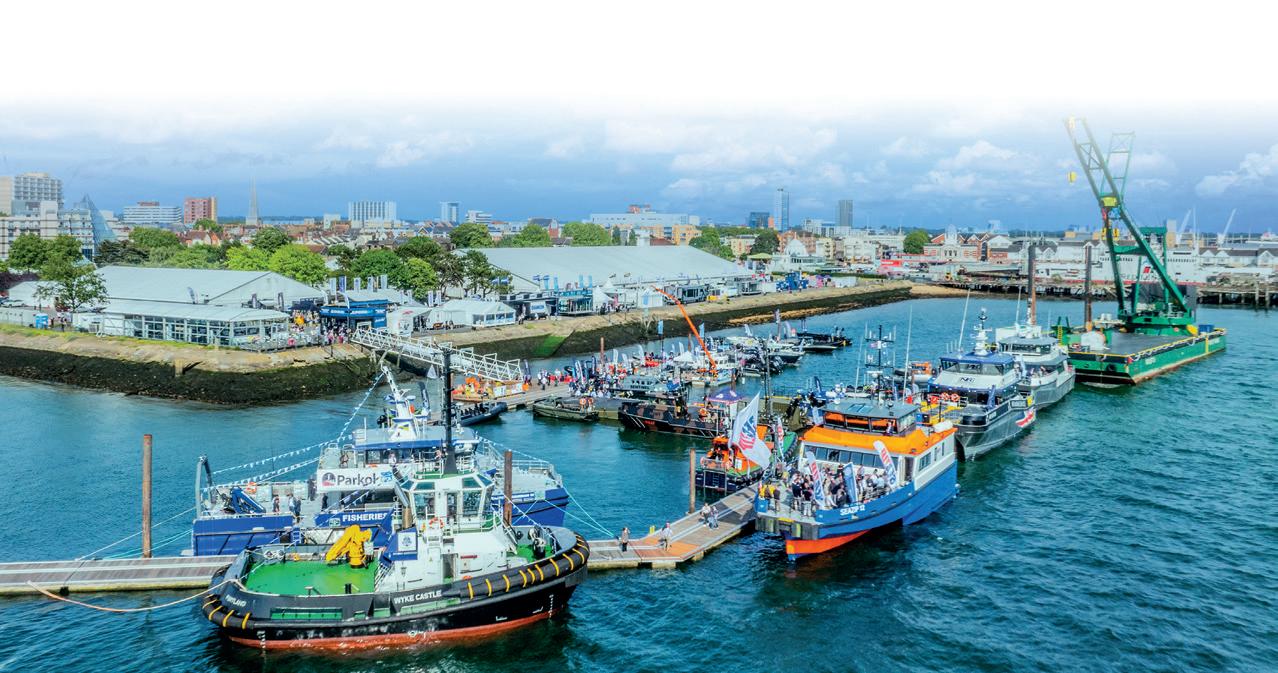
a


For more information visit: seawork.com contact: +44 1329 825 335 or email: info@seawork.com



LEE EUNG-HYUK
cannot live why. literally them.
app? — music for any to now.
you’d like about. finance.
— music for any to now.
superpower would have.
you take island. knife, glasses.
creature would was real? the sea, Hlésey (see brewer, and feasts.
creature would was real? the sea, Hlésey (see brewer, and feasts.

No 2
No 3
No 1
No 1
No 1
No 4
No 2
Favorite app? www.radiooooo.com — music from any country for any decade from 1900 to now.
LEE EUNG-HYUK
Director of Marketing and International Affairs, Busan Port Authority
No 2
No 3
No 4
No 2
Something unexpected that brings you joy Seeing random acts of kindness between strangers.
FRANC PIGNA Managing director, Aegir Port Property Advisers
FRANC PIGNA Managing director, Aegir Port Property Advisers
No 3
An item you cannot live without and why?
My Swiss army knife to be ready for almost anything.
LEE EUNG-HYUK Director of Marketing and International Affairs, Busan Port Authority
FRANC PIGNA Managing director, Aegir Port Property Advisers
ENRIQUE PIRAINO VEGA
Port of Valparaiso, Chile
No 4
No 1
What world record do you think you have a shot at beating?
Musing endlessly about esoteric subjects. N A quality that a business Honesty, integrity,
Business development manager
No 3
No 5
No 4
No 4
No 5
Favorite app? www.radiooooo.com — music from any country for any decade from 1900 to now. N
Something unexpected brings
No 5
A subject you’d like to learn more about. Corporate finance.
Favorite app. Remember — Korean app that helps you organize business cards.
Something unexpected that brings you joy Seeing random acts of kindness between strangers.
What is your favourite app (and why)?
Something unexpected that brings you joy
Seeing random acts of kindness between strangers.
Favorite app? www.radiooooo.com — music from any country for any decade from 1900 to now.
A quality that impresses you in a business partner. Attentive listening.
FRANC PIGNA
Audible. It allows me to enjoy books while driving or during daily routines, turning otherwise idle time into an opportunity to keep learning and gaining new perspectives.
Managing director, Aegir Port Property Advisers cannot live why? to be anything.
No 4
No 6
No 8
No 7
No 7
No 6
No 9
What world record do you think you have a shot at beating?
No 2
No 5
No 2
No 6
No 3
An item you cannot live without and why?
An item you cannot live without and why?
An item you cannot live without and why. My glasses: I am literally blind without them.
A quality that impresses you in a business partner. Attentive listening.
Is there something unexpected that brings you joy?
My Swiss army knife to be ready for almost anything.
My Swiss army knife to be ready for almost anything.
Something unexpected that brings you joy Seeing random acts of kindness between strangers.
What mythical creature would you like to believe was real?
Ægir, Norse god of the sea, lived on the Isle of Hlésey (see Number 9), master brewer, and host of many feasts.
If you could time travel, where would you go and what would you do. I would like to go back to nine years ago when my twin boys were eight months old and spend more time with them.
Sharing everyday moments with my wife and our two kids — listening to their ideas and seeing how they build character is a constant source of motivation for me.
033_PH_No5_Quick10.indd 33
No 5
No 9
No 8
No 7
No 7
No 10
No 8
No 7
What three things would you take to a deserted island?
No 3
No 7
No 4
No 3
What world record do you think you have a shot at beating?
A subject you’d like to learn more about. Corporate finance.
An item you cannot live without and why?
What world record do you think you have a shot at beating?
Musing endlessly about esoteric subjects.
My Swiss army knife to be ready for almost anything.
Musing endlessly about esoteric subjects.
If you could time travel, where would you go and what would you do. I would like to go back to nine years ago when my twin boys were eight months old and spend more time with them.
If you could time travel, where would you go and what would you do?
McConkey’s Ferry Inn, near Yardley, Pennsylvania, night of 25 December 1776, to join general George Washington in crossing the Delaware River toward the Battle of Trenton.
What world record do you think you have a shot at beating? I would love to compete at the Vegas 300 archery tournament and, someday, win it. It represents precision, consistency, and mental focus at the highest level.

If you could time travel, where would you go and what would you do?
No 4
No 8
No 5
No 4
A quality that impresses you in a business partner Honesty, integrity, and insight.
Three things you take to a deserted island. Lighter, knife, my glasses.
If you could time travel, where would you go and what would you do?
What mythical creature would you like to believe was real?
Dream dinner date. Hwang Dong-hyuk, a Korean film director and screenwriter who created the 2021 Netflix drama Squid Game.
What animal would you like to be for a day. Hawk.
Musing endlessly about esoteric subjects.
My bow, my Swiss Army knife, and a lighter — tools that combine survival, adaptability and focus.
Ægir, Norse god of the sea, lived on the Isle of Hlésey (see Number 9), master brewer, and host of many feasts.
McConkey’s Ferry Inn, near Yardley, Pennsylvania, night of 25 December 1776, to join general George Washington in crossing the Delaware River toward the Battle of Trenton.
McConkey’s Ferry Inn, near Yardley, Pennsylvania, night of 25 December 1776, to join general George Washington in crossing the Delaware River toward the Battle of Trenton.
A quality that impresses you in a business partner. Attentive listening.
What world record do you think you have a shot at beating?
Dream dinner date and why?
A quality that impresses you in a business partner
Honesty, integrity, and insight.
Musing endlessly about esoteric subjects.
What quality impresses you in a business partner? Integrity. Skills and experience matter, but loyalty and consistency in decision-making are what truly sustain long-term partnerships.
QUICK 10 FRANC PIGNA
With Albert Einstein, to discuss his opinions on pre-Big Bang cosmology and nothingness. No 9
No 6
No 5
No 5
Three things you take to a deserted island
N
What mythical creature would you like to believe was real?
What mythical creature would you like to believe was real?
A quality that impresses you in a business partner Honesty, integrity, and insight.
Ægir, Norse god of the sea, lived on the Isle of Hlésey (see Number 9), master brewer, and host of many feasts.
If you could time travel, where would you go and what would you do. I would like to go back to nine years ago when my twin boys were eight months old and spend more time with them.
The phoenix — as a symbol of resilience, renewal, and the ability to emerge stronger after difficult moments.
My Swiss army knife (see Number 3), a magnifying glass (nix this, there is one in my Swiss army knife), a steel mirror, and a fish hook with line. No
033_PH_No5_Quick10.indd 33
Best advice Always aspire whatever is do not do to human
If you could where would you would McConkey’s Yardley, Pennsylvania, of 25 December general George crossing the toward the Battle
No 10
No 8
No 8
No 9
No 8
No 9
No 9
No 10
No 9
No 9
No 10
No 10
No 10
No 10
A quality that impresses you in a business partner Honesty, integrity, and insight. No 6
What is the best advice you have ever received?
What animal would you like to be for a day. Hawk.
What superpower would you like to have. Flying.
Dream dinner date and why?
Dream dinner date and why? With Albert Einstein, to discuss his opinions on pre-Big Bang cosmology and nothingness.
If you could time travel, where would you go and what would you do?
Best advice ever received. Life is too short to have regrets.
Focus on what you can control and give your best effort there. It’s a simple principle that applies equally to leadership, projects and life.
With Albert Einstein, to discuss his opinions on pre-Big Bang cosmology and nothingness.
McConkey’s Ferry Inn, near Yardley, Pennsylvania, night of 25 December 1776, to join general George Washington in crossing the Delaware River toward the Battle of Trenton.
What keeps you awake at night?
Three things you take to a deserted island
Three things you take to a deserted island
Three things you take to a deserted island. Lighter, knife, my glasses.
Best advice ever received. Life is too short to have regrets.
Dream dinner date and why? With Albert Einstein, to discuss his opinions on pre-Big Bang cosmology and nothingness.
My Swiss army knife (see Number 3), a magnifying glass (nix this, there is one in my Swiss army knife), a steel mirror, and a fish hook with line.
Making Valparaíso’s Port Development Plan a reality. It is a long-term challenge with great benefits for the city, the region and future generations.
My Swiss army knife (see Number 3), a magnifying glass (nix this, there is one in my Swiss army knife), a steel mirror, and a fish hook with line.
Is there a small daily ritual you can’t live without?
Best advice ever received Always aspire to follow: whatever is hateful to you, do not do to your fellow human being.
What animal would you like to be for a day. Hawk.
Best advice ever received Always aspire to follow: whatever is hateful to you, do not do to your fellow human being.
Three things you take to a deserted island
My Swiss army knife (see Number 3), a magnifying glass (nix this, there is one in my Swiss army knife), a steel mirror, and a fish hook with line.
Ten minutes of meditative breathing. It keeps me centred so I can lead with clarity at work and be fully present with my wife and our two kids, supporting them with patience and focus.
If you would like to be featured in this column in a future edition email: editor@ports-and-harbors.com
2/23/2023 6:48:38
Best advice ever received. Life is too short to have regrets.
Do you have a quote that changed the way you see the world?
Best advice ever received Always aspire to follow: whatever is hateful to you, do not do to your fellow human being.
Photo: Franc Pigna | Graphics: Getty Images
Franc Pigna | Graphics: Getty Images
“This too shall pass.” It reminds me that nothing is permanent — which makes it important to value the good moments and learn from the difficult ones.
8/25/2022 3:42:50 PM
PERSPECTIVE MOROCCAN PORTS
At a time when global supply chains are being reshaped by the energy transition, port authorities are called upon to redefine their role. In Morocco, this transformation has found a clear strategic expression within the National Ports Agency (ANP), which has placed decarbonisation and preparedness for the green hydrogen sector at the heart of its medium- and long-term vision.
This orientation forms part of the Kingdom’s ambition to become a leading player in the production, processing and export of green hydrogen and its derivatives. Structured through the ‘Morocco Offer’ for the development of green hydrogen value chains, this national strategy builds on the country’s abundant renewable resources, institutional stability and the geostrategic positioning of its port infrastructure. It is not merely an energy policy; it profoundly redefines the role of ports within the Moroccan economy.
Strategic leadership
In this context, ANP is not acting at the periphery of this strategy; it is one of its key structuring instruments. Mandated by the Head of Government, alongside the Ministry of Equipment and Water (MEE), within the framework of the Morocco Green Hydrogen Offer, ANP is leading the studies aimed at adapting port infrastructure to the requirements of this strategic sector.
The objective is clear: to prepare Moroccan ports to receive, store, process and export new energy molecules such as green ammonia and green methanol, while ensuring safety, operational performance and international competitiveness.
This dynamic also aligns with ANP’s strategic priorities, particularly the
promotion of sustainability and environmental resilience.
The Agency’s Sustainable Development Roadmap translates this ambition into concrete actions focused on energy efficiency of facilities, integration of renewable energies, responsible water management, preservation of port ecosystems and climate resilience of port infrastructure. Port decarbonisation is thus emerging as a strategic lever of competitiveness rather than merely an environmental requirement.
competitiveness
International projections confirm the relevance of this forward-looking approach. According to estimates relayed by the World Bank, Moroccan green hydrogen exports could reach between 0.3 and 0.65 million tonnes as early as 2030, before increasing significantly by 2050.
The International Energy Agency (IEA) estimates that green hydrogen
production costs in Morocco could range between US$1.5 and US$2.5 per kilogramme by 2050, potentially positioning the Kingdom among the most competitive producers worldwide.
This trajectory responds to growing European demand, notably within the framework of the REPowerEU programme, while strengthening national energy sovereignty.
Beyond the quantitative outlook, it is the transformation of the role of ports that is at stake.
Moroccan port infrastructure is no longer limited to its traditional function as a maritime gateway. Ports are becoming platforms around which integrated productive ecosystems are structured: industrial zones, logistics platforms, processing units, energy storage facilities and green hydrogen-related projects. This evolution directly enhances the competitiveness of national industrial sectors and reinforces Morocco’s attractiveness for foreign investment.
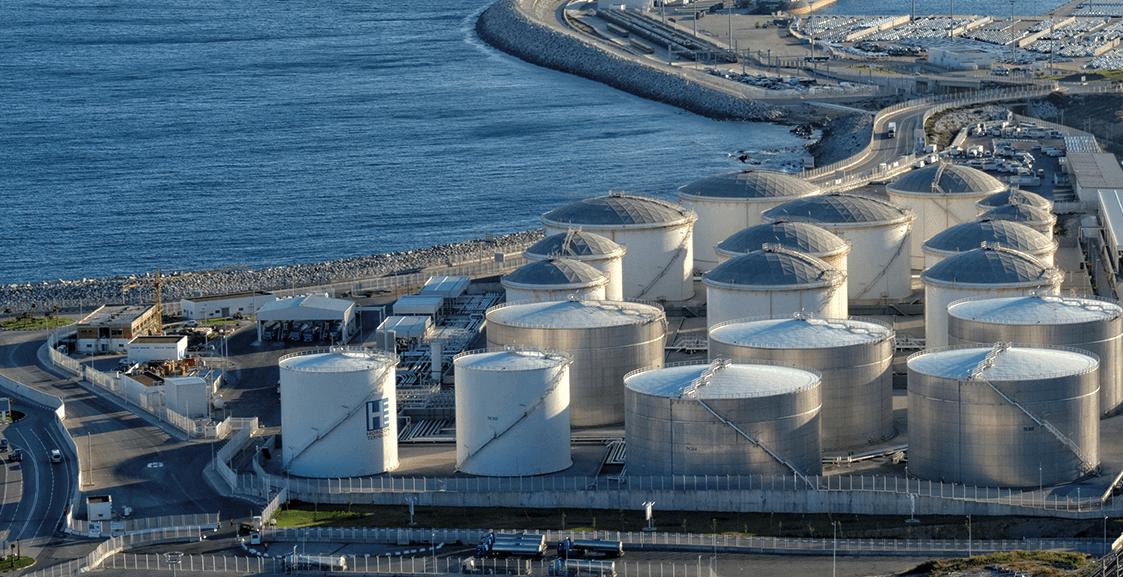
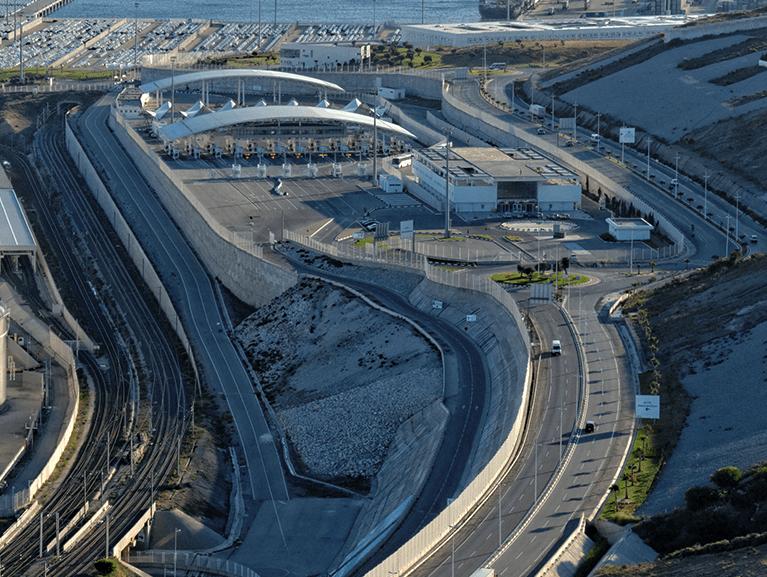
Within this architecture, the Kingdom’s major structuring platforms play a decisive role. The Tanger Med complex, located at the crossroads of major
international shipping routes, holds a strategic position that enables it to evolve into a green fuels bunkering hub and to establish itself as a privileged interface with the European market.
The port of Jorf Lasfar, adjacent to the OCP Group industrial complex, offers concrete prospects for integrating green ammonia into the fertiliser value chain, thereby consolidating an already strongly export-oriented industry. The port of Mohammedia, thanks to its storage capacities and salt caverns, represents a strategic asset for managing energy flows and securing national green hydrogen supplies.
Furthermore, the port of Tan-Tan is subject to technical feasibility studies conducted in coordination with the supervising Ministry (MEE) and the Moroccan Agency for Sustainable Energy (MASEN), aimed at enabling the export of green hydrogen and its derivatives, illustrating the determination to broaden the national energy geography.
New structuring projects, notably Nador West Med and the Port of Dakhla Atlantique, also form part of this strategic logic. Their industrial vocation,

ABDELLATIF LHOUAOUI is executive secretary at the Communication and Cooperation Department within Morocco’s National Ports Agency (ANP)
nautical depth and international connectivity make them natural logistics pillars to support the scaling-up of the green hydrogen sector and to structure new regional development hubs. By preparing its infrastructure for these transformations, ANP is positioning the Moroccan port system on a path of sustainable competitiveness. Port performance is no longer measured solely in terms of volumes handled or turnaround times, but also in terms of the ability to integrate energy transitions, support industrial value chains and provide investors with a reliable, secure and low-carbon logistics environment.
The Morocco Green Hydrogen Offer thus constitutes the strategic framework within which ANP is deploying these initiatives.
By anticipating future needs, adapting infrastructure and structuring integrated port ecosystems, the Agency is positioning Moroccan ports as major levers of industrial competitiveness and as next-generation energy platforms. Green hydrogen therefore appears not only as a future strategic cargo, but as a vector for the profound transformation of the role of ports within the national and regional economy. ■
Shipping line preferences in container terminal selection: What drives the decision?
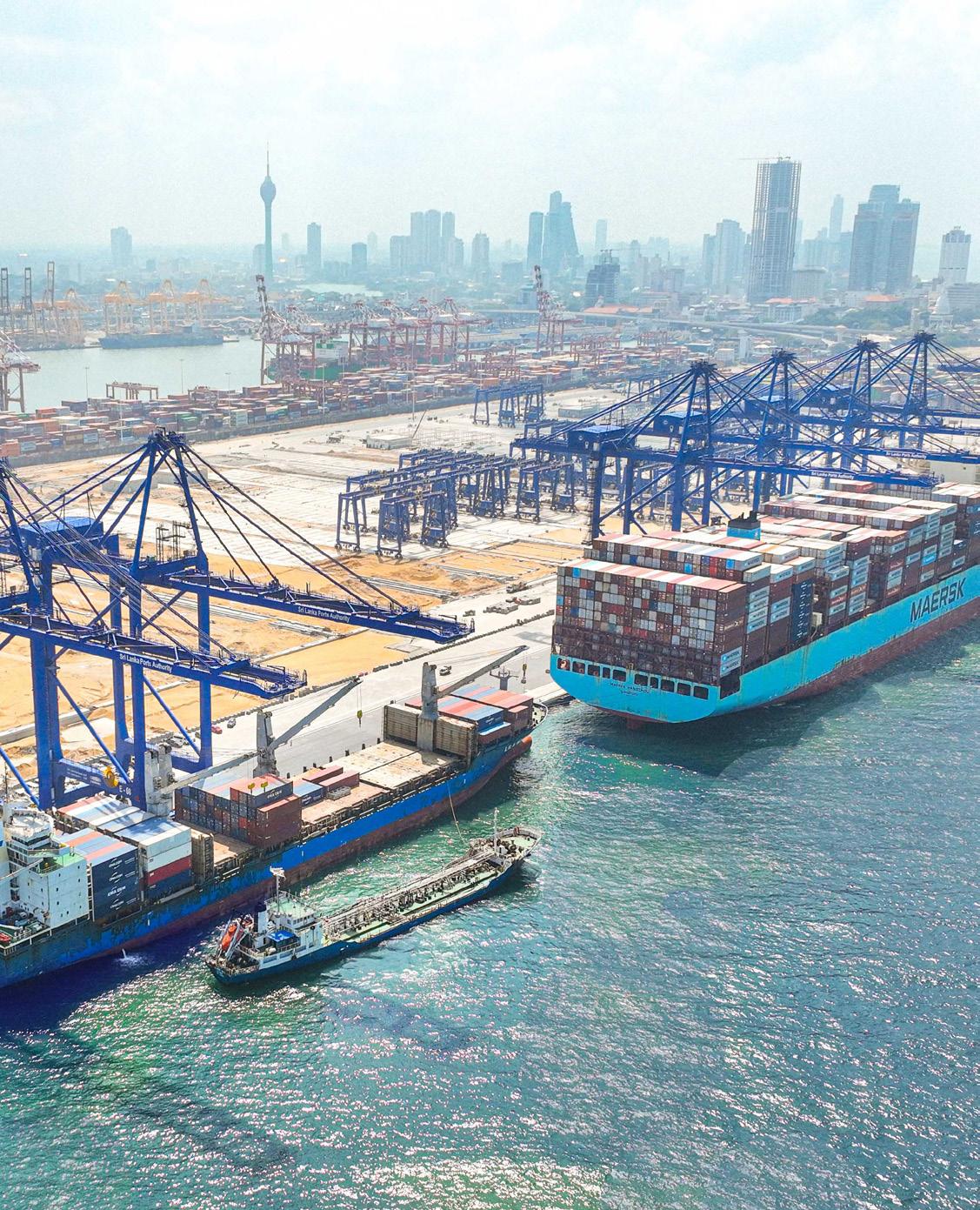
The selection of container terminals by shipping companies is a strategic, complex decision influenced by operational, economic and logistical factors. In designing or adjusting service routes, companies must align supply with anticipated demand while considering the benefits of direct port calls. Although direct calls may incur higher handling costs, they are favoured when they offer added value such as time efficiency or enhanced service. The terminal’s hinterland connectivity also plays a crucial role in reducing total transit time and improving competitiveness in regional or national markets.
Since the 1980s, the container shipping industry has become increasingly consolidated, with fewer dominant players. To remain competitive, shipping lines rely on partnerships with terminals that offer modern infrastructure, innovative logistics solutions and real-time container tracking. The level of service and infrastructure investment depends on the financial and risk-sharing arrangements between the terminal operator and the shipping company, which can vary widely.
The geographical position of a terminal in relation to major shipping routes, markets and production hubs is a primary consideration. Terminals located near high-demand regions or at a strategic trade crossroads are often preferred for their ability to minimise transit times and costs. Additionally, proximity to key industrial clusters and urban centres enhances the terminal’s utility, as it reduces last-mile delivery costs and improves the overall efficiency of supply chains. Natural geographic advantages, such as deep-water access and protection from extreme weather, further influence terminal attractiveness.
Moreover, the presence of well-established hinterland connections ensures that cargo can move seamlessly to and from the terminal, enhancing its strategic importance in global trade networks. For example, terminals located along the main
east-west shipping routes, or near choke points like the Suez Canal or the Strait of Malacca, are particularly advantageous due to the high volume of passing traffic and connectivity to global trade flows. In addition, considerations such as proximity to free trade zones, access to inland distribution centres and integration with regional economic corridors further amplify the strategic appeal of a terminal. Such factors collectively enable a terminal to act as a gateway, fostering economic growth and trade facilitation on both local and global scales.
Operational efficiency
At ports and terminals, operational efficiency involves optimising processes for swift, cost-effective and secure goods movement. Key factors include automation, streamlined processes, resource optimisation, data analytics, intermodal connectivity and sustainability initiatives. Automated systems reduce human error, streamline processes and optimise labour, equipment and storage capacity.
Proper management of labour, equipment and storage capacity ensure fast container handling. Data analytics and Internet of Things (IoT) technology track equipment performance, cargo movements and terminal conditions, while intermodal connectivity ensures seamless movement across the supply chain. Green logistics practices further reduce environmental impact and operational costs.
Technological capabilities
The integration of blockchain, IoT and artificial intelligence (AI) in terminal operations is revolutionising logistics and supply chains by providing a secure, transparent and immutable record of transactions. This leads to faster customs clearance, reduced fraud and improved security in the supply chain. Smart contracts automate and streamline operations by enforcing predefined terms and conditions. IoT enhances real-time visibility by embedding sensors into containers, cranes, and vehicles, allowing continuous tracking of cargo and monitoring equipment performance.
AI enables predictive analytics and decision-making, forecasting demand, predicting container movements, and optimising loading and unloading schedules. AI-driven automation also speeds up cargo handling processes and enhances security measures. Big data analytics are essential for real-time adjustments, allowing for proactive responses to emerging issues and enhanced service delivery.
Automation technologies like automated cranes, automated guided vehicles and robotic arms are becoming standard in terminals, reducing human intervention and elevating safety. This combination further enhances transparency, security and operational performance, making terminals more attractive to stakeholders seeking reliable, cost-effective and efficient services.
Intermodal connectivity
Efficient connections between different transport modes are essential for improving the efficiency and competitiveness of
ports and terminals. It enables faster, more cost-effective movement of goods – essential in the modern global supply chain. By consolidating shipments across different transport modes, intermodal transport reduces logistics costs and improves efficiency. Faster turnaround times are achieved by connecting terminals to multiple transport networks, reducing the need for added handling procedures and dwell time. Intermodal connectivity also contributes to environmental sustainability by optimising transport routes and modes that are more environmentally friendly.
It offers scalability and flexibility, allowing terminals to handle fluctuations in demand, peak seasons, or disruptions in the transportation network. It also enhances supply chain visibility by providing real-time data and insights, enabling better planning, forecasting and decision-making. Infrastructure development and investment are essential for smooth intermodal connectivity, such as integrated transport hubs, efficient rail yards and road access points. Intermodal terminals now play a pivotal role in global supply chains by connecting international shipping networks to regional distribution systems, especially as supply chains become more complex and dispersed.
Pricing structures that offer competitive handling fees, storage costs and other charges can make a terminal more attractive to shipping lines and freight forwarders. For instance, the costs associated with unloading and loading containers, transshipment and storage all directly influence the overall cost of shipping and distribution. Terminals that offer more favourable pricing, whether through volume discounts, bundled services or flexible pricing schemes, can secure more business. The key is to strike a balance between providing low costs and maintaining high-quality service, as pricing alone may not guarantee customer retention if service levels are compromised.
■ Automation and robotics: As mentioned earlier, automation is rapidly transforming container terminals by increasing operational efficiency, reducing human error and enhancing safety. This trend is set to grow, as automated systems, such as Automated Guided Vehicles (AGVs), automated cranes and robotic cargo-handling equipment, are expected to become more widespread in the coming years.
■ Digitalisation and smart terminals: The integration of digital technologies will continue to evolve, creating ‘smart terminals’ where real-time data and advanced analytics play a central role in managing operations. Technologies such as IoT, Big Data and AI are transforming terminal management by improving predictive maintenance, inventory management and cargo tracking.
■ Sustainability and green ports: As environmental concerns grow, sustainability will play an increasingly
important role in container terminal selection. Terminals that invest in green technologies and sustainable practices are becoming more attractive to global shipping lines, freight forwarders and other stakeholders who are committed to reducing their carbon footprint.
■ Integration with multimodal transport systems: As global trade becomes more complex and diverse, intermodal connectivity will remain a key criterion in terminal selection, favouring hubs that can seamlessly integrate with multiple transport modes, such as rail, road, air, and inland waterways.
■ AI and predictive analytics: The role of AI and predictive analytics in container terminal management is expected to expand rapidly. AI-powered systems can analyse large datasets from terminal operations to predict potential delays, optimise container storage and improve throughput. Predictive models based on historical data can assist in planning and anticipating demand, making operations more efficient.
In today’s dynamic and highly competitive maritime logistics landscape, the selection of container terminals is no longer a decision based solely on cost or location. It has evolved into a
multifaceted strategic choice shaped by operational efficiency, technological innovation, intermodal connectivity, competitive pricing and sustainability.
As shipping lines strive to optimise service reliability, reduce transit times and maintain cost-effectiveness, terminals must continuously adapt by investing in digitalisation, automation and eco-friendly infrastructure. Furthermore, the global shift toward data-driven operations and smart logistics systems demands that terminals not only meet current performance standards but also anticipate future trends through the adoption of artificial intelligence, predictive analytics and integrated multimodal networks.
The terminals that succeed will be those capable of offering end-to-end visibility, flexible service offerings and resilient infrastructure, ensuring their role as critical nodes in the global supply chain and valuable partners for shipping companies navigating an increasingly complex and interconnected trade environment. ■ Chitral Jayawarna is chief manager, logistics at Sri Lanka Ports Authority
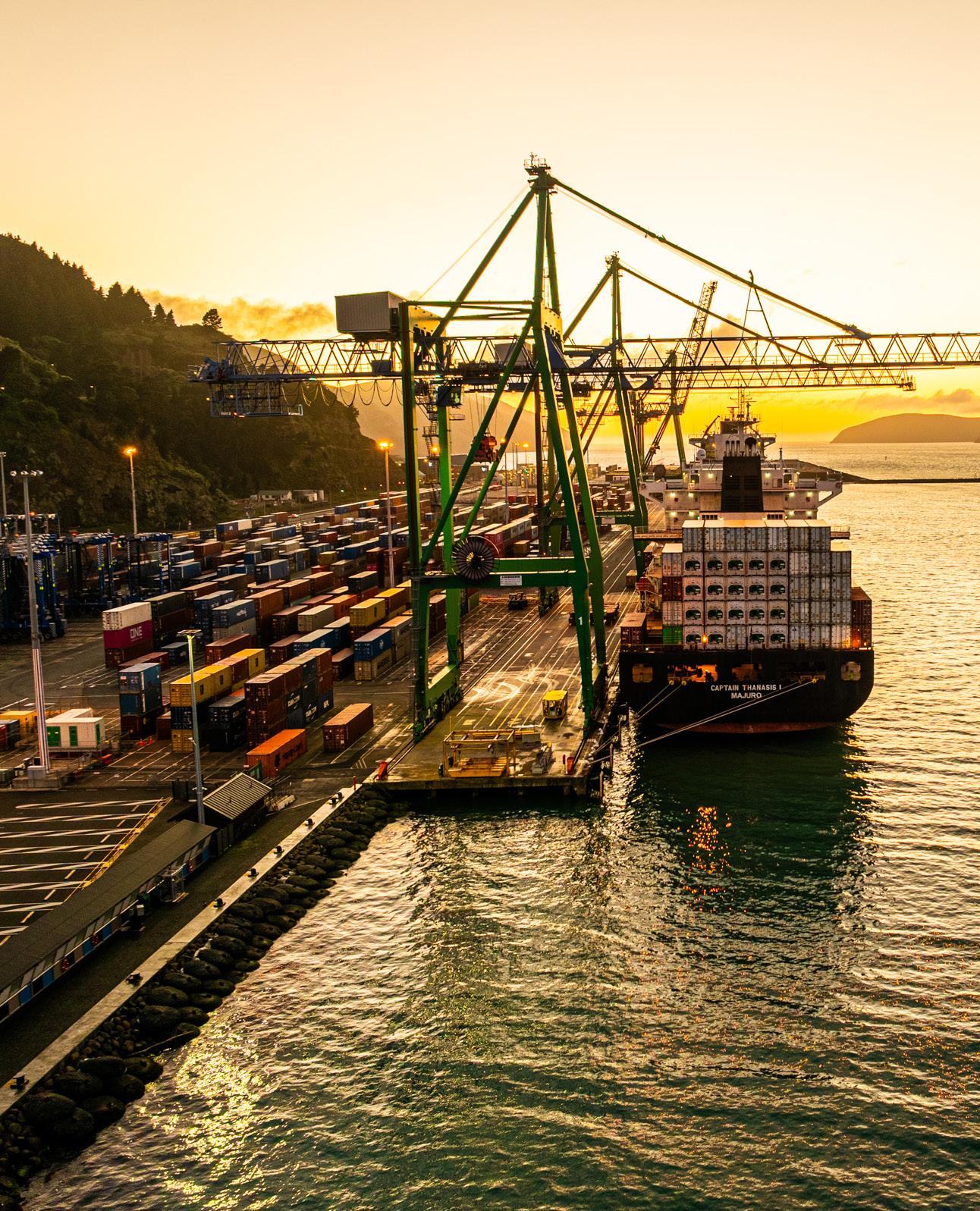

New Zealand’s Lyttelton Port Company is moving beyond environmental restoration as a ‘nice-to-do’, by actively embedding biodiversity commitments into its day-to-day operations and strategic planning.
Lyttelton Port Company (LPC) operates the largest port in New Zealand’s South Island. Located just outside Christchurch in Whakaraupõ/Lyttelton Harbour, it serves as a critical gateway for the goods that keep the wider region moving. And business is thriving.
In the first half of the current financial year, LPC delivered record financial results, with revenue, profit and earnings all reaching historic highs. Strong growth in bulk imports, combined with disciplined cost management, has driven this performance. The port handles a diverse cargo mix, including containerised goods, coal, petroleum and vehicle imports.
Yet LPC’s commercial success tells only part of the story. Alongside performance, volumes and financial growth, the company has committed to a 'biodiversity positive' ambition. Its long-term ambition is bold: to achieve a net positive impact on biodiversity, ensuring that actions benefiting nature outweigh the environmental pressures created by modern port operations.
This commitment has earned international recognition. LPC appears multiple times in the World Ports Sustainability Program (WPSP) database and was named a top three finalist in the Environmental Care category at the 2024 IAPH Sustainability Awards for its Port Saddle ecological restoration programme.
Like many seaports, LPC operates in a complex coastal environment where land and sea converge. Ports are vital infrastructure — supporting economic development and regional connectivity — yet they are often located within ecosystems that are already under pressure. Balancing operational demands with environmental responsibility is therefore both a challenge and an obligation.
For a business to truly understand its impact on nature and the value of nature to the company bottom line (what is known as ‘natural capital’), it needs to assess its impacts, dependencies, risks and opportunities relating to nature. The Taskforce for NatureRelated Financial Disclosures (TNFD) provides a framework for businesses to undertake this process of assessment and understand how exposure to nature loss can translate into financial and operational risk. LPC’s decision to become an early adopter of the
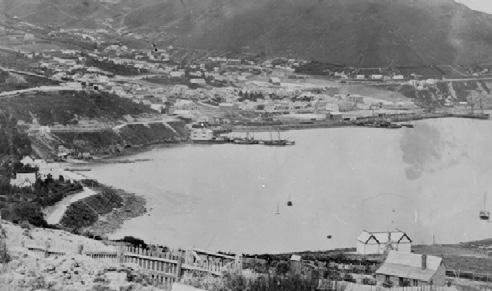
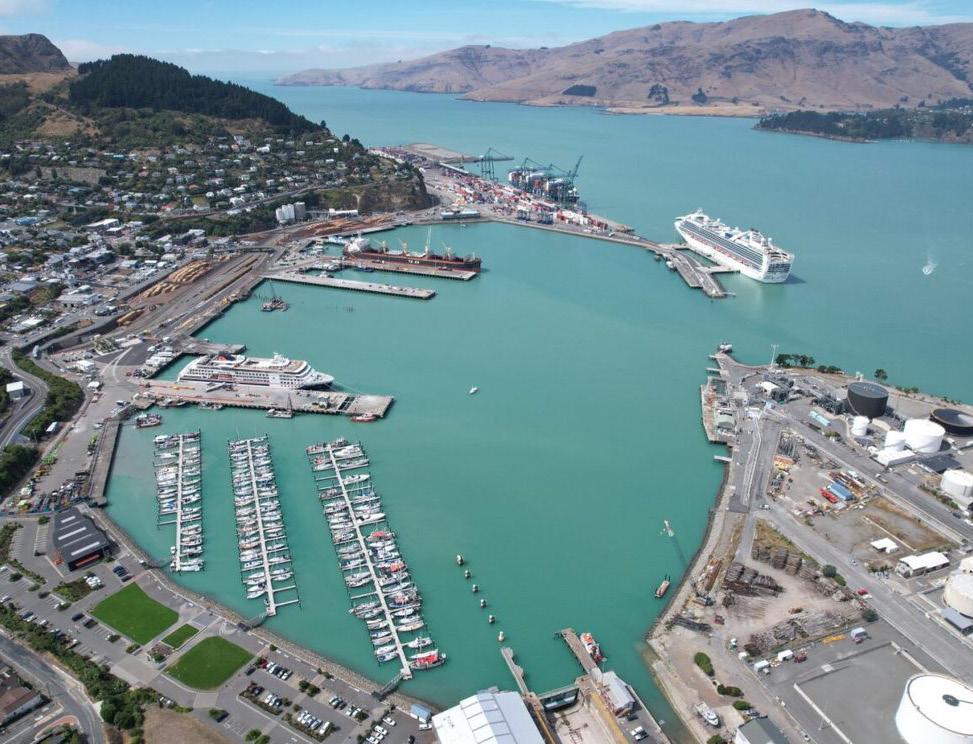
TNFD framework in 2024 aligned with its commitment to a net gain in biodiversity during the port’s recovery, following a series of major earthquakes over a decade ago, which severely damaged port infrastructure.
As the first port globally to publish a nature disclosure report, this involved pulling together decades of data collected through consent monitoring and biodiversity programmes and using geospatial tools to categorise activities and impacts. Bringing both the port's negative and positive impacts on nature onto a map, it became clear that the company was already taking many steps towards improving its impact on nature.
Port development in Whakaraupõ/Lyttelton Harbour dates back to 1875, with operations spanning both terrestrial and marine ecosystems. Over some 150 years, the landscape has been significantly reshaped. A cornerstone of LPC’s approach was reconstructing the pre-1875 harbour landscape to understand the scale and location of long-term ecological change. Using ArcGIS technology, the company combined historical photographs, paintings, archaeological reports, early maps and ecological surveys to establish a baseline of
what the environment looked like before large-scale port development began.
“A key part of the assessment was to classify the habitats and species that once existed to inform future restoration planning. This included taking a catchment-based approach to understanding the ecosystems that overlapped with port operations, which ensured a more robust approach and helped us to identify wider pressures but also opportunities,” says Kirsty Brennan, LPC senior environment and sustainability business partner.
Historic photographs proved particularly valuable. Early images captured original shorelines, vegetation cover and habitats that have since been further modified, reclaimed or restored. When layered into ArcGIS, these records revealed how the port’s footprint expanded over time, how habitats were altered, and where the company might focus its restoration efforts to begin to address legacy and ongoing impacts on nature.
The assessment identified the primary drivers of biodiversity loss — land reclamations, dredging and spoil disposal — alongside broader pressures such as pollution and invasive species. While LPC’s activities influence nature in different ways and at different scales, they are not the sole influence on the state of nature within the harbour. By using ArcGIS to map the port’s past and current activities, LPC has been able to assess the major drivers of nature change and where it is starting to turn the dial towards a positive impact.
Aligning with global biodiversity frameworks
LPC now has a broad understanding of what activities have the greatest impact on nature and what the key dependencies and risks relating to nature are to the business. This allows LPC to generate opportunities through its strategic planning and partnerships with others, aligning local restoration with global biodiversity goals.
With global metrics and targets still evolving, LPC has adopted a pragmatic “just start somewhere” approach.
There is growing global consensus that, to halt and reverse nature loss, 30% of land, freshwater and marine environments should be protected and restored.
Aligning its approach with the Kunming-Montreal Global Biodiversity Framework (GBF), LPC has developed its Biodiversity Roadmap 2025-2030. LPC’s Roadmap outlines nine targets and 17 measurable actions, informed by the
Science Based Targets for Nature (SBTN). Consistent with the SBTN approach, actions to achieve measurable net gains in biodiversity include native vegetation and species restoration, protecting land for conservation, improving stormwater treatment systems, enhancing marine infrastructure through ecological engineering and invasive species eradication.
Crucially, LPC also recognises that ecosystems extend beyond port’s boundaries. In addition to managing its direct impacts, the company partners with others on catchmentwide initiatives aimed at strengthening ecological resilience across the broader landscape.
Template for the future
Sustainable and profitable business relies on healthy and functioning ecosystems. The more we understand the economic value of nature, the greater the need to protect and enhance what is important to our business and our communities.
LPC’s message to others is to start somewhere. Identify what positive actions your business is already taking, what habitats and species are impacted the most by business activities and whom you can partner with to generate greater efficiencies for outcomes for nature.
As global attention increasingly turns to nature-related risks and responsibilities, LPC’s work signals a broader shift – showing how ports, and businesses more widely, can measure, manage and ultimately improve their relationship with the natural world. ■
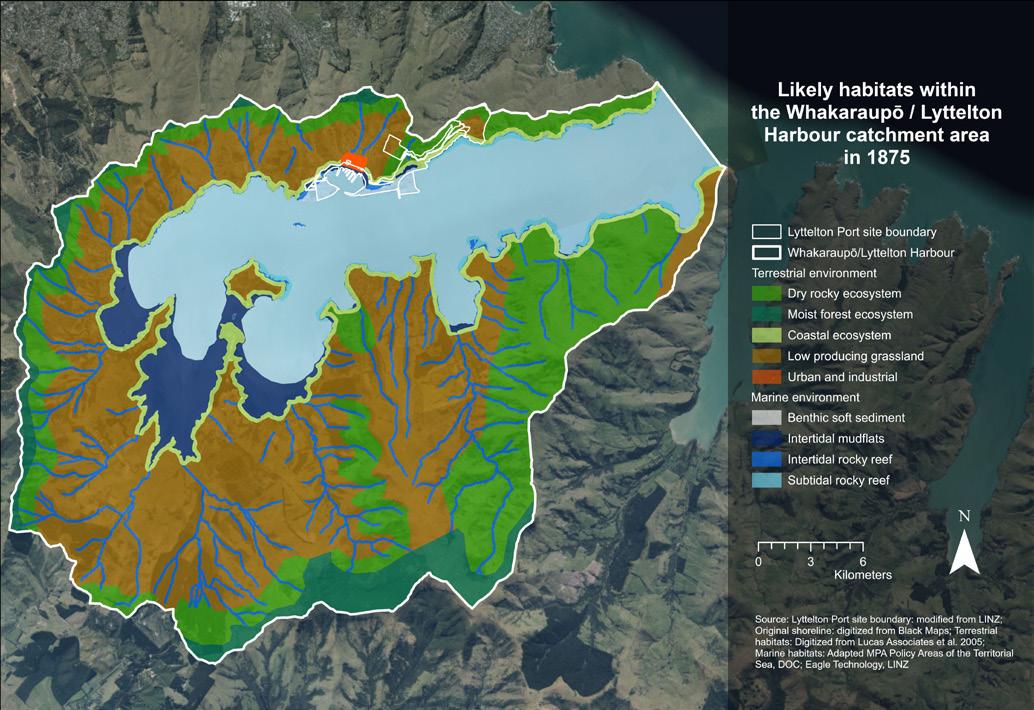
Registration for the 2026 IAPH World Ports Conference is now open and this year’s theme has been revealed: ‘Port leadership for a brave new world’
The IAPH World Ports Conference 2026 will convene senior port professionals from across the world in London – the intelligence hub of global shipping – for four days of high-level dialogue among shipowners, investment banks, cargo owners, insurers, regulators, thought leaders and providers of state-of-the-art technology.
Held 3-6 November at the iconic and
We are pleased to welcome as new members of the association:
Regular members
Port of Tacoma U.S.A
1 (253) 459-9069 apraskovich@portoftacoma.com www.portoftacoma.com
Alisa L. Praskovich, Chief, Strategic Projects & Commission Relations
Dubai Ports Authority U.A.E. 971 (56) 500 9559 adham.eldin@pcfc.ae www.pcfc.ae
Capt. Ibrahim Al Blooshi, Executive Director
newly refurbished Olympia in London, #IAPH2026 will ask how port leaders can find a competitive advantage in a rapidly realigning world – one increasingly defined by superpower rivalry, in which historic international accords are crumbling, trade is threatened by multi-domain security risks, and critical infrastructure investments are being outpaced both by disruptive new technologies and the escalating cost of climate change.
How can ambitious ports survive and thrive, adapt and innovate –bucking the trend in the face of protectionism, trade war, armed
Mogadishu Port Authority
Federal Republic of Somalia 252 61 9992261 info@mpa.gov.so www.mpa.gov.so
Ali Haji Mohamed Warsame, Deputy Director General of Mogadishu port
Fiji Ports Terminal Ltd. Fiji 679 990 7039
Gayan@fijiports.com.fj www.fijiportsterminal.com
Hasthika Dela, CEO
Associate members
HPC Hamburg Port Consulting GmbH
Germany 49 (0)40 74008-0
m.neiser@hpc-hamburg.de www.hamburgportconsulting.com
Dr. Nils Kemme, Managing Director
conflict and economic uncertainty –while delivering meaningful impact on performance, resilience and long-term growth?
#IAPH2026 is where port leaders make the breakthroughs that count and the connections that matter –a dynamic forum for compelling debate, with practical workshops, showcase sessions, high-level roundtables, invaluable excursions, and thought-provoking keynotes.
Early bird registration for the World Ports Conference is open –find out more at www.worldportsconference.com
Capt. Shri Madiwal Canada shri.madiwal@limenisglobal.com
ABL Group (NZ) Ltd New Zealand 64 27 406 4476 tash.hallett@xtra.co.nz www.abl-group.com
Natasha Hallett, Senior Maritime Security Consultant
Cranfield University. U.K. 44 (0)7756 244907 f.steinmann@cranfield.ac.uk www.cranfield.ac.uk
Graham Braithwaite, Director Aerospace & Aviation/ Professor of Safety & Accident Investigation
UK Major Ports Group (UKMPG) 44 (0)7973 463 815 amy.swash@ukmajorports.org.uk www.ukmajorports.org.uk
Geraint Evans, CEO
JUNE
Wärtsilä’s international team will be joining the IAPH Technical Committee Days 2026 in Singapore later this month, as the debut sponsor for the Data Collaboration and Risk & Resilience content stream.
Free to attend for all IAPH members, the Technical Committee Days will be held at the Suntec Convention and Exhibition Centre, 22-24 April, concurrently with Singapore Maritime Week. More than 100 regular and associate IAPH members have already registered to attend the three-day in-person event.
Wärtsilä specialises in innovative technologies and lifecycle solutions for the marine and energy industries. The company’s director of port optimization Evgeny Vdovin (pictured right) commented on the importance of ensuring that technology works for people in ports, as the maritime sector continues to adapt to new operational,
environmental and security demands. “At Wärtsilä, the human-centric approach sits at the heart of how our digital solutions are developed across the ecosystem of vessel traffic management systems, port management systems and pilot portable units,” said Evgeny. “During the various sessions we look forward to exploring how technology can help people at ports make better decisions with timely, connected and practical information in complex and fast-moving environments. Whether this involves coordinating vessel movements, an operator managing daily port activity, or a pilot guiding a vessel through transit, access to timely, connected, and practical information can make a meaningful difference.”
Evgeny will be joined in Singapore by Kim Pham, head of APAC Sales, and by Cameron Butchart, head of Marine Traffic Control. For more information on Wärtsilä, visit www.wartsila.com.
The #IAPH2026 webinar series, co-organised by IAPH with Mercator, is underway.
Following the format of last year’s inaugural series, each of the six editions is a deep-dive into one of the hottest topics in the port sector, explored by an expert panel – a taster of what to expect at the World Ports Conference at Olympia, London, November 3-6.
Each webinar covers one of the six areas of interest of the World Ports Sustainability Program: infrastructure, digitalisation, environmental care, community building, health safety and security, and climate and energy.
The series began on 4 March with a webinar focused on the topic of climate resilience, followed by a 1 April edition focused on universal datasets and
cyber-resilient standards. Those sessions can be viewed on demand via the dedicated World Ports Conference website, where you can also register for forthcoming editions.
The remaining four editions are outlined on the events timeline at the base of the page.
Visit www.worldportsconference.com/ event/WPC/webinars
SEPTEMBER 9
#IAPH2026 Webinar Series (online) New frontiers of port security: in the sky, on the network, beneath the waves (17.00 CEST/08.00 PDT) iaphworldports.org
7
OCTOBER 7
#IAPH2026
(online)
3
NOVEMBER 3-6
#IAPH2026 World Ports Conference The IAPH flagship conference in London, UK
Across almost 5,000 pages, and six volumes, Guide to Port Entry31st Edition 2026 incorporates the very latest updates to ports worldwide, making it an invaluable reference source for the maritime industry globally.
First published in 1971, these guides provide information on thousands of commercial ports and terminals across the globe. They are compiled and published annually by Lloyd's Register OneOcean, and cover significant geographical breadth, encompassing thousands of ports, harbours and terminals worldwide.
Over all six volumes, the 2026 edition reflects updates to more than 1,600 ports, with extensive revisions to terminal data, service listings and operational notes. These enhancements ensure crews and shoreside teams are working with the most current and accurate information available.
Altogether, the guide now contains over 19,600 entries, spanning ports, terminals, subports and aliases. That includes 17,220 distinct ports, terminals and subports, and 15,250 ports and terminals with operational data to support port calls across the global fleet. The 2026 updates ensure the guide remains a trusted source of information for safe, compliant and efficient port visits.
Structured alphabetically, the digital publication is available in six volumes, organised as follows: Vol. 1 - Albania to Bulgaria (A-B); Vol. 2 - Cambodia to French Polynesia (C-F); Vol. 3 - Gabon to Jordan (G-J); Vol. 4 - Kazakhstan to Oman (K-O); Vol. 5 - Pakistan to Tuvalu (P-T); and Vol. 6 - Ukraine to Yemen (U-Y).
The 31st edition also includes expanded coverage to keep pace with evolving port infrastructure and user needs including the documentation of 110
‘‘
Over all six volumes, the 2026 edition reflects updates to more than 1,600 ports
new ports, over 640 new terminals, 4,200 additional berths as well as 150-plus new port plans.
This latest guide builds on decades of trust by offering more depth, more clarity and more operational support than ever before, reaffirming its status as a must-have reference document among port and shipping professionals worldwide.
Several older versions of the guide (dating from 1971-1998 and 1984 - 1999) have been made available for free, online through the Lloyd’s Register Foundation Heritage & Education Centre (HEC). ■


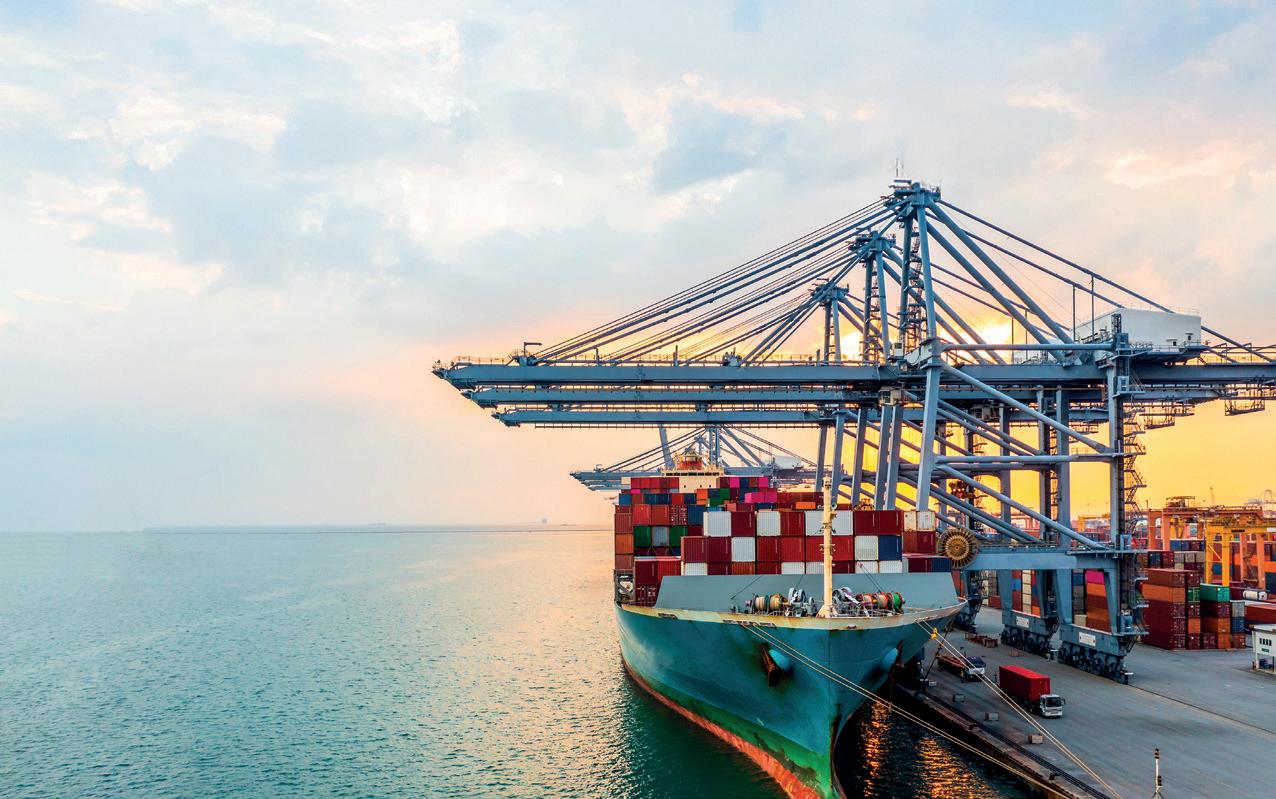
37,500
Port Strategy is the leading information source for the port executives in the port management industry. It is also the official partner to Coastlink, the short sea shipping conference and the GreenPort Congress, addressing environmental challenges in ports.
Audience: Senior port executives from port authorities, terminal operators and equipment suppliers
Request




3 – 6 November 2026
London, United Kingdom



IAPH has developed into a global alliance, representing 200 ports and 173 port-related businesses across 94 countries. Member ports together, handle well over one third of the world’s sea-borne trade and over 60% of the world container traffic.
#IAPH2026 will bring together stakeholders from the global maritime supply chain including port authorities, policy makers, ship and cargo owners and service providers, delivering an international platform for networking, innovation and debate.
For information on attending/sponsoring contact the events team:
visit: worldportsconference.com contact: +44 1329 825335 or email: wpc@mercatormedia.com